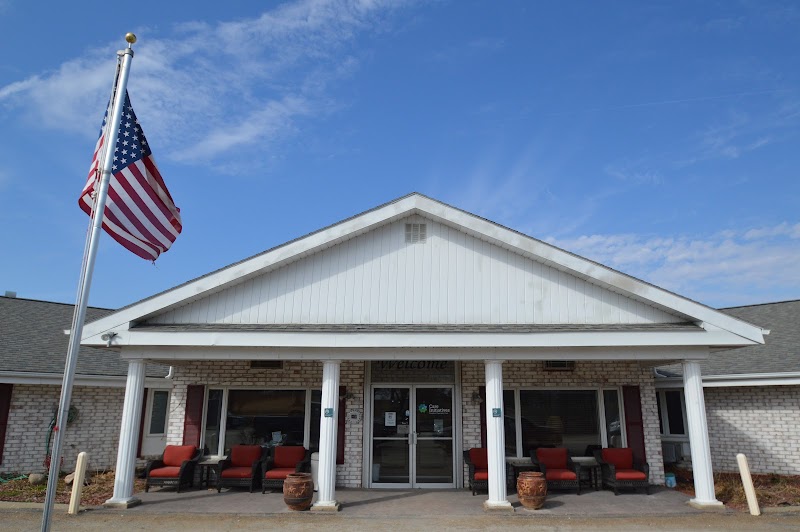
Corydon Specialty Care
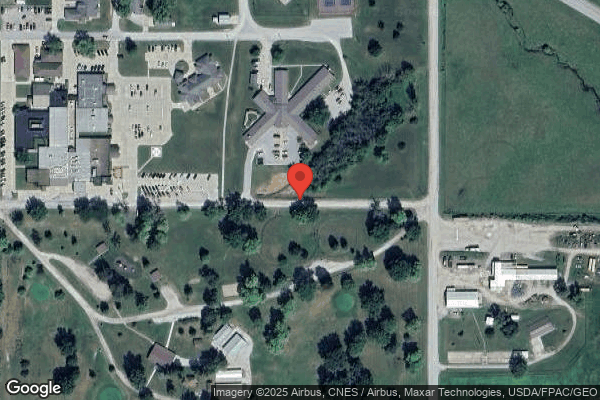
745 East South Street, Corydon, IA 50060 (641) 872-1590
Non profit - Corporation 71 Beds CARE INITIATIVES Data: November 2025
Trust Grade
60/100
#182 of 392 in IA
Last Inspection: December 2024

Within standard 12-15 month inspection cycle. Federal law requires annual inspections.

Overview

Corydon Specialty Care has a Trust Grade of C+, indicating it is slightly above average but not exceptional. It ranks #182 out of 392 nursing homes in Iowa, placing it in the top half of facilities, and it is the only option in Wayne County. The facility is improving, with issues decreasing from 9 in 2024 to just 1 in 2025. Staffing is rated as average with a turnover of 45%, which is in line with the state average, but they have no recorded fines, which is a positive sign. However, there are some serious concerns, including a failure to protect a resident from falls and delayed responses to call lights, which led to resident discomfort and embarrassment. Overall, while the facility shows some strengths, families should be aware of the specific incidents that indicate areas needing improvement.
Trust Score
C+
60/100
In Iowa
#182/392
Top 46%
Safety Record
Moderate
Needs review
Inspections
Getting Better
9 → 1 violations
Staff Stability
⚠ Watch
45% turnover. Above average. Higher turnover means staff may not know residents' routines.
Penalties
✓ Good
No fines on record. Clean compliance history, better than most Iowa facilities.
Skilled Nurses
○ Average
Each resident gets 34 minutes of Registered Nurse (RN) attention daily — about average for Iowa. RNs are the most trained staff who monitor for health changes.
Violations
⚠ Watch
16 deficiencies on record. Higher than average. Multiple issues found across inspections.
★★★☆☆
3.0
Overall Rating
★★★☆☆
3.0
Staff Levels
★★☆☆☆
2.0
Care Quality
★★★☆☆
3.0
Inspection Score
Stable
2024: 9 issues
2025: 1 issues

The Good

  • Full Sprinkler Coverage · Fire safety systems throughout facility
  • No fines on record

Facility shows strength in fire safety.

The Bad

3-Star Overall Rating

Near Iowa average (3.1)

Meets federal standards, typical of most facilities

Staff Turnover: 45%

Near Iowa avg (46%)

Higher turnover may affect care consistency

Chain: CARE INITIATIVES

Part of a multi-facility chain

Ask about local staffing decisions and management

The Ugly 16 deficiencies on record

1 actual harm
Jun 2025 1 deficiency
CONCERN (D) 📢 Someone Reported This

A family member, employee, or ombudsman was alarmed enough to file a formal complaint

Potential for Harm - no one hurt, but risky conditions existed

Deficiency F0557 (Tag F0557)

Could have caused harm · This affected 1 resident

Based on clinical record review and staff interviews, the facility failed to provide a private pay resident being discharged to another facility, their unused medications and controlled medications (R...

Read full inspector narrative →
Based on clinical record review and staff interviews, the facility failed to provide a private pay resident being discharged to another facility, their unused medications and controlled medications (Resident #2). The facility census was 52 residents. Findings include: According to a Minimum Data Set (MDS) with a reference date of 12/6/24, Resident #2 had a Brief Interview for Mental status (BIMS) score of 13, indicating an intact mental status. Resident #2 required dependent assistance with transfers, mobility, dressing, toilet use, and personal hygiene needs and was frequently incontinent of bladder. Resident #2's diagnoses included cerebrovascular accident (stroke), congestive heart failure, atrial fibrillation, renal insufficiency, arthritis, and gastroesophageal reflux disease. Review of Resident #2's June medication administration record (MAR) found her to be prescribed several medications to control pain and anxiety including Lyrica 50 milligrams daily at night, Hydrocodone/Tylenol 5/325 milligrams every 6 hours as needed for pain, and Lorazepam 0.5 mg every 12 hours as needed for anxiety. The June MAR demonstrated the use of as needed Hydrocodone/Tylenol 5/325 milligrams was generally two doses a day with the last dose given on 3/11/25 at 10:10 a.m. In an interview on 6/24/25 at 10:00 a.m. the Administrator from the facility in which Resident #2 was transferred to on 3/11/25, stated when Resident #2 arrived, she was without any of her medications, including pain medications which she relied upon to control her pain. The Administrator stated she contacted the facility and was informed their protocol on discharge was to send back prescribed medications and to destroy controlled medications. The Administrator informed the facility that the resident was private pay and paid for her medications and therefore the medications were her property and they did not have the right to withhold or destroy her medications. The Administrator stated in addition, because the medications were recently refilled, Resident #2's insurance would not pay for re-fills, leaving her without any pain medication. The Administrator stated the following morning she went to their pharmacy and was able to get the refills, but noted Resident #2 was without pain mediations for over 10 hours. In an interview on 6/24/25 at 10:20 a.m. the Director of Nursing (DON) stated the normal process when discharging a resident would be to send back unused medications to the pharmacy and to destroy controlled medications. This was the process the facility followed when discharging Resident #2 to another facility. The DON stated Resident #2 was private pay and paid for her own medications. The DON stated on 3/11/25 they received a call from the receiving facility questioning where Resident #2's medications were? The DON stated she explained and the following day Resident #2's spouse drove up and picked up her medications. The DON noted the facility reimbursed Resident #2 for the controlled medications they destroyed. The DON stated she later was shown facility policy on Discharge Medications in which it was acceptable to send controlled medications with a discharged resident. The DON stated she was unaware of that policy until shown. According to the facilities Discharge Medications policy; #3. controlled substances shall not be released upon discharge of the resident unless permitted by current state law governing the release of controlled substances and as authorized (in writing) by the resident's attending physician.
Dec 2024 3 deficiencies 1 Harm
SERIOUS (G)

Actual Harm - a resident was hurt due to facility failures

Accident Prevention (Tag F0689)

A resident was harmed · This affected 1 resident

Based on clinical record review, observations, policy review, and staff interviews the facility failed to protect residents from accidents and injuries to include failing to implement interventions to...

Read full inspector narrative →
Based on clinical record review, observations, policy review, and staff interviews the facility failed to protect residents from accidents and injuries to include failing to implement interventions to reduce risks for 1 of 3 residents (Resident #15) reviewed for falls. The facility reported a census of 51. Findings include: Review of the Minimum Data Set (MDS) assessment for Resident #15 dated 9/5/24 documented an admission date of 12/02/22 and a Brief Interview for Mental Status (BIMS) score of 15 indicating intact cognition. The MDS documented diagnosis of Alzheimer's Disease, anxiety disorder and muscle weakness. The MDS revealed total dependence of 2 or more helpers to complete oral, upper and lower body dressing, putting on/taking off footwear and partial to moderate assistance with sit to stand and transfers. The MDS also revealed the resident had fallen since the prior assessment and had injuries. Review of Resident #15's Care Plan with an initiation date of 12/18/22 revealed Resident #15 was at risk for falls. On 10/3/23 updated to required assistance of 1 with transfers. Care plan documented updates to risk for falls interventions/task on followings dates: 7/19/24 Offer to assist me with positioning at the dinner table. 8/26/24 Encourage me to carry Reacher in my wheelchair to retrieve items off the floor when out of my room. 11/24/24 Therapy to assess for new wheelchair cushion to ensure proper positioning. 12/5/24 Care Plan updated to assist resident with moving foot pedals back while sitting at the Dining Room table. The Incident Report dated 11/1/24 at 2:55 pm documented the resident was on her bottom next to the door that separates the dining room and bird room. The Five Whys Worksheet for the fall documented a new intervention for aides to assist resident in adjusting her foot pedals. The Incident Report dated 11/24/24 at 6:55 pm documented the resident was found on the floor under the wheelchair crying and stating she leaned forward and fell out of the chair. She stated she leaned forward and fell. The Five Whys Worksheet for the fall 11/24/24 documented the intervention for therapy to assess for wheelchair cushion that encourages appropriate positioning. The Incident Report dated 12/5/24 at 5:10 pm documented the resident was found on the dining room floor crying and had a jagged laceration to her head. A puddle of blood under the resident's head. The resident unable to state what happened. The report documented the wheelchair food pedals were forward. Review of the Electronic Healthcare Record (EHR) tab titled, Progress Notes, revealed the following falls and injuries: On 12/5/24 at 8:37 pm resident #15 was found by a staff member laying on the dining room (assist side) floor. Resident was crying. Resident had a jagged laceration to her head. A puddle of blood was on the floor underneath her head. Resident had shoes on both feet. Resident crying stating I'm sorry unable to describe what she was attempting to do. Resident assisted by EMS to wheelchair for treatment of laceration to head. Care Plan updated to assist resident with moving foot pedals back while sitting at DR table. On 11/24/24 at 9:20 pm resident found on the floor in the hallway under wheelchair. Crying stated leaned forward and fell out of chair. On 11/1/24 at 3:07 pm resident was found on the floor near the dining room and bird room. On 10/25/24 at 4:54 am resident complained of pain in her left forearm from a recent fall, area raised, pain upon palpitation. On 8/26/24 at 1:19 pm dietary staff observed resident attempting to reach for a muffin on the floor and fell to the floor, hitting her head on the table. On 7/20/24 at 12:43 pm resident fell to the floor in assisted dining side, wheelchair on the side, left pedal under her left hip. Resident told staff she was trying to pull left foot pedal back to scoot herself closer to the table. On 7/5/24 at 1:29 pm resident fell out of her wheelchair during a self-transfer. Injuries sustained to face: pink area to the forehead with blood noted by a staff member. During an observation on 12/10/24 at 10:45 am, Resident #15 noted to have an abrasion to her forehead. Observed the resident sitting in a wheelchair while she observed an activity. The wheelchair had 2 foot pedals locked in place while residents' feet rested on the floor. During the dining room (DR) observation on 12/10/24 from 12:00 pm to 1:00 pm, Resident #15 noted to self-propel in her wheelchair between dining room tables and after the meal service was completed, headed to her room, with the foot pedals locked in place, restricting her ability to extend her feet forward, causing her feet to tangle and bend under the wheelchair several times. Towards the end of this observation, a staff member approached the resident who by then partially slid towards the edge of the seat. The staff member placed Resident #15's feet onto the foot pedals and then assisted with the transfer. During the subsequent observation on 12/11/24 at 9:48 am, Resident #15 attended the activity in the common area, sitting in the wheelchair with the foot pedals locked in place, feet on the floor. During an interview on 12/11/24 at 9:57 am with Staff D, Certified Medication Aide (CMA), Staff D stated Resident #15 had frequent falls and slid out of her wheelchair often; recently therapy recommended a different seat cushion but it was not in place to her knowledge. Staff D, CMA further stated she would pull the resident up in the wheelchair if she saw her sliding out of it since the resident didn't have a strong core/torso. In an interview on 12/12/24 at 9:50 am with the Director of Rehabilitation, it was revealed that Resident #15 had been ordered a different cushion pad and there were some modifications made to her wheelchair. His knowledge of the Resident #15 included: staff assist with transferring since unable to lock the wheelchair on her own, history of sliding out of the wheelchair and poor safety awareness. Physical Therapy was attempted but unsuccessful due to Resident's physical limitations and only Occupational Therapy was in place. In an interview on 12/12/24 at 11:00 am with the Director of Nursing, she stated Resident #15 was able to reposition herself in the wheelchair and needed her foot pedals locked in place while she did it. After reviewing the Care Plan intervention dated 12/5/24 with the intervention to move foot pedals back while sitting at the DR table, she confirmed it was not followed by the facility staff. The facility provided policy titled Falls and Fall Risk, Managing revised March 2018, documented: Resident-Centered Approaches to Managing Falls and Fall Risk 1. The staff, with the input of the attending physician, will implement a resident-centered fall prevention plan to reduce the specific risk factor(s) of falls for each resident at risk or with a history of falls. 2. If a systematic evaluation of a resident's fall risk identifies several possible interventions, the staff may choose to prioritize interventions (i.e., to try one or a few at a time, rather than many at once). 3. Examples of initial approaches might include exercise and balance training, a rearrangement of room furniture, improving footwear, changing the lighting, etc. 4. In conjunction with the consultant pharmacist and nursing staff, the attending physician will identify and adjust medications that may be associated with an increased risk of falling, or indicate why those medications could not be tapered or stopped, even for a trial period. 5. If falling recurs despite initial interventions, staff will implement additional or different interventions, or indicate why the current approach remains relevant. 6. If underlying causes cannot be readily identified or corrected, staff will try various interventions, based on assessment of the nature or category of falling, until falling is reduced or stopped, or until the reason for the continuation of the falling is identified as unavoidable. 7. In conjunction with the attending physician, staff will identify and implement relevant interventions (e.g., hip padding or treatment of osteoporosis, as applicable) to try to minimize serious consequences of falling. 8. Position-change alarms will not be used as the primary or sole intervention to prevent falls, but rather will be used to assist the staff in identifying patterns and routines of the resident. The use of alarms will be monitored for efficacy and staff will respond to alarms in a timely manner. Monitoring Subsequent Falls and Fall Risk 1. The staff will monitor and document each resident's response to interventions intended to reduce falling or the risks of falling. 2. If interventions have been successful in preventing falling, staff will continue the interventions or reconsider whether these measures are still needed if a problem that required the intervention (e.g., dizziness or weakness) has resolved. 3. If the resident continues to fall, staff will re-evaluate the situation and whether it is appropriate to continue or change current interventions. As needed, the attending physician will help the staff reconsider possible causes that may not previously have been identified.
CONCERN (D)

Potential for Harm - no one hurt, but risky conditions existed

Deficiency F0658 (Tag F0658)

Could have caused harm · This affected 1 resident

**NOTE- TERMS IN BRACKETS HAVE BEEN EDITED TO PROTECT CONFIDENTIALITY** Based on Electronic Health Record (EHR) review, staff interview, and policy review, the facility failed to consistently complete...

Read full inspector narrative →
**NOTE- TERMS IN BRACKETS HAVE BEEN EDITED TO PROTECT CONFIDENTIALITY** Based on Electronic Health Record (EHR) review, staff interview, and policy review, the facility failed to consistently complete physician's order for weekly weights for 1 of 1 residents reviewed for nutrition (Resident #13). The facility reported a census of 51. Findings include: The Minimum Data Set (MDS) assessment dated [DATE] revealed Resident #13 with a Brief Interview for Mental Status score of 15 indicating intact cognition. Diagnoses included atrial fibrillation/other dysrhythmias, heart failure, peripheral vascular disease, and Parkinson's disease. The MDS indicated use of a diuretic. The Care Plan revised on 11/8/24 documented a significant weight loss for Resident #13 with a goal to maintain weight or have a slow and gradual weight loss towards a healthier Body Mass Index for age. Interventions include obtaining weights per facility policy. The Care Plan further documented diuretic therapy related to congestive heart failure. Review of the EHR for Resident #13 showed a physician order for weekly weights times 4 weeks. The Physician Order Form signed by the Nurse Practitioner as well as the charge nurse and dated 11/11/24. The Weights and Vitals summary obtained on 12/12/24 show the following weights: 10/1/2024 270.6 Lbs 10/15/2024 261.3 Lbs 10/22/2024 260 Lbs 10/29/2024 257.3 Lbs 11/1/2024 256.8 Lbs 11/5/2024 256.8 Lbs 11/12/2024 254.0 Lbs 12/3/2024 254.2 Lbs 12/10/2024 250.7 Lbs The EHR revealed lack of documented weights for the weeks of 11/19/24 and 11/26/24. No documentation found related to staff attempts to obtain weights, resident refusing, or notifying the Primary Care Provider (PCP) of missing weights. During an interview on 12/11/24 at 10:40 AM, the Director of Nursing (DON) explained charge nurses will review PCP order sheets and enter orders in the EHR. The DON acknowledged the oversight of obtaining Resident #13's weights as ordered and the lack of documentation as to why. The DON voiced an expectation that physician orders to be implemented and followed as written. The policy Medication Orders, revised November 2014, established guidelines in receiving and recording medications order, which include treatments. This should include the specific treatment, frequency, and duration of treatment.
CONCERN (D)

Potential for Harm - no one hurt, but risky conditions existed

Food Safety (Tag F0812)

Could have caused harm · This affected 1 resident

Based on observations, staff interviews, and policy review, the facility failed to ensure proper food handling and hand hygiene practices during meal service. The facility reported a census of 51. Fin...

Read full inspector narrative →
Based on observations, staff interviews, and policy review, the facility failed to ensure proper food handling and hand hygiene practices during meal service. The facility reported a census of 51. Finding include: During a continuous observation during lunch service on 12/10/24 at 12:00 PM, the following was observed: 1. Staff A, Certified Nursing Assistant, cutting and buttering a resident's dinner roll with bare hands. 2. Staff B, Van Driver (who is also a Certified Nursing Assistant), cutting and buttering a resident's dinner roll with bare hands. Staff B observed feeding a resident one bite, walking over to another resident, interacting with them and then feeding one bite to that resident. No hand hygiene observed in-between the two residents. Throughout lunch service, Staff B also seen placing hands in pant pockets and rubbing a resident's arm with no hand hygiene observed after these actions. Staff B continued to assist residents eating. 3. Staff C, Cook, cutting and buttering a resident's dinner roll with bare hands. Gloves and a working automatic hand sanitizer dispenser identified in the dining room and readily available for staff use. During an interview on 12/10/24 at 12:15 PM, the Certified Dietary Manager acknowledged staff should not be touching ready-to-eat food with bare hands. During an interview on 12/11/24 at 9:45 AM, the facility Administrator acknowledged the use of bare hands during the previous day's lunch service via a written note from one of the offending staff members. The Administrator also acknowledged a lack of hand hygiene observed throughout lunch. The policy Food Preparation and Service, revised April 2019 revealed, bare hand contact with food is prohibited. Gloves are worn when handling food directly and changed between tasks. Disposable gloves are single-use items and are discarded after each use. The policy Hand Hygiene Procedure, version 2.3 (H5MAPL0362), documented the use of an alcohol-based hand rub or alternative soap and water should be used in the following situations: a. Before and after coming on duty. b. Before and after direct contact with residents. c. After contact with objects. d. Before and after assisting a resident with meals.
Jan 2024 6 deficiencies
CONCERN (D) 📢 Someone Reported This

A family member, employee, or ombudsman was alarmed enough to file a formal complaint

Potential for Harm - no one hurt, but risky conditions existed

Resident Rights (Tag F0550)

Could have caused harm · This affected 1 resident

Based on observation, clinical record review, staff interview and review of Resident Rights the facility staff failed to treat 1 of 4 residents with dignity and respect while providing resident cares....

Read full inspector narrative →
Based on observation, clinical record review, staff interview and review of Resident Rights the facility staff failed to treat 1 of 4 residents with dignity and respect while providing resident cares. (Resident #4) The facility identified a census of 52 residents. Findings include: A admission Minimum Data Set (MDS) assessment form dated 1/4/24 indicated Resident #4 had diagnosis that included a Cerebrovascular Accident (CVA), Diabetes Mellitus (DM), Urinary Tract Infection (UTI) and anxiety. The assessment indicated the resident had a Brief Interview for Mental Status (BIMS) score of 15 out of 15 (cognitively intact) and required staff assistance with activities of daily living (ADL's). A Care Plan addressed a Focus area of ADL's (initiated 12/29/23) with Interventions that included the following as dated: a. Assistance of one (1) staff member with personal hygiene and toileting (initiated 12/29/23) and two (2) staff assistance with transfers (initiated 1/29/23). An observation 1/17/24 at 12:45 p.m. revealed as Staff C, Certified Nursing Assistant (CNA) provided personal cares for the resident the Social Worker/Licensed Practical Nurse (LPN) knocked and walked into the resident's room without an invitation to have entered and after Staff C stated cares. During an interview 1/17/24 at 1:10 p.m. Staff A, Certified Nurse Aide (CNA) confirmed staff opened resident doors and walked right in without knocking and/or waiting for an invitation to enter while she provided personal cares to those residents. During an interview 1/17/24 at 1:40 p.m. Staff B, CNA confirmed she walked directly into resident rooms during cares and without knocking and waiting for an invitation to have entered. During an interview 1/17/24 at 2:03 p.m. Staff C, CNA confirmed staff always walked directly into resident rooms during personal cares and without knocking and waiting for an invitation. Review of the facilities Resident Rights revised 12/2016 directed the facility staff to have treated all residents with kindness, respect and dignity. The Policy and Interpretation and Implementation included the following: a. Privacy and confidentiality. b. Staff promote, maintain and protect resident privacy, including bodily privacy during assistance with personal care and during treatment procedures. c. Staff are expected to knock and request permission before entering a residents' room.
CONCERN (D) 📢 Someone Reported This

A family member, employee, or ombudsman was alarmed enough to file a formal complaint

Potential for Harm - no one hurt, but risky conditions existed

Deficiency F0688 (Tag F0688)

Could have caused harm · This affected 1 resident

Based on clinical record review, resident interview and staff interview the facility failed to provide restorative exercises according to the resident's individual plan of care for 1 of 3 residents re...

Read full inspector narrative →
Based on clinical record review, resident interview and staff interview the facility failed to provide restorative exercises according to the resident's individual plan of care for 1 of 3 residents reviewed. (Resident #2) The facility identified a census of 52 residents. Findings include: A Quarterly Minimum Data Set (MDS) form dated 11.20.23 indicated Resident #2 had diagnosis that included anxiety, morbid obesity and a neoplasm of the aortic body and other paraganglia. The assessment indicated the resident had a Brief Interview for Mental Status (BIMS) score of 15 out of 15 (cognitively intact) and required assistance of staff with Activities of Daily Living (ADL's). A restorative participation record form directed the facility staff to have performed Active Range of Motion (AROM) to the resident's upper extremities 3 to 6 times a week. The record included the following as dated: a. Not applicable - 12/24/23 and 12/28. b. Refused - 12/25/23, 1/.26, 12/27 and 1/10/24. During an interview 1/18/24 at 8:45 a.m. the resident denied having refused restorative exercises in and around Christmas and on the 1/10/24. The resident then began to cry and stated, they are lying and she wanted exercises. During an interview 1/17/24 at 1:10 p.m. Staff A, Certified Nurse aide (CNA) confirmed staff failed to provide restorative exercises to residents according to their individual programs. During an interview 1/18/24 at 9:35 a.m. Staff A confirmed she documented a check mark under the not applicable ( N/A) section of the facilities restorative documentation sheets when she failed to perform the individual residents restorative exercises due to staffing levels. During an interview 1/17/24 at 1:40 p.m. Staff B, CNA indicated the facility failed to staff a restorative aide so it had been impossible for the CNA's scheduled to have performed restorative exercises to all of the residents specially with only 2 CNA's scheduled. During an interview 1/18/24 at 9:43 p.m. Staff B indicated when she had been unable to perform restorative exercises she left the documentation blank. Management directed staff not to have placed a check mark in the N/A section because the residents never refused and were never offered restorative exercise. During an interview 1/17/24 at 2:03 p.m. Staff C, CNA confirmed when there had been only 2 CNA's staffed for a shift the staff failed to provide individual resident restorative programs as set up.
CONCERN (E) 📢 Someone Reported This

A family member, employee, or ombudsman was alarmed enough to file a formal complaint

Potential for Harm - no one hurt, but risky conditions existed

ADL Care (Tag F0677)

Could have caused harm · This affected multiple residents

Based on observation, clinical record review, staff interview, resident interview and facility policy review, the facility failed to properly provide perineal cares for 2 of 3 residents reviewed (Resi...

Read full inspector narrative →
Based on observation, clinical record review, staff interview, resident interview and facility policy review, the facility failed to properly provide perineal cares for 2 of 3 residents reviewed (Resident #1 and #4) and failed to reposition residents according to their individual desires and/or needs. (Resident #2) The facility identified a census of 52 residents. Findings include: 1. A Significant Change in Status Minimum Data Set (MDS) form dated 12/21/23 indicated Resident #1 had diagnosis that included cancer, Peripheral Vascular Disease (PVD) and a Right Below the Knee Amputation (BKA). The assessment indicated the resident had a Brief Interview for Mental Status (BIMS) score of 15 out of 15 (cognitively intact) and required assistance of staff with his Activities of Daily Living (ADL's). A Care Plan indicated the resident had a Focus area of ADL's initiated 10/3/23. The Interventions included the following: a. The Resident required two (2) staff assistance with transfers and toileting An observation 1/17/24 at 1:25 p.m. revealed Staff C, Certified Nursing Assistant (CNA) and Staff B, CNA as they provided perineal care for the resident confirmed as incontinent by Staff C. Staff C provided the hands on perineal care but failed to cleanse the residents buttocks, hips and/or retract the resident's foreskin to properly cleanse his perineal area. During an interview 1/17/24 at 1:37 p.m. Staff B confirmed Staff C failed to properly cleanse the resident's entire perineal area as documented above. 2. A admission MDS assessment form dated 1/4/24 indicated Resident #4 had diagnosis that included a Urinary Tract Infection (UTI), urinary incontinence and a Cerebrovascular Accident (CVA). The assessment indicated the resident had a BIMS score of 15 and required partial to moderate assistance of staff with toileting hygiene. A Care Plan indicated the resident had a Focus area of ADL's initiated 1/29/23. The Interventions included the following: a. Staff assistance with toileting and personal hygiene. An observation 1/17/24 at 12:45 p.m. revealed Staff C as she propelled the resident to her room per wheel chair, placed a gait belt (GB) assistive device, ambulated the resident from the doorway of the room to the bathroom, pulled down the resident's pants as the resident sat down on the toilet. The staff member confirmed the resident as incontinent of urine her brief and sweat pants. The staff member removed the soiled clothing and cleansed the resident's legs. The Resident then requested to perform her own anterior perineal care. Upon completion the resident stood as the staff member cleansed the resident's mid gluteal region but failed to cleanse the resident's buttocks and/or hips. 3. A Quarterly MDS assessment form dated 11.20.23 indicated Resident #2 had diagnosis that included morbid obesity. The assessment indicated the resident had a BIMS score of 15 and as dependent on staff with repositioning. During an interview 1/17/24 at 4:26 p.m. the resident confirmed she had been unable to reposition herself and the staff failed to reposition her on a consistent basis. 4. During an interview 1/17/24 at 1:10 p.m. Staff A, CNA confirmed staff as not able to reposition residents according to their individual needs due to (d/t) poor staffing levels. During an interview 1/17/24 at 1:40 p.m. Staff B indicated some residents are repositioned according to their individual needs and some were not as it all depended on the amount of staff scheduled. 5. A Repositioning policy revised 5/2013 included the following purpose: The purpose of the procedure had been to provide guidelines for the evaluation of resident repositioning needs, to aid in the development of an individualized care plan for repositioning, to promote comfort for all bed- or chair-bound residents and to prevent skin breakdown, promote circulation and provide pressure relief for residents.
CONCERN (E) 📢 Someone Reported This

A family member, employee, or ombudsman was alarmed enough to file a formal complaint

Potential for Harm - no one hurt, but risky conditions existed

Deficiency F0725 (Tag F0725)

Could have caused harm · This affected multiple residents

Based on resident interview, staff interview, resident council minutes, and facility policy review the facility failed to answer resident call lights within the allotted professional standards of 15 m...

Read full inspector narrative →
Based on resident interview, staff interview, resident council minutes, and facility policy review the facility failed to answer resident call lights within the allotted professional standards of 15 minutes for 2 of 4 residents reviewed. (Resident #2) The facility identified a census of 52 residents. Findings include: 1. During an interview 1/17/24 at 4:26 p.m Resident #2 indicated she had timed her call light on as long as one (1) hour while she used her cell phone which made her angry. The delayed response times also caused incontinence of urine which caused a feeling of embarrassment which she hated. Resident Council Minutes dated 12/7/23 documented that 12 residents attended the meeting, concerns had been expressed by the residents that call lights took too long to be answered. Resident#2 did not attend the meeting on 1/10/24. Resident Council Minutes dated 1/10/24 lacked follow up documentation to question the residents if call lights still remained a concern or not. Resident#2 did not attend the meeting, seven other residents did attend the meeting. During an interview 1/17/24 at 1:10 p.m. Staff A, Certified Nurse Aide (CNA) confirmed staff as not able to answer resident call lights within 15 minutes. The staff member indicated most of the time the CNA's worked with just two (2) CNA's and the facility had at least nine (9) residents who required 2 staff assistance with cares which left the other residents unattended when they cared for those residents. During an interview 1/17/24 at 1:40 p.m. Staff B, CNA indicated staff answered resident call lights to the best of their ability further described as no as it all had been dependent on the amount of CNA's scheduled on a given day. The staff member confirmed the past weekend residents had been left up for long periods of time, not repositioned and call lights not answered due to the failure of staff to report to work as scheduled due to the winter storm in the area. During an interview 1/17/24 at 2:03 p.m. Staff C, CNA confirmed staff failed to answer resident call lights within 15 minutes. During an interview 1/17/24 at 3:18 p.m. Staff D, CNA indicated staff answered resident call lights within 15 minutes 8 out of 10 times. The other 2 times staff assisted residents who required 2 staff assistance and had not been able to answer the call lights timely. The facilities policy on Answering a Call Light revised 3.2021 indicated the purpose as the following: a. Assurance of timely responses to the resident's requests and needs.
CONCERN (E) 📢 Someone Reported This

A family member, employee, or ombudsman was alarmed enough to file a formal complaint

Potential for Harm - no one hurt, but risky conditions existed

Safe Environment (Tag F0921)

Could have caused harm · This affected multiple residents

**NOTE- TERMS IN BRACKETS HAVE BEEN EDITED TO PROTECT CONFIDENTIALITY** Based on observation, photos, resident interview and staff interview the facility failed to maintain a safe, sanitary, odor free...

Read full inspector narrative →
**NOTE- TERMS IN BRACKETS HAVE BEEN EDITED TO PROTECT CONFIDENTIALITY** Based on observation, photos, resident interview and staff interview the facility failed to maintain a safe, sanitary, odor free and homelike atmosphere. The facility identified a census of 52 residents. Findings include: 1. An observation 1.6.24 at 3:30 p.m. revealed a foul, long lasting urine odor throughout the facility. An observation 1.17.24 (throughout the entire day and afternoon) revealed a foul, long lasting urine odor throughout the building. During an interview 1.17.24 at 1:40 p.m. Staff B, Certified Nurses Aide (CNA) confirmed the foul, long lasting urine odor throughout the building. The staff member indicated she felt the odor came from the carpets. 2. An observation 1.17.24 at 3:02 p.m. revealed rough and jagged edges along a baseboard heating unit in room [ROOM NUMBER]. An observation 1.17.24 at 3:08 p.m. revealed rough and jagged edges along a baseboard heating unit in room [ROOM NUMBER].
CONCERN (E) 📢 Someone Reported This

A family member, employee, or ombudsman was alarmed enough to file a formal complaint

Potential for Harm - no one hurt, but risky conditions existed

Deficiency F0925 (Tag F0925)

Could have caused harm · This affected multiple residents

**NOTE- TERMS IN BRACKETS HAVE BEEN EDITED TO PROTECT CONFIDENTIALITY** Based on observation, photos, record review, resident interview, staff interview and facility policy review the facility failed ...

Read full inspector narrative →
**NOTE- TERMS IN BRACKETS HAVE BEEN EDITED TO PROTECT CONFIDENTIALITY** Based on observation, photos, record review, resident interview, staff interview and facility policy review the facility failed to maintain an environment free of vermin. The facility identified a census of 52 residents. Findings include: During an interview 1/17/24 at 2:47 p.m. Staff A, Certified Nursing Assistant (CNA) indicated she found mouse droppings in the bed of Resident #6 on 12/22/23. The staff member also confirmed mouse droppings in room [ROOM NUMBER] currently and when occupied by residents. The staff moved the bedside stand in room [ROOM NUMBER] and stated she observed a mouse as it peaked it's head out of a hole in the corner of the wall. A photo time stamped 1/17/24 at 2:52 p.m. revealed mouse droppings along the baseboard located on the wall behind the bed and bedside stand in room [ROOM NUMBER]. A Significant Change in Status Minimum Data Set (MDS) dated [DATE] documented that Resident#5 scored a 15 out of 15 for a Brief Interview for Mental Status, which indicated intact cognitive skills for daily decision making. An observation 1/17/24 at 3:02 p.m. revealed mouse droppings behind the bedside stand for Resident #5. During an interview at the same time the Resident indicated two (2) days prior a mouse climbed up her wheel chair and just looked at her which scared her at the time. During an interview 1.18.24 at 8:10 a.m. Resident #5 indicated the mice returned last night and ran under her as she sat on the commode positioned along the wall beside her bedside stand in her room. The facility policy on Pest Control revised 5.2008 included the following interpretation and implementation: a. This facility maintained an on-going pest control program to ensure that the building had been kept free of insects and rodents.
Dec 2023 3 deficiencies
CONCERN (D)

Potential for Harm - no one hurt, but risky conditions existed

Deficiency F0637 (Tag F0637)

Could have caused harm · This affected 1 resident

**NOTE- TERMS IN BRACKETS HAVE BEEN EDITED TO PROTECT CONFIDENTIALITY** Based on record review, staff interviews, and Resident Assessment Instrument (RAI) Manual the facility failed to complete the Mi...

Read full inspector narrative →
**NOTE- TERMS IN BRACKETS HAVE BEEN EDITED TO PROTECT CONFIDENTIALITY** Based on record review, staff interviews, and Resident Assessment Instrument (RAI) Manual the facility failed to complete the Minimum Data Set (MDS) within 14 days of starting Hospice services for 1 of 1 resident's reviewed for Hospice services (Resident #33) . The facility reported a census of 51 Residents. Findings include: Record review of a document titled Election Of Medicaid Hospice Benefit dated 10/2/2023, informed Resident #33 elected Hospice Benefits on 10/2/23. Record review of Resident #33 Progress Review dated 10/2/23 at 1:49 PM documented he was admitted to Hospice Services with primary diagnosis of Alzheimer's disease. Record review of Resident #33 MDS dated [DATE] documented an assessment completion date of 10/23/23. During an interview with the MDS Coordinator on 12/21/23 at 12:15 PM revealed she would expect a significant change MDS to be completed within 14 days from the date identified. Review of the RAI Manual dated 10/1/23 instructs facilities to complete a Significant Change Assessment MDS within 14 days after determining criteria is met.
CONCERN (D)

Potential for Harm - no one hurt, but risky conditions existed

Assessment Accuracy (Tag F0641)

Could have caused harm · This affected 1 resident

**NOTE- TERMS IN BRACKETS HAVE BEEN EDITED TO PROTECT CONFIDENTIALITY** Based on record review and staff interviews the facility failed to code Preadmission Screening and Resident Review (PASRR) on 1 ...

Read full inspector narrative →
**NOTE- TERMS IN BRACKETS HAVE BEEN EDITED TO PROTECT CONFIDENTIALITY** Based on record review and staff interviews the facility failed to code Preadmission Screening and Resident Review (PASRR) on 1 of 1 residents (Resident #46) comprehensive Minimum Data Set (MDS). The facility reported a census of 51 residents. Findings include: Record review of Resident #46 PASRR dated 4/20/2023 documented she was a PASRR Level II. The MDS dated [DATE] for Resident #46 documented she was not a PASRR Level II. Record review of Resident #46 Care Plan on 12/21/23 documented she was a PASRR Level II. During an interview on 12/21/23 at 12:17 PM the MDS Coordinator revealed Resident #46 MDS was coded wrong due to a keystroke error and she was a PASRR Level II.
CONCERN (D)

Potential for Harm - no one hurt, but risky conditions existed

Deficiency F0688 (Tag F0688)

Could have caused harm · This affected 1 resident

**NOTE- TERMS IN BRACKETS HAVE BEEN EDITED TO PROTECT CONFIDENTIALITY** Based on record review, staff and resident Interviews, and policy review the facility failed to provide 3 of 4 residents with th...

Read full inspector narrative →
**NOTE- TERMS IN BRACKETS HAVE BEEN EDITED TO PROTECT CONFIDENTIALITY** Based on record review, staff and resident Interviews, and policy review the facility failed to provide 3 of 4 residents with their individualized Restorative Program as instructed by their Care Plans (Residents #11, #46, and #28). Facility reported census of 51 residents. Findings include: 1. The Minimum Data Set (MDS) dated [DATE] for Resident #11 documented a Brief Interview for Mental Status (BIMS) of 15 indicating no cognitive decline. The MDS revealed Resident #11 required extensive assistance of two or people with bed mobility, transfers, dressing, and toilet use. The MDS also documented diagnoses of Multiple Sclerosis (MS), reduced mobility, and muscle weakness. Record review of Resident #11, Care Plan on 12/21/23 lacked documentation of a restorative program for their right hand. Record review of three (3) untitled and undated documents 12/21/23 of Resident #11 does not receive routine restorative services. During and interview on 12/21/23 at 11:08 AM with Resident #11 revealed he does not receive routine restorative services, would like to three (3) times a week. Resident #11 stated he received restorative therapy three (3) times in the past month. He also informed he believed he was not receiving restorative therapy due to staffing issues 2. Resident #28's Minimum Data Set (MDS) assessment dated [DATE] identified a Brief Interview for Mental Status (BIMS) score of 15, indicating intact cognition. The MDS identified Resident #28 required total staff assistance with bed mobility, toilet transfers, shower transfers, sit to stand, sit to lying, and roll left to right. The MDS indicated Resident #28 required a wheelchair for mobility. The MDS indicated Resident #28 had frequent pain in the last 5 days. Resident #28's MDS reflected active diagnoses of hypertension, renal insufficiency, renal failure, or end-stage renal disease (ESRD), and depression. In an interview on 12/21/23 at 09:30 AM, Resident #28 stated she was not participating in Restorative Therapy. She further stated she would like to participate if it was offered to her by the facility. Electronic Health Record (EHR) review of Resident #28's Care Plan indicated Restorative Therapy for when the resident is up in a wheelchair, in a recliner, and Active Range of Motion 2-6 times per week. In an interview with Staff B, Social Services Coordinator, on 12/21/23 at 09:46 AM revealed Resident #28 currently was not in Restorative Therapy. In a subsequent interview with Staff B, Social Services Coordinator, on 12/21/23 at 10:30 AM stated she spoke with Resident #28 and confirmed a request for Restorative Therapy. Review of the EHR Progress Notes dated 11/7/2023 at 04:05 PM by Social Services revealed a plan for Resident #28 to participate in Restorative Therapy. 3. The MDS dated [DATE] for Resident #46 documented she used a wheelchair and a walker as mobility devices and needed partial to moderate assistance with toilet use, dressing, transfers, and in the past three (3) days did not walk over 10 feet due to a medical condition or safety concerns. During an interview on 12/18/23 2:37 PM Resident # 46 revealed she was not getting her restorative program, she informed she wanted to get it but they don't have enough staff here to get it done. Record review of Resident #46 current Care Plan on 12/21/23 instructed she was to have a walking program daily and staff were to walk her with assist of one (1) with a walker and gait belt and to follow with the wheelchair as of 8/31/23 by the facilities MDS Coordinator. During an interview on 12/21/23 at 12:18 PM the MDS Coordinator revealed Resident #46 should be getting her restorative program and they are working on it. On 12/21/23 at 9:40 the Director of Nursing (DON) stated the MDS Coordinator is the restorative nurse. She stated they do not have a designated Restorative Aide. She said the Certified Nurse Aides (CNAs) do restorative as part of the daily routine. She stated her expectation is for the CNAs to document the amount of minutes of restorative that are done daily. She said for example, upper body range of motion should be done while assisting the resident to get dressed. On 12/21/23 at 9:53 am, Staff A, CNA stated she began employment in August of this year. She stated she knows the residents are supposed to get their Range of Motion and walking and get their exercising in for their restorative plans. She stated she was not aware she was supposed to be charting this and does not know how to chart restorative minutes. On 12/21/23 at 11:54 am, the MDS Coordinator stated the facility does not have a Restorative Aide. She stated the CNAs are to be documenting daily the activity or action minutes the resident participates in for their restorative program. She also stated she is supposed to be charting restorative notes monthly in the Progress Notes. She stated the most common restorative programs are range of motion and walking to dine which any of the aides can do and the Omni Cycle which the aides that are trained in restorative should perform. The policy Restorative Nursing Services, revision date July 2017, lacked instruction to staff on how to implement, provide, and document restorative programs.
Feb 2023 2 deficiencies
CONCERN (D) 📢 Someone Reported This

A family member, employee, or ombudsman was alarmed enough to file a formal complaint

Potential for Harm - no one hurt, but risky conditions existed

Deficiency F0658 (Tag F0658)

Could have caused harm · This affected 1 resident

**NOTE- TERMS IN BRACKETS HAVE BEEN EDITED TO PROTECT CONFIDENTIALITY** Based on clinical record review, policy review and staff interview, the facility failed to provide services that met professiona...

Read full inspector narrative →
**NOTE- TERMS IN BRACKETS HAVE BEEN EDITED TO PROTECT CONFIDENTIALITY** Based on clinical record review, policy review and staff interview, the facility failed to provide services that met professional standards by not following physician's orders for 1 of 5 residents reviewed (Resident #2). The facility reported a census of 67 residents. Findings include: The Quarterly Minimum Data Set (MDS) dated [DATE] documented Resident #2 had a Brief Interview for Mental Status (BIMS) of 3 which indicated severely impaired cognition. The MDS identified the resident had diagnoses which included non-Alzheimer's dementia and renal (kidney) insufficiency. The Care Plan dated 2/24/22 for Resident #2 revealed the resident had chosen Hospice care and directed staff to coordinate with the hospice team to assure she experienced as little pain as possible. During an interview 2/8/23 at 2:18 PM, the Director of Nursing (DON) reported she received a call from Hospice on 1/22/23 around 9:30 AM asking when the last time Resident #2 received morphine. The DON stated she looked in the Electronic Health Record (EHR) and there was an order for morphine to be given as needed every 2 hours and she had not given it yet. The DON stated the hospice nurse informed her an order was obtained yesterday for morphine to be scheduled and given every hour. The DON stated Staff B, Registered Nurse, had been notified by Hospice 1/21/22 of an order for morphine to be scheduled every hour. The DON further revealed Staff B thought since Hospice obtained the order they would enter the new order into the Electronic Health Record (EHR). The DON revealed she entered the order for morphine sulfate every hour into the EHR 1/22/23 at 9:38 AM and acknowledged the morphine every hour order had not been entered into the EHR and had not been given every hour as expected beginning 1/21/23. Review of facility policy titled, Medication and Treatment Orders, revised July 2016 documented verbal orders must be recorded immediately in the resident's Electronic Medical Record (EMR) by the person receiving the order. During an interview 2/8/28 at 2:55 PM, the DON reported the facility did not have a policy specific to receiving orders from hospice.
CONCERN (D) 📢 Someone Reported This

A family member, employee, or ombudsman was alarmed enough to file a formal complaint

Potential for Harm - no one hurt, but risky conditions existed

Deficiency F0678 (Tag F0678)

Could have caused harm · This affected 1 resident

**NOTE- TERMS IN BRACKETS HAVE BEEN EDITED TO PROTECT CONFIDENTIALITY** Based on clinical record review, policy review and staff interviews, the facility failed to ensure accurate transcription of Adv...

Read full inspector narrative →
**NOTE- TERMS IN BRACKETS HAVE BEEN EDITED TO PROTECT CONFIDENTIALITY** Based on clinical record review, policy review and staff interviews, the facility failed to ensure accurate transcription of Advanced Directives for 1 of 1 residents that experienced cardiac arrest (Resident #7). The facility reported a census of 67 residents. Findings include: The Minimum Data Set (MDS) dated [DATE] documented Resident #7 had diagnoses which included pneumonia, respiratory failure and diabetes mellitus. The MDS documented a Brief Interview for Mental Status (BIMS) score of 14 which indicated intact cognition, and the resident required total dependence from staff for bed mobility and toileting. The Care Plan for Resident #7 dated [DATE] directed staff to honor her Advanced Directives. The Care Plan revised [DATE] directed staff to follow her code status declaration form. Review of facility form titled, Cardiopulmonary Resuscitation and DNR Order Declaration Form, was signed by Resident #7 on [DATE] requesting a do not resuscitate order from the physician. The form was signed by the resident's physician [DATE]. During an interview [DATE] at 1:15 PM, Staff A revealed she told Emergency Medical Services (EMS) Workers when they arrived at the facility that Resident #7 was a full code after she had checked the resident's code status in the Electronic Health Record (EHR) and required CPR after she had stopped breathing. Staff A further reported another EMS Worker came into the room after CPR had been initiated stating she thought the resident had been changed to DNR status during a recent hospitalization. Staff A stated she then contacted the Director of Nursing (DON) by phone and the DON confirmed the resident now had an order in place for DNR. Staff A notified the EMS workers of the DNR order and CPR stopped. Review of the Progress Notes for Resident #7 revealed a late entry completed at [DATE] at 3:19 AM by Staff A, Licensed Practical Nurse (LPN) documented Cardio pulmonary Resuscitation (CPR) was initiated on Resident #7 at 12:05 AM on [DATE]. The resident received Epinephrine injections x 2, fluids were initiated and a King Airway (mechanical ventilation) was inserted. Review of Progress Notes for Resident #7 revealed CPR stopped at 12:46 AM on [DATE] after it was confirmed by the DON the resident had a DNR order in place. Review of facility policy titled, Advanced Directives, revised [DATE] revealed information about whether or not the resident has executed an Advance Directive shall be housed in the Electronic Medical Record (EMR) and the Code Status Binder at the nurse's station. The policy further revealed the Director of Nursing Services or designee will notify the attending physician of Advanced Directive changes so the appropriate order can be obtained and documented in the EMR and an updated copy will be placed in the Code Status Binder at the nurse's station. During an interview [DATE] at 2:30 PM, the DON acknowledged the code status in the EHR for Resident #7 had stated she was a full code on [DATE] and the order in the Code Status Binder at the nurse's station had her as a DNR.
Aug 2022 1 deficiency
CONCERN (D)

Potential for Harm - no one hurt, but risky conditions existed

Deficiency F0645 (Tag F0645)

Could have caused harm · This affected 1 resident

**NOTE- TERMS IN BRACKETS HAVE BEEN EDITED TO PROTECT CONFIDENTIALITY** Based on facility policy review, clinical record review, and staff interviews, the facility failed to ensure the pre-admission s...

Read full inspector narrative →
**NOTE- TERMS IN BRACKETS HAVE BEEN EDITED TO PROTECT CONFIDENTIALITY** Based on facility policy review, clinical record review, and staff interviews, the facility failed to ensure the pre-admission screening and resident review (PASRR) was accurate upon admission for 1 (Resident #45) of 3 sampled residents reviewed for PASRR during the survey. The facility identified a census of 64 current residents. Findings include: Review of a facility policy titled, admission Criteria, revised 03/2019, revealed, All new admissions and readmissions are screened for mental disorders (MD), intellectual disabilities (ID) or related disorders (RD) per the Medicaid Pre-admission Screening and Resident Review (PASARR) process. The policy also indicated, The facility conducts a Level 1 PASSAR screen for all potential admissions, regardless of payer source, to determine if the individual meets the criteria for a MD, ID, or RD. Review of an undated admission Record revealed Resident #45 admitted to the facility on [DATE] with diagnoses including anxiety disorder due to known physiological condition and major depressive disorder. Review of an admission Minimum Data Set (MDS) assessment, dated 04/22/2022, revealed Resident #45 was severely impaired in cognitive skills for daily decision-making and had active diagnoses that included anxiety disorder and depression. Item A1500 in the MDS recorded Resident #45 was not considered by the state level II PASARR process to have a serious mental illness, intellectual disability, or related condition. Review of a, Notice of PASARR Level 1 Screen Outcome form, dated 04/08/2022, indicated Resident #45 did not require a level II PASARR due to no serious mental illness, intellectual disability, or related condition. Review of the Level I Form, dated 04/08/2022, revealed the resident had no mental health diagnoses that were known or suspected. The form did not reflect the resident's diagnoses of anxiety disorder and major depressive disorder. Review of a quarterly MDS assessment, dated 07/21/2022, revealed Resident #45 had active diagnoses including anxiety disorder and depression. During an interview on 08/25/2022 at 11:00 AM, Staff A, the Social Services/admission employee, stated she was responsible for reviewing resident PASARR upon admission and ensuring they were accurate. Staff A confirmed Resident #45's PASSAR was missing his mental health diagnoses. During an interview on 08/25/2022 at 2:27 PM, the Director of Nursing confirmed Admissions (Staff A) received resident PASARRs and reviewed them to ensure they were accurate. During an interview on 08/25/2022 at 2:47 PM, the Administrator stated that Admissions (Staff A) was to ensure the PASARRs were completed, and the Administrator expected them to be accurate.
Understanding Severity Codes (click to expand)
Life-Threatening (Immediate Jeopardy)
J - Isolated K - Pattern L - Widespread
Actual Harm
G - Isolated H - Pattern I - Widespread
Potential for Harm
D - Isolated E - Pattern F - Widespread
No Harm (Minor)
A - Isolated B - Pattern C - Widespread

Questions to Ask on Your Visit

  • "Can I speak with families of current residents?"
  • "What's your RN coverage like on weekends and overnight?"

Our Honest Assessment

Strengths
  • • No fines on record. Clean compliance history, better than most Iowa facilities.
Concerns
  • • 16 deficiencies on record, including 1 serious (caused harm) violation. Ask about corrective actions taken.
Bottom line: Mixed indicators with Trust Score of 60/100. Visit in person and ask pointed questions.

About This Facility

What is Corydon Specialty Care's CMS Rating?

CMS assigns Corydon Specialty Care an overall rating of 3 out of 5 stars, which is considered average nationally. Within Iowa, this rating places the facility higher than 0% of the state's 100 nursing homes. This mid-range rating indicates the facility meets federal standards but may have areas for improvement.
How is Corydon Specialty Care Staffed?
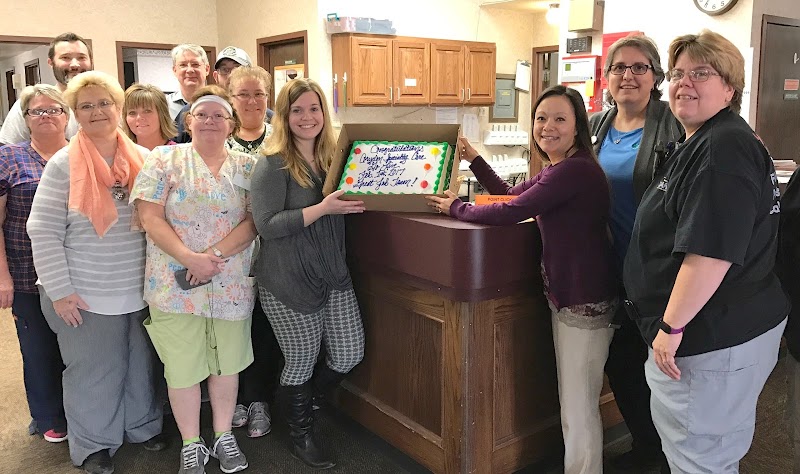
CMS rates Corydon Specialty Care's staffing level at 3 out of 5 stars, which is average compared to other nursing homes. Staff turnover is 45%, compared to the Iowa average of 46%. This relatively stable workforce can support continuity of care. RN turnover specifically is 64%, which is notably high. RNs provide skilled clinical oversight, so turnover in this role can affect medical care quality.

What Have Inspectors Found at Corydon Specialty Care?

State health inspectors documented 16 deficiencies at Corydon Specialty Care during 2022 to 2025. These included: 1 that caused actual resident harm and 15 with potential for harm. Deficiencies causing actual harm indicate documented cases where residents experienced negative health consequences.

Who Owns and Operates Corydon Specialty Care?

Corydon Specialty Care is owned by a non-profit organization. Non-profit facilities reinvest revenue into operations rather than distributing to shareholders. The facility is operated by CARE INITIATIVES, a chain that manages multiple nursing homes. With 71 certified beds and approximately 52 residents (about 73% occupancy), it is a smaller facility located in Corydon, Iowa.

How Does Corydon Specialty Care Compare to Other Iowa Nursing Homes?

Compared to the 100 nursing homes in Iowa, Corydon Specialty Care's overall rating (3 stars) is below the state average of 3.1, staff turnover (45%) is near the state average of 46%, and health inspection rating (3 stars) is at the national benchmark.

What Should Families Ask When Visiting Corydon Specialty Care?

Based on this facility's data, families visiting should ask: "Can I visit during a mealtime to observe dining assistance and food quality?" "How do you handle medical emergencies, and what is your hospital transfer rate?" "Can I speak with family members of current residents about their experience?"

Is Corydon Specialty Care Safe?

Based on CMS inspection data, Corydon Specialty Care has a clean safety record: no substantiated abuse findings (meaning no confirmed cases of resident harm), no Immediate Jeopardy citations (the most serious violation level indicating risk of serious injury or death), and is not on the Special Focus Facility watch list (a federal program monitoring the lowest-performing 1% of nursing homes). The facility has a 3-star overall rating and ranks #100 of 100 nursing homes in Iowa. While no facility is perfect, families should still ask about staff-to-resident ratios and recent inspection results during their visit.

Do Nurses at Corydon Specialty Care Stick Around?

Corydon Specialty Care has a staff turnover rate of 45%, which is about average for Iowa nursing homes (state average: 46%). Moderate turnover is common in nursing homes, but families should still ask about staff tenure and how the facility maintains care continuity when employees leave.

Was Corydon Specialty Care Ever Fined?

Corydon Specialty Care has no federal fines on record. CMS issues fines when nursing homes fail to meet care standards or don't correct problems found during inspections. The absence of fines suggests the facility has either maintained compliance or corrected any issues before penalties were assessed. This is a positive indicator, though families should still review recent inspection reports for the full picture.

Is Corydon Specialty Care on Any Federal Watch List?

Corydon Specialty Care is not on any federal watch list. The most significant is the Special Focus Facility (SFF) program, which identifies the bottom 1% of nursing homes nationally based on persistent, serious quality problems. Not being on this list means the facility has avoided the pattern of deficiencies that triggers enhanced federal oversight. This is a positive indicator, though families should still review the facility's inspection history directly.