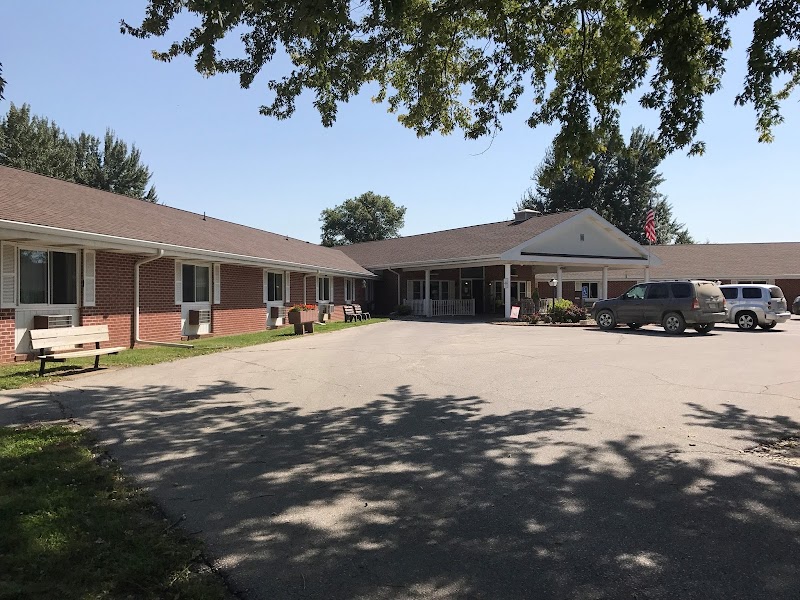
Denison Care Center

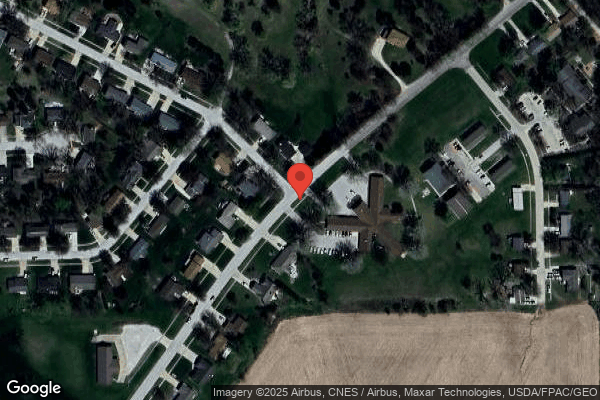
1202 Ridge Road, Denison, IA 51442 (712) 263-5611
For profit - Corporation 46 Beds ARBORETA HEALTHCARE Data: November 2025
Trust Grade
80/100
#105 of 392 in IA
Last Inspection: July 2025

Inspected within the last 6 months. Data reflects current conditions.

Overview

Denison Care Center has a Trust Grade of B+, which indicates it is above average and generally recommended for families considering care for their loved ones. It ranks #105 out of 392 facilities in Iowa, placing it in the top half, and is the best option in Crawford County with only one competitor. The facility is improving, having reduced its issues from six in 2023 to just one in 2025. Staffing is a weakness, with a low rating of 1 out of 5, but the turnover rate is excellent at 0%, suggesting that staff remain long-term and are familiar with residents. Notably, the facility has no fines, which is a positive sign, but there have been concerns regarding food safety practices and failure to properly notify families and the Long-Term Care Ombudsman about resident hospital transfers, raising some red flags about communication and safety protocols.

Trust Score
B+
80/100
In Iowa
#105/392
Top 26%
Safety Record
Low Risk
No red flags
Inspections
Getting Better
6 → 1 violations
Staff Stability
○ Average
Turnover data not reported for this facility.
Penalties
✓ Good
No fines on record. Clean compliance history, better than most Iowa facilities.
Skilled Nurses
○ Average
RN staffing data not reported for this facility.
Violations
○ Average
7 deficiencies on record. Average for a facility this size. Mostly minor or procedural issues.
★★★★☆
4.0
Overall Rating
★☆☆☆☆
1.0
Staff Levels
★★★★☆
4.0
Care Quality
★★★★★
5.0
Inspection Score
Stable
2023: 6 issues
2025: 1 issues

The Good

  • 4-Star Quality Measures · Strong clinical quality outcomes
  • Full Sprinkler Coverage · Fire safety systems throughout facility
  • No fines on record

Facility shows strength in quality measures, fire safety.

The Bad

Chain: ARBORETA HEALTHCARE

Part of a multi-facility chain

Ask about local staffing decisions and management

The Ugly 7 deficiencies on record

Jul 2025 1 deficiency
CONCERN (D)

Potential for Harm - no one hurt, but risky conditions existed

Deficiency F0628 (Tag F0628)

Could have caused harm · This affected 1 resident

**NOTE- TERMS IN BRACKETS HAVE BEEN EDITED TO PROTECT CONFIDENTIALITY** Based on record review, family interview, staff interview, and policy review the facility failed to notify the Long-Term Care Om...

Read full inspector narrative →
**NOTE- TERMS IN BRACKETS HAVE BEEN EDITED TO PROTECT CONFIDENTIALITY** Based on record review, family interview, staff interview, and policy review the facility failed to notify the Long-Term Care Ombudsman of a transfer to a hospital for 1 of 3 residents (Resident #18) reviewed. The facility reported a census of 27 residents. Findings include: Review of Resident #18's Minimum Data Set (MDS) dated [DATE] revealed Resident #18 had reentered into the facility from a short-term general hospital stay 5/6/25. The MDS further revealed a Brief Interview for Mental Status (BIMS) score of 5 indicating severe cognitive impairment. Review of Resident #18's Electronic Healthcare Record (EHR) revealed that Resident #18 was in the hospital from [DATE] through 5/6/25. Further review of the EHR page titled Clinical Census, confirmed that Resident #18 was in the hospital on these dates. Interview 7/1/25 at 12:29 PM with Resident #18's family member revealed that Resident #18 had gone to the hospital for surgical repair of the right femur. Review of a facility provided document titled, Notice of Transfer Form to Long Term Care Ombudsman dated April 2025 revealed that Resident #18 was not on the form. Interview 7/1/25 at 1:59 PM with Social Services, and the Administrator confirmed Resident #18 was not on the Ombudsman Notification, and that their expectation would be for the Ombudsman to be notified when residents are transferred or discharged . Interview 7/2/25 at 7:58 AM with the Administrator revealed the facility does not have a policy for reporting to the Ombudsman. The Administrator then revealed the facility just abides by the state and federal regulations.
May 2023 6 deficiencies
CONCERN (D)

Potential for Harm - no one hurt, but risky conditions existed

Deficiency F0582 (Tag F0582)

Could have caused harm · This affected 1 resident

Based on clinical record review, the Centers for Medicare and Medicaid Services (CMS) website, and staff interview, the facility failed to give 2-day notification of the CMS form #10123 Notice of Medi...

Read full inspector narrative →
Based on clinical record review, the Centers for Medicare and Medicaid Services (CMS) website, and staff interview, the facility failed to give 2-day notification of the CMS form #10123 Notice of Medicare Non-Coverage (NOMNC) for 1 of 3 residents reviewed (Resident #9). In addition, the facility failed to provide a complete CMS form #10055 Skilled Nursing Facility (SNF) Advance Beneficiary Notice (ABN) of Non-coverage (SNFABN) for 2 of 3 residents reviewed (Residents #9 and #15). Findings Include: 1. Resident #9's NOMNC form listed that his showed skilled nursing coverage would end on 8/11/22. The form included an electronic signature from Resident #9 dated 8/10/22. The facility failed to provide documentation that showed Resident #9 received notification of skilled nursing cover ending within the two calendars as required. Resident #9's SNFABN dated 8/10/22 lacked a reason why Medicare may not pay and the estimated cost of services. 2. Resident #15's SNFABN dated 3/10/22 form lacked the estimated cost of skilled nursing care. The facility's CMS Guidelines on Notification of Non-Coverage revised 6/10/21 instructed that upon decision by the clinical staff that the resident is no longer meeting skilled criteria, a facility appointed individual will deliver a NOMNC (CMS-10123) two days prior to coverage termination. The guideline failed to instruct staff to complete all areas of the form including the reason Medicare may not pay and the estimated cost of services. The CMS website titled, Form Instructions for the Notice of Medicare Non-Coverage (NOMNC) CMS-10123 visited on 5/25/23 at 1:12 PM, listed the following information: The facility must deliver the NOMNC at least two calendar days before their Medicare covered services end or if the resident does not receive services daily, on the second to last day of service. The Centers for Medicare and Medicaid Beneficiary Notices website (https://www.cms.gov/Medicare/Medicare-General-Information/BNI/ABN), last modified on 12/1/21 at 8:00 PM, provided the link to the undated document titled Form Instructions Advance Beneficiary Notice of Non-coverage that provided instruction for SNFABN estimated cost of services. The form instructed that notifiers must complete the column under Blank (F) to ensure the beneficiary has all available information to make an informed decision about whether to obtain potentially non-covered services. Notifiers must make a good faith effort to insert a reasonable estimate for all the items or services listed under Blank (D). In general, CMS expects that the estimate should be within $100 or 25% of the actual costs, whichever is greater; however, an estimate that exceeds the actual cost substantially would generally still be acceptable, since it would not harm the beneficiary if the actual costs were less than predicted. A single cost estimate can include a bundle of multiple items or services routinely grouped. For example, a group of laboratory tests can have a single cost estimate, such as a basic metabolic panel (BMP). An average daily cost estimate is also permissible for long term or complex projections. As noted above, providers may also pre-print a menu of items or services in the column under Blank (D) and include a cost estimate alongside each item or service. If a situation involves the possibility of additional tests or procedures (such as in laboratory reflex testing), and the notifier cannot determine a reasonable cost estimate associated with such tests at the time of ABN delivery, the notifier may enter the initial cost estimate and indicate the possibility of further testing. Finally, if for some reason the notifier is unable to provide a good faith estimate of projected costs at the time of ABN delivery, the notifier may indicate in the cost estimate area that no cost estimate is available. We would not expect either of these last two scenarios to be routine or frequent practices, but the beneficiary would have the option of signing the ABN and accepting liability in these situations. On 5/24/22 at 1:41 PM, the Administrator acknowledged that residents need the areas on the SNFABN regarding the reason Medicare may not pay and the estimated cost of services, to make an informed decision to pay out of pocket for continued services. The Administrator reported that the Social Worker is responsible for completing and reviewing the information for NOMNC, SNFABN, and for obtaining the resident's signatures within two calendar days of benefits ending. On 5/24/22 at 3:29 PM, the Administrator reported that she followed up with the Social Worker. The Social Worker reported that she did review the information with the residents prior to two calendar days but failed to document the specific details. The Administrator reported that she reviewed the forms and required documentation with the Social Worker.
CONCERN (D)

Potential for Harm - no one hurt, but risky conditions existed

Deficiency F0657 (Tag F0657)

Could have caused harm · This affected 1 resident

**NOTE- TERMS IN BRACKETS HAVE BEEN EDITED TO PROTECT CONFIDENTIALITY** Based on clinical record review, staff interview, and policy review, the facility failed to revise and update the Care Plan to i...

Read full inspector narrative →
**NOTE- TERMS IN BRACKETS HAVE BEEN EDITED TO PROTECT CONFIDENTIALITY** Based on clinical record review, staff interview, and policy review, the facility failed to revise and update the Care Plan to include and address oxygen usage in 1 out of 15 sampled residents reviewed for comprehensive Care Plans (Resident #18). Findings include: 1. Resident #18's Minimum Data Set (MDS) assessment dated [DATE] included a diagnosis of pneumonia. The MDS indicated that Resident #18 experienced shortness of breath with exertion and received oxygen therapy. The Clinical Physician's Order included an order dated 4/21/23 of Oxygen 2 liters per minute (L) administered continuously via a nasal cannula (NC). The Care Plan revised 4/26/22, lacked information regarding Resident #18's oxygen usage. Resident #18's May 2023 Medication Administration Record (MAR) listed an order for Oxygen 2L continuously via NC. On 5/21/23 at 1:52 PM observed Resident #18's Oxygen concentrator set at 3L per (/) NC. On 5/22/23 at 8:21 AM witnessed Resident #18's oxygen concentrator set at 3L/NC. On 5/23/23 at 10:04 AM observed Resident #18's oxygen concentrator set at 3L/NC. The Care Plan Development policy revised August 2015 instructed the staff to review and revise the Care Plan as needed, when the staff notice a significant change in condition, when the resident did not achieve their outcomes, or when the resident completed their outcomes, and at least every 92 days. On 5/24/22 at 2:48 PM the Assistant Director of Nursing (ADON) reported that she failed to add oxygen usage to Resident's #18's Care Plan. The ADON acknowledged the Care Plan needs revised to include oxygen usage. On 5/24/22 at 3:22 PM the Administrator reported that she expected the Care Plan to contain oxygen usage.
CONCERN (D)

Potential for Harm - no one hurt, but risky conditions existed

Respiratory Care (Tag F0695)

Could have caused harm · This affected 1 resident

**NOTE- TERMS IN BRACKETS HAVE BEEN EDITED TO PROTECT CONFIDENTIALITY** Based on clinical record review, staff interview and policy review, the facility failed to manage Oxygen usage in 1 out of 15 sa...

Read full inspector narrative →
**NOTE- TERMS IN BRACKETS HAVE BEEN EDITED TO PROTECT CONFIDENTIALITY** Based on clinical record review, staff interview and policy review, the facility failed to manage Oxygen usage in 1 out of 15 sampled residents reviewed (Resident #18). Findings include: Resident #18's Minimum Data Set (MDS) assessment dated [DATE] included a diagnosis of pneumonia. The MDS indicated that Resident #18 experienced shortness of breath with exertion and received Oxygen therapy. The Clinical Physician's Orders included the following orders: a. Dated 4/17/23: Administer Oxygen 2-4 liters per minute (L) for Oxygen saturations (sats) below 90% as needed. b. Dated 4/21/23: Administer Oxygen 2L continuously via nasal cannula (NC). The facility failed to clarify if Resident #18 could receive additional Oxygen if needed. Resident #18's May 2023 Medication Administration Record (MAR) listed the following orders: a. Oxygen 2L continuously via NC. i. Documented as complete. b. Oxygen 2-4L per (/) nasal cannula (NC) if Oxygen sats dropped below 90%. i. Lacked documentation to indicate administration of as needed Oxygen. The Care Plan revised 4/26/22, lacked information regarding Resident #18's Oxygen usage. The Oxygen Saturation Summary for April and May 2023 for Resident #18 lacked documentation of when Resident #18's Oxygen saturation fell below 90%. On 5/21/23 at 1:52 PM observed Resident #18's Oxygen concentrator set at 3L per (/) NC. On 5/22/23 at 8:21 AM witnessed Resident #18's Oxygen concentrator set at 3L/NC. On 5/23/23 at 10:04 AM observed Resident #18's Oxygen concentrator set at 3L/NC. The Progress Notes dated 4/19/23 to 5/17/23 lacked documentation that Resident #18's Oxygen saturation fell below 90%. In addition, the Progress Notes lacked when and why Resident #18's Oxygen administration increased from 2 to 3L. On 5/24/22 at 2:41 PM the Director of Nursing (DON) reported that during rounds the facility's Nurse Practitioner (NP) noticed Resident #18 did not have continuous Oxygen ordered after her readmission from the hospital. The DON added that despite Resident #18's having Oxygen saturations 90% the NP called the primary provider and determined that Resident #18 should be on 2L of continuous Oxygen. The DON reported she did not know when or why the staff increased Resident #18's continuous Oxygen administration from 2L to 3L.
CONCERN (D)

Potential for Harm - no one hurt, but risky conditions existed

Unnecessary Medications (Tag F0759)

Could have caused harm · This affected 1 resident

**NOTE- TERMS IN BRACKETS HAVE BEEN EDITED TO PROTECT CONFIDENTIALITY** Based on observations, clinical record review, policy review, and staff interviews, the facility failed to ensure a medication e...

Read full inspector narrative →
**NOTE- TERMS IN BRACKETS HAVE BEEN EDITED TO PROTECT CONFIDENTIALITY** Based on observations, clinical record review, policy review, and staff interviews, the facility failed to ensure a medication error rate of less than 5% for 2 of 6 residents reviewed (Residents #13 and #30). This resulted in a medication error rate of 5.26%. Findings include: 1. Resident #13's Minimum Data Set (MDS) assessment dated [DATE] identified a Brief Interview for Mental Status (BIMS) score of 11, indicating moderately impaired cognition. The MDS indicated that Resident #13 required extensive assistance of one person with bed mobility, transfers, ambulation, dressing, toilet use, and personal hygiene. The MDS included diagnoses of heart failure, anemia, atrial fibrillation, arthritis, non-Alzheimer's dementia, anxiety disorder, and psychotic disorder. Resident #13's Care Plan Focus revised 12/16/22 identified that she used an antidepressant medication (Fluoxetine) for excoriation related to a skin picking disorder. On 5/22/23 at 7:20 AM observed Staff C, Certified Medication Aide (CMA), pass the morning medications to Resident #13. Resident #13's medication card listed Fluoxetine 20 milligrams (MG). Staff C punched one capsule into the medication cup. Resident #13's Clinical Physician Orders listed an order dated 11/14/22 for Fluoxetine 60 MG daily. On 5/22/23 at 8:40 AM, reviewed Resident #13's Fluoxetine order with Staff C. Staff C replied that she only gave one capsule and should have given three to equal 60 MG. 2. Resident #30's MDS assessment dated [DATE] identified a BIMS score of 15, indicating intact cognition. The MDS indicated that Resident #30 required extensive assistance of one person with bed mobility, off unit locomotion, and toilet use. Resident #30 is non-ambulatory and uses a wheelchair for mobility. The MDS included diagnoses of renal insufficiency (poor kidney function), anemia (low blood iron level), diabetes, arthritis, anxiety, depression, asthma, left below the knee amputation, and obsessive-compulsive disorder (mental disorder characterized by repetitive actions that seem impossible to stop). On 5/22/23 at 7:26 AM, watched Staff C pass morning medications to Resident #30. Staff C removed one folic acid 400 micrograms (MCG) from a stock bottle and put into Resident #30's medication cup. Resident #30's Clinical Physician Orders listed an order dated 4/28/23 for folic acid 1 MG daily. On 5/22/23 at 8:40 AM reviewed Resident #30's folic acid order with Staff C. Staff C explained that the Nurse Practitioner said she was changing the order. On 5/23/23 at 8:40 AM the Director of Nursing reported that she expected that the staff gave the medications as ordered.
CONCERN (D)

Potential for Harm - no one hurt, but risky conditions existed

Deficiency F0761 (Tag F0761)

Could have caused harm · This affected 1 resident

Based on observations, policy review and staff interview, the facility failed to secure two resident insulin pens in a locked storage area to prevent access by unauthorized personnel, visitors, or res...

Read full inspector narrative →
Based on observations, policy review and staff interview, the facility failed to secure two resident insulin pens in a locked storage area to prevent access by unauthorized personnel, visitors, or residents. The facility reported a census of 33 residents. Findings include: On 5/22/23 at 7:08 AM witnessed Staff D, Registered Nurse (RN), placed two insulin pens on top of Staff C's, Certified Medication Aide (CMA), medication cart while Staff C prepared a resident's medications for administration. Staff C finished preparing the resident's medications, locked the medication cart, and left the insulin pens on top of cart while administering the resident's medications. After administering the medications, Staff C returned to the medication cart and put the insulin pens away. On 5/23/23 at 8:40 AM the Director of Nursing reported that she expected the insulin return to the locked medication cart before leaving the medication cart unattended.
CONCERN (E)

Potential for Harm - no one hurt, but risky conditions existed

Food Safety (Tag F0812)

Could have caused harm · This affected multiple residents

Based on observation, policy review, and staff interviews the facility failed to follow proper sanitation and food handling practices to prevent the outbreak of foodborne illness. The facility reporte...

Read full inspector narrative →
Based on observation, policy review, and staff interviews the facility failed to follow proper sanitation and food handling practices to prevent the outbreak of foodborne illness. The facility reported a census of 33 residents. Findings include: An initial tour of the kitchen on 5/21/23 at 10:15 AM revealed the following: a. Freezer #3 contained - no thermometer to check its temperature. - an unlabeled and undated bag of frozen pink meat that looked freezer burnt. - an unlabeled, unsealed, and undated bag of frozen strawberries. - an undated frozen ham that appeared freezer burnt b. Freezer #2 contained - an unsealed open bag of frozen French fries. - an unlabeled, undated, and uncovered open bag of items that looked like frozen cookie dough on a clear plastic tray. - an undated open bag of frozen carrots. - un undated open bag of frozen corn. c. Refrigerator #1 contained - an undated covered tray of fruit cups. - a basin with undated, uncovered, and unlabeled glass of white milk, two glasses of chocolate milk, and what looked like a glass of apple juice. - an undated open bag of cooked sausage links - an unsealed open package of ham slices on the third shelf dripping juice down near an unsealed bag of shredded cheese. - an open undated container of peach yogurt. - an open undated bottle of grape juice. - an open undated bottle of thicket hydrolyte (liquid thickener). - an open undated cranberry juice - an open undated apple juice - an open undated grape juice - an open undated gallon of chocolate milk - an open undated 12-ounce (oz) bottle of Coke a third full without a name. - an open undated 16.9 oz bottle of Coke half full without a name. - an open undated bottle of Cranberry thicket juice (thickened cranberry juice) - an open undated bottle of Apple thicket juice - an open undated and unsealed bag of shredded cheese - an open undated and unsealed bag of cheese slices - an undated and unlabeled plastic container that looked like a casserole. - an open undated metal can of peach chunks with lid still attached. - an uncovered compote (fruit preserved) of what appears to be two small pancakes - an open undated plastic container containing what looked like salsa. - an open undated of French dressing - an open undated can of tomato juice c. Random items around the kitchen - an open undated box of coffee cake mix. - an open undated bag of brown sugar spilled in a drawer with two spoons laying in it - the inside of the microwave had food splatter, debris, and dried liquid of multiple colors. - the cupboard had a half of a jar of caramel, a half of a jar of strawberry topping, and three-fourths of a bottle of chocolate toppings that indicated they required refrigeration after opening. The May 2023 Refrigerator/Freezer Temperature logs lacked the following temperatures: - 5/5/23 all day - 5/6/23 evening - 5/13/23 evening - 5/19/23 morning - 5/20/23 all day - 5/21/23 morning On 5/22/23 at 11:45 AM observed Staff B, Cook, begin serving lunch without taking the temperature of the food on the steam table. On 5/22/23 at 12:47 PM after lunch service, asked Staff B to check the final food temperatures. Staff B checked the temperature of the foods without cleaning the thermometer between items. One pan of regular meatloaf had three servings removed from it, had a temperature of 123.3 degrees Fahrenheit (F). On 5/22/23 at 1:10 PM the food temperature logs reviewed from 4/10/23 to 5/22/23 lacked the following temperatures: - 4/12/23 Supper - 4/14/23 Supper - 4/18/23 Breakfast and lunch - 4/19/23 Supper - 5/5/23 Breakfast, lunch, and supper - 5/6/23 Supper - 5/9/23 Supper The Sanitation and Food Production policy dated June 2015 directed to take food temperatures during preparation, cooking, meal service, and storage. In addition, the policy instructed to record the temperatures on the menu spreadsheet for each meal, including alternates, and special orders. On 5/22/23 at 1:55 PM the Administrator stated she expected the staff to check the temperature of food prior to serving the meal. On 5/23/22 at 2:35 PM when question about the initial kitchen tour concerns, the Administrator responded that she expected staff to follow the policies, date, and label foods after opening.
Understanding Severity Codes (click to expand)
Life-Threatening (Immediate Jeopardy)
J - Isolated K - Pattern L - Widespread
Actual Harm
G - Isolated H - Pattern I - Widespread
Potential for Harm
D - Isolated E - Pattern F - Widespread
No Harm (Minor)
A - Isolated B - Pattern C - Widespread

Questions to Ask on Your Visit

  • "Can I speak with families of current residents?"
  • "What's your RN coverage like on weekends and overnight?"

Our Honest Assessment

Strengths
  • • Grade B+ (80/100). Above average facility, better than most options in Iowa.
  • • No major safety red flags. No abuse findings, life-threatening violations, or SFF status.
  • • No fines on record. Clean compliance history, better than most Iowa facilities.
Concerns
  • • No significant concerns identified. This facility shows no red flags across CMS ratings, staff turnover, or federal penalties.
Bottom line: Generally positive indicators. Standard due diligence and a personal visit recommended.

About This Facility

What is Denison Care Center's CMS Rating?

CMS assigns Denison Care Center an overall rating of 4 out of 5 stars, which is considered above average nationally. Within Iowa, this rating places the facility higher than 99% of the state's 100 nursing homes. This rating reflects solid performance across the metrics CMS uses to evaluate nursing home quality.

How is Denison Care Center Staffed?

CMS rates Denison Care Center's staffing level at 1 out of 5 stars, which is much below average compared to other nursing homes.

What Have Inspectors Found at Denison Care Center?

State health inspectors documented 7 deficiencies at Denison Care Center during 2023 to 2025. These included: 7 with potential for harm.

Who Owns and Operates Denison Care Center?

Denison Care Center is owned by a for-profit company. For-profit facilities operate as businesses with obligations to shareholders or private owners. The facility is operated by ARBORETA HEALTHCARE, a chain that manages multiple nursing homes. With 46 certified beds and approximately 27 residents (about 59% occupancy), it is a smaller facility located in Denison, Iowa.

How Does Denison Care Center Compare to Other Iowa Nursing Homes?

Compared to the 100 nursing homes in Iowa, Denison Care Center's overall rating (4 stars) is above the state average of 3.1 and health inspection rating (5 stars) is much above the national benchmark.

What Should Families Ask When Visiting Denison Care Center?

Based on this facility's data, families visiting should ask: "Can you walk me through typical staffing levels on day, evening, and night shifts?" "Can I visit during a mealtime to observe dining assistance and food quality?" "How do you handle medical emergencies, and what is your hospital transfer rate?" "Can I speak with family members of current residents about their experience?" These questions are particularly relevant given the below-average staffing rating.

Is Denison Care Center Safe?

Based on CMS inspection data, Denison Care Center has a clean safety record: no substantiated abuse findings (meaning no confirmed cases of resident harm), no Immediate Jeopardy citations (the most serious violation level indicating risk of serious injury or death), and is not on the Special Focus Facility watch list (a federal program monitoring the lowest-performing 1% of nursing homes). The facility has a 4-star overall rating and ranks #1 of 100 nursing homes in Iowa. While no facility is perfect, families should still ask about staff-to-resident ratios and recent inspection results during their visit.

Do Nurses at Denison Care Center Stick Around?

Denison Care Center has not reported staff turnover data to CMS. Staff turnover matters because consistent caregivers learn residents' individual needs, medications, and preferences. When staff frequently change, this institutional knowledge is lost. Families should ask the facility directly about their staff retention rates and average employee tenure.

Was Denison Care Center Ever Fined?

Denison Care Center has no federal fines on record. CMS issues fines when nursing homes fail to meet care standards or don't correct problems found during inspections. The absence of fines suggests the facility has either maintained compliance or corrected any issues before penalties were assessed. This is a positive indicator, though families should still review recent inspection reports for the full picture.

Is Denison Care Center on Any Federal Watch List?

Denison Care Center is not on any federal watch list. The most significant is the Special Focus Facility (SFF) program, which identifies the bottom 1% of nursing homes nationally based on persistent, serious quality problems. Not being on this list means the facility has avoided the pattern of deficiencies that triggers enhanced federal oversight. This is a positive indicator, though families should still review the facility's inspection history directly.