Greenfield Rehabilitation & Health Care Center
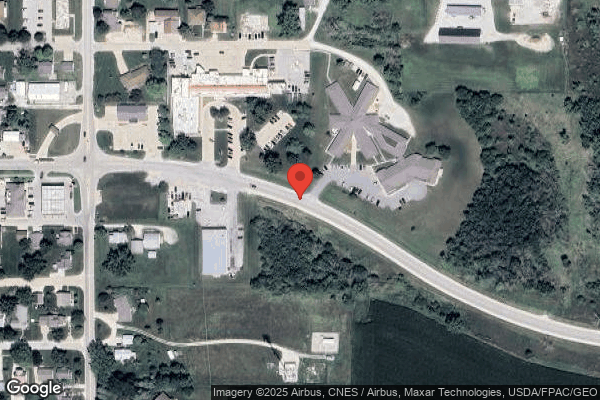

615 SE Kent Street, Greenfield, IA 50849 (641) 743-6131
For profit - Corporation 46 Beds Independent Data: November 2025
Trust Grade
53/100
#195 of 392 in IA
Last Inspection: July 2025

Inspected within the last 6 months. Data reflects current conditions.

Overview

Greenfield Rehabilitation & Health Care Center has a Trust Grade of C, meaning it is average and falls in the middle of the pack among facilities. It ranks #195 out of 392 in Iowa, placing it in the top half of state facilities, and is #2 out of 2 in Adair County, indicating only one other local option is better. The facility's performance is stable, with 7 issues reported in both 2024 and 2025. Staffing is a concern, with a rating of 2 out of 5 stars and a turnover rate of 66%, which is significantly higher than the state average of 44%. While the facility has average RN coverage, there have been some troubling incidents, including a resident who suffered a femur fracture after falling from the commode due to inadequate supervision and failure to follow care protocols. Additionally, the facility did not complete required assessments for several residents on time, which could affect their care. Overall, while there are strengths in certain areas, there are notable weaknesses that families should consider.

Trust Score
C
53/100
In Iowa
#195/392
Top 49%
Safety Record
Moderate
Needs review
Inspections
Holding Steady
7 → 7 violations
Staff Stability
⚠ Watch
66% turnover. Above average. Higher turnover means staff may not know residents' routines.
Penalties
✓ Good
$4,516 in fines. Lower than most Iowa facilities. Relatively clean record.
Skilled Nurses
○ Average
Each resident gets 34 minutes of Registered Nurse (RN) attention daily — about average for Iowa. RNs are the most trained staff who monitor for health changes.
Violations
⚠ Watch
19 deficiencies on record. Higher than average. Multiple issues found across inspections.
★★★☆☆
3.0
Overall Rating
★★☆☆☆
2.0
Staff Levels
★★★★★
5.0
Care Quality
★★☆☆☆
2.0
Inspection Score
Stable
2024: 7 issues
2025: 7 issues

The Good

  • 5-Star Quality Measures · Strong clinical quality outcomes
  • Full Sprinkler Coverage · Fire safety systems throughout facility
  • No fines on record

Facility shows strength in quality measures, fire safety.

The Bad

3-Star Overall Rating

Near Iowa average (3.1)

Meets federal standards, typical of most facilities

Staff Turnover: 66%

20pts above Iowa avg (46%)

Frequent staff changes - ask about care continuity

Federal Fines: $4,516

Below median ($33,413)

Minor penalties assessed

Staff turnover is elevated (66%)

18 points above Iowa average of 48%

The Ugly 19 deficiencies on record

1 actual harm
Jul 2025 7 deficiencies 1 Harm
SERIOUS (G) 📢 Someone Reported This

A family member, employee, or ombudsman was alarmed enough to file a formal complaint

Actual Harm - a resident was hurt due to facility failures

Accident Prevention (Tag F0689)

A resident was harmed · This affected 1 resident

**NOTE- TERMS IN BRACKETS HAVE BEEN EDITED TO PROTECT CONFIDENTIALITY** Number of residents sampled: 3Number of residents cited: 1Based on clinical record review, family interview, staff interviews, h...

Read full inspector narrative →
**NOTE- TERMS IN BRACKETS HAVE BEEN EDITED TO PROTECT CONFIDENTIALITY** Number of residents sampled: 3Number of residents cited: 1Based on clinical record review, family interview, staff interviews, hospital record review and policy review, the facility failed to properly supervise a resident and failed to implement interventions to prevent a fall for 1 of 3 residents reviewed. Resident #49 sustained a femur fracture after she fell from the commode. The facility reported a census of 43 residents. Findings include:According to the Minimum Data Set (MDS), dated [DATE], Resident #49 had a Brief Interview for Mental Status (BIMS) score of 15 (intact cognitive ability). She was admitted to the facility on [DATE], and totally dependent on staff for hygiene, dressing, and transfers. Resident #49 had impairment on both sides of her lower extremities, was frequently incontinent of urine and always continent of bowel. Her diagnoses included: Multiple Sclerosis (MS), malnutrition, anxiety disorder, depression and muscle spasm. The Care Plan dated 3/20/25, showed that Resident #49 was admitted to the facility for a short-term respite stay and scheduled to discharge on [DATE]. Her husband was her main caregiver and she preferred to have him involved in discussions of her care. Resident #49 was at risk for falls, related to deconditioning. Staff were to assist her to the bathroom upon request and to be sure her call light was within reach. The resident had been educated on being safe on the commode, and staff encouraged her to have supervision, but she declined and choose to have privacy. The resident used physical restraints, described as a chest strap, used while she was in the wheelchair to keep her from falling out. Staff were to ensure that the resident was positioned correctly with proper body alignment while restrained. Resident #49 had constipation related to MS, staff were to ensure that her feet were flat on the floor or flat on an elevated support during evacuation and her knees were at a 90 degree or above hip height to promote ease of evacuation.A Fall Risk Data Collection document dated 3/20/25 at 5:23 PM, showed that Resident #49 was unable to come to a standing position independently and she was a low risk for falls. A document titled: Device/Restraint Evaluation, dated 3/21/25 at 7:09 PM, showed that the staff were using a chest strap in the wheelchair that allowed the resident to sit up without falling over. She was unable to get out of the wheelchair on her own related to MS and muscle deconditioning.An Incident Report dated 4/2/25 at 9:30 PM, showed that on that date, a Certified Nurse Aide (CNA) found Resident #49 on the floor shortly after they had put her on the commode. The resident told the nurse she thought she had broken her leg, and they sent her to the emergency room. According to the Emergency Medicine History and Physical dated 4/3/25 at 1:40 PM, when Resident #49 presented to the emergency room, Orthopedic service was consulted for an evaluation of possible bilateral distal femur fractures. The patient reported that she struck her legs on the bed frame in front of her. She had significant swelling of left knee and mild bruising of her right. After X-rays, she was found to have an acute fracture of the distal left femur, no surgical intervention was recommended at that time. She was to keep the knee immobilizer on at all times.The following was found in the facility Nursing Progress Notes: a. On 3/21/25 at 3:51 PM, upon admission, Resident #49 requested to use a Gait Belt (GB) while she was sitting on the commode. The resident was educated on the designed use of a GB and it would be considered a restraint, so the facility would not be using that. The resident voiced understanding. b. On 4/2/25 at 9:52 PM the nurse was alerted by the CNA that the resident had fallen from the commode. c. On 4/2/25 at 11:41 PM, the facility received a call from the husband that the resident had a broken leg and was admitted to the hospital. On 7/15/25 at 2:23 PM, a Family Member (FM) for Resident #49 said that when she was admitted to the facility, they provided a commode that the resident agreed to use. He asked them to put something around her to keep her in the chair so she wouldn't fall out while having a bowel movement. The FM told them he would sign a consent because that was how they had managed her toileting at home. He said that he bought the Velcro belt that supported her in the wheel chair, and they had used for years. At the time of admission, there were 4 people in the room, including the Administrator and the Director of Nursing. When he asked about a GB to secure her on the commode, they didn't seem to know how to answer, and they didn't say no so he thought they were going to provide that for her. The FM said that he didn't learn until after the fall that the facility hadn't actually used the gait belt while on the commode because it was considered a restraint. He said he hadn't signed a consent for the belt used in the wheelchair, and he would have been more than willing to sign a consent for one on the commode. When asked if the resident had told the staff that she didn't want anyone in the room while she was on the commode, he said he wasn't aware, but it didn't surprise him because she really needed her privacy. He said that he usually signed papers for her because, with her MS she had difficulty writing.On 7/15/25 at 4:00 PM Staff D, LPN acknowledged that she was the nurse on duty when Resident #49 fell from the commode. She said that the CNA came and got her right away, she assessed the resident and she had a lot of pain. When she entered the room, the resident's leg was laying in an unnatural way so she knew it was going to be broken, and the resident said right away my leg is broken. She said that the resident requested privacy when on the commode, she would bend at the waist forward and back to evacuate, and it made us all nervous because she didn't seem stable on the commode. It was her understanding that they could not use the gait belt because it would have been a restraint.On 7/16/25 at 8:30 PM, Staff C, Licensed Practical Nurse (LPN) did work with Resident #49 and assisted with transferring her to the commode with the mechanical lift. She couldn't remember if the residents' feet were resting on a platform or dangling, or if she could reach the floor. She said they didn't have any trouble with her balance on the commode and the CNA would stay with the her. Staff C was not aware of a time that the resident got upset about having someone in the room or that she asked them to leave for privacy.On 7/15/25 at 3:52 PM, the Director of Nursing (DON) said that Resident #49 used a Velcro belt while in the wheel chair. She was accustomed to using it, and she could open and close the Velcro herself. She said they didn't have a consent for that, it was part of her routine daily process. Upon admission, they provided a gel cushion on the seat of the commode and protection on the handles. The resident insisted on having her privacy so they provided that for her. When asked if she would have done anything differently, she said she may have insisted on someone staying in the room or maybe insisted that she use a bed pan.On 7/16/25 at 10:50 AM, Staff B Registered Nurse (RN) said that Resident #49 was very particular on how she wanted things done. They provided a cushion on the seat, and a pressure relieving pillow on the back of the commode. The resident would sit forward and if she was having a BM, staff would step out of the room. Staff B said that when the resident would lean forward and rock back, it was concerning and looked like she could fall. Staff B was not aware of conversations suggesting bands that be used on the commode or an alternative to secure her on the commode.On 7/16/25 at 1:55 PM, Staff E, Certified Nurse Aide (CNA), said that she put assisted to transfer Resident #49 onto the commode the night she fell off. The resident wanted it sitting right next to the bed with the call light hooked to the bedding, where she could reach it. Her feet needed to be flat on the floor, and the resident asked them not to leave the room until she was perfectly situated. Staff E said that the resident didn't want the staff in the room when she was on the commode, so they would leave.On 7/16/25 at 2:20 PM, Staff F, CNA said that they used a strap when the resident was in the wheelchair, but not when she was on the commode. The call light had been attached to the bed spread, and the resident would put on the light when she was done. If she hadn't put on her light after about 15 minutes, they would go in and check on her. They heard her calling for help and found her on the floor, in front of the commode, she had one leg under her and her head was under the bed. The resident didn't want them to be in the room, but if her husband was visiting, he would stay in the room with her.On 7/17/25 at 7:45 AM, the Administrator, DON, Staff K, LPN and Staff B, RN demonstrated how the resident preferred to sit on the commode and the action/movement/thrusting that she performed when she was trying to have a BM. The showed how the resident wanted her feet positioned and the back and forth thrusting she used. The Administrator maintained that they had offered to put up a curtain in the room so staff could stay with her, but she refused. (The chart lacked documentation of this attempted intervention). When asked if they had offered a Velcro strap for her legs which would not have been a restraint if the resident could remove it herself, they did not have knowledge that anyone had suggested this option. They said that the resident only wanted a gait belt around her legs, and they determined that would have been a restraint and they would not restrain her to the commode.On 7/17/25 at 9:15 AM, the Medical Director (MD) for the facility said that he had not provided care for Resident #49 while she was at the facility. When her condition and how she would evacuate bowel with a thrusting movement was explained to him, he said that if this was the routine that the resident had used at home, and it worked for her, with close monitoring, he could see how a restraint could have been considered. He said there were situations where they use restraints safely in the hospital. The MD said that he certainly would not want anyone left alone on the commode restrained for a long period of time, but with the proper assessments and monitoring, this would possibly approve of this type of a restraint to prevent falls if that was the families wishes.According to facility policy titled: Restraints, dated 12/2024, a physical restraint was defined as any manual method or physical or mechanical device material or equipment attached or adjacent to the resident's body that the individual cannot remove easily, which restricts freedom of movement or restricts normal access to one's body. Restraints may only be used if/when the resident had a specific medical symptom that cannot be addressed by another less restrictive intervention and a restraint was required to:a. treat the medical symptom;b. protect the resident's safety; c. help the resident attain the highest level of his/her physical or psychological well-being.Prior to placing a resident in restraints, there would be an assessment and review to determine the need for restraints. A review of resident record to determine alternative interventions to the restraint were attempted and documented.Restraints would only be used upon the written order of a physician and after obtaining consent from the resident and or representative. The order would include:a. The specific reason for the restraintb. The type of restraint, and period of time for the use of the restraint.c. Care Plans for the resident in restraints would reflect interventions that address the medical symptoms.
CONCERN (D)

Potential for Harm - no one hurt, but risky conditions existed

Deficiency F0582 (Tag F0582)

Could have caused harm · This affected 1 resident

**NOTE- TERMS IN BRACKETS HAVE BEEN EDITED TO PROTECT CONFIDENTIALITY** Number of residents sampled: 3Number of residents cited: 1Based on staff interviews, Electronic Health Record (EHR) review, poli...

Read full inspector narrative →
**NOTE- TERMS IN BRACKETS HAVE BEEN EDITED TO PROTECT CONFIDENTIALITY** Number of residents sampled: 3Number of residents cited: 1Based on staff interviews, Electronic Health Record (EHR) review, policy review and document review, the facility failed to provide the estimated cost of service with the end of a Medicare part A stay or when all of part B therapies were ending to 1 of 3 resident representatives (Resident #6). The facility reported a census of 43 residents.Findings include:1. The Minimum Data Set (MDS) dated [DATE] documented Resident #6's Brief Interview for Mental Status (BIMS) documented Resident #6 was rarely / never understood. Review of the document dated 5/28/25 titled, Declaration Relating to Life-sustaining Procedures (Living Will) and Durable Power of Attorney For Health Care Decisions (Medical Power of Attorney) documented Resident #6's daughter as power of attorney for health care decisions. Review of Resident #6's EHR titled, Profile documented Resident #6's daughter as the responsible party.Review of document titled, Notice of Medicare Non-Coverage for Resident #6 documented no signature of date from Resident #6 or Resident #6's representative.Review of document with mailed date of 5-30-25 titled, Skilled Nursing Facility Advance Beneficiary Notice of Non-coverage for Resident #6 did not document the estimated cost of the services per day/item or service. The document also contained no signature of patient or authorized representative. Review of email dated 6/27/25 from Resident #6's daughter documented on the notice of non-coverage, the estimated cost was not included. Can her secondary insurance cover some of that cost? If physical therapy will help her build strength and rehabilitate after the trauma, Resident #6's daughter explained she would like to review the costs and logistics of providing Resident #6 that care.Review of email response dated 6/27/25 to Resident #6's daughter from Staff L, Licensed Practical Nurse (LPN) / Social Services Department Staff documented, Let's talk about this. Review of email response dated 6/27/25 to Resident #6's daughter from Staff M, MDS Coordinator / Assistant Director of Nursing (ADON) documented Therapy cannot work with Resident #6 as she is unable to follow directions. Medicare will not pay for therapy if there is no progress. If you would like to pay privately for therapy you may. Review of email response dated 7/15/25 to Resident #6's daughter from Staff L documented a forward of the email that Staff M sent on 6/27/25. Email documented a request after reading let the facility know if there are any further questions. Email explained Staff L emailed form, Skilled Nursing Facility Advance Beneficiary Notice of Non-coverage and requested the form signed and returned.Review of email response dated 7/15/25 from Resident #6's daughter to Staff L documented the form Skilled Nursing Facility Advance Beneficiary Notice of Non-coverage was not attached. Resident #6's daughter explained in the email she did not necessarily need the form as she had been carrying the one she received in the mail with her awaiting a response to her questions. Resident #6's daughter explained in the email she had not received an answer to her question about the secondary insurance covering physical therapy. Resident #6's daughter explained further she had asked about an estimated cost for the physical therapy. Resident #6's daughter explained in the email the estimated cost was left blank on the form that was sent and the form came with option 3 already checked as if it was already chosen by the facility without giving her the information for the other options. Resident #6's daughter continued to explain she did not feel comfortable signing and mailing back until she received the answers to the questions she had posted on 6/27/25.On 7/16/2025 at 3:40 PM Staff L, stated she was unable to determine the cost of therapy services. Staff L stated she had a resident that was private pay and could not determine the breakdown of cost when requested. Staff L stated she did not complete the NOMNC / CMS 10123. Staff L stated she spoke with the Administrator about the estimated cost of services and the Administrator discussed it with therapy as well. Staff L stated eventually she did get an estimated cost of services.On 7/16/2025 at 4:21 PM the Administrator stated Resident #6's daughter came into the facility and paid for her mothers stay and the form titled, Skilled Nursing Facility Advance Beneficiary Notice of Non-coverage was not brought up to Resident #6's daughter's attention then. The Administrator acknowledged the estimated cost was not on CMS-10055 form. The Administrator explained the beneficiary notice should have been followed up on once Resident #6's daughter had requested the information. On 7/16/2025 at 4:28 PM Staff M stated Resident #6's daughter was emailed the form Skilled Nursing Facility Advance Beneficiary Notice of Non-coverage and it that she had been given the 48 hour notice. Staff M stated Resident #6 had met her potential and because of her dementia she could not remember her education after it was provided. Staff M stated Resident #6's daughter accepted taking Resident #6 off the skilled services. Staff M acknowledged she was the staff that sent the forms out to the resident and resident family. Staff M stated she does not usually apply the estimated cost of services in any of the CMS-10055 forms. Staff M stated she had never applied an estimated cost of services on any of the CMS-10055 forms she had sent to residents or resident family members. Review of document dated 2024 titled, Form Instructions Skilled Nursing Facility Advanced Beneficiary Notice of Non-coverage (SNF ABN FormCMS-10055) documented the estimated cost section should include the estimated cost of the corresponding care that may not be covered by Medicare. The SNF should enter an estimated total cost or a daily, per item, or per service cost estimate. SNFs must make a good faith effort to insert a reasonable cost estimate for the care. The lack of a cost estimate entry on the SNF ABN or an amount that is different from the final actual cost charged to the beneficiary does not invalidate the SNF ABN. If for some reason the SNF is unable to provide a good faith estimate of projected costs of care at the time of the SNF ABN delivery, the SNF should indicate in the cost estimate area that no cost estimate is available. This should not be a routine or frequent practice but allows timely issuance of the SNF ABN during rare instances when a cost estimate is not available.
CONCERN (D)

Potential for Harm - no one hurt, but risky conditions existed

Deficiency F0638 (Tag F0638)

Could have caused harm · This affected 1 resident

**NOTE- TERMS IN BRACKETS HAVE BEEN EDITED TO PROTECT CONFIDENTIALITY** Number of residents sampled: 3Number of residents cited: 1Based on clinical record review, staff interview and guidance from the...

Read full inspector narrative →
**NOTE- TERMS IN BRACKETS HAVE BEEN EDITED TO PROTECT CONFIDENTIALITY** Number of residents sampled: 3Number of residents cited: 1Based on clinical record review, staff interview and guidance from the 2024 Resident Assessment Instrument (RAI) Manual, the facility failed to complete Quarterly Minimum Data Set (MDS) Assessments within federal guidelines for 1 of 3 (Resident #39) residents reviewed. The facility reported a census of 43 residents. Findings include: The MDS portion of the Electronic Health Record (EHR) of Resident #39 recorded the resident's admission MDS was dated 11/28/24 with a Quarterly MDS dated [DATE]. The Resident then had a discharge MDS dated [DATE] with a re-entry dated 5/14/25. Per the MDS tracker built into the software, the next quarterly MDS was due 5/23/25. Upon review on 7/15/25 at 11:45 am, no further Quarterly assessments had been scheduled or completed. A Medicare - 5 day MDS dated [DATE] was the last MDS scheduled or completed. Page 2-35 of the 2024 RAI Manual documented a Quarterly Assessment must be within 92 days of the Previous OBRA assessment which includes Quarterly, Admission, Annual, SCSA (Significant Change in Status Assessment), SCPA or SCQA (Significant Correction to Prior Annual or Prior Quarterly). OBRA Assessments are assessments mandated by the Omnibus Budget Reconciliation Act of 1987. OBRA assessments are standardized assessments used in nursing facilities to evaluate the needs of the residents.On 7/15/25 at 1:29 pm, the MDS Coordinator stated she had completed a five day assessment (a payment assessment that is not part of the OBRA assessment schedule) and did not realize she had to complete the quarterly assessment as well.On 7/16/25 at 2:15 pm, the Administrator of the facility stated the facility does not have a policy regarding MDS Assessments and they follow the guidelines of the RAI Manual.
CONCERN (D)

Potential for Harm - no one hurt, but risky conditions existed

Assessment Accuracy (Tag F0641)

Could have caused harm · This affected 1 resident

Number of residents sampled: 13Number of residents cited: 2Based on clinical record review, staff interviews, information from a drug manufacturer and guidance from the 2024 Resident Assessment Instru...

Read full inspector narrative →
Number of residents sampled: 13Number of residents cited: 2Based on clinical record review, staff interviews, information from a drug manufacturer and guidance from the 2024 Resident Assessment Instrument (RAI) Manual, the facility failed to accurately reflect the status of 2 of 13 residents in the Minimum Data Set (MDS) Assessments (Resident #2, Resident #6). The facility reported a census of 43 residents. Findings include: 1. The MDS of Resident #2 dated 4/10/25 identified a Brief Interview for Mental Status Score of 14 which indicated cognition intact. The MDS coded the resident had a start date for Speech therapy as 3/18/25. The MDS recorded the resident had zero minutes of speech therapy during the seven day lookback period of April 4/4/25 - 4/10/25. The MDS coded the resident had a start date for Occupational Therapy of 3/18/25 and also recorded zero minutes of Occupational Therapy during the same seven day lookback period. The MDS coded the resident had a start date for Physical Therapy of 3/19/25, also with zero minutes of therapy recorded. On 7/14/25 at 3:02 pm, Resident #2 stated she had recently completed therapy and had been improving her balance during therapy sessions. On 7/15/25, a member of the facility's therapy team ran a report for the therapy minutes during the seven day lookback period. The therapy minutes stated Resident #2 received 145 minutes of Speech Therapy, 135 minutes of Occupational Therapy and 93 minutes of Physical Therapy during this time period. On 7/15/25 at 1:11 pm, the MDS Coordinator stated that therapy minutes are normally pulled automatically onto the assessment. She explained that at times, the minutes did not carry over as expected, and in those instances, she would request a therapy minutes report from the therapy department. She also stated there had recently been a software change which had caused some glitches. She acknowledged it was her error in missing the therapy minutes not being recorded on the MDS Assessment. The 2024 RAI Manual directs for Speech-Language Pathology and Audiology Services and Occupational and Physical Therapies to enter the total number of minutes of therapy that were provided on an individual basis in the last seven days, as well as minutes provided as concurrent minutes, group minutes and co-treatment minutes and to enter the number of days therapy services were provided in the last seven days. 2. The MDS of Resident #6 dated 5/13/25 documented diagnoses that included diabetes Mellitus. The MDS recorded Resident #6 was administered insulin injections on one of the last seven days of the look-back period. The Medication Administration Record (MAR) for May of 2025 failed to reflect the resident had received any insulin during the month. On 7/15/2025 at 1:29 pm, the MDS Coordinator stated she had recorded an insulin injection due to the Resident receiving Ozempic once a week. She stated she was unaware Ozempic was not an insulin. The Ozempic Clinical Overview by the manufacturer of the medication documented Ozempic is a GLP-1 RA (a glucagon-like peptide-1 receptor agonist (a class of medications that mimic the effects of the GLP-1 hormone, which helps regulate blood sugar levels and reduce appetite). On 7/16/25 at 2:15 pm, the Administrator of the facility stated the facility does not have a policy regarding MDS Assessments and they follow the guidelines of the RAI Manual.
CONCERN (D)

Potential for Harm - no one hurt, but risky conditions existed

Deficiency F0655 (Tag F0655)

Could have caused harm · This affected 1 resident

Number of residents sampled: 13Number of residents cited: 1Based on clinical record review and staff interviews, the facility failed to implement a Baseline Care Plan within 48 hours of admission for ...

Read full inspector narrative →
Number of residents sampled: 13Number of residents cited: 1Based on clinical record review and staff interviews, the facility failed to implement a Baseline Care Plan within 48 hours of admission for 1 of 13 residents reviewed (Resident #2). The facility reported a census of 43 residents. Findings include: The Census Line portion of the Electronic Health Record (EHR) of Resident #2 recorded the resident had moved from the facility's Assisted Living into the Long Term Care portion of the facility on 1/3/25. The Minimum Data Set (MDS) Assessment of Resident #2, dated 1/3/25, additionally recorded an admission date of 1/3/25. The Care Plan Section of Resident #2 EHR identified her most recent Care Plan had been initiated on 1/15/25. The prior Care Plan had an initiation date of 11/22/2022. When reviewed on 7/15/25, the Care Plan reflected initiation dates that varied by focus area. The earliest initiation date was documented as 1/20/25, which was five days after the Care Plan was noted as initiated and 17 days after the resident was admitted to the Long Term Care portion of the facility. On 7/15/25 at 3:53 pm, the Director of Nursing (DON) stated Resident #2 had not had a Baseline Care Plan done. She stated no Care Plan was initiated until 1/15/25. She voiced she had not identified any reason why it was not done. On 7/16/25 at 12:30 pm, the DON stated she had spoken to the MDS Coordinator the prior evening. She stated the MDS Coordinator told her that when Resident #2 moved from the Assisted Living area into the Long Term Care area, her Assisted Living Care Plan came through with her on the EHR. She stated the MDS Coordinator failed to close that Care Plan and initiate a current one for Long Term Care. She said the MDS Coordinator had caught the error on 1/15/25 and that is when she started her current Comprehensive Care Plan. On 7/16/25 at 1:44 pm, the MDS Coordinator stated when she initiates a new care plan she normally will complete the Focus Areas of Falls, Code Status, Activities of Daily Living (ADLs) and Discharge Planning immediately. She stated typically she completes those areas first and then goes from there over the next several days until the Care Plan is complete. She stated she was unaware of why none of the Focus Areas had dates prior to 1/20/25 for Resident #2. The policy titled Care Planning, approval date 12/2024, failed to address any timelines for the required completion of either a baseline or comprehensive care plan.
CONCERN (D)

Potential for Harm - no one hurt, but risky conditions existed

Infection Control (Tag F0880)

Could have caused harm · This affected 1 resident

**NOTE- TERMS IN BRACKETS HAVE BEEN EDITED TO PROTECT CONFIDENTIALITY** Number of residents sampled: 3Number of residents cited: 3Based on observations, clinical record review, staff interviews, and p...

Read full inspector narrative →
**NOTE- TERMS IN BRACKETS HAVE BEEN EDITED TO PROTECT CONFIDENTIALITY** Number of residents sampled: 3Number of residents cited: 3Based on observations, clinical record review, staff interviews, and policy review, the facility failed to prevent indwelling catheters from potential contamination by securing the urine drainage bag on a resident's trash can and allowing a drainage bag on rest on the floor for 2 of 3 residents reviewed (#3, #22). Staff also failed to don Personal Protective Equipment (PPE) or perform proper hand hygiene during indwelling catheter care for 1 of 3 residents reviewed (#29). The facility reported a census of 43. 1. On 7/14/2025 at 12:24 PM, Resident #22 was observed seated at a dining room table with an indwelling urinary catheter. At 2:21 PM, Resident #22’s urinary bag was observed hanging on the side of the trashcan to the right of his recliner. The Minimum Data Set (MDS) assessment dated [DATE] revealed a Brief Interview for Mental Status (BIMS) score of 6 out of 15 which indicated severely impaired cognition. It included diagnoses of chronic kidney disease, obstructive uropathy (blocked urine flow), and difficulty walking. It indicated he was independent with eating, dependent with oral hygiene and required maximum assistance with all other Activities of Daily Living (ADLs) and all forms of mobility. The Care Plan revised 8/15/24 directed staff to position catheter bag and tubing below the level of the bladder and away from the entrance door. On 7/16/25 at 1:48 PM, Staff I, Certified Nurse Aide (CNA), stated indwelling catheter tubing or collection bag should not touch the ground, the collection bag should always have a dignity cover, be hung below the level of the resident’s bladder, and secured under the resident’s wheelchair high enough to not touch the floor. She also stated the collection bag can be placed in a dedicated basin, or hung on the side of the trash bin but wasn’t sure it was an approved location. She was not sure whether hanging a urinary collection bag was directly addressed during training. On 7/16/25 at 2:00 PM, Staff J, CNA stated she received indwelling catheter care education upon hire and in school. She stated staff hangs Resident #22’s catheter bag on his trash can but they know they’re not supposed to. She stated there was nowhere else to hang it when he’s in his recliner. On 7/16/25 at 4:10 PM, the Director of Nursing (DON) stated staff should position the indwelling catheter drainage bag in compliance with Infection Prevention practices. A policy titled “Infection Prevention and Control Program” dated 2019 indicated the Infection Prevention and Control Program follows national standards and guidelines to prevent, recognize and control the onset and spread of infection whenever possible. A policy titled “Catheter Care, Urinary” dated 12/2024 directed staff to be sure the catheter tubing and drainage bag are kept off the floor. 2. The MDS for Resident #29 dated 6/12/25 in progress revealed a BIMS score of 15/15 indicating normal cognitive function. The document revealed diagnoses of renal insufficiency, neurogenic bladder, end stage renal disease and benign prostatic hyperplasia with lower urinary tract symptoms. Resident #29’s Care Plan dated 7/8/25 under development revealed a Focus Area with a catheter with neurogenic bladder dated 7/26/24. Interventions for staff included catheter care, positioning of the catheter, monitoring and documenting the output and enhanced barrier precautions (EBP). A Focus Area for EBP due to wounds and urinary catheter was initiated on 9/16/24. Interventions for staff included resident education and staff to wear gown and gloves while completing high-contact resident care activities. On 7/14/25 at 1:05 PM observed personal protective equipment (PPE) on Resident #29’s door. On 7/14/25 at 1:10 PM Staff A, Licensed Practical Nurse (LPN), entered Resident #29’s room, completed hand hygiene, closed the resident’s curtain and donned gloves. Observed the resident's catheter bag hanging from the bed without a dignity bag. The staff removed the resident’s blankets, pants, and initiated opening the brief. The staff upon discovering the resident’s brief was slightly soiled, stopped, removed gloves, obtained wipes and donned new gloves. Staff A used the right hand to obtain wipes and the left hand to complete peri care. When additional staff and the resident’s roommate entered the room, Staff A used the left gloved hand to adjust the curtain. Staff A applied the treatment to the peri area using the right gloved hand. Following the treatment Staff A removed the right glove, had staff hand her an additional glove, donned the glove and completed donning of a clean brief, and pulling his pants up. Staff A placed a barrier on the ground with a graduated cylinder on top for emptying the catheter bag. The staff used an alcohol swab to wipe the tubing, emptied the catheter, wiped the tubing with a new swab and took the cylinder to the bathroom for emptying. The staff removed gloves, completed hand hygiene and adjusted Resident #29’s blankets. Staff A demonstrated inconsistent hand hygiene practices with glove removal/application, did not utilize a gown with medical treatment, peri cares, and emptying of catheter. On 7/15/25 at 2:00 PM the Director of Nursing (DON) stated the expectation was for all nurses and Certified Nurse Assistants (CNAs) to wear gowns and gloves when providing treatments and cares to residents with catheters. The staff stated she expected hand hygiene to be completed during glove changes, as well as maintain clean and dirty. The DON stated it was expected that dignity bags were used for catheter bags. The U.S. Department of Health and Human Services Centers for Disease Control and Prevention EBP sign on Resident #1 and Resident #32’s doors revealed providers and staff must wear gloves and gown during high contact resident care activities including dressing, bathing, transferring, hygiene, changing briefs or assisting with toileting, and wound care. 3. The MDS dated [DATE] for Resident #3 showed that she had a BIMS score of 15 (intact cognitive ability.) She required substantial assistance with hygiene and dressing and was totally dependent for transfers. The resident had an indwelling catheter and was always incontinent of bowel. Her diagnoses included: renal failure and urinary tract infections. The Care Plan, last updated on 6/11/25, showed that Resident #3 had a catheter due to neurogenic bladder. Staff were to provide catheter care every shift, to monitor output and to position the catheter bag and tubing below the level of the bladder. On 7/15/2025 at 6:14 AM, observed Resident #3 in bed sleeping, her catheter bag resting on the floor and it looks to be empty. On 7/15/25 at 1:54 PM, the Director of Nursing (DON) said that all urinary catheters should be in a privacy bag and should never be on the floor. On 7/17/25 at 6:10 AM, Staff G Certified Nurse Aide (CNA) said that the catheter bag should never be on the floor. On 7/17/25 at 6:15 AM, Staff H, CNA said that they should always have a catheter in a privacy bag.
CONCERN (E)

Potential for Harm - no one hurt, but risky conditions existed

Comprehensive Assessments (Tag F0636)

Could have caused harm · This affected multiple residents

Number of residents sampled: 11Number of residents cited: 8Based on clinical record review, staff interview and guidance from the 2024 Resident Assessment Instrument (RAI) Manual, the facility failed ...

Read full inspector narrative →
Number of residents sampled: 11Number of residents cited: 8Based on clinical record review, staff interview and guidance from the 2024 Resident Assessment Instrument (RAI) Manual, the facility failed to complete and transmit Comprehensive Minimum Data Set (MDS) Assessments within federal guidelines for 6 of 11 residents (#1, #2, #4, #6, #8, #18) reviewed for MDS Assessments. The facility reported a census of 43 residents.Findings include:1. The admission (Comprehensive) Minimum Data Set (MDS) of Resident #1 documented an Assessment Reference Date (ARD) of 3/18/25. The MDS recorded the resident had an admission date to the facility of 3/12/25. Page 58 of the MDS recorded a completion date of 4/2/25, day 22 of the resident's stay.2. The admission (Comprehensive) MDS of Resident #2 documented an ARD date of 1/15/25. The MDS recorded the resident had an admission date to the facility of 1/3/25. Page 58 of the MDS recorded a completion date of 1/28/25, day 26 of the resident's stay.3. The admission (Comprehensive) MDS of Resident #4 documented an ARD date of 8/2/24. The MDS recorded the resident had an admission date to the facility of 7/26/24. Page 58 of the MDS recorded a completion date of 8/16/25, day 22 of the resident's stay.4. The admission (Comprehensive) MDS of Resident #6 documented an ARD date of 5/22/25. The MDS recorded the resident had an admission date to the facility of 5/7/25. Page 58 of the MDS recorded a completion date of 5/22/25, day 16 of the resident's stay.5. The admission (Comprehensive) MDS of Resident #8 documented an ARD date of 6/19/25. The MDS recorded the resident had an admission date to the facility of 6/6/25. Page 58 of the MDS recorded a completion date of 6/27/25, day 22 of the resident's stay.6. The admission (Comprehensive) MDS of Resident #18 documented an ARD date of 1/10/25. The MDS recorded the resident had an admission date to the facility of 12/30/24. Page 58 of the MDS recorded a completion date of 5/22/25, day 16 of the resident's stay.According to the 2024 RAI, for an admission (comprehensive) assessment, the MDS Completion Date (Item ZO500B) must be no later than the 14th calendar day of the resident's admission (admission date + 13 calendar days). On 7/16/25 at 12:30 pm, the Director of Nursing stated she signs the MDS Assessments as complete due to the MDS Coordinator being an LPN (Licensed Practical Nurse) rather than an RN (Registered Nurse) and the MDS requires an RN to sign the assessments as complete. She stated she does not really have any MDS knowledge of the regulations. She stated the MDS Coordinator normally tells her verbally when she needs assessments signed or may email her or leave a note on her desk. She stated she normally will sign them on the same day she is told they are ready to be signed and does not delay signing them. On 7/16/25 at 2:15 pm, the Administrator of the facility stated the facility does not have a policy regarding MDS Assessments and they follow the guidelines of the RAI Manual.
Aug 2024 7 deficiencies
CONCERN (D)

Potential for Harm - no one hurt, but risky conditions existed

Deficiency F0657 (Tag F0657)

Could have caused harm · This affected 1 resident

**NOTE- TERMS IN BRACKETS HAVE BEEN EDITED TO PROTECT CONFIDENTIALITY** Based on clinical record reviews, observations, resident interview, staff interviews, and policy review, the facility failed to ...

Read full inspector narrative →
**NOTE- TERMS IN BRACKETS HAVE BEEN EDITED TO PROTECT CONFIDENTIALITY** Based on clinical record reviews, observations, resident interview, staff interviews, and policy review, the facility failed to review and revise the care plan to include focus area and interventions for 2 of 15 residents (Resident #7 and Resident #15) reviewed. The facility reported a census of 29 residents. Findings include: 1. The Minimum Data Set (MDS) assessment for Resident #7 dated 8-2-24 identified a Brief Interview for Mental Status (BIMS) score of 15 which indicated cognition intact. The MDS documented diagnoses that included: arthritis, pain in the right leg and hip, and history of falling. Resident #7's Clinical Census revealed the resident admitted to the facility on [DATE]. The Care Plan printed 8/28/24 informed the staff Resident #7 did not wear edema garments. Resident #7's Clinical Physician Orders revealed the use of compression stockings on during the day and off at night with a start date of 8/9/24. The Progress Note dated 8/7/24 indicated the primary care provider completed rounds with a new order for compression stockings. Observation on 8/26/24 at 12:38 PM revealed Resident #7 wearing bilateral lower extremity compression stockings. On 8/27/24 at 8:34 AM Resident #7 wore compression stockings, shoes, and completed ambulation with staff assistance from her bedroom to the dining room. On 8/26/24 at 12:38 PM Resident #7 stated she swelled in her left lower extremity and had recently had the right hip replaced. The resident stated she only recently had been able to get her shoes on. Staff D, Certified Nursing Assistant (CNA), on 8/28/24 at 2:51 PM stated compression garments were worn for edema, and she would know if a resident wore compression stockings from the Care Plan. 2. The MDS assessment for Resident #15 dated 8-2-24 identified a Brief Interview for Mental Status (BIMS) score of 11 which indicated moderate cognitive impairment. The MDS documented diagnoses that included: Parkinson's Disease, personal history of transient ischemic attack and cerebral infarction, and personal history of COVID-19. The MDS documented Resident #15 did not require oxygen on admission to the facility and during the assessment period. Resident #15's Clinical Census revealed admission to the facility on 7/26/24. The Care Plan printed 8/28/24 did not inform the staff Resident #15 used oxygen, signs/symptoms of hypoxia, and parameters of oxygen use. Resident #15's Physician Orders revealed use of oxygen at 1-2 Liters as needed to keep oxygen saturations above 90% with a start date of 8/9/24. Observation on 8/26/24 at 1:34 PM noted a concentrator in Resident #15's room with oxygen tubing. Observation on 8/27/24 at 8:30 AM revealed oxygen tubing and a concentrator in Resident #15's room. Observation on 8/28/24 at 9:26 AM of Resident #15's room found a concentrator and oxygen tubing. Resident #15 stated on 8/26/24 at 1:35 PM she had to use oxygen one time since returning to the facility. On 8/28/24 at 11:35 AM the Assistant Director of Nursing (ADON), stated resident supports should be on the care plan. The ADON acknowledged that not all the care plans were where she wanted them to be since reopening the facility in July. In an interview on 8/28/24 at 1:20 PM the Administrator stated she was aware of care plans requiring revisions and the sole responsibility of the care plans did not sit on the ADON. The facility document, Care Planning - Interdisciplinary Team Policy, reviewed 1/2017, revealed each resident will have a comprehensive Plan of Care (POC) that will assist them in maintaining and achieving the highest practical level of mental and physical functioning, and wellbeing. The document further stated the POC would identify each resident's strengths, weaknesses, and needs. The policy stated the comprehensive POC must address all care issues that are relevant to the individual, whether or not they are specifically covered in the MDS.
CONCERN (D)

Potential for Harm - no one hurt, but risky conditions existed

Deficiency F0658 (Tag F0658)

Could have caused harm · This affected 1 resident

**NOTE- TERMS IN BRACKETS HAVE BEEN EDITED TO PROTECT CONFIDENTIALITY** Based on observation, pharmacist interview, staff interview and clinical record review the facility failed to follow physicians'...

Read full inspector narrative →
**NOTE- TERMS IN BRACKETS HAVE BEEN EDITED TO PROTECT CONFIDENTIALITY** Based on observation, pharmacist interview, staff interview and clinical record review the facility failed to follow physicians' orders for 1 of 4 residents reviewed during medication pass. Resident #128 had a medication order for 100 milligrams (mg) of Sertraline, and the pharmacy sent a bubble pack of pills for 75 mg. Staff did not notice the discrepancy and had administered the wrong dose 26 times. The facility reported a census of 29 residents. Findings include: According to the Minimum Data Set (MDS) assessment dated [DATE], Resident #128 had a Brief Interview for Mental Status (BIMS) score of 11 (moderate cognitive deficits). He was independent with eating, hygiene, dressing and transferring. The resident was taking an antidepressant and antianxiety medications. The Care Plan updated on 8/15/24, showed that Resident #128 had an anxiety disorder, edema, obesity and intellectual disabilities. The Care Plan lacked reference to antidepressant and antianxiety medications. The census tab in the electronic record showed that Resident #128 was admitted to the facility on [DATE]. In an observation of the medication pass on 8/28/24 at 7:34 AM, Staff A, Registered Nurse (RN) prepared medications for Resident #128. She discovered that the Sertraline in the bubble pack contained 50mg tabs with one and one-half tab in each pack. She decided not to give the medication and said that she needed to recheck the orders. An Order Summary dated 7/25/24 at 11:03 AM, showed that Sertraline 75 mg. had been discontinued on that date, and at 11:28 AM, an order was entered for Sertraline 100 mg. one tab daily for depression. A Medication Review Report from the referring facility, signed on 8/1/24, showed an order for Sertraline 100 mg. daily. A review of the Medication Administration Record (MAR) for Resident #128 showed that the 75 mg. dose had been administered 26 times. On 8/28/24 at 9:07 AM, the Pharmacist said that the Sertraline bubble pack for 75 mg had been delivered to the facility on 8/1/24. The Pharmacist said that they were not aware that the order had been changed from 75 mg to 100 mg. On 8/28/24 at 1:20 PM, the Administrator acknowledged that when the dosage on the card did not match the order in the computer, the nurses should have double checked and caught that sooner. On 8/29/24 at 6:02 AM, the Director of Nursing (DON) said that the nursing staff should have practiced the 5 rights before giving Resident #128 his medication. She said that the resident was not aware enough to understand his medications so they wouldn't have been able to get a clear answer from him regarding dosage or if there were changes. According to the facility Skills Checklist; Administration of Meds, compare label on each medication to EMAR (Electronic Medication Administration Record).
CONCERN (D)

Potential for Harm - no one hurt, but risky conditions existed

Respiratory Care (Tag F0695)

Could have caused harm · This affected 1 resident

Based on clinical record review, observations, resident interview, staff interview, and policy review, the facility failed to provide respiratory care and services in accordance with professional stan...

Read full inspector narrative →
Based on clinical record review, observations, resident interview, staff interview, and policy review, the facility failed to provide respiratory care and services in accordance with professional standards of practice for 1 of 1 residents reviewed, requiring the use of oxygen (Resident #15). The facility reported a census of 29 residents Findings include: The Minimum Data Set (MDS) assessment for Resident #15 dated 8-2-24 identified a Brief Interview for Mental Status (BIMS) score of 11 which indicated moderate cognitive impairment. The MDS documented diagnoses that included: Parkinson's Disease, personal history of transient ischemic attack and cerebral infarction, and personal history of COVID-19. The MDS documented Resident #15 did not require oxygen on admission to the facility. The Care Plan printed 8/28/24 informed the staff Resident #15 did not receive oxygen. Resident #15's Physician Orders revealed use of oxygen at 1-2 Liters as needed to keep oxygen saturations above 90% with a start date of 8/9/24. Resident #15's Medication Administration Record/Treatment Administration Record (MAR/TAR) for August 2024 did not provide instructions for changing of oxygen tubing. Observation on 8/26/24 at 1:34 PM noted a concentrator in Resident #15's room with oxygen tubing wrapped and hanging in front of the concentrator with the nasal cannula near the floor. The tubing was not marked. Observation on 8/27/24 at 8:30 AM revealed unmarked oxygen tubing hanging on the concentrator with the nasal cannula near the floor. Observation on 8/28/24 at 9:26 AM revealed unmarked oxygen tubing hanging in front of Resident #15's concentrator unlabeled. On 8/28/24 Resident #15 stated she had to use oxygen one time since returning to the facility. On 8/28/24 Staff A, Registered Nurse (RN), stated she believed oxygen tubing was changed weekly and it was noted on the MAR/TAR. On 8/28/25 Staff C, RN, revealed oxygen tubing was changed weekly as per the facility policy, and was noted on the MAR/TAR. The staff also stated when changing the tubing she marked it with the date and her initials. The Director of Nursing, (DON), on 8/28/24 at 11:25 AM, stated oxygen tubing is changed weekly and should be marked by the nurse completing the change. The DON stated she thought she had removed the tubing from the concentrator as the oxygen requirement was not continuous. During an interview on 8/28/24 at 11:35 AM, the Assistant Director of Nursing (ADON), stated oxygen tubing is changed weekly and noted on the MAR/TAR. The facility policy, Oxygen Administration, revised October, did not indicate when oxygen tubing was to be changed and documented.
CONCERN (D)

Potential for Harm - no one hurt, but risky conditions existed

Medical Records (Tag F0842)

Could have caused harm · This affected 1 resident

Based on clinical record review, observation, staff interview, and policy review, the facility failed to document the correct medication provided for 1 of 6 (Resident #26) residents reviewed. The faci...

Read full inspector narrative →
Based on clinical record review, observation, staff interview, and policy review, the facility failed to document the correct medication provided for 1 of 6 (Resident #26) residents reviewed. The facility reported a census of 29 residents Findings include: The Minimum Data Set (MDS) assessment for Resident #26 dated 8-2-24 identified a Brief Interview for Mental Status (BIMS) score of 4 which indicated severe cognitive impairment. The MDS documented diagnoses that included: Non-Alzheimer's Dementia, and anxiety disorder. The MDS documented Resident #26 received antianxiety and dementia medication on 7 out of 7 days of the assessment reference period. The Care Plan printed 8/28/24 informed the staff Resident #26 received medication related to anxiety and dementia. The Care Plan directed staff to monitor for side effects and effectiveness. Resident #26's Medication Administration Record (MAR) for August 2024 documented entries for Rivastigmine Patch 24 Hours 4.6MG/24HR from 8/1 through 8/27; apply 1 patch transdermally one time a day for dementia with a start date of 7/26/24. The document further revealed entries for Rivastigmine Patch 24 hour 9.5MG/24HR from 8/22 through 8/27; apply 1 patch transdermally one time a day related to unspecified dementia and anxiety. The Telehealth Encounter Psych Progress Note dated 8/21/24 revealed Resident #26's dementia was progressing. The Advanced Practice Registered Nurse (APRN) increased and prescribed the dose of Rivastigmine Patch to 9.5MG/24 HRS - apply to skin daily for dementia symptoms. The Progress Notes documented on 8/21/24 at 11:47 AM Resident #26 had an encounter telehealth with ARNP and had a new order to increase Rivastigmine patch to 9.5. On 8/27/24 at 10:34 AM, Staff A, Registered Nurse (RN), stated she was not aware of 2 different orders for Rivastigmine on Resident #26's MAR. The staff stated the resident only had 1 order in the medication cart. Staff A opened the cart and revealed Rivastigmine Patch 24 Hours 9.5MG/24 Hour. The Director of Nursing (DON) on 8/27/24 at 10:36 AM stated Resident #26 had 1 order for Rivastigmine 9.5 and that was from an increase from a telehealth appointment the previous week. The DON acknowledged the old order should have been taken off the MAR when the new order was put in and the medications were changed in the medication cart. In an interview on 8/27/24 at 12:13 PM the Administrator stated when an order is received from a telehealth appointment she would expect the order to be acknowledged, sent to the pharmacy, filled and a medication exchange completed. The Administrator stated there should be documentation of the new or increased medication in the electronic health record, and the MAR/TAR would match the order. In an interview on 8/27/24 at 2:00 PM, the Assistant Director of Nursing (ADON), stated she had been on the telehealth appointment and the Rivastigmine Patch had been increased. The ADON stated the old order should have been discontinued from the MAR. The facility did not have a policy for medication administration. The facility provided document, Administration of Meds (Oral), undated, revealed the staff should document the medications administered in the clinical record.
CONCERN (D)

Potential for Harm - no one hurt, but risky conditions existed

Infection Control (Tag F0880)

Could have caused harm · This affected 1 resident

**NOTE- TERMS IN BRACKETS HAVE BEEN EDITED TO PROTECT CONFIDENTIALITY** Based on clinical record review, observations, staff interviews, and policy reviews, the facility failed to provide adequate han...

Read full inspector narrative →
**NOTE- TERMS IN BRACKETS HAVE BEEN EDITED TO PROTECT CONFIDENTIALITY** Based on clinical record review, observations, staff interviews, and policy reviews, the facility failed to provide adequate hand hygiene and Enhanced Barrier Precautions (EBP) for 1 of 2 (Resident #23) residents reviewed. The facility reported a census of 29 residents. Findings include: The Minimum Data Set (MDS) assessment dated [DATE] identified Resident #23 with a Brief Interview for Mental Status (BIMS) score of 15 which indicated cognition intact. The MDS coded the presence of an indwelling catheter. The MDS reflected the resident always incontinent of bowel. The MDS documented diagnoses that included: benign prostatic hypertension, end stage renal disease, neurogenic bladder and senile degeneration of brain. The Care Plan printed 8/28/24 identified Resident #23 with a catheter and neurogenic bladder and directed staff to provide catheter care every shift and as needed (PRN), monitor and document output as per facility policy, and monitor for signs/symptoms of discomfort. Resident #23's physician orders included: change catheter drainage bag as needed for leaking, urinary catheter 18fr 10cc change as needed for obstruction, and irrigate urinary catheter with 30 ML normal saline as needed for blockage. On 8/28/24 at 9:34 AM observed Staff B, Certified Nursing Assistant, completing peri cares and catheter cares on Resident #23. The Director of Nursing (DON) was also present. Staff B completed hand hygiene, donned gloves, completed catheter care, completed peri care, moved to a bedside table, obtained barrier cream, opened, dispensed, and applied using the same hand as peri cares. The staff did not change gloves and complete hand hygiene between catheter care and peri care or prior to obtaining the barrier cream and dispensing. The DON intervened, obtained a clean glove and placed the barrier cream tube in the glove. The DON donned a glove and provided additional barrier cream to Staff B. Staff B removed gloves, completed hand hygiene and donned new gloves. Staff B completed the dressing task. The staff obtained a graduated cylinder, and emptied the catheter bag using appropriate technique. After emptying and cleaning the cylinder, the staff positioned Resident #23's lower extremities on 2 pillows, removed her gloves, and completed hand hygiene. The DON removed the barrier cream in the glove from the room. The staff did not utilize any additional personal protective equipment. On 8/28/24 at 11:14 AM the DON revealed Staff B should not have opened a drawer to obtain barrier cream with dirty gloves, especially when there was an additional staff member with clean hands present. The DON acknowledged that hand hygiene with glove changes needed to be completed when moving from dirty to clean tasks when providing personal care. The DON stated she was not familiar with EBP. The Assistant Director of Nursing (ADON)/Infection Preventionist (IP) on 8/28/24 at 11:35 AM stated she was familiar with EBP and expected they would be followed with catheter care. The ADON/IP revealed the facility had received new equipment for placement outside of residents' rooms for holding PPE, but had not yet installed them. In an interview on 8/28/24 at 1:10 PM, the Administrator stated she was aware of EBP and prior to the tornado the facility completed a mock survey, and had identified EBP as an area to be addressed. The facility ordered equipment for installation outside of the residents' rooms, but the tornado occurred prior to the installation. The facility policy, Infection Prevention and Control Manual - Standard Precautions, dated 2019, revealed appropriate hand hygiene provides a clean and healthy environment for residents, staff, and visitors, prevents the spread of potentially deadly infections, and reduces the risk to the healthcare provider of colonization or infections acquired from a resident. The facility policy, Infection Prevention and Control Manual Resident Care - Prevention of Catheter-Associated Urinary Tract Infections, 2019, revealed hand hygiene performed immediately after any manipulation or contact with the catheter site, catheter, tubing, drainage bag, or emptying container, even when gloves are worn. The facility policy, Infection Prevention and Control Manual - Enhanced Barrier Precautions, undated, revealed EBP involve gown and glove use during high contact resident care activities for residents known to be colonized or infected with a multidrug resistant organism (MDRO) or those with an increased risk for MDRO acquisition (resident with wounds or indwelling medical devices). The document contained examples of medical devices including urinary catheters, and high-contact resident care activities including changing briefs, and care for using an indwelling medical device.
CONCERN (E)

Potential for Harm - no one hurt, but risky conditions existed

Comprehensive Care Plan (Tag F0656)

Could have caused harm · This affected multiple residents

**NOTE- TERMS IN BRACKETS HAVE BEEN EDITED TO PROTECT CONFIDENTIALITY** 3. The MDS assessment for Resident #4 dated 7/30/24 identified a BIMS score of 6 which indicated severe cognitive impairment. Th...

Read full inspector narrative →
**NOTE- TERMS IN BRACKETS HAVE BEEN EDITED TO PROTECT CONFIDENTIALITY** 3. The MDS assessment for Resident #4 dated 7/30/24 identified a BIMS score of 6 which indicated severe cognitive impairment. The MDS documented diagnoses that included: Non-Alzheimer's Dementia, Anxiety Disorder and Depression. The MDS documented Resident #4 received antipsychotic, antianxiety and antidepressant medications on 7 out of 7 days of the assessment reference period. The Care Plan printed on 8/28/24 directed staff to monitor/document for side effects of behavior, depressant, dementia, and skin medications but did not state what the side effects were. Resident #4's Medication Administration Record (MAR)/Treatment Administration Record (TAR) for 8/24 documented entries for the medications of Abilify, Aricept, Clonazepam, Buspirone, and Sertraline. The document further provided entries for side effects for antidepressant, antianxiety, and antipsychotic. 4. The MDS assessment for Resident #26 dated 8/2/24 identified a BIMS score of 4 which indicated severe cognitive impairment. The MDS documented diagnoses that included: Non-Alzheimer ' s Dementia, and Anxiety Disorder. The MDS documented Resident #26 received antianxiety and dementia medication on 7 out of 7 days of the assessment reference period. The Care Plan printed 8/28/24 informed the staff Resident #26 received medication related to anxiety and dementia. The Care Plan directed staff to monitor for side effects and effectiveness. The document did not provide detail of what side effects the staff were to monitor. Resident #26's Medication Administration Record (MAR) for August 2024 documented entries for Rivastigmine Patch 24 Hours 4.6MG/24HR, Rivastigmine Patch 24 hour 9.5MG/24HR from 8/22 through 8/27, Lorazepam, and Mirtazapine. The document further provided entries for side effects for antianxiety, and antidepressant. On 8/27/24 at 3:00 PM the Assistant Director of Nursing (ADON) stated behaviors were charted by nurses in the Progress Notes of the electronic health record (EHR). The side effects of the medications were captured on the MAR/TAR. On 8/28/24 at 1:20 PM the Administrator acknowledged that the certified nursing assistants needed to know what medication side effects to monitor, and the Care Plan would be the best place to see that. The facility document, Care Planning - Interdisciplinary Team Policy, reviewed 1/2017, revealed each resident will have a comprehensive Plan of Care (POC) that will assist them in maintaining and achieving the highest practical level of mental and physical functioning, and wellbeing. The document further stated the POC would identify each resident's strengths, weaknesses, and needs. The policy stated the comprehensive POC must address all care issues that are relevant to the individual, whether or not they are specifically covered in the MDS. Based on clinical record review, staff interview and policy review the facility failed to establish comprehensive, resident specific care plans for 4 of 4 residents reviewed (Resident #9, #13, #4 and #26). The facility reported a census of 29 residents. Findings include: 1. According to the Minimum Data Set (MDS) assessment dated [DATE], Resident #9 had a Brief Interview of Mental Status (BIMS) score of 15 (intact cognitive ability). The resident was independent with eating, dressing, transfers and toileting. Her diagnosis included heart failure, renal insufficiency, diabetes and depression. The resident was taking an anticoagulant, insulin, opioid, antidepressant and a diuretic medication. The resident was admitted to the facility on [DATE]. The Care Plan dated 8/12/24, showed that Resident #9 had the potential for nutritional problems related to diagnosis of congestive heart failure, diabetes mellitus, depression, obesity and chronic kidney disease. She had weight fluctuations related to edema/diuresis. The Care Plan lacked references to the high-risk medications that Resident #9 was taking, and lacked direction to staff to monitor for specific side effects of these medications. 2. According to the MDS assessment dated [DATE], Resident #13 had a BIMS score of 1 (severe cognitive deficit). The resident was totally dependent on staff for dressing, hygiene, transfers and toileting. Resident #13 was taking an antipsychotic and opioid medications. He had diagnosis that included cancer, dementia, senile degeneration of brain, muscle weakness. The Care Plan updated on 8/26/24 showed that Resident #13 had the potential for nutritional problem related to weight loss and dementia. He had impaired cognitive function, administer medications as ordered. The Care Plan lacked references to the specific needs related to antipsychotic medications or signs and symptoms to monitor. The care plan lacked reference to dementia symptoms and/or interventions to use other than medication administration. The care plan lacked reference to opioid medication use and the side effects.
CONCERN (E)

Potential for Harm - no one hurt, but risky conditions existed

Food Safety (Tag F0812)

Could have caused harm · This affected multiple residents

Based on observation, staff interview and policy review the facility failed to ensure that opened food items were dated. They failed to mitigate possible food contamination by using proper hand hygien...

Read full inspector narrative →
Based on observation, staff interview and policy review the facility failed to ensure that opened food items were dated. They failed to mitigate possible food contamination by using proper hand hygiene and hair net use. The facility reported a census of 29 residents. Findings include: On 8/26/24 at 10:25 AM, in an initial tour of the kitchen, Staff E, [NAME] was found at the sink in the kitchen. He had a full beard and mustache that was not covered. A survey of the refrigerator revealed a tray of drinks uncovered, and a large open bag of shredded lettuce undated. The dry storage area contained a large open bag of cheerios undated. On 8/27/24 at 11:55 AM, in an observation of the lunch service, Staff F, Dietary Aide, prepared a grilled cheese sandwich. She put a glove on her left hand, then opened a container of butter, opened the bread bag and reached into the bag and got bread, all with the same gloved hand. She then opened a container with cheese slices and took out a slice of cheese with same gloved hand. On 8/27/24 at 7:55 AM, the Dietary Manager (DM) said she understood that Staff E should have covered his beard in the kitchen. She said that she didn't have any face nets on hand, so he made the decision to shave his face. On 8/27/24 at 2:27 PM, the DM said that she was working on education with staff on the glove use and hand hygiene/cross contamination. She said that the staff should have used tongs for things like bread and cheese. An undated policy titled: Hair Restraints, showed that hair restraints, hats and/or beard guards would be used to prevent hair from contacting exposed food. Facial hair was discouraged. Any facial hair that was longer than the eyebrow shall require coverage with a beard guard in the production and dishwashing areas. An undated policy titled: Food Storage (Dry Refrigerated, and Frozen), showed that general storage guidelines included: All food items would be labeled. The label must include the name of the food and the date by which it should be sold, consumed or discarded. Discard food that had passed the expiration date. Leftover contents of can and prepared food would be stored in covered labeled and dated containers in refrigerators and/or freezers. An undated policy titled: Hand Washing and Glove Usage; showed that all employees would use proper hand washing procedures and glove usage in accordance with State and Federal Sanitation Guidelines. Gloves were changed any time hand washing would be required. This would include when leaving the kitchen .or if the gloves became contaminated by touching the face hair, uniform or other non-food contact surface, such as door handles and equipment.
Jun 2023 4 deficiencies
CONCERN (D)

Potential for Harm - no one hurt, but risky conditions existed

Notification of Changes (Tag F0580)

Could have caused harm · This affected 1 resident

**NOTE- TERMS IN BRACKETS HAVE BEEN EDITED TO PROTECT CONFIDENTIALITY** Based on clinical record review, staff interviews, and policy review, the facility failed to provide timely notification to the ...

Read full inspector narrative →
**NOTE- TERMS IN BRACKETS HAVE BEEN EDITED TO PROTECT CONFIDENTIALITY** Based on clinical record review, staff interviews, and policy review, the facility failed to provide timely notification to the physician and family for a significant weight loss for 1 of 1 resident reviewed (Resident #37). The facility reported a census of 43 residents. Findings include: The Minimum Data Set (MDS) dated [DATE] indicated Resident #37 had a Brief Interview for Mental Status (BIMS) score of 13 out of 15 indicating intact cognition. The MDS included diagnoses of Non-Alzheimer's Dementia, depression, constipation, muscle weakness, and hypokalemia. The MDS included Resident #37's documented weight of 145 lbs. and indicated she was independent with eating and required set-up assistance only. The MDS dated [DATE] indicated Resident #37 had a BIMS score of 8 out of 15 indicating moderately impaired cognition. The MDS included Resident #37's documented weight of 128 lbs. and indicated she required one-person, limited assistance with eating. Resident #37's Care Plan dated 9/2/22 indicated a nutritional problem with decreased cognitive ability and a current underweight status. The Care Plan intervention directed staff to monitor, record, and report a significant weight loss of three lbs. in one week to the physician as needed. On 06/13/23 at 11:20 AM, a review of the resident's Weight Summary revealed the resident weighed 143 pounds (lbs) on 1/20/2023, and weighed 128.4 lbs. on 1/26/2023; a 10.21% weight loss in six days. The Weight Summary documented the resident continued to lose weight with a weight of 120 lbs on 4/17/2023 and a weight of 115 lbs on 6/9/2023. The Medication Administration Record (MAR) dated January 2023 revealed no weight reduction medication administered. A review of the resident's January and February 2023 Meal Intake Log revealed the resident ate zero (0) percent of 35 meals and refused two others. The Progress Notes revealed no documentation between 1/26/23 and 2/09/23 indicating physician communication for significant weight loss on 1/26/23. The quarterly Dietary Progress Note dated 2/10/23 acknowledged the resident's weight loss and notified primary care physician with no dietary recommendations added due to suspected scale malfunction. The Clinical Physician Orders dated 4/25/23 revealed a dietary house supplement was ordered one time per day for weight loss and modified on 5/23/23 for two times per day. On 6/15/23 at 2:15 PM, the Director of Nursing (DON) stated the expectation was for staff to immediately notify the physician for a significant weight loss. The facility policy Weight Assessment and Intervention dated 1/2017 indicated the threshold for significant unplanned and undesired weight loss will be based on the following criteria: a. 1 month - 5% weight loss is significant; greater than 5% is severe. b. 3 months - 7.5% weight loss is significant; greater than 7.5% is severe. c. 6 months - 10% weight loss is significant; greater than 10% is severe. The policy directed staff to notify the medical practitioner should the resident become unweighable due to medical conditions.
CONCERN (D)

Potential for Harm - no one hurt, but risky conditions existed

ADL Care (Tag F0677)

Could have caused harm · This affected 1 resident

**NOTE- TERMS IN BRACKETS HAVE BEEN EDITED TO PROTECT CONFIDENTIALITY** Based on clinical record review, staff interviews, and facility policy review, the facility failed to provide routine scheduled ...

Read full inspector narrative →
**NOTE- TERMS IN BRACKETS HAVE BEEN EDITED TO PROTECT CONFIDENTIALITY** Based on clinical record review, staff interviews, and facility policy review, the facility failed to provide routine scheduled baths for 1 of 15 residents reviewed (Resident # 16). The facility reported a census of 43 residents. Findings include: The Minimum Data Set (MDS) assessment dated [DATE] revealed Resident #16 had a Brief Interview for Mental Status (BIMS) score of 15 out of 15 indicating intact cognition. The MDS included diagnoses of Congestive Heart Failure, shortness of breath, weakness, and unsteadiness on feet. The MDS indicated the resident required one-person physical assistance with bathing. Resident #16's Care Plan dated 9/1/22 revealed the resident required one-person assistance with bathing. On 6/12/2023 at 9:54 AM, Resident #16 stated she had received one bath per week on several occasions. A Progress Note dated 4/18/23 at 8:29 AM included documentation the resident had not received a bath for 12 days. The documentation revealed the resident declined a shower due to inability to stand for the duration of the shower and had not been previously informed of an available shower chair. The documentation included a shower was offered due to lack of hot water in the whirlpool but did not document the resident was notified. On 6/15/23 at 12:02 PM, Staff G, Certified Nurse Aide (CNA) stated all residents were to get two (2) baths per week. She stated when the facility was staffed, every resident got two baths per week. She confirmed that some residents had not received two baths per week but was not able to identify which ones. She said residents who missed a bath were the first ones done on the next bath day with aides. Resident #16's Documentation Survey Report for bath documentation revealed the following consecutive missed baths days: a. March 2023 - 13 days b. April 2023 - 7 days c. May 2023 - 5 days d. June 2023 - 6 days On 6/15/23 at 2:15 PM, the Director of Nursing (DON) stated residents should not miss a bath and staff should stay late to ensure the baths are completed. Otherwise, she stated the resident should be the first on the list on the next bath day. On 6/15/23 at 3:45 PM, the Administrator stated the facility did not have a policy regarding resident baths.
CONCERN (D) 📢 Someone Reported This

A family member, employee, or ombudsman was alarmed enough to file a formal complaint

Potential for Harm - no one hurt, but risky conditions existed

Accident Prevention (Tag F0689)

Could have caused harm · This affected 1 resident

**NOTE- TERMS IN BRACKETS HAVE BEEN EDITED TO PROTECT CONFIDENTIALITY** Based on observations, clinical record review, staff interviews, and facility policy review the facility failed to provide adequ...

Read full inspector narrative →
**NOTE- TERMS IN BRACKETS HAVE BEEN EDITED TO PROTECT CONFIDENTIALITY** Based on observations, clinical record review, staff interviews, and facility policy review the facility failed to provide adequate supervision to mitigate a resident's risk for elopement for 1 of 2 residents reviewed (Resident #40). On 6/9/23 sometime between 7:20 PM and 7:35 PM, Resident #40 exited the building and a staff member found the resident outside the building, approximately 200 feet east of the facility, in grass approximately 3 feet tall. The facility reported a census of 43 residents. Findings include: The Minimum Data Set (MDS) assessment for Resident #40, dated 3/16/23, included diagnoses of Non-Alzheimer's Dementia, anxiety disorder, depression, persistent mood disorder, muscle weakness, and difficulty in walking. The MDS identified the resident needed extensive assistance of one staff for bed mobility, transfers, walking in room and corridor, dressing, and toilet use. The MDS indicated the resident had a Brief Interview for Mental Status (BIMS) score of 02, indicating severe cognitive impairment for decision-making and had wandering behavior. The Care Plan dated 11/4/22 for Resident #40 documented behaviors to include agitation, verbal aggression and wandering. The Care Plan lacked any interventions to direct the staff when resident wanders at the time of the incident 6/9/23. Resident #40's Elopement Assessment, dated 4/14/23, documented resident is cognitively impaired and independently mobile, has wandering activity, and a diagnosis of dementia which placed the resident at risk for elopement and to proceed with interventions and elopement risk care plan. The Progress Notes for Resident #40 documented the following: On 6/2/23 at 12:34 PM very irritable today. Resident thinks people have taken things from her and is supposed to leave the facility soon. On 6/9/23 at 10:22 PM resident now has a wander guard placed on her right ankle. At around 7:25 PM, staff alerted this nurse, Staff A Licensed Practical Nurse (LPN) who was in Assisted Living (AL) passing meds, that they did not know where the resident was. Nurse took other staff with her outside the south AL doors and she headed east while nurse headed west. As nurse arrived, other staff already with resident that had been found on the northeast (NE) corner just beyond tall grass. The resident observed to be crying and stating [NAME] was in the hospital and she needed to get out of here. Resident alert and oriented x 1, skin assessment revealed dry and intact except one abrasion to her lower right leg above the ankle with no broken skin. Resident moved all extremities within normal limits and had grass stains on the seat of her pants only. No red marks or pressure noted. Family and physician notified. During an interview on 6/13/23 at 3:30 PM, Staff A stated on the afternoon shift of 6/9/23, the facility had a big party and Resident #40 appeared overstimulated, tearful and crying. Observed the resident saying she needed to get to [NAME] as he was going to die. Staff A stated making those statements was not unusual. Staff A stated Resident's daughter had been here that afternoon and Resident #40 had sat in the recliner in the common area and then went to the DR table. Staff A stated about 6:45 PM, Resident #40 got up and started walking toward the assisted living hall (AL). Staff A caught resident at the ice cream machine and Staff C, CNA or Staff D, CNA assisted and got Resident #40 to sit in a chair in front of the ice cream machine to look out the window. Staff A stated Resident #40 was talking about little girls being sold and needed to get out there and help them. Staff A told Resident #40 they would later. Staff A stated at 7:03 PM AL hall alarm went off and Staff A got up from desk to turn off alarm, looked down AL hallway and saw an AL resident going through the door and turn to the right. Staff A stated she observed the door until it closed and shut off the alarm. Staff A stated the alarm will not shut off until the door closed. Staff A stated she did a quick scan for all residents at risk. Staff A stated about 7:10 PM, Resident #40 was still sitting at the table and Staff A went to AL to pass meds. At about 7:25 PM, Staff B came to AL and asked if had seen Resident #40 and Staff A told Staff B that Resident #40 was sitting at the dining room (DR) table. Staff A then stated Staff A and Staff B went out AL doors and Staff B found Resident #40 between 7:30 - 7:35 PM. Staff A stated Resident #40 was down in the tall grass, there was a path through the grass, and they brought her back into the facility. She stated she assessed the resident, and notified family, Administrator (ADM), and the Physician. Staff A stated Resident #40 had a wander guard that was removed in probably April and she was not aware of any attempts to elope or go outside since then. On 6/13/23 at 5:15 PM, during facility walk through with ADM, all exit door alarms functioning. During an interview on 6/13/23 at 5:30 PM, Staff B stated had worked at the facility since 1/2023 and worked on Friday 6/9/23 the afternoon shift. Staff B stated she had not worked Resident #40's hall but the resident usually found in common area due to safety from falls. Staff B stated that day (6/9/23), Resident #40 kept getting up and wandering around the facility, was going down halls, and almost got to the activity room. Staff B walked Resident #40 back, tried to guide to a chair in the common area and Resident #40 walked to a table in the center of the DR. She stated around 7:00 PM she did have her walker. Staff B stated about 7:25 PM, she was in room [ROOM NUMBER] when Staff C, CNA called on the radio to see if anyone had seen Resident #40, so all staff started looking for the resident. Staff B stated she last saw the resident between 7:10 - 7:15 PM. Staff B stated Staff F, Registered Nurse (RN) said an alarm had went off and Staff A had stopped it. Staff B stated she went to AL and asked Staff A which alarm went off, and Staff A said AL door alarm, looked down hall, and AL resident was going through the door. Staff B stated Staff A and Staff B decided to circle the building and Staff B noticed down the hill from the facility, tall grass (waist high) had been disturbed. Staff B followed a serpentine path through the grass and the resident was sitting on her bottom and continued to scoot away. Staff B stated Resident #40 stated she need to get out of here and go see her son in the hospital. Staff B stated Resident #40 did not have a wander guard on but did wear one in the past. Staff B called for help on a cell phone and Staff D came down and helped get Resident #40 up. Staff B stated Resident #40 was walked to a wheel chair and returned into the facility. Staff B stated did not observe any injuries and thinks the resident was wearing a long sleeved shirt, leggings, socks, and shoes. Staff B stated she had not observed Resident#40 try to get out the doors before. Staff B stated the procedure for door alarms is if staff can't see who set it off, then staff have to go look and can't reset the alarm until door closes. Staff B stated the AL resident sets off the alarm frequently and thinks the AL resident could have held the door for Resident #40, being kind. During an interview on 6/13/23 at 6:00 PM, Staff C stated on 6/9/23 she was assigned to work 400 hall which is Resident #40's hall. Staff C stated around 4:00 PM, Resident #40 climbed out of a recliner so she got the resident to go to her normal spot in the DR. Staff C stated she had toileted Resident #40 about 3:30 PM and the resident had been ambulating well that day. She stated the resident wanted to go somewhere but can't remember where and she observed her not crying or tearful, just wanting to leave. Staff C stated at 7:20 PM, Resident #40 was sitting at a table in the DR as Staff C took another resident to his room to provide cares. She stated approximately 5-6 minutes later she returned to the DR and Resident #40 was gone. Staff C stated no alarms were going off, she called over the radio to 2 other aides and they checked the halls. Staff C stated she told Staff F, Registered Nurse, went back to check bathrooms in the halls, and then got a call they found Resident #40. Staff C stated when Resident #40 first admitted she had wander guard on and it had been removed longer than 2 months ago. Staff C stated she never redirected Resident #40 from trying to exit doors but thinks she overheard the resident did try to get out at one time. Staff C stated she did not hear any alarm sound that night. Staff C stated the procedure for a door alarm is to go see who it is before shutting off the alarm. She stated if staff see who is going thru the door, to shut off the alarm, but if nobody seen in the door staff have to go look and locate the person. During an interview on 6/14/23 at 2:15 PM, the Director of Nursing (DON) stated expectations with any resident wandering behavior observed by staff, to report to a nurse and CNA documents on tasks. The DON stated elopement assessment to be completed on admission, quarterly and annual review, and PRN (as needed), anytime wandering behavior reported. The DON stated if a resident triggers for at risk, wander guard should be applied, and staff are aware of this. The DON stated according to documentation of Resident #40 trying to get out lobby door on 5/12/23, staff should have placed wander guard on Resident #40 at that time. During an interview on 6/14/23 at 2:39 PM, the ADM stated she completed the summary of investigation and feels failure is when door alarm went off, staff looked and assumed that is who (AL resident) set the alarm off. The ADM stated the original story reported to her as follows: Resident #40 last seen at 7:20 PM, staff went to look for resident at 7:25 PM and found within 1-2 minutes later. ADM stated Staff B reported went outside to look because alarm had gone off and was reported to ADM that alarm went off right before the 7:20 PM mark. ADM stated Staff A reported that it couldn't be mistaken for anyone else other than AL resident that Staff A saw in the hallway when the alarm went off. ADM stated expectation that staff must be certain they know who set off the alarm and expectation for wandering residents to try to engage in something else, redirect, and wander guard placed if actively exit seeking/ trying to get out. The facility policy titled, Elopements, reviewed 2/2021, documented: residents who are at risk for elopement shall be provided at least one of the following safety precautions by the facility: door alarms on facility exits, and/or a personal safety device that will alert facility staff when the resident has left the building without supervision (wander guard bracelet/ankle system): and or staff supervision. At no time shall a personal safety alarm or door alarm be turned off without the continual supervision of the exit.
CONCERN (D)

Potential for Harm - no one hurt, but risky conditions existed

Deficiency F0727 (Tag F0727)

Could have caused harm · This affected 1 resident

Based on facility document review and staff interviews the facility failed to ensure a Registered Nurse (RN) was in the facility for eight (8) consecutive hours for 8 of 92 days reviewed (March, April...

Read full inspector narrative →
Based on facility document review and staff interviews the facility failed to ensure a Registered Nurse (RN) was in the facility for eight (8) consecutive hours for 8 of 92 days reviewed (March, April and May of 2023). The facility reported a census of 43 residents. Findings include: Review of untitled documents of the facility's staff schedules for March, April and May of 2023 revealed the facility had no RN coverage on 3/5/23, 3/11/23, 3/12/23, 3/18/23, 3/19/23, 3/25/23, 3/26/23, and 5/21/23. Interview on 6/12/23 at 2:02 PM, with the Administrator and she confirmed there was no RN coverage at the facility on 3/5/23, 3/11/23, 3/12/23, 3/18/23, 3/19/23, 3/25/23, 3/26/23, and 5/21/23. She stated she would expect to have 8 hours of RN coverage a day. During a follow up interview with the Administrator on 6/13/23 a request was made for a staffing policy and the Administrator stated the facility does not have one.
May 2023 1 deficiency
CONCERN (E) 📢 Someone Reported This

A family member, employee, or ombudsman was alarmed enough to file a formal complaint

Potential for Harm - no one hurt, but risky conditions existed

Deficiency F0602 (Tag F0602)

Could have caused harm · This affected multiple residents

**NOTE- TERMS IN BRACKETS HAVE BEEN EDITED TO PROTECT CONFIDENTIALITY** Based on review of the facility investigative file, facility policy review and family and staff interviews the facility failed t...

Read full inspector narrative →
**NOTE- TERMS IN BRACKETS HAVE BEEN EDITED TO PROTECT CONFIDENTIALITY** Based on review of the facility investigative file, facility policy review and family and staff interviews the facility failed to ensure 13 residents remained free from financial exploitation. The facility reported a census of 44 residents. Findings include: Review of the facility's investigation revealed a spreadsheet that contained 13 resident's names, dollar amounts, and check numbers. The spreadsheet had a start date of 6/29/2021 and end date of 9/30/22. The spreadsheet documented a resident's name, a dollar amount and a corresponding check number. The spreadsheet was compiled by the facility during their investigation by comparing resident bank statements and checks that had been written for cash. The dollar amount added up to $5304.79 of resident funds that were not accounted for correctly. The facility determined Staff A Business Office Manager (BOM) used the facility's checkbook to write checks to the facility, for cash withdrawals from resident's trust accounts without the resident's permission and supporting receipts to show proof of money spent. The spreadsheet also contained a section that included cash given to the facility to place in the resident's trust account that was not accounted for according to the resident's bank statements and family interviews. The total amount of cash that was not accounted for was $581.51. There were two residents that had the most funds unaccounted for. Resident #5 had approximately $4620.00 unaccounted for from his resident trust fund and Resident #6 had $190.00 unaccounted for from her resident trust fund. These two residents were cognitively impaired and unable to be interviewed. The facility investigative file included the following: -On 10/3/22 at 7:30 AM, the Administrator and Regional Financial Analyst (RFA) were reviewing resident trust transactions with Staff A Business Office Manager (BOM) trying to find supporting documentation for transactions that had occurred. Staff A would not give them assess to the safe so they could count the cash that she reported every month since her hire. She stated that it wasn't in the safe and that it had not been in there since she started, that nothing was in the safe. When asked why she reported it each month, she stated that is how it has always been done. When reviewing the month end documentation for August, the Administrator and Staff A had signed off that the cash had been accounted for; the Administrator stated that was not her signature on the document. This was the Administrator's first month to review month end documents at the facility. The Administrator asked Staff A what cash she gives to the resident if they ask for money, she stated nobody ever asked for cash and she had not given out any cash since she had worked here. When reviewing the bank statements, there were several transactions that showed checks were made out to the facility for cash for residents. The Administrator then asked Staff A if she was taking the money, after some conversation she stated yes. The Administrator and the RFA asked her how long this had been going on, if they would find more than just in July and August, that they had banks statements for and she said I don't think so. The County Police Department was contacted at approximately 9:30 AM. The Officer was informed of the situation and he asked her if she would write a statement stating that she took the money. Staff A refused to write a statement. He informed them there was nothing he could do at this time and to inform him when all the information was gathered and he would get with the county attorney on steps moving forward. Throughout their ongoing investigation and obtaining bank statements from 1/2021-10/2022, it was determined that Staff A had been taking money out of the facility's account since 6/29/21, she began employment on 1/14/21. The amount determined at this time is $5140.00. The investigation will continue to determine a total amount after contacting all of the families of current and past residents as of 1/2021 to ask them to review their individual resident trust statements. Staff A was terminated immediately after she stated she took money from the facility's resident trust account and the police contacted. The bank was notified immediately to close the resident trust account. Staff A had not been professionally and appropriately completing her tasks. She had misused facility funds for her benefit. She was able to do this by forging other employee's signatures and the bank had allowed her to cash these checks when she did not have permission to do so. She had altered her supporting documents that showed that the resident trust account and the bank statements balance and not keeping records per facility's expectation. -On 10/19/22 at approximately 9:30 AM the Administrator received a call from the bank that a check from Finger [NAME] came through the closed resident trust account for $30 written on 10/12/22. A copy of the check was sent to the facility, the signature was unknown. The facility denied the check to clear the bank as well as all future checks except the six pending checks they had on file which were provided to the bank. The Administrator and RFA called Finger [NAME] to see who was tied to the account listed on the check. The customer service representative stated that Staff A was on this account, confirmed with the last four digits of her social security number and the phone number on the account. This was reported to the Police Officer that Staff A still had the checkbook and continued to use the account. Prior to termination the facility asked her for the check book and she stated she did not know where it was and didn't have it. Ongoing any transactions on this account will be marked as fraudulent. On 4/26/23 at 3:07 PM Resident #8's family member stated he gave the Business Office Manager cash to put in to his mother's account and it was never put in her account. When he spoke to the facility about it they told him they were already looking in to it. He stated it was roughly $55 that he brought in as cash for his mother's account. When asked if his mother would know to ask the facility when she wanted cash he stated that she does not spend much money, she would rather spend his money than her own. The Police Report contained the following information: -On 10/3/23 at approximately 8:48 AM the Officer was advised to call the Administrator at the facility. He spoke to her and she let him know they had an employee who was writing checks to the facility, forging the signature of another employee and then cashing the checks. The Administrator was asked if she spoke to the employee and she stated they had just met with her and she admitted to stealing money from the trust account. The Officer asked how much had the employee stolen and she indicated they were not sure at this time, looking at around $5100.00 but they were still looking through statements. The Officer asked if the employee admitted to stealing $5100.00 and the Administrator stated the employee was unsure how much money she had stolen. He asked how long the employee worked there and she indicated the staff member started in January 2021. They noticed misappropriated funds starting in June of 2021 to the present. The facility planned to send a letter to each resident family member asking them to check their bank statements to see if they have had any funds misappropriated. -On 10/13/2022 he received a text from the Administrator asking for updates on the case. The Administrator let him know the staff member had used their facility email to order cell phones under a fake name. -On 10/19/2022 around 10:32 AM the Officer received a call from the Administrator to inform him they received a call from the bank regarding a check they received on a closed facility resident trust account. The check had been written to Finger [NAME] Start Account Credit Accounts in the amount of $30.00. They spoke to the costumer service department and they verified the account number was issued to Staff A. -On 11/16/22 a search warrant was executed at the residence of Staff A and several search warrant items were located. On 4/26/23 at 3:27 PM Resident #5's family member stated with her grandpa's dementia she did not believe he would be one to ask for cash out of his resident account. She added she was unaware he even had a resident fund account. She indicated the facility talked to her about money that came up missing from her grandfather's resident account. The Administrator contacted her about the withdrawals from his account. The checks stated he went shopping but the family member indicated she was the only one that would take items to him when he needed them. The withdrawals happened with no receipts on why the money was withdrawn and the signature on the checks were unrecognizable. She added the checks would be for smaller amounts that added up to $300-$400. On 4/26/23 at 3:37 PM Resident #6's family member stated she did not feel like her mother would be one to ask the facility staff for cash or take money out of resident fund account. On 4/26/23 at 10:11 AM the Administrator stated she started in mid July 2022. She could tell something was not right, Staff A would not respond to emails and when someone reported to her $100 dollars was given to Staff A to put in the resident's account, the family never saw it in their account. When Staff A was asked about it she would not respond, but she eventually put the cash in the resident's account. The Regional Financial Analyst came to the facility the first weekend in October of 2022 and went through Staff A's office, went through bank statements, started asking questions, and tried to find the cash that was withdrawn based on the bank statements. When Staff A came to work, they asked her what happens when a resident wants cash, she stated no one had asked for cash. The Administrator and Regional Financial Analyst (RFA) told Staff A they found bank statements that listed checks on them written for cash. Staff A was asked if she took money from the residents, at first she did not say anything then said yes. They showed her the August 2022 statements along with the checks written to the facility for cash, with her signature on them. Staff A stated she was unsure how long she had done this, thought maybe started in July of 2022 but nothing prior to that. The facility called the police to see what else they needed to do and the officer advised them to have Staff A write a statement that she stole money from the residents. Staff A refused do to write a statement. She was immediately terminated. They went through her bag to make sure she did not have the facility's check book and Staff A told them she did not have it. They started their investigation and went as far back as January 2021, when she started her position at the facility. The Administrator pulled all the checks that were written for cash and ran the resident trust statements from June 2021-September 30, 2022. They were unable to find receipts for what was taken out for cash. When cash is withdrawn a receipt is needed to show what the cash was used for. They discovered $5986.30 had been missing/taken from resident funds. The Administrator stated that all of the residents had been reimbursed. While they looked at the checks Staff A wrote, she had forged other staff's signatures on them. They sent statements to all of the resident's Power of Attorneys or residents themselves to verify the amount in the resident's trust account. There have been no complaints since this incident. During a follow up interview at 1:42 PM the Administrator stated now they have the residents sign that they received the cash or items used with the cash. She added she is now the only staff member that can sign checks for the account the holds the resident's funds. Through the course of their investigation they found that Staff A would write multiple checks for one resident in various amounts. Any check that had been written to the facility for cash, Staff A took. That cash should have gone to the resident because it came out of their individual account. Even cash that was brought in to the facility to be placed in resident's accounts was not accounted for on their bank statements. The Administrator stated when they asked Staff A about taking the money she would not give any details on who she took it from. They later learned that she tried to write a check to Finger [NAME] with the facility's checkbook, that was already closed, for a payment. They were able to identify the numbers on the check as Staff A's last four digits of her social security number. She indicated Staff A had been arrested not too long ago for writing bad checks elsewhere. That Administrator stated at work Staff A kept to herself, would come in, go to her office and shut the door. She indicated she had some attendance issues when the prior Administrator was there. When asked how the resident's trust accounts were set up, she stated the facility has one main account and the residents have their own individual accounts within the facility account. On 4/26/23 at 12:41 PM Staff B the previous Director of Nursing (DON) described Staff A as kind of [NAME]. She asked to borrow money from everyone that worked there. She asked Staff B for money and would never pay her back. She spent her breaks in her car and would call the Administrator at that time to come pick her up off the side of the road because she ran out of gas. Staff B indicated she appeared to know what she was doing work-wise and had been a BOM at other facilities. She felt like Staff A knew what Staff B was doing on the billing side of things. When asked if Staff A had ever asked her to sign facility checks, she indicated she did not think so. Staff B indicated she would sign for the social service designee, activities or resident stuff but not the big checks. Staff B was asked if she ever witnessed any odd behaviors from Staff A and she indicated she would fall asleep in meetings but that was about it. She would have expected her to take cash from the resident's account just because she was asking everyone to borrow money and knew her son was in some trouble himself. On 4/26/23 at 12:51 PM attempted to contact Staff C, the previous Administrator. A voicemail was left on her cell phone and a text message was sent asking her to call back. No call back was made prior to the conclusion of the investigation. On 4/26/23 at 12:59 PM attempted to contact Staff A using the phone number the facility had on file. The phone service indicated the number was temporarily unavailable. At 1:02 PM attempted to contact Staff A by using the number that was listed on the Police Report. A recorded message indicated the number was no longer in service. On 4/26/23 at 1:12 PM the Assistant Director of Nursing (ADON)/Minimum Data Set (MDS) coordinator stated Staff A was nice, polite and friendly with the residents. She had asked her to sign checks for her. When she was asked what for she indicated the resident trust had to be consolidated and the Administrator at that time was not there, so she had to sign. Staff A would ask her to sign checks for other things but could not remember what all for. The ADON indicated she would mostly sign checks for the activities department to get cash for activity items. At the time they did not have a DON and Staff C, the Administrator at the time told her she could sign checks but later on discovered she was not to be signing them. When asked if Staff A had exhibited any odd behaviors she stated she would fall asleep a lot during the morning meetings, she kept her office door locked, dark and liked to be left alone. She would not have expected this from Staff A. She thought they were friends. She asked for money a few times for gas and would give it to her. Some time she would pay her back, she would call her to pick her up for work because she had no money for gas. She did not think she would take the money from residents because she was always asking staff for money. On 5/2/23 at 9:12 AM the Regional Financial Analyst stated she had some suspicion something was going on with Staff A. She would ask her to send balance sheets and she would not send them. She decided to go to the facility on a Sunday to look at what was going on. While going through Staff A's office she could not find any resident trust paperwork. When she went back to the facility on that Monday herself, the Administrator and Staff A sat down. She indicated Staff A was very hesitant and would not answer questions. They asked to see the cash box and Staff A stated there was nothing in the safe. The Regional Financial Analyst stated there should be petty cash in there and Staff A indicated it's not in there, there is nothing in there. They flat out asked if she took it and she admitted to it, she said yes. They asked Staff A for statements and there was nothing. They asked the bank for the statements and that was when they learned the extent of it. They called the police and asked her to stay until they got there but she walked out. She never told them how she took the money and she did not write a statement. Staff A did not say how she took the money but they were able to figure it out after looking at the bank statements. Staff A would write checks to the facility, with the facility check book, sign them and cash them. She made it look like she was replacing the petty cash. When asked what the process was for obtaining cash from a resident's trust account she stated resident should be signing off the cash on the withdrawal sheets. They use a ledger to sign off and a receipt book so the transaction is posted. Staff A was writing checks like she was replenishing the petty cash account, she held no receipts. She would sign the checks by forging other staff's signatures. As soon as she grew suspicious, she went in to the facility and immediately started the investigation. The company did replenish all the money that was taken from the residents into their trust accounts. She stated they are pursuing legal charges against Staff A. On 5/2/23 at 9:00 AM the investigating Police Officer stated they conducted a search warrant at Staff A's house. They found facility documents and when she was questioned, she told him she was doing work from home and this was allowed by the facility. He learned she was not authorized to take anything home. He indicated Staff A had been arrested because she wrote checks from the facility's closed account. She had several other warrants out for her arrest at that time. He indicated they have turned everything over, from the nursing home, to their County Attorney. If he had to guess she will be charged with dependent adult abuse and probably a lot of other charges. He did not speak to Staff A but she admitted to taking the money to the facility staff but was not sure how much she took. The facility's Abuse Prevention and Prohibition Policy with a revision date of 10/2022 stated each resident has the right to be free from abuse and must not be subjected to abuse by anyone. The facility prohibits misappropriation of resident property. The policy defined exploitation as taking advantage of a resident for personal gain through use of manipulation, intimidation, threats or coercion. The policy also defined misappropriation of resident property as the deliberate misplacement, exploitation, or wrongful, temporary or permanent use of a resident's belongings or money without the resident's consent. The facility provided the Facility Resident Trust Fund Policy for Illinois when asked if they had any policies in reference to the resident trust funds. It will be the policy of the management company that the Resident Trust Fund is managed and accounted for in accordance with state and federal regulations. Each Facility should follow the State Guidelines of the payment programs using the greatest level of specificity if requirements vary in State and Federal programs. All facilities handling Resident Trust must have it set up on their accounts receivable system and on a manual ledger. The facility shall maintain a full and complete separate accounting ledger for each resident. The facility shall maintain current written individual ledgers of all financial transactions involving the personal funds. All Resident Trust withdrawals must have the resident signature on a receipt, or ledger page. If a resident has asked a facility staff member to purchase items outside of the facility, for their use, the receipt must be signed by the resident, prior to a withdrawal entry posting into the resident ledger. If the resident is unable to sign the receipt or manual ledger, it is acceptable for the resident to make a mark on the receipt while witnessed and signed by two facility staff at least one being a department supervisor or charge nurse. If a receipt is used, it should accompany the support documentation for review by the persons signing the check. The facility shall require all monies, either spent on behalf of the resident or withdrawn by the resident or his or her legal representative be supported by a receipt and canceled check or signed voucher on file. The manual ledger sheet provides a signature field for cash disbursements.
Understanding Severity Codes (click to expand)
Life-Threatening (Immediate Jeopardy)
J - Isolated K - Pattern L - Widespread
Actual Harm
G - Isolated H - Pattern I - Widespread
Potential for Harm
D - Isolated E - Pattern F - Widespread
No Harm (Minor)
A - Isolated B - Pattern C - Widespread

Questions to Ask on Your Visit

  • "Why is there high staff turnover? How do you retain staff?"
  • "Can I speak with families of current residents?"
  • "What's your RN coverage like on weekends and overnight?"

Our Honest Assessment

Strengths
  • • $4,516 in fines. Lower than most Iowa facilities. Relatively clean record.
Concerns
  • • 19 deficiencies on record, including 1 serious (caused harm) violation. Ask about corrective actions taken.
  • • Grade C (53/100). Below average facility with significant concerns.
  • • 66% turnover. Above average. Higher turnover means staff may not know residents' routines.
Bottom line: Mixed indicators with Trust Score of 53/100. Visit in person and ask pointed questions.

About This Facility

What is Greenfield Rehabilitation & Health Care Center's CMS Rating?

CMS assigns Greenfield Rehabilitation & Health Care Center an overall rating of 3 out of 5 stars, which is considered average nationally. Within Iowa, this rating places the facility higher than 0% of the state's 100 nursing homes. This mid-range rating indicates the facility meets federal standards but may have areas for improvement.

How is Greenfield Rehabilitation & Health Care Center Staffed?

CMS rates Greenfield Rehabilitation & Health Care Center's staffing level at 2 out of 5 stars, which is below average compared to other nursing homes. Staff turnover is 66%, which is 20 percentage points above the Iowa average of 46%. High turnover can affect care consistency as new staff learn residents' individual needs. RN turnover specifically is 82%, which is notably high. RNs provide skilled clinical oversight, so turnover in this role can affect medical care quality.

What Have Inspectors Found at Greenfield Rehabilitation & Health Care Center?

State health inspectors documented 19 deficiencies at Greenfield Rehabilitation & Health Care Center during 2023 to 2025. These included: 1 that caused actual resident harm and 18 with potential for harm. Deficiencies causing actual harm indicate documented cases where residents experienced negative health consequences.

Who Owns and Operates Greenfield Rehabilitation & Health Care Center?

Greenfield Rehabilitation & Health Care Center is owned by a for-profit company. For-profit facilities operate as businesses with obligations to shareholders or private owners. The facility operates independently rather than as part of a larger chain. With 46 certified beds and approximately 42 residents (about 91% occupancy), it is a smaller facility located in Greenfield, Iowa.

How Does Greenfield Rehabilitation & Health Care Center Compare to Other Iowa Nursing Homes?

Compared to the 100 nursing homes in Iowa, Greenfield Rehabilitation & Health Care Center's overall rating (3 stars) is below the state average of 3.1, staff turnover (66%) is significantly higher than the state average of 46%, and health inspection rating (2 stars) is below the national benchmark.

What Should Families Ask When Visiting Greenfield Rehabilitation & Health Care Center?

Based on this facility's data, families visiting should ask: "How do you ensure continuity of care given staff turnover, and what is your staff retention strategy?" "Can you walk me through typical staffing levels on day, evening, and night shifts?" "Can I visit during a mealtime to observe dining assistance and food quality?" "How do you handle medical emergencies, and what is your hospital transfer rate?" These questions are particularly relevant given the facility's high staff turnover rate and the below-average staffing rating.

Is Greenfield Rehabilitation & Health Care Center Safe?

Based on CMS inspection data, Greenfield Rehabilitation & Health Care Center has a clean safety record: no substantiated abuse findings (meaning no confirmed cases of resident harm), no Immediate Jeopardy citations (the most serious violation level indicating risk of serious injury or death), and is not on the Special Focus Facility watch list (a federal program monitoring the lowest-performing 1% of nursing homes). The facility has a 3-star overall rating and ranks #100 of 100 nursing homes in Iowa. While no facility is perfect, families should still ask about staff-to-resident ratios and recent inspection results during their visit.

Do Nurses at Greenfield Rehabilitation & Health Care Center Stick Around?

Staff turnover at Greenfield Rehabilitation & Health Care Center is high. At 66%, the facility is 20 percentage points above the Iowa average of 46%. Registered Nurse turnover is particularly concerning at 82%. RNs handle complex medical decisions and coordinate care — frequent RN changes can directly impact care quality. High turnover means new staff may not know residents' individual needs, medications, or preferences. It can also be disorienting for residents, especially those with dementia who rely on familiar faces. Families should ask: What is causing the turnover? What retention programs are in place? How do you ensure care continuity during staff transitions?

Was Greenfield Rehabilitation & Health Care Center Ever Fined?

Greenfield Rehabilitation & Health Care Center has been fined $4,516 across 1 penalty action. This is below the Iowa average of $33,124. While any fine indicates a compliance issue, fines under $50,000 are relatively common and typically reflect isolated problems that were subsequently corrected. Families should ask what specific issues led to these fines and confirm they've been resolved.

Is Greenfield Rehabilitation & Health Care Center on Any Federal Watch List?

Greenfield Rehabilitation & Health Care Center is not on any federal watch list. The most significant is the Special Focus Facility (SFF) program, which identifies the bottom 1% of nursing homes nationally based on persistent, serious quality problems. Not being on this list means the facility has avoided the pattern of deficiencies that triggers enhanced federal oversight. This is a positive indicator, though families should still review the facility's inspection history directly.