The New Homestead Care Center
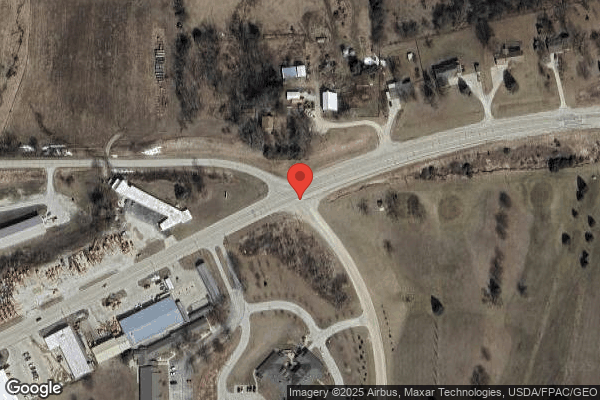
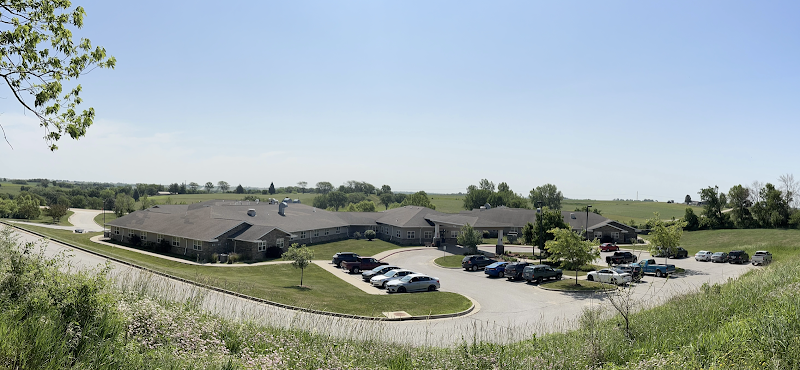
2306 STATE STREET, GUTHRIE CENTER, IA 50115 (641) 332-2204
Non profit - Corporation 58 Beds HEALTHCARE OF IOWA Data: November 2025
Trust Grade
45/100
#305 of 392 in IA
Last Inspection: April 2025

Within standard 12-15 month inspection cycle. Federal law requires annual inspections.

Overview

The New Homestead Care Center has a Trust Grade of D, indicating below-average performance with some concerns about care quality. They rank #305 out of 392 nursing homes in Iowa, placing them in the bottom half, and #2 of 2 in Guthrie County, meaning there is only one other local facility to compare against. The facility's performance is worsening, with the number of identified issues increasing from 6 in 2024 to 11 in 2025, which raises red flags for potential care problems. Staffing is a mixed bag, earning a 3/5 star rating, but with a concerning 62% turnover rate, significantly higher than the state average of 44%, suggesting instability among caregivers. While there have been no fines reported, there are notable concerns from inspections, such as residents experiencing long wait times for assistance, and the kitchen failing to maintain proper food safety standards, which could affect all residents.
Trust Score
D
45/100
In Iowa
#305/392
Bottom 23%
Safety Record
Low Risk
No red flags
Inspections
Getting Worse
6 → 11 violations
Staff Stability
⚠ Watch
62% turnover. Above average. Higher turnover means staff may not know residents' routines.
Penalties
✓ Good
No fines on record. Clean compliance history, better than most Iowa facilities.
Skilled Nurses
○ Average
Each resident gets 41 minutes of Registered Nurse (RN) attention daily — about average for Iowa. RNs are the most trained staff who monitor for health changes.
Violations
⚠ Watch
24 deficiencies on record. Higher than average. Multiple issues found across inspections.
★★☆☆☆
2.0
Overall Rating
★★★☆☆
3.0
Staff Levels
★★★☆☆
3.0
Care Quality
★★☆☆☆
2.0
Inspection Score
Stable
2024: 6 issues
2025: 11 issues

The Good

  • Full Sprinkler Coverage · Fire safety systems throughout facility
  • No fines on record

Facility shows strength in fire safety.

The Bad

2-Star Overall Rating

Below Iowa average (3.0)

Below average - review inspection findings carefully

Staff Turnover: 62%

16pts above Iowa avg (46%)

Frequent staff changes - ask about care continuity

Chain: HEALTHCARE OF IOWA

Part of a multi-facility chain

Ask about local staffing decisions and management

Staff turnover is elevated (62%)

14 points above Iowa average of 48%

The Ugly 24 deficiencies on record

Apr 2025 10 deficiencies
CONCERN (D)

Potential for Harm - no one hurt, but risky conditions existed

Deficiency F0582 (Tag F0582)

Could have caused harm · This affected 1 resident

Based on clinical document review, staff interview, and policy review the facility failed to notify a resident 48 hours in advance when the end of a Medicare Part A stay or when all of Part B therapie...

Read full inspector narrative →
Based on clinical document review, staff interview, and policy review the facility failed to notify a resident 48 hours in advance when the end of a Medicare Part A stay or when all of Part B therapies were ending to 2 of 3 residents (Resident #204, and #205) reviewed. The facility reported a census of 50 residents. Findings include: 1. Review of Resident #204's Advanced Beneficiary Notice (ABN) revealed Resident #204's last covered day of Part A services was dated 12/23/24. This document further revealed that Resident #204 and the family were notified by telephone of the notice for Part A services being ended by the previous Administrator, but this notice could not be located. 2. Review of Resident #205's ABN revealed the residents last covered day of Part A services was dated 12/30/24. This document further revealed that Resident #205 and the family were notified by telephone of the notice for Part A services being ended by the previous Administrator, but this notice could not be located. Interview on 4/22/25 at 10:28 AM with the Administrator revealed that she was not the Administrator at the time when the two residents of the ABN requests were sent to family members. The Administrator revealed that there was documentation on the form that the family members were notified via phone, but could not find the notices. The Administrator then revealed her expectation would be for ABN's to be completed correctly. Follow up interview 4/23/25 at 11:54 AM with the Administrator revealed her expectation would be for logs to be kept and for the facility to follow the regulations as they do not have a policy related to obtaining ABN notification.
CONCERN (D)

Potential for Harm - no one hurt, but risky conditions existed

Transfer Notice (Tag F0623)

Could have caused harm · This affected 1 resident

**NOTE- TERMS IN BRACKETS HAVE BEEN EDITED TO PROTECT CONFIDENTIALITY** Based on record review, policy review, and staff interview the facility failed to notify the Long-Term Care Ombudsman of a trans...

Read full inspector narrative →
**NOTE- TERMS IN BRACKETS HAVE BEEN EDITED TO PROTECT CONFIDENTIALITY** Based on record review, policy review, and staff interview the facility failed to notify the Long-Term Care Ombudsman of a transfer to a hospital for 1 of 3 residents (Resident #26) reviewed. The facility reported a census of 50 residents. Findings include: Review of Resident #26's Electronic Healthcare Record (EHR) revealed that Resident #26 was in the hospital from [DATE] through 12/20/24. Further review of the EHR page titled Clinical Census, confirmed that Resident #26 was in the hospital on these dates. Review of a facility provided document titled, Notice of Transfer Form to Long-Term Care Ombudsman with transfer dates of 12/13/24 through 12/30/24 revealed Resident #26 was not listed on the document. Interview on 4/22/25 at 11:30 AM with the Administrator revealed that Resident #26 was not on the Ombudsman notification for the month of December 2024. The Administrator then revealed that her expectation would be for appropriate notification to the Ombudsman when residents are sent to the hospital. Follow up interview on 4/23/25 at 11:57 AM with the Administrator revealed the facility does not have a policy for notifying the ombudsman for hospitalizations, but the Administrator does expect the facility to follow the regulations.
CONCERN (D) 📢 Someone Reported This

A family member, employee, or ombudsman was alarmed enough to file a formal complaint

Potential for Harm - no one hurt, but risky conditions existed

ADL Care (Tag F0677)

Could have caused harm · This affected 1 resident

**NOTE- TERMS IN BRACKETS HAVE BEEN EDITED TO PROTECT CONFIDENTIALITY** Based on clinical record review, family interview, staff interview and policy review the facility failed to offer residents a ba...

Read full inspector narrative →
**NOTE- TERMS IN BRACKETS HAVE BEEN EDITED TO PROTECT CONFIDENTIALITY** Based on clinical record review, family interview, staff interview and policy review the facility failed to offer residents a bath or shower on a regular basis for 1 of 3 residents reviewed (Resident #103.) The facility reported a census of 50 residents. Findings include: According to the Minimum Data Set (MDS) dated [DATE], Resident #103 had a Brief Interview for Mental Status (BIMS) score of 15 (intact cognitive ability). The resident was totally dependent on staff for hygiene and showers. Resident #103 had a fracture related to a fall in the 6 months prior to admission. His diagnoses included; heart failure, type 2 diabetes, chronic kidney disease, and unspecified fracture of the shaft of left tibia. The Care Plan for Resident #103, initiated on 2/26/25, showed that he was admitted to the facility for rehabilitation services for a fractured leg, with the hope to return home. His ability to complete Activities of Daily Living (ADL) had deteriorated related to a fall. The resident was to have a whirlpool/shower two times a week and as needed. The Clinical Census tab showed that Resident #103 was admitted to the facility on [DATE] and discharged on 3/10/25. On 4/21/25 at 12:17 PM, a family member for Resident #103 said that they visited the resident many times during his stay and they didn't know if he had been offered any baths or showers. The document titled: ADL - Bathing Report showed that during his time at the facility he had just two bath/showers on 2/21/25 and on 2/25/25. On 4/24/25 at 10:30 AM, the Director of Nursing (DON) acknowledged that according to the documentation, Resident #103 did not get baths as often as he should have. She said that the standard was to offer at least twice a week. According to a facility policy titled: Bathing, effective 1/3/24, hygiene activities were necessary to maintain skin integrity and promote dignity. Each resident would be offered 2 baths per week.
CONCERN (D) 📢 Someone Reported This

A family member, employee, or ombudsman was alarmed enough to file a formal complaint

Potential for Harm - no one hurt, but risky conditions existed

Pressure Ulcer Prevention (Tag F0686)

Could have caused harm · This affected 1 resident

**NOTE- TERMS IN BRACKETS HAVE BEEN EDITED TO PROTECT CONFIDENTIALITY** Based on clinical record review, observation, staff interviews and facility document review, the facility failed to implement ti...

Read full inspector narrative →
**NOTE- TERMS IN BRACKETS HAVE BEEN EDITED TO PROTECT CONFIDENTIALITY** Based on clinical record review, observation, staff interviews and facility document review, the facility failed to implement timely interventions to prevent pressure ulcers for 1 of 2 residents reviewed. In an observation on 4/22/25 at 8:35 AM, Resident #16 was found to have a small open sore on her buttocks. On 4/23/25 at 7:00 AM nursing staff had not yet followed up with a skin assessment or intervention. The facility reported a census of 50 residents. Findings include: According to the Minimum Data Set (MDS) dated [DATE], Resident #16 had a Brief Interview for Mental Status (BIMS) score of 0 (severe cognitive deficit.) She was totally dependent on staff for toileting, dressing, chair to bed transfer and bed mobility. Her diagnoses included cancer, renal insufficiency, diabetes mellitus, dementia, rheumatoid arthritis and osteoarthritis. The resident did not have any skin concerns at the time of the MDS assessment. The Care Plan for Resident #16, updated on 3/26/25, showed that she had impaired cognition, impaired mobility and bladder/bowel incontinence. She was at risk for skin breakdown and staff were to report signs of skin breakdown; sore, tender, red or broken areas. A Nursing Note dated 3/21/25 at 8:51 PM showed that a weekly skin assessment was completed at that time, and there were no new skin issues for Resident #16. On 4/22/25 at 8:34 AM, Staff A, Certified Nurse Aide (CNA,) and Staff B, CNA, prepared to change a soiled brief and provide incontinence cares for Resident #16. The CNA's said they didn't think the resident had any reddened or sore areas. As they wiped the groin on the left side, the resident grimaced and said ouch The resident had a rash in the groin, and it was red. The CNA's rolled the resident onto her left side to reveal a small open spot on the right buttock. They weren't sure if this was a new breakdown and applied a clean brief without ointment or moisture protection ointment. A review of the nursing notes on 4/23/25 revealed that the chart lacked documentation of the reddened groin or open sore on the right buttocks. On 4/23/25 at 7:51 AM, Staff A said that she told the nurse the day before about the rash and the open sore and she responded that she would look at it. On 4/23/25 at 1:42 PM, Staff M, Licensed Practical Nurse, (LPN) said that she did a skin assessment on Resident #16. She agreed that the spot on her bottom looked like it may have been a blister that popped. She got a treatment order for the red area and the open sore. A Wound/Skin Healing Record dated 4/23/25 showed that Resident #16 had a pressure injury on the right buttock that measured 0.4 centimeters (cm) x 0.3 cm. On 4/24/25 at 10:00 AM, the Director of Nursing (DON) said that the CNA's were expected to tell the nurse on duty right away if/when they see a new skin issue. They had ointments that can be used by the CNA's for incontinence protection. A review of the annual assigned education for CNA's did not include recognizing and reporting skin issues.
CONCERN (D) 📢 Someone Reported This

A family member, employee, or ombudsman was alarmed enough to file a formal complaint

Potential for Harm - no one hurt, but risky conditions existed

Deficiency F0688 (Tag F0688)

Could have caused harm · This affected 1 resident

**NOTE- TERMS IN BRACKETS HAVE BEEN EDITED TO PROTECT CONFIDENTIALITY** Based on clinical record review, staff interviews and facility policy review, the facility failed to offer Range of Motion (ROM)...

Read full inspector narrative →
**NOTE- TERMS IN BRACKETS HAVE BEEN EDITED TO PROTECT CONFIDENTIALITY** Based on clinical record review, staff interviews and facility policy review, the facility failed to offer Range of Motion (ROM) exercises for 1 of 2 residents reviewed (Resident #16). The facility reported a census of 50 residents. Findings include: According to the Minimum Data Set (MDS) dated [DATE], Resident #16 had a Brief Interview for Mental Status (BIMS) score of 0 (severe cognitive deficit.) She was totally dependent on staff for toileting, dressing, chair to bed transfer and bed mobility. Her diagnoses included cancer, renal insufficiency, diabetes mellitus, dementia, rheumatoid arthritis and osteoarthritis. The Care Plan for Resident #16, updated on 3/26/25, showed that she had impaired cognition, impaired mobility and bladder/bowel incontinence. The resident required ROM exercises and staff were to refer to the restorative records for current restorative plan of care. The Restorative assessment dated [DATE] at 12:09 PM, showed that the Program Plan included Bilateral Lower Extremities/Bilateral Upper Extremities (BLE/BUE) exercises 3-5 times a week as tolerated. In a four-week timeframe, from 3/26 - 4/22/25 staff had 12 opportunities to offer the ROM activities. According to the Point of Care (POC) Response History report, from 3/26/25 - 4/22/25, the exercises were offered just 8 times. On 4/23/25 at 8:05 AM, Staff E, Certified Nurse Aide (CAN) said that the facility had two staff members scheduled to provide the restorative program. She said that the CAN's that worked on the floor were not expected to do restorative exercises with the residents. On 4/23/25 at 7:52 AM, Staff K, Certified Medication Aide (CMA) said that she would do restorative, sometimes she would come in on a days off but she had been on leave for 4 months. On 4/24/25 at 9:16 AM, the Assistant Director of Nursing (ADON) said that she had just recently took over the responsibilities of managing the restorative program. She acknowledged that it wasn't always getting done as it should and the expectation was to offer it 3-5 times a week. According to the facility policy titled; Restorative Program, effective 6/28/17, the Range of Motion (ROM) activities would be provided 3-5 times a week.
CONCERN (D)

Potential for Harm - no one hurt, but risky conditions existed

Deficiency F0757 (Tag F0757)

Could have caused harm · This affected 1 resident

**NOTE- TERMS IN BRACKETS HAVE BEEN EDITED TO PROTECT CONFIDENTIALITY** Based on clinical record review, resident and staff interviews, and policy review, the facility failed to have a system in place...

Read full inspector narrative →
**NOTE- TERMS IN BRACKETS HAVE BEEN EDITED TO PROTECT CONFIDENTIALITY** Based on clinical record review, resident and staff interviews, and policy review, the facility failed to have a system in place to ensure residents who received warfarin (blood thinner) along with an antibiotic also received more frequent therapeutic monitoring for 1 of 1 resident (#41) reviewed. The facility reported a census of 50. Findings include: On 4/21/25 at 12:23 PM, Resident #41 stated he regularly took a blood thinner. The Minimum Data Set (MDS) dated [DATE] for Resident #41 revealed a Brief Interview for Mental Status (BIMS) score of 12 out of 15 which indicated moderately impaired cognition. It included diagnoses of paroxysmal atrial fibrillation (PAF - intermittent irregular heart beat), end-stage renal disease, Diabetes Mellitus, hyperlipidemia, and above the right knee amputation. It indicated the resident received an anticoagulant (blood thinner) and an antibiotic within the previous seven (7) day lookback period. The Electronic Health Record (EHR) included physician medication orders for a) warfarin sodium oral tablet 6 milligrams (mg); give 1 tablet by mouth in the evening every Tuesday, Thursday, Saturday, Sunday related to PAF dated 3/19/25, and b) warfarin sodium oral tablet 4 mg; give 1 tablet by mouth in the evening every Monday, Wednesday, Friday related to PAF dated 3/19/25. It also included an order dated 3/19/25 for a PT/INR (prothrombin time/international normalized ratio) lab (a lab that indicates how long it takes blood to clot); one time only related to PAF for collection on 3/26/25. On 3/24/25, the EHR included a physician medication order dated 3/23/25 for Amoxicillin-potassium clavulanate (antibiotic) tablet 875-125 mg; give 1 tablet by mouth every 12 hours every 10 days for URI (upper respiratory infection) for 10 days and corrected on 3/24/25 to give 1 tablet by mouth every 12 hours for URI for 9 days. The March and April 2025 Medication Administration Record (MAR) indicated the resident received the warfarin beginning 3/19/25 as ordered and received the antibiotic beginning 3/23/25. The Progress Note dated 3/26/25 at 1:52 PM revealed the resident's INR lab result was 1.5, which indicated the resident's blood took 1.5 times longer to clot than without a blood thinner (normal INR range is 0.8 - 1.2 for people not taking blood thinners). It also revealed no new orders and did not identify a resident-specific therapeutic INR range. On 3/28/25, the EHR included a physician order for PT/INR lab; one time only related to PAF for 1 day to be collected on 4/23/25. On 4/22/25 at 11:09 AM, an EHR and chart review revealed no therapeutic INR range was documented and no subsequent labs were ordered before 4/23/25. On 4/22/25 at 3:02 PM, Staff H, Registered Nurse (RN) stated the INR goal was 2-3 but reported those details and documentation were managed by the Director of Nursing (DON). She stated ordered labs are collected every Wednesday morning. She confirmed Resident #41 received the ordered antibiotic and blood thinner. On 4/22/25 at 3:08 PM, the DON stated the physician verbalized the INR was acceptable but never identified a resident-specific therapeutic INR range. She added the facility checks the INR monthly on routine Wednesday lab day and the physician notifies the staff by noon on what to do based on the morning labs results. On 4/22/25 at 3:24 PM, the DON stated Resident #41 received his oral antibiotic beginning 3/23/25 and added the facility probably should have told the physician about the antibiotic. On 4/23/25 at 3:50 PM, the DON stated staff should have called the physician for orders regarding warfarin and labs. On 4/23/25 at 4:01 PM, the DON indicated the facility did not have a policy regarding INR monitoring during antibiotic therapy. An article dated 7/30/23 retrieved from The National Institute of Health (NIH) (https://pmc.ncbi.nlm.nih.gov/articles/PMC10455514/) indicated numerous studies consistently supports an elevated risk of serious bleeding in patients concurrently receiving antibiotics and warfarin therapy. The article further explained that warfarin inhibits clotting factors that are dependent on vitamin-K and antibiotics can interfere with vitamin-K producing bacteria; thereby, increasing clotting time.
CONCERN (D)

Potential for Harm - no one hurt, but risky conditions existed

Infection Control (Tag F0880)

Could have caused harm · This affected 1 resident

**NOTE- TERMS IN BRACKETS HAVE BEEN EDITED TO PROTECT CONFIDENTIALITY** Based on observations, staff interviews, record review, and facility policy review, the facility failed to ensure that staff use...

Read full inspector narrative →
**NOTE- TERMS IN BRACKETS HAVE BEEN EDITED TO PROTECT CONFIDENTIALITY** Based on observations, staff interviews, record review, and facility policy review, the facility failed to ensure that staff used adequate hand hygiene techniques to prevent the spread of pathogens for 2 of 3 residents (Resident #16, and #30). The facility reported a census of 50 residents. Findings include: 1. According to the Minimum Data Set (MDS) dated [DATE], Resident #16 had a Brief Interview for Mental Status (BIMS) score of 0 (severe cognitive deficit). She was totally dependent on staff for toileting, dressing, chair to bed transfer and bed mobility. Her diagnoses included cancer, renal insufficiency, diabetes mellitus, dementia, rheumatoid arthritis and osteoarthritis. The Care Plan for Resident #16, updated on 3/26/25, showed that she had impaired cognition, impaired mobility and bladder/bowel incontinence. The resident was at risk for skin breakdown and staff were to report sore, tender, red or broken areas. On 4/22/25 at 8:34 AM, Staff A, Certified Nurse Aide (CAN) and Staff B, CAN, provided a brief change and incontinence cares to Resident #16. The CAN's left the room with trash and soiled clothing in bags and both failed to wash their hands before leaving the room and going onto the next resident room. 2. The MDS dated [DATE] for Resident #30, showed that she had a BIMS of 14 (intact cognitive ability). The resident was totally dependent on staff for toileting hygiene, showers, dressing, chair to bed transfers. She had an indwelling catheter and was always incontinent of bowel. Her diagnoses included neurogenic bladder, obstructive uropathy and Alzheimer's dementia. The Care Plan updated on 4/2/25, showed that staff were to provide catheter cares twice a day and as needed. The resident was at risk for skin breakdown related to limited mobility and suprapubic catheter. Staff were to use Enhanced Barrier Precautions related to an indwelling catheter and to practice good hand hygiene. On 4/23/25 at 11:22 AM Staff I, Registered Nurse (RN) donned a gown and disposable gloves. With a damp wash cloth, she cleaned around the catheter site and down the catheter tubing several times. Then with the same gloved hands, Staff I pulled the blanket over the resident and adjusted the remote on the bed to elevate the bed. On 4/23/25 at 11:45 AM, the Assistant Director of Nursing (ADON) said that staff were taught to change gloves and use hand hygiene after cares. A facility policy titled: Hand Hygiene Guidelines, last dated 2/18/22, showed that all staff would use the hand hygiene techniques before each resident encounter, after coming in contact with residents' intact skin, lifting moving. Change gloves when moving from a contaminated body site to a clean body site on the same resident.
CONCERN (E) 📢 Someone Reported This

A family member, employee, or ombudsman was alarmed enough to file a formal complaint

Potential for Harm - no one hurt, but risky conditions existed

Deficiency F0725 (Tag F0725)

Could have caused harm · This affected multiple residents

**NOTE- TERMS IN BRACKETS HAVE BEEN EDITED TO PROTECT CONFIDENTIALITY** 4. The MDS for Resident #22, dated 3/20/25, showed that he was independent with hygiene, toileting, dressing, and transfers. He ...

Read full inspector narrative →
**NOTE- TERMS IN BRACKETS HAVE BEEN EDITED TO PROTECT CONFIDENTIALITY** 4. The MDS for Resident #22, dated 3/20/25, showed that he was independent with hygiene, toileting, dressing, and transfers. He was occasionally incontinent of urine and always continent of bowel. His diagnoses included: peripheral vascular disease, renal insufficiency, diabetes mellitus and urinary tract infections. The resident scored 14 out of 15 points on the BIMS indicating intact cognition. A Change in Condition MDS dated [DATE], showed that the resident required substantial assistance with toileting hygiene, dressing and transfers. The Care Plan initiated on 3/14/25, showed that Resident #22 was at risk for falls, and staff were to provide toileting assistance before and after meals and as needed. He required assistance of 2 staff for ambulation. On 4/21/25 at 10:00 AM, Resident #22 said that the call light response could take as long as 90 minutes. He said that he would get sore waiting to get transferred off of the toilet. The resident said that there have been times when the call light did not work at all. He thought it was because it needed a new battery. 5. The MDS dated [DATE] for Resident #42, showed that she was admitted to the facility on [DATE] and had a BIMS score of 14 (intact cognitive ability.) She required substantial assistance with toileting hygiene, dressing, sit to stand and toilet transfers. The resident was frequently incontinent of bladder and occasionally incontinent of bowel. Her diagnoses included: Parkinson's Disease, repeated falls and edema. The Care Plan initiated 3/14/25, showed that Resident #42 was at risk for skin breakdown related to urinary incontinence, and limited mobility. Staff were directed to assist to toilet, provide incontinence care, and report signs of skin breakdown. On 4/21/25 at 11:27 AM Resident #42 was sitting in her room near the door. She said that she needed help to get to the bathroom, and at times, it could take more than 25 minutes for staff to respond to the call light. She said that she hadn't had incontinence episodes due to the long wait, but it had been darn close. Resident #42 said that there was a time when one of the call lights wasn't working at all. On 4/22/25 at 6:18 AM, Staff C, Certified Nurse Aide (CAN) said that the call lights would quit working without warning. She said that she would take them apart and fix them herself and would change the battery if she could get into the maintenance room. On 4/23/25 at 10:47 AM, Staff L, CAN said that she had seen that the call lights were not working at times. She said that when this happened, they would discover residents yelling to get assistance if the light wasn't working. Staff L said that they could hear when there was a light on, but they had to go to a screen to see which rooms had lights on and it wasn't very convenient. On 4/22/25 at 9:17 AM, Staff D, Maintenance, said that he could log into the call light system to check if there were any that needed new batteries. He said the call light report was checked on a weekly basis. Staff D said that the staff would sometimes change the batteries and may not get the unit put back together correctly so he asked them not to take them apart. On 4/22/25 at 2:31 PM, the Administrator said that the call light system originally had Android phones hooked up to the system. Staff would carry the phones with them to check which call lights were on. They had trouble keeping track of the phones and they didn't hold a charge very long. She decided to put up a couple of tablets in the hallways and at nurses' station. Staff were expected to check the screens often to see what residents were waiting for assistance. Based on clinical record review, facility document review, resident interviews, observation and staff interviews the facility failed to provide nursing staff to assure residents safety by not responding to call lights in a timely manner for 5 of 5 residents reviewed (Resident #1, #2, #40, #22 and #42). The facility reported a census of 50 residents. Findings include: 1. Review of Resident #1's Minimum Data Set (MDS) dated [DATE] revealed a Brief Interview for Mental Status (BIMS) score of 15 indicating intact cognition. Interview on 4/21/25 at 1:27 PM with Resident #1 revealed call lights take over 15 minutes constantly. 2. Review of Resident #2's MDS dated [DATE] revealed a BIMS score of 13 indicating intact cognition. Interview on 4/21/25 at 11:26 AM Resident #2 revealed call lights can often take longer than 15 minutes, and it is usually longer on the weekends. 3. Review of Resident #40's MDS dated [DATE] revealed a BIMS score of 15 indicating intact cognition. Interview on 4/21/25 at 12:12 PM Resident #40 revealed call lights take longer than 15 minutes often. Review of a facility provided document titled, Device Activity Report with the dates of 4/19/25 12:00 AM through 4/20/25 11:59 PM revealed several call lights being answered in a range of times from 17 minutes 9 seconds to 76 minutes 44 seconds. Review of facility provided documents titled, Resident Council Minutes with a date of 3/25/25 revealed residents think that the call lights have improved, but still have to wait. Review of Resident Council Minutes from 2/28/25 revealed it takes staff 45 minutes to an hour to answer call lights. Resident Council Minutes from 1/31/25 revealed call lights won't be responded to for almost 45 minutes and sometimes longer.
CONCERN (E)

Potential for Harm - no one hurt, but risky conditions existed

Deficiency F0804 (Tag F0804)

Could have caused harm · This affected multiple residents

**NOTE- TERMS IN BRACKETS HAVE BEEN EDITED TO PROTECT CONFIDENTIALITY** 3. On 4/23/25 at 7:49 AM, Staff A, Certified Nurse Aide (CAN) placed a resident's breakfast room tray on the unit kitchen servin...

Read full inspector narrative →
**NOTE- TERMS IN BRACKETS HAVE BEEN EDITED TO PROTECT CONFIDENTIALITY** 3. On 4/23/25 at 7:49 AM, Staff A, Certified Nurse Aide (CAN) placed a resident's breakfast room tray on the unit kitchen serving counter. At 7:58 AM, a different resident's breakfast room tray was observed on the nurses' station counter. At 7:59 AM, Staff A grabbed the tray from the kitchen serving counter and confirmed she was taking it to the resident's room. Upon request, she got a thermometer from the unit kitchen to recheck the omelet temperature, but it did not work. She also stated they don't check the food temperatures on the unit. She added food temperatures are checked in the main kitchen before being brought up to the unit and again after meal service is completed. At 8:08 AM, the Certified Dietary Manager (CDM) returned at 8:08 AM with a functioning thermometer. At 8:10 AM, Staff A checked the omelet temperature which resulted 99.4 Fahrenheit (F). The CDM instructed Staff A to reheat the omelet. At 8:14 AM, the Director of Nursing (DON) instructed Staff A to replace the entire plate of food. At 8:19 AM, Staff A grabbed the resident's tray of new food and confirmed she was taking it to the resident's room to eat. Upon request, she rechecked the glass of milk on the resident's tray which resulted 53.3 F. She stated she didn't know what temperature milk should be. At 8:23 AM, Staff A confirmed she took the tray that was placed on the nurses' station counter at 7:58 AM to the resident's room to eat. An undated policy titled Food Temperatures indicated hot foods must be served at a minimum temperature of 135 F. It also indicated the temperature of potentially hazardous cold foods will be no greater than 41 F when served to the resident. On 4/23/25 at 3:50 PM, the Administrator stated staff should follow facility policy regarding food temperatures during meal service. Based on observations, resident interviews, staff interviews, and policy review the facility failed to provide food at an appetizing temperature to 2 of 5 residents ( Residents #1, and #40) reviewed. The facility reported a census of 50 residents. Findings include: 1. Review of Resident #1's Minimum Data Set (MDS) dated [DATE] revealed a Brief Interview for Mental Status (BIMS) score of 15 indicating intact cognition. Interview on 4/21/25 at 1:30 PM with Resident #1 revealed food temps are terrible, and the food quality has diminished. 2. Review of Resident #40's MDS dated [DATE] revealed a BIMS score of 15 indicating intact cognition. Interview on 4/21/25 at 12:13 PM with Resident #40 revealed food is often cool when delivered on room trays.
CONCERN (E)

Potential for Harm - no one hurt, but risky conditions existed

Food Safety (Tag F0812)

Could have caused harm · This affected multiple residents

Based on observation, interview, and policy review, the facility failed to properly label stored food and failed to maintain sanitary practices by failing to prevent cross-contamination during meal se...

Read full inspector narrative →
Based on observation, interview, and policy review, the facility failed to properly label stored food and failed to maintain sanitary practices by failing to prevent cross-contamination during meal service. The facility reported a census of 50 residents. Findings include: On 4/21/25 at 10:03 AM, a kitchen observation revealed the following: The Victory refrigerator contained an open, unlabeled bottle of reddish-brown liquid. The Frigidaire deep freezer contained the following items: a) an unlabeled bag of round, green, pea-sized contents; b) an unlabeled bag of green, thick-stalked, flower-head contents; c) an unlabeled bag of multicolored sliced contents; d) an unlabeled bag of dark purple contents. The [NAME] walk-in refrigerator contained the following items: a) two (2) unlabeled, undated, uncovered pans of green gelatin-like substance; b) an unlabeled, undated, clear plastic bucket of sliced, solid green items; c) an unlabeled, clear bag of brown, disk shaped meat-like items; d) a pan labeled beef stroganoff with a torn aluminum foil cover that exposed the contents; e) an unlabeled bag of pink, disk-shaped meat-like product; f) two (2) unlabeled stacks of square, white sliced items. The [NAME] walk-in freezer contained the following items: a) an unlabeled, clear bag of orange, round, flat, waffle-cut, items; b) an unlabeled, clear bag of battered, crescent-shaped contents; c) an unlabeled, clear bag of flat, yellow items. On 4/23/25 at 7:31 AM, Staff J, Chef, used pot holders to remove a pan of pureed eggs from the steam table. One pot holder came in direct contact with the cream of wheat in another steam pan. At 7:45 AM, the Certified Dietary Manager (CDM) transported the clean dish cart from one resident unit to another one with a torn cover. At 7:50 AM, during meal service, Staff J grabbed a plate and his right thumb came in contact with the food area surface. An omelet was placed on the plate on the spot where his thumb touched. At 9:38 AM, Staff J was observed preparing mechanically altered lunch menu items. He removed the blender container, scooped the mechanically altered pork into the measuring pitcher, grabbed a steam pan, and placed it on the counter. He then grabbed a steam pan liner, opened the liner, and stuck his ungloved hand inside the liner and lined the steam pan. He placed the mechanically altered pork in the liner. At 12:17 PM, during lunch service observation, Staff J removed the steam pan lids and put them face down on the lower shelf rubber mat. The mat had unidentified debris on it. After the meals were served on that unit, he placed the lids back on the steam pans and transported the steam table to another unit and continued meal service. At 12:28 PM, during lunch service, Staff J attached a plate guard to a resident's plate with ungloved hands. While plating a scoop of scalloped potatoes, a portion fell onto the side of a plate guard. Staff J scraped the portion off of the plate guard and placed the portion back in the scalloped potatoes pan and continued to serve residents. An undated policy titled Food Storage indicated all opened packages or containers must be sealed/covered and accurately labeled. It also indicated food is stored, prepared, and transported by methods designed to prevent contamination. On 4/23/25 at 3:50 PM, the Administrator stated staff should have followed the facility policy regarding food storage, labeling, and service.
Feb 2025 1 deficiency
CONCERN (D) 📢 Someone Reported This

A family member, employee, or ombudsman was alarmed enough to file a formal complaint

Potential for Harm - no one hurt, but risky conditions existed

Free from Abuse/Neglect (Tag F0600)

Could have caused harm · This affected 1 resident

**NOTE- TERMS IN BRACKETS HAVE BEEN EDITED TO PROTECT CONFIDENTIALITY** Based on clinical record review, facility document review, personnel file review, resident interview, family interview, staff in...

Read full inspector narrative →
**NOTE- TERMS IN BRACKETS HAVE BEEN EDITED TO PROTECT CONFIDENTIALITY** Based on clinical record review, facility document review, personnel file review, resident interview, family interview, staff interviews, and facility policy review, the facility failed to protect 1 of 3 residents (Resident #1) reviewed from abuse. The facility reported a census of 46 residents. Findings include: Clinical Record Review of Resident #1 Minimum Data Set (MDS) dated [DATE] documented a Brief Interview of Mental Status (BIMS) score of 15 indicating intact cognition. The MDS reflected diagnosis of stroke, hemiplegia or hemiparesis following cerebrovascular affecting the left side, urge incontinence, pain in left hip, pain in unspecified knee, anxiety disorder and depression. The MDS further documented Resident #1 required total dependence on staff for performing most activities of daily living. The Care Plan documented Resident #1 had behaviors related to depression, anxiety, vascular dementia, personal history of other mental and behavioral disorders and directed staff to implement intervention of maintaining a calm environment and approach to the resident. It further directed staff to communicate with the resident using the resident's preferred name, staff to identify themselves at each interaction, face the resident when speaking and to make eye contact, observe the resident for signs and symptoms of depression, and to encourage residents to verbalize feelings, concerns and fears. The Care Plan also documented Resident #1 needed 24-hour care related to left side paralysis from major stroke and inability to care for herself and required wheelchair mode of transportation to and from activities including toileting assistance. A facility reported incident dated 11/05/24 documented the following: on 10/31/24 Staff A, CNA was recorded on the camera in Resident #1 's room while providing cares and during the cares. The video shows the nurse aide rushing and not demonstrating compassion towards the resident that is sitting in her recliner. The Nurse Aide brings the stand lift to the front of the resident to prepare for the transfer. She very quickly removes the call light which gets looped in resident hair. She abruptly removes the head pillow from behind the resident's head and tosses it onto the bed that is across the room. She then proceeds to move the lift closer to the resident to place the resident's feet onto the platform of the lift. She takes her own foot to push down on the resident's lower leg/upper ankle area to position the foot for placement onto the lift platform. She proceeds to put the harness strap under the arms and hook it up to the lift as she should. The entire time she is not talking to the resident and appears to be in a rush to get the transfer completed. The resident asks to use the restroom, and the Nurse Aide responds in the video that it has only been 40 minutes since she used the restroom, and she can go to her wheelchair. The personnel file for Staff A included a certificate dated 8/19/23 certifying she completed the course for Dependent Adult Abuse. The Disciplinary Report Form for Staff A dated 11/1/24 documented video surveillance revealed the staff was not speaking to the resident during cares, staff positioned the resident's foot on the platform of the mechanical lift using force from her own foot, throwing residents belongings, and refused to take the resident to the bathroom when the resident requested to go. The form documented the staff suspended pending investigation. The Change in Hours Form documented Staff A was terminated from the facility on 11/5/24. In an interview on 2/19/25 at 12:25 pm Staff B, CNA, revealed she was in the vicinity of the interaction between Resident #1 and Staff A, CNA, but did not visually observe the whole interaction, only when Staff A, CNA was punched in the head and the stomach by Resident #1. She just knew she had to take Resident #1 out of the room after Staff A, CNA left the room. In an interview on 2/19/25 at 2:04 pm Staff C, Licensed Practical Nurse (LPN) stated she received a report from Staff A, CNA about Resident #1 hitting her. Staff C, LPN stated she did document the incident in the Progress Notes and reported it to the Director of Nursing (DON) and assessed the resident for injuries. Staff C, LPN further stated she did not ask Resident #1 questions to assess for safety and well-being of the resident after the interaction with Staff A, CNA. In an interview with the Power of Attorney (POA) for Resident #1 on 2/19/25 at 2:14 pm she revealed receiving a call from the facility on 10/31/24 notifying her of the incident about her mother hitting a staff member. She reviewed the camera footage immediately prior to the incident and stated she was horrified about what happened to her mother. Resident #1 POA stated she filed the report with the State Agency and reported the following: To my horror, the video showed the staff member being extremely rude, condescending, and rough with my mother. The staff used her own foot to push my mother's down while putting her in an ez stand. The entire two minute video shows her being rough and pushing my mother around, denying her a shawl when she is cold and jerking her body aggressively and inappropriately. This staff member knows my mother has pain throughout her body and is paralyzed on her left side, yet the staff member is particularly rough to her left side. The video captures audio of the staff member stating that my mom had just gone to the bathroom [ROOM NUMBER] minutes prior and would go straight to the wheelchair My mother had been having a very hard time sleeping the days prior and expressed her fear. POA further stated she did not want Staff A, CNA to treat her mother this way or any other resident for that matter. In an interview with Resident #1 on 2/19/25 at 3:00 pm, she stated her left side was useless and numb, her arms were overworked and rotator cuffs were gone. It was painful for her to raise both of her arms to get into the mechanical stand for transfers. She verbalized ouch everyday to Staff A, Certified Nurse Assistant (CNA) but she didn't believe her. On 10/31/24 Resident #1 stated she needed assistance with transferring and Staff A, CNA was rough with her and hurt her left foot that was paralyzed and it caused her more pain and also denied taking her to the bathroom. Resident #1 stated she hit Staff A, CNA because she had to fight for herself, she couldn't take it anymore. She had a hard time sleeping for weeks at that point because she felt like something bad was going to happen to her. Resident #1 further stated Staff A, CNA was getting rougher and rougher everyday and did something everyday to hurt my arm or leg and threatened to give her a cold shower and it made me panic. Resident #1 revealed Staff A, CNA brushed out her hair when it was tangled up and she was very rough and she told her you have long hair, you should know how it feels but Staff A, CNA told her you better cut it off if you can't take it. She also revealed Staff A, CNA was losing patience with everything and made it clear she was tired of working here, didn't like repetitive work and had a very sour attitude towards her. During an interview on 2/20/25 at 3:00 pm, Staff A, CNA, stated she went in on 10/31/24 around 9:30 am to get Resident #1 up for a vaccine clinic, she hooked her up to EZ stand (mechanical lift) to put her in the wheelchair and while she was bent down to put the residents' left foot on the pedal, Resident #1 hit her in the head, then as she was standing up, she got hit in the stomach. She then left the room. Staff A, CNA stated she didn't see it coming from the resident, she never got hit, this was the first time. She made a report to the charge nurse, and later around 1:45 pm, the charge nurse told her she had to go home. She hasn't returned to work since then. The Progress Notes for Resident #1 revealed the following: On 10/31/24 at 10:20 AM CNA reported to this nurse that when getting resident up from her recliner to the wheelchair, CNA bent down to put pedal on wheelchair, resident punched CNA upside the head. Two CNA's present during cares for resident. When CNA stood up, resident then punched CNA in the stomach. This nurse educated resident on appropriate behavior, not appropriate to hit staff. Resident then smiled then stated, I'm going to shoot her next. She's gonna put a knife in my head. Again, this nurse educated resident on verbal aggression towards staff. On 10/31/24 at 2:30 PM full skin assessment performed head to toe with no bruising, no abrasions, no open areas, and no bumps noted. On 11/2/24 at 3:36 PM 48 hour follow up with no further behaviors noted. Resident has been pleasant towards staff and other residents. Review of the clinical record for Resident #1 revealed a police report was filed and the following outcome noted: no criminality but recommended more compassion during Activities of Daily Living (ADL's). During an interview with the Administrator on 2/20/25 at 12:30 pm he stated the residents should not be mistreated and his expectations were for residents to be treated with dignity and respect. The undated facility provided policy titled Nursing Facility Abuse Prevention, Identification, Investigation and Reporting Policy undated, documented Residents must not be subjected to abuse by anyone, including, but not limited to, facility staff, other residents, consultants or volunteers, staff of other agencies serving the resident, family members or legal guardians, friends, or other individuals. If further outlined the following: Abuse means the willful infliction of injury, unreasonable confinement, intimidation, or punishment with resulting physical harm, pain, or mental anguish. This also includes the deprivation by an individual, including a caretaker, of goods or services that are necessary to attain or maintain physical, mental, and psychosocial well-being. Instances of abuse of all residents, irrespective of any mental or physical condition, cause physical harm, pain or mental anguish. It includes verbal abuse, sexual abuse, physical abuse, and mental abuse including abuse facilitated or enabled through the use of technology. 6. Mental abuse is the use of verbal or nonverbal conduct which causes or has the potential to cause the resident to experience humiliation, intimidation, fear, shame, agitation, or degradation. Mental abuse includes abuse that is facilitated or enabled through the use of technology, such as smartphones and other personal electronic devices. This would include keeping and/or distributing demeaning or humiliating photographs and recordings through social media or multimedia messaging. This would include, but is not limited to, photographs and recordings of residents that contain nudity, sexual and intimate relations, bathing, showering, using the bathroom, providing perineal care such as after an incontinence episode, agitating a resident to solicit a response, derogatory statements directed to the resident, showing a body part such as breasts or buttocks without the resident's face, labeling resident's pictures and/or providing comments in a demeaning manner, directing a resident to use inappropriate language, and showing the resident in a compromised position. 7. Verbal abuse may be considered to be a type of mental abuse. Verbal abuse includes the use of oral, written, or gestured communication, or sounds, to residents within hearing distance, regardless of age, ability to comprehend, or disability. 9. Mistreatment means inappropriate treatment or exploitation of a resident. 10. Neglect is the failure of the facility, its employees or service providers to provide goods and services to a resident that are necessary to avoid physical harm, mental anguish, or mental illness.
Jun 2024 6 deficiencies
CONCERN (D)

Potential for Harm - no one hurt, but risky conditions existed

Assessment Accuracy (Tag F0641)

Could have caused harm · This affected 1 resident

Based on clinical record review, staff interviews, facility policy review, and guidance from the RAI manual, the facility failed to ensure the Minimum Data Set (MDS) assessment of each resident accura...

Read full inspector narrative →
Based on clinical record review, staff interviews, facility policy review, and guidance from the RAI manual, the facility failed to ensure the Minimum Data Set (MDS) assessment of each resident accurately reflected the resident's status at the time of the assessment for 2 of 15 residents reviewed (Resident #3 and Resident #10) . The facility reported a census of 48 residents. Findings include: 1. The Weight Summary for Resident #3 documented the resident had been in the facility in 2019 and on 2/8/19 had a documented weight of 355.0 pounds. The next time a weight was documented was 3/1/24, revealing a weight of 285.0 pounds, a difference of 70 pounds over the approximately 5 years between the recorded weights. The MDS of Resident #3, dated 2/8/24 documented an entry date of the most recent admission as 2/2/24. The MDS recorded the resident's current weight as 355.0 pounds. The Clinical Summary in the resident's hospital records, located in his electronic health record revealed the resident had been weighed at the hospital on 2/2/24 at 5:26 am and documented the resident's weight of 284 pounds, 14.4 oz. On 6/11/24 at 1:32 pm, the MDS Coordinator stated the 355 pounds documented on the MDS of Resident #3 was incorrect. She stated she did not see an admission weight documented anywhere but that the 2019 weight should not have been documented on the MDS. 2. The MDS of Resident #10, dated 5/16/24, reflected the resident was administered an anticoagulant medication during the lookback period of the MDS, 5/10/24-5/16/24. The Medication Administration Record (MAR) of Resident #10 for May of 2024 revealed the resident was administered Aspirin and Plavix. Both medications are classified as anti platelet. The MAR failed to reveal the resident was administered any anticoagulant medication. (Anticoagulants slow down blood clotting, while antiplatelet medications prevent platelets from clumping and prevent clots from forming). The MDS of Resident #10 additionally reflected the resident received 0 minutes of Restorative Nursing Walking between 5/10/24 and 5/16/24. The Follow Up Question Report documented Walk to Dine was completed three times a day, every day between 5/10/24 and 5/16/24 for Resident #10. On 6/11/24 at 1:30 pm, the MDS Coordinator stated she began her job in the facility in March of 2024. She stated she was instructed when she was hired not to document any restorative nursing on any MDS. She stated the facility does not have a Restorative Nurse, and the Certified Nurse Aides are completing the programs such as walk to dine. On 6/11/24 at 1:37 pm, the MDS Coordinator stated coding Resident #10 being on an anticoagulant medication was an error and she would submit an MDS modification. On 6/11/24 at 2:49 pm, the Director of Nursing stated the facility's management company instructed the facility staff to remove minutes from the Restorative Program charting. She stated the facility no longer records restorative minutes anywhere. The facility document Comprehensive Assessment and Reassessment, effective 5/10/17, documented the assessment must include at least the following: - Nutritional Status - Medications; prescription and over-the-counter - Special treatments and procedures (which includes therapies and restorative nursing) The facility document failed to address the accuracy of the MDS. The Long-Term Care Facility Resident Assessment Instrument (RAI) 3.0 User's Manual, dated October 2023 directed: Section K: Nutritional Status - Base weight on the most recent measure in the last 30 days - If the last recorded weight was taken more than 30 days prior to the ARD (the date of the assessment), or a previous weight is not available, weigh the resident again. - If a resident cannot be weighed, use the standard no-information code (-) and document rationale on the resident's medical record. Section N: Medications - Check if the resident is taking any medication by pharmalogical classification, not how it is used, during the last 7 days or since admission/entry or reentry if less than 7 days. -N0415E1. Anticoagulant, check if an anticoagulant medication was taken by the resident at any time during the 7-day look back period. Section O: Special Treatments, Procedures and Programs. - O0500F, Walking. Code activities provided to improve or maintain the resident's self-performance in walking, with or without assistive devices. These activities are individualized to the resident's needs, planned, monitored, evaluated, and documented in the resident's medical record. -
CONCERN (D)

Potential for Harm - no one hurt, but risky conditions existed

Deficiency F0676 (Tag F0676)

Could have caused harm · This affected 1 resident

Based on clinical record review, and staff interview, the facility failed to complete the residents restorative program 3-5 times a week for 1 of 2 residents reviewed for restorative program (Resident...

Read full inspector narrative →
Based on clinical record review, and staff interview, the facility failed to complete the residents restorative program 3-5 times a week for 1 of 2 residents reviewed for restorative program (Resident #15). The facility reported a census of 48 residents. Findings include: The Care Plan for Resident #15, revised 3/22/24 identified the resident's restorative program. The Care Plan informed the staff to review restorative records for the current restorative plan of care. The Restorative plan of care revealed the residents restorative program to be completed 3-5 times a week. Review of records revealed in March of 2024 the resident completed the program 5 times. In April of 2024 the resident completed the program 7 times. In May 2024 the resident completed the program 3 times. In June 2024 the resident completed the program 3 times. In an interview on 6/13/24 at 10:02 AM, the Director of Nursing (DON) stated she expects the restorative aides to complete the exercises with the resident per the Care Plan and to document in Point of Care (PCC) when completed.
CONCERN (D) 📢 Someone Reported This

A family member, employee, or ombudsman was alarmed enough to file a formal complaint

Potential for Harm - no one hurt, but risky conditions existed

Incontinence Care (Tag F0690)

Could have caused harm · This affected 1 resident

Based on clinical record review, observation, staff interview, and policy review the facility failed to follow infection prevention standards during incontinence cares for 1 of 4 residents review for ...

Read full inspector narrative →
Based on clinical record review, observation, staff interview, and policy review the facility failed to follow infection prevention standards during incontinence cares for 1 of 4 residents review for incontinence cares (Resident #16). The facility reported a census of 48 residents. Findings include: The Minimum Data Set (MDS) assessment of Resident #16 dated 5/23/24 reflected the resident to have short term and long term memory problems. The MDS revealed the resident totally dependent on toileting and personal hygiene. The MDS reflected the resident always incontinent with urine and bowel. The Care Plan for Resident #16, last reviewed 5/24/24, identified the resident to be incontinent of bladder and bowel. The Care Plan directed staff to provide incontinence care after each incontinent episode. On 6/12/24 at 8:24 AM, Staff A, Certified Nurse Aide (CNA) was providing incontinence care to Resident #16. Resident #16 was laying in bed. Staff A performed hand hygiene and donned gloves. She provided privacy and stated task. Staff A removed the blankets, and opened the incontinent brief which was wet with urine. Staff A then took a clean wet soapy washcloth and performed peri care, front to back on the resident, folding the washcloth to a clean area with each wipe. Staff A then took a clean, dry washcloth and repeated the steps to dry the resident, failing to use a washcloth to rinse the soap off of the resident. Staff B, CNA, then assisted Staff A to turn the resident to her right side. Staff A then proceeded to use the same soiled washcloth to wash the resident's buttocks, front to back on the resident, folding the washcloth to clean area with each wipe. Staff A then took soiled dry washcloth and repeated the steps to dry the resident, failing to use a washcloth to rinse the soap off of the resident. Staff B removed soiled incontinent brief and placed clean incontinent brief. Staff B, then assisted Staff A to turn the resident to her back. Staff A placed soiled linen on floor with no barrier. Staff A, then assisted Staff B to turn the resident to her left side, to position incontinent brief. Staff A and Staff B, closed incontinent brief with fasteners. Staff A, undonned gloves, completed hand hygiene. On 6/13/24 at 12:50 PM the Director of Nursing (DON) stated the staff did not use enough washcloths, did not perform handwashing, did not change gloves, and should not have placed washcloths on the floor. The facility policy Incontinence care, revision date 3/28/24 documented: Residents that are incontinent of bladder and bowel will maintain clean perineal skin for incontinent residents, to examine the skin, and to prevent skin irritation.
CONCERN (D)

Potential for Harm - no one hurt, but risky conditions existed

Tube Feeding (Tag F0693)

Could have caused harm · This affected 1 resident

**NOTE- TERMS IN BRACKETS HAVE BEEN EDITED TO PROTECT CONFIDENTIALITY** Based on clinical record review, observation, staff interviews and facility policy, the facility failed to administer tube feedi...

Read full inspector narrative →
**NOTE- TERMS IN BRACKETS HAVE BEEN EDITED TO PROTECT CONFIDENTIALITY** Based on clinical record review, observation, staff interviews and facility policy, the facility failed to administer tube feeding per physician orders for 1 of 1 resident reviewed for tube feeding (Res #51). The facility reported a census of 48 residents. Findings include: The Minimum Data Set (MDS) assessment of Resident #51 dated 6/4/24 documented a primary diagnosis of muscular dystrophy. The MDS documented the presence of a feeding tube. The MDS recorded the resident received 51% or more of total calories through tube feeding and 501 cc/day (cubic centimeters per day) or more fluid intake per tube feeding. The Care Plan of Resident #51 documented a focus area of nutrition dated 6/6/24, which revealed the resident to be NPO (nothing by mouth) and to have a need for alternate feeding method. It directed staff to provide tube feeding as ordered. The Medication Administration Record (MAR) of Resident #51, for June of 2024 revealed an order for Osmolite 1.2 Cal, give 552 mls (milliliters) via G-Tube (a gastronomy tube, a tube inserted through the abdomen that brings nutrition directly to the stomach) three times a day. On 6/12/24 at 8:36 am, Staff F, LPN stated she would be doing the resident's morning ordered tube feeding. Staff G, Registered Nurse, a nurse consultant for the facility stated she would be observing. Staff F, LPN stated she had been off work for three weeks and had not met or cared for Resident #51, who had admitted to the facility on [DATE]. Staff F first prepared Resident #51's morning medications. She checked his vital signs, and gathered the medications and three boxes of Osmolite 1.2 calories, each containing 237 mls of feeding. On 6/12/24 at 8:49 am, both staff members, after performing hand hygiene and donning personal protective equipment, repositioned Resident #51 to be at the top of the bed. After the resident was at the top of the bed and having raised the head of the bed to a safe position, Staff F removed her gloves, went to the restroom to wash her hands and don clean gloves. On 6/12/24 at 8:55 am, Staff F opened a new 60 ml syringe, and attached the resident's feeding tube to his Mic-Key feeding tube button. She auscultated the feeding tube with air to verify proper placement. She then flushed the feeding tube with 60 mls of water. After administering the resident's medication, and flushing with an additional 60 mls of water, she prepared for the tube feeding. She poured two boxes of Osmolite 1.2 feeding, totaling 474 mls, into a graduate cylinder that had been set up for the tube feeding. After opening the third box of Osmolite, she held the cylinder at eye level and measured the feeding, stating she had a total of 522 mls of feeding. She administered the feeding per gravity at a safe rate and after completing the feeding, gave an additional 60 mls of water per physician order. Staff F was asked to verify how much water and how much feeding she administered to Resident #51. She stated she administered 60 mls of water before medication administration, 60 mls of water after medication administration, 522 mls of feeding, and an additional 60 mls of water after the feeding. She then completed hand hygiene and cleaned her area and supplies. On 6/12/24 at 9:20 am, Staff G, RN, Nurse Consultant verified Staff F administered 522 mls of feeding and verified the resident's order read to administer 552 mls of feeding. The facility document Enteral Feeding Via Nasogastric or Gastronomy tube, revision date 11/5/22 directed This facility shall provide and implement a plan of care for delivery of nutrients via percutaneous enteral gastric (PEG) tube when nutrients cannot be obtained through the alimentary route. Under Assessment, the facility document read Physician's orders for feeding shall include type, amount, frequency and strength of nutritional formula and amount of water used for flushing. Under Preparation, the facility document read: - Ensure enteral feeding is the correct formula, amount and check frequency ordered - Confirm that the correct order is being given to the correct resident.
CONCERN (D)

Potential for Harm - no one hurt, but risky conditions existed

Infection Control (Tag F0880)

Could have caused harm · This affected 1 resident

Based on observation, policy review, and staff interview the facility failed to implement appropriate infection prevention and control practices during medication administration by staff not completin...

Read full inspector narrative →
Based on observation, policy review, and staff interview the facility failed to implement appropriate infection prevention and control practices during medication administration by staff not completing hand hygiene between residents and touching pills with a bare hand. The facility reported a census of 48 residents. Findings include: During a continuous observation on 6/11/24 from 8:25 AM - 8:48 AM, during the medication pass for 3 different residents, Staff C, Licensed Practical Nurse prepared and administered medication consecutively to 3 different residents without completing hand hygiene before or after administering the medications. Staff C poured 2 pills into the lid of a medication bottle and used her bare fingers to place 1 pill back into the bottle and proceeded to pull another pill out of a medication bottle with her bare finger. Facility policy, Medication Administration revised 4/1/23 documented to wash hands with soap and water prior to beginning medication pass and alcohol waterless sanitizer is acceptable between residents. Interview on 6/13/24 at 9:52 AM, the Director of Nursing stated her expectation is for staff to complete hand hygiene before and after administering medications, between residents and to not touch medications with bare hands, use gloves or pour the pill back into bottle without touching the pills.
CONCERN (E) 📢 Someone Reported This

A family member, employee, or ombudsman was alarmed enough to file a formal complaint

Potential for Harm - no one hurt, but risky conditions existed

Deficiency F0725 (Tag F0725)

Could have caused harm · This affected multiple residents

**NOTE- TERMS IN BRACKETS HAVE BEEN EDITED TO PROTECT CONFIDENTIALITY** Based on clinical record review, observations, resident interviews and staff interviews, the facility failed to answer the resid...

Read full inspector narrative →
**NOTE- TERMS IN BRACKETS HAVE BEEN EDITED TO PROTECT CONFIDENTIALITY** Based on clinical record review, observations, resident interviews and staff interviews, the facility failed to answer the residents' call light in less than 15 minutes for 3 resident call lights seen during observation. Additionally, two residents (Resident #1 and Resident #50) reported extended call light response time during resident interviews. The facility reported a census of 48 residents. Findings include: 1. The Social Services Assessment of Resident #50 dated 6/6/24 documented the resident to have a Brief Interview of Mental Status (BIMS) score of 15, indicating cognition intact. On 6/10/24 at 11:19 am, Resident #50 stated that she experiences long wait times for her call light to be answered, often greater than 15 minutes. 2. The Minimum Data Set (MDS) assessment of Resident #1, dated 3/14/24 revealed a BIMS score of 14, indicating cognition intact. On 6/10/24 at 11:25 am, Resident #1 stated she felt the facility to be short staffed and stated call lights are answered after at least 15 minutes and longer. 3. During observation beginning 6/12/24 at 11:55 am, it was noted that the staff tablet sitting at the nurses station area near room [ROOM NUMBER] could audibly be heard of call lights ringing. When the tablet was observed, it showed the call light for room [ROOM NUMBER], Bed B, had been turned on at 11:23:20 am. During the continued observation, room [ROOM NUMBER], Bed A, was turned on at was turned on at 11:54:54 am and room [ROOM NUMBER], Bed A, was turned on at 12:04:53 pm. On 6/12/24 at 12:11 pm Staff D, Certified Nurse Aide (CNA) stated the staff is notified of call lights being on by hearing them ring from the tablet at the desk. She walked to the nearest tablet, at the station by the 320 rooms and noticed the tablet was turned off. She stated she was unaware of why it was turned off. She powered the tablet back on and stated she had to wait to log back into the system. On 6/12/24 at 12:12 pm, the tablet was logged back into. When Staff D was asked if she was aware that room [ROOM NUMBER], Bed B had been ringing for over 40 minutes, she stated she did not know that but had been in the room a few minutes earlier. On 6/12/24 at 12:14 pm, Staff E, CNA cleared the call light for room [ROOM NUMBER], Bed B. (Approximately 51 minutes) Observation continued for the tablet for the hall near the 320 rooms. The Director of Nursing came to check the monitor at 12:23 pm and then left the area. She returned at 12:26 pm to check the monitor again. No other staff was observed checking the monitor. room [ROOM NUMBER], Bed A, which had been triggered at 11:54:54 was answered at 12:26 pm, a total of 31 minutes. room [ROOM NUMBER], Bed A, which had been triggered at 12:04:53 pm was answered at 12:27 pm, a total of 22 minutes. Observation was continued with the first tablet, near room [ROOM NUMBER] on 6/12/24 from 1:10 pm to 1:29 pm. The call lights could be heard ringing but despite numerous staff being in the area, no staff was observed checking the tablet to see what call lights were ringing. On 6/13/24 at 9:20 am, the Administrator stated via email the facility does not have a policy regarding call lights. She stated the facility is to follow the regulatory expectation.
Sept 2023 1 deficiency
CONCERN (D) 📢 Someone Reported This

A family member, employee, or ombudsman was alarmed enough to file a formal complaint

Potential for Harm - no one hurt, but risky conditions existed

Resident Rights (Tag F0550)

Could have caused harm · This affected 1 resident

Based on resident record review, facility record review, Resident [NAME] of Rights, resident and staff interview, the facility failed to treat each resident with dignity and honor the choices of care ...

Read full inspector narrative →
Based on resident record review, facility record review, Resident [NAME] of Rights, resident and staff interview, the facility failed to treat each resident with dignity and honor the choices of care for 1 of 4 residents reviewed (Resident #1). Findings Include: The Minimum Data Set (MDS) Assessment of Resident #1 dated 7/6/23 identified a Brief Interview of Mental Status (BIMS) score of 14, which indicated cognition intact. The MDS revealed the resident required extensive assistance of 1 staff member for bathing. The Care Plan, review date 7/10/23, identified a Focus Area of the resident requiring assistance for Activities of Daily living. The Care Plan directed staff the resident was to have a whirlpool/shower two times per week. On 9/19/23 at 10:23 am, Resident #1 recalled a recent incident with Staff A, Certified Nurse Aide (CNA). Resident #1 stated she had requested assistance to use the restroom and she wanted to take a whirlpool bath after that. Staff A assisted the resident to the bathroom and when the resident remarked about taking a whirlpool, Staff A responded no, she would give her a shower. Resident #1 stated she had been promised a whirlpool and Staff A repeated that it would be a shower. Resident #1 stated that as she was sitting on the toilet, which is in near proximity to the shower area, Staff A removed the resident's clothing and got the shower hose and just gave her a shower as she sat on the toilet. She stated she did not get her hair washed or get cleaned in her perineal (groin) or buttocks area. Resident #1 stated this caused her to feel upset and disappointed. She stated all of the residents in the building have different problems and the staff need to consider that. She stated she is heavily incontinent and prefers whirlpools rather than showers. She stated she felt Staff A's words were harsh and her preference would be to not have Staff A care for her in the future. On 9/19/23 at 2:51 pm, the Director of Nursing stated her expectation is for all staff to treat each resident with dignity and respect and in the manner they would want their own loved one to be treated. Each resident has choices which are to be honored. The staff are to realize the facility is the resident's home. She also stated that in the event of a shortage of time, her expectation would be to discuss options with a resident and reach a compromise. She stated Staff A could have offered to postpone the whirlpool bath until later in the shift closer to bedtime, or the following day, or discussed what other options could be made in order to honor her request for a whirlpool. Review of the employee file of Staff A revealed a Disciplinary Report dated 8/14/23. The Report documented the employee admitted a resident requested a bath and she told the resident she did not have time and also told the resident not to tell her how to do her job. The Report further documented Staff A then gave the resident a shower while she was sitting on the toilet. The Report documented Staff A received a suspension from work. The Resident [NAME] of Rights, revision date 1/2018, documented: • The resident has a right to a dignified existence, self-determination, and communication with and access to persons and services inside and outside the facility. • A facility must treat each resident with respect and dignity and care for each resident in a manner and in an environment that promotes maintenance or enhancement of his or her quality of life, recognizing each resident's individuality. The facility must protect and promote the rights of the resident.
Jun 2023 5 deficiencies
CONCERN (D) 📢 Someone Reported This

A family member, employee, or ombudsman was alarmed enough to file a formal complaint

Potential for Harm - no one hurt, but risky conditions existed

Transfer Notice (Tag F0623)

Could have caused harm · This affected 1 resident

**NOTE- TERMS IN BRACKETS HAVE BEEN EDITED TO PROTECT CONFIDENTIALITY** Based on record review, interview, and policy review, the facility failed to provide four of five residents (Resident (R) 4, R40...

Read full inspector narrative →
**NOTE- TERMS IN BRACKETS HAVE BEEN EDITED TO PROTECT CONFIDENTIALITY** Based on record review, interview, and policy review, the facility failed to provide four of five residents (Resident (R) 4, R40, and R50) and their Resident Representative (RR) with a written transfer/discharge notice that stated the reason for transfer, the place of transfer, and other information regarding the transfer. This failure had the potential to affect the resident and their Resident Representative by not having the knowledge of where R3 went, the reason for the transfer, and/or how to appeal the transfer, if desired. Findings include: 1. R4's admission Record listed an admission date of 5/4/20. The admission Record included diagnoses of chronic obstructive pulmonary disease (long-term lung disease), type II diabetes mellitus with circulatory complications, and asthma. The Health Status Note dated 12/21/22 at 9:33 AM indicated the nurse observed R4 with increased shortness of breath and unable to complete sentences without stopping to breathe. R4's assessment revealed crackles in all lung sounds throughout. The nurse notified the doctor who gave an order to send R4 to the emergency room (ER). The Health Status Note dated 12/21/22 at 1:07 PM listed that RR4's called to report of R4's admission to the hospital for observation. R4's Minimum Data Set (MDS) assessment dated [DATE] identified a Brief Interview for Mental Status (BIMS) score of 11, indicating moderately impaired cognition. R4's clinical record lacked documentation that that she or RR4 received a written notice containing information related to the reason for her hospital transfer. On 6/8/23 at 1:40 PM, R4 said I don't ever remember them giving me a form or paper. Usually, my kids are here with me, but I don't know if they were ever given a form. On 6/8/23 at 2:45 PM RR4 reported that they never received paperwork at the time of the transfer or sent to their home. On 6/8/23 at 1:55 PM, the Administrator stated that she could not locate R4's Transfer Discharge Notice form from 12/21/22. 2. R40's admission Record listed an admission date of 1/7/22, with a readmission date of 2/27/23. The admission Record included diagnoses of chronic obstructive pulmonary disease (COPD, long-term lung disease), hypertension (high blood pressure), chronic kidney disease (CKD), anxiety disorder, congestive heart failure (CHF, overload of fluid due to impaired heart function), lichen planus (an autoimmune disorder), and major depressive disorder. R40's Census listed a hospital paid leave status on 3/9/23. The Health Status Note dated 3/9/23 at 9:10 AM identified that R40 sat at breakfast table slumped over sleeping. R40 complained of shortness of breath while at rest and wearing 2 Liters (L) of continuous oxygen via a nasal cannula (NC). R4 appeared lethargic (extremely sleepy) and not able to track (follow instruction). The nurse called the doctor at 8:28 AM to update them on R40, the doctor gave an order to send to her to the ER for evaluation and treatment. The emergency medical services (EMS) arrived to facility at 8:50 AM to transport R40 to the ER. The Health Status Note dated 3/9/23 at 11:33 AM indicated that the nurse called the hospital and spoke with the Registered Nurse (RN), who reported that the hospital admitted R40 for pneumonia. R40's MDS assessment dated [DATE] identified a BIMS score of 14, indicating intact cognition. On 6/6/23 at 4:07 PM R40 recalled going to the hospital. When asked if she received a written notice of transfer, she responded, No, my daughter-in-law probably got it. After an explanation that R40 should have received it, she stated well, no, then I didn't get it. R40's electronic and paper clinical record lacked evidence that when she went to the ER, R40 or RR40 received a transfer notice. The facility provided a page titled Transfer Notice on one side and a Bed Hold on the other side. The Transfer Notice side had no information filled out. 3. R50's admission Record listed an admission date of 12/14/22. The admission Record included diagnoses trimalleolar fracture (severe ankle fracture), bone density disorder (weak bones), type II diabetes, CKD, anxiety disorder, and major depressive disorder. The Health Status Note dated 1/25/23 at 9:35 AM the nurse observed R50 vomiting possible bile (green fluid from the gallbladder). The nurse gave R50 some Zofran (anti-nausea medication) and held all R50's morning medications. R50 had a scheduled doctor's appointment for 10:45 AM that day. The Health Status Note dated 1/25/23 at 12:46 PM listed that the hospital admitted R50 for intravenous (IV) antibiotics for an abscess/cellulitis (skin infection) to her left lower extremity. R50's electronic and paper clinical record lacked evidence that when she went to the ER, R50 or RR50 received a transfer notice. On 6/8/23 at 11:45 AM when questioned about the written transfer notice, the Administrator replied, No, we wouldn't have given a transfer notice because we sent her to the doctor's office and the doctor admitted her. The [RR] said not to hold her bed because it would be for eight weeks, so we discharged her and did not send a bed hold. When asked if they provided a written discharge notice, the Administrator responded, No we didn't send a discharge notice because it was the [RR] who said she didn't want the bed held. Review of the facility provided page titled Transfer Notice on one side and the bed hold on the other, showed no date of notice and no name in the Dear line, had the date of transfer and hospital initials filled in. The Bed Hold side showed the Business Office Manager's (BOM) signature regarding a phone notification. During a telephone interview on 6/8/23 at 2:31 PM regarding the receipt of a written transfer/discharge notice, RR50 responded, No, I never received anything in the mail. I signed some things that Sunday when we picked up her things. When advised RR50's about her signature not on the form, RR50 stated, Oh, well no, I never received it in the mail. On 6/8/23 at 2:35 PM when questioned about the provision of the written notice of transfers, the BOM reviewed R50's Transfer Notice and responded to the query if it had been sent to R50 or RR50 and the BOM stated, No. When asked if any of the forms where she had notified a RR via phone if the facility mailed or provided a hard copy to the RR or Resident, the BOM responded, No. In response to a request for a facility policy, on 6/8/23 at 1:28 PM, the Regional Nurse Consultant (RNC) stated, We do not have a policy for transfers / discharge notices. On 6/8/23 at 3:55 PM regarding the process for an emergent transfer, Licensed Practical Nurse (LPN) 1 replied, We get an order from the doctor, notify the family by phone, call EMS, and then call report to the ER. When asked what paperwork she completed, LPN1 responded, We send the resident with a copy of the face sheet, their IPOST (Advanced Directives form), their Medication Administration Record (MAR), Treatment Administration Record (TAR), current MDS, their Care Plan, and the E Interact transfer form. When asked if they provided the Resident in writing the reason for transfer, LPN1 responded, No, the family gets a bed hold and we receive a verbal response on the phone about it. We ask them verbally then I think the Director of Nursing or the BOM gives it to the family. When queried about the provision of a written notice of transfer, LPN1 responded, I think it's the same paper. We fill it out and turn it in to the DON's box; I don't give it to the resident or resident representative.
CONCERN (D)

Potential for Harm - no one hurt, but risky conditions existed

Comprehensive Care Plan (Tag F0656)

Could have caused harm · This affected 1 resident

Based on interview, record review and policy review, the facility failed to develop a care plan for two of five residents reviewed (Resident (R) 36 and R40) reviewed for unnecessary medications regard...

Read full inspector narrative →
Based on interview, record review and policy review, the facility failed to develop a care plan for two of five residents reviewed (Resident (R) 36 and R40) reviewed for unnecessary medications regarding mental health diagnoses and management. This failure has the potential for staff to be uninformed regarding coping strategies or care staff could provide to assist the resident to manage their diagnoses with the lowest doses of psychoactive medications. Findings include: 1. R36's admission Record listed an admission date of 9/15/21. The admission Record included diagnoses of anxiety disorder, major depressive disorder, and insomnia. The Order Summary Report included an order for paroxetine (brand name Paxil, an antidepressant medication) 30 milligrams (mg) per day for depression and temazepam (brand name Restoril, a benzodiazepine) 30 mg daily at bedtime for insomnia. The Care Plan Focus initiated on 9/24/21 indicated that R36 received psychotropic medications, an antidepressant and a hypnotic related to a diagnosis of anxiety, depression, and insomnia. The Goal listed that R36 would be free from medication side effects and will display evidence of symptom relief with the lowest dose of psychotropic medications. The interventions instructed to monitor R36 for side effects of each type of medication and to review with the physician the need for the medication. The Care Plan lacked interventions to assist R36 to manage her depression, anxiety, or insomnia. 2. R40's admission Record listed an admission date of 1/7/22, with a readmission date of 2/27/23. The admission Record included diagnoses of chronic obstructive pulmonary disease (COPD, long-term lung disease), hypertension (high blood pressure), chronic kidney disease (CKD), anxiety disorder, congestive heart failure (CHF, overload of fluid due to impaired heart function), lichen planus (an autoimmune disorder), and major depressive disorder. The Order Summary Report dated 6/6/23 included the following orders for: a. Alprazolam (brand name Xanax, an antianxiety medication) 0.5 mg three times a day for anxiety. b. Sertraline (brand name Zoloft, an antidepressant medication) 25 mg daily for depression. The Care Plan Focus dated 3/2/23 indicated that R40 received psychotropic, an antidepressant, and an antianxiety related to a diagnosis of depression and anxiety. The Goal indicated that R40 will be free from medication side effects and would display evidence of symptom relief with the lowest doses of psychotropic medications. The Interventions directed the following a. To monitor for side effects of the psychotropic medications b. Review the continued need for the medication with the prescriber, attempt a gradual dose reduction as needed. The Care Plan lacked interventions to assist R40 to manage her depression and anxiety. The Care Plan Focus revised 3/7/23 identified that R40 had behavioral symptoms not directed towards others of verbal/vocal symptoms of screaming/yelling related to anxiety, depression, COPD, pneumonia, and oxygen use. The Care Plan included a Goal to not exhibit socially inappropriate/disruptive behavior. The interventions dated 3/7/23 directed the following: a. Convey an attitude of acceptance toward the resident. b. Maintain a calm environment and approach the resident. c. When the resident begins to become socially inappropriate/disruptive, provide comfort measures for basic needs (pain, hunger, toileting). The Care Plan lacked interventions related to assisting R40 to determine if feelings of depression or anxiety were the cause of the behavior and providing tools to aide in the management of the depression or anxiety to aide R40 in not having further similar behavioral symptoms in the future. On 6/8/23 at 1:41 PM the Regional Nurse Consultant (RNC) stated R36 had only mild to moderate depression, so they would only Care Plan for side effects of the medication. When a resident had moderate or severe depression that is when it would be Care Planned. Clarified with RNC that this practice would also apply to R40. The Comprehensive Care Plan policy revised 7/18/22 instructed that the facility - Plan the care, treatment, and services to ensure that individuality of the resident's needs. - The facility shall provide an individualized, interdisciplinary plan of care for all residents that shall be appropriate to the resident's needs, strengths, results of diagnostic testing, limitations, and goals. - The facility should use the results of the assessment to develop, review, and revise the resident's Comprehensive Plan of Care. - The facility should develop a Comprehensive Care Plan for each resident that includes measurable objectives and timetables to meet a resident's medical, nursing, and mental and psychosocial needs identified in the comprehensive assessment. --The Care Plan shall describe the following: --The services furnished to attain or maintain the resident's highest practicable physical, mental, and psychosocial well-being as required. - The facility shall implement Care Planning through the integration of assessment findings, consideration of the prescribed treatment plan and development of goals for the resident that are reasonable and measurable.
CONCERN (D)

Potential for Harm - no one hurt, but risky conditions existed

Deficiency F0742 (Tag F0742)

Could have caused harm · This affected 1 resident

**NOTE- TERMS IN BRACKETS HAVE BEEN EDITED TO PROTECT CONFIDENTIALITY** Based on interview, record review, and policy review, the facility failed to ensure one of 22 sample residents (Resident (R) 27)...

Read full inspector narrative →
**NOTE- TERMS IN BRACKETS HAVE BEEN EDITED TO PROTECT CONFIDENTIALITY** Based on interview, record review, and policy review, the facility failed to ensure one of 22 sample residents (Resident (R) 27) consistently received mental health services as delineated in the Mental Health Assessment and Care Plan. The deficient practice created a potential for R27 not to reach his highest practicable mental and psychosocial well-being. Findings include: R27's admission Record listed an admission date of 5/20/20. The admission Record included diagnoses of schizophrenia, hemiplegia (inability to move one side of the body) and hemiparesis (mild weakness on one side of the body) following cerebral infarction (stroke) affecting the left side, dysphagia (difficulty swallowing), and drug induced subacute dyskinesia (uncontrolled, involuntary movements of the face, arms, or legs). The Physician's Orders included an order dated for quetiapine (an antipsychotic medication) 100 milligram (mg) one time a day to treat the diagnosis of schizophrenia. R27's Minimum Data Set (MDS) assessment dated [DATE] identified a Brief Interview for Mental Status (BIMS) score of 11, indicating moderately impaired cognition. R27's functional status assessment for activities of daily living (ADL) noted the resident required assistance of one person to complete his ADLs. R27's Pre-admission Screening and Resident Review (PASRR) Level II dated 12/6/20, directed under the Service or Support section that R27 needed individual therapy by a licensed behavioral health professional. R27 would benefit from continuing to see his therapist for a safe and secure place to talk about his feelings, emotions, stressors and to continue working on coping mechanisms to manage his symptoms. The Care Plan Focus dated 4/19/23 indicated that the PASRR directives: Specialized Services due to Schizophrenia. Specialized Services will assist R27 to achieve optimal functioning and recovery. R27 would attend individual therapy every three months through telehealth or face-to-face encounter while residing at the facility. The facility would review the service duration each quarterly Care Conference beginning April 2021. A letter from the therapist with the dates of treatment, a general statement of therapy goals, and progress towards those goals shall demonstrate that R27 received this service. The Mental Health Notes located in the hard chart revealed R27's most recent Tele Health psychiatry session occurred on 3/15/23. R27 participated in the session with the Director of Nurses (DON) present. The session report noted that R27's current medication regime kept him stable without hallucinations or delusions. The Discharge Instructions instructed to follow-up on 4/8/23. R27's electronic and paper Clinical Record lacked additional mental health notes. On 6/8/23 at 10:45 AM the DON reported that R27 planned to see a different mental health therapist, however that agency did not conduct Telehealth sessions. They would just ask if the resident was stable. The DON did not provide the requested therapy notes. R27 obtained a new therapist and received their first Telehealth session on 3/15/23. When asked to provide evidence of additional mental health sessions, the DON prior to 3/15/23, the DON could not provide the documentation. On 6/8/23 at 1:50 PM, when questioned to provide evidence of the other mental health session for R27 prior to 3/15/23, the Regional Nurse Consultant (RNC) provided three mental health notes from 2021, zero mental health notes from 2022, and one from 2023, the note from 3/15/23. The RNC reported that the facility only those mental health notes for R27. The Care Plan policy revised 7/18/22, instructed that the Care Plan should describe the following: The services furnished to attain or maintain the resident's highest practicable physical, mental, and psychosocial well-being as required.
CONCERN (E) 📢 Someone Reported This

A family member, employee, or ombudsman was alarmed enough to file a formal complaint

Potential for Harm - no one hurt, but risky conditions existed

Deficiency F0625 (Tag F0625)

Could have caused harm · This affected multiple residents

**NOTE- TERMS IN BRACKETS HAVE BEEN EDITED TO PROTECT CONFIDENTIALITY** Based on record review, interview, and review of facility policy, the facility failed to provide four of five residents (Residen...

Read full inspector narrative →
**NOTE- TERMS IN BRACKETS HAVE BEEN EDITED TO PROTECT CONFIDENTIALITY** Based on record review, interview, and review of facility policy, the facility failed to provide four of five residents (Resident (R) 3, R4, R40, and R50) and/or their Resident Representative (RR) a written bed hold notice. This failure had the potential to contribute to possible denial of readmission and loss of the resident's home following a hospitalization for residents transferred to the hospital. Findings include: 1. R3's admission Record listed an admission date of 7/29/21. The admission Record included diagnoses of gastrointestinal hemorrhage (stomach bleed) and congestive heart failure (fluid overload due to impaired heart function). The Health Status Note dated 4/6/23 at 2:30 PM indicated that R3 reported an upset stomach that morning. R3 refused lunch due to not feeling well. During lunch, R3 vomited what looked like coffee grounds. R3 appeared weak and slept most of the morning. RR3 requested to send R3 to the emergency room for an evaluation. The facility reported they wanted the bed held. R3's Minimum Data Set (MDS) assessment dated [DATE] identified a Brief Interview of Mental Status score of 10, indicating moderately impaired cognition. The clinical record lacked evidence that the facility provided a written bed-hold notice R3 or RR3. On 6/8/23 at 1:45 PM, R3 stated that she remembered going to the hospital but did not know if she received a written bed hold notice form. She said Oh, I don't know, they probably gave it to RR3. On 6/8/23 at 1:50 PM, RR3 reported that she never received a written bed hold notice, either in person or in the mail. The Administrator provided R3's Bed Hold form on 6/8/23 at 1:55 PM. The form had R3's name and that she transferred to the hospital on 4/6/23. The form included a notation indicating the writer spoke with R3's family and received verbal consent. The form lacked a signature. The Administrator confirmed that the facility did not obtain a signature from R3 or RR3. 2. R4's admission Record listed an admission date of 5/4/20. The admission Record included diagnoses of chronic obstructive pulmonary disease (long-term lung disease), type II diabetes mellitus with circulatory complications, and asthma. The Health Status Note dated 12/21/22 at 9:33 AM indicated the nurse observed R4 with increased shortness of breath and unable to complete sentences without stopping to breathe. R4's assessment revealed crackles in all lung sounds throughout. The nurse notified the doctor who gave an order to send R4 to the emergency room (ER). The Health Status Note dated 12/21/22 at 1:07 PM listed that RR4's called to report of R4's admission to the hospital for observation. R4's Minimum Data Set (MDS) assessment dated [DATE] identified a Brief Interview for Mental Status (BIMS) score of 11, indicating moderately impaired cognition. R4's clinical record lacked documentation that that she or RR4 received a written Bed-Hold at the time of her transfer. On 6/8/23 at 1:40 PM, R4 said she did not recall receiving a written bed hold notice. R4 stated, maybe they gave it to RR4. On 06/08/23 at 1:55 PM, the Administrator reported that she could not locate R4's Transfer Discharge Notice form from 12/21/22. On 6/8/23 at 2:45 PM RR4 reported that they never received paperwork at the time of the transfer or sent to their home. 3. R40's admission Record listed an admission date of 1/7/22, with a readmission date of 2/27/23. The admission Record included diagnoses of chronic obstructive pulmonary disease (COPD, long-term lung disease), hypertension (high blood pressure), chronic kidney disease (CKD), anxiety disorder, congestive heart failure (CHF, overload of fluid due to impaired heart function), lichen planus (an autoimmune disorder), and major depressive disorder. R40's Census listed a hospital paid leave status on 3/9/23. The Health Status Note dated 3/9/23 at 9:10 AM identified that R40 sat at breakfast table slumped over sleeping. R40 complained of shortness of breath while at rest and wearing 2 Liters (L) of continuous oxygen via a nasal cannula (NC). R4 appeared lethargic (extremely sleepy) and not able to track (follow instruction). The nurse called the doctor at 8:28 AM to update them on R40, the doctor gave an order to send to her to the ER for evaluation and treatment. The emergency medical services (EMS) arrived to facility at 8:50 AM to transport R40 to the ER. The Health Status Note dated 3/9/23 at 11:33 AM indicated that the nurse called the hospital and spoke with the Registered Nurse (RN), who reported that the hospital admitted R40 for pneumonia. R40's MDS assessment dated [DATE] identified a BIMS score of 14, indicating intact cognition. On 6/6/23 at 4:07 PM R40 recalled going to the hospital. R40 received a written bed-hold notice, she responded, Again, my daughter-in-law probably got it, but I didn't. R40's electronic and paper clinical record lacked evidence that when she went to the ER, R40 or RR40 received a written Bed Hold Notice. The facility provided a page titled Transfer Notice on one side and a Bed Hold on the other side. The Bed Hold notice included a handwritten note of verbal notice on 3/9/23 1030 am with RR40's name. 4. R50's admission Record listed an admission date of 12/14/22. The admission Record included diagnoses trimalleolar fracture (severe ankle fracture), bone density disorder (weak bones), type II diabetes, CKD, anxiety disorder, and major depressive disorder. The Health Status Note dated 1/25/23 at 9:35 AM the nurse observed R50 vomiting possible bile (green fluid from the gallbladder). The nurse gave R50 some Zofran (anti-nausea medication) and held all R50's morning medications. R50 had a scheduled doctor's appointment for 10:45 AM that day. The Health Status Note dated 1/25/23 at 12:46 PM listed that the hospital admitted R50 for intravenous (IV) antibiotics for an abscess/cellulitis (skin infection) to her left lower extremity. R50's electronic and paper clinical record lacked evidence that when she went to the ER, R50 or RR50 received a written Bed-Hold Notice. On 6/8/23 at 11:45 AM regarding provision of the written bed hold notice, the Administrator replied, RR50 said not to hold her bed because it would be for eight weeks, so we discharged her and did not send a bed hold. The Transfer Notice form on one side and the Bed Hold on the other side, lacked a date of notice and a name in the Dear line. The form included the date of transfer and hospital initials filled in. The Bed Hold side revealed the Business Office Manager's (BOM) signature regarding phone notification. During a telephone interview on 6/8/23 at 2:31 PM regarding the receipt of a written transfer/discharge notice, RR50 responded, No, I never received anything in the mail. I signed some things that Sunday when we picked up her things. When advised RR50's about her signature not on the form, RR50 stated, Oh, well no, I never received it in the mail. On 6/8/23 at 2:35 PM when questioned about the provision of the written notice of transfers, the BOM reviewed R50's Transfer Notice and responded to the query if it had been sent to R50 or RR50 and the BOM stated, No. When asked if the facility provided any of the forms after she notified a RR via phone, if she mailed or provided a hard copy to the RR or Resident, the BOM responded, No. In response to a request for a facility policy, on 6/8/23 at 1:28 PM, the Regional Nurse Consultant (RNC) stated, We do not have a policy for transfers / discharge notices. On 6/8/23 at 3:55 PM regarding the process for an emergent transfer, Licensed Practical Nurse (LPN) 1 replied, We get an order from the doctor, notified the family by phone, call EMS, and then call report to the ER. When asked what paperwork she completed, LPN1 responded, We send the resident with a copy of the face sheet, their IPOST (Advanced Directives form), their Medication Administration Record (MAR), Treatment Administration Record (TAR), current MDS, their Care Plan, and the E Interact transfer form. When asked if they provided the Resident in writing the reason for transfer, LPN1 responded, No, the family gets a bed hold and we receive a verbal response on the phone about it. We ask them verbally then I think the Director of Nursing or the BOM gives it to the family. When queried about the provision of a written notice of transfer, LPN1 responded, I think it's the same paper. We fill it out and turn it in to the DON's box; I don't give it to the resident or resident representative. The Bed Hold Policy dated 2/16/17 defined the Procedure as before transferring a resident to a hospital or the resident goes on a therapeutic leave, the Facility will provide the Bed Hold Notice form to the resident or resident's representative. a. The facility will print a Bed Hold Notice on the facility's letterhead thus identifying the facility and providing contact information. b. A Facility representative will note the resident or resident representative's decision to hold the bed as either an Administrative Note or a clinical progress note in the electronic medical record (EMR). 1. The note will include the person making the decision, the decision to hold or not hold the bed, and the period for holding the bed.
CONCERN (F) 📢 Someone Reported This

A family member, employee, or ombudsman was alarmed enough to file a formal complaint

Potential for Harm - no one hurt, but risky conditions existed

Food Safety (Tag F0812)

Could have caused harm · This affected most or all residents

Based on observation, interview, and policy review, the facility failed to label, date, and cover stored foods, discard outdated expired yogurt and keep the kitchen's electric slicer, electric mixer, ...

Read full inspector narrative →
Based on observation, interview, and policy review, the facility failed to label, date, and cover stored foods, discard outdated expired yogurt and keep the kitchen's electric slicer, electric mixer, and manual can opener clean. This failure had the potential to affect all 50 residents who consumed food prepared from the facility's kitchen. Findings include: The undated Cleaning of Kitchen Items policy specified, Mixer 1. Use warm soapy water to remove all debris. 2. Wash base and underside of the head as well as the top. 3. Remove the plastic insert (wash in the dish machine). 4. Wash base. 5. Use sanitizer cloth to wash over the entire surface. 6. Allow drying. Can Opener 1. Use soapy water to wash the handle and blade area carefully. 2. Use a sanitizer cloth to wash/sanitize area. 3. Allow to air dry. The policy lacked information on how to clean the kitchen's electric slicer. 1. During the initial kitchen inspection on 6/05/23 from 10:15 AM to 10:40 AM observed with the Dietary Manager (DM) present, the following concerns with food storage: a. Food stored in the kitchen's walk-in refrigerator -- An undated and unlabeled plastic container with cooked leftover chicken breasts stored inside -- An unlabeled and undated large plastic bag of cream cheese -- An opened and undated bag of shredded mozzarella cheese -- An opened and undated two-pound bag of cheese cubes -- An opened, undated, and uncovered four-ounce package of Swiss cheese slices. On 6/5/23 at 10:25 AM, the DM stated that when staff store leftover food and opened food in the refrigerator, they expect the staff to label, date, and completely cover the food. b. Observation of food stored in the kitchen's walk-in freezer revealed seven loaves of raisin bread without an expiration date on the packages. On 6/5/23 at 10:30 AM, the DM confirmed the loaves of raisin bread did not have an expiration date. The DM reported the delivery box the raisin bread loaves came in had the expiration date printed on it, but not on the individual packages. The DM explained they expected when the staff removed the packages of the raisin bread from the original box to write the expiration date printed on the box onto the packages of raisin bread. 2. During the initial kitchen inspection on 6/5/23 from 10:15 AM to 10:40 AM, with the DM present witnessed the following unclean stored and ready for use food preparation equipment: a. The kitchen's electric slicer had a greasy residue with food particles on the back of the cutting blade. b. The kitchen's large electric mixer appeared unclean with dried food substances on the mixer's metal guard, the underside of the mixer's head, and the mixer's base. c. The kitchen's manual can opener attached to a food preparation table, appeared unclean with accumulated sticky substances on its blade and on the metal table base attachment. On 6/5/23 at 10:40 AM, the DM confirmed the kitchen's electric slicer, electric mixer, and manual can opener were not clean. The DM explained that they expected the staff to clean the kitchen equipment after each use. 3. On 6/8/23 at 11:50 AM observed food stored in a refrigerator in the facility's 300-hall service kitchen had eight expired six-ounce yogurts with a manufacturer's expiration date of 6/4/23. On 6/8/23 at 11:50 AM, the DM confirmed the expired eight yogurts with an expiration date of 6/4/23. The DM reported they expected the staff to discard food past their expiration dates. On 6/8/23 at 2:45 PM, the Administrator revealed that the facility did not have written policies about food storage. On 6/8/23 at 2:55 PM, the DM confirmed that the facility did not have written policies about food storage.
Dec 2022 1 deficiency
CONCERN (D) 📢 Someone Reported This

A family member, employee, or ombudsman was alarmed enough to file a formal complaint

Potential for Harm - no one hurt, but risky conditions existed

Deficiency F0602 (Tag F0602)

Could have caused harm · This affected 1 resident

**NOTE- TERMS IN BRACKETS HAVE BEEN EDITED TO PROTECT CONFIDENTIALITY** Based on observations, clinical record reviews, facility investigative file review, law enforcement file review, employee file r...

Read full inspector narrative →
**NOTE- TERMS IN BRACKETS HAVE BEEN EDITED TO PROTECT CONFIDENTIALITY** Based on observations, clinical record reviews, facility investigative file review, law enforcement file review, employee file review, facility policy review, staff, and resident interviews the facility failed to ensure one of three residents reviewed (Resident #1) was free from misappropriation of medications. The facility reported a census of 48 residents. Findings include: The annual Minimum Data Set (MDS) assessment tool with a reference date of 9/8/22 documented that Resident #1 had a Brief Interview of Mental Status (BIMS) score of 9, suggesting that she had moderately impaired cognition. She required limited assistance of one person for bed mobility, transfers, toilet use, personal hygiene, and extensive assistance of one person for dressing. The MDS documented that she received a scheduled pain medication regimen, with an as needed (PRN) medication received or offered and declined. She frequently had pain that made it hard for her to sleep at night and rated her pain at a moderate level. Resident #1 received an opioid for seven out of the seven-day lookback period. The MDS listed the following diagnoses for her as arthritis, stroke, dementia, malnutrition, and fibromyalgia. The Care Plan revised 9/20/22 indicated she complained of pain related to her osteoarthritis. The Care Plan directed the staff to administer medications as ordered, monitor effectiveness, and any adverse side effects. Staff are also to assess effects of pain on the resident (disturbance in sleep, activity, self-care, appetite, psychosocial, etc.), evaluate effectiveness of pain management interventions, adjust if ineffective or adverse side effects emerge, monitor for any complaints of pain, location, duration, quantity, quality, alleviating factors, aggravating factors. The Care Plan encouraged staff to monitor for any non-verbal signs of pain (e.g. guarding, moaning, restlessness, grimacing, diaphoresis, withdrawal, etc.) and to position her for comfort with physical support as necessary. The Medication Administration Record (MAR) for October 2022 revealed the following order for Resident #1: Fentanyl Patch (opioid used for pain management) 75 microgram/hour (mcg/hr), apply one patch transdermally (application of medication through the skin) every 72 hours for pain. This order had a start date of 9/14/21. The MAR order indicated the patch was to be changed on 10/18/22 and 10/21/22. The order was signed out as being removed and a new patch was applied to Resident #1 on 10/18/22 by Staff B, Licensed Practical Nurse (LPN). A new patch was signed out as being applied on 10/21/22 at 10:34 AM by Staff C, LPN. The Controlled Medication Administration Record for Resident #1's Fentanyl Patch 75 mcg/hr order documented Staff B signed out one patch as being dispensed on 10/18/22. On 10/20/22 Staff A, Registered Nurse (RN), signed out one patch as being dispensed. The resident's pain level documentation revealed Resident #1's pain level at an 8 out of 10 on 10/21/22 at 12:53 AM. On December 1, 2022 at 1:04 PM the Administrator showed photos of the patch found on Resident #1 that was taken on her phone. The patch was placed on white paper. On the medicated side of the Fentanyl patch, the side that is to be placed against the resident's skin, was a date of 10/19/22 in black marker with the initials of Staff A on it. Above the black marker date is the date 10/18/22 written in black ink, in a reverse manner. Below the black marker date is the initials of Staff B in black ink in a reserve manner as well. The 10/18/22 date and Staff B's initials were written on the non-medicated side of the patch. The non-medicated side has the drug label with the dosage of the patch. The Administrator indicated the non-medicated side is sticky and the side that goes on the resident's bare skin for medication administration. The nursing schedule for October 2022 showed Staff A worked the 6:00 AM-6:00 PM shift on 10/19/22 and 10/20/22 on house 3/4. The schedule listed that Staff A oriented with Staff B on 10/19/22 and Staff C on 10/20/22. The review of Staff A's employee file revealed she was employed at the facility from 9/19/22-10/21/22 as a Registered Nurse. The License Verification Report as of 5/6/22 documented in 1998 disciplinary action against her nursing license was taken based on a criminal conviction, inappropriate acquisition, or diversion of a controlled substance while practicing in Iowa. The Board of Nursing for the State of Iowa documented that Staff A was found to be in possession of unauthorized syringes containing traces of Demerol (controlled substance pain medication) that were stolen from her employer. The report also documented in 1999 disciplinary action against her nursing license was taken based on inappropriate acquisition or diversion of a controlled substance while practicing in Missouri. A State Board of Nursing versus Staff A documented her nursing license was revoked because she admitted to misappropriating Demerol from her employer. She pled guilty to larceny/stealing on or about 11/3/1995 a class c felony under the Missouri statute. Staff A's employee file included a signed form by Staff A, that indicated the facility's Employee Handbook was received and read on 9/22/22. Staff A also signed and dated the facility's position description which included order from pharmacy, prepare, and administer medications as ordered by physician and assigned. Give treatments to residents per house policy and physician's orders. The facility's Dependent Adult Abuse Policy Review form: reporting portion was signed and dated by Staff A on 9/16/22. Reviewed and thoroughly discussed the Abuse, Prevention, Identification and Reporting Policy signed and dated by the employee on 9/19/22. Within her file was a termination paper that stated absolutely no rehire-stole narcotic medications with an effective date of 10/21/22, signed and dated by the Administrator on 10/28/22. The facility's investigation documented the following summary completed by the Administrator: on the morning of 10/21/22, the facility was phoned by a neighboring town's Police Department, reporting that a County Deputy had responded to a residence for someone that reportedly worked for the facility. It was the residence of Staff A. She had been found unresponsive per the police officer and it was questionable if she had overdosed on something. Learning that she worked at a nursing home, the officer wanted to let us know and ask if we had any concerns with missing medications. Staff A was a new employee to the facility as of September 19, 2022, and nothing had been reported, but she told the officer that she would follow up on this. The Deputy had reported in his call, the law enforcement officer responding to the scene, mentioned there had been some issues in the County area with nurses taking fentanyl patches off elderly patients and sucking the fentanyl from the patch. Immediately, she went to the Director of Nursing (DON) to report the recent phone call and directed her to start an internal investigation. The investigation revealed, Staff A worked on Hall 3, last on 10/20/22. There are three total residents who had current orders for Fentanyl patches. All residents with transdermal patches had been checked, noting one resident on Hall 3. The nurses checked all the narcotic count sheets and the counts looked to be correct. Resident #1 from Hall 3, was wearing a Fentanyl patch on her shoulder area that looked suspicious. When the nurse removed the patch to investigate further, they noted pen ink on the resident's skin. This patch was inspected, held up to the light and noted markings of ink pen with initials and a date of 10/18/22 on the non-medicated side of the patch and on the sticky, medicated side of the patch, there was a new date of 10/19/22 and initials of Staff A in black sharpie. The ink that was on the resident's shoulder noted upon patch removal was due to the patch being turned over, pen ink transferred to the resident's skin of the 10/18 application date and nurse's initials, noting the date and initials were transposed on the resident's skin. It would have been difficult to see while worn, but when held up to the light it was obvious that the patch had been tampered with and reused. Staff had applied, per facility protocol, a new, clear film dressing to secure the patch and dated it for 10/19/22. She signed out the fentanyl patch on the Controlled Substance Count and Administration Record, so the count was correct with the supply remaining on hand. The new patch was nowhere to be accounted for and it was concluded that Staff A did indeed take the new fentanyl patch after signing it out. No other medications appeared tampered with, and all other controlled substances were accounted for. Residents receiving controlled substances, with BIMS scores 13-15 (alert/oriented) were interviewed for how their current pain medication regimen has been working recently. No new issues were found during the interviews. The pharmacy was informed of the issue and pharmacy records of controlled medications were requested but did not reveal any new issues with controlled substances. The Administrator did phone the officer back to report the findings, so that he could notify the hospital that it was possible Staff A had Fentanyl in her system as she signed out a Fentanyl patch that was not accounted for. The officer did at that time say that they did not find any evidence on her or in her home that suggested she had taken it but appreciated the call back. The DON and the Assistant Director Of Nursing (ADON) notified the resident's physician of the situation and received a new order to place a new fentanyl patch on Resident #1. The DON and ADON completed an audit of all narcotics in the building. All other controlled substances were accounted for, all counts appeared to be correct. A call was placed to the County Sheriff's Office also on 10/21/22. The Administrator spoke with a Deputy, who said he would dispatch another Deputy to the facility for our report of this issue. The Administrator called the resident's daughter to notify her of the situation and updated her on the investigation. She was informed that the physician had been notified, a report filed with the County Sheriff Department and the State Agency, as well as an online report to the Iowa Board of Nursing against Staff A. A new process for a visual inspection of each worn fentanyl patch, to be done at each shift change with the on-coming and off-going nurses during controlled substance count, was implemented on 10/21/22. On 10/21/22 a voicemail was left for Staff A informing her of an investigation of a tip from law enforcement into the possible diversion of controlled substances, specifying Fentanyl patches as the usual substance. The message detailed the various reports made of this investigation including law enforcement and the State Agency. The voicemail also informed her of the termination of her employment from the facility, effectively immediately. She was informed that she was not to be on grounds, that arrangements would need to be made to obtain the keys that she was issued on hire. On 10/24/22, Staff A's husband came to the facility, returned the keys, and informed the Administrator that she would be discharged from the hospital on [DATE]. On 10/28/22 a County Deputy reported that on 10/21/22 a warrant was issued for a blood test to be done on Staff A. That specimen was sent out to the Department of Criminal Investigation (DCI) lab, and it could take approximately three weeks for results. However, in the meantime the Deputy reported that he spoke to Staff A and that she did confess to taking the Fentanyl patch from the facility and that criminal charges were in process. The law enforcement agency provided the following information: on 10/21/22 the County Officer was called to the facility on a report of a theft. He responded and met with facility staff. The Administrator advised the officer that on 10/21/22, she was called by a neighboring town's police officer and told her he was with a possible facility employee on a possible opiate overdose case. On 10/21/22 Staff A had suffered a possible opiate overdose in her home. Law enforcement and Emergency Medical Services (EMS) EMS responded and delivered medical treatment. Another officer investigated the scene and determined Staff A possibly overdosed on opiates from the facility, he then relayed that information to the facility staff. Upon review of Staff A's work, the facility staff noticed an irregularity with one of the residents that had received treatment from her. Resident #1, an elderly female resident at the facility, had an altered Fentanyl patch still on her back as of 10/21/22. The Fentanyl patch was a one-way transdermal patch that slowly dispenses Fentanyl through the skin to the resident. Upon examination, it was determined the patch had been turned over and re-applied to the resident's back so as to make it appear the resident was receiving the medication, but actually was not. The patch had one set of ink on it in fine pen tip print that showed a date of 10/18/22 and the initials of Staff B, also an employee of the facility. If the patch is flipped over, one can see two additional sets of numbers on the patch that were written on the other side of the original Fentanyl side applied to the resident. The second set of prints is done by a much larger tipped black ink pen. This patch was placed on the resident and had the initials of Staff A. The patch was labeled 10/19/22 with Staff A's initials, which was simply flipped over and was no longer dispensing medication to the resident. She signed the medication log that she applied the patch on 10/20/22 which does not even match the inscription she put on the patch. The officer photographed the patch and obtained the written medication management log for the resident in question. The Administrator advised the officer that the resident had ink on her skin from where the patch was flipped over and the ink transferred to the resident's skin. He met with the resident and the resident allowed him to photograph her back. He observed an area of skin on the resident's back that appeared to have ink discoloration consistent with ink transfer. The officer reviewed the patch and observed it had been tampered with and used twice. The person applying the patch the second time according to the medical logs and writing on the patch was Staff A, the defendant. The officer spoke with another officer that was dispatched to her house for a possible overdose. He learned through speaking with her family that she was an employee of the facility and has had issues with abusing opiates in the past. He authored a search warrant application and was granted a search warrant for Staff A's blood. She was located at a local hospital where she had been transported after the EMS call at her house earlier in the day. The hospital staff drew the blood pursuant to the search warrant. The officer spoke with Staff A on the phone the following week after her release from the hospital. Through the interview, she admitted she did not reapply the new patch to Resident #1, an elderly resident in her care. She admitted she took portions of the patch that was supposed to be applied on the resident to her home and that is what caused her medical episode the morning of 10/21/22. He requested warrants for her arrest and she turned herself in on 11/18/22 to the county sheriff's office. Within the police report were two photos: 1) two areas where blue pen ink had rubbed onto the resident's skin and 2) looking at the patch with the medicated side against what appears to be a table, on one side in blank ink is the date 10/18/22 with Staff B's initials. On the medicated side, written in a reversed manner, in black marker is the date 10/19/22 with Staff A's initials. The investigating County officer received the following lab results from the Iowa Department of Public Safety DCI Criminalistics Laboratory: Staff A's blood specimen tested positive for Fentanyl. The blood was collected and sent to the lab on 10/28/22. On 12/1/22 at 11:45 AM the Administrator indicated they called their local law enforcement and were waiting on a call back because they had issued a warrant for Staff A ' s blood work due to her admission of guilt. What prompted the investigation was when the County Sheriff called the facility asking if they had issues with Fentanyl because they had multiple calls of overdoses in neighboring towns. She informed him she did not think so but they only had one staff member, Staff A, that lived in the area of where the calls for overdoses had been made. When she mentioned that staff member's name, the officer confirmed they were at her house because she was unresponsive. The DON stated their Fentanyl patch counts were not off, so they went, and checked the residents for patch placements. When they got to Resident #1, they noticed the patch had been removed, turned over and re-applied to the resident with new adhesive. When they removed the patch, the date on the non-medicated side was imprinted on her skin. When held up to a light the Administrator could see the previous staff member's pen marking imprinted on the patch with the date and their initials. They determined Staff A removed the patch from the resident, removed the original adhesive, flipped the patch over, wrote the date of 10/19/22 in marker on the medicated part, applied new adhesive and placed it back on the resident. She indicated they could tell the medicated side was still sticky because it looked like the marker was sticking as she wrote the date and her initials. They have photos and so does the officer that took the patch for evidence. Staff A was hospitalized at the time of the facility's investigation, so they left a message for her letting her know she was no longer employed at the facility and needed to call when she was discharged from the hospital to return her facility keys. Days later Staff A ' s spouse came to the facility and handed in her keys. The investigating officer called the Administrator to inform her that Staff A admitted guilt in taking the Fentanyl patch and they would be obtaining a warrant for a blood sample. On 12/1/22 at 2:26 PM the County Sheriff's Civil Clerk office was called to speak to the investigating officer. She indicated the officer was off duty and was out of the office. She stated Staff A was arrested on November 18, 2022, saw the magistrate, and was released pending her court trial. On 12/1/22 at 2:45 PM Staff A indicated she did not want to talk in person. She added that she had an attorney and would speak to them then would get in touch. On 12/14/22 at 1:03 PM Staff A sent the following text message: her attorney advised her to wait until after her March 6, 2023 court date to participate in an interview. On 12/1/22 at 2:49 PM the DON reported that she received a call from the police department about the emergency call to Staff A's house. They started to look at the residents with Fentanyl patches orders. When she checked Resident #1's patch, it did not look right. She noted the date on the Tegaderm (adhesive cover) was 10/19/22 not 10/18/22, and when the patch was signed out on the MAR as being applied, it was not right. She saw the dates were off, pulled off the patch then called the cops. Resident #1 did not have an as needed (PRN) order for the patch. The order was read to be changed every 3 days. When asked what the facility's process was for removing the old patches, she stated two nurses are to sign out that the old patch was removed. The old patch is then placed in a drug buster to be disposed of properly. This was started after they discovered the issue with Resident #'1 patch. Before this incident, the administering nurse would just sign off the order on the MAR as being completed. When asked how Staff A was an employee she indicated at the time of the incident she was not off orientation, she was not working on her own because she had only worked a few days. Staff A's work schedule was every other weekend and Wednesdays. She indicated Staff B was orientating her and felt she was not ready to come off training. The DON stated Staff A was going to be an extra nurse on the weekends, doing paperwork possibly. When asked if she had interacted with Staff A she stated she always seemed nervous, would question if she could do this or not, always worried if she was doing things right or not. No resident voiced concerns to her about Staff A. The DON stated Staff A had a history of taking opioids from her place of employment. She added when she applied to work for them she had been cleared to work as a nurse, so they thought she was ok to work for them. History of this-went to treatment for it. Cleared to work especially from the board of nursing. On 12/1/22 at 3:39 PM Resident #1 was observed to be reclined back in the recliner in her room. She confirmed that she utilized a Fentanyl patch for pain control. She acknowledged the facility staff changed the patch. When asked if she felt her pain was managed appropriately, she indicated at times she will experience pain but they will change medications around to help with that. On 12/2/22 at 1:24 PM Staff B stated the facility asked her to assist with training Staff A on Halls 3 and 4. She felt she was fine to work with but was very nervous. She added now hindsight is 20/20 given what happened; it made sense why she was so nervous and asking if she was doing things right. On 10/19/22 she indicated Staff A was nervous but thought she was because she was just still learning. Staff B indicated she would check on Staff A, so had no questions, and had done fine. When asked how Staff A was that day she stated she helped pass out meals and get drinks for residents. Staff B acknowledged she was not aware of anything unusual going on that last day she worked with Staff A. When there's a nurse that is pretty nervous about things, she should have read more into that; those are red flags. Staff B indicated Staff A had been a nurse longer than her so she did not think about it, but felt she should have done more to double check Staff A's work. Staff B indicated she replaced Resident #1's Fentanyl patch on the 10/18/22 per orders. Staff A tampered with that one on 10/19/22 but signed it out on 10/20/22; she was not sure why Staff A did that. She added that staff may put a new patch on before it is due if the old one falls off before the ordered change date or if the medicated part of the patch is exposed. But Staff B had placed a Tegaderm on the patch to secure it to the resident's skin. On 12/16/22 at 2:16 PM the investigating County Officer stated that he did speak with Staff A after she was released from the hospital. When asked if she admitted to removing the Fentanyl patch from Resident #1 and reapplying it in reverse manner; he stated they covered that in the interview but could not remember her specific admission on how she did it. He added that during their conversation he led her down that path with what information was uncovered through the investigation and she did not disagree with it. He indicated Staff A claimed she took a piece of the Fentanyl patch home with her and acknowledged it was Resident #1's. He added that she was very specific that it was Resident #1's patch. Staff A gave him multiple reasons why she took the patch: her husband was losing his job, he was sick, they were losing money. He stated there were a lot of reasons but he was not sure why these reasons would have made her take the patch. He indicated the Staff A ' s blood work results that were obtained while she was in the hospital came back on 12/14/22. The results showed Staff A had Fentanyl in her system at the time of her hospital visit in October 2022. Additionally she had other medications in her system that the lab was going to confirm but those results would take longer because there were numerous medications. He was asked if he had anything else he would like to share about his investigation he stated Staff A did report to him that she did not want to be a nurse anymore and was a very worried person during her interviews. He stated Staff A did not need to be a nurse or around other people's medications. The facility's policy Nursing Facility Abuse Prevention, Identification, Investigation and Reporting Policy dated October 2022 implemented written procedures that prohibit abuse, neglect, exploitation, and misappropriation of property, without fear of recrimination or intimidation. The policy defined Misappropriation of Resident Property as the deliberate misplacement, exploitation, or wrongful temporary or permanent use of a resident's belongings or money without the resident's consent. This includes misappropriation or diversion of resident medications. Residents must not be subjected to abuse by anyone, including, but not limited to, facility staff, other residents, consultants or volunteers, staff or other agencies serving the resident, family members or legal guardians, friends or other individuals.
Understanding Severity Codes (click to expand)
Life-Threatening (Immediate Jeopardy)
J - Isolated K - Pattern L - Widespread
Actual Harm
G - Isolated H - Pattern I - Widespread
Potential for Harm
D - Isolated E - Pattern F - Widespread
No Harm (Minor)
A - Isolated B - Pattern C - Widespread

Questions to Ask on Your Visit

  • "Why is there high staff turnover? How do you retain staff?"
  • "Can I speak with families of current residents?"
  • "What's your RN coverage like on weekends and overnight?"

Our Honest Assessment

Strengths
  • • No major safety red flags. No abuse findings, life-threatening violations, or SFF status.
  • • No fines on record. Clean compliance history, better than most Iowa facilities.
Concerns
  • • 24 deficiencies on record. Higher than average. Multiple issues found across inspections.
  • • Grade D (45/100). Below average facility with significant concerns.
  • • 62% turnover. Above average. Higher turnover means staff may not know residents' routines.
Bottom line: Trust Score of 45/100 indicates significant concerns. Thoroughly evaluate alternatives.

About This Facility

What is The New Homestead Care Center's CMS Rating?

CMS assigns The New Homestead Care Center an overall rating of 2 out of 5 stars, which is considered below average nationally. Within Iowa, this rating places the facility higher than 0% of the state's 100 nursing homes. A rating at this level reflects concerns identified through health inspections, staffing assessments, or quality measures that families should carefully consider.
How is The New Homestead Care Center Staffed?
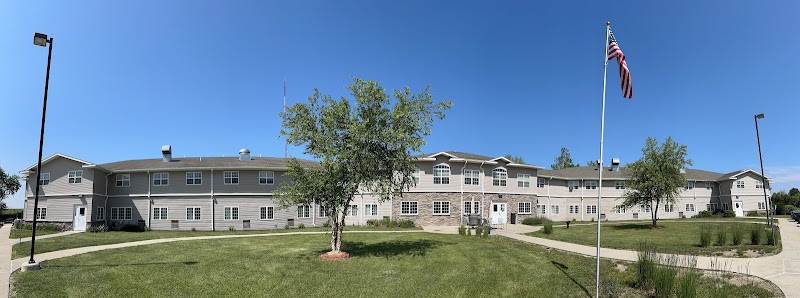
CMS rates The New Homestead Care Center's staffing level at 3 out of 5 stars, which is average compared to other nursing homes. Staff turnover is 62%, which is 16 percentage points above the Iowa average of 46%. High turnover can affect care consistency as new staff learn residents' individual needs.

What Have Inspectors Found at The New Homestead Care Center?

State health inspectors documented 24 deficiencies at The New Homestead Care Center during 2022 to 2025. These included: 24 with potential for harm.

Who Owns and Operates The New Homestead Care Center?

The New Homestead Care Center is owned by a non-profit organization. Non-profit facilities reinvest revenue into operations rather than distributing to shareholders. The facility is operated by HEALTHCARE OF IOWA, a chain that manages multiple nursing homes. With 58 certified beds and approximately 51 residents (about 88% occupancy), it is a smaller facility located in GUTHRIE CENTER, Iowa.

How Does The New Homestead Care Center Compare to Other Iowa Nursing Homes?

Compared to the 100 nursing homes in Iowa, The New Homestead Care Center's overall rating (2 stars) is below the state average of 3.0, staff turnover (62%) is significantly higher than the state average of 46%, and health inspection rating (2 stars) is below the national benchmark.

What Should Families Ask When Visiting The New Homestead Care Center?

Based on this facility's data, families visiting should ask: "How do you ensure continuity of care given staff turnover, and what is your staff retention strategy?" "Can I visit during a mealtime to observe dining assistance and food quality?" "How do you handle medical emergencies, and what is your hospital transfer rate?" "Can I speak with family members of current residents about their experience?" These questions are particularly relevant given the facility's high staff turnover rate.

Is The New Homestead Care Center Safe?

Based on CMS inspection data, The New Homestead Care Center has a clean safety record: no substantiated abuse findings (meaning no confirmed cases of resident harm), no Immediate Jeopardy citations (the most serious violation level indicating risk of serious injury or death), and is not on the Special Focus Facility watch list (a federal program monitoring the lowest-performing 1% of nursing homes). The facility has a 2-star overall rating and ranks #100 of 100 nursing homes in Iowa. While no facility is perfect, families should still ask about staff-to-resident ratios and recent inspection results during their visit.

Do Nurses at The New Homestead Care Center Stick Around?

Staff turnover at The New Homestead Care Center is high. At 62%, the facility is 16 percentage points above the Iowa average of 46%. High turnover means new staff may not know residents' individual needs, medications, or preferences. It can also be disorienting for residents, especially those with dementia who rely on familiar faces. Families should ask: What is causing the turnover? What retention programs are in place? How do you ensure care continuity during staff transitions?

Was The New Homestead Care Center Ever Fined?

The New Homestead Care Center has no federal fines on record. CMS issues fines when nursing homes fail to meet care standards or don't correct problems found during inspections. The absence of fines suggests the facility has either maintained compliance or corrected any issues before penalties were assessed. This is a positive indicator, though families should still review recent inspection reports for the full picture.

Is The New Homestead Care Center on Any Federal Watch List?

The New Homestead Care Center is not on any federal watch list. The most significant is the Special Focus Facility (SFF) program, which identifies the bottom 1% of nursing homes nationally based on persistent, serious quality problems. Not being on this list means the facility has avoided the pattern of deficiencies that triggers enhanced federal oversight. This is a positive indicator, though families should still review the facility's inspection history directly.