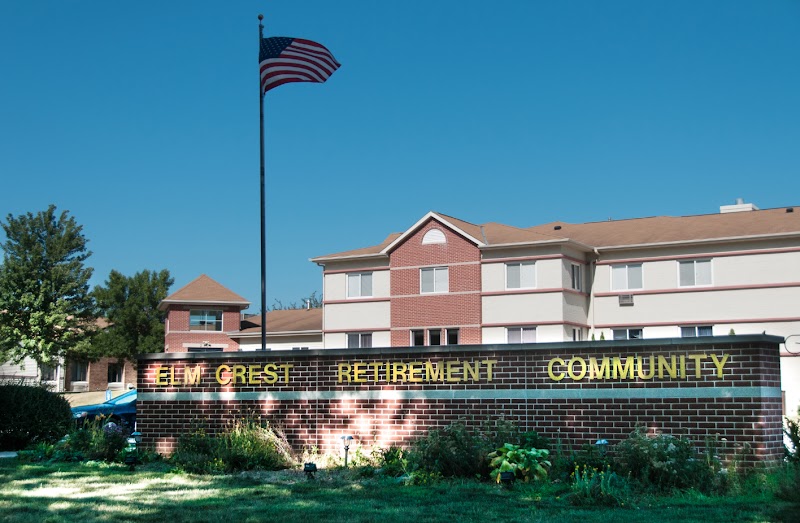
Elm Crest Retirement Community
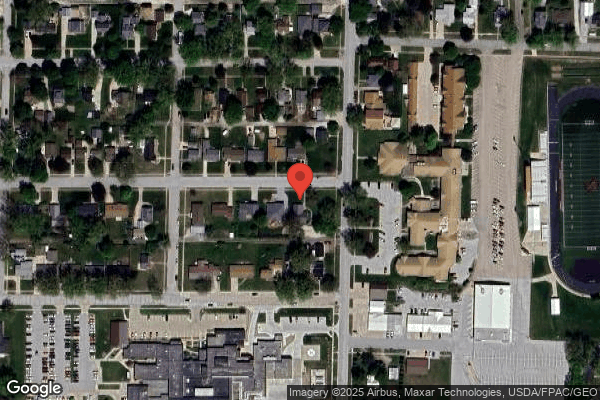
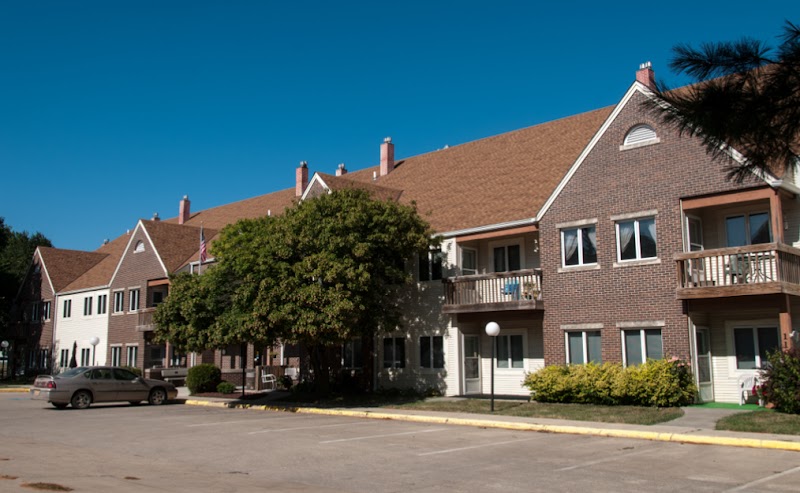
2104 12th Street, Harlan, IA 51537 (712) 755-5174
Non profit - Corporation 50 Beds AMERICAN BAPTIST HOMES OF THE MIDWEST Data: November 2025
Trust Grade
45/100
#266 of 392 in IA
Last Inspection: November 2024

Within standard 12-15 month inspection cycle. Federal law requires annual inspections.

Overview

Elm Crest Retirement Community in Harlan, Iowa has received a Trust Grade of D, indicating below-average care with some concerns. Ranked #266 out of 392 facilities in Iowa, they are in the bottom half overall, although they are the top choice in Shelby County. Unfortunately, the facility is worsening, with issues increasing from 4 in 2023 to 10 in 2024. Staffing is average with a rating of 3 out of 5 stars, but the turnover rate is concerning at 68%, significantly higher than the state average of 44%. While the home has no fines recorded, some serious incidents have been noted, such as a resident falling due to improper transfer techniques and a failure to follow sanitation protocols, which could risk spreading illness. Overall, while there are some strengths, families should be aware of the significant weaknesses in care and safety practices.
Trust Score
D
45/100
In Iowa
#266/392
Bottom 33%
Safety Record
Moderate
Needs review
Inspections
Getting Worse
4 → 10 violations
Staff Stability
⚠ Watch
68% turnover. Above average. Higher turnover means staff may not know residents' routines.
Penalties
✓ Good
No fines on record. Clean compliance history, better than most Iowa facilities.
Skilled Nurses
✓ Good
Each resident gets 51 minutes of Registered Nurse (RN) attention daily — more than average for Iowa. RNs are trained to catch health problems early.
Violations
⚠ Watch
18 deficiencies on record. Higher than average. Multiple issues found across inspections.
★★☆☆☆
2.0
Overall Rating
★★★☆☆
3.0
Staff Levels
★★★☆☆
3.0
Care Quality
★★☆☆☆
2.0
Inspection Score
Stable
2023: 4 issues
2024: 10 issues

The Good

  • Full Sprinkler Coverage · Fire safety systems throughout facility
  • No fines on record

Facility shows strength in fire safety.

The Bad

2-Star Overall Rating

Below Iowa average (3.0)

Below average - review inspection findings carefully

Staff Turnover: 68%

22pts above Iowa avg (46%)

Frequent staff changes - ask about care continuity

Chain: AMERICAN BAPTIST HOMES OF THE MIDWE

Part of a multi-facility chain

Ask about local staffing decisions and management

Staff turnover is elevated (68%)

20 points above Iowa average of 48%

The Ugly 18 deficiencies on record

1 actual harm
Nov 2024 8 deficiencies 1 Harm
SERIOUS (G) 📢 Someone Reported This

A family member, employee, or ombudsman was alarmed enough to file a formal complaint

Actual Harm - a resident was hurt due to facility failures

Accident Prevention (Tag F0689)

A resident was harmed · This affected 1 resident

**NOTE- TERMS IN BRACKETS HAVE BEEN EDITED TO PROTECT CONFIDENTIALITY** Based on clinical record review, observation, facility document review, staff interviews and facility policy review, the facilit...

Read full inspector narrative →
**NOTE- TERMS IN BRACKETS HAVE BEEN EDITED TO PROTECT CONFIDENTIALITY** Based on clinical record review, observation, facility document review, staff interviews and facility policy review, the facility failed to use safe transfer techniques for 1 of 3 residents. Resident #37 had fell in the bathroom and sustained bruising and a skin tear after staff assisted him without the use of a gait belt or proper footwear. The facility also failed to implement new interventions with repeat falls to reduce the risk for Resident #37. The facility reported a census of 43 residents. Findings include: According to the admission Minimum Data Set (MDS) assessment dated [DATE], Resident #37 was admitted to the facility on [DATE] and had a Brief Interview for Mental Status (BIMS) score of 11 (minimal cognitive deficit.) He required substantial/max assistance for toileting hygiene and transfers. Resident #37 had diagnosis including anxiety disorder, Post Traumatic Stress Disorder (PTSD) and Chronic Obstructive Pulmonary Disease (COPD) with acute exacerbation. The MDS documented the resident had fallen in the last month. According to a Nursing Advanced Skilled Evaluation note dated 9/18/24 at 10:02 AM, upon admission, Resident #37 was able to move all extremities and his gait was unsteady with poor balance. The Care Plan dated 9/24/24 for Resident #37 documented he was at high risk for falling due to falls at home preceding admission here. The care plan listed a goal the resident will not have a fall related injury. The care plan directed staff with the following interventions: -Fall risk evaluation. -Labs when ordered. -Monitor for side effects of medication: cardiac and psychotropic medications as ordered. -Toileting per urinary/bowel section of this care plan. The toileting plan created on 9/24/24 and revised on 11/5/24 documented intervention for staff to assist with transfer to the toilet. Offer and assist with toileting before and after meals, at bedtime and as needed. The Progress Notes for Resident #37 documented the following: On 10/29/24 at 10:39 PM one assist with transfer to wheelchair, toilet and bed. One assist for bedtime ADL's (activities of daily living). Education on call light location and use. Encouraged to voice needs. On 10/29/24 at 11:28 PM resident hit the back of his head on the glove holder in his bathroom removed the skin flap to a healed skin tear. Measures 1.3 cm x 0.5 cm. On 10/29/24 at 11:45 PM it is unknown how long the wound has been present. The resident reports when up to the bathroom he hit the back of his head on the glove holder box on the wall by the stool. On 11/1/24 at 6:09 PM moderate assistance of 1 with most ADL's. One assist with toileting. Some confusion noted at times. Pleasant and cooperative with staff. On 11/2/24 at 8:30 AM fall at 7:45 AM in resident's room. Nurse 2 rooms down from resident when aide asked to immediately come to the resident's room. Observed resident lying on his back with his head propped against the air/heat unit. Noted blood on the unit and on the residents head and arms. Pressure applied with towel and ice. Noted skin tear with heavy amounts of bleeding. When asked what happened the resident stated he was trying to go to the bathroom so he got up and fell. Resident sent to the local emergency room for evaluation. On 11/2/24 at 12:28 PM call to hospital for update and notified the resident has a C3 fracture and will need to be referred to neurologist. On 11/2/24 at 4:16 PM the hospital called and resident being admitted . To have an MRI tomorrow. Dressing being applied to scalp and C-collar on. On 11/3/24 at 9:41 PM resident returns from the hospital. able to pivot transfer and take several steps. 15 minute visual checks initiated. The Discharge MDS dated [DATE] for Resident #37 documented the resident had an unplanned discharge to the hospital. The MDS documented the resident had fallen since admission/entry or the prior assessment and had an injury. The Care Plan for Resident #37 directed staff with the following interventions updated on 11/4/24: -15 minute visual checks upon return from the hospital. -Replace old gripper socks with new gripper socks. The Progress Notes for Resident #37 documented the following: On 11/4/24 at 10:31 AM reviewed incident thoroughly with IDT team. New interventions: replace old gripper socks with new, 15 minute checks upon return from the hospital, Social Services to check with family for permission to place sign in room reminding resident to use his call light and wait for staff assistance prior to rising. On 11/6/24 at 11:16 AM IDT team met and reviewed incident on 11/4/24. Current interventions are 15 minute checks, replace old gripper socks with new socks and staff to prompt resident to and from meals and activities. On 11/6/24 at 11:41 AM late entry for November 4, 2024 at 3:40 PM interview with resident completed by Administrator and DON. The resident stated he got up out of bed, and sat himself in his wheelchair at bedside. He stated he stood upright and his feet went out from underneath him and he started to fall backwards so he leaned forward losing his balance and fell to the floor. The resident stated he hit his head on the armoire in his room during the fall to the floor. He could not remember if he put on his call light or not. On 11/6/24 at 11:51 AM reviewing incident with IDT team. Current interventions are every 15 minute checks, replace gripper socks, discarded gripper socks with little grippers left and ordered more. An Incident Report dated 11/6/24 at 10:25 PM, documented Resident #37 was up to the bathroom with assistance of one when he let go of his walker, reached out to grab the handle attached to the toilet, and lost his balance. A staff member was present and able to lower him to the floor. The nurse came in to assess the situation and noted that the resident was not wearing a gait belt. He had on one gripper sock with the grippers on the top of his foot, and a black sock on the other foot that did not have grippers. The resident sustained a skin tear to his elbow and his right foot was turned outward. He was sent to the emergency room for evaluation. The Care Plan for Resident #37 lacked updates/new interventions following the fall on 11/6/24. According to the Emergency Department Provider Notes dated 11/7/24 at 1:11 AM, Resident #37 had a large band-aid over the top of his head. No other areas of erythema, edema or ecchymosis. Range of motion without pain or discomfort. Minimal discomfort mid portion of the neck with no crepitus of step-off. The resident able to walk with his walker with no other injuries or trauma. A Post Fall Evaluation dated 11/7/24 at 8:43 AM, documented Resident #37 reason for fall was he lost his balance and fell in front of the stool while being assisted by staff with no gait belt or proper footwear. The resident had a trauma wound to the scalp related to a fall on 11/2/24, with partial flap loss and full thickness stripping of the skin. The skin tear measured; 10.5 centimeters (cm) x 5 cm x 0.1 cm. There was epidermis and dermis tissue loss with a yellow wound bed. The left posterior elbow skin tear measured 1 cm x 1.5 cm with edges non-attached and area bleeding was acquired on 11/6/24. In an observation on 11/12/24 at 10:54 AM, Resident #37 was laying in bed with supplemental oxygen per nasal cannula and had a bandage on the top of his head. The resident said that he lost his balance and fell. On 11/12/24 at 3:50 PM, Staff B, Registered Nurse (RN) stated that she remembered the fall in the bathroom. She had just started her shift when a Certified Nurse Aide (CNA) told her they needed her in the room of Resident #37. When she walked into the room, the resident was on the bathroom floor, his back was up against the wall, and the walker was next to the toilet. He was wearing one gripper sock that was upside down with the grips on the top, and a black sock that was not gripper. He did not have a gait belt on. The nurse noticed that his right foot was turned outward and he had a skin tear on his right elbow that was bleeding. They sent him to the emergency room and they found that he didn't have any broken bones. On 11/13/24 at 8:40 AM, Staff C, Certified Nurse Aide (CNA), stated that she worked at the facility just 2 times. She said she had limited orientation and was only given verbal report on the status of residents. She said that she wasn't able to get into the electronic chart to find resident information because she didn't have access. She said that on 11/6/24 she had gotten report from other CNAs that Resident #37 required 2 staff assistance. There had been another CNA in with her initially, but that aide left the room and went to help another resident. She walked Resident #37 to the bathroom with help of the walker, but when he got into the bathroom, he let go of the walker, reached out to grab the handle next to the toilet and he missed and started to go down. Staff C said that she had ahold of the resident with her arm under his armpit and lowered him to the floor. Staff C acknowledged that she had not used a gait belt because he had a walker, she didn't think he needed one. She added that there weren't any gait belts in the resident's room for her to use. On 11/13/24 at 12:25 PM, the Administrator, Director of Nursing (DON) and Nurse Consultant said that before a new staff (CNA) member was put on the floor, they were given verbal report from the previous shift. They were given access to the electronic chart so they could check on specifics needs of the residents. They said that they had an orientation checklist but they were unable to locate a list for Staff C. On 11/14/24 at 10:38 AM, the DON said that it was their policy to always use a gait belt and gait belts were kept in the resident's rooms. She said that agency staff were taught that they must use them as well as checking for the proper footwear before transferring a resident. According to a facility policy titled: Gait Belt Use updated on 3/22/07, gait belts would be used for residents needing limited, extensive or total assistance with manual transfers and/or ambulation.
CONCERN (D) 📢 Someone Reported This

A family member, employee, or ombudsman was alarmed enough to file a formal complaint

Potential for Harm - no one hurt, but risky conditions existed

Resident Rights (Tag F0550)

Could have caused harm · This affected 1 resident

**NOTE- TERMS IN BRACKETS HAVE BEEN EDITED TO PROTECT CONFIDENTIALITY** Based on staff interviews, clinical record review, facility document review and policy review the facility failed to ensure that...

Read full inspector narrative →
**NOTE- TERMS IN BRACKETS HAVE BEEN EDITED TO PROTECT CONFIDENTIALITY** Based on staff interviews, clinical record review, facility document review and policy review the facility failed to ensure that all residents were treated with dignity and respect for 1 of 14 residents reviewed. A staff member was demanding, forceful and demeaning to Resident #96 when she became restless and tried to get out of her chair unassisted. The facility reported a census of 43 residents. Findings include: According to the Minimum Data Set (MDS) assessment dated [DATE], Resident #96 had a Brief Interview for Mental Status (BIMS) score of 0 (severe cognitive deficit). She required set up assistant for eating, and substantial assistance with sit to stand chair transfers. Her diagnosis included diabetes mellitus, urinary tract infection and arthritis. The Care Plan for Resident #96, dated 9/19/24, showed that she was admitted to hospice and was at high risk for falls due to poor mobility. The resident needed assistance with ambulation, transfers and bed mobility. Resident #96 used anti-anxiety medication related to anxiety disorder and was crying often. Staff were directed to use non-medical interventions including activities, distraction and calm reassurance. If the resident became resistive, staff were to leave her alone in a safe position for a few minutes and retry. In the facility Statement from Staff F dated 9/26/24, Staff F, Registered Nurse (RN) stated at the time of the incident, she was in the dining room and heard Staff D say don't do that. She looked in her direction and she noticed Resident #96 trying to stand up. Staff F stated she was concerned that the resident would trip on her wheelchair peddle and was solely focused on that and making sure she didn't trip so she didn't see what happened with Staff D. Staff F stated she then heard Staff D say she bit me. Staff F informed Staff D to go get the other nurse to help her while she stayed with the resident. A little while later the aide, Staff H, informed her that he saw Staff D push Resident #96's forehead away. The facility Interview with Staff D dated 9/26/24 at 12:00 PM documented Staff D told the Administrator she was with Resident #96 in the dining room waiting for supper to be served. The resident tried to stand up from her wheelchair and Staff D encouraged her to sit down to stay safe and explained that dinner would be coming soon. As she was about to walk away the resident tried standing up again, Staff D touched her shoulder and Resident #96 told her to get her hands off her. The resident then grabbed Staff D's hand and bit her right behind her right thumb. Staff D stated she lightly pushed the residents head back as she was panicking and trying to get Resident #96 to stop biting her. Staff D stated she didn't push hard as she knew the resident is elderly and she could hurt her if she did. Staff D stated the nurse, Staff F, was around and she got her attention and told her what happened. On 11/12/24 at 2:36 PM, Staff H stated that he was working the evening of 9/26/24 and saw Staff D sitting with Resident #96. He said that she was a CSA and not trained to monitor residents. A CSA was responsible for helping with filling waters, serving meals and stocking supplies so he didn't know if someone had asked her to monitor the resident. Staff H said that he saw Resident #96 bite the hand of Staff D. The resident was sitting and Staff D was standing next to her, as the resident tried to stand up on her own, Staff D became annoyed, and held the resident's hand or arm. He said that she used a very firm voice and ordered the resident to stay seated. He then saw Resident #96 take the staff's hand, put it up to her mouth, and bite her. Staff D then pulled her hand away from the resident and smacked the resident on the forehead. The aide then left the dining room area to find the nurse. On 11/12/24 at 2:44 PM, Staff E, Licensed Practical Nurse (LPN), stated that she was working the evening of 9/26/24 and Resident #96 was very agitated that evening. She said that Staff D was aggressive in her interaction with the resident. She used a harsh voice and told the resident what to do, rather than redirecting her and being patient. Staff E did not see the resident bite the CSA, but later, Staff H came and told her that Staff D had pushed the resident on the forehead after she got bit. Staff E attended to the resident and tried to get her to eat after the incident, but she was even more agitated and wouldn't eat. On 11/12/24 at 3:30 PM Staff F, RN stated that she heard Staff D say let go of me! She assumed that Resident #96 had been trying to get up on her own because she had been restless. Later, Staff H came and told her that Staff D hit the resident's head with her hand after she had bitten her. She said that Staff D had been a new staff member. On 11/14/24 at 10:27 AM, Staff D stated that on the evening of 9/26/24, Resident #96 kept trying to stand up. The nurses were aware and had been telling her to sit back down. Staff D said that the nurses asked her to sit with the resident. She said that she had been educated to get a CNA or nurse for resident interactions such as this, but the nurses were busy. At one point, Staff D put a hand on the resident's shoulder and that was when the resident grabbed her hand and bit her. She explained that she was very new to the position and that this was the first time she had dealt with an agitated resident. She said that she wasn't thinking, and she was getting annoyed with her, used a harsh tone and said sit down! On 11/14/24 at 10:20 AM, the Nurse Consultant (NC) and Administrator maintained that Staff D did the best she could, even though she was not trained to walk with or physically attend to residents. They said that she was trying to get the resident to sit down and the only other option was to allow her to fall. They maintained that it happened too quickly for her to get help from trained staff even though there were several others in the dining room area. A facility policy titled: Dignity, revised in February 2021, showed that each resident would be care for in a manner that promoted and enhanced his or her sense of wellbeing, level of satisfaction with life and feeling of self-worth and self-esteem. When assisting with care, staff would speak respectfully to residents. Staff were expected to treat cognitively impaired residents with dignity and sensitivity to address the underlying motives for behavior.
CONCERN (D)

Potential for Harm - no one hurt, but risky conditions existed

Comprehensive Assessments (Tag F0636)

Could have caused harm · This affected 1 resident

**NOTE- TERMS IN BRACKETS HAVE BEEN EDITED TO PROTECT CONFIDENTIALITY** Based on clinical record review and staff interviews the facility failed to complete a comprehensive Minimum Data Set (MDS) asse...

Read full inspector narrative →
**NOTE- TERMS IN BRACKETS HAVE BEEN EDITED TO PROTECT CONFIDENTIALITY** Based on clinical record review and staff interviews the facility failed to complete a comprehensive Minimum Data Set (MDS) assessment during the required timeline for 1 of 14 residents reviewed (Resident #35). The facility census was 43. Findings include: Resident #35's MDS Quarterly assessment dated [DATE] revealed Section GG (Functional Abilities) lacked data or reason for non-assessment. The previously completed Quarterly MDS dated [DATE] was completed in its entirety. On 11/13/24 at 11:19 AM the Director of Nursing (DON) stated the MDS is completed with coordination between the facility MDS Coordinator and Corporate MDS Consultant. The DON reviewed the MDS dated [DATE] and could not explain why Section GG had not been completed, and would expect the document to be completed in its entirety. On 11/13/24 at 11:25 AM Staff G, MDS Coordinator, stated she was not in the position in August of 2024 and could not provide details why Section GG was not completed. On 11/13/24 at 2:00 PM, the Administrator stated she would defer to nursing on the completion of the MDS assessment. On 11/13/24 at 8:13 AM, the Physical Therapist Assistant (PTA) stated she completed Section O of the MDS and provided input to the MDS Coordinator for Section GG. The Long-Term Care Survey Process form labeled MDS Indicator Facility Rate Report for the survey ending 11/14/24 generated by the MDS assessments completed by the facility listed a total number of assessments as 42. The CMS RAI Version 3.0 Manual dated October 2024 revealed The Quarterly Assessment is an Omnibus Budget Reconciliation Act (OBRA) non-comprehensive assessment for a resident that must be completed at least every 92 days following the previous OBRA assessment of any type. It is used to track a resident ' s status between comprehensive assessments to ensure critical indicators of gradual change in a resident ' s status are monitored. The document further revealed the OBRA/Interim completion of Section GG utilized the assessment period as the Assessment Reference Date (ARD) plus 2 previous calendar days. The section is completed using a 6 point scale and if the area was not attempted the reason is to be coded. The facility provided policy, Comprehensive Assessments, revised October 2023 revealed the comprehensive assessment included the completion of the MDS, and were completed in accordance with the criteria of the RAI User Manual.
CONCERN (D)

Potential for Harm - no one hurt, but risky conditions existed

Comprehensive Care Plan (Tag F0656)

Could have caused harm · This affected 1 resident

**NOTE- TERMS IN BRACKETS HAVE BEEN EDITED TO PROTECT CONFIDENTIALITY** Based on electronic health record review, document review, policy review and staff interviews the facility failed to provide a c...

Read full inspector narrative →
**NOTE- TERMS IN BRACKETS HAVE BEEN EDITED TO PROTECT CONFIDENTIALITY** Based on electronic health record review, document review, policy review and staff interviews the facility failed to provide a comprehensive care plan that included goals or interventions for a diagnosis of methicillin-resistant staphylococcus aureus (MRSA) and or enhanced barrier precautions (EBP) related to the diagnosis of a multidrug-resistant organism (MDRO) for 1 of 5 residents reviewed (Resident #22). The facility reported a census of 43 residents. Finding include: The Electronic New Order dated 7/4/24 for Resident #22 documented a new order for Bactrim DS and a diagnosis of carrier or suspected carrier of methicillin resistant Staphylococcus aureus. Review of Resident #22's MDS dated [DATE] documented no active diagnosis of MDRO. The Minimum Data Set (MDS) assessment dated [DATE] for Resident #22 documented a Brief Interview for Mental Status (BIMS) score of 15 indicating no cognitive impairment. Review of Resident #22's Care Plan documented no focus, goals or interventions for a diagnosis of MRSA. On 11/14/24 at 8:30 AM Staff G stated she started writing care plans for the residents at the facility at the end of August or the beginning of September. Staff G acknowledged there was not a care plan created with the diagnosis of MRSA. Staff G stated a care plan with a focus, goal, or intervention in place should have been created with the diagnosis of MRSA. On 11/14/24 at 8:41 AM the DON stated Resident #22 should have a sign outside her door related to enhanced barrier precautions. The DON acknowledged there was no sign related to enhanced barrier precautions currently. The DON acknowledged there was not a care plan created with the diagnosis of MRSA. The DON stated a care plan with a focus, goal, or intervention in place should have been created with the diagnosis of MRSA. On 11/14/24 at 9:59 AM Staff Q, Nursing Consultant stated the facility's expectation was that a care plan would have been developed with the diagnosis of MRSA and or the requirement of enhanced barrier precautions. Review of policy revised 3/22 titled, Care Planning - Interdisciplinary Team documented comprehensive person centered care plans are based on resident and developed by an interdisciplinary team. Review of policy revised 10/23 titled, Comprehensive Assessment documented the facility conducts comprehensive, accurate, standardized, reproducible assessments of each resident ' s functional capability using the Resident Assessment Instrument (RAI) specified by CMS.
CONCERN (D)

Potential for Harm - no one hurt, but risky conditions existed

Deficiency F0688 (Tag F0688)

Could have caused harm · This affected 1 resident

Based on clinical document review, resident interview, staff interview, and policy review the facility failed to provide services to increase mobility or prevent a loss in mobility for 1 of 2 resident...

Read full inspector narrative →
Based on clinical document review, resident interview, staff interview, and policy review the facility failed to provide services to increase mobility or prevent a loss in mobility for 1 of 2 residents (Resident #12) reviewed. The facility reported a census of 43 residents. Findings include: Review of the Minimum Data Set (MDS) assessment for Resident #12 dated 9/25/24 documented a Brief Interview for Mental Status (BIMS) score of 15 indicating intact cognition. The MDS further documented diagnosis of hypertension, diabetes mellitus, and neuropathy. The document further revealed the resident was severely visually impaired. Review of Resident #12's Care Plan revealed a focus area for ambulation restorative nursing program due to neuropathy and diabetes created on 4/8/24. The goal revealed the ability to ambulate 500 feet daily through the next quarter with a goal date of 3/19/25. Interventions included referral to therapy if needed, registered nurse (RN) to evaluate and make changes to the program, and the staff to report the changes in participation to nursing staff. Review of Resident #12's restorative program document for the last 30 days (10/15/24 to 11/13/24) revealed the task was to walk to and from meals with assist of 1, gait belt and walker to distance as tolerated. The document revealed 29 instances of the resident ambulating for a total of 19 days. On 2 days there were instances of documentation entry for multiple times. The document revealed on 10/16 there were entries for amounts of 10 at 12:27, 10 at 12:28, and 6 at 12:28. On 10/17/24 there were entries for amounts of 10 at 12:28, 10 at 12:28, and 5 at 12:28. On 10/30/24 the document revealed an amount of 75 at 8:55. The document revealed on 11/13/24 the amount of 30. The document revealed 40 entries indicating not applicable and 1 entry of Resident #12 not available. There were no refusal entries for Resident #12. On 11/12/24 at 11:58 AM Resident #12 stated there were lots of new nurses. The resident further stated she was supposed to walk to the dining room for every meal, and now she doesn ' t walk to meals anymore. On 11/13/24 at 11:10 AM observed Resident #12 walking with the Restorative Aide continuously from the chapel to the dining room. The observation revealed the resident walked this distance for 3 complete cycles and was returned to her room at the end of the session. On 11/13/24 at 11:20 AM the Director of Nursing (DON) reviewed the walking task document and stated the Certified Nursing Assistants (CNAs) were able to walk the resident to meals. The DON acknowledged Resident #12 was not being walked to meals as the program was written. On 11/13/24 at 2:04 PM the Administrator stated if a restorative program was written only for the Restorative Aide to complete then would expect that staff to complete as written. If the program was written for walking and CNAs could complete, then she would expect CNAs to complete the program. The facility provided policy, Restorative Nursing Services, revised 7/17, revealed the goals and objectives are individualized, resident-centered, and the resident would be included in determining the goals. The document further revealed the goals may include but were not limited to maintaining independence and self esteem, and maintaining physiological resources.
CONCERN (D)

Potential for Harm - no one hurt, but risky conditions existed

Respiratory Care (Tag F0695)

Could have caused harm · This affected 1 resident

**NOTE- TERMS IN BRACKETS HAVE BEEN EDITED TO PROTECT CONFIDENTIALITY** Based on observations, clinical record review, and staff interviews the facility failed to provide respiratory care and services...

Read full inspector narrative →
**NOTE- TERMS IN BRACKETS HAVE BEEN EDITED TO PROTECT CONFIDENTIALITY** Based on observations, clinical record review, and staff interviews the facility failed to provide respiratory care and services in accordance with professional standards of practice for 1 of 1 residents reviewed, requiring the use of a nebulizer (Resident #6). The facility reported a census of 43 residents. Findings include: The Minimum Data Set (MDS) assessment dated [DATE], documented Resident #3 had a Brief Interview for Mental Status (BIMS) score of 9/15 indicating mild cognitive impairment. The MDS documented diagnoses that included heart failure, hypertension, and asthma/chronic obstructive pulmonary disease (COPD) or chronic lung disease. Resident #3's Physician Orders dated 9/27/24 revealed Ipratropium-Albuterol Solution 0.5-2.5 (3) MG/3ML. 1 vial inhale orally 3 times a day for shortness of breath and wheezing with a start date of 9/27/24. An additional order with a start date of 9/29/23 revealed to clean NEB mask with soap and water after each use in the room, letting air dry, every 24 hours as needed. There was no current order for oxygen tubing change. Review of the Medication Administration Record (MAR) and Treatment Administration Record (TAR) from 12/23 through 11/13/24 found 1 instance of the NEB mask being cleaned on 10/12/24. A Care Plan for Resident #3 identified a focus area of COPD dated 7/25/24. Interventions included giving aerosol or bronchodilators as ordered with monitoring for side effects. An additional focus area of altercation in respiratory function was identified with interventions including administering prescribed respiratory treatments as ordered, and assessments of lung sounds and oxygen saturations as needed. An observation on 11/12/24 at 10:15 AM revealed Resident #3 had a nebulizer present with tubing wrapped, connected to the nebulizer without a date sitting on a washcloth on the nightstand. An observation on 11/13/24 at 11:39 AM revealed Resident #3's nebulizer present on the nightstand with tubing, mask, and cup all attached, placed on a washcloth. Observation further revealed no documentation of last change or who had completed. On 11/13/24 at 11:50 AM Staff J, Registered Nurse (RN) stated nebulizer tubing is changed weekly, primarily on the overnight shift. Staff J further stated when the tubing is changed the nurse should put a piece of tape on tubing indicating date changed with initials. On 11/13/24 at 11:55 AM Staff K, Health Unit Coordinator (HUC) stated the TAR would reflect the order to change the tubing/mask to ensure the order was completed. On 11/13/24 at 2:00 PM the Administrator stated the expectation would be for staff to follow the facility policy for nebulizer management. On 11/14/24 at 7:57 AM the Director of Nursing (DON) stated the oxygen tubing and mask should be changed and manager per policy. The DON acknowledged without a piece of tape on the tubing it would be hard to know when the tubing was last changed. The DON further concurred that without the TAR reflecting the need to change the tubing or mask it would be hard to know if or when it had last been changed. The facility provided policy, Administering Medications through a Small Volume (Handheld) Nebulizer, revised 10/10, revealed the following: *Disconnection of the T-piece, mouthpiece and medication cup when the treatment is completed. *Rinse and disinfect the nebulizer equipment according to facility protocol or following the instructions provided, and allow to air dry on a paper towel. *When the equipment is completely dry, store in a plastic bag with the resident's name and the date on it. *Change the equipment and tubing every 7 days or according to facility protocol.
CONCERN (E)

Potential for Harm - no one hurt, but risky conditions existed

Food Safety (Tag F0812)

Could have caused harm · This affected multiple residents

Based on observation, facility record review, staff interviews and policy review the facility failed to follow proper sanitation to prevent the spread of illness according to professional standards by...

Read full inspector narrative →
Based on observation, facility record review, staff interviews and policy review the facility failed to follow proper sanitation to prevent the spread of illness according to professional standards by serving residents on dishes that had not been rinsed in the hot water dish machine at an appropriate temperature to prevent the spread of illness. The facility reported a census of 43 residents. Findings include: Observation on 11/12/24 at 9:50 AM of a high temperature dish machine in use revealed a temperature of 140 degrees for the wash cycle and 170 degrees for rinse cycle. Observation of 3 loads of dishes ran though the dish machine with temperatures of 140 degrees for wash and 170 degrees for rinse. Review of document titled, Temperature Monitoring Form -1 Compartment Dishmachine for the month of October documented wash temperatures under 150 degrees on 10/24, 10/28 and 10/3 and rinse temperature under 180 on 10/1, 10/3, 10/5, 10/6, 10/20, 10/25, 10/27, 10/28 and 10/29. On 11/12/24 at 10:00 AM Staff M, Dietary Aide stated when the temperatures are below 150 degrees for wash and 180 degrees for rinse she notified the kitchen manager was at the facility. Staff M stated if he was not at the facility the dishes still needed to be washed and in the past she just kept washing them and putting them away to use. Staff M stated if the temperature during the rinse cycle was above 150 degrees she felt that was hot enough because the food temperature only needed to be 135 to be safely served. Staff M stated that she put the dishes away that were washed with the temperatures below 150 degrees for wash and less than 180 degrees for rinse. Staff M stated that she would continue to wash dishes and eventually the temperature would get to 180 degrees and she would draw an arrow on the temperature log acknowledging the temperature had reached above 180. Staff M ran a temperature strip through the dish machine that would change to a dark brown if a temperature above 170 was reached. Staff M acknowledged the strip did not change color. Staff M stated that the temperature was checked with a strip twice a day. Staff M opened a book and revealed a bag of used temperature strips with dates on them. Staff M acknowledged that all strips in the bag did not have any color change indicating there was not a temperature above 170 reached. On 11/12/24 at 10:30 AM Staff N, Certified Dietary Manager acknowledged that the dish machine was not reaching a minimum of 180 degrees on the rinse cycle. Staff N stated the company that does maintenance on the dish machine was at the facility on 11/8/24. Staff N stated the dish machine not reaching 180 degrees on the rinse cycle was addressed then. Staff N stated he would be calling the company that does maintenance on the dish machine right away to repair the issue. Staff N acknowledged that none of the strips that were dated in the bag utilized during previous tests had revealed that a temperature above 170 had not been met. Staff N stated dishes would be cleaned with the 3 sink process until the dish machine was repaired or the facility would utilize the dish machine on the assisted living side of the facility. On 11/12/24 at 10:45 AM the Administrator stated the facility's expectation was the temperature on the wash cycle of the dish machine would be above 150 degrees and above 180 degrees on the rinse cycle. The Administrator stated the facility would be calling the company that does maintenance on the dish machine to have it repaired. The Administrator stated the facility's expectation was the staff would notify the kitchen manager if the temperatures were not being met during the wash and rinse cycles. The Administrator stated if the staff were not able to get a hold of the kitchen manager the staff would call the Administrator. The Administrator stated the facility's expectation was dishes would not be used if temperatures of 150 degrees were not met on the wash cycle and / or if a temperature of at least 180 degrees was not met on the rinse cycle. On 11/12/24 at 2:30 PM Staff P, Dish Machine Maintenance Technician stated the most recent service at the facility was completed on 11/6/24. Staff P stated he was the technician that serviced the machine on 11/6/24. Staff P stated on 11/6/24 he was at the facility for routine service and monthly maintenance. Staff P stated his company was not at the facility on 11/8/24. Staff P stated there was never a service request for a concern about low temperatures from the dish machine wash or rinse cycle. Staff P stated the last time his company was at the facility prior to 11/6/24 was in August and that was related to an issue in laundry. Staff P stated the last temperature he could find obtained by the company that he worked for was in May and the temperature was 186. Staff P stated he did not look at or obtain a temperature from the dish machine when at the facility on 11/6/24. Staff P stated the wash cycle should be a minimum of 150 and the rinse cycle should be a minimum of 180 on the hot water dish machine. Staff P stated he had run several cycles on 11/12/24 at the facility and the dish machine never reached 180 for the rinse cycle. Review of undated policy titled, Cleaning Dishes / Dish Machine revealed that prior to use staff would verify proper temperatures and machine function. Confirm that soap and rinse dispensers are filled and have enough cleaning product for the shift. Staff should check the dish machine gauges throughout the cycle to assure proper temperatures for sanitation. Thermal strips may be used as verification that the temperature is adequately hot, but cannot verify actual temperatures. Those machines installed after the Food Code 2001 were implemented must automatically dispense detergents and sanitizers, and must incorporate visual means or other visual audible alarm to alert the user to any concerns (such as the soap or sanitizer not dispensing properly). High temperature dish machine wash cycle should be 150 degrees - 165 degrees and rinse cycle should be 180 degrees.
CONCERN (E)

Potential for Harm - no one hurt, but risky conditions existed

Infection Control (Tag F0880)

Could have caused harm · This affected multiple residents

**NOTE- TERMS IN BRACKETS HAVE BEEN EDITED TO PROTECT CONFIDENTIALITY** Based on clinical record review, observations, staff interviews, and facility policy review the facility failed to use universal...

Read full inspector narrative →
**NOTE- TERMS IN BRACKETS HAVE BEEN EDITED TO PROTECT CONFIDENTIALITY** Based on clinical record review, observations, staff interviews, and facility policy review the facility failed to use universal infection control measures and Enhanced Barrier Precautions (EBP) during cares for 3 of 3 residents (Resident #9, #33 and #21). The facility reported a census of 43 residents. Findings include: 1. Review of Resident #33's Minimum Data Set (MDS) assessment dated [DATE] revealed diagnosis of renal insufficiency, neurogenic bladder, and septicemia. The MDS further revealed that Resident #33 utilizes an indwelling catheter. Review of Resident #33's Electronic Healthcare Record (EHR) page titled diagnosis revealed a diagnosis of carrier or suspected carrier of methicillin resistant staphylococcus aureus (MRSA) dated 2/13/23. Review of Resident #33's Care Plan with a review date of 9/18/24 revealed special instructions for enhanced precautions. Observation 11/13/24 at 10:33 AM Staff I Certified Nurse Assistant (CNA) donned gloves without hand hygiene, and then placed a barrier on the floor. Alcohol swab utilized to clean drainage port pre and post drainage. No gown was donned during the procedure. Interview 11/13/24 at 10:45 AM with Staff I CNA revealed she should have completed hand hygiene, and was unaware of the enhanced barrier precautions for residents with catheters. 2. Review of Resident #9's MDS assessment dated [DATE] revealed diagnosis of hemiplegia, seizure disorder, traumatic brain injury, and gastrostomy status. The MDS further revealed that Resident #9 utilizes a feeding tube. Review of Resident #9's EHR page titled diagnosis revealed a diagnosis of carrier or suspected carrier of methicillin resistant staphylococcus aureus (MRSA) dated 3/1/18. Review of Resident #9's Care Plan with a review date of 9/12/24 revealed special instructions for enhanced precautions. Review of Resident #9's EHR page titled Physician's Orders revealed an order for water flushes five times a day via G-tube (Gastrostomy tube). Observation 11/13/24 at 11:03 AM Staff L Registered Nurse (RN) completed hand hygiene. Resident #9 obtained the supplies for Staff L. Staff L then checked G-tube placement. Staff L then gave water order per gravity through Resident #9's G-tube. No gown was donned during the procedure. Interview 11/13/24 at 11:11 AM with Staff L RN revealed she was unaware that gowns should be worn when completing g-tube cares. Interview 11/13/24 at 10:53 AM with the Director of Nursing (DON) revealed her expectation would be for hand hygiene and personal protective equipment (PPE) to be completed at the appropriate times. The DON further revealed that Enhanced Barrier Precautions (EBP) should be followed when caring for catheters. Interview 11/13/24 at 10:56 AM with the Administrator revealed her expectations for hand hygiene to be completed at appropriate times as well as EBP to be followed at the appropriate times. Review of a facility provided policy titled, Enhanced Barrier Precautions with a date of March 2024 documented: a. EBP are indicated for residents with any of the following: 1. Infection or colonization with a CDC-targeted MRO when contact precautions do not otherwise apply; or 2. Wounds and/or indwelling medical devices even if the resident is not known to be infected or colonized with an MDRO. Centers for Disease Control and Prevention website titled, Implementation of Personal Protective Equipment (PPE) Use in Nursing Homes to Prevent Spread of Multidrug-resistant Organisms (MDROs), visited 11/14/24 and updated 7/12/22 revealed recent changes included, additional rationale for the use of Enhanced Barrier Precautions (EBP) in nursing homes, including the high prevalence of multidrug-resistant organism (MDRO) colonization among residents in this setting. Expanded residents for whom EBP applies to include any resident with an indwelling medical device or wound (regardless of MDRO colonization or infection status). Expanded MDROs for which EBP applies. Clarified that, in the majority of situations, EBP are to be continued for the duration of a resident's admission. EBP may be indicated (when Contact Precautions do not otherwise apply) for residents with any of the following: Wounds or indwelling medical devices, regardless of MDRO colonization status and Infection or colonization with an MDRO. Effective implementation of EBP requires staff training on the proper use of personal protective equipment (PPE) and the availability of PPE and hand hygiene supplies at the point of care. 3. According to the MDS assessment dated [DATE], Resident #21 had a BIMS score of 12 (moderate cognitive deficit). She required partial assistance with toileting, dressing and transfers. The Care Plan updated on 10/16/24, showed that Resident #21 had a history of visual and swallowing deficits as well as left side unawareness related to a stroke. The electronic record showed that Resident #21 had orders for the following: -Dated 4/7/24 at 10:15 AM; Refresh Solution 1.4-0.6 % (Polyvinyl Alcohol-Povidone PF) Instill 2 drops in both eyes as needed for dry eyes. -Dated 8/8/24 at 3:00 PM; Patanase Nasal Solution (Olopatadine HCl (Nasal)) 2 sprays in both nostrils two times a day for nasal congestion. In an observation of the medication pass on 11/13/24 at 7:12 AM, Staff A, Licensed Practical Nurse (LPN) prepared oral, nasal and ocular (eye) medications. Staff A set the medications on the bedside stand and administered the nasal medication to both nostrils. With the same gloved hands, she administered eye drops to both eyes. On 11/14/24 at 11:04 AM, the Director of Nursing (DON) said that she taught the nurses to change gloves between medications of different routes. She said the nurses should have changed gloves after the nose contact and washed hands before putting on a second pair of gloves. A facility policy titled: Handwashing/hand hygiene, single-use disposable gloves should be used when in contact with a resident who was on contact precautions. The use of gloves did not replace hand washing/hand hygiene.
Jul 2024 2 deficiencies
CONCERN (D) 📢 Someone Reported This

A family member, employee, or ombudsman was alarmed enough to file a formal complaint

Potential for Harm - no one hurt, but risky conditions existed

Quality of Care (Tag F0684)

Could have caused harm · This affected 1 resident

**NOTE- TERMS IN BRACKETS HAVE BEEN EDITED TO PROTECT CONFIDENTIALITY** Based on clinical record review, staff interviews, and policy review the facility failed to provide the needed services in accor...

Read full inspector narrative →
**NOTE- TERMS IN BRACKETS HAVE BEEN EDITED TO PROTECT CONFIDENTIALITY** Based on clinical record review, staff interviews, and policy review the facility failed to provide the needed services in accordance with professional standards by not completing assessments on individuals who sustained ground level falls with major injury for 2 of 4 residents (Resident #1 and #3) reviewed and failed to implement facility protocol by transferring without a full body lift after a fall for Resident #1. The facility reported a census of 44 residents. Findings include: 1. Record review of the Minimum Data Set (MDS) assessment for Resident #1, dated 5/1/24 documented a Brief Interview of Mental Status (BIMS) score of 99 indicating a severe cognitive impairment. The resident was frequently incontinent of bladder. The MDS also documented diagnosis of fractures, Alzheimer's Disease, Non-Alzheimer's Dementia, and other displaced fracture of the upper end of the left humerus subsequent for fracture with routine healing. The MDS, Change of Status, assessment dated [DATE] for Resident #1 documented a BIMS score of 00 indicating a severe cognitive impairment. The resident was frequently incontinent of bladder. The MDS also documented diagnosis of fracture of the right pubis, subsequent for fracture with routine healing, other fracture of the left pubis, subsequent for fracture with routine healing, dementia with mood disturbance, Alzheimer's disease with last onset. Resident #1's Progress Note titled, N Adv - Post Fall Evaluation, dated 3/26/24 provided it was a late entry for the fall on 3/25/24 at 4:15 PM. Review of the assessment noted the vitals within the assessment were dated 3/29/24. The vitals provided on the assessment were 4 days post the fall. Further review of the document noted it was completed by a different staff on 3/29/24 at 11:42 AM. 2. Record review of Resident #3's MDS assessment dated [DATE] revealed a BIMS score of 13 indicating intact cognition. The resident was dependent for toileting, required substantial/maximal assistance for transfers, frequently incontinent, and diagnosis including cerebrovascular accident (CVA) with hemiparesis of the non dominant side, long term anticoagulants, unspecified atrial fibrillation. The document further provided the resident had not fallen since the last assessment, and was on a restorative nursing program for active range of motion, transfers, and dressing. Resident #3's Progress Note titled, N Adv - Post Fall Evaluation, dated 6/18/24 revealed the N Adv- Post Evaluation document had incomplete sections including contributing factors, medication changes, vitals, actioned clinical suggestions, and comments. The Progress Notes further revealed the resident was moved to the bed with subsequent transfer to the hospital. On 7/20/24 at 3:01 PM, Staff B Certified Nursing Assistant (CNA), stated the resident was on the floor upon entering the bathroom. The staff stated the resident was alert and talking. Staff A with the nurse and a float staff picked the resident up off the floor and placed in a wheelchair. Staff B stated he left the room at that time. On 7/20/24 at 3:15 PM Staff A, Licensed Practical Nurse, stated the Resident #3 fell while on break. The resident was seated in her wheelchair when the staff approached the room. The resident was responding and talking with staff. The staff stated the resident became unresponsive when transferred to the bed. Staff A stated she left the room to call 911 and when returned the resident was alert, talking, and rubbing the staff's cheek. Staff A stated an assessment post fall included taking the resident's blood pressure first, and completing an assessment on the floor. The staff further revealed if it were safe to get the resident up, a non weight bearing lift would be used to get the resident up and move to either a chair/wheelchair or bed. If the fall was unwitnessed, neuro checks were completed for 72 hours. If witnessed and no head injury vitals are completed for 72 hours. The staff stated the assessment would be completed with documentation in the Fall Evaluation in the EHR. On 7/20/24 at 3:42 PM Staff C, Registered Nurse, Director of Nursing, stated the nurse would complete an assessment before the resident is allowed to get up from the floor. Staff C stated the staff utilize a dependent mechanical lift if the resident is unable to assist in getting up. Staff C stated the staff are to follow the complete fall assessment/packet. On 7/21/24 at 10:00 AM Staff C expected the N Adv Post Evaluation would be completely finished as soon after the fall as possible. The staff expected that staff would not leave until documentation was completed. Staff C stated she has called staff back to work to complete assignments. The staff stated with Resident #1 the nurse was a traveling nurse and refused to come back to complete the documentation. Staff C completed the document with the available information. The staff indicated she was not aware of the different date with the vitals in the N Adv Post Evaluation from the date of the fall. Staff C indicated she was not aware that the N Adv Post Evaluation was not fully completed for Resident #3. On 7/21/24 at 10:40 AM Staff D, Administrator, indicated she would expect that the assessment(s) and needs of the resident were to be completed and documented by the nurse on duty immediately. The facility policy and procedure titled Fall Risk Prevention Program dated 7/24 revealed documentation after fall needs to be completed to prevent further falls. Documentation should include all risk factors, possible causes, interventions and effectiveness. The undated facility document, Fall Scene Investigation, revealed the following: Never move/lift a resident until a nurse has evaluated the person. Use Hoyer (full body mechanical lift) to get ALL residents off the floor. Fill out the Risk Management in Point Click Care. Fill out the Fall Risk Assessment in Point Click Care.
CONCERN (E) 📢 Someone Reported This

A family member, employee, or ombudsman was alarmed enough to file a formal complaint

Potential for Harm - no one hurt, but risky conditions existed

Deficiency F0657 (Tag F0657)

Could have caused harm · This affected multiple residents

**NOTE- TERMS IN BRACKETS HAVE BEEN EDITED TO PROTECT CONFIDENTIALITY** Based on observations, clinical record review, and staff interviews, the facility failed to review and revise the care plan to r...

Read full inspector narrative →
**NOTE- TERMS IN BRACKETS HAVE BEEN EDITED TO PROTECT CONFIDENTIALITY** Based on observations, clinical record review, and staff interviews, the facility failed to review and revise the care plan to reflect the resident's current status for 4 of 4 residents reviewed (Resident #1, #2, #3, #4). The facility reported a census of 44 residents. Findings include: 1. Record review of the Minimum Data Set (MDS) assessment for Resident #1, dated 5/1/24 documented a Brief Interview of Mental Status (BIMS) score of 99 indicating a severe cognitive impairment. The resident was frequently incontinent of bladder. The resident completed wheelchair mobility with partial/moderate assistance for distances up to 150'. The resident required partial moderate assistance for transfers and substantial/maximal assistance for toilet hygiene. The MDS revealed the resident did not have a toileting program (scheduled, prompted or bladder training). The MDS also documented diagnosis of fractures, Alzheimer's Disease, Non-Alzheimer's Dementia, other displaced fracture of the upper end of the left humerus subsequent for fracture with routine healing. The document revealed the resident received an active range of motion 2 days in the look back period. Resident's Short Term Post Falls Care Plan dated 3/25/24 indicated routine toileting schedule. Review of Resident #1's Care Plan revealed the resident's restorative nursing program for transfers was on hold due to a pelvic fracture in 2/24. The resident does not have current restrictions due to the pelvic fracture. Resident #1 had a focus area that indicated the resident is independent with walking in the room and corridor with a walker, and may use a wheelchair. The interventions for staff indicated the resident requires 2 staff for all transfers and does not ambulate. An intervention on 3/2024 indicated staff will inform the resident it is time to toilet or lie down vs. asking as the resident may refuse and then attempt a self transfer later. Observed Resident #1 on 7/19/24 at 11:57 AM self propelling a wheelchair using bilateral lower extremities (BLE) in the hallway. On 7/19/24 at 1:05 PM the resident refused assistance for wheelchair mobility and followed staff and another resident into the day room. On 7/20/24 at 1:27 PM Resident #1 self propelled the wheelchair from the dining room to the day room without signs or symptoms of pain, and without assistance. The distance was over 100 ' . On 7/20/24 at 1:58 PM Staff E, Certified Nursing Assistant (CNA), assisted Resident #1 to the bathroom. The resident required assistance x1 for transfers, hygiene, and clothing management. Staff F, CNA, stated on 7/19/24 at 5:00 PM Resident #1 stands really well and required limited assistance of 1 for transfers. On 7/20/24 at 11:36 AM Staff F, CNA, stated the resident liked to self transfer. Staff stated if the resident was taken to the bathroom, she would remain with her to prevent self transferring. The staff stated even with staff present the resident may attempt to get up or complete transfers prior to cues for completion. Staff B stated on 7/20/24 at 3:08 PM the resident transfers easily with 1 assist. The staff stated the resident will continue to attempt to self transfer. 2. Record review of Resident #2's admission MDS assessment dated [DATE] revealed a BIMS score of 13 indicating intact cognition. The resident had a fracture of the neck of the right femur. At the time of admission the resident required partial/moderate assistance for transfers, supervision or touching assistance for walking 10' . Resident #2's Care Plan revealed interventions of modified independence using a 4 wheeled walker and walking with a wheeled walker, gait belt and assistance of 1 using a gait belt. An activity of daily living (ADL) intervention for resident indicated to provide assistance for putting on edema wear every morning and taking off every evening. The ADL interventions further included assisting resident with hygiene, setting up clothes for getting dressed in the morning, assist of 1 with toileting and moderate assistance with toileting hygiene, and having a toileting schedule. A Progress Note dated 7/19/24 revealed Resident #2 was moderate independent using a 4 wheeled walker for transfers and ambulation with plan to discharge to home on 7/23/24. On 7/19/24 at 12:54 PM observed the resident walking independently using a 4 wheeled walker. The resident was not wearing edema garments. On 7/21/24 at 9:27 AM observed the resident walking alone with a 4 wheeled walker. On 7/20/24 at 3:08 PM Staff B, CNA, stated the resident currently uses a walker and gait belt. 3. Record review of Resident #3's MDS assessment dated [DATE] revealed a BIMS score of 13 indicating intact cognition. The resident was dependent for toileting, required substantial/maximal assistance for transfers, frequently incontinent, and diagnosis including cerebrovascular accident (CVA) with hemiparesis of the non dominant side, long term anticoagulants, unspecified atrial fibrillation. The document further provided the resident had not fallen since the last assessment, and was on a restorative nursing program for active range of motion, transfers, and dressing. Resident #3's Care Plan, revised date of 4/10/24, revealed the resident required maximum assistance x2 staff for stand pivot transfers and required 2 staff assist for toileting. Review of occupational and physical therapy recommendations dated 2/23 and 2/27/23 revealed the resident required minimal/moderate assistance of 1-2 staff. On 7/19/24 at 12:30 PM J, Restorative Nurse, stated Resident #3 would stand at the bar, pull to stand, and walk distances greater than 100 ' using a walker and wheelchair behind. The resident would complete Restorative Nursing close to 5x/week for approximately 30 minutes a session. On 7/20/24 at 1:18 PM Staff H, CNA/Certified Medication Aide (CMA) stated Resident #3 required 1-2 staff assistance for transfers. The resident would actively participate in transfers. On 7/20/24 at 3:01 PM Staff B stated the resident would complete transfers with assistance x1-2 staff. On 7/20/24 at 3:25 Staff I, Registered Nurse (RN), stated Resident #3 completed transfers with 1-2 staff and walked with Restorative Nursing. 4. Record review of Resident #4's Significant Change MDS assessment dated [DATE] revealed a BIMS score of 12 indicating moderate cognitive impairment. The resident required substantial/maximal assistance for toileting, partial/moderate assistance for hygiene, upper body dressing, partial/moderate assistance for sit to stands, and substantial/maximal assistance for transfers. Resident #4 participated in a restorative program for range of motion, transfers, and dressing and/or grooming. Resident #4's Care Plan indicated an intervention for receiving Percocet routinely per hospice orders for a focus area of pain. The document revealed an intervention for notification to hospice with signs/symptoms of respiratory distress. Resident #4's Care Plan had fall interventions of visual checks every 30 minutes until the end of shift dated 11/7/23 and visual checks every 15 minutes until the end of the 10-6 shift dated 12/16/22. Review of Resident #4's Clinical Physician Orders revealed hospice services were discharged on 6/7/24. On 7/20/24 at 12:15 PM observed the resident being pushed by his spouse back to his bedroom. On 7/21/24 at 9:42 AM observed the resident self propelling his wheelchair from the dining room to his bedroom. On 7/19/24 at 1:25 Resident #4 s spouse stated the resident had been discontinued from hospice services as he was no longer needing them after a year and half. The spouse stated the staff were keeping a closer eye on the resident as a result of his falls. On 7/21/24 at 10:45 AM the Director of Nursing (DON), provided blank documents the facility would use for completion of visual accountabilities for a resident. The staff concurred according to Resident #4's Care Plan it would appear 15 minute accountabilities would still be in place for the 10-6 shift. The staff was unsure if this was still occurring as documentation could not be located. On 7/21/24 at 11:10 AM Staff C, and Staff D, Administrator, expected the care plans to reflect the residents' current needs and provide guidance for staff to assist the residents with their care and safety. The facility document Person Centered Care Plans dated 2024 revealed the care plan interventions are derived from a thorough analysis of the information gathered as part of the comprehensive assessment, describe the services that are to be furnished to attain or maintain the resident's highest practicable level of well-being and who is responsible. The document further revealed the interventions are chosen after data gathering, proper sequencing of events, consideration of the problem areas and causes, and clinical decision making.
Oct 2023 4 deficiencies
CONCERN (D)

Potential for Harm - no one hurt, but risky conditions existed

Accident Prevention (Tag F0689)

Could have caused harm · This affected 1 resident

**NOTE- TERMS IN BRACKETS HAVE BEEN EDITED TO PROTECT CONFIDENTIALITY** Based on observation, interview, and operator manual review the facility failed to ensure that staff used safe transfer techniqu...

Read full inspector narrative →
**NOTE- TERMS IN BRACKETS HAVE BEEN EDITED TO PROTECT CONFIDENTIALITY** Based on observation, interview, and operator manual review the facility failed to ensure that staff used safe transfer techniques for 1 of 3 residents reviewed (Resident #22). Resident #22 required the use of a sit to stand mechanical lift for transfers. As the staff transferred Resident #22, they failed to tighten the belt around her torso before moving her from the wheel chair to the bed. Findings include: Resident #22's Minimum Data Set (MDS) assessment dated [DATE] identified a Brief Interview for Mental Status (BIMS) score of 5, indicating severely impaired cognition. She required extensive assistance from two persons for bed mobility, transfers and toilet use. The Care Plan Focus revised 8/7/23 indicated that Resident #22 had a risk for falls due to cognitive impairment and impaired mobility. She had a fall risk score of 12 as of 7/9/23, indicating high risk for falls. The Intervention dated 8/14/20 directed to use an assist of two with the sit to stand mechanical lift for transfers. On 10/2/23 at 1:37 PM observed Staff A, Certified Nurse Assistance (CNA), and Staff B, CNA, use the mechanical sit to stand lift to transfer Resident #22 from her wheelchair to her bed. While still seated, the staff attached the belt around her torso and lifted her to a standing position. Without tightening the belt after she stood, the staff moved her to the bed. Resident #22's arms appeared parallel to the floor with the harness in her armpits. The EZ Way Smart Stand Operator's Guide, reviewed on 6/14/23, instructed that when raising the patient, as they are raised simultaneously tighten the safety strap buckled around the torso.
CONCERN (D)

Potential for Harm - no one hurt, but risky conditions existed

Pharmacy Services (Tag F0755)

Could have caused harm · This affected 1 resident

**NOTE- TERMS IN BRACKETS HAVE BEEN EDITED TO PROTECT CONFIDENTIALITY** Based on observation, interviews, and policy review the facility failed to dispose of narcotic medications after the doctor gave...

Read full inspector narrative →
**NOTE- TERMS IN BRACKETS HAVE BEEN EDITED TO PROTECT CONFIDENTIALITY** Based on observation, interviews, and policy review the facility failed to dispose of narcotic medications after the doctor gave an order to discontinue them for two of two residents reviewed (Residents #91 and #36). 1. Resident #91 passed away on 8/20/23. During the survey in October 2023, discovered some of her medications still in the refrigerator. 2. Resident #36 had an order for tramadol to use for pain as needed that got discontinued on 6/1/23. During the survey in October 2023, the narcotic drawer still contained 60 tablets of tramadol. The facility reported a census of 40 residents. Findings include: 1. Resident #91's Minimum Data Set (MDS) assessment listed that she used opioids for four out of the seven days in the lookback period. The Alert Note dated 8/20/23 at 7:39 PM indicated that two nurses verified that Resident #91 no longer had signs of life. The facility contacted the hospice nurse and the funeral home. A nursing note dated 8/20/23 at 10:38 PM showed that Resident #91 passed away at the facility on that date. The Clinical Physician's Orders reviewed on 10/4/23 reflected that Resident #91 had the following medication orders: a. Dated 8/20/23: lorazepam oral concentrate 2 milligrams per milliliter (mg/ml). b. Dated 7/20/23: Dronabinol Capsule 2.5 mg. dated 7/20/23 (cannabinoid medication used to treat nausea and loss of appetite). c. Dated: 7/20/23: Dronabinol Capsule 5 mg. On 10/3/23 at 7:29 AM during the medication storage room observation, discovered Resident #91 had a full bottle of liquid Ativan in the refrigerator, with a baggie that contained two bubble packages of Dronabinol. One bubble package contained 17 tablets of the 2.5 mg dose, and the other had 18 tabs of the 5 mg dose. On 10/4/23 at 1:26 PM, Staff C, Licensed Practical Nurse (LPN), said that the nurses continued to count all the narcotics at shift change. If no resident used the medication, they had a line through the rest of the page in the documentation book. The observation of the narcotic documentation revealed that the page containing the 2.5 mg Dronabinol count had a line, while the 5 mg Dronabinol did not. In addition, the page for the narcotic documentation of 2 mg Ativan did not have line on the bottom of the page. 2. Resident #36's Minimum Data Set assessment dated [DATE] indicated that she did not use an opioid during the seven day lookback period. The Clinical Physician's Orders reviewed on 10/4/23 listed an order dated 5/26/23 for Ultram (tramadol, opioid pain medication) 50 mg to use as needed for pain. The order reflected a discontinuation date of 6/1/23. The review of the medication cart on 10/3/23 revealed a bubble pack of Ultram 50 mg for Resident #36 containing 60 tablets still in the drawer. On 10/4/23 at 3:00, the Director of Nursing (DON) said that she expected the staff to destroy narcotic medication about a week after discontinuing the order or the resident discharges from the facility. She did not know that two residents had narcotics in the drawer for so long. The Disposition of Medications policy revised March 2020 directed that if a medication is a controlled substance, the medication must be marked discontinued with the date and left in the locked cabinet until it can be destroyed.
CONCERN (E)

Potential for Harm - no one hurt, but risky conditions existed

Food Safety (Tag F0812)

Could have caused harm · This affected multiple residents

Based on observation, interview, and service record review the facility failed to keep the ice machine clean and sanitary. The facility reported a census of 40 residents. Findings include: In a tour ...

Read full inspector narrative →
Based on observation, interview, and service record review the facility failed to keep the ice machine clean and sanitary. The facility reported a census of 40 residents. Findings include: In a tour of the kitchen on 10/2/23 at 8:15 AM, discovered the inside the ice machine had a protective cover hanging just above the ice that contained random, round, dark, dirt spots. On 10/3/23 at 11:57 AM, the Dietary Manager (DM) looked at the spots reported that he did not know what the substance may be. He put a barrier down on the ice, got a washcloth and rubbed the black spotted substance off. He said that he did not clean the machine himself, as the facility had a contracted company that cleaned it but he wasn't sure how often. The Marking Refrigerator servicing company invoice, reflected that were last at the facility on 12/9/22. At that time they emptied the ice machine and cleaned it.
CONCERN (E)

Potential for Harm - no one hurt, but risky conditions existed

Infection Control (Tag F0880)

Could have caused harm · This affected multiple residents

Based on observation, interview, and policy review the facility failed to ensure that staff practiced recommended hand hygiene to prevent the spread of pathogens during the meal service. The facility ...

Read full inspector narrative →
Based on observation, interview, and policy review the facility failed to ensure that staff practiced recommended hand hygiene to prevent the spread of pathogens during the meal service. The facility reported a census of 40 residents. Findings include: On 10/2/23, from 11:41 AM through 11:50 AM, observed Staff D, Dietary Aide, set up the resident tables in the dining room for the lunch meal. She picked up the container of glasses filled with water and on the top of rim with ungloved hands. Throughout the entire observation time, Staff D did not wash her hands or use hand sanitizer. On 10/5/23 at 9:00 AM, the Dietary Manager said that he expected his staff to grab the water glassed from the bottom of the glass and not put their hands on the rim when serving, or at least use disposable gloves. The Hand Washing/Hand Hygiene policy dated 2019, instructed all personnel to follow handwashing/hand hygiene procedures to prevent the spread of infections.
Aug 2022 4 deficiencies
CONCERN (D)

Potential for Harm - no one hurt, but risky conditions existed

Accident Prevention (Tag F0689)

Could have caused harm · This affected 1 resident

**NOTE- TERMS IN BRACKETS HAVE BEEN EDITED TO PROTECT CONFIDENTIALITY** Based on observations, staff interviews, clinical record reviews, and facility policy review, the facility failed to utilize int...

Read full inspector narrative →
**NOTE- TERMS IN BRACKETS HAVE BEEN EDITED TO PROTECT CONFIDENTIALITY** Based on observations, staff interviews, clinical record reviews, and facility policy review, the facility failed to utilize interventions to help prevent falls for one of two residents (Resident #36) reviewed for falls in a total sample of 12 residents. The facility reported a census of 38 residents. Findings include: The facility's Certified Nursing Assistant (CNA) Job Description dated 9/22/15, indicated the primary purpose of this position is to provide quality beside care and assistance in all activities of daily living for the residents, in accordance with the resident's assessments and care plan. The Section labeled Duties and Responsibilities indicated that the CNA have knowledge of the individualized care plan for residents and provide support to the resident according to the care plan. Resident #36's electronic medical record (EMR) under his Profile tab revealed Resident #36 readmitted to the facility on [DATE]. Resident #36's Medical Diagnosis (Med Diag) tab in his EMR included diagnoses of spastic hemiplegia (paralysis) affecting the left non-dominant side. Resident #36's Minimum Data Set (MDS) assessment dated [DATE] identified a Brief Interview Mental Status (BIMS) score of 10, indicating moderate cognitive impairment. Resident #35 required the extensive assistance of two persons with transfers. The Care Plan indicated that Resident #36 had a risk for falls due to poor balance from left sided hemiplegia. On 3/5/22 during a transfer, staff lowered Resident #36 to the floor revised 3/31/22. With only one assist, he got to the floor on 7/27/22. Resident #36's current Fall Risk assessment score showed a score of 7, indicating at risk as of 8/7/22. Created on: 3/12/18 Revision on: 8/16/22 .3/13/22 staff educated on the need for two to transfer and to have the wheelchair brakes locked. Date Initiated: 5/24/22. 3/5/22 staff educated on needing two for transfers. Date Initiated: 5/24/22 .7/27/22 staff educated to use two staff for transfers Date Initiated: 8/1/22. 7/24/21 educated staff to ask for help when transferring. Date Initiated: 8/1/21. The Visual/Bedside [NAME] Report reviewed on 8/22/22 documented that Resident #36 required two person extensive assistance with a gait belt for transfers. Resident #36 required extensive assistance of two persons with a gait belt for toilet use. The N Adv-Post Fall Evaluation dated 7/27/22 at 8:01 AM labeled as Late Entry recorded the following fall as witnessed. Who witnessed fall: CNA2 lowered Resident #46 to the floor while in the bathroom. At the time of fall Resident #36 received assistance to the toilet by one aide. The cause of the fall is listed as evident due to only one aide present. Resident #36's Short Term Post Falls Care Plan instructed the following . 3/31/22 at 7:30 PM: Number of staff for transfers - 2. Always lock the wheelchair during transfers in and out. 7/27/22 at 8:01 AM: Always use two assist to transfer. On 8/23/22 at 1:44 PM Licensed Practical Nurse (LPN) 1 explained the staff expected CNA to follow Resident #36's Care Plan and implement interventions of two person assist for Resident #36's transfers. LPN 1 confirmed Resident #36 suffered three falls (from 3/22 to 7/22) because CNA staff did not implement Resident #36's care plan interventions to provide two persons assistance with his transfers. LPN 1 confirmed that she educated all three of the CNA staff members involved, to refer to Resident #36's Care Plan and implement the interventions to prevent falls with two-person assistance for transfers. LPN 1 confirmed that the CNA staff accessed Resident #36's Care Plans on their iPad. LPN 1 confirmed that all three falls happened due to staff not implementing Resident #36's Care Plan interventions. On 8/23/22 at 2:40 PM the Director of Nursing (DON) confirmed that she expected the facility's staff to follow Resident #36's Care Plan including implementing interventions for his transfers to use two-person assistance. The DON acknowledged that Resident #36 suffered three fall incidents from March to July 2022. The DON confirmed the facility's staff did not implement Resident #36's Care Plan interventions to use two persons to assist him with his transfers and only provided one person assistance for all three of Resident #36's fall incidences. The DON verified the staff members involved with Resident #36's falls received education. The DON confirmed that Resident #36 suffered no injuries with each of the three falls. On 8/24/22 at 9:51 AM CNA 4 confirmed that Resident #36's Care Plan interventions included that he required two person assistance with transfers and toilet use. CNA 4 acknowledged that Resident #36 did not walk and had paralysis on his left side (arm and leg). CNA 4 confirmed that the facility provided CNA 4 and the rest of the staff an iPad that contained Resident #36's Care Plan interventions, including that he required two person assistance for transferring and toilet use. CNA 4 confirmed the facility educated her on following the residents' Care Plan interventions. On 8/25/22 at 9:20 AM Registered Nurse (RN) 1 that confirmed CNA 2 attempted to transfer Resident #36 by herself on 7/27/22, causing Resident #36 to suffer a fall. RN 1 confirmed Resident #36's Care Plan interventions directed staff to use two persons when assisting with transfers. RN 1 confirmed Resident #36 suffered three falls from 3/22 to 7/22. RN 1 confirmed that all three of Resident #36's falls resulted from the CNA staff members attempting to transfer Resident #36 without assistance of two people and that they did not follow his Care Plan interventions. RN 1 verified that after each of Resident #36's fall incidences, the nursing staff educated the CNA staff of the importance of following Resident #36's Care Plan interventions. RN 1 confirmed that although no injuries occurred, Resident #36 had a potential for harm from his fall incidents because the CNA staff did not follow his Care Plan interventions.
CONCERN (D)

Potential for Harm - no one hurt, but risky conditions existed

Deficiency F0757 (Tag F0757)

Could have caused harm · This affected 1 resident

**NOTE- TERMS IN BRACKETS HAVE BEEN EDITED TO PROTECT CONFIDENTIALITY** Based on observations, Physician Assistant (PA) interview, staff interviews, clinical record reviews, and facility policy review...

Read full inspector narrative →
**NOTE- TERMS IN BRACKETS HAVE BEEN EDITED TO PROTECT CONFIDENTIALITY** Based on observations, Physician Assistant (PA) interview, staff interviews, clinical record reviews, and facility policy review, the facility failed to ensure the appropriate use of antibiotic therapy for one (Resident #34) of five residents reviewed for unnecessary medications in a total sample of 12 residents. The facility reported a census of 38 residents. Findings include: The Urinary Tract Infections/Bacteriuria - Clinical Protocol, revised 4/18, directed that the new onset of nonspecific or general symptoms alone (change in mental status, decline in appetite, etc. [and so forth]) is not enough to diagnose a urinary tract infection (UTI). Urine odor, color, and clarity also are not adequate to indicate bacteriuria (bacteria in the urine) or a UTI. Resident #34's Minimum Data Set (MDS) assessment dated [DATE] documented an admission date of 9/25/15. The MDS included diagnoses of UTI, depression, and anxiety. The MDS identified a Brief Interview for Mental Status (BIMS) score of 14, indicating intact cognition. Resident #34 required extensive assistance of two persons for toilet use. The MDS indicated Resident #34 had frequent incontinence of bowel and bladder. Review of Resident #34's Care Plan revised 8/12/22 indicated that Resident #34 recently had a UTI. The Care Plan included an intervention to observe for s/s [signs and symptoms] of a UTI, i.e. [such as] increased confusion, discolored urine, back pain, foul odor. The Behavior Note dated 7/21/22 at 12:18 PM identified the nurse continued to chart behaviors d/t [due to] a decrease in Prozac (antidepressant medication) and discontinuation of Clonazepam (antianxiety medication). Resident #34 refused to go to the dining room for breakfast but propelled herself in the wheelchair in the hallway wanting to know why she did not get fed in days. The nurse told her the staff had offered but she refused. The nurse told her that she needed to get her weight, Resident #32 declared that they did not in a very stern voice and grabbed her wheelchair wheels and started to propel back to her room. The nurse explained that she sat only a few feet away from the scale and then she agreed to be weighed. Resident #34 requested to go back to her room. The staff assisted her to her room and approximately a half hour later, she propelled herself to the dining room again wanting to get weighed. Resident #34 ate a couple bites of cheerios with milk and took a sip of water. Resident #34 refused to go to the beauty shop and to the dining room for lunch. She denied wanting a tray brought to her room. Refuses her morning medications but she did take her noon medications with only a sip of water. The staff offered her fluids multiple times throughout the shifts but ignored them or told them no. The nurse explained that they needed a UA (urinary analysis) on her to send to the lab [laboratory] but Resident #34 closes her eyes and no longer talks to the nurse. Resident #34's July 2022 Medication Administration Record (MAR), located in the EMR under the Orders tab, identified an order dated 7/22/22 for Cipro (an antibiotic medication) Tablet 250 MG [milligrams] (Ciprofloxacin HCl) to give one tablet by mouth two times a day for a UTI for 10 administrations. Documentation indicated that Resident #34 received all ten doses of her antibiotic. Resident #34's Urinary Culture (UC), Final Result dated 7/21/22 recorded a result of colony count less than 10,000. No workup. On 8/22/22 at 11:00 AM, observed Resident #34 in bed with her face mask positioned over her eyes. Resident #34 did not respond to the surveyor's greeting. On 8/23/22 at 10:10 AM, when asked why Resident #34 used an antibiotic recently, Licensed Practical Nurse (LPN)1 stated that Resident #34 had a change in her mental status that led them to suspect a UTI. Upon further questioning about what criteria or tool they used to determined that Resident #34 needed antibiotics, LPN1 explained that if they suspected a UTI, they used an algorithm to determine how to proceed and based on that, the physician would be called. LPN1 provided a copy of the algorithm. LPN1 added that the physician could order a urinary analysis and depending on the results, he could order monitoring, to push fluids, or order an antibiotic. When questioned what bacteria Resident #34 got treated for in July 2022, LPN1 she stated that she did not know. She then checked the laboratory report and confirmed that urinary culture contained no bacteria. LPN1 said that even though the culture results did not identify an organism, the physician would know what antibiotic to use as the nursing home staff don't necessarily need to know, as they follow the doctor's orders. Review of the Algorithm diagram, titled Management Algorithm for Suspected UTI in LTCF (Long Term Care Facilities) provided by LPN1, revealed no explanation of Met Criteria to determine what constituted a UTI based on the UA and UC. On 8/24/22 at 11:10 AM, when asked about what organism Resident #34 got treated for in July 2022, the Infection Preventionist (IP), reported that the UC did not identify an organism as the colony count showed less than 10,000 organisms, indicating no need for further workup. When questioned about what signs and symptoms Resident #34 had and what criteria they used for UTIs, she stated Resident #34 had a change in mental status and no other real UTI signs and symptoms. The IP explained that the physician determined the criteria. Upon questioning the IP about their UTI policy which included that a mental change alone didn ' t qualify to diagnose a UTI. The IP stated she relied on the doctor to make the judgment. When asked the importance for staff to know the organism being treated in case the resident had a superbug such as VRE (Vancomycin-resistant Enterococci) or CRE (Carbapenem-resistant Enterobacteriaceae), and Resident #34 needed to be under TBP (Transmission Based Precautions), she replied that UC did not identify organisms due to too few bacteria. She stated the UA revealed a moderate amount of bacteria and a trace amount of blood present but not enough to treat. The IP asked if the facility had an antibiotic stewardship program and she said yes. When asked if the physician got educated on their antibiotic stewardship program, she said that she never said anything to the physician because it wouldn't have made a difference; as the physician would continue to prescribe it [antibiotic medication] anyway. When questioned if Resident #34 ' s UA had a C&S (culture and sensitivity) done, she reiterated that Resident #34 did not have any bug to treat because the lab had less than 10,000. During a telephone interview on 8/25/22 at 2:42 PM, the Physician Assistant (PA) confirmed that she prescribed the antibiotic, Cipro, for Resident #34. She explained that she prescribed the antibiotic to keep Resident #34 from becoming septic due to urocystitis [inflammation of the urinary bladder]. When asked if she knew of the facility's antibiotic stewardship program, she stated yes, but referenced medical literature that justified her decision. However, she confirmed the negative culture with moderate amounts of bacteria present in the UA. She confirmed no organism grew from the UC. When asked what organism she treated if nothing grew in the UC, she said that UC did not find any but she treated suspected E.coli (Escherichia coli). She confirmed Resident #34 received the full amount of antibiotic treatment, Cipro
CONCERN (D)

Potential for Harm - no one hurt, but risky conditions existed

Deficiency F0760 (Tag F0760)

Could have caused harm · This affected 1 resident

**NOTE- TERMS IN BRACKETS HAVE BEEN EDITED TO PROTECT CONFIDENTIALITY** Based on observations, staff interviews, clinical record reviews, and facility policy review, the facility failed to follow the ...

Read full inspector narrative →
**NOTE- TERMS IN BRACKETS HAVE BEEN EDITED TO PROTECT CONFIDENTIALITY** Based on observations, staff interviews, clinical record reviews, and facility policy review, the facility failed to follow the physician's order to administer insulin with the lunch meal for one (Resident #30) of seven residents observed for medication administration. The facility's deficient practice increased Resident #30's risk of an adverse drug reaction of hypoglycemia (low blood sugar). The facility reported a census of 38 residents. Findings include: The Adverse Consequences and Medication Errors policy revised in 4/21, defined a medication error as the preparation or administration of drugs or biological medicine which is not in accordance with physician's orders, manufacturer specifications, accepted professional standards, and principles of the professional(s) providing services. Resident #30's Order Details documented an order dated 1/18/16 for NovoLog solution (Insulin Aspart) to inject 10 units subcutaneously with meals related to type two diabetes mellitus without complications. A email reply dated 8/25/22 from the Pharmacist to the Director of Nursing (DON) identified that the DON asked the Pharmacist how fast the Novolog N pen insulin starts working after injection. The Pharmacist replied that per the drug reference onset is five to 15 minutes. The Novolog (insulin aspart injection 100 units/milliliters (ml) insert revised 10/21 included a section labeled Patient Information indicated that Novolog starts to act fast. A person should eat a meal within five to ten minutes after they take their dose of Novolog. The insert added to take Novolog exactly as the healthcare provider directs. The Instructions for Use: Novolog Flexpen dated 11/21 directed to give an airshot before each injection. The directions indicated the following Turn the dose selector to 2 units Hold the Novolog Flexpen with the needle pointing up, tap the cartridge gently with a finger a few times to make any air bubbles collect at the top of the cartridge. With the needle continuing to point up, press the button all the way until the selector returns to zero. During an observation on 8/23/22 at 11:27 AM Licensed Practical Nurse (LPN) 2 prepared medication for Resident #30 in the medication room for the [NAME] medication cart, revealed: 1. Novolog R (Regular) per sliding scale 6 units injected for a blood sugar of 251 - 4 times a day with an expiration date of 4/30/22 with Registered Nurse (RN) 2 for verification. 2. Novolog N inject 10 units three times a day with meals with an expiration date of 7/31/23. LPN 2 set the insulin pen selector to 10 units. LPN 2 did not perform the airshot before setting the insulin pen. During an observation on 8/23/22 at 11:43 AM, LPN 2 entered Resident #30's room. Resident #30 sat in her wheelchair. LPN 2 administered Resident #30's two doses of insulin in her abdomen. Resident #30 did not have her lunch meal in her room. During an interview on 8/23/22 at 11:51 AM LPN 2 confirmed Resident #30 was not eating and had not been served her lunch meal at the time of the insulin administration. LPN 2 verified Resident #30's MAR physician orders included administering Novolog N insulin with meals which LPN2 verified that she did not follow. During an interview on 8/24/22 at 4:38 PM, the [NAME] confirmed Resident #30's lunch meal did not leave the kitchen for delivery to Resident #30's room until 12:30 PM on 8/23/22, approximately 47 minutes after LPN 2 gave Resident #30 her insulins. An interview conducted on 8/25/22 at 9:41 AM, Registered Nurse (RN) 1 confirmed that the nursing staff should follow the physician's orders with the administration of an insulin dose (with meals), otherwise the resident may become hypoglycemic. RN 1 confirmed that Novolog N insulin starts working 15 minutes after injection to decrease a resident's blood sugar. An interview conducted on 8/23/22 at 2:21 PM the Director of Nursing (DON) confirmed that she expected the facility's staff to follow physician's orders. The DON confirmed the importance for the staff to follow the physician's orders for the resident's health benefit. The DON confirmed the importance for the facility's staff to follow manufacturer's recommendations for medications (including administering). The DON verified that not following the physician order of administering insulin with Resident #30's meal constituted a medication error. A brief interview conducted on 8/25/22 at 10:54 AM the DON acknowledged that fast acting insulin starts working within 5-10 minutes after injection. DON reconfirmed her expectation for the facility's nursing staff to follow the physician's order for resident's medication administration of insulin with a resident's meal.
CONCERN (E)

Potential for Harm - no one hurt, but risky conditions existed

Deficiency F0761 (Tag F0761)

Could have caused harm · This affected multiple residents

Based on observations, staff interviews, clinical review records, and facility policy review, the facility failed to store residents' medications in a safe and secured manner in one of one medication ...

Read full inspector narrative →
Based on observations, staff interviews, clinical review records, and facility policy review, the facility failed to store residents' medications in a safe and secured manner in one of one medication storage room and one of two medication carts. Specifically, the facility did not consistently monitor the medication refrigerator temperature (containing vaccines), lock the medication refrigerator, or permanently affix (to the interior of the refrigerator) two locked containers (containing controlled substances). One of two medication carts contained used and discontinued controlled substances (not destroyed) for two residents (Residents #90 and #6) with the residents' current medications. The facility's deficient practice created potential for residents' controlled substances to be diverted and residents' vaccines to lose potency. The facility reported a census of 38 residents. Findings include: Review of facility-provided policy, revised 4/19, titled Storage of Medications directed the facility to store all drugs and biologicals in a safe, secure, and orderly manner. Drugs and biologicals . are stored under proper temperature . Discontinued . drugs are returned to the dispensing pharmacy or destroyed . Compartments including but not limited to . refrigerator . are locked when not in use . Schedule II-V controlled mediations are stored in separately locked, permanently affixed compartments . Review of facility-provided policy, revised 3/20, titled DISPOSITION OF MEDICATION instructed that discontinued medications by the physician or expired will be destroyed . A registered nurse and either another nurse or pharmacist can destroy the medication . Patches are disposed of in a RX (prescription) Destroyer . Review of the un-dated facility-provided policy titled Policy and Procedure for Vaccine Storage directed to monitor the temperature two times a day and record on a flow sheet. Review of facility-provided document titled August 2022 VACCINE TEMPERATURE LOG lacked documentation of temperatures that indicated the facility did not monitor the medication refrigerator temperature (vaccine) consistently for the following dates: 8/9/22 morning (AM), 8/21/22 night (PM), 8/22/22 AM and PM. During a brief interview and observation on 8/24/22 at 10:47 AM, the Clinical Manager Registered Nurse (CM) verified the facility's refrigerator log had missing entries on 8/9/22, 8/21/22, and 8/22/22 for the Bio refrigerator containing the following vaccines: 1. Two unopened Influenza vaccine boxes with 0.5 ml multi dose vials with an expiration date of 6/30/23. 2. Five unopened Influenza vaccine adjuvanted boxes. Each box contained ten 0.5 ml single dose filled syringes with an expiration date of 4/14/23. During the same observation and interview, the CM verified the facility's un-locked medication refrigerator in the medication room contained: 1. One clear locked box (not permanently affixed to the interior of the unlocked refrigerator) in the locked medication storage room with one unopened 30 ml bottle of Lorazepam (anti-anxiety Schedule IV controlled substance) oral 2 mg/ml concentrate. 2. One clear locked box (not permanently affixed to the interior of the unlocked refrigerator) in the locked medication storage room with two unopened vials of Ativan (antianxiety Schedule IV controlled substance) 1 ml vial of 2 mg/ml. During an observation on 8/24/22 at 11:28 AM Licensed Practical Nurse (LPN) 2 of the south hall medication cart in the medication room, LPN 2 verified the locked narcotic box contained: 1. One clear rectangular bowl with a lid that contained residents' used folded controlled substance patches (greater than ten) with paper taped on the top that read discontinued meds (medications) with the residents' current controlled substances. LPN 2 verified they stored the residents' used fentanyl patches (a potent opioid Schedule II controlled substance) in the narcotic locked box with the residents' current medications. 2. Resident #90's hydrocodone [Schedule II controlled substance] tablets medication card had 23 tablets remaining (in a clear bag with red writing that read high alert). LPN 2 verified the physician discontinued Resident #90's hydrocodone tablets. The hydrocodone tablets did not get destroyed but continued to be stored with other facility residents' current medications in the narcotic locked box on the medication cart. During an observation of the second locked narcotic box with LPN 2 of the south hall medication cart revealed: 3. Resident #90's opened box of Fentanyl 12 microgram (mcg) patches had three remaining patches with an expiration date of 12/23 in a clear bag with High Alert written in red. LPN 2 verified the remaining count of three patches on the medication cart's narcotic logbook and had a handwritten note that read discontinued 8/17/22. 4. Resident #6's opened 30 ml bottle of liquid Ativan with an expiration date of 3/24. LPN 2 confirmed Resident #6 had expired (passed away). LPN 2 verified Resident #6's Ativan count had 17.5 ml remaining on the medication cart narcotic logbook with a handwritten note expired 8/19/22. 5. Resident #6's opened bottle of Morphine sulfate oral solution 20 mg/ml with an expiration date of 1/24. LPN 2 verified Resident #6's Morphine on the narcotic logbook had 27 ml remaining with a handwritten note of expired 8/19/22. LPN 2 verified the above discontinued medications did not get destroyed and continued to be stored with the residents' current medication. During an interview on 8/24/22 at 2:09 PM, the Director of Nursing (DON) verified the medication room refrigerator log had missing entries, indicating the task (monitoring temperature) did not get performed. The DON confirmed that she expected the staff to complete entries for the refrigerator temperature log. The DON confirmed the facility's policy about the medication refrigerator directed that it should be locked and the controlled substance container should be affixed to the interior of the refrigerator. The DON stated she and the Assistant Director of Nursing (ADON) were responsible for destroying controlled substances when they got orders to discontinue the medications or the medications expired. The DON confirmed she knew the facility stored the discontinued and expired medication with the residents' current medications in the locked narcotic box. The DON explained that the storage of the residents' discontinued or expired controlled medications with the current medications was safe because they were placed in a red bag used for the discontinued and expired medications. The DON confirmed the storage of the residents' used controlled substance/narcotic patches in the locked narcotic box in a bowl. The DON reported the ADON destroyed them weekly. The DON confirmed that keeping residents' used narcotic patches in a container in the narcotic box on the medication cart posed a risk for drug diversion to occur. The DON confirmed Resident #6 expired at the facility on 8/19/22 and she expected their controlled substance medications to be destroyed as soon as possible.
Understanding Severity Codes (click to expand)
Life-Threatening (Immediate Jeopardy)
J - Isolated K - Pattern L - Widespread
Actual Harm
G - Isolated H - Pattern I - Widespread
Potential for Harm
D - Isolated E - Pattern F - Widespread
No Harm (Minor)
A - Isolated B - Pattern C - Widespread

Questions to Ask on Your Visit

  • "Why is there high staff turnover? How do you retain staff?"
  • "Can I speak with families of current residents?"
  • "What's your RN coverage like on weekends and overnight?"

Our Honest Assessment

Strengths
  • • No fines on record. Clean compliance history, better than most Iowa facilities.
Concerns
  • • 18 deficiencies on record, including 1 serious (caused harm) violation. Ask about corrective actions taken.
  • • Grade D (45/100). Below average facility with significant concerns.
  • • 68% turnover. Above average. Higher turnover means staff may not know residents' routines.
Bottom line: Trust Score of 45/100 indicates significant concerns. Thoroughly evaluate alternatives.

About This Facility

What is Elm Crest Retirement Community's CMS Rating?

CMS assigns Elm Crest Retirement Community an overall rating of 2 out of 5 stars, which is considered below average nationally. Within Iowa, this rating places the facility higher than 0% of the state's 100 nursing homes. A rating at this level reflects concerns identified through health inspections, staffing assessments, or quality measures that families should carefully consider.

How is Elm Crest Retirement Community Staffed?
CMS rates Elm Crest Retirement Community's staffing level at 3 out of 5 stars, which is average compared to other nursing homes. Staff turnover is 68%, which is 22 percentage points above the Iowa average of 46%. High turnover can affect care consistency as new staff learn residents' individual needs. RN turnover specifically is 56%, which is notably high. RNs provide skilled clinical oversight, so turnover in this role can affect medical care quality.

What Have Inspectors Found at Elm Crest Retirement Community?

State health inspectors documented 18 deficiencies at Elm Crest Retirement Community during 2022 to 2024. These included: 1 that caused actual resident harm and 17 with potential for harm. Deficiencies causing actual harm indicate documented cases where residents experienced negative health consequences.

Who Owns and Operates Elm Crest Retirement Community?

Elm Crest Retirement Community is owned by a non-profit organization. Non-profit facilities reinvest revenue into operations rather than distributing to shareholders. The facility is operated by AMERICAN BAPTIST HOMES OF THE MIDWEST, a chain that manages multiple nursing homes. With 50 certified beds and approximately 44 residents (about 88% occupancy), it is a smaller facility located in Harlan, Iowa.

How Does Elm Crest Retirement Community Compare to Other Iowa Nursing Homes?

Compared to the 100 nursing homes in Iowa, Elm Crest Retirement Community's overall rating (2 stars) is below the state average of 3.0, staff turnover (68%) is significantly higher than the state average of 46%, and health inspection rating (2 stars) is below the national benchmark.

What Should Families Ask When Visiting Elm Crest Retirement Community?

Based on this facility's data, families visiting should ask: "How do you ensure continuity of care given staff turnover, and what is your staff retention strategy?" "Can I visit during a mealtime to observe dining assistance and food quality?" "How do you handle medical emergencies, and what is your hospital transfer rate?" "Can I speak with family members of current residents about their experience?" These questions are particularly relevant given the facility's high staff turnover rate.

Is Elm Crest Retirement Community Safe?

Based on CMS inspection data, Elm Crest Retirement Community has a clean safety record: no substantiated abuse findings (meaning no confirmed cases of resident harm), no Immediate Jeopardy citations (the most serious violation level indicating risk of serious injury or death), and is not on the Special Focus Facility watch list (a federal program monitoring the lowest-performing 1% of nursing homes). The facility has a 2-star overall rating and ranks #100 of 100 nursing homes in Iowa. While no facility is perfect, families should still ask about staff-to-resident ratios and recent inspection results during their visit.

Do Nurses at Elm Crest Retirement Community Stick Around?

Staff turnover at Elm Crest Retirement Community is high. At 68%, the facility is 22 percentage points above the Iowa average of 46%. Registered Nurse turnover is particularly concerning at 56%. RNs handle complex medical decisions and coordinate care — frequent RN changes can directly impact care quality. High turnover means new staff may not know residents' individual needs, medications, or preferences. It can also be disorienting for residents, especially those with dementia who rely on familiar faces. Families should ask: What is causing the turnover? What retention programs are in place? How do you ensure care continuity during staff transitions?

Was Elm Crest Retirement Community Ever Fined?

Elm Crest Retirement Community has no federal fines on record. CMS issues fines when nursing homes fail to meet care standards or don't correct problems found during inspections. The absence of fines suggests the facility has either maintained compliance or corrected any issues before penalties were assessed. This is a positive indicator, though families should still review recent inspection reports for the full picture.

Is Elm Crest Retirement Community on Any Federal Watch List?

Elm Crest Retirement Community is not on any federal watch list. The most significant is the Special Focus Facility (SFF) program, which identifies the bottom 1% of nursing homes nationally based on persistent, serious quality problems. Not being on this list means the facility has avoided the pattern of deficiencies that triggers enhanced federal oversight. This is a positive indicator, though families should still review the facility's inspection history directly.