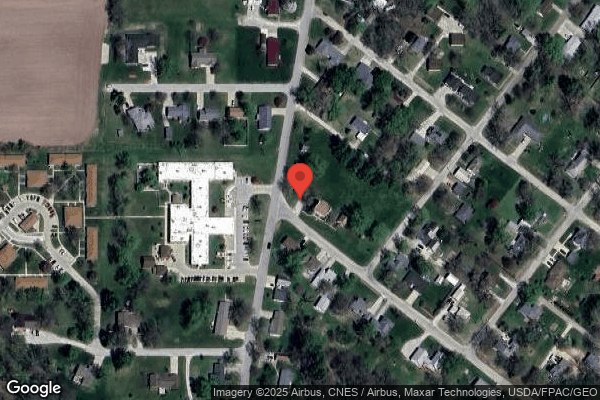


Country Lane Manor

819 Country Lane Road, Keosauqua, IA 52565 (319) 293-3761
For profit - Limited Liability company 60 Beds CAMPBELL STREET SERVICES Data: November 2025
Trust Grade
5/100
#339 of 392 in IA
Last Inspection: August 2025

Inspected within the last 6 months. Data reflects current conditions.

Overview

Country Lane Manor has received a Trust Grade of F, indicating significant concerns about its quality of care. It ranks #339 out of 392 nursing homes in Iowa, placing it in the bottom half of facilities statewide, although it is the only option in Van Buren County. The facility is showing improvement, reducing issues from 37 in 2024 to 12 in 2025, but it still has a concerning track record with fines totaling $59,150, which is higher than 89% of Iowa facilities. Staffing, rated 2 out of 5 stars, shows a 54% turnover rate, which is average, but the facility has less RN coverage than 80% of Iowa facilities, meaning fewer registered nurses are available to catch potential problems. Specific incidents of concern include failing to conduct necessary assessments for a resident with low blood sugar and not implementing interventions for another resident who hadn’t had a bowel movement for several days. Additionally, one resident was noted to have multiple pressure ulcers upon admission, which raises alarms about the adequacy of care provided. Overall, while there are some signs of improvement, families should be cautious and weigh both the strengths and weaknesses of Country Lane Manor.

Trust Score
F
5/100
In Iowa
#339/392
Bottom 14%
Safety Record
High Risk
Review needed
Inspections
Getting Better
37 → 12 violations
Staff Stability
⚠ Watch
54% turnover. Above average. Higher turnover means staff may not know residents' routines.
Penalties
✓ Good
$59,150 in fines. Lower than most Iowa facilities. Relatively clean record.
Skilled Nurses
⚠ Watch
Each resident gets only 29 minutes of Registered Nurse (RN) attention daily — below average for Iowa. Fewer RN minutes means fewer trained eyes watching for problems.
Violations
⚠ Watch
56 deficiencies on record. Higher than average. Multiple issues found across inspections.
★☆☆☆☆
1.0
Overall Rating
★★☆☆☆
2.0
Staff Levels
★★★☆☆
3.0
Care Quality
★☆☆☆☆
1.0
Inspection Score
Stable
2024: 37 issues
2025: 12 issues

The Good

  • Full Sprinkler Coverage · Fire safety systems throughout facility
  • No fines on record

Facility shows strength in fire safety.

The Bad

1-Star Overall Rating

Below Iowa average (3.0)

Significant quality concerns identified by CMS

Staff Turnover: 54%

Near Iowa avg (46%)

Higher turnover may affect care consistency

Federal Fines: $59,150

Above median ($33,413)

Moderate penalties - review what triggered them

Chain: CAMPBELL STREET SERVICES

Part of a multi-facility chain

Ask about local staffing decisions and management

The Ugly 56 deficiencies on record

5 actual harm
Aug 2025 10 deficiencies
CONCERN (D)

Potential for Harm - no one hurt, but risky conditions existed

Deficiency F0552 (Tag F0552)

Could have caused harm · This affected 1 resident

Based on staff interview, clinical record review, and facility policy review, the facility failed to attempt to designate resident representation for 1 of 1 residents (Resident #23) with a moderate co...

Read full inspector narrative →
Based on staff interview, clinical record review, and facility policy review, the facility failed to attempt to designate resident representation for 1 of 1 residents (Resident #23) with a moderate cognitive impairment and intellectual disability, to ensure medical and financial decisions were made with informed consent. The facility reported a census of 51 residents. Findings include: Review of the Minimum Data Set (MDS) assessment, dated 6/24/25, revealed Resident #23 had a Brief Interview for Mental Status (BIMS) score of 9 out of 15, which indicated moderate cognitive impairment. The list of diagnoses included mild intellectual disabilities, mood disorder, psychotic disorder, anxiety disorder, and depression. The MDS indicated Resident #23 had limited ability in making concrete requests and responded adequately only to simple, direct communication. Review of Resident #23's admission Record (also referred to as a Resident Face Sheet), revealed an admission date of 9/26/24 to the facility, and listed Resident #23 (self) as the only contact. Review of the Care Plan, revealed a Focus area, dated 4/09/25, to address Resident #23 impaired cognitive function or impaired thought processes related to mild intellectual disabilities with interventions to administer medications as ordered and to engage resident in simple, structured activities that avoid overly demanding tasks.The Care Plan also included a Focus area, dated 2/19/25, related to the Pre-admission Screening and Resident Review (PASRR) identification of rehabilitation services that must be implemented to address resident rehabilitation with an intervention listed, in part:a. Nursing Facility to assist in determining if there is an appropriate family member, friend, or support person who is well qualified to serve as Power of Attorney (POA), conservator, or guardian. If none available, a referral may be made to the Office of Substitute Decision Maker, Iowa Department on Aging.b. Nursing Facility staff will facilitate the identification and designation of a power of attorney for healthcare and/or finances.Review of a Provider Visit note, dated 3/01/25, revealed Advanced Care Planning (ACP) was attempted with Resident #23, but patient's cognitive status prohibited and/or Medical Power of Attorney (MPOA) could not be named. On 8/07/25 at 1:45 PM, Staff B, Registered Nurse (RN), reported that Resident #23 will call out or shut eyes when she hurts or doesn't feel good and stated that Resident #23 often is, in her own world. On 8/11/25 at 9:17 AM, Director of Social Services, denied having made attempts for designation of conservator, guardian, or POA for Resident #23.On 8/11/25 at 11:15 AM, Staff C, Certified Nursing Assistant (CNA), reported that Resident #23 was often disoriented to time of day. On 8/11/25 at 11:26 AM, Staff D, CNA, reported that Resident #23 was often disoriented to location and would think she's somewhere else. On 8/11/25 at 1:07 PM, Staff E, RN, stated that Resident #23 was pleasantly confused and unable at times to engage in conversation. Staff E explained that Resident #23 would be able to make decisions about what to drink, eat, or wear, but was unable to make medical or financial decisions related to health care. On 8/11/25 at 2:16 PM, Director of Nursing (DON), stated that Resident #23 was pleasantly confused and explained that resident was able to make simple decisions but would be best if she had someone to assist in medical or financial decision making. On 8/12/25 at 9:30 AM Facility Administrator denied having record of additional information related to facility attempts for resident representation. The facility policy, titled Advanced Directives, dated 9/2022, defined health care decision-making capacity as referring to possessing the ability (as defined by State law) to make decisions regarding health care and related treatment choice. The Section C, Decision-Making Capacity directed, in part:Upon admission, the interdisciplinary team assesses the residents decision-making capacity and identify the primary decision-maker if the resident is determined not to have decision-making capacity.The interdisciplinary team conducts ongoing review of the residents decision-making capacity and invokes the resident representative, or health care agent, if the resident is determined not to have decision-making capacity. Changes are documented in the Care Plan and Medical Record.
CONCERN (D)

Potential for Harm - no one hurt, but risky conditions existed

Deficiency F0554 (Tag F0554)

Could have caused harm · This affected 1 resident

Based on observation, clinical record review, facility policy review and staff interview, the facility failed to complete a self-medication assessment for 1 of 1 residents (Resident #9) who self-admin...

Read full inspector narrative →
Based on observation, clinical record review, facility policy review and staff interview, the facility failed to complete a self-medication assessment for 1 of 1 residents (Resident #9) who self-administered insulin. The facility reported a census of 51 residents. Findings include: Review of the Minimum Data Set (MDS) assessment, dated 7/31/25, revealed Resident #9 had a Brief Interview for Mental Status (BIMS) score of 15 out of 15, which indicated intact cognition. The list of diagnoses included type 2 diabetes mellitus, paraplegia, and spina bifida. The MDS indicated Resident #9 received insulin injections on a daily basis. During an observation on 8/06/25 at 11:40 AM, Staff B, Registered Nurse (RN), prepared Resident #9's Novolog Flexpen by attaching needle and dialing pen to 30 units of insulin, as ordered. Resident #9 cleaned own right lower abdominal area with an alcohol wipe, Staff B handed the the prepared insulin pen to Resident #9, and Resident #9 injected self in right lower abdomen with insulin, then held pen in place as she counted to 10, as Staff B watched. Following Resident #9 self administration of insulin, Staff B removed and discarded the needle into a sharps container. Review of the Care Plan, date initiated 4/17/25, revealed a Focus area to address diagnosis of type 2 diabetes mellitus. Interventions included, in part: a. Administer diabetes medications as ordered and observe, document for side effects and effectiveness. b. Resident #9 utilizes insulin. c. Observe, document, and report signs or symptoms of low blood sugar or high blood sugar.The Care Plan lacked identification of Resident #9 request to self administer medication (insulin). Review of Resident #9's Order Summary, dated 8/06/25, revealed an active order for Novolog Injection Flexpen, with instructions to inject 30 units subcutaneously three times daily before meals. Review of Resident #9's electronic health records revealed a lack of a self medication assessment for safety and competency to determine if resident able to self administer any medications. During an interview on 8/07/25 at 1:45 PM, Staff B, RN reported being unable to locate any completed assessments on Resident #9 prior to observation of insulin self administered on 8/06/25.During an interview on 8/11/25 at 2:16 PM, the Director of Nursing (DON), stated she would expect a resident assessment to be completed prior to self administration of any medications to ensure safety. The DON reported that an assessment had not been completed on Resident #9 to self-administer medication prior to 8/06/25.On 8/12/25 at 9:30 AM, the Administrator, reported that an assessment of self-administration competency had been missed on Resident #9 and explained that the typical process is to complete an assessment prior to a resident self-administering any medication, to ensure resident safety with administration. Review of the facility policy, titled Self-Administration of Medications, dated 2/2021, revealed that Residents have the right to self-administer medications if the interdisciplinary team (IDT) has determined that it is clinically appropriate and safe for the resident to do so. The Section A. Policy Interpretation and Implementation directed, in part:3. If it is deemed safe and appropriate for a resident to self-administer medications, this is documented in the medical record and the care plan. The decision that a resident can safely self-administer medications is re-assessed periodically based on changes in the resident's medical and/or decision-making status.
CONCERN (D)

Potential for Harm - no one hurt, but risky conditions existed

Deficiency F0561 (Tag F0561)

Could have caused harm · This affected 1 resident

Based on clinical record review, facility policy review, resident and staff interviews, the facility failed to allow 1 of 1 residents (Resident #28) reviewed for smoking, to choose to continue smoking...

Read full inspector narrative →
Based on clinical record review, facility policy review, resident and staff interviews, the facility failed to allow 1 of 1 residents (Resident #28) reviewed for smoking, to choose to continue smoking after the facility changed their smoking policy to be a smoke free campus. The facility reported 51 residents. Findings include: Review of the Minimum Data Set (MDS) assessment, dated 5/27/25, revealed Resident #28 had a Brief Interview for Mental Status (BIMS) score of 14 out of 15, which indicated intact cognition. The list of diagnoses included anxiety disorder and depression. The MDS indicated Resident #28 independent for all transfers and activities of daily living. The MDS identified an admission date of 11/25/2024. Review of the Care Plan, date initiated 1/09/25, revealed a Focus area to address Resident #28 liked to smoke related to a history of smoking. Interventions included, in part:a. Ensure Resident #28 is aware of facility smoking policy. b. Show Resident #28 where smoking is allowed and how to access. Review of a facility provided document titled, Memo to Resident Representative, dated 5/19/25, Subject: 30 Day Notice of a Change to Residents Smoking Policy revealed in part: We are writing to inform you of an important upcoming change to our facilities smoking policy. Effective June 23, 2025 Country Lane Manor will become a smoke-free campus for all residents. This means that smoking will no longer be permitted anywhere on the premises, indoors, or outdoors by resident of the facility.Review of the clinical record revealed an Interdisciplinary Note, entered on 5/29/25 at 11:22 AM, which documented Resident #28 had history of depression and anxiety and noted that behaviors increase with inability to smoke tobacco. During an interview on 8/05/25 at 12:39 PM, Resident #28 stated she used to be able to go outside and smoke at the facility, but is now using nicotine patches, which she said helped with smoking cravings. Resident #28 reported that she planned to continue smoking when she was able to return home.Review of Resident #28's electronic health records (EHR) revealed the lack of a completed smoking assessment to determine the residents safety and compliance with the facilities smoking policy upon admission. The EHR also lacked the resident and/or resident representative written or verbal understanding and agreement to the 6/23/25 change in the facility Resident Smoking Policy. Review of the EHR revealed a Behavior Note, entered on 6/25/25 at 8:30 AM, Resident has been in her room and not come out since the facility went to no smoking on 6/23/25. Resident has been compliant to wearing her nicotine patch daily. CNA (Certified Nursing Assistant) reported this morning to Nurse resident was asking what the temperature was outside today. Review of a Nursing Note, entered on 6/25/25 at 10:40 AM, revealed Resident attempted to go outside to smoke. Nurse attempted to redirect resident. Resident became combative and placed both of her hands with long fingernails on each side of nurses face and scratched down the sides of the nurses face and attempted place her hands around nurses neck. Nurse removed residents hands, resident went to the back door to try to get out. Door code had been changed. Resident unable to get out. Nurse went and got Administrator. Administrator was able to talk to resident and ger to go back to her room. Review of a Nursing Note, entered on 6/26/25 at 4:22 PM, revealed Resident told staff she will be going outside to smoke this evening. ADON (Assistant Director of Nursing) and BOM (Business Office Manager) were notified, they spoke with resident. Resident became highly agitated and angry at ADON. ADON and BOM left the room. Resident was reminded of the no smoking policy. During an interview on 8/07/25 at 1:45 PM, Staff B, Registered Nurse (RN), reported that Resident #28 had been very upset about the facility smoking policy change and became very self-isolating, refusing to leave her room. Staff B stated that Resident #28 would love to continue smoking. During an interview, on 8/11/25 at 1:07 PM, Staff E, RN, reported that Resident #28 used to go outside and smoke but had isolated self in room since policy change.During an interview on 8/12/25 at 9:30 AM, the Administrator identified Resident #28 as the only current resident who resided and was able to smoke on facility premises before policy change on 6/23/25. The Administrator revealed that the smoking policy change included a Memo sent to residents and resident representative issuing a 30-day notice of non-smoking. Administrator stated that she spoke directly with Resident #28 who initially had been upset, believed she was being punished. When asked if Resident #28 was able to be grandfathered in to the new non-smoking policy, the Administrator denied allowing any residents to continue smoking on facility premises when new policy went in to affect. Review if the facility provided policy titled, Smoking Policy and Procedure, dated effective 1/31/24, revealed the purpose of the policy to establish and clarify the policy and process for residents who desire to smoke. The Section A, Policy and Procedure directed, in part: Bullet Point #8. An assessment will be completed to determine which residents are safe and unsafe smokers and what restrictions, if any. These will be placed on the resident's smoking privileges. Bullet Point #9. Any smoking-related privileges, restrictions, and concerns shall be noted in the Care Plan. All personnel caring for the resident shall be alert to these. Residents shall also be alerted to these items. Bullet Point #10. The facility may impose smoking restrictions on residents at any time if it is determined that the resident cannot smoke safely with the available levels of support and supervision. Bullet Point #12. The staff will review the status of residents smoking privileges quarterly and as needed with significant changes. Bullet Point #16. Any resident who has been determined to have the capacity to smoke independently by the Interdisciplinary Team and has a physician's order allowing independent smoking, may access his or her cigarettes and other smoking items and sign him or herself out on leave of absence in accordance with facility leave of absence policies and procedures, and during the hours established for such purpose by the facility Administrator.
CONCERN (D)

Potential for Harm - no one hurt, but risky conditions existed

Notification of Changes (Tag F0580)

Could have caused harm · This affected 1 resident

**NOTE- TERMS IN BRACKETS HAVE BEEN EDITED TO PROTECT CONFIDENTIALITY** Based on observation, clinical record review, facility policy review, and staff interview, the facility failed to notify the phy...

Read full inspector narrative →
**NOTE- TERMS IN BRACKETS HAVE BEEN EDITED TO PROTECT CONFIDENTIALITY** Based on observation, clinical record review, facility policy review, and staff interview, the facility failed to notify the physician of low blood pressure results, and of persistent coughing despite a change in diet order and the administration of an as needed cough syrup for 2 of 2 residents (Resident #17 and #46) reviewed for physician notification. The facility reported a census of 51 residents.Findings include: 1.Review of the Minimum Data Set (MDS) assessment, dated 7/29/25, revealed Resident #17 had a Brief Interview for Mental Status (BIMS) score of 13 out of 15, which indicated intact cognition. The list of diagnoses included orthostatic hypotension, quadriplegia (limited ability with movement or sensation of upper and lower extremities, and benign paroxysmal vertigo of unspecified ear (dizziness caused by an inner ear condition). Review of the Care Plan, date initiated 1/06/2022, revealed Resident #17 had a self-care deficit and was at risk for falls due, in part, to hypotension (low blood pressure). The Care Plan lacked identification of signs or symptoms of hypotension to monitor for or interventions related to diagnosis of orthostatic hypotension.Review of Resident #17's electronic health records (EHR) recorded the following blood pressure readings:a. 69/41 recorded on 1/10/25 at 9:22 AMb. 73/52 recorded on 2/08/25 at 3:50 PMc. 70/54 recorded on 2/24/25 at 9:18 AMd. 70/53 recorded on 3/19/25 at 9:17 AMe. 62/60 recorded on 4/14/25 at 8:42 AMf. 66/52 recorded on 5/13/25 at 9:23 AMg. 70/49 recorded on 6/07/25 at 3:30 PMh. 72/48 recorded on 6/22/25 at 3:46 PMi. 65/45 recorded on 6/27/25 at 9:03 AMj. 72/60 recorded on 7/09/25 at 3:33 PMk. 70/68 recorded on 7/29/25 at 9:01 AMl. 78/50 recorded on 8/03/25 at 3:03 PMReview of the Medication Administration Record (MAR), revealed an order for Midodrine 10 milligrams (mg), with instructions to give one tablet by mouth twice a day related to hypotension and instructed not to give this medication at bedtime. The MAR recorded Resident #17's blood pressure twice per day with administration of Midodrine and lacked parameters on when to notify physician of blood pressure results. Review of the EHR lacked documentation of physician notification related to blood pressure outside of normal limits. Normal limits may depend on the individual or physician orders, top number or systolic blood pressures normally read between 90 millimeters of mercury (mmHg) and 120mmHg and the bottom number or diastolic blood pressure normally read between 60-80 mmHg. During an interview on 8/07/25 at 1:45 PM, Staff B, Registered Nurse (RN) stated blood pressures with top number below 90, should typically be reported to the physician. Staff B explained that Certified Medication Assistants (CMA) staff would check resident blood pressure during medication administration and report abnormal results to the nurse. Staff B stated Resident #17 had low blood pressure a couple of times and stated if Resident #17 had systolic blood pressure less than 90mmHg, the medication should be held and provider notified. Staff B denied knowledge of Resident #17 having blood pressure results requiring physician notification and stated documentation of provider notification would be found in EHR Nursing (general) Notes. During an interview, on 8/11/25 at 12:55 PM, Staff G, CMA, revealed that Resident #17 required blood pressure check before giving morning medications and denied having parameters in which to report blood pressure readings. Staff G stated she would report to nurse if Resident #17's blood pressure results had a top number below 90mmHg and/or bottom number below 60mmHg. Staff G denied having to report any low blood pressure readings on Resident #17 to the nurse. During an interview on 8/11/25 at 2:16 PM, Director of Nursing (DON), stated she would expect that nursing staff report low blood pressure results to physician, even for residents with chronic low blood pressure. The DON explained that a request for blood pressure parameters had been sent to physician and would be implemented when facility received orders.2. The MDS assessment, dated 7/29/25, revealed Resident #46 had a BIMS score of 12 out of 15, which indicated moderate cognitive impairment. The list of diagnoses included cerebrovascular accident (CVA, also known as stroke) and aphasia (difficulty speaking). The MDS indicated Resident #46 had no difficulty swallowing, had no oral or dental concerns and required a mechanically altered diet. Review of the Care Plan, date revised 7/30/25, lacked identification of chronic cough, symptoms of a respiratory condition, or interventions related to Resident #46 cough. Review of the clinical record revealed a General Note, entered on 1/23/25 at 3:14 PM, which documented that Resident #46 had admitted to the facility on [DATE] with rehabilitation orders, plan to receive Physical Therapy, Occupational Therapy, and an evaluation with Speech Therapy. Review of a Speech Therapy (ST) Evaluation, dated on 1/23/25, revealed Resident #46 had referral for ST due to decline in overall functional abilities following hospitalization with diagnosis of influenza A, was referred for evaluation of swallowing function and cognitive communication abilities. The ST Evaluation summarized that Resident #46's abilities were consistent with prior level of function and determined ability to safely consume general consistency foods and liquids with no further ST intervention indicated.Review of a General Note, entered on 3/19/25 at 7:39 AM, revealed that Resident #46 was up to wheelchair for breakfast and had usual morning coughing episode. Note documented that Resident #46 had a history of persistent cough. Review of a General Note, entered on 3/24/25 at 3:07 PM, revealed that Resident #46 presented with a cough for the past few days when drinking liquids and documented that a 3 day trial of nectar thickened liquids would be completed. Review of a facsimile (fax) communication with provider, dated 5/07/25, revealed notification that Resident #46 had a hacking, persistent cough since admission to facility. The fax documented a nursing request for something for Resident #46's cough. The provider acknowledged fax, dated 5/16/25, and ordered Geri-tussin (cough syrup) 5 milliliters (mL) every 4 hours to be given as needed for cough. Review of MAR for the months of June, July, and August 2025, revealed an order for Geri-Tussin Liquid 100 milligrams (mg) per 5 milliliters (mL) with instructions to give by mouth every 4 hours as needed for cough. Order started on 5/15/25. The MAR recorded the following Geri-Tussin administrations: a. On 6/09/25 at 6:40 AM, provided effective relief. b. On 6/21/25 at 5:12 AM, provided effective relief. c. On 7/20/25 at 5:05 AM, unknown effectiveness. d. On 8/01/25 at 7:00 PM, unknown effectiveness. Review of Resident #46 EHR lacked documentation of physician notification related to continued cough following the change to nectar thickened liquids and the implementation of an as needed cough syrup order. The EHR lacked record or documentation of request for follow up ST evaluation when Resident #46 required change to nectar thickened liquids (3/24/25) or when Resident #46 was noted to have persistent, hacking cough since admission [DATE]). During an observation on 8/05/25 between 8:26 AM and 8:30 AM, Resident #46 sat in her wheelchair in the common area and had a frequent hacking type cough without staff acknowledgement or intervention. During in observation on 8/05/25 at 11:28 AM, Resident #46 had a hacking cough, that was heard as she sat in her wheelchair in the therapy room. During an interview, on 8/07/25 at 1:45 PM, Staff B, RN, stated Resident #46 coughs really hard and just can't be comfortable. Staff B reported that she had tried to get Resident #46's cough addressed a couple of times and informed that the cough syrup sometimes helps. Staff B explained that she believed Resident #46's cough was related to drinking thin liquids due to some improvement noted with change to thickened liquids.During an interview, on 8/11/25 at 2:16 PM, the DON stated Resident #46 would cough at times and that a ST evaluation had been completed when resident was admitted to the facility (1/23/25). During an interview, on 8/12/25 at 9:30 AM, the Administrator stated it is the expectation of nursing staff to report to the physician any changes in a resident's baseline health condition or functional status. Review of the facility policy titled, Notification of Changes, dated 12/2023, revealed a purpose statement to ensure the facility promptly informs the resident, consults the resident's physician; and notifies, consistent with his or her authority, the resident's representative when there is a change requiring notification. Section A. Compliance Guidelines directed, in part, circumstances requiring notification to include: 3. Circumstances that require a need to alter treatment. This may include: a. New treatment.b. Discontinuation of current treatment due to: i. Adverse consequences. ii. Acute condition.iii. Exacerbation of a chronic condition.
CONCERN (D)

Potential for Harm - no one hurt, but risky conditions existed

Comprehensive Care Plan (Tag F0656)

Could have caused harm · This affected 1 resident

Based on observation, clinical record review and staff interviews the facility failed to include the use of an indwelling catheter prior to admission on the care plan for 1 of 1 residents (Resident #4...

Read full inspector narrative →
Based on observation, clinical record review and staff interviews the facility failed to include the use of an indwelling catheter prior to admission on the care plan for 1 of 1 residents (Resident #49) reviewed for care plans. The facility reported a census of 51 residents.Findings include: Review of the admission Minimum Data Set (MDS) assessment, dated 7/01/25, revealed the list of diagnoses for Resident #49 included benign prostatic hyperplasia (BPH or enlarged prostate), urinary tract infection (UTI) within the last 30 days, and overflow incontinence. The MDS indicated Resident #49 required an indwelling urinary catheter and was always incontinent of bowel. The MDS indicated an admission date of 6/26/25. Review of an admission Order Sheet, signed by physician on 6/27/25, revealed that Resident #49 had an indwelling catheter which was to be changed every 30 days for diagnoses of BPH and overflow incontinence. During an observation, on 8/04/25 at 12:44 PM, Resident #49 sat in wheelchair, with an urinary catheter tubing and drainage bag stored underneath wheelchair, urine visible within the tubing appeared light yellow and cloudy.Review of the Care Plan, date initiated: 6/26/25, revised 7/16/25 revealed a Focus area to address [name redacted] incontinent of bowel and bladder. The Interventions did not include the use of a indwelling urinary catheter or directions for care of the device. During an interview, on 8/07/25 at 1:45 PM, Staff B, Registered Nurse (RN), reported that Resident #49 had indwelling urinary catheter since admission to facility and indications for catheter included diagnosis of BPH.Review of the facility policy titled, Care Plans, Comprehensive Person-Centered, dated 3/2022, revealed a Policy Statement which declared A comprehensive, person-centered care plan that includes measurable objectives and timetables to meet the resident's physical, psychosocial, and functional needs is developed and implemented for each resident. The Policy Interpretation and Implementation section directed, in part: 7. The comprehensive, person-centered Care Plan: a. includes measurable objectives and timeframes; b. describes the services that are to be furnished to attain or maintain the resident's highest practicable physical, mental, and psychosocial well-being; e. reflects currently recognized standards of practice for problem areas and conditions.
CONCERN (D)

Potential for Harm - no one hurt, but risky conditions existed

Incontinence Care (Tag F0690)

Could have caused harm · This affected 1 resident

**NOTE- TERMS IN BRACKETS HAVE BEEN EDITED TO PROTECT CONFIDENTIALITY** Based on observation, clinical record review, facility policy review and staff interview, the facility failed to clarify orders ...

Read full inspector narrative →
**NOTE- TERMS IN BRACKETS HAVE BEEN EDITED TO PROTECT CONFIDENTIALITY** Based on observation, clinical record review, facility policy review and staff interview, the facility failed to clarify orders for indwelling catheter care and follow up on an order for a urinalysis in a timely manner for 1 of 2 residents (Resident #49) reviewed for urinary catheters. The facility reported a census of 51 residents.Findings include:Review of the Minimum Data Set (MDS) assessment, dated 7/01/25, revealed Resident #49 had a Brief Interview for Mental Status score of 12 out of 15, which indicated moderate cognitive impairment. The list of diagnoses included benign prostatic hyperplasia (BPH or enlarged prostate), urinary tract infection (UTI) within the last 30 days, and overflow incontinence. The MDS indicated Resident #49 required an indwelling urinary catheter and was always incontinent of bowel. Review of the Baseline Care Plan, dated for admission on [DATE], revealed Resident #49 required indwelling urinary catheter. Review of the Care Plan, date initiated 6/26/25, revised 7/15/25 lacked identification of Resident #49 required use of an indwelling urinary catheter or interventions to instruct care of the urinary catheter. Review of an admission Order Sheet, signed by physician on 6/27/25, revealed orders for an indwelling catheter to be changed every 30 days for a diagnosis of BPH. The order did not specify the size or type of indwelling catheter for Resident #49. Review of the Treatment Administration Records (TAR) for the months of June 2025 and July 2025 revealed a lack of an order to specify the size, type, or frequency to change Resident #49's indwelling urinary catheter. The August 2025 TAR included an order, started on 8/08/25 at 10:00 AM for 16 French foley catheter with 10cc balloon and drainage bag to gravity, and instructions to change catheter as needed for leakage, dislodgement or occlusion, one time a day every 30 days, and instructions to check for catheter placement and patency. An additional order, started on 8/06/25 at 6:15 PM, directed for catheter cares to be completed every shift. During an observation, on 8/04/25 at 12:44 PM, Resident #49 sat in wheelchair, urinary catheter tubing and drainage bag stored underneath wheelchair, urine visible within the tubing appeared light yellow and cloudy. Review of Resident #49s EHR revealed the following Nursing Notes: a. On 8/06/25 entered at 5:13 AM, Resident’s urine is cloudy and foul smelling. Fax sent to [provider name redacted] for an order to obtain UA (sample of urine for a urinalysis – a lab test to determine if someone has a urinary tract infection). b. On 8/7/25 entered at 3:19 PM, Nurse contacted [provider name redacted] to report resident c/o (complained of) discomfort in lower abdomen, his tiredness, and cloudy urine. Order obtained for Urine C&S (culture and sensitivity – and order to test for specific antibiotic effectiveness if a infection is present) x1. Nurse contacted resident’s wife and notified her of UA and that his cath will be changed on 8/8/25. c. On 8/8/25 entered at 1:42 PM, Rc’d (received) call per [name of nurse and physician from provider office redacted] new order for change monthly et recheck UA after new foley catheter placement, rec’d call from res spouse as res c/o via text to her of side discomfort. [Wife name redacted] update do new order rec’d via [physician name redacted]. d. On 8/8/25 entered at 2:17 PM, removed prev cath et (and) 10 cc fluid from balloon (a [NAME] of saline used to maintain the indwelling catheter placement) et res c/o discomfort et mucousy discharge et foul odorous drainage noted form penis upon d/c foley with balloon deflated but intact, reinserted 16 fr (catheter size) per sterile technique, with dark scant amt of urine with copious amounts of sediment noted, foley drainage et straw colored urine noted with scant amount sediment noted, et clean catch UA obtained presently et will send to lab. e. On 8/08/25 entered at 2:52 PM, res UA obtained et reports discomfort in right flank is relieved et no further c/o voiced, lab sheet et results pending post-delivery to Lab. f. On 8/11/25 entered at 12:58 PM, received verbal order from [physician name redacted] resident will begin Levaquin (antibiotic) 750 milligrams (mg) QD (daily) x 7 days. During an interview, on 8/07/25 at 1:45 PM, Staff B, Registered Nurse (RN) stated a urinary catheter would typically be changed every 30 days and as needed, unless a resident's Urologist had ordered a different change frequency. Staff B reported that Resident #49 should have orders for urinary catheter and orders would be found on the TAR. Staff B stated urinary catheter orders should include size of catheter, indication for use, and frequency of change. On 8/07/25 at 2:34 PM, when queried about collection of a urinalysis on Resident #49, Staff B stated that the fax request for urinalysis related to cloudy urine, noted by a previous nurse, had been sent to the wrong provider, and a urinalysis had not yet been collected. Staff B reported that Resident #49's last documented indwelling urinary catheter change, had been at the hospital on 6/25/25, prior to his admission [DATE]). During an interview, on 8/07/25 at 3:04 PM, the Director of Nursing (DON) stated Resident #49 last documented catheter change had been on 6/25/25, prior to admission and was unsure if Resident #49 had any follow up appointments scheduled with Urology. The DON stated that the facility's policy was to change indwelling urinary catheters every 90 days and as needed. When queried if a written or verbal order had been obtained from the physician on size of catheter or change frequency every 90 days, the DON stated a physician order had not yet been obtained. During an interview, on 8/11/25 at 1:07 PM, Staff E, RN, confirmed performing change of Resident #49's catheter on 8/08/25 and stated the urine appeared very cloudy with chunks of sediment that resembled snot noted in his urine. Staff E reported that Resident #49 had complained of flank (lower back/side) pain which improved following catheter change and claimed to have received a call from physician instructing nurse to change his catheter and collect a urinalysis. Staff E explained that indwelling urinary catheters typically should be changed monthly unless otherwise ordered. During an interview on 8/12/25 at 9:30 AM, the Administrator, revealed expectation of orders for the size, frequency of change, and indication of use to be in place for a resident who admits to facility with an indwelling urinary catheter, as well as documentation by Certified Nursing Assistant (CNA) staff of urinary output. Facility Administrator stated resident's Care Plan should also reflect use of urinary catheter to direct care and how to manage catheter. Review of the facility policy, titled Catheter Care, Urinary, dated 8/2022, revealed a Purpose Statement which declared the purpose of the procedure is to prevent urinary catheter -associated complications, including urinary tract infections. The Complications section directed, in part: 1. Observe the resident for complications associated with urinary catheters. Report unusual findings to the physician or supervisor immediately: a. if the resident indicates that his or her bladder is full or that he or she needs to void (urinate); b. if urine has an unusual appearance (i.e., color, blood, etc.); c. in the event of bleeding, or if the catheter is accidently removed; d. if the resident complains of burning, tenderness, or pain in the urethral area; or e. if signs and symptoms of urinary tract infection or urinary retention occur.
CONCERN (D)

Potential for Harm - no one hurt, but risky conditions existed

Deficiency F0868 (Tag F0868)

Could have caused harm · This affected 1 resident

Based on attendance record review and interview, the facility failed to have the minimum required members in attendance at their Quality Assurance and Performance Improvement (QAPI) meetings. The faci...

Read full inspector narrative →
Based on attendance record review and interview, the facility failed to have the minimum required members in attendance at their Quality Assurance and Performance Improvement (QAPI) meetings. The facility reported a census of 51 residents. Findings include:Review of the facility's QAPI attendance sheets since the last recertification survey on 9/16/24, revealed that QAPI meetings were held on 10/18/24, 11/13/24, 1/15/25, 4/9/25, and 7/16/25. The attendance records revealed that the Medical Director was present only at the meeting on 4/9/25. On 8/12/25 at 8:50 a.m., the Administrator stated that the QAPI Policy does not address the members who need to be present quarterly. The Administrator added that she felt the Medical Director was at more than one meeting in the past year but cannot find anything to prove it.
CONCERN (D)

Potential for Harm - no one hurt, but risky conditions existed

Infection Control (Tag F0880)

Could have caused harm · This affected 1 resident

**NOTE- TERMS IN BRACKETS HAVE BEEN EDITED TO PROTECT CONFIDENTIALITY** Based on observation, record review and staff interview, the facility failed to follow infection prevention protocols for 2 of 3...

Read full inspector narrative →
**NOTE- TERMS IN BRACKETS HAVE BEEN EDITED TO PROTECT CONFIDENTIALITY** Based on observation, record review and staff interview, the facility failed to follow infection prevention protocols for 2 of 3 residents (Resident #9 and Resident #14) reviewed with indwelling urinary devices. The facility reported a census of 51 residents.Findings include:1. Review of the Minimum Data Set (MDS) dated [DATE] identified Resident #9 as cognitively intact with a BIMS (Brief Interview for Mental Status) score of 15 out of 15. The list of diagnoses included diabetes mellitus, spina bifida and necrotizing fasciitis. The MDS identified Resident #9 dependent on staff assistance for toileting, showers, lower body dressing, putting on a taking off footwear. It also identified Resident #9 required partial/moderate staff assistance with upper body dressing, personal hygiene and transfers and had an ostomy (had both colostomy and urostomy). The MDS indicated Resident #9 admitted to the facility with a urostomy. Review of the Care Plan, dated 7/22/25, revealed a Focus area to address [name redacted] utilizes a urostomy and a colostomy. Review of the interventions revealed a lack of direction regarding the use of Enhanced Barrier Precautions during device care. During an observation on 8/5/25 at 1:23 PM, Staff F (Certified Nursing Assistant) donned an isolation gown, a face shield and gloves. She then emptied Resident #9's colostomy bag. Staff F removed the face shield and gown and disposed of the bag with the waste from the colostomy into the soiled utility room. Upon returning to the room, Staff F, donned gloves and without putting on an isolation gown, placed a barrier underneath a graduated cylinder and proceeded to empty the urostomy bag. During an interview on 8/11/25 at 10:44 AM, Staff C, CNA reported when emptying out a urinary drainage bag, she would need to don an isolation gown, gloves and face shield as the resident should be in Enhanced Barrier Precautions and place a barrier underneath the graduate when emptying the bag.During an interview on 8/11/25 at 2:16 PM, the Director of Nursing (DON) stated when emptying out a urinary drainage bag, she would expect to wear a gown, gloves, goggles or face shield and place a barrier underneath the graduate before emptying the bag.Review of the facility policy titled, Catheter Care, Urinary, revised August 2022, did not address the need to place residents with an indwelling urinary device in Enhanced Barrier Precautions2. Review of the MDS dated [DATE] identified Resident #14 as cognitively intact with a BIMS of 15. The list of diagnoses included diabetes mellitus, cerebrovascular accident (stroke) and hemiplegia (paralysis of one half of the body). The MDS also identified Resident #14 dependent on staff for toileting, showers, lower body dressing, putting on and taking off footwear and personal hygiene. The MDS indicated Resident #14 utilized an indwelling device Review of the Care Plan, dated 7/16/25, revealed a Focus area to address [name redacted] utilizes a nephrostomy tube. 7/16/25 suprapubic cath placed. Review of Physician Orders revealed an order, dated 7/27/25 to Cleanse Suprapubic catheter site with NSS (normal saline solution) and apply dry dressing, every day shift. During an observation on 8/5/25 at 2:05 PM, Staff B, Registered Nurse (RN) donned gloves and cleansed the suprapubic catheter insertion site. Without a change of gloves, Staff B proceeded to apply a new dry dressing on the site. During an interview on 8/11/25 at 1:07 PM, Staff E, RN reported when she cleanses the suprapubic catheter insertion site, she would need to change her gloves afterward and before she applies the new dressing.During an interview on 8/11/25 at 1:56 PM, Staff B, RN reported when she cleanses the suprapubic catheter insertion site, she would need to change her gloves afterward and before she applies the new dressing. She stated she may have forgotten to change her gloves when observed during site care on 8/5/25. During an interview on 8/11/25 at 2:16 PM, the DON stated after providing suprapubic catheter insertion site care, she would expect the nurse to remove her gloves, perform hand hygiene and put on new gloves before she applies the dressing.Review of the facility policy titled, Suprapubic Catheter Care, dated 2001 revealed a Purpose statement which declared The purpose of this procedure is to prevent skin irritation around the stoma site and to prevent infection of the residents urinary tract. The policy did not address the steps to apply a clean dry dressing.
CONCERN (E)

Potential for Harm - no one hurt, but risky conditions existed

Food Safety (Tag F0812)

Could have caused harm · This affected multiple residents

Based on observation and staff interview, the facility failed to follows safe sanitation and food handling practices to prevent cross contamination and foodborne illness. The facility reported a censu...

Read full inspector narrative →
Based on observation and staff interview, the facility failed to follows safe sanitation and food handling practices to prevent cross contamination and foodborne illness. The facility reported a census of 51 residents.Findings include:1. During the initial tour of the kitchen on 8/4/25 at 10:49 AM with the Dietary Manager (DM) included:a. Partially uncovered leftover chocolate cake on a cookie tray set in the dry goods storage areab. A gallon of 2% white milk with a date of 8/2/25 in the walk-in refrigerator. The Dietary Manager stated she thought the milk good for 3 days past the expiration date.c. An 18-quart container with shredded yellow cheese in the walk-in refrigerator. The container had a date of 7/6/25 written on a label. The Dietary Manager disposed of the container.d. The inside of a [brand name redacted] microwave had dried tan residue on the inside of the device. 2. During the observation of the noon meal process on 8/6/25 started at 11:00 AM, the following noted:a. The inside of the [brand name redacted] microwave continued to have dried tan residue on the inside of the device. b. During the puree and mechanical soft diet food preparation process, Staff J, Dietary [NAME] used different spatulas for each food item blended. After checking for the desired consistency, Staff J placed the spatula on the counter top, without a barrier. During an interview on 8/6/25 at 11:13 AM, Staff A, Dietary Cook, reported he is responsible for checking food in refrigerator for outdates. He stated he does not use milk after the expiration date. He also stated the [NAME] working is responsible for cleaning the inside of the microwave. During an interview on 8/7/25 at 9:13 AM, the DM stated milk should be discarded by the expiration date. She stated on 8/6/25 she threw away 10 gallons of milk because the staff did not rotate them properly. The DM stated the night [NAME] is responsible for checking item in the refrigerator for outdated food times nightly.
CONCERN (E)

Potential for Harm - no one hurt, but risky conditions existed

Deficiency F0865 (Tag F0865)

Could have caused harm · This affected multiple residents

Based on staff interview, review of CMS-2567 reports, and facility policy review, the facility failed to ensure an effective QAPI (Quality Assurance Performance Improvement) process to prevent three d...

Read full inspector narrative →
Based on staff interview, review of CMS-2567 reports, and facility policy review, the facility failed to ensure an effective QAPI (Quality Assurance Performance Improvement) process to prevent three deficiencies identified in the 2024 recertification from being cited again during the current recertification survey. The facility reported a census of 51 residents.Findings include: Review of the facility's CMS-2567 form the Recertification survey conducted from 9/09/24 to 9/16/24 revealed the following 3 (three) deficiencies cited:a. F690 (Bowel/Bladder, Incontinence, Catheter, UTI);b. F812 (Food Procurement, Store/Prepare/Serve-Sanitary);c. F865 (QAPI Program/Plan, Disclosure/Good Faith Attempt). During the most recert Recertification survey conducted 8/4/25 to 8/12/25 a total of 10 (ten) deficiencies cited, which included:a. F690 (Bowel/Bladder, Incontinence, Catheter, UTI);b. F812 (Food Procurement, Store/Prepare/Serve-Sanitary);c. F865 (QAPI Program/Plan, Disclosure/Good Faith Attempt). During an interview on 8/12/25 at 9:45 AM, the Administrator stated Quality Assurance Committee meets monthly and decides what to work on based on any grievances, information from resident council meetings, and from 5-star nursing home report data. When queried about repeat deficiencies noted from previous recertification survey to present, the Administrator agreed that facility continued to have repeat deficiency areas and planned to implement a focus on kitchen processes until audits show sustained improvements and continue to work on an established QAPI plan to reduce incidents related to bowel/bladder complications which included follow up on physician notifications and initiating interventions. Review of the facility policy titled, Quality Assurance and Performance Improvement (QAPI), revised 9/2022, revealed a Policy statement, which declared Our facility is committed to developing, implementing, and maintaining an effective, comprehensive, data-driven QAPI program that focuses on indicators on of outcomes of care and quality of life. The policy listed the organization's governing body and the facility administrator to have accountability for the QAPI program. The QAPI Feedback, Data Systems, and Monitoring section directed: A. Performance indicators will be developed for each aspect of care and services being monitored.B. A data collection and monitoring plan will be developed by following the CMS guide Measure/Indicator Collection and Monitoring Plan. C. Goals will be established by using the CMS Goal Setting Worksheet. D. Feedback will include communication of the information to those who need to know.E. The assigned QAPI team will identify gaps and opportunities for improvement and communicate them to the QAA Committee and the leadership team. F. Improvement activities will be assigned and high-risk, high frequency, and problem prone issues will be assigned to a Performance Improvement Project (PIP). G. The QAA Committee will work with the QAPI team to establish a frequency for monitoring the area of concern.
May 2025 1 deficiency
CONCERN (D) 📢 Someone Reported This

A family member, employee, or ombudsman was alarmed enough to file a formal complaint

Potential for Harm - no one hurt, but risky conditions existed

Quality of Care (Tag F0684)

Could have caused harm · This affected 1 resident

Based on clinical record review and staff interview, the facility failed to initiate treatment for an eye infection timely and in accordance with professional standards of practice for 1 of 5 resident...

Read full inspector narrative →
Based on clinical record review and staff interview, the facility failed to initiate treatment for an eye infection timely and in accordance with professional standards of practice for 1 of 5 residents reviewed. (Resident #3) The facility reported census was 53. Findings include: According to a Minimum Data Set (MDS) with a reference date of 4/29/25, Resident #3 had a Brief Interview for Mental Status (BIMS) score of 4, indicating a severely impaired cognitive status. Resident #3's diagnosis included non-Alzheimer ' s dementia. According to a Progress Note dated 4/20/25 at 6:09 p.m. and written by Staff B, Licensed Practical Nurse (LPN), Resident #3's family summoned the nurse to assess Resident #3's right eye. The right eye was swollen, reddened and draining. Resident #3 indicated it was itchy and hurt a bit. Staff B indicated a communication note was left for the provider (nurse practitioner or physician). A Communication with Provider form was filled out by Staff B, dated 4/20/25 indicating Resident #3's right eye was swollen, reddened , with some drainage and Resident #3 was complaining of her eye itching and hurting a bit. There was no response from the nurse practitioner or physician on the form. According to a Progress Note dated 4/28/25 at 10:34 a.m. written by Staff A, Registered Nurse (RN), a call was placed to Resident #3's Nurse Practitioner noting right eye red with slight drainage on the outer canthus of eye. Received a new order for an antibiotic eye drops to be given twice a day for two days and the daily for five days. Review of the April 2025 Medication Administration Record revealed the following orders: a. AZASITE sol 1% INSTILL ONE DROP IN RIGHT EYE TWICE DAILY FOR 2 DAY (indications for use: Eye infection). Start Date: 4/9/25. b. Ciprofloxacn Sol 0.3% OP (eye) Instill 1 drop in affected eye(s) every 2 hours while awake for 2 days *wait 5 min (minutes) between administering different drops. Start Date: 4/30/25. During an interview on 5/8/25 at 1:45 p.m. Staff A, RN queried regarding Resident #3 ' s right eye infection. Staff A stated on 4/28/25 a family member approached her, concerned about Resident #3 ' s right eye swelling and discomfort. The family member stated she had told another nurse earlier. Staff A stated she assessed the right eye and contacted her physician to get antibiotic eye drops started. Staff A stated normally when there are concerns, the nurse will fill out a physician notification form and place it in a box for the nurse practitioner or physician to review. If the concern warrants treatments, she fills out the notification form and contacts a physician immediately for treatment orders. Staff A stated the nurse practitioner visits weekly and primary care physician every two weeks.
Feb 2025 1 deficiency
CONCERN (E) 📢 Someone Reported This

A family member, employee, or ombudsman was alarmed enough to file a formal complaint

Potential for Harm - no one hurt, but risky conditions existed

Deficiency F0804 (Tag F0804)

Could have caused harm · This affected multiple residents

**NOTE- TERMS IN BRACKETS HAVE BEEN EDITED TO PROTECT CONFIDENTIALITY** Based on observations, food temperatures during food services, and resident interview, the facility failed to serve food in an a...

Read full inspector narrative →
**NOTE- TERMS IN BRACKETS HAVE BEEN EDITED TO PROTECT CONFIDENTIALITY** Based on observations, food temperatures during food services, and resident interview, the facility failed to serve food in an attractive and palatable manner for 1 of 2 meals. The facility reported census was 59. Findings include: On 2/12/25 at 12:15 p.m., a sample lunch tray provided to the State Agency. The meal consisted of a chicken patty and green beans. The chicken patty edges were hard, tough and chewy. No concerns with the green beans noted. An observation in the dining room revealed the puree green beans served to a resident appeared to be of a soup consistency. According to the Minimum Data Set (MDS) dated [DATE], Resident #7 had a Brief Interview for Mental Status (BIMS) score of 13 indicating an intact cognitive status. Resident #7 was independent with transfers, mobility, dressing, toilet use and personal hygiene needs and was occasionally incontinent of bladder. Resident #7's diagnosis included congestive heart failure, diabetes mellitus and chronic obstructive pulmonary disease. During an interview on 2/12/25 at 12:50 p.m. Resident #7 stated he ate lunch in his room. He stated his lunch consisted of a chicken patty and green beans and a pudding cup. Resident #7 stated the green beans were ok, but the chicken patty was hard and difficult to cut. Resident #7 stated meats served are often hard. On 2/17/25 at 12:00 p.m. a sample lunch tray provided to State Agency. The meal consisted of spaghetti and mixed vegetables with a seasoned bread stick. Food was an served at a palatable temperature. The mixed vegetables were bland. According to the Minimum Data Set (MDS) dated [DATE], Resident #1 had a Brief Interview for Mental Status (BIMS) score of 13 indicating an intact cognitive status. Resident #1 required moderate assistance with transfers, mobility, dressing, toilet use and personal hygiene needs and was frequently incontinent of bladder and occasionally incontinent of bowel. Resident #1's diagnosis included congestive heart failure, coronary artery disease, diabetes mellitus and hip fracture. During an interview on 2/17/25 at 12:45 p.m. Resident #1 complained of her meal, noting the mixed vegetables were bland and the spaghetti and breadstick was just carbohydrates.
Nov 2024 1 deficiency
CONCERN (D) 📢 Someone Reported This

A family member, employee, or ombudsman was alarmed enough to file a formal complaint

Potential for Harm - no one hurt, but risky conditions existed

Deficiency F0658 (Tag F0658)

Could have caused harm · This affected 1 resident

Based on clinical record review, policy review, provider and staff interviews the facility failed to implement a physician order to change a type of wound dressing for 1 of 3 residents (Resident #6) w...

Read full inspector narrative →
Based on clinical record review, policy review, provider and staff interviews the facility failed to implement a physician order to change a type of wound dressing for 1 of 3 residents (Resident #6) with a wounds. The facility reported a census of 57 residents. Finding include: The Minimum Data Set (MDS) assessment, dated 9/12/24, revealed Resident #6 scored a 15 out of 15 on the Brief Interview for Mental Status, indicating intact cognition. The MDS revealed the resident required partial/moderate assistance with rolling from left to right; sit to standing; and upper body dressing. The MDS identified the resident dependent for chair/bed to chair transfers. The MDS list of diagnoses included necrotizing fasciitis (bacterial infection that destroys tissue under the skin), diabetes mellitus, and wound infection. The MDS documented the resident had two Stage III pressure ulcers present on admission, along with surgical wounds. The Nursing Note dated 9/6/24 at 2:52 PM revealed resident arrived at facility via hospital transport accompanied by transport driver. Resident is a spina bifida (malformation of spinal cord) and has been whole life. Resident lives alone and cares for self, resident has 2 grown children, and a 14 lb (pound) cat. Resident has an ileostomy (opening in abdominal wall to allow collection of waste outside of the body) on her right abdomen and a colostomy (another name for opening in abdominal wall) on her right abdomen. Resident is independent with providing her own ostomy (opening in abdominal wall) cares and prefers to provide her own ostomy cares. Resident recently had necrotizing fasciitis and has a right buttock wound up through her right vaginal area. Resident states she doesn't get dressing change until after she receives a pain pill because the dressing is so painful. Resident states she has a motorized wheelchair at home and that is her mobility. Resident has mepilexes (a type of absorbent foam dressings) on each heel the right is for prevention and the left is for a wound. Resident oriented to her room and routine. The Care Plan, Date Initiated: 9/11/24, Revision on: 9/20/24 included a Focus area to address [Name redacted] has an ADL (activities of daily living) Self Care Performance Deficit r/t (related to) necrotizing fascilitis. Interventions included, in part; [Name redacted] is a one assist with repositioning in bed. Resident able to help with repositioning, [name redacted] utilizes an AIR mattress d/t (do to) wounds on a bariatric (heavy duty bed) bed. Interventions Date Initiated: 9/20/24. The Care Plan, Date Initiated: 9/20/24, included a Focus area to address [Name redacted] has 2 pressure ulcers r/t immobility. Dx (diagnosis) of necrotizing fasciitis. Interventions included, in part; Assess/record/observe wound healing (FREQ) (frequently). Measure length, width, and depth where possible. Assess and document state of wound perimeter, wound bed healing progress. Report improvements and declines to the MD (medical doctor). Intervention Date Initiated: 9/20/24. A review of Physician Orders revealed: a. Ordered on 10/6/24- Vashe wound sol therapy Left heel stage 3 ulcer. Cleanse with vashe and pat dry. Apply prisma or equivalent to wound bed only and cover with bordered foam silicone dressing daily. Encourage side to side positioning and heal suspension. b. Cleanse buttock open area with Vasche daily. Apply Puracol or equivalent directly onto wound bed, cover with foam adhesive bandages. One time a day for wound care. Encourage side to side positioning and heel suspension. Ordered 10/10/24. c. Hydrocodone/acetaminophen 7.5/325 mg (milligrams)- 1 tab every 4 hours as needed for moderate pain. Ordered 9/14/2024. The provider Clinic Note, dated 11/1/24, for a Nursing Home Visit revealed: a. Primary diagnosis: Pressure ulcer of right buttock, stage 3 b. Chief complaint: follow-up c. History of Present Illness: Resident #6 is being seen at [facility name redacted] for follow up on her wounds: left heel pressure ulcer, vulva and buttocks from previous surgical debridement due to necrotizing fasciitis. She previously had pressure areas to sacrum and buttocks as she is wheelchair bound due to spina bifida. Had extensive debridement at [hospital name redacted] in [city and state redacted]. Since being admitted to [facility redacted] to [facility name redacted] she has had been receiving daily dressing changes. Had previously discussed having wound consult and treatment with wound clinic at [hospital name redacted] and she declined. Today she denies any new pain. States that the left heel rarely has pain given her spina bifida. Reports that perineum and buttocks are only painful with dressing changes and that levels vary depending. Nurse states that Resident #6 continues to be resistant to lying side to side and does not get out of bed. States that she has not had any follow up with surgeon since admission in August. Nurse feels as thought the heel is stable, but buttocks wounds are worsening. d. Assessment and Plan 1. Current medications and orders reviewed-advised of orders that were duplicated, completed or no longer applicable 2. [Facility name redacted] chart reviewed including notes and assessments. 3. Epic records since previous visit reviewed including consultations, labs and imaging if applicable . 4. New orders given today: wound consult at [hospital name redacted] (was told after visit that she would like to be seen), wound culture and will start Doxycycline while waiting for results. 5. Follow up per nursing home guidelines and as needed. The untitled facility form, with facility name, address and phone number, dated 11/1/24, revealed, in part; a. Wound location: buttocks 1. Etiology: Pressure Stage III 2. Cleanser: Vashe 3. Primary Dressing: Calcium Alginate AG- cut to size of wound 4. Secondary dressing: non-adherent then ABDs 5. Secure with: Paper and silicone tape 6. Frequency: daily and PRN (as needed) b. Wound location: right heel prevention 1. Primary dressing: hydrocolloid 2. Frequency: change Q (every) 3 d (days) and PRN Provider Signature and Date: [Name redacted], 11/1/24. The second page of the untitled form, labeled Provider Order Form, dated 11/1/24, revealed; Orders: 1. Culture of wound. Take to [hospital name redacted]. Completed during visit. 2. Start doxycycline 100 mg PO BID (twice daily) x 10 days. DX (diagnosis): wound infection. Provider Order Form signed on 11/1/24 by provider [name redacted]. The Provider Order form did not have documentation of facility review. A review of the clinical record did not reveal documentation of the 11/1/24 wound dressing orders for the heel and buttocks orders or implementation of the orders. A Nursing Note, dated 11/2/24 at 7:27 PM, revealed resident was initiated on ATB (antibiotic) [doxycycline] 100 mg i po (oral) bid x 10 days for dx of wound infection. first dose was pulled from cubex (brand name of medication storage/dispensing equipment). temp 97.2 tymp. (tympanic - temperature taken via ear canal) notice was received from pharmacy statingATTN: nursing staff. [name redacted] Pharmacy staff is clarifying (doxycycline) med not covered by insurance. will await a response. A Nursing Note, dated 11/6/24 at 3:10 PM, revealed Call received from [name redacted for local hospital] regarding resident's return from wound clinic appointment. [Provider's name redacted] has ordered an IV (intravenous) antibiotic for resident to be treated with every 12 hours. Informed [local hospital name redacted] team that [facility name redacted] can not accommodate every 12 hour IV antibiotics and that we do not feel comfortable accepting her back with that order. [local hospital name redacted] asked if resident would be accepted back following completion of IV antibiotic therapy, and they were informed that we will accept resident back at that time. [name redacted] stated she would call back when she had more information. During an interview on 11/12/24 at 4:00 PM, Staff B (Registered Nurse) after queried on Resident #6 orders stated she reviewed the orders under the documents tab in the EMR (electronic medical record) and then reviewed the resident's chart. Staff B stated she didn't see the new dressing orders. Staff B asked when wound dressing orders get processed and she stated usually right away, they sent it to pharmacy and they put them in and discontinued the old order. Staff B stated she was not sure what happened and she couldn't find anything for the dressing change order on 11/1. Staff B stated she didn't see a progress note for the wound dressing orders. During an interview on 11/13/24 at 9:12 AM, Staff A, Advanced Registered Nurse Practitioner (ARNP) after queried on the resident's new orders for dressing changes on 11/1/24 stated she would of liked to been notified if the supplies not available to change the dressing and she didn't see where anyone notified her. Staff A stated she expected new orders for dressing changes to be implemented at the next scheduled dressing change. Staff A stated she was not aware the new dressing changes didn't get started. During an interview on 11/13/24 at 11:19 AM, Staff C, RN after queried about Resident #6 wounds stated she saw Resident #6 with Staff A, ARNP on rounds on 11/1/24 and said Staff A went through everything with her and Staff C told Staff A she was unclear on the wound dressing orders. Staff C stated Staff A stated she would write down the orders and Staff C shift was over before the orders received. Staff C stated the night or weekend nurse would of taken care of it. During an interview on 11/13/24 at 1:47 PM, the Administrator after queried about how orders being processed worked explained they received the orders from the providers when the residents seen and they gave the orders directly to the nurse and if the resident seen at the clinic, they came back with orders and the orders given to the nurse. The Administrator stated the nurse manually put the orders into the computer. The Administrator informed of the new dressing change orders for Resident #6 and she stated she expected the orders go in when they are received and she would do re-education on the processing of orders. During an interview on 11/13/24 at 3:52 PM, the DON (Director of Nursing) after queried on Resident #6 new wound dressing change orders stated she expected the staff to be doing the new dressing changes as ordered and they needed to make sure the orders placed in the computer when they received it. A facility policy, dated November 2014, titled Medication Orders, Purpose statement declared The purpose of this procedure is to establish uniform guildelines in the receiving and recording of medication orders. The Recording Orders section #6. Treatment Orders - When recording treatment orders, specify the treatment, frequency, and duration of the treatment.
Sept 2024 11 deficiencies
CONCERN (D) 📢 Someone Reported This

A family member, employee, or ombudsman was alarmed enough to file a formal complaint

Potential for Harm - no one hurt, but risky conditions existed

Resident Rights (Tag F0550)

Could have caused harm · This affected 1 resident

**NOTE- TERMS IN BRACKETS HAVE BEEN EDITED TO PROTECT CONFIDENTIALITY** Based on observation, resident and staff interview, and clinical record review, the facility failed to ensure resident choice of...

Read full inspector narrative →
**NOTE- TERMS IN BRACKETS HAVE BEEN EDITED TO PROTECT CONFIDENTIALITY** Based on observation, resident and staff interview, and clinical record review, the facility failed to ensure resident choice of caregivers had been respected for 1 of 3 residents (Resident #18) reviewed for dignity, when a caregiver continued to assist with cares following resident request otherwise. The facility reported a census of 56 residents. Findings include: The Minimum Data Set (MDS), dated [DATE], revealed a Brief Interview for Mental Status (BIMS) score of 14 out of 15, indicating intact cognition and intermittent behavior that included rejection of care. Diagnoses included anxiety disorder, depression, and neuropathy. The Care Plan, revised 7/25/24, revealed Resident #18 had a self-care deficit and required one person staff assistance for bed mobility, dressing, transfers, and toileting. The Care Plan informed that Resident #18 would refuse a gait belt at times but lacked indication for refusal of cares or preferences with caregivers. Review of Nursing Progress Notes, revealed the following entries: 1. On 7/13/24 at 6:54 PM, staff reported Resident #18 made accusations that staff were killing her and breaking her body. 2. On 7/23/24 at 2:48 AM, Nurse and Staff F, Certified Nursing Assistant (CNA), entered Resident #18's room for over night cares. Resident #18 responded to questions, I'm not dumb, accused Staff F of walking away from her roommate, and told Staff F, You don't have to be that way. 3. On 8/22/24 at 2:29 AM, Resident #18 refused incontinence cares, stated she knows her rights, and that the CNA staff come in right after she falls asleep to wake her up, says she would not allow it anymore. Review of a behavior log for the last 30 days, dated 8/14/24 through 9/08/24, revealed Resident #18 had refused cares on 6 different occasions. On 9/09/24 at 1:30 PM, Resident #18 reported feeling that a CNA who worked overnights had been mean and rude to her, Resident #18 informed that she reported this information and had been told the CNA would not be back in her room. Resident #18 stated approximately 5 days after being told the CNA would not be back, the same CNA was in her room to assist with cares. On 9/09/24 at 4:00 PM, the Facility Administrator stated she had not been aware of Resident #18 report of a night shift CNA being mean or rude and informed that she would speak with Resident #18 for a statement on this allegation. On 9/10/24 at 10:22 AM, the Facility Administrator notified that Resident #18 stated she did not like the CNA and made a statement that the aide was ignorant, Resident #18 denied feeling afraid of the CNA. Administrator determined through staff interview that Resident #18 had referred to Staff F, CNA. Administrator stated that Staff F would no longer go in to help Resident #18 and that the resident was made aware of this. On 9/11/24 at 8:54 AM, Resident #18 stated Staff F, CNA, came in at 3:00 AM and woke her up to see if resident needed changed. Resident #18 revealed that one of the main ladies had been in the day before and promised Staff F would not be back in her room. On 9/11/24 at 12:05 PM, Staff C, Registered Nurse (RN), reported being notified 9/11/24 in morning report that something happened overnight where Staff F went in Resident #18's room to answer a call light and got Resident #18 upset. On 9/11/24 at 2:29 PM, the Director of Nursing (DON) revealed that Resident #18 can be particular with cares on a day to day basis, but informed that Staff F, is currently not to go in Resident #18's room as it causes the resident to be upset. The facility policy, titled Resident Rights, reviewed 8/2016, revealed that the facility will protect the rights of each resident, including the right to chose Provider and treatment, and participate in decisions and care planning and the right to voice grievances and have facility respond to those grievances.
CONCERN (D) 📢 Someone Reported This

A family member, employee, or ombudsman was alarmed enough to file a formal complaint

Potential for Harm - no one hurt, but risky conditions existed

Deficiency F0558 (Tag F0558)

Could have caused harm · This affected 1 resident

**NOTE- TERMS IN BRACKETS HAVE BEEN EDITED TO PROTECT CONFIDENTIALITY** Based on observation, resident and staff interview, clinical record review, and facility policy review, the facility failed to e...

Read full inspector narrative →
**NOTE- TERMS IN BRACKETS HAVE BEEN EDITED TO PROTECT CONFIDENTIALITY** Based on observation, resident and staff interview, clinical record review, and facility policy review, the facility failed to ensure accessibility of a hand washing sink and working overhead lamp in resident room for 1 of 2 residents (Resident #18) reviewed for choices. The facility reported a census of 56 residents. Findings include: The Minimum Data Set (MDS), dated [DATE], revealed a Brief Interview for Mental Status (BIMS) score of 14 out of 15, indicating intact cognition. MDS revealed Resident #18 had moderate hearing difficulty and limited vision. Diagnoses included anxiety disorder, depression, and neuropathy. The Care Plan, revised 7/25/24, revealed Resident #18 had a self-care deficit and required one person staff assistance for bed mobility, dressing, transfers, and toileting. On 9/09/24 at 1:30 PM, Resident #18 reported an inability to get their wheelchair into the bathroom to reach or access the sink. Resident #18 reported over-bed lamp had a difficult pull string and light often did not work. Observed over-bed lamp required much force to pull string, and had not turned on when tried. On 9/11/24 at 11:15 AM, Staff G, Certified Nursing Assistant (CNA), recalled that Resident #18 had been upset that wheelchair cannot get in bathroom to wash her hands, but informed that if pedals are removed from wheelchair, she can get in. Staff G also reported they had heard Resident #18 mention that over-bed lamp is hard to pull. On 9/11/24 at 11:48 AM, Staff H, CNA, revealed that Resident #18 had previously reported difficulty getting into the bathroom. On 9/11/24 at 1:52 PM, Facility Maintenance staff informed that staff utilize electronic work order system and stated no work orders had been received on Resident #18's sink accessibility or over-bed lamp not working correctly. The facility policy, titled Resident Rights, reviewed 8/2016, revealed the facility will protect and promote the rights of each resident, including the right to voice grievances and have the facility respond to those grievances.
CONCERN (D) 📢 Someone Reported This

A family member, employee, or ombudsman was alarmed enough to file a formal complaint

Potential for Harm - no one hurt, but risky conditions existed

Deficiency F0658 (Tag F0658)

Could have caused harm · This affected 1 resident

**NOTE- TERMS IN BRACKETS HAVE BEEN EDITED TO PROTECT CONFIDENTIALITY** Based on observations, interviews, and record review, the facility failed to ensure basic nursing principles were followed for 2...

Read full inspector narrative →
**NOTE- TERMS IN BRACKETS HAVE BEEN EDITED TO PROTECT CONFIDENTIALITY** Based on observations, interviews, and record review, the facility failed to ensure basic nursing principles were followed for 2 of 24 residents reviewed (Resident #9 and Resident #20). The facility readmitted Resident #9 from a hospital stay and did not ensure that the primary provider was aware of her readmission therefore this resident did not receive a number of her medications. The facility obtained an order of liquid morphine (narcotic) for Resident #20 who was on Hospice Care and actively dying. The facility did not obtain a bottle of liquid morphine for Resident #20 and gave her the medication from another resident's bottle. The facility reported a census of 56 residents. Findings include: 1. The Minimum Data Set (MDS) assessment dated [DATE] revealed Resident #9 had diagnoses of anemia, heart failure, depression, hypertension (high blood pressure), stage 4 chronic kidney disease, type 2 diabetes with diabetic chronic kidney disease, seizure disorder, and a history of stroke. Review of Resident #9's census revealed resident was hospitalized [DATE], returning to the facility on [DATE] Review of hospital discharge orders dated [DATE] indicated orders for medications Resident #9 was to start on return to the facility and medications that were to be continued on return. Review of Resident #9's MAR (Medication Administration Record) dated August and [DATE] revealed the facility failed to transcribe and provide the following medications ordered to be restarted/continued on hospital discharge: Aspirin 81 mg, one tablet by mouth in the morning for history of stroke. Atorvastatin 20 mg, one tablet by mouth at bedtime for hyperlipidemia Cranberry 425 mg, one cap by mouth in the morning for prevention of pseudomonas Gabapentin 100 mg, two cap by mouth at bedtime for convulsions Glimepiride 1 mg, one tablet by mouth in the morning for type 2 diabetes Melatonin 3 mg, one tablet by mouth at bedtime for insomnia Oxybutynin 10 mg ER, one tablet by mouth in the morning for acute kidney failure Ropinirole 1 mg, one tablet by mouth twice a day for restless legs syndrome Sentry, one tablet by mouth in the morning for vitamin D deficiency Medroxypr inj 150 mg/ml, inject 1 vial intramuscularly one time every 84 days for depression Vitamin D3 50 mcg, one tablet by mouth once a day for vitamin D deficiency Loratadine 10 mg, one tablet by mouth every morning for seasonal allergies Omeprazole 10 mg, one capsule by mouth in the morning for heartburn Sertraline 100 mg, two (200 mg) tablets by mouth every morning for depression Valproic Acid 250 mg, two (500 mg) capsules by mouth twice daily for convulsions Fasting Blood Sugar (FBS) check every morning for type 2 diabetes In an interview on [DATE] at 11:08 AM, Staff C reviewed Resident #9's hospital discharge orders dated [DATE], to determine if appropriate medications had been ordered on readmission. Staff C acknowledged the medication orders had not been completed properly in the readmission process and failed to provide these medications to Resident #9 since [DATE]. In an interview on [DATE] at 3:17 PM, Facility Administrator acknowledged the hospital discharge orders should have been reviewed by a facility provider and the medications should have been continued as ordered. In an interview on [DATE] at 1:13 PM, Facility's Nurse Practitioner revealed she was not certain she had been notified of Resident #9's return to the facility. She had not been provided or seen a copy of the medication orders from the hospital. The Facility's Nurse Practitioner stated she would have expected that communication from the nursing staff regarding orders to continue or discontinue on readmission and Resident #9 should have been receiving these medications as ordered since her return to the facility on [DATE]. In an interview on [DATE] at 03:17 PM, the Director of Nursing (DON) acknowledged Resident #9 should have been receiving these medications as ordered. Review of Progress Note dated [DATE] at 13:43 noted, received verbal order for Valproic acid lab draw today, start blood glucose monitoring BID, Glimepiride 1 mg po daily. All medications from last discharge from VBCH that were ordered to start printed and faxed to pharmacy per NP as they were to be restarted with readmission. Review of a policy Medication Orders revised [DATE], stated a current list of orders must be maintained in the clinical record of each resident and Orders must be written and maintained in chronological order. 2. A Census Page for Resident #20, documented that this resident went under Hospice care on [DATE]. A Doctor's Orders page documented that Lorazepam (anti-anxiety) concentrate 2 mg(milligrams)/ml Give 0.25 mls orally every 4 hours as needed for shortness of breath/agitation. The date ordered was [DATE]. A Doctor's Orders page documented that Morphine Sulfate Solution 100/5 ml (milliliters) Give 0.25 mls orally every 3 hours as needed for pain. The date ordered was [DATE]. Progress Notes documented that the Morphine Sulfate Solution was given 3 times after the orders were obtained and prior to her death, per the following notes: -A Progress Note dated [DATE] at 2:28 p.m., documented that Morphine Sulfate Solution 0.2 mls was given for pain, labored breathing and restlessness. -A Progress Note dated [DATE] at 10:56 a.m., documented that Morphine Sulfate 0.25 milliliters was given for pain, labored breathing respirations at 24 breaths per minute and sternal retracting. This entry was documented by Staff C, RN. -A Progress Note dated [DATE] at 12:35 p.m., documented that Morphine Sulfate 0.25 mls was given as Resident #20 was unable to be aroused via verbal or painful stimuli at this time. Respirations were 42 breaths per minute, her pulse oxygenation level was 82% (oxygen saturation in her blood), and her heart rate was 120 beats per minute. Morphine was administered for resident's comfort. Hospice was in the room with resident at this time. This entry was documented by the Director of Nursing (DON). A Progress Note dated [DATE] at 6:18 p.m., documented Resident #20 passed away. On [DATE] at 10:10 a.m., Staff E, Registered Nurse (RN), stated that Resident #20 was given another resident's liquid morphine by Staff C. Staff E stated that she had accidentally started a liquid morphine (narcotic) count sheet instead of a lorazepam (anti-anxiety medication). Staff E stated that the facility had received the liquid lorazepam for Resident #20 but did not receive the liquid morphine on the day they both had been ordered. Staff E stated that she had asked Staff C how she gave the liquid morphine as Staff E had not received it from the pharmacy. Staff E stated that Staff C told Staff E that Staff C had to tell on herself, that Staff C stated she did the wrong thing and gave Resident #20 morphine out of someone else's morphine bottle. On [DATE] at 11:32 AM the DON, stated Staff C did give morphine to Resident #20 from another resident's morphine bottle. This DON stated she, the DON, pulled a new bottle of liquid morphine out of the facility's emergency kit for Resident #20. The DON stated that when she questioned Staff C about giving Resident #20 morphine from another resident's supply, Staff C stated she didn't know the facility had liquid morphine in the facility's emergency kit. On [DATE] at 1:21 PM, Staff C stated that either hospice or the family that requested morphine for Resident #20. Staff C stated that she remembered drawing up morphine and giving it to Resident #20. Staff C stated that she may have drawn up morphine from another resident's bottle. Staff C stated that the facility had a resident that had expired. Staff C stated there were a couple of bottles of liquid morphine in the medication cart narcotic drawer. Staff C stated that one of the bottles was almost gone. Staff C stated she couldn't say for sure if the morphine bottles were in labeled boxes. An Administering Medications policy revised on [DATE], directed staff that medications ordered for a particular resident may not be administered to another resident, unless permitted by State law and facility policy, and approved by the Director of Nursing Services.
CONCERN (D) 📢 Someone Reported This

A family member, employee, or ombudsman was alarmed enough to file a formal complaint

Potential for Harm - no one hurt, but risky conditions existed

Incontinence Care (Tag F0690)

Could have caused harm · This affected 1 resident

Based on interview, clinical record review, and facility policy review, the facility failed to follow Provider's orders for indwelling catheter balloon size for 1 of 2 resident (Resident #43) reviewed...

Read full inspector narrative →
Based on interview, clinical record review, and facility policy review, the facility failed to follow Provider's orders for indwelling catheter balloon size for 1 of 2 resident (Resident #43) reviewed for bowel and bladder incontinence. The facility reported a census of 56 residents. Findings include: The Minimum Data Set (MDS) dated , 8/13/24, revealed Resident #43 utilized an indwelling catheter and had diagnoses of Neurogenic bladder and urinary retention. The Care Plan, dated 5/14/24, revealed Resident #43 had an indwelling catheter, placed on 5/11/24, with goal that catheter will be managed appropriately and not exhibit signs of infection or urethral trauma. Interventions included: use of a 16 French (size) catheter with 10 milliliter (mL) balloon and to change catheter as ordered by Provider. Review of a telephone order, dated 5/14/24, and signed by Provider on 5/17/24, revealed an order for indwelling (Foley) catheter size 16 French with 10 mL balloon, changed every 30 days, for diagnosis of urinary retention. The Medication/Treatment Administration Record (MAR/TAR), dated June, 2024, revealed an order for indwelling (Foley) catheter, size 16 French with 15 mL sterile water balloon, changed on 6/10/24. Review of Nursing Progress Note, dated 6/10/24 at 8:53 PM, revealed Resident #43 had their indwelling catheter changed using a 16 French catheter and 10 mL balloon. Note indicated Resident #43 tolerated well and had immediate return of clear, yellow urine during procedure. Review of Urology appointment note, dated 6/25/24, revealed Resident #43 reported bladder pain and thought his catheter had not been working right. Provider informed that Resident #43 had in place the wrong size of balloon (30 mL) and instructed for 16 French indwelling catheter with 10 mL balloon. Provider informed that the 30 mL balloon catheter will poke back wall of bladder and sits too high above bladder so won't keep bladder empty. On 9/11/24 at 12:05 PM, Staff C, Registered Nurse (RN), reported Resident #43 would have indwelling catheter changed monthly and as needed for complications and informed that Resident #43 had complained of abdominal pressure in the past. On 9/12/24 at 11:33 AM, Director of Nursing (DON), revealed Resident #43 had orders for 10 mL balloon and expected staff to follow Provider orders for indwelling catheter. The facility policy, titled Catheter Care, dated 9/2014, revealed the expectation of staff to prepare to change indwelling catheter by reviewing the resident's Care Plan to assess for any special needs of the resident.
CONCERN (D)

Potential for Harm - no one hurt, but risky conditions existed

Medication Errors (Tag F0758)

Could have caused harm · This affected 1 resident

**NOTE- TERMS IN BRACKETS HAVE BEEN EDITED TO PROTECT CONFIDENTIALITY** Based on observations, interviews, and record review, the facility failed to ensure a Gradual Dose Reduction (GDR) was trialed f...

Read full inspector narrative →
**NOTE- TERMS IN BRACKETS HAVE BEEN EDITED TO PROTECT CONFIDENTIALITY** Based on observations, interviews, and record review, the facility failed to ensure a Gradual Dose Reduction (GDR) was trialed for 1 of 5 residents reviewed (Resident #38). A Consultant Pharmacist recommended a GDR for Duloxetine (antidepressant medication)from 40 mg (milligrams) to 30 mg for Resident #38 in November of 2023. The primary provider for Resident #38 agreed to the GDR in January of 2024. The Duloxetine was not decreased per the recommendation and approval of the provider. The facility reported a census of 56 residents. Findings include: A Minimum Data Set for Resident #38, dated 4/8/24, documented a Brief Interview for Mental Status was scored at a 13 out of 15, which indicated intact cognition. It documented the resident was taking antidepressant medication. It documented that diagnoses for this resident included depression and anxiety. A Minimum Data Set, dated [DATE], documented a Brief Interview for Mental Status was scored at 13 out of 15 which indicated intact cognition. A Pharmacist's Report with the Medication Regimen Reviews performed between 11/1/23 and 11/9/23 documented the following: Resident #38 is taking Duloxetine 40 mg once daily for depression and is a candidate for a gradual dose reduction. A safe dose reduction should occur in modest increments over an adequate period of time to minimize withdrawal symptoms and to monitor symptom recurrence. Recommendation: Decrease dose of Duloxetine to 30 mg once daily. Monitor for symptom recurrence The Prescriber's (provider's) response was agree and dated 11/14/23. A Pharmacist's Report with a recommendation date of 1/9/24, documented the following: Prescriber agreed with November's pharmacy recommendation for Resident #38, to decrease Duloxetine to 30 mg once daily per document uploaded in the electronic health record. However, the change has not been implemented as the MAR (Medication Administration Record) still lists 40 mg once daily. Recommendation: Confirm that that dose should be decreased to Duloxetine 30 mg once daily at this time. The Prescriber's response was agree and was dated 1/19/24. A Pharmacist Report with a recommendation date of 3/6/24, document the following: Prescriber agreed with November's pharmacy recommendation for Resident #38, to decrease the Duloxetine to 30 mg once daily per document uploaded in the electronic health record. One pharmacy has the correct dosage of 30 mg documented, however, this resident is another pharmacy's resident. Has the change been initiated with the resident's pharmacy? The change has not been implemented at the facility, as the MAR still lists 40 mg once daily. Recommendation: Update MAR with correct dosage of Duloxetine. Ensure strength of the medication on hand. A handwritten note by a LPN (Licensed Practical Nurse) on this recommendation documented that the family disagrees with this recommendation. There is no documentation from the prescriber. A Pharmacist Report with a recommendation date of 4/1/24, documented the following: Prescriber agreed with November's pharmacy recommendation for Resident #38, to decrease the Duloxetine to 30 mg once daily per document uploaded in the electronic health record. One pharmacy has the correct dosage of 30 mg documented, however, this resident is another pharmacy's resident. Has the change been initiated with the resident's pharmacy? The change has not been implemented at the facility, as the MAR still lists 40 mg once daily. Recommendation: Update MAR with correct dosage of Duloxetine. Ensure strength of the medication on hand. There is no response from the prescriber. A Pharmacist Report with a recommendation date of 5/13/24, documented the following. Prescriber agreed with November's pharmacy recommendation for Resident #38, to decrease Duloxetine to 30 mg once daily. One pharmacy has the correct dosage of 30 mg documented, however, this resident is another pharmacy's resident. Has the change been initiated with the resident's pharmacy? The change has not been implemented at the facility, as the MAR still lists 40 mg once daily. We've been addressing this for a few months now. The decrease in dosage was again confirmed with this residents Primary Care Provider (prescriber) on 1/19/24. Recommendation: Update MAR with correct dosage of Duloxetine. Ensure strength of the medication on hand. There was no response from the prescriber. Resident #38's Care Plan documented that Resident #38's family disagreed with the GDR of decreasing the Duloxetine on 3/6/24. The facility was unable to provide provider documentation to the consultant pharmacist that supported not decreasing the Duloxetine per family's wishes. On 9/10/24 at 4:02 PM, the Administrator acknowledged that there was a Duloxetine GDR recommendation from the Pharmacist's MRR in November to decrease from 40 mg to 30 mg. The Administrator acknowledged that the provider agreed with the GDR recommendation but the order didn't make it to the resident's actual orders. The Administrator provided the Care Plan documentation that the family was in disagreement with decreasing Duloxetine. When asked about who the decision maker for Resident #38 was, as this resident had a documented BIMS of 13, the Administrator stated he does show a high BIMS. This Administrator did not provide any supporting documentation from the prescriber regarding agreement to the family not wanting a decrease in this medication. A Consultant Pharmacist Reports policy-Medication Regimen Review (Monthly Report) The consultant pharmacist performs a comprehensive medication regimen review (MRR) at least monthly. The MRR includes evaluating the resident's response to medication therapy to determine that the resident maintains the highest practicable level of functioning and prevents or minimizes adverse consequences related to medication therapy. Findings and recommendations are reported to the director of nursing, the attending physician, the medical director and if appropriate the administrator. Procedures: A. The facility assures that the consultant pharmacist has access to residents and the residents' medical records; the provider pharmacy's resident medication profiles, if requested; the facility's records of medication receipt and disposition; medication storage areas; and controlled substances records and supplies. B. The consultant pharmacist reviews the medication regimen of each resident at least monthly. 1) A more frequent review may be deemed necessary, e.g., if the medication regimen is thought to contribute to an acute change in status or adverse consequence, or the resident is not expected to stay 30 days. C. While MRRs are generally conducted in the facility, off-site MRRs are acceptable when a review is requested and the following conditions are met: 1) the consultant pharmacist is not present in the facility, and 2) it is not possible for the consultant pharmacist to visit the facility within a reasonable time frame. If a consultation is needed when the pharmacist is off-site: 1) The director of nursing or charge nurse notifies the consultant pharmacist via the appropriate form. 2) The consultant pharmacist or designee, e.g., clinical pharmacist at the provider pharmacy, works with facility personnel and electronic records to gather pertinent information related to the resident's status and/or request for consultation. 3) The findings are faxed or e-mailed within (72 hours) to the director of nursing or designee and documented and stored with the other consultant pharmacist recommendations in the resident's chart 4) The prescriber and/or medical director is notified if needed. D. In performing medication regimen reviews, the consultant pharmacist incorporates federally mandated standards of care, in addition to other applicable professional standards, such as the American Society of Consultant Pharmacists (ASCP) Practice Standards, and clinical standards such as the Agency for Healthcare Research and Quality (AHRQ) Clinical Practice Guidelines and American Medical Directors Association (AMDA) Clinical Practice Guidelines. E. The consultant pharmacist identifies irregularities through a variety of sources including: Medication Administration Records (MARs); prescriber's orders; progress notes of prescriber, nurses, and/or consultants; the Resident Assessment Instrument (RAI); laboratory and diagnostic test results; behavior monitoring information; the facility staff; the attending physician, and from interviewing, assessing, and/or observing the resident. The consultant pharmacist's evaluation includes, but is not limited to reviewing and/or evaluating the following: 1) A written diagnosis, indication, or documented objective findings support each medication order. 2) As needed (PRN) orders include indications for use. 3) Indications for use and therapeutic goals are consistent with current medical literature and clinical practice guidelines. 4) Documentation by physician, nurse, and/or consultants indicating progress toward or maintenance of goals of therapy. 5) Laboratory results, diagnostic studies, or other medication therapy measurements are obtained by staff/physician and acted upon. 6) Potential or actual medication errors. 7) Generic drug products are listed as bioequivalent to the innovator product according to the FDA product equivalence publication (Orange Book). 8) Duplication of medication orders includes a written rationale for the duplication and evidence of monitoring for both efficacy and cumulative adverse medication effects. 9) Resident is monitored for cumulative effects of multiple medications with anticholinergic side effects (See Appendix 5: MEDICATIONS WITH SIGNIFICANT ANTICHOLINERGIC PROPERTIES). 10) Resident is monitored for adverse consequences when there is an addition or deletion of a medication, or a change in dose. 11) When there is a recent change in resident's condition or an emergence of new signs or symptoms, the physician and/or staff rule out medication as a cause in accordance with the policy on Adverse Consequence Detection and Prevention (see IIIB3: PREVENTING AND DETECTING ADVERSE CONSEQUENCES). 12) Route of administration is appropriate for the resident, considering absorption, bioavailability, onset of action, metabolism and excretion. 13) Dosage form is compatible with the resident's needs, considering texture, taste, and ability to consume. 14) The prescribed dose is appropriate to the resident's clinical status. 15) The administration schedule is appropriate for the resident, considering side effects (such as sedation), compatibility with other medications and diet, and manufacturer's recommendations. 16) The duration of therapy is indicated and is appropriate for the resident. 17) When possible, non-pharmacologic interventions are considered before initiating a new medication. 18) Side effects, adverse reactions, and interactions (drug-drug, drug-diet, drug-lab test and drug-disease) are evaluated, and modifications or alternatives are considered. 19) Medical condition and response to drug therapy are evaluated to assure the appropriateness of the medication regimen. 20) Timeliness of acquisition and administration of medications. 21) Presence of a clinical condition that might warrant initiation of medication therapy. F. Resident-specific irregularities and/or clinically significant risks resulting from or associated with medications are documented in the resident's (active record) and reported to the Director of Nursing, and/or prescriber as appropriate. 1) Notification mode is dependent on severity of irregularity and is determined through consultation between consultant pharmacist and the director of nursing. 2) If no irregularities are found, consultant pharmacist also documents this in the resident's (active record) and signs and dates such documentation. 3) If a continuing irregularity is deemed to be clinically insignificant, or evidence of a valid clinical reason for rejecting the recommendation is provided, the consultant pharmacist will reconsider whether to report the irregularity again or make a new recommendation on an annual basis. G. Recommendations are acted upon and documented by the facility staff and or the prescriber. 1) Physician accepts and acts upon suggestion or rejects and provides an explanation for disagreeing. 2) If there is potential for serious harm and the attending physician does not concur, or the attending physician refuses to document an explanation for disagreeing, the director of nursing and the consultant pharmacist contact the medical director. a. If the attending physician who disagrees is also the medical director, the consultant pharmacist and the director of nursing arrange a meeting with the medical director to discuss the issues. All parties must come to agreement or a formal complaint should be initiated according to facility policy. If there is potential for serious harm to the resident, this process must be completed in a manner to ensure no actual harm occurs. 3) The director of nursing or designated licensed nurse address and document recommendations that do not require a physician intervention, e.g., monitor blood pressure. H. The consultant pharmacist compiles and analyzes data collected during MRR and presents findings to the (Quality Assessment and Assurance Committee or Administrator) as a part of the facility continuous quality improvement (CQI) program.
CONCERN (E)

Potential for Harm - no one hurt, but risky conditions existed

Deficiency F0578 (Tag F0578)

Could have caused harm · This affected multiple residents

**NOTE- TERMS IN BRACKETS HAVE BEEN EDITED TO PROTECT CONFIDENTIALITY** Based on observations, clinical record review, and staff interviews the facility failed to have a consistent plan and procedure ...

Read full inspector narrative →
**NOTE- TERMS IN BRACKETS HAVE BEEN EDITED TO PROTECT CONFIDENTIALITY** Based on observations, clinical record review, and staff interviews the facility failed to have a consistent plan and procedure for advance directives for 6 of 25 residents reviewed. (Resident #9, #17, #19, #34, #42, and #60). The facility reported a census of 56 residents. Findings include: 1. Review of facility document, Policy For Resuscitative Services/Cardiopulmonary Resuscitation (CPR), indicated on [DATE] Resident #9 signed she would like to have CPR performed in the event that her respirations or pulse would cease. Review of Resident #9's EHR (Electronic Health Record) on [DATE], failed to indicate a code status on the header of Resident #9's file. Observations on [DATE] revealed a Full Code magnet outside of Resident #9's door was placed on the right side of the door. Magnets on the right side indicated the Resident in bed B, Left side indicated bed A. Resident #9 was in bed A. Revealing the magnet was on the wrong side of the door. 2. Review of Resident #17's EHR header indicated Full Code status and Policy For Resuscitative Services/Cardiopulmonary, indicated on [DATE] Resident's Power of Attorney signed Resident #17 would like to have CPR performed in the event that her respiration or pulse would cease. Observation on [DATE] 11:02 AM revealed a FULL CODE magnet on the outside Resident #17's door was placed on the left side of the door. (Indicated resident in bed A) Resident #17 was in bed B. 3. Review of Resident #19's Policy For Resuscitative Services/Cardiopulmonary Resuscitation (CPR) signed by Resident #19 and dated [DATE], indicated Resident #19 did not want CPR. On [DATE] at 11:03 AM, Resident #19 had a magnet on the outside of her door on the left side of the door when looking into the room, which indicated Resident #19 (bed A) had Full Code status. Staff A, Certified Nurse Aide (CNA), stated she did not know what the meaning of a magnet on a doorframe was. The Administrator then went to look at the magnet for Resident #19's room. She stated the magnet should be on the other side of the door as it is Resident #17 who is a full code not Resident #19. This Administrator stated that the CNA told her she did not know about the magnet as well. The Administrator acknowledged that Staff A should have known this. 4. Review of Resident #34's Policy For Resuscitative Services/Cardiopulmonary Resuscitation (CPR) was signed by Resident #34's Durable Power of Attorney (DPOA) and dated [DATE], indicated Resident #34 was a Full Code-wanted CPR performed. On [DATE] at 9:38 AM, it was noted that Resident #34 did not have a magnet on the door. On [DATE] at 9:48 AM, Staff D, CNA stated that she didn't think Resident #34 was a full code. She said there is a magnet on the door if a resident is a full code. Staff D stated the magnet would be located on the right side of the door if the resident was in the first bed (Bed A) and on the left side of the door if the resident was in the second bed (Bed B). She checked a list in the nurses station and said oh I guess he is a full code. When asked if there was a magnet on this resident's door, Staff D walked down to his room and she acknowledged there was not a magnet there. Staff D stated she would get a magnet and put it up on the door. Staff D said there had been recent room changes so that's probably why the magnet wasn't on the doorframe. When asked if Resident #34 had a recent room change, this CNA stated she wasn't sure as she had just returned to work from a 10 day quarantine. 5. Review of Resident #42's Policy For Resuscitative Services/Cardiopulmonary Resuscitation (CPR) was signed by Resident #42 and dated [DATE], indicated Resident #42 was a Full Code-wanted CPR performed. On [DATE] at 10:08 AM, it was noted that Resident #42 did not have a magnet on her door frame. Following this observation, Staff C, Registered Nurse (RN), checked code status for both Resident #34 and Resident #42. Staff C verified that both Resident #34 and Resident #42 were to be full codes. Staff C verified they both should have magnets on their doors and verified that Resident #42 did not have a magnet on her door. 6. Review of Resident #60's EHR on [DATE] failed to indicate a code status on the EHR header and failed to provide a signed Policy For Resuscitative Services/Cardiopulmonary document. Observation on [DATE] revealed Resident #60 did not have a Full Code indicator magnet outside of his room door. In an interview on [DATE] at 02:16 PM, Staff C revealed she would find a resident's code status by checking the magnet outside of the resident's door, if the magnet is on the left side it indicated resident in bed A and if on the right side it indicated resident in bed B. If Staff C was not in or near the resident's room she would verify status by checking the resident's EHR header. On [DATE] at 4:30 PM, the Administrator acknowledged the concerns with advanced directives. She stated when her Director of Nursing (DON) returns she plans to have a discussion regarding getting rid of the magnets altogether. She stated it's too difficult to keep them accurate and they have residents who wander the hallways who could remove/move the magnets. An Emergency Procedure-Cardiopulmonary Resuscitation policy revised [DATE], directed: Personnel have completed training on the initiation of cardiopulmonary resuscitation (CPR) and basic life support (BLS), including defibrillation, for victims of sudden cardiac arrest. General Guidelines Sudden cardiac arrest is a loss of heart function due to abnormal heart rhythms (arrhythmia). Cardiac arrest occurs soon after symptoms appear. It is a leading cause of death among adults. A heart attack refers to impaired blood flow to the heart which leads to damage of the heart muscle. A heart attack can cause sudden cardiac arrest. Typically heart attacks are less sudden than SCA. Victims of cardiac arrest may initially have gasping respirations or may appear to be having a seizure. Training in BLS includes recognizing presentations of SCA. The chances of surviving SCA may be increased if CPR is initiated immediately upon collapse. If an individual (resident, visitor, or staff member) is found unresponsive and not breathing normally, a staff member who is certified in CPR/BLS shall initiate CPR unless: It is known that a Do Not Resuscitate (DNR) order that specifically prohibits CPR and/or external defibrillation exists for that individual; or There are obvious signs of irreversible death (e.g., rigor mortis), with MD order. If the resident's DNR status is unclear, CPR will be initiated until it is determined that there is a DNR or a physician's order not to administer CPR. If the first responder is not CPR-certified, that person will call 911 and follow the 911 operator's instructions until a CPR-certified staff member arrives.
CONCERN (E) 📢 Someone Reported This

A family member, employee, or ombudsman was alarmed enough to file a formal complaint

Potential for Harm - no one hurt, but risky conditions existed

Deficiency F0725 (Tag F0725)

Could have caused harm · This affected multiple residents

Based on record review, facility provided documents, and interviews the facility failed to provide sufficient qualified nursing staff to provide nursing services that meet the residents' needs safely ...

Read full inspector narrative →
Based on record review, facility provided documents, and interviews the facility failed to provide sufficient qualified nursing staff to provide nursing services that meet the residents' needs safely and in a timely manner and promotes each resident's rights, physical, mental, and psychosocial well-being The facility reported a census of 56 residents. Findings include: In an interview on 9/12/24 at 1:30 PM, Staff C, RN, indicated that during the process of admissions, when the resident comes to the facility from the hospital a packet will be sent with them. This packet includes the resident's health history, medication orders, lab orders, and any treatment or therapy orders. There have been times this packet was not available, the nurse would need to find who has it (at times has been the DON or administrative staff), if the nurse is not able to locate the packet they are to contact the hospital and get it faxed to them. Once the packet is reviewed orders are faxed to the pharmacy. The MDS nurse does the batch orders (standing orders including the resident's level of care and general admission orders) and sometimes when the nurses are busy on the floor, during meal time and/or end of shift administration will fax the orders to the pharmacy for nurses. The charge nurses do not contact the provider to notify the resident is admitted to the facility, the provider is made aware of resident admissions through our management team, after they come into the building. This was previously done by the ADON (Assistant Director of Nursing), but the facility no longer has an ADON. If the nurses have questions about medications or treatments, we contact the provider and get clarification. Staff C stated the admission process is broken and a fragmented process, due to only having one nurse working on the floor each shift and not having time to complete admissions especially at shift change the oncoming nurse often does not have time to review the admission or complete it. In an interview on 9/12/24 at 1:52 PM, Staff I, Admissions Coordinator, stated she usually lets the provider know. The nurse also sends a face sheet to notify providers. In an interview on 9/11/24 at 3:17 PM, DON stated concerns about having enough staffing to be able to fully review admissions, received orders, and process any communication. On 9/6/24 three new residents were admitted to the facility. The admission orders for these residents had not been reviewed or confirmed as they should be due to staffing. The DON had been worked overnights, and the Administrator had come in at 2:00 AM to work as an LPN on the floor due to the scheduled overnight nurse calling in. DON continued to verbalize the staffing concerns, stating the facility is working with bare minimum for all shifts, she often has worked the floor and had many hours of overtime. There have been times after 6:00 PM there is only one CNA for the 100 & 200 hall (approximately 30 residents) and one nurse. She has concerns of staff burnout and the safety of the residents and staff. In an interview on 09/11/24 at 10:19 AM, the Administrator provided daily staffing sheets for the days of 9/9/24-9/12/24 and indicated the areas that do not have a staff member assigned will be filled with administrative staff. Having to fill these open positions happens daily for the administrative staff resulting in the administrative staff not able to complete their assigned responsibilities. Review of daily nursing schedules dated 8/8/24-9/8/24 revealed average staffing during day shift included one nurse, one med aid (to pass medications), one CNA for each hall (100, 200, 300, 400) and one CNA for showers. On weekends shower CNA is not scheduled. Night shift indicated one nurse and two to three CNAs when the facility had a census of 56 residents. Review of the facility's Center For Medicare and Medicaid Services PBJ (Payroll Based Journal) Staffing Data Report for Quarter 3 2024 (April 1- June 30) indicated One Star Staffing Rating (facility's staffing quality is considered to be much below average) was triggered. Excessively Low Weekend Staffing was triggered. (The Staffing Date Report identifies areas of concern that will be triggered) Review of staffing policy, revised October 2017 revealed the following: Our facility provides sufficient numbers of staff with the skills and competency necessary to provide care and services for all residents in accordance with resident care plans and the facility assessment. Policy Interpretation and Implementation 1. Licensed nurses and certified nursing assistants are available 24 hours a day to provide direct resident care services. 2. Staffing numbers and the skill requirements of direct care staff are determined by the needs of the residents based on each resident's plan of care. 3. Other support services (e.g., dietary, activities/recreational, social, therapy, environmental, etc.) are also staffed to ensure that resident needs are met. 4. Direct care staffing information per day (including agency and contract staff) is submitted to the CMS payroll-based journal system on the schedule specified by CMS, but no less than once a quarter. 5. Inquiries or concerns relative to our facility's staffing should be directed to the Administrator or his/her designee.
CONCERN (E)

Potential for Harm - no one hurt, but risky conditions existed

Drug Regimen Review (Tag F0756)

Could have caused harm · This affected multiple residents

Based on interviews, record review, and policy review, the facility failed to provide Monthly Drug Regimen Reviews for the month of July. The facility reported a census of 56 residents. Findings incl...

Read full inspector narrative →
Based on interviews, record review, and policy review, the facility failed to provide Monthly Drug Regimen Reviews for the month of July. The facility reported a census of 56 residents. Findings include: During a review of the monthly pharmacy reviews, it was revealed there were no reviews done for any residents residing in the facility for the month of July. On 9/10/24 at 4:02 p.m., the Administrator stated that there was no pharmacy review done in July. The Administrator handed an email from a Consultant Pharmacist. The Administrator stated that the pharmacist that wrote the email was not the facility's normal consultant pharmacist. An email dated 8/8/24 at 8:13 a.m., from a Consultant Pharmacist, documented that the consultant pharmacist noted that recommendations from July were not completed. The Consultant Pharmacist documented that she had re-issued any recommendations that were still relevant. This pharmacist requested that the facility let her know if there was anything she could do to assist with getting these taken care of. A Consultant Pharmacist Reports - Medication Regimen Review (Monthly Report) policy dated 2006, directed the following: The consultant pharmacist performs a comprehensive medication regimen review (MRR) at least monthly. The MRR includes evaluating the resident's response to medication therapy to determine that the resident maintains the highest practicable level of functioning and prevents or minimizes adverse consequences related to medication therapy. Findings and recommendations are reported to the director of nursing, the attending physician, the medical director and if appropriate the administrator. -the consultant pharmacist reviews the medication regimen of each resident at least monthly.
CONCERN (E) 📢 Someone Reported This

A family member, employee, or ombudsman was alarmed enough to file a formal complaint

Potential for Harm - no one hurt, but risky conditions existed

Food Safety (Tag F0812)

Could have caused harm · This affected multiple residents

Based on observation, interview, and facility policy review, the facility failed to prevent potential for contamination when gloves were not changed at appropriate times during meal service for 1 of 1...

Read full inspector narrative →
Based on observation, interview, and facility policy review, the facility failed to prevent potential for contamination when gloves were not changed at appropriate times during meal service for 1 of 1 meal services observed. The facility failed to ensure resident food had been stored at appropriate temperatures and expired food had been removed when 1 of 1 resident food refrigerators lacked a thermometer, temperature log, labels, and opened dates of food or drinks. The facility further failed to ensure dish sanitation when the dishwasher log lacked entries for safe wash and rinse temperatures and the cups used for service appeared to have a coating of white film for 1 of 1 facility dishwashers. The facility reported a census of 56 residents. Findings include: On 9/09/24 at 10:46 AM, during initial tour of the kitchen, a refrigerator/freezer kept in the dining room, contained many undated and unlabeled food and drinks. The Dietary Manager revealed this refrigerator contained resident food and drinks brought in for resident use. The Dietary Manager confirmed the resident food refrigerator lacked a thermometer or temperature log to ensure safe food temperatures and stated they would provide one. The resident food refrigerator stored an undated/unlabeled plastic storage container that contained shredded lettuce with brown liquid pooled at the bottom of container. Additionally, observed a can of whipped cream with an expiration date of 1/2024, a bag of shredded mozzarella cheese that expired 6/07/24, a carton of eggs dated 5/21/24, and a blueberry yogurt cup that expired 7/29/24. The facility had one dishwasher kept in the kitchen, Dietary Manger revealed dishwasher required high temperature wash and rinse. Dishwasher temperature log kept on wall near dishwasher, revealed checks to be completed three times a day, had lacked many evening entries throughout the month of September, 2024. Log also instructed staff to report any wash temperatures less than 155 degrees Fahrenheit (F) and any rinse temperatures less than 180 degrees F. On 9/10/24 at 11:50 AM, a resident personal food refrigerator, kept in dining room, had a thermometer in place and kept at appropriate cooling temperature. Refrigerator continued to store container of spoiled shredded lettuce, expired cheese, eggs, whipped cream, and yogurt. On 9/10/24 at 12:15 PM, during mid-day meal service, Staff B, Cook, wore the same pair of gloves to touch scoops, tongs, various surfaces, pen and paper, without glove change before grabbing and opening hamburger buns served to the residents. On 9/10/24 at 1:15 PM, Staff B, Cook, revealed that all resident food required a label and an opened date, then thrown away 2 to 3 days after opened or made. Staff B, unsure of process for dishwasher temperature log and stated responsibility belonged to Dietary Aides to complete log. On 9/12/24 at 10:30 AM, Dietary Manager, revealed that resident food should not be directly handled by staff. Dietary Manager informed that kitchen staff would take over responsibility of resident food refrigerator in dining room and planned to clean out the fridge of expired and undated food. Dietary Manager revealed dishwasher temperatures are to be recorded three times a day on the log and informed education would be provided to staff on temperature check frequency and reporting any low temperatures to the Dietary Manager. The facility policy titled, Food Storage, dated 3/26/20 revealed that a thermometer is to be available in all refrigeration units and informed that Dietary Manager, Cook, or designee to maintain record of temperature checks twice daily. Policy instructed that any left-over food be labeled, dated, and stored for a period not to exceed 3 days. The facility policy titled, Use of Dish Machine, dated 7/2023, revealed expectation of dish machines to be checked prior to meals to assure proper functioning and appropriate temperatures for cleaning and sanitation. Guidelines included completing a test run before putting dishes in machine and instructed when minimal temperatures are not achieved, staff to notify Dietary Manager and/or Administrator. Policy revealed dish machine temperatures to be retained for 12 months.
CONCERN (E) 📢 Someone Reported This

A family member, employee, or ombudsman was alarmed enough to file a formal complaint

Potential for Harm - no one hurt, but risky conditions existed

Deficiency F0865 (Tag F0865)

Could have caused harm · This affected multiple residents

Based on staff interview, review of CMS-2567 reports, and facility policy review, the facility failed to ensure an effective QAPI (Quality Assurance Performance Improvement) process to address previou...

Read full inspector narrative →
Based on staff interview, review of CMS-2567 reports, and facility policy review, the facility failed to ensure an effective QAPI (Quality Assurance Performance Improvement) process to address previously identified quality deficiencies, resulting in multiple repeat deficiencies identified on the facility's current recertification and complaint survey previously identified during surveys completed in the last six months. The facility reported a census of 56 residents. Findings include: Review of the facility's CMS-2567 form from a recertification survey which occurred 4/29/24 to 5/02/24 revealed the facility received non-harm level citations for the following areas: resident rights/dignity, reasonable accommodation of needs, services provided meet professional standards, bowel/bladder incontinence, or catheter, sufficient nursing staff, psychotropic drug use, food procurement/storage/service/sanitation, and QAPI program/plan. The facility's current recertification survey, entrance date 9/09/24, resulted in multiple repeated non-harm level deficient practices for the following areas: resident rights/dignity, reasonable accommodation of needs, services provided meet professional standards, bowel/bladder incontinence, or catheter, sufficient nursing staff, psychotropic drug use, food procurement/storage/service/sanitation, and QAPI program/plan. On 9/16/24 at 11:40 AM, facility Administrator revealed Quality Assurance Committee meets monthly and continues to review concerns for at least 3 months after improvement to ensure resolution. When queried about repeat deficiencies noted from previous recertification survey to present, Administrator agreed that facility continued to have repeat deficiency areas and stated they would be adding staffing, catheters, medication administration/reconciliation, dignity, and accommodation of needs to current month's QA/QAPI, which would be kept in place until audits show sustained improvement. The facility policy, titled Quality Assurance and Performance Improvement (QAPI) Program, revised February 2020, listed the Administrator as responsible for assuring that the facility's QAPI program complies with federal, state, and local regulatory agency requirements and revealed objectives for the QAPI program are to: A. Provide a means to measure current and potential indicators for outcomes of care and quality of life. B. Provide a means to establish and implement performance improvement projects to correct identified negative or problematic indicators. C. Reinforce and build upon effective systems and processes related to the delivery of quality care and services. D. Establish systems through which to monitor and evaluate corrective actions. The QAPI Program revealed an expectation of the QAPI committee to oversee implementation of QAPI plan with key component of the process to include the monitoring or evaluating for effectiveness of corrective action/performance improvement activities, and revisiting as needed.
MINOR (B)

Minor Issue - procedural, no safety impact

PASARR Coordination (Tag F0644)

Minor procedural issue · This affected multiple residents

**NOTE- TERMS IN BRACKETS HAVE BEEN EDITED TO PROTECT CONFIDENTIALITY** Based on staff interview, clinical record review, and Pre-admission Screening Resident Review (PASRR) level 2 review, the facili...

Read full inspector narrative →
**NOTE- TERMS IN BRACKETS HAVE BEEN EDITED TO PROTECT CONFIDENTIALITY** Based on staff interview, clinical record review, and Pre-admission Screening Resident Review (PASRR) level 2 review, the facility failed to resubmit short stay approval PASRR level 2 within the appropriate time frame for 1 of 2 residents (Resident #16) reviewed for PASRR. The facility reported a census of 56 residents. Findings include: The Minimum Data Set (MDS), dated [DATE], revealed a Brief Interview for Mental Status (BIMS) score of 14 out of 15, indicating intact cognition. MDS indicated Resident #16 had fluctuations of disorganized thinking and intermittent behavioral symptoms, not directed towards others. Resident #16 required partial to moderate amount of staff assistance with cares and mobility. Diagnoses included Bipolar Disorder, Schizophrenia, and Dependent Personality Disorder. The MDS revealed goal for discharge to return to the community. The Care Plan, revised [DATE], listed the Director of Social Services as responsible to contact local providers prior to time limited PASRR determination facility approval, ending [DATE]. Social Services to arrange needed services for medical alert system, send a referral for group home staff, and invite all appropriate individuals to Care Plan meetings so that Resident #16's discharge can be well coordinated and potential for success maximized. The Pre-admission Screening of Resident Review (PASRR) level 2, dated [DATE], revealed determination of a time limited 180 day short stay nursing facility approval for Resident #16 due to health status and anticipated support needs. On [DATE] at 8:39 AM, Facility Administrator communicated via e-mail that Resident #16's PASRR was expired and a new submission would be sent immediately.
May 2024 22 deficiencies 4 Harm
SERIOUS (G) 📢 Someone Reported This

A family member, employee, or ombudsman was alarmed enough to file a formal complaint

Actual Harm - a resident was hurt due to facility failures

Quality of Care (Tag F0684)

A resident was harmed · This affected 1 resident

**NOTE- TERMS IN BRACKETS HAVE BEEN EDITED TO PROTECT CONFIDENTIALITY** Based on clinical record review, policy review, resident interview and staff interviews, the facility failed to carry out assess...

Read full inspector narrative →
**NOTE- TERMS IN BRACKETS HAVE BEEN EDITED TO PROTECT CONFIDENTIALITY** Based on clinical record review, policy review, resident interview and staff interviews, the facility failed to carry out assessments and interventions for 2 of 5 residents reviewed for a change in condition (Resident #10, and #209). The facility failed to carry out assessments/interventions for a resident with a low blood sugar (#10), and failed to carry out interventions after a resident did not have a bowel movement for multiple days (#209). The facility reported a census of 58 residents. Findings include: 1. The MDS assessment dated [DATE] revealed Resident #10 scored a 14 out of 15 on the BIMS exam, which indicated cognition intact. The MDS revealed diagnoses for acute and chronic respiratory failure with hypoxia, heart failure, renal insufficiency, neurogenic bladder, and diabetes mellitus. The Care Plan revealed a focus area revised on 4/23/24 for risk for alterations in blood glucose levels related to diabetes diagnosis. The interventions dated 4/19/24 revealed glucagon kit as ordered; observation for signs/symptoms of hypoglycemia and report to nurse/provider as needed such as shakiness, sweating, headache, nausea, fatigue, irritability, dizziness, tingling/numbness of lips, tongue, and cheeks. The Progress Note dated 10/24/23 at 4:40 PM, revealed the nurse called into the resident's room due to Certified Nurse Aide (CNA) stated that he acted funny. When the nurse arrived in the room the resident found lethargic and barely kept his eyes open. Blood glucose checked and read 60 mg/dl (milligrams per deciliter). Two glucagon packets and 3 cups of orange juice with sugar administered due to resident still able to swallow and continued to check blood glucose and only able to get resident up to 75 mg/dl. The provider notified and ordered glucagon 1 mg intramuscular injection. The nurse administered glucagon and continued to monitor the resident. Twenty minutes later residents blood glucose was in the 200s. The provider called and ordered for continued monitoring the resident though out the night. The e-Interact Transfer Form V5 dated 10/25/23 at 3:48 PM revealed resident sent to the local hospital on [DATE] at 3:55 PM for hypoglycemia. The blood glucose registered 62 on 10/25/23 at 3:19 PM. The vitals signs revealed 130/60 blood pressure; 70 heart rate per minute; 14 breaths per minute; temperature 96.9 F; and pulse oximetry 90% on oxygen via nasal at 3.5 liters. The resident started antibiotics on 10/20/23 for cellulitis. The Progress Note dated 10/25/23 at 3:45 PM, notified of POA (Power of Attorney) on the condition of resident and notified her of order to transfer resident to local hospital for evaluation and treatment. The Progress Notes lacked documentation of assessments between 10/24/23 at 4:40 PM and 10/25/23 at 3:48 PM. The Transfer to Hospital Summary dated 10/25/23 at 3:55 PM revealed provider notified of resident's condition and received verbal order to transfer to local hospital for evaluation and treatment. At 5:43 PM, 911 notified; at 3:45 PM the POA notified of resident's condition and transferred to local hospital; and EMS (Emergency Medical Services) arrived at the facility and got the resident stable. At 3:55 PM, EMS transported resident to local hospital ER (emergency room) for evaluation and treatment. This form revealed incorrect documentation and struck out on 2/7/24 at 8:03 PM. The Blood Sugar Summary revealed the following blood glucose readings: a. 10/25/23 at 12:32 PM 110.0 mg/dL b. 10/25/23 at 3:19 PM 62.0 mg/dL During an interview on 5/2/24 at 10:54 AM, Staff G, LPN (Licensed Practical Nurse) queried about the incident on 10/25/23 and she stated they fill out a transfer form and document in nursing notes. She stated he had a low blood glucose and they got it back up and then ended up shipping him out to the hospital for awhile. During an interview on 5/2/24 at 3:07 PM, the ADON (Assistant Director of Nursing) queried on the incident with Resident #10 on 10/25/24 and the documentation and she stated she expected a lot more documentation such as what happened, if he was hypoglycemic from the night before. She stated the assessment needed documented. 2. Due to Resident #209 recent admission to the facility, completed MDS assessment not available for review. The Care Plan dated 4/15/24 revealed a focus area for self-care deficit as evidenced by requiring assistance with ADLs, impaired balance during transitions required assistance and/or walking, and incontinence. The interventions revised on 4/23/24 revealed resident needed a person assist with toileting. The EMR revealed the following Medical Diagnoses: a. slow transit constipation b. fracture of superior rim of left pubis, subsequent encounter for fracture with routine healing. On 4/29/24 at 11:48 AM the resident stated he hadn't pooped in 5 days. they gave him MOM and that didn't help. He stated if they give him a can of rotel tomatoes, that would open him up. The Physician Orders revealed the following medications: a. ordered 4/30/24- Milk of Magnesia Suspension (MOM) 7.75 %- give 30 ml (milliliter) by mouth every 24 hours as needed for constipation b. ordered 4/30/24- Enema Disposable Rectal Enema- insert 1 application rectally every 24 hours as needed for constipation c. ordered 4/30/24- Bisacodyl Suppository 10 mg (milligrams)- insert 1 suppository rectally every 24 hours as needed for constipation Give 10 mg suppository per rectum daily PRN constipation d. ordered 4/14/24- Oxycodone/acetaminophen 5/325 mg- give 1 tablet orally every 6 hours as needed for pain e. ordered 4/14/24- Senna-time tablet 8.6 mg- give 1 tablet orally every 12 hours as needed for slow constipation The April MAR (Medication Administration Record) revealed the resident received MOM on 4/27/24 at 9:21 AM. The April MAR revealed the resident didn't receive Senna-time tab one time during the month. The May MAR revealed the resident received enema disposable rectal enema on 5/1/24 at 7:17 AM The POC Response History for Bowel Elimination revealed Resident #209 did not have a bowel movement from 4/25/24 at 1:59 AM through 5/2/24 at 2:42 AM. During an interview on 5/2/24 at 1:32 PM, Staff C, RN (Registered Nurse) stated the facility had a bowel list and the night shift nurse left a bowel list for the nurses every morning. Staff C stated no one said anything to her about the resident's constipation. She stated the resident had this issue before and his home caregiver came in and brought things that worked for him and they received good results. During an interview on 5/2/24 at 3:25 PM, the ADON queried on Resident #209 constipation and she stated they gave him an enema the day before and MOM the day before that. She stated they used a 3-day bowel protocol and if in 3 days no bowel movement, the resident received MOM and if no results, they received a suppository, and then after that an enema. She stated everyone usually gets an order set when admitted and Resident #209 didn't and they came to her about his constipation and they got the order set ordered. She stated they should have noticed on Day 3 and the staff needed to look at the bowel list every day. The facility policy Conducting an Accurate Resident Assessment, implemented 12/1/23, stated residents would receive accurate assessments, reflective of the resident's status at the time of the assessment. The policy directed staff to document resident medical, functional, and psychosocial problems and address areas of decline.
SERIOUS (G)

Actual Harm - a resident was hurt due to facility failures

Pressure Ulcer Prevention (Tag F0686)

A resident was harmed · This affected 1 resident

**NOTE- TERMS IN BRACKETS HAVE BEEN EDITED TO PROTECT CONFIDENTIALITY** 2. The MDS assessment dated [DATE] revealed Resident #208 scored a 15 out of 15 on the BIMS exam, which indicated cognition inta...

Read full inspector narrative →
**NOTE- TERMS IN BRACKETS HAVE BEEN EDITED TO PROTECT CONFIDENTIALITY** 2. The MDS assessment dated [DATE] revealed Resident #208 scored a 15 out of 15 on the BIMS exam, which indicated cognition intact. The MDS revealed impairment on both sides in the upper and lower extremities. The MDS revealed resident needed substantial/maximal assistance with toileting hygiene; shower or bathing self; upper and lower body dressing; rolled from left to right. The MDS revealed resident dependent with toilet transfer and chair/bed to chair transfer. The MDS revealed medical diagnoses of multiple sclerosis and risk for malnutrition. The MDS revealed risk for developing pressure ulcers/injuries. The MDS revealed one Stage 2 pressure ulcer; one Stage 3 pressure ulcer; and one Stage 4 pressure ulcer present on admission. The Care Plan revealed a focus area dated 4/23/24 for Stage 4 pressure ulcer on right hip; Stage 3 pressure ulcer on left heel; and Stage 2 pressure ulcer on the right ankle. The interventions dated 4/23/24 revealed treatments as ordered. The Wound Care Routine dated 3/7/24 at 11:32 AM from a hospital clinic revealed the following special instructions: a. Apply betadine to left heel daily cover with foam border b. Apply a thin layer of Mupirocin along to buttock wounds and red areas daily c. Apply a thin layer of mometasone with Mupirocin to red area along left hip and groin daily The Admission/readmission Narrative dated 4/12/24 on 1:33 PM revealed the following for the skin: a. alterations in skin integrity: multiple b. site 1. right iliac crest- no measurement documented 2. coccyx- no measurement documented 3. right knee- no measurement documented 4. left heel- no measurement documented 5. right buttock- no measurement documented 6. left buttock- no measurement documented 7. left ankle- no measurement documented 8. groin- no measurement documented The Progress Note dated 4/12/24 at 2:00 PM, revealed resident arrived by ambulance and ambulance crew. The resident transferred to bed with max assist of 5 people. Resident fully oriented and alert, unable to walk, stand, had multiple skin integrity issues which have been identified on admission skin assessment. Resident incontinent. The Physician Orders revealed the following medications: a. start date of 4/13/24- Mepilex border- apply to sacrum topically in the morning b. start date of 4/13/24- Mepilex border- apply to left ankle topically in the morning for wound c. start date 4/15/24- Weekly skin assessment (Day of Week)- one time a day every Monday d. start date of 4/16/24- clean wound to right hip with normal saline apply maxorb to wound bed cover with foam dressing daily one time a day for wound healing e. start date of 4/16/24- apply betadine to left heel and ankle apply Mupirocin ointment 2% to ankle then cover ankle and heel with foam dressing in the morning for wound healing f. start date of 4/17/24- liquacel liquid orange- give 30 ml orally two times a day for wound healing g. start date of 4/18/24- apply border gauze to bony prominence on bilateral feet for prevention. change every 3 days in the morning every 3 day(s) for wound healing h. start date of 4/28/24- Mupirocin ointment 2% to wound on left ankle The Weekly Nursing Skin Assessment/Shower Skin assessment dated [DATE] at 3:59 PM revealed the following: a. Does this resident have any alterations in skin integrity?- yes b. Are any of the above areas new for this resident- yes The Progress Note from the Provider on 4/15/24 revealed the resident had multiple pressure wounds, patient referred to wound care. Patient had wounds to left ankle, sacrum covered with Mepilex, patient had a wound to right hip covered with Maxorb and foam dressing. Wound to left heel covered with foam dressing with Mupirocin being applied daily. The Physical Exam revealed the Integumentary: Dry, warm, normal color multiple pressure wound and wounds covered at this time, and unable to visualize. The Progress Note dated 4/17/24 at 1:49 PM, revealed the nurse received a phone call from [name redacted] infectious disease physician office located in another city and inquired about resident and how his wounds were progressing. An update given as doing treatments as ordered. phone number if questions arose or resident needed to have a follow-up appointment given. They felt the resident did not need to come back to their office if he under our care, but if needed to call them. The Weekly Nursing Skin Assessment/Shower Skin assessment dated [DATE] at 4:12 PM revealed the following: a. this resident have any alterations in skin integrity?- no b. Are any of the above areas new for this resident- no The Weekly Nursing Skin Assessment/Shower Skin assessment dated [DATE] at 7:48 AM revealed the following: a. Does this resident have any alterations in skin integrity?- no b. Are any of the above areas new for this resident- no The Progress Note from the Provider on 4/24/24 revealed the resident reported that on Thursday he was lifted by a Hoyer and hit his left ankle on the Hoyer, he reported his wound came back open. I assessed left ankle, bruising around wound. Resident reported severe pain to left ankle. discussed ordering an x-ray, resident agreeable. reported to ADON. No other new issues reported. Medications reviewed. Wound #1 on the left ankle was a pressure, with no odor; red wound bed, and periwound- bruising. The Weekly Wound Log dated 4/27/24 for Resident #208 revealed the following: a. right hip - date acquired on admit and measured 2 x 2.3 x 0.5 cm b. left foot - date acquired on admit and measured 4.3 x 1.3 x 0 cm c. heel - date acquired on admit and measured on 1.3 x 1.6 cm The Weekly Nursing Skin Assessment/Shower Skin assessment dated [DATE] at 4:12 PM revealed the following: a. Does this resident have any alterations in skin integrity? no b. Are any of the above areas new for this resident- no The Weekly Nursing Skin Assessment/Shower Skin assessment dated [DATE] at 11:27 AM revealed the following: a. Does this resident have any alterations in skin integrity?- no b. Are any of the above areas new for this resident- no During an interview on 4/29/24 at 11:04 AM, Resident #208 stated he had a pressure ulcer on one of his ankles and one on his hip. He stated the pressure ulcers present prior to admission. He stated the facility did daily dressing changes. During an interview on 5/1/24 at 1:40 PM, Resident #208 stated he thought they only measured his wounds twice and he thought his insurance wanted them measured every week, but he didn't know if they did that here. During an interview on 5/1/24 at 8:18 AM, the ADON queried on where the skin assessment documented and she stated she just audited them this week and they were not completed correctly. The ADON asked if they documented on paper and she stated no. The ADON asked if she documented any skin measurements and she stated she documented one measurement on Resident #208. During an interview on 5/2/24 at 1:25 PM, Staff C, RN (Registered Nurse) queried on where the skin assessments documented and she stated her and the ADON spoke about it this morning and she was doing it wrong. She stated when she clicked off the dressing change, it should go over to the progress note to document. Staff C stated she misinterpreted because the last place she was at, they hired a skin nurse and she thought the skin nurse measured and the floor staff didn't so the measurements were not off. Staff C stated she knew now she needed to measure and document the measurements weekly. During an interview on 5/2/24 at 1:42 PM, the ARNP (Advanced Registered Nurse Practitioner) stated she expected the facility to do measurements on the wounds and she thought they did the measurements. She stated the facility staged the wounds. The ARNP stated she didn't measure the resident's wounds but she looked at them. During an interview on 5/2/24 at 3:14 PM, the ADON queried on Resident #208 pressure wounds and she stated she knew they needed better measurements for sure and wanted the stages of healing with them. She stated measurements needed done weekly. Based on observations, staff interviews, resident interview, provider interview and clinical record review, the facility failed to implement timely interventions for residents identified at high risk for pressure ulcer development and to prevent worsening of wounds, perform thorough and consistent assessment which included wound measurements and wound description, and coordinate which staff from the clinical team staged and measured wounds for two of three residents reviewed for pressure ulcers (Resident #20, Resident #208). Resident #20 developed a deep tissue injury to the right heel and stage two pressure ulcer to the coccyx, and Resident #208 admitted with wounds not thoroughly assessed by the facility on admission, nor consistently monitored, staged, or measured following the resident's admission. The facility reported a census of 58 residents. Findings include: The MDS identified the following descriptions of pressure ulcers: Stage I is an intact skin with non-blanchable redness of a localized area usually over a bony prominence. Darkly pigmented skin may not have a visible blanching; in dark skin tones only it may appear with persistent blue or purple hues. Stage II is partial thickness loss of dermis presenting as a shallow open ulcer with a red or pink wound bed, without slough. May also present as an intact or open/ruptured blister. Stage III Full thickness tissue loss. Subcutaneous fat may be visible but bone, tendon or muscle is not exposed. Slough may be present but does not obscure the depth of tissue loss. May include undermining and tunneling. Stage IV is full thickness tissue loss with exposed bone, tendon or muscle. Slough or eschar may be present on some parts of the wound bed. Often includes undermining and tunneling. Unstageable Ulcer: inability to see the wound bed. Other staging considerations include: Deep Tissue Pressure Injury (DTPI): Persistent non-blanchable deep red, maroon or purple discoloration. Intact skin with localized area persistent non-blanchable deep red, maroon, purple discoloration due to damage of underlying soft tissue. This area may be preceded by tissue that is painful, firm, mushy, boggy, warmer, or cooler as compared to adjacent tissue. These changes often precede skin color changes and discoloration may appear differently in darkly pigmented skin. This injury results from intense and/or prolonged pressure and shear forces at the bone-muscle interface. 1. Review of the Minimum Data Set (MDS) assessment dated [DATE] for Resident #20 revealed the resident was rarely to never understood. Per this assessment, Resident #20 was at risk for pressure ulcers/injuries, and did not have unhealed pressure ulcers. The assessment revealed Resident #20 had a pressure reducing device for chair and bed, and was not on a turning/repositioning program. The Care Plan initiated on 3/20/23, resolved on 4/30/24, documented, Resident #20 has impaired skin integrity. R (right) heel, unstageable (obscured full-thickness skin and tissue loss) wound. The current Care Plan for Resident #20 dated 4/2/24, revised 4/30/24, documented, Resident #20 has issues with skin integrity. Resident #20 has a deep tissue wound to her R (right) heel. Daily treatments are being applied at this time and Q 3 D (every three days). The Intervention dated 4/2/24 revealed, Monitor and document changes in wound. Measure wound weekly and PRN (as needed). Review of the resident's Braden assessment dated [DATE] identified Resident #20 at high risk for pressure ulcers. The Skin assessment dated [DATE] revealed the resident did not have any alterations in skin integrity. The Late Entry Skin/Wound Note dated 3/11/24 at 10:44 AM documented, family notified of suspected DTI (deep tissue injury-persistent, non-blanchable deep red, maroon or purple discoloration) to right heel as well as Nurse Practitioner. The Weekly Nursing Skin assessment dated [DATE] revealed the resident had an area to the right heel, and documented, duoderm in place, heel protectors on and float heels on blue pillow. This assessment documented the wound as not new. The Weekly Pressure Wound assessment dated [DATE], locked 3/15/24, revealed the resident had a deep tissue injury (DTI) to the right heel, which measured 3 cm (centimeters) length (L) by 3 cm width (W) by 0.0 cm depth (D). The stage documented, suspected deep tissue injury. The assessment documented date of onset as 3/11/24. The Physician Order, start date 3/11/24, revealed, heel booties on at all times every shift for skin. Review of the resident's Treatment Administration Record (TAR) dated March 2024 revealed documentation of floating heels/heel booties began 3/11/24. The Progress Note dated 3/12/24 at 3:10 AM revealed, resident received N.O. (new order) to wear heel protectors at all times and float heels while lying in bed. Resident complied with booties all this shift. The Progress Note dated 3/15/24 at 7:20 AM revealed, Daily dressing change done on coccyx area. Review of the resident's Medication Administration Record (MAR) and TAR dated March 2024 lacked documentation of a treatment to the resident's coccyx. The Weekly Nursing Skin assessment dated [DATE] revealed the resident had an area to the right heel. The assessment lacked description of the wound, and lacked measurements of the wound. The skin assessment did not address a wound present to the resident's coccyx. The Provider Progress Note for Resident #20 dated 3/27/24 authored by the facility's Nurse Practitioner (NP) revealed the following Chief Complaint/Nature of Presenting Problem: Wound. Per the Progress Note, Resident #20 had a stage two pressure ulcer to the coccyx which measured 3 cm x 3 cm x 0.25 cm, had mild serous drainage, and a fragile periwound. The resident also had a deep tissue injury to the right heel which measured 3 x 2 cm. The Plan section documented, in part, the following: a. Pressure injury of sacral region, stage 2: Medihoney, and Mepilex to be changed daily and PRN (as needed). b. Pressure-induced deep tissue damage of right heel: Now open, Change to Medihoney and Mepilex to be changed daily. Review of a Physician Order Form for Resident #20 dated in March (date and year unable to be read) revealed, change wound care to R (right) foot (and sign) bottom to Medihoney (and sign) cover with Mepilex to be changed daily (and sign) PRN (as needed). This Physician Order not signed on the nurse signature line and no date present next to nurse signature line. Although date and year unable to be read, it was noted per the resident's MDS assessment the resident admitted to the facility in November 2023. The Physician Order dated 3/27/24 at 7:00 AM started on the resident's MAR on 3/27/24: MEDIHONEY GEL WOUND Apply to right heel topically in the morning for wound healing. A prior treatment order to the right heel which started 3/14/24 remained active as well as the more current treatment order for the resident's heel dated 3/27/24. Both orders remained active on the resident's April 2024 TAR as well. Review of Resident #20's MAR and TAR for the month of March 2024 lacked a Physician Order to address the resident's pressure injury of the sacral region, or charting to indicate completion of treatment. The Nurses Note dated 3/29/24 at 1:25 PM revealed, prostat 30 ml (milliliter) TID (three times per day) and stress tab ordered for wound healing per Nurse Practitioner. The Weekly Nursing Skin assessment dated [DATE] and 4/6/24 revealed the resident had an area to the right heel, and duoderm in place. heel protectors on at all times along with floating heels on pillow. The assessment also revealed, open area to coccyx. Mepilex in place. The assessment lacked wound measurements or additional descriptions of the wounds. Per this assessment, the areas were not new for the resident. The assessment dated [DATE] revealed, treatments done daily. Review of the resident's TAR dated April 2024 revealed treatment to the coccyx began to be documented 4/5/24, although first noted in Progress Notes on 3/15/24. The Orders-Administration Note dated 4/8/24 at 1:09 PM revealed, ACETAMINOPHEN 650MG (milligram) TAB Give 650 mg orally every 8 hours as needed for Pain residents complaining of pain on her coccyx. The Weekly Nursing Skin assessment dated [DATE], locked on 4/30/24, and the assessments done 4/20/24 and 4/27/24 revealed the resident had an area to the right heel, and duoderm in place. heel protectors on at all times along with floating heels on pillow. The Weekly Nursing Skin assessment dated [DATE] also revealed, open area to coccyx. treatment in place. The assessment dated [DATE] and 4/27/24 provided the same description, although the word treatment had been changed to Mepilex on these assessments. The Assessments 4/13/24 4/20/24, and 4/27/24 lacked wound measurements or additional descriptions of the wounds. The Weekly Wound Log dated 4/27/24 provided by the Assistant Director of Nursing (ADON) revealed the resident had a deep tissue injury to the right heel. Per the log, the wound measured 3 by 2 by 0.1 (no unit of measure documented). Per the log, the resident had a moisture associated wound to the buttock which measured 3 x 2 x 0.2 (no unit of measure documented). Observation on 5/1/24 at 1:19 PM revealed Resident #20 present in the common area between the 300/400 unit. The resident had blue soft boots to their lower legs/feet. Observation conducted 5/2/24 at 10:04 AM revealed Staff C, Registered Nurse (RN) performed wound care to the resident's right heel wound. Resident #20 observed in bed with a cushion under the lower legs to elevate the resident's lower legs from the bed. Per Staff C, the wound was facility acquired. Staff C further explained the wound had necrotic eschar (dead or devitalized tissue), and the Medihoney got it off of there. The resident observed to have the wound to the inner right heel, and Staff C explained the wound looked so much better. Per Staff C the area did not have redness present, was not boggy, and dried. On 5/02/24 at 10:12 AM, Staff C explained the resident had an open area near the right inner cheek which was facility acquired. The resident assisted to turn in the bed, and the old dressing removed. The sticky surrounding edges of the dressing pulled when the dressing was removed from the resident's backside, and some bloody drainage present with the old dressing removal. A wound observed to the top of the resident's gluteal cleft. During the observation the resident noted to have yellow substance which appeared to be urine in their brief when the resident's brief was partially removed in order to access the area of the resident's wound. Staff C described the wound bed as white fibrous tissue, maceration, and healing wound bed with red beefy granulation. Per Staff C, the wound had slight clear serosanguineous drainage, and the area surrounding the wound was a little red. Staff C explained it was better than a week ago. Staff C completed the dressing change, and per observation the same brief as previously described was reapplied for Resident #20. On 5/2/24 at 11:10 AM Staff G, Licensed Practical Nurse (LPN) queried about assessment of skin. Staff G explained if she saw anything it would be reported to the ADON (Assistant Director of Nursing) to let them know if there is a pressure sore, or even thought a pressure sore, anything like that. Per Staff G, they would open up a skin sheet so could continue to monitor it at least on a weekly basis. Staff G acknowledged this would occur in the assessment tab. When queried who measured the wounds, Staff G responded she did not as she worked nights (night shift), and responded she was not sure. Staff G further explained she knew the NP was measuring them when she came in, but did not know if she did so any more. On 5/2/24 at 1:09 PM the ADON explained there was a time where the Nurse Practitioner (NP) monitored wounds every week, the facility did not have an actual full-time person to do the wounds, and the nurses were asked to help keep the measurements up. When queried what nurses were to do weekly, the ADON responded weekly pressure and weekly non-pressure assessments should be opened with all skin issues/skin wounds, and after opened populate weekly unless healed. The ADON explained they needed to be opened first. The ADON explained there was a time she measured weekly, however could not always keep up with it when the facility didn't have a Director of Nursing (DON). Per the ADON, she charted in weekly pressure and non-pressure. When queried about staging of wounds, the ADON responded the NP staged, said we don't stage at all, and further explained the facility did not call a pressure until they said so. The ADON explained the DON (Director of Nursing) was going to take over wounds for the facility. It was noted the facility had a new DON starting during the week of the survey. On 5/2/24 at 1:40 PM during an interview with the NP, the NP explained she was doing measurements, and it then went back to the facility. When queried about the facility measuring wounds, the NP responded she thought it was being done. Per the NP, the facility would stage wounds. The NP explained she measured Resident #20's wound on 3/27/24, and this was the last time took care of wound. The Facility Policy titled Skin and Wound Management System dated 4/17, revised 9/22 revealed, it is the policy of this center's Skin Management System to identify and assess residents with wounds and/or pressure ulcers, as well as those at risk for skin compromise. Such residents are then provided appropriate treatment to encourage healing and/or integrity. Ongoing monitoring and evaluation are then provided to ensure optimal resident outcomes.
SERIOUS (G) 📢 Someone Reported This

A family member, employee, or ombudsman was alarmed enough to file a formal complaint

Actual Harm - a resident was hurt due to facility failures

Accident Prevention (Tag F0689)

A resident was harmed · This affected 1 resident

**NOTE- TERMS IN BRACKETS HAVE BEEN EDITED TO PROTECT CONFIDENTIALITY** 2. The MDS assessment dated [DATE] revealed Resident #19 scored a 11 out of 15 on the BIMS exam, which indicated moderately impa...

Read full inspector narrative →
**NOTE- TERMS IN BRACKETS HAVE BEEN EDITED TO PROTECT CONFIDENTIALITY** 2. The MDS assessment dated [DATE] revealed Resident #19 scored a 11 out of 15 on the BIMS exam, which indicated moderately impaired cognition. The MDS revealed impairment on one side of the upper extremity. The MDS revealed resident needed partial/moderate assistance with toileting hygiene; chair/bed to chair transfer; and toilet transfer. The Care Plan revealed a focus area revised on 1/10/24 for risk for fall due to heart failure, cervicobrachial syndrome, and history of fall with fracture prior to admission with a fall on 1/8/24 with a right hip fracture. The resolved intervention dated 1/8/24 revealed floor alarm in room, and floor alarm removed on 1/18/24 and pull away alarm placed on resident. The EMR (Electronic Medical Record) revealed the following Medical Diagnosis: a. Fracture of superior rim of right pubis, subsequent encounter for fracture with routine healing. The Fall-Initial Note dated 1/8/24 at 8:10 AM, revealed the following: a. Type of Incident: unwitnessed fall b. Date and Time: 1/08/24 at 8:10 AM c. Location of fall: in resident's room d. Description & Potential Root Cause: non-compliant self-transferred e. Injuries: complaining of inner et outer right hip pain f. Pain: 5/10 on pain scale g. Vitals (include ortho's if able to stand): h. Footwear at time of fall: yes, his regular shoes i. Assistive devices and their location at time of fall: he has 4 wheeled walker that was by his bed at the time of fall j. If resident wore glasses, were they on? no k. Was the call light on at time of fall? yes l. Last time toileted: right before fall m. Any Incontinence: no n. ROM (Range of Motion) Impairments: able to move bilateral lower extremities, but is complained of right leg pain o. Care Provided (how assisted up, first aid): assisted to standing position with assist x 2; neuros initiated p. Intervention/prevention to prevent recurrence (Must complete): floor mat put in room q. received order for resident to be taken to local hospital emergency room for x-rays. r. Provider/ Family notifications: provider and POA (Power of Attorney) The Progress Notes for the resident documented the following: On 1/8/24 at 8:28 AM, Resident #19 fell in his room self-transferring to the bathroom. He stated that he was able to transfer himself. The resident unable to use his right hip at this time order obtained from the provider to transfer resident to local hospital emergency room for evaluation. POA notified verbalized understanding. On 1/8/24 at 10:26 AM, resident noted to be laying on back with legs out in front of him in front of his window. Resident noted to have his regular shoes on, walker over by his bed. Call light on for assistance. Resident started complaining of right outer and inner hip pain. Received order per provider to transfer to local hospital emergency room to be evaluated and treated. POA notified. Neuros initiated. On 1/8/24 at 10:33 AM, CNA responded to call light and asked resident to give her a second so she could gown up, at that time another CNA called and stated that other resident climbing out of her wheelchair. They repositioned that resident and the CNA then finished gowning up and then at that point she heard a crash and heard Resident #19 say ouch. She then opened the door and saw resident laying on the floor and called for the nurse. On 1/8/24 at 11:22 AM, Fall Committee Meeting: Resident fell on 1/8/2024 at 8:10 AM. Resident found on the floor. Resident stated that he was getting a pair of socks out of his dresser. Root cause analysis performed showed that resident attempted to self transfer, lost balance/got weak and fell. Based on the root cause analysis the intervention will be to place a floor alarm in residents room and place it in front of him while he is in his room. Care Plan updated with changes. On 1/8/24 at 1:30 PM, the resident returned per facility vehicle with facility staff. Resident weight bearing as tolerated with walker, continue with NSAIDS (non-steroidal anti-inflammatory drugs) for pain, follow-up with hospital. Resident noted to have multiple fractures to right hip. Resident assisted to his room to his recliner, call light within reach. On 1/13/24 at 3:32 PM, resident alert resting in bed at this time with call light within reach continue to encourage to use call light for all assist verbalized a good understanding. Denies any pain at this time, still verbalized pain when he moved, encouraged to let the nurse know if he needed anything for pain. He verbalized an understanding. Stand aid with assist x 2 utilized today for all transfers. The Provider Progress Note dated 1/8/24 revealed resident seen in ER (Emergency Room) after fall that resulted in fracture to right pelvis and hip. Resident to be referred to Ortho. Patient reports pain about a 5 out of 10. Tramadol 50 mg every 6 hours PRN (as needed) ordered. The Plan indicated closed fracture of right pubis, unspecified portion of pubis, sequela. Repeated falls: Encouraged use of assistive device. Change positions slowly to avoid dizziness that could result in fall. Ask for assistance from staff when ambulating/transferring. The IDT Resident Care Conference dated 1/17/24 at 12:21 PM, documented looked into more local hospitals for an appointment to see if Resident #19 needed to have surgery on his hip. Coming out of isolation on 1/17/24 at midnight due to diagnosis of COVID. The Progress Note dated 1/19/24 by provider revealed the following information: a. [AGE] year-old male resident seen today for follow-up visit related to recent fractures and COVID. b. Resident appeared to be feeling better. Resident's lungs clear throughout. Patient continues to have 2 liters of oxygen nasal cannula as needed. c. Resident waiting on Ortho referral. d. Resident reported continued constant pain to the hip. Patient currently prescribed tramadol 50 mg every 6 hours as needed, will increase to every 4 hours as needed. e. Plan: Right hip pain: Waiting on ortho referral tramadol for pain, increased to every 4 hours PRN During an observation on 4/30/24 at 12:57 PM, the resident sat in his wheelchair and self-propelled down the hallway. The chair alarm hooked to his shirt and attached to the wheelchair. During an interview on 5/2/24 at 10:45 AM, Staff G, LPN (Licensed Practical Nurse), stated she believed she worked the day Resident #19 fell and fractured his hip. She stated he needed assistance with walking because he wasn't steady on his feet. She stated he self-transferred when he broke his hip, and we always wanted him to ask for assistance. During an interview on 5/2/24 at 1:57 PM, Staff I, CNA stated Resident #19 supposed to be a one assist but not always compliant. During an interview on 5/2/24 at 2:05 PM, Staff J, CNA stated Resident #19 a one assist and he would try to self-transfer and we tried to get him, but hard for him to understand to not transfer. During an interview on 5/2/24 at 3:27 PM, the ADON queried on Resident #19 fall on 1/8/24 and she stated the resident not compliant, and you couldn't convince him to wait and use the call light and he self transferred and fell. He was not compliant, you could not convince him to wait and use his call light, he self transferred and he fell. She stated the situation tricky, you can try and prevent one fall and another one happened. Since the CNA didn't go into the room yet, she went and helped someone else. The ADON stated the situation depended on the other person, if it was Resident #19 neighbor who had dementia, he would need assistance. You weigh your options. Resident #19 oriented. If someone else falling, easier to catch the person who wasn't safe. 3. The MDS assessment dated [DATE] revealed Resident #211 scored a 15 out of 15 on the BIMS exam, which indicated cognition intact. The MDS revealed resident impaired on side of upper and lower extremity and used a wheelchair. The MDS revealed resident dependent to wheel 50 feet with two turns once seated in wheelchair. The MDS revealed diagnoses of stroke, CVA (cerebral vascular accident), or TIA (transient ischemic attack); hemiplegia or hemiparesis; and seizure disorder. The Care Plan revealed a focus area dated 5/1/24 for a self-care deficit due to diagnosis of chronic kidney disease, hypotension, gatroesophageal reflux disease, Type II diabetes mellitus, depression. The interventions dated 5/1/24 revealed resident utilized her left foot pedal and didn't use the right foot pedal, if she self-propelled. During an observation on 4/30/24 at 12:00 PM, the resident pushed in the wheelchair by Staff O, CNA with left foot on the foot pedal and the right foot barely lifted off the floor (no foot pedal on the right side of wheelchair). During an observation on 4/30/24 at 12:03 PM, the resident pushed by Staff O, CNA out of the shower room with the right foot lifted off the floor (no foot pedal on the right side) and the left foot on a foot pedal. During an interview on 5/2/24 at 9:18 AM, Staff N, CNA queried where a resident's feet needed located when transferred in a wheelchair and she stated on the foot pedals and or if able then could raise their feet. She stated she had the resident raise their feet and she would push slowly and watch them to make sure their feet stayed off the ground. She stated if the resident self-propelled and they had a bag on the back of their wheelchair with foot pedals in them, she would take them out of the bag and put the foot pedals on the wheelchair. During an interview on 5/2/24 at 1:16 PM, Staff C, RN stated if a resident is being pushed, they needed foot pedals. During an interview on 5/2/24 at 2:00 PM, Staff I, CNA stated they shouldn't move the resident in a wheelchair unless their feet are placed on foot pedals. She stated the facility used a policy called no pedal, no push. During an interview on 5/2/24 at 2:15 PM, Staff O, CNA queried where the foot should be when pushing a resident in a wheelchair and she stated on foot pedals, unless they can propel themselves. Staff O asked about Resident #211 and she stated no, you can't push her without foot pedals, she messed up on that. During an interview on 5/2/24 at 2:49 PM, the ADON queried where a resident's feet needed located when pushed in a wheelchair and she stated on the pedals. She stated if a resident didn't use foot pedals, they shouldn't be pushed, they are supposed to be mobile. 4. Review of the Minimum Data Set (MDS) assessment dated [DATE] for Resident #18 revealed the resident was rarely to never understood. Per this assessment, Resident #18 had fallen since admit, entry, reentry, or prior assessment, and had two or more falls since admit or prior assessment with no injury. The Care Plan dated 9/27/23, revision date 4/26/24, documented the following: Resident #18 has had an actual fall without injury from a rolling chair in the dining room. She didn't realize this type chair would roll out from underneath her due to her poor communication/comprehension. Falls documented on: 8/30/2023 9/26/2023 12/24/2023-No Injury 12/29/2023- No Injury 2/16/2024-No Injury 2/19/2024-No Injury 2/23/2024-No Injury 3/04/2024-No Injury 3/29/2024- No Injury 3/31/2024- No injury 4/15/2024-No Injury 4/18/2024-No Injury 4/23/2024-No Injury Care Plan interventions in 2024 included the following: a. Date initiated 3/31/24: 3/31/2024 Ensure proper footwear while ambulating. b. Date initiated 4/26/24: 4/18/2024 Broda chair was given to resident d/t (due to) weakness at times of walking. c. Date initiated 9/27/24: Be sure the rolling chairs in the dining room are kept out of residents reach. d. Date initiated 2/16/24: 2/16/24 Offer fresh water multiple times a day. (resident is sick at this time) e. Date Initiated 12/26/23, revised 2/19/24: 2/19/24 PCP (Primary Care Physician) review medication. f. Date Initiated 2/26/24, revised 3/4/24: 2/23/24 Funding verification paper work is being filed to see if resident can get PT/OT (physical therapy/occupational therapy) UPDATE: Funding form approved g. Date Initiated 3/4/24, revised 3/6/24: 3/4/24 Request an eye appointment. (Son stated that resident would not wear glasses even if she had them). h. Date Initiated 12/29/23: 12/29/23 give resident a snack when she is agitated. i. Date Initiated 4/1/24: 3/29/24 PCP (Primary Care Provider) see resident on rounds. j. Date Initiated 4/26/24: 4/23/24 Recliners in 300 alcove replaced with a couch for a large circumference to sit on. Review of Resident #18's clinical record revealed the resident had fallen eleven times between 12/24/23 and 4/23/23. The Fall-Initial Note dated 12/24/23 at 9:00 PM revealed the resident fell in the 300 common area. The Description and Potential Root Cause section revealed, resident in the 300 common area and was trying to sit in a chair but missed it landing on her buttocks. The Fall Initial Note dated 12/29/23 at 1:57 PM revealed the resident fell in another resident's room. The Description and Potential Root Cause section revealed, resident was seen sitting on the floor in [room number redacted], feet out in front of her facing the hallway. The Incident Report revealed there were no witnesses to the event. The Progress Notes for the resident documented the following: On 1/9/24 at 10:18 AM assessed left knee noted blue hematoma from fall earlier this week no s/s (signs/symptoms) of pain noted no moaning yelling or facial grimacing noted will continue to monitor. On 2/16/24 at 6:01 PM called to 300 hall per CMA (Certified Medication Aide) [Name Redacted] noted res sitting in high back chair per staff noted res attempt to sit in chair missed hit posterior head on arm of the chair fell on floor neuro's stated and vitals obtained no injury noted. The Fall Initial Note dated 2/19/24 at 8:43 AM documented: the resident had an unwitnessed fall in their room. The Description & Potential Root Cause documented, resident found lying between wall and bed. resident has recently been ill with flu. Due to cognition resident is unaware of safety issues, is unable to communicate verbally and wanders throughout building 24/7. resident does become restless and agitated at times. Resident can be redirected at times. The Incident Report revealed there were no witnesses to the event. The Fall-Initial Note dated 2/23/24 at 10:10 AM revealed the resident had an unwitnessed fall with no injury noted. The Description & Potential Root Cause documented, weakness after having influenza last week. The Progress Notes for the resident documented the following: On 2/26/24 at 2:32 PM Fall committee meeting: Resident had a fall on 2/23/2024 at 1010. Resident was found sitting on the floor between 2 recliners and had bedside table behind her. Resident appears to have been attempting to sit in a chair but missed with and fell to floor. Root cause analysis was performed and showed that resident thought she was in front of chair, but obviously was not. Based on the root cause analysis the intervention will be to have a funding verification paper filed to see if resident would be able to work with PT/OT (physical therapy/occupational therapy). On 3/4/24 at 8:38 AM resident had an un witnessed fall this morning attempting to sit in recliner missed chair sat herself on the floor. Neuros started vitals obtained no injury noted with assessment .Going to move recliners to see if that helps with the falls. The Incident Report revealed there were no witnesses to the event. The Fall-Initial Note dated 3/29/24 at 2:47 PM documented the resident fell in the 300 hallway, with location of fall documented as 300 alcove. The Description & Potential Root Cause: section documented, resident missed the recliner when she went to sit down. The Fall-Initial Note dated 3/31/24 at 1:45 PM documented the resident had a fall with no injury, and fell at the 200 alcove in front of beauty shop. The Description & Potential Root Cause documented, this nurse was called over walkie to the 200 alcove where resident was sitting on the floor next to the recliner in front of the beauty shop with feet out in front of her wearing gripper socks and no shoes. Cna (Certified Nursing Assistant) witnessed fall. Cna stated that resident was attempting to sit in the recliner and slipped. Review of the Incident Report revealed staff was summoned by a family member. The Fall-Initial Note dated 4/15/24 at 11:44 AM documented the resident slid off of recliner and onto floor. Location of fall documented the 3/400 common area, and documented per the Description & Potential Root Cause section, resident has UTI (urinary tract infection) and is on an antibiotic. The Fall-Initial Note dated 4/18/24 at 7:16 AM for a witnessed fall revealed the resident fell in the 300 common area. The Description & Potential Root Cause revealed, went to sit to soon in the chair. The IDT Note dated 4/20/24 at 9:46 AM documented, Fall Committee Meeting: Resident had a fall on 4/18/2024 at 0550. Resident was found sitting on the floor by recliner. Resident appears to have gotten weak and sat before making it to the recliner. Root cause analysis was performed and showed that resident may have gotten weak while walking and wanted to sit down in recliner. Based on the root cause analysis the intervention will be to assist resident to broda chair when resident appears to be getting weak. Care Plan updated with changes. The Fall-Initial Note dated 4/23/24 at 11:15 AM documented the resident had a witnessed fall in the 300/400 alcove sitting common area. The Description & Potential Root Cause section revealed, resident was witnessed sitting self down on floor between two chairs. On 4/30/24 at 12:18 PM observed Resident #18 stand up from a recliner chair in the 300/400 common area, then sit back down. The resident had yellow grip socks to her feet. Observation on 5/1/24 at 9:56 AM revealed Resident #18 in the common area/tv area between the 300 and 400 hallways. Resident #18 had yellow socks to their feet, and staff not observed in the common area or the medication cart area. At 9:57 AM, a staff member walked past the common area, another staff walked near the common area, and one staff went towards 300 hall while the other staff went towards 400 hall (away from the common area). Staff members walked past the common area and went in different directions away from the common area. At 10:04 AM, the resident observed in a recliner chair with yellow grip socks to her feet. Observation on 5/1/24 at 1:28 PM revealed Resident #18 on a couch in the common area. The resident had yellow socks to their feet. On 5/2/24 at 11:03 AM, Staff G, Licensed Practical Nurse (LPN) explained sometimes Resident #19 would sit too soon and would miss the chair. Staff G explained the resident mainly stayed in the 300/400 area. On 5/2/24 at 1:12 PM when queried about Resident #18's falls, the Assistant Director of Nursing (ADON) explained for almost every one of the falls the resident tried to sit in a chair and did not make it to the chair. The ADON acknowledged this occurred in the 300 alcove for the most part, where the resident spent a lot of time. Per the ADON the resident did wander, and stop signs were present as the resident liked to go into other people's room. Based on observations, clinical record review, policy review, and staff interviews, the facility failed to ensure an environment free of accidents and hazards for 4 of 6 residents reviewed for supervision. The facility failed to provide adequate supervision to prevent falls for Residents #42 and #18, and #19, and failed to utilize both foot pedals during wheelchair locomotion for Resident #211. The facility reported a census of 58 residents. Findings include: 1. The Minimum Data Set (MDS) assessment tool, dated 10/27/23, listed diagnoses for Resident #42 which included fracture of the right femur (leg bone), non-Alzheimer's dementia, and heart failure. The MDS documented the resident had a Brief Interview for Mental Status (BIMS) score of 6 out of 15 indicating impaired cognition. The MDS stated the resident required partial/moderate assistance for transfers and walking. The MDS stated during the review period, the resident had 1 fall with injury and 2 falls with a non-major injury. The MDS listed the Brief Interview for Mental Status (BIMS) score as 6 out of 15, indicating severely impaired cognition. The Care Plan initiated 7/3/23 documented the resident at risk for falls related to impaired balance and impaired safety awareness. The Care Plan lacked any interventions dated prior to 8/3/23. The Fall Report dated 7/21/23 at 9:00 p.m. stated the resident laid on the floor of his room on the right side. Staff toileted the resident at 8:30 p.m. The resident sustained an abrasion to the right side of his nose and had pain in his right thigh. The Nurse Notes documented the following: On 7/22/23 the resident had an acute fracture of the right hip. On 8/2/23 the resident returned from the hospital with a diagnosis of right hip fracture and had a surgical incision. On 8/4/23 the resident had a surgical repair of the right hip. The Medicare Part B Note dated 8/9/23 stated therapy would work with the resident on strengthening. The Fall Report dated 8/30/23 stated the resident was on the floor lying on his right side. He sustained a skin tear to the right wrist and an abrasion to the right knee. The facility educated the Certified Nursing Assistants (CNA's) to place the bed in a low position. The Fall report dated 9/10/23 stated staff found the resident between the bed and the bathroom door on the floor. The facility carried out additional education to CNA's regarding frequent toileting and toileting immediately following meals. The Nurse Notes documented the following: On 9/10/23 the resident was educated on the use of the call light. On 9/14/23 the family requested to have the resident's diuretic (a medication used to rid the body of fluid) reduced in an effort to reduce his falls due to self-transferring. On 10/12/23 the facility would begin 1-hour checks at bedtime due to the resident's falls. The Fall Report dated 10/12/23 stated staff found the resident sitting on the floor with his legs stretched out in front of him and the resident stated he had to urinate. The resident sustained a skin tear to the right elbow. A 10/12/23 Care Plan entry stated the family was aware that he fell due to him falling at home. The entry stated there were no new intervention ideas from the family. A 10/26/23 Therapy to Facility Communication form stated the resident required the assistance of 1 staff and a 4 wheeled walker for walking and transfers. The Fall report dated 10/27/23 stated the resident laid on his floor in the bathroom on his left side. A 10/27/23 Fall-Initial note stated staff would take him to the bathroom every 2 hours and encourage him to sit for at least 10 minutes. A 10/27/23 Care Plan entry directed staff to utilize a pressure activated call light to the exiting side of the bed. A 10/30/23 Interdisciplinary Team (IDT) Note stated the resident was placed on a fluid restriction as an intervention to the 10/27/23 fall. A 10/30/23 Care Plan entry stated the resident had an evaluation with urology (a medical specialty focused on the urinary tract) on 10/24/23. The Fall Report dated 11/1/23 stated the nurse was called into the front offices where the resident laid on his right side. The resident complained of left hip pain. Staff took the resident into a common area for increased supervision and the resident started yelling that his hip hurt. The facility obtained an order to send the resident to the ER for evaluation. The Fall-Initial note dated 11/1/23 at 7:00 p.m. stated the resident fell in the office of the Business Office Manager and the Activity Supervisor and when found the resident stated he wanted to see what was going on in there. The note stated staff last toileted the resident at 5:30 p.m. The Nurse Notes documented the following: On 11/1/23 at 9:32 p.m. the resident transferred to the hospital. On 11/1/23 at 11:15 p.m. the resident had a left hip fracture. An 11/9/23 hospital History and Physical stated the resident had a fall on 11/1/23 and sustained a fracture of the left hip. The resident underwent a left hip hemiarthroplasty (surgical repair of the hip). An 11/10/23 admission Assessment stated the resident returned to the facility. On 5/2/24 at 11:31 a.m., the Activity Supervisor stated the resident fell in her office when it was after office hours and the door was not locked. She stated he got into the room sometime around supper and no staff were in the office at the time. On 5/2/24 at 11:36 a.m., the Business Office Manager stated normally the last person to leave the office would lock the door. On 5/2/24 at 2:08 p.m., the Administrator stated the door to the office the resident fell in was usually kept locked. He stated there were documents and items in the room and the room needed to be locked. The facility policy Falls Management System, revised 2016, stated the facility would provide an environment that remained as free of accident hazards as possible. The policy stated the facility would provide each resident with adequate supervision to prevent accidents and would provide appropriate evaluations and interventions to prevent falls. Resident Care Plans would include interventions which addressed elements determined as probable causal factors which contributed to the fall.
SERIOUS (G) 📢 Someone Reported This

A family member, employee, or ombudsman was alarmed enough to file a formal complaint

Actual Harm - a resident was hurt due to facility failures

Deficiency F0692 (Tag F0692)

A resident was harmed · This affected 1 resident

**NOTE- TERMS IN BRACKETS HAVE BEEN EDITED TO PROTECT CONFIDENTIALITY** 2. The MDS assessment dated [DATE] revealed Resident #13 scored a 6 out of 15 on the BIMS exam, which indicated moderately impai...

Read full inspector narrative →
**NOTE- TERMS IN BRACKETS HAVE BEEN EDITED TO PROTECT CONFIDENTIALITY** 2. The MDS assessment dated [DATE] revealed Resident #13 scored a 6 out of 15 on the BIMS exam, which indicated moderately impaired cognition. The MDS revealed the resident required set up or clean up assistance with eating. The MDS revealed diagnoses of depression, schizophrenia, and non-Alzheimer's dementia. The MDS revealed a loss of 5% in one month or 10% in 6 months without a prescribed weight-loss regimen. The MDS revealed the resident took an antidepressant. The Care Plan revealed a focus area revised on 3/18/24 for dysphagia and a risk for aspiration pneumonia, excessive salivation, airway obstruction and dehydration. The interventions dated 10/19/23 revealed encourage resident to eat slowly and take small bites and small single sips and provide appropriate diet consistency as ordered. The Care Plan revealed a focus area revised on 4/25/24 for a nutritional problem related to her history of dementia, diabetes mellitus hyperlipidemia, GERD (gastroesophageal reflux disease), depressive episodes, constipation and the need for a mechanically altered diet texture. Resident at risk for weight loss related to her history of decreased appetite (significant losses noted March and April 2024). The interventions dated 3/10/24 revealed to honor food preferences and special requests as able. The resident enjoyed drinking chocolate milk, hot chocolate, orange juice, or water, which needed thickened to nectar consistency. The interventions revised on 3/10/24 revealed general/pureed, nectar thick liquid diet with provided assistance as needed. The Weight Summary revealed the following weights: a. 10/2/23 12:26 AM 131.8 Lbs b. 11/25/23 11:07 AM 129.4 Lbs c. 12/5/23 11:16 AM 128.0 Lbs d. 1/1/24 1:02 PM 124.6 Lbs e. 2/2/24 10:42 AM 121.4 Lbs f. 2/22/24 12:06 PM 121.0 Lbs g. 3/11/24 10:01 AM 117.4 Lbs h. 4/4/24 1:59 PM 113.0 Lbs On 10/02/2023, the resident weighed 131.8 lbs. On 02/23/2024, the resident weighed 117.4 pounds which is a -10.93 % Loss. On 10/02/2023, the resident weighed 131.8 lbs. On 04/04/2024, the resident weighed 113 pounds which is a -14.26 % Loss. The Physician Orders revealed the following orders: a. ordered on 3/7/24- regular diet, pureed texture, nectar consistency with small bites and sips liquid to assist for dysphagia b. start date of 3/12/24- House Supplement 60 ml - two times a day The Progress Note dated 3/12/24 at 1:34 PM, revealed the Dietician recommends adding House Supplement 60 ml (milliliter) BID (twice a day) due to weight loss. The resident representative called and notified of new order, and the doctor faxed. The Dietary Note dated 4/25/24 at 8:15 PM, revealed based on April monthly weight of 113 pounds (4/4), Resident #13 experienced significant weight losses of 9.3% x 3 mo. and 14.3% x 6 mo. She triggered for loss last month as well. The diet texture downgraded on 3/7/24. House supplement 60 ml BID between meals ordered on 3/18, and will continue this intervention. Meal intakes averaging 50-60% at meals. Noted GDR for Duloxetine ordered 4/11, which had the potential to impact appetite/intake. Care plan updated. Requested nursing notify provider of weight status. The Provider Note dated 4/11/24 lacked documentation of the resident's significant weight loss. The April MAR revealed the following dates the resident did not received the house supplement due to medication not available: a. 4/13/24 at 10:00 AM b. 4/13/24 at 2:00 PM c. 4/14/24 at 10:00 AM d. 4/14/24 at 2:00 PM e. 4/15/24 at 10:00 AM f. 4/15/24 at 2:00 PM g. 4/16/24 at 10:00 AM h. 4/16/24 at 2:00 PM i. 4/17/24 at 10:00 AM j. 4/17/24 at 2:00 PM k. 4/18/24 at 10:00 AM l. 4/18/24 at 2:00 PM m. 4/19/24 at 10:00 AM n. 4/19/24 at 2:00 PM o. 4/28/24 at 2:00 PM p. 4/29/24 at 10:00 AM q. 4/29/24 at 2:00 PM r. 4/30/24 at 10:00 AM s. 4/30/24 at 2:00 PM During an interview on 4/30/24 at 9:17 AM, the resident representative stated Resident #13 had weight loss and she had a hard time swallowing. She stated the resident didn't like the soft food and it being all mixed up, but the resident representative thought her mom was getting to used to it. During an observation on 4/30/24 at 12:24 PM, the resident served lunch of glass of water and a glass of milk. The meal served in a divided plate with pureed beans and franks in one section, and pureed Italian blend vegetables in another section. During an observation on 4/30/24 at 12:36 PM, staff came over to the resident and pushed her plate gently in front of her, and the resident shook her head sideways. The staff member left and the resident continued to drink her milk. During an observation on 4/30/24 at 12:53 PM, Resident #13 ate less than 25% of her meal, and drank her 8 ounces of milk. She didn't get served her pureed bread. During an interview on 5/1/24 at 1:43 PM, the Dietary Manager queried if the resident received any options at meals and she stated puree diets don't get options. She stated they get whatever is on the menu. The Dietary Manager asked if the resident given choices if she didn't eat what she was served and she stated she never really thought about it. The Dietary Manager asked if anyone prompted Resident #13 to eat and she stated she prompted her once or twice but she didn't think the CNA prompted her. During an interview on 5/2/24 at 1:18 PM, Staff C, RN (Registered Nurse) stated at times it was hard to get Resident #13 to eat. Staff C stated they gave her supplements to help build her weight back up. During an interview on 5/2/24 at 1:44 PM, the ARNP (Advanced Registered Nurse Practitioner) stated she didn't see Resident #13 for weight loss but her and the doctor alternate. During an interview on 5/2/24 at 2:03 PM, Staff J, stated Resident #13 felt like a hit and miss situation, sometimes the resident ate everything and other times wouldn't eat at all. Staff J didn't know if it was because of the texture or something else. She stated when the resident did eat, it took a lot of encouraging and she needed to approach her multiple times to eat. Staff J stated she thought the resident's drink were optional and they could give her cottage cheese or yogurt. During an interview on 5/2/24 at 2:51 PM, the ADON queried on Resident #13 weight loss and she stated she knew they had issues with her weight loss and tried to implement different things. She stated at one time they had issues getting her weights completed, but now they hired someone to do the weights. The ADON stated the nurse needed to put in the weights on the computer otherwise the weight loss wouldn't pop up. She stated she hoped with the nurse putting in the weights, the communication would improve with her and the provider. The ADON stated if the alert came up, the resident needed assessed earlier, and a fax needed sent at the very least. The ADON stated if the residents had a 3 pound weight loss, the doctor needed notified. The ADON asked if the resident received choices or prompted to eat her meals and she stated with Resident #13, it was difficult because they tried to assist her before and the resident wouldn't eat. The ADON stated they should probably give her choices, but if the resident not eating, she not going to eat. She stated the staff needed to least offer the residents options. 3. Review of the MDS assessment dated [DATE] for Resident #18 revealed the resident was rarely to never understood. The Physician Order dated 9/7/23 for Resident #18 revealed, an order for House Supplement three times a day for Dietary Supplement 90 ml (milliliter). Review of the resident's Medication Administration Record (MAR) dated April 2024 revealed 21 instances in the month of April when the resident's supplement was marked with a code of 11, which indicated the medication was not available. 4. The MDS assessment for Resident #34 dated 2/1/24 revealed the resident scored 00 out of 15 on a BIMS assessment, which indicated severely impaired cognition. The Physician Order dated 10/28/22 documented, an order for House Supplement three times a day 120 ml. Review of the resident's Medication Administration Record (MAR) dated April 2024 revealed 26 instances in the month of April when the resident's supplement was marked with a code of 11. During an interview conducted on 5/2/24 at 12:56 PM, the facility's Assistant Director of Nursing (ADON) queried about trouble getting the house supplement, and responded there was a time when had issues with back ordered and not being available. Per the ADON, it did take a little while to come in, and with the change of corporations and suppliers there were a few times it took longer to come in. Based on observations, clinical record review, policy review, staff interviews, family interview and resident interviews, the facility failed to develop and implement interventions to prevent/treat weight loss for 2 of 5 residents reviewed for nutrition (Residents #13 and #52) and failed to provide ordered supplements for 2 of 5 residents reviewed for nutrition (Residents #18 and #34). The facility reported a census of 58 residents. Findings include: 1. The Minimum Data Set (MDS) assessment tool, dated 3/27/24, listed diagnoses for Resident #52 which included dementia, adult failure to thrive, and muscle weakness. The MDS stated the resident required partial/moderate assistance with eating and listed her Brief Interview for Mental Status (BIMS) score as 7 out of 15, indicating severely impaired cognition. A Dietary Assessment, dated 3/26/24 listed the resident's weight as 97.8 lbs. The residents Weight Summary report documented the resident weighed 99.8 lbs on 3/22/24 and 93.0 lbs on 4/16/24, which calculated as a 6.81% loss. Care Plan entries, dated 3/26/24, stated the resident had the potential for altered nutritional status and directed staff to: a. provide alternate meals if she did not like the meal served; b. offer milkshakes with meals; c. provide supervision and assistance at meals as needed; d. notify the physician of significant weight changes. The Care Plan did not address the resident's weight loss and did not include additional interventions to assist the resident in gaining weight. A 4/24/24 Clinic Note did not address the resident's weight loss and stated nursing reported no concerns. The facility lacked documentation of provider notification of the resident's weight loss and lacked documentation of further interventions attempted from 4/16/24 until the start of the survey week on 4/29/24. On 4/29/24 at 4:00 p.m., observed the resident sitting in her room and a plate of food untouched in front of her. The utensils clean and had not been used. On 5/1/24 at 3:30 p.m., the Assistant Direct of Nursing (ADON) stated if a resident had a weight loss, they would start supplements and consult with the dietician and the provider. She stated she would look to see if there was any physician communication to the provider. On 5/2/24 at 10:04 a.m., the ADON stated the facility obtained an order for supplements and they implemented that nurses would document the weights. She stated she spoke with staff about providing feeding assistance to the resident. The facility policy Nutrition and Hydration to Maintain Skin Integrity, revised October 2010, stated the procedure would provide guidelines for the assessment of resident nutritional needs to aide in the development of an individualized care plan. The policy directed staff to conduct nutritional assessments for each resident as indicated by a change in condition and to define meaningful interventions for the resident at risk for or with impaired nutrition.
CONCERN (D) 📢 Someone Reported This

A family member, employee, or ombudsman was alarmed enough to file a formal complaint

Potential for Harm - no one hurt, but risky conditions existed

Resident Rights (Tag F0550)

Could have caused harm · This affected 1 resident

**NOTE- TERMS IN BRACKETS HAVE BEEN EDITED TO PROTECT CONFIDENTIALITY** Based on observations, staff interview, and clinical record review, the facility failed to ensure a dignified dining experience ...

Read full inspector narrative →
**NOTE- TERMS IN BRACKETS HAVE BEEN EDITED TO PROTECT CONFIDENTIALITY** Based on observations, staff interview, and clinical record review, the facility failed to ensure a dignified dining experience when a resident was not provided assistance timely during two meal observations and was not assisted timely after the resident spilled water on themselves for one of two residents reviewed for dignity (Resident #12). The facility reported a census of 58 residents. Findings include: Review of the Minimum Data Set (MDS) assessment for Resident #12 dated 3/28/24 revealed the resident scored 2 out of 15 on a Brief Interview for Mental Status (BIMS) exam, which indicated severely impaired cognition. The MDS documented the resident independent for eating. The Dietary assessment dated [DATE], noted to be the same day as the resident's MDS, revealed the resident required set up assist and encouragement/cues. The Comments section documented, she is able to feed herself after set-up and utilizes weighted silverware; staff may provide occasional PRN (as needed) assist. Observation of Resident #12 during the lunch meal on 4/30/24 revealed the following: a. 12:22 PM: Resident #12 served the lunch meal. The resident had a built up utensil and observed not eating. The resident had pureed food in a pink divided plate, and also had a small dish with jello. b. 12:25 PM: Resident #12 observed with their eyes closed and arms crossed across their chest. c. 12:30 PM: Resident #12's lunch remained in front of the resident and the resident remained without assistance. d. 12:33 PM: The resident had their arms to chest, and the utensil remained resting in the resident's plate. e. 12:39 PM: Resident #12 observed to be awake. Resident #12's food present in front of her, and the resident did not eat the food served. Staff not observed to offer assistance. f. 12:44 PM: Resident #12 picked up a utensil, had food on the utensil, and the utensil sat on the lip of the divided plate. g. 12:46 PM: Resident #12 picked up their spoon and had it upside down (curved side facing downwards). The resident ate, and licked the back of the spoon. h. 12:48 PM: The resident ate food in front of them. At the times of observations documented above, other than at the time of delivery of the meal, observations lacked facility staff providing encouragement, cueing, or assistance for Resident #12. On 5/2/24 at 12:58 PM, the Assistant Director of Nursing (ADON) acknowledged during a previous survey a concern had been identified with assisting one resident, then assisting another. The ADON explained she did not know if this was the reason, or if staff just did not do so. On 5/1/24 at 7:57 a.m., observed Resident #12 sitting at at a dining table alone and had a plate of pureed food in front of her. The resident had a clear liquid spilled on her lap and dripping down to the floor. No staff member assisted the resident and she put a spoon in her food and then into her mouth but no food was on her spoon. Other staff members arrived in the dining room but began to assist other residents. At 8:08 a.m., the resident had liquid dripping out of her mouth and liquid was still visible on her lap. At 8:11 a.m., the resident dipped the handle of her adaptive fork into her pureed food and placed it into her mouth to lick it off. Very little food entered the resident's mouth. The resident remained unassisted until 8:15 a.m.
CONCERN (D)

Potential for Harm - no one hurt, but risky conditions existed

Deficiency F0558 (Tag F0558)

Could have caused harm · This affected 1 resident

Based on observation, clinical record review, policy review, resident interview and staff interview, the facility failed to individualize the physical space of a resident's bathroom in order to ensure...

Read full inspector narrative →
Based on observation, clinical record review, policy review, resident interview and staff interview, the facility failed to individualize the physical space of a resident's bathroom in order to ensure the resident maintained independent functioning, dignity, and well-being for 1 of 1 residents reviewed for accommodation of needs (Resident #16). The facility reported a census of 58 residents. Findings: The Minimum Data Set (MDS) assessment tool, dated 2/13/24, listed diagnoses for Resident #16 which included acquired absence of the left leg above the knee, pain in the right shoulder, and chronic obstructive pulmonary disease. The MDS stated the resident required supervision or touching assistance for oral hygiene and listed the resident's Brief Interview for Mental Status (BIMS) score as 14 out of 15 indicating intact cognition. A 4/19/21 Care Plan entry stated the resident able to complete oral hygiene independently and took care of his dentures himself. The resident's Census List stated he moved to his current room on 12/5/23. A 12/7/23 Interdisciplinary Team (IDT) Resident Care Conference note stated the resident had a problem with his new room and the bathroom was too small for him to reach the sink to wash his hands. The note stated the matter would be discussed with the IDT team to find a solution. The facility lacked further documentation of any solutions discussed regarding the resident's bathroom concern. On 4/29/24 at approximately 2:30 p.m., the resident stated he hated his bathroom because he could not get to the sink. The resident wheeled himself into the bathroom and demonstrated his concern. After the resident wheeled into the bathroom, he could not get within 1 foot of the sink and the faucets and sink basin were not within his reach. On 5/1/24 at 3:30 p.m., the Assistant Director of Nursing (ADON) stated the bathrooms were not very large and sometimes the wheelchairs did not fit in the bathrooms. She stated she had not heard of a resident not being able to have access to the sink. She stated she had not heard that Resident #16 was unable to reach his sink. The facility policy Accommodation of Needs dated 12/1/23, stated the facility wound make reasonable accommodations for the individual needs and preferences of a resident.
CONCERN (D)

Potential for Harm - no one hurt, but risky conditions existed

Deficiency F0561 (Tag F0561)

Could have caused harm · This affected 1 resident

**NOTE- TERMS IN BRACKETS HAVE BEEN EDITED TO PROTECT CONFIDENTIALITY** Based on resident interview, staff interviews, clinical record review, and the facility policy, the facility failed to supply th...

Read full inspector narrative →
**NOTE- TERMS IN BRACKETS HAVE BEEN EDITED TO PROTECT CONFIDENTIALITY** Based on resident interview, staff interviews, clinical record review, and the facility policy, the facility failed to supply the resident with a menu that provided him options for the meals for 1 of 3 residents reviewed for choices (Resident #10). The facility reported a census of 58 residents. Findings include: The Minimum Data Set (MDS) assessment dated [DATE] revealed Resident #10 scored a 14 out of 15 on the Brief Interview for Mental Status (BIMS) exam, which indicated cognition intact. The MDS revealed resident needed set up and clean up assistance only for eating. The Care Plan revealed a focus area revised on 3/29/24 for a nutritional problem related to his multiple sclerosis, paraplegia, osteoarthritis, diabetes mellitus, vitamin D deficiency, depression, urinary incontinence, hypertension, and obesity. The interventions revised on 11/10/23 revealed a general with ground meat and thin liquid diet and honored food preferences/special requests as able. The Physician Orders revealed a regular/general diet, with regular/ground meat texture, and regular consistency diet. During an interview on 4/29/24 at 1:42 PM, Resident #10 stated they didn't give him choices because he was diabetic. During an interview on 5/1/24 at 1:15 PM, Resident #10 stated why get a menu if you don't get a choice. He stated they never gave him an alternative and no one came in and asked him what he wanted to eat. During an interview on 5/1/24 at 1:43 PM, the Dietary Manager stated Resident #10 didn't get a menu and didn't get options. She stated she never received a menu from Resident #10 and didn't think he wanted a menu. During an interview on 5/2/24 at 3:01 PM, the ADON (Assistant Director of Nursing) queried on Resident #10 received a menu and she stated as long as she worked here he didn't get a menu. She stated at one time he was very sick and didn't pick options and now that he felt better, it never got restarted. She stated the Dietary Manager new to the position and didn't realize he didn't get a menu. She stated not everyone gets a menu, only the residents who can make their own decisions. She stated Resident #10 should get the choice and receive a menu. The Facility Resident Self Determination and Participation dated 12/1/23 revealed the following information: a. According to federal regulations, the resident had the right to make choices about aspects of his or her life in the facility that are significant to the resident.
CONCERN (D)

Potential for Harm - no one hurt, but risky conditions existed

Deficiency F0582 (Tag F0582)

Could have caused harm · This affected 1 resident

Based on clinical record review, staff interview, and policy review, the facility failed to notify 1 of 3 Medicare Part A beneficiaries of coverage ending (Resident#8). The facility reported a census ...

Read full inspector narrative →
Based on clinical record review, staff interview, and policy review, the facility failed to notify 1 of 3 Medicare Part A beneficiaries of coverage ending (Resident#8). The facility reported a census of 58 residents. Findings: The Beneficiary Notice-Residents discharged With the Last Six Months form, collected upon survey entrance, stated Resident #8 discharged from Medicare Part A on 1/19/24. Via email correspondence on 5/2/24 at 8:44 a.m., the Assistant Director of Nursing (ADON) stated the facility could not locate a discharge notice provided to Resident #8. She stated at the time of her discharge, the facility had a different Social Services Director. The facility policy Beneficiary Notices: Skilled Nursing Facility (SNF) Advanced Beneficiaries Notice (ABN) and Notice of Medicare Non-coverage (NOMNOC), effective 4/15/18, stated the facility would notify beneficiaries when their skilled nursing services and/or therapy services would end and their right to request an appeal.
CONCERN (D)

Potential for Harm - no one hurt, but risky conditions existed

Abuse Prevention Policies (Tag F0607)

Could have caused harm · This affected 1 resident

Based on personnel record review, staff interview, and facility policy review the facility failed to ensure staff's background checks completed prior to hire date for 1 of 5 staff; and failed to ensur...

Read full inspector narrative →
Based on personnel record review, staff interview, and facility policy review the facility failed to ensure staff's background checks completed prior to hire date for 1 of 5 staff; and failed to ensure the dependent adult abuse mandatory reporter training current for 1 of 5 staff reviewed (Staff C, and Staff D). The facility reported a census of 58 residents. Findings include: According to Staff C, RN (Registered Nurse) personnel file her date of hire was 10/26/23 and the Single Contract Repository (SING) completed on 4/29/24 at 2:57 PM. Staff D, CNA (Certified Nurse Aide), personnel file lacked documentation of the dependent adult abuse mandatory reporter training. Staff D date of hire was 11/8/22. During an interview on 5/2/24 at 2:22 PM, the Administrator queried on the expectations of the dependent adult abuse mandatory reporter being completed and he stated it needed to be current. The Administrator asked the expectations on background checks and he stated they needed done prior to the staff member being hired. The Facility Abuse Policy (no date indicated) revealed the following information: a. The facility conducted employee background checks and will not knowingly employ any individual who had been convicted of abuse, neglect, or mistreatment of individuals. b. Training- Mandated for staff, and others were trained/orientated programs that include such topics as abuse prevention, identification and reporting requirements and to support an environment in which covered individuals report a reasonable suspicion of crime, freedom from retaliation or reprisal, stress management, dealing with violent behavior or catastrophic reactions, etc. Training provided at time of hire, annually, and as needed.
CONCERN (D)

Potential for Harm - no one hurt, but risky conditions existed

Assessment Accuracy (Tag F0641)

Could have caused harm · This affected 1 resident

**NOTE- TERMS IN BRACKETS HAVE BEEN EDITED TO PROTECT CONFIDENTIALITY** 3. Review of the MDS assessment for Resident #11 dated 3/21/24 revealed the resident scored 6 out of 15 on a Brief Interview for...

Read full inspector narrative →
**NOTE- TERMS IN BRACKETS HAVE BEEN EDITED TO PROTECT CONFIDENTIALITY** 3. Review of the MDS assessment for Resident #11 dated 3/21/24 revealed the resident scored 6 out of 15 on a Brief Interview for Mental Status (BIMS) exam, which indicated severely impaired cognition. Per this assessment, the resident always incontinent for urinary continence and did not have an indwelling catheter. Review of hospice documentation for the resident electronically signed on 3/4/24, 3/9/24, and and 4/4/24 revealed the resident had a Foley catheter. On 5/2/24 at approximately 12:50 PM, the Assistant Director of Nursing (ADON) acknowledged the nurses' documentation did not show a Foley, and when the MDS was coded it did not show a Foley. When queried if it should have been coded as a Foley, the ADON acknowledged yes. 4. Review of the MDS assessment dated [DATE] for Resident #18 revealed the resident was rarely to never understood. Per this assessment, the resident did not take an antidepressant. The Physician Order dated 8/26/23 to 4/16/24 revealed Resident #18 ordered Mirtazapine Oral Tablet 45 MG (milligram) with directions to give 1 tablet by mouth one time a day for DX: (diagnosis) Depression. Per the resident's MAR dated February 2024, the resident received the medication every day for the month. On 5/2/24 at 12:52 PM when queried if Mirtazapine should be coded on the MDS as an antidepressant, the ADON responded if classified as one, yes. Based on clinical record review, policy review, and staff interview, the facility failed to ensure accurate Minimum Data Set (MDS) coding for 3 of 7 residents reviewed for medications (Residents #3, #18, #46) and for 1 of 1 residents reviewed with a catheter (Resident#11). The facility reported a census of 58 residents. Findings include: 1. The MDS assessment tool, dated 2/29/24, stated Resident #3 received an anticoagulant (a medication used to prevent blood clots). The February 2024 Medication Administration Record lacked documentation the resident received an anticoagulant. 2. The MDS assessment tool, dated 3/20/24, stated Resident #46 received an anticoagulant. The March 2024 Medication Administration Record lacked documentation the resident received an anticoagulant. On 5/2/24 at 12:37 p.m., the Assistant Director of Nursing (ADON) stated MDS coding should be accurate. She stated her trainer directed her to code medications such as aspirin as an anticoagulant. On 5/2/24 at 4:03 p.m., the ADON stated the facility did not have a policy specific to MDS coding. The facility policy Conducting an Accurate Resident Assessment, implemented 12/1/23, stated residents would receive accurate assessments, reflective of the resident's status at the time of the assessment.
CONCERN (D) 📢 Someone Reported This

A family member, employee, or ombudsman was alarmed enough to file a formal complaint

Potential for Harm - no one hurt, but risky conditions existed

Deficiency F0658 (Tag F0658)

Could have caused harm · This affected 1 resident

**NOTE- TERMS IN BRACKETS HAVE BEEN EDITED TO PROTECT CONFIDENTIALITY** 3. The MDS assessment dated [DATE] revealed Resident #50 scored a 14 out of 15 on the BIMS exam, which indicated cognition intac...

Read full inspector narrative →
**NOTE- TERMS IN BRACKETS HAVE BEEN EDITED TO PROTECT CONFIDENTIALITY** 3. The MDS assessment dated [DATE] revealed Resident #50 scored a 14 out of 15 on the BIMS exam, which indicated cognition intact. The MDS revealed a diagnosis of asthma, chronic obstructive lung disease (COPD), or chronic lung disease. The Care Plan revealed a focus area dated 3/7/24 for COPD and at risk for shortness of breath, impaired breathing and respiratory infections. The interventions dated 3/7/24 revealed administration of medications/puffers as ordered. During an observation on 4/30/24 at 8:31 AM, Staff D, CMA (Certified Medication Aide) administered isosorbide mononitrate 30 mg (milligram) tablet and potassium chloride extended release 10 mEq (milliequivalent) to the resident and the resident took a drink of her coffee. No water cup observed in her room. Staff D then administered Dulera inhaler to Resident #50. Resident #50 took 2 puffs and didn't rinse her mouth out with water and spit. The EMR (Electronic Medical Record) revealed a diagnosis for chronic obstructive pulmonary disease with exacerbation. The Physician Orders revealed the following medication orders: a. Dulera aerosol 200-5 mcg (micrograms)- inhale 2 puffs orally two times a day b. Potassium oral tablet (lacked dosage)- give 1 tablet by mouth two times a day c. isosorbide mononitrate oral tablet- give 1 tablet by mouth one time a day During an interview on 4/30/24 at 3:02 PM, Staff H, CMA stated she didn't see a dosage for isosorbide mononitrate on the MAR (medication administration record). During an interview on 5/1/24 at 9:31 AM, Staff D stated she didn't see the dosages on the MAR for the potassium or the isosorbide mononitrate and stated the dosages were on the medication cards. Staff D stated you wouldn't know if the dose correct since the order didn't reveal them. Staff D queried if a resident administered a steroid inhaler if they had any special instructions after inhalation and she stated wait 5 minutes between puffs and swish and swallow. During an interview on 5/1/24 at 9:34 AM, Interim DON (Director of Nursing) stated she didn't see a dose on the isosorbide mononitrate or potassium physician order. She stated the pharmacy puts the orders in and the dosage should be on the order. During an interview on 5/2/24 at 1:29 PM, Staff C, RN (Registered Nurse) queried if Dulera inhaler had special instructions after inhalation and she stated she didn't know if they did anything. Staff C asked if you spit or rinsed and she stated if Resident #50 will, the resident usually just wanted to go out and smoke. Staff C asked if medication orders needed dosages and she stated yes and whoever confirmed the orders needed to call pharmacy and if no dose sent to call the provider for a dose. During an interview on 5/2/24 at 3:23 PM, the ADON (Assistant Director of Nursing) queried about the two medications without dosages for Resident #50 and she stated the staff should have caught the orders and not activated them. The ADON asked about special instructions with steroid inhalers and she stated the resident supposed to drink water, swish, and spit. Based on observations, staff interviews, clinical record review, and facility policy review the facility failed to ensure medications were administered per physician order, failed to ensure parameters present for insulin administration for when to hold scheduled insulin dosage, failed to ensure medication dosages consistently included as part of medication orders, and failed to ensure rinse and spit following administration of a steroid inhaler for three of five residents reviewed for professional standards (Resident #11, Resident #18, Resident #50). The facility reported a census of 58 residents. Findings include: 1. Review of the Minimum Data Set (MDS) assessment for Resident #11 dated 3/21/24 revealed the resident scored 06 out of 15 on a Brief Interview for Mental Status (BIMS) exam, which indicated severely impaired cognition. Per this assessment the resident received insulin injections for 7 of the past 7 days. Review of the Care Plan dated 1/24/21, revised 4/23/24, revealed the following: Resident #11 is at risk for alteration in blood glucose levels r/t (related to) dx (diagnosis) of diabetes mellitus with circulatory complications and CKD (chronic kidney disease) stage 3. Resident #11 routinely receives insulin and oral hypoglycemic medications. The Physician Order dated 3/4/24 revealed, Insulin Aspa Inj 100/ML (milliliter) with directions to inject 5 unit subcutaneous before meals for type 2 diabetes. The order lacked parameters for when to hold the medication. Review of the resident's Medication Administration Record (MAR) dated April 2024 and Progress Notes revealed the resident's insulin given on the following dates with the following corresponding blood sugars: a. 4/3/24 at 8:00 AM: blood sugar 96 b. 4/6/24 at 4:00 PM: blood sugar 86 c. 4/23/24 at 4:00 PM: blood sugar 96 d. 4/24/24 at 8:00 AM: blood sugar 89 Review of the resident's MAR dated April 2024 and Progress Notes revealed the resident's insulin held on the following dates with the the following corresponding blood sugars: a.4/7/24 at 5:51 PM Orders Administration Note: Insulin held, blood glucose check 154, and resident did not eat an adequate amount of supper. b. 4/12/24 at 8:34 AM Orders-Administration Note: Insulin held r/t blood sugar 85. c. 4/14/2024 at 9:10 AM Orders Administration Note: Insulin held r/t blood sugar 89. On 5/2/24 at approximately 11:05 AM, Staff G, Licensed Practical Nurse (LPN) queried about Resident #11's insulin. Staff G explained the resident was so fragile and dropped so easy. When queried at what blood sugar she would hold the insulin, Staff G responded she would hold if under 100 at least. On 5/2/24 at 12:53 PM when queried about when to hold the resident's insulin, the Assistant Director of Nursing (ADON) responded sometimes the resident's blood sugar was high and sometimes really low. The ADON explained she would probably ask around blood sugar of 100 or 120 because the resident could drop really quick, and if it was lower than that she would let the resident eat something before, give the resident a drink, or give something with it if giving it. Per the ADON, the provider did trust their nursing judgement for the most part, still should be notified, and they would probably agree if held the insulin. 2. Review of the MDS assessment dated [DATE] for Resident #18 revealed the resident rarely to never understood. Review of Resident #18's Care Plan did not address use of Levetiracetam, an anticonvulsant medication. The Physician Order dated 8/24/23 documented, Keppra Oral Solution 100 MG/ML (milligram/milliliter) with directions to give 5 ml by mouth two times a day. Review of Resident #18's Medication Administration Record (MAR) dated April 2024 revealed a code of 11, which indicated med not available, marked on the following dates and times: a.4/19/24: HS (hour of sleep) dose b. 4/20/24: AM and HS dose c. 4/21/24: HS dose d. 4/22/24: AM dose The HS dose of medication due on 4/22/24 marked with a code of 9, which indicated other/see progress notes. Review of notes for the corresponding day lacked additional information as to why the dose marked with a code of 9. On 5/2/24 at 12:56 PM, the ADON explained the facility did not have liquid Keppra in back-up and further explained they could get a stat delivery from the pharmacy. Per the ADON, it would take an hour or two to come in, and if staff did not have Keppra they should call the ADON as the ADON could authorize a stat delivery. The facility policy titled Administering Medications dated 2001, revised 12/12, revealed, Medications shall be administered in a safe and timely manner, and as prescribed.
CONCERN (D) 📢 Someone Reported This

A family member, employee, or ombudsman was alarmed enough to file a formal complaint

Potential for Harm - no one hurt, but risky conditions existed

ADL Care (Tag F0677)

Could have caused harm · This affected 1 resident

**NOTE- TERMS IN BRACKETS HAVE BEEN EDITED TO PROTECT CONFIDENTIALITY** Based on observations, staff interviews, resident interviews, clinical record review, and facility policy review the facility fa...

Read full inspector narrative →
**NOTE- TERMS IN BRACKETS HAVE BEEN EDITED TO PROTECT CONFIDENTIALITY** Based on observations, staff interviews, resident interviews, clinical record review, and facility policy review the facility failed to ensure activities of daily living (ADL) including eating assistance, nail care, shaving, and showers consistently completed for three of four residents reviewed for ADLs (Resident #12, #28, and #29). The facility reported a census of 58 residents. Findings include: 1. Review of the Quarterly Minimum Data Set (MDS) assessment for Resident #29 dated 2/2/24 revealed the resident scored 15 out of 15 on a Brief Interview for Mental Status (BIMS) exam, which indicated intact cognition. Per this assessment, self care for shower/bathing marked not applicable. The Care Plan dated 1/6/22 revised 4/29/24 revealed, Resident #29 has a self-care deficit due to impaired mobility with dx (diagnosis) of quadriplegia, protein calorie malnutrition/severe, anemia, hypotension, polyneuropathy, neurogenic bladder & bowel, vertigo, R) BKA (below knee amputation), insomnia, muscle spasms to back, depression. The Care Plan Intervention dated 1/6/22, revised 4/30/24, documented, Bathing/showering: 1 peson assist/dependent, 2 person assist to get on/of shower chair. Encourage bathing 2x weekly. Inspect skin during showers and alert charge nurse to any skin issues. Check nail length and trim/clean on bath days and as necessary. Report any changes to charge nurse. On 4/29/24 at 11:04 AM, Resident #29 observed in their room. The resident had blue hand splints present to both hands. Observation of the resident's nails on Resident #29's left hand revealed long fingernails, with a long middle fingernail with a jagged edge. Per the resident, the facility forgot to shave the resident. The resident observed with facial hair present. Observations conducted 4/30/24 at 8:22 AM and 1:02 PM revealed Resident #29 present in their room. The resident had not been shaved as facial hair remained present. Observation conducted 5/1/24 at approximately 10:25 AM revealed Resident #29 in their room. The resident observed to have long nails to the left hand with jagged middle finger nail. The resident had not been shaved as facial hair remained present. Review of Task: Bathing/Showering ADL documentation revealed the following: a. 4/20/24: Task marked as completed. b. 4/24/24: Task marked No for task completed (noted to be marked no with refused option not selected). c.4/27/24: Task marked as completed. On 5/2/24 at 11:14 AM, when queried if they were aware of refusal of showers for Resident #29, Staff G, Licensed Practical Nurse (LPN) responded not that they were aware of. When queried who cut nails at the facility, Staff G responded the shower aide was supposed to try to assist with non-diabetic residents if the resident allowed them to cut them. Staff G explained nurses would cut nails for diabetic residents. Staff G acknowledged shower aide would be responsible for shaving. On 5/2/25 at 1:01 PM when queried who would address fingernails, the Assistant Director of Nursing (ADON) explained probably the CNAs (Certified Nursing Assistants) during showers if the resident allowed it. The ADON explained the resident was very particular about cares and who completed them. Per the ADON, shaving usually occurred on the resident's shower days. Review of the Facility Policy titled Activities of Daily Living (ADLs), Supporting dated 2001, revised 3/18, revealed, 2. Appropriate care and services will be provided for residents who are unable to carry out ADLs independently, with the consent of the resident and in accordance with the plan of care, including appropriate support and assistance with: a. Hygiene (bathing, dressing, grooming, and oral care); b. Mobility (transfer and ambulation, including walking); c. Elimination (toileting); d. Dining (meals and snacks); and e. Communications (speech, language, and any functional communication systems). 2. Review of the MDS assessment for Resident #12 dated 3/28/24 revealed the resident scored 2 out of 15 on a BIMS exam, which indicated severely impaired cogition. Per this assessment, the resident independent for eating. The Dietary assessment dated [DATE], noted to be the same day as the resident's MDS, revealed the resident required set up assist and encouragement/cues. The Comments section documented, she is able to feed herself after set-up and utilizes weighted silverware; staff may provide occasional PRN (as needed) assist. Observation of Resident #12 during the lunch meal on 4/30/24 revealed the following: a.12:22 PM: Resident #12 served the meal. The resident had a built up utensil and observed not to eat. The resident had pureed food in a pink divided plate, and also had a small dish with jello. b.12:25 PM: Resident #12 observed with their eyes closed and arms crossed across their chest. c.12:30 PM: Resident #12's lunch remained in front of the resident and the resident remained without assistance. d. 12:33 PM: The resident had their arms to chest, and the utensil remained resting in the resident's plate. e. 12:39 PM: Resident #12 observed to be awake. Resident #12's food present in front of her, and the resident did not eat the food served. Staff not observed to offer assistance. f. 12:44 PM: Resident #12 picked up a utensil, had food on the utensil, and the utensil sat on the lip of the divided plate. g. 12:46 PM: Resident #12 picked up their spoon and had it upside down (curved side facing downwards). The resident ate, and licked the back of the spoon. h. 12:48 PM: The resident ate the food in front of them. Assistance including cueing not observed to be offered at the times of the above observations. 2. On 5/1/24 at 7:57 a.m., Resident #12 sat at a dining table alone and had a plate of pureed food in front of her. The resident had a clear liquid spilled on her lap and dripping down to the floor. No staff member assisted the resident and she put a spoon in her food and then into her mouth but no food observed on her spoon. Other staff members arrived in the dining room but began to assist other residents. At 8:08 a.m., the resident had liquid dripping out of her mouth and liquid still visible on her lap. At 8:11 a.m., the resident dipped the handle of her adaptive fork into her pureed food and placed it into her mouth to lick it off. Very little food entered the resident's mouth. The resident remained unassisted until 8:15 a.m. 3. The 2/21/24 MDS assessment tool, dated 2/21/24, listed diagnoses for Resident #28 which included depression, diabetes, and non-Alzheimer's dementia. The MDS listed the resident's cognition as 15 out of 15, indicating intact cognition. A 10/4/21 Care Plan entry stated the resident preferred to complete bathing with the assistance of 1 staff. On 4/29/24 at approximately 1:00 p.m., Resident #28 stated he missed 5-6 showers this year and had gone 2 weeks without a shower. The March 2024 Documentation Survey Report V2 documented the resident received a bath on 3/14/24 and refused a bath on 3/21/24. The report lacked documentation the resident received or was offered an additional bath within that time frame. The April 2024 Documentation Survey Report V2 documented the resident received a bath on 4/1/24 and 4/8/24. The report lacked documentation the resident received an additional bath within the time frame. The report documented the resident received a bath on 4/25/24 but did not receive an additional bath in April after this date. On 5/6/24, the facility provided paper Bathing/Skin Observation Sheets for Resident #28 via email. The sheets did not contain documentation of additional bathing assistance provided during the above time frames. On 5/2/24 at 12:37 p.m., the Assistant Director of Nursing (ADON) stated residents were scheduled for 2 baths per week. She stated she knew showers did not get done but did not attribute it to a staffing issue. She stated some staff could complete the showers but others could not.
CONCERN (D)

Potential for Harm - no one hurt, but risky conditions existed

Incontinence Care (Tag F0690)

Could have caused harm · This affected 1 resident

**NOTE- TERMS IN BRACKETS HAVE BEEN EDITED TO PROTECT CONFIDENTIALITY** 2. The MDS assessment dated [DATE] revealed Resident #19 scored a 12 out of 15 on the BIMS exam, which indicated moderately impa...

Read full inspector narrative →
**NOTE- TERMS IN BRACKETS HAVE BEEN EDITED TO PROTECT CONFIDENTIALITY** 2. The MDS assessment dated [DATE] revealed Resident #19 scored a 12 out of 15 on the BIMS exam, which indicated moderately impaired cognition. The MDS revealed resident used an indwelling catheter. The Care Plan lacked documentation of an indwelling catheter. The Physician Orders lacked documentation of an order. During an observation on 5/1/24 at 12:04 PM, Resident #19 sat in his wheelchair in the dining room at a table. His catheter tubing touched the ground. During an interview on 5/2/24 at 1:57 PM, Staff I, CNA (Certified Nurse Aide) queried if the urinary catheter tubing could touch the floor and she stated no, it was placed on the hooks under the wheelchair or it could be placed in the dignity catheter bags. During an interview on 5/2/24 at 2:05 PM, Staff J, CNA queried if the urinary catheter bag could touch the floor and she stated no, they moved it up on the bar under the wheelchair and make sure the urine didn't back up. During an interview on 5/2/24 at 3:32 PM, the ADON (Assistant Director of Nursing) queried where the catheter needed to be placed on the wheelchair and if the tubing could touch the ground and she stated the catheter bag needed placed in a privacy back and the tubing tucked in the privacy back. She stated no, the tubing shouldn't touch the floor for infection control reasons. Based on observations, staff interviews, clinical record review and facility policy review the facility failed to ensure catheter tubing remained off the floor, failed to accurately assess a resident for the presence of a catheter, and failed to ensure timely orders for an indwelling catheter for two of two residents reviewed for catheters (Resident #11, Resident #19). The facility reported a census of 58 residents. Findings include: 1. Review of the Minimum Data Set (MDS) assessment for Resident #11 dated 3/21/24 revealed the resident scored 6 out of 15 on a Brief Interview for Mental Status (BIMS) exam, which indicated severely impaired cognition. The assessment further revealed Resident #11 was always incontinent for urinary continence and did not have an indwelling catheter. The admission assessment dated [DATE] revealed per the urinary continence section that Resident #11 always continent. The option for an indwelling catheter was not selected. The Narrative Notes section at the bottom of the assessment revealed, Foley catheter 16 french present draining yellow urine hang to bedside to drain. Review of the Documentation Survey Report dated March 2024 revealed the following options had been selected for the resident for bladder elimination during the month: a. Code 1: incontinent b. Code 3: continence not rated due to indwelling catheter c. Code 4: continence not rated due to condom catheter Review of the resident's Medication Administration Record (MAR) and Treatment Administration Record (TAR) dated March 2024 lacked any orders related to a catheter for this resident. Review of hospice documentation for the resident electronically signed on 3/4/24, 3/9/24, and and 4/4/24 revealed the resident had a foley catheter. The Physician Order dated 4/3/24 revealed, Foley Catheter French: 16 Balloon: 10 Dx (diagnosis): Hospice comfort care. Observation conducted of Resident #11 on 5/2/24 at 10:24 AM revealed the resident in a recliner, and the resident observed to have a catheter. On 5/2/24 at approximately 12:50 PM, the Assistant Director of Nursing (ADON) acknowledged the nurses' documentation did not show a foley, and when the MDS was coded did not show a foley. On 5/2/24 at 2:19 PM when queried about orders for a catheter, the ADON explained there would be an order to change it, per the ADON completed every 28 to 30 days at facility. The ADON further explained there would be a place to put in what size catheter and what fill the balloon to, as well as to change the bag. The ADON explained the resident's family made a decision to put the resident on hospice and that was when the resident got the foley. The facility policy titled Catheterization of a Female dated 12/1/23 did not address the area of concern.
CONCERN (D)

Potential for Harm - no one hurt, but risky conditions existed

Deficiency F0757 (Tag F0757)

Could have caused harm · This affected 1 resident

**NOTE- TERMS IN BRACKETS HAVE BEEN EDITED TO PROTECT CONFIDENTIALITY** Based on staff interviews, clinical record review, and the facility policy, the facility failed to ensure the resident didn't ha...

Read full inspector narrative →
**NOTE- TERMS IN BRACKETS HAVE BEEN EDITED TO PROTECT CONFIDENTIALITY** Based on staff interviews, clinical record review, and the facility policy, the facility failed to ensure the resident didn't have two active orders for the same opioid medication for 1 of 1 residents reviewed for pain (Resident #208). The facility reported a census of 58 residents. Finding include: The Minimum Data Set (MDS) assessment dated [DATE] revealed Resident #209 scored a 15 out of 15 on the Brief Interview for Mental Status (BIMS) exam, which indicated cognition intact. The MDS revealed diagnosis for multiple sclerosis. The MDS revealed one Stage 2 pressure ulcer, one Stage 3 pressure ulcer, and one Stage 4 pressure ulcer present on admission. The MDS revealed resident took opioids. The Care Plan revealed a focus area dated 4/12/24 for multiple sclerosis and at risk for a decline in current activities of daily living (ADL) self-performance level and injuries due to increased weakness, pain, fatigue, and impaired coordination. The Care Plan revealed a focus area dated 4/23/24 for Stage 4 pressure ulcer to the right hip, Stage 3 pressure ulcer to the left heel, and Stage 2 pressure ulcer to the right ankle. The inventions dated 4/23/24 revealed administration of pain medications as per orders to treatment/turning to ensure the resident's comfort. The Physician Orders revealed the following medication orders: a. ordered 4/14/24- hydrocodone/acetaminophen tablet 5/325 mg (milligram) *Controlled Drug*- give 2 tablet orally every 6 hours as needed for pain b. ordered 4/15/24- hydrocodone/acetaminophen oral tablet 5-325 mg *Controlled Drug*- give 1 tablet orally every 6 hours as needed for pain The April Medication Administration Record (MAR) revealed the following dates the duplicate orders documented as given at the same time or within the 6 hours. a. 4/25/24 at 3:49 PM- 1 tablet of hydrocodone/acetaminophen documented as administered b. 4/25/24 at 3:50 PM- 2 tablets of hydrocodone/acetaminophen documented as administered c. 4/27/24 at 3:13 PM- 1 tablet of hydrocodone/acetaminophen documented as administered d. 4/27/24 at 9:01 PM- 2 tablets of hydrocodone/acetaminophen documented as administered During an interview on 5/2/24 at 1:21 PM, Staff C, RN (Registered Nurse) queried if the resident's record revealed 2 active orders for hydrocodone/acetaminophen and she stated yes, she saw 2 orders and that needed changed. During an interview on 5/2/24 at 3:17 PM, the ADON (Assistant Director of Nursing) queried on the resident's duplicate orders for hydrocodone/acetaminophen and she stated when the resident came in he took 1 tablet for wound changes and 2 tablets for pain. She stated sometimes she saw two orders for residents with severe pain but if they had 2 orders there needed to be 6 hours between doses. The Facility Administration Medications Policy dated December 2012 revealed the following information: a. medications must be administered in accordance with the orders, including any required time frame. b. the individual administering medications verified the resident, right medication, right dosage, right time, and the right method (route) of administration before giving the medication.
CONCERN (D)

Potential for Harm - no one hurt, but risky conditions existed

Medication Errors (Tag F0758)

Could have caused harm · This affected 1 resident

**NOTE- TERMS IN BRACKETS HAVE BEEN EDITED TO PROTECT CONFIDENTIALITY** 2. The MDS assessment dated [DATE] revealed Resident #13 scored a 6 out of 15 on the BIMS exam, which indicated cognition severe...

Read full inspector narrative →
**NOTE- TERMS IN BRACKETS HAVE BEEN EDITED TO PROTECT CONFIDENTIALITY** 2. The MDS assessment dated [DATE] revealed Resident #13 scored a 6 out of 15 on the BIMS exam, which indicated cognition severely impaired. The MDS revealed the resident received an antidepressant. The MDS revealed a diagnosis of depression. The Care Plan revealed a focus area revised on 10/27/23 for a diagnosis of depression and resident received medication for the disease process. The interventions dated 2/3/22 revealed administration of an antidepressant medication as ordered by the primary care provider (PCP). The interventions dated 1/22/24 revealed antidepressant medication decreased by PCP/GDR (gradual dose reduction); observe for signs/symptoms of increased depression and notify PCP as needed. The Physician Orders revealed the following orders: a. Duloxetine 20 mg (milligram)- give 2 tablets- ordered on 5/8/23 and discontinued on 1/20/24 b. Duloxetine 30 mg- give 1 tablet- ordered on 1/23/24 The Pharmacist's Recommendation to Prescriber dated 11/2/24 revealed Resident #13 took Duloxetine 40 mg once daily for depression and a candidate for a gradual dose reduction. A safe dose reduction should occur in modest increments over an adequate period of time to minimize withdrawal symptoms and to monitor symptom reoccurrence. The provider agreed to the recommendation on 11/14/23. The Progress Note dated 11/14/23 at 4:31 PM, revealed called daughter and advised of pharmacist recommendations/approved by Advance Registered Nurse Practitioner (ARNP) of suggestion of gradual dose reduction in her Duloxetine to 30 mg once a day. The pharmacy faxed. The Pharmacist Recommendation to Prescriber dated 1/8/24 revealed Prescriber agreed with November's pharmacy recommendation to decrease Duloxetine to 30 mg daily. However, change not implemented, as it is still listed as 40 mg on the Medication Administration Record (MAR). The Progress Note dated 1/20/24 at 5:29 PM, revealed received pharmacy recommendation to decrease Duloxetine to 30 mg daily in November but was not implemented. Duloxetine order updated at this time. During an interview on 5/2/24 at 3:00 PM, the ADON queried on Resident #13 Duloxetine GDR in November and not implemented until January and she stated she didn't know and needed to look and she originally thought the DON (Director of Nursing) took it but she just recently took it over since the interim DON worked the floor. The ADON stated the GDR should of been implemented in November. The Facility Use of Psychotropic Medications dated 12/1/23 revealed the following information: a. Residents were not given psychotropic drugs unless the medication is necessary to treat a specific condition, as diagnosed and documented in the clinical record, and the medication is beneficial to the resident, as demonstrated by monitoring and documentation of the resident's response to the medication(s). b. Residents who used psychotropic drugs received gradual dose reductions, unless clinically contraindicated, in an effort to discontinue these drugs. Based on clinical record review, policy review, and staff interviews, the facility failed to carry out gradual dose reductions (GDR's) for 2 of 5 residents reviewed for psychotropic medications (Residents #13 and #28). The facility reported a census of 58 residents. Findings include: 1. The 2/21/24 Minimum Data Set (MDS) assessment tool, dated 2/21/24, listed diagnoses for Resident #28 which included depression, diabetes, and non-Alzheimer's dementia. The MDS listed the resident's Brief Interview for Mental Status (BIMS) score as 15 out of 15, indicating intact cognition. A 10/18/21 Care Plan entry stated the resident received antidepressant medication related to depression and insomnia. An Order Details report listed a 2/6/23 order for Trazadone (an antidepressant) 100 milligrams (mg) at bedtime for insomnia. A 1/8/24 Pharmacist Recommendation to Prescriber report stated the resident received Trazadone 100 mg for depression and was a candidate for a GDR. The report had a mark next to the prescriber response option of agree. A 2/26/24 provider Progress Note stated the resident received Trazadone 100 mg. The May 2024 Medication Administration Record(MAR) documented the resident currently received Trazadone 100 mg. The facility lacked documentation staff carried out the physician guidance to decrease the resident's Trazadone. On 5/1/24 at 3:30 p.m., the Assistant Director of Nursing (ADON) stated it was her understanding the resident's Trazadone was reduced. On 5/2/24 at 10:04 a.m., the ADON stated she was mistaken with regard to the resident's Trazadone as she was thinking of a different medication. She stated the resident's GDR was missed.
CONCERN (D) 📢 Someone Reported This

A family member, employee, or ombudsman was alarmed enough to file a formal complaint

Potential for Harm - no one hurt, but risky conditions existed

Deficiency F0809 (Tag F0809)

Could have caused harm · This affected 1 resident

Based on clinical record review, policy review, resident interviews and staff interviews, the facility failed to offer bedtime snacks to 2 of 2 residents who desired bedtime snacks (Residents #28 and ...

Read full inspector narrative →
Based on clinical record review, policy review, resident interviews and staff interviews, the facility failed to offer bedtime snacks to 2 of 2 residents who desired bedtime snacks (Residents #28 and #46). The facility reported a census of 58 residents. Findings include: 1. The 2/21/24 Minimum Data Set (MDS) assessment tool, dated 2/21/24, listed diagnoses for Resident #28 which included depression, diabetes, and non-Alzheimer's dementia. The MDS listed the resident's Brief Interview for Mental Status (BIMS) score as 15 out of 15, indicating intact cognition. On 4/29/24 at approximately 1:00 p.m., Resident #28 stated staff did not offer him bedtime snacks. He stated he would like staff to offer him a snack. The Documentation Survey Report for April 2024 listed an entry for Snacks at 7:00 p.m. The following dates were blank or stated NA-Not Applicable and lacked documentation staff offered the resident a snack: 4/7/24, 4/8/24, 4/9/24, 4/11/24, 4/13/24, 4/15/24, 4/16/24, 4/18/24, 4/19/24, 4/20/24, 4/21/24, 4/24/24, 4/25/24, 4/26/24, 4/29/24, 4/30/24. 2. The MDS assessment tool, dated 3/20/24, listed diagnoses for Resident #46 which included anxiety, depression, and muscle weakness. The MDS listed the resident's BIMS score as 15 out of 15, indicating intact cognition. On 4/30/24 at 8:52 a.m., Resident #46 stated that they did not get bedtime snacks currently. She stated they used to get them around 7:30 p.m. but staff stated corporate discontinued the snacks. The Documentation Survey Report for April 2024 listed an entry for Snacks at 7:00 p.m. The following dates were blank or stated NA-Not Applicable and lacked documentation staff offered the resident a snack: 4/7/24, 4/8/24, 4/9/24, 4/10/24, 4/11/24, 4/13/24, 4/14/24, 4/16/24, 4/18/24, 4/19/24, 4/20/24, 4/21/24, 4/22/24, 4/24/24, 4/25/24, 4/26/24, 4/29/24, 4/30/24. On 5/1/24 at 10:03 a.m., via phone, Staff E Certified Nursing Assistant (CNA) stated lately staff had not been able to offer residents snacks. He stated they were busy assisting residents to bed. He stated within the last month and a half, they have been trying to take care of residents and have not had time to offer snacks. On 5/1/24 at 10:11 a.m., via phone, Staff F CNA stated sometimes there were no snacks available to pass at bedtime. He stated the company changed hands and at certain points there were no snacks to provide. He stated staff sometimes went to the store themselves to buy residents snacks. On 5/1/24 at 1:43 p.m., the Dietary Manager stated the kitchen evening staff prepared the snack cart for bedtime snacks and left it for the nursing staff. She stated they had some trouble getting snacks when the new company took over because they were trying to think about the budget. She stated things were improving though now. On 5/2/24 at 12:37 p.m., the Assistant Director of Nursing (ADON) stated staff should pass snacks to residents. She stated with the new corporation, they did not have all of the snacks available that they used to that residents wanted. The facility policy Snacks, revised 7/2023, stated all residents would be offered a bedtime snack.
CONCERN (E)

Potential for Harm - no one hurt, but risky conditions existed

Deficiency F0567 (Tag F0567)

Could have caused harm · This affected multiple residents

Based on facility document review, staff interview and facility policy review, the facility failed to ensure a process in place to allow consistent access to resident funds outside of business hours f...

Read full inspector narrative →
Based on facility document review, staff interview and facility policy review, the facility failed to ensure a process in place to allow consistent access to resident funds outside of business hours for five of five residents who participated in the trust fund (Resident #11, #12, #27, #28, and #40). The facility reported a census of 58 residents. Findings include: Review of a document provided by the facility titled Residents who use the trust, undated, revealed the following residents utilized the trust fund: Resident #11, Resident #12, Resident #27, Resident #28, and Resident #40. On 5/1/24 at 3:12 PM, the facility's Business Office Manager (BOM) and Administrator queried as to how residents accessed their personal funds. The BOM responded if residents asked, she would give it to them. The Administrator acknowledged money had not been available 24 hours and would be moving forward. The Administrator further explained the facility had done some weekends, not really consistently, and there had been some access but not consistently. The Facility Policy titled Protection of Resident Funds, undated, revealed, 2. If the facility accepts financial responsibility for the resident's financial affairs the resident or resident's responsible person shall designate, in writing, the transfer of the responsibility. Further, the facility shall establish and maintain policies and procedures that .f. Provide the residents with access to their money in a reasonable time and in the form of cash or check as requested by the resident.
CONCERN (E) 📢 Someone Reported This

A family member, employee, or ombudsman was alarmed enough to file a formal complaint

Potential for Harm - no one hurt, but risky conditions existed

Deficiency F0725 (Tag F0725)

Could have caused harm · This affected multiple residents

**NOTE- TERMS IN BRACKETS HAVE BEEN EDITED TO PROTECT CONFIDENTIALITY** Based on observations, resident interviews, staff interviews, clinical record review, and the facility policy, the facility fail...

Read full inspector narrative →
**NOTE- TERMS IN BRACKETS HAVE BEEN EDITED TO PROTECT CONFIDENTIALITY** Based on observations, resident interviews, staff interviews, clinical record review, and the facility policy, the facility failed to provide adequate staffing to prevent a fall with injury; answer call lights in a timely manner; provide feeding and bathing assistance; and provide a bed pan to a resident before an incontinent accident for 6 of 19 residents (Residents #10, #12, #19, #28, #46, #207). The facility census 58 residents. Findings include: 1. The Minimum Data Set (MDS) assessment dated [DATE] revealed Resident #19 scored a 12 out of 15 on the Brief Interview for Mental Status (BIMS) exam, which indicated moderately impaired cognition. The MDS revealed Resident #19 used a wheelchair and dependent with toilet transfer and transfer to the chair/bed to chair. The Care Plan revealed a focus area dated 3/10/22 for required assistance with ADLs (activities of daily living) due to recent right shoulder surgery with need for immobilizer. The interventions revised on 2/15/24 revealed resident utilized an sit to stand lift with assist of 2 staff. The Progress Note dated 1/8/24 at 10:33 AM, revealed the CNA (Certified Nurse Aid) responded to call light and asked resident to give her a second so she could gown up, at that time other CNA called and stated that other resident climbed out of her wheelchair. They repositioned that resident and CNA then finished gowning up and then at that point she heard a crash and heard resident say ouch. She then opened the door and saw resident laying on the floor and called for the nurse. During an interview on 4/29/24 at 2:12 PM, Resident #19 stated at times it could take a couple hours for the staff to answer a call light. He stated he watched the clock to know how long it took them. 2. The MDS assessment dated [DATE] revealed Resident #207 scored a 13 out of 15 on the BIMS exam, which indicated cognition intact. The MDS revealed resident dependent with toilet transfer and chair/bed to chair transfer. The MDS revealed resident occasionally incontinent of bowel. The Care Plan revealed a focus area revised on 4/29/24 for self-care deficit due to diagnosis of right femur fracture, arthritis in right hip and rib fractures. The interventions revised on 5/1/24 directed staff to encourage use of bed side commode for toileting using 1 assist and front wheeled walker. Respect the resident rights to refuse. During an interview on 4/29/24 at 11:22 AM, Resident #207 stated the other day he asked for a bed pan at 10 am and didn't get one until 3 PM. He stated he turned on the call light but the staff were overly busy. He stated he had an incontinent episode because he couldn't hold it anymore. He stated when they brought his food in for lunch, they didn't ask if he needed to use the restroom, they just brought in his food. During an interview on 4/29/24 11:26 AM, Resident #207 stated they usually emptied his urinal pretty regular but this morning they didn't change it in time before he urinated again and he spilled some of the urine on his incontinent brief and they needed to change him. 3. The MDS assessment dated [DATE] revealed Resident #10 scored a 14 out of 15 on the BIMS exam, which indicated cognition intact. The MDS revealed the resident used a wheelchair and dependent with chair/bed to chair transfer. The Care Plan revealed a focus area revised on 4/23/24 for assistance with ADLs due to multiple sclerosis, paraplegia, neurogenic bladder with Foley use, chronic pain syndrome, anemia, congestive heart failure with chronic respiratory failure, depression, and anxiety. The interventions revised on 4/29/24 revealed resident used a full sling Hoyer lift with a 2 person assistance for transfers from surface to surface. The wheelchair used for all locomotion's and propelled by staff if requested. Resident preferred to stay in bed. During an interview on 4/29/24 at 1:46 PM, Resident #10 stated he stayed in bed most of the time because if he got up in his wheelchair his legs would fall asleep after an hour and the staff couldn't seem to come back in a timely manner to get him back to bed. They walk by but they don't have enough people to help him back to bed. Resident #10 stated he used the call light, but waited 2 hours and 25 minutes and they said they would come back. He stated he didn't make demands on staff. During an interview on 5/2/24 at 10:45 AM, Staff G, LPN (Licensed Practical Nurse) stated she didn't think the facility staffed enough nurses. She stated when she worked days, they did but there were 3 nurses working. She stated she just went to night shift because the night nurse left and now they only have one nurse per shift. She stated the facility currently didn't have applicants. The Facility Call Lights Accessibility and Timely Response dated 12/1/23 revealed the purpose of the policy was to assure the facility adequately equipped with a call light at each residents' bedside, toilet, and bathing facility to allow residents to call for assistance. Call lights will directly relay to a staff member or centralized location to ensure appropriate response. The Facility Call Lights Accessibility and Timely Response dated 12/1/23 revealed the following information: a. All staff members who saw or heard an activated call light were responsible for responding. If the staff member cannot provide what the resident desires, the appropriate personnel should be notified. b. Process for responding to call lights: 1. Turn off the signal light in the resident's room. 2. Identified yourself and call the resident by name. 3. Listen to the resident's request and respond accordingly. Informed the resident if you cannot meet the need and assured him/her that you will notify the appropriate personnel. 4. Informed the appropriate personnel of the resident's need. 5. Do not promise something you cannot deliver. 6. If assistance needed with a procedure, summon help by using the call light. Stay with the resident until help arrives. 3. Review of the MDS assessment for Resident #12 dated 3/28/24 revealed the resident scored 2 out of 15 on a BIMS exam, which indicated severely impaired cognition. Per this assessment, the resident was independent for eating. The Dietary assessment dated [DATE], noted to be the same day as the resident's MDS, revealed the resident required set up assist and encouragement/cues. The Comments section documented, She is able to feed herself after set-up and utilizes weighted silverware; staff may provide occasional PRN (as needed) assist. Observation of Resident #12 during the lunch meal on 4/30/24 revealed the following: a. 12:22 PM: Resident #12 served the meal. The resident had a built up utensil and not observed to eat. The resident had pureed food in a pink divided plate, and also had a small dish with jello. b. 12:25 PM: Resident #12 observed with their eyes closed and arms crossed across their chest. c. 12:30 PM: Resident #12's lunch remained in front of the resident and the resident remained without assistance. d. 12:33 PM: The resident had their arms to chest, and the utensil remained resting in the resident's plate. e. 12:39 PM: Resident #12 observed to be awake. Resident #12's food present in front of her, and the resident did not eat the food served. Staff not observed to offer assistance. f. 12:44 PM: Resident #12 picked up a utensil, had food on the utensil, and the utensil sat on the lip of the divided plate. g. 12:46 PM: Resident #12 picked up their spoon and had upside down (curved side facing downwards). The resident ate, and licked the back of the spoon. h. 12:48 PM: The resident ate food in front of them. At the times of observations documented above, other than at the time of delivery of the meal, observations lacked facility staff providing encouragement, cueing, or assistance for Resident #12, although other residents were provided with dining assistance. 3. On 5/1/24 at 7:57 a.m., Resident #12 sat at a dining table alone and had a plate of pureed food in front of her. The resident had a clear liquid spilled on her lap and dripping down to the floor. No staff member assisted the resident and she put a spoon in her food and then into her mouth but no food was on her spoon. Other staff members arrived in the dining room but began to assist other residents. At 8:08 a.m., the resident had liquid dripping out of her mouth and liquid was still visible on her lap. At 8:11 a.m., the resident dipped the handle of her adaptive fork into her pureed food and placed it into her mouth to lick it off. Very little food entered the resident's mouth. The resident remained unassisted until 8:15 a.m. 4. The 2/21/24 MDS assessment tool, dated 2/21/24, listed diagnoses for Resident #28 which included depression, diabetes, and non-Alzheimer's dementia. The MDS listed the resident's cognition as 15 out of 15, indicating intact cognition. A 10/4/21 Care Plan entry stated the resident preferred to complete bathing with the assistance of 1 staff. On 4/29/24 at approximately 1:00 p.m., Resident #28 stated he missed 5-6 showers this year and had gone 2 weeks without a shower. He stated he had to wait as long as 30 minutes for staff to answer his call light. The March 2024 Documentation Survey Report documented the resident received a bath on 3/14/24 and refused a bath on 3/21/24. The report lacked documentation the resident received or was offered an additional bath within that time frame. The April 2024 Documentation Survey Report documented the resident received a bath on 4/1/24 and 4/8/24. The report lacked documentation the resident received an additional bath within the time frame. The report documented the resident received a bath on 4/25/24 but did not receive an additional bath in April after this date. On 5/6/24, the facility provided paper Bathing/Skin Observation Sheets via email for Resident #28. The sheets did not contain documentation of additional bathing assistance provided during the above time frames. On 5/2/24 at 12:37 p.m., the Assistant Director of Nursing (ADON) stated residents were scheduled for 2 baths per week. She stated she knew showers did not get done but did not attribute it to a staffing issue. She stated some staff could complete the showers but others could not. 5. The MDS dated [DATE] documented Resident #46 scored 15 out of 15 on the BIMS indicating intact cognition. The MDS documented the resident as dependent on staff for transfers, repositioning and toileting. On 4/30/24 at 8:52 a.m., Resident #46 stated she sometimes had to wait 1-3 hours for staff to answer her call light. She stated she used the clock on her wall to time the call light response time.
CONCERN (E) 📢 Someone Reported This

A family member, employee, or ombudsman was alarmed enough to file a formal complaint

Potential for Harm - no one hurt, but risky conditions existed

Menu Adequacy (Tag F0803)

Could have caused harm · This affected multiple residents

Based on observations, menu review, policy review, and staff interviews, the facility failed to ensure 18 of 18 residents receiving a mechanical soft diet received the correct meal portion and failed ...

Read full inspector narrative →
Based on observations, menu review, policy review, and staff interviews, the facility failed to ensure 18 of 18 residents receiving a mechanical soft diet received the correct meal portion and failed to ensure 6 of 6 residents receiving a pureed diet received food in accordance to the menu. The facility reported a census of 58 residents. Findings include: The Week 2 Tuesday Menu directed staff to serve residents receiving a mechanical soft diet 1 serving of beans and ground franks, soft garlic bread, and 4 ounces of vegetables. The menu directed staff to serve residents receiving a pureed diet 1 serving of pureed beans and franks, 1 serving of pureed garlic bread, and 1 serving of pureed vegetables. On 4/30/24 at 9:45 a.m., the Dietary Manager cut 19 hot dogs into chunks and processed them to a ground consistency. She then measured the volume as 8 cups and walked over to a chart on the wall and stated she would use a #10 scoop. She transferred the hot dogs into a pan and added 19 scoops of baked beans. She did not then measure the total volume of the hot dogs and the beans. The noon meal service on 4/30/24 at 12:00 p.m. revealed the following concerns: a. The Dietary Manager served 18 residents a mechanical soft diet. When she was finished serving the residents, she had over 5 servings of food left. The Dietary Manager acknowledged that she had too much left over and she did not measure the hot dogs with the beans. b. The Dietary Manager served 6 residents a pureed diet. She served the residents a portion of pureed mixed vegetables and a portion of pureed hot dogs and beans. She did not serve the residents pureed bread. On 4/30/24 at 2:57 p.m., the Dietary Manager stated the residents should have received pureed bread. The undated facility policy Process for Mechanically Grinding directed staff to measure out the desired number of servings, place food in the grinder and grind to appropriate texture, measure the total volume of food, and divide the total volume of ground by the original number of servings.
CONCERN (E)

Potential for Harm - no one hurt, but risky conditions existed

Food Safety (Tag F0812)

Could have caused harm · This affected multiple residents

Based on observations, facility document review, policy review, and staff interviews, the facility failed to maintain adequate kitchen sanitation and failed to follow infection control measures to pre...

Read full inspector narrative →
Based on observations, facility document review, policy review, and staff interviews, the facility failed to maintain adequate kitchen sanitation and failed to follow infection control measures to prevent cross contamination during food service for 1 of 1 meal observed. The facility reported a census of 58 residents. Findings: The initial kitchen tour on 4/29/24 at 9:30 a.m., revealed the following concerns: a. Staff B Dietary Aide washed dishes using the dish washing machine. Upon request, Staff A [NAME] ran the machine again. The wash temperature gauge on the side of the machine read 108 degrees Fahrenheit. Staff A then ran the machine a second time and the wash temperature gauge read 108 degrees Fahrenheit. A sign on the side of the machine stated the minimum wash temperature should reach 155 degrees Fahrenheit. The Dietary Manager stated the facility did not have any strips to test the functioning of the machine and stated she could not remember the last time they had the strips. b. The water in the hand washing sink cold to the touch. Staff A stated this just started today and they called someone to fix it. c. The dish machine had a heavy buildup of a thick, dry looking white substance in the seams of the machine and on the underside of the door. d. Black stains and debris present on the floors around the dish machine. e. A thick layer of dust on the shelf above the stove burners. f. Red food debris hung down from the underside of the shelf directly above the stove burners. g. Dust particles hung from the spigots of the fire suppression system located directly above the stove burners. h. [NAME] food debris hung down from the ceiling of the microwave with black buildup in the corners and the seams of the microwave walls. Observations during the noon meal service on 4/30/24 at 12:00 p.m. revealed the following concerns: a. The water in the hand washing sink cold to the touch. The Dietary Manager and other staff utilized this sink to wash their hands. b. Red food smears on the outside of the black plastic covering the stand mixer. c. [NAME] food splatters on the inside of the stand mixer. d. A layer of gray dust particles on the ceiling vents above the prep table and the 3-compartment sink. e. The Dietary Manager wore gloves during the meal service and touched menu sheets, the pockets of her uniform, her facial mask, plates, and coughed into her gloves. With the same gloves on, she then walked out into the dining room and touched a mug and the coffee spigot and served coffee to a resident. f. The Dietary Manager wore a new pair of gloves but touched her facial mask with her right hand. She then went into the kitchen and picked up a tuna sandwich with her gloved right hand and served it to a resident. On 4/30/24 at 10:11 a.m., Staff K, dish machine company representative, stated to the Dietary Manager that the wash temperature should be at least 155 degrees Fahrenheit and the Dietary Manager stated she had never seen it that high. The dishwashing machine company Equipment Service History, dated 4/30/24, stated the machine took 20 minutes to get to temperature on the wash and the machine had buildup and was cleaned. On 4/30/24 after the noon meal service, the Dietary Manager stated she recently located some additional staff cleaning lists she would implement. On 5/1/24 from 1:08 p.m.-1:10 p.m. the hand washing sink in the kitchen ran cold. On 5/1/24 at 1:43 p.m., the Dietary Manager stated they turned the heat up in the kitchen to get the water temperature in the hand washing sink high enough. She stated staff should not touch ready-to-eat food with gloves on. She stated they would test the dishwasher regularly. The facility policy General Food Preparation and Handling, reviewed 7/2023, stated: -the kitchen was kept neat and orderly. -all food service equipment should be cleaned and sanitized. The facility policy Food Safety Requirements, implemented 12/1/23, stated food would be distributed and served in accordance with professional standards for food service safety. The policy stated staff should exhibit appropriate use of gloves
MINOR (B)

Minor Issue - procedural, no safety impact

Deficiency F0570 (Tag F0570)

Minor procedural issue · This affected multiple residents

Based on facility document review, staff interview and facility policy review, the facility failed to ensure a surety bond in place to cover the total amount of personal funds in the resident trust ac...

Read full inspector narrative →
Based on facility document review, staff interview and facility policy review, the facility failed to ensure a surety bond in place to cover the total amount of personal funds in the resident trust account for five of five residents who utilized the trust fund (Resident #11, #12, #27, #28, and #40). The facility reported a census of 58 residents. Findings include: Review of a document provided by the facility titled Residents who use the trust, undated, revealed the following residents utilized the trust fund: Resident #11, Resident #12, Resident #27, Resident #28, and Resident #40. Review of a Surety Bond provided by the facility dated 6/23/23 revealed Surety Bond amount of $40,000.00. On 5/02/24 at 2:16 PM the facility's Administrator queried about total amount of resident funds, and responded with an amount which exceeded the facility's Surety Bond. The Facility Policy titled Protection of Resident Funds, undated, revealed, 2. If the facility accepts financial responsibility for the resident's financial affairs the resident or resident's responsible person shall designate, in writing, the transfer of the responsibility. Further, the facility shall establish and maintain policies and procedures that .i. Facility is required to carry a Surety Bond on the cumulative total of all resident trust fund balances.
MINOR (C)

Minor Issue - procedural, no safety impact

Deficiency F0865 (Tag F0865)

Minor procedural issue · This affected most or all residents

Based on staff interview, review of CMS-2567 reports, and facility QAPI (Quality Assurance and Performance Improvement) Plan, the facility failed to ensure an effective QAPI (Quality Assurance Perform...

Read full inspector narrative →
Based on staff interview, review of CMS-2567 reports, and facility QAPI (Quality Assurance and Performance Improvement) Plan, the facility failed to ensure an effective QAPI (Quality Assurance Performance Improvement) process to address previously identified quality deficiencies, resulting in multiple repeat deficiencies identified on the facility's current recertification and complaint survey previously identified during surveys completed in the last 19 months. The facility reported a census of 58 residents. Findings include: a. The CMS-2567 form from a recertification survey dated 8/29/22 to 9/1/22 revealed the facility issued a deficient practice for dignity, professional standards not met, and food procurement, store/prepare/serve and sanitation with no actual harm level citation. b. Review of the facility's CMS-2567 form from a complaint survey which occurred 7/20/23 to 8/2/22 revealed the facility received a harm level for accident hazards/supervision, and a no actual harm level citation for activities of daily living/maintain abilities. c. The CMS-2567 form from a complaint and incident revisit survey which occurred on 10/9/23 to 10/11/23 revealed the facility received a no actual harm level citations for accident hazards/supervision, dignity, and QAPI program/good faith effort. The facility's current recertification survey, entrance date 4/29/24, resulted in a harm level deficient practice for accident hazards/supervision and no actual harm level citations for dignity, QAPI program/good faith effort, activities of daily living/maintain abilities, meeting professional standards, and food procurement, store/prepare/serve and sanitation. During an interview on 5/2/24 at 4:02 PM, the Administrator queried on how long they keep a process in QA (Quality Assurance) and he stated usually about 3 to 4 months. The Administrator asked how he knew the plan sustainable and he stated they looked at the quality measures and if no improvement they know they didn't do their job and go back to the drawing board. The Administrator informed of the multiple repeated citations and he stated the last survey they didn't have fall citations and the citation on the food concerned the food recipes and taste. He stated the falls had some injuries but not compared to the amount of falls they had. He stated he didn't think the QAPI program ineffective and their quality measures went from a 2 to 3 star and on the verse of a 4 star. The Facility QAPI Plan dated 9/12/13 revealed the following guideline principles: a. The facility's expected areas for improvement identified and provided for a non-retaliatory process that prompted input from staff, residents, resident representatives, and family members. b. Information received through our feedback, data systems, and monitoring programs will be used to develop effective plans that promote safety, quality of care, quality of life, and resident satisfaction. c. The QAPI efforts were system based, focused on the entirety of a system rather than an individual. These efforts were structured and comprehensive, included the use of Root Cause Analysis, to identify problems, causes and the implications of change. The Facility QAPI Plan dated 9/12/13 revealed the performance improvement plans: a. prioritization of performance improvement plans were based on the scope and severity of the identified issue and the potential impact the issue had on resident safety, clinical outcomes and satisfaction. b. performance improvement plans communicated as often as deemed necessary to assure positive outcomes, through postings to relevant employees/departments, submission of plans to regional management team (if requested) and QAPI committee and all other methods as deemed necessary by Performance Improvement Project (PIP) and/or QAPI committee. c. The Systematic Analysis and Action revealed the QAPI committee reviewed all PIP's and outcomes to assure efficacy and sustainability.
Mar 2024 3 deficiencies
CONCERN (D) 📢 Someone Reported This

A family member, employee, or ombudsman was alarmed enough to file a formal complaint

Potential for Harm - no one hurt, but risky conditions existed

Deficiency F0804 (Tag F0804)

Could have caused harm · This affected 1 resident

Based on observations, food temperatures during food services, and resident interviews, the facility failed to serve food within appropriate temperature ranges, with consistently adequate flavoring an...

Read full inspector narrative →
Based on observations, food temperatures during food services, and resident interviews, the facility failed to serve food within appropriate temperature ranges, with consistently adequate flavoring and in an attractive and palatable manner throughout 4 observed meals. Facility reported census was 50 residents. Findings include: During an observation on 3/18/24 at 11:55 a.m. a sample tray was provided which included baked ziti pasta, garlic toast, salad, and fruit cocktail. The food was good but slightly cool. The food had good flavoring and seasoning. There was only one entree with no alternative option prepared. In an interview on 3/18/24 at 11:55 a.m. Staff G, cook, stated the menu was for spaghetti, but the food order had not arrived so she substituted with ziti pasta instead. According to the week 4 menu, mandarin oranges were on the menu and not served. In an interview on 3/18/24 at 12:30 p.m. Resident #13 was sitting in the dining room with several peers eating lunch. Resident #13 was asked about meals and he stated they were good enough to keep you from starving, but they are not that good. Resident #13 stated it was the quality and choice that were most concerning. Resident #13 stated they have been getting better, but still have a ways to go. Resident #13 voiced dissatisfaction with their meals being determined by a food provider without input from the resident. Resident #13 stated there were a lot of duplications, noting they had chicken 5 times last week. Resident #13 stated they used to get a menu to fill out and that ended a few months ago. Now they get one entree without alternatives. Resident #13 stated they have been served mashed potatoes without butter or gravy. One morning they had biscuits and gravy and were only given a teaspoon of gravy and when asked for more, they said they did not have any more gravy. Resident #13 stated running out of food was not unusual. In an interview on 3/18/24 at 12:30 p.m. Resident #14 sat in the dining room eating lunch. Plate clean. Resident #14 stated today's lunch was not bad, but that was not always the case. Resident #14 stated this morning he was given a small serving of scrambled eggs and when asked for more, they said there were no more. Resident #14 stated food issues have been brought up in resident counsel several times without much change. During an observation on 3/18/24 at 5:00 p.m. a sample tray was provided which included chicken patty, baked potato, and mixed vegetables. Puree and mechanical soft chicken and puree vegetables. Meal tray was adequately temped and with good flavor with the exception of the vegetables being bland. Mashed potatoes were served with butter. In an interview on 3/18/24 at 5:00 p.m. Staff A, cook, stated alternatives are prepared upon request and she can make a grilled cheese sandwich or cottage cheese as an alternative. According to the week 4 menu, apple crisp was on the menu and not served. During an observation on 3/19/24 at 8:30 a.m. a sample tray was provided which included oatmeal, malt-o-meal, sausage link, pre-made pancakes, puree and ground sausage, and puree pancakes. The meal had good flavor, but served cool. Pancakes were dry and hard around the edges. In an interview on 3/19/24 at 8:30 a.m. Staff H, cook, stated there were plans to make pancakes from a mix in the future. During an observation on 3/19/24 at 12:00 p.m. a sample tray was provided pork roast, boiled potatoes, corn, and gravy. Meal was served hot and had good flavor. According to the week 4 menu, mashed sweet potatoes were on the menu and not served. In an interview on 3/20/24 at 7:30 a.m. Resident #14 was sitting at the dining room table and stated he would like condiments with sandwiches, noting they don't offer things like pickles, tomatoes, lettuce, or mustard. During an observation on 3/20/24 at 11:20 a.m. a sample tray was provided with meat loaf and broccoli. The meatloaf and broccoli was served hot and had good flavor, but the broccoli was plain without any addition of butter or cheese which may have made it more palatable.
CONCERN (E) 📢 Someone Reported This

A family member, employee, or ombudsman was alarmed enough to file a formal complaint

Potential for Harm - no one hurt, but risky conditions existed

Administration (Tag F0835)

Could have caused harm · This affected multiple residents

Based on observations and provider interview, the facility failed to pay it's waste management providers resulting in delayed and absent pick up. The facility reported census was 50 residents. Finding...

Read full inspector narrative →
Based on observations and provider interview, the facility failed to pay it's waste management providers resulting in delayed and absent pick up. The facility reported census was 50 residents. Findings include: During an observation on 3/12/24 at 12:30 p.m. there were four full dumpster's of waste sitting on the facility premises. Three containers belonged to Provider A and one container belonged to Provider C. During an observation on 3/18/24 at 11:55 a.m. three dumpster's belonging to Provider A remain full with yellow tape wrapped around them. Provider C's dumpster had been emptied and an additional dumpster was now on the property. In an interview on 3/13/24 at 3:33 p.m. Provider B, owner/operator, stated the facility had been using multiple waste management companies due to failing to pay for services timely and in full. Provider B stated he was the third waste management provider he knows of and stopped picking up his dumpster's in November 2023 due to nonpayment. In an interview on 3/7/24 at 3:51 p.m. Provider A, owner/operator, stated he had been providing waste pick up services for the facility for years and was always paid timely and in full until there was a change in ownership. Since that time there has been a reluctance to pay him and instead of paying him, they have hired other waste management companies. Provider A stated he still has three dumpster's at the facility, but has put pick ups on hold until the facility starts paying him. Provider A stated he is currently owed thousands of dollars by the facility. In an interview on 3/18/24 at 3:20 p.m. the Administrator stated a parent company owned the facility and filed for bankruptcy, leaving multiple venders unpaid. The new ownership took over on 12/1/23. The Administrator stated two waste removal providers were owed for past services. Provider A was owed $3959.00 and Provider B was owed $4574.25. The Administrator stated the facility now has a third vendor removing their waste and they are attempting to payoff the other outstanding debt left by the previous owners. The Administrator stated there are other venders who provide agency staffing, office supplies, web site services, and medical supplies that are also delinquent. The Administrator stated their food vendor is current.
CONCERN (E) 📢 Someone Reported This

A family member, employee, or ombudsman was alarmed enough to file a formal complaint

Potential for Harm - no one hurt, but risky conditions existed

Infection Control (Tag F0880)

Could have caused harm · This affected multiple residents

Based on record review, staff interviews, facility policy review, and Centers for Disease Control information the facility failed to follow proper infection control practices to mitigate the risk for ...

Read full inspector narrative →
Based on record review, staff interviews, facility policy review, and Centers for Disease Control information the facility failed to follow proper infection control practices to mitigate the risk for the spread of infectious disease. The facility reported a resident census of 50 residents. Findings include: According to an infection control log for January 2024, the facility had a COVID outbreak beginning on 1/7/24 and ending on 1/21/24 involving 27 residents. During that time frame 13 staff tested positive for COVID 19 and 11 staff were permitted to work prior to conventional return to work criteria being met. The following website for the Centers for Disease Control (CDC) https://www.cdc.gov/coronavirus/2019-ncov/hcp/guidance-risk-assessment-hcp.html included updated guidance as of September 23, 2022. The Interim Guidance for Managing Healthcare Personnel with a respiratory disease called coronavirus disease 19 (COVID-19) (SARS-CoV-2) Infection or Exposure to SARS-CoV-2 included the following return to work criteria; a. Healthcare Personnel (HCP) who were asymptomatic throughout their infection and are not moderately to severely immunocompromised could return to work after the following criteria have been met; 1. At least 7 days have passed since the date of their first positive viral test if a negative viral test* is obtain with in 48 hours prior to returning to work (or 10 days if testing is not performed or if a positive test at day 5-7. 2. *Either a Nucleic Acid Amplification Test (NAAT) (molecular) or antigen test may be used. If using an antigen test, HCP should have a negative test obtained on day 5 and again 48 hours later. In an interview on 3/25/24 at 2:15 p.m. the Assistant Director of Nursing (ADON) and Infection Preventionist (IP) stated early on during their COVID outbreak, they had several staff test positive for COVID 19 and several others who were symptomatic and refusing to come to work. The ADON stated she consulted with their Regional nurse and Administrator and decided they needed to go into Crisis Staffing Status. The ADON stated those staff who were positive COVID, asymptomatic and without fever were allowed to work with COVID positive residents only. Those staff were required to wear a N95 mask at all times and full personal protective equipment (PPE) when unable to socially distance themselves from others. According to Daily Staffing Sheets dated 1/9/24, 1/10/24, 1/11/24, only one known staff member (Staff M) confirmed with SARS-CoV-2 infection was utilized, suggesting crisis staffing may have not been warranted at that point in time. The staffing sheets also do not reflect resident assignments for Staff M to exclude residents without confirmed or suspected SARS-CoV-2 infection as would have been preferred guidance. According to CDC guidance, Healthcare professionals (HCP) confirmed with SARS-CoV-2 can return to work without meeting conventional return to work criteria and provide care for residents without confirmed or suspected SARS-CoV-2 infection as a last resort. According to the facilities COVID 19 Positive Log, Staff M first tested positive for COVID 19 on 1/7/24. Time records for Staff M indicated she worked shifts on 1/8/24, 1/9/24, 1/10/24, 1/11/24, 1/13/24 and 1/14/24 (day 1, 2, 3, 4, 6 and 7) as an aide. In an interview on 3/25/24 at 1:35 p.m. Staff M, Certified Nurse Aide, stated she tested positive for COVID (1/7/24) and continued to work shifts. Staff M stated there were no restrictions on who she cared for. Staff were required to wear masks at all times and full PPE when in rooms with positive COVID. According to the facilities COVID 19 Positive Log, Staff O first tested positive for COVID 19 on 1/7/24. Time records for Staff O indicated she worked shifts on 1/14/24, 1/15/24 and 1/16/24 (days 7, 8 and 9) as an aide. In an interview on 3/25/24 at 1:55 p.m. Staff O, Certified Nurse Aide, stated she tested positive for COVID (1/7/24) after not feeling well. Staff O recalls being one of the first staff to test positive for COVID. Staff O stated she initially stayed home until she was approved to work. Staff O stated there were no restrictions on who she cared for. Staff were required to wear masks at all times and full PPE when in rooms with positive COVID. According to the facilities COVID 19 Positive Log, Staff T first tested positive for COVID 19 on 1/13/24. Time records for Staff T indicated she worked shifts on 1/16/24, 1/17/24, 1/18/24, 1/19/24, 1/22/24 and 1/23/24 (days 3, 4, 5, 6, 9, 10) as a certified medication aide. In an interview on 3/25/24 at 1:30 p.m. Staff T, Certified Nurse Aide, stated she tested positive for COVID on Saturday (1/13/24) after not feeling well at home and called in on Sunday and Monday, before returning to work on Tuesday (1/16/24). Staff T stated there were no restrictions on who they cared for. Staff T stated all staff were required to wear masks and full PPE when entering COVID positive resident rooms. According to the facilities COVID 19 Positive Log, Staff H first tested positive for COVID 19 on 1/10/24. Time records for Staff H indicated she worked shifts on 1/14/24, 1/15/24, 1/16/24, 1/17/24, 1/18/24 and 1/19/24 (days 4-9) as a cook. According to the facilities COVID 19 Positive Log, Staff J first tested positive for COVID 19 on 1/7/24. Time records for Staff J indicated she worked a shift on 1/16/24 (day 9) as an aide. According to the facilities COVID 19 Positive Log, Staff K first tested positive for COVID 19 on 1/7/24. Time records for Staff K indicated she worked a shift on 1/16/24 (day 9) as an aide. According to the facilities COVID 19 Positive Log, Staff L first tested positive for COVID 19 on 1/7/24. Time records for Staff L indicated she worked shifts on 1/14/24 and 1/16/24 (day 7 and 9). According to the facilities COVID 19 Positive Log, Staff P first tested positive for COVID 19 on 1/10/24. Time records for Staff P indicated he worked shifts on 1/14/24, 1/18/24 and 1/19/24 (days 4, 8, 9) as a cook. According to the facilities COVID 19 Positive Log, Staff Q first tested positive for COVID 19 on 1/10/24. Time records for Staff Q indicated he worked shifts on 1/14/24, 1/15/24 and 1/19/24 (days 4, 5, 9) as an aide. According to the facilities COVID 19 Positive Log, Staff R first tested positive for COVID 19 on 1/10/24. Time records for Staff R indicated she worked shifts on 1/13/24, 1/14/24, 1/15/24, 1/17/24, 1/18/24 and 1/19/24 (days 3, 4, 5, 7, 8, 9) in laundry. According to the facilities COVID 19 Positive Log, Staff S first tested positive for COVID 19 on 1/12/24. Time records for Staff S indicated he worked shifts on 1/10/24, 1/19/24 and 1/20/24 (days 0, 8, 9) as a cook.
Oct 2023 4 deficiencies
CONCERN (D) 📢 Someone Reported This

A family member, employee, or ombudsman was alarmed enough to file a formal complaint

Potential for Harm - no one hurt, but risky conditions existed

Resident Rights (Tag F0550)

Could have caused harm · This affected 1 resident

**NOTE- TERMS IN BRACKETS HAVE BEEN EDITED TO PROTECT CONFIDENTIALITY** Based on interviews, record review, and facility policy review, the facility failed to ensure residents treated in a dignified m...

Read full inspector narrative →
**NOTE- TERMS IN BRACKETS HAVE BEEN EDITED TO PROTECT CONFIDENTIALITY** Based on interviews, record review, and facility policy review, the facility failed to ensure residents treated in a dignified manner and value the resident's right to choose to stay in bed for breakfast and still be allowed to go outside and smoke for 1 of 3 residents reviewed for resident's rights (Resident #8). The facility reported a census of 60. Findings include: The admission Minimum Data Set (MDS) assessment dated [DATE] revealed Resident #8 scored 15 out of 15 on a Brief Interview for Mental Status (BIMS) exam, which indicated cognition intact. The MDS revealed the resident required extensive assistance with two plus person assist for bed mobility and transfers and needed extensive assistance with one person physical assist for locomotion off the unit. The Care Plan identified a focus area dated 10/9/23 as follows: the resident preferred to smoke while at the facility and currently did not want a smoking cessation program. During an interview on 10/9/23 at 12:33 PM, Staff C, Certified Nurse Aide (CNA) stated the resident asked her why was it the one day she wanted to stay in her room she couldn't go smoke because she wanted to eat in her room. Staff C stated she told her she would find out. During an interview on 10/10/23 at 1:12 PM, Resident #8 stated she currently smoked. The Resident reported one time she didn't feel like getting up and they told her if she didn't get up she didn't get to go out and smoke and she stated she just wanted to lay down for awhile and then have them bring in her breakfast. She stated it happened the second weekend she resided at the facility. She stated she did go out and smoke that day. When asked how it made her feel, the Resident stated it shocked her because she felt like the nurse tried to stop her from doing what she wanted to do and she guessed the nurse felt she was the boss and that wasn't necessary. The Resident reported, it ticked her off. During an interview on 10/10/23 at 12:47 PM, Staff F, CNA queried on the smoking policy and she stated the facility was a non smoking facility but they gave two residents privileges to smoke at the convenience of staff to take them out. She stated the facility didn't use set times. The staff tried to take them out twice a day after breakfast and after supper. Staff F asked if Resident #8 ever had issues with not going out to smoke and she stated one day the resident didn't want to get up for breakfast and the nurse said the resident was care planned to get up and she needed to get up for breakfast if she wanted to go and smoke. Staff F stated the resident got up for breakfast and went and smoked that day. During an interview on 10/11/23 at 9:49 AM, Staff A, Licensed Practical Nurse (LPN) queried on the smoking policy and she stated two of the residents smoke, they just opened it up for them to smoke. She stated they go outside to smoke in the morning and afternoon. Staff A asked if smoking care planned the residents as follows; they need to get up to go smoke and she stated if you are referring to an incident with a resident, the resident wanted breakfast in her room and Staff A encouraged her to eat in her chair or her wheelchair because it wasn't safe to eat laying down and for her hip it would be better for her to be up in the chair. Staff A stated she didn't do anything wrong, she told the resident she could eat in her room and asked her to get up and she did. Staff A stated she went out and smoked that day. Staff A asked if a resident requested to smoke, could they and she stated yes they could go outside and smoke. During an interview on 10/11/23 at 1:32 PM, the Director of Nursing (DON) queried if staff can tell a resident they can't go outside and smoke and she stated they can't deny them. She stated the resident wanted breakfast in bed and what she gathered the nurse wanted her to eat in her chair because she didn't want her to choke. She stated the resident was never denied to go outside and smoke. The DON asked if the resident's head of the bed elevated and she stated yes. The DON asked if any residents in the building ate in bed and she stated yes. The DON stated she thinks the nurse used it as a motivational thing and didn't think she could smoke if she didn't get out of bed. The DON asked her expectations for residents being treated with respect, dignity, and allowed choices and she stated she thought everyone should be able to decide and be in charge of their cares and how they spend their time. She stated all preferences should be honored. The Facility Dignity Policy dated 2/21 revealed the following information: a. Residents are treated with dignity and respect at all times. b. When assisting with care, residents are supported in exercising their rights. For example, residents were: 1. allowed to choose when to sleep, eat and conduct activities of daily living; and 2. provided with a dignified dining experience. The Facility Resident Rights Policy dated 10/23 revealed the following information: 1. Policy statement: Employees shall treat all residents with kindness, respect, and dignity. a. Residents entitled to exercise their rights and privileges to the fullest extent possible. b. Our facility will make every effort to assist each resident in exercising his/her rights to assure that the resident were always treated with respect, kindness, and dignity.
CONCERN (D) 📢 Someone Reported This

A family member, employee, or ombudsman was alarmed enough to file a formal complaint

Potential for Harm - no one hurt, but risky conditions existed

Deficiency F0657 (Tag F0657)

Could have caused harm · This affected 1 resident

**NOTE- TERMS IN BRACKETS HAVE BEEN EDITED TO PROTECT CONFIDENTIALITY** Based on interview, record review, and facility policy review, the facility failed to update the Care Plan and fall intervention...

Read full inspector narrative →
**NOTE- TERMS IN BRACKETS HAVE BEEN EDITED TO PROTECT CONFIDENTIALITY** Based on interview, record review, and facility policy review, the facility failed to update the Care Plan and fall interventions for 3 of 3 residents reviewed for falls (Resident #2, Resident #4, and Resident #5). The facility reported a census of 60. Findings include: 1. The Quarterly Minimum Data Set (MDS) assessment dated [DATE] revealed Resident #2 scored a 3 out of 15 on the Brief Interview for Mental Status (BIMS) exam which indicated severely impaired cognition. The MDS revealed the resident required extensive assistance with 2 plus person physical assist for bed mobility, transfers, dressing, and toilet use. The MDS documented the resident required total dependence with bathing self performance and the bathing support provided required 2 plus person physical assistance. The MDS revealed since last prior assessment 2 or more falls with no injury and 2 or more falls with injury without major injury occurred. The Care Plan revealed a focus area initiated on 6/20/23 for risk of falls related to impaired balance, poor safety awareness and/or use of medication that may increase falls. Falls on 8/13/23 with no injury and on 8/16/23 with no injury. The Care Plan lacked documentation indicating a fall on 8/19/23 or interventions put in place after the fall. The Fall-Initial Note dated 8/19/23 at 4:15 PM revealed the following information: a. Type Of Incident: witnessed fall b. Date & Time: 8/19/23 at 9:15 AM c. Location of fall: in his room d. Description & Potential Root Cause: Resident became anxious causing him to slide out of chair e. Injuries: no f. Pain: no g. Vitals (include orthos if able to stand): T (temperature)-97.1, B/P (blood pressure)-148/92, P (pulse)-69 R (respirations)-16, SPO2 (oxygen saturation)-95% h. Footwear at time of fall: barefoot i. Assistive devices and their location at time of fall: n/a (not applicable) j. If Resident had glasses, were they on?: no h. Was the call light on at time of fall?: no i. Last time Toileted: 8:50 AM j. Any Incontinence: no k. ROM (range of motion) Impairments: none l. Care Provided (how assisted up, first aid): assisted x 2 with Hoyer lift, m. Intervention/prevention to prevent recurrence (Must complete): to lay him down per his request. Give PRN (as needed) Ativan prior to his shower n. Provider/ Family notifications: provider and family member The Interdisciplinary Team (IDT) Note dated 8/21/23 at 4:04 PM revealed the Fall Committee Meeting: Resident had a fall on 8/19/23 at 9:15 AM. Resident in the company of two Certified Nurse Aide 's (CNA's) staff. Resident slid from shower chair while being pushed back to room following shower. Root cause analysis performed and determined that resident becomes uncomfortable in shower chair after showering. Based on the root cause analysis the intervention will be to transfer resident to his Broda chair in the shower room to optimize his comfort and safety. Care plan updated to reflect changes. 2. The Annual MDS assessment dated [DATE] revealed Resident #4 scored a 12 out of 15 on the BIMS exam which indicated moderate cognitive impairment. The MDS revealed the resident transferred independent with set up only and used a person assist with bed mobility. The MDS documented diagnosis of bilateral primary osteoarthritis of the hip. The MDS documented on fall with no injury since prior assessment and one fall with injury except major injury since prior assessment. The Care Plan revealed a focus area initiated on 3/21/20 and revised on 5/26/22 for risk for falls related to her decreased range of motion (ROM) due to arthritis, medications, history of falls and assistive devices use. The Care Plan lacked documentation of the fall and interventions for the fall that occurred on 8/21/23. The Progress Note dated 8/21/23 at 8:27 AM, revealed this nurse summoned to residents room where she was found hollering for help out loudly. She was found in a lying position located near side of bed in a fetal position. The resident reported she hit her head which her head was up against nightstand. She had footwear on but slippers didn't fit properly. Wheeled walker was at bottom of bed which she was not using at time of incident, a head to toe assessment done after log rolling resident to check for injuries. A small hematoma palpated on back of residents head on left side. VS (vitals signs) obtained as well as neuro checks initiated due to unwitnessed fall. Resident assisted up back into bed and able to bear weight on lower extremities without complaints of pain/discomfort offered. Physician saw resident on rounds without new orders obtained, manager in house and updated and residents nephew called to inform of incident. All questions were answered at this time. The IDT Note dated 8/21/23 at 4:37 PM, revealed the Fall Committee Meeting: Resident had a fall on 8/21/23 at 6:45 AM. Resident found lying on her left side next to her bed. Resident stated she was attempting to get up when she lost her balance. Root cause analysis performed and found that resident had been less active in recent months. Due to the root cause analysis the intervention will be that resident be evaluated by physical therapy and treatment to occur as indicated. Care plan updated to reflect changes. 3. The Quarterly MDS assessment dated [DATE] revealed Resident #5 scored a 12 out of 15 on the BIMS exam which indicated moderate cognitive impairment. The MDS documented that the resident required limited assistance 2 plus person physical assistance with transfers. The MDS indicated one fall with injury except major injury since prior assessment. The Care Plan revealed a focus area initiated on 7/12/23 and revised on 9/25/23 for falls related to unaware of safety needs: 9/25/23 New fall. The Care Plan lacked documentation of interventions of the fall on 9/25/23 until 10/11/23. The Progress Note dated on 9/25/23 at 6:11 AM documented as follows; CNAs were doing round checks and found resident's door shut. Entered room found resident on roommates side of room next to footstool sitting with legs out in front of her. No injuries noted. pupils equal and reactive to light) (PERL), and moved all extremities ([NAME]). Resident with bra on only. Bed low position, call light on rail. vitals signs stable (VSS), Director of Nursing (DON) notified Administrator notified and daughter notified. Physician notified. Neuro checks started. During an interview on 10/11/23 at 1:05 PM, the MDS Coordinator queried if care plans needed updated after falls occurred and she stated yes. The MDS Coordinator asked about Resident #2's Care Plan, and she stated the care plan documented revision dates but none with the updated date of the last fall. The MDS Coordinator asked about Resident #4's Care Plan and she stated she didn't see where they updated it either. The MDS Coordinator queried on Resident #5's Care Plan and she stated she saw the focus area updated but no interventions put in. The MDS Coordinator asked if other staff could update the Care Plan and she stated yes, anyone in management can update the Care Plan. During an interview on 10/11/23 at 1:17 PM, the DON queried if Care Plans should be updated when falls occurred and she stated yes. During an interview on 10/11/23 at 1:32 PM, the DON asked about Resident #2's Care Plan and she stated the Interim DON forgot to update the Care Plan. The DON asked about Resident #4's Care Plan and she stated she didn't see anything for her either. The DON asked about Resident #5's Care Plan and she showed an intervention dated 10/11/23 to ensure appropriate footwear when out of bed. The DON asked when the Care Plan needed updated after a fall and she stated immediately. The Facility Comprehensive Care Plan Policy dated 9/23 revealed the following information: a. The comprehensive care plan was based on a thorough assessment that included, but is not limited to, the MDS and physicians orders. Assessments of residents were ongoing and care plans were revised as information about the resident and the resident's condition change. b. Each resident's comprehensive care plan is designed to: 1. Incorporate identified problem areas; 2. Incorporate risk factors associated with identified problems; 3. Build on the resident's strengths; 4. Reflect the resident's expressed wishes regarding care and treatment goals if applicable; 5. Reflect treatment goals, timetables and objectives in measurable outcomes; 6. Aid in preventing or reducing declines in the resident's functional status and/or functional levels; 7. Enhance the optimal functioning of the resident
CONCERN (D) 📢 Someone Reported This

A family member, employee, or ombudsman was alarmed enough to file a formal complaint

Potential for Harm - no one hurt, but risky conditions existed

Accident Prevention (Tag F0689)

Could have caused harm · This affected 1 resident

**NOTE- TERMS IN BRACKETS HAVE BEEN EDITED TO PROTECT CONFIDENTIALITY** Based on interview, record review, and the facility policy review, the facility failed to adequately supervise a resident in a s...

Read full inspector narrative →
**NOTE- TERMS IN BRACKETS HAVE BEEN EDITED TO PROTECT CONFIDENTIALITY** Based on interview, record review, and the facility policy review, the facility failed to adequately supervise a resident in a shower chair after transferred to his room which lead to the resident falling out of the shower chair for 1 of 3 residents reviewed for falls (Resident #2). The facility reported a census of 60. Findings include: The Quarterly Minimum Data Set (MDS) assessment dated [DATE] documented that Resident #2 scored a 3 out of 15 on the Brief Interview for Mental Status (BIMS) which indicated severely impaired cognition. The MDS revealed the resident required extensive assistance with 2 plus person physical assist for bed mobility, transfers, dressing, and toilet use. The MDS revealed resident total dependence with bathing self performance and the bathing support provided required 2 plus person physical assistance. The MDS indicated since last prior assessment 2 or more falls with no injury and 2 or more falls with injury without major injury. The MDS documented the resident had diagnoses including secondary malignant neoplasm of the brain, anxiety disorder, and bipolar disorder. The MDS revealed resident placed in Hospice while a resident. The Care Plan documented a focus area initiated on 6/20/23 for risk of falls related to impaired balance, poor safety awareness and/or use of medication that may increase falls. Falls on 8/13/23 with no injury and on 8/16/23 with no injury. The interventions dated initiated on 6/20/23 and revised on 10/9/23 documented encouragement to ask for assistance when wanting to transfer or ambulate. The EMR (Electronic Medical Record) revealed the following diagnosis: a. secondary malignant neoplasm of the brain b. altered mental status, unspecified The Neurological Assessment (PRN) as needed dated 8/19/23 at 9:05 AM revealed the following information: a. vitals taken at 9:04 AM: 1. temperature 97.1 F (Fahrenheit) 2. pulse 69 beats per minute 3. respirations 16 breaths per minute 4. blood pressure 148/92 (mm/Hg) b. Orientation 1. person- yes 2. place- no 3. time- no 4. situation- no c. LOC (level of consciousness) 1. Alert d. Pupils 1. equal- yes 2. reactive to light- left eye - yes 3. size of left pupil 3 mm (millimeter) 4. reactive to light -right eye- yes 5. size of right pupil 3 mm 6. can follow finger with eyes- yes e. comments: 1. resident up in his reclining chair sat next to nurses station, no complains of pain The Incident Report #789 dated 8/19/23 at 9:15 AM documented the following information; a. nursing description: Resident was given his shower and Certified Nurses Aide (CNA) was taking him back to his room in the shower chair, he was getting anxious because he wanted out of the chair et slid out. CNA present unable to keep the resident from sliding before the second CNA arrived to help. b. Resident description: not applicable (na) c. Description of Action Taken: Vital taken, resident assisted to bed with assist x 2 and Hoyer lift to bed. The Fall-Initial Note dated 8/19/23 at 4:15 PM revealed the following information: a. Type Of Incident: witnessed fall b. Date & Time: 8/19/23 at 9:15 AM c. Location of fall: in his room d. Description & Potential Root Cause: Resident became anxious causing him to slide out of chair e. Injuries: no f. Pain: no g. Vitals (include orthos if able to stand): T (temperature)-97.1, B/P (blood pressure)-148/92, P (pulse)-69 R (respirations)-16, SPO2 (oxygen saturation)-95% h. Footwear at time of fall: barefoot i. Assistive devices and their location at time of fall: n/a j. If Resident had glasses, were they on?: no h. Was the call light on at time of fall?: no i. Last time Toileted: 8:50 AM j. Any Incontinence: no k. ROM (range of motion) Impairments: none l. Care Provided (how assisted up, first aid): assisted x 2 with Hoyer lift, m. Intervention/prevention to prevent recurrence (Must complete): to lay him down per his request. Give PRN (as needed) Ativan prior to his shower n. Provider/ Family notifications: provider and family member The Progress Note dated 8/19/23 at 10:47 PM revealed the resident a fall follow-up: no new injuries noted. Resident denied any pain. Will continue to monitor. The Interdisciplinary Team (IDT) Note dated 8/21/23 at 4:04 PM revealed the Fall Committee Meeting: Resident had a fall on 8/19/23 at 9:15 AM. Resident in the company of two CNA staff. Resident slid from shower chair while being pushed back to room following shower. Root cause analysis performed and determined that resident becomes uncomfortable in shower chair after showering. Based on the root cause analysis the intervention will be to transfer resident to his Broda chair in the shower room to optimize his comfort and safety. Care plan updated to reflect changes. During an interview on 10/9/23 at 12:33 PM, Staff C, CNA queried about Resident #2 fall on 8/19/23 and she stated the bath aide, Certified Medication Aide (CMA) and the nurse were at the nurse's station next to his room talking and the bath aid stated she needed help with transferring Resident #2. Staff C stated the bath aide turned around and stated Oh my God. She stated the bath aide stated it was her fault because she had the resident in the bath chair without a gait belt on. Staff C stated the resident wheeled into his room and sat alone and the bath aid shouldn't have left him alone in his room. Staff C stated no one saw the fall, the mattress laid in front of him and his shower chair parked at the foot of the bed but over 2 feet. During an interview on 10/10/23 at 10:20 AM, Staff B, Registered Nurse (RN) queried on the steps she took when a fall occurred and she stated she assessed the resident, completed a check off list, we used a packet to follow. She stated if a serious injury notify the supervisor immediately, if unwitnessed fall, started neuro checks, notified the family and doctor. She stated she filled out a risk management and charted the assessment and neuros in the computer. Staff B asked when she completed the charting and she stated as it happened or as soon as possible. During an interview on 10/10/23 at 11:11 AM, Staff A, Licensed Practical Nurse (LPN) queried on the steps she took when a resident fell and she stated she did an assessment, made sure the resident not hurt, did a set of vitals, checked to see if the could not move or if one leg shorter than the other. She stated they transferred with a Hoyer lift to the bed or wheelchair with an assist of at least two. She stated if an unwitnessed fall she started neuros immediately, called the family, notified the provider, and let the Director of Nursing (DON) know. She stated she filled out the fall report on risk management. Staff A asked when the paperwork completed and she stated immediately. She stated if she administering medications she will notify people, finish administering medications and then complete the paperwork. Staff A asked about Resident #2 fall on 8/19/23 and she stated he fell out of the shower chair. She stated it happened in his room. She stated the shower aid stepped out, and shouldn't of left him alone and came out to tell me something real quick and as soon as she turned around he moved on his own. Staff A queried if the bath aide saw him fall and she stated yes she did and then Staff A went into his room to make sure he was alright. She stated four of them got him up and put in bed and they didn't use a Hoyer lift. She stated they got him dressed and ready for the day. She stated she did vitals and didn't do neuros because she believed the bath aid stated he didn't hit his head. Staff A asked if any interventions put in place and she stated she didn't remember what he put but she documented something and told the staff not to leave him alone. She stated they watched him in the common area. She stated they never left him in his room by himself because he needed supervised at all times because he moved around quite a bit in his chair. During an interview on 10/10/23 at 12:47 PM, Staff F, CNA queried if she knew of any interventions they used for fall prevention for Resident #2 and she stated they used a mattress on the floor and fall mat beside his bed and his bed placed up against the wall. She stated they used big wide things to keep him from rolling out like a wedge. She stated Resident #2 always sat in the common area and he only went to his room to be put in bed. During an interview on 10/10/23 at 1:35 PM, Staff G, CNA queried if she recalled the fall with Resident #2 on 8/19/23 and she stated yes, she given him a shower and hollered for assistance and poked her head out and turned around and he slipped right out of the shower chair. Staff G asked if she saw the resident fall and she stated no she didn't see him slip, he was on the floor when she turned around. She stated she hollered for the nurse and the CMA and they inspected him to see if hurt or bleeding and got him up with the Hoyer and helped him into bed and rechecked him. She stated the nurse completed vitals and neuro checks. Staff G queried how many staff assisted and she stated just the three of us. She stated another CNA came in the middle of the transfer and the nurse told her we had it under control and she left to do whatever else needed completed. During an interview on 10/11/23 at 9:01 AM, Staff D, CNA/CMA queried if he recalled the fall incident with Resident #2 on 8/19/23 and he stated he didn't remember a lot of detail. He stated he believed someone was with him and he thought it was the shower aide. He stated he believed they got him up using the Hoyer lift. He stated he remembered Resident #2 falling out of bed a couple of times and his wheelchair. Staff D queried about Resident #2 routine and he stated the resident used a Geri chair and they placed him in the common area to keep an eye on him so he wouldn't crawl out of his chair. Staff D asked if the resident sat in a shower chair, would he stay with the resident and he stated he would stay with him the whole time and make sure he used a two person transfer. He stated before he went into his room he would tell someone he needed help with the transfer so he didn't need to go and look for someone. He stated he if knew the resident needed a two person transfer he brought another staff along for safety of himself and the resident just in case he needed to gather clothes and couldn't stop the resident from coming out of bed. During an interview on 10/11/23 at 9:34 AM, Staff E, CNA queried on Resident #2 routine and she stated they got him up for meals and he stayed in his room a lot after he declined. Staff E queried if she knew of his falls and she stated she remembered staff said he fell and would crawl out of bed and they needed to watch him and reposition him in his chair. Staff E asked if she performed showers and she stated no. Staff E asked if a resident could be left unattended in the shower chair and she stated no because they might fall, they were barefoot. Staff E stated they needed to be by them at all times and should not take your eyes off of them. During an interview on 10/11/23 at 9:49 AM, Staff A queried if Resident #2 should of been left unattended and she stated no, he never should be left unattended. She stated for one moment he was and it happened. Staff A asked if a resident could be left unattended in a shower chair and she stated no, for their safety so they don't get up by themselves and they don't fall in the shower and someone always needed to be with them. During an interview on 10/11/23 at 1:32 PM, the DON queried if residents should be unattended while in the shower chair in their room and she stated no, they should be right next to them. Resident #2 fall discussed and the DON asked her expectation of the incident and she stated the obvious, they can't turn their back on the resident, she turned for a second. She stated the frustrating part was just prior to the incident she told everyone not to leave him alone. The DON asked why she didn't want the resident left alone and she stated because of his comorbidities and risk for fractures, and some aides said the resident unpredictable and his unpredictable history. The Facility Managing Falls and Fall Risk Policy dated 4/23 revealed the following information: a. Factors that may result in to a fall include, but are not limited to; 1. Environmental hazards; 2. Unsafe or absent footwear and loose or improperly worn clothing: 3. Underlying chronic medical conditions; 4. Acute changes in condition; 5. Medication side effects; 6. Cognitive impairment; b. If falling recurs despite initial interventions, staff will implement additional or different interventions, or indicate why the current approach remains relevant. c. Monitoring Subsequent Falls and Fall Risk 1. The staff monitored and documented each resident's response to interventions intended to reduce falling or the risks of falling. 2. If interventions unsuccessful in preventing falling, staff continued the interventions or reconsidered whether these measures still needed if a problem that required the intervention (e.g., dizziness or weakness) had resolved. 3. If the resident continued to fall, staff re-evaluated the situation and whether it was appropriate to continue or change current interventions. 4. The staff and/or physician documented the basis for conclusions that specific irreversible risk factors existed that continued to present a risk of falling or injury due to falls.
MINOR (C) 📢 Someone Reported This

A family member, employee, or ombudsman was alarmed enough to file a formal complaint

Minor Issue - procedural, no safety impact

Deficiency F0865 (Tag F0865)

Minor procedural issue · This affected most or all residents

Based on interview, the plan of correction and review of CMS-2567 reports, the facility failed to ensure an effective QAPI (Quality Assurance Performance Improvement) process to address previously ide...

Read full inspector narrative →
Based on interview, the plan of correction and review of CMS-2567 reports, the facility failed to ensure an effective QAPI (Quality Assurance Performance Improvement) process to address previously identified quality deficiencies, resulting in repeat deficiencies identified on the facility's current revisit and complaint survey previously identified during surveys completed in the last fourteen months. The facility reported a census of 60 residents. Findings include: The CMS-2567 form from a recertification survey dated 8/29/22 to 9/1/22 revealed the facility issued a deficient practice for no actual harm level citation for development and implementation of comprehensive care plans. The Plan of Correction dated 10/21/22 revealed the following information: a. Develop/Implement Comprehensive Care Plans b. Care plans have been reviewed and developed to be comprehensive for each resident. c. Staff education regarding comprehensive care plans. Review of the facility's CMS-2567 form from a complaint survey which occurred 7/20/23 to 8/2/23 revealed the facility received a an actual harm level citation for accidents/hazards/supervision. The Plan of Correction dated 8/17/23 revealed the following information: The measures the facility will take or systems the facility will alter to ensure that the problem will be corrected and will not occur: a. Nursing Staff will be in serviced on fall prevention program. b. Nursing Staff will be in serviced to have call lights in reach. c. Nursing Staff will be in serviced on policy for all resident transfers. d. Nursing Staff will be in serviced on using two people to perform all aspects of transfers. e. Nursing Staff will be in serviced on care plan interventions for fall prevention. f. Agency Staff will have to complete transfer policy training upon working here at the facility. g. DON (Director of Nursing) will provide Inservice training on the above matters. h. DON and/or designee will randomly review 3 times weekly for 12 weeks the facility resident transfer policy for residents for proper follow up to assure they are being treated according to facility policy. i. Facility will bring identified issues to IDT team meeting to review, discuss and provide education as needed. The facility's current revisit/compliant survey, entrance date 10/9/23, resulted in a repeat deficient practice of no actual harm level citation for accidents/hazards/supervision and revision of care plans. During an interview on 10/11/23 at 1:17 PM, the DON queried how staff know of interventions for falls if when the care plan wasn't updated and she stated it discussed immediately afterwards and in report and physical therapy looks at them after falls happened. She stated they started a fall committee to look at falls. She stated she usually tried to educate the aides and made sure they looked to see what happened with the fall. During an interview on 10/11/23 at 3:03 PM, the Administrator informed of the concerns of care plans, the falls, and the resident right concern and he stated they were currently correcting the care plans and had a plan in place to fix the issue.
Aug 2023 3 deficiencies 1 Harm
SERIOUS (G) 📢 Someone Reported This

A family member, employee, or ombudsman was alarmed enough to file a formal complaint

Actual Harm - a resident was hurt due to facility failures

Accident Prevention (Tag F0689)

A resident was harmed · This affected 1 resident

**NOTE- TERMS IN BRACKETS HAVE BEEN EDITED TO PROTECT CONFIDENTIALITY** Based on observation, clinical record review and staff interviews, the facility failed to safely provide cares when turning a re...

Read full inspector narrative →
**NOTE- TERMS IN BRACKETS HAVE BEEN EDITED TO PROTECT CONFIDENTIALITY** Based on observation, clinical record review and staff interviews, the facility failed to safely provide cares when turning a resident in bed which led to a fall with facial fractures for 1 of 4 residents reviewed for supervision. (Resident #1) The facility reported census was 53. Findings include: According to the Quarterly Minimum Data Set (MDS) with an assessment reference date of 5/17/23, Resident #1 had long- and short-term memory deficits and a severely impaired cognitive status. Resident #1 required extensive to total dependence of two staff with mobility, transfers, dressing, toilet use and personal hygiene needs and a diagnosis, which included Non-Alzheimer's Dementia. In an interview on on 7/25/23 at 8:17 a.m. Staff J, Certified Nurse Aide (CNA), stated on 6/8/23 she was preparing to get Resident #1 ready for supper. As was a common practice, Staff J was changing and positioning a Hoyer sling beneath her. As she rolled Resident #1 by her shoulders and waist towards her, Resident #1 was stiff and pushed up against her and then without notice let go and began sliding off of her bed. Staff J stated she tried to stop her, but she fell onto the floor injuring herself. Staff J stated she had been an aide for ten years and had never known differently that one person couldn't position a sling under a resident unless specifically indicated on the care plan. Staff J stated she was instructed by the facility that what she did was an acceptable practice at the facility but was unable to identify who told her. In an interview on 7/31/23 at 10:24 a.m. Staff Q, Licensed Practical Nurse (LPN), stated on 6/8/23 at around 5:00 p.m. she was in the 300/400 hall nurse's station when Staff J, CNA approached her stating she had screwed up. Staff J stated Resident #1 had rolled out of her bed onto the floor. Staff Q immediately responded and when she entered the room saw Resident #1 on the floor and knew she would need help. Staff Q ran and got Staff P MDS Coordinator and Staff F, ADON, then called 911 before returning to Resident #1's room and assisting with care. Staff J stated she had rolled Resident #1 from her stomach to her back, before getting help and stated she was attempting to position a Hoyer sling beneath her when she rolled and fell to the floor. According to Resident #1's Plan Of Care she is unable to complete activities of daily living due to her cognitive status and weakness with interventions which include completing bed mobility, toileting hygiene, dressing and mechanical lift transfers with two person assist. According to Resident #1's Bedtime [NAME] Report under resident care, Bed Mobility, Resident #1 is able to complete bed mobility with two staff assistance. In an interview on 7/25/23 at 3:32 p.m. Staff I, CNA, stated she was assigned 300 hall and Staff J was assigned 400 hall on 6/8/23 and together they would help one another with the two person residents. That evening supper had started and Staff J had not started getting her residents to supper yet. Staff I stated she had been getting residents to the dining room and stayed in the dining room to help with feeding and told Staff J to call her when she needed help. The next thing she knew an ambulance was arriving. Staff I stated it did not need to happen if Staff J had just called for help. In an interview on 7/26/23 at 10:40 a.m. Staff P, MDS coordinator, stated Resident #1 was coded as an extensive assistance of two people with mobility due to her decline and contracture status making her unsafe to move by yourself. This level of assistance needed is also reflected in the care plan. Staff P stated some residents are coded as a two person assist for mobility on the MDS, but on the care plan they may only be an assist of one noting those residents are felt to be safe to move by one person. However, regardless of their mobility status, all residents who are a two-person mechanical lift transfer requires two staff to be moved, including positioning the sling underneath the resident prior to the lift. Staff P indicated there was no facility policy clarifying the need for a second staff person when positioning the sling, but that has always been their expectation. Staff P stated in the case of Resident #1's fall on 6/8/23, she was care planned as a two person assist with mobility and the staff failed to have the second person present while positioning the sling at the time of the fall. In an interview on 7/25/23 at 3:10 p.m. Staff F, Assistant Director of Nursing, stated Resident #1 was a large-women, was stiff and sometimes resisted with cares and that is why she was determined as needing two-person assist with bed mobility. Staff F stated she would normally consider bed mobility in the context of repositioning, but admits positioning a sling beneath her, requires her being rolled. Staff F stated they train their aides to use two people when positioning a sling beneath a resident in bed, but notes there is no policy. The facilities Orientation for Agency CNAs form indicates: #2 You will partner with another aide for your two-person transfers after cares are completed. #4 Mechanical Lifts-there must be two people whenever using a mechanical lift (either a standing lift or a full body lift). No exceptions. Make sure the leg strap is secured when utilizing a standing lift. During observations on 7/26/23 at 4:46 p.m. P and Staff F accompanied surveyor to Resident #1's old room and demonstrated the height and positioning of the bed when they arrived into the room following her fall on 6/8/23. The bed was positioned with the left side against the wall and the bed height was 29 inches to the top of the mattress. Ambulance Report dated 6/8/23 with dispatch time of 5:09 p.m. indicated resident observed on floor following a fall with a large laceration/avulsion to her forehead across most of her forehead, blood and an abrasion on her left eye just below the eye on her lower eye lid and a tear on her upper lip under her nose and going up along the left side of her nose. Resident reportedly slipped off the side of bed onto her face as a staff member was attempting to position a Hoyer lift sling under her. According to the Emergency Department report, a CT scan noted nondisplaced right occipital condyle (base of the skull, above C1 vertebrae) fracture and nondisplaced angulated nasal bone fractures. According to Major Injury Determination form Resident #1 sustained a major injury, noting a fractured nasal bone and right condyle occipital fracture. According to the facilities investigative conclusion for incident that occurred on 6/8/23 at approximately 5:00 p.m., after review of the incident and review of statements of the certified nurse aides involved and other staff present, it is apparent that Staff J, who had previously worked with Resident #1 and knew that two staff were needed for bed mobility and transfers, chose not to wait for additional staff prior to doing bed mobility and care. Staff were present and available to assist. Staff J also had previous knowledge Resident #1 and how she transferred, yet chose to proceed without any assistance resulting in a fall from the bed onto the floor. Resident #1 sustained injuries related to this incident. Staff J had everything needed to perform the task safely; experience and knowledge of the resident and available staff assistance.
CONCERN (D) 📢 Someone Reported This

A family member, employee, or ombudsman was alarmed enough to file a formal complaint

Potential for Harm - no one hurt, but risky conditions existed

ADL Care (Tag F0677)

Could have caused harm · This affected 1 resident

Based on observation, clinical record review and staff interviews, the facility failed to provide incontinence cares for 1 of 4 residents reviewed who were unable to carry out the activity independent...

Read full inspector narrative →
Based on observation, clinical record review and staff interviews, the facility failed to provide incontinence cares for 1 of 4 residents reviewed who were unable to carry out the activity independently. (Resident #3) The facility reported census was 53. Findings include: According to the Quarterly Minimum Data Set (MDS) with an assessment reference date of 5/11/23, Resident #3 had long- and short-term memory deficits and a severely impaired cognitive status. Resident #3 required extensive assistance of two staff with mobility, transfers, dressing, toilet use and personal hygiene needs. Resident #3 was coded as always incontinent of bowel and bladder. Resident #3's diagnosis included Alzheimer's, Non-Alzheimer's Dementia, diabetes mellitus, seizure disorder and schizophrenia. Resident #3's Plan Of Care indicated a problem with self care deficit and need for physical assistance with toileting with interventions which included assistance of two to toilet and provide peri cares after each incontinent episode. In an interview on 7/24/23 at 1:04 p.m. Staff B, Certified Nurse Aide (CNA), stated on the morning of 12/10/23, she arrived at 6:00 a.m. and during shift change she heard another agency aide and Staff A talking about Resident #3 and how he would need changed first because Staff A, CNA was unable to get him checked and changed due to his resistive behavior. Staff B stated she and the other aide provided incontinence cares at 6:50 a.m. and Resident #3 was soaked in urine and smelled of ammonia. Staff B reported the incident to her charge nurse. Staff B stated there were no other concerns regarding resident care that morning. In an interview on 7/24/23 at 12:48 p.m. Staff CNA, stated she worked the overnight shift on 12/9/23 and took over 200 hall at 10:00 p.m. She and Staff C CNA provided Resident #3 incontinence cares at shift change. Staff A stated she was able to check and change Resident #3 at 2:00 a.m. rounds, but Resident #3 was resistive at 4:00 a.m. rounds and she could not get him changed. Staff A claimed she was unable to get help from the charge nurse or the other aide on shift. Staff A stated Resident #3 can be difficult to change by yourself. Staff A stated she reported her inability to get Resident #3 changed and offered to stay and help, but was sent home.
MINOR (B) 📢 Someone Reported This

A family member, employee, or ombudsman was alarmed enough to file a formal complaint

Minor Issue - procedural, no safety impact

Deficiency F0573 (Tag F0573)

Minor procedural issue · This affected multiple residents

Based on clinical record review, family and staff interviews, the facility failed to ensure requests for medical records are provided within two working days of the request for 2 of 2 records reviewed...

Read full inspector narrative →
Based on clinical record review, family and staff interviews, the facility failed to ensure requests for medical records are provided within two working days of the request for 2 of 2 records reviewed. (Resident #1, #2) The facility reported census was 53. Findings include: According to the Quarterly Minimum Data Set (MDS) with an assessment reference date of 5/17/23, Resident #1 had long- and short-term memory deficits and a severely impaired cognitive status. Resident #1 required extensive to total dependence of two staff with mobility, transfers, dressing, toilet use and personal hygiene needs and a diagnosis, which included Non-Alzheimer's Dementia According to an Authorization to Release Healthcare Information dated 6/13/23, Resident #1's daughter requested medical records, interdisciplinary team notes and doctors orders from 2019 to present. In an interview on 8/2/23 at 2:33 p.m. Resident #1's daughter stated she had requested Resident #1's medical records on 6/14/23 with the current facility Administrator at that time, Staff T. After not hearing anything back, on 6/19/23 she resubmitted the request for medical records with Staff P, MDS Coordinator. Resident #1's daughter stated she never received the records and on 7/10/23 consulted with an attorney and made a request again. Resident #1's daughter stated to date (8/3/23) she was uncertain whether her attorney had received the records. According to the Quarterly MDS with an assessment reference date of 2/8/23, Resident #2 had long- and short-term memory deficits and a severely impaired cognitive status. Resident #2 required limited assistance with mobility, transfers, dressing, toilet use and personal hygiene needs and a diagnosis, which included Non-Alzheimer's Dementia. In an interview on 8/2/23 at 2:39 p.m. Resident #2's spouse stated she had made a request for her spouse's medical records on 2/3/23 and did not receive the records until about 6 weeks ago or mid-June 2023. In an interview on 8/2/23 at 2:00 p.m. Staff F, Assistant Director of Nursing, stated she recalled Resident #2's family getting a disc with the medical records on it from either the previous Administrator or their corporate office. The family called because they were uncertain how to get the information on the disc.
Understanding Severity Codes (click to expand)
Life-Threatening (Immediate Jeopardy)
J - Isolated K - Pattern L - Widespread
Actual Harm
G - Isolated H - Pattern I - Widespread
Potential for Harm
D - Isolated E - Pattern F - Widespread
No Harm (Minor)
A - Isolated B - Pattern C - Widespread

Questions to Ask on Your Visit

  • "Can I speak with families of current residents?"
  • "What's your RN coverage like on weekends and overnight?"

Our Honest Assessment

Strengths
  • • Licensed and certified facility. Meets minimum state requirements.
Concerns
  • • Multiple safety concerns identified: 5 harm violation(s), $59,150 in fines, Payment denial on record. Review inspection reports carefully.
  • • 56 deficiencies on record, including 5 serious (caused harm) violations. Ask about corrective actions taken.
  • • $59,150 in fines. Extremely high, among the most fined facilities in Iowa. Major compliance failures.
  • • Grade F (5/100). Below average facility with significant concerns.
Bottom line: Trust Score of 5/100 indicates significant concerns. Thoroughly evaluate alternatives.

About This Facility

What is Country Lane Manor's CMS Rating?

CMS assigns Country Lane Manor an overall rating of 1 out of 5 stars, which is considered much below average nationally. Within Iowa, this rating places the facility higher than 0% of the state's 100 nursing homes. A rating at this level reflects concerns identified through health inspections, staffing assessments, or quality measures that families should carefully consider.

How is Country Lane Manor Staffed?

CMS rates Country Lane Manor's staffing level at 2 out of 5 stars, which is below average compared to other nursing homes. Staff turnover is 54%, compared to the Iowa average of 46%.

What Have Inspectors Found at Country Lane Manor?

State health inspectors documented 56 deficiencies at Country Lane Manor during 2023 to 2025. These included: 5 that caused actual resident harm, 46 with potential for harm, and 5 minor or isolated issues. Deficiencies causing actual harm indicate documented cases where residents experienced negative health consequences.

Who Owns and Operates Country Lane Manor?

Country Lane Manor is owned by a for-profit company. For-profit facilities operate as businesses with obligations to shareholders or private owners. The facility is operated by CAMPBELL STREET SERVICES, a chain that manages multiple nursing homes. With 60 certified beds and approximately 53 residents (about 88% occupancy), it is a smaller facility located in Keosauqua, Iowa.

How Does Country Lane Manor Compare to Other Iowa Nursing Homes?

Compared to the 100 nursing homes in Iowa, Country Lane Manor's overall rating (1 stars) is below the state average of 3.0, staff turnover (54%) is near the state average of 46%, and health inspection rating (1 stars) is much below the national benchmark.

What Should Families Ask When Visiting Country Lane Manor?

Based on this facility's data, families visiting should ask: "Can you walk me through typical staffing levels on day, evening, and night shifts?" "Can I visit during a mealtime to observe dining assistance and food quality?" "How do you handle medical emergencies, and what is your hospital transfer rate?" "Can I speak with family members of current residents about their experience?" These questions are particularly relevant given the below-average staffing rating.

Is Country Lane Manor Safe?

Based on CMS inspection data, Country Lane Manor has a clean safety record: no substantiated abuse findings (meaning no confirmed cases of resident harm), no Immediate Jeopardy citations (the most serious violation level indicating risk of serious injury or death), and is not on the Special Focus Facility watch list (a federal program monitoring the lowest-performing 1% of nursing homes). The facility has a 1-star overall rating and ranks #100 of 100 nursing homes in Iowa. While no facility is perfect, families should still ask about staff-to-resident ratios and recent inspection results during their visit.

Do Nurses at Country Lane Manor Stick Around?

Country Lane Manor has a staff turnover rate of 54%, which is 8 percentage points above the Iowa average of 46%. Moderate turnover is common in nursing homes, but families should still ask about staff tenure and how the facility maintains care continuity when employees leave.

Was Country Lane Manor Ever Fined?

Country Lane Manor has been fined $59,150 across 1 penalty action. This is above the Iowa average of $33,670. Fines in this range indicate compliance issues significant enough for CMS to impose meaningful financial consequences. Common causes include delayed correction of deficiencies, repeat violations, or care failures affecting resident safety. Families should ask facility leadership what changes have been made since these penalties.

Is Country Lane Manor on Any Federal Watch List?

Country Lane Manor is not on any federal watch list. The most significant is the Special Focus Facility (SFF) program, which identifies the bottom 1% of nursing homes nationally based on persistent, serious quality problems. Not being on this list means the facility has avoided the pattern of deficiencies that triggers enhanced federal oversight. This is a positive indicator, though families should still review the facility's inspection history directly.