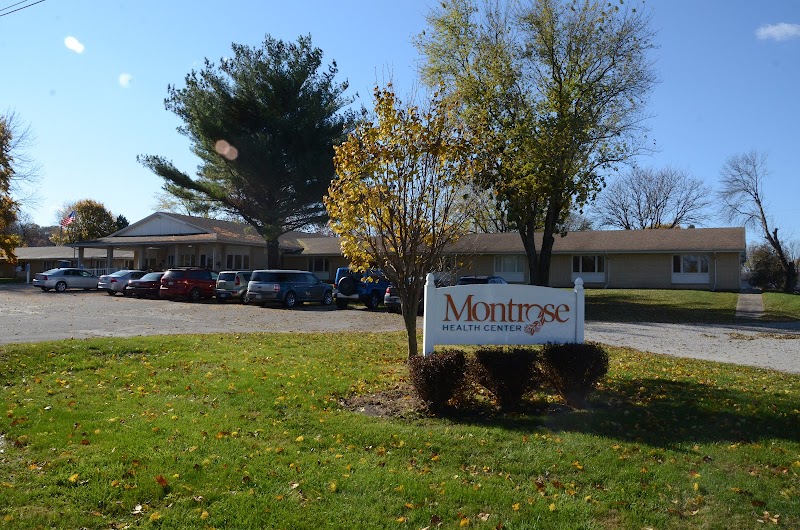
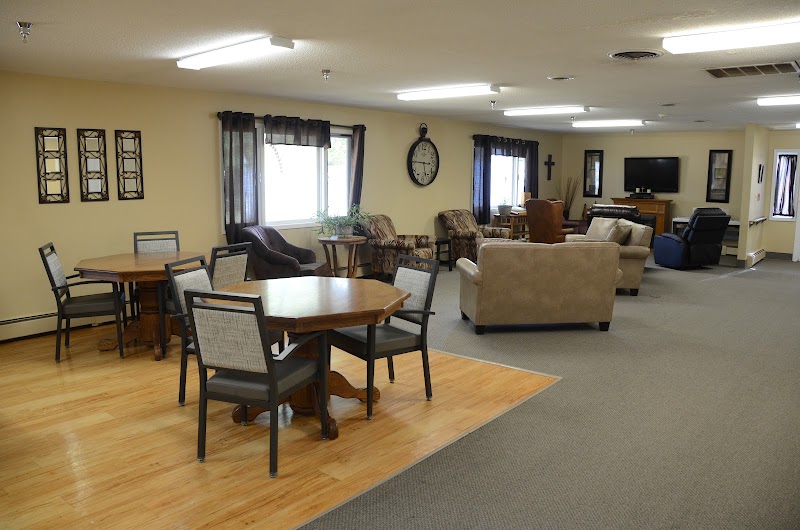
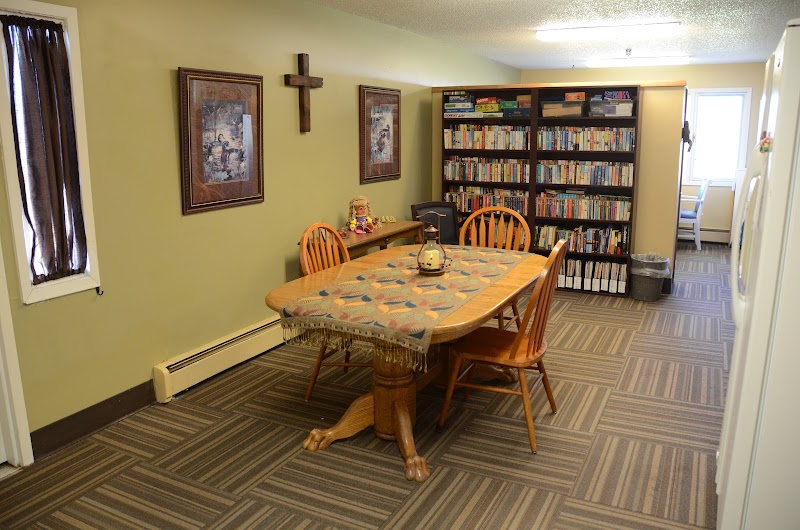
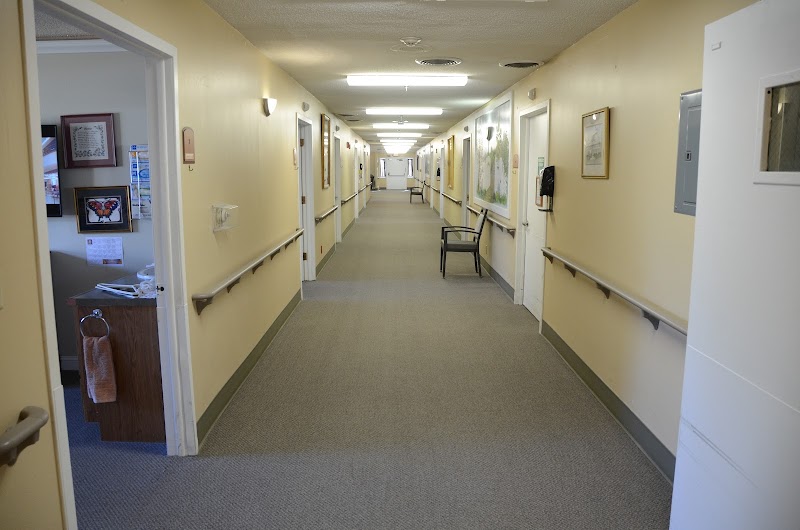
Montrose Health Center

400 South 7th Street, Montrose, IA 52639 (319) 463-5438
For profit - Corporation 44 Beds Independent Data: November 2025 2 Immediate Jeopardy citations
Trust Grade
21/100
#131 of 392 in IA
Last Inspection: September 2024

Within standard 12-15 month inspection cycle. Federal law requires annual inspections.

Overview

Montrose Health Center has a Trust Grade of F, indicating significant concerns about the quality of care provided. Ranked #131 out of 392 nursing homes in Iowa, they sit in the top half, but this ranking is overshadowed by their poor trust score. The facility's trend is worsening, with issues increasing from 1 in 2023 to 13 in 2024, and they have received $49,309 in fines, which is higher than 91% of Iowa facilities, indicating repeated compliance problems. Staffing, however, is a strength, earning a 5/5 star rating with a turnover rate of 32%, significantly below the state average. Specific incidents include a resident who was not given proper assessment after a change in respiratory condition, resulting in a critical emergency, and another resident who suffered severe burns from hot liquids due to inadequate supervision. While staffing is strong, these serious safety concerns raise significant red flags for families considering this facility.

Trust Score
F
21/100
In Iowa
#131/392
Top 33%
Safety Record
High Risk
Review needed
Inspections
Getting Worse
1 → 13 violations
Staff Stability
○ Average
32% turnover. Near Iowa's 48% average. Typical for the industry.
Penalties
✓ Good
$49,309 in fines. Lower than most Iowa facilities. Relatively clean record.
Skilled Nurses
✓ Good
Each resident gets 59 minutes of Registered Nurse (RN) attention daily — more than average for Iowa. RNs are trained to catch health problems early.
Violations
⚠ Watch
25 deficiencies on record. Higher than average. Multiple issues found across inspections.
★★★★☆
4.0
Overall Rating
★★★★★
5.0
Staff Levels
★★★★★
5.0
Care Quality
★★☆☆☆
2.0
Inspection Score
Stable
2023: 1 issues
2024: 13 issues

The Good

  • 5-Star Staffing Rating · Excellent nurse staffing levels
  • 5-Star Quality Measures · Strong clinical quality outcomes
  • Full Sprinkler Coverage · Fire safety systems throughout facility
  • No fines on record
  • Staff turnover below average (32%)

    16 points below Iowa average of 48%

Facility shows strength in staffing levels, quality measures, fire safety.

The Bad

Staff Turnover: 32%

14pts below Iowa avg (46%)

Typical for the industry

Federal Fines: $49,309

Above median ($33,413)

Moderate penalties - review what triggered them

The Ugly 25 deficiencies on record

2 life-threatening 4 actual harm
Sept 2024 4 deficiencies 1 Harm
SERIOUS (G)

Actual Harm - a resident was hurt due to facility failures

Accident Prevention (Tag F0689)

A resident was harmed · This affected 1 resident

Based on observation, interview, and record review the facility failed to ensure a resident with severely impaired cognition remained free from a burn from hot liquids when the resident sustained a se...

Read full inspector narrative →
Based on observation, interview, and record review the facility failed to ensure a resident with severely impaired cognition remained free from a burn from hot liquids when the resident sustained a second degree burn (involving the first two layers of skin) to the thigh from a hot beverage believed to have occurred on 7/8/24, and had a second hot liquid spill from a beverage on 9/17/24 resulting in redness to the skin for one of four residents reviewed for accidents (Resident #11). This deficient practice resulted in tenderness of burn area and documented voiced discomfort during treatment. The facility reported a census of 36 residents. Findings include: Review of the Minimum Data Set (MDS) assessment for Resident #11 dated 5/28/24 revealed the resident scored 06 out of 15 on a Brief Interview for Mental Status (BIMS) exam, which indicated severely impaired cognition. Per this assessment, the resident required set-up or cleanup assistance with eating. The Care Plan dated 2/9/22, revised 5/29/24, revealed the following: The resident with potential for altered nutritional status r/t (related to) PMH (past medical history) of bradycardia, hypothyroidism, weakness, HLD (hyperlipidemia), CKD (chronic kidney disease) stage 2, HTN (hypertension), depressive episodes, CAD (coronary artery disease), hx (history) of significant weight loss. Interventions per the above Care Plan did not specifically address hot liquids. The Care Plan dated 9/13/24 revealed, The resident is dependent on staff for meeting emotional, intellectual, physical, and social needs d/t Cognitive deficits, Physical Limitations. The Intervention dated 9/13/24 revealed, Provide the resident with materials for individual activities as desired. The resident likes the following independent activities: (solitaire cards, a cup of hot tea with a lid). The Health Status Note dated 7/9/2024 at 8:58 AM revealed, CNA (Certified Nursing Assistant) called this nurse to res (resident) room to report a reddened area to res (resident) right anterior thigh. Res believes she may have spilled some hot tea on herself at supper last noc (night). Area is light to medium pink, no open areas noted. No c/o (complaints of) pain voiced unless area is palpated, then res states it's a little tender. All necessary persons notified including provider. Verbal orders rec'd (received) to apply Medihoney et (and) cover with gauze et tape BID (twice a day) daily u/h (until healed). Review of the Incident Report dated 7/9/24 for Resident #11 revealed, resident will not have any styrofoam cups in room and kitchen will dilute hot tea with ice or <sic> tape water. Review of the Progress Note dated 7/9/24 at 11:07 PM revealed, Resident continues to be provided cups with lids, resident removes lids at times. Education provided about need for lids on cups and resident voices understanding. The Progress Note dated 7/10/24 at 4:26 PM revealed, Resident continues to be provided cups with lids; however, resident removes lids at times. Education provided about need for lids on cups and use for safety. Resident with short term memory only and needs reminded frequently. The Encounter Note dated 7/12/24 at 12:00 AM revealed the following per Chief Complaint / Nature of Presenting Problem: Burn. History Of Present Illness: Patient being evaluated today for a wound that has developed after she spilled her hot coffee on herself. Patient was drinking her coffee does not know how she spilled it but it hit her right thigh, she did develop a blister like wound. This occurred on Tuesday 7/9. We have been applying Medihoney to the area. Patient denies any discomfort. There is minimal redness and the blister is almost completely gone. No other reports of illness including fever, cough or other ill symptoms. Per the Encounter Note Resident #11 had second-degree, partial-thickness burn to the right anterior thigh. The Plan section documented, in part, Decreased coordination: Continue to monitor patient's coordination especially with sharp utensils, hot liquids and so forth. Educated patient about safety possibility of needing to cool hot liquids due to tolerance over time. The Health Status Note dated 7/22/24 at 4:34 PM revealed, Burned areas to right upper thigh observed. No intact blisters, pink, blanchable borders. Medihoney treatment continues. Voices discomfort to area during tx (treatment) but resolves with rest. Observation conducted on 9/16/24 of Resident #11 in the dining room revealed the following: a. 12:01 PM: Resident #11 took the tea bag out of cup, stirred, and Resident #11 had the cup in their hands with the cup lid on the table. b. 12:02 PM: Cup on the table without a lid on it. c. 12:04 PM: Cup on the table without a lid on it. d. 12:19 PM: Resident #11 present in wheelchair at the table, and fluid in the cup without the lid on it. Observation conducted on 9/17/24 at 11:28 AM revealed the following: a. 11:28 AM: Resident #11 was delivered a drink cup with a lid and a glass of a beverage as well. The resident observed in her wheelchair at a table in the dining room. b. 11:35 AM: Resident #11 observed with puddle of liquid underneath the resident and resident's cup (cup that previously observed with lid) on the floor. Director of Nursing (DON) alerted by State Agency. Staff then heard to say resident spilled. Staff were asked about contents of the beverage and was identified by Staff A Dietary Staff as hot tea. The Health Status Note dated 9/17/24 at 12:00 PM revealed, DON (Director of Nursing) was walking towards the dining room when resident was observed to have spilled her hot tea onto the floor table and on her pants. Resident was then removed from the main dining hall by DON. DON and MDS nurse assessed resident in her room. Resident is noted to have a reddened area to her lateral posterior thigh. No blisters noted. Area is intact. Resident denied pain and discomfort to the area. Provider notified at this time. The Health Status Note dated 9/17/24 at 12:01 PM revealed, reddened area is to right lateral posterior thigh. Review of the Incident Report dated 9/17/24 revealed the following description: I'm not sure what happened, I was drinking my tea. Review of a Note per the Incident Report revealed, Redden area to right lateral posterior thigh measuring 0.4 cm (centimeter) x 15cm. Review of the Other Info section revealed, Resident was observed attempting to remove lid from hot tea. Observation on 9/19/24 at approximately 8:00 AM revealed Resident #11 in the dining room with a cup with a lid on it. The cup had a tea bag inside with the string part of the tea bag on the outside of the cup. On 9/19/24 at 8:22 AM during an interview with the Dietary Manager (DM), the DM queried about what kind of drinks Resident #11 liked, and responded hot tea and water. When queried about the cup with the lid, the DM explained the resident normally had a regular cup and she was spilling and didn't want her to get burnt. Per the DM, dietary staff put in two pack of sugar substitute. Per the DM, Resident #11 couldn't get the lid off to spill it. The DM explained the resident left the tea bag in cup per her preference. When queried if there were issues with spilling since the resident got the cup with the lid, the DM responded nope. Per the DM, if the resident was in the dining room the tea was sent hot. The DM explained the flap was placed over the cup handle. When queried if the DM heard of the resident getting burned in the last couple of months, the DM responded not to my knowledge. When queried about interventions for this resident, the DM responded just the lidded mugs, and if the resident went to her room a few ice cubes added so not as hot. The DM explained the hot water came from the coffee machine from the spout. When queried if she took the temperature of it, the DM responded she had but it had been awhile. A hot water temperature was requested from the DM. On 9/19/24 at approximately 8:30 AM, the DM reported hot water temperature was 168 degrees. On 9/19/24 at 2:44 PM Staff B, Registered Nurse (RN) explained the resident had treatments where had to monitor the right thigh for redness/blistering. When queried what the wound looked like, Staff B responded it blistered up and was kind of like white discoloration kind of thing that eventually faded. When queried if he was told how it had happened, Staff B responded the resident had hot tea at the table and it spilled. Staff B explained he knew they implemented that Resident #11 was to have the cups with the lids now instead of open cup and that she needed to drink liquids in the dining room. Staff B further explained if the resident went back to her room, then cold liquids only for safety. Per Staff B, he thought it was a regular coffee cup with hot tea in it for July incident. When queried if the facility did hot liquid assessments, Staff B responded he was not for sure. Staff B further explained many of the assessments were done by the Care Manager. When queried if the resident was known to spill liquids prior to July, Staff B responded he was not sure, and he hadn't heard of a lot of spills before hand. Per Staff B, that was the that was the first time Staff B had heard of. When queried if he had ever seen Resident #11 with the lid off her cup, Staff B responded he hadn't seen it but did know the resident was physically able to remove the lid. When queried about the incident which occurred 9/17/24 (when Staff B not present at the facility), Staff B explained he was made aware and it was on the resident's chart to monitor for any types of changes/skin issues, and on the TAR (Treatment Administration Record) to check off. Staff B explained he did not see any redness or anything on 9/19/24. On 9/19/24 at 3:16 PM during an interview with Staff C, Certified Nursing Assistant (CNA) and the Director of Nursing (DON), Staff C explained Resident #11 had a lidded cup that is stuck on the top and has a straw that comes out to keep the resident safe, and that is what she drank out of. Staff C further explained with cool liquids used a regular cup, and if hot used a lidded cup. When queried if she had ever seen the resident take the lid off, Staff C responded yes indeed and explained tried to tell the resident not appropriate and tried to explain instructions. Per Staff C, sometimes could not get through to the resident. The DON explained the resident loved her hot tea and was something wanted the resident to keep. The DON explained following the recent incident, the resident was ordered a elderly spill proof twist cup so the resident could not take the top off. When queried about the tea bag, Staff C explained the resident usually left the tea bag in when she liked to drink. Staff C explained when the kitchen staff made the tea they took the tea bag out of it. On 9/19/24 at 3:28 PM during an interview with the MDS Coordinator and Nurse Consultant, the MDS Coordinator explained she was present for the resident's spill (second spill which occurred week of survey) and explained the resident had a small reddish s shaped area on the side of the leg. The MDS Coordinator explained she was the one that assessed and measured. The MDS Coordinator was unable to recall whether she had been at the facility in July when the resident had spilled. The MDS Coordinator further explained an intervention had been put in place to not allow hot tea in resident's room, and to encourage resident to sit out here and socially and have a lid on it. Per the MDS Coordinator, kitchen put ice cubes in it. When queried if that went into the resident's care plan, the MDS Coordinator responded they would have to look. The MDS Coordinator explained the resident used to drink with a different cup, and the cup was changed completed with lid put on it. Per the MDS Coordinator, the original cup was styrofoam, and the resident always used to have a styrofoam cup. When queried if she had ever seen the resident take the lid off, the MDS Coordinator responded no, and the MS Coordinator further explained she would say a little harder to get off hence the intervention for the resident. Per the MDS Coordinator she had never seen the resident with the lid off, and explained it was not the easiest to take off. On 9/19/24 at 3:47 PM during an interview with the Administrator, the Administrator explained the resident very much enjoyed hot tea, had one incident a couple months ago where spilled hot tea, resident was in her room, and addressed not being in her room, being in the main dining room. Per the Administrator, resident also not to have it hot, hot, and would have a couple of pieces of ice. The Administrator further explained the resident spilled a couple days ago and facility decided to get the spill proof cup. The Administrator acknowledged needing to do something to protect the resident. On 9/19/24 at 4:24 PM during an interview with the Director of Nursing (DON), the DON explained the facility was trying to find something for resident to have hot tea and be safe also. When queried if hot liquid assessments done, the DON responded not that she was aware of. On 9/19/24 at 4:04 PM, a Facility Policy pertaining to accidents and hazards requested via email from the facility's Administrator. On 9/19/24 at 4:07 PM, the Administrator responded via email the facility did not have a policy to address, and followed CMS (Centers for Medicare and Medicaid Services) guidelines.
CONCERN (D)

Potential for Harm - no one hurt, but risky conditions existed

MDS Data Transmission (Tag F0640)

Could have caused harm · This affected 1 resident

Based on clinical record review and staff interview the facility failed to ensure Minimum Data Set (MDS) assessments were submitted per required regulatory timeframe's for one of one resident reviewed...

Read full inspector narrative →
Based on clinical record review and staff interview the facility failed to ensure Minimum Data Set (MDS) assessments were submitted per required regulatory timeframe's for one of one resident reviewed for Resident Assessment Instrument Task (Resident #33). The facility reported a census of 36 residents. Findings include: Review of the Resident Assessment Task indicated Resident #33 had an MDS record over 120 days old. Review of the resident's MDS history revealed not all assessments documented as accepted and/or submitted. Review of Resident #33's census revealed the resident initially admitted to the facility 5/8/24, and discharged on 8/19/24. On 9/18/24 at 3:50 PM, the Nurse Consultant explained did not think got submitted, and was an oversight. The Nurse Consultant explained although assessment completed, did not change a question to yes (in system) which had auto-populated from a previous assessment, and now the assessment export ready and would be late to federal. Continued review of the resident's MDS assessments revealed the following Assessment Reference Date (ARD) and date submitted: a. Review of the resident's Quarterly MDS assessment (ARD 8/6/24) was submitted 9/18/24. b. Review of the resident's MDS assessment completed for death in facility (ARD 8/19/24) was accepted 9/18/24. On 9/19/24 at 4:04 PM, a Facility Policy pertaining to guidelines for submitting was requested via email from the facility's Administrator. On 9/19/24 at 4:07 PM, the Administrator responded via email the facility did not have a policy to address, and followed CMS (Centers for Medicare and Medicaid Services) guidelines.
CONCERN (D)

Potential for Harm - no one hurt, but risky conditions existed

Deficiency F0657 (Tag F0657)

Could have caused harm · This affected 1 resident

**NOTE- TERMS IN BRACKETS HAVE BEEN EDITED TO PROTECT CONFIDENTIALITY** 3. The Minimum Data Set (MDS), dated [DATE], revealed Resident #139 received insulin injections on 7 out of 7 days reference per...

Read full inspector narrative →
**NOTE- TERMS IN BRACKETS HAVE BEEN EDITED TO PROTECT CONFIDENTIALITY** 3. The Minimum Data Set (MDS), dated [DATE], revealed Resident #139 received insulin injections on 7 out of 7 days reference period. The MDS listed diagnoses included: disorder of bone, unspecified, cerebral infarction without residual effects (stroke with no ongoing effects). The MDS did not list diabetes mellitus as a diagnosis for Resident #139. The Care Plan, initiated 9/16/24, revealed Resident #139 had insulin-dependent diabetes mellitus with the goal that Resident #139 would have no complications related to diabetes through the review date. The Medication Administration Record (MAR), dated September 2024, revealed an order for Insulin Lispro Injection Solution 100 units per milliliter (mL) following sliding scale parameters for diabetes mellitus. A Hospital Discharge Note, dated 9/04/24, revealed Resident #139 had diagnosis of steroid-induced hyperglycemia (high blood sugar) and utilized sliding scale Insulin Lispro. On 9/19/24 at 4:10 PM, the Nurse Consultant for the facility, stated that Resident #139 did not have diagnosis of diabetes mellitus and that the Care Plan had been incorrect. The Nurse Consultant stated she would expect the Care Plan list the use of insulin related to diagnosis of steroid-induced hyperglycemia with interventions appropriate for the diagnosis. On 9/07/24 at 4:07 PM, Facility Administrator revealed the facility had no written policies or procedures related to Care Plan revisions. Based on interview, record review, and policy review, the facility failed to ensure resident care plans were revised following a resident's hot liquid spill with burn, failed to address a diagnosis of diabetes mellitus, and to accurately reflect insulin use related to steroid-induced hyperglycemia for three of twelve residents reviewed for care plans (Resident #11, Resident #26, Resident #139). The facility reported a census of 36 residents. Findings include: 1. Review of the Minimum Data Set (MDS) assessment for Resident #11 dated 5/28/24 revealed the resident scored 06 out of 15 on a Brief Interview for Mental Status (BIMS) exam, which indicated severely impaired cognition. Per this assessment, the resident required set-up or cleanup assistance with eating. The Care Plan dated 2/9/22, revised 5/29/24, revealed the following: The resident with potential for altered nutritional status r/t (related to) PMH (past medical history) of bradycardia, hypothyroidism, weakness, HLD (hyperlipidemia), CKD (chronic kidney disease) stage 2, HTN (hypertension), depressive episodes, CAD (coronary artery disease), hx (history) of significant weight loss. Interventions per the above Care Plan did not specifically address hot liquids. The Care Plan dated 9/13/24 revealed, The resident is dependent on staff for meeting emotional, intellectual, physical, and social needs d/t Cognitive deficits, Physical Limitations. The Intervention dated 9/13/24 revealed, Provide the resident with materials for individual activities as desired. The resident likes the following independent activities: (solitaire cards, a cup of hot tea with a lid). The Health Status Note dated 7/9/2024 at 8:58 AM revealed, CNA (Certified Nursing Assistant) called this nurse to res (resident) room to report a reddened area to res (resident) right anterior thigh. Res believes she may have spilled some hot tea on herself at supper last noc (night). Area is light to medium pink, no open areas noted. No c/o (complaints of) pain voiced unless area is palpated, then res states it's a little tender. All necessary persons notified including provider. Verbal orders rec'd (received) to apply Medihoney et (and) cover with gauze et tape BID (twice a day) daily u/h (until healed). On 9/19/24 at 3:28 PM during an interview with the MDS Coordinator and Nurse Consultant, the MDS Coordinator explained an intervention was put in place and explained different interventions implemented for the resident. When queried if went into the care plan, the MDS Coordinator explained would have to look. On 9/19/24 at 4:11 PM when queried about care plan interventions if accident with injury, the Nurse Consultant responded should be, and explained would open risk management, do immediate intervention, and would have been done with [Resident #11] with spills. 2. Review of the Minimum Data Set (MDS) assessment dated [DATE] for Resident #26 scored 15 out of 15 on a Brief Interview for Mental Status (BIMS) exam, which indicated intact cognition. Per this assessment, the resident had a diagnosis of diabetes mellitus. Review of Resident #11's Medical Diagnoses in the Electronic Health Record (EHR) included the following: Type 2 diabetes mellitus with other specified complication, noted to be assigned during the resident's stay versus on admission. Review of the Care Plan for Resident #26 did not address diabetes. The Physician Order dated 2/13/24 revealed, empagliflozin Tablet 10 MG (milligram) with instructions to give 1 tablet by mouth one time a day for DM2 (Diabetes Mellitus Type 2). On 9/19/24 at 3:28 PM, the MDS Coordinator explained if resident diabetic and on insulin got a care plan. On 9/19/24 at 4:19 PM when during an interview with the Director of Nursing (DON) and Nurse Consultant, queried if resident with diabetes not on insulin should be care planned. The Nurse Consultant acknowledged she would care plan it. On 9/19/24 at 4:04 PM, a Facility Policy pertaining to guidelines for care plan revision requested via email from the facility's Administrator. On 9/19/24 at 4:07 PM, the Administrator responded via email the facility did not have a policy to address, and followed CMS (Centers for Medicare and Medicaid Services) guidelines.
CONCERN (D)

Potential for Harm - no one hurt, but risky conditions existed

Deficiency F0658 (Tag F0658)

Could have caused harm · This affected 1 resident

**NOTE- TERMS IN BRACKETS HAVE BEEN EDITED TO PROTECT CONFIDENTIALITY** Based on clinical record review, interview, and facility policy review the facility failed to ensure digoxin administered per Ph...

Read full inspector narrative →
**NOTE- TERMS IN BRACKETS HAVE BEEN EDITED TO PROTECT CONFIDENTIALITY** Based on clinical record review, interview, and facility policy review the facility failed to ensure digoxin administered per Physician Order adhering to established parameters for one of six residents reviewed for medications (Resident #26). The facility reported a census of 36 residents. Findings include: Review of the Minimum Data Set (MDS) assessment dated [DATE] for Resident #26 scored 15 out of 15 on a Brief Interview for Mental Status (BIMS) exam, which indicated intact cognition. The Physician Order dated 2/13/24 revealed, Digoxin Tablet 125 MCG (microgram) with instructions to give 1 tablet by mouth one time a day for heart failure hold if pulse below 60. Review of Medication Administration Records (MARs) revealed the following dates and documented pulse rate when the resident received the medication outside of parameters: a. On 7/8/24 for 6:00 AM scheduled dose: pulse of 59, and medication documented as administered. b. On 8/14/24 at 6:00 AM scheduled dose: pulse of 55 and medication documented as administered. On 9/19/24 at 2:43 PM during an interview with Staff B, Registered Nurse (RN) explained standard would be if a pulse less than 60 hold it [digoxin]. When it was explained about parameter present with the order, Staff B responded if in there would go by that. On 9/19/24 at 4:20 PM, the Director of Nursing (DON) acknowledged should hold the medication and call the provider. Review of the Facility Policy titled Medication Administration effective 2/17, revised 8/24, revealed the following: Policy: Medications shall be administered per physician order.
Apr 2024 9 deficiencies 1 IJ
CRITICAL (J) 📢 Someone Reported This

A family member, employee, or ombudsman was alarmed enough to file a formal complaint

Immediate Jeopardy (IJ) - the most serious Medicare violation

Quality of Care (Tag F0684)

Someone could have died · This affected 1 resident

**NOTE- TERMS IN BRACKETS HAVE BEEN EDITED TO PROTECT CONFIDENTIALITY** Based on clinical record review, resident interview, staff interviews, and facility policy review, the facility failed to approp...

Read full inspector narrative →
**NOTE- TERMS IN BRACKETS HAVE BEEN EDITED TO PROTECT CONFIDENTIALITY** Based on clinical record review, resident interview, staff interviews, and facility policy review, the facility failed to appropriately provide assessment and interventions for the necessary care and services during a change in condition for 2 of 3 residents (Resident #3 and #6) reviewed for condition change. The facility failed to promptly identify change in respiratory condition and intervene in a timely manner for a resident with known history of chronic obstructive pulmonary disease (COPD) and respiratory failure. (Resident #6) found unresponsive with no palpable carotid or radial pulse and required emergency transport to the hospital. Resident #6 diagnosed with respiratory distress, respiratory syncytial virus (RSV) and respiratory failure with hypercapnia at hospital. Additionally, the facility failed to appropriately provide assessment and interventions for the necessary care and services following an unwitnessed fall (Resident #3). Clinical record review and interviews revealed Resident #3 had fallen on [DATE] without nursing assessment or documentation completed. On [DATE], an x-ray of left hip obtained due to Resident #3 complaints of pain, results revealed nondisplaced left sub-capital hip fracture. Resident #3 admitted to the hospital between [DATE] and [DATE] for surgical repair of left hip fracture. The facility reported a census of 36 residents. The State Agency informed the facility of the Immediate Jeopardy (IJ) that began as of [DATE] at 03:00 AM on [DATE] at 10:24 AM. The facility staff removed the Immediate Jeopardy on [DATE] at 03:49 PM by implementing the following actions: 1. Education provided to all staff nurses within 24 hours or before next working shift, whichever is first on the following topics: -Documentation in real time. -When to notify the provider via phone call. -Acceptable notifications to be left in the provider binder. -Physician notification as soon as acute change is noted. 2. A review of respiratory assessment parameters and when to notify the provider completed with staff nurses, which included the development of respiratory assessment guidelines to notify the provider of any of the following that aren't resolved with interventions already in place: -Respiratory rate greater than 22 respirations/minute with complaints of shortness of breath. -Oxygen saturation less than 90%, unless otherwise specified in orders. -Acute lung sound changes, including: wheezing, rhonchi, rales, and crackles. 3. Audits of the provider binder to be completed by Director of Nursing each working day for 90 days. Findings include: 1. The admission Minimum Data Set (MDS), dated [DATE], for Resident #6 revealed a Brief Interview for Mental Status (BIMS) score of 13 out of 15 indicating intact cognition. Diagnoses included: chronic obstructive pulmonary disease (COPD), asthma, anxiety disorder, and morbid obesity. This initial MDS revealed no shortness of breath or respiratory treatment noted upon admission. The Quarterly MDS that followed hospitalization, dated [DATE], revealed a BIMS score of 15 out of 15, indicating intact cognition. Diagnoses included: COPD, acute respiratory distress, asthma, anxiety disorder, and morbid obesity. Quarterly MDS revealed Resident #6 required oxygen therapy and had shortness of breath with exertion, when sitting at rest, and when lying flat. The Care Plan, initiated [DATE], revealed Resident #6 required oxygen therapy, and informed staff to monitor and report to the Medical Doctor (MD) for signs and symptoms of respiratory distress which included the following changes: respirations, pulse oximetry, increased heart rate, restlessness, diaphoresis, headaches, lethargy, confusion, atelectasis, hemoptysis, cough, pleuritic pain, accessory muscle usage, and skin color ([DATE]). The Care Plan revealed that Resident #6 utilized supplemental oxygen via nasal cannula and frequently refused to wear bipap ([DATE]). The Medication Administration Record (MAR), dated [DATE], revealed the following orders in place for Resident #6: -Supplemental oxygen kept between 2 to 4 liters to maintain an oxygen saturation above 88% for COPD, started on [DATE]. -Antibiotic orders for Cefdinir 300mg twice per day for 5 days, started on [DATE] and Azithromycin 500 milligrams (mg) daily for 3 days, started on [DATE], both indicated for a lower respiratory infection. -Ventolin (albuterol sulfate) inhalation aerosol solution 108 micrograms (mcg) per actuation (act), 2 puffs inhaled orally every 4 hours as needed for shortness of breath related to COPD, initiated upon admission [DATE], had been utilized 9 times between the dates of [DATE]-[DATE], and utilized only once between the dates of [DATE]-[DATE]. -Guaifenesin liquid 100mg/5 milliliters (mL) to be given every 4 hours as needed for cough, started on [DATE], and utilized 6 times between [DATE]-[DATE]. A review of Nursing Progress Notes for Resident #6, between the dates of [DATE] to [DATE], revealed the following: a.) [DATE] at 04:51 AM: Resident #6 had increased shortness of breath, cough, and dyspnea noted. Oxygen saturation 90% on 2 liters of oxygen via nasal cannula (NC). Resident utilized inhaler and noted to have increased anxiety when nurse attempted to take inhaler out of resident's room. Lung sounds diminished and resident complained of difficulty breathing. Noted increased twitching of extremities. Resident #6 refused to wear bipap. Nursing indicated they would make a request for inhaler to be kept at bedside. b.) [DATE] at 06:38 PM: Resident #6 requested to wear bipap mask, respirations were heavy at 20 respirations per minute, audible rales noted throughout lungs. Nursing provided reassurance and one on one with Resident #6 due to increased anxiety. c.) [DATE] at 09:59 PM: Resident #6 complained of shortness of breath, nursing increased oxygen to 4 liters/NC due to oxygen saturation of 82% on 2 liter of oxygen. Lung sounds had rales noted throughout, Resident #6 continued to have frequent cough and complained of increased anxiety due to wearing bipap mask. Nurse informed resident that they would call the doctor, Resident #6 stated, Good, if I go to the Hospital, maybe I will get my Xanax (anti-anxiety medication). Nursing notified the on-call Provider and received orders for Lorazepam 0.5mg every 6 hours as needed and albuterol nebulizer every 4 hours as needed for shortness of breath, only if resident will give up her inhaler, which had been kept at bedside. d.) [DATE] at 11:32 AM: Resident #6 requested to go to the Hospital, when nursing questioned why, resident stated, I just don't feel good. Resident noted to have mouth breathing at intervals, nurse encouraged resident to breath in through nose and out through mouth. On-call Provider notified and instructed nursing to utilize the as needed anti-anxiety medication and continue to monitor. e.) [DATE] at 02:53 AM: it is noted that Resident #6 had complained of shortness of breath throughout the evening hours, vital signs included 22 respirations per minute and a temperature of 100.2 degrees Fahrenheit. Nursing reported that administration of as needed medications did not provide relief as Resident #6 continued to express increased restlessness. Nursing also noted that Resident #6 intermittently sat upright in recliner, resident's skin had been warm, dry, and dusky per norm for resident. Lung sounds had scattered congestion and an occasional moist cough continued. According to documentation, nursing provided an FYI for MD in the communication binder for evaluation upon rounds to the facility. f.) [DATE] at 03:03 AM: an addendum had been added to correct the documentation in previous note to inform that respirations had been 26 per minute, not 22 per minute as recorded and indicated that respirations were also slightly labored but subsided through the night. g.) [DATE] at 05:50 AM: Resident #6 stated, I just feel wiped out. It's the Ativan, it makes me feel drugged. Nursing noted that resident had occasional twitching of arms, an overall generalized increased weak appearance, and continued to voice that she didn't feel good. According to documentation, nursing provided an FYI for the MD and next shift nursing staff for continued monitoring. h.) [DATE] at 02:30 PM: Provider saw Resident #6 on facility rounds and ordered to obtain chest x-ray related to COPD. i.) [DATE] at 03:37 AM: Resident required increased assistance due to weakness and dyspnea with activity and expressed malaise. Nursing noted an overall general weak appearance and random involuntary twitching of extremities. Lung sounds continued to have scattered congestion and respirations slightly labored at times between 22-27 respirations per minute, temperature of 99.2 degrees Fahrenheit, pulse of 102 beats per minute, and oxygen saturation between 84-92% on 3.5 liters of oxygen/NC. According to documentation, the Provider had been aware of resident decline as resident was to have chest x-ray in waking hours, and further orders pending. Nursing noted resident monitoring and encouragement continued. j.) [DATE] at 05:44 AM: Resident #6 complained of shortness of breath, nebulizer treatment administered and oxygen saturation following treatment had been 82% on 3.5 liters of oxygen/NC. Nursing increased flow of supplemental oxygen to 4 liters per NC and oxygen saturation increased to 89%. Resident #6's respirations slightly labored but calmed after one on one and encouragement, no Provider notification documented. k.) [DATE] at 02:55 AM: Resident #6 noted to be anxious with increased shortness of breath sporadically throughout the evening hours and Resident #6 intermittently yelling out, Help me, I can't breathe. Nursing reported respirations moderately labored during these events and oxygen saturation had been between 81-88% on 3.5 liters of oxygen/NC. Nursing indicated Resident #6 utilized bipap for approximately 15 minutes, education provided with encouragement for resident to utilize bipap, resident stated, I can't do it. I can't breathe with this mask. Noted Resident #6 continued to have frequent involuntary twitches of extremities and slept in a straight upright position in recliner. Supplemental oxygen had been increased to 4 liters of oxygen/NC with oxygen saturations between 86-90%, pulse ranged from 96-118 beats per minute, and respirations between 24 to 32 per minute. According to documentation, an FYI continued to be provided on nursing communication sheet and MD binder for continued monitoring/treatment as needed. Provider had not been called at this time. l.) [DATE] at 12:31 PM: Nurse had been called to Resident #6's room by Certified Nursing Assistant (CNA) when resident stated she felt like she wasn't getting air. Noted resident slightly rocking back and forth and had pursed lip breathing. Resident #6 had stated, There must be something wrong with my oxygen concentrator, I'm not getting any air. Nursing provided education for resident to attempt to hold mouth closed and inhale through nose and exhale through mouth. Oxygen saturation 91% on 3 liters of oxygen/NC. Nurse reported resident had dusky appearance per norm, lung sounds had rhonchi heard in bilateral lower lobes and diminished sounds throughout upper lobes. Resident #6 also noted to have twitching and stated, I feel cruddy. Nurse documented they would notify the Provider. m.) [DATE] at 12:51 PM: received order from Provider to obtain labs and urinalysis. n.) [DATE] at 10:25 AM: CNA called nurse to Resident #6's room due to resident not responding. Nurse reported Resident #6 sat in recliner with head tilted down and Bipap on, resident's lips colored blue and had forced air coming out of lips which caused lips to flutter. Resident #6 not responsive to verbal stimuli or sternal rub performed. Nurse reported increasing the oxygen flow to 5 liters via NC and requested Director of Nursing (DON) to be present, noted resident's status was for full code, and unable to palpate carotid or radial pulses. DON entered room and called 911, additional staff entered to assist with placing resident on the floor to start Cardiopulmonary Resuscitation, Resident #6 then opened eyes and gasped for air, eventually became more alert and breathing became more stable. Resident #6 assisted to bed with mechanical lift, staff performed cares due to bowel incontinence that occurred during non-responsive episode and prepared resident for transport in ambulance to the Hospital. o.) [DATE] at 11:00 AM: Nurse and DON gave report and assisted Emergency Medical Technicians (EMTs) with transfer of Resident #6 to stretcher for ambulance transfer to the Hospital. The hospital History and Physical Note, dated [DATE], revealed that per EMS, facility stated patient lost consciousness twice but never lost a pulse. Patient is full code and presented with worsening shortness of breath for 2-3 days prior, and had equivocal fever. H&P informed that Resident #6 presented to outside of emergency room (ER) hypoxic and hypercapnic, worse than baseline. Resident #6 tested positive for RSV. Upon physical exam, Resident #6 had been in moderate respiratory distress with decreased breath sounds and minimal wheezing. Resident #6 assessment included admission and treatment plan for respiratory distress, RSV infection, and urinary tract infection. On [DATE] at 12:15 PM, Resident #6 reported that leading up to the recent hospitalization she had experienced coughing and trouble breathing. Resident #6 reported that she had been found passed out, but unable to recall details from the day she had transferred out to the hospital. On [DATE] at 01:20 PM, Staff D, Registered Nurse (RN), recalled that Resident #6 had respiratory infection prior to an unresponsive episode and that her baseline had been on supplemental oxygen without respiratory distress at rest. On [DATE] at 01:45 PM, Staff E, Licensed Practical Nurse (LPN), stated Resident #6's baseline had been mild respiratory distress with activity and sometimes at rest dependent upon how much the resident would get worked up or anxious. She stated Resident #6's baseline oxygen saturation usually in the 90's or upper 80's and improved with position change and or treatments. Staff E indicated that prior to hospitalization, Resident #6 started to have a new moist cough, followed by no energy, sleeping more, then continued to decline with increased cough and dyspnea for a few days before being transferred out. Staff E stated the twitching extremities had also been new. Staff E noted that Resident #6 had started antibiotics prior to transfer and that symptoms of respiratory infection never totally resolved. Staff E stated Resident #6's cough and shortness of breath had been hard to assess because the resident always had some respiratory distress. Staff E did not recall any requests from Resident #6 to go to the hospital prior to the unresponsive episode, and stated the resident did not ask her. Staff E stated she would notify the provider if Resident #6 had a change to see if something else would be ordered or notify the provider if Resident #6 wasn't getting better. On [DATE] at 04:00 PM, Staff B, LPN, stated a provider should be notified of any change in resident condition or vital signs. Staff B stated that with a decrease in oxygen saturations for a resident who required supplemental oxygen to call the provider, if after hours, nursing had a number for an on-call provider. Staff B revealed that most of the oxygen orders informed staff to keep oxygen saturations above 88% and stated that if oxygen saturation is under 88% to call the provider and stated it would not be okay to put this information in communication binder only. Staff B stated facility utilized communication binder for providers who visit the facility, that is to include non-emergent items which may include orders that the facility had already received. Staff B confirmed working during Resident #6 unresponsive episode on [DATE] and recalled that Resident #6 woke up saying she wanted CPR and to go to the Hospital. Staff B assisted CNA to prepare resident for hospital transfer. On [DATE] at 09:28 AM, Staff F, RN, confirmed responding to Resident #6's unresponsive episode on [DATE], recalled performing sternal rubs and attempting to locate pulses. Staff F called for the DON to enter resident's room, took the bipap mask off, put oxygen nasal cannula on and increased the flow of oxygen. Staff F stated staff had prepared to assist Resident #6 to the floor, to perform CPR, when resident had gasped and started to respond. Staff F stated that upon waking, Resident #6 had requested CPR and wanted to go to the hospital. Staff F stated that for oxygen saturations in the 80's it would depend on the situation and how fast saturation returned to normal for this information to be put as an FYI in communication binder for Provider. Staff F revealed that a Nurse Practitioner visited the facility twice per week and the Physician visited the facility twice per month. On [DATE] at 01:33 PM, the Nurse Practitioner (NP) for the facility, revealed the expectation that non-emergent notifications would be placed in the communication binder, gave examples such as: itchy skin, didn't sleep the greatest one night, fever resolved with Tylenol, sometimes family concerns, a fall without injury, labs if normal results unless I ask them to contact me, and pharmacy recommendations. The NP revealed the expectation that facility calls with acute respiratory changes and depending on the patient with history of COPD and chronic respiratory disease to give treatment to see if that helps, if not, or symptoms continue for 1-2 hours, NP would like to be notified. On [DATE] at 10:02 AM, the Facility Administrator stated the facility lacked policy for resident change of condition. The facility document titled, Things to be Placed in Communication Log, not dated, instructed staff to place the following non-emergent patient issues in binder: seasonal allergy symptoms, skin tears, falls without injury, insomnia, family member meeting requests, if as needed medications have been initiated, non-emergent labs, tests, or x-rays, refusal of medications or medications given for other reason, medication errors without adverse effects. The facility document titled, Call Immediately For, not dated, instructed staff to immediately call Provider for the following issues: any unstable patient, falls with injury, unstable vital signs, any new findings on imaging studies, chest pain, fever, hypoxia, heart rate greater than 110 beats per minute, shortness of breath, etc. 2. The MDS, dated [DATE], revealed a BIMS score of 13 out of 15 indicating intact cognition. Resident #3 had no impairment of upper or lower extremities and utilized walker. Resident #3 independent with bed mobility, transfers, toileting, and ambulation at time of this assessment. Diagnoses included: non-Alzheimer's dementia, anxiety disorder, fibromyalgia, hypothyroidism, and history of falling. Resident #3 received scheduled pain medication for almost constant pain. The MDS, dated [DATE], revealed Resident #3 utilized both a walker and wheelchair during the assessment period and required partial to moderate staff assistance with bed mobility, transfers, and toileting. The MDS documented Resident #3 non-ambulatory during reference dates. Diagnoses of fracture of unspecified part of neck of left femur subsequent for closed fracture with routine healing included. Resident required scheduled and as needed pain medications, and non-medication interventions for almost constant pain. The Care Plan, revised on [DATE], revealed a risk for falling related to low back pain, fibromyalgia, and history of falls. Interventions informed staff to keep personal items and frequently used items within reach ([DATE]), refer to fall intervention plan (FIP) at Nurse's Station ([DATE]) and refer to resident's care card in room ([DATE]). An Incident Report, dated [DATE], completed by the Director of Nursing (DON), documented that there was no documentation of the incident. Resident #3 interview revealed that she had fallen when attempted to get into bed and hit head on a pile of soft clothes and notified that her head had still been sore where she landed. Resident recalled yelling for help and her roommate pulled the call light. Resident #3 reported that a few CNA staff came into room and checked her out, then the nurse came to room and checked her out. The Incident Report revealed that the immediate action taken had been to obtain an order for a x-ray immediately after DON was notified of fall (3 days following fall) and resulted in post incident injury of left trochanter (hip) fracture. Review of Nursing Progress Notes that followed fall on [DATE], revealed the following entry information: a.) [DATE] at 08:38 AM: Resident received new order for anti-anxiety medication Alprazolam (Xanax) scheduled three times per day. b.) [DATE] at 04:39 PM: Provider ordered x-ray of left hip for resident complaints of increased pain. c.) [DATE] at 01:59 AM: Resident more lethargic in mood, appeared to have increased generalized weakness, and fatigued appearance. Resident stated, I'm just tired. I'm just not me anymore. d.) [DATE] at 02:29 PM: Resident self-reported a fall on [DATE] and complained of left hip pain. e.) [DATE] at 02:30 PM: Obtained x-ray as ordered for left hip 2-3 views unilateral with pelvis. f.) [DATE] at 04:00 PM: Results received from mobile x-ray for non-displaced left sub-capital hip fracture. Nursing notified Provider of results. g.) [DATE] at 04:40 PM: Resident transferred to Hospital. h.) [DATE] at 05:03 PM: Director of Nursing completed investigation, found that Resident #3 had attempted to get into bed, call light had been pulled by Resident #3's roommate and Certified Nursing Assistant (CNA) answered light. Resident #3 found on the ground near her bed. CNA notified Nurse of fall. Nurse in another resident's room performing cares instructed CNA to obtain Resident #3's vital signs. CNA assisted Resident #3 off the floor and into bed. Nurse arrived to assess the resident between 5-15 minutes following incident. i.) [DATE] at 08:10 PM: Facility notified that Resident #3 had been admitted to Hospital and scheduled to have left hip surgery. The hospital History and Physical (H&P), dated [DATE], revealed that Resident #3 presented with complaints of left hip pain since falling on Saturday ([DATE]). New left hip fracture noted on outpatient x-ray. Resident stated she fell backwards when using her walker, hit her head, has been ambulatory since fall, and progressive left sided pain without radiation. The H&P also revealed that Orthopedic Surgeon had been consulted by Emergency Department and plan for surgical intervention on Thursday ([DATE]). On [DATE] at 01:45 PM, Staff E, Licensed Practical Nurse (LPN) stated that prior to falling Resident #3 had been independent using walker throughout the facility and following the fall required assist of one staff to stand pivot transfer and ambulate short distances with wheelchair to follow. Staff E revealed the facility fall process is for nursing to assess the resident before they are moved, check vital signs, look at their skin, check range of motion, and assess for head injury. Staff E stated if acute pain is assessed with a fall, call the provider and ask about evaluation at ER, call family, notify the DON and Administrator if resident needs sent to the hospital. Staff E also stated that staff involved with a fall complete a fall packet which includes a diagram, an immediate intervention to prevent it from happening again, then discussed in all staff huddle the following day. Staff E revealed that a fall assessment and 3 day follow up assessments are completed in the Electronic Health Record. On [DATE] at 04:00 PM, Staff B, LPN, stated that when residents fall, nursing staff is expected to assess the resident as soon as notified. The nurse is to check vital signs, check skin, range of motion, assist resident to a safe position and fill out fall paperwork which involves intervention appropriate to fall, staff education, resident education, and notify the Director of Nursing, Administrator, provider, and family. Staff B informed that if a resident's BIMS is lower than 13 neuro checks are automatically initiated for an unwitnessed fall. On [DATE] at 01:33 PM, the Nurse Practitioner (NP) for the facility revealed the expectation that resident fall assessment is completed immediately and indicated that there are times residents should not be moved because this may cause more harm. The NP expected that for cognitive deficits or functional decline the provider be notified immediately of the fall or if they hit their head, have injury, or pain to be notified within the hour. The NP stated that a hip fracture could be exacerbated with movement, and gave the example that a hairline fracture could be made worse. The NP expected that nurses assess resident following a fall to document change and establish a baseline. The NP stated CNA staff could check and report vital signs. On [DATE] at 02:31 PM, Staff G, Certified Nursing Assistant (CNA), confirmed working [DATE], on the date that Resident #3 had reportedly been observed on the floor. She stated that she told another CNA to notify the nurse that Resident #3 had fallen, while Staff G waited with the resident in her room. Staff G recalled that Resident #3 had been in a kneeling position on one knee and informed that after waiting 15 minutes with Resident #3 for the nurse, had assisted resident to stand up from the floor and then lay on the bed, due to resident trying to get self up and complaints of pain in her back. Staff G reported that another CNA returned to Resident #3's room with vital signs equipment and recalled that vitals looked okay and everything seemed okay when resident laid in bed, with no more pain than usual. Staff G stated a nurse entered the room and also assessed the resident. On [DATE] at 04:36 PM, the Director of Nursing (DON), stated she had not been notified that Resident #3 fell on [DATE] until Monday [DATE] when a CNA informed her that Resident #3 had fallen over the weekend. DON revealed having concern that there was a lack of documentation related to fall and completed investigation with staff who worked, as well as Resident #3, and resident's roommate. DON revealed that the nurse had been terminated due to lack of fall documentation and revealed the expectation that the nurse would do a proper fall assessment and notify the DON. The facility document, titled Fall Checklist, not dated, instructed nursing staff to complete the following tasks when a resident falls: 1. Obtain vital signs and safely position resident 2. Complete fall huddle sheet with staff 3. Call Medical Doctor (MD), Physician's Assistant (PA), or Nurse Practitioner (NP) for EVERY fall 4. Call Power of Attorney (POA) 5. Text to Administrator, DON, and on-call nurse, if injury that requires higher level of care, the Administrator and DON must be called. 6. Complete fall investigation form 7. Initiate neurological assessment (if applicable) 8. Initiate skin sheets (if applicable) 9. Complete risk management in Electronic Health Record (EHR) 10. Add intervention to CNA intervention list 11. Complete Morse Fall Scale assessment in HER
SERIOUS (G) 📢 Someone Reported This

A family member, employee, or ombudsman was alarmed enough to file a formal complaint

Actual Harm - a resident was hurt due to facility failures

Pressure Ulcer Prevention (Tag F0686)

A resident was harmed · This affected 1 resident

**NOTE- TERMS IN BRACKETS HAVE BEEN EDITED TO PROTECT CONFIDENTIALITY** Based on clinical record review, observations, and staff interviews the facility failed to prevent pressure ulcer development, f...

Read full inspector narrative →
**NOTE- TERMS IN BRACKETS HAVE BEEN EDITED TO PROTECT CONFIDENTIALITY** Based on clinical record review, observations, and staff interviews the facility failed to prevent pressure ulcer development, failed to ensure accurate assessment of a pressure ulcer, and failed to implement timely interventions to prevent the development and worsening of a pressure ulcer for one of one resident reviewed for pressure ulcers (Resident #4). The facility reported a census of 36 residents. Findings include: Review of the Minimum Data Set (MDS) assessment for Resident #4 dated 11/16/23 revealed the resident had a Brief Interview for Mental Status (BIMS) score of 13 out of 15, which indicated intact cognition. Per this assessment, the resident was at risk for pressure ulcer development, did not have one or more unhealed pressure ulcers, and did not have any venous or arterial ulcers. Review of census information for Resident #4 revealed the resident initially admitted to the facility on [DATE] and was hospitalized on [DATE]. Review of Resident #4's Care Plan and Care Plan revision history for skin revealed the following: a. The Baseline Care Plan for the resident's admission [DATE] documented the resident had a left fibular fracture and wore a cam (controlled ankle movement) boot. The Baseline Care Plan lacked guidance as to the schedule when the cam boot applied and removed. Per the Baseline Care Plan, the resident had no open areas per the skin section. b. The Care Plan dated 11/21/23 documented, the resident has potential impairment to skin integrity. (This Care Plan focus was initiated after the resident had a blister present to the left heel). c. The revised Care Plan dated 1/23/24 documented, the resident has potential impairment to skin integrity and has an actual pressure ulcer. Location: left lateral foot Stage: DTI (deep tissue injury-persistent non-blanchable deep red, maroon or purple discoloration). d. The revised Care Plan dated 2/20/24 documented, the resident has potential impairment to skin integrity and has an actual pressure ulcer. Location: left lateral foot & heel Stage: DTI. e. The revised Care Plan dated 2/20/24 documented, the resident has potential impairment to skin integrity and has an actual pressure ulcer. Location: left heel Stage: Blister. f. The revised Care Plan dated 4/15/24 documented, the resident has potential impairment to skin integrity and has an actual pressure ulcer. Location: left heel Stage: Pressure Unstageable. Review of the resident's Nursing admission Screening/History V2 Report dated 11/9/23 documented reason for admission as therapy due to fall and broken ankle. The assessment noted the resident had a left fractured tibia, and noted edema present to the feet and hands, increased to the left ankle. The Skin section of the assessment did not address any areas present to the resident's feet or toes. Review of a SNF (Skilled Nursing Facility) Fracture Documentation form dated 11/9/23 explained the resident had no bruising or skin issues and boot present to the left ankle. Review of the resident's Treatment Administration Record (TAR) dated November 2023 lacked an order to monitor skin underneath Resident #4's boot. Review of the resident's Braden Scale dated 11/9/23 revealed the resident at moderate risk for pressure ulcer development, with a score of 13 on the assessment. The Provider Progress Note dated 11/11/23 documented, this is a new admission to the nursing home post left fibular fracture. Per the Progress Note, the resident used a cam boot and weightbearing as tolerated. Review of Bathing Documentation and Skin Check sheets dated 11/11/23 and 11/14/23 lacked documentation of any skin issues. Review of SNF Fracture Documentation forms dated 11/10/23 through 11/15/23 documented presence of the boot. The Provider Progress Note dated 11/15/23 documented, left fibular fracture: continue with stabilizing boot. Review of the resident's Braden Scale dated 11/16/23 revealed the resident at risk for pressure ulcer development, with a score of 15 on the assessment, which indicated at risk. The Physician Order dated 11/16/23 revealed, Per Dr. [Name Redacted]-Cam boot on at all times while in PT/OT (physical therapy/occupational therapy). May keep Cam boot off when in bed or recliner or for hygiene. Review of Physician Orders, Skin and Wound Evaluations, Progress Notes, and Provider Progress Notes for the resident's left heel and/or ruptured blister revealed the following: The Health Status Note dated 11/16/23 at 10:58 AM documented, resident received shower today and nurse noticed blister to left heel and areas of discoloration and previous scabbed areas to left foot. Skin prepped areas. Mepilex applied to blister on left heel and remove after 5 days. The Communication with Physician Note dated 11/16/2023 documented, Fluid filled grayish blister 6.9 x 4.8 cm (centimeter) to left heal. Skin prepped and applied Mepilex. Area noted to left side of foot discolored and deterioration under area 3 x 0.6 cm will apply skin prep daily along with areas that were visible on admit of scabs to toes. The Nutrition/Dietary Note dated 11/17/23 at 10:38 AM documented the resident's skin as intact, following documentation of a blister to the resident's left heel the day prior. The Skin/Wound Note dated 11/17/23 at 12:06 PM documented, measurements on 11/16/23 for new areas. No pictures available at this time due to dressings intact and fragility of skin requires extended periods between dressing changes. The Physician Order dated 11/17/23 to 11/18/23 documented, Skin Prep Wipes Miscellaneous with directions to apply to left heal topically every day shift every 5 day(s) for blister, cover with bordered foam dressing. The Skin/Wound Evaluation dated 11/18/23 revealed the following: The following areas left blank per assessment: Type of wound, wound location, in-house or present on admission, and how long wound was present. The assessment noted a ruptured blister which measured 3.1 cm (centimeter) length (L)by 2.5 cm (W). The wound bed documented epithelial, granulation, and slough present. Per the assessment, progress documented improving with notes of blister opened and drained. The Provider Progress Note dated 11/18/23 documented the following per the Plan section for EXT (extremities): 1+ edema CAM boot in use. The note did not address wounds to the left heel. The Provider Progress Note dated 11/21/23 documented the following per the Physical Exam Integumentary section: Dry. Left heel red with blisters. The Health Status Note dated 11/22/23 documented, Resident left for his ortho appt at 1330 (1:30 PM) today and returned at 1600 (4:00 PM). Orders from the doctor received. Orders: Will continue to only wear the boot when getting up to transfer, otherwise boot off due to pressure sores. okay to weight bear with transfers. Review of the resident's Pressure Sore Risk assessment dated [DATE] revealed the resident scored 15 on the assessment which indicated at risk for pressure ulcer development. The Skin/Wound Evaluation dated 11/24/23 revealed a blister to the left heel which was in-house acquired. The date the wound present had been left blank, with wound documented as 4.0 cm L x 2.7 cm W. The wound described as an intact blister, documented as blister intact but fluid has decreased. The Physician Order, start date 11/24/23, documented, Mepilex Border Flex External Pad with directions to apply to left heel topically every day shift every Friday for protection. This order had been left blank on the resident's MAR for the date 11/24/23. The Health Status Note dated 11/25/23 at 1:46 PM documented, in part, Drsg's to LLE (left lower extremity) changed. Review of the resident's Braden Scale dated 11/29/23 revealed the resident scored 15 on the assessment which indicated at risk for pressure ulcer development. The Skin/Wound Evaluation dated 12/1/23 revealed an intact blister to the left heel which was in-house acquired. The date the wound present had been left blank, with wound measurements documented as 4.3 cm L x 3.4 cm W. The Health Status Note dated 12/2/2023 at 1:04 PM documented, Changed Mepilex order to be changed every 3 days due to preference to have nurses' monitor how wound looks throughout week. The Skin/Wound Evaluation dated 12/8/23 revealed an intact blister to the left heel which was in-house acquired. The date the wound present had been left blank, with wound measurements documented as 3.5 cm L x 2.8 cm W. The Skin/Wound Evaluation dated 12/15/23 revealed an intact blister to the left heel which was in-house acquired. The date the wound present had been left blank, with wound measurements documented as 3.6 cm L x 3.7 cm W. The Skin/Wound Evaluation dated 12/22/23 revealed an intact blister to the left heel which was in-house acquired. The date the wound present had been left blank, with wound measurements documented as 2.2 cm L x 2.8 cm W. The Provider Progress Note dated 12/22/23 documented, in part, [Resident #4] does have two wounds that nursing is doing management with dressing changes. Left heel DTI with black stable eschar. Tissue still present over wound. The assessment of the resident's left heel wound revealed a pressure DTI, which measured 2.21 x 2.82 CM, with tissue/wound bed 100% eschar. The Plan section for Pressure Injury of Deep Tissue Injury of Left Heel documented to continue to elevate area to limit pressure. Monitor for s/s (signs/symptoms) worsening condition. Current treatment for Mepilex to area and change weekly. If develops moisture will change to Betadine BID (twice a day) and keep OTA (open to air). On 12/27/24, Resident #4 sent to the hospital to address a different concern. Review of a Consultation Note dated 12/28/23 from hospital records revealed the resident had a consultation done for ulcers to the left heel and foot. The History of Present Illness section documented, in part, on admission, it was noted that he had several wounds to his left foot. Patient states these are the result of wearing a boot from his recent leg fracture. States the areas are painful to palpation. The Wound Assessment section documented, The ulcer on the left heel measures approximately 2.5 x 1.0, completely covered with thick necrotic tissue. Minimal serosanguinous drainage. No erythema. The area on the top of the left first toe wound measures approximately 0.5 cm in circumference. Large amount of yellow necrotic tissue present, small amount of serosanguinous drainage. The area on the left lateral foot measures 0.6 cm in circumference. Completely covered with yellow necrotic tissue. No erythema or induration. Pulses were not palpable due to 2+ edema. Observation on 4/22/24 at 8:14 AM revealed Resident #4 in a wheelchair in the common area. The resident moved themselves from the dining area to towards the television area in the common area by the entrance to the facility. The resident had gray socks to their feet, and their left foot observed to rest on the wheelchair pedal. Observation on 4/22/24 at 8:28 AM and 9:03 AM revealed Resident #4 in the common area, with their feet resting directly on the wheelchair pedals. Observation of wound care conducted 4/22/24 revealed Resident #4 present in their recliner chair in their room, with the resident's left foot elevated on pillows. Wound care to the resident's heel performed by Staff C, Registered Nurse(RN). On 4/17/24 at 4:10 PM during an interview with Staff B, Licensed Practical Nurse (LPN)/Wound Nurse, Staff B explained the area to the heel was a blister that was present when the resident was admitted . Per Staff B, it was a blood blister that turned necrotic. Staff B explained she thought the heel wound was currently set for an unstageable because it was all necrotic at present time. On 4/22/24 at 2:43 PM, Staff C, Registered Nurse (RN) queried if the resident came into the facility with the heel wound or acquired at the facility, and explained they were not sure without looking at the records. When queried if the resident had a boot when the resident initially came into the facility, Staff C explained the resident had a black cam boot that they believed the resident came with from the hospital. Staff C acknowledged an initial skin would be done on admission. On 4/24/24 at approximately 4:40 PM, Staff H, Consultant #1 acknowledged she would expect an order to be put in to remove the boot each shift and inspect skin. Staff H also acknowledged she did not see notification completed to dietary. On 4/24/24 at 10:02 AM, the facility Administrator explained via email on 4/24/24 at 10:02 AM that the facility did not have a pressure ulcer policy.
SERIOUS (G)

Actual Harm - a resident was hurt due to facility failures

Deficiency F0697 (Tag F0697)

A resident was harmed · This affected 1 resident

**NOTE- TERMS IN BRACKETS HAVE BEEN EDITED TO PROTECT CONFIDENTIALITY** Based on observation, resident interviews, provider interview, staff interviews, and clinical record review, the facility failed...

Read full inspector narrative →
**NOTE- TERMS IN BRACKETS HAVE BEEN EDITED TO PROTECT CONFIDENTIALITY** Based on observation, resident interviews, provider interview, staff interviews, and clinical record review, the facility failed to identify and adequately treat pain related to an open ulcer on a residents right ankle during wound care for 1 of 2 residents (Resident #8) reviewed for pain management. The facility reported a census of 36 residents. Findings include: The Minimum Data Set (MDS), dated [DATE], revealed a Brief Interview for Mental Status (BIMS) score of 15 out of 15, indicating intact cognition. Diagnoses included: atherosclerosis of native arteries of right leg with ulceration, non-pressure chronic ulcer of right ankle with fat layer exposed, and arthritis. MDS revealed Resident #8 had one stage II pressure ulcer. The Care Plan revealed a focus area, initiated 03/27/23 for pressure ulcer to right lateral ankle and the goal that ulcer will heal without complications. Interventions instructed staff to report any further skin breakdown, such as sore, tender, red, or broken areas. Report signs of cellulitis such as localized pain, redness swelling, tenderness, drainage, or fever. Report signs of osteomyelitis, such as, pain, redness, swelling, muscle spasms in affected joint, and fever. The Care Plan revealed a focus area, revised on 01/23/24 that resident receives scheduled and PRN (as needed) pain medications. Interventions instructed staff to monitor for any complaints of pain and to administer medications as ordered. The Medication Administration Record (MAR), dated April 2024, revealed current orders for the following medications and wound treatments: 1. Gabapentin 300 milligrams (mg) twice a day related to osteoarthritis, started 01/05/24. 2. Tylenol Extra Strength 1000 mg daily at bedtime for pain, started 01/05/24. 3. Tylenol 650 mg every 4 hours as needed for pain/fever, started 01/05/24. No doses administered in month of April, 2024. 4. Ibuprofen 600 mg every 6 hours as needed for pain, started 01/22/24. No doses administered in month of April, 2024. 5. Aquacel-Ag Extra Hydrofiber (Silver- Carboxymethylcellulose sodium) external pad, applied to right heel topically every 2 days for wound, started 03/10/24. 6. Mupirocin External Ointment 2%, applied to right dorsal foot topically every other day for right dorsal foot wound, cover with foam and secure with tape, started 02/07/24. Review of Nursing Progress Notes, revealed the following entry information: a.) 04/25/23: Provider visit noted Resident #8 had concerns about right ankle wound, present for over a month, that is getting dressed by nursing. Resident #8 with history of arterial ulcers in this area is at increased risk of recurrence due to significant contraction present to right ankle from surgical fixation. Resident #8 had discomfort with dressing changes and when laying in bed. b.) 05/10/23: Resident #8 reported and showed signs of increased pain with dressing change. Right lower extremity noted to be red with pitting edema present. c.) 06/10/23: Provider visit noted wound had gotten wider and Resident #8 had a great deal of pain when area is cleaned to redress ankle. A referral made for Wound Clinic to follow for proper numbing for mechanical debridement of wound. d.) 08/30/23: Resident #8 voiced continued discomfort at right ankle wound site. e.) 09/14/23: Resident #8's wound to right ankle had deteriorated, measured bigger, had a majority of slough to wound bed, and noted to be red and inflamed. Resident #8 complained of pain with treatment change. f.) 09/30/23: Provider visit informed that Resident #8 had discussed a need for more pain management regarding ankle wound. Physician's Assistant (PA) wrote order for Tramadol dosage at bed time. g.) 10/01/23: PA ordered for nursing to discontinue Tramadol order due to Resident #8 diagnosis of Stage 4 Renal Disease and to give Tylenol 650 mg three times per day. h.) 10/18/23: Resident #8 returned from Hospital with order for Tramadol; PA discontinued order and indicated to complaints of discomfort would be addressed if it comes up. i.) 03/13/24: Resident #8 stated her wound hurt, she continued on oral antibiotics. j.) 03/16/24 at 3:59 PM: Resident #8 voiced concerns about pain in her foot and stated she has been asking for pain mediation to help. A Hospital Wound Consultation Note, dated 10/07/23, revealed Resident #8 had been seen for ulceration of right lateral ankle and complained of pain when the bandages are being changed. Noted pain of area with palpation during assessment of peri-wound. Wound cultures showed Pseudomonas as well as Staph bacterium from both culture taken at Hospital and Wound Clinic. A Hospital Computed Tomography (CT) Report, dated 10/07/23, revealed no clear signs of osteomyelitis, however, it is reported that osteitis and early phase osteomyelitis cannot be excluded without concordant evaluation with more sensitive imaging such as Magnetic Resonance Imaging (MRI). A Podiatry Consultation Note, dated 10/09/23, revealed Resident #8 Power of Attorney (POA) stated that the patient has had problems with pain control in the past and she feels that this is a concern the patient has with potentially performing wound debridement surgery. A Wound Clinic Note, dated 10/17/23, revealed Resident #8 stated she had pain when bandages are being changed and noted to have pain with palpation to wound site within the subcutaneous tissue visibly. On 04/22/24 at 09:45 AM, observed wound care performed by Staff C, Registered Nurse (RN), to Resident #8's right ankle ulcer. Old dressing removed from Resident #8 right ankle, utilized wound cleanser spray to loosen tape and bandage, noted moderate amount of serosanguinous drainage on old padded dressing. Ulcer to right ankle had red, raw appearance in wound bed, surrounding skin appeared dark pink with flaky, scaly skin. Ulcer actively dripped bright red blood onto a bed pad placed underneath wound. Throughout wound treatment, as Staff C cleaned wound and applied ointment to wound bed, Resident #8 gasped, screamed, squeezed her eyes shut, and bit tongue, staff had not stopped for a break or offer pain medication. A Certified Nursing Assistant (CNA) assisted with keeping Resident #8 right leg elevated during treatment, attempted to console resident and stated to Resident #8, it's okay, just think happy thoughts. Right ankle wound treatment is scheduled every other day and wound measurements are completed by Wound Nurse every Friday. On 04/22/24 at 10:00 AM, Resident #8 reported the pain she experienced in ankle/wound site is frequent in occurrence and described pain as shooting type. Resident #8 stated facility does not give her anything except Tylenol for pain, stated she had previously reported to facility staff that Tylenol does not help, but they will not give her anything else for pain. On 04/22/24 at 02:44 PM, Staff C, RN, stated Resident #8 has had an open ulcer to her right ankle as long as she can remember. She reported the wound had more leakage lately and wound easily irritated with wound cleanser which caused wound to bleed. Staff C, stated Resident #8 has always had pain with dressing change, reported no narcotics ordered for Resident #8 but thought she utilized Gabapentin and Baclofen for nerve pain. Staff C stated that Resident #8 could be given dosages of as needed Tylenol or Baclofen oral medication in response to pain, and stated staff should give medication some time to see if it helped, and then go back and attempt to finish. Staff C revealed that the provider should be notified for change in wound drainage or if the resident had increased pain. On 04/22/24 at 04:00 PM, the Nurse Practitioner (NP) for the facility, stated Resident #8's wound is very chronic and stated the resident recently had an exacerbation of inflammation. NP reported Resident #8 had scheduled Tylenol for pain and that her pain often resulted from wound cares and positioning of right lower extremity. NP also noted that Resident #8 had not consistently complained about pain but would be good about telling staff, and felt overall Resident #8 had been fairly comfortable except during her dressing changes. NP stated she would encourage pre-medication for wound treatment utilizing an as needed pain medication a half hour to an hour prior to treatment to see it it helps Resident #8 tolerate procedure better. NP revealed the expectation that nursing staff notify provider for increased pain and stated, if it's once with increase pain that improves an FYI may be okay, if resident has no pain relief, staff are expected to call the provider. On 04/24/24 at 04:35 PM, the Director of Nursing (DON) stated signs of pain observed during wound cares would not have been voiced by Resident #8 if cares had not been observed and that the signs of pain displayed by the resident were a character thing. The DON stated if Resident #8 needed pain medication she would voice it. The DON stated Resident #8 had only utilized as needed pain medication once in the last month and felt that staff would not need to offer pain medication, and the resident would know to ask if she needed it. The DON stated the scheduled and as needed medications had provided effective relief of pain for Resident #8. On 04/24/24 at 04:55 PM, Resident #8 reported she never knows when her pain is going to start or how long it's going to last, and again described pain as shooting up her lower extremities. Resident #8 stated pain is sometimes with wound cares and sometimes resulted from putting her leg up. Resident informed that she had requested pain medication to help, all the time, and stated she's even begged to have something stronger to help, but all they will give is Tylenol 500. Resident unaware of any additional medication she may have as needed or prior to wound treatment and asked, What would they give me?. Resident revealed that NP had visited on 04/23/24, spoke to resident about pain, and planned to observe wound dressing change to be completed on 04/25/24. On 04/24/24 at 10:02 AM, Administrator revealed the facility lacked policy or procedure related to pressure ulcers/injuries.
CONCERN (D)

Potential for Harm - no one hurt, but risky conditions existed

Assessment Accuracy (Tag F0641)

Could have caused harm · This affected 1 resident

**NOTE- TERMS IN BRACKETS HAVE BEEN EDITED TO PROTECT CONFIDENTIALITY** Based on clinical record review and staff interview, the facility failed to ensure accurate coding of pressure ulcers on the Min...

Read full inspector narrative →
**NOTE- TERMS IN BRACKETS HAVE BEEN EDITED TO PROTECT CONFIDENTIALITY** Based on clinical record review and staff interview, the facility failed to ensure accurate coding of pressure ulcers on the Minimum Data Set (MDS) assessment for one of six residents reviewed for MDS accuracy (Resident #4). The facility reported a census of 36 residents. Findings include: Review of the MDS assessment dated [DATE] revealed the resident scored 5 out of 15 on a Brief Interview for Mental Status (BIMS) exam, which indicated severely impaired cognition. Per this assessment, Resident # 4 was at risk to develop pressure ulcers/injuries, and did not have one or more unhealed pressure ulcers/injuries. The assessment also revealed the resident did not have venous or arterial ulcers present. Review of Census information for Resident #4 revealed the resident readmitted to the facility on [DATE]. The Nursing admission Screening/History V2 form for Resident #4 dated 1/15/24 revealed the following per the Skin section: a. The assessment documented a pressure area to the left toes, documented as stage II (two). b. The assessment documented a pressure area to the left lateral foot, documented as stage II. c. The assessment documented a pressure area to the left heel, documented as stage II. Review of the Skin/Wound Evaluation dated 2/2/24 for Resident #4's blister to the left heel documented the area as present on admission, documented as present since 11/18/23. Review of the Skin/Wound Evaluation dated 2/2/24 for Resident #4's pressure area to the left lateral foot documented the area staged as a deep tissue injury, documented as present on admission. The assessment revealed it was unknown how long the wound had been present, however an exact date of 11/18/23 was documented on the form. The Health Status Note dated 2/6/24 at 2:01 AM documented, in part, resident only compliant with wearing heel protector/boot on Lt (left) foot tonight. Resident didn't want to wear either one, but with encouragement, he was compliant with wearing the Lt one for added protection/tx (treatment) of wound on Lt heel. On 4/24/24 at 3:03 PM, the MDS Coordinator explained they pulled the resident's MDS dated [DATE] and explained it was an oversight they did not list the wound. The MDS Coordinator acknowledged she followed the Resident Instrument Assessment (RAI) Manual.
CONCERN (D)

Potential for Harm - no one hurt, but risky conditions existed

Accident Prevention (Tag F0689)

Could have caused harm · This affected 1 resident

**NOTE- TERMS IN BRACKETS HAVE BEEN EDITED TO PROTECT CONFIDENTIALITY** 3. The MDS, dated [DATE], for Resident #7 revealed a BIMS score of 14 out of 15, indicating intact cognition. Diagnoses included...

Read full inspector narrative →
**NOTE- TERMS IN BRACKETS HAVE BEEN EDITED TO PROTECT CONFIDENTIALITY** 3. The MDS, dated [DATE], for Resident #7 revealed a BIMS score of 14 out of 15, indicating intact cognition. Diagnoses included: Cerebral Vascular Accident (CVA), polyarthritis, and long term use of anticoagulants. Resident able to transfer, ambulate, and toilet self independently, supervision required for bathing. The Care Plan, revised 01/10/24, revealed Resident #7 at high risk of falls with the goal that resident will transfer and ambulate independently while minimizing the risk for falls. On 04/15/24 at 11:50 AM, observation of staff member push Resident #7 in wheelchair, without foot pedals in place, from the [NAME] hallway to South hallway spa room, feet skimmed across the top of the floor. Based on observation, interview, and record review, the facility failed to ensure safety of residents when transporting residents without foot pedals during transport in a wheelchair for three of six residents reviewed for falls (Resident #7, Resident #9, Resident #92). The facility reported a census of 36 residents. Findings include: 1. Review of the Minimum Data Set (MDS) assessment dated [DATE] for Resident #9 revealed the resident scored 14 out of 15 on a Brief Interview for Mental Status (BIMS) exam, which indicated intact cognition. The Care Plan dated 9/20/22, revised 2/14/24, documented, the resident at risk for falling r/t (related to) muscle weakness and edema. Observation on 4/22/24 at 8:26 AM revealed Staff A, Certified Nursing Assistant (CNA) assisted Resident #9 and pushed the resident in their wheelchair. The resident did not have foot pedals present to the wheelchair pushed in the wheelchair by staff. The resident had shoes present to their feet at the time of observation. Observation on 4/22/24 at 8:30 AM revealed the resident again assisted by staff, and Resident #9 pushed in their wheelchair without foot pedals present. 2. Review of the MDS dated [DATE] revealed Resident #92 scored 6 out of 15 on a BIMS assessment, which indicated severely impaired cognition. Review of the resident's Morse Fall Scale-V2 form dated 4/2/24 for Resident #92 revealed the resident scored 50 on the assessment, which indicated high risk for falling. The Care Plan dated 4/12/24 documented, the resident is at risk for falls r/t poor gait/balance problems and inability to ambulate on admission. Review of the Health Status Note dated 4/11/24 at 5:56 PM for Resident #92 documented the following: Resident observed on floor in hallway. Resident on left side, wheelchair at feet and sock attached to wheelchair. Resident being assisted to shower room by CNA to get weight. Per CNA and resident, his sock got caught on the wheelchair which caused him to fall out of his wheelchair. Resident stated he did not have more pain than he was having previously. Resident and CNA stated the resident did not hit his head. Educated staff on use of wheelchair foot pedals. Review of the Fall Scene Investigation Report dated 4/11/24 at 5:47 PM documented, root cause of fall is believed to be: no use of pedals. Observation on 4/18/24 at 8:28 AM revealed Resident #92 self propelling down the hall in their wheelchair, using their feet. On 4/24/24 at approximately 4:40 PM when queried about use of wheelchair foot pedals when moving residents in a wheelchair, the Director of Nursing acknowledged if the resident pushed anywhere the foot pedals needed to be applied. The Facility Policy titled Fall Checklist, undated, did not address the area of concern.
CONCERN (D)

Potential for Harm - no one hurt, but risky conditions existed

Incontinence Care (Tag F0690)

Could have caused harm · This affected 1 resident

**NOTE- TERMS IN BRACKETS HAVE BEEN EDITED TO PROTECT CONFIDENTIALITY** Based on staff interviews, provider interview, clinical record review, and hospital record review, the facility failed to identi...

Read full inspector narrative →
**NOTE- TERMS IN BRACKETS HAVE BEEN EDITED TO PROTECT CONFIDENTIALITY** Based on staff interviews, provider interview, clinical record review, and hospital record review, the facility failed to identify and notify the provider in a timely manner, of changes in urine and catheter for 1 of 2 residents (Resident #8) reviewed for urinary catheter care. The facility reported a census of 36 residents. Findings include: The Minimum Data Set (MDS), dated [DATE], revealed a Brief Interview for Mental Status (BIMS) score of 15 out of 15, indicating intact cognition. Diagnoses included: vesicointestinal fistula, neurogenic bladder, and renal insufficiency, renal failure, or End Stage Renal Disease (ESRD). Resident #8 required an indwelling catheter and dependent on staff assistance with transfers and toileting hygiene. The Care Plan, revised on 04/15/24, revealed a focus area for indwelling urinary catheter due to neurogenic bladder with a goal that Resident #8 will have catheter care managed appropriately by not exhibiting signs of infection or urethral trauma. The Care Plan instructed staff to monitor, document, and report any signs of Urinary Tract Infection (UTI), listed as: acute confusion, urgency, frequency, bladder spasms, nocturia, burning, pain, difficulty urinating, low back/flank pain, malaise, nausea, vomiting, foul odor, concentrated urine, blood in urine, fever, chills, altered mental status, and change in behavior (01/08/24). Review of Nursing Progress Notes, revealed the following entries: a.) 11/07/23 at 01:24 PM: Nurse notified of possible liquid stool in Resident #8's catheter tubing and drainage bag. Facility notified Provider and received order to send Resident #8 to emergency room (ER) for further evaluation/treatment. b.) 11/07/23 at 06:56 PM: ER updated facility on Resident #8 condition, confirmed resident had a fistula, received surgical consultation at Hospital. c.) 12/18/23 at 12:38 PM: Orders from a Urology appointment instructed staff to monitor for fecal matter in urine and monitor for signs/symptoms of infection that could lead to sepsis. Notify Urology Office if resident showed fecal matter so referral to Specialist would be made. d.) 02/04/24 at 01:37 PM: Resident #8 stated her catheter felt like it was leaking, staff noted a small amount of urine in brief. Nursing deflated catheter balloon, advanced it, and reinflated with 30 milliliter (mL). e.) 02/05/24 at 05:48: Small amount of urine leakage into resident's brief, adequate amount of clear yellow urine also noted in Foley bag. f.) 02/06/24 at 03:38 AM: Catheter drained slightly cloudy yellow urine, no increased odor. No acute concerns. g.) 02/20/24 at 08:01 PM: Catheter changed due to leaking, new 16 French catheter with 30 mL balloon inserted via sterile technique. h.) 02/27/24 at 05:43 AM: Concentrated urine with intermittent brown sedimentation observed in catheter tubing. An FYI provided on nursing communication sheet for continued monitoring and follow up as needed with urology. i.) 02/27/24 at 09:46 AM: Provider and Urology office notified of brown sedimentation in catheter, referral made to Specialist to schedule an appointment. j.) 03/01/24 at 12:51 PM: Resident #8 reported catheter felt like it was leaking, nursing adjusted catheter. k.) 03/02/24 at 02:23 PM: Resident #8 stated she wet though pants and had to change pants three times the day before due to leakage. l.) 03/03/24 at 11:23 AM: [NAME] sediment present in catheter bag and tubing, Resident #8 stated she felt like she had urinated in pants every time she took a drink. m.) 03/03/24 at 02:27 PM: Provider notified of feces present in drainage bag, Provide stated since resident is stable without complaint to notify Urology the following day. The Progress Notes lacked any documentation of Urology follow up. n.) 03/05/24 at 1:46 AM: Foley patent and continues to drain concentrated urine with presence of dark brown sedimentation. Resident afebrile and denies dysuria. Urology referral appointment continues to be pending per Provider follow up recommendation. At 10:19 AM message left with Urology. At 4:00 PM appointment scheduled for 5/22/24. o.) 03/08/24 at 09:09 AM: Urine light yellow in color with random chunks of brown matter noted in tubing. Nursing reported continued to monitor. p.) 03/11/24 at 09:57 AM: Catheter draining light yellow urine with large chunks of white sediment noted throughout tubing. q.) 04/23/24 at 08:23 AM: Catheter draining light yellow urine with scant amount of opaque sediment noted throughout tubing. The Progress Notes lacked notification to the provider of the delay in the urology appointment. The Hospital History and Physical (H&P) note, dated 11/07/23, revealed the diagnosis of Colovesicular fistula, based on CT scan, plan, and plan to be evaluated by surgery, nothing by mouth intake status. The CT scan report, signed 11/10/23, revealed there appeared to be a fistula between right colon and bladder posterior as well as view of urinary bladder collapsed around a Foley catheter and a small amount of contrast viewed within the bladder lumen, presumed to be related to bowel fistula. On 04/22/24 at 4:00 PM, Nurse Practitioner (NP) unaware of Resident #8 symptoms of stool in urine. NP stated that, in general, residents with indwelling catheter may have intermittent sedimentation and that urine color change may not be required to call immediately to Provider but if accompanied by other systematic changes to call Provider right away. NP revealed the expectation to call right away for the following examples: resident's symptoms worsened or continued, resident had fever, changes in vital signs, or no output. On 04/24/24 at 04:36 PM: Director of Nursing (DON), revealed that the Urology office had instructed nursing to call office for changes in urination, such as brown sedimentation in urine as this would indicate feces in stool.
CONCERN (D) 📢 Someone Reported This

A family member, employee, or ombudsman was alarmed enough to file a formal complaint

Potential for Harm - no one hurt, but risky conditions existed

Deficiency F0760 (Tag F0760)

Could have caused harm · This affected 1 resident

Based on clinical record review, facility record review, staff interviews and facility procedure review the facility failed to ensure a resident received medications only prescribed to them for one of...

Read full inspector narrative →
Based on clinical record review, facility record review, staff interviews and facility procedure review the facility failed to ensure a resident received medications only prescribed to them for one of eight residents reviewed for medication administration (Resident #14), when staff administered Resident #14 medications prescribed to Resident #10. The facility reported a census of 36 residents. Findings include: 1.The Minimum Data Set (MDS) for Resident #14 dated 12/23/23 documented the resident scored 13 out of 15 on a Brief Interview for Mental Status (BIMS) exam, which indicated intact cognition. Review of the Medication Error Report dated 1/23/24 at 3:05 PM documented the following description of error: Wrong meds given to resident. The Type of Error section marked wrong resident, and the Reason for Error section documented, Failure to identify resident. The Progress Note dated 1/23/24 at 4:28 PM documented, the resident received Risperdal 0.25 mg (milligram) (an antipsychotic medication), Atrovastatin 40 mg, Calcium plus Vitamin D 600-400 mg, Corlanor 5 mg, Depakote 250 mg, and Midodrine 5 mg. Resident observed sitting upright in W/C (wheelchair) in his room, denies discomfort or feeling anything other than his normal. VS (vital signs) obtained, BP (blood pressure)-145/71,P (pulse) 64 and regular, R (respirations)-18, T (temperature)-97.9, O2 (oxygen) 95% RA (room air). This nurse spoke with [Name Redacted] NP (Nurse Practitioner) regarding above. Received verbal order to obtain VS (vital signs) and monitor for dizziness and double vision every 2h (hours) x 12h (hours). Review of an email dated 1/23/24 from the facility's former Director of Nursing, subject med error, documented, The med tech this afternoon gave [Resident #10's] medications to [Resident #14]. Review of the resident's Medication Administration Record (MAR) dated January 2024 did not include the following medications for Resident #14: Risperdal, Calcium Vitamin D, Corlanor (medication used for heart failure), Depakote (an anticonvulsant medication), and Midodrine (medication used for low blood pressure). 2. Review of Resident #10's MAR dated January 2024 revealed Risperdal, Atrovastatin, Calcium Vitamin-D, Corlanor, Depakote, and Midodrine were all prescribed to Resident #10. On 4/24/24 at 2:10 PM when queried about identification of residents for medications, the Director of Nursing explained there were pictures, and depending on the BIMS could ask the resident their name. The MDS Coordinator explained some of the staff had been at the facility awhile, and further explained could ask someone who knew the resident. Review of the procedure sheet provided by the facility titled Medication Administration Pocket-Guide, undated, revealed, Read MAR (Medication Administration Record) carefully (Right Drug, Dose, Time, Route to the Right Resident).
CONCERN (D)

Potential for Harm - no one hurt, but risky conditions existed

Deficiency F0940 (Tag F0940)

Could have caused harm · This affected 1 resident

Based on training records review, staff interview, and facility assessment review, the facility failed to ensure training for communication and behavioral health occurred prior to a staff member worki...

Read full inspector narrative →
Based on training records review, staff interview, and facility assessment review, the facility failed to ensure training for communication and behavioral health occurred prior to a staff member working independently with residents for one of five employees reviewed for staff training (Staff D, Registered Nurse). The facility reported a census of 36 residents. Findings include: Review of a Hire and Termination list provided by the facility revealed Staff D, Registered Nurse, rehired to the facility on 8/8/23. Review of training records provided for Staff D revealed communication training completed 11/6/20, and behavioral health training completed 9/3/22. On 4/25/24 at 11:31 AM, proof of trainings provided on orientation for Staff D requested via email from the facility's Administrator. On 4/25/24 at 11:44 AM, the Administrator explained via email she did not have them. Review of the Facility assessment dated 1/2024 updated 2/13/24 did not include requirements for behavioral health or communications training for all employees.
CONCERN (E) 📢 Someone Reported This

A family member, employee, or ombudsman was alarmed enough to file a formal complaint

Potential for Harm - no one hurt, but risky conditions existed

Free from Abuse/Neglect (Tag F0600)

Could have caused harm · This affected multiple residents

**NOTE- TERMS IN BRACKETS HAVE BEEN EDITED TO PROTECT CONFIDENTIALITY** Based on observation, staff interviews, clinical record review, and facility policy review the facility failed to ensure residen...

Read full inspector narrative →
**NOTE- TERMS IN BRACKETS HAVE BEEN EDITED TO PROTECT CONFIDENTIALITY** Based on observation, staff interviews, clinical record review, and facility policy review the facility failed to ensure residents remained free from resident to resident altercations including one resident running their wheelchair over another resident's foot, and multiple instances of one resident hitting another resident and/or mutual hitting between residents for three of six residents reviewed for abuse (Resident #1, Resident #5, Resident #18, Resident #141). The facility reported a census of 36 residents. Findings include: 1. The Minimum Data Set (MDS), dated [DATE], revealed a Brief Interview for Mental Status (BIMS) score of 5 out of 15, indicating severe cognitive impairment. Diagnoses included: non-Alzheimer's dementia, depression, and cancer. The MDS revealed that both physical and verbal behaviors occurred on 1 to 3 days of the 7 day reference period. Resident #18 required anti-anxiety, anti-depressant, and antibiotic medications. The Care Plan, initiated 11/08/23, revealed a focus area for Resident #18's potential to be physically aggressive, related to dementia diagnosis, with the goal that resident will not harm self or others though the review date. Interventions included: administer medication as ordered; monitor/document side effects and effectiveness of medications; assess and anticipate resident's needs, such as: food, thirst, toileting, comfort, body positioning, and pain; provide physical and verbal cues to alleviate anxiety; assist with verbalization of source of agitation; assist to set goals for more pleasant behavior; encourage resident to seek out staff when agitated; give resident choices. Review of Nursing Progress Notes, revealed the following entries: 12/18/23 at 9:53 AM: Male resident put arm around Resident #18's shoulder and smacked her left buttocks. Nurse redirected male resident and Resident #18 thanked the nurse and stated she didn't know what to do at that point. 02/07/24 at 1:05 PM: Resident #18 had a verbal altercation with another resident, pointed finger at other resident, tried to take another's sandwich, staff moved other resident to another area in dining room as Resident #18 had refused to move or leave. Request from provider for UA. 03/31/24 at 4:44 PM: Observed by staff making physical contact with another resident. The two residents were immediately separated. The note lacked any other intervention attempted by staff. 04/22/24 at 4:30 PM: Staff overheard resident rasing voice. Resident #18 slapped another resident's leg. The other resident sitting in a recliner in the living room. Staff intervened and separated the two residents. Review of facility Incident Reports revealed the following interventions initiated in response to physical altercation: 12/17/23: Male resident moved rooms to another hallway. 03/31/24: Resident #18 purposely ran over Resident #141 foot in wheelchair, stated because Resident #141 would not move. Resident #18 and #141 then proceeded to hit each other. Intervention put in place for Resident #141 to be assisted to recliner between meals and Resident #141's husband to notify facility when leaving to prevent further issues. 04/22/24: Resident #18 hit Resident #141 on left leg, Resident #141 then kicked Resident #18. Facility planned to have a Care Conference with Resident #18's family to discuss other placement for resident's own and other's safety. On 04/17/24 at 01:45 PM, Staff E, Licensed Practical Nurse (LPN), reported Resident #18 gets antsy at times and that behaviors had been discussed with Provider the previous day (04/16/24). Staff E revealed interventions for Resident #18 behaviors included check her for Urinary Tract Infection (UTI), keep her out of common area or away from other residents when agitated. 2. The MDS, dated [DATE], revealed Resident #141 had moderately impaired cognition with short term and long term memory problems, signs of delirium, and inattention. Diagnoses included: anxiety disorder, dementia, and major depressive disorder (MDD). Resident #141 had both verbal and physical behaviors during 1-3 days of the 7 day reference period, as well as other behaviors not directed at others and rejection of cares. Resident #141 required anti-psychotic, antianxiety, and antidepressant medications. The Care Plan, revised 04/08/24, included a focus area for impaired cognition and directed staff to provide the resident with necessary cues, stop and return if agitated, and to monitor/document/report any changes in cognitive function. The Care Plan revealed Resident #141 had behavioral symptoms both directed and not directed towards others with goals that Resident #141 will not exhibit socially inappropriate or disruptive behavior and Resident #141 will not threaten, scream at or curse at other residents, visitors or staff. Interventions included: a.) Allow resident to have control over situations if possible. b.) Assess whether the behavior endangers the resident and/or others and intervene if necessary. c.) Avoid over-stimulation; maintain a calm environment and approach to resident. d.) Remove resident from group activities when behavior is unacceptable. e.) When resident becomes socially inappropriate or disruptive, move to a quiet, calm environment and provide for comfort measures. f.) If resident has delusions or hallucinations, do not try to reason with or confront resident, offer reassurance. g.) Refocus conversation when resident becomes verbally abusive. h.) Provide adequate distance or remove resident when she is overstimulated by other residents when engaging in activities in the Main Living Room. i.) Provide consistent staff and routines as much as possible. j.) When resident becomes physically abusive, keep distance between the resident and others (staff, other residents, visitors) k.) When resident becomes physically abusive, stop and try task later, do no force resident to do task. Review of facility Incident Reports revealed the following interventions initiated in response to physical altercation: 1.) 10/17/23: Resident #141 bumped wheelchair into back of another resident's wheelchair while trying to pass. Both residents became verbally upset and Resident #141 hit Resident #1 on the right shoulder 3 times. Staff responded and immediately separated residents. Interventions initiated for Certified Nursing Assistant (CNA) responsible for assisting Resident #141 to eat will assist Resident #141 to her room or recliner to lay down. 2.) 01/31/24: Resident #141 observed by staff member self propel wheelchair to Resident #5 who sat in wheelchair and called out. Resident #141 told her to shut up, and hit Resident #5's right leg twice. The two residents were immediately separated. Intervention again initiated for CNA responsible for assisting Resident #141 to eat will assist Resident #141 to her room or recliner to lay down. 3.) 03/31/24: Resident #141 in wheelchair in main living room area following a visit with significant other. Resident #18 rolled over Resident #141's foot with wheelchair, Resident #141 became upset and hit Resident #18. The two residents were immediately separated. Intervention initiated for Resident #18's significant other to notify staff when done with visit so that Resident #141 may be assisted to a stationary chair. 4.) 04/22/24: Resident #141 sat in recliner in main living room, Resident #18 showed agitation and self propelled in wheelchair to Resident #141. Resident #18 hit Resident #141 on the left leg one time, Resident #14 became upset and kicked at Resident #18 without making contact. The two residents were immediately separated. Intervention initiated for facility to have Care Plan Conference with Resident #18's family to discuss other placement options for her and other resident's safety. On 04/17/24 at 01:45 PM, Staff E, Licensed Practical Nurse (LPN), informed that Resident #141 has sporadic behaviors and informed that staff assigned to resident are to assist her to bed or recliner between meals On 04/24/24 at 04:55 PM, Director of Nursing (DON) revealed the expectation that staff assigned to Resident #141 are to assist her to recliner or bed between meals to increase supervision and decrease altercations. Informed that Resident #141 is able to notify staff of needs when sat in living room recliner. DON stated facility is trying to create less stimulus in the environment to decrease behaviors. 3. Review of the Quarterly MDS assessment for Resident #1 dated 2/27/24 revealed the resident scored 2 out of 15 on a BIMS exam, which indicated severely impaired cognition. Review of the Health Status Note dated 10/17/23 at 2:05 PM documented, Residents were coming out of the dining room at lunch. Resident [Resident #141] ran her wheelchair into the back of [Resident #1's] wheelchair. Both residents became visibly and verbally upset. Resident [Resident #141] struck the resident on the shoulder with her hand three times. Full body assessment completed, no injuries or abrasions reported. Residents immediately separated. After lunch, CNA responsible for assisting resident to eat will assist resident to her room or recliner to lay down. Review of the Incident Report dated 10/17/23 at 1:13 PM for Resident #1, pertaining to the event above, documented the following per the Resident Description: I didn't do anything to her .she hit me, that's bad manners. Observation on 4/23/24 at 2:43 PM revealed Resident #1 seated in a wheelchair in the television area by the dining room. 4. Review of the MDS assessment for Resident #5 dated 12/26/23 revealed the resident scored 2 out of 15 on a BIMS assessment, which indicated severely impaired cognition. Review of Progress Notes for 1/30/24 and 1/31/24 lacked documentation of a resident to resident incident in Resident #5's electronic health record. The Facility Policy titled Nursing Facility Abuse Prevention, Identification, Investigation and Reporting, dated 10/22, documented, All residents have the right to be free from abuse, neglect, misappropriation of resident property, exploitation, corporal punishment, involuntary seclusion, and any physical or chemical restraint not required to treat the resident's medical symptoms.
May 2023 1 deficiency 1 Harm
SERIOUS (G) 📢 Someone Reported This

A family member, employee, or ombudsman was alarmed enough to file a formal complaint

Actual Harm - a resident was hurt due to facility failures

Quality of Care (Tag F0684)

A resident was harmed · This affected 1 resident

Based on clinical record review, policy review and staff interviews, the facility failed to carry out assessments and interventions for a change in condition for 2 of 3 residents reviewed (Resident #1...

Read full inspector narrative →
Based on clinical record review, policy review and staff interviews, the facility failed to carry out assessments and interventions for a change in condition for 2 of 3 residents reviewed (Resident #1 and #3). The facility reported a census of 38 residents. Findings include: 1. The admission Minimum Data Set (MDS) assessment, dated 4/7/23, listed diagnosis for Resident #1 which included: seizure disorder; chronic heart failure; and hypertension The MDS listed the resident's Brief Interview for Mental Status (BIMS) score as 12 out of 15, which indicated moderate cognitive impairment. A review of the Care Plan revealed a focus on impaired cognition with initiated date of 4/11/23. Interventions for this focus area directed staff to: Monitor/document/report PRN (as needed) any changes in cognitive function, specifically changes in: decision making ability, memory, recall and general awareness, difficulty expressing self, difficulty understanding others, levels of consciousness, mental status. During an interview on 5/22/23 at 11:50 AM, Staff A, Certified Nursing Assistant (CNA) stated during shift change on 5/12/23 at 2:00 PM the previous staff reported Resident #1 in her room napping. Staff A reported when she checked on the resident she found the resident to be non responsive to verbal and physical stimuli. Staff A stated she reported the residents unresponsiveness to Staff B, Registered Nurse (RN). Staff A reported the nurse stated the resident is not her patient, and she does not know the resident but will check on her. Staff A stated the nurse did check on her and stated maybe the resident had a narcotic. Staff A stated she also informed the Director of Nursing (DON) and Staff C, Certified Medication Assistant (CMA) of her concerns. Staff A reported they informed her the resident likely had a seizure and it takes the resident awhile to return to baseline. Staff A stated Staff D did go to the resident's room and take the resident's vitals. Staff A stated Staff B then put a Bilevel Positive Airway Pressure (BiPap) machine (device to assist with breathing) on the resident. Staff A stated she approached the nurses several more times during her shift to express her concerns regarding the patient's status. Staff A stated she continued to be informed the resident is recovering from a seizure. The Electronic Health Record (EHR) lacked documentation of an assessment or vitals taken prior to 6:00 pm on 5/12/23. During an interview on 5/22/23 at 12:20 PM, Staff C, CMA stated on 5/12/23 Staff A reported Resident #1 had been incontinent, and was not acting herself. Staff C stated the resident had a history of incontinence. Staff C stated she did go to the residents room and took vitals. Staff C stated the resident did not talk, but that happened sometimes. She stated while in the room, the resident pushed against the wall and yanked her nightgown down. Staff C stated the residents' vitals were within normal limits, except for a low oxygen saturation level. Staff C stated she did not feel the level was too low, but did assist the resident with wearing the BiPap. Staff C stated she did not document the vital results because she took them for her own information and nothing was off. Staff C stated she did not think much of the residents status as if there had been seizure activity it takes the resident time to come back to baseline. When queried about seizure activity protocol, Staff C stated a nurse would assess a resident after seizure activity. Staff C stated she did not inform a nurse of her findings. During an interview on 5/22/23 at 1:33 PM, Staff D, CNA stated on 5/12/23 she answered a call light for Resident #1. Staff D stated the resident reported having a headache, and requested Tylenol. Staff D stated she reported this to Staff B, RN. A review of the May 2023 Electronic Medication Administration Record (EMAR) revealed the resident did not receive Tylenol on 5/12/23. During an interview on 5/22/23 at 1:55 PM, Staff B, RN stated on 5/12/23 Staff A, CNA reported her concerns of a change in Resident #1. Staff B stated she had not met Resident #1 prior to 5/12/23, and did not know baseline information. Staff B stated she did not know the resident had complained of having a headache. Staff B stated she went to the residents room, and the resident looked at her, grasped Staff B ' s hand, and then the resident tapped her thumb on Staff B's hand. Staff B stated she then asked Staff C to check on the resident due to her not knowing the residents baseline. Staff B stated it is outside of Staff C's scope of practice to complete an assessment. Staff B stated she talked to the DON, and Staff C about the resident. Staff B stated they thought the resident had a seizure, and informed her sometimes it takes the resident a while to come back to baseline after seizure activity. Staff B denied discussing a seizure protocol or a plan to do neurological assessments. Staff B denied completing an assessment on the resident, or documenting her findings when she did check on the resident. Staff B stated she should have completed and documented an assessment. Staff B explained a new resident arrived at the facility after 2:00 PM and she worked on the admission. Staff B stated at 6:00 PM on 5/12/23, Staff E, RN started his shift. She stated after Staff E checked on Resident #1 he reported to her that the resident needed to be sent out. During an interview on 5/23/23 at 8:05 AM, Staff E RN stated when he arrived to work on 5/12/23, at approximately 6:00 PM Staff A, CNA informed him of her concerns with the changes in Resident #1. Staff E stated he went to the residents room and was unable to get a response to verbal or physical stimuli. Staff E stated he talked very loud, pinched the residents check and performed a sternal rub with no response. Staff E stated he checked the residents code status, and after confirming a full code order called the on-call service for the primary health care provider to report his findings. Staff E stated he received an order to send the resident to the emergency room for an evaluation. A review of the Electronic Health Record (EHR) revealed a Health Status Note dated 5/12/23 at 6:35 PM documented the resident not responding to her name when said loudly, to touch stimuli, and was unable to follow commands and directions. Vitals documented included oxygen saturation of 83%. On 5/12/23 the EHR documented a note at 7:00 PM for an order to send the resident to the emergency room (ER) for an evaluation. A review of the emergency room records, dated 5/12/23, documented the resident examined by the ER physician at 8:04 PM. The ER performed an endotracheal intubation (artificial airway established) due to altered Level of Consciousness (LOC). The resident had a Computed Tomography of the Head (commonly called a head CT, which is an imaging procedure used for diagnosis). Results indicated the resident incurred an acute intraventricular hemorrhage (bleeding in the brain). The records revealed the University of Iowa Hospital and Clinics (UIHC) accepted the resident as a code stroke. The resident transferred to UIHC. During an interview on 5/23/23 at 11:46 AM, the Nurse Practitioner (NP) stated she would expect to be notified if a resident had seizure activity. The NP stated she does not recall being notified Resident #1 had seizure activity on 5/12/23. The NP stated if a resident had seizure activity and did not return to baseline within 30 minutes to an hour, she would expect the facility to call with an update as the resident would need to be seen in the emergency room for an evaluation. The NP stated if the resident had seizure at 2:00 PM and the facility did not call to report a status change until after 6:00 PM this is too long to wait. A review of the EHR revealed a lack of documentation about provider notification of seizure activity. During an interview on 5/23/23 at 12:35 PM, the DON stated on 5/12/23 she heard staff discussing concerns with Resident #1 The DON stated she had been working on a new admission who needed orders for pain medication. The DON stated she asked Staff B, RN if an assessment had been completed. The DON stated she discussed with the staff the need to do vitals and monitoring the resident. The DON stated she continued to work on the new admission. The DON stated she knew Staff B checked on the resident, and Staff C, CMA administered medications to the resident at 4:00 PM. The DON stated she received a call from Staff E, RN informing her Resident #1 had orders to be sent to the emergency room for an evaluation. The DON stated she had not been aware the resident complained of a headache, and requested Tylenol which had not been given. She stated the resident complaining of a headache was common The DON stated the resident had chronic seizures, headaches and a history of noncompliance. The DON stated she had not been aware Staff A, CNA relayed her concerns of the change in Resident #1 multiple times to the nursing staff. The DON stated she wished someone would have stopped her and let her know. She stated there is a communication breakdown if someone did not let her know of a concern. When queried if waiting from 2:00 PM to 6:00 PM to report a change of condition for the resident was too long, the DON stated it is hard to say. The DON stated she did not know Staff B, RN asked Staff C, CMA to check on the resident. The DON stated Staff B should have completed and documented her own assessment. The DON stated her expectations after a resident has a seizure is for nursing staff to monitor the resident and assess for improvement. The DON stated the facility does not have a specific protocol, it is nursing judgment. 2. The admission MDS assessment, dated 2/1/23, listed diagnosis for Resident #3 as: Spinal enthesopathy (inflammation of tendons and ligaments), diabetes mellitus Type 2, and obstructive and reflux uropathy (obstruction of urine flow). The MDS assessed the resident as totally dependent for bed mobility, transfers, toilet use and personal hygiene. The MDS listed the resident's Brief Interview for Mental Status (BIMS) score as 15 out of 15, which indicated no cognitive impairment. The EHR included a Physician Order, dated 1/23/23, for a Foley catheter, with a change every four weeks. A review of the Care Plan revealed a focus area with initiated date of 2/6/23 documented the resident required an indwelling urinary catheter related to obstructive uropathy (block of urine flow). The interventions directed staff as follows: Report Urinary Tract Infection [symptoms listed included acute confusion, low back/flank pain, malaise, and foul odor], measure and record output. The EHR revealed hospital records, dated 3/7/23, documented on 3/6/23 the resident underwent a pelvic exam and biopsy of an endometrial (tissue lining the uterus) mass. This exam also included a D&C (dilation and curettage - procedure to expand the cervix so the uterus can be scraped for tissue sample). During an interview on 5/22/23 at 11:15 AM, Staff F, CNA stated she worked on 3/20/23 and was assigned the center hallway where Resident #3 resided. Staff F reported when she and Staff A, CNA assisted the resident with catheter care they noted a foul odor. Staff F described the odor as a combination of yeast and infection. Staff F stated the resident also had a noticeable amount of bloody yellow discharge in her incontinence brief. Staff F stated she reported the foul odor to the DON. Staff A stated the DON stated the resident had a recent procedure done and the discharge and odor likely related. Staff F stated she went back to the residents room to finish care. Staff F stated Staff G, RN walked by the residents room, and she asked the nurse about the odor. Staff F stated Staff G informed her she smelled something odd, and thought it to be yeast. Staff F stated Staff G reported the concern to the DON. Staff F stated the DON came to the residents room and assessed the resident. Staff F stated the DON stated she also noted a foul odor but contributed it to the recent D&C procedure. Staff F stated when she returned to work on 3/24/23 she found the resident to be very confused and rolling side to side in her bed as in discomfort. A Health Status Progress Note, dated 3/24/2, revealed a physician order to send the resident out to the emergency room due to hallucinations and unresponsiveness. During an interview on 5/22/23 at 11:45 AM, Staff A, CNA stated she recalled assisting Staff F with Resident #3 catheter care on 3/20/23 due to the resident having a foul smell. Staff A stated Staff G came into the room and agreed the resident had a foul odor. Staff A stated the DON assessed the resident, and stated the odor may have been from the procedure the resident had done on 3/6/23. A review of the EHR revealed a lack of a nursing assessment or health status progress note completed on 3/20/23. During an interview on 5/22/23 at 1:30 PM, Staff D, CNA stated on 3/21/23 she had been assigned to the hallway Resident #3 resided on. Staff D stated she noted a foul odor when completing catheter care. Staff D stated she reported the odor to the nurse on duty and was informed the odor had been reported the night before. A review of the EHR revealed a lack of a nursing assessment or health status progress note completed on 3/21/23. During an interview on 5/23/23 at 12:08 PM, Staff G, RN stated she recalled the CNA's concern with a foul odor noted on 3/20/23 when catheter care started on Resident #3. Staff G stated she went to the residents room and also noted an alarming odor. Staff G stated she knew the resident had a recent procedure and often refused showers and did not know if that could be related. Staff G stated she informed the DON of the foul odor, and then resumed her duties. Staff G stated she is unaware of what occurred after she reported the concern. During an interview on 5/23/23 at 12:18 PM, the DON stated she noted Resident #3 to be in the dining room coloring the day before her hospitalization. The DON explained the resident had a D&C procedure for a mass in her abdomen earlier in March 2023. When queried about her assessment of the resident on 3/20/23 after being informed of a foul odor, the DON stated she had never been informed by any staff the resident had a foul odor noted during catheter care. The DON stated she had not done an assessment on the resident on 3/20/23. The March 2023 Facility Schedule for 3/20/23 showed the DON worked 7:30 AM to 6 PM on the floor due to a call in by another nurse. The facility policy, dated 10/10/19, titled Change in Condition, Physician Notification revealed the assessment of the care or treatment required to meet the needs of a resident shall be ongoing throughout the resident's facility stay, with the assessment process individualized to meet the needs of the residents population.
Nov 2022 11 deficiencies 1 IJ
CRITICAL (J) 📢 Someone Reported This

A family member, employee, or ombudsman was alarmed enough to file a formal complaint

Immediate Jeopardy (IJ) - the most serious Medicare violation

Accident Prevention (Tag F0689)

Someone could have died · This affected 1 resident

**NOTE- TERMS IN BRACKETS HAVE BEEN EDITED TO PROTECT CONFIDENTIALITY** Based on interviews, record review, facility document review, and facility policy review, it was determined that the facility fa...

Read full inspector narrative →
**NOTE- TERMS IN BRACKETS HAVE BEEN EDITED TO PROTECT CONFIDENTIALITY** Based on interviews, record review, facility document review, and facility policy review, it was determined that the facility failed to identify the causal factors of falls to implement appropriate interventions to prevent further falls and evaluate the current fall interventions for effectiveness for 1 (Resident #25) of 3 residents reviewed for falls. Resident #25 sustained 46 falls from 11/02/21 through 11/02/22. This failure resulted in the resident sustaining falls with injuries including a fractured right ankle on 1/10/22, a small hematoma on the back of the head on 1/15/22, and a fractured hip on 1/20/22. Resident #25 was also transported and evaluated in the emergency room on 1/31/22 for a possible refracture of the right hip and on 6/09/22 for a CT (computed tomography) scan after a fall which resulted in a hematoma to the forehead. It was determined the facility's noncompliance with one or more requirements of participation caused, or was likely to cause, serious injury, harm, impairment, or death to residents. The Immediate Jeopardy (IJ) was related to State Operations Manual, Appendix PP, 483.25 (Quality of Care) at a scope and severity of J. The IJ began on 1/10/22 when Resident #25 sustained a fall resulting in an ankle fracture. The Administrator and DON were notified of the IJ on 11/06/22 at 12:00 PM and provided the IJ template at 12:06 PM. A Removal Plan was requested. The Removal Plan was accepted by the State Survey Agency on 11/08/22 at 10:12 AM. The IJ was removed on 11/09/22 at 11:12 AM after the survey team performed onsite verification that the Removal Plans had been implemented. Noncompliance remained at the lower scope and severity of G that was not immediate jeopardy for F689. The facility identified a census of 42 current residents. Findings included: A copy of the facility's fall prevention policy was requested and on 11/04/22 at 11:45 AM, Nurse Consultant #1 stated they did not have a policy on falls but provided a policy titled, Completion of Incident Report, dated 8/10/18. The policy indicated, An incident report shall be initiated for any unusual incidents involving residents whether they occur at the facility or not, whether injury is apparent or not. Further review of the policy revealed Unusual incidents include but are not limited to: a. Fall: unintentional change in position coming to rest on the ground, floor or onto the next lower surface (e.g., onto a bed, chair, or bedside mat). Continued review indicated Instructions and/or demonstrations should be given to the resident or employee to prevent future incident of a like nature, when appropriate. A review of an admission Record indicated Resident #25 had diagnoses which included late onset Alzheimer's disease, osteoarthritis, repeated falls, and history of falls. Review of the quarterly Minimum Data Set (MDS), dated [DATE], revealed Resident #25 had a Brief Interview for Mental Status (BIMS) score of 3, which indicated the resident had severe cognitive impairment. The resident required extensive to total assistance with all activities of daily living (ADLs) except eating. The MDS indicted the resident was frequently incontinent of bowel and bladder and had two or more falls since the previous assessment on 6/14/22. A review of Resident #25's care plan, initiated 10/29/21, revealed the resident was at risk for falling with interventions which directed staff to: - Assist the resident to bed after administering anti-anxiety medications, initiated 8/02/21 - Apply non-skid socks at night, initiated 8/22/21 - Keep items off the floor and within reach, initiated 9/02/21 - Ensure proper arrangement of bedding, initiated 10/11/21 - Ensure the resident was seated when applying footwear, initiated 11/16/21 - Apply slipper socks, initiated 11/17/21 - Apply half rails times two to assist with bed mobility and repositioning, initiated 11/03/21 and revised 12/15/21 - Apply non-skid strips to the bathroom floor, initiated 12/15/21 - Give the resident cookies or snacks when they are sitting, initiated 12/17/21 - Provide a night light outside of the bathroom door, initiated 1/10/22 - Apply non-skid padding in the recliner, initiated 1/18/22 - Resident was non-ambulatory at that time, initiated 10/29/21 and revised 1/19/22 - Apply non-skid padding in the wheelchair, initiated 1/20/22 - Always keep the resident in a supervised area. The resident was only to be in their room for naps and at night, initiated 1/14/22 and revised 2/08/22 - Transfers with assistance of two and the Stand-aid (mechanical lift), initiated 10/29/21 and revised 3/07/22. - Use a fall mat, initiated 3/10/22 - Use a bolster mattress, initiated 4/01/22 - Keep the resident's wheelchair out of sight when they are in the recliner, initiated 8/09/22 - Provide the resident with an activity basket between meals, initiated 8/09/22 - Provide adequate lighting, initiated 8/09/22 - Allow the resident to rest in the recliner after dinner until bedtime, initiated 6/09/22 and revised 8/09/22. A review of a Fall Risk assessment, dated 11/2/21, indicated Resident #25 was at risk for falls, and fall interventions should be initiated. Review of Incident Reports revealed Resident #25 sustained 46 falls from 11/2/21 through 11/2/22. Based on these reports, a review of Progress Notes, and interviews, there was no evidence that the facility thoroughly investigated each fall for causal factors and there was no evidence of what interventions were in place at the time of the fall. The facility did not evaluate the current fall interventions for effectiveness. The facility did not have evidence that new appropriate interventions were put into place and that those interventions were communicated to staff. A review of Resident #25's Incident Reports and Progress Notes between 11/02/21 and 12/28/21 revealed Resident #25 had 10 falls, including four falls related to ambulating in, to, or from the bathroom. A review of the care plan revealed the only interventions put into place for the falls related to the bathroom were to put non-skid strips in the bathroom in front of the toilet after the fall on 12/15/21. The resident had a fall on 12/28/21 that occurred when the resident was ambulating between the bed and the bathroom and the tennis balls on the walker malfunctioned. The facility failed to analyze the data they had from previous falls to determine causal factors in order to implement effective interventions to prevent the resident from falling again and obtaining a serious injury. A review of a Progress Note and Incident Report, dated 1/10/22 at 5:20 AM, revealed Resident #25 had a fall in the bathroom (seen scooting out of the bathroom on their buttocks), and when assessed the resident complained of discomfort to the right ankle. The physician was contacted via fax and an order for an x-ray of the resident's right ankle was received at 6:41 AM. On 1/10/22 at 2:32 PM, the progress note indicated the resident had an x-ray of the right ankle which showed a non-displaced distal right fibular fracture. Later in the day on 1/10/22, the progress notes and incident report indicated the resident sustained a second fall at 2:45 PM and was seen scooting on the floor out of the bathroom. The facility failed to investigate the causative factors of the falls but added an intervention to place a night light outside the bathroom door. A review of Progress Notes and Incident Reports between 1/12/22 and 1/18/22 revealed Resident #25 had four falls, one on 1/12/22, two on 1/15/22, and one on 1/18/22. Review of the care plan revealed the facility developed new care plan interventions for two of the four falls. The facility failed to analyze the data they had from previous falls to determine causal factors in order to implement effective interventions to prevent the resident from falling again and obtaining another serious injury. A review of a Progress Note, dated 1/20/22, indicated Resident #25 slipped off the front of the wheelchair trying to get up, with no complaints of pain and no injuries identified at that time. The care plan was updated to include non-slip padding in the wheelchair. A review of a Progress Note, dated 1/24/22, indicated Resident #25 had increased complaints of pain, x-rays were obtained, and the resident was found to have a right hip fracture and was sent to the hospital for surgical repair of the right hip. The resident's fall care plan was not updated with any new interventions when the resident returned from the hospital. A review of the facility's Self-Report, dated 1/25/22, indicated the facility contributed the right hip fracture to the fall that occurred on 1/20/22. A review of a Progress Note, dated 1/31/22, indicated Resident #25 was found on the floor after falling from a recliner and was sent to the hospital for evaluation of the right hip. The care plan was updated to include the resident was non-ambulatory with no new interventions. A review of Progress Notes and Incident Reports between 2/07/22 and 6/09/22 revealed Resident #25 fell seven times, three times from the bed and four times from the recliner. The facility failed to analyze the data they had from previous falls to determine causal factors in order to implement effective interventions to prevent the resident from falling again and obtaining a serious injury. Review of the care plan revealed it was updated four out of the seven times the resident had fallen during this time with new interventions. A review of a Progress Note, dated 6/09/22, indicated Resident #25 fell, hitting their head, resulting in the resident having a hematoma to the left side of their forehead and a laceration to the left cheek. The resident was sent to the hospital for evaluation. The care plan was updated with an intervention for the resident to be in the recliner after dinner until bedtime. A review of Progress Notes and Incident Reports between 8/25/2022 and 11/02/22 revealed Resident #25 had 19 falls, including 14 falls from the bed. Interviews with staff (see below) revealed the resident was going over the bolsters on the bed onto the fall mat and used the half rails to assist with doing this. The facility failed to track and trend the resident's falls and identify the pattern of falls from the bed and the facility failed to identify the cause of the resident's repeated falls from the bed. A review of the care plan indicated it was updated on 8/09/22 with new interventions, but there was no documentation in the resident's record to imply new interventions had been initiated or care planned for any of the 19 falls after 8/09/22. A review of physician progress notes indicated the physician recommended one-to-one support as much as possible when the resident was seen on 1/31/22 (after the resident had fallen 17 times since November 2021). The physician repeated this again on 2/18/22, after the resident had another fall, and again on 4/19/22, after the resident had fallen four more times. There was no documented evidence the one-to-one support occurred. During an interview on 11/04/22 at 1:36 PM, Staff F, a Certified Nurse Aide (CNA), stated she had been at the facility for almost 15 years and was a CNA mentor. She stated if a resident fell, she would notify the nurse to come and check them. Once the nurse said the resident was okay, then they would use the mechanical lift to get the resident up into the bed or chair. She stated she worked with the nurses to implement new interventions. Staff F stated fall interventions in place for Resident #25 included checking on the resident frequently, a bolster bed, pool noodles, and if the resident was up in the living room, they put a non-slip pad in the chair first. She stated the resident did have a fall mat, but they removed it and put down non-skid strips because the mat was not preventing anything. Staff F stated Resident #25 was able to crawl out of the bed and go over the bolsters, but was sliding out of the bed, not falling. During an interview on 11/04/22 at 1:47 PM, Staff E, a Certified Medication Aide (CMA), stated that when a resident fell, she would make sure the resident was safe and get the nurse. She stated she had no part of implementing interventions after a fall. Staff E stated fall interventions for Resident #25 included frequent checks, a bolster mattress, low bed, fall mat, toilet use and positioning schedule, and using common knowledge, such as if the resident was tired, then lay them down or put them in a recliner. She stated they would also reposition the resident from lying to sitting, provide hydration and nourishment, and one-to-one support. Staff E stated Resident #25 would go over the bolsters on the bed, and Staff E had seen the resident slide over the bolsters with their head on the bed and their bottom over the bolster. Staff E stated the resident was able to do it when they were determined. During an interview on 11/04/22 at 2:15 PM, Nurse Consultant #1 and the Director of Nursing (DON) stated if an intervention was a one-time intervention, then it would not be care planned. Nurse Consultant #1 stated interventions were documented on the fall summary done during the Falls Committee Meeting as part of their Quality Assurance (QA) process and would not necessarily be documented on the care plan or the resident's record. Nurse Consultant #1 stated staff were notified of new or changed interventions verbally during report, by the charge nurse, or by each other, and stated if they did not know they would ask. Nurse Consultant #1 stated they could not expect the staff to remember all of Resident #25's multiple interventions. The DON stated Resident #25 did not go over the bolster but kicked them out of the way. She stated no staff had reported the resident going over the bolsters. A review of Resident #25's Fall Summary revealed the facility identified Resident #25 had fallen 45 times since 11/02/21. The summary did not identify causal factors of the falls, as the Potential Contributing Factors section was left blank. The resident's response to interventions was only documented twice out of 45 falls listed on the summary. During an interview on 11/05/22 at 1:01 PM, Staff R, a CNA, stated if a resident fell, she would make them comfortable and get the nurse and then get vital signs. She stated the staff had a huddle every day at 2:00 PM to go over any changes made after a fall. She stated fall interventions for Resident #25 included bolsters on the bed, a floor mat, to check on them often, and they had a new mattress coming. Staff R stated the bed rails were supposed to help keep the resident in the bed, but the resident used the rails to help them get over the bolsters. Staff R stated she was not aware of the pool noodle being used. She stated the bolsters on the bed clipped on the sides, but they were ordering a concave mattress to try and help keep the resident in the bed. During an interview on 11/05/22 at 2:39 PM, Staff A, a Registered Nurse (RN), stated Resident #25 had a pool noodle to help keep them in bed with the bolster, fall mat with non-skid strips under it, and the staff were to check on the resident whenever they walked by. During an interview on 11/05/22 at 2:52 PM, Staff D, a RN, stated Resident #24's fall interventions included a fall mat, low bed, activities, redirection, toilet use, skid socks, mattress bolsters, repositioning, snacks/drinks, and music. She stated the resident would put themselves on the fall mat or scoot in the bed until they fell. She stated the resident had put themselves on the floor to take a nap. Staff D stated the bolsters were to keep the resident from rolling out of bed, but the resident would go over them, so they had ordered the resident a special bed on which the bolsters were attached. She stated the resident did not use a pool noodle. Staff D stated the nurse should implement the new interventions, put it on the incident report, and include it on a progress note. She stated she did not update the care plan but did a fall risk assessment after each fall. She stated she would verbally tell the staff what the new interventions were and pass it along to the next shift. During an interview on 11/09/22 at 4:44 PM, the Administrative Assistant stated her expectation was for interventions to be implemented immediately after a fall after determining the root cause. She stated new interventions were to be placed in the communication book and then the nurse managers would review the fall in the morning meeting and add to the care plan if needed. Removal Plan: 1. On 11/06/22, the Director of Nursing and MDS Nurse with input from direct staff reviewed Resident #25's fall interventions. Potential contributing factors for previous falls were discussed. The care plan was updated on 11/06/22 with current fall interventions. New interventions were communicated to staff via a fall intervention communication form. A new fall risk assessment will be completed on every resident by a licensed nurse on 11/07/22. An audit of all resident fall interventions will be conducted by the restorative nurse and MDS nurse. The MDS Nurse in collaboration with the restorative nurse will review fall interventions for effectiveness and update resident care plans as needed. Audit will be completed 11/07/22. 2. On 11/06/22, all staff present on this date received education from the Director of Nursing on Fall Scene Investigation Report process. All other staff will receive education on the Fall Scene Investigation Report process before or during their next scheduled shift. All staff not scheduled will be educated via phone by the end of business day on 11/07/22 by the Director of Nursing. 3. The Fall Scene Investigation Report is a data collection tool used to investigate and determine the root cause of a fall. The tool guides staff to review potential contributing factors such as: alarm use, amount of assistance in effect, assistive devices, environmental factors, environmental noise, footwear, medication, medical or physical condition change, acute changes to mood or mental status, toilet use needs, and sensory impairment. The report will be completed by a licensed nurse immediately after the resident is stabilized after a fall. To do this, the charge nurse asks all the staff working in the area of the fall to meet briefly together to determine the root cause analysis (RCA) of the fall. 4. An immediate fall intervention will be implemented by the attending nurse based on the results of the Fall Scene Investigation and will be documented by the nurse on the fall intervention communication form and the resident's care plan. Restorative nurse or designee will review the communication form for completeness and accuracy and updated this form as needed after every Fall Committee Meeting. The fall intervention communication form is a communication tool for the nursing staff and will be available in a binder at the nursing station. This form includes sections for the date, resident name, and new fall intervention. This form will remain in the binder for a minimum of one month. Director of nursing or designee will remove the communication tool from the binder. The forms will be submitted to the QAPI [Quality Assurance Performance Improvement] team for review quarterly. 5. The Fall Team, consisting of the Administrator, Director of Nursing, MDS Nurse, and Restorative Nurse, will meet daily during business days to review each Fall Scene Investigation Report to monitor and review for completeness, accuracy, and appropriateness of the fall intervention/s put into place. If it is determined, after this review, that an alternative intervention needs to be implemented, the MDS or restorative nurse will update the resident's care plan and communicate the change on the fall intervention communication form. The outcome of each review will be documented on the last page of the fall scene investigation form. 6. Fall scene investigations will be submitted and reviewed quarterly by the QAPI team. This process will be reviewed for the next 4 quarters. 7. All corrections were completed on 11/07/22. 8. The immediacy of the IJ was removed on 11/07/22. Onsite Verification of Removal Plan: The IJ was removed on 11/09/22 at 11:12 AM after the survey team performed onsite verification that the Removal Plan had been implemented. The survey team verified Resident #25's care plan was updated on 11/06/22 with appropriate person-centered fall interventions and the new interventions were placed on the fall intervention communication form. A fall risk assessment for Resident #25 was completed 11/07/22. Fall risk assessments for all residents were completed on 11/07/22 which was verified by reviewing a random sample of residents. The audit of all resident fall interventions was reviewed and revealed seven residents' plans of care were updated during the audit. A review of the education related to the fall investigation process and sign-in sheets revealed all staff had been in-serviced either in person or via phone by 11/07/22. This was verified with the staff list provided by the facility compared to the education sign-in sheet. Interviews on 11/09/22 with five CNAs, one CMA, two floor nurses, the Restorative Nurse, the MDS nurse, the DON and the Administrative Assistant confirmed they received the training. Review of the Fall Scene Investigation Report process revealed it included all information identified in the Removal Plan. Review of the Fall Intervention Communication Form revealed no concerns, and the location of the binder was verified to be at the nurse's station. Interviews on 11/09/2022 with five CNAs, one CMA, two floor nurses, the Restorative Nurse, the MDS nurse, the DON and the Administrative Assistant confirmed the initiation of the new forms and the new process.
CONCERN (D)

Potential for Harm - no one hurt, but risky conditions existed

Notification of Changes (Tag F0580)

Could have caused harm · This affected 1 resident

**NOTE- TERMS IN BRACKETS HAVE BEEN EDITED TO PROTECT CONFIDENTIALITY** Based on clinical record review and interviews, the facility failed to notify the responsible party (RP) of a room change for 1 ...

Read full inspector narrative →
**NOTE- TERMS IN BRACKETS HAVE BEEN EDITED TO PROTECT CONFIDENTIALITY** Based on clinical record review and interviews, the facility failed to notify the responsible party (RP) of a room change for 1 (Resident #16) of 1 resident reviewed for notification of change. Specifically, in May 2022, the facility moved Resident #16 to another room in the facility without notifying the resident's responsible party. The facility identified a census of 42 current residents. Findings included: A review of the admission Record revealed Resident #16 had diagnoses that included atrial flutter, bradycardia, and atherosclerosis. Further review revealed Resident #16 had a responsible party who was also the resident's durable power of attorney (POA) for health care and finances. A review of Resident #16's quarterly Minimum Data Set (MDS) assessment dated [DATE] documented she had a Brief Interview for Mental Status (BIMS, a structured evaluation for cognition) score of 8, which indicated the resident had moderate cognitive impairment. A review of Resident #16's Care Plan, updated on 10/19/22, revealed she needed 24-hour care and would remain in long-term care. On 11/02/22 at 12:19 PM, an interview with Resident #16's responsible party/POA (Power of Attorney) revealed they were not informed about a room change. The family member stated she came to visit one day and was informed that Resident #16 was in another room. The family member stated she received no notice of the room change prior to visiting. During an interview on 11/03/22 at 3:34 PM, the MDS Nurse stated Resident #16 admitted to a room in the COVID-19 quarantine area, where the resident stayed until 2/14/22 when the resident was released from quarantine and moved toward the upper end of the hall. In May 2020, due to another COVID-19 outbreak, the MDS Nurse stated Resident #16 was moved to the end of the hall to a non-quarantine area. During a follow up interview with the MDS Nurse on 11/04/22 at 12:15 PM, the MDS Nurse reviewed the administrative screen of Resident #16's electronic health record (EHR), which indicated no notes entered regarding notification to the family of the May, 2022 room change. During an interview on 11/07/22 at 3:28 PM, the Director of Nursing (DON) stated the Administrator usually documented room changes. The DON stated she was unsure why Resident #16's room change was not documented but knew the resident's family frequently visited. The DON stated she understood staff usually discussed a room change with the resident (if cognition allowed) or family prior to the room change. The DON stated she did not know why there was no documentation of Resident #16's room change. An interview with the Administrator on 11/07/22 at 3:54 PM revealed resident room changes were usually discussed with family, consent obtained, and the room change then documented in the administration portion of the resident's EHR. The Administrator stated that due to an outbreak of COVID-19, Resident #16 was moved from the area where COVID-19 positive residents were living.
CONCERN (D) 📢 Someone Reported This

A family member, employee, or ombudsman was alarmed enough to file a formal complaint

Potential for Harm - no one hurt, but risky conditions existed

Report Alleged Abuse (Tag F0609)

Could have caused harm · This affected 1 resident

**NOTE- TERMS IN BRACKETS HAVE BEEN EDITED TO PROTECT CONFIDENTIALITY** Based on staff interviews, clinical record reviews, facility document review, and facility policy review, staff failed to ensure...

Read full inspector narrative →
**NOTE- TERMS IN BRACKETS HAVE BEEN EDITED TO PROTECT CONFIDENTIALITY** Based on staff interviews, clinical record reviews, facility document review, and facility policy review, staff failed to ensure an allegation of abuse involving Residents #15 and #42 was reported to administrative staff and the state agency. The facility identified a census of 42 current residents. Findings include: Review of a facility's Nursing Facility Abuse Prevention, Identification, Investigation and Reporting Policy, dated October 2022, indicated that All allegations of Resident abuse, neglect, exploitation, mistreatment, injuries of unknown origin and misappropriation should be reported immediately to the charge nurse. The charge nurse is responsible for immediately reporting the allegations of abuse to the Administrator, or designated representative. All allegations of resident abuse shall be reported to the Iowa Department of Inspections and Appeals (DIA) not later than two (2) hours after the allegation is made. Further review of the facility's policy revealed, The facility will presume that instances of abuse cause physical harm, pain or mental anguish, in the absence of evidence to the contrary. 1. A review of Resident #15's admission Record indicated he entered the facility on 10/13/21 with diagnoses that included anxiety disorder, disorder of the lung, and hypertension. A review of Resident #15's quarterly Minimum Data Set (MDS) assessment dated [DATE], revealed the resident had a Brief Interview for Mental Status (BIMS, a structured evaluation for cognition) score of 4, which indicated the resident had severe cognitive and memory impairment. The MDS indicated that Resident #15 used a wheelchair for mobility. Further review of the MDS revealed Resident #15 had behaviors including inattention and disorganized thinking. Resident #15's Care Plan, updated on 10/27/22, recorded interventions related to the resident's behavior (including sexual behavior toward others) that directed staff to keep distance between the resident and others when the resident became physically abusive. A review of Resident #42's admission Record she had diagnoses including vascular dementia, chronic kidney disease, and depressive disorder. Resident #42's quarterly MDS assessment, dated 7/19/22, recorded she had severely impaired cognitive skills for daily decision-making based on the staff assessment. The MDS recorded Resident #42 had trouble concentrating and was short-tempered and easily annoyed on 12 to 14 of the previous 14 days. Further review of the resident's MDS revealed the resident exhibited physical behavioral symptoms toward others (e.g., hitting, kicking, pushing, scratching, grabbing, or abusing others sexually) on one to three days of the previous seven days. Resident #42 exhibited verbal behavioral symptoms directed toward others (e.g., threatening others, screaming at others, cursing at others) on four to six of the previous seven days. Further review revealed Resident #42 rejected care on one to three days and wandered daily. A review of Resident #42's Care Plan, initiated on 4/21/22, revealed Resident #42 had physical behavioral symptoms toward others including hitting, kicking, pushing, and scratching. A care plan revision on 5/11/22 instructed that when the resident becomes physically abusive, to keep distance between the resident and others (e.g., staff, other residents, visitors). An interview with Staff D, a Registered Nurse (RN), on 11/03/2022 at 2:30 PM revealed she did not remember the name of the certified nursing assistant (CNA) but did recall that a CNA informed her that something had happened between Resident #15 and another resident. Staff D stated she did not remember exactly what happened or who the other resident was but stated that she reported what she was told to the Director of Nursing (DON). In a follow-up interview on 11/05/2022 at 1:16 PM, Staff D stated a non-staff member reported something about Resident #15 inappropriately touching another resident. Staff D stated the two residents were not near each other when she went to observe the residents. According to Staff D, she reported the incident to the DON, the facility investigated the incident, and determined that nothing had happened. A review of facility reported abuse allegations revealed no documented evidence the facility had reported an allegation regarding Resident #15 inappropriately touching another resident. During an interview on 11/03/2022 at 1:41 PM, Staff E, a Certified Medication Aide (CMA), stated someone told her that Resident #15 reached out and touched Resident #42's breast. Staff E was aware of the incident because the charge nurse discussed the situation during staff report at shift change. Staff E did not remember when the incident occurred and at the time of the interview, was not clear on the details of the incident. On 11/9/22 at 11:55 AM, Staff K, a Certified Nursing Assistant (CNA) stated staff were supposed to keep Resident #15 away from Resident #42 because Resident #15 had inappropriately touched Resident #42. On 11/9/22 at 4:41 PM, Staff L, a CNA, stated staff had communicated during staff report to keep Resident #15 and Resident #42 separated because Resident #15 had grabbed Resident #42. During an interview on 11/9/22 at 4:32 PM, the Director of Nursing (DON) stated staff had not notified the DON of any interaction between Resident #15 and another resident. According to the DON, she would have reported the allegation if it needed to be. During an interview on 11/7/22 at 4:06 PM, the Administrator stated she was unaware of the allegation. According to the Administrator, she expected anything that may be considered abuse to be reported to her or the DON, who would then report to the state agency.
CONCERN (D) 📢 Someone Reported This

A family member, employee, or ombudsman was alarmed enough to file a formal complaint

Potential for Harm - no one hurt, but risky conditions existed

Investigate Abuse (Tag F0610)

Could have caused harm · This affected 1 resident

**NOTE- TERMS IN BRACKETS HAVE BEEN EDITED TO PROTECT CONFIDENTIALITY** Based on staff interviews, clinical record review, facility policy review, and review of facility documents, the facility failed...

Read full inspector narrative →
**NOTE- TERMS IN BRACKETS HAVE BEEN EDITED TO PROTECT CONFIDENTIALITY** Based on staff interviews, clinical record review, facility policy review, and review of facility documents, the facility failed to have evidence that all alleged violations of abuse were investigated for 1 of 7 allegations of abuse reviewed (Residents #15 and #42). The facility identified a census of 42 current residents. Findings included: Review of a facility policy titled, Nursing Facility Abuse Prevention, Identification, Investigation and Reporting Policy, dated 10/2022, specified, Should an incident or suspected incident of Resident abuse be reported or observed, the administrator or his/her designee will designate a member of management to investigate the alleged incident. The policy further indicated that the administrator or designee will complete documentation and collect any supporting documents relative to the alleged incident. 1. A review of Resident #15's admission Record indicated he entered the facility on 10/13/21 with diagnoses that included anxiety disorder, disorder of the lung, and hypertension. A review of Resident #15's quarterly Minimum Data Set (MDS) assessment dated [DATE], revealed the resident had a Brief Interview for Mental Status (BIMS, a structured evaluation for cognition) score of 4, which indicated the resident had severe cognitive and memory impairment. The MDS indicated that Resident #15 used a wheelchair for mobility. Further review of the MDS revealed Resident #15 had behaviors including inattention and disorganized thinking. Resident #15's Care Plan, updated on 10/27/22, recorded interventions related to the resident's behavior (including sexual behavior toward others) that directed staff to keep distance between the resident and others when the resident became physically abusive. A review of Resident #42's admission Record she had diagnoses including vascular dementia, chronic kidney disease, and depressive disorder. Resident #42's quarterly MDS assessment, dated 7/19/22, recorded she had severely impaired cognitive skills for daily decision-making based on the staff assessment. The MDS recorded Resident #42 had trouble concentrating and was short-tempered and easily annoyed on 12 to 14 of the previous 14 days. Further review of the resident's MDS revealed the resident exhibited physical behavioral symptoms toward others (e.g., hitting, kicking, pushing, scratching, grabbing, or abusing others sexually) on one to three days of the previous seven days. Resident #42 exhibited verbal behavioral symptoms directed toward others (e.g., threatening others, screaming at others, cursing at others) on four to six of the previous seven days. Further review revealed Resident #42 rejected care on one to three days and wandered daily. A review of Resident #42's Care Plan, initiated on 4/21/22, revealed Resident #42 had physical behavioral symptoms toward others including hitting, kicking, pushing, and scratching. A care plan revision on 5/11/22 instructed that when the resident becomes physically abusive, to keep distance between the resident and others (e.g., staff, other residents, visitors). During an interview on 11/3/22 at 1:41 PM, Staff E, a Certified Medication Aide (CMA), stated someone told her that Resident #15 reached out and touched Resident #42's breast. Staff E was aware of the incident because the charge nurse discussed the situation during staff report at shift change. Staff E did not remember when the incident occurred and at the time of the interview, was not clear on the details of the incident. An interview with Staff D, a Registered Nurse (RN), on 11/3/22 at 2:30 PM revealed she did not remember the name of the certified nursing assistant (CNA) but did recall that a CNA informed her that something had happened between Resident #15 and another resident. Staff D did not remember exactly what happened or who the other resident was but stated that she reported what she was told to the Director of Nursing (DON). On 11/5/22 at 1:16 PM, Staff D stated a non-staff member reported something about Resident #15 inappropriately touching another resident. Staff D stated the two residents were not near each other when she went to observe them. Staff D stated she reported the incident to the DON, the facility looked into the incident, and determined that nothing had happened. A review of facility reported abuse allegations revealed no documented evidence the facility had investigated the allegation regarding Resident #15 inappropriately touching another resident. The Administrator was interviewed on 11/7/22 at 4:06 PM and stated she was unaware of the allegation. According to the Administrator, she expected anything that may be considered abuse to be reported to her or the DON and they would do an investigation from there. On 11/9/22 at 11:55 AM, Staff K, a Certified Nursing Assistant (CNA) stated staff were supposed to keep Resident #15 away from Resident #42 because Resident #15 had inappropriately touched Resident #42. On 11/9/22 at 4:41 PM, Staff L, a CNA, stated staff had communicated during staff report to keep Resident #15 and Resident #42 separated because Resident #15 had grabbed Resident #42. During an interview on 11/9/22 at 4:32 PM, the DON stated staff had not notified her of any interaction between Resident #15 and another resident.
CONCERN (D) 📢 Someone Reported This

A family member, employee, or ombudsman was alarmed enough to file a formal complaint

Potential for Harm - no one hurt, but risky conditions existed

Comprehensive Care Plan (Tag F0656)

Could have caused harm · This affected 1 resident

Based on observations, interviews, clinical record reviews, and facility policy review, the facility failed to develop a comprehensive care plan for one resident (#25) of 5 residents reviewed for unne...

Read full inspector narrative →
Based on observations, interviews, clinical record reviews, and facility policy review, the facility failed to develop a comprehensive care plan for one resident (#25) of 5 residents reviewed for unnecessary medications and for one resident (#46) of 1 resident reviewed for respiratory care. Specifically, Resident #25 did not have a care plan to address the use of an anticoagulant medication and Resident #46 did not have a care plan to address the resident's respiratory status or use of a Bilevel Positive Airway Pressure (BiPAP) machine. The facility identified a census of 42 current residents. Findings include: A review of a facility's policy titled, Comprehensive Care Plan, revised 07/18/2022, specified, A comprehensive care plan for each resident shall be developed that includes measurable objectives and timetables to meet a resident's medical, nursing, and mental and psychosocial needs that are identified in the comprehensive assessment. The care plan shall describe the following: The services that are to be furnished to attain or maintain the resident's highest practicable physical, mental, and psychosocial well-being as required. 1. A review of Resident #25's admission Record indicated she entered the facility on 10/5/20 with diagnoses that included Alzheimer's disease and hypertension. Resident #25's quarterly Minimum Data Set (MDS) assessment, dated 9/6/22, recorded she had a Brief Interview for Mental Status (BIMS) score of 3, which indicated severe cognitive and memory impairment. According to the MDS, the resident received daily anticoagulant medication. A review of Resident #25's physician orders indicated that on 5/31/22, the resident was ordered to receive Eliquis (an anticoagulant medication) 2.5 milligrams (mg). A review of Resident #25's 11/22 Medication Administration Record (MAR) indicated the resident was administered one Eliquis 2.5 mg tablet by mouth two times on 11/1/22 and once daily at 8:00 AM on 11/2/22 through 11/4/22. According to the MAR, Resident #25 refused the 5:00 PM dose of Eliquis on 11/2/22 and 11/3/22. A review of Resident #25's Care Plan revealed the resident did not have a care plan or interventions to address her use of an anticoagulant medication. During an interview on 11/8/22 at 2:27 PM, Staff G, a Certified Medication Aide, stated she was not sure if the use of anticoagulant medication should be care planned or not. During an interview on 11/08/22 at 2:47 PM, Staff D, a Registered Nurse (RN), stated she was not sure if the use of an anticoagulant medication should be care planned. During an interview on 11/09/22 at 10:19 AM, the MDS Nurse stated the use of anticoagulant medication should be care planned. According to the MDS Nurse, she inadvertently left it off Resident #25's care plan but found the error (during the survey) and corrected it. The MDS Nurse stated she checked the care plans for all other residents taking an anticoagulant medication to ensure a care plan was in place. During an interview on 11/9/22 at 11:04 AM, Staff A, an RN, stated a resident on an anticoagulant should have a care plan in place that included the signs and symptoms to monitor for. During an interview on 11/09/22 at 3:08 PM, the Restorative Nurse stated residents on anticoagulants should have a care plan for its use. During an interview on 11/09/22 at 4:01 PM, the Director of Nursing stated the use of anticoagulants should be care planned. During an interview on 11/09/22 at 4:44 PM, the Administrator stated a resident's care plan should reflect the resident's needs and should be updated whenever there was a change in the resident's care. 2. A review of Resident #46's admission Record indicated the facility admitted the resident on 10/18/22 with diagnoses that included acute respiratory failure with hypoxia (low blood oxygen) and obstructive sleep apnea (a sleep-related breathing disorder). A review of Resident #46's admission MDS assessment, dated 10/25/22, revealed he had a BIMS score of 6, which indicated the resident was severely cognitively impaired. During observations on 11/01/22 at 9:25 AM, 11/02/22 at 2:16 PM, 11/03/22 at 10:45 AM, 11/04/22 11:18 AM, and 11/08/22 at 2:45 PM, Resident #46's BiPAP machine was observed lying on top of the nightstand in the resident's room with the mask and tubing connected in front of the machine. A review of Resident #46's care plan revealed the resident did not have care planned interventions to address the resident's respiratory status or the use of a BiPAP machine. During an interview on 11/08/22 at 2:47 PM, Staff D sated Resident #46 would refuse to wear the BiPAP and she was unsure if the use of the BiPAP machine should be care planned. During an interview on 11/09/22 at 10:19 AM, the MDS Nurse stated she was unsure if the use of a Bi-PAP machine should be care planned. During an interview on 11/09/22 at 11:04 AM, Staff A stated the use of a BiPAP machine should be included in the resident's care plan. During an interview on 11/09/22 at 3:08 PM, the Restorative Nurse stated the use of a BiPAP machine and its care should be care planned. During an interview on 11/09/22 at 4:01 PM, the DON stated the MDS Nurse was responsible for developing and revising care plans. According to the DON, the use of a BiPAP machine should be included in the resident's care plan. During an interview on 11/09/22 at 4:44 PM, the Administrator stated a resident's care plan should reflect the resident's needs and should be updated whenever there was a change in the resident's care.
CONCERN (D) 📢 Someone Reported This

A family member, employee, or ombudsman was alarmed enough to file a formal complaint

Potential for Harm - no one hurt, but risky conditions existed

Deficiency F0658 (Tag F0658)

Could have caused harm · This affected 1 resident

**NOTE- TERMS IN BRACKETS HAVE BEEN EDITED TO PROTECT CONFIDENTIALITY** Based on facility policy review, clinical record review, observations, and resident and staff interviews, , the facility failed ...

Read full inspector narrative →
**NOTE- TERMS IN BRACKETS HAVE BEEN EDITED TO PROTECT CONFIDENTIALITY** Based on facility policy review, clinical record review, observations, and resident and staff interviews, , the facility failed to ensure two residents (#14 and #46) of 26 sampled residents received care and treatment in accordance with physician orders. Specifically, the facility failed to follow physicians orders related to wound care for Resident #14 and the cleaning of the Bilevel Positive Airway Pressure (BiPAP) machine for Resident #46. The facility identified a census of 42 current residents. Findings included: A review of a facility procedure titled, Order Entry Scheduling Details, dated 10/17/19, specified that Once eMAR [electronic Medication Administration Record] is activated, times will be entered for each frequency chosen by the Director of Nursing (DON). Further review revealed For eMAR, treatments will need to be entered as shifts (every shift, every day and evening shift, etc) 1. A review of Resident #14's admission Record documented he entered the facility on 10/13/21 and had diagnoses that included Alzheimer's disease, chronic peripheral venous insufficiency, and a chronic non-pressure wound of the right calf. A review of Resident #14's annual Minimum Data Set (MDS) assessment dated [DATE] revealed the resident had a Brief Interview for Mental Status (BIMS) score of 6, which indicated severe cognitive impairment. The resident was independent with bed mobility, transfers, and walking in the room and required supervision with dressing and personal hygiene. Further review of the MDS revealed Resident #14 did not have any pressure, arterial, nor venous ulcers. A Skin/Wound Note dated 10/19/22 at 5:39 AM indicated Resident #14 had a 2.5 centimeter (cm) by 2.5 cm fluid-filled area with a scant amount of clear drainage to his right posterior lower leg. The note indicated staff sent a fax to the physician for treatment orders. A review of Resident #14's care plan initiated on 10/19/22 revealed the resident had a venous statis ulcer to the right, lower, posterior leg. The facility developed interventions that included applying treatment as ordered. Resident #14's physician orders recorded that treatment orders were obtained on 10/19/22 for the blister to the right posterior lower leg. The order directed to cleanse the area with normal saline, pat the area dry, then apply a Mepilex (an absorbent foam dressing). The dressing was to be changed every three days and as needed (PRN) for soiling or dislodgment and was to be discontinued when the area healed. A review of Resident #14's 10/22 Treatment Administration Record (TAR) revealed the physician's order for treatment of the resident's right lower leg was not on the TAR; subsequently, the facility had no documented evidence that staff provided the treatment ordered by the physician. Observations and an interview with Resident #14 on 11/01/22 at 9:42 AM revealed Resident #14 seated in a recliner in his room. Resident #14 stated he had poor circulation to the legs and had a sore on one of them. The resident lifted his right pant leg to reveal a Mepilex bandage located on the inner aspect of the right calf. The bandage was not dated and had an area of obvious drainage. Resident #14 stated the wound drained a lot and he had to have the nurses change the bandage often. Observation of Resident #14's leg revealed the skin was discolored, reddish-purple from the mid-shin down to the top of the foot. Resident #14 stated he'd had circulation problems for a while. A Physician Progress Note dated 11/01/22 documented Resident #14 had a wound on the posterior right calf which measured approximately 3 cm by 3 cm by 1 millimeter (mm) and moist. The wound was covered with a Mepilex border dressing with a scant amount of exudate. The note indicated the wound was a venous stasis ulcer with a scant amount of non-purulent exudate in the granulation phase of healing and wound care orders were written to include calcium alginate. Further review of Resident #14's physician orders indicated new treatment orders were entered into the computer on 11/01/22 which included an order to cleanse the area with normal saline, pat dry, cover the ulcer bed with calcium alginate cut to size, and cover with Mepilex and to provide the treatment daily and PRN (as needed). A review of Resident #14's 11/22 TAR revealed the 11/01/22 treatment order to the resident's right lower leg was not on the TAR. The facility had no documented evidence that staff provided the treatment as ordered by the physician. Observation of Resident #14 on 11/01/22 at 11:30 PM revealed Resident #14 did not wear TED hose (TED is an abbreviation for thromboembolism deterrent, which prevents the formation of blood clots) and the resident's legs were observed swollen and purplish-red in color. No bandage was observed to the wound on the right leg. Further observation on 11/02/22 at 12:08 PM and on 11/03/22 at 11:49 AM revealed the resident was wearing white hose to his legs. Observations on 11/05/22 at 1:45 PM revealed Staff A, Registered Nurse (RN), and the Director of Nursing (DON) in Resident #14's room. Staff A provided wound care to Resident #14's right lower leg. Staff A removed the dressing that was not dated, and no calcium alginate was present (ordered by the physician). According to Staff A, the dressing to the resident's leg was changed several times a day because the resident removed the bandage. Staff A treated the wound with calcium alginate and covered it with a Mepilex dressing. Further observation revealed the nurse did mark a date on the resident's bandage. During an interview on 11/05/22 at 1:55 PM, the DON stated Resident #14's dressing was changed daily and knew the nurse changed the dressing yesterday. The DON stated the nurse should have dated the dressing when applied. After review of Resident #14's TAR, the DON confirmed that the treatment ordered for the right lower extremity was not on the TAR and was not documented as completed. During an interview on 11/08/22 at 2:47 PM, Staff D, a RN, stated when they received a new physician's order, staff entered the order in the computer and added the order to the resident's MAR or TAR, depending on whether the order was for a new medication or a treatment. Staff D stated the order needed to be on the resident's MAR or TAR so staff could document that the treatment was provided. She stated the nurse should sign the TAR once the treatment was completed. Staff D stated she was unsure how Resident #14's treatment was missed. During an interview on 11/09/22 at 10:19 AM, the MDS Nurse stated when a nurse received a new order, they should enter it into the computer system and if the order was for a medication, the nurse should fax the order to the pharmacy. She stated the nurse entering an order needed to schedule the medication or treatment on the MAR or TAR so the nurse would know it was due and to document it was completed. During an interview on 11/09/22 at 11:04 AM, Staff A, an RN, stated the nurse receiving a physician's order should enter the order into the computer and make sure it was scheduled on the MAR or TAR. Staff A stated the DON reviewed the information for accuracy. During an interview on 11/09/22 at 3:08 PM, the Restorative Nurse stated wound orders should be followed and the appropriate treatment implemented. It was important to have treatments listed on the TAR for the nurse to know the treatment was due and so the nurse could document when the treatment was completed. The Restorative Nurse stated if a treatment was not documented, then it probably was not done. She stated if a treatment was not listed on a resident's TAR, she would check the orders, get clarification if needed, and add the treatment to the TAR. During an interview on 11/09/22 at 4:01 PM, the DON stated admission orders were double-checked by two nurses, but there was no protocol to ensure orders were being input correctly and scheduled as needed on a residents' MAR or TAR. She stated she had been checking all the orders and no one checked behind her to see if they were completed, but they probably should. The DON stated it was important to document scheduled treatments on the TAR so the nurse knew when they were due, what to do, and could document the treatment was done. The DON stated she did not have a good reason why the nurses were not documenting the wound care for Resident #14. 2. A review of the facility's policy titled C-PAP/Bi-PAP, Cleaning Protocol effective 9/18/18 indicated Weekly Procedure: Wash mask and tubing with warm, soapy water or follow manufacturer's recommendations. Rinse well and allow to air dry on a towel. Wash humidifier (as needed) with warm, soapy water or follow manufacturer's recommendations. Rinse well and allow to air dry on a towel. Recommend increasing frequency of humidifier cleaning if resident experiencing repeat sinus or respiratory infections. Wash headgear with warm, soapy water. Rinse and allow to air dry on a towel. Wash headgear with warm, soapy water. Rinse and allow to air dry on a towel. Wipe the exterior of machine with a damp cloth. Monthly and as needed: Wash reusable foam filter with warm, soapy water. Rinse and dry with a towel. Disposable felt filter may be replaced as needed. Do not clean. A review of Resident #46's admission Record indicated the facility admitted the resident on 10/18/22 with diagnoses that included acute respiratory failure with hypoxia (low blood oxygen) and obstructive sleep apnea (a sleep-related breathing disorder). A review of Resident #46's admission Minimum Data Set (MDS) assessment dated [DATE] revealed the resident had a Brief Interview for Mental Status (BIMS) score of 6, which indicated severe cognitive impairment. The resident required limited to extensive assistance with all activities of daily living (ADLs). The MDS indicated the residents' diagnoses included obstructive sleep apnea. According to the MDS, Resident #46 did not use a BiPAP/CPAP device for oxygenation. A review of Resident #46's care plan, initiated 10/31/22, revealed the resident did not have a care plan to address the resident's respiratory diagnoses, including sleep apnea, or the use of a BiPAP machine. Resident #46's Physician Orders dated 10/21/22 documented orders that included: a. Weekly BiPAP cleaning: Wash the mask, tubing, and headgear with soap and water, rinse, and air dry. Wash the humidifier as needed. Wipe the exterior of machine with a damp cloth. b. Monthly BiPAP cleaning: When applicable, wash the reusable foam filter with soap and water, rinse, and air dry. The disposable foam filter may be replaced as needed, do not clean the disposable filter. A review of Resident #46's 10/22 and 11/22 Treatment Administration Records (TARs) revealed the treatment order for weekly and monthly BiPAP cleaning was not listed on the TAR; subsequently, the facility had no documented evidence cleaning was completed. During an interview on 11/08/22 at 2:47 PM, Staff D, a Registered Nurse (RN), stated a BiPAP mask should be cleaned daily, air dried, and placed in a plastic bag. Staff D was not aware Resident #46 had weekly and monthly BiPAP cleaning orders. During an interview on 11/09/22 at 10:19 AM, the MDS Nurse stated the facility had a protocol to follow for cleaning BiPAP machines and equipment and the protocol should be listed on the resident's TAR so the nurse could document the cleaning was being done. During an interview on 11/09/22 at 11:04 AM, Staff A, an RN, stated BiPAP equipment should be cleaned every night it was used. She stated the mask was cleaned daily and stored in a case or a plastic bag at night. Staff A was unaware of the BiPAP weekly and monthly cleaning order. According to an interview on 11/09/22 at 3:08 PM, the Restorative Nurse stated BiPAP masks and tubing should be cleaned weekly and documented on the TAR. During an interview on 11/09/22 at 4:01 PM, the Director of Nursing (DON) stated the BiPAP machines should be cleaned monthly, the mask should be rinsed daily, the tubing should rinsed weekly, and it should be documented on the TAR when the cleaning was provided.
CONCERN (D) 📢 Someone Reported This

A family member, employee, or ombudsman was alarmed enough to file a formal complaint

Potential for Harm - no one hurt, but risky conditions existed

Quality of Care (Tag F0684)

Could have caused harm · This affected 1 resident

**NOTE- TERMS IN BRACKETS HAVE BEEN EDITED TO PROTECT CONFIDENTIALITY** Based on observations, interviews, record review, and facility policy review, it was determined that the facility failed to ensu...

Read full inspector narrative →
**NOTE- TERMS IN BRACKETS HAVE BEEN EDITED TO PROTECT CONFIDENTIALITY** Based on observations, interviews, record review, and facility policy review, it was determined that the facility failed to ensure 2 (Resident #14 and Resident #46) of 26 residents received care and treatment in accordance with physician orders. Specifically, the facility failed to follow physicians orders related to wound care for Resident #14 and the cleaning of the Bilevel Positive Airway Pressure (BiPAP) machine for Resident #46. Findings included: A review of a facility procedure titled, Order Entry Scheduling Details, dated 10/17/2019, specified, Once eMAR [electronic Medication Administration Record] is activated, times will be entered for each frequency chosen by the Director of Nursing (DON). Further review revealed For eMAR, treatments will need to be entered as shifts (every shift, every day and evening shift, etc) 1. A review of Resident #14's admission Record indicated the resident had diagnoses that included Alzheimer's disease, chronic peripheral venous insufficiency, and a chronic non-pressure wound of the right calf. A review of Resident #14's annual Minimum Data Set (MDS), dated [DATE], revealed the resident had a Brief Interview for Mental Status (BIMS) score of 6, which indicated the resident had severe cognitive impairment. The resident was independent with bed mobility, transfers, and walking in the room and required supervision with dressing and personal hygiene. Further review of the MDS revealed Resident #14 did not have any pressure, arterial, nor venous ulcers. A review of Progress Notes revealed a Skin/Wound Note, dated 10/19/2022 at 5:39 AM that indicated Resident #14 had a 2.5 centimeter (cm) by 2.5 cm fluid-filled area with a scant amount of clear drainage to the right posterior lower leg. The note indicated staff sent a fax to the physician for treatment orders. A review of Resident #14's care plan initiated on 10/19/2022, revealed the resident had a venous statis ulcer to the right, lower, posterior leg. The facility developed interventions that included applying treatment as ordered. A review of Resident #14's physician orders revealed treatment orders were obtained on 10/19/2022 for the blister to the right, posterior, lower leg. The order was to cleanse the area with normal saline, pat the area dry, then apply a Mepilex (an absorbent foam dressing). The dressing was to be changed every three days and as needed (PRN) for soiling or dislodgment and was to be discontinued when the area healed. A review of Resident #14's October 2022 Treatment Administration Record [TAR] revealed the physician's order for treatment of the resident's right lower leg was not on the TAR; subsequently, the facility had no documented evidence the treatment was provided as ordered by the physician. Observations and an interview with Resident #14 on 11/01/2022 at 9:42 AM revealed Resident #14 was sitting in a recliner in his/her room. Resident #14 stated he/she had poor circulation to the legs and had a sore on one of them. The resident lifted his/her right pant leg to reveal a Mepilex bandage located on the inner aspect of the right calf. The bandage was not dated and had an area of obvious drainage. Resident #14 stated the wound drained a lot and the resident had to have the nurses change the bandage often. Observation of Resident #14's leg revealed it was discolored, reddish-purple from the mid-shin down to the top of the foot. Resident #14 stated he/she had circulation problems for a while. A review of a physician progress note, dated 11/01/2022, indicated Resident #14 had a wound on the posterior right calf which was approximately 3 cm by 3 cm by 1 millimeter (mm) and moist. The wound was covered with a Mepilex border dressing with a scant amount of exudate. The note indicated the wound was a venous stasis ulcer with a scant amount of non-purulent exudate in the granulation phase of healing. According to the note, wound care orders were written to include calcium alginate. Further review of Resident #14's physician orders indicated new treatment orders were entered into the computer on 11/01/2022, which included an order to cleanse the area with normal saline, pat dry, cover the ulcer bed with calcium alginate cut to size, and cover with Mepilex. The order was to provide the treatment daily and PRN. A review of Resident #14's November 2022 TAR revealed the 11/01/2022 treatment order to the resident's right lower leg was not on the TAR. Again, the facility had no documented evidence that the treatment was provided as ordered by the physician. Observations of Resident #14 on 11/01/2022 at 11:30 PM revealed the resident was not wearing TED hose (TED is an abbreviation for thromboembolism deterrent, which prevents the formation of blood clots) and the resident's legs were observed swollen and purplish-red in color. No bandage was observed to the wound on the right leg. Further observation on 11/02/2022 at 12:08 PM and on 11/03/2022 at 11:49 AM revealed the resident was wearing white hose to the legs. Observations on 11/05/2022 at 1:45 PM revealed Staff A, a Registered Nurse (RN), and the Director of Nursing (DON) were in Resident #14's room. Staff A provided wound care to Resident #14's right lower leg. Staff A removed the dressing that was not dated, and no calcium alginate was present (which was ordered by the physician). According to Staff A, the dressing to the resident's leg was changed several times a day because the resident removed the bandage. Staff A treated the wound with calcium alginate and covered it with a Mepilex dressing. Further observation revealed the nurse did put a date on the resident's bandage. During an interview on 11/05/2022 at 1:55 PM, the DON stated Resident #14's dressing was changed daily and knew the nurse changed the dressing yesterday. The DON stated the nurse should have dated the dressing when it was applied. After review of Resident #14's TAR, the DON confirmed that the treatment ordered for the right lower extremity was not on the TAR and was not documented as completed. During an interview on 11/08/2022 at 2:47 PM, Staff D, a RN, stated when they received a new physician's order, staff entered the order in the computer and added the order to the resident's MAR or TAR, depending on whether the order was for a new medication or a treatment. She stated the order needed to be on the resident's MAR or TAR so staff could document that the treatment was provided. Staff D stated the nurse should sign the TAR once the treatment was completed. Staff D stated she was unsure how Resident #14's treatment was missed. During an interview on 11/09/2022 at 10:19 AM, the MDS Nurse stated when a nurse received a new order, they should enter it into the computer system and if the order was for a medication, the nurse should fax the order to the pharmacy. She stated the nurse entering an order needed to schedule the medication or treatment on the MAR or TAR so the nurse would know it was due and was able to document it was completed. During an interview on 11/09/2022 at 11:04 AM, Staff A, an RN, stated the nurse receiving a physician's order should enter the order into the computer and make sure it was scheduled on the MAR or TAR. Staff A stated the DON reviewed the information for accuracy. During an interview on 11/09/2022 at 3:08 PM, the Restorative Nurse stated wound orders should be followed and the appropriate treatment implemented. She stated it was important to have treatments listed on the TAR for the nurse to know the treatment was due and so the nurse could document when the treatment was completed. According to the Restorative Nurse, if a treatment was not documented, then it probably was not done. She stated if a treatment was not listed on a resident's TAR, she would check the orders, get clarification if needed, and add the treatment to the TAR. During an interview on 11/09/2022 at 4:01 PM, the DON stated admission orders were double checked by two nurses, but there was no protocol to ensure orders were being input correctly and scheduled as needed on a residents' MAR or TAR. She stated she had been checking all the orders and no one checked behind her to see if they were completed, but they probably should. The DON stated it was important to document scheduled treatments on the TAR so the nurse knew when they were due, what to do, and could document the treatment was done. She stated she did not have a good reason why the nurses were not documenting the wound care for Resident #14. During an interview on 11/09/2022 at 4:44 PM, the Administrative Assistant stated she expected the treatments to be placed on the TAR so they can be signed off that they had been completed. 2. A review of the facility's policy titled C-PAP/Bi-PAP, Cleaning Protocol effective 09/18/2018 indicated Weekly Procedure: Wash mask and tubing with warm, soapy water or follow manufacturer's recommendations. Rinse well and allow to air dry on a towel. Wash humidifier (as needed) with warm, soapy water or follow manufacturer's recommendations. Rinse well and allow to air dry on a towel. Recommend increasing frequency of humidifier cleaning if resident experiencing repeat sinus or respiratory infections. Wash headgear with warm, soapy water. Rinse and allow to air dry on a towel. Wash headgear with warm, soapy water. Rinse and allow to air dry on a towel. Wipe the exterior of machine with a damp cloth. Monthly and as needed: Wash reusable foam filter with warm, soapy water. Rinse and dry with a towel. Disposable felt filter may be replaced as needed. Do not clean. A review of Resident #46's admission Record indicated the facility admitted the resident with diagnoses that included Alzheimer's disease, acute respiratory failure with hypoxia (low blood oxygen), and obstructive sleep apnea (a sleep disorder that affects breathing). A review of Resident #46's admission Minimum Data Set (MDS), dated [DATE], revealed the resident had a Brief Interview for Mental Status (BIMS) score of 6, which indicated the resident had severe cognitive impairment. The resident required limited to extensive assistance with all activities of daily living (ADLs). The MDS indicated the residents' diagnoses included obstructive sleep apnea. According to the MDS, Resident #46 did not use a BiPAP/CPAP. A review of Resident #46's care plan initiated 10/31/2022, revealed the resident did not have a care plan to address the resident's respiratory diagnoses, including sleep apnea, or the use of a BiPAP machine. A review of Resident #46's physician orders, dated 10/21/2022, indicated orders included: - Weekly BiPAP cleaning: Wash the mask, tubing, and headgear with soap and water, rinse, and air dry. Wash the humidifier as needed. Wipe the exterior of machine with a damp cloth. - Monthly BiPAP cleaning: When applicable, wash the reusable foam filter with soap and water, rinse, and air dry. The disposable foam filter may be replaced as needed, do not clean the disposable filter. A review of Resident #46's October 2022 and November 2022 Treatment Administration Record [TAR] revealed the treatment order for weekly and monthly BiPAP cleaning was not listed on the TAR; subsequently, the facility had no documented evidence cleaning was completed. During an interview on 11/08/2022 at 2:47 PM, Staff D, a Registered Nurse (RN), stated the BiPAP mask should be cleaned daily, air dried, and placed in a plastic bag. Staff D was not aware Resident #46 had weekly and monthly BiPAP cleaning orders. During an interview on 11/09/2022 at 10:19 AM, the MDS Nurse stated the facility had a protocol to follow for cleaning BiPAP machines and equipment and the protocol should be listed on the resident's TAR so the nurse could document the cleaning was being done. During an interview on 11/09/2022 at 11:04 AM, Staff A, an RN, stated BiPAP equipment should be cleansed every night it was used. She stated the mask was cleaned daily and stored in a case or a plastic bag at night. Staff A was unaware of the BiPAP weekly and monthly cleaning order. According to an interview on 11/09/2022 at 3:08 PM, the Restorative Nurse stated BiPAP masks and tubing should be cleaned weekly and documented on the TAR. During an interview on 11/09/2022 at 4:01 PM, the Director of Nursing (DON) stated the BiPAP machines should be cleaned monthly, the mask should be rinsed daily, the tubing should rinsed weekly, and it should be documented on the TAR when the cleaning was provided. During an interview on 11/09/2022 at 4:44 PM, the Administrative Assistant stated she expected equipment to be cleansed according to their policy and standards of practice and it should be documented in the record.
CONCERN (D) 📢 Someone Reported This

A family member, employee, or ombudsman was alarmed enough to file a formal complaint

Potential for Harm - no one hurt, but risky conditions existed

Incontinence Care (Tag F0690)

Could have caused harm · This affected 1 resident

**NOTE- TERMS IN BRACKETS HAVE BEEN EDITED TO PROTECT CONFIDENTIALITY** Based on facility policy review, clinical record review, and staff interviews, the facility failed to ensure staff changed a res...

Read full inspector narrative →
**NOTE- TERMS IN BRACKETS HAVE BEEN EDITED TO PROTECT CONFIDENTIALITY** Based on facility policy review, clinical record review, and staff interviews, the facility failed to ensure staff changed a resident's urinary drainage bag as ordered by the physician for one (#31) of three residents reviewed for indwelling urinary catheter care. The facility identified a census of 42 current residents. Findings include: A review of the facility's policy titled Urinary Incontinence, effective 6/07/17, revealed A resident, with or without a catheter, shall receive the appropriate care and services to prevent infections to the extent possible. A review of Resident #31's admission Record indicated the resident had diagnoses that included obstructive and reflux uropathy (blockage of the urinary tract), retention of urine, diabetes, and severe chronic kidney disease. A review of Resident #31's quarterly Minimum Data Set (MDS) assessment dated [DATE] revealed the resident had a Brief Interview for Mental Status (BIMS) score of 12, which indicated the resident had moderate cognitive impairment. The MDS recorded the resident required an indwelling urinary catheter and as totally dependent on staff for toilet use, which included catheter management. A review of Resident #31's care plan, revised 11/15/21, revealed the resident had an indwelling urinary catheter due to obstructive uropathy with a goal to not exhibit any signs of infection or urethral trauma. The facility developed interventions that directed staff to keep the catheter system a closed system as much as possible and to report a urinary tract infection. A review of Resident #31's Physician Orders revealed an order dated 7/06/22 to change the urinary catheter drainage bag twice monthly per facility protocol, on the 15th and on the last day of the month. A review of Resident #31's Treatment Administration Records (TARs) for 7/22, 8/22, 9/22 and 10/22 revealed a schedule to change the urinary catheter drainage bag twice per month; however, there was no documented evidence that the physician's order was implemented, as the TAR was blank on the days the drainage bag was to be changed. During an interview on 11/08/22 at 2:47 PM, Staff D, a Registered Nurse, stated the nurse should sign off on the treatment once it had been completed. During an interview on 11/09/22 at 3:08 PM, the Restorative Nurse stated it was important to have treatments on the TAR for the nurse to know that the treatment was due and to sign off on it when completed because if it was not documented then it probably was not done. During an interview on 11/09/22 at 4:01 PM, the Director of Nursing (DON) stated she was unsure why the nurses were not documenting change of the urinary catheter drainage bag for Resident #31.
CONCERN (D) 📢 Someone Reported This

A family member, employee, or ombudsman was alarmed enough to file a formal complaint

Potential for Harm - no one hurt, but risky conditions existed

Deficiency F0757 (Tag F0757)

Could have caused harm · This affected 1 resident

**NOTE- TERMS IN BRACKETS HAVE BEEN EDITED TO PROTECT CONFIDENTIALITY** Based on clinical record review and staff interviews, the facility failed to provide adequate monitoring for the use of an antic...

Read full inspector narrative →
**NOTE- TERMS IN BRACKETS HAVE BEEN EDITED TO PROTECT CONFIDENTIALITY** Based on clinical record review and staff interviews, the facility failed to provide adequate monitoring for the use of an anticoagulant (a blood thinning medication) medication for one resident (#25) of 5 residents reviewed for unnecessary medications. The facility identified a census of 42 current residents. Findings include: In an interview on 11/09/22 at 4:35 PM, Regional Nurse Consultant #1 stated the facility did not have a policy that addressed anticoagulant medication use. A review of Resident #25's admission Record indicated she admitted to the facility on [DATE] and she had diagnoses that included Alzheimer's disease and hypertension. A review of Resident #25's quarterly Minimum Data Set (MDS) assessment dated [DATE] revealed the resident had a Brief Interview for Mental Status (BIMS) score of 3, which indicated the resident severe cognitive and memory impairment. The assessment documented Resident #25 received a daily anticoagulant medication. A review of Resident #25's Physician Orders indicated on 5/31/22 the physician ordered initiation of Eliquis (an anticoagulant medication) 2.5 milligrams (mg); however, there were no orders to monitor for adverse effects of the medication. A review of Resident #25's 11/22 Medication Administration Record (MAR) indicated staff administered one Eliquis 2.5 mg tablet by mouth two times a day on 11/01/22 and once daily at 8:00 AM on 11/02/22 through 11/04/22. According to the MAR, Resident #25 refused the 5:00 PM doses of Eliquis on 11/02/22 and 11/03/22. The MAR further revealed there was no record of the monitoring for side effects of the anticoagulant medication, to include bleeding and/or bruising. A review of Resident #25's care plan revealed the resident did not have a care plan to address their use of an anticoagulant medication. During an interview on 11/08/22 at 2:27 PM, Staff G, a Certified Medication Aide, stated residents taking an anticoagulant medication were monitored for bruising, especially after a fall, but Staff G did not think it was documented anywhere. Per Staff G, the nurse did laboratory work but had no further details. During an interview on 11/08/22 at 2:47 PM, Staff D, a Registered Nurse (RN), stated she monitored any resident on an anticoagulant medication for signs and symptoms of bleeding but did not document it anywhere unless there was a problem. During an interview on 11/09/22 at 10:19 AM, the MDS Nurse stated any resident on anticoagulant medication should be monitored for bruising, bleeding, and changes in their level of consciousness (LOC); however, no routine monitoring was being documented. During an interview on 11/09/22 at 11:04 AM, Staff A, an RN, stated a resident on an anticoagulant should be monitored for signs and symptoms of bleeding and bruising, but it was not documented anywhere. During an interview on 11/09/22 at 3:08 PM, the Restorative Nurse stated residents on an anticoagulant medication should be monitored for bleeding, bruising, a change in their LOC, a change in their vital signs, and any interactions with other medications. According to the Restorative Nurse, she was not sure if the monitoring was being documented but stated it should be. During an interview on 11/09/22 at 4:01 PM, the Director of Nursing (DON) stated it depended on which anticoagulant medication the resident was ordered as to how the resident was monitored. The DON explained that if a resident were ordered Coumadin (an anticoagulant medication), there was routine laboratory work that would be done. According to the DON, documentation of medication monitoring was not being done and she was unaware that routine medication monitoring should be done. During an interview on 11/09/22 at 4:44 PM, the Administrator stated she did not know about nursing but expected the staff to monitor the side effects of medications as required.
CONCERN (E) 📢 Someone Reported This

A family member, employee, or ombudsman was alarmed enough to file a formal complaint

Potential for Harm - no one hurt, but risky conditions existed

Free from Abuse/Neglect (Tag F0600)

Could have caused harm · This affected multiple residents

**NOTE- TERMS IN BRACKETS HAVE BEEN EDITED TO PROTECT CONFIDENTIALITY** Based on facility policy review, clinical record review, interviews, and review of facility documents, the facility failed to pr...

Read full inspector narrative →
**NOTE- TERMS IN BRACKETS HAVE BEEN EDITED TO PROTECT CONFIDENTIALITY** Based on facility policy review, clinical record review, interviews, and review of facility documents, the facility failed to protect the residents' right to be free from physical abuse by other residents for 5 residents (#3, #8, #14, #34, and #42) of 6 residents reviewed for abuse. The facility identified a census of 42 current residents. Findings included: The facility's policy titled Nursing Facility Abuse Prevention, Identification, Investigation and Reporting Policy dated 10/22 specified, All residents have the right to be free from abuse, neglect, misappropriation of resident property, exploitation, corporal punishment, involuntary seclusion, and any physical or chemical restraint not required to treat the resident's medical symptoms. The policy further indicated, Residents must not be subjected to abuse by anyone, including, but not limited to, facility staff, other residents, consultants or volunteers, staff of other agencies serving the resident, family members or legal guardians, friends, or other individuals. 1. The admission Record documented Resident #42 entered the facility on 4/21/22 with diagnoses that included vascular dementia, chronic kidney disease, and depressive disorder. The admission Minimum Data Set (MDS) assessment, dated 4/28/22, recorded Resident #42 had daily behavioral symptoms that were not directed toward others. The MDS further revealed the resident's Brief Interview for Mental Status (BIMS, a structured evaluation for cognition) score as 99, indicating the resident could not complete the interview. The MDS indicated Resident #42's cognitive skills for daily decision-making were moderately impaired. The quarterly MDS, dated [DATE], recorded that Resident #42 was unable to complete the BIMS evaluation. The quarterly MDS further revealed Resident #42 had physical behavioral symptoms directed toward others on one to three days of the assessment period and had verbal symptoms directed toward others on four to six days of the assessment period. The MDS further indicated the resident displayed wandering behavior daily. Resident #42's Care Plan contained focus areas of physical behavioral symptoms (hitting, kicking, pushing, scratching) directed toward others and verbal behavioral symptoms (threatening others, screaming at others, and cursing at others) directed toward others that were initiated on 5/11/22. The interventions included to assess whether the behavior endangered the resident and/or others and intervene if necessary. a. A review of the admission Record Resident #3 admitted on [DATE] with diagnoses including dementia, anxiety, and depressive disorder. The MDS assessment of 9/06/22 documented Resident #3 had a BIMS score of 9, which indicated the resident had moderate cognitive impairment. The MDS indicated that Resident #3 had physical and verbal behavioral symptoms that were directed toward others that occurred on one to three days during the assessment period. A review of Resident #3's Care Plan revealed focus areas of physical behavioral symptoms (hitting, kicking pushing, scratching) toward others and verbal behavioral symptoms (threatening others, screaming at others, cursing at others) toward others initiated on 2/28/22. The interventions included to assess whether the behavior endangered the resident and/or others and intervene if necessary. The Self Report dated 7/01/22 at 9:10 AM documented Resident #42 was seen repeatedly striking Resident #3 in the upper arm in the [NAME] Hallway. The incident report indicated the residents were immediately separated and no injury was noted. The report indicated that the corrective action taken was to immediately separate the residents and educated staff to distance the residents from each other when they were spotted too close. An additional Self Report recorded Resident #42 and Resident #3 were involved in another incident on 7/03/22 at 8:00 AM. Staff H, a Certified Nursing Assistant (CNA), witnessed Resident #42 and Resident #3 near each other. Staff H started toward the residents to separate them, but before she could reach them, Resident #42 began hitting Resident #3 with Resident #42's wheelchair and Resident #42 was holding/grabbing Resident #3. Resident #3 tried to shove the wheelchair away from Resident #42 and Resident #42 then started hitting Resident #3 and hit the resident several times on the arms and shoulders. The self report further indicated that Resident #3 then hit Resident #42 twice on the left arm. The residents were then separated. The report documented an intervention for staff to continue to monitor the residents and for Resident #42 to wheel along with nursing staff during medication administration to ensure extra supervision. The Self Report dated 8/18/22 at 3:45 PM documented a third altercation between Resident #42 and #3. The residents were found by a Licensed Practical Nurse (LPN) and CNA in a physical altercation in the South Hallway. Resident #3 was grabbing Resident #42's shirt, which resulted in scratches to Resident #42's chest and neck; the residents were separated. The report further indicated that Resident #3 was going to visit another resident of the facility that lived on the South Hall. The description of the corrective action taken included scheduled visiting times for Resident #3 to visit another resident of the facility. Staff Q, Occupational Therapist, stated in an interview on 11/08/22 at 11:58 AM that on 7/01/22 at approximately 9:20 AM, there was a noise outside the therapy room and after opening the door, he observed Resident #42 grabbing Resident #3's arm, getting out of the wheelchair, standing over Resident #3, and hitting the resident's other arm with force. Staff Q called for help and was able to separate the residents. Staff H, CNA, stated in an interview on 11/08/2022 at 4:25 PM that on 7/03/22, she came out of a resident's room and observed Resident #42 go to a table where Resident #3 sat and started ramming the wheelchair into Resident #3, who was also in a wheelchair. Staff H stated Resident #42 would continue ramming the wheelchair into anything in their path. Staff H separated the residents and wheeled Resident #42 to the nurses station and completed an incident report. Staff H stated the incident was discussed with the nurse on duty and the DON because this had happened before with these residents. During an interview on 11/08/22 at 4:25 PM, Staff L, CNA, stated that on 8/18/22, she heard yelling and saw Resident #3 and Resident #42 in an altercation. Resident #3 had Resident #42's hand and Resident #42 yelled, No, stop. Staff L stated she ran down the hall to calm and separate the residents. Resident #3's glasses were on the floor, and there were scratches on the resident's chest. During an interview on 11/09/2022 at 2:46 PM, Staff B, LPN stated that on 8/18/22, Resident #3 and Resident #42 were too close to each other in their wheelchairs, and they started pushing each other away. b. The admission Record documented Resident #34 entered the facility on 5/18/22 with diagnoses that included dementia, anxiety disorder, and depressive disorder. The resident's MDS assessment of 8/16/22 documented Resident #34 had a BIMS score of 2, which indicated severe cognitive impairment. The MDS revealed she had issues with inattention and disorganized thinking. A review of Resident #34's Care Plan revealed a focus area of physical behavioral symptoms toward others initiated on 5/31/22 and included hitting, kicking, pushing, and scratching. The interventions included to keep distance between the resident and others (staff, other residents, and visitors) when a resident became physically abusive. The Self-Report dated 7/5/22 at 5:00 PM, documented that Staff M, Dietary Aide, witnessed Resident #42 slapping Resident #34. The report indicated that Resident #34 sat in a wheelchair at the dining table when Resident #42 self-propelled her wheelchair, approached Resident #34 and then slapped her. The report indicated the immediate intervention was to place Resident #42 on 1 on 1 supervision while the facility continued to seek another placement for the resident. During an interview on 11/8/22 at 1:16 PM, Staff M stated she observed Resident #34 and Resident #42 in the dining area hitting each other on 7/5/22. Staff M told Staff D, Registered Nurse (RN), who was nearby. Staff M stated the DON was also close by when the incident occurred. Staff D, RN, was interviewed on 11/08/22 at 2:44 PM and stated she did not observe the incident, but had been told that Resident #42 hit Resident #34. The residents were separated, and vitals done on each. Staff D indicated the residents were kept apart after the incident. c. The admission Record documented the facility admitted Resident #14 on 10/13/21 with diagnoses including Alzheimer's disease with late onset, anxiety, and depressive episodes. The MDS assessment of 9/20/22 recorded Resident #14 had a BIMS score of 6, which indicated the resident had severe cognitive impairment. The MDS noted that there were no behaviors for Resident #14. A review of Resident #14's Care Plan revealed the resident occasionally had physical behaviors toward others that was initiated on 11/30/21. The interventions included to keep distance between Resident #14 and others when he became physically abusive. A review of a document titled Self Report revealed on 8/24/22 Staff A, RN observed Resident #42 run into Resident #14's legs with Resident #42's wheelchair while wheeling down the hallway. Resident #14 turned around and yelled at Resident #42 and attempted to push Resident #42 away and Resident #14 then swatted Resident #42. Resident #42 swatted back at Resident #14 and both residents appeared to be smacking each other simultaneously. The report further indicated that a nearby CNA separated the residents, and no injury was noted to either resident. Corrective action instructed to place Resident #42 in a stationary chair in the afternoon hours with a walker nearby for safety with ambulation. During an interview on 11/9/22 at 11:16 AM, Staff A stated that on 8/24/22 at 4:30 PM, Resident #14 came out of the room using a walker, and Resident #42 was going down the hall in a wheelchair. Resident #14 became angry, and they may have swatted at each other. An evaluation was completed on both with no problems noted and each resident went on their way. 2. The admission Record indicated Resident #3 admitted on [DATE] with diagnoses that included dementia, anxiety, and depressive disorder. The MDS assessment dated [DATE] recorded Resident #3 had a BIMS score of 9, which indicated the resident had moderate cognitive impairment. The MDS indicated that Resident #3 had physical and verbal behavioral symptoms that were directed toward others that occurred on one to three days during the assessment period. Resident #3's Care Plan documented focus areas of physical behavioral symptoms (hitting, kicking pushing, scratching) toward others and verbal behavioral symptoms (threatening others, screaming at others, cursing at others) toward others initiated on 2/28/22. The interventions included to assess whether the behavior endangered the resident and/or others and intervene if necessary. The admission Record documented Resident #8 admitted on [DATE] with diagnoses that included dementia and anxiety disorder. The quarterly MDS assessment dated [DATE] recorded Resident #8 had a BIMS score of 3, which indicated the resident had severe cognitive impairment. The MDS further indicated the resident had verbal behavioral symptoms directed toward others on one to three days during the assessment period. A review of Resident #8's Care Plan revealed a focus area for physical behavioral symptoms toward others and verbal behavioral symptoms toward others that was initiated on 11/15/21. The interventions included to assess whether the behavior endangered the resident and/or others and to intervene if necessary. The care plan indicated when the resident became physically abusive to keep distance between the resident and others (staff, other residents, and visitors). The Self Report dated 7/01/22 at 5:45 PM documented that as residents were gathering in the main dining room for supper, Staff K, CNA, found Resident #3 to be hitting Resident #8 in the left arm/armpit area. Staff K immediately separated the residents and both residents were assessed with no injuries noted. The description of the corrective action indicated Resident #3 was transitioned to eat her meals in a different dining room. During an interview on 11/9/22 at 11:50 AM, Staff K stated that on 7/1/22 she heard yelling and the two residents had ahold of each other. Staff K separated the residents, told the nurse, and wrote a statement. Staff K did not remember who the nurse was that worked that day. An interview with the Administrator on 11/07/22 at 4:06 PM revealed she expected anything that might be considered abuse to be reported to her or the Director of Nursing (DON) and they would do an investigation from there. The Administrator stated they interviewed staff and residents as appropriate and tried to get information about what happened. An interview with the DON on 11/09/22 at 4:21 PM revealed the facility did investigations that included talking to the people involved to find out what happened and to get statements as required. The DON stated they tried to find interventions to prevent reoccurrence. When the incident involved another resident, the DON stated they separated everyone and reached out to notify the family. The DON stated the residents involved did not have high BIMS scores, indicating the residents were cognitively impaired, and therefore the facility could not say the residents' actions were malicious.
CONCERN (E) 📢 Someone Reported This

A family member, employee, or ombudsman was alarmed enough to file a formal complaint

Potential for Harm - no one hurt, but risky conditions existed

Infection Control (Tag F0880)

Could have caused harm · This affected multiple residents

**NOTE- TERMS IN BRACKETS HAVE BEEN EDITED TO PROTECT CONFIDENTIALITY** Based on observations, interviews, record review, and facility policy review, it was determined that the facility failed to prop...

Read full inspector narrative →
**NOTE- TERMS IN BRACKETS HAVE BEEN EDITED TO PROTECT CONFIDENTIALITY** Based on observations, interviews, record review, and facility policy review, it was determined that the facility failed to properly clean and store the BiPAP (Bilevel Positive Airway Pressure) machine for 1 (Resident #46) of 1 resident reviewed for respiratory care. The facility identified a census of 42 current residents. Findings included: A review of a facility policy titled, C-PAP (Continuous Positive Airway Pressure)/Bi-PAP Cleaning Protocol, dated 09/18/2018, specified, Nursing staff shall follow all appropriate infection prevention and control measures for the disinfection of reusable respiratory equipment. The policy further specified, Daily Procedure: Wash mask daily with warm, soapy water. Rinse with warm water and allow to air dry on a towel. Allow inside of tubing to air dry. If humidifier is used - fill with clean distilled water before use. Wash daily with mild, soapy water. Rinse and air dry on a towel. Supplies should be stored when dry, in a plastic bag or plastic, lidded container or equipment storage/carrying case until next use. Weekly Procedure: Wash mask and tubing with warm, soapy water or follow manufacturer's recommendations. Rinse well and allow to air dry on a towel. Wash humidifier (as needed) with warm, soapy water or follow manufacture's recommendations. Rinse well and allow to air dry on a towel. Recommend increasing frequency of humidifier cleaning if resident is experiencing repeat sinus or respiratory infections. Wash headgear with warm, soapy water. Rinse and allow to air dry on a towel. Wipe exterior of machine with a damp cloth. Monthly and as needed: Wash reusable foam filter with warm, soapy water. Rinse and dry with a towel. Disposable felt filter may be replaced as needed. Do not clean. A review of Resident #46's admission Record indicated the facility admitted the resident with diagnoses that included acute respiratory failure with hypoxia (low blood oxygen) and obstructive sleep apnea (a sleep-related breathing disorder). A review of Resident #46's admission Minimum Data Set (MDS), dated [DATE], revealed the resident had a Brief Interview for Mental Status (BIMS) score of 6, which indicated the resident was severely cognitively impaired. During observations on 11/01/2022 at 9:25 AM, 11/02/2022 at 2:16 PM, 11/03/2022 at 10:45 AM, 11/04/2022 11:18 AM, and 11/08/2022 at 2:45 PM, Resident #46's BiPAP machine was observed lying on top of the nightstand in the resident's room with the mask and tubing still connected in front of the machine. There was no date on the machine, tubing, or mask and the humidifier chamber was half full of liquid. During an interview on 11/08/2022 at 2:47 PM, Staff D, a Registered Nurse (RN), stated the BiPAP mask should be cleaned daily, air dried, then placed in a plastic bag. According to Staff D, Resident #46 would refuse to wear the BiPAP; however, the equipment should be cleaned and stored when not in use. During an interview on 11/09/2022 at 10:19 AM, the MDS Nurse stated the facility had a protocol that indicated the BiPAP mask should be rinsed and stored in a bag when not in use. During an interview on 11/09/2022 at 11:04 AM, Staff A, an RN, stated BiPAP equipment should be cleansed every night when used. Per Staff A, the mask was cleaned daily and stored in its case or a plastic bag at night. During an interview on 11/09/2022 at 3:08 PM, the Restorative Nurse stated the BiPAP mask and tubing should be cleaned weekly. During an interview on 11/09/2022 at 4:01 PM, the Director of Nursing (DON) stated the BiPAP machine was cleaned monthly, the mask was rinsed daily, and the tubing was rinsed weekly then air dried and put into a bag. During an interview on 11/09/2022 at 4:44 PM, the Administrative Director stated she expected equipment to be cleansed according to the facility's policy and standards of practice.
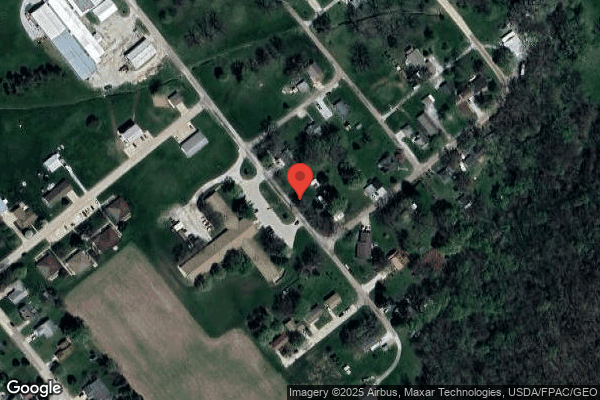
Understanding Severity Codes (click to expand)
Life-Threatening (Immediate Jeopardy)
J - Isolated K - Pattern L - Widespread
Actual Harm
G - Isolated H - Pattern I - Widespread
Potential for Harm
D - Isolated E - Pattern F - Widespread
No Harm (Minor)
A - Isolated B - Pattern C - Widespread

Questions to Ask on Your Visit

  • "What changes have you made since the serious inspection findings?"
  • "Can I speak with families of current residents?"
  • "What's your RN coverage like on weekends and overnight?"

Our Honest Assessment

Strengths
  • • 32% turnover. Below Iowa's 48% average. Good staff retention means consistent care.
Concerns
  • • Multiple safety concerns identified: 2 life-threatening violation(s), 4 harm violation(s), $49,309 in fines. Review inspection reports carefully.
  • • 25 deficiencies on record, including 2 critical (life-threatening) violations. These warrant careful review before choosing this facility.
  • • $49,309 in fines. Higher than 94% of Iowa facilities, suggesting repeated compliance issues.
  • • Grade F (21/100). Below average facility with significant concerns.
Bottom line: Trust Score of 21/100 indicates significant concerns. Thoroughly evaluate alternatives.

About This Facility

What is Montrose Health Center's CMS Rating?

CMS assigns Montrose Health Center an overall rating of 4 out of 5 stars, which is considered above average nationally. Within Iowa, this rating places the facility higher than 99% of the state's 100 nursing homes. This rating reflects solid performance across the metrics CMS uses to evaluate nursing home quality.

How is Montrose Health Center Staffed?

CMS rates Montrose Health Center's staffing level at 5 out of 5 stars, which is much above average compared to other nursing homes. Staff turnover is 32%, compared to the Iowa average of 46%. This relatively stable workforce can support continuity of care.

What Have Inspectors Found at Montrose Health Center?

State health inspectors documented 25 deficiencies at Montrose Health Center during 2022 to 2024. These included: 2 Immediate Jeopardy (the most serious level, indicating potential for serious harm or death), 4 that caused actual resident harm, and 19 with potential for harm. Immediate Jeopardy findings are rare and represent the most serious regulatory concerns. They require immediate corrective action.

Who Owns and Operates Montrose Health Center?

Montrose Health Center is owned by a for-profit company. For-profit facilities operate as businesses with obligations to shareholders or private owners. The facility operates independently rather than as part of a larger chain. With 44 certified beds and approximately 33 residents (about 75% occupancy), it is a smaller facility located in Montrose, Iowa.

How Does Montrose Health Center Compare to Other Iowa Nursing Homes?

Compared to the 100 nursing homes in Iowa, Montrose Health Center's overall rating (4 stars) is above the state average of 3.1, staff turnover (32%) is significantly lower than the state average of 46%, and health inspection rating (2 stars) is below the national benchmark.

What Should Families Ask When Visiting Montrose Health Center?

Based on this facility's data, families visiting should ask: "What changes have been made since the serious inspection findings, and how are you preventing similar issues?" "Can I visit during a mealtime to observe dining assistance and food quality?" "How do you handle medical emergencies, and what is your hospital transfer rate?" "Can I speak with family members of current residents about their experience?" These questions are particularly relevant given the facility's Immediate Jeopardy citations.

Is Montrose Health Center Safe?

Based on CMS inspection data, Montrose Health Center has documented safety concerns. Inspectors have issued 2 Immediate Jeopardy citations (the most serious violation level indicating risk of serious injury or death). The facility has a 4-star overall rating and ranks #1 of 100 nursing homes in Iowa. Families considering this facility should ask detailed questions about what corrective actions have been taken since these incidents.

Do Nurses at Montrose Health Center Stick Around?

Montrose Health Center has a staff turnover rate of 32%, which is about average for Iowa nursing homes (state average: 46%). Moderate turnover is common in nursing homes, but families should still ask about staff tenure and how the facility maintains care continuity when employees leave.

Was Montrose Health Center Ever Fined?

Montrose Health Center has been fined $49,309 across 3 penalty actions. The Iowa average is $33,572. While any fine indicates a compliance issue, fines under $50,000 are relatively common and typically reflect isolated problems that were subsequently corrected. Families should ask what specific issues led to these fines and confirm they've been resolved.

Is Montrose Health Center on Any Federal Watch List?

Montrose Health Center is not on any federal watch list. The most significant is the Special Focus Facility (SFF) program, which identifies the bottom 1% of nursing homes nationally based on persistent, serious quality problems. Not being on this list means the facility has avoided the pattern of deficiencies that triggers enhanced federal oversight. This is a positive indicator, though families should still review the facility's inspection history directly.