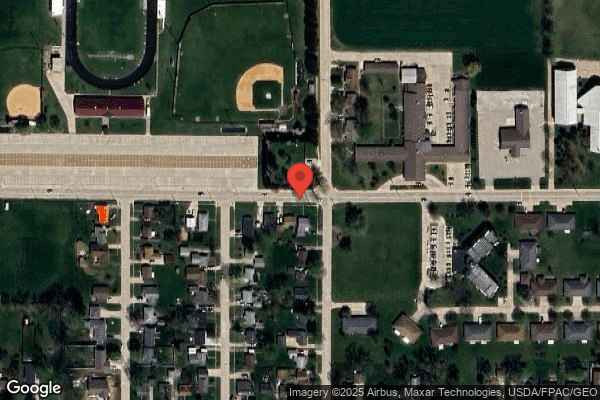
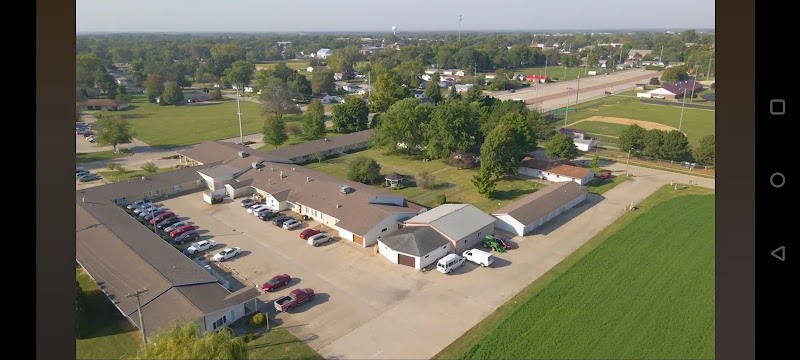
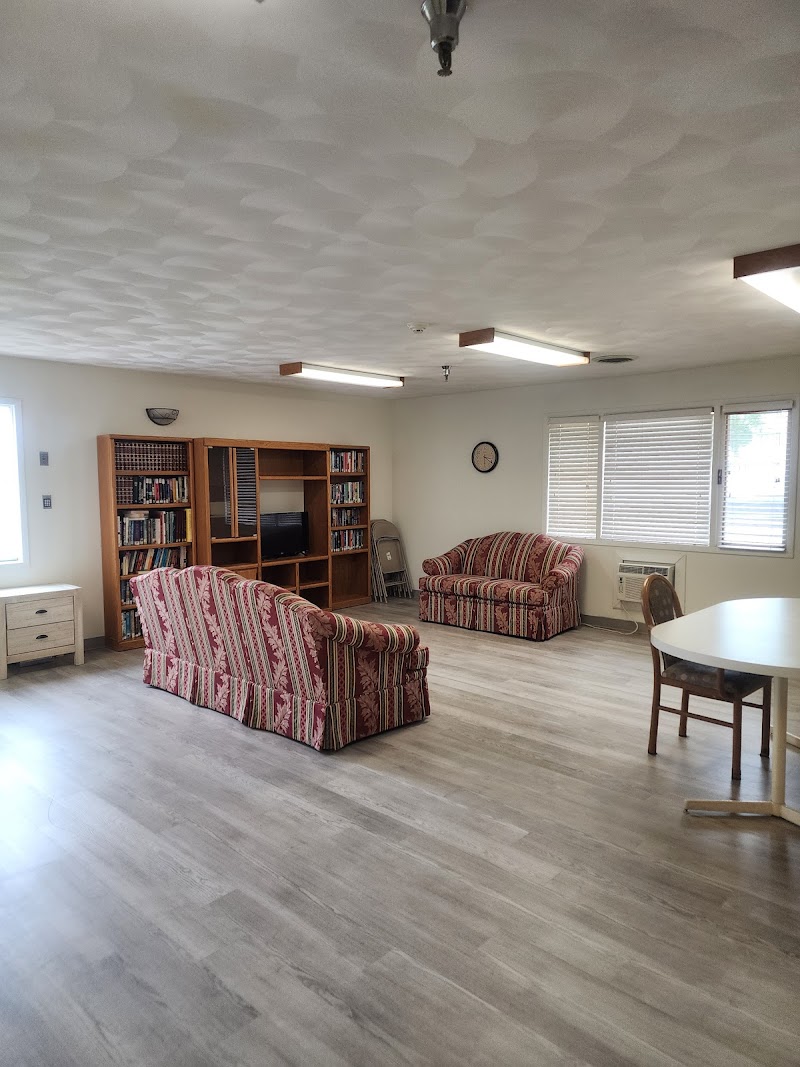
Arbor Court

701 East Mapleleaf Drive, Mount Pleasant, IA 52641 (319) 385-1400
For profit - Corporation 62 Beds MGM HEALTHCARE Data: November 2025 3 Immediate Jeopardy citations
Trust Grade
0/100
#323 of 392 in IA
Last Inspection: April 2025

Within standard 12-15 month inspection cycle. Federal law requires annual inspections.

Overview

Arbor Court in Mount Pleasant, Iowa, has a Trust Grade of F, which indicates significant concerns about the quality of care provided. It ranks #323 out of 392 in Iowa, placing it in the bottom half of facilities in the state, and #5 out of 6 in Henry County, meaning only one local facility is rated lower. While the facility is showing improvement, reducing issues from 10 in 2024 to 2 in 2025, it still faces serious challenges, including $160,435 in fines, which is higher than 97% of Iowa facilities, indicating ongoing compliance issues. Staffing is a weak point, with only 1 out of 5 stars and a turnover rate of 54%, which is above the state average. Notably, there have been critical incidents, such as a failure to provide necessary two-person assistance for a resident with mobility issues, and a lack of appropriate monitoring for residents on anticoagulation therapy, raising concerns about safety and quality of care.

Trust Score
F
0/100
In Iowa
#323/392
Bottom 18%
Safety Record
High Risk
Review needed
Inspections
Getting Better
10 → 2 violations
Staff Stability
⚠ Watch
54% turnover. Above average. Higher turnover means staff may not know residents' routines.
Penalties
○ Average
$160,435 in fines. Higher than 66% of Iowa facilities. Some compliance issues.
Skilled Nurses
⚠ Watch
Each resident gets only 26 minutes of Registered Nurse (RN) attention daily — below average for Iowa. Fewer RN minutes means fewer trained eyes watching for problems.
Violations
⚠ Watch
32 deficiencies on record. Higher than average. Multiple issues found across inspections.
★☆☆☆☆
1.0
Overall Rating
★☆☆☆☆
1.0
Staff Levels
★★★★☆
4.0
Care Quality
★☆☆☆☆
1.0
Inspection Score
Stable
2024: 10 issues
2025: 2 issues

The Good

  • 4-Star Quality Measures · Strong clinical quality outcomes
  • Full Sprinkler Coverage · Fire safety systems throughout facility
  • No fines on record

Facility shows strength in quality measures, fire safety.

The Bad

1-Star Overall Rating

Below Iowa average (3.0)

Significant quality concerns identified by CMS

Staff Turnover: 54%

Near Iowa avg (46%)

Higher turnover may affect care consistency

Federal Fines: $160,435

Well above median ($33,413)

Significant penalties indicating serious issues

Chain: MGM HEALTHCARE

Part of a multi-facility chain

Ask about local staffing decisions and management

The Ugly 32 deficiencies on record

3 life-threatening 2 actual harm
Apr 2025 2 deficiencies
CONCERN (D)

Potential for Harm - no one hurt, but risky conditions existed

Deficiency F0578 (Tag F0578)

Could have caused harm · This affected 1 resident

**NOTE- TERMS IN BRACKETS HAVE BEEN EDITED TO PROTECT CONFIDENTIALITY** Based on clinical record review, facility policy review, and staff interview, the facility failed to accurately obtain and imple...

Read full inspector narrative →
**NOTE- TERMS IN BRACKETS HAVE BEEN EDITED TO PROTECT CONFIDENTIALITY** Based on clinical record review, facility policy review, and staff interview, the facility failed to accurately obtain and implement advanced directives per resident and family directives upon admission for 1 of 1 residents (Resident #202) reviewed. The facility reported a census of 51 residents. Findings include: The Minimum Data Set (MDS), dated [DATE], revealed Resident #202 had been admitted to the facility on [DATE] from a short term general hospital. Review of Resident #202's Order Summary Report, dated [DATE], revealed a verbal order for CPR, effective [DATE]. Review of Resident #202's electronic health record (EHR) revealed a lack of a signed document, by Resident #202, Resident Representative, or physician, to confirm Resident #202's wishes for life sustaining measures. During an interview on [DATE] at 11:28 AM, the Director of Nursing (DON) retrieved a binder which included the resident's Iowa Physician Orders for Scope of Treatment (IPOST). An IPOST is a document that allows a person to communicate their preferences for key life-sustaining treatments such as CPR, full treatment verses comfort measures only, and artificial nutrition administration. The DON stated Resident #202's IPOST was not present in the binder. During an interview on [DATE] at 3:18 PM, the DON stated Resident #202's family was called on [DATE] and identified Resident #202's wished for DNR. DON stated an IPOST was completed indicating a DNR on [DATE] and faxed to the physician to be signed. During an interview on [DATE] at 3:25 PM, the Social Services Director (SSD) explained that a call was placed to Resident #202's family on [DATE], but she was unable to leave a voicemail. The SSD acknowledged she did not document the attempt to contact Resident #202's family on [DATE]. The facility policy, titled Advanced Directives, dated [DATE], revealed upon resident admission, the facility would provide a resident who is medically deemed competent, or resident representative, who does not have an existing Advance Directive with written information and instructions regarding the right to make Advanced Directives prior to the initiation of care or at any requested time. The Policy revealed all facility employees are responsible for implementation of Advanced Directive Policy. The Policy listed Social Services Director and Facility Administrator as responsible for monitoring this Policy.
CONCERN (D)

Potential for Harm - no one hurt, but risky conditions existed

Accident Prevention (Tag F0689)

Could have caused harm · This affected 1 resident

**NOTE- TERMS IN BRACKETS HAVE BEEN EDITED TO PROTECT CONFIDENTIALITY** Based on observations, clinical record review, and staff interviews, the facility failed to ensure 2 foot pedals used when a sta...

Read full inspector narrative →
**NOTE- TERMS IN BRACKETS HAVE BEEN EDITED TO PROTECT CONFIDENTIALITY** Based on observations, clinical record review, and staff interviews, the facility failed to ensure 2 foot pedals used when a staff pushed a resident in their wheelchair for 1 of 7 (Resident #17) reviewed for accidents. The facility reported a census of 51 residents. Findings include: 1. The Minimum Data Set (MDS) assessment dated [DATE] revealed Resident #17 scored a 00 on the Brief Interview for Mental Status (BIMS) exam, which indicated cognition severely impaired. The MDS indicated resident impaired on one lower extremity. The MDS indicated resident used a manual wheelchair and walker. The MDS revealed medical diagnoses for non-Alzheimer's dementia; hemiplegia or hemiparesis; arthritis; and hip fracture. The Care Plan revealed a focus area dated 10/10/24 for anytime ambulation program- increased risk for impaired physical mobility related to decreased strength, endurance, and chronic illness, as evidenced by generalized weakness ADL (Activities of Daily Living) self performance level and support level required to complete ADL task. During an observation on 4/06/25 at 2:39 PM, Resident #17 pushed in her wheelchair by staff. The resident had no foot pedal for the left foot while resident's wheelchair was pushed by staff. Observation on 4/06/25 at approximately 3:31PM, Staff C, Certified Nursing Assistant (CNA) pushed Resident #17 in her wheelchair, while the wheelchair had a foot pedal applied for one foot only. During an observation on 4/7/25 at 12:45 PM, Staff D, CNA assisted Resident #17 to out of a recliner and into a wheelchair. Staff D placed one foot pedal on the right side of the wheelchair and made a comment about the other foot pedal by the recliner. Staff D then asked Resident #17 to cross her legs on the one foot pedal. Resident #17's foot fell off the other foot and hung down as Staff D pushed the wheelchair out of the common area. During an interview on 4/8/25 at 2:03 PM, Staff A, CNA queried on how Staff A transported Resident #17 in her wheelchair, and stated Resident #17 self propelled. Staff A queried how they pushed Resident #17 in a wheelchair, and stated they put foot pedals on and pushed her. Staff A queried if they could push Resident #17 with one foot pedal, and stated no, not to her knowledge. During an interview on 4/8/25 at 2:44 PM, Staff B, CNA queried if she could push Resident #17 in her wheelchair with one pedal. Staff B stated she wouldn't push her from behind with one foot pedal because Resident #17 always dragged her feet. During an interview on 4/8/25 at 2:53 PM, Staff D, CNA queried if Resident #17 could be pushed in her wheelchair, stated yes, and acknowledged the resident needed two foot pedals. Staff D stated she got Resident #17 up and pushed her with one foot pedal to the bathroom. Staff D stated she tried to put the other foot pedal on the wheelchair but it didn't connect because a piece was broken. During an interview on 4/9/25 2:01 PM Staff C, CNA explained she worked Sunday from 6:00 AM to 6:00 PM. Staff C explained depended on the day whether Resident #17 used foot pedals, explained resident sometimes used, and sometimes didn't. Staff C further explained the second foot pedal peg that connected pedal to the chair was broken off. When queried if the connection piece broken when Staff C came in on Sunday, Staff C responded yes, and explained she was not sure if anyone else was aware. When queried if had been like that Saturday, Staff C could not recall. When queried how may pedals to have on if pushed in wheelchair, Staff C acknowledged two. During an interview on 4/9/25 at 2:41 PM, the DON (Director of Nursing) informed of the situations with one foot pedal used during wheelchair transport for Resident #17 and the DON stated Resident #17 needed 2 foot pedals when pushed if she was not able to keep her feet on one foot pedal. Per mail from the Administrator on 4/9/25 at 3:43 PM, no policy for wheelchair transports.
Nov 2024 5 deficiencies
CONCERN (D)

Potential for Harm - no one hurt, but risky conditions existed

Notification of Changes (Tag F0580)

Could have caused harm · This affected 1 resident

**NOTE- TERMS IN BRACKETS HAVE BEEN EDITED TO PROTECT CONFIDENTIALITY** Based on observation, clinical record review, policy review, resident, guardian, and staff interviews, the facility failed to no...

Read full inspector narrative →
**NOTE- TERMS IN BRACKETS HAVE BEEN EDITED TO PROTECT CONFIDENTIALITY** Based on observation, clinical record review, policy review, resident, guardian, and staff interviews, the facility failed to notify the legal guardian of laboratory refusals and resident change in condition for 1 of 5 resident reviewed for medication use (Resident #7). The facility reported a census of 50 residents. Findings include: The Minimum Data Set (MDS) assessment, dated 7/04/24, for Resident #7 listed diagnoses included schizophrenia, diabetes mellitus, stroke, aphasia (a disorder that affects a person's ability to understand and express language, including reading and writing), hemiplegia (paralysis or weakness on side of the body), and anxiety disorder. A Brief Interview for Mental Status (BIMS) score of 10 out of 15 indicated a moderate cognitive impairment. The MDS listed medications taken seven days a week which included insulin, antipsychotic, and an antidepressant. The MDS identified Resident #7 as not exhibiting rejection of care during the review period. A clinical record review revealed an Iowa District Court Letter of Appointment, issued on 6/10/24, that ordered [agency name redacted] to serve as guardian for Resident #7. The order included full power and authority to exercise any and all of the duties, powers, and responsibilities granted to guardians under Iowa Law. An Order Summary Report, signed by the Provider on 8/15/24, listed the following orders: a. BMP (basic metabolic panel - a test that measures eight different substances in the blood) laboratory draw every 6 months related to hypertensive (high blood pressure) heart disease. b. Psychological services and Medication Management. c. Use a Freestyle Libre for blood sugar checks (continuous blood glucose monitoring system) d. Basaglar Kwik Pen Subcutaneous (SQ) Solutions (insulin) 100 units/milliliter (ML). Inject 10 units SQ in the evening related to type 2 diabetes mellitus with hyperglycemia. e. Fiasp Flex Touch SQ Solution (insulin) Pen-injector 100 units/ML. Inject 8 units SQ before meals related to type 2 diabetes mellitus with hyperglycemia. f. Fiasp Flex Touch SQ Solution (insulin) Pen-injector 100 units/ML (insulin). Inject as per sliding scale insulin. g. Furosemide Tablet 40 milligrams (MG) (diuretic medication or often called a water pill). Give 1 tablet by mouth one time for swelling related to essential high blood pressure. h. A1C (hemoglobin A1C - a test that measures average blood sugar levels over the past three months) laboratory draw every 3 months. The Care Plan, Date Initiated: 3/10/23, Revision on 10/10/24 included a Focus area to address [Name redacted] has a history of/potential for resistance to care: Repositioning, pericare/check and change and outside appointments. Interventions did not include refusals to have blood drawn for lab work, and notifying the legal guardian of such refusals. During an observation on 11/12/24 at 11:15 AM, Resident #7 in bed, with the head of the bed elevated. Resident #7 stated she is fine and wanted more cookies. Cookies present on the residents bedside table, and within her reach. A review of Resident #7 clinical record revealed: a. An ear-Medication Administration Note on 9/01/24 at 1:10 PM, Note Text: BMP (Basic Metabolic Profile) one time a day every 6 month(S) starting on the 1st for 1 day(S) related to HYPERTENSIVE HEART DISEASE WITHOUT HEART FAILURE. Resident Refused to have blood draw. Educated resident about purpose of blood draw. Resident continues to refuse. The record did not include documentation that the residents legal guardian notified of the refusal. b. An INTERACT BAR (acronym for Situation, Background, Assessment, and Recommendation, communication tool) on 9/5/2024 at 5:26 PM, Note Text: The Change in Condition/S reported on this CIC (change in condition) Evaluation are/were: Other Change in condition at the tome of evaluation resident/patient vital signs, in part; Blood Glucose: BS: 501.0 9/5/24 R 5:08 PM .Primary Care Provider Feedback: Primary Care Provider responded with the following feedback: A. Recommendations: Give 18 U (units) short acting insulin, and recheck 30-45 minutes. The record did not include documentation that the residents legal guardian notified of the change in condition and provider recommendation. c. An ear-Medication Administration Note on 11/4/2024 at 9:54 AM, Note Text: A1C every shift every 3 month(s) starting on the 1st for 1 day(s) Resident refused Blood Draw. ARNP (Advanced Registered Nurse Practioner) Aware. The record did not include documentation that the residents legal guardian notified of the refusal. d. A Nurses Note on 11/8/2024 at 9:02 AM, Note Text: Left great toe bumped on the hoyer during transfer after her shower. Scratch noted on cuticle that is bleeding a small amount. Bandage applied. Shower chair caused a superficial open area on gluteal [NAME] that measures 2x1x0 cm (centimeter). Barrier cream applied per order. The record did not include documentation that the residents legal guardian notified of the injury. During an interview on 11/13/24 at 5:00 PM , the Assistant Director of Nursing reported Resident #7 had refused her last BMP draw and it was documented in the progress notes on 9/01/24. The ADON voiced Resident #7 refuses her blood draws all the time. She really hates them. During an interview on 11/14/24 at 7:33 AM, Staff F, Licensed Practical Nurse (LPN) verbalized Resident #7 is confused at times. She has whole conversations with other people in her head, so you never know what you're going to get when you walk in her room. She was in and out of psychiatric wards long before she was at the facility. She has been this way a long time. Staff F had to ask the Director of Nursing (DON) who they notify of Resident #7 new orders. Staff F could not answer if it was appropriate for Resident #7 to be making her own decisions and asked the DON. During an interview on 11/14/24 at 7:34 AM, the DON responded to Staff F Resident #7 guardian should be notified of new orders. The DON voiced she knew Resident #7 had refused her last laboratory draw on 9/01/24. She would have to look further into Resident #7 to see if the guardian or the physician had been notified of the refused laboratory draws. During an interview on 11/14/24 8:51 AM, the court appointed legal guardian representative for Resident #7 reported she did not know anything about the resident refusing a lab draws or that the resident had a history of refusing laboratory draws. She has not been notified of any changes in the residents health condition. The only time she finds things out is when she goes to the facility. She comes to the facility monthly. She checks in with whoever is at the desk and then she goes to see the resident and looks her over. She wants to be involved in Resident #7 care and would have wanted to be informed that Resident #7 refused her laboratory draw as something like that at Resident #7 age is not good. During an interview on 11/14/24 at 9:45 AM, Resident #7 Physician reported residents have rights and he is aware of Resident #7's condition and refused labs. He feels the facility does the best they can. He voiced his next visit at the facility is 11/22/24 and he had planned to talk with Resident #7 about the missed lab draws and encourage her to have her labs drawn. During an interview on 11/14/24 at 10:14 AM, the DON reported Resident #7 had also refused her A1C lab (measures the average level of glucose (sugar) in your blood over a period of about three months; a test used to monitor diabetes) on 11/04/24 and the Advanced Registered Nurse Practitioner (ARNP) was notified at that time, but the ARNP and guardian had not been notified of the laboratory draw refusal on 9/01/24. The facility also had not notified the guardian of the laboratory refusal on 11/04/24. The DON verbalized the nurses would normally contact the guardian on something like that. During an interview on 11/14/24 a 10:16 AM, the Administrator reported she thought the facility originally had been the one to start the guardianship process. She voiced there was a temporary guardianship in place in June 2024. There was a progress note on 10/07/24 that the facility received the final permanent guardianship. She voiced the facility should have notified the guardian of any changes to the resident from the time of the temporary guardianship. The facility policy, dated 4/26/23, titled Notification of a Change in Condition Policy statement declared the Attending Physician/Physician Extender (Nurse Practitonioner, Physician Assistant, or Clinical Nurse Specialist) and the Resident Representative will be notified of a Change in a Resident's Condition per Standards of Practice and Federal and/or State Regulations. The section titled Procedure 1. Guideline for Notification of Physician/Resident Representative (not all inclusive); in part, Significant Change or Unstable Vital Signs, Accident/Incident, Abnormal Laboratory Results, Repeated refusal to take prescribed medications, Glucometer reading below 70 or above 200 (unless specific parameters were given by the Physician for reporting.). 2. Document in the Interdisciplinary Team (IDT) Notes, included, in part; Notification of Resident Representative.
CONCERN (D)

Potential for Harm - no one hurt, but risky conditions existed

PASARR Coordination (Tag F0644)

Could have caused harm · This affected 1 resident

Based on observation, clinical record review, and staff interviews the facility failed to ensure resubmission of the a Preadmission Screening and Resident Review (PASRR) after a change in mental healt...

Read full inspector narrative →
Based on observation, clinical record review, and staff interviews the facility failed to ensure resubmission of the a Preadmission Screening and Resident Review (PASRR) after a change in mental health diagnoses for 1 of 1 residents reviewed (Resident #21). The facility reported a census of 50 residents. Findings include: The Minimum Data Set (MDS) for Resident #21, dated 9/26/24, included the following diagnoses: anxiety disorder; major depressive disorder, moderate, recurrent; pervasive developmental disorder; adjustment disorder; and psychotic disorder. The Brief Interview for Mental Status (BIMS) score of 15 out of 15, included intact cognition. The clinical record revealed Resident #21's diagnoses list with date added to the record. The list reflected Major Depressive Disorder, single episode, unspecified 5/28/19; Anxiety Disorder unspecified 5/28/19; Pervasive Developmental Disorder 5/28/19; Generalized Anxiety Disorder 5/28/19; Adjustment Disorder unspecified 5/28/19; Major Depressive Disorder, recurrent, moderate 7/1/24; and Unspecified Psychosis not due to a substance or known physiological condition 7/1/24. A document titled PASRR Notice of Exemption From PASRR, dated 5/27/19, recorded the resident did not meet the criteria for serious mental illness or a developmental condition and was not subject to PASRR requirements at that time. Page 2 further noted the resident was diagnosed with Depressive Disorder, Generalized Anxiety Disorder, and Rule Out Agoraphobia with symptoms of tearfulness, anxiety, and worry. A Psychiatric Initial Assessment, dated 2/1/24, revealed the resident was experiencing symptoms of depression, anxiety, psychosis, and insomnia. The Assessment/Plan section documented diagnoses of generalized anxiety disorder, major depressive disorder, and unspecified psychosis not due to a substance or known physiological condition. A Psychiatric Subsequent Assessment, dated 11/11/24, diagnoses list included Generalized Anxiety Disorder, Major Depressive Disorder (recurrent, moderate), Insomnia, and Unspecified psychosis not due to a substance or known physiological condition. During an observation on 11/13/24 at 10:59 AM, Resident #21 returned to her room. The resident stated she has mental health services via telehealth. She stated she could not remember if staff discussed her mental health with her recently and thought she would report concerns to the nurse. During an interview on 11/13/24 at 04:47 PM, the Director of Nursing reported the Social Services Director (SSD) was responsible for completing PASRR when diagnoses changed. She stated nursing got the orders and social services did the therapies because they had a closer relationship with the providers. During an interview on 11/13/24 at 5:02 PM, the SSD stated an updated PASRR would be submitted if there was a new diagnosis or change in status. Diagnoses for Resident #21 and the exemption were reviewed with the SSD who said she would have to look into it. On 11/14/24 at 10:10 AM, the SSD confirmed a new PASRR needed to be submitted. She was not sure why it had not been done at the time of the new diagnosis in February and indicated she was not aware the diagnoses had been added to the resident's diagnosis list in July. During an interview on 11/14/24 07:32 AM, the Administrator stated after review she determined the actual change in diagnoses happened in January. The prior SSD left in December, and she herself had been responsible for helping with PASRRs during those staff transitions. They missed adding the new diagnoses to the list in January and therefore did not submit a new PASRR. A staff member only working at the facility for a month added the diagnoses in July, and did not communicate it to the team which was why there was not a new submission then either. The facility did not have steps in place to audit for missing PASRRs. On 11/14/24 at 11:17 AM, the Administrator stated the facility did not have a policy related to PASRR submission, and followed federal guidelines established for the contracted company completing the assessments.
CONCERN (D)

Potential for Harm - no one hurt, but risky conditions existed

Deficiency F0698 (Tag F0698)

Could have caused harm · This affected 1 resident

Based on clinical record review, resident and staff interviews, the facility failed to complete post dialysis assessments for 1 of 1 residents sampled (Resident #12). The facility identified a census ...

Read full inspector narrative →
Based on clinical record review, resident and staff interviews, the facility failed to complete post dialysis assessments for 1 of 1 residents sampled (Resident #12). The facility identified a census of 50 residents. Findings include: The Minimum Data Set (MDS) assessment, dated 11/01/24, for Resident #12 documented a Brief Interview for Mental Status (BIMS) score of 9 out of 15 indicating moderate cognitive loss. The MDS identified Resident #12 received dialysis for a diagnosis of end stage renal disease. The Care Plan, Date Initiated: 9/8/24 included a Focus area to address Dialysis at [provider name redacted] on M-W-F (Monday-Wednesday-Friday) at 10 AM and transportation via [provider name redacted] transport. A review of the October 2024 Electronic Registered Nurse/Licensed Practical Nurse Medication Administration Record (RN/LPN MAR) revealed an order, dated 9/6/24, Vital Signs prior to sending and returning from dialysis two times a day every Mon, Wed, and Fri. The vital signs documented at 0700 (7:00 AM) and 1500 (3:00 PM) included: BP (blood pressure), Temp (temperature), Pulse, Resp (respirations). Vitals signs were not documented at 1500 on 10/7/24, and 10/28/24. A review of the November 2024 RN/LPN MAR revealed a continued order, dated 9/6/24, Vital Signs prior to sending and returning from dialysis two times a day every Mon, Wed, and Fri. Vital signs were not documented at 1500 on 11/4/24, and 11/11/24. During an interview on 11/13/24 at 12:22 PM, Staff D, Registered Nurse (RN) reported the nurses do vital signs as part of the pre and post dialysis assessment. They have a dialysis communication form they fill out, place in a binder and the binder goes to and from dialysis with Resident #12. They also record the fistula assessment on the MAR. A 11/13/24 3:30 PM review of Resident #12 dialysis binder revealed the following: a. The Dialysis Communication Record, undated, with the 10/07/24 local dialysis center documentation lacked documentation of any post dialysis assessment for vital signs. b. The Dialysis Communication Record, undated, with the 10/28/24 local dialysis center documentation lacked documentation of any post dialysis assessment for vital signs. c. The Dialysis Communication Record, undated, with the 11/04/24 local dialysis center documentation of a post dialysis assessment for vital signs. c. The Dialysis Communication Record 11/11/24 lacked documentation of a post dialysis assessment of Resident #12 vital signs. A review of the electronic health record sections for vital signs, progress notes and assessments revealed no documentation for vital signs or assessments post dialysis (1500) for Resident #12 on October 7, 28 and November 4 and 11. During an interview on 11/13/24 at 4:33 PM, Staff D RN reported the post dialysis assessment if it was done should be documented on the dialysis communication sheet or in the electronic health care record. She is aware they are to do a post dialysis assessment to ensure a resident is stable. She verbalized the assessment may have gotten written on a piece of paper and never made it to the resident's chart. During an interview on 11/13/24 at 4:38 PM, the Director of Nursing reported if the post dialysis assessment was not on the (dialysis communication) paper or in the computer, most likely it got done, but did not get documented. If it wasn't documented, it wasn't done. The DON verbalized she would check to see if the facility had a procedure for completing post dialysis assessments. During an interview on 11/13/24 at 6:12 PM, the Administrator responded the facility follows dialysis professional standards of practice. The facility did not have a dialysis assessment policy.
CONCERN (E)

Potential for Harm - no one hurt, but risky conditions existed

Deficiency F0865 (Tag F0865)

Could have caused harm · This affected multiple residents

Based on Centers for Medicare and Medicaid Services (CMS) Certification and Survey Provider Enhanced Reports Reporting (CASPER) system, review of the facility Quality Assurance Performance Improvement...

Read full inspector narrative →
Based on Centers for Medicare and Medicaid Services (CMS) Certification and Survey Provider Enhanced Reports Reporting (CASPER) system, review of the facility Quality Assurance Performance Improvement (QAPI) Policy, and staff interview the facility failed to ensure effective measures had been taken to correct deficiencies that continue. The facility reported a census of 50 residents. Findings include: A review of the facility CASPER report revealed the facility cited for F641 (Accuracy of Assessments) in February 2024 and will be cited during the current recertificaton survey. A review of Resident #49 and #18 Minimum Data Set (MDS) Comprehensive Assessments showed both coded as no, for use of tobacco in Section J Health Conditions. On 11/13/24 at 4:49 PM, the Director of Nursing acknowledged that Resident #49 and Resident #18 currently smoked at the facility. On 11/13/24 at 4:52 PM Staff A, MDS Coordinator acknowledged both Resident #49 and #18 were coded wrong and she would be submitting (MDS) corrections. Staff A stated they have a policy for MDS accuracy. During an interview on 11/13/24 at 5:18 PM the Administrator reported she had just audited the MDS for smoking not that long ago and everything should have been coded correctly. She couldn't believe there was an issue with the MDS coding. She voiced they do not have an MDS policy, the facility utilizes the CMS Resident Assessment Instrument (User's Manual) for MDS coding. Interview on 11/14/24 at 10:10 AM the Administrator, with the Regional Director of Operations and DON present stated regarding the F641 Citation, the new MDS Coordinator was aware of the plan of correction from the last survey for the F641 MDS accuracy tag. They had audited through the Quality Assurance (QA) program the medication section of the MDS for accuracy and they looked at the MDS as a whole for accuracy. She reported they had looked at the smoking issue as a whole more in regard to care plan verses the MDS, but had looked at MDS as part of the process. A review of the facility Quality Assurance & Process Improvement (QAPI) Policy, dated 8/20/20, directed the QAPI Plan will describe how the facility will ensure care & services are delivered, meet accepted standards of quality, identify problems and opportunities for improvement, and ensure progress towards improvement is achieved and sustained. The QA Committee will meet monthly to assess and monitor the quality of services provided to residents and identify potential problems or areas of opportunity for improvement. The QA Committee will implement and systematically evaluate programs and processes to identified problems in order to proactively improve health care delivery. The QAPI Policy Procedure included: a. Performance improvement is a proactive and continuous study of processes with the intent to prevent or decrease the likelihood of problems by identifying areas of opportunity and implementing new approaches to resolve systemic problems. b. Utilize data obtained from a variety of sources to identify quality problems or opportunities for improvement and set priorities for resolution. c. Perform root cause analysis, identify trends/patterns, set targets, & implement action items to improve the process.
MINOR (B)

Minor Issue - procedural, no safety impact

Assessment Accuracy (Tag F0641)

Minor procedural issue · This affected multiple residents

**NOTE- TERMS IN BRACKETS HAVE BEEN EDITED TO PROTECT CONFIDENTIALITY** 2.The MDS, dated [DATE], for Resident #18 included a BIMS score of 12 out of 5 indicating moderate cognitive impairment. MDS Sec...

Read full inspector narrative →
**NOTE- TERMS IN BRACKETS HAVE BEEN EDITED TO PROTECT CONFIDENTIALITY** 2.The MDS, dated [DATE], for Resident #18 included a BIMS score of 12 out of 5 indicating moderate cognitive impairment. MDS Section J Health Conditions documented Resident #18 did not utilize tobacco. Staff A, MDS Coordinator signed she completed Section J Health Conditions for accuracy on 8/14/24. During an interview on 11/13/24 at 11:49 AM, Resident #18 stated she is a current smoker. Resident #18 stated she smokes in the designated smoking area at the allowed times with supervision. Resident #18 verbalized she smokes 2-3 times per day. During an interview on 11/13/2024 at 12:13 PM, with Staff C, CNA revealed Resident #18 has smoked since she was admitted to the facility. During an interview on 11/13/24 at 4:49 PM, the DON acknowledged that Resident #49 and Resident #18 currently smoked at the facility. The DON verbalized she did not understand why it was coded wrong on the MDS and she needed to check with the MDS Coordinator. During an interview on 11/13/24 at 4:52 PM, Staff A, MDS Coordinator acknowledged both Resident #49 and #18 were coded wrong and she would be submitting (MDS) corrections. Staff A stated they have a policy for MDS accuracy. During an interview on 11/13/24 at 5:18 PM, the Administrator reported she audited the MDS for smoking not that long ago and it should been coded correctly. She voiced they do not have an MDS policy, they utilize the RAI for MDS coding. The LTC RAI 3.0 User's Manual Version 1.19.1 October 2024 page 1-4 documents the RAI process has multiple regulatory requirements. Federal regulations at 42 CFR (Code of Federal Regulations) 483.20 (b)(1)(xviii), (g), and (h) require that the assessment accurately reflects the resident's status. Page J-26 for Section J Health Condition instructs to code yes if the resident or any other source indicates that the resident used tobacco in some form during the look-back period. Based on clinical record review, Center for Medicare and Medicaid Services Long-Term Care Facility Resident Assessment Instrument 3.0 User's Manual, resident and staff interviews, the facility failed to complete the Minimum Data Set to accurately reflect the tobacco status for 2 of 2 residents reviewed for smoking (Resident #49 and #18). The facility identified a census of 50 residents. Findings include: 1. A Minimum Data Set (MDS) assessment, dated 9/30/24, for Resident #49 included a Brief Interview for Mental Status (BIMS) score of 15 out of 15, indicating intact cognition. MDS Section J Health Conditions indicated Resident #49 did not utilize tobacco. MDS Section V Assessment Administration documented I certify that the accompanying information accurately reflects resident assessment information for this resident and that I collected or coordinated collection of this information on the dates specified. To the best of my knowledge, this information was collected in accordance with applicable Medicare and Medicaid requirements. I understand that this information is used as a basis for ensuring that residents receive appropriate and quality care, and as a basis for payment from federal funds. I further understand that payment of such federal funds and continued participation in the government-funded health care programs is conditioned on the accuracy and truthfulness of this information, and that I may be personally subject to or may subject my organization to substantial criminal, civil, and/or administrative penalties for submitting false information. I also certify that I am authorized to submit this information by this facility on its behalf. Staff A signed she completed Section J Health Conditions on 10/01/24. A 9/24/24 Smoke Safety Evaluation identified Resident #49 utilized tobacco and did not exhibit any safety concerns with smoking. A Progress Note dated 9/24/24 at 10:43 AM, completed by the Director of Nursing (DON) documented Resident #49 goes out to smoke and is safe to smoke. A Progress Note dated 9/25/2024 at 5:11 PM, completed by the Assistant Director of Nursing (ADON) documented Resident #49 adjusting well to the facility and went out to smoke on all three smoke breaks today. During an interview on 11/12/24 at 11:09 AM, Resident #49 reported he goes out three times a day to smoke and his smoking supplies are kept at the nurses station. A staff member always goes out to smoke with him During an interview on 11/13/24 at 1:45 PM, Staff B, Certified Nursing Assistant (CNA) reported Resident #49 has smoked since he admitted to the facility. During an interview on 11/13/24 02:05 PM Staff C, CNA reported Resident #49 has always gone out to smoke since he was admitted .
Jul 2024 5 deficiencies 1 IJ
CRITICAL (J) 📢 Someone Reported This

A family member, employee, or ombudsman was alarmed enough to file a formal complaint

Immediate Jeopardy (IJ) - the most serious Medicare violation

Accident Prevention (Tag F0689)

Someone could have died · This affected 1 resident

**NOTE- TERMS IN BRACKETS HAVE BEEN EDITED TO PROTECT CONFIDENTIALITY** 2. The MDS assessment dated [DATE] revealed Resident #53 BIMS score 12 out of 15 indicating a moderate cognitive impairment. The...

Read full inspector narrative →
**NOTE- TERMS IN BRACKETS HAVE BEEN EDITED TO PROTECT CONFIDENTIALITY** 2. The MDS assessment dated [DATE] revealed Resident #53 BIMS score 12 out of 15 indicating a moderate cognitive impairment. The MDS revealed the resident dependent with chair/bed to chair transfers and used a wheelchair. The MDS revealed a diagnosis of hemiplegia, unspecified affecting left dominant side. The Care Plan revealed a focus area dated 4/17/24 for ADL (Activities of Daily Living) self-care performance deficit for left-sided hemiplegia. The interventions dated 5/14/24 revealed transfers with an assist of 2 with a mechanical lift and use of a green sling. The EHR (Electronic Health Record) revealed the following Physician Orders: a. Start date 7/2/24- monitor left forearm skin tear and bruising until healed every shift for skin tear and bruising b. Start date 7/2/24- left forearm: gently cleanse ST (skin tears) with NS (normal saline), apply house stock moisturizer or A&D ointment daily u/h (until healed). May cover if needed every day shift for Skin tear During an interview on 7/1/24 at 11:49 AM, Resident #53 stated she transferred with an mechanical lift, but she had an accident with a non mechanical lift. She stated she ended up scraping and bruising her left arm. The Resident stated they helped her stand up and she didn't have any control of her left arm and her arm dangled and when the girls stood her up, her arm scraped against a screw on the non mechanical lift. During an observation on 7/1/24 at 12:00 PM, Resident #53 had a large band-aid on her left forearm. She peeled the band-aid back and a large purple bruise with skin tears observed underneath. During an interview on 7/2/24 at 11:20 AM, the Administrator stated she didn't know of any recent incidents that occurred with Resident #53 and she would need to look into it. The Investigation Notes on July 2nd, 2024 revealed on 6/28/24 nursing staff (Staff D, CMA (Certified Nurse Aide), Staff B, CNA (Certified Nurse Aide), and Staff H, CNA) used a non-mechanical stand-aid with a gait-belt to stand resident up. While using non-mechanical stand-aid, resident's flaccid left arm came into contact with the side of non-mechanical stand-aid while sitting back down into her wheelchair, causing skin tears. The nurse evaluated the resident's skin and initial treatment to left arm was performed. [name redacted] ARNP (Advanced Registered Nurse Practitioner) was made aware of the incident. a. An investigation initiated with the following completed 1. ARNP notified 2. Interviewed Resident #53 3. Interviewed Resident #53 roommate 4. Interviewed Staff: Staff D, Staff B, Staff H, and Staff E, LPN (Licensed Practical Nurse) b. Upon completion of the investigation the facility was able to determine the injury occurred when Resident #53 left flaccid arm came into contact with the non-mechanical stand aid. Interventions implemented to prevent further occurrences. As a result of the investigation the following interventions have been put in place: 1. Education opportunity for staff identified of monitoring all limbs when transferring residents. 2. Maintenance evaluated non-mechanical sit-stand to ensure equipment is in proper working order; no faulty equipment noted or reported. 3. Care plan and Kardex reviewed, all interventions and current plan of care remains appropriate at this time. 4. Treatment Administration Record (TAR) updated to include skin monitoring until site resolved. The Care Plan revealed a focus area dated 7/2/24 for a skin tear of the left forearm. The interventions dated 7/2/24 revealed identify potential causative factors and eliminate/resolve when possible; inform/instruct staff of causative factors and measures to prevent skin tears; and use caution during transfers and bed mobility to prevent striking arms, legs, and hands against any sharp or hard surface. The Progress Note dated 6/28/2024 19:20 (late entry created on 7/3/24 at 6:21 AM) revealed CNA's reported to this nurse they were trying to put res to bed when they noticed that res did not have a mechanical lift sling on. PT (Physical Therapy) used non-mechanical sit to stand and sling was not placed under resident after transfer. 3 CNA's used the non-mechanical sit to stand to aid resident in standing to place sling back under resident to transfer resident with a mechanical lift. When resident stood, her left arm hit the lift. 3 skin tears were noted. ARNP [name redacted] notified and new orders received for xeroform and mepilex until healed. The Weekly Wound Observation dated 7/2/24 at 12:27 PM revealed the following information: a. Location: left forearm b. Date acquired: 6/28/24 c. Type: other- skin tear d. Overall impression: improving e. Comments: skin flaps intact and adhered f. Wound measurements 1. 2.5 cm (centimeters) in length; 2.1 cm in width; and 0 cm in depth g. Peri-wound tissue: intact with bruising h. Wound edges defined i: Treatment plan: apply house stock moisturizer daily j. Evaluation of wound progress: skin flap intact and adhered The Progress Note dated 6/28/24 at 8:20 PM (late entry dated on 7/2/24 at 2:23 PM) revealed this provider was notified by on duty nurse of skin tears to left elbow while using the non-mechanical stand aide. Skin well approximated. Area cleaned covered with zero form and mepilex dressing applied. During an interview on 7/2/24 at 4:39 PM, Staff B stated Resident #53 used a mechanical lift for transfers and she didn't have a sling under her in the wheelchair and wanted to get back in bed. Staff B thought PT changed her status so she went and asked Staff D and she said the resident needed a sling under her. Staff B stated she took Staff H in with her to help get Resident #53 stood up to get a sling under her and they couldn't do it, so Staff B asked Staff D to assist them. Staff B stated Staff D came in and they put a gait belt on Resident #53 and Staff D and Staff H used the non mechanical lift with Resident #53 and as the resident held onto the bar with her right hand Staff D and Staff H pulled the resident up with the gait belt as she put the sling under her in the wheelchair. Staff B stated they noticed the bleeding when they sat her back down. Staff B stated she thought the resident hit her arm on the nut on the side of the non mechanical lift bar. Staff B stated the resident didn't say anything when it happened and the left side was the resident's bad side. Staff B stated that was the first time they used a non mechanical lift with the resident, because the resident used a mechanical lift. Staff B stated therapy worked with the resident that day and forgot to put the sling back in the wheelchair. During an interview on 7/2/24 at 5:44 PM, Staff D stated she recalled the incident with Resident #53. She stated a CNA came and got her and didn't know how to get the sling under Resident #53. Staff D stated therapy didn't put the sling under her after they worked with the resident. Staff D stated she suggested using the non mechanical lift and a gait belt. Staff D stated she went under the good arm and Resident #53 used her good arm on the bar and when the resident sat back down, they noticed she was bleeding and went and told Staff E and she took care of the rest. Staff D stated she didn't know how else to get her up because she used a full body sling and her wheelchair didn't have much wiggle room. Staff D stated this situation never occurred before and it shouldn't of been an issue because therapy should put the slings back in the wheelchair. During an interview on 7/2/24 at 6:17 PM, Staff H stated he was training with another CNA and Staff B stated she needed help getting Resident #53 up. Staff H stated therapy used a non mechanical lift with the resident and we didn't feel comfortable doing that so they asked Staff D to come in and help them put a sling under her with the non mechanical lift. Staff H stated Resident #53 only had mobility on one side. Staff D stated when they put the sling under the resident, her bad arm got caught on the bolt. Staff D stated the resident tried to help but her left arm was like dead weight and not movable. Staff D stated the resident tried to pull herself up with her right hand on the non mechanical lift bar. During an observation 7/3/24 at 8:56 AM, Staff F, LPN performed wound care on Resident #53 left arm. Resident #53 had dark purple bruising with 3 skin tears to the left lower arm. The skin flaps adhered to the skin. During an interview on 7/3/24 at 9:12 AM, Staff F stated she just found out about the wound yesterday and did the wound measurements then. During an interview on 7/3/24 at 10:10 AM, Staff E stated she knew about the incident with Resident #53. She stated Resident #53 didn't have a sling under her and they used the non mechanical lift to stand her up and they didn't hang onto Resident #53 arm and she got a skin tear from the non mechanical lift. Staff E stated she notified the ARNP and cleaned the resident's arm up, but forgot to chart it on the day it happened. During an observation on 7/3/24 at 10:23 AM, a blue colored non mechanical lift in the PT room. Bolts on the lateral side of the horizontal bars. During an interview on 7/3/24 at 10:28 AM, Staff I, PT Assistant stated she remembered doing a non mechanical transfer with her. Staff I stated she didn't put the sling back in the chair because she forgot. Staff I stated she can practice with Resident #53 with the non mechanical lift but the CNA should not use it. Staff I stated Resident #53 took a moderate to a maximum of 2 staff because she didn't have much function to her left and no functioning in her left arm. Staff I stated once she got her to stand, Resident #53 stood really good on her left leg. Staff I stated the staff could of pushed the sling down her back. Staff I stated it wouldn't of been easy, but it could be done. Staff I stated she wouldn't say the CNA should use the non mechanical lift, but she should of remembered to put the sling back in the chair. During an interview on 7/3/24 at 1:29 PM, the Director of Nursing (DON) stated she thought the staff were trying to transfer the resident the safest way possible. The DON queried if she would of recommended a different approach and she stated she couldn't say because she never transferred the resident before. The DON stated it was a possibility to tuck the sling under her, other ways to get the sling under her. During an interview on 7/3/24 at 3:01 PM, the DON stated she wanted to clarify the staff didn't transfer the resident, they used the non mechanical lift to stand her up to place the sling under to transfer the resident in the mechanical lift. The DON stated the resident used the full body sling and not the criss cross between the legs sling. The Facility Sit to Stand Lift Transfer dated 10/25/22 revealed the following information: a. Instruct the resident to hold onto the grab bars of the lift with both hands. Based on observation, interview, facility investigation review, and facility policy review the facility failed to ensure a severely cognitively impaired resident identified at risk for elopement, with wandering behaviors free from elopement on 4/30/24. The resident went through a set of double doors into a common area by the beauty salon, went through a door into the unoccupied assisted living portion of the facility when the keypad was disengaged, and exited through a third door present on the unoccupied assisted living portion of the facility which lead directly to the outside of the facility. The third door the resident exited from, present on the unoccupied assisted living section of the facility, did not alarm to the nursing home section of the facility for 1 of 1 resident reviewed for elopement (Resident #25). This deficient practice resulted in an Immediate Jeopardy (IJ) to the health and safety of residents who resided at the facility. The facility also failed to adhere to the plan of care when a resident dependent on a mechanical lift was raised up off of a wheelchair via the assistance of a non-mechanical lift, resulting in skin tears and bruising to the left lower arm for 1 of 4 residents reviewed for accidents (Resident #53). The State Agency informed the facility of IJ that began as of April 30, 2024 on July 2,2024 at 12:25 PM. The Facility Staff removed the Immediate Jeopardy on July 2, 2024 through the following actions: a. 100% Headcount of all Residents on 4/30/24 b. 100% Elopement Risk assessment completed on all residents on 4/30/24 c. 100% Care plan audit for all residents determined to be at risk for elopement on 4/30/24 d. Facility conducted 100% audit of all external doors to ensure they are in proper working order on 4/30/24 e. Door lock changed on 4/30/24 to assisted living interior door f. Facility conducted elopement drills x 3 shifts 4/30-5/1/24 g. Facility conducted Ad Hoc QAPI to address this alleged deficient practice on 4/30/24 h. Elopement binder updated on 4/30/24 i. Staff in-service on Elopement Policy on 4/30/24 The scope lowered from a J to D at the time of the survey after ensuring the facility implemented education and their policy and procedures. The facility identified a census of 55 residents. Findings include: 1. The Minimum Data Set (MDS) assessment dated [DATE] revealed Resident #25 scored 3 out of 15 on a Brief Interview for Mental Status (BIMS) exam, which indicated severely impaired cognition. Per this assessment, the resident had inattention and disorganized thinking which fluctuated, had delusions, and wandered daily. Review of Medical Diagnoses for Resident #25 revealed, in part, paranoid personality disorder, schizophrenia, and vascular dementia without behavioral disturbance, psychotic disturbance, mood disturbance, and anxiety. The Care Plan dated 1/30/24, revised and canceled on 5/3/24, revealed the following: History/potential for behavior problem. Resident is no longer allowed to smoke as he is at high risk for elopement. Interventions per the Care Plan included the following: a. (Initiated 1/30/24, revised/canceled 5/3/24): Administer medications as ordered. Monitor/document for side effects and effectiveness. b. (Initiated 1/30/24, revised/canceled 5/3/24): Anticipate and attempt to meet needs. c. (Initiated 1/30/24, revised/canceled 5/03/24): Explain all procedures before starting and allow time to adjust to d. (Initiated 1/30/24, revised/canceled 5/03/24): Intervene as necessary to protect the rights and safety of others. Approach/Speak in a calm manner. Divert attention. Remove from situation and take to alternate location as needed. e. (Initiated 1/30/24, revised/canceled 5/3/24):Observe behavior episodes and attempt to determine underlying cause. Consider location, time of day, persons involved, and situations. Document behavior and potential causes. f. (Initiated 2/2/24, revised/canceled 5/03/24): Wander Guard in Place The Care Plan dated 1/30/24 revealed, the resident has depression and insomnia with diagnosis of schizophrenia. The Elopement Risk Evaluation V 2.0 dated 1/29/24 and 4/2/24 revealed the resident at risk for elopement, and the resident scored 4 on both assessments. It was noted a score of greater than one indicated at risk for elopement. Review of Progress Notes prior to Resident #25's exit from the building on 4/30/24 revealed the following: Review of Hospital Records from a visit dated 1/27/24 revealed, during time of his ED (emergency department) evaluation, patient had evaded our staff members when he was utilizing the bathroom, eloping from our facility as search was performed including contacting local law enforcement. Patient identified at gas station where [Hospital Name Redacted] EMS (Emergency Medical Services) identified him as well as patient voluntarily returned to our ED via EMS. Review of a Behavior Note dated 3/23/24 at 4:49 AM revealed, Resident has been pacing the halls constantly this shift, going in to other resident's rooms, and is short tempered with staff, especially when we attempt to redirect him from going into other resident's rooms. Message left with [Name Redacted, ARNP (Advanced Registered Nurse Practitioner)] awaiting response. The Risk Note dated 3/28/24 at 1:16 PM revealed, Risk IDT (interdisciplinary team) met to discuss residents more frequent wandering and agitation. Resident is not agitated with staff or residents almost seems as if he is agitated with himself or overwhelmed in this environment. Talked to SS (Social Services) about talking to [family member] to get him placed in a locked unit with less stimulus, will have her make prog [progress] note when she talks to [family member]. The Social Services Note dated 3/28/24 at 4:29 PM revealed, Contacted residents [family member, name Redacted] about potentially moving resident to a location that has less stimuli and calmer environment such as a locked dementia unit. The Behavior Note dated 3/31/24 at 3:46 AM revealed, Resident continues to have episodes of pacing, fidgeting with anything that is around him, and going in to other residents' rooms. Resident did settle down and has been sleeping in his bed since 9pm. The Nurses Note dated 4/1/24 at 11:26 AM revealed, Observed resident wandering up and down halls, noted to have layered clothing (a couple shirts) the top polo was on backwards. The Risk Note dated 4/5/24 at 1:52 PM revealed, Risk management held today to discuss residents behaviors. Resident continues to wander into other residents room and up and down hallways. Resident is easily redirected. Review of a Psychiatric Services Provider Clinical Note dated 4/9/24 revealed, Facilitator shared patient is wandering more and this is related to his dementia. She is working on a referral for him to move to a facility with a dementia unit that will be closer to family. The Nurses Note dated 4/12/24 at 3:46 PM revealed, Resident continues to wander throughout the facility on foot. No new behaviors observed or reported. The Behavior Note dated 4/14/24 at 12:49 AM revealed, Resident has been wandering all shift so far this shift. Going in to other resident's rooms, taking things off the med carts, trying to drink everyone's drink. Resident has yet to settle down and is still wandering and getting in to everything. The Behavior Note dated 4/15/24 at 2:49 AM revealed, Resident has been wandering all shift again this shift. Going into other resident's rooms, redirection has been mostly unsuccessful. At this time resident has finally went to his room and is laying in bed at this time. The Behavior Note dated 4/21/24 at 1:41 PM revealed, Resident continues to roam the halls. Called and spoke to [family member]. No other behaviors noted at this time. The Risk Note dated 4/25/24 at 1:39 PM revealed, Risk IDT met to discuss behaviors. Resident continues to wander daily. No new behaviors. The Nurses Note dated 4/25/24 at 6:46 PM revealed, Resident wondering facility. Not exit seeking. Redirected out of other residents room but resident continues to go into other residents rooms after aid redirected. Resident taken to his own room where he stood at door way opening and closing door. The Behavior Note dated 4/27/24 at 12:03 PM revealed, Resident continues to wander facility and into other residents rooms. Resident talked to [family member] this morning. He has been taking objects off of medication carts such as pens and markers. Very redirectable today. The Behavior Note dated 4/28/24 at 9:53 PM revealed, Resident noted to be sleeping in bed [Room number redacted, not resident's room]. Resident woke up and redirected back to his own bed where he laid down and has been asleep since. Review of a Psychiatric Subsequent assessment dated [DATE] revealed the resident was referred due to depression, anxiety, worrying, paranoia, hallucinations delusions, confusion, elopement, sleep disturbance, and paranoia. Review of Resident #25's clinical record and facility self report investigation regarding the resident's elopement on 4/30/24 revealed the following: The Facility Investigation for Resident #25 dated 4/30/24 revealed, On 4/30/24 at approximately 5:10am [Resident #25] was observed by staff standing on the east door sidewalk approximately 6-10 feet from the building, on facility property .Upon completion of the investigation, it was determined that [Resident #25] exited the facility through a door leading to the Assisted Living portion of the community which had a manual push button lock what was noted to disengage and exit through the door .[Resident #25] was last observed by CNA (Certified Nursing Assistant), during rounds at 4:40 am standing in his doorway to his room with no signs of distress noted and no signs or symptoms of exit seeking behavior demonstrated. Resident observed going back into room and shutting door at that time. Staff member [name redacted] reports that after seeing the resident at 4:40 am, she went to the area by the nursing station and returned to the hall to complete rounding at approximately 4:45 am in which she could not locate [Resident #25]. Nurse immediately notified and search initiated. During the resident interview, [Resident #25] reported he was sleepwalking and remembered last being in his room. Review of the Self Report for Resident #25 revealed approximate date/time event occurred as 4/30/24 at 5:05 AM. The Incident Summary per the Self Report documented, in part, Resident was standing in his doorway at approximately 4:45 AM, visually seen by CNA, as she exited room across hallway. CNA went towards nurses station to use restroom and after using restroom returned to hall. CNA went to [Resident #25's] room at approximately 5:05 as he was no longer in hall. [Resident #25] was not in his room, CNA made nurse aware and they began looking for him. No alarms were sounding. Nurse state she went outside and was hollering his name and seen him standing in grass approximately 15-20 feet from building. When he heard his name he turned around and when she got to him he willingly returned inside with her. Review of staff statements included as part of the facility investigation revealed the following: a. Verbal statement from [Staff N, CNA] 04/30/24: I did rounds on resident throughout the night and resident was asleep in his bed until I saw resident standing in his doorway at 0430. Went into [another room number, redacted] to check and change resident. I needed supplies and came out of the room and saw resident at 0440 in his doorway again, when resident went back into room and shut his door. After rounding I used the rest room and went back down to check on resident when I noticed he was not in his room. Let [Staff K]RN (Registered Nurse) know that he was not in his room and staff started checking the building for resident as there had been no alarm sounding. At approximately 0510, resident was found outside at the east end of the building by [Staff K] RN. b. Verbal statement from [Staff M, CNA] 04/30/24: At approximately 0435 (4:35 AM), I witnessed resident in hallway, attempting to go into other residents rooms and get into the linen closet. I took resident back to his room and I did not see him after that time. After being told that resident was not in his room, I checked north hallway for resident and he was not in any room, bathroom, or closet. c. Verbal statement from [Staff J,CNA] 04/30/24: I went down east hall to help [Staff N] check and change [another room number, redacted] at approximately 0430 (4:30 AM). I saw resident standing in his doorway at that time. We finished checking resident and I went down west hall to do rounds when I was told that resident was no longer in his room. Checked the rooms, bathrooms, and closets down west and resident was not in any of the rooms. d. Verbal statement from [Staff K, RN] 4/30/24: I was alerted at approximately 0445 (4:45 AM) that resident was not in his room. Did a search of the building, in all rooms, bathrooms, and closets and resident could not be located. Called DON (Director of Nursing), [name redacted] and let her know that resident could not be located. No alarms were sounding. Could not locate resident in the building. At approximately 0510 (5:10 AM), I went outside and saw resident at the east side of the building in the grass, with no shoes on. Resident came back into facility with no incidents. Skin and pain assessment completed. No signs or symptoms of trauma noted. VSS (vital signs stable). Review of the Nurses Note dated 4/30/24 at 5:15 AM revealed, Resident was last seen inside his doorway at approx 440 am when the CNAs (Certified Nursing Assistants) had come out of a room across the hallway. Resident was then seen outside on east side of building in the grass. Resident came back inside facility without incident and one on one care was <sic> initiated. The Social Services Note dated 4/30/24 at 11:39 AM revealed, I met with resident concerning this morning behavior. I asked resident if he was looking for something or wanting/needing something. Resident stated, I don't know what I was doing. My memory is bad. Maybe I was looking for some money I dropped (resident began to laugh). No, I am just joking. I don't know what I was doing. Observations and interviews conducted onsite during the time of the survey revealed the following: On 7/2/24 at 9:35 AM, a voicemail message was left for the State Climatologist. Information as to the weather in [Location where facility located redacted] requested for 4:40 AM to 5:10 AM. On 7/2/24 at 11:05 AM, the State Climatologist provided the following observations: Temperature: 46 degrees F (Fahrenheit), relative humidity: 93%, winds calm to [NAME] at 3 mph (miles per hour), wind chill: 45 degrees F, and fair conditions with no precipitation detected. On 7/1/24 at approximately 11:00 AM, the Administrator queried about camera locations at the facility, explained which areas had cameras, and the response provided did not include the area of the facility where the resident had exited the facility. A walk through was conducted of the doors the resident would have traveled through with the facility's Administrator. Observation revealed first was a set of double doors which went into a common area where the beauty salon was located, referred to by staff as the East day area. It was explained if the door was cracked [ajar], the door would not alarm. The second door was a door from the East day room into the unoccupied assisted living (AL) portion of the facility, and it was explained the lock on the door to the AL had not reengaged. Upon entry to the hallway of the unoccupied AL portion of the facility, a door (exterior door) observed to the right. It was explained the alarm to the door, noted to be third door in travel path, was not hooked to the main section of the facility. Observations of the double doors which lead from the end of 300 hallway into the East day area revealed no alarm sounded at the following times the door was opened by staff and/or surveyor: a.7/2/24 at 9:56 AM b. 7/2/24 at 9:59 AM c. 7/2/24 at 10:12 AM d. 7/2/24 at 2:56 PM. Observation revealed although the right side of the door had an alarm that sounded, the left side of the set of double doors could be opened without an alarm sounding. On 7/2/24 at 3:06 PM, observation conducted of the surrounding area of the facility revealed the facility was located on a two lane road with speed limit of 25 miles per hour. Observation of the area outside of the door where the resident exited the facility (from the assisted living section) revealed a concrete pad, then sidewalk which extended right towards the parking lot in front of the facility. The sidewalk did not have handrails present, and a gap of approximately three inches existed in places between the edge of the sidewalk and the grass. Outside of the door where Resident #25 exited the facility, there was a grass strip of approximately 10 to 15 feet wide between the facility and the parking lot of the neighboring business. On 7/2/24 at 5:56 PM, Resident #25 observed walking down the hall. The resident held a staff member's hand, and observed with tennis shoes to his feet. Observation on 7/2/24 at 6:25 PM revealed Resident #25 walked independently with tennis shoes to his feet. The resident stood upright and walked near a chair to the front common area/television area at the front of the facility. The resident held onto another chair while he attempted to sit in a stationary chair, and then sat down. On 7/3/24, observation of Resident #25 revealed the resident in his room with the wrong tennis shoe (left shoe) on his right foot, and wanderguard present to the resident's left ankle. Staff assisted the resident with his shoes. When queried if he (Resident #25) ever went out of the facility real early in the morning, the resident responded no. Observation revealed the resident again put the wrong shoe on his right foot. On 7/2/24 at 9:13 AM, Staff M, CNA, who worked the night the resident got out of the facility, explained the following about Resident #25: The previous night the resident was up and down, tried to feed him and he would eat a little bit and get back up. The resident said he wanted to go to bed, and a few minutes later was back up. Per Staff M, some nights the resident slept all night. When queried if she worked the night the resident got out, Staff M responded she was. Per Staff M, she was down North hall, and usually had an aide each hall. Per Staff M, the other girl said Resident #25 was missing. Staff M explained room to room checks and closet check done, Staff M said she could not find the resident. Per Staff M, the alarm must have been going off. When queried if alarms had been going off, Staff M responded she didn't hear any. Per Staff M, she thought the resident needed to be in a locked unit where he could roam free, explained sometimes at night may be in with a resident in another hall and may not see Resident #25 or notice him being gone. Staff M explained for the resident's safety, would be best if he could be in a locked unit. On 7/2/24 at 9:37 AM, interview conducted with Staff J, CNA, who worked when Resident #25 exited the building. Per Staff J, herself and another CNA went down East hall, and went down to answer a call light. Staff J explained the first time, she saw Resident #25 out of his room standing in his doorway. The second time, the door was cracked and she could tell Resident #25 wasn't in there, and Staff J had a feeling the resident was not in there. Staff J explained she went fully in the room and looked and the resident was not in there. Staff J further explained she and the CNA started looking all around all the hallways, looked everywhere, looked in the day area where the double doors were, and never thought to look at [AL name] as it was supposed to be locked. Per Staff J, she and the CNA told the nurse the resident was not in his room, and the resident was in there 20 minutes ago. Staff J explained they looked and looked and looked, and finally had to stop because pharmacy came. Per Staff J, the resident was outside the church's parking lot. Staff J further explained there had been three CNAs and one nurse, and all started looking, looked outside the back and the resident wasn't out there, pharmacy came, the nurse went out, and the resident was in the church parking lot. When queried if pharmacy found the resident, Staff J responded no, and said after pharmacy came looked again, and the resident was in the church parking lot in between the grass and the church. Staff J explained they did not hear alarms, the resident did not have a wanderguard on, and was supposed to as at risk for wandering. Per Staff J, the alarm to the double door was on , but they did not hear that go off at all, and thought it malfunctioned. Staff J further explained she found out later the resident went out that way to the [AL name redacted], call lights in the [AL] were going off, that is how figured out he was out there (fig[TRUNCATED]
CONCERN (D)

Potential for Harm - no one hurt, but risky conditions existed

Deficiency F0625 (Tag F0625)

Could have caused harm · This affected 1 resident

**NOTE- TERMS IN BRACKETS HAVE BEEN EDITED TO PROTECT CONFIDENTIALITY** Based on clinical record review, staff interview and facility policy the facility failed to provide the resident or the resident...

Read full inspector narrative →
**NOTE- TERMS IN BRACKETS HAVE BEEN EDITED TO PROTECT CONFIDENTIALITY** Based on clinical record review, staff interview and facility policy the facility failed to provide the resident or the residents representative the facility bed-hold upon transfer to the hospital for 1 of 2 residents reviewed for bed holds (Resident #11). The facility reported a census of 55 residents. Findings include: The Minimum Data Set (MDS) dated [DATE] identified Resident #11 as cognitively intact with a BIMS (Brief Interview for Mental Status) score of 12 out of 15. The MDS included diagnoses: Coronary Artery Disease, Heart Failure and Renal Insufficiency (Kidney Failure). A review of a Progress Note dated 6/9/24 at 7:08 PM revealed Resident #11 transported to the hospital for evaluation, and admitted on [DATE] for intravenous antibiotic treatment for an urinary tract infection. Resident #11 transferred back to the facility on 6/12/24. A review of the clinical record lacked documentation of a bed hold notice being given to the resident or residents representative upon transfer to the hospital. In an interview on 7/3/24 at 10:45 AM, Staff C, RN stated when a resident is sent to the hospital, the nurse sending the resident out is responsible for reviewing the Bed Hold Policy with the resident/family. The Bed Hold Policy should be reviewed with the resident/family within 24 hours of the transfer. Staff C stated there is a Bed Hold policy form but she has never filled it out and did not know if this should be documented in the electronic medical record. In an interview on 7/3/24 at 11:14 AM, the Administrator reported the Bed Hold Policy should be reviewed with resident/family by the nurse on duty within 24 hours. She could not recall where this should be documented. In an interview on 7/3/24 at 3:03 PM, the Director of Nursing (DON) stated when a resident is sent to the hospital, the nurse sending the resident out is responsible for reviewing the Bed Hold Policy with the resident/family. The Bed Hold Policy should be reviewed with the resident/family within 24 hours of the transfer. The DON stated there is a form that the resident/family signs or the nurse will get a verbal consent. This form gets scanned and entered into the electronic medical record. She could not explain why this had not been completed for Resident #11 as she was on medical leave at that time. A review of the facility policy, dated 11/15/22, titled Resident Bed Hold documented: The Facility will provide written information to the Resident and/or the Resident Representative regarding Bed Hold Policy prior to transferring a Resident to the hospital or Therapeutic Leave as required by State/Federal Guidelines.
CONCERN (D)

Potential for Harm - no one hurt, but risky conditions existed

Assessment Accuracy (Tag F0641)

Could have caused harm · This affected 1 resident

**NOTE- TERMS IN BRACKETS HAVE BEEN EDITED TO PROTECT CONFIDENTIALITY** 2. The MDS assessment dated [DATE] revealed Resident #38 with scored a 15 out of 15 on the BIMS exam, which indicated cognition ...

Read full inspector narrative →
**NOTE- TERMS IN BRACKETS HAVE BEEN EDITED TO PROTECT CONFIDENTIALITY** 2. The MDS assessment dated [DATE] revealed Resident #38 with scored a 15 out of 15 on the BIMS exam, which indicated cognition intact. The MDS lacked documentation regarding anticoagulant medications. The Care Plan revealed a focus area revised on 6/25/24 for anticoagulant therapy. The interventions dated 5/6/22 revealed administration of anticoagulant as currently prescribed by the physician. The EHR (Electronic Health Record) revealed the following Physician Orders: a. Xarelto tablet 10 mg (milligrams)- give 10 mg by mouth in the evening with a start date 3/27/24. b. Anticoagulant medication- monitor for bruising, bleeding, increased bloody drainage from wounds, discolored urine, black tarry stools, sudden severe headache, nausea/vomiting; diarrhea, muscle joint pain, lethargy, sudden changes in mental status and/or vital signs, shortness of breath, and nose bleeds- every shift for anticoagulant monitoring During an interview on 7/3/24 at 12:49 PM, the ADON (Assistant Director of Nursing) stated Resident #38 took Xarelto and yes, it should be coded on the MDS. During an interview on 7/3/24 at 1:50 PM, the DON confirmed Resident #38 took Xarelto and it was an anticoagulant, so it probably should be coded on the MDS. During an interview on 7/3/24 at 3:01 PM, the DON stated they didn't have a policy for MDS, the facility followed the guidelines of the RAI (Resident Assessment Instrument) Manual. Based on observation, clinical record review and staff interviews the facility failed to properly code diuretic, hypnotic and anticoagulant medications on the Minimum Data Sets for 2 of 4 residents (Resident #33 and Resident #38) reviewed. The facility reported a census of 55 residents. Findings include: 1. The Minimum Data Set (MDS) dated [DATE] identified Resident #33 as cognitively intact with a BIMS (Brief Interview for Mental Status) score of 15 out of 15. The MDS included diagnoses: Atrial Fibrillation (an abnormal heart rhythm), Heart Failure and Diabetes Mellitus. The MDS failed to identify Resident #33 had taken a diuretic and had taken a hypnotic. A review of the Physician Orders revealed an order for toresemide (diuretic used to treat fluid retention) 40 mg (milligrams) 2 tablets twice daily on 1/11/24 related to ischemic cardiomyopathy (a condition that occurs when the heart's ability to pump blood is reduced due to damage to the heart muscle). And an order for temazepam (a hypnotic) 15 mg 1 tablet at bedtime for insomnia. An observation on 7/1/24 at 11:54 AM revealed Resident #33 lying in bed, properly positioned and appeared comfortable with his call light in reach and reported he had orders from hospice to receive a sleeping pill every night. In an interview on 7/3/24 at 10:45 AM, Staff C, RN reported Resident #33 had orders for torsemide, (a diuretic) and for temazepam (a hypnotic). In an interview on 7/3/24 at 12:30 PM, the Assistant Director of Nursing (ADON) stated she had been the MDS Coordinator from September 2023 to March 2024, prior to starting her current position. She stated if a resident has orders for a diuretic and hypnotic, they should be addressed on the MDS. The ADON stated she could not explain why the medications were not coded on Resident #33 MDS. In an interview on 7/3/24 at 3:03 PM, the Director of Nursing (DON) reported she would expect medications such as a diuretic and a hypnotic to be addressed on the MDS.
CONCERN (D)

Potential for Harm - no one hurt, but risky conditions existed

Deficiency F0657 (Tag F0657)

Could have caused harm · This affected 1 resident

**NOTE- TERMS IN BRACKETS HAVE BEEN EDITED TO PROTECT CONFIDENTIALITY** Based on observation, clinical record review, resident and staff interview, the facility failed to update the care plan for 1 of...

Read full inspector narrative →
**NOTE- TERMS IN BRACKETS HAVE BEEN EDITED TO PROTECT CONFIDENTIALITY** Based on observation, clinical record review, resident and staff interview, the facility failed to update the care plan for 1 of 3 residents (Resident #48) to identify a focus area of smoking and needed interventions to ensure safety. The facility reported a census of 55 residents. Findings include: The Minimum Data Set (MDS) dated [DATE] identified Resident #48 as cognitively intact with a BIMS (Brief Interview for Mental Status) of 15 and had the following diagnoses: Seizure Disorder, Bipolar Disorder and Encephalopathy (a disease that affects the brain's function). The MDS identified Resident #48 as independent with most activities of daily living. The admission assessment dated [DATE] Identified Resident #48 with a past history of smoking, however currently, not identified as a smoker. The Smoking Safety Evaluation Form dated 3/25/24 identified Resident#48 as a smoker with balance problems while sitting or standing. The Care Plan dated as last revised 6/27/24 did not identify Resident #48 as a smoker and include necessary interventions as per the facility policy. An observation on 7/2/24 at 3:10 PM Resident #48 sat in her wheelchair with both feet on foot pedals in the smoking area with Staff G, Certified Nursing Assistant (CNA) supervising her and the other residents. Staff G gave the resident one cigarette, and lit the cigarette. In an interview on 7/3/24 at 10:45 AM, Staff C, Registered Nurse (RN) stated the MDS Coordinator is responsible for updating Care Plans. She stated Resident #48 has been smoking for at least six months. Staff C stated if a resident smoked she would expect it to be included on the Care Plan, Smoking Assessments, evaluation for dexterity, smoking times, level of supervision needed, and the location of cigarettes and lighters at the nurses station. In an interview on 7/3/24 at 11:14 AM, the Administrator stated the MDS Coordinator, who started working a few weeks ago is responsible for updating the care plans. Resident #48 has been a smoker since March or April 2024 and a smoking assessment had been completed, and should have been added on the residents Care Plan. The Administrator stated common interventions would include: no cigarettes or lighters in the room, these are kept in a lock box, and smokers are to be supervised when out on 3 scheduled smoke breaks. In an interview on 7/3/24 at 12:30 PM, the ADON (Assistant Director of Nursing) stated she had been the MDS Coordinator from September 2023 to March 2024 then assumed the duties of the ADON. The MDS coordinator is responsible for updating the care plans, however, any nurse update the care plans. If a resident smoked, she would expect this to be addressed as a problem on the care plan. There should not be a reason for this not to be addressed on the care plan. Common interventions would include: supervised when out, cigarettes and lighter in lock box in nurse's station, and complete a Smoking Assessment A review of the undated Facility Policy titled: Smoking Policy/Safety had documentation of the following: a. Residents only may smoke in the designated smoking area in the front of the building. b. Residents may only smoke during scheduled smoke breaks at 10:00 AM, 2:00 PM and 7:00 PM. c. All smoking paraphernalia (cigarettes, lighters, e-cigarettes, etc) are to be locked up at the nurse's station in between smoke breaks. d. The smoking policy will be revisited at Care Plans for each smoking resident. e. All smoke breaks will be supervised.
CONCERN (D)

Potential for Harm - no one hurt, but risky conditions existed

Infection Control (Tag F0880)

Could have caused harm · This affected 1 resident

Based on observation, interviews and facility policy review the facility failed to utilize standard hand hygiene precautions for infection control when handling soiled laundry. The facility reported a...

Read full inspector narrative →
Based on observation, interviews and facility policy review the facility failed to utilize standard hand hygiene precautions for infection control when handling soiled laundry. The facility reported a census of 55 residents. Findings include: During an observation on 07/02/24 at 03:20 PM Staff O, Housekeeping, brought a clear garbage bag of soiled laundry into the laundry room. Staff O attempted to use the bag as a barrier but ended up using her bare hand to get soiled laundry out of the bag and into the wash machine. Staff O stated the load of laundry was dirty clothing protectors from the residents. Staff O did not wash her hands after handling the soiled laundry. During an interview on 07/02/24 at 3:40 PM, the Administrator was queried about the process of handling dirty laundry. The Administer stated staff would be expected to use appropriate PPE when handling any soiled laundry including gloves. The Administrator stated she is comfortable knowing facility staff have good hygiene. When clarified the Administrator stated she would expect staff to wash their hands before or immediately after exiting the laundry room and many staff members carry small containers of hand sanitizer in their pockets. During an interview on 07/03/24 at 10:56 AM Staff F, Infection Control and Preventionist was queried regarding appropriate hand hygiene. Staff F stated all staff are trained for appropriate hand hygiene. Staff are required to go through both online and in person refreshers. The facility also does random audits where staff are required to perform hand hygiene to demonstrate competency. When handling soiled laundry all staff are required to wear gloves. When done handling dirty laundry should take off gloves and do appropriate hand hygiene before leaving laundry or touching anything else. Appropriate hand hygiene should be used every single time they take off gloves and definitely before leaving the laundry room. Staff F stated before handling any dirty laundry staff should put gloves on, open the bag, use their hand to put laundry in the wash machine and then throw away the dirty trash bag, take off gloves and perform hand hygiene. We have been doing continuous education with staff and making sure staff new and seasoned staff are aware of when they need to use PPE. On 07/03/24 at 02:49 PM Staff O was queried regarding hand hygiene. Staff O stated she is aware she did not utilize or practice appropriate hand hygiene in the laundry room the previous day. She stated she should have been wearing gloves and she should have stopped and washed her hands before leaving the laundry room. I forgot to put my gloves on and I should have washed my hands in the laundry room before leaving the area. A review of the policy policy, dated 4/28/22, titled Hand Hygiene documented the following: The facility will provide guidelines to employees on proper hand washing and hand hygiene techniques that will aid in the prevention of the transmission of Infections. Employees will be trained and receive ongoing education on the importance of Hand Hygiene in preventing the transmission of Health Care Associated Infections. Hand Hygiene should be performed following the Clinical Indications: 1. Before/after providing care. 2. Before/after performing aseptic task (e.g., placing an indwelling device). 3. Contact with blood, body fluids, or contaminated surfaces. 4. Before/after applying/removing gloves/PPE. 5. After handling soiled linens/items potentially contaminated with blood, body fluids, or secretions.
Sept 2023 7 deficiencies 1 IJ
CRITICAL (J) 📢 Someone Reported This

A family member, employee, or ombudsman was alarmed enough to file a formal complaint

Immediate Jeopardy (IJ) - the most serious Medicare violation

Quality of Care (Tag F0684)

Someone could have died · This affected 1 resident

**NOTE- TERMS IN BRACKETS HAVE BEEN EDITED TO PROTECT CONFIDENTIALITY** 2. The admission Minimum Data Set (MDS) assessment dated [DATE] revealed Resident #18 scored 15 out of 15 on a Brief Interview f...

Read full inspector narrative →
**NOTE- TERMS IN BRACKETS HAVE BEEN EDITED TO PROTECT CONFIDENTIALITY** 2. The admission Minimum Data Set (MDS) assessment dated [DATE] revealed Resident #18 scored 15 out of 15 on a Brief Interview for Mental Status (BIMS) exam, which indicated cognition intact. The MDS documented resident used indwelling catheter and received an antibiotic for 6 out of 7 days. The MDS revealed diagnoses of amputation; complete traumatic amputation at the level between knee and ankle, right lower leg, sequela; completed traumatic amputation at level between knee and ankle, left lower leg, sequela; neurogenic bladder; Paraplegia; Depression (other than bipolar); pressure ulcer of other site, Stage 4. The Baseline Care Plan dated 8/1/23 documented resident took antibiotics and did not check the box for nurse monitoring. The Care Plan with revision date 8/16/23 revealed a focus area of required catheterization of a suprapubic catheter due to a diagnosis of neurogenic bladder. The interventions with initiated date 8/3/23 directed staff as follows; monitor and document intake and output per facility policy; and monitor, record, report signs and symptoms of Urinary Tract Infection (UTI) to the provider such as pain, burning, blood tinged urine, cloudiness, no output, deepening of urine color, increased pulse,increased temp,urinary frequency, foul smelling urine, fever, chills, altered mental status, change in behavior, change in eating patterns. The Care Plan dated 8/16/23 revealed a focus problem of antibiotic therapy. The interventions dated 8/8/23 directed staff as follows: Administer antibiotic medications as ordered by physician; monitor and document side effects and effectiveness every shift; monitor/document/report as needed (PRN) adverse reactions to antibiotic therapy: diarrhea, nausea, vomiting, anorexia, and hypersensitivity/allergic reactions (rashes, welts, hives, swelling face/throat); and monitor/document/report PRN signs and symptoms of secondary infection related to antibiotic therapy such as oral thrush (white coating in mouth, tongue), persistent diarrhea, and vaginitis/itchy perineum/whitish discharge/coating of the vulva/anus. The Physician Orders revealed the following orders: a. ordered 8/1/23- Macrobid capsule 100 mg (microgram) - give 100 mg by mouth two times a day for UTI for 10 Days- prescription ended on 8/12/23 b. ordered 8/1/23 and started 8/2/23- Amoxicillin oral capsule 500 mg - give 500 mg by mouth every 12 hours for UTI for 7 Days- prescription ended 8/9/23 c. ordered 8/13/23 at 3:48 AM- Send to [Name Redacted] Emergency Department The Weights and Vitals Summary revealed the following vitals: a. 8/1/2023 at 3:01 PM: 97.6 °F Temperature; 8/1/2023; 95 bpm (beats per minute) Pulse; 142/86 BP (blood pressure) b. 8/13/2023 at 3:43 AM: 67 bpm- Pulse c. 8/13/2023 at 3:42 AM: 68/42 BP The Electronic Medical Record (EMR) lacked documentation of vitals for the all the other dates not shown between 8/1/23 and 8/12/23. The EMR failed to include documentation of catheter care and urinary catheter output completed. The Progress Note dated 8/7/23 at 3:35 AM revealed resident continued antibiotic therapy related to UTI. No side effects noted. Suprapubic catheter intact, patent, and drained well. Fluids encouraged & provided. Call light within reach. Will continue to monitor. The EMR failed to include documentation of Progress Notes of for catheter care/output or resident's presentation for effectiveness of antibiotic therapy or signs and symptoms of UTI. The August MAR revealed the resident refused his HS (bedtime) medications of mirtazapine, pregabalin, sennosides, baclofen, L-arginine, oxybutynin, and phenazopyridine on 8/12/23 for the 8:00 PM doses. The Progress Note dated 8/12/23 at 12:17 PM revealed a late entry of the resident had 3 loose stools this shift. Resident received suppository for morning bowel program. The resident stated that that suppository definitely did its job. The Progress Note dated 8/13/23 at 4:39 AM revealed at 3:30 AM this nurse called to resident room for resident unresponsive during CNA (certified nurse assistant) check and change. It was communicated to this nurse that resident had no output from suprapubic catheter since 10:00 PM. This nurse assessed the resident who not aroused by sternal rub. This nurse attempted to wake resident and unsuccessful. Resident diaphoretic and cool to the touch. Pulse oximetry could not be obtained. Blood pressure 68/42 manually on left arm in lying position. Heart rate 67. Temperature 97 F. This nurse then called Advanced Registered Nurse Practitioner (ARNP) at 3:37 AM for further instruction. Phone orders received to send resident to Emergency Department (ED). Emergency services called and resident sent via ambulance to local hospital. Report called to ED Nurse at 4:14 AM. Director of Nursing (DON) notified of transfer to hospital. Change of Condition evaluation dated 8/13/23 at 4:48 AM revealed the following: a. signs and symptoms identified: abnormal vital signs and unresponsiveness; started in the morning b. general background information: the resident in the facility for post acute care c. mental status evaluation: unresponsive d. functional status evaluation: general weakness and had abrupt changes in status to unresponsive and weak. e. genitourinary status evaluation: yes, the genitourinary/Urine assessment relevant to the change in condition been reported, decreased urine output; abrupt decrease in urinary output, with lower abdominal distention, discomfort over bladder, or bladder volume > 400 cc f. neurological status evaluation: yes, a neurological assessment relevant to the change in condition been reported; Altered level of consciousness (hyperalert, drowsy but easily aroused, difficult to arouse); sudden change in level of consciousness or responsiveness; and resident unresponsive to painful stimuli g. review findings and provider notifications: Things that make the condition or symptoms unchanged (or unable to determine)- Resident sent to ED (Emergency Department due to abrupt change. Resident found to be unresponsive to painful stimuli. Resident BP 68/42. Urine output decreased. The Emergency Medical Servie Run Report dated 8/13/23 revealed the dispatcher dispatched the local emergency service to the facility at 4:00 AM for a male resident who had an unresponsive episode and altered level of consciousness. Upon arrival at the scene, the resident found in his room lying supine in bed. The resident appeared to be dazed. Limited bedside report given by the facility Licensed Practical Nurse (LPN) and CNA . The resident transferred to our stretcher via a four person slide. The Chief complaint revealed altered level of consciousness. The history of present illness revealed facility staff reported that the resident had a diminishing level of consciousness for the past day or so. They reported that the resident normally alert and oriented, but hadn't been for some time now. The resident with a history of dementia, per facility staff. The Assessment revealed the resident semi conscious, unable to answer any and all questions. Glasgow Coma Score (GSC) at worse (2/2/4) 8, at best (3/2/3), The resident unable to speak or communicate effectively. The resident responded to most stimuli by screaming. The Cardiopulmonary assessment revealed the airway patent, as evidenced by ease of screaming, with some concern for compromise. The resident appeared to have intermittent apnea episodes, the resident would quickly begin to breath again in a large gasp followed by a sparse episodes. The four-lead cardiac monitor revealed NSR (normal sinus rhythm) with any abnormalities. The resident connected to the four lead cardiac monitor because the 12-lead ECG (electrocardiogram) unable to be obtained due to the patient's poor cooperation. IV (intravenous)access unable to be obtained as the patient would not allow his arm to be repositioned. The Physicians Clinical Report from the local hospital dated 8/13/23 at 4:24 AM revealed the resident's chief complaint decreased mental status. The resident described as having decreased responsiveness. This started today and still present. Resident found by nursing home staff, agitated, screaming, with decreased mental status, hypotensive. Resident had decreased urine output. Resident oriented x 3 at baseline. No know recent falls or injuries. Usually alert and oriented x 3 . (Resident with multiple chronic conditions of history of bilateral below knee amputation (BKA), paraplegia, pressure ulcer of sacral region, depression, chronic pain, hypertension (HTN), gastroesophageal reflux disease (GERD), chronic osteomyelitis, neurogenic bladder. UTIs, indwelling suprapubic Foley catheter. Resident been hospitalized several times at another hospital for sepsis. Resident took Macrobid for UTI. The progress and procedures section of documentation documented the Course of Care of resident very lethargic, hypotensive. Resident on 3 L of normal saline, blood pressure initially improved to 95/60 then dropped to 70/50. Ordered vasopressors, levophed drip. BP improved to 129/72. Blood cultures order, with IV antibiotics Zosyn/vancomycin. The resident needed transferred to hospital if indicated, may include critical care. The Physician Clinical Report from the local hospital dated 8/13/23 at 4:24 AM revealed the resident needed a higher level of care and the resident approved to transfer to another hospital with a ICU (Intensive Care Unit). The resident transferred by ground ambulance. The Physicians Clinical Report from the local hospital dated 8/13/23 at 4:24 AM documented the following information: The Clinical Impression revealed the following conditions: a. Severe sepsis with shock and acute cardiovascular failure central nervous system failure and renal failure. b. renal failure c. urinary tract infection. The CT (computerized tomography) Head without contrast completed on 8/13/23 at 4:35 AM for the clinical indication of altered mental status and dementia revealed the impression of no acute intracranial process; mild cerebral volume loss. mild chronic small vessel ischemia disease. The Nurses Clinical Report dated 8/13/23 at 4:52 AM- documented the following; a. vitals: BP 54/44, Heart rate 89; RR 12. O2 (oxygen) saturation 95%. Temp. 97.1 b. The Physical Assessment revealed an General/Neuro/Psych assessment with the following documented information: The resident pale and dehydrated, confused and combative and bedridden. He appeared older than stated age and unkempt. Decreased awareness (didn't open eyes to pain and combative). No apparent seizure activity. The resident didn't appear post-ictal. Resident's speech incoherent and loud. Resident appeared unkempt. Marked body odor. Clothes dirty. Hair uncombed. c. The Respiratory Assessment revealed decreased breath sounds in the bases bilaterally. d. GI (gastrointestinal)/GU(genitourinary): Urinary catheter in place on arrival (suprapubic) The Chest X-ray completed on 8/13/23 at 6:42 AM for hypotension and sepsis. No acute cardiopulmonary process found. The higher level of care hospital ICU [Hospital Name] dated 8/13/23 at 1:20 PM documented the following findings: a. Chief complaint: septic shock b. HPI (History of Present Illness HPI): [AGE] year old male with significant past medical history of spinal cord and resulting paraplegia, bilateral BKA (bilateral knee amputation), Hepatitis C. Self care neglect and deficits. Information primarily obtained from medical documentation from the outside facility. All 40 pages of documentation reviewed. No physician documentation. Recent evaluation at another hospital for stage 4 decubitus ulcer, which found positive for Extended Spectrum Beta-Lactamase (ESBL), Escherichia coli (E. Coli)on 7/30/23. Reported resident admitted to nursing facility at the beginning of August due to multiple episodes of self care deficits and readmission. Documentation reported patient complained of Altered Mental Status (AMS) and hypotension, worked up for sepsis at outside hospital. Received vancomycin and piperacillin-tazobactaum. Required norepinephrine, 2L IVF (Intravenous fluids) bolus given. Critical labs of procalcitonin 6.840, creatine 2.4. Resident noted confused and combative. GCS documented between 6-13. CT head/brain displayed no acute findings. The Discharge Summary from Hospital dated 8/21/23 revealed the following: a. The urine culture collected on 8/13/23 at 2:38 PM revealed gram negative rods >100,000 col/ml (colonies/milliliter) yeast b. The stool culture collected on 8/14/23 at 3:33 PM revealed a positive result for Clostridium Difficile on 8/14/23 at 5:28 AM. The Facility discharge form from the hospital dated 8/14/23 revealed hospital notes which documented chief complaint of septic shock and resident worked up for sepsis at outside hospital and received vancomycin and piperacillin -tazobactum. required norepinephrine and required a 2 litter of Intravenous fluid (IVF) bolus given. critical labs revealed procalcitonin 6.840 and creatine 2.4 with resident noted combative and confused. The physical exam revealed T: 99 degrees Farenheit, heart rate: 84; blood pressure: 109/54 respiration: 23 pulse oximetry: 95% on 3 liters nasal cannula. Psych assessment: Confused and encephalopathic. Resident responded with 1-2 words. GCS 14. The assessment documented resident with septic shock secondary to unknown source, possibly UTI vs osteomyelitis and cellulitis of sacrum, present on admission and complicated by stage 4 decubitus ulcer, hypotension, and hypoxia. The plan documented resident worked up for septic shock after the patient required norepinephrine. Initially started on vancomycin and Zosyn. This has been continued following arrival to the ICU (Intensive Care Unit). Patient arrived on norepinephrine. Norepinephrine stopped for a brief moment following arrival to the ICU but needed restarted at low doses. This was apparently will be stopped for a brief moment following arrival to the ICU. Ordered 100 milliliters/hour of IV fluids to continue for continued gentle hydration. Resident urinary output from 8/12/23 at 11:01 PM to 8/13/23 11:00 PM totaled 179 milliliters. The resident received the following medications in the last 24 hours: a. ertapenem IVPB (intravenous piggy back) 1 gram(s) IVPB daily b. fluconazole IVPB 200 milligram(s) IVPB daily c. Heparin injection SQ (subcutaneouly) 5000 Unit(s) Subcutaneous every (12) twelve hours d. lactated ringers 1000 milliliter(s) Intravenous <Continuous> e. norepinephrine Infusion 4 mcg/min Intravenous <Continuous> f. pantoprazole INJ 40 milligram(s) Intravenous Push daily g. sodium chloride 0.9% flush bag 500 milliliter(s) Intravenous <Continuous> h. vancomycin 125 milligram(s) By Mouth every 6 hours i. vancomycin ADULT IVPB 1000 milligram(s) IVPB every (24) twenty-four hours The Discharge Summary from Hospital dated 8/21/23 revealed the following: a. The urine culture dated 8/14/23 at 11:20 AM revealed gram negative rods >100,000 COL/ML yeast. b. The urine culture dated 8/16/23 at 9:29 AM revealed gram negative rods >100,000 COL/ML yeast c. The urine culture dated 8/19/23 at 7:41 AM revealed pseudomonas aeruginosa with organism stenotrophomonas maltophilia 1500 col/ml The Progress Note dated 8/21/23 at 4:51 PM revealed resident arrived to facility via hospital transport with hospital transport. Resident in stable condition, A&O x 3. VSS (vitals signs stable). Resident transferred to electric wheelchair. Suprapubic catheter in place and draining. admission nursing assessment completed. The Weights and Vitals Summary revealed the following vitals: a. 8/21/2023 at 3:48 PM: 97.8 °F Temperature; 73 bpm Pulse; 116 / 78 BP b. 8/23/2023 at 3:51 PM: 98.3 °F Temperature; 84 bpm Pulse; 126 / 72 BP c. 8/27/2023 at 2:21 PM: 97.6 °F Temperature; 90 bmp Pulse; 110 / 60 BP d. 8/31/2023 at 2:30 AM: 97.4 °F Temperature; 82 bmp Pulse; 114 / 58 BP The Physician Orders revealed the following orders: a. ordered 8/21/23- vancomycin HCl (hydrochloride) oral capsule 125 mg (milligram)- give 125 mg by mouth every 6 hours related to UTI, site not specified, discontinued on 8/24/23 b. ordered 8/24/23- vancomycin HCl oral capsule 125 mg - give 125 mg by mouth every 6 hours related to UTI, site not specified until 9/05/2023 23:59 c. ordered 8/21/23- fluconazole oral tablet 100 mg- give 100 mg by mouth one time a day related to UTI, site not specified d. ordered 8/21/23- levofloxacin oral tablet 750 mg - give 750 mg by mouth one time a day related to UTI, site not specified e ordered 8/29/23- document suprapubic catheter output every shift every shift f. ordered 8/29/23 - Hot Chart: Monitor for signs and symptoms of UTI and C.Diff. (clotridoides difficile colitis) - monitor for suprapubic/flank pain, hematuria, confusion, loose stools, abdomen pain, document in a progress note and update provider with concerns and every shift for recent UTI and C. Diff until 09/13/2023 23:59 The August MAR (Medication Administration Record) revealed the following dates and times the resident did not receive his vancomycin 125 mg oral capsule medications: a. 8/23/23 at 6:00 AM- left blank on the MAR b. 8/24/23 at 12:00 PM - a 9 placed on the MAR box which meant not administered or resident asleep. c. 8/26/23 at 12:00 AM- 4 placed on the MAR indicating review in progress note d. 8/27/23 at 6:00 AM- left blank on the MAR e. 8/28/23 at 6:00 AM - left blank on the MAR f. 8/29/23 at 6:00 AM- left blank on the MAR g. 9/2/23 at 6:00 AM left blank on the MAR h. 9/4/23 at 6:00 AM left blank on the MAR. The Medication Administration Note dated 8/26/2023 at 3:10 AM revealed vancomycin HCl oral capsule 125 mg- give 125 mg by mouth every 6 hours related to UTI, not specified until 09/05/2023 23:59. Resident sleeping and despite 3 attempts to wake the resident, he would not wake up and this nurse unable to administer NOC dose. The facility lacked documentation of vitals or an assessment documented in the EMR (electronic medical record) on 8/26/23 at 3:10 am after the resident didn't wake up. During an interview on 8/28/23 at 8:22 AM, Resident #18 stated he bet in the last 2 months he been in and out of the hospital 15 times and currently had a UTI. He stated he got them all the time. During an observation on 8/28/23 at 8:53 AM, Resident #18 wore hospital gown, states prefers wanted to right now and laid in bed with the head of his head elevated eating breakfast. Legs propped on a pillow. During an interview on 8/29/23 at 11:17 AM, the Assistant Director of Nursing (ADON), LPN queried on the night Resident #18 went to the ED and she stated she went into his room because the girls said he wasn't responding. She stated she did a sternum rub and got vitals, and the BP low, and the resident would snore but wouldn't wake up, and she got an order to send him out to the local hospital and then he went to different hospital. The ADON asked about his pulse oximetry and and stated pulse oximetry was good. The Emergency Medical Technician (EMT) got a pulse oximetry it read 90%. He had sepsis when I sent him out so I don't know if he didn't perfuse enough. She stated the EMT hooked him up for EKG (electrocardiogram). She stated it happened around 2 or 3 in them morning and the ambulance arrived within approximately 15 minutes. The ADON asked how often rounds done on the residents and she stated they go in every 2 hours to turn and every 4 hours to check and change. The ADON asked how she notified of the urinary output and she stated usually the CNAs gave us the amount at the end of the shift and she was not aware at the beginning of the shift he didn't have any urinary output. The ADON queried if no output be would be a concern to CNA and she stated she would like so but they didn't have the same training as nurses. She stated if the urine an off color they would report it to the nurse. The ADON asked what protocol the facility used for loose stools and she stated they got loperamide on board. The ADON queried on why the resident placed in transmission based precautions and she stated for C-dif and she stated he went to precautions the day he came back. She confirmed Resident #18 shared a room with Resident #37 and then they moved Resident #18 to his own room because he kept talking to someone not there and it bothered his roommate. During an interview on 8/29/23 at 3:25 PM, Staff H, Registered Nurse (RN) queried if the facility documented when residents took antibiotics and she stated yes we monitor for signs and symptoms and reactions. Staff H asked where the documentation could be found and she stated it would be in the documentation under hot charting. Staff H asked if it would be documented somewhere else on the EMR and she stated no it shouldn't be. Staff H asked if Resident #18 took antibiotics when he came to the facility and she stated she not 100% he was on one when he came in. Staff H stated anyone on an antibiotic needed hot charting. Staff H asked how long hot charting scheduled for residents on antibiotics and she stated normally for like 3 days and we chart, after it is finished a final note if depending on the infection like UTI signs or symptoms of infections, same with C-dif. She stated normally the charted the whole time the resident took an antibiotic and what the DON and ADON put it in the computer for hot charting, goes on the LPN/RN MAR as an order and you can either put it in as a progress note. Staff H queried if urinary output recorded for residents with urinary catheter and she stated depended if ordered to check the output but if the CNA normally tell us and if it is under their tasks up they put in the computer as well. During an interview on 8/29/23 at 4:11 PM, Staff P, CNA queried on how often she checked Resident #18 catheter bag and she stated twice when she worked 12 hour shifts. She stated she checked on him every 2 hours and he got frequent UTI's and confused. Staff P asked what she done when the resident appeared confused and she stated she reported it. Staff P asked about the night the resident sent to the hospital and she stated when she found him he was groggy, dead weight didn't respond that well and he was breathing fine but wouldn't open his eyes and wouldn't get up for anyone. She stated she went and got the nurse and told her that he was not right. Staff P stated she did the medication cart on 2nd shift that evening and then worked as the CNA in Resident#18 hall on 3rd shift and the resident sent out on the 3rd shift. Staff P stated she overheard the day shift the CNA on days shift told the 2nd shift CNA the resident wasn't right all day. Staff P stated Resident #18 refused his bedtime medications because he wouldn't wake up to take them so she went and told the nurse on duty he wouldn't wake up. Staff P stated she thought the nurse went in and checked on him but not sure if the nurse took vitals. Staff P stated when she went into the resident's room to check him on 3rd shift the resident felt cold, his numbs felt cold usually when she changed him and they always felt warm and he didn't respond but still breathing. She stated at this point, something needed to be done, clearly a sign something needed to happen and I went and got the nurse. During an interview on 8/29/23 at 4:42 PM, Staff Q, CNA queried if she worked on 8/12/23 and took care of Resident #18 and she stated she worked and when she checked on him he didn't act like he was with it and stated it started in the morning and slowly progressed and after 2 PM it went full force. She stated she found him laid the width of the bed and not the length of the bed like he usually during the afternoon. She stated his head laid against the wall and his stumps laid over the bed. She described it like sundowns. Staff Q stated someone saw him like that and came and got her and Staff P and the two of us went in there. Staff Q asked if she ever checked the catheter bags and she stated yes if she worked the floor. She stated the don't track output on every resident with a catheter. Staff Q looked Resident #18 on her computer and stated he didn't show a section for output. During an interview on 8/30/23 at 11:37 AM, Staff S, CNA queried if she remembered taking care of Resident #18 on 8/12/23 and she stated the day before he went to the hospital he had diarrhea and didn't feel well and felt achy. Staff S asked if the nurse knew the resident had diarrhea and she stated yes, the nurse helped clean him up once and he said he had a headache. Staff S asked when she completed vitals and she stated the nurse did the vitals. Staff S stated he told her he felt better but during report it was reported he had diarrhea. Staff S stated the resident had urinary output but she didn't recall how much and the urine looked orange colored. Staff S stated the resident normally alert and oriented but someone told her the resident made noises and she didn't remember who told her. Staff S didn't know what kind of noises he made. Staff S stated the catheter output pops up on the computer for them to automatically do. Staff S stated they didn't usually do outputs they just drained the catheters and told the nurse the output. During an interview on 8/30/23 at 12:02 PM, Staff L, CNA queried if she ever assisted Resident #18 and she stated yes either on 8/12 or 8/13. She stated the resident alert and oriented when she took care of him. Staff L asked if catheter care scheduled for a task and she stated she assumed so but she just knew it needed done. Staff L asked when the catheter bag needed drained and she stated at least once a shift. Staff I asked if they charted output and she stated she believed they did with residents with catheters but she reported to the nurse. Staff L queried if she remembered the resident's output and she stated she didn't. During an interview on 8/30/23 at 12:45 PM, Staff I, LPN queried on who did the vitals and she stated sometimes the nurses, sometimes the CMA (Certified Medication Aide) did them and once in awhile the CNAs. Staff I asked what warranted vitals and she stated skilled residents, resident didn't feel well, bad headache, or dizzy. Staff I asked if the facility had protocols for residents on antibiotics and she stated they needed to chart if they had adverse side effects from antibiotic therapy and made sure the antibiotic effective. She stated they looked to see if the resident had a temperature and they were supposed to chart for a couple of days after the antibiotic started on how the resident did with the antibiotic. Staff I stated she thought they charted every shift while on an antibiotic and they usually took a temperature every shift. Staff I queried what she considered a change of condition and she stated dizziness, vomited, diarrhea, lethargic, or just if the resident comes and told us or the CMA told us and then they did a change of condition report and they called the provider and the Power of Attorney (POA). Staff I confirmed if they assessed the resident, it was documented in progress notes. During an interview on 8/30/23 at 1:05 PM, Staff E, LPN queried on what warranted vitals and she stated skilled residents, change of condition or something that appeared different for the resident, if they took antibiotics, or a change in mental status. Staff E asked if they used protocols for residents on antibiotic therapy and she stated they documented the amount of time they took the antibiotic and they usually received an order that moved over to the progress notes. Staff E asked what she considered a change of condition and she stated a new skin issue, mental status change, and an injury. Staff E asked if the facility documented urinary outputs and she stated she didn't know, she didn't do anything with them. During an interview on 8/30/23 at 1:17 PM, Staff X, Certified Medication Technician (CMT) queried on what she considered a change of condition and she stated anything, not normal for them day to day. Staff X asked what she did when she saw a change of condition and she stated immediately notify the nurse and found out the next course of action. Staff X queried if she completed any additional information with administration of an antibiotic and she stated she put a temperature in the EMR, she stated another tab popped up on the computer. Staff X queried if she took Resident #18 temperature and she stated no, but he received scheduled vitals. Staff X asked what Resident #18 normal presentation appeared like and she stated the resident normally with it, very talkative, and if he could walk he would be independent. She stated she never noticed him confused and he woke easily. During an interview on 8/30/23 01:25 PM, the DON (Director of Nursing) queried on who performed vitals and she stated the nursing staff. The DON asked what warranted vitals and she stated they did monthly vitals on residents and obviously residents who didn't look right, and they also done assessments. The DON queried what protocols they used if a resident took antibiotic and she stated we charted on them to make sure they don't have any adverse reactions or nausea and things like that. She stated the nurses go in and chart on them at least daily. The DON asked if they completed vitals and she stated not the whole set but a temperature and vitals as needed for residents. The DON asked what she considered a change of condition and she stated anything different than the resident's baseline, if resident presented confused and not normally confused, a temperature, or a prolonged cough. The DON asked her expectation of nurses with a change of condition and she stated that the nurses filled out a change of condition and called the the responsible party and the provider. The DON asked if the facility documented the urinary output when residents used urinary catheters and she stated yes, it should be tasked and usually the CNA told the nurses and they kept track of it that way. The DON asked what she considered a low urinary output and her expectation of an intervention with a low output and she stated less than 30 ml/hr (milliliter/hour). She stated they don't check the output hourly in but if in a shift less than 30 ml/hr, it warranted a phone call. The DON asked what it meant if a the MAR appeared blank for a medication time and she stated she believed it meant the medication did not get administered. The DON asked her expectation of medications being administered and she stated she expected them administered unless the medication used for blood pressure medication and took they took the BP and the result revealed low, she expected the medication held. The DON asked if nurses received training in change in condition and she stated they conducted a verbal training with change of condition and they completed a formal education with the nurses on change of condition. During an interview on 8/30/23 at 2:01 PM, Staff V, RN queried on what warranted vitals and she stated multiple reasons like a change of condition. Staff V asked if they had protocols for antibiotic therapy such as vitals or assessments and she stated checked the temperature and it depended what else was going on with the resident. She stated if resident took an antibiotic she did an assessment every shift, and she tried to put in a progress note. Staff V queried if she she completed hot charting and she stated they hot charted for adverse reactions of an antibiotic, UTI symptoms such as urinary symptoms. Staff V asked what she considered a change of condition and she stated a change in mental status, anything irregular, and any new signs and symptoms of anything. Staff V queried on what she did when she saw a change of condition and she stated she completed an assessment and called the provider. During an interview on 8/30/23 at 2:50 PM, Staff Y, RN queried if she ever completed assessments on Resident #18 and she stated she completed his admission assessment. Staff Y asked if she remembered doing antibiotic therapy assessments on him and she stated she was trained antibiotic therapy goes on the hot chart list and documented daily and set up on alert through the EMR. The hot chart goes into EMR under LPN/RN and they did hot charting, vi[TRUNCATED]
CONCERN (D) 📢 Someone Reported This

A family member, employee, or ombudsman was alarmed enough to file a formal complaint

Potential for Harm - no one hurt, but risky conditions existed

Resident Rights (Tag F0550)

Could have caused harm · This affected 1 resident

**NOTE- TERMS IN BRACKETS HAVE BEEN EDITED TO PROTECT CONFIDENTIALITY** Based on resident and staff interviews, clinical record review, and facility policy the facility failed to ensure the dignity of...

Read full inspector narrative →
**NOTE- TERMS IN BRACKETS HAVE BEEN EDITED TO PROTECT CONFIDENTIALITY** Based on resident and staff interviews, clinical record review, and facility policy the facility failed to ensure the dignity of one of three reviewed (Residents #37). The facility reported a census of 54 residents. Findings included: 1. The Minimum Data Set (MDS) dated [DATE] identified Resident #37 as cognitively intact with a Brief Interview for Mental Status (BIMS) of 15 and had the following diagnoses: Amputation, Coronary Artery Disease and Heart Failure. The MDS also identified Resident #37 required extensive staff assistance with bed mobility, locomotion on and off the unit, dressing and toileting. The MDS documented that Resident #37 was totally dependent on staff for transfers and bathing. In an interview on 8/27/23 at 10:30 AM, Resident #37 reported staff will leave him to sit on his feces in the bedpan. This causes it to burn and break down the skin. Resident #37 stated to be left on the bedpan for 45 minutes, that's the most inhumane thing to do to a person. On 11/17/21, the Care Plan with initiated date 11/17/2021 identified Resident #37 with the problem of ADL (activities of daily living) self-care performance deficit Amputation (left below knee), Impaired balance and directed staff to assist for toileting and hygiene. The care plan did not address use of bedpan and need to check on the resident in a timely manner. In an interview on 8/29/23 at 8:27 AM, Staff A, CMA reported if she placed a resident on the bedpan, she would not leave the room, she would provide privacy and let the resident know she would be on the other side of the curtain to help when finished. In an interview on 8/29/23 at 8:49 AM, Staff B, CNA reported if she placed a resident on the bedpan, she would stay in the room if she knew it would not take long, otherwise she would recheck the resident every 5 minutes. She also reported that Resident #37 had complained that on 2nd or 3rd shift he had to wait as long as 45 minutes to get his call light answered. She also verifed he was made to lay on the bedpan with stool touching his skin and he was very angry about it. In an interview on 8/29/23 at 9:12 AM, Staff C, CNA reported if she placed a resident on the bedpan, she would recheck the resident every 5 to 10 minutes. In an interview on 8/29/23 at 9:37 AM, Staff E, LPN reported if she placed a resident on the bedpan, she would recheck the resident every 10 to 15 minutes. In an interview on 8/29/23 at 10:15 AM, the Director of Nursing (DON) reported she would expect staff to check on a resident within 15 to 20 minutes after they place a resident on the bedpan. When asked why Resident #37 is not being toileted, she reported they were trying to work with him on stand pivot transfers to get on a commode. He has a pressure ulcer on his right heel and the doctor did not want us to have him stand on his one good heel when he had. The pressure ulcer to his left heel has healed since she started working at the facility in late April 2023. A review of the facility policy titled: Resident Rights dated 4/26/23 had documentation of the following: The Facility shall treat Residents with kindness, respect, and dignity and ensure Resident Rights are being followed. The Resident/Resident Representative will be informed on their Rights upon admission.
CONCERN (D) 📢 Someone Reported This

A family member, employee, or ombudsman was alarmed enough to file a formal complaint

Potential for Harm - no one hurt, but risky conditions existed

Deficiency F0602 (Tag F0602)

Could have caused harm · This affected 1 resident

Based on observation, clinical record review, staff and resident interviews and facility policy review the facility failed to prevent the misappropriation of resident money for one out of one resident...

Read full inspector narrative →
Based on observation, clinical record review, staff and resident interviews and facility policy review the facility failed to prevent the misappropriation of resident money for one out of one residents reviewed (Resident #10). The facility reported a census of 54 residents. Findings include: The Significant Change Minimum Data Set (MDS) Assessment for Resident#10 dated 4/7/23, included diagnoses of Parkinson's disease and anxiety disorder. The MDS listed the Brief Interview for Mental Status (BIMS) as 15 which indicated intact cognition. The Care Plan for Resident#10 dated 4/2/23, reflected independent for transfers, use assist of one staff with transfers and ambulation in room as requested by resident when not feeling well. A Bank slip dated 7/3/23, reflected two hundred dollar withdrawn. The Progress Notes for Resident#10 dated 7/2/23 through 7/30/23, failed to identify any incident or concern related to the Resident#10's money. The facility investigation report dated 7/13/23, reflected Resident#10 reported missing money. The report written by the Administrator reflected, Resident #10 stated she went out with her son in-law and took two hundred dollars out of the bank. The report indicated Resident #10 gave her son in-law money for lunch and ice cream in the amount around sixty dollars. The report revealed Resident #10, gave Staff O Certified Nurses Aid (CNA) forty dollars to get her facial cleansing wipes from the store. The report reflected after a search of Resident #10's room the staff found twenty dollars. The investigation report identified Staff O, confirmed she went to the store for Resident #10, but Staff O said Resident #10 gave her twenty dollars. The report identified Staff O reported, she failed to provide the receipt and the change to Resident #10, but in the past Resident #10 told her to keep the change after she shopped for her. The report revealed the facility verified the delivery of the ordered wipes from Staff O. The investigation report concluded the facility reported a reasonable concern, Staff O misappropriated funds from Resident #10. On 8/28/23 at 1:13 PM, Resident # 10 sat on the side of her bed, dressed well and clean. Resident #10 reported, she held about one hundred dollars in her purse, and she failed to know who took it. On 08/28/23 04:34 PM, Resident #10 explained, she went to the bank with her son in-law on 7/3/23 and withdrew two hundred dollars in twenty dollar bills. She said they went out for lunch and ice cream, spent around sixty dollars. Resident #10 stated she felt tired and went back to the facility. Resident #10 revealed she gave Staff O CNA, forty dollars to get her facial wipes from the store. Resident #10 indicated Staff M delivered the facial wipes later that evening, but reported Staff O explained she left the change in her pocket, and planned to come back at the end of her shift. Resident #10 revealed she's unclear the date she noted the other money gone from her purse. Resident #10 reported she and Staff O were friends. Resident #10 stated Staff O seemed like the nicest, but confirmed Staff O failed to bring her back the change from the forty dollars she gave to her to get the facial wipes. Resident #10 commented, Staff O would never take her money. On 8/31/23 9:58 AM Staff O reported, Resident #10 wrote her a check on 7/2/23 to go to the store while her son in law was in her room. Staff O revealed she looked at the check, Resident#10 wrote the check out for two hundred fifty dollars. She revealed, she knew she couldn't cash that. Staff O reported, the next day she gave the check back to Resident #10, and Resident #10 gave her twenty dollars in cash to go to the store and get her facial wipes. Staff O said she went to the store on her lunch break about 8 PM, purchased Resident#10 two double packs of the facial wipes. Staff O revealed each double package cost about six dollars. She reported she went back to work, dropped of the wipes and forgot the approximately eight dollars in change. She revealed it was a very busy night, she needed to get back to the residents, and then she forgot to go back with the change at the end of the shift. Staff O stated in the past Resident#10 told her to keep the change if she needed it, but she never kept the change before. Staff O stated she knew Resident#10 kept money in her purse all the time. On 8/31/23 at 10:05 AM, Staff O denied she took more money then the twenty dollars Resident#10 gave her to get the facial wipes. Staff O confirmed she failed to return the change to Resident#10. Staff O confirmed She'd received abuse training. Staff O denied exploiting Resident#10. Staff O reported she worked at the facility through a staffing agency in July 2023. On 09/06/23 at 11:00 AM, the Administrator reported he expected only the activity staff to go shop for resident. The facilities Staff O employee file contained a document titled Abuse Prevention dated 4/28/21, signed and dated by Staff O on 7/11/22. The document that all staff and others who may have unsupervised access to residents will read and have maintained in their facility personnel file, this signed Abuse Prevention Policy. The facility provided a policy titled Abuse Prevention dated 10/21/22, reflected Misuse of Funds/Resident Property: The misappropriation or conversion for any purpose of a consumer's funds or property by an employee or employees with or without the consent of the consumer or the purchase of the property or services from a consumer in which the purchase price substantially varies from market value. The policy continued to list exploitation: Taking advantage of a resident for personal gain through the use of manipulation, intimidation, threats or coercion.
CONCERN (D) 📢 Someone Reported This

A family member, employee, or ombudsman was alarmed enough to file a formal complaint

Potential for Harm - no one hurt, but risky conditions existed

Report Alleged Abuse (Tag F0609)

Could have caused harm · This affected 1 resident

Based on observation clinical record review, staff and resident interviews and facility policy review the facility failed to initiate the investigation immediately after the resident report the missin...

Read full inspector narrative →
Based on observation clinical record review, staff and resident interviews and facility policy review the facility failed to initiate the investigation immediately after the resident report the missing money to staff (Resident #10). The facility reported a census of 54 residents. Findings include: The Significant Minimum Data Set (MDS) Assessment for Resident#10 dated 4/7/23, included diagnoses of Parkinson's disease and anxiety disorder. The MDS listed the Brief Interview for Mental Status (BIMS) as 15, (intact cognition). The Care Plan for Resident #10 dated 4/2/23, reflected independent for transfers, use assist of one staff with transfers and ambulation in room as requested by resident when not feeling well. The facility investigation dated 7/13/23, reflected Resident#10 reported missing money. The file failed to document the date and time Resident#10 reported the money missing. On 8/28/23 at 1:13 PM, Resident#10 sat on the side of her bed, dressed well and clean. Resident#10 reported she held about one hundred dollars in her purse, and she failed to know who took it. Resident#10 reported she told one of the staff about the missing money. Resident #10 reported the Administrator came and talked to her about the money a few days later. On 09/06/23 at 10:08 AM, Staff M, Hospitality Aid (HA) reported he and Staff B Certified Nurses Aid(CNA) were in the room, and Resident#10 reported something about money missing. Staff M revealed he reported the missing money the next day. He stated he failed to know who he told about the money. Staff M revealed the Director of Nursing (DON) called and asked him about the missing money. On 9/6/23 at 11:10 AM, Staff B denied that Resident#10 told her about missing money. She reported Staff M told her about the money after the fact and told everyone else. Staff B revealed, she knew to report to management if the resident told her about missing money. The Personal File for Staff M, held a document titled Progressive Discipline Report & Plan dated 7/10/23, reflected a warning: On 7/3/23 a resident reported she missed money. The document indicated Staff M reported the incident to the Director of Nursing on 7/6/23. The document reflected reportable incidents in-services held on 6/15/23. On 08/30/23 at 1:45 PM, the DON stated she learned about the missing money on July 6th 3023 from Staff M. The DON reported Staff M told her Resident#10 reported missing about $100.00. The facility provided a policy titled Abuse Prevention dated 10/21/22, reflected IDENTIFICATION: 1. Identify events, such as suspicious bruising of residents, occurrences, patterns, and trends that may constitute abuse; and to determine the direction of the investigation 2. The Administrator and Director of Nursing must be promptly notified of suspected abuse or incidents of abuse. If such incidents occur or are discovered after hours, the Administrator and Director of Nursing must be called at home or must be paged and informed of such incident. The Policy directed Reporting: The facility will report any knowledge of actions by a court of law against any employee, which would indicate unfitness for service as a nurse aide or other staff member to the state nurse's aide registry or licensing authorities. Alleged violations involving abuse, neglect, exploitation or mistreatment, including injuries of an unknown source and misappropriation of resident property are reported immediately, but not later than 2 hours after the allegation is made, if the events that cause the allegation involve abuse or result in serious bodily injury. If the events that cause the allegation do not involve abuse and do not result in serious bodily injury, are reported immediately, but not later than 24 hours after the allegation is made, to the administrator of the facility and to other officials (including State Survey Agency, and local law enforcement as required). Report the results of all investigations to the administrator or designated representative and other officials in accordance with state law including State Survey Agency within 5 working days of the incident. Findings will be reviewed by the Interdisciplinary Team during Quality Assurance and Performance Improvement (QAPI) Meeting.
CONCERN (D) 📢 Someone Reported This

A family member, employee, or ombudsman was alarmed enough to file a formal complaint

Potential for Harm - no one hurt, but risky conditions existed

Investigate Abuse (Tag F0610)

Could have caused harm · This affected 1 resident

Based on observation, clinical record review, staff and resident interview and facility policy review the facility failed to complete a through investigation for an allegation from a resident that rep...

Read full inspector narrative →
Based on observation, clinical record review, staff and resident interview and facility policy review the facility failed to complete a through investigation for an allegation from a resident that reported missing money for one of of one residents reviewed (Resident 10). The facility reported a census of 54 residents. Findings include: The Significant Change Minimum Data Set (MDS) Assessment for Resident#10 dated 4/7/23, included diagnoses of Parkinson's disease and anxiety disorder. The MDS listed the Brief Interview for Mental Status (BIMS) as 15 which indicated intact cognition. The Care Plan for Resident#10 dated 4/2/23, reflected independent for transfers, use assist of one with transfers and ambulation in room as requested by resident when not feeling well. The Daily Assignment Sheet dated 7/3/23, listed 19 nursing staff worked over the 24 hour period. The facility investigation dated 7/13/23, included documentation of 10 staff interviewed. The staff interviewed included the Social Services (S.S.) and Human Recourses Director (H.R). The investigation file failed to include nine other nursing staff that worked on 7/3/23. On 8/28/23 at 1:13 PM, Resident#10 sat on the side of her bed, dressed well and clean. On 8/28/23 at 1:13 PM, Resident#10 reported she held about one hundred dollars in her purse, and she failed to know who took it. Resident #10 reported she told one of the Certified Nurses Aids about the missing money. Resident #10 reported the Administrator came and talked to her about the money a few days later. On 08/28/23 04:34 PM, Resident#10 explained She went to the bank with her son in-law and withdrew two hundred dollars in twenty dollar bills. She said they went out for lunch and ice cream, spent around sixty dollars. Resident #10 stated she felt tired and went back to the facility. Resident #10 revealed she gave Staff O CNA, forty dollars to get her facial wipes from the store. Resident #10 indicated Staff M delivered the facial wipes later that evening and reported Staff O explained she left the change in her pocket, but planned to come back at the end of her shift. She reported Staff O failed to return the change from the forty dollars she gave to her to get the facial wipes. Resident #10 revealed she's unclear the date she noted the other money gone from her purse. On 8/29/23 at 8:52 PM, Staff U CNA, stated she knew nothing about Resident#10's money missing. She said the other staff talked about it after it happened. She stated she had cared for her a few times when she needed but she did most of the cares independently. She reported she failed to know Resident #10 kept any money in her room or with her. On 8/30/23 at 1:22 PM, Staff T Hospitality Aid, confirmed she worked on 7/3/23. She stated she lacked knowledge of Resident#10's money missing. She stated she failed to know Resident#10 kept money here at the facility. She revealed the administrative staff failed to ask her about the missing money. On 8/30/23 at 2:14 PM, Staff V, Registered Nurse (RN) reported she failed to know Resident#10 reported money missing. Staff V revealed the facility failed to contact her about the missing money. On 09/06/23 at 8:51 AM, Staff N CNA, confirmed she worked on 7/3/23. She reported she failed to know anything about Resident#10's money. Staff N reported she went in Resident #10's room two to three times only when she worked a few shifts. Staff N stated she just cleaned off the table and made her bed. Staff N revealed the facility failed to ask her about Resident#10 missing money. On 8/31/23 at 10:05 AM, Staff O, denied she took more money than the twenty dollars for Resident#10's facial wipes. She denied ever got into Resident#10's purse and took money. Staff M confirmed she failed to return the change after she bought two of the double pack facial wipes. On 09/06/23 at 10:59 AM, the Administrator reported all the investigation interviews were included in the file sent to the State Agency. The Investigation file lacked an investigation interview from Staff N, Staff U, Staff T, and Staff V. On 9/07/23 at 8:09 AM, the Administrator reported the facility lacked a procedure directing how to complete an investigation. The facility provided a policy titled Abuse Prevention dated 10/21/22, reflected Investigation: The facility will initiate at the time of any finding of potential abuse or neglect an investigation to determine cause and effect, and provide protection to any alleged victims to prevent harm during the continuance of the investigation. The Administrator, or designee, shall report any allegations of abuse, neglect, or misappropriation of resident property as well as report any reasonable suspicion of crime in accordance with Section 1150B of the Social Security Act to the Department of Health as required.
CONCERN (D) 📢 Someone Reported This

A family member, employee, or ombudsman was alarmed enough to file a formal complaint

Potential for Harm - no one hurt, but risky conditions existed

Deficiency F0658 (Tag F0658)

Could have caused harm · This affected 1 resident

**NOTE- TERMS IN BRACKETS HAVE BEEN EDITED TO PROTECT CONFIDENTIALITY** Based on interview, record review, and facility policy review, the facility failed to ensure the resident received only his pres...

Read full inspector narrative →
**NOTE- TERMS IN BRACKETS HAVE BEEN EDITED TO PROTECT CONFIDENTIALITY** Based on interview, record review, and facility policy review, the facility failed to ensure the resident received only his prescribed medication and the resident received his antibiotic as prescribed for 1 of 11 residents reviewed for standards of practice for medication administration (Resident #18). The facility reported a census of 54. Findings include: The admission Minimum Data Set (MDS) assessment dated [DATE] revealed Resident #18 scored 15 out of 15 on a Brief Interview for Mental Status (BIMS) exam, which indicated cognition intact. The MDS documented resident used indwelling catheter and received an antibiotic for 6 out of 7 days. The MDS documented diagnoses including neurogenic bladder (bladder lacks control due to nerve problems), and paraplegia (paralysis of the legs and lower body). The Care Plan dated 8/16/23 revealed a focus area of required catheterization of a suprapubic catheter due to a diagnosis of neurogenic bladder. The interventions dated 8/3/23 directed staff as follows; monitored and documented intake and output per facility policy; and monitored, recorded, reported signs and symptoms of UTI (urinary tract infection) to the provider such as pain, burning, blood tinged urine, cloudiness, no output, deepening of urine color, increased pulse,increased temp,urinary frequency, foul smelling urine, fever, chills, altered mental status, change in behavior, change in eating patterns. The Care Plan dated 8/16/23 revealed a focus problem of antibiotic therapy related to chronic UTI. The interventions dated 8/8/23 included administration of antibiotic medications as ordered by physician; monitored and documented side effects and effectiveness every shift; monitored/documented/reported as needed (PRN) adverse reactions to antibiotic therapy: diarrhea, nausea, vomiting, anorexia, and hypersensitivity/allergic reactions (rashes, welts, hives, swelling face/throat); and monitored/documented/reported PRN signs and symptoms of secondary infection related to antibiotic therapy such as oral thrush (white coating in mouth, tongue), persistent diarrhea, and vaginitis/itchy perineum/whitish discharge/coating of the vulva/anus. The Physician Orders revealed the following orders: a. ordered 8/21/23- Vancomycin HCl (hydrochloride) oral capsule 125 mg - give 125 mg by mouth every 6 hours related to UTI, site not specified, discontinued on 8/24/23 b. ordered 8/24/23- Vancomycin HCl oral capsule 125 mg - give 125 mg by mouth every 6 hours related to UTI, site not specified until 9/05/2023 23:59 The August MAR (Medication Administration Record) revealed the following dates and times the resident did not receive his Vancomycin 125 mg oral capsule medications: a. 8/23/23 at 6:00 AM- left blank on the MAR b. 8/24/23 at 12:00 PM - a 9 placed on the MAR box which meant not administered or resident asleep. c. 8/26/23 at 12:00 AM- 4 placed on the MAR indicating review in progress note d. 8/26/23 at 6:00 AM- left blank on the MAR e. 8/27/23 at 6:00 AM - left blank on the MAR f. 8/29/23 at 6:00 AM- left blank on the MAR g. 9/2/23 at 6:00 AM left blank on the MAR h. 9/4/23 at 6:00 AM left blank on the MAR. The Medication Administration Note dated 8/26/2023 at 3:10 AM revealed Vancomycin HCl oral capsule 125 mg- give 125 mg by mouth every 6 hours related to UTI, not specified until 09/05/2023 23:59. Resident sleeping and despite 3 attempts to wake the resident, he would not wake up and this nurse unable to administer night shift (NOC) dose. The Progress Note dated 9/1/2023 at 6:26 PM revealed the nurse went to help Certified Nurse Aide (CNA) at approximately 6:00 PM to help resident get straightened up in bed. Nurse gave resident the wrong residents medication. neuro checks within normal limits (WNL), vitals signs stable (VSS), no new skin issues, resident alert and talked with staff, alert to self. Resident aware of situation. Provider notified. Monitor residents blood pressure, lung sounds, and signs and symptoms (s/sx) of edema x 24 hours. The resident received the following medications prescribed to Resident #6 on 9/1/23 per an email sent from the Administrator on 9/6/23 at 9:18 AM: a. hydrocodone/acetaminophen 5-325 mg tab- hydrocodone-acetaminophen Tablet 5-325 MG *Controlled Drug*- give 1 tablet by mouth three times a day for pain and give 1 tablet by mouth as needed for pain Take 1 tab PRN every day b. L-Arginine 500 mg - Arginine Tablet 500 mg- give 500 mg by mouth three times a day for wounds po TID (three times a day) c. ascorbic acid 500 mg- ascorbic Acid Tablet 500 mg- give 1 tablet by mouth three times a day d. divalproex 250 mg- divalproex sodium tablet delayed release 250 mg- give 1 tablet by mouth two times a day e. Keppra 500 mg - Keppra Tablet 500 MG (levetiracetam)- give 1 tablet by mouth two times a day During an interview on 8/30/23 01:25 PM, the DON asked what it meant if the MAR appeared blank for a medication time and she stated she believed it meant the medication did not get administered. The DON asked her expectation of medications being administered and she stated she expected them administered unless the medication used for blood pressure (BP) medication and took they took the BP and the result revealed low, she expected the medication held. During an interview on 9/06/23 at 10:19 AM, Staff H, Registered Nurse (RN) stated Staff R took Resident #6 down her medications and then a Certified Nurse Aide (CNA) requested help with Resident #18 and the nurse gave Resident #6 medications to Resident #18. Staff H stated the nurse knew it as soon as it happened and told her and Staff H stated she completed the paperwork and called the provider for orders. Staff H stated it happened around 6:00 PM. During an interview on 9/06/23 at 10:46 AM, Staff R, LPN stated she worked last Friday and at the end of her shift and had 2 more residents who needed medications administered to them. She stated she went to the female resident with her medications in a cup and the CNA asked her to help Resident #18 up in bed. She stated she administered the female resident's medications to Resident #18 and when she left his room and went past the other resident's room, she knew. She stated they started taking his BP and went over his allergies to make sure he wouldn't be allergic or toxic. She stated she spoke to the DON about medication administration. We started taking BP and went over his allergies to make sure he was toxic or allergic. I talked to my DON about med administration. During an interview on 9/06/23 at 1:07 PM, the DON queried on what she knew of the incident with Resident #18 receiving another resident's medications and she stated a nurse notified a nurse got side tracked by a CNA when she went to give medications and immediately knew the error and called her and the provider right away. The DON asked her expectation of residents receiving the right medications and she stated she expected they received the right medication. During an interview on 9/07/23 at 8:50 AM, the DON provided the September MAR reports and stated she called the nurse who administered the vancomycin medications on 9/2/23 and 9/4/23 and asked her about the two blanks areas on the MAR for the resident's vancomycin and she stated the nurse said she gave the medication but forgot to click it off. She said she informed the nurse if she didn't chart the medication given it don't look like you gave them. She stated she did see a progress note for 8/26 and saw progress notes about confusion on the 27th and the 30th but nothing written for the medication. The 8/23/23 shown not blank area on the MAR and the DON stated the nurse who worked that shift and stated they worked with her on self auditing. The Facility Medication Administration General Guidelines Policy dated 12/2017 revealed the following information: a. FIVE RIGHTS - Right resident, right drug, right dose, right route and right time, applied for each medication being administered. A triple check of these 5 Rights is recommended at three steps in the process of preparation of a medication for administration: (1) when the medication selected, (2) when the dose removed from the container, and finally (3) just after the dose prepared and the medication put away. 1. Check #1: Select the Medication - label, container and contents checked for integrity, and compared against the medication administration record (MAR) by reviewing the 5 Rights. 2. Check #2: Prepare the dose - the dose needed removed from the container and verified against the label and the MAR by reviewing the 5 Rights. 3. Check #3: Complete the preparation of the dose and re-verify the label against the MAR by reviewing the 5 Rights. b. Residents are identified before medication is administered using [two] methods of identification. Methods of identification include: 1. Checking photograph attached to medical record. 2. Calling resident by name (except in residents with cognitive impairment). 3. Having the resident verify his/her last name. 4. If necessary, verifying resident identification with other facility personnel. c. Medications supplied for one resident are never administered to another resident. d. Monitoring of side effects or medication-related problems occurs continually, but particularly after medication administration and especially after the first few doses of a new medication. e. Documentation (including electronic) 1. The individual who administers the medication dose records the administration on the resident ' s MAR directly after the medication is given. At the end of each medication pass, the person who administered the medications reviews the MAR and ensured necessary doses were administered and documented. In no case should the individual who administered the medications report off-duty without first recording the administration of any medications.
CONCERN (D) 📢 Someone Reported This

A family member, employee, or ombudsman was alarmed enough to file a formal complaint

Potential for Harm - no one hurt, but risky conditions existed

Medication Errors (Tag F0758)

Could have caused harm · This affected 1 resident

**NOTE- TERMS IN BRACKETS HAVE BEEN EDITED TO PROTECT CONFIDENTIALITY** Based on clinical record review, policy review and staff interview the facility failed to time limit the use of a new as needed ...

Read full inspector narrative →
**NOTE- TERMS IN BRACKETS HAVE BEEN EDITED TO PROTECT CONFIDENTIALITY** Based on clinical record review, policy review and staff interview the facility failed to time limit the use of a new as needed (PRN) anti-anxiety medication to 14 days and failed to implement interventions to try prior to administration of the medication for 1 of 5 resident reviewed for psychotropic medication use (Resident #49). The facility identified a census of 54 residents. Findings include: 1. Resident #49 Minimum Data Set (MDS) assessment dated [DATE] showed a Brief Interview for Mental Status (BIMS) score of 14 which indicated intact cognition. The Resident required extensive assistance with bed mobility, transfer, toileting, dressing and personal hygiene. The MDS listed diagnoses of anxiety and depression and documented Resident #49 received 4 days of anti-anxiety medications during the seven day lookback period. The MDS lacked documentation of current mood or behaviors that had occurred during the assessment look-back period. A Hospital Medication Discharge Report, run date 8/02/23, ordered to continue the medication alprazolam (anti-anxiety medication) 1 milligram (mg) oral tablet, 1 tablet oral three times a day as needed for anxiety. The Patient needs to make a follow-up appointment. The Baseline Care Plan signed by Resident #49 on 8/03/23 documented the use of psychotropic medications but lacked direction to the staff to time limit the use of the alprazolam medication and lacked interventions to try prior to administration of the medication. An Order Summary Report signed by the Provider on 8/03/23 documented a physician order for alprazolam oral tablet 1 mg, give 1 mg by mouth every 8 hours as needed for anxiety without a 14 day stop date. A review of the Progress Notes on 8/29/23 revealed a consulting pharmacy review on 8/19/23 but no other documentation addressing any time limiting of the alprazolam medication. Review of the August 2023 Medication Administration Record (MAR) showed Resident #49 received the alprazolam 1 mg medication on the following dates: a. 8/03/23 at 3:57 p.m. b. 8/08/23 at 11:16 a.m. and 8:23 p.m. c. 8/08/23 at 6:35 p.m. d. 8/09/23 at 6:20 p.m. e. 8/10/23 at 12:09 p.m. and 8:12 p.m. f. 8/11/23 at 6:30 p.m. g. 8/14/23 at 9:01 p.m. h. 8/16/23 at 7:28 (day 14) i. 8/17/23 at 6:31 p.m. j. 8/19/23 at 9:06 p.m. k. 8/20/23 at 2:23 p.m. and 11:16 p.m. l. 8/22/23 at 8:48 p.m. m. 8/24/23 at 9:07 p.m. n. 8/25/23 at 8:55 p.m. A total of 8 doses had been administered after the 14 day (8/16/23) from admission. Further Review of the Progress notes from 8/01/23 - 8/29/23 revealed no information documented regarding interventions tried prior to each dose of the as needed alprazolam medication being administered. On 8/29/23 at 12:46 p.m. Staff I, Licensed Practical Nurse (LPN) reported PRN (as needed) orders can only be for 14 days. The nurses send or call an update to the PPCP about the resident anxiety and if the medication is needed further. She reported they have to try other intervention before administering an PRN AA med. She stated that documentation linked in the MAR and Progress note. On 8/29/23 at 2:14 p.m. the Regional Director of Operations reported he could not find any information pertaining to documented interventions tried prior to the alprazolam medication administration. During an interview on 8/30/23 at 9:17 a.m. the Director of Nursing (DON) reported as needed antianxiety medications are to be time limited to 14 days. She reported she expects the nurses to document interventions prior to administering the medication in the progress notes. She had reviewed the progress notes for Resident #49 and had not found any interventions documented. She reported it is her responsibility along with the nurse practitioner to ensure new PRN antianxiety medication orders are time limited to 14 days. The Psychotropic Management Guidelines Policy with an approved date of 7/26/23 directed PRN (as needed) orders for psychotropic drugs are limited to 14 days and should not be renewed unless the Attending Physician/Prescriber evaluated the resident for the appropriateness of that medication. Prescriber should document their rationale in the resident's medical record and indicate the duration of the PRN order. The Procedure directed upon admission the licensed nurse would implement PRN medication orders no longer than 14 days and should not renew unless the Physician/Prescriber evaluates the resident for appropriateness of the medication and documents in the medical records.
May 2023 4 deficiencies 2 Harm
SERIOUS (G) 📢 Someone Reported This

A family member, employee, or ombudsman was alarmed enough to file a formal complaint

Actual Harm - a resident was hurt due to facility failures

Accident Prevention (Tag F0689)

A resident was harmed · This affected 1 resident

Based on clinical record review, hospital record review, staff interviews, and facility policy review the facility failed to provide a safe environment, and follow interventions which resulted in Resi...

Read full inspector narrative →
Based on clinical record review, hospital record review, staff interviews, and facility policy review the facility failed to provide a safe environment, and follow interventions which resulted in Resident#4 sustaining injuries from a preventable fall for 1 of 3 residents reviewed for supervision. The facility reported a resident census of 53. Findings include: The 5/4/23 Minimum Data Set (MDS) Assessment tool revealed Resident #4 had diagnoses that included history of pulmonary embolism (blood clot in the lung), weakness, unsteadiness on feet with repeated falls, scored 11 out of 15 points possible on the Brief Interview for Mental Status (BIMS) cognitive assessment that indicated moderate cognitive impairment, and required extensive physical assistance of at least 1 staff for transfers to and from bed and chair, ambulation and toileting, walker required for ambulation, and had 1 fall without injury and 1 fall with minor injury since the previous assessment completed 2/10/23. The risk for activity of daily living (ADL) self-care performance and mobility deficit problem initiated 2/13/23 on the Nursing Care Plan directed staff: 1. Requires staff assistance to turn and reposition in bed. 2. Staff assist with transferring. 3. Encourage use of call bell for assistance. 4. Assist with toileting tasks 5. Continue to remind resident/offer and give resident her walker when ambulating in room/hall The risk for falls related to history of falls prior to admission problem initiated 2/13/23 on the Nursing Care Plan directed staff: Interventions initiated 2/13/23 1. Anticipate and meet resident's needs. 2. Be sure The resident's call light is within reach and encourage the resident to use it for assistance as needed. The resident needs prompt response to all requests for assistance. 3. Ensure the resident is wearing appropriate footwear when ambulating or mobilizing in wheelchair. Intervention initiated 5/8/23 4. Apply hipsters when getting resident ready for the day. Intervention initiated 5/10/23 5. Fall mat by bed (right side). An Incident Report dated 5/6/23, without time of incident specified, stated the resident stood unassisted in the doorway to her room, a Housekeeper (Staff F) in resident room and had mopped the floor, Staff B, Licensed Practical Nurse (LPN) was across the hall, the resident turned to go in her room and fell on the wet floor before the staff could intervene. The resident fell forward, hit her head on the floor, bled from lacerations on her forehead and right temple area of head, pressure applied to wounds, neurological status (neuro) checks initiated, Nurse Practitioner notified, and staff called 911 for ambulance transport to the ER. A document dated May 10, 2023 related to Resident#4 contained the following; a. On 5/06/23 at approximately 7:00 a.m. Staff F, Housekeeper entered Resident#4's room, and alerted nursing that the resident ambulated independently in her room. b. During an interview Staff F, reported the floor was mopped and still damp when the resident turned around in the doorway and started to walk across the floor and lost her balance falling forward. Staff F reported that she had called out to redirect the resident. c. Upon completion of the investigation, it was determined that Resident#4's injury was a result of independent ambulation and loss of balance on a wet surface. The 5/6/23 hospital ER Clinical Report described the resident treated for a minor closed head injury that included 2 lacerations on her head, 1 to the scalp that measured 3.5 centimeters (cm) in length, closed with tissue adhesive, and a laceration 1.5 cm long on the forehead, also closed with tissue adhesive. Due to the fall and head injury, computed tomography (CT) scans of the head and cervical spine were required, and both negative for acute findings or changes. The resident was discharged back to the facility by ambulance at 11:51 a.m. with instructions to protect wounds and keep wound areas clean, allow skin adhesive to dissolve over the next 2 weeks, and the resident received a Tetanus-Diphtheria-Pertussis vaccination (Tetanus shot) administered to the right upper arm. Staff interviews revealed: 5/9/23 at 2:21 p.m. Staff C, Certified Nursing Assistant (CNA) stated on 5/6/23, she wasn't certain of the time, she had been in the resident's room for cares, the resident was in bed and had been more confused lately, she took a gown and linen from the resident's room and hadn't got to the Soiled Utility Room with it (less than a minute) when she heard a page over the Walkie- Talkie they needed a nurse in the resident's room. She ran back to the resident's room, the resident was on the floor by the doorway of her room. 5/9/23 at 12:51 p.m. Staff E, CNA, stated she had cared for the resident before, she required 1 to 1 staff assistance for transfers and ambulation, she was in the dining room feeding residents breakfast on 5/6/23 when she heard the resident had fallen, she got up on her own and fell in the doorway of her room. 5/11/23 at 7:28 a.m. Staff B, LPN, stated she was doing blood sugars across the hall from the resident's room on the morning of 5/6/23, not sure of the time, the Housekeeper was in her room and had mopped the floor, the resident stood in the doorway of her room barefoot, turned to go into her room, she tried telling the resident not to go in there because of the wet floor) and before she could get to the resident she fell forward and hit her head on the floor. Staff B yelled for help, went to the resident and noticed right away that she bled from her head. 5/11/23 at 8:04 a.m. Staff F, Housekeeper, stated the resident stood in the doorway of her room on 5/6/23 when she mopped the floor and cleaned her room, and fell by the doorway. The Fall Management Policy with last review date of 2/28/23 included the following guidance: a. To provide an environment that remains as free of accident hazards as possible. The facility will complete a Morse Fall Scale Evaluation on residents to determine who are at risk for falling and to develop appropriate interventions to provide supervision and assistive devices to prevent to minimize further falls and/or reduce injuries. b. Risk factors to review included examples such as inappropriate footwear, wet floors, Resident confusion, balance, walking ability.
SERIOUS (G) 📢 Someone Reported This

A family member, employee, or ombudsman was alarmed enough to file a formal complaint

Actual Harm - a resident was hurt due to facility failures

Deficiency F0692 (Tag F0692)

A resident was harmed · This affected 1 resident

Based on observation, record review, and staff interviews, the facility failed to follow physician orders and interventions to prevent further weight loss for a resident with identified significant we...

Read full inspector narrative →
Based on observation, record review, and staff interviews, the facility failed to follow physician orders and interventions to prevent further weight loss for a resident with identified significant weight loss (Resident #5). The facility reported a census of 54 residents. Findings include: The Minimum Data Set (MDS) Assessment tool dated 3/17/23 revealed Resident #5 had diagnoses that included non-Alzheimer's dementia, depression, muscle weakness and other lack of coordination, scored 9 out of 15 points possible on the Brief Interview for Mental Status (BIMS) cognitive assessment that indicated moderate cognitive impairment, required physical assistance of 1 staff for eating, weight of 168 pounds without significant increase or decrease, defined as a change of 5 percent or more in 1 month or 10 percent or more in 6 months. The following weights recorded in pounds were recorded for Resident #5: 12/7/22 173.5 1/10/23 170.8 2/8/23 163.2 3/7/23 168.2 4/5/23 167.2 4/11/23 150.0 4/17/23 159.0 4/20/23 148.8 4/24/23 143.4 4/26/23 144.6 4/28/23 143.0 5/2/23 146.0 5/8/23 140.6 The Weight Summary dated 5/11/23 included documentation of the Residents weight at 148. 8 pounds (lbs) on 4/20/23 with the comparison weight of 173 lbs. from the date 10/19/22 (180days) for a 13.9 percent loss. Also, a 5 percent weight loss with the comparison weight documented on 4/5/23 of 167.2 lbs (a 5 percent weight loss from 4/5/23 to 4/20/23). Physician orders directed staff: 3/15/23 Serve Regular diet with regular texture, thin liquids at meals. 3/17/23 Serve Mighty Shakes (4 ounce liquid supplement/220 calories) nutritional supplement with meals. 4/15/23 Serve 2 ounces (60 milliliters/120 calories) of 2.0 nutritional supplement (liquid supplement) 4 times daily. 4/30/23 Provide extra butter and gravy with meals. 4/30/23 Serve Super Potatoes (high calorie/fortified potatoes) 2 times a day at lunch and supper. 4/30/23 Serve Super Cereal (high calorie/fortified hot cereal) 1 time daily at breakfast for weight loss. The following problems and interventions were listed on the resident's Nursing Care Plan: 1. Needs supervision while eating meals, initiated 9/3/22, directed staff: Prefer resident to come to dining room as much as possible. Resident needs to have supervision when eating in her room. 2. Activity of Daily Living (ADL) performance deficit, initiated 5/6/22, directed staff: Staff supervision/cueing required for eating. 3. Nutritional problem related to recent COVID-19 infection , dementia and depression diagnoses, initiated 7/8/22, directed staff: Monitor/document/report any signs or symptoms of dysphagia that include pocketing food in mouth, choking, coughing, drooling, holding food in mouth, several attempts at swallowing, refusing to eat, appears concerned during meals. Monitor/record/report to physician signs or symptoms of malnutrition that include emaciation (cachexia), muscle wasting, significant weight loss: 3 lbs in 1 week, >5% in 1 month, >7.5% in 3 months, >10% in 6 months. Provide/serve regular diet, regular texture, monitor intake and record amount at every meal. The Regular diet planned menu for the supper meal on 5/10/23 included: 4 breaded chicken tenders 4 ounces cooked spinach 4 ounces macaroni & tomatoes alternate menu item #6 scoop (5.33 ounces) pork with rice casserole Observations in the facility kitchen on 5/10/23 at 4:55 p.m. revealed the described menu items on the steam table and dietary staff prepared to serve the supper meal. Super Potatoes were not on the steam table. Continuous observations on 5/10/23 between 4:55 p.m. and 6:06 p.m. revealed Staff G, Cook, plated the resident's meal at 5:32 p.m. that included the alternate pork with rice casserole, noodles with tomatoes and spinach, Staff G placed 3 packages of butter (approximate 1 Tablespoon size per package) on the tray with the resident's plated food, nursing staff delivered the food to the resident seated at a table in the dining room, placed the 3 butter packages on the table next to the plate and did not apply to the resident's food, or offer further set-up assistance to the resident. The resident was seated at a table with 1 other resident positioned at her left side, and 1 CNA (Certified Nursing Assistant) positioned on the left side of the 2nd resident (away from Resident #5 and not positioned to assist her). Observation at 5:41 p.m. revealed the resident did not have Super Potatoes, the 3 butter packages remained unopened, the resident had ate approximately 1 or 2 bites of the macaroni and tomatoes, without staff assistance or support. Observation at 5:56 p.m. revealed the resident ate 2 or 3 bites of the macaroni and tomatoes, her head leaned forward and downward, she did not have Super Potatoes, had not ate anything else, and had no staff assistance or offers to obtain food items the resident might have preferred. At 5:57 p.m., Staff H, Certified Medication Aide (CMA) delivered a liquid supplement served in a box-like- package with a straw to the resident, did not sit next to the resident or offer other assistance to the resident. The facility's Physician Order's policy last reviewed 928/22 directed staff to ensure physician orders were transcribed and implemented in accordance with professional standards, state and federal guidelines. The facility's Plan of Correction, dated 4/5/23 for date of acceptable compliance, related to the same deficiency cited during the facility's annual recertification survey completed 2/20/23 to 3/2/23, stated: 1. Director of Nursing (DON) completed audit on resident weights on 3/30/23. 2. Nurse Consultant completed In-Service with RDLD/Dietary Manager on appropriate dietary intervention with weight loss on 3/8/23. 3. RDLD completed In-Service with Dietary Manager on completing weights timely on 3/8/23. 4. DON/Designee will monitor through Facility Audit Tool 5 times a week for 4 weeks then monthly to ensure ongoing compliance. Monitored findings will be reviewed at the monthly QAPI (Quality Assurance) meeting. 5. Date of compliance 4/5/23. During an interview on 5/10/23 at 6:04 p.m., Staff G and the facility's Registered and Licensed Dietician (RDLD), present in the kitchen throughout the meal service on 5/10/23, acknowledged Super Potatoes were not prepared or served to Resident #5, that was a physician order and should have been followed. During an interview on 5/11/23 at 8:41 a.m., when asked about interventions in place for the resident's weight loss, the facility's DON stated the resident's family had considered initiating Hospice services for the resident.
CONCERN (D) 📢 Someone Reported This

A family member, employee, or ombudsman was alarmed enough to file a formal complaint

Potential for Harm - no one hurt, but risky conditions existed

Quality of Care (Tag F0684)

Could have caused harm · This affected 1 resident

**NOTE- TERMS IN BRACKETS HAVE BEEN EDITED TO PROTECT CONFIDENTIALITY** Based on record review, and staff and physician interviews, the facility failed to assess a resident upon return from the hospit...

Read full inspector narrative →
**NOTE- TERMS IN BRACKETS HAVE BEEN EDITED TO PROTECT CONFIDENTIALITY** Based on record review, and staff and physician interviews, the facility failed to assess a resident upon return from the hospital emergency room (ER) after treatment for a head injury with lacerations sustained from a fall at the facility earlier that day. The facility failed to document or describe the resident's condition for over 2 days after returned from the hospital, and failed to assess and document neurological assessments required post fall when a head injury associated to the fall was suspected or confirmed. The facility reported a census of 53 residents. Findings include: The 5/4/23 Minimum Data Set (MDS) Assessment tool revealed Resident #4 had diagnoses that included history of pulmonary embolism (blood clot in the lung), weakness, unsteadiness on feet with repeated falls, scored 11 out of 15 points possible on the Brief Interview for Mental Status (BIMS) cognitive assessment that indicated moderate cognitive impairment, and required extensive physical assistance of at least 1 staff for transfers to and from bed and chair, ambulation and toileting, walker required for ambulation, and had 1 fall without injury and 1 fall with minor injury since the previous assessment completed 2/10/23. Physician orders included: 2/1/23 - Administer Apixaban (anticoagulant medication also known as Eliquis) 5 milligram (mg) tablet oral twice daily. 5/10/23 - Observe laceration to scalp twice daily. Keep area dry and observe for signs and symptoms of infection where adhesive was used to approximate wound edges. 5/10/23 - Observe laceration on right forehead twice daily. Keep area dry and observe for signs symptoms of infection where adhesive was used to approximate wound edges. The risk for activity of daily living (ADL) self-care performance and mobility deficit problem initiated 2/13/23 on the Nursing Care Plan directed staff: 1. Requires staff assistance to turn and reposition in bed. 2. Staff assist with transferring. 3. Encourage use of call bell for assistance. The risk for falls related to history of falls prior to admission problem initiated 2/13/23 on the Nursing Care Plan directed staff: Interventions initiated 2/13/23 1. Anticipate and meet resident's needs. 2. Be sure The resident's call light is within reach and encourage the resident to use it for assistance as needed. The resident needs prompt response to all requests for assistance. 3. Ensure the resident is wearing appropriate footwear when ambulating or mobilizing in wheelchair. Intervention initiated 5/8/23 4. Apply hipsters when getting resident ready for the day. Intervention initiated 5/10/23 5. Fall mat by bed (right side). The risk for abnormal bleeding, hemorrhage and/or increased/easy bruising related to anticoagulant medication problem initiated 2/13/23 on the Nursing Care Plan directed staff: 1. Administer anticoagulant as prescribed by physician. 2. Report to nursing any symptoms of unusual bleeding or bruising. An Incident Report dated 5/6/23, without time of incident specified, stated the resident stood unassisted in the doorway to her room, a Housekeeper (Staff F) in resident room and had mopped the floor, Staff B, Licensed Practical Nurse (LPN) was across the hall, the resident turned to go in her room and fell on the wet floor before the staff could intervene. The resident fell forward, hit her head on the floor, bled from lacerations on her forehead and right temple area of head, pressure applied to wounds, neurological status (neuro) checks initiated, Nurse Practitioner notified, and staff called 911 for ambulance transport to the ER. A form entitled Neurological Time Checks that states This form is to help remind you when to complete a Neurological Check. All documentation must be completed in PCC (the facility's electronic record documentation program). Instructions on the left side of the form directed the nurse to complete neurological checks, initially at the time of the incident, first 15 minute check, second 15 minute check, third 15 minute check, fourth 15 minute check, first 30 minute check, second 30 minute check, first 1 hour check, second 1 hour check, first 8 hour check, second 8 hour check, third 8 hour check, fourth 8 hour check, fifth 8 hour check, sixth 8 hour check, seventh 8 hour check, eighth 8 hour check and 9th 8 hour check. The right side of the form states Date/Time to Complete, with lines provided for documentation of the assessments at each of the specified assessment intervals. The bottom of the form directed the nurse to shred this document once Neuro's are completed - this is not part of the resident's permanent record. Staff labeled the Neurological Time Checks form with the resident's name, 5/6/23 at 7:00 a.m. written as the date/time of the incident, and staff wrote the following times on the left side of the form next to the assessment interval instructions: 7:00 a.m. for the initial, 7:15 a.m., 7:30 a.m., 8:00 a.m. (recorded by the third 15 minute check), 8:15 a.m., 8:45 a.m., 9:15 a.m., 10:15 a.m., 11:15 a.m., 6:15 p.m. (recorded by the first 8 hour check), 2:15 a.m., 10:15 a , 6:15 p.m . and 2:35 a.m. (recorded by the fifth 8 hour check). Written entries recorded revealed vital signs and oxygen saturation levels recorded for the 7:00 a.m., 7:15 a.m. and 7:30 a.m. assessment times, without mention of neurological assessments. Hospital was recorded for the 8:00 a.m. 3rd 15 minute check, and ditto symbols recorded for the 8:15 a.m., 8:45 a.m. 9:15 a.m., 10:15 a.m. and 11:15 a.m. assessment times. Vital signs with oxygen saturation levels were recorded for the next 5 assessments that began at 6:15 p.m. on 5/6/23, without description of neurological assessments completed, and no assessments recorded for the sixth, seventh, eighth or ninth 8 hour check specified assessment intervals. The 5/6/23 hospital ER Clinical Report described the resident treated for a minor closed head injury that included 2 lacerations on her head, 1 to the scalp that measured 3.5 centimeters (cm) in length, closed with tissue adhesive, and a laceration 1.5 cm long on the forehead, also closed with tissue adhesive. Due to the fall and head injury, computed tomography (CT) scans of the head and cervical spine were required, and both negative for acute findings or changes. The resident was discharged back to the facility by ambulance at 11:51 a.m. with instructions to protect wounds and keep wound areas clean, allow skin adhesive to dissolve over the next 2 weeks, and the resident received a Tetanus-Diphtheria-Pertussis vaccination (Tetanus shot) administered to the right upper arm. A Nursing Progress Note dated 5/6/23 at 2:53 p.m., transcribed by Staff A, Licensed Practical Nurse (LPN) stated: This nurse was notified that resident fell and hit head on floor. When this nurse got to resident's room resident was lying on back. Resident had blood on forehead and at temple on right side. Pressure applied to head wound. Neuro's started. Range of Motion (ROM) within normal limits (WNL). 911 notified and arrived 7:55 a.m Emergency Medical Technicians (EMT's) took resident at 8:10 a.m. to the hospital emergency room (ER) for evaluation and treatment for needs. The next Nursing Progress Note dated 5/9/23 at 12:28 a.m., transcribed by the facility's traveling Director of Nursing (DON) stated: Blood sugar at supper was 540. Nurse Practitioner was updated and new orders for 12 units of Lispro insulin administered subcutaneous now, check blood sugar in 1 hour and Sliding Scale Insulin with meals. Blood sugar was checked at around 10:00 p.m. and it had went down to 264. The facility's Fall Management policy, dated last reviewed 2/28/23 directed staff: 1. Complete neurological evaluation post-fall on residents with potential head injury or unwitnessed fall. 2. Document in resident's medical record and complete Incident Report. 3. Implement Post-Fall Evaluation documentation, all shift evaluation/documentation for 72 hours. The facility could not provide any other documentation of neurological or other assessments completed after the 5/6/23 fall. Staff interviews revealed: 5/9/23 at 2:21 p.m. Staff C, Certified Nursing Assistant (CNA) stated on 5/6/23, she wasn't certain of the time, she had been in the resident's room for cares, the resident was in bed and had been more confused lately, she took a gown and linen from the resident's room and hadn't got to the Soiled Utility Room with it (less than a minute) when she heard a page over the Walkie- Talkie they needed a nurse in the resident's room. She ran back to the resident's room, the resident was on the floor by the doorway of her room. 5/9/23 at 12:51 p.m. Staff E, CNA, stated she had cared for the resident before, she required 1 to 1 staff assistance for transfers and ambulation, she was in the dining room feeding residents breakfast on 5/6/23 when she heard the resident had fallen, she got up on her own and fell in the doorway of her room. 5/11/23 at 7:28 a.m. Staff B, LPN, stated she was doing blood sugars across the hall from the resident's room on the morning of 5/6/23, not sure of the time, the Housekeeper was in her room and had mopped the floor, the resident stood in the doorway of her room barefoot, turned to go into her room, she tried telling the resident not to go in there because of the wet floor) and before she could get to the resident she fell forward and hit her head on the floor. Staff B yelled for help, went to the resident and noticed right away that she bled from her head. 5/9/23 at 3:26 p.m. Staff A, LPN, stated on the morning of 5/6/23 she was notified by another nurse the resident fell, she thought around 7:30 a.m., she went to the resident, started the assessment and neuro's on her, sent her to the ER, Staff A was in the middle of medication administration when the resident returned around noon and why she didn't chart anything but did remember getting the resident's vital signs. Staff A stated she was informed the resident didn't have a cerebral bleed from the fall, the head wounds were glued, and staff should have continued the post-fall vital and neuro checks per protocol. 5/11/23 at 8:04 a.m. Staff F, Housekeeper, stated the resident stood in the doorway of her room on 5/6/23 when she mopped the floor and cleaned her room, and fell by the doorway. 5/9/23 at 1:20 p.m., the Director of Nursing (DON) stated she expected nursing staff to assess a resident when they returned from the hospital or ER, document the assessment in the Nursing Progress Notes and continue to monitor the resident at least every shift for 2 to 3 days, see if there were orders, put them in the computer and fax the orders to the pharmacy, if there were no orders that should also be documented. 5/9/23 at 1:51 p.m., the physician that cared for the resident in the ER on [DATE] stated she didn't write specific orders upon the resident's discharge back to the facility, other than to monitor the lacerations that were closed with adhesive, and follow-up with the resident's primary care physician. 5/9/23 at 1:15 p.m., the facility's Corporate Nurse stated nurses were supposed to document neuro checks on the post fall vital sign/neuro sheet, knew there was a problem because neuro assessments weren't done and weren't documented, and had initiated immediate staff education to all nurses about required assessments post-fall on 5/9/23.
CONCERN (E) 📢 Someone Reported This

A family member, employee, or ombudsman was alarmed enough to file a formal complaint

Potential for Harm - no one hurt, but risky conditions existed

Menu Adequacy (Tag F0803)

Could have caused harm · This affected multiple residents

Based on observation, record review, and staff interviews, the facility failed to follow and serve the planned mechanically altered texture food menu to 7 of 7 residents that required a mechanically a...

Read full inspector narrative →
Based on observation, record review, and staff interviews, the facility failed to follow and serve the planned mechanically altered texture food menu to 7 of 7 residents that required a mechanically altered texture diet (Resident's #3, #6, #10, #11, #12, #13 and #14) for 1 of 1 observed meals. The facility reported a census of 53 residents. Findings include: The planned menu Regular diet for the supper meal on 5/10/23, signed as approved by the facility's Registered and Licensed Dietician (RDLD) on 5/2/23, included 4 Chicken Tenders (breaded chicken strips) as the designated serving size. The planned Mechanical Soft altered texture diet menu directed staff to use a #10 scoop (3 ounces) for 1 serving of ground Chicken Tenders as the designated serving size. A resident diet listing report provided at 10:11 a.m. on 5/10/23 revealed the 7 identified residents had physician orders for Mechanical Soft diets. Physician orders for the diets were prescribed on the following dates: Resident #3 4/1/23 Resident #6 5/10/23 Resident #10 3/30/23 Resident #11 2/17/22 Resident #12 2/17/22 Resident #13 2/5/23 Resident #14 2/7/23 Observation on 5/10/23 at 3:19 p.m. revealed Staff G, Cook, stated she would prepare 6 servings of mechanical soft chicken strips, placed 25 breaded chicken strips in the Robo Coupe blender, ground the contents, placed the unmeasured results in a rectangular shaped metal pan used on the steam table, poured approximately 2 cups (16 ounces) of chicken broth over the ground chicken, stirred until blended, covered with aluminum foil and placed the pan in the oven. Observations in the kitchen on 5/10/23 between 5:11 p.m. and 5:35 p.m. revealed Staff G plated and served the 7 identified residents a full #10 scoop of Mechanical Soft ground chicken strips from the rectangular shaped pan on the steam table. Continuous observations in the kitchen on 5/10/23 from 4:55 p.m. until 6:04 p.m. revealed no additional Mechanical Soft ground chicken served before 5:11 p.m. or after 5:35 p.m., 2 full #10 scoops plus an approximate 1 to 2 Tablespoons amount of Mechanical Soft ground chicken remained unserved in the metal pan. The facility's Simplified Diet Manual, 13th Edition, a required reference for Iowa Long-Term Care facility's Dietary departments, provided the following guidance for preparation of modified texture diets (the volume method): 1. Foods often change in volume when they have been modified in consistency and texture. To ensure that nutritional adequacy is maintained, the following guidelines may be used when several portions of a modified texture food are needed. 2. Measure out desired number of servings into container for processing. Process the contents, add any necessary liquid or thickener to obtain desired consistency. 3. Measure the volume of the food after the process. 4. Divide the total volume of processed food by the original number of servings. This is the new portion size. The facility's Nutritional Services Menus policy, last reviewed 3/31/21 directed staff: 1. Menus shall be followed which have been reviewed and approved by a RDLD in compliance with the Federal and State Regulations and consistent with Standards of Practice on nutritional care. 2. The Dietary Manager shall review, modify, and update the menu based on the specific resident population preferences, and kitchen amenities. The changes shall be noted on the Week at-a-Glance Menu and sent to the RDLD for production of the menu and modified diet spreadsheets. 3. The completed menu shall be returned to the facility. 4. Changes which must be made following the start-up of the menu shall be provided to the RDLD in a timely manner for approval. The facility's Plan of Correction, dated 4/5/23 for date of acceptable compliance, related to the same deficiency cited during the facility's annual recertification survey completed 2/20/23 to 3/2/23, stated: 1. All residents receiving ground diets are receiving appropriate portion sizes. 2. RDLD completed In-Service with dietary employees on following menus/portions on 2/21/23. 3. Dietary manager/designee will monitor through Facility Audit Tool 3 times a week for 4 weeks, then monthly to ensure ongoing compliance. 4. Date of Compliance 4/5/23. During an interview on 5/10/23 at 6:04 p.m., the facility's RDLD, present in the kitchen throughout the Chicken Tender modification process and meal service on 5/10/23 stated the facility purchased their menus from their food service provider, the #10 serving scoop for Mechanical Soft ground chicken tenders was incorrect, she would contact the company to report the error on their menu, and agreed they would have ran out of ground chicken after 6 servings if the scoop size had been correct. During an interview on 5/11/23 at 9:38 a.m., the RDLD stated staff would use the volume method from now on for all Mechanical Soft menu items, for accuracy and to avoid potential errors.
Mar 2023 1 deficiency
CONCERN (D) 📢 Someone Reported This

A family member, employee, or ombudsman was alarmed enough to file a formal complaint

Potential for Harm - no one hurt, but risky conditions existed

Quality of Care (Tag F0684)

Could have caused harm · This affected 1 resident

This deficiency relates to intake 111374-C. § 483.25 Quality of care Quality of care is a fundamental principle that applies to all treatment and care provided to facility residents. Based on th...

Read full inspector narrative →
This deficiency relates to intake 111374-C. § 483.25 Quality of care Quality of care is a fundamental principle that applies to all treatment and care provided to facility residents. Based on the comprehensive assessment of a resident, the facility must ensure that residents receive treatment and care in accordance with professional standards of practice, the comprehensive person-centered care plan, and the residents' choices. Based on record review and staff interviews, the facility failed to record and complete an assessment on a resident who had fallen. (Resident #6) The facility reported census was 54. Findings include: According to the Minimum Data Set (MDS) assessment with assessment reference date of 1/6/23, Resident #6 had short and long term memory deficits and a severely impaired cognitive status. Resident #6 required extensive assistance with mobility, ambulation, dressing, toilet use and personal hygiene needs. Resident #6's diagnosis included non traumatic brain dysfunction and hemiplegia. In an interview on 3/14/23 at 9:25 a.m. Staff M, licensed practical nurse, stated on the evening of 12/17/22, Resident #6 was discovered on the floor in his bedroom. Staff M stated she had planned on filling out the incident report the next morning, but forgot. Staff M stated she did not complete an assessment of Resident #6. Review of Resident #6's progress notes found no entry of a fall event on 12/17/22.
Mar 2023 7 deficiencies
CONCERN (D) 📢 Someone Reported This

A family member, employee, or ombudsman was alarmed enough to file a formal complaint

Potential for Harm - no one hurt, but risky conditions existed

Comprehensive Care Plan (Tag F0656)

Could have caused harm · This affected 1 resident

Based on clincial record review, staff interview, and facility policy review the facility failed to include use of diuretic medication on the comprehensive Care Plan for three of nineteen residents re...

Read full inspector narrative →
Based on clincial record review, staff interview, and facility policy review the facility failed to include use of diuretic medication on the comprehensive Care Plan for three of nineteen residents reviewed for comprehensive Care Plans. The facility reported a census of 54 residents (Resident #13, Resident #35, Resident #107). Findings include: 1. The Minimum Data Set (MDS) assessment for Resident #13 dated 10/27/22 revealed the resident scored 13 out of 15 on a Brief Interview for Mental Status (BIMS) exam, which indicated intact cognition. Per this assessment, the resident had received a diuretic medication for zero of the last seven days. The Physician Order dated 10/20/22 dated 10/21/22 revealed the resident had been ordered Furosemide 40 mg (milligram) with directions to give one tablet by mouth one time a day related to chronic kidney disease. The order had been discontinued on 1/6/23. The resident then had another order for diuretic medication which had started on 1/7/23 and had been discontinued 1/31/23. The next order for diuretic medication started on 2/1/23, and remained active. Resident #13's Care Plan lacked documentation about diuretic medication use. 2. The MDS for Resident #35 dated 1/23/23 revealed Resident #35 scored 15 out of 15 on a BIMS exam, which indicated intact cognition. Per this assessment, the resident had received a diuretic medication for seven of the last seven days. The Physician Order dated 1/16/23 which remained active revealed the resident had been ordered Furosemide 40 mg with directions to give one tablet by mouth two times a day for edema. Resident #35's Care Plan lacked documentation about diuretic medication use. On 2/28/23 at 1:01 PM, when queried about who completed care plans, the Director of Nursing (DON) explained it had been MDS for awhile, and further explained multiple persons were involved in care planning. On 2/28/23 at 2:47 PM when queried if diuretics should have been on the Care Plan, the DON responded it would depend on how their Care Plan had been put together, whether it had been a separate medication or a focus. The DON provided the example if it had been CHF (Congestive Heart Failure) or cardiac focus, then it would more closely resemble administer meds. The Facility Policy titled Comprehensive Person-Centered Care Plan dated 1/23/19 and reviewed 10/23/19 documented the following: Each resident will have a person centered plan of care to identify problems, needs, strengths, preferences, and goals that will identify how the interdisciplinary team will provide care. 3. The MDS assessment tool, dated 12/22/22, listed diagnoses for Resident #107 which included heart failure, diabetes, and muscle weakness. The MDS stated the resident required extensive assistance of 1 staff for bed mobility, personal hygiene, and toilet use, and required extensive assistance of 2 staff for transfers. The MDS listed the resident's BIMS(Brief Interview for Mental Status) score as 15 out of 15, indicating intact cognition. A 12/16/22 Therapy to Facility Communication document stated the resident was non-weight bearing on the left leg and directed staff to utilize the hoyer(a type of mechanical lift used to transfer residents) until the resident was comfortable and then utilize a stand-pivot transfer. The resident's Baseline Care Plan, dated 12/15/23, stated the resident was a 2 person physical assist with transfers and utilized a walker and a wheelchair. The Care Plan lacked documentation related to the use of a hoyer lift. A Care Plan entry, dated 12/29/22, stated the resident required the assist of 2 staff for transfers. The Care Plan lacked documentation related to the use of a hoyer lift. During a phone interview on 2/28/23 at 12:53 p.m., Staff D Director of Rehab stated it was necessary for staff to utilize the hoyer lift with the resident. During an interview on 3/2/23 at 12:14 p.m., the DON(Director of Nursing) stated care plans should reflect transfer status.
CONCERN (D) 📢 Someone Reported This

A family member, employee, or ombudsman was alarmed enough to file a formal complaint

Potential for Harm - no one hurt, but risky conditions existed

ADL Care (Tag F0677)

Could have caused harm · This affected 1 resident

**NOTE- TERMS IN BRACKETS HAVE BEEN EDITED TO PROTECT CONFIDENTIALITY** Based on clinical record review, policy review, and staff interview, the facility failed to ensure an adequate frequency of bath...

Read full inspector narrative →
**NOTE- TERMS IN BRACKETS HAVE BEEN EDITED TO PROTECT CONFIDENTIALITY** Based on clinical record review, policy review, and staff interview, the facility failed to ensure an adequate frequency of baths for 1 of 4 residents reviewed for baths(Resident #107). The facility reported a census of 54 residents. Findings: The MDS(Minimum Data Set) assessment tool, dated 12/22/22, listed diagnoses for Resident #107 which included heart failure, diabetes, and muscle weakness. The MDS stated the resident required extensive assistance of 1 staff for bed mobility, personal hygiene, and toilet use, and required extensive assistance of 2 staff for transfers. The MDS stated the activity of bathing did not occur or the family or non-facility staff provided care 100% of the time for that activity over the 7-day period. The MDS listed the resident's BIMS(Brief Interview for Mental Status) score as 15 out of 15, indicating intact cognition. The resident's Discharge summary, dated [DATE], stated the resident admitted to the facility on [DATE] and discharged on 1/30/23. On 2/28/23, the facility provided Skin Monitoring/Comprehensive Certified Nursing Assistant (CNA) Shower Reviews for Resident #107. The facility provided 1 sheet which documented a shower given on 1/27/23. The resident's Documentation Survey Reports v2 for December 2022 and January 2023 documented the resident received bathing assistance on 12/26/22 and 1/16/23. The facility lacked further documentation of the resident receiving bathing assistance during her stay. A Care Plan entry, dated 12/29/22, directed staff to assist the resident with bathing/showering twice weekly and as necessary. The facility policy Activity of Daily Living (ADL) Care Bathing, reviewed 7/21/22, stated nursing staff would assist in bathing residents to promote cleanliness and dignity. During a phone interview on 2/23/23 at 2:31 p.m., Staff E CNA stated she was not able to complete baths on 2/16/23 due to staffing and did not work on 2/17/23. During an interview on 3/1/23 at 11:09 a.m., Staff F CNA stated sometimes the facility did not have enough staff to complete baths and they were missed. During an interview on 3/2/23 at 1:02 p.m., the Administrator stated bathing assistance was provided twice per week.
CONCERN (D) 📢 Someone Reported This

A family member, employee, or ombudsman was alarmed enough to file a formal complaint

Potential for Harm - no one hurt, but risky conditions existed

Unnecessary Medications (Tag F0759)

Could have caused harm · This affected 1 resident

Based on observations, staff interviews, and record review, the facility failed to ensure a medication error rate of less than 5% or less for three of twelve residents reviewed when 5 errors were obse...

Read full inspector narrative →
Based on observations, staff interviews, and record review, the facility failed to ensure a medication error rate of less than 5% or less for three of twelve residents reviewed when 5 errors were observed out of 45 medications administered, resulting in an error rate of 11.11%. (Resident #5, #42, #48) The facility reported a census of 54. Findings include: The Physician Medication Order dated 8/27/21 for Resident #42 revealed an order for Cholecalciferol Tablet 1000 UNIT- Give 2 tablets by mouth one time a day for Supplement. Cholecalciferol 1000 units equals 25 mcg (micrograms). During observation on 2/22/23 at 7:20 AM, Staff A, CMA (Certified Medication Aide) administer 2 tablets of Vitamin D 25 mcg to Resident #42. The Physician Medication Order dated 1/31/23 for Resident #48 revealed an order for Multi Vitamin for kids chewable- Give 2 PO daily. During observation on 2/22/23 at 7:26 AM, Staff A administered 1 multi vitamin tablet to Resident #48. The Physician Medication orders for Resident #5 are the following: a. Medication Order dated 2/7/23: Eye Itch Relief 0.025 % Solution- Instill 1 drop in both eyes two times a day for Allergic conjunctivitis. b. Medication Order dated 2/6/23: Senna-S Tablet 8.6-50 MG (milligrams) (Sennosides-Docusate Sodium)- Give 1 tablet by mouth two times a day for Constipation. c. Medication Order dated 1/27/23: Zinc-220 Capsule (Zinc Sulfate)- Give 1 tablet by mouth one time a day for wound healing one tab by mouth once daily to facilitate wound healing. During observation on 2/22/23 at 9:13 AM, Staff A administered 1 Senna 8.6 tablet to Resident #5. Staff A also administered 4- 50 mg zinc tablets to Resident #5. Staff A instilled 1 drop of Eye Allergy itch relief eye drops (02% olopatidine) into each eye. During an interview with Staff A on 2/22/23 at 9:13 AM, Staff A stated the facility did not receive the correct medication for the zinc so they got as close as they could to the order and counted out 4 tablets. The 4 tablets equaled 200 mg, and the order was for 220 mg. During an interview on 2/22/23 at 4:22 PM, queried Staff B, LPN (Licensed Practical Nurse) on not receiving the correct dosage of the prescribed medication would it be appropriate to give the closest dose and she stated no the correct dose needed to be given. Staff B, queried if family brought in the resident's vitamins and they were different from the previous order, would the order be changed and she stated she did not know and would need to look at the policy. Staff B asked if the facility received a different type of over the counter medication would the order be changed and she stated she would have expected the order be to changed. During the interview on 2/27/23 at 3:45 PM, queried the DON (Director of Nursing) if the family brought in vitamins for the resident and she stated yes they do. She queried on if the order would be changed if a different vitamin was brought in and she stated she didn't know they brought in different vitamins because the facility had stock and they had a standing order to supplement generic or house stock. The DON queried if they received a different over the counter medication for a resident and it was not the same dosage would it be appropriate to get to the closest dose of the medication and the example of the 4- 50 mg tablets of zinc given for a 220 mg order of zinc. The DON stated she thought it would fall under the house stock. The DON queried if a different over the counter received from the supplier would the order be changed and she stated they can change the order, but it should follow under the stock policy. The Facility Pharmacy Policy for Specific Medication Administration Procedures- Administration Procedures for all medications dated 12/17 revealed the following: Review the 5 rights (3 times) a. Prior to removing the medication package/container from the cart/drawer 1. Check the MAR/TAR (Medication Administration Record/Treatment Administration Record) for order. 2. If unfamiliar with the medications consult the drug reference, manufacturer package insert, or pharmacist for more info. b. Prior to removing the medication from the container 1. Check the label against the order on the MAR. c. After the dose has been prepared and before returning the medication to storage.
CONCERN (D) 📢 Someone Reported This

A family member, employee, or ombudsman was alarmed enough to file a formal complaint

Potential for Harm - no one hurt, but risky conditions existed

Deficiency F0760 (Tag F0760)

Could have caused harm · This affected 1 resident

Based on clinical record review, policy review, and staff interview, the facility failed to ensure residents were free of a significant medication error for 1 of 6 residents reviewed for medications(R...

Read full inspector narrative →
Based on clinical record review, policy review, and staff interview, the facility failed to ensure residents were free of a significant medication error for 1 of 6 residents reviewed for medications(Resident #107). The facility reported a census of 54 residents. Findings: 1. The MDS(Minimum Data Set) assessment tool, dated 12/22/22, listed diagnoses for Resident #107 which included heart failure, diabetes, and muscle weakness. The MDS stated the resident required extensive assistance of 1 staff for bed mobility, personal hygiene, and toilet use, and required extensive assistance of 2 staff for transfers. The MDS listed the resident's BIMS(Brief Interview for Mental Status) score as 15 out of 15, indicating intact cognition. The December 2022 and January 2023 Medication Administration Records listed a 12/19/22 order for Humalog(a type of insulin) Solution 100 unit/ml(milliliter) and directed staff to inject per sliding scale subcutaneously before meals(7:00 a.m., 12:00 p.m., and 5:00 p.m.) for diabetes: if 200 - 249 = 2 units; 250 - 299 = 4 units; 300 - 349 = 6 units; 350 - 399 = 8 units; 400 - 449 = 10 units, The following medication administration times were blank and lacked documentation to indicate staff obtained a blood sugar or administered the resident's insulin: 12/21/22 noon dose 12/27/23 morning and noon doses 12/28/22 evening dose 1/8/22 evening dose 1/15/23 noon dose 1/19/23 am dose 1/21/23 noon and evening doses 1/22/23 morning, noon, and evening doses The resident's Weights & Vitals report also lacked documentation of blood sugars checked at the above times. The facility policy Injectable Medication Administration stated the purpose was to administer medications in a safe, accurate, and effective manner. During an interview on 3/1/23 at 4:17 p.m., the DON(Director of Nursing) stated she she was not sure why there were no blood sugars or insulin documented. She stated she attributed it to spotty internet and stated it looked like the computers were working but they were not.
CONCERN (D) 📢 Someone Reported This

A family member, employee, or ombudsman was alarmed enough to file a formal complaint

Potential for Harm - no one hurt, but risky conditions existed

Deficiency F0808 (Tag F0808)

Could have caused harm · This affected 1 resident

Based on clinical record review, policy review, and staff interview, the facility failed to provide a physician ordered therapeutic diet for 1 of 1 residents with a high protein diet order(Resident #1...

Read full inspector narrative →
Based on clinical record review, policy review, and staff interview, the facility failed to provide a physician ordered therapeutic diet for 1 of 1 residents with a high protein diet order(Resident #107). The facility reported a census of 54 residents. Findings: The MDS(Minimum Data Set) assessment tool, dated 12/22/22, listed diagnoses for Resident #107 which included heart failure, diabetes, and muscle weakness. The MDS stated the resident required extensive assistance of 1 staff for bed mobility, personal hygiene, and toilet use, and required extensive assistance of 2 staff for transfers. The MDS listed the resident's BIMS(Brief Interview for Mental Status) score as 15 out of 15, indicating intact cognition. A 12/15/22 Diet Order and Communication sheet listed a no added salt(NAS), controlled carbohydrate diet order for Resident #107. The order did not include a directive for a high protein diet. A 12/19/22 Order Entry listed an order for a high protein diet. A 12/19/22 Nutritional Assessment stated the resident was on a NAS, low concentrated sweets, regular texture diet. The assessment did not include information that the resident was on a high protein diet. The facility policy Physician Orders, reviewed 9/28/22, stated the facility would implement orders in accordance with professional standards and state and federal guidelines. During an interview on 3/2/23 at 11:35 a.m. the Certified Dietary Manager(CDM) stated she was not told about Resident #107 having a high protein diet. She stated the 12/15/22 order was the only order she received.
CONCERN (E) 📢 Someone Reported This

A family member, employee, or ombudsman was alarmed enough to file a formal complaint

Potential for Harm - no one hurt, but risky conditions existed

Deficiency F0658 (Tag F0658)

Could have caused harm · This affected multiple residents

**NOTE- TERMS IN BRACKETS HAVE BEEN EDITED TO PROTECT CONFIDENTIALITY** 3. The Minimum Data Set (MDS) assessment dated [DATE] revealed Resident#45 scored 15 out of 15 on a Brief Interview for Mental S...

Read full inspector narrative →
**NOTE- TERMS IN BRACKETS HAVE BEEN EDITED TO PROTECT CONFIDENTIALITY** 3. The Minimum Data Set (MDS) assessment dated [DATE] revealed Resident#45 scored 15 out of 15 on a Brief Interview for Mental Status (BIMS) exam, which indicated cognitively intact. The MDS dated [DATE] revealed Resident #45 had Diabetes Mellitus. The MDS showed Resident #45 received insulin injections 7 out 7 days. The Care Plan dated 2/13/23 revealed Resident #45 had Diabetes Mellitus. The interventions included Diabetes medication as ordered by doctor and monitor/document for side effects and effectiveness. The Physician Orders dated 1/23/23 included the following: a. Lantus SoloStar Solution Pen-injector 100 UNIT/ML (Insulin Glargine)- Inject 28 unit subcutaneously two times a day. b. Novolog Solution 100 UNIT/ML (Insulin Aspart)-Inject 18 unit subcutaneously before meals. During observation on 2/22/23 at 8:02 AM, Staff C, LPN (Licensed Practical Nurse) did not prime the needle of the Novolog insulin pen or on the Lantus insulin pen prior to administration of the insulin. Staff C dialed the Novolog insulin pen to 18 units and dialed the Lantus insulin pen to 28 units. Staff C did not keep the insulin needle inserted in the skin tissue for at least 5 seconds after administration. During an interview on 2/22/23 at 8:04 AM, queried Staff C on the expectations of priming the insulin pen prior to administration and she stated she didn't know you had to prime the pens. Staff C queried how long the needle needed to stay in the skin after insulin pen injection and she stated she had not been told there was a certain amount of time the needle needed to be left in. During the interview on 2/27/23 at 3:45 PM, queried the DON (Director of Nursing) on the expectations of priming the insulin needle prior to administration and she stated she wasn't 100% sure and didn't know what the pharmacy said. She stated she would, but you didn't need to squirt a river. The DON stated she did not know the official policy and would look into it. The DON queried on the expectation on how long the insulin needle needed to stay inserted in the skin after administration and she stated she didn't know if there was an exact time and didn't want to give a number. The Facility's Pharmacy Policy Specific Medication Administration Procedures: Injectable Medication Administration dated 8/18 revealed the following: a. Pen devices: Dial dose as instructed and prime pen needle per manufacturer guidelines. The Facility supplied a documented named Using a FlexPen that indicated instructions on the Novolog FlexPen. The following instructions enclosed: Get your pen ready to use: a. Remove the outer needle cap and set it aside. b. Remove the inner needle cap and throw it away. c. Turn the knob on the pen to a dose of 2 units. d. Hold the pen with the needle straight up. Tap the side of the pen to get rid of any air bubbles. e. Push the injection button until you see 0 in the dose window. You should see a drop or stream of liquid at the end of the needle. This means your pen is ready to use. f. Repeat steps 7 or 8 one or two more times if you need to, until you see a drop of insulin. Inject the dose: a. Insert the needle straight into your skin so that it will reach the fatty layer. b. Use your thumb to slowly press the button on the end of the pen all the way in. Hold it for 10 seconds to allow time for the insulin to get into your body. The Lantus manufacturer instructions revealed the following instructions: Perform a safety test: a. Remove the outer needle cap and set it aside. b. Remove the inner needle cap and throw it away. c. Dial a test dose of 2 units. d. Hold the pen with the needle pointing up and lightly tap the insulin reservoir so the air bubbles rise to the top of the needle. This will help you get the most accurate dose. e. Press the injection button all the way in and check to see that insulin comes out of the needle. the dial will automatically go back to zero after you perform the test. f. If no insulin comes out, repeat the test 2 more times. Inject your dose: a. Keep the pen straight, insert the needle into the skin. b. Use your thumb to press the injection button all the way down. When the number in the dose window returns to 0 as you inject, slowly count to 10 before removing. (Counting to 10 will make sure you get your full insulin dose.) 4. The MDS dated [DATE] revealed Resident #20 the resident scored 14 out of 15 on a Brief Interview for Mental Status (BIMS) exam, which indicated cognitively intact. The Nurse Practitioner Note dated 2/9/23 showed the resident's right ear had a lot of wax and the eardrum not visible. The left ear drum was partially visualized with less wax in the canal. A plan for Debrox drops twice a day for 4 days and then flush ears and continued monitoring of the resident for a change in condition was established. The Physician Orders dated 2/9/23 showed an order for Debrox Solution 6.5% (Carbamide Peroxide) and to instill 5 drops in both ears two times a day for ears feel plugged for 4 days. No documentation revealed to show an ear flush performed after the Debrox Solution. During an interview on 2/20/23 at 2:59 PM, Resident #20 stated her ears were plugged up and they needed the wax out of them. She stated drops were not given to her and her ears crackled. She stated she had this problem for the last 3 or 4 weeks. During an interview on 2/21/23 at 3:16 PM, Resident #20 stated she wished they would clear her ears because she had to shout. During an interview on 2/22/23 at 10:34 AM, Resident #20 stated to talk loud because her ears were plugged up and they had not unclogged them yet. She stated she told the nurses almost everyday and she tried holding her nose and mouth closed and blow and tried to open up her ears. During an interview on 2/22/23 at 4:22 PM, Staff B, LPN (Licensed Practical Nurse) queried about Resident #20 ear drops and she stated she had not administered drops to Resident #20. Staff B queried what interventions were done when a resident had Debrox drops and she stated the interventions would had been to check the ears with an otoscope and if the drops hadn't worked, they repeated the treatment. She then stated the flush would be the treatment for nurses because the CNA (Certified Nurse Aide) could not perform the task. During an interview on 2/27/23 at 3:45 PM, the DON (Director of Nursing) queried on the expectations for nurses when they noticed a change in condition of a resident and she stated an assessment needed to be done and the provider notified and they may have said to monitor and follow instructions. The DON informed Resident #20 had an order for Debrox for ear drops for 4 days and the nurse's note stated to use ear drops x 4 days and then flush. The DON queried on the expectation of following orders and assessing after a treatment was completed and she stated to talk with Resident #20 and follow the treatment and see if they got stuff out and talked to the NP (Nurse Practitioner). 5. The facility failed to cap the IV antibiotic tubing and the PICC (peripherally inserted central catheter) line for 1 of 1 residents reviewed for IV antibiotics. (Resident #208). The Minimum Data Set (MDS) assessment dated [DATE] revealed Resident#208 scored 15 out of 15 on a Brief Interview for Mental Status (BIMS) exam, which indicated cognitively intact. The MDS revealed the resident received IV (Intravenous) medication 5 out of 7 days. The MDS showed the resident received antibiotics 5 out of 7 days. The Medical Diagnoses dated 1/18/23 are Infection and Inflammation reaction due to internal left knee prosthesis; and Methicillin Susceptible Staphylococcus Aureus (MSSA) infection as the cause of disease classified elsewhere. The Physician Orders dated 1/19/23 included Cefazolin Sodium Injection Solution Reconstituted 2 GM (grams)- Use 6 gram intravenously one time a day for continuous infusion every 24 hours related to Methicillin Susceptible Staphylococcus Aureus (MSSA) infection as the cause of disease classified elsewhere until 2/22/23. The Care Plan dated 2/13/23 revealed the resident required IV Therapy related to the left knee prosthesis MSSA infection. Interventions dated 2/5/23 documented to administer IV therapy as ordered. On 2/20/23 at 11:38 AM, observed the resident not hooked up to the IV therapy and no caps were on the PICC line or on the IV tubing. During observation on 2/20/23 at 11:38 AM, observe Staff B, LPN (Licensed Practical Nurse) washed her hands, applied gloved, cleaned the PICC (line with an alcohol pad, performed a saline flush on the PICC line, and then hooked the IV therapy tubing up to the PICC line. During an interview on 2/20/23 at 1:49 PM, Staff B, LPN queried on the expectation for IV tubing or PICC lines being capped while not being used and she responded in her experience they should of had caps and they needed to get more ordered because they currently didn't have any. During an interview on 2/27/23 at 3:45 PM, the DON (Director of Nursing) queried on the expectations for IV tubing and PICC lines being capped while not being used and she stated they should be capped unless you are done and are going to throw the tubing away. She stated the caps for the PICC lines are not supplied by the pharmacy and the caps for the tubing they should have. She stated they are tried to look into it and things are backordered. She stated was hard to get things from their supplier. The Facility supplied literature from a nursing book with a heading of Intermittent Infusion Device Drug Administration with the following information: a. If you are reusing the administration set tubing , close the clamp on the tubing, aseptically attach a new, sterile, compatible covering device to the male Luer end of the administration set to port on the same set. Based on observations, clinical record reviews, policy reviews, and staff interview, the facility failed to carry out the administration of medication and treatment orders in accordance with professional standards for 5 of 19 residents reviewed(Residents #20, #28, #45, #107, and #208). The facility reported a census of 54 residents. Findings: 1. The MDS assessment tool, dated 1/13/23, listed diagnoses for Resident #28 which included hip fracture, anxiety disorder, and depression. The MDS listed the resident's BIMS score as 15 out of 15, indicating intact cognition. During an interview on 2/20/23 at approximately 10:15 a.m., Resident #28 stated she had not received her medications yet which she usually received around 8:00 a.m. The resident's Medication Admin Audit Report listed the following medications scheduled at 7:00 a.m.: duloxetine capsule delayed release sprinkle 60 mg(milligrams) , give 2 capsule by mouth one time a day related to major depressive disorder. mapap arthritis pain tablet Extended release 650 mg(acetaminophen), give 1 tablet by mouth two times a day related to pain. clonazepam tablet 1 mg, give 1 tablet by mouth four times a day related to anxiety. paroxetine tablet, give 60 mg by mouth one time a day related to major depressive disorder. furosemide tablet, give 60 mg by mouth one time a day related to venous insufficiency. omeprazole tablet delayed release 20 mg, give 20 mg by mouth one time a day for indigestion metoprolol tartrate tablet 75 mg, give 75 mg by mouth two times a day related to hypertension. simvastatin oral tablet 5 mg, give 5 mg by mouth one time a day for hyperlipidemia. prednisone oral tablet, give 5 mg by mouth one time a day for polymyalgia rheumatica(a type of disorder causing muscle pain). The report documented the administration of the above medications on 2/20/23 was 10:24 a.m. and on 2/21/23 was 10:25 a.m. The report stated on 2/20/23, the resident then received her clonazepam again at 1:12 p.m. A Care Plan entry, dated 1/26/21, directed staff to administer medications as ordered. 2. The MDS assessment tool, dated 12/22/22, listed diagnoses for Resident #107 which included heart failure, diabetes, and muscle weakness. The MDS stated the resident required extensive assistance of 1 staff for bed mobility, personal hygiene, and toilet use, and required extensive assistance of 2 staff for transfers. The MDS listed the resident's BIMS(Brief Interview for Mental Status) score as 15 out of 15, indicating intact cognition. Resident #107's January 2023 Treatment Administration Record(TAR) listed a 1/3/23 order for Urea Cream 10%, apply to bilateral lower extremities twice daily to treat dry skin until healed. The TAR lacked documentation of the cream administered during the morning medication administration times from 1/3/23-1/13/23 and lacked documentation of the cream administered during the evening medication administration times on 1/3/23 and from 1/5/23-1/8/23. A 1/3/23 Progress Note stated the Urea Cream was n/a. 1/4/23 and 1/5/23 Progress Notes stated the facility was waiting on order for the Urea Cream. A 1/6/23 Progress Note stated the Urea Cream was na on order. A 1/7/23 Progress Note stated the Urea Cream was on order. 1/8/23 and 1/10/23 Progress Notes stated the facility was waiting on order for the Urea Cream. A 1/12/23 Progress Note stated awaiting for the Urea Cream. A 12/29/22 Care Plan entry directed staff to follow facility policies/protocols for the prevention/treatment of skin breakdown. The facility policy Physician Orders, reviewed 9/28/22, stated the facility would implement orders in accordance with professional standards, and state and federal guidelines and stated the facility would order medications from the pharmacy to ensure prompt delivery. The facility policy Administration Procedures for All Medications, dated 12/17, stated the facility would administer medications in a safe and effective manner. An untitled facility document directed staff to utilize the following medication times from 1/25/23: For medications ordered 1 time a day, administer with morning at 8:00 a.m., for 2 times per day, administer at morning and bedtime, morning and lunch, or morning and evening. For medications ordered 4 times per day, the document did not specify when the administrations should take place. During an interview on 3/1/23 at 2:41 p.m. the DON(Director of Nursing) stated she could not remember the times of the morning medication pass but stated if a resident received her morning dose at 10:00 a.m., staff should give the noon dose later. During an interview on 3/1/23 at 4:17 p.m., the DON stated the facility utilized house moisturizer for Resident #107 instead of the urea cream.
CONCERN (E) 📢 Someone Reported This

A family member, employee, or ombudsman was alarmed enough to file a formal complaint

Potential for Harm - no one hurt, but risky conditions existed

Deficiency F0725 (Tag F0725)

Could have caused harm · This affected multiple residents

**NOTE- TERMS IN BRACKETS HAVE BEEN EDITED TO PROTECT CONFIDENTIALITY** Finding include: 2. The Minimum Data Set (MDS) dated [DATE] revealed Resident #20 scored 14 out of 15 on a Brief Interview for M...

Read full inspector narrative →
**NOTE- TERMS IN BRACKETS HAVE BEEN EDITED TO PROTECT CONFIDENTIALITY** Finding include: 2. The Minimum Data Set (MDS) dated [DATE] revealed Resident #20 scored 14 out of 15 on a Brief Interview for Mental Status (BIMS) exam, which indicated cognitively intact. During an interview on 02/20/23 at 3:13 PM, Resident #20 stated sometimes it took forever for the staff to come. Resident #20 stated one instance she used the restroom and pulled the light and thought it took them 45 minutes to respond. The Device Activity Report for Resident #-20 for the period of 2/16/23-2/23/23 revealed 7 instances in which the call light response time met or exceeded 20 minutes. The logs revealed the following wait times: 2/16/23 at 2:06 AM: 21 minutes 2/16/23 at 7:26 PM; 29 minutes 2/17/23 at 9:21 PM: 27 minutes 2/18/23 at 5:35 AM: 29 minutes 2/19/23 at 9:55 AM: 23 minutes 2/19/23 at 6:50 PM: 21 minutes 2/22/23 at 9:41 PM: 29 minutes 3. The MDS assessment dated [DATE] revealed Resident #50 scored 14 out of 15 on a BIMS exam, which indicated cognitively intact. During an interview on 02/20/23 at 9:50 AM, Resident #50 stated the facility was short handed and the call lights stayed on too long. She stated she put her call light on at 7:30 and they didn't come until 8:30 and only stayed for 5 seconds and left because they were hospitality and couldn't help. Resident #50 stated she timed how long it took with her watch. The Device Activity Report for Resident #50 for the period of 2/16/23-2/23/23 revealed 5 instances in which the call light response time met or exceeded 20 minutes. The logs revealed the following wait times: 2/17/23 at 9:43 PM: 27 minutes 2/18/23 at 706 PM: 36 minutes 2/21/23 at 5:19 AM: 25 minutes 2/22/23 at 7:08 PM: 51 minutes 2/23/23 at 10:19 PM: 34 minutes 4. The MDS assessment dated [DATE] revealed Resident #35 scored 15 out of 15 on the BIMS exam, which indicated cognitively intact. During an interview on 02/20/23 at 10:47 AM, Resident #35 stated the CNAs (Certified Nurse Aide) did not always answer the lights and that other staff answered them to get the light off the system. Resident #35 stated the facility had enough staff to shut off the light. Resident #50 stated it depended on who worked on third shift on how quickly the call lights were answered. Resident #35 stated he waited the longest on the second shift because the staff had too much to do and not enough staff. The Device Activity Report for Resident #35 for the period of 2/16/23-2/23/23 revealed 11 instances in which the call light response time met and exceeded 20 minutes. The logs revealed the following wait times: 2/16/23 at 6:18 PM: 36 minutes 2/17/23 at 9:37 PM: 23 minutes 2/18/23 at 3:45 AM: 24 minutes 2/18/23 at 6:09 AM: 28 minutes 2/18/23 at 11:15 AM: 27 minutes 2/18/23 at 8:25 PM: 20 minutes 2/19/23 at 6:41 PM: 25 minutes 2/20/23 at 6:46 PM: 22 minutes 2/20/23 at 9:23 PM: 32 minutes 2/21/23 at 6:51 PM: 32 minutes 2/23/23 at 8:04 PM: 20 minutes 5. The MDS assessment dated [DATE] revealed Resident #207 scored 15 out of 15 on a BIMS exam, which indicated cognitively intact. During an interview on 02/20/23 at 10:28 AM Resident #207 stated the call lights were usually answered between 15 and 20 minutes but at night she had to wait a couple of hours and by then her brief was totally soaked. The Device Activity Report for Resident #207 for the period of 2/16/23-2/23/23 revealed 15 instances in which the call light response time met and exceeded 20 minutes. The logs revealed the following wait times: 2/16/23 at 4:03 AM: 22 minutes 2/16/23 at 5:45 AM: 25 minutes 2/16/23 at 4:47 PM: 25 minutes 2/18/23 at 12:21 AM: 33 minutes 2/18/23 3:18 AM: 24 minutes 2/18/23 5:17 AM: 20 minutes 2/18/23 8:06 PM 20 minutes. 2/19/23 5:55 AM 26 minutes 2/19/23 6:10 PM: 24 minutes 2/20/23 at 5:03 AM: 26 minutes 2/20/23 at 8:47 PM: 28 minutes 2/21/23 at 7:21 PM: 20 minutes 2/22/23 at 7:40 PM 20 minutes 2/22/23 at 10:36 PM: 57 minutes 2/23/23 at 8:16 PM: 39 minutes Based on call light logs, resident interviews, and staff interviews, the facility failed to respond to call lights in a timely manner for 5 of 6 residents reviewed for call lights(Residents #5, #20, #35, #50, and #207). The facility reported a census of 54 residents. Findings: 1. The Minimum Data Set(MDS) assessment tool, dated 12/31/22, listed Resident #5's BIMS(Brief Interview for Mental Status) score as 12 out of 15, indicating moderately impaired cognition. During an interview on 02/20/23 at 11:00 a.m., Resident #5 stated about a week ago they did not have enough staff to get her up and she sometimes had to wait an extended period of time for call lights. The Device Activity Report for Resident #5 for the period of 2/16/23-2/23/23 revealed 8 instances in which the call light response time exceeded 20 minutes. The logs included the following wait times: 1/16/23 5:08 p.m. 41 minutes 2/16/23 6:05 p.m. 24 minutes 2/16/23 6:30 p.m. 46 minutes 2/16/23 7:44 p.m. 21 minutes 2/16/23 10:01 p.m. 32 minutes 2/18/23 6:56 a.m. 42 minutes 2/18/23 9:19 p.m. 22 minutes 2/18/23 10:07 p.m. 24 minutes During a phone interview on 2/23/23 at 2:31 p.m., Staff E Certified Nursing Assistant (CNA) stated she was not able to complete baths on 2/16/23 due to staffing. During an interview on 3/1/23 at 11:09 a.m., Staff F CNA stated sometimes the facility did not have enough staff to complete baths and they were missed. She stated at times it was difficult to get to all the call lights and the evening shift was the most difficult. During email correspondence on 3/2/23 at 11:55 a.m., the Administrator stated the facility did not have a specific call light policy but used the regulation as a guideline. During an interview on 3/2/23 at 1:02 p.m., the Administrator stated call lights should be answered within 15 minutes and stated if they were not she received an alert on her pager.
Dec 2022 1 deficiency 1 IJ
CRITICAL (J) 📢 Someone Reported This

A family member, employee, or ombudsman was alarmed enough to file a formal complaint

Immediate Jeopardy (IJ) - the most serious Medicare violation

Deficiency F0757 (Tag F0757)

Someone could have died · This affected 1 resident

**NOTE- TERMS IN BRACKETS HAVE BEEN EDITED TO PROTECT CONFIDENTIALITY** Based on clinical record review, physician interview, staff interview and hospital record review, the facility failed to respond...

Read full inspector narrative →
**NOTE- TERMS IN BRACKETS HAVE BEEN EDITED TO PROTECT CONFIDENTIALITY** Based on clinical record review, physician interview, staff interview and hospital record review, the facility failed to respond to a warning for possible interaction between an antibiotic and anticoagulant medication and failed to intervene appropriately once new bruising was observed in multiple locations, which was an indicator of an adverse side effect of an anticoagulation medication for 1 of 2 (Resident #1) residents reviewed on anticoagulant therapy. The facility reported a census of 56 residents. This 2567 had been amended on February 3, 2023. Findings include: Resident #1's admission Minimum Data Set (MDS) dated [DATE] documented an admission date of 11/30/22. The MDS documented a Brief Interview for Mental Status (BIMS) of 15, which indicated no cognitive impairment. The MDS documented the resident received an anticoagulation medication each of the last 7 days. Progress Note written on 11/30/22 at 2:56 PM documented a request sent out to the Primary Care Provider (PCP) for the next INR (lab test to measure anticoagulant) due date. Progress Note written on 11/30/22 at 6:41 PM documented the PCP ordered the INR to be drawn in 2 weeks, on December 14, 2022. Progress Note written on 12/5/22 at 6:30 PM documented the PCP was notified of the resident having an elevated temperature throughout the PM shift, nausea and dizziness. Progress Note generated by the Electronic Health Record (EHR) on 12/5/22 warned of a possible drug interaction between Jantoven (warfarin, Coumadin) 5 milligrams (mg) given daily for blood thinning and the antibiotic Keflex. The EHR identified the interaction as a moderate severity. The use of the medications together had the potential to increase the risk of bleeding complications. The Progress Notes lack notification to the PCP of the warning. The Progress Notes lack documentation of the PCPs decision and rationale for using the medications together despite the risk of interaction. Progress Note written on 12/11/22 at 8:11 PM documented turned resident to side, wound on sacrum draining large amount of foul smelling red and black substance. Appears to be blood. Dressing changed, and resident repositioned. New bruising on the resident's left shin, left upper back, and on her ribs on the left side. The bruises were purple on color. The Advanced Registered Nurse Practioner (ARNP) was made aware of bruising and other assessment findings. The Progress Note documented her response as if giving blood thinners twice a day, decrease to once a day. It was noted the resident would be having an INR drawn in 3 days. The resident's Care Plan alerted staff the resident was on an anticoagulant and it required lab monitoring. The resident was identified as not needing terminal care. The Medication Administration Record (MAR) for Resident #1 included warfarin 5 milligrams (mg) daily. It was given daily from 12/1/22 thru 12/10/22. It was not given on 12/11/22 or 12/12/22. Review of the hospital records for Resident #1 (Clinical Report dated 12/12/22 under History of Present Illness) documented that her INR was therapeutic on 11/29/22 at 2.9 (normal for this resident's use of the medication is 2.0 to 3.0). Review of the hospital records, Clinical Report dated 12/12/22 documented that when the resident arrived in the emergency room her INR was greater than 17.3 (the lab analyzer could not actually determine a level as it did not read that high). The lab results document an INR of over 10 is considered critical for a resident on warfarin therapy. During an interview on 12/14/22 at 3:29 PM the Emergency Department (ED) physician stated when the resident was admitted to the ED on 12/12/22 she had bruising on her arms, legs and trunk. Her hemoglobin (hgb- protein that carries oxygen to the tissues and organs) was low. The physician reported that the resident was found to have a gastrointestinal bleed (GI Bleed) and had lost about 4 units of blood presumably through her stools. The hospital was setting up a unit of blood to give to the resident but she passed before it was ready. During an interview on 12/15/22 at 11:52 AM the PCP stated he was notified on 12/5/22 that the resident was not feeling well. She had an elevated temperature and nausea. He stated he ordered Keflex for the elevated temperature and because she had a pressure ulcer on her sacrum. Stated he was concerned she may be developing an infection in that and so the antibiotic was for skin bacteria. He stated he requested and received a status update on 12/7/22. He ordered some blood tests. The bloodwork came back with her hgb at 11.6, she was a little anemic. He stated he did not receive notification about the possible interaction between the warfarin and the Keflex. He stated she had previously used warfarin and Keflex together successfully many times. He stated if her intakes decreased that could cause her warfarin to be more potent but did not feel the Keflex was the cause. He stated he was not notified of the resident's decreased intakes and he was not notified prior to sending her to the ED on 12/12/22. During an interview on 12/15/22 at 10:28 AM Staff A stated if she had a question about a medication dosage or interaction there was a drug book available for reference. She was unable to locate the book. She entered the Director of Nursing's (DON) office to ask about the book. After a few minutes, the surveyor entered the DON's office to see if they had found the book. The DON was on her computer and stated she was looking for it. A minute later Staff A and the DON entered the medication room to look for the book. Staff A came out of the medication room and stated there was not a book in there. The Clinical Nurse Consultant entered the nurses station and stated the medication information was in the EHR. He was unable to locate it or show staff where to find it. The DON stated there is a single desktop computer at the nurses station that has full Internet access. She stated they could either use that or their personal cell phones to Google medications if they had a question about dosages or interactions. She stated they do not issue facility phones to use for references. An Immediate Jeopardy (IJ) was identified on 12/15/22 (with the start date being noted as 12/5/22), and the facility was notified of the IJ on 12/15/22. The IJ was removed on 12/15/22 when the facility developed and implemented the following corrective action plan: -Facility Nurses were educated by the DON/Admin on 12/15/22 policies PCU56-Medication Monitoring, PCU-58Medication Discrepancies and Adverse Medication Reactions -Facility Nursing staff were educated on policy NursA.9 Notification of Change in Resident Condition by DON/Admin. -Staff educated on 12/15/22 on monitoring PCC for alerts for potential drug/drug interactions by DON -Staff educated on the importance of monitoring bruising on residents with Anticoagulant therapy on 12/15/22 for Dr. Notification by DON -Facility did a 100% audit on all residents on Coumadin to ensure appropriate routine lab in place for PT/INR. [NAME] completed this audit The scope and severity level of the IJ deficiency was lowered from a J to an G at the time of the survey after the facility completed the above removal plan.
Understanding Severity Codes (click to expand)
Life-Threatening (Immediate Jeopardy)
J - Isolated K - Pattern L - Widespread
Actual Harm
G - Isolated H - Pattern I - Widespread
Potential for Harm
D - Isolated E - Pattern F - Widespread
No Harm (Minor)
A - Isolated B - Pattern C - Widespread

Questions to Ask on Your Visit

  • "What changes have you made since the serious inspection findings?"
  • "Can I speak with families of current residents?"
  • "What's your RN coverage like on weekends and overnight?"

Our Honest Assessment

Strengths
  • • Licensed and certified facility. Meets minimum state requirements.
Concerns
  • • Multiple safety concerns identified: 3 life-threatening violation(s), 2 harm violation(s), $160,435 in fines, Payment denial on record. Review inspection reports carefully.
  • • 32 deficiencies on record, including 3 critical (life-threatening) violations. These warrant careful review before choosing this facility.
  • • $160,435 in fines. Extremely high, among the most fined facilities in Iowa. Major compliance failures.
  • • Grade F (0/100). Below average facility with significant concerns.
Bottom line: This facility has 3 Immediate Jeopardy findings. Serious concerns require careful evaluation.

About This Facility

What is Arbor Court's CMS Rating?

CMS assigns Arbor Court an overall rating of 1 out of 5 stars, which is considered much below average nationally. Within Iowa, this rating places the facility higher than 0% of the state's 100 nursing homes. A rating at this level reflects concerns identified through health inspections, staffing assessments, or quality measures that families should carefully consider.

How is Arbor Court Staffed?

CMS rates Arbor Court's staffing level at 1 out of 5 stars, which is much below average compared to other nursing homes. Staff turnover is 54%, compared to the Iowa average of 46%. RN turnover specifically is 78%, which is notably high. RNs provide skilled clinical oversight, so turnover in this role can affect medical care quality.

What Have Inspectors Found at Arbor Court?

State health inspectors documented 32 deficiencies at Arbor Court during 2022 to 2025. These included: 3 Immediate Jeopardy (the most serious level, indicating potential for serious harm or death), 2 that caused actual resident harm, 26 with potential for harm, and 1 minor or isolated issues. Immediate Jeopardy findings are rare and represent the most serious regulatory concerns. They require immediate corrective action.

Who Owns and Operates Arbor Court?

Arbor Court is owned by a for-profit company. For-profit facilities operate as businesses with obligations to shareholders or private owners. The facility is operated by MGM HEALTHCARE, a chain that manages multiple nursing homes. With 62 certified beds and approximately 54 residents (about 87% occupancy), it is a smaller facility located in Mount Pleasant, Iowa.

How Does Arbor Court Compare to Other Iowa Nursing Homes?

Compared to the 100 nursing homes in Iowa, Arbor Court's overall rating (1 stars) is below the state average of 3.0, staff turnover (54%) is near the state average of 46%, and health inspection rating (1 stars) is much below the national benchmark.

What Should Families Ask When Visiting Arbor Court?

Based on this facility's data, families visiting should ask: "What changes have been made since the serious inspection findings, and how are you preventing similar issues?" "Can you walk me through typical staffing levels on day, evening, and night shifts?" "Can I visit during a mealtime to observe dining assistance and food quality?" "How do you handle medical emergencies, and what is your hospital transfer rate?" These questions are particularly relevant given the facility's Immediate Jeopardy citations and the below-average staffing rating.

Is Arbor Court Safe?

Based on CMS inspection data, Arbor Court has documented safety concerns. Inspectors have issued 3 Immediate Jeopardy citations (the most serious violation level indicating risk of serious injury or death). The facility has a 1-star overall rating and ranks #100 of 100 nursing homes in Iowa. Families considering this facility should ask detailed questions about what corrective actions have been taken since these incidents.

Do Nurses at Arbor Court Stick Around?

Arbor Court has a staff turnover rate of 54%, which is 8 percentage points above the Iowa average of 46%. Moderate turnover is common in nursing homes, but families should still ask about staff tenure and how the facility maintains care continuity when employees leave.

Was Arbor Court Ever Fined?

Arbor Court has been fined $160,435 across 4 penalty actions. This is 4.6x the Iowa average of $34,683. Fines at this level are uncommon and typically indicate a pattern of serious deficiencies, repeated violations, or failure to correct problems promptly. CMS reserves penalties of this magnitude for facilities that pose significant, documented risk to resident health or safety. Families should request specific documentation of what issues led to these fines and what systemic changes have been implemented.

Is Arbor Court on Any Federal Watch List?

Arbor Court is not on any federal watch list. The most significant is the Special Focus Facility (SFF) program, which identifies the bottom 1% of nursing homes nationally based on persistent, serious quality problems. Not being on this list means the facility has avoided the pattern of deficiencies that triggers enhanced federal oversight. This is a positive indicator, though families should still review the facility's inspection history directly.