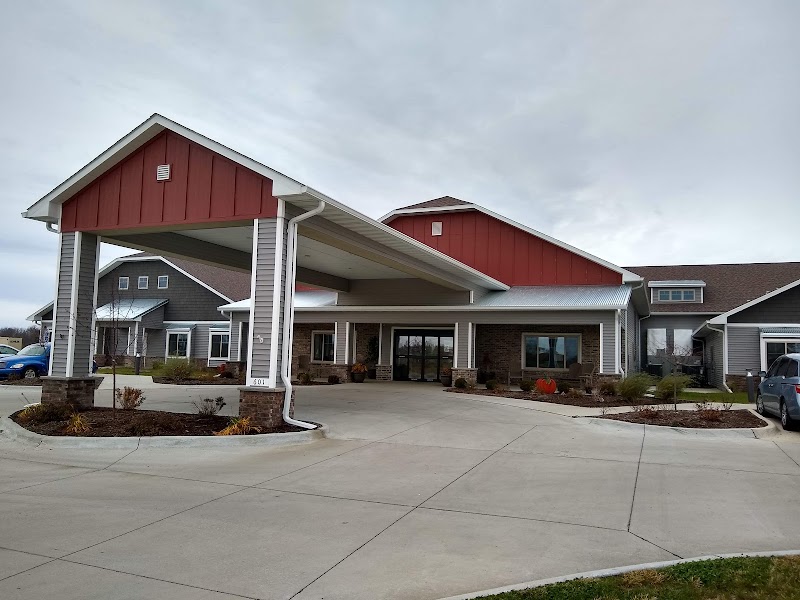
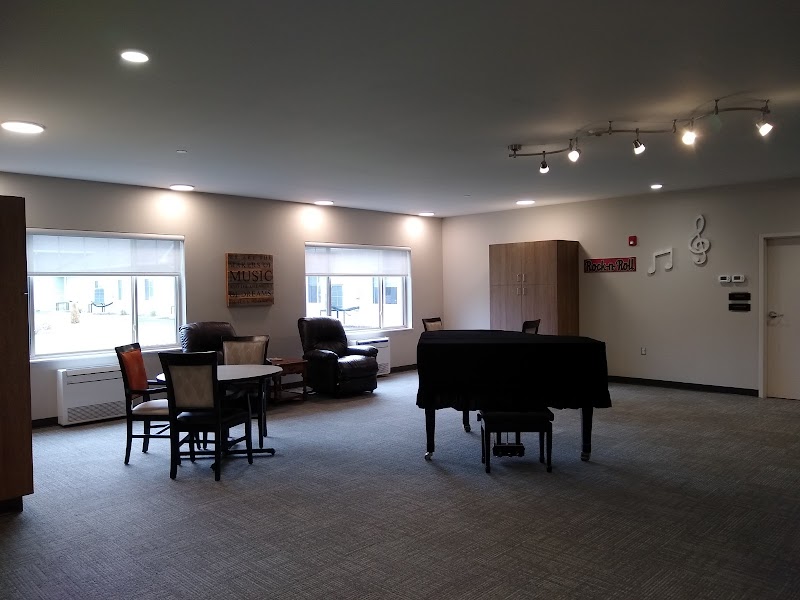
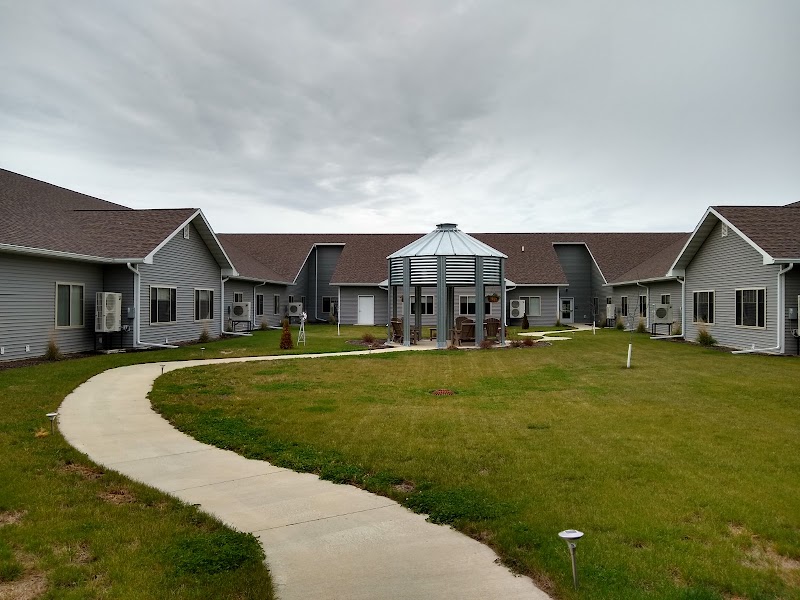
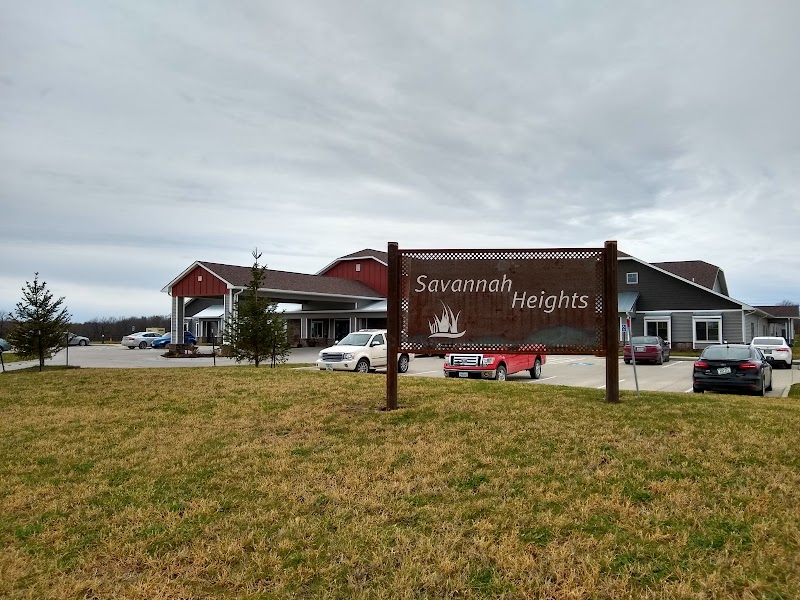
Savannah Heights

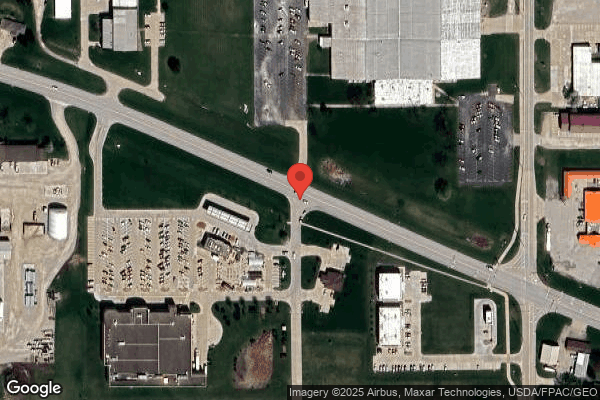
601 S Prairie Street, Mount Pleasant, IA 52641 (319) 385-8095
For profit - Corporation 50 Beds CAPSTONE MANAGEMENT Data: November 2025
Trust Grade
65/100
#228 of 392 in IA
Last Inspection: August 2024

Within standard 12-15 month inspection cycle. Federal law requires annual inspections.

Overview

Savannah Heights in Mount Pleasant, Iowa has a Trust Grade of C+, which means it is slightly above average but not exceptional. It ranks #228 out of 392 facilities in Iowa, placing it in the bottom half, and #4 out of 6 in Henry County, indicating that only one local option is better. The facility is improving, having reduced issues from 12 in 2024 to just 1 in 2025. Staffing is a strength here with a 4/5 star rating, although turnover is 50%, which is average for the state. While there have been no fines reported, there are some concerns; for example, a resident was not provided dignified care after toileting, and another resident was found to have unsupervised access to medications despite cognitive impairments. Overall, while Savannah Heights has strengths in staffing and a lack of fines, potential weaknesses in care procedures should be considered.

Trust Score
C+
65/100
In Iowa
#228/392
Bottom 42%
Safety Record
Low Risk
No red flags
Inspections
Getting Better
12 → 1 violations
Staff Stability
⚠ Watch
50% turnover. Above average. Higher turnover means staff may not know residents' routines.
Penalties
✓ Good
No fines on record. Clean compliance history, better than most Iowa facilities.
Skilled Nurses
✓ Good
Each resident gets 43 minutes of Registered Nurse (RN) attention daily — more than average for Iowa. RNs are trained to catch health problems early.
Violations
⚠ Watch
15 deficiencies on record. Higher than average. Multiple issues found across inspections.
★★★☆☆
3.0
Overall Rating
★★★★☆
4.0
Staff Levels
★★★★☆
4.0
Care Quality
★★★☆☆
3.0
Inspection Score
Stable
2024: 12 issues
2025: 1 issues

The Good

  • 4-Star Staffing Rating · Above-average nurse staffing levels
  • 4-Star Quality Measures · Strong clinical quality outcomes
  • Full Sprinkler Coverage · Fire safety systems throughout facility
  • No fines on record

Facility shows strength in staffing levels, quality measures, fire safety.

The Bad

3-Star Overall Rating

Near Iowa average (3.1)

Meets federal standards, typical of most facilities

Staff Turnover: 50%

Near Iowa avg (46%)

Higher turnover may affect care consistency

Chain: CAPSTONE MANAGEMENT

Part of a multi-facility chain

Ask about local staffing decisions and management

The Ugly 15 deficiencies on record

Aug 2025 1 deficiency
CONCERN (D) 📢 Someone Reported This

A family member, employee, or ombudsman was alarmed enough to file a formal complaint

Potential for Harm - no one hurt, but risky conditions existed

Resident Rights (Tag F0550)

Could have caused harm · This affected 1 resident

**NOTE- TERMS IN BRACKETS HAVE BEEN EDITED TO PROTECT CONFIDENTIALITY** Based on staff interviews, record review, and the facility policy, the facility failed to care for a resident in a dignified man...

Read full inspector narrative →
**NOTE- TERMS IN BRACKETS HAVE BEEN EDITED TO PROTECT CONFIDENTIALITY** Based on staff interviews, record review, and the facility policy, the facility failed to care for a resident in a dignified manner by not emptying her bedside commode after providing toileting assistance for 1 of 3 residents reviewed for dignity. The facility reported a census of 34 residents. Findings include: The Minimum Data Set (MDS) assessment dated [DATE] revealed Resident #40 scored a 14 out of 15 on the Brief Interview for Mental Status (BIMS) exam, which indicated cognition intact. The MDS indicated Resident #40 dependent with toileting hygiene and chair/bed to chair transfer. The MDS revealed Resident #40 occasionally incontinent of bladder and always continent of bowel. Review of the Care Plan revealed a Focus area dated 11/7/24 for needed assistance with Activities of Daily Living (ADL's) related to Chronic Obstructive Pulmonary Disease (COPD) which places me at risk for falls/injury. The Interventions dated 10/23/24 included Resident #40 used a mechanical lift with a 2 assist with all transfers and dependent with assist x 1 with wheelchair mobility . During an interview on 8/21/25 at 10:46 AM, Staff A, Certified Nurse Aide (CNA) queried if she ever noticed the bedside commode in Resident #40 room not emptied after use and she stated sometimes she noticed it in the mornings. Staff A explained she would empty it after third shift. Staff A stated she didn't know if the Director of Nursing (DON) or the Administrator knew about it. During an interview on 8/21/25 at 10:59 AM, Staff B, CNA queried if she ever noticed the bedside commode in Resident #40's room not emptied after use and she stated at least one time when she came into work in the morning. Staff B stated Resident #40 had the call light on and when Staff B walked in the room and noticed. Staff B stated Resident #40 aware of the bedside commode not been emptied and commented about it, so Staff B made sure to take care of it. During an interview on 8/21/25 at 2:23 PM, Staff C, CNA queried about Resident #40 bedside commode not being emptied and she stated when she came into work, the bedside commode would still have urine and bowel in it. Staff C stated she told the nurses at least 3 times, but didn't remember which ones. During an interview on 8/25/25 at 9:36 AM, the DON queried if she knew about Resident #40 bedside commode not being emptied and the she stated she had never been told it was an issue. The DON stated she didn't see it happening because the DON and Administrator made frequent trips in the hall and they would smell it. The DON stated it is the expectation that after a bedside commode is used, it is removed and immediately cleaned. During an interview on 8/25/25 at 10:10 AM, Staff D, CNA queried on Resident #40 bedside commode not being emptied and she stated yes. Staff D explained the bedside commode had been used and not cleaned multiple times by different staff members. She stated she did not tell a nurse as in the past when she told a nurse of a concern nothing was done. Staff D stated two out of the three days in a week Staff D worked, she noticed the bedside commode not being emptied when she worked Resident #40 hall. Staff D stated she never told the DON or Administrator. During an interview on 8/25/25 at 11:04 AM, the Administrator informed of the interviews concerning the bedside commode and the Administrator stated she didn't remember anyone telling her about the issue. The Administrator stated if it happened, she didn't understand why the staff didn't report it to her so she could address the issue. The Facility Resident Rights Policy dated 12/12/16 revealed: a. A facility must treat each resident with respect and dignity and care for each resident in a manner and in an environment that promotes maintenance or enhancement of his or her quality of life, recognizing each resident's individuality. The facility must protect and promote the rights of the resident.
Aug 2024 5 deficiencies
CONCERN (D)

Potential for Harm - no one hurt, but risky conditions existed

Deficiency F0554 (Tag F0554)

Could have caused harm · This affected 1 resident

Based on observation, clinical record review, and staff interview, the facility failed to ensure only residents able to safely self-administer medications had access to medications for 1 of 5 resident...

Read full inspector narrative →
Based on observation, clinical record review, and staff interview, the facility failed to ensure only residents able to safely self-administer medications had access to medications for 1 of 5 residents reviewed (Resident #5). The facility reported a census of 32 residents. Findings: 1. The Minimum Data Set(MDS) assessment tool, dated 6/7/24, listed diagnoses for Resident #5 included traumatic brain dysfunction, anxiety, and morbid obesity and listed the resident's Brief Interview for Mental Status(BIMS) score as 9 out of 15, indicating moderately impaired cognition. A 4/8/21 Care Plan entry stated the resident had impaired thought processes due to traumatic brain injury. The August 2024 Medication Administration Record(MAR) listed a 5/7/22 order for chlorhexidine gluconante solution (a physician ordered medicated oral rinse used to prevent infections) one time per day. The resident's clinical record lacked documentation the resident could safely self-administer her medications. During an observation on 8/26/24 at 2:13 p.m., a bottle of chlorhexidine gluconate solution sat on the sink in the bathroom while the resident was in her room. A label on the bottle directed staff to keep out of the reach of children. On 8/26/24 at 2:13 p.m. the acting Director of Nursing(DON) stated the mouthwash should be in a lock box and stated she would lock it up. She stated staff most likely took it out and used it and forgot to put it back in. Via email correspondence on 8/29/24 at 1:05 p.m., the Administrator stated she could not locate a policy regarding the self-administration of medications.
CONCERN (D)

Potential for Harm - no one hurt, but risky conditions existed

Deficiency F0657 (Tag F0657)

Could have caused harm · This affected 1 resident

Based on clinical record review, policy review, and staff interviews, the facility failed to address the use of anxiolytics(medications used to treat anxiety) on the Care Plan, and the use of non-phar...

Read full inspector narrative →
Based on clinical record review, policy review, and staff interviews, the facility failed to address the use of anxiolytics(medications used to treat anxiety) on the Care Plan, and the use of non-pharmacological interventions staff should attempt prior to administration for 1 of 5 residents reviewed for medications (Resident #31). The facility reported a census of 32 residents. Findings: The Minimum Data Set(MDS) assessment tool, dated 6/4/24, listed diagnoses for Resident #31 included generalized anxiety disorder, chronic pain, and hypertension(high blood pressure). The MDS listed the resident's Brief Interview for Mental Status(BIMS) score as 12 out of 15, indicating moderately impaired cognition. The undated facility policy PRN (as needed) Medication Use, directed staff to document non-pharmacological interventions prior to administration such as relaxation, repositioning, and food/beverages. The July and August 2024 Medication Administration Records(MARS) listed a 7/25/24 order for lorazepam (an anxiolytic) 0.5 milligrams(mg) every 8 hours as needed for anxiety. The MAR documented the resident received the medication at the following times: 7/25/24 10:45 p.m. 7/26/24 9:23 p.m. 7/27/24 2:25 p.m. 7/27/24 10:32 p.m. 7/28/24 1:30 p.m. 7/30/24 7:15 a.m. 7/30/24 8:55 p.m. 7/31/24 8:19 p.m. The facility lacked documentation of non-pharmacological interventions carried out prior to the above administrations. The resident's Care Plan, as of 8/28/24, did not address the resident's anxiolytics or direct staff to attempt non-pharmacological interventions prior to the administration of prn anxiolytics. On 8/28/24 at 2:51 p.m. the Administrator stated staff should document 3 non-pharmacological interventions prior to the administration of an anxiolytic. On 8/29/24 at 7:52 a.m., Staff A Registered Nurse(RN) stated staff attempted three interventions prior to the administration of a PRN anxiolytic. On 8/29/24 at 12:00 p.m., the Administrator stated they worked on Care Plans this week and inquired as to which medications needed to be included.
CONCERN (D)

Potential for Harm - no one hurt, but risky conditions existed

Deficiency F0725 (Tag F0725)

Could have caused harm · This affected 1 resident

Based on clinical record review, policy review, and resident and staff interviews, the facility failed to respond to call lights in a timely manner for 1 of 2 residents reviewed for staffing concerns(...

Read full inspector narrative →
Based on clinical record review, policy review, and resident and staff interviews, the facility failed to respond to call lights in a timely manner for 1 of 2 residents reviewed for staffing concerns(Resident #135). The facility reported a census of 32 residents. Findings: The 8/15/24 Brief Interview for Mental Status(BIMS) evaluation listed Resident #135 score as 15 out of 15, indicating intact cognition. An 8/12/24 Care Plan entry stated the resident required assistance with activities of daily living(ADLs). The facility All Alarms Report for the time period of 8/21/24 to 8/28/24 revealed call light response times for Resident #135 which exceeded 15 minutes: 8/21/24 24 minutes 8/21/24 22 minutes 8/22/24 17 minutes 8/23/24 26 minutes 8/24/24 41 minutes 8/24/24 23 minutes 8/25/24 17 minutes 8/25/24 22 minutes 8/26/24 17 minutes 8/27/24 19 minutes On 8/26/24 at 2:51 p.m. Resident # 135 stated it too staff 20 minutes to respond to her call light when she had to go to the bathroom. On 8/29/24 at 11:41 a.m., the resident stated she had a clock on the wall to time staff call light response time. On 8/29/24 at 12:00 p.m., the Administrator stated staff should respond to call lights as close to 15 minutes as possible. The undated facility policy Answering the Call Light, directed staff to answer call lights within 15 minutes.
CONCERN (D)

Potential for Harm - no one hurt, but risky conditions existed

Medication Errors (Tag F0758)

Could have caused harm · This affected 1 resident

Based on clinical record review, policy review, and staff interviews, the facility failed to document non-pharmacological interventions carried out prior to the administration of as needed (PRN) anxio...

Read full inspector narrative →
Based on clinical record review, policy review, and staff interviews, the facility failed to document non-pharmacological interventions carried out prior to the administration of as needed (PRN) anxiolytics(medications used to treat anxiety) for 1 of 1 residents reviewed with PRN anxiolytics(Resident #31). The facility reported a census of 32 residents. Findings: The Minimum Data Set(MDS) assessment tool, dated 6/4/24, listed diagnoses for Resident #31 which included generalized anxiety disorder, chronic pain, and hypertension(high blood pressure). The MDS listed the resident's Brief Interview for Mental Status(BIMS) score as 12 out of 15, indicating moderately impaired cognition. The July and August 2024 Medication Administration Records(MARS) listed a 7/25/24 order for lorazepam(an anxiolytic) 0.5 milligrams(mg) every 8 hours as needed for anxiety. The MAR documented the resident received the medication at the following times: 7/25/24 10:45 p.m. 7/26/24 9:23 p.m. 7/27/24 2:25 p.m. 7/27/24 10:32 p.m. 7/28/24 1:30 p.m. 7/30/24 7:15 a.m. 7/30/24 8:55 p.m. 7/31/24 8:19 p.m. The facility lacked documentation of non-pharmacological interventions carried out prior to the above administrations. The resident's Care Plan did not address the resident's anxiolytics or direct staff to attempt non-pharmacological interventions prior to the administration of PRN anxiolytics. On 8/28/24 at 2:51 p.m. the Administrator stated staff should document 3 non-pharmacological interventions prior to the administration of an anxiolytic. On 8/29/24 at 7:52 a.m., Staff A Registered Nurse(RN) stated staff attempted three interventions prior to the administration of a PRN anxiolytic. The undated facility policy PRN Medication Use, directed staff to document non-pharmacological interventions prior to administration such as relaxation, repositioning, and food/beverages.
CONCERN (D)

Potential for Harm - no one hurt, but risky conditions existed

Deficiency F0883 (Tag F0883)

Could have caused harm · This affected 1 resident

**NOTE- TERMS IN BRACKETS HAVE BEEN EDITED TO PROTECT CONFIDENTIALITY** Based on clinical record review, staff interview, facility policy review, the facility failed to offer the pneumococcal vaccine ...

Read full inspector narrative →
**NOTE- TERMS IN BRACKETS HAVE BEEN EDITED TO PROTECT CONFIDENTIALITY** Based on clinical record review, staff interview, facility policy review, the facility failed to offer the pneumococcal vaccine at the recommended times for 2 of 5 residents reviewed for Pneumococcal vaccinations (Residents # 13, #26). The facility reported a census of 32 residents. Findings include: 1. Resident #26's Immunization record stated the resident received the PCV13 (Pneumococcal conjugate vaccine) on 10/18/2016 and the PPSV23 (Pneumococcal polysaccharide vaccine) on 10/31/2012. The record stated the resident was [AGE] years old. 2. Resident #13's Immunization record stated the resident received the PCV13 Pneumococcal vaccine on 12/16/2018 and the PPSV23 Pneumococcal vaccine on 9/8/2010. The record stated the resident was [AGE] years old. The facility showed no documentation they offered the Pneumococcal vaccine. The Centers for Disease Control and Prevention (CDC) Pneumococcal Vaccine Timing for Adults, retrieved from https://www.cdc.gov/vaccines/vpd/pneumo/downloads/pneumo-vaccine-timing.pdf on 8/29/2024 contained the following guidance: For adults 65 year or older who: a. Shared clinical decision-making for those who already completed the series with PCV13 and PPSV3: b. Prior Vaccines: Completed series: PCV13 at any age and PPSV23 at greater or equal to 65 yrs. c. Shared clinical decision-making option: For greater or equal to 5 years PCV20. Together, with the patient, vaccine providers may choose to administer PCV20 to adults equal or greater [AGE] years old who have already received PCV13 (but not PCV15 or PCV20) at any age and PPSV23 at or after the age of [AGE] years old. During an interview on 8/29/2024 at 11:00 AM, the Administrator stated she did not realize, Iowa Immunization Registry Information System (IRIS), had two Pneumococcal 23 vaccination listed for the same date on both of the residents, resulted with completion of series according to IRIS. The facility policy Policy and Procedure: Subject: Influenza, Pneumococcal, and COVID Immunization, reviewed 2/8/24, stated Residents will be offered the influenza vaccine and education yearly during the flu season and the Pneumococcal and COVID vaccination will be offered on admission, following the current CDC or Iowa Department of Public Health. Education for all vaccination's will be provided.
Apr 2024 2 deficiencies
CONCERN (D) 📢 Someone Reported This

A family member, employee, or ombudsman was alarmed enough to file a formal complaint

Potential for Harm - no one hurt, but risky conditions existed

Quality of Care (Tag F0684)

Could have caused harm · This affected 1 resident

**NOTE- TERMS IN BRACKETS HAVE BEEN EDITED TO PROTECT CONFIDENTIALITY** Based on staff interviews, record review, and the facility policy, the facility failed to complete the neuro assessments after a...

Read full inspector narrative →
**NOTE- TERMS IN BRACKETS HAVE BEEN EDITED TO PROTECT CONFIDENTIALITY** Based on staff interviews, record review, and the facility policy, the facility failed to complete the neuro assessments after an unwitnessed fall for 1 of 3 residents reviewed for assessment and intervention (Resident #1). The facility reported a census of 30 residents. Findings include: The Minimum Data Set (MDS) dated [DATE] revealed Resident #1 scored a 3 out of 15 on the Brief Interview for Mental Status (BIMS) exam, which indicated cognition severely impaired. The MDS revealed resident dependent with toileting hygiene, and partial/moderate assistance with bed to chair transfer. The MDS revealed diagnoses of unspecified dementia, unspecified severity, without behavioral disturbance, mood disturbance, and anxiety. The MDS revealed the resident took opioids and used bed and chair alarms daily. The Care Plan revealed a focus area dated 1/10/24 that the resident had moderate risk for falls related to unaware of safety needs. The interventions dated 3/25/24 revealed fall intervention for a fall on 3/23/24 the resident will have physical therapy/occupational therapy evaluation and treat. The Physician Orders revealed the following medication orders: a. Tramadol HCL oral tablet 50 mg - Give 0.5 mg tablet by mouth three times a day for pain, give with Tylenol 500 mg at 7 AM/1 PM/6 PM - ordered on 10/6/23 and discontinued on 3/27/24 b. per [name redacted] on call provider- send the resident to emergency room (ER) for evaluation of pain with transfers following fall yesterday- start date 3/24/23 c. Tramadol HCL oral tablet 50 mg- give 1 tablet by mouth every 6 hours for pain- ordered on 3/26/24 with start date of 3/27/24 d. Calcitonin nasal solution - 1 spray alternating nostrils one time a day for pain alternate nostrils with each dose- ordered on 3/26/24 with start date of 3/27/24 The Progress Note dated 3/23/24 at 4:20 PM (late entry-documented on 3/24/24 at 12:18 PM) revealed the following information: a. Fall Details: Date/Time of fall: 3/23/24 at 4:20 PM: b. Fall not witnessed. The fall occurred in the resident's room. c. Activity at the time of fall: Resident moved self from piano bar into room without staff assistance and attempted to toilet self. d. Reason for the fall was evident. e. Did an injury occur as a result of the fall: No. f. Did fall result in an ER (Emergency Room) visit/hospitalization: No. g. Provider: [name redacted] Time notified: 03/23/2024 h. Notified of Fall: Fall Details Note:Resident previously been in piano bar watching peers play cards. She proceeded to wheel self to room, closed door and attempted to transfer self to toilet. CNA (Certified Nurse Aide) [name redacted] found resident on floor with alarm sounding, sat in the middle of the room upright. This nurse called to room and resident laughed, sat upright in the middle of the floor. When asked what happened resident laughed and said I was hanging onto the bed, then I was on my butt. i. Contributing Factors: 1. Recent change in environment: No. 2. Was fluid spilled on floor: No. 3. Clutter present on the floor: No. 4. Floor mat was on floor: No. 5. Poor lighting in the area: No. 6. Bed was at an improper height: No. 7. Other furniture involved: Yes. Wheelchair was involved in the fall. Wheelchair unlocked at time of fall. Wheelchair footrest(s) were not in the way at the time of fall. 8. Wearing glasses at the time of the fall: Yes. 9. Footwear at time of fall: Shoes. Resident didn't use cane/walker as instructed. Resident used incontinence supplies at the time of the fall. 10. Incontinent at time of fall: No. 11. Bedside call light on when resident found: No. 12. Bathroom call light on when resident was found: No. 13. Personal alarm sounding when resident found: Yes. 14. Other residents were not involved in fall. j. Contributing factors note: 1. Resident utilized bed as support rather than walker. The Progress Note dated 3/23/24 at 4:20 (late entry- documented on 3/24/24 at 12:30 PM) revealed this nurse called to resident's room by CNA. This nurse entered room and resident sat upright in the middle of the room laughing. When asked what happened, resident laughed and stated I was hanging onto the bed, then I was on my butt. The resident denied pain, ROM (Range of Motion) intact following incident. Resident denied hitting head, no evidence indicating otherwise, but neuro's initiated per protocol. Resident assisted back to chair and had no further problems through the shift. The Neuro Assessment V3-V2 report revealed the following dates and times the neuro assessment not completed for the unwitnessed fall on 3/23/24 at 4:20 PM : a. second 15 minute check- resident not available for assessment due to resident at supper eating b. third 15 minute check- resident not available for assessment due to resident at supper eating c. fourth 15 minute check- resident not available for assessment due to resident at supper eating d. second 30 minute check- lacked documentation e. first hourly check- lacked documentation f. second hourly check- lacked documentation g. third hourly check- lacked documentation h. fourth hourly check- lacked documentation i. first 4 hour check- lacked documentation j. second 4 hour check- lacked documentation k. third 4 hour check- lacked documentation l. fourth 4 hour check- lacked documentation m. first 8 hour check- resident not available for assessment due to resident dined at breakfast n. third 8 hour check- dated 3/24/24 at 8:00 PM- lacked additional documentation o. fourth 8 hour check- dated 3/24/24 at 4:00 AM- resident not available due to resident in bed rested peacefully. During an interview on 4/1/24 at 10:54 AM, Staff B, LPN (Licensed Practical Nurse) queried on the neuro check assessment and she stated the neuro's charted under the assessments. Staff B stated when the resident at supper she didn't complete the neuro checks because nothing indicated she hit her head and didn't complain of a headache and nothing by her when the resident sat on the floor after the fall. During an interview on 4/1/24 at 1:52 PM, Staff A, LPN queried on the neuro checks for Resident #1 after the fall on 3/23/24 and she stated she knew about the fall and was told the resident didn't hit her head. Staff A stated she planned on doing the neuro checks but they didn't happen. She stated she looked at the times and was on the other side of the building administering medications and the times passed. She stated she thought only one or two of the neuro assessments needed during her shift. During an interview on 4/2/24 at 11:57 AM, Staff D, LPN queried on the protocol for an unwitnessed fall and she stated she looked at the resident's BIMS and if the BIMS low they started neuro assessments whether or not they thought the resident hit their head. Staff D asked if she conducted neuro checks when the resident was at meals and she stated yes she did unless the resident refused and she charted the resident refused. Staff D stated she woke the resident up for neuro checks unless she received an order not to wake them. During an interview on 4/2/24 at 3:28 PM, the DON (Director of Nursing) queried on the process for an unwitnessed fall and she stated if the BIMS less than 13, the nurses automatically started neuro assessments. The DON confirmed she reviewed the neuro assessment for the fall on 3/23/24 and saw all of neuro assessments not completed. The DON queried on her expectation of the neuro assessments and she stated the neuro assessments offered to the residents, but not pulled away from meals and if the assessment can wait to do it after the meal, and if the results were not normal, notify the provider. The Facility Neurological checks for head injuries policy/procedure dated 1/22/18 revealed the following information: a. Assess resident for changes in level of consciousness immediately after striking the head, then frequently throughout the shift for at least 72 hours. b. Observe the resident for obvious injuries to the scalp, including lacerations, bruises, or contusions; confusion, memory loss, difficulty speaking, gait or balance problems, pupils of unequal size or reactions, headache, vomiting, visual disturbances, or periods of coherence, alternating with periods of confusion or lethargy. c. Perform frequent neurological assessment every: 1. 15 minutes for 1 hour 2. 30 minutes for 1 hour 3. 1 hour for 4 hour 4. 4 hours for 16 hours 5. 8 hours until 72 hours elapsed and resident stable d. Neurological assessments include (at a minimum) pulse, respiration, and blood pressure; assessment of pupil size and reactivity, equality of hand grip strength, lower extremity motor functions, and pain level. The Facility Resident Fall Procedure (no date included) revealed the following information: a. If unwitnessed and/or resident hit their head, initiate neuro checks 1. A neuro check schedule sheet placed in the bottom filing drawer in Nurse Station B that helped establish time schedule for neuro checks, but they needed to be documented in EMR (Electronic Medical Record) also 2. Open up the Neuro Assessment under the assessment tab on the EMR for documentation of the vitals/assessments.
CONCERN (D) 📢 Someone Reported This

A family member, employee, or ombudsman was alarmed enough to file a formal complaint

Potential for Harm - no one hurt, but risky conditions existed

Accident Prevention (Tag F0689)

Could have caused harm · This affected 1 resident

**NOTE- TERMS IN BRACKETS HAVE BEEN EDITED TO PROTECT CONFIDENTIALITY** Based on interviews, record review, and the facility policy, the facility failed to ensure the resident was supervised in her ro...

Read full inspector narrative →
**NOTE- TERMS IN BRACKETS HAVE BEEN EDITED TO PROTECT CONFIDENTIALITY** Based on interviews, record review, and the facility policy, the facility failed to ensure the resident was supervised in her room while in a wheelchair which resulted in a fall for 1 of 4 residents reviewed for inadequate nursing supervision (Resident #1). The facility reported a census of 30 residents. Findings include: The Minimum Data Set (MDS) dated [DATE] revealed Resident #1 scored a 3 out of 15 on the Brief Interview for Mental Status (BIMS) exam, which indicated cognition severely impaired. The MDS revealed resident dependent with toileting hygiene, and partial/moderate assistance with bed to chair transfer. The MDS revealed diagnoses of unspecified dementia, unspecified severity, without behavioral disturbance, mood disturbance, and anxiety. The MDS revealed the resident took opioids and used bed and chair alarms daily. The Care Plan revealed a focus area revised on 3/22/24 for assistance with ADLs (Activities of Daily Living) related to dementia, incontinence, pain, medication use that placed the resident at risk for falls/injury. The intervention dated 12/6/23 revealed due to a fall the resident won't be left in her wheelchair in her room unsupervised and would be transferred to her bed or recliner. The Care Plan revealed a focus area dated 1/10/24 that the resident had moderate risk for falls related to unaware of safety needs. The interventions dated 3/27/24 revealed following all activities, staff to assist the resident to her room and transferred her to bed or recliner to avoid resident assisting self to bed/recliner. The Progress Note dated 3/23/24 at 4:20 PM (late entry-documented on 3/24/24 at 12:18 PM) revealed the following information: a. Fall Details: Date/Time of fall: 3/23/24 at 4:20 PM: b. Fall not witnessed. The fall occurred in the resident's room. c. Activity at the time of fall: Resident moved self from piano bar into room without staff assistance and attempted to toilet self. d. Reason for the fall was evident. e. Did an injury occur as a result of the fall: No. f. Did fall result in an ER (Emergency Room) visit/hospitalization: No. g. Provider: [name redacted] Time notified: 03/23/2024 h. Notified of: Fall Fall Details Note:Resident previously been in piano bar watching peers play cards. She proceeded to wheel self to room, closed door and attempted to transfer self to toilet. CNA (Certified Nurse Aide) [name redacted] found resident on floor with alarm sounding, sat in the middle of the room upright. This nurse called to room and resident laughed, sat upright in the middle of the floor. When asked what happened resident laughed and said I was hanging onto the bed, then I was on my butt. i. Contributing Factors: 1. Recent change in environment: No. 2. Was fluid spilled on floor: No. 3. Clutter present on the floor: No. 4. Floor mat was on floor: No. 5. Poor lighting in the area: No. 6. Bed was at an improper height: No. 7. Other furniture involved: Yes. Wheelchair was involved in the fall. Wheelchair unlocked at time of fall. Wheelchair footrest(s) were not in the way at the time of fall. 8. Wearing glasses at the time of the fall: Yes. 9. Footwear at time of fall: Shoes. Resident didn't use cane/walker as instructed. Resident used incontinence supplies at the time of the fall. 10. Incontinent at time of fall: No. 11. Bedside call light on when resident found: No. 12. Bathroom call light on when resident was found: No. 13. Personal alarm sounding when resident found: Yes. 14. Other residents were not involved in fall. j. Contributing factors note: 1. Resident utilized bed as support rather than walker. The Progress Note dated 3/23/24 at 4:20 (late entry- documented on 3/24/24 at 12:30 PM) revealed this nurse called to resident's room by CNA. This nurse entered room and resident sat upright in the middle of the room laughing. When asked what happened, resident laughed and stated I was hanging onto the bed, then I was on my butt. The resident denied pain, ROM (Range of Motion) intact following incident. Resident denied hitting head, no evidence indicating otherwise, but neuro's initiated per protocol. Resident assisted back to chair and no further problems through the shift. The Incident Report #429 dated 3/16/24 at 4:20 PM titled unwitnessed revealed the following information: a. Nursing Description: This nurse called to resident's room by CNA. This nurse entered room the resident sat upright in the middle of the room and laughed. Pressure alarm sounded. Appropriate footwear on. When asked what happened, resident laughed and stated I was hanging onto the bed, then I was on my butt. Resident denied pain, ROM intact following incident. Resident denied hitting head, no evidence indicating otherwise, but neuro's initiated per protocol. Resident assisted back to chair and no further problems through the shift. b. Resident Description: Resident helped up off of floor, toileted, and removed from room. Staff not to leave resident unattended in 300 hall common area, only in country kitchens where staff is often near. c. Mental Status: oriented to person, place, and time d. Injuries report post incident: no injuries observed post incident e. predisposing environmental factors: fall alarm f. predisposing situation factors: ambulated without assist Reviewed the camera footage with the Administrator on 4/1/24 at 11:30 AM for the fall that occurred on 3/23/24 which showed the following timeline: a. 3/23/24 at 1:48 PM- resident self propelled in the 300 Hall b. 3/23/24 at 1:53 PM- resident turned the corner into the 200 Hall, c. 3/23/24 at 1:57 PM- resident at the other end of the 200 Hall d. 3/23/24 at 2:05 PM- resident self propelled into her room e. 3/23/24 at 4:10 PM- CNA took linen barrel into the resident's room. f. 3/23/24 at 4:15 PM- Staff B, LPN (Licensed Practical Nurse) came down the 300 Hall pushed her computer cart and went into the resident's room. During an interview on 4/1/24 at 11:38 AM, the Administrator stated Staff B texted her while in the room with Resident #1. The Administrator stated she received report that Resident #1 door shut. The Administrator confirmed the resident in her room alone until 4:10 PM before someone went into her room. The Administrator stated they generally shut the resident's door when the resident not in her room. During an interview on 4/1/24 at 11:55 AM, the Administrator queried on how often the CNAs do rounding and she stated they should do it every 2 hours and not more than 3 hours. The Administrator stated the resident ate at 4:30 PM and that was probably the reason the CNA went into her room. During an interview on 4/1/24 at 10:09 AM, Staff E, CNA stated she started doing rounds after her break on 3/23/24 and found the resident's door shut. She stated she went in her room and saw the resident fell and stayed with her until the nurse came into the resident's room and they got the resident up off the floor into her wheelchair. During an interview on 4/1/24 at 10:54 AM, Staff B, LPN (Licensed Practical Nurse) confirmed Resident #1 fell on 3/23/24 and she went into her room and assessed her and filled out the paperwork the following day. During an interview on 4/1/24 at 3:11 PM, Staff F, CNA queried on Resident #1 fall and she stated she worked that day and heard over the walkie the resident was on the floor in her room. Staff F stated if the resident was in her room she needed to be in her bed or recliner and the door needed to be open for the alarms. During an interview on 4/2/24 at 11:26 AM, Staff G, CNA confirmed Resident #1 cannot be in her room in her wheelchair by herself and that the resident's door should be open unless doing cares. During an interview on 4/2/24 at 3:10 PM, Staff H, CNA confirmed Resident #1 couldn't be in her room alone in her wheelchair and if she saw the resident in her wheelchair in her room she would bring her out to the into dining room area. During an interview on 4/2/24 at 3:28 PM, the DON (Director of Nursing) queried on if Resident #1 was allowed in her room unattended in her wheelchair and she stated they told the staff the resident couldn't be in her wheelchair in her room unattended and if they saw her in her room to ask if she needed toileted and then transfer her to the bed or recliner. The DON stated she expected staff to take the resident back to her room after meals and transfer her to the bed or recliner. The Facility Fall Risk Policy dated 2/12/17 revealed the following information: a. Procedure: 1. Upon admission, residents had a comprehensive assessment, including fall risk assessment tool within 14 days of admission. The MDS instrument identified specific resident problem areas or needs. Other criteria taken into consideration as followed: resident fallen in past week; or/and resident with underlying pathology causing falls. Resident had a recent decline in physical functioning or lacked insight into their limitations. Appropriate approached and interventions addressed on care plans. The Care Planning Policy dated 5/8/18 revealed the following information: a. Care Plan interventions designed after careful consideration of the relationship between the resident's problem area and their causes. When possible, interventions address the underlying source of the problem areas.
Jan 2024 5 deficiencies
CONCERN (D)

Potential for Harm - no one hurt, but risky conditions existed

Deficiency F0578 (Tag F0578)

Could have caused harm · This affected 1 resident

**NOTE- TERMS IN BRACKETS HAVE BEEN EDITED TO PROTECT CONFIDENTIALITY** Based on resident record review, resident and staff interview, and facility policy review, the facility failed to obtain physici...

Read full inspector narrative →
**NOTE- TERMS IN BRACKETS HAVE BEEN EDITED TO PROTECT CONFIDENTIALITY** Based on resident record review, resident and staff interview, and facility policy review, the facility failed to obtain physician orders to address advance directives in a timely manner for 1 of 2 residents newly admitted to the facility (Resident #85). The facility reported a census of 35 residents. Findings include: The Minimum Data Set (MDS) dated [DATE] identified Resident #85 as cognitively intact with a BIMS (Brief Interview for Mental Status) score of 14 and had the following diagnoses: Renal insufficiency, thyroid disorder, and anxiety disorder. It also identified her to be independent with most activities of daily living. A review of the census tab in the Electronic Medical Record (EMR) revealed she had been admitted to the facility on [DATE]. On [DATE]nd, 23rd, & 24th, 2024 a review of the medical record revealed no orders to address the Advance Directives/code status of the resident. In an interview on [DATE] at 8:12 AM, Resident #85 reported if her heart stopped beating, she would not want CPR (cardiopulmonary resuscitation) and thought she had signed a form to address that issue. In an interview on [DATE] at 8:08 AM, Staff A, LPN, reported Advance Directives would be in the resident's paper chart and addressed in the electronic medical record. Upon review of the electronic medical record, Staff A verified it did not address Resident #85's code status and may be waiting for the doctor to sign the IPOST and if something happened Resident #85 would be a full code. In an interview on [DATE] at 8:41 AM, the administrator reported that she would expect the nurse to try to get the order for Advance Directives as soon as the resident was admitted . The nurse did get an order for DNR (do not resuscitate) yesterday.
CONCERN (D)

Potential for Harm - no one hurt, but risky conditions existed

Deficiency F0582 (Tag F0582)

Could have caused harm · This affected 1 resident

Based on record review, staff interview, and facility policy review, the facility failed to provide the correct information to residents being discharged from skilled services for 2 of 3 residents rev...

Read full inspector narrative →
Based on record review, staff interview, and facility policy review, the facility failed to provide the correct information to residents being discharged from skilled services for 2 of 3 residents reviewed (Residents #1 and #86). The facility reported a census of 35 residents. Findings include: 1. A review of the Notice of Discontinue Therapy (Key Rehab form) for Resident #1 revealed the date for the end of therapy would be 1/15/24. A review of the ABN (Advanced Beneficiary Notice) form CMS- R 131 did not have documentation to indicate when services will be discontinued and did not have documentation on which option the resident chose. The form did not provide information on the option to request an appeal to the QIO (Quality Improvement Organization). 2. A review of the Notice of Discontinue Therapy (Key Rehab form) for Resident #86 revealed the end date of therapy would be 11/8/23. A review of the ABN form CMS- R 131 did not have documentation to indicate when services would be discontinued, none of the options were marked to show which the resident chose. The form did not provide information on the option to request an appeal to the QIO (Quality Improvement Organization). In an interview on 1/24/24 at 10:00 AM, the Business Office/Human Resources Manager reported the following when asked what the process was when she issued ABN's to residents coming off skilled services: She took over the process to issue ABNs in May 2023 and received training from the former administrator. She received a form from therapy to inform her that the resident would be discharged from skilled services. She is supposed to review the ABN form with the resident 48 hours before their therapy ended. However, she also reported the new form did not include the dates when therapy had been started and when therapy was due to end. The former administrator showed her how to fill out Form R131 She verified this new form did not have a place to put dates when services began and due to end. She did not have any instructions or policy to refer to when she first started issuing ABNs. In an interview on 1/25/24 at 8:45 AM, the administrator reported the facility's corporate office informed them that the new form they used was obtained directly from the CMS website and that was what the staff were instructed to have the residents sign. A review of the undated facility policy titled: Form Instructions Advance Beneficiary Notice of Non-coverage (ABN) revealed documentation of the following: Completing the Notice ABNs may be downloaded from the CMS website. Instructions for completion of the form are set forth below: The following should be completed, the header, the resident's name, reason why Medicare may not pay, estimated cost, options regarding payment, signature and date of resident/POA. The policy did not address the need to provide information on the option to request an appeal to the QIO.
CONCERN (D)

Potential for Harm - no one hurt, but risky conditions existed

Employment Screening (Tag F0606)

Could have caused harm · This affected 1 resident

Based on employee record review, facility policy review, and staff interview, the facility failed to complete a background check for the potential history of abuse and criminal charges for 1 of 6 empl...

Read full inspector narrative →
Based on employee record review, facility policy review, and staff interview, the facility failed to complete a background check for the potential history of abuse and criminal charges for 1 of 6 employee files reviewed (Staff C). The facility reported a census of 35 residents. Findings include: A 1/25/24 employee record review of Staff C, Certified Nursing Assistant, revealed a lack of a completed background check for child abuse, dependent adult abuse, sexual offender registry, and criminal history. Facility payroll records confirmed Staff C worked in the facility on the following dates: a. August 2023: 8/21/23, 8/22/23, 8/23/23, 8/24/23 b. September 2023: 9/5/23, 9/6/23, 9/7/23, 9/19/23, 9/20/23, 9/21/23, 9/26/23, 9/27/23, 9/28/23, 9/29/23 c. October 2023: 10/3/23, 10/4/23, 10/5/23, 10/11/23, 10/12/23, 10/13/23 d. January 2024: 1/6/24 During an interview on 1/25/24 at 1:45 PM, the Business Office Manager (BOM) stated she did not complete a background check for Staff C. The BOM stated she had the staff sign a Criminal History Record Check form, but failed to complete the necessary background checks. An undated facility form, titled New Hire Checklist, directed staff to complete the following background checks: a. OIG (Office of Inspector General - checks for individuals who are barred from participating in federal healthcare programs) check on all names b. SAM (System for Award Management - checks for individuals that have been excluded from participating in federal contracts of any type, including those involving federal healthcare programs) on all names c. Sex Offender registry on all names d. Background completed in SING (Single Contact License & Background Check)
CONCERN (D)

Potential for Harm - no one hurt, but risky conditions existed

Deficiency F0698 (Tag F0698)

Could have caused harm · This affected 1 resident

**NOTE- TERMS IN BRACKETS HAVE BEEN EDITED TO PROTECT CONFIDENTIALITY** Based on observation, record review, resident and staff interview, the facility failed to document assessments of the resident's...

Read full inspector narrative →
**NOTE- TERMS IN BRACKETS HAVE BEEN EDITED TO PROTECT CONFIDENTIALITY** Based on observation, record review, resident and staff interview, the facility failed to document assessments of the resident's fistula before and after dialysis for 1 of 1 residents reviewed on dialysis (Resident #3). The facility reported a census of 35 residents. Findings include: The Minimum Data Set (MDS) dated [DATE] identified Resident #3 had been admitted to the facility on [DATE] and identified as cognitively intact with a BIMS (Brief Interview for Mental Status) score of 14. The MDS also identified Resident #3 had the following diagnoses: Heart Failure, End Stage Renal Disease requiring dialysis, and Diabetes Mellitus. The MDS also identified Resident #3 required partial/moderate staff assistance with toilet use, showers, and personal hygiene. On 10/26/22 the Care Plan identified Resident #3 with CKD (Chronic Kidney Disease) stage IV and went to Dialysis on Monday, Wednesday, and Friday. He had a dialysis fistula in his left forearm. The Care Plan had documentation of the following interventions: Monitor for bleeding and document. Notify provider if bleeding occurs. Date Initiated: 10/26/2022 Monitor pulse, numbness, tingling, in left hand before and after dialysis and document Date Initiated: 10/26/2022 Monitor thrill before and after return from dialysis and document. Date Initiated: 10/26/2022 A review of Resident #3's paper chart and electronic medical record revealed the nurses failed to document assessments of the fistula before and after dialysis. In an interview on 1/24/24 at 3:45 PM, the administrator/RN reported the only documentation the facility had was from the dialysis center. The facility nurses do not document assessments of the fistula when Resident #3 leaves for or when he comes back from dialysis. A review of the undated policy provided by the facility had documentation of the following: The general nurse should document: a. Location of the catheter b. Condition of the dressing c. If the dialysis was done during the shift and what resident's condition was when they return d. Any report that was received from the dialysis nurse e. Observation of the resident post dialysis
CONCERN (D)

Potential for Harm - no one hurt, but risky conditions existed

Staffing Information (Tag F0732)

Could have caused harm · This affected 1 resident

Based on observations, facility policy review, and staff interviews, the facility failed to post daily nursing staff information as required. The facility reported a census of 35 residents. Findings i...

Read full inspector narrative →
Based on observations, facility policy review, and staff interviews, the facility failed to post daily nursing staff information as required. The facility reported a census of 35 residents. Findings include: During an observation on 1/22/24 at 12:45 PM, the facility posted daily nursing staff information in a public location for the following dates: a. 1/6/24 b. 1/7/24 c. 1/8/24 d. 1/14/24 e. 1/15/24 f. 1/16/24 g. 1/20/24 During an observation on 1/23/24 at 8:00 AM, the nurse staffing information postings remained unchanged, During an observation on 1/24/24 at 7:35 AM, the nurse staffing information postings included 1/24/24. During an interview on 1/25/24 at 9:03 AM, the Director of Nursing (DON) stated the missing days identified on 1/22/24 were located at a nurses station. She stated the third shift nurse is to complete the staff nursing information form and post at the end of their shift. The DON stated she expects staff to post the daily staff nursing information daily in the public area designated. The facility lacked a policy on posting nursing staff information daily.
Mar 2023 2 deficiencies
CONCERN (D) 📢 Someone Reported This

A family member, employee, or ombudsman was alarmed enough to file a formal complaint

Potential for Harm - no one hurt, but risky conditions existed

Report Alleged Abuse (Tag F0609)

Could have caused harm · This affected 1 resident

**NOTE- TERMS IN BRACKETS HAVE BEEN EDITED TO PROTECT CONFIDENTIALITY** Based on record review and staff interviews, the facility failed to report an injury of unknown origin within 24 hours to the St...

Read full inspector narrative →
**NOTE- TERMS IN BRACKETS HAVE BEEN EDITED TO PROTECT CONFIDENTIALITY** Based on record review and staff interviews, the facility failed to report an injury of unknown origin within 24 hours to the State Survey Agency and provide the results of their investigation within five days The facility reported census was 37. Findings include: The admission Minimum Data Set (MDS) dated [DATE] documented that Resident#2 had the diagnoses including stroke, seizure disorder, and dementia. The MDS revealed that the resident required total assistance of two staff for transfers, bed mobility and toilet use. The MDS documented that the resident had severely impaired cognitive skills for daily decision making. Lifting Machine, Using a Mechanical Policy with revised date of July 2017, directed staff as follows; - to use at least two nursing assistants to safely move a resident with a mechanical lift. -Lift design and operation vary across manufacturers. Staff must be trained and demonstrate competency using the specific machines or devices utilized in the facility. In an interview on 3/2/23 at 2:30 p.m. the Administrator stated she was notified of a bruise found on Resident #2's chest on 10/8/21. The Administrator stated she initiated an investigation into the bruise and discovered that on the evening before, Resident #2 was transferred using the Hoyer lift by Staff C, Certified Nurses Aide (CNA). During the transfer the battery failed and Staff C lowered Resident onto her bed using the emergency button, which dropped Resident #2 quickly and caused the lift arm to lower into Resident #2's chest. The Administrator stated the family was notified and provided an explanation for the bruises. The Administrator stated she did not notify the State Survey Agency of the incident or provide the State Survey Agency with the results of their investigation within 5 days of the incident. The Nursing Facility Abuse Prevention, Identification, Investigation and Reporting Policy dated July 2019 directed staff as follows under the Reporting sub-title; All allegations of resident neglect, exploitation, mistreatment, injuries of unknown origin and misappropriation shall be reported to the Iowa Department of Inspections and Appeals, not later than two hours after the allegation is made, if the events that cause the allegation result in serious bodily injury, or not later than twenty-four (24 hours) if the events that cause the allegation involve neglect exploitation, mistreatment, injuries of unknown origin and misappropriation, but do not result in serious bodily injury. Following investigation, the Administrator or designated agent will be responsible for forwarding the results of the investigation to the Department of Inspections and Appeals. This written report shall be forwarded to the Department with five days of the initial report. The Facilities Self Reports document dated September 18, 2019 to February 20, 2023 lacked documentation that the facility had reported an injury of unknown origin for Resident#2.
CONCERN (D) 📢 Someone Reported This

A family member, employee, or ombudsman was alarmed enough to file a formal complaint

Potential for Harm - no one hurt, but risky conditions existed

Quality of Care (Tag F0684)

Could have caused harm · This affected 1 resident

**NOTE- TERMS IN BRACKETS HAVE BEEN EDITED TO PROTECT CONFIDENTIALITY** Based on record review and staff interviews, the facility failed to provide adequate supervision using a mechanical lift to ensu...

Read full inspector narrative →
**NOTE- TERMS IN BRACKETS HAVE BEEN EDITED TO PROTECT CONFIDENTIALITY** Based on record review and staff interviews, the facility failed to provide adequate supervision using a mechanical lift to ensure a safe transfer in accordance with facility policy. (Resident #2) The facility reported census was 37. Findings include: According to the Minimum Data Set (MDS) with an assessment reference date of [DATE], Resident #2 had a Brief Interview for Mental Status (BIMS) score of 0 which indicated a severely impaired cognitive status. Resident #2 required total dependence on others with transfers, ambulation, dressing, toilet use and personal hygiene needs. Resident #2's diagnosis included Non-Alzheimer's dementia, cerebrovascular accident (stroke), hemiplegia, aphasia and seizure disorder. In an interview on [DATE] at 2:30 p.m. the Administrator stated she was notified of a bruise found on Resident #2's chest on [DATE]. The Administrator stated she initiated an investigation into the bruise and discovered that on the evening before, Resident #2 was transferred using the hoyer lift by Staff C. During the transfer the battery failed and Staff C lowered Resident onto her bed using the emergency button, which dropped Resident #2 quickly and caused the lift arm to lower into Resident #2's chest. The Administrator stated the family was notified and provided an explanation for the bruises. According to the facilities investigation summary dated [DATE], the investigation found that Staff C had put Resident #2 to bed by herself on [DATE]. Staff C reported that during the transfer the battery died, so she had to use the emergency button to lower Resident #2 down onto the bed. Staff C further reported that she was unable to stop the lift from lowering into Resident #2's chest. At the time of the incident there were no immediate bruising or injury noted. Staff C was provided verbal education regarding following care plans, safe transfers and utilizing two people with all mechanical lift transfers. According to the facilities Using a Mechanical Lift policy, the purpose of the procedure is to establish the general principles of safe lifting using a mechanical lifting device. General Guidelines included that at least two staff are needed to safely move a resident with a mechanical lift.
Understanding Severity Codes (click to expand)
Life-Threatening (Immediate Jeopardy)
J - Isolated K - Pattern L - Widespread
Actual Harm
G - Isolated H - Pattern I - Widespread
Potential for Harm
D - Isolated E - Pattern F - Widespread
No Harm (Minor)
A - Isolated B - Pattern C - Widespread

Questions to Ask on Your Visit

  • "Can I speak with families of current residents?"
  • "What's your RN coverage like on weekends and overnight?"

Our Honest Assessment

Strengths
  • • No major safety red flags. No abuse findings, life-threatening violations, or SFF status.
  • • No fines on record. Clean compliance history, better than most Iowa facilities.
Concerns
  • • 15 deficiencies on record. Higher than average. Multiple issues found across inspections.
Bottom line: Mixed indicators with Trust Score of 65/100. Visit in person and ask pointed questions.

About This Facility

What is Savannah Heights's CMS Rating?

CMS assigns Savannah Heights an overall rating of 3 out of 5 stars, which is considered average nationally. Within Iowa, this rating places the facility higher than 0% of the state's 100 nursing homes. This mid-range rating indicates the facility meets federal standards but may have areas for improvement.

How is Savannah Heights Staffed?

CMS rates Savannah Heights's staffing level at 4 out of 5 stars, which is above average compared to other nursing homes. Staff turnover is 50%, compared to the Iowa average of 46%.

What Have Inspectors Found at Savannah Heights?

State health inspectors documented 15 deficiencies at Savannah Heights during 2023 to 2025. These included: 15 with potential for harm.

Who Owns and Operates Savannah Heights?

Savannah Heights is owned by a for-profit company. For-profit facilities operate as businesses with obligations to shareholders or private owners. The facility is operated by CAPSTONE MANAGEMENT, a chain that manages multiple nursing homes. With 50 certified beds and approximately 33 residents (about 66% occupancy), it is a smaller facility located in Mount Pleasant, Iowa.

How Does Savannah Heights Compare to Other Iowa Nursing Homes?

Compared to the 100 nursing homes in Iowa, Savannah Heights's overall rating (3 stars) is below the state average of 3.1, staff turnover (50%) is near the state average of 46%, and health inspection rating (3 stars) is at the national benchmark.

What Should Families Ask When Visiting Savannah Heights?

Based on this facility's data, families visiting should ask: "Can I visit during a mealtime to observe dining assistance and food quality?" "How do you handle medical emergencies, and what is your hospital transfer rate?" "Can I speak with family members of current residents about their experience?"

Is Savannah Heights Safe?

Based on CMS inspection data, Savannah Heights has a clean safety record: no substantiated abuse findings (meaning no confirmed cases of resident harm), no Immediate Jeopardy citations (the most serious violation level indicating risk of serious injury or death), and is not on the Special Focus Facility watch list (a federal program monitoring the lowest-performing 1% of nursing homes). The facility has a 3-star overall rating and ranks #100 of 100 nursing homes in Iowa. While no facility is perfect, families should still ask about staff-to-resident ratios and recent inspection results during their visit.

Do Nurses at Savannah Heights Stick Around?

Savannah Heights has a staff turnover rate of 50%, which is about average for Iowa nursing homes (state average: 46%). Moderate turnover is common in nursing homes, but families should still ask about staff tenure and how the facility maintains care continuity when employees leave.

Was Savannah Heights Ever Fined?

Savannah Heights has no federal fines on record. CMS issues fines when nursing homes fail to meet care standards or don't correct problems found during inspections. The absence of fines suggests the facility has either maintained compliance or corrected any issues before penalties were assessed. This is a positive indicator, though families should still review recent inspection reports for the full picture.

Is Savannah Heights on Any Federal Watch List?

Savannah Heights is not on any federal watch list. The most significant is the Special Focus Facility (SFF) program, which identifies the bottom 1% of nursing homes nationally based on persistent, serious quality problems. Not being on this list means the facility has avoided the pattern of deficiencies that triggers enhanced federal oversight. This is a positive indicator, though families should still review the facility's inspection history directly.