New Hampton Nursing & Rehab Center
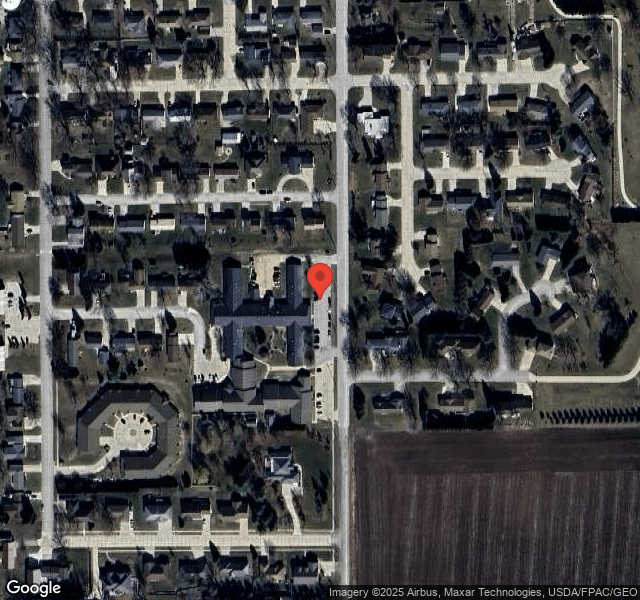
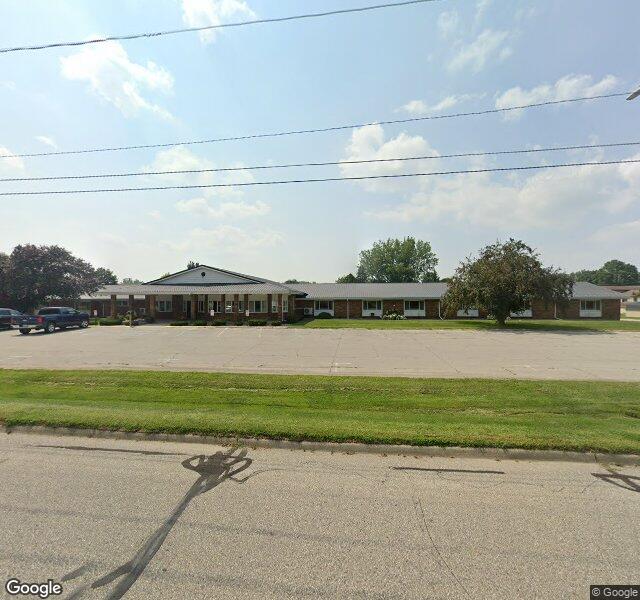
703 South Fourth Avenue, New Hampton, IA 50659 (641) 394-4153
For profit - Corporation 46 Beds HEALTHCARE OF IOWA Data: November 2025
Trust Grade
35/100
#286 of 392 in IA
Last Inspection: July 2025

Inspected within the last 6 months. Data reflects current conditions.

Overview

New Hampton Nursing & Rehab Center has a Trust Grade of F, indicating significant concerns about the facility's overall quality and care. With a state rank of #286 out of 392, they fall in the bottom half of Iowa nursing homes, and they are the second-best option in Chickasaw County, which suggests limited choices for local families. The facility's trend is worsening, having increased from 1 issue in 2022 to 5 in 2025, highlighting growing problems. Staffing is a relative strength, earning 4 out of 5 stars with RN coverage exceeding 98% of state facilities, which means they have more registered nurses available to oversee care. However, serious incidents include failing to provide a safe environment for residents, with two noted cases of physical injury and inadequate monitoring of blood-thinning medication for another resident. Additionally, residents reported delays in response to call lights, with one resident waiting over an hour for assistance, which raises concerns about timely care. Overall, while there are some strengths in staffing, the facility's serious issues and poor trust grade warrant careful consideration.

Trust Score
F
35/100
In Iowa
#286/392
Bottom 28%
Safety Record
High Risk
Review needed
Inspections
Getting Worse
1 → 5 violations
Staff Stability
⚠ Watch
48% turnover. Above average. Higher turnover means staff may not know residents' routines.
Penalties
✓ Good
No fines on record. Clean compliance history, better than most Iowa facilities.
Skilled Nurses
✓ Good
Each resident gets 76 minutes of Registered Nurse (RN) attention daily — more than 97% of Iowa nursing homes. RNs are the most trained staff who catch health problems before they become serious.
Violations
○ Average
6 deficiencies on record. Average for a facility this size. Mostly minor or procedural issues.
★★☆☆☆
2.0
Overall Rating
★★★★☆
4.0
Staff Levels
★★★★☆
4.0
Care Quality
★★☆☆☆
2.0
Inspection Score
Stable
2022: 1 issues
2025: 5 issues

The Good

  • 4-Star Staffing Rating · Above-average nurse staffing levels
  • 4-Star Quality Measures · Strong clinical quality outcomes
  • Full Sprinkler Coverage · Fire safety systems throughout facility
  • No fines on record

Facility shows strength in staffing levels, quality measures, fire safety.

The Bad

2-Star Overall Rating

Below Iowa average (3.0)

Below average - review inspection findings carefully

Staff Turnover: 48%

Near Iowa avg (46%)

Higher turnover may affect care consistency

Chain: HEALTHCARE OF IOWA

Part of a multi-facility chain

Ask about local staffing decisions and management

The Ugly 6 deficiencies on record

2 actual harm
Jan 2025 5 deficiencies 1 Harm
SERIOUS (G) 📢 Someone Reported This

A family member, employee, or ombudsman was alarmed enough to file a formal complaint

Actual Harm - a resident was hurt due to facility failures

Free from Abuse/Neglect (Tag F0600)

A resident was harmed · This affected 1 resident

Based on clinical record review, resident interview, family interview, staff interview, and facility policy/procedure review the facility failed to provide an environment free from physical assault an...

Read full inspector narrative →
Based on clinical record review, resident interview, family interview, staff interview, and facility policy/procedure review the facility failed to provide an environment free from physical assault and physical injury for 2 residents reviewed (Resident #1 and Resident #2). The facility reported a census of 24 residents. Findings include: 1. A Minimum Data Set (MDS) form dated 10.24.24 indicated Resident #1 had diagnoses that included Cervical Spinal Fusion, Cervical Disc Disorder with Myopathy, malnutrition, Anemia, Heart Failure (HF), Coronary Artery Disease, and Atrial Fibrillation (AF). The assessment indicated the Resident had the ability to make himself understood and understand others, with a Brief Interview for Mental Status (BIMS) score of 7 out f 10 (severely impaired cognitive skills), no delirium/moods or behaviors, non-ambulatory, dependent on staff with lower body dressing and undressing and transfers, required substantial/maximum assistance of staff with toileting hygiene, dressing and undressing his upper body, and personal hygiene. A Care Plan identified the following Focus areas and Interventions as dated: a. Resident's ability for completion of activities of daily living (ADL's) deteriorated. (revised 12.31.20) 1. Assistance with morning (am) and evening (p.m.) cares. (initiated 3.23.21) b. At risk for skin breakdown related to incontinence, HF and malnutrition. (initiated 12.31.20 and revised 11.7.24) 1. History of skin tears. (revised 11.7.20) c. Resident with a skin tear of the right forearm, left 3rd finger and left elbow. (initiated and revised 11.7.24) 1. Inform/instruction to staff of causative factors and measures of prevention to skin tears. (initiated 11.7.24) An Incident Report form dated 11.5.24 at 8:45 p.m. indicated the nurse had been called to the resident's room by a Certified Nursing Assistant (CNA) as he received a skin tear to the right forearm in the shape of a U that measured 24 centimeters (cm) from one (1) end to the other. The resident also sustained a small skin tear to his left upper elbow that measured approximately 3 cm and a small skin tear to his left hand between the 3rd and 4th finger that measured approximately 1.3 cm. During an interview 1.3.24 at 2:46 p.m. Staff A, Certified Nursing Assistant (CNA) confirmed she worked 11.5.24 from 2 p.m. until 10 p.m. but had not been directly assigned to care for the resident. At approximately 3 ish she brought a snack to his room while she observed him positioned in his recliner. At that time he wore his short sleeved white t-shirt and plaid long sleeved shirt. That staff member could not recall if at that time had been when herself and Staff D, CNA or later transferred him to bed per an assistive lift device and laid him down, removed his pants and offered him his oxygen which he refused. The staff member indicated at no time during the transfer that occurred that evening the resident hit his arm, said ouch, and/or any blood had been noted on his person or the recliner chair. The staff member, Staff A, indicated the next time she had any contact with the resident had been around 8:30 p.m. when she went to look for the nurse to have retrieved a cream for another resident when she found the nurse, along with Staff E, CNA with the resident, still positioned in bed, covered up with a blanket to his waist, with the white t-shirt on but then with a bandage over his arm but denied any conversation about the resident's arm rather informed the nurse about the need for the cream and left the room. Staff A confirmed she worked with Staff E prior to the above stated event and observed an incident with Resident #2 approximately one (1) week prior at which time she knocked on the resident's door, entered, and observed Staff E as she held the resident's wrists because he had not wanted to get cleaned up by Staff F, CNA who also had been present. Staff A indicated it had been obvious the resident had not been happy about having his hands held because he tried to bite Staff E at which time she appeared mad as noted by her firm facial affect and how she talked to the resident with an elevated tone of voice. Staff A denied having heard any threats by Staff E however when she entered the room Staff E let go of the resident's wrists, grabbed the linens and left the room. Staff F and Staff A remained in the resident's room and covered his left arm with a towel due to the blood oozing from a noted new skin tear. The resident presented as upset related to what occurred with Staff E but showed no signs of having been combative with Staff E. The resident informed Staff A that Staff E twisted his wrist during the above stated encounter. Staff A confirmed from her experience Staff E failed to handle the situation correctly because when a resident refused cares staff had been directed to walk away and absolutely not grab and/or restrain a resident's wrists. During an interview 1.9.24 at 4:38 p.m. Staff D confirmed she assisted the resident to bed the night of the injury along with Staff A at which time he had not been combative at all. The staff members kept the resident in his clothes, she noted no signs of bleeding and the resident never complained of pain. Staff D then confirmed she worked with Staff E within days after the resident sustained his skin tear at which time the Resident yelled at Staff E. The staff member could not recall all that was said but he presented as upset because he said she was the one who caused the skin tear to his arm. During this interaction Staff E yelled back at the resident in an angry tone and verbalized it had not been her fault. During an interview 1.7.24 at 2:30 p.m. a family member indicated the resident told her three (3) nights in a row Staff E looked at the resident's bottom for sores. On the fourth night, the night of the election, the resident refused because he wanted to watch the results. The family member indicated the resident told her all of a sudden the staff member's face appeared viscous, further described as stern and she grabbed and twisted his arm and said your going to do this as she laid almost right on him. The resident confirmed she restrained him with her hands which made him angry and caused a feeling of helplessness. The resident indicated he yelled for help and said, no, and he went over all of the injuries he sustained during that encounter which presented as scars, showed the surveyor the scars. Per the family member she received a call on 11.5.24 at 11:27 p.m. at which time the night nurse apologized profusely because the male nurse should have called her at the time of the incident because the resident had been crying in pain. The family member arrived at the facility around 11:55 p.m. when the night nurse came into check the resident's blood pressure as he became combative and said Oh I thought you were that bitch coming after me. 2. An MDS assessment form dated 8.22.24 indicated Resident #2 with diagnoses that included a Traumatic Brain Injury (TBI), absence of a right hip joint, Osteoarthritis, Obesity, Combined Systolic and Diastolic Heart Failure, and Chronic Respiratory Failure. The assessment indicated the Resident had a Brief Interview for Mental Status (BIMS) score of 14 out of 15 (cognitively intact) and with no Delirium, behaviors, or moods. The assessment indicated the Resident as non-ambulatory, dependent on staff with transfers and personal hygiene. A Care Plan addressed the following Focus areas and Interventions as dated: a. The Resident's ability to have completed ADL's had been deteriorated related to pain, a wound and a TBI. (revised 12.15.23) 1. Provision of assistance with a.m. and p.m. cares. (initiated 12.25.24) b. At risk for falls. (initiated 12.15.23 and revised 11.7.24) 1. Non-ambulatory. (initiated 1.12.24) 2. Transferred with 2 staff assistance and a sit and stand lift device. (initiated 12.15.23 and revised 1.9.25) An Incident Report dated 10.25.24 at 10:00 p.m. indicated the nurse was called to the Resident's room and found the resident positioned in bed with a skin tear on his left forearm. The staff reported the Resident had been hitting and verbally abusive during cares. The Resident reported the girls tried to kill him and asked why the facility hired staff like that as he had to defend himself. A Non-Pressure Skin Condition Report dated 10.25.24 indicated the Resident sustained a skin tear on his left wrist that measure five (5) cm in a Z form which contained a moderate amount of serosanguinous drainage. A Nursing Facility Abuse Prevention, Identification, Investigation and Reporting Policy dated 7.2024 indicated the Policy Statement included the following: All residents had the right to have been free from abuse, neglect, misappropriation of resident property, exploitation, corporal punishment, involuntary seclusion, and any physical or chemical restraint not required to treat the resident's medical symptoms.
CONCERN (D) 📢 Someone Reported This

A family member, employee, or ombudsman was alarmed enough to file a formal complaint

Potential for Harm - no one hurt, but risky conditions existed

Deficiency F0558 (Tag F0558)

Could have caused harm · This affected 1 resident

Based on observation, staff interview, resident interview, and facility policy review, the facility failed to maintain call lights in reach for 1 of 4 residents reviewed (Resident #2). The facility id...

Read full inspector narrative →
Based on observation, staff interview, resident interview, and facility policy review, the facility failed to maintain call lights in reach for 1 of 4 residents reviewed (Resident #2). The facility identified a census of 24 residents. Findings include: An observation and interview 1.3.25 at 1:30 p.m. revealed Resident #2 positioned in his wheel chair in his room as he called out for assistance. Upon entry the resident requested to go to bed at which time an observation revealed one (1) call light wrapped around the bottom of a positioning bar on the left side of his bed. The other call light positioned across the cushion and under an unknown item of his easy chair. The Surveyor turned on the call light. At 1:40 p.m. Staff B, Certified Nursing Assistant (CNA) and Staff C, CNA responded and confirmed the cal lights were out of reach. During an interview 1.3.24 at 3:38 p.m. a family member confirmed during his regular visits to Resident #2 he observed the call lights out of reach on several occasions.
CONCERN (D) 📢 Someone Reported This

A family member, employee, or ombudsman was alarmed enough to file a formal complaint

Potential for Harm - no one hurt, but risky conditions existed

Report Alleged Abuse (Tag F0609)

Could have caused harm · This affected 1 resident

Based on clinical record review, resident interview, family interview, staff interview, and facility policy and procedures review the facility failed to provide an environment free from physical assau...

Read full inspector narrative →
Based on clinical record review, resident interview, family interview, staff interview, and facility policy and procedures review the facility failed to provide an environment free from physical assault/physical injury and failed to report the suspected abuse to the State Agency in a timely manner as required for 2 residents reviewed (Resident #1 and Resident #2). The facility reported a census of 24 residents. Findings include: A MDS assessment form dated 8.22.24 indicated Resident #2 with diagnosis that included a Traumatic Brain Injury (TBI), absence of a right hip joint, Osteoarthritis, Obesity, Combined Systolic and Diastolic Heart Failure and Chronic Respiratory Failure. The assessment indicated the Resident had a Brief Interview for Mental Status (BIMS) score of 14 out of 15 (cognitively intact) and with no Delirium, behaviors or moods. The assessment indicated the Resident as non-ambulatory, dependent on staff with transfers and personal hygiene. A Care Plan addressed the following Focus areas and Interventions as dated: a. The Resident's ability to have completed ADL's had been deteriorated related to pain, a wound and a TBI. (revised 12.15.23) 1. Provision of assistance with a.m. and p.m. cares. (initiated 12.25.24) b. At risk for falls. (initiated 12.15.23 and revised 11.7.24) 1. Non-ambulatory. (initiated 1.12.24) 2. Transferred with 2 staff assistance and a sit and stand lift device. (initiated 12.15.23 and revised 1.9.25) An Incident Report dated 10.25.24 at 10:00 p.m. indicated the nurse as called to the Resident's room and found the resident positioned in bed with a skin tear on his left forearm. The staff reported the Resident had been hitting and verbally abusive during cares. The Resident reported the girls tried to kill him and asked why the facility hire staff like that as he had to defend himself. A Non-Pressure Skin Condition Report dated 10.25.24 indicated the Resident sustained a skin tear on his left wrist that measure five (5) cm in a Z form which contained a moderate amount of serosanguinous drainage. During an interview 1.7.25 at 1:11 p.m. Staff F, CNA confirmed she had been present during the situation with the Resident and she knew the incident had not been reported. The staff member confirmed she had been present with Staff E when the Resident sustained his skin tear as they assisted him with p.m. cares while positioned in his wheel chair but perineal cares had been performed while he stood in the lift device for the transfer. The staff member recalled as she cleaned him and Staff E controlled the lift device he said enough, enough as he routinely disliked the process due to pain. Staff F continued to clean him up due to the dried bowl movement on his buttocks. Staff F denied having known what Staff E said to him but she noted him as he swatted Staff E and eventually called her a Bitch. After proper cares had been performed the staff members positioned him in bed as Staff E said stuff to him like stop that verbiage and what would your family think in a really bad tone further defined as kind of yelling/loud and with a stern facial affect which upset the Resident more. As Staff F tried to clean the Resident's anterior perineal area Staff E stood by his head and he tried to swat at her again. Staff E then grabbed his forearms bilaterally and he said let go of me, let go of me. At this time he started kicking as she restrained his arms. At that time Staff A entered the room Staff F said they are done and Staff E left the room and that had been when they noted his arm as it bled. The Resident stated she scratched me, she scratched me. The staff members calmed him down, put a wet washcloth on it, situated him and left the room. Staff F described the skin tear (ST) as in a straight line which bled pretty good. Staff E tried to blame the ST on the lift device but that could not have been the case because they would have noted blood and when Staff F first observed the site it had just begun to bleed at a pretty good clip. Staff F indicated she would not have allowed Staff E to care for any of her family members due to her tone she used and confirmed she should not have restrained the Resident rather she should have stepped away. During an interview 1.9.25 at 1:04 p.m. Staff I, Registered Nurse (RN) confirmed she worked the evening the Resident sustained his ST when she received a walkie message from an unknown staff member who reported the Resident as combative and they required assistance. When she entered she noted the Resident as he yelled at Staff E and directed Staff I to remove her from his room with an adamant affect due to her physical behavior. Staff I requested Staff E to leave as she treated the ST. During an interview 1.7.25 at 3:49 p.m. the Director of Nursing (DON) indicated she never thought to report the skin tear injury from Resident #2 following the same type of injury to Resident #1 approximately 10 days later that both occurred by Staff E, CNA. The DON indicated when Staff G, RN and Staff H, LPN called her and reported the injury to Resident #1 they never gave any indication there would have been a suspicion for abuse. As the situation had been further described to the DON during the investigation the DON just shook her head up and down in the motion of yes and no but failed to directly answer the question. A Nursing Facility Abuse Prevention, Identification, Investigation and Reporting Policy dated 7.2024 indicated the Training of Employees segment included the following: The training educated staff on: (a) activities that constitute abuse, neglect, exploitation, and misappropriation of resident property; (b) procedures for reporting incidents of abuse, neglect, exploitation, or the misappropriation of resident property; and (c) management of situations in which a higher risk for abuse to occur (i.e.: dementia, behaviors, mental health diagnoses, etc.) and resident abuse prevention.
CONCERN (D) 📢 Someone Reported This

A family member, employee, or ombudsman was alarmed enough to file a formal complaint

Potential for Harm - no one hurt, but risky conditions existed

Investigate Abuse (Tag F0610)

Could have caused harm · This affected 1 resident

Based on clinical record review, resident interview, family interview, staff interview, and facility policy and procedures review the facility failed to provide an environment free from physical assau...

Read full inspector narrative →
Based on clinical record review, resident interview, family interview, staff interview, and facility policy and procedures review the facility failed to provide an environment free from physical assault/physical injury and investigate potential abuse as required by Federal regulations for 2 residents reviewed (Resident #1 and Resident #2). The facility reported a census of 24 residents. Findings include: 1. A Minimum Data Set (MDS) form dated 10.24.24 indicated Resident #1 had diagnoses that included Cervical Spinal Fusion, Cervical Disc Disorder with Myopathy, malnutrition, Anemia, Heart Failure (HF), Coronary Artery Disease, and Atrial Fibrillation (AF). The assessment indicated the Resident had the ability to make himself understood and understand others, with a Brief Interview for Mental Status (BIMS) score of 7 out f 10 (severely impaired cognitive skills), no delirium/moods or behaviors, non-ambulatory, dependent on staff with lower body dressing and undressing and transfers, required substantial/maximum assistance of staff with toileting hygiene, dressing and undressing his upper body, and personal hygiene. A Care Plan identified the following Focus areas and Interventions as dated: a. Resident's ability for completion of activities of daily living (ADL's) deteriorated. (revised 12.31.20) 1. Assistance with morning (am) and evening (p.m.) cares. (initiated 3.23.21) b. At risk for skin breakdown related to incontinence, HF and malnutrition. (initiated 12.31.20 and revised 11.7.24) 1. History of skin tears. (revised 11.7.20) c. Resident with a skin ear of the right forearm, left 3rd finger and left elbow. (initiated and revised 11.7.24) 1. Inform/instruction to staff of causative factors and measures of prevention to skin tears. (initiated 11.7.24) An Incident Report form dated 11.5.24 at 8:45 p.m. indicated the nurse had been called to the resident's room by a Certified Nursing Assistant (CNA) as he received a skin tear to the right forearm in the shape of a U that measured 24 centimeters (cm) from one (1) end to the other. The resident also sustained a small skin tear to his left upper elbow that measured approximately 3 cm and a small skin tear to his left hand between the 3rd and 4th finger that measured approximately 1.3 cm. During an interview 1.3.24 at 2:46 p.m. Staff A, Certified Nursing Assistant (CNA) confirmed she worked 11.5.24 from 2 p.m. until 10 p.m. but had not been directly assigned to care for the resident. At approximately 3 ish she brought a snack to his room while she observed him positioned in his recliner. At that time he wore his short sleeved white t-shirt and plaid long sleeved shirt. That staff member could not recall if at that time had been when herself and Staff D, CNA or later transferred him to bed per an assistive lift device and laid him down, removed his pants, and offered him his oxygen which he refused. The staff member indicated at no time during the transfer that occurred that evening the resident hit his arm, said ouch, and/or any blood had been noted on his person or the recliner chair. The staff member indicated the next time she had any contact with the resident had been around 8:30 p.m. when she went to look for the nurse to retrieved a cream for another resident when she found the nurse, along with Staff E, CNA with the resident, still positioned in bed, covered up with a blanket to his waist, with the white t-shirt on but then with a bandage over his arm but denied any conversation about the resident's arm rather informed the nurse about the need for the cream and left the room. The staff member confirmed she worked with Staff E prior to the above stated event and observed an incident with Resident #2 approximately one (1) week prior at which time she knocked on the resident's door, entered, and observed Staff E as she held the resident's wrists because he had not wanted to get cleaned up by Staff F, CNA who also had been present. Staff A indicated it had been obvious the resident had not been happy about having his hands held because he tried to bite Staff E at which time she appeared mad as noted by her firm facial affect and how she talked to the resident with an elevated tone of voice. Staff A denied having heard any threats by Staff E however when she entered the room Staff E let go of the resident's wrists, grabbed the linens and left the room. Staff F and Staff A remained in the resident's room and covered his left arm with a towel due to the blood oozing from a noted new skin tear. The resident presented as upset related to what occurred with Staff E but showed no signs of having been combative with Staff E. The resident informed Staff A that Staff E twisted his wrist during the above stated encounter. Staff A confirmed from her experience Staff E failed to handle the situation correctly because when a resident refused cares staff had been directed to walk away and absolutely not grab and/or restrain a resident's wrists. During an interview 1.9.24 at 4:38 p.m. Staff D confirmed she assisted the resident to bed the night of the injury along with Staff A at which time he had not been combative at all. The staff members kept the resident in his clothes, she noted no signs of bleeding and the resident never complained of pain. Staff D then confirmed she worked with Staff E within days after the resident sustained his skin tear at which time the Resident yelled at Staff E. The staff member could not recall all that was said but he presented as upset because he said she was the one who caused the skin tear to his arm. During this interaction Staff E yelled back at the resident in an angry tone and verbalized it had not been her fault. During an interview 1.7.24 at 2:30 p.m. a family member indicated the resident told her three (3) nights in a row Staff E looked at the resident's bottom for sores. On the fourth night, the night of the election, the resident refused because he wanted to watch the results. The family member indicated the resident told her all of a sudden the staff member's face appeared viscous, further described as stern and she grabbed and twisted his arm and said your going to do this, as she laid almost right on him. The resident confirmed she restrained him with her hands which made him angry and caused a feeling of helplessness. The resident indicated he yelled for help and said, no, and he went over all of the injuries he sustained during that encounter which presented as scars, showed the surveyor the scars. Per the family member she received a call on 11.5.24 at 11:27 p.m. at which time the night nurse apologized profusely because the male nurse should have called her at the time of the incident because the resident had been crying in pain. The family member arrived at the facility around 11:55 p.m. when the night nurse came in to check the resident's blood pressure as he became combative and said Oh I thought you were that bitch coming after me. 2. A MDS assessment form dated 8.22.24 indicated Resident #2 with diagnoses that included a Traumatic Brain Injury (TBI), absence of a right hip joint, Osteoarthritis, Obesity, Combined Systolic and Diastolic Heart Failure, and Chronic Respiratory Failure. The assessment indicated the Resident had a Brief Interview for Mental Status (BIMS) score of 14 out of 15 (cognitively intact) and with no Delirium, behaviors, or moods. The assessment indicated the Resident as non-ambulatory, dependent on staff with transfers and personal hygiene. A Care Plan addressed the following Focus areas and Interventions as dated: a. The Resident's ability to have completed ADL's had been deteriorated related to pain, a wound and a TBI. (revised 12.15.23) 1. Provision of assistance with a.m. and p.m. cares. (initiated 12.25.24) b. At risk for falls. (initiated 12.15.23 and revised 11.7.24) 1. Non-ambulatory. (initiated 1.12.24) 2. Transferred with 2 staff assistance and a sit and stand lift device. (initiated 12.15.23 and revised 1.9.25) An Incident Report dated 10.25.24 at 10:00 p.m. indicated the nurse was called to the Resident's room and found the resident positioned in bed with a skin tear on his left forearm. The staff reported the Resident had been hitting and verbally abusive during cares. The Resident reported the girls tried to kill him and asked why the facility hired staff like that as he had to defend himself. A Non-Pressure Skin Condition Report dated 10.25.24 indicated the Resident sustained a skin tear on his left wrist that measure five (5) cm in a Z form which contained a moderate amount of serosanguinous drainage. During an interview 1.7.25 at 3:49 p.m. the Director of Nursing (DON) indicated she never thought to report the skin tear injury from Resident #2 following the same type of injury to Resident #1 approximately 10 days later that both occurred by Staff E, CNA. The DON indicated when Staff G, RN and Staff H, LPN called her and reported the injury to Resident #1 they never gave any indication there would have been a suspicion for abuse to be investigated. A Nursing Facility Abuse Prevention, Identification, Investigation and Reporting Policy dated 7.2024 indicated the Key Definitions segment included the following: A physical injury to, or injury at a variance with the history given of the injury, or unreasonable confinement, unreasonable punishment, or assault of a dependent adult which involved a breach of skill, care, and learned ordinarily exercised by a caretaker in similar circumstances. Assault of a dependent adult meant the commission of any act which generally intended to cause pain or injury to a dependent adult, or which generally intended to result in physical contact which would had been considered by a reasonable person to have been insulting or offensive or any act which intended to have placed another in fear of immediate physical contact which would have been painful, injurious, insulting, or offensive, coupled with the apparent ability to execute the act.
CONCERN (E) 📢 Someone Reported This

A family member, employee, or ombudsman was alarmed enough to file a formal complaint

Potential for Harm - no one hurt, but risky conditions existed

Deficiency F0725 (Tag F0725)

Could have caused harm · This affected multiple residents

Based on observation, resident interview, family interview, staff interview, Resident Council Minutes, and facility policy review, the facility failed to answer resident call lights in a timely manner...

Read full inspector narrative →
Based on observation, resident interview, family interview, staff interview, Resident Council Minutes, and facility policy review, the facility failed to answer resident call lights in a timely manner and within the required 15 minute time frame. (Resident #2, #4 and #5). The facility identified a census of 24 residents. Findings include: During an interview 1.9.25 at 4:05 p.m., Resident #4, identified by the facility as interviewable, indicated last night she timed her call light being on over one (1) hour as she used the clock on the wall in her room to watch the time which made her feel unwanted. During an interview 1.9.25 at 4:01 p.m., Resident #5, identified by the facility as interviewable, indicated he timed his call light being on for up to 1/2 hour as he used the clock on the wall in his room to watch the time which pissed him off. During an interview 1.3.24 at 3:38 p.m. a family member confirmed he timed the call light being on for Resident #2 for 45 minutes to 1 hour at various times but especially at meal times. During an interview 1.9.25 at 3:11 p.m., Staff A, Certified Nursing Assistant (CNA) indicated staff answered resident call lights within 15 minutes unless they were tied up in a residents room who required two (2) staff assistance. According to a form (not dated) the facility management staff identified 9 of 24 residents who required 2 staff to assist with personal cares. Review of the facilities Resident Council Minutes revealed residents verbalized concerns with slow staff response to call lights on 12.31.24. A Call Light Response policy effective 10.31.24 indicated the Objective as an assurance of a timely and efficient response to resident call lights which enhanced resident safety and satisfaction. The policy listed the response time as within 15 minutes of activation.
Nov 2022 1 deficiency 1 Harm
SERIOUS (G) 📢 Someone Reported This

A family member, employee, or ombudsman was alarmed enough to file a formal complaint

Actual Harm - a resident was hurt due to facility failures

Quality of Care (Tag F0684)

A resident was harmed · This affected 1 resident

**NOTE- TERMS IN BRACKETS HAVE BEEN EDITED TO PROTECT CONFIDENTIALITY** Based on observation, clinical record review, policy review, resident and staff interviews, the facility failed to appropriately...

Read full inspector narrative →
**NOTE- TERMS IN BRACKETS HAVE BEEN EDITED TO PROTECT CONFIDENTIALITY** Based on observation, clinical record review, policy review, resident and staff interviews, the facility failed to appropriately provide assessment and interventions for 1 of 3 residents (Resident #1) reviewed for anticoagulation (blood thinning medication) therapy. The facility failed to recognize that an international normalized ratio (INR, blood test to determine how long it takes to blood to clot) had not been done from the time of admission until 35 days later when the resident exhibited symptoms of having blood that was too thin. The facility reported a census of 40 residents. Findings include: Resident #1's Minimum Data Set (MDS), dated [DATE], documented the resident was admitted to the facility on [DATE]. The MDS documented the resident had a Brief Interview for Mental Status (BIMS) of 10, indicating moderate cognitive impairment. The MDS listed diagnosis including heart failure, coronary artery disease, and peripheral vascular disease. The MDS documented the resident needed limited assistance of 1 person for bed mobility, transfers, walking, dressing, toilet use and hygiene. The MDS included anticoagulation medication had been taken on 7 of 7 days prior. The physician orders for Resident #1 on admission included warfarin 10 mg daily and a follow up appointment on 9/27/22. The admission orders did not include an order for the staff to check Resident #1's INR. Review of a progress notes written on 9/20/22 at 6:00 PM, revealed Staff A reached out to the hospital for clarification orders including questioning the warfarin 10 mg daily order and when the next INR was to be checked. At 6:36 PM, Staff A received a call from the nurse at the hospital stating warfarin 10 mg daily and INR will be done on follow up day in a week. On 9/21/22 the facility received an order sheet signed by the resident's physician. The order sheet included an order for the resident to have an INR at the clinic at his visit next week. The orders were noted by Staff B on 9/21/22. Progress Note written on 9/22/22 at 8:19 AM by Staff C documented the clinic called to remind the facility the resident had a follow up appointment scheduled for 9/27/22 at 11:00 AM. Progress note written on 9/27/22 at 3:12 PM by Staff D documented, per physician, no changes at this time. A physician order sheet dated 9/27/22 included the resident's medication list (including warfarin 10 mg daily) and some repeat lab tests, and no additional changes. The orders did not include an INR order or results from the INR that was to be done at the clinic. Progress Note written on 10/25/22 at 9:48 AM by Staff B noted the resident had dark colored bloody stools. His abdomen was nontender with active bowel sounds in all 4 quadrants. The facility nursing staff sent Resident #1's physician a fax about Resident #1's condition and current medication list. At 1:42 PM, Staff B sent a second fax to the physician requesting an INR. At 5:23 PM, Staff E documented a fax was sent to the physician notifying the physician the resident's warfarin was being held due to dark red blood in the resident's urine. At 9:17 PM, the physician called the facility and ordered an INR for the next morning. Progress Note written on 10/26/22 at 7:49 AM by Staff F documented the resident was having blood in his stool and urine. At 8:15 AM, Staff F notified the resident's wife of his condition. The wife was agreeable to sending the resident to the hospital. The ambulance was called and the resident left the facility. At 9:40 AM, Staff F received the INR results, which showed Resident #1's INR was 13.56 (critically high, indicating Resident #1 had a very high likelihood of excessive bleeding). This information was called and faxed to the emergency department. At 10:19 AM, Staff F received a verbal order from the physician to send the resident to the emergency department. The resident returned to the facility at 12:48 PM. At 12:57 PM, Staff F received report from the hospital. The resident received Vitamin K for the INR over 13 and a liter of fluids. The resident was in CHF and had crackles in lungs and 2-3+ pitting edema (significant swelling in the lower legs, indicating impaired cardiac function) in bilateral lower extremities. He had petechia (pinpoint, round spots on the skin as a result of bleeding) to his forehead, face and areas on his body and tested positive for a GI bleed. At 2:58 PM, Staff A received an order to hold the warfarin, continue Aspirin and check the INR daily for 3 days. At 8:58 PM Staff E documented the resident had blood in the toilet and coughed up black phlegm. Progress note written on 10/27/22 at 7:26 AM Staff F documented the resident incontinent of bloody stool, she noted the smell of blood in stool. The resident was shaky, confused and unable to walk at this time. At 1:30 PM Staff F documented the resident had 3 more bloody stools, had an INR of 1.61, hemoglobin of 8.9 (moderately anemic) and a red blood cell count of 2.9. His warfarin was on hold until 10/31 and would be restarted at 5 mg daily. He had crackles half way up his lung fields, 2-3+ edema in lower legs, was weak and confused. At 2:07 PM Staff F sent a condition report to the physician. The physician requested the resident be sent to the emergency department. The ambulance contacted and transported resident. At 2:08 PM Staff F notified the resident's wife. At 3:54 PM Staff E documented the wife called the facility and the resident was being admitted to the hospital for 24 hours. At 4:19 PM the Director of Nursing (DON) documented the hospital called the facility and stated they were keeping resident for observation, his vitals were stable and labs were being drawn. Progress Note written on 10/28/22 at 9:12 PM Staff E documented the resident returned to the facility via private car accompanied by his wife. His lungs clear, he had 3+ edema to bilateral lower extremities and multiple scattered bruises. Facility policy titled Lab Tracking, dated 8/1/17, directed staff to monitor labs from the time of the order until results were received. During an interview on 11/2/22 at 3:52 PM, Resident #1 explained he is feeling better now. He stated his blood was so thin it was going right through me. He further explained he spent 24 hours in the hospital where his medication was changed and he feels pretty good. During an interview on 11/8/22 at 12:43 PM, the DON stated she did not have labs that were drawn on 10/29/22. She stated the lab was faxing the results since they were done at the clinic. She stated she did not know if the clinic received the results and why the facility did not have the results. She stated her expectation was the lab would fax results and it was the responsibility of the charge nurse and DON jointly to follow up on missing lab results. During an interview on 11/8/22 at 2:04 PM, the physician confirmed he saw the resident in the clinic on 9/27/22 for a post hospitalization follow up appointment. He explained there was not an INR done at that visit, as the resident had and INR done on 9/19/22. That INR was therapeutic and no changes were made, so anther INR on 9/27/22 was unnecessary. The physician explained in this case, the resident was in the nursing home, so he went a month without a visit which was very unusual for the physician. During an interview on 11/8/22 at 2:48 PM, the DON stated she would expect staff to follow policy and procedure. She stated she would expect a lab tracking sheet to be completed and same day follow up with the lab for results not received by the facility. She further stated she would expect the nurse to follow up with the clinic if labs were drawn at the clinic to ensure a copy was received by the facility.
Understanding Severity Codes (click to expand)
Life-Threatening (Immediate Jeopardy)
J - Isolated K - Pattern L - Widespread
Actual Harm
G - Isolated H - Pattern I - Widespread
Potential for Harm
D - Isolated E - Pattern F - Widespread
No Harm (Minor)
A - Isolated B - Pattern C - Widespread

Questions to Ask on Your Visit

  • "What safeguards are in place to prevent abuse and neglect?"
  • "Can I speak with families of current residents?"
  • "What's your RN coverage like on weekends and overnight?"

Our Honest Assessment

Strengths
  • • No fines on record. Clean compliance history, better than most Iowa facilities.
Concerns
  • • Multiple safety concerns identified: Federal abuse finding, 2 harm violation(s). Review inspection reports carefully.
  • • 6 deficiencies on record, including 2 serious (caused harm) violations. Ask about corrective actions taken.
  • • Grade F (35/100). Below average facility with significant concerns.
Bottom line: This facility has a substantiated abuse finding. Extreme caution advised. Explore alternatives.

About This Facility

What is New Hampton Nursing & Rehab Center's CMS Rating?

CMS assigns New Hampton Nursing & Rehab Center an overall rating of 2 out of 5 stars, which is considered below average nationally. Within Iowa, this rating places the facility higher than 0% of the state's 100 nursing homes. A rating at this level reflects concerns identified through health inspections, staffing assessments, or quality measures that families should carefully consider.

How is New Hampton Nursing & Rehab Center Staffed?

CMS rates New Hampton Nursing & Rehab Center's staffing level at 4 out of 5 stars, which is above average compared to other nursing homes. Staff turnover is 48%, compared to the Iowa average of 46%.

What Have Inspectors Found at New Hampton Nursing & Rehab Center?

State health inspectors documented 6 deficiencies at New Hampton Nursing & Rehab Center during 2022 to 2025. These included: 2 that caused actual resident harm and 4 with potential for harm. Deficiencies causing actual harm indicate documented cases where residents experienced negative health consequences.

Who Owns and Operates New Hampton Nursing & Rehab Center?

New Hampton Nursing & Rehab Center is owned by a for-profit company. For-profit facilities operate as businesses with obligations to shareholders or private owners. The facility is operated by HEALTHCARE OF IOWA, a chain that manages multiple nursing homes. With 46 certified beds and approximately 25 residents (about 54% occupancy), it is a smaller facility located in New Hampton, Iowa.

How Does New Hampton Nursing & Rehab Center Compare to Other Iowa Nursing Homes?

Compared to the 100 nursing homes in Iowa, New Hampton Nursing & Rehab Center's overall rating (2 stars) is below the state average of 3.0, staff turnover (48%) is near the state average of 46%, and health inspection rating (2 stars) is below the national benchmark.

What Should Families Ask When Visiting New Hampton Nursing & Rehab Center?

Based on this facility's data, families visiting should ask: "What safeguards and monitoring systems are in place to protect residents from abuse or neglect?" "Can I visit during a mealtime to observe dining assistance and food quality?" "How do you handle medical emergencies, and what is your hospital transfer rate?" "Can I speak with family members of current residents about their experience?" These questions are particularly relevant given the substantiated abuse finding on record.

Is New Hampton Nursing & Rehab Center Safe?

Based on CMS inspection data, New Hampton Nursing & Rehab Center has documented safety concerns. The facility has 1 substantiated abuse finding (meaning confirmed case of resident harm by staff or other residents). The facility has a 2-star overall rating and ranks #100 of 100 nursing homes in Iowa. Families considering this facility should ask detailed questions about what corrective actions have been taken since these incidents.

Do Nurses at New Hampton Nursing & Rehab Center Stick Around?

New Hampton Nursing & Rehab Center has a staff turnover rate of 48%, which is about average for Iowa nursing homes (state average: 46%). Moderate turnover is common in nursing homes, but families should still ask about staff tenure and how the facility maintains care continuity when employees leave.

Was New Hampton Nursing & Rehab Center Ever Fined?

New Hampton Nursing & Rehab Center has no federal fines on record. CMS issues fines when nursing homes fail to meet care standards or don't correct problems found during inspections. The absence of fines suggests the facility has either maintained compliance or corrected any issues before penalties were assessed. This is a positive indicator, though families should still review recent inspection reports for the full picture.

Is New Hampton Nursing & Rehab Center on Any Federal Watch List?

New Hampton Nursing & Rehab Center is not on any federal watch list. The most significant is the Special Focus Facility (SFF) program, which identifies the bottom 1% of nursing homes nationally based on persistent, serious quality problems. Not being on this list means the facility has avoided the pattern of deficiencies that triggers enhanced federal oversight. This is a positive indicator, though families should still review the facility's inspection history directly.