HILLTOP LODGE HEALTH AND REHABILITATION CENTER

815 N INDEPENDENCE AVENUE, BELOIT, KS 67420 (785) 738-3516
For profit - Corporation 90 Beds RECOVER-CARE HEALTHCARE Data: November 2025 3 Immediate Jeopardy citations
Trust Grade
0/100
#250 of 295 in KS
Last Inspection: February 2024

Within standard 12-15 month inspection cycle. Federal law requires annual inspections.

Overview

Hilltop Lodge Health and Rehabilitation Center has received a Trust Grade of F, indicating significant concerns about the quality of care provided. This facility ranks #250 out of 295 nursing homes in Kansas, placing it in the bottom half of all facilities in the state, and is the second of only two options in Mitchell County. The care quality is worsening, with reported issues increasing from 4 in 2023 to 23 in 2024. Staffing is rated poorly at 1 out of 5 stars, and the turnover rate is 59%, which is higher than the state average, suggesting instability among caregivers. Additionally, the facility has faced concerning fines totaling $64,736, which is higher than 82% of similar facilities in Kansas. Specific incidents raise serious alarms about resident safety. For example, staff failed to provide CPR to a resident with full code status when she was not breathing, and a cognitively impaired resident managed to elope from the facility due to inadequate supervision and lack of preventive measures. Furthermore, nursing staff did not respond appropriately to critical changes in a resident's blood pressure, which could have led to severe health risks. Overall, while there are some average quality measures, the significant issues and poor ratings suggest families should carefully consider their options.

Trust Score
F
0/100
In Kansas
#250/295
Bottom 16%
Safety Record
High Risk
Review needed
Inspections
Getting Worse
4 → 23 violations
Staff Stability
⚠ Watch
59% turnover. Above average. Higher turnover means staff may not know residents' routines.
Penalties
✓ Good
$64,736 in fines. Lower than most Kansas facilities. Relatively clean record.
Skilled Nurses
○ Average
Each resident gets 31 minutes of Registered Nurse (RN) attention daily — about average for Kansas. RNs are the most trained staff who monitor for health changes.
Violations
⚠ Watch
51 deficiencies on record. Higher than average. Multiple issues found across inspections.
★☆☆☆☆
1.0
Overall Rating
★☆☆☆☆
1.0
Staff Levels
★★★☆☆
3.0
Care Quality
★☆☆☆☆
1.0
Inspection Score
Stable
2023: 4 issues
2024: 23 issues

The Good

  • Full Sprinkler Coverage · Fire safety systems throughout facility
  • No fines on record

Facility shows strength in fire safety.

The Bad

1-Star Overall Rating

Below Kansas average (2.9)

Significant quality concerns identified by CMS

Staff Turnover: 59%

12pts above Kansas avg (46%)

Frequent staff changes - ask about care continuity

Federal Fines: $64,736

Above median ($33,413)

Moderate penalties - review what triggered them

Chain: RECOVER-CARE HEALTHCARE

Part of a multi-facility chain

Ask about local staffing decisions and management

Staff turnover is elevated (59%)

11 points above Kansas average of 48%

The Ugly 51 deficiencies on record

3 life-threatening 1 actual harm
Nov 2024 1 deficiency 1 IJ
CRITICAL (J) 📢 Someone Reported This

A family member, employee, or ombudsman was alarmed enough to file a formal complaint

Immediate Jeopardy (IJ) - the most serious Medicare violation

Accident Prevention (Tag F0689)

Someone could have died · This affected 1 resident

The facility identified a census of 69 residents with three residents reviewed for elopements. Based on record review, observation, and interview, the facility failed to identify and implement interve...

Read full inspector narrative →
The facility identified a census of 69 residents with three residents reviewed for elopements. Based on record review, observation, and interview, the facility failed to identify and implement interventions and failed to provide adequate supervision to prevent an elopement for Resident (R) 1, who was cognitively impaired and at high risk for elopement. On 08/08/24 and 10/28/24 the facility assessed and documented R1 was at high risk for elopement but did not implement any interventions or update R1's plan of care to alert staff regarding R1's elopement risk. On 10/30/24 staff last saw R1 at 07:30 AM. At approximately 10:30 AM, the facility received a phone call from a community member stating an elderly man was walking on the grounds of the facility. The facility started a head count and realized R1 was not in the facility. His window was open and R1 had chiseled the wooden blocks that were screwed into the windowsill with a butter knife, allowing him to open and exit the window. While staff performed a search for R1, the facility received a phone call from a farm store indicating R1 was there. The store was 0.3 miles away, a seven-minute walk from the facility. R1 had to cross a busy highway with lots of truck traffic, and up and down two steep ditches to reach the store. When staff got to the store, R1 was talking to the local police and was sharing with the police officer that the facility was holding him captive. R1 returned to the facility at the persuasion of Law Enforcement (LE) but refused assessment. The failure to identify and implement interventions and provide adequate supervision to prevent an elopement for R1, placed R1 in immediate jeopardy. Findings included: - R1's Electronic Medical Record (EMR) documented that R1 had diagnoses of frontotemporal neurocognitive disorder (a rare progressive brain disease that affects the frontal and temporal lobes of the brain), dementia (progressive mental disorder characterized by failing memory, and confusion), depression (a mood disorder that causes a persistent feeling of sadness and loss of interest), homicidal ideations (thoughts of murder), and suicidal ideations (thoughts of suicide). The Quarterly Minimum Data Set (MDS), dated 08/08/24, documented R1 had a Brief Interview for Mental Status (BIMS) score of eight which indicated moderately impaired cognitive function. The MDS documented R1 was independent with most of his activities of daily living. The MDS lacked any documentation of behaviors. The Cognitive Loss/Dementia Care Area Assessment (CAA) dated 05/30/24, documented R1 had short-term and long-term memory loss and a BIMS score of eight. The CAA documented R1 had diagnoses of dementia and depression and was at risk for isolation and further cognitive decline. R1's Care Plan documented R1 required supervision or touch assistance for ambulation, eating, and bathing (05/24/24). The care plan documented R1 tended to exhibit behavioral issues: being easily agitated, loud, disruptive, and anxious due to dementia. Staff were to anticipate and meet R1's needs, assist R1 in developing appropriate coping skills to alleviate behaviors, explain all procedures to R1, allow him to process and decrease his confusion, and administer medication as ordered (05/24/24). The care plan documented R1 had safety concerns related to a history of falls and staff were to be sure R1's call light was in reach and encourage R1 to use it for assistance and educate R1 about safety reminders (05/31/24). R1's Care Plan lacked any documentation of interventions aimed to protect R1 from wandering or elopement until after the incident on 10/30/24. On 10/30/24, R1's Care Plan recorded a focus created on 10/30/24 with an effective date of 05/24/24 that stated R1 was at risk for elopement. Interventions were created on 10/30/24, effective 05/24/24, which directed staff to educate healthcare decision-makers and staff of elopement potential, triggers, and preventative measures. The plan directed staff to encourage R1's independence, while in the building but to ensure he is supervised while outside. The interventions created on 10/30/24, effective 05/24/24, included keeping R1's information in the elopement book, keeping his routine as consistent as possible, and redirecting when wandering around doors or exits. An intervention created on 10/30/24, effective 05/24/24, directed staff that R1's family must sign him out of the facility before R1 exits the facility. The Elopement/Wandering Risk Assessment, dated 05/24/24, documented R1 had a score of 12 which indicated R1 was a high risk for wandering/elopement. The Elopement/Wandering Risk Assessment, dated 10/28/24, documented R1 had a score of 12 which indicated R1 was a high risk for wandering/elopement. The Morse Fall Scale, dated 10/28/24, documented R1 had a risk score of 35 which indicated R1 was at moderate risk for falls. The Incident Note, dated 10/30/24, documented an assisted living nurse received a phone call at approximately 10:30 AM from a local person regarding an older gentleman outside of the facility. The assisted living nurse contacted the facility, and an immediate head count was performed and R1 was unaccounted for. While the facility staff performed a search of the facility and grounds, the facility received a call from the local farm store across the street stating R1 was at the store. Licensed Nurse (LN) G and LN H went to the store. Upon entering the store, R1 was observed visiting with a police officer. R1 was dressed in a T-shirt, khaki shorts, shoes, and socks. R1 was reluctant to talk to LN G and LN H. The police officer reported R1 felt the facility was holding him captive. The police officer convinced R1 to return with him to the facility, willingly got into the police officer's car, and was transported back to the facility without difficulty. R1 refused to talk to any staff member after his return. R1 was placed on one-to-one (1:1) with staff. R1 told the police officer he had removed the blocks from his window and left through the window. The Wandering Risk Scale Note, dated 10/30/24, documented R1 was able to follow instructions, ambulatory, able to communicate, had a history of wandering, had a medical diagnosis of dementia/cognitive impairment, a diagnosis impacting his gait, mobility, or strength, and wandered aimlessly, and made attempts to exit the facility. The Therapy Screen Note, dated 10/30/24, documented the therapist had been requested to complete an urgent BIMS on R1. R1 was in his room with a Do Not Disturb sign on the door. The therapist entered and introduced themselves and R1 immediately started in erratic conversation about knowing this was going to happen with multiple people coming to his room because of this stuff. R1 presented with hypomanic (a condition that involves a period of extreme mood swings, increased energy, and unusual activity levels) and paranoid thoughts about his family. Empathetic listening and reflection were tried and R1 refused to answer a couple of quick questions. The therapist was able to get R1 to respond to some orientation questions and was unable to state the year, date, day of the week, or town he was located in. The Facility Incident Report, dated 10/31/24, documented an assisted living nurse received a phone call at approximately 10:30 AM from a local person regarding an older gentleman outside of the facility. The assisted living nurse contacted the facility and an immediate head count was performed and R1 was unaccounted for. While the facility staff performed a search of the facility and grounds, the facility received a call from the local farm store across the street stating R1 was at the store. Licensed Nurse (LN) G and LN H went to the store. Upon entering the store, R1 was observed visiting with a police officer. R1 was dressed in a T-shirt, khaki shorts, shoes, and socks. R1 was reluctant to talk to LN G and LN H. The police officer reported R1 felt the facility was holding him captive. The police officer convinced R1 to return with him to the facility, willingly got into the police officer's car, and was transported back to the facility without difficulty. R1 refused to talk to any staff member after his return. R1 was placed on one-to-one staff. R1 told the police officer he had removed the blocks from his window and left through the window. The facility notified R1's primary care physician and responsible party of the situation and no new orders were received. An assessment of R1 will be completed when R1 allows. Maintenance secured the windows in R1's room. Maintenance checked all of the windows in the facility to ensure stoppers were in place. The facility provided education to all staff on elopement and abuse, neglect, and exploitation. The facility completed a new wandering assessment for R1, reviewed and updated the elopement book, updated R1's Care Plan, and had an ad hoc meeting with the medical director. LN I's Witness Statement, dated 10/30/24, documented LN I saw R1 around 07:30 AM walking into the dining room. Certified Nurse's Aide (CNA) N's Witness Statement, dated 10/30/24, documented CNA N talked to R1 at 07:15 AM when he asked CNA N for ointment for his bottom. CNA N stated R1 was in a great mood and joking. On 11/20/24 at 10:00 AM, observation of R1's room revealed the windows were screwed shut from the outside. Observation outside of R1's window revealed a bush, large air conditioning units, and a parking lot full of cars. The most direct route to the farm 0.3 miles away from the facility revealed a busy highway with lots of truck traffic and posted speeds of 30 miles per hour. There were also two steep ditches between the facility and the store. On 11/20/24 at 10:00 AM, Administrative Staff A stated R1 was seen on camera about 10:00 AM and then the Assisted Living facility received a phone call from the hospital about a resident being out. Assisted Living staff then called the facility to inform them about 10:30 AM and a head count was started and realized R1 was not in the facility. R1's window was open and R1 had chiseled the wooden blocks that had been screwed into the windowsill to prevent the windows from opening with a butter knife. Administrative Staff A stated he felt R1's BIMS was not accurate because R1 just would not answer the questions and that R1 was more alert and oriented than the BIMS evaluation showed. Administrative Staff A stated that before the elopement, R1 was allowed outside of the facility to walk around but after this incident, the privilege was taken away Administrative Staff A stated the facility staff followed the elopement policy. On 11/20/24 at 10:15 AM, Administrative Nurse D stated she was unaware R1 did not have an elopement intervention in his care plan prior to the elopement. Administrative Nurse D said that after the elopement on 10/30/24, R1 was placed on 1:1 with staff until R1's windows could be secured. Education with all staff was performed on the Elopement Policy and ANE Policy and audits of elopement risk assessments were completed and any resident with a score of nine or higher was ensured elopement interventions were in their care plan on 10/30/24. On 11/20/24 at 10:30 AM, LN G stated R1 had paranoia and at times was perfectly lucid, and then it was like a switch was flipped and he was accusing his sisters of keeping him captive in a basement and forcing him to take pills. LN G stated R1 was at risk for wandering but he never wandered in the facility. LN G stated she thought R1 had been care planned for elopement before the incident but was not sure. On 11/20/24 at 10:45 AM, CNA M stated she never had any problems with R1. He was independent with all of his ADLs. CNA M stated that R1 would come out, get ice water, and go back to his room. CNA M stated right after the elopement, R1 began to become threatening and had a lot of behaviors. On 11/20/24 at 11:00 AM, CNA N stated she saw R1 the morning he eloped, and he appeared to be in a good mood and was joking with her. CNA N stated she saw R1 at about 07:15 AM that morning. CNA N stated she was unaware if R1 had any wandering behaviors. The facility's Elopements and Wandering Residents Policy documented the facility ensures residents who exhibit wandering behavior and/or are at risk for elopement receive adequate supervision to prevent accidents and receive care in accordance with their person-centered plan of care addressing the unique factors contributing to wandering or elopement risk. The facility shall establish and utilize a systematic approach to monitoring and managing residents at risk for elopement or unsafe wandering, including identification and assessment of risk, evaluation, and analysis of hazards or risks, implementing interventions to reduce hazards and risks, and monitoring for effectiveness and modifying interventions when necessary. On 11/20/24 at 12:29 PM Administrative Staff A received a copy of the Immediate Jeopardy [IJ] Template and was informed that the failure to identify and implement interventions and failed to provide adequate supervision to prevent an elopement for R1 placed R1 in immediate jeopardy. The facility completed the following corrections on 10/30/24: R1 was placed on one-to-one with staff. The facility notified R1's primary care physician and responsible party of the situation. A new wandering assessment was completed for R1. The elopement book was reviewed and updated. R1's Care Plan was updated. An ad hoc meeting was held with the medical director on 10/30/24 at 05:00 PM. E Maintenance secured the windows in R1's room. Maintenance checked all of the windows in the facility to ensure stoppers were in place on 10/30/24. Education was provided to all staff on elopement and abuse, neglect, and exploitation on 10/30/24. All corrections were completed prior to the onsite survey therefore the deficient practice was deemed past noncompliance. The scope and severity remained at a J.
Feb 2024 19 deficiencies
CONCERN (D)

Potential for Harm - no one hurt, but risky conditions existed

Resident Rights (Tag F0550)

Could have caused harm · This affected 1 resident

**NOTE- TERMS IN BRACKETS HAVE BEEN EDITED TO PROTECT CONFIDENTIALITY** The facility had a census of 59 residents. The sample included 19 residents with one reviewed for dignity. Based on observation,...

Read full inspector narrative →
**NOTE- TERMS IN BRACKETS HAVE BEEN EDITED TO PROTECT CONFIDENTIALITY** The facility had a census of 59 residents. The sample included 19 residents with one reviewed for dignity. Based on observation, record review, and interview the facility staff failed to treat Resident (R) 54 with dignity, when staff failed to cover his urinary catheter (insertion of a catheter into the bladder to drain the urine into a collection bag) urine collection bag with a privacy bag leaving the urine visible to other residents and guests in the facility. This placed the resident at risk for impaired dignity. Findings included: - R54's Electronic Medical Record (EMR) documented R54 had a diagnosis of urinary retention (lack of ability to urinate and empty the bladder). R54's Quarterly Minimum Data Set (MDS), dated [DATE], documented R54 had a Brief Interview of Mental Status (BIMS) score of 15, which indicated intact cognition. The MDS documented R54 was dependent on staff for toileting hygiene. R54 had an indwelling urinary catheter. R54's Care Plan, revised 01/18/24, documented R54 required partial, moderate assistance with toileting hygiene. The MDS documented R54 had an indwelling urinary catheter and instructed staff to provide good perineal (private area) care, anchor the catheter tubing to prevent injury, provide catheter care every shift and as needed (PRN), and monitor, record, and report to the physician if R54 had signs or symptoms of urinary tract infection (UTI-an infection in any part of the urinary system). On 02/27/24 at 11:10 AM, observation revealed R54 ambulated down the hall from his room to the dining room with his urinary catheter bag hanging on the right side of his walker without a privacy bag. R54 sat at the dining room table and ate lunch; R54's urine collection bag remained uncovered, with 12 other residents able to view it. On 02/28/24 at 03:28 PM, Administrative Nurse D stated she expected staff to make sure R54's urinary catheter bag was in a privacy bag. The facility's Promoting/Maintaining Resident Dignity Policy, revised November 2017, documented it was the practice of the facility to protect and promote resident rights and treat each resident with respect and dignity as well as care for each resident in a manner and in an environment, that maintains or enhances resident's quality of life by recognizing each resident's individuality. The facility staff failed to treat R54 with dignity when staff failed to cover his urinary catheter bag with a privacy cover. This placed R54 at risk for impaired dignity.
CONCERN (D)

Potential for Harm - no one hurt, but risky conditions existed

Safe Environment (Tag F0584)

Could have caused harm · This affected 1 resident

The facility had a census of 59 residents. The sample included 19 residents. Based on observation, record review, and interview the facility failed to provide a safe environment in Resident (R) 37's r...

Read full inspector narrative →
The facility had a census of 59 residents. The sample included 19 residents. Based on observation, record review, and interview the facility failed to provide a safe environment in Resident (R) 37's room, when staff placed crinkled duct tape between the floor carpet seams. This placed the resident at risk of preventable accidents and an unhomelike environment. Findings included: - On 02/27/24 at 09:30 AM, observation revealed in R37's room between the carpet seam had gray duct tape running from the bed to the south wall. Observation revealed that the middle of the duct tape was crinkled up approximately one foot (ft). On 02/28/24 at 10:57 AM, Maintenance Staff (MS) U verified the above finding and stated the flooring needed to be replaced. He said he planned on getting a requisition to the administrator but had not got around to it yet. On 02/28/24 at 04:23 PM, Administrative Nurse D stated she was unaware of the issue with the duct tape on the carpet and said that she would look at it. On 02/29/24 at 09:56 AM, Administrative Nurse D stated the flooring needed to be replaced and agreed the issue with the duct tape could be a trip hazard. The facility's Resident Environmental Quality Policy, revised in November 2017, documented preventative maintenance schedules, for the maintenance of the building and equipment, should be followed to maintain a safe environment. The facility failed to provide a safe environment for R37 when staff placed duct tape between the seams of the carpeting in his room. This placed the resident at risk of preventable accidents and an unhomelike environment.
CONCERN (D)

Potential for Harm - no one hurt, but risky conditions existed

Free from Abuse/Neglect (Tag F0600)

Could have caused harm · This affected 1 resident

**NOTE- TERMS IN BRACKETS HAVE BEEN EDITED TO PROTECT CONFIDENTIALITY** The facility had a census of 59 residents. The sample included 17 residents. Based on observation, interview, and record review,...

Read full inspector narrative →
**NOTE- TERMS IN BRACKETS HAVE BEEN EDITED TO PROTECT CONFIDENTIALITY** The facility had a census of 59 residents. The sample included 17 residents. Based on observation, interview, and record review, the facility failed to ensure Resident (R) 11 and R18 remained free of neglect and abuse. This deficient practice placed R11 and R18 at risk for injury and impaired physical and psychological well-being due to abuse, neglect, and/or mistreatment. Findings included: - R11's Electronic Medical Record (EMR) had diagnoses of cerebral infarction (stroke - sudden death of brain cells due to lack of oxygen caused by impaired blood flow to the brain by blockage or rupture of an artery to the brain), chronic obstructive pulmonary disease (COPD- progressive and irreversible condition characterized by diminished lung capacity and difficulty or discomfort in breathing), osteoarthritis (degenerative changes to one or many joints characterized by swelling and pain) of the right and left shoulders, chronic kidney disease, congestive heart failure (CHF-a condition with low heart output and the body becomes congested with fluid), major depressive disorder (major mood disorder which causes persistent feelings pf sadness), fibromyalgia (condition of musculoskeletal pain, spasms, stiffness, fatigue and severe sleep disturbance), rheumatoid arthritis (chronic inflammatory disease that affected joints and other organ systems), dementia (progressive mental disorder characterized by failing memory, confusion), type two diabetes mellitus (DM-when the body cannot use glucose, not enough insulin made or the body cannot respond to the insulin), unsteadiness on feet, bipolar disorder (major mental illness that caused people to have episodes of severe high and low moods), and a need for assistance with personal cares. The Quarterly Minimum Data Set (MDS), dated [DATE], documented that R11 had intact cognition and no behavioral symptoms. R11 had a functional range of motion impairment of one side upper extremity, used a walker and a wheelchair, and required partial to moderate assistance with toileting, upper body dressing, and personal hygiene. The MDS further documented that R11 required substantial/maximal assistance with chair, bed, and toilet transfers. R11 had occasional incontinence of urine and was always continent of the bowel. The Functional Activities of Daily Living Care Area Assessment (CAA), dated 08/16/23, documented R11 had deconditioned and was at risk for further decline in activities of daily living (ADL), falls, contractures (abnormal permanent fixation of a joint or muscle), isolation, pressure ulcers (localized injury to the skin and or underlying tissue usually over a bony prominence, as a result of pressure, or pressure in combination with shear and or friction), and incontinence. R11's Care Plan, dated 02/14/24, documented R11 needed assistance with ADLs and directed staff to provide substantial maximal assistance with toileting hygiene and partial moderate assistance with upper body dressing and toilet transfers. The Resident/Family Concern/Grievance Form documented that the date of the concern was 01/16/24. The nature of concern documented R11 used the call light around 11:00 PM when she was in the bathroom without a shirt or pants on. She waited for assistance until almost midnight, then used her cell phone to call a family member to report her call light had not been answered. R11's family member reported they called the facility, but the call was not answered. The form documented Certified Nurse Aide (CNA) P was rude and being snotty and threw a shirt at R11 then left without helping the resident at all. The form further documented that Administrative Nurse D educated staff on 01/25/24 regarding answering the phones and staff attitude; CNA P would not assist R11, and another CNA would take care of R11. Staff were counseled. On 02/27/24 at 12:10 PM, observation revealed R11 ate lunch in her room while she sat in her recliner. On 02/28/24 at 09:13 AM, R11 reported she had been in the bathroom (unsure of the specific date) with the call light for approximately one hour when Certified Nurse Aide (CNA) P had been very rude to her and threw a shirt at her and left the room without assisting the resident. R11 stated she needed assistance due to shoulder pain. R11 stated she was not fearful of staff. On 02/28/24 at 01:44 PM Administrative Nurse D stated she received the grievance on 01/16/24 and discussed the incident with the Interdisciplinary Team (IDT) but had not interviewed R11. Administrative Nurse D reported she instructed CNA P not to work with R11 due to their personality differences. Administrative Nurse D verified they did not get statements from the staff working the night of the incident or do any further investigation of the incident Administrative Staff A and Administrative Nurse D verified it was an incomplete investigation and confirmed the allegation listed on the concern form was not reported to the State Agency. The facility's Freedom from Abuse, Neglect, and Exploitation Policy and Procedure, dated 11/06/17, documented to ensure the proper management of conduct between residents and the staff to facilitate the resident's right to be free from abuse, neglect, and misappropriation of resident's property, and to provide for the safety and dignity of all its residents by implementing proper procedures for enforcing the resident's right to be free from abuse, neglect, and misappropriation of resident property, and exploitation. This includes but is not limited to freedom from corporal punishment, involuntary seclusion and any physical or chemical restraint not required to treat the resident's medical symptoms. The facility failed to ensure R11 remained free from neglect and abuse when staff failed to provide the necessary care and services required by R11 and threw a shirt at her. This placed the resident at risk for continued neglect and abuse. - The Electronic Medical Record (EMR) for R18 documented diagnoses of dementia (progressive mental disorder characterized by failing memory, and confusion) without behavioral disturbance, depressive disorder (a mood disorder that causes a persistent feeling of sadness and loss of interest), edema (swelling), chronic obstructive pulmonary disease (COPD-a group of lung diseases that block airflow and make it difficult to breath), and chronic kidney disease (the kidneys have mild to moderate damage). The Annual Minimum Data Set (MDS), dated [DATE], documented R18 had severely impaired cognition. R18 required extensive assistance from two staff for transfers, toileting, dressing, personal hygiene, and bed mobility. R18 had lower functional impairment on both sides, unsteady balance, and did not ambulate. The Quarterly MDS, dated 02/22/24, documented R18 had severely impaired cognition. R18 was dependent on staff for transfers, toileting, dressing, and personal hygiene, and required substantial/maximum assistance for bed mobility. The MDS further documented that R18 had upper and lower functional impairment on both sides and did not ambulate. R18's Care Plan, dated 02/21/24, initiated on 04/15/21, directed staff to use a Hoyer (total body mechanical lift) and two staff for transfers. The plan directed R18 had fragile skin, staff were to educate her caregivers on causative factors and measures to prevent skin injury. The Weekly Wound Observation Tool, dated 01/28/24, documented a raised area of discoloration across the entire width of R18's chest including over her right breast, which measured approximately seven centimeters (cm) x 7.5 cm. The Nurse's Note, dated 01/29/24 at 04:36 PM, documented a large, raised hematoma (collection of blood trapped in the tissues of the skin or in an organ, resulting from trauma) was noted to R18's right chest area approximately 10 cm in diameter. There was some greenish-yellow resolution to the bruising around the hematoma. R18 also had dark purple bruising to the underside of her right breast extending into her sternum (the long flat bone located in the central part of the chest) and downward towards her diaphragm (the muscle that separates the chest cavity from the abdomen) across the whole girth of R18. The note further documented the injury was possibly consistent with a gait belt (an assistive device used to help safely transfer someone from a sitting to a standing position) used during transfers, and staff were educated on the proper transfer technique for this resident to prevent injury. R18's EMR lacked documentation that an investigation was completed related to the bruising's origin, or to the use of a gait belt on a resident who required a Hoyer lift. The Nurse's Note, dated 01/30/24 at 09:50 AM, documented R18 had bruising to her chest under her breast, likely from the use of a gait belt. Staff were educated on proper technique and would monitor the bruise until healed and update the physician as needed. The Weekly Skin Check, dated 02/07/24, documented the bruising to R18's chest and upper abdomen continued to show improvement. R18's EMR lacked documentation that an investigation was completed related to the bruising's origin, or to the use of a gait belt on a resident who required a Hoyer lift. On 02/28/24 at 08:47 AM, observation revealed R18 sat in a Broda chair (specialized wheelchair with the ability to tilt and recline). Certified Nurse Aide (CNA) M lifted R18's sweatshirt to display where the bruising was and that the bruising had resolved. CNA M stated she was unsure how R18 received the large bruise but said she thought someone transferred R18 with a gait belt. CNA M and CNA N placed a blue sling under the resident, attached it to the Hoyer lift, raised R18 into the air, and transferred R18 to her bed. Further observation revealed CNA M rolled R18 to her right side to remove the sling. CNA M told R18 she was going to check to see if the resident's incontinence brief was wet. CNA M pulled down R18's pants. Continued observation revealed a dark purple bruise on R18's right hand, multiple bruised areas of varying colors on her left leg, and a large wet area on the back of her sweatshirt from ointment that had been administered to a reddened area on her back. CNA M and CNA M placed a dry brief on R18, and covered her up, but did not change the wet, soiled shirt. On 02/28/24 at 9:33 AM, Licensed Nurse (LN) G stated that the staff thought the bruised area was from an improper transfer with a gait belt. LN G said R18 always required a lift transfer and LN G did not know about the bruises on R18's leg and hand. On 02/28/24 at 03:30 PM, Administrative Nurse D stated the facility did not complete an investigation, nor report to the State Agency, about the large, bruised area on R18. Administrative Nurse D said she thought that an agency staff transferred R18 with a gait belt instead of the Hoyer. Administrative Nurse D also stated she was unable to find documentation that education regarding safe, appropriate transfers was provided to the staff. The facility's Residents Right to Freedom from Abuse, Neglect, and Exploitation policy, undated, documented the facility should develop and implement written policies and procedures that prohibit and prevent abuse, neglect, and exploitation of residents and establish policies and procedures to investigate any such allegations, Training must include education on those activities which constitute abuse and neglect, procedures for reporting relevant incidents, dementia management, and resident abuse prevention. The facility must prevent further potential abuse, neglect, exploitation, or mistreatment while the investigation is in progress. The facility must report the results of all investigations to the administrator or his or her designated representative and other officials in accordance with State law, within five working days of the incident. The facility failed to ensure R18 remained free from abuse and/or neglect when staff failed to provide the necessary care and services during a transfer which caused injury. This placed the resident at risk for further injury and unidentified abuse and neglect.
CONCERN (D)

Potential for Harm - no one hurt, but risky conditions existed

Report Alleged Abuse (Tag F0609)

Could have caused harm · This affected 1 resident

**NOTE- TERMS IN BRACKETS HAVE BEEN EDITED TO PROTECT CONFIDENTIALITY** The facility had a census of 59 residents. The sample included 17 residents. Based on observation, interview, and record review,...

Read full inspector narrative →
**NOTE- TERMS IN BRACKETS HAVE BEEN EDITED TO PROTECT CONFIDENTIALITY** The facility had a census of 59 residents. The sample included 17 residents. Based on observation, interview, and record review, the facility failed to report to the State Agency (SA) allegations of verbal and physical abuse and neglect for Resident (R) 11 and R18. This placed the residents at risk for ongoing abuse, neglect and mistreatment. Findings included: - R11's Electronic Medical Record (EMR) had diagnoses of cerebral infarction (stroke - sudden death of brain cells due to lack of oxygen caused by impaired blood flow to the brain by blockage or rupture of an artery to the brain), chronic obstructive pulmonary disease (COPD- progressive and irreversible condition characterized by diminished lung capacity and difficulty or discomfort in breathing), osteoarthritis (degenerative changes to one or many joints characterized by swelling and pain) of the right and left shoulders, chronic kidney disease, congestive heart failure (CHF-a condition with low heart output and the body becomes congested with fluid), major depressive disorder (major mood disorder which causes persistent feelings pf sadness), fibromyalgia (condition of musculoskeletal pain, spasms, stiffness, fatigue and severe sleep disturbance), rheumatoid arthritis (chronic inflammatory disease that affected joints and other organ systems), dementia (progressive mental disorder characterized by failing memory, confusion), type two diabetes mellitus (DM-when the body cannot use glucose, not enough insulin made or the body cannot respond to the insulin), unsteadiness on feet, bipolar disorder (major mental illness that caused people to have episodes of severe high and low moods), and a need for assistance with personal cares. The Quarterly Minimum Data Set (MDS), dated [DATE], documented that R11 had intact cognition and no behavioral symptoms. R11 had a functional range of motion impairment of one side upper extremity, used a walker and a wheelchair, and required partial to moderate assistance with toileting, upper body dressing, and personal hygiene. The MDS further documented that R11 required substantial/maximal assistance with chair, bed, and toilet transfers. R11 had occasional incontinence of urine and was always continent of the bowel. The Functional Activities of Daily Living Care Area Assessment (CAA), dated 08/16/23, documented R11 had deconditioned and was at risk for further decline in activities of daily living (ADL), falls, contractures (abnormal permanent fixation of a joint or muscle), isolation, pressure ulcers (localized injury to the skin and or underlying tissue usually over a bony prominence, as a result of pressure, or pressure in combination with shear and or friction), and incontinence. R11's Care Plan, dated 02/14/24, documented R11 needed assistance with ADLs and directed staff to provide substantial maximal assistance with toileting hygiene and partial moderate assistance with upper body dressing and toilet transfers. The Resident/Family Concern/Grievance Form documented that the date of the concern was 01/16/24. The nature of concern documented R11 used the call light around 11:00 PM when she was in the bathroom without a shirt or pants on. She waited for assistance until almost midnight, then used her cell phone to call a family member to report her call light had not been answered. R11's family member reported they called the facility, but the call was not answered. The form documented Certified Nurse Aide (CNA) P was rude and being snotty and threw a shirt at R11 then left without helping the resident at all. The form further documented that Administrative Nurse D educated staff on 01/25/24 regarding answering the phones and staff attitude; CNA P would not assist R11, and another CNA would take care of R11. Staff were counseled. On 02/27/24 at 12:10 PM, observation revealed R11 ate lunch in her room while she sat in her recliner. On 02/28/24 at 09:13 AM, R11 reported she had been in the bathroom (unsure of the specific date) with the call light for approximately one hour when Certified Nurse Aide (CNA) P had been very rude to her and threw a shirt at her and left the room without assisting the resident. R11 stated she needed assistance due to shoulder pain. R11 stated she was not fearful of staff. On 02/28/24 at 01:44 PM Administrative Nurse D stated she received the grievance on 01/16/24 and discussed the incident with the Interdisciplinary Team (IDT) but had not interviewed R11. Administrative Nurse D reported she instructed CNA P not to work with R11 due to their personality differences. Administrative Nurse D verified they did not get statements from the staff working the night of the incident or do any further investigation of the incident Administrative Staff A and Administrative Nurse D verified it was an incomplete investigation and confirmed the allegation listed on the concern form was not reported to the State Agency. The facility's Freedom from Abuse, Neglect, and Exploitation Policy and Procedure, dated 11/06/17, documented to ensure the proper management of conduct between residents and the staff to facilitate the resident's right to be free from abuse, neglect, and misappropriation of resident's property, and to provide for the safety and dignity of all its residents by implementing proper procedures for enforcing the resident's right to be free from abuse, neglect, and misappropriation of resident property, and exploitation. This includes but is not limited to freedom from corporal punishment, involuntary seclusion and any physical or chemical restraint not required to treat the resident's medical symptoms. The facility failed to report R11's allegations of abuse, neglect and mistreatment to the SA as required. This placed the residents at risk for ongoing abuse, neglect and mistreatment. - The Electronic Medical Record (EMR) for R18 documented diagnoses of dementia (progressive mental disorder characterized by failing memory, and confusion) without behavioral disturbance, depressive disorder (a mood disorder that causes a persistent feeling of sadness and loss of interest), edema (swelling), chronic obstructive pulmonary disease (COPD-a group of lung diseases that block airflow and make it difficult to breath), and chronic kidney disease (the kidneys have mild to moderate damage). The Annual Minimum Data Set (MDS), dated [DATE], documented R18 had severely impaired cognition. R18 required extensive assistance from two staff for transfers, toileting, dressing, personal hygiene, and bed mobility. R18 had lower functional impairment on both sides, unsteady balance, and did not ambulate. The Quarterly MDS, dated 02/22/24, documented R18 had severely impaired cognition. R18 was dependent on staff for transfers, toileting, dressing, and personal hygiene, and required substantial/maximum assistance for bed mobility. The MDS further documented that R18 had upper and lower functional impairment on both sides and did not ambulate. R18's Care Plan, dated 02/21/24, initiated on 04/15/21, directed staff to use a Hoyer (total body mechanical lift) and two staff for transfers. The plan directed R18 had fragile skin, staff were to educate her caregivers on causative factors and measures to prevent skin injury. The Weekly Wound Observation Tool, dated 01/28/24, documented a raised area of discoloration across the entire width of R18's chest including over her right breast, which measured approximately seven centimeters (cm) x 7.5 cm. The Nurse's Note, dated 01/29/24 at 04:36 PM, documented a large, raised hematoma (collection of blood trapped in the tissues of the skin or in an organ, resulting from trauma) was noted to R18's right chest area approximately 10 cm in diameter. There was some greenish-yellow resolution to the bruising around the hematoma. R18 also had dark purple bruising to the underside of her right breast extending into her sternum (the long flat bone located in the central part of the chest) and downward towards her diaphragm (the muscle that separates the chest cavity from the abdomen) across the whole girth of R18. The note further documented the injury was possibly consistent with a gait belt (an assistive device used to help safely transfer someone from a sitting to a standing position) used during transfers, and staff were educated on the proper transfer technique for this resident to prevent injury. R18's EMR lacked documentation that an investigation was completed related to the bruising's origin, or to the use of a gait belt on a resident who required a Hoyer lift. The Nurse's Note, dated 01/30/24 at 09:50 AM, documented R18 had bruising to her chest under her breast, likely from the use of a gait belt. Staff were educated on proper technique and would monitor the bruise until healed and update the physician as needed. The Weekly Skin Check, dated 02/07/24, documented the bruising to R18's chest and upper abdomen continued to show improvement. R18's EMR lacked documentation that an investigation was completed related to the bruising's origin, or to the use of a gait belt on a resident who required a Hoyer lift. On 02/28/24 at 08:47 AM, observation revealed R18 sat in a Broda chair (specialized wheelchair with the ability to tilt and recline). Certified Nurse Aide (CNA) M lifted R18's sweatshirt to display where the bruising was and that the bruising had resolved. CNA M stated she was unsure how R18 received the large bruise but said she thought someone transferred R18 with a gait belt. CNA M and CNA N placed a blue sling under the resident, attached it to the Hoyer lift, raised R18 into the air, and transferred R18 to her bed. Further observation revealed CNA M rolled R18 to her right side to remove the sling. CNA M told R18 she was going to check to see if the resident's incontinence brief was wet. CNA M pulled down R18's pants. Continued observation revealed a dark purple bruise on R18's right hand, multiple bruised areas of varying colors on her left leg, and a large wet area on the back of her sweatshirt from ointment that had been administered to a reddened area on her back. CNA M and CNA M placed a dry brief on R18, and covered her up, but did not change the wet, soiled shirt. On 02/28/24 at 9:33 AM, Licensed Nurse (LN) G stated that the staff thought the bruised area was from an improper transfer with a gait belt. LN G said R18 always required a lift transfer and LN G did not know about the bruises on R18's leg and hand. On 02/28/24 at 03:30 PM, Administrative Nurse D stated the facility did not complete an investigation, nor report to the State Agency, about the large, bruised area on R18. Administrative Nurse D said she thought that an agency staff transferred R18 with a gait belt instead of the Hoyer. Administrative Nurse D also stated she was unable to find documentation that education regarding safe, appropriate transfers was provided to the staff. The facility's Residents Right to Freedom from Abuse, Neglect, and Exploitation policy, undated, documented the facility should develop and implement written policies and procedures that prohibit and prevent abuse, neglect, and exploitation of residents and establish policies and procedures to investigate any such allegations, Training must include education on those activities which constitute abuse and neglect, procedures for reporting relevant incidents, dementia management, and resident abuse prevention. The facility must prevent further potential abuse, neglect, exploitation, or mistreatment while the investigation is in progress. The facility must report the results of all investigations to the administrator or his or her designated representative and other officials in accordance with State law, within five working days of the incident. The facility failed to identify an injury of unknown origin as an allegation of potential abuse or report to the SA as required. This placed the resident at risk for unidentified abuse or mistreatment.
CONCERN (D)

Potential for Harm - no one hurt, but risky conditions existed

Investigate Abuse (Tag F0610)

Could have caused harm · This affected 1 resident

**NOTE- TERMS IN BRACKETS HAVE BEEN EDITED TO PROTECT CONFIDENTIALITY** The facility had a census of 59 residents. The sample included 17 residents. Based on observation, interview, and record review,...

Read full inspector narrative →
**NOTE- TERMS IN BRACKETS HAVE BEEN EDITED TO PROTECT CONFIDENTIALITY** The facility had a census of 59 residents. The sample included 17 residents. Based on observation, interview, and record review, the facility failed to fully investigate allegations of abuse, neglect and injuries of unknown origin for Resident (R) 11 and R18. This placed the residents at risk of ongoing abuse, neglect and mistreatment. Findings included: - R11's Electronic Medical Record (EMR) had diagnoses of cerebral infarction (stroke - sudden death of brain cells due to lack of oxygen caused by impaired blood flow to the brain by blockage or rupture of an artery to the brain), chronic obstructive pulmonary disease (COPD- progressive and irreversible condition characterized by diminished lung capacity and difficulty or discomfort in breathing), osteoarthritis (degenerative changes to one or many joints characterized by swelling and pain) of the right and left shoulders, chronic kidney disease, congestive heart failure (CHF-a condition with low heart output and the body becomes congested with fluid), major depressive disorder (major mood disorder which causes persistent feelings pf sadness), fibromyalgia (condition of musculoskeletal pain, spasms, stiffness, fatigue and severe sleep disturbance), rheumatoid arthritis (chronic inflammatory disease that affected joints and other organ systems), dementia (progressive mental disorder characterized by failing memory, confusion), type two diabetes mellitus (DM-when the body cannot use glucose, not enough insulin made or the body cannot respond to the insulin), unsteadiness on feet, bipolar disorder (major mental illness that caused people to have episodes of severe high and low moods), and a need for assistance with personal cares. The Quarterly Minimum Data Set (MDS), dated [DATE], documented that R11 had intact cognition and no behavioral symptoms. R11 had a functional range of motion impairment of one side upper extremity, used a walker and a wheelchair, and required partial to moderate assistance with toileting, upper body dressing, and personal hygiene. The MDS further documented that R11 required substantial/maximal assistance with chair, bed, and toilet transfers. R11 had occasional incontinence of urine and was always continent of the bowel. The Functional Activities of Daily Living Care Area Assessment (CAA), dated 08/16/23, documented R11 had deconditioned and was at risk for further decline in activities of daily living (ADL), falls, contractures (abnormal permanent fixation of a joint or muscle), isolation, pressure ulcers (localized injury to the skin and or underlying tissue usually over a bony prominence, as a result of pressure, or pressure in combination with shear and or friction), and incontinence. R11's Care Plan, dated 02/14/24, documented R11 needed assistance with ADLs and directed staff to provide substantial maximal assistance with toileting hygiene and partial moderate assistance with upper body dressing and toilet transfers. The Resident/Family Concern/Grievance Form documented that the date of the concern was 01/16/24. The nature of concern documented R11 used the call light around 11:00 PM when she was in the bathroom without a shirt or pants on. She waited for assistance until almost midnight, then used her cell phone to call a family member to report her call light had not been answered. R11's family member reported they called the facility, but the call was not answered. The form documented Certified Nurse Aide (CNA) P was rude and being snotty and threw a shirt at R11 then left without helping the resident at all. The form further documented that Administrative Nurse D educated staff on 01/25/24 regarding answering the phones and staff attitude; CNA P would not assist R11, and another CNA would take care of R11. Staff were counseled. On 02/27/24 at 12:10 PM, observation revealed R11 ate lunch in her room while she sat in her recliner. On 02/28/24 at 09:13 AM, R11 reported she had been in the bathroom (unsure of the specific date) with the call light for approximately one hour when Certified Nurse Aide (CNA) P had been very rude to her and threw a shirt at her and left the room without assisting the resident. R11 stated she needed assistance due to shoulder pain. R11 stated she was not fearful of staff. On 02/28/24 at 01:44 PM Administrative Nurse D stated she received the grievance on 01/16/24 and discussed the incident with the Interdisciplinary Team (IDT) but had not interviewed R11. Administrative Nurse D reported she instructed CNA P not to work with R11 due to their personality differences. Administrative Nurse D verified they did not get statements from the staff working the night of the incident or do any further investigation of the incident Administrative Staff A and Administrative Nurse D verified it was an incomplete investigation and confirmed the allegation listed on the concern form was not reported to the State Agency. The facility's Freedom from Abuse, Neglect, and Exploitation Policy and Procedure, dated 11/06/17, documented to ensure the proper management of conduct between residents and the staff to facilitate the resident's right to be free from abuse, neglect, and misappropriation of resident's property, and to provide for the safety and dignity of all its residents by implementing proper procedures for enforcing the resident's right to be free from abuse, neglect, and misappropriation of resident property, and exploitation. This includes but is not limited to freedom from corporal punishment, involuntary seclusion and any physical or chemical restraint not required to treat the resident's medical symptoms. The facility failed to investigate R11's allegation of abuse and neglect which placed the resident at risk of ongoing abuse and neglect. - The Electronic Medical Record (EMR) for R18 documented diagnoses of dementia (progressive mental disorder characterized by failing memory, and confusion) without behavioral disturbance, depressive disorder (a mood disorder that causes a persistent feeling of sadness and loss of interest), edema (swelling), chronic obstructive pulmonary disease (COPD-a group of lung diseases that block airflow and make it difficult to breath), and chronic kidney disease (the kidneys have mild to moderate damage). The Annual Minimum Data Set (MDS), dated [DATE], documented R18 had severely impaired cognition. R18 required extensive assistance from two staff for transfers, toileting, dressing, personal hygiene, and bed mobility. R18 had lower functional impairment on both sides, unsteady balance, and did not ambulate. The Quarterly MDS, dated 02/22/24, documented R18 had severely impaired cognition. R18 was dependent on staff for transfers, toileting, dressing, and personal hygiene, and required substantial/maximum assistance for bed mobility. The MDS further documented that R18 had upper and lower functional impairment on both sides and did not ambulate. R18's Care Plan, dated 02/21/24, initiated on 04/15/21, directed staff to use a Hoyer (total body mechanical lift) and two staff for transfers. The plan directed R18 had fragile skin, staff were to educate her caregivers on causative factors and measures to prevent skin injury. The Weekly Wound Observation Tool, dated 01/28/24, documented a raised area of discoloration across the entire width of R18's chest including over her right breast, which measured approximately seven centimeters (cm) x 7.5 cm. The Nurse's Note, dated 01/29/24 at 04:36 PM, documented a large, raised hematoma (collection of blood trapped in the tissues of the skin or in an organ, resulting from trauma) was noted to R18's right chest area approximately 10 cm in diameter. There was some greenish-yellow resolution to the bruising around the hematoma. R18 also had dark purple bruising to the underside of her right breast extending into her sternum (the long flat bone located in the central part of the chest) and downward towards her diaphragm (the muscle that separates the chest cavity from the abdomen) across the whole girth of R18. The note further documented the injury was possibly consistent with a gait belt (an assistive device used to help safely transfer someone from a sitting to a standing position) used during transfers, and staff were educated on the proper transfer technique for this resident to prevent injury. R18's EMR lacked documentation that an investigation was completed related to the bruising's origin, or to the use of a gait belt on a resident who required a Hoyer lift. The Nurse's Note, dated 01/30/24 at 09:50 AM, documented R18 had bruising to her chest under her breast, likely from the use of a gait belt. Staff were educated on proper technique and would monitor the bruise until healed and update the physician as needed. The Weekly Skin Check, dated 02/07/24, documented the bruising to R18's chest and upper abdomen continued to show improvement. R18's EMR lacked documentation that an investigation was completed related to the bruising's origin, or to the use of a gait belt on a resident who required a Hoyer lift. On 02/28/24 at 08:47 AM, observation revealed R18 sat in a Broda chair (specialized wheelchair with the ability to tilt and recline). Certified Nurse Aide (CNA) M lifted R18's sweatshirt to display where the bruising was and that the bruising had resolved. CNA M stated she was unsure how R18 received the large bruise but said she thought someone transferred R18 with a gait belt. CNA M and CNA N placed a blue sling under the resident, attached it to the Hoyer lift, raised R18 into the air, and transferred R18 to her bed. Further observation revealed CNA M rolled R18 to her right side to remove the sling. CNA M told R18 she was going to check to see if the resident's incontinence brief was wet. CNA M pulled down R18's pants. Continued observation revealed a dark purple bruise on R18's right hand, multiple bruised areas of varying colors on her left leg, and a large wet area on the back of her sweatshirt from ointment that had been administered to a reddened area on her back. CNA M and CNA M placed a dry brief on R18, and covered her up, but did not change the wet, soiled shirt. On 02/28/24 at 9:33 AM, Licensed Nurse (LN) G stated that the staff thought the bruised area was from an improper transfer with a gait belt. LN G said R18 always required a lift transfer and LN G did not know about the bruises on R18's leg and hand. On 02/28/24 at 03:30 PM, Administrative Nurse D stated the facility did not complete an investigation, nor report to the State Agency, about the large, bruised area on R18. Administrative Nurse D said she thought that an agency staff transferred R18 with a gait belt instead of the Hoyer. Administrative Nurse D also stated she was unable to find documentation that education regarding safe, appropriate transfers was provided to the staff. The facility's Residents Right to Freedom from Abuse, Neglect, and Exploitation policy, undated, documented the facility should develop and implement written policies and procedures that prohibit and prevent abuse, neglect, and exploitation of residents and establish policies and procedures to investigate any such allegations, Training must include education on those activities which constitute abuse and neglect, procedures for reporting relevant incidents, dementia management, and resident abuse prevention. The facility must prevent further potential abuse, neglect, exploitation, or mistreatment while the investigation is in progress. The facility must report the results of all investigations to the administrator or his or her designated representative and other officials in accordance with State law, within five working days of the incident. The facility failed to investigate the origin of a large bruise on R18's chest, in order to rule out abuse and/or neglect. This placed the resident at risk for unidentified abuse, neglect or mistreatment.
CONCERN (D)

Potential for Harm - no one hurt, but risky conditions existed

Comprehensive Care Plan (Tag F0656)

Could have caused harm · This affected 1 resident

**NOTE- TERMS IN BRACKETS HAVE BEEN EDITED TO PROTECT CONFIDENTIALITY** The facility had a census of 59 residents. The sample included 17 residents. Based on observation, record review, and interview,...

Read full inspector narrative →
**NOTE- TERMS IN BRACKETS HAVE BEEN EDITED TO PROTECT CONFIDENTIALITY** The facility had a census of 59 residents. The sample included 17 residents. Based on observation, record review, and interview, the facility failed to develop a comprehensive care plan for Resident (R) 55 who had an indwelling urinary catheter (tube placed in the bladder to drain urine into a collection bag) and use of psychotropic (alters mood or thought) medication, and for R17 and R20's indwelling urinary catheter. This placed the residents at risk for impaired care due to uncommunicated care needs. Findings included: - R55's Electronic Medical Record (EMR) documented diagnoses of type two diabetes mellitus (DM-when the body cannot use glucose, not enough insulin made or the body cannot respond to the insulin), post hemorrhagic (loss of a large amount of blood in a short period of time) anemia (inadequate number of healthy red blood cells to carry adequate oxygen to body tissues), muscle weakness, heart failure, dementia (progressive mental disorder characterized by failing memory, confusion), age related cognitive decline, pain, and the need of assistance with personal cares. The Quarterly Minimum Data Set (MDS), dated [DATE], documented R55 had intact cognition and verbal behavioral symptoms directed toward others which occurred one to three days of the observation period. R55 had had functional range of motion to one side upper extremity and both lower extremities and required partial/moderate assistance with toileting and dressing. The MDS further documented R55 had an indwelling catheter and was occasionally incontinent of bowel. R55 received scheduled pain medication, insulin (a hormone that lowers the level of glucose in the blood), and high-risk medication of a hypnotic (a class of medications used to induce sleep) class. The Urinary Incontinence and Indwelling Catheter Care Area Assessment (CAA), dated 10/31/23, documented R55 had an indwelling urinary catheter. R55 received diuretic (medication to promote the formation and excretion of urine) therapy and required assistance with toilet transfers and hygiene. The Dehydration Fluid Maintenance CAA, dated 10/31/23, documented the CAA triggered due to admission diagnoses of pneumonia (inflammation of the lungs) and urinary tract infection (UTI). The Psychotropic Drug Use CAA did not trigger further information. R55's Care Plan dated 02/07/24 lacked interventions or direction related to R55's indwelling catheter and psychotropic medication use. The Physician Order dated 10/25/25 directed staff to change the indwelling catheter every 30 days. The Physician Order dated 10/25/23, directed staff to administer alprazolam 0.25 milligrams (mg) every eight hours as needed (PRN) for anxiety (mental or emotional reaction characterized by apprehension, uncertainty, and irrational fear). The order lacked a stop date. The Physician Order, dated 12/12/23, directed staff to administer alprazolam 0.25 mg twice a day for anxiety. The Physician Order dated 01/22/24 directed staff to anchor the catheter tubing to prevent injury, provide catheter care, and measure output every shift. R55's clinical record revealed R55 received antibiotics to treat a UTI on 12/15/23, 12/29/23, and 01/30/24. R55's EMR revealed that alprazolam was administered nine times in the month of December 2023, four times in January 2024, and once in February 2024. The Progress Note dated 01/30/24 at 07:40 AM documented staff initiated a standing order to collect a urine analysis (UA) for a suspected UTI due to R55 had increased confusion, behaviors, and a general complaint of not feeling well. The Progress Note dated 02/20/24 at 10:09 AM, documented the Interdisciplinary Team (IDT) met to discuss and review the resident's indwelling catheter, and the care plan was reviewed; the facility would continue the current plan of care. R55's clinical record revealed R55 received antibiotics to treat a UTI on 12/15/23, 12/29/23, and 01/30/24. R55's EMR revealed that alprazolam was administered nine times in the month of December 2023, four times in January 2024, and once in February 2024. On 02/28/24 at 12:00 PM, observation revealed staff brought R55 to the dining room with the catheter drainage bag and tubing dragging on the floor under the wheelchair. On 02/28/24 at 07:45 AM, observation revealed R55 in bed which was low to the floor; the catheter drainage bag rested on the floor mat next to the bed. On 02/28/24 at 08:01 AM, Licensed Nurse (LN) H verified the catheter bag and tubing should not touch the floor. LN H said they did not think R55 was prone to UTIs. LN H also verified the care plan lacked information related to R55's catheter or psychotropic medication use. On 02/28/24 at 01:30 PM, Administrative Nurse D verified the PRN alprazolam and indwelling catheter use should be included in R55's care plan. The facility's Comprehensive Care Plans, dated 02/01/20, documented it was the facility's policy to develop and implement a comprehensive person-centered care plan for each resident, consistent with resident rights, that include measurable objective and timeframes to meet a resident's medical, nursing, and mental and psychosocial needs that identified in the resident's comprehensive assessment. The comprehensive care plan will be reviewed and revised by the IDT team after each comprehensive and quarterly assessment. The facility failed to complete a comprehensive care plan related to R55's indwelling urinary catheter and use of psychotropic medication placing the resident at risk for impaired care due to uncommunicated care needs. - R17's Electronic Medical Record (EMR) included diagnoses of a personal history of urinary tract infections (UTI), chronic obstructive pulmonary disease (COPD- a progressive and irreversible condition characterized by diminished lung capacity and difficulty or discomfort in breathing), neuralgia (intermittent along the course of a nerve) and neuritis (inflammation of nerves causing pain), unspecified disorders of the bladder, type two diabetes mellitus (DM-when the body cannot use glucose, not enough insulin made or the body cannot respond to the insulin), chronic respiratory failure with hypoxia (inadequate supply of oxygen), benign prostatic hyperplasia (BPH-non-cancerous enlargement of the prostate which can lead to interference with urine flow, urinary frequency, and urinary tract infections) with lower urinary tract symptoms, low back pain, unspecified cirrhosis (chronic degenerative disease of the liver), obesity (excessive body fat) and a need for assistance with personal cares. The Quarterly Minimum Data Set (MDS), dated [DATE], documented R17 had intact cognition. R17 had a functional range of motion impairment of both lower extremities and was dependent on staff for toileting, bathing, dressing of the lower and upper body, personal hygiene, and transfers. The MDS further documented R17 had an indwelling urinary catheter (tube placed in the bladder to drain urine into a collection bag) and was frequently incontinent of bowel. R17 had macerated (softening and breaking down of skin as a result of prolonged exposure to moisture, such as sweat, urine, feces, or wounds for extended periods) associated skin damage. R17 had shortness of breath with exertion, sitting, resting, and lying flat. The MDS further documented R17 received medication for pain, an antidepressant (a class of medications used to treat mood disorders), a hypnotic (a class of medications used to induce sleep), a diuretic (medication to promote the formation and excretion of urine) and used oxygen during the observation period. The Urinary Incontinence and Indwelling Catheter Care Area Assessment (CAA), dated 06/01/23, documented R17 was frequently incontinent of urine, required extensive assistance with toileting, and was at risk for skin rashes, breakdown, falls, isolation, and UTIs. The CAA further documented the resident was working with physical and occupational therapies. R17's Care Plan dated 02/08/24, lacked indwelling catheter use and directions for care. The Physician Order dated 01/25/24 directed staff to change the catheter as needed (PRN). R17's clinical record revealed R17 was treated for a UTI on 10/20/23, 11/05/23, 11/15/23, and 01/26/23. On 02/27/24 at 01:47 PM, observation revealed R17 lay in bed and watched TV. The indwelling catheter drainage bag hung on the bedframe at the foot of the bed, without a privacy bag. On 02/28/24 at 07:39 AM, observation revealed R17 lying on his back in the bed. His catheter drainage bag lay directly on the floor, not attached to the bed. Licensed Nurse (LN) H stated the catheter bag should not be lying on the floor and confirmed R17 had a history of UTIs. LN H drained the catheter bag and hooked it to the frame of the bed. On 02/28/24 at 09:24 AM, Administrative Nurse E reported the Interdisciplinary Team (IDT), and nurses were responsible for updating the care plans. Administrative Nurse E verified R17's indwelling urinary should have been care planned. On 02/28/24 at 01:30 PM, Administrative Nurse D verified the indwelling catheter use should be included in R17's care plan. The facility's Comprehensive Care Plans, dated 02/01/20, documented it was the facility's policy to develop and implement a comprehensive person-centered care plan for each resident, consistent with resident rights, that include measurable objective and timeframes to meet a resident's medical, nursing, and mental and psychosocial needs that identified in the resident's comprehensive assessment. The comprehensive care plan will be reviewed and revised by the IDT team after each comprehensive and quarterly assessment. The facility failed to complete a comprehensive care plan related to R17's indwelling urinary catheter placing the resident at risk for impaired care due to uncommunicated care needs. - R20 's Electronic Medical Record documented diagnoses of cerebral palsy (a progressive disorder of movement, muscle tone, or posture caused by injury or abnormal development in the immature brain, most often before birth), neuromuscular dysfunction of bladder (dysfunction of the urinary bladder caused by a lesion of the nervous system), anxiety disorder (mental or emotional disorder characterized by apprehension, uncertainty and irrational fear), depressive disorder (a mood disorder that causes a persistent feeling of sadness and loss of interest), and insomnia (inability to sleep). The Quarterly Minimum Data Set (MDS), dated [DATE], documented a Brief Interview for Mental Status (BIMS) score of 15, indicating intact cognition. The MDS documented R20 had no behaviors and received an antianxiety (a class of medications that calm and relax people), an antidepressant (a class of medications used to treat mood disorders), and a hypnotic (a class of medications used to induce sleep) medication. The MDS documented R20 was independent with eating and required moderate staff assistance with dressing and bed mobility. R20 was dependent on staff for toileting and transfers. R20's Care Plan, dated 02/07/24, lacked urinary catheter (a tube inserted into the bladder to drain the urine into a collection bag) interventions. The Physician Order, dated 10/15/23, directed staff to change the suprapubic catheter (urinary bladder catheter inserted through the abdomen into the bladder) every month. The Physician Order, dated 10/24/23, directed staff to flush the suprapubic catheter twice a week with 100 cubic centimeters (cc) of normal saline during the night shift every Tuesday and Friday. The Physician Order, dated 11/20/23, directed staff to cleanse the suprapubic site and cover it with a drain gauze dressing and tape daily at bedtime. The Physician Order, dated 01/22/24, directed staff to anchor the catheter tubing to prevent injury and provide catheter care every shift. The Physician Order, dated 01/23/24, directed staff to document catheter output every shift. On 02/28/24 at 09:45 AM, observation revealed R20 lay in bed while Administrative Nurse E performed wound care. She ensured the catheter tubing was not pinned under the brief but did not ensure an anchor was present to prevent pulling or displacement of the catheter. On 02/29/24 at 07:55 AM, Administrative Nurse D verified staff should have ensured an anchor for the tubing was in place and said it should have been on R20's Care Plan so the nurse aides were aware of R20's needs. The facility's Comprehensive Care Plans, dated 02/01/20, documented it was the facility's policy to develop and implement a comprehensive person-centered care plan for each resident, consistent with resident rights, that include measurable objective and timeframes to meet a resident's medical, nursing, and mental and psychosocial needs that identified in the resident's comprehensive assessment. The comprehensive care plan will be reviewed and revised by the IDT team after each comprehensive and quarterly assessment. The facility failed to develop a care plan for R20's indwelling catheter. This placed the resident at risk for impaired care due to uncommunicated care needs.
CONCERN (D)

Potential for Harm - no one hurt, but risky conditions existed

Deficiency F0657 (Tag F0657)

Could have caused harm · This affected 1 resident

**NOTE- TERMS IN BRACKETS HAVE BEEN EDITED TO PROTECT CONFIDENTIALITY** The facility had a census of 59 residents. The sample included 17 residents. Based on observation, interview, and record review ...

Read full inspector narrative →
**NOTE- TERMS IN BRACKETS HAVE BEEN EDITED TO PROTECT CONFIDENTIALITY** The facility had a census of 59 residents. The sample included 17 residents. Based on observation, interview, and record review the facility failed to revise Resident (R) 19's Care Plan to include interventions related to pressure ulcers (PU-localized injury to the skin and/or underlying tissue usually over a bony prominence, as a result of pressure, or pressure in combination with shear and/or friction). This placed the resident at risk for impaired care due to uncommunicated care needs. Findings included: - R19's Electronic Medical Record (EMR) documented diagnoses of cerebrovascular accident (CVA-stroke), hemiplegia and hemiparesis ((weakness and paralysis on one side of the body), dysphagia (swallowing difficulty), and rheumatoid arthritis (chronic inflammatory disease that affected joints and other organ systems). The Quarterly Minimum Data Set (MDS), dated [DATE], documented R19 had a Brief Interview for Mental Status (BIMS) score of zero with short- and long-term memory problems and moderately impaired decision-making skills. The MDS documented R19 had impaired range of motion (ROM) in all four extremities and was dependent on staff for all activities of daily living (ADLs) and mobility. R19 weighed 83 pounds and had one Stage 4 pressure ulcer (a deep pressure wound that reaches the muscles, ligaments, or even bone). R19 had pressure relief interventions to the chair and bed and received PU care. R19's Care Plan, dated 01/03/24, directed staff to administer treatments as ordered, monitor for effectiveness, and follow facility policies and protocols for the prevention and treatment of skin breakdown. The plan directed staff to inspect R19's skin weekly to observe for redness, open areas, scratches, cuts, or bruises and report changes to the nurse. The care plan stated R19 had an actual impairment to her skin and directed staff to identify and document potential causative factors and eliminate or resolve them where possible. The plan documented R19's left second toe wound treatment and directed staff to administer medications and treatments as ordered and monitor for effectiveness. A care plan update on 01/24/24 directed staff to place a foot cradle on the bed while R19 was in bed. A care plan update dated 02/06/24 directed staff to ensure an air overlay mattress was on the bed and to see current treatments on the Treatment Administration Record (TAR). The Progress Note, dated 10/17/23 at 06:39 PM, stated upon changing R19's preventative dressings, staff noted an open area to the right second toe along with redness and a scabbed area to the left second toe. Staff notified the wound nurse. The APRN Note, dated 11/27/23, stated the pressure ulcer on the toe of R19's right foot was unstageable. The pressure ulcer on the toe of the left foot was a Stage 4. The APRN recommended a foot cradle for R19's bed to keep linens off the feet. R19's Medication Administration Record (MAR) and TAR lacked documentation for the foot cradle. On 02/28/24 at 09:31 AM, observation revealed Administrative Nurse E used hand sanitizer then donned gloves and performed wound care for R19's right toe PU. On 02/29/24 at 07:53 AM, Administrative Nurse D verified staff should have immediately care planned the ARNP recommendation for the foot cradle. On 02/29/24 at 08:02 AM, Administrative Nurse E verified she missed seeing the foot cradle recommendation made on 11/27/23 and had not placed it on the care plan until 01/24/24. The facility's Care Plan Revision Upon Status Change policy, dated 01/01/20, stated the interdisciplinary team would discuss and collaborate on intervention options and the care plan would be updated with new or modified interventions. The Unit Manager or other designated staff would communicate care plan interventions to all staff involved in the resident's care. The facility failed to revise R19's Care Plan to indicate she had a pressure ulcer and required a foot cradle to keep the covers from pressing down on her feet. This placed the resident at risk for impaired care due to uncommunicated care needs.
CONCERN (D)

Potential for Harm - no one hurt, but risky conditions existed

ADL Care (Tag F0677)

Could have caused harm · This affected 1 resident

**NOTE- TERMS IN BRACKETS HAVE BEEN EDITED TO PROTECT CONFIDENTIALITY** The facility had a census of 59 residents. The sample included 17 residents, with four reviewed for activities of daily living (...

Read full inspector narrative →
**NOTE- TERMS IN BRACKETS HAVE BEEN EDITED TO PROTECT CONFIDENTIALITY** The facility had a census of 59 residents. The sample included 17 residents, with four reviewed for activities of daily living (ADLs). Based on observation, record review, and interview, the facility failed to provide consistent bathing for Resident (R) 38. This placed R38 at risk for complications related to poor hygiene. Findings included: - The Electronic Medical Record (EMR) for R38 documented diagnoses of vascular dementia (a progressive mental disorder characterized by failing memory and confusion caused by a decreased blood flow to the brain) with agitation (feeling of aggravation or restlessness brought on by a provocation or a medical condition), posttraumatic stress disorder (PTSD- mental disorder characterized by an acute emotional response to a traumatic event or situation involving severe environmental stress), diabetes mellitus (DM-when the body cannot use glucose, not enough sepsis made or the body cannot respond to the insulin), and depressive disorder (a mood disorder that causes a persistent feeling of sadness and loss of interest). The Quarterly Minimum Data Set (MDS), dated [DATE], documented that R38 had intact cognition and was independent with all ADLs except for bathing for which R38 required partial to moderate assistance. The Annual MDS, dated 02/01/24, documented the same information as the Quarterly MDS, dated 11/09/23. R38's Care Plan, dated 02/07/24, initiated on 06/16/21, directed staff to offer R38 a choice of a whirlpool or shower based on his individualized preference on chosen bath days. The plan documented R38 refused at times and directed staff to notify the nurse if he refused. The care plan further directed staff to check R38's nail length and trim and clean his nails on bath days. The plan directed R38 required assistance from one staff with bathing, and directed staff to provide a sponge bath when a full bath or shower could not be tolerated. R38's January 2024 Bathing Report documented R38 requested two showers per week on Sunday and Wednesday evenings and documented R38 had not received a bath or shower during the following days: 01/04/24-01/28/24 (25 days). R38's EMR lacked documentation R38 refused a bath or shower in that time frame. The February 2024 Bathing Report documented R38 requested two showers per week on Sunday and Wednesday evenings and documented R38 had not received a bath or shower during the following days: 2/15/24 - 02/28/24 (14 days). R38's EMR lacked documentation R38 refused a bath or shower in that time frame. On 02/28/24 at 08:17 AM, observation revealed R38 wore a stocking cap and a red sweatshirt that had multiple food stains on it. On 02/28/24 at 08:20 AM, Licensed Nurse (LN) G stated if R38 refused showers, the nurse aide informed her, and she talked to the resident. LN G stated if R38 still refused, she documented the refusal in the medical record and offered the bath at another time. On 02/28/24 at 03:30 PM, Administrative Nurse D stated R38 should receive his showers as requested and verified he had not refused any of his showers. The facility's Bathing a Resident policy, dated 2017, documented it was the practice of the facility to assist residents with bathing to maintain proper hygiene and help prevent skin issues. The facility failed to provide consistent bathing for R38. This placed the resident at risk for complications from poor hygiene.
CONCERN (D)

Potential for Harm - no one hurt, but risky conditions existed

Quality of Care (Tag F0684)

Could have caused harm · This affected 1 resident

**NOTE- TERMS IN BRACKETS HAVE BEEN EDITED TO PROTECT CONFIDENTIALITY** - R17's Electronic Medical Record (EMR) included diagnoses of a personal history of urinary tract infections (UTI), chronic obst...

Read full inspector narrative →
**NOTE- TERMS IN BRACKETS HAVE BEEN EDITED TO PROTECT CONFIDENTIALITY** - R17's Electronic Medical Record (EMR) included diagnoses of a personal history of urinary tract infections (UTI), chronic obstructive pulmonary disease (COPD- a progressive and irreversible condition characterized by diminished lung capacity and difficulty or discomfort in breathing), neuralgia (intermittent along the course of a nerve) and neuritis (inflammation of nerves causing pain), unspecified disorders of the bladder, type two diabetes mellitus (DM-when the body cannot use glucose, not enough insulin made or the body cannot respond to the insulin), chronic respiratory failure with hypoxia (inadequate supply of oxygen), benign prostatic hyperplasia (BPH-non-cancerous enlargement of the prostate which can lead to interference with urine flow, urinary frequency, and urinary tract infections) with lower urinary tract symptoms, low back pain, unspecified cirrhosis (chronic degenerative disease of the liver), obesity (excessive body fat) and a need for assistance with personal cares. The Quarterly Minimum Data Set (MDS), dated [DATE], documented R17 had intact cognition. R17 had a functional range of motion impairment of both lower extremities and was dependent on staff for toileting, bathing, dressing of the lower and upper body, personal hygiene, and transfers. The MDS further documented R17 had an indwelling urinary catheter (tube placed in the bladder to drain urine into a collection bag) and was frequently incontinent of bowel. R17 had macerated (softening and breaking down of skin as a result of prolonged exposure to moisture, such as sweat, urine, feces, or wounds for extended periods) associated skin damage. R17 had shortness of breath with exertion, sitting, resting, and lying flat. The MDS further documented R17 received medication for pain, an antidepressant (a class of medications used to treat mood disorders), a hypnotic (a class of medications used to induce sleep), a diuretic (medication to promote the formation and excretion of urine) and used oxygen during the observation period. R17's Care Plan, dated 05/19/23, documented R17 required assistance with activities of daily living (ADL) and required two staff assistance with a mechanical lift for transfer. R17's Care Plan, revised on 07/12/23, documented R17 had the risk for alterations in skin integrity related to immobility. The care plan directed staff to educate the resident, family, and caregivers as to the causes of skin breakdown including transfers and positioning requirements, the importance of taking care during ambulation and mobility, good nutrition, and frequent repositioning. The care plan further documented to encourage the resident to report pain that may prevent repositioning. R17's clinical record lacked any documentation regarding a recent or current issue with R17's toe. On 02/27/24 at 01:47 PM, during the initial survey interview, R17 reported he had pain in the right first toe which extended to the ankle area and felt as though the toe would fall off. R17 reported this area was painful for the past several days. The right first toe had a bandage covering the nail. R17 was uncertain of the date in which the pain started or the reason for the pain. On 02/28/24 at 07:39 AM, observation revealed R17 reported toe pain from the toe to the ankle area. Licensed Nurse (LN) H stated she was not aware R17 had the bandage on his toe and said the pain could have been when staff used the lift to transfer R17 to a recliner. On 02/28/24 at 09:13 AM LN H was unable to find the physician notification regarding an issue with R17's right great toe. LN H went to R17's room to assess the toe. Observation of R17's toe revealed the toe had dark red, dried blood diagonally across the nail. The base of the nail was red, and it had light yellow drainage when LN H applied pressure to cleanse the area. R17 reported it was very painful. On 02/28/24 at 09:24 AM, Administrative Nurse E reported she was notified about skin conditions through the risk management report the staff entered in the EMR. Administrative Nurse E stated she was not aware of R17's toe bandage or pain. On 02/08/24 at 01:54 PM, Administrative Nurse D was not aware of R17's toe injury. Administrative Nurse D verified staff should have notified the physician. The facility's Notification of Changes policy, dated 02/01/20, documented the policy to ensure the facility promptly informs the resident, consults the resident's physician, and notifies, consistent with his or her authority, the resident's representative when a change requires notification. Circumstances requiring notification include accidents resulting in injury and the potential to require physician intervention. The facility failed to ensure staff assessed, documented, and reported a toe condition to R17's physician and just applied a band-aid to R17's toe. This placed the resident at risk for increased pain, infection, and decreased mobility. The facility had a census of 59 residents. The sample included 17 residents, with five reviewed for non-pressure skin issues. Based on observation, record review, and interview, the facility failed to provide care and treatment in accordance with professional standards of practice for the care of non-pressure related skin injuries for Resident (R) 18 and R17. This placed the residents at risk for further skin injury and impaired healing. Findings included: - The Electronic Medical Record (EMR) for R18 documented diagnoses of dementia (progressive mental disorder characterized by failing memory, and confusion) without behavioral disturbance, depressive disorder (a mood disorder that causes a persistent feeling of sadness and loss of interest), edema (swelling), chronic obstructive pulmonary disease (COPD-a group of lung diseases that block airflow and make it difficult to breath), and chronic kidney disease (the kidneys have mild to moderate damage). The Annual Minimum Data Set (MDS), dated [DATE], documented R18 had severely impaired cognition. R18 required extensive assistance from two staff for transfers, toileting, dressing, personal hygiene, and bed mobility. R18 had lower functional impairment on both sides, unsteady balance, and did not ambulate. The Quarterly MDS, dated 02/22/24, documented R18 had severely impaired cognition. R18 was dependent on staff for transfers, toileting, dressing, and personal hygiene, and required substantial/maximum assistance for bed mobility. The MDS further documented R18 had upper and lower functional impairment on both sides and did not ambulate. R18's Care Plan, dated 02/21/24, initiated on 04/15/21, directed staff to use a Hoyer (total body mechanical lift) and two staff for transfers. The plan directed R18 had fragile skin, staff were to educate her caregivers on causative factors and measures to prevent skin injury. The care plan further directed staff to observe and assess R18's skin weekly. The plan instructed staff not to massage reddened bony prominence, and to administer medications and treatments as ordered. The plan directed staff to refer R18 to the dietician if any skin concerns and educate caregivers on causative factors and measures to prevent skin injury. The plan directed staff to use a commercial moisture barrier on R18's skin as indicated. The update, dated 09/23/23, directed staff to follow facility policies for the prevention and treatment of skin breakdown, monitor nutritional status; assess, record, and monitor wound healing weekly. The Nurse's Note, dated 02/19/24 at 11:17 AM, documented R18 had a reddened, abraded (worn away from friction) area on the bony prominence of her back and directed staff to reposition R18 every two hours and as needed to relieve areas of pressure. The Weekly Skin Check, dated 02/21/24, documented that the abrasion to R18's back was from a sling (used with the Hoyer lift) and the area continued to worsen. The Physician's Order, dated 02/27/24, directed staff to place a sacral (large triangular area between the two hip bones) border dressing (self-adherent, multilayer foam dressing designed to prevent pressure ulcers) to the abrasion on R18's mid-back. The order directed staff to change the dressing every three days and as needed. The dressing was discontinued on 02/27/24. The Physician's order, dated 02/27/24, directed staff to administer Diflucan (treats fungal infections), 200 milligrams (mg), by mouth, for three days for R18's back wound. The Physician's order, dated 02/27/24, directed staff to administer Keflex (an antibiotic), 500 mg, by mouth, for ten days, for R18's back wound. The Physician's order, dated 02/27/24, directed staff to apply DermaSeptin (a skin barrier cream to prevent irritation from moisture and to promote healing with zinc and menthol), twice a day, until healed for R18's back abrasion. On 02/28/24 at 08:50 AM, observation during personal care revealed a large wet spot on R18's sweatshirt. Underneath the area R18 a reddened area, approximately four inches (in) x four in. in diameter, on her mid-back over her spine. Certified Nurse Aide (CNA) M stated R18 got the abrasion on her back from staff leaving the lift sling underneath the resident and the resident was so fragile the sling scraped her skin. CNA M said R18 had ointment that needed to be put on the area on her back which caused the wet spot on her sweatshirt. Further observation revealed multiple bruises of varying color on R18's left leg and a dark purple bruise on her right hand. On 02/28/24 at 09:33 AM, Licensed Nurse (LN) G stated staff left the sling underneath the resident which caused an abrasion. LN G said facility staff put a dressing on the area, but the resident sweated a lot, and that caused moisture under the dressing which irritated the area and made it a lot worse. LN G further stated that because of the moisture, R18 was prescribed an antibiotic and an antifungal since the area was very red and irritated; it was also decided to leave any dressing off the area because R18's skin was fragile and any type of tape on the dressing could cause her to have open areas on her skin. LN G stated the ointment that staff were supposed to use had zinc and because there was no dressing, the ointment seeped through R18's clothes and made them wet. LN G said staff thought they would place an ABD pad (a highly absorbent dressing that provided padding and protection for large wounds) on the area after they applied the ointment, and it would stick in place without tape. On 02/28/24 at 03:30 AM, Administrative Nurse D stated staff should not have left the sling underneath the resident as her skin was very fragile. Administrative Nurse D further stated she would talk with the nurse about the bruises on R18's leg and hand and start an investigation. The facility's Unexplained Injuries policy, dated 10/21/23, documented all unexplained injuries including bruises, abrasions, and injuries of unknown sources would be investigated, and an incident report would be completed. An injury should be classified as an injury of unknown source when both of the following conditions are met, the injury was not observed by any person, or the source of the injury could not be explained. The facility failed to remove the Hoyer sling from underneath R18 which resulted in a skin abrasion on R18's back. This placed the resident at risk for further skin injury and infection.
CONCERN (D)

Potential for Harm - no one hurt, but risky conditions existed

Pressure Ulcer Prevention (Tag F0686)

Could have caused harm · This affected 1 resident

**NOTE- TERMS IN BRACKETS HAVE BEEN EDITED TO PROTECT CONFIDENTIALITY** The facility had a census of 59 residents. The sample included 17 residents with seven reviewed for pressure injuries. Based on ...

Read full inspector narrative →
**NOTE- TERMS IN BRACKETS HAVE BEEN EDITED TO PROTECT CONFIDENTIALITY** The facility had a census of 59 residents. The sample included 17 residents with seven reviewed for pressure injuries. Based on observation, record review, and interview, the facility failed to provide interventions to prevent the development of or promote healing for pressure ulcers (localized injury to the skin and/or underlying tissue usually over a bony prominence, as a result of pressure, or pressure in combination with shear and/or friction) for Resident (R)11 and R19, who had or were at risk for pressure injuries. This placed R11 and R19 at risk for ongoing further pressure injury and related complications. Findings included: - R11's Electronic Medical Record (EMR) had diagnoses of cerebral infarction (stroke - sudden death of brain cells due to lack of oxygen caused by impaired blood flow to the brain by blockage or rupture of an artery to the brain), chronic obstructive pulmonary disease (COPD- progressive and irreversible condition characterized by diminished lung capacity and difficulty or discomfort in breathing), osteoarthritis (degenerative changes to one or many joints characterized by swelling and pain) of the right and left shoulders, chronic kidney disease, congestive heart failure (CHF-a condition with low heart output and the body becomes congested with fluid), major depressive disorder (major mood disorder which causes persistent feelings pf sadness), fibromyalgia (condition of musculoskeletal pain, spasms, stiffness, fatigue and severe sleep disturbance), rheumatoid arthritis (chronic inflammatory disease that affected joints and other organ systems), dementia (progressive mental disorder characterized by failing memory, confusion), type two diabetes mellitus (DM-when the body cannot use glucose, not enough insulin made or the body cannot respond to the insulin), unsteadiness on feet, bipolar disorder (major mental illness that caused people to have episodes of severe high and low moods), and a need for assistance with personal cares. The Quarterly Minimum Data Set (MDS), dated [DATE], documented R11 had intact cognition and no behavioral symptoms. R11 had a functional range of motion impairment of one side upper extremity, used a walker and a wheelchair, and required partial to moderate assistance with toileting, upper body dressing, and personal hygiene. The MDS further documented that R11 required substantial/maximal assistance with chair, bed, and toilet transfers. R11 had occasional incontinence of urine and was always continent of bowel. The Pressure Ulcer Injury Care Area Assessment (CAA), dated 08/16/23, documented the CAA triggered for potential pressure due to R11's need for extensive assistance with bed mobility. R11 was continent of bowel and bladder and was at risk for impaired skin integrity. R11 had a venous wound to the right leg and no pressure ulcers. R11's Care Plan, initiated on 08/16/23, documented R11 was at risk for alteration in skin integrity related to decreased mobility and had a current venous wound to the right leg. The care plan directed staff to educate the resident, family, and caregivers on the causes of skin breakdown, including transfer, positioning requirements, the importance of taking care during ambulation, good nutrition, and frequent repositioning. The plan directed to report pain that may prevent repositioning and monitor nutrition intake. The plan documented to specify cushion used in chair and mattress but lacked the specific cushion and mattress used. The Weekly Skin Check, dated 02/15/24, documented R17's skin was intact with no new skin concerns identified. The Physician Order dated 02/22/24, directed staff to clean the area with generic wound cleanser, apply hydrocolloid (opaque dressing for wounds that are biodegradable, non-breathable, and adheres to the skin) dressing, and change every other day in the morning to left buttock. The Skin and Wound assessment, dated 02/22/24, recorded a Stage 1 (pressure wound which appears reddened, does not blanche, and may be painful but is not open) pressure ulcer, six days old and facility acquired. The assessment noted the wound measured 3.36 centimeters (cm) in length and 0.63 cm in width. The wound bed was bleeding and had light sanguineous (bloody) drainage. The surrounding tissue had erythema (redness or inflammation of the skin). The wound was cleansed with a generic wound cleaner, autolytic debridement (using the body's own defense mechanisms and fluids to liquefy dead tissue), dressed with a hydrocolloid and additional care included a turning/repositioning program. The Skin and Wound assessment dated [DATE], recorded a Stage 2 (partial-thickness skin loss into but no deeper than the dermis including intact or ruptured blisters) pressure ulcer, 1.66 cm in length, 0.44 cm in width, and 0.1 cm deep. The wound had 100 percent (%) granulation tissue (new tissue formed during wound healing) and moderate serosanguineous drainage. The assessment recorded the treatment of wound cleanser, autolytic debridement, hydrophilic fiber, and a foam dressing every other day; additional care included nutritional dietary supplements. R11's clinical record lacked evidence R11 received any nutritional supplements and further lacked evidence the registered dietician was notified of R11's pressure injury. On 02/27/24 at 09:34 AM, R11 reported she had a sore on her bottom which was painful. She stated when she asked for a bandage for the sore, the staff told her the facility was out of bandages. On 02/28/24 at 02:40 PM, observation revealed R11 in the bathroom. Licensed Nurse (LN) H assisted R11 with hygiene and changing her incontinent brief. R11 had a large dressing to the right and left buttock area. Further observation revealed R11 did not have pressure pressure-relieving cushion for her recliner. R11 stated she had not been offered a cushion for her chair. R11 said she slept in the chair and not the bed because the bed was too tall, and she struggled to get in and out of it even at its lowest height. On 02/28/24 at 09:24 AM, Administrative Nurse E reported skin conditions were reported to her through risk management alerts, and then she checked the area of concern and followed up on a weekly basis until healed. On 02/28/24 at 01:44 PM, Administrative Nurse D stated R11's buttock wound came and went. Administrative Nurse D stated R11 should have nutritional supplements to support wound healing if approved by her physician. Administrative Nurse D stated the resident's family brought R11 a new chair which was a bit larger than her first chair and as a result, R11 had increased shearing potential. Administrative Nurse D stated that R11 should have a pressure-reducing device in her chair. The facility's Pressure Injury Prevention and Management policy, dated 01/01/20, documented the facility was committed to the prevention of avoidable pressure injuries and the promotion of healing of existing pressure injuries. The facility shall establish a systematic approach for pressure injury prevention and management, including prompt assessment and treatment, intervening to stabilize, reduce, or remove underlying risk factors, monitoring the impact of the interventions, and modifying the interventions as appropriate. The facility failed to provide interventions including a pressure-reducing cushion to further pressure ulcers for R11 and failed to involve the registered dietician for nutritional support to aid in the healing of R11's existing pressure injuries. This placed the resident at risk for continued pressure ulcers and delayed healing. - R19's Electronic Medical Record (EMR) documented diagnoses of cerebrovascular accident (CVA-stroke), hemiplegia and hemiparesis (weakness and paralysis on one side of the body), dysphagia (swallowing difficulty), and rheumatoid arthritis (chronic inflammatory disease that affected joints and other organ systems). The Quarterly Minimum Data Set (MDS), dated [DATE], documented R19 had a Brief Interview for Mental Status (BIMS) score of zero with short- and long-term memory problems and moderately impaired decision-making skills. The MDS documented R19 had impaired range of motion (ROM) in all four extremities and was dependent on staff for all activities of daily living (ADLs) and mobility. R19 weighed 83 pounds and had one Stage 4 pressure ulcer (a deep pressure wound that reaches the muscles, ligaments, or even bone). R19 had pressure relief interventions to the chair and bed and received PU care. R19's Care Plan, dated 01/03/24, directed staff to administer treatments as ordered, monitor for effectiveness, and follow facility policies and protocols for the prevention and treatment of skin breakdown. The plan directed staff to encourage good nutrition and hydration in order to promote healthier skin. Staff were to monitor nutritional status, serve diet as ordered, and monitor and record intake. The plan directed staff to inspect R19's skin weekly to observe for redness, open areas, scratches, cuts, or bruises and report changes to the nurse. The care plan stated R19 had an actual impairment to her skin and directed staff to identify and document potential causative factors and eliminate or resolve them where possible. The plan documented R19's left second toe wound treatment and directed staff to administer medications and treatments as ordered and monitor for effectiveness. A care plan update dated 01/24/24 directed staff to place a foot cradle on the bed while R19 was in bed. A care plan update dated 02/06/24 directed staff to ensure an air overlay mattress was on the bed and to see current treatments on the Treatment Administration Record (TAR). R19's Care Plan directed staff to provide and serve R19's diet as ordered with the assistance of one staff and monitor and record intake every meal. The care plan documented the Registered Dietician would evaluate and make diet change recommendations as needed. The care plan update dated 04/12/2023 directed staff to provide a regular diet, pureed texture with honey consistency, and supplements as ordered for unexpected weight loss. The Progress Note, dated 10/17/23 at 06:39 PM, stated upon changing R19's preventative dressings, staff noted an open area to the right second toe along with redness and a scabbed area to the left second toe. Staff notified the wound nurse. The Advanced Practice Registered Nurse (APRN) Note, dated 10/30/23, stated the left toe second digit recurring pressure ulcer was unstageable (depth of the wound is unknown due to the wound bed being covered by a thick layer of other tissue and pus) with minimal serosanguinous (semi-thick blood-tinged) drainage and no odor. The APRN Note, dated 11/27/23, stated the pressure injury on the toe of R19's right foot was unstageable. The pressure injury on the toe of the left foot was a Stage 4. The APRN recommended a foot cradle for R19's bed to keep linens off the feet. The APRN Note, dated 12/18/23, stated R19 had a recurring pressure ulcer to her left second toe, which last resolved on 07/07/2023, and a new pressure ulcer to the right second toe. The note documented that R19 did not wear shoes and the APRN suspected that a weighted blanket used for anxiety (mental or emotional reaction characterized by apprehension, uncertainty, and irrational fear) contributed to the ulcers. The Progress Note, dated 01/24/24 at 09:49 PM, stated R19 continued with a wound to her left second toe which likely resulted from friction, shearing (the separation of skin layers caused by friction or trauma), and impaired mobility. The note recorded there were interventions in place which included a foot cradle and an air overlay to the mattress. The Registered Dietician (RD) Note, dated 02/05/24, stated R19 required total dependence on staff for feeding and drinking, shakes were to be offered as tolerated throughout the day and the RD recommended chocolate or strawberry fortified milk and juice with all meals, along with Pro stat (liquid protein supplement) 30 milliliters (ml) twice daily. R19's Medication Administration Record (MAR) or TAR lacked documentation for the foot cradle and the Pro stat was not added until 02/29/24. On 02/28/24 at 09:31 AM, observation revealed Administrative Nurse E used hand sanitizer then donned gloves and removed the soiled dressing from R19's right second toe. She cleaned the wound, changed gloves, and applied a Triad hydrophilic (a soft, moist dressing designed to help loosen and soften necrotic tissue while maintaining a moist wound) wound dressing and a two-by-two-inch bordered gauze. On 02/28/24 at 09:31 AM, Administrative Nurse E stated staff provided R19 with a different chair, a blanket trough on the bed, and foam booties. Administrative Nurse E said R19 did not like the blue foam booties and kicked them off, so staff floated her feet in bed with pillows. Administrative Nurse E stated R19 was on hospice until October 2023 and still had an air mattress overlay on her bed. Administrative Nurse E stated R19 had osteomyelitis (local or generalized infection of the bone and bone marrow) at one point and was placed on Zyvox (an antibacterial drug) which helped. On 02/29/24 at 07:53 AM, Administrative Nurse D verified staff should have immediately followed through with the RD recommendation for Prostat and the ARNP recommendation for the foot cradle. On 02/29/24 at 08:02 AM, Administrative Nurse E verified she missed seeing the foot cradle recommendation. She stated the physician had not signed the order for the Prostat until 02/19/24 and she had not entered the order into the facility system yet (nine days later). The facility's Pressure Ulcer Prevention and Management policy, dated 01/01/2020, stated the facility would establish and utilize a systematic approach for pressure ulcer prevention and management, including prompt assessment and treatment, intervening to stabilize, reduce or remove underlying risk factors, monitor the impact of interventions, and modify the interventions as appropriate. Evidenced-based interventions would be implemented for all residents who were assessed at risk or who had a pressure injury present. Interventions would be documented in the care plan and communicated to all relevant staff. The facility failed to provide recommended interventions for pressure ulcer prevention or treatment in a timely manner, placing R19 at risk for prolonged pressure ulcer risks and infection.
CONCERN (D)

Potential for Harm - no one hurt, but risky conditions existed

Deficiency F0688 (Tag F0688)

Could have caused harm · This affected 1 resident

**NOTE- TERMS IN BRACKETS HAVE BEEN EDITED TO PROTECT CONFIDENTIALITY** The facility had a census of 59 residents. The sample included 17 residents with one reviewed for range of motion (ROM) services...

Read full inspector narrative →
**NOTE- TERMS IN BRACKETS HAVE BEEN EDITED TO PROTECT CONFIDENTIALITY** The facility had a census of 59 residents. The sample included 17 residents with one reviewed for range of motion (ROM) services. Based on observation, interview, and record review the facility failed to provide ROM services to prevent further loss of mobility and function per the plan of care for Resident (R) 19. This placed the resident at risk for impaired mobility and decreased function. Findings included: - R19's Electronic Medical Record (EMR) documented diagnoses of cerebrovascular accident (CVA-stroke- sudden death of brain cells due to lack of oxygen caused by impaired blood flow to the brain by blockage or rupture of an artery to the brain), hemiplegia and hemiparesis (weakness and paralysis on one side of the body), dysphagia (swallowing difficulty), and rheumatoid arthritis (chronic inflammatory disease that affected joints and other organ systems). The Quarterly Minimum Data Set (MDS), dated [DATE], documented R19 had a Brief Interview for Mental Status (BIMS) score of zero with short- and long-term memory problems and moderately impaired decision-making skills. The MDS documented R19 had impaired range of motion (ROM) in all four extremities and was dependent on staff for all activities of daily living (ADLs) and mobility. R19's Care Plan, dated 01/03/24, stated R19 had an ADL self-care performance deficit and required assistance with her care needs related to rheumatoid arthritis. The care plan directed staff to provide gentle range of motion (active or passive) with morning and evening care daily. The facility lacked documentation that the range of motion services was provided as care planned. On 02/27/24 at 02:24 PM, observation revealed R19 lying in a low bed, on her right side. Her hands were clenched, and she did not have anything in her hand to pad or protect her palm or prevent contracture (abnormal fixation of a joint or muscle). On 02/28/24 at 01:14 PM, observation revealed R19 sat in her Broda chair (specialized wheelchair with the ability to tilt and recline) in the living room. She held her left hand up to her mouth at times and appeared to chew on her thumbnail. On 02/29/24 at 10:58 AM, Restorative Aide NN stated she had not provided ROM services to R19. On 02/29/24 at 11:00 AM, Certified Nurse Aide (CNA) N stated she had not provided ROM services to R19. She stated the nurse aides provided what was specified for the resident on the task documentation in the resident's EMR. On 02/29/24 at 11:20 AM, Administrative Nurse D verified staff should have provided ROM services to R19 as care planned. The facility's Prevention of Decline in Range of Motion policy, dated 02/01/20, stated that based on the comprehensive assessment, the facility would provide interventions, exercises, or therapy to maintain or improve range of motion. Care plan interventions would be developed and delivered through the facility's restorative program and documented on the resident's care plan. The nurse responsible for the resident would monitor for consistent implementation of the care plan interventions. The facility failed to provide R19's ROM services per her plan of care. This placed the resident at risk for impaired mobility and decreased function.
CONCERN (D)

Potential for Harm - no one hurt, but risky conditions existed

Deficiency F0692 (Tag F0692)

Could have caused harm · This affected 1 resident

**NOTE- TERMS IN BRACKETS HAVE BEEN EDITED TO PROTECT CONFIDENTIALITY** The facility had a census of 59 residents. The sample included 17 residents, with five reviewed for nutrition. Based on observat...

Read full inspector narrative →
**NOTE- TERMS IN BRACKETS HAVE BEEN EDITED TO PROTECT CONFIDENTIALITY** The facility had a census of 59 residents. The sample included 17 residents, with five reviewed for nutrition. Based on observation, record review, and interview, the facility failed to provide necessary nutritional assessments, notify and seek the involvement of the Registered Dietician (RD), and implement interventions to prevent unintended weight loss for Resident (R) 59, who had known weight loss before admission and continued loss after admission. The facility further failed to ensure that R19, who was on a pureed diet received the full nutritional benefit of what was served during the noon meal. This placed the residents at risk for ongoing weight loss and decline. Findings included: - R59 admitted on [DATE]. The Electronic Medical Record (EMR) for R59 documented diagnoses of anoxic brain injury (brain injury that occurs when the brain is deprived of oxygen for too long), diabetes mellitus (DM-when the body cannot use glucose, not enough sepsis made or the body cannot respond to the insulin), and moderate protein calorie malnutrition (occurs when the supply of protein, calories, or both is inadequate). The admission Minimum Data Set (MDS), dated [DATE], documented R59 had severely impaired cognition. R59 was dependent upon staff for all activities of daily living (ADLs). The MDS documented R59 was 69 inches tall, weighed 196 pounds (lbs.), and had weight loss. The Nutrition Care Area Assessment. dated 02/15/24, documented that R59 required a mechanically altered diet, and had a 10 percent (%) weight loss before admission while in the hospital. The CAA documented that R59's weight was stable since admission. R59's Care Plan, dated 02/19/24, directed staff to encourage R59 to attend meals in the dining area and seat her with other residents whom she could talk with. The plan directed staff to obtain a registered dietician consult as indicated. The care plan lacked documentation of diet orders and interventions to prevent weight loss. A review of R59's weight record revealed the following weights: 02/10/24-198 lbs. 02/11/24-196 lbs. 02/18/24- 193.6 lbs. 02/28/24- 188.4 lbs. The EMR for R59 lacked nutritional assessments from the RD and lacked documentation the staff had notified the physician of R59's weight loss. On 02/27/24 at 11:11 AM, observation revealed R59 sat at a dining table and ate lunch. R59 was assisted by staff to eat turkey, dressing, and Brussels sprouts. R59 did not finish the meal. On 02/28/24 at 09:33 AM, Licensed Nurse (LN) G stated R59 required total assistance with meals, and she usually ate well. On 02/28/24 at 04:20 PM, Dietary BB stated she had not contacted the RD to let the RD know that the resident was admitted . Dietary BB stated she would tell the RD when the RD was in the building on 03/01/24. Dietary BB further stated that there had not been any nutritional assessments completed for R59 yet and confirmed it was her responsibility to contact the RD when a new resident was admitted . Dietary BB verified that R59 did not have any nutritional supplements. On 02/28/24 at 04:45 PM, Administrative Nurse D stated the RD should be contacted within three days of admission and should also have a nutritional assessment completed. Administrative Nurse D was unsure whether the physician was notified of R59's weight loss. On 02/29/24 at 09:03 AM, Certified Nurse Aide (CNA) O stated that R59 required assistance with meals. CNA O went on to say R59 ate well and did not have any supplements. On 02/29/24 at 09:49 AM, the RD was unavailable for an interview. The facility's Interventions for Unintended Weight Loss policy, dated 2021, documented unintended weight loss or gradual weight loss would be identified and monitored so that appropriate and individualized interventions could be implemented, the resident would be weighed upon admission or readmission weekly for the first four weeks after admission and at least monthly thereafter help identify and document weight trends, staff would follow a consistent approach to weighing and use an appropriate calibrated and functioning scale. The facility's Director of Food and Nutrition Services policy, dated 2021, documented the food and nutrition services were responsible for all aspects of the food and nutrition services department including but not limited to food safety, staff safety, and meeting nutritional needs of residents. The Director of Food and Nutrition would cooperate with other department heads and other professionals including the RD, the dietary manager would participate in meetings with the administration, department head meetings, care plan meetings, and regular meetings with the RD. The facility failed to implement immediate interventions to prevent weight loss for R59 and failed to involve the RD and physician regarding R59's weight loss. This placed the resident at risk for further weight loss and decline. - R19's Electronic Medical Record (EMR) documented diagnoses of cerebrovascular accident (CVA-stroke), hemiplegia and hemiparesis ((weakness and paralysis on one side of the body), dysphagia (swallowing difficulty), and rheumatoid arthritis (chronic inflammatory disease that affected joints and other organ systems). The Quarterly Minimum Data Set (MDS), dated [DATE], documented R19 had a Brief Interview for Mental Status (BIMS) score of zero with short- and long-term memory problems and moderately impaired decision-making skills. The MDS documented R19 had impaired range of motion (ROM) in all four extremities and was dependent on staff for all activities of daily living (ADLs) and mobility. R19 weighed 83 pounds and had one Stage 4 pressure ulcer (a deep pressure wound that reaches the muscles, ligaments, or even bone). R19's Care Plan, dated 01/03/24, directed staff to encourage good nutrition and hydration to promote healthier skin. Staff were to monitor nutritional status, serve diet, regular pureed texture, honey consistency, with supplements as ordered, and monitor and record intake. The Registered Dietician (RD) to evaluate and make diet change recommendations as needed. The care plan documented that R19 required the assistance of one staff for eating. The RD Note, dated 02/05/24, stated R19's weight of 81 pounds (lbs.) showed a 2.4 lb. weight loss from the last weight check on 12/11/23. R19 required total dependence on staff for eating and drinking. The note stated the RD recommended four-ounce chocolate or strawberry fortified milk and juice with all meals, along with Pro-stat (liquid protein supplement) 30 milliliters (ML) twice daily. On 02/27/24 at 11:30 AM, observation revealed R19 sat in a Broda chair (specialized wheelchair with the ability to tilt and recline). Staff took R19 to the dining room where Certified Nurse Aide (CNA) MM fed her two pureed foods, a red beverage, and water. During the meal, the staff requested a chocolate shake for R19, but she received a strawberry shake. The menu stated the meal was turkey, dressing, Brussels sprouts, and dessert, but R19 only received pureed turkey, Brussels sprouts, and a dessert. On 02/27/24 at 12:00 PM, Dietary Staff (DS) BB and CNA MM verified that R19 had not received the pureed stuffing as listed on the menu and that she should have. On 02/29/24 at 07:53 AM, Administrative Nurse D verified staff should have provided the stuffing or an alternative. The facility's Interventions for Unintended Weight Loss policy, dated 2021, stated unintended weight loss would be identified and monitored so appropriate and individualized intervention could be implemented. The facility failed to provide R19 a meal with the full nutritional value, placing R19 at risk for further weight loss.
CONCERN (D)

Potential for Harm - no one hurt, but risky conditions existed

Deficiency F0742 (Tag F0742)

Could have caused harm · This affected 1 resident

**NOTE- TERMS IN BRACKETS HAVE BEEN EDITED TO PROTECT CONFIDENTIALITY** The facility had a census of 59 residents. The sample included 17 residents. Based on observation, interview, and record review,...

Read full inspector narrative →
**NOTE- TERMS IN BRACKETS HAVE BEEN EDITED TO PROTECT CONFIDENTIALITY** The facility had a census of 59 residents. The sample included 17 residents. Based on observation, interview, and record review, the facility failed to provide Resident (R) 11 with the appropriate treatment and services to attain the highest practicable mental and psychosocial (interrelation of social factors and individual thought and behavior) well-being. This placed the resident at risk for unmet mental health care needs. Findings included: - R11's Electronic Medical Record (EMR) had diagnoses of cerebral infarction (stroke - sudden death of brain cells due to lack of oxygen caused by impaired blood flow to the brain by blockage or rupture of an artery to the brain), chronic obstructive pulmonary disease (COPD- progressive and irreversible condition characterized by diminished lung capacity and difficulty or discomfort in breathing), osteoarthritis (degenerative changes to one or many joints characterized by swelling and pain) of the right and left shoulders, chronic kidney disease, congestive heart failure (CHF-a condition with low heart output and the body becomes congested with fluid), major depressive disorder (major mood disorder which causes persistent feelings pf sadness), fibromyalgia (condition of musculoskeletal pain, spasms, stiffness, fatigue and severe sleep disturbance), rheumatoid arthritis (chronic inflammatory disease that affected joints and other organ systems), dementia (progressive mental disorder characterized by failing memory, confusion), type two diabetes mellitus (DM-when the body cannot use glucose, not enough insulin made or the body cannot respond to the insulin), unsteadiness on feet, bipolar disorder (major mental illness that caused people to have episodes of severe high and low moods), and a need for assistance with personal cares. The Quarterly Minimum Data Set (MDS), dated [DATE], documented R11 had intact cognition and no behavioral symptoms. R11 had a functional range of motion impairment of one side upper extremity, used a walker and a wheelchair, and required partial to moderate assistance with toileting, upper body dressing, and personal hygiene. The MDS further documented that R11 required substantial to maximal assistance with chair, bed, and toilet transfers. R11 had occasional incontinence of urine and was always continent of bowel. R11 took an antianxiety (class of medications that calm and relax people), antidepressant (class of medications used to treat mood disorders), diuretic (medication to promote the formation and excretion of urine), opioid (medication used to treat pain), and antiplatelet (medication that prevents blood clots). The Psychosocial Drug Use Care Area Assessment (CAA), dated 08/16/23, documented R11 received an antidepressant and antianxiety medications and was at risk for adverse reactions to medications. The CAA noted R11's care plan goal to have no medication side effects. R11's Care Plan, initiated 08/18/23, documented R11 was dependent on staff for meeting her emotional, intellectual, physical, and social needs. The care plan directed staff to assist with arranging community activities; R11 needed one-to-one room visits and activities if unable to attend out-of-room events. The plan directed staff to provide activities of interest and empower R11 by encouraging and allowing choice, self-expression, and responsibility. R11's Care Plan, initiated on 08/18/23, documented R11 had a mood problem. The care plan directed staff to monitor, record, and report to the physician as needed any risk for harm, a sense of hopelessness, impaired judgment, or safety awareness. The care plan further directed staff to monitor, record, and report to the physician acute episodes or feelings of sadness, loss of pleasure or interest in activities, feelings of worthlessness or guilt, a change in appetite and eating habits, a change in sleep patterns, diminished ability to concentrate, patterns of depression, anxiety, or a sad mood. R11's clinical record lacked evidence she was offered or provided mental health services at the facility. On 02/7/24 at 09:28 AM, during the initial interview, R11 reported feeling down for a while now and said she would like mental health help. R11 stated she did not get mental health help or services at the facility. R11 reported she was the resident council president and enjoyed the role due to other residents' ability to talk to her about concerns. R11 went on to say she no longer attended meals in the dining room due to another resident's behaviors toward her and others. On 02/28/24 at 03:30 PM, Social Service X reported that R11 received mental health assistance while at another facility and R11 requested continued services. Social Service X stated the previous mental health provider contacted the facility for a smooth transition of care for R11 and had not started mental health services at this facility. Social Service X reached out to the facility's mental health provider and said R11 would be seen on the next visit to the facility. On 02/28/24 at 01:44 PM, Administrative Nurse D verified that R11 had not been going to the dining room for meals, and her attendance to activities had decreased. Administrative Nurse D also said R11 was more irritable with staff, but Administrative Nurse F was unaware of the reason. Administrative Nurse D verified that R11 should receive mental health services if requested. The facility's Behavioral Health Services policy, dated 10/21/23, documented all residents receive necessary behavioral health care and services to assist him or her in reaching and maintaining the highest level of mental and psychosocial functioning. Behavioral health care and services shall be provided in an environment that promotes emotional and psychosocial well-being, supports each resident's needs, and includes individualized approaches to care. The facility failed to provide R11 with the appropriate mental health treatment and services to attain her highest practicable mental and psychosocial well-being. This placed the resident at risk for unmet mental health care needs.
CONCERN (D)

Potential for Harm - no one hurt, but risky conditions existed

Deficiency F0757 (Tag F0757)

Could have caused harm · This affected 1 resident

**NOTE- TERMS IN BRACKETS HAVE BEEN EDITED TO PROTECT CONFIDENTIALITY** The facility had a census of 59 residents. The sample included 17 residents. Based on observation, record review, and observatio...

Read full inspector narrative →
**NOTE- TERMS IN BRACKETS HAVE BEEN EDITED TO PROTECT CONFIDENTIALITY** The facility had a census of 59 residents. The sample included 17 residents. Based on observation, record review, and observation, the facility failed to obtain blood sugar parameters to ensure adequate monitoring for Resident (R) 17 who received insulin (a hormone that lowers the level of glucose in the blood) which placed the resident at risk of unnecessary medications and complications related to diabetes mellitus (DM-when the body cannot use glucose, not enough insulin made or the body cannot respond to the insulin). Findings included: - R17's Electronic Medical Record (EMR) included diagnoses of a personal history of urinary tract infections (UTI), chronic obstructive pulmonary disease (COPD- a progressive and irreversible condition characterized by diminished lung capacity and difficulty or discomfort in breathing), neuralgia (intermittent along the course of a nerve) and neuritis (inflammation of nerves causing pain), unspecified disorders of the bladder, type two diabetes mellitus, chronic respiratory failure with hypoxia (inadequate supply of oxygen), benign prostatic hyperplasia (BPH-non-cancerous enlargement of the prostate which can lead to interference with urine flow, urinary frequency, and urinary tract infections) with lower urinary tract symptoms, low back pain, unspecified cirrhosis (chronic degenerative disease of the liver), obesity (excessive body fat) and a need for assistance with personal cares. The Quarterly Minimum Data Set (MDS), dated [DATE], documented R17 had intact cognition. R17 had a functional range of motion impairment of both lower extremities and was dependent on staff for toileting, bathing, dressing of the lower and upper body, personal hygiene, and transfers. The MDS further documented R17 had an indwelling urinary catheter (tube placed in the bladder to drain urine into a collection bag) and was frequently incontinent of bowel. R17 had macerated (softening and breaking down of skin as a result of prolonged exposure to moisture, such as sweat, urine, feces, or wounds for extended periods) associated skin damage. R17 had shortness of breath with exertion, sitting, resting, and lying flat. The MDS further documented R17 received medication for pain, an antidepressant (a class of medications used to treat mood disorders), a hypnotic (a class of medications used to induce sleep), a diuretic (medication to promote the formation and excretion of urine), insulin and used oxygen during the observation period. R17's Care Plan, initiated 05/19/23, documented R17 had diabetes mellitus, and directed staff to educate the resident, family, and caregivers as to the correct protocol for glucose monitoring and insulin (a hormone that lowers the level of glucose in the blood) injections and obtain return demonstrations. The care plan lacked parameters for physician notification of low or elevated blood sugar levels. The Physician Order, dated 05/22/23, directed staff to administer by injection insulin glargine (long-acting insulin) solution 15 units subcutaneously (under the skin) at bedtime for diabetes. The Physician Order, dated 05/30/23, directed staff to obtain a blood sugar twice a day (BID) for type 2 diabetes mellitus. The order lacked parameters on when to notify the physician. R17's EMR recorded a postprandial (the timeframe of approximately two hours after eating) blood sugar obtained on 02/02/24 between 07:00 PM and 11:00 PM resulting in a reading of 456 milliliters (ml) per deciliter (dL). (Normal postprandial blood sugar levels for adults with DM are 180 ml/dL or less). R17's medical record lacked evidence of physician notification or assessment of the resident related to the abnormally high blood sugar reading. On 02/28/24 at 01:39 PM, Administrative Nurse D could not verify whether staff notified the physician regarding R17's high blood sugar. The facility's Medication Regimen Review, dated 01/01/20, documented the drug regimen of each resident is reviewed at least monthly by a licensed pharmacist and included a review of the resident's medical chart. Review of the medical record to prevent, identify, report, and resolve medication-related problems, medication errors, or other irregularities. The pharmacist shall communicate any recommendations and identify irregularities via written communication within 72 hours of the review. The pharmacist shall forward to the facility's Consultant Pharmacist for follow-up if indicated. Facility staff shall act upon all recommendations according to procedures for addressing medication regimen review irregularities. The facility to obtain blood sugar parameters for R17 who received insulin. This placed the resident at risk of unnecessary medications and complications related to diabetes mellitus.
CONCERN (D)

Potential for Harm - no one hurt, but risky conditions existed

Infection Control (Tag F0880)

Could have caused harm · This affected 1 resident

The facility had a census of 59 residents. The sample included 17 residents. Based on observation, record review, and interview, the facility failed to provide sanitary indwelling urinary catheter (tu...

Read full inspector narrative →
The facility had a census of 59 residents. The sample included 17 residents. Based on observation, record review, and interview, the facility failed to provide sanitary indwelling urinary catheter (tube placed in the bladder to drain urine into a collection bag) care per the standards practice related to infection prevention for Resident (R) 17, R55, and R54. This placed the affected residents at increased risk for urinary tract infections (UTI) and related complications. Findings included: - On 02/27/24 at 01:47 PM, observation revealed R17 lay in bed and watched TV. The indwelling catheter drainage bag hung on the bedframe at the foot of the bed, without a privacy bag. On 02/28/24 at 07:39 AM, observation revealed R17 lying on his back in the bed. His catheter drainage bag lay directly on the floor, not attached to the bed. Licensed Nurse (LN) H stated the catheter bag should not be lying on the floor and confirmed R17 had a history of UTIs. LN H drained the catheter bag and hooked it to the frame of the bed. On 02/28/24 at 07:45 AM, observation revealed R55 in bed which was low to the floor; the catheter drainage bag rested on the floor mat next to the bed. On 02/28/24 at 08:37 AM, R54 sat on the toilet. Certified Nurse Aide (CNA) N placed the uncovered urinary catheter bag on the floor in front of the toilet and placed a plastic container on the floor without a clean barrier. CNA N used an alcohol pad to wipe the tip of the drainage port, then picked up the catheter bag and opened the port. CNA N drained the clear yellow urine into the container. CNA N used an alcohol pad to wipe the drainage port tip again and reinserted the port into the holder then placed the catheter bag on the floor in front of R54. CNA N then applied gloves, stepped on the bag and tubing with her shoe, then used an alcohol wipe and wiped the catheter starting from the tubing insertion site, down to the connection site. R54 stood up and CNA N, with the same soiled gloves, pulled R54's cloth underwear and pants up, then removed and discarded the gloves. CNA N placed R54's catheter bag in her ungloved hand and followed the resident to his wheelchair. Further observation revealed CNA N placed the uncovered catheter bag on the floor, then picked it up with ungloved hands and fastened it to the right-hand side of R54's walker. CNA N left the room without washing her hands and went into another resident's room. On 02/28/24 at 12:00 PM, observation revealed staff brought R55 to the dining room with the catheter drainage bag and tubing dragging on the floor under the wheelchair. On 02/28/24 at 08:55 AM, CNA N verified she placed the urinary catheter bag on the floor and did not change her gloves or wash her hands after providing catheter care. CNA N stated she was going to hang the catheter on the walker but did not think she could. She said she should have changed her gloves and washed her hands after providing catheter care. On 02/28/24 at 03:28 PM, Administrative Nurse D stated she expected staff to follow infection prevention protocols when providing urinary catheter care. Administrative Nurse D said staff should hang the urinary catheter bag below the level of the bladder and never place it on the floor. Administrative Nurse D stated she expected staff to change gloves between dirty and clean and wash hands immediately after removing gloves. The facility's Hand Hygiene Policy, revised 10/25/2002, documented that staff involved with direct resident contact would perform proper hand hygiene procedures to prevent the spread of infection to other personnel, residents, and visitors. The facility's Catheter Care Policy, revised 01/09/24, instructed staff to apply gloves, provide catheter care to the perineal area, bag and gather all supplies used, discard disposable items in the trash can, assist resident to a comfortable, appropriate position, return room back to the original order and then perform hand hygiene. The facility failed to provide sanitary indwelling urinary catheter care per the standards practice related to infection prevention for R17, R55, and R54. This placed the affected residents at increased risk for infections and related complications.
CONCERN (E)

Potential for Harm - no one hurt, but risky conditions existed

Incontinence Care (Tag F0690)

Could have caused harm · This affected multiple residents

**NOTE- TERMS IN BRACKETS HAVE BEEN EDITED TO PROTECT CONFIDENTIALITY** The facility had a census of 59 residents. The sample included 17 residents. Based on observation, record review, and interview,...

Read full inspector narrative →
**NOTE- TERMS IN BRACKETS HAVE BEEN EDITED TO PROTECT CONFIDENTIALITY** The facility had a census of 59 residents. The sample included 17 residents. Based on observation, record review, and interview, the facility failed to provide Resident (R) 55, R17, and R54 with sanitary indwelling urinary catheter (tube placed in the bladder to drain urine into a collection bag) care and R20 lacked an anchor for catheter tubing. These deficient practices placed the residents at risk for urinary tract infections and catheter related injury. Findings included: - R55's Electronic Medical Record (EMR) documented diagnoses of type two diabetes mellitus (DM-when the body cannot use glucose, not enough insulin made or the body cannot respond to the insulin), post hemorrhagic (loss of a large amount of blood in a short period of time) anemia (inadequate number of healthy red blood cells to carry adequate oxygen to body tissues), muscle weakness, heart failure, dementia (progressive mental disorder characterized by failing memory, confusion), age related cognitive decline, pain, and the need of assistance with personal cares. The Quarterly Minimum Data Set (MDS), dated [DATE], documented R55 had intact cognition and verbal behavioral symptoms directed toward others which occurred one to three days of the observation period. R55 had had functional range of motion to one side upper extremity and both lower extremities and required partial/moderate assistance with toileting and dressing. The MDS further documented R55 had an indwelling catheter and was occasionally incontinent of bowel. R55 received scheduled pain medication, insulin (a hormone that lowers the level of glucose in the blood), and high-risk medication of a hypnotic (a class of medications used to induce sleep) class. The Urinary Incontinence and Indwelling Catheter Care Area Assessment (CAA), dated 10/31/23, documented R55 had an indwelling urinary catheter. R55 received diuretic (medication to promote the formation and excretion of urine) therapy and required assistance with toilet transfers and hygiene. The Dehydration Fluid Maintenance CAA, dated 10/31/23, documented the CAA triggered due to admission diagnoses of pneumonia (inflammation of the lungs) and urinary tract infection (UTI). R55's Care Plan dated 02/07/24 lacked interventions or direction related to R55's indwelling catheter. The Physician Order dated 10/25/25 directed staff to change the indwelling catheter every 30 days. The Physician Order dated 01/22/24 directed staff to anchor the catheter tubing to prevent injury, provide catheter care, and measure output every shift. The Progress Note dated 01/30/24 at 07:40 AM documented staff initiated a standing order to collect a urine analysis (UA) for a suspected UTI due to R55 had increased confusion, behaviors, and a general complaint of not feeling well. The Progress Note dated 02/20/24 at 10:09 AM, documented the Interdisciplinary Team (IDT) met to discuss and review the resident's indwelling catheter, and the care plan was reviewed; the facility would continue the current plan of care. R55's clinical record revealed R55 received antibiotics to treat a UTI on 12/15/23, 12/29/23, and 01/30/24. On 02/28/24 at 12:00 PM, observation revealed staff brought R55 to the dining room with the catheter drainage bag and tubing dragging on the floor under the wheelchair. On 02/28/24 at 07:45 AM, observation revealed R55 in bed which was low to the floor; the catheter drainage bag rested on the floor mat next to the bed. The facility's Catheter Care Policy, dated 01/09/24, documented it was the policy of the facility to provide catheter care to all residents that have an indwelling catheter to reduce bladder and kidney infections. The facility failed to provide R55 with sanitary indwelling catheter care by allowing the catheter drainage bag to touch the floor. This placed R55 at risk for ongoing complications of UTIs. - R17's Electronic Medical Record (EMR) included diagnoses of a personal history of urinary tract infections (UTI), chronic obstructive pulmonary disease (COPD- a progressive and irreversible condition characterized by diminished lung capacity and difficulty or discomfort in breathing), neuralgia (intermittent along the course of a nerve) and neuritis (inflammation of nerves causing pain), unspecified disorders of the bladder, type two diabetes mellitus (DM-when the body cannot use glucose, not enough insulin made or the body cannot respond to the insulin), chronic respiratory failure with hypoxia (inadequate supply of oxygen), benign prostatic hyperplasia (BPH-non-cancerous enlargement of the prostate which can lead to interference with urine flow, urinary frequency, and urinary tract infections) with lower urinary tract symptoms, low back pain, unspecified cirrhosis (chronic degenerative disease of the liver), obesity (excessive body fat) and a need for assistance with personal cares. The Quarterly Minimum Data Set (MDS), dated [DATE], documented R17 had intact cognition. R17 had a functional range of motion impairment of both lower extremities and was dependent on staff for toileting, bathing, dressing of the lower and upper body, personal hygiene, and transfers. The MDS further documented R17 had an indwelling urinary catheter (tube placed in the bladder to drain urine into a collection bag) and was frequently incontinent of bowel. R17 had macerated (softening and breaking down of skin as a result of prolonged exposure to moisture, such as sweat, urine, feces, or wounds for extended periods) associated skin damage. R17 had shortness of breath with exertion, sitting, resting, and lying flat. The MDS further documented R17 received medication for pain, an antidepressant (a class of medications used to treat mood disorders), a hypnotic (a class of medications used to induce sleep), a diuretic (medication to promote the formation and excretion of urine) and used oxygen during the observation period. The Urinary Incontinence and Indwelling Catheter Care Area Assessment (CAA), dated 06/01/23, documented R17 was frequently incontinent of urine, required extensive assistance with toileting, and was at risk for skin rashes, breakdown, falls, isolation, and UTIs. The CAA further documented the resident was working with physical and occupational therapies. R17's Care Plan dated 02/08/24, lacked indwelling catheter use and directions for care. The Physician Order dated 01/25/24 directed staff to change the catheter as needed (PRN). R17's clinical record revealed R17 was treated for a UTI on 10/20/23, 11/05/23, 11/15/23, and 01/26/23. On 02/27/24 at 01:47 PM, observation revealed R17 lay in bed and watched TV. The indwelling catheter drainage bag hung on the bedframe at the foot of the bed, without a privacy bag. On 02/28/24 at 07:39 AM, observation revealed R17 lying on his back in the bed. His catheter drainage bag lay directly on the floor, not attached to the bed. Licensed Nurse (LN) H stated the catheter bag should not be lying on the floor and confirmed R17 had a history of UTIs. LN H drained the catheter bag and hooked it to the frame of the bed. On 02/28/24 at 09:24 AM, Administrative Nurse E reported the Interdisciplinary Team (IDT), and nurses were responsible for updating the care plans. Administrative Nurse E verified R17's indwelling urinary should have been care planned. On 02/28/24 at 01:30 PM, Administrative Nurse D verified the indwelling catheter use should be included in R17's Care Plan. The facility's Catheter Care Policy, dated 01/09/24, documented it was the policy of the facility to provide catheter care to all residents that have an indwelling catheter to reduce bladder and kidney infections. The facility failed to provide R17 with sanitary indwelling catheter care by allowing the catheter drainage bag to touch the floor, which placed the R17 at risk for ongoing complications of UTIs and infectious diseases. - R54's Electronic Medical Record (EMR) documented R54 had a diagnosis of urinary retention (lack of ability to urinate and empty the bladder). R54's Quarterly Minimum Data Set (MDS), dated [DATE], documented R54 had a Brief Interview of Mental Status (BIMS) score of 15, which indicated intact cognition. The MDS documented R54 was dependent on staff for toileting hygiene. R54 had an indwelling urinary catheter. R54's Care Plan, revised 01/18/24, documented R54 required partial, moderate assistance with toileting hygiene. The plan documented R54 had an indwelling urinary catheter and instructed staff to provide good perineal (private area) care, anchor the catheter tubing to prevent injury, provide catheter care every shift and as needed (PRN), and monitor, record, and report to the physician if R54 had signs or symptoms of urinary tract infection (UTI-an infection in any part of the urinary system). On 02/28/24 at 08:37 AM, R54 sat on the toilet. Certified Nurse Aide (CNA) N placed the uncovered urinary catheter bag on the floor in front of the toilet and placed a plastic container on the floor without a clean barrier. CNA N used an alcohol pad to wipe the tip of the drainage port, then picked up the catheter bag and opened the port. CNA N drained the clear yellow urine into the container. CNA N used an alcohol pad to wipe the drainage port tip again and reinserted the port into the holder then placed the catheter bag on the floor in front of R54. CNA N then applied gloves, stepped on the bag and tubing with her shoe, then used an alcohol wipe and wiped the catheter starting from the tubing insertion site, down to the connection site. R54 stood up and CNA N, with the same soiled gloves, pulled R54's cloth underwear and pants up, then removed and discarded the gloves. CNA N placed R54's catheter bag in her ungloved hand and followed the resident to his wheelchair. Further observation revealed CNA N placed the uncovered catheter bag on the floor, then picked it up with ungloved hands and fastened it to the right-hand side of R54's walker. CNA N left the room without washing her hands and went into another resident's room. On 02/28/24 at 08:55 AM, CNA N verified she placed the urinary catheter bag on the floor and did not change her gloves or wash her hands after providing catheter care. CNA N stated she was going to hang the catheter on the walker but did not think she could. She said she should have changed her gloves and washed her hands after providing catheter care. On 02/28/24 at 03:28 PM, Administrative Nurse D stated she expected staff to follow infection prevention protocols when providing urinary catheter care. Administrative Nurse D said staff should hang the urinary catheter bag below the level of the bladder and never place it on the floor. Administrative Nurse D stated she expected staff to change gloves between dirty and clean and wash hands immediately after removing gloves. The facility's Hand Hygiene Policy, revised 10/25/2002, documented that staff involved with direct resident contact would perform proper hand hygiene procedures to prevent the spread of infection to other personnel, residents, and visitors. The facility's Catheter Care Policy, revised 01/09/24, instructed staff to apply gloves, provide catheter care to the perineal area, bag and gather all supplies used, discard disposable items in the trash can, assist resident to a comfortable, appropriate position, return room back to the original order and then perform hand hygiene. The facility failed to appropriate catheter treatment and services for R54. This placed the resident at increased risk for UTI and catheter-related complications. - R20 's Electronic Medical Record documented diagnoses of cerebral palsy (a progressive disorder of movement, muscle tone, or posture caused by injury or abnormal development in the immature brain, most often before birth), neuromuscular dysfunction of bladder (dysfunction of the urinary bladder caused by a lesion of the nervous system), anxiety disorder (mental or emotional disorder characterized by apprehension, uncertainty and irrational fear), depressive disorder (a mood disorder that causes a persistent feeling of sadness and loss of interest), and insomnia (inability to sleep). The Quarterly Minimum Data Set (MDS), dated [DATE], documented a Brief Interview for Mental Status (BIMS) score of 15, indicating intact cognition. The MDS documented R20 had no behaviors and received an antianxiety (a class of medications that calm and relax people), an antidepressant (a class of medications used to treat mood disorders), and a hypnotic (a class of medications used to induce sleep) medication. The MDS documented R20 was independent with eating and required moderate staff assistance with dressing and bed mobility. R20 was dependent on staff for toileting and transfers. R20's Care Plan, dated 02/07/24, lacked information R20 had a urinary catheter and lacked interventions related to the care of it. The Physician Order, dated 10/15/23, directed staff to change the suprapubic catheter (urinary bladder catheter inserted through the abdomen into the bladder) every month. The Physician Order, dated 10/24/23, directed staff to flush the suprapubic catheter twice a week with 100 cubic centimeters (cc) of normal saline during the night shift every Tuesday and Friday. The Physician Order, dated 11/20/23, directed staff to cleanse the suprapubic site and cover it with a drain gauze dressing and tape daily at bedtime. The Physician Order, dated 01/22/24, directed staff to anchor the catheter tubing to prevent injury and provide catheter care every shift. The Physician Order, dated 01/23/24, directed staff to document catheter output every shift. A review of R20's catheter output documentation in the EMR lacked evidence staff measured and recorded R20's urine output on six shifts from 02/01/24 through 02/28/24. On 02/28/24 at 09:45 AM, observation revealed R20 lay in bed while Administrative Nurse E performed wound care. She ensured the suprapubic catheter tubing was not pinned under the brief but did not ensure an anchor was present to prevent pulling or displacement of the catheter. On 02/29/24 at 07:55 AM, Administrative Nurse D verified staff should have ensured an anchor for the tubing was in place and said it should have been on R20's Care Plan. On 02/29/24 at 08:05 AM, Administrative Nurse E verified a catheter tubing anchor should be in place to prevent R20's suprapubic catheter tubing from getting tugged and causing pain. The facility's Catheter Care policy, dated 01/09/2024, stated the facility would provide catheter care to residents who have an indwelling catheter to reduce bladder and kidney infection. The facility failed to ensure staff measured and recorded R20's urinary output and failed to ensure R20's suprapubic catheter tubing was anchored to prevent pulling or dislodgement. This placed the resident at risk for complications related to an indwelling suprapubic catheter.
CONCERN (E)

Potential for Harm - no one hurt, but risky conditions existed

Drug Regimen Review (Tag F0756)

Could have caused harm · This affected multiple residents

**NOTE- TERMS IN BRACKETS HAVE BEEN EDITED TO PROTECT CONFIDENTIALITY** The facility had a census of 59 residents. The sample included 17 residents. Based on observation, record review, and interview,...

Read full inspector narrative →
**NOTE- TERMS IN BRACKETS HAVE BEEN EDITED TO PROTECT CONFIDENTIALITY** The facility had a census of 59 residents. The sample included 17 residents. Based on observation, record review, and interview, the facility failed to ensure the Consultant Pharmacist (CP) identified and reported Resident (R) 10's had multiple antidepressant (class of medications used to treat mood disorders) medications with a diagnosis of anxiety (mental or emotional reaction characterized by apprehension, uncertainty and irrational fear), R17 lacked blood sugar parameters, R55 lacked an end date for the use of an as needed (PRN) antianxiety (class of medications that calm and relax people), R20's recommended gradual dose reduction of psychotropic (alters mood or thought) medications lacked a physician response, and R38's use of antipsychotic (class of medications used to treat major mental conditions which cause a break from reality) for unapproved diagnosis. The facility also failed to ensure the physicians acknowledged and responded to the CP recommendations. This placed the residents at risk for inappropriate use of medication. Findings included: - R10's Electronic Medical Record (EMR) documented diagnoses of anxiety (mental or emotional reaction characterized by apprehension, uncertainty and irrational fear) disorder, hypersomnia (excessive sleepiness or drowsiness), age related physical debility, communication deficit, bipolar disorder (major mental illness that caused people to have episodes of severe high and low moods), dementia, muscle weakness, and pain. The Quarterly Minimum Data Set (MDS), dated [DATE], documented R10 had moderately impaired cognition, and had not exhibited behaviors. R10 required substantial to maximal assistance of staff for activities of daily living (ADL) and mobility. R10 took an antipsychotic (class of medications used to treat major mental conditions which cause a break from reality) and an antidepressant (class of medications used to treat mood disorders) with no gradual dose reduction (GDR) or physician documentation the GDR was clinically contraindicated. The Psychotropic Drug Use Care Area Assessment (CAA), dated 10/24/23, documented R10 received antipsychotic and antidepressant medications. R10 was at risk for adverse reactions to medications and the pharmacist reviewed medication on admission and monthly thereafter. R10's Care Plan, revised 10/27/23, documented R10 was prescribed psychotropic medications and was at risk for complications. The care plan directed staff to administer medications as ordered by the physician, monitor for side effects and effectiveness each shift, consult with pharmacy and physician to consider dosage reduction when clinically appropriate at least quarterly. The care plan further directed staff to discuss with the physician and family regarding ongoing need for use of medication. Staff were to review behaviors, and alternate therapies attempted and their effectiveness, monitor, document, and report any adverse reactions. The Physician Order, dated 10/14/23, directed staff to administer: Aripiprazole (antipsychotic) two milligrams (mg) by mouth in the morning related to bipolar disorder. Duloxetine (antidepressant) 30 mg by mouth every morning related to anxiety disorder. Mirtazapine (antidepressant) 15 mg by mouth at bedtime related to anxiety disorder. Hydralazine (blood pressure medication) 50 mg by mouth two times a day with meals related to anxiety disorder. The Pharmacy Drug Regimen Review dated 10/14/23, documented recommendation to R10's attending physician which noted R10 had an order of mirtazapine that did not have a Food and Drug Administration (FDA) labeled indication and to recommended to reassess the indication for use or a Risk versus Benefit assessment. An order of mirtazapine that was prescribed Off-Label could potentially be considered an unnecessary medication. R10's clinical record lacked evidence the of a physician response. The Pharmacy Drug Regimen Review dated 11/01/23, documented a recommendation to the attending physician that R10 had an order for hydralazine with an indication of anxiety, if applicable change the indication. Hydralazine was not FDA approved for anxiety but benefit to resident outweighs any potential adverse side effects. R10's clinical record lacked evidence the of a physician response. On 02/27/24 at 01:39 PM, observation revealed R10 sat in a wheelchair in the hallway. On 02/28/24 at 01:39 PM, Administrative Nurse D could not verify if the pharmacy recommendations were sent to the physician or if a response from the physician was received regarding R10's medication used for anxiety. Administrative Nurse D verified anxiety was not an approved use those medications. The facility's Medication Regimen Review, dated 01/01/20, documented the drug regimen of each resident is reviewed at least monthly by a licensed pharmacist and included a review of resident's medial chart. Review of the medical record in order to prevent, identify, report, and resolve medication -related problems, medication errors, or other irregularities. The pharmacist shall communicate any recommendations and identify irregularities via written communication withing 72 hours of the review. The pharmacist shall forward to the facility's Consultant Pharmacist for follow up, if indicated. Facility staff shall act upon all recommendations according to procedures for addressing medication regimen review irregularities. The facility failed to ensure the CP identified and reported R10's multiple antidepressants used for anxiety and further failed to ensure the physician acknowledged and responded to the CP recommendations. This placed R10 at risk for inappropriate use of psychotropic medications. - R17's Electronic Medical Record (EMR) included diagnoses of a personal history of urinary tract infections (UTI), chronic obstructive pulmonary disease (COPD- a progressive and irreversible condition characterized by diminished lung capacity and difficulty or discomfort in breathing), neuralgia (intermittent along the course of a nerve) and neuritis (inflammation of nerves causing pain), unspecified disorders of the bladder, type two diabetes mellitus, chronic respiratory failure with hypoxia (inadequate supply of oxygen), benign prostatic hyperplasia (BPH-non-cancerous enlargement of the prostate which can lead to interference with urine flow, urinary frequency, and urinary tract infections) with lower urinary tract symptoms, low back pain, unspecified cirrhosis (chronic degenerative disease of the liver), obesity (excessive body fat) and a need for assistance with personal cares. The Quarterly Minimum Data Set (MDS), dated [DATE], documented R17 had intact cognition. R17 had a functional range of motion impairment of both lower extremities and was dependent on staff for toileting, bathing, dressing of the lower and upper body, personal hygiene, and transfers. The MDS further documented R17 had an indwelling urinary catheter (tube placed in the bladder to drain urine into a collection bag) and was frequently incontinent of bowel. R17 had macerated (softening and breaking down of skin as a result of prolonged exposure to moisture, such as sweat, urine, feces, or wounds for extended periods) associated skin damage. R17 had shortness of breath with exertion, sitting, resting, and lying flat. The MDS further documented R17 received medication for pain, an antidepressant (a class of medications used to treat mood disorders), a hypnotic (a class of medications used to induce sleep), a diuretic (medication to promote the formation and excretion of urine), insulin and used oxygen during the observation period. R17's Care Plan, initiated 05/19/23, documented R17 had diabetes mellitus, and directed staff to educate the resident, family, and caregivers as to the correct protocol for glucose monitoring and insulin (a hormone that lowers the level of glucose in the blood) injections and obtain return demonstrations. The care plan lacked parameters for physician notification of low or elevated blood sugar levels. The Physician Order, dated 05/22/23, directed staff to administer by injection insulin glargine (long-acting insulin) solution 15 units subcutaneously (under the skin) at bedtime for diabetes. The Physician Order, dated 05/30/23, directed staff to obtain a blood sugar twice a day (BID) for type 2 diabetes mellitus. The order lacked parameters on when to notify the physician. R17's EMR recorded a postprandial (the timeframe of approximately two hours after eating) blood sugar obtained on 02/02/24 between 07:00 PM and 11:00 PM resulting in a reading of 456 milliliters (ml) per deciliter (dL). (Normal postprandial blood sugar levels for adults with DM are 180 ml/dL or less). R17's medical record lacked evidence of physician notification or assessment of the resident related to the abnormally high blood sugar reading. On 02/28/24 at 01:39 PM, Administrative Nurse D could not verify whether the pharmacy recommendations recommended parameters for R17's blood sugar levels. The facility's Medication Regimen Review, dated 01/01/20, documented the drug regimen of each resident is reviewed at least monthly by a licensed pharmacist and included a review of resident's medial chart. Review of the medical record in order to prevent, identify, report, and resolve medication -related problems, medication errors, or other irregularities. The pharmacist shall communicate any recommendations and identify irregularities via written communication withing 72 hours of the review. The pharmacist shall forward to the facility's Consultant Pharmacist for follow up, if indicated. Facility staff shall act upon all recommendations according to procedures for addressing medication regimen review irregularities. The facility failed to ensure the CP identified and reported the lack of parameters for monitoring related to R17's use of insulin. This placed R17 at risk of complications related to the use of insulin. - R55's Electronic Medical Record (EMR) documented diagnoses of type two diabetes mellitus (DM-when the body cannot use glucose, not enough insulin made or the body cannot respond to the insulin), post hemorrhagic (loss of a large amount of blood in a short period) anemia (inadequate number of healthy red blood cells to carry adequate oxygen to body tissues), muscle weakness, heart failure, dementia (progressive mental disorder characterized by failing memory, confusion), age related cognitive decline, pain, and the need of assistance with personal cares. The Quarterly Minimum Data Set (MDS), dated [DATE], documented R55 had intact cognition and verbal behavioral symptoms directed toward others which occurred one to three days of the look-back period. R55 had had functional range of motion to one side upper extremity and both lower extremities and required partial/moderate assistance with toileting and dressing. The MDS further documented R55 had an indwelling catheter (a flexible tube inserted through a narrow opening into a body cavity, particularly the bladder, for removing fluid) and was occasionally incontinent of bowel. R55 received scheduled pain medication, insulin (a hormone that lowers the level of glucose in the blood), and high-risk medication of a hypnotic (a class of medications used to induce sleep) class. R55's Care Plan lacked any goals or directives related to R55's use of psychotropic medication. The Physician Order dated 10/25/23, directed staff to administer alprazolam (antianxiety medication) 0.25 milligrams (mg) every eight hours PRN for anxiety (mental or emotional reaction characterized by apprehension, uncertainty, and irrational fear) and lacked a stop date. The Physician Order, dated 12/12/23, directed staff to administer alprazolam 0.25 mg twice a day for anxiety. R55's EMR revealed the PRN alprazolam was administered nine times in December 2023, four times in January 2024, and once in February 2024. The Pharmacy Drug Regimen Review, dated 12/04/23, recorded a recommendation made to the attending physician that R55's alprazolam did not have an FDA-approved indication. The physician responded the use of alprazolam was for anxiety. The Pharmacy Drug Regimen Review lacked evidence The CP reported the lack of a required end date for the use of PRN alprazolam. On 02/28/24 at 07:45 AM, observation revealed R55 in bed which was low to the floor; the catheter drainage bag rested on the floor mat next to the bed. On 02/28/24 at 01:30 PM, Administrative Nurse D verified the PRN alprazolam had not been addressed by the pharmacist and confirmed it required an end date. The facility's Medication Regimen Review, dated 01/01/20, documented the drug regimen of each resident is reviewed at least monthly by a licensed pharmacist and included a review of the resident's medical chart. Review of the medical record to prevent, identify, report, and resolve medication-related problems, medication errors, or other irregularities. The pharmacist shall communicate any recommendations and identify irregularities via written communication within 72 hours of the review. The pharmacist shall forward to the facility's Consultant Pharmacist for follow-up if indicated. Facility staff shall act upon all recommendations according to procedures for addressing medication regimen review irregularities. The facility failed to ensure the CP identified and reported the lack of an end date for R55's PRN psychotropic medication. This placed R55 at risk for inappropriate use of psychotropic medications. - The Electronic Medical Record (EMR) for R38 documented diagnoses of vascular dementia (a progressive mental disorder characterized by failing memory and confusion caused by a decreased blood flow to the brain) with agitation (feeling of aggravation or restlessness brought on by a provocation or a medical condition), posttraumatic stress disorder (PTSD- mental disorder characterized by an acute emotional response to a traumatic event or situation involving severe environmental stress), diabetes mellitus (DM-when the body cannot use glucose, not enough sepsis made or the body cannot respond to the insulin), and depressive disorder (a mood disorder that causes a persistent feeling of sadness and loss of interest). The Annual Minimum Data Set (MDS), dated [DATE], documented R38 had intact cognition. R38 was independent will all activities of daily living (ADLs). R38 was continent of bowel and bladder. The MDS recorded R38 had no behaviors and received an antipsychotic (a class of medications used to treat major mental conditions that cause a break from reality), an antidepressant (a class of medications used to treat mood disorders), and a hypnotic (a class of medications used to induce sleep) medication during the observation period. R38's Care Plan, dated 02/07/24, initiated on 06/10/21, documented R38 received psychotropic (alters mood or thought) medication and directed staff to monitor for side effects. Staff completed the Abnormal Involuntary Movement Scale (AIMS-a rating scale that was designed to measure the involuntary movements that developed as a side effect from antipsychotic medications) assessment, consulted with the pharmacy to consider dosage reduction when clinically appropriate and monitored for behaviors. The Physician's Order, dated 06/15/21 directed staff to administer quetiapine fumarate (antipsychotic), 25 milligrams (mg), by mouth, twice per day, for dementia without behavioral disturbance. Review of the CP's monthly medication reviews for R38 dated 03/06/23-02/26/24, documented the pharmacist had no recommendations related to quetiapine use. R38's EMR lacked evidence of a documented physician rationale which included the multiple unsuccessful attempts for nonpharmacological symptom management and risk versus benefits for the ongoing quetiapine use. On 02/28/24 at 08:17 AM, observation revealed R38 wore a stocking cap, and a red sweatshirt which had multiple food stains on it. On 02/28/24 at 03:30 PM, Administrative Nurse D stated R38 did not have an appropriate indication for the use of quetiapine. The facility's Medication Regimen Review, policy, dated 01/01/20, documented the drug regimen of each resident was reviewed at least once a month by a licensed pharmacist and included a review of the resident's medical chart and the pharmacist should communicate ay recommendations and identified irregularities via written communication within 72 hours of the review. The policy further documented the staff shall act upon all recommendations according to procedures for addressing medication regimen review irregularities. The facility failed to ensure the CP identified and reported the lack of an appropriate indication for R38's quetiapine. This placed the resident at risk for unnecessary medications and adverse side effects. - R20 's Electronic Medical Record documented diagnoses of cerebral palsy (a progressive disorder of movement, muscle tone, or posture caused by injury or abnormal development in the immature brain, most often before birth), neuromuscular dysfunction of bladder (dysfunction of the urinary bladder caused by a lesion of the nervous system), anxiety disorder (mental or emotional disorder characterized by apprehension, uncertainty and irrational fear), depressive disorder (a mood disorder that causes a persistent feeling of sadness and loss of interest), and insomnia (inability to sleep). The Quarterly Minimum Data Set (MDS), dated [DATE], documented a Brief Interview for Mental Status (BIMS) score of 15, indicating intact cognition. The MDS documented R20 had no behaviors and received an antianxiety (a class of medications that calm and relax people), an antidepressant (a class of medications used to treat mood disorders), and a hypnotic (a class of medications used to induce sleep) medication. The MDS documented R20 was independent with eating and required moderate staff assistance with dressing and bed mobility. R20 was dependent on staff for toileting and transfers. R20's Medication Care Plan, dated 02/07/24, directed staff to administer medications as ordered, monitor labs, and report findings to the Nurse practitioner (NP) or the physician. The plan directed staff to monitor and document for side effects and effectiveness. Staff were to ensure a pharmacy review monthly and arrange for psychiatric consult with follow-up as indicated. The plan directed staff to monitor behavior episodes and attempt to determine the underlying cause. Staff were to encourage the resident to express his feelings appropriately. The Physician Orders included the following: Zolpidem (hypnotic drug), 10 milligrams (mg) at bedtime for insomnia, started 02/03/23. Buspar (antianxiety drug), 10 mg twice daily (BID) for anxiety, started 12/26/22. Duloxetine (antidepressant) delayed release, 30 mg, BID, started 12/26/22. The Consultant Pharmacist Review, dated 04/05/23, documented the consultant pharmacist recommended a gradual dose reduction (GDR) for Buspar, duloxetine, and zolpidem. R20's clinical record lacked evidence the physician responded. The Consultant Pharmacist Review, dated 10/03/23, documented the consultant pharmacist recommended a GDR for Buspar, duloxetine, and zolpidem. R20's clinical record lacked evidence the physician responded. The Consultant Pharmacist Review, dated 02/08/24, recommended a GDR of zolpidem or a trial of melatonin. The physician replied no and documented the resident still required the hypnotic, and the benefit outweighed the risk. On 02/27/24 at 02:27 PM, observation revealed R20 lay in bed with his eyes closed; music played in his room. R20 wore foam boots and had an air mattress on the bed. His urine collection bag hung low on the side of his bed. On 02/28/24 at 02:42 PM, Administrative Nurse D verified the physician had not written a risk versus benefit rationale for the continued use of Buspar, zolpidem, or duloxetine when the pharmacist recommended a GDR or a risk versus benefit rationale on 04/05/23 and 10/03/23. On 02/29/24 at 07:55 AM, Administrative Nurse D verified the facility should have followed through with the physician when he did not answer the pharmacist's recommendations for a GDR or a risk versus benefit rationale. The facility's Use of Psychotropic Drugs policy, dated 01/09/24, stated the indications for use of any psychotropic drug would be documented in the medical record and initiated only after medical, physical, functional, psychosocial, and environmental causes had been identified and addressed. Residents who receive psychotropic drugs would receive gradual dose reductions unless clinically contraindicated. The physician in collaboration with the consultant pharmacist would re-evaluate the use of the medication and consider if the medication could be reduced or discontinued. The facility's Medication Regimen Review policy, dated 01/01/2020, stated the drug regimen of each resident would be reviewed at least monthly by a licensed pharmacist to prevent, identify, report, and resolve potential risks associated with medication. The pharmacist would communicate any irregularities to the facility's Director of Nursing, the physician, and the facility's medical director. The policy stated the pharmacist did not need to document a continuing irregularity in the report each month if the physician had documented a valid clinical rationale for rejecting the pharmacist's recommendation. The facility failed to ensure the physician reviewed and acknowledged the consultant pharmacist recommendations for a GDR with a response and documented rationale. This placed the resident at risk for unnecessary psychotropic medications.
CONCERN (E)

Potential for Harm - no one hurt, but risky conditions existed

Medication Errors (Tag F0758)

Could have caused harm · This affected multiple residents

**NOTE- TERMS IN BRACKETS HAVE BEEN EDITED TO PROTECT CONFIDENTIALITY** The facility had a census of 59 residents. The sample included 17 residents. Based on observation, record review, and interview,...

Read full inspector narrative →
**NOTE- TERMS IN BRACKETS HAVE BEEN EDITED TO PROTECT CONFIDENTIALITY** The facility had a census of 59 residents. The sample included 17 residents. Based on observation, record review, and interview, the facility failed to ensure Resident (R) 10's antidepressant (class of medications used to treat mood disorders) medications had an approved indication, failed to ensure R55 had an end date for the use of an as needed (PRN) antianxiety (class of medications that calm and relax people), failed to ensure R20's recommended gradual dose reduction of psychotropic (alters mood or thought) medications were addressed, and failed to ensure R38's antipsychotic (class of medications used to treat major mental conditions which cause a break from reality) had an appropriate indication or the required physician documentation. This placed the residents at risk of receiving unnecessary psychotropic medication. Findings included: - R10's Electronic Medical Record (EMR) documented diagnoses of anxiety (mental or emotional reaction characterized by apprehension, uncertainty, and irrational fear) disorder, hypersomnia (excessive sleepiness or drowsiness), age-related physical debility, communication deficit, bipolar disorder (a major mental illness that caused people to have episodes of severe high and low moods), dementia, muscle weakness, and pain. The Quarterly Minimum Data Set (MDS), dated [DATE], documented R10 had moderately impaired cognition, and had not exhibited behaviors. R10 required substantial to maximal assistance of staff for activities of daily living (ADL) and mobility. R10 took an antipsychotic (class of medications used to treat major mental conditions that cause a break from reality) and an antidepressant (class of medications used to treat mood disorders) with no gradual dose reduction (GDR) or physician documentation the GDR was clinically contraindicated. The Psychotropic Drug Use Care Area Assessment (CAA), dated 10/24/23, documented R10 received antipsychotic and antidepressant medications. R10 was at risk for adverse reactions to medications and the pharmacist reviewed the medications on admission and monthly thereafter. R10's Care Plan, revised 10/27/23, documented R10 was prescribed psychotropic medications and was at risk for complications. The care plan directed staff to administer medications as ordered by the physician, monitor for side effects and effectiveness each shift, and consult with the pharmacy and physician to consider dosage reduction when clinically appropriate at least quarterly. The care plan further directed staff to discuss with the physician and family the ongoing need for the use of medication. Staff were to review behaviors, and alternate therapies attempted and their effectiveness, monitor, document, and report any adverse reactions. The Physician Order, dated 10/14/23, directed staff to administer: Aripiprazole (antipsychotic) two milligrams (mg) by mouth in the morning related to bipolar disorder. Duloxetine (antidepressant) 30 mg by mouth every morning related to anxiety disorder. Mirtazapine (antidepressant) 15 mg by mouth at bedtime related to anxiety disorder. Hydralazine (blood pressure medication) 50 mg by mouth two times a day with meals related to anxiety disorder. The Pharmacy Drug Regimen Review dated 10/14/23, documented a recommendation to R10's attending physician which noted R10 had an order of mirtazapine that did not have a Food and Drug Administration (FDA) labeled indication and recommended to reassess the indication for use or a Risk versus Benefit assessment. An order of mirtazapine that was prescribed Off-Label could potentially be considered an unnecessary medication. R10's clinical record lacked evidence of a physician response. The Pharmacy Drug Regimen Review dated 11/01/23, documented a recommendation to the attending physician that R10 had an order for hydralazine with an indication of anxiety, if applicable change the indication. Hydralazine was not FDA-approved for anxiety but the benefit to the resident outweighs any potential adverse side effects. R10's clinical record lacked evidence of a physician response. On 02/27/24 at 01:39 PM, observation revealed R10 sat in a wheelchair in the hallway. On 02/28/24 at 01:39 PM, Administrative Nurse D verified anxiety was not an approved use of R10's depression medications or hydralazine. The facility's Medication Regimen Review, dated 01/01/20, documented the drug regimen of each resident is reviewed at least monthly by a licensed pharmacist and included a review of the resident's medical chart. Review of the medical record to prevent, identify, report, and resolve medication-related problems, medication errors, or other irregularities. The pharmacist shall communicate any recommendations and identify irregularities via written communication within 72 hours of the review. The pharmacist shall forward to the facility's Consultant Pharmacist for follow-up if indicated. Facility staff shall act upon all recommendations according to procedures for addressing medication regimen review irregularities. The facility failed to ensure R10 had an appropriate indication for multiple antidepressants. This placed R10 at risk of receiving unnecessary psychotropic medications. - R55's Electronic Medical Record (EMR) documented diagnoses of type two diabetes mellitus (DM-when the body cannot use glucose, not enough insulin made or the body cannot respond to the insulin), post hemorrhagic (loss of a large amount of blood in a short period) anemia (inadequate number of healthy red blood cells to carry adequate oxygen to body tissues), muscle weakness, heart failure, dementia (progressive mental disorder characterized by failing memory, confusion), age related cognitive decline, pain, and the need of assistance with personal cares. The Quarterly Minimum Data Set (MDS), dated [DATE], documented R55 had intact cognition and verbal behavioral symptoms directed toward others which occurred one to three days of the look-back period. R55 had had functional range of motion to one side upper extremity and both lower extremities and required partial/moderate assistance with toileting and dressing. The MDS further documented R55 had an indwelling catheter (a flexible tube inserted through a narrow opening into a body cavity, particularly the bladder, for removing fluid) and was occasionally incontinent of bowel. R55 received scheduled pain medication, insulin (a hormone that lowers the level of glucose in the blood), and high-risk medication of a hypnotic (a class of medications used to induce sleep) class. R55's Care Plan lacked any goals or directives related to R55's use of psychotropic medication. The Physician Order dated 10/25/23, directed staff to administer alprazolam (antianxiety medication) 0.25 milligrams (mg) every eight hours PRN for anxiety (mental or emotional reaction characterized by apprehension, uncertainty, and irrational fear) and lacked a stop date. The Physician Order, dated 12/12/23, directed staff to administer alprazolam 0.25 mg twice a day for anxiety. R55's EMR revealed the PRN alprazolam was administered nine times in December 2023, four times in January 2024, and once in February 2024. The Pharmacy Drug Regimen Review, dated 12/04/23, recorded a recommendation made to the attending physician that R55's alprazolam did not have an FDA-approved indication. The physician responded the use of alprazolam was for anxiety. The Pharmacy Drug Regimen Review lacked evidence The CP reported the lack of a required end date for the use of PRN alprazolam. On 02/28/24 at 07:45 AM, observation revealed R55 in bed which was low to the floor; the catheter drainage bag rested on the floor mat next to the bed. On 02/28/24 at 01:30 PM, Administrative Nurse D verified the PRN alprazolam had not been addressed by the pharmacist and confirmed it required an end date. The facility's Medication Regimen Review, dated 01/01/20, documented the drug regimen of each resident is reviewed at least monthly by a licensed pharmacist and included a review of the resident's medical chart. Review of the medical record to prevent, identify, report, and resolve medication-related problems, medication errors, or other irregularities. The pharmacist shall communicate any recommendations and identify irregularities via written communication within 72 hours of the review. The pharmacist shall forward to the facility's Consultant Pharmacist for follow-up if indicated. Facility staff shall act upon all recommendations according to procedures for addressing medication regimen review irregularities. The facility failed to ensure R55's PRN psychotropic medication had a 14-day stop date or specific duration with the physician's documented rationale for extended use. This placed R55 at risk for unnecessary psychotropic medications and related side effects. - The Electronic Medical Record (EMR) for R38 documented diagnoses of vascular dementia (a progressive mental disorder characterized by failing memory and confusion caused by a decreased blood flow to the brain) with agitation (feeling of aggravation or restlessness brought on by a provocation or a medical condition), posttraumatic stress disorder (PTSD- mental disorder characterized by an acute emotional response to a traumatic event or situation involving severe environmental stress), diabetes mellitus (DM-when the body cannot use glucose, not enough sepsis made or the body cannot respond to the insulin), and depressive disorder (a mood disorder that causes a persistent feeling of sadness and loss of interest). The Annual Minimum Data Set (MDS), dated [DATE], documented R38 had intact cognition. R38 was independent will all activities of daily living (ADLs). R38 was continent of bowel and bladder. The MDS recorded R38 had no behaviors and received an antipsychotic (a class of medications used to treat major mental conditions that cause a break from reality), an antidepressant (a class of medications used to treat mood disorders), and a hypnotic (a class of medications used to induce sleep) medication during the observation period. R38's Care Plan, dated 02/07/24, initiated on 06/10/21, documented R38 received psychotropic (alters mood or thought) medication and directed staff to monitor for side effects. Staff completed the Abnormal Involuntary Movement Scale (AIMS-a rating scale that was designed to measure the involuntary movements that developed as a side effect from antipsychotic medications) assessment, consulted with the pharmacy to consider dosage reduction when clinically appropriate and monitored for behaviors. The Physician's Order, dated 06/15/21 directed staff to administer quetiapine fumarate (antipsychotic), 25 milligrams (mg), by mouth, twice per day, for dementia without behavioral disturbance. R38's EMR lacked evidence of a documented physician rationale which included the multiple unsuccessful attempts for nonpharmacological symptom management and risk versus benefits for the ongoing quetiapine use. On 02/28/24 at 08:17 AM, observation revealed R38 wore a stocking cap and a red sweatshirt which had multiple food stains on it. On 02/28/24 at 03:30 PM, Administrative Nurse D stated R38 did not have an appropriate indication for the use of quetiapine. The facility's Use of Psychotropic Drugs policy, dated 01/01/20, documented that residents are not given psychotropic drugs unless the medication was necessary to treat a specific condition as diagnosed and documented in the clinical record and the medication was beneficial to the residents as demonstrated by monitoring and documentation of the resident response to the medication. Non-pharmacological interventions that have been attempted and the target symptoms for monitoring shall be included in the documentation. The facility failed to ensure an appropriate indication or the required physician documentation for the continued use of R38's antupsychotic, placing the resident at risk for unnecessary side effects. - R20 's Electronic Medical Record documented diagnoses of cerebral palsy (a progressive disorder of movement, muscle tone, or posture caused by injury or abnormal development in the immature brain, most often before birth), neuromuscular dysfunction of bladder (dysfunction of the urinary bladder caused by a lesion of the nervous system), anxiety disorder (mental or emotional disorder characterized by apprehension, uncertainty and irrational fear), depressive disorder (a mood disorder that causes a persistent feeling of sadness and loss of interest), and insomnia (inability to sleep). The Quarterly Minimum Data Set (MDS), dated [DATE], documented a Brief Interview for Mental Status (BIMS) score of 15, indicating intact cognition. The MDS documented R20 had no behaviors and received an antianxiety (a class of medications that calm and relax people), an antidepressant (a class of medications used to treat mood disorders), and a hypnotic (a class of medications used to induce sleep) medication. The MDS documented R20 was independent with eating and required moderate staff assistance with dressing and bed mobility. R20 was dependent on staff for toileting and transfers. R20's Medication Care Plan, dated 02/07/24, directed staff to administer medications as ordered, monitor labs, and report findings to the Nurse practitioner (NP) or the physician. The plan directed staff to monitor and document for side effects and effectiveness. Staff were to ensure a pharmacy review monthly and arrange for psychiatric consult with follow-up as indicated. The plan directed staff to monitor behavior episodes and attempt to determine the underlying cause. Staff were to encourage the resident to express his feelings appropriately. The Physician Orders included the following: Zolpidem (hypnotic drug), 10 milligrams (mg) at bedtime for insomnia, started 02/03/23. Buspar (antianxiety drug), 10 mg twice daily (BID) for anxiety, started 12/26/22. Duloxetine (antidepressant) delayed release, 30 mg, BID, started 12/26/22. The Consultant Pharmacist Review, dated 04/05/23, documented the consultant pharmacist recommended a gradual dose reduction (GDR) for Buspar, duloxetine, and zolpidem. R20's clinical record lacked evidence the physician responded. The Consultant Pharmacist Review, dated 10/03/23, documented the consultant pharmacist recommended a GDR for Buspar, duloxetine, and zolpidem. R20's clinical record lacked evidence the physician responded. The Consultant Pharmacist Review, dated 02/08/24, recommended a GDR of zolpidem or a trial of melatonin. The physician replied no and documented the resident still required the hypnotic, and the benefit outweighed the risk. On 02/27/24 at 02:27 PM, observation revealed R20 lay in bed with his eyes closed; music played in his room. R20 wore foam boots and had an air mattress on the bed. His urine collection bag hung low on the side of his bed. On 02/28/24 at 02:42 PM, Administrative Nurse D verified the physician had not written a risk versus benefit rationale for the continued use of Buspar, zolpidem, or duloxetine when the pharmacist recommended a GDR or a risk versus benefit rationale on 04/05/23 and 10/03/23. On 02/29/24 at 07:55 AM, Administrative Nurse D verified the facility should have followed through with the physician when he did not answer the pharmacist's recommendations for a GDR or a risk versus benefit rationale. The facility's Use of Psychotropic Drugs policy, dated 01/09/24, stated the indications for use of any psychotropic drug would be documented in the medical record and initiated only after medical, physical, functional, psychosocial, and environmental causes had been identified and addressed. Residents who receive psychotropic drugs would receive gradual dose reductions unless clinically contraindicated. The physician in collaboration with the consultant pharmacist would re-evaluate the use of the medication and consider if the medication could be reduced or discontinued. The facility's Medication Regimen Review policy, dated 01/01/2020, stated the drug regimen of each resident would be reviewed at least monthly by a licensed pharmacist to prevent, identify, report, and resolve potential risks associated with medication. The pharmacist would communicate any irregularities to the facility's Director of Nursing, the physician, and the facility's medical director. The policy stated the pharmacist did not need to document a continuing irregularity in the report each month if the physician had documented a valid clinical rationale for rejecting the pharmacist's recommendation. The facility failed to ensure a GDR was attempted or the physician documented a rationale for the risks versus the benefits of continued use for R20's psychotropic medications. This placed R20 at risk for complications related to psychotropic medications and unnecessary medications.
CONCERN (F)

Potential for Harm - no one hurt, but risky conditions existed

Deficiency F0801 (Tag F0801)

Could have caused harm · This affected most or all residents

The facility had a census of 59 residents. The sample included 19 residents. Based on observation, record review, and interview, the facility failed to employ a full-time certified dietary manager for...

Read full inspector narrative →
The facility had a census of 59 residents. The sample included 19 residents. Based on observation, record review, and interview, the facility failed to employ a full-time certified dietary manager for the residents who resided in the facility and received meals from the facility kitchen. This placed the residents at risk for inadequate nutrition. Findings included: - On 02/28/24 at 11:04 AM, a review of the noon meal consisted of butter noodles, pork chops, and yellow squash. On 02/28/24 at 11:04 AM, Dietary Staff BB verified she was not a certified dietary manager. Dietary Staff BB stated she had started the certified dietary manager classes. On 02/28/24 at 08:30 AM, Administrative Staff A verified Dietary Staff BB did not have a dietary manager certification. The facility's Director of Food Policy, revised 07/02/21, documented the director of food and nutrition services would be qualified according to the position's job description and guidelines put forth by the agency that regulates the facility. The facility failed to employ a full-time certified dietary manager for the residents who resided in the facility and received meals from the kitchen. This placed the residents at risk for inadequate nutrition.
Jan 2024 3 deficiencies 1 IJ (1 affecting multiple)
CRITICAL (K) 📢 Someone Reported This

A family member, employee, or ombudsman was alarmed enough to file a formal complaint

Immediate Jeopardy (IJ) - the most serious Medicare violation

Deficiency F0678 (Tag F0678)

Someone could have died · This affected multiple residents

The facility identified a census of 59 residents with 24 residents who elected a full code (term used to indicate the desire to receive resuscitative measures in the event of cardiac arrest) status. B...

Read full inspector narrative →
The facility identified a census of 59 residents with 24 residents who elected a full code (term used to indicate the desire to receive resuscitative measures in the event of cardiac arrest) status. Based on record review and interview, the facility failed to ensure staff provided cardiopulmonary resuscitation (CPR) to Resident (R) 1, who desired resuscitative measures as indicated by her full code status. At 11:08 AM on 12/30/23, staff entered R1's room and identified R1 was not breathing. Staff applied oxygen, but noted R1 had no vital signs at that time. The Registered Nurse on duty, LN G, called the emergency room (ER) at the local hospital and spoke with a physician who LN G referred to as R1's primary care physician (PCP). LN G reported she received instruction from the physician, Consultant GG, not to initiate any resuscitative measures as Consultant GG was coming to the facility to assess R1. Facility staff failed to provide CPR to R1, who had a full code status, and failed to activate Emergency Medical Services upon identification of the emergent situation. R1 died in the facility. The deficient practice placed R1, and all residents with a full code status, in immediate jeopardy. Findings included: - R1's Electronic Medical Record (EMR) documented R1 had diagnoses of Wernicke's encephalopathy (degenerative brain disorder caused by the lack of vitamin B1), congestive heart failure (CHF-a condition with low heart output and the body becomes congested with fluid), major depressive disorder (major mood disorder which causes persistent feelings of sadness), and anxiety (mental or emotional reaction characterized by apprehension, uncertainty, and irrational fear). The Quarterly Minimum Data Set (MDS), dated 10/12/23, documented R1 had a Brief Interview for Mental Status (BIMS) score of 99, which indicated R1 was unable to complete the interview, however the MDS documented R1's short-term and long-term memory were intact. The MDS lacked any documentation regarding R1's activities of daily living (ADL) and the assistance and support R1 required. The Cognitive Loss Care Area Assessment (CAA), dated 07/14/23, documented R1 had a BIMS score of three, which indicated severe cognitive impairment. The CAA documented R1 required assistance with ADLs. The CAA documented R1 was at risk for isolation, depression, and further cognitive decline. The Mood State CAA, dated 07/14/23, documented R1's depression score increased in total severity and R1 was at risk for further decline in mood, weight loss, and agitation. R1's Care Plan, dated 11/10/21, documented R1 was a full code, wanted full resuscitation (CPR), and R1's wishes would be honored. R1's Care Plan documented R1 required one to two staff assistance for all of her ADLs and was dependent on staff for meeting her emotional, intellectual, physical, and social needs. The Physician's Orders, tab of R1's EMR documented an order, dated 11/04/21, noting R1 was a full code. The Notes tab of R1's EMR revealed the following: The Nurse's Note dated 12/30/23 at 10:03 AM documented upon initial assessment that morning at the beginning of the shift, R1 rested in bed without signs or symptoms of distress or discomfort. R1 took fluids well but made no effort to assist with holding the cup. R1 drank a large amount of fluids with staff assistance. A short time later, staff provided morning cares. Staff transferred R1 to the recliner, which she was opposed to, but staff encouraged her and explained that sitting upright would help to prevent drainage and coughing. Staff observed R1 numerous times and R1 displayed no respiratory distress or cough. The note further documented that up to the time of the note, R1 rested without signs and symptoms of discomfort in the recliner. R1 drank fluids well but had poor food intake. The Nurse's Note, dated 12/30/23, documented staff entered R1's room to provide cares at approximately 11:08 AM and noted R1 was not breathing. Staff immediately alerted other staff members and placed oxygen on R1. Staff assessed R1 for vital signs and brought the crash cart into R1's room. Staff observed mottling (blotchy, red-purplish marbling of the skin near the end of life caused by slow blood circulation) to R1's bilateral (both sides) lower extremities and upward into her abdomen. R1's hands were cool and her face was pale. LN G was present in the room and called the ER and spoke to an ER nurse who informed LN G the physician, Consultant GG, was present at the desk. After notification, Consultant GG ordered staff not to initiate any procedures as she planned to go to the facility. Consultant GG arrived at the facility three to five minutes later and directed staff not to initiate CPR. The Authorization to Release and Embalm, dated 12/20/23, documented R1 expired on 12/30/23 at 11:00 AM. In Certified Nurse Aide (CNA) M's undated Witness Statement, CNA M noted at approximately 11:00 AM she and two nurses ran into R1's room. Upon entering, staff presumed R1 dead. She stated LN G commented This is a blessing and expressed that R1 was a full code but CPR was not performed because R1 constantly expressed that she was in a lot of pain and LN G stated again that it was a blessing. Staff brought the crash carts into R1's room, but nothing was done. The statement documented LN G told everyone to make it look like they did something. CNA M stated after about ten minutes of being in R1's room, LN G checked for heart sounds and stated R1 had no heart sounds and went on the say she already knew that. CNA M documented LN G then tossed a mouth-to-mouth resuscitation pack to LN H and jokingly told LN H she could start CPR and mouth-to-mouth resuscitation. LN G took the pack back and stated she was just joking. CNA M s documented LN H stated LN G was the one driving the train. While CNA M performed postmortem (after death) care with another CNA, LN H came back into the room. CNA M documented she told LN H that R1's body was still warm, and CPR should have been done since R1 was a full code. CNA M documented LN H responded that she thought that herself, but Consultant GG said to stop everything they were doing. CNA M documented she told LN H that they did not do anything to begin with. In CNA N's Witness Statement dated 12/30/23, CNA N documented she came into work on the North Hall and received report that R1 was coughing and had a slight fever throughout the night. She stated LN H asked her and another CNA to get R1 into her recliner. About thirty minutes later, she and the other CNA performed morning cares for R1, dressed her, and got her up with the full lift. CNA N documented R1 complained of shortness of breath and kept saying help me. Once R1 was in the recliner, she did not sound as raspy and harsh and she no longer complained of shortness of breath, but she breathed heavily. CNA N documented she gave R1 the call light and asked if R1 felt better, and R1 stated she did feel a little bit better. After leaving R1's room, CNA N reported R1's breathing situation to LN H. After everyone was up for lunch, CNA N asked LN H if it would be okay to lay R1 down before lunch. LN H said yes and instructed CNA N to elevate R1's head a bit more. CNA N documented she and another CNA entered R1's room and noticed R1 was white and purple. CNA N checked R1's pulse at her neck and wrist and there was no pulse. CNA N notified LN H that R1 was not breathing. CNA N and LN H reviewed the code list by the nurse's station and identified R1 was a full code. LN H ran to R1's room while CNA N retrieved the crash cart. CNA N documented she took the crash cart to R1's room and LN G was with her. She stated LN G put the oxygen mask on R1 and said she needed the Ambu-bag (handheld tool that is used to deliver positive pressure ventilation to any subject with insufficient or ineffective breaths). CNA N retrieved the South hall's crash cart. and returned to R1's room accompanied by CNA O. CNA M documented LN G was on the phone when she entered the room. LN G looked on the South crash cart for an Ambu-bag while LN H held the oxygen mask on R1. LN G stated the facility did not have an Ambu-bag and said the doctor said to stop, they were done. CNA N stated she walked out of R1's room and did not return. In CNA O's Witness Statement dated 12/30/23, CNA O documented she and CNA N ran to R1's room with the crash cart. LN H had the breathing mask on R1, and LN G was on the phone with the doctor. CNA O documented when LN G got off the phone, she directed staff not to start compressions on R1 as the doctor was on the way. LN H and LN G took the oxygen mask off R1. CNA O documented the doctor showed up and CNA O went back to the South hall. LN H's Witness Statement dated 12/30/23, documented staff entered R1's room at approximately 11:08 AM to provide cares and noted R1 was not breathing. CNA N immediately alerted other staff members, who went to R1's room. Staff started R1 on oxygen and checked R1 for vital signs. LN H documented she was unable to obtain a pulse or blood pressure reading for R1. Staff brought the crash cart to the room. LN H documented R1 had mottling to her bilateral lower extremities and upward into her abdomen. R1's hands were cool, and her face was pale and white. LN H documented LN G was present and called the ER and spoke with the ER nurse. The ER nurse told LN G that the doctor was right next to her, and the ER nurse relayed the information to the doctor. LN H documented that the doctor directed LN G not to start resuscitative measures and the doctor was coming over to the facility. LN H documented Consultant GG arrived to R1's room right away and directed staff not to initiate anything. LN G's Witness Statement, dated 12/30/23, documented LN H called the phone at the South nurse's desk at approximately 11:08 AM and asked LN G to come quick. LN G documented she ran down the hall and observed CNA N pushing the crash cart down to the north hall. LN G documented she arrived in R1's room and saw R1 in the recliner. CNA N was sent after the South crash cart due to the fact the North crash cart had inadequate equipment. LN G documented she called the ER while LN H placed oxygen on R1. LN G documented the call to the ER was made from her personal cell phone at 11:09AM. LN G documented R1 was a blue dusky color and had absent pulse and respirations; R1 had mottling from her feet to her upper chest, and was cool to touch. LN G spoke to the ER nurse and told her that R1 was found with no pulse, dusky color, and cool skin with mottling from feet to the upper abdomen. LN G told the ER nurse she was not sure how long R1 had been deceased . LN G documented the ER nurse sat directly next to R1's primary care physician (PCP) and further documented staff were told not to start anything and R1's PCP would be right over. LN G documented she was uncertain of the exact time the physician arrived at the facility, but it was fairly directly after the phone call. LN G documented she made a sarcastic comment to LN H that LN H could start mouth to mouth because of the lack of equipment on the crash cart. LN G stated neither crash cart had an Ambu- bag or suction set up. LN G documented Consultant GG entered the room and listened to R1 with her stethoscope then pronounced R1 dead. On 01/08/23 at 09:30 AM, LN H stated staff had not performed CPR on R1 because the physician said not to. LN H stated that CNA M was very upset about not performing CPR on R1 and called the police. LN H stated that she received education about performing CPR on residents with full code status immediately if found without pulse or respirations. On 01/08/23 at 10:15 AM, CNA M stated that she was shocked when R1 was found without a pulse and respirations and the staff did not perform CPR. CNA M stated R1 still had quality of life and the staff owed it to her to honor her wishes to have CPR performed to try to save her life. CNA M stated that she voiced her concerns to LN H and LN H stated she agreed that CPR should have been performed on R1. CNA M stated she called the police to report the lack of action and the police came to the facility and took her statement. On 01/08/23 at 10:45 AM, Consultant GG stated that she was not R1's primary care physician. Consultant GG stated she was the on-call coroner (an official who investigates violent, sudden, or suspicious deaths) on 12/30/23. Consultant GG stated she was sitting in the emergency room when LN G called and spoke to the ER nurse about the situation with R1. Consultant GG stated that she never told the facility not to start CPR or to stop anything that they had already initiated. Consultant GG stated she told staff she would be over to the facility to pronounce R1's death. Consultant GG stated that she recorded 11:00 AM as the time of death. On 01/08/23 at 12:30 PM, Administrative Nurse D stated CPR should have been initiated on R1 immediately by the staff on 12/30/23 when they identified R1 was pulseless and without respiration while other staff called 911, R1's primary care physician, and R1's family. The facility's Cardiopulmonary Resuscitation Policy, dated 09/09/20, documented it is the policy of this facility to adhere to residents' rights to formulate advance directives. In accordance with these rights, this facility will implement guidelines regarding cardiopulmonary resuscitation (CPR). The facility will follow current AHA guidelines regarding CPR. If a resident experiences a cardiac arrest, facility staff will provide basic life support, including CPR, prior to arrival of the emergency medical services; and in accordance with the residents advanced directives; or in the absence of advanced directives or a DNR order; and if the resident does not show obvious signs of clinical death (e.g., rigor mortis [recognizable signs of death, characterized by stiffening of the limbs], dependent lividity [gravitational pooling of blood to lower dependent areas resulting in a red/purple coloration], decapitation [removal of the head], transection [cut in half], or decomposition [decay of the body]). The facility staff failed to provide CPR to R1, who had a full code status, and failed to activate Emergency Medical Services upon identifications of the emergent situation. R1 died in the facility. The deficient practice placed R1, and all residents with a full code status, in immediate jeopardy. The facility implemented the following corrective actions in the approved immediacy removal plan: 1. Reviewed policies and procedures related to code status. 2. 100% Audit of code status completed in the facility 01/08/24. 3. Staff were re-educated on facility policies by 10:00 PM on 01/08/24 by the Director of Nursing or designee regarding the following: CPR (including immediate initiation when appropriate) and Communication of Code Status. 4. Any staff member that did not attend training on 01/08/24 was not permitted to work until training was complete. 5. A Quality Assurance and Performance Improvement (QAPI) meeting in response to the immediacy was conducted which included the Medical Director. On 01/09/24, the above corrective actions were verified by an onsite inspection. After removal of the immediacy, the deficient practice remained at the scope and severity of a G.
CONCERN (D) 📢 Someone Reported This

A family member, employee, or ombudsman was alarmed enough to file a formal complaint

Potential for Harm - no one hurt, but risky conditions existed

Free from Abuse/Neglect (Tag F0600)

Could have caused harm · This affected 1 resident

The facility identified a census of 59 residents with three residents reviewed for abuse, neglect, and exploitation. Based on record review, observation, and interview, the facility failed to prevent ...

Read full inspector narrative →
The facility identified a census of 59 residents with three residents reviewed for abuse, neglect, and exploitation. Based on record review, observation, and interview, the facility failed to prevent resident-to-resident abuse when Resident (R) 2 was unwantedly kissed on her hand and her mouth by R3. This deficient practice placed R2 at risk for unwanted sexual advances, anxiety, and impaired psychosocial functioning. Findings included: - R2's Electronic Medical Record (EMR) documented R2 had diagnoses of cerebral infarction (stroke - sudden death of brain cells due to lack of oxygen caused by impaired blood flow to the brain by blockage or rupture of an artery to the brain), hemiplegia (paralysis of one side of the body) and hemiparesis (muscular weakness of one half of the body) of the right dominant side, aphasia (condition with disordered or absent language function), and anxiety (mental or emotional reaction characterized by apprehension, uncertainty and irrational fear). The Quarterly Minimum Data Set (MDS), dated 12/21/23, documented R2 was rarely or never understood and had short-term and long-term memory deficit. The MDS documented R2 had functional limitation in range of motion of her bilateral upper extremities and her bilateral lower extremities. The Cognitive Loss/Dementia Care Area Assessment (CAA), dated 09/28/23, documented R2 was unable to complete the Brief Interview for Mental Status (BIMS) exam, had impaired decision making and depression (a mood disorder that causes a persistent feeling of sadness and loss of interest). The CAA documented R2 required assistance with all of her activities of daily living. The Communication CAA, dated 09/28/23, documented R2 was rarely/never understood and was at risk for missed messages, isolation, and depression. R2's Care Plan, directed staff R2 was totally dependent on one to two staff assistance with all of her activities of daily living (ADL). The Facility Reported Incident Intake Form, documented on 01/03/23 at 11:40 AM, R3 approached R2 and touched R2's hand. R3 then kissed R2's hand and leaned in and kissed R2 on the mouth. R2 put her hand up to attempt to block the action. Certified Medication Aide (CMA) R and Dietary Staff (DS) BB immediately removed R3 from the situation. Staff initiated one on one observation with R3. Staff reassured R2 that she was safe, and she shook her head in understanding. Administrative Nurse E talked with R3 about what he did and R3 stated I kissed her hand and then on the lips and told her I loved her. Administrative Nurse E educated R3 that this was inappropriate behavior. R3 had good understanding and no aggression. CMA R's Witness Statement, dated 01/03/23, documented R3 asked CMA R about R2 and then R3 walked over to R2 and started kissing her left hand. R3 then bent over R2 and gave R2 an openmouthed, long kiss. DS BB walked over to R3 and R3 stood up and took his hand and started rubbing R2's head, face and ear. CMA R stated she told R3 to stop and R3 walked out of the dining room. CMA R stated she reassured R2 this would not happen again and R2 seemed relieved. DS BB's Witness Statement, dated 01/03/23, documented DS BB saw R3 walk over to R2 and R3 rubbed R2's arm and kissed the top of R2's head. DS BB told R3 to leave R2 alone. The statement recorded DS BB heard CMA R say, She doesn't need you touching her. R3 said, Okay, and left the dining room. On 01/09/23, former employee, Administrative Nurse E, stated after the incident she talked to R3 and educated him regarding the inappropriateness of his behavior with R2. Administrative Nurse E stated R3 appeared to understand. Administrative Nurse E stated R3 was placed on one to one with staff for the rest of the day. Administrative Nurse E stated, R3 was able to independently ambulate throughout the facility but normally only came out of his room for meals. Administrative Nurse E stated the other administrative nurse was supposed to update R3's Care Plan regarding the incident. The facility's Freedom from Abuse, Neglect, and Exploitation Policy, revised 11/06/17, documented it is the facility's policy to provide for the safety and dignity of all its residents by implementing proper procedures for enforcing the residents' right to be free from abuse, neglect, misappropriation of resident property and exploitation. The facility failed to prevent resident-to-resident abuse when R2 was unwantedly kissed on her hand and her mouth by R3. This deficient practice placed R2 at risk for unwanted sexual advances, anxiety, and impaired psychosocial functioning.
CONCERN (E) 📢 Someone Reported This

A family member, employee, or ombudsman was alarmed enough to file a formal complaint

Potential for Harm - no one hurt, but risky conditions existed

Investigate Abuse (Tag F0610)

Could have caused harm · This affected multiple residents

The facility identified a census of 59 residents with nineteen cognitively impaired residents at risk for abuse, neglect, and exploitation. Based on record review, observation, and interview, the faci...

Read full inspector narrative →
The facility identified a census of 59 residents with nineteen cognitively impaired residents at risk for abuse, neglect, and exploitation. Based on record review, observation, and interview, the facility failed to implement interventions to protect nineteen cognitively impaired residents during an investigation of resident-to-resident abuse which occurred when Resident (R) 3 unwantedly and inappropriately touched and kissed R2, a cognitively impaired resident unable to consent. This placed the nineteen cognitively impaired residents who were unable to consent to sexual affections at risk for sexual abuse and psychosocial impairment. Findings included: - R3's Electronic Medical Record (EMR) documented R3 had diagnoses of traumatic brain injury (TBI- an injury to the brain caused by an external force), hypertension (high blood pressure), and depression (a mood disorder that causes a persistent feeling of sadness and loss of interest). The Quarterly Minimum Data Set (MDS), dated 12/07/23, documented R3 had a Brief Interview for Mental Status score of 15 which indicated intact cognition. The MDS documented R3 was independent with his activities of daily living and walked throughout the facility with a cane. The Cognitive Loss/Dementia Care Area Assessment (CAA), dated 04/22/23, documented R3 had physical and verbal behavioral symptoms towards others and refusals of care. The CAA documented R3 had a mental health history with delusional behaviors and R3 believed that God supports his beliefs. R3's Care Plan, dated 05/23/23, directed staff when conflict arose, remove R3 to a calm safe environment and allow him to vent and share his feeling. Staff were to approach R3 in a gentle, friendly, unhurried manner. The plan documented identified triggers for R3 included when others invaded R3's privacy in his room and when he experienced rejection from others verbally, physically, or mentally. The care plan lacked an intervention to prevent R3 from unwantedly touching and kissing cognitively impaired residents. The Facility Reported Incident Intake Form, documented on 01/03/23 at 11:40 AM, R3 approached R2 and touched R2's hand. R3 then kissed R2's hand and leaned in and kissed R2 on the mouth. R2 put her hand up to attempt to block the action. Certified Medication Aide (CMA) R and Dietary Staff (DS) BB immediately removed R3 from the situation. Staff initiated one on one observation with R3. Staff reassured R2 that she was safe, and she shook her head in understanding. Administrative Nurse E talked with R3 about what he did and R3 stated I kissed her hand and then on the lips and told her I loved her. Administrative Nurse E educated R3 that this was inappropriate behavior. R3 had good understanding and no aggression. CMA R's Witness Statement, dated 01/03/23, documented R3 asked CMA R about R2 and then R3 walked over to R2 and started kissing her left hand. R3 then bent over R2 and gave R2 an openmouthed, long kiss. DS BB walked over to R3 and R3 stood up and took his hand and started rubbing R2's head, face and ear. CMA R stated she told R3 to stop and R3 walked out of the dining room. CMA R stated she reassured R2 this would not happen again and R2 seemed relieved. DS BB's Witness Statement, dated 01/03/23, documented DS BB saw R3 walk over to R2 and R3 rubbed R2's arm and kissed the top of R2's head. DS BB told R3 to leave R2 alone. The statement recorded DS BB heard CMA R say, She doesn't need you touching her. R3 said, Okay, and left the dining room. On 01/09/23, former employee, Administrative Nurse E, stated after the incident she talked to R3 and educated him regarding the inappropriateness of his behavior with R2. Administrative Nurse E stated R3 appeared to understand. Administrative Nurse E stated R3 was placed on one to one with staff for the rest of the day. Administrative Nurse E stated, R3 was able to independently ambulate throughout the facility but normally only came out of his room for meals. Administrative Nurse E stated the other administrative nurse was supposed to update R3's Care Plan regarding the incident. The facility's Freedom from Abuse, Neglect, and Exploitation Policy, revised 11/06/17, documented it is the facility's policy to provide for the safety and dignity of all its residents by implementing proper procedures for enforcing the residents' right to be free from abuse, neglect, misappropriation of resident property and exploitation. The facility failed to implement interventions to protect nineteen cognitively impaired residents at risk from being placed in a position to have unwanted touching and kissing during an investigation of resident-to-resident abuse This placed the nineteen cognitively impaired residents who were unable to consent to sexual affections at risk for sexual abuse and psychosocial impairment.
Nov 2023 1 deficiency
CONCERN (D) 📢 Someone Reported This

A family member, employee, or ombudsman was alarmed enough to file a formal complaint

Potential for Harm - no one hurt, but risky conditions existed

Deficiency F0602 (Tag F0602)

Could have caused harm · This affected 1 resident

**NOTE- TERMS IN BRACKETS HAVE BEEN EDITED TO PROTECT CONFIDENTIALITY** The facility had a census of 63 residents. The sample included three residents reviewed for misappropriation and exploitation. B...

Read full inspector narrative →
**NOTE- TERMS IN BRACKETS HAVE BEEN EDITED TO PROTECT CONFIDENTIALITY** The facility had a census of 63 residents. The sample included three residents reviewed for misappropriation and exploitation. Based on observation, record review, and interview, the facility failed to ensure Resident (R) 1 was free from misappropriation when an employee of the facility used R1's money to make purchases for R1 but did not purchase the items and could not produce receipts for the money spent. This deficient practice placed R1 at risk for ongoing misappropriation and exploitation. Findings included: - R1's Electronic Medical Record (EMR) documented R1 had diagnoses of depression (a mood disorder that causes a persistent feeling of sadness and loss of interest), anxiety (mental or emotional reaction characterized by apprehension, uncertainty and irrational fear), and chronic obstructive pulmonary disease (COPD- progressive and irreversible condition characterized by diminished lung capacity and difficulty or discomfort in breathing). The admission Minimum Data Set (MDS), dated [DATE], documented R1 had intact cognition and had no behaviors. The MDS further documented R1 required extensive assistance of one staff for bed mobility, transfers, personal hygiene, and limited assistance of one staff for ambulation, dressing, and toileting. The Quarterly MDS, dated 09/18/23, documented R1's cognition was not assessed, and she did not have any behaviors. The MDS further documented R1 required supervision and one staff assistance for bed mobility, transfers, ambulation, dressing, and toileting. The Nurse's Note, dated 11/09/23, documented staff visited with R1 regarding her shopping both in the past and in the future and obtained a statement regarding the issues with her current shopping list to find out what was received versus what was outstanding. R1 was informed that in the future, the activities personnel would be the only ones doing resident shopping to help alleviate discrepancies with shopping trips, and R1 understood the discussion. The facility's Incident Intake recorded the incident was reported to the State Agency (SA) on 11/13/23 by Administrative Staff A. The intake documented on 11/09/23 at 02:00 PM, Administrative Nurse D suspected misappropriation of funds for R1. The intake further documented Social Services Designee (SSD) X took money out of R1's trust account, $200.00 on 10/20/23, and $320.00 on 10/26/23, to purchase items for R1 and her partner. The items ranged from a laptop, refrigerator, and cigarettes. R1 was missing two cartons of cigarettes, a battery pack, some shirts with built-in bras, t-shirts with pockets, winter gloves, and a stocking cap. R1 told staff she asked for her cartons of cigarettes and only received a pack or two. R1 further reported to staff that items that were brought into her (by SSD X) were already opened and had no tags on them. The investigation documented R1 did not receive any receipts and neither did the business office. The facility notified the police, and an officer visited the facility. SSD X was unable to produce significant evidence of what was purchased resulting in the termination of SSD X's employment on 11/14/23. Review of SSD X's background check revealed no concerns were noted. SSD X's undated written statement documented she purchased cigarettes, clothing, and a cell phone power bank for R1. On 11/20/23 at 11:50 AM, observation revealed R1 sat in her room. R1 stated she was supposed to get four cartons of cigarettes, various clothing, cell phone batteries, and a longer cell phone cord, but only was given a couple packs of cigarette, a scratched-up laptop table, and a used coat. R1 stated she felt something was not right and kept inquiring when she would get all of the other items; she was told that everything was in SSD X's car and that she would get them to the resident when she had time, but never did. R1 stated SSD X brought in a paper for her to sign but did not explain what the paper was; R1 stated she signed the paper anyway. R1 stated the situation was handled quickly, the police talked with her, and she was reimbursed by the facility. R1 further stated she had never had that happen to her before and was not worried about it happening again; she felt safe in the facility. On 11/20/23 at 08:38 AM, Administrative Staff A stated he learned about the situation when R1 wanted the cigarettes SSD X was supposed to buy for her as well as other items that she had not received. Administrative Staff A further stated he asked SSD X to produce the receipts for the items that were purchased, and SSD X was only able to provide two receipts. An investigation was started, and SSD X was suspended on 11/09/23. Administrative Staff A stated he notified the police, and SSD X was later terminated on 11/14/23. He said staff were reeducated regarding abuse and neglect. On 11/20/23 09:57 AM, Administrative Staff B stated SSD X came to her on 10/20/23 and asked to withdraw $200.00 from R1's account to buy items for the resident. Administrative Staff B further stated she told SSD X to make sure she kept the receipts and SSD X came back a few days later and asked to withdraw another $320.00. Administrative Staff B asked SSD X where the receipts were from the last money she had withdrawn from the resident, and SSD X stated she had the receipts and would bring them to Administrative Staff B, but never did. Administrative Staff B stated she told SSD X that she needed the receipts for the purchase but was told that SSD X gave the receipts to R1 and R1 threw them away. Fearing SSD X would get into trouble, Administrative Staff B stated she advised SSD X to write the items, and amount spent, on a piece of paper and take it to the resident and have the resident verify she received her items, so there was some form of record of the purchases. Administrative Staff B stated she gave SSD X more money from the resident's account without the proof of purchase from the previous money spent because she was recently promoted to the position and felt very overwhelmed. Administrative Staff B stated she thought SSD X would produce the receipts. On 11/20.23 at 11:00 AM, Administrative Nurse D stated she started to get suspicious that something was not right because she heard that R1 was missing cigarettes. When she asked SSD X about it, SSD X said the cigarettes were in her family members car and she would bring them to the facility, but she never did. Administrative Nurse D further stated it was brought to her attention a few days later that SSD X was supposed to buy clothing for R1 and that no receipts were provided to ensure the money was spent on the resident, so she went to Administrative Staff A and told him, and an investigation was started. On 11/20/23 at 01:30 AM, Activity Staff Z stated when money was withdrawn from a resident's trust account, she signed a withdrawal slip along with the resident, and the receipts were given to the business office. Activity Staff Z further stated now, her assistant and she were the only staff allowed to make purchases for residents; staff would sign the withdrawal slip with the resident. Staff would take the purchase to a charge nurse to verify the item was purchased. Activity Staff Z stated she would then give the receipts to the business office. The facility's Freedom from Abuse, Neglect, and Exploitation policy, dated 11/06/17, documented the facility would ensure that the resident was free from abuse, neglect, misappropriation of resident property, and exploitation and would not employ or otherwise engage individuals who have been found guilty of abuse, neglect, misappropriation of property, or mistreatment by a court of law. The facility failed to ensure R1 was free from misappropriation when an employee of the facility used R1's money to make purchases for R1 but did not purchase the authorized items and could not produce receipts for any money spent. This deficient practice placed R1 at risk for ongoing misappropriation and exploitation.
May 2023 2 deficiencies 1 Harm
SERIOUS (G) 📢 Someone Reported This

A family member, employee, or ombudsman was alarmed enough to file a formal complaint

Actual Harm - a resident was hurt due to facility failures

Free from Abuse/Neglect (Tag F0600)

A resident was harmed · This affected 1 resident

**NOTE- TERMS IN BRACKETS HAVE BEEN EDITED TO PROTECT CONFIDENTIALITY** The facility identified a census of 62 residents with three residents reviewed for abuse, neglect, and exploitation. The facilit...

Read full inspector narrative →
**NOTE- TERMS IN BRACKETS HAVE BEEN EDITED TO PROTECT CONFIDENTIALITY** The facility identified a census of 62 residents with three residents reviewed for abuse, neglect, and exploitation. The facility failed to provide adequate supervision and failed to implement interventions to prevent an incident of resident to resident abuse from occurring when Resident (R) 2 struck R1 in the face. On 04/24/23 at approximately 12:00 PM, R2 was exiting the dining room and stopped at a table and touched R1 on the shoulder. R2 asked R1 how he was doing. R1 said cursed, and commanded R2 not to touch him. R2 drew his hand back and hit R1 on the right side of the face with enough force to shift R1's body in his wheelchair. R1 and R2 were separated immediately afterwards. Staff escorted R2 back to his room. Staff escorted R1 to his room, assessed for injuries and obtained vital signs. R1 had a reddened area on the right side of his face that was painful; staff applied ice as R1 would allow. The facility did not notify R1's Durable Power of Attorney (DPOA) about the altercation with injury. At approximately 02:30 PM, R1's DPOA came to visit him. R1 was sleeping in bed and R1's DPOA shook his leg to wake him up. When R1 woke up, he placed his hands over his head and shrunk back away from his DPOA in fear. As a result of the resident to resident abuse, R1 had an abrasion on his face, discoloration around his eye and on his face, as well as residual fear evidenced by demonstration of protecting his head and face and recoiling from physical contact from his DPOA. Findings included: - R1's Electronic Medical Record (EMR) documented diagnoses of Wernicke's encephalopathy (a degenerative brain disorder), Alzheimer's disease (progressive mental deterioration characterized by confusion and memory failure), and anxiety disorder (mental or emotional reaction characterized by apprehension, uncertainty and irrational fear). The Quarterly Minimum Data Set (MDS), dated 03/01/23, documented R1's Brief Interview for Mental Status was unable to be completed and R1 had short-term and long-term memory problems. The MDS documented R1 required extensive assistance of two staff for all Activities of Daily Living (ADL's) except for eating. The MDS further documented R1 had one to three days during the look back period of verbal aggression and rejection of care. The Cognitive Loss/Dementia Care Area Assessment (CAA) dated 02/16/23, documented R1 had a diagnosis of Alzheimer's Disease, an altered mood state, and required extensive assistance with his daily cares. The Behavior Care Plan, dated 04/12/23, documented R1 had the potential to be verbally aggressive related to his diagnosis of Wernicke's encephalopathy and directed staff to intervene if R1 became agitated, guide R1 away from the source of distress, engage R1 calmly in conversation, and if R1's response was aggressive, walk away calmly and approach R1 at a later time. The Psychosocial Well-Being Care Plan, dated 04/30/23, documented R1 had ineffective coping and did not like to be touched by other residents or people because R1 was physically and emotionally bullied by his peers as a child. Encourage others to respect R1's boundaries. The Incident Note, dated 04/24/23 at 11:42 AM, documented R2 walked by R1 while leaving the dining room and R2 touched R1 on the shoulder and asked R1 how he was doing. R1 told R2 not to touch him and cursed at R2. A moment later R2 raised his right arm and slapped R1 hard across the right side of his face causing R1's body to shift in his wheelchair. R1 was assessed and his vital signs were obtained. A reddened area was noted to R1's right cheek and he had some pain. A neurological assessment was completed and showed no deficiencies. R1 visited with staff and other residents per his normal routine. An ice pack was provided to R1 which he was able to place to his own face but only tolerated the ice pack for a few minutes. R1 stayed in his wheelchair by the nurse's desk. The Witness Statement, dated 04/24/23 at approximately 11:30 AM, documented Certified Nurse's Aide (CNA) M heard R2 yelling and looked to see R2 yelling at R1 to quit using the Lord's name in [NAME]. R1 looked confused and CNA M never heard any profanity being used by R1. CNA M then saw R2 scream and bend down with his body. R2 then stood up and was behind R1 and hit R1 with his right fist. R2 then raised his cane in his left hand. CNA M approached R2 and took R2's arm and turned him away from R1 and yelled for help. The Witness Statement, dated 04/24/23, documented Speech Therapist GG was assisting another resident in the dining room with therapies. Speech Therapist GG heard CNA M yelling R2's name and saying no. Speech Therapist GG saw R2 standing behind R1 yelling at R1. CNA M was running towards R2. R2 raised his right arm and slapped R1 on the right side of his face extremely hard causing R1's body to shift completely to the left side of his wheelchair. R2 was led out of the dining room by multiple staff while R2 continued to yell. Speech Therapist GG did not hear R1 say anything to R2 to provoke him. Speech Therapist GG stated the resident she was performing therapy with said she did not feel safe in the dining room. The Communication with Family Note, dated 04/24/23 at 02:26 PM, documented R1's sister/DPOA stopped by to visit R1. At this time DPOA was unaware of the incident that had taken place in the dining room. The nurse visited with R1's DPOA about the incident in detail and what interventions were completed after the incident. The nurse apologized to R1's DPOA for not calling her right away as staff were tending to the incident and assessing R1 for any changes in condition, pain, or concerns following being slapped in the face. The DPOA was able to address the reason R1 reacted the way he did when he was touched by R2 as he had been bullied by his peers as a child due to his small stature. The Nurse's Note, dated 04/25/23 at 08:13 AM, documented R1 had a small, reddened area to his upper right cheek from the incident the day before. R1 did not recall the incident per his normal mentation. The Incident Report, dated 04/26/23, documented R2 walked by R1 when leaving the dining room and placed his hand on R1's shoulder and asked R1 how he was doing. R1 cursed at R2 and told R2 not to touch him. A moment later, R2 raised his right arm and slapped R1 hard across the right side of R1's face and causing R1's body to shift in his wheelchair. R2 was directed back to his room and placed on one on one supervision until the trigger was identified. The triggers for R2 were determined as rejection from others. R2 lacked understanding of boundaries and personal space and often greeted others by touching them on the shoulders while approaching them. R1 was assessed and vital signs were obtained. A reddened area to his right cheek with pain was noted. A neurological assessment was completed with no deficiencies noted. R1 visited with staff and other residents. An ice pack was provided to R1 which he can place to his face, but he only tolerated it for a few minutes. R1 stayed in his wheelchair by the nurse's desk for close to an hour visiting with others while the nurse kept visual contact with him. R1 then wanted to go to his room to lay down for a nap and staff took R1 to his room and laid him down. Further evaluation and follow-up was done with R1 and R2 and no obvious signs of concerns regarding the psychosocial well-being was evident at the time. R1 no longer retained memory of the recent events and R2 was aware of his actions and will continue to need monitoring of his behavior. A message was left with R2's geri-psych provider who oversaw R2's psychotropic ( used to alter mood or thought) medications to evaluate R2 for further treatment. Corrective actions taken were: R1 and R2 were separated immediately, R2 was placed on one-to-one supervision until trigger was identified, the primary care physicians and DPOA's were notified, care plan for both residents were updated, and R2's geri-psych provider was contacted, and new medication orders were received for R2. On 05/01/23 at 11:00 AM, observation revealed R1 laid in his bed covered up and turned to the wall. R1 woke up when this surveyor knocked on the door. R1 was confused and was unable to converse with this surveyor. There was no bruising or redness noted to the right side of R1's face. On 05/01/23 at 10:38 AM, R1's DPOA stated that she was upset with the facility because she had to find out about the incident in the dining room when she came to the facility at 02:30 PM on 04/24/23. R1's DPOA stated she went into R1's room and R1 was sleeping in his bed which is not abnormal for him. She stated she touched R1's leg to wake him up and R1 jerked up, covered his head with his hands, and shrank away from her like he was scared of her. She said R1 had the start of a black eye, a red abrasion to the right side of his face, and four finger-imprints on the right side of his face. R1 complained that his head hurt and he did not know if he had dreamt it but he thought someone had hit him. R1's DPOA stated the administrator and the director of nursing told her that if her brother had not been using the Lord's name in [NAME], then R2 would not have hit him. R1's DPOA stated her brother did not deserve to be hit by R2 regardless if he used the Lord's name in [NAME] or not. R1's DPOA was worried about the close proximity of R1 and R2's room as they are only three doors away and R2 was ambulatory. On 05/01/23 at 11:10 AM, CNA N stated R1 was not a problem in the dining room. R1 was able to eat independently. CNA N stated R1 occasionally would get verbally aggressive with cares but otherwise he was no problem. CNA stated that R2 had been having more and more outbursts in the dining room and had been throwing plates and glasses in the dining room and at staff. CNA N stated that R2 was not always easily redirectable and could be scary. On 05/01/23 at 10:30 AM, Administrative Nurse D stated that R2 had become more and more of a problem at the facility with more frequent outbursts. Administrative Nurse D stated R2 refused to take his psychiatric medications because he did not like how the medications made him feel. Administrative Nurse D stated that the facility had tried to find a more appropriate placement for R2 but has not had any success. Administrative Nurse D stated that after this incident she told R2 that he was going to have start taking his medications if he wanted to stay at the facility due to his hallucinations and paranoia. The facility's Freedom from Abuse, Neglect, and Exploitation Policy and Procedure, dated 2017, documented it is the facility's policy to provide for the safety and dignity of all its residents by implementing proper procedures for enforcing the residents' rights to be free from abuse, neglect, misappropriation of resident property, and exploitation. The facility failed to provide a safe, adequate, supervision and interventions to prevent an incident of resident to resident abuse when R2 struck R1 forcefully in the face resulting in discoloration, an abrasion as well as a psychosocial harm as evidenced by physical manifestations of fear.
CONCERN (D) 📢 Someone Reported This

A family member, employee, or ombudsman was alarmed enough to file a formal complaint

Potential for Harm - no one hurt, but risky conditions existed

Notification of Changes (Tag F0580)

Could have caused harm · This affected 1 resident

**NOTE- TERMS IN BRACKETS HAVE BEEN EDITED TO PROTECT CONFIDENTIALITY** The facility identified a census of 62 residents with three residents reviewed for notification of changes. The facility failed ...

Read full inspector narrative →
**NOTE- TERMS IN BRACKETS HAVE BEEN EDITED TO PROTECT CONFIDENTIALITY** The facility identified a census of 62 residents with three residents reviewed for notification of changes. The facility failed to provide notification to Resident (R) 1's representative when R1 was involved in a resident to resident altercation which R1 incurred injury. This placed R1 at risk for delayed treatment and support. Findings included: - R1's Electronic Medical Record (EMR) documented diagnoses of Wernicke's encephalopathy (a degenerative brain disorder), Alzheimer's disease (progressive mental deterioration characterized by confusion and memory failure), and anxiety disorder (mental or emotional reaction characterized by apprehension, uncertainty and irrational fear). The Quarterly Minimum Data Set (MDS), dated 03/01/23, documented R1's Brief Interview for Mental Status was unable to be completed and R1 had short-term and long-term memory problems. The MDS documented R1 required extensive assistance of two staff for all Activities of Daily Living (ADL's) except for eating. The MDS further documented R1 had one to three days during the look back period of verbal aggression and rejection of care. The Cognitive Loss/Dementia Care Area Assessment (CAA) dated 02/16/23, documented R1 had a diagnosis of Alzheimer's Disease, an altered mood state, and required extensive assistance with his daily cares. The Behavior Care Plan, dated 04/12/23, documented R1 had the potential to be verbally aggressive related to his diagnosis of Wernicke's encephalopathy and directed staff to intervene if R1 became agitated, guide R1 away from the source of distress, engage R1 calmly in conversation, and if R1's response was aggressive, walk away calmly and approach R1 at a later time. The Psychosocial Well-Being Care Plan, dated 04/30/23, documented R1 had ineffective coping and did not like to be touched by other residents or people because R1 was physically and emotionally bullied by his peers as a child. Encourage others to respect R1's boundaries. The Incident Note, dated 04/24/23 at 11:42 AM, documented R2 walked by R1 while leaving the dining room and R2 touched R1 on the shoulder and asked R1 how he was doing. R1 told R2 not to touch him and cursed at R2. A moment later R2 raised his right arm and slapped R1 hard across the right side of his face causing R1's body to shift in his wheelchair. R1 was assessed and his vital signs were obtained. A reddened area was noted to R1's right cheek and he had some pain. A neurological assessment was completed and showed no deficiencies. R1 visited with staff and other residents per his normal routine. An ice pack was provided to R1 which he was able to place to his own face but only tolerated the ice pack for a few minutes. R1 stayed in his wheelchair by the nurse's desk. The Witness Statement, dated 04/24/23 at approximately 11:30 AM, documented Certified Nurse's Aide (CNA) M heard R2 yelling and looked to see R2 yelling at R1 to quit using the Lord's name in [NAME]. R1 looked confused and CNA M never heard any profanity being used by R1. CNA M then saw R2 scream and bend down with his body. R2 then stood up and was behind R1 and hit R1 with his right fist. R2 then raised his cane in his left hand. CNA M approached R2 and took R2's arm and turned him away from R1 and yelled for help. The Witness Statement, dated 04/24/23, documented Speech Therapist GG was assisting another resident in the dining room with therapies. Speech Therapist GG heard CNA M yelling R2's name and saying no. Speech Therapist GG saw R2 standing behind R1 yelling at R1. CNA M was running towards R2. R2 raised his right arm and slapped R1 on the right side of his face extremely hard causing R1's body to shift completely to the left side of his wheelchair. R2 was led out of the dining room by multiple staff while R2 continued to yell. Speech Therapist GG did not hear R1 say anything to R2 to provoke him. Speech Therapist GG stated the resident she was performing therapy with said she did not feel safe in the dining room. The Communication with Family Note, dated 04/24/23 at 02:26 PM, documented R1's durable power of attorney (DPOA) stopped by to visit R1. At this time DPOA was unaware of the incident that had taken place in the dining room. The nurse visited with R1's DPOA about the incident in detail and what interventions were completed after the incident. The nurse apologized to R1's DPOA for not calling her right away as staff were tending to the incident and assessing R1 for any changes in condition, pain, or concerns following being slapped in the face. The DPOA was able to address the reason R1 reacted the way he did when he was touched by R2 as he had been bullied by his peers as a child due to his small stature. The Nurse's Note, dated 04/25/23 at 08:13 AM, documented R1 had a small, reddened area to his upper right cheek from the incident the day before. R1 did not recall the incident per his normal mentation. The Incident Report, dated 04/26/23, documented R2 walked by R1 when leaving the dining room and placed his hand on R1's shoulder and asked R1 how he was doing. R1 cursed at R2 and told R2 not to touch him. A moment later, R2 raised his right arm and slapped R1 hard across the right side of R1's face and causing R1's body to shift in his wheelchair. R2 was directed back to his room and placed on one on one supervision until the trigger was identified. The triggers for R2 were determined as rejection from others. R2 lacked understanding of boundaries and personal space and often greeted others by touching them on the shoulders while approaching them. R1 was assessed and vital signs were obtained. A reddened area to his right cheek with pain was noted. A neurological assessment was completed with no deficiencies noted. R1 visited with staff and other residents. An ice pack was provided to R1 which he can place to his face, but he only tolerated it for a few minutes. R1 stayed in his wheelchair by the nurse's desk for close to an hour visiting with others while the nurse kept visual contact with him. R1 then wanted to go to his room to lay down for a nap and staff took R1 to his room and laid him down. Further evaluation and follow-up was done with R1 and R2 and no obvious signs of concerns regarding the psychosocial well-being was evident at the time. R1 no longer retained memory of the recent events and R2 was aware of his actions and will continue to need monitoring of his behavior. A message was left with R2's geri-psych provider who oversaw R2's psychotropic ( used to alter mood or thought) medications to evaluate R2 for further treatment. Corrective actions taken were: R1 and R2 were separated immediately, R2 was placed on one-to-one supervision until trigger was identified, the primary care physicians and DPOA's were notified, care plan for both residents were updated, and R2's geri-psych provider was contacted, and new medication orders were received for R2. On 05/01/23 at 11:00 AM, observation revealed R1 laid in his bed covered up and turned to the wall. R1 woke up when this surveyor knocked on the door. R1 was confused and was unable to converse with this surveyor. There was no bruising or redness noted to the right side of R1's face. On 05/01/23 at 10:38 AM, R1's DPOA stated that she was upset with the facility because she had to find out about the incident in the dining room when she came to the facility at 02:30 PM on 04/24/23. R1's DPOA stated she went into R1's room and R1 was sleeping in his bed which is not abnormal for him. She stated she touched R1's leg to wake him up and R1 jerked up, covered his head with his hands, and shrank away from her like he was scared of her. She said R1 had the start of a black eye, a red abrasion to the right side of his face, and four finger-imprints on the right side of his face. R1 complained that his head hurt and he did not know if he had dreamt it but he thought someone had hit him. R1's DPOA stated the administrator and the director of nursing told her that if her brother had not been using the Lord's name in [NAME], then R2 would not have hit him. R1's DPOA stated her brother did not deserve to be hit by R2 regardless if he used the Lord's name in [NAME] or not. R1's DPOA was worried about the close proximity of R1 and R2's room as they are only three doors away and R2 was ambulatory. On 05/01/23 at 11:10 AM, CNA N stated R1 was not a problem in the dining room. R1 was able to eat independently. CNA N stated R1 occasionally would get verbally aggressive with cares but otherwise he was no problem. CNA stated that R2 had been having more and more outbursts in the dining room and had been throwing plates and glasses in the dining room and at staff. CNA N stated that R2 was not always easily redirectable and could be scary. On 05/01/23 at 10:30 AM, Administrative Nurse D stated that she had not informed R1's representative of the incident right away because she was concerned with making sure the residents were okay and starting the investigation. Administrative Nurse D admitted that R1's representative had come to visit him at the facility and had seen the injuries before the facility had a chance to notify her. The facility's Notification of Changes Policy, dated 01/01/20, documented the facility would promptly inform the resident, consult the resident's physician and notify consistent with his or her authority the resident's representative when there is a change requiring notification. The facility failed to provide notification to R1's representative when R1 was involved in a resident to resident altercation in which R1 incurred injury. This placed R1 at risk for delayed treatment and support.
Feb 2023 1 deficiency
CONCERN (D) 📢 Someone Reported This

A family member, employee, or ombudsman was alarmed enough to file a formal complaint

Potential for Harm - no one hurt, but risky conditions existed

Deficiency F0583 (Tag F0583)

Could have caused harm · This affected 1 resident

The facility identified a census of 64 residents with three reviewed for abuse, neglect, and exploitation. Based on record review, observation, and interview, the facility failed to protect Resident (...

Read full inspector narrative →
The facility identified a census of 64 residents with three reviewed for abuse, neglect, and exploitation. Based on record review, observation, and interview, the facility failed to protect Resident (R)1 from having his personal privacy violated when on 01/23/23 at approximately 12:23 PM, Licensed Nurse (LN) G saw R1 walking down the hallway with without pants on and a blanket at his waist and took her phone out, turned the camera to face R1, and pressed the take photo button, the phone camera flashed, and LN G turned around and laughed. This deficient practice placed R1 at risk for his privacy to be disrupted and placed R1 at risk for degradation and embarrassment. Findings included: - R1's Electronic Medical Record (EMR) documented R1 had the diagnoses of dementia (progressive mental disorder characterized by failing memory, confusion), abnormalities of gait and mobility, and disorientation (a mental state marked by confusion about time, place, or who one is). The Quarterly Minimum Data Set (MDS), dated 11/04/22, documented R1 could not complete the Brief Interview for Mental Status (BIMS) exam, R1 had short and long termshort- and long-term memory problems, and was moderately impaired in making decisions regarding tasks of daily life. The MDS documented R1 had physical behavioral symptoms directed towards others one to three days out of the lookback period and wandered daily. The MDS further documented R1 required supervision with one staff assistance for transfer, ambulation,andambulation, and locomotion on and off the unit. R1 required limited to extensive assistance by one staff for dressing, toileting, personal hygiene, and bathing. The Cognitive Loss/Dementia Care Area Assessment (CAA), dated 08/04/22, documented R1 had short and long termshort- and long-term memory loss, and required assistance and supervision with his activities of daily living (ADL's). The Communication CAA, dated 08/04/22, documented R1 had a cognitive communication deficit as R1 was only understood sometimes and only understood others sometimes placing R1 at risk for missed messages, isolation, and depression. The Behavior Care Plan, dated 09/08/21, documented R1 had poor impulse control and instructed staff to provide opportunities for positive interaction and attention, to intervene as necessary to protect the rights and safety of others, approachothers, approach and speak to R1 in a calm manner, divert R1's attention, and remove R1 from situations and take him to an alternate location as needed. The Witness Statement, dated 01/23/23, documented at approximately 12:53 PM, R2 had called the office and told the Business Office Manager GG that there was a naked man that walked by R2's door. The business office called the south nurse's desk to inform them of the situation. The Business Office Manager GG looked out the business office door and saw LN G pull out her phone and aim it towards R1 as LN G walked towards R1. The Business Office Manager GG ran back to the office to look at the camera footage and saw LN G take a picture of R1. The Business Office Manager GG notified Administrative Nurse D about what she saw and showed Administrative Nurse D the footage. The Witness Statement, dated 01/23/23, documented Certified Nurse Aide (CNA) M saw R1 walking back to his room with a blanket covering his front area. CNA was walking towards R1 to escort him to his room when she saw LN G pull out her phone and appeared to take a picture of R1. CNA M documented she continued to walk to R1 and got him into the threshold of his room and R1 had no brief or pants on. The first Witness Statement, dated 01/23/23, LN G documented as she walked down the fall she felt her phone vibrate in her pocket and she pulled it out of her pocket and saw that it was a Snapchat. LN G documented she pulled the Snapchat app open to reply, snapped a blurry front facing picture of herself only, and sent it. The second Witness Statement, dated 02/23/23, LN G documented she was walking west on the south hall when she saw R1 walking towards her. LN G documented she saw R1 dressed in a t-shirt, had a blanket wrapped around his lower body, and shoes. LN G documented she took out her phone to take a picture of R1 to send to leadership because it was her understanding staff were allowed to take pictures of residents who have consented to have their pictures posted on the facility's social media site. LN G documented as she got closer to R1 she realized R1 was unkempt, so it would not be an appropriate time for a photo and put her phone away. The Facility Incident Report, dated 01/26/23, documented Administrative Staff A was notified of the incident by phone when he was out of the facility. After returning to the facility, Business Office Manager GG informed Administrative Staff A of R2 calling her and informing her of R1 walking down the hall naked, south nurse's desk was notified, and when the Business Office Manager GG looked out her door down the hall she saw LN G take a picture of R1 with her phone. Business Office Manager GG went back and looked at the camera footage, saw a picture being taken and notified Administrative Nurse D. Administrative Staff A reviewed the footage and Administrative Staff D obtained witness statements from LN G and suspended her pending the outcome of the investigation. Administrative Nurse D ensured there were no photos on the phone of R1 before LN G left the facility. Administrative Staff A reviewed the camera footage closely and was able to zoom in and saw LN G remove her phone from her pocket and opened the camera. LN G's face was visible on the phone screen and then LN G switched the camera view to down the hall and LN G zoomed in down the hall and clearly tapped the screen to take a picture which flashed, and then LN G turned around and laughed. LN G was terminated as a result of the investigation. On 02/16/23 at approximately 11:00 AM, R1 was observed wandering the halls and into the office area. Staff were attempting to redirect R1 back to his room. R1 appeared to have no cognition of what staff were saying to him. On 02/16/23 at 09:30 AM, Administrative Staff A, stated that when he reviewed the camera footage, the camera was pointed right over LN G's shoulder. Administrative Staff A stated he could clearly see LN G open the Snapchat app and the camera of her phone showed her in the phone screen. Administrative Staff A stated then he clearly saw LN G switch the view of the camera down the hall to R1 and tap her screen twice. Administrative Staff A stated that LN G gave two different witness statements which proved she lied about the situation and had clearly been educated regarding the phone use policy, picture taking policy, and social media policy. Administrative Staff A stated that staff were to only use their phones on their breaks and not around residents and only staff that have written authorization by the Administrative Staff A have permission to take photos of residents. On 02/16/23 at 11:10 AM, R2 stated that she had seen R1 walking past her room without any pants on and she had called and notified the facility. The facility's Resident Photograph Policy, dated 12/01/19, documented taking photographs and/or videos of residents or their personal belongings is a violation of residents' right to privacy and confidentiality. All photographs or videos of residents will only be taken by an employee having written authorization from the administrator. Any employee that takes a photograph or video of any resident that is not authorized will be considered abuse. All staff are required to adhere to this policy and sign a copy for their personnel file indicating they have read and understand. The facility's Personal Cell Phone Policy, dated 12/01/19, documented it is the policy of the facility to provide quality care to the resident without interruption. The facility prohibits employees from using personal cell phone for any reason on the nursing units or the working areas of the facility. This includes calls, texts, instant messages, Facebook, chat or any other use of cell phone. Under no circumstances should employees take pictures, videos, or any other personal representations of any resident, family member, visitor or staff member for the purpose of personal use, social media, or any other reason. This deficient practice placed R1 at risk for his privacy to be disrupted and placed R1 at risk for degradation and embarrassment.
Nov 2022 1 deficiency 1 IJ
CRITICAL (J) 📢 Someone Reported This

A family member, employee, or ombudsman was alarmed enough to file a formal complaint

Immediate Jeopardy (IJ) - the most serious Medicare violation

Deficiency F0726 (Tag F0726)

Someone could have died · This affected 1 resident

**NOTE- TERMS IN BRACKETS HAVE BEEN EDITED TO PROTECT CONFIDENTIALITY** The facility identified a census of 66 residents. Based on record review and interview, the facility failed to ensure licensed n...

Read full inspector narrative →
**NOTE- TERMS IN BRACKETS HAVE BEEN EDITED TO PROTECT CONFIDENTIALITY** The facility identified a census of 66 residents. Based on record review and interview, the facility failed to ensure licensed nursing staff possessed the skills and knowledge necessary to detect and respond to changes in a resident's condition. On the evening of 10/10/22 at 07:52 PM Resident (R)1 had a blood pressure (BP) of 82/60 millimeters of Mercury (mmHg). R1's clinical record lacked evidence of further assessment and physician notification in response to the abnormally low BP. R1's clinical record lacked evidence licensed nursing staff assessed R1's BP from the abnormal low on 10/10/22 through the morning of 10/15/22. On 10/15/22 at 10:36 AM R1's BP was again abnormally low at 82/54 mmHg and R1's clinical record lacked evidence of physician notification and evidence nursing staff initiated any follow up assessment or actions related to the abnormal finding. During this timeframe, 10/14/22 through 10/16/22, R1 was noted with dizziness, nausea, and vomiting. On the afternoon of 10/16/22, approximately six days from the initial abnormal finding, LN H notified R1's physician of R1's condition which included nose bleeds, nausea and vomiting, and new bruising, but failed to report the abnormal blood pressures. Nursing staff did not reassess R1's blood pressure on 10/16/22 or 10/17/22. On 10/17/22, R1's physician assessed him and then sent R1 directly to the emergency department. R1 admitted to the hospital for dehydration. The licensed nursing staff failure to detect, thoroughly assess, and respond to changes in the resident's condition, placed R1 in immediate jeopardy. Findings included: - R1's Electronic Medical Record (EMR) documented R1 had diagnoses of heart failure (a condition with low heart output and the body becomes congested with fluid), chronic kidney disease (longstanding disease of the kidneys leading to kidney failure), chronic obstructive pulmonary disease (progressive and irreversible condition characterized by diminished lung capacity and difficulty or discomfort in breathing), and hypertension (high blood pressure). The admission Minimum Data Set (MDS), dated 10/02/22, documented R1 had a Brief Interview for Mental Status (BIMS) score of twelve, which indicated moderately impaired cognition. The MDS further documented R1 required limited to extensive assistance of one staff to perform all activities of daily living (ADL) and a diagnosis of hypertension. The Cognitive Loss/Dementia Care Area Assessment (CAA), dated 10/02/22, documented staff were to monitor R1 for signs and symptoms of acute mental status changes to help treat the underlying condition. The Activities of Daily Living CAA, dated 10/02/22 documented staff were to assist R1 with ADL cares as needed, anticipating cares, so that care needs are effectively met. Therapy services were to be used as needed to help increase functional mobility. The Renal Failure Care Plan, dated 10/06/22, directed staff to monitor R1 for signs and symptoms of hypovolemia (abnormally low circulating blood volume). The High Blood Pressure Care Plan, dated 10/06/22, directed staff to monitor R1 for headache, visual changes, lethargy, irritability, and nausea and vomiting. The admission Note, dated 09/26/22, documented R1 was admitted to the facility and had a sitting blood pressure of 131/83 mmHg (normal range for adults is 120/80) The Vital Signs, dated 09/29/22, documented R1's blood pressure was 113/76 mmHg. The Vital Signs, dated 10/07/22, documented R1's blood pressure was 110/61mmHg lying. The Vital Signs, dated 10/10/22, documented R1's blood pressure was 82/60 mmHg (lying down), taken by LN G. R1's clinical record lacked evidence of further assessment and/or physician notification in response to the abnormally low BP and lacked evidence the low BP was reported to R1's physician. The Nurse's Note, dated 10/11/22, documented R1 had complained of being lightheaded when standing/ambulating. The Vital Signs, dated 10/15/22, documented R1's blood pressure was 82/54 mmHg (lying), taken by LN G. R1's clinical record lacked evidence the staff reported the abnormal BP reading to the physician, and lacked evidence nursing staff initiated any follow up assessment or actions related to the abnormal finding. The Communication with Physician Note, dated 10/16/22, documented LN G contacted R1's primary care physician and left a message with his nurse reporting R1 with symptoms of nose bleeds, nausea and vomiting, and new bruising, but did not indicate the nurse reported the abnormal blood pressures. The EMR for R1 lacked evidence of blood pressures on 10/16/22 and 10/17/22. The hospital's History of Present Illness, dated 10/17/22, documented R1 was seen in the clinic that day with recurrent nausea and vomiting. R1 was clinically dry (dehydrated) and sent to the emergency room for intravenous (given directly into the bloodstream via a vein) fluids. R1's metabolic profile showed acute renal (kidney) insufficiency which was felt to be on the basis of dehydration. R1 admitted to the acute hospital for intravenous fluid resuscitation. On 11/17/22 at 10:30 AM, Consultant GG stated R1 had nausea and vomiting and dizziness for five days prior to his admission to the hospital on [DATE], and the facility failed to help R1. Consultant GG stated R1 voiced these complaints to her over the phone, prior to his admission to the hospital. On 11/17/22 at 11:30 AM, LN I stated skilled residents at the facility get assessments and vital signs performed by the nurse in charge, every shift. LN I stated if she had a resident that had a blood pressure 82/60 mmHg she would recheck the blood pressure and notify the physician, or the emergency room if the blood pressure was still low, and assess the resident for symptoms. On 11/17/22 at 03:00 PM, LN G stated R1 had dizziness and nausea and vomiting. LN G stated R1 did not trust himself to go to the bathroom by himself because he felt unsafe, and he was using his call light to ask for assistance when he needed to get up in his room. LN G stated she had not called R1's primary physician regarding the low blood pressures she had documented because the facility did not have blood pressure parameters to call the physicians. LN G stated looking back she should have used her critical thinking skills and called R1's physician regarding the low blood pressures. On 11/17/22 at 03:30 PM, Administrative Nurse D verified R1, as a skilled resident in the facility, should have had his vital signs taken twice a shift with assessments, and said the nurse who documented the low blood pressures should have re-assessed R1 and contacted R1's primary care physician. The facility's Notification of Changes Policy, dated 02/01/20, documented the purpose of the policy is to ensure the facility promptly informs the resident, consults the resident's physician; and notify, consistent with his or her authority, resident's representative when there is a change requiring notification. Circumstances requiring notification include significant change in resident's physical, mental, or psychosocial condition such as deterioration of health, mental or psychosocial status that may include life-threatening conditions or clinical complications. The facility's undated Vital Signs Policy, documented vital signs are indicators of health status, including temperature, pulse, blood pressure, and respiratory rate. Licensed nurses are responsible for knowing the usual range of a resident's vital signs, analyzing, and interpreting routine vital signs, and notifying the physician of abnormal findings. Vital signs shall be performed at least daily for resident's receiving skilled services. The facility failed to ensure licensed nursing staff possessed the skills, and knowledge necessary to detect and respond to changes in a resident's condition. Staff failed to detect, thoroughly assess, and respond to changes in the resident's condition which placed R1 in Immediate Jeopardy. On 11/18/22 the facility removed the Immediate Jeopardy by completing the following actions: 1. All nursing staff received education on changes of conditions, physician notification of changes and vital sign parameters. 2. All residents were reviewed for irregularities in condition or vital signs. 3. The incident was reviewed was reviewed by the facility's Quality Assurance and Performance Improvement team. The deficiency remained at a scope and severity of a D after implementation of the corrective actions.
Jun 2022 10 deficiencies
CONCERN (D)

Potential for Harm - no one hurt, but risky conditions existed

Resident Rights (Tag F0550)

Could have caused harm · This affected 1 resident

The facility identified a census of 66 residents. The sample included 19 residents with three residents reviewed for dignity. Based on observation, record review, and interviews, the facility failed t...

Read full inspector narrative →
The facility identified a census of 66 residents. The sample included 19 residents with three residents reviewed for dignity. Based on observation, record review, and interviews, the facility failed to ensure Resident (R) 24's urinary catheter (a flexible tube inserted through a narrow opening into a body cavity, particularly the bladder, for removing fluid) drainage bag was placed in a privacy bag. The facility further failed to ensure R27's and R1's right to be treated with respect, dignity, and care during meals. This deficient practice placed the residents at risk for negative psychosocial outcomes and decreased autonomy and dignity. Findings included: - On 06/13/22 at 08:16 AM R1 sat in high back wheelchair in a common area on the north unit. Nursing staff stood next to R1 and assisted her with breakfast. R1 yelled out while nursing staff attempted to assist her with breakfast. R1 attempted to hit or grab the glass from the nursing staff. On 06/13/22 at 01:40 PM R24's catheter bag which lacked a privacy bag, was attached to the frame at the foot of the bed, and was visible from the doorway. Yellow urine was visible in the bag from the hall/doorway. On 06/14/22 at 07:55 AM Certified Nurse Aide (CNA) N stood next to R1 at breakfast time in the north dining room. CNA N talked to other staff members while she assisted R1 with the meal. On 06/14/22 at 08:40 AM R24's catheter bag, which lacked a privacy bag and had yellow urine in it was visible from the doorway. On 06/15/22 at 12:09 PM CNA N stood next to R27's wheelchair in the north dining room at lunch time in the north dining room as she assisted R27 with lunch. On 06/16/22 at 12:04 PM CNA N stood next to R27 during lunch in the north dining room. CNA N talked to other staff in the dining room as R27 ate lunch. On 06/16/22 at 02:12 PM in an interview, CNA N stated a catheter bag should be placed in a privacy bag than attached to the bed frame. CNA N stated she washed her hands, donned gloves prior to aiding the residents at meals. CNA N said she did not always sit. On 06/16/22 at 02:30 PM in an interview, Licensed Nurse (LN) G stated staff should be at eye level as they assisted a resident with meals, and staff should not be leaning over the resident. LN G stated a catheter bag should always be attached to a none moving part of the bed frame and in a privacy bag. On 06/16/22 at 04:00 PM in an interview, Administrative Nurse D stated staff should always be seated when they assisted a resident with their mea. Adminsitrative Nurse D verified standing next to the resident while assisting with meals could be a dignity concern. Administrative Nurse D stated a catheter bag should have a privacy bag for dignity. The facility Promoting/Maintaining Resident Dignity policy last revised November 2017 documented all staff members that are involved with providing care to residents are to promote and maintain resident dignity and respect residents' rights. When staff interacted with a resident pay attention to the resident as an individual. Staff members do not talk to each other while they performed a task for the resident as if the resident was not there. Conversation should be resident focused, and resident centered. Maintain a resident's privacy. The facility failed to ensure R24's catheter drainage bag was placed in a privacy bag, failed to ensure a dignified dining experience for R27 and R1 when staff stood over them instead sitting beside them while assisting with meals. This deficient practice placed them at risk for impaired dignity and decreased psychosocial well-being.
CONCERN (D)

Potential for Harm - no one hurt, but risky conditions existed

Comprehensive Care Plan (Tag F0656)

Could have caused harm · This affected 1 resident

**NOTE- TERMS IN BRACKETS HAVE BEEN EDITED TO PROTECT CONFIDENTIALITY** The facility identified a census of 66 residents. The sample included 18 residents. Based on observation, record review, and int...

Read full inspector narrative →
**NOTE- TERMS IN BRACKETS HAVE BEEN EDITED TO PROTECT CONFIDENTIALITY** The facility identified a census of 66 residents. The sample included 18 residents. Based on observation, record review, and interview the facility failed to develop a care plan with guidance and interventions related to pressure ulcers (localized injury to the skin and/or underlying tissue usually over a bony prominence, as a result of pressure, or pressure in combination with shear and/or friction) /injury and enteral (within or via the small intestine) feeding for resident (R)44. This deficient practice had the potential to cause a decline in R44's physical, mental, and psychosocial well-being and independence due to uncommunicated care needs. Findings included: - The electronic medical record (EMR) for R44 documented the following diagnoses: quadriplegia (paralysis of the arms, legs and trunk of the body below the level of an associated injury to the spinal cord), and intestinal obstruction. The admission Minimum Data Set (MDS) dated [DATE] documented R44's Brief Interview for Mental Status (BIMS) was not assessed. R44 required extensive to total dependence of 2 or more staff for activities of daily living (ADLs). R44 had a percutaneous endoscopic gastrostomy (PEG-a procedure in which a flexible feeding tube is placed through the abdominal wall and into the stomach) tube that provided nutrition. R44 admitted with one unhealed stage two pressure ulcer. The Quarterly MDS dated 04/30/22 documented R44 had a BIMS score of 15 which indicated intact cognition. R44 required tube feeding. R44 had one unhealed stage two pressure ulcer that was present on admission. R44 required a pressure reducing device for his bed. A nutritional intervention was in place for skin problems. R44 received pressure ulcer care. The Care Plan initiated on 02/16/22 and revised on 05/18/22 lacked care area guidance and interventions related to R44's stage two pressure ulcer/injury. The Care Plan lacked a care area and/or guidance and interventions related to R44's PEG tube feeding. The Order Summary Report for the month of June 2022 documented the following orders: enteral feed order dated 05/16/22 for enteral feed assess and complete tube site care every day. The Order Summary Report for the month of June 2022 documented the following order dated 05/23/22: change enteral feeding bag with Jevity1.5 Cal (a caloric dense fiber-fortified nutrition used for tube feeding) and fill with three cans at 50 milliliters (ml) per hour constant feed one time a day for PEG tube nutrition. The Order Summary Report for the month of June 2022 documented an order dated 05/23/22 to add three cans of Jevity to continuous feed at 50 ml per hour for a daily total of six cans. The June 2022 Order Summary Report documented a treatment order dated 05/04/22 for right buttocks to cleanse with wound cleanser, apply skin prep to surround the wound bed, to place a thin layer of hydrogel (a material used to promote wound healing) to open wound bed and cover with foam, then secure with Medipore tape (a soft stretchy tape used to secure dressings). Change daily every day shift or as needed if soiled. On 06/14/22 at 10:40 AM R44 rested in his bed comfortably. R44's cheek touch call light near his face, enteral feeding infusing through PEG tube at 50ml per hour, both feet are elevated on pillows, and air bed working properly. On 06/15/22 at 07:44AM R44 laid in bed with his enteral feeding infusing, his bed air mattress working, his feet were elevated on pillows. On 06/16/22 at 01:50 PM Certified Nurse Aide (CNA) M stated the care plan was in the EMR in the Point of Care tab for them. CNA M did not recall if R44's care plan addressed his pressure ulcer or his tube feeding. On 06/16/22 at 02:31 PM Licensed Nurse (LN) G stated she had worked on both the north and south halls. LN G stated she really did not know much about the care plan. LN G said she looked more at the Medication Administration Record (MAR) or Treatment Administration Record (TAR) as how to care for something. On 06/16/22 at 03:00PM LN H stated that the facility had a group of staff members that were on the care plan team. LN H stated she had never updated a care plan. LN H was aware of R44's care and treatments but was not that familiar with his care plan. On 06/16/22 at 03:29 PM Administrative Nurse E stated the care plans were looked at daily and updated as needed. The former MDS Coordinator had been updating the care plans and MDS's but had gotten behind on the care plan revisions. On 06/16/22 at 03:59 PM Administrative Nurse D stated nurses could update the care plan. Care plans were reviewed periodically and revised at needed. Administrative Nurse D said R44's care plan should address his tube feeding/care and have a care plan area for his pressure ulcer. On 06/16/22 at 04:15 AM Administrative Staff A stated a resident's care plan should address all care areas a resident would need care planned. R44's care plan should address his pressure ulcer/care and his feeding tube and cares. The facility policy Comprehensive Care Plans implemented 01/01/20 documented the facility will develop and implement a comprehensive person-centered care plan for each resident. The comprehensive care plan will describe the services that were to be provided to attain or maintain the resident's highest practicable physical, mental, and psychosocial well-being. The comprehensive care plan would include measurable objectives and timeframes to meet the resident's needs as identified in the resident's comprehensive assessment. Qualified staff responsible for carrying out interventions specified in the care plan would be notified of roles and responsibilities for carrying out the interventions. The facility failed to implement a comprehensive person-centered care plan for physically impaired quadriplegic R44 who required total dependence on staff for all ADLs and cares. This deficient practice placed R44 at risk for decline in his physical, mental, and psychosocial well-being
CONCERN (D)

Potential for Harm - no one hurt, but risky conditions existed

Deficiency F0688 (Tag F0688)

Could have caused harm · This affected 1 resident

**NOTE- TERMS IN BRACKETS HAVE BEEN EDITED TO PROTECT CONFIDENTIALITY** The facility identified a census of 66 residents. The sample included 19 residents with one resident reviewed for limited range ...

Read full inspector narrative →
**NOTE- TERMS IN BRACKETS HAVE BEEN EDITED TO PROTECT CONFIDENTIALITY** The facility identified a census of 66 residents. The sample included 19 residents with one resident reviewed for limited range of motion (ROM- the full movement potential of a joint, usually its range of flexion and extension). Based on observation, record review, and interviews, the facility failed to implement splints to prevent a potential decrease in ROM/mobility and/or worsening of contractures (abnormal permanent fixation of a joint) for Resident (R) 25, which placed her at risk of loss of ability to perform activities of daily living (ADL's) and development of contractures. Findings included: - R25's electronic medical record (EMR) from the Diagnoses tab documented diagnoses of osteoarthritis (chronic arthritis without inflammation), rheumatoid arthritis (chronic inflammatory disease that affected joints and other organ systems), need for assistance for personal care, and dementia (- progressive mental disorder characterized by failing memory, confusion). The admission Minimum Data Set (MDS) dated [DATE] documented a Brief Interview of Mental Status (BIMS) score of 15 which indicated intact cognition. The MDS documented that R25 required extensive assistance of two staff members for activities of daily living (ADL's). The MDS documented R25 was on physical therapy (PT) and occupational therapy (OT) since 11/24/21 for five days a week. The Quarterly MDS dated 04/19/22 documented a BIMS score of 11 which indicated moderately impaired cognition. The MDS documented that R25 required extensive assistance of two staff members for ADL's. The MDS documented R25 was on OT services since 02/10/22 three days a week. The MDS documented no restorative program for R25 during the look back period. R25's ADL Functional/Rehabilitation Potential Care Area Assessment (CAA) dated 12/06/21 documented she was on skilled therapy to improve the level of function and be able to return home. R25's Care Plan dated 11/26/21 documented staff were to use supportive devices such as splints and braces as recommended by OT. Review of the EMR under Orders tab lacked physician orders related to application of hand braces/splints for R25. The facility was unable to provide OT discharge summary from OT on 06/02/22 upon request. On 06/14/22 at 10:10 AM R25 sat in a reclined recliner, eyes closed, and no behaviors noted. No hand splints/braces noted at this time. On 06/16/22 at 12:25 PM in an interview, Consultant HH stated R25 received skilled therapy and was discharged on 06/02/22. Consultant HH stated R25 was supposed to wear hand splints at night. On 06/16/22 at 01:52 PM in an interview, Certified Nurse's Aide (CNA) M stated she had never removed or applied a brace /splints to R25's hands. On 06/16/22 at 03:00 PM in an interview, Licensed Nurse (LN) H stated she was not aware of any hand splints/ braces for R25. LN H stated R25 did not have any splints or brace orders. On 06/16/22 at 04:00 PM in an interview, Administrative Nurse D stated R25 was discharged from OT on 06/02/22 with recommendations for hand splints to worn at specific times. Administrative Nurse D stated the orders had been placed on the Treatment Administrative Record to start on 06/16/22. Administrative Nurse D stated that the recommendation had been over looked. The facility Restorative Nursing programs policy undated documented the interdisciplinary team, with the support and guidance from the physician, will assure the ongoing review, evaluation, and decision making regarding the services needed to maintain or improve the resident's abilities in accordance with resident's comprehensive assessment, goals and preferences. The facility failed to implement splints recommended by OT for R25 to prevent a loss or decrease ROM /mobility, which placed her at risk of worsening ROM, development of contractures, and decreased ability to participate with her ADL's and maintain her independence.
CONCERN (D)

Potential for Harm - no one hurt, but risky conditions existed

Accident Prevention (Tag F0689)

Could have caused harm · This affected 1 resident

**NOTE- TERMS IN BRACKETS HAVE BEEN EDITED TO PROTECT CONFIDENTIALITY** The facility identified a census of 66 residents. The sample included 18 residents with five reviewed for accidents and falls. B...

Read full inspector narrative →
**NOTE- TERMS IN BRACKETS HAVE BEEN EDITED TO PROTECT CONFIDENTIALITY** The facility identified a census of 66 residents. The sample included 18 residents with five reviewed for accidents and falls. Based on observation, record review, and interviews, the facility failed to implement fall interventions for Residents (R)56, failed to identify risks and implement interventions related to safe use of a lift chair for R49, and failed to determine causative factors and revise ineffective interventions R115. This deficient practice placed the residents at risk for further falls and fall related injuries. Findings Included: -The Medical Diagnosis section within R56's Electronic Medical Records (EMR) included diagnoses of hypertension (high blood pressure), muscle weakness, Alzheimer's disease (progressive mental deterioration characterized by confusion and memory failure), vascular dementia (progressive mental disorder characterized by failing memory, confusion), depression (abnormal emotional state characterized by exaggerated feelings of sadness, worthlessness and emptiness ), anxiety disorder (mental or emotional reaction characterized by apprehension, uncertainty and irrational fear), hepatic failure (liver failure), and major depressive disorder (major mood disorder). R56's Significant Change Minimum Data Set (MDS) dated 03/22/22 noted a Brief Interview for Mental Status (BIMS) of 99 indicating that he was unable to complete the interview due to impaired cognition. The MDS indicated that R56 utilized a wheelchair for mobility and was only able to walk with staff assistance. The MDS noted that he required extensive assistance with two staff members for transfers, bed mobility, dressing, toileting, personal hygiene, and bathing. The MDS indicated that he had no major injury falls since prior assessment and three non-injury falls. A review of R56's Psychotropic Care Area Assessment (CAA) dated 05/11/22 revealed that he was at risk for adverse reactions. The CAA indicated that the consulting pharmacist should have review his medications monthly and make necessary recommendations to the physician and nursing staff. The CAA stated that he had not had any falls during the review period. A review of R56's Falls CAA dated 05/11/22 revealed that he was a high fall risk due to his balance concerns during transitions. The CAA noted that he had four falls during the period reviewed. The CAA noted that he was at a risk for fall related injuries. R56's Care Plan revised 01/26/22 indicated that he was a fall risk related to poor balance and unsteady gait. The care plan noted that staff should anticipate his needs, and encourage physical exercise activities. The care plan directed R56 should wear appropriate footwear. It further directed staff to ensure a safe environment, and complete a voiding dairy to assess his toileting/incontinence needs. On 05/22/22 the care plan documented that an anti-roll back device was applied to his wheelchair. A review of R56's Risk Management reports for falls noted that he had seven non-injury falls since 03/2022 (3/24, 4/16, 4/19, 4/29, 5/18, 5/19, and 5/22). A review of R56's Morse Fall Scale completed on 05/23/22 revealed a score of 75 indicating a high risk for falling. On 06/13/2022 at 08:45 AM R56 sat in the dining area. He appeared clean and well groomed. Staff assisted him with eating his meals. R56's wheelchair did not have an anti-roll back device installed on it. On 06/15/2022 at 10:00 AM R56 took his medications at the nurse's station. R56's wheelchair did not have an anti-roll back device installed on it. On 06/16/22 at 01:33 PM an interview with Certified Nurses Aid (CNA) M, reported that R56 was a two person assist on fall precautions. CNS M was not aware that R56's wheelchair needed an anti-roll back device. On 06/16/22 at 01:45 PM an interview was completed with Licensed Nurse H. She reported that R56 was a high fall risk due to his unsteady on his feet. She reported that he was a two person assist. She stated that his fall precautions included proper footwear, frequent toileting, and assisting during transitions but was not aware that his care plan stated that he needed to have the anti-rollback device on his chair. She reported that she did not have time to go through the full care plan and staff usually would just pass along information as it changes. On 06/16/22 at 03:45 PM an interview with Administrative Nurse E, she stated that she was unaware R56 did not have his anti-roll back device on his wheelchair. She stated facility has been using so many lately that staff may be waiting for some to be ordered. On 06/16/22 at 04:30 PM an interview with Administrative Staff A reported that she was unaware of a shortage of equipment. She said staff can just call the medical supply company to have equipment delivered. A review of the facility's Fall Prevention Program revised 11/2017 noted that high fall risk residents will be provided unique interventions to address the risk factors measured by the risk assessment tool. The policy stated that interventions may include assistive devices, increased frequency of rounds, medication regimen review, schedule ambulation and toileting times, and therapy services. The facility failed to implement R56's care planned anti-roll back device on his wheelchair This deficient practice placed the residents at risk for further falls and preventable injuries. - The Electronic Medical Record (EMR) for R49 documented the following diagnoses: history of falling, muscle weakness, artificial right knee joint, depressive disorder (an abnormal emotional state characterized by exaggerated feelings of sadness, worthlessness, emptiness and hopelessness), hypertension (HTN-an elevated blood pressure), abnormalities of gait and mobility, and type II diabetes mellitus (when the body cannot use glucose, not enough insulin made or the body cannot respond to the insulin). The Annual Minimum Data Set (MDS) dated [DATE] documented R49's Brief Interview for Mental Status (BIMS) score was 10 which indicated a moderately impaired cognition. R49 required limited to extensive assist of two or more staff for activities of daily living (ADLs). R49 had impairment of the lower extremities on both sides. R49 required the use of a walker and a wheelchair for mobility. R49 had one fall since the previous assessment. The Falls Care Area Assessment (CAA) dated 05/08/22 documented R49 had balance problems. R49 had one non-injury fall during the review period. Under the Assessments tab of the EMR for R49 documented a Morse Fall Scale assessment was completed post fall on 01/23/22. The result of the assessment revealed a score of 80 which indicated R49 was a high risk for falling. Under the Assessments tab of the EMR for R49 documented at Morse Fall Scale assessment was completed on 05/21/22 with a score of 90, which indicated a high risk for falling. The Assessments tab lacked a Device Evaluation assessment for R49 to assess the safe use of a power lift chair. The Fall Care Plan initiated on 03/23/21 directed staff to review information on past falls and attempt to determine cause of the falls and to record possible root causes. Staff were to follow the facility fall protocol. Staff were to determine and address causative factor of a fall that had no apparent acute injury. Staff posted a sign in R49's room to remind him to call for assistance before ambulating. The care plan did not mention the use of an electric recliner/lift chair for R49. A Fall Note dated 02/16/22 at 07:00 AM documented R49 sat in front of his recliner leaning against front of chair. R49 said he had tried to stand up and his knees gave out. A Fall Note dated 05/24/22 at 10:35 PM documented the nurse notified R49 had been found on the floor in his room on his left side with his arm underneath him. R49's recliner was in the highest position. It appeared as if the recliner dumped R49 out after he adjusted the chair. R49 said he had hit his head when he fell. A Fall Note dated 06/15/22 at 08:35 PM documented R49 was observed on his floor in front of his recliner. R49's recliner was inclined at the time of the fall. R49 said he had been leaning forward and slid on to the floor. R49 did not have his eyeglasses or oxygen on at the time of fall. R49 had a fall on 01/23/22 and the Risk Management Report dated 01/28/22 documented R49 an intervention to continue to monitor resident and rearrange resident's room. The report failed to provide a root cause analysis for the fall. R49's clinical record lacked evidence the facility assessed R49's ability to safely use an electric lift chair. On 06/14/22 at 07:35 AM R49 sat in his room in his wheelchair. He wore supplemental oxygen (O2). The bedside table was in front of him with his breakfast plate on it. A sign hung on R49's wall which stated, Call for assistance before walking. On 06/14/22 at 10:40 AM R49 was not in his room. His power lift chair was observed in the highest position. On 06/15/22 at 02:55 PM R49 sat in his wheelchair in his recliner in his room, his O2 on, call light in reach, watching tv. He stated he did get up on his own at times to walk across the room or to the bathroom. He had fallen a few times in the last couple of months, because his knees get weak, but he did not get hurt. On 06/16/22 at 02:12 PM Certified Nurse Aide (CNA) N stated R49 required two-person assist. R49 has a recliner that was a lift chair also and at times when he would try to get out of the chair, he would raise the chair too high and he would fall. R49 also would often forget to call for assistance when he used his walker in his room. On 06/16/22 at 02:31 PM Licensed Nurse (LN) G stated R49 could be difficult at times. R49 had a lift chair in his room and often raised the chair to where it was almost straight up, and then he would fall. R49 felldue to his O2 level dropping when he would take of his O2. R49's blood sugar was often unstable, and he would try to get up and walk on his own. R49 often used his call light, but not always. LN G stated she had not really ever seen R49's care plan so she was not positive what all interventions R49 had. On 06/16/22 at 03:59 PM Administrative Nurse D stated when a resident fell staff were to complete a Risk Management assessment. If a fall was unwitnessed the assessment would then trigger neurological assessments. All fall investigations should all have a root cause analysis done. The leadership team would go over falls in the stand-up meeting daily to come up with new interventions. On 06/16/22 at 04:15 PM Administrative Staff A stated when a Risk Management assessment was initiated after a fall there was a designated area for the root cause analysis. A root cause analysis should be completed after any fall. The falls from the previous day were discussed during the stand-up meeting with the leadership staff each morning. The undated facility policy Fall Prevention Program documented when a resident experienced a fall the facility: would assess the resident. High risk protocols included indicating the fall risk on the care plan. Provide additional interventions as directed by the resident's assessment including assistive devices, and resident education. Each resident's risk factors, and environmental hazards would be evaluated when developing the resident's comprehensive plan of care. The facility failed to ensure staff properly assessed cognitively impaired R49 for the safe use of a power lift recliner chair. This deficient practice placed R49 at risk for subsequent falls and possible injury. - R115's Electronic Medical Record (EMR) from the Diagnoses tab documented diagnoses of hypertension (elevated blood pressure), unsteady on his feet, and repeated falls. The admission Minimum Data Set (MDS) dated [DATE] documented a Brief Interview of Mental Status (BIMS) score of five which indicated severely impaired cognition. The MDS documented that R115 required extensive of two staff members assistance for activities of daily living (ADL's). The MDS documented R115 had a history of falls prior to admission to the facility. The MDS documented R115 had one injury fall during the look back period. R115's Falls Care Area Assessment (CAA) dated 04/29/22 documented his balance problem as a cause for the injury fall during the look back period. R115 required assistance with ADL's R115's Care Plan dated 04/20/22 documented a non-injury fall, education was given to R115 to use the call light prior to transfers. A Care Plan intervention dated 05/23/22 documented a non-injury fall on 05/20/22 and a sign was placed in the room to remind R115 to use the call light prior to transfers and to continue interventions on the at-risk plan. Staff would provide activities that promote exercise and strength building where possible. Staff would provide 1:1 activity if bed bound. The Care Plan dated 06/14/22 documented staff would complete visuals on R115 related to memory and not using the call light. Review of EMR under Progress Notes revealed falls: On 04/20/22 at 00:00 AM R115 had an unwitnessed fall, found on the floor next to the bed. Facility failed to provide a root cause analysis. On 05/20/22 at 06:49 PM R115 had an unwitnessed fall, found on the floor. The investigation determined R115 ambulated without assistance but did not list a root cause as to where the resident was going, what he needed or further relevant causative factors On 06/02/22 at 06:28 AM R115 had an unwitnessed fall, found on the floor. The investigation revealed R115 used the wheelchair as support to ambulate but lacked a root cause analysis. On 06/13/22 at 10:26 PM R115 had an unwitnessed fall, found on the floor in the bathroom. Root cause analysis was R115 ambulated without assistance, though no contributing or causative factors were included On 06/14/22 08:06 AM R115 sat in a wheelchair as he propelled back to his room. R115 positioned wheelchair next to recliner and attempted to transfer into recliner with out assistance. Nursing staff stopped by the room and transferred R115 in to recliner. On 06/16/22 at 02:12 PM in an interview, Certified Nurses Aid (CNA) N stated when a resident feel witnessed or unwitnessed, staff notify the nurse and help as needed. CNA N stated R115 was weaker after his last hospital stay and he was not to ambulate alone. On 06/16/22 at 02:31 PM in an interview, Licensed Nurse (LN) G stated that R115 was moved from the south unit to the north unit to be closer to the nurse's station. LN G stated R115 had a low BIMS and could not remember to use the call light. On 06/16/22 at 03:59 in an interview, PM Administrative Nurse D stated when a resident had a fall staff was to complete a Risk Management assessment. If a fall was unwitnessed the assessment would then trigger neurological assessments. All fall investigations should all have a root cause analysis done. The leadership team would go over falls in the stand-up meeting daily to come up with new interventions. On 06/16/22 at 04:15 PM Administrative Staff A stated when a Risk Management assessment was initiated after a fall there was a designated area for the root cause analysis. A root cause analysis should be completed after any fall. The falls from the previous day were discussed during the stand-up meeting with the leadership staff each morning. A review of the facility's Fall Prevention Program revised 11/2017 noted that high fall risk residents will be provided unique interventions to address the risk factors measured by the risk assessment tool. The policy stated that interventions may include assistive devices, increased frequency of rounds, medication regimen review, schedule ambulation and toileting times, and therapy services. The facility failed to ensure staff determined what may have caused or contributed to the fall by completing a root cause analysis and implementing new interventions for R115. The facility continued an intervention to remind the resident to use the call light despite the fact the intervention was ineffective due to R115's dementia. This deficient practice placed R115 at risk for subsequent falls and possible injury.
CONCERN (D)

Potential for Harm - no one hurt, but risky conditions existed

Incontinence Care (Tag F0690)

Could have caused harm · This affected 1 resident

The facility identified a census of 66 residents. The sample included 18 residents with eight reviewed for bowel and bladder manangement. Based on observation, record review, and interviews, the facil...

Read full inspector narrative →
The facility identified a census of 66 residents. The sample included 18 residents with eight reviewed for bowel and bladder manangement. Based on observation, record review, and interviews, the facility failed to develop a bowel/bladder training program or resident specific toileting program for Residents (R)36. This deficient practice placed the residents at risk for complications related to incontinence. -The Medical Diagnosis section within R36's Electronic Medical Records (EMR) included diagnoses of hypertension (high blood pressure), muscle weakness, abnormalities of gait and mobility, need for assistance with personal cares, spinal stenosis (degenerative condition of the spine that could cause weakness and loss of use of extremities), major depressive disorder (major mood disorder), and sciatica (a severe pain that radiates from the back into the hip and outer side of the leg). R36's Quarterly Minimum Data Set (MDS) dated 01/19/22 noted a Brief Interview for Mental Status (BIMS) score of 13 indicating intact cognition. R36's Annual MDS dated 04/20/22 indicated that a BIMS was not completed on the MDS. The MDS noted that she was frequently incontinent of urine but always bowel continent. The MDS noted that she was not on a bowel or bladder toileting program and required extensive assistance from one staff member for transfers, bed mobility, toileting, and bathing. A review of R36's Activities of Daily Living (ADL's) Care Area Assessment (CAA) dated 05/03/22 noted that she required extensive assistance and was at risk for decline of her ADL's, falls, and incontinence. A review of R36's Urinary Incontinence CAA date 05/03/22 noted she was at risk for skin breakdown and infections related to her incontinence. The CAA noted that she required extensive assistance for toileting and was frequently incontinent of urine. R36's Care Plan revised 05/04/22 indicated that she was bowel and bladder incontinent and staff should encourage her independence but assist as needed with good peri-care. The care plan noted that R36 should utilize briefs to hold moisture away from the skin. The care plan lacked evidence of a resident specific toileting program or an individualized bladder/bowel retraining program. A review of R36's Annual Bowel and Bladder Assessment dated 05/20/22 noted that she was able to communicate and was aware of her toileting needs. The assessment indicated that she was continent of urine. The assessment indicated R36 was continent of stool but required assistance from staff to walk to the restroom. The assessment noted that she had the ability to participate in a bowel and bladder training program. The assessment revealed that R36 received a score of 19 indicating that she was a good candidate for individualized toileting. A review of R36's Bowel Follow-Up report from 03/01/22 through 06/16/22 (108 Days Reviewed) revealed the she had 12 episodes of bowel incontinence documented. A review of R36's Bladder Continence Follow-Up report from 03/01/22 through 06/16/22 (108 Days Reviewed) revealed 186 episodes of urinary incontinence. On 06/13/22 at 03:03PM R56 reported that she often had a lot of incontinent episodes that were avoidable if staff were able respond faster to the call lights. She reported that staff tried their best but were often helping other people. She reported that she was not currently on a bowel and bladder program, but staff do help her to the restroom. She reported that she can tell when she needs to void or have a bowel movement and often needed staff's assistance to get to the toilet. An inspection of the room revealed the pathway to the bathroom to be clear and no visible hazards. On 06/16/22 at 01:33 PM an interview with Certified Nurses Aid (CNA) M, reported that R36 required assistance to use the restroom and would often put on her call light for help. She reported R36 does have urinary incontinent episodes but was rarely bowel incontinent. She reported that she was not sure if R36 had interventions to reduce her bowel and bladder incontinence. On 06/16/22 at 01:45 PM an interview was completed with Licensed Nurse (LN) H, stated that R36 was independent but required assistance getting to the restroom from staff. LN H reported that has had incontinence issues, but she was not sure if a toileting program had ever been attempted. On 06/16/22 at 03:30 PM an interview with Administrative Nurse E reported that R36 should have receiving toileting before and after meals. The facility was not able to provide an Incontinence Management policy. The facility failed implement an individualized toileting program or bowel./bladder retraining for R36. This deficient practice placed the residents at risk for complications related to incontinence.
CONCERN (D)

Potential for Harm - no one hurt, but risky conditions existed

Deficiency F0744 (Tag F0744)

Could have caused harm · This affected 1 resident

**NOTE- TERMS IN BRACKETS HAVE BEEN EDITED TO PROTECT CONFIDENTIALITY** The facility identified a census of 66 residents. The sample included 19 residents which four residents reviewed for activities....

Read full inspector narrative →
**NOTE- TERMS IN BRACKETS HAVE BEEN EDITED TO PROTECT CONFIDENTIALITY** The facility identified a census of 66 residents. The sample included 19 residents which four residents reviewed for activities. Based on observation, record review, and interviews, the facility failed to provide the needed dementia (progressive mental disorder characterized by failing memory, confusion) care and services for Resident (R) 1, which placed her at risk for increased behaviors, confusion. decline in ability to maintain the highest practicable mental and psychosocial well-being. Findings included: - R1's electronic medical record (EMR) from the Diagnoses tab documented diagnoses of dementia (progressive mental disorder characterized by failing memory, confusion), and anxiety (mental or emotional reaction characterized by apprehension, uncertainty and irrational fear). The Annual Minimum Data Set (MDS) dated [DATE] documented a Brief Interview of Mental Status (BIMS) score of 99, staff interview was completed and documented severely impaired cognition. The MDS documented that R1 was dependent of one staff members assistance for activities of daily living (ADL's). The Quarterly MDS dated 03/08/22 documented a BIMS score of 99, staff interview was completed and documented severely impaired cognition. The MDS documented that R1 was dependent upon two staff members assistance for ADL's. R1's Cognitive Loss Care Area Assessment (CAA) dated 07/02/21 documented she had significant mental illness which made it difficult to accurately determine memory impairment. R1's Care Plan dated 03/26/21 documented staff was to provide a program of activities that accommodated her abilities. R1's Care Plan dated 09/27/21 documented she preferred country and/or gospel music. R1's Care Plan dated 12/09/21 documented she preferred small groups vs large groups. The Care Plan lacked documentation of types of behaviors and person centered interventions to address R1's dementia related behaviors. The paper documentation of 1:1 activity from 05/01/22 to 06/15/22 (46 days) documented five occurrences. Review of the EMR under Assessments tab revealed Activities Quarterly/Annual Participation Review assessment last completed 06/22/21. The assessment documented R1 enjoyed TV shows, movies, music, socializing, and family or friend visits. On 06/13/22 at 08:16 AM R1 sat in high back wheelchair in a common area on the north unit. Nursing staff stood next to R1 and assisted her with breakfast. R1 yelled out while nursing staff attempted to assist her with breakfast. R1 attempted to hit or grab the glass from the nursing staff. On 06/13/22 at 11:44 AM R1 sat in wheelchair next to the bed, lights on in the room, no TV or music was played at this time. On 06/14/22 at 08:09 AM nursing staff pushed R1 in wheelchair to common area on north unit, TV was on contemporary music, R1 yelled out after staff left her in the common area. On/06/16/22 at 01:30 PM in an interview, Activity Director Z stated it had been hard to have activities that all the residents could enjoy or participate in due to the different age groups, and different cognitive abilities of all the residents. Activity Director Z stated she had begun to work on different sensory activities. Activities Director Z stated she did not have access to chart in the EMR to document R1's activity participation. On 06/16/22 at 02:12 PM in an interview, Certified Nurses Aide (CNA) N stated R1 yelled out at times and did not attend any activities. On 06/16/22 at 02:30 PM in an interview, Licensed Nurse (LN) G stated R1 did yell out at times. LN G stated R1 went to meals, sat by TV in common area and listened to music on the TV. LN G stated R1 enjoyed music groups. On 06/16/22 at 03:30 PM in an interview, Administrative Nurse E stated R1 only yelled out when she was hungry, thirsty, or needed to use the bathroom. Administrative Nurse E stated that R1 enjoyed soft music on low volume. The facility Activities policy dated 08/13/19 documented the facility was to provide an ongoing program to support residents in their choice of activities based on their comprehensive assessment, care plan, Abd preferences of each resident. Facility considered group and individual activities and independent activities will be designed to meet the interests of and support the physical, mental, and psychosocial well-being of each resident. The Facility Behavior Management Plan policy dated November 2017 documented behaviors should be identified and approaches for modification or redirection should be included in the comprehensive care plan. The facility failed to develop and implement adequate person-centered dementia care and services to attain and/or maintain R1's highest practicable physical, mental and psychosocial well-being. This deficient practice placed her at risk of increased confusion, isolation, behaviors, and lack of appropriate activities and interaction.
CONCERN (D)

Potential for Harm - no one hurt, but risky conditions existed

Medication Errors (Tag F0758)

Could have caused harm · This affected 1 resident

The facility reported a census of 66. The sample included 18 residents with five residents reviewed for unnecessary medications. Based on observations, interviews, and record reviews, the facility fai...

Read full inspector narrative →
The facility reported a census of 66. The sample included 18 residents with five residents reviewed for unnecessary medications. Based on observations, interviews, and record reviews, the facility failed to provide reasoning for extended use with an as needed psychotropic medications (a class of medications which affect mood or thoughts) for Resident (R)36. The facility also failed to provide correct diagnosis for antipsychotic medication (class of medications used to treat psychosis and other mental emotional conditions) for R36. This deficient practice placed the residents at risk for ineffective treatment and unnecessary side effects. Findings Included: -The Medical Diagnosis section within R56's Electronic Medical Records (EMR) included diagnoses of hypertension (high blood pressure), muscle weakness, Alzheimer's disease (progressive mental deterioration characterized by confusion and memory failure), vascular dementia (progressive mental disorder characterized by failing memory, confusion), depression (abnormal emotional state characterized by exaggerated feelings of sadness, worthlessness and emptiness ), anxiety disorder (mental or emotional reaction characterized by apprehension, uncertainty and irrational fear), hepatic failure (liver failure), and major depressive disorder (major mood disorder). R56's Significant Change Minimum Data Set (MDS) dated 03/22/22 noted a Brief Interview for Mental Status (BIMS) of 99 indicating that he was unable to complete the interview due to impaired cognition. The MDS indicated that he was taking antipsychotic (class of medications used to treat psychological and other mental emotional conditions), antidepressant (class of medications used to treat mood disorders and relieve symptoms of depression), and antianxiety (class of medications that calm and relax people with excessive anxiety, nervousness, or tension). medications. The MDS indicated that a gradual dose reduction of his medications was contraindicated. A review of R56's Psychotropic Care Area Assessment (CAA) dated 05/11/22 revealed that he was at risk for adverse reactions. The CAA indicated that the consulting pharmacist should review his medications monthly and make necessary recommendations to the physician and nursing staff. The CAA stated that he had not had any falls during the review period. R56's Care Plan revised 01/26/22 indicated that medication monitoring for be completed for adverse reactions and reported to the physician related to his antidepressant, antipsychotic, antihypertensive, and hypnotic medications. A review of R56's Physician's Orders revealed a discontinued medication order for lorazepam (medications used to induce sleep and treat insomnia) 0.5 milligrams (mg) by mouth as needed for anxiety. The order was started on 02/10/22 and discontinued on 06/07/22. A review of R56's Physician's Orders revealed olanzapine 5mg by mouth at bedtime. The medication diagnosis listed vascular dementia as the indication for the medication. A review of R56's Medication Regimen Review (MRR) indicated that his documentation was missing reports for 09/2021, 04/2022, and 05/2022. R56's MRR dated 03/01/22 recommended that lorazepam order be discontinued due to exceeding the 14 day as needed medication requirement and the facility should have restarted the medication as a scheduled medication or provide documentation to extend the order beyond the 14 days. The facility responded to the MRR on 04/19/22 stating that the order was changed to a scheduled medication order. On 06/15/2022 at 10:00 AM R56 was taking his medications at the nurse's station. He was smiling and interacting with the nursing staff. He was able to take his morning medications without concerns. R56's wheelchair did not have an anti-roll back device installed on it. On 06/16/22 at 04:10 PM an interview with Administrative Nurse D, she reported that R56 was placed on lorazepam due to his increased behaviors during his time with hospice service. She reported the order was changed to scheduled due to his behaviors in the afternoon. She reported that staff are still looking for the missing MRR documentation. On 06/20/22 at 05:14PM in an interview with the Consulting Pharmacist (CP), he stated that the facility would be notified of the medication concerns. If the medication exceeded the 14 day period, lacked a stop date, or was inappropriate for the resident's diagnosis that facility would be notified within 24 hours and asked to either discontinue the medication, add a stop date, or change the order to a scheduled medication order. The facility was not able to provide a Psychotropic Medication policy. The facility failed to provide reasoning for extended use with as needed pschotropic medications for Resident (R)36. The facility also failed to provide correct diagnosis for antipsychotic medication for R36. This deficient practice placed the resident at risk for ineffective treatment and unnecessary side effects.
CONCERN (E)

Potential for Harm - no one hurt, but risky conditions existed

Food Safety (Tag F0812)

Could have caused harm · This affected multiple residents

The facility identified a census of 66 residents. Based on observation, record review, and interviews, the facility failed to perform required food storage equipment checks, store food in a sanitary m...

Read full inspector narrative →
The facility identified a census of 66 residents. Based on observation, record review, and interviews, the facility failed to perform required food storage equipment checks, store food in a sanitary manner, and ensure kitchen appliances are wiped down daily. This deficient practice placed the residents at risk related to food borne illnesses and food safety concerns. Findings Included: During the initial kitchen walk-through on 06/13/22 at 07:15AM. The facility's walk-In freezer unit had water leaking from the freezer unit's cooling unit. The frozen vegetable packages stored on racks directly below the unit had ice from the leaking water An inspection of the reach-in freezer unit at 07:25AM revealed severe frosting inside the freezer. The unit temperature check log was missing checks for 6/10, 611, and 6/12. The unit contained an opened bag of French fries with the melting frost leaking inside of the bag. The freezer also contained packaged hot dogs, mixed vegetables packages, and a Ziplock bag labeled French toast dated 03/14. In a follow-up inspection of the freezer on 06/16/22 at 08:51 AM revealed that the unit had been defrosted and cleaned but the packaged hot dogs was open and exposed with one hot dog sitting directly on the bottom of the freezer tray. An inspection of the dry condiment shelf revealed that the spice bottles needed to be wiped down due to debris cover the bottles. An inspection of the oven hood revealed that it had been wiped clean but still contained grease drippings from above fryer unit below it. A review of the weekly cleaning schedule indicated that staff were required to clean and de-ice the freezer units, wipe down the storage shelves, and clean under the stove top (hood). On 06/13/22 at 11:12 AM, while serving lunch to residents in the west dining room a staff member wearing personal protective equipment (PPE) gloves was observed touching her hair than served several resident's their plates without changing gloves or completing hand hygiene. The staff member than touched a resident's wheelchair, put ice and juice in resident's drinking glass, placed a bib on resident without changing gloves or completing hand hygiene in between assisting. ON 06/13/22 at 11:16 AM, while serving lunch to residents in the main dining room, a staff member was observed multiple dining staff members were observed donning gloves throughout dining service without changing them or complete hand hygiene in between services. An inspection of the ice bucket revealed the ice scope had been stored in the ice tray instead of in a separate area to prevent contamination. On 06/16/22 at 08:51 AM an interview with Dietary Staff BB, she stated that kitchen staff should be cleaning and checking the kitchen areas daily and a deep cleaning should have been completed once a week. She reported that all staff receive Inservice training related to cleaning, serving meals, hand hygiene, and maintaining sanitary services. A review for the facility's Food Storage policy dated 03/25/2017 noted that food will be stored in an area that is clean, dry, and free from contaminants. The policy stated that food should be stored in a manner the protects it from splashes from overhead pipes and other contaminants. The facility failed to perform required food storage equipment checks, store food in a sanitary manner, and ensure kitchen appliances are wiped down daily. This deficient practice placed the residents at risk related to food borne illnesses and food safety concerns.
CONCERN (E)

Potential for Harm - no one hurt, but risky conditions existed

Infection Control (Tag F0880)

Could have caused harm · This affected multiple residents

The facility identified a census of 66 residents. Based on observation, record review and interview the facility failed to ensure staff followed infection control standard of practice. The facility fa...

Read full inspector narrative →
The facility identified a census of 66 residents. Based on observation, record review and interview the facility failed to ensure staff followed infection control standard of practice. The facility failed to ensure laundry staff properly covered laundry when being delivered to residents. The facility failed to practice proper hand hygiene while care was provided to a resident. The facility staff failed to doff (remove gloves) after use and applied gel hand sanitizer to gloved hands. This placed the residents at increased risk for infection and transmission of communicable disease. Findings included: - On 06/14/22 at 10:48 AM an unidentified laundry staff pushed an uncovered laundry cart with clean clothes in it down the hallway. On 06/15/22 at 07:55 AM LN I had on a pair of disposable gloves upon returning to the treatment cart. LN I pumped some hand sanitizer on her gloved hands and continued to work. On 06/15/22 at 09:01AM Licensed Nurse (LN) G provided cares to R19. After doffing dirty gloves, LN G failed to sanitize hands before she donned (put on) clean gloves. On 06/16/22 at 09:42 AM Housekeeping V stated that carts with clean laundry should always be covered. On 06/16/22 at 01:50 PM Certified Nurse Aide (CNA) M stated hand hygiene should be done before and after doing cares on a resident, after doffing gloves. CNA M stated hand sanitizer should not be applied to gloves. On 06/16/22 at 02:12 PM CNA N stated hands should be sanitized before and after doing any kind of care and after gloves are taken off. CNA N further stated that hand sanitizer should not be applied to gloved hands. On 06/16/22 at 02:31 PM LN G stated she would remove soiled gloves and sanitize her hand before clean gloves were applied. On 06/16/22 at 03:29 PM Administrative Nurse E and Infection Preventionist stated hands should be washed or sanitized before and after cares, after any contact with bodily fluids. Hand sanitizer should not be applied to gloved hands. Administrative Staff E stated laundry should be delivered to resident's rooms on a cart that was covered. On 06/16/22 at 03:59 PM Administrative Nurse D stated hands should be sanitized before and after doing cares, before and after putting on gloves. Administrative Nurse D said hand sanitizer should not be applied to gloved hands. On 06/16/22 at 04:17 PM Administrative Staff A stated staff should sanitize hands anytime before and after giving resident cares, when changing from dirty gloves to clean gloves. Administrative Staff A stated she would not expect staff to apply hand sanitizer to gloved hands. The facility Infection Prevention and Control Program implemented 11/01/19 documented facility staff will apply Standard Precautions (infection prevention practices that apply to all residents, regardless of suspected or confirmed diagnosis or presumed infection status) to all residents under the assumption that all residents were potentially infected or colonized with and organism that could be transmitted during the course of providing resident care services. Staff shall wash their hands when coming on duty, between resident contacts, after handling contaminated objects, after personal protective equipment (PPE) removal, before/after eating, before/after toileting, and before going off duty. Hand hygiene is a general term that applied to either handwashing or the use of alcohol-based hand rub (ABHR). ABHR are the preferred method of performing hand hygiene in most situation. Staff must perform hand hygiene (even if gloves are worn) before applying or after removing PPE (gloves, gowns and facemask). Clean linen shall be delivered to resident care units on covered linen carts with covers down. The facility failed to ensure laundry staff properly covered laundry when being delivered to residents, failed to practice proper hand hygiene while care was provided to a resident, and the facility staff failed to doff after use and applied gel hand sanitizer to gloved hands This placed the residents at increased risk for infection and transmission of communicable disease.
CONCERN (F)

Potential for Harm - no one hurt, but risky conditions existed

Deficiency F0882 (Tag F0882)

Could have caused harm · This affected most or all residents

The facility identified census of 66 residents. Based on record review and interview, the facility failed to ensure the staff person designated as the Infection Preventionist, who was responsible for ...

Read full inspector narrative →
The facility identified census of 66 residents. Based on record review and interview, the facility failed to ensure the staff person designated as the Infection Preventionist, who was responsible for the facility's Infection Prevention and Control Program, completed the specialized training in infection prevention and control. This placed the residents at risk for lack of identification and treatment of infections. Findings included: - On 06/16/22 at 03:29 PM Administrative Nurse E stated she was the facility Infection Preventionist (IP) and was responsible for the Infection Prevention and Control Program. Administrative Nurse E further stated she had completed the course and test but did not have the certificate to verify certification. On 06/16/22 at 03:59 PM Administrative Nurse D stated she knows that Administrative Nurse E had completed her training for the Infection Control Program and thought the facility had her certificate/certification on file. On 06/16/22 04:20 PM Administrative Staff A stated the facility should have the IP certification on file and Administrative Nurse E had completed the course. Administrative Staff A said that if the facility was able to find the certification, the facility would email the form. On 06/15/22 the facility emailed copies of individual module certificates but lacked verification of one module and lacked a final course completion. The facility policy Infection Preventionist implemented 11/01/19 documented: the facility will ensure the Infection Preventionist works at least part-time at the facility, is adequately qualified, and meets eligibility requirements. Requirements included current licensure in nursing as well as education, training, experience or certification in infection control and prevention. Complete specialized training in infection prevention and control through accredited continuing education. The facility failed to ensure the person designated as the Infection Preventionist completed the required certification, placing the residents at risk for lack of identification and treatment of infections.
Dec 2020 13 deficiencies
CONCERN (D)

Potential for Harm - no one hurt, but risky conditions existed

Resident Rights (Tag F0550)

Could have caused harm · This affected 1 resident

**NOTE- TERMS IN BRACKETS HAVE BEEN EDITED TO PROTECT CONFIDENTIALITY** - R64's Quarterly MDS, dated 11/19/20, documented the resident had intact cognition and required extensive assistance of two sta...

Read full inspector narrative →
**NOTE- TERMS IN BRACKETS HAVE BEEN EDITED TO PROTECT CONFIDENTIALITY** - R64's Quarterly MDS, dated 11/19/20, documented the resident had intact cognition and required extensive assistance of two staff for transfers, toileting, personal hygiene, and had a urinary catheter (a tube inserted into the bladder to drain urine into a collection bag). The Indwelling Catheter Care Plan, dated 11/16/20, directed staff to monitor for kinks when providing cares, position the catheter bag tubing below the level of the bladder, and away from the entrance of the room door. On 12/07/20 at 08:30 AM, observation revealed the resident's catheter bag uncovered and lying on the floor. On 12/07/20 at 02:00 PM, observation revealed the resident's catheter bag uncovered and hanging off the side of the bed. On 12/09/20 at 07:55 AM, observation revealed the resident's catheter bag uncovered and lying on the floor. On 12/09/20 at 07:56 AM, Certified Medication Aide (CMA) R stated the residents catheter bag should be covered and not lying on the floor. On 12/09/20 at 11:00 AM, Administrative Nurse D stated staff should make sure the residents catheter bag was covered and not lying on the floor. The facility's Dignity policy, dated April 2019, documented the facility's practice is to protect and promote resident rights and treat each resident with respect and dignity as well as care for each resident in a manner and in an environment that maintained or enhanced the resident's quality of life by recognizing each resident's individuality. The facility failed to promote dignity for R64 when staff failed to cover his catheter bag and keep off the floor, placing the resident at risk for an undignified experience. The facility had a census of 70 residents. The sample included 18 residents with four reviewed for dignity. Based on observation, interview, and record review, the facility failed to treat three of four sampled residents with respect and dignity, Resident (R) 16, R52, R64. Findings included: - R16's Quarterly Minimum Data Set (MDS), dated [DATE], recorded the resident had severely impaired cognition, and required extensive staff assistance with bed mobility, transfers, and dressing. The Cognitive Loss Care Area Assessment (CAA), dated 07/09/20, recorded the resident had severely impaired cognition and required extensive staff assistance with cares. The Activities of Daily Living (ADLs) Care Plan, dated 10/08/20, documented the resident wore an incontinent brief, staff checked the resident for incontinence, and changed her brief as needed. On 12/07/20 at 10:10 AM, observation revealed R16's room door open and the resident lying on a low bed. Further observation from the hallway revealed the resident with no pants on and the lower part of her body exposed. On 12/08/20 at 07:40 AM, observation revealed R16's room door open and the resident lying on a low bed. Further observation from the hallway revealed the resident with no pants on and the lower part of her body exposed. On 12/08/20 at 11:40 AM, observation revealed R16's room door open and the resident lying on a low bed. Further observation from the hallway revealed the resident wore an incontinent brief, part of the brief open, and the resident exposed. On 12/08/20 at 09:30 AM, Certified Nurse Aide (CNA) R stated the resident pushed her covers off the bed and should be checked on to make sure her lower body was covered. On 12/08/20 at 12:10 PM, Licensed Nurse (LN) J verified the resident wore a brief when in bed and should have a blanket over the lower half of her body. LN J verified it was inappropriate for the resident to be exposed when in her bed. The facility's Dignity policy, dated April 2019, documented the facility's practice is to protect and promote resident rights and treat each resident with respect and dignity as well as care for each resident in a manner and in an environment that maintained or enhanced the resident's quality of life by recognizing each resident's individuality. The facility failed to provide R16 dignity when they failed to ensure the resident was not exposed while lying in bed, placing the resident at risk for an undignified life. - R52's Quarterly MDS, dated 11/03/20, recorded the resident had a Brief Interview for Mental Status (BIMS) score of 13, indicating intact cognition. The MDS recorded the resident required extensive staff assistance with bed mobility and transfers, and had a urinary catheter (a tube inserted into the bladder to drain urine). The Urinary Incontinence CAA, dated 04/26/20, recorded the resident had a urinary catheter due to being unable to urinate without one. The Urinary Catheter Care Plan, dated 11/03/20, directed staff to keep the urinary catheter bag off the floor and placed in a bag cover when the resident was in bed or in his chair. On 12/07/20 at 09:20 AM, observation revealed the resident sat in his recliner in his room, and the resident's uncovered urinary catheter bag on the floor by his chair. On 12/07/20 at 01:30 PM, observation revealed the resident lying on his bed, and the resident's uncovered urinary catheter bag hanging on the side of the bed. On 12/07/20 at 03:30 PM, observation revealed the resident sat in a chair in his room, and the uncovered urinary catheter bag hanging on the side of the chair. On 12/09/20 at 11:20 AM, Certified Nurse Aide (CNA) R verified the resident's urinary catheter bag was not in a covered bag but should be covered when the resident was in his chair or in bed. On 12/09/20 at 11:50 AM, Administrative Nurse D verified any residents with a urinary catheter should have the bag covered at all times. The facility's Dignity policy, dated April 2019, documented the facility's practice is to protect and promote resident rights and treat each resident with respect and dignity as well as care for each resident in a manner and in an environment that maintained or enhanced the resident's quality of life by recognizing each resident's individuality. The facility failed to provide R52 dignity when they failed to cover his urinary catheter bag, placing the resident at risk for an undignified experience.
CONCERN (D)

Potential for Harm - no one hurt, but risky conditions existed

Deficiency F0657 (Tag F0657)

Could have caused harm · This affected 1 resident

**NOTE- TERMS IN BRACKETS HAVE BEEN EDITED TO PROTECT CONFIDENTIALITY** The facility had a census of 70 residents. the sample included 18 residents. Based on observation, record review, and interview,...

Read full inspector narrative →
**NOTE- TERMS IN BRACKETS HAVE BEEN EDITED TO PROTECT CONFIDENTIALITY** The facility had a census of 70 residents. the sample included 18 residents. Based on observation, record review, and interview, the facility failed to address Resident (R) 50's increased need for assistance with toileting. Findings included: - R50's Quarterly Minimum Data Set (MDS), dated [DATE], documented the resident had moderately impaired decision-making skills and required extensive assistance of one staff for personal hygiene and toileting. The Activities of Daily Living (ADLs) Care Plan, dated 11/05/20, documented the resident toileted independently, wore regular underwear, and required supervision by one staff for personal hygiene. The care plan directed staff to monitor, document, and report any changes in self-care and decline in function. The care plan lacked documentation the resident urinated and had bowel movements on the floor and in the trash can. On 12/07/20 at 11:30 AM, observation revealed a large wet spot, approximately 2 feet (ft) x 1 ft, on the carpet in front of the resident's bathroom and a potent urine smell. On 12/09/20 at 08:00 AM, observation revealed the resident stood in his bathroom with a confused look on his face. Observation revealed Certified Nurse Aide (CNA) N entered the resident's room and assisted him in the bathroom. On 12/09/20 at 11:30 AM, observation revealed CNA N assisted the resident with toileting. (3 hours after last toileted) On 12/08/20 at 09:50 AM, CNA ZZ stated staff checked the resident every two hours because of his dementia (progressive mental disorder characterized by failing memory, confusion) and need for assistance. CNA ZZ stated the resident defecated (bowel movements) and urinated on the carpet multiple times. On 12/09/20 at 11:00 AM, CNA N stated staff assisted the resident when he got up in the morning, persuaded him to go to the bathroom, or they checked and changed his incontinence brief. CNA N stated staff checked the resident every two to four hours and the resident seemed to have a phobia (an extreme or irrational fear of or aversion to something) of the bathroom, as he had previously urinated and had bowel movements on the carpet and in the trash cans. CNA N verified she had not been in the resident's room since breakfast three hours earlier. On 12/09/20 at 10:30 AM, Licensed Nurse (LN) G stated the resident required more assistance with toileting since he started to urinate on the carpet. On 12/09/20 at 10:35 AM, Administrative Nurse D stated the resident had not urinated on the carpet in a long time, and staff needed to assist the resident more often. Administrative Nurse D stated the care plan should be updated to reflect the resident's current ADL needs. The facility's Care Plan Revision policy, dated April 2019, documented the policy provides a consistent process for reviewing and revising the care plan for those residents experiencing a status change. The comprehensive care plan is reviewed and revised as necessary, when a resident experienced a status change. The care plan are modified as needed by the MDS Coordinator or other designated staff member. The facility failed to revise R50's care plan for increased assistance with toileting, placing the resident at risk for poor hygiene.
CONCERN (D)

Potential for Harm - no one hurt, but risky conditions existed

Deficiency F0661 (Tag F0661)

Could have caused harm · This affected 1 resident

**NOTE- TERMS IN BRACKETS HAVE BEEN EDITED TO PROTECT CONFIDENTIALITY** The facility had a census of 70 residents. The sample included 18 residents, with one resident reviewed for discharge. Based on ...

Read full inspector narrative →
**NOTE- TERMS IN BRACKETS HAVE BEEN EDITED TO PROTECT CONFIDENTIALITY** The facility had a census of 70 residents. The sample included 18 residents, with one resident reviewed for discharge. Based on observation, record review, and interview, the facility failed to develop a discharge summary and implement an effective discharge plan for Resident (R) 70 who the facility discharged to home. Findings included: - R70's Physician Order Sheet (POS), dated 09/09/20, documented the facility admitted the resident on 07/15/20 from the local hospital, with diagnoses of congestive heart failure (a condition with a low heart output and the body becomes congested with fluid), atrial fibrillation (rapid, irregular heart beat), and anxiety (mental or emotional reaction characterized by apprehension, uncertainty and irrational fear). The resident's admission Minimum Data Sheet (MDS), dated [DATE], documented the resident had moderately impaired cognition and required extensive assistance of one staff for transfers, dressing, toileting, and limited assistance of one staff for bed mobility. The Activities of Daily Living (ADLs) Care Area Assessment (CAA), dated 07/22/20, documented the resident was weak from the hospitalization and pacemaker (an artificial device for stimulating the heart muscle and regulating its contractions) placement, and received therapy. The Hypotension Care Plan, dated 07/15/20, directed staff to change the resident's position slowly from lying, sitting to standing, encourage adequate fluid intake, and a healthy diet. The care plan further directed staff to encourage the resident to get up slowly, give medications as ordered, and monitor cardiac testing results. (The care plan lacked an effective discharge plan for the resident). The Nurse's Note, dated 09/09/20 at 08:25 PM, documented the resident requested to go home after his doctor appointment and requested written orders from the physician to be sent to the facility prior to his afternoon appointment. The Nurse's Note, dated 09/10/20 at 07:08 PM, documented the resident returned from his doctor appointment with orders to discharge to his home, continue the same medications, and receive home health. The resident's Electronic Medical Record documented the facility discharged the resident to home on [DATE]. On 12/07/20 at 01:46 PM, Administrative Nurse D verified there was not a discharge plan or discharge care plan for the resident and stated it was her responsibility to complete the discharge summary and care plan. The facility's Discharge Planning policy, dated April 2019, documented the facility will ensure a discharge process was in place which addressed each resident's discharge goals and needs, including caregiver support and referrals to local contact agencies. The policy further documented the discharge planning process would begin at admission and include a discharge plan based on the resident's assessment and goals for care, desire to be discharged , and the resident's capacity for discharge. The facility failed to develop and implement an effective discharge plan for R70 that focused on the resident's goals upon discharge and failed to develop a post discharge plan of care that focused on the resident's post-discharge medical services.
CONCERN (D)

Potential for Harm - no one hurt, but risky conditions existed

Quality of Care (Tag F0684)

Could have caused harm · This affected 1 resident

**NOTE- TERMS IN BRACKETS HAVE BEEN EDITED TO PROTECT CONFIDENTIALITY** The facility had a census of 70 residents. The sample included 18 residents. Based on observation, record review, and interview,...

Read full inspector narrative →
**NOTE- TERMS IN BRACKETS HAVE BEEN EDITED TO PROTECT CONFIDENTIALITY** The facility had a census of 70 residents. The sample included 18 residents. Based on observation, record review, and interview, the facility failed to ensure Resident (R) 10 received treatment and care for hypoglycemia (low blood glucose). Findings included: - R10's Quarterly Minimum Data Set (MDS) dated [DATE], recorded the resident had severely impaired cognition. The MDS recorded the resident required extensive staff assistance with bed mobility and transfers, and staff checked his blood glucose level two times a day. The Diabetes Mellitus (a chronic condition of how the body processes blood sugar, pancreas create little to no insulin) Care Plan, dated 09/23/20, directed the nurse to document and monitor if the resident had high or low blood glucose levels. Review of the Physician's Orders recorded no parameters for blood glucose results. The Nurse's Note, dated 11/14/20 at 06:30 AM, recorded staff checked R10's blood glucose level with a result of 25 milligrams per deciliter (mg/dl), and administered the resident two glasses of orange juice and a fudge round (chocolate cookie) to elevate his blood glucose. The note lacked further documentation or assessment of the resident regarding the low blood glucose. The Nurse's Note, dated 11/16/20 at 08:55 PM, recorded staff checked R10's blood glucose level with a result of 47 mg/dl and administered the resident two glasses of orange juice. The note lacked further documentation or assessment of the resident regarding the low blood glucose. On 12/08/20 at 07:45 AM, observation revealed the resident sat in a high backed wheelchair in his room. On 12/08/20 at 08:20 AM, Licensed Nurse (LN) J stated she was unsure if the facility had a protocol for a resident with low blood glucose. On 12/08/20 at 02:50 PM, Administrative Nurse D verified there should be an assessment and follow up documentation of the resident's low blood glucose. Administrative Nurse D verified the facility currently did not have a protocol for caring for a resident with hypoglycemia. Upon request, the facility was unable to provide a policy or protocol for a resident with hypoglycemia. The facility failed to document or provide follow up assessment of R10's low blood glucose, placing the resident at risk for complications of hypoglycemia.
CONCERN (D)

Potential for Harm - no one hurt, but risky conditions existed

Pressure Ulcer Prevention (Tag F0686)

Could have caused harm · This affected 1 resident

**NOTE- TERMS IN BRACKETS HAVE BEEN EDITED TO PROTECT CONFIDENTIALITY** The facility had a census of 70 residents. The sample included 18 residents with two reviewed for pressure ulcers (localized inj...

Read full inspector narrative →
**NOTE- TERMS IN BRACKETS HAVE BEEN EDITED TO PROTECT CONFIDENTIALITY** The facility had a census of 70 residents. The sample included 18 residents with two reviewed for pressure ulcers (localized injury to the skin and/or underlying tissue usually over a bony prominence, as a result of pressure, or pressure in combination with shear and/or friction). Based on observation, record review, and interview, the facility failed to provide interventions to prevent the development of Resident (R) 14's facility acquired Stage 2 pressure ulcer (partial thickness loss of skin and the wound bed is viable) and R54's facility acquired, Stage 3 right buttocks pressure ulcer (full-thickness loss of skin potentially extending into the subcutaneous tissue layer). Findings included: - R14's Physician Order Sheet (POS), dated 11/19/20, documented diagnoses of major depressive disorder (MDD) (abnormal emotional state characterized by exaggerated feelings of sadness, worthlessness, emptiness and hopelessness), Schizoaffective disorder (cycles of severe symptoms of delusions, hallucinates, depressed episodes with manic periods of high energy), hyponatremia (greater than normal concentration of sodium in the blood), and hypertension (elevated blood pressure). The admission Minimum Data Set (MDS), dated [DATE], recorded the resident had a Brief Interview for Mental Status (BIMS) score of 14, indicating intact cognition. The MDS recorded the resident independent with all ADLs except required supervision with setup help for dressing and personal hygiene, and set up help with eating. The Pressure Ulcer Care Area Assessment (CAA), dated 08/25/20, recorded the resident had no pressure ulcers however, she was sedentary and new to the facility placing her at higher risk for pressure ulcers. The Skin and Wound Care Plan, dated 08/26/20, directed staff to observe the resident's skin weekly for redness, open areas, scratches, cuts, bruises, and report to the charge nurse. The care plan directed staff to follow facility's policies and protocols for the prevention and treatment of skin breakdown. The care plan directed staff to monitor, document, and report as needed any changes in skin status such as appearance, color, wound healing, signs and symptoms of infection, wound size (length x width x depth), and stage of the wound. The care plan further directed staff to document treatment weekly to include measurement of each area of skin breakdown's width, length, depth, type of tissue and exudate. The update, dated 12/08/20, recorded the resident had a wound to her right lateral foot, follow treatment orders, and wound protocol initiated. The Braden Scale Assessment, (a skin assessment to determine risk for pressure ulcers), documented the following scores: 08/14/20 - 22 (a score of 19-23 is no risk) 09/04/20 - 22 (no risk) 09/24/20 - 22 (no risk) The Nurses notes, dated 11/29/20 at 08:00 AM, documented the resident had blood on her sock of left outer foot and sock stuck to foot. The note documented a sore on the outer aspect of the left foot that extended to the bottom of her foot, wound measured 1.5 centimeters (cm) by 1.5 cm on side of foot and 2.0 cm x 1.5 cm on bottom of foot with drainage noted from the side of her foot with a foul odor. The bottom wound was dry with no drainage, area cleansed with sterile saline, triple antibiotic ointment (TAO), and [NAME] (silicone super absorbent dressing) applied to the wound. The resident stated her foot hurt and was sore to walk on. The nurse instructed the resident to wear gripper socks and not tight shoes at this time. The Weekly Risk Screener, dated 11/29/20, documented the resident's left foot outside, type- pressure 1.5 cm x 1.5 cm, and left foot bottom, type pressure 2.0 cm x 1.5 cm. Drainage from outside of foot, area cleaned with TAO, and dressing applied, bottom of foot wound without drainage. The screener and current care plan directed staff to monitor skin during daily cares, baths and weekly assessments. The Nurses Note, dated 12/07/20 at 02:48 PM, documented it was brought to the nurse's attention that this resident had a wound on her right outer foot (should be left foot). Upon assessment, staff observed a callous on mid lateral aspect of right foot (left foot), some redness noted to same, as well as some blackened areas to corresponding plantar (relating to the sole of the foot) area. The note documented the resident denied pain while area was being assessed, no drainage or bleeding noted, and the nurse called the physician's office to inform him of the resident's wound and see if they wanted any more interventions at this time, and awaited a response. The Nurse's Notes, dated 12/09/2020 at 08:00 PM, documented the resident's primary care physician assessed her left lateral wound per [NAME] med. The physician ordered a referral to the wound clinic with an appointment scheduled for tomorrow, 12/10/20 at 10:45 AM. The note documented the physician did not provide malnutrition diagnosis or additional nutritional interventions, and requested to review weights, interventions, and medications and would get back to the facility. On 12/07/20 at 02:00 PM, observation revealed Licensed Nurse (LN) I removed the gripper sock from the resident's left foot revealing a red area around the cuboid bone (one of seven foot bones in the foot), and a rounded thickened skin the size of a quarter directly under the cuboid bone, no drainage noted, and no dressing on the areas. On 12/09/20 at 10:45 AM, Administrative Nurse I verified the resident developed a pressure area on her left foot documented in the nurses notes on 11/29/20, the facility did not contact the physician, and did not obtain treatment orders for the wounds. The facility's Pressure Ulcer Injury policy, dated April 2019, documented the facility was committed to the prevention of avoidable pressure injury and the promotion of healing of existing pressure injuries. The facility would establish and utilize a systematic approach for pressure injury prevention and management, including prompt assessment and treatment, intervening to stabilize, reduce or remove underlying risk factors, monitoring the impact of the interventions, and modifying the interventions as appropriate. The licensed nurse would conduct a pressure injury risk assessment, using the Braden scale, on residents upon admission, readmission, weekly for four weeks, then quarterly. After completing a thorough assessment/evaluation, the interdisciplinary team would develop a relevant care plan that includes measurable goals for prevention and management of pressure injuries with appropriate interventions. The attending physician would be notified of the presence of a new pressure injury upon identification, the progression towards healing, or lack of healing, of any pressure injuries weekly. The effectiveness of current preventative and treatment modalities and processes would be discussed in accordance with the QA Committee Schedule, and as needed when actual or potential problems are identified. The facility failed to provide interventions to prevent the development of R14's facility acquired Stage 2 right heel pressure ulcer, placing the resident at risk for infection and further pressure ulcers. - R54's POS, dated 11/20/20, documented the resident had diagnoses of dementia (progressive mental disorder characterized by failing memory, confusion), edema (swelling resulting from an excessive accumulation of fluid in the body tissues), anemia (condition without enough healthy red blood cells to carry adequate oxygen to body tissues), and hypertension (elevated blood pressure). The Annual MDS, dated 07/24/20, recorded the resident had a BIMS score of three, indicating severely impaired cognition. The MDS recorded the resident required extensive assistance with transfers, bed mobility, and most ADLs. The Pressure Ulcer CAA, dated 08/11/20, recorded the resident did not ambulate and was chairfast most of the day which placed her at risk for pressure injury. The CAA directed nursing staff to complete weekly skin assessments. The CAA recorded the resident had a pressure relieving cushion in her wheelchair and currently had no pressure injuries. The Skin and Wound Care Plan, dated 09/16/20, directed staff to encourage the resident to stay off her buttock and turn often, assess, record, and monitor wound healing weekly. The care plan further directed staff to measure wound length, width and depth where possible, assess and document status of wound perimeter, wound bed, and healing progress, and report improvements and declines to the physician. The update, dated 11/22/20, recorded the resident had a Stage 3 pressure ulcer to her buttocks and directed staff to use wet to dry dressings with Dakin's solution (strong antiseptic that kills most forms of bacteria and viruses). The resident required supplemental protein, amino acids, vitamins and minerals as ordered to promote wound healing. The care plan recorded the resident saw the physician at the wound clinic for wound care, directed staff to educate the resident, family, and caregivers as to cause of skin breakdown, including transfer/positioning requirements and the importance of taking care during ambulating/mobility, good nutrition, and frequent repositioning. The care plan further directed staff to monitor the resident's nutritional status, serve diet as ordered, and monitor skin integrity with bathing and as needed with cares. Monitor and report any changes in skin status, appearance, color, wound healing, signs and symptoms of infection, wound size, and complete Weekly Risk Screener documentation to include measurements of each area of skin breakdown with width, length, depth, type of tissue and exudate. The Braden Scale Assessment, documented the following scores: 01/17/20 - 14 (moderate risk) 07/21/20 - 15 (at risk) 09/23/20 - 15 (at risk) Review of the Weekly Wound Tracking Sheet recorded the following measurements and treatment: Stage 3 Pressure Ulcer right buttocks- 09/07/20- 0.8 cm by 2.0 cm, Mepilex (an self-adherent, soft silicone foam dressing) border/red drainage 09/14/20- 1.5 cm by 2.5 cm, foam dressing 09/21/20- 1.7 cm by 4.0 cm, Aquacel (wound dressing composed of two layers of microfiber) technology and Mepilex, on Bactrim 09/28/20- 2.0 cm by 4.3 cm, Aquacel and Mepilex dressing, area debrided on 09/23/20 10/05/20- 3.5 cm by 4.0 cm, Aquacel-covered with necrotic gray slough, foul odor 10/12/20- 3.0 cm by 4.5 cm by 1.5 cm, wet to dry using Dakins dilute solution of bleach solution packing into the wound and cover with dressing. 10/19/20- 3.0 cm by 4.5 cm by 2 cm wet to dry using Dakins solution, pack in wound and cover with dressing. 10/26/20- resident in the hospital for wound debridement and treatment 11/02/20- resident in the hospital for wound debridement and treatment 11/09/20-5.0 cm by 3.0 cm by 2.5 cm, wet to dry with Dakins solution, pack the wound with Dakins solution and cover with dressing. 11/19/20- 4.0 cm by 5.0 cm by 2.5 cm, wet to dry dressing with Dakins solution, pack in the wound and cover with dressing. 11/26/20- measurements not taken 12/03/20- measurements not taken The Nurse's Note, dated 09/05/20 at 06:03 PM, documented the resident had an raised area on her right buttocks 1.0 cm by 1.0 cm with scabbed area in the center that measured 0.4 cm by 0.4 cm. Barrier cream applied with a small border gauze. The Nurse's Note, dated 09/07/20 at 09:45 AM, documented the resident had an open area on her upper right buttocks that measured 0.8 cm by 2.0 cm, red/hard to touch, with open center measuring 0.5 cm by 0.5 cm. Area cleansed and dressed with bordered gauze. The resident denied pain with touch. Staff questioned possible bite and faxed the primary care physician. The Nurse's Note, dated 09/08/20 at 12:17 PM, documented the interdisciplinary team met, residents weight stable, Stage 2 wound treated as ordered, and Registered Dietician recommended to start wound protocol. Staff notified the resident's physician, electronic Medication Administration Record (EMAR) updated, and notified family. The Nurse's Note, dated 09/14/20 at 03:07 PM, documented fax to the physician documented the resident area is bigger in size measuring 1.5 cm by 2.5 cm with yellowish drainage noted, surrounding area is hard. The Nurse's Note, dated 09/16/20 at 10:36 AM, documented the facility received a call from local clinic with right buttock wound orders. The order directed staff to keep weight off the resident's bottom, apply Bactroban ointment to the wound, and apply gauze dressing, schedule appointment with the physician in one week. The Nutrition Note, dated 09/18/20 at 09:15 AM, documented the resident had an open area on her right buttock, possible boil that measured 1.5 cm by 2.5 cm and area around hard. The resident had a cushion and physician requested to keep the resident off the wound site. Staff administered the resident a regular diet with fortified foods, and recommended Arginaid (powdered Vitamin C and E supplement used for wound management) 30 ml twice a day, Vitamin 500 mg twice a day, multi vitamin daily and 6 oz fortified juice. The Nurse's Note, dated 09/24/20 at 11:16 AM, documented the facility contacted the physician office in regard to the resident's buttock wound, questioned if the cause of the wound was from an abscess or deep pressure injury, but it was not certain. The Nurse's Note, dated 09/25/20 at 09:14 AM, documented the resident had an open are on her right buttock that measured 1.7 cm by 4.0 cm and hard around the open area. The resident weighed 155.0 lbs, on a regular diet with fortified foods, and wound protocol, recommended continuing plan of care. The Nurse's Note, dated 10/09/20 at 07:44 AM, documented the resident had an open abscessed area on her right buttock that measured 3.5 cm by 4.0 cm and area around was hard. The resident's weight was 156.0 lbs, on a regular diet with fortified foods, and wound protocol. The resident had a cushion to off load the wound area and continued current plan of care. The Nurse's Note, dated 10/23/20 at 07:35 PM, documented the resident was currently in the hospital for wound debridement and antibiotic. Staff served the resident a regular diet with fortified foods, wound protocol, weighed 156.0 lbs, and oral intake ranged from 25-100% of her meals. The resident continued with the open abscessed area on her right buttocks that measured 3.0 cm by 4.5 cm by 1.5 cm and a hard area around the wound. The Nurse's Note, dated 11/09/20 at 06:48 PM, documented the physician ordered a wound vac to the Stage 3 pressure injury on the buttocks. The Nurse's Note, dated 11/11/20 at 02:13 PM, documented the nurse repacked the resident's wound with wet to dry dressings, used Dakins solution, secured with an abdominal gauze pad, and taped on the outside of the wound. The Nurse's Note, dated 11/13/20 at 03:28 PM, documented the interdisciplinary team met due to the resident's 10% weight loss since 05/18/20, currently weighed 140.0 lbs, and continued to have a Stage 3 pressure ulcer on her right buttocks that measured 5.0 cm by 3.0 cm by 2.5 cm. Wound treated with wet to dry dressings using Dakins solution. The Nurse's Note, dated 11/18/20 at 06:49 PM, documented the physician ordered Levaquin 250 mg, by mouth daily for 10 days, for wound infection, first dose to start this evening. The Nurse's Note, dated 11/20/20 at 01:36 PM, documented in the interdisciplinary team meeting notes, the residents had a wound vac to buttocks wound. The notes documented the resident's weight down 10%, and directed staff to increase her nutritional supplement 2Cal to 2 oz four times a day. The Nurse's Note, dated 11/20/20 at 07:31 PM, documented the resident returned from the hospital after a wound debridement. Open area on her right buttock wound abscess and measured 4 cm by 5 cm by 2.5 cm. Staff served the resident a regular diet with fortification of 2Cal, 2 oz twice a day, and wound protocol. The physician ordered a chair cushion to off load the wound area. The Nurse's Note, dated 11/25/20 at 03:07 PM, documented the resident returned from the physician's office around noon after a wound debridement. The notes documented the resident did not have wound vac on at this time due to surgeon changing order. The note documented the physician planned to have two of his nurses come to the facility to train staff on the application of the wound vac. The Nurse's Note, dated 11/25/20 at 03:44 PM, documented the physician ordered to continue wound vac orders and follow up appointment on 12/09/20 at 10:00 AM. The Nurse's Note, dated 11/26/20 at 09:53 PM, documented the resident had a moderate amount of drainage from her buttocks wound, no specific changes, taking Levaquin (antibiotic) 250 mg daily. The Nurse's Note, dated 11/27/20 at 09:56 AM, documented the resident's dressing to her buttocks wound changed with odorous, foul smelling brownish drainage. The Nurse's Note, dated 12/01/20 at 01:35 PM, documented the resident had a decline in physical and cognitive status and would be set up for compassion visits. The Nurse's Note, dated 12/02/20 at 11:45 PM, documented the resident had a physician appointment, he/she debrided the coccyx wound with lidocaine, and the wound appeared much improved from the last visit. Follow up appointment at the surgical clinic scheduled for 12/10/20 at 01:30 PM. On 12/07/20 at 02:30 PM, observation revealed Licensed Nurse (LN) H and Certified Nurse Aide (CNA) RR positioned the resident on her right side, LN H removed the residents soiled incontinent brief, and exposed the residents sacral wound. The wound lacked a dressing or the physician ordered wound vac. Continued observation revealed LN H removed two gauze 4 x 4's that were packed in the wound and LN H had to cut a string from one piece of the gauze because she could not remove it easily. LN H cleansed the wound with 10 milliliters (ml) of normal saline. LN H cut a round piece of black absorbent sponge to fit inside of the wound that measured approximately 1 ½ inch (in) in circumference, cut a piece of black sponge, approximately 4 in x 1 ½ in, applied the sponge strip to come out of the circle of sponge and affixed with a plastic film cover. At the distal end of the dressing LN H cut an opening in the plastic film and applied the tubing that attached to the wound vac, hooked the tubing up to the wound vac, and turned it on. The plastic case that connected and snapped on to the machine was not connected due to a broken plastic clip. CNA RR got a rubber band to secure the machine together, LN H stated she would have to order a part, and observation of the machine and wound vac revealed it worked and did have suction. On 12/20/20 at 10:45 AM, Administrative Nurse I verified the resident developed a facility acquired pressure area on her coccyx on 09/05/20. Administrative Nurse I stated the resident had declined the last few days and would probably go on Hospice service soon. Administrative Nurse I verified the physician ordered a wound vac a few weeks ago and from 12/06/20 until 03:00 PM on 12/07/20, the resident did not have a wound vac on because the agency nurse working on Sunday was not able to get in the wound nurse's office to get the replacement supplies for the wound vac. Administrative Nurse I stated the wound vac pump did not have a solid sealed connection due to a clip that was broken on the pump and used a rubber band to secure the pump vacuumed together until they were able to obtain the part The facility's Pressure Ulcer Injury policy, dated April 2019, documented the facility was committed to the prevention of avoidable pressure injury and the promotion of healing of existing pressure injuries. The facility would establish and utilize a systematic approach for pressure injury prevention and management, including prompt assessment and treatment, intervening to stabilize, reduce or remove underlying risk factors, monitoring the impact of the interventions, and modifying the interventions as appropriate. The licensed nurse would conduct a pressure injury risk assessment, using the Braden scale, on residents upon admission, readmission, weekly for four weeks, then quarterly. After completing a thorough assessment/evaluation, the interdisciplinary team would develop a relevant care plan that includes measurable goals for prevention and management of pressure injuries with appropriate interventions. The attending physician would be notified of the presence of a new pressure injury upon identification, the progression towards healing, or lack of healing, of any pressure injuries weekly. The effectiveness of current preventative and treatment modalities and processes would be discussed in accordance with the QA Committee Schedule, and as needed when actual or potential problems are identified. The facility failed to provide interventions to prevent the development of R54's facility acquired Stage 3 right buttocks pressure ulcer, placing the resident at risk for infection and further pressure ulcers.
CONCERN (D)

Potential for Harm - no one hurt, but risky conditions existed

Deficiency F0692 (Tag F0692)

Could have caused harm · This affected 1 resident

**NOTE- TERMS IN BRACKETS HAVE BEEN EDITED TO PROTECT CONFIDENTIALITY** The facility had a census of 70 residents. The sample included 18 residents with four reviewed for nutrition. Based on observati...

Read full inspector narrative →
**NOTE- TERMS IN BRACKETS HAVE BEEN EDITED TO PROTECT CONFIDENTIALITY** The facility had a census of 70 residents. The sample included 18 residents with four reviewed for nutrition. Based on observation, record review, and interview, the facility failed to develop and implement effective nutritional interventions to prevent weight loss for one of four sampled residents, Resident (R) 14, who had a weight loss of 19.53% or 25.0 pounds (lbs) in four months. Findings included: - R14's Physician Order Sheet, dated 11/19/20, documented diagnoses of major depressive disorder (MDD-abnormal emotional state characterized by exaggerated feelings of sadness, worthlessness, emptiness and hopelessness), Schizoaffective disorder (cycles of severe symptoms of delusions, hallucinates, depressed episodes with manic periods of high energy), hyponatremia (greater than normal concentration of sodium in the blood), and hypertension (elevated blood pressure). The admission Minimum Data Set (MDS), dated [DATE], recorded the resident had a Brief Interview for Mental Status (BIMS) score of 14, indicating intact cognition. The MDS recorded the resident independent with all ADLs except required supervision with setup help for dressing and personal hygiene, and set up help with eating. The Activities of Daily Living (ADLs) Care Area Assessment (CAA), dated 08/25/20, documented the resident required supervision, reminding, and set up assistance for ADLs. The Nutrition CAA did not trigger. The Nutrition Care Pan, dated 10/07/20, documented the resident had a potential nutritional problems due to having dentures. The care plan directed staff to monitor and report any signs of pocketing, choking, drooling, holding food in mouth, several attempts at swallowing, or refusing to eat. The care plan directed staff to report to the physician signs and symptoms of malnutrition, muscle wasting, significant weight loss; 3 pounds in one week or greater than 5% in one month, greater than 7.5 % in three months, and greater than 10% in six months. The Physician Order, dated 08/14/20, directed staff to provide the resident with a regular diet, regular thin texture, with thin liquid consistency. The Registered Dietitian (RD) Assessment, dated 08/21/20, documented the resident currently weighed 126.0 lbs, which was stable. The assessment documented staff served the resident a regular diet with mechanical soft texture and thin liquid consistency. The assessment directed staff to continue the current plan of care. The Physician Order, dated 08/27/20, directed staff to provide the resident with a regular diet, mechanical soft, thin liquid consistency. R14's Vital Signs- Weights documented the following weights: 08/14/20 - 128.0 lbs. 08/29/20 - 125.0 lbs. 09/27/20 - 126.0 lbs. 10/28/20 - 108.0 lbs. 11/18/20 - 107.0 lbs. 12/08/20 - 103.0 lbs. (loss of 25.0 lbs. or 19.53% in four months) The Physician Order, dated 10/09/20, directed staff to serve the resident a regular diet, mechanical soft texture, and thin liquid consistency. The Meal Intake Log from 11/10/20 through 12/10/20, documented staff served the resident a total of 63 meals with the following intakes: Five meals at 0-25% 21 meals at 26-50% 16 meals at 51-75% 21 meals at 76-100% The RD Assessment, dated 12/09/20, documented staff notified him of the resident's weight loss recorded at 103.0 lbs. and a new wound on her left lateral foot. The assessment recorded staff served the resident a regular diet with meal fortification and supplement to provide extra calories and proteins, with fair intakes recorded. The assessment directed staff to add protein calorie malnutrition to her diagnoses and requested an appetite stimulant, increase supplement to 6 ounces four times a day, between meals, and offer a high calorie snack. On 12/03/20 at 12:20 PM, observation revealed the resident sat in recliner in her room and the aide pulled the bedside table in front of her holding a meal tray that consisted of a cut up chicken breast, pasta, broccoli, roll, and iced tea. Continued observation revealed the resident ate approximately half of the entire meal. On 12/09/20 at 12:15 PM, Administrative Nurse D verified the resident had a weight loss of 25.0 lbs. in four months, since admission, and she would have the registered dietician review and reassess the resident's nutritional needs. Administrative Nurse D verified the resident had an allergy to chocolate and that was what they ordered for their 2 calorie supplements. Administrative Nurse D verified the facility did not have the 2 calorie supplements in for a few weeks while they did not have a dietary manager who did the ordering. Administrative Nurse D stated the Administrator was placing the orders for the food and the supplements were not ordered or available for a while, unsure of the exact days. Administrative Nurse D verified they did provide the resident with Boost breeze as a substitute and staff notified the physician. Upon request, the facility did not provide a policy for Weight Assessment, Interventions, or Loss. The facility failed to implement timely and effective interventions to prevent weight loss for R14, who lost 25.0 pounds (19.53 % in four month), resulting in significant weight loss, placing the resident at risk for further weight loss.
CONCERN (E)

Potential for Harm - no one hurt, but risky conditions existed

Deficiency F0565 (Tag F0565)

Could have caused harm · This affected multiple residents

The facility had a census of 70 residents. The sample included 18 residents. Based on observation, record review, and interview, the facility failed to resolve grievances recorded during resident coun...

Read full inspector narrative →
The facility had a census of 70 residents. The sample included 18 residents. Based on observation, record review, and interview, the facility failed to resolve grievances recorded during resident council meetings. Findings included: - Review of the Resident Council Minutes for the months of March-November 2020, recorded the residents' grievances consisted of food being cold and food not delivered to residents in a timely manner. On 12/03/20 at 12:50 PM, observation on the [NAME] hall revealed an insulated food cart. Further observation revealed staff removed the trays from the food cart and delivered to resident rooms. Staff checked the temperature of the grilled chicken breast with a reading of 80 degrees Fahrenheit (F). On 12/07/20 at 12:45 PM, observation of the east hall revealed an insulated food cart. Further observation revealed staff removed food trays from the cart and checked the temperature of the Swiss steak with a reading of 87.8 F. On 12/08/20 at 08:15 AM, R7 stated, Where is my breakfast, it is always late and when I get my food it is cold, they know about it but nothing is being done. On 12/08/20 at 08:40 AM, R68 stated, We complain every month in resident council about our food being cold when they bring us our room trays, and nothing has changed. On 12/08/20 at 9:10 AM, Administrative Staff A stated she was aware of the resident council grievances of cold food and food not delivered in a timely manner. Administrative Staff A stated the food carts currently being used were not warming carts. Administrative Staff A stated the facility needed to do better and follow up with the resident council members grievances. On 12/08/20 at 09:35 AM, R41 stated, Our food is cold when we get a room tray and on occasion the food is delivered late. On 12/08/20 at 09:43 AM, R26 stated, The food is luke warm to cold when I receive my room tray and I know some of us have told the management about the food but there has been no improvement. On 12/08/20 at 10:10 AM, Social Service Staff (SS) GG stated she was aware the resident council members had grievances since the month of March 2020 regarding cold food. SS GG stated the facility administration had not attempted to resolve the resident council grievances. The facility's Grievances policy, dated April 2019, stated grievances, complaints or concerns include treatment that has been furnished, as well as those that have not been furnished should be addressed by the facility promptly and a response is to be provided to the residents. The facility failed to respond to resident council grievances, placing the residents in the facility at risk for unresolved issues.
CONCERN (E)

Potential for Harm - no one hurt, but risky conditions existed

Safe Environment (Tag F0584)

Could have caused harm · This affected multiple residents

The facility had a census of 70 residents. Based on observation, record review, and interview, the facility failed to provide a safe, functional, sanitary and comfortable environment for the 70 reside...

Read full inspector narrative →
The facility had a census of 70 residents. Based on observation, record review, and interview, the facility failed to provide a safe, functional, sanitary and comfortable environment for the 70 residents that resided in the facility. Findings included: - On 12/09/20 at 01:30 PM, the environmental tour revealed the following: Front entrance/Living room carpeted area with numerous large dark stains, and numerous worn areas with the carpet backing visible. Dining room floor carpeting approximately 30 foot (ft) by 25 ft, with numerous dark stains and worn areas. Dining room service area with approximately 5 ft by 3 ft blackened area on carpeting. Dining room windows unclean with no curtains and large curtain rods leaning against the wall. South hallway beside the fire doors, 6 ft by 8 ft dark stain on carpet. South hall resident room, wall behind head of the bed with 5 ft by 2 ft hole in the wall with pieces of sheet rock on the floor. South hall resident room floor carpeting with numerous dark stains on carpeting. Blinds in window broken with a sheet tied up to cover the window. North Hallway carpeting worn with numerous dark stained areas. West Hallway nurse's desk with 12 inch piece of laminate torn with sharp edges. Bottoms of all the doors on the west hallway with black scuff marks. On 12/09/20 at 01:30 PM, Maintenance Staff (MS) HH verified the above environmental findings. The facility's Preventative Maintenance Program policy, dated April 2019, documented the facility maintenance shall maintain a safe, functional, sanitary and comfortable environment for residents. The facility failed to provide a safe, functional, sanitary environment, placing the 70 residents who resided in the facility at risk for an unhome-like environment.
CONCERN (E)

Potential for Harm - no one hurt, but risky conditions existed

Deficiency F0676 (Tag F0676)

Could have caused harm · This affected multiple residents

**NOTE- TERMS IN BRACKETS HAVE BEEN EDITED TO PROTECT CONFIDENTIALITY** The facility had a census of 70 residents. The sample included 18 residents with nine reviewed for activities of daily living (A...

Read full inspector narrative →
**NOTE- TERMS IN BRACKETS HAVE BEEN EDITED TO PROTECT CONFIDENTIALITY** The facility had a census of 70 residents. The sample included 18 residents with nine reviewed for activities of daily living (ADLs). Based on observation, record review, and interview, the facility failed to provide the necessary services to maintain good personal hygiene, including bathing, for three of nine sampled residents, Resident (R) 5, R50, R30, and R54 for toileting assistance. Findings included: - R5's Quarterly Minimum Data Set (MDS), dated [DATE], documented the resident had intact cognition, required limited assistance of one staff for personal hygiene, and extensive assistance of one staff for bathing. The ADL Care Plan, dated 08/26/20, directed staff to assist the resident with personal hygiene, toileting, and dressing as needed to aid in dignity. The care plan further directed staff to provide limited assistance of one staff for bathing. The facility's September and October 2020 Bathing Reports documented the resident received a shower or whirlpool on the following days: 9/13/20 10/03/20-19 days The facility's November 2020 Bathing Report documented the resident received a shower or whirlpool on the following days: 11/10/20 11/24/20-13 days 11/25/20 The facility's December 1-8, 2020 Bathing Report documented the resident had not received a shower or whirlpool since 11/25/20. (13 days) On 12/07/20 at 11:25 AM, observation revealed the resident's hair dirty and uncombed. On 12/08/20 at 02:00 PM, observation revealed the resident's hair dirty and uncombed. On 12/09/20 at 09:15 AM, Certified Nurse Aide (CNA) M stated if the resident did not receive a shower on their specific shift, the next shift would do the shower. CNA M stated the facility did not have a set staff member assigned to bathing. On 12/09/20 at 01:00 PM, Administrative Nurse D stated the resident often refused her showers and the next shift should offer to assist her with showers. Administrative Nurse D further stated if the resident continued to refuse staff continued to ask the resident the next day if she would like a shower. The facility's undated Bathing policy documented the facility's practice assists the resident's with bathing to maintain proper hygiene and help prevent skin issues. The facility failed to provide R5 the necessary care and services for bathing, placing the resident at risk for poor hygiene. - R50's Quarterly MDS, dated 11/05/20, documented the resident had moderately impaired decision-making skills and required extensive assistance of one staff for personal hygiene and toileting. The ADL Care Plan, dated 11/05/20, documented the resident toileted independently, wore regular underwear, and required supervision of one staff for personal hygiene. The care plan directed staff to monitor, document, and report any changes in self-care and decline in function. The care plan lacked documentation the resident urinated and had bowel movements on the floor and in the trash can. On 12/07/20 at 11:30 AM, observation revealed a large wet spot, approximately 2 feet (ft) x 1 ft, on the carpet in front of the resident's bathroom and a potent urine smell. On 12/09/20 at 08:00 AM, observation revealed the resident stood in his bathroom with a confused look on his face. Observation revealed CNA N entered the resident's room and assisted him in the bathroom. On 12/09/20 at 11:30 AM, observation revealed CNA N assisted the resident with toileting. (3 hours after last toileted) On 12/08/20 at 09:50 AM, CNA ZZ stated staff checked the resident every two hours because of his dementia (progressive mental disorder characterized by failing memory, confusion ) and his need for assistance. CNA ZZ stated the resident defecated (bowel movements) and urinated on the carpet multiple times. On 12/09/20 at 11:00 AM, CNA N stated staff assisted the resident when he got up in the morning, persuaded him to go to the bathroom, or they checked and changed his incontinence brief. CNA N stated staff checked the resident every two to four hours and the resident seemed to have a phobia (an extreme or irrational fear of or aversion to something) of the bathroom, as he had previously urinated and had bowel movements on the carpet and in the trash cans. CNA N verified she had not been in the resident's room since breakfast three hours earlier. On 12/09/20 at 10:30 AM, Licensed Nurse (LN) G stated the resident required more assistance with toileting since he started to urinate on the carpet. On 12/09/20 at 10:35 AM, Administrative Nurse D stated the resident had not urinated on the carpet in a long time and staff needed to assist the resident more often. The facility's Toileting policy, dated April 2019, documented the practice of the facility was to assist residents with toileting needs in order to maintain the resident's dignity as well as proper hygiene. The facility failed to provide R50 assistance with toileting, placing the resident at risk for poor hygiene. - R30's Annual MDS, dated 11/26/20, recorded the resident had moderately impaired cognition, independent with personal hygiene and grooming, and required one staff physical assistance with bathing. The ADL Care Plan, dated 11/11/20, directed one staff to provide the resident assistance with bathing and use verbal cues for dressing and grooming. The care plan directed staff to ensure proper hygiene and task sequence. R30's Bathing Report and bath sheets documented the resident preferred a bath on Sunday and Thursday evening shift. The August 2020 Bathing Report and bath sheets documented the resident received a bath on the following dates: 08/06/20 08/09/20 - refused 08/28/20 - 21 days 08/30/20 - refused The September 2020 Bathing Report and bath sheets documented the resident received a bath on the following dates: 09/03/20- 5 days 09/07/20 09/12/20 09/17/20 09/24/20- 6 days The October 2020 Bathing Report and bath sheets documented the resident received a bath on the following dates: 10/04/20 refused 10/07/20 - 12 days 10/11/20 10/15/20 10/18/20 10/25/20 - 6 days 10/29/20 The November 2020 Bathing Report documented the resident received a bath on the following dates: 11/01/20 11/08/20 - 6 days no bath 11/19/20 - 10 days no bath 11/20/20 11/22/20 refused 11/26/20 - 5 days no bath 11/29/20 On 12/03/20 at 02:30 PM, observation revealed the resident walked down the hall to the dining room dressed in street clothes and hair uncombed. On 12/09/20 at 02:30 PM, Administrative Nurse D stated the residents had scheduled bath/shower days and the aides documented in the electronic health records. The facility's Bathing policy, dated 2017 , documented it is the practice of the facility to assist residents with bathing to maintain proper hygiene and help prevent skin issues. The facility failed to provide R30 the necessary care and bathing services, placing the resident at risk for poor hygiene. - R54's Annual MDS, dated 07/24/20, recorded the resident had moderately impaired cognition, required extensive assistance of two staff for personal hygiene and grooming, and required physical help with bathing. The ADL Care Plan, dated 09/25/20, directed one staff to provide the resident assistance with bathing. R54's Bathing Report and bath sheets documented the resident preferred a whirlpool on Monday and Thursday day shift. The August 2020 Bathing Report and bath sheets documented the resident received a whirlpool on the following dates: 08/10/20 08/20/20 - 9 days 08/24/20 08/27/20 08/31/20 The October 2020 Bathing Report and bath sheets documented the resident received a whirlpool on the following dates: 10/01/20 10/15/20 - 13 days 10/19/20 The November 2020 Bathing Report documented the resident received a whirlpool on the following dates: 11/09/20 11/19/20 - 9 days 11/23/20 11/26/20 The December 2020 Bathing Report documented the resident received a whirlpool on the following dates: 12/03/20 - 6 days 12/07/20 On 12/07/20 at 12:55 PM, observation revealed the resident sat in her recliner dressed in street clothes and hair uncombed. Continued observation revealed the resident's hair long, stringy, and unkempt, lips were flaky and dry. On 12/09/20 at 02:30 PM, Administrative Nurse D verified the residents had scheduled bath/shower days and the aides documented in the electronic health records. The facility's Bathing policy, dated 2107 , documented it is the practice of the facility to assist residents with bathing to maintain proper hygiene and help prevent skin issues. The facility failed to provide R54 the necessary care and bathing services, placing the resident at risk for poor hygiene.
CONCERN (F)

Potential for Harm - no one hurt, but risky conditions existed

Deficiency F0730 (Tag F0730)

Could have caused harm · This affected most or all residents

The facility had a census of 70 residents. Based on record review and interview, the facility failed to ensure every Certified Nurse Aide (CNA) employed at the facility for at least one year completed...

Read full inspector narrative →
The facility had a census of 70 residents. Based on record review and interview, the facility failed to ensure every Certified Nurse Aide (CNA) employed at the facility for at least one year completed the minimum 12 hours of in-service training per year and lacked a system for accurately tracking CNA education. Findings included: - The facility's employment records documented 23 CNAs had been employed at the facility for at least one year. The facility's in-service documentation recorded 23 of 23 CNAs failed to complete the required 12 hours of in-service training in the past year. Review of the facility's CNA training records for CNAs who had been employed at the facility over one year revealed a lack of 12-hour in-service training for the following CNAs: - CNA O, date of hire 06/20/17, completed zero hours. - CNA P, date of hire 01/29/19, completed 6.0 hours. - CNA Q, date of hire 01/11/18, completed 5.5 hours. - CNA R, date of hire 06/07/12, completed 9.0 hours. - CNA S, date of hire 10/15/19, completed 5.0 hours. - CNA T, date of hire 05/13/16, completed 8.5 hours. - CNA U, date of hire 07/10/89, completed 4.0 hours. - CNA V, date of hire 10/13/16, completed 6.0 hours. - CNA W, date of hire 05/06/19, completed 4.0 hours. - CNA X, date of hire 11/03/14, completed 6.0 hours. - CNA Y, date of hire 08/19/19, completed 4.0 hours. - CNA Z, date of hire 01/04/19, completed 7.0 hours. - CNA OO, date of hire 12/19/18, completed zero hours. - CNA PP, date of hire 02/12/93, completed 8.5 hours. - CNA QQ, date of hire 01/19/17, completed 8.0 hours - CNA RR, date of hire 06/25/18, completed 6.0 hours. - CNA SS, date of hire 06/30/13, completed 2.0 hours. - CNA TT, date of hire 08/25/19, completed zero hours. - CNA UU, date of hire 11/03/14, completed 3.0 hours. - CNA VV, date of hire 09/0616, completed 8.0 hours. - CNA WW, date of hire 01/30/12, completed 10.0 hours. - CNA XX, date of hire 10/08/18, completed 3.5 hours. - CNA YY, date of hire 04/23/19, completed 2.0 hours. On 12/08/20 at 10:20 AM, Administrative Staff B stated the facility lacked a system to monitor completion of CNA in-service hours and 23 CNAs lacked the 12 hours of yearly in-service training. The Certification and Continuing Education of Nurse's Aides policy, dated April 2019, documented the facility would comply with State and Federal regulations and requirements as they pertain to training, certification, and continuing education of its nurses' aides. The facility would provide at least 12 hours of in-service training annually, based on the employment date. Documentation on in-service would be forwarded to the Department Director and maintained in the employees personnel file. It is the responsibility of the employee to attend required in-service trainings to maintain employment status with the facility. The facility failed to ensure 23 of 23 CNAs employed at the facility for at least one year completed a minimum 12 hours of in-service training per year and lacked an accurate education tracking system, placing the 70 residents in the facility at risk for inappropriate care.
CONCERN (F)

Potential for Harm - no one hurt, but risky conditions existed

Deficiency F0801 (Tag F0801)

Could have caused harm · This affected most or all residents

The facility had a census of 70 residents. Based on observation, record review, and interview, the facility failed to employ a full time certified dietary manager to plan and supervise the preparation...

Read full inspector narrative →
The facility had a census of 70 residents. Based on observation, record review, and interview, the facility failed to employ a full time certified dietary manager to plan and supervise the preparation of meals for the 69 residents who resided in the facility and received their meals from the facility kitchen. Findings included: - On 12/08/20 at 10:30 AM, observation revealed Dietary Staff (DS) BB in the kitchen overseeing the preparation of the noon meal. The posted noon meal revealed pork roast, yams, green beans, bread pudding, bread, and butter. On 12/03/20 at 08:20 AM, Dietary Staff BB stated she was not certified as a dietary manager and was not currently enrolled in the dietary manager classes. DS BB stated she had only been working for three days as the dietary manager and already contacted the registered dietician twice. DS BB verified five residents received a pureed diet. On 12/08/20 at 01:00 PM, Administrative Staff A verified DS BB was not a certified dietary manager and was not currently enrolled an any classes. Administrative Staff A stated the registered dietician normally came to the facility on Mondays but due to the recent COVID-19 (highly contagious respiratory virus) outbreak at the facility, he was available by telephone. The facility's Dietary Manager policy, dated April 2019, documented the Director of Food and Nutrition would be responsible for the safe, sanitary, economical, and nutritional operation of the Food and Nutrition services department. The Director of Food and Nutrition would be qualified according to the position's job description and guidelines put forth by the agency that regulates the facility. The facility failed to employ a full time certified dietary manager for the 69 residents that resided in the facility and received meals from the facility kitchen, placing the residents at risk for inadequate nutrition.
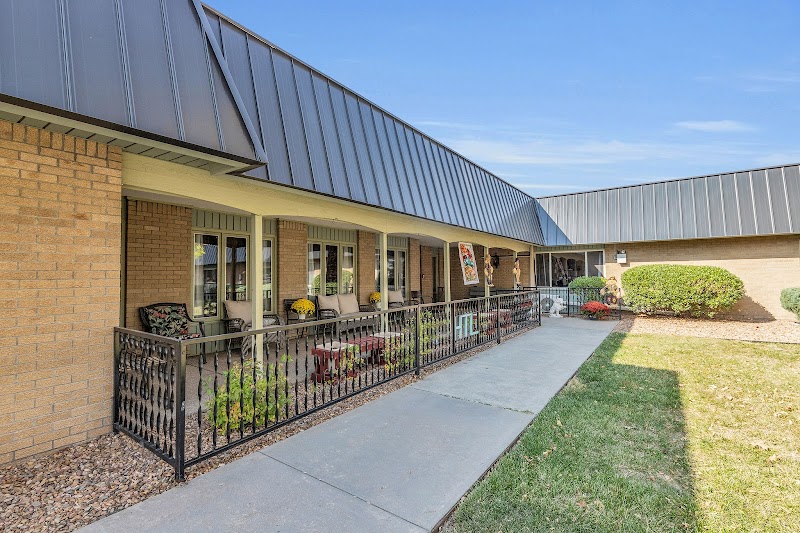
CONCERN (F)

Potential for Harm - no one hurt, but risky conditions existed

Deficiency F0804 (Tag F0804)

Could have caused harm · This affected most or all residents

**NOTE- TERMS IN BRACKETS HAVE BEEN EDITED TO PROTECT CONFIDENTIALITY** The facility had a census of 70 residents. Based on observation, record review, and interview, the facility failed to serve pala...

Read full inspector narrative →
**NOTE- TERMS IN BRACKETS HAVE BEEN EDITED TO PROTECT CONFIDENTIALITY** The facility had a census of 70 residents. Based on observation, record review, and interview, the facility failed to serve palatable food during meals that maintained appetizing temperatures and conserved nutritive values for the residents who resided in the facility and received food from the facility kitchen. Findings included: - The 12/03/20 lunch menu recorded roasted herb chicken, harvest pasta, broccoli, apple crisp and a roll. On 12/03/20 at 11:50 AM, observation during the noon meal revealed staff brought the insulated food cart to the west hall dining area. Continued observation at 12:50 PM revealed staff removed the last tray out of the food cart. Surveyors asked CMA RR to call the kitchen to get a thermometer to obtain the temperature of the tray. The dietary manager obtained the temperatures of the last tray of food on the cart with the following results: Roasted herb chicken -80 degrees Fahrenheit (F) Harvest pasta -80 degrees F Broccoli -81 degrees F The 12/07/20 lunch menu recorded Swiss steak, buttered carrots, [NAME] fruit crumble, bread and margarine. On 12/07/20 at 11:45 AM, observation revealed staff brought the insulated food cart to the west hall dining area. Continued observation at 12:45 PM revealed staff removed R54's tray from the insulated cart. Staff called the kitchen to have the dietary manager check the temperature of the tray. The dietary manager obtained the temperature of the food with the following results: Swiss steak -87 degrees F Mashed potatoes and gravy -97.3 degrees F Buttered carrots -84.3 degrees F On 12/03/20 at 12:45 PM, Certified Nurse Aide (CNA) RR stated the food was always late and cold because there was not enough staff to help pass the trays. On 12/08/20 at 09:35 AM, Resident (R) 41 stated his food was often cold and occasionally late. On 12/08/20 at 09:43 AM, R26 stated his food was often late a few times a week and when he got his tray it was luke warm. On 12/08/2020 at 10:30 AM, Dietary Staff (DS) BB stated she had only worked at the facility for a week and was attempting to work on a new process on serving the trays to the resident's. DS BB stated she had some resistance but felt that with her continuing to reinforce the new procedure, staff would come around. DS BB further stated she had staff place the trays in the cart in room order and that the trays should get to the residents much quicker and the food would be hotter. DS BB stated the kitchen would be remodeled starting January 1, 2021 and they would have all new equipment including food carts which would help keep the food warm. On 12/08/20 at 01:00 PM, Administrative Staff A stated the facility's meal service system did not maintain food temperatures and quality, and there would be a new kitchen starting January 1, 2021 that would help keep the food warm for the residents. Upon request, a policy for palatable food was not obtained from the facility. The facility failed to serve palatable food during meals that maintained appetizing temperatures and conserved nutritive values for the residents who resided in the facility and received food from the facility kitchen, placing the residents at risk for nutritional status problems and weight loss.
CONCERN (F)

Potential for Harm - no one hurt, but risky conditions existed

Infection Control (Tag F0880)

Could have caused harm · This affected most or all residents

The facility had a census of 70 residents. Based on observation, record review, and interview, the facility failed to provide a safe, sanitary and comfortable environment to help prevent the developme...

Read full inspector narrative →
The facility had a census of 70 residents. Based on observation, record review, and interview, the facility failed to provide a safe, sanitary and comfortable environment to help prevent the development and transmission of disease and infection for one unsampled resident, Resident (R) 19 and one sampled resident R11 when staff failed to properly disinfect the facility's glucometer between residents, and failed to store oxygen tubing appropriately for two unsampled residents R26, R41, and one sampled resident, R6. Findings included: - On 12/03/20 at 09:00 AM, observation revealed an uncovered oxygen cannula and tubing lying on R26's floor. On 12/03/20 at 11:25 AM, observation revealed Licensed Nurse (LN) H donned clean gloves, placed the glucometer on R19's bedside table, and obtained the resident's blood sugar. Further observation revealed LN H did not disinfect the glucometer after use. On 12/03/20 at 11:40 AM, observation revealed LN H donned clean gloves, placed the glucometer on R11's bedside table, and obtained the resident's blood sugar. Further observation revealed LN H did not disinfect the glucometer after use. On 12/07/20 at 02:10 PM, observation revealed an uncovered oxygen cannula and tubing lying across R6's bed. On 12/07/20 02:26 PM, observation revealed an uncovered oxygen cannula and tubing lying on R26's floor. On 12/08/20 at 07:55 AM, observation revealed an uncovered oxygen cannula and tubing lying on R26's floor. On 12/08/20 at 08:10 AM, observation revealed an uncovered oxygen cannula and tubing lying on R41's floor. On 12/03/20 at 11:45 AM, LN H stated she should have cleaned the glucometer between residents with an alcohol swab. On 12/09/20 at 09:30 AM, Administrative Nurse D stated the nurse should disinfect the glucometers with the germicidal disinfectant wipes between residents. Administrative Nurse D further stated the oxygen concentrators have bags on them for the oxygen tubing and should be stored in them when the tubing was not in use. The facility's Glucometer Cleaning policy, dated April 2019, documented the facility will ensure blood glucometers would be cleaned and disinfected after each use and according to manufacturer's instruction for multi-resident use. The glucometers should be disinfected with a wipe pre-saturated with an EPA (Environmental Protection Agency) registered healthcare disinfectant. Upon request, the facility did not provide a policy for oxygen tubing storage. The facility failed to provide a safe, sanitary and comfortable environment to help prevent the development and transmission of disease for R6, R11, R19, R26, and R41, placing the resident's at risk for infection.
Understanding Severity Codes (click to expand)
Life-Threatening (Immediate Jeopardy)
J - Isolated K - Pattern L - Widespread
Actual Harm
G - Isolated H - Pattern I - Widespread
Potential for Harm
D - Isolated E - Pattern F - Widespread
No Harm (Minor)
A - Isolated B - Pattern C - Widespread

Questions to Ask on Your Visit

  • "What changes have you made since the serious inspection findings?"
  • "What safeguards are in place to prevent abuse and neglect?"
  • "Why is there high staff turnover? How do you retain staff?"
  • "Can I speak with families of current residents?"
  • "What's your RN coverage like on weekends and overnight?"

Our Honest Assessment

Strengths
  • • Licensed and certified facility. Meets minimum state requirements.
Concerns
  • • Multiple safety concerns identified: Federal abuse finding, 3 life-threatening violation(s), 1 harm violation(s), $64,736 in fines. Review inspection reports carefully.
  • • 51 deficiencies on record, including 3 critical (life-threatening) violations. These warrant careful review before choosing this facility.
  • • $64,736 in fines. Extremely high, among the most fined facilities in Kansas. Major compliance failures.
  • • Grade F (0/100). Below average facility with significant concerns.
Bottom line: This facility has a substantiated abuse finding. Extreme caution advised. Explore alternatives.

About This Facility

What is Hilltop Lodge Center's CMS Rating?

CMS assigns HILLTOP LODGE HEALTH AND REHABILITATION CENTER an overall rating of 1 out of 5 stars, which is considered much below average nationally. Within Kansas, this rating places the facility higher than 0% of the state's 100 nursing homes. A rating at this level reflects concerns identified through health inspections, staffing assessments, or quality measures that families should carefully consider.

How is Hilltop Lodge Center Staffed?

CMS rates HILLTOP LODGE HEALTH AND REHABILITATION CENTER's staffing level at 1 out of 5 stars, which is much below average compared to other nursing homes. Staff turnover is 59%, which is 12 percentage points above the Kansas average of 46%. High turnover can affect care consistency as new staff learn residents' individual needs. RN turnover specifically is 62%, which is notably high. RNs provide skilled clinical oversight, so turnover in this role can affect medical care quality.

What Have Inspectors Found at Hilltop Lodge Center?

State health inspectors documented 51 deficiencies at HILLTOP LODGE HEALTH AND REHABILITATION CENTER during 2020 to 2024. These included: 3 Immediate Jeopardy (the most serious level, indicating potential for serious harm or death), 1 that caused actual resident harm, and 47 with potential for harm. Immediate Jeopardy findings are rare and represent the most serious regulatory concerns. They require immediate corrective action.

Who Owns and Operates Hilltop Lodge Center?

HILLTOP LODGE HEALTH AND REHABILITATION CENTER is owned by a for-profit company. For-profit facilities operate as businesses with obligations to shareholders or private owners. The facility is operated by RECOVER-CARE HEALTHCARE, a chain that manages multiple nursing homes. With 90 certified beds and approximately 67 residents (about 74% occupancy), it is a smaller facility located in BELOIT, Kansas.

How Does Hilltop Lodge Center Compare to Other Kansas Nursing Homes?

Compared to the 100 nursing homes in Kansas, HILLTOP LODGE HEALTH AND REHABILITATION CENTER's overall rating (1 stars) is below the state average of 2.9, staff turnover (59%) is significantly higher than the state average of 46%, and health inspection rating (1 stars) is much below the national benchmark.

What Should Families Ask When Visiting Hilltop Lodge Center?

Based on this facility's data, families visiting should ask: "What changes have been made since the serious inspection findings, and how are you preventing similar issues?" "What safeguards and monitoring systems are in place to protect residents from abuse or neglect?" "How do you ensure continuity of care given staff turnover, and what is your staff retention strategy?" "Can you walk me through typical staffing levels on day, evening, and night shifts?" These questions are particularly relevant given the facility's Immediate Jeopardy citations, the substantiated abuse finding on record, the facility's high staff turnover rate, and the below-average staffing rating.

Is Hilltop Lodge Center Safe?

Based on CMS inspection data, HILLTOP LODGE HEALTH AND REHABILITATION CENTER has documented safety concerns. The facility has 1 substantiated abuse finding (meaning confirmed case of resident harm by staff or other residents). Inspectors have issued 3 Immediate Jeopardy citations (the most serious violation level indicating risk of serious injury or death). The facility has a 1-star overall rating and ranks #100 of 100 nursing homes in Kansas. Families considering this facility should ask detailed questions about what corrective actions have been taken since these incidents.

Do Nurses at Hilltop Lodge Center Stick Around?

Staff turnover at HILLTOP LODGE HEALTH AND REHABILITATION CENTER is high. At 59%, the facility is 12 percentage points above the Kansas average of 46%. Registered Nurse turnover is particularly concerning at 62%. RNs handle complex medical decisions and coordinate care — frequent RN changes can directly impact care quality. High turnover means new staff may not know residents' individual needs, medications, or preferences. It can also be disorienting for residents, especially those with dementia who rely on familiar faces. Families should ask: What is causing the turnover? What retention programs are in place? How do you ensure care continuity during staff transitions?

Was Hilltop Lodge Center Ever Fined?

HILLTOP LODGE HEALTH AND REHABILITATION CENTER has been fined $64,736 across 4 penalty actions. This is above the Kansas average of $33,726. Fines in this range indicate compliance issues significant enough for CMS to impose meaningful financial consequences. Common causes include delayed correction of deficiencies, repeat violations, or care failures affecting resident safety. Families should ask facility leadership what changes have been made since these penalties.

Is Hilltop Lodge Center on Any Federal Watch List?

HILLTOP LODGE HEALTH AND REHABILITATION CENTER is not on any federal watch list. The most significant is the Special Focus Facility (SFF) program, which identifies the bottom 1% of nursing homes nationally based on persistent, serious quality problems. Not being on this list means the facility has avoided the pattern of deficiencies that triggers enhanced federal oversight. This is a positive indicator, though families should still review the facility's inspection history directly.