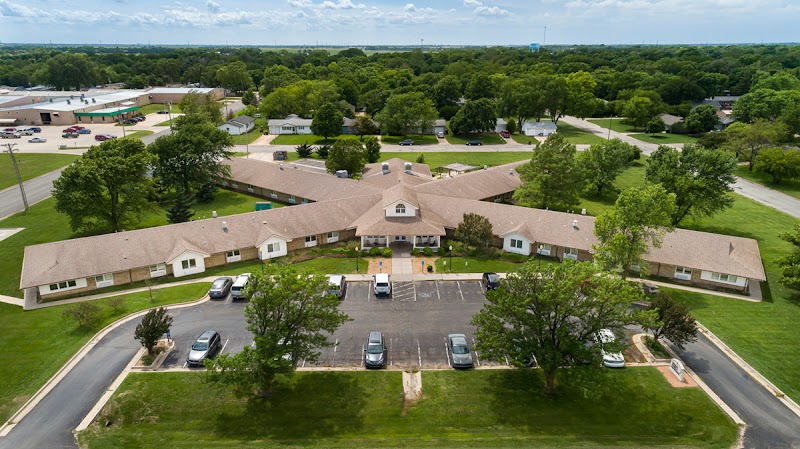
SERIOUS
(G)
📢 Someone Reported This
A family member, employee, or ombudsman was alarmed enough to file a formal complaint
Actual Harm - a resident was hurt due to facility failures
Pressure Ulcer Prevention
(Tag F0686)
A resident was harmed · This affected 1 resident
**NOTE- TERMS IN BRACKETS HAVE BEEN EDITED TO PROTECT CONFIDENTIALITY** The facility identified a census of 41 residents with 12 residents sampled, which included one resident reviewed for pressure ul...
Read full inspector narrative →
**NOTE- TERMS IN BRACKETS HAVE BEEN EDITED TO PROTECT CONFIDENTIALITY** The facility identified a census of 41 residents with 12 residents sampled, which included one resident reviewed for pressure ulcers (localized injury to the skin and/or underlying tissue usually over a bony prominence, as a result of pressure, or pressure in combination with shear and/or friction). Based on observations, interviews, and record review, the facility failed to assess and provide treatment to prevent a pressure injury for Resident (R)13. On 05/08/24, staff observed two intact blisters on R13's coccyx (area at the base of the spine). Staff failed to notify the provider until 05/14/24, six days later, when the two areas developed into stage two (partial-thickness skin loss into but no deeper than the dermis including intact or ruptured blisters) pressure ulcers. This placed the resident at risk to worsen her pressure ulcers and delayed healing.
Findings included:
- Resident (R) 13's Electronic Health Record (EHR) revealed diagnoses of diabetes mellitus type two (DM2-when the body cannot use glucose, not enough insulin made, or the body cannot respond to the insulin), neuromuscular dysfunction of bladder (the muscles that control the flow of urine out of the body do not relax and prevent the bladder from fully emptying) and other idiopathic peripheral autonomic neuropathy (weakness, numbness and pain from nerve damage, usually in the hands and feet).
The Annual Minimum Data Set (MDS) dated [DATE], documented a Brief Interview for Mental Status (BIMS) of 15, indicating intact cognition. R13 required maximal to total assistance with activities of daily living (ADLs), which included bed mobility, toileting, dressing, and bathing. R13 was always incontinent of bladder.
The Quarterly MDS dated 04/23/24, documented a BIMS of 14. R13 required total assistance of staff with ADLs. R13 was independent with eating. R13 was incontinent of bowel and bladder.
The Functional Abilities (Self-Care and Mobility) Care Area Assessment (CAA) dated 10/27/23, documented R13 was dependent on staff for bed mobility, dressing, toileting, and bathing.
The Pressure Ulcer CAA dated 10/27/23, documented a Braden Score of 14 (a tool for assessing the risk of developing a pressure ulcer), which identified the resident as at risk for development of a pressure ulcer (localized injury to the skin and/or underlying tissue usually over a bony prominence, as a result of pressure, or pressure in combination with shear and/or friction).
The Urinary Incontinence CAA dated 10/27/23, documented R13 was always incontinent of bowel and bladder.
The Care Plan dated 05/15/24, revealed R13 required two staff for bed mobility. Staff were to check and change the resident and apply briefs for incontinent care. Staff were to provide barrier cream to her buttocks after each incontinent care and turn the resident every hour and a half to two hours.
Review of the Progress Notes from 02/01/24 to 05/15/24 documented the following:
On 05/08/24 at 03:05 PM, R13 had two intact blisters on her right (later identified as the left) coccyx, noted by an unidentified Certified Nurse Aide (CNA). Staff treated the blisters with a thick barrier cream and would notify a wound and skin nurse. Further review of the resident's record lacked any evidence staff notified a wound and skin nurse of R13's wound to her coccyx on 05/08/24.
Review of the resident's electronic health record lacked evidence the facility notified the wound nurse and/or physician until six days later on 05/14/24.
Review of the Skin Wound Assessments from 02/01/24 to 05/15/24 documented the following:
On 05/14/24 at 03:00 PM (six days later) the Skin Wound Assessment documentation revealed R13 had a 0.2 centimeter (cm) by 0.2 cm stage two pressure ulcer to the left coccyx. Staff notified Physician Extender S and received an order for Triad cream (a hydrophilic wound, for difficult-to-dress wounds on wet or irregular surfaces).
The Physician's Order dated 05/15/24, lacked orders for R13's two opened, stage two pressure ulcers.
Observation on 05/16/24 at 11:33 AM, while staff provided incontinent care to R13, revealed two open areas on the left upper buttock near the coccyx, approximately 0.5 cm by 0.3 cm and a small area below area that measured approximately 0.2 cm by 0.2 cm. Both areas were superficial in depth, with a moist pink wound base with white granulation (new tissue formed during wound healing) of skin surrounding both open areas. The coccyx had redness. No old barrier cream residue was on the buttocks/coccyx area when staff provided the incontinence care and staff did not apply any cream after the incontinent care provided.
During an interview on 05/16/24 at 10:00 AM, Certified Medication Aide (CMA) U stated staff should notify the charge nurse immediately if a resident had any new skin condition.
During an interview on 05/16/24 at 11:41 AM, CNA N revealed barrier cream was not applied every time incontinent care was provided but said it should be applied every other time.
During an interview on 05/16/24 at 10:15 AM, Licensed Nurse (LN) L stated the provider should be contacted the same day with any new skin concern to receive orders.
During an interview on 05/16/24 at 09:31 AM, Administrative Nurse C revealed that Triad cream was always left in the nurses' medication cart, and not to be left in a residents' room. Administrative Nurse C stated that Triad cream is a stock medication, and an order should be placed on the resident's treatment record on the EHR. Administrative Nurse C verified the physician orders lacked a treatment order for the Triad cream. Administrative Nurse C stated that on 05/14/24 at 03:00 PM, the skin wound note documented the Triad cream was to be ordered but verified she forgot to write the order on the EHR. Administrative Nurse C revealed she expected staff to follow up on a wound concern that same day or the next day by a wound nurse. Administrative Nurse C expected the charge nurse to notify the wound nurse of a new skin concern by message, email, or placing a copy of the progress notes in their mailbox. Administrative Nurse C stated the Director of Nursing was the back-up wound nurse when the wound nurse was out of the facility. Administrative Nurse C stated the charge nurse should have notified the provider on 05/08/14, to update the provider and receive a treatment order.
During an interview on 05/16/24 at 09:42 AM, Administrative Nurse B, Administrative Nurse D, and Consultant Nurse P, agreed that a new pressure ulcer would be considered a significant change. Administrative Nurse B stated when staff observed the pressure ulcer on 05/08/24, the wound nurse should have assessed the wounds on that day or the following day. Administrative Nurse B and Administrative Nurse D agreed that the pressure ulcer was not assessed until 05/14/24 (six days later) and reported that was unacceptable. Administrative Nurse B stated when a provider orders a treatment, it should be placed in the EHR the same day it was received.
During an interview on 05/16/24 at 11:49 AM, Administrative Nurse B stated staff have been trained to leave a coating of barrier cream on residents' skin when incontinent care provided. Staff are not to rub and remove the old barrier cream, that a thick layer should have already been applied. Administrative Nurse B agreed that if no white residue was noted on residents' skin during incontinent care, a barrier cream should have been applied.
During an interview on 05/16/24 at 02:30 PM, Administrative Nurse B, revealed if the facility does not have a wound protocol, the nurse staff are to contact the provider.
During an interview on 05/20/24 at 10:54 AM, Physician Extender S reported was not able to recall an order for R13 for a pressure ulcer on 05/14/24. Physician Extender S expected to be notified the day of or the next day of a new pressure ulcer. Physician Extender S stated that was unacceptable of a time to be notified and expected new orders received be placed in EHR the same day received so the resident received care.
The undated facility policy Wound Assessment, Prevention and Treatment documented a resident who enters the facility without a pressure ulcer will not develop them unless the individual's clinical condition demonstrates that they were unavoidable. The policy noted assessment, appropriate care planning, preventative care and monitoring to promote rapid healing of any pressure ulcer present.
The facility failed to assess and provide treatment to Resident (R) 13's coccyx area that opened in a timely manner. This placed the resident at risk to worsen her current pressure ulcer or develop more skin issues.
SERIOUS
(G)
📢 Someone Reported This
A family member, employee, or ombudsman was alarmed enough to file a formal complaint
Actual Harm - a resident was hurt due to facility failures
Accident Prevention
(Tag F0689)
A resident was harmed · This affected 1 resident
**NOTE- TERMS IN BRACKETS HAVE BEEN EDITED TO PROTECT CONFIDENTIALITY** The facility census totaled 41 residents with 12 residents included in the sample, including one resident reviewed for accidents...
Read full inspector narrative →
**NOTE- TERMS IN BRACKETS HAVE BEEN EDITED TO PROTECT CONFIDENTIALITY** The facility census totaled 41 residents with 12 residents included in the sample, including one resident reviewed for accidents. Based on observation, interview, and record review, the facility failed to ensure a safe environment for one cognitively impaired Resident (R)35, when staff failed to check the temperature of a bowl of soup before serving it to the resident. Resident (R35) suffered burns, that developed blisters, on two fingers of his right hand when he placed them in the hot bowl of soup during mealtime.
Findings included:
- R35's Electronic Medical Record (EMR) revealed the following diagnoses: Alzheimer's disease with early onset (progressive mental deterioration characterized by confusion and memory failure), vascular dementia (progressive mental disorder characterized by failing memory, confusion) with psychosis (any major mental disorder characterized by a gross impairment in reality perception), agitation (feeling of aggravation or restlessness brought on by a provocation or a medical condition), and obsessive-compulsive disorder (OCD- anxiety disorder characterized by recurrent and persistent thoughts, ideas and feelings of obsessions severe to cause marked distress, consume considerable time or significantly interfere with the resident's occupational, social or interpersonal functioning).
R35's admission Minimum Data Set (MDS) dated [DATE] revealed the staff assessment of his cognition indicated severe cognitive impairment. R35 required extensive assistance of two for all cares.
The Cognitive Loss/Dementia Care Area Assessment (CAA) dated 07/12/23 revealed the resident was nonverbal, but R35 could communicate by tapping. The resident would tap his cup when he wanted more water and family reported the resident would tap his thigh at times when he needed to go to the bathroom.
R35's Quarterly MDS dated 04/02/24 revealed no significant changes in cognition or daily cares.
R35's Care Plan dated 07/07/23 revealed the resident could feed himself, however, had tremors and might need staff assistance at times.
The Nurses Note dated 10/18/23 at 05:51 PM, revealed the resident appeared to place his fingers in hot soup at the dining table and received a burn.
The Weekly Wound Assessment dated 10/18/23 revealed an intact fluid blister, round in shape. The assessment noted to monitor pads of all fingers of the right hand and keep dry and covered.
The 10/19/23 at 01:36 PM Nurse's Note revealed staff reported what appeared to be blisters on the pads of R35's third and fourth digit of his right hand. The note documented the resident had no signs of pain or discomfort, and continued to use that hand to feed himself. The staff notified Physician Extender S and received an order to keep his third digit covered, if possible, and monitor the site for seven days. The note included if the blister on the 3rd digit opened, the staff were to notify the facility wound nurse.
The 10/19/23 at 03:00 PM Nurse's Note revealed a late entry note, documented staff notified R35's Durable Power of Attorney (DPOA) of (the burns on) the resident's fingers.
The 10/22/23 at 12:40 PM Nurse's Skin/Wound Note revealed Licensed Nurse (LN) C removed the dressing from the resident's right hand 3rd digit to check the blister. The area was cleansed as it smelled of body odor. The blister remained intact and full of fluid, and staff applied a new dressing.
The Weekly Wound Assessment dated 10/25/23 revealed an intact fluid filled blister on R35's third finger of his right hand. The assessment revealed orders to keep the area covered with a dry dressing.
The Weekly Wound Assessment dated 10/31/23 revealed the area improving with a 2.2 centimeter (cm) by 3 cm hard, well-defined callous that covered the entire top of pad of the finger.
The Weekly Wound Assessment dated 11/07/23 revealed the area was resolved and in no need of further treatment.
On 05/16/24 at 08:35 AM, observation revealed LN C assisted R35 with eating and drinking breakfast.
Observation on 05/16/24 at 12:30 PM revealed an unidentified resident requested a bowl of soup for lunch. Dietary Staff J opened the can of soup, poured the soup into a bowl and placed it in the microwave. When the microwave oven shut off, Dietary Staff J removed the bowl of soup, covered the bowl with plastic wrap and put it on a tray for the resident. When asked if the soup was checked for proper temperature, Dietary Staff J reported she did not usually get a temperature. Upon request, Dietary Staff J measured the temperature of the soup at 154 degrees Fahrenheit.
During an interview on 05/16/24 at 08:55 AM, Certified Nurse Aide (CNA) N reported the resident was totally dependent on staff most days. CNA N said the resident had tremors that made it hard for him to hold his cup. CNA N said he communicated to staff by grabbing their hands and arms if he was in pain or wanted something.
During an interview on 05/16/24 at 08:39 AM, LN C reported she sat with the resident and fed him his breakfast. She stated the resident was dependent on staff for meals.
During an interview on 05/16/24 at 12:50 PM, Dietary Staff H reported staff should measure the temperature of all food prior to serving to any resident.
During an interview on 05/21/24 at 11:45 AM, Administrative Nurse B reported she expected dietary staff to check the temperature of foods before it was delivered to a cognitively impaired individual, to ensure the food was at a safe temperature.
The facility did not provide a policy regarding food temperatures, as requested on 05/21/24.
The facility failed to ensure a safe environment for one resident reviewed for accidents by the failure to check the temperature of a bowl of soup before serving to a cognitively impaired resident. This failure allowed R35 to suffer burns that developed into blisters on two of the fingers of his right hand when he placed them in the hot bowl of soup during the evening meal.
CONCERN
(D)
📢 Someone Reported This
A family member, employee, or ombudsman was alarmed enough to file a formal complaint
Potential for Harm - no one hurt, but risky conditions existed
Resident Rights
(Tag F0550)
Could have caused harm · This affected 1 resident
**NOTE- TERMS IN BRACKETS HAVE BEEN EDITED TO PROTECT CONFIDENTIALITY** The facility identified a census of 41 residents. The sample included 12 residents. Based on observation,
record review, and in...
Read full inspector narrative →
**NOTE- TERMS IN BRACKETS HAVE BEEN EDITED TO PROTECT CONFIDENTIALITY** The facility identified a census of 41 residents. The sample included 12 residents. Based on observation,
record review, and interviews, the facility failed to ensure Resident (R)13 received care in a dignified manner during incontinent care when the window blind was left open. This deficient practice placed the resident at risk for decreased psychosocial well-being.
Findings included:
- Resident (R) 13's Electronic Health Record (EHR) revealed diagnoses of diabetes mellitus type two (DM2-when the body cannot use glucose, not enough insulin made, or the body cannot respond to the insulin), neuromuscular dysfunction of bladder (the muscles that control the flow of urine out of the body do not relax and prevent the bladder from fully emptying) and other idiopathic peripheral autonomic neuropathy (weakness, numbness and pain from nerve damage, usually in the hands and feet).
The Annual Minimum Data Set (MDS) dated [DATE], documented a Brief Interview for Mental Status (BIMS) of 15, indicating intact cognition. R13 required maximal to total assistance with ADL's (activities of daily living such as bed mobility, toileting, dressing, and bathing). R13 was always incontinent of bladder.
The Quarterly MDS dated 04/23/24, documented a BIMS of 14. R13 required total assist with ADLs, except was independent with eating. R13 was incontinent of bowel and bladder.
The Functional Abilities (Self-Care and Mobility) Care Area Assessment (CAA) dated 10/27/23, documented R13 was dependent on staff for bed mobility, dressing, toileting, and bathing.
The Pressure Ulcer CAA dated 10/27/23, documented a Braden score of 14 (a tool for assessing the risk of developing a pressure ulcer), as was at risk for development of a pressure ulcer (localized injury to the skin and/or underlying tissue usually over a bony prominence, as a result of pressure, or pressure in combination with shear and/or friction).
The Urinary Incontinence CAA dated 10/27/23, documents R13 was always incontinent of bowel and bladder.
The Care Plan dated 05/15/24, revealed R13 required two staff for bed mobility. Staff were to check and change the resident and apply briefs for incontinent care. Staff were to provide barrier cream to buttocks after each incontinent care. Staff were to turn the resident every hour and a half to two hours.
The Physician's Order dated 05/15/24, lacked orders for incontinent care or skin care.
Review of the Progress Notes and Standard Assessments from 02/01/24 to 05/15/24 documented: On 04/17/24 through 04/23/24 Look Back MDS Assessment charting in EHR, documented R13 alert and oriented to person, place, time, and situation. Dependent of staff for ADL's, no behaviors. Incontinent of bowel and bladder.
On 05/16/24 at 11:33 AM, observed certified nursing assistant (CNA) N and certified medication aide (CMA) U complete incontinent care for R13. CNA N and CMA U failed to close the window blinds when providing care to the resident. R13's bed was directly in front of the window. Staff were able to see across the yard to the therapy room window that measured approximately 46 feet away. R13's window faced ninth street that measured approximately 150 feet away from window.
On 05/16/24 at 11:41 AM, CNA N and CMA U reported that the window blinds should have been closed completely during care provided.
On 05/16/24 at 11:45 AM, R13 stated she did not like that the window blind was left open when she was having care provided to private area. Stated I don't want people to see me.
On 05/16/24 at 11:49 AM, Administrative B and Consultant Nurse P stated that the window blind should been closed during care provided.
On 5/20/24 facility failed to provide a policy on dignity.
The facility failed to ensure Resident (R)13 received care in a dignified manner during incontinent care when the window blind was left open. This deficient practice placed the resident at risk for decreased psychosocial well-being.
CONCERN
(D)
📢 Someone Reported This
A family member, employee, or ombudsman was alarmed enough to file a formal complaint
Potential for Harm - no one hurt, but risky conditions existed
Deficiency F0578
(Tag F0578)
Could have caused harm · This affected 1 resident
**NOTE- TERMS IN BRACKETS HAVE BEEN EDITED TO PROTECT CONFIDENTIALITY** The facility reported a census of 41 residents, with 12 residents sampled, including one resident sampled for advanced directive...
Read full inspector narrative →
**NOTE- TERMS IN BRACKETS HAVE BEEN EDITED TO PROTECT CONFIDENTIALITY** The facility reported a census of 41 residents, with 12 residents sampled, including one resident sampled for advanced directives (a written document which indicated the medical decisions for health care professionals when the person could not make their own decisions). Based on interview and record review, the facility failed Resident (R)16 by having the guardian sign a completed Do Not Resuscitate (DNR- or no code, a legal document or order that means the person does not desire CPR in the event of cardiac arrest).
Findings included:
- Resident (R) 16's Electronic Health Record (EHR) revealed diagnoses of unspecified dementia (progressive mental disorder characterized by failing memory, confusion), unspecified intellectual disabilities and chronic atrial fibrillation (rapid, irregular heartbeat).
The Annual Minimum Data Set (MDS) dated [DATE], documented a Brief Interview for Mental Status (BIMS) not assessed, completed staff interview documented short and long term memory problem. R16 required partial to moderate assist with ADL's (activities of daily living such as bed mobility, toileting, dressing, and bathing). R16 independent with eating and wheelchair mobility.
The Quarterly MDS dated [DATE], documented a BIMS of 03, indication of severely impaired cognition.
The Cognitive Loss/Dementia Care Area Assessment (CAA) dated [DATE], documented R16 declined to participate in a BIMs assessment. Staff assessment completed. R16 can locate his room and knows the current season.
The Care Plan dated [DATE] documented, R16 had established an advance directive and had selected DNR.
Check R16 each quarter to see if R16 changed anything related to advance directives wishes. The care plan lacked documentation that R16 had a guardian.
The Physician's Order dated [DATE], documented a Do Not Resuscitate order.
On [DATE] review of EHR an uploaded document dated [DATE], a signed DNR by R16's guardian, witnessed by Social Services Designee (SSD), and provider.
On [DATE] review of EHR an uploaded document dated [DATE], a signed guardianship by <name of county> District Court, however lacked direction of advanced directives.
Interview on [DATE] at 02:55 PM Consultant Nurse P stated that the guardian cannot sign a DNR form unless approved by the judicial system.
Review of the facility's Advanced Directives policy dated [DATE], documented the facility will provide care and services in compliance with advanced directives, provided by the resident or resident representative according to state law. Policy lacked direction if resident had a guardian.
The facility failed R16 by having the guardian sign a completed Do Not Resuscitate (DNR- or no code, a legal document or order that means the person does not desire CPR in the event of cardiac arrest).
CONCERN
(D)
📢 Someone Reported This
A family member, employee, or ombudsman was alarmed enough to file a formal complaint
Potential for Harm - no one hurt, but risky conditions existed
Assessment Accuracy
(Tag F0641)
Could have caused harm · This affected 1 resident
**NOTE- TERMS IN BRACKETS HAVE BEEN EDITED TO PROTECT CONFIDENTIALITY** The facility reported a census of 41 residents with 12 residents selected for review. Based on observation, interview, and recor...
Read full inspector narrative →
**NOTE- TERMS IN BRACKETS HAVE BEEN EDITED TO PROTECT CONFIDENTIALITY** The facility reported a census of 41 residents with 12 residents selected for review. Based on observation, interview, and record review, the facility failed to accurately complete the Minimum Data Set (MDS) for two sampled residents, Resident (R)19 related to oxygen use, and R9 related to completion of sections C and D of the Minimum Data Set (MDS). This placed the residents at risk for uncommunicated care needs.
Findings include:
- The 02/27/23 Electronic Health Records (EHR) documented R19 had the following diagnoses that included pulmonary fibrosis (a disease of the lung that causes scarring and stiffening of the tissues over time which causes increased work of breathing) and chronic respiratory failure (a condition in which respiratory function is inadequate to maintain the body's need for oxygen supply and/or carbon dioxide removal while at rest).
The 10/17/23 Annual Minimum Data Set (MDS) documented a Brief Interview for Mental Status (BIMS) score of 14, indicating intact cognition. R19 was independent for all cares except bathing which required supervision and setup. The assessment documented that R19 did not receive oxygen.
The 09/28/23 Care Area Assessment (CAA) lacked documentation related to oxygen therapy.
The 04/16/24 Quarterly MDS documented a BIMS score of 15 which indicated intact cognition. R19 was independent for all cares except bathing which required minimal assistance. The assessment documented R19 received oxygen.
The 05/15/24 Care Plan documented the resident had been on oxygen but that the intervention documented as resolved on 06/17/22.
The Physician Orders in the EHR lacked active orders related to oxygen therapy but contained an order for oxygen that had been discontinued by the physician on 03/16/22.
The 09/27/23 to 10/31/23 Medication Administration Record (MAR) and Treatment Administration Record (TAR) lacked documentation related to administration of oxygen.
The Progress Notes reviewed from 01/14/24 to 05/16/24 lacked any documentation related to oxygen use.
On 05/15/24 at 09:54 AM, an observation of R19's room revealed no oxygen equipment in his room.
On 05/16/24 at 11:37 AM, R19 observed seated in the dining area with peers present, no oxygen observed in use.
On 05/20/24 at 08:04 AM, an observation of R19's room revealed no oxygen equipment in his room.
On 05/21/24 at 11:30 AM, Administrative Nurse D confirmed the above information and stated that a regional staff member completed that section of the MDS and that the entry on the MDS dated [DATE] was presumed to be a clerical error.
On 05/21/24 at 11:32 AM, Administrative Nurse B confirmed the above information and stated that her expectation was for all MDS assessments to be accurate regardless of whether the section was completed in-house by Administrative Nurse D or if it was completed off-site by a corporate employee.
On 05/21/24 at 11:34 AM, Consultant Nurse P confirmed the above information and confirmed that R19 did not receive oxygen during the look-back period for the 04/16/24 MDS assessment.
The facility policy for Minimum Data Set (MDS), dated 11/28/17, documented that the facility would conduct the MDS according to federal regulations and that data gathering was completed by a licensed nurse or member of the interdisciplinary team and reviewed by a Registered Nurse for completion following the current RAI (resident assessment instrument) manual.
The facility failed to accurately complete the MDS for R19 related to oxygen. This placed the resident at risk for uncommunicated care needs.
- Resident (R) 9's Electronic Health Record (EHR) revealed diagnoses of diabetes mellitus type two (DM2-when the body cannot use glucose, not enough insulin made, or the body cannot respond to the insulin) and dementia (progressive mental disorder characterized by failing memory, confusion).
The Quarterly MDS dated 01/02/24, documented a Brief interview for Mental Status (BIMS) score of 05, which was an indication of severely impaired cognition. Patient Health Questionnaire (PHQ-9 is a depressive symptom scale to assess the presence and severity of depressive symptoms) scored 00, which indicated no depression. R9 required maximal to total assistance with activity of daily living (ADLs).
The Significant Change Minimum Data Set (MDS) dated [DATE], lacked documentation of Brief Interview for Mental Status (BIMS) and lacked documentation of the nine-item Patient Health Questionnaire. R9 required total assistance with activities of daily living, which included bed mobility, toileting, dressing, and bathing. R9 was always incontinent of bladder. R9 received hospice care.
The Functional Abilities (Self-Care and Mobility) Care Area Assessment (CAA) dated 03/27/24 was not triggered.
The Cognitive Loss/Dementia CAA dated 03/27/24, was not triggered.
The Psychosocial Well-Being CAA dated 03/27/24, was not triggered.
The Care Plan dated 03/26/24, revealed the resident received hospice services and R9 continued to be involved in her healthcare and life decisions for as long as she was able. R9 had as needed (PRN) Ativan to keep R9 comfortable at the end of life.
The care plan lacked documentation of cognitive loss/dementia.
The Physician's Order dated 03/21/24, documented admit to Hospice for diagnosis of senile degeneration.
Review of the Progress Notes from 02/01/24 to 05/15/24 documented the following:
On 02/27/24 at 04:50 PM, Social Service Designee (SSD) spoke with R9's son, stating he would set up an appointment to discuss hospice.
On 03/20/24 at 02:14 PM, the Interdisciplinary Team met with the family, decided to enroll R9 with hospice. Lacked documentation if R9 was invited or attended the meeting.
Interview on 05/21/24 at 08:25 AM, Administrative Nurse D and Nurse Consultant P both stated section C and D on MDS was not completed before Assessment Reference Date (ARD) and had to be not assessed per the Resident Assessment Instrument (RAI) manual. Both agreed that MDS was not a complete assessment of R9.
Interview on 05/21/24 at 12:30 PM, social service staff E stated was not able to complete R9's MDS section C and D realized after the ARD they were not completed.
The facility policy for Minimum Data Set (MDS)dated 11/28/17, documented that the facility would conduct the MDS according to federal regulations and that data gathering was completed by a licensed nurse or member of the interdisciplinary team and reviewed by a Registered Nurse for completion following the current RAI (resident assessment instrument) manual.
The facility failed to accurately complete the MDS for R9 related to cognition and depression. This placed the resident at risk for uncommunicated care needs.
CONCERN
(D)
📢 Someone Reported This
A family member, employee, or ombudsman was alarmed enough to file a formal complaint
Potential for Harm - no one hurt, but risky conditions existed
Deficiency F0657
(Tag F0657)
Could have caused harm · This affected 1 resident
The facility reported a census of 41 residents with 12 residents sampled. Based on observation, interview, and record review, the facility failed to review and revise the person-centered care plan for...
Read full inspector narrative →
The facility reported a census of 41 residents with 12 residents sampled. Based on observation, interview, and record review, the facility failed to review and revise the person-centered care plan for one resident, Resident (R)30 related to use, care and maintenance of nebulizer equipment. This deficient practice had the potential to place the resident at risk for not receiving appropriate cares and treatments.
Findings included:
- The Electronic Health Records (EHR) documented R30 had the following diagnoses that included congestive heart failure (CHF - a condition with low heart output and the body becomes congested with fluid) and chronic respiratory failure (a condition in which respiratory function is inadequate to maintain the body's need for oxygen supply and/or carbon dioxide removal while at rest) with hypoxia (inadequate supply of oxygen in the blood).
The 09/19/23 Annual Minimum Data Set (MDS) documented a Brief Interview for Mental Status (BIMS) score of 15, which indicated intact cognition. R30 was dependent on staff assistance for all cares except eating which was independent. The assessment documented that R30 received oxygen.
The 09/19/23 Care Area Assessment (CAA) lacked documentation related to nebulized (a device which changes liquid medication into a mist easily inhaled into the lungs) medication therapy or oxygen therapy.
The 03/12/24 Quarterly MDS documented a BIMS score of 14, which indicated intact cognition. R30 was dependent on staff for all cares except eating which was independent. The assessment documented that R30 received oxygen.
The 05/15/24 Care Plan lacked documentation related to nebulized medication use or care and maintenance of nebulizer equipment.
The Physician Orders in the EHR documented the following:
Ipratropium (Atrovent - a medication used to dilate the medium and large airways of the lungs)-Albuterol (Ventolin - a medication used to relax the muscles of the lower airways) 0.5-2.5 (3) milligrams (mg)/3 milliliters (mL), one vial to be inhaled orally (PO) via nebulizer, four times each day, related to chronic respiratory failure with hypoxia, dated 10/24/23.
The Physician's Orders lacked documentation related to care and maintenance of the nebulizer equipment.
The Progress Notes reviewed from 01/18/24 to 05/16/24 lacked any documentation related to nebulized medication use.
On 05/15/24 at 12:06 PM, an observation of R30's room revealed that a nebulizer with attached mask, labeled 5/13 sat intact inside the top drawer of a clear plastic bedside table with an unknown clear liquid in the atomizer chamber.
On 05/16/24 at 07:54 AM, an observation of R30's room revealed that a nebulizer with attached mask, labeled 5/13 sat intact inside the top drawer of a clear plastic bedside table with an unknown clear liquid in the atomizer chamber.
On 05/20/24 at 08:02 AM, R30 sat upright in bed with the nebulizer mask intact on the resident's face with no medication mist observed. On 05/20/24 at 08:08 AM, Certified Nurse Aide (CNA) K entered R30's room and assisted the resident in removing the nebulizer mask and placed the mask inside the top drawer of the bedside storage cabinet with an unknown clear liquid in the atomizer chamber.
On 05/20/24 at 08:14 AM, CNA K revealed that she was unaware of any special handling/treatment/cleaning of nebulizer equipment. CNA K stated that sometimes at the end of a nebulizer treatment, CNA staff would assist the resident to remove the nebulizer equipment (mask or hand-held device) and place it on the nebulizer machine and stated that the Certified Medication Aides (CMA) or Licensed Nurses (LN) would come along later and take care of the nebulizer equipment.
On 05/16/24 at 09:31 AM, Administrative Nurse C stated that Administrative Nurse D updated the care plans during morning clinical meeting with the interdisciplinary team. Further, Administrative Nurse C stated that she was unaware of how often care plans should be updated and stated there was no paper updates for care plans.
On 05/20/24 at 12:30 PM, certified nursing assistant (CNA) M stated she was unaware of the care plan or how to view what interventions were to be performed for the residents.
On 05/20/24 at 12:30 PM, CNA Q stated the care plan was viewable in the EHR and staff were able to have a Pocket Care Sheet paper that was available at the nurses' station that staff could carry in their pockets to refer to with the most recent revision dated 05/08/24.
On 05/20/24 at 12:45 PM, Administrative Nurse D stated that she updated the Pocket Care Sheets whenever the care plan was changed and stated that she was not always able to update the care sheets in a timely manner.
On 05/21/24 at 11:28 AM, Administrative Nurse B and Administrative Nurse D confirmed the care plans lacked documentation for care and maintenance of R30's nebulizer equipment.
The facility's Care Plan policy, dated 03/21/24 documented the facility would develop a care plan for each resident that includes measurable objectives to meet the resident's medical, nursing, mental and psychosocial needs consistent with the resident's desires and preferences.
The facility failed to review and revise a comprehensive care plan for R30 to include nebulizer treatments. This deficient practice had the potential to lead to uncommunicated need for care and services to meet this resident's needs.
CONCERN
(D)
📢 Someone Reported This
A family member, employee, or ombudsman was alarmed enough to file a formal complaint
Potential for Harm - no one hurt, but risky conditions existed
ADL Care
(Tag F0677)
Could have caused harm · This affected 1 resident
**NOTE- TERMS IN BRACKETS HAVE BEEN EDITED TO PROTECT CONFIDENTIALITY** The facility identified a census of 41 residents. The sample included 12 residents. Based on observation,
record review, and in...
Read full inspector narrative →
**NOTE- TERMS IN BRACKETS HAVE BEEN EDITED TO PROTECT CONFIDENTIALITY** The facility identified a census of 41 residents. The sample included 12 residents. Based on observation,
record review, and interviews, the facility failed to ensure Resident (R)13 received care for removal of facial hair. This deficient practice placed the resident at risk for decreased psychosocial well-being.
Findings included:
- Resident (R) 13's Electronic Health Record (EHR) revealed diagnoses of diabetes mellitus type two (DM2-when the body cannot use glucose, not enough insulin made, or the body cannot respond to the insulin), and other idiopathic peripheral autonomic neuropathy (weakness, numbness and pain from nerve damage, usually in the hands and feet).
The Annual Minimum Data Set (MDS) dated [DATE], documented a Brief Interview for Mental Status (BIMS) of 15, indicating intact cognition. R13 required maximal to total assistance with ADL's (activities of daily living such as bed mobility, toileting, dressing, and bathing).
The Quarterly MDS dated 04/23/24, documented a BIMS of 14. R13 required total assist with ADLs, except was independent with eating.
The Functional Abilities (Self-Care and Mobility) Care Area Assessment (CAA) dated 10/27/23, documented R13 was dependent on staff for bed mobility, dressing, toileting, and bathing and required moderate assist with personal hygiene.
The Care Plan dated 05/15/24, revealed R13 lacked direction for staff on bathing assistance and removal of facial hair.
The Physician's Order dated 05/15/24, lacked orders for removal of facial hair.
Review of the Progress Notes and Standard Assessments from 02/01/24 to 05/15/24, lacked notes or assessments regarded to care provided.
Review of the Task Personal Hygiene (the ability to maintain personal hygiene, including combing hair, shaving, applying makeup, washing/drying face and hands) in EHR dated from 04/24/24 to 05/15/24, staff documented 54 times R13 dependent - helper does all of the effort. Resident does none of the effort to complete the activity.
Observation on 05/15/24 at 11:33 AM, revealed R13 had facial hair above and both upper lips, several approximate length of 1/4 inch whiskers. R13 stated she cannot see them, and it bothered her that she had the facial hair.
Observation on 05/16/24 at 11:33 AM, revealed facial hair remained above and below R13's lips, several approximate length of 1/4 inch whiskers.
Interview on 05/16/24 at 11:41 AM, Certified Nurse Aide (CNA) N stated that facial hair should be removed on shower days and Res 13's shower day scheduled on Thursday and Sunday evening. CNA N stated she had not planned to remove R13's facial hair.
On 05/20/24 at 10:31 AM, interview with Administrative Nurse B reported it was expected of staff to offer the residents facial hair be removed on bath/shower days or if resident requested to have the facial hair removed on any other day.
On 5/20/24 facility failed to provide a policy on ADLs.
The facility failed to ensure Resident (R)13 received care for removal of facial hair. This deficient practice placed the resident at risk for decreased psychosocial well-being.
CONCERN
(E)
📢 Someone Reported This
A family member, employee, or ombudsman was alarmed enough to file a formal complaint
Potential for Harm - no one hurt, but risky conditions existed
Safe Environment
(Tag F0584)
Could have caused harm · This affected multiple residents
The facility had a census of 41 residents. Based on observation, record review, and interview, the facility failed to maintain a clean, comfortable and homelike environment to the residents that resid...
Read full inspector narrative →
The facility had a census of 41 residents. Based on observation, record review, and interview, the facility failed to maintain a clean, comfortable and homelike environment to the residents that resided in the facility.
Findings included:
- On 05/21/24 at 09:19 AM, physical environmental tour with Maintenance Director F revealed the following areas of concerns:
1. On the floor transition from the main area to the 200 hall, an area of frayed carpeting.
2. On the floor transition from the main area to the 300 hall, an area of frayed carpeting.
3. On the floor in the 200 hall, one floor sewer cleanout cap was loose and was able to be lifted easily.
4. On the divider wall inside the 400 hall shower, two tiles along the base and corner were broken with jagged exposed edges.
5. On the transition between the floor to the wall in the 200 hall shower, an unknown black substance was between the tiles.
On 05/21/24 at 09:40 AM, Maintenance Director F confirmed the above findings.
On 05/21/24 at 09:50 AM, Administrative Staff A confirmed the above findings and stated they would be immediately addressed by the facility.
The facility's Housekeeping and Maintenance Services policy, dated 04/27/18 documented that the facility would provide housekeeping and maintenance services to maintain a safe, clean, comfortable and homelike environment.
The facility failed to maintain a clean, comfortable and homelike environment to the residents that resided in the facility.
CONCERN
(E)
📢 Someone Reported This
A family member, employee, or ombudsman was alarmed enough to file a formal complaint
Potential for Harm - no one hurt, but risky conditions existed
Comprehensive Care Plan
(Tag F0656)
Could have caused harm · This affected multiple residents
**NOTE- TERMS IN BRACKETS HAVE BEEN EDITED TO PROTECT CONFIDENTIALITY** The facility had a census of 41 residents. The sample included 12 residents. Based on observation, interview
and record review,...
Read full inspector narrative →
**NOTE- TERMS IN BRACKETS HAVE BEEN EDITED TO PROTECT CONFIDENTIALITY** The facility had a census of 41 residents. The sample included 12 residents. Based on observation, interview
and record review, the facility failed to develop a comprehensive care plan for Resident (R)13's pressure ulcer (localized injury to the skin and/or underlying tissue usually over a bony prominence, as a result of pressure, or pressure in combination with shear and/or friction). The facility further failed to develop a care plan for R19's care and maintenance of respiratory equipment. The facility further failed to develop a care plan for R42's dysphagia (swallowing difficulty). The facility further failed to develop a care plans' for R26's monitoring of behaviors for psychotropic (alters mood or thought) medications. This deficient practice placed the residents at risk for inadequate care and services.
Findings included:
- Resident (R)42's Electronic Health Record (EHR) revealed diagnoses of dysphagia (swallowing difficulty), schizophrenia (mental disorder characterized by gross distortion of reality, disturbances of language and communication and fragmentation of thought) and epilepsy (brain disorder characterized by repeated seizures).
The admission Minimum Data Set (MDS) dated [DATE], documented a Brief Interview for Mental Status (BIMS) of 15, which indicated intact cognition. R42 was independent with ADLs (activities of daily living such as walking, grooming, toileting, dressing and eating) and required a mechanically altered, regular diet with regular thin liquids.
The 03/14/24 Nutritional Status Care Area Assessment (CAA) documented R42 was able to choose his own meals and eat without assistance. R42 received a pureed diet with mechanical soft foods for pleasure. R42 reported choking episodes prior to admission to the facility. Speech Therapist worked with R42 for dysphagia and safe swallowing.
The Nutrition Care Plan dated 05/16/24, guided staff to provide diet as ordered and R42 was able to choose the foods he wanted to consume. The care plan lacked the dysphagia, pureed diet, and recommended speech therapy interventions.
The Physician's Order dated 03/07/24, included the resident to have a regular diet, pureed texture, regular thin liquids. The physician orders lacked mechanical soft foods for pleasure. On 05/08/24, the provider ordered the staff could crush medications or change to liquids.
Review of the Progress Notes from 03/07/24 to 05/15/24 documented the following:
On 03/08/24 at 04:07 PM, R42 requested rice krispies and a [NAME] buddy bar snack the nurse educated the resident on the risks of choking. R42 stated he could eat them.
On 03/22/24 at 09:36 AM, Speech Therapist evaluated R42, and the swallowing recommendations received as follows:
R42 needs to sit up at 90 degrees to eat and remain upright for 30 minutes after meals. Foods to be pureed with option of certain foods to be ground per R42's preference. Reminded to alternate the food with the liquids. Oral care twice a day especially before bed.
On 05/07/24 at 10:28 AM, documented R42 choked on Colace pill at breakfast. Colace capsule changed to liquid.
Interview on 05/20/24 09:39 AM, R42 stated he could eat what he wanted to, that the meat needed to be ground up. Stated he does get choked on foods sometimes.
Interview on 05/20/24 at 09:44 AM, Certified Medication Aide (CMA) R stated R42's medications could be crushed, but CMA R does not crush the medications, instead would administer medications in applesauce per R42's requested the medications administered that way. CMA R stated that R42 had choked on medications prior to 05/07/24 at times and on 05/07/24 CMA R administered morning medications to R42. R42 coughed and placed his face over a garbage can in the dining room, then hurried himself to his room as the nurse followed behind him. CMA R stated that R42 requested snacks that are not pureed like [NAME] bars.
Interview on 05/20/24 at 10:00 AM, Dietary Staff I stated R42 never requested food that was not purred. Stated that R42 received pancakes instead of his poached eggs that was ordered and would not eat them, R42 alerted dietary staff of the mistake.
Interview on 05/20/24 at 10:15 AM, Licensed Nurse (LN) L stated R42 requested snack cakes often and knew that R42's diet was pureed. LN L stated she followed R42 down to his room on 05/07/24 when he had difficulty with the Colace capsule, stated R42 vomited the capsule into garbage can and Colace capsule was changed to liquid form.
Interview on 05/20/24 at 02:50 PM, Administrative Nurse B and Administrative Nurse D reviewed current diet ordered in EHR and revealed that no mention of mechanical soft if requested was on order. They both reviewed the care plan and stated the care plan lacked the Speech Therapist recommended interventions and should have been added to the care plan. Administrative Nurse B stated that R42 requested snack cakes especially the [NAME] bars, and stated the [NAME] bar was soft enough to be consumed.
The facility Care Plan policy dated 03/21/24, documented the facility would develop a care plan for each resident that included measurable objectives to meet the residents medical, nursing, mental and psychosocial needs consistent with the resident's desires and preferences.
The facility failed to develop a care plan for R42's dysphagia (swallowing difficulty). This deficient practice placed the residents at risk for inadequate care and services.
- Resident (R) 13's Electronic Health Record (EHR) revealed diagnoses of diabetes mellitus type two (DM2-when the body cannot use glucose, not enough insulin made, or the body cannot respond to the insulin), neuromuscular dysfunction of bladder (the muscles that control the flow of urine out of the body do not relax and prevent the bladder from fully emptying) and other idiopathic peripheral autonomic neuropathy (weakness, numbness and pain from nerve damage, usually in the hands and feet).
The Annual Minimum Data Set (MDS) dated [DATE], documented a Brief Interview for Mental Status (BIMS) of 15, indicating intact cognition. R13 required maximal to total assistance with activities of daily living (ADLs), which included bed mobility, toileting, dressing, and bathing. R13 was always incontinent of bladder.
The Quarterly MDS dated 04/23/24, documented a BIMS of 14. R13 required total assistance of staff with ADLs. R13 was independent with eating. R13 was incontinent of bowel and bladder.
The Functional Abilities (Self-Care and Mobility) Care Area Assessment (CAA) dated 10/27/23, documented R13 was dependent on staff for bed mobility, dressing, toileting, and bathing.
The Pressure Ulcer CAA dated 10/27/23, documented a Braden Score of 14 (a tool for assessing the risk of developing a pressure ulcer), which identified the resident as at risk for development of a pressure ulcer (localized injury to the skin and/or underlying tissue usually over a bony prominence, as a result of pressure, or pressure in combination with shear and/or friction).
The Urinary Incontinence CAA dated 10/27/23, documented R13 was always incontinent of bowel and bladder.
The Care Plan dated 05/15/24, revealed R13 required two staff for bed mobility. Staff were to check and change the resident and apply briefs for incontinent care. Staff were to provide barrier cream to her buttocks after each incontinent care and turn the resident every hour and a half to two hours.
The care plan lacked guidance to staff related to pressure ulcers.
Review of the Progress Notes from 02/01/24 to 05/15/24 documented the following:
On 05/08/24 at 03:05 PM, R13 had two intact blisters on her right (later identified as the left) coccyx, noted by an unidentified Certified Nurse Aide (CNA). Staff treated the blisters with a thick barrier cream and would notify a wound and skin nurse. Further review of the resident's record lacked any evidence staff notified a wound and skin nurse of R13's wound to her coccyx on 05/08/24.
Review of the Skin Wound Assessments from 02/01/24 to 05/15/24 documented the following:
On 05/14/24 at 03:00 PM (six days later) the Skin Wound Assessment documentation revealed R13 had a 0.2 centimeter (cm) by 0.2 cm stage two pressure ulcer to the left coccyx. Staff notified Physician Extender S and received an order for Triad cream (a hydrophilic wound, for difficult-to-dress wounds on wet or irregular surfaces).
The Physician's Order dated 05/15/24, lacked orders for R13's two opened, stage two pressure ulcers.
Observation on 05/16/24 at 11:33 AM, while staff provided incontinent care to R13, revealed two open areas on the left upper buttock near the coccyx, approximately 0.5 cm by 0.3 cm and a small area below area that measured approximately 0.2 cm by 0.2 cm. Both areas were superficial in depth, with a moist pink wound base with white granulation (new tissue formed during wound healing) of skin surrounding both open areas. The coccyx had redness. No old barrier cream residue was on the buttocks/coccyx area when staff provided the incontinence care and staff did not apply any cream after the incontinent care provided.
Interview on 05/16/24 at 09:31 AM, Administrative Nurse C revealed that she did not update the care plan, stated that the MDS Nurse updated all the care plans. Administrative Nurse C did not know a time frame of when concerns such as a pressure ulcer should be added to the care plan.
Interview on 05/16/24 at 09:42 AM, Administrative Nurse B, Administrative Nurse D, and Consultant Nurse P, stated the care plan should be updated immediately if a significant change of residents' care occurred and agreed that a new pressure ulcer was a significant change.
The facility Care Plan policy dated 03/21/24, documented the facility would develop a care plan for each resident that included measurable objectives to meet the residents medical, nursing, mental and psychosocial needs consistent with the resident's desires and preferences.
The facility failed to develop a comprehensive care plan for Resident (R)13's pressure ulcer. This deficient practice placed the residents at risk for inadequate care and services.
- The Electronic Health Records (EHR) documented R19 had the following diagnoses that included pulmonary fibrosis (a disease of the lung that causes scarring and stiffening of the tissues over time which causes increased work of breathing) and chronic respiratory failure (a condition in which respiratory function is inadequate to maintain the body's need for oxygen supply and/or carbon dioxide removal while at rest).
The 10/17/23 Annual Minimum Data Set (MDS) documented a Brief Interview for Mental Status (BIMS) score of 14, indicating intact cognition. R19 was independent for all cares except bathing which required supervision and setup.
The 09/28/23 Care Area Assessment (CAA) lacked documentation related to nebulized (a device which changes liquid medication into a mist easily inhaled into the lungs) medication therapy.
The 04/16/24 Quarterly MDS documented a BIMS score of 15 which indicated intact cognition. R19 was independent for all cares except bathing which required minimal assistance.
The 05/15/24 Care Plan lacked documentation related to nebulized medication use or care and maintenance of nebulizer equipment.
The Physician Orders in the EHR documented the following:
Budesonide (Pulmicort - an orally inhaled steroid used to decrease inflammation in the lungs) suspension 0.25 milligrams (mg)/2 milliliter (mL), one vial to be inhaled orally (PO) via nebulizer, one time per day, related to pulmonary fibrosis, resident may set up and self-administer, dated 01/10/24.
Ipratropium (Atrovent - a medication used to dilate the medium and large airways of the lungs)-Albuterol (Ventolin - a medication used to relax the muscles of the lower airways), 0.5-2.5 (3) mg/3 mL, one vial to be inhaled PO via nebulizer, every four hours as needed for cough/shortness of breath, resident may self-administer after nurse setup, dated 11/17/21.
Perforomist (formoterol - a long-lasting medication used to relax the muscles of the airways), 20 micrograms (mcg)/2 mL, one vial to be inhaled PO via nebulizer, one time per day related to pulmonary fibrosis, dated 12/06/24.
The Physician's Orders lacked documentation related to care and maintenance of the nebulizer equipment.
The Progress Notes reviewed from 01/14/24 to 05/16/24 lacked any documentation related to nebulized medication use.
The EHR Assessments revealed on 01/09/24, staff assessed that R19 was capable to properly self-administer inhaled medications without assistance from staff.
On 05/15/24 at 09:54 AM, an observation of R19's room revealed that a nebulizer, labeled 5/13 sat intact on the nebulizer machine on R19's over-the-bed table with an unknown clear residue noted in the atomizer chamber.
On 05/16/24 at 08:03 AM, an observation of R19's room revealed that a nebulizer sat intact on the nebulizer machine on R19's over-the-bed table with an unknown clear residue and unknown clear liquid droplets in the atomizer chamber.
On 05/20/24 at 08:04 AM, an observation of R19's room revealed that a nebulizer sat intact on the nebulizer machine on R19's over-the-bed table with an unknown clear residue and unknown clear liquid droplets in the atomizer chamber.
On 05/16/24 at 09:31 AM, Administrative Nurse C stated that Administrative Nurse D updated the care plans during morning clinical meeting with the interdisciplinary team. Further, Administrative Nurse C stated that she was unaware of how often care plans should be updated and stated there was no paper updates for care plans.
On 05/20/24 at 12:30 PM, certified nursing assistant (CNA) M stated she was unaware of the care plan or how to view what interventions were to be performed for the residents.
On 05/20/24 at 12:30 PM, CNA Q stated the care plan was viewable in the EHR and staff were able to have a Pocket Care Sheet paper that was available at the nurses' station that staff could carry in their pockets to refer to with the most recent revision dated 05/08/24.
On 05/20/24 at 12:45 PM, Administrative Nurse D stated that she updated the Pocket Care Sheets whenever the care plan was changed and stated that she was not always able to update the care sheets in a timely manner.
On 05/21/24 at 11:28 AM, Administrative Nurse B and Administrative Nurse D confirmed the care plans lacked documentation for care and maintenance of R19's nebulizer equipment.
The facility's Care Plan policy, dated 03/21/24 documented the facility would develop a care plan for each resident that includes measurable objectives to meet the resident's medical, nursing, mental and psychosocial needs consistent with the resident's desires and preferences.
The facility failed to accurately complete a comprehensive care plan for R19 related to nebulizer treatments. This deficient practice have the potential to lead to uncommunicated need for care and services to meet this residents' needs.
- R26's signed physician orders dated 05/15/24 revealed the following diagnoses that included major depressive disorder (a mood disorder that causes a persistent feeling of sadness and loss of interest), and anxiety disorder (mental or emotional reaction characterized by apprehension, uncertainty, and irrational fear).
R26's Significant Change in Status Minimum Data Set (MDS) dated 10/21/23, revealed a Brief Interview for Mental Status (BIMS) score of 15, indicating intact cognition. The PHQ-9 (depression assessment) score of 10, indicating moderate depression. R 26 received as needed (PRN) pain medication for occasional complaints of pain. Medications included antianxiety (class of medication that calm and relax people), antidepressant (class of medications used to treat mood disorders), and opioid (pain medication) daily.
The Mood State Care Area Assessment (CAA) dated 10/24/23 revealed the resident had depression and received
Cymbalta 30 mg daily and Remeron 30 mg daily. During the assessment period, the resident stated he felt down and depressed daily and felt bad about himself. The resident was agreeable to weekly social service visits to ensure psychosocial needs were met.
The Quarterly MDS dated 01/30/24 revealed a PHQ-9 score of one, indicating no depression. R26 received scheduled pain medication, antianxiety and antidepressant medications daily.
The Care Plan dated 05/15/24 revealed no interventions planned to monitor for behaviors/mood related to the use of antidepressant and antianxiety medications.
The physician orders included:
Ativan, (Lorazepam), (antianxiety medication), 1 milligram (mg), two times a day, related to anxiety disorder. Give one mg, by mouth, every six hours, as needed for anxiety related to malignant neoplasm of nasopharynx, and for stressful events or thoughts, ordered on 05/14/2024.
Remeron Tablet 30 mg, (Mirtazapine), (antidepressant medication), 30 mg by mouth, one time a day, related to major depressive disorder, ordered on 05/09/2024.
Cymbalta, 30 mg, (Duloxetine), (antidepressant), 30 mg, by mouth at bedtime, related to anxiety disorder, ordered on 5/9/2024.
On 05/16/24 at 10:41 AM, Licensed Nurse (LN) L provided tracheostomy care (care around the opening through the neck into the trachea through which an indwelling tube may be inserted). The resident was relaxed during the procedure.
On 05/15/24 at 09:30 AM, Certified Nursing Assistant M reported she had not seen any real bad behaviors from the resident. He was usually cooperative with all care. On occasion he is kind of down and wants to be left alone.
On 05/16/24 at 11:00 AM, LN L reported the facility does not document the resident's behavior in the on the Medication Administration Record (MAR) or the Treatment Administration Record (TAR). LN L reported the R26 receives medication for his mood state.
On 05/21/24 at 11:28 AM, Administrative Nurse B and Administrative Nurse D confirmed that the physician's orders and care plan lacked documentation for monitoring of behaviors related to psychotropic medications for R26. Administrative Nurse B stated that her expectation was for monitoring of behaviors to be included in the care plan.
The facility's policy for Care Plan dated 03/21/24 revealed a care plan will be developed for each resident that includes measurable objectives to meet a resident's medical, nursing, mental and psychosocial needs and are consistent with the resident's desires and preferences.
The facility failed to develop a comprehensive care plan to include interventions to monitor behaviors related to the use of psychotropic medications for this resident that required medication for depression and anxiety.
CONCERN
(E)
📢 Someone Reported This
A family member, employee, or ombudsman was alarmed enough to file a formal complaint
Potential for Harm - no one hurt, but risky conditions existed
Respiratory Care
(Tag F0695)
Could have caused harm · This affected multiple residents
**NOTE- TERMS IN BRACKETS HAVE BEEN EDITED TO PROTECT CONFIDENTIALITY** - Resident (R)42's Electronic Health Record (EHR) revealed diagnoses of obstructive sleep apnea (disorder of sleep characterized...
Read full inspector narrative →
**NOTE- TERMS IN BRACKETS HAVE BEEN EDITED TO PROTECT CONFIDENTIALITY** - Resident (R)42's Electronic Health Record (EHR) revealed diagnoses of obstructive sleep apnea (disorder of sleep characterized by periods without respirations), schizophrenia (mental disorder characterized by gross distortion of reality, disturbances of language and communication and fragmentation of thought), and epilepsy (brain disorder characterized by repeated seizures).
The admission Minimum Data Set (MDS) dated [DATE], documented a Brief Interview for Mental Status (BIMS) of 15, which indicated intact cognition. R42 was independent with ADLs (activities of daily living such as walking, grooming, toileting, dressing and eating).
The 03/14/24 Functional Abilities (Self-Care and Mobility) Care Area Assessment (CAA) documented R42 was independent in ADLs, except required set-up to complete showers.
The Physician's Order dated 04/11/24, included the resident to have CPAP (continuous positive airway pressure - a ventilation device that blows a gentle stream of air into the nose to keep airway open during sleep) applied nightly in PM and removed in the AM daily. Staff instructed to clean the CPAP weekly on Thursdays. The physician's order lacked direction on how to clean the CPAP and store the mask when not used.
Review of the Progress Notes from 03/07/24 to 05/15/24 lacked documentation regarded to the CPAP.
Observation on 05/15/24 at 12:31 PM, a CPAP mask laid on R42's nightstand over other personal items.
Observation on 05/16/24 at 08:13 AM, a CPAP mask laid on R42's nightstand over other personal items.
Observation on 05/20/24 at 09:39 AM, a CPAP mask laid on the nightstand over the CPAP machine and came in direct contact with other items on the nightstand. R42 stated was not sure when staff would clean the mask.
Interview on 05/21/24 at 11:30 AM, Administrative Nurse B and Administrative Nurse D confirmed a CPAP mask should be placed on the machine or in a bag, but not on the bed or nightstand.
The facility policy Respiratory Care dated 04/24/18, documented that the facility would provide necessary respiratory care services in accordance with professional standards of practice, the resident's care plan and the resident's choice.
The facility failed to properly store this resident's CPAP in accordance with professional standards of care, to prevent possible respiratory illness.
The facility reported a census of 41 residents with 12 residents selected for review which included four residents reviewed for respiratory care. Based on observation, interview, and record review, the facility failed to properly clean and store the nebulizer (a device for administering inhaled medications) for Resident (R)19 and R30. Additionally, the facility failed to properly store the CPAP (continuous positive airway pressure - a ventilation device that blows a gentle stream of air into the nose to keep airway open during sleep) for R42. Furthermore, the facility failed to provide tracheostomy (an opening though the neck into the trachea through which an indwelling tube is inserted) care for R26 in accordance with professional standards of practice. These deficient practices had the potential to have a negative impact on the residents' physical and psychosocial well-being.
Findings included:
- The 02/27/23 Electronic Health Records (EHR) documented R19 had the following diagnoses that included pulmonary fibrosis (a disease of the lung that causes scarring and stiffening of the tissues over time which causes increased work of breathing) and chronic respiratory failure (a condition in which respiratory function is inadequate to maintain the body's need for oxygen supply and/or carbon dioxide removal while at rest).
The 10/17/23 Annual Minimum Data Set (MDS) documented a Brief Interview for Mental Status (BIMS) score of 14, indicating intact cognition. R19 was independent for all cares except bathing which required supervision and setup.
The 09/28/23 Care Area Assessment (CAA) lacked documentation related to nebulized (a device which changes liquid medication into a mist easily inhaled into the lungs) medication therapy.
The 04/16/24 Quarterly MDS documented a BIMS score of 15 which indicated intact cognition. R19 was independent for all cares except bathing which required minimal assistance.
The 05/15/24 Care Plan lacked documentation related to nebulized medication use or care and maintenance of nebulizer equipment.
The Physician Orders in the EHR documented the following:
Budesonide (Pulmicort - an orally inhaled steroid used to decrease inflammation in the lungs) suspension 0.25 milligrams (mg)/2 milliliter (mL), one vial to be inhaled orally (PO) via nebulizer, one time per day, related to pulmonary fibrosis, resident may set up and self-administer, dated 01/10/24.
Ipratropium (Atrovent - a medication used to dilate the medium and large airways of the lungs)-Albuterol (Ventolin - a medication used to relax the muscles of the lower airways) 0.5-2.5 (3) mg/3 mL one vial to be inhaled PO via nebulizer every four hours as needed for cough/shortness of breath, resident may self-administer after nurse setup, dated 11/17/21.
Perforomist (formoterol - a long-lasting medication used to relax the muscles of the airways) 20 micrograms (mcg)/2 mL, one vial to be inhaled PO via nebulizer one time per day related to pulmonary fibrosis, 12/06/22.
The Physician's Orders lacked documentation related to care and maintenance of the nebulizer equipment.
The Progress Notes reviewed from 01/14/24 to 05/16/24 lacked any documentation related to nebulized medication use.
The EHR Assessments revealed on 01/09/24 R19 was assessed to be capable to properly self-administer inhaled medications without assistance from staff.
On 05/15/24 at 09:54 AM, an observation of R19's room revealed that a nebulizer, labeled 5/13 sat intact on the nebulizer machine on R19's over-the-bed table with an unknown clear residue noted in the atomizer chamber.
On 05/16/24 at 08:03 AM, an observation of R19's room revealed that a nebulizer sat intact on the nebulizer machine on R19's over-the-bed table with an unknown clear residue and unknown clear liquid droplets in the atomizer chamber.
On 05/20/24 at 08:04 AM, an observation of R19's room revealed that a nebulizer sat intact on the nebulizer machine on R19's over-the-bed table with an unknown clear residue and unknown clear liquid droplets in the atomizer chamber.
On 05/15/24 at 09:54 AM, R19 stated staff do not clean or disassemble the nebulizer but change it every 6 weeks. Stated that he was able to self-administer the medications but was not aware if the nebulizer needed to be cleaned between uses. Additionally, R19 stated that he had not been trained on cleaning procedures related to the nebulizer.
On 05/20/24 at 08:14 AM, Certified Nurse Aide (CNA) K revealed that she was unaware of any special handling/treatment/cleaning of nebulizer equipment. CNA K stated that sometimes at the end of a nebulizer treatment, CNA staff would assist the resident to remove the nebulizer equipment (mask or hand-held device) and place it on the nebulizer machine and stated that the Certified Medication Aides (CMA) or Licensed Nurses (LN) would come along later and take care of the nebulizer equipment.
On 05/20/24 at 08:23 AM, LN L stated that LN staff perform all nebulizer medication administrations and stated CNA staff can assist the residents to turn off the machines and assist the resident to remove the nebulizer equipment, then the LN should clean the nebulizer after every treatment. LN L stated that the process for cleaning the nebulizer equipment was to disassemble the nebulizer and rinse all parts with tap water, then leave the nebulizer disassembled on a paper towel to air dry. LN L further stated that there are a couple of residents who self-administer their own nebulizer treatments, but ultimately the LN on duty is responsible for cleaning the nebulizer after each treatment.
On 05/21/24 at 11:28 AM, Administrative Nurse B stated the facility staff were expected to follow the professional standards of care for cleaning a nebulizer after a breathing treatment. This included after the administration of nebulized medication, the LN who performed the medication administration should assess the resident's pulse rate, then disassemble the nebulizer and rinse the components off with tap water, then place the disassembled nebulizer on a paper towel to dry between uses. Administrative Nurse B confirmed that if staff are not performing this task, then a deficient practice existed.
The facility's Respiratory Care policy, dated 04/24/18 documented that the facility would provide necessary respiratory care services in accordance with professional standards of practice, the resident's care plan and the resident's choice.
The facility failed to properly clean and store the nebulizer for R19 in accordance with professional standards of care.
- The Electronic Health Records (EHR) documented R30 had the following diagnoses that included congestive heart failure (CHF - a condition with low heart output and the body becomes congested with fluid) and chronic respiratory failure (a condition in which respiratory function is inadequate to maintain the body's need for oxygen supply and/or carbon dioxide removal while at rest) with hypoxia (inadequate supply of oxygen in the blood).
The 09/19/23 Annual Minimum Data Set (MDS) documented a Brief Interview for Mental Status (BIMS) score of 15, which indicated intact cognition. R30 was dependent on staff assistance for all cares except eating which was independent. The assessment documented that R30 received oxygen.
The 09/19/23 Care Area Assessment (CAA) lacked documentation related to nebulized (a device which changes liquid medication into a mist easily inhaled into the lungs) medication therapy or oxygen therapy.
The 03/12/24 Quarterly MDS documented a BIMS score of 14, which indicated intact cognition. R30 was dependent on staff for all cares except eating which was independent. The assessment documented that R30 received oxygen.
The 05/15/24 Care Plan lacked documentation related to nebulized medication use or care and maintenance of nebulizer equipment.
The Physician Orders in the EHR documented the following:
Ipratropium (Atrovent - a medication used to dilate the medium and large airways of the lungs)-Albuterol (Ventolin - a medication used to relax the muscles of the lower airways) 0.5-2.5 (3) milligrams (mg)/3 milliliters (mL), one vial to be inhaled orally (PO) via nebulizer, four times each day, related to chronic respiratory failure with hypoxia, dated 10/24/23.
The Physician's Orders lacked documentation related to care and maintenance of the nebulizer equipment.
The Progress Notes reviewed from 01/18/24 to 05/16/24 lacked any documentation related to nebulized medication use.
On 05/15/24 at 12:06 PM, an observation of R30's room revealed that a nebulizer with attached mask, labeled 5/13 sat intact inside the top drawer of a clear plastic bedside table with an unknown clear liquid in the atomizer chamber.
On 05/16/24 at 07:54 AM, an observation of R30's room revealed that a nebulizer with attached mask, labeled 5/13 sat intact inside the top drawer of a clear plastic bedside table with an unknown clear liquid in the atomizer chamber.
On 05/20/24 at 08:02 AM, R30 sat upright in bed with the nebulizer mask intact on the resident's face with no medication mist observed. On 05/20/24 at 08:08 AM, Certified Nurse Aide (CNA) K entered R30's room and assisted the resident in removing the nebulizer mask and placed the mask inside the top drawer of the bedside storage cabinet with an unknown clear liquid in the atomizer chamber.
On 05/20/24 at 08:14 AM, CNA K revealed that she was unaware of any special handling/treatment/cleaning of nebulizer equipment. CNA K stated that sometimes at the end of a nebulizer treatment, CNA staff would assist the resident to remove the nebulizer equipment (mask or hand-held device) and place it on the nebulizer machine and stated that the Certified Medication Aides (CMA) or Licensed Nurses (LN) would come along later and take care of the nebulizer equipment.
On 05/20/24 at 08:23 AM, LN L stated LN staff perform all nebulizer medication administrations and stated that CNA staff can assist the residents to turn off the machines and assist residents to remove the nebulizer equipment, then the LN should clean the nebulizer after every treatment. LN L stated that the process for cleaning the nebulizer equipment was to disassemble the nebulizer and rinse all parts with tap water then leave the nebulizer disassembled on a paper towel to air dry. LN L further stated that there are a couple of residents who self-administer their own nebulizer treatments, but ultimately the LN on duty was responsible for cleaning the nebulizer after each treatment.
On 05/21/24 at 11:28 AM, Administrative Nurse B stated the facility staff were expected to follow the professional standards of care for cleaning a nebulizer after a breathing treatment. This included that after the administration of nebulized medication, the LN who performed the medication administration should assess the resident's pulse rate, then disassemble the nebulizer and rinse the components off with tap water then place the disassembled nebulizer on a paper towel to dry between uses. Administrative Nurse B confirmed that if staff are not performing this task, then a deficient practice existed.
The facility's Respiratory Care policy, dated 04/24/18 documented that the facility would provide necessary respiratory care services in accordance with professional standards of practice, the resident's care plan and the resident's choice.
The facility failed to properly clean and store the nebulizer for R30 in accordance with professional standards of care.
- R26's signed physician orders dated 05/15/24 revealed the following diagnoses that included ,anxiety disorder, type 2 diabetes mellitus with diabetic chronic kidney disease (DM-when the body cannot use glucose, not enough insulin made or the body cannot respond to the insulin), sleep apnea (disorder of sleep characterized by periods without respirations), encounter for attention to tracheostomy (opening though the neck into the trachea through which an indwelling tube may be inserted), dysphagia (swallowing difficulty), malignant neoplasm of nasopharynx (a rare type of cancer that occurs in the nasopharynx, behind your nose and above your throat.), and chronic respiratory failure with hypoxia (inadequate supply of oxygen).
R26's Significant Change in Status Minimum Data Set (MDS) dated 10/21/23, revealed a Brief Interview for Mental Status (BIMS) score of 15, indicating intact cognition. The resident was dependent on staff for all cares except eating which required setup and supervision. R 26 received as needed (PRN) pain medication for occasional complaints of pain Medications included antianxiety (class of medication that calm and relax people), antidepressant (class of medications used to treat mood disorders), opioid (pain medication), hypoglycemic (medications used to control blood sugar levels) medications daily. The resident received oxygen and tracheostomy care.
The Care Area Assessment (CAA) dated 10/24/23 revealed:
Functional Abilities CAA revealed the resident was dependent on staff for all cares except eating which required setup and supervision. He was admitted to the hospital for an upper respiratory infection and hyperkalemia (greater than normal amount of potassium in the blood). He does not come out of his room and does not get out of bed. He is oxygen dependent with a tracheostomy. He was dependent on nurses for tracheostomy care.
The Pain CAA revealed the resident reported occasional pain with the worst pain being 08/10. Resident has diagnosis of malignant neoplasm of nasopharynx. Resident receiving Morphine 0.25 milliliters (ml) every hour PRN and Oxycodone 7.5 milligrams (mg) every 4 hours PRN.
The Quarterly MDS dated 01/30/24 revealed a BIMS score of 15. He continued to be dependent on staff for all cares except eating/oral care which was setup/supervision, R26 received scheduled pain medication. The required oxygen therapy and tracheostomy (trach) care.
The tracheostomy care plan dated 10/05/21 revealed direction to clean the cannula insertion site, face plate, and peristomal area, and cleanse or replace the inner cannula using a clean technique. Staff were to contact the doctor immediately if the resident began to have trouble breathing through his stoma. Staff were to provide R26 with oxygen via the trach mask, dated 10/05/21.
Staff were to provide suctioning whenever indicated, dated 10/07/21.
The size of the inner cannula (of the tracheostomy tube) - 6.0 mm XLT, dated 10/26/23.
If the entire trach comes out, call 911 per my physician's order, ordered 05/20/2024.
On 04/24/2024 at 08:20 AM, the nurses' note revealed the resident reported feeling short of air (SOA), and the night nurse reported he had started complaining of the same last night. Lung bases were very diminished to absent.
On 04/25/24 At 01:20 AM, the nurse notes documented R26 required transportation to the emergency room due to being short of air and slumped over onto his side, and delayed response to questions. R26 had started antibiotic for an upper respiratory infection prior to the transport to the emergency department.
On 5/15/2024 at 12:15 PM, the nurses' note revealed staff updated orders on tracheostomy care. Tracheostomy care done with no issues, the resident tolerated it well. The trach ties were changed yesterday (05/14/24).
Review of the physician orders dated 05/15/24 revealed:
Lanolin External Cream (Lanolin (Topical), apply to tracheostomy site topically, everyday on day shift, for trach care.
Oxygen per trach mask related to chronic respiratory failure with hypoxia. Tracheostomy site care to include a clean technique. Remove the dressing. Cleanse the stoma site, dry and apply nipple cream. Place a new fenestrated (having one or more opening) dressing. Change the securement ties as needed if soiled. Cleanse the #6 Shiley (name of the trachestomy tube) and replace, and lock into place. Re-apply [NAME] Valve (oxygen mask) and oxygen every day for tracheostomy routine care. Change #6 tracheostomy Shiley every Monday.
On 05/16/24 at 02:00 PM, the resident reported he had not seen a Pulmonologist since he received the trach in 2021. He reported that the trach he has is the original trach and has never been changed. He reported staff do not routinely suction the trach.
On 05/16/24 at 10:41 AM, Licensed Nurse (LN) L entered the resident room to perform tracheostomy care. The nurse donned gloves and the resident removed his oxygen (O2) hood from the stoma and LN L cleaned the site with a wound cleaner. She applied lanolin ointment around the opening and withdrew the inner tube and replaced it with a new clean sterile tube. The resident then put his O2 back in place. There was no extra tracheostomy in the room and the room lacked a suction machine.
On 05/16/24 02:30 PM, LN L stated that she does not suction the resident's trach. Staff perform trach care daily and as needed by cleaning the inner cannula, stoma, and application of a new dressing. Stated staff replace the inner cannula every week. LN L stated that the resident has no back up trach in his room if the entire trach was to come out She stated, I only do what I was taught to do here for his trach LN L reported the facility did not keep a back up inner cannula or a suction machine in the resident's room.
On 05/21/24 at 11:28 AM, LN W stated that she would call the residents physician if the resident's entire trach came out, and reported would not know what else to do as there was no back up if the entire trach were to come out. LN W stated she thought maybe the trach was sutured in. LN W reported she has never suctioned R26's trach area, but if needed, would take out the inner cannula and clean it. LN W stated she thought the facility should have suction materials in the room.
On 05/20/24 at 11:55 AM, Consultant Nurse P reported the facility lacked a policy for tracheostomy care. Consultant Nurse P verified the facility lacked
The facility failed to ensure tracheostomy care and equipment was available for emergency care for this resident with a tracheostomy, to prevent respiratory emergencies if the trachea was dislodged or the resident had copious secretions, consistent with professional standards of practice.
CONCERN
(E)
📢 Someone Reported This
A family member, employee, or ombudsman was alarmed enough to file a formal complaint
Potential for Harm - no one hurt, but risky conditions existed
Drug Regimen Review
(Tag F0756)
Could have caused harm · This affected multiple residents
**NOTE- TERMS IN BRACKETS HAVE BEEN EDITED TO PROTECT CONFIDENTIALITY** The facility had a census of 41 residents. The sample included 12 residents with five residents reviewed for
unnecessary medica...
Read full inspector narrative →
**NOTE- TERMS IN BRACKETS HAVE BEEN EDITED TO PROTECT CONFIDENTIALITY** The facility had a census of 41 residents. The sample included 12 residents with five residents reviewed for
unnecessary medications. Based on observation, interview, and record review, the facility failed to reply in a timely manner and act upon the Consultant Pharmacist of Medication Regimen Review (MMR) and Gradual Dose Reduction (GDR) recommendations for Residents (R) 8, R24, R26, R33 and R 35 medication regimen review. This deficient practice placed these residents at risk for receiving unnecessary medications.
Findings included:
- Resident (R)33's Electronic Health Record (EHR) revealed diagnoses of mixed hyperlipemia (condition of elevated blood lipid levels), chronic kidney disease and benign paroxysmal vertigo (sensation of spinning, dizziness).
The admission Minimum Data Set (MDS) dated [DATE], documented a Brief Interview for Mental Status (BIMS) of 15, which indicated intact cognition. R33 had no depression. R33 ADL's documented independent (activities of daily living such as walking, grooming, toileting, dressing and eating). R33 required supervision for shower.
The Quarterly MDS dated 03/15/24, documented a BIMS of 12, which indicated cognition moderately impaired. The Patient Health Questionnaire (PHQ-9) total score of 02, showed minimal depression. R33 required minimal to moderate assistance with ADLs of transfers and dressing.
The Functional Abilities (Self-Care and Mobility) Care Area Assessment (CAA) dated 11/18/23, documented R13 required set up with showering, used a front wheel walker.
The Psychotropic Drug Use CAA dated 11/18/23, documented R13 diagnosis of depression and R13 received Zoloft (antidepressant) 25 mg daily. The resident's mood was pleasant and happy.
The Activities of Daily living (ADL) Care Plan dated 05/16/24, guided staff to
Provide with set up and assistance with showering, and ensured the walker is beside resident within reach.
Allowed me time to grieve, I lost my daughter suddenly. Monitored for signs and symptoms of depression such as isolation or decreased appetite. Monitored for side effects of antidepressant.
The Physician's Order dated 05/16/24, revealed Cholestyramine Powder give 2 grams by mouth in the afternoon for hyperlipidemia unspecified, mix with 8 oz of orange juice. Preparation H Cream 1-0.25-14.4-15 % (Pramox-PE-Glycerin-Petrolatum) insert 1 application rectally every 12 hours as needed for hemorrhoids unsupervised self-administration. Dated 11/11/23, Bactroban Ointment 2 % (Mupirocin) apply to forehead and neck topically two times a day for infection.
Review of the Consultant Pharmacist MRR, from 12/01/24 thru 05/16/24, revealed on 12/03/23, the consultant pharmacist requested time of medication administered to coincide with one medication Cholestyramine Powder, that cannot be given with one hour of other medications. The facility did not respond until 01/08/24, a total of 36 days later.
On 01/10/24, a consultant pharmacist noted Bactroban ointment, was started on 11-11-23. To ensure compliance with Centers for Medicare and Medicaid Services (CMS) regulations surrounding appropriate antimicrobial use: please ensure there is a duration of treatment notice on this order. The facility had a blank form of MRR and lacked a provider signature or a nurse signature. The form had three post it notes taped on it. One post it stated MD, second post it stated DC'd, third post it stated done 02/16/24.
On 03/07/24, a recommendation that R33 have a current self-medications assessment in the EHR for preparation H (medication to temporarily relieve swelling, burning, pain and itching caused by hemorrhoids) at bedside. The facility documented done and lacked a date.
On 04/05/24, requested R33 have a current self-medications assessment in EHR for preparation H to be left at bedside. Facility dated done and lacked a date.
On 05/16/24 at 02:40 PM, Administrative Nurse B verified the above information. Stated the MRR process is that Consultant Pharmacist hand-delivered the reports on the second Thursday of each month when she attended the QAPI (quality assurance performance improvement - a quality management program that consists of an interdisciplinary team that takes a systematic comprehensive and data-driven approach to maintaining and improving safety and quality to all the residents in the facility) meeting and then the Administrative Nurse B tried to get them completed within a week. Stated that providers round on Tuesdays, so they address any of the recommendations from pharmacy when they perform rounds. Additionally, stated that response times to the pharmacy as documented of greater than 30 days is unacceptable. Further stated that some of the missing information may be found in other areas of the EHR, or it could be that she failed to document the facility's response, or it could be that the task was left incomplete.
The facility's Drug Regimen Review policy, dated 11/28/17, documented that the pharmacist would complete a MRR of the EHR at least once per month and report any irregularities to the attending physician, the facility's medical director and the Director of Nursing (DON). The DON or designee would provide the pharmacist's report to the attending physician(s) and the facility's medical director the next working day and the physician would respond to the pharmacist's recommendations within seven days. Irregularities that did not require physician intervention would be acted upon by the DON or designee within three days.
The facility failed to prevent the use of unnecessary medications for R33 when the facility failed to respond to pharmacist recommendations in a timely manner consistent with facility policy. This deficient practice placed R33 at risk for receiving unnecessary medications.
- Resident (R)8's Electronic Health Record (EHR) revealed diagnoses of chronic kidney disease (CKD - a condition that damages the kidneys over time and increased the risk of other health problems), dementia (a progressive mental disorder characterized by failing memory and confusion), diabetes mellitus type 2 (DM2 - when the body cannot use glucose, not enough insulin made or the body cannot respond to the insulin), atrial fibrillation (a rapid, irregular heart beat that can lead to blood clots and other medical conditions) and heart failure (a condition in which the heart muscle does not pump as well as it should which causes difficulty breathing).
The Annual Minimum Data Set (MDS) dated [DATE], documented a Brief Interview for Mental Status (BIMS) score of 13, which indicated intact cognition. R8 received an antidepressant (a class of medications used to treat mood disorders), a diuretic (medication to promote the formation and excretion of urine), a hypoglycemic (medication to lower the amount of sugar in the blood) and an anticoagulant (medication that prevents or slows the clotting of blood).
The Psychotropic (classes of medications that affect the mind, mood or mental processes) Drug Use Care Area Assessment (CAA) dated 02/13/24, documented R8 received an antidepressant medication daily for depression.
The Psychosocial Well-Being CAA did not trigger.
The Mood State CAA dated 02/13/24 did not trigger.
The Behavioral Symptoms CAA dated 02/13/24 did not trigger.
The Quarterly MDS dated 11/14/23, documented R8 had a BIMS of 14, which indicated intact cognition and received antidepressant, diuretic and anticoagulant medications.
The Physician Orders revealed the following:
Dulcolax Tablet Delayed Release, (Bisacodyl - a stimulant laxative that stimulates bowel movements), five milligrams (mg), to be given by mouth (PO) once daily as needed (PRN) for constipation, dated 06/12/23.
MiraLax Powder (Polyethylene Glycol 3350 - an osmotic diuretic that stimulates bowel movements by pulling fluid into the bowels to soften bowel movements), 17 grams (gm) mixed with 4-8 ounces (oz) of preferred drink, to be given PO once daily PRN for bowel management, dated 06/12/23.
Metformin (a medication that lowers the level of sugar in the blood) HCl ER (extended release), 500 mg, to be given PO once daily in the evening related to DM2, dated 04/03/24.
Eliquis Tablet (Apixaban - an anticoagulant), 2.5 mg, to be given PO two times a day related to atrial fibrillation, dated 03/21/24.
Donepezil (Aricept - a medication used to treat dementia) HCl Tablet, 10 mg, to be given PO in the evening related to dementia, dated 03/19/24.
Cymbalta (Duloxetine HCl - an antidepressant), 30 mg, to be given PO once daily related to depression, dated 02/24/24.
Lasix (furosemide - a diuretic), 40 mg, to be given PO each morning, related to heart failure and CKD.
The Physician's Orders lacked documentation for behavior monitoring related to antidepressant use.
Review of pharmacist medication regimen review (MRR) reports revealed the following:
1. On 10/11/23, Consultant Pharmacist V documented a reminder to the facility for staff to document bowel movements (BM) in the log and not to document N/A (not applicable). The facility responded and documented that reeducation was provided to staff on an unknown date at an unknown time.
2. On 11/08/23, Consultant Pharmacist V documented a reminder to the facility for staff to document BMs in the log and not to document N/A. The facility responded that reeducation was provided to staff on an unknown date at an unknown time.
3. On 12/03/23, Consultant Pharmacist V documented a reminder to the facility for staff to document BMs in the log and not to document N/A. The facility responded that reeducation was provided to staff on 01/08/24.
4. On 04/05/24, Consultant Pharmacist V requested the most recent hemoglobin A1C (a laboratory test that measures the average blood sugar level in a 90-day look-back period). The facility responded on 05/08/24 with the laboratory results dated [DATE].
On 05/16/24 at 02:40 PM, Administrative Nurse B verified the above information and stated that the MRR process was the Consultant Pharmacist hand-delivered the reports on the second Thursday of each month when she attended the QAPI (quality assurance performance improvement - a quality management program that consists of an interdisciplinary team that takes a systematic comprehensive and data-driven approach to maintaining and improving safety and quality to all the residents in the facility) meeting and then the Administrative Nurse B tried to get them completed within a week. Stated that providers round on Tuesdays, so facility staff address any of the recommendations from the pharmacy when the providers perform rounds. Additionally, stated that response times to the pharmacy as documented of greater than 30 days is unacceptable. Further stated that some of the missing information may be found in other areas of the EHR, or it could be that she failed to document the facility's response, or it could be that the task was left incomplete.
The facility's Drug Regimen Review policy, dated 11/28/17, documented that the pharmacist would complete a MRR of the EHR at least once per month and report any irregularities to the attending physician, the facility's medical director and the Director of Nursing (DON). The DON or designee would provide the pharmacist's report to the attending physician(s) and the facility's medical director the next working day and the physician would respond to the pharmacist's recommendations within seven days. Irregularities that did not require physician intervention would be acted upon by the DON or designee within three days.
The facility failed to prevent the use of unnecessary medications for R8 when the facility failed to respond to pharmacist recommendations in a timely manner consistent with facility policy. This deficient practice placed R8 at risk for receiving unnecessary medications.
- Resident (R)24's Electronic Health Record (EHR) revealed diagnoses of chronic kidney disease (CKD - a condition that damages the kidneys over time and increased the risk of other health problems), Alzheimer's disease (a progressive mental deterioration characterized by confusion and memory failure), dementia (a progressive mental disorder characterized by failing memory and confusion), atrial fibrillation (a rapid, irregular heart beat that can lead to blood clots and other medical conditions), and depression (abnormal emotional state characterized by exaggerated feelings of sadness, worthlessness and emptiness).
The Annual Minimum Data Set (MDS) dated [DATE], documented a Brief Interview for Mental Status (BIMS) score of 10 which indicated moderately impaired cognition. The MDS documented R24 received an antidepressant (a class of medications used to treat mood disorders) and an anticoagulant (medication that prevents or slows the clotting of blood).
The Cognitive Loss / Dementia Care Area Assessment (CAA), dated 01/16/24 documented that R24 had a diagnosis that included dementia.
The Psychotropic Drug Use CAA dated 01/16/24 documented that R24 received an antidepressant in the evenings and had no behaviors in the look-back period.
The Quarterly MDS dated 04/16/24, documented R24 had a BIMS of six, which indicated severely impaired cognition. R24 received antidepressant and anticoagulant medications.
The Care Plan dated 05/15/24, lacked interventions for staff to monitor behaviors related to antidepressant use.
The Physician Orders revealed the following:
Eliquis Tablet (Apixaban - an anticoagulant) 2.5 milligrams (mg), to be given by mouth (PO), two times a day, related to atrial fibrillation, dated 05/01/24.
Cardizem (diltiazem HCl - a medication used to control heart rate and blood pressure), 120 mg, to be given PO once daily, related to atrial fibrillation, dated 07/11/23.
Mirtazapine (Remeron - an antidepressant medication), 7.5 mg, to be given PO every evening, related to depression, dated 07/10/23.
The Physician's Orders lacked documentation for behavior monitoring related to antidepressant use.
Review of pharmacist medication regimen review (MRR) reports revealed the following:
1. On 10/11/23, Consultant Pharmacist V documented that a MRR had been completed. The facility failed to provide documentation of the MRR or facility or physician response.
2. On 12/03/23, Consultant Pharmacist V requested a reminder to the staff to report blood pressure measurements outside of established parameters to the provider. The facility responded on 01/08/24 that staff reeducation had been provided.
3. On 04/05/24, Consultant Pharmacist V documented that a MRR had been completed. The facility failed to provide documentation of the MRR or facility or physician response.
On 05/16/24 at 02:40 PM, Administrative Nurse B verified the above information. Stated that the MRR process is that Consultant Pharmacist hand-delivered the reports on the second Thursday of each month when she attended the QAPI (quality assurance performance improvement - a quality management program that consists of an interdisciplinary team that takes a systematic comprehensive and data-driven approach to maintaining and improving safety and quality to all the residents in the facility) meeting and then the Administrative Nurse B tried to get them completed within a week. Stated that providers round on Tuesdays, so they address any of the recommendations from pharmacy when they perform rounds. Additionally, stated that response times to the pharmacy as documented of greater than 30 days is unacceptable. Further stated that some of the missing information may be found in other areas of the EHR, or it could be that she failed to document the facility's response, or it could be that the task was left incomplete.
The facility's Drug Regimen Review policy, dated 11/28/17, documented that the pharmacist would complete a MRR of the EHR at least once per month and report any irregularities to the attending physician, the facility's medical director and the Director of Nursing (DON). The DON or designee would provide the pharmacist's report to the attending physician(s) and the facility's medical director the next working day and the physician would respond to the pharmacist's recommendations within seven days. Irregularities that did not require physician intervention would be acted upon by the DON or designee within three days.
The facility failed to prevent the use of unnecessary medications for R 24 when the facility failed to respond to pharmacist recommendations in a timely manner consistent with facility policy. This deficient practice placed R24 at risk for receiving unnecessary medications.
- R26's signed physician orders dated 05/15/24 revealed the following diagnoses that included anxiety disorder, type 2 diabetes mellitus with diabetic chronic kidney disease (DM-when the body cannot use glucose, not enough insulin made or the body cannot respond to the insulin), sleep apnea (disorder of sleep characterized by periods without respirations), encounter for attention to tracheostomy (opening though the neck into the trachea through which an indwelling tube may be inserted), dysphagia (swallowing difficulty), malignant neoplasm of nasopharynx (a rare type of cancer that occurs in the nasopharynx, behind your nose and above your throat.), and chronic respiratory failure with hypoxia (inadequate supply of oxygen).
R26's Significant Change in Status Minimum Data Set (MDS) dated 10/21/23, revealed a Brief Interview for Mental Status (BIMS) score of 15, indicating intact cognition. R 26 received as needed (PRN) pain medication for occasional complaints of pain. Medications included antianxiety (class of medication that calm and relax people), antidepressant (class of medications used to treat mood disorders), opioid (pain medication), and hypoglycemic (medications used to control blood sugar levels) medications daily.
R26's Quarterly MDS dated 01/30/24 revealed a BIMS of 15, indicating intact cognition. The resident received scheduled pain medication, and PRN pain medication for frequent pain. Medications included antianxiety, antidepressant, opioid, and hypoglycemic medications daily.
The physician orders included:
Insulin Glargine, inject 35 unit subcutaneously (SQ), at bedtime, related to diabetes mellitus with diabetic chronic kidney disease, ordered 05/09/2024.
Insulin Lispro Injection Solution (Insulin Lispro), inject 20-unit, SQ with meals, related to diabetes mellitus with diabetic chronic kidney disease, ordered 05/09/2024.
Blood Glucose Monitoring before meals and at bedtime, related to diabetes mellitus with diabetic chronic kidney disease. Notify the physician if blood glucose above 450 or below 70, ordered 05/09/24.
Synthroid, 25 micrograms (mcg), (Levothyroxine Sodium), in the morning with 200 mcg tablet to equal 225 mcg daily, related to hypothyroidism (condition characterized by decreased activity of the thyroid gland). Give on an empty stomach, ordered 05/09/2024.
The consulting pharmacist monthly medication regimen revealed:
On 03/07/24, Consultant V requested clarification of the fasting blood sugar (FSBS) due to conflicting orders to notify provider if above 300 or 450.
An undated reply from the facility documented fixed with no documentation of what the order should be or whether the physician was notified for the clarification.
On 04/05/24, Consultant V reported FSBS out of parameters with no documentation found the physician had been notified. The facility responded to the recommendation on 05/07/24, greater than 30 days.
On 05/16/24 at 02:40 PM, Administrative Nurse B verified the above information and stated that the MRR process was the Consultant Pharmacist hand-delivered the reports on the second Thursday of each month when she attended the QAPI (quality assurance performance improvement - a quality management program that consists of an interdisciplinary team that takes a systematic comprehensive and data-driven approach to maintaining and improving safety and quality to all the residents in the facility) meeting and then the Administrative Nurse B tried to get them completed within a week. Stated that providers round on Tuesdays, so facility staff address any of the recommendations from the pharmacy when the providers perform rounds. Additionally, stated that response times to the pharmacy as documented of greater than 30 days is unacceptable. Further stated that some of the missing information may be found in other areas of the resident record, or it could be that she failed to document the facility's response, or it could be that the task was left incomplete.
The facility's Drug Regimen Review policy, dated 11/28/17, documented that the pharmacist would complete a medication regimen review (MRR) of the electronic health records (EHR) at least once per month and report any irregularities to the attending physician, the facility's medical director and the Director of Nursing (DON). The DON or designee would provide the pharmacist's report to the attending physician(s) and the facility's medical director the next working day and the physician would respond to the pharmacist's recommendations within seven days. Irregularities that did not require physician intervention would be acted upon by the DON or designee within three days.
The facility failed to follow up with the pharmacist recommendations for R26 in a timely manner.
- R35's Electronic Medical Record (EMR) revealed the following diagnoses included Alzheimer's disease with early onset (progressive mental deterioration characterized by confusion and memory failure), vascular dementia (progressive mental disorder characterized by failing memory, confusion) with psychosis (any major mental disorder characterized by a gross impairment in reality perception), agitation (feeling of aggravation or restlessness brought on by a provocation or a medical condition), and obsessive-compulsive disorder (OCD- anxiety disorder characterized by recurrent and persistent thoughts, ideas and feelings of obsessions severe to cause marked distress, consume considerable time or significantly interfere with the resident's occupational, social or interpersonal functioning).
R35's admission Minimum Data Set (MDS) dated [DATE] revealed the staff assessment of his cognition indicated severe cognitive impairment. Medications included antipsychotic (class of medications used to treat major mental conditions which cause a break from reality), and antidepressant medications (class of medications used to treat mood disorders).
R35's physician orders revealed:
Trazadone, 50 milligrams (mg), 1.5 tablet by mouth at bedtime, related to insomnia, dated 03/18/2024.
The Consulting Pharmacist Monthly Medication Review (MMR) dated 03/07/24 revealed an MMR was completed though the facility was unable to produce documentation of the recommendations.
On 04/05/24, the Consulting Pharmacist requested the current sleep assessment due to the use of Trazadone for insomnia as the assessment was not located in the resident record.
The facility produced a sleep study dated 04/02/24 that was signed but was unanswered with documentation of unable to answer.
On 05/16/24 at 02:40 PM, Administrative Nurse B verified the above information and stated that the MRR process was the Consultant Pharmacist hand-delivered the reports on the second Thursday of each month when she attended the QAPI (quality assurance performance improvement - a quality management program that consists of an interdisciplinary team that takes a systematic comprehensive and data-driven approach to maintaining and improving safety and quality to all the residents in the facility) meeting and then the Administrative Nurse B tried to get them completed within a week. Stated that providers round on Tuesdays, so facility staff address any of the recommendations from the pharmacy when the providers perform rounds. Additionally, stated that response times to the pharmacy as documented of greater than 30 days is unacceptable. Further stated that some of the missing information may be found in other areas of the resident record, or it could be that she failed to document the facility's response, or it could be that the task was left incomplete.
The facility's Drug Regimen Review policy, dated 11/28/17, documented that the pharmacist would complete a MRR of the resident record at least once per month and report any irregularities to the attending physician, the facility's medical director and the Director of Nursing (DON). The DON or designee would provide the pharmacist's report to the attending physician(s) and the facility's medical director the next working day and the physician would respond to the pharmacist's recommendations within seven days. Irregularities that did not require physician intervention would be acted upon by the DON or designee within three days.
The facility failed to follow up with the pharmacist recommendations in a timely manner for this resident.
CONCERN
(F)
📢 Someone Reported This
A family member, employee, or ombudsman was alarmed enough to file a formal complaint
Potential for Harm - no one hurt, but risky conditions existed
Food Safety
(Tag F0812)
Could have caused harm · This affected most or all residents
The facility reported a census of 41 residents with one main kitchen. Based on observation, interview, and record review, the facility failed to store foods safely and under sanitary conditions to the...
Read full inspector narrative →
The facility reported a census of 41 residents with one main kitchen. Based on observation, interview, and record review, the facility failed to store foods safely and under sanitary conditions to the residents of the facility to prevent the potential for food borne bacteria by the staff's failure to date and reseal open food items in the refrigerators and freezer, and the failure to clean the thermometer between food items while taking food temperatures prior to serving. This had the potential to affect all 41 of the residents' receiving meals from the main kitchen.
Findings included:
- On 05/15/24 at 08:30 AM, initial tour with dietary staff H, the kitchen revealed the following areas of concern:
In the reach-in refrigerator revealed two bags containing onions that had been partially used and neither were dated.
A large block of cheese slices that was opened and lacked a date.
A large package of opened, lunch meat and lacked a date.
In addition, the freezer contained an an open tub of ice cream, undated and without a lid.
The walk-in freezer had a large bag of hamburger patties (20 patties) in an open bag, open to air and a large bag of mozzarella cheese with the bag open to air and lacked an opened date.
On 05/16/24 at 11:35 AM, prior to serving the noon meal, dietary staff J took a thermometer out of its sheath and turned the thermometer on. She then cleaned the thermometer with an alcohol prep pad. She placed the thermometer into the chicken, pasta, vegetables, and sauce without cleaning the thermometer between food items, and when she was done with the last food item, she wiped the thermometer with an alcohol pad and replaced the sheath.
On 05/16/24 at approximately 12:30 PM, an unidentified resident requested a bowl of soup for lunch. Dietary staff J opened the can of soup, poured it into a bowl and placed it in the microwave. When the microwave oven shut off, dietary staff J removed the bowl and covered the bowl with plastic wrap and placed the soup on a tray for the resident. Dietary staff J failed to measure the temperature of the soup. Dietary staff J reported she did not measure the temperatures of food when she heats foods in the microwave before serving the residents.
On 05/16/24 a 01:00 PM dietary staff H reported staff should cover and date all food items after opened. Dietary staff should know the proper procedure of food temperature measurements when preparing to serve foods.
Review of the facility policy for Food Storage, revised 04/06/20 revealed staff was to wrap food properly. Never leave any food item uncovered and not labeled.
No policy was provided for the serving temperatures of food at time of service.
The facility failed to store foods safely and under sanitary conditions to the residents of the facility to prevent the potential for food borne bacteria by the staff's failure to date and reseal open food items in the refrigerators and freezer and the failure to clean the thermometer between food items while taking food temperatures prior to serving.
CONCERN
(F)
📢 Someone Reported This
A family member, employee, or ombudsman was alarmed enough to file a formal complaint
Potential for Harm - no one hurt, but risky conditions existed
Infection Control
(Tag F0880)
Could have caused harm · This affected most or all residents
**NOTE- TERMS IN BRACKETS HAVE BEEN EDITED TO PROTECT CONFIDENTIALITY** - Resident (R)42's Electronic Health Record (EHR) revealed diagnoses of obstructive sleep apnea (disorder of sleep characterized...
Read full inspector narrative →
**NOTE- TERMS IN BRACKETS HAVE BEEN EDITED TO PROTECT CONFIDENTIALITY** - Resident (R)42's Electronic Health Record (EHR) revealed diagnoses of obstructive sleep apnea (disorder of sleep characterized by periods without respirations), schizophrenia (mental disorder characterized by gross distortion of reality, disturbances of language and communication and fragmentation of thought), and epilepsy (brain disorder characterized by repeated seizures).
The admission Minimum Data Set (MDS) dated [DATE], documented a Brief Interview for Mental Status (BIMS) of 15, which indicated intact cognition. R42 was independent with ADLs (activities of daily living such as walking, grooming, toileting, dressing and eating).
The 03/14/24 Functional Abilities (Self-Care and Mobility) Care Area Assessment (CAA) documented R42 was independent in ADLs, except required set-up to complete showers.
The Physician's Order dated 04/11/24, included the resident to have CPAP (continuous positive airway pressure - a ventilation device that blows a gentle stream of air into the nose to keep airway open during sleep) applied nightly in PM and removed in the AM daily. Staff instructed to clean the CPAP weekly on Thursdays. The physician's order lacked direction on how to clean the CPAP and store the mask when not used.
Review of the Progress Notes from 03/07/24 to 05/15/24 lacked documentation regarded to the CPAP.
Observation on 05/15/24 at 12:31 PM, a CPAP mask laid on R42's nightstand over other personal items.
Observation on 05/16/24 at 08:13 AM, a CPAP mask laid on R42's nightstand over other personal items.
Observation on 05/20/24 at 09:39 AM, a CPAP mask laid on the nightstand over the CPAP machine and came in direct contact with other items on the nightstand. R42 stated was not sure when staff would clean the mask.
Interview on 05/21/24 at 11:30 AM, Administrative Nurse B and Administrative Nurse D confirmed a CPAP mask should be placed on the machine or in a bag, but not on the bed or nightstand.
The facility policy Respiratory Care dated 04/24/18, documented that the facility would provide necessary respiratory care services in accordance with professional standards of practice, the resident's care plan and the resident's choice.
The facility failed to maintain an effective infection control program related to improper cleaning of respiratory equipment, of this resident's CPAP in accordance with professional standards of care, to prevent possible respiratory illness.
- The 02/27/23 Electronic Health Records (EHR) documented R19 had the following diagnoses that included pulmonary fibrosis (a disease of the lung that causes scarring and stiffening of the tissues over time which causes increased work of breathing) and chronic respiratory failure (a condition in which respiratory function is inadequate to maintain the body's need for oxygen supply and/or carbon dioxide removal while at rest).
The 10/17/23 Annual Minimum Data Set (MDS) documented a Brief Interview for Mental Status (BIMS) score of 14, indicating intact cognition. R19 was independent for all cares except bathing which required supervision and setup.
The 09/28/23 Care Area Assessment (CAA) lacked documentation related to nebulized (a device which changes liquid medication into a mist easily inhaled into the lungs) medication therapy.
The 04/16/24 Quarterly MDS documented a BIMS score of 15 which indicated intact cognition. R19 was independent for all cares except bathing which required minimal assistance.
The 05/15/24 Care Plan lacked documentation related to nebulized medication use or care and maintenance of nebulizer equipment.
The Physician Orders in the EHR documented the following:
Budesonide (Pulmicort - an orally inhaled steroid used to decrease inflammation in the lungs) suspension, 0.25 milligrams (mg)/2 milliliter (mL), one vial to be inhaled orally (PO) via nebulizer, one time per day, related to pulmonary fibrosis, resident may set up and self-administer, dated 01/10/24.
Ipratropium (Atrovent - a medication used to dilate the medium and large airways of the lungs)-Albuterol (Ventolin - a medication used to relax the muscles of the lower airways) 0.5-2.5 (3) mg/3mL one vial to be inhaled PO via nebulizer every four hours as needed for cough/shortness of breath, resident may self-administer after nurse setup, dated 11/17/21.
Perforomist (formoterol - a long-lasting medication used to relax the muscles of the airways) 20 micrograms (mcg)/2mL, one vial to be inhaled PO via nebulizer one time per day related to pulmonary fibrosis, 12/06/22.
The Physician's Orders lacked documentation related to care and maintenance of the nebulizer equipment.
The Progress Notes reviewed from 01/14/24 to 05/16/24 lacked any documentation related to nebulized medication use.
The EHR Assessments revealed on 01/09/24, R19 was assessed to be capable to properly self-administer inhaled medications without assistance from staff.
On 05/15/24 at 09:54 AM, an observation of R19's room revealed that a nebulizer, labeled 5/13 sat intact on the nebulizer machine on R19's over-the-bed table with an unknown clear residue noted in the atomizer chamber.
On 05/16/24 at 08:03 AM, an observation of R19's room revealed that a nebulizer sat intact on the nebulizer machine on R19's over-the-bed table with an unknown clear residue and unknown clear liquid droplets in the atomizer chamber.
On 05/20/24 at 08:04 AM, an observation of R19's room revealed that a nebulizer sat intact on the nebulizer machine on R19's over-the-bed table with an unknown clear residue and unknown clear liquid droplets in the atomizer chamber.
On 05/15/24 at 09:54 AM, R19 stated staff do not clean or disassemble the nebulizer but change it every 6 weeks. Stated that he was able to self-administer the medications but was not aware if the nebulizer needed to be cleaned between uses. Additionally, R19 stated that he had not been trained on cleaning procedures related to the nebulizer.
On 05/20/24 at 08:14 AM, Certified Nurse Aide (CNA) K revealed that she was unaware of any special handling/treatment/cleaning of nebulizer equipment. CNA K stated that sometimes at the end of a nebulizer treatment, CNA staff would assist the resident to remove the nebulizer equipment (mask or hand-held device) and place it on the nebulizer machine and stated that the Certified Medication Aides (CMA) or Licensed Nurses (LN) would come along later and take care of the nebulizer equipment.
On 05/20/24 at 08:23 AM, LN L stated that LN staff perform all nebulizer medication administrations and stated CNA staff can assist the residents to turn off the machines and assist the resident to remove the nebulizer equipment, then the LN should clean the nebulizer after every treatment. LN L stated that the process for cleaning the nebulizer equipment was to disassemble the nebulizer and rinse all parts with tap water, then leave the nebulizer disassembled on a paper towel to air dry. LN L further stated that there are a couple of residents who self-administer their own nebulizer treatments, but ultimately the LN on duty is responsible for cleaning the nebulizer after each treatment.
On 05/21/24 at 11:28 AM, Administrative Nurse B stated the facility staff were expected to follow the professional standards of care for cleaning a nebulizer after a breathing treatment. This included after the administration of nebulized medication, the LN who performed the medication administration should assess the resident's pulse rate, then disassemble the nebulizer and rinse the components off with tap water, then place the disassembled nebulizer on a paper towel to dry between uses. Administrative Nurse B confirmed that if staff are not performing this task, then a deficient practice existed.
The facility policy Respiratory Care dated 04/24/18, documented that the facility would provide necessary respiratory care services in accordance with professional standards of practice, the resident's care plan and the resident's choice.
The facility failed to maintain an effective infection control program related to improper cleaning of respiratory equipment, of this resident's nebulizer in accordance with professional standards of care, to prevent possible respiratory illness.
- The Electronic Health Records (EHR) documented R30 had the following diagnoses that included congestive heart failure (CHF - a condition with low heart output and the body becomes congested with fluid) and chronic respiratory failure (a condition in which respiratory function is inadequate to maintain the body's need for oxygen supply and/or carbon dioxide removal while at rest) with hypoxia (inadequate supply of oxygen in the blood).
The 09/19/23 Annual Minimum Data Set (MDS) documented a Brief Interview for Mental Status (BIMS) score of 15, which indicated intact cognition. R30 was dependent on staff assistance for all cares except eating which was independent. The assessment documented that R30 received oxygen.
The 09/19/23 Care Area Assessment (CAA) lacked documentation related to nebulized (a device which changes liquid medication into a mist easily inhaled into the lungs) medication therapy or oxygen therapy.
The 03/12/24 Quarterly MDS documented a BIMS score of 14, which indicated intact cognition. R30 was dependent on staff for all cares except eating which was independent. The assessment documented that R30 received oxygen.
The 05/15/24 Care Plan lacked documentation related to nebulized medication use or care and maintenance of nebulizer equipment.
The Physician Orders in the EHR documented the following:
Ipratropium (Atrovent - a medication used to dilate the medium and large airways of the lungs)-Albuterol (Ventolin - a medication used to relax the muscles of the lower airways) 0.5-2.5 (3) milligrams (mg)/3 milliliters (mL), one vial to be inhaled orally (PO) via nebulizer, four times each day, related to chronic respiratory failure with hypoxia, dated 10/24/23.
The Physician's Orders lacked documentation related to care and maintenance of the nebulizer equipment.
The Progress Notes reviewed from 01/18/24 to 05/16/24 lacked any documentation related to nebulized medication use.
On 05/15/24 at 12:06 PM, an observation of R30's room revealed that a nebulizer with attached mask, labeled 5/13 sat intact inside the top drawer of a clear plastic bedside table with an unknown clear liquid in the atomizer chamber.
On 05/16/24 at 07:54 AM, an observation of R30's room revealed that a nebulizer with attached mask, labeled 5/13 sat intact inside the top drawer of a clear plastic bedside table with an unknown clear liquid in the atomizer chamber.
On 05/20/24 at 08:02 AM, R30 sat upright in bed with the nebulizer mask intact on the resident's face with no medication mist observed. On 05/20/24 at 08:08 AM, Certified Nurse Aide (CNA) K entered R30's room and assisted the resident in removing the nebulizer mask and placed the mask inside the top drawer of the bedside storage cabinet with an unknown clear liquid in the atomizer chamber.
On 05/20/24 at 08:14 AM, CNA K revealed that she was unaware of any special handling/treatment/cleaning of nebulizer equipment. CNA K stated that sometimes at the end of a nebulizer treatment, CNA staff would assist the resident to remove the nebulizer equipment (mask or hand-held device) and place it on the nebulizer machine and stated that the Certified Medication Aides (CMA) or Licensed Nurses (LN) would come along later and take care of the nebulizer equipment.
On 05/20/24 at 08:23 AM, LN L stated LN staff perform all nebulizer medication administrations and stated that CNA staff can assist the residents to turn off the machines and assist residents to remove the nebulizer equipment, then the LN should clean the nebulizer after every treatment. LN L stated that the process for cleaning the nebulizer equipment was to disassemble the nebulizer and rinse all parts with tap water then leave the nebulizer disassembled on a paper towel to air dry. LN L further stated that there are a couple of residents who self-administer their own nebulizer treatments, but ultimately the LN on duty was responsible for cleaning the nebulizer after each treatment.
On 05/21/24 at 11:28 AM, Administrative Nurse B stated the facility staff were expected to follow the professional standards of care for cleaning a nebulizer after a breathing treatment. This included that after the administration of nebulized medication, the LN who performed the medication administration should assess the resident's pulse rate, then disassemble the nebulizer and rinse the components off with tap water then place the disassembled nebulizer on a paper towel to dry between uses. Administrative Nurse B confirmed that if staff are not performing this task, then a deficient practice existed.
The facility policy Respiratory Care dated 04/24/18, documented that the facility would provide necessary respiratory care services in accordance with professional standards of practice, the resident's care plan and the resident's choice.
The facility failed to maintain an effective infection control program related to improper cleaning of respiratory equipment, of this resident's nebulizer in accordance with professional standards of care, to prevent possible respiratory illness.
The facility reported a census of 42 residents with 12 residents sampled. Based on observation, interview, and record review, the facility failed to maintain an effective infection control program with the failure of the facility to implement and staff to follow enhanced barrier precautions as required for three residents in the facility, Resident (R) 13 related to pressure ulcer treatment, R24 related to care of a urinary catheter (a hollow flexible tube that collects urine and leads to a drainage bag) and R26 related to tracheostomy (an opening though the neck into the trachea through which an indwelling tube may be inserted). Additionally, the facility failed to appropriately clean and store nebulizer (device which changes liquid medication into a mist easily inhaled into the lungs) for R19 and R30. Furthermore, the facility failed appropriately store the mask for R42's continuous positive airway pressure (CPAP - a non-invasive mechanical ventilator that provides respiratory support to decrease the work of breathing) machine. These deficient practices have the potential to the spread of potentially infectious organisms to vulnerable residents.
Findings included:
- On 05/16/24 at 10:41 AM, Licensed Nurse (LN) L performed tracheostomy care on Resident (R) 26 and the only personal protective equipment (PPE) utilized during the procedure was a disposable mask and disposable gloves.
On 05/16/24 at 11:33 AM, Certified Nurse Aide (CNA) N and Certified Medication Aide (CMA) U performed incontinence care on R13, who had two pressure wounds, and the only PPE utilized during the procedure were disposable gloves.
On 05/20/24 at 08:23 AM, CNA K and CNA Q entered R24's room to perform catheter care and the only PPE utilized during the procedure was disposable gloves.
On 05/20/24 at 08:37 AM, CNA K stated that she did not know what had enhanced barrier precautions (EBP) was and had not received any training on the topic.
On 05/20/24 at 08:41 AM, CNA Q stated that she did not know what had enhanced barrier precautions (EBP) was and had not received any training on the topic.
On 05/20/24 at 08:44 AM, LN L stated that she did not know what had enhanced barrier precautions (EBP) was and had not received any training on the topic.
On 05/20/24 at 09:13 AM, Administrative Nurse C stated that the facility had not implemented EBP and was aware that the implementation date was 04/01/24 and stated that the facility did not have a policy for EBP.
On 05/20/24 at 09:17 AM, Consultant Nurse P and Administrative Nurse B stated that they were aware that implementation date for EBP was 04/01/24 and stated that they were waiting for guidance from the corporate team before implementation. Consultant Nurse P reported that the policy had not been developed by corporate offices or implemented at any of the buildings owned by the company.
On 05/24/24, the facility provided the facility's Enhanced Barrier Precautions (EBP) policy dated 04/01/24 that documented that EBP was an infection control intervention designed to reduce the transmission of multi-drug resistant organisms (MDRO - a common bacteria that have developed resistance to multiple types of antibiotics) that employs targeted gown and glove use during high contact resident care activities. EBP was to be used in conjunction with standard precautions for residents with wounds even if the wound was not colonized with an MDRO, residents with indwelling medical devices such as central lines, urinary catheters, feeding tubes or tracheostomies.
The facility failed to maintain an effective infection control program with the failure of the facility to implement and staff to follow enhanced barrier precautions as required for three residents in the facility. This deficient practice has the potential to the spread of potentially infectious organisms to vulnerable residents.
CONCERN
(F)
📢 Someone Reported This
A family member, employee, or ombudsman was alarmed enough to file a formal complaint
Potential for Harm - no one hurt, but risky conditions existed
Safe Environment
(Tag F0921)
Could have caused harm · This affected most or all residents
The facility census totaled 41 residents. Based on observation, interview, and record review the facility failed to provide a sanitary environment by the failure to have lids on the linen cans in the ...
Read full inspector narrative →
The facility census totaled 41 residents. Based on observation, interview, and record review the facility failed to provide a sanitary environment by the failure to have lids on the linen cans in the shower rooms, failure to have a lid on the biohazard container in the soiled utility room and failure to maintain appropriate flooring in the laundry area. These deficient practices had the potential to be an unsanitary environment which would affect all residents in the facility.
Findings included:
- On 05/21/24 at 11:55 AM, Maintenance Director F, identified one soiled utility room in the facility during environmental tour and four shower rooms:
1. On the 100-hall, the soiled linen can in the shower room lacked a lid or cover.
2. On the 200-hall, the soiled linen can in the shower room lacked a lid or cover.
3. On the 300-hall, the soiled linen can in the shower room lacked a lid or cover.
4. On the 400-hall, the soiled linen can in the shower room lacked a lid or cover.
5. In the soiled utility room, the biohazard box lacked a lid or cover.
6. In the laundry room, a large crack on the floor with broken/missing tile with exposed cement and with a large crack in the cement that created an uneven walking surface with unknown debris inside the crack in the cement.
On 05/21/24 at 11:55 AM, Maintenance Director F revealed that all soiled linen cans in the shower rooms should be always covered with a lid, and the biohazard box in the soiled utility room should be have a lid or cover.
On 05/21/24 at 09:50 AM, Administrative Staff A revealed that all soiled linen cans in the shower rooms and the biohazard container in the soiled utility room should be always covered with a lid.
The facility failed to provide a policy related to lids or the covering on trash cans in the soiled utility rooms as requested on 05/21/24.
The facility failed to provide a sanitary environment by the failure to have lids or covers on the soiled linen cans in the soiled utility rooms, failure to have a lid on the biohazard container in the soiled utility room and failure to maintain appropriate flooring in the laundry area. These deficient practices had the potential to be an unsanitary environment which would affect all residents in the facility.