VIA CHRISTI VILLAGE MANHATTAN, INC
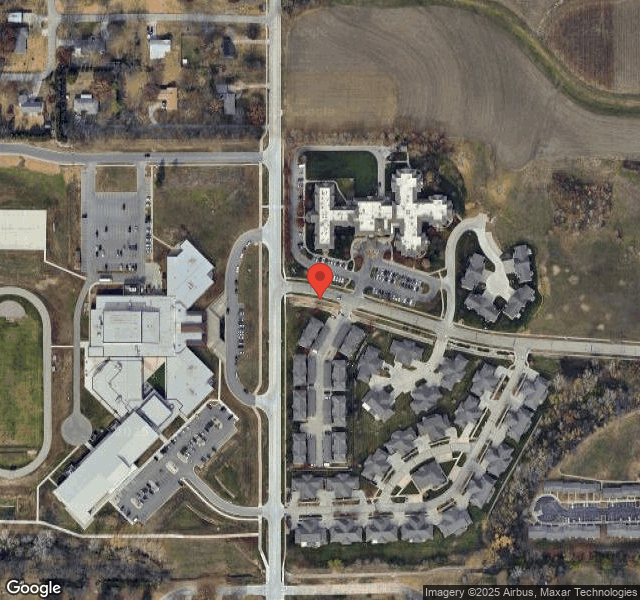

2800 WILLOW GROVE ROAD, MANHATTAN, KS 66502 (785) 539-7671
Non profit - Corporation 93 Beds ASCENSION LIVING Data: November 2025 4 Immediate Jeopardy citations
Trust Grade
0/100
#229 of 295 in KS
Last Inspection: October 2024

Within standard 12-15 month inspection cycle. Federal law requires annual inspections.

Overview

VIA Christi Village Manhattan, Inc has received a Trust Grade of F, indicating significant concerns about the facility's quality and care. It ranks #229 out of 295 nursing homes in Kansas, placing it in the bottom half and #4 out of 4 in Riley County, indicating very limited local options. The facility is showing signs of improvement, with the number of reported issues decreasing from 6 in 2024 to 2 in 2025. Staffing is relatively strong with a rating of 4 out of 5 stars, although the turnover rate is around 50%, which is average for the state. However, the facility has incurred fines totaling $142,185, which is higher than 93% of similar facilities in Kansas, signaling ongoing compliance issues. Specific incidents raise serious concerns, such as a resident falling and suffering a fatal injury due to improper lifting procedures and another resident receiving incorrect medication dosages that led to severe complications. Additionally, there were failures to secure residents properly during transport, leading to preventable falls and injuries. While the facility has good staffing ratings and is improving, these troubling incidents highlight significant risks that families should consider carefully.

Trust Score
F
0/100
In Kansas
#229/295
Bottom 23%
Safety Record
High Risk
Review needed
Inspections
Getting Better
6 → 2 violations
Staff Stability
⚠ Watch
50% turnover. Above average. Higher turnover means staff may not know residents' routines.
Penalties
✓ Good
$142,185 in fines. Lower than most Kansas facilities. Relatively clean record.
Skilled Nurses
○ Average
Each resident gets 32 minutes of Registered Nurse (RN) attention daily — about average for Kansas. RNs are the most trained staff who monitor for health changes.
Violations
⚠ Watch
25 deficiencies on record. Higher than average. Multiple issues found across inspections.
★★☆☆☆
2.0
Overall Rating
★★★★☆
4.0
Staff Levels
★★★★★
5.0
Care Quality
★☆☆☆☆
1.0
Inspection Score
Stable
2024: 6 issues
2025: 2 issues

The Good

  • 4-Star Staffing Rating · Above-average nurse staffing levels
  • 5-Star Quality Measures · Strong clinical quality outcomes
  • Full Sprinkler Coverage · Fire safety systems throughout facility
  • No fines on record

Facility shows strength in staffing levels, quality measures, fire safety.

The Bad

2-Star Overall Rating

Below Kansas average (2.9)

Below average - review inspection findings carefully

Staff Turnover: 50%

Near Kansas avg (46%)

Higher turnover may affect care consistency

Federal Fines: $142,185

Well above median ($33,413)

Significant penalties indicating serious issues

Chain: ASCENSION LIVING

Part of a multi-facility chain

Ask about local staffing decisions and management

The Ugly 25 deficiencies on record

4 life-threatening 3 actual harm
Jul 2025 1 deficiency 1 IJ
CRITICAL (J) 📢 Someone Reported This

A family member, employee, or ombudsman was alarmed enough to file a formal complaint

Immediate Jeopardy (IJ) - the most serious Medicare violation

Accident Prevention (Tag F0689)

Someone could have died · This affected 1 resident

**NOTE- TERMS IN BRACKETS HAVE BEEN EDITED TO PROTECT CONFIDENTIALITY** The facility identified a census of 87 residents, with three residents reviewed for accidents and hazards. Based on record revie...

Read full inspector narrative →
**NOTE- TERMS IN BRACKETS HAVE BEEN EDITED TO PROTECT CONFIDENTIALITY** The facility identified a census of 87 residents, with three residents reviewed for accidents and hazards. Based on record review, observation, and interview, the facility staff failed to ensure two staff safely transferred Resident (R)1 with a full mechanical lift as care planned. On [DATE] at 01:20 PM, CNA M was transferring R1 into her wheelchair with the full mechanical lift (Hoyer), without the assistance of the required second staff member. During the transfer, the bottom left sling loop came off the Hoyer lift, causing R1 to fall to the ground. Due to CNA M not following R1's care plan, R1 fell, broke her right distal femur, had extreme pain untreated by pain medication, and subsequently died. The facility further failed to ensure a safe environment free from preventable accidents for visually impaired Resident (R) 2, when facility staff did not ensure the ratchet harness was tightened to R2's wheelchair in the facility van before transport. On [DATE], Certified Nurse Aide (CNA) N attached the harness to R2 in the facility van for an out-of-town appointment, but due to a lack of training, did not ensure the ratchet straps were locked in order to prevent the ratchet harness from slipping/loosening. Approximately two miles from the facility, CNA N came to a stop, then accelerated for a right turn, heard the sound of the ratchet harness, and looked back to see R2 fall backwards in her wheelchair. R2 was bleeding from the back of her head and went to the hospital Emergency Room, where R2 received staples to close the scalp laceration to the back of her head. This deficient practice placed R1, and all residents driven to appointments at risk for injury, pain, and potential death.Findings included:- R1's Electronic Medical Record (EMR) documented R1 had diagnoses of hemiplegia (paralysis of one side of the body) following cerebral infarction (stroke - sudden death of brain cells due to lack of oxygen caused by impaired blood flow to the brain by blockage or rupture of an artery to the brain) affecting the right dominant side, major depressive disorder (major mood disorder which causes persistent feelings pf sadness), anxiety (mental or emotional reaction characterized by apprehension, uncertainty and irrational fear), and falls.The Annual Minimum Data Set (MDS), dated [DATE], documented R1 had functional impairment on one side of her upper and lower extremities. The MDS documented R1 was dependent on staff for transfer.The Fall Care Area Assessment (CAA), dated [DATE], documented R1 utilized a Hoyer lift.R1's Care Plan directed staff R1 required two staff assistance with a Hoyer lift for transfers using a medium-sized sling. The care plan directed staff R1 was completely dependent on staff for all of her activities of daily living (ADL) ([DATE]). The Nurses Note, dated [DATE], documented upon entering R1's room, LN G saw CNA M and CNA N on the floor with the resident and the Hoyer lift nearby. CNA M sat with R1 with a towel against R1's head to decrease bleeding from a hematoma on the left side of R1's head. R1 was on the floor with an excessively bleeding hematoma on the left side (of her head). R1 was cold and clammy to the touch, alert and oriented, and able to respond to questions. LN G called 911. CNA M stated R1 fell from the Hoyer lift sling when one of the straps snapped off the hook. While doing a head-to-toe assessment, R1 could not bend or stretch her right leg without significant pain. Emergency Medical Services arrived and transferred R1 to the local hospital. Administrative Staff A's Notarized Witness Statement documented, on [DATE] at approximately 01:30 PM, Administrative Staff A passed R1's room, heard a scream and a thud sound, and saw R1 lying on the floor, with the sling still connected to the lift. Administrative Staff A documented, as he walked into the room, he saw blood on the floor and on CNA M's hand as she was holding R1's left side of her head/face. Administrative Staff A could not tell if R1 was speaking or groaning. CNA M's Notarized Witness Statement, dated [DATE], documented she got R1 in the lift sling and when CNA M pulled the lift and pushed R1 toward her chair, one strap fell out, and R1 slipped, falling on her left side to the floor. The emergency room (ER) Report, dated [DATE], documented R1 presented to the ER due to a three-foot fall from a Hoyer lift and hit her head and complained of right knee pain radiating to left hip pain. X-rays showed R1 sustained an acute, mildly impacted fracture (occurs when the broken ends of the bone are driven into each other) of her right femur (thigh bone) and an acute fracture of the distal femoral metadiaphysis (the area of the thigh bone located near the knee joint between the wider part just below the growth plate and the main shaft of the bone) with mild angulation (angular displacement of bone fragments). The report recommended to apply an immobilizer to leave on until seen by a bone specialist and an order for as needed narcotic pain medication (every 4-6 hours). The Nurses Note, dated [DATE], documented R1's body shook after she was transferred to bed. R1 rated her knee pain as a 10 out of 10. The Nurses Note, dated [DATE], documented R1 had severe pain with any type of movement, with transfers, and staff performing cares. R1 made statements of pain with range of motion. R1 was unable to rate her pain but presented with facial grimacing, tearfulness, and yelling out in pain. The staff administered as needed Morphine (narcotic medication used to treat severe pain) and Norco administered to R1 prior to cares and transfers for her severe pain. The Nurses Note, dated [DATE], documented R1 continued to have a bandage to the laceration site on top of the left side of her head. R1 declined her meals but would take sips of water. The staff managed R1's pain through her prescribed narcotic pain medications. The Nurses Note, dated [DATE], documented R1's time of death verified at 10:55 AM.On [DATE] at 10:00 AM, Administrative Nurse D stated she expected all staff to follow the resident's care plan and follow the facility policy requiring two staff assistance for all mechanical lift transfers of residents.On [DATE] at 11:45 AM, CNA M stated she operated the full lift by herself. CNA M stated she had operated the full lift by herself many times because sometimes there was no other CNA on the unit and the nurse or the Certified Medication Aide (CMA) were busy. CNA M stated she knew the policy for two staff for all mechanical lifts and verified she did not follow R1's care plan.The facility's Using a Portable Lifting Machine, dated [DATE], documented a review of the resident's care plan to assess for any special needs of the resident. Two nursing associates were required to perform total lift transfers. Explain the procedure to the resident to ensure their comfort and understanding of the situation. Always have two people provide the transfer. Place the sling under the resident's shoulders to the back of the knees, ensuring the resident is centered in the sling. Raise the resident up to a sitting position with the lift. While you operate the lift, your helper should help you guide the resident. Once the resident is sitting, raise the lift until they are 6 to 12 inches off the bed. Unlock the wheels. Use the steering handle to move the resident directly over the chair. Tell the resident you are going to lower them slowly into the chair. Your helper guides the resident into the chair by moving the sling and pulling it backwards to facilitate proper posture in the chair.On [DATE] at 03:30 PM, Administrative Staff A was provided the IJ template and notified of the facility's failure to ensure staff safely transferred residents with the required two staff assistance with mechanical lifts, as care planned, causing R1 to fall out of the full lift and sustain serious injury, placed R1 in immediate jeopardy.The facility identified and implemented immediate corrective actions, which were completed on [DATE], and included: The clinical staff were educated on following the plan of care with two staff assistance with transfers using a mechanical lift and the proper way of securing slings to the lift hooks, beginning [DATE] and completed on [DATE]. The facility evaluated the mechanical lift in question for malfunctioning with no concerns identified on [DATE]. The facility evaluated the sling on [DATE] and found to be in good condition. The facility began weekly audits on three residents to ensure staff follow the plan of care for transfers and proper sling hook-up with a mechanical lift. The facility would review the fall at the next Quality Meeting.Due to the corrective actions completed before the onsite survey, the citation was deemed past noncompliance at a J scope and severity.- R2's Electronic Medical Record (EMR) documented R1 had diagnoses of end-stage renal disease (ESRD- a terminal disease of the kidneys), dependence on dialysis (procedure where impurities or wastes were removed from the blood), diabetes mellitus (DM- when the body cannot use glucose, not enough insulin made or the body cannot respond to the insulin), acquired absence of the right lower leg below the knee, and legal blindness.R2's Comprehensive Minimum Data Set (MDS), dated [DATE], documented had a Brief Interview for Mental Status score of 15, which indicated intact cognition. The MDS documented R2 as independent for all of her activities of daily living (ADLs). The MDS documented R2 used a wheelchair for all locomotion and documented R2 had one non-injury fall during the lookback period.The Fall Care Area Assessment (CAA), dated [DATE], documented R2 as at risk for falls, and staff were to monitor R2 for safety. R2's Care Plan documented R2 was legally blind and directed staff to provide R2 with an environment that accommodated impaired vision ([DATE]). The care plan documented R2 required supervision/touching assistance for transfers, but would often transfer herself, and staff were to encourage R2 to call and ask for assistance ([DATE]). The care plan documented R2 as at risk for falls and R2 wanted to remain free from injury related to falls. The care plan directed staff to keep pathways clear, provide adequate lighting, keep bed at appropriate height, keep personal items in reach, and attach R2's call light to her clothing.The [NAME] Fall Risk Scale, dated [DATE], documented R2 was at risk for falls with a score of 50.The Nurse's Note, dated [DATE], documented R2 as semi-lying on the facility van floor/wheelchair chair accompanied by CNA N at 08:51 AM on [DATE]. R2 was on her back with her feet in air toward the driver and passenger seats, and her head toward rear door in facility van. R2 was injured at the time of the fall and had frank bleeding from the back of her occiput (back of head). Staff called 911 for assistance. R2 denied statements of pain to the head, back, and C-Spine (cervical spine) at time of the fall. R2's level of consciousness was alert with no change from baseline. R2 was pleasant, cooperative with cares, and had no change from baseline. R2's range of motion was full to the upper extremities, full to the lower extremities, no difference noted between sides of the body, with no change from baseline. R2 denied pain with range of motion and fire department and EMS personnel assisted R2 on to the stretcher. R2 went to the local hospital for evaluation and treatment. R2's Care Plan was reviewed with interventions updated as indicated. R2's primary care physician was notified and aware of the event, with no new orders given. Staff attempted to reach R2's daughter twice. CNA N's Notarized Witness Statement, dated [DATE], documented CNA N got R2 in the van. CNA N stated she made sure R2 was secured in the van and checked before she left. As CNA N pushed up on the gas to proceed through the intersection after stopping, she then heard a click, click noise, so she slowed down to look back and saw R2 on the ground. R2 went backwards. CNA N stopped the van, pulled over, and got up to check on R2. CNA N asked R2 if she was okay, and R2 said she was good. CNA N called transportation and the nurse on F court. Two Licensed Nurses (LN) came to help, and CNA N called 911. R2 didn't complain about pain besides just her elbow hurting a little bit, but she was bleeding from the head. CNA N apologized to R2.LN H's Notarized Witness Statement, dated [DATE], documented that at approximately 08:51 AM, she was asked to go to the scene where R2 had fallen in the facility van. Upon arrival, the rear back door was opened. [NAME] blood was immediately noted on the floor of the van. R2 denied having pain. R2 laid in a semi-lying position, still sitting with her head and back on the floor. R2's legs were in the air. Since R2 denied pain, R2's lower body was lifted so the wheelchair could be moved. After moving the wheelchair, R2 was repositioned to her right side. Assessment to the back of R2's head revealed bleeding and lacerations. The bleeding was controlled with pressure, 911 was initiated, and both fire and EMS arrived at the scene. EMS took over the scene and R2 was transferred from the vehicle onto a stretcher. R2 was taken to the local hospital for evaluation and treatment.The emergency room Note, dated [DATE], documented R2 presented with a head laceration to the back of her head, which measured 1.5 centimeters (cm). The laceration was cleansed, and staples were placed to approximate the laceration. R2 may use Tylenol (pain medication) and ice for pain, and have the staples removed in seven days.The Nurses Note, dated [DATE], documented report received from a nurse at the local hospital. R2 has a hematoma on the back of her head where she had two areas of lacerations. She currently has staples in those areas that would need to be removed in 1 week. She will need to return to the ER to have the staples taken out. The area needs to remain clean and dry, and not to be scrubbed too hard. No pain medications were given to R2 during her visit to the ER. R2 received a tetanus shot (vaccine that prevents tetanus-a painful bacterial infection) to the right arm. R2 received as needed Tylenol (pain reliever and fever reducer) 650 milligrams (mg) for pain in the back of the head. R2's discharge paperwork from ER noted a laceration of occipital scalp. R2 fell involving a wheelchair, which caused accidental injury. R2 needed to return for staple removal in one week, for any worsening symptoms or concerns, and to keep the wound clean and dry.The Facility Incident Report, dated [DATE], documented R2 was going to an out-of-town appointment on [DATE], with CNA N in the gray van. R2 is blind and cannot see what happened, but R2 said she could hear that she had retention hooks applied to the front and back of her wheelchair by CNA N. CNA N had applied retention hooks and a seatbelt to R1. CNA N drove approximately 2 miles from the facility when she came to a stoplight, stopped, then turned right. Upon turning right, R2 fell backwards and hit her head, causing lacerations x2. CNA N pulled over immediately, checked on R2, called the on-call nurse, who then called 911, and R2 was taken to the hospital. R2 returned to the facility the same day. The retention hooks on the front do not auto-retract, creating no tension on the strap, on the front 2 retention hooks only, unless a button is pressed in the back of the vehicle. CNA N was not aware of this button. Education provided to CNA N and all staff who assist in transportation. Abuse, neglect, or exploitation was not substantiated. The Nurses Note, dated [DATE], documented R2 had a fall on [DATE]. The fall caused a laceration to the back of her head. R2 has not complained of any pain today. Staff attempted to clean some of the blood out of her hair because it bothered R2. On [DATE] at 11:00 AM, observation revealed R2 sat in her wheelchair in her room. R2's head laceration had healed. R2 stated she heard and felt CNA N hook up all of the harnesses to her wheelchair, and she buckled her in with the seat belt. R2 stated she felt safe being transported by facility staff.On [DATE] at 10:00 AM, Administrative Staff A verified all safety checks had been performed on the facility vehicle. Administrative Staff A verified CNA N did not know about the button in the gray van that put tension on the front harnesses. Administrative Staff A stated that all of the staff who drove a facility vehicle for appointments were re-educated on all safety mechanisms in the vehicles. Administrative Staff A stated he expected all staff driving a facility vehicle for resident appointments to be completely trained.On [DATE] at 01:00 PM, CNA N stated she was trained on all of the vans last year, but staff only get trained yearly at the skills fair, and she normally only drove independent people who just had to sit up front and put their seat belt on. She stated she did not know about the button in the grey van that put tension on the front harnesses, so the wheelchair would not move. CNA N verified that no one had shown her the button.The facility's Driver and Fleet Safety Policy, dated [DATE], documented before allowing new associates to drive the manager is responsible for conducting the following requirements: verify required driving record information has been completed and approved, ensure competency training has been assigned and completed following Driver and Fleet Safety Training document, review vehicle safety checklist process, review instructions on save driving practices, review proper use of the vehicle and safe operating features, and the accident reporting process. Instruction for drivers will be provided on an annual basis. On [DATE] at 03:30 PM, Administrative Staff A was provided the IJ template and notified of the facility failure to ensure a safe environment free from accidents for R2 when CNA M was not properly trained in all of the safety features of the gray van and R2 subsequently fell in her wheelchair in the van due to not being properly harnessed.The facility identified and implemented immediate corrective actions, which were completed on [DATE] included: R2 was taken to the emergency room for evaluation. The resident was evaluated and treated for lacerations to the scalp, and the resident returned to the community. Provider notified on [DATE]. The staff attempted to notify R2's legal representative. R2's Care Plan was reviewed and deemed appropriate. The van has been inspected, and no mechanical defects have been noted. The last van inspection prior to the incident occurred on the week of [DATE], and no abnormal findings were present. Any other resident transported in the van has the potential to be affected. Review of the incident reports for the last 30 days indicates no other incidents have been reported. The measures the facility will take or systems the facility will alter to ensure that the problem will be corrected and will not recur. AdHoc QAPI meeting was held by the interdisciplinary team on [DATE] for root cause analysis discussion, and this plan of correction was developed and implemented. Facility Director, and any other staff who are responsible for oversight of resident transportation, will be re-educated by the Executive Director or designee on or before [DATE] to ensure they understand all components of the requirements for drivers under the community's policy and the expectation for signing off of the monthly vehicle checklist appropriately. A competency validation tool has been developed to ensure documented competency of skills for each type of bus available to be utilized. The approved drivers would be re-educated on transportation policy, the vehicle's wallet with the appropriate vehicle information, and would be re-educated prior to their next scheduled time to drive the vehicle with the new competency validation tool. The interdisciplinary team has reviewed the policy and procedure Ascension Living Driver and Fleet Safety Policy. Due to the corrective action completed before the onsite survey, the citation was deemed past noncompliance at a J scope and severity.
Apr 2025 1 deficiency 1 Harm
SERIOUS (G) 📢 Someone Reported This

A family member, employee, or ombudsman was alarmed enough to file a formal complaint

Actual Harm - a resident was hurt due to facility failures

Quality of Care (Tag F0684)

A resident was harmed · This affected 1 resident

**NOTE- TERMS IN BRACKETS HAVE BEEN EDITED TO PROTECT CONFIDENTIALITY** The facility identified a census of 91 residents, with 3 residents sampled for medication errors. Based on observation, record r...

Read full inspector narrative →
**NOTE- TERMS IN BRACKETS HAVE BEEN EDITED TO PROTECT CONFIDENTIALITY** The facility identified a census of 91 residents, with 3 residents sampled for medication errors. Based on observation, record review, and interview, the facility failed to ensure Resident (R) 1 received treatments and care in accordance with professional standards of practice. On 03/22/25 at 10:30 AM, Certified Medication Aide (CMA) R assisted R1 in undressing in the bath spa and noted extensive purple/black bruising to R1's bilateral (both sides) axilla (armpit), bilateral arms, torso, and back. CMA R reported her findings to Licensed Nurse (LN) G, who assessed R1 and documented the extensive bruising. LN G then reported the findings to the nurse manager on duty, LN H. Neither LN G nor LN H reported R1's extensive bruising to her primary care physician even though R1 was on Coumadin (medication for anticoagulation (a treatment that prevents blood from clotting too quickly or excessively) and per facility protocol, staff were to notify the primary care physician of any resident who was on an anticoagulant (medications that prevent blood from clotting) of signs of excessive bruising before the next scheduled dose of Coumadin would be given. Facility staff gave R1 three more doses of Coumadin 5 milligrams (mg) on 03/22/25 at 05:00 PM, 03/23/25 at 05:00 PM, and 03/24/25 at 05:00 PM. This deficient practice placed R1 at risk for complications for bleeding, falls with injury, and possible death. Findings included: - R1's Electronic Medical Record (EMR) documented R1 had diagnoses of long-term/current use of anticoagulants, nonrheumatic aortic valve stenosis (narrowing of the valve in the large blood vessel branching off from the heart), and obstructive hypertrophic cardiomyopathy (a condition in which the heart muscle becomes abnormally thick making it hard for the heart to pump blood). The admission Minimum Data Set (MDS), dated 03/02/25, documented R1 admitted to the facility on [DATE]. The MDS documented R1 was unable to complete the Brief Interview for Mental Status (BIMS) interview. The MDS documented R1 had short and long-term memory loss, could not recall the current season, could not recall the location of her room, could not recall staff names and faces, and could not recall that she was in a nursing facility. The MDS documented R1's cognition was severely impaired. The MDS documented R1 required substantial assistance from staff for toileting, bathing, dressing, transfers, and personal hygiene. The MDS documented R1 was dependent on staff for assistance with sitting to lying and lying to sitting. The MDS documented R1 had falls within the last month before her admission and had falls the last two to six months before her admission. The MDS documented R1 was taking anticoagulants. The Cognitive Loss/Dementia Care Area Assessment (CAA), dated 03/02/25, documented R1 had memory problems, impaired decision-making, and impaired ability to comprehend. The Fall CAA, dated 03/02/25, documented R1 was at risk for falling and had fallen previously before entering the facility. R1's Care Plan directed staff R1 required two staff assistance for transfer from the chair or the bed (02/24/25). The care plan documented R1 was at risk for falls and directed staff to keep pathways clear, provide adequate lighting, keep personal items within reach, and orient to room and call light (02/24/25). The care plan documented R1 was at risk from complications from blood thinning agents and would not develop complications from blood thinning agents. The care plan directed staff to monitor R1 for the presence of bone, abdominal, joint, or other pain (02/26/25). The care plan directed staff to monitor R1 for the presence of hemorrhage (loss of a large amount of blood in a short period of time) under the skin, oral mucosa (a membrane that lines various body cavities), and/or conjunctiva (a thin, transparent membrane that covers the white of the eye) at least daily (02/26/25). The care plan directed staff to monitor for the presence of active bleeding such as hematuria (blood in the urine), petechiae (tiny brown/purplish spots due to bleeding under the skin), bruising, bloody stools, or nose bleeds at least daily (02/26/25). The care plan directed staff to prevent falls which could potentially cause a high risk of bleeding. The care plan directed staff if R1 had side effects from the blood thinning agent a nurse would reflect this issue with an immediate follow-up notification to the physician via a phone call (02/26/25). The Faber Fall Scale, dated 03/25/25, documented R1 had a fall risk score of 37 which indicated R1 was a high fall risk. The Progress Note, dated 03/22/25 at 10:31 AM, documented staff were called to the spa room to check on R1 for large areas of purple/black skin noted under both armpits, upper lateral (pertaining to the side, away from the middle) back/torso (truck or central part of the body). R1 had no skin break. The March 2025 Electronic Medication Administration Record (EMAR), documented R1 received Coumadin 5 mg at 05:00 PM on 03/22/25 (after the extensive bruising was found), 03/23/25 at 05:00 PM, and 03/24/25 at 05:00 PM. The March EMAR documented R1's Coumadin 5mg was held on 03/25/25 and then was discontinued. The Progress Note, dated 03/24/25 at 10:30 PM, documented R1 was noted to have increased bruising due to being on Coumadin. A fingerstick International Normalized Ratio (INR - a blood test that measures the time it takes for blood to clot. Therapeutic values for people taking Coumadin are 2.0 to 3.0) was checked and the result was greater than 8.0. The on-call doctor was notified regarding the results of the fingerstick INR and R1's bruising to her axilla (armpits) and arms. The on-call doctor ordered to monitor R1, hold Coumadin, PT (Prothrombin Time - a blood test that measures how long it takes for blood to clot.)/INR on Tuesday and Wednesday, and send to the emergency room if R1's vital signs became unstable, or bleeding was noted from R1's orifices (an opening of the body). R1 was placed on frequent checks and vital signs every eight hours. The Progress Note, dated 03/25/25, documented the nurse obtained lab for PT/INR and Complete Blood Count (CBC - a blood test that measures various components of the blood). R1 tolerated the procedure well. Specimen sent with transportation to the clinic. Awaiting results. The Progress Note, dated 03/25/25, documented R1's primary care physician's office called with the INR results. R1's INR was 9.55 (the normal INR for people on Coumadin is 2.0 to 3.0). A new order was received to hold Coumadin until the results of the next INR, give Vitamin K (antidote (a medicine given to counteract another medicine or poison) to Coumadin) 2.5 mg one time, and have R1 to avoid falls. The order was faxed to R1's pharmacy. The Progress Note, dated 03/25/25, documented R1's primary care physician called and rescheduled the INR lab draw for tomorrow, 03/26/25, and to give the Vitamin K 2.5 mg that evening. According to R1's Treatment Administration Record (TAR) Vitamin K 2.5 mg was given to R1 by mouth. The Progress Note, dated 03/26/25 at 12:49 AM, documented R1's INR was 9.5 and Pro Time was 108.7. The Progress Note, dated 03/26/25 at 07:30 AM, documented the nurse obtained lab work this morning of PT/INR. R1 tolerated the procedure well. The blood specimen was sent with transportation to the clinic. Awaiting results. The Progress Note, dated 03/26/25 at 03:30 PM, documented R1's INR was 2.73 and PT was 31.9. The Progress Note, dated 03/26/25 at 04:30 PM, documented R1's primary care physician ordered to continue to hold R1's coumadin as the INR was 2.73. The facility does not have to do another INR unless further notified. CMA R's Notarized Witness Statement, dated 03/24/25, documented CMA R was working as a Certified Nurse Aide (CNA) on 03/22/25 and assisted R1 with a shower. CMA R stated when she assisted R1 with the removal of her shirt she noticed dark bruising under R1's arms by her armpits. CMA R documented she called LN H of what she had found and then called LN G into the spa room to look at the bruising. LN G's Notarized Witness Statement, dated 03/24/25, documented CMA R called LN G into the spa room to show LN G the bruises on R1. R1 had purplish/black bruises under her armpit, the upper arm, the upper torso, and on both upper extremities. LN G stated she had not been informed of R1's skin condition. LN H's Notarized Witness Statement, dated 03/27/25, documented LN H had been informed of R'1 bruising to her bilateral arms and axilla. Upon assessment, deep purple bruising to the left arm from the elbow to the axilla, and the right arm with spotty dark bruises and deep dark bruises to the right axilla. The Facility Incident Report, dated 03/31/25, documented on 03/22/25 it was noted by CMA R while assisting R1 with the removal of her clothing for her shower R1 had dark bruising under her arms by her armpits. CMA R then notified LN G and LN H of the finding. LN G went and assessed R1 noting purplish/black under the armpits, upper arm, upper torso, and both upper extremities. No skin breakdown. The bruising measured: right lateral upper arm three centimeters (cm) by 2.5 cm, lateral lower right arm five cm by 2.5 cm, right medial axilla three cm by two cm, left lateral axilla down the entire left arm 40 cm by seven cm and the left lateral axilla 10 cm by five cm. On 03/24/25 upon investigation, it was found R1 had been recently treated with antibiotics for a respiratory infection. R1's fingerstick INR was obtained and the results were noted to be greater than eight. The on-call physician was notified of the results. Orders received to continue to monitor R1, hold Coumadin, draw PT/INR on Tuesday and Wednesday, follow up with R1's primary care physician tomorrow, send to the emergency room if R1's vital signs were unstable, bleeding from orifices, or if R1 falls. On 03/25/25 R1's INR was 9.5. New orders were received to give Vitamin K 2.5 mg, recheck INR on 03/26/25, and continue to hold Coumadin. On 03/26/25, R1's INR was 2.73, and continued to hold Coumadin. The facility increased R1's vital signs, frequent monitoring for fall prevention, and noted R1 now required two staff extensive assistance with a gait belt for transfers. On 04/01/25 at 11:30 AM, Administrative Nurse D stated a couple of days after the bruising was noted and the facility was investigating the origin of the bruising it was noted R1 had been on antibiotics so a fingerstick INR was done and it was greater than 8. Administrative Nurse D stated she did not know why the APRN did not order an INR to check if the antibiotics would increase the effect of the coumadin. Administrative Nurse D stated the facility put R1 on VS's every 8 hours and 30-minute checks for her safety. Administrative Nurse D stated she would expect staff to follow the anticoagulant protocol. On 04/01/25 at 12:30 PM, observation revealed R1 had diffuse light purple bruising to her upper bilateral arms. On 04/01/25 at 12:45 PM, LN I stated she first saw the bruising to R1's arms last week and it was purple under her arms and down her upper arms. LN I stated she had been told the bruising was because R1's INR had been too high. LN I stated she would have called the nurse manager and the doctor right away because residents on Coumadin and antibiotics need to be monitored closely because the two medicines counteract each other. On 04/01/25 at 01:00 PM, CNA M stated she saw R1's bruising last week and it was pretty bad under her arms. CNA M stated she was not the first one to see the bruising and if she had been she would have reported it to the nurse right away. On 04/01/25 at 01:30 PM, LN G stated he had seen the bruising on R1's arms when CMA R had called him into the spa room. CMA R had already notified LN I who was the nurse manager on shift that day. LN G stated it did not enter his mind to call and notify R1'a primary care physician of the bruising and the nurse manager did not tell him to, so he did not. LN G stated he did realize R1 was on Coumadin and going forward if any bruising happened to a resident, he would notify the doctor. The facility's Anticoagulant Procedure, revised in December 2017, documented the physician will prescribe anticoagulant therapy appropriately in accordance with recognized guidelines. The physician will identify potentially serious medication interactions with coumadin for example: digoxin, Dilantin, amiodarone, and many antibiotics. The associates will identify and address potential complications in individuals receiving anticoagulants. The physician will be notified of anticoagulant therapy if an antibiotic is prescribed. The associates and the physician will monitor for possible complications in individuals being anticoagulated and will manage related problems. If an individual on anticoagulation therapy shows signs of excessive bruising, hematuria, hemoptysis (spitting or coughing up blood) or other evidence of bleeding the nurse will discuss the situation with the physician before giving the next scheduled dose of anticoagulant. The facility failed to ensure R1 received treatments and care in accordance with professional standards of practice. This deficient practice placed R1 at risk for complications for bleeding, falls with injury, and possible death.
Oct 2024 6 deficiencies
CONCERN (D) 📢 Someone Reported This

A family member, employee, or ombudsman was alarmed enough to file a formal complaint

Potential for Harm - no one hurt, but risky conditions existed

Resident Rights (Tag F0550)

Could have caused harm · This affected 1 resident

**NOTE- TERMS IN BRACKETS HAVE BEEN EDITED TO PROTECT CONFIDENTIALITY** The facility had a census of 86 residents. The sample included 20 residents, with two reviewed for dignity. Based on observation...

Read full inspector narrative →
**NOTE- TERMS IN BRACKETS HAVE BEEN EDITED TO PROTECT CONFIDENTIALITY** The facility had a census of 86 residents. The sample included 20 residents, with two reviewed for dignity. Based on observation, record review, and interview, the facility failed to provide dignity and quality of life for Resident (R)187 and R133, by having an uncovered urinary collection bag visible to guests and other residents. This placed the residents at risk of embarrassment and an undignified living environment. Findings included: - R187's Electronic Medical Record (EMR) recorded diagnoses of heart failure (a condition when the heart does not pump blood for the body's needs), kidney failure (the kidneys are no longer able to function effectively and are unable to filter waste), and compression fracture of the lumbar spine (a break in a lower bone in the spine.) R187's EMR documented the resident was admitted to the facility on [DATE]. R187s Care Plan dated 10/02/24, documented the resident had an indwelling urinary catheter (a flexible tube inserted through a narrow opening into a body cavity, particularly the bladder, for removing fluid) due to urinary retention. R187's EMR recorded Physician Order dated 10/01/24 for a Foley catheter at all times due to urinary retention. On 09/30/24 at 09:30 AM, observation revealed R187 rested in bed, with the uncovered urinary catheter bag hanging on the right side of the bed frame, visible from the door. On 10/01/24 at 08:00 AM, observation revealed R187 rested in bed, with the uncovered urinary catheter bag hanging on the right side of the bed frame, visible from the door. On 10/01/24 at 04:00, Administrative Nurse D stated the resident's urinary catheter bag should always be covered. The facility's Quality of Life-Dignity policy, dated 01/2024, documented each resident shall be cared for in a manner that promotes and enhances the quality of life, dignity, respect, and individuality. Residents shall be treated with dignity and respect at all times. Treated with dignity means the resident will be assisted in maintaining and enhancing his or her self-esteem and self-worth. The policy documented demeaning practices and standards of care that compromise dignity are prohibited. Staff shall promote dignity and assist residents as needed including helping the resident keep urinary catheter bags covered. The facility failed to cover R187's urinary catheter bag, placing the resident at risk for embarrassment and an undignified living environment. - R133's Electronic Medical Record documented diagnoses of UTI (an infection in any part of the urinary system), neuromuscular dysfunction of the bladder (the muscles that control the flow of urine out of the body do not relax and prevent the bladder from fully emptying), and traumatic brain injury (TBI-an injury to the brain caused by external forces). The admission Minimum Data Set (MDS), dated [DATE], documented a Brief Interview for Mental Status (BIMS) score of eight, indicating moderately impaired cognition. The MDS documented R133 was dependent on staff for toileting hygiene, lower body dressing, and mobility. The MDS documented R133 had an indwelling urinary catheter and received antibiotics (medication used to treat infections). R133's Care Plan, dated 09/04/24, stated R133 had an indwelling suprapubic catheter (urinary bladder catheter inserted through the abdomen into the bladder) and nephrostomy (an artificial opening created between the kidney and the skin which allows for the urinary diversion) tube. The care plan directed staff to ensure the drainage bag was below the level of the bladder at all times and ensure the catheter bag was covered for dignity concerns. On 10/01/24 at 07:40 AM, observation revealed R133 lying on a mattress on the floor in his room with his urinary catheter bag on the bare floor. At 07:55 AM, R133 hollered out for help and Certified Nurse Aide (CNA) M came in, and offered to assist him to get dressed. CNA M changed R133's brief and provided incontinent care. After staff dressed R133, they assisted him into his wheelchair and took him to the dining room. Observation revealed no privacy bag or cover over the catheter collection bag and yellow urine was visible to other residents in the dining room. On 10/01/24 at 03:42 PM, Administrative Nurse D verified a privacy bag or cover should be used to cover the catheter bag so the urine was not visible. The facility's Quality of Life, Dignity policy, dated 01/2024, stated each resident would be cared for in a manner that promoted and enhanced quality of life, dignity, respect, and individuality. Associates shall promote, maintain, and protect resident privacy, including bodily privacy and helping to keep urinary catheter bags covered. The facility failed to ensure dignity for R133 when they took him to the dining room with the catheter bag uncovered and urine visible to other residents. This placed the resident at risk for impaired dignity and decreased quality of life.
CONCERN (D) 📢 Someone Reported This

A family member, employee, or ombudsman was alarmed enough to file a formal complaint

Potential for Harm - no one hurt, but risky conditions existed

Deficiency F0657 (Tag F0657)

Could have caused harm · This affected 1 resident

The facility had a census of 86 residents. The sample included 20 residents with four residents reviewed for pressure ulcers (localized injury to the skin and/or underlying tissue usually over a bony ...

Read full inspector narrative →
The facility had a census of 86 residents. The sample included 20 residents with four residents reviewed for pressure ulcers (localized injury to the skin and/or underlying tissue usually over a bony prominence, as a result of pressure, or pressure in combination with shear and/or friction). Based on observation, interview, and record review the facility failed to revise the care plan for Resident (R) 5 who was on Enhanced Barrier Precautions (EBP-infection control interventions designed to reduce transmission of resistant organisms which employ targeted gown and glove use during high contact care). This deficient practice placed R5 at risk for impaired care due to uncommunicated care needs. Findings included: - R5's Electronic Medical Record (EMR) documented diagnoses of cerebrovascular accident (CVA-stroke- sudden death of brain cells due to lack of oxygen caused by impaired blood flow to the brain by blockage or rupture of an artery to the brain) affecting the right side, diabetes mellitus (DM-when the body cannot use glucose, not enough insulin is made, or the body cannot respond to the insulin,), and osteoporosis (abnormal loss of bone density and deterioration of bone tissue with an increased fracture risk.) The Significant Change Minimum Data Set (MDS), dated 08/23/24, documented the resident had severely impaired cognition. The MDS documented R5 was dependent on staff for all activities of daily living (ADLs). The MDS documented R5 had one Stage 2 (localized injury to the skin and/or underlying tissue usually over a bony prominence, as a result of pressure, or pressure in combination with shear and/or friction) pressure ulcer. R5's Care Plan, dated 07/07/24, directed staff to maintain the resident's skin integrity without new skin-related injuries over the next review period. Staff would assist the resident with repositioning as indicated and when they noticed signs and symptoms of discomfort. Staff would observe the resident for verbal and non-verbal signs or symptoms of discomfort. Staff would maintain the resident's skin integrity with the management of her mobility and assist with repositioning. The care plan documented the resident had impaired skin integrity and to provide treatment and dressing changes and the resident would be free from signs and symptoms of infection. The care plan lacked any direction for the staff regarding the EBP care and precautions. On 10/01/24 at 12:10 PM observation revealed License Nurse (LN) G entered the room of R5, who was on enhanced barrier precautions. A sign was posted on the wall of the resident's room giving instructions on personal protection equipment (PPE-gown and gloves). The room had a metal storage bin affixed to the wall upon entrance to the resident's room with PPE supplies. Continued observation revealed LN G entered the resident's room and donned gloves. LN G elevated the resident's right leg off the pillow and removed part of the dressing to reveal the resident's open draining wound on her calf with serosanguineous (semi-thick blood-tinged drainage) noted onto the pillow. LN G stated she would return later to replace the dressing after she administered pain medication to the resident and the resident shook her head yes. LN G verified they had not worn full PPE in the isolation room and were not aware she had to. On 10/01/24 at 04:00 PM interview with Administrative Nurse D verified the care plan lacked documentation the resident required EBP. The facility's Care Plan -Comprehensive Person-Centered policy, dated 09/2023, stated the facility would develop and implement a comprehensive, person-centered care plan that includes measurable objectives and timetables to meet the resident's physical, psychosocial, and functional needs, that are identified through evaluation and assessment, is developed and implemented for each resident. The care plan would describe the services that are to be provided for the resident and would update the care plan when there has been a significant in the resident's condition. The facility failed to revise R5's Care Plan to include EBP. This placed R5 at risk for impaired care due to uncommunicated care needs.
CONCERN (D) 📢 Someone Reported This

A family member, employee, or ombudsman was alarmed enough to file a formal complaint

Potential for Harm - no one hurt, but risky conditions existed

Deficiency F0661 (Tag F0661)

Could have caused harm · This affected 1 resident

**NOTE- TERMS IN BRACKETS HAVE BEEN EDITED TO PROTECT CONFIDENTIALITY** The facility had a census of 86 residents. The sample included 20 residents of which one was reviewed for discharge. Based on re...

Read full inspector narrative →
**NOTE- TERMS IN BRACKETS HAVE BEEN EDITED TO PROTECT CONFIDENTIALITY** The facility had a census of 86 residents. The sample included 20 residents of which one was reviewed for discharge. Based on record review and interview, the facility failed to provide a resident-specific detailed discharge summary and complete a recapitulation (summary) of stay for Resident (R) 233. This placed the resident at risk for unidentified and unmet care needs. Findings included: - R233's Electronic Medical Record (EMR) documented diagnoses of a nondisplaced fracture of left posterior (back) column acetabulum (part of the hip), diabetes mellitus (DM-when the body cannot use glucose, not enough insulin is made, or the body cannot respond to the insulin) with other circulatory complications, peripheral vascular disease (PVD- slow and progressive circulation disorder causing narrowing, blockage, or spasms in a blood vessel), end-stage renal (pertaining to kidneys) disease (ESRD-a terminal disease of the kidneys) dependence on renal dialysis (a procedure where impurities or wastes are removed from the blood), right below knee amputation, reduced mobility and a need for assistance with personal care. R233's admission Minimum Data Set (MDS), dated [DATE], documented that R233 had moderately impaired cognition, exhibited physical, and verbal behaviors directed toward others, and rejected care which significantly interfered with the resident's care, participation in activities and social interactions and disrupted care or living environment. R233 was dependent on staff with toileting hygiene, upper and lower body dressing, and bathing. The MDS further documented R233 required partial/moderate assistance with rolling in bed, sitting to lying, lying to sitting, sitting to standing, and used a wheelchair for mobility. R233 had severe pain, had fallen before admission, and had two unstageable deep tissue deep tissue injury (DTI- purple or maroon localized area of discolored intact skin or blood-filled blister due to damage of underlying soft tissue from pressure and/or shear) injuries which were present on admission. R233's Care Plan dated 04/29/24, documented R233 was at risk for pressure injuries and other skin-related injuries. The care plan directed staff to observe skin for redness and breakdown during routine care, keep bed linens wrinkle-free and not use excess pads, and have pressure relieving cushions on the wheelchair, and mattress on the bed. The plan directed to offload heels as much as possible and provide treatments as indicated. The Interdisciplinary Team Note dated 04/29/24 at 07:23 PM, documented R233 admitted to long-term care for a pelvic fracture after falling at home. R233's skin was not intact and he required the use of a heel protector on the left foot. The Interdisciplinary Team Note dated 05/02/24 at 03:55 PM, documented a reabsorbed ruptured blister to the heel. The note documented he had orders for heel protectors on admission and a small dressing post-cleaning. The Interdisciplinary Team Note, dated 05/05/24, documented R233 yelled at staff and refused care. Staff provided education on the importance of personal hygiene. The intervention outcome was effective. R233's EMR documented on 05/22/24 that R233 received wound care and was discharged home. The record lacked evidence of a recapitulation of R233's stay in the facility. On 10/02/24 at 02:37 PM Administrative Nurse D reported on the day R233 had been discharged , the nurse responsible for completing the discharge instruction had gotten another discharge that day mixed up and had not included a full discharge summary due to the facility not having electronic records related to a cyber-attack on their main company. Administrative Nurse D verified an incomplete discharge instruction was given to R233's representative and a recapitulation should also have been completed. The facility's Discharge Summary and Plan policy, dated 01/2022, documented that when a resident's discharge is anticipated, a discharge summary and post-discharge plan will be developed to assist the resident in adjusting to his/her new living environment. The discharge summary will include a recapitulation of the resident's stay at this community and a final summary of the resident's status at the time of the discharge in accordance with established regulations governing the release of resident information and as permitted by the resident. The discharge summary shall include a description of the resident's current diagnosis, medical history, course of illness, treatment and/or therapy since entering the community, physical and mental functions, current lab, radiology, consultation, and diagnostic test results, ability to perform activities of daily living, sensory and physical impairments, nutritional status and requirements, special treatments or procedures, mental and psychosocial status, discharge potential, dental condition, rehabilitation, cognitive status, and medication therapy. The facility failed to provide a resident-specific detailed discharge summary and complete a recapitulation of stay for R233. This placed the resident at risk for unidentified and unmet care needs.
CONCERN (D) 📢 Someone Reported This

A family member, employee, or ombudsman was alarmed enough to file a formal complaint

Potential for Harm - no one hurt, but risky conditions existed

Incontinence Care (Tag F0690)

Could have caused harm · This affected 1 resident

**NOTE- TERMS IN BRACKETS HAVE BEEN EDITED TO PROTECT CONFIDENTIALITY** The facility had a census of 86 residents. The sample included 20 residents with three reviewed for urinary catheter (a tube ins...

Read full inspector narrative →
**NOTE- TERMS IN BRACKETS HAVE BEEN EDITED TO PROTECT CONFIDENTIALITY** The facility had a census of 86 residents. The sample included 20 residents with three reviewed for urinary catheter (a tube inserted into the bladder to drain the urine into a collection bag). Based on observation, interview, and record review the facility failed to provide catheter care and services consistent with the standards of practice for Resident (R) 133 when staff failed to monitor urine output, failed to ensure the tubing was anchored appropriately, and failed to manage the tubing and urine collection bag in a sanitary and dignified manner. This placed the resident at risk for catheter-related complications including dislodgement and urinary tract infections (UTI). Findings included: - R133's Electronic Medical Record documented diagnoses of UTI (an infection in any part of the urinary system), neuromuscular dysfunction of the bladder (the muscles that control the flow of urine out of the body do not relax and prevent the bladder from fully emptying), and traumatic brain injury (TBI-an injury to the brain caused by external forces). The admission Minimum Data Set (MDS), dated [DATE], documented a Brief Interview for Mental Status (BIMS) score of eight, indicating moderately impaired cognition. The MDS documented R133 was dependent on staff for toileting hygiene, lower body dressing, and mobility. The MDS documented R133 had an indwelling urinary catheter and received antibiotics (medication used to treat infections). R133's Care Plan, dated 09/04/24, stated R133 had an indwelling suprapubic catheter (urinary bladder catheter inserted through the abdomen into the bladder) and nephrostomy (an artificial opening created between the kidney and the skin which allows for the urinary diversion) tube. The care plan directed staff to monitor for signs and symptoms of UTI, provide catheter care per facility policy, and maintain a closed drainage system. Change the catheter every 30 days and as needed (PRN). Ensure the drainage bag was below the level of the bladder at all times and ensure the catheter bag was covered for dignity concerns. The care plan directed staff to secure the catheter tubing to a leg to avoid tension on the urinary insertion site and ensure enough slack in the tubing so it does not get pulled on during care. R133's EMR under the daily Task documentation lacked catheter output for 31 of 75 shifts from 09/05/24 through 09/30/24. The Physician Order, dated 09/10/24, directed staff to administer Cipro (antibiotic) 500 milligrams (mg), three times per day (TID), for five days for a diagnosis of UTI. On 10/01/24 at 07:40 AM, observation revealed R133 lying on a mattress on the floor in his room with his urinary catheter bag on the bare floor. At 07:55 AM, R133 hollered out for help and Certified Nurse Aide (CNA) M came in, and offered to assist him to get dressed. CNA M donned personal protective equipment (PPE). CNA M changed R133's brief and provided incontinent care. The urinary catheter tubing was secured to R133's right leg. CNA N assisted with using the full lift to transfer R133 to the toilet. CNA M stepped on the catheter tubing during the transfer and set the catheter bag on the floor in the bathroom. After staff dressed R133, they assisted him into his wheelchair and took him to the dining room. Observation revealed no privacy bag or cover over the catheter collection bag and yellow urine was visible to other residents in the dining room. On 10/01/24 at 03:42 PM, Administrative Nurse D verified staff were not to allow the catheter bag or tubing to lie on the floor and a privacy bag or cover should be used to cover the catheter bag so the urine was not visible. The facility's Urinary Tract Infections (Catheter-Associated)e Guidelines for Prevention, dated 01/2024, directed staff to always practice vigilant hand hygiene and standard precautions when handling catheter systems. Keep the drainage bag below the level of the bladder at all times and do not place the drainage bag on the floor. The facility failed to provide catheter care consistent with the standards of practice when staff failed to monitor urine output, failed to ensure the tubing was anchored appropriately, and failed to manage the tubing and urine collection bag in a sanitary and dignified manner. This placed the resident at risk for catheter-related complications including dislodgement and UTI.
CONCERN (D) 📢 Someone Reported This

A family member, employee, or ombudsman was alarmed enough to file a formal complaint

Potential for Harm - no one hurt, but risky conditions existed

Deficiency F0692 (Tag F0692)

Could have caused harm · This affected 1 resident

**NOTE- TERMS IN BRACKETS HAVE BEEN EDITED TO PROTECT CONFIDENTIALITY** The facility had a census of 86 residents. The sample included 20 residents with one reviewed for hydration. Based on observatio...

Read full inspector narrative →
**NOTE- TERMS IN BRACKETS HAVE BEEN EDITED TO PROTECT CONFIDENTIALITY** The facility had a census of 86 residents. The sample included 20 residents with one reviewed for hydration. Based on observation, record review, and interview, the facility failed to monitor Resident (R) 57's physician-ordered fluid restriction. This placed R57 at risk of complications related to fluid overload. Findings included: - R57's Electronic Medical Record (EMR) documented diagnoses of congestive heart failure (CHF-a condition with low heart output and the body becomes congested with fluid), pulmonary hypertension high blood pressure that affects the lungs), hypernatremia (greater than normal concentration of sodium in the blood), diabetes mellitus (DM-when the body cannot use glucose, not enough insulin is made, or the body cannot respond to the insulin), asthma (a disorder of narrowed airways that causes wheezing and shortness of breath), anxiety (mental or emotional reaction characterized by apprehension, uncertainty, and irrational fear, major depressive disorder (major mood disorder that causes persistent feelings of sadness), and need for assistance with personal care. The Quarterly Minimum Data Set (MDS), dated [DATE], documented R57 had intact cognition, used a wheelchair, and required partial/moderate assistance with oral and toileting hygiene, upper body dressing, and mobility. R57 received an antidepressant (a class of medications used to treat mood disorders), a diuretic (a medication to promote the formation and excretion of urine), and an opioid (a class of drugs to treat pain). The MDS further documented R57 received oxygen therapy. R57's Care Plan, dated 08/13/24, documented that R57 was at risk for impaired nutrition. The care plan instructed staff R57 would follow a 2000 milliliter (ml) fluid restriction. The plan documented half of the fluid restriction (1000 ml) to be given by nursing staff and the other half (1000 ml) would be provided by dietary staff. The care plan further documented R57 took a diuretic which put him at risk for dehydration and weight fluctuations due to fluid shifts. The plan recorded R57 was to be weighed daily. The Physician Order, dated 06/12/24, recorded a fluid restriction of 2000 ml per 24-hour period. R57's clinical record lacked evidence staff monitored and recorded his fluid intake. On 10/01/24 at 12:51 PM, observation revealed R57 sat at a dining room table with a cup of coffee and a thermal cup with his meal. On 10/01/24 at 01:00 PM, Certified Nurse Aide (CNA) N reported staff kept track of meal intake and the fluids R57 drank and recorded this in the EMR. On 10/01/24 at 03:22 PM, Licensed Nurse (LN) I stated the nurse aides would typically enter information on fluid intake into the EMR and she was unsure how to look the information up. LN I said she was unsure who monitored R57's fluid intake and did not know what the breakdown of fluid provided to R57 by nursing and dietary staff. LN I reported R57 was weighed daily to monitor fluid shifts. On 10/01/24 at 04:04 PM, Dietary Staff CC reported that she was unaware of R57 fluid restrictions and said the specifics of any restrictions would be on the resident's meal tickets. A review of R57's meal ticket lacked information related to a fluid restriction. On 10/01/24 at 04:51 PM, Administrative Nurse D reported R57 had a physician-ordered fluid restriction and somehow was overlooked. The facility's Fluid Restriction policy, dated 06/2019, documents that when a fluid restriction is ordered by the physician for a resident, the nursing associate shall be responsible for assuring that the Nutrition and Dining Services department receives a written notice of the fluid restriction amount for 24 hours using a Die Order Form. Responsibility for fluid allotment shall be divided between the Nutrition and Dining service and Nursing departments. The facility failed to monitor R57's physician-ordered fluid restriction. This placed R57 at risk of complications related to fluid overload.
CONCERN (D) 📢 Someone Reported This

A family member, employee, or ombudsman was alarmed enough to file a formal complaint

Potential for Harm - no one hurt, but risky conditions existed

Infection Control (Tag F0880)

Could have caused harm · This affected 1 resident

The facility had a census of 86 residents. Based on observation, record review, and interview the facility failed to adhere to infection control for enhanced barrier precautions (EBP -an infection con...

Read full inspector narrative →
The facility had a census of 86 residents. Based on observation, record review, and interview the facility failed to adhere to infection control for enhanced barrier precautions (EBP -an infection control intervention designated to reduce transmission of resistant organisms that employs targeted gown and glove used during high contact resident care activities), for Resident (R)5, who had an open wound on her right calf. This placed the resident at risk for infection. Findings included: - On 10/01/24 at 12:10 PM observation revealed License Nurse (LN) G entered the room of R5, who was on enhanced barrier precautions. A sign was posted on the wall of the resident's room giving instructions on personal protection equipment (PPE-gown and gloves). The room had a metal storage bin affixed to the wall upon entrance to the resident's room with PPE supplies. Continued observation revealed LN G entered the resident's room and donned gloves. LN G elevated the resident's right leg off the pillow and removed part of the dressing to reveal the resident's open draining wound on her calf with serosanguineous (semi-thick blood-tinged)- drainage) noted onto the pillow. LN G stated she would return later to replace the dressing after she administered pain medication to the resident and the resident shook her head yes. LN G verified she had not worn full PPE in the EBP room and was not aware she had to. On 10/01/24 at 12:30 PM interview with LN G verified R5's entrance door had an Enhanced Barrier Isolation sign with the initials EBP posted on the door frame, R5's room had instructions on the wall for wearing appropriate PPE. LN G verified staff should wear appropriate PPE when providing care for the resident. On 10/01/24 at 04:00 PM interview with Administrative Nurse D verified the staff should wear PPE when providing care for R5 and verified they would immediately go and do some education with the staff in regard to the EBP and wearing PPE for the resident care. The facility's Enhanced Barrier Precautions in Skilled Nursing Communities policy, dated 03/2024, documented the facility would fully implement EBP in accordance with CMS regulatory requirements for F880. EBP in addition to Standards and Contact Precautions, shall be implemented during high contact resident care activities when caring for residents that have an increased risk for acquiring and/or transmitting a multidrug-resistant organism (MDRO) such as a resident with wounds, indwelling medical devices and residents with colonization with n MDRO. The purpose is to prevent opportunities for the transfer of MDROs to associate's hands and clothing during care. EBP expands the use of PPE and refers to the use of gowns and gloves during high-contact resident care activities that provide an opportunity for transfer of MDROs to staff hands and clothing. The facility failed to adhere to infection control standards and policies for R5 who required enhanced barrier precautions. This placed the resident at risk for infection.
Dec 2023 2 deficiencies 1 IJ
CRITICAL (J) 📢 Someone Reported This

A family member, employee, or ombudsman was alarmed enough to file a formal complaint

Immediate Jeopardy (IJ) - the most serious Medicare violation

Deficiency F0760 (Tag F0760)

Someone could have died · This affected 1 resident

The facility identified a census of 80 residents with three residents reviewed for medication errors. Based on record review, observation, and interview, the facility failed to ensure Resident (R) 1 r...

Read full inspector narrative →
The facility identified a census of 80 residents with three residents reviewed for medication errors. Based on record review, observation, and interview, the facility failed to ensure Resident (R) 1 remained free from significant medication errors. On 12/07/23 R1 admitted to the facility with a physician's order for glimepiride (medication used to lower blood glucose [sugar] levels) 2 milligrams (mg) twice daily. Staff incorrectly transcribed the order as glimepiride 4 mg twice daily. R1 received a total of seven doses of glimepiride, at twice the prescribed dosage, before staff caught the error on 12/11/23 at 09:30 PM. Staff did not check R1's blood sugar but notified R1's representative and primary care physician (PCP) and stated there were no adverse effects from the error. A short while later, at 10:15 PM, staff found R1 face down on the floor of his room with his call light still hooked to his shirt. R1 was drowsy, with non-reactive pupils and then became non-verbal. Staff called Emergency Medical Services (EMS). EMS arrived and initiated transport to the Emergency Department (ED). EMS assessed R1's blood sugar in the ambulance as 36 milligrams (mg)/ per deciliter (dL) (normal range is 70-130 mm/dL). The facility failure to ensure R1 remained free from significant medication errors placed R1 in immediate jeopardy. Findings included: - R1's Electronic Medical Record (EMR) documented R1 had diagnoses of diabetes mellitus (DM-when the body cannot use glucose, not enough insulin made or the body cannot respond to the insulin), dysphagia (swallowing difficulty), aspiration (inhaling liquid or food into the lungs), and anemia (inadequate number of healthy red blood cells to carry adequate oxygen to body tissues). The admission Minimum Data Set was not yet completed. Social services performed a Brief Interview for Mental Status (BIMS) and R1's BIMS was 10, which indicated moderate cognitive impairment. The EMR lacked Care Area Assessment documentation. R1's Care Plan, date 12/07/23, documented R1's safety and psychosocial needs would be met. The care plan lacked any documentation regarding R1's diabetes mellitus needs. The Hospital Discharge Instructions, dated 12/07/23, directed nursing staff to administer glimepiride 2 mg by mouth twice daily. R1's December 2023 Electronic Medication Administration Record (EMAR) documented an order entered by Licensed Nurse (LN) G for glimepiride 4 mg by mouth twice daily starting on 12/07/23. The EMAR documented R1 received 4 mg of glimepiride on seven occasions. The Progress Note, dated 12/07/23, documented R1 was admitted to the facility for skilled nursing, physical therapy, occupation therapy, and speech therapy with diagnoses of diabetes mellitus and dementia (progressive mental disorder characterized by failing memory, confusion). R1 was alert and oriented to who he was and where he was but was slow to process with communication. R1 was pleasant and cooperative. The facility's Physician's Order Sheet, dated 12/08/23, documented R1's PCP signed R1's admission orders with a signature stamp. The order's included the glimepiride 4 mg by mouth twice a day. The Progress Note, dated 12/11/23 at 09:30 PM, documented R1 had inadvertently received Amaryl (glimepiride) 4 mg by mouth twice daily. R1's order actually stated Amaryl 2 mg by mouth twice daily. No adverse reaction was noted. R1's order was updated, R1's representative notified of the event, and R1's PCP was notified of the event. The Fall Documentation Note, dated 12/11/23 at 11:08 PM, documented Certified Nurse's Aide (CNA) M found R1 lying on the floor at 10:15 PM. R1 was face down with his feet toward the middle of the room and his head toward the wall of the room. R1's forehead rested on the metal bar of the rolling bedside table with his body horizontal to the bed and six to eight inches away from the bed. R1's call light was still clamped on his shirt. R1 was unable to state what happened but was able to answer pain questions and responded to requests to move his extremities. R1 was log rolled to his back with three staff assist. R1's forehead had a large, reddened area across his forehead and his left eye was starting to discolor. Neurological checks revealed R1's pupils were unequal and not reactive to light. Staff called EMS at 10:23 PM due to the results of the neurological exam. R1's level of consciousness was drowsy. Before EMS arrived R1 became non-verbal. R1 left the facility at 10:41 PM. The Progress Note, dated 12/12/23 at 03:09 AM documented LN G received a phone call from the emergency room with an update. The emergency room nurse stated the computed tomography (CT scan- test that used x-ray technology to make multiple cross-sectional views of organs, bone, soft tissue and blood vessels) scan showed no signs of a brain bleed. R1's blood sugars were under control and ordered the facility to check R1's blood sugars every two hours. Facility staff picked R1 up from the emergency room. The Physician Communication Note, dated 12/12/23, documented R1's PCP called the facility with new orders to discontinue R1's order for glimepiride and to check R1's blood sugars twice a day and as needed. The undated Facility Incident Report documented on 12/12/23 at 09:25 PM staff identified R1's glimepiride was inadvertently transcribed incorrectly and R1 received seven doses of glimepiride 4 mg by mouth twice a day. The order was entered by LN H on 12/07/23. R1's order per discharge instructions was for Amaryl 2 mg by mouth twice daily. The glimepiride order was corrected upon discovery on 12/11/23. R1's PCP was notified by fax on 12/12/23. At that time R1 had not had an adverse event. On 12/11/23 at 10:15 PM, LN G found R1 lying on the floor face down with his feet toward the middle of the room and his head toward the wall in his room. R1's call light was not initiated. R1 was not able to state what happened but was able to move his extremities when asked and report he had pain. R1 was drowsy at the time of assessment with a change from baseline noted. R1 was non-verbal when EMS arrived. When EMS checked R1's blood sugar his blood sugar was low at 36 mg/dL. EMS administered R1 Dextrose (sugar) 10% (D10). Upon R1's arrival to the emergency room, his blood sugar was in the 60's. A comprehensive metabolic panel (CMP-lab test) was obtained in the emergency room and R1's blood sugar was 76 mg/dL. The emergency room treated R1 with 25 milliliters (ml) of dextrose 50% (D50) and fed R1. R1 was monitored and returned to the facility at 03:45 AM. A CT of R1's head was negative. R1's PCP was notified of the event and orders were received to discontinue the glimepiride and to complete blood sugars checks twice a day. LN I's Witness Statement, dated 11/12/23, documented LN I was called to the unit by LN H for assistance for a resident fall. Upon arriving to R1's room, LN I observed R1 lying supine (face up) on his room floor parallel to his bed. R1 was accompanied by two CNA's and LN H. R1 had a full body lift under him at that time. LN I observed LN H assessing R1, and advised LN I R1 was found with his head down and his forehead on the bottom bar of the bedside table. R1's fall was unwitnessed and due to R1's decline, LN H and LN I decided to contact EMS for patient transport to the hospital. R1 was minimally responsive and unable to answer staff appropriately. According to the CNAs, no vitals were obtained yet. LN I obtained R1's vital signs and noted his blood pressure was elevated. LN I checked R1's pupils and noted them to non-reactive to light. EMS arrived and R1 was transported to the hospital. CNA N's Witness Statement, dated 12/12/23, documented CNA N went to R1's room and R1 was laying on his stomach on the ground with his head on the metal part of his side table. R1 was saying his left arm hurt and he could barely move it. CNA N stated staff pulled R1 away from the table and then moved him on his side. CNA M's Witness Statement, dated 12/12/23, documented CNA M went to check on R1 and found R1 face first on the floor. CNA M told CNA N to get LN H while CNA M stayed with R1. CNA M, CNA N, and LN H turned R1 onto his back. LN I was called to assist, and EMS was called. EMS took R1 to the ER. On 12/13/23 at 12:45 PM, observation revealed R1 sat at the dinner table with food in front of him. He was picking at his food and not eating. R1 was unable to hold a conversation. On 12/13/23 at 02:00 PM, Administrative Nurse D stated the facility did not check blood sugars unless they were ordered by the physician. Administrative Nurse D stated even if a resident was showing signs of hypoglycemic (blood glucose reading less than 60 mg/dL) crisis the facility would have to obtain an order to check any residents blood sugar. Administrative Nurse D stated none of the residents who were just on oral anti-diabetic medication received blood sugar checks. Administrative Nurse D stated it was unfortunate the incident happened, and LN G felt horrible about transcribing the order incorrectly. Administrative Nurse D stated the facility was changing their order verification process so all orders were double checked by a second nurse and both nurses would have to sign that they verified the orders; if blood sugar checks were not ordered by the physician, the staff would query the physician. Administrative Nurse D stated LN G received coaching regarding the medication error. The facility's admission Assessment and Follow Up: Role of the Nurse, revised March 2023, documented the purpose of this procedure is to gather information about the resident's physical, emotional, cognitive, and psychosocial condition upon admission for the purposes of managing the resident, initiating the care plan, and completing required assessment instruments. The nurse will reconcile the list of medications by reviewing the home medication history, the hospital discharge summary, and admitting orders. The nurse will transcribe active orders into the electronic health record or community record to generate a physician's order list, a treatment administration record and a medication administration record. The facility failure to ensure R1 remained free from significant medication errors placed R1 in immediate jeopardy. On 12/13/23 the surveyor verified the following actions to remove the immediacy: An ad hoc Quality Assurance and Performance Improvement (QAPI) meeting was held by the interdisciplinary team on 12/13/23 and a plan of correction was developed and implemented. All medication orders were audited on 12/13/23 to verify orders were entered accurately. All residents with diabetic medications were reviewed for blood sugar monitoring. The provider was notified for orders for any resident found without an order for blood sugar monitoring. Current nurse associates were re-educated by the Director of Nursing or designee by 12/13/23 or prior to working the next scheduled shift on order transcription and medication reconciliation. The Interdisciplinary team reviewed the admission Assessment and Follow Up policy and procedure for compliance with the Centers for Medicare and Medicaid Services (CMS) regulation F760. After removal of the immediacy, the deficient practice existed at a scope and severity of a G.
SERIOUS (G) 📢 Someone Reported This

A family member, employee, or ombudsman was alarmed enough to file a formal complaint

Actual Harm - a resident was hurt due to facility failures

Accident Prevention (Tag F0689)

A resident was harmed · This affected 1 resident

**NOTE- TERMS IN BRACKETS HAVE BEEN EDITED TO PROTECT CONFIDENTIALITY** The facility identified a census of 80 residents with three residents reviewed for accidents and hazards. Based on record review...

Read full inspector narrative →
**NOTE- TERMS IN BRACKETS HAVE BEEN EDITED TO PROTECT CONFIDENTIALITY** The facility identified a census of 80 residents with three residents reviewed for accidents and hazards. Based on record review, observation, and interview, the facility failed to ensure staff repositioned Resident (R)2 safely while in her Broda chair (specialized wheelchair with the ability to tilt and recline) and R2 sustained a right proximal (nearer to a point of reference or attachment) humerus (upper arm bone) fracture (broken bone). This deficient practice also placed R2 at risk for pain. Finding included: - R2's Electronic Medical Record (EMR) documented R2 had diagnoses of osteoporosis (abnormal loss of bone density and deterioration of bone tissue with an increased fracture risk), major depressive disorder (a mood disorder that causes a persistent feeling of sadness and loss of interest), and anxiety (mental or emotional reaction characterized by apprehension, uncertainty and irrational fear). The Annual Minimum Data Set (MDS), dated 06/16/23, documented R2 had a Brief Interview for Mental Status (BIMS) score of 12, which indicated moderate cognitive impairment. The MDS documented R2 as dependent on staff for all her activities of daily living (ADL). The Activities of Daily Living/Rehabilitation Potential Care Area Assessment, dated 06/16/23, documented R2 was a [AGE] year old female admitted to the facility with multiple severe problems secondary to hypoxic (lack of supply of oxygen), ischemic (decreased supply of oxygenated blood to a body part) encephalopathy (inflammatory condition of the brain) with demyelinating (condition that causes damage to the protective covering that surrounds nerve fibers in the brain) process and history of a stroke (damage to the brain from interruption of its blood supply). R2's Care Plan, dated 06/14/22, documented R2 needed assistance with ADL. The care plan directed staff R2 needed total assistance with the use of a Hoyer lift (total body mechanical lift) for transfers. R2 needed total assistance with mobility and extensive assistance with bed mobility. The Progress Note, date 12/05/23, documented Licensed Nurse (LN) G and Certified Nurse Aide (CNA) M repositioned R2 in her wheelchair and there was a pop in R2's back. R2 complained of mild discomfort at the time. Upon assessment, all of R2's extremities moved with passive range of motion at R2's baseline. R2 did not complain of any additional discomfort with range of motion. The Behavior Note, dated 12/06/23, documented R2 yelled out stating she was in pain even after receiving pain medication. R2 could not be redirected, and staff did not have any as needed anxiety medication to give R2. The Behavior Note, dated 12/06/23, documented R2 continued to yell out at times stating she hurt. R2 was not consistent reporting the location of the pain. Nursing attempted use of as needed medication, Voltaren gel (topical pain medication), and repositioned R2 when she allowed. The Progress Note, dated 12/07/23, documented LN J talked to the nurse at the medical clinic and was instructed to send R2 to the emergency room to be evaluated for the pop in her back on 12/05/23. Emergency Medical Service (EMS) called for a non-emergent transfer to transport R2 to the emergency room. Staff called R2's responsible party and left a voicemail. R2's responsible party returned the call from LN J at 08:56 AM. EMS arrived at 09:07 AM and staff assisted transferring R2 from her bed to the cot. The Radiology Report, dated 12/07/23, documented R2 had sustained a closed fracture of the right proximal humerus. The Physician Communication Note, dated 12/07/23, documented R2 returned from the emergency room with a closed fracture to the proximal end of her right humerus. The emergency room doctor wanted R2 to follow up with her primary care physician to determine the need for an orthopedic (bone specialist) referral. The note directed nursing staff to use an ice pack and pain medications as needed. R2 was to wear a sling to her right arm. The Progress Note, dated 12/07/23, documented LN J spoke with the clinic doctor who returned day shift phone calls for R2's primary care physician. The clinic doctor agreed that she to send a referral to the orthopedic center first thing in the morning for possible need of a cast to R2's right upper extremity fracture. The clinic doctor stated she would order R2 oxycodone (opioid pain medication) 10 milligrams every six hours as needed and a new order for lidocaine (pain medication) patches for pain management until R2 was seen by the orthopedic clinic. LN J's Witness Statement, dated 12/07/23, documented LN J and CNA O went to reposition R2 in her Broda (special wheelchair with the ability to tilt and recline) chair because R2 slid off of her sling, so staff were unable to use the mechanical lift. LN J and CNA O put one hand under each of R2's arms, and one hand under each one of R2's legs. The first attempt did not get R2 back far enough on the sling. LN J and CMA M lifted R2 a second time, and when they did, they heard a pop. R2 complained of pain in her back. At that point, R2 was far enough back on the sling to use the lift. LN J and CNA O put R2 in her bed and R2 started complaining of right shoulder pain. R2 then complained of back pain. LN J gave R2 an oxycodone for the pain. LN J was told by nurse management to monitor R2 and call the doctor's office on 12/06/23 if the pain persisted. LN J called the doctor's office on 12/06/23 and requested guidance. LN J received a call back on 12/07/23 and was instructed to send R2 to the emergency room for evaluation. R2's x-ray came back with a closed fracture to the right proximal humerus. LN J called the doctor's office on 12/07/23 and requested an office visit and an increase of pain medication but did not receive a call back. CNA N's Witness Statement, dated 12/08/23, documented CNA O was getting ready to transfer R2 for a check and change. CNA O noticed the sling was not properly under R2's bottom half of her body (bottom and thigh areas). CNA O got LN J to help adjust R2 as she had slid down in her Broda chair. CNA O and LN J used the sling, each on the opposite sides to lift R2 up higher in the Broda chair. Unfortunately, the sling was still not under R2 properly to safely do the transfer. Under LN J's instruction, CNA O and LN J stood on opposite sides of R2 in the chair. CNA O and LN J scooped with one hand under R2's shoulder on each side and one under her leg and attempted to move R2 up. CNA O and LN J heard a pop and R2 seemed concerned. LN J informed R2 it was just her back. After a little time passed, R2 began expressing pain. CNA O informed LN J R2 expressed pain and LN J gave R2 medication. The Skin/Wound Note, dated 12/11/23, documented the nurse entered a treatment in the Electronic Treatment Administration Record (ETAR) R2 was not to remove the sling to her right forearm until cleared or further orders were received from the orthopedic clinic when R2 had her appointment. R2's sling should be checked throughout shifts to ensure proper fit. The Facility Incident Report, dated 12/12/23, documented R2 went to the emergency room on [DATE] for uncontrolled pain in her left shoulder after hearing a pop in her back during a transfer. R2 had a non-displaced surgical neck fracture of the proximal right humerus. On 12/05/23 at approximately 03:45 PM R2was in her Broda chair. Nursing staff noted R2 had slid down and was not properly positioned on her lift sling. LN J and CNA O reclined the chair then put their arms under each of R2's arms and under each leg. LN J reported the first lift did not get R2 back far enough on to the lift sling. A second lift was completed. During the second lift an audible pop was heard. R2 complained of pain in her back. After the second lift R2 was far enough back to use the lift sling to place R2 in bed. During the transfer to bed, R2 reported she was having right shoulder pain then also complained of back pain. R2 was administered oxycodone 5 mg by mouth for pain. R2 had the order as needed for pain management. LN J reported the event to the nurse manager and LN J was instructed to monitor R2 and call the provider's office on 12/06/23 if pain persisted. On 12/06/23 LN J called the medical clinic for guidance. LN J called the medical clinic again on 12/07/23 and orders were received to send R2 to the emergency room for evaluation and treatment. R2 was sent to the hospital emergency room by non-emergency EMS. On 12/13/23 at 01:00 PM, observation revealed R2 sat in her Broda chair in the day room. R2 had a sling to her right arm. On 12/13/23 at 01:00 PM, R2 stated that her right arm was very painful, and she had not seen the orthopedic doctor yet. R2 stated her pain was at an eight (0-10 pain scale where zero represents no pain and 10 the worst pain imaginable) and the pain medication barely touched her pain. R2 stated that she heard the pop during the transfer and was concerned. LN J told her it was her back popping. On 12/13/23 at 01:30 PM, LN J stated she could not remember if the pop occurred during the first transfer or the second transfer. LN J stated R2 constantly said she had pain, and the pain location was inconsistent. LN J stated she did not know of any other ways to get R2 back on the sling, so she could be safely transferred with the lift. On 12/13/23 at 02:00 PM Administrative Nurse D stated all nurses were taught the arm and leg technique for moving residents. Administrative Nurse D stated LN J and CNA O should have laid the Broda chair completely back and rolled R2 to resituate the lift sling under her. Administrative Nurse D stated therapy placed a Dycem (anti-slide material) on R2's Broda chair between the chair and the lift sling to keep R2 from sliding down, and therapy worked with R2 for chair positioning. Administrative Nurse D stated therapy was going to re-educate staff on how to reposition the lift sling with a resident in a Broda chair. The facility Safe Lifting and Moving Patients, revised December 2019, documented in order for the facility to protect the safety and well being of associates and resident and to promote quality care the facility uses appropriate techniques and devices to lift and move residents. Resident safety, dignity, comfort, and medical condition will be incorporated into goals and decisions regarding safe lifting and moving of residents. Manual lifting of residents shall be eliminated when feasible. The facility failed to ensure staff repositioned R2 safely while in her Broda chair which resulted in a right proximal humerus fracture. This deficient practice also placed R2 at risk for increased pain.
Oct 2023 1 deficiency 1 IJ
CRITICAL (J) 📢 Someone Reported This

A family member, employee, or ombudsman was alarmed enough to file a formal complaint

Immediate Jeopardy (IJ) - the most serious Medicare violation

Accident Prevention (Tag F0689)

Someone could have died · This affected 1 resident

**NOTE- TERMS IN BRACKETS HAVE BEEN EDITED TO PROTECT CONFIDENTIALITY** The facility identified a census of 85 residents. The sample included three residents. Based on observations, record review, and...

Read full inspector narrative →
**NOTE- TERMS IN BRACKETS HAVE BEEN EDITED TO PROTECT CONFIDENTIALITY** The facility identified a census of 85 residents. The sample included three residents. Based on observations, record review, and interviews, the facility failed to provide a safe environment free from preventable accidents for Resident (R) 1 and R2. On 10/14/23 Certified Medication Aide (CMA) R picked R1 up from the emergency room (ER) using the facility transportation van. CMA R assisted R1, who used a wheelchair, into the van. CMA R failed to secure the two front straps as well as the lap strap. As CMA R made the first left hand turn after leaving the hospital, R1's wheelchair tipped backward, and R1 fell from the chair and hit his head. R1 returned to the ER where he was diagnosed with a fracture of the cervical vertebrae (neck spine). The facility further failed to ensure R2 remained free from preventable accident hazards when staff allowed cognitively impaired R2 outside without staff supervision. Staff failed to recognize R2, who was at risk for elopement (when a cognitively impaired resident leaves the facility without the knowledge or supervision of staff) and wore a Wander Guard (bracelet that sets off an alarm when residents wearing one attempt to exit the building without an escort), as a resident and failed to respond appropriately to Wander Guard alarms. This allowed R2 to exit the facility through the Assisted Living (AL) wing and remain outside without staff supervision for eight minutes, until the resident went back to the door to be allowed in. These failures placed both R1 and R2 in Immediate Jeopardy. Findings included: - R1 admitted to the facility on [DATE]. He transferred to the ER on [DATE] related to hyperglycemia (high blood sugar). R1's Electronic Medical Record (EMR) documented a diagnosis of diabetes (when the body cannot use glucose, not enough insulin made, or the body cannot respond to the insulin). R1's Care Plan dated 10/13/23, directed R1 needed assistance with daily activity of daily living (ADL) care and directed R1 needed limited assistance with two staff support for mobility and used a wheelchair. The facility's investigative report dated 10/20/23 documented, on 10/14/23 at approximately 04:00 PM, R1 was returning to the facility from the ER in a facility van, accompanied by CMA R. R1 sat in the wheelchair with the bilateral brakes applied as well as the wheelchair securement straps in the facility van. CMA R reported R1's wheelchair fell backward when she made the first left turn after leaving the hospital and R1 hit the back of his head and reported having pain in his neck and chest. CMA R immediately pulled over to the nearest parking place and called for assistance. Licensed Nurse (LN) G and Social Services X arrived and assisted R1 off of the van floor and back to his wheelchair using the gait belt. LN G assessed R1 and felt he should return to the ER for evaluation and treatment and escorted R1 back to the ER with CMA R. The report documented Social Services X reported when LN G and she arrived to where CMA R was parked, R1 was sitting in front of his wheelchair. Social Services X climbed through the side of the van, opposite side of CMA R, and LN G went through the back of the van to assess R1. After LN G assessed R1, he was assisted with three staff to his wheelchair. Once R1 was back in his wheelchair, Social Services X asked CMA R if R1 was strapped in properly and CMA R stated yes. The report documented R1 then spoke up and told Social Services X he did not have a seatbelt on, and he flew backward then hit his head on the back door. In the ER, R1 was diagnosed with a C5 (cervical vertebra level five) fracture with no further intervention needed per neurology. R1 returned to the facility at approximately 07:10 PM by facility van in his wheelchair and was escorted back with two staff present. In a Witness Statement, dated 10/16/23, CMA R documented on 10/14/23, after R1 discharged from the ER, she loaded R1 into the van and applied the wheelchair locks and the locks secured to the van. CMA R documented that as she left the hospital parking lot and turned left, R1 fell back; CMA R rushed to the nearest parking lot. CMA R stated she tried to get R1 off the floor but could not get him up, so she called LN G for help. Upon Social Services X and LN G's arrival, they got R1 into his wheelchair and his head was bleeding. In a Witness Statement, dated 10/16/23, LN G documented on 10/14/23 she received a call from CMA R saying R1's wheelchair tipped back on the way back from the hospital in the van and R1 was bleeding. She and Social Services X left the facility to assess R1. LN G stated when they arrived, R1 was sitting on the floor of the van. In a Witness Statement, dated 10/16/23, Social Services X documented on 10/14/23, LN G was in the office when her phone rang; it was CMA R who was picking a resident up from the hospital. Social Services X told LN G she could run over to where CMA R was but needed a nurse to assess the resident. Upon arriving to the area where CMA R was parked, R1 was not in his wheelchair but sat in front of it on the floor. Social Services X stated she climbed through the side of the van, the opposite side of CMA R, and LN G climbed through the back. It took two tries to get R1 back in his wheelchair and once he was back in his wheelchair, Social Services X asked CMA R if the resident was strapped in properly and CMA R stated yes. Social Services X stated R1 spoke up and told her No, he did not have a seat belt on, and he flew backward then hit his head on the backdoor. An emergency room Note on 10/14/23 documented R1 was just dismissed from the ER and was in the van going back to the nursing home when he became loose and fell backwards hitting his head. R1 did not lose consciousness and complained of some head pain and neck pain. A computed tomography (CT scan- test that used x-ray technology to make multiple cross-sectional views of organs, bone, soft tissue and blood vessels) scan revealed a fracture of the C5 (5th cervical vertebrae). On 10/26/23 at 04:14 PM, R1 sat in his wheelchair in his room. He had a neck pillow wrapped around his neck from the front and he was unable to look up. He stated he had constant pain in his neck and was unable to lift it up when sitting in the wheelchair to watch television. R1 stated on 10/14/23, the wheelchair was not fastened down and he tipped backward but he did not remember if he wore a seatbelt. On 10/26/23 at 12:09 PM, CMA R stated on 10/14/23 when she picked R1 up for transportation, she failed to strap him in properly and he fell. She stated she failed to utilize the two front straps from the van and the lap belt. CMA R stated she was really busy that day and just did not think about fastening the straps at the time. On 10/16/23 at 01:21 PM, Administrative Nurse D stated R1 was admitted on [DATE] and on the morning shift on 10/14/23, he was transferred to the ER for high blood sugar. R1 was stabilized and the facility picked him back up. She stated staff had been trained on the van and on the weekends, floor staff provided transportation usually. Administrative Nurse D stated she expected staff providing transportation to wheel the resident up to the square area behind the front seat, secure the two buckles to the back of the wheelchair, secure the two buckles to the front of the wheelchair, and put the seatbelt on. She stated from her understanding, the seatbelt and two front straps were not secured and that was why R1 tipped backward. On 10/26/23 at 04:26 PM, Administrative Staff A stated he expected transportation staff to go over safety checks to make sure the resident was strapped in properly which included a traditional seatbelt and retention hooks attached to four non-moveable parts of the wheelchair. The facility's Fleet Safety Guidelines policy, not dated, directed all drivers had a responsibility to themselves, their ministry, and to their community to adhere to safe driving practices. Drivers were required to wear safety belts and require other occupants to do so. The facility failed to ensure CMA R properly secured R1 in the transportation van. During transportation, CMA R turned left and R1 fell backward in his wheelchair, hitting his head on the backdoor. This deficient practice resulted in a C5 fracture for R1 and placed him in immediate jeopardy. The facility put the following corrections in place by 10/20/23: A Quality Assurance and Performance Improvement (QAPI) meeting was held on 10/18/23. All associates were retrained on vehicle competency during the skills fair on 10/19/23. CMA R was fired from the facility on 10/20/23. All corrections were completed prior to the onsite survey therefore the deficient practice was cited at past noncompliance and remained at a scope and severity of J. - R2 was admitted on [DATE] for respite care (short term health services to the dependent adult) and discharged home on [DATE]. R2's Electronic Medical Record (EMR) documented diagnoses of Alzheimer's disease (progressive mental deterioration characterized by confusion and memory failure) and abnormalities of gait and mobility. R2's Care Plan dated 10/19/23, documented R2 was at risk for increased behavioral expressions, altered mood, elopement, and impaired adjustment ability to new environment. The care plan documented interventions for staff to follow community elopement evaluation and monitoring process, identify current mood and behavioral expressions and monitor for changes; and orient R2 to the community layout, routines, and schedules. An Elopement Risk Screening and Evaluation on 10/19/23, documented R2 had a score of 16 which indicated staff were to assume R2 was at risk for elopement. A Faber Fall Risk Assessment on 10/19/23, documented R2 had a score of 17 which indicated R2 was a moderate risk for falls. The facility's investigative report, dated 10/27/23, documented on 10/20/23 at approximately 07:20 PM, R2 went downstairs and asked CMA S and Certified Nurse Aide (CNA) M how to get out. CMA S asked CNA M to show R2 due to inadvertently thinking R2 was a visitor. At 07:28 PM, CNA M assisted R2 to the front door where they both exited the building. At this time, the door alarm was sounding through the double doors and CNA M was unable to turn the alarm off from the side of the door he was on, due to the Wander Guard system. R2 was with CNA M between the double doors in the foyer. The report documented CNA M left R2 at the front entrance to go around the building to let R2 back in the building at the same time another resident's family member came from inside the building after seeing R2 and let him inside the building using the 15 second delayed egress. R2 followed the family member to AL, setting off the door alarm there. CNA M returned to the front doors to let R2 back in the building but R2 was not there, he then reset the front door alarm and the AL door alarm then returned to long term care (LTC) at 07:32 PM. The report documented while R2 was in the AL, AL staff A let another resident's family member out of the building at 07:33 PM and R2 followed the family member out of the AL dining room door. AL staff A thought R2 was a family member's husband. At 07:41 PM, AL staff B head the alarm of the AL dining room door and went to investigate it when she noted a man trying to get in the building. When AL staff B tried to let R2 back in the building, she first entered the door code which did not release the door, she then entered the Wander Guard code and realized that R2 was wearing a Wander Guard bracelet. The report documented AL staff B asked R2 his name and where he lived. AL staff B assisted R2 back to LTC. Upon returning to his unit, LN H assessed R2, and no injuries were noted. R2's Wander Guard was checked and verified to be working appropriately and the Wander Guard system and door system were functioning correctly. In a Witness Statement, dated 10/23/23, CMA S documented on 10/20/23, R2 asked her where the door was to get out and she was passing medications. She asked she asked the CNA to help R2 out. In a Witness Statement, dated 10/23/23, CNA M documented on 10/20/23, R2 seemed to be lost and he did not know R2 was a resident because he did not have his walker and was asking how he could leave. CNA M stated he walked R2 through the doors and the Wanderguard did not work as the door alarm did not go off. He and R2 were stuck in the front doors so CNA M went back around the facility to open the doors for R2 but he was not there when CNA M returned. In a Witness Statement, dated 10/21/23, AL staff A documented at approximately 08:00 PM on 10/20/23, she exited a resident's room and saw a lady standing by the AL door. The lady stated she was an AL resident's family member and was told she could move the resident's stuff into her AL apartment. AL staff A stated she opened the door for the lady and a gentleman who she thought was the lady's husband was with her. As they began moving furniture through the door, the alarm sounded, and AL staff A assumed the door had timed out and alarmed so she reset the door. In a Witness Statement, dated 10/23/23, AL staff B documented on 10/20/23 the alarm on the South AL door went off, she went to investigate, and saw a man trying to get in. She directed him to the doors in the dining room and finally assisted him into the building. She stated that was when she noticed the Wanderguard on his left wrist, but she did not recognize him, so she asked him his name and where he lived. AL staff B stated she walked R2 back to LTC. According to the Kansas State University Historical Weather website, the temperature on 10/20/23 at 07:00 PM was 65.5 degrees Fahrenheit (F) and at 08:00 PM it was 61.8 degrees F. On 10/26/23 at 01:28 PM, observation of the door and area R2 eloped from revealed the AL dining room door exited onto a well-maintained sidewalk that wrapped around the building. There was parking available in front of the sidewalk and there were streets in front and to the side of the building. The streets in front and to the side of the building had a speed limit of 30 miles per hour (mph). On 10/26/23 at 01:28 PM, Maintenance U stated on 10/20/23 R2 exited LTC with staff that let him through the double doors and was left between the double doors while staff went around the building. He stated a family member let R2 back in and he followed the family member into AL where he sat in a chair. Maintenance U stated the AL resident's family member was with an AL staff member and when they walked by R2, he followed the family member out of the door. He stated the AL staff member was able to put the code in at that point and R2 exited the building. R2 walked around the sidewalk to the other door then came back around to the AL dining room door. He stated R2 tried to get in and that was when AL staff realized they had to put the Wanderguard code in to let R2 back inside and that he was a resident. On 10/26/23 at 02:57 PM, Administrative Nurse D stated she expected if a resident was exit seeking, staff attempted to redirect the resident. She stated if a door alarm sounded, she expected staff to respond timely, search the surroundings before shutting off the alarm, and call each court to do a headcount. Administrative Nurse D stated R2's elopement was different because staff had let him outside and she had talked to CNA M on 10/20/23 but he was unaware that R2 was a resident there. On 10/26/23 at 03:57 PM, CMA S stated she knew what residents were at risk of elopement by looking in the CNA/CMA book for the elopement risk photos. She stated if a resident was wandering or exit seeking, she looked to see if they had a Wanderguard, and called the court the resident lived on to ask for assistance. CMA S stated if a door alarmed, she ran to the door to make sure a resident did not go out and called all of the courts to alarm them to check rooms to make sure all residents were there. She stated staff went outside to look for the resident as well. On 10/26/23 at 04:04 PM, LN H stated elopement was prevented by responding to door alarms and calling all courts to make sure the Wanderguard residents were where they needed to be. She stated there was an elopement risk list in the CNA binders, at the nurse's stations, and at the front desk. She stated staff verified if someone was a resident before they put the door code in. On 10/26/23 at 04:26 PM, Administrative Staff A stated he expected staff to know which residents were at high risk for elopement based on the elopement precautions, where those residents were located in the building, and where residents were regardless of cognition if they were outside the building with staff present if they were not cognitively intact. The facility's Elopement Response policy, last revised July 2022, directed if an associate observed a resident leaving the premises, he/she attempted to prevent departure in a courteous manner, got help from other associate members in the immediate vicinity if necessary, and instructed another associate member to inform the charge nurse that a resident left the premises. The facility failed to ensure staff recognized R2 as a resident and responded to door alarms when R2 exited the building after staff let him out. He was outside the facility for eight minutes. This deficient practice placed R2 in immediate jeopardy. The facility put the following corrections in place by 10/24/23: R2 was placed on 15-minute checks immediately on 10/20/23 and continued until his discharge to home. Administrative Nurse E reviewed other residents at risk for elopement on 10/20/23. Mass text alerts were sent out to staff regarding elopement risk residents on 10/20/23 at 10:45 PM A Quality Assurance and Performance Improvement meeting was held on 10/24/23. All corrections were completed prior to the onsite survey therefore the deficient practice was cited at past noncompliance and remained at a scope and severity of J.
Aug 2023 1 deficiency 1 IJ
CRITICAL (J) 📢 Someone Reported This

A family member, employee, or ombudsman was alarmed enough to file a formal complaint

Immediate Jeopardy (IJ) - the most serious Medicare violation

Accident Prevention (Tag F0689)

Someone could have died · This affected 1 resident

The facility identified a census of 79 residents with three residents reviewed for elopements. Based on record review, observation, and interview, the facility failed to provide adequate supervision t...

Read full inspector narrative →
The facility identified a census of 79 residents with three residents reviewed for elopements. Based on record review, observation, and interview, the facility failed to provide adequate supervision to prevent an elopement (when a cognitively impaired residents exits the facility without staff knowledge or supervision) for cognitively impaired Resident (R) 1, who also wore a Wander Guard (bracelet which alarms when close to participating doors). Staff further failed to respond appropriately to two door alarms and failed to respond appropriately to the cognitively impaired R1. On 07/22/23 at 08:53 PM a visitor entered the code to the locked double doors and R1 followed the visitor through the double doors, exiting the unit. R1 wore a Wander Guard bracelet which caused the alarms of the double doors to sound and Licensed Nurse (LN) G came and silenced the alarm to the double doors but did not perform a search. At 08:54 PM, R1 followed the visitor out of the facility front doors, which caused the front doors alarms to sound. Certified Nurse Aide (CNA) N went to the front doors of the building, saw R1 and the visitor talking in the parking lot, but misinterpreted the visitor looking at her as acknowledgement the resident was okay, and CNA N went back to her shift. At 08:54 PM, the visitor realized R1 should not be outside and left R1 in the parking lot as she went back into the facility to get help. At 09:08 PM, CNA O and CNA R found R1 on the sidewalk. At 09:22 PM, the staff brought R1 back into the facility. The facility failed to provide adequate supervision to prevent an elopement, failed to respond to door alarms, and failed to respond appropriately to the cognitively impaired R1, who was outside without staff supervision. This deficient practice placed R1 in Immediate Jeopardy. Findings included: - The Electronic Medical Record (EMR) documented R1 had diagnoses of cerebral infarction (sudden death of brain cells due to lack of oxygen caused by impaired blood flow to the brain by blockage or rupture of an artery to the brain), anxiety (mental or emotional reaction characterized by apprehension, uncertainty, and irrational fear), and aphasia (condition with disordered or absent language function). The admission Minimum Data Set (MDS), dated 05/15/23, documented R1 had a Brief Interview for Mental Status score of two, which indicated severe cognitive impairment. The MDS documented R1 required supervision to limited assistance of one staff for all of her activities of daily living. The MDS documented R1 had no behaviors. The Cognitive Loss/Dementia Care Area Assessment (CAA), dated 05/15/23, documented R1 had memory problems, impaired decision-making skills, and impaired ability to comprehend. The CAA directed staff to call R1 by her name, orient R1 daily to facility routines and activity schedules, use environmental cues to stimulate R1's memory and promote appropriate behaviors, provide cues to promote independence and ensure R1's safety, and provide consistent physical environment and daily routines. The Communication CAA, dated 05/15/23, documented after R1's cerebral infarction R1 had difficulty remembering conversations, was English speaking prior to the cerebral infarction, but now spoke mostly Spanish. The Cognitive Loss/Dementia Care Plan, dated 05/22/23, directed staff to call R1 by her name, provide daily orientation to the facility routines and activity schedules, and provide cues to promote independence and ensure R1's safety. The Safety Care Plan, revised 06/09/23, documented R1 was at risk for increased behavioral expressions, altered mood, and impaired adjustment to her new environment. The care plan directed staff to follow the community elopement evaluation and monitoring process, orient R1 to the community layout, routines, and schedules, and ensure R1 had a Wander Guard on her left wrist. The Facility Incident Report, dated 07/27/23, documented on 07/22/23 at approximately 08:45PM, R1 sat in the atrium on the first floor. At 08:53 PM, a visitor entered the code to the double doors and R1 followed her out the double doors of the long-term care (LTC) unit. R1 wore a Wander Guard, and the alarms of the double doors did alarm. Licensed Nurse (LN) G came and silenced the alarm to the double doors but did not perform a search. At 08:54 PM R1 followed the visitor out of the front doors. Again, the door alarms sounded. Certified Nurse Aide (CNA) N went to the front doors of the building, saw R1 and the visitor talking in the parking lot, and asked if they were okay. The visitor looked at CNA N and CNA N took that as acknowledgement that the resident was okay and went back to her shift. At 08:54 PM the visitor realized R1 should not be outside but did not think she could get R1 back to the building. The visitor left R1 in the parking lot and went back into the building to get help. At 09:02 PM the visitor went to Court A and informed CNA M R1 was out in the parking lot. At 09:03 CNA M from A Court exited the front doors and searched for R1. At 09:08 PM, CNA N and CMA R from B Court found R1 on the sidewalk over by the independent living houses. At 09:22 PM, R1 was brought back into the facility. CNA N's Witness Statement, dated 07/22/23, documented CNA N was going downstairs to find a laundry basket when she heard the long-term care alarms going off. CNA N stated by the time she got to the double doors, someone else had already cleared the alarm to the double doors. CNA N exited the long-term care doors and then heard the alarms to the front doors sounding. CNA N went to the frond doors and silenced the alarm. CNA N walked outside to check and saw R1 on the sidewalk with what CNA N thought was a friend and CNA N asked if they were okay. CNA N stated the lady with R1 turned and looked at her which CNA N took as acknowledgement they were okay. CNA N then returned to her shift. LN G's Witness Statement, dated 07/22/23, documented on 07/22/23 at approximately 09:10 PM, LN G was at B court when CMA R notified her R1 eloped. After obtaining the details of the resident and elopement, LN G stated she went through the main entrance to the building and scanned over the front of the facility parking lot and then made her may towards the side of the facility towards the independent houses. CNA M, CNA O, and CMA R were already outside in the area searching for R1. Before reaching the independent houses, LN G agreed that one of the CNAs should start a searching in a vehicle. As LN G moved closer to the independent houses, CNA M walked towards LN G and stated they found R1. LN G continued to walk toward the independent houses until R1 was in sight. CNA O and CMA R were walking with R1, who was walking with her walker. R1 appeared calm and was cooperative with CMA R, who was brought R1 back to the facility. R1 was fully clothed with house slippers on both feet. LN G, who understood Spanish, asked R1 what she was doing while heading back into the facility. R1 was placed in a wheelchair for safety. R1 stated she was looking at the houses hoping to find somewhere to stay while she looked for her son. R1 became emotional and said, I did not mean to do anything bad, that is all I was doing. Once inside the facility, LN G asked R1 how she got through the doors. R1 stated when she reached the doors, they were locked and when a lady from upstairs opened the doors, R1 went through the doors and stated the lady kept looking at her while walking towards the front entrance. R1 told her to wait a minute and the lady kept the front doors open for her and R1 went through and was outside. LN G assessed R1 for any pain or signs and symptoms of any injuries and none were noted or reported. Fifteen-minute location checks were initiated for R1. CMA R's Witness Statement, dated 07/22/23, documented CMA R was passing medications when a family member told CNA M that R1 was outside in a wheelchair and could not speak English. CMA R went outside to look for R1 and did not see her. CMA R came back inside and told LN G and looked in R1's room. R1 was not in her room. CMA R called the on-call to inform her of the situation. CMA R went back outside and looked for R1 next door and found R1 in the cul-de-sac with her walker. CNA O's Witness Statement, dated 07/22/23, documented a visitor came to CNA O and told her R1 was outside. CNA O and CMA R went outside with the visitor. The visitor told CNA N R1 went up by the houses. CNA O and CMA R went over by the houses and then found R1 just standing there. CNA O went and got a wheelchair for R1 to help her get back to the facility. On 08/10/23 at 10:45 AM, observation revealed R1 slept in bed. R1 had a Wander Guard on her left wrist. On 08/10/23 at 10:00 AM, Administrative Nurse D stated R1 went through the double doors out of the long-term care unit behind a visitor. The alarms to the double doors alarmed and LN G deactivated the alarm but did not do a search. Administrative Nurse D stated R1 continued to follow the visitor out of the front doors of the facility. The door alarms did sound, and CNA M went to the front doors, and turned off the alarm. She said the CNA saw R1 and the visitor in the parking lot but did not go out and investigate the situation and ensure R1 was safe. Administrative Nurse D stated she expected all staff to respond to door alarms and search the area for the resident who set the alarms off. On 08/10/23 at 11:30 AM, LN H stated R1 wandered the facility frequently. LN H stated R1 had not adjusted well to being in the facility and they moved her several times to different courts to make R1 feel more comfortable. LN H stated R1 spent a lot of time in the atrium sitting and people watching. On 08/10/23 at 01:15 PM, Administrative Staff A stated R1 had a hard time adjusting to living in the facility. R1's son had placed her in the facility after R1 suffered a stroke because the facility had staff that spoke Spanish. Administrative Staff A stated R1 did not want to be at the facility and wanted to go back to her home. Administrative Staff A stated the staff at the facility did not search the unit and surrounding area when the door alarms sounded, which resulted in R1 being alone in the parking lot. The facility's Elopement Response Policy, dated July 2022, documented staff of the facility shall investigate and report all cases of missing residents. Staff shall promptly report any resident who tries to leave the premises or is suspected of being missing to the Charge Nurse or Director of Nursing. If a staff member discovers that a resident is missing from the community, he/she shall: determine if the resident is out on an authorized pass; if the resident was not authorized to leave, initiate a search of the building(s) and premises. When the resident returns to the community the Charge Nurse shall examine the residents for injuries, contact the resident's attending physician and report findings; notified the residents legal representative, complete and file an event report, and report per State reporting guidelines. The facility failed to ensure staff responded appropriately and provided adequate supervision to prevent an elopement for cognitively impaired R1, who wore a Wander Guard. This deficient practice placed R1 in Immediate Jeopardy. On 07/29/23 the facility completed corrective actions for the deficient practice which included educations for all staff on policy and procedure for Elopement, Code White, Elopement Search Assignment, Sign Out Logs, Resident attempting to leave Safe Area as well as responding to door alarms, and resident supervision for high-risk residents. All corrective actions were completed prior to the survey therefore the citation was issued as past noncompliance and existed at the scope and severity of J.
Jul 2023 6 deficiencies
CONCERN (D)

Potential for Harm - no one hurt, but risky conditions existed

Resident Rights (Tag F0550)

Could have caused harm · This affected 1 resident

The facility had a census of 83. The sample included 18 residents. Based on record review, interview, and observation the facility failed to treat residents with respect, dignity, and privacy during b...

Read full inspector narrative →
The facility had a census of 83. The sample included 18 residents. Based on record review, interview, and observation the facility failed to treat residents with respect, dignity, and privacy during blood glucose testing and insulin (hormone that lowers the level of glucose in the blood) administration. This placed the resident at risk for impaired psychosocial wellbeing. Findings included: - On 07/05/23 at 11:34 AM, observation revealed Licensed Nurse (LN) I obtained Resident (R)3's blood sugar reading using a glucometer (a blood glucose meter monitor device that you test the amount of glucose [sugar] in the blood) from R3's right index finger at the table in the dining room, with six other residents seated in the dining room eating lunch. On 07/11/23 at 10:30 AM, Administrative Nurse D stated staff should not check residents' blood sugar or administer insulin injections at the dining room table, they should take the resident to the room or to a private area. The facility's Quality of Life and Dignity policy, dated December 2021 documented each resident would be cared for in a manner that promotes and enhances quality of life, dignity, respect and individuality. The policy documented staff shall promote, maintain and protect resident's privacy, including bodily privacy during assistance with personal cares and during treatment procedures. The facility failed to promote care for R3 in a manner to maintain and enhance dignity and respect placing the resident at risk or impaired psychosocial wellbeing.
CONCERN (D)

Potential for Harm - no one hurt, but risky conditions existed

Drug Regimen Review (Tag F0756)

Could have caused harm · This affected 1 resident

**NOTE- TERMS IN BRACKETS HAVE BEEN EDITED TO PROTECT CONFIDENTIALITY** The facility had a census of 83 residents. The sample included 18 residents, with five reviewed for unnecessary medications. Bas...

Read full inspector narrative →
**NOTE- TERMS IN BRACKETS HAVE BEEN EDITED TO PROTECT CONFIDENTIALITY** The facility had a census of 83 residents. The sample included 18 residents, with five reviewed for unnecessary medications. Based on observation, record review, and interview, the facility failed to ensure the Consultant Pharmacist (CP) identified and reported Resident (R) 14's PRN (as needed) clonazepam did not have a stop date, placing the resident at risk for unnecessary psychotropic (alters mood or thought) medications. Findings included: - The Electronic Medical Record (EMR) for R14 documented diagnoses of anxiety (mental or emotional reaction characterized by apprehension, uncertainty and irrational fear), major depression (abnormal emotional state characterized by exaggerated feelings of sadness, worthlessness, and emptiness) and cerebral infarction (occurs because of disrupted blood flow to the brain due to problems with the blood vessels that supply it). The Annual Minimum Data Set (MDS), dated [DATE], documented R14 had moderately impaired cognition and required extensive assistance of two staff for bed mobility, transfers, eating and toileting. R14 had no behaviors and received antianxiety medication for seven days of the lookback period. The Care Plan, dated 07/05/23, initiated on 06/14/22, directed staff to administer medications as ordered, reassure and comfort R14 if she displayed symptoms of anxiety; encourage her to verbalize her feelings and provide her with emotional support as needed. The update, dated 02/10/23, directed staff to monitor and notify the physician of any side effects. The Physician Order, dated 02/09/23, directed staff to administer clonazepam, 0.5 milligrams (mg), by mouth, twice a day, PRN for anxiety. The order lacked a stop date. The Medication Administration Record for February 2023 documented R14 received the PRN medication on 02/13/23, 02/17/23, and 02/21/23. The Medication Administration Record for 2023 March documented R14 received the PRN medication on 03/18/23 and 03/19/23. The Medication Administration Record for April 2023 documented R14 received the PRN medication on 04/06/23, 04/15/23, and 04/20/23. The Medication Administration Record for May 2023 documented R14 received the PRN medication on 05/03/23, 05/07/23, 05/14/23, 05/22/23, 05/23/23, 05/25/23, and 05/31/23. The Medication Administration Record for June 2023 documented R14 received the PRN medication on 06/01/23 and 06/06/23. The Medication Administration Record for July 2023 documented R14 received the PRN medication on 07/02/23 and 07/03/23. The Medication Regimen Review, dated 06/30/22 - 06/30/23 (12 months), lacked evidence the CP identified and reported R14's PRN medication did not have a stop date. On 07/06/23 at 09:00 AM, observation revealed Certified Medication Aide (CMA) R administered medication to R14 without difficulty. On 07/10/23 at 03:40 PM, Administrative Nurse D verified the clonazepam did not have a stop date and that the consultant pharmacist did not notify her that the clonazepam did not have a stop date. The facility Pharmacy Services-Role of the Consultant Pharmacist policy, dated 07/2020, documented the pharmacist report on the medication record review and submit recommendations to the physician and director of nursing or designee to ensure that the recommendations are followed through on a timely basis, which do not exceed 30 days. The pharmacist is required to notify the attending physician, director of nursing, and medical director of any irregularities found during the medication record review. The facility failed to ensure the CP identified and reported R14's PRN clonazepam did not have a stop date, placing the resident at risk for unnecessary psychotropic medications and adverse medication side effects.
CONCERN (D)

Potential for Harm - no one hurt, but risky conditions existed

Medication Errors (Tag F0758)

Could have caused harm · This affected 1 resident

**NOTE- TERMS IN BRACKETS HAVE BEEN EDITED TO PROTECT CONFIDENTIALITY** The facility has a census of 83 residents. The sample included 18 residents, with five reviewed for unnecessary medications. Bas...

Read full inspector narrative →
**NOTE- TERMS IN BRACKETS HAVE BEEN EDITED TO PROTECT CONFIDENTIALITY** The facility has a census of 83 residents. The sample included 18 residents, with five reviewed for unnecessary medications. Based on observation, record review, and interview, the facility failed to place a stop date on Resident (R) 14's as needed (PRN) clonazepam (a class of medication used to treat anxiety, panic attacks, and seizures). This placed the resident at risk for unnecessary psychotropic (alters mood or thought) medications and related complications. Findings included: - The Electronic Medical Record (EMR) for R14 documented diagnoses of anxiety (mental or emotional reaction characterized by apprehension, uncertainty and irrational fear), major depression (abnormal emotional state characterized by exaggerated feelings of sadness, worthlessness, and emptiness) and cerebral infarction (occurs as a result of disrupted blood flow to the brain due to problems with the blood vessels that supply it). The Annual Minimum Data Set (MDS), dated [DATE], documented R14 had moderately impaired cognition and required extensive assistance of two staff for bed mobility, transfers, eating and toileting. R14 had no behaviors and received antianxiety medication for seven days of the lookback period. The Care Plan, dated 07/05/23, initiated on 06/14/22, directed staff to administer medications as ordered, reassure and comfort R14 if she displayed symptoms of anxiety; encourage her to verbalize her feelings and provide her with emotional support as needed. The update, dated 02/10/23, directed staff to monitor and notify the physician of any side effects. The Physician Order, dated 02/09/23, directed staff to administer clonazepam, 0.5 milligrams (mg), by mouth, twice a day, PRN for anxiety. The order lacked a stop date. The Medication Administration Record for February 2023 documented R14 received the PRN medication on 02/13/23, 02/17/23, and 02/21/23. The Medication Administration Record for 2023 March documented R14 received the PRN medication on 03/18/23 and 03/19/23. The Medication Administration Record for April 2023 documented R14 received the PRN medication on 04/06/23, 04/15/23, and 04/20/23. The Medication Administration Record for May 2023 documented R14 received the PRN medication on 05/03/23, 05/07/23, 05/14/23, 05/22/23, 05/23/23, 05/25/23, and 05/31/23. The Medication Administration Record for June 2023 documented R14 received the PRN medication on 06/01/23 and 06/06/23. The Medication Administration Record for July 2023 documented R14 received the PRN medication on 07/02/23 and 07/03/23. On 07/06/23 at 09:00 AM, observation revealed Certified Medication Aide (CMA) R administered medication to R14 without difficulty. On 07/10/23 at 03:40 PM, Administrative Nurse D verified the clonazepam did not have a stop date and that the consultant pharmacist did not notify her that the clonazepam did not have a stop date. The facility's Psychotropic Medication policy dated November 2022, documented residents would not receive PRN doses of psychotropic medications unless that medication was necessary to treat a specific condition that was documented in the clinical record. The policy further documented the need to continue PRN orders for psychotropic medications beyond 14 days required the practitioner to document the rationale for the extended order, and the PRN orders of psychotropic medication would not be renewed beyond 14 days unless the health care practitioner had evaluated the resident for appropriateness of the medication. The facility failed to obtain a stop date for R14's clonazepam medication. This placed the resident at risk for unnecessary medications and related complications
CONCERN (D)

Potential for Harm - no one hurt, but risky conditions existed

Deficiency F0760 (Tag F0760)

Could have caused harm · This affected 1 resident

**NOTE- TERMS IN BRACKETS HAVE BEEN EDITED TO PROTECT CONFIDENTIALITY** The facility had a census of 83 residents. The sample included 18 residents. Based on record and interview, the facility failed ...

Read full inspector narrative →
**NOTE- TERMS IN BRACKETS HAVE BEEN EDITED TO PROTECT CONFIDENTIALITY** The facility had a census of 83 residents. The sample included 18 residents. Based on record and interview, the facility failed to prevent a medication errors when a licensed nurse administered Resident (R) 14 medications without reviewing the Medication Administration Record (MAR) and verifying that the resident's morning medications had not already been given which resulted in a medication error. This placed the resident at risk for complications and physical decline from and overdose of medications. Findings included: - The Electronic Medical Record (EMR) for R14 documented diagnoses of anxiety (mental or emotional reaction characterized by apprehension, uncertainty and irrational fear), major depression (abnormal emotional state characterized by exaggerated feelings of sadness, worthlessness, and emptiness), cerebral infarction (occurs as a result of disrupted blood flow to the brain due to problems with the blood vessels that supply it), hypertension (high blood pressure), and epileptic syndrome (a combination of symptoms or by the location in the brain where the seizures originate). The Quarterly Minimum Data Set (MDS), dated [DATE], documented R14 had intact cognition and required extensive assistance of two staff for bed mobility, transfers, personal hygiene. The MDS further documented R14 had verbal and other behaviors and received antipsychotic (medication used to treat psychosis, and other mental emotional conditions), antidepressants (medication used to treat mood disorders and relieve symptoms of depression), and anticoagulants (medication to prevent blood clots) medication. The Annual MDS, dated 06/16/23, documented R14 had moderately impaired cognition and required extensive assistance of two staff for bed mobility, transfers, eating, and toileting. The assessment further documented R14 did not have any behaviors and received antianxiety, antidepressant, anticoagulant medication. The Care Plan, dated 07/05/22, initiated on 06/14/22, directed staff to administer medication as ordered, monitor for behaviors, monitor and notify for adverse effects of the medication. The Physician Order, dated 06/15/22, directed staff to administer gabapentin (an anticonvulsant and nerve pain medication), 1200 milligrams (mg) three times daily, for neuropathy (disease or dysfunction of one or more peripheral nerves), and administer magnesium (a supplement), 400 mg, by mouth, twice a day, for hypomagnesemia (low magnesium). The Physician Order, dated 06/16/22, directed staff to administer potassium chloride (medication to treat and prevent low blood potassium), 20 milliequivalent (meq), daily for hypokalemia, protonix (acid reducer), 40 mg, daily, for gerd (gastro-esophageal reflux disease), aspirin (an anti-inflammatory and blood thinner medication), 81 mg, daily for anticoagulant, a multivitamin with mineral, daily, for nutritional deficit, and hydroxychloroquine (anti-inflammatory), 200 mg, daily, for lupus (inflammatory disease caused when the immune system attacks its own tissues). The Nurse's Note, dated 02/07/23 at 11:13 AM, documented R14 received two doses of each of her morning medication and staff were directed to hold all duplicate medications until 02/08/23. The Safety Event Report, dated 02/07/23, documented R14 received two doses of gabapentin, magnesium, potassium chloride, protonix, aspirin, multivitamin, and hydroxychloroquine, and the physician was notified. The report further documented no clinical outcome or consequences from the event and the standard of care was not met. The Physician Note, dated 02/15/23 at 04:28 PM, documented an accidental overdose occurred and directed staff to monitor the resident and her vital signs per facility protocol. The note further documented the physician monitored the resident for six hours and determined the resident was doing fine and did not have any symptoms related to her overdose. On 07/06/23 at 09:00 AM, observation revealed CMA R administered medication to R14 without difficulty. On 07/10/23 at 01:33 PM, Administrative Nurse D stated R14 told the agency nurse that R14 had not received her morning medications. The nurse did not look at the MAR to check to see if the medications were administered, but gave R14 her pills. Administrative Nurse D further stated the CMA already gave R14 her medication and it was correctly documented in the MAR. Administrative Nurse D stated the agency nurse was coached and educated on medication administration. The facility's Adverse Effects and Medication Errors policy, dated 12/2021, documented a medication error was defined as the preparation or administration of drugs or biological's which are not in accordance with physicians' orders, manufacturer specification or accepted professional standards and principles of the professional providing the services. In the event of the significant medication related error or adverse effect immediate action is taken as necessary to protect the resident. The facility's Administering Medications policy dated 12/2021, documented the individual administering the medication to document on the MAR after giving each medication and before administering the next ones. The facility failed to prevent a medication errors when a licensed nurse administered R14 medications without reviewing the MAR which resulted in duplicate administration of medications. This placed the resident at risk for complications and physical decline from an overdose of medications.
CONCERN (E)

Potential for Harm - no one hurt, but risky conditions existed

Deficiency F0726 (Tag F0726)

Could have caused harm · This affected multiple residents

**NOTE- TERMS IN BRACKETS HAVE BEEN EDITED TO PROTECT CONFIDENTIALITY** The facility had a census of 83 residents. The sample included 18 residents. Based on observation, record review, and interview,...

Read full inspector narrative →
**NOTE- TERMS IN BRACKETS HAVE BEEN EDITED TO PROTECT CONFIDENTIALITY** The facility had a census of 83 residents. The sample included 18 residents. Based on observation, record review, and interview, the facility failed to ensure staff possessed the appropriate competencies to safely administer medications per the standards of practice when a licensed nurse administered Resident (R) 14 medications without reviewing R14's Medication Administration Record (MAR) verifying that the resident's morning medications had not already been given. Additionally, Certified Medication Aide (CMA) R set up all the residents in Court-C's medications and left them in the medication cart drawer to be administered at a later time. This placed the resident's at risk for medication errors. Findings included: - The Electronic Medical Record (EMR) for R14 documented diagnoses of anxiety (mental or emotional reaction characterized by apprehension, uncertainty and irrational fear), major depression (abnormal emotional state characterized by exaggerated feelings of sadness, worthlessness, and emptiness), cerebral infarction (occurs as a result of disrupted blood flow to the brain due to problems with the blood vessels that supply it), hypertension (high blood pressure), and epileptic syndrome (a combination of symptoms or by the location in the brain where the seizures originate). The Quarterly Minimum Data Set (MDS), dated [DATE], documented R14 had intact cognition and required extensive assistance of two staff for bed mobility, transfers, personal hygiene. The MDS further documented R14 had verbal and other behaviors and received antipsychotic (medication used to treat psychosis, and other mental emotional conditions), antidepressants (medication used to treat mood disorders and relieve symptoms of depression), and anticoagulants (medication to prevent blood clots) medication. The Annual MDS, dated 06/16/23, documented R14 had moderately impaired cognition and required extensive assistance of two staff for bed mobility, transfers, eating, and toileting. The assessment further documented R14 did not have any behaviors and received antianxiety, antidepressant, anticoagulant medication. The Care Plan, dated 07/05/22, initiated on 06/14/22, directed staff to administer medication as ordered, monitor for behaviors, monitor and notify for adverse effects of the medication. The Physician Order, dated 06/15/22, directed staff to administer gabapentin (an anticonvulsant and nerve pain medication), 1200 milligrams (mg) three times daily, for neuropathy (disease or dysfunction of one or more peripheral nerves), and administer magnesium (a supplement), 400mg, by mouth, twice a day, for hypomagnesemia (low magnesium). The Physician Order, dated 06/16/22, directed staff to administer potassium chloride (medication to treat and prevent low blood potassium), 20 milliequivalent (meq), daily for hypokalemia, protonix (acid reducer), 40 mg, daily, for gerd (gastro-esophageal reflux disease), aspirin (an anti-inflammatory and blood thinner medication), 81 mg, daily for anticoagulant, a multivitamin with mineral, daily, for nutritional deficit, and hydroxychloroquine (anti-inflammatory), 200mg, daily, for lupus (inflammatory disease caused when the immune system attacks its own tissues). The Nurse's Note, dated 02/07/23 at 11:13 AM, documented R14 received two doses of each of her morning medication and staff were directed to hold all duplicate medications until 02/08/23. The Safety Event Report, dated 02/07/23, documented R14 received two doses of gabapentin, magnesium, potassium chloride, protonix, aspirin, multivitamin, and hydroxychloroquine, and the physician was notified. The report further documented no clinical outcome or consequences from the event and the standard of care was not met. The Physician Note, dated 02/15/23 at 04:28 PM, documented an accidental overdose occurred and directed staff to monitor the resident and her vital signs per facility protocol. The note further documented the physician monitored the resident for six hours and determined the residentwas doing fine and did not have any symptoms related to her overdose. On 07/06/23 at 09:00 AM, observation revealed CMA R administered medication to R14 without difficulty. On 07/10/23 at 01:33 PM, Administrative Nurse D stated R14 told the agency nurse that R14 had not received her morning medications. The nurse did not look at the MAR to check to see if the medications were administered, but gave R14 her pills. Administrative Nurse D further stated the CMA already gave R14 her medication and it was correctly documented in the MAR. Administrative Nurse D stated the agency nurse was coached and educated on medication administration. The facility's Adverse Effects and Medication Errors policy, dated 12/2021, documented a medication error was defined as the preparation or administration of drugs or biologicals which are not in accordance with physicians' orders, manufacturer specification or accepted professional standards and principles of the professional providing the services. In the event of the significant medication related error or adverse Effect immediate action is taken as necessary to protect the resident. The facility's Administering Medications policy dated 12/2021, documented the individual administering the medication to document on the MAR after giving each medication and before administering the next ones. The facility failed to ensure staff possessed the appropriate competencies to safely administer medications per the standards of practice when a licensed nurse administered R14 medications without reviewing the MAR. - On 07/06/23 at 08:00 AM, observation revealed eight small plastic cups with various medications in the Court-C medication cart. The cups were labeled with resident room numbers on each cup. On 07/06/23 at 08:00 AM, Certified Medication Aide (CMA) R stated she was the CMA for Court-C and Court-F. CMA R said she popped all the Court-C residents' morning medications into the medication cups earlier before going back to Court-F to pass some medications there. CMA R stated she did this because she needed to quickly pass the medications so she could get back to Court-F to pass medications to a couple of residents that wanted their medications at a specific time. On 07/06/23 at 08:10 AM, Licensed Nurse (LN) G stated the CMA should administer medications to one resident at a time. On 07/06/23 at 03:55 PM, Administrative Nurse D stated she reeducated the CMA and stated all staff passing medications were educated on medication administration in April. The facility's Administering Medications policy dated 12/2021, documented medications shall be administered in a safe and timely manner and as prescribed and the individual administering the medication must check the label three times to verify the right resident, right medication, right dosage, right time and right method of administration before giving the medication. The individual administering the medication to document on the MAR or EMAR after giving each mediation and before administering the next ones. The facility failed to ensure staff possessed the appropriate competencies to safely administer medications per the standards of practice when one CMA set up all the residents in Court-C's medications and left them in the medication cart drawer to be administered later. This placed the resident's at risk for medication errors.
CONCERN (E)

Potential for Harm - no one hurt, but risky conditions existed

Deficiency F0761 (Tag F0761)

Could have caused harm · This affected multiple residents

**NOTE- TERMS IN BRACKETS HAVE BEEN EDITED TO PROTECT CONFIDENTIALITY** -On [DATE] at 08:30 AM observation of the D-Court medication room revealed Resident (R) 231's Novolog (fast acting) insulin pen ...

Read full inspector narrative →
**NOTE- TERMS IN BRACKETS HAVE BEEN EDITED TO PROTECT CONFIDENTIALITY** -On [DATE] at 08:30 AM observation of the D-Court medication room revealed Resident (R) 231's Novolog (fast acting) insulin pen lacked an open date and expiration date. On [DATE] at 08:30 AM Licensed Nurse (LN) H verified the insulin pen lacked open and expire dates for R231's Novolog insulin pen. On [DATE] Medlineplus.gov directs open Novolog pens may be stored at room temperature for up to 28 days. The facility's Storage of Medications, policy dated12/2017, documented the community shall store all drugs and biologicals in a safe, secure, and orderly manner. The community shall not use discontinued, outdated, or deteriorated drugs or biologicals. The facility failed to date R231's insulin pen, when opened, to ensure appropriate expiration, putting the resident at risk for receiving outdated medication/biological that may cause adverse consequences. The facility had a census of 83 residents. The sample included 18 residents. Based on observation, interview, and record review, the facility failed to label Resident (R)61, R33 and R231's insulin (hormone which allows cells throughout the body to uptake glucose) flex pen with the date opened and expiration date, failed to label R61's open insulin with her name, the date opened, and expiration date. The facility further failed to calculate R57 ' s expiration date from the date opened accurately. These deficient practices placed the affected resident at risk for ineffective medications. Findings included: - On [DATE] at 08:15 AM, observation of the B-Court treatment cart revealed the following: R33's Victozia (non-insulin injection used to lower blood sugar) flex pen lacked an open date and expiration date. R57's insulin glargine (long acting) flex pen was opened [DATE] and documented an an inaccurate expiration date of [DATE] (56 days). A Humalog (fast acting) insulin pen which had no name, and no open date. Staff identified the pen belonged to R61 but were unsure when it was opened. On [DATE] at 08:25 AM, observation of A-Court treatment cart revealed the following: R7's Novolog (a short acting insulin) flex pen lacked an open date, and a date of expiration. On [DATE] at 08:50 AM, Licensed Nurse (LN) I verified the nurses were to date the insulin pens/vials when opened and discard the expired insulin. On [DATE] at 10:30 AM, Administrative Nurse D verified the nurses should label and date the insulin pens with the resident's name and discard expired pens. On [DATE] Medlineplus.gov directs unrefrigerated insulin glargine pens can be used within 28 days; after that time, they must be discarded. Opened Novolog and Humolog pens may be stored at room temperature for up to 28 days. The facility's Storage of Medications policy, dated [DATE], documented the community shall store all drugs and biologicals in a safe, secure, and orderly manner. The community shall not use discontinued, outdated, or deteriorated drugs and biologicals. The facility failed to label and date the resident's insulin vials, with date opened and expiration dates and failed to properly calculate the date the insulin could be used placing the residents at risk for ineffective medication.
May 2023 1 deficiency 1 Harm
SERIOUS (G) 📢 Someone Reported This

A family member, employee, or ombudsman was alarmed enough to file a formal complaint

Actual Harm - a resident was hurt due to facility failures

Accident Prevention (Tag F0689)

A resident was harmed · This affected 1 resident

The facility documented a census of 88 residents with three residents reviewed for falls. Based on record review, observation, and interview, the facility failed ensure staff provided the required lev...

Read full inspector narrative →
The facility documented a census of 88 residents with three residents reviewed for falls. Based on record review, observation, and interview, the facility failed ensure staff provided the required level of assistance to prevent two falls for Resident (R) 1, who fell and sustained a non-displaced fracture (broken bone) of the right lateral (outside) malleolus (ankle bone) of the right fibula (outside bone of the lower leg). On 03/30/23, R1 fell in the bathroom during a one-staff assisted transfer of R1 from the toilet to the wheelchair, when R1 became weak, and staff lowered R1 to the floor. The 03/31/23 Fall Documentation Note, included a fall intervention of two staff assistance with gait belt for transfers of R1. On 04/07/23, one staff assisted R1 with transfer from the commode to her wheelchair. R1 started to fall and Certified Nurse Aide (CNA) M lowered her to the ground, but R1's right foot was caught under the commode chair. R1 sustained a non-displaced fracture of the right lateral malleolus of the right fibula. Findings included: - The Electronic Medical Record (EMR) documented R1 had diagnoses of Alzheimer's disease (progressive mental deterioration characterized by confusion and memory failure), muscle weakness, difficulty in walking, unsteadiness on feet, and syncope (fainting or passing out). The Quarterly Minimum Data Set (MDS), dated 03/10/23, documented R1 could not complete the Brief Interview for Mental Status (BIMS), had short- and long-term memory deficit, and R1's cognition was severely impaired. The MDS documented R1 required extensive assistance of one staff for bed mobility, transfer, locomotion off the unit, dressing, toilet use, personal hygiene, and bathing. The MDS documented R1 used a wheelchair, was not steady, and only able to stabilize with staff assistance when moving from a seated to a standing position, moving on and off of the toilet, and surface-to -surface transfer. The Cognitive Loss/Dementia Care Area Assessment (CAA), dated 10/28/22, documented R1 demonstrated altered level of cognitive function as evidenced by R1 forgetting to ask for help when transferring and/or R1 got up on her own without assistance. The Activities of Daily Living/Rehabilitation Potential CAA, dated 10/28/22 documented activities of daily living would be care planned. The Fall CAA, dated 10/28/22, documented falls would be care planned. The Fall Care Plan, directed staff to use two people to assist the resident when R1 felt tired/weak dated 03/16/23; physical therapy and occupational therapy were to screen for bilateral lower extremity weakness dated 03/30/23, and staff were to be aware of R1's foot placement with transfers and ensure items are not in R1's way. The Faber Fall Risk Assessment, dated 03/29/23 documented R1 had a score of 49, which indicated R1 was a high risk for falls. The Fall Documentation Note, dated 03/30/23, documented R1 sat on the floor accompanied by a CNA at 03:30 PM. The CNA assisted R1 with a transfer from the toilet, but R1 was unable to stay standing, so the staff member safely lowered R1 to a seated position due to being mid-transfer from the commode to the wheelchair. R1 was incontinent of bowel and bladder prior to the fall. R1 was unable to restate what happened prior to the fall or what led up to the fall. R1 denied pain at the time and R1 was alert with no change from baseline. R1 had full range of motion to her upper extremities and lower extremities, with no difference noted between the sides of the body. Two staff assisted R1 up to her wheelchair using a gait belt. Safety measures in place included low bed and assist rail. Fall interventions in place included a low bed. R1's Care Plan was reviewed with interventions updated as indicated. The Fall Documentation Note, dated 04/01/23, documented staff were monitoring R1 due to a fall on 03/30/23. Fall interventions in place included two staff assistance with gait belt for transfers. The Progress Note, dated 04/07/23, documented at approximately 06:25 PM, CNA M alerted Licensed Nurse (LN) G she needed help because R1 was on the floor. LN G asked CNA M what she meant by R1 was on the floor, and CNA M explained she was assisting R1 up from the commode and R1 was not standing and started to go down, so CNA M assisted R1 to the floor. LN G went to R1's room and found R1 laying perpendicular to the commode with her head towards the sink on a pillow and her feet towards the opposite opening of the door to the bathroom. R1 complained about her right ankle which appeared to be resting in an awkward position. LN G asked R1 what happened and R1 stated she could not stand because she got caught by that, pointing at the leg of the toilet riser. The Progress Note, dated 04/08/23, documented LN H assessed R1's right ankle that morning. LN H noted R1's ankle was starting to bruise and was edematous (swollen). R1 was not bearing any weight on her right leg. R1's leg was tender to touch. LN H documented she did not feel comfortable with not knowing if R1's right ankle was fractured or not. LN H called the on-call physician and requested an x-ray of the right ankle that could be completed by mobile radiology. The on-call physician put an order in for the x-ray that would be completed later in the day. The Physician Communication Note, dated 04/08/23, documented a new order for an x-ray of R1's right ankle, three views. The Progress Note, dated 04/08/23, documented the x-ray was completed and the final report showed a possible irregularity along the inferior margin of the medial malleolus suggesting avulsion fracture (occurs when a small chunk of bone attached to a tendon or ligament gets pulled away from the main part of the bone). Correlate with point tenderness and consider right knee x-ray to evaluate for proximal fibular fracture. Soft tissue swelling over the lateral malleolus. The Progress Note, dated 04/09/23, documented R1 appeared to have good pain control with the use of Norco (pain medication). The Progress Note, dated 04/10/23, documented staff made an appointment for R1 to attend an orthopedic (bone specialist) appointment that day at 01:30 PM and R1's DPOA would meet her there. The Order Note, dated 04/10/23 documented a CAM (an orthopedic device prescribed for the treatment and stabilization of severe sprains, fractures, and tendon or ligament tears in the ankle or foot) to be on with all weight bearing activity, ice/elevate right ankle above the heart twenty minutes four times a day. R1 to be weight bearing as tolerated to right lower extremity in CAM boot, unless having pain, and then non-weight bearing and in wheelchair. The Witness Statement, dated 04/10/23, documented, CNA M started to get R1 ready for bed about 06:30 PM. CNA M helped R1 stand up and R1 was fine, but when it came time to pivot R1 said her legs were not working and R1 started to fall. CNA M lowered R1 to the floor, gently. R1's right ankle got caught behind the toilet stool legs and got twisted. CNA M called LN G and they got R1 up on the toilet. LN G wrapped R1's ankle and LN G assisted CNA M placing R1 in bed, with R1's right leg elevated. The Witness Statement, dated 04/10/23, documented CNA M called LN G stating she needed help because R1 was on the floor. LN G asked CNA M what happened, and CNA M stated that she was trying to get R1 to the commode when R1 could not stand, and it looked like R1's foot got caught around the leg of the toilet riser as she was lowering R1 to the ground. R1 complained of right ankle pain and pain on the top of her right foot. There was swelling to the area but R1 was wearing hose. The Facility Incident Report, dated 04/14/23, documented on 04/07/23 at approximately 06:25 PM, CNA M assisted R1 to the toilet from R1's wheelchair. The wheelchair brakes were in the locked position. R1 did not have any reports of being tired or feeling weak. As CNA M pivoted, R1 legs gave out. As CNA M lowered R1 to the floor and noted R1's right foot got behind the toilet riser leg. Due to the positioning of the wheelchair, CNA M was unable to remove R1's right foot before lowering R1 to the floor. CNA M immediately notified LN G. Upon entering R1's bathroom, LN G found R1 laying perpendicular to the commode with her head toward the sink laying on a pillow and R1's feet were towards the opposite opening of the door to the bathroom. R1 complained about her right ankle which appeared to be resting inward around the right front toilet riser leg. LN G asked R1 what happened and R1 said that she could not stand because she got caught by that, pointing at the leg of the toilet riser. LN G assessed R1 and attempted to get R1 to her feet with assistance of CNA M. R1 was unable to stand so staff placed R1 back on the toilet riser. R1 was agreeable to remain on the toilet riser to allow CNA M to clean her up and get R1 ready for bed so that LN G could contact the doctor for further directions. The staff contacted R1's DPOA at 06:29 PM and the DPOA stated she would like to see how R1 did before sending her off to do x-rays. The staff paged the on-call doctor at 06:33 PM, who called the facility back, and was advised of R1's DPOA's wishes. The on-call doctor stated it would be better if radiology could wait until Monday and ordered LN G to utilize ACE wraps and ice to R1's right ankle and ordered one to two tablets of hydrocodone as needed, every four hours. LN G gave R1 two tablets of hydrocodone, applied ACE wrap to R1's right ankle, and elevated the extremity in bed immediately, per physician orders. On 04/08/23, LN H assess R1's right ankle and noted R1's right ankle was starting to bruise and was edematous. LN H also reported R1 continued to not bear any weight on her right lower extremity and it was very tender to touch. The staff updated the on-call doctor and received orders for an in house 3-view, x-ray. On 04/08/23, the x-ray report documented Possible cortical irregularity along the inferior margin of the medial malleolus suggesting avulsion fracture. Soft tissue swelling over the lateral malleolus. The staff notified the on-call doctor of the x-ray results and suggested if R1's DPOA was okay with R1 staying at the facility through the weekend and her pain was controlled with as needed pain medication the best option would be to get R1 to an orthopedist on Monday, 04/10/23, to see what the options were. The staff received the orders to keep R1 non-weight bearing until that time. R1's pain was well controlled throughout the weekend by as needed pain medication. On 04/10/23, R1 saw an orthopedist. The x-rays completed showed a non-displaced fracture of the lateral malleolus of the right fibula and ordered for R1 to wear a CAM boot with all weight bearing activity, ice/elevate R1's right ankle above her heart for twenty minutes four times a day, weight-bearing as tolerated to right lower extremity unless R1 was having pain, then non-weight bearing in her wheelchair. Corrective actions taken by the facility included: monitor R1's feet position while transferring to and from the toilet, CAM boot to be on with all weight bearing activity, ice/elevate R1's right ankle about her heart for twenty minutes four times a day, and weight bearing as tolerated to right lower extremity unless having pan then non-weight bearing in wheelchair. The Progress Note, dated 04/27/23, documented a progress note was received from R1's PCP stating R1 had a history of a right ankle fracture and would follow up with orthopedics. The progress note documented R1 was not very ambulatory anyway, so the PCP did not think this would make much of a difference. R1's pain seemed to be under control. The Progress Note, dated 04/29/23, documented R1 complained of pain to her leg. R1 rated her pain a 10 out of 10 on a pain scale as needed hydrocodone was given to R1. The Order Note, dated 05/10/23, documented R1 went to an orthopedics appointment and new orders were received to discontinue the CAM boot while R1 was seated/supine (laying on back) activity. R1 was able to wear the CAM boot with transferring and weight bearing activity, then transition away from boot as tolerated. R1 was to begin physical therapy with active and passive range of motion and light strengthening of right ankle. On 05/16/23 at 11:30 AM, observation revealed R1 self-propelled herself around the unit with a CAM boot in place. R1 appeared confused. On 05/16/23 at 11:45 AM, CNA N stated R1 required two-person assistance when she was tired or weak, prior to her right ankle injury. CNA N stated R1 required two staff assistance with her CAM boot on for any transfers. On 05/16/23 at 12:00 PM, Administrative Nurse E stated she thought the root cause of R1's fall was CNA M did not have R1's feet positioned correctly prior to the transfer, which allowed R1's foot to get caught behind the toilet riser leg. On 05/16/23 at 12:15 PM, Administrative Nurse D stated she thought the root cause of R1's fall and right ankle fracture was the delay in therapy working with her from her previous fall. Administrative Nurse D stated therapy was supposed to start working with R1 on lower extremity strengthening after her fall on 03/30/23. Administrative Nurse D stated R1's feet positioning during the transfer contributed to R1's fall. On 05/16/23 at 12:30 PM, Therapy Director GG, stated therapy did not receive the written orders to begin working with R1 on bilateral lower extremity strengthening until 04/10/23. The facility's Falls Prevention Policy, dated January 2022, documented that facility would provide an environment that is free from accident hazards over which there is control and provide supervision and intervention to residents to prevent avoidable accidents. The facility failed ensure staff provided the required level of assistance to prevent accidents for R1, who sustained a non-displaced fracture of the right lateral ankle fracture when only one staff assisted with transfer.
Oct 2021 6 deficiencies
CONCERN (D)

Potential for Harm - no one hurt, but risky conditions existed

Deficiency F0657 (Tag F0657)

Could have caused harm · This affected 1 resident

**NOTE- TERMS IN BRACKETS HAVE BEEN EDITED TO PROTECT CONFIDENTIALITY** The facility identified a census of 83 residents. The sample included 18 residents. Based on observation, record review, and int...

Read full inspector narrative →
**NOTE- TERMS IN BRACKETS HAVE BEEN EDITED TO PROTECT CONFIDENTIALITY** The facility identified a census of 83 residents. The sample included 18 residents. Based on observation, record review, and interviews, the facility failed to ensure the comprehensive care plan for Resident (R) 25 was updated to reflect her preferences for female only caregivers. This deficient practice placed R25 at increased risk for impaired dignity and well-being. Findings included: - R25's electronic medical record (EMR) from the Diagnoses tab documented diagnoses of diabetes mellitus (when the body cannot use glucose, not enough insulin made or the body cannot respond to the insulin), congestive heart failure (CHF-a condition with low heart output and the body becomes congested with fluid), and obesity (a condition of being grossly overweight). The Annual Minimum Data Set (MDS) dated [DATE] documented a Brief Interview of Mental Status (BIMS) score of 15 which indicated intact cognition. The MDS documented that R25 required extensive assistance of two staff members for ADL's. The MDS documented R25 required physical help of one staff member for bathing during the look back period. The Quarterly MDS dated 08/13/21 documented a BIMS score of 15 which indicated intact cognition. The MDS documented R25 required extensive assistance of two staff members for ADL's. R25's Mood State Care Area Assessment (CAA) dated 03/03/21 documented R25's mood state would be care planned. R25's Care Plan dated 03/09/21 documented she required extensive assistance of one staff member with bathing/showering. The Care Plan did not list R25's personal bathing preferences or her desire for female-only caregivers. Review of the EMR under ID Notes tab revealed a Nurse Note dated 02/18/21 at 04:33 PM which documented the physician had ordered female attendant only. Observation on 10/27/21 at 12:12 PM, R25 propelled wheelchair from room to the dining room. Hair was combed but appeared oily. On 10/28/21 at 10:21 AM in an interview, R25 stated she did not want a male staff member to provide care related to toileting, bathing and dressing. On 10/28/21 at 12:55 PM in an interview, Certified Nurse's Aide (CNA) N stated that there was always a female staff member available to provide ADL's for the residents that did not want a male staff member. CNA N stated the staff just know which residents did not want a male staff member, but it was not documented anywhere. On 10/28/21 at 01:23 PM in an interview, Licensed Nurse (LN) H stated if a resident wanted female-only staff to provide ADL care, it would be listed on the resident's care plan. On 10/28/21 at 02:29 PM in an interview, Administrative Nurse D stated that the preference of female staff should be on the resident's care plan. The facility policy Care Plans-Comprehensive Person-Centered dated October 2021 recorded the care planning process would incorporate the resident's life history, personal and cultural preferences in developing the goals of care. It further recorded the comprehensive person-centered care plan would reflect the resident's expressed wishes regarding care and treatment goals. The facility failed to ensure R25's Care Plan was updated to reflect her personal bathing preferences. This placed R25 at risk for impaired dignity and well-being.
CONCERN (D)

Potential for Harm - no one hurt, but risky conditions existed

ADL Care (Tag F0677)

Could have caused harm · This affected 1 resident

**NOTE- TERMS IN BRACKETS HAVE BEEN EDITED TO PROTECT CONFIDENTIALITY** The facility identified a census of 83 residents. The sample included 18 residents with seven sample residents reviewed for acti...

Read full inspector narrative →
**NOTE- TERMS IN BRACKETS HAVE BEEN EDITED TO PROTECT CONFIDENTIALITY** The facility identified a census of 83 residents. The sample included 18 residents with seven sample residents reviewed for activities of daily living (ADLs) cares. Based on observation, record review, and interview, the facility failed to ensure that bathing was provided for one resident who required partial or complete assistance from staff to complete the care. This deficient practice placed Resident (R) 3,at risk for potential skin breakdown and/or skin complications from not maintaining good personal hygiene and bathing practices. Findings included: - The electronic medical record (EMR) for R3 documented diagnoses of type 2 diabetes mellitus (DM-a condition that affects the way the body processes blood sugar), chronic kidney disease (a gradual loss of kidney function over time and cannot filter blood as well as they should resulting in excess fluid), and hypertension (HTN). The Annual Minimum Data Set (MDS) dated [DATE] documented R3 had a Brief Interview for Mental Status (BIMS) score of 12 which indicated moderate impairment. She required supervision to limited assistance for her ADLs. The ADLs Care Area Assessment dated 10/18/21 did not address bathing. The ADLs Care Plan dated 11/13/19 documented that R3 required limited assistance of one staff member with bathing/showering. Upon review of the Monthly Charting/Flow Sheet in the EMR for the months of September 2021 and October 2021, R3 did not receive a shower/bath between the dates of 09/11/21 to 09/21/21, between the dates of 09/29/21 to 10/07/21, and between 10/14/21 to 10/20/21 . On 10/28/21 at 12:55 PM in an interview, Certified Nurse's Aide (CNA) N stated staff look at the bath/shower list at the beginning of each shift to find the daily bath list. CNA N stated every resident was assigned a shower at least two times a week On 10/28/21 at 01:23 PM in an interview, Licensed Nurse (LN) H stated staff review the bath/shower list at the start of every shift, staffing has never affected the residents getting their bath/shower. On 10/28/21 at 02:29 PM in an interview, Administrative Nurse D stated resident's preferences for bathing are asked upon admission. Shower/bath days are put into the EMR as well as in the resident's care plan. The nurse aides chart when baths are given, if a resident refused a bath at scheduled time, the resident was offered a bath/shower by the next shift. A resident should not miss getting some type of bath each week, and if they do there should be documentation supporting why bathing/showering was missed. The facility policy Quality of Life-Self Determination and Participation last revised December 2017 documented: Each resident chooses activities, schedules and health care that are consistent with his or her interests, values, assessments, and plans of care, including: daily routine, such as sleeping and walking, eating , exercising and bathing schedules. The facility policy PROCEDURE: Shower/Tub Bath last revised December 2017 documented: The purpose of this procedure was to promote cleanliness, provide comfort to the resident and to observe the condition of the resident's skin. The facility failed to ensure a shower/bath was provided for R3, who required limited assistance with bathing, which had the potential to cause skin breakdown and/or skin complications due to poor personal hygiene.
CONCERN (D)

Potential for Harm - no one hurt, but risky conditions existed

Pharmacy Services (Tag F0755)

Could have caused harm · This affected 1 resident

**NOTE- TERMS IN BRACKETS HAVE BEEN EDITED TO PROTECT CONFIDENTIALITY** The facility identified a census of 83 residents. The sample included 18 residents, with six residents reviewed for unnecessary ...

Read full inspector narrative →
**NOTE- TERMS IN BRACKETS HAVE BEEN EDITED TO PROTECT CONFIDENTIALITY** The facility identified a census of 83 residents. The sample included 18 residents, with six residents reviewed for unnecessary medications. Based on observation, record review, and interviews, the facility failed to provide routine medication for Resident (R) 78 as ordered. This placed R78 at risk for complications due to ineffective medication regimen. Findings included: - R78's electronic medical record (EMR) from the Diagnoses tab documented diagnoses of hypothyroidism (condition characterized by decreased activity of the thyroid gland), dementia (progressive mental disorder characterized by failing memory, confusion), and hypertension (elevated blood pressure). The Significant Change Minimum Data Set (MDS) dated [DATE] documented a Brief Interview of Mental Status (BIMS) score of five which indicated severely impaired cognition. The MDS documented R78 required extensive assistance of two staff members for activities of daily living (ADL's). The MDS documented R78 had received antipsychotic (class of medications used to treat psychosis (any major mental disorder characterized by a gross impairment in reality testing) and other mental emotional conditions) medication, and diuretic (medication to promote the formation and excretion of urine) medication for seven days, and antidepressant (class of medications used to treat mood disorders and relieve symptoms of depression (abnormal emotional state characterized by exaggerated feelings of sadness, worthlessness and emptiness) medications for six days during the look back period. The Quarterly MDS dated 09/10/21 documented a BIMS score of five which indicated severely impaired cognition. The MDS documented that R78 required extensive assistance of one staff member for ADL's. The MDS documented R78 received antipsychotic medication, diuretic medication, and antidepressant medications for seven days during the look back period. R78's Cognitive Loss Care Area Assessment (CAA) dated 07/09/21 documented he had demonstrated an altered level of cognition related to his dementia. The staff would explain tasks in plain simple terms and keep his daily routine as consistent as possible. R78's Care Plan dated 04/03/21 documented he received levothyroxine (hormone medication used to treat hypothyroidism) medication that had a Black Box Warning (BBWs-the most serious medication warning put in the labeling of prescription medications by the U.S. Food and Drug Administration when there is reasonable evidence of an association of a serious hazard with the drug). Review of the EMR under the Orders tab revealed a physician order: Levothyroxine 75 micrograms (mcg) by mouth every day for hypothyroidism dated 03/24/21. Review of the Medication Administration Record (MAR) for September 2021 revealed R78 had not received the levothyroxine for seven times out of 30 opportunities. The September 2021 MAR documented on 09/03/21 R78 was too sleepy to take medication. 09/16/21 administration was blank. 09/17/21 and 09/18/21 recorded the medication was not available and refill was requested. 09/25/21 and 09/27/21 lacked documentation of a reason the medication was not administered. 09/30/21 documented the medication not available. The October 2021 MAR, reviewed from 10/01/21 to 10/28/21, documented R78 had not received the levothyroxine 20 times out of 28 opportunities. The MAR documented the medication was not available six times, two opportunities were left blank, and 12 opportunities lacked documentation of a reason why the medication was not administered. Observation on 10/27/21 at 12:10 PM, R78 laid on his right side in bed, with his spouse at the bedside. R78's spouse reported R78 was too tired to eat lunch. On 10/28/21 at 01:43 PM in an interview, Licensed Nurse (LN) G stated medications are always available to be given if ordered by the physician. LN G stated a resident refusal should be the only reason a medication was not administered. On 10/28/21 at 02:29 PM in an interview, Administrative Nurse D stated a resident should not go without a physician ordered medication more than 72 hours. Administrative Nurse D stated she was unaware that R78 did not have his medication available to be administered as ordered. The Consultant Pharmacist (CP) to be alert to medication with potentially significant medication related adverse consequences and to actual signs and symptoms that could represent adverse consequences. The facility Medication Regimen Reviews policy with revision date July 2020 documented the CP would identify medication errors, including those related to decantation (process for separation of mixtures of a liquid and a solid mixture) or order transcription. The facility did not provide a policy for ordering and/or availability for medication. The facility failed to ensure medication was available to be administered as ordered by the physician for R78. This deficient practice placed R78 at risk for adverse consequences of medical complications.
CONCERN (D)

Potential for Harm - no one hurt, but risky conditions existed

Drug Regimen Review (Tag F0756)

Could have caused harm · This affected 1 resident

**NOTE- TERMS IN BRACKETS HAVE BEEN EDITED TO PROTECT CONFIDENTIALITY** The facility identified a census of 83 residents. The sample included 18 residents including six residents sampled for medicatio...

Read full inspector narrative →
**NOTE- TERMS IN BRACKETS HAVE BEEN EDITED TO PROTECT CONFIDENTIALITY** The facility identified a census of 83 residents. The sample included 18 residents including six residents sampled for medication review. Based on observation, record review, and interview, the facility failed to ensure the Consultant Pharmacist (CP) identified irregularities for the following residents: Resident (R) 3's blood glucose was not obtained and insulin (hormone which regulates blood sugar) was not given as ordered; R78's medication levothyroxine (a hormone medication used to treat thyroid disorders) was unavailable and not given. This deficient practice placed the residents at risk for unnecessary medication administration and unwarranted side effects. Findings included: - The electronic medical record (EMR) for R3 documented diagnoses of type 2 diabetes mellitus (DM-a condition that affects the way the body processes blood sugar), chronic kidney disease (a gradual loss of kidney function over time and cannot filter blood as well as they should resulting in excess fluid), and hypertension (HTN). The Annual Minimum Data Set (MDS) dated [DATE] documented R3 had a Brief Interview for Mental Status (BIMS) score of 12 which indicated moderate impairment. She required supervision for her activities of daily living (ADLs). She received insulin injections seven of seven days during the look back period, and a diuretic (a medication to promote the formation and excretion of urine) seven of seven days during the look back period. The Diabetes Care Plan dated 10/31/19 directed staff to perform fingerstick blood sugars (FSBS) per physician orders and to administer medications per physician orders and monitor for side effects and notify physician as needed. A Physician's Order dated 03/05/21 for R3 documented Novolog U-100 Insulin 100 units per milliliter (ml) subcutaneous (under the skin) four times a day for type 2 DM. If fasting blood sugar (FSBS) 150-200 give two units; 201-250 give four units; 251-300 give six units; 301-350 give eight units; 351-400 give 10 units; Call physician for FSBS greater than 400 or less than 80. The June 2021 Medication Administration Record (MAR)/ Treatment Administration Record (TAR) documented that R3's blood sugar was not obtained and her Novolog was not administered as ordered on 06/05/21, 06/09/21, 06/10/21, and 06/16/21 at the 04:30 PM time. The July 2021 MAR/TAR for R3 recorded R3's blood sugar was not obtained and her Novolog was not administered on 07/01/21, 07/27/21, and 07/28/21 at the 04:30 PM time. The Medication Regimen Review (MRR) completed by the CP for the months of May through October 2021 noted no irregularities for the Novolog. On 10/28/21 at 07:50 AM, R3 sat comfortably in a chair in her room with the bedside table in front of her while watching tv and eating her breakfast, no signs of distress noted. In an interview on 10/28/21 at 01:18 PM, Licensed Nurse (LN) G stated blood sugars should be obtained any time before a resident is given insulin, and the nurses were responsible to obtain the blood sugars and give the insulin. If a FSBS was not obtained and insulin not given there should be a note in the MAR/TAR giving a reason why it was not done. In an interview on 10/28/21 at 02:29 PM, Administrative Nurse D stated a medication would never be held unless the physician was called first. For FSBS, she expected her staff to obtain them prior to insulin being administered, if not obtained or given there should be documentation giving a reason why it was not done. CP GG was unavailable for interview on 11/01/21. Review of Medication Regimen Reviews policy, revised July 2022, indicates the pharmacist will complete MRR reviews for every resident in the community at least monthly. The MRR includes a review of the resident's medical records in order to prevent, identify, report, and resolve medication-related concerns, medication errors, or other irregularities. The consultant will document his/her findings and recommendations on the monthly drug/medications MRR. The facility failed to ensure that the CP identified irregularities in R3's medication administration when R3's FSBS was not obtained and Novolog insulin given as ordered, which had the potential for unnecessary medication administration and unwarranted side effects. - R78's electronic medical record (EMR) from the Diagnoses tab documented diagnoses of hypothyroidism (condition characterized by decreased activity of the thyroid gland), dementia (progressive mental disorder characterized by failing memory, confusion), and hypertension (elevated blood pressure). The Significant Change Minimum Data Set (MDS) dated [DATE] documented a Brief Interview of Mental Status (BIMS) score of five which indicated severely impaired cognition. The MDS documented R78 required extensive assistance of two staff members for activities of daily living (ADL's). The MDS documented R78 had received antipsychotic (class of medications used to treat psychosis (any major mental disorder characterized by a gross impairment in reality testing) and other mental emotional conditions) medication, and diuretic (medication to promote the formation and excretion of urine) medication for seven days, and antidepressant (class of medications used to treat mood disorders and relieve symptoms of depression (abnormal emotional state characterized by exaggerated feelings of sadness, worthlessness and emptiness) medications for six days during the look back period. The Quarterly MDS dated 09/10/21 documented a BIMS score of five which indicated severely impaired cognition. The MDS documented that R78 required extensive assistance of one staff member for ADL's. The MDS documented R78 received antipsychotic medication, diuretic medication, and antidepressant medications for seven days during the look back period. R78's Cognitive Loss Care Area Assessment (CAA) dated 07/09/21 documented he had demonstrated an altered level of cognition related to his dementia. The staff would explain tasks in plain simple terms and keep his daily routine as consistent as possible. R78's Care Plan dated 04/03/21 documented he received levothyroxine (hormone medication used to treat hypothyroidism) medication that had a Black Box Warning (BBWs-the most serious medication warning put in the labeling of prescription medications by the U.S. Food and Drug Administration when there is reasonable evidence of an association of a serious hazard with the drug). Review of the EMR under the Orders tab revealed a physician order: Levothyroxine 75 micrograms (mcg) by mouth every day for hypothyroidism dated 03/24/21. Review of the Medication Administration Record (MAR) for September 2021 revealed R78 had not received the levothyroxine for seven times out of 30 opportunities. The September 2021 MAR documented on 09/03/21 R78 was too sleepy to take medication. 09/16/21 administration was blank. 09/17/21 and 09/18/21 recorded the medication was not available and refill was requested. 09/25/21 and 09/27/21 lacked documentation of a reason the medication was not administered. 09/30/21 documented the medication not available. The October 2021 MAR, reviewed from 10/01/21 to 10/28/21, documented R78 had not received the levothyroxine 20 times out of 28 opportunities. The MAR documented the medication was not available six times, two opportunities were left blank, and 12 opportunities lacked documentation of a reason why the medication was not administered. Review of R78 EMR for September and October 2021 revealed pharmacy consultant documented medication were reviewed showed no new irregularities and failed to identify the dosages not given during the specified months and possible adverse effects. Observation on 10/27/21 at 12:10 PM, R78 laid on his right side in bed, with his spouse at the bedside. R78's spouse reported R78 was too tired to eat lunch. On 10/28/21 at 01:43 PM in an interview, Licensed Nurse (LN) G stated medications are always available to be given if ordered by the physician. LN G stated that a resident refusal should be the only reason a medication was not administered. On 10/28/21 at 02:29 PM in an interview, Administrative Nurse D stated a resident should not go without a physician ordered medication more than 72 hours. Administrative Nurse D stated she was unaware that R78 did not have his medication available to be administered as ordered. The Consultant Pharmacist (CP) to be alert to medication with potentially significant medication related adverse consequences and to actual signs and symptoms that could represent adverse consequences. On 11/01/21 at 01:40 PM, CP GG was unavailable for interview. Review of Medication Regimen Reviews policy, revised July 2022, indicates the pharmacist will complete MRR reviews for every resident in the community at least monthly. The MRR includes a review of the resident's medical records in order to prevent, identify, report, and resolve medication-related concerns, medication errors, or other irregularities. The consultant will document his/her findings and recommendations on the monthly drug/medications MRR. The facility failed to ensure the CP identified and reported the inconsistent administration of R78's levothyroxine, which placed the resident at increased risk for ineffective medication regimen.
CONCERN (D)

Potential for Harm - no one hurt, but risky conditions existed

Deficiency F0757 (Tag F0757)

Could have caused harm · This affected 1 resident

**NOTE- TERMS IN BRACKETS HAVE BEEN EDITED TO PROTECT CONFIDENTIALITY** The facility identified a census of 83 residents. The sample included 18 residents including six residents sampled for medicatio...

Read full inspector narrative →
**NOTE- TERMS IN BRACKETS HAVE BEEN EDITED TO PROTECT CONFIDENTIALITY** The facility identified a census of 83 residents. The sample included 18 residents including six residents sampled for medication review. Based on observation, record review, and interview, the facility failed to ensure Resident (R) 3's blood glucose was obtained and insulin (hormone which regulates blood sugar) was given as ordered and R78's medication levothyroxine (a hormone medication used to treat thyroid disorders) was available and administered. This deficient practice placed the residents at risk for unnecessary medication administration and unwarranted side effects. Findings included: - The electronic medical record (EMR) for R3 documented diagnoses of type 2 diabetes mellitus (DM-a condition that affects the way the body processes blood sugar). The Annual Minimum Data Set (MDS) dated [DATE] documented R3 had a Brief Interview for Mental Status (BIMS) score of 12 which indicated moderate impairment. She required supervision for her activities of daily living (ADLs). She received insulin injections seven of seven days during the look back period. The Diabetes Care Plan dated 10/31/19 directed staff to perform fingerstick blood sugars (FSBS) per physician orders and to administer medications per physician orders and monitor for side effects and notify physician as needed. A Physician's Order dated 03/05/21 for R3 documented Novolog U-100 Insulin 100 units per milliliter (ml) subcutaneous (under the skin) four times a day for type 2 DM. If fasting blood sugar (FSBS) 150-200 give two units; 201-250 give four units; 251-300 give six units; 301-350 give eight units; 351-400 give 10 units; Call physician for FSBS greater than 400 or less than 80. The June 2021 'Medication Administration Record (MAR)/ Treatment Administration Record (TAR) documented that R3's blood sugar was not obtained and her Novolog was not administered as ordered on 06/05/21, 06/09/21, 06/10/21, and 06/16/21 at the 04:30 PM time. The July 2021 MAR/TAR for R3 recorded R3's blood sugar was not obtained and her Novolog was not given on 07/01/21, 07/27/21, and 07/28/21 at the 04:30 PM time. On 10/28/21 at 7:50 AM, R3 sat comfortably in a chair in her room with the bedside table in front of her while watching tv and eating her breakfast, no signs of distress noted. In an interview on 10/28/21 at 01:18 PM, Licensed Nurse (LN) G stated blood sugars should be obtained any time before a resident is given insulin, and the nurses were responsible to obtain the blood sugars and give the insulin. If a FSBS was not obtained and insulin not given there should be a note in the MAR/TAR giving a reason why it was not done. In an interview on 10/28/21 at 02:29 PM, Administrative Nurse D stated a medication would never be held unless the physician was called first. For FSBS, she expected her staff to obtain them prior to insulin being given, if not obtained or given there should be documentation giving a reason why it was not done. The facility failed to provide a policy for medication administration. The facility failed to ensure that R3's FSBS was obtained and Novolog insulin given as ordered, which had the potential for unnecessary medication administration and unwarranted side effects. - R78's electronic medical record (EMR) from the Diagnoses tab documented diagnoses of hypothyroidism (condition characterized by decreased activity of the thyroid gland), dementia (progressive mental disorder characterized by failing memory, confusion), and hypertension (elevated blood pressure). The Significant Change Minimum Data Set (MDS) dated [DATE] documented a Brief Interview of Mental Status (BIMS) score of five which indicated severely impaired cognition. The MDS documented R78 required extensive assistance of two staff members for activities of daily living (ADL's). The MDS documented R78 had received antipsychotic (class of medications used to treat psychosis (any major mental disorder characterized by a gross impairment in reality testing) and other mental emotional conditions) medication, and diuretic (medication to promote the formation and excretion of urine) medication for seven days, and antidepressant (class of medications used to treat mood disorders and relieve symptoms of depression (abnormal emotional state characterized by exaggerated feelings of sadness, worthlessness and emptiness) medications for six days during the look back period. The Quarterly MDS dated 09/10/21 documented a BIMS score of five which indicated severely impaired cognition. The MDS documented that R78 required extensive assistance of one staff member for ADL's. The MDS documented R78 received antipsychotic medication, diuretic medication, and antidepressant medications for seven days during the look back period. R78's Cognitive Loss Care Area Assessment (CAA) dated 07/09/21 documented he had demonstrated an altered level of cognition related to his dementia. The staff would explain tasks in plain simple terms and keep his daily routine as consistent as possible. R78's Care Plan dated 04/03/21 documented he received levothyroxine (hormone medication used to treat hypothyroidism) medication that had a Black Box Warning (BBWs-the most serious medication warning put in the labeling of prescription medications by the U.S. Food and Drug Administration when there is reasonable evidence of an association of a serious hazard with the drug). Review of the EMR under the Orders tab revealed a physician order: Levothyroxine 75 micrograms (mcg) by mouth every day for hypothyroidism dated 03/24/21. Review of the Medication Administration Record (MAR) for September 2021 revealed R78 had not received the levothyroxine for seven times out of 30 opportunities. The September 2021 MAR documented on 09/03/21 R78 was too sleepy to take medication. 09/16/21 administration was blank. 09/17/21 and 09/18/21 recorded the medication was not available and refill was requested. 09/25/21 and 09/27/21 lacked documentation of a reason the medication was not administered. 09/30/21 documented the medication not available. The October 2021 MAR, reviewed from 10/01/21 to 10/28/21, documented R78 had not received the levothyroxine 20 times out of 28 opportunities. The MAR documented the medication was not available six times, two opportunities were left blank, and 12 opportunities lacked documentation of a reason why the medication was not administered. Observation on 10/27/21 at 12:10 PM, R78 laid on his right side in bed, with his spouse at the bedside. R78's spouse reported R78 was too tired to eat lunch. On 10/28/21 at 01:43 PM in an interview, Licensed Nurse (LN) G stated medications are always available to be given if ordered by the physician. LN G stated that if a resident refusal should be the only reason a medication was not administered. On 10/28/21 at 02:29 PM in an interview, Administrative Nurse D stated a resident should not go without a physician ordered medication more than 72 hours. Administrative Nurse D stated she was unaware that R 78 did not have his medication available to be administered as ordered. The CP to be alert to medication with potentially significant medication related adverse consequences and to actual signs and symptoms that could represent adverse consequences. The facility failed to provide a policy for medication administration. The facility failed to ensure the consistent administration of R78's levothyroxine, which placed the resident at increased risk for ineffective medication regimen.
CONCERN (E)

Potential for Harm - no one hurt, but risky conditions existed

Infection Control (Tag F0880)

Could have caused harm · This affected multiple residents

The facility identified a census of 83 residents. Based on observations, record reviews, and interviews, the facility failed to ensure appropriate hand hygiene during meal pass. This deficient practic...

Read full inspector narrative →
The facility identified a census of 83 residents. Based on observations, record reviews, and interviews, the facility failed to ensure appropriate hand hygiene during meal pass. This deficient practice increased the risk of illness and infection to the residents. Findings included: - On 10/26/2021 at 12:00 PM, Certified Nurse Aide (CNA) P assisted residents in preparation for lunch (mealtime). CNA P assisted several residents to the dining area. While escorting a male resident to his seat; CNA P touched the resident, the tabletop, and the resident's chair without performing hand hygiene. She then adjusted her mask and put a hair net on. She left the dining area to check on other residents. She entered and exited two resident's rooms without completing hand hygiene. She returned to the dining area and touched her hair on two separate occasions. She then removed her hair net, untangled it, and placed it back on her head without completing hand hygiene afterwards. She walked around the dining area checking on residents seated at the tables. She put her hand on several resident's shoulders; touched the dining room tabletop's, sub-kitchen counters, and repeatedly placed her hands in her pockets. CNA P did not complete hygiene during these events. CNA P then sat down at the staff computer to complete documentation. She then completed hand hygiene using hand sanitizer after approximately 30 minutes of observation but did not reapply hand sanitizer after retouching the staff computer. CNA P donned gloves (put on), cleaned up a food spill, and doffed (took off) her gloves. She walked back to the computer, touched her hair, mask, and staff computer without performing hand hygiene. On 10/27/2021 at 02:20 PM, CNA A stated hand hygiene should be completed when touching residents, assisting them with meals, toileting, and when soiled. On 10/27/2021 at 02:30 PM, Licensed Nurse (LN) R stated that hand hygiene must be performed before/after contact with patient, the environment, and with medication pass. On 10/28/2021 at 03:30 PM, Administrative Nurse B stated that hand hygiene must be performed before, during, and after contact with patients, during meal/medication passes, and when visibly soiled. The facility's Hand Hygiene policy, last revised March 2021, Section E directs that hand hygiene be completed with soap and water before and after handling food. Section F indicates hand hygiene be performed before and after assisting resident's with meals, direct contact with residents, and contact with objects within the immediate vicinity of the resident. Per Section F alcohol-based hand rub may be used alternately to soap and water for these events. Section F indicates that hand hygiene be completed after personal use of toilet or while conducting personal hygiene. Section H directs that the use of gloves does not replace hand washing/hand hygiene. Integration of glove use along with routine hand hygiene is recognized as the best practice for preventing healthcare-associated infections. The facility failed to ensure appropriate hand hygiene during meal service. This deficient practice has the risk to spread illness and infection to the residents.
Understanding Severity Codes (click to expand)
Life-Threatening (Immediate Jeopardy)
J - Isolated K - Pattern L - Widespread
Actual Harm
G - Isolated H - Pattern I - Widespread
Potential for Harm
D - Isolated E - Pattern F - Widespread
No Harm (Minor)
A - Isolated B - Pattern C - Widespread

Questions to Ask on Your Visit

  • "What changes have you made since the serious inspection findings?"
  • "Can I speak with families of current residents?"
  • "What's your RN coverage like on weekends and overnight?"

Our Honest Assessment

Strengths
  • • Licensed and certified facility. Meets minimum state requirements.
Concerns
  • • Multiple safety concerns identified: 4 life-threatening violation(s), 3 harm violation(s), $142,185 in fines. Review inspection reports carefully.
  • • 25 deficiencies on record, including 4 critical (life-threatening) violations. These warrant careful review before choosing this facility.
  • • $142,185 in fines. Extremely high, among the most fined facilities in Kansas. Major compliance failures.
  • • Grade F (0/100). Below average facility with significant concerns.
Bottom line: This facility has 4 Immediate Jeopardy findings. Serious concerns require careful evaluation.

About This Facility

What is Via Christi Village Manhattan, Inc's CMS Rating?

CMS assigns VIA CHRISTI VILLAGE MANHATTAN, INC an overall rating of 2 out of 5 stars, which is considered below average nationally. Within Kansas, this rating places the facility higher than 0% of the state's 100 nursing homes. A rating at this level reflects concerns identified through health inspections, staffing assessments, or quality measures that families should carefully consider.

How is Via Christi Village Manhattan, Inc Staffed?

CMS rates VIA CHRISTI VILLAGE MANHATTAN, INC's staffing level at 4 out of 5 stars, which is above average compared to other nursing homes. Staff turnover is 50%, compared to the Kansas average of 46%.

What Have Inspectors Found at Via Christi Village Manhattan, Inc?

State health inspectors documented 25 deficiencies at VIA CHRISTI VILLAGE MANHATTAN, INC during 2021 to 2025. These included: 4 Immediate Jeopardy (the most serious level, indicating potential for serious harm or death), 3 that caused actual resident harm, and 18 with potential for harm. Immediate Jeopardy findings are rare and represent the most serious regulatory concerns. They require immediate corrective action.

Who Owns and Operates Via Christi Village Manhattan, Inc?

VIA CHRISTI VILLAGE MANHATTAN, INC is owned by a non-profit organization. Non-profit facilities reinvest revenue into operations rather than distributing to shareholders. The facility is operated by ASCENSION LIVING, a chain that manages multiple nursing homes. With 93 certified beds and approximately 85 residents (about 91% occupancy), it is a smaller facility located in MANHATTAN, Kansas.

How Does Via Christi Village Manhattan, Inc Compare to Other Kansas Nursing Homes?

Compared to the 100 nursing homes in Kansas, VIA CHRISTI VILLAGE MANHATTAN, INC's overall rating (2 stars) is below the state average of 2.9, staff turnover (50%) is near the state average of 46%, and health inspection rating (1 stars) is much below the national benchmark.

What Should Families Ask When Visiting Via Christi Village Manhattan, Inc?

Based on this facility's data, families visiting should ask: "What changes have been made since the serious inspection findings, and how are you preventing similar issues?" "Can I visit during a mealtime to observe dining assistance and food quality?" "How do you handle medical emergencies, and what is your hospital transfer rate?" "Can I speak with family members of current residents about their experience?" These questions are particularly relevant given the facility's Immediate Jeopardy citations.

Is Via Christi Village Manhattan, Inc Safe?

Based on CMS inspection data, VIA CHRISTI VILLAGE MANHATTAN, INC has documented safety concerns. Inspectors have issued 4 Immediate Jeopardy citations (the most serious violation level indicating risk of serious injury or death). The facility has a 2-star overall rating and ranks #100 of 100 nursing homes in Kansas. Families considering this facility should ask detailed questions about what corrective actions have been taken since these incidents.

Do Nurses at Via Christi Village Manhattan, Inc Stick Around?

VIA CHRISTI VILLAGE MANHATTAN, INC has a staff turnover rate of 50%, which is about average for Kansas nursing homes (state average: 46%). Moderate turnover is common in nursing homes, but families should still ask about staff tenure and how the facility maintains care continuity when employees leave.

Was Via Christi Village Manhattan, Inc Ever Fined?

VIA CHRISTI VILLAGE MANHATTAN, INC has been fined $142,185 across 4 penalty actions. This is 4.1x the Kansas average of $34,501. Fines at this level are uncommon and typically indicate a pattern of serious deficiencies, repeated violations, or failure to correct problems promptly. CMS reserves penalties of this magnitude for facilities that pose significant, documented risk to resident health or safety. Families should request specific documentation of what issues led to these fines and what systemic changes have been implemented.

Is Via Christi Village Manhattan, Inc on Any Federal Watch List?

VIA CHRISTI VILLAGE MANHATTAN, INC is not on any federal watch list. The most significant is the Special Focus Facility (SFF) program, which identifies the bottom 1% of nursing homes nationally based on persistent, serious quality problems. Not being on this list means the facility has avoided the pattern of deficiencies that triggers enhanced federal oversight. This is a positive indicator, though families should still review the facility's inspection history directly.