PRAIRIE SUNSET HOME INC
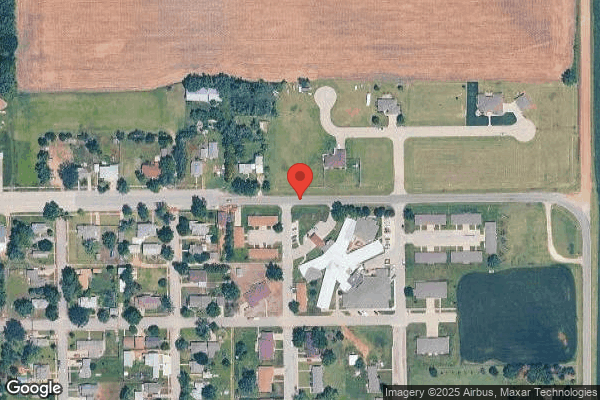

601 E MAIN STREET, PRETTY PRAIRIE, KS 67570 (620) 459-6822
Non profit - Corporation 43 Beds Independent Data: November 2025
Trust Grade
83/100
#35 of 295 in KS
Last Inspection: March 2025

Within standard 12-15 month inspection cycle. Federal law requires annual inspections.

Overview

Prairie Sunset Home Inc has a Trust Grade of B+, which means it is recommended and above average compared to other facilities. It ranks #35 out of 295 nursing homes in Kansas, placing it in the top half, and #2 out of 7 in Reno County, indicating only one other local option is better. The facility's performance trend is stable, with the same number of issues found in both 2023 and 2025. Staffing is a strength, as they have a 5-star rating with only a 25% turnover rate, significantly lower than the Kansas average of 48%. On the downside, there were serious incidents, including a resident who fell and broke an arm due to inadequate fall prevention measures, and concerns about unsanitary food storage practices and infection control. Overall, while there are strengths in staffing and overall care, families should be aware of the facility's weaknesses in safety and cleanliness.

Trust Score
B+
83/100
In Kansas
#35/295
Top 11%
Safety Record
Moderate
Needs review
Inspections
Holding Steady
6 → 6 violations
Staff Stability
✓ Good
25% annual turnover. Excellent stability, 23 points below Kansas's 48% average. Staff who stay learn residents' needs.
Penalties
✓ Good
No fines on record. Clean compliance history, better than most Kansas facilities.
Skilled Nurses
✓ Good
Each resident gets 57 minutes of Registered Nurse (RN) attention daily — more than average for Kansas. RNs are trained to catch health problems early.
Violations
⚠ Watch
18 deficiencies on record. Higher than average. Multiple issues found across inspections.
★★★★★
5.0
Overall Rating
★★★★★
5.0
Staff Levels
★★★☆☆
3.0
Care Quality
★★★★☆
4.0
Inspection Score
Stable
2023: 6 issues
2025: 6 issues

The Good

  • 5-Star Staffing Rating · Excellent nurse staffing levels
  • Low Staff Turnover (25%) · Staff stability means consistent care
  • Full Sprinkler Coverage · Fire safety systems throughout facility
  • No fines on record
  • Staff turnover is low (25%)

    23 points below Kansas average of 48%

Facility shows strength in staffing levels, staff retention, fire safety.

The Bad

No Significant Concerns Identified

This facility shows no red flags. Among Kansas's 100 nursing homes, only 1% achieve this.

The Ugly 18 deficiencies on record

1 actual harm
Mar 2025 6 deficiencies
CONCERN (D)

Potential for Harm - no one hurt, but risky conditions existed

Comprehensive Care Plan (Tag F0656)

Could have caused harm · This affected 1 resident

**NOTE- TERMS IN BRACKETS HAVE BEEN EDITED TO PROTECT CONFIDENTIALITY** The facility reported a census of 38 residents with 15 residents included in the sample. Based on observation, record review and...

Read full inspector narrative →
**NOTE- TERMS IN BRACKETS HAVE BEEN EDITED TO PROTECT CONFIDENTIALITY** The facility reported a census of 38 residents with 15 residents included in the sample. Based on observation, record review and interview, the facility failed to complete a resident centered comprehensive care plan for one Resident (R) 14, regarding non-pharmacologic interventions for pain. Findings included: - Review of Resident (R)14's electronic medical record (EMR) revealed a diagnosis of chronic pain (physical suffering or discomfort caused by illness or injury). The Significant Change Minimum Data Set (MDS), dated [DATE], documented the resident had a Brief Interview for Mental Status (BIMS) score of 14, indicating intact cognition. She received as needed (PRN) pain medication and non-pharmacological interventions (interventions not based on medication) for pain. She rated the worse pain in the past five days to be five out of 10 on the one to10 pain scale (scale used to rate pain with zero being no pain and 10 being the worse pain possible). She received opioid medication (a class of drugs healthcare providers prescribe to manage moderate to severe pain) during the assessment period. The Pain Care Area Assessment (CAA), dated 12/25/24, did not trigger for further development. The Quarterly MDS, dated 11/20/24, documented the resident had a BIMS score of 13, indicating intact cognition. She received PRN pain medication and non-pharmacological interventions for pain and received opioid medication during the assessment period. The care plan for pain, revised 01/02/25, lacked staff instruction on non-pharmracologic interventions for pain. Review of the resident's EMR revealed the following physician orders: Gabapentin (prescription medication used to treat neuropathic pain), 100 milligrams (mg), by mouth (po), at bedtime (HS), for a diagnosis of restless leg syndrome (RLS-a brain, nerve and sleep condition that causes a strong, nearly irresistible urge to move your legs that ' s at least partially relieved by movement), ordered 08/12/24. Review of the resident's Medication Administration Record (MAR) revealed the resident received the Gabapentin in February and March, as ordered. Norco (an opioid medication combination of hydrocodone (an opioid medication) and acetaminophen (a non-opioid pain reliever) which works in the brain to change how a person's body feels and responds to pain), 5-325 mg, po every (Q) six hours, PRN, for pain, ordered 08/12/24. Review of the resident's MAR revealed the resident received the Norco seven times from 02/01/25 through 02/28/25, for pain rated between five and nine on the one to 10 pain scale and four times from 03/01/25 through 03/05/25 for pain rated six to nine on the one to 10 pain scale, with effective results. Tylenol (acetaminophen) extra strength (ES), 500 mg, po, Q 6 hours, PRN, for pain, ordered 08/12/24. Review of the resident's MAR revealed the resident received the tylenol medication 15 times from 02/01/25 through 02/28/25, for pain rated one to seven on the one to 10 pain scale and seven times from 03/01/25 through 03/05/25 for pain rated five to eight on the one to 10 pain scale, with effective results. During an observation on 03/03/25 at 10:44 AM, the resident sat a recliner in her room with her feet elevated on the footrest. The resident had facial grimacing, indicating pain. On 03/03/25 at 10:44 AM, the resident stated she always had back pain, which did not affect her sleep or day to day activities. She stated she was unaware of any pain interventions other than the pain medications available to help ease her pain. On 03/05/25 at 08:47 AM, Certified Nurse Aide (CNA) N stated the resident had back pain. When the resident has pain, she will let the nurse know the resident needs pain medication. On 03/05/25 at 08:57 AM, Administrative Nurse D confirmed the resident lacked non-pharmacologic pain interventions on her care plan to help ease her back pain. The facility policy for Baseline Care Plans, revised 11/15/17, included: The facility will implement interventions to assist the resident to achieve their goals. The facility failed to complete a comprehensive resident-centered care plan to include non-pharmacologic pain interventions.
CONCERN (D)

Potential for Harm - no one hurt, but risky conditions existed

Deficiency F0697 (Tag F0697)

Could have caused harm · This affected 1 resident

**NOTE- TERMS IN BRACKETS HAVE BEEN EDITED TO PROTECT CONFIDENTIALITY** The facility reported a census of 38 residents with 15 residents sampled, including one resident reviewed for pain. Based on obs...

Read full inspector narrative →
**NOTE- TERMS IN BRACKETS HAVE BEEN EDITED TO PROTECT CONFIDENTIALITY** The facility reported a census of 38 residents with 15 residents sampled, including one resident reviewed for pain. Based on observation, interview and record review, the facility failed to offer non-pharmaceutical interventions for pain for one Resident (R)17, who has chronic pain. Findings included: - Review of Resident (R)14's electronic medical record (EMR) revealed a diagnosis of chronic pain (physical suffering or discomfort caused by illness or injury). The Significant Change Minimum Data Set (MDS), dated [DATE], documented the resident had a Brief Interview for Mental Status (BIMS) score of 14, indicating intact cognition. She received as needed (PRN) pain medication and non-pharmacological interventions (interventions not based on medication) for pain. She rated the worse pain in the past five days to be five out of 10 on the one to 10 pain scale (scale used to rate pain with zero being no pain and 10 being the worse pain possible). She received opioid medication (a class of drugs healthcare providers prescribe to manage moderate to severe pain) during the assessment period. The Pain Care Area Assessment (CAA), dated 12/25/24, did not trigger. The Quarterly MDS, dated 1120/24, documented the resident had a BIMS score of 13, including intact cognition. She received PRN pain medication and non-pharmacological interventions for pain and received opioid medication during the assessment period. The Care Plan for pain, revised 01/02/25, instructed staff to know the resident was able to call for assistance when she was in pain and was able to request pain medication. Review of the resident's EMR revealed the following physician orders: Gabapentin (prescription medication used to treat neuropathic pain), 100 milligrams (mg), by mouth (po), at bedtime (HS), for a diagnosis of restless leg syndrome (RLS-a brain, nerve and sleep condition that causes a strong, nearly irresistible urge to move your legs that's at least partially relieved by movement), ordered 08/12/24. Review of the resident's Review of the resident's Medication Administration Record (MAR) revealed the resident received the medication in February and March, as ordered. Norco (an opioid medication combination of hydrocodone (an opioid medication) and acetaminophen (a non-opioid pain reliever) which works in the brain to change how a person's body feels and responds to pain), 5-325 mg, po every (Q) six hours, PRN, for pain, ordered 08/12/24. Review of the resident's MAR revealed the resident received the medication seven times from 02/01/25 through 02/28/25, for pain rated five to nine on the one to 10 pain scale and four times from 03/01/25 through 03/05/25 for pain rated six to nine on the one to 10 pain scale, with effective results. Tylenol (acetaminophen) extra strength (ES), 500 mg, po, Q 6 hours, PRN, for pain, ordered 08/12/24. Review of the resident's MAR revealed the resident received the medication 15 times from 02/01/25 through 02/28/25, for pain rated one to seven on the one to 10 pain scale and seven times from 03/01/25 through 03/05/25 for pain rated five to eight on the one to 10 pain scale, with effective results. On 03/03/25 at 10:44 AM, the resident sat in the recliner in her room with her feet elevated on the footrest. The resident had facial grimacing, indicating pain. On 03/03/25 at 10:44 AM, the resident stated she had back pain, which did not affect her sleep or day to day activities. She stated she was unaware of any pain interventions other than the pain medications available to help ease her pain. On 03/05/25 at 08:47 AM, Certified Nurse Aide (CNA) N stated the resident had back pain. When the resident had pain, she would let the nurse know the resident needed pain medication. On 03/05/25 at 08:57 AM, Administrative Nurse D confirmed the resident lacked non-pharmacologic pain interventions to help ease her back pain. The facility policy for Pain Care, effective 05/10/17, included non-pharmacological measures should be used along with pharmacological measures for maximum pain relief. The facility failed to initiate non-pharmacologic pain interventions to help this resident with chronic pain.
CONCERN (D)

Potential for Harm - no one hurt, but risky conditions existed

Medication Errors (Tag F0758)

Could have caused harm · This affected 1 resident

**NOTE- TERMS IN BRACKETS HAVE BEEN EDITED TO PROTECT CONFIDENTIALITY** The facility reported a census of 38 residents with 15 residents sampled including five residents reviewed for unnecessary medic...

Read full inspector narrative →
**NOTE- TERMS IN BRACKETS HAVE BEEN EDITED TO PROTECT CONFIDENTIALITY** The facility reported a census of 38 residents with 15 residents sampled including five residents reviewed for unnecessary medications. Based on observation, record review and interview, the facility failed to monitor five Residents (R) 26, and R 34, regarding failure to monitor the side effects of psychotropic (drugs that affect the brain and central nervous system, altering mood, thoughts, emotions, and behavior) and antipsychotic (drugs that treat psychotic symptoms like hallucinations and delusions) medications and the failure to obtain a stop date for R 18's antianxiety (drugs that treat anxiety disorders) medication, Ativan. Findings included: - Review of Resident (R)26's electronic medical record (EMR) revealed a diagnosis of major depressive disorder (major mood disorder which causes persistent feelings pf sadness). The Annual Minimum Data Set (MDS), dated [DATE], documented the resident had a Brief Interview for Mental Status (BIMS) score of three, indicating severe cognitive impairment. He received antipsychotic (drugs that treat psychotic symptoms like hallucinations and delusions) and antidepressant (a type of psychotropic drugs that affects the brain and central nervous system, altering mood, thoughts, emotions, and behavior) medication during the assessment period. The Psychotropic Drug Care Area Assessment (CAA), dated 11/13/24, documented staff would administer his medications and monitor for adverse side effects and to report any concerns to his physician. The Quarterly MDS, dated 02/12/25, documented the resident had a BIMS score of zero, indicating severe cognitive impairment. He received antipsychotic and antidepressant medications during the assessment period. The Care Plan, revised 02/12/25, instructed staff to monitor for adverse side effects and report any concerns to the physician. Review of the resident's EMR revealed the following physician orders: Mirtazapine (an antidepressant medication), 15 milligrams (mg), by mouth (po), at bedtime (HS), for a diagnosis of MDD, ordered 02/27/25. Sertraline (an antidepressant medication), 2.5 milliliters (ml), po, every day (QD), for a diagnosis of MDD, ordered 02/27/25. Olanzapine (an antipsychotic medication), 5 mg, po, at HS, for a diagnosis of MDD, ordered 02/27/25. Review of the resident's EMR lacked monitoring of any side effects for the resident's antipsychotic and/or antidepressant medications. On 03/05/25 at 08:57 AM, Administrative Nurse D stated staff did not monitor for side effects of antipsychotic and antidepressant medications for more than 72 hours after the medication was started. The facility policy for Antipsychotic Medications, effective 09/21/21, included: The charge nurse will monitor for resident behaviors and signs and symptoms of adverse consequences of antipsychotic medication every shift, and document in the resident's record. The facility failed to monitor for adverse side effects for this dependent resident who received antidepressant and antipsychotic medications. - Review of Resident (R)34's electronic medical record (EMR) revealed a diagnosis of depression (a mood disorder that causes a persistent feeling of sadness and loss of interest). The admission Minimum Data Set (MDS), dated [DATE], documented the resident had a Brief Interview for Mental Status (BIMS) score of 15, indicating intact cognition. She did not receive antidepressant (a type of psychotropic drugs that affects the brain and central nervous system, altering mood, thoughts, emotions, and behavior) medication during the assessment period. The Mood State Care Area Assessment (CAA), dated 09/09/24, documented staff would observe for changes in the resident's mood and to report any concerns to the physician. The Quarterly MDS, dated 12/10/24, documented the resident had a BIMS score of 15, indicating intact cognition. She received antidepressant medication during the assessment period. The Care Plan, revised 12/11/24, instructed staff to monitor for and report any adverse side effects from the antidepressant medication to the physician. Sertraline (an antidepressant medication), 50 milligrams, by mouth (po), every morning (QAM), for a diagnosis of depression, ordered, 09/28/24. Review of the resident's Medication Administration Record (MAR), revealed the resident received the antidepressant medication, as ordered. On 03/05/25 at 08:57 AM, Administrative Nurse D stated staff did not monitor for side effects of antidepressant medication for more than 72 hours after the medication was started. The facility policy for Antipsychotic Medications, effective 09/21/21, included the charge nurse will monitor for resident behaviors and signs and symptoms of adverse consequences of antipsychotic medication every shift, and document in the resident's record. The facility failed to monitor for adverse side effects for this dependent resident who received antidepressant and antipsychotic medications.
CONCERN (F)

Potential for Harm - no one hurt, but risky conditions existed

Food Safety (Tag F0812)

Could have caused harm · This affected most or all residents

**NOTE- TERMS IN BRACKETS HAVE BEEN EDITED TO PROTECT CONFIDENTIALITY** The facility reported a census of 38 residents. Based on observation, interview, and record review, the facility failed to store...

Read full inspector narrative →
**NOTE- TERMS IN BRACKETS HAVE BEEN EDITED TO PROTECT CONFIDENTIALITY** The facility reported a census of 38 residents. Based on observation, interview, and record review, the facility failed to store, prepare, and serve food in a sanitary manner to prevent possible food-borne illness to the residents of the facility. Findings included: - On 03/03/25 at 08:03 AM during an initial tour of the main kitchen, refrigerator, freezer, and dry food storage areas, the following areas of concern were observed: Observation of the storage room revealed: One undated bag of tortilla chips left open to air and laying on the counter. One undated bag of coconut flakes loosely rolled shut on a shelf. One undated, open box of baking soda box with discoloration and water damage to the box. One undated, open box of baking soda. Observation of the refrigerator revealed open and undated items including a bottle of soy sauce, large jug of barbeque sauce, [NAME] jug of ketchup, large jug of salad dressing, large jug of picante sauce, large tub of beef base, and a large tub of chicken base. Observation of the freezer revealed an undated box of chicken fried steak with the bag inside left open to air. Observation of the walk-in refrigerator revealed: Individual portions of deserts, which included various cakes and pies left uncovered and undated. A large bag of shredded mild cheddar cheese left open and undated. A large bag of cubed Monterey [NAME] cheese, and a large bag of [NAME] cheeses were opened and not dated. In the kitchen serving area there were bags of open cereal that were undated. During an interview on 03/06/25 at 08:03 AM, Dietary Manager BB revealed she expected staff to label, and date opened food items. Dietary Manager BB stated that the above concerns identified with dry storage and freezer storage, which included undated and unsealed items were unacceptable and she stated she would throw out the appropriate items. Dietary Manager BB verified that if food was not labeled with a date there was no way for staff to know how long it had been opened and when to throw it out. The facility's undated policy Food Safety- Use and storage of food and beverage brought in for residents, food procurement revealed that education on safe food handling would be provided to all staff who may provide foods or fluids to residents of the facility. The education would include the requirement for covered containers or secure wrapping for foods, proper labeling and dating of each item, and leftover foods to be used within three days or discard. The facility failed to store, prepare, and serve food in a sanitary manner to prevent possible food-borne illness to the residents of the facility.
CONCERN (F)

Potential for Harm - no one hurt, but risky conditions existed

Infection Control (Tag F0880)

Could have caused harm · This affected most or all residents

The facility reported a census of 38 residents. Based on interview and record review, the facility failed to establish and maintain an infection prevention and control program designed to provide a sa...

Read full inspector narrative →
The facility reported a census of 38 residents. Based on interview and record review, the facility failed to establish and maintain an infection prevention and control program designed to provide a safe, sanitary, and comfortable environment for the residents of the facility, in two of four resident halls. Findings included: - During an initial tour of the facility on 03/04/25 at 01:25 PM, revealed the following areas of concern on hall 400: 1. One hall had three resident private bathrooms with incontinent products resting directly on the bathroom floor and lacking a barrier. 2. One hall had a trash can for disposal of Enhanced Barrier Precautions (EBP) outside of a resident room with disposed personal protective equipment (PPE) coming out of the partially covered trash can. 3. One resident room had multiple items on the closet floor. 4. The medication room had one box, which contained approximately 75 cards of assorted medications to be returned to the pharmacy resting directly on the floor and lacking a barrier. The facility policy for Infection Control, revised 06/22, included: The facility shall have an infection control program to provide a safe, sanitary, and comfortable environment for the residents.
MINOR (C)

Minor Issue - procedural, no safety impact

Staffing Information (Tag F0732)

Minor procedural issue · This affected most or all residents

The facility reported a census of 38 residents. Based on observation, record review and interview, the facility failed to display accurate, publicly accessible, and identifiable staffing information, ...

Read full inspector narrative →
The facility reported a census of 38 residents. Based on observation, record review and interview, the facility failed to display accurate, publicly accessible, and identifiable staffing information, on a daily, for the 38 residents who reside in the facility. Findings included: - Review of the facility's Daily Staffing Sheets, from 02/01/25 through 03/03/25, revealed the total hours and actual hours worked by staff was not completed on the daily staffing sheets. On 03/05/25 at 02:00 PM, Administrative Nurse D stated she was unaware the daily staffing sheets needed to include the total hours and actual hours worked. The facility policy for Posting Direct Care Daily Staffing Numbers, undated, included information for the shift staffing for each staff shall include the total number of nursing staff working for the posted shift and the actual time worked during the shift for each category. The facility failed to properly complete the daily staffing sheets for the residents of the facility.
Jun 2023 6 deficiencies 1 Harm
SERIOUS (G)

Actual Harm - a resident was hurt due to facility failures

Accident Prevention (Tag F0689)

A resident was harmed · This affected 1 resident

**NOTE- TERMS IN BRACKETS HAVE BEEN EDITED TO PROTECT CONFIDENTIALITY** The facility census totaled 31 residents with 12 residents in the sample, including two residents sampled for accident hazards. ...

Read full inspector narrative →
**NOTE- TERMS IN BRACKETS HAVE BEEN EDITED TO PROTECT CONFIDENTIALITY** The facility census totaled 31 residents with 12 residents in the sample, including two residents sampled for accident hazards. Based on observation, interview, and record review, the facility failed to provide timely and appropriate interventions to prevent further falls for Resident (R) 28. The resident had a history of multiple falls and fell while attempting to self-toilet and sustained a fractured humerus (bone of the upper arm). Findings included: - R28's Electronic Medical Record (EMR) revealed the following diagnoses: dementia (progressive mental disorder characterized by failing memory and confusion), diabetes mellitus type 2 (when the body cannot use glucose, not enough insulin is made, or the body cannot respond to the insulin), osteoporosis (abnormal loss of bone density and deterioration of bone tissue with an increased fracture risk), and Alzheimer's disease (progressive mental deterioration characterized by confusion and memory failure). The Significant Change Minimum Data Set (MDS) dated [DATE], revealed a Brief Interview for Mental Status (BIMS) score of eight, indicating moderate impairment in cognition. The resident required extensive assistance of two staff for daily cares and was frequently incontinent of bladder and bowel. The resident received pain medications on a scheduled and as needed basis. The resident had a recent fall with a fracture. The Fall Risk assessment dated [DATE] indicated the resident was high risk for falls. Review of the Quarterly MDS dated 05/17/23, revealed a BIMS score of six, indicating severe cognitive impairment. The resident required assistance of one staff for supervision and physical assistance with transfers, ambulation, and toileting. The resident was a fall risk and had one non-injury and one minor injury fall since the last assessment. The Cognitive Loss/Dementia Care Area Assessment (CAA) dated 11/20/22 revealed the resident could make herself understood, usually understood others but was unable to retain information, and staff were to anticipate her needs. The Falls CAA dated 11/20/22 documented staff were to observe and assess for increased fall risks and eliminate them when able, and report concerns to the physician as needed/warranted. Staff were to observe and assess for interventions that decrease fall risks and implement as needed. Review of the Care Plan dated 03/16/22, revealed the resident was a fall risk due to actual falls and deconditioning (weakness) and included the following interventions: On 03/16/22, staff to encourage the resident to participate in activities that promote exercise and physical activity for strengthening and improved mobility. On 03/16/22, staff were to ensure the resident wore appropriate footwear (non-skid socks or shoes) when ambulating or mobilizing in her wheelchair. On 03/16/22, staff were to ensure the resident's walker was on the side of her bed, near the bathroom, at night to cue the resident to use the walker when she would get herself up to toilet. The Care Plan included the resident was incontinent of bladder (dated 07/04/22) and included the following interventions: On 07/04/22, activity staff were to notify nursing staff if R28 was incontinent during activities. On 07/04/22, staff were to establish voiding patterns for R28. On 07/04/22, Certified Nurse Aide (CNA) to monitor/document for signs of urinary tract infection (UTI) such as pain, burning, blood-tinged urine, cloudiness, no output, deepening of urine color, increased pulse, increased temp, urinary frequency, foul smelling urine, fever, chills, altered mental status, change in behavior, change in eating patterns. On 07/04/22, staff were to ensure the call light was within the residents reach and encourage her to use the call light for assistance. On 06/13/23, anti-roll breaks were placed on the resident's wheelchair. On 09/19/23, staff were to provide visual checks during the night hours to ensure the resident's walker was in reach. The resident fell on [DATE] and staff placed a silent electronic motion alarm on the resident to alert staff when the resident attempted get up without staff knowledge as the resident would not call for assistance. The care plan lacked fall prevention interventions after the falls that occurred on 05/10/22, 11/14/22, 12/24/22, 02/03/23, and 05/20/23. The Fall Investigation dated 05/10/22 at 07:40 AM revealed the resident reported she fell in her bathroom. She had diarrhea and weakness, and felt it was from Metformin (medication for control of the blood glucose). The medication was discontinued, and staff failed to implement an intervention to keep the resident free from possible further falls. The Fall Investigation dated 09/13/22 at 01:08 AM revealed the resident was found lying on the floor of her bathroom with her head between the toilet and the wall, and her legs extended straight out towards the door. R28 had one sock on, no undergarments, and had a shirt and a sweater in place. She hit her head and had visible bruising starting on her upper left back. Two staff got her up and walked her to bed. The staff noted she was wobbly and unsure what to do. Staff sat her on the side of the bed and R28 could not stay sitting up without holding onto the grab rail or the frame of the bed. She stated she got up to go to bathroom, and the next thing she knew, she was on the floor in the bathroom. The resident was incontinent, ambulated without proper footwear, and slipped and fell using her walker to ambulate herself to the toilet. A witness statement from CNA E documented she had not gone in to check the resident yet on her shift. (Her shift began at 10:00 PM and she had not checked on R28 three hours into her shift). The Fall Investigation dated 11/02/22 at 08:10 AM revealed an unnamed Certified Medication Aide (CMA) heard the resident yelling for help and found the resident lying on the floor in her bathroom. The CMA notified the nurse, and the nurse found the resident lying on the floor with her head against the wall near the bathroom door. She was lying on her right side facing the doorway. The resident was alert and oriented to person only and could not tell the nurse what happened. The nurse observed bluish bruising with a small amount of swelling above R28's left eyebrow. The resident could not lift her left arm and cried out in pain when the nurse touched her arm. There was visible bruising on the resident's upper left arm near her shoulder. Three staff assisted the resident to her bed. At 08:30 AM (20 minutes after the fall), the staff notified the resident's Durable Power of Attorney (DPOA) of the fall and resident transfer to hospital for evaluation. At 08:32 AM, staff received an order to send the resident to emergency room (ER). At 08:50 AM, the resident left the facility in an ambulance (40 minutes after the resident's fall). Review of the investigation documented the resident had no injuries post fall, however, the update from the hospital revealed the resident had a fractured humerus. The care plan documented staff placed a silent electronic motion alarm on the resident to alert staff when the resident attempted mobility as the resident would not call for assistance. The Fall Investigation dated 11/14/22 at 05:24 PM revealed the resident was found seated next to her recliner, leaned against the raised footrest. The call light had been clipped to the arm rest of her chair, her wheelchair was across the room, and the staff noted no injuries found and assisted the resident to the side of the bed. The investigation lacked an intervention to prevent further falls. The Fall Investigation dated 12/24/22 at 02:45 PM revealed the resident was on the floor, sitting on her buttocks in front of her recliner. The resident reported she just slid out of her recliner. The investigation lacked an intervention to prevent further falls. The Fall Investigation dated 02/03/23 at 06:54 AM revealed the resident was found sitting on the floor in her bathroom doorway facing her bed with her legs in front of her. Resident stated she had attempted to get back to her bed after using her bathroom. The resident sustained a small skin tear to her right ankle and her right elbow. The investigation lacked an intervention to prevent further falls. The Fall Investigation dated 05/20/23 at 09:00 AM revealed a housekeeper reported the resident was on the floor. The resident was observed against the bedframe at the head of the bed with her walker was up against the wall in the unlocked position. The bathroom was observed to have feces (bowel movement) on the floor. Two staff assisted the resident to her wheelchair. Staff observed the resident leaned backwards while in the standing position, and staff placed the resident in the wheelchair to take her to breakfast. The resident was unable to state how the fall occurred. The resident received a scrape to her left great toe as well as redness to her upper back. The investigation lacked an intervention to prevent further falls and the care plan indicated the resident should have a silent alarm on. The Fall Investigation dated 06/09/23 revealed the resident was found seated on the floor in front of her easy chair when her son came for a visit. The investigation lacked an intervention to prevent further falls. The care plan indicated staff should have had the silent electronic alarm on. Review of a Voiding Diary dated 03/17/22, revealed it was not used due to inaccurate data. The staff did not do the voiding diary during the night or anytime the resident slept and only took the resident to the bathroom at approximately three-to-four-hour intervals instead of the required intervals on the voiding diary. Review of the Bowel and Bladder Assessment completed on 02/15/23, revealed the resident was incontinent, needed assistance with toileting, was sometimes aware of need to void and a timed, scheduled toileting plan recommended. However, the facility lacked an individualized toileting plan. Review of the Bowel and Bladder Assessment completed on 05/17/23, revealed no changes from the previous assessment. Continued with no toileting plan. Observation on 06/12/23 at 10:30 AM, revealed the resident slept while seated in her recliner. A wheelchair was approximately two feet in front of the resident and a wheeled walker parked against the wall by the door of the room approximately 20 feet away from the resident. A call light was clipped to the arm of the chair and no sensor monitor observed in the room. Observation on 06/13/23 at 09:00 AM revealed CNA H assisted the resident from her recliner to her wheelchair. The resident wore skid free socks. CNA H lacked a gait belt and the staff failed to ask the resident if she needed to use the toilet. CNA H propelled the resident down the hall to the dining room and no motion sensor observed in the room. Observation on 06/14/23 at 11:00 AM CNA I could not locate the electronic silent monitoring system at first, and then located the silent alarm, crawled under the resident's bed, and obtained the alarm system. CNA I confirmed the alarm was not used and was in the off position. During an interview on 06/12/23 at 12:23 PM, a family member reported he came in last week and R28 was on the floor in her room. He thought maybe she was trying to get in her wheelchair from her recliner. He reported R28 could not remember to use the call light for assistance, and one of her falls resulted in a broken arm. On 06/13/23 at 04:00 PM, CNA G reported the resident needed many reminders and was not that mobile since she broke her arm. CNA G stated R28 attempted to take herself to the bathroom has and had a lot of falls. CNA G did not know of the silent motion sensor in the resident's room and had not ever seen it. On 06/14/23 at 09:40 AM CNA H reported she got the resident up for breakfast. The resident liked to sleep in, required extensive assistance of one staff, and walked in her room with her walker. CNA H stated R28 was not safe to ambulate by herself, and there was no toileting plan for the resident, and she was more incontinent. CNA H stated they put antiroll locks on her chair and CNA H did not know the resident had a silent alarm. On 06/14/23 at 10:00 AM, CNA I reported the resident was very inconsistent and required assistance with her activities of daily living (ADL). She reported the resident did not have a toileting plan but thought that would be good for her. She did not know if the resident had a silent alarm and if she did, the staff were not using it. On 06/13/23 at 11:10 AM, Licensed Nurse (LN) J reported she did not add new interventions to the resident's care plan following her falls. LN J said she reviewed care plans before all care plan meetings and would update any problems/concerns then. On 06/14/23 at 10:30 AM, Administrative Nurse B stated after reviewing the resident fall history she felt a toileting plan would have benefitted the resident to prevent some of her falls. She also reported she expected staff to review the care plan and revised with falls, and if no revision was warranted there should still be documentation. The facility's policy for Fall Protocol, dated 12/31/21, revealed the charge nurse would assess severity of fall/injury for need of emergency care, complete risk management assessment in the EMR including fall risk assessment, and the charge nurse would update interventions on the fall care plan with any new occurrence of falls. The facility failed to identify causal factors for the resident's falls and failed to provide timely and appropriate interventions to prevent further falls. The resident had a history of multiple falls and fell while attempting to self-toilet and broke her arm.
CONCERN (D)

Potential for Harm - no one hurt, but risky conditions existed

Deficiency F0657 (Tag F0657)

Could have caused harm · This affected 1 resident

**NOTE- TERMS IN BRACKETS HAVE BEEN EDITED TO PROTECT CONFIDENTIALITY** The facility census totaled 31 residents with 12 included in the sample. Based on interview and record review, the facility fail...

Read full inspector narrative →
**NOTE- TERMS IN BRACKETS HAVE BEEN EDITED TO PROTECT CONFIDENTIALITY** The facility census totaled 31 residents with 12 included in the sample. Based on interview and record review, the facility failed to revise care plans for Resident (R) 28, related to falls. Findings included: - R28's electronic Medical Record (EMR) revealed the following diagnoses: dementia (progressive mental disorder characterized by failing memory and confusion), diabetes mellitus type 2 (when the body cannot use glucose, not enough insulin is made or the body cannot respond to the insulin), osteoporosis (abnormal loss of bone density and deterioration of bone tissue with an increased fracture risk), and Alzheimer's disease (progressive mental deterioration characterized by confusion and memory failure). The Significant Change Minimum Data Set (MDS) dated [DATE], revealed a Brief Interview for Mental Status (BIMS) score of eight, indicating moderate impairment in cognition. The resident required extensive assistance of two staff for daily cares and was frequently incontinent of bladder and bowel. The resident received pain medications on a scheduled and as needed basis. The resident had a recent fall with a fracture. The Fall Risk assessment dated [DATE] indicated the resident was high risk for falls. Review of the Quarterly MDS dated 05/17/23, revealed a BIMS score of six, indicating severe cognitive impairment. The resident required assistance of one staff for supervision and physical assistance with transfers, ambulation, and toileting. The resident was a fall risk and had one non-injury and one minor injury fall since the last assessment. The Cognitive Loss/Dementia Care Area Assessment (CAA) dated 11/20/22 revealed the resident could make herself understood, usually understood others but was unable to retain information, and staff were to anticipate her needs. The Falls CAA dated 11/20/22 documented staff were to observe and assess for increased fall risks and eliminate them when able, and report concerns to the physician as needed/warranted. Staff were to observe and assess for interventions that decrease fall risks and implement as needed. Review of the Care Plan dated 03/16/22, revealed the resident was a fall risk due to actual falls and deconditioning (weakness) and included the following interventions: On 03/16/22, staff were to encourage the resident to participate in activities that would promote exercise and physical activity for strengthening and improved mobility. On 03/16/22, staff were to ensure the resident wore appropriate footwear (non-skid socks or shoes) when ambulating or mobilizing in her wheelchair. On 03/16/22, staff were to ensure the resident's walker was on the side of her bed, near the bathroom, at night to cue the resident to use the walker when she would get herself up to toilet. On 07/04/22, staff were to ensure the call light was within the residents reach and encourage her to use the call light for assistance. On 06/13/23, staff placed anti-roll breaks on the resident's wheelchair. On 09/19/23, staff were to provide visual checks during the night hours to ensure the resident's walker was in reach. The care plan lacked revisions on the fall that occurred on 05/10/22, 11/14/22, 12/24/22, 02/03/23, and 05/20/23 to provide guidance to staff to possibly prevent the resident from further falls. The Fall Investigation dated 05/10/22 at 07:40 AM revealed the resident reported she fell in her bathroom. She had diarrhea and weakness, and felt it was from Metformin (medication for control of the blood glucose). The medication was discontinued, and staff failed to review and revise the care plan for this fall. The Fall Investigation dated 11/14/22 at 05:24 PM revealed the resident was found seated next to her recliner, leaned against the raised footrest. The call light had been clipped to the arm rest of her chair, her wheelchair was across the room, and the staff noted no injuries found and assisted the resident to the side of the bed. Staff failed to review and revise the care plan for this fall. The Fall Investigation dated 12/24/22 at 02:45 PM revealed the resident was on the floor, sitting on her buttocks in front of her recliner. The resident reported she just slid out of her recliner. Staff failed to review and revise the care plan for this fall. The Fall Investigation dated 02/03/23 at 06:54 AM revealed the resident was found sitting on the floor in her bathroom doorway facing her bed with her legs in front of her. The resident stated she had attempted to get back to her bed after using her bathroom. The resident sustained a small skin tear to her right ankle and her right elbow. Staff failed to review and revise the care plan for this fall. The Fall Investigation dated 05/20/23 at 09:00 AM revealed a housekeeper reported the resident was on the floor. The resident observed against the bedframe at the head of the bed with her walker was up against the wall in the unlocked position. The bathroom had feces (bowel movement) on the floor. Two staff assisted the resident to her wheelchair. Staff observed the resident leaned backwards while in the standing position, and staff placed the resident in the wheelchair to take her to breakfast. The resident was unable to state how the fall occurred. The resident received a scrape to her left great toe as well as redness to her upper back. Staff failed to review and revise the care plan for this fall. On 06/13/23 at 11:10 AM, Licensed Nurse (LN) J reported she did not add new interventions to the resident's care plan following her falls. LN J said she reviewed care plans before all care plan meetings and would update any problems/concerns then. On 06/14/23 at 10:30 AM, Administrative Nurse B reported she expected staff to review the care plan and revise the care plan with falls, and if no revision was warranted, there should still be documentation. Review of the facility policy named Care Plan Development and Revisions dated 01/10/20 revealed revisions can be made any time changes are noted. These can be made by the Director of Nurses (DON), MDS coordinator, charge nurse, Dietary manager, or Social Services director. The facility failed to revise care plans for Resident (R) 28 related to falls.
CONCERN (D)

Potential for Harm - no one hurt, but risky conditions existed

ADL Care (Tag F0677)

Could have caused harm · This affected 1 resident

The facility reported a census of 31 residents, with 12 sampled, including one resident sampled for activities of daily living (ADL). Based on observation, interview, and record review, the facility f...

Read full inspector narrative →
The facility reported a census of 31 residents, with 12 sampled, including one resident sampled for activities of daily living (ADL). Based on observation, interview, and record review, the facility failed to provide care consistent with standard of practice for the one sampled Resident (R) 30 to maintain good grooming and personal hygiene related to showers, nail care, and facial hair removal. Findings included: - The 06/12/23 Electronic Health Record (EHR) documented R30 had the following diagnoses of presence of artificial hips right and left (surgery to replace hip joints with artificial parts) and emphysema (long-term, progressive disease of the lungs characterized by shortness of breath). The 05/27/23 Significant Change Minimum Data Set (MDS) documented a brief interview for mental status (BIMS) of 14, indicating intact cognition. R30 required physical help of one staff for bathing/showering. The 05/27/23 ADL Functional/Rehabilitation Potential Care Area Assessment (CAA) documented R30 would require continued assistance from staff. The 04/12/23 Significant Change MDS documented R30 required physical help in part of bathing/showering by one staff. The 05/02/23 Care Plan documented staff were to check nail length, trim, and clean nails on bath days and as needed. R30 required one staff assistance with bathing. The Progress Notes from March 2023 through June 2023, lacked documentation of the resident's refusals of showers/baths. The Tasks in the EHR documented in the last 30 days, the resident received four (05/24/23, 05/31/23, 06/06/23, and 06/12/23) out of eight bathing opportunities. On 06/12/23 at 10:45 AM, R30 observed sitting in his room in his recliner with long facial hair growth, greasy/oily appearing hair, and long jagged nails on both hands. On 06/13/23 at 04:19 PM, R30 stated he does need assistance with showering and shaving, because he cannot see out of his right eye, and did not want to cut up his face. R30 stated he had to ask when he wanted assistance with nail care or shaving and most of the time they would assist, he confirmed he did need them trimmed. On 06/14/23 at 09:31 AM, R30 observed sitting in his room in his recliner with long jagged nails on both hands, R30 is clean shaven and had clean hair. On 06/14/23 at 09:11 AM, certified nurse's aide (CNA) K, revealed she was the shower aide assigned to showers for the day. She stated if the residents refused, she would get the charge nurse. CNA K stated she offered nail care with each shower given. She stated showers were to be documented in the electronic record. CNA K stated she had not given R30 a shower recently. On 06/14/23 at 09:39 AM, Licensed Nurse (LN) L revealed staff should document showers in the electronic record. LN L confirmed R30 required staff assistance with bathing. On 06/14/23 at 01:26 PM, Administrative Nurse B revealed she expected her staff to provide bathing at least twice weekly, to document it in the electronic record, and to provide shaving and nail care with each encounter. The facility 06/14/23 Activity of Daily Living (ADL) policy documented a resident who is unable to carry ADL will be receive the necessary services to maintain good nutrition, grooming, and oral and personal hygiene. The facility failed to provide care consistent with professional standard of practice, for this resident that required assistance with bathing and facial hair removal, nail care, to maintain good grooming, and personal hygiene.
CONCERN (D)

Potential for Harm - no one hurt, but risky conditions existed

Incontinence Care (Tag F0690)

Could have caused harm · This affected 1 resident

**NOTE- TERMS IN BRACKETS HAVE BEEN EDITED TO PROTECT CONFIDENTIALITY** The facility reported a census of 91 residents. The sample included 12 residents, with one resident sampled for bowel/ bladder i...

Read full inspector narrative →
**NOTE- TERMS IN BRACKETS HAVE BEEN EDITED TO PROTECT CONFIDENTIALITY** The facility reported a census of 91 residents. The sample included 12 residents, with one resident sampled for bowel/ bladder incontinence. Based on observation, interview, and record review, the facility failed to provide an individualized toileting plan for Resident (R) 28, to ensure the resident remained as continent as possible. Findings included: - R28's Electronic Medical Record (EMR) revealed the following diagnoses: dementia (progressive mental disorder characterized by failing memory and confusion), diabetes mellitus type 2 (when the body cannot use glucose, not enough insulin is made, or the body cannot respond to the insulin), osteoporosis (abnormal loss of bone density and deterioration of bone tissue with an increased fracture risk), and Alzheimer's disease (progressive mental deterioration characterized by confusion and memory failure). The Significant Change Minimum Data Set (MDS) dated [DATE], revealed a Brief Interview for Mental Status (BIMS) score of eight, indicating moderate impairment in cognition. The resident required extensive assistance of two staff for daily cares and was frequently incontinent of bladder and bowel. The resident received pain medications on a scheduled and as needed basis. The resident had a recent fall with a fracture. The Fall Risk assessment dated [DATE] indicated the resident was high risk for falls. Review of the Quarterly MDS dated 05/17/23, revealed a BIMS score of six, indicating severe cognitive impairment. The resident required assistance of one staff for supervision and physical assistance with transfers, ambulation, and toileting. The resident was a fall risk and had one non-injury and one minor injury fall since the last assessment. The Cognitive Loss/Dementia Care Area Assessment (CAA) dated 11/20/22 revealed the resident could make herself understood, usually understood others but was unable to retain information, and staff were to anticipate her needs. The Urinary Incontinence and Indwelling catheter CAA dated 11/20/22, revealed the resident required staff assistance to toilet and would require continued assistance. Staff were to observe/assess for changes in continence and report concerns to her physician as needed. Staff were to observe/assess for interventions that promote a decrease in incontinence and implement. Staff were to observe/assess for complications including urinary tract infection (UTI) and skin breakdown and report those concerns to the physician for further treatment. The Care Plan revealed the resident was incontinent of bladder (dated 07/04/22) and included the following interventions: On 07/04/22, activity staff were to notify nursing staff if R28 was incontinent during activities. On 07/04/22, staff were to establish voiding patterns for R28. On 07/04/2022, Certified Nurse Aides (CNA's) were to monitor/document for signs of UTI such as pain, burning, blood-tinged urine, cloudiness, no output, deepening of urine color, increased pulse, increased temp, urinary frequency, foul smelling urine, fever, chills, altered mental status, change in behavior, or changes in eating patterns. On 07/04/22, staff were to ensure the call light was within the residents reach and encourage her to use the call light for assistance. On 06/13/23, anti-roll breaks were placed on the resident's wheelchair. On 09/19/23, staff were to provide visual checks during the night hours to ensure the resident's walker was in reach. The Fall Investigation dated 05/10/22 at 07:40 AM revealed the resident reported she fell in her bathroom. She had diarrhea and weakness, and felt it was from Metformin (medication for control of the blood glucose). The medication was discontinued, and staff failed to implement an intervention to keep the resident free from possible further falls. The Fall Investigation dated 09/13/22 at 01:08 AM revealed the resident was found lying on the floor of her bathroom with her head between the toilet and the wall and legs extended straight out towards the door. R28 had one sock on, no undergarments and had a shirt and a sweater in place. She hit her head and had visible bruising starting on her upper left back. No other injuries noted. The resident denied pain. Two staff got her up and walked her to bed. She was wobbly and unsure what to do. She was sat on the side of the bed and could not stay sitting up without holding onto the grab rail or the frame of the bed. She stated she got up to go to bathroom, and the next thing she knew, she was on the floor in the bathroom. Review of the incident reported the resident was incontinent and walking without proper footwear and slipped and fell using walker to ambulate to BR. A witness statement from (CNA) E stated she had not gone in to check the resident yet on her shift. Her shift began at 10:00 PM, three hours into her shift. The Fall Investigation dated 11/02/22 at 08:10 AM revealed an unnamed Certified Medication Aide (CMA) heard the resident yelling for help and found the resident lying on the floor in her bathroom. The CMA notified the nurse, and the nurse found the resident lying on the floor with her head against the wall near the bathroom door. She was lying on her right side facing the doorway. The resident was alert and oriented to person only and could not tell the nurse what happened. The nurse observed bluish bruising with a small amount of swelling above R28's left eyebrow. The resident could not lift her left arm and cried out in pain when the nurse touched her arm. There was visible bruising on the resident's upper left arm near her shoulder. Three staff assisted the resident to her bed. At 08:30 AM (20 minutes after the fall), the staff notified the resident's Durable Power of Attorney (DPOA) of the fall and resident transfer to hospital for evaluation. At 08:32 AM, staff received an order to send the resident to emergency room (ER). At 08:50 AM, the resident left the facility in an ambulance (40 minutes after the resident's fall). Review of the investigation documented the resident had no injuries post fall, however, the update from the hospital revealed the resident had a fractured humerus. The Fall Investigation dated 02/03/23 at 06:54 AM revealed the resident was found sitting on the floor in her bathroom doorway facing her bed with her legs in front of her. Resident stated she was attempting to get back to bed after using her bathroom. The Fall Investigation dated 05/20/23 at 09:00 AM revealed a housekeeper reported the resident was on the floor. Upon arrival R28 was observed against the bedframe at the head of the bed. Her walker was up against the wall in the unlocked position. Feces (bowel movement) was on the bathroom floor. Review of a Voiding Diary dated 03/17/22, revealed it was not used due to inaccurate data. The staff did not do the voiding diary during the night or anytime the resident slept and only took the resident to the bathroom at approximately three-to-four-hour intervals instead of the required intervals on the voiding diary. Review of the Bowel and Bladder Assessment completed on 02/15/23, revealed the resident was incontinent, needed assistance with toileting, was sometimes aware of the need to void and a timed, scheduled toileting plan recommended. However, the facility lacked an individualized toileting plan for R28. Review of the Bowel and Bladder Assessment completed on 05/17/23, revealed no changes from the previous assessment. Continued with no toileting plan. Observation on 06/13/23 at 9:00 AM revealed CNA H assisted the resident with a transfer to her wheelchair from her recliner. CNA H failed to offer the resident a toileting opportunity. Staff propelled the resident to the dining room for a meal. On 06/13/23 at 4:00 PM CNA G reported is not that mobile since she broke her arm but still attempted to take herself to the bathroom by herself. She has had a lot of falls. On 06/14/23 at 09:40 AM CNA H reported the resident was not safe to ambulate by herself. There is no toileting plan for the resident, and she is more incontinent. On 06/14/23 at 10:00 AM CNA/RA I reported the resident is very inconsistent and needs assistance with her activities of daily living (ADLs). She reported the resident did not have a toileting plan but thought that would be good for her. On 06/14/23 at 10:30 AM, Administrative Nurse B stated after reviewing the resident fall history she felt a toileting plan would have benefitted the resident to prevent some of her falls. The undated facility policy called Bladder Schedule Voiding Protocol revealed a voiding schedule based on a three-day voiding pattern assessment, comprehensive assessments including causal factors of the resident's incontinence, and progress and consultant notes would be placed in the resident's care plan. The facility failed to provide an individualized toileting plan for Resident (R) 28, to ensure the resident remained as continent as possible.
CONCERN (D)

Potential for Harm - no one hurt, but risky conditions existed

Deficiency F0883 (Tag F0883)

Could have caused harm · This affected 1 resident

The facility reported a census of 31 residents with 12 residents included in the sample which included five residents selected for review of influenza, pneumococcal, and COVID vaccines. Based on inter...

Read full inspector narrative →
The facility reported a census of 31 residents with 12 residents included in the sample which included five residents selected for review of influenza, pneumococcal, and COVID vaccines. Based on interview and record review, the facility failed to ensure the resident/resident representative received information/education regarding the benefits, risks, or medical contraindications of pneumococcal for three Residents (R), including R26, R23 and R35. Findings included: - Review of the Electronic health record (EHR) for Resident (R) 26, lacked documentation of any pneumococcal vaccine or declination of the vaccine provided to the resident and/or their representative to demonstrate the benefits verses risk of receiving the vaccine. The record lacked documentation the resident had been offered or provided an opportunity to receive the vaccine. Review of the EHR for R 23 lacked documentation of any pneumococcal vaccine or declination of the vaccine provided to the resident and/or their representative to demonstrate the benefits verses risk of receiving the vaccine. The record lacked documentation the resident had been offered or provided an opportunity to receive the vaccine. Review of the EHR for R 35 lacked documentation of any pneumococcal vaccine or declination of the vaccine provided to the resident and/or their representative to demonstrate the benefits verses risk of receiving the vaccine. The record lacked documentation the resident had been offered or provided an opportunity to receive the vaccine. On 06/13/23 at 09:00 AM, administrative Nurse B reported the residents did not get the vaccine as she could find no record of them. She reported she was not aware the residents should be offered the vaccine when they admitted to the facility. On 06/13/23 at 01:00 PM, administrative Nurse B reported she located a consent form for the pneumococcal but verified staff had not been offering the vaccination. and identified 14 residents lacked pneumococcal vaccinations Review of the facility policy named Flu and Pneumonia Immunization dated 01/17 revealed before offering the pneumococcal immunization, each resident or the resident representative would receive education regarding the benefits and potential side effects of the immunization. Each resident would be offered a pneumococcal vaccine, unless the immunization is medically contraindicated, or the resident has already been immunized. The resident or the resident representative can refuse immunization and the residents medical record includes documentation that indicates, at a minimum, the following: The resident or resident representative provided education regarding the benefits and potential side effects of pneumococcal immunization; and the resident either received the pneumococcal immunization or did not receive the pneumococcal immunization due to medical contradictions or refusal. The facility failed to provide proof of vaccination or declination of vaccines for pneumococcal for these three residents reviewed.
CONCERN (F)

Potential for Harm - no one hurt, but risky conditions existed

Food Safety (Tag F0812)

Could have caused harm · This affected most or all residents

The facility reported a census of 31 residents. The facility had one main kitchen. The kitchen served food to one main dining area. Based on observation, interview, and record review, the facility fai...

Read full inspector narrative →
The facility reported a census of 31 residents. The facility had one main kitchen. The kitchen served food to one main dining area. Based on observation, interview, and record review, the facility failed to properly store food in the main kitchen refrigerators due to foods left uncovered, boxes placed directly on the floor in the freezer and dry storage area, and staff failed to discard expired foods in accordance with professional standards for food service safety, to prevent food borne illness to the residents. Findings included: - During the brief initial tour of the kitchen, on 06/12/23 at 07:40 AM, observation revealed the following concerns: 1. The walk-in refrigerator had one undated, large sheet pan of yellow cake. One undated, large tub of salad mixes with cheese, five 32 ounce (oz.) tubs of yogurt with a use by date of 04/16/23. There was one three-pound (lb.) tub of ricotta cheese with a use by date of 06/02/23, six four-ounce yogurt cups with a use by date of 06/06/23, and a one five lb. tub of cottage cheese with a use by date of 06/09/23. Furthermore, a rolling cart with 15 uncovered, undated, serving cups of chocolate pudding/pie and three plates of sliced pie. 2. The walk-in freezer had four boxes and seven tubs of various ice cream flavors stored directly on the floor. 3. The reach in refrigerator had an opened, not resealed, undated 32 oz. package of lunch meat, an opened, not resealed, undated 2.3 lb. bag of lettuce, and an undated package of 16 sliced cheese. Furthermore, a large pan of prepared mashed potatoes with a use by date of 06/09/23. 4. The kitchen had two refrigerators and two freezers with temperature logs that were missing several days of readings, to include no dates on 06/04/23 and 06/05/23, no PM dates for the month of May 2023, no AM dates on 05/1/23 through 05/08/23 as well as other dates. 5. The kitchen dry storage area had three boxes stored directly on the floor with five boxes on top of them blocking the entrance into the area. 6. The kitchen had four large storage bins, one with flour, one with sugar, one with powdered sugar, and one with brown sugar. The lids of all four storage bins had dried light and dark areas, and debris on them. On 06/12/23 at 08:00 AM, Dietary staff D stated the dietary staff were all supposed to know to rotate the stock and check expiration dates. Dietary staff D stated the truck had just delivered and that was why the boxes and tubs were on the floor in the freezer and in the dry storage area. On 06/12/23 at 08:08 AM, Dietary staff C confirmed staff should not store boxes directly on the floor, and that she knew the truck had just delivered. Dietary staff C confirmed staff should discard expired foods, and that it was all dietary staff's responsibility to check that everything should be covered and dated once opened. The facility's 11/2019 policy for Food and Nutrition documented all staff would store, prepare, distribute, and serve food in accordance with professional standards for food service safety. The facility failed to store food in accordance with professional standards for food service safety. This failure placed the 31 residents, who resided at the facility, at risk for food borne illness.
Nov 2021 6 deficiencies
CONCERN (D)

Potential for Harm - no one hurt, but risky conditions existed

Comprehensive Care Plan (Tag F0656)

Could have caused harm · This affected 1 resident

**NOTE- TERMS IN BRACKETS HAVE BEEN EDITED TO PROTECT CONFIDENTIALITY** The facility census totaled 35 residents, with 12 included in the sample. Based on interview and record review the facility fail...

Read full inspector narrative →
**NOTE- TERMS IN BRACKETS HAVE BEEN EDITED TO PROTECT CONFIDENTIALITY** The facility census totaled 35 residents, with 12 included in the sample. Based on interview and record review the facility failed to develop a comprehensive care plan to include the use of oxygen (O2) for Resident (R)23. Findings included: - R23's Physician Progress Note dated 10/21/21 revealed a diagnosis of chronic respiratory failure with hypoxia (inadequate supply of oxygen.) The admission Minimum Data Set (MDS) dated [DATE] revealed a Brief Interview for Mental Status (BIMS) score of 14 which indicated intact cognition and received oxygen. Review of R23's Care Plan lacked any interventions concerning the use of O2. A Physician Order dated 09/10/21 revealed R23 was to have O2 at 2-4 Liters (L) per minute per nasal canula (a device used to deliver supplemental oxygen or increased airflow to a patient or person in need of respiratory help) as needed (PRN) for dyspnea (difficulty breathing) to keep O2 saturation at 90% or greater. The September to November 2021 Electronic Treatment Administration Record (ETAR) and Electronic Medication Administration Record (EMAR) did not include anything concerning oxygen use or changing of O2 tubing for R23. An observation on 11/03/21 at 01:04 PM revealed R23 used O2 via an oxygen concentrator and also had a portable O2 tank for use when she was not in her room. In an interview on 11/03/21 at 12:03 PM, Certified Nurse Aide (CNA) F stated R23 used O2 continuously and when not in use, staff rolled up the O2 tubing and placed it in the handle of the oxygen concentrator. CNA F stated the nightshift nurse was the one to change out the O2 tubing and stated that she believed the tubing should be dated. In an interview on 11/04/21 at 08:54 AM, Certified Medication Aide (CMA) H stated the O2 tubing was replaced once a month by the medication aide and documentation of O2 tubing changed was documented on the EMAR. CMA H stated when O2 tubing was not in use they rolled up the O2 tubing and stuck it in the handle of the O2 concentrator in order to keep the O2 tubing off the floor. In an interview on 11/04/21 at 12:30 PM, Licensed Nurse (LN) I stated R23 used O2 and the night shift usually changed O2 tubing on a monthly basis. LN I stated this should be documented on the nurses ETAR/EMAR. In an interview on 11/04/21 at 03:21 PM, Administrative Nurse B stated she expected the care plan to include the use of R23's oxygen. The facility did not provide a policy regarding Care Plans as requested. The facility failed to ensure the care plan included information about the use of oxygen for R23.
CONCERN (D)

Potential for Harm - no one hurt, but risky conditions existed

Deficiency F0661 (Tag F0661)

Could have caused harm · This affected 1 resident

**NOTE- TERMS IN BRACKETS HAVE BEEN EDITED TO PROTECT CONFIDENTIALITY** The facility reported a census of 35 resident, with 12 included in the sample, and one resident reviewed for discharge. Based on...

Read full inspector narrative →
**NOTE- TERMS IN BRACKETS HAVE BEEN EDITED TO PROTECT CONFIDENTIALITY** The facility reported a census of 35 resident, with 12 included in the sample, and one resident reviewed for discharge. Based on interview and record review the facility failed to document a recapitulation of the resident's stay upon discharge for the Resident (R) 41. Findings included: - The 08/20/21 Physician Orders for R41 indicated the following diagnoses left proximal humerus fracture (broken bone) and left hip fracture (broken bone). The admission Minimum Date Set (MDS) dated [DATE] revealed a Brief Interview Mental Status (BIMS) score of 13 indicating intact cognition. R41 required extensive assistance with Activities of Daily Living (ADL). The Activities of Daily Living (ADL)/Rehabilitation Potential Care Area Assessment (CAA) dated 08/20/21 revealed R41 required continued assistance from staff, and the staff were to assist the resident only to the degree needed while allowing/encouraging R41 to remain as independent as possible. The Care Plan dated 08/24/21 indicated R41 wished to discharge to her home after completing a skilled stay and noted R41's family members would be available to assist with any needs and transportation to appointments, if needed after discharge, and considered home health services with the options for physical therapy and occupation therapy. The Care Plan documented the staff were to establish a pre-discharge plan with R41 or R41's family and or care givers. The Nurses Notes dated 10/07/21 at 10:10 AM documented the discharge of R41 from the facility with her medication list (faxed to the pharmacy) and two cards of controlled medication. Interview with Licensed Nurse (LN) I on 11/04/21 at 08:41 AM revealed LN I had never done a recapitulation of a residents visit. LN I stated the nurses go over the medication(s) call the pharmacy for medications at home, but the Social Service staff or the Assisted Director of Nursing do the recapitulation of the residents stay. Interview with Social Service Designee SSD P on 11/04/21 at 08:33 AM revealed during the discharge of R41, SSD P was out of the facility. Interview with Administrative Nurse J on 11/04/21 at 08:33 AM indicated at the time of R41's discharge from the facility Administrative Nurse J was too busy to do the discharge that day and said we usually do the recap of the visit. Interview with Administrative Nurse B on 11/04/21 at 02:21 PM indicated Administrative Nurse J took care of the discharges, but she was doing the SSD job since she was out of the facility. Administrative Nurse B stated both the SSD staff and the Administrative Nurse J completed the recapitulation together and she did not expect the LN to complete this task. The facility policy Prairie Sunset Home Dischage Care Plan Policy undated indicated residents will be assessed for their discharge goals, preferences and care needs to meet their goals. The resident will be periodically reassessed to identify changes that require modification of the discharge plans and update the plans as needed. A discharge summary will be completed upon discharge to include: a recapitulation of the resident's stay in the facility ( diagnoses, course of illness/treatment,therapy,lab,radiology and consultation reports). A final summary of residents status medication reconcilitation and post discharge plan of care developed with the resident and resident representative. The facility failed to document a discharge summary including a recapitulation of R41's stay at the facility upon discharge as required.
CONCERN (D)

Potential for Harm - no one hurt, but risky conditions existed

Respiratory Care (Tag F0695)

Could have caused harm · This affected 1 resident

**NOTE- TERMS IN BRACKETS HAVE BEEN EDITED TO PROTECT CONFIDENTIALITY** - Review of the R27's signed Physician Orders dated 09/14/21 indicated the following diagnosis: chronic obstructive pulmonary di...

Read full inspector narrative →
**NOTE- TERMS IN BRACKETS HAVE BEEN EDITED TO PROTECT CONFIDENTIALITY** - Review of the R27's signed Physician Orders dated 09/14/21 indicated the following diagnosis: chronic obstructive pulmonary disease (progressive and irreversible condition characterized by diminished lung capacity and difficulty or discomfort in breathing). The Significant Change Minimum Data Set (MDS) dated [DATE] revealed the Brief Interview for Mental Status (BIMS) score 15, indicating intact cognition. R27 required extensive assistance of one staff with all Activities of Daily Living (ADL) except eating no respiratory treatment noted. The Care Plan dated 09/02/20 lacked use of nebulizer treatment for R27. The Electronic Medical Record EMR indicated R27 received Ipratropium-Albuterol Solution 0.5-2.5 milligram(mg) in three milliliters (ml) one dose inhale orally three times a day related to chronic obstructive pulmonary disease, with an order date of 06/26/21. Observation on 11/02/21 at 08:19 AM revealed the nebulizer mask laying on the bedside table with a date of 09/22/21, (over a month ago) indicating the last time the mask had been changed out. Interview with Certified Medication Aide (CMA) K on 11/04/21 at 08:11 AM indicated the nebulizer mask should be changed out monthly. Interview with Licensed Nurse I on 11/04/21 at 08:53 AM indicated the nebulizer mask were to be changed out by the CMA staff, since they administered the breathing treatments. Interview with the Administrative Staff B on 11/04/21 at 02:25 PM indicated she expected the staff to change out the nebulizer mask on a monthly basis and as needed. Review of the facility policy Handheld Nebulizer dated 07/01/2018 revealed the instructions for staff to change the nebulizer mask/pipe and tubing on a monthly schedule. The facility failed to change the nebulizer mask and tubing on a monthly schedule for R27. The facility census totaled 35 residents, with 12 included in the sample, and five residents reviewed for oxygen (O2) use. Based on observation, interview, and record review the facility failed to provide necessary respiratory care and/or services consistent with professional standards of practice when they failed to change disposable O2 equipment for Resident (R)23 and R27. Findings included: - R23's Physician Progress Note dated 10/21/21 revealed a diagnosis of chronic respiratory failure with hypoxia (inadequate supply of oxygen.) The admission Minimum Data Set (MDS) dated [DATE] revealed a Brief Interview for Mental Status (BIMS) score of 14 which indicated intact cognition and received oxygen. Review of R23's Care Plan lacked any interventions concerning the use of O2. A Physician Order dated 09/10/21 revealed R23 was to have O2 at 2-4 Liters (L) per minute per nasal canula (a device used to deliver supplemental oxygen or increased airflow to a patient or person in need of respiratory help) as needed (PRN) for dyspnea (difficulty breathing) to keep O2 saturation at 90% or greater. The September to November 2021 Electronic Treatment Administration Record (ETAR) and Electronic Medication Administration Record (EMAR) did not include anything concerning oxygen use or changing of O2 tubing for R23. An observation on 11/03/21 at 01:04 PM revealed R23 used O2 via an oxygen concentrator and also had a portable O2 tank for use when she was not in her room. In an interview on 11/03/21 at 12:03 PM, Certified Nurse Aide (CNA) F stated R23 used O2 continuously and when not in use, staff rolled up the O2 tubing and placed it in the handle of the oxygen concentrator. CNA F stated the nightshift nurse was the one to change out the O2 tubing and stated that she believed the tubing should be dated. In an interview on 11/04/21 at 08:54 AM, Certified Medication Aide (CMA) H stated the O2 tubing was replaced once a month by the medication aide and documentation of O2 tubing changed was documented on the EMAR. CMA H stated when O2 tubing was not in use they rolled up the O2 tubing and stuck it in the handle of the O2 concentrator in order to keep the O2 tubing off the floor. In an interview on 11/04/21 at 12:30 PM, Licensed Nurse (LN) I stated R23 used O2 and the night shift usually changed O2 tubing on a monthly basis. LN I stated this should be documented on the nurses' ETAR/EMAR. In an interview on 11/04/21 at 03:21 PM, Administrative Nurse B stated R23 used oxygen and stated oxygen tubing should be changed out monthly or as needed and should be documented on the standard EMAR. The Oxygen policy dated 03/06/20 revealed, The Unit Nurse or CMA must document in the resident's chart: .Weekly and PRN tubing changes on TAR. The facility failed to ensure staff changed out oxygen tubing for R23 consistent with professional standards of practice and according to facility policy.
CONCERN (D)

Potential for Harm - no one hurt, but risky conditions existed

Drug Regimen Review (Tag F0756)

Could have caused harm · This affected 1 resident

**NOTE- TERMS IN BRACKETS HAVE BEEN EDITED TO PROTECT CONFIDENTIALITY** The facility census totaled 35 residents with five residents reviewed for unnecessary medications. Based on interview and record...

Read full inspector narrative →
**NOTE- TERMS IN BRACKETS HAVE BEEN EDITED TO PROTECT CONFIDENTIALITY** The facility census totaled 35 residents with five residents reviewed for unnecessary medications. Based on interview and record review the facility failed to ensure the pharmacist identified and reported missing documentation concerning physician notifications for blood pressures that exceeded parameters for Resident (R)35 and R36. Findings included: - R35's Medication Review Report dated 03/25/21 revealed a diagnosis of hypertension (elevated blood pressure). The Annual Minimum Data Set (MDS) dated [DATE] revealed a Brief Interview for Mental Status (BIMS) score of 15, indicating intact cognition and received a diuretic (medication to promote the formation and excretion of urine) six days during the seven-day lookback period. The Quarterly MDS dated 07/06/21 revealed a BIMS score of 15, indicating intact cognition and received a diuretic medication daily. The Care Plan dated 02/02/18 revealed R35 received medications that had the potential for adverse effects to include Metoprolol (antihypertensive medication) for hypertension. A review of the Physician Orders included the following: Order dated 06/30/20 for Hydrochlorothiazide (antihypertensive medication) 25 mg, one tablet, by mouth, daily for hypertension. Order dated 03/17/20 for Metoprolol (antihypertensive medication) 50 mg, one tablet, by mouth, daily for hypertension. Order dated 03/17/20 for Lisinopril (antihypertensive medication) 40 mg, one tablet, by mouth, daily for hypertension. Order dated 03/17/20 for Amlodipine (antihypertensive medication) 10 mg, one tablet, by mouth, daily for hypertension. Order dated 10/05/21 to notify practitioner if blood pressure was less than 90/40 millimeter of mercury (mmHg) or greater than 180/115 mmHg. Order dated 10/05/21 for Clonidine (antihypertensive medication) 0.1 milligrams (mg), by mouth two times a day for hypertension. The August 2021 Electronic Medication Administration Record (EMAR) lacked evidence the facility staff notified the physician for R35's blood pressure of 194/85 mmHg on 08/12/21. The September 2021 EMAR lacked evidence the facility staff notified the physician for R35's blood pressure of 184/84 mmHg on 09/24/21. The October 2021 EMAR lacked evidence the facility staff notified the physician for R35's blood pressures of 193/79 mmHg on 10/21/21 and 193/79 mmHg on 10/28/21. The Progress Notes and documents scanned under the Miscellaneous tab of the Electronic Health Record lacked evidence of physician notifications regarding the blood pressures greater than 180/115 mmHg. The Pharmacy Reviews from 11/24/20 through 10/27/21 failed to identify lack of physician notifications for blood pressures that exceeded parameters. In an interview on 11/03/21 at 04:30 PM, Certified Medication Aide (CMA) D stated R35 received medications for hypertension which had parameters. CMA D stated staff took R35's blood pressure before giving her blood pressure medications. CMA D stated staff held blood pressure medications and notified the nurse if R35's blood pressure exceeded the parameters. In an interview on 11/04/21 at 12:35 PM, Licensed Nurse (LN) I stated R35 received medications for hypertension with parameters of less than 90/40 or greater than 180/115 and nursing staff were to contact the primary care physician when blood pressures exceeded parameters. LN I stated notifications to the physician should be documented in a progress note. In an interview on 11/04/21 at 02:52 PM, Consultant Pharmacist Q stated she expected the facility to follow through with calling the physician with notifications for blood pressures that were outside of parameters. Consultant Pharmacist Q stated she made multiple notes concerning the facility not doing this, she had talked to the Director of Nurses (DON) about this concern, as the physician has made the parameters very clear, and the nurses have been told about following through with this expectation. In an interview on 11/04/21 at 04:45 PM, Administrative Nurse B stated the consultant pharmacist did not make her aware of blood pressures outside of parameters. The Consultant Pharmacist Reports policy dated 01/20/21 revealed, The consultant pharmacist documents potential or actual medication-related problems, irregularities, and other medication regimen review findings appropriate for prescriber and/or nursing review. The facility failed to ensure the consultant pharmacist identified and reported missing documentation concerning blood pressures that exceeded physician ordered parameters for R35. - R36's Medication Review Report signed 03/22/21 revealed a diagnosis of hypertension (elevated blood pressure). The Annual Minimum Data Set (MDS) dated [DATE] revealed a Brief Interview for Mental Status (BIMS) score of 15, indicating intact cognition. The Quarterly MDS dated 07/14/21 revealed a BIMS score of 15 indicating intact cognition and received a diuretic (medication to promote the formation and excretion of urine) daily. The Care Plan dated 10/15/19 revealed R36 took medications that had the potential for adverse effects to include Lasix (diuretic medication.) A review of the Physician Orders included the following: Order for 10/11/19 Doxazosin (antihypertensive medication) 4 mg, one tablet by mouth daily for hypertension. Order for 10/12/19 Diltiazem (antihypertensive medication) 240 mg, give one capsule by mouth, daily for hypertension. Order dated 03/05/20 to notify practitioner or office if blood pressure was less than 90/40 or greater than 180/115. Order dated 07/28/21 for Metoprolol (antihypertensive medication) 25 mg, give one tablet by mouth, two times a day for hypertension. Order dated 05/06/21 for Lasix 40 mg, give one tablet by mouth two times a day for heart failure. Order dated 09/28/21 for Clonidine (antihypertensive medication) 0.2 milligrams (mg), give 0.2 mg by mouth, two times a day for hypertension. Review of the August 2021 Electronic Medication Administration Record (EMAR) lacked evidence the facility staff notified the physician for R36's elevated blood pressure of 195/75 mmHg on 08/04/21 and 182/81 mmHg on 08/13/21. Review of the October 2021 EMAR lacked evidence the facility staff notified the physician of R36s elevated blood pressure of 190/73 mmHg on 10/31/21. Review of the Progress Notes and documents scanned under the Miscellaneous tab of the Electronic Health Record did not reveal any physician notification about blood pressures greater than 180/115 mmHg. The Pharmacy Reviews from 11/24/20 through 10/27/21 failed to identify lack of physician notifications for blood pressures that exceeded parameters. In an interview on 11/03/21 at 04:03 PM, Certified Medication Aide (CMA) E stated R36 received medications that came with parameters. CMA E stated she notified the nurse if any blood pressures were out of parameter and the nurse would notify the physician as required. In an interview on 11/04/21 at 12:35 PM, Licensed Nurse (LN) I stated R36 received medications for hypertension with parameters of less than 90/40 or greater than 180/115 and nursing staff were to contact the primary care physician when blood pressures exceeded parameters. LN I stated notifications to the physician should be documented in a progress note. In an interview on 11/04/21 at 03:24 PM, Administrative Nurse B stated she expected the nurse to reassess blood pressures out of parameters and notify the physician if blood pressures were still out of parameter. Administrative Nurse B stated physician notifications should be documented in a progress note. In an interview on 11/04/21 at 02:52 PM, Consultant Pharmacist Q stated she expected the facility to follow through with calling the physician with notifications for blood pressures that were outside of parameters. Consultant Pharmacist Q stated she has made multiple notes concerning the facility not doing this, she has talked to the Director of Nurses (DON) about this concern, as the physician has made the parameters very clear, and the nurses have been told about following through with this expectation. In an interview on 11/04/21 at 04:45 PM, Administrative Nurse B stated she the consultant pharmacist did not make her aware of blood pressures outside of parameters. The Consultant Pharmacist Reports policy dated 01/20/21 revealed, The consultant pharmacist documents potential or actual medication-related problems, irregularities, and other medication regimen review findings appropriate for prescriber and/or nursing review. The facility failed to ensure the consultant pharmacist identified and reported missing documentation concerning blood pressures that exceeded physician ordered parameters for R36.
CONCERN (D)

Potential for Harm - no one hurt, but risky conditions existed

Deficiency F0757 (Tag F0757)

Could have caused harm · This affected 1 resident

**NOTE- TERMS IN BRACKETS HAVE BEEN EDITED TO PROTECT CONFIDENTIALITY** The facility census totaled 35 residents with five residents reviewed for unnecessary medications. Based on observation, intervi...

Read full inspector narrative →
**NOTE- TERMS IN BRACKETS HAVE BEEN EDITED TO PROTECT CONFIDENTIALITY** The facility census totaled 35 residents with five residents reviewed for unnecessary medications. Based on observation, interview, and record review the facility failed to ensure adequate monitoring of blood pressure medication for Resident (R)35, and R36. The facility License Nurse (LN) staff did not notify the physician of elevated blood pressures which exceeded the physician ordered parameters for R35 and R36. Findings included: - R35's Medication Review Report dated 03/25/21 revealed a diagnosis of hypertension (elevated blood pressure.) The Annual Minimum Data Set (MDS) dated [DATE] revealed a Brief Interview for Mental Status (BIMS) score of 15, indicating intact cognition and received a diuretic (medication to promote the formation and excretion of urine) six days during the seven-day lookback period. The Quarterly MDS dated 07/06/21 revealed a BIMS score of 15, indicating intact cognition and received a diuretic medication daily. The Care Plan dated 02/02/18 revealed R35 received medications that had the potential for adverse effects to include Metoprolol (antihypertensive medication) for hypertension. A review of the Physician Orders included the following: Order dated 06/30/20 for Hydrochlorothiazide (antihypertensive medication) 25 mg, one tablet, by mouth, daily for hypertension. Order dated 03/17/20 for Metoprolol (antihypertensive medication) 50 mg, one tablet, by mouth, daily for hypertension. Order dated 03/17/20 for Lisinopril (antihypertensive medication) 40 mg, one tablet, by mouth, daily for hypertension. Order dated 03/17/20 for Amlodipine (antihypertensive medication) 10 mg, one tablet, by mouth, daily for hypertension. Order dated 10/05/21 to notify practitioner if blood pressure was less than 90/40 millimeter of mercury (mmHg) or greater than 180/115 mmHg. Order dated 10/05/21 for Clonidine (antihypertensive medication) 0.1 milligrams (mg), by mouth two times a day for hypertension. The August 2021 Electronic Medication Administration Record (EMAR) lacked evidence the facility staff notified the physician for R35's blood pressure of 194/85 mmHg on 08/12/21. The September 2021 EMAR lacked evidence the facility staff notified the physician for R35's blood pressure of 184/84 mmHg on 09/24/21. The October 2021 EMAR lacked evidence the facility staff notified the physician for R35's blood pressures of 193/79 mmHg on 10/21/21 and 193/79 mmHg on 10/28/21. The Progress Notes and documents scanned under the Miscellaneous tab of the Electronic Health Record lacked evidence of physician notifications regarding the blood pressures greater than 180/115 mmHg. Observation on 11/03/21 at 10:50 AM revealed R35 sat in her recliner reading a newspaper. R35 was calm, did not show any signs of depression, anxiety or sedation. In an interview on 11/03/21 at 04:30 PM, Certified Medication Aide (CMA) D stated R35 received medications for hypertension which had parameters. CMA D stated staff took R35's blood pressure before giving her blood pressure medications. CMA D stated staff held blood pressure medications and notified the nurse if R35's blood pressure exceeded the parameters. In an interview on 11/04/21 at 12:35 PM, Licensed Nurse (LN) I stated R35 received medications for hypertension with parameters of less than 90/40 or greater than 180/115 and nursing staff were to contact the primary care physician when blood pressures exceeded parameters. LN I stated notifications to the physician should be documented in a progress note. In an interview on 11/04/21 at 03:24 PM, Administrative Nurse B stated she expected the nurse to reassess blood pressures out of parameters and notify the physician if blood pressures were still out of parameter. Administrative Nurse B stated physician notifications should be documented in a progress note. A Nursing Home Standing Order/Protocols signed 06/06/19 included Notify practitioner or office if blood pressure (BP) is less than 90/40 or greater than 180/115. The facility failed to ensure the adequate monitoring of antihypertensives medications when facility staff did not notify the physician as ordered for blood pressures greater than 180/115 mmHg for R35. - R36's Medication Review Report signed 03/22/21 revealed a diagnosis of hypertension (elevated blood pressure). The Annual Minimum Data Set (MDS) dated [DATE] revealed a Brief Interview for Mental Status (BIMS) score of 15, indicating intact cognition. The Quarterly MDS dated 07/14/21 revealed a BIMS score of 15 indicating intact cognition and received a diuretic (medication to promote the formation and excretion of urine) daily. The Care Plan dated 10/15/19 revealed R36 took medications that had the potential for adverse effects to include Lasix (diuretic medication.) A review of the Physician Orders included the following: Order for 10/11/19 Doxazosin (antihypertensive medication) 4 mg, one tablet by mouth daily for hypertension. Order for 10/12/19 Diltiazem (antihypertensive medication) 240 mg, give one capsule by mouth, daily for hypertension. Order dated 03/05/20 to notify practitioner or office if blood pressure was less than 90/40 mmHg or greater than 180/115 mmHg. Order dated 07/28/21 for Metoprolol (antihypertensive medication) 25 mg, give one tablet by mouth, two times a day for hypertension. Order dated 05/06/21 for Lasix 40 mg, give one tablet by mouth two times a day for heart failure. Order dated 09/28/21 for Clonidine (antihypertensive medication) 0.2 milligrams (mg), give 0.2 mg by mouth, two times a day for hypertension. Review of the August 2021 Electronic Medication Administration Record (EMAR) lacked evidence the facility staff notified the physician for R36's elevated blood pressure of 195/75 mmHg on 08/04/21 and 182/81 mmHg on 08/13/21. Review of the October 2021 EMAR lacked evidence the facility staff notified the physician of R36s elevated blood pressure of 190/73 mmHg on 10/31/21. Review of the Progress Notes and documents scanned under the Miscellaneous tab of the Electronic Health Record did not reveal any physician notification about blood pressures greater than 180/115 mmHg. Observation on 11/03/21 at 10:30 AM, revealed R36 was in a good mood, chatted with other residents, and took part in a resident meeting and did not exhibit any negative behaviors, depression, anxiety or sedation. In an interview on 11/03/21 at 04:03 PM, Certified Medication Aide (CMA) E stated R36 received medications that came with parameters. CMA E stated she notified the nurse if any blood pressures were out of parameter and the nurse would notify the physician as required. In an interview on 11/04/21 at 12:35 PM, Licensed Nurse (LN) I stated R36 received medications for hypertension with parameters of less than 90/40 or greater than 180/115 and nursing staff were to contact the primary care physician when blood pressures exceeded parameters. LN I stated notifications to the physician should be documented in a progress note. In an interview on 11/04/21 at 03:24 PM, Administrative Nurse B stated she expected the nurse to reassess blood pressures out of parameters and notify the physician if blood pressures were still out of parameter. Administrative Nurse B stated physician notifications should be documented in a progress note. A Nursing Home Standing Order/Protocols signed 06/06/19 included, Notify practitioner or office if blood pressure (BP) is less than 90/40 or greater than 180/115. The facility failed to ensure the adequate monitoring of antihypertensives medications when facility staff did not notify the physician as ordered for blood pressures greater than 180/115 mmHg for R36.
CONCERN (F)

Potential for Harm - no one hurt, but risky conditions existed

Food Safety (Tag F0812)

Could have caused harm · This affected most or all residents

The facility reported a census of 35 residents. The facility had one main kitchen where food was stored and prepared for one dining room. Based on observation, interview, and record review the facilit...

Read full inspector narrative →
The facility reported a census of 35 residents. The facility had one main kitchen where food was stored and prepared for one dining room. Based on observation, interview, and record review the facility failed to store and prepare food under sanitary conditions when the facility failed to properly store food items, clean kitchen equipment, ensure refrigerator and freezer temperature were documented and dietary staff did not properly restrained hair. These failures affected all the residents of the facility. Findings included: - During the initial kitchen tour on 11/02/21 at 07:27 AM, the following concerns were identified: 1. The temperature log for the Arctic Air double door refrigerator lacked 19 entries for the month of October 2021 and lacked temperature documentation for 11/01/21. 2. Walk-in refrigerator had a large covered plastic container with a fruit dessert that was not dated. 3. A crate with four, gallon jugs of milk stored on the floor of the walk-in refrigerator. 4. Four large cylindrical cartons of ice cream stored on the floor of the walk-in freezer. 5. Five large bags of ice stacked on top of each other stored on the floor of the walk-in freezer. 6. Seven boxes of various food items stored on the floor of the walk-in freezer. 7. A large manual can opener had brown/black grime inside the base holder, and near the puncture mechanism. 8. Dining room refrigerator located under the juice dispensers did not have a temperature log completed. During the follow-up kitchen tour on 11/04/21 at 11:08 AM revealed the following concerns: 1. An observation on 11/04/21 at 11:36 AM, revealed Dietary Staff (DS) R wore a baseball cap with hair not fully restrained and failed to wear a beard guard. 2. An observation on 11/04/21 at 11:36 AM, revealed Dietary Staff (DS) T wore a baseball cap with hair not fully restrained. 3. One opened bag of shredded cheddar cheese with no opened date or use by date. 4. One package of sliced Swiss Cheese with an expiration date of 11/01/21. 5. An observation on 11/04/21 at 11:42 AM, revealed DS R wore black disposable gloves and prepared sandwiches for the lunch meal. DS R removed slices of bread from bags and placed them on a cookie sheet. DS R touched his clothing when adjusting his pants and proceeded to use the same gloves to place meat slices, bacon, lettuce, tomatoes and the final layer of bread on to sandwiches. In an interview on 11/04/21 at 03:18 PM, Dietary Staff (DS) S stated the facility provided hairnets for dietary staff and stated if staff wore a hat that still allowed hair to be exposed the staff should wear a hairnet. DS S stated beard guards should also be worn. The Hair covering in Kitchen policy date 11/04/21 revealed, Hair is to be covered at all times . The Glove Usage-To Ensure Cross Contamination is Prevented policy dated 11/04/21 revealed, During food prep single use gloves to be used when handling raw animal food or when working with ready to eat food .Discard gloves when damaged, soiled, or when interruptions occur during tasks. The undated Food & Nutrition- Safety-Sanitization policy revealed, .Containers of food are stored on clean surfaces, off the floor, and in a manner to protect them from contamination .Effective procedures are established for the cleaning of all equipment .Document the temperature of external and internal refrigerator gauges. The facility failed to properly store food items, clean kitchen equipment, ensure refrigerator and freezer temperature were documented and dietary staff properly restrained hair.
Understanding Severity Codes (click to expand)
Life-Threatening (Immediate Jeopardy)
J - Isolated K - Pattern L - Widespread
Actual Harm
G - Isolated H - Pattern I - Widespread
Potential for Harm
D - Isolated E - Pattern F - Widespread
No Harm (Minor)
A - Isolated B - Pattern C - Widespread

Questions to Ask on Your Visit

  • "Can I speak with families of current residents?"
  • "What's your RN coverage like on weekends and overnight?"

Our Honest Assessment

Strengths
  • • Grade B+ (83/100). Above average facility, better than most options in Kansas.
  • • No fines on record. Clean compliance history, better than most Kansas facilities.
  • • 25% annual turnover. Excellent stability, 23 points below Kansas's 48% average. Staff who stay learn residents' needs.
Concerns
  • • 18 deficiencies on record, including 1 serious (caused harm) violation. Ask about corrective actions taken.
Bottom line: Generally positive indicators. Standard due diligence and a personal visit recommended.

About This Facility

What is Prairie Sunset Home Inc's CMS Rating?

CMS assigns PRAIRIE SUNSET HOME INC an overall rating of 5 out of 5 stars, which is considered much above average nationally. Within Kansas, this rating places the facility higher than 99% of the state's 100 nursing homes. This rating reflects solid performance across the metrics CMS uses to evaluate nursing home quality.
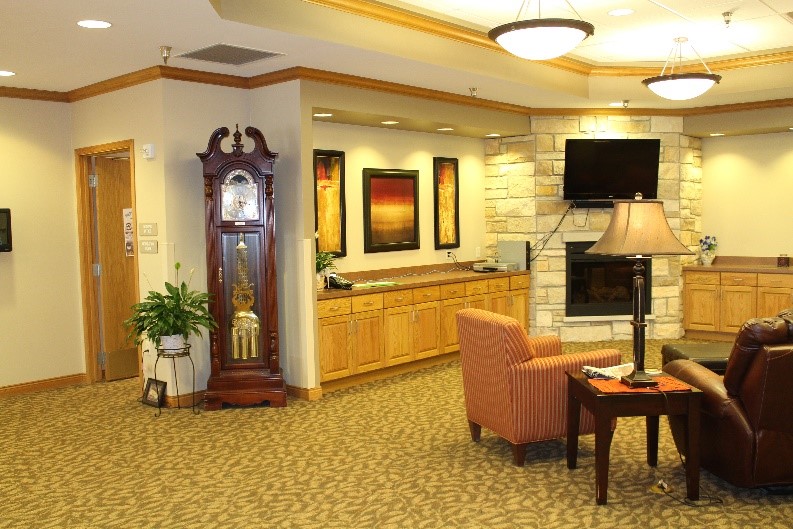
How is Prairie Sunset Home Inc Staffed?

CMS rates PRAIRIE SUNSET HOME INC's staffing level at 5 out of 5 stars, which is much above average compared to other nursing homes. Staff turnover is 25%, compared to the Kansas average of 46%. This relatively stable workforce can support continuity of care.

What Have Inspectors Found at Prairie Sunset Home Inc?

State health inspectors documented 18 deficiencies at PRAIRIE SUNSET HOME INC during 2021 to 2025. These included: 1 that caused actual resident harm, 16 with potential for harm, and 1 minor or isolated issues. Deficiencies causing actual harm indicate documented cases where residents experienced negative health consequences.
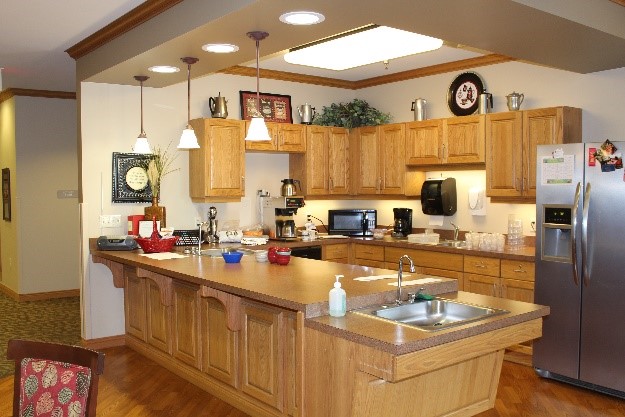
Who Owns and Operates Prairie Sunset Home Inc?

PRAIRIE SUNSET HOME INC is owned by a non-profit organization. Non-profit facilities reinvest revenue into operations rather than distributing to shareholders. The facility operates independently rather than as part of a larger chain. With 43 certified beds and approximately 34 residents (about 79% occupancy), it is a smaller facility located in PRETTY PRAIRIE, Kansas.
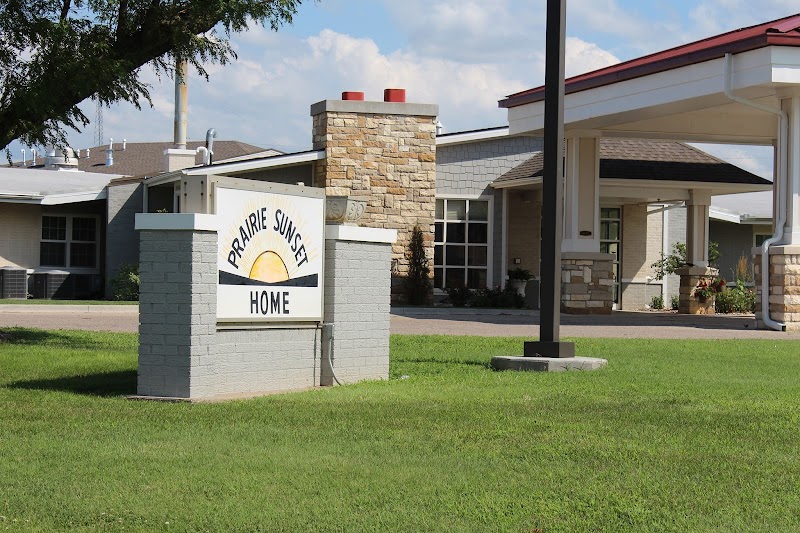
How Does Prairie Sunset Home Inc Compare to Other Kansas Nursing Homes?

Compared to the 100 nursing homes in Kansas, PRAIRIE SUNSET HOME INC's overall rating (5 stars) is above the state average of 2.9, staff turnover (25%) is significantly lower than the state average of 46%, and health inspection rating (4 stars) is above the national benchmark.

What Should Families Ask When Visiting Prairie Sunset Home Inc?

Based on this facility's data, families visiting should ask: "Can I visit during a mealtime to observe dining assistance and food quality?" "How do you handle medical emergencies, and what is your hospital transfer rate?" "Can I speak with family members of current residents about their experience?"

Is Prairie Sunset Home Inc Safe?

Based on CMS inspection data, PRAIRIE SUNSET HOME INC has a clean safety record: no substantiated abuse findings (meaning no confirmed cases of resident harm), no Immediate Jeopardy citations (the most serious violation level indicating risk of serious injury or death), and is not on the Special Focus Facility watch list (a federal program monitoring the lowest-performing 1% of nursing homes). The facility has a 5-star overall rating and ranks #1 of 100 nursing homes in Kansas. While no facility is perfect, families should still ask about staff-to-resident ratios and recent inspection results during their visit.

Do Nurses at Prairie Sunset Home Inc Stick Around?

Staff at PRAIRIE SUNSET HOME INC tend to stick around. With a turnover rate of 25%, the facility is 21 percentage points below the Kansas average of 46%. Low turnover is a positive sign. It means caregivers have time to learn each resident's needs, medications, and personal preferences. Consistent staff also notice subtle changes in a resident's condition more quickly.

Was Prairie Sunset Home Inc Ever Fined?

PRAIRIE SUNSET HOME INC has no federal fines on record. CMS issues fines when nursing homes fail to meet care standards or don't correct problems found during inspections. The absence of fines suggests the facility has either maintained compliance or corrected any issues before penalties were assessed. This is a positive indicator, though families should still review recent inspection reports for the full picture.

Is Prairie Sunset Home Inc on Any Federal Watch List?

PRAIRIE SUNSET HOME INC is not on any federal watch list. The most significant is the Special Focus Facility (SFF) program, which identifies the bottom 1% of nursing homes nationally based on persistent, serious quality problems. Not being on this list means the facility has avoided the pattern of deficiencies that triggers enhanced federal oversight. This is a positive indicator, though families should still review the facility's inspection history directly.