ROCKCASTLE HEALTH AND REHABILITATION CENTER
371 WEST MAIN STREET, BRODHEAD, KY 40409 (606) 758-8711
For profit - Corporation 104 Beds SIGNATURE HEALTHCARE Data: November 2025 1 Immediate Jeopardy citation
Trust Grade
31/100
#181 of 266 in KY
Last Inspection: June 2024

Within standard 12-15 month inspection cycle. Federal law requires annual inspections.

Overview

Rockcastle Health and Rehabilitation Center has received a Trust Grade of F, indicating significant concerns and a poor quality of care. They rank #181 out of 266 nursing homes in Kentucky, placing them in the bottom half statewide, and #2 out of 2 in Rockcastle County, meaning only one local option is worse. While the facility's trend is improving, having reduced critical issues from four in 2024 to one in 2025, staffing remains a concern with a high turnover rate of 62%, significantly above the state average. Specific incidents reported include a resident who suffered two leg fractures due to inadequate supervision during transfers and another resident who was not provided necessary oxygen therapy, revealing serious lapses in care. Additionally, the facility has incurred fines totaling $15,646, which is higher than 78% of Kentucky facilities, suggesting ongoing compliance issues.

Trust Score
F
31/100
In Kentucky
#181/266
Bottom 32%
Safety Record
High Risk
Review needed
Inspections
Getting Better
4 → 1 violations
Staff Stability
⚠ Watch
62% turnover. Above average. Higher turnover means staff may not know residents' routines.
Penalties
✓ Good
$15,646 in fines. Lower than most Kentucky facilities. Relatively clean record.
Skilled Nurses
○ Average
Each resident gets 37 minutes of Registered Nurse (RN) attention daily — about average for Kentucky. RNs are the most trained staff who monitor for health changes.
Violations
⚠ Watch
18 deficiencies on record. Higher than average. Multiple issues found across inspections.
★★☆☆☆
2.0
Overall Rating
★★☆☆☆
2.0
Staff Levels
★★★☆☆
3.0
Care Quality
★★☆☆☆
2.0
Inspection Score
Stable
2024: 4 issues
2025: 1 issues

The Good

  • Full Sprinkler Coverage · Fire safety systems throughout facility
  • No fines on record

Facility shows strength in fire safety.

The Bad

2-Star Overall Rating

Below Kentucky average (2.8)

Below average - review inspection findings carefully

Staff Turnover: 62%

16pts above Kentucky avg (46%)

Frequent staff changes - ask about care continuity

Federal Fines: $15,646

Below median ($33,413)

Minor penalties assessed

Chain: SIGNATURE HEALTHCARE

Part of a multi-facility chain

Ask about local staffing decisions and management

Staff turnover is elevated (62%)

14 points above Kentucky average of 48%

The Ugly 18 deficiencies on record

1 life-threatening 1 actual harm
Aug 2025 1 deficiency
CONCERN (D) 📢 Someone Reported This

A family member, employee, or ombudsman was alarmed enough to file a formal complaint

Potential for Harm - no one hurt, but risky conditions existed

ADL Care (Tag F0677)

Could have caused harm · This affected 1 resident

Based on observation, interview, record review, and facility policy review, the facility failed to provide needed services to maintain good grooming for one (Resident (R9) of four sampled residents re...

Read full inspector narrative →
Based on observation, interview, record review, and facility policy review, the facility failed to provide needed services to maintain good grooming for one (Resident (R9) of four sampled residents reviewed for activities of daily living (ADLs). The facility failed to ensure that R9, who was dependent on staff for assistance with personal hygiene, received the care needed to keep the resident's fingernails trimmed and clean. The findings included: A facility policy titled, Activities of Daily Living (ADLs), reviewed 01/31/2025, indicated, For those residents who are unable to perform their own activities of daily living, the facility will provide the needed assistance for completion of cares. Review of a Resident Face Sheet revealed the facility admitted R9 on 12/27/2024. According to the Resident Face Sheet, R9 had a medical history that included diagnoses of type 2 diabetes mellitus, muscle weakness, osteoarthritis, and cancer. A significant change in status Minimum Data Set (MDS), with an Assessment Reference Date (ARD) of 07/18/2025, revealed R9 had a Brief Interview for Mental Status (BIMS) score of 9/15, which indicated the resident had moderate cognitive impairment. The MDS indicated that the resident had moderate difficulty hearing, moderately impaired vision with the use of corrective lenses, and did not reject care during the assessment's lookback period. Per the MDS, R9 required substantial to maximal assistance from staff for completion of personal hygiene tasks. R9's Care Plan, included a problem statement edited 07/24/2025, that indicated the resident had concerns with ADL functional/rehabilitation potential. Interventions directed staff to assist the resident with ADL care as needed (created 12/30/2024). During an observation on 08/25/2025 at 9:51 AM, R9's fingernails extended at least 1/4 inch beyond the tip of his fingers. During an observation on 08/26/2025 at 2:55 PM, R9 was lying in bed. The resident's nails remained long. Two visitors whom R9 identified as family members were in the room. Interview with the family members revealed the resident's nails could stand trimming and the edges of his fingernails were jagged. The family stated that sometimes they trimmed R9's nails but thought it was the responsibility of the facility to trim the resident's nails. The family added that this time, they were waiting to see if the facility trimmed the resident's nails. During an observation on 08/27/2025 at 1:30 PM, R9's fingernails were still uncut and extended past the tip of his fingers, about 1/4 to 1/2 inch. Certified Nursing Assistant (CNA) 4 was interviewed on 08/27/2025 at 4:32 PM. She stated the CNAs were responsible for clipping and cleaning fingernails on shower days and as needed. CNA4 added that, if the resident had a diagnosis of diabetes, then the CNA told the nurse, and fingernail care was the responsibility of the nurse. Registered Nurse (RN) 5 was interviewed on 08/28/2025 at 11:49 AM. RN5 stated that the CNAs were supposed to look at the residents' nails on shower days and, if needed, trim the nails, unless the resident had diabetes. Per the interview, if the resident had diabetes, the CNAs were to report the need for nail trimming to the nurse, who was then responsible for performing this care as needed. During an observation on 08/29/2025 at 12:55 PM, R9 was lying in bed eating lunch. The resident's nails remained long and needed to be cleaned and trimmed. During a concurrent interview, R9 commented that the staff had not cleaned or trimmed his nails yet.CNA7 was interviewed on 08/29/2025 at 12:58 PM. CNA7, who stated she was not the resident's assigned CNA, observed R9's fingernails and confirmed that they needed to be trimmed and cleaned.Interview on 08/29/2025 at 12:59 PM with CNA9 revealed she was assigned to care for R9. CNA9 stated fingernails were to be cleaned and clipped either during showers or when the nails were noted to be long and dirty. CNA9 stated she had not given R9 a bath since there had been a shower aide on duty. After checking the schedule, she noted that day was not the resident's shower day. CNA9 stated that while she had assisted the resident with incontinence care and oral care, she had not noticed the resident's fingernails, which she indicated needed to be cleaned and clipped.The Director of Nursing (DON) was interviewed on 08/29/2025 at 5:44 PM. The DON stated she expected the staff to keep resident's nails clean and trimmed as the resident allowed. The Administrator was interviewed on 08/29/2025 at 5:53 PM. The Administrator stated he expected residents to be kept neat and tidy as the resident allowed staff to assist.
Jun 2024 4 deficiencies 1 IJ
CRITICAL (J) 📢 Someone Reported This

A family member, employee, or ombudsman was alarmed enough to file a formal complaint

Immediate Jeopardy (IJ) - the most serious Medicare violation

Accident Prevention (Tag F0689)

Someone could have died · This affected 1 resident

**NOTE- TERMS IN BRACKETS HAVE BEEN EDITED TO PROTECT CONFIDENTIALITY** Based on observation, interview, record review and review of the facility's policies, the facility failed to have an effective s...

Read full inspector narrative →
**NOTE- TERMS IN BRACKETS HAVE BEEN EDITED TO PROTECT CONFIDENTIALITY** Based on observation, interview, record review and review of the facility's policies, the facility failed to have an effective system in place to ensure each resident received adequate supervision and assistive devices to protect them from accidents and injury for 2 of twenty sampled residents (R) ( R29 and R41). 1. On 06/25/2024, R41 stated he had fractured his right leg two times since residing at the facility, once in 2020, and again in 2022. Per R41, the first time occurred when he was being transported in his wheelchair to be weighed without the right foot pedal being on the wheelchair. He stated his leg got tired and dropped and was pulled under the wheelchair. The first incident resulted in R41 sustaining a fracture to his right distal femur. The second incident happened during a transfer from his bed to the wheelchair when he was going to a physician's appointment. He stated the two (2) Certified Nurse Aides (CNA) assisting him did not use a gait belt and rushed him during the transfer. He stated as he transferred, the wheelchair brakes were not on and he was only sitting on the edge of the seat and the wheelchair kept going backwards. The resident stated his leg twisted during the incident. The second incident resulted in a right tibial fracture. 2. On 04/05/2023, R29 was transferred from the bed to a shower chair and back to bed after the shower without using a mechanical lift as per the resident's care plan. On 04/10/2023, staff were getting R29 ready for a shower and noticed both of the resident's upper arms had yellow/purple bruising and bruising. A portable X-ray report noted R29 had bilateral (left and right) humeral (upper arm bone) neck fractures. The resident was transferred to the hospital, where the bilateral humeral neck fractures were confirmed. Refer to F656 The facility provided an acceptable Immediate Jeopardy (IJ) Removal Plan on 06/29/2024 at 9:31 AM, alleging removal of the Immediate Jeopardy (IJ) on 04/18/2023, prior to the State Survey Agency's (SSA's) survey and investigation. The SSA validated the facility's IJ Removal Plan, on 06/29/2024 at 4:00 PM, and determined the deficient practice was corrected as alleged on 04/18/2023, prior to the initiation of the investigation. Therefore, the IJ was determined to be Past Immediate Jeopardy. The findings include: Review of the facility's policy titled, Resident Rights, revised 09/15/2023, revealed all residents had the right to be treated with respect and dignity. Continued review revealed the facility was to promote and protect the rights of the residents. Further review revealed resident rights included providing all residents with a manner and environment that promoted maintenance or enhancement of quality of life. Review of the facility's, Certified Nursing Assistant (CNA) Job Description, revised December 2011, revealed the CNA was to perform direct care duties under the supervision of licensed nursing personnel and assist with promoting a compassionate physical and psychological environment for the residents. Continued review of the CNA's performance standards in the following areas, such as Essential Duties and Responsibilities, included the CNA to ambulate and transfer residents, utilizing appropriate assistive devices and body mechanics. 1(a). Review of R41's admission record revealed the facility admitted the resident on 12/18/2017, with diagnoses of acquired absence of left leg above knee, diabetes mellitus with diabetic neuropathy, muscle weakness, and limitation of activities due to disability. Review of R41's Quarterly Minimum Data Set (MDS) Assessment with an Assessment Reference Date (ARD) of 06/26/2020, revealed the facility assessed the resident to have a Brief Interview for Mental Status (BIMS) score of 15 of 15, which indicated intact cognition. Continued review of R41's MDS Assessment revealed the resident's functional status for locomotion on the unit revealed the facility assessed that activity to have not occurred. Per the MDS Assessment review the facility assessed R41's (ADL) support as family and/or non-facility staff provided care 100% of the time over the entire 7-day period. Further review revealed the facility assessed R41's locomotion off the unit for self-performance as the activity occurred once or twice with one-person physical assist (with self-sufficiency once in wheelchair). Review of R41's Care Plan, dated 08/31/2020, revealed the facility added an intervention to place the right foot petal on the wheelchair prior to transportation needs for right leg. Review of R41's Care Plan revealed the facility added a problem for ADL functional status on 02/01/2023, for transfers for the resident to have extensive assist X2 (times two) staff with use of a sliding board. Continued review revealed after the first incident in 2020, the facility added the right foot pedal to the wheelchair at all times intervention. Review of the facility's Event Report dated 08/29/2020, noted by Registered Nurse (RN 5) revealed an incident occurred at 2:45 PM (on that date) involving R41. The resident sustained an injury to the right knee while being transported. Continued review revealed the leg was extended during transportation under the wheelchair. The Certified Nursing Assistant (CNA) had stated the resident was being wheeled down the hall, and resident had been asked to keep the leg up and to let the CNA know if his leg became tired. Further review of the Event Report revealed the CNA said the resident did not say anything but suddenly let the leg fall causing the leg to jerk back under the wheelchair, overextending the right leg. Further review revealed the Physician was contacted and an order was obtained for an x-ray and to add the right leg pedal to the wheelchair. Review of R41's Progress Note dated 08/29/2020 at 4:04 PM, documented by RN 5, revealed awaiting mobile x-ray of right knee. Further review revealed the resident had been given pain medication with effective relief for right leg pain. Review of the mobile x-ray report of R41's right leg dated 08/29/2020 at 7:59 PM, revealed no acute fracture or dislocation seen. However, a small joint effusion and diffuse osteopenia were noted. Review of the Progress Note dated 09/01/2020 at 2:55 PM, revealed R41 had complaints of right knee pain. Continued review revealed the physician was notified and an order for Tramadol (medication for moderate to severe pain) every six hours and an order for a Computed Tomography (CT) scan. Review of the CT imaging report dated 09/08/2020, revealed R41 had an insufficiency fracture of the distal right femur, and recommendations for an x-ray to confirm the results. Continued record review revealed a progress note dated 09/08/2020, documenting R41 was sent to the Emergency Department (ER) for the x-ray to be performed. Review of the hospital x-ray report dated 09/08/2020, revealed R41 had a fracture of the distal right femur meta-diaphysis (shaft portion of the long bone) above the prosthesis with impaction, a 2-centimeter gap between the fracture fragments and medial subluxation (partial dislocation) of the proximal femur. Review of the hospital nursing progress note dated 09/08/2020, revealed the resident was placed in a right knee immobilizer and new medications were prescribed. During interview with R41 on 06/25/2024 at 11:25 AM, the State Survey Agency (SSA) Surveyor asked about the resident's right leg fracture and he stated, Which time? They broke my leg twice. R41 stated the first time the CNA, (whose name started with A), came to get him from the day room on the East Wing to weigh him. He stated his wheelchair would not go through the door to the area where the scale was located due to the anti-tippers (device to keep a wheelchair from tipping over backwards) on his wheelchair. R41 said the CNA proceeded to take him over to the [NAME] Wing to weigh him there. In continued interview, R41 stated after being weighed when the CNA was taking him back to his room his leg became tired and before he could tell the CNA, his leg dropped. He stated when his leg dropped it resulted in the leg being pulled under the wheelchair. During an interview on 06/27/2024 at 4:04 PM, LPN 4 stated CNA3 had informed her that while pushing R41 in the wheelchair, the resident's leg dropped and went backwards under the wheelchair. LPN4 stated she contacted LPN 3, who was the Unit Coordinator at that time, and the resident's representative (RP). LPN4 further stated she could not recall if CNA3 was placed on leave after the incident. During interview with the Director of Nursing (DON) on 06/27/2024 at 4:10 PM, she stated CNA3 was the staff person transporting R#41 during the first incident. The DON stated RN5, who had written the progress note, passed away. She stated no investigation or report was made to the State Survey Agency (SSA) or any other entity due to the fact the facility knew how the incidents involving R41 happened and it had not been a reportable incident. However, later in another interview on 06/29/2024 at 2:50 PM, the DON stated the facility had completed an investigation, but that information was to be in the IJ Removal Plan to be provided to the SSA. Review of CNA3's employee file revealed the facility hired the CNA on 10/11/2019, and had performed a background check and completed an Adult Caregiver Misconduct Registry review with no issues. Further review revealed no documented evidence of education provided or of any reprimands. A telephonic (phone) interview was attempted to contact CNA3 on 06/22/2024 at 9:42 AM. However, she was unsuccessful as the person who answered stated the SSA Surveyor had the wrong number. 1(b). Review of the facility's policy titled, Gait Belts, dated 03/2011 revealed staff providing direct care to residents might use a gait belt during ambulation, transfer, or movement of residents. Further review of the policy revealed all CNA's, licensed nurses and therapists received education related to gait belt use during their schooling related to their licensure or certification. In continued interview on 06/25/2024 at 11:25 AM, R41 stated the second time his leg was broken two male CNAs were transferring him from his bed to the wheelchair as he was going out to a physician's appointment. The resident said with the assistance of two persons he could use a slide board to transfer. R41 stated the two male CNAs who were assisting him were rushing him to transfer that day and did not use a gait belt. He stated during the transfer the one CNA was behind the wheelchair, with the other in front of him and his wheelchair wheels were not locked. Per R41, as he was transferred he was only sitting on the edge of the seat, and the CNA behind him put his arms around R41's chest to try to pull him back, but the wheelchair kept moving. He stated the CNA in front of him was trying to hold him (R41) by his wrists to get him back onto the wheelchair, and his leg twisted somehow during the incident. Review of R41's Progress Note, dated 04/22/2022 2:42 PM, documented by LPN 8 revealed the resident returned from an appointment with complaints of discomfort to the right knee. Continued review revealed R41 stated he pivoted wrong this am when getting into w/c. MD notified, awaiting orders. Review of the physician's order, dated 04/22/2022, revealed at order to send R41 to the hospital for evaluation of discomfort to the right knee. Review of the Hospital Discharge summary, dated [DATE] revealed R41 arrived at the ED on 04/22/2022 at 10:22 PM, and was discharged back to the facility on [DATE] at 12:35 AM. Per review of the Summary, the mechanism of trauma was noted as a fall or jump, and under the comment section, Patient arrived from facility via Emergency Medical System (EMS) with chief complaint of no pulse in right foot and blue toes on right foot per facility nurse. Continued review revealed patient (R41) stated his right foot has had purple appearance with petechiae on right great toe like this for about 1 week. Further review revealed patient stated he was going to an appointment this morning from the nursing home, and the aides who had been assisting him transferred him to the wheelchair too quickly and he went backwards. Review of the hospital x-ray report dated 04/22/2022, revealed a fracture of R41's anterior right tibial (bone in the lower leg) tubercle measuring 2 ½ by 0.7 centimeters. Additional review of the Hospital Discharge summary dated [DATE], revealed the final diagnosis for R41 was a displaced fracture of the right tibial tuberosity. Review of the Interdisciplinary Team (IDT) note dated 04/23/2022 at 3:11 PM, revealed the IDT met to review R41's plan of care. Per review of the IDT note, R41 was transferred to the wheelchair yesterday via two person assist with a gait belt and transfer board to go out to an appointment. Continued review revealed when R41 returned from the appointment, he stated his knee was hurting and he thought something was wrong. Review revealed R41 stated when the two CNA's transferred him yesterday, his leg caught on the floor and twisted. Per review of the IDT note, R41 had no initial complaints of pain; however, the knee was noted to be swollen and the resident later complained of pain in the knee. Review revealed R41 was sent to the Emergency Department ( ED) for evaluation, and treatment, and was diagnosed with right tibial fracture. The review of the IDT note revealed Physical Therapy (PT)/Occupational Therapy (OT) were to evaluate and treat. Additional review revealed care plan interventions were added for a pain assessment every four hours, and new pain medications. Review of the facility's Event Report dated 04/23/2022 at 3:09 PM, completed by prior DON, revealed an incident occurred on 04/22/2022 at 10:06 AM, in which R41 sustained a right tibia fracture during transfer when preparing to go to an appointment. Continued review revealed R41 was sent to the hospital for evaluation. Review of CNA1's witness statement located in the facility's investigation documentation, dated 05/03/2022, revealed the CNA noted, We were transferring the resident very gently and slowly because he likes to move slowly with transfers. Then just out of nowhere during the transfer he just dropped his weight. We didn't do anything to him, he just dropped down like he was trying too purposely. Review of CNA2's witness statement, dated 05/05/2022 revealed, During a transfer of a man, I was helping CNA 1 [sic]. We were just transferring the guy and in the middle of it he kind of jerks and sits down in the air. We kept ahold of him though. He just out of nowhere tried to sit down, but we were doing good and had a good transfer. . Review of the employee file for CNA1 revealed his date of hire was 09/14/2021 as a CNA. Further review revealed the facility performed a background check and a check of the Adult Caregiver Misconduct Registry with no issues. Review of the employee file for CNA2 revealed he was hired as a Hospitality Aide on 12/01/2020, and on 03/07/2022, he became a Personal Care Assistant (PCA). Further review revealed the facility performed a background check and a check of the Adult Caregiver Misconduct Registry with no issues. Review of the facility's Personal Care Aide (PCA) job description, undated, revealed the PCA could assist with transfers from bed to chair or wheelchair with use of a gait belt, for one person standby assist/transfer. Further review revealed for anything beyond a one-person transfer, the PCA might only assist and must be directed by a certified/licensed staff member. During an telephonic (phone) interview on 06/27/2024 at 9:20 AM, with CNA 1 he stated that he did recall transferring R41 from the bed to wheelchair using a slide board. CNA 1 stated, I gave my report to them during their investigation He stated he had not used a gait belt during the transfer because I didn't have to, it wasn't called for. CNA 1 further stated he was not aware R41's leg was injured initially, and then stated, I need to hang up now and ended the call. A phone attempt was made to contact CNA 2 on 06/27/2024 at 9:29 AM. However, it was unsuccessful as the number provided by the facility was a wrong number. No other number was provided by the facility. During an interview on 06/27/2024 at 10:30 AM with the Director of Rehabilitation (DOR), she stated she was not at the facility during the first incident in 2020, but did recall the 04/22/2022 incident. She stated R41 was a slide board transfer with minimal assistance from 01/22/2022 through 04/22/2022. The DOR stated after the incident on 04/22/2022, and returning from the hospital stay R41 had been a (mechanical) lift transfer for a short time. She stated when Physician's Orders were received for R41 to be weight bearing on the right leg, Physical Therapy (PT) saw the resident from 05/31/2022 through 09/15/2022. According to the DOR training/education was provided to all staff in 05/2022 that consisted of transfer training. The DOR further stated gait belts were usually not specified on the resident's care plan, but gait belts were a standard of care when transferring residents. 3. Review of the facility's policy titled, Mechanical Lifts, dated 06/01/2015, and revised on 12/07/2023, revealed the policy was regarding safely transferring residents with mobility limitations using a mechanical lift to prevent falls and injuries from transfers. Continued policy review revealed provisions for general guidelines and procedural steps, including staff being alert for any resident requiring or needing a mechanical lift device upon admission and throughout the resident's stay for transfer needs. Further review of the policy revealed each certified nurse aide, licensed nurse, or licensed therapist utilizing a mechanical lift was to receive training on the proper use of the mechanicals as part of their schooling, during which they received certification or licensure. Review of the facility's guidelines and procedures revealed the mandatory training module titled, Day 1: New Hire Orientation: All Aides Competency-Full Body Lift Bed to Wheelchair undated, revealed Guideline #1, which instructed all aides to check the care plan and make sure to transfer a resident in accordance with the care plan. Review of R29's electronic medical record (EMR) Face Sheet revealed the facility admitted the resident on 02/29/2016, with diagnoses to include dementia, adult failure to thrive, multiple sclerosis (MS), age-related physical debility and osteoporosis without current pathological fracture. Review of R29's Quarterly Minimum Data Set (MDS) Assessment with an Assessment Reference Date (ARD) of 04/14/2023, revealed the facility assessed the resident as being unable to interview and as rarely or never understood. Continued review of the MDS Assessment revealed the facility also assessed R29 as totally dependent on two staff for transfers. Review of R29's Comprehensive Care Plan (CCP) dated 12/21/2022, revealed the facility developed a focus on Activities of Daily Living (ADLs) Functional Status/Rehabilitation Potential Profile Care Guide for the resident. Continued review revealed for transfers the interventions included the resident requiring total dependent care from two staff assistants, using a mechanical lift, staff to use the green lift sling. Review of the Mechanical Lift Evaluation dated 12/21/2022, revealed the facility assessed R29 for the correct sling size to use: the green lift sling with mechanical lift, referenced in the care plan for staff awareness. Review of the Nurse Aide Care Plan found in R29's EMR under the Reports tab for the resident's ADL status on the Plan of Care (POC), specific to transfers revealed the resident required total care with two (2) staff assist, a mechanical lift with the use of a green lift sling for transfers. Further review revealed that intervention was noted and tagged to the Kardex (Nurse Aide Care Plan) from R29's comprehensive care plan intervention initiated on 12/21/2022. Review of the facility's Stop and Watch documentation revealed a change in R29's skin color or condition, dated 04/07/2023 at 9:54 PM, completed by Registered Nurse (RN) 3. Further review revealed the resident's skin color was lighter on the left arm/hand and very weak. Review of R29's Progress Note, dated 04/07/2023 at 11:37 PM, completed by RN3, revealed CNA 7 reported the resident's left arm was weaker. Continued review revealed RN 3 observed R29 and noted it appeared the resident was not using the left arm. In addition, review of the Note revealed RN3 notified the physician and received an order for Occupational Therapy (OT) to evaluate and treat R29. Review of R29's Progress Note, dated 04/10/2023 at noon (late entry), revealed the nurse (RN4) was told by staff that R29 was in pain. Continued review revealed x-rays were ordered for R29's shoulders, and the results were pending. Further review revealed the nurse gave R29 650 mg of acetaminophen for pain with some relief noted. Review of the facility's Initial-Self-Reported Incident Form, dated 04/10/2023 at 7:38 AM, completed by the former Administrator, revealed on that date stakeholder (CNA7) observed at approximately 6:00 AM-7:00 AM, during R29's bathing, bruising of unknown origin to the resident's bilateral upper extremities (BUE) and left clavicle. Continued review of the Form revealed nurses completed a full skin assessment and a pain assessment and identified no further issues. Review further revealed immediate notification was made to the physician, resident's responsible party (RP), State Agencies and an investigation was initiated. Review of RN3's Witness Statement dated 04/10/2023, located in the facility's investigation documentation, revealed the Nurse Aide (CNA7) called the RN to the shower room on 04/10/2023 at approximately 5:00 AM. RN3 noted she observed R29 in the shower chair and observed discoloration to the resident's bilateral upper arms. Continued review revealed RN3 documented on 04/10/2023 at 5:08 AM, she notified the Assistant Director of Nursing (ADON) of her observation of R29, and the ADON stated she was on her way to the facility to assess the resident. Per review of RN3's Witness Statement, at approximately 6:49 AM, she received a physician's order for bilateral shoulder x-rays related to her observation and assessment of R29's shoulders which were swollen. Further review revealed RN3 also noted she left a message with R29's RP to call the facility. Additional review revealed after R29's shower, CNA7 and CNA9 transferred the resident back to bed using a mechanical lift, as ordered, and a head-to-toe assessment was completed by the ADON and an investigation initiated. Review of CNA7's Witness Statement, dated 04/10/2023, located in the facility's investigation revealed she cared for R29 on Friday, 04/07/2023, Saturday, 04/08/2023, and Sunday, 04/09/2023. Continued review revealed on Friday night (04/07/2023), CNS7 noticed R29's left arm and hand were significantly weaker; therefore, she filled out a Stop and Watch with the nurse. Per review of the witness statement, CNA7 noted she did not notice any skin discoloration, bruising, or swelling, nor had the resident exhibited any signs of pain. Per review of the Witness Statement, she cared for R29 on Saturday (04/08/2023), and did not notice anything out of the resident's baseline. Further review of the Witness Statement, revealed on Monday morning, (prior to the end of her shift) when she took R29 to the shower room to bathe the resident she observed bruises on both R29's arms above the bends of her armpits. In addition, she stated she also noticed R29's shoulders were swollen, and the resident cried out in pain, so she immediately notified the nurse. Review of CNA4's Witness Statement, dated 04/12/2023, located in the facility's investigation revealed the CNA reported having been asked to assist CNA8 in transferring R29 for the shower task to be completed. Continued review of the Witness Statement revealed CNA4 reported assisting R29 to sit on the side of the bed and then completed a manual (without the use of the mechanical lift) transfer. Further review revealed following R29's shower, CNA4 noted he and CNA8 utilized the (mechanical) lift to assist in getting the resident back to bed. Review of CNA8's Witness Statement dated 04/14/2023, revealed she had been assigned to shower R29 on 04/05/2023, which she performed closer to the end of her shift. Continued review of the Witness Statement revealed CNA4 came to assist her with R29's transfer from the bed and CNA4 sat the resident up on the side of the bed and performed a manual transfer, without using the mechanical lift. Further review revealed CNA8 reported she showered R29, and when she was finished, CNA4 helped the resident back to bed, doing another manual transfer. Review of the facility's Final Report-Incident Summary dated 04/15/2023, revealed on 04/10/2023, between 5:30 AM and 6:00 AM, CNA (7) was getting R29 ready for a shower and noticed both upper arms had yellow/purple bruising and bruising around the clavicle. Continued review revealed a portable x-ray revealed left and right humeral neck fractures, and R29 was sent to the hospital, where they confirmed bilateral humeral neck fractures. Further review revealed R29 was sent back to the facility with a sling and to continue on the pain medications. Additional review revealed the Administrator reported the injury of unknown origin to all State Agencies and parties timely. Review of the facility's Final Report-Fracture Investigation dated 04/15/2023 revealed that on 04/05/2023, CNA8 requested help to get R29 up with the lift, and a CNA (CNA 4) assisted CNA 8. Per review, although the lift was in the room, CNA 4 manually lifted R29 from the bed to the shower chair and returned the resident to the bed after the shower the same way. Contiuned review revealed the outcome of the facility's fracture investigation revealed the fractures occurred from the actions performed by CNA4. Additionally, R29 was not gotten up any other time until 04/10/2023 when staff observed the bilateral bruising to upper arms and clavicle. Review of the facility's Final Report-Conclusion, dated 04/15/2023, revealed the facility determined R29's fractures were caused when she was moved manually and not with the mechanical lift as required. Per review, during CNA 4's interview, he acknowledged he moved R29 manually and had not used the mechanical lift. Continued review revealed CNA4 was suspended initially, but terminated after that based on his personal decision to move R29 manually and not follow the resident's care plan. In addition, however, the facility acknowledged staff (CNA4) did not follow the care plan related to transfers caused R29's fractures. Review of R29's facility portable Radiology Report, dated 04/10/2023 at 6:32 PM, completed on the resident's left and right shoulder revealed Recent Left and Right Humeral Neck Fracture. Further review of R29's Progress Note dated 04/10/2023 at 7:36 PM, completed by Licensed Practical Nurse #5 (LPN5), revealed the x-ray results of the left and right shoulders were called to the Advanced Practice Registered Nurse Practitioner (APRN) by the dayshift nurse at approximately 7:00 PM. Further review revealed the results reported to the APRN showed recent left and right humeral neck fractures. Additional review revealed an order was received to send R29 to the emergency room (ER) for evaluation and treatment and the ADON and RP were notified. Review of R29's Medical Decision Making/Emergency Department Course (MDM/ED) documentation dated 04/10/2023 at 8:24 PM, revealed the ER Physician assessed the resident and found scattered bruising to the proximal (point closer to the point of attachment) medial (center of the body) aspect of the bilateral upper arms which appeared yellowish/purple. Continued review revealed the ER Physician noted a similar yellow/purple bruise was noted on R29's left clavicle/lateral neck region. Review of the MDM/ED course also revealed the ER Physician considered neglect or abuse within the facility as a reason for R29's fractures, as the resident was bedbound. Further review revealed the ED nursing staff filed an Adult Protective Service (APS) report related to R29's bilateral humeral fractures with no reported trauma/injury. Review of the hospital Radiology Impression results for R29 revealed x-ray imaging of the resident's bilateral shoulders revealed a comminuted (broken in two or more areas) left humeral head/neck fracture and comminuted mildly displaced right humeral head/neck fracture, with no shoulder dislocation. Review of R29's Emergency Department Departure dated 04/10/2023 at 8:30 PM, revealed the resident was discharged back to the nursing home facility with instructions to continue taking the prescription of Norco (narcotic pain medication) 7.5/325 mg (milligram) as prescribed by the provider; wear the bilateral slings for comfort and supportive care. Review of the Physician Progress Note, dated 04/11/2023, for R29 revealed the resident was seen for a follow-up assessment after an ER visit and resident's condition reported by the nurse and Interdisciplinary Team (IDT). Per review, the Physician assessment revealed R29 was reported to have increased weakness starting on Friday (04/07/2023), and a stop and watch was put into place by the nurse, and an OT evaluation was ordered. Continued review revealed on Monday (04/10/2023), the nurse notified the physician before the physician arrived at the facility and reported R29 had swelling to the bilateral upper extremities (BUE), bruising, and appeared to be in pain. Review of the Note revealed an x-ray was ordered at that time and completed later that evening with the physician notified of the results showing a right humeral neck fracture. The physician documented orders were given to send R29 to the ER for further evaluation, and the resident returned from the ER evaluation with orders for a sling to the bilateral arms with a neck strap in place when the resident was sitting up related to bilateral humeral neck fractures. Further review revealed no surgical intervention was recommended. During a phone interview with RN3 on 06/29/2024 at 10:20 AM, she stated R29 was nonverbal and required complete total care related to her debility, chronic diagnoses and comorbidities; therefore, the resident required a mechanical lift with all transfers. RN3 stated all staff, including CNA6, agency staff, and newly hired staff, were all educated and aware of R29's requirement for a mechanical lift with transfers. She stated staff, especially nursing staff including CNAs, knew to reference the care plan for a resident's ADL plan of care, including their transfer interventions. RN3 emphasized the importance of referencing the care plan because it was the resident's overall assessment of what they required, and stated more importantly, it provided staff direction to ensure the resident's safety and not cause harm. In continued interview on 06/29/2024 at 10:20 AM, RN3 stated she had worked the weekend shift starting on Friday evening (04/07/2023) through Monday morning (04/10/2023). She stated on that Friday night, at approximately 9:30 PM, CNA7 informed her that R29's left arm/hand appeared significantly weaker. RN3 stated after completing her assessment of R29, she filled out a Stop and Watch form. RN3 stated she did not notice any bruising, or swelling, and the resident was not exhibiting [TRUNCATED]
SERIOUS (G)

Actual Harm - a resident was hurt due to facility failures

Comprehensive Care Plan (Tag F0656)

A resident was harmed · This affected 1 resident

**NOTE- TERMS IN BRACKETS HAVE BEEN EDITED TO PROTECT CONFIDENTIALITY** 2. Review of R242's face sheet revealed the facility admitted the resident on 06/18/2024, with diagnoses of type 2 diabetes mell...

Read full inspector narrative →
**NOTE- TERMS IN BRACKETS HAVE BEEN EDITED TO PROTECT CONFIDENTIALITY** 2. Review of R242's face sheet revealed the facility admitted the resident on 06/18/2024, with diagnoses of type 2 diabetes mellitus, hypoglycemia, hypothyroidism, and hypertension. Review of R242's admission History and Physical, dated 06/20/2024, revealed the resident had an additional diagnosis of chronic obstructive pulmonary disease (COPD). Review of R242's Physician Orders dated June 19, 2024, revealed R242 was to be on oxygen therapy at 2 liters per minute (LPM) continuously via nasal cannula. Review of R242's admission Minimum Data Set (MDS) Assessment with an ARD of 06/25/2024, revealed the facility assessed the resident to have a Brief Interview for Mental Status (BIMS) score of 14 out of 15, indicating intact cognition. Continued review of the admission MDS Assessment revealed oxygen was not listed under Section O for special treatments, procedures, and programs. Review of R242's Comprehensive Care Plan, dated 06/19/2024, revealed the facility had not developed a respiratory care plan for R242, nor had the resident's oxygen usage and oxygen ancillary orders been placed on the care plan. Observation of R242 on 06/25/2024 at 2:40 PM, on 06/26/2024 at 9:42 AM, on 06/27/2024 at 3:16 PM, and on 06/28/2024 at 2:48 PM, revealed the resident wearing the ordered oxygen via nasal cannula, and her oxygen concentrator was set on 2 liters. In interview with R242 on 06/25/2024 at 2:40 PM, she stated she had been on oxygen therapy for about three years now and had been on home oxygen as well. In interview with the Director of Nursing (DON) on 06/27/2024 at 2:47 PM, she stated she expected residents' oxygen orders to be placed on their care plans. The DON stated any physician order should be noted on the care plans. She stated she was not aware of any residents who had continuous oxygen therapy who did not have a care plan for it. The DON stated new admissions were discussed in the next clinical meeting and the clinical team reviewed admission orders, which included oxygen therapy orders. In interview with the Administrator on 06/28/2024 at 10:43 AM, he stated he attended the daily morning meetings, but did not develop or implement care plans for residents. The Administrator stated he expected all oxygen orders to be placed on the resident's care plan and any changes should be updated on the care plans. Based on observation, interview, record review, and review of the facility's policies, the facility failed to develop and implement a comprehensive person-centered care plan that included measurable objectives and timeframe's to meet a resident's medical, nursing, mental and psychosocial needs for two of 20 sampled residents (R), (R29 and R242 ) 1. R29's Comprehensive Care Plan, revised 12/21/2022, revealed an intervention to utilize a mechanical lift with two (2) staff members for transfers. However, on 04/05/2023, Certified Nursing Assistant (CNA) 4 and CNA 8, transferred R29 from the bed to the wheelchair without using the mechanical lift as per the care plan, and on 04/10/2023, staff observed both the resident's upper arms had yellow/purple bruising and bruising around the clavicle. A portable x-ray was ordered and performed, and noted R29 had bilateral (left and right) humeral (upper arm bone) neck fractures. R29 was transferred to the hospital, where bilateral humeral neck fractures were diagnosed. 2. Review of R242's Comprehensive Care Plan, dated 06/19/2024, revealed the facility failed to develop a respiratory care plan for R242, which included interventions for the resident's oxygen usage. Refer to F689 The findings include: Review of the facility's policy titled, Comprehensive Care Plans revised 02/09/2024, revealed the facility was to develop and implement a comprehensive, person-centered care plan for each resident. Continued review revealed the comprehensive, person-centered care plan was to include measurable objectives and timetables to meet the resident's medical, nursing, mental, and psychosocial needs based on the comprehensive assessment of a thorough evaluation which included the Resident Assessment Instrument (RAI) and Minimum Data Set (MDS) Assessment. Per review of the policy, identified problem areas were to be incorporated into the care plan, and assessments of residents were to be ongoing. Further review revealed the care plan interventions were to be derived from thoroughly analyzing the information gathered in the comprehensive assessment. 1. Review of R29's electronic medical record (EMR) Face Sheet revealed the facility admitted the resident on 02/29/2016, with diagnoses of adult failure to thrive, multiple sclerosis (MS), age-related physical debility, osteoporosis without current pathological fracture and dementia. Review of the Quarterly Minimum Data Set (MDS) Assessment with the Assessment Reference Date (ARD) of 04/14/2023, revealed the facility assessed R29 as being rarely or never understood and was unable to be interviewed. Further review revealed the facility also assessed R29 as totally dependent and to require maximal assistance of two (2) for transfers. Review of the Comprehensive Care Plan (CCP), dated 12/21/2022, for R29 revealed the facility developed a focus for Activities of Daily Living (ADLs) Functional Status/Rehabilitation Potential Profile Care Guide with an intervention to use a mechanical lift, with the green lift sling for the resident's transfers. Review of R29's Nurse Aide Care Plan located in the electronic medical record (EMR) under the Reports tab revealed the resident's ADL status Plan of Care (POC) specific to transfers noting the resident required total care of two (2) staff with use of a mechanical lift and the green lift sling. Review of the Nurse Aide [NAME] (a quick reference for nursing staff) revealed the intervention for the mechanical lift and green lift sling were noted and tagged to it from R29's care plan intervention initiated on 12/21/2022. Review of the facility's Initial-Self-Reported Incident Form, dated 04/10/2023 at 7:38 AM, completed by the former Administrator, revealed a CNA observed R29 to have bruising of unknown origin on 04/10/2023. Continued review revealed the bruising of unknown origin was to R29's bilateral upper extremities (BUE) and left clavicle. Review of CNA7's Witness Statement, dated 04/10/2023, located in the facility's investigation revealed she cared for R29 on 04/07/2023, 04/08/2023, and 04/09/2023. Continued review revealed on Friday night (04/07/2023), CNA7 noticed R29's left arm/hand was significantly weaker. Per review, CNA7 cared for R29 on Saturday and again on Sunday night. Further review revealed when she took R29 to the shower room on Monday morning (prior to the end of her shift) she noticed bruises on both the resident's arms above the bends of her armpits. Addition review revealed CNA7 also noticed R29's shoulders were swollen and the resident cried out in pain, so she immediately notified the nurse. Review of CNA4's Witness Statement, dated 04/12/2023, located in the facility's investigation revealed the CNA was asked to assist CNA8 in transferring R29 for the resident's shower. Continued review revealed CNA4 reported assisting R29 to sit up on the side of the bed and then completed a manual transfer (of the resident). Review further revealed after R29's shower, CNA4 and CNA utilized the (mechanical) lift to assist the resident back to bed. Review of CNA8's Witness Statement dated 04/14/2023, located in the facility's investigation revealed CNA4 came to assist her with the transfer. CNA8 indicated CNA4 sat R29 up on the side of the bed and then performed a manual transfer, without using the mechanical lift (as per the resident's care plan). CNA8 further stated she showered R29, and when she was finished, CNA4 helped R29 back to bed, performing another manual transfer of the resident. Review of R29's Progress Note, dated 04/10/2023 at 12:00 PM (late entry), revealed x-rays were ordered of R29's shoulders, and (the facility was) awaiting results. Review of the facility's portable Radiology Report, dated 04/10/2023 at 6:32 PM, of R29's left and right shoulder revealed a Left and Right Humeral Neck Fracture. Review of R29's Progress Note dated 04/10/2023 at 7:36 PM, completed by Licensed Practical Nurse (LPN) 5, revealed R29's (portable) x-ray results showing left and right humeral neck fractures were called to the Advanced Practice Registered Nurse (APRN) at approximately 7:00 PM. Further review of the Note revealed LPN5 received an order to send R29 to the emergency room (ER) for evaluation and treatment. Review of R29's hospital documentation revealed Radiology Impression results for x-ray imaging of the resident's bilateral shoulders which showed a comminuted (fragmented) left humeral head/neck fracture and comminuted mildly displaced right humeral head/neck fracture, with no shoulder dislocation. Continued review of R29's hospital documentation revealed Emergency Department Departure documentation dated 04/10/2023 at 8:30 PM, which noted the resident was discharged back to the facility with instructions to continue the prescription of pain medication as prescribed by the provider, and to wear the bilateral slings for comfort. Review of the facility's Final Report-Fracture Investigation documentation dated 04/15/2023 revealed on 04/05/2023, CNA8 requested help to get R29 up with the mechanical lift, and CNA4 assisted. However, even though there was a lift in R29's room, CNA4 performed a manual lift of the resident from the bed to the shower chair. Continued review revealed CNA4 also performed a manual lift of R29 upon return to the resident's room to assist her back to bed. Further review revealed the outcome of the facility's fracture investigation revealed R29's fractures occurred from CNA4's actions (of performing a manual lift). Review of the facility's Final Report-Conclusion, documentation dated 04/15/2023, revealed the facility determined R29's fractures were caused when she was moved manually and not with the mechanical lift (as per her care plan). Per review, during CNA4's interview, he acknowledged he moved R29 manually and had not used a lift (as per the resident's care plan). Additional review revealed CNA4 was suspended initially but terminated based on his personal decision to move R29 manually and not follow the resident's care plan. Review further revealed the facility acknowledged staff (CNA 4) had not followed the resident's care plan related to transfers which caused R29's fractures. During a telephonic (phone) interview with Registered Nurse (RN) 3 on 06/29/2024 at 10:20 AM, she stated R29 was nonverbal, and required complete and total care related to her debility and comorbidities. She stated R29 was care planned for and required the use of a mechanical lift with all transfers. She stated all staff, including CNA4, newly hired and agency staff, had been educated and were aware of R29's care plan requirement for the use of a mechanical lift for transfers. RN3 stated staff, especially nurses and CNAs, knew to reference residents' care plans for their ADL plan of care, which included the transfer interventions. She stated the care plan was important because it was the resident's overall assessment of the care they required, more importantly, it provided staff direction on how to ensure a resident's safety and not cause harm. During an interview with Restorative Nurse/LPN 4 on 06/29/2024 at 11:00 AM, she stated the facility's current Leadership/Management was very involved with resident care and safety to ensure staff followed residents' care plans. LPN 4 stated staff were to be routinely monitored, continuously re-educated, and the importance of care plan interventions were reinforced. She said it was a must for all staff to reference and abide by residents' care plans to ensure the residents were safe and cared for appropriately. LPN4 further stated CNA4 knew R29 was a total mechanical lift and knew the resident was care planned for the lift. She also stated CNA4 had been trained/educated and knew better. In interview on 06/29/2024 at 11:28 AM, LPN 6 stated R29 required use of a mechanical lift for transfers as she was total care with all ADLs and was care planned for the lift. LPN 6 stated nursing assessments were performed to ensure residents' care plans were accurate and updated related to their needs and transfer requirements. She said management ensured staff were trained and educated to follow the residents' care plan interventions, and indicated harm could occur easily and quickly if the care plan was not followed. In interview on 06/29/2024 at 11:46 AM, Unit Manager (UM)/LPN7 stated R29 required total assistance with all ADLs and care plan interventions guided staff on how to provide proper care for the resident and ensure her safety. She stated staff,, including CNA4 were trained upon hire, re-educated, and provided constant communication of any new and/or updated care plan interventions for residents. UM/LPN7 stated that all new employees were educated with emphasis on residents' care plans, and therefore, she felt CNA4 had been trained/educated and was fully aware that R29 required a mechanical lift for all transfers (as per the care plan). During an interview with a former SDC on 06/29/2024 at 9:05 AM, she stated she had been very involved with the investigation process of the incident involving R29, regarding CNA4 not using a mechanical lift with the transfer of the resident, as care planned. She stated CNA4 knew the facility's process and was very aware that referencing the resident's care plan was a must to ensure resident safety. In interview on 06/29/2024 at 1:50 PM, the Director of Nursing (DON) stated she had actively been involved in the facility's investigation of the incident involving R29. She stated the facility's root cause analysis (RCA) determined R29's fractures were due to CNA4's failure to use the mechanical lift as R29 had been care planned. The DON stated CNA4's actions went against facility policy and procedure and was not tolerated so, CNA4 was terminated. In interview on 06/29/2024 at 2:35 PM, the current Administrator stated resident safety, transfers, ensuring the care plan was followed, and accidents/hazards were discussed at every meeting, to include the morning meeting. The Administrator stated not following the residents' care plans was not an exception and was not tolerated. In interview on 06/30/2024 at 9:55 AM, the Medical Director stated he was actively involved with the facility and was made aware of the incident involving R29. The Medical Director stated he was informed the CNA had not followed the resident's care plan. He further stated he expected staff to provide for the safety and well-being of the facility residents and follow their care plans.
CONCERN (D)

Potential for Harm - no one hurt, but risky conditions existed

Safe Environment (Tag F0584)

Could have caused harm · This affected 1 resident

**NOTE- TERMS IN BRACKETS HAVE BEEN EDITED TO PROTECT CONFIDENTIALITY** Based on observation, interview, and facility policy review, the facility failed to provide a safe, clean, comfortable, and home...

Read full inspector narrative →
**NOTE- TERMS IN BRACKETS HAVE BEEN EDITED TO PROTECT CONFIDENTIALITY** Based on observation, interview, and facility policy review, the facility failed to provide a safe, clean, comfortable, and homelike environment. The findings include: Review of the facility's policy titled, Safe Environment Policy, effective 01/13/2021, revealed the facility was to ensure plant operations were provided daily to maintain a safe, comfortable, and clean environment for its residents. Observation during the initial tour of the facility on 06/25/2024 at 9:11 AM, revealed the flooring at the entrance to the East Wing had a yellow/black strip adhered to the floor, which had become loose and was pulled up with cracks around it. Observation during the initial tour of the facility on 06/25/2024 at 9:46 AM, revealed the flooring at the entrance to the [NAME] Wing had a yellow/black strip adhered to the floor, which also had become loose and was pulled up with cracks around it. Observation of room [ROOM NUMBER] on 06/25/2024 at 11:03 AM, revealed the sink in the room had rubber bands around the hot water knob to turn the knob off. Continued observation revealed water was observed running down into the sink. In interview with Resident #45 (R45) on 06/25/2024 at 11:03 AM, he stated he had to use the rubber bands in order to turn off the hot water in his sink. R45 stated the rubber bands did not work as you can see the water is still running into the sink. In continued interview with R45, he stated the maintenance man had been in his room quite a few times but had not been able to fix the problem. R45 further stated having to use the rubber bands did not feel homelike to him. In interview with the Maintenance Assistant (MA) person on 06/25/2024 at 2:36 PM, he stated the fall hazard tape (the yellow/black strip on the floor at the entrance to the East and [NAME] Wings) had been placed on the flooring due to there being no threshold put down when the flooring was placed in the facility. The MA person stated with no threshold being placed, the flooring would rise up which created a fall hazard, therefore, the fall hazard tape was placed as a safety precaution. He stated he walked over the tape about twenty times a day and he had not noticed the tape had become loose and pulled up. The MA further stated the current condition of the fall hazard tape created a fall hazard, for any resident, staff, or visitor, which could result in falls with injuries. In interview with the Director of Nursing (DON) on 06/27/2024 at 2:47 PM, she stated she expected all residents to have a safe, clean, comfortable, and homelike environment. The DON stated R45 would, at times, run staff out of the room when they went into his room to look at the sink. She acknowledged any refusal should be documented in R45's chart; however, there was no documentation about him refusing to let maintenance staff work on the sink. The DON stated she expected any maintenance work orders to be completed, and any issues to be discussed in the daily morning meeting with all the department heads. She stated the fall hazard tape (on the floor at the entrance to the east and west wings), which had become loose, was a fall risk to anyone walking over it. The DON further stated the risk of someone falling (over the fall hazard tape) could be an injury, such as a broken bone. In interview with the Administrator on 06/28/2024 at 10:43 AM, he stated he made rounds daily and looked at the building during those rounds. The Administrator stated the resident's room should be homelike and everything in the room should be in good condition. He stated he was not aware of any work orders regarding the flooring (with the loose fall hazard tape); however, he was aware of the rubber band situation in room [ROOM NUMBER]. The Administrator stated R45 would not let the maintenance men work on the sink and he had ran them out of his room on multiple occasions. He stated he expected any maintenance issues to be fixed as soon as possible and he expected staff to notify the appropriate department whenever there was an issue in the facility. The Administrator stated the flooring at the entrances to both the East and [NAME] wings was a potential fall hazard, and the MA was working on getting the flooring fixed.
CONCERN (D)

Potential for Harm - no one hurt, but risky conditions existed

Respiratory Care (Tag F0695)

Could have caused harm · This affected 1 resident

**NOTE- TERMS IN BRACKETS HAVE BEEN EDITED TO PROTECT CONFIDENTIALITY** Based on observation, interview, record review, and facility policy review, the facility failed to ensure a resident who needed ...

Read full inspector narrative →
**NOTE- TERMS IN BRACKETS HAVE BEEN EDITED TO PROTECT CONFIDENTIALITY** Based on observation, interview, record review, and facility policy review, the facility failed to ensure a resident who needed respiratory care was provided such care, consistent with professional standards of practice for one of two residents (Resident 242). The findings include: Review of the facility's policy titled, Oxygen Administration Policy, revised 05/30/2024, revealed oxygen therapy was to be administered as ordered by a physician. Review of the facility's policy titled, Comprehensive Care Plans, revised 02/09/2024, revealed the facility was to develop and implement a comprehensive person-centered care plan (CCP) for each resident. Per review the care plan was to include measurable objectives and time frames to meet a resident's medical, nursing, mental, and psychosocial needs as identified on the comprehensive assessment. Review of the facility's policy titled, Policies and Practices-Infection Control, revised October 2018, revealed the facility's infection control policies and practices were intended to facilitate maintaining a safe, sanitary, and comfortable environment and to help prevent and manage transmission of diseases and infections. Continued review of the policy revealed the objectives of the facility's infection control policies and practices were to provide guidelines for the safe cleaning and reprocessing of reusable resident-care equipment. Review of R242's Face Sheet revealed the facility admitted the resident on 06/18/2024, with diagnoses of type 2 diabetes mellitus. Review of the admission History and Physical, dated 06/20/2024, revealed an additional diagnosis of chronic obstructive pulmonary disease (COPD). Review of the admission Minimum Data Set (MDS) Assessment with an Assessment Reference Date (ARD) of 06/25/2024, revealed the facility assessed R242 to have a Brief Interview for Mental Status (BIMS) score of 14 out of 15, which indicated the resident had intact cognition. Further review of the admission MDS Assessment revealed under Section O for special treatments, procedures, and programs oxygen was not listed. Review of R242's Physician's Order, dated June 19, 2024, revealed an order for oxygen therapy at two (2) liters per minute (LPM) continuously via nasal cannula. Review of R242's Comprehensive Care Plan (CCP) dated 06/19/2024, revealed the facility failed to develop and implement a respiratory care plan for the resident's oxygen usage which included the oxygen ancillary orders. Observation of R242 on 06/25/2024 at 2:40 PM; on 06/26/2024 at 9:30 AM; on 06/27/2024 at 11:42 AM; and on 06/28/2024 at 2:48 PM, revealed the resident wearing oxygen via a nasal cannula at 2 LPM. Observation of R242's oxygen concentrator revealed the filter was covered in dust. In interview on 06/25/2024 at 2:40 PM, R242 stated the (oxygen concentrator) filter had not been cleaned since she was admitted to the facility on [DATE]. In interview with Licensed Practical Nurse #5 (LPN5) on 06/28/2024 at 2:56 PM, she stated the oxygen company was responsible to change the filters on the oxygen machines. LPN5 stated, to her knowledge, the nurses did not touch oxygen filters on the oxygen concentrators. She stated if they found a dirty one (dirty filter) they notified the oxygen company. LPN5 further stated the risk for not having a clean filter on an oxygen machine was it could cause the residents to have more respiratory distress and could spread germs. During an interview with Registered Nurse #1 (RN1) on 06/28/2024 at 3:14 PM, she stated the oxygen company was responsible to come in and to check the filters on the oxygen equipment. RN1 stated if she found a dirty filter, she notified the Director of Nursing (DON), or the Unit Manager (UM) and they would in turn notify the oxygen company. She further stated if the filter was dirty, it could cause the machine to not run properly, which could cause the resident to not get all the oxygen needed, and could cause more respiratory issues for the resident. In interview with the DON on 06/27/2024 at 2:47 PM, she stated she expected oxygen filters to be clean and without dust. The DON stated the oxygen tubing change and cleaning of the oxygen filter was completed on night shift weekly and as needed. She stated filters could be cleaned anytime a nurse saw a dirty filter. The DON further stated the filter's job was to keep debris out of a resident's lung field, so a dusty filter posed no risk to the resident. In interview with the Administrator on 06/28/2024 at 10:43 AM, he stated he expected all oxygen filters to be clean, which included having no dust on it. The Administrator stated he expected all nurses to be observant and to clean the filters as needed whenever there was a dirty filter observed during routine rounds.
Apr 2019 6 deficiencies
CONCERN (D)

Potential for Harm - no one hurt, but risky conditions existed

Assessment Accuracy (Tag F0641)

Could have caused harm · This affected 1 resident

**NOTE- TERMS IN BRACKETS HAVE BEEN EDITED TO PROTECT CONFIDENTIALITY** Based on observation, interview, record review, and review of facility policy it was determined the facility failed to accuratel...

Read full inspector narrative →
**NOTE- TERMS IN BRACKETS HAVE BEEN EDITED TO PROTECT CONFIDENTIALITY** Based on observation, interview, record review, and review of facility policy it was determined the facility failed to accurately code the Minimum Data Set (MDS) assessment for one (1) of twenty-five (25) sampled residents (Resident #51) and one (1) of three (3) closed records (Resident #104). The MDS assessment for Resident #51 did not reflect behaviors the resident was displaying at the time of assessment, and the discharge MDS assessment for Resident #104 did not reflect the resident's accurate discharge status. The findings include: Review of the facility policy, Resident Assessment, revised date 06/01/17, revealed the assessment process included direct observation and communication with the resident, as well as communication with licensed and non-licensed direct care staff members. The policy further stated assessment data could include the medical record, assessment tools, and other health care professionals' input to ensure the assessment accurately reflects the resident's status. 1. Review of the medical record revealed the facility admitted Resident #51 on 08/17/18 with diagnoses of Urinary Tract Infection, Neurogenic Bladder, Malignant Neoplasm of the Bladder, Diabetes Mellitus, Hypertension, Depression, and Psychotic Disorder. Review of Resident #51's Minimum Data Set assessment dated [DATE], revealed the look-back period for the assessment was from 02/18/19 through 02/24/19. Further review revealed the facility assessed the resident to have a Brief Interview for Mental Status (BIMS) score of thirteen (13) which indicated the resident was cognitively intact. Review of the Resident Instrument Assessment Version 3.0 Manual, Section E Behaviors, revealed the assessment was conducted to identify if the resident had displayed specific behaviors, including rejecting care during the last seven (7) days of the look-back period. Continued review of Resident #51's assessment revealed the resident displayed no behaviors, including no rejection of care. However, review of nursing documentation revealed Resident #51 refused urinary catheter care, including refusing to allow irrigation of the catheter on 02/20/19, 02/22/19, and 02/23/19. Observation of Resident #51 on 04/23/19 at 2:50 PM, revealed the resident lying in bed, and the resident's catheter bag was lying on the floor. Interview with Resident #51 on 04/24/19 at 9:46 AM, revealed the resident stated he/she places the catheter bag where I want to, I do what I want. Observation of Resident #51 on 04/24/19 at 12:26 PM, revealed the resident was up in a wheelchair in the hallway self-propelling. Further observation revealed the resident's catheter bag was in the seat beside the resident. Interview with the MDS nurse on 04/25/19 at 3:05 PM revealed the Social Worker was responsible for completing the behavior section of the MDS assessment. However, according to the MDS nurse the Social Worker, who had completed the behavior section of the MDS for Resident #51 on 02/24/19, was no longer employed at the facility. She further stated the information used to complete Section E of the MDS was obtained from interviews with staff and medical record information. Interview with the MDS Coordinator on 04/25/19 at 3:05 PM, revealed the previous Social Worker had completed the behavior section of the 02/24/19 MDS assessment. She stated she was unsure why the resident's assessment was coded incorrectly and did not accurately reflect the resident's status. The Coordinator stated she would review the documentation and submit a correction as needed. Interview with the Director of Nursing (DON) on 04/25/19 at 5:22 PM, confirmed Resident #51 has a history of noncompliance and refuses care. She stated the resident's behavioral assessment completed on 02/24/19 was not accurate. 2. Review of Resident #104's medical record revealed the facility admitted the resident on 01/17/19 with diagnoses that include Diabetes Mellitus, Hypertension, Chronic Obstructive Pulmonary Disease, Cirrhosis, End Stage Renal Disease, and Chronic Anemia. Review of the physician orders and nursing notes both dated 02/06/19 revealed Resident #104 was discharged home on [DATE]. However, review of the resident's Minimum Data Set (MDS) discharge assessment dated [DATE], revealed in Section A2100, Discharge Status, the facility inaccurately coded the resident to be discharged to an acute hospital. Interview with the MDS Coordinator on 04/25/19 at 5:06 PM, revealed she coded the MDS, Section A2100, for Resident #104 on 02/06/19 and mistakenly clicked on the wrong code for the resident's discharge status. Interview with the Director of Nursing (DON) on 04/25/19 at 5:12 PM revealed the MDS Coordinator was responsible for ensuring the accuracy of MDS assessments.
CONCERN (D)

Potential for Harm - no one hurt, but risky conditions existed

Deficiency F0657 (Tag F0657)

Could have caused harm · This affected 1 resident

**NOTE- TERMS IN BRACKETS HAVE BEEN EDITED TO PROTECT CONFIDENTIALITY** Based on observation, interview, record review, and review of facility policy it was determined the facility failed to ensure co...

Read full inspector narrative →
**NOTE- TERMS IN BRACKETS HAVE BEEN EDITED TO PROTECT CONFIDENTIALITY** Based on observation, interview, record review, and review of facility policy it was determined the facility failed to ensure comprehensive care plans were developed to meet the individual needs for one (1) of twenty-five (25) sampled residents (Resident #51). The comprehensive care plan for Resident #51 did not address the resident's sexually inappropriate behaviors. The findings include: Review of the facility policy, Comprehensive Care Plans, revised July 2018, revealed care plans were ongoing and revised as information about the resident and the resident's condition changed. Review of the facility policy from the Social Services and Procedure Manual, Care Plans, dated June 2007, revealed care plans should be initiated whenever needs are assessed such as a new behavior, loss of a loved one, decline in mood, etc. Observation of Resident #51 on 04/23/19 at 2:00 PM, revealed the resident was up in a wheelchair, self-propelling in the hallway. Review of Resident #51's medical record revealed Resident #51 was admitted to the facility on [DATE] with diagnoses of Urinary Tract Infection, Neurogenic Bladder, Malignant Neoplasm of the Bladder, Diabetes Mellitus, Hypertension, Depression, and Psychotic Disorder. Review of Resident #51's Minimum Data Set (MDS) assessment dated [DATE], revealed the facility assessed the resident to have a Brief Interview for Mental Status (BIMS) score of thirteen (13) indicating the resident was cognitively intact. Further review of the MDS revealed the facility had assessed Resident #51 to display no behaviors. Review of nursing documentation dated 04/01/19, revealed Resident #51 was talking inappropriately to staff. According to the documentation the resident was confronted regarding this behavior and the resident responded by stating he/she does not touch anyone. Further review of nursing documentation, dated 04/12/19, revealed the resident displayed inappropriate behavior towards a nurse by verbalizing how nice she looked, telling the nurse he/she loved her and that he/she had a present for her. Staff informed the resident that his/her behavior was not appropriate. In addition, documentation dated 04/22/19, revealed a State Registered Nurse Aide (SRNA) reported Resident #51 had inappropriate behaviors on 04/22/19, and stated he/she wanted to put his/her hands on the SRNA's butt. Review of Resident #51's comprehensive care plan, initiated 08/28/18, revealed no evidence that the facility had identified or implemented interventions related to the resident's inappropriate sexual behaviors. Interview with the MDS Coordinator on 04/25/19 at 1:52 PM, revealed the Social Worker would be responsible for updating/initiating a care plan for a resident who was displaying behaviors. However, the Coordinator stated the Social Worker who completed Resident #51's assessment on 02/24/19, was no longer employed at the facility. Interview with the Director of Nursing (DON) on 04/25/19 at 5:18 PM, revealed the MDS Coordinator was the primary overseer of the MDS. The DON stated she was aware that Resident #51 has a history of displaying sexually inappropriate behaviors, which should have been addressed on the resident's care plan.
CONCERN (D)

Potential for Harm - no one hurt, but risky conditions existed

Deficiency F0659 (Tag F0659)

Could have caused harm · This affected 1 resident

Based on interview and record review it was determined the facility failed to follow the plan of care for one (1) of twenty-five (25) sampled residents (Resident #203). Resident #203 was a new admissi...

Read full inspector narrative →
Based on interview and record review it was determined the facility failed to follow the plan of care for one (1) of twenty-five (25) sampled residents (Resident #203). Resident #203 was a new admission to the facility, was continent of bowel and bladder, and assessed to require assistance with transfers and toileting. However, on 04/22/19, the facility failed to provide the resident with assistance to the toilet, and the resident had an incontinence episode in bed. The findings include: Interview with the Nurse Consultant on 04/25/19 at 3:15 PM revealed the facility did not have a policy for following the resident's plan of care. A review of the medical record for Resident #203 revealed the facility admitted the resident on 04/12/19 with diagnoses including Generalized Weakness, Decline in Activities of Daily Living, Osteoarthritis, and History of Bilateral Knee Replacements. Review of Resident #203's Baseline Care Plan dated 04/12/19, revealed the resident was continent of bowel and bladder, and required staff assistance with transfers and toileting. Interview with Resident #203 on 04/23/19 at 2:08 PM revealed on 04/22/19 (could not recall the exact time), he/she rang the call light for assistance to the bathroom. Further interview with the resident revealed staff failed to provide assistance and the resident had to defecate in the bed. Interview with State Registered Nurse Aide (SRNA) #5 on 04/25/19 at 10:59 AM revealed on 04/22/19 Resident #203 turned on the call light. SRNA #5 stated she told the resident that she would be back in ten (10) to fifteen (15) minutes, but according to the SRNA when she got back to Resident #203 the resident had a bowel movement in the bed. Further interview with the SRNA revealed before she could get the resident cleaned up, the resident's family arrived to visit the resident. Interview with Licensed Practical Nurse (LPN) #3 revealed she was the nurse assigned to Resident #203 on 04/22/19 and was sending another resident out to the hospital and was at the desk. According to the nurse, Resident #203's call light was on when the resident's family came to the desk and stated the resident needed assistance. The LPN stated she was not aware of how long the resident's call light had been on or why staff had not provided the resident with the assistance required per the resident's plan of care. An interview with the Director of Nursing (DON) on 04/25/19 at 5:11 PM revealed she monitored resident care by making rounds to ensure call lights were answered timely and residents received the care and services the facility had assessed them to require. Further interview with the DON revealed the resident's family had reported concerns to the facility that Resident #203's call light was not answered timely. The DON stated the facility determined the incident had occurred and was completing call light audits.
CONCERN (D)

Potential for Harm - no one hurt, but risky conditions existed

ADL Care (Tag F0677)

Could have caused harm · This affected 1 resident

**NOTE- TERMS IN BRACKETS HAVE BEEN EDITED TO PROTECT CONFIDENTIALITY** Based on interview and record review it was determined the facility failed to ensure one (1) of twenty-five (25) sampled residen...

Read full inspector narrative →
**NOTE- TERMS IN BRACKETS HAVE BEEN EDITED TO PROTECT CONFIDENTIALITY** Based on interview and record review it was determined the facility failed to ensure one (1) of twenty-five (25) sampled residents (Resident #203) who was unable to carry out activities of daily living received the necessary services to maintain personal hygiene and continence. Resident #203 requested assistance with toileting on 04/23/19. However, staff failed to assist the resident to the toilet, resulting in the resident having an incontinence episode in the bed. The findings include: Interview with the Nurse Consultant on 04/25/19 at 3:15 PM revealed the facility did not have a policy regarding answering call lights and assisting residents to the bathroom. According to the Consultant, it was facility practice to answer call lights and provide assistance in accordance with the resident's plan of care. Review of Resident #203's medical record revealed the facility admitted the resident to the facility on [DATE] with diagnoses including Generalized Weakness, Decline in Activities of Daily Living, Osteoarthritis, and History of Bilateral Knee Replacements. Review of the resident's baseline care plan dated 04/12/19 revealed the resident was continent of bowel and bladder and staff were to assist the resident with toileting and transfers as needed. Interview with Resident #203 on 04/23/19 at 2:08 PM revealed the resident was continent of bowel and bladder, but was unable to physically get to the bathroom without assistance from staff. However, the resident stated on 04/22/19 (unable to recall the exact time), he/she rang the light for assistance to the bathroom, but staff failed to answer the light timely and the resident had a bowel movement in the bed. Although the resident was unable to state how long the light was on before he was incontinent, the resident stated the light was still on when his/her family arrived at the facility. Interview with Resident #203's family member on 04/23/19 at 2:11 PM, revealed she received a call from the resident on 04/22/19 telling her that no one would answer the call light to provide assistance to the bathroom and the resident had to go in the bed. Further interview with the family member revealed that when she arrived at the facility approximately forty-five (45) minutes later, she found Resident #203 lying in feces in the bed, and the resident's call light was on. The family member stated she went to the nurses' desk and asked for assistance. The family member stated after asking for assistance staff cleaned the resident up and changed the bed. Interview with State Registered Nurse Aide (SRNA) #5 on 04/25/19 at 10:59 AM revealed on 04/22/19 Resident #203 turned on the call light and asked for assistance to the bathroom. However, SRNA #5 told the resident she was assisting another resident and would be back in ten to fifteen minutes to assist him/her to the bathroom. Further interview with the SRNA revealed when she got back to Resident #203's room, the resident had a bowel movement in the bed. Interview with Licensed Practical Nurse (LPN) #3 revealed she was the nurse assigned to Resident #203 on 04/22/19 and was sending another resident out to the hospital and was at the desk. Although the LPN stated she was aware the resident's call light was sounding, she had not monitored for how long the light had been on or why staff had not answered it. However, LPN #3 stated the resident's call light was still on when the resident's family arrived at the facility. Interview with the Director of Nursing (DON) on 04/25/19 at 5:11 PM revealed the DON monitored resident care by making rounds to ensure residents received assistance as needed and call lights were answered timely. An interview with the Administrator on 04/25/19 at 5:19 PM revealed Resident #203's family member had discussed the concerns with the Administrator regarding the incident of staff not answering the call light for Resident #203 and assisting the resident to use the bathroom. The Administrator stated the facility had completed a grievance report related to the incident with Resident #203 and had initiated a call light audit.
CONCERN (D)

Potential for Harm - no one hurt, but risky conditions existed

Deficiency F0761 (Tag F0761)

Could have caused harm · This affected 1 resident

Based on observation, interview, and review of the facility policy it was determined the facility failed to ensure medication was stored under safe and secure conditions. Observation on 04/25/19, reve...

Read full inspector narrative →
Based on observation, interview, and review of the facility policy it was determined the facility failed to ensure medication was stored under safe and secure conditions. Observation on 04/25/19, revealed one (1) of three (3) medication carts contained an unopened bottle of insulin stored in the medication cart unrefrigerated. The findings include: Review of the facility policy, Storage of Medication, dated September 2018, revealed insulin products should be stored in the refrigerator until opened. Observation of the medication cart on the [NAME] Wing on 04/25/19 at 11:16 AM revealed an unopened bottle of Lantus insulin was stored in the cart unrefrigerated. Interview with Registered Nurse (RN) #1 on 04/25/19 at 11:16 AM, revealed unopened insulin should be stored in the refrigerator until opened. She also stated she was not sure when the insulin was placed in the cart, but it was delivered from the pharmacy on 04/17/19. Interview with the Director of Nursing (DON) on 04/25/19 at 5:29 PM, revealed insulin not opened immediately was to be stored in the refrigerator.
CONCERN (D)

Potential for Harm - no one hurt, but risky conditions existed

Infection Control (Tag F0880)

Could have caused harm · This affected 1 resident

**NOTE- TERMS IN BRACKETS HAVE BEEN EDITED TO PROTECT CONFIDENTIALITY** Based on observation, interview, record review, and review of the facility policy it was determined the facility failed to maint...

Read full inspector narrative →
**NOTE- TERMS IN BRACKETS HAVE BEEN EDITED TO PROTECT CONFIDENTIALITY** Based on observation, interview, record review, and review of the facility policy it was determined the facility failed to maintain an infection control and prevention program for one (1) of twenty-five (25) sampled residents (Resident #51). On 04/23/19, transmission-based precautions for Resident #51 were not maintained by the facility staff, including nursing, housekeeping, and maintenance staff. The findings include: Review of the facility policy, Regulations and Survey Process for Long-Term Care Facilities, dated 11/28/17, revealed the staff should don the appropriate personal protective equipment (PPE) upon entry into the resident's room when a resident is placed on transmission-based precautions. Review of Resident #51's medical record revealed the facility admitted the resident on 08/17/18 with diagnoses including Urinary Tract Infection, Neurogenic Bladder, Malignant Neoplasm of the Bladder, Diabetes Mellitus, Hypertension, Depression, and Psychotic Disorder. Review of Resident #51's Minimum Data Set (MDS) assessment dated [DATE], revealed the facility assessed the resident to have a Brief Interview for Mental Status (BIMS) score of thirteen (13) which indicated the resident was cognitively intact. Review of Resident #51's Comprehensive Care Plan revealed on 04/20/19 the facility identified the resident to have a urinary tract infection resulting from the organism Beta-lactamase (ESBL, a multi-drug resistant organism). Interventions initiated included isolation of the resident and infection control precautions implemented. Observation on 04/23/19 at 10:45 AM, revealed that although PPE was located outside the resident's room for staff to utilize when providing care to the resident, staff entered the resident's room without donning the PPE and administered medication to Resident #51. Observation on 04/23/19 at 11:18 AM, revealed a Housekeeper was in the room of Resident #51 without any PPE on. Observation on 04/23/19 at 2:56 PM, revealed a Maintenance worker walked into Resident #51's room, retrieved a wet floor sign from the room, and then exited the room with the sign. Interview with Resident #51 on 04/23/19 at 10:45 AM, revealed the resident stated he/she had a urinary tract infection (UTI) and anyone entering his/her room was supposed to put that stuff on. Interview with the Housekeeper on 04/23/19 at 11:30 AM, revealed she entered the room without PPE because just was not paying attention. She stated she did not notice the PPE outside the resident's door or the signage on the door. Interview with the Unit Supervisor on 04/25/19 at 2:04 PM, revealed staff are required to don PPE every time they enter the room of a resident on precautions. The Unit Supervisor stated if she observed any staff not adhering to the PPE precautions she would educate them immediately. She also stated she had not observed anyone enter Resident #51's room without donning PPE. Interview with the Director of Nursing (DON) on 04/25/19 at 5:25 PM, revealed it was her expectation that all staff would don PPE each time they entered the room of a resident on precautions.
Mar 2018 7 deficiencies
CONCERN (D)

Potential for Harm - no one hurt, but risky conditions existed

Quality of Care (Tag F0684)

Could have caused harm · This affected 1 resident

Based on observation, record review, and interview, it was determined the facility failed to ensure one (1) of nineteen (19) sampled residents (Resident #255) received treatment and care in accordance...

Read full inspector narrative →
Based on observation, record review, and interview, it was determined the facility failed to ensure one (1) of nineteen (19) sampled residents (Resident #255) received treatment and care in accordance with professional standards of practice. The facility admitted Resident #255 on 03/05/18 with a Peripherally Inserted Central Catheter (PICC) to the left upper arm that had a dressing dated 03/01/18. The physician ordered for the dressing to be changed on 03/12/18; however, observations on 03/13/18, 03/14/18, and 03/15/18 revealed the dressing had not been changed according to the physician's order. The findings include: Review of the facility policy, Infection Control Standards for Intravenous procedures, dated August 2016, revealed transparent, semi-permeable membrane dressings were to be changed a minimum of every five (5) to seven (7) days and/or whenever the dressing became wet, loose, or soiled. A BIOPATCH (impregnated gauze dressing) may be left in place and replaced every seven (7) days along with transparent dressing change. Review of the facility competency check, Care of Central Catheter, dated 06/01/15, revealed a transparent dressing is provided to the insertion site every five (5) to seven (7) days and as needed. Interview with the Administrator on 03/15/18 at approximately 12:00 PM revealed all nurses completed this competency. Review of the medical record revealed the facility admitted Resident #255 on 03/05/18 with diagnoses of Osteomyelitis to the left hip, Hypertension, Peripheral Arterial Disease, and Depression. A Brief Interview for Mental Status (BIMS) screening had not yet been performed for the resident. Review of the baseline admission care plan, dated 03/07/18, for Resident #255 revealed the care plan had interventions to monitor the intravenous (IV) site for signs/symptoms of infection. Observation of Resident #255 on 03/13/18 at 3:42 PM revealed a Peripherally Inserted Central Catheter (PICC) to the left upper arm. Further observation revealed a transparent dressing to the PICC site to be dated 03/01/18. Observation of Resident #255 on 03/14/18 at 10:00 AM, revealed the dressing to the PICC site was dated 03/01/18. Observation of Resident #255 on 03/15/18 at 9:53 AM, revealed the dressing to the PICC site was dated 03/01/18. Observation further revealed the dressing was loose and was starting to pull away from the skin. Review of the medical record revealed a physician order, dated 03/12/18, to change the PICC line dressing. Review of the Electronic Medication Administration Record (EMAR) for March 2018 revealed an order for the PICC line dressing to be changed was placed on the EMAR on 03/12/18. Further review revealed no documented evidence of the dressing change being completed since the order was transcribed on 03/12/18. Interview with Resident #255 on 03/13/18 at 3:45 PM, revealed he/she did not know the last time the dressing to the PICC site was changed. Interview with Registered Nurse (RN) #1 on 03/15/18 at 3:34 PM, revealed she was assigned to care for Resident #255 and she was not aware of how often the dressing change should occur with a PICC line. She also stated she did not observe the dressing on the PICC site and was not aware of what the date on the dressing was. She stated that it should be in the treatment administration record (TAR). RN #1 reviewed the EMAR with the surveyor and stated the dressing had not been changed as ordered. She further stated it should have been changed. Interview with the Director of Nursing (DON) on 03/15/18 at 6:25 PM, revealed she was aware the resident had a PICC line upon admission, but did not observe the date on the PICC site dressing. She stated that upon the admission orders being transcribed the template for the PICC line should have been selected which would have triggered an order for weekly dressing changes to the PICC site. This did not occur, so the order for the dressing change was not written for seven (7) days after admission. She agreed the dressing had not been changed as the physician had ordered. She also stated the PICC site should have been assessed daily with the administration of the IV antibiotic.
CONCERN (D)

Potential for Harm - no one hurt, but risky conditions existed

Pressure Ulcer Prevention (Tag F0686)

Could have caused harm · This affected 1 resident

**NOTE- TERMS IN BRACKETS HAVE BEEN EDITED TO PROTECT CONFIDENTIALITY** Based on observation, record review, and interview, it was determined the facility failed to provide the necessary treatment and...

Read full inspector narrative →
**NOTE- TERMS IN BRACKETS HAVE BEEN EDITED TO PROTECT CONFIDENTIALITY** Based on observation, record review, and interview, it was determined the facility failed to provide the necessary treatment and services for one (1) of nineteen (19) sampled residents (Resident #1) to promote healing of pressure ulcers. Interview with the facility nurse consultant revealed the facility's procedure was to perform weekly skin assessments with wound measurements to monitor pressure ulcers for worsening. Review of the record for Resident #1 revealed no clinical documentation of weekly measurements of a right heel pressure ulcer. The findings include: Interview with the facility Nurse Consultant on 03/15/18 at 10:00 AM revealed the facility did not have a policy regarding pressure ulcer management, but stated that the facility practice was to ensure skin assessments were performed weekly and wound measurements were obtained weekly to monitor pressure ulcers. Review of the medical record revealed the facility admitted Resident #1 on 06/30/15 with diagnoses of Congestive Heart Failure, Hypertension, Diabetes Mellitus Type 2, Cerebrovascular Accident, and Major Depressive Disorder. The record further revealed the resident was admitted to an acute care hospital on [DATE] and was readmitted to the facility on [DATE] with added diagnoses of Urinary Tract Infection, Renal Insufficiency, Dysphagia, Heart Failure, Pneumonia, and Cellulitis. The Minimum Data Set (MDS) quarterly assessment, dated 10/25/17, revealed the resident to have a Brief Interview for Mental Status (BIMS) score of thirteen (13), which indicated Resident #1 was cognitively intact. The MDS also revealed the resident was totally dependent on two (2) or more staff members to perform the tasks of bed mobility, transfer, dressing, personal hygiene, and bathing. The resident did not perform the task of ambulation. Review of a Discharge MDS assessment, dated 02/22/18, revealed the resident had no pressure ulcers at Stage 1 or higher. Review of a Nursing admission Information form, dated 02/26/18, revealed Resident #1 returned to the facility from the acute care hospital with Suspected Deep Tissue Injury (SDTI) to the right heel. Review of the comprehensive plan of care, dated 02/26/18, revealed initiation of a plan for a pressure ulcer, unstageable, to the right heel. Interventions included to perform weekly skin checks. Observation of Resident #1 on 03/13/18 at 11:05 AM, revealed the resident was lying tilted to the left side, with the right leg elevated on a wedge pillow with the heel floated. There was a dressing observed to the right heel. Observation of Resident #1 on 03/13/18 at 2:55 PM, revealed the resident was tilted to the right side. The resident opened his/her eyes when his/her name was spoken, but the resident had some difficulty with answering questions and appeared to be drowsy. Observation of Resident #1 on 03/14/18 at 9:46 AM, revealed the resident was positioned on his/her back. Both feet were observed to be elevated on a wedge pillow with the heels floated. Review of a Weekly Skin Integrity Evaluation, dated 03/03/18, revealed a right heel SDTI measuring 2 centimeters (cm) x 4 cm. Further review of Weekly Skin Integrity Evaluations dated 03/08/18 and 03/15/18 did document presence of the right heel SDTI; however, no measurements were documented. Interview with Registered Nurse (RN) #1 on 03/15/18 at 3:30 PM, revealed wounds were measured weekly by whoever was performing the wound care. She further stated wound care was assigned to different staff members during the week and not just one staff member performed or measured the wounds. Interview with the Director of Nursing (DON) on 03/15/18 at 6:23 PM, revealed that skin assessments were performed weekly and pressure ulcers were to be measured weekly. She further stated the Unit Manager should perform the weekly skin assessment and measurements, and was not aware that different staff members were doing the wound assessments.
CONCERN (D)

Potential for Harm - no one hurt, but risky conditions existed

Deficiency F0761 (Tag F0761)

Could have caused harm · This affected 1 resident

Based on observation, interview, and facility policy review, it was determined the facility failed to ensure proper storage of Insulin was maintained in one (1) of five (5) medication carts. Observati...

Read full inspector narrative →
Based on observation, interview, and facility policy review, it was determined the facility failed to ensure proper storage of Insulin was maintained in one (1) of five (5) medication carts. Observation of the [NAME] 1 Medication Cart on 03/15/18 revealed an unopened/undated bottle of insulin that was stored on the cart and not in the refrigerator. The findings include: Review of the facility policy, Medication Storage, dated November 2017, revealed that insulin products should be stored in the refrigerator until opened. Observation of the [NAME] 1 Medication Cart on 03/15/18 at 4:28 PM, revealed an unopened/undated bottle of NovoLog insulin on the cart. Interview with Registered Nurse (RN) #1 on 03/15/18 at 4:30 PM, revealed she was not sure as to whether insulin should be in the cart or in the refrigerator; however, she did state when insulin was received from the pharmacy it was placed in the refrigerator at that time and was not to be placed on the medication cart until ready to be used. Interview with RN #2 on 03/15/18 at 4:35 PM, revealed insulins were placed in the refrigerator until they were ready to be used. RN #2 stated they are not to be kept in the medication carts until used. Interview with the Director of Nursing (DON) on 03/15/18 at 6:20 PM revealed insulins were not stored in medication carts unless they were opened. The DON stated they were to be kept in the refrigerator and when they were ready to be used by a resident, they were to be dated when opened and discarded at twenty-eight (28) to thirty (30) days, depending on the type of insulin.
CONCERN (D)

Potential for Harm - no one hurt, but risky conditions existed

Infection Control (Tag F0880)

Could have caused harm · This affected 1 resident

**NOTE- TERMS IN BRACKETS HAVE BEEN EDITED TO PROTECT CONFIDENTIALITY** Based on observation, interview, record review, and facility policy review, it was determined the facility failed to establish a...

Read full inspector narrative →
**NOTE- TERMS IN BRACKETS HAVE BEEN EDITED TO PROTECT CONFIDENTIALITY** Based on observation, interview, record review, and facility policy review, it was determined the facility failed to establish and maintain an effective infection control program for one (1) of nineteen (19) sampled residents (Resident #6). The facility failed to ensure that infection control policies and procedures were implemented to prevent the spread of infection for Resident #6. The findings include: A review of the facility policy titled Equipment and Supplies Used During Isolation, revised January 2012, Infection Control, revised July 2014, Multidrug-Resistant Organisms, revised September 2017, and Clostridium Difficile, revised September 2017, revealed that residents with diarrhea associated with C. difficile and residents with Methicillin/oxacillin-resistant Staphylococcus aureus would be placed in contact precautions (healthcare workers were to wear gloves and gowns upon entering the room and a sign placed at the door to instruct visitors to see the nurse before entering the room). Record review for Resident #6 revealed the facility admitted the resident on 09/30/13 with diagnoses of Dementia, Anxiety, and Depression. Review of the Minimum Data Set (MDS) assessment dated [DATE] revealed the resident to have a Brief Interview for Mental Status (BIMS) score of 2 indicating the resident had severe cognitive impairment. Further review of the MDS revealed the resident was continent of bowel and needed extensive assistance of one (1) person for toileting. Review of Physician orders dated 03/12/18, no time, revealed the resident was sent to the emergency room (ER) for further evaluation for vomiting and diarrhea. Further review of Physician orders and laboratory documentation revealed the resident was diagnosed with Clostridium Difficile Infection (C-diff), and returned to the facility on [DATE]. Observation on 03/13/18 at 10:40 AM of Resident #6 revealed the resident was lying in bed with his/her eyes closed. There was no personal protective equipment (PPE) or evidence of a sign at the door. Observation on 03/14/18 at 10:28 AM of Resident #6 revealed the resident was sitting on the edge of the bed, talking nonsensible. Observation further revealed a small two-drawer plastic cabinet on the outside of the door to the resident's room with gloves and gowns. There was no sign on the door or on the wall around the door. Observation on 03/14/18 at 3:00 PM revealed no sign on the door to the resident's room. Interview on 03/14/18 at 10:30 AM with Licensed Practical Nurse (LPN) #1 revealed she works 7:00 AM to 7:00 PM, and she sent the resident out to the Emergency Room, due to continued vomiting and diarrhea, around 3:00 PM on 03/12/18 and the resident came back to the facility later that day at about 7:00 PM, during shift change. LPN #1 stated she remembered seeing the isolation box in place at the resident's room when she left on 03/13/18 at about 7:00 PM. Interview via phone on 03/15/18 at 1:00 PM with LPN #2 revealed that she received Resident #6 back at the facility at about 7:30 PM on 03/12/18 with a diagnosis of C-diff. LPN #2 stated she placed the resident in contact precautions and placed the isolation cart beside the door and a sign on the door. Interview via phone on 03/15/18 at 1:30 PM with State Registered Nursing Assistants (SRNAs) #1 and #2 who both worked on 03/12/18 from 7:00 PM to 7:00 AM revealed that Resident #6 came back from the ER at about 7:30 PM accompanied by family. They stated that LPN #2 told staff that the resident was to be placed in contact isolation. SRNAs #1 and #2 stated the isolation box and sign were not placed on 03/12/18. They stated the precautions were in place when they returned to the facility for their shift at 7:00 PM on 03/13/18. Both SRNAs stated that family told them of the C-diff and they took precautions, using gloves, washing hands, and placing the resident's clothing in red bags prior to taking it to Laundry. They stated they did not wear gowns due to none being present. Interview on 03/15/18 at 10:10 AM with the Director of Nursing (DON) revealed that she had been acting as both DON and the Infection Control Practitioner (ICP) for about nine months. The DON stated when a resident was placed in contact isolation, the nurse was responsible for ensuring the isolation box and sign were placed at the resident's door. The DON stated she became aware of Resident #6's diagnosis of C-diff on the morning of 03/13/18 and ensured the contact precautions were placed immediately.
CONCERN (E)

Potential for Harm - no one hurt, but risky conditions existed

Deficiency F0657 (Tag F0657)

Could have caused harm · This affected multiple residents

**NOTE- TERMS IN BRACKETS HAVE BEEN EDITED TO PROTECT CONFIDENTIALITY** 2. Record review for Resident #58 revealed the facility admitted the resident on 07/10/17 with diagnoses of Metastatic Breast Ca...

Read full inspector narrative →
**NOTE- TERMS IN BRACKETS HAVE BEEN EDITED TO PROTECT CONFIDENTIALITY** 2. Record review for Resident #58 revealed the facility admitted the resident on 07/10/17 with diagnoses of Metastatic Breast Cancer, Spinal Metastatic Tumor with Paraplegia, Anxiety, and receiving Hospice Services. Review of the MDS assessment dated [DATE], revealed the resident to have a BIMS score of 15 indicating the resident was cognitively intact. Review of a laboratory culture dated 01/30/18 to a wound on the left chest revealed the culture was positive for Proteus Mirabilis, Methicillin Resistant Staphylococcus Aureus, Enterococcus Faecalis, and Diphtheroid Bacillus. Review of the Comprehensive Care plan for Resident #58 dated 07/10/17 and updated 02/19/18 revealed the resident was care planned for disruption of skin surface, not related to pressure due to the open wound on the left breast. An intervention was placed on 01/25/18 for culture per medical doctor's orders. There was no evidence the care plan was revised after the resident was diagnosed with an infection of the wound that included resistant organisms. Interview with MDS Coordinator #3, the nurse responsible for completion of the MDS and updating the care plan, on 03/15/18 at 4:30 PM revealed the way they received information on residents was through nursing notes, Physician Orders, and morning meeting. Further interview revealed that she was aware that the resident had an infection and was placed on contact isolation but stated, If I didn't care plan it, I guess I just missed it. Based on observation, record review, interview, and facility policy review, the facility failed to review and revise the comprehensive plan of care for two (2) of nineteen (19) sampled residents (Residents #58 and #63). Residents #58 and #63 did not have updated plans of care to meet resident needs. The facility failed to revise the care plan for Resident #58 after the resident was diagnosed with an infection of a wound to prevent spread of the infection. The facility failed to ensure that the care plan was revised for Resident #63 after the resident's family complained about the facility cat and did not want the cat in the resident's room to ensure interventions were in place for staff to follow regarding the facility cat. The findings include: Review of the facility policy, Care Plans-Comprehensive, dated 10/31/17, revealed care plans were ongoing and revised as information about the resident and the resident's condition changed. The review also revealed updates and revisions should be completed when there was a significant change in a resident's condition, a change of goals, when the desired outcome was not met, when readmitted to the facility from a hospital stay, and at least quarterly. 1. Review of the medical record for Resident #63 revealed the facility admitted the resident on 04/17/17, with diagnoses of Orthostatic Hypotension, Dementia, Psychotic Disorder, Renal Insufficiency, and Benign Prostatic Hyperplasia. Review of the Minimum Data Set (MDS) quarterly assessment, dated 02/08/18, revealed a Brief Interview for Mental Status (BIMS) score of thirteen (13) which indicated the resident was cognitively intact. The MDS also revealed the resident to have vision that was highly impaired. Further review of the MDS revealed the resident required total dependence on two (2) or more staff members to complete bed mobility and bathing. The MDS also revealed the resident did not transfer or ambulate. Review of a Complaint/Grievance report, dated 02/23/18, revealed Resident #63's daughters had a concern regarding the facility cat coming into their parents' room. They stated on the report that the cat jumped onto the bed and they did not want the cat in the room. The resolution of the grievance was for the staff to redirect the cat from entering the resident's room. Review of the Comprehensive plan of care, most recent update 03/11/18, revealed no evidence that the facility addressed the family's concerns and developed interventions to ensure the cat was redirected from the resident's room. Interview with MDS Coordinator #3 on 03/15/18 at 2:26 PM, revealed she was responsible for updating and revising the plan of care from information obtained during daily clinical meetings, physician's orders, discussions with the Director of Nursing (DON), Unit Managers, and other nurses on the units. She also stated resolutions in relation to a grievance should also be care planned for the resident. She further stated due to the nature of the grievance with Resident #63, Social Services would have probably addressed this issue and care planned the resolutions. Interview with the Social Services Director on 03/15/18 at 2:40 PM revealed she did recall the grievance regarding Resident #63. She also stated she revised and updated plans of care as needed. She further stated she should have updated the plan of care to convey the interventions/resolutions regarding the facility cat. Interview with the DON on 03/15/18 at 2:56 PM, revealed staff were educated regarding keeping the cat out of the room. The Administrator was present during the interview and she stated the resolutions should probably have been placed on the care plan to ensure all staff were aware of interventions.
CONCERN (E)

Potential for Harm - no one hurt, but risky conditions existed

Pharmacy Services (Tag F0755)

Could have caused harm · This affected multiple residents

Based on interview, review of records, and review of the facility policy, it was determined the facility failed to ensure that drug records were in order and that an account of all controlled drugs wa...

Read full inspector narrative →
Based on interview, review of records, and review of the facility policy, it was determined the facility failed to ensure that drug records were in order and that an account of all controlled drugs was maintained and periodically reconciled for five (5) of five (5) narcotic count records. Review of controlled substance shift-to-shift count records for all five (5) narcotic boxes revealed blank signature areas. Further review revealed the East 1 Medication Cart record had no documentation of controlled substance counts from 03/05/18 to 03/13/18. The findings include: Review of the facility policy, Controlled Medication and Drug Diversion, revised 09/01/17, revealed at each shift change, or when keys were rendered, a physical inventory of all controlled medication was to be conducted by two (2) licensed nurses. Once the count was completed, both nurses would sign the controlled substance accountability record. Review of the Controlled Substance Accountability records from 01/18/18 through 03/14/18 revealed the following missing signatures: -East 1 Medication Cart revealed fifty-nine (59) missing signatures; and there was no documentation that a shift-to-shift count had occurred for the dates of 03/06/18, 03/07/18, 03/08/18, 03/09/18, 03/10/18, 03/11/18, and 03/12/18. -East 2 Medication Cart revealed fifty-two (52) missing signatures. -West 1 Medication Cart revealed eighteen (18) missing signatures. -West 2 Medication Cart revealed eighteen (18) missing signatures. -West 3 Medication Cart revealed eight (8) missing signatures. Interview with Licensed Practical Nurse (LPN) #1 on 03/14/18 at 2:00 PM, revealed that shift-to-shift count was to occur at shift change and all narcotics were to be counted and reconciled. The nurses were then to sign that the count had occurred. When it was identified there were several days missing for counts on the East 1 cart, LPN #1 stated she would try to find out what had occurred or find the missing days; however, no evidence was provided regarding the missing information. Interview with the Director of Nursing (DON) on 03/15/18 at 6:20 PM, revealed there was not a monitoring system in place to ensure controlled substance accountability records were complete and accurate. She further stated incomplete and inaccurate shift-to-shift records increased the risk for drug diversion.
CONCERN (E)

Potential for Harm - no one hurt, but risky conditions existed

Deficiency F0807 (Tag F0807)

Could have caused harm · This affected multiple residents

Based on observation, interview, and facility policy review it was determined the facility failed to provide drinks consistent with resident preferences related to coffee choices for five (5) of six (...

Read full inspector narrative →
Based on observation, interview, and facility policy review it was determined the facility failed to provide drinks consistent with resident preferences related to coffee choices for five (5) of six (6) residents that attended the resident council meeting. The residents stated they preferred caffeinated coffee; however, the facility only served decaffeinated coffee. The findings include: Review of the Resident Rights - Dietary Department policy revealed reasonable accommodations should be made by the Dietary Department to those residents with food preferences. Interview with the Dietary Manager (DM) and the Registered Dietitian (RD) on 03/15/18 at 3:20 PM revealed the policy for food preferences included the residents' fluids preferences. During a resident council meeting on 03/14/18 at 9:30 AM, five (5) of six (6) residents that attended stated they preferred to drink caffeinated coffee, but the facility only served decaffeinated coffee. The residents stated they believed that the facility should serve the type of coffee that each resident preferred to drink. However, the residents stated they had never been given a choice of caffeinated coffee and were only served decaffeinated coffee. One resident (1) stated he/she quit drinking the facility's coffee, and started drinking Mountain Dew in order to get the caffeine. Another resident stated although he/she did not drink coffee, he/she felt the residents that preferred coffee should be served the type of coffee of their choice. Interview with the DM at 3:20 PM on 03/15/18 revealed the facility only served decaffeinated coffee. The DM stated decaffeinated coffee was the only kind of coffee the facility had purchased/served since the current company took over the facility (approximately seven years ago). The DM stated she thought decaffeinated coffee was the kind of coffee that was supposed to be served. Observation at 9:40 AM on 03/15/18 revealed the facility had over three (3) cases of decaffeinated coffee. A regular size can of caffeinated coffee was in the kitchen with approximately one-third of a can already used.
Understanding Severity Codes (click to expand)
Life-Threatening (Immediate Jeopardy)
J - Isolated K - Pattern L - Widespread
Actual Harm
G - Isolated H - Pattern I - Widespread
Potential for Harm
D - Isolated E - Pattern F - Widespread
No Harm (Minor)
A - Isolated B - Pattern C - Widespread

Questions to Ask on Your Visit

  • "What changes have you made since the serious inspection findings?"
  • "Why is there high staff turnover? How do you retain staff?"
  • "Can I speak with families of current residents?"
  • "What's your RN coverage like on weekends and overnight?"

Our Honest Assessment

Strengths
  • • Licensed and certified facility. Meets minimum state requirements.
Concerns
  • • Multiple safety concerns identified: 1 life-threatening violation(s), 1 harm violation(s). Review inspection reports carefully.
  • • 18 deficiencies on record, including 1 critical (life-threatening) violation. These warrant careful review before choosing this facility.
  • • $15,646 in fines. Above average for Kentucky. Some compliance problems on record.
  • • Grade F (31/100). Below average facility with significant concerns.
Bottom line: Trust Score of 31/100 indicates significant concerns. Thoroughly evaluate alternatives.

About This Facility

What is Rockcastle Center's CMS Rating?

CMS assigns ROCKCASTLE HEALTH AND REHABILITATION CENTER an overall rating of 2 out of 5 stars, which is considered below average nationally. Within Kentucky, this rating places the facility higher than 0% of the state's 100 nursing homes. A rating at this level reflects concerns identified through health inspections, staffing assessments, or quality measures that families should carefully consider.
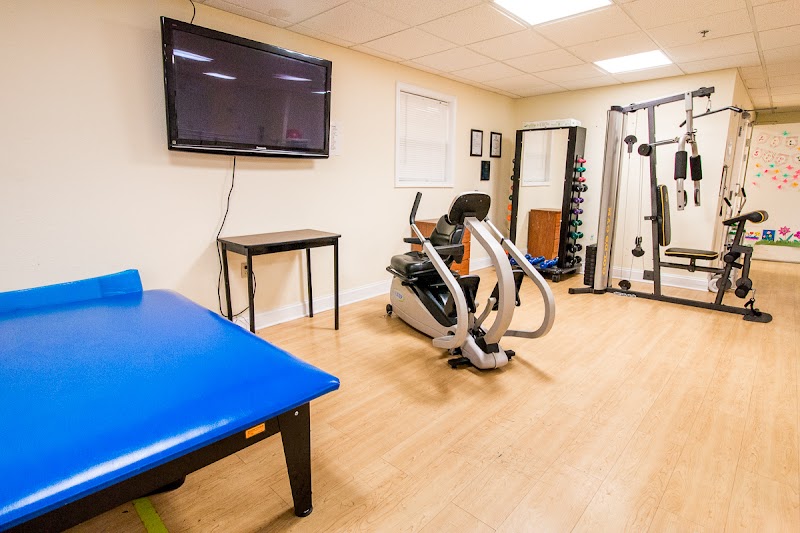
How is Rockcastle Center Staffed?

CMS rates ROCKCASTLE HEALTH AND REHABILITATION CENTER's staffing level at 2 out of 5 stars, which is below average compared to other nursing homes. Staff turnover is 62%, which is 16 percentage points above the Kentucky average of 46%. High turnover can affect care consistency as new staff learn residents' individual needs.

What Have Inspectors Found at Rockcastle Center?

State health inspectors documented 18 deficiencies at ROCKCASTLE HEALTH AND REHABILITATION CENTER during 2018 to 2025. These included: 1 Immediate Jeopardy (the most serious level, indicating potential for serious harm or death), 1 that caused actual resident harm, and 16 with potential for harm. Immediate Jeopardy findings are rare and represent the most serious regulatory concerns. They require immediate corrective action.
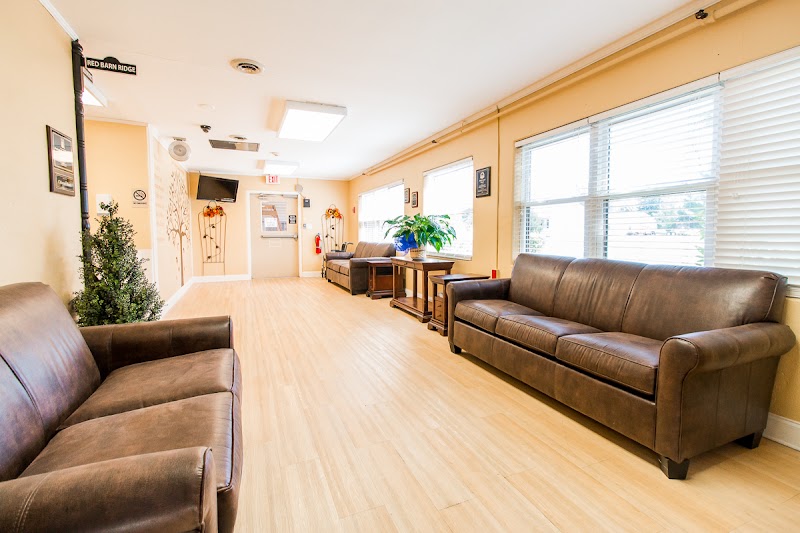
Who Owns and Operates Rockcastle Center?

ROCKCASTLE HEALTH AND REHABILITATION CENTER is owned by a for-profit company. For-profit facilities operate as businesses with obligations to shareholders or private owners. The facility is operated by SIGNATURE HEALTHCARE, a chain that manages multiple nursing homes. With 104 certified beds and approximately 94 residents (about 90% occupancy), it is a mid-sized facility located in BRODHEAD, Kentucky.
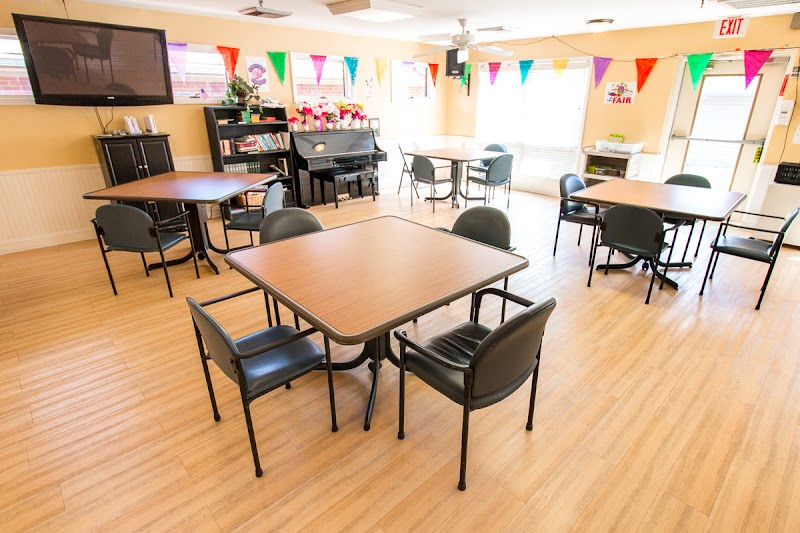
How Does Rockcastle Center Compare to Other Kentucky Nursing Homes?

Compared to the 100 nursing homes in Kentucky, ROCKCASTLE HEALTH AND REHABILITATION CENTER's overall rating (2 stars) is below the state average of 2.8, staff turnover (62%) is significantly higher than the state average of 46%, and health inspection rating (2 stars) is below the national benchmark.

What Should Families Ask When Visiting Rockcastle Center?

Based on this facility's data, families visiting should ask: "What changes have been made since the serious inspection findings, and how are you preventing similar issues?" "How do you ensure continuity of care given staff turnover, and what is your staff retention strategy?" "Can you walk me through typical staffing levels on day, evening, and night shifts?" "Can I visit during a mealtime to observe dining assistance and food quality?" These questions are particularly relevant given the facility's Immediate Jeopardy citations, the facility's high staff turnover rate, and the below-average staffing rating.

Is Rockcastle Center Safe?

Based on CMS inspection data, ROCKCASTLE HEALTH AND REHABILITATION CENTER has documented safety concerns. Inspectors have issued 1 Immediate Jeopardy citation (the most serious violation level indicating risk of serious injury or death). The facility has a 2-star overall rating and ranks #100 of 100 nursing homes in Kentucky. Families considering this facility should ask detailed questions about what corrective actions have been taken since these incidents.

Do Nurses at Rockcastle Center Stick Around?

Staff turnover at ROCKCASTLE HEALTH AND REHABILITATION CENTER is high. At 62%, the facility is 16 percentage points above the Kentucky average of 46%. High turnover means new staff may not know residents' individual needs, medications, or preferences. It can also be disorienting for residents, especially those with dementia who rely on familiar faces. Families should ask: What is causing the turnover? What retention programs are in place? How do you ensure care continuity during staff transitions?

Was Rockcastle Center Ever Fined?

ROCKCASTLE HEALTH AND REHABILITATION CENTER has been fined $15,646 across 1 penalty action. This is below the Kentucky average of $33,235. While any fine indicates a compliance issue, fines under $50,000 are relatively common and typically reflect isolated problems that were subsequently corrected. Families should ask what specific issues led to these fines and confirm they've been resolved.

Is Rockcastle Center on Any Federal Watch List?

ROCKCASTLE HEALTH AND REHABILITATION CENTER is not on any federal watch list. The most significant is the Special Focus Facility (SFF) program, which identifies the bottom 1% of nursing homes nationally based on persistent, serious quality problems. Not being on this list means the facility has avoided the pattern of deficiencies that triggers enhanced federal oversight. This is a positive indicator, though families should still review the facility's inspection history directly.