CAMPBELLSVILLE NURSING AND REHABILITATION CENTER
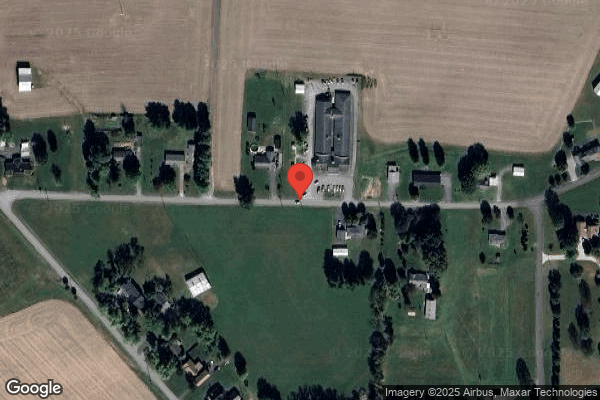
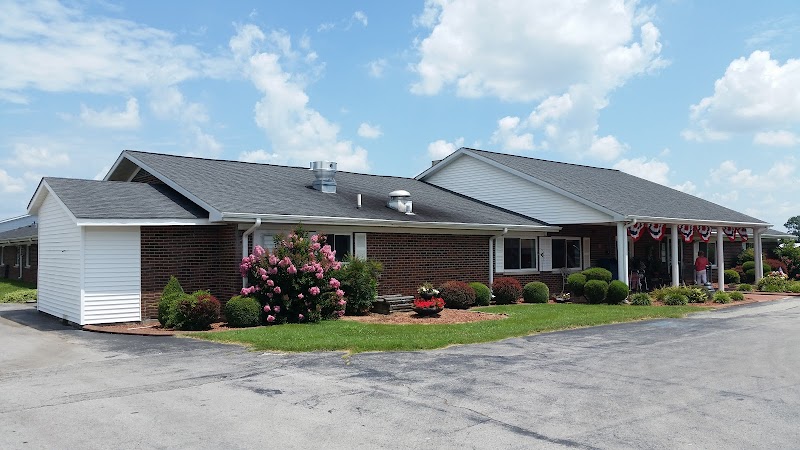
1980 OLD GREENSBURG ROAD, CAMPBELLSVILLE, KY 42718 (270) 465-3506
For profit - Limited Liability company 67 Beds BENJAMIN LANDA Data: November 2025
Trust Grade
60/100
#151 of 266 in KY
Last Inspection: August 2024

Within standard 12-15 month inspection cycle. Federal law requires annual inspections.

Overview

Campbellsville Nursing and Rehabilitation Center has a Trust Grade of C+, which means it is slightly above average but not particularly outstanding. It ranks #151 out of 266 nursing homes in Kentucky, placing it in the bottom half, and is #2 out of 2 facilities in Taylor County, indicating limited local options for families. The facility’s performance trend is stable, with 2 issues reported both in 2019 and 2024. Staffing is a concern, rated at 1 out of 5 stars with a turnover rate of 45%, which is slightly better than the state average but still indicates challenges in retaining staff. While the facility has no fines on record, which is a positive sign, there have been several concerning incidents, such as a failure to keep kitchen surfaces clean, raising potential health risks for residents. Additionally, there was a significant infection control issue in 2019 when an outbreak affected 16 residents, highlighting past weaknesses in their infection prevention practices. Overall, while there are strengths, such as the absence of fines, the facility has notable weaknesses that families should consider.

Trust Score
C+
60/100
In Kentucky
#151/266
Bottom 44%
Safety Record
Low Risk
No red flags
Inspections
Holding Steady
2 → 2 violations
Staff Stability
○ Average
45% turnover. Near Kentucky's 48% average. Typical for the industry.
Penalties
✓ Good
No fines on record. Clean compliance history, better than most Kentucky facilities.
Skilled Nurses
⚠ Watch
Each resident gets only 29 minutes of Registered Nurse (RN) attention daily — below average for Kentucky. Fewer RN minutes means fewer trained eyes watching for problems.
Violations
✓ Good
Only 5 deficiencies on record. Cleaner than most facilities. Minor issues only.
★★☆☆☆
2.0
Overall Rating
★☆☆☆☆
1.0
Staff Levels
★★☆☆☆
2.0
Care Quality
★★★☆☆
3.0
Inspection Score
Stable
2019: 2 issues
2024: 2 issues

The Good

  • Full Sprinkler Coverage · Fire safety systems throughout facility
  • No fines on record
  • Staff turnover below average (45%)

    3 points below Kentucky average of 48%

Facility shows strength in fire safety.

The Bad

2-Star Overall Rating

Below Kentucky average (2.8)

Below average - review inspection findings carefully

Staff Turnover: 45%

Near Kentucky avg (46%)

Typical for the industry

Chain: BENJAMIN LANDA

Part of a multi-facility chain

Ask about local staffing decisions and management

The Ugly 5 deficiencies on record

Aug 2024 2 deficiencies
CONCERN (D)

Potential for Harm - no one hurt, but risky conditions existed

Comprehensive Care Plan (Tag F0656)

Could have caused harm · This affected 1 resident

Based on interview, record review, and facility policy review, the facility failed to develop a care plan addressing the use of an anticoagulant for 1 (Resident #24) of 6 sampled residents reviewed fo...

Read full inspector narrative →
Based on interview, record review, and facility policy review, the facility failed to develop a care plan addressing the use of an anticoagulant for 1 (Resident #24) of 6 sampled residents reviewed for unnecessary medications. The facility also failed to develop a care plan addressing hospice services for 1 (Resident #37) of 1 resident reviewed for hospice and end of life. The findings include: Review of the facility's policy titled, Comprehensive Care Plans Standard of Practice, dated 10/2020, specified, An individualized comprehensive care plan that includes measurable objectives and timetables to meet the resident's medical, nursing, mental and psychosocial needs is developed for each resident. The policy further specified, 3. Each resident's comprehensive care plan is designed to: a. Identify problem areas; b. Incorporate risk factors associated with identified problems; and e. Reflect treatment goals, timetables, and objectives in measurable outcomes; f. Identify the professional services that are responsible for each element of care. 1. Review of Resident #24's (R24) admission Face Sheet revealed the facility admitted R24 on 06/24/2024. Further review revealed the resident had diagnoses that included history of pulmonary embolism and hypertension. An admission Minimum Data Set (MDS), with an Assessment Reference Date (ARD) of 07/12/2024, revealed Resident #24 had a Brief Interview for Mental Status (BIMS) score of 11, which indicated the resident had moderate cognitive impairment. The MDS indicated the resident was prescribed an anticoagulant. Review of R24's Physician's Order Form As of 08/21/2024, contained an order, dated 07/06/2024, for rivaroxaban (an anticoagulant), 20 milligrams (mg) every evening with supper. Resident #24's Careplan Report revealed no goals or interventions related to the resident's use of an anticoagulant medication. During an interview on 08/22/2024 at 12:58 PM with MDS Coordinator #1 and MDS Coordinator #2, MDS Coordinator #2 stated that if a resident received an anticoagulant, there should be a care plan that addressed it. MDS Coordinator #1 confirmed R24 did not have a care plan for anticoagulants; however, they should have had one. During an interview on 08/22/2024 at 2:25 PM, the Director of Nursing (DON) stated care plans were in place to let everyone know what care the residents needed. The DON stated R24 should have had a care plan addressing the use of an anticoagulant. 2. Review of R37's admission Face Sheet revealed the facility admitted the resident on 01/02/2024. According to the admission Face Sheet, the resident had a history that included diagnoses of Alzheimer's disease, malnutrition, and dementia. Review of the Quarterly Minimum Data Set (MDS), with an Assessment Reference Date (ARD) of 07/10/2024, revealed R#37 had short- and long term- memory problems and severely impaired cognitive skills for daily decision-making per a Staff Assessment for Mental Status (SAMS). The MDS also indicated R#37 received hospice services. Review of R#37's Physician's Order Form As of 08/21/2024, contained an order, dated 01/02/2024, for hospice services. Review of R#37's Careplan Report revealed the facility did not develop a care plan addressing Hospice/Comfort Care until 08/20/2024, during the survey. During an interview on 08/22/2024 at 12:58 PM, MDS Coordinator #2 stated R#37 was admitted to the facility on hospice and confirmed a care plan specifically for hospice should have been developed. During an interview on 08/22/2024 at 2:25 PM, the Director of Nursing (DON) stated care plans were in place to let everyone know what care the residents needed.
CONCERN (F)

Potential for Harm - no one hurt, but risky conditions existed

Food Safety (Tag F0812)

Could have caused harm · This affected most or all residents

Based on observation and interview, the facility failed to ensure kitchen surfaces and equipment were free of an excessive amount of rust, black build up, and dust. These deficient practices had the p...

Read full inspector narrative →
Based on observation and interview, the facility failed to ensure kitchen surfaces and equipment were free of an excessive amount of rust, black build up, and dust. These deficient practices had the potential to affect all residents who received food from the kitchen. The findings included: On 08/19/2024 at 8:59 AM, the initial tour of the kitchen, was conducted with the Certified Dietary Manager (CDM). At 9:04 AM, the ceiling vent above the two-door reach-in cooler was observed with an excessive amount of rust and black buildup. At 9:05 AM, a black substance was observed on the gasket inside of the two-door reach-in cooler. At 9:17 AM, a ceiling tile above the exhaust fan for the dish machine was missing, and the area where the ceiling tile was missing had a black buildup. At 9:20 AM, the ceiling vent in the dry storage room was observed with an excessive amount of dust. On 08/19/2024 at 9:08 AM, the CDM stated maintenance staff were responsible for cleaning the ceiling vents. The CDM stated that she would have the gasket inside of the two-door reach-in cooler cleaned that day and stated, It needs to be replaced. She stated it was not a part of the cleaning schedule, but she could add it. The CDM stated all staff were responsible for cleaning. On 08/22/2024 at 11:54 AM, the CDM stated that once a month, maintenance staff changed the filters for the ceiling vents. She stated she was not sure who was responsible for checking ceiling vents or ceilings. On 08/22/2024 at 11:55 AM, the District Manager stated he came in two times a month to complete unit inspections. He stated that maintenance staff were responsible for anything in the ceiling. He stated that he had not completed an inspection that month. Per the District Manager, the facility staff utilized an electronic system to add work orders as their way of communicating to maintenance staff. On 08/22/2024 at 11:59 AM, the CDM stated she had not submitted a work order for the ceiling vents. On 08/22/2024 at 12:14 PM, the Maintenance Director stated he changed the filters for the ceiling vents monthly. He stated that the kitchen staff should clean the vents. The Maintenance Director stated that he changed the filters sometime the previous week but could not recall the exact date of the deep cleaning for the ceiling vents. On 08/22/2024 at 4:22 PM, the CDM stated the ceiling had been in the current condition since September 2023. On 08/22/2024 at 4:37 PM, the Director of Nursing stated she did not go in the kitchen and would defer anything related to the ceiling to the maintenance department. On 08/21/2024 at 2:40 PM, the Administrator stated that there was no policy related to maintenance in the kitchen or cleanliness in the kitchen. On 08/22/2024 at 4:42 PM, the Administrator stated the building was in the process of a remodel.
Nov 2019 2 deficiencies
CONCERN (D)

Potential for Harm - no one hurt, but risky conditions existed

Respiratory Care (Tag F0695)

Could have caused harm · This affected 1 resident

**NOTE- TERMS IN BRACKETS HAVE BEEN EDITED TO PROTECT CONFIDENTIALITY** Based on observation, interview, and record review, it was determined the facility failed to provide appropriate respiratory ser...

Read full inspector narrative →
**NOTE- TERMS IN BRACKETS HAVE BEEN EDITED TO PROTECT CONFIDENTIALITY** Based on observation, interview, and record review, it was determined the facility failed to provide appropriate respiratory services related to oxygen therapy for one (1) of twenty-two (22) sampled residents (Resident #6). Resident #6 was observed on 11/19/19 receiving oxygen via nasal cannula at two (2) liters per minute (LPM); however, the order for Resident #6's oxygen was discontinued in September 2019. The findings include: Upon request of the policy on 11/20/19 for administration of oxygen therapy, the Director of Nursing stated the facility did not have a policy related to oxygen therapy. Upon request of the policy/procedure on 11/21/19, for transcribing physician orders and entering into the electronic medical record (EMR), the DON stated the facility did not have a policy that addressed this. Observation of Resident #6 on 11/19/19 at 3:17 PM, revealed the resident in the room seated in a wheelchair. The resident was wearing oxygen via nasal cannula at two (2) LPM. Further observation of the resident on this date at 4:15 PM revealed the resident up in a wheelchair outside the room without oxygen tubing on. The wheelchair had a portable oxygen concentrator but it was set at zero (0) LPM. Observation of Resident #6 on 11/20/19 at 2:11 PM, revealed the resident was in the room seated in a wheelchair. The resident was not wearing oxygen and there was not an oxygen concentrator in the room. Review of the medical record revealed Resident #6 was admitted to the facility on [DATE] and had diagnoses of Chronic Obstructive Pulmonary Disease, ST Elevation Myocardial Infarction, Chest Pain, and Adult Failure to Thrive. Review of the Minimum Data Set (MDS) quarterly assessment, dated 08/11/19, revealed a Brief Interview for Mental Status (BIMS) score of three (3), which indicated the resident had severe cognitive impairment. The MDS also revealed the resident was on oxygen therapy at the time of the assessment. Review of a physician order summary revealed Resident #6 had an order, dated 04/27/18, for Oxygen at two (2) LPM via nasal cannula, continuously. Review of the comprehensive care plan for Resident #6 did not reveal an identified risk related to respiratory status or ineffective gas exchange. Interview with the Director of Nursing (DON) on 11/20/19 at 5:10 PM, revealed Resident #6 did not have a current physician's order for oxygen. She stated the oxygen had been discontinued a while back (a couple of months ago). She further stated she would complete a medication error as she is the one who received the order to discontinue the oxygen. Review of the Medication Error Report, dated 11/20/19, revealed failure to discontinue the oxygen as ordered. Documentation revealed the physician and the family were notified. Interview with the DON on 11/21/19 at 9:16 AM, revealed the management team reviews all new orders in the EMR every morning, Monday through Friday. The DON stated they did not require the nurses to write out the physician orders if obtained by phone or verbally, but expected the order to be entered into the EMR at the time the order was received. Further interview with the DON at 10:00 AM on this date revealed she had received the phone order to discontinue the oxygen on Resident #6 sometime in September, but had failed to enter the order into the EMR.
CONCERN (F)

Potential for Harm - no one hurt, but risky conditions existed

Infection Control (Tag F0880)

Could have caused harm · This affected most or all residents

Based on observation, interview, record review, and facility policy review, the facility failed to maintain an effective infection prevention and control program to prevent the transmission of communi...

Read full inspector narrative →
Based on observation, interview, record review, and facility policy review, the facility failed to maintain an effective infection prevention and control program to prevent the transmission of communicable diseases. The facility reported an outbreak of a virus on 11/19/19 with sixteen (16) residents affected. Observations revealed nine (9) of the sixteen (16) residents' rooms did not have Personal Protective Equipment readily available outside of the room and thirteen (13) of the residents' rooms did not have signage in a conspicuous place outside the resident's room identifying the category of precautions and/or instructions to see the nurse before entering. The findings include: Review of the facility's policy entitled Infection Control Program Standard of Practice, dated September 2017 revealed the standard of practice is to prevent the spread of infection and provide appropriate education for staff and residents concerning infection control. According to the policy, hand washing and isolation guidelines are included and intended to meet standards of Centers for Disease Control and Prevention (CDC) guidelines for long-term care. Further review revealed the infection control program would be guided by recommendations via the CDC website. Review of the CDC Guideline for the Prevention and Control of Norovirus Gastroenteritis Outbreaks in Healthcare Settings, dated 2011, revealed that during outbreaks patients with norovirus gastroenteritis should be placed on Contact Precautions for a minimum of 48 hours after the resolution of symptoms to prevent further exposure of susceptible patients. Interview with the DON on 11/19/19 at 2:37 PM revealed Resident #32, who resides on the East Unit, had an episode of vomiting on 11/18/19; however, the resident has a diagnosis of a mass that is pressing on the esophagus and has a history of occasional episodes of vomiting. Further interview revealed Resident #49, who resides on the [NAME] Unit, had an episode of vomiting later on 11/18/19. According to the interview, on 11/19/19 more residents began to develop vomiting and diarrhea, so the facility began tracking and mapping the residents. Further interview revealed the DON contacted the local health department and was informed that unless the outbreak consisted of a bacterial infection or influenza the health department did not need to be notified. Review of the Nursing Home Antimicrobial Stewardship Guide/Infection Tracking form revealed sixteen (16) residents developed vomiting and/or diarrhea by 11/19/19. Observations on 11/19/19 at 4:45 PM revealed nine (9) residents (Residents #8, #10, #30, #35, #39, #42, #49, #54, and #114) that were listed on the infection tracking form as having vomiting and/or diarrhea had no Personal Protective Equipment (PPE) readily available outside of the room and no signage posted in a conspicuous place outside the residents' rooms to identify the category of the precautions and/or instructions to see the nurse before entering. Further observations revealed four (4) residents (Residents #3, #20, #34, and #50) had PPE readily available outside of the room; however, there was no signage posted in a conspicuous place outside the residents' rooms to identify the category of the precautions and/or instructions to see the nurse before entering. Interview with the DON on 11/19/19 at 5:16 PM revealed the Medical Director was contacted with instructions to maintain the residents in isolation for 48 hours and to use the CDC guideline to post precautions and utilize PPE. Further interview with the DON on 11/21/19 at 2:29 PM revealed the facility's Medical Director gave instructions on 11/19/19 to keep the residents in the room, shut down the dining room, and follow standard precautions. Further interview revealed as more residents started presenting with symptoms the precautions were changed from standard precautions to contact precautions and the CDC guidelines were followed to keep the residents in isolation for 48 hours after the last symptom.
Nov 2018 1 deficiency
CONCERN (D)

Potential for Harm - no one hurt, but risky conditions existed

Food Safety (Tag F0812)

Could have caused harm · This affected 1 resident

Based on observation, record review, and interview, it was determined the facility failed to maintain the kitchen equipment in a sanitary manner. Observation revealed two (2) ovens underneath the rang...

Read full inspector narrative →
Based on observation, record review, and interview, it was determined the facility failed to maintain the kitchen equipment in a sanitary manner. Observation revealed two (2) ovens underneath the range and five (5) steam table wells were in need of cleaning. The findings include: Interview with the Corporate Dietary Manager (CDM) at 2:50 PM on 11/01/18 revealed there were no policies or procedures in place for cleaning the range ovens or the steam table wells. Observation during the initial tour of the kitchen at 10:20 AM on 10/30/18 revealed two (2) ovens located underneath the range top had a heavy accumulation of burned food debris and burned fluid spills inside both ovens. Review of the weekly cleaning schedule revealed the stove and ovens were scheduled to be cleaned every week on Sunday and Monday. However, there was no documented evidence that the stove and ovens had been cleaned. Further review of the weekly cleaning schedule revealed the steam table was scheduled to be cleaned every week on Monday and Friday. However, there was no documented evidence that the steam table had been cleaned. Interview at 1:45 PM on 11/01/18 with the Corporate Dietary Manager and the Dietary Manager in training revealed they agreed that the two (2) ovens and the five (5) steam table wells were in need of cleaning. The Dietary Manager in training stated she did not know when the equipment had last been cleaned.
Understanding Severity Codes (click to expand)
Life-Threatening (Immediate Jeopardy)
J - Isolated K - Pattern L - Widespread
Actual Harm
G - Isolated H - Pattern I - Widespread
Potential for Harm
D - Isolated E - Pattern F - Widespread
No Harm (Minor)
A - Isolated B - Pattern C - Widespread

Questions to Ask on Your Visit

  • "Can I speak with families of current residents?"
  • "What's your RN coverage like on weekends and overnight?"

Our Honest Assessment

Strengths
  • • No major safety red flags. No abuse findings, life-threatening violations, or SFF status.
  • • No fines on record. Clean compliance history, better than most Kentucky facilities.
  • • Only 5 deficiencies on record. Cleaner than most facilities. Minor issues only.
  • • 45% turnover. Below Kentucky's 48% average. Good staff retention means consistent care.
Concerns
  • • No major red flags. Standard due diligence and a personal visit recommended.
Bottom line: Mixed indicators with Trust Score of 60/100. Visit in person and ask pointed questions.

About This Facility

What is Campbellsville's CMS Rating?

CMS assigns CAMPBELLSVILLE NURSING AND REHABILITATION CENTER an overall rating of 2 out of 5 stars, which is considered below average nationally. Within Kentucky, this rating places the facility higher than 0% of the state's 100 nursing homes. A rating at this level reflects concerns identified through health inspections, staffing assessments, or quality measures that families should carefully consider.

How is Campbellsville Staffed?

CMS rates CAMPBELLSVILLE NURSING AND REHABILITATION CENTER's staffing level at 1 out of 5 stars, which is much below average compared to other nursing homes. Staff turnover is 45%, compared to the Kentucky average of 46%. This relatively stable workforce can support continuity of care.

What Have Inspectors Found at Campbellsville?

State health inspectors documented 5 deficiencies at CAMPBELLSVILLE NURSING AND REHABILITATION CENTER during 2018 to 2024. These included: 5 with potential for harm.

Who Owns and Operates Campbellsville?

CAMPBELLSVILLE NURSING AND REHABILITATION CENTER is owned by a for-profit company. For-profit facilities operate as businesses with obligations to shareholders or private owners. The facility is operated by BENJAMIN LANDA, a chain that manages multiple nursing homes. With 67 certified beds and approximately 62 residents (about 93% occupancy), it is a smaller facility located in CAMPBELLSVILLE, Kentucky.

How Does Campbellsville Compare to Other Kentucky Nursing Homes?

Compared to the 100 nursing homes in Kentucky, CAMPBELLSVILLE NURSING AND REHABILITATION CENTER's overall rating (2 stars) is below the state average of 2.8, staff turnover (45%) is near the state average of 46%, and health inspection rating (3 stars) is at the national benchmark.

What Should Families Ask When Visiting Campbellsville?

Based on this facility's data, families visiting should ask: "Can you walk me through typical staffing levels on day, evening, and night shifts?" "Can I visit during a mealtime to observe dining assistance and food quality?" "How do you handle medical emergencies, and what is your hospital transfer rate?" "Can I speak with family members of current residents about their experience?" These questions are particularly relevant given the below-average staffing rating.

Is Campbellsville Safe?

Based on CMS inspection data, CAMPBELLSVILLE NURSING AND REHABILITATION CENTER has a clean safety record: no substantiated abuse findings (meaning no confirmed cases of resident harm), no Immediate Jeopardy citations (the most serious violation level indicating risk of serious injury or death), and is not on the Special Focus Facility watch list (a federal program monitoring the lowest-performing 1% of nursing homes). The facility has a 2-star overall rating and ranks #100 of 100 nursing homes in Kentucky. While no facility is perfect, families should still ask about staff-to-resident ratios and recent inspection results during their visit.

Do Nurses at Campbellsville Stick Around?

CAMPBELLSVILLE NURSING AND REHABILITATION CENTER has a staff turnover rate of 45%, which is about average for Kentucky nursing homes (state average: 46%). Moderate turnover is common in nursing homes, but families should still ask about staff tenure and how the facility maintains care continuity when employees leave.

Was Campbellsville Ever Fined?

CAMPBELLSVILLE NURSING AND REHABILITATION CENTER has no federal fines on record. CMS issues fines when nursing homes fail to meet care standards or don't correct problems found during inspections. The absence of fines suggests the facility has either maintained compliance or corrected any issues before penalties were assessed. This is a positive indicator, though families should still review recent inspection reports for the full picture.

Is Campbellsville on Any Federal Watch List?

CAMPBELLSVILLE NURSING AND REHABILITATION CENTER is not on any federal watch list. The most significant is the Special Focus Facility (SFF) program, which identifies the bottom 1% of nursing homes nationally based on persistent, serious quality problems. Not being on this list means the facility has avoided the pattern of deficiencies that triggers enhanced federal oversight. This is a positive indicator, though families should still review the facility's inspection history directly.