ST ELIZABETH EDGEWOOD SNF
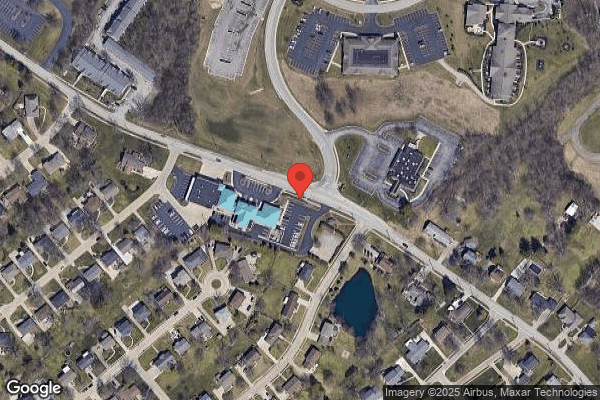
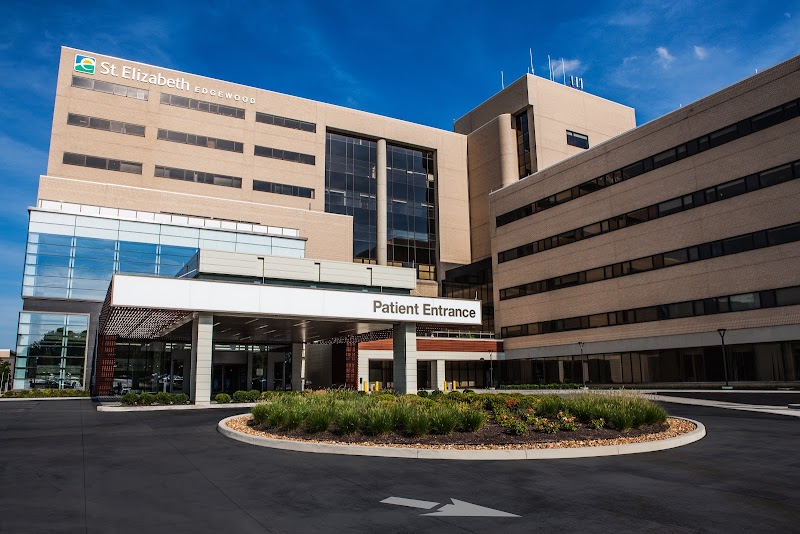
1 Medical Village Drive, Edgewood, KY 41017 (859) 301-9980
Non profit - Corporation 24 Beds Independent Data: November 2025
Trust Grade
90/100
#33 of 266 in KY
Last Inspection: January 2025

Within standard 12-15 month inspection cycle. Federal law requires annual inspections.

Overview

St. Elizabeth Edgewood SNF has received a Trust Grade of A, indicating an excellent facility that is highly recommended. It ranks #33 out of 266 nursing homes in Kentucky, placing it in the top half of facilities in the state, and it is the best option among 8 homes in Kenton County. The facility is improving, having reduced its number of issues from 2 in 2023 to just 1 in 2025. Staffing is a strong point, with a perfect 5-star rating and a turnover rate of 41%, which is lower than the state average, suggesting that staff are stable and experienced. While there have been no fines, indicating good compliance, there were concerns noted about food safety practices, such as staff not wearing hair restraints properly while preparing food, and a lack of personal protective equipment in certain situations, which could pose health risks. Overall, while the facility has strong ratings and is improving, families should be aware of these specific issues that need attention.

Trust Score
A
90/100
In Kentucky
#33/266
Top 12%
Safety Record
Low Risk
No red flags
Inspections
Getting Better
2 → 1 violations
Staff Stability
○ Average
41% turnover. Near Kentucky's 48% average. Typical for the industry.
Penalties
✓ Good
No fines on record. Clean compliance history, better than most Kentucky facilities.
Skilled Nurses
✓ Good
Each resident gets 237 minutes of Registered Nurse (RN) attention daily — more than 97% of Kentucky nursing homes. RNs are the most trained staff who catch health problems before they become serious.
Violations
✓ Good
Only 4 deficiencies on record. Cleaner than most facilities. Minor issues only.
★★★★★
5.0
Overall Rating
★★★★★
5.0
Staff Levels
★★★★☆
4.0
Care Quality
★★★★☆
4.0
Inspection Score
Stable
2023: 2 issues
2025: 1 issues

The Good

  • 5-Star Staffing Rating · Excellent nurse staffing levels
  • 4-Star Quality Measures · Strong clinical quality outcomes
  • Full Sprinkler Coverage · Fire safety systems throughout facility
  • No fines on record
  • Staff turnover below average (41%)

    7 points below Kentucky average of 48%

Facility shows strength in staffing levels, quality measures, fire safety.

The Bad

Staff Turnover: 41%

Near Kentucky avg (46%)

Typical for the industry

The Ugly 4 deficiencies on record

Jan 2025 1 deficiency
CONCERN (D)

Potential for Harm - no one hurt, but risky conditions existed

Infection Control (Tag F0880)

Could have caused harm · This affected 1 resident

Based on observation, interview, record review, and review of the facility's policy, the facility failed to establish and maintain an infection prevention and control program designed to provide a saf...

Read full inspector narrative →
Based on observation, interview, record review, and review of the facility's policy, the facility failed to establish and maintain an infection prevention and control program designed to provide a safe, sanitary, and comfortable environment and to help prevent the development and transmission of communicable diseases and infections for 1 out of 2 sampled residents, Resident (R) 5. Observation on 01/07/2025 revealed a staff member entered R5's room, a Contact Plus Isolation room, to perform resident care without donning (putting on) personal protective equipment (PPE). The findings include: Review of the facility's policy titled, Standard and Transmission-Based Precautions, Inf-Cntrl-s-09, revised 07/22/2024, revealed Contact Plus Isolation (in addition to Standard Precautions) was used for diseases transmitted by contact with the patient or the patient's environment, such as Clostridium difficile or norovirus. The policy stated the only time no PPE was required was in the Safe Zone, which was approximately three feet of entry into the resident's room. Per the policy these activities included answering call lights, asking questions, visualizing patient, or performing hourly rounding checks; however, any activity while in the resident care environment required donning PPE. These activities included approaching the resident or touching any item, surface, or piece of equipment within the resident's environment. The policy stated a gown and gloves were required when entering the room beyond the Safe Zone to protect exposed skin or clothing. Observation on 01/07/2025 at 4:13 PM revealed Contact Plus Precautions signage was visible outside R5's room, which stated in addition to standard precautions, staff must wear gown and gloves when interacting with the resident. Continued observation revealed Registered Nurse (RN) 1 entered R5's room to perform resident care without donning a gown or gloves, which were readily available in the PPE bin outside of the room. Review of R5's Face Sheet, located in the electronic medical record (EMR), revealed the facility admitted the resident on 12/18/2024 with diagnoses to include endocarditis (an infection of the heart's inner lining). Review of R5's laboratory results, taken during R5's previous admission to the facility and located in the EMR, dated 11/24/2024, revealed R5's C Diff [Clostridium difficile, a highly contagious bacterium that affected the colon] Toxin was positive. On 10/16/2025, R5's blood culture resulted with Klebsiella oxytoca detected. Review of R5's Physician Orders, located in the EMR and dated 12/18/2024, revealed orders for continuous Contact Plus Isolation: 1. Proper equipment, Gloves, Gown, Sporicidal agent (bleach wipes). 2. Provide patient and family education: Regarding isolation, proper PPE and hand hygiene, avoid visiting public areas while in isolation (Cafeteria / Gift Shop). 3. Disinfect: Clean and disinfect reusable equipment upon removal from room. 4. Transport: Place a clean gown or clean cover on patient. 5. Remember proper hand hygiene. Review of R5's Care Plan, dated 12/18/2024, revealed R5 was care planned for isolation precautions to prevent transmission of multi-drug organisms within the facility. During an interview with Certified Nursing Assistant (CNA) 1 on 01/07/2025 at 2:51 PM, she stated precaution signs were outside of doors and PPE was available outside the room. She stated she donned gown and gloves anytime she entered any isolation room because the resident usually required care that required contact. During an interview with RN1 on 01/07/25 at 4:13 PM, she stated she did not don PPE when providing care to R5, stating, Sorry, I just forgot. PPE should have been donned prior to entering the room. She stated she washed her hands with soap and water in R5's bathroom prior to exiting the room. She stated using appropriate PPE was important to keep the residents and staff safe and preventing the potential spread of C-diff. During an interview with the Infection Preventionist (IP) on 01/08/2025 at 1:35 PM, she stated any residents on precautions were tracked via Epic Dashboard that was specific for each unit on a daily basis. She stated if any resident had an organism detected by the lab, then an automatic notice was sent via Epic to the resident's chart and to the care providers to notify them. She stated staff received education on an annual basis by computer-based learning (CBL) and as needed on infection control topics. She also stated any changes would be mentioned in their daily staff meetings. The IP stated her expectation was that staff should be following protocols/policies and donning PPE when leaving the Safe Zone of the room. During an interview with the Interim Director of Nursing (IDON) on 01/08/2025 at 3:35 PM, she stated PPE was supplied by the materials department for the hospital, and there had never been an issue with getting what was needed. She stated staff was made aware of precautions and what PPE was needed by signage that was placed outside of the resident's room. The IDON stated her expectation was very high for staff following protocols that are laid out for us; we need to follow policy's/protocols. She stated audits on the floor were done often, and staff was expected to hold each other accountable as well. She stated this was important to prevent any kind of infection spread and to have good outcomes for the residents. During an interview with the Administrator on 01/09/2024 at 10:10 AM, she stated it was her expectation that staff wear PPE. She stated this was important to protect the staff, as well as the resident, by decreasing the risk of spreading infection as much as possible.
Nov 2023 2 deficiencies
CONCERN (D)

Potential for Harm - no one hurt, but risky conditions existed

Infection Control (Tag F0880)

Could have caused harm · This affected 1 resident

Based on observation, interview, record review, review of the facility's policy, and review of the Centers for Disease Control and Prevention Reference: Guidelines for Hand Hygiene in Healthcare setti...

Read full inspector narrative →
Based on observation, interview, record review, review of the facility's policy, and review of the Centers for Disease Control and Prevention Reference: Guidelines for Hand Hygiene in Healthcare settings, it was determined the facility failed to establish and maintain an effective infection prevention and control program designed to provide a safe environment; and to help prevent the development and transmission of communicable diseases for five (5) of fourteen (14) sampled residents. The failures were related to improper cleaning of the residents' shared glucometers, improper hand hygiene, and improper handling of resident's medication. The residents affected were Resident #1, Resident #7 and Resident #8, Resident #207, and Resident #257. The facility failed to implement the manufacturer's recommendations for cleaning and disinfecting the Nova Stat Strip Point of Care System blood glucose glucometers. These glucometers were used on multiple residents. The facility also failed to follow the manufacture's recommendation on the Sani-Cloth disinfectant wipes when cleaning the monitors after resident use for three (3) of four (4) total residents requiring blood glucose monitoring (Residents #1, #7, and #8). The facility failed to implement the facility's Hand Hygiene Practices, Inf-Cntrl-H01 policy. A staff member failed to perform hand hygiene after removing gloves, after administering a suppository to Resident #207. In addition, the facility failed to implement the facility's Standard and Transmission-Based Precautions, Inf-Cntrl-S-09 policy and the Medication Storage/Security, Rx MM ST-MO1 policy. A staff member stored a medication in his pocket and returned the medication to the Pyxis (an automated medication dispensing system) after Resident #257 refused the medication. The findings include: 1. Review of the manufacturer's recommendations for cleaning and disinfecting the Nova Stat Strip Point of Care System dated 04/26/2017 revealed after use the meter should be disinfected using a Super Sani Cloth wipe. The user should wipe the external surface thoroughly, then observe the two (2) minute wet time. Review of the facility's orientation and yearly training on the Nova Stat Strip Point of Care System revealed after using the Nova Stat meter, the meter must remain visibly wet for the product's wet time which was two (2) minutes using the Super Sani Cloth wipes. Review of the directions for use on the Super Sani Cloth wipes revealed the user should thoroughly wet the surface, and allow the surface to remain wet for two (2) minutes. Review of the facility's Management of Equipment Cleaning and Disinfection, ACLIN-M-02 policy last revised 02/21/2023 revealed, reusable medical equipment should be cleaned based on the manufacturer's recommendations for use, including dwell or contact time. 1a. Review of Resident #8's clinical record revealed the facility admitted the resident on 10/17/2023 with diagnoses of acute on chronic systolic heart failure and diabetes. Review of Resident #8's Physician's Orders, dated 10/17/2023, revealed an order to complete blood glucose monitoring at 7:00 AM, 11:00 AM, 5:00 PM, and 8:00 PM. Observation on 11/08/2023 at 12:05 PM, revealed Licensed Practical Nurse (LPN) #1 completed the blood sugar check on Resident #8. LPN #1 then wiped the Nova Stat Strip monitor with the Sani-Cloth for approximately twenty (20) seconds then placed it on a paper towel to air dry. During interview at the time of observation, LPN #1 stated she should have wiped it for one (1) minute before air drying. 1b. Review of Resident #7's clinical record revealed the facility admitted the resident on 10/24/2023 with diagnoses of acute cerebrovascular accident and diabetes. Review of Resident #7's Physician's Orders, dated 10/24/2023 revealed an order to complete blood glucose monitoring at 7:00 AM, 11:00 AM, 5:00 PM, and 8:00 PM. Observation, on 11/09/2023 at 12:03 PM, revealed Certified Nursing Assistant (CNA) #4 performed a blood glucose check on Resident #7. Upon completion of the blood glucose check, CNA #4 wiped the monitor with a Sani-Cloth wipe for approximately twenty-five (25) seconds, then placed the monitor on a paper towel and allowed it to dry for approximately sixty (60) seconds. During an interview with CNA #4, on 11/09/2023 at 12:12 PM, she stated this was the first time she had performed a blood glucose check at this facility as she was recently hired. She further stated she was educated upon hire to wipe the glucometer for two (2) minutes and allow it to dry for four (4) minutes. CNA #4 stated she was in a rush to get to the next resident to perform a blood glucose check. She stated it was important to wipe the glucometer for two (2) minutes to ensure the effectiveness of the cleaning process to prevent the spread of germs to herself and residents and to avoid infection transmission. 1c. Review of Resident #1's clinical record revealed the facility admitted the resident on 11/01/2023 with diagnoses of left hip fracture and diabetes. Review of Resident #1's Physician's Orders, dated 11/01/2023, revealed an order to complete blood glucose monitoring at 7:00 AM, 11:00 AM, 5:00 PM, and 8:00 PM. Observation on 11/09/2023 at 12:04 PM, revealed CNA #5 picked up the blood glucose monitor from the docking station and did not clean the monitor prior to completing the blood sugar check on Resident #1. After the blood glucose check, CNA #5 wiped the monitor with a Sani-Cloth wipe for approximately five (5) seconds then placed it on a paper towel at the nurses' station to allow it to dry. During interview with CNA #5, at the time of the observation, she stated she thought she needed to wipe the monitor for forty-five (45) seconds and that was what the policy required. She further stated it was important to follow the policy to prevent the spread of infection. Also, the CNA stated she did not know why she did not wipe the glucometer for forty-five (45) seconds. During interview on 11/08/2023 at 2:01 PM with the Infection Preventionist, she stated there had not been any infectious outbreaks in the facility in the past year. She further stated she had taught staff to clean the glucometers with a Sani cloth, wiping the glucometer for two (2) minutes. 2. Review of the facility's Standard and Transmission-Based Precautions, Inf-Cntrl-S-09 policy revealed, hand hygiene should be preformed immediately after removing gloves. Review of the Centers for Disease Control and Prevention Reference: Guidelines for Hand Hygiene in Healthcare settings [PDF - 496 KB];5, 16,17. dated 2002 revealed, C difficile forms spores that are not killed by an alcohol-based hand sanitizer. Review of Resident #207's clinical record revealed the facility admitted the resident on 11/01/2023 with diagnoses that included hematoma of the left leg. Observation on 11/07/2023 at 3:29 PM, revealed after LPN #1 administered a rectal suppository for Resident #207, she removed her gloves and then touched the mouse on the computer without sanitizing her hands. During interview with LPN #1 on 11/07/2023 at 3:33 PM, she stated she didn't sanitize her hands after removing the gloves because she had put on two (2) pairs of gloves. 3. Review of the facility's Medication Storage/Security, Rx MM ST-M01 policy last reviewed 03/28/2023 revealed, medications should not be transported in pockets. Also, unused medications should be placed in the designated pharmacy return bin. Review of Resident #257's clinical record revealed the facility admitted the resident on 11/02/2023 with diagnoses of acute on chronic diastolic congestive heart failure and excessive fluid. Observation on 11/07/2023 at 4:27 PM revealed, Registered Nurse (RN) #1 gave a potassium tablet to Resident #257, he then asked the resident #257 if she/he wanted the laxative, the resident declined the laxative. RN #1 then removed his gloves and sanitized his hands. He then went to the medication room and opened the Pyxis. The RN removed the laxative out of his right pocket and put it back in the Pyxis in a compartment containing the same medication and closed the drawer. During interview on 11/07/2023 at 4:34 PM with RN #1, he stated he always puts medications he was going to return in his right pocket then put them back in the Pyxis. During interview on 11/09/2023 at 1:55 PM with the Infection Preventionist (IP), she stated staff education was done by the facility's training and education center. She stated they educated the new hires on glucose monitor cleaning. The IP stated the education included training that the glucometers needed to stay wet for two (2) minutes. She stated that she assured that the glucometers were cleaned correctly by relying on the educators. The IP stated they educated the staff and then have the staff complete return demonstration. During interview on 11/09/2023 at 11:10 AM with the Director of Nursing (DON), she stated she expected staff to follow the facility's policies on glucometer cleaning, medication administration and hand hygiene. She stated this included sanitizing their hands before and after wearing gloves. The DON stated after caring for a resident who had a clostridium difficile (C-diff) infection staff were to wash hands with soap and water. She stated she consulted with the Infection Preventionist if she had a question. During continued interview, the DON stated there had not been any infection outbreaks in the past year. The DON stated they followed the guidelines from the Centers for Disease Control and Prevention for hand hygiene. She stated she monitored staff to assure they were using proper hand hygiene. The DON stated if she observed a staff not using proper hand hygiene, she verbally reminded the staff. She stated the second time she used written education. The DON stated she may terminate if the staff was not able to comply. During interview on 11/09/2023 at 1:39 PM with the DON, she stated staff were trained on the use and cleaning of the glucometer during orientation and once a year. She stated there was extra training if staff had questions. The DON stated she showed them the policy and explained the policy to the staff. She further stated it was her expectation that staff followed the facility's policies. During interview on 11/09/2023 at 11:34 AM with the Administrator she stated she audited hand hygiene periodically. She stated she worked with the Infection Preventionist to ensure staff were following the facility's policies. The Administrator stated her expectation was that staff used proper hand hygiene, used the appropriate personal protection equipment, and followed the facility's policies. She stated it was important for staff to clean equipment correctly and use proper hand hygiene to prevent the spread of infection.
CONCERN (F)

Potential for Harm - no one hurt, but risky conditions existed

Food Safety (Tag F0812)

Could have caused harm · This affected most or all residents

Based on observation, interview, and review of the facility's policy, it was determined the facility failed to prepare food under sanitary conditions. Observations on 11/07/2023 and 11/08/2023 reveale...

Read full inspector narrative →
Based on observation, interview, and review of the facility's policy, it was determined the facility failed to prepare food under sanitary conditions. Observations on 11/07/2023 and 11/08/2023 revealed Cold Food Server #1 moved about in the kitchen production area with her hair not restrained by the hairnet. The findings include: Review of facility's policy titled, Uniforms, Health and Personal Hygiene, not dated, revealed uniform guidelines to include hair restraints were required in all food production, food service, and dish handling areas. Observation of Cold Food Server #1, on 11/07/2023 at 12:40 PM, revealed she wore the hairnet on top of her head with her hair loose and hanging down, while she worked in the food production area. Observation of Cold Food Server #1, on 11/08/2023 at 11:05 AM, revealed her hair was not fully covered by the hairnet as she walked about the kitchen, wrapped the cold food, and placed it in the refrigeration unit. During an interview with Cold Food Server #1, on 11/08/2023 at 11:05 AM, she stated the policy was to cover all hair to prevent hair from getting into the food. During an interview with the Nutrition Supervisor, on 11/09/2023 at 9:13 AM, she stated staff were to have their hair covered. The Nutrition Supervisor stated men were to wear beard guards. She stated staff were educated that their hair could fall into the food. In addition, she stated staff were re-educated related to not wearing hairnets properly. During an interview with the Retail Food Service Manager, on 11/07/2023 at 12:40 PM and 11/09/2023 at 9:46 AM, she stated when staff entered the kitchen all of their hair was to be secured under the hairnet throughout the kitchen and in the food production area. She stated it was important to wear a hairnet to prevent contamination from occurring with the food. During an interview with the Director of Nursing (DON), on 11/09/2023 at 11:20 AM, she stated her expectation was for staff to follow the facility's policy for hairnets being worn properly, and to change them as needed to prevent cross contamination. During an interview with the Administrator, on 11/09/2023 at 11:30 AM, she stated staff should wear hairnets according to policy for sanitary reasons and to prevent possible food contamination.
Aug 2022 1 deficiency
CONCERN (F)

Potential for Harm - no one hurt, but risky conditions existed

Food Safety (Tag F0812)

Could have caused harm · This affected most or all residents

Based on observation, interview, record review, review of the Food and Drug Administration (FDA) website, review of the Centers for Disease Control and Prevention (CDC) website, review of the Food Saf...

Read full inspector narrative →
Based on observation, interview, record review, review of the Food and Drug Administration (FDA) website, review of the Centers for Disease Control and Prevention (CDC) website, review of the Food Safety website, and review of the facility's policy, it was determined the facility failed to prepare food under sanitary conditions in accordance with professional standards for food service safety. Observation of the kitchen, on 08/03/2022, revealed [NAME] #1 wore a hair net inappropriately around food and touched her mask with gloved hands repeatedly without changing gloves with hand hygiene. This deficient practice affected all fifteen (15) residents receiving their food from the kitchen on 08/03/2022. The findings include: Review of the facility's policy and procedure titled, Infectious Control Guidelines, dated 03/29/2021, revealed the purpose was to prevent and control contamination of foodstuffs and foodborne bacteria and the spread of infection within the department and medical center. Further review revealed procedures for the handling, preparation, and serving of food shall meet the standards of all regulatory bodies. Review of the FDA website, https://www.fda.gov, revealed all persons working in direct contact with food, food-contact surfaces, and food-packaging materials shall conform to hygienic practices while on duty to the extent necessary to protect against contamination of food. The methods for maintaining cleanliness included, but were not limited to: 1) washing hands thoroughly (and sanitizing if necessary to protect against contamination with undesirable microorganisms) when the hands might have become soiled or contaminated; 2) maintaining gloves, if they were used in food handling, in an intact, clean, and sanitary condition; and 3) wearing, where appropriate, in an effective manner, hair nets, headbands, caps, beard covers, or other effective hair restraints. Review of the CDC website, https://www.cdc.gov, revealed a documented titled, Wear a Mask the Right Way, undated, which stated to properly wear a mask, the individual must first, wash hands before donning (putting on) the face mask. It also stated the mask must cover the nose, mouth, and fit under the chin. Per the document, the mask must fit snugly on the face. Review of the Food Safety website, https://www.statefoodsafety.com, revealed a document titled, Wearing Gloves for Food Safety, undated, which stated gloves should be changed often, as wearing gloves did not guarantee that pathogens would not be transferred during food preparation. It stated gloves could easily be contaminated with pathogens just as hands could be. It gave instructions on ensuring pathogens were not spread by changing gloves: 1) if they became damaged; 2) if they became contaminated; 3) at least every four (4) hours; and 4) when switching tasks. Further review revealed washing hands should always occur before putting on a new pair of gloves. Observation, on 08/03/2022 at 3:15 PM, of the kitchen food preparation area, revealed [NAME] #1 had not been wearing a hair net correctly, which allowed her hair to be exposed on top and strands of her hair hanging from the sides. Per the observation, [NAME] #1 wore gloves during the food temperature checks. However, her mask continuously dropped below her nose. When this happened, multiple times she used gloved hands to pull her mask back over her nose, without hand washing or changing gloves after touching her mask. Telephone interviews with [NAME] #1, on 08/04/2022 at 10:08 AM and on 08/04/2022 at 11:26 AM, were attempted by the State Survey Agency (SSA) Surveyor but were unsuccessful. Voice messages were left requesting a call back. The SSA Surveyor was informed by the Administrator that [NAME] #1 had time off and would be traveling. Interview with [NAME] #2, on 08/04/2022 at 10:20 AM, revealed he received training for infection control and hygienic practices, and he stated masks were a requirement for protection against Covid-19 and for handling food safely. He revealed hair nets were required to prevent hair from falling into the resident's food and should cover as much hair as possible. [NAME] #2 stated handwashing was a standard he practiced on a regular basis and especially when handling food items. He stated he understood that gloves were to be changed when soiled, when changing kitchen work areas, and when working with different food sources. He stated handwashing was required between glove changes. Further, he stated these procedures were necessary to prevent cross-contamination and to promote resident safety. Interview with the Kitchen Supervisor, on 08/03/2022 at 1:00 PM, revealed the facility had no specific policy on mask and hair net wearing but stated the facility followed all local, state, and federal regulatory guidelines. She stated masks were not mandated in dietary, but due to Covid-19 guidelines, the facility preferred masks be worn. The Supervisor stated concerns with hair falling and contaminating foods had always been a potential hazard, even when properly wearing masks. She stated a source at the local health department explained hair had not been considered a contaminant, but the facility had enforced procedures for prevention. The Supervisor stated the unhygienic practice by [NAME] #1, with hair exposed, mask falling below nose multiple times, and using her gloved hands to pull mask back without washing hands or changing gloves had been a circumstance which warranted a follow-up observation and re-education. She stated she would address this concern with all dietary staff. Interview with the Infection Control Manager, on 08/03/2022 at 4:10 PM, revealed expectations for dietary staff regarding wearing masks were that all staff should be wearing well-fitting masks and should not have to keep re-adjusting them. She stated less than two (2) months ago the Dietary Administrative staff had completed a unit huddle with all staff which highlighted training specific to Infection Control education. She revealed the potential for cross-contamination was always there, but she believed precautions that were currently in place were being implemented correctly by all staff members. She stated these precautions included hair nets covering as much hair as possible, handwashing techniques being utilized as required and per guidelines, and masks being well-fitted and not falling frequently. She stated, then in theory, the potential risk of cross contamination should be reduced significantly or potentially eliminated. Interview with the Director of Senior Services (Administrator), on 08/04/2022 at 11:35 AM, revealed staff expectations were to follow the basic hygienic practices as well as Food Safety and ServSafe (a food and beverage safety training and certificate program) certification guidelines. She revealed staff members should be wearing their masks correctly by covering both nose and mouth, and if the mask did not fit correctly and prompted staff to continually re-adjust, then staff should dispose of the mask, wash hands, and replace it. The Administrator stated the same concerning hair nets: they should be properly worn and cover as much hair as possible. Per the interview, she stated handwashing and changing gloves was a standard that should be followed by all staff and not just dietary. She said it should be practiced in the kitchen, when handling food, to prevent potential negative outcomes such as cross contamination. Further, she explained this concern had been a challenge, but the Kitchen Supervisor should be checking the kitchen and making staff observations regularly to address potential concerns. The Administrator stated she believed, by implementing daily rounds and staff observations, teachable moments would be discovered for staff education going forward.
Understanding Severity Codes (click to expand)
Life-Threatening (Immediate Jeopardy)
J - Isolated K - Pattern L - Widespread
Actual Harm
G - Isolated H - Pattern I - Widespread
Potential for Harm
D - Isolated E - Pattern F - Widespread
No Harm (Minor)
A - Isolated B - Pattern C - Widespread

Questions to Ask on Your Visit

  • "Can I speak with families of current residents?"
  • "What's your RN coverage like on weekends and overnight?"

Our Honest Assessment

Strengths
  • • Grade A (90/100). Above average facility, better than most options in Kentucky.
  • • No major safety red flags. No abuse findings, life-threatening violations, or SFF status.
  • • No fines on record. Clean compliance history, better than most Kentucky facilities.
  • • Only 4 deficiencies on record. Cleaner than most facilities. Minor issues only.
Concerns
  • • No significant concerns identified. This facility shows no red flags across CMS ratings, staff turnover, or federal penalties.
Bottom line: Generally positive indicators. Standard due diligence and a personal visit recommended.

About This Facility

What is St Elizabeth Edgewood Snf's CMS Rating?

CMS assigns ST ELIZABETH EDGEWOOD SNF an overall rating of 5 out of 5 stars, which is considered much above average nationally. Within Kentucky, this rating places the facility higher than 99% of the state's 100 nursing homes. This rating reflects solid performance across the metrics CMS uses to evaluate nursing home quality.

How is St Elizabeth Edgewood Snf Staffed?

CMS rates ST ELIZABETH EDGEWOOD SNF's staffing level at 5 out of 5 stars, which is much above average compared to other nursing homes. Staff turnover is 41%, compared to the Kentucky average of 46%. This relatively stable workforce can support continuity of care.

What Have Inspectors Found at St Elizabeth Edgewood Snf?

State health inspectors documented 4 deficiencies at ST ELIZABETH EDGEWOOD SNF during 2022 to 2025. These included: 4 with potential for harm.
Who Owns and Operates St Elizabeth Edgewood Snf?

ST ELIZABETH EDGEWOOD SNF is owned by a non-profit organization. Non-profit facilities reinvest revenue into operations rather than distributing to shareholders. The facility operates independently rather than as part of a larger chain. With 24 certified beds and approximately 27 residents (about 112% occupancy), it is a smaller facility located in Edgewood, Kentucky.
How Does St Elizabeth Edgewood Snf Compare to Other Kentucky Nursing Homes?

Compared to the 100 nursing homes in Kentucky, ST ELIZABETH EDGEWOOD SNF's overall rating (5 stars) is above the state average of 2.8, staff turnover (41%) is near the state average of 46%, and health inspection rating (4 stars) is above the national benchmark.

What Should Families Ask When Visiting St Elizabeth Edgewood Snf?

Based on this facility's data, families visiting should ask: "Can I visit during a mealtime to observe dining assistance and food quality?" "How do you handle medical emergencies, and what is your hospital transfer rate?" "Can I speak with family members of current residents about their experience?"

Is St Elizabeth Edgewood Snf Safe?

Based on CMS inspection data, ST ELIZABETH EDGEWOOD SNF has a clean safety record: no substantiated abuse findings (meaning no confirmed cases of resident harm), no Immediate Jeopardy citations (the most serious violation level indicating risk of serious injury or death), and is not on the Special Focus Facility watch list (a federal program monitoring the lowest-performing 1% of nursing homes). The facility has a 5-star overall rating and ranks #1 of 100 nursing homes in Kentucky. While no facility is perfect, families should still ask about staff-to-resident ratios and recent inspection results during their visit.

Do Nurses at St Elizabeth Edgewood Snf Stick Around?

ST ELIZABETH EDGEWOOD SNF has a staff turnover rate of 41%, which is about average for Kentucky nursing homes (state average: 46%). Moderate turnover is common in nursing homes, but families should still ask about staff tenure and how the facility maintains care continuity when employees leave.

Was St Elizabeth Edgewood Snf Ever Fined?

ST ELIZABETH EDGEWOOD SNF has no federal fines on record. CMS issues fines when nursing homes fail to meet care standards or don't correct problems found during inspections. The absence of fines suggests the facility has either maintained compliance or corrected any issues before penalties were assessed. This is a positive indicator, though families should still review recent inspection reports for the full picture.

Is St Elizabeth Edgewood Snf on Any Federal Watch List?

ST ELIZABETH EDGEWOOD SNF is not on any federal watch list. The most significant is the Special Focus Facility (SFF) program, which identifies the bottom 1% of nursing homes nationally based on persistent, serious quality problems. Not being on this list means the facility has avoided the pattern of deficiencies that triggers enhanced federal oversight. This is a positive indicator, though families should still review the facility's inspection history directly.