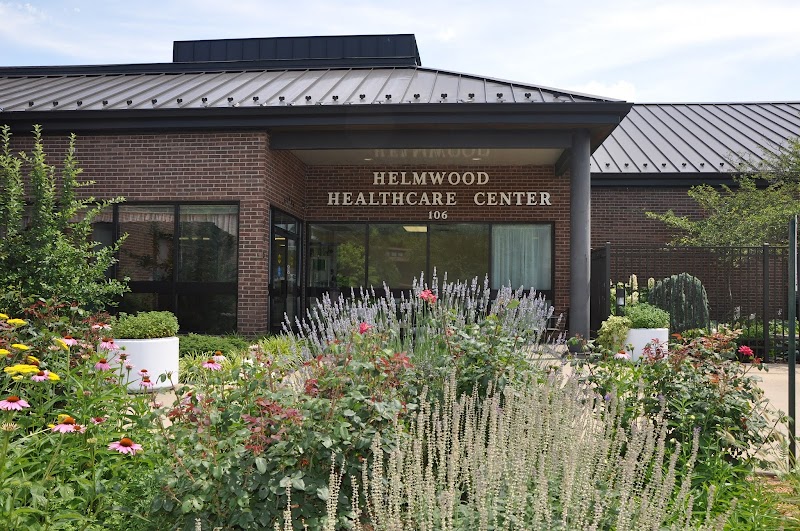
HELMWOOD HEALTHCARE

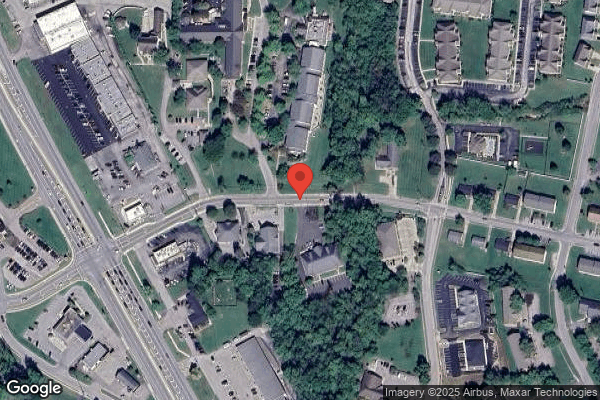
106 DIECKS DRIVE, ELIZABETHTOWN, KY 42701 (270) 737-2738
For profit - Limited Liability company 60 Beds Independent Data: November 2025
Trust Grade
85/100
#13 of 266 in KY
Last Inspection: April 2025

Within standard 12-15 month inspection cycle. Federal law requires annual inspections.

Overview

Helmwood Healthcare in Elizabethtown, Kentucky, has a Trust Grade of B+, indicating it is above average and recommended for families considering care options. It ranks #13 out of 266 facilities in Kentucky, placing it in the top half, and is #2 out of 7 in Hardin County, meaning there is only one other local option that is better. The facility is improving, with issues decreasing from 2 in 2020 to none reported by 2025. However, staffing is a concern, rated at 2 out of 5 stars, with a high turnover rate of 65%, significantly above the state average of 46%. There have been no fines reported, which is a positive sign, and the facility offers average RN coverage, ensuring some level of oversight by registered nurses. Specific incidents of concern include a failure to revise care plans for a resident after a fall and inadequate supervision that could have prevented another fall. Additionally, there was a noted failure to properly administer and monitor nebulizer treatments for another resident, which indicates a need for improvement in adhering to care protocols. Overall, while Helmwood Healthcare has strengths in its trust grade and lack of fines, concerns about staffing and specific incidents highlight areas that families should consider carefully.

Trust Score
B+
85/100
In Kentucky
#13/266
Top 4%
Safety Record
Low Risk
No red flags
Inspections
Getting Better
2 → 0 violations
Staff Stability
⚠ Watch
65% turnover. Above average. Higher turnover means staff may not know residents' routines.
Penalties
✓ Good
No fines on record. Clean compliance history, better than most Kentucky facilities.
Skilled Nurses
○ Average
Each resident gets 31 minutes of Registered Nurse (RN) attention daily — about average for Kentucky. RNs are the most trained staff who monitor for health changes.
Violations
○ Average
6 deficiencies on record. Average for a facility this size. Mostly minor or procedural issues.
★★★★★
5.0
Overall Rating
★★☆☆☆
2.0
Staff Levels
★★★★☆
4.0
Care Quality
★★★★★
5.0
Inspection Score
Stable
2020: 2 issues
2025: 0 issues

The Good

  • 4-Star Quality Measures · Strong clinical quality outcomes
  • Full Sprinkler Coverage · Fire safety systems throughout facility
  • No fines on record

Facility shows strength in quality measures, fire safety.

The Bad

Staff Turnover: 65%

19pts above Kentucky avg (46%)

Frequent staff changes - ask about care continuity

Staff turnover is elevated (65%)

17 points above Kentucky average of 48%

The Ugly 6 deficiencies on record

Feb 2020 2 deficiencies
CONCERN (D)

Potential for Harm - no one hurt, but risky conditions existed

Deficiency F0657 (Tag F0657)

Could have caused harm · This affected 1 resident

**NOTE- TERMS IN BRACKETS HAVE BEEN EDITED TO PROTECT CONFIDENTIALITY** Based on interview, record review, and facility policy review it was determined the facility failed to revise care plans for one...

Read full inspector narrative →
**NOTE- TERMS IN BRACKETS HAVE BEEN EDITED TO PROTECT CONFIDENTIALITY** Based on interview, record review, and facility policy review it was determined the facility failed to revise care plans for one (1) of seven (7) sampled residents (Resident #156). Resident #156 experienced a fall on 02/01/2020 and review revealed no evidence the facility updated the care plan interventions to prevent further falls. The finding include: Review of the facility policy, Care Plan Revision Upon Status Change, revised 11/22/17, revealed the purpose of this procedure provided a consistent process for reviewing and revising the care plan for those resident experiencing a status change. Upon identification of a change in status, the nurse notified the Minimum Data Set Coordinator, the physician, and the resident representative. Review of the clinical record revealed the facility admitted Resident #156 on 01/22/2020 with diagnoses including Parkinson's disease, Muscle weakness, and difficulty in walking. Review of facility incident report completed 02/06/2020, for Resident #156's fall on 02/01/2020, revealed during a transfer staff lowered the resident to the floor after the resident's left knee gave out. Review of the baseline care plan completed 01/22/2020 for Resident #156, revealed the resident had a potential for falls. Continued review revealed no update to the care plan until notified of fall on 02/06/2020. Review of the resident's fall risk evaluation dated 01/23/2020, revealed resident had one to two (1-2) falls in the past three (3) months before admission; however the facility assessed the resident at low risk for falls. Review of the admission Minimum Data Set (MDS), dated [DATE], revealed the facility assessed the resident as not steady, only able to stabilize with one (1) person staff assistance when moving from seated to standing position, walking, turning around, and surface to surface transfers and a Brief Interview for Mental Status (BIMS) exam score of fifteen (15) out of fifteen (15) and determined Resident #156 was interviewable. Interview with Resident #156, on 02/06/2020 at 09:44 AM, revealed the resident fell on [DATE] while transferring from the bed to the wheelchair. The Resident stated a Certified Nursing Assistant (CNA) was assisting him/her when the fall occurred. Resident #156 stated he/she experienced no injury or pain from the fall. Review of Registered Nurse #1's charted nursing note, dated 02/01/2020, revealed no documentation of the resident's fall during the shift. Interview with CNA #3, on 02/06/2020 at 3:23 PM, revealed she assisted Resident #156 during a transfer from the bed to the wheelchair with the gait belt when his/her right knee gave out. CNA #3 continued to reveal she attempted to catch resident, however the safest approach was to ease resident to the floor. CNA #3 stated once Resident #156 was safe, she contacted RN #1 to assist resident to the wheelchair. CNA #3 revealed she reported RN #1 on 02/01/2020. Interview with RN #1, on 02/06/2020 at 2:38 PM, revealed she was aware of Resident #156's fall however forgot to complete the process for a fall. Interview with the Assistant Director of Nursing (ADON), on 02/06/2020 at 2:07 PM, revealed nursing staff updated resident care plans after a resident experienced a fall. The ADON stated nursing had access to update resident care plans and failing to update a care plan could lead to other incidents. Interview with the Director of Nursing (DON), on 02/06/2020 at 2:59 PM, revealed nursing staff notified management staff of falls to assist with the immediate updates of interventions to prevent further resident falls. The DON stated staff then investigated resident falls and provided any further updates to care plan interventions. Interview with Administrator, on 02/06/2020 at 4:16 PM, revealed she expected staff to follow the process for falls and update care plans accordingly. Continued interview with the Administrator revealed within 24-48 hours after an incident the facility expected an update to the resident care plan to prevent further falls. The Administrator stated failing to follow this process could lead to additional falls.
CONCERN (D)

Potential for Harm - no one hurt, but risky conditions existed

Accident Prevention (Tag F0689)

Could have caused harm · This affected 1 resident

**NOTE- TERMS IN BRACKETS HAVE BEEN EDITED TO PROTECT CONFIDENTIALITY** Based on interview, record review, and facility policy review it was determined the facility failed to ensure one (1) of seven (...

Read full inspector narrative →
**NOTE- TERMS IN BRACKETS HAVE BEEN EDITED TO PROTECT CONFIDENTIALITY** Based on interview, record review, and facility policy review it was determined the facility failed to ensure one (1) of seven (7) sampled residents (Resident #156) received adequate supervision to prevent falls. Resident #156 experienced a fall on 02/01/2020 and review revealed Registered Nurse (RN) #1 failed to complete an incident report and make the necessary notifications. The finding include: Review of the facility policy, Accidents and Supervision, revised 11/17/17, revealed the resident's environment remained free of accident hazards. Each resident received adequate supervision and assistive devices to prevent accidents. This included identified hazards and risks, evaluated and analyzed hazards, implemented interventions to reduce hazards and risk and monitoring for effectiveness and modified interventions. Review of the clinical record revealed the facility admitted Resident #156 on 01/22/2020 with diagnoses including Parkinson's disease, Muscle weakness, and difficulty in walking. Review of facility incident report completed 02/06/2020, for Resident #156's fall on 02/01/2020, revealed during transfer staff lowered the resident to the floor when his/her left knee gave out. Review of the baseline care plan completed 01/22/2020 for Resident #156, revealed the resident had a potential for falls. Review of the resident's fall risk evaluation dated 01/23/2020, revealed resident had 1-2 falls in the past three (3) months before admission however the facility assessed the resident at low risk for falls. Review of the admission Minimum Data Set (MDS), dated [DATE], revealed the facility assessed the resident with a Brief Interview for Mental Status (BIMS) exam score of fifteen (15) out of fifteen (15) and determined Resident #156 was interviewable. Further review revealed the MDS assessed the resident as not steady, only able to stabilize with one (1) person staff assistance when moving from seated to standing position, walking, turning around, and surface to surface transfers. Review of the nursing note dated 02/01/2020, charted by Registered Nurse (RN) #1, revealed no documentation of the resident's fall during the shift. Interview with Resident #156, on 02/06/2020 at 09:44 AM, revealed the resident had a fall on 02/01/2020 while transferring from the bed to the wheelchair. The Resident stated he/she had the assistance of a Certified Nursing Assistant (CNA) and she/he experienced no injury or pain from the fall. Interview with CNA #3, on 02/06/2020 at 3:23 PM, revealed she assisted Resident #156 during a transfer from the bed to the wheelchair with the gait belt when his/her right knee gave out. CNA #3 continued to reveal she attempted to catch resident, however the safest approach was to ease resident to the floor. CNA #3 stated once Resident #156 was safe, she contacted RN #1 to assist resident to the wheelchair. CNA #3 revealed she reported RN #1 on 02/01/2020. Interview with RN #1, on 02/06/2020 at 2:38 PM, revealed she was notified by CNA #3, Resident #156 fell while being transferred from his/her bed to the wheelchair. RN #1 explained when she arrived to the resident's room, the resident was sitting on the floor. Continued interview revealed, RN #1 completed a visual assessment, completed range of motion, and the resident reported she/he was not injured. RN #1 revealed she failed to document Resident #156's fall, complete an incident report or make appropriate contacts. RN #1 revealed she was aware of Resident #156's fall however forgot to complete the process for a fall. Interview with the Director of Nursing (DON), on 02/06/2020 at 2:59 PM, revealed her job duties included supervision of all nursing staff and acting staff development coordinator. The DON revealed the fall investigation process included nursing staff completed a resident assessment, documented the fall in the resident's chart, completed an incident report, notified physician and family/power of attorney and notified management on duty. The DON stated the facility began an investigation into resident falls after receiving notification of the fall, which did not happen in this instance. Interview with Administrator, on 02/06/2020 at 4:16 PM, revealed she expected staff to follow the process for falls. She continued to reveal the fall investigation process included documenting the fall incident, notification of the proper parties of the fall, completion of a head to toe assessment including injuries and pain. The Administrator reported nursing documentation was expected on the same day of any fall incident.
Dec 2018 4 deficiencies
CONCERN (D)

Potential for Harm - no one hurt, but risky conditions existed

Deficiency F0658 (Tag F0658)

Could have caused harm · This affected 1 resident

**NOTE- TERMS IN BRACKETS HAVE BEEN EDITED TO PROTECT CONFIDENTIALITY** Based on observation, interview, record review, and facility policy review, it was determined the facility failed to provide ser...

Read full inspector narrative →
**NOTE- TERMS IN BRACKETS HAVE BEEN EDITED TO PROTECT CONFIDENTIALITY** Based on observation, interview, record review, and facility policy review, it was determined the facility failed to provide services meeting professional standards related to the administration and monitoring of a nebulizer treatment for one (1) of seventeen (17) sampled residents, Resident #23. The findings include: Review of the facility's policy, Nebulizer Therapy, revised 02/28/18, revealed nebulizer treatments should be administered by nursing staff as directed using proper technique and standard precautions. The policy further revealed the nebulizer should be kept vertical during the treatment and the nurse should observe the resident during the procedure for any change in condition. Review of the clinical record revealed the facility admitted Resident #23 on 08/02/17, with diagnoses to include Dementia, Cognitive Communication Deficit, and Atherosclerotic Heart Disease. Review of the Quarterly Minimum Data Set (MDS), dated [DATE], revealed the facility assessed the resident with a Brief Interview for Mental Status (BIMS) score of five (5) of fifteen (15) and determined the resident not interviewable. Review of Resident #23's Physician Order, dated 05/02/18, revealed an order for Duoneb nebulizer treatment, three (3) times a day and Pulmicort nebulizer treatment, twice a day. Observation of Resident #23, on 12/18/18 at 9:43 AM, revealed the resident in his/her room with a facemask in place and a nebulizer treatment in progress. Observation of Resident #23, on 12/18/18 at 10:11 AM, revealed the facemask was on top of the resident's head and the nebulizer was on. At 10:22 AM, the nebulizer cup and tubing were lying on Resident #23's chest and the facemask was lying in a drawer. The nebulizer was on the bedside table and running. Interview with Licensed Practical Nurse (LPN) #4, on 12/20/18 at 10:32 AM, revealed she did not monitor the administration of nebulizer treatments. The LPN stated she initiated the nebulizer treatment and relied on memory to return in about ten (10) minutes to reassess a resident's respiratory status. She stated it was important to assess the respiratory status pre and post treatment to ensure the treatment was effective. Interview with Registered Nurse (RN) #2, on 12/21/18 at 10:43 AM, revealed the medication nurse was responsible for monitoring residents for potential adverse reactions during nebulizer treatments. Interview with the Assistant Director of Nursing (ADON), on 12/21/18 at 11:09 AM, revealed it was important for the nurse to stay with the resident during a nebulizer treatment to monitor respiratory status and ensure the medication was administered. The ADON stated she was not aware of any concerns related to monitoring of nebulizer treatments. Interview with the Director of Nursing (DON), on 12/21/18 at 2:51 PM, revealed the nurse should visualize the resident during a nebulizer treatment to ensure the medication was administered and the resident had no adverse effects. The DON stated she had not identified any concerns related to the administration of nebulizer treatments. Interview with the Administrator, on 12/21/18 at 3:06 PM, revealed she was not aware of any concerns related to medication pass or nebulizer treatments.
CONCERN (D)

Potential for Harm - no one hurt, but risky conditions existed

Accident Prevention (Tag F0689)

Could have caused harm · This affected 1 resident

**NOTE- TERMS IN BRACKETS HAVE BEEN EDITED TO PROTECT CONFIDENTIALITY** Based on interview, record review, and review of the facility's policy, it was determined the facility failed to provide a safe ...

Read full inspector narrative →
**NOTE- TERMS IN BRACKETS HAVE BEEN EDITED TO PROTECT CONFIDENTIALITY** Based on interview, record review, and review of the facility's policy, it was determined the facility failed to provide a safe environment for one (1) of seventeen (17) sampled residents, Resident #17. Resident #17, whom the facility assessed as an elopement risk, exited the facility unsupervised on 08/28/18, when staff left a known unlocked exit door unattended. The findings include: Review of the facility's policy, Elopement and Wandering Residents, implemented 11/28/17, revealed the facility ensured residents who exhibited wandering behavior and were at risk for elopement received adequate supervision to prevent accidents in accordance with their person centered plan of care that addressed the unique factors that contributed to wandering. The policy further stated the facility had a systematic approach to monitoring and managing resident's risk for elopement and unsafe wandering including identification and assessment of risk, evaluation and analysis of hazards and risks, implemented interventions to reduce such hazards and risks, and monitored for the effectiveness as well as modified interventions when necessary. Review of Resident #17's clinical record revealed the facility admitted the resident on 07/27/18, with diagnoses to include Unspecified Dementia without Behavioral Disturbance, Metabolic Encephalopathy, Disorientation Unspecified, Difficulty in Walking, and Chronic Obstructive Pulmonary Disease. Review of Resident #17's admission Minimum Data Set (MDS), dated [DATE], revealed the facility assessed the resident with a Brief Interview for Mental Status (BIMS) score of six (6) of fifteen (15) and determined the resident not interviewable. The facility assessed the resident did not display any wandering behavior. The resident used a walker and wheelchair for mobility. Review of Interdisciplinary Notes, dated 08/10/18, revealed Resident #17 self-transferred from the bed and walked to the North hall doorway and opened the door; staff was able to redirect. About five (5) minutes later, the resident again self-transferred out of bed and headed towards the doorway and staff redirected him/her. Review of a Physician Order, dated 08/10/18, revealed an order for Resident #17 to wear a wanderguard for safety. Review of Resident #17's Care Plan, dated 08/10/18, revealed the resident wandered and was at risk for elopement. Interventions included placing a monitoring device on the resident that sounded an alarm when the resident got close to an exit door and elevator and if the resident eloped from the facility, implement facility protocol for locating the resident. Review of a facility Investigation, dated 09/01/18, revealed on 08/28/18, Resident #17 pressed the bar on the emergency exit door near his/her room long enough to deactivate the egress magnetic lock function and set off the emergency door alarm. Staff turned off the alarm that his/her wanderguard activated and redirected the resident away from the door and went to obtain the key to turn off the emergency door alarm and reset the magnetic lock. Before staff made it back to the door, the wanderguard alarm sounded again and staff found Resident #17 outside in the parking lot. Staff brought the resident back into the facility unharmed. Interview with Certified Nursing Assistant (CNA) #1, on 12/19/18 at 11:27 AM and 12/21/18 at 8:04 AM, revealed she worked first shift on 08/28/18, and Resident #17 attempted to exit the facility several times and made it out to the parking lot around 7:00 AM to 7:30 AM via the North exit door. She stated Resident #17 attempted to exit through the door and set off the alarm. She redirected the resident and went to the South hall to get the key to reset the lock on the door. As she was on her way back to the North hall with the key, the resident exited the building. The CNA further stated staff knew Resident #17 was an elopement risk because he/she had eloped from another facility and someone should have stayed with him/her, in addition, she stated the key should have been readily accessible. Interview with Maintenance Staff #1, on 12/19/18 at 3:55 PM, revealed the North hall egress door had a magnetic lock with a thirty (30) second delay. He explained a key had to be used to reset the magnetic lock on the door. Interview with CNA #2, on 12/20/18 at 8:40 AM, revealed a CNA from third shift told her Resident #17 had been up and down that night (08/27/18), had walked a lot, and did not want to go to sleep. Interview with Licensed Practical Nurse (LPN) #4, on 12/20/18 at 10:31 AM, revealed on 08/28/18, Resident #17 tried to get out the North hall egress door and the alarm went off. CNA #1 redirected the resident then went to the South hall to get the key to reset the door. LPN #4 stated she was getting report because it was shift change, nobody stayed with Resident #17 while the door was unlocked, and the resident went out the door to the parking lot. Interview with Registered Nurse (RN) #1, on 12/20/18 at 10:59 AM, via telephone, revealed Resident #17 often attempted to get out because the parking lot stimulated him/her. He stated there was only one (1) key to reset the egress door and it was kept on the South hall. When CNA #1 went to get the key, staff should have stayed by the unlocked door for resident safety. Interview with the Director of Nursing (DON), on 12/21/18 At 10:43 AM and 11:03 AM, revealed Resident #17 was alert with confusion, was known to be a wanderer, and the site of a parking lot reminded the resident of wanting to go shopping and he/she tried to find a door to get out to the parking lot. She stated staff should have stayed at the unlocked door while somebody got the key. She stated it was staff's responsibility to do everything possible so residents did not leave the facility unattended, and there should have been a key kept at the North egress door. The DON stated there was the potential for harm for residents because the door was left opened, and Resident #17 could have gotten hurt being outside unsupervised. Interview with the Administrator, on 12/20/18 at 8:07 AM and 10:18 AM, revealed staff did not stay with Resident #17 while the key was retrieved to reset the door, and the door was unlocked and the resident eloped. She stated the egress door had to be reset with a key and the key to reset the North hall egress was not readily available, it was on the nurse's key chain. She stated the facility could have made sure someone was at the door so no resident got out the unlocked door.
CONCERN (D)

Potential for Harm - no one hurt, but risky conditions existed

Deficiency F0761 (Tag F0761)

Could have caused harm · This affected 1 resident

Based on observation, interview, and review of the facility's policy, it was determined the facility failed to ensure controlled drugs were stored in separately locked, permanently affixed compartment...

Read full inspector narrative →
Based on observation, interview, and review of the facility's policy, it was determined the facility failed to ensure controlled drugs were stored in separately locked, permanently affixed compartments for one (1) of eight (8) medication compartments. Observation revealed a box of emergency controlled medications stored in the refrigerator and not affixed to any surface. In addition, there was not a lock on the box. The findings include: Review of the facility's policy, Medication Storage, dated 11/28/17, revealed the facility stored all medications in designated areas to ensure sufficient security. Review of the facility's policy, Controlled Substance Administration and Accountability, dated 11/28/18, revealed the facility provided services compliant with state and federal regulations regarding monitoring the use of controlled substances and safeguards were in place in order to prevent controlled substance loss and diversion. Observation of the medication room refrigerator, on 12/20/18 at 11:02 AM, with Licensed Practical Nurse (LPN) #5 and Registered Nurse (RN) #2, revealed a plastic box in the refrigerator contained controlled medications and not affixed or attached to any surface. The box was closed with a thin plastic tie, there was no locking mechanism, and the box contained six (6) Hydrocodone/Acetaminophen (APAP) 5-325 milligram (mg) tablets, two (2) vials of injectable Lorazepam 2 mg per milliliter (ml), and one (1) bottle of Morphine Oral Solution, 20 mg per ml, with a labeled volume of 30 ml. Interview with RN #2, on 12/20/18 at 11:03 AM, revealed the facility stored emergency controlled medication in the plastic box in the medication room refrigerator, which was not affixed to any surface, and was closed with a plastic tie. The RN stated all nurses in the facility working on medication carts had keys to the medication room and refrigerator and could walk away with the box of controlled medication. Interview with the Assistant Director of Nursing (ADON), on 12/20/18 at 11:46 AM, revealed she and three (3) nurses working on medication carts had keys to the medication room, medication room refrigerator, and access to the emergency controlled medication box. She stated the box was closed with a plastic tie and was not permanently affixed to any surface within the refrigerator. The ADON further stated theft of controlled medication was a concern in the community. Interview with the Director of Nursing (DON), on 12/20/18 at 11:47 AM, revealed four (4) nurses at a time had access to the emergency controlled medication box. She stated if a nurse took medication out of the box without signing it out, no one would know until the box was counted again. The DON stated there were eight (8) compartments in the facility used to store controlled medications, two (2) on each of three (3) medication carts, one (1) destruction box, and one (1) emergency controlled medication box in the refrigerator. She stated the controlled medication box in the medication room refrigerator was not affixed to any surface. Interview with the Administrator, on 12/21/18 at 8:40 AM, revealed she was not aware there was an issue with the controlled medication box in the refrigerator. She stated the pharmacy had not alerted her there was an issue with how the box was stored. However, the Administrator stated she was aware three (3) nurses working on medication carts had keys to the medication room, refrigerator in the room, and access to the contents of the emergency controlled medication box. She stated she was not aware the ADON had keys to both the medication room and refrigerator, or if the DON had keys to the medication room. The Administrator stated she was not aware the facility used a plastic tie closure on the box instead of a locking mechanism, and was not aware the box was not permanently affixed it to any surface within the refrigerator.
CONCERN (D)

Potential for Harm - no one hurt, but risky conditions existed

Infection Control (Tag F0880)

Could have caused harm · This affected 1 resident

Based on observation, interview, and facility policy review, it was determined the facility failed to implement an effective infection control program related to labeling and storage of resident perso...

Read full inspector narrative →
Based on observation, interview, and facility policy review, it was determined the facility failed to implement an effective infection control program related to labeling and storage of resident personal hygiene supplies for one (1) of three (3) shower rooms. The findings include: Review of the facility's policy, Infection Prevention and Control Program, revised 11/17/17, revealed the facility would establish and maintain an infection prevention and control program designed to provide a safe, sanitary, and comfortable environment, and prevent the development and transmission of communicable diseases and infections. Observation of the [NAME] Hall shower room, on 12/18/18 at 9:30 AM, revealed the following opened hygiene items stored in a plastic wash basin: one (1) 20 ounce (oz.) bottle of body lotion with no lid; one (1) 10 oz. bottle of body lotion; one (1) 2.6 oz. solid deodorant; one (1) 8 oz. bottle of goat milk lotion with a use by date of March 2014; one (1) 4 oz. bottle of mouthwash; one (1) 4 oz. tube of skin repair cream; two (2) 4 oz. tubes of skin cream; and two (2) 11 oz. cans of shave cream. The hygiene items were not labeled with a resident name. Interview with Certified Nursing Assistant (CNA) #10, on 12/18/18 at 9:35 AM, revealed personal toiletries were for individual use only and should be labeled with the resident's name to prevent the spread of germs. Interview with Registered Nurse (RN) #2, on 12/21/18 at 10:43 AM, revealed she did not monitor the shower rooms unless someone reported a problem. The RN stated hygiene products should be labeled with the resident's name, room number, and date opened. She revealed staff could potentially use the unlabeled supplies on more than one resident, which could transfer germs or disease. Interview with the Assistant Director of Nursing (ADON), on 12/21/18 at 11:09 AM, revealed personal toiletries should be labeled with the resident's name to ensure they were not used on other residents and prevent the spread of infection. The ADON stated she was not responsible for infection control monitoring. Interview with the Director of Nursing (DON), on 12/21/18 at 2:51 PM, revealed staff used labeled washbasins to store and carry resident toiletries to the shower. The DON stated the shower rooms were pretty well kept and she was not aware of any concerns related to unlabeled supplies. Interview with the Administrator, on 12/21/18 at 3:06 PM, revealed she monitored the shower rooms daily and had not identified any concerns related to infection control.
Understanding Severity Codes (click to expand)
Life-Threatening (Immediate Jeopardy)
J - Isolated K - Pattern L - Widespread
Actual Harm
G - Isolated H - Pattern I - Widespread
Potential for Harm
D - Isolated E - Pattern F - Widespread
No Harm (Minor)
A - Isolated B - Pattern C - Widespread

Questions to Ask on Your Visit

  • "Why is there high staff turnover? How do you retain staff?"
  • "Can I speak with families of current residents?"
  • "What's your RN coverage like on weekends and overnight?"

Our Honest Assessment

Strengths
  • • Grade B+ (85/100). Above average facility, better than most options in Kentucky.
  • • No major safety red flags. No abuse findings, life-threatening violations, or SFF status.
  • • No fines on record. Clean compliance history, better than most Kentucky facilities.
Concerns
  • • 65% turnover. Above average. Higher turnover means staff may not know residents' routines.
Bottom line: Generally positive indicators. Standard due diligence and a personal visit recommended.

About This Facility

What is Helmwood Healthcare's CMS Rating?

CMS assigns HELMWOOD HEALTHCARE an overall rating of 5 out of 5 stars, which is considered much above average nationally. Within Kentucky, this rating places the facility higher than 99% of the state's 100 nursing homes. This rating reflects solid performance across the metrics CMS uses to evaluate nursing home quality.

How is Helmwood Healthcare Staffed?

CMS rates HELMWOOD HEALTHCARE's staffing level at 2 out of 5 stars, which is below average compared to other nursing homes. Staff turnover is 65%, which is 19 percentage points above the Kentucky average of 46%. High turnover can affect care consistency as new staff learn residents' individual needs. RN turnover specifically is 62%, which is notably high. RNs provide skilled clinical oversight, so turnover in this role can affect medical care quality.

What Have Inspectors Found at Helmwood Healthcare?

State health inspectors documented 6 deficiencies at HELMWOOD HEALTHCARE during 2018 to 2020. These included: 6 with potential for harm.

Who Owns and Operates Helmwood Healthcare?

HELMWOOD HEALTHCARE is owned by a for-profit company. For-profit facilities operate as businesses with obligations to shareholders or private owners. The facility operates independently rather than as part of a larger chain. With 60 certified beds and approximately 53 residents (about 88% occupancy), it is a smaller facility located in ELIZABETHTOWN, Kentucky.

How Does Helmwood Healthcare Compare to Other Kentucky Nursing Homes?

Compared to the 100 nursing homes in Kentucky, HELMWOOD HEALTHCARE's overall rating (5 stars) is above the state average of 2.8, staff turnover (65%) is significantly higher than the state average of 46%, and health inspection rating (5 stars) is much above the national benchmark.

What Should Families Ask When Visiting Helmwood Healthcare?

Based on this facility's data, families visiting should ask: "How do you ensure continuity of care given staff turnover, and what is your staff retention strategy?" "Can you walk me through typical staffing levels on day, evening, and night shifts?" "Can I visit during a mealtime to observe dining assistance and food quality?" "How do you handle medical emergencies, and what is your hospital transfer rate?" These questions are particularly relevant given the facility's high staff turnover rate and the below-average staffing rating.

Is Helmwood Healthcare Safe?

Based on CMS inspection data, HELMWOOD HEALTHCARE has a clean safety record: no substantiated abuse findings (meaning no confirmed cases of resident harm), no Immediate Jeopardy citations (the most serious violation level indicating risk of serious injury or death), and is not on the Special Focus Facility watch list (a federal program monitoring the lowest-performing 1% of nursing homes). The facility has a 5-star overall rating and ranks #1 of 100 nursing homes in Kentucky. While no facility is perfect, families should still ask about staff-to-resident ratios and recent inspection results during their visit.

Do Nurses at Helmwood Healthcare Stick Around?

Staff turnover at HELMWOOD HEALTHCARE is high. At 65%, the facility is 19 percentage points above the Kentucky average of 46%. Registered Nurse turnover is particularly concerning at 62%. RNs handle complex medical decisions and coordinate care — frequent RN changes can directly impact care quality. High turnover means new staff may not know residents' individual needs, medications, or preferences. It can also be disorienting for residents, especially those with dementia who rely on familiar faces. Families should ask: What is causing the turnover? What retention programs are in place? How do you ensure care continuity during staff transitions?

Was Helmwood Healthcare Ever Fined?

HELMWOOD HEALTHCARE has no federal fines on record. CMS issues fines when nursing homes fail to meet care standards or don't correct problems found during inspections. The absence of fines suggests the facility has either maintained compliance or corrected any issues before penalties were assessed. This is a positive indicator, though families should still review recent inspection reports for the full picture.

Is Helmwood Healthcare on Any Federal Watch List?

HELMWOOD HEALTHCARE is not on any federal watch list. The most significant is the Special Focus Facility (SFF) program, which identifies the bottom 1% of nursing homes nationally based on persistent, serious quality problems. Not being on this list means the facility has avoided the pattern of deficiencies that triggers enhanced federal oversight. This is a positive indicator, though families should still review the facility's inspection history directly.