Harrodsburg Health & Rehabilitation Center
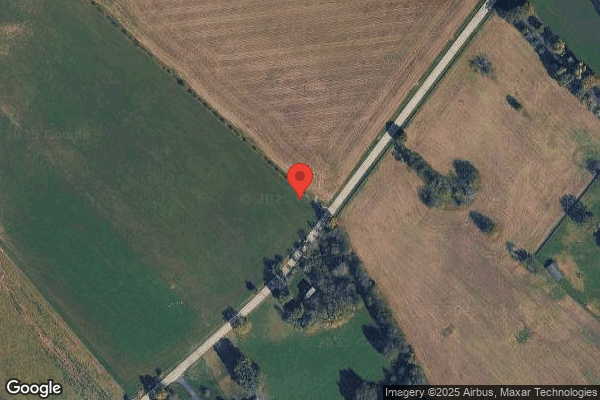
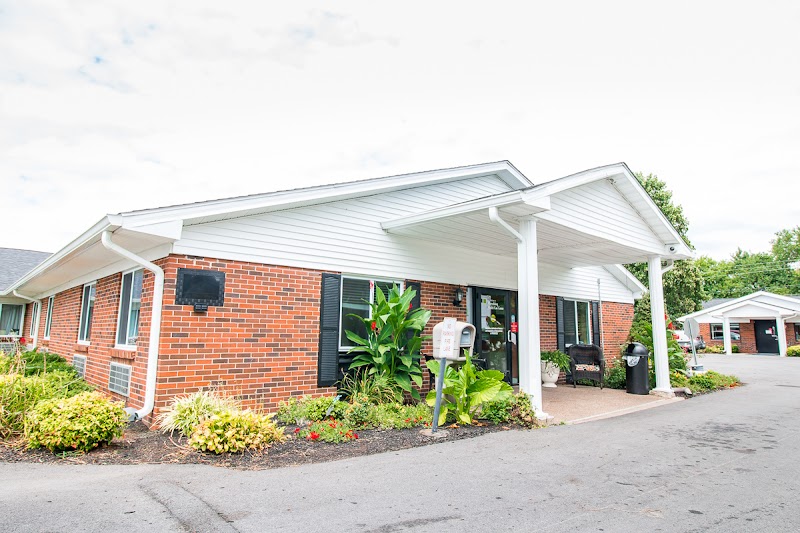
853 Lexington Road, Harrodsburg, KY 40330 (859) 734-7791
For profit - Limited Liability company 112 Beds SIGNATURE HEALTHCARE Data: November 2025
Trust Grade
81/100
#58 of 266 in KY
Last Inspection: November 2024

Within standard 12-15 month inspection cycle. Federal law requires annual inspections.

Overview

Harrodsburg Health & Rehabilitation Center has a Trust Grade of B+, indicating it is above average and recommended for families seeking care. It ranks #58 out of 266 facilities in Kentucky, placing it in the top half, and is the best option among the two nursing homes in Mercer County. Unfortunately, the facility's condition is worsening, with issues increasing from 1 in 2019 to 2 in 2024. Staffing is a mixed bag; while their turnover rate is good at 27%, which is lower than the state average, their staffing rating is only 2 out of 5 stars, indicating below-average support. Recent inspections revealed some concerning practices, such as unsanitary storage of equipment in resident bathrooms and a failure to provide necessary oral hygiene assistance for one resident, leading to dry, cracked lips. Additionally, medications were not stored under proper temperature control, which is essential for maintaining their effectiveness. Overall, while there are strengths in staffing retention, the facility faces significant challenges that families should consider.
Trust Score
B+
81/100
In Kentucky
#58/266
Top 21%
Safety Record
Low Risk
No red flags
Inspections
Getting Worse
1 → 2 violations
Staff Stability
✓ Good
27% annual turnover. Excellent stability, 21 points below Kentucky's 48% average. Staff who stay learn residents' needs.
Penalties
○ Average
$6,682 in fines. Higher than 52% of Kentucky facilities. Some compliance issues.
Skilled Nurses
⚠ Watch
Each resident gets only 21 minutes of Registered Nurse (RN) attention daily — below average for Kentucky. Fewer RN minutes means fewer trained eyes watching for problems.
Violations
○ Average
6 deficiencies on record. Average for a facility this size. Mostly minor or procedural issues.
★★★★☆
4.0
Overall Rating
★★☆☆☆
2.0
Staff Levels
★★★☆☆
3.0
Care Quality
★★★★☆
4.0
Inspection Score
Stable
2019: 1 issues
2024: 2 issues

The Good

  • Low Staff Turnover (27%) · Staff stability means consistent care
  • Full Sprinkler Coverage · Fire safety systems throughout facility
  • No fines on record
  • Staff turnover is low (27%)

    21 points below Kentucky average of 48%

Facility shows strength in staff retention, fire safety.

The Bad

Federal Fines: $6,682

Below median ($33,413)

Minor penalties assessed

Chain: SIGNATURE HEALTHCARE

Part of a multi-facility chain

Ask about local staffing decisions and management

The Ugly 6 deficiencies on record

Nov 2024 2 deficiencies
CONCERN (D)

Potential for Harm - no one hurt, but risky conditions existed

ADL Care (Tag F0677)

Could have caused harm · This affected 1 resident

Based on observation, interview, record review, and review of the facility's policies, the facility failed to ensure residents who were unable to carry out activities of daily living received the nece...

Read full inspector narrative →
Based on observation, interview, record review, and review of the facility's policies, the facility failed to ensure residents who were unable to carry out activities of daily living received the necessary services to maintain good oral hygiene for 1 of 24 sampled residents (Resident (R) 28). Observation of R28 on 11/05/2024 at 10:51 AM and again on 11/06/2024 at 3:11 PM revealed the resident had dry, cracked lips with peeling skin. The findings include: Review of the facility's policy titled, Resident Rights, revised 09/15/2023, revealed all residents would be treated in a manner and in an environment that promoted maintenance or enhancement of quality of life. Review of the facility's policy titled, Activities of Daily Living (ADLs), dated 09/15/2023, revealed direct healthcare staff would assist, support, and encourage residents to maintain adequate ADLs such as the following: bathing, grooming, eating, toileting, bed mobility, and transfers. Further review revealed for those residents who were unable to perform their own ADLs, the facility would provide the needed assistance for completion of cares. Review of R28's Face Sheet revealed the facility admitted the resident on 05/28/2021 with diagnoses including Rett's syndrome (a rare neurological genetic disorder that caused severe muscle movement disability), muscle contractures of both upper arms and both lower legs, and left-hand contracture. Review of R28's quarterly Minimum Data Set (MDS), with an Assessment Reference Date (ARD) of 08/22/2024, revealed a Brief Interview for Mental Status (BIMS) assessment was not completed because of the resident's neurological status. Further review revealed R28 received enteral feeding via a gastrostomy tube and was completely dependent on staff for ADL care. Review of R28's Comprehensive Care Plan, dated 06/25/2024, revealed a focus of dental care with an intervention that included oral care every shift and as needed. Review of R28's current Physician's Orders revealed an order, dated 01/03/2024, that included oral care every shift. Review of R28's point of care (POC) documentation, dated 11/02/2024 to 11/08/2024, revealed the resident was totally dependent on staff for personal hygiene care. Further review revealed no documented personal hygiene care on 11/05/2024 or 11/07/2024. Observation of R28 on 11/05/2024 at 10:51 AM revealed the resident was in bed with contractures to arms, legs, and hands. In addition, R28 had dry, cracked lips with peeling skin. Observation of R28 on 11/06/2024 at 3:11 PM revealed the resident had dry, cracked lips with peeling skin. Observation on 11/07/2024 at 1:52 PM revealed State Registered Nurse Aide (SRNA) 2 provided oral care to R28. SRNA2 used a lemon-glycerin swabstick and cleaned the inside of R28's mouth. Additional observation revealed SRNA2 obtained a new swabstick and cleaned R28's lips. Observation after oral care revealed R28's lips were smooth and moist. During an interview on 11/07/2024 at 10:51 AM with SRNA1, she stated R28 was fragile, unable to move, and required two people for assistance with care. SRNA1 stated oral care was provided at least every day, but more often if needed. During an interview with SRNA3 on 11/08/2024 at 8:50 AM, she stated oral care for dependent residents like R28 was provided a couple of times a shift and more if needed. During an interview with the MDS Nurse on 11/08/2024 at 9:14 AM, she stated she previously worked as a floor nurse and provided care to R28 in the past. The MDS Nurse stated it was her expectation staff provided oral care when they provided other care. She further stated the facility policy for oral care was at least once a shift and as needed. During an interview with the Director of Nursing (DON) on 11/08/2024 at 2:19 PM, she stated it was her expectation residents' ADL needs were met daily and as needed. She further stated oral care was routine care and provided every shift and as needed as residents allowed. She stated it was her expectation staff assessed and provided oral care as necessary when they made their rounds. The DON stated oral care was important because it provided comfort for residents that were dependent on staff for ADL care. During an interview with the Administrator on 11/08/2024 at 3:39 PM, she stated it was her expectation all staff helped with residents' ADL care. She further stated she expected oral care was provided to residents as ordered and per the facility policy.
CONCERN (D)

Potential for Harm - no one hurt, but risky conditions existed

Deficiency F0761 (Tag F0761)

Could have caused harm · This affected 1 resident

Based on observation, interview, record review, review of a Food and Drug Administration (FDA) website, review of the American Biotech Supply document Medication Refrigerator Temperature Guidelines: W...

Read full inspector narrative →
Based on observation, interview, record review, review of a Food and Drug Administration (FDA) website, review of the American Biotech Supply document Medication Refrigerator Temperature Guidelines: What You Should Know, and facility policy review, the facility failed to store all drugs and biologicals under proper temperature control for 1 of 2 medication refrigerators, the refrigerator in the South Medication Room. Observation revealed two vials of Tuberculin Purified Protein Derivative (PPD) were stored in the door of the South Medication Room refrigerator. The findings include: Review of the facility's policy titled, Medication Storage, dated 01/2023, revealed it was the policy of the facility to ensure medications and biologicals were stored properly, following manufacturer's or provider pharmacy recommendations, to maintain their integrity and to support safe effective drug administration. Further review revealed medication requiring refrigeration or a temperature between 36 degrees Fahrenheit (F) and 46 degrees (F) were kept in a refrigerator with a thermometer to allow temperature monitoring. Also, the temperature of any refrigerator that stored vaccines should be monitored and recorded twice daily. Review of website https://www.fda.gov/media/74866/download, under Storage for Tuberculin PPD stated PPD should be stored in a refrigerator at a temperature between 35 to 46 degrees F. Review of the American Biotech Supply document Medication Refrigerator Temperature Guidelines: What You Should Know, undated, revealed medications should be stored in the center of the refrigerator, away from the bottoms and sides. It stated to never store medications in door shelves or bins as these areas were prone to larger fluctuations in temperature. Observation on 11/06/2024 at 10:05 AM of the medication refrigerator in the Medication Room on the South Hallway revealed there were two vials of Tuberculin PPD stored in the door of the medication refrigerator. In an interview on 11/08/2024 at 8:05 AM with Licensed Practical Nurse (LPN) 8, she stated issues with storing medications in the door of the refrigerator could be that items could accidentally fall out when the door was opened/closed or the medications could lose efficacy if the door was left open too long or opened/closed frequently. In an interview on 11/08/2024 at 8:14 AM with the Director of Nursing (DON), she stated she could think of no issues with storing medications in the door of the refrigerator. When asked if heating/cooling of medications such as Tuberculin PPD could decrease their potency, she stated, Yes. In an interview with the Administrator on 11/08/2024 at 8:37 AM, she stated she would defer to the DON about proper medication storage and would work with her on any issues with medications stored improperly. She stated she was unaware of any medications stored in the door of any medication refrigerators but did not see that it would be an issue. She stated the medication refrigerator door should always be opened and immediately shut to keep any items in the door cool.
Oct 2019 1 deficiency
CONCERN (D)

Potential for Harm - no one hurt, but risky conditions existed

Deficiency F0761 (Tag F0761)

Could have caused harm · This affected 1 resident

**NOTE- TERMS IN BRACKETS HAVE BEEN EDITED TO PROTECT CONFIDENTIALITY** Based on observation, interview and review of facility Policy, it was determined the facility failed to ensure drugs and biologi...

Read full inspector narrative →
**NOTE- TERMS IN BRACKETS HAVE BEEN EDITED TO PROTECT CONFIDENTIALITY** Based on observation, interview and review of facility Policy, it was determined the facility failed to ensure drugs and biologicals were stored properly, and labeled in accordance with accepted professional principles and include the expiration date. Observation on [DATE] of the South Medication refrigerator, revealed an opened and undated vial of single dose pneumonia vaccine. In addition, observation on [DATE] of the North Medication refrigerator, revealed a plastic container with a creamy white substance which was unlabeled and undated. The findings include: Review of the facility Policy, titled Medication Storage, Section 4.1, dated 09/2018, revealed the provider pharmacy dispenses medications in containers that meet state and federal labeling requirements. Outdated medications are to be immediately removed from stock and disposed of and reordered from pharmacy. Further review revealed each prescription label should include resident's name, directions for use, medication name, strength of medication, prescriber's name, date medication is dispensed, quantity dispensed, expiration or end-of-use date, name, address and telephone number of the dispensing pharmacy, prescription number, accessory/precautionary labels, and dispensing pharmacists's initials. Observation on [DATE] at 1:46 PM, of the South Medication refrigerator, revealed an opened and undated vial of single dose pneumonia vaccine. Interview with Licensed Practical Nurse (LPN) #2, on [DATE] at 1:46 PM, revealed per professional standards of nursing practice, nurses were to date vials of medication when opened in order to know when the medication was expired for the safety of the residents. Per interview, the vaccine could be less effective if not given within the recommended time frame after it was opened. LPN #2 stated since the pneumonia vaccine was a single dose medication, it should have been used when opened, and then the vial discarded. Further, any multidose vials of medications should be dated when opened in order for staff to know the expiration date. Observation on [DATE] at 2:16 PM, of the North Medication refrigerator, revealed a plastic container with a creamy white substance and the container was unlabeled and undated. Interview with LPN #1, on [DATE] at 2:16 PM, revealed only medications should be stored in the medication refrigerator for the safety of the residents. LPN #1 denied knowledge of what was in the plastic container in the North medication room refrigerator; however, did state it should be discarded. Interview with the Assistant Director of Nursing (ADON) #1, on [DATE] at 3:00 PM, revealed she was the Unit Manager and the Assistant Director of Nursing for the North Unit. Per interview, only medications should be in the medication refrigerator and she had no knowledge of what the white substance was in the plastic container or why it was locked up in the medication room refrigerator. Further interview revealed if a single dose medication vial was opened, it should be used at the time it was opened and then discarded. Further, any mutidose vials should be dated when opened. Interview with ADON #2, on [DATE] at 3:10 PM, revealed it was her expectation for nursing staff to follow the policy related to medication storage. Per interview, if a single dose vial was opened, it should be used right then or wasted. Further interview revealed only medications should be stored in the medication refrigerator as per facility policy. Interview with the Staff Development Coordinator, on [DATE] at 3:30 PM, revealed per facility policy, only medications should be stored in the medication refrigerators. Per interview, if medication vials were opened, they should be dated with the open date and discarded when expired. Further, if a single dose medication vial was opened, the medication should be administered when opened, or discarded if not administered. Continued interview revealed there should not be opened single use vials of medications in the medication refrigerator accessible for use, as staff would not know if part of the dose had been used or if the vial was contaminated. Per interview, the nursing staff received education related to proper storage of drugs and biologicals, and also received competency tests. Interview with the Director of Nursing (DON), on [DATE] at 3:45 PM, revealed it was her expectation for all staff to follow the policy for medication storage. Per interview, staff should use a single dose vial of medication when uncapped to ensure the integrity of the medication. Continued interview revealed it would be against facility policy to have a plastic container with a white substance in the medication refrigerator. The DON stated the facility did offer education regarding medication storage in the form of inservices, meetings and tests for the licensed nursing staff. Interview with the Administrator, on [DATE] at 4:00 PM, revealed it was her expectation for staff to follow facility policy regarding storage and labeling of medications. Continued interview revealed only medications should be in the medication refrigerator.
Jul 2018 3 deficiencies
CONCERN (D)

Potential for Harm - no one hurt, but risky conditions existed

Deficiency F0761 (Tag F0761)

Could have caused harm · This affected 1 resident

**NOTE- TERMS IN BRACKETS HAVE BEEN EDITED TO PROTECT CONFIDENTIALITY** Based on observation, interview, and review of facility Policy, it was determined the facility failed to label drugs and biologi...

Read full inspector narrative →
**NOTE- TERMS IN BRACKETS HAVE BEEN EDITED TO PROTECT CONFIDENTIALITY** Based on observation, interview, and review of facility Policy, it was determined the facility failed to label drugs and biologicals in accordance with currently accepted professional principles, and include the appropriate accessory and cautionary instructions, and the expiration date when applicable. Observation on 07/18/18, of the medical storage room cabinet on the North Middle Unit, which included [NAME] Avenue, Reminisce Lane, and [NAME] Valley, revealed one (1) box of thirty-four (34) Benzalkonium Chloride Towelettes (antiseptic wipes) with an expiration date of 04/2016. In addition, observation on 07/19/18, of the [NAME] Road South-2 medication cart, revealed three (3) opened insulin Flex Pens which were not marked with the open date. Also, observation of the North Hall [NAME] Ave Medication Cart, on 07/19/18, revealed one (1) bottle of Fluticasone Propionate Nasal spray and one (1) bottle of Bromonidine 0.2% eye drops which were open, but not marked with the open date. The findings include: Review of the facility Medication Administration General Guidelines Policy, dated 12/2012, revealed staff were to Check expiration date on package/container. No expired medication will be administered to a resident. Continued review revealed, The nurse shall place a date opened sticker on the medication if one is not provided by the dispensing pharmacy and enter the date opened. Certain products or package types such as multi-dose vials and ophthalmic drops have specified shortened end-of-life dating, once opened, to ensure medication purity and potency. 1. Observation on 07/18/18 at 4:18 PM, of the medical storage room cabinet on the North Middle Unit, which included [NAME] Avenue, Reminisce Lane, and [NAME] Valley Units, revealed one (1) box of thirty-four (34) Benzalkonium Chloride Towelettes (antiseptic wipes) with an expiration date of 04/2016. Interview with Licensed Practical Nurse (LPN) #7, on 07/18/18 at 4:42 PM, revealed staff two (2) staff members were responsible for checking supplies and expiration dates of supplies throughout the building weekly. Further interview revealed if supplies were outdated they may not work as good. Additional interview revealed if an outdated antiseptic was used on a resident it could potentially cause an infection to set up or not treat the infection as well. Interview on 07/18/18 at 5:11 PM, with the Central Supply staff member responsible for ordering supplies for the facility, revealed she usually checked supplies for the facility on Tuesdays and Fridays. She stated another staff member assisted her when needed or when she was on vacation. She further stated she usually checked expiration dates of the supplies while restocking. However, per interview, the facility recently changed supply companies and ninety (90) percent of the supplies were from the new supply company and had recently been ordered; therefore the supplies had not had time to expire and she did not check the expiration dates when she last stocked on 07/17/18. In addition, she stated staff used the supplies pretty quickly so they usually did not expire. Additional interview revealed the facility had no sign off sheet to indicate when expiration dates were checked or supplies checked and restocked. 2. Review of the facility Pharmacy Medication Expiration Dates document, dated 11/2017, revealed Humalog insulin pens and Novolog insulin pens expired thirty (30) days after being opened. Continued review revealed Novolog 70-30 insulin pens expired fourteen (14) days after being opened. Observation on 07/19/18 at 10:53 AM, of the [NAME] Road South-2 medication cart with Registered Nurse (RN) #1, who was also one of the Assistant Directors of Nursing (ADON), revealed one (1) Novolog Insulin Flex pen three (3) milliliters (ml) which was open, but not marked with the open date. Continued observation revealed the medication label contained a pharmacy fill date of 07/12/18; however, the manufacturer's expiration date was unknown as the RN #1/ADON discarded the medication prior to this surveyor looking at the date. Interview with RN #1/ ADON at the time of observation, revealed the medication had been discontinued on 07/18/18 and a new insulin order received. Further observation revealed one (1) Novolog Mix 70-30 Insulin Flex Pen which was open, but not but not marked with the open date. Continued observation revealed the medication had a pharmacy fill date of 07/12/18 and a manufacturer's expiration date of 06/2019. RN #1/ADON was observed by this surveyor writing the date of 07/18/18 on the label of the insulin pen after this surveyor noted there was no date marked on the pen to indicate the date in which the pen had been opened. Interview with RN #1/ADON at the time of observation, revealed that was when it was opened. When questioned by the surveyor regarding the fill date of 07/12/18, on the medication label, the ADON stated Oh. No it was opened on that date and was observed rewriting a new opened date of 07/12/18 on the medication label. Continued observation revealed one (1) Humalog 100 units Insulin Flex Pen opened; however, not marked with the open date. The medication label had a pharmacy fill date of 07/18/18 and a manufacturer's expiration date of 12/2020. RN #1/ADON was observed by this surveyor writing a date of 07/18/18 on the medication label and she stated the insulin came from the pharmacy yesterday (07/18/18) and was opened the night of 07/18/18. Interview with RN #1/ADON, on 07/19/18 at 11:00 AM, revealed it was the nurse's responsibility to check for opened dates and expiration dates on medications before administering the medications. Further interview revealed insulin was to be kept in the refrigerator until opened and once opened, the Insulin vial or pen was to be labeled with the date it was opened. She stated insulin was good for thirty (30) days after it was opened. Additional interview revealed she checked the medication carts when she worked on the carts; and due to finding Insulins which had been opened without being marked with the open date, she would be checking the medication carts during her daily rounds. She further stated it was important to date insulin when it was opened to ensure the medication was at its best to ensure efficacy. Per interview, I'm sure there are possible negative outcomes if outdated insulin was given to the residents, but I'm unsure what they are. She further stated if insulin was expired it may not be effective, and could possibly affect residents' blood sugars by causing the blood sugars to remain high. Interview with Licensed Practical Nurse (LPN) #8, on 07/19/18 at 12:14 PM, revealed she had been working at the facility for just a few weeks. Continued interview revealed she thought RN #1/ADON checked expiration dates of medications on the medication carts; however, nurses should ensure the medications were dated when opened. Further interview revealed it was important to date medications, including insulin when opened, so staff would know when the medication expired. Additional interview revealed there could possibly be negative outcomes from giving Insulin which was not dated when opened, because staff would be unsure of the expiration date. 3. Observation on 07/19/18 at 11:59 AM, of the North Hall [NAME] Ave medication cart, revealed one (1) sixteen (16) gram bottle of Fluticasone Propionate Nasal spray that was opened, but not dated with the open date. Continued observation revealed the medication label contained a pharmacy fill date of 05/16/18 and an expiration date of 12/2020. Further observation revealed one (1) ten (10) milliliter (ml) bottle of Bromonidine 0.2% eye drops that was open, but not dated with the open date. Additional observation revealed the medication had a pharmacy fill date of 05/10/18 and an expiration date of 06/2019 on the medication label. Interview with LPN #7, on 07/19/18 at 12:08 PM, revealed nurses were responsible for checking the medications on the medication carts for expiration dates. Continued interview revealed if a medication was not dated when opened or was expired, she would remove the refill sticker from the medication container, place the medication in the pharmacy bin, and call the pharmacy to reorder the medication. Further interview revealed it was important to date medications when opened because some medications were only good for a certain amount of time after they were opened. Per interview, eye drops were good for sixty (60) days after being opened. She stated she was unsure how long nasal sprays could be used after being opened. Additional interview revealed residents should not be given a medication that was outdated due to the medication would not work as well. Interview with the Director of Nursing (DON), on 07/19/18 at 7:10 PM, revealed it was her expectation when a nurse opened a medication, such as eye drops, nasal spray or insulin, the nurse would date the medication with the date in which the medication was opened. Continued interview revealed it was her expectation the nurses check the expiration dates of the medications before administering the medication, and also checked expiration dates of supplies before use. Interview with the Administrator, on 07/19/18 at 7:20 PM, revealed it was her expectation nursing staff follow the facility policies related to opening medications.
CONCERN (D)

Potential for Harm - no one hurt, but risky conditions existed

Infection Control (Tag F0880)

Could have caused harm · This affected 1 resident

**NOTE- TERMS IN BRACKETS HAVE BEEN EDITED TO PROTECT CONFIDENTIALITY** 2. Observation on 07/18/18 at 4:00 PM, of the shared bathroom between rooms [ROOM NUMBERS], revealed three (3) soiled areas on t...

Read full inspector narrative →
**NOTE- TERMS IN BRACKETS HAVE BEEN EDITED TO PROTECT CONFIDENTIALITY** 2. Observation on 07/18/18 at 4:00 PM, of the shared bathroom between rooms [ROOM NUMBERS], revealed three (3) soiled areas on the wall above the toilet tissue holder, which resembled stool. Each of the areas was approximately (5) five to (6) six centimeter (cm) long and approximately (2) two centimeters wide and were brown in color. Interview with LPN #2, on 07/18/18 at 5:05 PM, revealed the SRNAs were expected to make sure resident rooms and bathrooms were cleaned. Per interview, if a SRNA found soiled areas, they were to call housekeeping. LPN #2 stated the SRNAs were to clean any area which appeared as stool and then have housekeeping disinfect. Further interview revealed this was important to prevent cross contamination and illnesses such as Escherichia coli (E-coli). (E-coli is a bacteria which normally lives in the colon and can be spread from person to person. Symptoms of an E-coli infection can range from diarrhea to severe abdominal cramps, bloody diarrhea, and vomiting) Interview with SRNA #1, on 07/18/18 at 5:12 PM, revealed after providing care to residents, the bathroom and toilet areas were to be checked to ensure there was no soiling of areas which may need to be cleaned. Per interview, it was the SRNA's responsibility to clean soiled areas when they found them and Housekeeping would be called as needed. Further interview revealed maintaining a clean environment prevented the spread of disease in the facility keeping the residents safe. Interview with the Staff Development Coordinator (SDC), on 07/19/18 at 6:18 PM, revealed she was not aware of the brown soiled area (resembling stool) on the resident's bathroom wall in the shared bathroom for rooms [ROOM NUMBERS]. Further interview with the SDC, revealed there could be negative consequences of soiled or dirty walls as there could be the potential for infectious organism transmission to residents, especially those who shared a bathroom. Additional, interview revealed it was a housekeeping/facility rule to give more attention to bathrooms with independent residents who may soil the bathroom without staff present. Interview with the Housekeeping Manager, on 07/18/18 at 10:00 AM, and 5:15 PM, revealed the SRNAs cleaned the bulk of the stool found on toilets in the bathrooms and then called Housekeeping to sanitize. Continued interview revealed Housekeeping performed rounds four (4) times daily, and while cleaning the bathroom the housekeeping staff wiped down the toilets and cleaned around the toilets and walls if dirt/soiling was noted. Further interview revealed Housekeeping signed off to indicate they had performed the four (4) rounds daily. Additional interview revealed Quality Assurance (QA) rounds were performed by him daily and if he found an area that had not been cleaned, he had Housekeeping clean the area. He stated during the QA rounds, he checked one (1) common area, one (1) random bathroom, and one (1) deep cleaned room daily. He further stated it was important to keep bathrooms clean due to safety and infection prevention. Interview with the Director of Nursing (DON), on 07/19/18 at 7:10 PM, revealed, it was a joint effort between nursing staff and housekeeping to ensure bathrooms and resident rooms were clean and a homelike environment was maintained. Further interview revealed soiled or contaminated areas posed a risk for cross contamination of infection. Interview with the Administrator, on 07/29/18 at 7:20 PM, revealed all staff was to maintain resident rooms and bathrooms in a homelike manner. Per interview, when a SRNA entered a resident bathroom and noted it was soiled, they should clean the bathroom if it was manageable, and otherwise they were to call housekeeping to ensure cleanliness. Further interview revealed if the bathrooms were not clean, there was the risk of cross contamination and this would be an infection control issue for the residents. Based on observation, interview, and review of the facility's Policy, it was determined the facility failed to establish and maintain an Infection Control Program designed to provide a safe, sanitary and comfortable environment and to help prevent the development and transmission of disease and infection. Observation on 07/17/18 at 11:32 AM, 2:48 PM, 5:11 PM, and 07/18/18 at 9:25 AM, revealed a raised toilet seat in the shared bathroom for rooms [ROOM NUMBERS] was soiled with a dried brown substance resembling dried liquid stool. This bathroom was shared by four (4) residents. In addition, observation on 07/18/18 at 4:00 PM, of the shared bathroom between rooms [ROOM NUMBERS], revealed three (3) soiled areas on the wall above the toilet tissue holder, which resembled stool. Each area was approximately (5) five to (6) six centimeter (cm) long and each approximately (2) two centimeters wide and were brown in color. The findings include: Review of the facility's Standard Precautions Policy, dated 08/2007, revealed staff should ensure that reusable equipment is not used for the care of another resident until it has been appropriately cleaned and reprocessed . Continued review revealed the policy stated ensure that environmental surfaces, beds, bedrails, bedside equipment and other frequently touched surfaces are appropriately cleaned. Observation on 07/17/18 at 11:32 AM, revealed a raised toilet seat in the shared bathroom for rooms [ROOM NUMBERS] was soiled with a dried brown substance resembling dried liquid stool. There were four (4) residents who shared this bathroom. Further observation on 07/17/18 at 2:48 PM, 07/17/18 at 5:11 PM, and 07/18/18 at 9:25 AM, revealed the raised toilet seat was still soiled with the dried brown substance. Observation on 07/18/18 at 9:50 AM, revealed a Housekeeping cart was parked in the hall outside of room (212). Continued observation revealed the Housekeeper and the Housekeeping Manager were in the shared bathroom for rooms [ROOM NUMBERS] and were cleaning the soiled toilet seat. Observation on 07/18/18 at 10:22 AM and on 07/19/18 at 9:52 AM, revealed the shared bathroom for rooms [ROOM NUMBERS] was neat and clean, with no dried brown substance on the raised toilet seat. Interview with State Registered Nurse Aide (SRNA) #11, on 07/18/18 at 9:34 AM, who was working the hall where rooms [ROOM NUMBERS] were located, revealed the SRNAs would clean what they could when a bathroom was soiled and then they would call housekeeping to sanitize further. She stated Housekeeping checked the bathrooms during their rounds; however, she was unsure how often Housekeeping performed rounds. Additional interview revealed if the toilet seat was soiled staff would clean the toilet seat before allowing a resident to sit on the seat when assisting the residents with toileting. However, per interview, the residents who took themselves to the bathroom were probably sitting on the soiled seat. Interview with Licensed Practical Nurse (LPN) #6, on 07/18/18 at 9:51 AM, revealed the SRNAs would clean the bulk of anything soiled including toilet seats and bathrooms, and then would call Housekeeping to sanitize. Continued interview revealed SRNAs usually assisted the residents to the bathroom; however, some residents would go to the bathroom without asking for assistance. She stated it was important to keep bathrooms and toilet seats clean for safety and infection control. Interview on 07/19/18 at 12:23 PM, with a Housekeeper, revealed the housekeepers were assigned to different halls, and he did not work the hall with rooms [ROOM NUMBERS]. He stated he cleaned the residents' bathrooms on his assigned hall daily and as needed after that. He further stated the middle hall which was the shared bathroom for rooms [ROOM NUMBERS] gets the shaft. and explained this meant that this hall was not cleaned as well as the other halls. Per interview, it was the dirtiest hall. Additional interview revealed it was important to keep bathrooms clean due to cross contamination and for the comfort of the residents.
CONCERN (E)

Potential for Harm - no one hurt, but risky conditions existed

Safe Environment (Tag F0584)

Could have caused harm · This affected multiple residents

**NOTE- TERMS IN BRACKETS HAVE BEEN EDITED TO PROTECT CONFIDENTIALITY** Based on observation, and interview, it was determined the facility failed to ensure services necessary to maintain a sanitary, ...

Read full inspector narrative →
**NOTE- TERMS IN BRACKETS HAVE BEEN EDITED TO PROTECT CONFIDENTIALITY** Based on observation, and interview, it was determined the facility failed to ensure services necessary to maintain a sanitary, orderly, and comfortable interior. Observation during survey on 07/17/18, 07/18/18, and 07/19/18, revealed shared resident bathrooms on the 200, and 300 units had bed pans, fracture pans, and urinals which were not stored in a sanitary manner and were not labeled for resident identification. In addition, observation on 07/19/18, revealed the 400 unit had a plunger which was not stored in a sanitary manner as it was partially bagged on the floor of a resident bathroom. The findings include: Interview on 07/19/18 at 6:29 PM, with the Administrator, revealed the facility did not have a specific written policy related to storage of bed pans, urinals and plungers. 1. Observation on 07/17/18 at 12:40 PM, 2:31 PM, and 3:35 PM, of the shared bathroom for Resident room [ROOM NUMBER], revealed an uncovered bedpan which was not labeled for resident identification stored on the floor, behind the toilet. There was also two (2) male urinals hanging on the wall above the toilet in clear plastic bags with no resident identification located on either urinal. Additionally, the urinal observed furthest from the bathroom sink, contained approximately sixty (60) millimeters of clear yellow liquid. Additional observation on 07/18/18 at 8:41 AM, 9:45 AM and 11:05 AM, of the shared bathroom for Resident room [ROOM NUMBER], revealed a bedpan stored on the floor without a storage bag and without a label for resident identification. Further observation revealed two (2) male urinals, hanging on the wall above the toilet, unlabeled for resident identification and stored in clear plastic bags. Additional observation revealed the urinal furthest from the bathroom sink contained approximately thirty (30) millimeters of clear yellow liquid. Continued observation on 07/19/18 at 9:16 AM, of the shared bathroom for Resident room [ROOM NUMBER], revealed two (2) male urinals hanging on the wall above the shared toilet in clear plastic bags which were not labeled with identification. 2. Observation on 07/18/18 at 9:08 AM and 07/19/18 at 7:10 AM and 4:20 PM, revealed the shared bathroom for resident room [ROOM NUMBER], had two (2) fracture pans in a plastic bag in the tub which were not labeled with resident identification. Continued observation on 07/19/18 at 7:10 PM, of the shared bathroom for room [ROOM NUMBER], revealed two (2) bagged and fracture pans which were not labeled with resident identification leaning against the wall and resting on the bathroom floor. 3. Observation of the private bathroom for resident room [ROOM NUMBER] on 07/19/18 at 3:45 PM, revealed a plunger partially bagged and sitting on the floor. Interview on 07/19/18 at 4:05 PM, with State Registered Nurse Assistant (SRNA) #9 who was working on the 200 unit, revealed bed pans, and urinals should be labeled with resident identification, bagged, and hung on the hooks in the bathroom. She further revealed if she found any unlabeled bed pans or urinals she would throw them away and get new bed pans and urinals to prevent cross contamination. Interview on 07/19/18 at 4:07 PM, with SRNA #10, who was working on the 300 unit, revealed bed pans and urinals should be bagged, labeled with resident identification, and hung up. Per interview, if the bed pans, and urinals were not bagged and labeled she would get new bed pans and urinals to prevent cross contamination. Additional interview revealed plungers should be bagged or removed from resident bathrooms because leaving a plunger in a resident bathroom without covering it with a plastic bag was an infection control concern. Interview on 07/19/18 at 4:30 PM, with Licensed Practical Nurse (LPN) #2 who worked the 300-400 unit, revealed bed pans should be bagged, labeled with resident identification and kept in the bottom drawer in the bathroom. Per interview, bed pans should be stored properly to prevent cross contamination. Interview on 07/19/18 at 4:20 PM, with the Assistant Director of Nursing (ADON) #2, revealed all bed pans and urinals should be labeled with resident identification and bagged to prevent cross contamination. Per interview, if staff find bed pans and urinals which were not labeled or bagged, they should be thrown away. Additional interview revealed Housekeeping was responsible for removing the plungers after use. Interview on 07/19/18 at 4:35 PM with ADON #1, revealed bed pans and urinals should be bagged and identified with the resident's name and room number and hung on the hook in the bathroom to prevent infection control concerns. Interview on 07/19/18 at 6:05 PM, with the Director of Nursing (DON), revealed residents should have a clean home like environment. Per interview, the bed pans, fracture pans, and urinals should be cleaned after use, bagged and labeled with resident identification and hung on hooks in the bathroom to prevent cross contamination. Additional interview revealed the plunger should be bagged or removed from the bathroom. Interview on 07/19/18 at 6:29 PM, with the Administrator, revealed bed pans, and urinals should be cleaned after each use and stored in a bag in the bathroom on the railing with the resident's name and/or room number. Per interview, plungers should also be properly stored.
Understanding Severity Codes (click to expand)
Life-Threatening (Immediate Jeopardy)
J - Isolated K - Pattern L - Widespread
Actual Harm
G - Isolated H - Pattern I - Widespread
Potential for Harm
D - Isolated E - Pattern F - Widespread
No Harm (Minor)
A - Isolated B - Pattern C - Widespread

Questions to Ask on Your Visit

  • "Can I speak with families of current residents?"
  • "What's your RN coverage like on weekends and overnight?"

Our Honest Assessment

Strengths
  • • Grade B+ (81/100). Above average facility, better than most options in Kentucky.
  • • No major safety red flags. No abuse findings, life-threatening violations, or SFF status.
  • • 27% annual turnover. Excellent stability, 21 points below Kentucky's 48% average. Staff who stay learn residents' needs.
Concerns
  • • No significant concerns identified. This facility shows no red flags across CMS ratings, staff turnover, or federal penalties.
Bottom line: Generally positive indicators. Standard due diligence and a personal visit recommended.

About This Facility

What is Harrodsburg Health & Rehabilitation Center's CMS Rating?

CMS assigns Harrodsburg Health & Rehabilitation Center an overall rating of 4 out of 5 stars, which is considered above average nationally. Within Kentucky, this rating places the facility higher than 99% of the state's 100 nursing homes. This rating reflects solid performance across the metrics CMS uses to evaluate nursing home quality.
How is Harrodsburg Health & Rehabilitation Center Staffed?
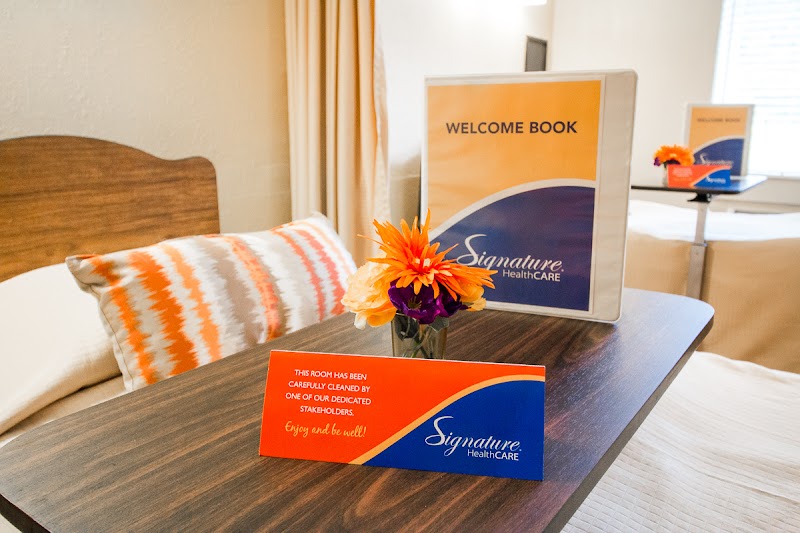
CMS rates Harrodsburg Health & Rehabilitation Center's staffing level at 2 out of 5 stars, which is below average compared to other nursing homes. Staff turnover is 27%, compared to the Kentucky average of 46%. This relatively stable workforce can support continuity of care. RN turnover specifically is 62%, which is notably high. RNs provide skilled clinical oversight, so turnover in this role can affect medical care quality.

What Have Inspectors Found at Harrodsburg Health & Rehabilitation Center?

State health inspectors documented 6 deficiencies at Harrodsburg Health & Rehabilitation Center during 2018 to 2024. These included: 6 with potential for harm.

Who Owns and Operates Harrodsburg Health & Rehabilitation Center?

Harrodsburg Health & Rehabilitation Center is owned by a for-profit company. For-profit facilities operate as businesses with obligations to shareholders or private owners. The facility is operated by SIGNATURE HEALTHCARE, a chain that manages multiple nursing homes. With 112 certified beds and approximately 92 residents (about 82% occupancy), it is a mid-sized facility located in Harrodsburg, Kentucky.

How Does Harrodsburg Health & Rehabilitation Center Compare to Other Kentucky Nursing Homes?

Compared to the 100 nursing homes in Kentucky, Harrodsburg Health & Rehabilitation Center's overall rating (4 stars) is above the state average of 2.8, staff turnover (27%) is significantly lower than the state average of 46%, and health inspection rating (4 stars) is above the national benchmark.

What Should Families Ask When Visiting Harrodsburg Health & Rehabilitation Center?

Based on this facility's data, families visiting should ask: "Can you walk me through typical staffing levels on day, evening, and night shifts?" "Can I visit during a mealtime to observe dining assistance and food quality?" "How do you handle medical emergencies, and what is your hospital transfer rate?" "Can I speak with family members of current residents about their experience?" These questions are particularly relevant given the below-average staffing rating.

Is Harrodsburg Health & Rehabilitation Center Safe?

Based on CMS inspection data, Harrodsburg Health & Rehabilitation Center has a clean safety record: no substantiated abuse findings (meaning no confirmed cases of resident harm), no Immediate Jeopardy citations (the most serious violation level indicating risk of serious injury or death), and is not on the Special Focus Facility watch list (a federal program monitoring the lowest-performing 1% of nursing homes). The facility has a 4-star overall rating and ranks #1 of 100 nursing homes in Kentucky. While no facility is perfect, families should still ask about staff-to-resident ratios and recent inspection results during their visit.

Do Nurses at Harrodsburg Health & Rehabilitation Center Stick Around?

Staff at Harrodsburg Health & Rehabilitation Center tend to stick around. With a turnover rate of 27%, the facility is 19 percentage points below the Kentucky average of 46%. Low turnover is a positive sign. It means caregivers have time to learn each resident's needs, medications, and personal preferences. Consistent staff also notice subtle changes in a resident's condition more quickly.

Was Harrodsburg Health & Rehabilitation Center Ever Fined?

Harrodsburg Health & Rehabilitation Center has been fined $6,682 across 1 penalty action. This is below the Kentucky average of $33,146. While any fine indicates a compliance issue, fines under $50,000 are relatively common and typically reflect isolated problems that were subsequently corrected. Families should ask what specific issues led to these fines and confirm they've been resolved.

Is Harrodsburg Health & Rehabilitation Center on Any Federal Watch List?

Harrodsburg Health & Rehabilitation Center is not on any federal watch list. The most significant is the Special Focus Facility (SFF) program, which identifies the bottom 1% of nursing homes nationally based on persistent, serious quality problems. Not being on this list means the facility has avoided the pattern of deficiencies that triggers enhanced federal oversight. This is a positive indicator, though families should still review the facility's inspection history directly.