IRVINE NURSING AND REHABILITATION CENTER
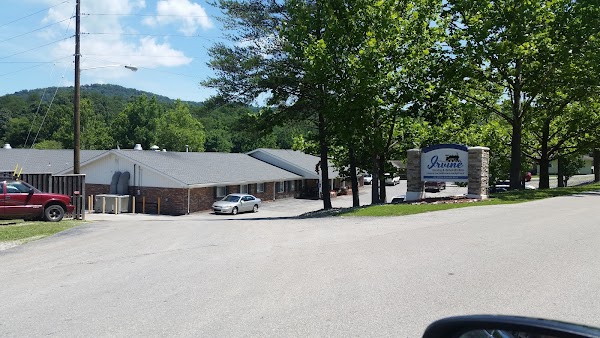
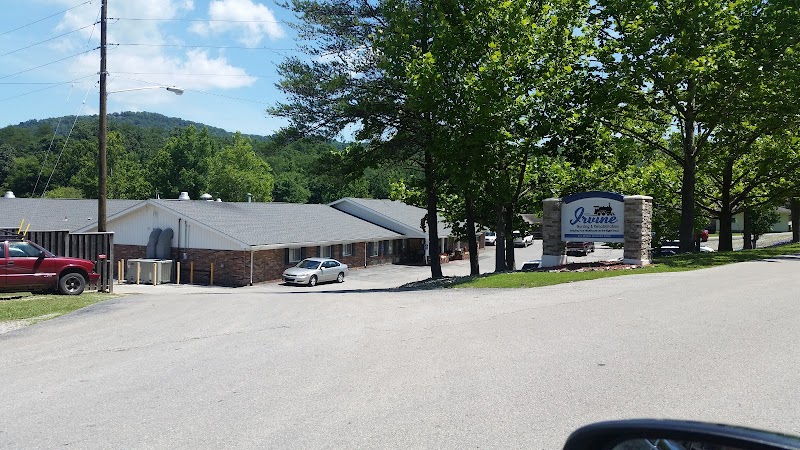
411 BERTHA WALLACE DRIVE, IRVINE, KY 40336 (606) 723-5153
For profit - Limited Liability company 86 Beds Independent Data: November 2025
Trust Grade
60/100
#171 of 266 in KY
Last Inspection: February 2025

Within standard 12-15 month inspection cycle. Federal law requires annual inspections.

Overview

Irvine Nursing and Rehabilitation Center has a Trust Grade of C+, indicating it is slightly above average but not outstanding. It ranks #171 out of 266 nursing homes in Kentucky, placing it in the bottom half, but it is the only facility in Estill County. The facility's trend is worsening, with the number of issues increasing from 3 in 2024 to 4 in 2025. Staffing is a relative strength, with a turnover rate of 41%, which is below the state average, but overall ratings are average at 2 out of 5 stars. While there have been no fines reported, there are concerning incidents, such as serving food at unsafe temperatures and failing to maintain proper hand hygiene during medication administration, indicating areas needing improvement.

Trust Score
C+
60/100
In Kentucky
#171/266
Bottom 36%
Safety Record
Low Risk
No red flags
Inspections
Getting Worse
3 → 4 violations
Staff Stability
○ Average
41% turnover. Near Kentucky's 48% average. Typical for the industry.
Penalties
✓ Good
No fines on record. Clean compliance history, better than most Kentucky facilities.
Skilled Nurses
○ Average
Each resident gets 35 minutes of Registered Nurse (RN) attention daily — about average for Kentucky. RNs are the most trained staff who monitor for health changes.
Violations
○ Average
10 deficiencies on record. Average for a facility this size. Mostly minor or procedural issues.
★★☆☆☆
2.0
Overall Rating
★★★☆☆
3.0
Staff Levels
★☆☆☆☆
1.0
Care Quality
★★★☆☆
3.0
Inspection Score
Stable
2024: 3 issues
2025: 4 issues

The Good

  • Full Sprinkler Coverage · Fire safety systems throughout facility
  • No fines on record
  • Staff turnover below average (41%)

    7 points below Kentucky average of 48%

Facility shows strength in fire safety.

The Bad

2-Star Overall Rating

Below Kentucky average (2.8)

Below average - review inspection findings carefully

Staff Turnover: 41%

Near Kentucky avg (46%)

Typical for the industry

The Ugly 10 deficiencies on record

Feb 2025 4 deficiencies
CONCERN (D)

Potential for Harm - no one hurt, but risky conditions existed

Deficiency F0583 (Tag F0583)

Could have caused harm · This affected 1 resident

Based on interview, record review, and review of the facility's policy, it was determined the facility failed to ensure the security and confidentiality of medical records for one of twenty-nine (29) ...

Read full inspector narrative →
Based on interview, record review, and review of the facility's policy, it was determined the facility failed to ensure the security and confidentiality of medical records for one of twenty-nine (29) sampled residents, Resident 4 (R4). Medical information including the patient's name and medical symptoms were given to a family member of R4's physician. The findings include: Observation, on 02/12/2025 at 11:55 PM, revealed Registered Nurse (RN) 1 call Physician 1's home phone number to report R4's complaint of chest pain. Review of the facility's policy, Change of Condition Standard of Practice, dated 07/2020, revealed the policy purpose was to ensure all interested parties were informed of the resident's change in health status so a treatment plan could be developed which was in the best interest of the resident. Further review revealed the facility would immediately (as soon as possible/no longer than twenty-four (24) hours) consult the resident's physician, nurse practitioner, or physician assistant when there was a significant change in the resident's physical status (a deterioration in health status in either life-threatening conditions or clinical complications). Review of Resident 4's (R4) admission Face Sheet revealed the facility admitted R4 on 10/24/2023 with diagnoses which included cerebral infarction, transient cerebral ischemic attack, and atrial fibrillation (an irregular heartbeat). During an interview, on 02/13/2025 at 12:10 AM, RN1 stated she had called Physician 1's home phone number and spoke with Physician 1's daughter to give report on R4. During further interview, RN1 stated Physician 1's daughter was not a medical professional (nurse, nurse practitioner, physician assistant, or physician), but was a smart sweet girl who was knowledgeable and helped Physician 1. During continued interview, RN1 stated she normally did not give report to a physician's family member, but Physician 1's daughter stated she would take report and relay it to Physician 1. Additionally, RN1 stated she should not have given report to Physician 1's daughter as she was not a trained medical profession because she may have given incorrect information regarding R4 to Physician 1 regarding the patient's condition. During an interview, on 02/13/2025 at 3:45 PM, the Director of Nursing (DON) stated only a physician, physician assistant, or nurse practitioner should be notified of a change in a resident's condition because information might not be relayed to the medical provider correctly, and it would be a violation of the Health Insurance Portability and Accountability Act of 1996 (HIPPA) to give information regarding a resident to someone other than the medical provider. During an interview, on 02/13/2025 at 4:35 PM, the Administrator stated staff should never relay a resident's medical information to a physician's family member because information could be relayed incorrectly to the physician. During an interview, on 02/13/2025 at 5:13 PM, Physician 1 stated RN1 did relay R4's medical information to his daughter on 02/12/2025 around 11:55 PM, and his daughter relayed the information to him and he called RN4 back a short time later with an order to send R4 to the emergency room (ER) for complaints of chest pain. He further stated his daughter had worked for him when he had a medical practice a few years ago, but was not a trained medical professional and did not work for him currently.
CONCERN (D)

Potential for Harm - no one hurt, but risky conditions existed

Infection Control (Tag F0880)

Could have caused harm · This affected 1 resident

Based on interview, record review, and review of the facility's policy, it was determined the facility failed to maintain an infection prevention and control program designed to provide a safe, sanita...

Read full inspector narrative →
Based on interview, record review, and review of the facility's policy, it was determined the facility failed to maintain an infection prevention and control program designed to provide a safe, sanitary, and comfortable environment and to help prevent the development and transmission of communicable diseases and infections for one of twenty-nine (29) sampled residents, Resident 4 (R4). The findings include: Observation, on 02/12/2025 at 11:30 PM, revealed Registered Nurse (RN) 1 obtained vital signs and a glucometer (blood sugar) check for R4 without washing her hands before or after obtaining vital signs and the glucometer check. Further observation revealed RN1 exited R4's room into the hallway while wearing gloves and unlocked and reached into a drawer of the treatment cart while wearing the soiled gloves, then reentered R4's room wearing the same soiled gloves. Continued observation revealed RN1 placed a bottle of glucometer strips on R4's bed while obtaining R4's glucometer check, then picked up the bottle of glucometer strips and placed it in her pocket. Review of the facility's policy, Infection Control, undated, revealed the facility's infection control policies and practices were intended to facilitate maintaining a safe, sanitary and comfortable environment and to help prevent and manage transmission of diseases and infections. Continued review of the policy revealed the objectives of the infection control policies and procedures were to prevent infections in the facility. Review of Resident 4's (R4) admission Face Sheet revealed the facility admitted R4 on 10/24/2023 with diagnoses which included cerebral infarction, transient cerebral ischemic attack, and atrial fibrillation (an irregular heartbeat). During an interview, on 02/13/2025 at 12:10 AM, RN1 stated she had received Infection Control Training in the facility which was provided at least annually, and she thought the last in-service on Infection Control was about 2 weeks ago. She further stated she should have washed her hands before checking vital signs, between checking the vital signs and the glucometer check, and after finishing the glucometer check. She continued to state she should not have left the room wearing gloves. Additionally, she stated it was important to use proper handwashing technique and the proper use of gloves to prevent the spread of any germs or infections from one resident to another resident. During an interview, on 02/13/2025 at 3:45 PM, the Director of Nursing (DON) stated she expected all staff to perform proper handwashing technique and the proper use of personal protective equipment (PPE), including gloves, to prevent the spread of infection between residents. During an interview, on 02/13/2025 at 4:35 PM, the Administrator stated staff should follow the facility's policies and procedures, including the Infection Control Policy, for the safety of the residents.
CONCERN (D)

Potential for Harm - no one hurt, but risky conditions existed

Deficiency F0919 (Tag F0919)

Could have caused harm · This affected 1 resident

Based on interviews, record review, and review of the facility's policy, the facility failed to allow residents to call for staff assistance through a communication system that relays the call directl...

Read full inspector narrative →
Based on interviews, record review, and review of the facility's policy, the facility failed to allow residents to call for staff assistance through a communication system that relays the call directly to a staff member from each resident's bedside. During observations on the 2/12/2025 night shift, call lights for Resident (R) 23, R26, and R67 were found lying under the bed, behind a chair on the floor, and clipped to the privacy curtain, and all were out of reach for the residents to call for assistance. The findings include: The facility resident council meeting was held on 02/12/2025 at 1:20 PM, with 4 out of seventeen residents who attended voicing the following concerns about call lights: R291 revealed, We can't get any help during the night. The workers sit at their desks or stand in the hallway talking on their cell phones all night. R69 revealed, They hide our call lights at night, so we can't reach them. R7 revealed, They tell us not to ring our call bells and To go back to bed if we get up. Observation of R26 on 02/12/2025 at 11:04 PM revealed that staff had left the call light cord loosely draped around the bedrail, with the call light device dangling just above the floor. When the SSA entered the room for observation, resident 26 called out for help. An interview with R26 during the observation revealed that R26 was calling out for help because R26 said he was thirsty, hungry, and wanted a snack. Observation of R67 on 02/12/2025 at 11:15 PM revealed that the call light device was attached and wrapped in the center privacy curtain that divides the room, out of reach of R67, while she was lying in her bed. Observation of R23 on 02/12/2025 at 11:20 PM revealed that R23 was lying awake in the bed while the call light device was under the bedside chair on the floor out of R23's reach. An interview with State Registered Nursing Assistant (SRNA) #14, on 02/12/2025 at 11:14 PM, revealed that the call light cord should be within reach of the residents and the call light not being accessible to the resident increases the risk of them getting hurt trying to take care of their needs alone. An interview with SRNA #12 on 02/12/2020 at 11:18 PM revealed that staff had moved the call light during R26's care and forgotten to place it back within the resident's reach. Further interviews revealed that SRNA # 12 stated that the residents use the call light system to communicate their needs to us. If the resident can't reach the call light, it increases the risk of them getting hurt trying to get things alone. An interview with the facility Educator on 02/11/25 at 2:50 PM revealed the call light issue has been an ongoing problem that the residents have been voicing for a while. A review of R26's Plan of care revealed that the resident has a history of falls, and having his call light in reach is listed as an intervention. A review of Resident Council minutes for the time range of 09/09/2024 through 02/04/2025 revealed the following: On 11/5/2024 at 2 PM, Residents were concerned about call lights, and the Social Worker informed them that audits and education were in place. On 01/07/25 at 2 PM, a Resident voiced that staff was not answering the call lights promptly. The social worker told the council the staff was being educated again on answering call lights promptly. On 02/04/2025 at 2 PM, Residents voiced they were still having issues with the night shift not answering call lights promptly. A review of the facility's Grievance / Concern Form revealed a grievance was filed on the following dates by residents or a family member for the time range of 09/01/2024 through 02/10/2025 concerning call bells not being answered timely:12/02/2024,12/27/2024,01/24/2025, and 02/04/2025 A review of a grievance form dated 12/02/2025 revealed that R61 had called her family and stated that she needed assistance to go to the bathroom. She had rung the call light for over an hour, but the staff had not responded. R61's family drove to the facility to inform staff that the resident required assistance. The resident was found soiled with feces, and the call light remained activated with no staff response. The resident did not receive staff assistance until prompted by the family member. Although the Administrator stated in an interview on 02/13/2025 at 3 PM that she was aware of the problem and educated staff regarding staff answering call lights promptly, the facility continued to receive resident complaints and grievances regarding staff's failure to answer call lights promptly on 1/07/25, 01/24/2025, and 02/04/2025.
CONCERN (E)

Potential for Harm - no one hurt, but risky conditions existed

Deficiency F0804 (Tag F0804)

Could have caused harm · This affected multiple residents

Based on interview, record review, and review of the facility's policy, the facility failed to provide food served at a safe and appetizing temperature to ensure resident satisfaction and safety for 5...

Read full inspector narrative →
Based on interview, record review, and review of the facility's policy, the facility failed to provide food served at a safe and appetizing temperature to ensure resident satisfaction and safety for 5 out of 17 residents who attended the Resident Group Meeting held on 02/12/2025 at 1:20 PM. Five interviewable residents (Resident (R)4, R7, R38, R69, and R291) selected by the facility in a resident group meeting all expressed concerns about the facility's food, which included hot food being served cold. Observation of a test tray with the Dietary Manager (DM) revealed hot food temperatures were below 135 degrees Fahrenheit (F)and cold foods were above 41 degrees F. An interview with the DM revealed the hot foods on the test tray should be served at 135 degrees F, at a minimum, and the cold foods/beverages should have been below 41 degrees F. The findings include: A review of the facility's policy titled Food: Preparation, revision dated 02/2023, revealed that All foods will be held at appropriate temperatures, greater than 135 degrees Fahrenheit (F) (or as state regulation requires) for hot holding, and less than 41 degrees F for cold food holding. A review of the facility's policy titled Meal Distribution, revision dated 02/2023, revealed that Meals are transported to the dining locations in a manner that ensures proper temperature maintenance, protects against contamination, and delivers in a timely and accurate manner. A review of the facility's policy titled Food: Quality and Palatability revised 02/2023, revealed that Foods will be palatable, attractive, and served at a safe and appetizing temperature. During the resident group meeting held on 02/12/2024 at 01:20 PM, with interviewable residents selected by the facility, all five residents (R4, R7, R38, R69, and R291) expressed concerns about the facility's food. The interviews were as follows: -R38 stated food was the big issue at the facility, adding that the facility always serves her food cold. -R291 stated, Food is always cold by the time I get it. -R7 and R69 stated sometimes food items are cold. -R4 stated, I have to eat snacks that my family brings because the food is too cold from the kitchen. The facility provided the Resident Council Minutes from 09/09/2024 through 02/04/2025. The minutes revealed that residents expressed concerns about the food during the resident council meeting on 02/04/2025. Residents further stated, [NAME] top Hall trays are cold when they are passed out to them. On 02/13/2024 at 12:30 PM, a State Survey Agent (SSA) performed an observation of a lunch tray pass conducted on the [NAME] Hall unit. After the staff served the last resident tray, the Dietary Manager (DM), alongside the District Dietary Manager (DDM), obtained the food temperature on the test tray. Per observation, the floor staff completed the tray pass in 18 minutes. Continued observation revealed the temperature results of the test tray food were as follows: cheese pizza was 112.9 degrees F, verified by the DM; the fruit cocktail was 45 degrees F, verified by the DM; the salad was 62.5 degrees F, verified by the DM. During an interview with the DDM at the time of observation, he stated meals needed to be served at an appropriate temperature for food palatability, resident satisfaction, and resident safety to prevent foodborne illness, scalding, and burns. The DDM further stated the nursing staff did not deliver meals to the residents promptly. During an interview on 02/13/2025 at 3:00 PM, the Administrator stated she was aware of residents' food complaints. Although, the Administrator stated she had educated staff on meal service, the facility had failed to monitor to ensure food temperatures were within the required ranges and foods were palatable.
Dec 2024 3 deficiencies
CONCERN (D) 📢 Someone Reported This

A family member, employee, or ombudsman was alarmed enough to file a formal complaint

Potential for Harm - no one hurt, but risky conditions existed

Assessment Accuracy (Tag F0641)

Could have caused harm · This affected 1 resident

F641 Based on observation, interview and record review, the facility failed to ensure that each resident recived an assessment that accurately reflected the resident's status. Record review revealed a...

Read full inspector narrative →
F641 Based on observation, interview and record review, the facility failed to ensure that each resident recived an assessment that accurately reflected the resident's status. Record review revealed a diagnosis of paraphilia had been entered on Resident (R) 6's admission face sheet on 06/29/2024. Review of the hospital discharge History and Physical (H&P) and the facility's admission H&P did not listed paraphilia as a diagnosis for R6. The findings include: Review of facility's policy titled Comprehensive Care Plans Standard of Practice dated 10/2020 revealed the comprehensive care plan was based on a thorough asessment that includes, but was not limited to the Minimum Data Set (MDS). Added review revealed areas of concern triggered during the resident assessment were evaluated using specific assessment tools, including Care Area Assessments. Observation during initial tour of facility on 12/09/2024 at 11:50 AM revealed R6 was in bed. During an interview at this time, R6 was unable to carry on conversation with exception of answering yes and no questions. Observation on 12/10/2024 at 2:20 PM revealed R6 resting in bed. Observation on 12/19/2024 at 11:15 AM revealed R6 up in wheelchair in hallway. Review of a hospital History and Physical (H&P) for R6 dated 06/26/2024 revealed diagnoses which did not include paraphilia. Added review of the H&P revealed R6 was neurologically alert but disoriented, did not include any sexually inappropriate behavior and was electronically signed by the provider on 06/26/2024 at 1:00 PM. Review of e-mail documentation from the facility's admission Coordinator (AC) dated 06/28/2024 at 10:05 AM, revealed correspondence stating that R6 was a very sweet guy, was confused, did not get up independently/wander, and family couldn't care for R6 at home. The documentation did not include any sexually inappropriate behavior for R6. Review of an attached document in the e-mail titled Hospital On-Site Information dated 06/28/2024, revealed under Behaviors/Combativeness Section Revealed R6 did not have any inappropriate behaviors of combativeness. Review of R6's face sheet revealed the facility admitted R6 on 06/29/2024 with diagnoses to include Alzheimer's disease, depression, paraphilia, and dementia. Review of R6's Minimum Data Set (MDS) with an Assessment Reference Date (ARD) of 07/04/2024 revealed the resident had a Brief Interview for Mental Status (BIMS) score of six (6) out of fifteen (15) which indicated the resident was severely cognitively impaired. Review of the Quarterly MDS with an ARD of 11/01/2024 revealed R6 had a BIMS score of seven (7) out of fifteen indicating resident remained severely cognitively impaired. Review of R6's MDS Assessment Section E Behavior with ARD of 07/04/2024 and 11/01/2024, revealed inappropriate sexual behavioral symptoms were not exhibited by R6. Review of the admission History and Physical Examination dated 07/01/2024 revealed the medical history for R6 did not include paraphilia and the document was electronically signed by the Primary Care Physician (PCP) on 07/14/2024 at 3:27 PM. During an interview with State Registered Nurse Aide (SRNA)4 on 12/10/2024 at 1:42 PM, he stated he had not seen or heard of any inappropriate behavior from R6. During an interview with SRNA12 on 12/12/2024 at 2:42 PM, SRNA12 stated she had seen R6 holding hands and touching shoulders of R2 but there was no other behaviors. When asked why she had made the sexually inappropriate entry to R6's chart, SRNA12 stated that was the only entry in the Kiosk that fit the behavior. During an interview with SRNA13 on 12/17/2024 at 3:06 PM, SRNA13 stated he had not observed any inappropriate sexual behavior or verbalization from R6. In an interview with SRNA15 on 12/18/2024 at 2:26 PM, SRNA15 stated she had seen R6 in the dining room a lot and had never witnessed any inappropriate behavior from R6 toward other residents. During interview with SRNA16 on 12/18/2024 at 10:20 AM, SRNA16 stated she had provided the 1:1 staff supervision all night with R6 on 10/20/2024 after the allegation of sexual abuse. When asked if R6 exhibited any inappropriate behavior or language, SRNA16 stated no, R6 actually slept most of the night. During an interview with SRNA7 on 12/11/2024 at 1:44 PM, SRNA7 stated she had not witnessed R6 having any inappropriate behavior. SRNA8 stated in interview on 12/11/2024 at 1:56 PM, he had not seen any inappropriate interactions between R6 and female residents. During an interview with Licensed Practical Nurse (LPN)4 on 12/17/2024 at 2:24 PM, LPN4 stated she had not seen R6 touching anyone inappropriately. During interview with the Unit Manager (UM) on 12/11/2024 at 1:02 PM, the UM stated R6 had not had any inappropriate behavior of touching other residents prior to 10/20/2024 when R6 had his hand between the legs of R3. During interview with the MDS nurse on 12/18/2024 at 9:40 AM she stated she shared the workload of the MDS Coordinator, and her tasks included entries in the MDS when residents were admitted to the facility. The MDS Nurse stated some of the information she viewed for MDS entries were diagnoses included in the discharge summaries. The MDS Nurse stated those diagnoses were then pulled over to the resident face sheets by the computerized system. When MDS nurse was asked where R6's diagnosis of paraphilia came from, she stated the diagnosis of paraphilia for R6 had been keyed in wrong when the admission information was entered. The MDS Nurse was unsure if the facility had a system in place to ensure that each resident's admission diagnoses were entered correctly. During an interview with the MDS Coordinator on 12/12/2024 at 12:38 PM, the MDS Coordinator stated he has held that position for almost one (1) year. When asked what tasks the MDS Coordinator was responsible for he stated the MDS Coordinator was responsible to enter the baseline care plans, reviews orders, and perform revisions of care plans. The MDS Coordinator was unsure how the entry for inappropriate sexual behaviors was placed on R6's careplan on 06/29/2024. The MDS Coordinator stated in interview at 10:24 AM on 12/18/2024, he thought the Unit Manager did a three (3) day look back to ensure resident diagnoses had been keyed in correctly and stated his concern would be if a wrong diagnosis was placed in the resident record, direct care would possibly be provided incorrectly. During interview with the Social Service Director (SSD) on 12/10/2024 at 3:05 PM, the SSD stated she had heard that R6 liked to pat residents but had not witnessed any behavior. During an interview with the facility Administrator on 12/19/2024 at 12:46 PM, the Administrator stated she was unsure if a wrong diagnosis entered could have an impact on care, treatment, or care planning of residents. The Administrator added she expected facility staff to assure tasks were performed correctly assuring quality of care of residents. During interview with the Director of Nursing (DON) on 12/12/2024 at 11:28 AM, the DON stated she had never seen R6 inappropriately touching other residents other than patting them on hands, arms, back, or shoulder. The DON stated in interview on 12/18/2024 at 4:08 PM that entering a wrong diagnosis for R6 or any resident would be concerning since treatment or changes in treatment could occur reflective of the diagnosis. In an interview with the Primary Care Provider (PCP) on 12/17/2024 at 12:31 PM, the PCP stated he was unaware of a diagnosis of paraphilia for R6 and was unsure where it came from, adding he didn't recall a history of paraphilia related to R6. During continued interview with the PCP on 12/19/2024 at 10:22 AM, the PCP stated if a misdiagnosis was made, his concern would be adding extra medications/polypharmacy and extra medications need to be limited. The PCP added the medications added to R6's regiment possibly reflective of paraphilia were pretty benign and no side effects had been reported to him, nor had he made any observations of R6 declining during visits. During an interview with R6's family member (FM) on 12/18/2024 at 10:51 AM, the FM stated R6 had never had any inappropriate flirtatious behavior of grabbing or feeling of women. The FM stated he visits with R6 three (3) to four (4) times monthly and has never seen any unusual behavior adding the facility takes real good care of R6. During interview with the Psychiatric Nurse Practitioner (NP) on 12/13/2024 at 1:02 PM, the NP stated she was seeing R6 after one of the nurses told her R6 had sexually inappropriate behaviors. The NP denied witnessing any sexually inappropriate behaviors from R6. The NP stated she had witnessed R6 holding hands with a female resident. The NP stated touching and patting other residents could be a sign of paraphilia, but she knew nothing about R6's prior history and was going by what facility staff had reported to her.
CONCERN (D) 📢 Someone Reported This

A family member, employee, or ombudsman was alarmed enough to file a formal complaint

Potential for Harm - no one hurt, but risky conditions existed

Comprehensive Care Plan (Tag F0656)

Could have caused harm · This affected 1 resident

**NOTE- TERMS IN BRACKETS HAVE BEEN EDITED TO PROTECT CONFIDENTIALITY** The facility failed to have a system in place to develop and implement a care plan with individualized person-centered intervent...

Read full inspector narrative →
**NOTE- TERMS IN BRACKETS HAVE BEEN EDITED TO PROTECT CONFIDENTIALITY** The facility failed to have a system in place to develop and implement a care plan with individualized person-centered interventions, to include adequate supervision and monitoring for one (1) of three (3) residents, Resident 6 (R6). R6 was observed by staff to display behaviors of touching and patting the hands, arms, shoulders, and backs of female residents shortly after admission to the facility on [DATE]. Review of the comprehensive care plan for R6 revealed this behavior had not been addressed in the care plan and there were no person-centered specific interventions in place regarding these behaviors. The findings include: Review of facility's policy titled Comprehensive Care Plan dated 10/2020 revealed the purpose of the policy was to have an individualized care plan that included measurable objectives and timetables to meet the resident's medical, nursing, mental, and psychosocial needs. The policy stated the Comprehensive Care Plan (CCP) was based on a thorough assessment that included, but was not limited to the Minimum Data Set (MDS), was designed to identify problem areas and incorporate risk factors associated with identified problems. The policy revealed assessments of residents were ongoing and care plans were required to be revised as the resident's condition changed, when a significant change occurred in the resident's medical condition or when an outcome was not met. Observation during the initial tour of the facility on 12/09/2024 at 11:50 AM revealed R6 was in bed. During an interview at this time, R6 was unable to carry on conversation with exception of answering yes and no questions. Observation on 12/10/2024 at 2:20 PM revealed R6 was resting in bed. Observation on 12/19/2024 at 11:15 AM revealed R6 was up in wheelchair in the hallway. Review of R6's face sheet revealed the facility admitted R6 on 06/29/2024 with diagnoses to include Alzheimer's disease, depression, paraphilia, and dementia. Review of R6's Minimum Data Set (MDS) with an Assessment Reference Date (ARD) of 10/30/2024, revealed the resident had a Brief Interview for Mental Status (BIMS) score of seven (7) of fifteen (15), which indicated the resident was severely cognitively impaired. Review of R6's CCP included the resident desired affection from peers (i.e. sitting too close together, holding hands, touching or patting arms and hands) dated 08/16/2024 with an intervention to redirect R6 as needed; however, no review or outcome of the intervention was found. Review of the problem list in the CCP for R6 dated 08/19/2024 included the resident displayed sexually inappropriate behaviors with an intervention for staff to monitor and redirect the resident as needed; however, no review or outcome of the behaviors or interventions were found. Continued review of the CCP for R6 revealed on 10/20/2024, the problem list included inappropriate touching of female residents with interventions implemented to remove R6 from the area, provide 1:1 staff supervision for R6 with fifteen-minute checks of R6 initiated on 10/21/2024; however, no review or outcome of the intervention were found. In an interview with SRNA3 on 12/10/2024 at 2:33 PM, she stated R6 had behaviors of touching other residents on the arms/hands/shoulders about one (1) to two (2) months ago. During interview with the Social Service Director (SSD) on 12/10/2024 at 3:05 PM, the SSD stated she had heard that R6 liked to pat other residents but had not witnessed any behavior. During an interview with State Registered Nurse Aide (SRNA)2 on 12/10/2024 at 3:28 PM, SRNA2 stated R6 had behaviors of touching/patting other residents on the arms/hands/shoulders not long after R6 was admitted to facility. During interview with the Unit Manager (UM), on 12/11/2024 at 1:02 PM, the UM stated she had seen R6 rubbing other residents' arms at times. In an interview with Licensed Practical Nurse (LPN)2 on 12/11/2024 at 1:02 PM, LPN2 stated the purpose of resident care plans was so staff would be aware of the care to be provided to each resident and the interventions were guides for the care to be provided for each resident. SRNA7 stated in interview on 12/11/2024 at 1:44 PM that she had witnessed R2 kissing R's jaw on one occassion. SRNA8 stated in interview on 12/11/2024 at 1:56 PM, he had not seen any inappropriate sexual interactions between R6 and other female residents adding he at one time had seen R6 tapping R2's shoulder. During an interview with SRNA12 on 12/12/2024 at 2:42 PM, SRNA12 stated she had seen R6 holding hands and touching the shoulders of R2 but there was no other behaviors. When asked why she had made the sexually inappropriate entry in R6's medical record, SRNA12 stated that was the only entry in the Kiosk that fit the behavior. During interview with the Psych Nurse Practitioner (NP) on 12/13/2024 at 1:02 PM, the NP stated she had witnessed R6 holding hands with a female resident. During an interview with SRNA11 on 12/17/2024 at 3:38 PM, SRNA11 stated she had been advised about R6's touching other residents in verbal report and was just told to supervise R6. During an interview with Licensed Practical Nurse (LPN)4 on 12/17/2024 at 2:24 PM, LPN4 stated she had not seen R6 touching anyone inappropriately. LPN4 added she had seen R6 holding hands with R2 at times. LPN 4 stated new interventions should be added to CCP for any resident and reported to the next shift verbally. When asked if she added interventions to the CCP, she stated she does as needed. In an interview with SRNA15 on 12/18/2024 at 2:26 PM, SRNA15 stated R6 was in the dining room a lot, but she had never seen any inappropriate behavior from him toward other residents. During interview with the Director of Nursing (DON) on 12/12/2024 at 11:28 AM, the DON stated she had seen R6 patting other residents on the hands, arms, back, or shoulder at times. In additional interview with the DON on 12/18/2024 at 4:08 PM, the DON stated the importance of resident care plans was to assure all staff understood the care to be provided for each residents to include the nurse aides. The DON added assessments, reviews, and care planning were on-going for all residents. During an interview with the MDS Coordinator on 12/12/2024 at 12:38 PM, the MDS Coordinator stated he was unsure if the staff nurses placed interventions on care plans for problems identified with residents, adding he reviewed physician orders each day and placed interventions on the resident CCP. When asked how the nurse aides were made aware of the care needs for each resident, he stated they would look in the Kiosk. The MDS Coordinator added that care plans were in place to direct resident care and if the interventions in the Kiosk or CCP were incorrect, this would incorrectly guide the care of residents.
CONCERN (D) 📢 Someone Reported This

A family member, employee, or ombudsman was alarmed enough to file a formal complaint

Potential for Harm - no one hurt, but risky conditions existed

Safe Environment (Tag F0921)

Could have caused harm · This affected 1 resident

During initial facility observations, a dark discolored area was noted to be under the stairwell of the facility where the wall meets the floor on the ground floor in a non-resident area. During inter...

Read full inspector narrative →
During initial facility observations, a dark discolored area was noted to be under the stairwell of the facility where the wall meets the floor on the ground floor in a non-resident area. During interviews and record reviews, there was no documentation that an outside certified entity or lab inspected the area for identification of the discoloration. The findings include: Review of the facility policy titled Resident Rights Standard of Practices dated 04/2024, revealed the facility was to ensure the right for residents to have a safe, clean, comfortable, and homelike environment. Review of the facility policy titled Water Intrusion and Mold Remediation Policy and Procedure, no date given, revealed the purpose of the policy was to identify and mitigate the growth of fungi including mold within all facilities. Added review of the policy revealed the definition of mold was a simple microscopic fungus found virtually everywhere including ceiling tiles, carpet, drywall, porous surfaces, and wood. Review of health effects listed in the facility policy stated health problems could occur when a simple microscopic fungus entered the air and was inhaled in large numbers. Continued review of the facility policy revealed identification of mold or moisture problems included the appearance of discoloration ranging from white to orange and from green to brown to black and should be reported to the Supervisor, the Administrator, and the Plant Operations Manager. During an initial facility tour observation on 12/10/2024 at 09:50 AM, with the Maintenance Director present, revealed a non-resident area under the stairwell on the ground floor to have a dark discoloration between the floor and the wall in a corner approximately one (1) inch tall. Additional observation revealed the Rehabilitation Unit to be located on first floor in the same area. During a brief interview at that time the Maintenance Director stated a sample of the substance had not been sent out for evaluation but added a friend had performed a moisture test of the area under the stairwell and there was no moisture noted. When asked what that meant, he stated if there was no moisture, then there was no mold. When asked for copies of an inspection, he stated there were none that he was aware of. Review of a facility document titled Facility Inspection 7-18-2024 revealed maintenance performed a walk through inspection and did not identify any findings regarding water intrusion at the facility. Review of the facility document, no title given, revealed the Regional Plant Operations (RPOD) Director had visited the facility on 07/18/2024 to investigate the discolored wall under the staircase. Added review revealed the RPOD performed a moisture reading on the wall and the reading was under four (4) percent (%). Continued review revealed no organic matter was found, scraping did not dislodge any material from the discolored area and recommendations were to prime and paint the wall. Review of the facility document titled Mold under stairs 7-18-2024 revealed the RPOD had been to the facility, performed a moisture test which read four (4) percent (%) and determined mold could not live without water. Added review of the document revealed the Maintenance Director (MD) and (RPOD) had determined the area was just a discolored wall. Added review revealed the whole wall was bleached and when dried a mold destroyer paint was applied. During interview with the Regional Plant Operation Director (RPOD) on 12/12/2024 at 9:54 AM, he stated facility maintenance contacted him in July of this year about the discoloration on the wall under the stairwell at the facility. He stated his conclusion after scrapings and a moisture reading of less than four (4) percent (%) revealed the area was not mold, only a dirty wall and concrete wearing through paint. When asked what he was expecting by performing scrapings of the area, he stated if it was an organic matter/mold there would be flakes falling onto the white piece of paper he had held under the area for samples adding there were none. He added in interview he recommended the whole wall under the stairwell be primed and painted. When asked if there had been any water intrusion at the facility, he stated none was reported to him. When asked about inspections for water related issues, he stated facility Maintenance performed regular inspections and the surveyor should ask him for reports. When asked if he had any concerns at the facility regarding mold, he stated he did not. In an additional interview, he stated he did not hold any formal certification for identifying mold or inspection. During an additional interview on 12/12/2024 at 2:03 PM, with the Maintenance Director, he stated his tasks included performing facility inspections every month to check the overall condition of the facility. He stated the last one was for the month of November and there were no concerns with the building. When asked if there was a form or any type of documentation of inspections, he said there were not adding he only documented any concerns he found. When asked again about the discolored area under stairwell, he stated he had received a few complaints in July about the area under the stairwell and had contacted the RPOD. He added per recommendations after inspection of the RPOD, he bleached the wall and applied a coat of water-based paint to the entire area. When asked why the area close to the floor was still discolored after painting, he stated he had avoided that area to prevent getting paint on the floor. He stated the RPOD was the only one who had performed an inspection of the area. During an interview with Housekeeping on 12/17/2024 at 9:02 AM, she stated there had been a report of a discolored area under the stairwell about four (4)-five (5) months ago and she had reported this to maintenance. She added housekeeping doesn't do anything with concerns of mold other than reporting to maintenance. During an interview with the Health Department Environmentalist on 12/17/2024 at 9:40 AM, he stated the first step for any concerns of mold would be to first identify it by an outside lab. When asked if a moisture test would indicate the presence of mold, he stated again, the only way to determine if mold was present was to have an outside lab company perform testing. When asked if bleaching and painting the area was sufficient if it was mold, he added that was not recommended. When asked if mold could grow on cement blocks, he stated it could. During an interview with the Director of Nursing (DON) on 12/18/2024 at 4:08 PM, she stated she had not received any reports of mold under the stairwell other than the concern that was reported in July of this year. She stated there had been no increase in any respiratory illnesses in staff or residents since July. During an interview with the Administrator on 12/19/2024 at 12:46 PM, she stated she had been the Administrator of the facility since March of 2023 and her tasks included oversight of the day-to-day operations of the facility in all departments including maintenance. She added her expectations of maintenance were to report any concerns regarding the building to her and she could not recall any concerns reported from maintenance regarding the discolored area. When asked if there had been an outside lab or entity contacted for identification of the discolored area under the stairwell, she stated she felt if this was a concern, maintenance would have addressed it.
Oct 2020 1 deficiency
CONCERN (D)

Potential for Harm - no one hurt, but risky conditions existed

Deficiency F0694 (Tag F0694)

Could have caused harm · This affected 1 resident

**NOTE- TERMS IN BRACKETS HAVE BEEN EDITED TO PROTECT CONFIDENTIALITY** Based on observation, interview, record review, and facility policy review it was determined the facility failed to ensure one (...

Read full inspector narrative →
**NOTE- TERMS IN BRACKETS HAVE BEEN EDITED TO PROTECT CONFIDENTIALITY** Based on observation, interview, record review, and facility policy review it was determined the facility failed to ensure one (1) of twenty-one (21) sampled residents was provided appropriate care and services related to a dressing change for a Peripherally Inserted Central Catheter (PICC). A PICC is a catheter that enters the body through the skin (percutaneously) at a peripheral (situated away from the center) site, extends to the superior vena cava (a central venous trunk), and stays in place (dwells within the veins) for days or weeks. The findings include: Review of the facility policy titled, PICC Line Care, dated 06/25/2020, revealed, Dressing change: should be done every 7 days and PRN using clear occlusive dressing. Further review of the policy revealed, Apply new securement device and new dressing. Furthermore, Scrub the hub for 15 seconds, let dry completely, and replace with new cap. Review of the facility in-service titled PICC Line Care, dated 06/25/2020, revealed that Registered Nurse (RN) #1 had signed review of the policy. Review of the package, Central Line Dressing Change, from Medline Industries, expiration date 02/28/2022, revealed the kit did not contain a securement device or a needleless endcap. Record review revealed the facility admitted Resident #63 on 04/15/2019 with diagnoses including Anemia, Malnutrition, Paraplegia, and Pressure Ulcers of the sacral region, right hip, left hip, and right heel. Review of Resident #63's Minimum Data Set (MDS) assessment dated [DATE] revealed the resident had a Brief Interview for Mental Status (BIMS) score of 12 indicating moderate cognitive impairment. Review of Resident #63's Physician orders revealed an order for Vancomycin HCL Intravenous Solution 500 MG after PICC line placement, dated 09/11/2020. Further review of the Physician orders revealed an order for PICC line dressing change weekly and as needed. Review of Resident #63's Care plan, dated 09/11/2020, revealed under the problem of risk of infection that the resident had an intervention for PICC line placed, care as ordered/indicated. Observation on 10/07/2020 at 1:29 PM revealed Registered Nurse (RN) #1 retrieved the Central Line Dressing Change kit and proceeded to change the dressing. However, RN #1 did not change the stabilization device or the needleless endcap. Interview with RN #1 on 10/08/2020 at 10:07 AM revealed the RN did not change the stabilization device or the needleless endcap. The RN stated she got confused because the Central Line Dressing Change kit was different and did not contain the stabilization device or the needleless endcap. Interview on 10/08/2020 at 11:05 AM with the Central Supply staff revealed she was in charge of ordering the dressing change kit. However, she stated she had found the packet online and showed the picture to RN #1 who said that was the right kit. Interview on 10/08/2020 at 3:58 PM with the Director of Nursing (DON) revealed the Central Line Dressing Change kit did not contain the stabilization device or the needleless endcap. He further stated that the central supply person was new to the job. When the supply clerk was told to order the dressing change kit, the clerk had pulled a kit up online and showed it to a nurse who had verified that it was the correct kit. The DON stated they went to the hospital to get stabilization devices and endcaps to use until the right kits were delivered. He further stated there was only one (1) PICC line in the facility at this time. The DON acknowledged that there would be a concern with the PICC line moving and the line becoming infected without changing the stabilization device or the needleless endcap.
Apr 2019 2 deficiencies
CONCERN (D)

Potential for Harm - no one hurt, but risky conditions existed

Deficiency F0658 (Tag F0658)

Could have caused harm · This affected 1 resident

**NOTE- TERMS IN BRACKETS HAVE BEEN EDITED TO PROTECT CONFIDENTIALITY** Based on observation, interview and review of the facility's Policy, it was determined the facility failed to meet professional ...

Read full inspector narrative →
**NOTE- TERMS IN BRACKETS HAVE BEEN EDITED TO PROTECT CONFIDENTIALITY** Based on observation, interview and review of the facility's Policy, it was determined the facility failed to meet professional standards of practice for one (1) of thirty-two (32) sampled residents (Resident # 77). During inspection of the Nurses Medication Cart on [DATE], observation revealed Resident #77 had Humalog Insulin with an opened date of [DATE], an expiration date twenty-eight (28) days after opening, and the insulin was still being used for Resident #77 fourteen (14) days after the expiration date of [DATE]. The findings include: Review of the facility's Policy titled, 4.1 Storage of Medication, from Nursing Care Center Pharmacy Policy and Procedure Manual-copyright 2007 PharMerica Corp, revealed Medications and biologicals are stored properly, following manufacturer's or provider pharmacy recommendations, to maintain their integrity and to support safe effective drug administration. Further review of the 4.1 Storage of Medication policy revealed insulin products should be stored in the refrigerator until opened. Continued review of the policy revealed to note the date on the label for insulin vials and pens when first used and that the opened insulin vial may be stored in the refrigerator or at room temperature. The policy stated to refer to section 9.10-Medications with Shortened Expiration Dates. Review of the policy Section 9.10 Appendix of Resources Medications with Shortened Expiration Dates, dated 09/18, from Nursing Care Center Pharmacy Policy and Procedure Manual-copyright 2007 PharMerica Corp, revealed Humalog insulin was to be refrigerated until dispensed. Further review revealed the vial, expires twenty-eight (28) days after first use or removal from the refrigerator, whichever comes first. Record review revealed the facility admitted Resident #77 to the facility on [DATE] and Resident #77 was re-admitted on [DATE], with diagnoses to include Type 2 Diabetes Mellitus without Complications. Review of the Physician's Orders for Resident #77 revealed an order for Novolog 100 unit/milliliter vial low sliding scale. Review of the Sliding Scale Insulin document, undated, revealed the Low Dose Regime, which documented the resident would receive insulin for blood glucose levels of 201 Mg/dL (milligrams per deciliter) or greater. Review of Resident #77's Medication Administration Record revealed Resident #77 received the Humalog Insulin for twenty-nine (29) doses over ten (10) days in March, 2019, after the Humalog Insulin expiration date on [DATE], and eight (8) doses over four (4) days in April, 2019, after the Humalog Insulin expiration date on [DATE], for a total of fourteen (14) days with thirty-seven (37) expired doses administered. Observation of the Nursing Medication Cart with LPN #4, on [DATE] at 1:41 PM, revealed Humalog 100 unit per ml vial for resident #77 was observed dated opened [DATE] with a pink sticker stating to discard 28 days after opening. Interview with LPN #4, on [DATE] at 1:41 PM during the time of the observation, revealed Resident #77 had been receiving the Humalog Insulin. Continued interview with LPN #4 revealed Humalog Insulin was good for twenty-eight (28) days after it was opened. LPN #4 stated that Resident #77 may have another bottle of Humalog Insulin in the refrigerator, and upon checking the refrigerator, LPN #4 stated Resident #77 did have another bottle of Humalog Insulin in the refrigerator, which had not been opened. Continued interview with LPN #4 revealed she does not know why the expired Humalog for Resident #77 had not been removed from the medication cart upon the twenty-eight (28) day expiration. Further interview with LPN #4 revealed the Humalog Insulin would not be as effective when administered after the twenty-eight (28) day expiration. LPN #4 stated the Humalog Insulin for Resident #77 was already reordered, and should have been placed in the medication cart and used for the resident and she was unsure why the expired Humalog Insulin for Resident #77 was still in the medication cart being administered to the resident. Interview with the Unit Coordinator, on [DATE] at 1:59 PM, revealed the facility followed recommendations the pharmacy placed on the vial. Further interview revealed the facility would go by the date on the pink sticker, dated opened [DATE]. The Unit Coordinator further stated the facility should follow manufacturer recommendations, and the pharmacy relays this information to the facility. Continued interview with the Unit Coordinator revealed the facility staff that looked at Resident #77's Humalog Insulin should have seen it was expired after twenty-eight (28) days, and the expired insulin should have been discarded and new medication ordered and used for the resident. Further interview with the Unit Coordinator revealed Humalog Insulin that was administered after it had been opened for twenty-eight (28) days would not be as effective. Interview with the Director of Nursing (DON), on [DATE] at 5:24 PM, revealed insulin is dated once opened, then discarded according recommendations in the pharmacy issued policy for insulins. Continued interview with the DON revealed Humalog Insulin expired in twenty-eight (28) days per the Medications with Shortened Expiration Dates policy. The DON further stated it was her expectation and that the facility staff should have reordered Resident #77's Humalog Insulin within two (2) weeks of expiration and then pulled the expired Humalog Insulin when expired, discarded it, and began use of the new vial. Continued interview with the DON revealed using Humalog Insulin after the twenty-eight (28) day expiration could affect the Humalog Insulin level of effectiveness, and stated the Humalog could be less effective. Further interview with the DON revealed it was her expectation that staff follow the facility's policy and procedures and staff should abide by pharmacy recommendations. Interview with the Administrator, on [DATE] at 5:43 PM, revealed the facility followed the policy for Medications with Shortened Expiration Dates, which was provided by PharMerica, the facility's pharmacy. Continued interview with the Administrator revealed Humalog Insulin expired twenty-eight (28) days after opening. Further interview with the Administrator revealed potential outcomes to continuing to administer Humalog Insulin after the twenty-eight (28) day expiration were that the Humalog Insulin could become less effective, losing strength and may not control Resident #77's blood sugar. In addition, the Administrator indicated she was not aware Resident #77 had a new, unopened bottle in the refrigerator. Continued interview with the Administrator revealed it was her expectation that staff follow Physician's orders, and facility's protocols, policies and procedures. Further interview with the Administrator revealed staff should have opened the Humalog Insulin, dated it, and then followed the pharmacy guidelines. The Administrator stated staff should have removed Resident #77's Humalog Insulin from the medication cart when it expired after the twenty-eight (28) days and opened the new vial of Humalog insulin for resident #77.
CONCERN (E)

Potential for Harm - no one hurt, but risky conditions existed

Infection Control (Tag F0880)

Could have caused harm · This affected multiple residents

Based on observations, interview, and review of the facility's policies, it was determined the facility failed to establish and maintain an infection prevention and control program designed to provide...

Read full inspector narrative →
Based on observations, interview, and review of the facility's policies, it was determined the facility failed to establish and maintain an infection prevention and control program designed to provide a safe, sanitary and comfortable environment and to help prevent the development and transmission of communicable diseases and infections for five (5) of seven (7) residents reviewed for medication administration pass (Resident #19, Resident #79, Resident #383, Resident #384 and Resident #385). Observation of medication administration on 04/04/19 revealed staff member failed to perform proper hand hygiene technique prior to preparation of medications, before entering resident's room and prior to exiting resident's rooms during medication pass on [NAME] Unit. The findings include: Review of the facility's policy titled, Medication Administration-General Guidelines, dated 09/2018, revealed staff would wash their hands with soap and water and apply gloves prior to administration of any topical (skin), ophthalmic (eye), enteral (by mouth), parenteral (some means other than by mouth or rectal, usually intravenously or injection), rectal or vaginal medications. Further review of the policy revealed staff were to wash their hands with soap and water again following the administration of medications and after any resident contact. Review of the facility's policy titled, Handwashing/Hand Hygiene, dated 04/2012, revealed the facility recognized hand hygiene as the primary means to prevent the spread of infection. Further review of the facility's Handwashing/Hand Hygiene Policy revealed, all personnel would be trained and regularly in-serviced on the importance of hand hygiene in preventing the transmission of health-care associated infections. Further policy review revealed, unless hands were visibly soiled, the preferred method of hand hygiene was with an alcohol-based hand rub. Continued review of the facility's policy revealed staff were to use an alcohol-based hand rub prior to preparing or handling medications, donning gloves and following removal of gloves and contact with residents. Review of the facility's policy titled, Infection Control Program Standard of Practice, dated 09/2017 and revised on 11/2017, revealed the purpose of the facility's policy was to provide appropriate education for staff and residents concerning infection control. Further policy review revealed the facility would monitor and provide infection isolation precautions as directed by The Center for Disease Control and Prevention (CDC) Long Term Care recommendations and as per regulatory guidelines. 1. Review of Resident #383's clinical record revealed, the facility admitted the resident on 03/25/19 with diagnoses to include Chronic Atrial Fibrillation (heart arrhythmia), Parkinson's Disease, Dementia without Behavioral Disturbance, Acute and Chronic Respiratory Failure with Hypoxia, and History of Falls. Review of the admission Minimum Data Set (MDS) Assessment, dated 04/01/19, revealed the facility assessed the resident to have a Brief Interview for Mental Status (BIMS) Score of five (5) out of fifteen (15), which indicated the resident was severely cognitively impaired. Further review of the admission MDS revealed the facility assessed the resident to require physical assistance of one (1) for all ADLS. Observation of medication administration performed by Kentucky Medication Aide (KMA) #2, on 04/04/19 at 1:18 PM, revealed KMA #2 sanitizing hands with alcohol-based rub and preparing Resident # 383's medications. Further observation revealed KMA #2 placing the Requip 0.5 Milligram (mg) one (1) Tablet and Gabapentin 100 mg two (2) capsules whole in to a small medication cup of applesauce, taking care not to touch the resident's medications. Continued observations revealed KMA #2 then entered Resident # 383's room and administered the medications to the resident with a spoon and exited the resident's room. KMA #2 failed to wash or sanitize his hands prior to signing off the electronic Medication Administration Record (MAR) and began preparing the next resident's medications. 2. Review of Resident 384's clinical record revealed the facility admitted the resident on 03/22/19 with diagnoses to include Unspecified Atrial Fibrillation, Pain, Type 2 Diabetes Mellitus, Complete Traumatic Amputation of Right 5th Toe and Acute Osteomyelitis. Review of the admission MDS Assessment, dated 04/04/19, revealed the facility had assessed the resident as having a BIMS score of fifteen, which indicated the resident was cognitively intact. Further review of the admission MDS revealed the resident required the assistance of one (1) with transfers and toileting. Observation of KMA #2 preparing medication for Resident #384, on 04/04/19 at 1:28 PM, revealed the KMA failed to perform hand hygiene prior to preparing Resident #384's medication. Further observation revealed the KMA opened the Allopurinol 100 mg one (1) Tablet, Metronidazole 500 mg- one (1) Tablet and placed both tablets in to a cup. Continued observations revealed KMA #2 failed to wash/sanitize his hands prior to entering the resident's room to administer the medications and prior to exiting the resident's room following the administration of the resident's medications. Additional observation revealed KMA #2 returned to the medication cart and electronically signed out both medications on the MAR. 3. Review of Resident #385's clinical record revealed the facility admitted the resident on 04/03/19 with diagnoses to include Depression, Restless Leg Syndrome, Atrial Fibrillation and Type 2 Diabetes Mellitus. Observation of KMA #2, on 04/04/19 at 1:34 PM, administering Resident #385's medications revealed the KMA obtained personal alcohol-based hand rub from his medication cart and sanitized hands and prepared the medications. Further observations revealed KMA #2 attempted to document his signature in the electronic record, by electronically flagging Gabapentin 800 mg one (1) capsule had been pulled from the locked drawer but due to a frozen display screen, which the KMA advised happens frequently with the computer system currently in place, was unable to do. Continued observation revealed KMA #2 then knocked on the door, and entered the resident's room with the medication, without washing or sanitizing hands. Additional observation revealed KMA #2 administered the medication to Resident #385 and exited the room, again without sanitizing or washing hands prior to exiting the resident's room. KMA #2 then pushed the medication cart away from the resident's doorway, up to the middle of [NAME] Wing Unit, to the front of the nursing station to document his signature regarding the narcotic medication he had just administered. 4. Review of Resident 79's clinical record revealed the facility admitted the resident on 03/27/19 with diagnoses to include Type 2 Diabetes Mellitus, Chronic Obstructive Pulmonary Disease, Heart Failure, Renal Dialysis Dependence and Presence of Cardiac Pace Maker. Review of the admission MDS Assessment revealed the facility assessed the resident to have a BIMS score of 99, which indicated the resident to have severe cognitive impairment. Further review of the admission MDS Assessment revealed the facility assessed the resident to require extensive physical assistance of two (2) with bed mobility, transfers and personal hygiene. Observation of KMA #2, on 04/04/19 at 1:42 PM, revealed KMA continuing to review electronic medical records for residents requiring ordered medications at this time. Further observations revealed KMA #2 taking the medication cart to Resident 79's and sitting the cart in front of the resident's door to prepare medications. Continued observations revealed KMA #2 sanitizing hands with alcohol-based hand rub, preparing medication and taking medications to resident's room. Additional observations revealed the KMA collected all of the following medications Calphron 667 mg two (2) Tablets, Furosemide 40 mg one (1) Tablet, and Nephro-Vite one (1) Tablet and placed the tablets in to a medication cup. KMA #2 then poured the tablets from the medication cup, into a bag, crushed the tablets in to a fine powder, and placed it into a small amount of applesauce. Further observations revealed KMA #2 administered the applesauce mixture as a bolus to the resident. Resident #79 accepted the medications without difficulty and drank a small amount of water afterwards. KMA #2 then documented administration of the medication without washing or sanitizing his hands. 5. Review of Resident #19's clinical record revealed the facility re-admitted the resident on 10/19/17 with diagnoses to include Major Depressive Disorder, Insomnia, Anxiety Disorder, Cerebral Vascular Disorder and Hemiplegia. Review of the Annual MDS Assessment, dated 01/16/19, revealed the facility assessed the resident as having a BIMS score of fifteen (15) out of fifteen (15), which indicated the resident was cognitively intact. Further review of the MDS revealed the facility assessed the resident as requiring extensive physical assist of two (2) with bed mobility, dressing, personal hygiene and toilet use. Observation of KMA #2, on 04/04/19 at 1:48 PM, administering medications to Resident #19 revealed the KMA sanitized his hands prior to preparing the resident's medications. Further observations revealed KMA #2 prepared Oxycodone HCL 10 mg one (1) Tablet and documented the medication in the electronic medication record. Continued observations revealed the KMA entered the resident's room and administered the resident's medications without sanitizing or washing hands after touching computer. Additional observations revealed KMA #2 exited the resident's room following administration of resident's medication without washing or sanitizing hands and documented the administration on the electronic medical record (MAR). Interview with KMA #2, on 04/04/19 at 1:51 PM, revealed he had been employed with the facility for over fifteen years and was familiar with the Infection Control and Prevention Policy as well as the Hand Hygiene Policy. Further interview with the KMA revealed he should wash/sanitize his hands prior to administration of every resident's medication, between each resident contact, before entering each resident's room, prior to exiting a resident's room and any time he touches his computer to document in the electronic Medication Administration Record. Interview with LPN, [NAME] Wing Unit Manager (WW UM), on 04/04/19 at 3:43 PM revealed she had been employed with facility for three (3) years as staff nurse prior to serving in her current role as a Unit Manager for the last four (4) months and was familiar with facility policies and procedures. Further interview revealed she expected staff to wash/sanitize hands and don gloves with each resident contact, prior to preparing medications for each resident, again prior to administration of each resident's medications, prior to entering and exiting resident's rooms and any time staff are in doubt of the need to wash or sanitize hands. Continued interview revealed hand hygiene was important to prevent the potential spread of germs, disease or illness to residents, visitors, staff and others in the facility and her staff are aware of this. Additional interview with [NAME] Unit Manager revealed she ensures staff are adhering to policy by making unit rounds, reviewing physician orders and attending morning meetings. Interview with Director of Nursing DON/Infection Control Nurse, on 04/04/19 at 4:36 PM, revealed the KMA should have washed/sanitized his hands prior to entering and exiting every resident's room during medication administration. Further interview revealed the DON expected the KMA to have washed/sanitized his hands prior to preparation of each resident's medications and following the administration of each resident's medication. The DON reported hand washing was the most effective way to ensure illness, infection, disease, germs and bacteria are not transferred throughout the building potentially causing sickness. Continued interview revealed she expected staff to utilize proper hand hygiene with all resident care. Interview with Licensed Nursing Home Administrator (LNHA), on 04/04/19 at 4:22 PM and 5:10 PM, revealed she expected staff to wash and/or sanitize hands between each resident's care to prevent spread of germs and illness to residents staff and others in facility. Further interview with the LNHA revealed staff were to wash/sanitize hands prior to preparation of medications, prior to entering a resident's room, prior to exiting a resident's room and following administration of resident medications and following any direct resident contact.
Understanding Severity Codes (click to expand)
Life-Threatening (Immediate Jeopardy)
J - Isolated K - Pattern L - Widespread
Actual Harm
G - Isolated H - Pattern I - Widespread
Potential for Harm
D - Isolated E - Pattern F - Widespread
No Harm (Minor)
A - Isolated B - Pattern C - Widespread

Questions to Ask on Your Visit

  • "Can I speak with families of current residents?"
  • "What's your RN coverage like on weekends and overnight?"

Our Honest Assessment

Strengths
  • • No major safety red flags. No abuse findings, life-threatening violations, or SFF status.
  • • No fines on record. Clean compliance history, better than most Kentucky facilities.
  • • 41% turnover. Below Kentucky's 48% average. Good staff retention means consistent care.
Concerns
  • • No major red flags. Standard due diligence and a personal visit recommended.
Bottom line: Mixed indicators with Trust Score of 60/100. Visit in person and ask pointed questions.

About This Facility

What is Irvine's CMS Rating?

CMS assigns IRVINE NURSING AND REHABILITATION CENTER an overall rating of 2 out of 5 stars, which is considered below average nationally. Within Kentucky, this rating places the facility higher than 0% of the state's 100 nursing homes. A rating at this level reflects concerns identified through health inspections, staffing assessments, or quality measures that families should carefully consider.

How is Irvine Staffed?

CMS rates IRVINE NURSING AND REHABILITATION CENTER's staffing level at 3 out of 5 stars, which is average compared to other nursing homes. Staff turnover is 41%, compared to the Kentucky average of 46%. This relatively stable workforce can support continuity of care.

What Have Inspectors Found at Irvine?

State health inspectors documented 10 deficiencies at IRVINE NURSING AND REHABILITATION CENTER during 2019 to 2025. These included: 10 with potential for harm.

Who Owns and Operates Irvine?

IRVINE NURSING AND REHABILITATION CENTER is owned by a for-profit company. For-profit facilities operate as businesses with obligations to shareholders or private owners. The facility operates independently rather than as part of a larger chain. With 86 certified beds and approximately 81 residents (about 94% occupancy), it is a smaller facility located in IRVINE, Kentucky.

How Does Irvine Compare to Other Kentucky Nursing Homes?

Compared to the 100 nursing homes in Kentucky, IRVINE NURSING AND REHABILITATION CENTER's overall rating (2 stars) is below the state average of 2.8, staff turnover (41%) is near the state average of 46%, and health inspection rating (3 stars) is at the national benchmark.

What Should Families Ask When Visiting Irvine?

Based on this facility's data, families visiting should ask: "Can I visit during a mealtime to observe dining assistance and food quality?" "How do you handle medical emergencies, and what is your hospital transfer rate?" "Can I speak with family members of current residents about their experience?"

Is Irvine Safe?

Based on CMS inspection data, IRVINE NURSING AND REHABILITATION CENTER has a clean safety record: no substantiated abuse findings (meaning no confirmed cases of resident harm), no Immediate Jeopardy citations (the most serious violation level indicating risk of serious injury or death), and is not on the Special Focus Facility watch list (a federal program monitoring the lowest-performing 1% of nursing homes). The facility has a 2-star overall rating and ranks #100 of 100 nursing homes in Kentucky. While no facility is perfect, families should still ask about staff-to-resident ratios and recent inspection results during their visit.

Do Nurses at Irvine Stick Around?

IRVINE NURSING AND REHABILITATION CENTER has a staff turnover rate of 41%, which is about average for Kentucky nursing homes (state average: 46%). Moderate turnover is common in nursing homes, but families should still ask about staff tenure and how the facility maintains care continuity when employees leave.

Was Irvine Ever Fined?

IRVINE NURSING AND REHABILITATION CENTER has no federal fines on record. CMS issues fines when nursing homes fail to meet care standards or don't correct problems found during inspections. The absence of fines suggests the facility has either maintained compliance or corrected any issues before penalties were assessed. This is a positive indicator, though families should still review recent inspection reports for the full picture.

Is Irvine on Any Federal Watch List?

IRVINE NURSING AND REHABILITATION CENTER is not on any federal watch list. The most significant is the Special Focus Facility (SFF) program, which identifies the bottom 1% of nursing homes nationally based on persistent, serious quality problems. Not being on this list means the facility has avoided the pattern of deficiencies that triggers enhanced federal oversight. This is a positive indicator, though families should still review the facility's inspection history directly.