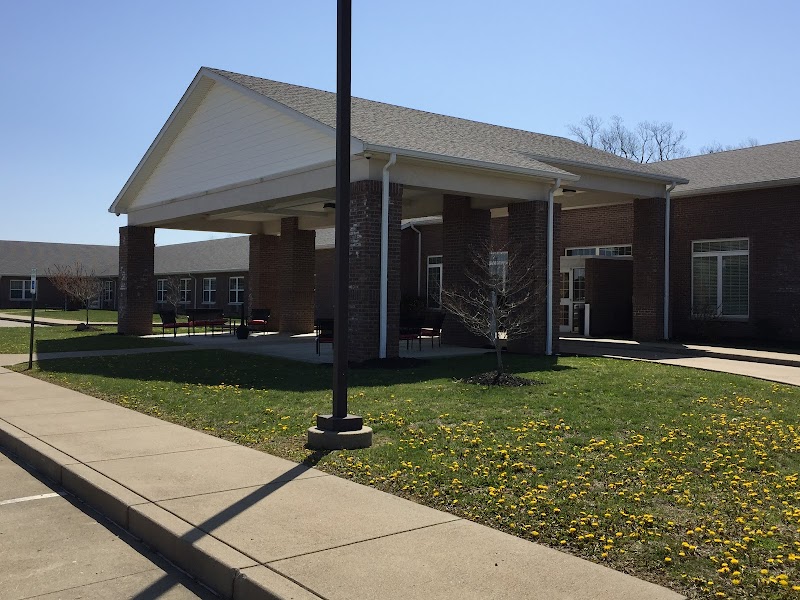
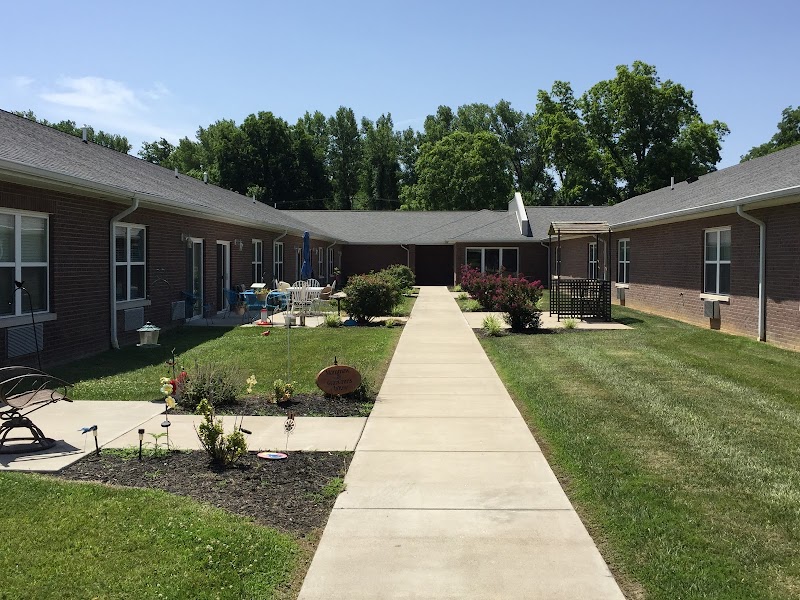
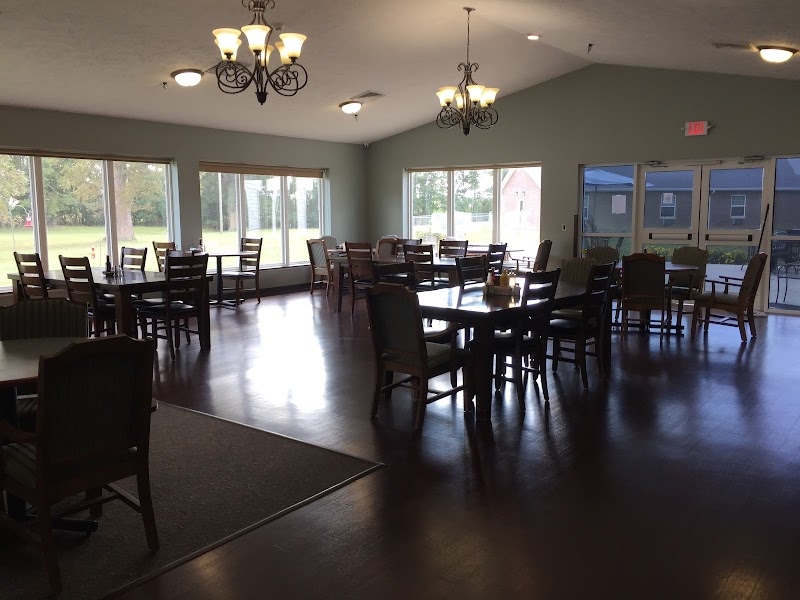
BRECKINRIDGE PLACE

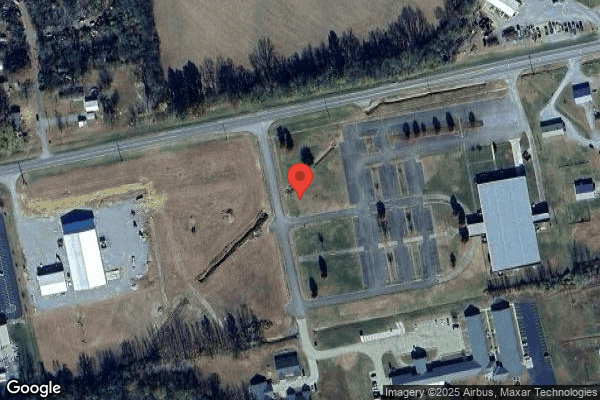
170 SYKES BOULEVARD, MORGANFIELD, KY 42437 (270) 389-1133
Non profit - Other 24 Beds Independent Data: November 2025
Trust Grade
65/100
#44 of 266 in KY
Last Inspection: July 2023

Over 2 years since last inspection. Current conditions may differ from available data.

Overview

Breckinridge Place has a Trust Grade of C+, indicating it is slightly above average, but still has room for improvement. In Kentucky, it ranks #44 out of 266 facilities, placing it in the top half, and is the best option among the two nursing homes in Union County. The facility is on an improving trend, having reduced its issues from three in 2022 to just one in 2023. However, staffing is a concern with a turnover rate of 65%, significantly higher than the state average of 46%, even though it boasts more RN coverage than 81% of Kentucky facilities. Notably, there have been serious incidents where a resident was injured due to a lack of required assistance during care, resulting in fractures that required hospitalization, highlighting a critical area for improvement. Overall, while there are strengths in RN coverage and no fines on record, families should weigh these against the concerning staffing turnover and past incidents.

Trust Score
C+
65/100
In Kentucky
#44/266
Top 16%
Safety Record
Moderate
Needs review
Inspections
Getting Better
3 → 1 violations
Staff Stability
⚠ Watch
65% turnover. Above average. Higher turnover means staff may not know residents' routines.
Penalties
✓ Good
No fines on record. Clean compliance history, better than most Kentucky facilities.
Skilled Nurses
✓ Good
Each resident gets 65 minutes of Registered Nurse (RN) attention daily — more than 97% of Kentucky nursing homes. RNs are the most trained staff who catch health problems before they become serious.
Violations
⚠ Watch
12 deficiencies on record. Higher than average. Multiple issues found across inspections.
★★★★☆
4.0
Overall Rating
★★★★☆
4.0
Staff Levels
★★☆☆☆
2.0
Care Quality
★★★★☆
4.0
Inspection Score
Stable
2022: 3 issues
2023: 1 issues

The Good

  • 4-Star Staffing Rating · Above-average nurse staffing levels
  • Full Sprinkler Coverage · Fire safety systems throughout facility
  • No fines on record

Facility shows strength in staffing levels, fire safety.

The Bad

Staff Turnover: 65%

19pts above Kentucky avg (46%)

Frequent staff changes - ask about care continuity

Staff turnover is elevated (65%)

17 points above Kentucky average of 48%

The Ugly 12 deficiencies on record

2 actual harm
Jul 2023 1 deficiency
CONCERN (D)

Potential for Harm - no one hurt, but risky conditions existed

Deficiency F0760 (Tag F0760)

Could have caused harm · This affected 1 resident

Based on observation, interview, record review, and facility policy review, it was determined the facility failed to ensure residents were free of significant medication errors for one (1) of three (3...

Read full inspector narrative →
Based on observation, interview, record review, and facility policy review, it was determined the facility failed to ensure residents were free of significant medication errors for one (1) of three (3) residents sampled for medication administration in a total sample of twenty-four (24) residents (Resident #16). Observation of medication administration on 07/19/2023 at 9:18 AM, revealed Certified Medication Aide (CMA) #1 dropped a white tablet onto Resident #16's left leg. He proceeded to obtain another tablet from the medication cart and he placed a pink tablet in the medicine cup. When the Surveyor questioned CMA #1 regarding the medication he confirmed he had pulled the wrong medication and proceeded to remove the correct medication (Docusate Sodium) from the medication cart for administration. The findings include: Review of the facility's policy, Medication Administration, dated 08/01/2015, revealed medications were administered accurately and on time according to Physician Orders. Any time medications were dropped on a contaminated surface they should be disposed of according to facility protocol and procedure. Further review of the policy revealed any errors or incidents were to be reported to the Charge Nurse immediately. Review of Resident #16's medical record revealed the facility admitted the resident on 09/22/2022, with diagnoses which included Heart Failure, Unspecified, and Chronic Atrial Fibrillation, Unspecified. Review of Resident #16's Quarterly Minimum Data Set (MDS) Assessment, dated 06/06/2023, revealed the facility assessed the resident to have a Brief Interview for Mental Status (BIMS) score of six (6) out of fifteen (15) indicating severe cognitive impairment. Review of Resident #16's Physician Orders and Medication Administration Record (MAR), dated July 2023, revealed Resident #16 was scheduled to receive a Docusate Sodium (stool softner) tablet 100 milligrams (mg), and Hydralazine (blood pressure) 100 mg daily at 9:00 AM. Review of Certified Medication Aide (CMA) #1's Personnel Record revealed the facility hired him on 11/16/2021. Further review revealed CMA #1 had received Medication Competency Training at the facility on 03/30/2023. Observation of medication administration on 07/19/2023 at 9:18 AM, revealed Certified Medication Aide (CMA) #1 was observed administering Resident #16's medications with a spoon. CMA #1 dropped a white tablet onto Resident #16's left leg. He retrieved the tablet and discarded it in the trash receptacle on the medication cart. The Surveyor asked what the medication was and CMA #1 stated it was Hydralazine (used for high blood pressure) and obtained another tablet from the medication cart. Further observation revealed CMA #1 had placed a pink tablet in the medicine cup. The Surveyor asked CMA #1 about the color of the discarded pill and he stated it was pink. However, when CMA #1 retrieved the tablet from the trash receptacle it was a white tablet. CMA #1 confirmed the tablet was white and proceeded to remove the correct medication (Docusate Sodium) from the medication cart to be administered to Resident #16. During an observation and interview on 07/19/2023 at 9:18 AM, Certified Medication Aide (CMA) #1 stated Resident #16' blood pressure may have dropped if he had administered an additional dose of the Hydralazine. In an interview with the Director of Nursing (DON) on 07/20/2023 at 11:20 AM, she stated CMA #1 told her about the mistakes he had made during medication administration. The DON stated he had received education regarding medication administration upon hire. She stated she expected staff to ensure the correct medications were administered. Further she stated Resident #16's blood pressure could have plummeted had he/she been given the extra dose of the Hydralazine.
Apr 2022 3 deficiencies 2 Harm
SERIOUS (G)

Actual Harm - a resident was hurt due to facility failures

Comprehensive Care Plan (Tag F0656)

A resident was harmed · This affected 1 resident

**NOTE- TERMS IN BRACKETS HAVE BEEN EDITED TO PROTECT CONFIDENTIALITY** Based on observation, interview, record review, and review of the facility's policy, it was determined the facility failed to en...

Read full inspector narrative →
**NOTE- TERMS IN BRACKETS HAVE BEEN EDITED TO PROTECT CONFIDENTIALITY** Based on observation, interview, record review, and review of the facility's policy, it was determined the facility failed to ensure the Comprehensive Care Plan was implemented for one (1) of four (4) sampled residents (Resident #17). The facility care planned Resident #17 to require extensive assistance of two (2) staff for turning, repositioning, and bed mobility. However, on 02/21/2022, Certified Nursing Assistant (CNA) #1 provided incontinent care for Resident #17 alone, and without the care planned assistance of two (2) staff members. During the provision of incontinent care by only CNA #1, Resident #17 rolled off the bed and was observed as bleeding from his/her face. Resident #17 was transferred to the hospital emergency room and subsequently admitted to the hospital with diagnoses of Fracture of the lower end of his/her left femur, Fracture of the nasal bones, and Maxillary Fracture (a complex group of facial fractures) to the left side of the face. The findings include: Review of the facility policy titled, Care Plan dated August 2015, revealed a Comprehensive Plan of Care was to be developed and implemented for each resident that included measurable objectives and timetables for meeting a resident's identified medical, nursing and mental/psychosocial needs. Per review, the Interdisciplinary Team (IDT) along with the resident, family members, or legal representative, were to develop and implement the comprehensive, person-centered care plan for each resident. Residents' Comprehensive Plan of Cares were to be developed within seven (7) days of their admission, then quarterly and with a significant change of condition thereafter. Further review revealed residents' care plan interventions were derived from a thorough analysis of the information gathered as part of the comprehensive assessment. Review of the medical record for Resident #17 revealed the facility admitted the resident on 12/23/2019, with diagnoses which include with the following diagnoses: Type 2 Diabetes Mellitus, Dementia, and Paroxysmal Atrial Fibrillation. Review of the Significant Change of Status Minimum Data Set (MDS) assessment dated [DATE], revealed the facility assessed Resident #17 as severely cognitively impaired as evidenced by the Brief Interview for Mental Status (BIMS) score of three (3). Review of the Comprehensive Care Plan for Resident #17 revealed the facility had care planned the residents for falls dated 01/10/2022, related to a history of falls prior to admission, his/her diagnosis of Dementia, and due to decreased mobility from a recent hospitalization. Continued review revealed Resident #17's care plan contained an bed mobility intervention, with an initiated date of 01/10/2022, which noted the resident required assistance of two (2) staff to turn and reposition in bed every two (2) hours. Continued review revealed a previous intervention noting Resident #17 required assist of two (2) staff for toileting initiated on 01/10/2022 which had been documented as resolved. Review revealed an intervention initiated 03/09/2022 (after the incident on 02/21/2022), which stated due to Resident #17's poor safety awareness he/she was to have a low bed at all times. Further revealed an intervention initiated 03/23/2022, noting Resident #17 was not toileted and required total assist with check and change every two (2) hours. Review of the facility's [NAME] (a document used by CNA's which noted a resident's care plan interventions) for Resident #17 dated 02/20/2022 and 02/21/2022, revealed the resident required extensive assistance of two (2) staff for turning and repositioning regarding his/her bed mobility. Further review of the [NAME] revealed Resident #17 required extensive assistance of two (2) staff also for toileting. Interview with Licensed Practical Nurse (LPN) #1 on 04/13/2022 at 9:30 PM, revealed she was a contracted agency nurse and 02/20/2022 had been her first night working at the facility. Per interview, LPN #1 had received a fast track orientation. She stated on 02/21/2022 at 5:30 AM, CNA #1 was yelling for help from a resident's room and she went to that room to assist. LPN #1 revealed upon walking into the room she observed the resident lying on the floor bleeding from the left side of his/her forehead. According to LPN #1, she obtained the resident's vital signs, initiated neurological (neuro) checks of the resident, and obtained an order to send Resident #17 to the emergency room (ER). Continued interview revealed Emergency Medical Services (EMS) staff arrived and placed Resident #17 stretcher left facility at 5:49 AM to transport the resident to the ER. LPN #1 stated CNA #1 told her she had been changing Resident #17 and the resident placed his/her left leg over the right leg, then rolled out of bed. Further interview revealed LPN #1 knew Resident #17 required two (2) staff persons assistance for his/her incontinent care. LPN #1 revealed she had been under the impression CNA #1 was also aware the resident required two (2) person assist for incontinent care. Review of the hospital Emergency Department (ED) Provider's Notes dated 02/21/2022, revealed Resident #17 had complex left facial fractures with depression of the left orbital floor, extensive facial swelling, and depressed nasal bone fractures. In addition, continued review revealed Resident #17's x-ray results of the left lower extremity revealed a comminuted (where a bone is broken, splintered, or crushed into a number of pieces) and somewhat impacted (when a bone is driven into another bone from the force of an injury) fracture involving the distal femoral diametaphysis. Interview with Registered Nurse (RN) #2 on 04/14/2022 at 1:10 PM, revealed she had been working the night shift on 02/21/2022 with CNA #1. According to RN #2, she and CNA #1 had been performing the last rounds of residents and she was by herself in another resident's room when the incident of Resident #17 falling out bed occurred. RN #2 stated she assumed CNA #1 had decided to go ahead and start Resident #17's on her own without assistance. She further revealed the [NAME] in Point Click Care was the care plan used by staff for knowing residents's care needs. Interview with CNA #3 on 04/14/2022 at 1:58 PM, revealed he had been working at the facility for almost three (3) years, and knew Resident #17 was an assist of two (2) staff before the incident and currently still was. According to CNA #3, the [NAME] was available on the computer at the nurse's station for staff to review, and was staff could find out what kind of care to provide for their residents. Further interview revealed the Assistant Director of Nursing (ADON), who was also the MDS Nurse, updated residents' care plans and Kardexes. Interview with CNA #8 on 04/14/2022 at 2:05 PM, revealed she had worked for the facility for three (3) years. According to CNA #8, newly admitted residents Kardexes were kept on the inside of their closet doors for approximately two (2) weeks after admission for staff to review; however, the [NAME] was also always on the computer for them to review. Further interview revealed Resident #17 had previously and still was an assist of two (2) staff for incontinent care. CNA #8 stated most of the facility residents were an assist of two (2) staff. Interview with CNA #6 on 04/15/2022 at 9:30 AM, revealed the [NAME] was located on the computer at the nurse's staff. Per CNA #6, staff were supposed to look at their assigned residents Kardexes at the beginning of their shift. Further interview revealed if staff did not follow the residents' care plans/Kardexes the resident or staff could get hurt. Interview with CNA #7 on 04/15/2022 at 9:45 AM, revealed that she had worked at the facility for seven (7) years. Continued interview revealed the facility's [NAME] was where staff looked to see what kind of care a resident needed. Per CNA #7, Resident #17 was an assist of two (2) staff for everything except eating and doing small Activities of Daily Living (ADLs) like brushing his/her own hair. Further interview revealed the facility staff received training at monthly meetings, through inservices, and on modules on the computer. Interview with CNA #1 on 04/19/2022 at 7:30 AM, revealed she had been certified as a CNA for a little over a year and worked for a contract agency. CNA #1 revealed the first assignment she had been given by the contract agency was working at the facility. She stated she had been oriented for approximately a week when first starting work at the facility. Per interview, while being oriented she had written down the amount of assistance each resident needed that she observed being cared for. Continued interview revealed CNA #1 had cared for Resident #17 while working at the facility, and had reviewed the resident's [NAME] during that time. CNA #1 stated the night of the incident, 02/21/2022 she felt she was familiar with Resident #17's care needs, and had not reviewed his/her [NAME] prior to providing care of the resident. According to CNA #1, on the night of the incident when entering Resident #17's room she noticed his/her bedrails were no longer on the bed. CNA #1 stated she had gone into Resident #17's to provide incontinence care by herself, and turned the resident onto his/her sides with the bed in position that was about waist high to her. She revealed she noticed only the Chux pad and drawsheet needed changing, so she assisted Resident #17 to lie flat on his/her back while she obtained her supplies from the end of the bed. Per CNA #1, while she was obtaining her supplies Resident #17 crossed his/her left leg over the right leg and then rolled out of his/her bed onto the floor. She stated she called for the nurse to come to Resident #17's room, and the nurse came, looked at the resident, took his/her vital signs, and started neuro (neurological) checks of the resident. Further interview revealed Resident #17 was sent out to the hospital by the nurse. CNA #1 further stated she had been charting Resident #17 as an extensive assist, as that was what she had thought the resident was. The CNA stated she had observed other CNA's providing care for Resident #17 by themselves. She additionally stated the contract agency she worked for notified her approximately two (2) hours before she was to work again at the facility after the incident, to let her know her contract had been canceled by the facility. Interview with the Administrator on 04/15/2022 at 10:15 AM, revealed her expectations were for all staff, including CNA #1, to have provided the assist of two (2) staff to change Resident #17 as per the resident's care plan/[NAME]. The Administrator revealed all staff were expected to receive shift report from the staff leaving, and to read their assigned residents' [NAME] before providing the residents' care. Further interview revealed when a resident required a two (2) person assist the assigned staff person was expected to wait for assistance from another staff member, and not provided care alone. The Administrator revealed staff education had been provided and was still ongoing.
SERIOUS (G)

Actual Harm - a resident was hurt due to facility failures

Accident Prevention (Tag F0689)

A resident was harmed · This affected 1 resident

**NOTE- TERMS IN BRACKETS HAVE BEEN EDITED TO PROTECT CONFIDENTIALITY** Based on observation, interview, record review, and facility policy review, it was determined the facility failed to ensure one ...

Read full inspector narrative →
**NOTE- TERMS IN BRACKETS HAVE BEEN EDITED TO PROTECT CONFIDENTIALITY** Based on observation, interview, record review, and facility policy review, it was determined the facility failed to ensure one (1) of four (4) sampled residents received adequate supervision and assistive devices to prevent accidents (Resident #17). The facility assessed and care planned Resident #17 to be at risk for falls and to require the assistance of two (2) staff for bed mobility and incontinent care. However, on 02/21/2022 Certified Nursing Assistant (CNA) #1 provided incontinent care to the resident without the assistance of another staff member as per the care plan. As a result, Resident #17 rolled off the side of the bed during the incontinent care provided by CNA #1. The resident sustained left facial fractures and left hip fracture as a result of rolling off the bed which required surgical intervention. The findings include: Review of the facility's policy titled, Incidents and Accidents, dated August 2015, revealed an incident report was to be completed for any occurrence including, but not limited to falls or suspected falls, including fractures and head injuries which were to be reported immediately. Review revealed the resident was not to be moved unnecessarily until his/her condition had been assessed. Per review of the policy, a full body assessment was to be completed and documented on the post fall skin assessment form, and the resident's neurological signs were to be assessed as appropriate. Continued review revealed the Physician was to be notified and orders obtained for care, and the resident's family notified of the accident, resident's status and orders obtained for care. Review revealed the resident was to be transferred to the emergency room as needed, and his/her Plan of Care updated as necessary with implemented interventions. According to review of the policy, a fall screening was to be performed on any resident's falls or suspected falls. The policy review revealed the Director of Nursing and Administrator, or designee were to be immediately notified and would notify the [NAME] President of Clinical Operations when incidents were reported to the State Agency and as necessary. Further review revealed interventions were to be documented in the facility's incident reporting system as well as in the Nurse's Notes, and resident's plan of care (acute). Review further revealed an internal incident/accident report was to be completed for quality assurance purposes, and witness statements completed with signatures. Review of the facility policy titled, Resident Safe Environment, dated August 2015, revealed the facility promoted and maintained each resident's dignity and independence in a safe environment. Per review, the standard of the policy was to evaluate all residents for fall risk by using the fall evaluation form initially, quarterly, and as indicated by the interdisciplinary review of incident evaluations. Further review of the policy revealed staff were to report any unsafe acts promptly and initiate team evaluations. Review of Resident #17's medical record revealed the resident was admitted to the facility on [DATE], with the following diagnoses: Dementia, Type 2 Diabetes Mellitus, and Paroxysmal Atrial Fibrillation. Review of the Significant Change of Status Minimum Data Set (MDS) assessment dated [DATE], revealed the facility assessed Resident #17 to have a Brief Interview for Mental Status (BIMS) score of three (3) which indicated severe cognitive impairment. Review of Resident #17's Comprehensive Care Plan, revealed a Focus for falls related to his/her Dementia diagnosis, a history of falls prior to admission and his/her decreased mobility from a recent hospitalization dated 01/10/2020. Review of the Care Plan revealed an intervention for Resident #17's bed mobility which noted the resident required assistance of two (2) staff to turn and reposition in bed every two (2) hours, with an initiation date of 01/10/2020. Continued review revealed an intervention for the resident to have a low bed at all times due to poor safety awareness with an initiation date of 03/09/2022. Further revealed under toilet use an intervention documented stating Resident #17 was not toileted and required total assistance for a check and change every two (2) hours initiated on 03/23/2022. In addition, a previous resolved intervention was noted Resident #17 required assistance of two (2) staff for toileting which had been initiated on 01/10/2020. Review of Resident #17's [NAME] (a facility document utilized by CNAs noting each residents' care needs), dated 02/20/2022, and 02/21/2022, revealed for bed mobility Resident #17 required extensive of two (2) staff to turn and reposition in bed, and for toileting. Review of the Morse Fall Scale document dated 12/13/2021, revealed a score of fifty-five (55) for Resident #17, a score of forty five (45) or higher, indicated the resident was at a high risk for falls. Further review of the facility's Morse Fall Scale documents for Resident #17 revealed a Fall Scale dated 02/21/2022, which noted the resident had a score of fifteen (15), a score of zero (0) to twenty four (24), indicated the resident was at a low risk for falls. Observation on 04/12/2022 at 9:10 AM, of Resident #17 revealed the resident lying on his/her bed with eyes open. Interview with Resident #17 at the time of observation revealed the resident stated his/her name and stated he/she liked to stay in bed. No facial deformities noted. Review of the facility's investigation's summary dated 02/21/2022, revealed the Interdisciplinary Review Committee (IRC) had reviewed an incident which had occurred on 02/21/2022. Review revealed Resident #17 had not had any falls in the last two (2) years; however, on last rounds on 02/21/2022 at 5:30 AM, CNA #1 had been changing Resident #17 without assistance of another staff. Review revealed during CNA #1 changing Resident #17, the resident kicked his/her leg over and rolled off the bed. Per review, an Acute Care Plan had been initiated, the facility's Physician and Power of Attorney (POA) had been notified of the incident. Continued review revealed Resident #17 was sent out to the emergency room (ER) for evaluation and treatment after the fall, and admitted to the hospital with facial fractures and a left hip fracture. Further review revealed the agency CNA's contract was terminated for failure to follow Resident #17's care plan. Review further revealed the the facility identified the cause of the incident as CNA #1 performing Resident #17's care without the care planned assistance of two (2) staff. In addition, a Quality Assurance (QA) meeting was conducted and an inservice for staff implemented regarding reviewing residents' Kardexes. Review of CNA #1's statement, from the facility's investigation dated 02/21/2022, revealed she had been on the right side of Resident #17's bed and had the resident turn over towards her to roll up the Chux (a disposable protective pad) and draw sheet (a sheet utilized to assist with moving people in bed) during incontinence care. Continued review revealed CNA #1 had documented she had moved to the left side of Resident #17's bed and had the resident roll towards her again, as she had seen she needed to remove the Chux pad and drawsheet completely from under the resident. Review revealed CNA #1 had Resident #17 lay flat and pulled the draw sheet up halfway, telling the resident to hold on, we're about to roll. Further review revealed Resident #17 placed his/her left leg over his/her right leg and was rolling off the bed before she realized it. Review further revealed CNA #1 ran to the other side of Resident #17's bed as soon as possible and observed the resident lying on the floor in a cradle position. Review of the Emergency Department (ED) Provider's Note dated 02/21/2022, revealed a Computerized Tomography (CT) scan had been performed of Resident #17's face, and x-rays performed of the resident's lower extremity. Continued review revealed the CT scan results of Resident #17's facial bones without contrast showed complex left facial fractures with depression of the left orbital floor (bones surrounding the eyeball), depressed nasal bone fractures and extensive left facial swelling. Further review revealed the results of the left knee x-ray noted a comminuted (where the broken ends of a bone are shattered into many pieces) and somewhat impacted fracture (when broken ends of a bone are jammed together by the force of an injury) involving the distal femoral diametaphysis. Interview on 04/13/2022 at 9:30 PM, with Licensed Practical Nurse (LPN) #1 revealed she was an agency(contracted) nurse, and had worked her first night at the facility on 02/20/2022. Per interview, LPN #1 had received a fast track orientation for working at the facility prior to her shift on 02/20/2022. She stated on the morning of 02/21/2022 at 5:30 AM she was passing residents' medications when she heard CNA #1 yelling for help from a resident's room (Resident #17's room) and she went to the room to assist. Continued interview revealed when she walked into the resident's room she observed the resident lying on the floor, and bleeding on the left side of his/her forehead. According to LPN #1, she obtained the resident's vitals (vital signs), started performing neuro checks(neurological checks), and obtained an order to send the resident to the emergency room. LPN #1 stated Emergency Medical Service (EMS) staff arrived, placed the resident on a stretcher, and left facility at 5:49 AM to transport him/her to the emergency room. Further interview revealed CNA #1 stated she had been changing the resident when the resident crossed his/her left leg over the right one and then rolled out of bed. Licensed Practical Nurse (LPN) #1 further stated she had known the resident was a two (2) person assist for incontinent care, and had been under the impression CNA #1 had also been aware of that information as the CNA had been working at the facility for a while. In addition, LPN #1 stated she had notified the resident's POA, the DON and Administrator, and filled out the necessary paperwork regarding the incident. Interview further revealed Resident #17's fall and injuries could have been prevented had CNA #1 waited for assistance from another staff member. Interview on 04/14/2022 at 1:10 PM, with Registered Nurse (RN) #2 revealed she had been working on the facility's night shift with CNA #1 on 02/21/2022. Per interview, she had been a CNA herself at the time of the incident and had been performing last rounds with CNA #1. She revealed she had been in another resident's room providing care when CNA #1 was assisting Resident #17 with incontinence care and experienced the fall from the bed. RN #2 stated she was aware at the time of the incident that Resident #17 was a two (2) person assist for turning, changing, and toileting. Further interview revealed she assumed CNA #1 decided to start caring for Resident #17 on her own, as she had not waited for assistance. RN #2 stated the [NAME] in the facility's Point Click Care computerized system was the residents' care plan staff referred to know the residents' care needs. In addition, RN #2 revealed CNAs and nurses received report from the staff going off shift before starting their work, and she always looked at the [NAME] each shift too to see whether any changes had occurred. Interview on 04/14/2022 at 1:58 PM, with CNA #3 revealed he had been a CNA working at the facility for almost three (3) years. He stated the [NAME] was available on the computer at the nurse's station and was where you find out what kind of care residents needed. Further interview revealed the MDS Nurse updated residents' care plans and Kardexes. CNA #3 further stated Resident #17 was an assist of two (2) staff for care before 02/20/2022, and still was currently. Per interview, CNA #3 revealed if Resident #17 had the assistance of the required two (2) person assist, then he/she would try to help roll himself/herself. Further interview revealed when a resident was a two (2) person assist, he always let the residents know to wait and someone would be right with them to assist them. Interview on 04/14/2022 at 2:05 PM, with CNA #8 revealed she had been working at the facility for three (3) years. She stated for new admits the [NAME] was kept on the inside of their closet doors for approximately two (2) weeks for staff to refer to; however, was always on the computer also for review. Further interview revealed she had known Resident #17 was an assist of two (2) staff for incontinent care, and most of the facility's residents were assist of two (2) staff. CNA #8 further stated if a resident was a two (2) person assist she went and got someone to help her. In addition, she revealed she the MDS Nurse made necessary changes to residents' care plans and Kardexes. Interview on 04/15/2022 at 9:30 AM, with CNA #6 revealed she had been a CNA for three (3) years. Continued interview revealed the [NAME] for residents was located on the computer and staff were supposed to look at it at the beginning of their shift to know what care residents needed. CNA #6 stated if a resident's care plan/[NAME] was not followed a resident or staff could get hurt; however, was not aware of any staff not following residents' Kardexes. Interview with CNA #7 on 04/15/2022 at 9:45 AM, revealed that she had been with the facility for seven (7) years. Continued interview revealed the [NAME] was where you go to see what kind of care a resident needed. CNA #7 stated Resident #17 was an assist of two (2) staff for everything except eating or small Activities of Daily Living (ADLs such as brushing his/her hair. Further interview revealed staff received training at monthly meetings, during inservice education, and on modules on the computer. Interview on 04/19/2022 at 7:30 AM, with CNA #1 revealed she worked through a contract agency, and had been a CNA for a little over a year. She stated her first assignment as an agency CNA had been at the facility, and she had worked at the facility for a little over a year. The CNA stated she had reviewed Resident #17's [NAME] previously when working at the facility and provided care for the resident. However, had not reviewed the [NAME] the night of the incident as she felt she was familiar with the resident's care. CNA #1 revealed when she walked into Resident #17's room that night she had noticed there were no longer any bedrails on his/her bed. Per interview, Resident #17 had bilateral siderails on his/her bed. CNA #1 stated Resident #17's bed had been in the low position when she went in to provide his/her incontinent care; however, she moved it higher to provide the resident's care. Continued interview revealed CNA #1 turned Resident #17 over onto his/her right side towards her in order to roll up the Chux pad and draw sheet. Continued interview revealed CNA #1 then moved to the other side of Resident #17's bed, rolled the resident onto his/her left side, and observed she just needed to change the Chux pad and draw sheet. She stated she assisted Resident #17 to lie flat on the bed, pulled the sheet halfway up and went to get her supplies which were lying at the end of the bed. CNA #1, while she was at the end of the bed Resident #17 placed his/her left leg over the right leg and in doing so, rolled out of the bed onto the floor. She revealed Resident #17 was curled in a somewhat fetal position on the floor after rolling out of the bed, and was bleeding from his/her head and elbow. The CNA stated she went to the resident's side to look at him/her and make sure he/she was okay. She stated she called for the nurse to come, and the nurse looked at the resident, took his/her vitals, started neuro checks and sent the resident out to the hospital. CNA #1 revealed she had been oriented for approximately one (1) week when she first started working at the facility, and during that time had written down how much assist each resident needed according to what she observed during her orientation. Further interview revealed she had thought Resident #17 was an extensive assist and had been charting the resident as such since she started working at the facility. CNA #1 further revealed she had seen other CNA's going into Resident #17's room to change him/her by themselves. In addition, she stated the contract agency she was employed through called her approximately two (2) hours before she was to work her next shift at the facility, and told her the facility had canceled her contract. Interview on 04/15/2022 at 10:15 AM, with the Administrator revealed she expected all staff, including CNA #1, to provide assist of two (2) staff to change Resident #17 as per his/her care plan/[NAME]. Continued interview revealed staff were expected to obtain shift report from the off going staff, and to read the [NAME] for all their assigned residents before providing care for their assigned residents. Interview revealed when a resident was a two (2) person assist, staff members were expected to provide the care residents required. The Administrator stated education had been provided after the incident and was ongoing. Per interview, the facility identified the CNA's failure to follow Resident #17's care plan as the root cause of the incident. Further interview revealed for the agency staff the facility utilized a fast track orientation was provided by facility staff. In addition, the Administrator revealed spot checks were being performed visually and verbally by administrative staff after the incident.
CONCERN (F)

Potential for Harm - no one hurt, but risky conditions existed

Food Safety (Tag F0812)

Could have caused harm · This affected most or all residents

Based on observation, interview, and facility policy review, it was determined the facility failed to store food in accordance with professional standards for food service safety. Observation revealed...

Read full inspector narrative →
Based on observation, interview, and facility policy review, it was determined the facility failed to store food in accordance with professional standards for food service safety. Observation revealed opened food items in the facility's reach in refrigerator and dry storage area which were not dated. The findings include: Review of the facility policy titled, Dietary Services Food Handling and Preparation, Dry Storage, dated 08/01/2015, revealed all foods were to be labeled as to content and dated. Observation on 04/12/2022 at 9:03 AM, of the facility's kitchen area revealed the reach in refrigerator had an opened container of beef base flavoring that was approximately half full; however, was not labeled or dated. Continued observation revealed an employee's unopened coffee beverage present in the reach in refrigerator. Observation of the dry storage area revealed an opened container of chocolate fudge frosting which was not dated. Interview on 04/12/2022 at 9:03 AM, with the [NAME] revealed all food items should be dated when opened. She revealed employees should not be placing their personal drinks in the facility refrigerator. Observation during the interview revealed the [NAME] removed the employee's coffee beverage as well as the opened, undated Beef Base Flavoring from the reach in refrigerator, and the opened container of chocolate fudge frosting from the dry storage area. Interview on 04/15/2022 at 9:27 AM, with the Dietary Manager revealed all opened food items located in the reach in refrigerator were to always be labeled and dated. He revealed staff were not to put their personal drinks in the kitchen refrigerator. Further interview revealed food items not dated or labeled should have been removed and discarded as they created a potential for foodborne illness if used and served to residents.
Apr 2019 8 deficiencies
CONCERN (D)

Potential for Harm - no one hurt, but risky conditions existed

Deficiency F0637 (Tag F0637)

Could have caused harm · This affected 1 resident

**NOTE- TERMS IN BRACKETS HAVE BEEN EDITED TO PROTECT CONFIDENTIALITY** Based on observation, interview, record review, and review of the Resident Assessment Instrument (RAI) 3.0 User's Manual, it was...

Read full inspector narrative →
**NOTE- TERMS IN BRACKETS HAVE BEEN EDITED TO PROTECT CONFIDENTIALITY** Based on observation, interview, record review, and review of the Resident Assessment Instrument (RAI) 3.0 User's Manual, it was determined the facility failed to complete a Significant Change in Condition Minimum Data Set (MDS) assessment, for two (2) of thirteen (13) sampled residents (Resident #1 and Resident #8). Review and comparison of the Quarterly MDS assessment, dated 03/27/19, with the admission MDS assessment, dated 12/28/18, revealed Resident #1 had a significant improvement in Activities of Daily Living (ADLs) and bowel/bladder. However, a Significant Change in Condition, Improvement MDS was not identified or initiated. Resident #8 had a decline in ADLs and bowel/bladder continence. However, further review of the resident's MDS assessment revealed a Significant Change in Condition was not identified and a Significant Change MDS assessment was not completed, per the RAI 3.0 User's Manual. The findings include: Interview with the MDS Coordinator, on 04/11/19 at 1:42 PM, revealed the facility does not have a policy for completion of MDS assessments; however, the RAI 3.0 User's Manual was used as a reference when completing MDS assessments. Review of the RAI 3.0 User's Manual, Version 1.16, October, 2018, revealed a significant change is a major decline or improvement in a resident's status that will not normally resolve itself without intervention by staff or by implementing standard disease-related clinical interventions; the decline is not considered self-limiting; impacts more than one (1) area of the resident's health status; and requires interdisciplinary review and/or revision of the care plan. MDS assessments are not required for minor or temporary variations in resident status - in these cases, the resident's condition is expected to return to baseline within two (2) weeks. However, staff must note these transient changes in the resident's status in the resident's record and implement necessary assessment, care planning, and clinical interventions, even though an MDS assessment is not required. 1. Record review revealed the facility admitted Resident #8 on 10/30/17, with diagnoses which included Hypertension and Dementia. Review of the Annual MDS Assessment, dated 10/24/18, Section G, Functional Status, Item G0110 B, revealed the resident required supervision with set-up help only (Coded 1/1) for bed mobility. Review of Section H, Bladder and Bowel, Item H0300, revealed the resident was always continent of urine; and Item H0400 revealed he/she was always continent of bowel. Review of the Quarterly MDS Assessment, dated 02/05/19, Section C, Cognitive Pattern, Item C0500, revealed Resident #8 had a Brief Interview for Mental Status (BIMS) score of three (3), indicating severely impaired cognition. Review of Section G, Functional Status, Item G0110 B, revealed the resident required extensive assistance of one (1) staff (coded 3/2) with transfers, a decline from the previous code of 1/1. Review of Section H, Bladder and Bowel, Item H0300, revealed the resident was frequently incontinent of bowel and bladder, a decline in continence. However, further review of Resident #8's MDS assessments revealed there was no Significant Change MDS assessment completed per the RAI manual. 2. Record review revealed the facility admitted Resident #1 on 12/21/18, with diagnoses which included Muscle Weakness, Expressive Language Disorder, and Vascular Dementia. Review of the Quarterly MDS assessment, dated 03/27/19, revealed the facility assessed Resident #1's cognition as severely impaired with a BIMS score of eight (8), which indicated the resident was not interviewable. Review of the admission MDS, dated [DATE], Section G, revealed Resident #1 required extensive assistance of one (1) staff for bed mobility (Coded 3/2); required extensive assistance of two (2) staff for transfers (Coded 3/3); required extensive assistance of two (2) staff for toileting (Coded 3/3); and required extensive assistance of two (2) staff for ambulation (Coded 3/3). Additional review of the Quarterly MDS, dated [DATE], Section G, revealed Resident #1 required limited assistance of one (1) staff (Coded 2/2) for bed mobility; required limited assistance of one (1) staff with transfers (Coded 2/2); required extensive assistance of one (1) staff with toileting (Coded 3/2); and required extensive assistance of one (1) staff for ambulation (Coded 3/2). All areas had improved from the prior MDS assessment dated [DATE]; however, a significant change in condition MDS was not identified and initiated related to his/her improvement in Activities of Daily Living (ADLs) and bladder. Observation, on 04/09/19 at 11:30 AM, and on 04/10/19 at 11:42 AM, revealed Resident #1 ambulated in the hall way with a walker and stand-by assistance of one (1) staff. Interview with the MDS Coordinator, on 04/11/19 at 1:17 PM, revealed Resident #1's ability to participate in ADLs fluctuated, and sometimes was able to participate more than other times. However, the MDS Coordinator was unable to provide documentation to reflect the fluctuation in the resident's ADL abilities. The MDS Coordinator further stated she should have initiated a Significant Change in Condition, Improvement MDS for Residents #1 and #8. Interview with the Director of Nursing (DON), on 04/11/19 at 2:10 PM, revealed the MDS Coordinator should have initiated a Significant Change in Condition, Improvement MDS for Residents #1 and #8, based on the improvement in ADLs.
CONCERN (D)

Potential for Harm - no one hurt, but risky conditions existed

Assessment Accuracy (Tag F0641)

Could have caused harm · This affected 1 resident

Based on interview, record review, and review of the Resident Assessment Instrument (RAI) 3.0 User's Manual Version 1.16, October, 2018, it was determined the facility failed to ensure one (1) of thir...

Read full inspector narrative →
Based on interview, record review, and review of the Resident Assessment Instrument (RAI) 3.0 User's Manual Version 1.16, October, 2018, it was determined the facility failed to ensure one (1) of thirteen (13) sampled residents received an accurate assessment, reflective of the resident's status (Resident #19). Resident #19 was taking an anti-coagulant medication; however, the resident's Minimum Data Set (MDS) assessment indicated the resident was not on an anti-coagulant. The findings include: Interview with the MDS Coordinator, on 04/11/19 at 1:42 PM, revealed the RAI User's Manual was used for reference when completing MDS assessments. Review of the RAI 3.0 User's Manual, Version 1.16, October, 2018, Section N0401, Medications Received, revealed the intent of the items in this section is to record the number of days, during the last seven (7) days that any type of injection, insulin, and/or select medications are received by the resident. Medications are an integral part of the care provided to residents of nursing homes. They are administered to try to achieve various outcomes, such as curing an illness, diagnosing a disease or condition, arresting or slowing a disease's progress, reducing or eliminating symptoms, or preventing a disease or symptom. Residents taking medications in these medication categories and pharmacologic classes are at risk of side effects that can adversely affect health, safety, and quality of life. Review the resident's medical record for documentation that any of these medications were received by the resident during the seven (7)-day look-back period. Section N0410E, Anticoagulant (e.g., warfarin, heparin, or low- molecular weight heparin): Record the number of days an anticoagulant medication was received by the resident at any time during the seven (7)-day look-back period. Include any of these medications given to the resident by any route (e.g., PO, IM, or IV) in any setting (e.g., at the nursing home, in a hospital emergency room) while a resident of the nursing home. Code a medication even if it was given only once during the look-back period. Record review revealed the facility admitted Resident #19 on 01/04/19, with diagnoses which included Osteoarthritis, Dementia, and History of Falls. Review of Resident #19's Physician Order Sheet, dated 03/06/19, revealed an order was initiated for Lovenox (Enoxaparin), an anti-coagulant, forty (40) milligrams (mg) subcutaneous daily for thirty (30) days, related to post hip surgery. However, review of the Significant Change MDS assessment, dated 03/20/19, Section N0410E, revealed the MDS was coded zero (0), indicating Resident #19 had not taken anti-coagulant medication during the seven (7)-day look-back period. Interview with the MDS Coordinator, on 04/11/19 at 1:42 PM, revealed Resident #19 took the anti-coagulant, Lovenox, during the seven (7)-day look-back period for the MDS assessment and the medication should have been coded on the MDS. She stated the medication was overlooked when completing the MDS assessment. Interview with the Director of Nursing (DON), on 04/11/19 at 2:43 PM, revealed she expected the MDS to be coded accurately and to reflect any care the residents received.
CONCERN (D)

Potential for Harm - no one hurt, but risky conditions existed

Comprehensive Care Plan (Tag F0656)

Could have caused harm · This affected 1 resident

**NOTE- TERMS IN BRACKETS HAVE BEEN EDITED TO PROTECT CONFIDENTIALITY** Based on record review, interview and review of the facility's policy, it was determined the facility failed to develop and/or i...

Read full inspector narrative →
**NOTE- TERMS IN BRACKETS HAVE BEEN EDITED TO PROTECT CONFIDENTIALITY** Based on record review, interview and review of the facility's policy, it was determined the facility failed to develop and/or implement a comprehensive person-centered care plan for each resident, consistent with the resident rights that includes measurable objectives and time frames to meet a resident's medical, nursing, and mental and psychosocial needs that are identified in the comprehensive assessment, for two (2) of thirteen (13) sampled residents (Resident #14 and Resident #16). Review of the comprehensive care plan revealed Resident #14 had Stage II pressure ulcers to the left and right buttocks. However, review of a previous care plan revealed the wounds were healed on 04/04/18. Additionally, Resident #14 had excoriation to the scrotum with treatment ordered. However, the current care plan did not reflect the altered skin. Further record review revealed Resident #16 was being treated with intravenous (IV) fluids for dehydration. However, an acute care plan for dehydration was not initiated. The findings include: Review of the facility policy titled Care Plans, dated August, 2015, revealed plans of care are developed by the interdisciplinary team, to coordinate and communicate care approaches and goals for the resident. The facility develops a comprehensive plan of care for each resident that includes measurable objectives and timetables to meet a resident's medical, nursing and mental/psychosocial needs that are identified in the comprehensive assessment. When a new approach / intervention or goal is identified, the care plan will be updated accordingly. 1. Record review revealed the facility admitted Resident #14 on 03/13/17 with diagnoses which included Cerebral Palsy, Disease of the Spinal Cord, Major Depressive Disorder, Coronary Artery Disease, and Heart Failure. Review of the Annual Minimum Data Set (MDS) assessment, dated 03/07/19, revealed the facility assessed Resident #14 to have moderately impaired cognition with a Brief Interview for Mental Status (BIMS) score of nine (9), which indicated the resident was interviewable. However, after speaking with the resident, it was determined he/she provided unreliable information. Review of the Physician's Phone Order, revealed Resident #14 had open areas to his/her buttocks, apply Calmoseptine cream to buttocks twice daily with a start date of 03/13/18 and a discontinued date of 04/04/18. Additional review of the Physician's Order, dated 03/05/19, revealed Silvadene Cream to the excoriated area of the scrotum two (2) times a day. Review of the Comprehensive Care plan, dated 03/15/19, revealed the resident had actual impairment to skin integrity related to fragile skin, noncompliance with turning with one (1) Stage II to the right buttock and one (1) Stage II to the left buttock. Additionally, the care plans did not reflect the impaired skin/excoriation of the scrotum or the ordered treatment. Interview with the MDS Coordinator, on 04/11/19 at 1:38 PM, revealed the previous comprehensive care plans were placed in the care plan book when the annual MDS assessment was completed. An updated, working copy of the care plans was printed. However, the MDS Coordinator stated the latest care plan should have been updated to reflect that the Stage II pressure ulcers were healed on 04/04/18, but was not until 04/10/19. She further stated the care plan should have been updated, but it was an oversight on her part. Additionally, the MDS Coordinator stated the resident's scrotal excoriation and treatment should have been reflected on the care plan, but was also an oversight on her part. Interview with the Director of Nursing (DON), on 04/11/19 at 2:28 PM, revealed there should have been a Potential care plan once the skin impairment care plan was discontinued on 04/04/18. However, a care plan was not initiated until 04/10/19 for potential skin impairment Additionally, the scrotal excoriation was not care planned from the time Silvadene was ordered. The DON stated she expected the scrotal excoriation to be on the care plan as well as care plans to be updated and/or discontinued when skin impairments were healed. 2. Record review revealed the facility admitted Resident #16 on 12/10/18 with diagnoses which included Chronic Atrial Fibrillation, Hypertension, Dementia, Depression, and Cognitive Communication Deficit. Review of the Quarterly MDS, dated [DATE], revealed the facility assessed Resident #16's cognition as intact with a BIMS score of fourteen (14), which indicated the resident was interviewable. Observation and interview with Resident #16, on 04/09/19 at 11:03 AM, revealed he/she was receiving intravenous (IV) fluids. The resident stated he/she was dehydrated and had a bladder infection. Additionally, the resident stated I guess I don't drink enough. Review of the Physician's Order, dated 04/08/19, revealed an order for D5 1/2 Normal Saline at 100 milliliters (mL) per hour for three (3) days for dehydration. Review of the Comprehensive Care plans revealed there was no care plan implemented to reflect acute dehydration and/or the care of Resident #16 related to dehydration. Interview with the Unit Coordinator, on 04/11/19 at 2:05 PM, revealed the DON was responsible for initiating acute care plans and updating care plans for immediate changes. She stated, in the absence of the DON, it was the Unit Coordinator's responsibility. Interview with the DON, on 04/11/19 at 2:31 PM, revealed she should have created an acute care plan for the nurse to initiate when there was an acute problem. The DON stated she does not go into the computer to add a care plan, the MDS Coordinator does that. She stated there should have been a Dehydration Care Plan related to the IV fluid lab orders and care of the resident.
CONCERN (D)

Potential for Harm - no one hurt, but risky conditions existed

Deficiency F0657 (Tag F0657)

Could have caused harm · This affected 1 resident

Based on interview, record review, and review of the facility's policy, it was determined the facility failed to ensure that the comprehensive care plan is reviewed and revised by an interdisciplinary...

Read full inspector narrative →
Based on interview, record review, and review of the facility's policy, it was determined the facility failed to ensure that the comprehensive care plan is reviewed and revised by an interdisciplinary team composed of individuals who have knowledge of the resident and his/her needs, for two (2) of thirteen (13) sampled residents (Resident #13 and Resident #6). The findings include: Review of the facility policy titled Care Plans, dated August, 2015, revealed plans of care are developed by the interdisciplinary team, to coordinate and communicate care approaches and goals for the resident. The facility develops a comprehensive plan of care for each resident that includes measurable objectives and timetables to meet a resident's medical, nursing and mental/psychosocial needs that are identified in the comprehensive assessment. When a new approach/intervention or goal is identified, the care plan will be updated accordingly. 1. Record review revealed the facility admitted Resident #13 on 03/29/17, with diagnoses which included Cerebral Infarction, Dementia, and Spinal Stenosis. Review of the Annual Minimum Data Set (MDS) assessment, dated 02/20/19, revealed the facility assessed Resident #13's cognition as severely impaired with a Brief Interview for Mental Status (BIMS) score of three (3), which indicated the resident was not interviewable. Review of the Comprehensive Care Plan, dated 11/27/18, revealed the resident was at risk for decline in visual function related to disease processes. However, further review of the care plan revealed it had not been updated to include the intervention, apply eye patch to right eye in the morning, on at all times while awake, and remove at bedtime. Review of the Physician's Order, dated 03/20/19, revealed an order to, apply eye patch to right eye in the morning, on at all times while awake, and remove at bedtime. Interview with the MDS Coordinator, on 04/11/19 at 1:42 PM, revealed she completed the initial Comprehensive Care Plans for residents, and new interventions were added by the Director of Nursing (DON). Interview with the DON, on 04/11/19 at 2:43 PM, revealed she was responsible for updating the care plans with new interventions. She further stated updated the nurse aide care plan; however, she failed to add information to the Comprehensive Care Plan. The DON stated the order should have been added to the resident's care plan timely to reflect the care being provided by staff. 2. Record review revealed the facility admitted Resident #6 on 08/03/18 with diagnoses which included Dementia, Atrial Fibrillation, Hypertension, and Hypothyroidism. Review of the Quarterly MDS assessment, dated 01/25/19, revealed the facility assessed Resident #6's cognition to be moderately impaired with a BIMS score of eleven (11), which indicated the resident was interviewable. Review of the Physician's Order Sheet revealed an order for palliative care, dated 01/07/18. Special instructions for the order was for the resident to be on palliative care, discontinue weights, routine labs with the exception of yearly Thyroid-stimulating Hormone (TSH), no intravenous (IV) fluids and resident to remain in facility. Additionally, an order, dated 08/03/18, for Mediport maintenance - access port, flush with 10 milliliters (mL) of normal saline followed by five (5) mL of heplock flush, flush port once a month. Review of the Comprehensive Care Plan, initiated on 02/03/19, revealed Resident #6 was on palliative/comfort care related to Dementia; however, interventions on the care plan did not include the specific instructions as listed in the Physician's Order: discontinue weights, routine labs with the exception of yearly TSH, no IV fluids and resident to remain in the facility. Additionally, review of the Comprehensive Care Plan revealed care of Resident #6's Mediport was not included on the care plan. Interview with the MDS Coordinator, on 04/11/19 at 1:22 PM, revealed she was responsible for initiating care plans. She stated the Mediport care would be included in the intervention Medicate and treat per Physician Orders, and stated that intervention was not individualized, or person centered. Additionally, the MDS Coordinator stated the specific directives related to palliative care also would go under the intervention Medicate and treat per Physician Orders. She stated the care plan generally addressed all the interventions specified in the Physician's Orders, but the care plans were not specific to Resident #6. Interview with the DON, on 04/11/19 at 2:21 PM, revealed the care plans were not person-centered/individualized care plans, and should be more specific to each resident.
CONCERN (D)

Potential for Harm - no one hurt, but risky conditions existed

Incontinence Care (Tag F0690)

Could have caused harm · This affected 1 resident

Based on interview, record review, and review of the facility policy, it was determined the facility failed to ensure that a resident who is incontinent of bladder and/or bowel receives appropriate tr...

Read full inspector narrative →
Based on interview, record review, and review of the facility policy, it was determined the facility failed to ensure that a resident who is incontinent of bladder and/or bowel receives appropriate treatment and services to prevent urinary tract infections (UTI) and to restore as much continence as possible, for two (2) of thirteen (13) sampled residents (Resident #1 and Resident #8). Record review revealed the facility failed to complete a three (3) day continence management diary when a decline in bladder continence occurred for Residents #1 and #8. Additionally, a bladder program was not implemented to restore as much bladder and bowel function as possible for Residents #1 and #8 per facility policy. The findings include: Review of the facility policy titled Bowel and Bladder Program, dated August, 2015, revealed the objectives of a bowel and bladder program are to reduce incontinent episodes to enhance the resident's dignity. A voiding diary is initiated on admission. Comatose and semi-comatose residents - proceed directly to check and change program. In this case, no assessment is needed. Other incontinent residents - follow the Resident Assessment Instrument (RAI) guidelines to establish a pattern for the resident. Complete a Bowel and Bladder Assessment if bladder training is indicated. Review of the RAI 3.0 Users Manual, Version 1.16, October, 2018, revealed the procedure for bowel and bladder training includes: review the medical record for evidence of a trial of an individualized, resident-centered toileting program. A toileting trial should include observations of at least three (3) days of toileting patterns with prompting to toilet, and for recording results in a bladder record or voiding diary. Toileting programs may have different names, such as habit training/scheduled voiding, bladder rehabilitation/bladder retraining. Review records of voiding patterns (such as frequency, volume, duration, nighttime or daytime, quality of stream) over several days for those who are experiencing incontinence. Voiding records help detect urinary patterns or intervals between incontinence episodes and facilitate providing care to avoid or reduce the frequency of episodes. Simply tracking continence status using a bladder record or voiding diary should not be considered a trial of an individualized, resident-centered toileting program. Residents should be reevaluated whenever there is a change in cognition, physical ability, or urinary tract function. 1. Record review revealed the facility admitted Resident #1 on 12/21/18, with diagnoses which included Muscle Weakness, Expressive Language Disorder, and Vascular Dementia. Review of the Quarterly Minimum Data Set (MDS) assessment, dated 03/27/19, revealed the facility assessed Resident #1's cognition as severely impaired with a Brief Interview for Mental Status (BIMS) score of eight (8), which indicated the resident was not interviewable. Further review of the Quarterly MDS assessment, dated 03/27/19, revealed Resident #1 was always incontinent of bladder with no bladder plan in place, which was a decline from the 12/28/18 Annual MDS assessment indicating the resident was frequently incontinent, with no bladder plan in place. Additional record review revealed a three (3) day bowel and bladder diary was completed on admission; however, there was no bladder program initiated. There was no documented evidence that a three (3) day bowel and bladder diary was completed for the 03/27/19 decline, nor was a bladder program initiated. Interview with the MDS Coordinator, on 04/11/19 at 1:20 PM, revealed when there was a decline in a resident's bowel or bladder functioning, she notified the Director of Nursing (DON). However, she stated Resident #1's decline was overlooked, and she did not notify the DON of this particular decline. Interview with the DON, on 04/11/19 at 2:13 PM, revealed a three (3) day bowel and bladder diary was completed upon admission and if there was a decline, then another three (3) day diary would be completed. The DON stated the MDS Coordinator should have notified her of the decline in urinary incontinence for Resident #1 and a new three (3) day assessment would have been initiated. The DON further further stated, based on the decline in the assessments, the resident should have been assessed with a three (3) day diary for a new program. She stated it was her responsibility to complete the bowel and bladder assessments once the MDS Coordinator alerted her regarding a decline. 2. Record review revealed the facility admitted Resident #8 on 10/30/17, with diagnoses which included Hypertension and Dementia. Review of the Quarterly MDS assessment, dated 02/05/19, revealed the facility assessed Resident #8's cognition as severely impaired with a BIMS score of three (3), which indicated the resident was not interviewable. Review of the Annual MDS Assessment, dated 10/24/18, Section H, Bladder and Bowel, Item H0300, revealed the resident was always continent of urine; and Item H0400 revealed he/she was always continent of bowel. However, review of the Quarterly MDS assessment, dated 02/05/19, Section H, Bladder and Bowel, Item H0300, revealed the resident was frequently incontinent of bowel and bladder, with a decline in continence. Additional record review revealed there was no documented evidence a three (3) day bowel and bladder diary was completed for the 02/05/19 decline, nor was a bladder program initiated. Interview with Certified Nurse Aide (CNA) #1, on 04/11/19 at 1:12 PM, revealed Resident #8 was continent of bowel and bladder when she began working in the facility. She further stated the resident was more incontinent lately, requiring staff to toilet him/her every two (2) hours. CNA #1 stated the resident wore pull-ups during the day and incontinent briefs at night. Interview with CNA #2, on 04/11/19 at 1:18 PM, revealed Resident #8's Dementia has progressed and would forget to go to the bathroom, and had experienced more incontinence recently. She further stated the resident ambulated with a rolling walker, and still would take himself/herself to the bathroom at times; however, not consistently. CNA #2 stated that staff toilet the resident every two (2) hours during the day and he/she wore incontinence briefs while asleep. Interview with the MDS Coordinator, on 04/11/19 at 1:42 PM, revealed when there was a decline in a resident's bowel or bladder functioning, she notified the Director of Nursing (DON). However, she stated Resident #8's decline was overlooked, and she did not notify the DON of this particular decline. Interview with the DON, on 04/11/19 at 2:43 PM, revealed a three (3) day bowel and bladder diary was completed upon admission and if there was a decline, then another three (3) day diary would be completed. The DON stated the MDS Coordinator should have notified her of the decline in urinary incontinence for Resident #8 and a new three (3) day assessment would have been initiated. She stated it was her responsibility to complete the bowel and bladder assessments once the MDS Coordinator alerted her regarding a decline.
CONCERN (D)

Potential for Harm - no one hurt, but risky conditions existed

Medical Records (Tag F0842)

Could have caused harm · This affected 1 resident

**NOTE- TERMS IN BRACKETS HAVE BEEN EDITED TO PROTECT CONFIDENTIALITY** Based on observation, interview, record review, and review of facility policy, it was determined the facility failed to maintain...

Read full inspector narrative →
**NOTE- TERMS IN BRACKETS HAVE BEEN EDITED TO PROTECT CONFIDENTIALITY** Based on observation, interview, record review, and review of facility policy, it was determined the facility failed to maintain medical records on each resident that are complete and accurately documented, for two (2) of thirteen (13) sampled residents (Resident #25 and Resident #11). The facility failed to complete a discharge summary for Resident #25. Additionally, the Director of Nursing (DON) completed dental assessments on 08/22/18, 11/21/18, and 02/20/19 for Resident #11; however, the dental assessments were inaccurate. The findings Include: Review of the facility policy titled, Charting and Documentation Guidelines, dated August, 2015, revealed documentation in medical records of residents, by the interdisciplinary team, should provide: 1. Communication of the resident's care, treatment, response to the care, signs, symptoms, and programs of the resident to providers of care. 2. Assistance to the physician in prescribing medications and treatments. 3. Assistance to the interdisciplinary team in the development of a plan of care. 4. A legal record that protects the resident, physician, nurse, and facility. 5. A source to support charges to the resident for services rendered. Review of the facility policy titled, Discharge Summary and Plan of Care, dated August, 2015, revealed the discharge summary should include completion of a discharge summary by the nurse caring for the resident, for anticipated discharge home or to another facility. 1. Closed record review revealed the facility admitted Resident #25 on 12/13/18 and discharged the resident home on [DATE]. Further review of the closed record revealed the Discharge Summary had not been completed. Interview with the DON, on 04/11/19 at 2:43 PM, revealed she expected all residents' medical records to be complete and accurate. 2. Record review revealed the facility admitted Resident #11 on 10/28/15 with diagnoses which included Unspecified Dementia without behavioral disturbance. Review of the Quarterly Minimum Data Set (MDS) assessment, dated 04/10/19, revealed the facility assessed Resident #11 to be moderately cognitively impaired with a Brief Interview for Mental Status (BIMS) score of thirteen (13), indicating the resident was interviewable. Further review of the MDS assessment revealed Section L0200 of the MDS Assessment, was not completed. Review of dental assessments, dated 08/22/18, 11/21/18, and 02/20/19, revealed the resident was edentulous. Review of the Comprehensive Care Plan, last revised on 02/27/19, revealed Resident #11 had oral/dental health problems related to a history of dental caries and broken teeth. Interventions included oral assessment quarterly and as needed (PRN). Observation and interview with Resident #11, on 04/09/19 at 11:26 AM, revealed his/her bottom teeth had many caries (decay), were broken, and several teeth were missing. The resident stated his/her teeth were not painful, nor did he/she have problems chewing food. Interview with the DON, on 04/10/19 at 4:40 PM, revealed Resident #11's Power of Attorney (POA) was in charge of the resident's private dental care, as the resident had declined dental care at the facility, up to 02/06/19, whenever he/she agreed to have dental care in the facility. She revealed the contract dentist comes to the facility every six (6) months, in January and June. The DON stated the resident was suppose to see the dentist in June this year. Additionally, the DON stated she completed the dental assessments on 08/22/18, 11/21/18, and 02/20/19; however, they were inaccurate. She stated she circled the word edentulous on the dental assessments by accident. She stated she understood edentulous meant lacking teeth, and she should have circled the word missing on the assessments.
CONCERN (F)

Potential for Harm - no one hurt, but risky conditions existed

Food Safety (Tag F0812)

Could have caused harm · This affected most or all residents

Based on observation, interview, and facility policy review, it was determined the facility failed to ensure food was stored, prepared, distributed, and served in accordance with professional standard...

Read full inspector narrative →
Based on observation, interview, and facility policy review, it was determined the facility failed to ensure food was stored, prepared, distributed, and served in accordance with professional standards for food service safety. Observation of the kitchen, on 04/09/19, revealed food stored in the walk-in refrigerator was not dated. Review of the facility Census and Condition, dated 04/09/19, revealed twenty-three (23) residents received their meals from the kitchen. The findings include: Review of the facility policy titled, Refrigerated Storage, dated August 1. 2015, revealed all foods will be properly wrapped and/or stored in sealed containers and dated and labeled. Observation of the walk-in refrigerator during initial tour, on 04/09/19 at 10:52 AM, revealed a bag of parmesan cheese not dated. Interview with Dietary Aide #1, on 04/11/19 at 8:31 AM, revealed all items stored in the refrigerator should be dated and labeled. She further stated if staff observed an item not dated, the item should be discarded. Interview with the Dietary Manager, on 04/09/19 at 11:00 AM, revealed she expected all food items in the refrigerator be dated by the staff member who placed the item in the refrigerator. She further stated she would discard the bag of parmesan cheese.
MINOR (B)

Minor Issue - procedural, no safety impact

Deficiency F0661 (Tag F0661)

Minor procedural issue · This affected multiple residents

**NOTE- TERMS IN BRACKETS HAVE BEEN EDITED TO PROTECT CONFIDENTIALITY** Based on interview, closed record review, and review of the facility policy, it was determined the facility failed to complete a...

Read full inspector narrative →
**NOTE- TERMS IN BRACKETS HAVE BEEN EDITED TO PROTECT CONFIDENTIALITY** Based on interview, closed record review, and review of the facility policy, it was determined the facility failed to complete a discharge summary and recapitulation of the resident's stay, for one (1) of two (2) residents' closed records reviewed for discharge planning (Resident #25). Resident #25 was discharged home on [DATE] ; however, there was no documented evidence a recapitulation of stay or discharge summary was completed per the facility policy. The findings include: Review of the facility policy titled, Discharge Summary and Plan of Care, dated August, 2015, revealed the discharge summary should include completion of a discharge summary by the nurse caring for the resident, for anticipated discharge home or to another facility. Closed record review revealed the facility admitted Resident #25 on 12/13/18 and discharged the resident home on [DATE]. Further review of the closed record revealed no documented evidence the discharge summary had been completed. Interview with the Director of Nursing (DON), on 04/11/19 at 2:43 PM, revealed she was responsible for completing the nursing section of the discharge summary. The DON further stated she expected a discharge summary to be completed on each resident upon the resident's discharge and she had no explanation as to why she failed to complete Resident #25's discharge summary.
Understanding Severity Codes (click to expand)
Life-Threatening (Immediate Jeopardy)
J - Isolated K - Pattern L - Widespread
Actual Harm
G - Isolated H - Pattern I - Widespread
Potential for Harm
D - Isolated E - Pattern F - Widespread
No Harm (Minor)
A - Isolated B - Pattern C - Widespread

Questions to Ask on Your Visit

  • "Why is there high staff turnover? How do you retain staff?"
  • "Can I speak with families of current residents?"
  • "What's your RN coverage like on weekends and overnight?"

Our Honest Assessment

Strengths
  • • No fines on record. Clean compliance history, better than most Kentucky facilities.
Concerns
  • • 12 deficiencies on record, including 2 serious (caused harm) violations. Ask about corrective actions taken.
  • • 65% turnover. Above average. Higher turnover means staff may not know residents' routines.
Bottom line: Mixed indicators with Trust Score of 65/100. Visit in person and ask pointed questions.

About This Facility

What is Breckinridge Place's CMS Rating?

CMS assigns BRECKINRIDGE PLACE an overall rating of 4 out of 5 stars, which is considered above average nationally. Within Kentucky, this rating places the facility higher than 99% of the state's 100 nursing homes. This rating reflects solid performance across the metrics CMS uses to evaluate nursing home quality.

How is Breckinridge Place Staffed?

CMS rates BRECKINRIDGE PLACE's staffing level at 4 out of 5 stars, which is above average compared to other nursing homes. Staff turnover is 65%, which is 19 percentage points above the Kentucky average of 46%. High turnover can affect care consistency as new staff learn residents' individual needs. RN turnover specifically is 57%, which is notably high. RNs provide skilled clinical oversight, so turnover in this role can affect medical care quality.

What Have Inspectors Found at Breckinridge Place?

State health inspectors documented 12 deficiencies at BRECKINRIDGE PLACE during 2019 to 2023. These included: 2 that caused actual resident harm, 9 with potential for harm, and 1 minor or isolated issues. Deficiencies causing actual harm indicate documented cases where residents experienced negative health consequences.

Who Owns and Operates Breckinridge Place?

BRECKINRIDGE PLACE is owned by a non-profit organization. Non-profit facilities reinvest revenue into operations rather than distributing to shareholders. The facility operates independently rather than as part of a larger chain. With 24 certified beds and approximately 23 residents (about 96% occupancy), it is a smaller facility located in MORGANFIELD, Kentucky.

How Does Breckinridge Place Compare to Other Kentucky Nursing Homes?

Compared to the 100 nursing homes in Kentucky, BRECKINRIDGE PLACE's overall rating (4 stars) is above the state average of 2.8, staff turnover (65%) is significantly higher than the state average of 46%, and health inspection rating (4 stars) is above the national benchmark.

What Should Families Ask When Visiting Breckinridge Place?

Based on this facility's data, families visiting should ask: "How do you ensure continuity of care given staff turnover, and what is your staff retention strategy?" "Can I visit during a mealtime to observe dining assistance and food quality?" "How do you handle medical emergencies, and what is your hospital transfer rate?" "Can I speak with family members of current residents about their experience?" These questions are particularly relevant given the facility's high staff turnover rate.

Is Breckinridge Place Safe?

Based on CMS inspection data, BRECKINRIDGE PLACE has a clean safety record: no substantiated abuse findings (meaning no confirmed cases of resident harm), no Immediate Jeopardy citations (the most serious violation level indicating risk of serious injury or death), and is not on the Special Focus Facility watch list (a federal program monitoring the lowest-performing 1% of nursing homes). The facility has a 4-star overall rating and ranks #1 of 100 nursing homes in Kentucky. While no facility is perfect, families should still ask about staff-to-resident ratios and recent inspection results during their visit.

Do Nurses at Breckinridge Place Stick Around?

Staff turnover at BRECKINRIDGE PLACE is high. At 65%, the facility is 19 percentage points above the Kentucky average of 46%. Registered Nurse turnover is particularly concerning at 57%. RNs handle complex medical decisions and coordinate care — frequent RN changes can directly impact care quality. High turnover means new staff may not know residents' individual needs, medications, or preferences. It can also be disorienting for residents, especially those with dementia who rely on familiar faces. Families should ask: What is causing the turnover? What retention programs are in place? How do you ensure care continuity during staff transitions?

Was Breckinridge Place Ever Fined?

BRECKINRIDGE PLACE has no federal fines on record. CMS issues fines when nursing homes fail to meet care standards or don't correct problems found during inspections. The absence of fines suggests the facility has either maintained compliance or corrected any issues before penalties were assessed. This is a positive indicator, though families should still review recent inspection reports for the full picture.

Is Breckinridge Place on Any Federal Watch List?

BRECKINRIDGE PLACE is not on any federal watch list. The most significant is the Special Focus Facility (SFF) program, which identifies the bottom 1% of nursing homes nationally based on persistent, serious quality problems. Not being on this list means the facility has avoided the pattern of deficiencies that triggers enhanced federal oversight. This is a positive indicator, though families should still review the facility's inspection history directly.