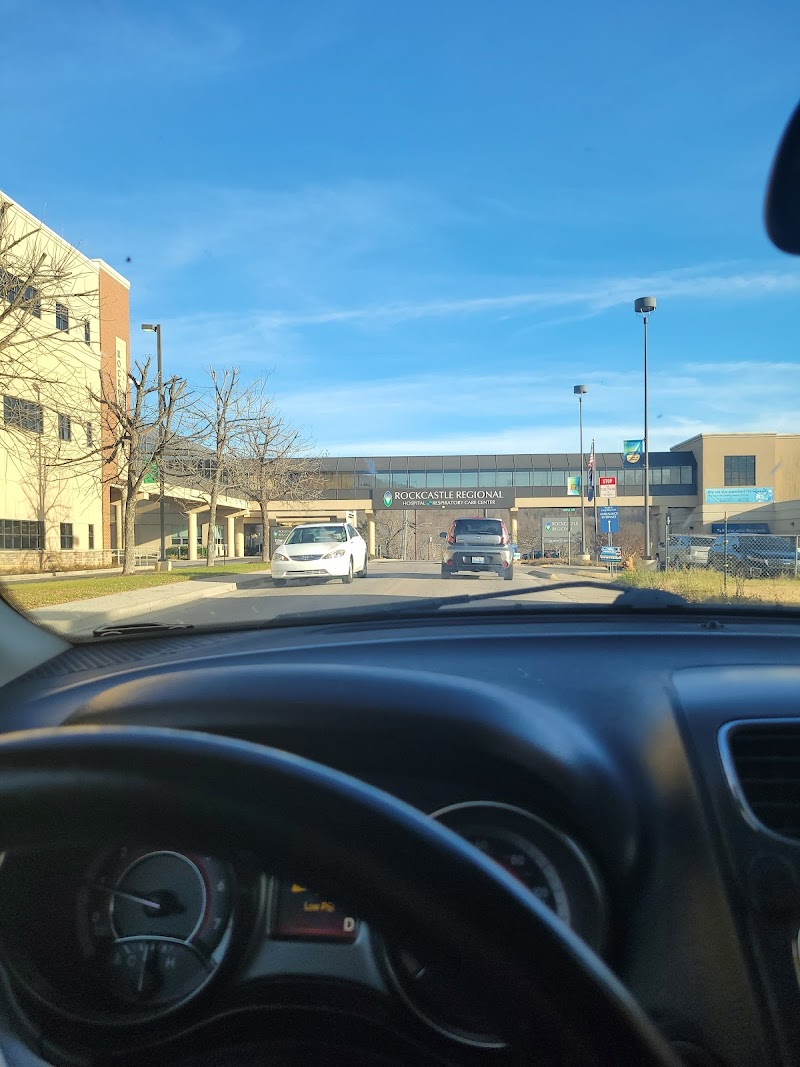
Rockcastle Regional Hospital and Respiratory Care
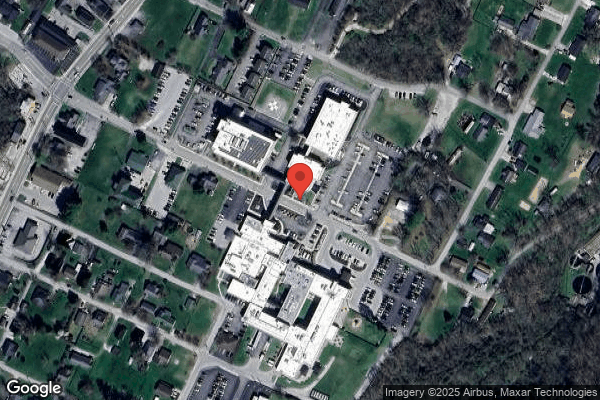
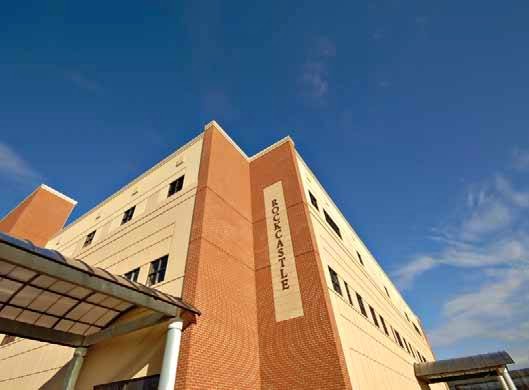
145 Newcomb Avenue, Mount Vernon, KY 40456 (606) 256-2195
Non profit - Corporation 143 Beds Independent Data: November 2025
Trust Grade
93/100
#30 of 266 in KY
Last Inspection: March 2025

Within standard 12-15 month inspection cycle. Federal law requires annual inspections.

Overview

Rockcastle Regional Hospital and Respiratory Care has received a Trust Grade of A, meaning it is considered excellent and highly recommended. It ranks #30 out of 266 facilities in Kentucky, placing it in the top half of the state, and is the best option in Rockcastle County. However, the facility is facing a troubling trend as issues have increased from 1 in 2018 to 4 in 2025. Staffing has a rating of 3 out of 5, with a turnover rate of 29%, which is below the state average, indicating that staff generally stay longer and have familiarity with residents. Notably, there have been no fines, and the facility boasts more RN coverage than 96% of others in Kentucky, which is a positive sign for resident care. On the downside, recent inspector findings revealed several concerns. For instance, two residents did not receive adequate visual privacy during tracheostomy care, as procedures were conducted with the door open. Additionally, a resident lacked a functional communication system to call for assistance, which could jeopardize their safety. Lastly, the facility failed to post required nurse staffing information for several days, which could hinder transparency about staff availability. While there are strengths in staffing stability and RN coverage, these issues indicate areas needing improvement.
Trust Score
A
93/100
In Kentucky
#30/266
Top 11%
Safety Record
Low Risk
No red flags
Inspections
Getting Worse
1 → 3 violations
Staff Stability
✓ Good
29% annual turnover. Excellent stability, 19 points below Kentucky's 48% average. Staff who stay learn residents' needs.
Penalties
✓ Good
No fines on record. Clean compliance history, better than most Kentucky facilities.
Skilled Nurses
✓ Good
Each resident gets 134 minutes of Registered Nurse (RN) attention daily — more than 97% of Kentucky nursing homes. RNs are the most trained staff who catch health problems before they become serious.
Violations
✓ Good
Only 4 deficiencies on record. Cleaner than most facilities. Minor issues only.
★★★★★
5.0
Overall Rating
★★★☆☆
3.0
Staff Levels
★★★★★
5.0
Care Quality
★★★★☆
4.0
Inspection Score
Stable
2018: 1 issues
2025: 3 issues

The Good

  • 5-Star Quality Measures · Strong clinical quality outcomes
  • Low Staff Turnover (29%) · Staff stability means consistent care
  • Full Sprinkler Coverage · Fire safety systems throughout facility
  • No fines on record
  • Staff turnover is low (29%)

    19 points below Kentucky average of 48%

Facility shows strength in quality measures, staff retention, fire safety.

The Bad

No Significant Concerns Identified

This facility shows no red flags. Among Kentucky's 100 nursing homes, only 1% achieve this.

The Ugly 4 deficiencies on record

Mar 2025 3 deficiencies
CONCERN (D)

Potential for Harm - no one hurt, but risky conditions existed

Deficiency F0583 (Tag F0583)

Could have caused harm · This affected 1 resident

**NOTE- TERMS IN BRACKETS HAVE BEEN EDITED TO PROTECT CONFIDENTIALITY** Based on observation, interview, and record review, the facility failed to provide visual privacy for two residents (Resident (R...

Read full inspector narrative →
**NOTE- TERMS IN BRACKETS HAVE BEEN EDITED TO PROTECT CONFIDENTIALITY** Based on observation, interview, and record review, the facility failed to provide visual privacy for two residents (Resident (R) 114 and R24) of thirty sampled residents during tracheostomy care. On 3/23/25 at 2:47 PM and again at 2:53 PM, a respiratory therapist suctioned the resident's tracheostomy with the door open and without pulling the privacy curtain. Visitors, staff, and other residents in the hallway could see into the room during the procedure. The findings include: A review of the facility's Routine Trach Care policy, revised in June 2021, instructs staff to provide privacy as part of the procedure. The LTC Resident's Rights to Privacy policy, revised in May 2017, states, The resident is granted the privacy of his/her body during provision of personal care and services. Staff failed to follow both policies and did not protect the resident's right to Privacy. A review of R43's admission Face Sheet revealed the facility admitted R114 on 02/07/2025. A review of R114's admission Minimum Data Set with an Assessment Reference Date (ARD) of 02/13/2025 indicated that a Brief Interview for Mental Status (BIMS) wasn't conducted, indicating that R114 is rarely/never understood. A review of R24's admission Face Sheet revealed the facility admitted R24 to the facility on [DATE]. A review of R24's admission Minimum Data Set with an Assessment Reference Date (ARD) of 01/02/2025 revealed the resident had a Brief Interview for Mental Status (BIMS) score of 3/15, indicating that R24 had severe cognitive impairment. During an observation at 2:47 PM on 03/23/2025 Respiratory Therapist (RT) 1 suctioned R114's tracheostomy with the door open and without pulling the privacy curtain, failing to provide visual privacy during the procedure. During observation on 03/23/2025 at 2:53 PM, RT 1 suctioned R24's tracheostomy without closing the door or pulling the privacy curtain. R24 and his roommate had visitors in the room. RT 1 only pulled the privacy curtain after she saw the State Survey Agent (SSA) outside the doorway. During an interview on 03/23/2025 at 3 PM, RT 1 stated, It's just suctioning; it doesn't require privacy like a bed bath. During the interview on 03/23/2025 at 3:05 PM, Family Member 1 stated, R24 is provided trach care often with the door open and the curtain not pulled. Sometimes, I think people passing by the room looking in may embarrass him. During an interview on 03/25/2025 at 11:40 AM, the Respiratory Director stated, Privacy should be provided during patient care, which includes trach care. I would be embarrassed if the door was left open during care, and I know it is the same for our residents here. During an interview on 03/26/2025 at 11:20 AM, the Chief Nurse Officer stated, My expectation for staff is to respect our residents and provide them privacy during patient care by closing the door.
CONCERN (D)

Potential for Harm - no one hurt, but risky conditions existed

Staffing Information (Tag F0732)

Could have caused harm · This affected 1 resident

Based on observations and staff interviews, the facility failed to post the required Nurse Staffing Information (i.e., total number and actual hours worked by the licensed and unlicensed nursing staff...

Read full inspector narrative →
Based on observations and staff interviews, the facility failed to post the required Nurse Staffing Information (i.e., total number and actual hours worked by the licensed and unlicensed nursing staff directly responsible for resident care) on the North, South, East, and [NAME] units for the following dates: 03/21/2025, 03/22/2025, 03/23/2025, and 03/24/2025. The findings include: A review of the facility ' s policy titled, Nurse Staffing Information, with a revision date of March 2021, revealed that the facility must post the total number, and the actual hours worked by the licensed and unlicensed nursing staff directly responsible for resident care daily at each station by the beginning of each shift. Observation, on 03/23/2025 at 3:45 PM, revealed that the Rockcastle Respiratory Care Center Nurse Staffing Information, postings on the North, South, East, and [NAME] units had not been updated since 03/20/2025. Observation, on 03/24/2025 at 3:00 PM, revealed that the Rockcastle Respiratory Care Center Nurse Staffing Information, posted for the same units had still not been updated or exchanged since 03/20/2025. During an interview with the Nursing Administrative Assistant on 03/25/2025, at 11:00 AM, she stated that she was responsible for updating the staffing postings and typically posted this information daily. She further explained that she prepared the postings for Friday, Saturday, Sunday, and Monday each Thursday afternoon, with the weekend updates expected to be managed by the assigned nurse or weekend manager. However, the Nursing Administrative Assistant admitted to failing to deliver the postings for March 21, 22, 23, and 24, 2025 on 03/20/2025 which resulted in the units not having the information to post. In an interview with the Chief Nurse Officer on March 26, 2025, at 11:20 AM, she stated that it was the Nursing Administrative Assistant's responsibility to update the staffing postings. The Chief Nurse Officer also mentioned that she was unaware the postings had not been updated daily to inform residents and visitors of daily staffing information.
CONCERN (D)

Potential for Harm - no one hurt, but risky conditions existed

Deficiency F0919 (Tag F0919)

Could have caused harm · This affected 1 resident

**NOTE- TERMS IN BRACKETS HAVE BEEN EDITED TO PROTECT CONFIDENTIALITY** Based on observation, interview, record review, and review of facility policy, the facility failed to ensure one (Resident (R )4...

Read full inspector narrative →
**NOTE- TERMS IN BRACKETS HAVE BEEN EDITED TO PROTECT CONFIDENTIALITY** Based on observation, interview, record review, and review of facility policy, the facility failed to ensure one (Resident (R )43) of 30 sampled residents had access to a functional and accessible communication system to request staff assistance. On 03/23/2025, Resident (R) 43 was not equipped with a functional and accessible communication system to request staff assistance compromising R43's safety and well-being. On 03/23/2025, R43 activated the call light system but did not receive assistance, as the call was manually deactivated at the central staff station. On 03/24/2025, the call light was positioned on the resident's ventilator machine, out of the resident ' s reach, preventing the resident from alerting staff when suctioning was needed. These failures delayed staff response to the resident's needs, potentially compromising the resident ' s safety and well-being. The findings include: A review of the facility policy, Organizational Top Ten Behavior Standards—Call Lights (undated), revealed that call lights were to be acknowledged by the third ring and answered with How may I help you? According to the policy, staff should respond with care, courtesy, and respect. A review of R43's admission Face Sheet revealed R43's was admitted to the facility on [DATE]. A review of R43's admission Minimum Data Set with an Assessment Reference Date (ARD) of 03/05/2025 indicated a Brief Interview for Mental Status (BIMS) score of 14, indicating that R43 was cognitively intact. On 03/23/2025, at 2:18 PM, R 43 was observed making a gurgling sound from the tracheostomy and activated the call light to request assistance. At 2:21 PM, the unit secretary deactivated the call system without calling or checking on the resident. At 2:22 PM, the State Survey Agent (SSA) instructed R43 to press the call light again. At 2:25 PM, the State Registered Nurse Aide (SRNA) 1 entered the room. At that time, R43 reported she needed respiratory therapy for suctioning. During an interview at 2:18 PM on 03/23/2025, R43 stated, I turn my light on, and they just turn it off without checking on me. R43 also reported feeling afraid and said, Sometimes I feel like I'm drowning in my secretions. During an interview at 2:43 PM on 03/23/2025, Unit Secretary 1 stated that she frequently deactivated resident call lights from the central location without calling into the room. She added, If the resident needs something, they will push the call light again. During an observation on 03/24/2025 at 3:10 PM, R 43 was observed in bed searching for the call light. R43 had an audible gurgling sound from the tracheostomy area. The SSA discovered the call light button was on the ventilator machine out of the resident's reach. When the Licensed Practical Nurse entered the room, R43 stated, No one calls into my room or checks when I push my light. I didn't think it was working. During an interview at 3:16 PM on 03/24/2025 with Licensed Practical Nurse (LPN) 1, she confirmed that the call light was misplaced during patient care. LPN 1 further stated that R43 was new to the facility and may accidentally hit the light. She added that the unit secretary often deactivated the light without follow-up but acknowledged that the staff should check on the resident for safety when the call light was activated. During an interview on 03/24/2025 at 3:25 PM, R43 stated, I need my light to work because I get scared when no one comes. What if I needed respiratory therapy because I need suctioning? During an interview on 03/25/2025 at 9:35 AM, the Administrator acknowledged that the call lights were a known issue in the facility. The Administrator attributed part of the problem to the layout of the newly constructed resident unit and a shortage of staff wanting to work the unit due to the distance between rooms, which caused increased fatigue. He stated, however, that this was not an excuse and that both floor staff and management should respond to all call lights to ensure resident needs were met, including alleviating fears of choking and lack of timely assistance.
Aug 2018 1 deficiency
CONCERN (D)

Potential for Harm - no one hurt, but risky conditions existed

Deficiency F0645 (Tag F0645)

Could have caused harm · This affected 1 resident

Based on observation, interview, and record review, it was determined the facility failed to ensure one (1) of thirty-three (33) sampled residents received a preadmission screening (Resident #84). Res...

Read full inspector narrative →
Based on observation, interview, and record review, it was determined the facility failed to ensure one (1) of thirty-three (33) sampled residents received a preadmission screening (Resident #84). Resident #84 had a Level I Pre-admission Screening and Resident Review (PASARR) on 02/09/18 that indicated the resident required a Level II Screening; however, the facility failed to ensure a Level II screening was completed. The findings include: Interview with the Chief Nursing Officer revealed the facility did not have a policy related to the PASARR. Observation and interview with Resident #84 on 08/29/18 at 2:30 PM revealed the resident had resided at the facility for a few months, but was hoping to go home soon. Review of Resident #84's medical record revealed the facility admitted the resident on 02/12/18 with diagnoses of Chronic Respiratory Failure, Respirator Dependence, Diastolic Heat Failure, and Bipolar Disorder. Further review revealed a PASARR Level I was completed for the resident on 02/09/18, prior to admission, and indicated the resident should have a Level II PASARR due to a diagnosis of Bipolar Disorder. However, record review revealed no documented evidence a Level II PASARR was completed for Resident #84. Interview on 08/30/18 at 3:26 PM with Social Service Worker #1 revealed the facility should have made a referral to the appropriate agency requesting that a Level II PASARR be completed prior to the 40th day of the resident's admission, but Social Service Worker #1 was unable to explain why the referral was not made. Interview on 08/30/18 at 4:45 PM with the Director of Social Services revealed all residents were screened for PASARR and if the resident triggered, a PASARR II should be conducted. He stated a diagnosis of Bipolar Disorder should have triggered a Level II PASARR, and did not know why Resident #84 had not had a Level II screening.
Understanding Severity Codes (click to expand)
Life-Threatening (Immediate Jeopardy)
J - Isolated K - Pattern L - Widespread
Actual Harm
G - Isolated H - Pattern I - Widespread
Potential for Harm
D - Isolated E - Pattern F - Widespread
No Harm (Minor)
A - Isolated B - Pattern C - Widespread

Questions to Ask on Your Visit

  • "Can I speak with families of current residents?"
  • "What's your RN coverage like on weekends and overnight?"

Our Honest Assessment

Strengths
  • • Grade A (93/100). Above average facility, better than most options in Kentucky.
  • • No major safety red flags. No abuse findings, life-threatening violations, or SFF status.
  • • No fines on record. Clean compliance history, better than most Kentucky facilities.
  • • Only 4 deficiencies on record. Cleaner than most facilities. Minor issues only.
Concerns
  • • No significant concerns identified. This facility shows no red flags across CMS ratings, staff turnover, or federal penalties.
Bottom line: Generally positive indicators. Standard due diligence and a personal visit recommended.

About This Facility

What is Rockcastle Regional Hospital And Respiratory Care's CMS Rating?

CMS assigns Rockcastle Regional Hospital and Respiratory Care an overall rating of 5 out of 5 stars, which is considered much above average nationally. Within Kentucky, this rating places the facility higher than 99% of the state's 100 nursing homes. This rating reflects solid performance across the metrics CMS uses to evaluate nursing home quality.
How is Rockcastle Regional Hospital And Respiratory Care Staffed?

CMS rates Rockcastle Regional Hospital and Respiratory Care's staffing level at 3 out of 5 stars, which is average compared to other nursing homes. Staff turnover is 29%, compared to the Kentucky average of 46%. This relatively stable workforce can support continuity of care.

What Have Inspectors Found at Rockcastle Regional Hospital And Respiratory Care?

State health inspectors documented 4 deficiencies at Rockcastle Regional Hospital and Respiratory Care during 2018 to 2025. These included: 4 with potential for harm.
Who Owns and Operates Rockcastle Regional Hospital And Respiratory Care?

Rockcastle Regional Hospital and Respiratory Care is owned by a non-profit organization. Non-profit facilities reinvest revenue into operations rather than distributing to shareholders. The facility operates independently rather than as part of a larger chain. With 143 certified beds and approximately 115 residents (about 80% occupancy), it is a mid-sized facility located in Mount Vernon, Kentucky.

How Does Rockcastle Regional Hospital And Respiratory Care Compare to Other Kentucky Nursing Homes?

Compared to the 100 nursing homes in Kentucky, Rockcastle Regional Hospital and Respiratory Care's overall rating (5 stars) is above the state average of 2.8, staff turnover (29%) is significantly lower than the state average of 46%, and health inspection rating (4 stars) is above the national benchmark.

What Should Families Ask When Visiting Rockcastle Regional Hospital And Respiratory Care?

Based on this facility's data, families visiting should ask: "Can I visit during a mealtime to observe dining assistance and food quality?" "How do you handle medical emergencies, and what is your hospital transfer rate?" "Can I speak with family members of current residents about their experience?"

Is Rockcastle Regional Hospital And Respiratory Care Safe?

Based on CMS inspection data, Rockcastle Regional Hospital and Respiratory Care has a clean safety record: no substantiated abuse findings (meaning no confirmed cases of resident harm), no Immediate Jeopardy citations (the most serious violation level indicating risk of serious injury or death), and is not on the Special Focus Facility watch list (a federal program monitoring the lowest-performing 1% of nursing homes). The facility has a 5-star overall rating and ranks #1 of 100 nursing homes in Kentucky. While no facility is perfect, families should still ask about staff-to-resident ratios and recent inspection results during their visit.

Do Nurses at Rockcastle Regional Hospital And Respiratory Care Stick Around?

Staff at Rockcastle Regional Hospital and Respiratory Care tend to stick around. With a turnover rate of 29%, the facility is 17 percentage points below the Kentucky average of 46%. Low turnover is a positive sign. It means caregivers have time to learn each resident's needs, medications, and personal preferences. Consistent staff also notice subtle changes in a resident's condition more quickly. Registered Nurse turnover is also low at 24%, meaning experienced RNs are available to handle complex medical needs.

Was Rockcastle Regional Hospital And Respiratory Care Ever Fined?

Rockcastle Regional Hospital and Respiratory Care has no federal fines on record. CMS issues fines when nursing homes fail to meet care standards or don't correct problems found during inspections. The absence of fines suggests the facility has either maintained compliance or corrected any issues before penalties were assessed. This is a positive indicator, though families should still review recent inspection reports for the full picture.

Is Rockcastle Regional Hospital And Respiratory Care on Any Federal Watch List?

Rockcastle Regional Hospital and Respiratory Care is not on any federal watch list. The most significant is the Special Focus Facility (SFF) program, which identifies the bottom 1% of nursing homes nationally based on persistent, serious quality problems. Not being on this list means the facility has avoided the pattern of deficiencies that triggers enhanced federal oversight. This is a positive indicator, though families should still review the facility's inspection history directly.