Nicholasville Nursing and Rehabilitation
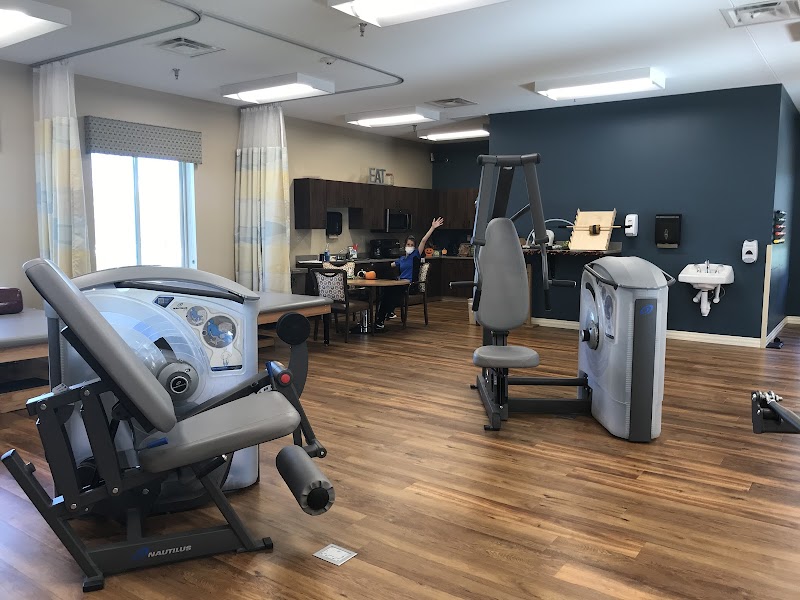
100 Sparks Avenue, Nicholasville, KY 40356 (859) 885-4171
For profit - Corporation 73 Beds DAVID MARX Data: November 2025
Trust Grade
18/100
#243 of 266 in KY
Last Inspection: September 2024

Within standard 12-15 month inspection cycle. Federal law requires annual inspections.

Overview

Nicholasville Nursing and Rehabilitation has received a Trust Grade of F, indicating significant concerns about the facility's quality and care. It ranks #243 out of 266 nursing homes in Kentucky, placing it in the bottom half of all facilities in the state, and #2 out of 2 in Jessamine County, meaning there is only one local alternative that is better. The facility’s trend shows improvement, having reduced issues from 12 in 2024 to 1 in 2025, but it still has a concerning staffing turnover rate of 82%, which is much higher than the state average of 46%. Specific incidents have raised red flags, such as failures to develop care plans for residents with aggressive behaviors, leading to instances of resident-to-resident abuse, and a lack of supervision for a resident with a history of falls, which resulted in serious injuries. While the nursing home has average RN coverage, the overall situation, including $16,104 in fines and a poor overall star rating, suggests families should proceed with caution.
Trust Score
F
18/100
In Kentucky
#243/266
Bottom 9%
Safety Record
Moderate
Needs review
Inspections
Getting Better
12 → 1 violations
Staff Stability
⚠ Watch
82% turnover. Very high, 34 points above average. Constant new faces learning your loved one's needs.
Penalties
✓ Good
$16,104 in fines. Lower than most Kentucky facilities. Relatively clean record.
Skilled Nurses
⚠ Watch
Each resident gets only 28 minutes of Registered Nurse (RN) attention daily — below average for Kentucky. Fewer RN minutes means fewer trained eyes watching for problems.
Violations
⚠ Watch
35 deficiencies on record. Higher than average. Multiple issues found across inspections.
★☆☆☆☆
1.0
Overall Rating
★☆☆☆☆
1.0
Staff Levels
★★★☆☆
3.0
Care Quality
★☆☆☆☆
1.0
Inspection Score
Stable
2024: 12 issues
2025: 1 issues

The Good

  • Full Sprinkler Coverage · Fire safety systems throughout facility
  • No fines on record

Facility shows strength in fire safety.

The Bad

1-Star Overall Rating

Below Kentucky average (2.8)

Significant quality concerns identified by CMS

Staff Turnover: 82%

36pts above Kentucky avg (46%)

Frequent staff changes - ask about care continuity

Federal Fines: $16,104

Below median ($33,413)

Minor penalties assessed

Chain: DAVID MARX

Part of a multi-facility chain

Ask about local staffing decisions and management

Staff turnover is very high (82%)

34 points above Kentucky average of 48%

The Ugly 35 deficiencies on record

2 actual harm
Aug 2025 1 deficiency
CONCERN (E) 📢 Someone Reported This

A family member, employee, or ombudsman was alarmed enough to file a formal complaint

Potential for Harm - no one hurt, but risky conditions existed

Infection Control (Tag F0880)

Could have caused harm · This affected multiple residents

Based on observation, interview, record review, review of the facility's signage, and review of the facility's policies, the facility failed to establish and maintain an infection prevention and contr...

Read full inspector narrative →
Based on observation, interview, record review, review of the facility's signage, and review of the facility's policies, the facility failed to establish and maintain an infection prevention and control program designed to provide a safe, sanitary, and comfortable environment and to help prevent and control the development and transmission of communicable diseases and to implement interventions to protect the residents for 4 of 27 sampled residents, Resident (R) 21, R34, R39, and R41. Observation on 08/19/2025 revealed staff donned (put on) N-95 masks over surgical masks prior to entering rooms designated as Covid positive rooms.Observation on 08/19/2025 revealed rooms designated as Covid positive rooms were without proper signage for droplet precautions. Observation on 08/20/2025 revealed staff exited a room designated as a Covid positive room without removing an N-95 mask and wearing the same mask to another department. The findings include:Review of the facility's policy titled, Infection Prevention and Control Program, no date given, revealed the facility had infection prevention and control programs designed to provide a safe, sanitary, and comfortable environment. Additional review revealed the program helped to prevent the development and transmission of communicable diseases and infections with procedures for all staff to be responsible for following all policies and procedures related to the program including to use personal protective equipment (PPE) according to facility policy. Further review revealed staff would be educated on the facility's infection and prevention program related to their job functions. Review of the facility's policy titled, Covid-19 Prevention and Management, dated 03/05/2025, revealed the facility was to follow updated recommendations set forth by the Centers for Medicare and Medicaid Services (CMS) and the Centers for Disease Control and Prevention (CDC) regarding prevention and management of the Covid-19 virus. Further review revealed the policy was to ensure proper treatment and prevention of the transmission of Covid-19 to other residents and care team members. The policy stated care team members would be required to wear eye protection, N-95 or surgical mask over N-95, gown, and gloves prior to entry and remove prior to exiting the quarantine or isolation room. Continued review revealed surgical masks could not be used under an N-95 mask. Review of the facility's door signage Special Droplet/Contact Precautions, undated, revealed everyone must wear proper PPE including a facemask at all times which included an N-95 upon entering the room. 1. Review of Resident (R) 21's Face Sheet revealed the facility admitted the resident on 08/01/2025 with diagnoses to include low blood pressure, dementia, and hypothyroidism. Further review revealed his assigned room was designated as Covid positive. Review of R21's SAR-COV-2 [severe acute respiratory syndrome coronavirus 2] (Covid-19) Resident Testing Data revealed a test performed on 08/13/2025 had positive results. Observation of the Business Office Manager (BOM) on 08/19/2025 at 10:50 AM revealed the BOM entered R21's room, a room designated as Covid positive with a surgical mask under an N-95 mask. During an interview with BOM on 08/19/2025 at 3:00 PM, she stated she had been working at the facility for about nine months. When asked if the facility had provided any training for putting on and disposing of PPE for Covid positive rooms, she stated yes and no. When asked what that meant she stated when she had entered the Covid positive room with the mask under the N-95, she did not know any better. She stated the Director of Nursing Services (DNS) had given her one-on-one training yesterday, and she now knows not to wear any mask under an N-95. She stated if one wore a surgical mask under the N-95, it interfered with its seal, possibly exposing her, which could lead to spreading Covid.2. Review of R34's Face Sheet revealed the facility admitted the resident on 06/30/2025 with diagnoses to include high blood pressure, heart failure, and cellulitis in right lower limb. Further review revealed R34's assigned room was designated as Covid positive. Review of R34's SAR-COV-2 (Covid-19) Resident Testing Data revealed a test performed on 08/16/2025 had positive results. Review of R34's Physician's Orders revealed a verbal order was given on 08/16/2025 for droplet precautions to include mask, gown, gloves and eye protection, required every shift. Review of R34's Care Plan revealed a focus of at risk for respiratory distress related to confirmed Covid-19, initiated on 08/19/2025. Further review revealed resident would be free from symptoms of respiratory distress with interventions to include droplet precautions.Review of R39's Face Sheet revealed the facility admitted the resident on 07/14/2025 with diagnoses to include multiple fractures, high blood pressure, and chronic kidney disease. Further review revealed R39's assigned room was designated as Covid positive. Review of R39's SAR-COV-2 (Covid-19) Resident Testing Data revealed a test performed on 08/13/2025 had positive results.Review of R39's Physician's Orders revealed a telephone order was given on 08/14/2025 for droplet precautions to include mask, gown, gloves, and eye protection required every shift for isolation for ten (10) days.Review of R39's Comprehensive Care Plan (CCP), dated 08/18/2025, revealed R39's focus placed her at risk for respiratory distress related to confirmed Covid-19. Further review of the CCP revealed the goal was for the resident to be free from or have reduced symptoms of respiratory distress with interventions placed on 08/18/2025 to include droplet precautions. Review of R41's Face Sheet revealed the facility admitted the resident on 12/10/2021 with diagnoses to include diabetes, high blood pressure, and acute ischemic heart disease (reduced blood flow to the heart muscle). Further review revealed R41's assigned room was designated as Covid positive.Review of R41's SAR-COV-2 (Covid-19) Resident Testing Data revealed a test performed on 08/18/2025 had positive results.Review of R41's Physician's Orders revealed a verbal order was given on 08/18/2025 for droplet precautions to include mask, gown, gloves and eye protection every shift until 08/28/2025 with an end date given as 08/28/2025. Review of R41's CCP, dated 08/18/2025, identified the resident at risk for respiratory distress related to contact with confirmed Covid-19. R41's goal was to be free from or have reduced symptoms of respiratory distress with interventions to include droplet precautions. Observation on 08/19/2025 at 12:10 PM revealed no signage for droplet precautions on the door of the room where R39 and R41 resided. Further observation at 12:20 PM revealed there was no signage for droplet precautions on the door of the room where R34 resided. Both rooms were designated as Covid positive rooms. 3. Observation on 08/19/2025 at 1:00 PM revealed State Registered Nurse Aide (SRNA) 4 donned (put on) PPE to deliver lunch trays to the room where R39 and R41 resided. SRNA4 placed an N95 mask over a surgical mask. When exiting the room, she removed the PPE inside the room then placed the used N95 into the door caddy where clean PPE was stored outside of the room. During an interview with SRNA4 on 08/19/2025 at 1:07 PM, she stated she had never received any education about how to place the N95 mask. She also stated they were disposable, and she should have placed it into the trash can to prevent cross contamination.During an interview with SRNA6 on 08/20/2025 at 3:35 PM, he stated he would not wear a mask under an N-95. He added if a mask was worn under an N-95, it could cause cross contamination, and that was how he was trained.During an interview with SRNA5 on 08/21/2025 at 11:10 AM, she stated the facility had provided training on infection control which included DNSning an N-95. She stated she was trained not to place any type of mask under an N-95 because it could increase chances of becoming infected and spreading germs. During an interview with SRNA9 on 08/21/2025 at 1:29 PM, she stated she was trained not to double mask when using an N-95 because it interfered with proper sealing, increasing chances of cross contamination and spreading germs. In an interview with SRNA16 on 08/22/2025 at 9:06 AM, she stated she did wear a surgical mask under her N-95 for extra protection, and no one had told her otherwise. During a brief interview with the Director of Nursing Services (DNS) on 08/19/2025 at 11:25 AM, she stated the staff was not trained to wear a surgical mask under an N-95, adding it interfered with the seal of the N-95, which could possibly spread Covid throughout the facility.4. Observation on 08/20/2025 at 3:10 PM revealed therapy staff exited the room where R34 resided, a Covid positive designated room, still wearing an N-95 mask. Continued observation revealed therapy staff walked to the end of A Hall, through B Hall, and then to the therapy department with the same N-95 mask on and disposed of the mask in the garbage can in the therapy department. Further observation revealed the N-95 mask in the therapy garbage can. During an interview with therapy staff at 3:15 PM on 08/20/2025 after observation, she stated she was an Occupational Therapist (OT) and had worked at facility for nine months. When asked if she had received infection control training since working at the facility, especially pertaining to Covid positive rooms and proper donning and doffing (removing) PPE, she stated she was sure she had but could not remember. When ask if the N95 mask she wore in R34's room was the same that she disposed in the therapy garbage, she stated it was the same mask. She stated the concern was if proper donning and doffing was not practiced upon entering and exiting a Covid positive room, the infection could be spread throughout the facility. During an additional interview with the DNS on 08/22/2025 at 3:05 PM, she stated she had been at the facility one month. She stated prior to her coming to the facility, she could not say what the infection prevention and control procedure was. However, she stated she had now provided infection control in-services over two to three days to make sure she covered all shifts and all staff. She stated, after the first resident tested positive for Covid, each staff person received a packet of information. She stated she reviewed the kinds of precautions, what PPE to wear, and observed return demonstrations of DNSning and doffing PPE. The DNS stated her expectation was for staff to follow the education and posted signage on resident room doors to protect all residents and staff. She stated, if staff did not follow infection control precautions, infections could spread to the residents, staff, and the community.During an interview with the Executive Director who was also the Infection Preventionist (IP) on 08/22/2025 at 8:32 AM, she stated she had been at the facility as the Executive Director since February 2025 and had served as IP since August 2025. She stated her expectations of staff members, as both the IP and ED, were they should know and follow the policy for infection control and proper DNSning/doffing of personal protective equipment (PPE) to prevent spreading germs. She stated staff was trained upon hire in infection control and then yearly and as needed. She stated each time there was a resident placed in isolation, the facility performed additional training as needed. She stated staff was trained on all the different types of isolation and should know the procedure and refer to the door signage. She stated further, if a resident was on contact isolation, staff should be putting on PPE each and every time they entered the room. She stated all PPE would be taken off prior to exiting the room. She stated proper signage should be on each isolation room door to explain what PPE was needed and when to remove it to prevent spreading the virus of Covid positive rooms. She stated, if proper signage was not on the room door, staff would not have guidance to follow, and there would be a risk of spreading germs. The Executive Director also stated staff was trained not to double mask and should not be doing that.
Sept 2024 12 deficiencies
CONCERN (D)

Potential for Harm - no one hurt, but risky conditions existed

Safe Environment (Tag F0584)

Could have caused harm · This affected 1 resident

**NOTE- TERMS IN BRACKETS HAVE BEEN EDITED TO PROTECT CONFIDENTIALITY** Based on observation, interview, and review of the facility's documents and policies, the facility failed to provide 2 of 42 sam...

Read full inspector narrative →
**NOTE- TERMS IN BRACKETS HAVE BEEN EDITED TO PROTECT CONFIDENTIALITY** Based on observation, interview, and review of the facility's documents and policies, the facility failed to provide 2 of 42 sampled and supplemental residents, Resident (R) 20 and R59, with a safe, clean, comfortable, and homelike environment. The room that R20 and R59 shared smelled of urine and other unpleasant odors. The findings include: Review of the facility's policy titled, Safe and Homelike Environment, dated 01/02/2024, revealed that in accordance with residents' rights, the facility would provide a safe, clean, comfortable, and homelike environment. Review of the facility's policy titled, Resident Rights, dated October 2019, stated all staff members were to always recognize the rights of residents and residents assumed their responsibilities to enable personal dignity, well-being, and proper delivery of care. Review of the facility's policy titled, Dignity, dated 01/02/2024, revealed that it was the practice of the facility to protect and promote resident rights and treat each resident with respect and dignity as well as care for each resident in a manner and in an environment that maintained or enhanced the resident's quality of life by recognizing each resident's individuality. Review of the facility's document Five Step Daily Room Cleaning revealed that the purpose of the document was to teach Environmental Services employees the proper cleaning method to sanitize a patient room or any area in a healthcare facility. This document stated that the housekeepers were to empty the trash, clean/disinfect horizontal surfaces, spot clean walls, dust mop, and damp mop each room. Observation on 09/08/2024 at 11:06 AM revealed room [ROOM NUMBER], the room shared by R20 and R59, smelled strongly of urine. The room also had another smell the State Survey Agency (SSA) Surveyor could only describe as that of an open wound. Observation on 09/08/2024 at 1:07 PM revealed the door to room [ROOM NUMBER] was open, and the hallway outside of that room smelled of urine and an open wound. Observation on 09/10/2024 at 4:00 PM of room [ROOM NUMBER] revealed the door was closed but the odor of urine and of an open wound could be smelled outside the door and was even stronger inside the room. In an interview with R59 on 09/08/2024 at 11:01 AM, he stated he did not think room [ROOM NUMBER] had an unpleasant odor. In an interview with R20 on 09/08/2024 at 11:06 AM, he stated he had a urostomy (an opening in the abdominal wall created to divert urine away from the bladder and into a collection bag outside the abdominal wall) and a colostomy (an opening in the large intestine to divert feces into a collection bag outside the abdominal wall. He stated his urostomy leaked because the facility had not purchased the correct urostomy bags. He stated he did his own care for his colostomy and urostomy. R20 stated that he had a large sore on his bottom (coccyx, open wound), and he was at the facility for wound management. He stated he did his own showers. In an interview on 09/10/2024 at 10:16 AM with State Registered Nurse Aide (SRNA) 3, she stated R20 did not let staff assist him with bathing or changing his colostomy and urostomy bags; R20 did all his own care. SRNA3 stated that part of the odor in R20's room also came from the wound on his coccyx. She stated R20's urostomy bag leaked. SRNA3 stated R20 refused to let staff change his bed linens. SRNA3 stated when R20 went to the hospital, staff cleaned the room, and the smell went away. She stated the smell was not from R59. In an interview on 09/10/2024 at 10:33 AM with Housekeeper (HK) 1 and the Director of Housekeeping, both stated room [ROOM NUMBER] smelled strongly of urine despite staff cleaning the room daily and using multiple cleaners to try and help with the odor. HK1 stated staff cleaned R20's room multiple times daily, without being successful in ridding the room of the urine and wound odor. The Director of Housekeeping stated the facility had changed out R20's mattress multiple times to help with the odors. Both stated the odor of urine did not constitute a homelike environment. In an interview on 09/10/2024 at 10:37 AM with SRNA2 and her orientee, SRNA4, present, she stated the smell in room [ROOM NUMBER] was from R20's wound drainage and the leaking urostomy that had saturated the mattress topper. She stated she felt he needed a new mattress to help eliminate the odor. SRNA2 stated she had no access to cleaning supplies to clean the mattress, and R20 refused to have his bed linens changed daily. SRNA2 stated R20 often refused to shower. In a telephone interview with SRNA8 on 09/10/2024 at 7:26 PM, she stated R20's room only smelled bad when staff was performing his wound treatments. SRNA8 stated R20 did his own care, and he refused showers and having his bed linens changed. In an interview with Registered Nurse (RN) 1 on 09/10/2024 at 3:20 PM, she stated the odor in room [ROOM NUMBER] was from R20's Stage 4 pressure ulcer on his coccyx and his urostomy and colostomy. RN1 stated R20 often refused to bathe, get his bed linens changed, or allowed staff to wipe off his mattress. In an interview with the Director of Central Supply on 09/11/2024 at 8:43 AM, she stated she was unable to get the correct size urostomy bags for R20 because the supplier had discontinued the ones he used. The Director of Central Supply stated she had ordered different sizes of urostomy bags for R20 to try, and staff was still trying to find a bag that fit and did not leak. In an interview with the Maintenance Director on 09/11/2024 at 8:45 AM, he stated the mattress for R59 had been changed out recently, but the mattress for R20 was an air mattress, from an outside vendor that could not be changed. In an interview with the Assistant Director of Nursing (ADON) and the Director of Nursing (DON) on 09/12/2024 at 8:25 AM, both stated the smell in room [ROOM NUMBER] was from R20. The DON stated R20 refused care and treatments, and R20 was care planned for the behavior of refusing care. The ADON and DON stated they tried to encourage R20 to bathe. The DON stated that housekeeping was also cleaning the room more frequently to help with the smell. In an interview with the Administrator on 09/12/2024 at 8:47 AM, she stated the facility had tried multiple things to combat the smell in room [ROOM NUMBER]. She stated R20 refused to pick up things in the room or to have the room cleaned. She stated she had talked with R20 about cleaning up the clutter and allowing housekeeping to clean the room. The Administrator stated she had also interviewed R59 about the odor and the clutter in room [ROOM NUMBER], and R59 had no issues with either and declined to move to another room. The Administrator stated the smell and the clutter in the room were an issue, but she could only suggest cleaning the room to R20 and R59 and could not force them to do it. The Administrator stated R20 did his own ostomy care, and he was messy, which contributed to the room's odor. She stated it was difficult for R20 to accept someone caring for him, even if he did need the assistance.
CONCERN (D)

Potential for Harm - no one hurt, but risky conditions existed

MDS Data Transmission (Tag F0640)

Could have caused harm · This affected 1 resident

Based on interview, record review, and review of the Resident Assessment Instrument (RAI), the facility failed in seven days to complete the resident assessment as return anticipated or not anticipate...

Read full inspector narrative →
Based on interview, record review, and review of the Resident Assessment Instrument (RAI), the facility failed in seven days to complete the resident assessment as return anticipated or not anticipated and electronically transmit the discharge assessment within 14 days for 1 of 25 sampled residents, Resident (R) 36. R36's discharge date was 05/28/2024, but R36's Minimum Data Set (MDS) was not submitted until 09/12/2024. The findings include: Review of the Resident Assessment Instrument (RAI) Manual, dated 10/2023, revealed the MDS completion date must be no later than 14 days for a Discharge Assessment - return not anticipated or return anticipated. Review of R36's Face Sheet revealed the facility admitted the resident on 04/16/2024 with diagnoses of protein-calorie malnutrition, hypertension, and atrial fibrillation. Review of R36's MDS, with an assessment reference date (ARD) of 04/23/2024, revealed the facility assessed the resident to have a Brief Interview for Mental Status (BIMS) score of 15 out of 15, which indicated the resident was cognitively intact. Review of R36's Health Progress Note, dated 05/28/2024 at 2:45 PM, revealed the resident was sent to acute care. Review of R36's Health Progress Note, dated 05/28/2024 at 7:08 PM, revealed the resident had been hospitalized . Review of R36's electronic medical record (EMR) revealed the last documented MDS, with an ARD of 05/01/2024, showed a five-day scheduled assessment for Medicare Part A stay. In an interview with the Minimum Data Set Nurse, who was a Registered Nurse (RN), on 09/12/2024 at 2:37 PM, she stated after the resident was out of the facility for 24 hours, she would add discharge (D/C) with anticipated to return or not anticipated to return. She stated she had seven days to complete the assessment and an additional seven days to submit the assessment after completion. She stated the completed resident assessment was submitted within 14 days. She stated she did not add the anticipated to return or not anticipated to return after the resident had not returned within 23 hours. In an interview with the Director of Nursing (DON) on 09/12/20224 at 3:00 PM, she stated the discharged resident assessment was to be submitted timely according to the RAI manual. In an interview with the Administrator on 09/12/2024 at 3:52 PM, she stated she expected the MDS assessment to be submitted on time.
CONCERN (D)

Potential for Harm - no one hurt, but risky conditions existed

Comprehensive Care Plan (Tag F0656)

Could have caused harm · This affected 1 resident

Based on interview, record review, and review of the facility's policy, the facility failed to develop a person centered care plan for each resident, consistent with the resident rights which included...

Read full inspector narrative →
Based on interview, record review, and review of the facility's policy, the facility failed to develop a person centered care plan for each resident, consistent with the resident rights which included measurable objectives, and time frames to meet a resident's medical, nursing, mental, and psychosocial needs that were identified in the comprehensive assessment for 1 of 25 sampled residents, Resident (R) 267. Review of R267's Comprehensive Care Plan (CCP) revealed R267 was to be assessed for a bruit and a thrill. However, R267 did not have a fistula to assess, but instead had a dialysis central venous catheter. Further review of R267's CCP revealed the CCP had multiple instances where the resident's name was not documented, and R267 was referred to only by the generic term Resident Name. The findings include: The State Survey Agency (SSA) Surveyor asked the Administrator for a policy on the development and implementation of resident centered care plans on 09/09/2024 at 1:51 PM and on 09/11/2024 at 8:37 AM. On 09/11/2024 at 8:37 AM the Administrator stated the facility did not have a policy for the development and implementation of resident centered care plans. Review of the facility's policy titled, Dialysis, dated 01/02/2024, revealed that it was the facility's policy to provide the necessary care and treatment, consistent with professional standards of practice, physician orders, the comprehensive person-centered care plan, and the resident's goals and preferences, to meet the special medical, nursing, mental, and psychosocial needs of residents receiving hemodialysis. Further review revealed residents with external dialysis catheters would be assessed every shift to ensure that the catheter dressing was intact and not soiled. Review of R267's Face Sheet revealed the facility admitted the resident on 08/30/2024 with diagnoses of chronic kidney disease without heart failure, with Stage 5 kidney disease or end stage renal disease, and diabetes mellitus type II. Review of R267's admission Minimum Data Set (MDS), with an assessment reference date (ARD) of 09/05/2024, revealed R267 had a Brief Interview for Mental Status (BIMS) score of 12, which indicated moderate impaired cognition. Further review revealed R267 was assessed as needing hemodialysis while a resident but was not assessed as having a peripheral, midline, or central intravenous access. Review of R267's CCP, dated 08/31/2024, revealed R267 required hemodialysis due to renal failure. The goal was R267 would be free from complications related to dialysis. The interventions planned to meet this goal was assess bruit and thrill every shift and to not draw blood or take blood pressures in the arm with the graft. Further review revealed 28 instances where the resident's name was to be filled into the blank for a focus or goal, but it only stated (resident name). Review of R267's Orders, dated 09/03/2024, revealed staff was to monitor her right subclavian tunneled catheter site every shift, monitor her dialysis site for signs and symptoms of complications every shift, notify physician and dialysis center of any complications, and that she was to receive dialysis three (3) times per week on Monday, Wednesday, and Friday. In an interview with R267 on 09/08/2024 at 10:33 AM, she stated she still urinated but went to dialysis three times a week also. She stated she had rhabdomyolysis, which had damaged her kidneys. She stated this was why she had a dialysis catheter in her right chest. R267 stated she was told her kidney function was getting better, and she would not need dialysis permanently. In an interview on 09/10/2024 at 3:20 PM with Registered Nurse (RN) 1, she stated R267 had dialysis on Monday, Wednesday, and Friday. She stated she assessed R267's right subclavian dialysis catheter site after she returned from dialysis. The SSA Surveyor asked RN1 how she assessed the bruit and thrill on R267 that was in her CCP. RN1 stated she did not because dialysis catheters did not have a bruit and thrill, only fistulas had a bruit and thrill. The SSA Surveyor asked why it was listed as a care plan intervention, and RN1 stated she did not know. When RN1 was asked if this represented a resident centered care plan, she stated no. In an interview on 09/11/2024 at 8:20 AM with the Minimum Data Set (MDS) Nurse, she stated when a new resident arrived at the facility, a generic care plan was entered for the resident. She stated she had seven days to change the care plan to individualize it for the specific resident. She stated, after this review and unless there was a change in condition or an event such as a fall that occurred, care plans were reviewed quarterly. She stated any changes to the care plan were discussed with the Interdisciplinary Team (IDT, a multidisciplinary group that planned care for the residents). The MDS Nurse stated she was aware there were resident care plans that needed to be updated and individualized, and she was in the process of doing that for all the residents at this time. In an interview with the Director of Nursing (DON) and Assistant Director of Nursing (ADON) on 09/12/2024 at 8:25 AM, both stated they had the expectation that a resident's care plan should be individualized to that resident, and it should reflect the care and services the facility's staff was providing the resident. When asked how they would assess a thrill or bruit on a dialysis catheter, they stated this assessment was only done for individuals with a fistula. When asked if this intervention care planned for R267 was in individualized, both stated no. Both also stated using the term resident name instead of R267's actual name in the CCP was not considered resident centered. In an interview with the Administrator on 09/12/2024 at 8:47 AM, she stated she did not feel that a care plan with improper or irrelevant interventions were considered a resident centered care plan. She also stated using the term resident name instead of R267's actual name in the CCP was not considered resident centered.
CONCERN (D)

Potential for Harm - no one hurt, but risky conditions existed

Deficiency F0657 (Tag F0657)

Could have caused harm · This affected 1 resident

**NOTE- TERMS IN BRACKETS HAVE BEEN EDITED TO PROTECT CONFIDENTIALITY** Based on interview, record review, and review of facility's policies, the facility failed to revise the comprehensive care plan ...

Read full inspector narrative →
**NOTE- TERMS IN BRACKETS HAVE BEEN EDITED TO PROTECT CONFIDENTIALITY** Based on interview, record review, and review of facility's policies, the facility failed to revise the comprehensive care plan after a re-admission for 1 of 25 sampled residents, Resident (R) 167. R167's care plan for nutritional needs and dietary assessment after being re-admitted to facility on 08/04/2024 following an acute care hospital stay was not reviewed or revised. The findings include: The State Survey Agency (SSA) Surveyor asked the Administrator for a policy on the revision of resident centered care plans on 09/09/2024 at 1:51 PM and on 09/11/2024 at 8:37 AM. On 09/11/2024 at 8:37 AM the Administrator stated the facility did not have a policy for the revision of resident centered care plans. Review of the facility's policy titled, Dietician Recommendations, dated 01/02/2024, revealed the Registered Dietician (RD) would routinely review the nutritional status of residents and make appropriate recommendations for improved status and or quality of life. Further review revealed the process included the RD to document in the Electronic Medical Record (EMR), on a recommendation health record, and provide it to the Director of Nursing (DON). Continued review revealed the facility would be responsible for review and follow up of the RD recommendations within four business days. However, the policy did not include to add this intervention to the care plan. Review of the facility's policy titled, Interdisciplinary Team (IDT) Risk Review Meeting, dated 01/02/2024, revealed all residents identified with a Risk condition would be reviewed by the IDT weekly with a recommendation for the RD to participant monthly if possible. Further review revealed care planning was not addressed. Review of R167's Face Sheet revealed the facility readmitted the resident on 08/04/2024, with the initial admission date of 06/28/2024, with diagnoses to include stoke, hemiplegia and hemiparesis (muscle weakness or partial paralysis on one side of body), protein-calorie malnutrition, and adult failure to thrive. Review of R167's Comprehensive Care Plan (CCP), with initiation date of 07/02/2024, identified a focus of R167 was at risk for complications due to requiring tube feeding and fluid imbalance due to chronic kidney disease. Interventions placed on 07/02/2024 were for the RD to evaluate quarterly and as needed (PRN), monitor caloric intake, estimate needs, make recommendations to tube feeding as needed, and diet as ordered with revision date of 08/22/2024. Continued review of R167's CCP revealed a focus listed R167 as being at risks of dehydration or nutrition problems. Interventions placed on 07/02/2024 were to notify the physician and dietician for any abnormalities with revision date of 08/22/2024. However no intervention was entered for RD assessment following readmission on [DATE]. Review of R167's IDT Care Plan Conference, dated 08/05/2024 at 2:13 PM, revealed to see dietary for nutrition/dietary goals and summary. Further review revealed there were no care plan changes or updates at this time. It stated the resident was a readmission and would continue to be monitor. It was signed and dated by the Social Worker (SW) on 08/07/2024. During an interview with the Minimum Data Set (MDS) Coordinator on 09/12/2024 at 4:30 PM, she stated she had held her position for about six months now and was familiar with R167. She stated the CCP should be updated any time there was a change including after a readmission. She stated, however, if a resident returned to the facility and nothing had changed, then revisions would not be performed. She stated she was not working when R167 was readmitted , and the care plan had not been updated for resident care needs including nutrition. She stated the care plan should have been updated since there were changes, which guided care. She stated, The ball got dropped. She stated this was because she and the Director of Nursing (DON) were not at work for several days after R167 was readmitted . During an interview with the DON on 09/11/2024 at 3:15 PM, she stated for nutritional needs of residents, the RD was consulted. She stated, when asked about the care plan for nutritional needs of R167, there had been a care conference on 08/07/2024, but she was unsure about the revisions to the care plan after readmission on [DATE], since she was not working. During an interview on 09/12/2024 at 10:00 AM with the Administrator, she stated all facility guidelines should be followed.
CONCERN (D)

Potential for Harm - no one hurt, but risky conditions existed

Deficiency F0678 (Tag F0678)

Could have caused harm · This affected 1 resident

**NOTE- TERMS IN BRACKETS HAVE BEEN EDITED TO PROTECT CONFIDENTIALITY** Based on interview, record review, and review of the facility's Code Status Book, the facility failed to update each resident's ...

Read full inspector narrative →
**NOTE- TERMS IN BRACKETS HAVE BEEN EDITED TO PROTECT CONFIDENTIALITY** Based on interview, record review, and review of the facility's Code Status Book, the facility failed to update each resident's Advance Directives in honoring resident wishes for code status to provide basic life support, including cardiopulmonary resuscitation (CPR), to a resident requiring such emergency care prior to the arrival of emergency medical personnel and subject to related physicians orders and the resident's Advance Directives for 1 of 25 sampled residents, Resident (R) 9. The findings include: Review of R9's Face Sheet revealed the facility admitted the resident on [DATE] with diagnoses of unspecified atrial fibrillation, type II diabetes mellitus with unspecified complications, and hypertensive urgency. Review of R9's quarterly Minimum Data Set (MDS), with an assessment reference date (ARD) of [DATE], revealed the facility assessed the resident to have a Brief Interview for Mental Status (BIMS) score of 15 out of 15, which indicated the resident was cognitively intact. Review of R9's care plan revealed on [DATE], the facility would honor the decision regarding healthcare choices to be a Full Code. Further review revealed the care plan was revised on [DATE] to indicate R9 wished to have a Do Not Resuscitate (DNR) Advance Directive. However, review of R9's Code Status document dated [DATE], found on [DATE] at 4:27 PM in the Code Status Book located in the A Hall of the facility, incorrectly identified R9's code status as Full Code instead of DNR as indicated in her electronic medical record (EMR) and care plan. In an interview with the Minimum Data Set Nurse on [DATE] at 4:08 PM, she stated R9's care plan had been updated from the previous care plan because R9 wished to be a DNR instead of a full code. She stated when a change was made in the care plan on code status, it was updated in the Code Status Book located in the nurses station of each hall. In an interview with the Director of Nursing (DON) on [DATE] at 2:46 PM, she stated it was her expectation the Code Status Books would be updated each time a new resident was admitted by the nurse. She stated there was not a policy or an assigned person to audit the Code Status Book in each nurses station. She stated if there was a new admission, the team would audit the books in the morning meeting. In an interview with the Administrator on [DATE] at 5:39 PM, she stated her expectation was for the Code Status Books to be accurate and up to date. She stated, I know the books were inaccurate. She stated all code books had now been audited and corrected. She stated the Code Status Books would be monitored weekly.
CONCERN (D) 📢 Someone Reported This

A family member, employee, or ombudsman was alarmed enough to file a formal complaint

Potential for Harm - no one hurt, but risky conditions existed

Deficiency F0692 (Tag F0692)

Could have caused harm · This affected 1 resident

**NOTE- TERMS IN BRACKETS HAVE BEEN EDITED TO PROTECT CONFIDENTIALITY** Based on interview, record review, review of the Registered Dietician's (RD) job description and contract, and review of the fac...

Read full inspector narrative →
**NOTE- TERMS IN BRACKETS HAVE BEEN EDITED TO PROTECT CONFIDENTIALITY** Based on interview, record review, review of the Registered Dietician's (RD) job description and contract, and review of the facility's policies, the facility failed to perform a comprehensive nutritional assessment by the RD to identify factors that placed the resident at risk for inadequate nutrition and dehydration for one of two sampled residents for nutrition, Resident (R) 167. R167 was readmitted to the facility on [DATE] following an acute care hospital stay for a fall sustained on 07/17/2024. R167, prior to being readmitted on [DATE], was identified as being at risk for inadequate nutrition and hydration. The findings include: Review of the facility's policy titled, Dietician Recommendations, dated 01/02/2024, revealed the RD would routinely review the nutritional status of residents and make appropriate recommendations for improved status and or quality of life. Further review revealed the facility would be responsible for review and follow up of the RD recommendations within four business days. Review of the facility's policy titled, Interdisciplinary Team (IDT) Risk Review Meeting, dated 01/02/2024, revealed all residents identified with a risk condition would be reviewed by the IDT weekly with a recommendation for the RD to participant monthly, if possible. Review of the contracted RD's contract policy titled, Life Care Point Click Care, no date given, revealed resident admissions and readmissions required a full nutritional assessment by day 14 of the admission or readmission. It also stated recommendations would be completed on the RD's recommendations form. However, the facility was unable to find or provide a copy of this form for R167. Review of the Registered Dietician Job Description, dated 03/25/2024, revealed the RD's primary responsibilities included comprehensive assessments for all residents and incorporate nutritional interventions into the individualized interdisciplinary plan of care, provide a written record of recommendations for change in nutrition, and ensure information was appropriately entered. Review of R167's Face Sheet revealed the facility readmitted the resident on 08/04/2024, with an initial admission date of 06/28/2024, with diagnoses to include stroke, hemiplegia and hemiparesis (muscle weakness or partial paralysis on one side of body), protein-calorie malnutrition, and adult failure to thrive. Review of R167's Comprehensive Care Plan (CCP), with initiation date of 07/02/2024, identified a focus as R167 was at risk for complications due to requiring tube feeding. Interventions placed on 07/02/2024 were for the RD to evaluate quarterly and as needed (PRN), with revision date of 08/22/2024. Continued review revealed a focus listed R167 as being at risk of dehydration or nutrition problems. Interventions placed on 07/02/2024 were to notify the physician and dietician for any abnormalities, with a revision date of 08/22/2024. Review of the Speech Therapy Evaluation and Plan, dated 07/01/2024, revealed R167 had severe cognition decline and swallowing skills were within functional limits (WFL) after a clinical bedside assessment of swallowing was performed. Further review revealed recommendations for a diet of regular textures and thin liquids. Review of R167's Nutrition Dietary Enteral Review (NDER) Note, dated 07/04/2024, revealed R167 was at risk for malnutrition with an alternate feeding method via percutaneous endoscopic gastrostomy (PEG) tube. Further review revealed R167 was to receive tube feeding formula four times daily of 240 milliliters (ml) and water flushes of 150 ml and a regular diet. Continued review revealed R167's most recent weight was 100.3 pounds and she was underweight based on the Body Mass Index (BMI). The note stated to consult the RD as needed (PRN). Further review revealed R167, per nursing report, had an oral intake of 0%. Review of R167's Nutrition Interview, dated 07/12/2024, revealed she was high risk nutritionally and was on a regular diet with thin liquids and a supplement order for enteral feed. Further review revealed the information was obtained from the nurse. Review of R167's Discharge Summary from the sending hospital, with a discharge date of 08/04/2024, revealed R167 was admitted to the hospital on [DATE] after sustaining a fall at the facility. Continued review revealed R167 was PEG tube dependent. However no diet order or tube feed orders were listed in the discharge notes, only medications. Review of R167's IDT Care Plan Conference Summary, dated 08/05/2024, revealed to see dietary for nutrition and dietary goals. The summary was dated and signed by the Social Worker (SW) on 08/07/2024. Review of R167's Orders, placed by the provider and dated 08/11/2024, revealed an order for a regular puree diet, follow up with swallow study, and Ensure Plus four times a day to prevent weight loss. Review of R167's Electronic Health Record (EHR) revealed R167 was transferred to the hospital for suspected dehydration on 08/17/2024. Review of a copy of the RD's electronic mail (e-mail) sent to the Director of Nursing (DON), dated 08/20/2024 at 1:28 PM, revealed a diet of regular, puree texture/thin liquid and Ensure would exceed the caloric needs for R167. Review of a copy of the RD's e-mail sent to the DON, dated 09/12/2024, revealed R167's average intake of meals consumed between 08/09/2024 through 08/17/2024 was 58%. During interview with the Complainant on 09/10/2024 at 11:26 AM, who requested anonymity, she stated she had received report from the hospital bedside nurse that R167 had not been receiving tube feedings (TF) at the facility for two weeks, but she had not spoken with the family or seen the resident herself. She stated the emergency medical service (EMS) staff had told the hospital in their report that R167 had not been receiving TF for two weeks, but she was unsure how EMS staff received that information. When asked why she thought the resident was dehydrated and had failure to thrive, she stated it was listed in R167's medical chart. She stated she had spoken with the Director of Nursing (DON) of the facility at time of discharge, and the discharge summary was faxed to the facility on [DATE] at 9:27 AM. However, she stated she was unable to find an order for diet or TF's in the discharge summary. During interview with the contracted RD on 09/10/2024 at 10:59 AM, she stated her tasks included performing dietary assessments on residents who were new admissions, had weight changes, who were high risk for nutritional issues, tube feeding assessments, and dialysis. She stated yes when asked if she performed assessments on readmissions if that resident was flagged as a high risk which R167 was. She stated high risk residents included residents who were, or had been receiving TFs, had wounds, had any significant weight loss, and had dialysis. She stated she remembered the DON calling or texting her about R167 and asking how much R167 would need to consume of her diet for adequate caloric intake, but she was unsure of the date. She stated she thought she had sent an email to the DON stating R167 would need to consume 70% of each meal to reach her daily caloric intake requirement. She stated she should have performed an official dietary assessment on R167 upon her readmission but had failed to do so. She stated she was at another facility and had not looked at R167's information at that time. The RD stated her expectation of the facility's staff was to let her know about R167's weight and history of nutritional needs prior to being dismissed and returned to the facility. During an interview with the DON on 09/11/2024 at 3:15 PM, she stated she was not working at the time of R167's readmission on [DATE] but had reviewed orders upon her return to work on 08/11/2024. She stated she thought she had contacted the RD to ask about the nutritional needs of R167 when she saw there were no diet orders on the hospital discharge summary. She stated the facility's process to follow was for the accepting nurse to review discharge orders, call the provider for verification, and then enter the orders. She stated the nurse had followed that process. She stated the RD should have performed another nutritional assessment upon R167's readmission to assure nutritional needs were met. She stated there had been orders placed for diet and supplements for R167 by the facility's staff. During an interview with Nurse Practitioner (NP) 1 on 09/10/2024 at 10:42 AM, she stated the first time she saw R167 was 07/12/2024, and she appeared in good condition and good spirits. However, she stated, the second time she had rounded on her on 08/09/2024, she seemed thinner and was agitated. She stated she had called back that night, on 08/09/2024, after leaving the facility and placed a verbal order with the nurse for a dietary consult, speech therapy for swallowing consult. She stated she added a nutritional supplement to her diet. She stated she was under the assumption since R167 was on TFs prior to being discharged , the feedings had been reordered. However, she stated she could not recall any TFs infusing at either visit. She stated those visits were the only two times she saw R167, and the other NP had seen her on other visits. She stated she was a little upset that orders had not been placed for the nutrition assessment needs of R167 given the resident's history of having TFs. Interview with NP2 was attempted on 09/10/2024 at 1:36 PM and on 09/11/2024 at 10:57 AM. However, both attempts were not successful. During an interview with the Medical Director on 09/11/2024 at 1:37 PM, he stated there had been some disconnect between the sending hospital and facility concerning the diet order for R167. He stated the facility should have followed up with the sending hospital to verify orders for R167's diet. He stated he thought there had been a conference about the diet order for R167 but could not recall the date. He stated if an order was given, staff should follow that order, including an order for a RD consult. He stated the cause of R167's weight loss, if any that could have occurred, would be hard to determine since R167 had a failure to thrive diagnosis. He stated he knew R167 was getting a food tray and supplements. During an interview with the Administrator on 09/11/2024 at 11:15 AM, she stated she thought there had been a dietician evaluation on R167 upon readmission and would provide a copy; however, a copy was not found. Further, during an interview on 09/12/2024 at 10:00 AM, she stated all facility guidelines should be followed.
CONCERN (D)

Potential for Harm - no one hurt, but risky conditions existed

Respiratory Care (Tag F0695)

Could have caused harm · This affected 1 resident

Based on observation, interview, record review, and review of facility's policy, the facility failed to ensure a resident who needed respiratory care, was provided such care, for 1 of 25 sampled resid...

Read full inspector narrative →
Based on observation, interview, record review, and review of facility's policy, the facility failed to ensure a resident who needed respiratory care, was provided such care, for 1 of 25 sampled residents, Resident (R) 55. R55 had orders to receive oxygen (O2) at 3 Liters per minute (L/m) per nasal cannula (n/c); however, observations on 09/08/2024, 09/10/2024 and 09/11/2024 revealed the resident was receiving oxygen at 2 L/m or 2.5 L/m per n/c. The findings include: Review of the facility's policy titled, Oxygen Administration, dated 01/02/2024, revealed oxygen was administered to residents who needed it, consistent with professional standards of practice, the comprehensive person centered care plan, and the resident's goals and preferences. Review of R55's Face Sheet revealed the facility admitted the resident on 08/16/2024 with diagnoses of hypertension, heart failure, and chronic kidney disease. Review R55's admission Minimum Data Set (MDS), with an assessment reference date (ARD) of 08/22/2024, revealed the facility assessed R55 to have a Brief Interview for Mental Status (BIMS) score of five out of 15, indicating severe cognitive impairment. Further review revealed R55 was assessed as having dyspnea when sitting at rest or lying flat. He was also assessed as needing oxygen therapy. Review of R55's Orders, dated 08/16/2024, revealed he was to have his humidification bottle changed every Sunday on night shift, have the head of his bed elevated to help with shortness of breath, his oxygen filter was to be cleaned weekly, and his oxygen was to run at 3 L/m via a n/c. R55 also had orders for his oxygen saturation to be tested on ce weekly and for albuterol nebulizer treatments. Review of R55's Comprehensive Care Plan (CCP), dated 08/16/2024, revealed R55 was care planned for being at a risk for respiratory distress due to pneumonia, being unable to lie flat due to shortness of breath, and a pleural effusion. The goal was for R55 to be free from symptoms of respiratory distress. Interventions were to administer medications as ordered, observe for side effects of the medications, assist resident/family in learning the signs of respiratory compromise, document abnormal findings and notify the Physician, elevate the head of the bed to alleviate shortness of breath caused by lying flat, encourage resident to take deep breaths, utilize pursed lip breathing as needed, take rest breaks as needed, give aerosol or bronchodilators as ordered and observe for adverse side effects, observe for changes in respiratory status, observe for respiratory infection, observe for signs of respiratory distress, administer oxygen as ordered, and obtain vital signs and oxygen saturations as ordered. Observation of R55's oxygen concentrator on 09/08/2024 at 10:15 AM revealed it was set at 2 L/m, and his tubing was not labeled with the date it was last changed. R55 was not short of breath while talking. Observation of R55's oxygen concentrator on 09/10/2024 at 10:53 AM revealed it was set at 2.5 L/m, and his tubing was not labeled with the date it was last changed. R55 appeared calm and was not exhibiting signs of respiratory distress. Observation of R55's oxygen concentrator on 09/11/2024 at 8:24 AM revealed it was set at 2.5 L/m, and his tubing was not labeled with the date it was last changed. In an interview with Licensed Practical Nurse (LPN) 1 on 09/10/2024 at 11:03 AM, she stated a resident's oxygen concentrator setting for oxygen delivered per minute should match the orders in the resident's medical chart. She stated the oxygen tubing was changed weekly, and the oxygen and humidification bottles should be dated. In an interview with Registered Nurse (RN) 1 on 09/10/2024 at 3:20 PM, she stated R55's oxygen should be set at 3 L/m. RN1 stated R55's oxygen was not titrated. She stated each shift she checked to make sure the settings on the oxygen concentrator and the orders matched. She also stated the tubing and the humidification water bottle were changed weekly, and both should be dated when changed. In an interview with the Director of Nursing (DON) and the Assistant Director of Nursing (ADON) on 09/12/2024 at 8:25 AM, both stated oxygen concentrators should be set at the rate designated in the resident's order. Both stated the oxygen concentrator should be checked against the orders to make sure it was set correctly each shift. When asked what could happen to a resident if the oxygen concentrator was set lower than the orders, the DON stated a resident's oxygen saturation could drop because of being under-oxygenated, and the resident could go into respiratory distress. The ADON stated oxygen saturations were checked each shift for residents wearing oxygen, and the oxygen tubing and humidification water bottles were changed weekly. Both stated the tubing and bottle should be dated on the day they were changed. In an interview with the Administrator on 09/12/2024 at 8:47 AM, she stated she expected her nursing staff to follow a resident's care plan and orders when providing care for a resident. In an interview with the Medical Director on 09/12/2024 at 10:20 AM, he stated he expected the physician's orders to be followed. He stated if a nurse felt like R55 was receiving too much oxygen, she could monitor the resident's pulse oxygenation and make sure it remained at 90% or higher when the resident was at a lower rate and request the physician change the orders to a lower flow rate. He stated nurses should not change the rate on their own.
CONCERN (E) 📢 Someone Reported This

A family member, employee, or ombudsman was alarmed enough to file a formal complaint

Potential for Harm - no one hurt, but risky conditions existed

Deficiency F0725 (Tag F0725)

Could have caused harm · This affected multiple residents

Based on observation, interview, record review, and review of facility's documents and assessment, the facility failed to have sufficient nursing staff with the appropriate competencies and skills set...

Read full inspector narrative →
Based on observation, interview, record review, and review of facility's documents and assessment, the facility failed to have sufficient nursing staff with the appropriate competencies and skills sets to provide nursing and related services to assure resident safety and attain or maintain the highest practicable physical, mental, and psychosocial wellbeing of each resident, as determined by the resident assessment for 3 of 64 residents in the facility, Resident (R) 5, R6, and R117. The findings include: Review of the document Facility Assessment Tool for Nicholasville Nursing and Rehabilit 08/2023 through 07/2024, dated 07/01/2024 revealed, Licensed nurses providing direct care: 5-6 per day (3-4 day shift, 2 night shift). Nurses aides: 8-10 per day (5-6 day shift, 3-4 night shift). Review of the document PBJ [Payroll Based Journal] Staffing Data Report CASPER Report 1705D, FY Quarter 3 2024 (April 1- June 30), dated 09/05/2024 revealed, One Star Staffing Rating, (the lowest rating). Review of the document Nicholasville Nursing and Rehabilitation-Monday September 09, 2024 - Census 64 revealed for nurse aide total assigned for 7:00 PM to 7:00 AM there were two aides working and one aide was on day two of orientation. Three additional aides were added by hand. Review of the document Call Light Audit, dated from 06/29/2024 through 09/02/2024, provided by the Director of Nursing and performed by the facility's Scheduler, revealed call light answering times ranged from 10 minutes to 69 minutes. Observation of nurse aides on 09/09/2024 at 10:21 AM, revealed two State Registered Nurse Aides (SRNA) and one nurse on each hall. In an interview with R5 on 09/08/2024 at 4:23 PM, she stated there was only two aides and one nurse on each unit. She stated it took a while for staff to answer the call lights between 9:00 AM to 5:00 PM. In an interview with R6 on 09/09/2024 at 10:14 AM, she stated there were staffing shortages at night. She stated it took her a long time to get help turning in the bed. R6 stated, They do not have enough staff here. Some are good, but they have trouble keeping help. In an interview with R117 on 09/11/2024 at 1:33 PM, she stated it took a long time for staff to answer the call lights. R117 also stated she would look at the time on her phone, and it would take up to four hours for staff to come and change her. In an interview with the Minimum Data Set (MDS) Nurse, a Registered Nurse (RN), on 09/10/2024 at 4:08 PM, she stated she was having trouble getting her work caught up. She stated she worked on the weekends trying to get resident assessments done according to the time requirements. She stated she came from another facility when this facility changed ownership. She also stated she was new to this role, and it was taking her time to adjust. She stated she had to cover on the floor and take call periodically. In an interview with RN1 on 09/10/2024 at 2:49 PM, she stated she was the only nurse on the floor. She stated she also had a Kentucky Medication Aide (KMA) to help with medication. She stated she was at the desk working on four different tasks at once. She also stated she had an admission this morning that she had not been able to get to because she was busy with other work, and she was the only nurse on the unit. In an interview with SRNA2 on 09/10/2024 at 10:17 AM, she stated today SRNA5 was pulled to the B Hall to help, which left two aides and one orientee on the A Hall. Observation of the MDS Nurse on 09/11/2024 at 2:37 PM, revealed she was sitting at the nurses' station on A hall with her computer on a tray table doing work. In an interview with the MDS nurse on 09/11/2024 at 2:38 PM, she stated she came and worked at the nurses' station to provide breaks for the other nurses in the afternoon. In an interview with the Director of Nursing (DON) on 09/11/2024 at 2:52 PM, she stated the facility did not hire nurse aides that were not certified. She also stated the facility had an annual competency checkoff that must be completed. She stated she was not aware of any staffing shortages. She stated the facility just hired five new aides who were orienting currently. She stated she was not aware of call light audits indicating response times of over an hour. In an interview with the Administrator on 09/12/2024 at 5:39 PM, she stated it was her expectation the facility provided enough staff to maintain resident care. She stated staffing was a problem on both day and night shift running low. She stated the facility was now maintaining staffing levels. She stated she used an agency and that staff might pick-up three to five shifts per week. She stated some facility staff would pick-up extra shifts per week.
CONCERN (E)

Potential for Harm - no one hurt, but risky conditions existed

Deficiency F0883 (Tag F0883)

Could have caused harm · This affected multiple residents

Based on interview, record review, and review of the facility's policies, the facility failed to provide proof of vaccinations or declinations for four out of five sampled residents for immunization, ...

Read full inspector narrative →
Based on interview, record review, and review of the facility's policies, the facility failed to provide proof of vaccinations or declinations for four out of five sampled residents for immunization, Resident (R) 14, R16, R32, and R60. The findings include: Review of the facility's policy titled, Pneumococcal Vaccination, dated 01/02/2024, revealed the facility would offer this vaccination and each resident would be assessed upon admission for the vaccine. Further review revealed each resident would be offered this vaccine unless contraindicated and would be provided education with benefits and potential side effects. Continued review revealed the resident or representative retained the right to refuse, and information would be documented in the medical record. Review of the facility's policy titled, Influenza Vaccination, dated 01/02/2024, revealed the facility offered annual immunizations from October 1st through March 31st, unless it was medically contraindicated, the resident was already immunized, or the resident refused the vaccine. Continued review revealed education would be provided regarding benefits and potential side effects and would be documented in the resident's medical file. 1. Review of R14's immunization update revealed there was no record of influenza vaccination being given, and the status of the vaccine was not provided by the facility, from R14's admission date of 11/20/2023 to the present. Record review revealed R14 had no documented proof of administration or declination of an influenza immunization or declination. 2. Review of R16's medical record revealed R16 had no documented proof of pneumococcal immunization or declination, from R16's admission date of 04/10/2024 to the present. 3. Review of R32's medical record revealed no documentation of influenza or pneumococcal vaccines were provided by the facility, from R32's admission date of 12/30/2023 to the present. Continued review revealed the Pneumococcal Vaccine Consent Form was signed and dated by the resident representative on 09/03/2024, but there was no documentation R32 had received the pneumococcal vaccination. 4. Review of R60's medical record revealed no documentation of influenza or pneumococcal vaccines were provided by the facility, from R60's admission date of 12/24/2023 to the present. Continued review revealed the family refused the influenza vaccination on 09/05/2024. However, further review revealed the Influenza Vaccine Consent Form and the Pneumococcal Vaccine Consent Form were signed and dated on 09/12/2024 by the resident's representative. During interview with the Director of Nursing (DON) on 09/12/2024 at 2:00 PM, she stated after review of their EMRs she could not locate missing vaccination records for R14, R16, R32, and R60, adding she knew the residents had received the vaccinations. She stated the importance of vaccinations was to keep residents and staff safe. During interview with the Administrator on 09/12/2024 at 10:00 AM, she stated all facility guidelines should be followed. During interview with the Medical Director on 09/12/2024 at 10:20 AM, he stated all infection control policies and procedures should be followed because that was why they were in place.
CONCERN (F)

Potential for Harm - no one hurt, but risky conditions existed

Pharmacy Services (Tag F0755)

Could have caused harm · This affected most or all residents

Based on observation, interview, record review, and review of the facility's policy, the facility failed to maintain correct recordkeeping of all controlled drugs, which ensured an accurate inventory ...

Read full inspector narrative →
Based on observation, interview, record review, and review of the facility's policy, the facility failed to maintain correct recordkeeping of all controlled drugs, which ensured an accurate inventory of medications by accounting for controlled medicines the facility received, dispensed, and administered. A review of narcotic count sheets revealed staff failed to sign inventory sheets for controlled narcotics and sign narcotic count sheets at the change of shift, for four of four medication carts. The findings include: Review of the facility's policy titled, Storage of Controlled Substances, revised date 08/2020, revealed, At each shift change, or when keys are transferred, a physical inventory of all controlled substances, including refrigerated items, is conducted by two licensed personnel and is documented. Observation on 09/08/2024 at 10:30 AM, revealed the facility had two medications carts per hall (four medication carts/narcotic books total). Review of Hall A even medication cart narcotic book on 09/09/2024 at 3:00 PM, revealed seven out of 36 shift changes were missing two signatures from licensed personnel, between the dates of 08/16/2024 to 09/07/2024. Review of Hall A odd medication cart narcotic book on 09/09/2024 at 3:30 PM, revealed 19 out of 78 shift changes were missing two signatures from licensed personnel between the dates of 07/12/2024 to 09/07/2024. Review of Hall B front medication cart narcotic book on 09/09/2024 at 4:00 PM, revealed 41 out of 144 shift changes were missing two signatures from licensed personnel between the dates of 05/04/2024 to 09/01/2024. Review of Hall B back medication cart narcotic book on 09/09/2024 at 4:30 PM, revealed 40 out of 138 shift changes were missing two signatures from licensed personnel between the dates of 05/04/2024 to 09/06/2024. During an interview with State Registered Nurse Aide/Kentucky Medication Aide (SRNA/KMA) 10 on 09/10/2024 at 9:30 AM, she stated she could count narcotics with another staff member. She stated if there were any narcotics to waste, she informed the nurse. She stated she could waste narcotic medications with a nurse. She stated any discontinued narcotics were wasted by the Director of Nursing (DON). She stated medications were signed in by the nurse when they arrived from the pharmacy. During an interview with SRNA/KMA1 on 09/10/2024 at 9:45 AM, she stated wastes were done by two people and then placed in the waste bin on the side of the medication cart. She stated nurses checked in new medications that arrived from the pharmacy. She stated the nurse would collect all discontinued medications. She stated she was not sure what the process was for returning or crediting controlled medications. She stated if a resident was discharged and still had controlled medications in the cart, then she gave them to the nurse. During an interview with Registered Nurse (RN) 1 on 09/10/2024 at 10:00 AM, she stated narcotic waste was done by two staff members, and the count was done by the off-going and on-coming nurse. RN1 stated the DON wasted all narcotics once they were discontinued. During an interview with the DON on 09/10/2024 at 10:15 AM, she stated narcotics were wasted by two people and then given to her. She stated she scanned the medication to the pharmacy so the resident would get credit. She stated the controlled medication was disposed of in the drug disposal destroyer that was kept in the DON's office. During an additional interview with the DON on 09/12/2024 at 9:45 AM, she stated her expectation of staff counting narcotics and narcotic cards was that each shift counted and signed/dated the narcotic book per facility policy. During an interview with the Administrator on 09/12/2024 at 10:00 AM, she stated her expectation was that narcotic counts were to be done timely and correctly for resident safety.
CONCERN (F)

Potential for Harm - no one hurt, but risky conditions existed

Deficiency F0761 (Tag F0761)

Could have caused harm · This affected most or all residents

Based on observation, interview, record review, and review of the facility's policy, the facility failed to ensure all drugs used in the facility were labeled in accordance with professional standards...

Read full inspector narrative →
Based on observation, interview, record review, and review of the facility's policy, the facility failed to ensure all drugs used in the facility were labeled in accordance with professional standards for four of four medication carts. Undated opened medications were found in all medication carts. The findings include: Record review of the facility's policy titles, Administration Procedures for All Medications, effective date 09/2018, revised date 08/2020, revealed the facility staff was to check the expiration date on the package/container before administering any medication. The policy stated when opening a multi-dose container, place the date on the container. Observation on 09/08/2024 at 10:30 AM, revealed the facility had one medication room per hall (two total) and two medications carts per hall (four total). 1. a. Observation on 09/08/2024 at 11:00 AM, revealed one of the four medication carts, the B Hall front cart, contained an opened, undated vial of purified protein derivative, PPD (used in a tuberculin skin test to help diagnose tuberculosis). Further observation revealed the cart contained the following medications that were opened and not dated; Linzess (for irritable bowel syndrome), Fiasp insulin (to lower blood sugar), Geri-Tussin (thinned mucus), Chloraseptic throat lozenges, MiraLAX (a laxative), Milk of Magnesia (a laxative), guaifenesin (thinned mucus), Flonase nasal spray, Ventolin inhaler (a bronchodilator), Incruse inhaler (treated chronic obstructive pulmonary disease (COPD)), polyvinyl eye drops, neo/poly/dex eye drops, sulfa sodium eye drops, and Carboxymethylcellulose sodium eye drops. b. Observation on 09/08/2024 at 11:15 AM, revealed a Unisom (used to induce sleep) bottle was found in the B Hall front medication cart that was not labeled or dated. In an interview at the time with Registered Nurse (RN) 2, she stated a resident had ordered it from the store and delivered to the facility, and staff confiscated the bottle and placed it in the medication cart. She stated the medication was not being dispensed to any residents. 2. Observation on 09/08/2024 at 12:00 PM, revealed the B Hall back medication cart contained the following medications that were opened and not dated: Chloraseptic throat lozenges, calcium antacid, and guaifenesin. 3. Observation on 09/08/2024 at 3:00 PM, revealed the A Hall even medication cart contained the following medications that were opened and not dated: Milk of Magnesia, Spiriva inhaler (used to treat COPD), Symbicort inhaler (used to treat COPD), Flonase nasal spray, and an ipratropium albuterol nebulizer (used to treat COPD). 4. Observation on 09/08/2024 at 3:30 PM, revealed the A Hall odd medication cart contained the following medications that were opened and not dated: MiraLAX, Milk of Magnesia, ipratropium albuterol nebulizer, Enulose (treated constipation), and albuterol inhaler (a bronchodilator). During an interview with the Director of Nursing (DON) on 09/12/2024 at 9:45 AM, she stated her expectation of medication storage was for staff to store and date medication properly and for staff to check the shelf life and discard medications when needed. The DON stated, We don't want to give expired medications to residents; they may not be effective. During an interview with the Administrator on 09/12/2024 at 10:00 AM, she stated her expectation for staff was to follow the medication storage guidelines for resident safety.
CONCERN (F)

Potential for Harm - no one hurt, but risky conditions existed

Infection Control (Tag F0880)

Could have caused harm · This affected most or all residents

**NOTE- TERMS IN BRACKETS HAVE BEEN EDITED TO PROTECT CONFIDENTIALITY** 2. Observation on 09/11/2024 at 8:27 AM during medication administration revealed Registered Nurse (RN) 2 dropped three differen...

Read full inspector narrative →
**NOTE- TERMS IN BRACKETS HAVE BEEN EDITED TO PROTECT CONFIDENTIALITY** 2. Observation on 09/11/2024 at 8:27 AM during medication administration revealed Registered Nurse (RN) 2 dropped three different medications for R24 on the top of the medication cart. She then picked up the medications with two plastic medication cups and placed the medication in the other cup with the accompanying medications. In an interview with RN2 on 09/11/2024 at 8:31 AM, she asked, Was this the proper way to handle medication touching the cart? She stated she had disinfected the entire cart before beginning medication administration. In an interview with the Director of Nursing (DON) on 09/11/2024 at 2:46 PM, she stated it was her expectation that nurses and Kentucky Medication Aides (KMA) would dispense medication safely and appropriately. In an interview with the Administrator on 09/12/2024 at 5:39 PM, she stated it was her expectation that nurses would dispense medication accurately and appropriately. In an interview with the facility's Medical Director on 09/12/2024 at 10:20 AM, he stated it was his expectation that staff should follow the facility's infection prevention policies because that was why they were in place. Based on observation, interview, record review, and review of the facility's policies, the facility failed to establish and maintain an infection prevention and control program designed to provide a safe, sanitary, and comfortable environment and to help prevent the development and transmission of communicable diseases and infections for 5 of 64 residents in the facility, Resident (R) 24, R55, R60, R63, and R267. The findings include: Review of the facility's policy titled, Enhanced Barrier Protection, dated March 20, 2024, revealed it was the policy of the facility to implement enhanced barrier precautions (EBP) for the prevention of transmission of multidrug resistant organisms (MDROs). The policy stated residents with a wound or an indwelling medical device needed to have EBPs for the duration of their stay at the facility or until the wound had healed or the device was removed. The policy stated the requirement of EBPs should be used during high contact resident care activities such as bathing, dressing, transferring, providing hygiene, changing linens, changing briefs, or assisting with toileting, during care or use of devices such as central lines, urinary catheters, feeding tubes, tracheostomy, or ventilator tubes, and during wound care. Review of the policy titled, Administration Procedures for All Medications, dated 08/2020, revealed medications were to be administered in a safe and effective manner. Review of the facility's signage Enhanced Barrier Precautions revealed instructions to include everyone must clean hands, including before entering and when leaving the room, and providers and staff must also wear gloves and a gown for high contact resident care activities including wound care for any skin opening requiring a dressing. 1. a. Review of R55's Orders, dated 09/05/2024, revealed an order for the resident to be on EBP. Observation on 09/08/2024 at 10:15 AM revealed R55's room did not have EBP signage on it, nor did it have personal protective equipment (PPE) hanging on the door for staff to use during care. Observation on 09/08/2024 at 11:16 AM revealed staff hanging signage for EBP on R55's and R267's room doors. It was also observed that staff was hanging PPE holders on those doors. Observation of R55 on 09/10/2024 at 10:10 AM revealed R55 was being placed into his wheelchair. His indwelling catheter bag did not have a dignity cover, and the resident's catheter tubing and catheter bag were both touching the floor in the resident's room and then in the hallway. In an interview with State Registered Nurse Aide (SRNA) 2 and SRNA4, an orientee, on 09/10/2024 at 10:37 AM, she stated the bag and tubing should be at a level below the resident's bladder, but the tubing and bag should not touch the floor. In an interview with Licensed Practical Nurse (LPN)1 on 09/10/2024 at 11:03 AM, she stated, during rounds on her residents, she made sure the catheter was patent, and it was not touching the floor. b. Review of 267's Orders, dated 09/08/2024, revealed she had an order to be on EBP. Observation on 09/08/2024 at 10:33 AM revealed R267's room did not have EBP signage on it and did not have PPE hanging on the door. c. Review of R63's Orders, dated 08/14/2024, revealed an order to be on EBP. Observation on 09/08/2024 at 1:14 PM of staff passing out lunch trays revealed that SRNA7 and SRNA9 entered the room of R63, room [ROOM NUMBER], and pulled up R63 in her bed after delivering her meal tray. room [ROOM NUMBER] had a sign for EBP on the door. Neither SRNA7 nor SRNA8 donned (put on) the appropriate PPE needed for resident care. SRNA7 left room [ROOM NUMBER], without performing hand hygiene, and delivered another tray to room [ROOM NUMBER]. d. Review of R60's Order Listing Report, dated 09/01/2024 through 09/30/2024 with an order revision date of 07/10/2024, revealed an order summary for R60 to include EBP when engaging in high contact resident care. Observation on 09/11/2024 at 8:50 AM revealed the Wound Care Physician, after performing wound evaluation in room [ROOM NUMBER] on R60's lower left extremity, exited the room still wearing gloves and a gown. Further observation revealed the physician removed the gloves and gown in the hallway and stepped back into room [ROOM NUMBER] to dispose of the gown and gloves. Hand Hygiene was not observed after the physician removed the gown and gloves. Continued observation revealed room [ROOM NUMBER] was designated as requiring EBP. In an interview with SRNA3 on 09/09/2024 at 8:51 AM, she stated the EBP signage meant that she put on PPE when doing resident care but not when passing meal trays. When asked if pulling a resident up in bed was considered resident care, she stated, Yes. SRNA3 stated when passing meal trays staff should hand sanitize or wash their hands after each tray was delivered. In an interview with SRNA8 on 09/10/2024 at 7:13 PM, she stated the catheter bag should not be placed on or touching the floor. She stated for residents with EBP signage posted on their doors, staff was to put on a gown and gloves prior to entering the resident's room to provide care. She stated she always did this even when passing lunch trays. She also stated she used hand sanitizer or washed her hands after exiting a resident's room after passing meal trays or providing care. In an interview with SRNA9 on 09/10/2024 at 7:26 PM, she stated, when asked about EBP signage and what EBP required her to do, she did not immediately know what the State Survey Agency (SSA) Surveyor was referring to. Then she stated it meant that staff wore a gown, gloves, and a mask when providing resident care. SRNA9 stated staff did not need to put on PPE when delivering a tray to a resident's room but did need to put on PPE when performing resident care such as changing a resident or giving them a bath. In an interview with the Minimum Data Set (MDS) Nurse on 09/12/2024 at 4:30 PM, she stated everyone including physicians should be donning and doffing (taking off) proper PPE for isolation rooms, and all should be trained. She stated performing proper isolation procedures prevented germs from being carried into another resident's room. In an interview with the Director of Nursing (DON), with the Assistant Director of Nursing (ADON) in attendance, on 09/12/2024 at 8:25 AM, when asked about staff being observed placing EBP signage on R55's and R267's doors and putting up a PPE storage hanger on their doors, the DON stated that what was observed was that staff member changing the door hanger to one that allowed the door to shut completely. She also stated staff did not put up the EBP signage on 09/08/2024 at 11:16 AM because both R55's door and R267's door had that signage on it already. When asked what her expectations were for staff when they saw the EBP signage on the door, she stated staff should put on PPE when going into a resident's room to perform a high contact activity and remove PPE prior to exiting the room. She stated hand hygiene should always be performed after that procedure. She stated delivering a tray was not considered high contact activity but pulling a resident up in bed was. The DON stated she was also currently the facility's interim Infection Preventionist. She stated staff have had numerous in-service trainings on EBP.
Jul 2023 4 deficiencies
CONCERN (D) 📢 Someone Reported This

A family member, employee, or ombudsman was alarmed enough to file a formal complaint

Potential for Harm - no one hurt, but risky conditions existed

Transfer Requirements (Tag F0622)

Could have caused harm · This affected 1 resident

**NOTE- TERMS IN BRACKETS HAVE BEEN EDITED TO PROTECT CONFIDENTIALITY** Based on interview, record review, and review of the facility policy, it was determined the facility failed to ensure a resident...

Read full inspector narrative →
**NOTE- TERMS IN BRACKETS HAVE BEEN EDITED TO PROTECT CONFIDENTIALITY** Based on interview, record review, and review of the facility policy, it was determined the facility failed to ensure a resident was not transferred or discharged while an appeal was pending with his/her insurance company for a continued length of stay in the facility for one (1) of twenty-nine (29) sampled residents (Resident #19). Resident #19 was issued a Notice of Medicare Non-Coverage (NOMNC) on 06/08/2023 indicating the date his/her expenses at the facility covered by insurance ended on 06/10/2023. Resident #19's daughter filed an appeal on 06/09/2023 on behalf of the resident with the insurance company and was waiting for notification of approval or denial. However, per Resident #19, on 06/14/2023 two (2) aides came into his/her room and began to pack up his/her belongings, telling the resident he/she was being discharged home after his/her doctor's appointment that morning. Resident #19 was transported to the appointment and then to his/her home where the resident called his/her daughter to tell her he/she had been discharged . Resident #19's daughter received a voice mail from the insurance company, after the resident was discharged home, which stated his/her appeal had been approved. The findings include: Review of the facility policy titled, Transfer and Discharge ., undated, revealed it was the facility's policy not to initiate transfer or discharge a resident from the facility except in limited circumstances. Continued review revealed when a resident exercised his/her right to appeal a transfer or discharge, the facility would not transfer or discharge the resident while the appeal was pending. In addition, review further revealed the facility would provide a transfer/discharge notice to the resident/representative and Ombudsman as indicated. Review of the closed record for Resident #19 revealed the facility admitted the resident on 05/18/2023, with diagnoses to include: Multiple Fractures of the Ribs, Left Side, Fracture of the Body of the Sternum and Traumatic Brain Injury. Review of the admission Minimum Data Set (MDS) assessment dated [DATE], revealed the facility assessed Resident #19 to have a Brief Interview for Mental Status (BIMS) score of fourteen (14) out of fifteen (15) indicating the resident was cognitively intact. Continued review of section Q0400 A, Discharge Plan, Is there an active discharge plan in place for the resident to return to the community, was answered, Yes. However, further review of Resident #19's electronic medical record (EMR) and Progress Notes dated 06/08/2023 through 06/13/2023, revealed no documented evidence of the resident's discharge or discussion with Resident #19 or his/her daughter regarding guidance for an appeal to his/her insurance for extended stay or the Notice of Medicare Non-Coverage (NOMNC). In a telephone interview on 07/10/2023 at 6:30 PM Resident #19 stated the Business Office Manager (BOM) came into his/her room after he/she had a discussion with the Executive Director (ED) about his/her insurance benefits running out. Resident #19 stated the BOM had him/her sign a piece of paper saying his/her last covered day of stay at the facility was 06/10/2023. The resident stated he/she did not understand there was deadline to file an appeal to be able to stay longer. Resident #19 stated he/she was not confident using the walker, especially since he/she could not use his/her right foot. The resident stated he/she had a doctor's appointment on the morning of 06/14/2023, and two (2) aides came into his/her room before the appointment and started packing up his/her belongings. Resident #19 stated when he/she asked the aides what they were doing, they told him/her they were packing the resident up because he/she was being discharged home right after the doctor's appointment. Per Resident #19, he/she asked if his/her daughter was aware of that information, and the aides told him/her they did not know. Resident #19 stated after the appointment the Transportation Aide (TA) took him/her home. The resident stated it took the TA and his/her grandson about forty (40) minutes to get him/her from the bus into the house because there were steps the resident could not manage with the non-weight bearing restriction to his/her right foot. Resident #19 stated the TA and her son had to use a shower chair to aid in getting the resident up the stairs to his/her home. The resident further stated the TA left the facility's wheelchair for him/her to use until his/her equipment could be delivered. In a telephone interview on 07/10/2023 at 6:30 PM, Resident #19's daughter/caregiver stated the resident had a discussion with the facility Executive Director (ED) on 06/08/2023, regarding his/her insurance benefits running out, with the last covered day being 06/10/2023, and the possibility of filing an appeal. The daughter stated at that time, Resident #19 told the ED he/she was anxious to go home, but wanted to run it by his/her daughter. Resident #19's daughter stated the ED told her Resident #19 could file an appeal with the insurance company; however, it was unlikely the appeal would be won. The daughter stated she had concerns Resident #19 was not ready for discharge and the ED told her he felt like the resident could use more therapy; however, had been told the insurance coverage had run out. Resident #19's daughter stated an appeal was filed directly through the insurance company at approximately 6:00 PM on 06/09/2023. The resident's daughter stated she had called the facility multiple times on 06/09/2023 and had to leave a message; however, no one from the facility called her back. Resident #19's daughter stated the resident had a doctor's appointment on the morning of 06/14/2023, and told her two (2) aides came into his/her room before the appointment and began to pack up his/her belongings. According to Resident #19's daughter, she did not know the resident was being discharged until he/she called her to say he/she had arrived home. She stated she had to leave work early and after she arrived home, a message had been left on her phone by the insurance company telling her Resident #19's appeal had been approved. In an interview on 07/11/2023 at 11:04 AM, the Transportation Aide (TA) stated the Executive Director (ED) told her he would end up eating the last few days of Resident #19's stay since the resident's daughter had not come to pick the resident up on 06/11/2023 as arranged. The TA stated the ED told her to transport Resident #19 directly home after he/she was finished at the doctor's office on the day of discharge. She stated she asked Registered Nurse (RN) #1 and the Director of Nursing Services (DNS) about Resident #19 being able to wait for the results of his/her appeal and was told they did not know anything about that. The TA stated she knew about the appeal because she had encouraged Resident #19 to file the appeal no matter what his/her insurance coverage was. She stated Resident #19 had told her the ED informed him/her that the resident and his/her daughter would not win the appeal. The TA stated she had concerns and did not feel like Resident #19 should have been discharged from the facility, had voiced her concerns to Registered Nurse (RN) #1, the DNS and the ED; however, the resident was discharged anyway. She further stated when they arrived at Resident #19's home they had to use a shower chair to get the resident up the stairs and into his/her house. In an additional interview on 07/12/2023 at 11:16 AM, the Transportation Aide (TA) stated Resident #19's daughter told her on 06/11/2023 they had filed an appeal. The TA stated she had told the ED on 06/12/2023 Resident #19's daughter had called her and told her they had filed an appeal. She stated on 06/14/2023 when she arrived to take Resident #19 to his/her doctor's appointment, the resident's bags were packed, and she was instructed by the ED to take Resident #19 home after the appointment. Review of a document from Resident #19's insurance company faxed to the facility dated 06/14/2023 at 1:20 PM, revealed the resident's appeal to the insurance company for coverage and extension of his/her stay at the facility had been approved from 06/11/2023 through 06/17/2023 or until a NOMNC had been issued. Review of the facility's Discharge Minimum Data Set ( MDS) Assessment for Resident #19 dated 06/14/2023, revealed the facility assessed the resident to have a BIMS score of thirteen (13) out of fifteen (15), indicating he/she continued to have no cognitive impairment. Review of Resident #19's Interdisciplinary Team (IDT) Care Plan Conference Summary (CPCS) document dated 06/13/2023, revealed the MDS Coordinator (MDSC) and the Social Services Director (SSD) were in attendance and Resident #19's daughter participated by phone. Further review of the CPCS document, Section H revealed Resident #19 was under appeal with his/her insurance at that time. In an interview on 07/12/2023 at 10:00 AM, Licensed Practical Nurse (LPN) #2 stated that on 06/10/2023, she knew nothing about an appeal for Resident #19 until after she had spoken to the resident. LPN #2 stated she then called Resident #19's daughter and confirmed an appeal had been filed late that evening. She stated she called the manager on duty (MOD) which was the BOM and was told Resident #19 had filed an appeal; however, it was not the usual kind of appeal so the facility would wait to see what happened. The LPN stated the BOM informed her Resident #19's daughter was scheduled to pick the resident up from the facility on 06/11/2023. LPN #2 stated she was off work for a couple of days and when she returned, Resident #19 was no longer at the facility, so she assumed he/she had lost his/her appeal. The LPN further stated she knew if residents were in the active appeals process they could not be discharged until the appeal decision was made. In an interview on 07/12/2023 at 10:51 AM, the Social Services Director (SSD) stated she had worked at the facility in her current role for seven (7) years and did not understand why Resident #19 was discharged if the facility was aware the resident was in an appeal. She stated she would not have sent Resident #19 home and did not know who made the decision to send the resident home after his/her doctor's appointment, nor how the TA knew to take the resident home after the doctor's appointment, or who ordered Resident #19 to be sent home on the facility bus. The SSD stated she put in the order for Resident #19's wheelchair, bedside commode and a walker based on the order written by the Nurse Practitioner (NP) on 06/08/2023. She stated she did not speak to the nurse caring for Resident #19 the day he/she was discharged . The SSD stated she did not have a process for following up with a resident or their family after discharge to ensure they had all they needed for the resident at home; however, she would start having such a process now. In an interview on 07/11/2023 at 4:29 PM, the Director of Nursing Services (DNS) stated she had been functioning at the facility on an as needed basis for a couple of months, and then took the DNS position on 05/15/2023. The DNS stated she was not involved in the discharge of Resident #19; however, knew any resident in the process of an appeal was not to be discharged from the facility until the appeal decision had been made. In an interview on 07/12/2023 at 4:10 PM, with the Executive Director (ED) and the Regional Nurse Consultant (RNC), the ED stated he had multiple conversations with Resident #19 about an appeal and the resident stated he/she would think about it and speak to his/her daughter. The ED stated the BOM told him on Sunday, 06/11/2023 Resident #19's daughter had filed an appeal and the facility was looking in a Peer Review Organization system (a healthcare management system which assists individuals to remain in the community of their choice) for evidence of a filed appeal and had not seen one. The ED stated if an appeal was filed it was usually through a Peer Review Organization (as it also aided health systems and insurers to manage the care of patients after discharge to keep them from returning to the hospital) and if Resident #19's daughter had filed an appeal the facility was unaware. The ED denied calling Resident #19's daughter to ask where she had filed the appeal. The ED further stated the facility offered to return Resident #19 to the facility on [DATE] for further therapy and the resident declined to do so. Surveyor: [NAME], [NAME]
CONCERN (D) 📢 Someone Reported This

A family member, employee, or ombudsman was alarmed enough to file a formal complaint

Potential for Harm - no one hurt, but risky conditions existed

Comprehensive Care Plan (Tag F0656)

Could have caused harm · This affected 1 resident

**NOTE- TERMS IN BRACKETS HAVE BEEN EDITED TO PROTECT CONFIDENTIALITY** Based on interview, record review and review of facility policy, it was determined the facility failed to develop and implement ...

Read full inspector narrative →
**NOTE- TERMS IN BRACKETS HAVE BEEN EDITED TO PROTECT CONFIDENTIALITY** Based on interview, record review and review of facility policy, it was determined the facility failed to develop and implement a comprehensive person-centered care plan for each resident which described the resident's preferences and his/her potential for future discharge, and failed to develop appropriate discharge plans for three (3) of eleven (11) sampled residents (Residents #19, #20 and #21). The facility failed to develop and implement a care plan related to Resident #19's discharge goals and plans. Therefore, the facility discharged Resident #19 without providing notification to the resident and his/her daughter regarding the expected day and time of his/her discharge. In addition, the facility failed to provide Resident #19 and his/her daughter with information regarding discharge instructions such as follow up appointments, medications, how to obtain necessary medical equipment or home health services. The findings include: Review of the facility policy titled, Transfer and Discharge (including AMA), undated, revealed a comprehensive, person centered care plan was to contain a resident's goals for admission and desired outcomes and was to be in alignment with his/her discharge. 1. Review of the closed record for Resident #19 revealed the facility admitted the resident on 05/18/2023, with diagnoses to include: Traumatic Brain Injury, Multiple Fractures of the Ribs, Left Side, and Fracture of the Body of the Sternum. Continued review of the closed record revealed the facility discharged Resident #19 on 06/14/2023. Review of Resident #19's admission Minimum Data Set (MDS) assessment dated [DATE], revealed the facility assessed the resident as having a Brief Interview for Mental Status (BIMS) score of fourteen (14) indicating he/she was cognitively intact. Review of Resident #19's Comprehensive Care Plan dated 05/19/2023 revealed no documented evidence the facility developed or implemented a care plan related to the resident's discharge goals and plans. Therefore, review of Resident #19's medical record revealed the facility discharged the resident on 06/14/2023, with no documented evidence of the resident or his/her daughter being notified prior to being discharged on that day. Further record review revealed no documented evidence the facility provided Resident #19 and his/her daughter with: any discharge documentation; any information about home health services; assistive devices/equipment; information about the resident's medications; or how to obtain necessary items/services the resident might require. In an interview on 07/13/2023 at 11:28 AM, the MDS Coordinator stated on admission she thought Resident #19 was going to be a long-term resident of the facility and had initiated a long term stay care plan. The MDS Coordinator further stated Resident #19's care plan should have been updated and a discharge plan initiated for him/her. 2. Review of the closed record for Resident #20 revealed the facility admitted the resident on 05/12/2023, with diagnoses that included: Fracture of Unspecified Part of Neck of Left Femur; Personal History of other Malignant Neoplasm of Bronchus and Lung; and Type 2 Diabetes. Review of the admission MDS assessment dated [DATE], revealed the facility assessed Resident #20 to have a BIMS score of twelve (12) of fifteen (15) indicating the resident had moderate cognitive impairment. Continued review of the MDS, section Q0300, revealed Resident #20 expected to remain in the facility longterm. Review of Resident #20's Comprehensive Care Plan dated 05/12/2023, revealed no documented evidence the facility developed or implemented a care plan related to the resident's discharge goals and plans. 3. Review of the closed record for Resident #21 revealed the facility admitted the resident on 04/04/2023, with diagnoses which included Metabolic Encephalopathy, Chronic Obstructive Pulmonary Disease (COPD) and Unspecified B-Cell Lymphoma. Review of the admission MDS assessment dated [DATE], revealed the facility assessed the resident to have a BIMS score of fifteen (15) of fifteen (15) indicating Resident #21 was cognitively intact. Continued review of the MDS section Q0300, revealed Resident #21 expected to be discharged to the community. Review of Resident #21's Comprehensive Care Plan dated 04/04/2023, revealed the facility no documented evidence the facility developed and implemented a care plan related to resident's discharge goals and plans. In an interview on 07/13/2023 at 11:28 AM, the Minimum Data Set (MDS) Coordinator stated the baseline care plans were initiated either by her or the admitting nurse. She stated if it was not known what the residents' length of stay goals were, a long term stay care plan was initiated. The MDS Coordinator stated during the seventy-two (72) hour meeting if the resident's goals were to discharge to the community, then the care plan would be updated and revised to reflect that. In an interview on 07/13/2023 at 12:14 PM, the Director of Nursing Services (DNS) stated discharge care plans should be established on a resident's admission and updated and revised if a resident's goals changed. She stated the MDS nurse updated residents' care plans. The DNS further stated it was her expectation for all residents to have a discharge plan of care. In an interview on 07/13/2023 at 12:35 PM, the Executive Director stated it was his expectation that discharge care plans be developed on admission and revised if residents' goals changed. He further stated it was important that residents met their goals prior to being discharged .
CONCERN (D) 📢 Someone Reported This

A family member, employee, or ombudsman was alarmed enough to file a formal complaint

Potential for Harm - no one hurt, but risky conditions existed

Deficiency F0660 (Tag F0660)

Could have caused harm · This affected 1 resident

**NOTE- TERMS IN BRACKETS HAVE BEEN EDITED TO PROTECT CONFIDENTIALITY** Based on interview, record review and review of facility policy, it was determined the facility failed to develop and implement ...

Read full inspector narrative →
**NOTE- TERMS IN BRACKETS HAVE BEEN EDITED TO PROTECT CONFIDENTIALITY** Based on interview, record review and review of facility policy, it was determined the facility failed to develop and implement an effective discharge planning process which focused on the resident's discharge goals, the preparation of the resident to be an active partner and effectively transition him/her to post-discharge care for one (1) of eleven (11) sampled residents (Resident #19). Resident #19 had a non-weight bearing status to his/her right foot. The facility discharged Resident #19 on 06/14/2023, with that status and without notifying the resident or his/her daughter he/she was being discharged on that day. The facility failed to provide Resident #19 and his/her daughter with any discharge documentation, any information about home health services, assistive devices/equipment, about the resident's medications or how to obtain necessary items/services the resident might require. The findings include: Review of the facility policy titled, Transfer and Discharge, undated, revealed it was the facility's policy to permit each resident to remain in the facility, and not to initiate transfer or discharge of the resident from the facility, except in limited circumstances. Review of closed record for Resident #19 revealed the facility admitted him/her on 05/18/2023, with diagnoses to include: Fracture of the Body of the Sternum; Multiple Fractures of the Ribs, Left Side; and Traumatic Brain Injury. Review of Resident #19's admission Minimum Data Set (MDS) assessment dated [DATE], revealed the facility assessed the resident to have a Brief Interview for Mental Status (BIMS) score of fourteen (14) indicating he/she was cognitively intact. Continued review of the MDS, section G, revealed the facility assessed Resident #19 as being totally dependent for locomotion; extensive assist for dressing; and as not being able to move from a seated to a standing position without staff assistance for stability; and as not being able to transfer between bed and chair or wheelchair without staff assistance for stability. Review of the discharge order documented by the Nurse Practitioner (NP) dated 06/08/2023 at 2:30 PM, revealed orders for the resident to be discharged from the facility to home with Physical Therapy (PT) and Occupational Therapy (OT) to evaluate and treat as indicated. Continued review revealed orders noting Resident #19 needed a wheelchair for mobility related to fractures, might take up to thirty (30) Gabapentin (medication used to treat nerve pain) and thirty (30) Oxycodone (narcotic pain medication) home with him/her, might take his/her insulin home with him/her, and all other medications were to be e-scribed (electronically prescribed) to the resident's pharmacy of choice. Continued review of Resident #19's closed medical record to include the electronic medical record (EMR) and Progress Notes dated 06/08/2023 and 06/09/2023 revealed no documented evidence the facility had discussed the resident's discharge with him/her or his/her daughter, or had provided guidance for an appeal or information about the Notice of Medicare Non-Coverage (NOMNC). Further review of Resident #19's closed medical record revealed the Interdisciplinary Team (IDT) Care Plan Conference Summary (CPCS) document dated 06/13/2023, which noted the MDS Coordinator, and Social Services Director (SSD) were in attendance, with Resident #19's daughter participating by phone. Continued review of the CPCS document, Section H revealed Resident #19 was under appeal with his/her insurance at that time. Review of the CPCS document, Section I revealed Resident #19's daughter was noted to have expressed concern regarding the resident's returning home too early and being unable to care for himself/herself. Review of Resident #19's Discharge MDS assessment dated [DATE], revealed the facility assessed the resident to have a BIMS score of thirteen (13) indicating he/she was cognitively intact. In an interview on 07/10/2023 at 6:35 PM, Resident #19 stated he felt pushed to be discharged and did not feel confident using his/her walker. Resident #19 stated he/she had no opportunity to object to the discharge. The resident further stated the nurse that discharged him/her told him/her he/she would receive his/her discharge papers in the mail. In an interview on 07/10/2023 at 6:35 PM, Resident #19's daughter stated neither she nor the resident felt like the resident was ready for discharge. Resident #19's daughter stated she did not feel like there had been any Interdisciplinary Team (IDT) approach to her parent's discharge and she did not feel like they had been included in the discharge process. She stated she did not know Resident #19 was being discharged until she got a text from him/her stating he/she was home after the doctor's appointment on 06/14/2023. The daughter stated she had to leave work to go home and meet Resident #19 and had tried to call the facility immediately; however, got no answer. Resident #19's daughter stated they had no opportunity to object to the discharge. She stated she called the facility on Thursday 06/15/2023, Friday 06/16/2023, and Monday 06/19/2023 to obtain some discharge instructions; however, was not able to reach anyone. The daughter stated the phone just rang and rang and was never answered. In an interview on 07/12/2023 at 11:16 AM, the Transportation Aide (TA) stated she had concerns about Resident #19 not being ready to discharge home and had voiced them to the facility's Executive Director (ED) and to the nurse that discharged the resident. She stated being responsible for the transport of residents to and from appointments gave her the opportunity to experience how well residents transferred to and from the bed to the wheelchair and from the wheelchair to the vehicle. The TA stated as Resident #19 was nonweight bearing to his/her right foot/ankle, there had been some issues with his/her stability and with his/her ability to stand and pivot. She stated after transporting Resident #19 from his/her doctor's appointment to his/her home, and assisting the resident from the vehicle had been difficult as the resident had to get up two (2) stairs to get into his/her house. The TA stated it took forty (40) minutes for her and Resident 19's eighteen (18) year old grandson to get the resident from the transportation bus into his/her house. She further stated Resident #19 became tired and had to stop and rest and she and the grandson had to utilize a shower chair for support to get the resident up the stairs into his/her house. In an interview on 07/11/2023 at 1:59 PM, Registered Nurse (RN) #1 stated she had only been employed at the facility for two (2) months, and stated she did not recall Resident #19's discharge. She stated the Social Services Director (SSD) set all a resident's discharge process up. RN #1 stated when Resident #19 was discharged a medication reconciliation should have been done and been documented in the resident's chart. She stated copies of the medication reconciliation and the discharge summary should have been signed by Resident #19 and copies scanned or uploaded into the resident's EMR. RN #1 stated when a resident was discharged , she usually made a progress note in the resident's medical record when the resident left the building. She further stated however, she was not familiar with the discharge processes at this facility. In an interview on 07/12/2023 at 10:21 AM, the Social Services Director (SSD) stated she put the order in for Resident #19's discharge with his/her needed equipment; however, had not spoken to the nurse caring for Resident #19 the day he/she was discharged . She stated usually discharges and appointments were placed on the dashboard/home screen of the computer for staff to see. The SSD stated she did not have a process in place for follow up with residents, but was starting a process now. She stated Resident #19 should have been sent home with all his/her equipment ready to be delivered and in place, with his/her home health services confirmed as in place, and with prescriptions for his/her medications either in hand or e-scribed (electronically prescribed) to the pharmacy of his/her choice. In an interview on 07/11/2023 at 4:29 PM, the Director of Nursing Services (DNS) stated she had been functioning at the facility on an as needed basis for a couple of months and had taken the DNS position on 05/15/2023. She stated she was still learning the facility's discharge process and discharge planning process. The DNS stated right now she pitched in and called in medications as needed, and knew discharge orders should be written and a discharge summary with medication list should go home with each resident. She stated she was not sure about the home health referrals for residents discharging home. The DNS stated she had not been involved in Resident #19's discharge; however, stated the resident should have been provided with a discharge summary. She stated Resident #19 should also have been provided a list of medications as well as instructions for his/her home health equipment and services needed before leaving the facility, and his/her daughter should have been made aware the resident was being transported home. The DNS stated the SSD was responsible for all the discharge planning for residents. She stated she was not aware of any follow up phone calls made to Resident #19, or who would be responsible for doing such phone calls after a resident was discharged to follow up with the resident to make sure the resident had everything they needed. The DNS stated if there had been an active order to send Resident #19 home with medications, equipment, and home health services, she would have expected the resident to have been sent home with all those things. She stated the completion of the Discharge Summary was a team responsibility. The DNS stated she was not aware prior to the event involving Resident #19 the facility had a process failure and it had identified several other residents were also missing their discharge summaries. In an interview on 07/13/2023 at 12:35 PM, the Executive Director stated he was unaware that the discharge process was not being followed. He stated his expectation was that the facility policy be followed regarding the discharge planning and process.
CONCERN (E) 📢 Someone Reported This

A family member, employee, or ombudsman was alarmed enough to file a formal complaint

Potential for Harm - no one hurt, but risky conditions existed

Deficiency F0661 (Tag F0661)

Could have caused harm · This affected multiple residents

**NOTE- TERMS IN BRACKETS HAVE BEEN EDITED TO PROTECT CONFIDENTIALITY** Based on interview, record review and review of facility policy, the facility failed to provide the resident with a discharge su...

Read full inspector narrative →
**NOTE- TERMS IN BRACKETS HAVE BEEN EDITED TO PROTECT CONFIDENTIALITY** Based on interview, record review and review of facility policy, the facility failed to provide the resident with a discharge summary that included: a recapitulation of the resident's stay; a final summary of the resident's status; reconciliation of all pre-discharge medications with the resident's post-discharge medications (both prescribed and over-the-counter); a post-discharge plan of care that was developed with the participation of the resident and, with the resident's consent, the resident representative. Additionally, the facility failed to ensure transfers and/or discharges were documented in the resident's medical record for eleven (11) of eleven (11) sampled residents, Residents #19, #20, #21, #22, #23, #24, #25, #26, #27, #28, #29. The findings include: Review of the facility policy titled, Transfer and Discharge, undated revealed for a resident being discharged to the community, a discharge summary and plan of care was to be prepared for the resident. Continued review revealed there was to be documentation in the resident's medical record that written discharge instructions were given to the resident and if applicable the resident's representative. Review revealed a member of the interdisciplinary team (IDT)was to complete relevant sections of the Discharge Summary. Per review of the policy, the nurse caring for the resident at the time of discharge was responsible for ensuring the Discharge Summary was complete and included diagnoses, a final summary of the resident's status, reconciliation of all pre-discharge medications with the resident's post discharge medications, and a post discharge plan of care which had been developed with the participation of the resident and the resident's representative. 1. Review of Resident #19's closed record revealed the facility admitted him/her on 05/18/2023, with diagnoses which included: Traumatic Brain Injury, Fracture of the Body of the Sternum, and Multiple Fractures of the Ribs, Left Side. Review of Resident #19's Discharge Minimum Data Set (MDS) assessment dated [DATE], revealed the facility assessed the resident to have a Brief Interview for Mental Status (BIMS) score of thirteen (13) indicating no cognitive impairment. Review of Resident #19's Electronic Medical Record (EMR) revealed no documented evidence a discharge summary had been completed by facility staff when the resident was discharged from the facility. In an interview on 07/10/2023 at 6:30 PM, Resident #19 stated on 06/14/2023 two (2) aides came into his/her room and began to pack up his/her belongings. Resident #19 stated he/she asked the aides what they were doing and was told he/she was being discharged home after his/her doctor's appointment that morning. The resident stated he/she assumed he/she had lost his/her appeal. Resident #19 stated he/she was transported to his/her scheduled doctor's appointment and from there was transported home. The resident stated once he/she was home he/she called his/her daughter to inform her he/she had been discharged from the facility. Resident #19 stated he/she had not been notified of the discharge or given any information. In an interview on 07/10/2023 at 6:30 PM, Resident #19's daughter stated she had not been notified of the resident's discharge prior to his/her arrival home. She stated they were not given any discharge documentation, nor given any information about home health services, assistive devices/equipment, or the resident's medications. In an interview on 07/12/2023 at 10:21 AM, the Social Services Director (SSD) stated she put the order in for Resident #19's discharge with his/her needed equipment on the day of discharge. She further stated however, she had not spoken to the nurse caring for Resident #19 that day. In an interview on 07/13/2023 at 10:58 AM, Registered Nurse (RN) #1 stated she had not completed a discharge summary for Resident #19. She stated she was not aware a discharge summary needed to have been completed. RN #1 stated she was new to the facility and during orientation there had been no discharges and she had not been trained on the facility's discharge process. In an interview on 07/13/2023 at 12:35 PM, the Executive Director (ED) stated an outcome for Resident #19 of not having his/her discharge completed as per the policy would be not having immediate access to his/her medications. 2. Review of Resident #20's closed record revealed the facility admitted him/her on 05/12/2023, with diagnoses that included Fracture of Unspecified Part of Neck of Left Femur, Personal History of other Malignant Neoplasm of Bronchus and Lung, and Type 2 Diabetes. Review of Resident #20's admission MDS assessment dated [DATE], revealed the facility assessed the resident to have a BIMS score of twelve (12) out of fifteen (15) indicating moderate cognitive impairment. Continued review of the MDS Assessment, section Q0300, revealed Resident #20 expected to remain in the facility long term. Review of the Discharge Planning and Evaluation form for Resident #20 dated 06/05/2023, revealed the resident's medications had been listed; however, the form had not been signed by facility staff. Further review of the form revealed no documented evidence Social Services, Activities, Dietary or Therapy staff had completed their required sections of the discharge assessment form as all their fields were blank. Review of Resident #20's Progress Notes dated 06/05/2023, revealed no documented evidence the resident had been discharged from the facility. In an interview on 07/13/2023 at 10:58 AM, RN #1 stated she had not completed a discharge summary for Resident #20 as she had not been aware a discharge summary was to be completed. 3. Review of Resident #21's closed record revealed the facility admitted him/her on 04/04/2023, with diagnoses that included Metabolic Encephalopathy, Chronic Obstructive Pulmonary Disease (COPD) and Unspecified B-Cell Lymphoma. Review of Resident #21's admission MDS assessment dated [DATE], revealed the facility assessed the resident to have a BIMS score of fifteen (15) of fifteen (15) indicating he/she was cognitively intact. Continued review of the MDS Assessment, section Q0300, revealed Resident #21 expected to be discharged to the community. Review of Resident #21's EMR revealed the facility initiated a Discharge Planning and Evaluation Assessment on 04/05/2023. Continued review revealed however, the assessment had not been completed and was left blank. 4. Review of Resident #22's closed record revealed the facility admitted him/her on 05/18/2023, with diagnoses that included Unspecified Fracture of the Right Femur, Unspecified Dementia, and Hypertension. Review of Resident #22's admission MDS assessment dated [DATE], revealed the facility assessed the resident to have a BIMS score of two (2) out of fifteen (15) indicating severe cognitive impairment. Continued review of the MDS Assessment, section Q0300 revealed Resident #22 expected to discharge to the community. Review of Resident #22's EMR revealed no documented evidence the Discharge Planning and Evaluation Assessment had been initiated or completed for the resident. 5. Review of closed record revealed the facility admitted Resident #23 on 04/13/2023 with diagnoses that included Chronic Respiratory Failure with Hypercapnia, Chronic Kidney Disease, Stage 3 and Type 2 Diabetes Mellitus. Review of the admission Minimum Data Set (MDS) dated [DATE], revealed a Brief Interview for Mental Status (BIMS) score of fourteen (14) out of fifteen (15) which indicated the resident was cognitively intact. Continued review of the MDS Assessment, section Q0300 revealed Resident #23 expected to discharge to the community. Review of the Discharge Planning and Evaluation form for Resident #23 dated 04/19/2023, revealed no documented evidence Activities, Dietary, or Therapy staff had completed their required sections of the discharge assessment as all their fields were blank. Review of Resident #23's Progress Notes revealed no documented evidence related to the resident being discharged from the facility on 04/23/2023. 6. Review of Resident #24's closed record revealed the facility admitted the resident on 04/20/2023, with diagnoses that included: Acute Cystitis with Hematuria, Chronic Kidney Disease Stage 3, and Chronic Diastolic Heart Failure. Review of Resident #24's admission MDS assessment dated [DATE], revealed the facility assessed the resident to have a BIMS score of eleven (11) out of fifteen (15) which indicated moderate cognitive impairment. Continued review of the MDS Assessment, section Q0300 revealed Resident #24 expected to discharge to the community. Review of the Discharge Planning and Evaluation form for Resident #24 dated 05/15/2023, revealed no documented evidence Activities, Dietary, or Therapy staff had completed their required sections of the discharge assessment as all their fields were blank. 7. Review of Resident #25's closed record revealed the facility admitted the resident on 04/13/2023, with diagnoses that included: Atherosclerotic Heart Disease, Type 2 Diabetes Mellitus and Obstructive Sleep Apnea. Review of Resident #25's admission MDS assessment dated [DATE], revealed the facility assessed the resident to have a BIMS score of fifteen (15) out of fifteen (15) which indicated he/she was cognitively intact. Continued review of the MDS Assessment, section Q0300 revealed Resident #25 expected to discharge to the community. Review of the EMR revealed no documented evidence the Discharge Planning and Evaluation Assessment had been initiated or completed for Resident #25. 8. Review of Resident #26's closed record revealed the facility admitted the resident on 06/01/2023, with diagnoses that included: Acute on Chronic Diastolic Heart Failure, Stenosis of Coronary Artery and Personal History of Malignant Neoplasm of Prostate. Review of Resident #26's admission MDS assessment dated [DATE], revealed the facility assessed the resident to have a BIMS score of twelve (12) out of fifteen (15) which indicated he/she was moderately cognitively impaired. Continued review of the MDS Assessment, section Q0300 revealed Resident #26 expected to discharge to the community. Review of the EMR revealed no documented evidence the Discharge Planning and Evaluation Assessment had been initiated or completed for Resident #26. In an interview on 07/13/2023 at 9:41 AM, Medical Records, who was also a Licensed Practical Nurse (LPN), stated had not completed a discharge summary on Resident #26 because she was not aware it needed to be completed. She stated she printed the medication orders, went over the medications, and had the family member sign. She stated she gave them a copy and the original was scanned into the medical record 9. Review of Resident #27's closed record revealed the facility admitted the resident on 05/05/2023, with diagnoses that included: Malignant Neoplasm of Prostate, Unspecified Atrial Fibrillation and Aphasia. Review of Resident #27's admission MDS assessment dated [DATE], revealed the facility assessed the resident to have a BIMS score of twelve (12) out of fifteen (15) which indicated moderate cognitive impairment. Continued review of the MDS Assessment, section Q0300 revealed Resident #27 expected to discharge to the community. Review of the Discharge Planning and Evaluation form for Resident #27 dated 05/17/2023, revealed no documented evidence Activities, Dietary, or Therapy staff had completed their required sections of the discharge assessment as all their fields were blank. 10. Review of Resident #28's closed record revealed the facility admitted the resident on 06/16/2023, with diagnoses that included: Type 2 Diabetes Mellitus, Alzheimer's Disease with Late Onset, and Chronic Kidney Disease Stage 3. Review of Resident #28's admission MDS assessment dated [DATE], revealed the facility assessed the resident to have a BIMS score of ten (10) out of fifteen (15) which indicated moderate cognitive impairment. Continued review of the MDS Assessment, section Q0300 revealed Resident #28 was expected to remain in the facility. Review of the Discharge Planning and Evaluation form for Resident #28 dated 06/19/2023, revealed no documented evidence Activities, Dietary, or Therapy staff had completed their required sections of the discharge assessment as all their fields were blank. 11. Review of Resident #29's closed record revealed the facility admitted the resident on 03/24/2023, with diagnoses that included: Other Fracture of the Second Lumbar Vertebra, Chronic Kidney Disease Stage 3 and Unspecified Osteoarthritis. Review of Resident #29's admission MDS assessment dated [DATE], revealed the facility assessed the resident to have a BIMS score of fifteen (15) out of fifteen (15) which indicated he/she was cognitively intact. Continued review of the MDS Assessment, section Q0300 revealed Resident #29 expected to return to the community. Review of Discharge Planning and Evaluation form dated 04/11/2023, revealed the facility failed to accurately complete the discharge planning assessment as required per facility policy. In an interview on 07/13/2023 at 9:41 AM, Medical Records/LPN she stated she had not completed a discharge summary on Resident #29 because she was not aware it needed to be completed. She stated she printed the medication orders, went over the medications, and had the family member sign. She stated she gave them a copy and the original was scanned into the medical record. In an interview on 07/12/2023 at 10:21 AM, the Social Services Director (SSD) stated she typically initiated residents' Discharge Planning and Evaluation assessments. She stated staff were aware of residents' discharges and appointments by looking at the dashboard on the computer. In an interview on 07/13/2023 at 9:41 AM, Medical Records stated she had been hired for the Medical Records position about ten (10) months ago. She stated the Executive Director (ED) had made her aware yesterday (07/12/2023) a discharge summary was required to be completed when residents were discharged from the facility, which she had not know before. In an interview on 07/13/2023 at 9:57 AM, the Activity Director (AD) stated she had been the AD for five (5) months. She stated she had just learned this week that activities had a section to complete on the residents' discharge summary and she would be trained on what to do. The AD stated she had not completed discharge summaries on any resident that had been discharged from the facility. During interview on 07/13/2023 at 10:05 AM, the Dietary Manager (DM) stated she had not known until yesterday there was a section of the discharge summary she needed to complete. She further stated she had not completed a discharge summary on any resident who had been discharged from the facility. During interview on 07/13/2023 at 10:23 AM, the Director of Rehab (DOR) stated she had been at the facility for six (6) years. She stated therapy completed their own discharge summaries and she had never completed a discharge summary in the facility's Point Click Care (PCC) system. The DOR stated the ED made her aware on 07/12/2023, that the resident discharge summary had a section for therapy to complete. During an interview on 07/13/2023 at 11:08 AM, LPN #4 stated he was not aware a discharge summary needed to be completed when a resident discharged from the facility. He stated he went over residents' medications and gave them a copy of their medications and a copy went in their medical record. The LPN further stated he could not recall if he had the resident or representative sign the medication list. In an interview on 07/13/2023 at 12:14 PM, the Director of Nursing Services (DNS) stated she had been the DNS since May and was not aware that a discharge summary had to be completed for residents being discharged from the facility. She stated she reviewed the facility's policy and started education with the nurses on the discharge process. The DNS stated it was her expectation the facility's discharge process be followed as per its policy. She stated Physician's orders should be followed for home health, equipment, and any medications. The DNS further stated a progress note saying the resident had been discharged was also a required part of the discharge process. In an interview on 07/13/2023 at 12:35 PM, the Executive Director stated it was his expectation that staff complete the discharge summary at the time of discharge.
May 2023 6 deficiencies 2 Harm
SERIOUS (G) 📢 Someone Reported This

A family member, employee, or ombudsman was alarmed enough to file a formal complaint

Actual Harm - a resident was hurt due to facility failures

Comprehensive Care Plan (Tag F0656)

A resident was harmed · This affected 1 resident

**NOTE- TERMS IN BRACKETS HAVE BEEN EDITED TO PROTECT CONFIDENTIALITY** Based on interview, record review, and review of the Resident Assessment Instrument Manual, Version 3 it was determined the faci...

Read full inspector narrative →
**NOTE- TERMS IN BRACKETS HAVE BEEN EDITED TO PROTECT CONFIDENTIALITY** Based on interview, record review, and review of the Resident Assessment Instrument Manual, Version 3 it was determined the facility failed to develop and implement care plan interventions for three (3) of sixteen (16) sampled residents (Residents #3, #5, and #2). Residents #3 and #5's care plan interventions were not developed and implemented to prevent escalation of aggressive behaviors, resulting in resident-to-resident abuse. Resident #2 fell at home and was in the hospital prior to transfer to the facility on [DATE]. Resident #2 had a fall on the day of admission to the facility, 02/22/2022, which resulted in a fractured wrist. On 04/07/2022, the resident had a fall without injury. On 05/13/2022, the resident had a third fall which resulted in a fractured hip. Resident #2's care plan interventions were not developed and implemented to prevent additional falls. The findings include: During interview with the Executive Director (ED), on 05/03/2023 at 3:30 PM, he stated the facility did not have a dedicated care plan policy. However, he stated it was his expectation that the facility follow guidance from the Resident Assessment Instrument (RAI) Manual. Review of the RAI Manual Version 3.0, dated 10/2019, revealed the comprehensive care plan must include measurable objectives and time frames to describe the services that were to be furnished to attain or maintain the resident's highest practicable physical, mental, and psychosocial well-being. Further review revealed the care plan was expected to address to what extent the resident's behavior placed others at risk and to address underlying causes to reduce the frequency of problematic behaviors and to minimize resultant harm. 1. Review of Resident #3's admission Record revealed the facility admitted the resident on 09/12/2017, with diagnoses that included Epilepsy, Severe Intellectual Disabilities, and Generalized Muscle Weakness. Review of Resident #3's Quarterly Minimum Data Set (MDS) Assessment, dated 04/04/2022, revealed the resident had a Brief Interview for Mental Status (BIMS) score of six (6) of fifteen (15). This score indicated severe cognitive impairment; and the resident was not interviewable. Review of Resident #3's Care Plan, dated 04/13/2023, revealed the facility assessed the resident, on 09/12/2019, as having a history of aggression towards other residents. Interventions included: anticipating the resident's needs, analyzing triggers, documenting interventions that de-escalated the resident's behaviors, and intervening before behavior escalated. Review of the facility's Investigation Report, dated 04/12/2022, revealed on 04/06/2022, Residents #3 and #4 were sitting in the activity area, when Resident #3 hit Resident #4 on the jaw. Review of the facility's Investigation Report, dated 01/20/2023, revealed on 01/12/2023, State Registered Nurse Aide (SRNA) #10 witnessed Resident #3 swing his/her fist at Resident #5 in the hallway on the B Wing. Further review revealed staff immediately separated the residents and performed a skin assessment on Resident #5, which revealed a reddened area on the resident's cheek from the altercation with Resident #3. During interview with State Registered Nursing Assistant (SRNA) #4, on 05/03/2023 at 4:14 PM, she stated it was not possible to watch Resident #3 all the time. She stated this left periods of time where he/she could become agitated and hit another resident before staff could intervene. SRNA #4 stated this had happened on 04/06/2022 and 01/12/2023. Licensed Practical Nurse (LPN) #4, stated during interview on 05/03/2023 at 10:20 AM, that following the care plan was important because the care plan described which interventions were appropriate for each resident's unique needs. She stated the intervention of providing Resident #3 with headphones to listen to music should be included on the care plan because it was highly effective for calming the resident during periods of agitation. During interview with the MDS Nurse, on 05/05/2023 at 9:12 AM, she stated she should have included providing Resident #3 with a wallet and listening to music with headphones on his/her care plan because those were effective interventions for preventing agitation and aggression for him/her. She stated if Resident #3 was not in his/her room, staff encouraged him/her to be the hall monitor near the nurses' station, which promoted Resident #3's self-esteem and allowed staff to monitor his/her behavior. She also stated it removed Resident #3 from a situation that caused agitation. The MDS Nurse stated the care plan was an important tool for communicating the care each resident needed to achieve his/her best outcome. 2. Review of Resident #5's admission Record revealed the facility admitted the resident on 11/24/2022 with diagnoses which included Acute Kidney Failure, Encephalopathy, and History of Urinary Tract Infections. Review of Resident #5's Quarterly MDS Assessment, dated 02/28/2023, revealed the facility assessed the resident with a BIMS' score of two (2) of fifteen (15) which indicated severe cognitive impairment. Review of Resident #5's Care Plan, dated 03/06/2023, revealed on 01/05/2023, the facility assessed Resident #5 as displaying aggression towards staff and displaying unspecified verbal and physical behaviors toward other residents. Further review revealed care plan interventions included: approach the resident in a calm and friendly manner, allow the resident to express his/her feelings, and postpone care or activity if the resident became combative. Review of the facility's Investigation Report, dated 04/14/2023, revealed on 04/07/2023, Resident #5 was going through Resident #6's personal belongings; they were roommates. Further review revealed Resident #6 used areacher (a type of adaptive equipment to help residents pick up objects). Resident #5 took the reacher and used it to hit Resident #6 on top of his/her head. The altercation resulted in small skin tears on top of Resident #6's head and right arm. Continued review revealed Resident #5 was moved to a private room on a different hallway from Resident #6. Resident #5 was placed on fifteen (15) minute checks. SRNA #4, stated during interview, on 05/03/2023 at 4:14 PM, that Resident #5 had care plan interventions for wandering and behaviors, but the interventions were not effective, particularly late in the afternoon when the resident's dementia symptoms became worse. She further stated the resident was not re-directable, and it was not possible to provide the level of supervision necessary to prevent the resident from agitating other residents. During interview with Registered Nurse (RN) #4, on 05/04/2023 at 4:08 PM, she stated she worked with Resident #5, and the resident was difficult to redirect as described in the care plan. She further stated it was impossible to provide Resident #5 with adequate supervision while caring for other residents. RN #4 stated she told the former DNS about the lack of supervision of Resident #5, and the former DNS told her to just do your best. The Executive Director (ED), stated during interview on 05/04/2023 at 3:30 PM, that it was his expectation that relevant interventions be added to the care plan after a resident-to-resident altercation. 3. Review of Resident #2's clinical record revealed the facility admitted the resident on 02/22/2022 with diagnoses of Dementia, Hip Fracture, and Sleep Disorders. The facility transferred Resident #2 to the hospital after the fall, on 02/22/2022. The hospital diagnosed the resident with a fractured wrist. The facility readmitted Resident #2 on 02/23/2022. Review of Resident #2's admission MDS Assessment, completed on 03/02/2022, revealed a BIMS' examination was conducted. The facility assessed the resident to have a score of four (4) of fifteen (15) which indicated the resident was not interviewable and had severe cognitive impairment. Review of Resident #2's admission Comprehensive Care Plan revealed a plan was developed on 02/22/2022 with updated goals on 05/16/2022 and a target date for 09/09/2022. The problem stated the resident was at risk for falls. The goal stated the resident would have reduced risk for falls and fall injury. The approaches directed the staff to monitor for changes in functional status and environmental and situational hazards daily to ensure a safe environment was provided. Review of Resident #2's record revealed the resident had an unwitnessed fall on the day of admission, 02/22/2022. Resident #2 was found in his/her room on the floor beside the door, holding his/her left wrist. Further review revealed the resident had been ambulating without assistance. Upon assessment, a small skin tear was noted to the resident's left eyebrow. The facility sent the resident to the hospital for an overnight stay. The resident was diagnosed with a fractured left wrist. Further review revealed predisposing situation factors were the resident was admitted within the last seventy-two (72) hours and was ambulating without assistance. Review of Resident #2's care plan revealed it was not developed to address the resident ambulating without assistance. Record review revealed Resident #2 suffered a second fall, which was witnessed, on 04/07/2022. Review of the 04/07/2022 Fall Note revealed Licensed Practical Nurse (LPN) #6 was called to the room by the resident's roommate. The resident was on the floor, confused and unable to explain what happened, and just said, I'm all right. Resident #2 denied any pain and was assessed for injuries; no injuries were found. Per the record, the root cause analysis determined that the resident was ambulating without assistance. Review of Resident #2's care plan revealed again it was not developed to address the resident being up without assistance, even though this was identified as a predisposing factor for the first and second fall. Continued review of Resident #2's record revealed the resident had a third fall on 05/13/2022. Resident #2's roommate, Resident #10, called out to the nurse. Resident #2 stated he/she was going to the bathroom. The resident was sent to the hospital and was admitted with a fractured left hip and had it surgically repaired. Resident #2 was discharged from the hospital to the facility on [DATE]. Review of Resident #2's care plan revealed on 05/20/2022, care plan approaches were revised, and a bed and chair alarm were placed to notify staff if the resident got up without assistance. In addition, hourly checks were started. SRNA #12, stated during interview on 05/04/2023 at 2:31 PM, that if she noticed a change in a resident's behavior she notified the nurse and completed a Stop and Watch form which detailed the change in the resident. During interview with the Social Service Director/admission Coordinator (SSD/AC), on 05/05/2023 at 8:31 AM, she stated the admission Liaison (AL) went to the hospital prior to admission and evaluated all the residents. She stated the AL then discussed the resident with the Case Manager and the Director of Nursing Services (DNS). The SSD/AC stated she and the MDS Coordinator set up the seventy-two (72) hour care plan. She stated the MDS Coordinator went over the hospital Discharge Summary and then went over the care plan with the DNS and the nurse accepting the resident. The MDS Coordinator, stated during interview, on 05/05/2023 at 9:19 AM, that her role during the admission process was to receive the information about the resident prior to admission. She stated she reviewed the discharge summary; and it was emailed to everyone. She stated she reviewed the summary and set up the admission and five (5) day assessment. The MDS Coordinator stated, when the nurse did the evaluation the baseline care plan was there. She stated, on the baseline care plan there was an evaluation that needed to be completed in forty-eight (48) hours. Further, she stated she assured the care plan was person centered by getting to know the resident and the family. The MDS Coordinator stated for a resident who had dementia and was a fall risk, she implemented interventions to prevent falls with the dementia in consideration. She stated she assessed almost all residents for an increased risk for falls due to their new environment. The MDS Coordinator stated she might care plan for increased supervision if needed. However, the facility did not admit residents who required a staff member to be with them at all times. Additionally, she stated staff would revise the care plan if a resident fell and had a fracture in an attempt to prevent another fall. She stated the MDS Coordinator was part of the Interdisciplinary Team (IDT), and the IDT had a meeting after each fall. She stated the IDT updated the care plan with interventions that were specific to the resident. During interview with the Interim Director of Nursing Services (DNS), on 05/04/2023 at 3:27 PM, she stated her expectation for staff, if a resident was admitted with a known fall history, was to do a full assessment and implement appropriate interventions. Further, she stated she expected staff to follow the recommendations from the hospital discharge summary. The DNS stated, if a resident had a fall in the facility, staff did a full evaluation to determine the root cause. She stated each fall was discussed the next morning, and the IDT determined the most appropriate interventions. The DNS stated it was her expectation for staff to follow care plans because they described the appropriate, person-centered care each resident needed. The ED stated during interview, on 05/04/2023 at 2:16 PM and 3:30 PM, that the IDT met the following day after each fall. He stated the IDT looked at the predisposing, environmental, and physiological factors that might have contributed to the fall. The ED stated the IDT determined the most appropriate interventions to prevent further falls. He further that it was his expectation for staff to follow the care plans.
SERIOUS (G) 📢 Someone Reported This

A family member, employee, or ombudsman was alarmed enough to file a formal complaint

Actual Harm - a resident was hurt due to facility failures

Accident Prevention (Tag F0689)

A resident was harmed · This affected 1 resident

**NOTE- TERMS IN BRACKETS HAVE BEEN EDITED TO PROTECT CONFIDENTIALITY** Based on observation, interview, record review, review of the facility's investigative reports, and review of the facility's pol...

Read full inspector narrative →
**NOTE- TERMS IN BRACKETS HAVE BEEN EDITED TO PROTECT CONFIDENTIALITY** Based on observation, interview, record review, review of the facility's investigative reports, and review of the facility's policy, it was determined the facility failed to have an effective system in place to ensure residents received supervision to prevent accidents for one (1) of six (6) sampled residents (Resident #2). The facility admitted Resident #2 with a history of falls. Resident #2 had a fall at home and in the hospital before his/her admission to the facility. Resident #2 had a fall on 02/22/2022, the day of admission to the facility, when staff left him/her alone in his/her room. This fall resulted in a fractured wrist. On 04/07/2022, the resident had a fall without injury. On 05/13/2022, the resident had a third fall which resulted in a fractured hip. The findings include: Review of the facility's policy titled, Fall Management, dated 10/2019, revised 01/2023, revealed a resident's fall risk would be assessed upon admission, quarterly, and with a significant change. In addition, a resident's care plan would be developed at the time of admission with specific care plan interventions to address each resident's fall risk factors. Per the policy, post fall, any resident experiencing a fall would be assessed immediately by the charge nurse for possible injuries and necessary treatment would be provided. Further review of the policy, revealed all falls would be discussed by the Interdisciplinary Team (IDT) at the first IDT meeting. Review of Resident #2's clinical record revealed the facility admitted the resident on 02/22/2022 with diagnoses of Dementia, Hip Fracture, and Sleep Disorders. Review of Resident #2's Quarterly Minimum Data Set (MDS) Assessment, completed on 06/02/2022, revealed a Brief Interview for Mental Status (BIMS) examination was conducted. The facility assessed the resident to have a score of four (4) of fifteen (15). This score indicated the resident had severe cognitive impairment and was not interviewable. Review of Resident #2's Comprehensive Care Plan revealed a plan was started on 02/22/2022 with updated goals on 05/16/2022 and a target date for 09/09/2022. The problem stated the resident was at risk for falls. The goal stated the resident would have reduced risk for falls and fall injuries. The approaches directed the staff to monitor for changes in functional status and environmental and situational hazards daily to ensure a safe environment was provided. Review of a Nursing Note, dated 02/22/2022 at 6:33 PM, revealed Resident #2's roommate alerted staff that Resident #2 was on the floor in his/her room. Review of the facility's Investigative Report, dated 02/22/2022 at 6:30 PM, revealed Resident #2's fall was not witnessed. Continued review revealed Resident #2 was found in his/her room on the floor beside the door, holding his/her left wrist. Upon assessment, a small skin tear was noted to his/her left eyebrow, and the left wrist appeared curved with a raised area on top and a small skin tear to the lateral side of his/her wrist. Per the report, Resident #2 stated, I hit my head and hurt my wrist. When the nurse asked the resident why he/she was walking without assistance, the resident stated, I'm getting out of here and going home. Further review revealed the resident had a numerical pain score of ten (10) the highest pain level, was alert, and was able to ambulate with assistance. The report revealed there were no predisposing environmental factors. The predisposing physiological factors were that the resident was confused, had a gait imbalance, and impaired memory. Predisposing situation factors revealed the resident was admitted within the last seventy-two (72) hours and was ambulating without assistance. Continued review of Resident #2's medical record revealed the resident had a second fall on 04/07/2022. Review of the Investigative Report, dated 04/07/2022 at 9:15 PM, revealed the resident's roommate called the nurse into their room. The resident was lying in the doorway of the room on his/her left side. Resident #2 denied any pain and was assessed with no injuries. The resident was oriented to person only. Per the report, there were no predisposing environmental factors. The predisposing physiological factors were that the resident was confused, incontinent, and had a gait imbalance and impaired memory. The root cause analysis determined that the resident was ambulating without assistance. Review of Resident #2's care plan revealed no new interventions were developed to address the root cause of the first and second fall: the resident was up and ambulating without assistance. Continued review of Resident #2's medical record revealed the resident experienced a third fall on 05/13/2022. The Investigative Report, dated 05/13/2022 at 8:30 AM, revealed Resident #2's roommate called out to the nurse. The nurse found Resident #2 sitting on the floor. Resident #2 stated he/she was going to the bathroom, and the resident was holding his/her left hip. The facility transferred Resident #2 to the emergency room. Resident #2 was diagnosed with a left hip fracture, and was admitted to the hospital. Per the record, Resident #2 had an Open Reduction and Internal Fixation of the left femur (broken bones surgically repaired) on 05/13/2022. Per the record, Resident #2 was discharged back to the facility on [DATE]. Review of Resident #2's care plan revealed on 05/20/2022, his/her care plan approaches were further developed, and a bed and chair alarm were placed to alert staff when the resident got out of bed or out of the chair without assistance. In addition, hourly checks were started. During interview with State Registered Nursing Assistant (SRNA) #12, on 05/04/2023 at 2:31 PM, she stated if she noticed a change in a resident's behavior she notified the nurse and got a Stop and Watch form (a document that listed the resident's behaviors). She stated the form was completed and put in the Director of Nursing Services' (DNS) mailbox. SRNA #12 stated she found the daily needs of the resident by looking at the care plan. SRNA #5, stated during interview on 05/04/2023 at 2:37 PM, that she reported to the nurse if she saw a resident acting differently or having a decline in transferring. She stated she learned about the resident's needs by looking at the care plan. Licensed Practical Nurse (LPN) #4, stated during interview, on 05/04/2023 at 2:41 PM, if she noticed a change in a resident's condition she evaluated the resident. She stated there was an evaluation program to use to evaluate the resident. LPN #4 stated there was also a fall's program to evaluate the resident, which was under risk management. She stated she learned what the resident's care needs were by looking at the care plan because it detailed how the resident transferred, along with all his/her needs. The Interim Director of Nursing Services (DNS), stated during interview, on 05/04/2023 at 3:27 PM, she expected the nurse to do a full assessment after each fall. Further, she stated she expected the nurse to follow all instructions in a hospital discharge summary if a resident was admitted to the hospital after a fall. She stated the nurse implemented appropriate interventions in the care plan based on the assessment. The DNS stated the Discharge Summary usually did not recommend that a staff member be with the resident at all times, but if this was in the Discharge Summary, she would follow the recommendations. She stated her process to prevent falls was to investigate what caused the falls. The DNS stated, after a fall, she would usually put a fall mat on the floor, do more frequent rounds, and follow the care plan that had interventions that were specific to the resident. She stated some interventions might be to redirect, interact with the resident, and involve the resident in an activity they enjoyed. The DNS stated she expected the nurse to notify the provider first, and then family, the DNS, and the ED after any fall. She stated, to prevent falls, she made a copy of the root cause of a fall and put it at each nurses' station. During interview with the Social Service Director/admission Coordinator (SSD/AC), on 05/05/2023 at 8:31 AM, she stated the admission Liaison (AL) went to the hospital and evaluated all the residents who were admitted to the facility. She stated the AL then discussed the resident with the Case Manager, the DNS, and Business Office staff. Further, part of the AL's task was going over the admission packet with the family and the resident. The SSD/AC stated she and the MDS Coordinator set up the seventy-two (72) hour care plan. She stated, when a resident came to her with a fracture for rehabilitation, staff tried to put the resident close to the nurses' station. She stated the MDS Coordinator went over the Discharge Summary and then went over the care plan with the DNS and the nurse accepting the resident. The SSD/AC stated the MDS Coordinator, DNS, and the nurse accepting the resident went over every new admission. Further interview revealed the SSD/AC knew Resident #2. She stated Resident #2 was at the nurses' station most of the time, and liked to work on puzzles. During a telephone interview with the Corporate Central Intake Director, on 05/05/2023 at 9:01 AM, she stated she received resident information from the hospital through a phone call or the hospital referral process. She stated, after she received the information, the AL looked at the resident and gave the resident a red, yellow, or green score. The Corporate Central Intake Director stated green indicated the resident was clinically approved; red meant the facility was not going to admit the resident for some reason; and yellow meant the facility had to investigate further prior to admission. She stated she remembered Resident #2 because the daughters toured the facility more than once, and Resident #2 was green and was accepted for admission. The Corporate Central Intake Director stated she would not do anything differently than the facility did for admitting a resident with a history of falls. She stated she recognized the importance of implementing interventions for a resident who had previous falls. During the interview, she stated she sent detailed information to the facility about a resident who had experienced a fall. She stated the facility implemented appropriate interventions, such as putting a low bed in the room against the wall, with a mat placed at the side of the bed. During the telephone interview with the Corporate admission Coordinator, on 05/05/2023 at 9:02 AM, she stated she was an LPN. She stated she checked for insurance and looked at the paperwork; and then gave the resident a green, yellow, or red sign for admission. She stated the process for a resident who was a fall risk was in the green area. The Corporate admission Coordinator stated, if a resident required a staff member to be with them at all times, the resident would be classified as red. She stated the facility could not accept a resident who required a staff member to be with him/her at all times. The MDS Coordinator, in an interview on 05/05/2023 at 9:19 AM, stated her role during the admission process was to receive the information about the resident prior to admission. She stated she reviewed the discharge summary; and, emailed it to everyone. The MDS Coordinator stated she reviewed it and started the admission and set up the five (5) day assessments. She stated, when the nurse did the evaluation, the baseline care plan was developed. The Coordinator stated on the baseline care plan, there was an evaluation that needed to be completed in forty-eight (48) hours. She stated, for a resident who had dementia and was a fall risk, she developed and implemented interventions to prevent falls with the dementia in consideration. The Coordinator stated she assessed almost all residents for an increased risk for falls due to the new environment they were in. The MDS Coordinator stated she might care plan for increased supervision if needed, but she would not put that resident with a staff member present at all times. She stated the facility did not admit a resident who required a staff member to be with the resident at all times. Additionally, she stated staff would revise the care plan if a resident fell and had a fracture in an attempt to prevent another fall. Further interview revealed the MDS Coordinator was part of the Interdisciplinary Team (IDT), who had a meeting after each resident fall. She stated, at this meeting, the IDT, which consisted of the Executive Director, DNS, MDS Coordinator, Social Services Director, Activities Director, and staff nurse, updated the care plan with interventions that were specific to the resident. During the interview with LPN #4, on 05/05/2023 at 9:49 AM, she stated the care plan for new admissions was person centered by getting to know the resident. She stated, when she got an admission, she always asked in report if the resident had fallen and tried to implement interventions that would prevent the resident from having another fall. She stated, for new admissions, staff educated the resident to ask for assistance prior to getting up. LPN #4 stated, if she had concerns about a resident falling, she monitored the resident every fifteen (15) minutes during her shift. She stated she made sure the call light was in reach and alerted the nursing assistant if the resident was at risk for falls. She stated, if a resident continued to try to get up without assistance, the resident was moved close to the nurses' station. The LPN stated there was a program in the computer to document what happened after a fall: what the resident said and other specific items about the environment. She stated this program alerted the DNS and the ED about the fall, and the IDT had a meeting about the fall the next day. LPN #4 stated, after a fall, either she or the MDS Coordinator updated the resident's care plan. Interview with the former DNS, who was present at the time of the falls, was attempted on 05/03/2023 at 11:57 AM and 12:00 PM and on 05/04/2023 at 1:35 PM. These attempts were unsuccessful. A voice message was left requesting a return call, but no call was received. The ED, in an interview on 05/04/2023 at 2:16 PM, stated he received notification by the Fall's Program Note, dated 02/22/2022 at 6:30 PM, that Resident #2 had fallen. He stated the note addressed finding the resident on the floor. The ED stated the resident was taken to the hospital and had an injury to the left wrist. He stated the resident was alert and oriented to person. During continued interview the ED stated the IDT looked at the predisposing environmental factors and found none. He stated the IDT looked at the physiological factors and found the resident was confused, had a gait imbalance, and had impaired memory. The ED stated the IDT evaluated the predisposing factors and found the resident was admitted within the last seventy-two (72) hours and was ambulating without assistance. He stated the IDT looked for witnesses, but there were none. The ED further stated he was a member of the IDT. He stated, after each fall, the IDT reviewed the factors that contributed to the fall, and developed interventions to prevent further falls.
CONCERN (D) 📢 Someone Reported This

A family member, employee, or ombudsman was alarmed enough to file a formal complaint

Potential for Harm - no one hurt, but risky conditions existed

Free from Abuse/Neglect (Tag F0600)

Could have caused harm · This affected 1 resident

**NOTE- TERMS IN BRACKETS HAVE BEEN EDITED TO PROTECT CONFIDENTIALITY** Based on observation, interview, record review, review of the facility's investigations, and facility policy review, it was dete...

Read full inspector narrative →
**NOTE- TERMS IN BRACKETS HAVE BEEN EDITED TO PROTECT CONFIDENTIALITY** Based on observation, interview, record review, review of the facility's investigations, and facility policy review, it was determined the facility failed to protect residents from abuse for three (3) of sixteen (16) sampled residents (Residents #4, #5, and #6). The facility failed to prevent Resident #3 from striking Resident #4 and Resident #5 in the face. In addition, the facility failed to prevent Resident #5 from striking Resident #6 on top of the head. The findings include: Review of the facility's policy titled, Abuse Prevention Program, dated 03/2022, revealed the facility defined abuse as the willful infliction of injury, and the facility was committed to protecting residents from abuse by anyone, including other residents. Further review revealed the facility assessed residents with behavior problems and developed and implemented care plans to address behavioral issues. 1. Review of the facility's Investigation Report, dated 04/12/2022, revealed on 04/06/2022, Residents #3 and #4 were sitting in the activity area, when Resident #3 dropped some money on the floor. When Resident #4 told Resident #3 he/she needed to pick up his/her money, Resident #3 hit Resident #4 on the jaw. Further review revealed the facility determined the root cause of the incident to be Resident #3 dropping his/her money. Therefore, the facility purchased a wallet for Resident #3 to keep his/her money. Review of the facility's Incident Note, dated 04/06/2022, revealed Licensed Practical Nurse (LPN) #5 documented that she assessed Resident #4 and found no sign of injury, and the resident did not complain of pain. Review of Resident #3's admission Record revealed the facility admitted the resident on 09/12/2017 with diagnoses which included Epilepsy, Severe Intellectual Disabilities, and Generalized Muscle Weakness. Review of Resident #3's Quarterly Minimum Data Set (MDS) Assessment, dated 04/04/2022, revealed the facility assessed the resident to have a Brief Interview for Mental Status (BIMS) score of six (6) of fifteen (15). This score indicated the resident had severe cognitive impairment, and was not interviewable. Review of Resident #3's Care Plan, dated 04/18/2023, revealed the facility assessed the resident on 09/12/2019 as having a history of aggression toward other residents. The interventions included: anticipating the resident's needs, analyzing triggers and what de-escalated behaviors, and intervening before behavior escalated. The assessment and interventions were put in the care plan on 09/12/2019 and were still active as of the 04/18/2023 care plan revision. Further review revealed the facility increased Resident #3's level of supervision to fifteen (15) minute checks on 04/06/2022 for seventy-two (72) hours. Review of Resident #4's admission Record revealed the facility initially admitted the resident on 03/05/2021 with diagnoses of Epilepsy, Neuromuscular Dysfunction of the Bladder, and Unspecified Intellectual Disabilities. Review of Resident #4's admission MDS Assessment, dated 01/14/2022, revealed the facility assessed the resident to have a BIMS' score of fifteen (15) of fifteen (15), indicating intact cognition. Review of Resident #4's Care Plan, dated 01/10/2023, revealed the facility did not assess the resident as at risk for aggressive behaviors, and he/she had not exhibited any since admission. Interview with Resident #4 was not possible as the facility had discharged the resident. During interview with Resident #4's Sister, on 05/02/2023 at 1:41 PM, she stated she was told by other residents in the facility that another resident hit her sibling while no staff was present in the activities area on 04/06/2022. Resident #11, stated during interview on 05/02/2023 at 3:40 PM, that he/she witnessed Resident #3 hit Resident #4 in the face on 04/06/2022. He/she stated Resident #3 had a history of becoming aggressive with other residents and staff. Resident #11 stated on that day, staff was down the hall and failed to intervene in time to stop Resident #3 from hitting Resident #4. Resident #10, stated during interview on 05/02/2023 at 3:52 PM, that he/she witnessed the altercation between Residents #3 and #4 on 04/06/2022. He/she stated Resident #3 hit Resident #4 out of the blue. He/she stated staff separated the residents when other residents in the activity area called for help. On 05/03/2023 at 4:23 PM, during interview with Resident #7, he/she stated he/she witnessed Resident #3 hit Resident #4 in the face after Resident #4 told Resident #3 to pick up his/her money that had fallen on the floor. Resident #7 stated Resident #3 believed Resident #4 was going to steal the money, which was what caused his/her outburst. Resident #7 stated staff members were down the hallway at the nurses' station when the altercation occurred. Staff came down to the activity area when residents in the activity area called for help. Interview was conducted with State Registered Nursing Assistant (SRNA) #13, on 05/04/2023 at 1:48 PM. SRNA #13 stated she was working on 04/06/2022 and was near the nurses' station down the hall when she responded to calls for help from the activities area where Resident #3 had hit Resident #4 in the face. She stated she asked Resident #3 why he/she had hit Resident #4, but the resident did not answer. The Social Services Director (SSD), stated during interview on 05/03/2023 at 3:09 PM, that she did not witness the altercation between Residents #3 and #4. She stated she was aware that Resident #3 had a history of outbursts when he/she felt disrespected. She stated the resident had care plan interventions to separate him/her from other residents when he/she became agitated. In addition, she stated another intervention was to place his/her money in a wallet to keep it from falling into the floor. Observation of Resident #3, from 05/02/2023 to 05/05/2023, revealed the resident did not have a wallet. Observation, on 05/03/2023 at 11:54 AM, revealed the SSD gave Resident #3 cash for pizza from the resident's account. During interview with the MDS Nurse, on 05/04/2023 at 3:04 PM, she stated Resident #3 had a history of agitation and aggressive behaviors toward other residents. The MDS Nurse stated Resident #3 was likely always in a staff member's field of vision when in a common area so that staff could intervene if they noticed him/her becoming agitated, which would increase his/her risk of aggressive behaviors toward other residents. The Executive Director (ED), stated during interview, on 05/04/2023 at 3:30 PM, that he conducted the investigation into the altercation between Residents #3 and #4. He stated the investigation revealed the residents were in the activity area when Resident #3 dropped his/her money, and Resident #4 told him/her to watch his/her money. The ED stated Resident #3 believed Resident #4 was trying to steal the money and struck Resident #4 in the face. The ED stated staff separated the residents, placed Resident #3 on fifteen (15) minute checks, and bought a wallet for Resident #3 to keep his/her spending money. 2. Review of the facility's Investigation Report, dated 01/20/2023, revealed on 01/12/2023, SRNA #10 witnessed Resident #3 swing his/her fist at Resident #5 in the hallway of the B Wing. Further review revealed staff immediately separated the residents and performed a skin assessment on Resident #5, which revealed a reddened area on the resident's cheek from the altercation with Resident #3. Review of Resident #3's Progress Note, dated 01/12/2023 at 4:13 PM, revealed LPN #5 documented that Resident #3 hit Resident #5 on the cheek. Continued review revealed the residents were separated, and LPN #5 reported the abuse to the Nurse Practitioner, Director of Nursing Services (DNS), and the ED. Review of Resident #5's admission Record revealed the facility admitted the resident on 11/24/2022 with diagnoses which included Acute Kidney Failure, Encephalopathy, and History of Urinary Tract Infections. Review of Resident #5's Quarterly MDS Assessment, dated 02/28/2023, revealed the facility assessed the resident with a BIMS' score of two (2) of fifteen (15). This score indicated the facility assessed the resident to have severe cognitive impairment. Review of Resident #5's Care Plan, dated 03/06/2023, revealed on 01/05/2023, the facility assessed Resident #5 as displaying aggression towards staff and displaying unspecified verbal and physical behaviors toward other residents. Care planned interventions were to approach the resident in a calm and friendly manner, allow the resident to express his/her feelings, and postpone care or activity if the resident became combative. Further review revealed care plan interventions included familiarizing the resident with surroundings and redirecting the resident away from the B wing, where he/she had an altercation with another resident. Interview with SRNA #10 was attempted via phone on 05/04/2023 at 9:19 AM and 11:34 AM. However, the voice mailbox was not set up and SRNA #10 did not return the phone calls. SRNA #4, stated during interview, on 05/03/2023 at 4:14 PM, that she was providing care to another resident at the time of the altercation between Residents #3 and #5; but, when she heard yelling in the hallway, she came out to help separate the residents. SRNA #4 stated that although staff members did their best to redirect agitated residents, it was not possible to keep an eye on Resident #3 at all times. The SRNA stated it was during a period of time when all staff members were providing care to other residents that Resident #3 hit Resident #5 for making a comment in the hallway. During interview with LPN #4, on 05/03/2023 at 10:20 AM, she stated Resident #3 became agitated if another resident entered his/her personal space. She stated that staff was able to redirect the resident in these situations. LPN #4 stated she did not witness the altercation, but she saw the red mark on Resident #5's cheek. Registered Nurse (RN) #4, stated during interview on 05/04/2023 at 4:08 PM, that she worked with Resident #5 following the altercation with Resident #3. She stated Resident #5 was difficult to redirect, making it impossible to provide him/her with adequate supervision while caring for other residents. RN #4 stated she told the former DNS about the situation, and the former DNS told her to just do your best. During interview with the Executive Director (ED), on 05/04/2023 at 3:30 PM, he stated he conducted the investigation into the altercation between Residents #3 and #5 and found that the residents were in the Hallway on the B Wing, when Resident #3 hit Resident #5 in the face. The ED stated the root cause of the altercation was that Resident #3 believed Resident #5 had hit a staff member, so he/she felt the need to teach Resident #5 a lesson. He stated it was his expectation that staff monitor Resident #3 closely to prevent agitation, which could result in a resident-to-resident altercation and address the root cause of it. 3. Review of the facility's Investigation Report, dated 04/14/2023, revealed on 04/07/2023, Resident #5 was going through Resident #6's personal belongings; the residents were roommates. When Resident #6 used his/her reacher (a type of adaptive equipment to help residents pick up objects), Resident #5 took the reacher and used it to hit Resident #6 on top of his/her head. Further review revealed Resident #5 was moved to a private room on a different hallway from Resident #6. Resident #5 was placed on fifteen (15) minute checks. Review of the facility's document, Incident Note, dated 04/07/2023, revealed the former DNS assessed Resident #6 following the altercation with Resident #5 and found a small skin tear on top of Resident #6's head and right arm. Further review revealed the former DNS cleaned and treated the skin tears. Review of Resident #6's admission Record revealed the facility admitted the resident, on 04/11/2018, with diagnoses that included Cerebral Infarction (Stroke), Age-Related Physical Debility, and Spastic Hemiplegia (partial paralysis). Review of Resident #6's Quarterly MDS, dated [DATE], revealed the facility assessed the resident to have a BIMS' score of seven (7) of fifteen (15), which indicated the resident was severely cognitively impaired. Resident #6, stated during interview, on 05/02/2023 at 1:15 PM, that Resident #5 hit him/her on the head with Resident #6's reacher. Resident #6 stated this occurred when he/she asked Resident #5 to leave his/her things alone. Resident #6 stated he/she had a small skin tear on his/her scalp that he/she reported was a result of the altercation with Resident #5. During interview with SRNA #4, on 05/03/2023 at 4:14 PM, she stated she did not witness the altercation between Resident #5 and Resident #6; however, she answered Resident #6's call light that afternoon, at which time Resident #6 reported the abuse to her. SRNA #4 stated she reported the incident to the nurse, when she found Resident #5 sitting in the common area, holding Resident #6's reacher. SRNA #4 further stated she took the reacher from Resident #5 to ensure the safety of other residents. SRNA #4 stated the ED assigned Resident #5 to a different room that day to ensure the residents were separated. Interviews were attempted with the former DNS, on 05/03/2023 at 11:56 AM and 12:01 PM, and on 05/04/2023 at 1:35 PM. Voicemails were left for return calls, but no response was received. During interview with the Interim DNS, on 05/04/2023 at 3:27 PM, she stated she did not work for the facility at the time of the altercations between Residents #3 and #4; Residents #3 and #5; and Residents #5 and #6. The DNS stated her expectation was for staff to separate residents in the event of an altercation and implement interventions as described in their care plans. The Executive Director (ED), stated during interview on 05/04/2023 at 3:30 PM, that he investigated the resident-to-resident abuse allegation and found the root cause was Resident #5 was going through Resident #6's personal belongings. He stated when Resident #6 confronted Resident #5, Resident #5 took Resident #6's reacher and hit him/her on the head with it. Further interview revealed the facility reassigned Resident #5 to a room by himself/herself with no further incidents between Resident #5 and other residents.
CONCERN (D) 📢 Someone Reported This

A family member, employee, or ombudsman was alarmed enough to file a formal complaint

Potential for Harm - no one hurt, but risky conditions existed

Transfer Requirements (Tag F0622)

Could have caused harm · This affected 1 resident

**NOTE- TERMS IN BRACKETS HAVE BEEN EDITED TO PROTECT CONFIDENTIALITY** Based on interview, record review, and review of the facility policy, it was determined the facility failed to ensure a resident...

Read full inspector narrative →
**NOTE- TERMS IN BRACKETS HAVE BEEN EDITED TO PROTECT CONFIDENTIALITY** Based on interview, record review, and review of the facility policy, it was determined the facility failed to ensure a resident was not transferred or discharged while an appeal was pending with his/her insurance company for a continued length of stay in the facility for one (1) of twenty-nine (29) sampled residents (Resident #19). Resident #19 was issued a Notice of Medicare Non-Coverage (NOMNC) on 06/08/2023 indicating the date his/her expenses at the facility covered by insurance ended on 06/10/2023. Resident #19's daughter filed an appeal on 06/09/2023 on behalf of the resident with the insurance company and was waiting for notification of approval or denial. However, per Resident #19, on 06/14/2023 two (2) aides came into his/her room and began to pack up his/her belongings, telling the resident he/she was being discharged home after his/her doctor's appointment that morning. Resident #19 was transported to the appointment and then to his/her home where the resident called his/her daughter to tell her he/she had been discharged . Resident #19's daughter received a voice mail from the insurance company, after the resident was discharged home, which stated his/her appeal had been approved. The findings include: Review of the facility policy titled, Transfer and Discharge ., undated, revealed it was the facility's policy not to initiate transfer or discharge a resident from the facility except in limited circumstances. Continued review revealed when a resident exercised his/her right to appeal a transfer or discharge, the facility would not transfer or discharge the resident while the appeal was pending. In addition, review further revealed the facility would provide a transfer/discharge notice to the resident/representative and Ombudsman as indicated. Review of the closed record for Resident #19 revealed the facility admitted the resident on 05/18/2023, with diagnoses to include: Multiple Fractures of the Ribs, Left Side, Fracture of the Body of the Sternum and Traumatic Brain Injury. Review of the admission Minimum Data Set (MDS) assessment dated [DATE], revealed the facility assessed Resident #19 to have a Brief Interview for Mental Status (BIMS) score of fourteen (14) out of fifteen (15) indicating the resident was cognitively intact. Continued review of section Q0400 A, Discharge Plan, Is there an active discharge plan in place for the resident to return to the community, was answered, Yes. However, further review of Resident #19's electronic medical record (EMR) and Progress Notes dated 06/08/2023 through 06/13/2023, revealed no documented evidence of the resident's discharge or discussion with Resident #19 or his/her daughter regarding guidance for an appeal to his/her insurance for extended stay or the Notice of Medicare Non-Coverage (NOMNC). In a telephone interview on 07/10/2023 at 6:30 PM Resident #19 stated the Business Office Manager (BOM) came into his/her room after he/she had a discussion with the Executive Director (ED) about his/her insurance benefits running out. Resident #19 stated the BOM had him/her sign a piece of paper saying his/her last covered day of stay at the facility was 06/10/2023. The resident stated he/she did not understand there was deadline to file an appeal to be able to stay longer. Resident #19 stated he/she was not confident using the walker, especially since he/she could not use his/her right foot. The resident stated he/she had a doctor's appointment on the morning of 06/14/2023, and two (2) aides came into his/her room before the appointment and started packing up his/her belongings. Resident #19 stated when he/she asked the aides what they were doing, they told him/her they were packing the resident up because he/she was being discharged home right after the doctor's appointment. Per Resident #19, he/she asked if his/her daughter was aware of that information, and the aides told him/her they did not know. Resident #19 stated after the appointment the Transportation Aide (TA) took him/her home. The resident stated it took the TA and his/her grandson about forty (40) minutes to get him/her from the bus into the house because there were steps the resident could not manage with the non-weight bearing restriction to his/her right foot. Resident #19 stated the TA and her son had to use a shower chair to aid in getting the resident up the stairs to his/her home. The resident further stated the TA left the facility's wheelchair for him/her to use until his/her equipment could be delivered. In a telephone interview on 07/10/2023 at 6:30 PM, Resident #19's daughter/caregiver stated the resident had a discussion with the facility Executive Director (ED) on 06/08/2023, regarding his/her insurance benefits running out, with the last covered day being 06/10/2023, and the possibility of filing an appeal. The daughter stated at that time, Resident #19 told the ED he/she was anxious to go home, but wanted to run it by his/her daughter. Resident #19's daughter stated the ED told her Resident #19 could file an appeal with the insurance company; however, it was unlikely the appeal would be won. The daughter stated she had concerns Resident #19 was not ready for discharge and the ED told her he felt like the resident could use more therapy; however, had been told the insurance coverage had run out. Resident #19's daughter stated an appeal was filed directly through the insurance company at approximately 6:00 PM on 06/09/2023. The resident's daughter stated she had called the facility multiple times on 06/09/2023 and had to leave a message; however, no one from the facility called her back. Resident #19's daughter stated the resident had a doctor's appointment on the morning of 06/14/2023, and told her two (2) aides came into his/her room before the appointment and began to pack up his/her belongings. According to Resident #19's daughter, she did not know the resident was being discharged until he/she called her to say he/she had arrived home. She stated she had to leave work early and after she arrived home, a message had been left on her phone by the insurance company telling her Resident #19's appeal had been approved. In an interview on 07/11/2023 at 11:04 AM, the Transportation Aide (TA) stated the Executive Director (ED) told her he would end up eating the last few days of Resident #19's stay since the resident's daughter had not come to pick the resident up on 06/11/2023 as arranged. The TA stated the ED told her to transport Resident #19 directly home after he/she was finished at the doctor's office on the day of discharge. She stated she asked Registered Nurse (RN) #1 and the Director of Nursing Services (DNS) about Resident #19 being able to wait for the results of his/her appeal and was told they did not know anything about that. The TA stated she knew about the appeal because she had encouraged Resident #19 to file the appeal no matter what his/her insurance coverage was. She stated Resident #19 had told her the ED informed him/her that the resident and his/her daughter would not win the appeal. The TA stated she had concerns and did not feel like Resident #19 should have been discharged from the facility, had voiced her concerns to Registered Nurse (RN) #1, the DNS and the ED; however, the resident was discharged anyway. She further stated when they arrived at Resident #19's home they had to use a shower chair to get the resident up the stairs and into his/her house. In an additional interview on 07/12/2023 at 11:16 AM, the Transportation Aide (TA) stated Resident #19's daughter told her on 06/11/2023 they had filed an appeal. The TA stated she had told the ED on 06/12/2023 Resident #19's daughter had called her and told her they had filed an appeal. She stated on 06/14/2023 when she arrived to take Resident #19 to his/her doctor's appointment, the resident's bags were packed, and she was instructed by the ED to take Resident #19 home after the appointment. Review of a document from Resident #19's insurance company faxed to the facility dated 06/14/2023 at 1:20 PM, revealed the resident's appeal to the insurance company for coverage and extension of his/her stay at the facility had been approved from 06/11/2023 through 06/17/2023 or until a NOMNC had been issued. Review of the facility's Discharge Minimum Data Set ( MDS) Assessment for Resident #19 dated 06/14/2023, revealed the facility assessed the resident to have a BIMS score of thirteen (13) out of fifteen (15), indicating he/she continued to have no cognitive impairment. Review of Resident #19's Interdisciplinary Team (IDT) Care Plan Conference Summary (CPCS) document dated 06/13/2023, revealed the MDS Coordinator (MDSC) and the Social Services Director (SSD) were in attendance and Resident #19's daughter participated by phone. Further review of the CPCS document, Section H revealed Resident #19 was under appeal with his/her insurance at that time. In an interview on 07/12/2023 at 10:00 AM, Licensed Practical Nurse (LPN) #2 stated that on 06/10/2023, she knew nothing about an appeal for Resident #19 until after she had spoken to the resident. LPN #2 stated she then called Resident #19's daughter and confirmed an appeal had been filed late that evening. She stated she called the manager on duty (MOD) which was the BOM and was told Resident #19 had filed an appeal; however, it was not the usual kind of appeal so the facility would wait to see what happened. The LPN stated the BOM informed her Resident #19's daughter was scheduled to pick the resident up from the facility on 06/11/2023. LPN #2 stated she was off work for a couple of days and when she returned, Resident #19 was no longer at the facility, so she assumed he/she had lost his/her appeal. The LPN further stated she knew if residents were in the active appeals process they could not be discharged until the appeal decision was made. In an interview on 07/12/2023 at 10:51 AM, the Social Services Director (SSD) stated she had worked at the facility in her current role for seven (7) years and did not understand why Resident #19 was discharged if the facility was aware the resident was in an appeal. She stated she would not have sent Resident #19 home and did not know who made the decision to send the resident home after his/her doctor's appointment, nor how the TA knew to take the resident home after the doctor's appointment, or who ordered Resident #19 to be sent home on the facility bus. The SSD stated she put in the order for Resident #19's wheelchair, bedside commode and a walker based on the order written by the Nurse Practitioner (NP) on 06/08/2023. She stated she did not speak to the nurse caring for Resident #19 the day he/she was discharged . The SSD stated she did not have a process for following up with a resident or their family after discharge to ensure they had all they needed for the resident at home; however, she would start having such a process now. In an interview on 07/11/2023 at 4:29 PM, the Director of Nursing Services (DNS) stated she had been functioning at the facility on an as needed basis for a couple of months, and then took the DNS position on 05/15/2023. The DNS stated she was not involved in the discharge of Resident #19; however, knew any resident in the process of an appeal was not to be discharged from the facility until the appeal decision had been made. In an interview on 07/12/2023 at 4:10 PM, with the Executive Director (ED) and the Regional Nurse Consultant (RNC), the ED stated he had multiple conversations with Resident #19 about an appeal and the resident stated he/she would think about it and speak to his/her daughter. The ED stated the BOM told him on Sunday, 06/11/2023 Resident #19's daughter had filed an appeal and the facility was looking in a Peer Review Organization system (a healthcare management system which assists individuals to remain in the community of their choice) for evidence of a filed appeal and had not seen one. The ED stated if an appeal was filed it was usually through a Peer Review Organization (as it also aided health systems and insurers to manage the care of patients after discharge to keep them from returning to the hospital) and if Resident #19's daughter had filed an appeal the facility was unaware. The ED denied calling Resident #19's daughter to ask where she had filed the appeal. The ED further stated the facility offered to return Resident #19 to the facility on [DATE] for further therapy and the resident declined to do so.
CONCERN (D) 📢 Someone Reported This

A family member, employee, or ombudsman was alarmed enough to file a formal complaint

Potential for Harm - no one hurt, but risky conditions existed

Deficiency F0660 (Tag F0660)

Could have caused harm · This affected 1 resident

**NOTE- TERMS IN BRACKETS HAVE BEEN EDITED TO PROTECT CONFIDENTIALITY** Based on interview, record review and review of facility policy, it was determined the facility failed to develop and implement ...

Read full inspector narrative →
**NOTE- TERMS IN BRACKETS HAVE BEEN EDITED TO PROTECT CONFIDENTIALITY** Based on interview, record review and review of facility policy, it was determined the facility failed to develop and implement an effective discharge planning process which focused on the resident's discharge goals, the preparation of the resident to be an active partner and effectively transition him/her to post-discharge care for one (1) of eleven (11) sampled residents (Resident #19). Resident #19 had a non-weight bearing status to his/her right foot. The facility discharged Resident #19 on 06/14/2023, with that status and without notifying the resident or his/her daughter he/she was being discharged on that day. The facility failed to provide Resident #19 and his/her daughter with any discharge documentation, any information about home health services, assistive devices/equipment, about the resident's medications or how to obtain necessary items/services the resident might require. The findings include: Review of the facility policy titled, Transfer and Discharge, undated, revealed it was the facility's policy to permit each resident to remain in the facility, and not to initiate transfer or discharge of the resident from the facility, except in limited circumstances. Review of closed record for Resident #19 revealed the facility admitted him/her on 05/18/2023, with diagnoses to include: Fracture of the Body of the Sternum; Multiple Fractures of the Ribs, Left Side; and Traumatic Brain Injury. Review of Resident #19's admission Minimum Data Set (MDS) assessment dated [DATE], revealed the facility assessed the resident to have a Brief Interview for Mental Status (BIMS) score of fourteen (14) indicating he/she was cognitively intact. Continued review of the MDS, section G, revealed the facility assessed Resident #19 as being totally dependent for locomotion; extensive assist for dressing; and as not being able to move from a seated to a standing position without staff assistance for stability; and as not being able to transfer between bed and chair or wheelchair without staff assistance for stability. Review of the discharge order documented by the Nurse Practitioner (NP) dated 06/08/2023 at 2:30 PM, revealed orders for the resident to be discharged from the facility to home with Physical Therapy (PT) and Occupational Therapy (OT) to evaluate and treat as indicated. Continued review revealed orders noting Resident #19 needed a wheelchair for mobility related to fractures, might take up to thirty (30) Gabapentin (medication used to treat nerve pain) and thirty (30) Oxycodone (narcotic pain medication) home with him/her, might take his/her insulin home with him/her, and all other medications were to be e-scribed (electronically prescribed) to the resident's pharmacy of choice. Continued review of Resident #19's closed medical record to include the electronic medical record (EMR) and Progress Notes dated 06/08/2023 and 06/09/2023 revealed no documented evidence the facility had discussed the resident's discharge with him/her or his/her daughter, or had provided guidance for an appeal or information about the Notice of Medicare Non-Coverage (NOMNC). Further review of Resident #19's closed medical record revealed the Interdisciplinary Team (IDT) Care Plan Conference Summary (CPCS) document dated 06/13/2023, which noted the MDS Coordinator, and Social Services Director (SSD) were in attendance, with Resident #19's daughter participating by phone. Continued review of the CPCS document, Section H revealed Resident #19 was under appeal with his/her insurance at that time. Review of the CPCS document, Section I revealed Resident #19's daughter was noted to have expressed concern regarding the resident's returning home too early and being unable to care for himself/herself. Review of Resident #19's Discharge MDS assessment dated [DATE], revealed the facility assessed the resident to have a BIMS score of thirteen (13) indicating he/she was cognitively intact. In an interview on 07/10/2023 at 6:35 PM, Resident #19 stated he felt pushed to be discharged and did not feel confident using his/her walker. Resident #19 stated he/she had no opportunity to object to the discharge. The resident further stated the nurse that discharged him/her told him/her he/she would receive his/her discharge papers in the mail. In an interview on 07/10/2023 at 6:35 PM, Resident #19's daughter stated neither she nor the resident felt like the resident was ready for discharge. Resident #19's daughter stated she did not feel like there had been any Interdisciplinary Team (IDT) approach to her parent's discharge and she did not feel like they had been included in the discharge process. She stated she did not know Resident #19 was being discharged until she got a text from him/her stating he/she was home after the doctor's appointment on 06/14/2023. The daughter stated she had to leave work to go home and meet Resident #19 and had tried to call the facility immediately; however, got no answer. Resident #19's daughter stated they had no opportunity to object to the discharge. She stated she called the facility on Thursday 06/15/2023, Friday 06/16/2023, and Monday 06/19/2023 to obtain some discharge instructions; however, was not able to reach anyone. The daughter stated the phone just rang and rang and was never answered. In an interview on 07/12/2023 at 11:16 AM, the Transportation Aide (TA) stated she had concerns about Resident #19 not being ready to discharge home and had voiced them to the facility's Executive Director (ED) and to the nurse that discharged the resident. She stated being responsible for the transport of residents to and from appointments gave her the opportunity to experience how well residents transferred to and from the bed to the wheelchair and from the wheelchair to the vehicle. The TA stated as Resident #19 was nonweight bearing to his/her right foot/ankle, there had been some issues with his/her stability and with his/her ability to stand and pivot. She stated after transporting Resident #19 from his/her doctor's appointment to his/her home, and assisting the resident from the vehicle had been difficult as the resident had to get up two (2) stairs to get into his/her house. The TA stated it took forty (40) minutes for her and Resident 19's eighteen (18) year old grandson to get the resident from the transportation bus into his/her house. She further stated Resident #19 became tired and had to stop and rest and she and the grandson had to utilize a shower chair for support to get the resident up the stairs into his/her house. In an interview on 07/11/2023 at 1:59 PM, Registered Nurse (RN) #1 stated she had only been employed at the facility for two (2) months, and stated she did not recall Resident #19's discharge. She stated the Social Services Director (SSD) set all a resident's discharge process up. RN #1 stated when Resident #19 was discharged a medication reconciliation should have been done and been documented in the resident's chart. She stated copies of the medication reconciliation and the discharge summary should have been signed by Resident #19 and copies scanned or uploaded into the resident's EMR. RN #1 stated when a resident was discharged , she usually made a progress note in the resident's medical record when the resident left the building. She further stated however, she was not familiar with the discharge processes at this facility. In an interview on 07/12/2023 at 10:21 AM, the Social Services Director (SSD) stated she put the order in for Resident #19's discharge with his/her needed equipment; however, had not spoken to the nurse caring for Resident #19 the day he/she was discharged . She stated usually discharges and appointments were placed on the dashboard/home screen of the computer for staff to see. The SSD stated she did not have a process in place for follow up with residents, but was starting a process now. She stated Resident #19 should have been sent home with all his/her equipment ready to be delivered and in place, with his/her home health services confirmed as in place, and with prescriptions for his/her medications either in hand or e-scribed (electronically prescribed) to the pharmacy of his/her choice. In an interview on 07/11/2023 at 4:29 PM, the Director of Nursing Services (DNS) stated she had been functioning at the facility on an as needed basis for a couple of months and had taken the DNS position on 05/15/2023. She stated she was still learning the facility's discharge process and discharge planning process. The DNS stated right now she pitched in and called in medications as needed, and knew discharge orders should be written and a discharge summary with medication list should go home with each resident. She stated she was not sure about the home health referrals for residents discharging home. The DNS stated she had not been involved in Resident #19's discharge; however, stated the resident should have been provided with a discharge summary. She stated Resident #19 should also have been provided a list of medications as well as instructions for his/her home health equipment and services needed before leaving the facility, and his/her daughter should have been made aware the resident was being transported home. The DNS stated the SSD was responsible for all the discharge planning for residents. She stated she was not aware of any follow up phone calls made to Resident #19, or who would be responsible for doing such phone calls after a resident was discharged to follow up with the resident to make sure the resident had everything they needed. The DNS stated if there had been an active order to send Resident #19 home with medications, equipment, and home health services, she would have expected the resident to have been sent home with all those things. She stated the completion of the Discharge Summary was a team responsibility. The DNS stated she was not aware prior to the event involving Resident #19 the facility had a process failure and it had identified several other residents were also missing their discharge summaries. In an interview on 07/13/2023 at 12:35 PM, the Executive Director stated he was unaware that the discharge process was not being followed. He stated his expectation was that the facility policy be followed regarding the discharge planning and process.
CONCERN (E) 📢 Someone Reported This

A family member, employee, or ombudsman was alarmed enough to file a formal complaint

Potential for Harm - no one hurt, but risky conditions existed

Deficiency F0661 (Tag F0661)

Could have caused harm · This affected multiple residents

**NOTE- TERMS IN BRACKETS HAVE BEEN EDITED TO PROTECT CONFIDENTIALITY** Based on interview, record review and review of facility policy, the facility failed to provide the resident with a discharge su...

Read full inspector narrative →
**NOTE- TERMS IN BRACKETS HAVE BEEN EDITED TO PROTECT CONFIDENTIALITY** Based on interview, record review and review of facility policy, the facility failed to provide the resident with a discharge summary that included: a recapitulation of the resident's stay; a final summary of the resident's status; reconciliation of all pre-discharge medications with the resident's post-discharge medications (both prescribed and over-the-counter); a post-discharge plan of care that was developed with the participation of the resident and, with the resident's consent, the resident representative. Additionally, the facility failed to ensure transfers and/or discharges were documented in the resident's medical record for eleven (11) of eleven (11) sampled residents, Residents #19, #20, #21, #22, #23, #24, #25, #26, #27, #28, #29. The findings include: Review of the facility policy titled, Transfer and Discharge, undated revealed for a resident being discharged to the community, a discharge summary and plan of care was to be prepared for the resident. Continued review revealed there was to be documentation in the resident's medical record that written discharge instructions were given to the resident and if applicable the resident's representative. Review revealed a member of the interdisciplinary team (IDT)was to complete relevant sections of the Discharge Summary. Per review of the policy, the nurse caring for the resident at the time of discharge was responsible for ensuring the Discharge Summary was complete and included diagnoses, a final summary of the resident's status, reconciliation of all pre-discharge medications with the resident's post discharge medications, and a post discharge plan of care which had been developed with the participation of the resident and the resident's representative. 1. Review of Resident #19's closed record revealed the facility admitted him/her on 05/18/2023, with diagnoses which included: Traumatic Brain Injury, Fracture of the Body of the Sternum, and Multiple Fractures of the Ribs, Left Side. Review of Resident #19's Discharge Minimum Data Set (MDS) assessment dated [DATE], revealed the facility assessed the resident to have a Brief Interview for Mental Status (BIMS) score of thirteen (13) indicating no cognitive impairment. Review of Resident #19's Electronic Medical Record (EMR) revealed no documented evidence a discharge summary had been completed by facility staff when the resident was discharged from the facility. In an interview on 07/10/2023 at 6:30 PM, Resident #19 stated on 06/14/2023 two (2) aides came into his/her room and began to pack up his/her belongings. Resident #19 stated he/she asked the aides what they were doing and was told he/she was being discharged home after his/her doctor's appointment that morning. The resident stated he/she assumed he/she had lost his/her appeal. Resident #19 stated he/she was transported to his/her scheduled doctor's appointment and from there was transported home. The resident stated once he/she was home he/she called his/her daughter to inform her he/she had been discharged from the facility. Resident #19 stated he/she had not been notified of the discharge or given any information. In an interview on 07/10/2023 at 6:30 PM, Resident #19's daughter stated she had not been notified of the resident's discharge prior to his/her arrival home. She stated they were not given any discharge documentation, nor given any information about home health services, assistive devices/equipment, or the resident's medications. In an interview on 07/12/2023 at 10:21 AM, the Social Services Director (SSD) stated she put the order in for Resident #19's discharge with his/her needed equipment on the day of discharge. She further stated however, she had not spoken to the nurse caring for Resident #19 that day. In an interview on 07/13/2023 at 10:58 AM, Registered Nurse (RN) #1 stated she had not completed a discharge summary for Resident #19. She stated she was not aware a discharge summary needed to have been completed. RN #1 stated she was new to the facility and during orientation there had been no discharges and she had not been trained on the facility's discharge process. In an interview on 07/13/2023 at 12:35 PM, the Executive Director (ED) stated an outcome for Resident #19 of not having his/her discharge completed as per the policy would be not having immediate access to his/her medications. 2. Review of Resident #20's closed record revealed the facility admitted him/her on 05/12/2023, with diagnoses that included Fracture of Unspecified Part of Neck of Left Femur, Personal History of other Malignant Neoplasm of Bronchus and Lung, and Type 2 Diabetes. Review of Resident #20's admission MDS assessment dated [DATE], revealed the facility assessed the resident to have a BIMS score of twelve (12) out of fifteen (15) indicating moderate cognitive impairment. Continued review of the MDS Assessment, section Q0300, revealed Resident #20 expected to remain in the facility long term. Review of the Discharge Planning and Evaluation form for Resident #20 dated 06/05/2023, revealed the resident's medications had been listed; however, the form had not been signed by facility staff. Further review of the form revealed no documented evidence Social Services, Activities, Dietary or Therapy staff had completed their required sections of the discharge assessment form as all their fields were blank. Review of Resident #20's Progress Notes dated 06/05/2023, revealed no documented evidence the resident had been discharged from the facility. In an interview on 07/13/2023 at 10:58 AM, RN #1 stated she had not completed a discharge summary for Resident #20 as she had not been aware a discharge summary was to be completed. 3. Review of Resident #21's closed record revealed the facility admitted him/her on 04/04/2023, with diagnoses that included Metabolic Encephalopathy, Chronic Obstructive Pulmonary Disease (COPD) and Unspecified B-Cell Lymphoma. Review of Resident #21's admission MDS assessment dated [DATE], revealed the facility assessed the resident to have a BIMS score of fifteen (15) of fifteen (15) indicating he/she was cognitively intact. Continued review of the MDS Assessment, section Q0300, revealed Resident #21 expected to be discharged to the community. Review of Resident #21's EMR revealed the facility initiated a Discharge Planning and Evaluation Assessment on 04/05/2023. Continued review revealed however, the assessment had not been completed and was left blank. 4. Review of Resident #22's closed record revealed the facility admitted him/her on 05/18/2023, with diagnoses that included Unspecified Fracture of the Right Femur, Unspecified Dementia, and Hypertension. Review of Resident #22's admission MDS assessment dated [DATE], revealed the facility assessed the resident to have a BIMS score of two (2) out of fifteen (15) indicating severe cognitive impairment. Continued review of the MDS Assessment, section Q0300 revealed Resident #22 expected to discharge to the community. Review of Resident #22's EMR revealed no documented evidence the Discharge Planning and Evaluation Assessment had been initiated or completed for the resident. 5. Review of closed record revealed the facility admitted Resident #23 on 04/13/2023 with diagnoses that included Chronic Respiratory Failure with Hypercapnia, Chronic Kidney Disease, Stage 3 and Type 2 Diabetes Mellitus. Review of the admission Minimum Data Set (MDS) dated [DATE], revealed a Brief Interview for Mental Status (BIMS) score of fourteen (14) out of fifteen (15) which indicated the resident was cognitively intact. Continued review of the MDS Assessment, section Q0300 revealed Resident #23 expected to discharge to the community. Review of the Discharge Planning and Evaluation form for Resident #23 dated 04/19/2023, revealed no documented evidence Activities, Dietary, or Therapy staff had completed their required sections of the discharge assessment as all their fields were blank. Review of Resident #23's Progress Notes revealed no documented evidence related to the resident being discharged from the facility on 04/23/2023. 6. Review of Resident #24's closed record revealed the facility admitted the resident on 04/20/2023, with diagnoses that included: Acute Cystitis with Hematuria, Chronic Kidney Disease Stage 3, and Chronic Diastolic Heart Failure. Review of Resident #24's admission MDS assessment dated [DATE], revealed the facility assessed the resident to have a BIMS score of eleven (11) out of fifteen (15) which indicated moderate cognitive impairment. Continued review of the MDS Assessment, section Q0300 revealed Resident #24 expected to discharge to the community. Review of the Discharge Planning and Evaluation form for Resident #24 dated 05/15/2023, revealed no documented evidence Activities, Dietary, or Therapy staff had completed their required sections of the discharge assessment as all their fields were blank. 7. Review of Resident #25's closed record revealed the facility admitted the resident on 04/13/2023, with diagnoses that included: Atherosclerotic Heart Disease, Type 2 Diabetes Mellitus and Obstructive Sleep Apnea. Review of Resident #25's admission MDS assessment dated [DATE], revealed the facility assessed the resident to have a BIMS score of fifteen (15) out of fifteen (15) which indicated he/she was cognitively intact. Continued review of the MDS Assessment, section Q0300 revealed Resident #25 expected to discharge to the community. Review of the EMR revealed no documented evidence the Discharge Planning and Evaluation Assessment had been initiated or completed for Resident #25. 8. Review of Resident #26's closed record revealed the facility admitted the resident on 06/01/2023, with diagnoses that included: Acute on Chronic Diastolic Heart Failure, Stenosis of Coronary Artery and Personal History of Malignant Neoplasm of Prostate. Review of Resident #26's admission MDS assessment dated [DATE], revealed the facility assessed the resident to have a BIMS score of twelve (12) out of fifteen (15) which indicated he/she was moderately cognitively impaired. Continued review of the MDS Assessment, section Q0300 revealed Resident #26 expected to discharge to the community. Review of the EMR revealed no documented evidence the Discharge Planning and Evaluation Assessment had been initiated or completed for Resident #26. In an interview on 07/13/2023 at 9:41 AM, Medical Records, who was also a Licensed Practical Nurse (LPN), stated had not completed a discharge summary on Resident #26 because she was not aware it needed to be completed. She stated she printed the medication orders, went over the medications, and had the family member sign. She stated she gave them a copy and the original was scanned into the medical record 9. Review of Resident #27's closed record revealed the facility admitted the resident on 05/05/2023, with diagnoses that included: Malignant Neoplasm of Prostate, Unspecified Atrial Fibrillation and Aphasia. Review of Resident #27's admission MDS assessment dated [DATE], revealed the facility assessed the resident to have a BIMS score of twelve (12) out of fifteen (15) which indicated moderate cognitive impairment. Continued review of the MDS Assessment, section Q0300 revealed Resident #27 expected to discharge to the community. Review of the Discharge Planning and Evaluation form for Resident #27 dated 05/17/2023, revealed no documented evidence Activities, Dietary, or Therapy staff had completed their required sections of the discharge assessment as all their fields were blank. 10. Review of Resident #28's closed record revealed the facility admitted the resident on 06/16/2023, with diagnoses that included: Type 2 Diabetes Mellitus, Alzheimer's Disease with Late Onset, and Chronic Kidney Disease Stage 3. Review of Resident #28's admission MDS assessment dated [DATE], revealed the facility assessed the resident to have a BIMS score of ten (10) out of fifteen (15) which indicated moderate cognitive impairment. Continued review of the MDS Assessment, section Q0300 revealed Resident #28 was expected to remain in the facility. Review of the Discharge Planning and Evaluation form for Resident #28 dated 06/19/2023, revealed no documented evidence Activities, Dietary, or Therapy staff had completed their required sections of the discharge assessment as all their fields were blank. 11. Review of Resident #29's closed record revealed the facility admitted the resident on 03/24/2023, with diagnoses that included: Other Fracture of the Second Lumbar Vertebra, Chronic Kidney Disease Stage 3 and Unspecified Osteoarthritis. Review of Resident #29's admission MDS assessment dated [DATE], revealed the facility assessed the resident to have a BIMS score of fifteen (15) out of fifteen (15) which indicated he/she was cognitively intact. Continued review of the MDS Assessment, section Q0300 revealed Resident #29 expected to return to the community. Review of Discharge Planning and Evaluation form dated 04/11/2023, revealed the facility failed to accurately complete the discharge planning assessment as required per facility policy. In an interview on 07/13/2023 at 9:41 AM, Medical Records/LPN she stated she had not completed a discharge summary on Resident #29 because she was not aware it needed to be completed. She stated she printed the medication orders, went over the medications, and had the family member sign. She stated she gave them a copy and the original was scanned into the medical record. In an interview on 07/12/2023 at 10:21 AM, the Social Services Director (SSD) stated she typically initiated residents' Discharge Planning and Evaluation assessments. She stated staff were aware of residents' discharges and appointments by looking at the dashboard on the computer. In an interview on 07/13/2023 at 9:41 AM, Medical Records stated she had been hired for the Medical Records position about ten (10) months ago. She stated the Executive Director (ED) had made her aware yesterday (07/12/2023) a discharge summary was required to be completed when residents were discharged from the facility, which she had not know before. In an interview on 07/13/2023 at 9:57 AM, the Activity Director (AD) stated she had been the AD for five (5) months. She stated she had just learned this week that activities had a section to complete on the residents' discharge summary and she would be trained on what to do. The AD stated she had not completed discharge summaries on any resident that had been discharged from the facility. During interview on 07/13/2023 at 10:05 AM, the Dietary Manager (DM) stated she had not known until yesterday there was a section of the discharge summary she needed to complete. She further stated she had not completed a discharge summary on any resident who had been discharged from the facility. During interview on 07/13/2023 at 10:23 AM, the Director of Rehab (DOR) stated she had been at the facility for six (6) years. She stated therapy completed their own discharge summaries and she had never completed a discharge summary in the facility's Point Click Care (PCC) system. The DOR stated the ED made her aware on 07/12/2023, that the resident discharge summary had a section for therapy to complete. During an interview on 07/13/2023 at 11:08 AM, LPN #4 stated he was not aware a discharge summary needed to be completed when a resident discharged from the facility. He stated he went over residents' medications and gave them a copy of their medications and a copy went in their medical record. The LPN further stated he could not recall if he had the resident or representative sign the medication list. In an interview on 07/13/2023 at 12:14 PM, the Director of Nursing Services (DNS) stated she had been the DNS since May and was not aware that a discharge summary had to be completed for residents being discharged from the facility. She stated she reviewed the facility's policy and started education with the nurses on the discharge process. The DNS stated it was her expectation the facility's discharge process be followed as per its policy. She stated Physician's orders should be followed for home health, equipment, and any medications. The DNS further stated a progress note saying the resident had been discharged was also a required part of the discharge process. In an interview on 07/13/2023 at 12:35 PM, the Executive Director stated it was his expectation that staff complete the discharge summary at the time of discharge.
Aug 2019 7 deficiencies
CONCERN (D)

Potential for Harm - no one hurt, but risky conditions existed

Deficiency F0578 (Tag F0578)

Could have caused harm · This affected 1 resident

**NOTE- TERMS IN BRACKETS HAVE BEEN EDITED TO PROTECT CONFIDENTIALITY** 2) Review of Resident #305's clinical record revealed the facility admitted the resident on [DATE] with diagnoses to include Anx...

Read full inspector narrative →
**NOTE- TERMS IN BRACKETS HAVE BEEN EDITED TO PROTECT CONFIDENTIALITY** 2) Review of Resident #305's clinical record revealed the facility admitted the resident on [DATE] with diagnoses to include Anxiety, Depression, and Hypertension. Review of Resident #305's Physician Orders, dated [DATE], revealed an order for Do Not Resuscitate (DNR). Review of Resident #305's Baseline Care Plan, dated [DATE], revealed there was no documented evidence regarding code status listed on the Care Plan. Record Review of a document titled General Power of Attorney (Durable), dated [DATE], revealed Resident #305 had appointed a Health Care Surrogate to make any health decisions for him/her when they no longer have decisional capacity. Record Review of a document titled Request to Decline Cardiopulmonary Resuscitation, dated [DATE], revealed Resident #305's Power of Attorney/Health Care Surrogate signed for Resident #305 to be a Full Code indicating, I do want lifesaving measures including cardiopulmonary resuscitation. Record Review of a document titled Resident Rights revealed the document was signed and dated [DATE] by Resident #305's Power of Attorney/Health Care Surrogate. The documented stated the resident rights were given and explained to the resident and the responsible party on [DATE]. Interview with Director of Nursing (DON), on [DATE] at 4:00 PM, revealed her expectations were for staff to respect and honor the resident's wishes to formulate an Advance Directive. Further interview revealed Advanced Directives and resident Code Status should be reviewed with the resident and/or resident representative by the Director of Social Services/designee at the time of admission, again with the annual comprehensive assessment and as needed to ensure the staff obtain and honor the resident's Advance Directives regarding end of life care. Continued interview with DON revealed documentation of review of resident Advance Directives was essential as was communication across all departments caring for the residents to ensure resident rights were honored at all times. Subsequent interview, on [DATE] at 7:25 PM, revealed the process when a resident was admitted was for the admitting nurse to put the admitting orders in and then the Interdisciplinary Team (IDT) reviews the orders to ensure they were accurate. She stated this discrepancy regarding Resident #305 should have been caught during their IDT meeting. Interview with Licensed Nursing Home Administrator (LNHA), on [DATE] at 5:00 PM, revealed his expectation was for staff to ensure resident rights to formulate an Advance Directive were respected and honored. Further interview revealed although residents and resident representative's needs change frequently, staff are expected to respect their wishes and do their very best to keep the lines of communication open to ensure the resident's needs are met. Subsequent interview, on [DATE] at 8:02 PM, revealed he would expect the resident's code status to be on their care plan. He stated the resident's code status should be the same throughout the residents chart, meaning the care plan should match the resident's Based on observation, interview, record review, and review of facility's Policy, it was determined the facility failed to establish mechanisms for documenting and communicating the resident's choices to the interdisciplinary team and to the staff responsible for the resident's care for two (2) of nineteen (19) sampled residents (Resident #1 and Resident #305). 1) The facility re-admitted Resident #1, on [DATE], with Physician Orders (P.O.) for Do Not Resuscitate (DNR). On [DATE], Physician's Orders were written to change the resident's Code Status to Full Code. However, review of Resident #1's physical chart, located at B-Wing nursing station, revealed resident's Code Status was DNR. Review of Resident #1's Comprehensive Care Plan, initiated on [DATE], revealed the resident was a Full Code. 2) Resident #305 was admitted on [DATE] and his/her responsible party executed an advance directive of Full Code on [DATE]. However, Resident #305's admission physician orders reflected a code status of DNR. The findings include: Review the facility's Policy, titled, Advance Directives, dated effective [DATE], revealed the facility recognized resident dignity and the value of each resident's right to make health care decisions and to be fully informed of his/her complete health status. Further review of the policy revealed the facility recognized and would honor the right of each resident to formulate Advance Directives regarding his/her health care. Continued policy review revealed the facility would provide education and training to its staff regarding policies and procedures related to Advance Directives. Review of the facility's Policy, titled Cardio Pulmonary Resuscitation (CPR), dated effective 12/2018, revealed basic life support, including the initiation of cardiopulmonary resuscitation, would be provided to resident who experienced cardiac arrest and who failed to show obvious clinical signs of irreversible death, in accordance with a resident's Advanced Directive and any related Physician's Order such as code status, or in the absence of Advanced Directives or Do Not Resuscitate order. Review of the facility's Policy, titled, Resident's Rights and Quality of Life, dated effective [DATE], revealed the facility's Policy was all residents had the right to a dignified existence, self-determination and communication and access to services inside and outside the facility. Review of the facility's Policy, titled, Resident's Rights Information, dated effective [DATE], revealed the facility would ensure residents received information regarding their rights related to residing in a nursing home to encourage them to make better decisions. Further policy review revealed the Director of Social Services/Designee would review and provide resident rights information to all residents upon admission at least annually during resident meeting. Continued policy review revealed Director of Social Services/Designee would document provision in resident clinical record. 1) Review of Resident #1's Electronic Medical Record (EMR) revealed the facility re-admitted the resident on [DATE], with diagnoses including Parkinson's Disease, Unspecified Dementia with/without Behavioral Disturbance, Major Depressive Disorder, Multi-System Degeneration of Autonomic Nervous System, Pneumonia and History of Falls. Review of Resident #1's Quarterly Minimum Data Set (MDS), dated [DATE], revealed the facility assessed the resident to have a Brief Interview for Mental Status (BIMS) score of six (6) out of fifteen (15), which indicated severe cognitive impairment. Further MDS review revealed the facility assessed the resident to require extensive physical assistance of two (2) for bed mobility, transfers, dressing, eating, toileting and personal hygiene. Continued MDS review revealed Resident #1 was assessed by facility as requiring physical assistance of one (1) with total dependence for bathing. Additional review of MDS revealed the facility assessed the resident as frequently incontinent of urine and always incontinent of bowel. Review of Resident #1's clinical documentation, located in the physical chart, revealed Emergency Medical Services (EMS) Do Not Resuscitate Order form, dated [DATE], with Resident Representative's signature and two (2) witness signatures (not affiliated with facility) to resident's wish not to be resuscitated. Further review of Resident #1's clinical documentation, revealed Request to Decline Cardiopulmonary Resuscitation form, dated [DATE], signed by the Resident's Representative and two (2) witnesses for resident's declination of CPR. Continued review of Resident #1's clinical record, revealed an Acknowledgement Form, dated [DATE], signed by the Resident Representative and two (2) witnesses for resident's statement of execution of an Advance Directive. Advance Directive included Do Not Resuscitate (DNR), with a copy on file. Additional review revealed the resident's Power of Attorney/Responsible Party was his/her daughter. However, further review of clinical record revealed no Physician's Orders order for DNR. Review of Resident #1's admission Orders, dated as signed by Physician on [DATE], signed by facility nurse on [DATE], revealed a CPR Status, with check-marked box as yes, noting a Full Code Status. Review of Resident #1's Physician's Orders, dated [DATE], revealed a new verbal order for a Full Code status. Further review of Resident #1's hand-written, verbal Physician's Order, dated [DATE], revealed the order was received and documented by Licensed Practical Nurse (LPN) #4. Additional review revealed order box check-marked for Resident and Resident Representative as having been made aware of new order. Review of Kentucky Emergency Medical Services DNR Order Form, dated [DATE], revealed this document is my authentic wish not to be resuscitated, signed by the Resident #1's Power of Attorney (POA)/Legal Surrogate. Review of Resident #1's Comprehensive Care Plan, initiated [DATE], revealed the resident had formulated Advance Directives that included Full Code. Further review of the care plan, revealed a goal for staff to administer CPR if the resident had a cardiopulmonary arrest with a review date of [DATE]. Interventions included administration of CPR and notifying the hospital of the resident's code status. Observation of Resident #1's physical chart, located behind B-Wing nurse's station, revealed a red sheet of laminated paper, just under front cover, with bold black letters, spelling out DNR. Further observation of the chart, revealed a small red dot on spine of chart, near resident's name. Interview with Certified Nursing Assistant (CNA) #3, on [DATE] at 01:29 PM, revealed she was assigned to provide care for Resident #1 routinely and was familiar with resident's care needs as she had been caring for him/her for quite some time. Further interview with CNA #3 revealed she did not know Resident #1's Code Status and was unaware of the Code Status for other residents assigned to her care. Continued interview revealed the facility had no method of reporting a resident's desire for CPR or request for DNR to staff members providing direct care to residents. Additional interview with CNA #3 revealed she, without knowing a resident's Code Status with any certainty, would immediately start compressions and initiate CPR on any resident found without a pulse and/or respirations. CNA #3 reported it would be beneficial to have resident's Code Status located on the resident's Care Giver Information Sheet, just as other Activities of Daily Living (ADLS) and resident care needs for staff to reference in case of emergencies. Further interview with CNA #3 revealed the nursing assistants have never been permitted to receive report with nurses, which made it much more difficult to have access to resident's Code Status. Interview with Licensed Practical Nurse (LPN) #4, on [DATE] at 2:10 PM, revealed she was the admitting nurse for Resident #1 on [DATE]. Further interview revealed she was also familiar with Resident #1's care as she was often assigned to B-Wing when on duty at the facility. LPN #4 reported she was not sure how the mistake occurred with the resident's Code Status, but did contact the Physician to correct the issue. Continued interview with LPN #4 revealed the Director of Social Services was responsible for admissions and completing the appropriate paperwork for Advance Directives. Once the resident or representative completed the paperwork, the resident was brought to the unit and paperwork given to the admitting nurse. Continued interview revealed the admitting nurse was usually one of the floor nurses who would assess the resident, review the resident's paperwork, and contact the Physician to obtain the admission Orders. LPN #4 advised she was the admission nurse, on [DATE], and received the Full Code Physician Order. However, once the Director of Nursing (DON) brought the concern to her attention, on [DATE], she contacted the resident's representative to verify the resident's wishes to be a DNR. Additional interview revealed LPN #4 contacted the Physician and received a verbal Physician Order for Do Not Resuscitate to ensure the resident's wishes were honored. LPN #4 advised she did not recall the reason for the verbal order on [DATE]. Interview with Director of Social Services, on [DATE] at 2:30 PM, revealed she was responsible for reviewing Resident Rights with resident/resident representative and family during admission process. Director of Social Services revealed it was her responsibility to ensure the resident's wishes were honored regarding the right to formulate an Advance Directive. Further interview revealed once the appropriate admission paperwork was completed by the resident and/or resident representative and resident escorted to the unit, she would communicate the resident's wishes and care needs to the floor/admitting nurse who would take over from that point. The admitting nurse would then be responsible for obtaining the admission Physician Orders for Full Code or DNR. Continued interview revealed the Director of Social Services was not sure why nursing would obtain a Full Code Physician's Order when the resident and/or resident representative had completed paperwork for DNR. Additional interview revealed Director of Social Services provided information on Advance Directives, resident rights and other resident issues during the admission process. The MDS coordinator and other nurses were responsible for reviewing and updating resident Code Status following the resident's admission. Interview with Business Office Manager (BOM), on [DATE] at 3:00 PM, revealed she and the Director of Social Services were often the first contact the resident and/or resident representative made with the facility. BOM reported the Director of Social Services was the actual responsible staff member assigned to resident admissions but she was the responsible staff assigned to admissions when Director of Social Services was not at facility or required assistance with the admissions. Further interview with BOM revealed she specifically recalled Resident #1 and his/her desire for DNR and remembered being present during resident/resident representative's signing of KY Emergency Medical Services DNR Order and Request to Decline CPR on [DATE]. The BOM stated a resident right to formulate an Advance Directive should always be honored. Continued interview revealed following the admission process, the resident and/or representative would be assisted to the unit with the resident's chart given to the admission nurse. The admission nurse would then assess the resident and contact the doctor to obtain the Physician's Orders, including Code Status.
CONCERN (D)

Potential for Harm - no one hurt, but risky conditions existed

Free from Abuse/Neglect (Tag F0600)

Could have caused harm · This affected 1 resident

**NOTE- TERMS IN BRACKETS HAVE BEEN EDITED TO PROTECT CONFIDENTIALITY** Based on interview, record review and review of the facility's Policy, it was determined the facility failed to ensure that resi...

Read full inspector narrative →
**NOTE- TERMS IN BRACKETS HAVE BEEN EDITED TO PROTECT CONFIDENTIALITY** Based on interview, record review and review of the facility's Policy, it was determined the facility failed to ensure that residents were free from abuse, neglect, misappropriation of resident property, and exploitation for one (1) of nineteen (19) sampled residents, Resident #35. On 08/28/19, Resident #9 was witnessed with his/her hand on Resident #35's groin area. The findings include: Review of the facility's Abuse, Neglect, Misappropriation and Exploitation Policy, with an effective date of January 2019, revealed the purpose of the policy is to prohibit and prevent abuse, neglect, exploitation, misappropriation of resident property and to ensure reporting and investigation of alleged violations (to include injuries of unknown source, mistreatment and involuntary seclusion) in accordance with Federal and State Laws. Continued review revealed the policy describes sexual abuse as non-consensual sexual contact of any type with a resident/patient. Review of the facility's Investigation, undated, revealed State Registered Nursing Assistant (SRNA) #3, reported when she came in the back door by the main dining room she observed Resident #9 and Resident #35 sitting facing each other knee to knee. She said Resident #9 had his/her non-affected arm and hand laying on Resident #35's groin smiling at Resident 35. SRNA #3 immediately separated the residents. Record review revealed Resident #35 was admitted by the facility, on 03/12/14 and then readmitted on [DATE], with diagnoses to include Dementia in Other Diseases Classified Elsewhere with Behavioral Disturbance; Anxiety Disorder, Unspecified; and Muscle Wasting and Atrophy, Not Elsewhere Classified, unspecified site. Review of Resident #35's Annual Minimum Data Set (MDS) Assessment, dated 07/18/19, revealed the facility assessed the resident to have a Brief Interview Mental Status (BIMS) score of three (3) out of fifteen (15), indicating severe cognitive impairment. Further review of the assessment revealed no Mood Indicators and no behaviors were assessed for Resident #35. Per the assessment, Resident #35 was assessed as having limited range of motion on one side and using a wheelchair. Further review of the MDS revealed Resident #35 required extensive assistance of two persons for bed mobility, transfers, toileting and personal hygiene and limited assistance of one person for locomotion on and off the unit. Review of the current Comprehensive Care Plan for Resident #35, initiated on 03/24/14, revealed the resident had a documented plan of care with interventions in place for cognitive deficits and wandering throughout the facility via wheelchair but having no exit seeking behaviors, and impairment of vision and has a prosthetic left eye. Further review of the plan of care revealed a plan of care with onset, date 04/20/18, that Resident #35 has history of aggressive behaviors, history of hitting, and playful pinching of staff and even residents and tends to pat your hand and give a weak pinch and smiles. One goal was Resident #35 will not have any unidentified complications with resident-to-resident incidents through the goal date of 11/02/19. Continued review revealed approaches to move the resident away from others when the behavior was exhibited, provide diversional activities, and provide the resident's activity apron. Observation of Resident #35, on 08/30/19 at 3:22 PM, revealed him/her to be laying in his/her bed watching television. Interview with Resident #35, on 08/30/19 at 3:22 PM, revealed Resident #35 stated he/she was happy currently and had no concerns or issues regarding people touching him/her inappropriately, resident #35 just smiled and shook his/her head no. Record review revealed the facility admitted Resident #9 on 10/06/17 with diagnoses, which include Aphasia; Other Symbolic Dysfunction; Closed Head Injury; Acquired absence of right leg above knee; and Adjustment Disorder with Mixed Anxiety and Depressed Mood. Review of Resident #9's Quarterly MDS Assessment, dated 06/06/19, revealed the facility assessed the resident to have a BIMS score of six (6) out of fifteen (15), indicating severe cognitive impairment. Continued review of the assessment revealed Resident #9's mood interview was not conducted due to the resident was rarely/never understood and staff assessment of mood revealed the resident was not assessed as having mood indicators. Resident #9 was not assessed as having behaviors. Per the assessment, Resident #9 was assessed as having limited range of motion on one side, lower extremity, and using a wheelchair. Further review of the MDS revealed Resident #9 required extensive assistance of two persons for bed mobility, dressing, and toileting and limited assistance of one person for transfers, and locomotion on and off the unit. Review of the current Comprehensive Care Plan for Resident #9 revealed the resident had a problem with physically aggressive behavior, onset dated 07/01/19. Continued review revealed that Resident #9 has had an incident of resident-to-resident behavior with a goal that Resident #9 will be met in a safe environment, concerns will be identified and addressed, and Resident #9 will have no unidentified harm to self or others with a goal date of 10/01/19. Approaches included were to observe and document Resident #9's behavior as needed, praise resident for demonstrating desired behavior, to immediately remove the resident from public area or from other resident when the behavior is disruptive and unacceptable, and to consult mental health as needed. Observation of Resident #9, on 08/28/19 at 10:12 AM, revealed the resident was in a low bed with a health shake at the bedside. Conversation attempted with Resident #9; however, he/she did not respond. Observation of Resident #9, on 08/29/19 at 11:22 AM, revealed the resident was in bed with small positioning bars observed at the top of the bed, on his/her left side, with eyes closed and call light in reach. The resident's wheelchair was observed by the bed. Subsequent observation at 2:56 PM, revealed Resident #9 was in his/her wheelchair in B wing hallway, wearing tennis shoes. Attempted interview with Resident #9, on 08/30/19 at 4:49 PM, revealed Resident #9 was asked if he/she remembered having his/her hand on another resident's private area and the resident shook his/her head no. Interview with SRNA #3, on 08/30/19 at 6:45 PM, revealed on 08/28/19 at approximately 4:33 PM, she observed Resident #9 and Resident #35 in B hall of the facility, facing each other in their wheelchairs, with both resident's legs together intertwined. SRNA #3 described this as Resident #9's leg then Resident #35's leg, then Resident #9's leg stump, then Resident #35's leg, with their thighs touching. SRNA #3 indicated she first thought the residents were holding hands but they were not. SRNA stated Resident #35 was wearing a long shirt which covered the his/her pants at the top and she lifted Resident #35's shirt and observed Resident #9's left hand placed on Resident #35's groin area and fingertips overlapping the waist band of Resident #35's pants. SRNA #3 stated the residents were smiling at each other. Continued interview with SRNA #3 revealed she immediately moved Resident #35 and reported the incident. Further interview with SRNA #3 revealed she had not witnessed anything sexual since she had worked at the facility; however, she stated this could be considered sexual abuse. Per interview, SRNA #3 stated she had received training in the past regarding abuse prohibition. She stated for any type of resident-to-resident altercation staff are to separate the residents and report to the nurse immediately. Continued interview with SRNA #3 revealed Resident #9 has a history of taking staff's hand and holding it. SRNA #3 further stated, in the past, she has had to take Resident #9's care assignment for SRNA #4 due to Resident #9 had tried to touch the staff member. Interview with SRNA #4, on 08/30/19 at 6:55 PM, revealed she was working with Resident #9 on night shift at around midnight (she was unsure of date). SRNA #4 stated Resident #9 gets excited when we change him/her and gets an erection. SRNA #4 further reported Resident #9 grabbed her arm and wouldn't let go, and was trying to pull her in bed and kiss her in the mouth but she was able to get away. SRNA #4 stated she reported this to the nurse, but stated that the nurse she reported it to was no longer employed at the facility. SRNA #4 further stated she removed herself from the situation and another SRNA took Resident #9's care and she no longer works with the resident. Continued interview with SRNA #4 revealed, in her opinion, Resident #9's hand on Resident #35's groin would be consider sexual abuse. Interview with SRNA #8, on 08/30/19 at 3:15 PM, revealed that if she observed a resident touching another resident in the groin area, she would consider this sexual abuse and would immediately separate the residents. After ensuring the residents safety, she stated she would report to her charge nurse. Interview with Licensed Practical Nurse (LPN), #1 on 08/30/19 at 2:55 PM, revealed that if she were to observe two residents with one of the resident's hand in the other resident's groin area she would definitely consider that sexual abuse. She stated if she observed this occurring, she would immediately separate the residents and report the occurrence to administration. She further stated she had not witnessed Resident #9 exhibit any sexual behaviors since he/she had been admitted . Interview with the Interim Director of Nursing (DON), on 08/30/19 at 7:34 PM, revealed Resident #9 having his/her hand on Resident #35's groin was not the resident's normal behavior. Continued interview with the Interim DON revealed Resident #9 was placed on increased monitoring and is on fifteen (15) minute checks at this time and will continue until the facility completes the investigation. The Interim DON stated there is no question the incident occurred; but, she would consider it inappropriate behavior rather than sexual abuse. Further interview with the Interim DON reveled she was not aware Resident #9 had sexually inappropriate behavior toward staff or if she was aware, she had forgotten. Continued interview revealed the facility would continue their investigation and Resident #9's care plan would be updated. Interview with the Administrator, on 08/30/19 at 5:14 PM, revealed Resident #9 allegedly had his/her hand on Resident #35's crotch, and the facility is doing every fifteen (15) minute checks and plan to have the Nurse Practitioner evaluate Resident #9 and look at the resident's medications and have a psych consult. Continued interview revealed this was an isolated incident, but the facility plans to complete a thorough investigation to include resident interviews. Subsequent interview with the Administrator, on 08/30/19 at 7:59 PM, revealed he would consider a resident's hand on another resident's groin to be sexual abuse. Further interview revealed he has had the Nurse Practitioner (NP) examine Resident #9 and the NP is going to talk to the resident's physician about possible medication for Resident #9. Per interview, staff did not tell him Resident #9's fingertips were over the waistband of Resident #35's pants. Continued interview with the Administrator revealed he was aware Resident #9 had touched a couple of staff. The Administrator stated the facility was still investigating the incident and resident care plans would be updated at the completion of the investigation.
CONCERN (D)

Potential for Harm - no one hurt, but risky conditions existed

Deficiency F0655 (Tag F0655)

Could have caused harm · This affected 1 resident

**NOTE- TERMS IN BRACKETS HAVE BEEN EDITED TO PROTECT CONFIDENTIALITY** Based on interview and record review, it was determined the facility failed to develop and implement a baseline care plan for ea...

Read full inspector narrative →
**NOTE- TERMS IN BRACKETS HAVE BEEN EDITED TO PROTECT CONFIDENTIALITY** Based on interview and record review, it was determined the facility failed to develop and implement a baseline care plan for each resident that includes the instructions needed to provide effective and person-centered care of the resident that meet professional standards of quality care for one (1) of nineteen (19) sampled residents, Resident #305. The findings include: Interview with the Interim Director of Nursing (DON), on [DATE] at 6:20 PM, revealed the facility did not have a policy for Comprehensive Care Plans, and used the RAI process for care plans and followed the regulation for baseline care plans. Review the facility's Policy titled, Advance Directives, dated effective [DATE], revealed the facility recognized resident dignity and the value of each resident's right to make health care decisions and to be fully informed of his/her complete health status. Further review of the policy revealed the facility recognized and would honor the right of each resident to formulate Advance Directives regarding his/her health care. Continued policy review revealed the facility would provide education and training to its staff regarding policies and procedures related to Advance Directives. Review of the facility's Policy titled, Resident's Rights and Quality of Life, dated effective [DATE], revealed the facility's policy was all residents had the right to a dignified existence, self-determination and communication and access to services inside and outside the facility. Review of the facility's Policy titled, Resident's Rights Information, dated effective [DATE], revealed the facility would ensure residents received information regarding their rights related to residing in a nursing home to encourage them to make better decisions. Further policy review revealed the Director of Social Services/Designee would review and provide resident rights information to all residents upon admission at least annually during resident meeting. Continued policy review revealed Director of Social Services/Designee would document provision in resident clinical record. Record review revealed Resident #305 was admitted by the facility on [DATE] with diagnoses to include Anxiety, Depression, and Hypertension. Record Review revealed a document, titled General Power of Attorney (Durable), dated [DATE], revealed Resident #305 had appointed a Health Care Surrogate to make any health decisions for him/her when they no longer have decisional capacity. Record Review revealed a document, titled Resident Rights was signed and dated [DATE], by Resident #305's Power of Attorney/Health Care Surrogate. The documented stated the resident rights were given and explained to the resident and the responsible party on [DATE]. Record Review revealed a document titled, Request to Decline Cardiopulmonary Resuscitation, dated [DATE], revealed Resident #305's Power of Attorney/Health Care Surrogate signed that Resident #305's wishes were to be a Full Code indicating I do want lifesaving measures including cardiopulmonary resuscitation. Review of Resident #305's Physician Orders, dated [DATE], revealed an order for the resident to be a Do Not Resuscitate (DNR) status and to not receive CPR should the resident arrest. Review of Resident #305's Baseline Care Plan, dated [DATE], revealed there was no documented evidence Resident #305's code status was identified with interventions implemented to honor the resident's wishes. Interview with Interim Director of Nursing (DON), on [DATE] at 7:25 PM, revealed she doesn't believe that code status is on the baseline care plan. Continued interview revealed should a resident arrest after admission to the facility and prior to the Comprehensive Care Plan being established, staff can check the resident's chart to find their code status. Per interview, the facility's process is to review orders during the morning IDT meeting and ensure they were correct and they had obviously missed this incorrect order. Further interview revealed the facility had issues with Advance Directives that needed to be corrected. Interview with the facility's Administrator, on [DATE] at 8:02 PM, revealed the resident's care plan and Physician orders regarding the resident's code status should all be cohesive and match the care plan as well as the orders. Continued interview revealed he was unaware if the code status was on the base line care plan, but he knows it was on the Comprehensive Care Plan.
CONCERN (D)

Potential for Harm - no one hurt, but risky conditions existed

Deficiency F0657 (Tag F0657)

Could have caused harm · This affected 1 resident

**NOTE- TERMS IN BRACKETS HAVE BEEN EDITED TO PROTECT CONFIDENTIALITY** Based on interview and record review it was determined the facility failed to ensure the Comprehensive Care Plan was reviewed an...

Read full inspector narrative →
**NOTE- TERMS IN BRACKETS HAVE BEEN EDITED TO PROTECT CONFIDENTIALITY** Based on interview and record review it was determined the facility failed to ensure the Comprehensive Care Plan was reviewed and revised by the interdisciplinary team based on changing goals, preferences and needs of the resident and in response to current interventions for one (1) of nineteen (19) sampled residents (Resident #19). Resident #19 had a plan of care Do Not Resuscitate status (DNR) and a plan of care for Full Code status (staff will administer Cardio-Pulmonary Resuscitation) if resident has an arrest. The findings include: Interview with the Interim Director of Nursing (DON), on [DATE] at 6:20 PM, revealed the facility did not have a policy for Comprehensive Care Plans, and used the RAI process for care plans and followed the regulation for baseline care plans. Review of the Centers for Medicare and Medicaid Services, Resident Assessment Instrument (RAI) Manual 3.0, dated [DATE], revealed the Comprehensive Care Plan is an interdisciplinary communication tool and must include measurable objectives and time frames and must describe the services to be furnished to attain or maintain the resident's highest practicable physical, mental, and psychosocial well-being. Further review revealed the services provided or arranged must be consistent with each resident's written Plan of Care. Review of Resident #19's clinical record revealed the resident was admitted by the facility on [DATE] then readmitted the resident on [DATE] with diagnoses to include Vascular Dementia with Behavioral Disturbance; Unilateral Osteoarthritis Resulting from Hip Dysplasia, left hip; and Chronic Pain Syndrome. Review of Resident #19's Quarterly Minimum Data Set (MDS) Assessment, dated [DATE], revealed the facility assessed the resident as having a Brief Interview Mental Status (BIMS) score of seven (7) out of fifteen (15), indicating cognitive impairment. Review of the [DATE] Physician's Orders, for Resident #19 revealed an order, dated [DATE], for DNR (Do Not Resuscitate) status. Review of the medical record revealed Advanced Directives, dated [DATE] for DNR. Further review revealed a Kentucky Emergency Medical Services Do Not Resuscitate (DNR) Order, signed by the resident and notarized, dated [DATE]. Per the record, a Kentucky Living Will and Designation of Health Care Surrogate form, dated [DATE] revealed the resident direct that treatment be withheld or withdrawn, and that I may be permitted to die naturally with only the administration of medication or the performance of any medical treatment deemed necessary to alleviate pain. Review of the plan of care for Resident #19 revealed a plan of care, dated [DATE], with a problem Do Not Resuscitate (DNR) with a goal that Do Not Resuscitate orders will be honored per the resident and family wishes. Interventions included to maintain current physician's orders for DNR status on chart and staff awareness of DNR status per Physician Order and resident and family wishes. Continued review of the plan of care for Resident #19 revealed a plan of care, dated [DATE], that resident is a Full Code, with a goal that staff will administer CPR if the resident has an arrest, and there was no goal date documented. Interventions/Approaches included administer CPR and notify hospital of code status. Interview with Licensed Practical Nurse (LPN) #3, on [DATE] at 3:22 PM, revealed staff determine if a resident is a full code or DNR by looking in the front of the chart at the signed documents and it is on the resident's care plan. Continued interview revealed the resident having a care plan for full code and one for DNR could absolutely be a problem. LPN #3 stated the facility wants to do what the resident wants so if it were done wrong it could be against the resident's wishes. Further interview with LPN #3 revealed if she found anything abnormal in the chart she would bring it to the attention of the physician by placing it in a folder on the wall. Interview with the Social Services Director, on [DATE] at 3:30 PM, revealed she completes the care plans for advance directives. Further interview revealed maybe the resident was DNR then changed to full code and staff would need to look at the Advanced Directive. Continued interview revealed the resident should have only one plan of care, either a DNR status or a Full Code status. Per interview, if a resident has a care plan for both Full Code and DNR, you would not know what to do, and once CPR is started, you cannot stop. Interview with the Interim Director of Nursing (DON), on [DATE] at 7:29 PM, revealed the resident should always have his/her preference honored regarding advance directives. The Interim DON looked at Resident #19's Care Plan and stated the status had changed, from DNR to full code per the resident's Care Plan, and per Resident #19's advanced directive; however, she cannot explain the care plan. Further interview with the Interim DON revealed the care plan was incorrect, and it had not been updated to reflect the correct advanced directive. Per interview, when a resident's code status changes, Physician's orders and the care plan should change and match, and this was important, because they could save the resident and that is not what the resident wants. Continued interview revealed having both a DNR status and a Full Code status on the Care Plan was a huge problem, and she stated the code status was very important and the resident's wishes need to be honored. Interview with the Administrator, on [DATE] at 8:12 PM, revealed Resident #19's Care Plan should not have a plan of care for both a DNR status and a Full Code status. Per interview, the resident's care plan should have been revised. Continued interview revealed having both on the care plan could cause confusion, or could cause the resident to be resuscitated when the resident did not want to be resuscitated. Further interview with the Administrator revealed it was his expectation that resident Care Plans be updated as need with changes.
CONCERN (D)

Potential for Harm - no one hurt, but risky conditions existed

Deficiency F0700 (Tag F0700)

Could have caused harm · This affected 1 resident

**NOTE- TERMS IN BRACKETS HAVE BEEN EDITED TO PROTECT CONFIDENTIALITY** Based on observation, interview and record review, it was determined the facility failed to attempt to use appropriate alternati...

Read full inspector narrative →
**NOTE- TERMS IN BRACKETS HAVE BEEN EDITED TO PROTECT CONFIDENTIALITY** Based on observation, interview and record review, it was determined the facility failed to attempt to use appropriate alternatives prior to installing a side or bed rail, failed to assess the resident for risk of entrapment from bed rails prior to installation, failed to review the risks and benefits of bed rails with the resident or resident representative and failed to obtain informed consent prior to installation and use of bed rails for one (1) of nineteen (19) sampled residents (Resident #10). Resident #10 was observed on 08/27/19, 08/28/19, and 08/29/19 with one-half side rails installed on his/her bed. There was no documented evidence that the facility attempted appropriate alternatives, assessed the resident for risk of entrapment, reviewed the risks and benefits with the resident and/or representative, and obtained informed consent prior to installation. There was also no documented evidence a physician order for the use of the side rails was obtained and the resident's care plan did not reflect the use of the side rails. The findings include: Interview with the Interim Director of Nursing (DON), on 08/30/19 at 5:30 PM, revealed the facility did not have a policy with regards to side rail/bed rail use. Continued interview revealed the facility was supposed to have side rail assessment, risk versus benefits, and consent for the use of side rails, and should re-evaluate the use quarterly. Per interview, a resident utilizing side rails should have a Physician's Order for the use and a plan of care for the use of a side rail. The Interim DON stated this was standard practice. Review of the clinical record revealed the facility admitted Resident #10 on 04/20/17 and the resident was readmitted on [DATE]. Resident #10 had diagnoses, which included Unspecified Dementia with Behavioral Disturbance; Unspecified Psychosis Not Due to a Substance or Known Physiological Condition; Generalized Anxiety Disorder; Parkinson's Disease and Repeated Falls. Review of the Quarterly Minimum Data Set (MDS) Assessment, dated 08/27/19, revealed the facility assessed Resident #10 as having a Brief Interview Mental Status (BIMS) score of four (4) of fifteen (15), indicating cognitive impairment. Further review revealed there were no mood or behavior indicators assessed. Continued review of the MDS revealed the facility assessed Resident #10 to require extensive assistance of two (2) persons for bed mobility and transfer did not occur. Resident #10 was assessed as requiring extensive assistance of two (2) persons for dressing, was always incontinent of urine and bowel, and required total dependence of two (2) persons for toileting and personal hygiene. Continued review of the MDS revealed Resident #10 was assessed as having no restraints used in bed with the bed rail, bed alarm and floor mat alarm used daily. Review of the Comprehensive Care Plan for resident #10 revealed no documented evidence of a plan of care to address the bilateral half side rail use. Review of the Physician's Orders for Resident #10, dated August 2019, revealed an order for a Perimeter Defined Mattress, with order date of 01/16/19; bed alarm while in bed due to fall risk, with an order date of 07/17/19; and palliative care with an order date of 07/17/19. There was no evidence of a physician's order for the bilateral half side rails observed in use for Resident #10. Continued review of Resident #10's clinical record revealed there was no documented evidence of an assessment for the use of the bilateral half side rails, no documented evidence the risks and benefits of bed rails was reviewed with the resident or resident representative and no documented evidence the facility obtained informed consent. Observation of Resident #10, on 08/27/19 at 12:36 PM, revealed the resident was in bed with the left side of the bed against the wall. Continued observation revealed bilateral half side rails were observed in the raised position, with the resident's head observed against the right side rail. Observations of Resident #10, on 08/28/19 at 10:52 AM, revealed the resident was in bed with bilateral half side rails in the raised position, on the bed. Observation of Resident #10, on 08/29/19 at 10:57 AM, revealed the resident was in bed lying toward his/her right side, with his/her head near the right half bed rail. Continued observation revealed bilateral half bed rails were observed to be in the raised position. Attempt to talk with the resident yielded no response from the resident. Interview with State Registered Nursing Assistant (SRNA) #2, on 08/30/19 at 5:01 PM, revealed Resident #10 has not always had bilateral side rails, and she thought the resident has had them for approximately one (1) year. Per interview, SRNA #2 stated, the resident has the side rails to help keep him/her in bed. Interview with Registered Nurse (RN) #1, on 08/30/19 at 4:30 PM, revealed Resident #10 had the bilateral side rails originally for positioning and over the last few weeks has not been able to use them much. Continued interview revealed she did not think an order from the physician was required for the use of side rails. RN #1 stated, the facility completed side rail assessments and risks versus benefits and then the family could agree or disagree with the side rail use. Continued interview revealed the side rail assessments were usually completed on admission and were not updated unless the resident had a significant change in the resident's status. Per interview, RN #1 stated Resident #10 tends to gravitate towards the right side and she has seen the resident's head on the side rail and they place a pillow between the resident's head and the side rail. RN #1 stated she did not feel the bed rails were a restraint for Resident #10. Further interview revealed the side rail assessments were completed on admission to see if they would be a benefit to the resident and if they are used, to determine if side rails are safe for the resident or were a restraint. RN #1 stated if side rails were determined to be a restraint, they have to obtain a physician's order for the side rails. Continued interview revealed the side rails were not assessed quarterly unless there was a change in the resident, and she does think Resident #10 has had a decline. RN #1 further stated the side rail assessment is also completed to make sure the mattress fills in the space to make sure the resident wouldn't get his/her head between mattress and bed rail. Continued interview with RN #1 revealed the care plan should address use of side rails. Interview with the Interim DON, on 08/30/19 at 5:30 PM, revealed the facility did not have a policy with regards to side rail/bed rail use. Continued interview revealed the facility was supposed to have documented side rail assessments, risk versus benefits, and consent for the use of side rails, and should re-evaluate the use quarterly, for residents using side rails. Per interview, a resident utilizing side rails should have a Physician's Order for the use and a plan of care for the use of side rails. The Interim DON stated this was standard practice. Continued interview with the Interim DON revealed Resident #10 has no documented side rail assessment, no consent for using side rails, no Physician's Order for side rails, and side rail use was not on Resident #10's Care Plan. The Interim DON stated Resident #10 should not have side rails in the raised position per facility documentation. Further interview revealed she was not sure how long Resident #10 has had the side rails. Continued interview revealed potential outcomes to improper side rail use could be the resident could get serious injuries, the side rails could be a safety issue, and the resident may not even need the side rails. The Interim DON stated, she did not think the side rails stop the resident from doing anything, and she did not feel the side rails were a restraint for the resident. Subsequent interview with the Interim DON, on 08/30/19 at 7:44 PM, revealed Resident #10 was not supposed to have the side rails so it should not be on her care plan. Continued interview revealed the facility would look for alternatives before using side rails. Per interview, the DON stated if a resident is truly supposed to have side rails, they are supposed to be assessed and have a Physician's order for the side rails, which would prompt development of the Care Plan for use of the side rails. Interview with the Administrator, on 08/30/19 at 8:15 PM, revealed Resident #10's daughter insisted on the resident having everything possible he/she could have, and he believed the resident has had the side rails since last fall. Continued interview revealed if side rails were utilized for a resident, there should be in place, a side rail assessment, consent, risk versus benefits, Physician's Order and it should be addressed on the resident's care plan. Per interview, without these things in place, potential outcomes could occur such as the resident being caught between the mattress and side rails, the resident could get caught in the side rail, and he stated Resident #10 is small and it would be further to fall if the resident goes over the side rail.
CONCERN (E)

Potential for Harm - no one hurt, but risky conditions existed

Deficiency F0761 (Tag F0761)

Could have caused harm · This affected multiple residents

Based on interview, record review and review of the facility's Policy, it was determined the facility failed to store all drugs and biologicals in locked compartments under proper temperature controls...

Read full inspector narrative →
Based on interview, record review and review of the facility's Policy, it was determined the facility failed to store all drugs and biologicals in locked compartments under proper temperature controls, and permit only authorized personnel to have access to the keys. Review of the A Wing Refrigeration Log, dated August 2019, revealed an incomplete temperature log for the medication storage refrigerator. The findings include: Review the facility's Policy titled LTC (Long Term Care) Facility's Pharmacy Services and Procedures Manual, with an effective date of 12/01/07, revealed the policy sets for the procedures relating to the storage and expiration dates of medications, biologicals, syringes and needles. Continued review revealed the facility should ensure that medications and biologicals are stored at their appropriate temperatures according to the United States Pharmacopeia guidelines for temperature ranges. Facility Staff should monitor the temperature of vaccines twice a day. Refrigeration temperatures should be thirty-six (36) degrees Fahrenheit to forty-six (46) degrees Fahrenheit. Further review revealed the facility should monitor refrigerated storage for evidence of moisture and condensation (humidity) and may consult with the pharmacy regarding medication integrity. Further review revealed the facility personnel should inspect nursing station storage areas for proper storage compliance on a regular basis. Additional review of the facility's Policy revealed the facility should request that Pharmacy perform a routine nursing unit inspection for each nursing station in the facility to assist the facility in complying with obligations pursuant to Applicable Law relating to the proper storage, labeling, security and accountability of medications and biologicals. Review of the A Wing Refrigeration Log, dated for the month of August 2019, revealed incomplete documentation of temperatures for ten (10) days. Continued review of the Refrigeration Log revealed no documented evidence temperatures were obtained and documented, per the facility's Policy for 08/07/19, 08/08/19, 08/12/19, 08/13/19, 08/16/19, 08/17/19, 08/18/19, 08/20/19, 08/22/19 and 08/26/19. Interview with Registered Nurse (RN) #1, on 08/30/19 at 2:20 PM, revealed she works on A Wing. Continued interview revealed it was nursing's responsibility on both day and night shift to record the temperature of the medication refrigerator once during each shift. She stated if she noticed any blanks in the Refrigeration Log, she would report it to the Director of Nursing (DON). Further interview revealed not accurately monitoring the temperatures of the medication refrigerator could affect the medications that are stored in the refrigerator. Interview with Licensed Practical Nurse (LPN) #3, on 08/30/19 at 2:25 PM, revealed she works on the A wing. Continued interview revealed nursing was responsible to document once during each the day and night shift the temperature of the medication refrigerator. She stated, if it was not monitored, it could compromise the medications that are stored within the refrigerator. Interview with the Interim DON, on 08/30/19 at 7:25 PM, revealed it was nursing's responsibility to document the temperature of the medication refrigerators once each shift. She stated it was her expectation for the medication refrigerator temperatures to be obtained and documented per the facility's policy. Continued interview revealed without proper monitoring of refrigeration temperatures, there could be the possibility of the temperatures being too high or too low and ruining the medications. Interview with the facility's Administrator, on 08/30/19 at 8:02 PM, revealed it was his expectation for staff to follow the facility's Policy related to obtaining and documenting refrigerator temperatures for the medications refrigerators. Continued interview revealed the medication temperatures should be monitored appropriate so the medications do not spoil.
CONCERN (E)

Potential for Harm - no one hurt, but risky conditions existed

Food Safety (Tag F0812)

Could have caused harm · This affected multiple residents

Based on observation, interview and review of facility's Policy it was determined the facility failed to store, prepare, distribute and serve food in accordance with professional standards for food se...

Read full inspector narrative →
Based on observation, interview and review of facility's Policy it was determined the facility failed to store, prepare, distribute and serve food in accordance with professional standards for food service safety and failed to ensure refrigerator temperatures were maintained per facility policy for the A Unit nourishment refrigerator, which was locked in the A Unit Nurse's Station. Observations of the A Wing nourishment refrigerator, on 08/28/19, 08/29/19, and 08/30/19, revealed an undated bag of fast food labeled with a resident's name. In addition, an incomplete temperature log was observed for the A Wing nourishment refrigerator. The Findings Include: Review of the facility's Policy, titled Use and Storage of Food from Outside Sources, dated effective 11/01/16, revealed family members and/or visitors who bring food in from the outside will be educated on safe food handling practices and the importance of diet order compliance. Food or beverage that is brought in from the outside will be monitored by nursing staff for spoilage, contamination and safety. Continued review of the Policy revealed any food or beverage brought into the Center for resident consumption will be checked by a staff member before being accepted for storage. Foods or beverages brought in from the outside will be labeled with the resident's name, room number, and dated by nursing with the current date the item(s) was brought to the Center for storage. All cooked or prepared food brought in for a resident and stored in the unit's pantry refrigerator will be dated when accepted for storage and discarded after twenty-four (24) hours. Review of the facility's Policy, titled Refrigerated Storage, dated effective 01/01/17, revealed it was the policy of the Center to store, prepare, and serve foods in accordance with federal, state, and local sanitation codes. Continued review revealed each refrigerator will have a visible internal thermometer and temperature charts should be documented two (2) times a day. Further review revealed all foods should be covered, labeled and dated. Review of the Refrigeration Log, dated August 2019, for the A Wing Refrigerator-Food revealed and incomplete temperature log. Continued review revealed there was no documented evidence the temperature was obtained and documented on twelve (12) dates during the month of August, for either the AM or PM temperature monitoring. Observation of the A Wing nourishment refrigerator, on 08/28/19 at 3:48 PM, revealed a bag of fast food labeled with a resident's name; however, there was no date observed on the bag of fast food. Continued observation revealed the Temperature Log attached to the outside of the refrigerator was incomplete. Observation of the A Wing nourishment refrigerator, on 08/29/19 at 11:08 AM, revealed the same bag of fast food, labeled with a resident's name, which was not dated. Observation of the A Wing nourishment refrigerator with Registered Nurse (RN) #1, on 08/30/19 at 3:15 PM, revealed the same bag of fast food, labeled with a resident's name, which was not dated. Continued observation with RN #1 revealed the fast food bag contained a yogurt and a pie. Further observation revealed the pie was labeled to be use by 08/28/19. Interview with RN #1, on 08/30/19 at 3:15 PM, revealed residents usually eat the food brought from the outside within twenty-four (24) hours. Further interview with RN #1 revealed when food is placed in the refrigerator it should be labeled with the resident's name and the date. Per interview, if food was not dated, food could have salmonella, and if the food was consumed it could make the resident sick. Interview with the Dietary Manager, on 08/30/19 at 3:10 PM, revealed the nurses were responsible for food storage in the Unit/Wing nourishment refrigerators because the refrigerator is in the locked medication storage room, and nurses have the key. Continued interview revealed nurses were also responsible for completing the Unit/Wing nourishment refrigerator Temperature Logs. Per interview, when family brings food for a resident, it should be labeled with the resident's name and dated when received. Interview with the Interim Director of Nursing (DON), on 08/30/19 at 7:31 PM, revealed resident food placed in the Unit/Wing nourishment refrigerators should be dated when placed in the refrigerator and the staff should follow the facility's Policy. Continued interview revealed it was facility's Policy that staff obtain and document the temperatures for the Unit/Wing nourishment refrigerator two (2) times a day. Further interview revealed staff should know the appropriate temperature ranges and report to the DON any problems such as incorrect temperatures. Per interview incorrect temperatures could cause food to spoil and result in a resident becoming ill. Interview with the Administrator, on 08/30/19 at 8:01 PM, revealed food from outside sources should be dated, and if it was not dated when placed in the refrigerator, it may not be good to eat. The Administrator further stated the reason each refrigerator should be in the correct temperature range, so food doesn't spoil. Continued interview with the Administrator revealed it was his expectation that staff follow the facility's Policies and Procedures.
Aug 2018 5 deficiencies
CONCERN (D)

Potential for Harm - no one hurt, but risky conditions existed

Notification of Changes (Tag F0580)

Could have caused harm · This affected 1 resident

**NOTE- TERMS IN BRACKETS HAVE BEEN EDITED TO PROTECT CONFIDENTIALITY** Based on observation, interview, record review, and review of the facility's Policy, it was determined the facility failed to en...

Read full inspector narrative →
**NOTE- TERMS IN BRACKETS HAVE BEEN EDITED TO PROTECT CONFIDENTIALITY** Based on observation, interview, record review, and review of the facility's Policy, it was determined the facility failed to ensure Physician notification when there is a significant change in the resident's physical condition or a possible need to alter treatment for one (1) of twenty-one (21) sampled residents (Resident #36). Resident #36 was re-admitted from the hospital on [DATE], with an Open Wound to the Perineum which measured 1.50 centimeter (cm) length x 0.50 cm width x 2.70 cm depth and orders were received the same date for Dakin's 0.25% Solution-soak 1/4 inch Nu-Gauze, and pack in Perineal Wound every shift. Per record review, the Perineum Wound was noted to be deeper on 07/01/18. On 08/21/18, the Perineum Wound wound was even deeper measuring 2.0 cm length x 0.50 cm width x 4.10 cm in depth. However, there was was no documented evidence the Physician was notified of the change in wound depth, and the treatment initiated on 05/27/18 continued without documentation the Physician was consulted related to a change in treatment. (Refer to F-656 and F-684) The findings include: Review of the facility Notification of Change in Patient/Resident Health Status, dated June 2017, revealed the purpose of the Policy was to ensure all interested parties are informed of the resident's change in health status so that a treatment can be developed, which is in the best interest of the resident. The Center will consult the Physician, Nurse Practitioner, or Physician Assistant when there is an accident which results in injury, acute illness or a significant change in the resident's physical, mental, or psychosocial status, or a need to alter treatment significantly. Review of the facility's Skin Care Guideline, undated, revealed the purpose was to provide a system for evaluation of skin to identify risk and identify individual interventions to address risk and a process for care of changes/disruption in skin integrity. Further review of the Guideline revealed, reassess, re-evaluate and revise interventions when progress is not noted within fourteen (14) days. If there is any deterioration of wound status initiate comprehensive evaluation. Review of Resident #36's medical record revealed the facility admitted the resident on 11/07/17 and re-admitted the resident on 05/27/18 with diagnoses including Altered Mental Status, Chronic combined Systolic and Diastolic Heart Failure, Type 2 Diabetes, Epilepsy, Malignant Neoplasm to the Brain, Open Wound to the Perineum, and Arterial Ulcer to the right third toe. Review of the Wound Assessment Report, dated 05/27/18, revealed Resident #36 was re-admitted from the hospital with a Wound to the Perineum -wound type unknown, and possibly moisture related with sanguineous drainage which measured 1.50 centimeter (cm) length x 0.50 cm width x 2.70 cm depth. Additional review of the Report, revealed the Physician was notified and new Physician's Orders dated 05/27/18, were received for Dakin's 0.25 % (percent) Solution, soak 1/4 inch Nu Guaze and Pack in Perineal Wound every shift until healed. Additional review of Resident #36's Wound Assessment Reports revealed there was no documented evidence the Perineum Ulcer was described and measured from 05/27/18 until 06/14/18, over two (2) weeks later. Review of the Wound Assessment Report dated 06/14/18, revealed the Perineum Ulcer measured 2.0 cm length x 0.50 cm width x 3.30 in depth, which revealed the wound was larger and deeper. The next Wound Assessment Report related to the Perineum Ulcer was completed on 06/17/18 with no change in measurements from 06/14/18. However, there was no documented evidence of a Wound Assessment Report for the Perineum Ulcer from 06/17/18 until 07/01/18, which was two (2) weeks later. Review of the Wound Assessment Report dated 07/01/18, revealed the Perineum Ulcer measured 2.0 cm x 0.5 cm width x 4.0 cm depth, which revealed the wound was deeper. Additional review revealed there was no Wound Assessment Report for the Perineum Ulcer from 07/01/18 until 07/11/18, ten (10) days later. Review of the Wound Assessment Report dated 07/11/18, revealed the Perineum Wound was measured to be 2.0 cm x 0.50 cm x 3.70 cm. The next Wound Assessment Report was completed on 07/19/18 with no change in measurements from 07/11/18. Continued review revealed there was no Wound Assessment Report for the Perineum Ulcer from 07/19/18 until 08/21/18, which was over a month later. Review of the Wound Assessment Report dated 08/21/18, revealed the perineum wound was measured at 2.0 cm x 0.50 cm x 4.10 cm, revealing the wound was deeper. Observation of a skin assessment for Resident #36, on 08/30/18 at 11:00 AM, performed by Licensed Practical Nurse (LPN) #1, and the Director of Nursing (DON), revealed the resident's Perineum Ulcer was under the scrotum left of the midline, which measured 2.0 cm length x 0.2 cm width x 4.5 cm deep, revealing the wound was deeper in size. [NAME] red blood was noted on the cotton tip applicator after measuring the depth of the wound. There was no odor or drainage noted. Review of the Treatment Administration Record (TAR), from 05/27/18 through 08/30/18, revealed the intervention for Dakin's 0.25% Solution-soak 1/4 inch Nu-Gauze and Pack in Perineal Wound every shift until healed was signed indicating the treatment had been completed. Interview with the Director of Nursing (DON), on 08/30/18 at 10:00 AM, revealed Registered Nurse (RN) #3 and RN #4 would have been responsible for completing wound assessments for Resident #36 for the months of May 3018 through August 2018. The State Agency Representative attempted to reach RN #3 by phone for an interview on 08/30/18 at 11:30 AM, and a message was left; however, there was no return call. Phone interview with RN #4, on 08/30/18 at 3:00 PM, revealed Resident #36 was re-admitted from the hospital on [DATE] with an an Open Wound to the perineum. She stated the Perineum Wound was noted to be deeper the last time she measured the wound; however, there was no odor to the Perineum Wound and they were still treating the wound with Dakin's Solution and Nuguaze. When asked if she had notified the Physician the wound was deeper, she stated she had not. Additional review of the medical record revealed there was no documented evidence of Physician notification related to the Perineum Wound change in depth on 07/01/18 or 08/21/18, even though the wound was increasing in depth with subsequent measurements. Also, there was no documented evidence of an alternative treatment since the original treatment was ordered on 05/27/18. Phone interview with the Attending Physician, on 08/30/18 at 3:50 PM, revealed he would expect to be notified of any changes in wounds and would also expect there to be documentation related to that notification. He further stated he was not sure if he had been notified that Resident #36's wound was deeper as he had many residents and would not be able to answer without reviewing the chart. Per interview, if he was notified he would have written a Note related to the wound becoming deeper and would consider if a treatment change was needed. Further interview revealed since Resident #36 was a Hospice resident he would not want to order a consult with a wound specialist. Interview with the DON, on 08/30/18 at 5:17 PM, revealed the facility would generally change a treatment order for a wound which was not healing every two (2) weeks; however, she did not think the Physician or Hospice would want to change Resident #36's treatment to the Perineum Wound. She revealed the Dakin's Solution treatment to the Perineum Wound kept the wound clean and odor free and due to the resident's condition, the wound was not expected to heal. She further revealed, for a Hospice resident such as Resident #36, it would be the facility's responsibility in conjunction with Hospice to make a decision as to whether a wound treatment should be changed. However, she stated the Physician was to be notified of changes or deterioration in wounds and per record review there was no documented evidence the Physician was notified of Resident #36's Perineum Ulcer growing in depth. Interview with the Administrator on 08/30/18 at 5:40 PM, revealed the nurses were to notify the Physician as needed for concerns with changes in wounds or the need for alternate treatment.
CONCERN (D)

Potential for Harm - no one hurt, but risky conditions existed

Comprehensive Care Plan (Tag F0656)

Could have caused harm · This affected 1 resident

**NOTE- TERMS IN BRACKETS HAVE BEEN EDITED TO PROTECT CONFIDENTIALITY** Based on interview, record review, review of facility Policy, and review of the Centers for Medicare and Medicaid Services, Resi...

Read full inspector narrative →
**NOTE- TERMS IN BRACKETS HAVE BEEN EDITED TO PROTECT CONFIDENTIALITY** Based on interview, record review, review of facility Policy, and review of the Centers for Medicare and Medicaid Services, Resident Assessment Instrument (RAI) Manual 3.0, dated October 2016, it was determined the facility failed to develop and implement a comprehensive person-centered care plan for each resident, that includes measurable objectives and timeframes to meet a resident's medical, nursing, and mental and psychosocial needs that are identified in the comprehensive assessment for two (2) of twenty-one (21) sampled residents (Resident #36 and #53). Resident #36 was re-admitted from the hospital on [DATE], with an Open Wound to the Perineum measuring 1.50 centimeter (cm) length x 0.50 cm width x 2.70 cm depth and an Arterial Ulcer to the right third toe measuring 2.5 cm length x 2.0 cm width x no depth. However, there was no documented evidence the Comprehensive Care Plan was developed to indicate the resident had a Perineum Wound or an Arterial Ulcer to the right third toe in order to track the progression of the wounds and evaluate the effectiveness of the interventions. In addition, although Resident #36's Comprehensive Care Plan (CCP) had an intervention for a full skin evaluation weekly with bath/shower; there was no documented evidence the CCP was implemented related to weekly skin evaluations. The Wound Assessment Reports(form in which wounds were measured and described) were not completed weekly for the resident's Open Wound to the Perineum or the Arterial Ulcer to the right third toe as per the CCP. Also, Resident #36's CCP had an intervention to refer to the dietician to evaluate nutritional status and offer supplemental nutritional support to keep skin integrity or aide in impairments. However, there was no documented evidence the dietician was notified of Resident #53's skin breakdown in order to evaluate nutritional status and offer supplemental nutritional support as per the CCP. Furthermore, Resident #53 was admitted to the facility on [DATE] with diagnoses of Major Depression and Anxiety Disorder, and complained of having anxiety per the Advanced Registered Nurse Practitioner (ARNP) Note dated 07/24/18, which was within the look back period for the admission Minimum Data Set (MDS) Assessment, dated 07/30/18. However, there was no documented evidence a Comprehensive Care Plan was developed to address the resident's mood and behavior related to the resident's diagnoses of Depression and Anxiety. The findings include: Interview with the Minimum Data Set (MDS) Nurse, on 09/07/18 at 11:24 AM, revealed the facility followed the Centers for Medicare and Medicaid Services MDS 3.0 Resident Assessment Instrument (RAI) Manual, when developing the Comprehensive Care Plan. Review of the Centers for Medicare and Medicaid Services, Resident Assessment Instrument (RAI) Manual 3.0, dated October 2016, revealed the Comprehensive Care Plan is an interdisciplinary communication tool and must include measurable objectives and time frames and must describe the services to be furnished to attain or maintain the resident's highest practicable physical, mental, and psychosocial well-being. Further review revealed the services provided or arranged must be consistent with each resident's written Plan of Care. 1. Review of the facility's Skin Care Guideline, undated, revealed the purpose was to provide a system for evaluation of skin to identify risk and identify individual interventions to address risk and a process for care of changes/disruption in skin integrity. Weekly review of the resident's skin will be completed by the nurse and documented in the electronic record. Further review revealed the Care Plan was to be updated to address changes in skin condition including interventions for each problem/risk factors. Review of Resident #36's medical record revealed the facility admitted the resident on 11/07/17 and re-admitted the resident on 05/27/18 with diagnoses including Altered Mental Status, Chronic combined Systolic and Diastolic Heart Failure, Type 2 Diabetes, Epilepsy, Malignant Neoplasm to the Brain, Open Wound to the Perineum, and Arterial Ulcer to the right third toe. Review of Resident #36's CCP revealed a problem initiated 11/07/18, which stated Resident #36 was at risk for further skin impairment and will remain at an increased deficit in this area related to anticipated further deficit in functional decline; Activities of Daily Living impairment; debility; neurocognitive disorder; and mobility impairment related to the resident's diagnosis of Neoplasm of Brain and currently on Hospice Care. The Care Plan goal stated the resident will not experience any unidentified complications or injury related to skin. There were several interventions to include: encourage to shift weight when up in chair; may need one (1) to two (2) to assist with repositioning to avoid skin friction/shearing while in bed; refer to dietician to evaluate nutritional status and offer supplemental nutritional support to keep skin integrity or aide in impairments as ordered; treatments as ordered for current skin impairments-refer to Treatment Administration Record (TAR) and Physician's Orders, and full skin evaluation weekly with bath/shower. Review of Resident #36's Wound Assessment Report, dated 05/27/18, revealed the resident was re-admitted from the hospital with a wound to the Perineum -wound type unknown, and possibly moisture related with sanguineous drainage measuring 1.50 centimeter (cm) length x 0.50 cm width x 2.70 cm depth. Further review of the Wound Assessment Report dated 05/27/18, revealed Resident #36 was also re-admitted from the hospital with an Arterial Ulcer to the right third toe measuring 2.50 cm length x 2.0 cm width x 0 depth. Review of the Significant Change Minimum Data Set (MDS) Assessment with Assessment Reference Date (ARD) of 06/07/18, revealed the facility assessed Resident #36 as having a Brief Interview for Mental Status (BIMS) of a seven (7) out of fifteen (15) indicating severe cognitive impairment. Continued review revealed the facility assessed the resident as having no pressure ulcers, and no moisture associated skin damage. Further review revealed the facility assessed the resident as having one (1) venous or arterial ulcer present; however, there was no mention of the open Perineum Ulcer. Additional review of the CCP, initiated 11/07/18, revealed there was no documented evidence the Care Plan was developed related to the resident's actual skin breakdown. The CCP did not state the resident had an actual Perineum Ulcer, including type of Ulcer; or Arterial Ulcer to the toe, after the resident was re-admitted from the hospital on [DATE], in order to track the progression of the wounds and evaluate the effectiveness of interventions. Interview with the MDS Nurse on 08/30/18 at 3:40 PM, revealed it was her responsibility to complete the MDS Assessments, and develop and revise the Comprehensive Care Plans with each Assessment and as needed. She revealed she learned about skin changes and wounds in the Monday through Friday Morning Meetings and also received copies of Physician's Orders and developed and updated Care Plans related to the orders. Per interview, when she completed the Significant Change MDS for Resident #36, she did not indicate the resident had the Open Wound to the Perineum because there was never any clarification as to the type of wound. Additional interview revealed she did not normally put the type of skin breakdown; type of skin ulcer, or location of the skin breakdown or skin ulcer on the Care Plan. She further stated she thought it was sufficient for the interventions to include a notation to see the Treatment Administration Record (TAR) for additional information related to treatment and Physician's Orders. Interview with the Regional MDS Coordinator, on 08/30/18 at 3:55 PM, revealed the CCP should have the type and location of any skin breakdown or wound. She acknowledged Resident #36's CCP should be specific and individualized related to the Perineum Wound, and the Arterial Wound to the toe. She stated it was important to review documentation in the chart related to skin breakdown and type of wound when developing or revising the CCP in order to have accurate information for the problem, goal, and interventions. Further review of the Wound Assessment Reports revealed there was no documented evidence the Perineum Ulcer was described and measured from 05/27/18 until 06/14/18, over two (2) weeks later. Review of the Wound Assessment Report dated 06/14/18, revealed the Perineum Ulcer measured 2.0 cm length x 0.50 cm width x 3.30 in depth, revealing the wound was larger and deeper. There was no documented evidence of a Wound Assessment Report for the Arterial Ulcer to the right third toe from 05/27/18 until 07/01/18, which was over a month later. Review of the Wound Assessment Report dated 07/01/18, revealed the Arterial Wound to the right third toe measured 1.0 cm x 0.40 cm x 0.10 cm, which indicated the wound had opened. The next Wound Assessment Report related to the Perineum ulcer was completed on 06/17/18 with no change in measurements from the 06/14/18 Report. There was no documented evidence of a Wound Assessment Report for the Perineum Ulcer from 06/17/18 until 07/01/18, two (2) weeks later. Review of the Wound Assessment Report dated 07/01/18, revealed the Perineum Ulcer measured 2.0 cm x 0.5 cm width x 4.0 cm depth, which revealed the wound was deeper. Continued review revealed there was no Wound Assessment Report for the Perineum ulcer from 07/01/18 until 07/11/18, ten (10) days later. Review of the Wound Assessment Report dated 07/11/18, revealed the perineum wound was measured at 2.0 cm x 0.50 cm x 3.70 cm. The next Wound Assessment Report was completed on 07/19/18, with no change in measurements from the 07/11/18 Report. There was no documented evidence of a Wound Assessment Report for the Arterial Ulcer to the right third toe from 07/01/18 until 07/17/18, which was over two (2) weeks later. Review of the Wound Assessment Report dated 07/17/18, revealed the Arterial Wound to the right third toe measured 0.80 length x 0.40 width x 0.01 cm. There was another Wound Assessment Report for the Arterial Ulcer to the right third toe on 07/21/18, which revealed the wound was measured at 1.0 length x 0.40 width x 0.10 depth. Continued review revealed there was no Wound Assessment Report for the Perineum Ulcer from 07/19/18 until 08/21/18, which was over a month later. Review of the Wound Assessment Report dated 08/21/18, revealed the perineum wound was measured at 2.0 cm x 0.50 cm x 4.10 cm, revealing the wound was deeper. Continued review revealed there was no documented evidence of a Wound Assessment Report for the Arterial Ulcer to the right third toe after 07/21/18. Also, there was no further documented evidence of a Wound Assessment Report for the Perineum Ulcer after 08/21/18. Review of the Nurse's Notes dated 05/28/18 through 08/29/18, revealed there was no documented evidence of a description and measurements of the resident's Perineum Wound and Arterial Ulcer of the right third toe. Observation of a skin assessment for Resident #36, on 08/30/18 at 11:00 AM, performed by Licensed Practical Nurse (LPN) #1, and the Director of Nursing (DON), revealed the Perineum Ulcer under the scrotum left of the midline, measured 2.0 cm length x 0.2 cm width x 4.5 cm deep, revealing the wound was deeper in size. [NAME] red blood was noted on the cotton tip applicator after measuring the depth of the wound. Further observation of the skin assessment revealed the Arterial ulcer to the right third toe had healed. Interview with the DON on 08/30/18 at 10:00 AM, revealed the staff nurses on the floor were responsible for completing the skin assessments and wound assessments weekly on residents' shower/bath days. She further revealed Registered Nurse (RN) #3 and RN #4 would have been responsible for completing wound assessments for Resident #36 for the months of May 3018 through August 2018. The State Agency Representative attempted to reach RN #3 by phone for an interview on 08/30/18 at 11:30 AM, and a message was left; however, there the nurse did not return the phone call. Phone interview with RN #4, on 08/30/18 at 3:00 PM, revealed she was aware the Skin/Wound Assessments had not been completed weekly due to confusion with the skin assessment schedule. She revealed there used to be a schedule which indicated when the Skin/Wound Assessments were to be completed for each resident in the Skilled Charting Book. However, the schedule was removed from the Book a few months ago and a new procedure was put into place for the residents to receive Skin/Wound Assessments weekly during the residents' bath/or shower days. She revealed she was unaware of the change in protocol and finally went to the DON to find out when the Skin Assessments and Wound Assessment Reports were to be completed. Per interview, the DON then had a meeting with nursing staff to clarify these Assessments would be completed on the residents' bath/shower days. Additional interview with RN #4, revealed Resident #36's CCP was not implemented related to weekly skin/wound assessments. Review of Resident #36's Registered Dietician Evaluation, dated 06/07/18, revealed this was a significant change evaluation related to Hospice. Continued review revealed the resident received Mechanical Soft/Ground Diet/Low Concentrated Sweets/ No Added Salt Diet and had no supplements ordered. The Section for Skin Condition was not completed and left blank. The Evaluation was signed by the Registered Dietician. Phone interview with the Registered Dietician, on 08/30/18 at 2:00 PM, revealed she had completed the Evaluation dated 06/07/18 for Resident #36. She stated she visited the facility once a week and checked resident weights and food and fluid intakes, and also addressed changes in wound status. She further revealed the facility had a Nutrition At Risk (NAR) Meeting and talked about residents with significant weight losses and gains, and also talked about changes in wounds. Per interview, she was informed about new wounds or changes in wounds from the NAR Meetings, from the nurses verbally, and she could also access the Wound Manager in the computer which showed which residents had wounds. The Registered Dietician stated if a wound was not healing she usually recommended Prostat (nutritional supplement) and would talk about recommendations in the NAR Meetings as well as would make recommendations on her recommendation sheet. She further stated she was unaware Resident #36 had an ongoing Open Wound to the Perineum and probably had not checked the Wound Manager in the computer for this resident. Additional interview revealed she should have been notified of the resident's Perineum Wound and if she had been notified she would have recommended Prostat (nutritional supplement) to help with wound healing. Interview with the DON, on 08/30/18 at 5:17 PM, revealed the CCP was to be developed and revised to address any skin issues and to state the type of skin ulcers and location of skin ulcers in order to track the progression of the wounds. Per interview, the MDS Nurse was responsible for developing and revising the Care Plans. She acknowledged after reviewing Resident #36's CCP, there was no indication the resident had an ongoing issue with the Wound to the Perineum or an Arterial Ulcer to the Toe which had healed. Per interview it was important to ensure Care Plans were developed with specific problems, goals, and interventions for individual residents skin breakdown in order to evaluate if the current treatment was effective. Continued interview with the DON, revealed Skin Assessments and Wound Assessments were to be completed weekly by the staff nurses and were to be documented under the Wound Manager Tab in the Electronic Medical Record. She further revealed there used to be a schedule at the Nurse's Station to indicate the specific days each resident was to receive the Skin Assessment/Wound Assessment. However, she stated in June 2018 she recognized the days for Skin Assessment/Wound Assessments did not match the residents' bath/shower days, and therefore changed the Skin/Wound Assessment schedule to match the bath/shower days. Per interview, she inserviced the nursing staff on this change in June 2018. The DON, stated she was responsible for reviewing skin and wound assessments to ensure they were completed, and she also checked to see if wounds were healing or getting worse by comparing the prior weeks description, measurements and drainage. She further stated she was unaware Resident #36's Wound Assessments Reports were not being completed weekly, and must have missed reviewing this residents Reports. The DON acknowledged Resident #36's CCP was not implemented related to weekly skin evaluations. Further interview with the DON, revealed the facility had NAR Meetings weekly and talked about pressure ulcers in those weekly meetings, but only talked about other types of skin ulcers or skin impairments once a month. The DON stated the Registered Dietician, Dietary Manager, the MDS Nurse and she (DON) attended the meetings. Per interview, before last week it was the previous Assistant Director of Nursing's (ADON) responsibility to attend the meetings, and she (DON) didn't attend. She revealed she had only attended one NAR Meeting as she had just taken this over last week. The DON revealed the NAR Meeting Notes were not part of the medical record and she had looked, but could not find NAR Meeting Notes related to Resident #36. The DON stated she did not know if the RD had been notified of Resident #36's Perineum Wound and Arterial Ulcer wound in order to make recommendations; however, she stated the RD did have access to the Wound Manager in the computer which would show which residents had wounds. Per interview, Resident #36's CCP was not implemented related to referring the resident to the Registered Dietician to evaluate if supplemental nutritional support was needed for skin integrity. Interview with the Administrator on 08/30/18 at 5:40 PM, revealed it was his expectation the Comprehensive Care Plans were developed or revised to specifically address any skin issues and to indicate the type of skin breakdown and location of skin breakdown. Per interview, the purpose of the Care Plan was to reflect the resident's current condition, with goals and interventions to get the resident to his/her best overall well-being. Further interview revealed it was his expectation the CCP was implemented. Per interview, it was Hospice as well as the DON's responsibility to ensure Resident #36's skin was monitored and evaluated weekly on a consistent basis as per the CCP. Further interview revealed Resident #36's skin breakdown should have been looked at from a nutritional stand point as per the CCP. 2. Review of Resident #53's medical record revealed the facility admitted the resident on 07/23/18 with diagnoses including Anxiety Disorder, Major Depressive Disorder, and Cerebral Vascular Accident (CVA). Review of the APRN's Progress Note, dated 07/24/18, revealed the resident's medical history included diagnoses of Anxiety Disorder, and Major Depressive Disorder. Further review revealed under the section titled, Psychiatric, a notation which stated the patient complained of anxiety. Review of the section titled Plan, stated valium as ordered. Review of the admission Minimum Data Set (MDS) assessment dated [DATE] revealed the facility assessed the resident as having a Brief Interview for Mental Status (BIMS) of thirteen (13) out of fifteen (15) indicating the resident was cognitively intact. Continued review of the MDS, revealed the facility assessed the resident as having active diagnoses of Anxiety Disorder and Depression. Further review of the MDS, revealed the facility assessed the resident as receiving antianxiety medications two (2) of the past seven (7) days and receiving antidepressant medications seven (7) of the past seven (7) days during the seven (7) day look back period; and as having no mood or behavioral symptoms. Review of Section V, Care Area Assessment (CAA) Summary of the MDS, revealed psychotropic drug use triggered; however, mood and behavior did not trigger. Review of the CAT (Care Area Triggers) Worksheet for Psychotropic Drug Use, for the MDS assessment dated [DATE], revealed the CAA triggered related to the resident receiving antianxiety medication for diagnosis of anxiety, antidepressant medication for diagnosis of depression, and opoid medication for pain. Further review of the CAT Worksheet, revealed a Plan of Care would be developed for psychotropic drug use and the resident would be observed for behavior changes, and side effects of medication. Review of the Comprehensive Care Plan dated 07/30/18, revealed Resident #53 was at risk for side effects from psychotropic medication use. The goal stated the resident would have no unidentified complications related to medication usage/side effects. There were several interventions including administer medication as ordered by physician; observe for adverse side effects, document and report to the physician; observe behaviors; obtain lab work as ordered; pharmacy consultant review of medication monthly; and observe for signs of tremors and document. However, there was no documented evidence of a Care Plan developed to address the resident's mood and behavior related to the diagnoses of anxiety and depression, even though the APRN's Progress Note, dated 07/24/18, revealed, the patient complained of anxiety. This Progress Note was written within the seven (7) day look back for the MDS assessment dated [DATE]. Review of the Med Management Note, dated 08/20/18, revealed the resident's chief complaint was depression and anxiety and the resident's current problems included Major Depression which was recurrent; and Generalized Anxiety Disorder. The Psychiatric Exam section of the Note, revealed the resident was alert, cooperative, engaged and mood is depressed. Review of the Therapy Note, dated 08/22/18 at 2:08 PM, revealed this was a Psychiatric Diagnostic Evaluation, for Diagnoses of Major Depressive Disorder, which was recurrent and severe; and Attention Deficit Disorder which was recurrent and severe. The section titled, Assessment, revealed the resident had moderate irritability and was struggling with recent changes in health and circumstances that have impacted mood. Also, has a long history of engaging with mental health treatment providers. Further review revealed there would be twice monthly visits for three (3) to six (6) months for treatment. Interview with the MDS Coordinator, on 08/30/18, at 4:04 PM, revealed Social Services completed the mood and behavior sections of the MDS Assessment, and was also responsible for developing Care Plans related to mood and behavior. Interview with the Social Service Director (SSD), on 08/30/18 at 4:35 PM, and post survey phone interview, on 09/07/18 at 11:24 AM, revealed she had completed the admission MDS assessment dated [DATE], for Resident #53. Per interview, mood and behavior did not trigger on the MDS Assessment and therefore mood and behavior was not care planned due to the resident not showing mood and behavioral symptoms during the look back period for the MDS Assessment. The APRN's Progress Note, dated 07/24/18, which stated the patient complained of anxiety was reviewed with the SSD. The SSD acknowledged the ARNP Note was written within the seven (7) day look back period and did indicate the resident was having anxiety. She further stated there was a request for a psychiatrist consult which was completed on 08/22/18, related to Resident #53's diagnoses of Anxiety and Depression. Further interview revealed she did feel it would be beneficial and provide a better representation of the resident if the resident was care planned for mood and behavior based on the resident's diagnoses of Depression and Anxiety with interventions to monitor and assess the resident for a possible decline in mood and behavior, and to evaluate if current interventions were effective. Interview with the Director of Nursing (DON), on 08/30/18 at 4:40 PM, revealed the Comprehensive Care Plan was important as it guided the care and treatment the residents received. She stated Resident #53's Care Plan should have been developed for mood and behavior based on the diagnoses of Anxiety and Depression to ensure the resident was monitored for a decline in mood and behavior and to evaluate if the current treatment was effective. Interview with the Administrator, on 08/30/18 at 5:25 PM, revealed it was important to accurately complete the MDS Assessment, and to ensure the care plan was developed from that Assessment to ensure residents reached their highest potential and their needs were met. Further interviewed revealed Resident #53's Care Plan should have been developed related to the resident's depressive mood and behaviors due to diagnoses of Anxiety and Depression to ensure the resident receive services to meet his/her needs.
CONCERN (D)

Potential for Harm - no one hurt, but risky conditions existed

Deficiency F0658 (Tag F0658)

Could have caused harm · This affected 1 resident

**NOTE- TERMS IN BRACKETS HAVE BEEN EDITED TO PROTECT CONFIDENTIALITY** Based on interview, record review, review of facility Policy, and review of the Kentucky Board of Nursing Advisory Opinion State...

Read full inspector narrative →
**NOTE- TERMS IN BRACKETS HAVE BEEN EDITED TO PROTECT CONFIDENTIALITY** Based on interview, record review, review of facility Policy, and review of the Kentucky Board of Nursing Advisory Opinion Statement, it was determined the facility failed to ensure services were provided according to accepted standards of quality for one (1) of twenty-one (21) sample residents (Resident #53). Resident #53 had Physician's orders dated 07/23/18, for Valium 2 milligrams (mg) (narcotic anti-anxiety medication) every eight (8) hours scheduled. A prescription was received on 08/13/18 for Resident #53's Valium to be changed from 2 mg every eight (8) hours scheduled to Valium 2 mg TID (three times a day) for seven (7) days, then 2 mg BID (twice a day). However, there was no documented evidence the order was transcribed to the Electronic Physician's orders and the Electronic Medication Record (EMAR). Per review of the August 2018 EMAR, the resident was not receiving scheduled Valium, but was receiving Valium 2 mg sporadically from 08/13/18 through 08/30/18, with the resident receiving either no Valium; Valium once a day; or Valium twice a day. In addition, there were discrepancies in documentation related to Valium administered per the Controlled Drug Record (CDR) and the EMAR for the dates 08/13/18 through 08/15/18, and for the dates 08/25/18 through 08/30/18. Also, the facility was unable to locate and submit a Valium CDR to be reviewed for the dates of 08/16/18 through 08/25/18. The findings include: Review of the facility General Dose Preparation and Medication Administration Policy, revised 01/01/13, revealed facility staff should comply with applicable law and the State Operations Manual when administering medications. Per Policy, facility staff should confirm the Medication Administration Record (MAR) reflects the most recent medication order. Further review of the Policy, revealed facility staff was to document the administration of controlled substances in accordance with applicable law. Continued review of the Policy, revealed after medication administration, facility staff should document necessary medication administration information such as when medications were given. Review of the Kentucky Board of Nursing Advisory Opinion Statement (KBN AOS), Roles of Nurses in the Administration of Medications via Various Routes; Accountability and Responsibility of Nurses, revised 2012, revealed, in accordance with KRS 314.02(2), nurses were responsible and accountable for making decisions that were based upon the individual's educational preparation and current clinical competence in nursing, and required licenses to practice nursing with reasonable skill and safety. Nursing practice should be consistent with the Kentucky Nursing Laws, established standards of practice, and evidence based. Review of Resident #53's medical record revealed the facility admitted the resident on 07/23/18 with diagnoses including Anxiety and Depression. Review of the Minimum Data Set (MDS) assessment dated [DATE], revealed the facility assessed the resident as having a Brief Interview for Mental Status (BIMS) of thirteen (13) out of fifteen (15) indicating the resident was cognitively intact. Continued review of the MDS, revealed the facility assessed the resident as having active diagnoses of Anxiety and Depression. Further review of the MDS, revealed the facility assessed the resident as receiving antianxiety medications two (2) days of the past seven (7) days; and as receiving antidepressant medications seven (7) days of the past seven (7) days. Review of Resident #53's August 2018 Physician's Orders revealed orders which started 07/23/18, for Valium 2 milligrams (mg) every eight (8) hours scheduled. Record review revealed a copy of a hard prescription dated 8/13/18, for Valium 2 mg PO TID for seven (7) days, then PO BID. However, there was no documented evidence the prescription was entered into the Electronic Physician's Orders. In addition, there was no documented evidence the prescription was entered into the Electronic MAR. Review of Resident #53's EMAR dated August 2018, revealed Valium 2 mg was administered zero (0) times a day on 08/13/18; one (1) time a day on 08/14/18 at 1:01 AM; one (1) time a day on 08/15/18, at 1:47 PM; zero (0) times a day on 08/16/18; zero (0) times a day on 08/17/18; one (1) time a day on 08/18/18, at 3:06 AM; zero (0) times a day on on 08/19/18 and 08/20/18; one (1) time a day on 08/21/18, at 11:07 AM; two (2) times a day on 08/22/18, at 9:45 AM and 5:46 PM; zero (0) times a day on 08/23/18; one (1) time a day on 08/24/18, at 1:44 PM; two (2) times a day on 08/25/18 at 9:21 AM and 5:21 PM; two (2) times a day on 08/26/18, at 9:59 AM and 6:43 PM; zero (0) times a day on 08/27/18; one (1) time a day on 08/28/18, at 1:00 AM; and two (2) times a day on 08/29/18, at 3:59 AM and 12:12 PM. However, review of Resident #53's Controlled Drug Record dated August 2018, revealed the resident received Valium 2 mg two (2) times a day on 08/13/18, at 10:00 AM and 9:00 PM; three (3) times a day on 08/14/18, at 1:00 AM, 10:00 AM, and 10:00 PM; one (1) time a day on 08/15/18, at 4:00 AM; two (2) times a day on 08/25/18 at 9:21 AM and 5:21 PM; four (4) times a day on 08/26/18 at 1:00 AM, 9:59 AM, 6:42 PM, and 10:00 PM; two (2) times a day on 08/27/10 at 10:00 AM, and 8:30 PM; three (3) times a day on 08/28/18 at 1:00 AM, 9:00 AM, and 8:00 PM; three (3) times a day on 08/29/18, at 4:00 AM, 12:12 PM and 9:00 PM, and two (2) times a day on 08/30/18 at 10:00 AM and 10:05 PM. This revealed discrepancies in the CDR and the EMAR related to Valium medication signed out and administered to Resident #53. Interview with Licensed Practical Nurse (LPN) #1, on 08/30/18 at 12:30 PM, revealed when removing a controlled substance from the narcotic drawer, the nurse was to sign out the medication on the CDR, and then document administration of the medication on the EMAR, after administration of the medication. LPN #1 stated if the medication was not documented on the MAR, this would indicate the medication was not given. LPN #1 further stated she did not check the Physician's order in the chart before administering a narcotic while administering medications, but she did check the order on the EMAR against the order on the CDR. Further interview revealed the current EMAR would alert the nurse if a medication was being signed out before it was due, and the nurse would have to override the system in order to sign out a medication on the EMAR which was not yet due, whether it be scheduled or PRN (as needed). LPN #1 stated the facility did not have a process in place to audit Physician's orders against the EMAR. Interview with the Consulting Pharmacist, 08/30/18 at 2:50 PM, revealed she performed random audits of controlled medications and reviewed the EMAR when in the building. She stated if she saw a discrepancy in comparing narcotics signed out on the CDR and the EMAR, she would further investigate to determine if there was a pattern such as the same staff member failing to sign out the narcotic on both the CDR and the EMAR. The Consulting Pharmacist stated she had talked to staff several times about the importance of documenting accurate administration of medication, especially controlled substances, because if narcotics were not documented as signed out on the CDR, and as administered on the EMAR, diversion of medication would be considered. The Consulting Pharmacist stated she could not tell if the order dated 08/13/18 was scheduled or PRN (as needed) without further investigation. Interview with the Advanced Practice Registered Nurse (APRN), 08/30/18 at 3:00 PM, revealed she was familiar with Resident #53, but the Attending Physician was in charge of ordering this resident's controlled substances. Per interview, in regards to evaluating the effectiveness of medications, she would talk to the resident, or if unable to talk to the resident, she would ask the nurse if the medications were effective. The APRN stated she then would go directly to the controlled substance book to review how much medication the resident was receiving to evaluate if the medication was effective. The APRN stated nursing should be signing out controlled substances on both the CDR and the EMAR when administering narcotic medications. Phone interview with Resident #53's Attending Physician, on 08/30/18 at 3:20 PM, revealed he would be unable to comment on the accuracy of the script dated 08/13/18, or whether he meant for the valium to be scheduled or PRN as he did not have the medical record in front of him to review. Interview with the Director of Nursing (DON), on 08/30/18 at 4:20 PM, revealed nursing staff was to sign both the CDR and the EMAR when administering narcotic medications and acknowledged this was standard nursing practice. She stated the facility did not currently have a process in place to compare the EMAR and the CDR, but they had been comparing the EMAR and the CDR for discrepancies in June of this year. The DON stated administrative nursing staff would need to start reviewing and comparing the EMAR and the CDR for narcotic drug reconciliation to ensure compliance with accurate administration and documentation of narcotic medications. She stated she was unaware of the discrepancies related to narcotics signed out and administered per the CDR and the EMAR until the survey. Post Survey phone interview with the DON, on 09/11/18 at 11:08 AM, revealed when the physician writes a prescription, the nurse receiving the prescription was responsible for sending the prescription to pharmacy, entering the prescription into the Electronic Physician's Orders, and entering the prescription into the EMAR. Per interview, the pharmacist had contacted Resident #53's Attending Physician of the need for a prescription refill for valium, and the Physician had written the prescription on 08/13/18. She stated the hard copy prescription was placed in the resident's hard copy chart, and also a copy was sent to pharmacy by the nurse who received the prescription from pharmacy. However, the DON stated the nurse failed to enter the prescription orders into the Electronic Physician's Orders and also failed to enter the prescription orders into the EMAR. The DON stated all new Physician medication orders were brought to the morning meeting to ensure they were entered into the EMAR correctly. The DON stated she did not know why this prescription order for Resident #53 had been missed during the morning meeting. Per interview, the facility was unaware Resident #53 was not receiving Valium as per the latest prescription until surveyor intervention. Continued post survey phone interview with the DON, revealed it was identified there was a CDR record missing for Resident #53's Valium narcotic medication for the dates of 08/15/18 through 08/25/18 and the facility still could not locate the CDR. Per interview, the facility did not have a policy related to accountability of controlled medications. However, she stated the nurses were to count every shift the narcotic medication, as well as the number of CDR pages and the number of controlled substance cards containing the narcotic pills. She further stated she also audited narcotic count as well as the number of CDR pages and the number of controlled substance cards containing the pills twice a week. However, per interview, the facility was unaware there was a missing CDR record for Resident #53 until surveyor intervention. Interview on 08/30/18 at 5:25 PM, with the Administrator, revealed generally all new Physician's Orders were reviewed in the morning meetings Monday through Friday to ensure all prescriptions and orders were transcribed correctly to the Electronic Medical Record; however, the prescription for Resident #53 dated 08/13/18 was missed and not inputted into the Electronic Medical Record. Further interview revealed going forward the facility would need to have a system in place to compare the EMAR with the CDR, for narcotics signed out and administered; and to ensure accurate reconciliation of narcotics.
CONCERN (D)

Potential for Harm - no one hurt, but risky conditions existed

Quality of Care (Tag F0684)

Could have caused harm · This affected 1 resident

**NOTE- TERMS IN BRACKETS HAVE BEEN EDITED TO PROTECT CONFIDENTIALITY** Based on observation, interview, record review, and review of the facility's Skin Care Guideline, it was determined the facility...

Read full inspector narrative →
**NOTE- TERMS IN BRACKETS HAVE BEEN EDITED TO PROTECT CONFIDENTIALITY** Based on observation, interview, record review, and review of the facility's Skin Care Guideline, it was determined the facility failed to ensure residents receive treatment and care in accordance with professional standards of practice for one (1) of twenty-one sampled residents (Resident #36). Resident #36 was re-admitted from the hospital on [DATE], with a new Open Wound to the Perineum measuring 1.50 centimeter (cm) length x 0.50 cm width x 2.70 cm depth and orders were received on that date for Dakin's 0.25% Solution-soak 1/4 inch Nu-Gauze, and pack in Perineal Wound every shift. The resident was also re-admitted on 05/2718 with an Arterial Ulcer to the right third toe measuring 2.5 cm length x 2.0 cm width x no depth. However, there was no documented evidence the Wound Assessment Report (form in which wounds were measured and described) was completed weekly for the Open Wound to the Perineum or the Arterial Ulcer to the right third toe as per facility protocol. Per record review, the resident's Perineum Wound was noted to be deeper on 07/01/18. On 08/21/18 the wound was even deeper measuring 2.0 cm length x 0.50 cm width x 4.10 cm in depth; however, there was no documented evidence the Physician was notified of the change in wound depth in order to make the decision as to whether the treatment initiated on 05/27/18 to the Perineum Wound should be changed. In addition, there was no documented evidence the Registered Dietician (RD) was notified of the resident's wounds in order to evaluate the resident's nutritional status and need for nutritional support related to skin impairment. (Refer to F-580, and F-656) The findings include: Review of the facility's Skin Care Guideline, undated, revealed the purpose was to provide a system for evaluation of skin to identify risk and identify individual interventions to address risk and a process for care of changes/disruption in skin integrity. Weekly review of the resident's skin will be completed by the nurse and documented in the electronic record. When an open area is identified, determine what risk factors may have changed and help establish plan. Update the Care Plan to address change in skin condition including interventions for each problem/risk factors. Document evaluation of wound in electronic medical record including: location, size (length x width x depth), presence and location of undermining and tunneling; exudate if present for type, color, odor and approximate amounts; pain type and frequency; wound bed for color and type of tissue, including evidence of healing (granulation) or necrosis (slough and eschar); and staging if the wound is a pressure ulcer. Further review of the Guideline revealed, reassess, re-evaluate and revise interventions when progress is not noted within fourteen (14) days. If there is any deterioration of wound status initiate comprehensive evaluation. Additional review revealed the Director of Nursing Services (DNS) or designee will be responsible to implement and monitor the skin program. Review of Resident #36's clinical record revealed the facility admitted the resident on 11/07/17 and re-admitted the resident on 05/27/18 with diagnoses including Altered Mental Status, Chronic combined Systolic and Diastolic Heart Failure, Type 2 Diabetes, Epilepsy, Malignant Neoplasm to the Brain, Open Wound to the Perineum, and Arterial Ulcer to the right third toe. Review of the Comprehensive Care Plan with problem onset date of 11/07/18, revealed Resident #36 was at risk for further skin impairment and will remain at an increased deficit in this area related to anticipated further deficit in functional decline; Activities of Daily Living impairment; debility; neurocognitive disorder; and mobility impairment related to the resident's diagnosis of Neoplasm of Brain and currently on Hospice Care. The goal stated the resident will not experience any unidentified complications or injury related to skin. There were several interventions including: encourage to shift weight when up in chair; may need one (1) to two (2) to assist with repositioning to avoid skin friction/shearing while in bed; refer to dietician to evaluate nutritional status and offer supplemental nutritional support to keep skin integrity or aide in impairments as ordered; treatments as ordered for current skin impairments-refer to Treatment Administration Record (TAR) and Physician's Orders, and full skin evaluation weekly with bath/shower. Review of Resident #36's Wound Assessment Report, dated 05/13/18, revealed the resident was assessed as having a bruise to the right upper arm, but there was no documented skin ulcers noted. Further review of the medical record revealed the resident was transferred to the hospital on [DATE] and returned to the facility on [DATE]. Review of the Wound Assessment Report, dated 05/27/18, revealed Resident #36 was re-admitted from the hospital with a Wound to the Perineum -wound type unknown, and possibly moisture related with sanguineous drainage measuring 1.50 centimeter (cm) length x 0.50 cm width x 2.70 cm depth. Continued review of the Report, revealed the Physician was notified and new orders were received. Review of the Physician's Orders dated 05/27/18, revealed orders for Dakin's 0.25 % (percent) Solution, soak 1/4 inch Nu Guaze and Pack in Perineal Wound every shift until healed. Further review of the Wound Assessment Report dated 05/27/18, revealed the resident was also re-admitted from the hospital with an Arterial Ulcer to the right third toe measuring 2.50 cm length x 2.0 cm width x 0 depth. Per the Report, the Physician was notified of the Arterial Ulcer and no treatment was ordered. Review of the Significant Change Minimum Data Set (MDS) Assessment with Assessment Reference Date (ARD) of 06/07/18, revealed the facility assessed the resident as having a Brief Interview for Mental Status (BIMS) of a seven (7) out of fifteen (15) indicating the resident was severely cognitively impaired. Further review revealed the facility assessed the resident as having no pressure ulcers, and no moisture associated skin damage. Continued review revealed the facility assessed the resident as having one (1) Venous or Arterial Ulcer present; however, there was no mention of the Open Perineum Ulcer. Additional review of the Comprehensive Care Plan, initiated 11/07/18, revealed there was no documented evidence the Care Plan was developed to indicate the resident had a Perineum Ulcer or an Arterial Ulcer to the toe after the resident was re-admitted from the hospital on [DATE], in order for staff to track progression of the wounds and reassess, re-evaluate and revise interventions as needed related to the resident's skin breakdown. Continued review of Resident #36's Wound Assessment Reports revealed there was no documented evidence the Perineum Ulcer was described and measured from 05/27/18 until 06/14/18, over two (2) weeks later. Review of the Wound Assessment Report dated 06/14/18, revealed the Perineum Ulcer measured 2.0 cm length x 0.50 cm width x 3.30 in depth, revealing the wound was larger and deeper. There was no documented evidence of a Wound Assessment Report for the Arterial Ulcer to the right third toe from 05/27/18 until 07/01/18, over a month later. Review of the Wound Assessment Report dated 07/01/18, revealed the Arterial Wound to the right third toe measured 1.0 cm x 0.40 cm x 0.10 cm, indicating the wound had opened. The next Wound Assessment Report related to the Perineum Ulcer was completed on 06/17/18 with no change in measurements from 06/14/18. There was no documented evidence of a Wound Assessment Report for the Perineum Ulcer from 06/17/18 until 07/01/18, which was two (2) weeks later. Review of the Wound Assessment Report dated 07/01/18, revealed the Perineum Ulcer measured 2.0 cm x 0.5 cm width x 4.0 cm depth, revealing the wound was deeper. Further review revealed there was no Wound Assessment Report for the Perineum Ulcer from 07/01/18 until 07/11/18, ten (10) days later. Review of the Wound Assessment Report dated 07/11/18, revealed the Perineum Wound measured 2.0 cm x 0.50 cm x 3.70 cm. The next Wound Assessment Report was completed on 07/19/18 with no change in measurements from 07/11/18. There was no documented evidence of a Wound Assessment Report for the Arterial Ulcer to the right third toe from 07/01/18 until 07/17/18, over two (2) weeks later. Review of the Wound Assessment Report dated 07/17/18, revealed the Arterial Wound to the right third toe measured 0.80 length x 0.40 width x 0.01 cm. There was another Wound Assessment Report for the Arterial Ulcer to the right third toe on 07/21/18, which revealed the wound measured 1.0 length x 0.40 width x 0.10 depth. Further review revealed there was no Wound Assessment Report for the Perineum Ulcer from 07/19/18 until 08/21/18, which was over a month later. Review of the Wound Assessment Report dated 08/21/18, revealed the perineum wound measured 2.0 cm x 0.50 cm x 4.10 cm, revealing the wound was deeper. Further review revealed there was no documented evidence of a Wound Assessment Report for the Arterial Ulcer to the right third toe after 07/21/18. In addition, there was no further documented evidence of a Wound Assessment Report for the Perineum Ulcer after 08/21/18. Review of the Nurse's Notes from 05/28/18 through 08/29/18 revealed there was no documented evidence of a description and measurements of the resident's Perineum Wound and Arterial Ulcer of the right third toe. Observation of a skin assessment for Resident #36, on 08/30/18 at 11:00 AM, performed by Licensed Practical Nurse (LPN) #1, and the Director of Nursing (DON), revealed the Perineum Ulcer was under the scrotum left of the midline, which measured 2.0 cm length x 0.2 cm width x 4.5 cm deep, revealing the wound was deeper in size. [NAME] red blood was noted on the cotton tip applicator after measuring the depth of the wound, and there was no wound odor or drainage noted. Further observation of the skin assessment revealed the Arterial ulcer to the right third toe had healed. Review of the TAR, from 05/27/18 through 08/30/18, revealed there was no intervention for a Weekly Skin Assessment or Weekly Wound Assessment. Further review of the TAR, from 05/27/18 through 08/30/18, revealed the intervention for Dakin's 0.25% Solution-soak 1/4 inch Nu-Gauze and Pack in Perineal Wound every shift until healed was signed indicating the treatment had been completed. Interview with the Director of Nursing (DON), on 08/30/18 at 10:00 AM, revealed the facility did not have a wound nurse, and the staff nurses on the floor were responsible for completing the skin assessments and wound assessments weekly on residents' shower/bath days. She further stated Registered Nurse (RN) #3 and RN #4 would have been responsible for completing wound assessments for Resident #36 for the months of May 3018 through August 2018. The State Agency Representative attempted to reach RN #3 by phone for an interview on 08/30/18 at 11:30 AM, and a message was left; however, there was no return phone call. Phone interview with RN #4, on 08/30/18 at 3:00 PM, revealed she was aware the Skin/Wound Assessments had not been completed weekly and that was due to the confusion with the skin assessment schedule. She further stated there used to be a schedule which indicated when the Skin/Wound Assessments were to be completed for each resident in the Skilled Charting Book. However, she stated the schedule was removed from the Book a few months ago and a new procedure was put into place for the residents to receive Skin/Wound Assessments weekly during the residents' bath/or shower days. Per interview, the residents received three (3) baths/showers a week, and the Skin Assessments or Wound Assessment Reports could be completed on either of those days since there was no specific day noted on the TAR for the Assessments to be completed. She stated she was unaware of the change in protocol and finally went to the DON to find out when the Skin Assessments and Wound Assessment Reports were to be completed. Per interview, the DON then had a meeting with nursing staff to explain these Assessments would be completed on the residents' bath/shower days. Continued interview with RN #4, revealed there could be negative consequences for the residents if the Skin Assessments/Wound Assessments were not completed weekly such as new skin breakdown may not be identified, and wounds could deteriorate without staffs knowledge if not measured and evaluated weekly. RN #4 stated Resident #36 was re-admitted from the hospital on [DATE] with an an Open Wound to the perineum Arterial Wound to the toe. Per interview, the Arterial Wound to the toe had healed, but the Perineum Wound was noted to be deeper the last time she measured the wound. She stated there was now no odor to the Perineum Wound and they were still treating the wound with Dakin's Solution and Nuguaze which was ordered when the resident was re-admitted from the hospital with the wound. When asked if she had notified the Physician the wound was deeper, she stated she had not. She further stated the resident's Perineum Wound was not identified as to type of Skin Ulcer. Review of the Registered Dietician Evaluation, dated 06/07/18, revealed this was a significant change evaluation due to Hospice. Further review revealed the resident received Mechanical Soft/Ground Diet/Low Concentrated Sweets/ No Added Salt Diet and had no supplements ordered. The Section for Skin Condition was left blank. The Evaluation was signed by the Registered Dietician (RD). Phone interview with the RD, on 08/30/18 at 2:00 PM, who had completed the Evaluation dated 06/07/18, revealed she visited the facility once a week and checked resident weights and food and fluid intakes, and also addressed changes in wound status. She further stated the facility had a Nutrition At Risk (NAR) Meeting and talked about residents with significant weight losses and gains, and also talked about changes in wounds. Per interview, she found out about new wounds or changes in wounds from the NAR Meetings, from the nurses verbally, and she also had access to the Wound Manager in the computer which showed which residents had wounds. The RD stated if a wound was not healing she usually recommended Prostat (nutritional supplement) and would talk about recommendations in the NAR Meetings as well as would make recommendations on her recommendation sheet. She stated she was unaware Resident #36 had an Open Wound to the Perineum and probably had not checked the Wound Manager in the computer for this resident because the resident was Hospice and she thought the resident only had an abscess to the perineum area. Further interview revealed she should have been notified of the resident's Perineum Wound and if she had been notified she would have recommended Prostat to help with wound healing. Further review of the medical record revealed there was no documented evidence of Physician notification related to the Perineum Wound change in depth on 07/01/18 or 08/21/18, even though the wound was increasing in depth with subsequent measurements. In addition, there was no documented evidence of an alternative treatment since the original treatment was ordered on 05/27/18, even though the wound was assessed as increasing in depth. Also, there was no documented evidence the facility had identified the type of Ulcer related to the resident's Perineum Wound. Phone interview with the Attending Physician, on 08/30/18 at 3:50 PM, revealed it would be important to ensure Skin Assessments/Wound Assessments were completed consistently in order to evaluate the condition of the wounds. He stated he would expect to be notified of any changes in wounds. He further stated he was not sure if he had been notified that Resident #36's wound was deeper as he had many residents and would not be able to answer without reviewing the chart. Per interview, if he was notified, he would write a note related to the wound becoming deeper and would consider if a treatment change was needed. Further interview revealed Resident #36 was a Hospice resident and therefore he would not want to order a consult with a wound specialist. The Attending Physician revealed he could not speak to the need for a nutritional supplement for wound healing and could not answer as to the type of Perineum Wound for this resident without reviewing the chart. Interview with the DON, revealed the facility Skin Assessments and Wound Assessments were completed weekly by the staff nurses and were documented under the Wound Manager Tab in the Electronic Medical Record. She further stated there used to be a schedule at the Nurse's Station to indicate the specific days each resident was to receive the Skin Assessment/Wound Assessment. However, she stated in June 2018 she recognized the days for Skin Assessment/Wound Assessments did not match the residents' bath/shower days, so she changed the Skin/Wound Assessment schedule to match the bath/shower days. She further stated she had inserviced the nursing staff on this change in June 2018 and had them sign they had attended the inservice. Additional interview with the DON, revealed she was responsible for reviewing skin and wound assessments to ensure that were completed, and also checked to see if wounds were healing or getting worse by comparing the prior weeks measurements and drainage. She stated she was unaware Resident #36's Wound Assessments Reports were not being completed weekly, and must have missed reviewing this residents Reports. Per interview, it was a professional standard of practice to perform weekly skin/wound assessments in order to identify and appropriately treat skin impairments. She stated there could be negative consequences for the residents if the weekly skin and wound assessments were not completed such as staff failing to identify and treat new skin impairment or staff failing to identify a wound had deteriorated. Continued interview with the DON, revealed the facility had NAR Meetings weekly and talked about pressure ulcers in those weekly meetings, but only talked about other types of skin ulcers or skin impairments once a month. She further stated she had only attended one meeting as she had just took this over last week. The DON stated the RD, Dietary Manager, the MDS Nurse and the DON attended the meetings. Per interview, before last week it was the previous Assistant Director of Nursing's (ADON) responsibility to attend the meetings, and she (DON) did not attend. The DON stated the NAR Meeting Notes were not part of the medical record and she had looked at what documentation she could find related to NAR Meetings, but could not find NAR Meeting Notes related to Resident #36. The DON was unaware if the RD had been notified of Resident #36's Perineum Wound and Arterial Ulcer wound in order to make recommendations; however, she stated the RD had access to the Wound Manager in the computer which would show which residents had wounds. Further interview with the DON, revealed the facility would generally change a treatment order for a wound which was not healing properly every two (2) weeks; however, she did not think the Physician or Hospice would want to change Resident #36's treatment to the Perineum Wound. She stated the Dakin's Solution treatment to the Perineum Wound kept the wound clean and odor free and due to the resident's condition, the wound was not expected to heal. She further stated, for a Hospice resident such as Resident #36, it would be the facility's responsibility in conjunction with Hospice to make a decision as to whether a wound treatment should be changed. However, she acknowledged the Physician was to be notified of changes or deterioration in wounds and per record review there was no documented evidence the Physician was notified of the increase in depth of Resident #36's Perineum Ulcer. Interview with the Administrator on 08/30/18 at 5:40 PM, revealed it was Hospice as well as the DONs responsibility to ensure Resident #36's skin impairment was monitored and evaluated weekly on a consistent basis in order to ensure the wounds were not infected or deteriorating. Further interview revealed any resident with skin breakdown should be looked at from a nutritional stand point and the RD should be aware of all wounds through communication with Administrative Nurses, and through the NAR Meetings. Additional interview revealed the nurses were to notify the Physician as needed for concerns with changes in wounds or the need for alternate treatment.
CONCERN (D)

Potential for Harm - no one hurt, but risky conditions existed

Pharmacy Services (Tag F0755)

Could have caused harm · This affected 1 resident

**NOTE- TERMS IN BRACKETS HAVE BEEN EDITED TO PROTECT CONFIDENTIALITY** Based on interview, record review, and review of the facility's Policy, it was determined the facility failed to have safeguards...

Read full inspector narrative →
**NOTE- TERMS IN BRACKETS HAVE BEEN EDITED TO PROTECT CONFIDENTIALITY** Based on interview, record review, and review of the facility's Policy, it was determined the facility failed to have safeguards and systems in place to control, account for, and periodically reconcile controlled medications to ensure all controlled medications were maintained for one (1) of twenty-one (21) sample residents (Resident #53). Resident #53's Physician's orders dated 07/23/18, revealed orders for Valium 2 milligrams (mg) (narcotic anti-anxiety medication) every eight (8) hours scheduled. A prescription was received on 08/13/18 for the resident's Valium to be changed from 2 mg every eight (8) hours scheduled to Valium 2 mg TID (three times a day) for seven (7) days, then 2 mg BID (twice a day). However, there was no documented evidence the order was transcribed to the Electronic Physician's orders or the Electronic Medication Record (EMAR). Review of the August 2018 EMAR, revealed the resident was not receiving scheduled Valium, but was receiving Valium 2 mg sporadically from 08/13/18 through 08/30/18, with the resident receiving either no Valium; Valium once a day; or Valium twice a day. Additionally, there were discrepancies in documentation related to Valium administered per the Controlled Drug Record (CDR) and the EMAR for the dates 08/13/18 through 08/15/18, and for the dates 08/25/18 through 08/30/18. Furthermore, the facility was unable to locate and submit a Valium CDR to be reviewed for the dates of 08/16/18 through 08/25/18. The findings include: Review of the facility General Dose Preparation and Medication Administration Policy, revised 01/01/13, revealed facility staff should comply with applicable law and the State Operations Manual when administering medications. Per Policy, facility staff should confirm the Medication Administration Record (MAR) reflects the most recent medication order. Further review of the Policy, revealed facility staff was to document the administration of controlled substances in accordance with applicable law. Continued review of the Policy, revealed after medication administration, facility staff should document necessary medication administration information such as when medications were given. Review of Resident #53's medical record revealed the facility admitted the resident on 07/23/18 with diagnoses to include Anxiety and Depression. Review of the Minimum Data Set (MDS) assessment dated [DATE], revealed the facility assessed Resident #53 as having a Brief Interview for Mental Status (BIMS) of thirteen (13) out of fifteen (15) indicating the resident was cognitively intact. Further review of the MDS, revealed the facility assessed the resident as having active diagnoses of Anxiety and Depression. Continued review of the MDS, revealed the facility assessed the resident as receiving antianxiety medications two (2) days of the past seven (7) days; and as receiving antidepressant medications seven (7) days of the past seven (7) days. Review of Resident #53's August 2018 Physician's Orders, revealed orders with start date of 07/23/18, for Valium 2 milligrams (mg) every eight (8) hours scheduled. Record review revealed a copy of a hard prescription dated 8/13/18, for Valium 2 mg PO TID for seven (7) days, then PO BID in Resident #53's chart. However, there was no documented evidence the prescription was entered into the Electronic Physician's Orders. Also, there was no documented evidence the prescription was entered into the Electronic MAR. Review of Resident #53's EMAR dated August 2018, revealed Valium 2 mg was documented as administered zero (0) times a day on 08/13/18; one (1) time a day on 08/14/18 at 1:01 AM; one (1) time a day on 08/15/18, at 1:47 PM; zero (0) times a day on 08/16/18; zero (0) times a day on 08/17/18; one (1) time a day on 08/18/18, at 3:06 AM; zero (0) times a day on on 08/19/18 and 08/20/18; one (1) time a day on 08/21/18, at 11:07 AM; two (2) times a day on 08/22/18, at 9:45 AM and 5:46 PM; zero (0) times a day on 08/23/18; one (1) time a day on 08/24/18, at 1:44 PM; two (2) times a day on 08/25/18 at 9:21 AM and 5:21 PM; two (2) times a day on 08/26/18, at 9:59 AM and 6:43 PM; zero (0) times a day on 08/27/18; one (1) time a day on 08/28/18, at 1:00 AM; and two (2) times a day on 08/29/18, at 3:59 AM and 12:12 PM. However, review of Resident #53's Controlled Drug Record dated August 2018, revealed documentation the medication was signed out for Resident #53 as follows: Valium 2 mg two (2) times a day on 08/13/18, at 10:00 AM and 9:00 PM; three (3) times a day on 08/14/18, at 1:00 AM, 10:00 AM, and 10:00 PM; one (1) time a day on 08/15/18, at 4:00 AM; two (2) times a day on 08/25/18 at 9:21 AM and 5:21 PM; four (4) times a day on 08/26/18 at 1:00 AM, 9:59 AM, 6:42 PM, and 10:00 PM; two (2) times a day on 08/27/10 at 10:00 AM, and 8:30 PM; three (3) times a day on 08/28/18 at 1:00 AM, 9:00 AM, and 8:00 PM; three (3) times a day on 08/29/18, at 4:00 AM, 12:12 PM and 9:00 PM, and two (2) times a day on 08/30/18 at 10:00 AM and 10:05 PM. There were discrepancies in the CDR and the EMAR related to Valium medication signed out and administered to Resident #53. Interview with Licensed Practical Nurse (LPN) #1, on 08/30/18 at 12:30 PM, revealed when removing a controlled substance from the narcotic drawer, the nurse was to sign out the medication on the CDR, and then proceed to document administration of the medication on the EMAR, after administration of the medication. LPN #1 revealed if the medication was not documented on the MAR, this would indicate the medication was not given. LPN #1 further revealed she did not check the Physician's order in the chart before administering a narcotic while administering medications, but she did check the order on the EMAR against the order on the CDR. Continued interview revealed the current EMAR would alert the nurse if a medication was being signed out before it was due, and the nurse would have to override the system in order to sign out a medication on the EMAR which was not yet due, whether it be scheduled or PRN (as needed). LPN #1 further stated the facility did not have a process in place to audit Physician's orders against the EMAR. Interview with the Consulting Pharmacist, 08/30/18 at 2:50 PM, revealed she performed random audits of controlled medications and reviewed the EMAR when in the building. She revealed if she saw a discrepancy in comparing narcotics signed out on the CDR and the EMAR, she would further investigate to determine if there was a pattern such as the same staff member failing to sign out the narcotic on both the CDR and the EMAR. The Consulting Pharmacist further stated she had talked to staff several times about the importance of documenting accurate administration of medication, especially controlled substances, because if narcotics were not documented as signed out on the CDR, and as administered on the EMAR, diversion of medication would be considered. The Consulting Pharmacist revealed she could not tell if the order dated 08/13/18 was scheduled or PRN (as needed) without further investigation. Interview with the Advanced Practice Registered Nurse (APRN), 08/30/18 at 3:00 PM, revealed she was familiar with Resident #53; however, the Attending Physician was in charge of ordering this resident's controlled substances. Per interview, in regards to evaluating the effectiveness of medications, she would speak to the resident, or if unable to speak to the resident, she would ask the nurse if the medications were effective. The APRN revealed she then would go directly to the controlled substance book to review how much medication the resident was receiving to evaluate if the medication was effective. The APRN revealed nursing should be signing out controlled substances on both the CDR and the EMAR when administering narcotic medications. Phone interview with Resident #53's Attending Physician, on 08/30/18 at 3:20 PM, revealed he was unable to comment on the accuracy of the script dated 08/13/18, or whether he meant for the valium to be scheduled or PRN as he did not have the medical record in front of him to review. Interview with the Director of Nursing (DON), on 08/30/18 at 4:20 PM, revealed nursing staff was to sign both the CDR and the EMAR when administering narcotic controlled medications and acknowledged this was standard nursing practice. She further stated the facility did not currently have a process in place to compare the EMAR and the CDR, but they had been comparing the EMAR and the CDR for discrepancies in June of this year. The DON revealed administrative nursing staff would need to start reviewing and comparing the EMAR and the CDR for narcotic drug reconciliation to ensure compliance with accurate administration and documentation of narcotic medications. She further stated she was unaware of the discrepancies related to narcotics signed out and administered for Resident #53 per the CDR and the EMAR, until the survey. Post Survey phone interview with the DON on 09/11/18 at 11:08 AM, revealed when the physician writes a prescription, the nurse receiving the prescription was responsible for sending the prescription to pharmacy, entering the prescription into the Electronic Physician's Orders, and then entering the prescription into the EMAR. She stated the pharmacist had contacted Resident #53's Attending Physician of the need for a prescription refill for valium, and the Physician had written the prescription on 08/13/18. She further stated the hard copy prescription was placed in the resident's hard copy chart, and also a copy was sent to pharmacy by the nurse who received the prescription from pharmacy. However, the DON revealed the nurse failed to enter the prescription orders into the Electronic Physician's Orders and also failed to enter the prescription orders into the EMAR. The DON revealed all new Physician medication orders were brought to the morning meeting to ensure they were entered into the EMAR correctly. The DON stated she did not know why prescription order for Resident #53 had been missed during the morning meeting. Per interview, the facility was unaware Resident #53 was not receiving Valium as per the latest prescription until surveyor intervention. Additional post survey phone interview with the DON, revealed it was identified there was a CDR record missing for Resident #53's Valium narcotic medication for the dates of 08/15/18 through 08/25/18 and the facility still could not locate the CDR. She stated the facility did not have a policy related to accountability of controlled medications. However, further interview revealed the nurses were to count every shift the narcotic medication, as well as the number of CDR pages and the number of controlled substance cards containing the narcotic pills. She further revealed she also audited narcotic count as well as the number of CDR pages and the number of controlled substance cards containing the pills twice a week. However, per interview, the facility was unaware there was a missing CDR record for Resident #53 until the survey. Interview with the Administrator, on 08/30/18 at 5:25 PM, revealed generally all new Physician's Orders were looked at in the morning meetings Monday through Friday to ensure all prescriptions and orders were transcribed correctly to the Electronic Medical Record; however, the prescription for Resident #53 dated 08/13/18 was missed and not inputted into the Electronic Medical Record. Additional interview revealed going forward the facility would need to have a system in place to compare the EMAR with the CDR, for narcotics signed out and administered; and to ensure accurate reconciliation of narcotics.
Understanding Severity Codes (click to expand)
Life-Threatening (Immediate Jeopardy)
J - Isolated K - Pattern L - Widespread
Actual Harm
G - Isolated H - Pattern I - Widespread
Potential for Harm
D - Isolated E - Pattern F - Widespread
No Harm (Minor)
A - Isolated B - Pattern C - Widespread

Questions to Ask on Your Visit

  • "Why is there high staff turnover? How do you retain staff?"
  • "Can I speak with families of current residents?"
  • "What's your RN coverage like on weekends and overnight?"

Our Honest Assessment

Strengths
  • • Licensed and certified facility. Meets minimum state requirements.
Concerns
  • • Multiple safety concerns identified: 2 harm violation(s), Payment denial on record. Review inspection reports carefully.
  • • 35 deficiencies on record, including 2 serious (caused harm) violations. Ask about corrective actions taken.
  • • $16,104 in fines. Above average for Kentucky. Some compliance problems on record.
  • • Grade F (18/100). Below average facility with significant concerns.
Bottom line: Trust Score of 18/100 indicates significant concerns. Thoroughly evaluate alternatives.

About This Facility

What is Nicholasville Nursing And Rehabilitation's CMS Rating?

CMS assigns Nicholasville Nursing and Rehabilitation an overall rating of 1 out of 5 stars, which is considered much below average nationally. Within Kentucky, this rating places the facility higher than 0% of the state's 100 nursing homes. A rating at this level reflects concerns identified through health inspections, staffing assessments, or quality measures that families should carefully consider.
How is Nicholasville Nursing And Rehabilitation Staffed?

CMS rates Nicholasville Nursing and Rehabilitation's staffing level at 1 out of 5 stars, which is much below average compared to other nursing homes. Staff turnover is 82%, which is 36 percentage points above the Kentucky average of 46%. High turnover can affect care consistency as new staff learn residents' individual needs. RN turnover specifically is 77%, which is notably high. RNs provide skilled clinical oversight, so turnover in this role can affect medical care quality.

What Have Inspectors Found at Nicholasville Nursing And Rehabilitation?

State health inspectors documented 35 deficiencies at Nicholasville Nursing and Rehabilitation during 2018 to 2025. These included: 2 that caused actual resident harm and 33 with potential for harm. Deficiencies causing actual harm indicate documented cases where residents experienced negative health consequences.
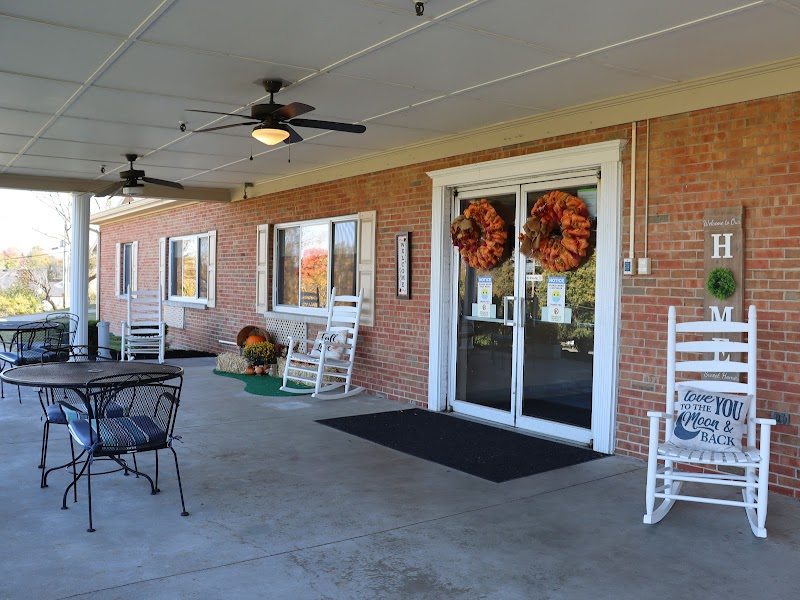
Who Owns and Operates Nicholasville Nursing And Rehabilitation?

Nicholasville Nursing and Rehabilitation is owned by a for-profit company. For-profit facilities operate as businesses with obligations to shareholders or private owners. The facility is operated by DAVID MARX, a chain that manages multiple nursing homes. With 73 certified beds and approximately 64 residents (about 88% occupancy), it is a smaller facility located in Nicholasville, Kentucky.

How Does Nicholasville Nursing And Rehabilitation Compare to Other Kentucky Nursing Homes?

Compared to the 100 nursing homes in Kentucky, Nicholasville Nursing and Rehabilitation's overall rating (1 stars) is below the state average of 2.8, staff turnover (82%) is significantly higher than the state average of 46%, and health inspection rating (1 stars) is much below the national benchmark.

What Should Families Ask When Visiting Nicholasville Nursing And Rehabilitation?

Based on this facility's data, families visiting should ask: "How do you ensure continuity of care given staff turnover, and what is your staff retention strategy?" "Can you walk me through typical staffing levels on day, evening, and night shifts?" "Can I visit during a mealtime to observe dining assistance and food quality?" "How do you handle medical emergencies, and what is your hospital transfer rate?" These questions are particularly relevant given the facility's high staff turnover rate and the below-average staffing rating.

Is Nicholasville Nursing And Rehabilitation Safe?

Based on CMS inspection data, Nicholasville Nursing and Rehabilitation has a clean safety record: no substantiated abuse findings (meaning no confirmed cases of resident harm), no Immediate Jeopardy citations (the most serious violation level indicating risk of serious injury or death), and is not on the Special Focus Facility watch list (a federal program monitoring the lowest-performing 1% of nursing homes). The facility has a 1-star overall rating and ranks #100 of 100 nursing homes in Kentucky. While no facility is perfect, families should still ask about staff-to-resident ratios and recent inspection results during their visit.

Do Nurses at Nicholasville Nursing And Rehabilitation Stick Around?

Staff turnover at Nicholasville Nursing and Rehabilitation is high. At 82%, the facility is 36 percentage points above the Kentucky average of 46%. Registered Nurse turnover is particularly concerning at 77%. RNs handle complex medical decisions and coordinate care — frequent RN changes can directly impact care quality. High turnover means new staff may not know residents' individual needs, medications, or preferences. It can also be disorienting for residents, especially those with dementia who rely on familiar faces. Families should ask: What is causing the turnover? What retention programs are in place? How do you ensure care continuity during staff transitions?

Was Nicholasville Nursing And Rehabilitation Ever Fined?

Nicholasville Nursing and Rehabilitation has been fined $16,104 across 4 penalty actions. This is below the Kentucky average of $33,240. While any fine indicates a compliance issue, fines under $50,000 are relatively common and typically reflect isolated problems that were subsequently corrected. Families should ask what specific issues led to these fines and confirm they've been resolved.

Is Nicholasville Nursing And Rehabilitation on Any Federal Watch List?

Nicholasville Nursing and Rehabilitation is not on any federal watch list. The most significant is the Special Focus Facility (SFF) program, which identifies the bottom 1% of nursing homes nationally based on persistent, serious quality problems. Not being on this list means the facility has avoided the pattern of deficiencies that triggers enhanced federal oversight. This is a positive indicator, though families should still review the facility's inspection history directly.