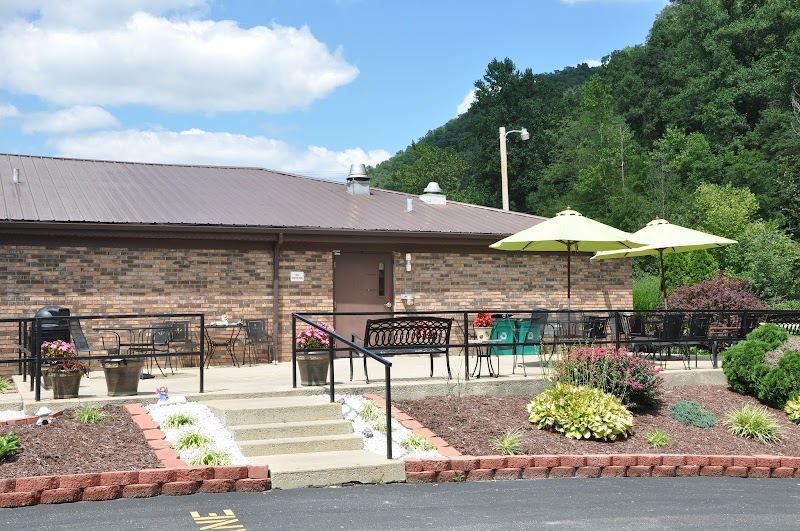
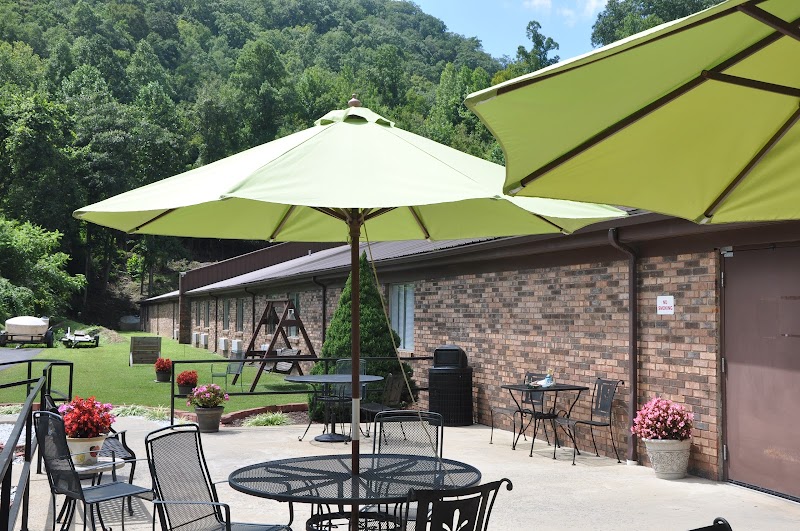
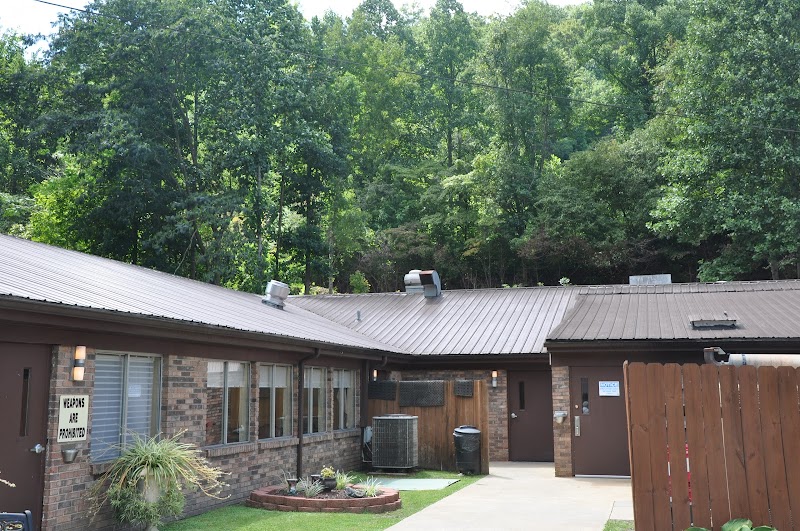
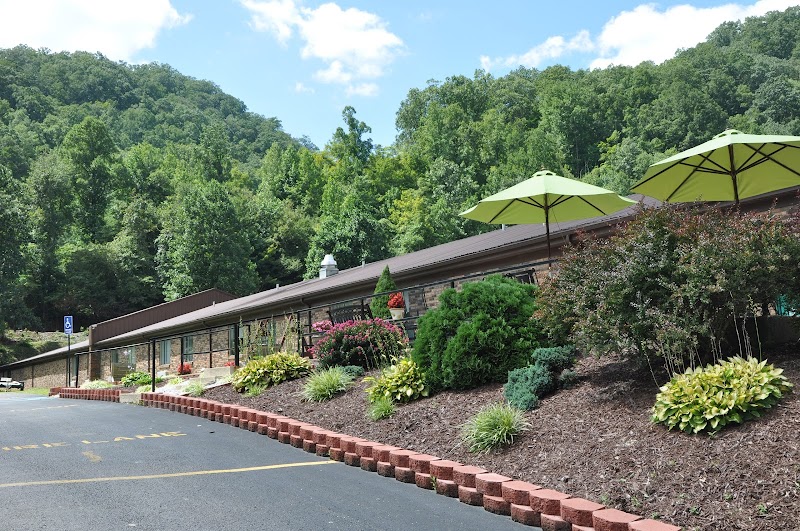
Good Shepherd Health and Rehabilitation

60 Phillips Branch Road, Phelps, KY 41553 (606) 456-8725
For profit - Corporation 118 Beds PLAINVIEW HEALTHCARE PARTNERS Data: November 2025 7 Immediate Jeopardy citations
Trust Grade
0/100
#226 of 266 in KY
Last Inspection: September 2024

Within standard 12-15 month inspection cycle. Federal law requires annual inspections.

Overview

Good Shepherd Health and Rehabilitation has received a Trust Grade of F, indicating significant concerns about the quality of care provided. It ranks #226 out of 266 facilities in Kentucky, placing it in the bottom half of all nursing homes in the state, and is the lowest-ranked facility in Pike County. While the facility is showing improvement, reducing issues from 8 in 2023 to 3 in 2024, it still has alarming deficiencies, including critical incidents where a resident at risk of wandering was allowed to exit the facility unsupervised. Staffing is a relative strength with a turnover rate of 36%, better than the state average of 46%, but the nursing home has incurred fines totaling $43,646, which is concerning as it is higher than 88% of other facilities in Kentucky. Overall, while there are some positive aspects regarding staffing, the facility faces serious challenges that families should carefully consider.

Trust Score
F
0/100
In Kentucky
#226/266
Bottom 16%
Safety Record
High Risk
Review needed
Inspections
Getting Better
8 → 3 violations
Staff Stability
○ Average
36% turnover. Near Kentucky's 48% average. Typical for the industry.
Penalties
✓ Good
$43,646 in fines. Lower than most Kentucky facilities. Relatively clean record.
Skilled Nurses
○ Average
Each resident gets 31 minutes of Registered Nurse (RN) attention daily — about average for Kentucky. RNs are the most trained staff who monitor for health changes.
Violations
⚠ Watch
17 deficiencies on record. Higher than average. Multiple issues found across inspections.
★☆☆☆☆
1.0
Overall Rating
★★☆☆☆
2.0
Staff Levels
★★☆☆☆
2.0
Care Quality
★☆☆☆☆
1.0
Inspection Score
Stable
2023: 8 issues
2024: 3 issues

The Good

  • Full Sprinkler Coverage · Fire safety systems throughout facility
  • No fines on record
  • Staff turnover below average (36%)

    12 points below Kentucky average of 48%

Facility shows strength in fire safety.

The Bad

1-Star Overall Rating

Below Kentucky average (2.8)

Significant quality concerns identified by CMS

Staff Turnover: 36%

Near Kentucky avg (46%)

Typical for the industry

Federal Fines: $43,646

Above median ($33,413)

Moderate penalties - review what triggered them

Chain: PLAINVIEW HEALTHCARE PARTNERS

Part of a multi-facility chain

Ask about local staffing decisions and management

The Ugly 17 deficiencies on record

7 life-threatening 1 actual harm
Sept 2024 3 deficiencies 1 Harm
SERIOUS (G) 📢 Someone Reported This

A family member, employee, or ombudsman was alarmed enough to file a formal complaint

Actual Harm - a resident was hurt due to facility failures

Accident Prevention (Tag F0689)

A resident was harmed · This affected 1 resident

**NOTE- TERMS IN BRACKETS HAVE BEEN EDITED TO PROTECT CONFIDENTIALITY** Based on observation, interview, record review, and policy review, the facility failed to ensure each resident received adequate...

Read full inspector narrative →
**NOTE- TERMS IN BRACKETS HAVE BEEN EDITED TO PROTECT CONFIDENTIALITY** Based on observation, interview, record review, and policy review, the facility failed to ensure each resident received adequate supervision and assistive devices to prevent accidents for one of 22 sampled residents (Resident (R) 6). R6 utilized a Broda chair (a specialized reclining wheelchair) when out of bed. Staff interviews revealed the resident's foot would frequently fall off the edge of the Broda chair footrest. However, the facility failed to effectively address the positioning of the resident's foot/leg in the Broda chair. On 08/04/2024, the resident leg was bumped/hit by another resident's wheelchair, which resulted in a fracture to R6's left tibia. The findings include. Review of the facility's policy titled Accidents and Supervision, not dated revealed each resident would receive adequate supervision and assistive devices to prevent accidents. This included 1). Identifying hazards and risks. 2). Evaluating and analyzing hazards and risks. 3) Implementing interventions to reduce hazards and risks, and, 4). Monitoring for effectiveness and modifying interventions when necessary. Review of R6's record revealed the facility admitted R6 on 01/19/2014 with diagnoses of cerebral palsy, other disorder of the bone, congenital deformities of the hip, and contractures of the bilateral hips and knees. Review of R6's Quarterly Minimum Data Set (MDS) with an Assessment Reference (ARD) date of 05/27/2024 revealed a Brief Interview for Mental Status (BIMS) was not conducted because R6 was rarely/never understood. Per the MDS, R6 was dependent in all functional areas. Further review revealed the MDS did not list any assistive devices, although limitation in range of motion was coded as impaired on both sides. Observation on 09/10/2024 at 11:52 AM, of R6 revealed the resident was awake, alert and reclined in the Broda chair. An attempt to interview R6 was not successful as the resident made sounds, but did not vocalize any words. Further observation on 09/13/2024 at 11:35 AM revealed R6 was up in the Broda chair. The resident was to her right side and an immobilizer boot was in place to the left foot and leg up to her knee. The resident's hips and knees were noted to be in a contracted position. Review of R6's Comprehensive Care Plan (CCP) revealed a focus for self-care deficits in activities of daily living related to debility, weakness, cerebral palsy, severe intellectual disability, contractures, scoliosis, and congenital deformities initiated on 02/25/2021 and revised on 11/14/2022. The goal was that staff would ensure that R6 was dressed, groomed and odor free. This focus area was also revised on 06/14/2024. The interventions included: assess for need of positioning devices; assess/record/report to MD (medical doctor) signs of immobility complications, contractures, fall related injury, skin breakdown, mobility status changes and significant changes in condition; assist of two staff to transfer to Broda chair; assist to ensure adequate positioning while up in chair; and use pillows/positioning devices as needed. Review of R6's late entry change in condition note dated 08/4/2024 at 4:29 PM revealed Licensed Practical Nurse (LPN) 3 notified by Certified Nurse Aide #1 (CNA1) that the nurse was needed in R6's room. CNA1 told the nurse that the resident was guarding left leg and not acting her normal self when touching left lower extremity. Upon assessment, the resident flinched when her left lower extremity was touched. Per the note, the physician was notified and new orders were received to send the resident to the hospital for treatment and evaluation of left leg pain. R6 had history of a left distal femur fracture and bone disorder. Review of the facility's investigation dated 08/04/2024, completed by the Administrator revealed she had received a call from Licensed Practical Nurse (LPN) 3 who stated R6 was grabbing her leg and making a hollering noise when she began to render care. Further review of the investigation revealed LPN3 had contacted the Medical Director and received an order for R6 to be sent to hospital. Per the investigation, R6 was sent to the hospital. Later the facility received a call from the hospital staff informing LPN3 that R6 had an oblique displaced distal fracture of the left tibia. Further review of the investigation revealed an investigation was immediately initiated and it was noted that R6 had no signs of pain on the morning of 08/04/2024 when assisted into a Broda chair. Per the investigation, sometime before 2:00 PM when CNA5 went into R6's room, the roommate stated put the baby's foot up. Continued review of the investigation revealed R6's left leg was noted to be hanging off the side of the Broda chair. R6 and her roommate were sitting side by side. CNA5 picked up R6's leg to put it back on the Broda chair. After positioning the resident's leg, R6 was observed to bite her own hand. Per the investigation, R6 bites her hands frequently and her hands stay wrapped to protect them. Further review of the investigation revealed R6's roommate (who also had a diagnosis of cerebral palsy) was interviewed by the Administrator, and the roommate (R56) stated she had hurt R6's leg with her wheelchair. The facility's investigation concluded that the injury to R6's leg was caused by the roommate running into R6's leg with her wheelchair. Review of R6's hospital Discharge summary dated [DATE] revealed the resident was admitted to the hospital on [DATE] and discharged on 08/07/2024 with a discharge diagnosis of Closed fracture of distal end of left tibia, unspecified fracture morphology. Per the summary, an orthopedic physician was consulted and non-operative management was recommended. Further review revealed recommendations for the resident to wear a fracture boot to the left lower extremity. Review of R56's admission record revealed the facility admitted the resident on 10/10/2020, with diagnoses of cerebral palsy, dementia, and depression. Review of R56's Quarterly MDS dated [DATE] revealed a BIMS score of three out of 15, which indicated R56 was severely cognitively impaired. Further review of the MDS revealed R56 was dependent with functional areas of transfer to wheelchair and required substantial assist with wheeling self. Attempted interview with R56 on 09/12/2024 at 9:00 AM was unsuccessful. The resident did not answer questions and kept asking the same question repeatedly. During interview on 09/12/2024 at 9:15 AM with CNA5 she stated that she initially was not aware that R6's leg was injured on the morning of 08/04/2024. She stated R6 was already up to the chair when she started her shift at 7:00 AM and nothing was provided in report as to any significant change with R6. CNA5 stated she had gone into R6's room, not sure of the time, and the roommate (R56) stated fix baby's foot she stated R6's foot was hanging off the Broda chair and she picked up R6's foot and placed it back on the chair. She stated R6 bit her own hand at that time, but she didn't think much about it because this was normal behavior for R6. CNA5 stated R6's leg would frequently fall of the foot rest of the Broda chair. The CNA stated that both R6 and her roommate were in the middle of their room; R6 was in the Broda chair and R56 was in her wheelchair. She stated this was normal for the two residents as R56 would sit and hold R6's hand and call her baby. Later in the day when she and CNA1 went in the room to provide care they noticed R6 was not acting like herself and yelled out when her leg was touched. During an interview on 09/12/2024 at 2:10 PM with CNA1, he stated he had fed R6 breakfast on the morning of 08/04/2024 and had noticed she did not eat as well as she normally did. CNA1 stated around 2:00 PM during a check on R6 with CNA5, R6 kept grabbing his (CNA1) clothes, biting on her hand, and making noises. He stated LPN3 immediately contacted the resident's physician and R6 was sent to the emergency room (ER). CNA1 stated it was common for R6's foot to drop off the edge of the Broda chair due to R6 wiggling and sliding down in the chair. He stated R6 had to be pulled up and repositioned often during the shift. During an interview with CNA8 on 09/12/2024 at 3:06 PM, she stated she cared for R6 on 08/03/2024 on night shrift. She stated that on 08/03/2024 prior to 7:00 AM, R6 was her usual self, without signs or symptoms of distress or agitation, when she and CNA9 got R6 up to the Broda chair. CNA8 stated R6 needed frequent repositioning due to sliding down in the chair and her foot dropping off the edge of the Broda chair. During an interview on 09/13/2024 at 12:00 PM with CNA7 he stated he cared for R6 on 08/03/2024 and did not notice anything out of character with R6. He stated R6 needed special precautions and all resident care could be found on the [NAME]. CNA7 stated R6's foot/leg fell off the edge of the Broda chair frequently. He stated he would always reposition and use pillows to attempt to prevent the resident's foot from falling but this would still occur. During an interview on 09/13/2024 1:15 PM with the Unit Manager Registered Nurse (RN) she stated she was aware that R6's foot/leg would drop of the edge of the Broda chair frequently. She stated staff were verbally told that R6 needed frequent repositioning and adjustments while up in a chair. The Unit Manager stated there was an order for R6 that staff may use pillows/wedges for positioning needs as needed. However, she stated she did not know if the resident's foot falling off the Broda chair was addressed on the care plan or [NAME]. Per the Unit Manager, nurses were responsible for updating the care plan and the MDS coordinators added updates also. She stated she did not know if therapy had been contacted regarding possible adaptations to the Broda chair. Review of Therapy Notes revealed no documented evidence R6 had been evaluated for the problem of the resident's leg falling off the Broda chair's footrest. During an interview on 09/13/2024 at 1:25 PM with the Director of Nursing (DON) she stated she was aware that R6's foot/leg would slide off edge of the Broda chair. She further stated the staff would use pillows and wedge cushions to the left side frequently to reposition R6. The DON stated they had discussed in the interdisciplinary team (IDT) meetings ways to prevent this and positioning. She stated the care plan addressed the use for pillows and wedge cushions for repositioning as needed but the specific issue regarding R6's foot dropping off the chair was not addressed on the care plan, although all staff were made aware through report. She further stated that R6 was repositioned and readjusted frequently because R6 wiggles and slides down due to her contractures. She stated all staff knew to reposition R6 as needed. Further review of R6''s care plan and [NAME] revealed that even though staff were aware of R6's foot frequently falling off the Broda chair prior to the incident on 08/04/2024, the facility had failed to address the problem in an attempt to prevent accidents. Additionally, after the incident on 08/04/2024, which resulted in the fracture to the resident's leg, the facility investigated the cause of the fracture but failed to identify the resident's foot falling off the chair or the resident's assistive device as being a potential accident hazard for the resident. During an interview on 09/13/2024 at 3:20 PM with the Director of Rehabilitation (DOR) she stated she was not aware of R6's foot/leg frequently dropping off the edge of the Broda chair. She stated that every resident had a therapy screening done which was not a hands-on evaluation but an observational screening to assess if any further needs were indicated for the resident. The DOR stated that during the screenings she had not observed R6's foot/leg dropping off the chair. She further stated the Broda chair was a standard made chair. The DOR stated she was not aware of adaptations or modifications that could be made to the Broda chair. Per the DOR, a different type of chair could possibly be looked at/used for the resident. During an interview on 09/13/2024 at 3:55 PM, the Administrator stated when she was contacted on 08/04/2024 regarding the information about R6 having an oblique fracture of the leg, an investigation was immediately initiated. She stated she interviewed R56 and R56 stated I hurt the baby and started to cry. The Administrator stated she was not aware of the frequency of R6's foot dropping off the Broda chair, but did know R6 required total care by staff. During an interview on 09/13/2024 at 4:00 PM, the Medical Director stated he had been immediately made aware of the incident with R6. He stated that R6 had osteopenic and osteoporotic bones that made her very susceptible to fractures. He stated he also suspected some type of other bone disorder, due to her diagnoses and her inability for weight bearing. The Medical Director stated that the oblique bone fracture correlated with the mechanism of injury (the foot/leg being caught/hit by another object). He stated he was part of the Interdisciplinary Team (IDT) and did make recommendations from a clinical standpoint. The Medical Director stated his expectation was for staff to follow those recommendations and follow the plan of care to ensure resident safety. He stated he did not recall discussing recommendations regarding this issue with R6 but he was knew his residents individually very well. However, he stated he was not specifically aware of the resident's foot falling off the foot rest of the Broda chair.
CONCERN (D) 📢 Someone Reported This

A family member, employee, or ombudsman was alarmed enough to file a formal complaint

Potential for Harm - no one hurt, but risky conditions existed

Report Alleged Abuse (Tag F0609)

Could have caused harm · This affected 1 resident

Based on interview, record review, and review of the facility's policy, it was determined the facility failed to ensure an alleged violation of an injury of unknown origin was immediately reported to ...

Read full inspector narrative →
Based on interview, record review, and review of the facility's policy, it was determined the facility failed to ensure an alleged violation of an injury of unknown origin was immediately reported to the State Survey Agency (SSA) and to other officials (Adult Protective Services) in accordance with state law for one of three residents (Resident (R) 6) sampled for abuse. Specifically, the facility failed to report to the SSA and the Adult Protection Agency (Department for Community Based Services/DCBS) on 08/04/2024, when R6 was sent to the hospital for a suspected injury and it was discovered the resident had sustained a fracture to the left tibia which was of unknown origin. The findings include: Review of the facility's policy titled Abuse, Neglect and Exploitation, undated, revealed all allegations and/or suspicion of abuse (including injury of unknown origin) were required to be reported immediately to the Administrator, State Agency, Adult Protective Services and all other required agencies immediately, but not later than 2 hours after the event, if the event caused serious bodily injury. Review of R6's admission record revealed the facility admitted R6 on 01/19/2014 with diagnoses of cerebral palsy, other disorder of the bone, congenital deformities of the hip, and contractures of the bilateral hips and knees. Review of R6's Quarterly Minimum Data Set (MDS) with an Assessment Reference (ARD) date of 05/27/2024 revealed a Brief Interview for Mental Status (BIMS) was not conducted due to R6 was rarely/never understood. Review of the facility's investigation dated 08/04/2024, completed by the Administrator revealed, the Administrator had received a call from Licensed Practical Nurse (LPN) 3 who stated R6 was grabbing her leg (the resident) and making a hollering noise when she began to render care. Further review of the investigation revealed LPN3 contacted the Medical Director (MD) and received an order for R6 to be sent to hospital. Continued review of the investigation, revealed the facility transferred R6 to the hospital and later received a call from the hospital staff informing LPN3 that R6 had an oblique displaced distal fracture of the left tibia. Further review revealed an investigation was immediately initiated and it was noted that R6 had no signs of pain on the morning of 08/04/2024 when assisted by staff into a Broda (a specialized reclining wheelchair) chair. Per the investigation, sometime before 2:00 PM when Certified Nurse Aide #5 (CNA5) went into the room, R6's roommate stated put the baby's foot up. Review of the investigation revealed R6's left leg was noted to be hanging off the side of the Broda chair. R6 and her roommate (R56) were sitting side by side and CNA5 picked up R6's leg to put it back on the Broda chair. Further review of the investigation revealed R6's roommate (who also had a diagnosis of cerebral palsy) was interviewed by the Administrator, and the roommate stated she had hurt R6's leg with her wheelchair. The facility's investigation concluded that the injury to R6's leg was caused by the roommate running into R6's leg with the her wheelchair. However, there was no documented evidence the facility reported the injury/fracture of R6's leg to the SSA or the Adult Protection Agency (Department for Community Based Services). Observation on 09/10/2024 at 11:52 AM of R6 revealed the resident was awake, alert and reclined in the Broda chair. An immobilizer boot was noted in place from the resident's left foot to her knee. An attempt to interview R6 was not successful as the resident made sounds, but did not vocalize any words. Further observation on 09/13/2024 at 11:35 AM revealed R6 was up in in the Broda chair. The resident was to her right side and an immobilizer boot was in place to the left foot and leg. The resident's hips and knees were noted to be in a contracted position. During an interview with the Administrator on 09/13/2024 at 3:55 PM, she stated she was notified on 08/04/2024 of a possible injury to R6's leg. She stated she began an investigation as soon she was made aware of the fracture to R6's leg. She stated there was no witness to the incident that occurred to R6's leg. Per the Administrator, she interviewed R6's roommate (R56) and R56 told her I hurt the baby. The Administrator stated R56 then started to cry. She stated on 08/04/2024, when the hospital notified the facility of the fracture to R6's leg, she determined the fracture occurred by R56 bumping R6 with her wheelchair. She stated she concluded this from R56's statement. She stated she was not aware of the increased frequency of R6's foot/leg falling off the Broda Chair. The Administrator stated she was aware of the reporting guidelines. Although, the Administrator stated the injury to R6's leg was of unknown origin when she began the investigation, she felt since she determined the cause of the injury quickly, that she did not need to report the injury to the State Survey Agency/Adult Protection.
CONCERN (D)

Potential for Harm - no one hurt, but risky conditions existed

Deficiency F0790 (Tag F0790)

Could have caused harm · This affected 1 resident

Based on observation, interview, and record review, it was determined the facility failed to assist residents in obtaining routine dental care for one of 22 sampled residents (Resident (R) 89). Furthe...

Read full inspector narrative →
Based on observation, interview, and record review, it was determined the facility failed to assist residents in obtaining routine dental care for one of 22 sampled residents (Resident (R) 89). Further, the facility failed to provide or obtain from an outside resource routine dental services to meet the needs of R89 after he requested to be seen by a dentist. The findings include: Interview with the Administrator on 09/13/2024 at 10:30 AM revealed she could not locate a policy on dental services. Observation of R89, on 09/10/2024 at 10:03 AM, revealed the resident had four natural carious teeth on the bottom front of his mouth. Review of R89's record revealed the facility admitted R89 on 05/06/2024 with diagnoses which included a wedge compression fracture of the first lumbar vertebra, dementia, and weakness. Review of R89's Quarterly Minimum Data Set (MDS), with an Assessment Reference date of 08/13/2024, revealed the facility assessed R89's cognition as severely impaired with a Brief Interview of Mental Status (BIMS) score of seven. Further review of the record revealed no documentation the resident had refused dental services or had been seen by a dentist since admission. Review of the Comprehensive Care Plan, initiated on 05/06/2024, revealed the facility assessed R89 to be at risk for dental pain and/or mouth infection related to few natural carious teeth. R89 required the assistance with oral care per staff. Further review revealed a goal was for R89 to have no complaints of oral pain. Continued review revealed an intervention, dated 05/06/2024, that R89 would utilize a mobile dentistry program. Review of the dental service provider's Final Appointment Listings dated 05/21/2024 and 07/11/2024, revealed the list included the name of the resident along with the services each resident needed. Further review of the list revealed R89 was not on either list to be seen by dental services. During an interview on 09/10/2024 at 10:03 AM, R89 stated he had asked facility staff to see a dentist on multiple occasions since admission to the facility because he had a hard time chewing food and would like his carious teeth pulled. He also stated he would like to have dentures. R89 stated he had been promised dental care but had not had any dental services since admission. During an interview with the Director of Nursing (DON), on 09/12/2024 at 11:08 AM, she stated the facility provided dental services to residents through a contracted company. The DON stated the facility's Social Services Director (SSD) was in charge of the list of residents who needed to be seen for dental care through the contracted company. During an interview with the SSD, on 09/12/2024 at 6:46 PM, she stated the contracted company provided dental services every one to three months. She further stated staff from the dental company would fax a list of residents they planned to see each visit and she could add on any residents identified to need dental services to the list. Per the SSD, she did not believe R89 had been in the facility when dental provider last provided dental services at the facility. She stated R89 had made her aware of his need for dental services. However, she was unable to determine when she was made aware of his request. Additionally, she was unable to explain why R89 was not seen in July 2024 when dental services were provided at the facility. She stated all residents were eligible for dental care through the dental provider and R89 was scheduled to be seen for dental services in September 2024. During an interview with the Administrator, on 09/13/2024 at 10:30 AM, she stated the SSD was responsible for making sure residents were seen for dental services. She further stated she was unsure why R89 was not seen in July 2024. The Administrator called the dental provider, during the interview, to determine if R89 would be seen when dentistry services would be provided in September 2024. However, she stated the dental provider did not have R89 listed as needing to be seen in September 2024, but they added the resident to the list at that time.
Nov 2023 5 deficiencies 5 IJ
CRITICAL (J) 📢 Someone Reported This

A family member, employee, or ombudsman was alarmed enough to file a formal complaint

Immediate Jeopardy (IJ) - the most serious Medicare violation

Comprehensive Care Plan (Tag F0656)

Someone could have died · This affected 1 resident

**NOTE- TERMS IN BRACKETS HAVE BEEN EDITED TO PROTECT CONFIDENTIALITY** Based on interview, record review, review of the facility policy, and review of the Centers for Medicare and Medicaid Services, ...

Read full inspector narrative →
**NOTE- TERMS IN BRACKETS HAVE BEEN EDITED TO PROTECT CONFIDENTIALITY** Based on interview, record review, review of the facility policy, and review of the Centers for Medicare and Medicaid Services, Resident Assessment Instrument (RAI) Manual 3.0, it was determined the facility failed to implement the comprehensive person-centered care plan, for one (1) of fourteen (14) sampled residents, (Resident #1). Resident #1's Comprehensive Care Plan (CCP), revealed a focus of Wandering/Elopement and impaired safety awareness, initiated on 12/06/2022, due to the resident's history of pacing up and down hallways, making verbal statements about leaving, and packing up belongings. Interventions included providing resident redirection when exhibiting exit seeking behavior or when wandering near exits; use of a code alert monitoring device on resident's right lower extremity; avoid events that lead to wandering behavior, (i.e., crowded events); and monitor for precipitating behaviors/conditions that could trigger episodes of wandering and/or exit seeking. On 08/22/2023 at approximately 7:30 PM, Resident #1 participated in church service with a group of church volunteers. However, neither the resident's direct nursing staff or Activities staff was present to provide redirection or monitor the resident's behavior as per the CCP. Following the church service the resident exited the facility without staff's knowledge. Interviews revealed at approximately 8:25 PM, the alarm sounded when the resident exited the facility. However, staff failed to implement the CCP related to the code alert monitoring device when activated, as they did not respond to the door alarm when the resident exited the building. Staff was unaware the resident exited the building until a church volunteer observed the resident in the facility's parking lot walking away from the facility, towards a creek and a main two (2) lane roadway. The resident was located approximately five (500) feet away from the facility main entrance. (Cross Reference F689) The facility's failure to have an effective system in place to ensure each resident's Comprehensive Care Plan was implemented has caused or is likely to cause serious injury, harm, impairment, or death. Immediate Jeopardy (IJ) was identified on 11/10/2023 at 42 CFR 483.21 Comprehensive Resident Centered Care Plan (F656) at the highest Scope and Severity (S/S) of a J; 42 CFR 483.25 Quality of Care (F689) at the highest S/S of a J; 42 CFR 483.70 Administration (F835 and F837) at the highest S/S of a J; and 42 CFR 483.75 Quality Assurance and Performance Improvement (F867) at the highest S/S of a J. Substandard Quality of Care (SQC) was identified at 42 CFR 483.25 Quality of Care (F689). The Immediate Jeopardy was determined to exist on 08/22/2023. The facility was notified of Immediate Jeopardy (IJ) on 11/10/2023. An acceptable Immediate Jeopardy Removal Plan was received on 11/17/2023, which alleged removal of the Immediate Jeopardy on 11/14/2023; however, the State Survey Agency (SSA) validated Immediate Jeopardy was removed on 11/17/2023, prior to exit on 11/17/2023. Non-compliance remained in the areas of 42 CFR 483.21 Comprehensive Person-Centered Care Planning (F656) at a Scope and Severity (S/S) of a D; 42 CFR 483.25 Quality of Care (F689) at a S/S of a D; 42 CFR 483.70 Administration (F835 and F837) both at a S/S of a D, and 42 CFR 483.75 Quality Assurance and Performance Improvement at a S/S of a D, while the facility monitors the effectiveness of systemic changes and quality assurance activities. The findings include: Review of the facility's Comprehensive Care Plan Policy, revised 11/22/2017, revealed the facility would develop a comprehensive person-centered care plan for each resident consistent with resident rights that included measurable objectives and timetables to meet a resident's medical, nursing, and mental and psychosocial needs that were identified in the comprehensive assessment. The care plan interventions were derived from a thorough analysis of the information gathered as part of the comprehensive assessment, chosen only after data gathering, proper sequencing of events, careful consideration of the relationship between the resident's problem areas and their causes, and relevant clinical decision making. Interventions would address the underlying source(s) of the problem area(s), not just symptoms or triggers. Continued review of the facility's CCP revealed assessments of residents were ongoing and care plans were revised as information about the residents and the residents' conditions change. The Interdisciplinary Team (IDT) reviewed and updated the care plan when there had been a significant change in the resident's condition and when the desired outcome was not met. Review of the Centers for Medicare and Medicaid Services (CMS), Resident Assessment Instrument (RAI) Manual 3.0, dated October 2023, revealed the Comprehensive Care Plan was an interdisciplinary communication tool and must include measurable objectives and timeframe's and must describe the services to be furnished to attain or maintain the resident's highest practicable physical, mental,and psychosocial wellbeing. Further review revealed the services provided or arranged must be consistent with each resident's written Plan of Care. Resident #1's medical record revealed the facility admitted the resident on 11/10/2022 with diagnoses to include Unspecified Dementia, Disorientation, Altered Mental Status, Adjustment Disorder and Alzheimer's Disease. Resident #1's admission Nursing Evaluation, dated 11/10/2022, revealed the resident was assessed as alert, and oriented to person, place, time, and situation; verbally appropriate, with no obvious neurological problems. Continued review revealed Section E1, Elopement Risk, revealed if the resident was alert and oriented the resident was not considered an elopement risk. Resident #1's admission Minimum Data Set (MDS), dated [DATE], revealed the resident was assessed to have a Brief Interview for Mental Status (BIMS) score of seven (7) out of fifteen (15), which indicated moderate cognitive impairment. Continued review of the MDS, under Section E for behaviors, revealed Resident #1 had not been identified to have wandering behaviors that occurred within the past one (1) to three (3) days. Resident #1's Behavior Progress Note, dated 12/06/2022 at 2:24 PM, entered by Registered Nurse (RN) #2, revealed the resident was walking up and down the hallway. Per the Note, the resident was noted to have confusion this shift, and attempted to open the B wing door. The resident was re-directed to the lounge. Further review revealed RN #2 contacted the physician and the following new orders were received: 1) Clinical monitor code alert is intact to right lower extremity every shift; 2) Code alert to right lower extremity at all times; and 3) Nursing to check code alert is in working order to right ankle (alarm sound/expiration date). Resident #1's Elopement Risk Assessment, dated 12/06/2022, revealed the resident was assessed as at risk for elopement and a care plan was developed. Further review revealed an Elopement Risk score of seven (7). There was no legend or score indicator to specify if a score of seven (7) indicated the resident was at high risk for elopement. Resident #1's Comprehensive Care plan (CCP), dated 11/11/2022, revealed a focus of Wandering/Elopement and impaired safety awareness initiated on 12/06/2022. The resident exhibited the following: pacing up and down hallways; verbally stating, I've gotta go get out of here and go home, my wife is coming after me, and packing up belongings. The CCP goal stated the resident's safety would be maintained. Interventions initiated 12/06/2022 included the following: provide redirection to resident to unit and/or room when resident exhibiting exit seeking behavior or when wandering near exits; use of a code alert monitoring device, on resident's right lower extremity, check placement and function every shift; assess for fall risk; distract resident from wandering by offering pleasant diversions, attending church, etc.; avoid events that lead to wandering behavior, (i.e., crowded events); identify pattern of wandering and monitor for precipitating behaviors/conditions that could trigger episodes of wandering and/or seeking, and check exit doors daily. Resident #1's Elopement Risk Assessment, dated 03/15/2023, 05/18/2023, and 08/18/2023, revealed the resident was at risk with a score of seven (7) related to wandering behavior with episodes of elopement and/or exit seeking. Resident #1's Quarterly MDS Assessment, dated 08/19/2023, revealed the facility assessed the resident as having a BIMS score of eight (8) out of fifteen (15), which indicated moderate cognitive impairment. Further, the facility assessed the resident as having no cognitive patterns, no delirium, mood symptoms and/or patterns, to include no behaviors of psychosis or wandering exhibited. Additionally, the facility assessed the resident as requiring supervision of one (1) person physical assistance. for bed mobility, walking in room, walking in corridor, locomotion on/off unit, and dressing. Continued review revealed the facility assessed the resident's balance during transitions and walking as not steady, but the resident was able to stabilize without staff assistance. Resident #1's Elopement Progress Note, dated 08/22/2023 at 8:30 PM, entered by Licensed Practical Nurse (LPN) #1, revealed the church group was having services in the dining room. At approximately 8:30 PM, a church member came to the lobby door and notified staff the resident exited the facility with church members socializing and talking. The church member requested staff come outside to get the resident because they needed to leave soon. Continued review revealed church members stayed outside with the resident until staff arrived and the resident came back inside the facility with staff. Further review revealed Resident #1's code alert was noted to be in use and the resident remained with staff. Per the Note, the nurse contacted the Administrator immediately. The Medical Director was notified and the following orders were received: 1) Increased supervision with every fifteen (15) minute checks for the next seventy-two (72) hours; and 2) Aricept (medication to treat dementia) five (5) milligram (mg) twice (BID) a day. Resident's state guardian was notified; message left. Further review revealed a skin assessment was completed on the resident with no significant findings. Review of the facility's Activities Calendar dated August 2023, revealed on 08/22/2023 there was a scheduled church service at 7:00 PM. However, per interviews and review of staff Schedule Sheet and Punch Detail Report dated 08/22/2023 at 7:00 PM, no staff including Activitie's staff was appointed, nor worked the scheduled church service at 7:00 PM in the dining room to provide oversight of the residents. During an interview with Resident #1 on 11/08/2023 at 2:07 PM, the stated he/she had attempted to leave the facility to get to his/her wife and take to church. Resident #1 recalled leaving the building with the church people maybe a year or so ago and recalled walking down the road to the bridge, but three (3) female staff caught him/her before he/she made it down the hill. Resident #1 pointed down to his/her right lower leg and showed his/her alarm bracelet. Resident #1 stated the bracelet had been on him/her when he/she went outside with the church people and the bracelet made a loud noise. During an interview on 11/08/2023 at 12:32 PM, with the Activities Director (AD), she explained church group activities were all performed in the dining room. The AD further stated either she or the Activitie's Assistant would be present to supervise the residents during these church services and she assured staff were always close to visualize the other residents. During continued interview, the AD stated she was not present during the scheduled church service on 08/22/2023, as she had the day off, but stated her Activities Assistant should have been present. The AD further stated, it was staff's responsibility to follow the care plan related to supervising and monitoring the residents, especially those who were considered an elopement risk, as anything could potentially happen. In continued interview with the AD, she stated Resident #1's CCP had an intervention to monitor the resident for events that could trigger episodes of wandering such as crowds at church services; however, the CCP was not implemented as there was no oversight of the resident during or after the church service. During an interview on 11/08/2023 at 2:07 PM with the Activitie's Assistant, she stated she was not scheduled to work, nor did she work on 08/22/2023, when Resident #1 exited the building without staff's knowledge. In addition, she stated she was not aware of a system in place to notify or alert nursing staff if activities personnel were not scheduled and/or able to work during a scheduled activity, to ensure resident supervision. The Activities Assistant stated, although there was no activities coverage on 08/22/2023, work aides and nursing staff should have supervised and monitored Resident #1 with awareness of the resident's location. Further, she stated all staff must be aware of resident care planned interventions in order to ensure the care plan was followed for the protection of the residents. During an interview, on 11/08/2023 at 6:39 PM, with Certified Medication Aide (CMA) #1, she stated she was assigned to Resident #1 on 08/22/2023 during the time of his/her elopement and was aware the resident was care planed to be redirected when wandering near exits. CMA #1 further stated the resident was care planned for a code alert due to a risk for wandering/elopement. Per interview, she last observed the resident on 08/22/2023 at approximately 6:37 PM when he/she was going to the evening church services in the dining room. CMA #1 stated Activities staff was supposed to be present during scheduled events to monitor residents, especially those residents with behaviors that could have outburst or exit seeking tendencies like Resident #1. Further, she stated at approximately 8:25 PM when she heard the front door alarm sounding; she did not go check the alarming door. In continued interview she stated this was because the alarm immediately stopped sounding, indicating someone had already disarmed the alarm. CMA #1 further stated at approximately 8:30 PM the front doorbell rang, and upon opening the door, she was informed by a church member, Resident #1 was in the front parking lot, going towards the road. CMA #1 stated it was all staff's responsibility to follow the care plan and Resident #1's care plan should have been followed for his/her safety. During an interview, on 11/08/2023 at 7:43 PM, with LPN #1, she stated she was assigned to Resident #1 during the evening of his/her elopement on 08/22/2023. LPN #1 further stated Resident #1 was assessed as an elopement risk and care planned prior to the elopement with interventions including a code alert monitoring bracelet which would activate if he/she was in close proximity or through the boundary of any exit doors. She further stated the resident was care planned for staff to monitor for triggered behaviors. LPN #1 recalled the evening of 08/22/2023, and stated she last saw the resident at approximately 7:00 PM to 7:15 PM when he/she went to smoke and upon returning went straight to the dining room for Church service. LPN #1 stated she was not aware of which staff was assigned to monitor/supervise those residents that attended the church service; however, she did not check the dining room that evening. She further stated she felt there should be a designated staff assigned during all activities; although, it was all staff's responsibility to check and monitor residents to ensure their safety. LPN #1 stated at approximately 8:30 PM she did hear a door alarm sounding and normal practice would be to go check the location of the alarm and ensure residents had not escaped the facility, but she did not on that occasion. She stated therefore, she did not follow the care plan, nor ensure resident safety was maintained. During an interview on 11/08/2023 at 9:20 PM with Church Member (CM) #1, he stated he was the preacher who provided church service at the facility on 08/22/2023. He stated he did hear the alarm sound, as he was still in the dining room praying with other residents. He further stated, a few minutes later he went out the main entrance door, and noted there was no staff at the front entrance, nor outside. He stated he then noticed Resident #1 walking down the parking lot towards the bridge and main road. In continued interview, he stated he immediately went to the main door and rang the doorbell and a staff member opened within seconds. Further, he informed this staff member of Resident #1's location and advised that someone needed to go after the resident, because he/she was headed down the hill towards the road. CM #1 stated the staff immediately responded and retrieved the resident. During an interview, on 11/15/2023 at 10:00 AM, MDS Nurse #1, stated all new orders from the day before and any new charting was discussed and addressed on the Care Plan during the morning meeting. In addition, a twenty-four (24) hour report was generated related to new charting and orders. This information would be discussed in the morning meeting and MDS staff would review and update the Care Plan at that time. Staff nurses were then given the information to be relayed to other staff, and new orders pertaining to the CNAs would transfer to the Kardex (Nurse Aide care plan). MDS #1 further stated nursing staff was required to monitor and supervise those residents at risk for elopement, check resident's monitoring device, check alarms immediately if sounding and ensure resident location and safety routinely, as care planned. Interview with the Director of Nursing (DON) and Administrator, on 11/15/2023 at 4:36 PM, revealed both leaders expected all staff to implement resident care plan interventions related to code alert which included answering/checking all alarms when activated; and answering door alarms immediately. Further, they stated staff was expected to provide monitoring and supervision as care planned in order to be aware of resident's location in order to prevent accidents/incidents, such as an elopement. The Administrator and DON stated the Interdisciplinary Team (IDT) which included all leadership staff, met daily to discuss, and review residents with behaviors and interventions of care plan needs, and also held weekly Quality Assurance Performance Improvement (QAPI) meetings to discuss current and previous residents with noted elopement history and/or exhibited behaviors. The Administrator and DON stated IDT focused on CP interventions and discussed if additional interventions such as one-on-one observation and safety checks needed to be put in place. Review of the Immediate Jeopardy Removal Plan revealed the facility implemented the following: 1. On 08/22/2023, upon Resident #1's return to the facility, the resident was assessed by the DON with no signs of injury. The resident's physician, who was also the Medical Director and the resident's State Guardian were notified by the charge nurse of the resident leaving the building without staff's knowledge. 2. On 08/22/2023, upon Resident #1's return to the facility, the resident was placed on every-fifteen (15) minute checks. The every 15-minute checks were ordered for a minimum of seventy-two (72) hours. After 72 hours, the Interdisciplinary Team (IDT) which included the Director of Nursing (DON), Social Services Director (SSD), Activity Director (AD), and Administrator would review the results of 15-minute checks and would notify the physician of additional need for further observation. 3. On 08/22/2023, Resident #1's care plan was reviewed and revised by the DON. The revision was done to include every fifteen (15) minute safety checks for at least seventy-two (72) hours as ordered by the attending physician, who was also the Medical Director (MD). On 08/22/2023, the DON notified the nursing staff of the new intervention for Resident #1 which included enhanced supervision (Q15 minute checks) as ordered by the attending physician. 4. On 08/22/2023, the DON reviewed the Twenty-four (24) hour reports to ensure there were no residents who exhibited exit seeking behavior in which the facility was unaware. No concerns were identified. The 24-hour report was to be completed by the charge nurse assigned on the unit every shift. The outgoing and incoming nurses were to review the 24-hour reports during shift change. In addition, the DON and Unit Managers would review the 24-hour reports daily during Clinical Meeting, Monday through Friday, and during the weekends, the weekend Unit Managers were to complete the review of the 24-hour reports. If a concern would be identified, the Attending Physician /Nurse Practitioner would be notified. The DON or Administrator would also be notified. 5. On 08/22/2023, resident headcounts of the whole facility were completed by the DON. There were no concerns identified. 6. Starting on 08/22/2023 and concluding on 08/23/2023, the DON reviewed the care plans of the ten (10) residents that resided in the facility who were identified to be at risk for elopement. There were no further revisions necessary. 7. On 08/22/2023, it was determined during a Significant Event Call (SEC) with the Governing Body (which included the [NAME] President of Clinical Services (VPCS), VP of Operations (VPO), VP of Regulatory Compliance (VPRC) and QAPI) that the alleged deficient practice occurred because the church volunteer egressed the front door which caused the malfunction of the code alert bracelet. This was identified through root cause analysis (RCA) use of the fishbone diagram. 8. On 08/22/2023, an Ad-hoc QAPI meeting was held with the Administrator, DON, and members of the Governing Body. The incident and corrective actions related Resident #1's elopement was discussed. The Medical Director was also made aware of the minutes of the call. An Ad-Hoc QAPI meeting would be held weekly to review results of observations and monitoring activities. The meeting would be attended by the QAPI team members which included but not limited to the Facility Medical Director, Administrator, DON, Nurse Consultant, UM, Social Services, MDS, Maintenance Director, Dietary Manager, Infection Control/Risk Nurse, Wound Nurse, Activities Director Rehab Manager, Business Office Manager. 9. On 08/22/2023, the elopement binders were reviewed and completed for accuracy by the DON to reflect current elopement assessments. The elopement binders were up to date, with no revisions needed. The DON will check the elopement binders weekly and document the results of the review in the Code Gray Audit Tool. The elopement binders were to be located at all nursing stations and another binder was to be located at the DON office. 10. Starting 08/22/2023, there would be Electronic Medication Administration Review (EMAR) monitoring for wandering and/or exit seeking behaviors to ensure ongoing monitoring was occurring per the care planned interventions. This includes review of all orders (both medications and treatments), assessments, and any type of monitoring being completed for a resident. This is completed daily DON, Risk Manager, Wound Nurse or MDS. 11. On 08/22/2023, the Administrator was provided with training by the [NAME] President of regulatory Compliance (VPRC) & Quality Assurance Performance Improvement (QAPI). The education included review of policies related to elopement, wandering, resident safety and care planning. To ensure retention of knowledge, the Administrator completed a posttest and scored 100%. 12, On 08/23/2023, facility leadership was educated by the Administrator on the following policies: exit-seeking behaviors; elopement and wandering care plan; missing resident; responding to alarms and resident safety and supervision. The facility leadership included the Director of Nursing (DON), Unit Manager (UM), Risk Manager (RM), Social Services Director (SSD), Admissions Director, Minimum Data Set (MDS) Coordinators, Maintenance Director, Business Office Manager (BOM), Rehabilitation Manager, Human Resource Director, and the Activities Director (AD). The training included a posttest to validate information retention. The acceptable score was 100%. If the staff did not obtain 100%, a retraining was completed and provided by the Administrator. 13. On 08/23/2023, the Director of Nursing (DON) and Administrator provided education to all staff related to Exit Seeking Behaviors; Elopement and Wandering Care Plan; Missing resident; Responding to alarms; and Resident Safety and Supervision. The training included posttests and the acceptable score was 100%. Any staff who did not achieve 100% test results were provided additional retraining from a trained department head, DON, Unit Manager, Risk Manager, or Administrator. For any staff members not available at that time, training was completed upon return to work. The new hires would be trained by the Risk Manager or DON or Unit Manager. The facility was not using Agency staff. If Agency staff were used in the future, the facility would utilize the same process of providing the education to ensure that they (Agency staff) would receive the same training as the facility staff. 14. On 08/23/2023, the Administrator and the Governing Body reviewed and revised the elopement & wandering policy to include, To prevent any resident from exiting the facility without staff's knowledge during a large group activity such as religious gathering, the Activity Director or the Activity Assistant would be present. If neither were available, a nursing staff would be assigned to monitor the activity. On 08/22/2023 and 08/23/2023, the Administrator/Risk Manager and DON provided training to nursing staff, department heads and Activity staff to ensure for any scheduled activities, the Activity Director or the Activity Assistant would be present. If neither were available, nursing staff would be assigned to monitor the activity. Further, there would be the need for providing additional assistance and supervision when activity staff was not present, especially during group activities and activities that occurred during evenings and weekends. The training included posttests and the acceptable score was 100%. Any staff who did not achieve 100% test results were provided additional retraining. Staff who were not available for the training, would receive the training prior to their next shift. 15. On 08/22/2023, all doors in the facility were checked by the Maintenance Director to ensure all doors were locked and secured and that the delayed egress was functioning properly. There were no concerns identified. Starting 08/22/2023, door checks would be completed twice daily, to include weekends. The door checks would be completed by the Maintenance Director, or other members of the maintenance team and documented on the monitoring tool. If there were any concerns identified, the Administrator and/or Maintenance Director would be notified immediately. Additionally, a staff member would be assigned as a door monitor until the door concern was addressed. To ensure the monitoring tool for door checks was completed, the Administrator would do a spot check (of door checks), and review and sign the monitoring tool. 16. Starting 08/22/2023, the Maintenance Director would perform daily checks of code alerts by use of a tester device to ensure that the code alerts were functioning properly. If the checks revealed a problem, the following would be done: a.) If the problem was related to door safety, the Maintenance Director would notify the Administrator and a staff member would be assigned to monitor the door until the problem was fixed. b.) If the problem was related to the code alert bracelet, the Charge Nurse would be notified to determine if additional interventions such as one-to-one supervision was necessary until the code alert bracelet problem was addressed. 17. On 08/23/2023, resident interviews were conducted with all residents with a Brief Interview for Mental Status (BIMS) score of eight (8) and above, to attempt to identify any residents with new exit seeking behaviors and to ensure that they (residents) felt safe in the facility. All resident interviews were completed by the Social Services Director (SSD). Beginning the week of 08/23/2023, the Social Services Director (SSD) conducted five (5) resident interviews with residents who were assessed to have a BIMS of eight (8) or greater for four (4) weeks to ensure that no other residents were exhibiting exit seeking behavior that the facility Administrator was not aware of. Any concerns would immediately be reported to the Administrator and corrected/addressed. The QAPI team would determine if additional interviews would be needed. 18. On 08/23/2023, head-to-toe assessments of residents who were not interviewable were completed by the Wound Care Nurse. There were no concerns identified. Beginning the week of 08/23/2023, the Wound Care Nurse would complete head-to-toe skin assessments on five (5) residents with a BIMS score of seven (7) or below, weekly for four (4) weeks. Any concerns would immediately be reported to the Administrator and corrected/addressed. The QAPI team would determine if additional skin assessments would be needed based on the results of the head-to-toe assessments. 19. On 08/23/2023, a Medication Regimen Review (MRR) was done by the DON and Pharmacy consultant. There were no concerns identified or recommendations made by the pharmacy consultant. 20. On 08/23/2023, an assessment of all residents to identify if at risk for elopement were reviewed by the DON and Social Services Director (SSD). There were no new residents identified with exit-seeking behaviors. 21. On 08/23/2023, the DON reviewed all Care Plans to ensure interventions were in place to address identified risks for elopement. There were no revisions necessary. 22. Beginning 08/23/2023, residents with newly identified exit seeking behaviors will be reassessed for elopement risk by the Charge Nurse. Additionally, all new residents, and re-admissions will be assessed for elopement risk upon admission or re-admission. The assessment would be completed by the Admission/Charge Nurse. After the initial assessment, the assessment for elopement risk will be completed at least quarterly and annually. 23. Starting 08/23/2023, staff would be made aware of new care plan interventions during nursing huddle meetings, which would be attended by nurses and nursing assistants. The nursing assistants would also be notified of new interventions via electronic records in residents' Plan of Care (POC). This included residents who were exhibiting exit-seeking behavior. 24. On 08/23/2023, the Charge Nurse checked the ten (10) residents that resided in the facility who were identified to be at risk for elopement to ensure they were wearing code alert bracelets and there were no concerns identified. The code alert bracelets will be checked every shift by the Charge Nurse. If any concerns were to be identified during checks by the Charge Nurse, the charge nurse was to correct the issue and notify the DON or the Administrator. 25. On 08/23/2023, an Ad-Hoc QAPI meeting was held and those who participated included the Leadership Team which included the Director of Nursing (DON), Unit Manager UM, Risk Manager (RM), Social Services Director (SSD), Admissions Director, Minimum Data Set (MDS) Coordinator, Maintenance Director, Business Office Manager (BOM), Rehabilitation Manager, Human Resource Director, and the Activities Director (AD). The Medical Director (MD) also participated via telephone. The QAPI Team [TRUNCATED]
CRITICAL (J) 📢 Someone Reported This

A family member, employee, or ombudsman was alarmed enough to file a formal complaint

Immediate Jeopardy (IJ) - the most serious Medicare violation

Accident Prevention (Tag F0689)

Someone could have died · This affected 1 resident

**NOTE- TERMS IN BRACKETS HAVE BEEN EDITED TO PROTECT CONFIDENTIALITY** Based on observation, interview, record review, review of the facility's policies and investigation, it was determined the facil...

Read full inspector narrative →
**NOTE- TERMS IN BRACKETS HAVE BEEN EDITED TO PROTECT CONFIDENTIALITY** Based on observation, interview, record review, review of the facility's policies and investigation, it was determined the facility failed to have an effective system in place to ensure each resident received adequate supervision to prevent elopement for one (1) of four (4) sampled residents (Resident #1). On 12/06/2022, Resident #1 was noted to go to the B wing door and attempt to open the door before being re-directed by staff. On that date, the facility assessed the resident to require the utilization of a code alert (monitoring device) due to exit seeking behaviors. However, on 08/22/2023 at approximately 7:30 PM, Resident #1 participated in church service with a group of church volunteers with no activities' staff or nursing staff to provide oversight of the resident. Following the church service, Resident #1 exited the facility without staff's knowledge. Interviews revealed on 08/22/2023 at approximately 8:25 PM, the door alarm sounded when the resident exited the facility; however, staff failed to respond to the alarm. Staff was unaware Resident #1 had exited the facility until a church volunteer, who was exiting the facility, observed Resident #1 walking away from the facility, towards a creek and a main two (2) lane roadway and alerted staff. The resident was located approximately five hundred (500) feet away from the facility's main entrance. (Cross Reference F656 ) The facility's failure to have an effective system in place to ensure each resident received adequate supervision to prevent elopement has caused or is likely to cause serious injury, harm, impairment, or death. Immediate Jeopardy (IJ) was identified on 11/10/2023 at 42 CFR 483.21 Comprehensive Resident Centered Care Plan (F656) at the highest Scope and Severity (S/S) of a J; 42 CFR 483.25 Quality of Care (F689) at the highest S/S of a J; 42 CFR 483.70 Administration (F835 and F837) at the highest S/S of a J; and 42 CFR 483.75 Quality Assurance and Performance Improvement (F867) at the highest S/S of a J. Substandard Quality of Care (SQC) was identified at 42 CFR 483.25 Quality of Care (F689). The Immediate Jeopardy was determined to exist on 08/22/2023. The facility was notified of Immediate Jeopardy (IJ) on 11/10/2023. An acceptable Immediate Jeopardy Removal Plan was received on 11/17/2023, which alleged removal of the Immediate Jeopardy on 11/14/2023; however, the State Survey Agency (SSA) validated Immediate Jeopardy was removed on 11/17/2023, prior to exit on 11/17/2023. Non-compliance remained in the areas of 42 CFR 483.21 Comprehensive Person-Centered Care Planning (F656) at a Scope and Severity (S/S) of a D; 42 CFR 483.25 Quality of Care (F689) at a S/S of a D; 42 CFR 483.70 Administration (F835 and F837) both at a S/S of a D, and 42 CFR 483.75 Quality Assurance and Performance Improvement at a S/S of a D, while the facility monitors the effectiveness of systemic changes and quality assurance activities. The findings include: Review of the facility's Safety and Supervision policy, revised July 2017, revealed resident supervision was a core component of the systems approach to safety. The facility would strive to make the environment as free from accident hazards as possible. Resident safety and supervision and assistance to prevent accidents were facility-wide priorities. Facility-Oriented Approach to Safety included safety risks and environmental hazards were to be identified on an ongoing basis through a combination of employee training, employee monitoring, and reporting processes; Quality Assurance Performance Improvement (QAPI) reviews of safety and incident/accident data; and a facility-wide commitment to safety at all levels of the organization. The QAPI Committee and staff shall monitor interventions to mitigate accident hazards in the facility and modify as necessary. Review of the facility's Wandering and Elopements policy, revised March 2019, revealed the facility would identify residents who were at risk for unsafe wandering and strive to prevent harm while maintaining the least restrictive environment for residents. Continued review of the Policy Interpretation and Implementation revealed if a resident was identified as at risk for wandering, elopement, or other safety issues, the resident's care plan would include strategies and interventions to maintain the resident's safety. Review further revealed when the resident returned to the facility, the Director of Nursing (DON) or charge nurse was to complete and file an incident report. On 11/08/2023 at 11:25 AM, The State Survey Agency Representative asked the Administrator to provide all policies pertaining to residents with wandering/exit seeking behaviors to include monitoring of the code alert bracelets and/or alarming of exit doors; however, neither of those policies were provided. Review of Resident #1's medical record revealed the facility admitted the resident on 11/10/2022 with diagnoses to include Unspecified Dementia, Disorientation, Altered Mental Status, Adjustment Disorder with Depression and Mood, and Alzheimer's Disease. Review of the facility admission Nursing Evaluation, dated 11/10/2022, revealed the resident was assessed as alert, and oriented to person, place, time, and situation; verbally appropriate; and with no obvious neurological problems. Continued review revealed Section E1, Elopement Risk, revealed if the resident was alert and oriented the resident was not considered an elopement risk. Review of Resident #1's admission Minimum Data Set (MDS) assessment dated [DATE], revealed the facility assessed the resident as having a Brief Interview for Mental Status (BIMS) score of seven (7) out of fifteen (15), indicating severe cognitive impairment. Continued review of the MDS, under Section E for behaviors, revealed the facility assessed Resident #1 as not having wandering behaviors within the past one (1) to three (3) days. Review of Resident #1's Behavior Progress Note, dated 12/06/2022 at 2:24 PM, entered by Registered Nurse (RN) #2, revealed Resident #1 was walking up and down the hallway and was noted to have confusion during the shift. Resident #1 went to the B wing door and attempted to open the door and was re-directed by staff to the lounge. RN #2 contacted the physician and new orders were received including: clinical monitor code alert and ensure it was intact to right lower extremity every shift; code alert to right lower extremity at all times; nursing to check code alert to ensure it was in working order to right ankle (alarm sounds/expiration date); and obtain a urinalysis with culture and sensitivity due to increased confusion. Review of Resident #1's Elopement Risk Assessment, dated 12/06/2022, revealed the resident was at risk for elopement with an Elopement Risk score of seven (7). However, there was no legend or score indicator to specify if a score of seven (7) indicated the resident was at high risk for elopement. There were no scoring indicators listed to differentiate a mild or moderate risk compared to a high risk. Review of Resident #1's Comprehensive Care plan (CCP), dated 11/11/2022, revealed a focus of Wandering/Elopement and impaired safety awareness initiated on 12/06/2022. Resident has been known to exhibit the following: pacing up and down hallways; verbally saying, I've gotta go get out of here and go home, my wife is coming after me, and packing up belongings. The goal stated the resident's safety would be maintained. Interventions initiated on 12/06/2022 included: provide redirection to resident to unit and/or room when resident exhibiting exit seeking behavior or when wandering near exits; use of a code alert monitoring device, on resident's right lower extremity, check placement and function every shift; assess for fall risk; distract resident from wandering by offering pleasant diversions, attending church, etc.; avoid events that lead to wandering behavior, (i.e., crowded events); identify pattern of wandering and monitor for precipitating behaviors/conditions that could trigger episodes of wandering and/or seeking, and check exit doors daily. Review of Resident #1's Elopement Risk Assessments, dated 03/15/2023, 05/18/2023, and 08/18/2023, revealed the resident was at risk for elopement with a score of seven (7) related to wandering behavior with episodes of elopement and/or exit seeking. Review of Resident #1's Quarterly MDS Assessment, dated 08/19/2023, revealed the facility assessed the resident as having a BIMS score of eight (8) out of fifteen (15) indicating moderate cognitive impairment. Continued review revealed the facility assessed the resident as having no behaviors of psychosis or wandering exhibited. Further review of the MDS Assessment revealed the facility assessed Resident #1 as requiring supervision of one (1) person physical assistance with bed mobility, walking in room, walking in corridor, locomotion on/off unit, and dressing. Continued review revealed the facility assessed the resident as not steady with balance during transitions and walking, but able to stabilize without staff assistance. Review of Resident #1's Elopement Progress Note, dated 08/22/2023 at 8:30 PM, entered by Licensed Practical Nurse (LPN) #1, revealed the church group was noted to be having services in the dining room. At approximately 8:30 PM, a church member came to the lobby door and informed staff the resident exited the facility with church members socializing and talking. The church member requested staff come outside to get the resident because they needed to leave soon. Continued review revealed church members stayed outside with the resident until staff arrived. Resident #1 came back inside the facility with staff. Further review revealed Resident #1's code alert was noted to be in use and the resident remained with staff. Per the Note, the nurse contacted the Administrator immediately. The Medical Director was notified and the following orders were received: 1) Increased supervision with every fifteen (15) minute checks for the next seventy-two (72) hours; and 2) Aricept (medication to treat dementia) five (5) milligram (mg) twice (BID) a day. Additional review revealed the resident's state guardian was notified; and a message was left. A Skin assessment was completed on the resident with no significant findings. Review of the facility's Activities Calendar, dated August 2023, revealed a scheduled church service on 08/22/2023 at 7:00 PM. However, per interviews and review of staff Schedule Sheet and Punch Detail Report dated 08/22/2023 at 7:00 PM, no staff including Activities Director and/or personnel was appointed, nor worked to supervise residents during the scheduled church service at 7:00 PM in the dining room. Review of facility camera footage for the date of 08/22/2023, was unsuccessful. During an interview on 11/08/2023 at 10:30 AM, with the Administrator, she informed the State Survey Agency (SSA) Representative, the facility camera system would only retrieve the past three (3) days of video footage. In continued interview she stated she initiated an Ad-Hoc Quality Assurance Performance Improvement (QAPI) meeting with corporate leadership on 08/23/2023, following the resident's elopement on 08/22/2023. Per interview, she stated she was advised per corporate leadership that although the resident exited the facility without staff's knowledge, the action of the resident was not considered elopement. Therefore, she performed a Soft File investigation which she explained as a complete investigation; however, not reportable to state agencies and for facility purposes only. Review of the facility's Soft File Investigation, undated and unreported to State Agencies (SA), revealed per the Administrator at approximately 8:25 PM, three (3) members of a church group were standing in the front lobby talking with each other, in front of the door. When they started leaving, they were followed by Resident #1. One (1) of the members of the church group opened and held the door (open) for Resident #1 and let the resident exit the building with them. At approximately 8:27 PM, one (1) of the church members came to the front door and Certified Medication Aide (CMA) #1 opened the door for the church group member. CMA #1 spoke to the church group member for a few seconds and then the CMA went outside with the church group member. At approximately 8:29 PM, CMA #1 returned to the front lobby door and entered the building with Resident #1. Per facility investigation, the resident was in no distress as seen on camera. Continued review of the facility's Soft File Investigation of Progress Notes, revealed a written interview statement signed by Licensed Practical Nurse (LPN) #1, dated 08/22/2023 (at approximately 8:15 PM was scratched out, and 8:20 PM replaced. A three (3) was then replaced over the two (2) numerical minute number to indicate 8:30 PM). Per the statement, CMA #1 informed LPN #1, Resident #1 was outside with the church group attempting to get a cigarette. CMA #1 and LPN #1 immediately went out front to get the resident to come back inside the facility. Resident #1 was in the front portion of the building towards the road with the church group. Resident #1 thanked the church group for staying outside with him/her and came back into the building. Included in the investigation file, revealed one (1) additional staff interview statement, which was signed by CMA #1 and dated 08/22/2023. Per the statement, on the day of 08/22/2023, the volunteer church group came for church service in the dining room. When the service was over the volunteer group exited the building and Resident #1 exited with them. Around 8:30 PM a church member came to the door and asked me (CMA #1) to come outside with Resident #1, as he/she had come out with them while leaving. Another volunteer church member stayed outside with the resident while CMA #1 went to get another staff (LPN #1). Continued review of the facility's Soft File investigation, revealed it contained Resident #1's Safety Questionnaire for Residents, dated 08/23/2023, and Resident #1's Weekly Skin Assessment dated 08/24/2023 with no concerns noted. Additional residents' Weekly Skin Assessments were included and dated 08/23/2024 and 08/24/2023, along with residents' Safety Questionnaire for Residents, dated 08/23/2023, with no concerns noted. Review of the archived weather data from the AccuWeather website, for the date of 08/22/2023, revealed the high temperature for that day was eighty-six (86) degrees Fahrenheit and the low temperature was sixty-eight (68) degrees Fahrenheit. Staff interviews and review of the Google Earth Pro website, revealed the area where staff located Resident #1 was approximately five hundred (500) feet from the facility. Observation of Resident #1, on 11/08/2023 at 10:30 AM, revealed the resident was roaming the hallways on the facility's A and B units without staff direct supervision. Continued observation on 11/08/2023 at 1:20 PM, revealed Resident #1 was wandering back and forth around the exit door on C unit, the designated smoking exit door for the C unit porch. Interview was attempted with Resident #1 during the observation; however, the resident made a request to go out on smoke break. During an interview with Resident #1, on 11/08/2023 at 2:07 PM, the resident stated maybe a year or so ago, he/she attempted to leave the facility to get to his/her spouse and take him/her to church. Resident #1 stated he/she was leaving the building with the church people and was walking down the road to the bridge, but three (3) female staff caught him/her before he/she made it down the hill. Resident #1 stated he/she better not try that again and pointed down to his/her right lower leg and showed the code alert bracelet. Resident #1 further stated it would now make loud noises and they would catch him/her. In further interview, Resident #1 stated the bracelet had been on him/her when he/she went outside with the church people and the bracelet made a loud noise. The resident stated he/she almost made his/her get away, but they caught me. During an interview, on 11/08/2023 at 12:32 PM, with the Activitie's Director (AD), she stated she scheduled different church services monthly, every Sunday morning at 10:00 AM. Additionally, she scheduled different church group services on Tuesdays, Wednesdays, and Thursdays throughout the month at 7:00 PM, all performed in the dining room. The AD further stated she or the Activitie's Assistant (AA) would be present to supervise the residents. In continued interview, the AD stated she and the AA usually stayed in the dining room and supervised residents and assisted residents to their rooms if they were to start acting out and/or needed personal care. However, she stated she assured staff were always close to visualize the other residents. During continued interview with the AD, she stated she was not present during the scheduled church service on 08/22/2023, as she had the day off per her schedule. However, she thought the AA was scheduled to be present. Continued interview revealed the AD stated on 08/22/2023, Resident #1 who was an elopement risk exited the front door without staff supervision. The AD further stated, it was staff's responsibility to supervise and monitor the residents, especially those assessed as an elopement risk, as anything could potentially happen. Further, she stated, it was our staff's responsibility to ensure the residents' safety during church activities. During an interview, on 11/08/2023 at 2:07 PM, with the Activities Assistant (AA), she stated she was not scheduled, nor did she work on 08/22/2023, when Resident #1 exited the facility after church service without staff supervision. In addition, she stated she was not aware of a system in place to notify or alert nursing staff if activitie's personnel were not scheduled and/or able to work when a scheduled activity, such as church services took place, in order to ensure resident supervision. The AA added, although there was no activities coverage on 08/22/2023, work aides and nursing should have supervised and monitored Resident #1 for potential safety and elopement risk with awareness of the resident's location. During an interview, on 11/08/2023 at 6:39 PM, with CMA #1, she stated was assigned care for Resident #1 on 08/22/2023. CMA #1 stated she last observed the resident at approximately 6:37 PM when the resident was going to the evening church services in the dining room. CMA #1 further stated at approximately 8:25 PM, she heard the front door alarm sounding; however, she did not go check the front door alarm because the alarm immediately stopped sounding, indicating someone had already disarmed the alarm. In further interview, CMA #1 stated at approximately 8:30 PM, the front doorbell rang, and she went to open the door and was informed by church member (CM) #1, Resident #1 was in the front parking lot, going towards the road. CMA #1 stated she notified LPN #1 of Resident #1 being outside and the nurse came to assist her with bringing the resident back into the facility. CMA #1 stated, Resident #1 had a history of wandering the facility and had a code alert monitoring device placed on him/her prior to the elopement, due to being at risk for elopement. CMA #1 stated it was all staff's responsibility to supervise and monitor the resident's safety. CMA#1 further stated this incident put Resident #1 at increased risk for serious injury and could have had a dangerous outcome. During an interview, on 11/08/2023 at 7:43 PM, with LPN #1, she stated she was Resident #1's nurse the evening of his/her elopement from the facility without staff's supervision on 08/22/2023. LPN #1 defined elopement as a resident that got out of staff's line of vision and staff did not know the resident's location. LPN #1 stated Resident #1 was assessed as an elopement risk due to his/her mental/cognitive status and confusion. She further stated Resident #1 was prescribed a medication (Aricept) for his/her Dementia and, required a code alert monitoring bracelet in place that would activate if he/she was in close proximity or through the boundary of any exit doors. LPN #1 stated residents such as Resident #1 should be closely monitored and frequently checked due to their being at risk for elopement and to ensure their safety. During further interview, she recalled on the evening of 08/22/2023, she last saw Resident #1 at approximately 7:00 PM to 7:15 PM, when the resident went to smoke, and then went straight to the dining room for church service after smoking. Per interview, LPN #1 stated, she was not aware which staff was assigned to monitor/supervise residents that attended the church service. She stated she did not check the dining room that evening; however, she felt there should have been designated staff assigned during all activities. During continued interview, on 11/08/2023 at 7:43 PM, with LPN #1, she stated at approximately 8:30 PM, on the night of Resident #1's elopement, she did hear a door alarm sounding and normal practice would be to go check the location of the alarm. LPN #1 stated staff should ensure residents had not escaped the facility after hearing an alarm, but she did not do that due to another staff must have put in the code to turn off the alarm as within seconds the alarm was disarmed. She stated not long after the alarm sounded, within possibly two (2) to three (3) minutes, she heard CMA #1 holler, Resident #1 was outside the building, and she immediately went to retrieve the resident. LPN #1 stated the resident was located outside the main entrance parking lot approximately ten (10) feet from the front door, standing with church members. She further stated, Resident #1 was immediately brought back into the facility in no distress and was fully clothed wearing possible jeans and a shirt and shoes. LPN #1 stated it was still daylight when the resident was brought back into the building, and it was warm outside. In continued interview, LPN #1 stated she contacted the Administrator, Medical Director and the resident's State Guardian. She stated Resident #1 was ordered every fifteen (15) minute supervision checks, and an increase in his/her Dementia medication (Aricept). She further stated the Administrator came to the facility and completed an investigation; however, she was not aware the incident of Resident #1's elopement had not been reported to state agencies. During an interview, on 11/08/2023 at 9:20 PM, with Church Member (CM) #1, he stated he was the preacher and provided the church service at the facility on 08/22/2023, when Resident #1 was in attendance for the service in the dining room. CM #1 stated at approximately 8:05 PM the service ended. CM #1 further stated he did not recall nor was he informed by the two (2) other church members of any staff in the front entrance to assist with preventing a resident's exit from the facility at the end of the service. CM #1 stated he did hear the alarm sound while he was still in the dining room praying with other residents. He stated shortly after that, within a few minutes, he went out the facility's main entrance door, and did not observe any staff at the front entrance, nor outside. Per CM #1, he noticed Resident #1 walking down the parking lot towards the bridge and main road. He stated he immediately went to the facility's main door and rang the doorbell and a staff member opened the door within seconds. In continued interview, CM #1 stated he informed the staff member of Resident #1's location and advised someone needed to go get the resident, as the resident was headed down the hill towards the road. CM #1 stated staff immediately responded and retrieved the resident and assisted him/her back into the facility. The CM stated he was concerned for Resident #1's safety because he and the other church members were not aware of the resident's mental confusion and history. He further stated Resident #1 could have easily got away from them and possibly been hurt. CM #1 further stated if it was one of his family members in that condition, he would want to ensure staff was supervising them at all times and monitoring their whereabouts to prevent an accident. During an interview on 11/17/2023 at 10:00 AM, with the Medical Director, he stated he had been made aware of Resident #1's elopement in August 2023, as he was contacted by the Administrator on the day of the occurrence; and the elopement had been discussed in Quality Assurance Performance Improvement (QAPI) meetings. The Medical Director stated after the elopement, it was identified Resident #1 needed a more secured unit that provided closer observation and supervision that could meet the resident's mental/physical, and safety needs. The Medical Director further stated, unfortunately, the facility did not have a secured/locked unit and he recently communicated one-on-one with the Administrator on the importance of finding a more secured unit for Resident #1. However, the facility had attempted but was unable to find placement. He stated he would expect the facility's leadership including the Administrator and the Director of Nursing (DON), to ensure staff were educated on the facility's policies related to resident behaviors, supervision, and elopement protocols. The Medical Director stated it was his expectation staff/leadership would ensure policies and procedures were explained and followed to ensure the facility remained in compliance with Regulatory Requirements. The Medical Director further stated he expected all staff to be attentive and aware of the residents' safety hazards and provide quality of care, to promote the safety of all residents. During an interview with the Administrator, on 11/08/2023 at 3:20 PM, she stated on 08/22/2023 at approximately 8:30 PM, she received a call from a nurse (LPN #1), who informed her the church group members had exited through the front entrance exit door after the service during the evening at approximately 8:25 PM. She stated the nurse told her Resident #1 followed the church group members out of the facility through the main entrance door as they (church members) were talking and conversing. The Administrator further stated the nurse told her no staff was present with Resident #1 when he/she went through the exit door. Per the Administrator, LPN #1 reported a few minutes later the facility's doorbell rang and Church Member #1 informed staff (CMA #1), Resident #1 was outside and needed to be brought back inside, as they were leaving. She stated CMA #1 walked outside and brought Resident #1 back into the facility at approximately 8:29 PM, with no signs of distress. In continued interview with the Administrator, on 11/08/2023 at 3:20 PM, she stated as soon as she was notified of the resident leaving the premises without staff's knowledge, on 08/22/2023, she contacted the Corporate Office and they initiated a conference call Special Event, to discuss the incident. She stated per the discussion in the Special Event conference call and collaboration of their findings, the Corporate Team informed her since Resident #1 was always in the line of sight of someone, regardless if it was not staff, the resident exiting the facility was not considered an elopement and she should not report the incident. The Administrator stated she was also instructed to create the soft file investigation which meant a facility investigation was to be completed with resident skin assessments and interviews of staff and residents, as with all incidents. In further interview, on 11/08/2023 at 3:20 PM, and on 11/15/2023 at 4:36 PM, the Administrator stated at the time Resident #1 left the building on 08/22/2023, it was still daylight, warm and not raining, and the resident remained in the parking lot with church members' supervision. She added, Resident #1 was in no danger and no distress. The Administrator further stated, until the day of the incident, she was under the impression an activitie's staff member was always present and scheduled to attend the services to monitor and supervise residents for personal needs and ensure safety. Further, she was aware of the facility's previous deficient practice of Immediate Jeopardy (IJ) citation on 04/20/2023 related to elopement. The Administrator advised the SSA Representative, the facility continued to follow their plan of correction that included daily meetings related to elopement risk, and care plan reviews as well as monthly Quality Assurance (QA) meetings that reviewed and discussed tags and audits from the past deficiencies of elopement, abuse and care plans. Interview with the Director of Nursing (DON) and Administrator, on 11/15/2023 at 4:36 PM, revealed it was the facility's expectation that staff monitored and supervised residents as per their Plan of Care, to ensure their safety. Continued interview revealed the facility was to ensure there were staff available to oversee the residents during all activities including church services where there might be a crowd of people, or volunteers who were unaware of the residents' history or risk for elopement. Additionally, all staff were to answer the code alert/door alarms immediately to ensure a resident had not exited a door leading to the outside of the building. Review of the Immediate Jeopardy Removal Plan revealed the facility implemented the following: 1. On 08/22/2023, upon Resident #1's return to the facility, the resident was assessed by the DON with no signs of injury. The resident's physician, who was also the Medical Director and the resident's State Guardian were notified by the charge nurse of the resident leaving the building without staff's knowledge. 2. On 08/22/2023, upon Resident #1's return to the facility, the resident was placed on every-fifteen (15) minute checks. The every 15-minute checks were ordered for a minimum of seventy-two (72) hours. After 72 hours, the Interdisciplinary Team (IDT) which included the Director of Nursing (DON), Social Services Director (SSD), Activity Director (AD), and Administrator would review the results of 15-minute checks and would notify the physician of additional need for further observation. 3. On 08/22/2023, Resident #1's care plan was reviewed and revised by the DON. The revision was done to include every fifteen (15) minute safety checks for at least seventy-two (72) hours as ordered by the attending physician, who was also the Medical Director (MD). On 08/22/2023, the DON notified the nursing staff of the new intervention for Resident #1 which included enhanced supervision (Q15 minute checks) as ordered by the attending physician. 4. On 08/22/2023, the DON reviewed the Twenty-four (24) hour reports to ensure there were no residents who exhibited exit seeking behavior in which the facility was unaware. No concerns were identified. The 24-hour report was to be completed by the charge nurse assigned on the unit every shift. The outgoing and incoming nurses were to review the 24-hour reports during shift change. In addition, the DON and Unit Managers would review the 24-hour reports daily during Clinical Meeting, Monday through Friday, and during the weekends, the weekend Unit Managers were to complete the review of the 24-hour reports. If a concern would be identified, the Attending Physician /Nurse Practitioner would be notified. The DON or Administrator would also be notified. 5. On 08/22/2023, resident headcounts of the whole facility were completed by the DON. There were no concerns identified. 6. Starting on 08/22/2023 and concluding on 08/23/2023, the DON reviewed the care plans of the ten (10) residents that resided in the facility who were identified to be at risk for elopement. There were no further revisions necessary. 7. On 08/22/2023, it was determined during a Significant Event Call (SEC) with the Governing Body (which included the [NAME] President of Clinical Services (VPCS), VP of [TRUNCATED]
CRITICAL (J) 📢 Someone Reported This

A family member, employee, or ombudsman was alarmed enough to file a formal complaint

Immediate Jeopardy (IJ) - the most serious Medicare violation

Administration (Tag F0835)

Someone could have died · This affected 1 resident

Based on interview, record review, review of the facility's policy, and review of the Administrator's Job Description, it was determined the facility's Administration failed to have an effective syste...

Read full inspector narrative →
Based on interview, record review, review of the facility's policy, and review of the Administrator's Job Description, it was determined the facility's Administration failed to have an effective system in place to ensure resources were effectively utilized to provide care and services related to accidents and supervision for one (1) of fourteen (14) sampled residents (Resident #1). The facility failed to maintain substantial compliance, as repeat deficiencies were identified. During the Abbreviated Survey, with an exit date of 04/20/2023, the facility was cited in the areas of 42 CFR 483.21 Comprehensive Resident Centered Care Plan (F656), and 42 CFR 483.25 Quality of Care; Free of Accident Hazards/Supervision (F689). Additionally, the facility alleged substantial compliance on 06/16/2023. However, the administration failed to utilize its resources, to maintain substantial compliance. (Cross Reference F656, F689, F837, and F865) Interviews with staff revealed Resident #1 was assessed as an elopement risk and staff were to monitor and supervise the resident to maintain his/her safety. On 08/22/2023, Resident #1 attended a church service that was held by church volunteers within the facility's dining room; however, there was no staff to provide oversight of the activity. After the church service ended, the resident exited the facility and his/her wander guard triggered the facility's alarm system; however, staff failed to respond to the alarm and the resident exited the facility without staff supervision. A church volunteer alerted staff the resident was outside of the facility and was headed down the front parking lot, towards the creek and a two (2) lane highway in front of the facility, putting the resident at risk for serious injury or death. The facility's failure to have an effective system in place to ensure it was administered in a manner that enabled it to utilized its resource to attain or maintain the highest practicable, physical, mental, and psychosocial well-being to provide care and services related to accidents and supervision has caused or is likely to cause serious injury, harm, impairment, or death to a resident. Immediate Jeopardy (IJ) was identified on 11/10/2023 at 42 CFR 483.21 Comprehensive Resident Centered Care Plan (F656) at the highest Scope and Severity (S/S) of a J; 42 CFR 483.25 Quality of Care (F689) at the highest S/S of a J; 42 CFR 483.70 Administration (F835 and F837) at the highest S/S of a J; and 42 CFR 483.75 Quality Assurance and Performance Improvement (F867) at the highest S/S of a J. Substandard Quality of Care (SQC) was identified at 42 CFR 483.25 Quality of Care (F689). The Immediate Jeopardy was determined to exist on 08/22/2023. The facility was notified of Immediate Jeopardy (IJ) on 11/10/2023. An acceptable Immediate Jeopardy Removal Plan was received on 11/17/2023, which alleged removal of the Immediate Jeopardy on 11/14/2023; however, the State Survey Agency (SSA) validated Immediate Jeopardy was removed on 11/17/2023, prior to exit on 11/17/2023. Non-compliance remained in the areas of 42 CFR 483.21 Comprehensive Person-Centered Care Planning (F656) at a Scope and Severity (S/S) of a D; 42 CFR 483.25 Quality of Care (F689) at a S/S of a D; 42 CFR 483.70 Administration (F835 and F837) both at a S/S of a D, and 42 CFR 483.75 Quality Assurance and Performance Improvement at a S/S of a D, while the facility monitors the effectiveness of systemic changes and quality assurance activities. The findings include: Review of the Administrator's Job Description, updated 09/10/2020, revealed the Administrator plans, coordinates, and manages all services and employees of the facility and was responsible for the overall direction, coordination, and evaluation of all care and services provided to the Elders (Residents) of the facility. The facility Administrator provided oversight and maintained quality of care and service and culture that was consistent with and exceeded organizational, state, and federal regulatory standards as directed by the corporate team. Continued review of the Administrator's Job Description revealed the Administrator understood and was intimately familiar with all Federal Regulations (State Operations Manual) and State Department on Aging Regulations, all Life Safety Code Regulations, and ensured all said existing policies and procedures were compliant with said regulations, all regulations were covered by a policy and/or procedure, and that conversely all existing nursing policies and procedures were in accordance with said regulations in coordination with the Director of Nursing, Medical Director, and staff. In addition, the Administration would manage compliance with all policies and procedures, drive the formulation of written policies and procedures for resident care, and make those policies available to regulators as required by law. Further review of the Administrator's Job Description, updated 09/10/2020, revealed the Administrator was responsible for managing nursing services; and developing an action plan in coordination with the Director of Nursing (DON) to ensure that the outcomes, policies, and procedures of nursing services met all Federal (State Operations Manual) and state regulations, and that services were provided in accordance with resident's plan of care, along with the management of survey outcomes and processes. Further review of the policy revealed the Administrator's responsibilities included ensuring that no G+ deficiencies were identified and held the DON accountable to nursing outcomes. In addition, the Administrator was responsible for employing a qualified Activities Professional in accordance with State and Federal regulations as Director of Recreation for the facility. The Administrator would meet weekly and support the Director of Recreation in the execution of action plans. Additionally, the Administrator was responsible for participating in performance improvement and continuous quality improvement activities for driving the creation of, and ongoing activities of the Quality Assurance Improvement Committee (QAPI). A review of the facility's policy titled, Wandering and Elopements, revised March 2019, revealed the facility would identify residents who were at risk for unsafe wandering and strive to prevent harm while maintaining the least restrictive environment for the residents. A review of the facility's policy, titled, Safety and Supervision, revised July 2017, revealed resident supervision was a core component of the systems approach to safety. Further review revealed the facility strived to make the environment as free from accident hazards as possible. Resident safety and supervision, to prevent accidents, were facility-wide priorities. Further review of the policy revealed the Facility-Oriented Approach to Safety included safety risks and environmental hazards to be identified on an ongoing basis through a combination of employee training, employee monitoring, and reporting processes; Quality Assurance Performance Improvement (QAPI) reviews of safety and incident/accident data; and a facility-wide commitment to safety at all levels of the organization. The QAPI Committee and staff shall monitor interventions to mitigate accident hazards in the facility and modify them as necessary. Review of the facility's document titled, Soft File, undated, revealed a written interview statement signed by Licensed Practical Nurse (LPN) #1, dated 08/22/2023, revealed the Certified Medication Aide (CMA) #1 informed the LPN #1, that Resident #1 was outside with the church group attempting to get a cigarette. CMA #1 and LPN #1 immediately went out front to get the resident to come back inside the facility. Resident #1 was in the front portion of the building towards the road with the church group. Further review of the Soft File, undated, revealed a statement submitted by CMA #1, dated 08/22/2023, revealed on 08/22/2023, the volunteer church group provided church service in the dining room. The CMA #1 noted that when the service was over. the volunteer group exited the building and Resident #1 exited with them. Continued review revealed that around 8:30 PM, a church member came to the door and asked CMA #1 to come outside with Resident #1, as he/she had come out with them while leaving. Another volunteer church member stayed outside with the resident while CMA #1 went to get another staff member (LPN #1). Record Review of the facility's, QAPI Committee Meeting Agenda, provided by the Administrator on 11/08/2023, revealed on page three (3) of three (3), the last documented agenda that noted Old Business-Quarterly stated to discuss tags/audits from 06/2021, Complaint survey to include updates, and ongoing checks. Further review revealed deficiencies from the April 2023 survey were discussed and reviewed. Review of the QAPI minutes, from 06/16/2023 until 08/22/2023 revealed no documented evidence to support ongoing monitoring, that would suggest the QAPI committee discussed, assessed, and/or reviewed for incident/accident data to ensure the safety of the residents, after the facility alleged substantial compliance on 06/16/2023. During an interview, on 11/08/2023 at 12:32 PM, with the Activities' Director (AD), she stated she scheduled different church services monthly, every Sunday morning at 10:00 AM. Additionally, she scheduled different church group services on Tuesdays, Wednesdays, and Thursdays throughout the month at 7:00 PM, all performed in the dining room. The AD further stated she or the Activities' Assistant (AA) would be present to supervise the residents. In continued interview, the AD stated she and the AA usually stayed in the dining room and supervised residents and assisted residents to their rooms if they were to start acting out and/or needed personal care. During continued interview with the AD, she stated she was not present during the scheduled church service on 08/22/2023, as she had the day off per her schedule. During an interview, on 11/08/2023 at 2:07 PM, with the Activities Assistant (AA), she stated she was not scheduled, nor did she work on 08/22/2023, when Resident #1 exited the facility after church service without staff supervision. In addition, she stated she was not aware of a system in place to notify or alert nursing staff if activities' personnel were not scheduled and/or able to work when a scheduled activity, such as church services took place, in order to ensure resident supervision. During an interview on 11/08/2023 at 10:30 AM with the Administrator, she stated she had an Ad-Hoc QAPI meeting with corporate leadership, which included the Vice-President of Clinical Services (VPCS), Vice-President of Operations (VPO), Chief Regulatory Officer (CRO), and Regional Director of Operations (RDO), following the resident's elopement on 08/22/2023. Per the interview, she stated she was advised by corporate leadership that though the resident exited the facility without the staff's knowledge, the action of the resident was not considered elopement. In addition, the Administrator stated she was also instructed to complete a soft file investigation, meaning that a facility investigation would be completed with the resident's skin assessments and interviews with staff and residents, for the facility's purpose only. The Administrator stated the resident remained in the parking lot, under the supervision of the volunteer church members. She stated she was aware the resident was assessed to be an elopement risk, however, did not believe the resident would elope. Further interview with the Administrator revealed she was unaware the volunteered activities were unsupervised by staff. Per the interview, she thought the Activities Director, or the Assistant Activities Director, was present for the activities. In an additional interview with the Administrator, on 11/15/2023 at 4:36 PM, she stated that after review and discussion with the Director of Nursing (DON), she realized the incident of Resident #1, leaving the facility without staff supervision, was an actual elopement. She stated the decision was made after reviewing the investigation, staff interviews, and looking at the whole scenario that included, no staff coverage to monitor residents during activities, no schedule to ensure coverage, no staff in the front entrance after hours to ensure staff supervision of doors and the needed priority of scheduled education/training of staff related to elopement, answering alarms and monitoring/supervision of residents at risk for elopement and with behaviors. Further, she stated she was now utilizing the corporate resources and education to review the facility's previous and current deficient practice of Immediate Jeopardy (IJ), cited during the Abbreviated Survey with an exit date of 04/20/2023, related to elopement, and stated she and the DON would continue to receive one-on-one (1:1) education related to elopement Policies & Procedures. The Administrator stated she and DON would continue to follow the facility's Plan of Correction (POC) related to identifying and responding to residents who were at risk for elopement. Further, she stated a Quality Assurance (QA) meeting was previously held to review and discuss the facility's past deficiencies, audits, and care plans. Per the interview, the Administrator stated after review of the recent Immediate Jeporadies cited, she realized her system failed and Resident #1 did not have staff supervision. During an interview on 11/17/2023 at 10:00 AM with the Medical Director, he stated he had been made aware of Resident #1's elopement in August 2023 and was contacted by the Administrator the day of the occurrence. The Medical Director stated the QAPI team had discussed Resident #1 after the elopement. Per the interview, the Medical Director stated Resident #1 was at risk even to self; therefore, needed a more secure unit that provided closer observation and supervision that could meet the resident's needs. The Medical Director stated the facility did not have a secured unit and unfortunately, the resident required a secured unit based on his/her exit-seeking behaviors. Per the interview, the Medical Director stated this was discussed with the Administrator, but the facility has been unable to find placement for the resident. In addition, the Medical Director stated he worked closely with the facility's Administrator on a daily/weekly basis to provide resources to include medication adjustments and discussions related to residents' behaviors. The Medical Director stated that during the QAPI meetings, the team would discuss any new incidents/accidents or recent concerns. He stated he would have expected the facility's leadership, the Administrator and DON, to ensure staff were educated on the residents' behaviors, supervision, and elopement protocols. The Medical Director further stated he expected staff/leadership to ensure the polices and procedures were followed, to ensure the facility remained in compliance with the Regulatory Requirements. During an interview on 11/15/2023 at 4:12 PM with the [NAME] President of Clinical Services (VPCS), she stated the meaning of Elopement was classified as a resident that left the facility without staff supervision, and supervision meant out of the line of staff sight. The VPCS stated staff should have been aware of the resident's location and provided the needed supervision for residents at risk and/or with a history of wandering and exit-seeking behaviors to prevent these types of occurrences. The VPCS added, that anytime an alarm sounds, staff should immediately check the surrounding areas and residents to ensure that the residents were accounted for, and ensure staff were assigned and scheduled to supervise any type of activities. The VPCS stated she would provide additional training and resources to the Administrator and Director of Nursing. Review of the Immediate Jeopardy Removal Plan revealed the facility implemented the following: 1. On 08/22/2023, upon Resident #1's return to the facility, the resident was assessed by the DON with no signs of injury. The resident's physician, who was also the Medical Director and the resident's State Guardian were notified by the charge nurse of the resident leaving the building without staff's knowledge. 2. On 08/22/2023, upon Resident #1's return to the facility, the resident was placed on every-fifteen (15) minute checks. The every 15-minute checks were ordered for a minimum of seventy-two (72) hours. After 72 hours, the Interdisciplinary Team (IDT) which included the Director of Nursing (DON), Social Services Director (SSD), Activity Director (AD), and Administrator would review the results of 15-minute checks and would notify the physician of additional need for further observation. 3. On 08/22/2023, Resident #1's care plan was reviewed and revised by the DON. The revision was done to include every fifteen (15) minute safety checks for at least seventy-two (72) hours as ordered by the attending physician, who was also the Medical Director (MD). On 08/22/2023, the DON notified the nursing staff of the new intervention for Resident #1 which included enhanced supervision (Q15 minute checks) as ordered by the attending physician. 4. On 08/22/2023, the DON reviewed the Twenty-four (24) hour reports to ensure there were no residents who exhibited exit seeking behavior in which the facility was unaware. No concerns were identified. The 24-hour report was to be completed by the charge nurse assigned on the unit every shift. The outgoing and incoming nurses were to review the 24-hour reports during shift change. In addition, the DON and Unit Managers would review the 24-hour reports daily during Clinical Meeting, Monday through Friday, and during the weekends, the weekend Unit Managers were to complete the review of the 24-hour reports. If a concern would be identified, the Attending Physician /Nurse Practitioner would be notified. The DON or Administrator would also be notified. 5. On 08/22/2023, resident headcounts of the whole facility were completed by the DON. There were no concerns identified. 6. Starting on 08/22/2023 and concluding on 08/23/2023, the DON reviewed the care plans of the ten (10) residents that resided in the facility who were identified to be at risk for elopement. There were no further revisions necessary. 7. On 08/22/2023, it was determined during a Significant Event Call (SEC) with the Governing Body (which included the [NAME] President of Clinical Services (VPCS), VP of Operations (VPO), VP of Regulatory Compliance (VPRC) and QAPI) that the alleged deficient practice occurred because the church volunteer egressed the front door which caused the malfunction of the code alert bracelet. This was identified through root cause analysis (RCA) use of the fishbone diagram. 8. On 08/22/2023, an Ad-hoc QAPI meeting was held with the Administrator, DON, and members of the Governing Body. The incident and corrective actions related Resident #1's elopement was discussed. The Medical Director was also made aware of the minutes of the call. An Ad-Hoc QAPI meeting would be held weekly to review results of observations and monitoring activities. The meeting would be attended by the QAPI team members which included but not limited to the Facility Medical Director, Administrator, DON, Nurse Consultant, UM, Social Services, MDS, Maintenance Director, Dietary Manager, Infection Control/Risk Nurse, Wound Nurse, Activities Director Rehab Manager, Business Office Manager. 9. On 08/22/2023, the elopement binders were reviewed and completed for accuracy by the DON to reflect current elopement assessments. The elopement binders were up to date, with no revisions needed. The DON will check the elopement binders weekly and document the results of the review in the Code Gray Audit Tool. The elopement binders were to be located at all nursing stations and another binder was to be located at the DON office. 10. Starting 08/22/2023, there would be Electronic Medication Administration Review (EMAR) monitoring for wandering and/or exit seeking behaviors to ensure ongoing monitoring was occurring per the care planned interventions. This includes review of all orders (both medications and treatments), assessments, and any type of monitoring being completed for a resident. This is completed daily DON, Risk Manager, Wound Nurse or MDS. 11. On 08/22/2023, the Administrator was provided with training by the [NAME] President of regulatory Compliance (VPRC) & Quality Assurance Performance Improvement (QAPI). The education included review of policies related to elopement, wandering, resident safety and care planning. To ensure retention of knowledge, the Administrator completed a posttest and scored 100%. 12, On 08/23/2023, facility leadership was educated by the Administrator on the following policies: exit-seeking behaviors; elopement and wandering care plan; missing resident; responding to alarms and resident safety and supervision. The facility leadership included the Director of Nursing (DON), Unit Manager (UM), Risk Manager (RM), Social Services Director (SSD), Admissions Director, Minimum Data Set (MDS) Coordinators, Maintenance Director, Business Office Manager (BOM), Rehabilitation Manager, Human Resource Director, and the Activities Director (AD). The training included a posttest to validate information retention. The acceptable score was 100%. If the staff did not obtain 100%, a retraining was completed and provided by the Administrator. 13. On 08/23/2023, the Director of Nursing (DON) and Administrator provided education to all staff related to Exit Seeking Behaviors; Elopement and Wandering Care Plan; Missing resident; Responding to alarms; and Resident Safety and Supervision. The training included posttests and the acceptable score was 100%. Any staff who did not achieve 100% test results were provided additional retraining from a trained department head, DON, Unit Manager, Risk Manager, or Administrator. For any staff members not available at that time, training was completed upon return to work. The new hires would be trained by the Risk Manager or DON or Unit Manager. The facility was not using Agency staff. If Agency staff were used in the future, the facility would utilize the same process of providing the education to ensure that they (Agency staff) would receive the same training as the facility staff. 14. On 08/23/2023, the Administrator and the Governing Body reviewed and revised the elopement & wandering policy to include, To prevent any resident from exiting the facility without staff's knowledge during a large group activity such as religious gathering, the Activity Director or the Activity Assistant would be present. If neither were available, a nursing staff would be assigned to monitor the activity. On 08/22/2023 and 08/23/2023, the Administrator/Risk Manager and DON provided training to nursing staff, department heads and Activity staff to ensure for any scheduled activities, the Activity Director or the Activity Assistant would be present. If neither were available, nursing staff would be assigned to monitor the activity. Further, there would be the need for providing additional assistance and supervision when activity staff was not present, especially during group activities and activities that occurred during evenings and weekends. The training included posttests and the acceptable score was 100%. Any staff who did not achieve 100% test results were provided additional retraining. Staff who were not available for the training, would receive the training prior to their next shift. 15. On 08/22/2023, all doors in the facility were checked by the Maintenance Director to ensure all doors were locked and secured and that the delayed egress was functioning properly. There were no concerns identified. Starting 08/22/2023, door checks would be completed twice daily, to include weekends. The door checks would be completed by the Maintenance Director, or other members of the maintenance team and documented on the monitoring tool. If there were any concerns identified, the Administrator and/or Maintenance Director would be notified immediately. Additionally, a staff member would be assigned as a door monitor until the door concern was addressed. To ensure the monitoring tool for door checks was completed, the Administrator would do a spot check (of door checks), and review and sign the monitoring tool. 16. Starting 08/22/2023, the Maintenance Director would perform daily checks of code alerts by use of a tester device to ensure that the code alerts were functioning properly. If the checks revealed a problem, the following would be done: a.) If the problem was related to door safety, the Maintenance Director would notify the Administrator and a staff member would be assigned to monitor the door until the problem was fixed. b.) If the problem was related to the code alert bracelet, the Charge Nurse would be notified to determine if additional interventions such as one-to-one supervision was necessary until the code alert bracelet problem was addressed. 17. On 08/23/2023, resident interviews were conducted with all residents with a Brief Interview for Mental Status (BIMS) score of eight (8) and above, to attempt to identify any residents with new exit seeking behaviors and to ensure that they (residents) felt safe in the facility. All resident interviews were completed by the Social Services Director (SSD). Beginning the week of 08/23/2023, the Social Services Director (SSD) conducted five (5) resident interviews with residents who were assessed to have a BIMS of eight (8) or greater for four (4) weeks to ensure that no other residents were exhibiting exit seeking behavior that the facility Administrator was not aware of. Any concerns would immediately be reported to the Administrator and corrected/addressed. The QAPI team would determine if additional interviews would be needed. 18. On 08/23/2023, head-to-toe assessments of residents who were not interviewable were completed by the Wound Care Nurse. There were no concerns identified. Beginning the week of 08/23/2023, the Wound Care Nurse would complete head-to-toe skin assessments on five (5) residents with a BIMS score of seven (7) or below, weekly for four (4) weeks. Any concerns would immediately be reported to the Administrator and corrected/addressed. The QAPI team would determine if additional skin assessments would be needed based on the results of the head-to-toe assessments. 19. On 08/23/2023, a Medication Regimen Review (MRR) was done by the DON and Pharmacy consultant. There were no concerns identified or recommendations made by the pharmacy consultant. 20. On 08/23/2023, an assessment of all residents to identify if at risk for elopement were reviewed by the DON and Social Services Director (SSD). There were no new residents identified with exit-seeking behaviors. 21. On 08/23/2023, the DON reviewed all Care Plans to ensure interventions were in place to address identified risks for elopement. There were no revisions necessary. 22. Beginning 08/23/2023, residents with newly identified exit seeking behaviors will be reassessed for elopement risk by the Charge Nurse. Additionally, all new residents, and re-admissions will be assessed for elopement risk upon admission or re-admission. The assessment would be completed by the Admission/Charge Nurse. After the initial assessment, the assessment for elopement risk will be completed at least quarterly and annually. 23. Starting 08/23/2023, staff would be made aware of new care plan interventions during nursing huddle meetings, which would be attended by nurses and nursing assistants. The nursing assistants would also be notified of new interventions via electronic records in residents' Plan of Care (POC). This included residents who were exhibiting exit-seeking behavior. 24. On 08/23/2023, the Charge Nurse checked the ten (10) residents that resided in the facility who were identified to be at risk for elopement to ensure they were wearing code alert bracelets and there were no concerns identified. The code alert bracelets will be checked every shift by the Charge Nurse. If any concerns were to be identified during checks by the Charge Nurse, the charge nurse was to correct the issue and notify the DON or the Administrator. 25. On 08/23/2023, an Ad-Hoc QAPI meeting was held and those who participated included the Leadership Team which included the Director of Nursing (DON), Unit Manager UM, Risk Manager (RM), Social Services Director (SSD), Admissions Director, Minimum Data Set (MDS) Coordinator, Maintenance Director, Business Office Manager (BOM), Rehabilitation Manager, Human Resource Director, and the Activities Director (AD). The Medical Director (MD) also participated via telephone. The QAPI Team discussed the Resident #1's elopement and the corrective actions to prevent similar events in the future. The QAPI also discussed the results of the Root Cause Analysis related to Resident #1's elopement and corrective actions as specified in the plans of removal. 26. Starting 08/23/2023, Elopement drills would be completed weekly for four (4) weeks, then completed monthly thereafter by the Maintenance Director, DON, or Administrator. The drills would be performed on different shifts and weekends. The elopement drills to be conducted would ensure staff followed the Missing Resident policy and procedures, specifically, actions to take when door alarms sound. This included, to respond to active door alarms, and walking outside perimeter by the alarming door to ensure no resident was observed outside of the resident care area unattended. Additionally, reporting to the Charge Nurse and initiating headcount was included in the drill. 27. On 08/23/2023, signs were placed at doors on yellow paper to ask/inform visitors to not assist residents outside the facility doors. This was completed by the Administrator. 28. Beginning 08/23/2023, volunteers received education on elopement, not egressing the doors, not letting residents out, and having staff let them (volunteers) exit. Further, the education included discussions about: Elopement; Wandering; Abuse; and the Door System. The training for volunteers was completed by the Assistant Activity Director. The Assistant Activity Director would provide training to new volunteers before they could start volunteer services. Since the start of the volunteer training on 08/23/2023, there had been nineteen (19) volunteers trained as they came to the facility. To ensure retention of knowledge, the training included discussion of questions, and answers to confirm comprehension of the information provided. 29. Beginning 08/22/2023, the DON, Risk Manager or Wound Nurse would monitor documentation and conduct observation rounds of residents for any new or worsening exit seeking/wandering behaviors; and would ensure care plans were followed during the week: Monday-Friday. They would also ensure a new elopement risk assessment had been completed and, elopement binders/care plans were updated and implemented as applicable. The documentation which was being reviewed by the DON, Risk Manager or Wound Nurse daily included but was not limited to: a.) 24-hour reports-to identify any documented changes of resident's condition which included behaviors related to wandering or exit seeking. b.) Electronic Medication Administration Records c.) Nurse's Notes d.) Incidents e.) New physician's orders During the weekend, the clinical unit manager would complete the review of the above-mentioned documents and would conduct unit observations, observe for any new or worsening exit seeking/wandering behaviors and ensure care plans interventions were being followed. Any concern identified would be addressed immediately. The DON or Administrator would also be notified of the concern.
CRITICAL (J) 📢 Someone Reported This

A family member, employee, or ombudsman was alarmed enough to file a formal complaint

Immediate Jeopardy (IJ) - the most serious Medicare violation

Deficiency F0837 (Tag F0837)

Someone could have died · This affected 1 resident

Based on observation, interview, record review, and review of the facility's policies, it was determined the facility failed to ensure the Governing Body, or designated persons, functioning as a Gover...

Read full inspector narrative →
Based on observation, interview, record review, and review of the facility's policies, it was determined the facility failed to ensure the Governing Body, or designated persons, functioning as a Governing Body, that were legally responsible for establishing and implementing policies regarding the management and operation of the facility, was responsible and accountable for the Quality Assurance Performance Improvement (QAPI) program, related to the facility's repeated deficient practice. Repeat deficiencies were cited in the areas of 42 CFR 483.21 Comprehensive Resident Centered Care Plan (F656) and 42 CFR 483.25 Quality of Care; Free of Accident Hazards/Supervision (F689) on the Abbreviated Standard Surveys with exit date 06/08/2021, 04/20/2023, and 11/17/2023. (Cross Reference F656, F689, F835, and F865) The facility's failure to have an effective system in place to ensure the facility sustained substantial compliance has caused or is likely to cause serious injury, harm, impairment, or death to a resident. Immediate Jeopardy (IJ) was identified on 11/10/2023 at 42 CFR 483.21 Comprehensive Resident Centered Care Plan (F656) at the highest Scope and Severity (S/S) of a J; 42 CFR 483.25 Quality of Care (F689) at the highest S/S of a J; 42 CFR 483.70 Administration (F835 and F837) at the highest S/S of a J; and 42 CFR 483.75 Quality Assurance and Performance Improvement (F867) at the highest S/S of a J. Substandard Quality of Care (SQC) was identified at 42 CFR 483.25 Quality of Care (F689). The Immediate Jeopardy was determined to exist on 08/22/2023. The facility was notified of Immediate Jeopardy (IJ) on 11/10/2023. An acceptable Immediate Jeopardy Removal Plan was received on 11/17/2023, which alleged removal of the Immediate Jeopardy on 11/14/2023; however, the State Survey Agency (SSA) validated Immediate Jeopardy was removed on 11/17/2023, prior to exit on 11/17/2023. Non-compliance remained in the areas of 42 CFR 483.21 Comprehensive Person-Centered Care Planning (F656) at a Scope and Severity (S/S) of a D; 42 CFR 483.25 Quality of Care (F689) at a S/S of a D; 42 CFR 483.70 Administration (F835 and F837) both at a S/S of a D, and 42 CFR 483.75 Quality Assurance and Performance Improvement at a S/S of a D, while the facility monitors the effectiveness of systemic changes and quality assurance activities. The findings include: Review of the facility's policy titled, Quality Assurance and Performance Improvement (QAPI) Program-Governance and Leadership, revised March 2020, revealed the Governing Body consisted of the Administrator, the Medical Director, the Director of Nursing (DON), and a representative of the parent company, with the Administrator having primary responsibility for ensuring implementation of policies and procedures. A continued review of the policy revealed the Governing Body was responsible for ensuring the Quality Assurance and Performance Improvement (QAPI) program was implemented and based on information that measured performance and focused on problems and opportunities that reflected processes, functions, and services provided to the residents. Review of the Statement of Deficiencies (SOD) for the Abbreviated Standard Survey concluded on 06/08/2021 revealed the facility was cited at 42 CFR 483.21 Comprehensive Resident Centered Care Plan (656) and 42 CFR 483.25 Quality of Care; Free of Accident Hazards/Supervision (F689), at the highest Scope and Severity (S/S) of a G. The facility submitted a Plan of Correction and achieved compliance effective 07/13/2021. However, the Governing Body failed to ensure compliance was maintained. Review of the Statement of Deficiencies (SOD) for the Abbreviated Standard Survey, dated 04/20/2023, revealed 42 CFR 483.21 Comprehensive Resident Centered Care Plan (F656) and 42 CFR 483.25 Quality of Care; Free of Accident Hazards/Supervision (F689), were cited at the highest Scope and Severity (S/S) of Immediate Jeopardy a J and Substandard Quality of Care (SQC) was identified on 04/13/2023 and determined to exist on 03/15/2023. The facility submitted an acceptable Plan of Correction (POC) and achieved compliance effective on 06/16/2023. However, the Governing Body failed to ensure compliance was maintained. During the Abbreviated Survey that concluded on 11/17/2023, the facility was cited 42 CFR 483.21 Comprehensive Resident Centered Care Plan (F656) and 42 CFR 483.25 Quality of Care; Free of Accident Hazards/Supervision (F689), at the highest Scope and Severity (S/S) of a J. Additionally, 42 CFR 483.70, Administration, (F835) and (F837) were cited at an S/S of a J; and 42 CFR 483.75 Quality Assurance and Quality Improvement, (F867) was cited at a S/S of a J. Review of Resident #1's Elopement Progress Note, dated 08/22/2023 at 8:30 PM, documented by Licensed Practical Nurse (LPN) #1, revealed the church group had church services in the dining room. At approximately 8:30 PM, a church member came to the lobby door and informed staff the resident exited the facility with church members socializing and talking. The church member requested for staff to assist the resident back into the facility because they needed to leave soon. Continued review revealed church members stayed outside with the resident until staff arrived. Resident #1 came back inside the facility with staff. Further review revealed Resident #1's code alert was noted to be in use and the resident remained with staff. Per the Note, the nurse contacted the Administrator immediately. Record Review and Interviews revealed that after the resident exited the building, the resident's wander guard triggered the facility's alarm; however, staff failed to respond to the alarm. Additionally, the resident was not supervised by staff during the church services provided by the church volunteers, which allowed the resident to leave the facility undetected by staff. Staff were unaware the resident had exited the facility until a church volunteer exiting the facility, observed the resident in the facility's parking lot walking away from the facility, towards a creek and a main two (2) lane roadway and alerted staff. The resident was located approximately five (500) feet away from the facility's main entrance. The Governing Body failed to ensure the Quality Assurance and Performance Improvement (QAPI) program implemented its polices, resources, and had ongoing measurable performance that focused on problems and opportunities that reflected processes, functions, and services provided to the residents. During an interview on 11/17/2023 at 10:00 AM with the Medical Director, he stated he had been made aware of the elopement in August 2023, of Resident #1 and was contacted by the Administrator the day of the occurrence. The Medical Director stated he was a member of the Governing Body and attended an Ad-Hoc QAPI meeting that week, as well as, the weekly QAPI meetings that discussed the previous citation of deficient practice back in April of this year (2023). During the meetings, he stated the team focused on areas of improvement such as medication evaluation and ways to ensure the needed supervision for the residents were appropriate. Further, he stated the team had discussed Resident #1 after his/her elopement. He stated Resident #1 was at risk even to himself/herself. Further, the Medical Director stated the resident required the need for a more secure unit that provided closer observation and supervision that could meet his/her mental/physical and safety needs. In continued interview with the Medical Director, on 11/17/2023 at 10:00 AM, the Medical Director stated he worked closely with the Administrator on a daily/weekly basis to provide resources, as well as staff would communicate any resident concerns. Per the interview, the Medical Director stated he would have expected the facility's leadership, the Administrator and Director of Nursing (DON), to ensure staff were educated on behaviors, supervision, and elopement protocols. Further, he stated he expected all staff to be attentive and aware of the residents' safety hazards and provide quality of care, to promote the safety of all residents. During an interview on 11/17/2023 at 11:18 AM with the [NAME] President of Regulatory Compliance (VPRC), hire date on 05/15/2023, she stated she was a member of the Governing Body. She stated the Governing Body reviewed and discussed the deficient practice and expected actions to implement with required outcomes, such as re-education, extra needed supervision in designated areas, continuation of safety and supervision checks, audits, and drills. As part of the Governing Body, she stated the facility's policies and procedures were discussed and resources were provided to the Administrator related to safety and supervision. The VRPC stated that the failure was due to not having an activities member scheduled in-house during church services, which should have been addressed and someone should have been designated to supervise residents. She stated that in moving forward, the Governing Body would expect that any scheduled activities/events would have volunteers educated on the safety awareness of residents and their risk for elopement. Additionally, she stated the Activity Assistant must be present in all activities and if an Activity Assistant was not available, then it would be the responsibility of the Administrator to ensure someone was in place to provide supervision/oversight of the activities. During an interview on 11/15/2023 at 4:12 PM with the [NAME] President of Clinical Services (VPCS), she stated she was hired on 07/10/2023, to provide clinical oversight, and education to the Director of Nursing (DON) and ensure facility compliance. The VPCS stated she was made aware of the facility's past noncompliance of elopement on 07/24/2023. She stated the meaning of Elopement was classified as a resident that left the facility without staff supervision, and supervision meant out of the line of staff sight. The VPCS stated staff should have been aware of the resident's location and provided the needed supervision for residents at risk and/or with a history of wandering and exit-seeking behaviors to prevent these types of occurrences. The VPCS added, that anytime an alarm sounds, staff should immediately check the surrounding areas and residents to ensure that the residents were accounted for, and ensure staff were assigned and scheduled to supervise any type of activities. Lastly, the [NAME] President of Clinical Services (VPCS) stated she would be on site to educate and assist the Administrator/DON, to monitor and audit daily to ensure compliance was achieved and to prevent re-occurrences. During an interview on 11/08/2023 at 10:30 AM with the Administrator, she stated she was a member of the Governing Body, and she was responsible for the day-to-day functioning of the facility. Further, she stated she ensured the facility operated within the State and Federal Guidelines and maintained regulatory compliance regarding previously cited deficiencies. The administrator stated she had an Ad-Hoc QAPI meeting with corporate leadership following the resident's elopement on 08/22/2023. Per the interview, she stated she was advised by corporate leadership that though the resident had exited the facility without the staff's knowledge, the action of the resident was not considered elopement. Further, she was aware of the facility's previous deficient practice of Immediate Jeopardy (IJ) citation on 04/20/2023 related to elopement and stated she received one-on-one education related to elopement policies and procedures with a required posttest, by the previous [NAME] President of Operations (VPO) in Spring of 2023. In a subsequent interview with the Administrator and Director of Nurse (DON), on 11/15/2023 at 4:36 PM, she stated it was her expectation that staff would implement the resident's care plan interventions, respond to the facility's alarms immediately, and monitor the resident's behaviors and location. The Administrator and DON stated as part of the Governing Body, they would expect staff to monitor and provide supervision for residents during any type of activity to ensure their safety, adding anything could happen. In addition, the Administrator stated after review and discussion of the IJ citations that were issued on 11/10/2023 of the elopement, it was determined there were no systems in place to ensure designated staff were scheduled to supervise residents while activities took place on all shifts, and the need for extra supervision in the front entrance after hours, volunteer education and awareness, staff re-education with scheduled training's in place. therefore, all these actions in place to ensure the resident's safety and quality of care. The Administrator stated after review of the recent deficient practice, she realized her system failed and Resident #1 did not have staff supervision. Review of the Immediate Jeopardy Removal Plan revealed the facility implemented the following: 1. On 08/22/2023, upon Resident #1's return to the facility, the resident was assessed by the DON with no signs of injury. The resident's physician, who was also the Medical Director and the resident's State Guardian were notified by the charge nurse of the resident leaving the building without staff's knowledge. 2. On 08/22/2023, upon Resident #1's return to the facility, the resident was placed on every-fifteen (15) minute checks. The every 15-minute checks were ordered for a minimum of seventy-two (72) hours. After 72 hours, the Interdisciplinary Team (IDT) which included the Director of Nursing (DON), Social Services Director (SSD), Activity Director (AD), and Administrator would review the results of 15-minute checks and would notify the physician of additional need for further observation. 3. On 08/22/2023, Resident #1's care plan was reviewed and revised by the DON. The revision was done to include every fifteen (15) minute safety checks for at least seventy-two (72) hours as ordered by the attending physician, who was also the Medical Director (MD). On 08/22/2023, the DON notified the nursing staff of the new intervention for Resident #1 which included enhanced supervision (Q15 minute checks) as ordered by the attending physician. 4. On 08/22/2023, the DON reviewed the Twenty-four (24) hour reports to ensure there were no residents who exhibited exit seeking behavior in which the facility was unaware. No concerns were identified. The 24-hour report was to be completed by the charge nurse assigned on the unit every shift. The outgoing and incoming nurses were to review the 24-hour reports during shift change. In addition, the DON and Unit Managers would review the 24-hour reports daily during Clinical Meeting, Monday through Friday, and during the weekends, the weekend Unit Managers were to complete the review of the 24-hour reports. If a concern would be identified, the Attending Physician /Nurse Practitioner would be notified. The DON or Administrator would also be notified. 5. On 08/22/2023, resident headcounts of the whole facility were completed by the DON. There were no concerns identified. 6. Starting on 08/22/2023 and concluding on 08/23/2023, the DON reviewed the care plans of the ten (10) residents that resided in the facility who were identified to be at risk for elopement. There were no further revisions necessary. 7. On 08/22/2023, it was determined during a Significant Event Call (SEC) with the Governing Body (which included the [NAME] President of Clinical Services (VPCS), VP of Operations (VPO), VP of Regulatory Compliance (VPRC) and QAPI) that the alleged deficient practice occurred because the church volunteer egressed the front door which caused the malfunction of the code alert bracelet. This was identified through root cause analysis (RCA) use of the fishbone diagram. 8. On 08/22/2023, an Ad-hoc QAPI meeting was held with the Administrator, DON, and members of the Governing Body. The incident and corrective actions related Resident #1's elopement was discussed. The Medical Director was also made aware of the minutes of the call. An Ad-Hoc QAPI meeting would be held weekly to review results of observations and monitoring activities. The meeting would be attended by the QAPI team members which included but not limited to the Facility Medical Director, Administrator, DON, Nurse Consultant, UM, Social Services, MDS, Maintenance Director, Dietary Manager, Infection Control/Risk Nurse, Wound Nurse, Activities Director Rehab Manager, Business Office Manager. 9. On 08/22/2023, the elopement binders were reviewed and completed for accuracy by the DON to reflect current elopement assessments. The elopement binders were up to date, with no revisions needed. The DON will check the elopement binders weekly and document the results of the review in the Code Gray Audit Tool. The elopement binders were to be located at all nursing stations and another binder was to be located at the DON office. 10. Starting 08/22/2023, there would be Electronic Medication Administration Review (EMAR) monitoring for wandering and/or exit seeking behaviors to ensure ongoing monitoring was occurring per the care planned interventions. This includes review of all orders (both medications and treatments), assessments, and any type of monitoring being completed for a resident. This is completed daily DON, Risk Manager, Wound Nurse or MDS. 11. On 08/22/2023, the Administrator was provided with training by the [NAME] President of regulatory Compliance (VPRC) & Quality Assurance Performance Improvement (QAPI). The education included review of policies related to elopement, wandering, resident safety and care planning. To ensure retention of knowledge, the Administrator completed a posttest and scored 100%. 12, On 08/23/2023, facility leadership was educated by the Administrator on the following policies: exit-seeking behaviors; elopement and wandering care plan; missing resident; responding to alarms and resident safety and supervision. The facility leadership included the Director of Nursing (DON), Unit Manager (UM), Risk Manager (RM), Social Services Director (SSD), Admissions Director, Minimum Data Set (MDS) Coordinators, Maintenance Director, Business Office Manager (BOM), Rehabilitation Manager, Human Resource Director, and the Activities Director (AD). The training included a posttest to validate information retention. The acceptable score was 100%. If the staff did not obtain 100%, a retraining was completed and provided by the Administrator. 13. On 08/23/2023, the Director of Nursing (DON) and Administrator provided education to all staff related to Exit Seeking Behaviors; Elopement and Wandering Care Plan; Missing resident; Responding to alarms; and Resident Safety and Supervision. The training included posttests and the acceptable score was 100%. Any staff who did not achieve 100% test results were provided additional retraining from a trained department head, DON, Unit Manager, Risk Manager, or Administrator. For any staff members not available at that time, training was completed upon return to work. The new hires would be trained by the Risk Manager or DON or Unit Manager. The facility was not using Agency staff. If Agency staff were used in the future, the facility would utilize the same process of providing the education to ensure that they (Agency staff) would receive the same training as the facility staff. 14. On 08/23/2023, the Administrator and the Governing Body reviewed and revised the elopement & wandering policy to include, To prevent any resident from exiting the facility without staff's knowledge during a large group activity such as religious gathering, the Activity Director or the Activity Assistant would be present. If neither were available, a nursing staff would be assigned to monitor the activity. On 08/22/2023 and 08/23/2023, the Administrator/Risk Manager and DON provided training to nursing staff, department heads and Activity staff to ensure for any scheduled activities, the Activity Director or the Activity Assistant would be present. If neither were available, nursing staff would be assigned to monitor the activity. Further, there would be the need for providing additional assistance and supervision when activity staff was not present, especially during group activities and activities that occurred during evenings and weekends. The training included posttests and the acceptable score was 100%. Any staff who did not achieve 100% test results were provided additional retraining. Staff who were not available for the training, would receive the training prior to their next shift. 15. On 08/22/2023, all doors in the facility were checked by the Maintenance Director to ensure all doors were locked and secured and that the delayed egress was functioning properly. There were no concerns identified. Starting 08/22/2023, door checks would be completed twice daily, to include weekends. The door checks would be completed by the Maintenance Director, or other members of the maintenance team and documented on the monitoring tool. If there were any concerns identified, the Administrator and/or Maintenance Director would be notified immediately. Additionally, a staff member would be assigned as a door monitor until the door concern was addressed. To ensure the monitoring tool for door checks was completed, the Administrator would do a spot check (of door checks), and review and sign the monitoring tool. 16. Starting 08/22/2023, the Maintenance Director would perform daily checks of code alerts by use of a tester device to ensure that the code alerts were functioning properly. If the checks revealed a problem, the following would be done: a.) If the problem was related to door safety, the Maintenance Director would notify the Administrator and a staff member would be assigned to monitor the door until the problem was fixed. b.) If the problem was related to the code alert bracelet, the Charge Nurse would be notified to determine if additional interventions such as one-to-one supervision was necessary until the code alert bracelet problem was addressed. 17. On 08/23/2023, resident interviews were conducted with all residents with a Brief Interview for Mental Status (BIMS) score of eight (8) and above, to attempt to identify any residents with new exit seeking behaviors and to ensure that they (residents) felt safe in the facility. All resident interviews were completed by the Social Services Director (SSD). Beginning the week of 08/23/2023, the Social Services Director (SSD) conducted five (5) resident interviews with residents who were assessed to have a BIMS of eight (8) or greater for four (4) weeks to ensure that no other residents were exhibiting exit seeking behavior that the facility Administrator was not aware of. Any concerns would immediately be reported to the Administrator and corrected/addressed. The QAPI team would determine if additional interviews would be needed. 18. On 08/23/2023, head-to-toe assessments of residents who were not interviewable were completed by the Wound Care Nurse. There were no concerns identified. Beginning the week of 08/23/2023, the Wound Care Nurse would complete head-to-toe skin assessments on five (5) residents with a BIMS score of seven (7) or below, weekly for four (4) weeks. Any concerns would immediately be reported to the Administrator and corrected/addressed. The QAPI team would determine if additional skin assessments would be needed based on the results of the head-to-toe assessments. 19. On 08/23/2023, a Medication Regimen Review (MRR) was done by the DON and Pharmacy consultant. There were no concerns identified or recommendations made by the pharmacy consultant. 20. On 08/23/2023, an assessment of all residents to identify if at risk for elopement were reviewed by the DON and Social Services Director (SSD). There were no new residents identified with exit-seeking behaviors. 21. On 08/23/2023, the DON reviewed all Care Plans to ensure interventions were in place to address identified risks for elopement. There were no revisions necessary. 22. Beginning 08/23/2023, residents with newly identified exit seeking behaviors will be reassessed for elopement risk by the Charge Nurse. Additionally, all new residents, and re-admissions will be assessed for elopement risk upon admission or re-admission. The assessment would be completed by the Admission/Charge Nurse. After the initial assessment, the assessment for elopement risk will be completed at least quarterly and annually. 23. Starting 08/23/2023, staff would be made aware of new care plan interventions during nursing huddle meetings, which would be attended by nurses and nursing assistants. The nursing assistants would also be notified of new interventions via electronic records in residents' Plan of Care (POC). This included residents who were exhibiting exit-seeking behavior. 24. On 08/23/2023, the Charge Nurse checked the ten (10) residents that resided in the facility who were identified to be at risk for elopement to ensure they were wearing code alert bracelets and there were no concerns identified. The code alert bracelets will be checked every shift by the Charge Nurse. If any concerns were to be identified during checks by the Charge Nurse, the charge nurse was to correct the issue and notify the DON or the Administrator. 25. On 08/23/2023, an Ad-Hoc QAPI meeting was held and those who participated included the Leadership Team which included the Director of Nursing (DON), Unit Manager UM, Risk Manager (RM), Social Services Director (SSD), Admissions Director, Minimum Data Set (MDS) Coordinator, Maintenance Director, Business Office Manager (BOM), Rehabilitation Manager, Human Resource Director, and the Activities Director (AD). The Medical Director (MD) also participated via telephone. The QAPI Team discussed the Resident #1's elopement and the corrective actions to prevent similar events in the future. The QAPI also discussed the results of the Root Cause Analysis related to Resident #1's elopement and corrective actions as specified in the plans of removal. 26. Starting 08/23/2023, Elopement drills would be completed weekly for four (4) weeks, then completed monthly thereafter by the Maintenance Director, DON, or Administrator. The drills would be performed on different shifts and weekends. The elopement drills to be conducted would ensure staff followed the Missing Resident policy and procedures, specifically, actions to take when door alarms sound. This included, to respond to active door alarms, and walking outside perimeter by the alarming door to ensure no resident was observed outside of the resident care area unattended. Additionally, reporting to the Charge Nurse and initiating headcount was included in the drill. 27. On 08/23/2023, signs were placed at doors on yellow paper to ask/inform visitors to not assist residents outside the facility doors. This was completed by the Administrator. 28. Beginning 08/23/2023, volunteers received education on elopement, not egressing the doors, not letting residents out, and having staff let them (volunteers) exit. Further, the education included discussions about: Elopement; Wandering; Abuse; and the Door System. The training for volunteers was completed by the Assistant Activity Director. The Assistant Activity Director would provide training to new volunteers before they could start volunteer services. Since the start of the volunteer training on 08/23/2023, there had been nineteen (19) volunteers trained as they came to the facility. To ensure retention of knowledge, the training included discussion of questions, and answers to confirm comprehension of the information provided. 29. Beginning 08/22/2023, the DON, Risk Manager or Wound Nurse would monitor documentation and conduct observation rounds of residents for any new or worsening exit seeking/wandering behaviors; and would ensure care plans were followed during the week: Monday-Friday. They would also ensure a new elopement risk assessment had been completed and, elopement binders/care plans were updated and implemented as applicable. The documentation which was being reviewed by the DON, Risk Manager or Wound Nurse daily included but was not limited to: a.) 24-hour reports-to identify any documented changes of resident's condition which included behaviors related to wandering or exit seeking. b.) Electronic Medication Administration Records c.) Nurse's Notes d.) Incidents e.) New physician's orders During the weekend, the clinical unit manager would complete the review of the above-mentioned documents and would conduct unit observations, observe for any new or worsening exit seeking/wandering behaviors and ensure care plans interventions were being followed. Any concern identified would be addressed immediately. The DON or Administrator would also be notified of the concern. Starting on 08/22/2023, the MOD (Manager on Duty) would observe for new or worsening exit seeking/wandering behavior during the weekends. Any identified behavior would be reported to the Director of Nursing and/or charge nurse for further assessment and additional information. There was no plan to discontinue this action plan. 30. Starting on 08/22/2023, the following would be reviewed during the week (Monday to Friday) by DON, Risk Manager, Wound Nurse or MDS: a.) Events/Incidents in Point Click Care (PCC) b.) 24-hour reports to identify if any residents were exhibiting new and or worsening exit seeking behaviors and ensure care plan has been updated/implemented accordingly. c.) New admissions would be reviewed for elopement risk assessments and to ensure appropriate care plan interventions had been implemented and the elopement books had been updated as applicable. Nurses' notes would be reviewed for the previous 24 hours to ensure if any new/worsening exit seeking behaviors were noted and if so, care planned, and interventions were implemented as applicable. This was to be completed daily. There was no plan to discontinue this action item at this time. 31. Beginning 08/22/2023, a member of the IDT team would complete five (5) random employee elopement tests which included questions regarding the policies on elopement, care plans, missing residents, and safety/supervision. The tests would be completed weekly for four (4) weeks. Any concerns would immediately be reported to the Administrator and corrected/addressed. The QAPI team would determine if additional test would be needed. 32. In addition to weekly QAPI meetings, Monthly QAPI meetings would also be held by the QAPI team which would discuss items which included but were not limited to: a) Old Business-Quarterly-Discuss tags/audits from 06/2021 Complaint survey. Updates and ongoing checks. b) Monthly-Discuss deficiencies from 04/2023 survey. c) Discuss any continuing audits and results. d) Administrator Updates e) Provider Updates During QAPI meetings, the QAPI team would determine the need for additional interventions or corrective actions, based on the results of observation, monitoring activities, resident interviews, head-to-toe assessments, and record reviews. The meeting dates include the following: a.) 08/23/2023-Ad-Hoc - Discussion of Resident #1 incident-exit outdoor with church members. b.) 08/30/2023-Monthly-discussed items as indicated above. c.) 09/01/2023-Ad-Hoc-Review Elopement Policy, Safety, and Door checks. d.) 09/06/2023-Ad-Hoc-Review Elopement, Safety, and Door checks. e.) 09/14/2023-Ad-Hoc-Review Elopement, Safety, and Door checks. f.) 09/20/2023- Ad-Hoc-Review Elopement, Safety, and Door checks. g.) 09/29/2023-Quarterly-discussed items as indicated above and additional: Review elopement, Safety, and Door checks. h.) 10/05/2023-Ad-Hoc-Review Elopement, Safety, Door checks, and Audits. On 11/10/2023, the governing body &am[TRUNCATED]
CRITICAL (J) 📢 Someone Reported This

A family member, employee, or ombudsman was alarmed enough to file a formal complaint

Immediate Jeopardy (IJ) - the most serious Medicare violation

Deficiency F0865 (Tag F0865)

Someone could have died · This affected 1 resident

Based on observation, interview, record review, review of the facility's policy, and review of the facility's Plans of Correction (PoC) submitted for the 04/20/2023 survey, it was determined the facil...

Read full inspector narrative →
Based on observation, interview, record review, review of the facility's policy, and review of the facility's Plans of Correction (PoC) submitted for the 04/20/2023 survey, it was determined the facility failed to have effective processes in place to address systemic failures through regularly scheduled Quality Assurance Performance Improvement (QAPI) meetings. As a result, the facility failed to identify quality of care deficiencies; failed to develop and implement plans of action to correct identified quality of care deficiencies; and failed to ensure standards for quality of care regarding performance improvement measures were sustained. This was evidenced by deficient practice cited at 42 CFR §483.21, Comprehensive Resident Centered Care Plan (656) and 42 CFR §483.25, Free of Accident Hazards/Supervision/Devices (F689). (Cross Reference F656, F689, F835, and F837) During the 04/20/2023 Abbreviated Standard Survey, Immediate Jeopardy (IJ) was identified at 42 CFR §483.21, Comprehensive Resident Centered Care Plan (656) and 42 CFR §483.25, Free of Accident Hazards/Supervision/Devices (F689) both at the highest scope and severity (S/S) of a J. Substandard Quality of Care (SQC) was identified at 42 CFR §483.25, Free of Accident Hazards/Supervision/Devices (F689). The facility alleged substantial compliance on 06/16/2023; however, failed to maintain substantial compliance. On the Abbreviated Standard Survey that concluded on 11/17/2023, repeat deficient practice was identified at Accidents/Incidents (F689) and Comprehensive Resident Centered Care Plan (F656) at the highest scope and severity (S/S) of a J. In addition, F835, F837, and F867 were also cited at a S/S of Immediate Jeopardy. The facility's failure to have an effective system in place to develop policies and procedures to address how the facility would monitor the effectiveness of its performance improvement activities to ensure that substantial compliance was sustained has caused or is likely to cause serious injury, harm, impairment, or death to a resident. Immediate Jeopardy (IJ) was identified on 11/10/2023 at 42 CFR 483.21 Comprehensive Resident Centered Care Plan (F656) at the highest Scope and Severity (S/S) of a J; 42 CFR 483.25 Quality of Care (F689) at the highest S/S of a J; 42 CFR 483.70 Administration (F835 and F837) at the highest S/S of a J; and 42 CFR 483.75 Quality Assurance and Performance Improvement (F867) at the highest S/S of a J. Substandard Quality of Care (SQC) was identified at 42 CFR 483.25 Quality of Care (F689). The Immediate Jeopardy was determined to exist on 08/22/2023. The facility was notified of Immediate Jeopardy (IJ) on 11/10/2023. An acceptable Immediate Jeopardy Removal Plan was received on 11/17/2023, which alleged removal of the Immediate Jeopardy on 11/14/2023; however, the State Survey Agency (SSA) validated Immediate Jeopardy was removed on 11/17/2023, prior to exit on 11/17/2023. Non-compliance remained in the areas of 42 CFR 483.21 Comprehensive Person-Centered Care Planning (F656) at a Scope and Severity (S/S) of a D; 42 CFR 483.25 Quality of Care (F689) at a S/S of a D; 42 CFR 483.70 Administration (F835 and F837) both at a S/S of a D, and 42 CFR 483.75 Quality Assurance and Performance Improvement at a S/S of a D, while the facility monitors the effectiveness of systemic changes and quality assurance activities. The findings include: Review of the facility's policy titled, Quality Assurance and Performance Improvement (QAPI) Program-Governance Leadership, revised March 2020, revealed the facility developed, implemented, and maintained an ongoing, facility-wide, data-driven Quality Assurance and Performance Improvement (QAPI) program that was focused on indicators of the outcomes of care and quality of life for the residents. The policy also stated the Administrator was responsible for assuring the facility's QAPI program complied with federal, state, and local regulatory requirements. Further review of the policy revealed objectives of the QAPI program included: providing a means to measure current and potential indicators for outcomes of care and quality of life; providing a means to establish and implement performance improvement projects to correct identified negative or problematic indicators; reinforce and build upon effective systems and processes related to the delivery of quality care and services; and establish systems to monitor and evaluate corrective actions. Review of the Administrator's Job Description, updated 09/10/2020, revealed the Administrator managed compliance with all policies and procedures, drove the formulation of written policy and procedures for resident care, and made those policies available to regulators as required by law. Further, the Administrator was responsible for managing survey outcomes and processes to ensure no G+ deficiencies, and was responsible for developing an action plan in coordination with the Director of Nursing to ensure that the outcomes, policies, and procedures of nursing services met all Federal (State Operations Manual) and State regulations, and that services were provided in accordance with the resident's plan of care and held the Director of Nursing accountable to nursing outcomes. Additionally, the Administrator was responsible for driving the creation of, and ongoing activities of the Quality Assurance Improvement Committee (QAPI). A review of the facility's policy titled, Wandering and Elopements, revised March 2019, revealed the facility would identify residents who were at risk for unsafe wandering and strive to prevent harm while maintaining the least restrictive environment for residents. Review of the facility's policy, titled, Safety and Supervision, revised July 2017, revealed resident supervision was a core component of the systems approach to safety. The policy further revealed the facility-oriented approach to safety included safety risks and environmental hazards were to be identified on an ongoing basis through a combination of employee training, employee monitoring, and reporting processes. The Quality Assurance Performance Improvement (QAPI) reviewed the safety and incident/accident data; and a facility-wide commitment to safety at all levels of the organization. Continued review of the policy revealed the QAPI Committee and staff monitored the interventions to mitigate accident hazards in the facility and modified as necessary. A review of the facility's Plan of Correction (PoC), with a compliance date of 06/16/2023, revealed for tags: F656 and F689, the facility provided education to staff, completed audits, and held QAPI meetings. Further review revealed the Director of Nursing (DON), Social Service and other clinical leadership staff were responsible for ensuring the resident's care plan interventions were implemented by conducting daily rounds, once per shift. Further, any identified concerns would be addressed immediately. During the weekends and holidays, the managers on duty (MOD) and/or weekend charge nurse/nurse supervisor would conduct daily rounds, once per shift, to ensure care plan interventions were implemented. Continued review of the POC revealed that concerns identified during the weekends would be reported to the Administrator and/or DON immediately. The DON forwarded the audit results to the QAPI committee, which included but was not limited to the Administrator, DON, Medical Director, Social Services, Human Resource, Business Office Manager (BOM), Director of Rehabilitation, Infection Control Preventionist/Risk Nurse, Wound Nurse, Maintenance Director, Medical Records, and Activities. Continued review revealed the initial QAPI meeting was held on 06/08/2023 to discuss the deficient practice. Further review of the PoC revealed the Medical Director was notified of the deficient practice on 06/07/2023 by the facility Administrator. Further review of the 04/20/2023 PoC, revealed the DON/MDS Nurse/ Social Service staff audited five (5) residents weekly for four (4) weeks, then monthly for a minimum of three (3) months or until such time that substantial compliance had been achieved. The DON/MDS Nurse/ Social Service audited the resident's medical records to ensure the resident's care plans were comprehensive and individualized, addressed the resident's problems, and had measurable and realistic goals and interventions. The facility, however, failed to provide documentation to support the Plan of Correction (PoC) related to conducting audits of five (5) residents weekly for four (4) weeks, then monthly for a minimum of three (3) months or until such time that substantial compliance had been achieved. A review of the facility's QAPI Committee Meeting Agenda revealed QAPI was held on the following days: 08/22/2023, 08/23/2023, 08/30/2023, 09/01/2023, 09/06/2023, 09/14/2023, 09/20/2023, 10/11/2023, 10/18/2023, 10/26/2023, 10/31/2023, 11/02/2023, 11/03/2023, 11/10/2023, and 11/17/2023; however, there was no documented evidence the QAPI committee addressed ongoing monitoring of the deficient practice concerns identified on 04/20/2023 to maintain substantial compliance and to prevent reoccurrence of the noncompliance. During an interview, on 11/08/2023 at 12:32 PM, with the Activity's Director (AD), she stated she scheduled different church services monthly, every Sunday at 10:00 AM. Additionally, she scheduled different church group services on Tuesdays, Wednesdays, and Thursdays throughout the month at 7:00 PM, and all the services were provided in the dining room. The AD further stated she or the Activities Assistant (AA) would be present to supervise the residents. In continued interview, the AD stated she and the AA usually stayed in the dining room and supervised residents and assisted residents to their rooms if they were to start acting out and/or needed personal care. During continued interview with the AD, she stated she was not present during the scheduled church service on 08/22/2023, as she had the day off per her schedule. However, she thought the AA was scheduled to be present. Continued interview revealed the AD stated on 08/22/2023, Resident #1 who was an elopement risk exited the front door without staff supervision. The AD further stated, it was the staff's responsibility to supervise and monitor the residents, especially those assessed as an elopement risk, as anything could potentially happen. During an interview, on 11/08/2023 at 2:07 PM, with the Activities Assistant (AA), she stated she was not scheduled, nor did she work on 08/22/2023, when Resident #1 exited the facility after church service without staff supervision. In addition, she stated she was not aware of a system in place to notify or alert nursing staff if the activities' personnel were not scheduled and/or able to work when a scheduled activity, took place, to ensure resident supervision. The AA added, that although there was no activities coverage on 08/22/2023, work aides and nurses should have supervised and monitored Resident #1 for potential safety and elopement risk with awareness of the resident's location. During an interview on 11/15/2023 at 11:30 AM, with Social Services Director (SSD) , she stated her role involved conducting resident elopement assessments on admission and quarterly, with close assistance from the MDS Coordinator. SSD stated, after the elopement of the resident in April 2023, her objective was to ensure code alerts were initiated and implemented, elopement binders were up to date, care plans were updated with resident Code Grey, alert monitors were in place, elopement books monitored with random checks to ensure accuracy; however, she felt there was no scheduled check-off system in place for the implemented audited events at that time. The SSD stated after Resident #1's elopement on 08/22/2023, she assisted with all resident elopement risk assessments and interviewed five (5) residents a week, and documented their current behaviors/condition. The SSD further stated, she was an active member of the QAPI committee and after Resident #1's exit from the facility on 08/22/2023, she attended the scheduled meeting on 08/23/2023, to discuss the issue of elopement and actions to initiate such as audits, elopement education, and drills. The SSD stated during the QAPI meetings she recalled some discussion of past deficiencies related to elopement; however, she could not recall audit review discussions, nor Resident #1's behaviors and/or exit-seeking tendencies with care plan intervention review being discussed during the previous QAPI meetings, prior to the incident that occurred on 08/22/2023. During an interview on 11/17/2023 at 12:35 PM with Registered Nurse (RN) #1/ Risk Manager (RM), and Infection Preventionist (IP), she stated her involvement in QAPI began on hire and continued with the first incident of the resident's elopement in April 2023 and continued with weekly QAPI. RN #1 stated the Administrator presented the QAPI meetings and discussed elopement and wandering residents related to the April 2023 citations. She stated she recalled some discussion of the resident who eloped in April of 2023 and one-on-one (1:1) supervision was initiated after the citations were presented; however, she stated she could not recall her part of implementing the Plan of Correction, related to IDT/Leadership audit performance, and/or continuation of staff scheduled education/re-training's, nor discussion and review of the correction outcomes. During an interview on 11/17/2023 at 10:00 AM with the Medical Director, he stated he had been made aware of Resident #1's elopement in August 2023. He stated he was contacted by the Administrator on the day of the occurrence. The Medical Director stated he attended an Ad-Hoc QAPI meeting that week, as well as the weekly QAPI meetings that discussed the previous citation of deficient practice back in April of this year (2023). During the meetings, he stated the QAPI committee focused on areas of improvement such as medication evaluation, and ways to ensure the needed supervision was appropriate. The Medical Director stated the team had discussed Resident #1 after the elopement and felt Resident #1 was at risk even to himself/herself. The Medical Director stated he worked closely with the Administrator on a daily/weekly basis to provide resources. In addition, the Medical Director stated he attended the QAPI meetings, as much as possible. He stated that during the QAPI meetings, the team would discuss any new incidents/accidents or recent concerns such as Resident #1 elopement, and periodically QAPI would discuss past citations of noncompliance specific to the past year's elopement. The Medical Director, however, stated it was his expectation the Administrator and Director of Nursing (DON) would ensure staff was educated on {resident's} behaviors, supervision, and elopement protocols. Further, he stated the facility's leadership should ensure the policies and procedures were followed, to ensure the facility maintained compliance. During an interview, on 11/08/2023 at 10:30 AM, with the Administrator, she stated she was aware of the facility's previous deficient practice of Immediate Jeopardy (IJ) cited on 04/20/2023 related to elopement and stated she received one-on-one education related to elopement Policies & Procedures with a required posttest, by the previous [NAME] President of Operations (VPO) in Spring of 2023. She stated the facility had continued to follow its Plan of Corrections (PoC) which included daily meetings of elopement risk and care plan reviews, as well as, monthly Quality Assurance (QA) meetings that reviewed and discussed tags and audits from the past deficiencies related to elopement, abuse, and care plans. During an interview with the Director of Nursing (DON) and Administrator on 11/15/2023 at 4:36 PM, the Administrator stated daily meetings and weekly QAPI were in place to discuss current and past deficient practices. She stated the Interdisciplinary Team (IDT) focus was to review and discuss residents with exit-seeking and wandering behaviors. Further, the Administrator stated the resident's Care Plan interventions were discussed. However, a review of Resident #1's care plan and medical record revealed no documented evidence the IDT had audited, reviewed, or evaluated Resident #1's interventions or discussed his/her behaviors to determine if the resident's care plan was implemented accordingly or effectively, before the resident's. In addition, the Administrator stated after review and discussion of the IJ citations that were issued on 11/10/2023 of the elopement, the team revealed there were no systems in place to ensure designated staff were scheduled to supervise residents while activities took place on all shifts and the need for extra supervision in the front entrance after hours. Further, the Administrator stated the volunteers required education and awareness of exit-seeking residents, and staff needed re-education, with scheduled training in place. The Administrator stated after reviewing the recent IJs related to the deficient practice, she realized her system failed and Resident #1 did not have staff supervision, therefore, she has implemented actions to ensure resident safety and quality of care. Review of the Immediate Jeopardy Removal Plan revealed the facility implemented the following: 1. On 08/22/2023, upon Resident #1's return to the facility, the resident was assessed by the DON with no signs of injury. The resident's physician, who was also the Medical Director and the resident's State Guardian were notified by the charge nurse of the resident leaving the building without staff's knowledge. 2. On 08/22/2023, upon Resident #1's return to the facility, the resident was placed on every-fifteen (15) minute checks. The every 15-minute checks were ordered for a minimum of seventy-two (72) hours. After 72 hours, the Interdisciplinary Team (IDT) which included the Director of Nursing (DON), Social Services Director (SSD), Activity Director (AD), and Administrator would review the results of 15-minute checks and would notify the physician of additional need for further observation. 3. On 08/22/2023, Resident #1's care plan was reviewed and revised by the DON. The revision was done to include every fifteen (15) minute safety checks for at least seventy-two (72) hours as ordered by the attending physician, who was also the Medical Director (MD). On 08/22/2023, the DON notified the nursing staff of the new intervention for Resident #1 which included enhanced supervision (Q15 minute checks) as ordered by the attending physician. 4. On 08/22/2023, the DON reviewed the Twenty-four (24) hour reports to ensure there were no residents who exhibited exit seeking behavior in which the facility was unaware. No concerns were identified. The 24-hour report was to be completed by the charge nurse assigned on the unit every shift. The outgoing and incoming nurses were to review the 24-hour reports during shift change. In addition, the DON and Unit Managers would review the 24-hour reports daily during Clinical Meeting, Monday through Friday, and during the weekends, the weekend Unit Managers were to complete the review of the 24-hour reports. If a concern would be identified, the Attending Physician /Nurse Practitioner would be notified. The DON or Administrator would also be notified. 5. On 08/22/2023, resident headcounts of the whole facility were completed by the DON. There were no concerns identified. 6. Starting on 08/22/2023 and concluding on 08/23/2023, the DON reviewed the care plans of the ten (10) residents that resided in the facility who were identified to be at risk for elopement. There were no further revisions necessary. 7. On 08/22/2023, it was determined during a Significant Event Call (SEC) with the Governing Body (which included the [NAME] President of Clinical Services (VPCS), VP of Operations (VPO), VP of Regulatory Compliance (VPRC) and QAPI) that the alleged deficient practice occurred because the church volunteer egressed the front door which caused the malfunction of the code alert bracelet. This was identified through root cause analysis (RCA) use of the fishbone diagram. 8. On 08/22/2023, an Ad-hoc QAPI meeting was held with the Administrator, DON, and members of the Governing Body. The incident and corrective actions related Resident #1's elopement was discussed. The Medical Director was also made aware of the minutes of the call. An Ad-Hoc QAPI meeting would be held weekly to review results of observations and monitoring activities. The meeting would be attended by the QAPI team members which included but not limited to the Facility Medical Director, Administrator, DON, Nurse Consultant, UM, Social Services, MDS, Maintenance Director, Dietary Manager, Infection Control/Risk Nurse, Wound Nurse, Activities Director Rehab Manager, Business Office Manager. 9. On 08/22/2023, the elopement binders were reviewed and completed for accuracy by the DON to reflect current elopement assessments. The elopement binders were up to date, with no revisions needed. The DON will check the elopement binders weekly and document the results of the review in the Code Gray Audit Tool. The elopement binders were to be located at all nursing stations and another binder was to be located at the DON office. 10. Starting 08/22/2023, there would be Electronic Medication Administration Review (EMAR) monitoring for wandering and/or exit seeking behaviors to ensure ongoing monitoring was occurring per the care planned interventions. This includes review of all orders (both medications and treatments), assessments, and any type of monitoring being completed for a resident. This is completed daily DON, Risk Manager, Wound Nurse or MDS. 11. On 08/22/2023, the Administrator was provided with training by the [NAME] President of regulatory Compliance (VPRC) & Quality Assurance Performance Improvement (QAPI). The education included review of policies related to elopement, wandering, resident safety and care planning. To ensure retention of knowledge, the Administrator completed a posttest and scored 100%. 12, On 08/23/2023, facility leadership was educated by the Administrator on the following policies: exit-seeking behaviors; elopement and wandering care plan; missing resident; responding to alarms and resident safety and supervision. The facility leadership included the Director of Nursing (DON), Unit Manager (UM), Risk Manager (RM), Social Services Director (SSD), Admissions Director, Minimum Data Set (MDS) Coordinators, Maintenance Director, Business Office Manager (BOM), Rehabilitation Manager, Human Resource Director, and the Activities Director (AD). The training included a posttest to validate information retention. The acceptable score was 100%. If the staff did not obtain 100%, a retraining was completed and provided by the Administrator. 13. On 08/23/2023, the Director of Nursing (DON) and Administrator provided education to all staff related to Exit Seeking Behaviors; Elopement and Wandering Care Plan; Missing resident; Responding to alarms; and Resident Safety and Supervision. The training included posttests and the acceptable score was 100%. Any staff who did not achieve 100% test results were provided additional retraining from a trained department head, DON, Unit Manager, Risk Manager, or Administrator. For any staff members not available at that time, training was completed upon return to work. The new hires would be trained by the Risk Manager or DON or Unit Manager. The facility was not using Agency staff. If Agency staff were used in the future, the facility would utilize the same process of providing the education to ensure that they (Agency staff) would receive the same training as the facility staff. 14. On 08/23/2023, the Administrator and the Governing Body reviewed and revised the elopement & wandering policy to include, To prevent any resident from exiting the facility without staff's knowledge during a large group activity such as religious gathering, the Activity Director or the Activity Assistant would be present. If neither were available, a nursing staff would be assigned to monitor the activity. On 08/22/2023 and 08/23/2023, the Administrator/Risk Manager and DON provided training to nursing staff, department heads and Activity staff to ensure for any scheduled activities, the Activity Director or the Activity Assistant would be present. If neither were available, nursing staff would be assigned to monitor the activity. Further, there would be the need for providing additional assistance and supervision when activity staff was not present, especially during group activities and activities that occurred during evenings and weekends. The training included posttests and the acceptable score was 100%. Any staff who did not achieve 100% test results were provided additional retraining. Staff who were not available for the training, would receive the training prior to their next shift. 15. On 08/22/2023, all doors in the facility were checked by the Maintenance Director to ensure all doors were locked and secured and that the delayed egress was functioning properly. There were no concerns identified. Starting 08/22/2023, door checks would be completed twice daily, to include weekends. The door checks would be completed by the Maintenance Director, or other members of the maintenance team and documented on the monitoring tool. If there were any concerns identified, the Administrator and/or Maintenance Director would be notified immediately. Additionally, a staff member would be assigned as a door monitor until the door concern was addressed. To ensure the monitoring tool for door checks was completed, the Administrator would do a spot check (of door checks), and review and sign the monitoring tool. 16. Starting 08/22/2023, the Maintenance Director would perform daily checks of code alerts by use of a tester device to ensure that the code alerts were functioning properly. If the checks revealed a problem, the following would be done: a.) If the problem was related to door safety, the Maintenance Director would notify the Administrator and a staff member would be assigned to monitor the door until the problem was fixed. b.) If the problem was related to the code alert bracelet, the Charge Nurse would be notified to determine if additional interventions such as one-to-one supervision was necessary until the code alert bracelet problem was addressed. 17. On 08/23/2023, resident interviews were conducted with all residents with a Brief Interview for Mental Status (BIMS) score of eight (8) and above, to attempt to identify any residents with new exit seeking behaviors and to ensure that they (residents) felt safe in the facility. All resident interviews were completed by the Social Services Director (SSD). Beginning the week of 08/23/2023, the Social Services Director (SSD) conducted five (5) resident interviews with residents who were assessed to have a BIMS of eight (8) or greater for four (4) weeks to ensure that no other residents were exhibiting exit seeking behavior that the facility Administrator was not aware of. Any concerns would immediately be reported to the Administrator and corrected/addressed. The QAPI team would determine if additional interviews would be needed. 18. On 08/23/2023, head-to-toe assessments of residents who were not interviewable were completed by the Wound Care Nurse. There were no concerns identified. Beginning the week of 08/23/2023, the Wound Care Nurse would complete head-to-toe skin assessments on five (5) residents with a BIMS score of seven (7) or below, weekly for four (4) weeks. Any concerns would immediately be reported to the Administrator and corrected/addressed. The QAPI team would determine if additional skin assessments would be needed based on the results of the head-to-toe assessments. 19. On 08/23/2023, a Medication Regimen Review (MRR) was done by the DON and Pharmacy consultant. There were no concerns identified or recommendations made by the pharmacy consultant. 20. On 08/23/2023, an assessment of all residents to identify if at risk for elopement were reviewed by the DON and Social Services Director (SSD). There were no new residents identified with exit-seeking behaviors. 21. On 08/23/2023, the DON reviewed all Care Plans to ensure interventions were in place to address identified risks for elopement. There were no revisions necessary. 22. Beginning 08/23/2023, residents with newly identified exit seeking behaviors will be reassessed for elopement risk by the Charge Nurse. Additionally, all new residents, and re-admissions will be assessed for elopement risk upon admission or re-admission. The assessment would be completed by the Admission/Charge Nurse. After the initial assessment, the assessment for elopement risk will be completed at least quarterly and annually. 23. Starting 08/23/2023, staff would be made aware of new care plan interventions during nursing huddle meetings, which would be attended by nurses and nursing assistants. The nursing assistants would also be notified of new interventions via electronic records in residents' Plan of Care (POC). This included residents who were exhibiting exit-seeking behavior. 24. On 08/23/2023, the Charge Nurse checked the ten (10) residents that resided in the facility who were identified to be at risk for elopement to ensure they were wearing code alert bracelets and there were no concerns identified. The code alert bracelets will be checked every shift by the Charge Nurse. If any concerns were to be identified during checks by the Charge Nurse, the charge nurse was to correct the issue and notify the DON or the Administrator. 25. On 08/23/2023, an Ad-Hoc QAPI meeting was held and those who participated included the Leadership Team which included the Director of Nursing (DON), Unit Manager UM, Risk Manager (RM), Social Services Director (SSD), Admissions Director, Minimum Data Set (MDS) Coordinator, Maintenance Director, Business Office Manager (BOM), Rehabilitation Manager, Human Resource Director, and the Activities Director (AD). The Medical Director (MD) also participated via telephone. The QAPI Team discussed the Resident #1's elopement and the corrective actions to prevent similar events in the future. The QAPI also discussed the results of the Root Cause Analysis related to Resident #1's elopement and corrective actions as specified in the plans of removal. 26. Starting 08/23/2023, Elopement drills would be completed weekly for four (4) weeks, then completed monthly thereafter by the Maintenance Director, DON, or Administrator. The drills would be performed on different shifts and weekends. The elopement drills to be conducted would ensure staff followed the Missing Resident policy and procedures, specifically, actions to take when door alarms sound. This included, to respond to active door alarms, and walking outside perimeter by the alarming door to ensure no resident was observed outside of the resident care area unattended. Additionally, reporting to the Charge Nurse and initiating headcount was included in the drill. 27. On 08/23/2023, signs were placed at doors on yellow paper to ask/inform visitors to not assist residents outside the facility doors. This was completed by the Administrator. 28. Beginning 08/23/2023, volunteers received education on elopement, not egressing the doors, not letting residents out, and having staff let them (volunteers) exit. Further, the education included discussions about: Elopement; Wandering; Abuse; and the Door System. The training for volunteers was completed by the Assistant Activity Director. The Assistant Activity Director would provide training to new volunteers before they could start volunteer services. Since the start of the volunteer training on 08/23/2023, there had been nineteen (19) volunteers trained as they came to the facility. To ensure retention of[TRUNCATED]
Apr 2023 3 deficiencies 2 IJ
CRITICAL (J) 📢 Someone Reported This

A family member, employee, or ombudsman was alarmed enough to file a formal complaint

Immediate Jeopardy (IJ) - the most serious Medicare violation

Comprehensive Care Plan (Tag F0656)

Someone could have died · This affected 1 resident

**NOTE- TERMS IN BRACKETS HAVE BEEN EDITED TO PROTECT CONFIDENTIALITY** Based on observation, interview, record review, and review of the facility policy it was determined the facility failed to imple...

Read full inspector narrative →
**NOTE- TERMS IN BRACKETS HAVE BEEN EDITED TO PROTECT CONFIDENTIALITY** Based on observation, interview, record review, and review of the facility policy it was determined the facility failed to implement a comprehensive person-centered care plan, for five (5) out of seventeen (17) sampled residents, (Residents #17, #5, #11, #12, and #3). 1. Review of Resident #17's care plan revealed the resident was care planned for elopement due to wandering behaviors and impaired safety awareness with the goal of the resident not to leave the facility unattended. However, staff left the resident unattended at the nurse's station and the resident exited the facility unattended. The resident was located by staff approximately one (1) hour later, standing by a near by creek. 2 a.) Review of Resident #5's care plan revealed the resident was care planned for behavior monitoring and to redirect the resident for inappropriate behaviors; however, staff failed to implement the resident's care plan. On 01/19/2023, Resident #5 entered Resident #2's room and got into an empty bed. Resident #2, who was bed bound, yelled for staff and reported Resident #5 hit him/her on the left side of his/her face. Resident #2 was assessed to have bruising on his/her face 4 centimeters x 3.5 cm. x 0. Further review revealed bruising was noted in the center measuring 1.5 cm x 1.5 cm. 2 b.) Review of Resident #11's care plan revealed the resident was care planned for behaviors and to remove the from a situation, and take him/her to an alternate location as needed. Further staff were to monitor his/her behaviors/ episodes, and attempt to determine underlying cause. However, on 07/11/2021, Resident #11 was heard yelling at Resident #1 to get out of his/her house and he/she hit Resident #1 on the face. However, there was no documentation to support the resident was removed from the situation or taken to an alternate location while his/her behavior was monitored, as per the resident's care plan. 2 c.) Review of Resident #12's care plan revealed the resident was care planned for behaviors with a goal for the resident to have no evidence of behavior problems. However, on 08/07/2021 Resident #1 reported Resident #12 slapped him/her following a fight over a television (tv) remote. Resident #12 stated, someone needs to give him/her a good spanking. 2 d.) Resident #3's care plan revealed the resident was care planned for behaviors and staff would anticipate the resident's needs and divert the resident's attention; however, on 12/11/2022 the resident was found in Resident #4's room and he/she kicked Resident #4 as the resident attempted to remove the resident out his/her room. There was no documentation to support staff implemented Resident #3's care plan prior to the incident. The facility's failure to have an effective system in place to ensure the residents care plan was developed and implemented has caused or is likely to cause serious injury, harm, impairment, or death. Immediate Jeopardy (IJ) was identified on 04/13/2023 and was determined to exist on 03/15/2023 in the areas of 42 CFR §483.25, Free of Accident Hazards/Supervision/Devices (F689) at the highest scope and severity (S/S) of a J; 42 CFR §483.21, Comprehensive Resident Centered Care Plan (656) at the highest S/S of a J. Substandard Quality of Care (SQC) was identified at 42 CFR §483.25, Free of Accident Hazards/Supervision/Devices (F689). The facility was notified of the Immediate Jeopardy (IJ) on 04/13/2023. An acceptable Immediate Jeopardy Removal Plan was received on 04/20/2023, which alleged removal of the Immediate Jeopardy on 03/21/2023, the State Survey Agency determined the deficient practice had been corrected on 03/21/2023, prior to the initiation of the investigation, therefore, it was determined to be Past Immediate Jeopardy at 42 CFR §483.25, Free of Accident Hazards/Supervision/Devices (F689) and 42 CFR §483.21, Comprehensive Resident Centered Care Plan (656) was lowered to the highest S/S of an E, while the facility monitors the effectiveness of systemic changes and quality assurance activities. The findings include: Review of the facility's Comprehensive Care Plan Policy, revised on 11/22/2017, revealed the facility would develop a comprehensive person-centered care plan for each resident consistent with resident rights that included measurable objectives and timetables to meet a resident's medical, nursing, and mental and psychosocial needs that were identified in the comprehensive assessment. 1. Review of Resident #17's admission Record revealed the facility admitted the resident on 02/17/2023 with diagnoses to include Alzheimer's Dementia, Diabetes, Insomnia and Altered Mental Status. Review of Resident #17's admission Minimum Data Set (MDS) dated [DATE] revealed a Brief Interview for Mental Status (BIMS) score of one (1) out of fifteen (15), which indicated severe cognitive impairment. Review of Section E, for behaviors, revealed Resident #17 had wandering that occurred in the past (one) to three (3) days. Review of the Comprehensive Care Plan, initiated on 02/18/2023, revealed Resident #17 was at risk for Elopement, due to wandering behaviors and impaired safety awareness. The goal stated the resident would not leave the facility unattended through next review date of 06/09/2023. The interventions directed staff to observe for exit-seeking behaviors, patterns and to redirect resident from doors or exits as indicated. In addition, staff were directed to identify patterns of wandering to determine purpose, aim, escape intent, and what the resident was looking for and intervene as appropriate. Review of Resident #17's Elopement Risk assessment dated [DATE] revealed Resident #17 continued to be an elopement risk. Review of Resident #17's Progress Note dated 03/10/2023 at 3:50 PM, entered by Licensed Practical Nurse (LPN) #5 revealed Resident #17 was exhibiting wandering behaviors, wandering room to room, and up and down the hallway. Staff coaxed and re-directed resident. MD was notified with new orders received for every thirty (30) minute safety checks. Review of Resident #17's Progress Note, dated 03/11/2023 at 8:26 AM, entered by LPN #8, revealed Resident #17 was sitting at nurses' station holding baby doll in his/her arms, exhibiting wandering behavior wandering in and out of resident's rooms, and up and down the hallway. The note continued to state staff redirected the resident and continued every thirty (30) minute checks. Review of Resident #17's Behavior Note, dated 03/15/2023 at 1:07 AM, entered by LPN #3, revealed the resident had been exhibiting wandering behaviors. Further review revealed the resident continued every thirty (30) minute checks. The resident was walking aimlessly up and down the hallway, conversing with self. Staff redirected. Resident was dry and refusing food and drink. Staff provided diversion activities, Resident #17 continued to wander up and down the hallway. The MD was notified with no new orders. Further review of Resident #17's Care Plan and medical record revealed no evidence the facility evaluated the current care plan interventions for effectiveness. Review of the facility's Elopement Report completed on 03/15/2023 at 4:50 AM, entered by LPN #3, revealed Resident #17 was at the nurses' station at 4:50 AM. The resident was on every thirty (30) minute checks. Ten (10) minutes later, when the nurse returned to the nurses' station, Resident #17 was not at the nurses' station. Immediately staff initiated a code gray, indicating a missing person, per policy and notified the Administrator. All areas inside the facility were searched without success. Staff began searching outside the perimeter. Resident #17 was found at approximately 5:43 AM approximately 1300 feet away from the facility. The resident was wet and cold wearing a long sleeve shirt, jogging pants, and no shoes or socks. Review of Resident #17's Progress Note dated 03/15/2023 at 6:00 AM, entered by the Administrator, revealed Resident #17's Responsible Representative had been contacted to inform her of the incident of Resident #17 exiting the facility unsupervised. Update provided on resident's condition. RP did not want Resident #17 transferred to the hospital at this time. In an interview on 04/13/2023 at 2:10 PM, LPN #3 stated Resident #17 was still adjusting to being moved from the C/D hall to the A/B hall. She stated the resident was wandering about the building prior to elopement, on 03/15/2023, and the code alert bracelet on the resident's ankle had set the alarm off on the A hall exit door, letting staff know the resident was close to the door. She stated LPN #4 asked her if she had seen Resident #17. She stated she had not, and they began to look for the resident. LPN #3 stated the Administrator came to the building and looked at the cameras and found Resident #17 had eloped out of the B wing door. She stated the nurses were responsible for resident safety and documenting resident behaviors/care needs. Interview with Licensed Practical Nurse (LPN) #4, on 04/18/2023 at 4:18 PM, she stated on 03/15/2023, Resident #17 had been standing at the nursing station on the A/B halls most of the night. She stated she was not aware the resident had set off the A wing exit door earlier in the shift. LPN #4 stated she left Resident #17 at the nursing station to attend to another resident's needs and did not think anything about leaving the resident unattended, because she depended on the door alarms to notify staff of the resident's attempts of exit-seeking. She stated when she came back the resident was no longer at the nursing station, and she started her search for the resident. 2 a.) Review of the facility's investigation dated 01/19/2023, revealed Resident #5 entered Resident #2's room and got into an empty bed. A verbal altercation ensued and Resident #5 hit Resident #2 on the left side of his/her face. Resident #2 who was bed bound, yelled for staff who immediately went into the room and separated the residents. Review of Resident #5's admission Record revealed the facility admitted the resident on 09/24/2021 with diagnoses to include Cerebral Infarct, Dementia moderate with psychotic disturbance, and Schizophrenia. Review of Resident #5's Significant Change in Condition MDS dated [DATE] revealed a BIMS score of thirteen (13) out of fifteen (15) which indicated the resident was cognitively intact. Continued review of the MDS section (E) revealed no behaviors noted. Review of Resident #5's Care plan dated 10/19/2021 revealed a focus of care related to a known history of displaying inappropriate behaviors and/or resisting care/services. Specific behavior exhibited, resident resisted care, refused medications/interventions, and displayed physical/verbal aggression towards staff. The goal was that Resident #5 would accept redirection during episodes of inappropriate behavior through the next ninety (90) days. Interventions included; if the resident was engaging in physically abusive behavior, remove from harming others; during episodes of inappropriate behavior, attempt to determine the source of agitation by asking open-ended questions and seek to resolve, remove to a quiet environment, use a consistent, calm, firm approach, and use resident's name to help divert inappropriate behavior; ensure that the resident's needs were met such as thirst, toileting, hunger, discomfort or pain, (due to disruptive behaviors in dementia residents can often signal unmet needs); if resident engages in socially inappropriate behavior, explain why the behavior was inappropriate, and consequences of behavior, remove to a quiet, calm area and speak in a calm, comforting manner. Continued review of the care plan revealed on 11/12/2021 the care plan was revised to include initiating a Behavior Monitoring program to attempt to identify patterns, precursors, and causes of behavior and attempt to understand the meaning of behavior; redirect inappropriate behavior through guided imagery and positive reminiscing; remove the resident from potentially harmful situations to self or others; staff to complete every fifteen (15) minute checks for twenty-four (24) hours starting 11/12/2021 due to aggressive behavior. Further review of care plan revealed on 01/19/2023 the intervention was added for one-to-one (1:1) supervision at all times. Review of Resident #5's orders revealed on 05/10/2022 ordered (15) minute safety and location checks for every hour for one (1) day. Review of Resident #2's Nurse's Note Dated 01/19/2023 at 8:35 AM, revealed upon entering the resident's room, the resident notified the Registered Nurse (RN) #8 that Resident #5 came into his/her room and hit him/her. Per the review, Licensed Practical Nurse (LPN) #6 walked into the room and stayed with the resident while RN #8 found Resident #5 sitting in his/her room on the bedside with a bible in his/her hand. The RN completed a full body assessment with raised areas identified measuring 4 centimeters x 3.5 cm. x 0. Further review revealed bruising was noted in the center measuring 1.5 cm x 1.5 cm. Continue review revealed Resident#2 stated, Resident #5 came into his/her room and laid on his/her roommate's bed. The resident stated he/she told Resident #5 to get out. Further review revealed Resident #5 hit Resident #2 in the face. However, review of Resident #5's medical record and plan of care revealed no evidence the facility reviewed or evaluated the resident's documented behaviors or care plan interventions for effectiveness or implementation prior the the incident on 01/19/2023. 2 b.) Review of Resident #11's Nurse's Note dated 07/11/2021 at 8:50 AM, revealed she was standing in the hallway when she overheard Resident #11 yelling, get away from me. Continued review revealed LPN #8 entered the room to find Resident #11 standing beside Resident #1's bed. Resident #1 stated Resident #11 hit him/her in the face, Resident #11 stated I did hit him/her with an open hand in the face, he/she is in my house and will not leave. Further review revealed Resident #11 was confused and LPN #8 attempted to reorient Resident #11 and informed him/her it was Resident #1's room too. Per the documentation, Resident #11 kept stating this is my house, and he/she will not leave. LPN #8 contacted the MD with new orders for Resident #11 to be one on one (1:1) for 24 hours. Review of Resident #11's admission Record revealed the facility admitted the resident on 01/14/2021 with diagnoses to include Alzheimer's Disease and Dementia without behavioral Disturbance. Review of Resident #11's Quarterly MDS dated [DATE] revealed a BIMS score of eight (8) out of fifteen (15), which indicated moderate cognitive impairments. Continued review of the MDS revealed no behaviors exhibited. Review of Resident #11's Comprehensive Care Plan revealed on 02/18/2021 a focus of Behavior for potential for impaired or inappropriate behaviors related to diagnoses of Alzheimer's and Dementia with a goal the resident would have no evidence of behavior problems. Interventions included intervene as necessary to protect the rights and safety of others; approach/speak in a calm manner; Divert attention, remove from a situation, and take to an alternate location as needed, monitor behavior episodes, and attempt to determine underlying cause, and to document behavior and potential causes. However, review of Resident #11's medical record and plan of care revealed no evidence the facility reviewed or evaluated the resident's documented behaviors or care plan interventions for effectiveness or implementation prior to the 07/11/2021 incident. Review of the facility's initial investigation dated 07/11/2021 revealed LPN #8 overheard Resident #1 say help me. When LPN #8 entered the room Resident #1 was on the floor and stated that Resident #11 had smacked him/her in the face. Resident #11 stated that Resident #1 had broken into his/her home, and Resident #11 had told Resident #1 to leave, and he/she did not, so he/she smacked him/her in the face. 2 c.) Closed Record Review of Resident #12's Nurse Note dated 08/07/2021 at 1:45 PM, revealed Resident #1 had reported Resident #12 had slapped him/her following a fight over a TV remote. Continued review revealed Resident #12 was asked if he/she had hit Resident #1 and he/she stated, Someone needs to give him/her a good spanking. Review of the Facility's initial investigation dated 08/07/2021 revealed, LPN #10 heard a resident scream and ran down the hallway. Upon entering the room, Resident #1 informed LPN #10 he/she and Resident #12 had gotten into a fight over the television remote and Resident #12 slapped him/her. Resident #1's face was red. Closed Record Review of Resident #12's admission Record revealed the facility admitted the resident on 05/07/2021, with diagnoses to include Alzheimer's Disease, Dementia with Behavioral Disturbance, and Diabetes. Continued review revealed Resident #12 expired on 01/03/2023. Review of Resident #12's admission MDS dated [DATE] revealed the resident was assessed to have a BIMS score of four (4) out of fifteen (15), which indicated severe cognitive impairment. Continued review of the MDS revealed no behaviors exhibited. Review Resident #12's Comprehensive Care Plan initiated on 05/21/2021 revealed a Focus for Behavior had been initiated on 05/31/2021, for potential for impaired or inappropriate behaviors related to diagnoses of Dementia and Alzheimer's Disease with a goal to include the resident would have no evidence of behavior problems. Interventions included staff to intervene as necessary to protect the rights and safety of others, approach, speak in a calm manner, divert attention, and remove from the situation and take to alternate location as needed. However, review of Resident #12's medical record and plan of care revealed no evidence the facility reviewed or evaluated the resident's documented behaviors or care plan interventions for effectiveness or implementation after the nursing documentation on 08/07/2021. 2 d). Review of the facility's investigation dated 12/11/2022 revealed Resident #4 came to the nurse's station and reported to LPN #4 that Resident #3 came into his/her room. Resident #4 told Resident #3 to get out of his/her room and reported that Resident #3 kicked his/her leg and smacked at him/her. Resident #4 reported he/she pushed Resident #3's wheelchair back out the doorway to get him/her out of his/her room. Review of Resident #3's admission Record dated 04/05/2022 revealed the facility admitted the resident with diagnoses to include Cerebral Ischemia, Dementia, and bipolar disorder. Review of Resident #3's MDS dated [DATE] revealed a BIMS score of zero (0) out of fifteen (15), which indicated severe cognitive impairments. Continued review revealed no behaviors noted. Review of Resident #3's Care plan dated 04/05/2021 and revised on 07/01/2021 revealed a focus to include Behavior with Potential for impaired or inappropriate behaviors related to Confusion, Dementia Major Depressive Disorder, Bipolar Disease, Altered Mental Status, and disorientation, with a goal to include the Resident would have a decrease in negative behaviors. Interventions included, administer medications as ordered, monitor/document for side effects and effectiveness, anticipate and meet the resident's needs; if reasonable, discuss the residents' behavior, explain/reinforce why behavior was inappropriate and/or unacceptable to the resident, intervene as necessary to protect the rights and safety of others, approach/speak in a calm manner; Divert attention; Remove from situation and take to alternate location as needed; minimize potential for the resident's disruptive behaviors by offering tasks which divert attention; monitor behavior episodes, and attempt to determine underlying cause; consider location, time of day, persons involved, and situations; and Document behavior and potential causes. Review of Resident #3's Nurse's Note dated 12/11/2022 at 10:56 PM, revealed Resident #4 came to the nurses' station at approximately 9:30 PM and reported Resident #3 had come into his/her room. Resident #4 loudly told Resident #3 to get out and then stated Resident #3 kicked my leg and smacked at me. Resident #4 further stated ' I did push Resident #3's wheelchair backward to get him/her out of the room. LPN #4 contacted Administrator, DON, and MD with orders received for every fifteen (15) minute safety checks. However, review of Resident #3's medical record and plan of care revealed no evidence the facility reviewed or evaluated the resident's documented behaviors or care plan interventions for effectiveness or implementation after the nursing documentation on 12/11/2022. During an interview on 04/20/2023 at 3:00 PM, with Minimum Data Set Nurse (MDS) #1, stated all new orders from the day before and any new charting was discussed and addressed on the Care Plan during the morning meeting. In addition, a twenty-four-hour report was generated related to new charting and orders. This information would be discussed in the morning meeting and MDS staff would review and update the Care Plan at that time. Staff nurses were then given the information to be relayed to other staff, and new orders pertaining to the CNAs would go on the Kardex. However, review of Resident #17's Care Plan and Medial Record, revealed no evidence of review or evaluation during the morning meeting, to determine if the care plan was implemented or effective. Interview with the Director of Nursing (DON), on 04/20/2020 at 3:23 PM, revealed she expected staff to implement care plan interventions. She stated the Interdisciplinary Team (IDT) included all management staff, and the IDT met daily to discuss resident care plan needs. She stated staff should report increased behaviors of wandering or exit-seeking immediately in order for new interventions to be put in place. She stated additional interventions such as frequent observation and safety checks could be put in place. In addition, one-to-one observation could be initiated. However, review of Resident #17's care plan and medical record revealed the IDT had not reviewed or evaluated the interventions or noted behaviors to determine if implemented accordingly or effectively. In an interview with the Administrator on 04/20/2023 at 3:45 PM, she stated it was her expectation for staff to follow the Care Plan and the Policy. Per the interview, she felt Resident #17's care plan had been implemented with the every thirty (30) minute checks. Continued interview with the Administrator revealed, the Interdisciplinary Team (IDT) included all management staff, conducted morning and clinical meetings Monday-Friday in which behaviors and interventions were discussed. However, review of Resident #17's medical record and plan of care revealed no evidence the facility reviewed or evaluated the resident's documented behaviors or care plan interventions for effectiveness or implementation, prior to elopement or after nursing documentation on 03/10/2023, 03/11/2023, and 03/15/2023. *** The facility implemented the following corrective actions: 1. On 03/15/2023 at approximately 5:00 AM, Licensed Practical Nurse (LPN) #1 noted Resident #17 was not within the facility. LPN#1, LPN #2 and State Registered Nursing Assistants (SRNAs) #1, #2, and #3 searched inside the facility and the immediate outside perimeter of the facility and were unable to locate the resident, and the Administrator was notified. The Administrator immediately came to the facility to assist, reviewed the facility camera footage and observed that Resident #17 exited the B wing door at approximately 4:51 AM. The search was then focused outside that area of the facility's perimeter, and Resident # 17 was located approximately 1293 feet from the facility and was under staff's supervision at 5:43 AM. Resident #17 was returned to the facility at approximately 5:48 AM. A head-to-toe skin assessment of Resident #17 was completed by LPN #1 which revealed minor, superficial scratches to his/her feet and hands, with a code alert bracelet in place on his/her ankle. When Resident #17 reentered the facility the code alert alarm box only made a brief, one (1) second chirping sound and stopped. LPN #1 and SRNA #1 immediately cared for Resident #17 and assisted him/her to bed with blankets. Resident #17 was transferred to the hospital by LPN #2 later, on 03/15/2023, for an evaluation to ensure no injuries had occurred related to the event and none were noted. 2. Resident #17 was placed on one-to-one (1:1) supervision per the direction of the Administrator and Director of Nursing (DON), after he/she was returned to the facility on [DATE] and his/her care plan was updated to reflect the increased supervision by Minimum Data Set (MDS) Coordinator #1. 3. At the time of the event Resident #17 was wearing sweatpants and a long sleeve t- shirt, with no socks or shoes on. Upon return Resident #17's vital signs were assessed by LPN #1 as follows: Temperature (Temp) 96.6, Pulse 72, Respirations (Resp) 18, Blood Pressure (B/P) 118/64. The temperature outside was 27 degrees Fahrenheit with no precipitation noted at 5:00 AM on 03/15/2023, according to the National Weather Service for the facility's location. Resident #17 was placed on every thirty (30) minute checks prior to the incident per the direction of the Administrator and DON due to his/her wandering behaviors and was last observed by staff at 4:49 AM. The camera showed the resident activated the B wing door at 4:50 AM and exited the facility at 4:51 AM; therefore, review of the camera revealed staff had followed Resident #17's care plan, and the previously implemented 30-minute safety checks had been conducted because LPN #2 had observed the resident two (2) minutes prior to his/her exit from the facility. 4. Administrator notified Resident #17's responsible party (RP) on 03/15/2023. 5. LPN #1 notified the Medical Director of the occurrence on 03/15/2023. 6. The Administrator notified the Regional [NAME] President (VP) of Operations who then notified the Divisional VP of Operations on 03/15/2023 of the incident. 7. A head count of facility residents was performed by Registered Nurse (RN) #1 and LPN #2 on 3/15/2023, in which all residents residing in the facility were accounted for as present. 8. a) All doors in the facility were checked by the Maintenance Director and Maintenance Assistant #1 on 3/15/2023 to ensure all doors were locked and secure and that delayed egress was functioning properly. All current floor mat alarms that were in place were checked and functioning properly. Three (3) additional floor mat alarms were placed at doors that did not currently have one (1) in place. The doors were key coded and all facility staff, including but not limited to nursing staff, dietary staff, administrative staff, maintenance staff, and the Administrator had the codes to the doors. At the time of the checks, it was determined that the B wing door was not functioning properly in relation to the Code Alert box/system. On 3/15/2023, an alarming mat was placed at that door, and a staff member assigned to sit at the door twenty-four hours a day seven days a week (24/7), to assist in ensuring residents' safety, until the door has been serviced and determined to be working properly. b) Once the B Wing door has been serviced and determined to work properly, a QAPI meeting will be held to discuss when the staff member assigned to sit at the B Wing door will be removed or other changes to the plan. c) A contract repair company arrived and repaired the B wing door on 03/20/2023. The contractor determined the keypad on the B wing door was not functioning properly, therefore it was replaced. All other door keypads in the facility were evaluated by the outside contractor on 03/20/2023 and determined to all be functioning properly. 9. All current residents were reassessed for elopement potential by Social Service Director (SSD) 03/15/2023. 10. Of the new elopement assessments completed by the SSD, there was one (1) new resident assessed as an elopement risk. Therefore, a total of ten (10) current residents residing in the facility were identified as at risk for elopement. The newly identified resident's care plan was updated by a member of the IDT team, a code alert bracelet was provided to the resident, and he/she was added to the elopement binders as required. 11. a) Interviews with residents with a BIMS score of eight (8) and above were interviewed from 03/15/2023 to 03/16/2023, to ensure they felt safe and to attempt to identify any other residents with exit seeking behaviors that the facility was not aware of. No new residents were identified as exit seeking that had not previously been identified. The interviews were completed by SSD and Assistant Activity Director (AD). b) Staff interviews were initiated on 03/16/2023 to ensure no residents had exhibited exit seeking behavior that facility staff were not aware of. Any staff not interviewed on 03/16/2023, was interviewed with their next scheduled shift. No concerns were identified. The interviews were conducted by the Business Office Manager, Administrator, and the Human Resources Coordinator. 12. All residents were assessed from head to toe to ensure no concerns were identified and none were noted. The assessments were initiated on 03/15/2023 and completed by 03/16/2023. The assessments were completed by the DON, Unit Manager, Infection Control/Risk Manager, and MDS Coordinators. 13. Elopement binders were reviewed for accuracy by the DON on 03/15/2023 to reflect current elopement assessments and the one (1) newly identified resident was added to each of the binders. 14. The Regional Nurse Consultant (RNC) conducted a thirty (30) day look back in the electronic medical record (EMR) on all incidents that had occurred in the facility to ensure no other residents exhibited exit seeking behaviors; this was initiated on 03/15/2023 and completed on 03/16/2023. No concerns were identified. 15. The DON, Unit Manager, Infection Control/Risk Manager and RNC completed a thirty (30) day look back of nurses' notes for all residents to review for any exit seeking and/or wandering behaviors and to evaluate if any care plan revisions were needed. This review was initiated on 03/15/2023 and was completed on 03/16/2023. The one (1) new resident identified to wander and score as at risk for elopement was added to the elopement binders and his/her care plan was updated. 16. The facility Administrator, DON, Unit Manager (UM), Risk Manager (RM), SSD, Admissions Director, two (2) MDS Coordinators, Maintenance Director, Business Office Manager (BOM), Rehabilitation Manager, Medical Records Clerk, Central Supply Director, Activity Assistant, Human Resource Director and the Activities Director (AD), were educated on 03/15/2023 by Regional VP of Operations on the facility policies noted below (a-k). The training was performed face to face to facilitate discussion and questions. Department administrative managers could not return to work until the education was provided, a post-test administered related to the elopement policy and procedures and a 100% score obtained. If a manager did not score a 100% on the post-test, the manager was immediately re-educated and a post-test re-administered. This process continued until all managers obtained a 100% score on the post-test. All post-tests were reviewed for compliance by the Regional VP of Operations. Detailed and specific training on policies, procedures, and processes were as follows: Elopement; Missing Resident; Accident/Incident; Safety and Supervision; Abuse; Resident Rights; Care Plan; Facility Administration; Change of Condition; Dementia; QAPI. 17. Once the above staff were re-educated, they began to re-educate the facility's licensed nurses, nurse aides, dietary, therapy, housekeeping and administrative staff on the same policies [TRUNCATED]
CRITICAL (J) 📢 Someone Reported This

A family member, employee, or ombudsman was alarmed enough to file a formal complaint

Immediate Jeopardy (IJ) - the most serious Medicare violation

Accident Prevention (Tag F0689)

Someone could have died · This affected 1 resident

**NOTE- TERMS IN BRACKETS HAVE BEEN EDITED TO PROTECT CONFIDENTIALITY** Based on observation, interview, record review and review of the facility's policy, it was determined the facility failed to ens...

Read full inspector narrative →
**NOTE- TERMS IN BRACKETS HAVE BEEN EDITED TO PROTECT CONFIDENTIALITY** Based on observation, interview, record review and review of the facility's policy, it was determined the facility failed to ensure each resident received adequate supervision and assistance to prevent accidents for one (1) of seventeen (17) sampled residents (Resident #17). Record review and interviews revealed on 03/15/2023 at 4:50 AM, Resident #17 had exited the B Wing door, without staff supervision, and was located approximately one (1) hour later, one-thousand and three hundred (1300) feet away from a creek. Staff observed Resident #17 to be wet, cold, and shivering. According to the weather search for 03/15/2023, the temperature was twenty-eight (28) degrees Fahrenheit. The facility's failure to have an effective system in place to ensure the residents were free from accidents and incidents and were provided supervision has caused or is likely to cause serious injury, harm, impairment, or death. Immediate Jeopardy (IJ) was identified on 04/13/2023 and was determined to exist on 03/15/2023 in the areas of 42 CFR §483.25, Free of Accident Hazards/Supervision/Devices (F689) at the highest scope and severity (S/S) of a J; 42 CFR §483.21, Comprehensive Resident Centered Care Plan (656) at the highest S/S of a J. Substandard Quality of Care (SQC) was identified at 42 CFR §483.25, Free of Accident Hazards/Supervision/Devices (F689). The facility was notified of the Immediate Jeopardy (IJ) on 04/13/2023. An acceptable Immediate Jeopardy Removal Plan was received on 04/20/2023, which alleged removal of the Immediate Jeopardy on 03/21/2023, the State Survey Agency determined the deficient practice had been corrected on 03/21/2023, prior to the initiation of the investigation, therefore, it was determined to be Past Immediate Jeopardy at 42 CFR §483.25, Free of Accident Hazards/Supervision/Devices (F689) and 42 CFR §483.21, Comprehensive Resident Centered Care Plan (656) was lowered to the highest S/S of an E, while the facility monitors the effectiveness of systemic changes and quality assurance activities. The findings include: Review of the facility's policy titled Missing Resident, revised 01/24/2020, revealed the facility would ensure that missing residents were located quickly. Continued review revealed staff were to notify the charge nurse and nursing staff when a resident was suspected missing; staff were to notify the supervisor, Director of Nursing (DON), Administrator (ADM), Regional [NAME] President (RVP), and Senior Corporate Consultant (SCC); staff would announce overhead Code Gray to alert facility employees of the missing resident; identify the missing resident to stakeholders and a staff member would immediately check all exit doors and have available copies of the residents photograph for those unfamiliar with the resident. Review of Resident #17's admission Record revealed the facility admitted Resident #17 on 02/17/2023 with diagnoses to include Alzheimer's Dementia, Diabetes, Insomnia, and Altered Mental Status. Review of Resident #17's admission Minimum Data Set (MDS), dated [DATE], revealed the resident was assessed to have a Brief Interview for Mental Status (BIMS) score of one (1) out of fifteen (15), which indicated severe cognitive impairment. Continued review of the MDS, under Section E for behaviors, revealed Resident #17 had wandering behaviors that occurred within the past one (1) to three (3) days. Review of Resident #17's Elopement Risk Assessment, dated 02/24/2023, revealed Resident #17 was at risk for elopement. Review of Resident #17's Comprehensive Care plan revealed a focus on Wandering/Elopement and impaired safety awareness initiated on 02/18/2023 with a goal to include the resident's safety would be maintained. Interventions included: use of a monitoring device, on his/her right lower extremity, assess for fall/elopement risk, check placement and function every shift, distract resident from wandering by offering pleasant diversions, structured activities, food, conversation, television, book, identify pattern of wandering, intervene as appropriate, provide structured activities: toileting, walking inside and outside, and reorientation. Review of Resident #17's Progress Note, dated 02/18/2023 at 3:42 PM, entered by Licensed Practical Nurse (LPN) #7 revealed the resident had been noted to be ambulating throughout the facility. LPN #7 observed the resident standing by the C Wing Door, trying to open the door. Continued review revealed LPN #7 went to the resident, who was attempting to open C wing door, and the resident stated, I'm trying to find a way out of this place, I got to get these babies ready for school. Continued review of the Note revealed Resident #17 was noted to be holding his/her baby dolls in his/her arms. Further review revealed LPN #7 contacted the physician and received the following orders: Nursing to check code alert bracelet was in working order (alarm sound/expiration date). Review of Resident #17's Progress Note dated 02/18/2023 at 4:08 PM, entered by LPN #7, revealed #17 was an elopement risk. Review of Resident #17's Progress Note dated 02/19/2023 at 11:53 PM, entered by Registered Nurse (RN) #3 revealed the resident was noted to be ambulating throughout the C & D wing of the facility and had attempted to open the exit doors. Further review of the Note revealed the Code alert ankle bracelet was in place and functioning properly. The Medical Director (MD) was contacted with no new orders. Review of Resident #17's Progress Note dated 02/20/2023 at 4:57 AM, entered by RN #3, revealed the resident had not slept during the shift. The resident had wandered the hallways throughout the facility and had exhibited exit-seeking behaviors. Continued review of the Note revealed the resident had a code alert ankle bracelet in use and it was working. The RN noted the MD was notified with no new orders. Review of Resident #17's Progress Note dated 02/20/2023 at 10:20 AM, entered by an Advanced Registered Nurse Practitioner (ARNP) revealed a new order for Insomnia, Melatonin 3 milligram by mouth at bedtime. Review of Resident #17's Behavior Note dated 02/24/2023 at 7:02 PM, entered by LPN #3 revealed the resident was wandering the halls aimlessly. Further review of the Behavior Note revealed the resident was shaking door handles and opening and shutting doors. LPN #3 noted the resident was redirected and went to bed. Review of Resident #17's Progress Note dated 02/25/2023 at 1:04 PM, entered by LPN #9 revealed Resident #17 was wandering in the hallway and would at times wander into other resident rooms. Per the Note, the resident was easily redirected. Review of Resident #17's Progress Note dated 03/10/2023 at 3:50 PM, entered by LPN #5 revealed Resident #17 was exhibiting wandering behaviors, wandering from room to room, and up and down the hallway. Continued review of the Note revealed the staff coaxed and re-directed the resident. Further review revealed the MD was notified and new orders were received for every thirty (30) minute safety check. Review of Resident #17's Progress Note dated 03/11/2023 08:26 AM, documented by Licensed Practical Nurse (LPN) #8, revealed Resident #17 was sitting at the nurses' station holding his/her baby doll in his/her arms, exhibiting wandering behaviors, wandering in and out of resident's rooms, and up and down the hallway. Continued review of the Note revealed the staff redirected the resident and continued every thirty (30) minute checks. Review of Resident #17's Behavior Note dated 03/15/2023 at 1:07 AM, entered by LPN #3, revealed the resident had been exhibiting wandering behaviors, walking aimlessly up and down the hallway, conversing with self. Per the Note, the resident was redirected and refused food and drink. The MD was notified with no new orders. Review of the facility's Elopement Report completed on 03/15/2023 at 4:50 AM, documented by Licensed Practical Nurse (LPN) #3, revealed Resident #17 was at the nurses' station at 4:50 AM. Further review revealed the resident was on every thirty (30) minute checks. Per the report, ten (10) minutes later, when the nurse returned to the nurses' station, Resident #17 was not at the nurses' station. Per the report, the resident was found at approximately 5:43 AM approximately 1300 feet away from the facility. LPN #3 documented the resident was wet, cold, and wore a long sleeve shirt, and jogging pants, with no shoes or socks. Review of Resident #17's Skin Observation Note dated 03/15/2023 at 5:45 AM, entered by LPN #3, revealed the skin assessment showed new skin impairments. Per the skin assessment, the resident's right 4th digit laceration measured three (3) millimeters (mm), superficial scratch to his/her right posterior foot one and a half (1.5) centimeters (cm), superficial scratch two (2) mm to his/her left foot posterior great toe, one (1) mm laceration to his/her left foot fourth (4th) digit, the resident's right hand second (2nd) digit bruising greenish purple in color, right hand third (3rd) middle digit bruising to his/her mid finger and around his/her knuckle (Greenish-purple), right hand fourth (4th) digit of his/her right hand at the base of his/her finger knuckle, bruising greenish purple, left knee (front) abrasion one and a half (1.5) cm. Review of the Service Call Job form, dated 03/20/2023, revealed the service technician found the facility's keypad had been malfunctioning. The keypad was replaced and reprogrammed. Further review revealed the service technician verified the keypad was operational. Continued review revealed all the other doors with a transmitter were checked and operational, the receivers were adjusted for better range and all keypads were checked to ensure they were working properly. In an interview on 04/18/2023 at 2:17 PM, the Certified Medication Aide (CMA) #8 stated she was on B-wing with Certified Nursing Aide (CNA) #12 when LPN #4 came to the room and asked if they had seen Resident #17. CMA #8 stated she had just seen Resident #17 approximately seven (7) to ten (10) minutes prior, standing at the nurses' station. CMA #8 stated she had not heard any door alarms sounding. During an interview on 04/18/2023 at 2:35 PM the Certified Nursing Assistant (CNA) #12, stated her shift began at 2:00 AM on 03/15/2023. She stated that at approximately 4:30 AM she and CMA #8 were in another room on B-wing, when staff came to the room and asked if they had seen Resident #17. Per the interview, CNA #12 stated she had just seen Resident #17 at the nurses' station approximately ten (10) minutes prior. CNA #12 stated they searched in all rooms, bathrooms and underbeds. She stated the door alarms should have sounded to alert staff of any door being opened. CNA#12 stated Resident #17 was wearing jogging pants, long sleeve shirt, which were damp, and the resident did not have shoes on. The CNA stated the resident's feet were muddy and the resident's hair was damp. CNA #12 stated she assisted with getting the resident into the shower and observed Resident #17 to be cold and had scrapes on his/her body, in different areas. In an interview, on 04/13/2023 at 2:10 PM, Licensed Practical Nurse (LPN) #3 stated on 03/15/2023 she was down the hallway from the nurses' station assisting a CNA when LPN #4 came to her and asked if she had seen Resident #17. Continued interview revealed Resident #17 had been walking in the hallway and had been standing and sitting at the nurses' station for a while. LPN #3 stated Resident #17 normally slept most of the night, however; earlier in the day, Resident #17 had gotten too close to the A-wing door at the end of the hall and the alarm had sounded. Resident #17 had not tried to go out the door but had walked close enough to the doorway that the code alert on his/her ankle had set the alarm off. Per the interview, Resident #17 had not attempted to open any doors to go out prior to the incident on 03/15/2023. However, record review revealed the resident was noted to have wandered the hallways shaking the door handles, opening and shutting doors and aimlessly walking in and out of other resident's rooms on 02/24/2023, 02/25/2023, 03/10/2023, and 03/11/2023. Further interview with LPN #3, on 04/13/2023 at 2:10 PM, revealed since no alarm had sounded, staff thought Resident #17 was still in the building, so staff searched the entire building, including under beds and in the closets. A code gray alert was called, and all staff participated in searching for Resident #17 throughout the building and continued outside of the building. LPN #3 stated the Administrator came to the building and reviewed the cameras and determined Resident #17 was seen exiting the B wing door. LPN #3 stated the resident was found outside at approximately 5:43 AM. During an interview on 04/13/2023 at 12:25 PM, Certified Nursing Assistant (CNA) #1 stated that on 03/15/2023, as she was arriving to the facility to begin her 6:00 AM shift, she saw staff standing in the back parking lot at approximately 5:40 AM. CNA #1 stated she was informed that Resident #17 was missing. Further, she stated she drove past the facility and found Resident #17 standing beside the road, at the top of the creek bank. CNA #1 revealed it was still dark outside and the headlights of her car were shining on Resident #17. Resident #17 began walking towards her and CNA #1 assisted the resident to the back seat of her car. CNA #1 stated Resident #17 was cold, wet, and shivering. She stated the resident's hair felt crunchy due to it being so cold outside. Per the interview, Resident #17 had on a long sleeve shirt with jogging pants and had no shoes on. Additionally, CNA #1 stated the back seat of her car was saturated/wet after Resident #17 exited her vehicle. The Licensed Practical Nurse (LPN) #4 stated, on 04/18/2023 at 4:18 PM, Resident #17 had been at the nurses' station, on the morning of 03/15/2023. The LPN stated Resident #17 had been standing and sitting at the nurses' station talking with the nurses. Continued interview revealed Resident #17 did not appear more anxious than usual, did not appear upset, but did want to stand more than sit at the nurses' station. Further interview revealed Resident #17 had been on every thirty (30) minute checks at the time of the incident. LPN #4 stated she went down the hallway to assist another staff member, and when she returned, the resident was not there. LPN #4 stated she began searching for Resident #17. Ongoing interview revealed no alarm had sounded, therefore the staff searched for the resident inside of the building initially. LPN#4 further stated that the alarm should have sounded when Resident #17 came close to the door. During an interview with the Administrator, on 04/13/2023 at 3:50 PM, she stated staff called her and informed her the resident could not be located. She stated that when she arrived to the facility, she reviewed the facility's camera footage and noticed the resident had exited the B-Wing exit door. She stated staff began to search outside for the resident. An additional interview on 04/20/2023 at 3:45 PM, revealed the technology company was contacted to check the alarm system for the facility and it revealed the board on the B-Wing door had burned out causing the alarm to not sound when Resident #17 got near the door. Per the interview, the door alarms were checked on a regular basis daily at 2:00 PM by maintenance to make sure they were functioning properly, and it was noted that Resident #17's code alert bracelet had set off an alarm at another door in the facility earlier in the day, so the bracelet was functioning properly at that time. Continued interview revealed she would expect to follow the facility's policy, keep Residents safe, and have door checks be done and logged. *** The facility implemented the following corrective actions: 1. On 03/15/2023 at approximately 5:00 AM, Licensed Practical Nurse (LPN) #1 noted Resident #17 was not within the facility. LPN#1, LPN #2 and State Registered Nursing Assistants (SRNAs) #1, #2, and #3 searched inside the facility and the immediate outside perimeter of the facility and were unable to locate the resident, and the Administrator was notified. The Administrator immediately came to the facility to assist, reviewed the facility camera footage and observed that Resident #17 exited the B wing door at approximately 4:51 AM. The search was then focused outside that area of the facility's perimeter, and Resident # 17 was located approximately 1293 feet from the facility and was under staff's supervision at 5:43 AM. Resident #17 was returned to the facility at approximately 5:48 AM. A head-to-toe skin assessment of Resident #17 was completed by LPN #1 which revealed minor, superficial scratches to his/her feet and hands, with a code alert bracelet in place on his/her ankle. When Resident #17 reentered the facility the code alert alarm box only made a brief, one (1) second chirping sound and stopped. LPN #1 and SRNA #1 immediately cared for Resident #17 and assisted him/her to bed with blankets. Resident #17 was transferred to the hospital by LPN #2 later, on 03/15/2023, for an evaluation to ensure no injuries had occurred related to the event and none were noted. 2. Resident #17 was placed on one-to-one (1:1) supervision per the direction of the Administrator and Director of Nursing (DON), after he/she was returned to the facility on [DATE] and his/her care plan was updated to reflect the increased supervision by Minimum Data Set (MDS) Coordinator #1. 3. At the time of the event Resident #17 was wearing sweatpants and a long sleeve t- shirt, with no socks or shoes on. Upon return Resident #17's vital signs were assessed by LPN #1 as follows: Temperature (Temp) 96.6, Pulse 72, Respirations (Resp) 18, Blood Pressure (B/P) 118/64. The temperature outside was 27 degrees Fahrenheit with no precipitation noted at 5:00 AM on 03/15/2023, according to the National Weather Service for the facility's location. Resident #17 was placed on every thirty (30) minute checks prior to the incident per the direction of the Administrator and DON due to his/her wandering behaviors and was last observed by staff at 4:49 AM. The camera showed the resident activated the B wing door at 4:50 AM and exited the facility at 4:51 AM; therefore, review of the camera revealed staff had followed Resident #17's care plan, and the previously implemented 30-minute safety checks had been conducted because LPN #2 had observed the resident two (2) minutes prior to his/her exit from the facility. 4. Administrator notified Resident #17's responsible party (RP) on 03/15/2023. 5. LPN #1 notified the Medical Director of the occurrence on 03/15/2023. 6. The Administrator notified the Regional [NAME] President (VP) of Operations who then notified the Divisional VP of Operations on 03/15/2023 of the incident. 7. A head count of facility residents was performed by Registered Nurse (RN) #1 and LPN #2 on 3/15/2023, in which all residents residing in the facility were accounted for as present. 8. a) All doors in the facility were checked by the Maintenance Director and Maintenance Assistant #1 on 3/15/2023 to ensure all doors were locked and secure and that delayed egress was functioning properly. All current floor mat alarms that were in place were checked and functioning properly. Three (3) additional floor mat alarms were placed at doors that did not currently have one (1) in place. The doors were key coded and all facility staff, including but not limited to nursing staff, dietary staff, administrative staff, maintenance staff, and the Administrator had the codes to the doors. At the time of the checks, it was determined that the B wing door was not functioning properly in relation to the Code Alert box/system. On 3/15/2023, an alarming mat was placed at that door, and a staff member assigned to sit at the door twenty-four hours a day seven days a week (24/7), to assist in ensuring residents' safety, until the door has been serviced and determined to be working properly. b) Once the B Wing door has been serviced and determined to work properly, a QAPI meeting will be held to discuss when the staff member assigned to sit at the B Wing door will be removed or other changes to the plan. c) A contract repair company arrived and repaired the B wing door on 03/20/2023. The contractor determined the keypad on the B wing door was not functioning properly, therefore it was replaced. All other door keypads in the facility were evaluated by the outside contractor on 03/20/2023 and determined to all be functioning properly. 9. All current residents were reassessed for elopement potential by Social Service Director (SSD) 03/15/2023. 10. Of the new elopement assessments completed by the SSD, there was one (1) new resident assessed as an elopement risk. Therefore, a total of ten (10) current residents residing in the facility were identified as at risk for elopement. The newly identified resident's care plan was updated by a member of the IDT team, a code alert bracelet was provided to the resident, and he/she was added to the elopement binders as required. 11. a) Interviews with residents with a BIMS score of eight (8) and above were interviewed from 03/15/2023 to 03/16/2023, to ensure they felt safe and to attempt to identify any other residents with exit seeking behaviors that the facility was not aware of. No new residents were identified as exit seeking that had not previously been identified. The interviews were completed by SSD and Assistant Activity Director (AD). b) Staff interviews were initiated on 03/16/2023 to ensure no residents had exhibited exit seeking behavior that facility staff were not aware of. Any staff not interviewed on 03/16/2023, was interviewed with their next scheduled shift. No concerns were identified. The interviews were conducted by the Business Office Manager, Administrator, and the Human Resources Coordinator. 12. All residents were assessed from head to toe to ensure no concerns were identified and none were noted. The assessments were initiated on 03/15/2023 and completed by 03/16/2023. The assessments were completed by the DON, Unit Manager, Infection Control/Risk Manager, and MDS Coordinators. 13. Elopement binders were reviewed for accuracy by the DON on 03/15/2023 to reflect current elopement assessments and the one (1) newly identified resident was added to each of the binders. 14. The Regional Nurse Consultant (RNC) conducted a thirty (30) day look back in the electronic medical record (EMR) on all incidents that had occurred in the facility to ensure no other residents exhibited exit seeking behaviors; this was initiated on 03/15/2023 and completed on 03/16/2023. No concerns were identified. 15. The DON, Unit Manager, Infection Control/Risk Manager and RNC completed a thirty (30) day look back of nurses' notes for all residents to review for any exit seeking and/or wandering behaviors and to evaluate if any care plan revisions were needed. This review was initiated on 03/15/2023 and was completed on 03/16/2023. The one (1) new resident identified to wander and score as at risk for elopement was added to the elopement binders and his/her care plan was updated. 16. The facility Administrator, DON, Unit Manager (UM), Risk Manager (RM), SSD, Admissions Director, two (2) MDS Coordinators, Maintenance Director, Business Office Manager (BOM), Rehabilitation Manager, Medical Records Clerk, Central Supply Director, Activity Assistant, Human Resource Director and the Activities Director (AD), were educated on 03/15/2023 by Regional VP of Operations on the facility policies noted below (a-k). The training was performed face to face to facilitate discussion and questions. Department administrative managers could not return to work until the education was provided, a post-test administered related to the elopement policy and procedures and a 100% score obtained. If a manager did not score a 100% on the post-test, the manager was immediately re-educated and a post-test re-administered. This process continued until all managers obtained a 100% score on the post-test. All post-tests were reviewed for compliance by the Regional VP of Operations. Detailed and specific training on policies, procedures, and processes were as follows: Elopement; Missing Resident; Accident/Incident; Safety and Supervision; Abuse; Resident Rights; Care Plan; Facility Administration; Change of Condition; Dementia; QAPI. 17. Once the above staff were re-educated, they began to re-educate the facility's licensed nurses, nurse aides, dietary, therapy, housekeeping and administrative staff on the same policies and procedures. Staff were also educated the IDT members included but were not limited to the Administrator, DON, Director of Rehab, Business Manager, SSD, Maintenance Director, Activity Director, Activity Assistant, Central Supply Director, Human Resources, Admissions Director, Medical Records Clerk, two (2) MDS Coordinators, and/or Risk Manager. Staff were educated that the IDT was responsible for helping to establish interventions such as increased/decreased supervision (which would be determined based on individual resident need and/or behaviors exhibited). Staff were further educated that resident interventions were to be specific for each resident and interventions were to be communicated to all relevant staff, which was started on 03/15/2023 and was completed for all current staff, in every department which included taking a post-test and scoring 100%, on the current working schedule by 03/17/2023. Staff not on the current schedule were to receive the education and were required to take a posttest and score 100%, with their next scheduled shift starting on 3/17/2023. The education/post-test was ongoing, and all employees were to be educated upon return to work and the education provided to all new employees at the time of hire. All staff were educated on the noted policies/procedures by 03/17/2023. The facility does not utilize agency staff at that time. If there was a need for agency staff in the future, the agency staff were to receive similar training before the start of the shift. 18. Starting on 03/15/2023, all doors were to be continued to be checked for proper function daily by members of the IDT, to ensure the delayed egress was functioning properly and the alarms were audible to alert staff. Any concerns were to be immediately reported to the Administrator and Maintenance Director. 19. An elopement drill was completed on 03/15/2023, by the Maintenance Director with no issues noted. An elopement drill was to be conducted twice a day, one (1) on each shift, for one (1) week and then weekly for four (4) weeks by the Administrator, DON, or Maintenance Director. Then the drills were to be conducted quarterly, by the Administrator, DON and Maintenance Director thereafter. The drills were to be performed on different shifts and on weekends to ensure staff were following the Missing Resident Policy and Procedure, specifically, that actions were taken when the door alarms sounded. The actions included responding to active door alarms, walking the outside perimeter by the alarming door to ensure no resident was observed outside of the resident care area unattended, report the alarm to the charge nurse and initiate a headcount. 20. Starting on 03/15/2023, the DON, Risk Manager, Wound Nurse, MDS or Regional Nurse were to monitor documentation and conduct observation rounds of residents for any new or worsening exit seeking/wandering behaviors. They were to also monitor and conduct observation rounds to ensure the residents' care plans were being followed daily for two (2) weeks, and then Monday through Friday thereafter to ensure a new elopement risk assessment had been completed and, the elopement binders/care plans were updated and implemented as applicable. A member of the IDT team was to observe for new or worsening exit seeking/wandering behavior on weekends. Any identified behavior was to be reported to the DON and/or Charge Nurse for further assessment and additional intervention. 21. Starting on 03/15/2023, new admissions were to be reviewed by the DON, Risk Manager, Wound Nurse or MDS for elopement risk and any resident identified as being at risk was to be updated into the facility elopement books. The review was to be ongoing Monday through Friday and was to occur during the daily clinical meeting. The admission nurse, on weekends was to assess for elopement risks of new admissions and was to update the facility's elopement books/care plans. The admission nurse was to notify the DON of any new elopement risk residents. 22. The following was to be reviewed daily for two (2) weeks, then Monday through Friday beginning 03/15/2023 by a member or members of the IDT: Events/Incidents in point click care (PCC); 24-hour Report to evaluate if any residents were exhibiting new and or worsening exit seeking behaviors and if so, that their care plan had been updated/implemented accordingly; Review new admissions for elopement risk assessments and ensure appropriate care plan interventions had been implemented and the elopement books had been updated as applicable; Nurses' Notes for the previous twenty-four (24) hours to ensure if any new/worsening exit seeking behaviors noted and if so, were care planned and implemented as applicable; e) EMAR monitoring for wandering and/or exit seeking behaviors to ensure ongoing monitoring was occurring per the care planned interventions. 23. Beginning the week of 03/18/2023, a member of the IDT team was to complete five (5) random employee elopement tests which included questions regarding the policies on elopement, Dementia, QAPI, Abuse reporting, change of condition, care plans, accidents and incidents, and safety/supervision. The tests were to be completed three (3) times a week for four (4) weeks, then weekly for four (4) weeks. Any concerns were to be immediately reported to the Administrator and corrected/addressed. 24. Beginning the week of 03/18/2023, a member of the IDT team was to interview five (5) residents with a BIMS of eight (8) or greater three (3) times a week for four (4) weeks, then weekly for four (4) weeks, to ensure they felt safe, and no other residents were exhibiting exit seeking behavior that the facility was not aware of. Any concerns were to be immediately reported to the Administrator and corrected/addressed. 25. Beginning the week of 03/18/2023, a member of the IDT team was to complete a head-to-toe skin assessment on five (5) residents with a BIMS of seven (7) or below three (3) times a week for four (4) weeks, then weekly for four (4) weeks to ensure no concerns were identified. Any concerns were to be immediately reported to the Administrator and corrected/addressed. 26. A nurse from the regional team or corporate office and/or the VP of Operations had been available on site or by phone since 03/15/2023. The Administrator and/or DON had been on-site daily since 03/15/2023 and the weekends have been covered by a member of the IDT team to ensure continued compliance with audits established by the QAPI Committee. A member of the regional team was providing regional oversight from 03/15/2023 until the immediacy was lifted either in person or by phone. 27. A QAPI meeting was conducted on 03/15/2023 and the meetings were to continue to be held weekly for four (4) weeks and monthly thereafter, to include but not limited to the following members: Medical Director, Administrator, DON, Nurse Consultant, UM, Social Services, MDS, Maintenance Director, Dietary Manager, Infection Control/Risk Nurse, Wound Nurse, Activities Director Rehab Manager, Business Office Manager. During the 03/15/2023 QAPI meeting any previous occurrences of residents leaving the facility without staff's knowledge in the past were discussed. System practices were discussed which determined no practices effected the event that occurred on 03/15/2023. A QAPI meeting was held on 03/21/2023, following the evaluation and repair of the B wing door
CONCERN (E) 📢 Someone Reported This

A family member, employee, or ombudsman was alarmed enough to file a formal complaint

Potential for Harm - no one hurt, but risky conditions existed

Free from Abuse/Neglect (Tag F0600)

Could have caused harm · This affected multiple residents

**NOTE- TERMS IN BRACKETS HAVE BEEN EDITED TO PROTECT CONFIDENTIALITY** Based on observation, interview, record review, and review of the facility's policy, it was determined the facility failed to pr...

Read full inspector narrative →
**NOTE- TERMS IN BRACKETS HAVE BEEN EDITED TO PROTECT CONFIDENTIALITY** Based on observation, interview, record review, and review of the facility's policy, it was determined the facility failed to protect seven (7) residents (Residents #11, #1, #3, #4, #2, #5, and #15) out of seventeen (17) sampled residents from resident-to-resident abuse. The findings include: Review of the facility policy titled, Abuse Neglect, Misappropriation of Property, Exploitation, and Injuries of Unknown Source effective [DATE] revealed it was the organization's intention to attempt to prevent the occurrence of abuse, neglect, exploitation, injuries of unknown origin, and misappropriation of resident property, and to assure that all alleged violations of the federal or State laws which involve abuse, neglect, exploitation, injuries of unknown origin and misappropriation of resident property were investigated, and reported immediately to the Facility Administrator, the State Survey Agency, and other appropriate State and local agencies in accordance with Federal and State law. Continued review of the policy revealed verbal abuse was any oral, written, or gestured language that included any threat, or any frightening disparaging or derogatory language, to residents or their families, or within their hearing distance, regardless of their age, ability to comprehend, or disability. Further, physical abuse was defined as hitting, slapping, pinching, kicking, controlling behavior through corporal punishment, or any similar touching of a resident that does not have an appropriate therapeutic purpose, and that was not reasonably related to the appropriate provision of ordered care and services. Review of the facility's initial investigation dated [DATE], Licensed Practical Nurse (LPN) #8 overheard Resident #1 say help me. When LPN #8 entered the room Resident #1 was on the floor and stated that Resident #11 had smacked him/her in the face. Resident #11 stated that Resident #1 had broken into his/her home, and Resident #11 told Resident #1 to leave, when the resident did not leave his/her room, he/she smacked him/her in the face. 1 a.) Review of Resident #11's admission Record revealed the facility admitted the resident on [DATE] with diagnoses to include Alzheimer's Disease, Dementia without behavioral disturbance, and Atherosclerotic Heart Disease. Review of Resident #11's Quarterly Minimum Data Set (MDS), dated [DATE], revealed a BIMS score of eight (8) out of fifteen (15) which indicated moderate cognitive impairments. Continued review of the MDS revealed no behaviors exhibited. 1 b.) Review of Resident #1's admission Record revealed facility had admitted the resident on [DATE] with diagnoses to include Cerebral Palsy, Epilepsy, Paraplegia, and Lack of Physiological Development. Review of Resident #1's Quarterly Minimum Data Set (MDS) dated [DATE], revealed a Brief Interview for Mental Status (BIMS) score of five (5) out of fifteen (15), which indicated severe cognitive impairment. Continued review of MDS revealed no physical or verbal behaviors directed toward others exhibited. Review of Resident #11's Nurse Note dated [DATE] at 8:50 AM, entered by LPN #8, revealed she was standing in the hallway when she overheard Resident #11 yelling, get away from me. Continued review revealed LPN #8 entered the room to find Resident #11 standing beside Resident #1's bed. Resident #1 stated Resident #11 hit him/her in the face, Resident #11 stated I did hit him/her with an open hand in the face, he/she is in my house and will not leave. Further review revealed Resident #11 was confused and LPN #8 attempted to reorient Resident #11 and informed him/her it was Resident #1's room too. Per the documentation, Resident #11 kept stating this is my house, and he/she will not leave. LPN #8 contacted the MD with new orders for Resident #11 to be one-on-one (1:1) for 24 hours. Review of the facility's initial investigation dated [DATE] revealed, LPN #10 heard a resident scream and ran down the hallway. Upon entering the Room, Resident #1 informed LPN #10 he/she and Resident #12 had gotten into a fight over the television remote and Resident #12 slapped him/her. Resident #1's face was red. 2 a.) Closed Record Review of Resident #12's admission Record revealed the facility had admitted the resident on [DATE], with diagnoses to include Alzheimer's Disease, Dementia with Behavioral Disturbance, and Diabetes. Continued review revealed Resident #12 expired on [DATE]. Review of Resident #12's admission MDS dated [DATE] revealed a BIMS score of four (4) out of fifteen (15), which indicated severe cognitive impairment. Continued review of MDS revealed no behaviors exhibited. Review of Resident #12's Nurse Note dated [DATE] at 1:45 PM, entered by LPN #10, revealed Resident #1 had reported Resident #12 had slapped him/her following a fight over a TV remote. Continued review revealed Resident #12 was asked if he/she had hit Resident #1 and he/she stated, Someone needs to give him/her a good spanking. 2 b.) Review of Resident #1's admission Record revealed facility had admitted the resident on [DATE] with diagnoses to include Cerebral Palsy, Epilepsy, Paraplegia, and Lack of Physiological Development. Review of Resident #1's Quarterly Minimum Data Set (MDS) dated [DATE], revealed a Brief Interview for Mental Status (BIMS) score of five (5) out of fifteen (15), which indicated severe cognitive impairment. Continued review of MDS revealed no physical or verbal behaviors directed toward others exhibited. During an interview with the resident, on [DATE] at 9:15 AM, he/she stated he/she did not remember the incident. Review of Resident #1's Nurse's Note dated [DATE] at 1:45 PM by LPN#10 revealed the LPN was at the nurses' station when she heard a loud scream. LPN #10 ran down the hallway to see where the screaming was coming from. LPN heard another scream coming from the resident's room, the door noted to be closed. LPN #10 knocked and opened the door and found Resident #1 crying and rocking back and forth. Per the Note, Resident #1 stated We got in a fight over the tv remote, and my roommate hit me. A full body assessment rendered noted redness to the face with no other skin abnormalities. In an interview with LPN #10, on [DATE] at 10:15 AM, she stated on the day of the incident, LPN #10 heard a loud scream and went to the room of Resident #1 and Resident #12. LPN #10 stated she found Resident #1 sitting on his/her fall mat and noted a red hand mark on Resident #1's face. Per the interview, she stated the residents were separated and Resident #1 was removed from the room and placed in a different room. Review of the facility's investigation dated [DATE] revealed Resident #4 came to the nurse's station and reported to LPN #4 that Resident #3 came into his/her room and told him/her to get out of the room. Resident #4 reported that Resident #3 kicked him/her in the leg and smacked at him/her. Resident #4 Revealed he/she pushed Resident #3's wheelchair back out the doorway to get him/her out of his/her room. 3 a.) Review of Resident #3's admission Record dated [DATE] revealed the facility had re-admitted the resident with diagnoses to include Cerebral Ischemia, Dementia, and bipolar disorder. Review of Resident #3's MDS dated [DATE] revealed a BIMS score of zero (0) out of fifteen (15), which indicated severe cognitive impairments. Further review of the MDS revealed no behaviors noted. Review of Resident #3's Nurse's Note dated [DATE] at 10:56 PM, entered by LPN #4, revealed Resident #4 came to the nurses' station at approximately 9:30 PM and reported Resident #3 had come into his/her room. Resident #4 loudly told Resident #3 to get out and then stated, Resident #3 kicked my leg and smacked at me. The State Survey Agency (SSA) surveyor attempted to interview Resident #3; however, the resident was unable to answer the surveyor's questions. 3 b.) Review of Resident # 4's admission Record dated [DATE] revealed the facility admitted the resident with diagnoses to include Chronic Obstructive Pulmonary Disease, Anxiety, and Diabetes. Review of Resident #4's MDS dated [DATE] revealed a BIMS score of fifteen (15) out of fifteen (15), which indicated the resident was cognitively intact. Continued review revealed no behaviors noted. In an interview with Resident #4, on [DATE] at 4:18 PM, he/she stated that Resident #3 had come into his/her room and tried to get him/her to leave. Per the interview, the resident stated Resident #3 kicked him/her in the shin. During an interview on [DATE] at 12:45 PM, with the Social Service Director (SSD) revealed Resident #3 had a history of roaming in the halls in his/her wheelchair. The SSD stated any type of incidents and/or issues were discussed in every morning clinical meeting. Review of the facility's investigation dated [DATE] revealed Resident #5 entered Resident #2's room and got into an empty bed. A verbal altercation ensued and Resident #5 hit Resident #2 on the left side of his/her face. Resident #5 who was bedbound, yelled for staff who immediately went into the room and separated the residents. 4 a.) Review of Resident #2's skin assessment completed on [DATE] revealed an area to the face described as a raised area measuring 4 centimeters (cm) x 3.5cm x 0 with undetermined bruising noted in the center measuring 1.5 cm x 1.5cm. Observation on [DATE] at 9:00 AM, of Resident #2, revealed he/she was sitting in bed eating popcorn. The resident was clean, neat, well-groomed, and without odor. Review of Resident #2's admission Record revealed the facility admitted the resident on [DATE] with diagnoses to include Cerebral Infarct, and Diabetes. Review of Resident #2's MDS dated [DATE] revealed a BIMS score of fifteen (15), which indicated the resident was cognitively intact. Continued review of the MDS revealed no behaviors were noted. Review of Resident #2's Nurse Note Dated [DATE] at 8:35 AM by Registered Nurse (RN) #8 revealed at 8:30 AM Resident #2 yelled for the nurse. Upon entering the room Resident #2 reported that Resident #5 came in his room and hit him/her. LPN #6 walked into the room and stayed with the resident while this nurse found Resident #5 sitting in his/her room on the bedside with a bible in his hand. Resident #2 reported he/she told Resident #5 to get out of his/her room and the resident hit him/her in the face. Review of Resident 2's's SBAR Change in Condition note dated [DATE] at 8:40 AM, entered by RN #8 revealed Resident #5 was noted to have skin changes, bruising. 4 b.) Review of Resident #5's admission Record revealed the facility had admitted the resident on [DATE] with diagnoses to include Cerebral Infarct, Dementia moderate with psychotic disturbance, and Schizophrenia. Review of Resident #5's Significant Change in Condition Minimum Data Set (MDS) dated [DATE] revealed a BIMS score of thirteen (13), indicating the resident was cognitively intact. Continued review of the MDS section (E) revealed the resident was assessed to have no behaviors noted. Review of Resident # 5's APRN's progress Note dated [DATE] at 10:00 AM entered by APRN #1 revealed Resident # 5 was seen at the request of the facility for behavior follow-up. Nursing reported the resident went into Resident #2's room and hit the resident. Resident #5 was escorted back to his/her room with 1:1 supervision. The resident had no injuries noted. Resident #5 told the nurse he/she did not know what happened. Observation of Resident #5 on [DATE] revealed the resident was sleeping. The Certified Nursing Assistant (CAN) was in the resident's room providing one-to-one (1:1) supervision. Interview with Resident #2 on [DATE] at 3:22 PM, he/she stated Resident #5 came into his/her room and laid down on the other bed in Resident #2's room. Resident #2 then got up and walked toward Resident #5. Resident #2 stated he/she Resident #5 to get out of his/her room. The resident stated Resident #5 then struck him/her in the head. Review of the facility's investigation dated [DATE] revealed Resident #1 saw Resident #15 sitting in the doorway of Resident #18's room. Resident #1 yelled for Resident #15 to get away from Resident #18's room. When Resident # 15 did not leave, Resident #1 came behind Resident #15 and grabbed Resident #15's shoulder area of his/her shirt causing Resident #15 to hit his/her head on the doorframe. Continued review revealed Resident #1 began hitting himself/herself in the face and screamed to staff that he/she was going to kill Resident #15. Further review of the facility investigation revealed Resident #1 had been sent to the emergency room for evaluation but was not admitted to the hospital and returned to the facility on [DATE]. 6 a.) Review of Resident #1's admission Record revealed the facility had admitted the resident on [DATE], with diagnoses to include Cerebral Palsy, Epilepsy, Paraplegia, and Lack of Physiological Development. Review of Resident #1's Quarterly MDS dated [DATE] revealed a BIMS score of nine (9) out of fifteen (15) which indicated moderate cognitive impairment. Continued review of the MDS revealed the resident was assessed to have no behaviors exhibited. Review of Resident #1's Nurse's Note dated [DATE] at 12:15 AM, entered by Registered Nurse (RN) # 4, revealed RN#4 heard Resident #1 scream out to Resident #15, Get the hell out of that room and get the fuck to bed! Resident #1 then screamed, Stop it and get the hell out of here. Per the documentation, RN #4, CNA #13, and CNA #6 immediately went to the area and found Resident #1 pulling at Resident #15's wheelchair trying to get him/her out of Resident #18's room. Continued review revealed Resident #1 was jerking Resident #15's shirt and caused Resident #15 to bump his/her head on the door. Continued review of the Nurse's Note, dated [DATE] at 12:15 AM, revealed Resident #1 was asked what had happened, and Resident #1 stated Just leave me alone he/she needs to get out of his/her room and go to bed. Resident #15 stated He/she tried to get his/her puzzles in Resident #18's room, and he/she just started hollering at the resident and told him/her to get out. Per the Note, Resident #1 stated Resident #15 grabbed the right side of his/her neck and pulled him/her back trying to get him/her out of the door and he/she bumped his/her head on the door. During an interview on [DATE] at 9:15 AM with Resident #1, he/she stated he/she did not remember the incident. 6 b.) Review of Resident #15's admission record revealed the facility admitted the resident on [DATE] with diagnoses to include Parkinson's Disease and Dementia (mild) with behavioral disturbance. Review of Resident #15's Quarterly MDS dated [DATE] revealed the resident was assessed to have a BIMS of fifteen (15), which indicated the resident was cognitively intact. Continued review revealed the resident was assessed to have no behaviors noted. Review of Resident #15's Nurse's Note dated [DATE] at 12:15 AM, revealed RN #4 heard Resident #1 scream at Resident #15, Get the hell out of that room and go the fuck to bed. Further review of the Note revealed Resident #18 was standing in between Resident #1 and Resident #15. Resident #15 stated, He/she grabbed a hold of my shoulder and pulled me back and my head hit against the door. In an interview, on [DATE] at 9:50 AM, Resident #15 stated he/she was going into Resident #18's room in his/her wheelchair. Per the interview, Resident #1 told Resident #15 to get out. Resident #1 then rolled behind him/her in his/her wheelchair and grabbed onto Resident #15's shirt and jerked him/her. Resident #15 stated he/she bumped his/her head on the door frame. Resident #15 stated she/he was not afraid of Resident #1, but he/she needed to stop yelling. In an interview with Registered Nurse (RN) #4 on [DATE] at 5:00 PM revealed she did the assessment on Resident #15 after the incident. She stated Resident #1 had to be redirected several times each shift. Resident #1 is usually redirected easily with magazines, iPad, or pictures. During an interview with Certified Nursing Assistant (CNA) #6 on [DATE] at 11:48 AM she stated she heard the yelling, she immediately went to the residents. Resident #1 was holding the jacket collar of Resident #15, pulling the resident back. The State Survey Agency (SSA) surveyor attempted to interview with CNA #13 on [DATE] at 4:37 PM; however, the CNA did not return the SSA surveyor's call. Interview on [DATE] at 3:23 PM, with the Director of Nursing (DON), she stated her expectation was for staff to follow the care plan, make frequent observations of residents and to provide safety checks. Interview on [DATE] at 3:45 PM, with the Administrator, stated it was her expectation for staff to follow the Abuse policy and ensure residents were supervised to prevent harm. Further interview with the Administrator revealed all staff were educated on Abuse, Resident Rights, and Elopement.
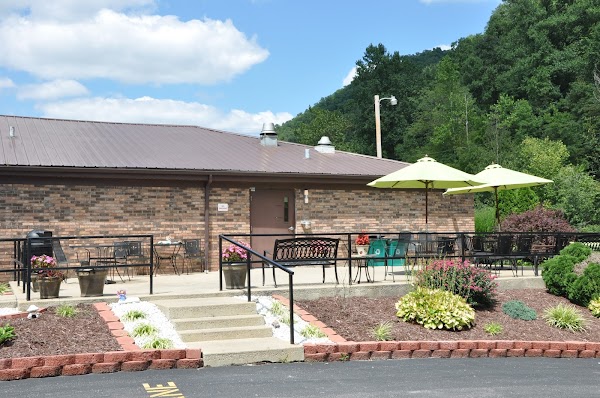
Oct 2019 3 deficiencies
CONCERN (D)

Potential for Harm - no one hurt, but risky conditions existed

Comprehensive Care Plan (Tag F0656)

Could have caused harm · This affected 1 resident

**NOTE- TERMS IN BRACKETS HAVE BEEN EDITED TO PROTECT CONFIDENTIALITY** Based on observation, interview, record review, and facility policy review it was determined the facility failed to develop and ...

Read full inspector narrative →
**NOTE- TERMS IN BRACKETS HAVE BEEN EDITED TO PROTECT CONFIDENTIALITY** Based on observation, interview, record review, and facility policy review it was determined the facility failed to develop and implement a person-centered comprehensive care plan for one (1) of twenty-five (25) sampled residents (Resident #36, who received oxygen). Per the physician order, Resident #36 was to receive oxygen at three (3) liters per minute (LPM) via nasal cannula continuously. However, on 10/30/19 the resident was observed lying in bed with his/her eyes closed and the oxygen was running at three (3) LPM while the nasal cannula was observed to be inside the top drawer of the resident's nightstand and not in the resident's nose. Although Resident #36's comprehensive care plan included providing oxygen to the resident per physician's order, the care plan did not address the actual liter flow of the oxygen nor the route of the oxygen to be administered to the resident. The findings include: Review of the facility policy titled, Comprehensive Care Plans, with a revision date of 11/22/17, revealed the facility would develop a comprehensive person-centered care plan for each resident consistent with resident rights that included measurable objectives and timetables to meet a resident's medical, nursing, and mental and psychosocial needs that were identified in the comprehensive assessment. Observation of Resident #36 on 10/30/19 at 1:52 PM, revealed the resident was lying in bed with his/her eyes closed and the oxygen was running at three (3) LPM while the nasal cannula was observed to be inside the closed top drawer of the resident's nightstand and not in the resident's nose. A review of the medical record for Resident #36 revealed the facility admitted the resident on 05/22/16, with a diagnosis of Chronic Obstructive Pulmonary Disease. Review of the most current quarterly Minimum Data Set (MDS) assessment dated [DATE], revealed Resident #36 had been assessed to have a Brief Interview for Mental Status (BIMS) score of six (6). The MDS revealed the facility had assessed the resident to have severely impaired decision-making ability and was therefore not interviewable. The MDS also indicated that the resident received oxygen. A review of the comprehensive care plan for Resident #36 dated 08/14/19, revealed interventions for oxygen, which included to obtain oxygen saturation levels as ordered and as needed, elevate the resident's head of the bed as much as possible, and to provide oxygen per physician's order. However, Resident #36's comprehensive care plan did not address the actual liter flow of the oxygen nor the route of the oxygen to be administered to the resident. A review of Resident #36's monthly physician's orders dated 11/01/19, revealed an order for the resident to have oxygen at three (3) liters per nasal cannula continuously. An interview conducted with State Registered Nursing Assistant (SRNA) #1 on 10/30/19 at 2:10 PM, revealed she utilized the care plan to identify the care required by residents and was required to check it daily. The SRNA stated she was responsible for ensuring oxygen was at the correct rate and was on the resident. The SRNA stated she was just nervous and forgot to check and should have. An interview with Registered Nurse (RN) #1 on 10/30/19 at 2:25 PM, revealed she made rounds on her residents at least every two (2) hours and checked oxygen during her rounds to ensure the residents were receiving oxygen as directed by the care plan. The RN stated she was responsible for reviewing the care plan every shift and as needed. The RN stated she had not been aware Resident #36's oxygen was not on the resident and it should have been. An interview conducted with the MDS Coordinator on 10/31/19 at 3:47 PM, revealed she developed all resident care plans and had not been aware the actual liter flow of the oxygen nor the route of the oxygen to be administered to the resident was required to be on the comprehensive care plan. An interview conducted with the Director of Nursing (DON) on 10/31/19 at 4:08 PM, revealed he made rounds daily to ensure residents were being provided the care they required as directed by the comprehensive care plans. The DON stated he had not been aware a resident who received oxygen was required to have the actual liter flow and the route to administer the oxygen on the resident's comprehensive care plan. The DON stated he had not identified any concerns with care not being provided as directed by the resident's comprehensive care plans.
CONCERN (D)

Potential for Harm - no one hurt, but risky conditions existed

Respiratory Care (Tag F0695)

Could have caused harm · This affected 1 resident

**NOTE- TERMS IN BRACKETS HAVE BEEN EDITED TO PROTECT CONFIDENTIALITY** Based on observation, interview, medical record review, and review of the facility's policy, it was determined the facility fail...

Read full inspector narrative →
**NOTE- TERMS IN BRACKETS HAVE BEEN EDITED TO PROTECT CONFIDENTIALITY** Based on observation, interview, medical record review, and review of the facility's policy, it was determined the facility failed to ensure one (1) of twenty-five (25) sampled residents (Resident #36, who received oxygen) received respiratory care (oxygen therapy) according to the physician's orders and the comprehensive care plan. Review of the care plan for Resident #36 revealed the resident had an intervention for the facility to provide oxygen as ordered by the physician. Review of the physician orders for Resident #36 revealed an order for oxygen at three (3) liters per minute (LPM) via nasal cannula continuously. Observations of Resident #36 on 10/30/19 at 1:52 PM revealed the resident was lying in bed with his/her eyes closed and the oxygen was running at three (3) LPM while the nasal cannula was observed to be inside the top drawer of the resident's nightstand and not in the resident's nose. The findings include: Review of the facility's policy titled, Oxygen Administration, with a revision date of December 2011, revealed upon receiving an order for oxygen administration, staff would apply the oxygen per nasal cannula, nasal catheter, or mask per physician's orders and then place the oxygen on the resident. The policy did not address who was responsible for developing the care plan related to oxygen therapy, nor did the policy address monitoring of the oxygen. Observation of Resident #36 on 10/30/19 at 1:52 PM, revealed the resident was lying in bed with his/her eyes closed and the oxygen was running at three (3) LPM while the nasal cannula was observed to be inside the closed top drawer of the resident's nightstand and not in the resident's nose. Review of Resident #36's medical record revealed the resident was admitted by the facility on 05/22/16, with diagnoses that include Hypertension and Chronic Obstructive Pulmonary Disease. Review of the most current quarterly Minimum Data Set (MDS) assessment dated [DATE], revealed Resident #36 had been assessed to have a Brief Interview for Mental Status (BIMS) score of six (6). The MDS revealed the facility had assessed the resident to have severely impaired decision-making ability and was therefore not interviewable. The MDS also indicated the resident received oxygen. Review of the comprehensive care plan for Resident #36 dated 08/14/19, revealed interventions for oxygen, which included to obtain oxygen saturation levels as ordered and as needed, elevate the resident's head of the bed as much as possible, and to provide oxygen per physician's order. Review of Resident #36's monthly physician's orders dated 11/01/19, revealed an order for the resident to have oxygen at three (3) liters per nasal cannula continuously. Interview conducted with State Registered Nursing Assistant (SRNA) #1 on 10/30/19 at 2:10 PM revealed she utilized the care plan to identify the care required by residents. The SRNA stated she was responsible for ensuring oxygen was at the correct rate and was on the resident. The SRNA stated she was just nervous and forgot to check and should have. Interview with Registered Nurse (RN) #1 on 10/30/19 at 2:25 PM, revealed she made rounds on her residents at least every two (2) hours and checked oxygen during her rounds to ensure the residents were receiving oxygen as directed by the physicians. The RN stated the SRNAs were also responsible when they were providing care to the residents to check to ensure the residents were receiving the oxygen as directed by the physicians. The RN stated she had not been aware Resident #36's oxygen was not on the resident and it should have been. Interview conducted with the Director of Nursing (DON) on 10/31/19 at 4:08 PM revealed he made rounds daily to ensure residents were being provided the care they require. The DON stated he monitored to ensure residents were being provided oxygen as directed by the physician. The DON stated Resident #36 could not have put the oxygen nasal cannula in his/her nightstand drawer. The DON stated he felt the SRNA had rushed putting the resident back to bed and had placed the oxygen tubing in the nightstand drawer. The DON stated he had not identified any concern with oxygen not being on residents as ordered by the physicians. The DON revealed the SRNAs were required to check oxygen every time they go into a resident's room to ensure it was on the resident.
CONCERN (D)

Potential for Harm - no one hurt, but risky conditions existed

Infection Control (Tag F0880)

Could have caused harm · This affected 1 resident

**NOTE- TERMS IN BRACKETS HAVE BEEN EDITED TO PROTECT CONFIDENTIALITY** Based on observation, interview, record review, and review of the facility's policy, it was determined the facility failed to en...

Read full inspector narrative →
**NOTE- TERMS IN BRACKETS HAVE BEEN EDITED TO PROTECT CONFIDENTIALITY** Based on observation, interview, record review, and review of the facility's policy, it was determined the facility failed to ensure an infection control program was established and maintained to provide a sanitary environment and help prevent the development and transmission of disease and infection for one (1) of five (5) residents with urinary catheters (Resident #36) out of twenty-five (25) sampled residents. Observation during indwelling urinary catheter care on 10/30/19 at 1:30 PM for Resident #36 revealed State Registered Nurse Aide (SRNA) #1 failed to wash/sanitize her hands after providing indwelling urinary catheter care. After performing indwelling urinary catheter care, the SRNA was observed to touch her dirty gloved hands to the resident's closet and the resident's bed, and to touch her hair before washing/sanitizing her hands. The findings include: Review of the facility's policy titled, Handwashing/Hand Hygiene, with a revision date of April 2010, revealed that personnel should wash their hands when they are visibly dirty or contaminated, before performing an invasive procedure, and after providing personal care to a resident. Review of the facility's policy titled, Providing Catheter Care, undated, revealed staff were required to provide hand hygiene and discard gloves after providing indwelling urinary catheter care. Observation of indwelling urinary catheter care for Resident #36 on 10/30/19 at 1:30 PM revealed State Registered Nurse Aide (SRNA) #1 failed to wash/sanitize her hands after providing indwelling urinary catheter care to the resident. After performing indwelling urinary catheter care for Resident #36, the SRNA was observed to touch her dirty gloved hands to the resident's closet and obtain a brief, close the closet door, drop the brief on the floor, touch the closet again to obtain another brief, go to the foot of the resident's bed and touch the bed control handle to raise the bed, and then was observed to scratch her hair before washing/sanitizing her hands. Review of Resident #36's medical record revealed the resident was admitted by the facility on 05/22/16, with diagnoses that include Obstructive Uropathy and Urinary Retention. Review of the most current quarterly Minimum Data Set (MDS) assessment dated [DATE], revealed Resident #36 had been assessed to have a Brief Interview for Mental Status (BIMS) score of six (6). The MDS revealed the facility had assessed the resident to have severely impaired decision-making ability and was therefore not interviewable. The MDS also indicated the resident had an indwelling urinary catheter. The MDS revealed Resident #36 required the total assistance of two (2) persons for catheter care. Review of the comprehensive care plan for Resident #36 dated 08/14/19, revealed the resident was to be provided indwelling urinary catheter care twice daily. Review of Resident #36's monthly physician's orders dated 11/01/19, revealed an order for the resident to have an indwelling urinary catheter. Interview conducted with SRNA #1 on 10/30/19 at 2:10 PM, revealed she was aware she should have washed/sanitized her hands after performing indwelling urinary catheter care for Resident #36 and prior to touching the closet, her hair, and the bed handle. The SRNA stated she was just nervous. Interview conducted with the Director of Nursing (DON) on 10/31/19 at 4:08 PM, revealed he made rounds daily to ensure residents were being provided with the care they required. The DON stated he monitored handwashing and staff would be immediately taken aside and reeducated if any concerns were identified. The DON stated SRNA #1 should have immediately washed/sanitized her hands after performing indwelling urinary catheter care for Resident #36 and prior to touching the closet door.
Oct 2018 3 deficiencies
CONCERN (D)

Potential for Harm - no one hurt, but risky conditions existed

MDS Data Transmission (Tag F0640)

Could have caused harm · This affected 1 resident

**NOTE- TERMS IN BRACKETS HAVE BEEN EDITED TO PROTECT CONFIDENTIALITY** Based on record review and interview, it was determined the facility failed to ensure timely transmitting of data. The facility ...

Read full inspector narrative →
**NOTE- TERMS IN BRACKETS HAVE BEEN EDITED TO PROTECT CONFIDENTIALITY** Based on record review and interview, it was determined the facility failed to ensure timely transmitting of data. The facility failed to transmit Minimum Data Set (MDS) assessments for three (3) of twenty-four (24) sampled residents (Residents #22, #2 and #3) and five (5) unsampled residents (Residents #6, #4, #60, #5 and #1) within fourteen (14) days after the facility completed the assessments. The findings include: Interview with the MDS Coordinator and MDS Nurse on 10/11/18 at 2:15 PM revealed there was no policy for ensuring timely transmission of MDS assessments. 1. Review of Resident #22's MDS assessment completed on 09/04/18, revealed the assessment was not transmitted until 10/09/18, resulting in a late transmission. 2. Review of Resident #2's MDS assessment dated [DATE], revealed the assessment was not transmitted until 10/09/18, resulting in a late transmission. 3. Review of Resident #3's MDS assessment dated [DATE], revealed the assessment was not transmitted until 10/10/18, resulting in a late transmission. 4. Review of Resident #6's MDS assessment dated [DATE], revealed the assessment was not transmitted until 10/09/18, resulting in a late transmission. 5. Review of Resident #4's MDS assessment dated [DATE], revealed the assessment was not transmitted until 10/09/18, resulting in a late transmission. 6. Review of Resident #60's MDS assessment dated [DATE], revealed the assessment was not transmitted until 10/09/18, resulting in a late transmission. 7. Review of Resident #5's MDS assessment dated [DATE], revealed the assessment was not transmitted until 10/09/18, resulting in a late transmission. 8. Review of Resident #1's MDS assessment dated [DATE], revealed the assessment was not transmitted until 10/10/18, resulting in a late transmission. Continued interview with the MDS Coordinator and MDS Nurse on 10/11/18 at 2:15 PM, revealed the MDS Nurse that had completed the assessments was no longer employed by the facility, but had failed to transmit the assessments timely as required. Interview on 10/11/18 at 2:29 PM, with the Director of Nursing and Assistant Director of Nursing revealed the facility relied on the MDS Nurse to transmit the assessments as required, but had no system in place to oversee the MDS Nurse or transmission of the assessments timely.
CONCERN (E)

Potential for Harm - no one hurt, but risky conditions existed

Pharmacy Services (Tag F0755)

Could have caused harm · This affected multiple residents

Based on observation, interview, record review, and review of the facility's policies and procedures, it was determined the facility failed to ensure appropriate pharmaceutical services, including pro...

Read full inspector narrative →
Based on observation, interview, record review, and review of the facility's policies and procedures, it was determined the facility failed to ensure appropriate pharmaceutical services, including procedures that assure the accurate acquiring, receiving, dispensing, and administering of all drugs and biologicals, were provided to meet the needs of each resident. Observation of the facility's A Wing emergency medication box revealed expired medications were available for administration to residents. The findings include: Review of the facility's policy, Medication Ordering and Receiving from Pharmacy, revealed the consultant pharmacist or the provider pharmacy inventoried emergency kits at least every thirty (30) days for completeness and expiration dates of the contents. Observations on 10/11/18 at 10:10 AM of the medication room on the A Wing revealed the emergency medication storage box contained expired medications. Further review of the emergency medication storage box revealed three (3) ampules of Vitamin K injection expired on 09/01/18; two (2) vials of Heparin 5,000 units/ml expired on 10/10/18; one (1) vial of Heparin 5,000 units/ml expired on 09/01/18; one (1) vial of Haloperidol 5mg/ml expired in 08/2018; and one (1) vial of Depo-Medrol 40mg/ml expired in 09/2018. Interview on 10/11/18 at 10:15 AM with RN #1 revealed pharmacy personnel were responsible to review the emergency medication storage boxes monthly for expired medications. Interview on 10/11/18 at 10:25 AM with the Assistant Director of Nursing revealed that the facility's pharmacy sent a representative to the facility monthly to check the emergency medication boxes for expired medications. Interview on 10/11/18 at 10:33 AM with the Director of Nursing revealed the consultant pharmacist or the provider pharmacy inventoried the emergency boxes at least every thirty (30) days for expired medications. Interview on 10/11/18 at 10:48 AM with the Pharmacist revealed that the emergency medication boxes were checked for expired medications at a minimum monthly. Further interview with the pharmacist revealed, Someone had overlooked the expiration dates at the pharmacy.
CONCERN (E)

Potential for Harm - no one hurt, but risky conditions existed

Food Safety (Tag F0812)

Could have caused harm · This affected multiple residents

Based on observation, interview, and a review of facility policy it was determined the facility failed to store, distribute, and serve food in accordance with professional standards for food service s...

Read full inspector narrative →
Based on observation, interview, and a review of facility policy it was determined the facility failed to store, distribute, and serve food in accordance with professional standards for food service safety for residents who ate a regular consistency diet on the A/B and C/D Wings. Desserts served to residents were observed to be only partially covered when delivered to residents in their rooms during lunch on 10/09/18. The findings include: A review of the facility policy titled, Maintaining a Sanitary Tray Line, dated 11/28/17, revealed staff are required to ensure all foods and beverages are covered before leaving the kitchen, unless the tray is being served in the dining room adjacent to the kitchen. Observation of the meal tray assembly line during the noon meal on 10/09/18 from 11:00 AM to 12:15 PM revealed pound cake and strawberry desserts that were being prepared for delivery to residents eating in their rooms were only partially covered with a plastic drink lid for residents on the A/B Wing and C/D Wing. Observations on 10/09/18 of tray delivery to residents on the A/B Wing at 11:26 AM and C/D Wing at 12:15 PM revealed the residents' trays were transported from the food carts to the residents' rooms with the desserts partially covered exposing the food to potential contamination. An interview with the Dietary Manager on 10/11/18 at 2:20 PM revealed the desserts should have been covered but the facility did not have the correct serving container and lid available for the desserts on 10/09/18, because the dishwasher was out of service and the facility was utilizing disposable dishes.
Understanding Severity Codes (click to expand)
Life-Threatening (Immediate Jeopardy)
J - Isolated K - Pattern L - Widespread
Actual Harm
G - Isolated H - Pattern I - Widespread
Potential for Harm
D - Isolated E - Pattern F - Widespread
No Harm (Minor)
A - Isolated B - Pattern C - Widespread

Questions to Ask on Your Visit

  • "What changes have you made since the serious inspection findings?"
  • "Can I speak with families of current residents?"
  • "What's your RN coverage like on weekends and overnight?"

Our Honest Assessment

Strengths
  • • 36% turnover. Below Kentucky's 48% average. Good staff retention means consistent care.
Concerns
  • • Multiple safety concerns identified: 7 life-threatening violation(s), 1 harm violation(s), $43,646 in fines. Review inspection reports carefully.
  • • 17 deficiencies on record, including 7 critical (life-threatening) violations. These warrant careful review before choosing this facility.
  • • $43,646 in fines. Higher than 94% of Kentucky facilities, suggesting repeated compliance issues.
  • • Grade F (0/100). Below average facility with significant concerns.
Bottom line: This facility has 7 Immediate Jeopardy findings. Serious concerns require careful evaluation.

About This Facility

What is Good Shepherd Health And Rehabilitation's CMS Rating?

CMS assigns Good Shepherd Health and Rehabilitation an overall rating of 1 out of 5 stars, which is considered much below average nationally. Within Kentucky, this rating places the facility higher than 0% of the state's 100 nursing homes. A rating at this level reflects concerns identified through health inspections, staffing assessments, or quality measures that families should carefully consider.

How is Good Shepherd Health And Rehabilitation Staffed?

CMS rates Good Shepherd Health and Rehabilitation's staffing level at 2 out of 5 stars, which is below average compared to other nursing homes. Staff turnover is 36%, compared to the Kentucky average of 46%. This relatively stable workforce can support continuity of care.

What Have Inspectors Found at Good Shepherd Health And Rehabilitation?

State health inspectors documented 17 deficiencies at Good Shepherd Health and Rehabilitation during 2018 to 2024. These included: 7 Immediate Jeopardy (the most serious level, indicating potential for serious harm or death), 1 that caused actual resident harm, and 9 with potential for harm. Immediate Jeopardy findings are rare and represent the most serious regulatory concerns. They require immediate corrective action.

Who Owns and Operates Good Shepherd Health And Rehabilitation?

Good Shepherd Health and Rehabilitation is owned by a for-profit company. For-profit facilities operate as businesses with obligations to shareholders or private owners. The facility is operated by PLAINVIEW HEALTHCARE PARTNERS, a chain that manages multiple nursing homes. With 118 certified beds and approximately 89 residents (about 75% occupancy), it is a mid-sized facility located in Phelps, Kentucky.

How Does Good Shepherd Health And Rehabilitation Compare to Other Kentucky Nursing Homes?

Compared to the 100 nursing homes in Kentucky, Good Shepherd Health and Rehabilitation's overall rating (1 stars) is below the state average of 2.8, staff turnover (36%) is near the state average of 46%, and health inspection rating (1 stars) is much below the national benchmark.

What Should Families Ask When Visiting Good Shepherd Health And Rehabilitation?

Based on this facility's data, families visiting should ask: "What changes have been made since the serious inspection findings, and how are you preventing similar issues?" "Can you walk me through typical staffing levels on day, evening, and night shifts?" "Can I visit during a mealtime to observe dining assistance and food quality?" "How do you handle medical emergencies, and what is your hospital transfer rate?" These questions are particularly relevant given the facility's Immediate Jeopardy citations and the below-average staffing rating.

Is Good Shepherd Health And Rehabilitation Safe?

Based on CMS inspection data, Good Shepherd Health and Rehabilitation has documented safety concerns. Inspectors have issued 7 Immediate Jeopardy citations (the most serious violation level indicating risk of serious injury or death). The facility has a 1-star overall rating and ranks #100 of 100 nursing homes in Kentucky. Families considering this facility should ask detailed questions about what corrective actions have been taken since these incidents.

Do Nurses at Good Shepherd Health And Rehabilitation Stick Around?

Good Shepherd Health and Rehabilitation has a staff turnover rate of 36%, which is about average for Kentucky nursing homes (state average: 46%). Moderate turnover is common in nursing homes, but families should still ask about staff tenure and how the facility maintains care continuity when employees leave.

Was Good Shepherd Health And Rehabilitation Ever Fined?

Good Shepherd Health and Rehabilitation has been fined $43,646 across 6 penalty actions. The Kentucky average is $33,515. While any fine indicates a compliance issue, fines under $50,000 are relatively common and typically reflect isolated problems that were subsequently corrected. Families should ask what specific issues led to these fines and confirm they've been resolved.

Is Good Shepherd Health And Rehabilitation on Any Federal Watch List?

Good Shepherd Health and Rehabilitation is not on any federal watch list. The most significant is the Special Focus Facility (SFF) program, which identifies the bottom 1% of nursing homes nationally based on persistent, serious quality problems. Not being on this list means the facility has avoided the pattern of deficiencies that triggers enhanced federal oversight. This is a positive indicator, though families should still review the facility's inspection history directly.