Crestview Healthcare and Rehabilitation
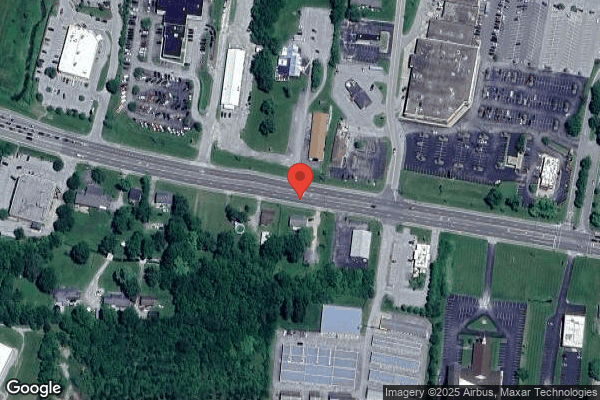

1871 Midland Trail, Shelbyville, KY 40065 (502) 633-2454
For profit - Limited Liability company 58 Beds SIMCHA HYMAN & NAFTALI ZANZIPER Data: November 2025
Trust Grade
90/100
#9 of 266 in KY
Last Inspection: October 2024

Within standard 12-15 month inspection cycle. Federal law requires annual inspections.

Overview

Crestview Healthcare and Rehabilitation in Shelbyville, Kentucky has a Trust Grade of A, indicating it is excellent and highly recommended for families seeking care. It ranks #9 out of 266 facilities in Kentucky, placing it in the top tier, and is the highest-ranked option in Shelby County. The facility is improving, having reduced its issues from 2 in 2019 to just 1 in 2024. Staffing is average with a 3/5 star rating and a turnover rate of 37%, which is better than the state average. While there have been no fines reported, there are some concerns, including failures in infection control practices and issues related to the implementation of the smoking policy for residents. These findings suggest areas needing attention, but overall, the facility maintains a strong reputation for care.
Trust Score
A
90/100
In Kentucky
#9/266
Top 3%
Safety Record
Low Risk
No red flags
Inspections
Getting Better
2 → 1 violations
Staff Stability
○ Average
37% turnover. Near Kentucky's 48% average. Typical for the industry.
Penalties
✓ Good
No fines on record. Clean compliance history, better than most Kentucky facilities.
Skilled Nurses
○ Average
Each resident gets 38 minutes of Registered Nurse (RN) attention daily — about average for Kentucky. RNs are the most trained staff who monitor for health changes.
Violations
✓ Good
Only 3 deficiencies on record. Cleaner than most facilities. Minor issues only.
★★★★★
5.0
Overall Rating
★★★☆☆
3.0
Staff Levels
★★★★☆
4.0
Care Quality
★★★★★
5.0
Inspection Score
Stable
2019: 2 issues
2024: 1 issues

The Good

  • 4-Star Quality Measures · Strong clinical quality outcomes
  • Full Sprinkler Coverage · Fire safety systems throughout facility
  • No fines on record
  • Staff turnover below average (37%)

    11 points below Kentucky average of 48%

Facility shows strength in quality measures, fire safety.

The Bad

Staff Turnover: 37%

Near Kentucky avg (46%)

Typical for the industry

Chain: SIMCHA HYMAN & NAFTALI ZANZIPER

Part of a multi-facility chain

Ask about local staffing decisions and management

The Ugly 3 deficiencies on record

Oct 2024 1 deficiency
CONCERN (D)

Potential for Harm - no one hurt, but risky conditions existed

Infection Control (Tag F0880)

Could have caused harm · This affected 1 resident

§483.80 Infection Control Based on observation, interview, record review, and facility policy review, the facility failed to maintain an infection prevention and control program designed to provi...

Read full inspector narrative →
§483.80 Infection Control Based on observation, interview, record review, and facility policy review, the facility failed to maintain an infection prevention and control program designed to provide a safe, sanitary and comfortable environment and to help prevent the development and transmission of communicable diseases and infections for 1 of 5 residents sampled for transmission-based precautions, Resident (R) 38. The findings include: Review of the facility policy, Infection Prevention and Control Program, revised 03/14/2024, revealed the facility was to maintain an environment that prevented transmission of infections. Further review revealed residents with an infection were to be placed in transmission-based precautions. Review of the facility sign Contact Precautions, not dated, revealed staff were required to wear protective gowns and gloves prior to entering the resident's room. Review of R38's Resident Face Sheet revealed the facility admitted the resident on 08/05/2022 and R38's diagnoses included Alzheimer's disease and extended spectrum beta lactamase (ESBL) resistance (an antibiotic resistant infection). Review of R38's Annual Minimum Data Set (MDS) with an Assessment Reference Date (ARD) of 08/05/2024 revealed the facility assessed the resident with a Brief Interview for Mental Status (BIMS) of three out of 15, indicating the resident was severely cognitively impaired. Further review revealed the facility assessed the resident as having a multi-drug resistant organism (MDRO). Review of R38's Care Plan, dated 09/29/2024, revealed the facility identified R38 as requiring contact isolation for ESBL in her urine and included the intervention for nursing staff to follow isolation precautions. Observation on 10/01/2024 at 9:12 AM revealed R38 was lying in bed, yelling for staff to help her get up for the day. Per observation, Certified Nurse Aide (CNA) 2 and CNA3 entered R38's room without donning gowns that were hanging in a container on the resident's door. Further observation revealed the CNAs closed R38's door, and again failed to don (put on) gowns. Continued observation at 9:21 AM revealed CNA3 exited R38's room with a bag of soiled linens and trash, but no personal protective equipment (PPE) in the trash bag. Additional observation revealed signage for contact precautions hanging on the resident's door that described the need for staff to don gowns and gloves prior to entering the resident's room. In an immediate interview on 10/01/2024 at 9:21 AM, CNA3 stated she did not notice the transmission-based precautions sign on R38's door and was not familiar with the resident, since she normally did not work this hallway. In further interview, CNA3 stated staff did not need to wear PPE in R38's room unless they touched the resident. CNA3 continued to state that she should have worn a gown because getting a resident up and changing dirty linens was a high contact care activity. In an interview on 10/03/2024 at 12:30 PM, the Assistant Director of Nursing/Infection Preventionist (ADON/IP) stated R38 was in contact precautions due to a urinary tract infection with ESBL (extended-spectrum beta-lactamase, an antibiotic resistant organism). The ADON/IP further stated staff should have worn gowns and gloves when assisting R38 to get out of bed. In continued interview, the ADON/IP stated she educated staff upon hire and at least annually about what PPE they needed to wear with each type of transmission-based precautions. In an interview on 10/03/2024 at 1:32 PM, the Director of Nursing (DON) stated her expectations were for staff to wear PPE including gowns and gloves when providing any care for a resident in contact precautions. She stated CNAs should have worn gowns and gloves when assisting R38 to get out of bed for the day. In an interview on 10/03/2024 at 2:43 PM, the Administrator stated he expected staff to follow signage on resident doors for transmission-based precautions.
Sept 2019 2 deficiencies
CONCERN (D)

Potential for Harm - no one hurt, but risky conditions existed

Comprehensive Care Plan (Tag F0656)

Could have caused harm · This affected 1 resident

**NOTE- TERMS IN BRACKETS HAVE BEEN EDITED TO PROTECT CONFIDENTIALITY** Based on observation, interview, record review and policy review it was determined the facility failed to ensure resident's smok...

Read full inspector narrative →
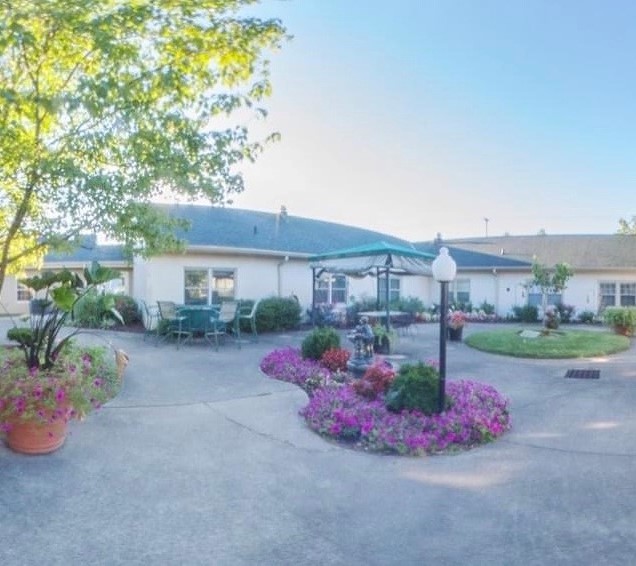
**NOTE- TERMS IN BRACKETS HAVE BEEN EDITED TO PROTECT CONFIDENTIALITY** Based on observation, interview, record review and policy review it was determined the facility failed to ensure resident's smoking care plan interventions were implemented for one (1) of thirty-two (32) sampled residents, Resident #44. The findings include: Review of the facility policy titled, Smoking, revised 07/24/18, revealed the facility advocated for a smoke free facility. However, at the same time recognized that smoking was prevalent among certain populations and geographic areas they served. For those centers that allowed smoking, smoking would only be allowed in designated areas. Residents who smoked and were in the center before the effective date would be permitted to continue to smoke in designated areas only. The admissions staff would explain the smoke free policy to residents and their families. Failure to comply with the policy could result in initiation of a discharge plan. Residents would be assessed for safe smoking and re-evaluated quarterly and with a change in condition. A resident's smoking status such as independent, supervised, or not permitted would be documented on the care plan. The care plan would be updated as necessary. Smoking supplies including but not limited to tobacco, matches, lighters, lighter fluid, etc. would be labeled with the resident's name, room number, maintained by staff and stored in a suitable cabinet kept at the nursing station. If the resident was cognitively and physically able to secure all smoking materials, the center may allow him/her to maintain his/her own tobacco products in a locked compartment. Residents would not be allowed to maintain their own lighter, lighter fluid or matches. It may be necessary to counsel residents or responsible parties who violate the smoking policy. Such action would be documented in the medical record. Review of clinical record revealed the facility admitted Resident #44 on 03/18/18 with diagnoses of Chronic Kidney Disease, Nicotine Dependence, and Chronic Obstructive Pulmonary Disease. Review of Resident #44's Quarterly Minimum Data Set (MDS), dated [DATE], revealed the facility conducted a Brief Interview for Mental Status and the resident scored a ten (10) out of fifteen (15) indicating the resident was interviewable. Review of Resident #44's Comprehensive Care Plan related to Smoking Independently, dated 05/16/18, revealed the Goal was for the resident to smoke safely through the target date of 09/12/19. The interventions directed the staff to educate the resident on the facility's smoking policy, to ensure the resident returned their smoking material to the nurse upon re-entry to the building and to monitor resident's compliance with smoking policy. Interview with Resident #44, on 09/17/19 at 11:49 AM, revealed he/she smoked unsupervised whenever he/she desired. Resident #44 showed this surveyor a lighter and cigarettes that he/she kept on their person and stated his/her son provided them. Observation of Resident #44, on 09/17/19 at 3:25 PM, revealed the resident outside the building, near the 100 Unit Hall door with no staff present. The resident was smoking a cigarette then extinguished it into a receptacle. Observation of Resident #44, on 09/18/19 at 10:03 AM, revealed the resident exited through the backdoor of the facility, which led to courtyard area. Observation of the courtyard area revealed no staff present. Resident #44 obtained a pack of cigarettes and a lighter from his/her belongings and lit the cigarette. Observation of Resident #44, on 09/20/19 at 9:29 AM, revealed the resident smoking in the courtyard. Interview with Registered Nurse (RN) #2, on 09/20/19 at 9:34 AM, revealed the facility was a non-smoking facility, but some resident's were grandfathered in and allowed to smoke. She stated nursing staff conducted quarterly smoking evaluations, for those that smoked and the evaluation directed staff to educate the resident on the smoking policy. She stated the resident was required to sign the evaluation acknowledging they would abide by the policy. Review of Resident #44's clinical record with RN #2, revealed Resident #44's smoking evaluations dated, 01/29/19 and 04/29/19, were not signed by the resident. Continued interview revealed residents were not allowed to keep their smoking materials on their person, but at the nurses station, per the plan of care and policy. However, the smoking materials were not locked/secured at the nurses station and resident's could obtain at their leisure. She stated the facility did not have a mechanism in place to ensure Resident #44's smoking care plan interventions and facility policy was implemented consistently by staff. She stated if residents smoking care plan interventions were not followed other resident's could obtain items, burns and harm could occur. Interview with the Front Hall Unit Manager (UM), at 9:59 AM on 09/20/19, revealed Resident #44 was the only smoking resident in the facility, due to being grandfathered in, after the facility went smoke-free. She stated residents that smoked were assessed quarterly to determine if they were safe to smoke unsupervised. The UM stated the smoking materials were to be kept at the nursing station, however they were not locked up to ensure resident safety. She stated the smoking care plan directed staff to educate the resident on the smoking policy. She stated Resident #44's smoking care plan was not being followed in regards to the securing of the resident's smoking material. The Unit Manager also stated no audits were being conducted nor a system put in place to ensure the implementation of the care plan or policy. She stated the smoking care plan and policy should be followed to ensure resident safety. Interview with the Center Nurse Executive (CNE), 09/20/19 at 11:23 AM, revealed she expected staff to implement the smoking policy and care plan interventions for residents. She stated she expected staff to keep smoking materials secured per the policy and care plan to ensure resident safety. She stated staff should monitor residents to ensure they smoked safely and in the designated smoking area. However, she did not nor did she have others conduct audits to determine if care plan interventions or the smoking policy was being followed. The CNE stated if staff did not follow the policy or care plan interventions residents could be harmed. Interview with the Center Executive, on 09/20/19 at 11:49 AM, revealed residents were not to have smoking material on their person and he was not aware Resident #44 had a lighter and cigarettes on their person. He stated he did not have audits to validate staff implementing smoking care plan or the policy. He stated his responsibility was to ensure resident safety and staff followed facility policy and procedure.
CONCERN (D)

Potential for Harm - no one hurt, but risky conditions existed

Accident Prevention (Tag F0689)

Could have caused harm · This affected 1 resident

**NOTE- TERMS IN BRACKETS HAVE BEEN EDITED TO PROTECT CONFIDENTIALITY** Based on observation, interview, record review and review of the policy it was determine the facility failed to ensure the smoki...

Read full inspector narrative →
**NOTE- TERMS IN BRACKETS HAVE BEEN EDITED TO PROTECT CONFIDENTIALITY** Based on observation, interview, record review and review of the policy it was determine the facility failed to ensure the smoking policy was implemented to prevent accidents or hazards for one (1) of thirty-two (32) sampled residents, Resident #44. The findings include: Review of the facility policy titled, Smoking, revised 07/24/18, revealed the facility advocated for a smoke free facility. However, at the same time recognized that smoking was prevalent among certain populations and geographic areas they served. For those centers that allowed smoking, smoking would only be allowed in designated areas. Residents who smoked and were in the center before the effective date would be permitted to continue to smoke in designated areas only. The admissions staff would explain the smoke free policy to residents and their families. Failure to comply with the policy could result in initiation of a discharge plan. A resident's smoking status such as independent, supervised, or not permitted would be documented on the care plan. Smoking supplies including but not limited to tobacco, matches, lighters, lighter fluid, etc. would be labeled with the resident's name, room number, maintained by staff and stored in a suitable cabinet kept at the nursing station. If the resident was cognitively and physically able to secure all smoking materials, the center may allow him/her to maintain his/her own tobacco products in a locked compartment. Residents would not be allowed to maintain their own lighter, lighter fluid or matches. It may be necessary to counsel residents or responsible parties who violate the smoking policy. Such action would be documented in the medical record. Review of clinical record revealed the facility admitted Resident #44 on 03/18/18 with diagnoses of Chronic Kidney Disease, Nicotine Dependence, and Chronic Obstructive Pulmonary Disease. Review of Resident #44's Quarterly Minimum Data Set (MDS), dated [DATE], revealed the facility conducted a Brief Interview for Mental Status and the resident scored a ten (10) out of fifteen (15) indicating the resident was interviewable. Review of Resident #44's Comprehensive Care Plan related to Smoking Independently, dated 05/16/18, revealed the Goal was for the resident to smoke safely through the target date of 09/12/19. The interventions directed the staff to educate the resident on the facility's smoking policy, to ensure the resident returned their smoking material to the nurse upon re-entry to the building and to monitor resident's compliance with smoking policy. Interview on 09/17/19 at 11:49 AM, with Resident #44, revealed he/she smoked unsupervised whenever he/she desired. Resident #44 showed this surveyor a lighter and cigarettes that he/she kept on their person and stated his/her son provided them. Observation of Resident #44, on 09/17/19 at 3:25 PM, revealed the resident was outside smoking a cigarette then extinguished it into a receptacle. Observation on 09/18/19 at 10:03 AM, of Resident #44, revealed the resident exited through the backdoor of the facility, which led to courtyard area. Observation of the courtyard area revealed no staff present. Resident #44 obtained a pack of cigarettes and a lighter from his/her belongings and lit the cigarette. On 09/20/19 at 9:29 AM, Resident #44 was observed smoking in the courtyard. Interview on 09/20/19 at 9:34 AM, with Registered Nurse (RN) #2, revealed the facility was a non-smoking facility and Resident #44 was grandfathered in and allowed to smoke. She stated nursing staff assessed Resident #44 quarterly for smoking safety and to educate the resident on the facility smoking policy. She stated the resident was required to sign the evaluation acknowledging they would abide by the policy. Review of Resident #44's clinical record with RN #2, revealed Resident #44's smoking evaluations dated, 01/29/19 and 04/29/19, were not signed by the resident. Continued interview with RN #2, revealed Resident #44 was not allowed to keep smoking materials on their person. Instead the smoking material were to be secured at the nurses station, per the facility policy. However, the smoking materials were not locked/secured at the nurses station and the resident could obtain at their leisure. She stated the facility did not have a mechanism in place to ensure the facility policy was implemented consistently by staff. She stated if the smoking policy was not followed other resident's could obtain items, burns and harm could occur. Interview at 9:59 AM on 09/20/19, with the Front Hall Unit Manager (UM), revealed Resident #44 was the only smoking resident in the facility, due to being grandfathered in, after the facility went smoke-free. She stated residents that smoked were assessed quarterly and at that time educated on the facility's smoking policy. The UM stated the smoking materials were to be kept at the nursing station, however they were not locked up to ensure resident safety. The Unit Manager stated no audits were being conducted nor a system put in place to ensure the smoking policy was implemented by staff. She stated the smoking policy should be followed to ensure resident safety. Interview on 09/20/19 at 11:23 AM, with the Center Nurse Executive (CNE), revealed she expected staff to implement the smoking policy. She stated she expected staff to keep smoking materials secured per the policy to ensure resident safety. She stated staff should monitor residents to ensure they smoked safely and in the designated smoking area. However, she did not nor did she have others conduct audits to determine if the smoking policy was being followed. The CNE stated if staff did not follow the policy residents could be harmed. Interview on 09/20/19 at 11:49 AM, with the Center Executive, revealed residents were not to have smoking material on their person and he was not aware Resident #44 had a lighter and cigarettes on their person. He stated he did not have audits to validate staff implementing smoking policy. He stated his responsibility was to ensure resident safety and staff followed facility policy and procedure.
Understanding Severity Codes (click to expand)
Life-Threatening (Immediate Jeopardy)
J - Isolated K - Pattern L - Widespread
Actual Harm
G - Isolated H - Pattern I - Widespread
Potential for Harm
D - Isolated E - Pattern F - Widespread
No Harm (Minor)
A - Isolated B - Pattern C - Widespread

Questions to Ask on Your Visit

  • "Can I speak with families of current residents?"
  • "What's your RN coverage like on weekends and overnight?"

Our Honest Assessment

Strengths
  • • Grade A (90/100). Above average facility, better than most options in Kentucky.
  • • No major safety red flags. No abuse findings, life-threatening violations, or SFF status.
  • • No fines on record. Clean compliance history, better than most Kentucky facilities.
  • • Only 3 deficiencies on record. Cleaner than most facilities. Minor issues only.
Concerns
  • • No significant concerns identified. This facility shows no red flags across CMS ratings, staff turnover, or federal penalties.
Bottom line: Generally positive indicators. Standard due diligence and a personal visit recommended.

About This Facility

What is Crestview Healthcare And Rehabilitation's CMS Rating?

CMS assigns Crestview Healthcare and Rehabilitation an overall rating of 5 out of 5 stars, which is considered much above average nationally. Within Kentucky, this rating places the facility higher than 99% of the state's 100 nursing homes. This rating reflects solid performance across the metrics CMS uses to evaluate nursing home quality.

How is Crestview Healthcare And Rehabilitation Staffed?

CMS rates Crestview Healthcare and Rehabilitation's staffing level at 3 out of 5 stars, which is average compared to other nursing homes. Staff turnover is 37%, compared to the Kentucky average of 46%. This relatively stable workforce can support continuity of care. RN turnover specifically is 58%, which is notably high. RNs provide skilled clinical oversight, so turnover in this role can affect medical care quality.

What Have Inspectors Found at Crestview Healthcare And Rehabilitation?

State health inspectors documented 3 deficiencies at Crestview Healthcare and Rehabilitation during 2019 to 2024. These included: 3 with potential for harm.
Who Owns and Operates Crestview Healthcare And Rehabilitation?

Crestview Healthcare and Rehabilitation is owned by a for-profit company. For-profit facilities operate as businesses with obligations to shareholders or private owners. The facility is operated by SIMCHA HYMAN & NAFTALI ZANZIPER, a chain that manages multiple nursing homes. With 58 certified beds and approximately 57 residents (about 98% occupancy), it is a smaller facility located in Shelbyville, Kentucky.

How Does Crestview Healthcare And Rehabilitation Compare to Other Kentucky Nursing Homes?

Compared to the 100 nursing homes in Kentucky, Crestview Healthcare and Rehabilitation's overall rating (5 stars) is above the state average of 2.8, staff turnover (37%) is near the state average of 46%, and health inspection rating (5 stars) is much above the national benchmark.

What Should Families Ask When Visiting Crestview Healthcare And Rehabilitation?

Based on this facility's data, families visiting should ask: "Can I visit during a mealtime to observe dining assistance and food quality?" "How do you handle medical emergencies, and what is your hospital transfer rate?" "Can I speak with family members of current residents about their experience?"

Is Crestview Healthcare And Rehabilitation Safe?

Based on CMS inspection data, Crestview Healthcare and Rehabilitation has a clean safety record: no substantiated abuse findings (meaning no confirmed cases of resident harm), no Immediate Jeopardy citations (the most serious violation level indicating risk of serious injury or death), and is not on the Special Focus Facility watch list (a federal program monitoring the lowest-performing 1% of nursing homes). The facility has a 5-star overall rating and ranks #1 of 100 nursing homes in Kentucky. While no facility is perfect, families should still ask about staff-to-resident ratios and recent inspection results during their visit.

Do Nurses at Crestview Healthcare And Rehabilitation Stick Around?

Crestview Healthcare and Rehabilitation has a staff turnover rate of 37%, which is about average for Kentucky nursing homes (state average: 46%). Moderate turnover is common in nursing homes, but families should still ask about staff tenure and how the facility maintains care continuity when employees leave.

Was Crestview Healthcare And Rehabilitation Ever Fined?

Crestview Healthcare and Rehabilitation has no federal fines on record. CMS issues fines when nursing homes fail to meet care standards or don't correct problems found during inspections. The absence of fines suggests the facility has either maintained compliance or corrected any issues before penalties were assessed. This is a positive indicator, though families should still review recent inspection reports for the full picture.

Is Crestview Healthcare And Rehabilitation on Any Federal Watch List?

Crestview Healthcare and Rehabilitation is not on any federal watch list. The most significant is the Special Focus Facility (SFF) program, which identifies the bottom 1% of nursing homes nationally based on persistent, serious quality problems. Not being on this list means the facility has avoided the pattern of deficiencies that triggers enhanced federal oversight. This is a positive indicator, though families should still review the facility's inspection history directly.