SIGNATURE HEALTHCARE OF MONROE COUNTY REHAB & WELL
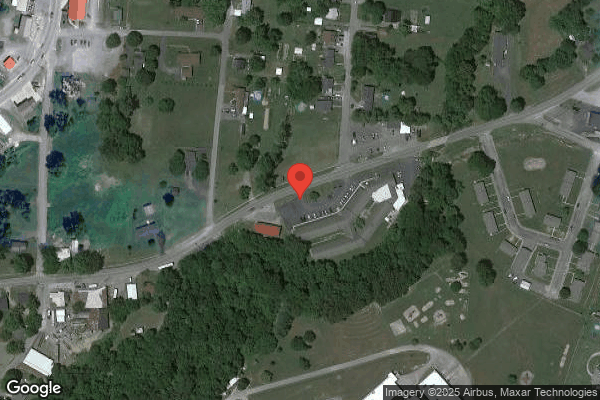

706 NORTH MAGNOLIA STREET, TOMPKINSVILLE, KY 42167 (270) 487-6135
For profit - Corporation 104 Beds SIGNATURE HEALTHCARE Data: November 2025
Trust Grade
90/100
#32 of 266 in KY
Last Inspection: May 2024

Within standard 12-15 month inspection cycle. Federal law requires annual inspections.

Overview

Signature Healthcare of Monroe County Rehab & Well has received an impressive Trust Grade of A, indicating that it is highly recommended and performs excellently compared to other facilities. It ranks #32 out of 266 nursing homes in Kentucky, placing it in the top half, and is the only option in Monroe County, suggesting families have no local alternatives that are better. The facility's trend is stable, with only one issue reported in both 2019 and 2024, showing consistent care over time. Staffing is average with a rating of 3 out of 5 stars, and a turnover rate of 37% is below the state average, which may help staff build relationships with residents. However, there are some concerns, as the facility has less RN coverage than 89% of Kentucky homes, which could impact the quality of care. Specific incidents include failures to implement proper catheter care for residents and not providing necessary humidification for those on oxygen therapy, which could lead to discomfort. Overall, while the facility has strengths in its trust grade and staffing retention, families should be aware of the identified care gaps.

Trust Score
A
90/100
In Kentucky
#32/266
Top 12%
Safety Record
Low Risk
No red flags
Inspections
Holding Steady
1 → 1 violations
Staff Stability
○ Average
37% turnover. Near Kentucky's 48% average. Typical for the industry.
Penalties
✓ Good
No fines on record. Clean compliance history, better than most Kentucky facilities.
Skilled Nurses
⚠ Watch
Each resident gets only 23 minutes of Registered Nurse (RN) attention daily — below average for Kentucky. Fewer RN minutes means fewer trained eyes watching for problems.
Violations
○ Average
7 deficiencies on record. Average for a facility this size. Mostly minor or procedural issues.
★★★★★
5.0
Overall Rating
★★★☆☆
3.0
Staff Levels
★★★☆☆
3.0
Care Quality
★★★★★
5.0
Inspection Score
Stable
2019: 1 issues
2024: 1 issues

The Good

  • Full Sprinkler Coverage · Fire safety systems throughout facility
  • No fines on record
  • Staff turnover below average (37%)

    11 points below Kentucky average of 48%

Facility shows strength in fire safety.

The Bad

Staff Turnover: 37%

Near Kentucky avg (46%)

Typical for the industry

Chain: SIGNATURE HEALTHCARE

Part of a multi-facility chain

Ask about local staffing decisions and management

The Ugly 7 deficiencies on record

May 2024 1 deficiency
CONCERN (D)

Potential for Harm - no one hurt, but risky conditions existed

Respiratory Care (Tag F0695)

Could have caused harm · This affected 1 resident

**NOTE- TERMS IN BRACKETS HAVE BEEN EDITED TO PROTECT CONFIDENTIALITY** Based on observation, interview, record review, and review of the facility's policy, it was determined the facility failed to en...

Read full inspector narrative →
**NOTE- TERMS IN BRACKETS HAVE BEEN EDITED TO PROTECT CONFIDENTIALITY** Based on observation, interview, record review, and review of the facility's policy, it was determined the facility failed to ensure that two (Resident (R) 29 and R35) of four residents reviewed for respiratory services, out of 27 sampled residents, received respiratory care in a manner to prevent discomfort. R29 and R35, who received continuous oxygen therapy, did not consistently receive water/humidification services designed to prevent discomfort, including drying out of nasal passages. The findings included: Review of the facility's policy, titled Oxygen Administration Policy, revised 05/04/2024, revealed the facility staff would change the humidification bottle when changing the oxygen tubing monthly and as needed (PRN). 1. Review of R35's Face Sheet revealed the resident was admitted to the facility on [DATE] with admitting diagnoses including chronic obstructive pulmonary disease (COPD), other seasonal allergic trinities, shortness of breath, unspecified chronic bronchitis, and emphysema. Review of R35's Quarterly Minimum Data Set (MDS), dated [DATE], revealed the resident had a Brief Interview for Mental Status (BIMS) score of 15/15, which indicated intact cognition. Per the MDS, the resident received continuous oxygen. Review of R35's comprehensive care plan (CCP), dated 01/20/2020, revealed R35 was at risk for respiratory distress related to shortness of breath, increase in carbon dioxide levels above his normal limits, and a diagnosis of end stage COPD, with a goal to not exhibit signs of respiratory distress through the next review. Continued review of the CCP revealed R35 had interventions for administration of oxygen as ordered by the physician. The CCP did not include interventions related to humidification bottle changes. Review of R35's physician orders, dated April 2024, revealed R35 was on oxygen at 2 liters per minute (L/M) per nasal cannula (NC) continuous with titration up to 3L/M while walking. Continued review of physician orders revealed no information about the use of water/humidification during oxygen administration or the need for humidification bottle changes. Observation of R35 on 05/07/2024 at 9:18 AM revealed the resident was receiving oxygen at 3L per minute via NC while walking from his bathroom to his wheelchair. The humidification bottle on the resident's oxygen concentrator, which was dated 04/26/2024, was empty. Additional observation on 05/07/2024 at 11:35 AM revealed the resident was receiving oxygen at 3L per minute via NC while walking in his room. The humidification bottle, dated 04/26/2024 and attached to the oxygen concentrator, was still empty. Interview with R35 on 05/07/2024 at 9:20 AM, revealed the humidification bottle had been empty since this past Sunday. R35 stated he had requested the empty bottle to be changed on Sunday, but the nurses were really busy and didn't get to it. R35 stated he had asked again this morning, but it still had not been changed. R35 stated when the humidification bottle was empty, it causes my nose to dry out, which led to nasal irritation, such as a nosebleed. 2. Review of R29's Face Sheet revealed the resident was admitted to the facility on [DATE] with admitting diagnoses including COPD with acute exacerbation, sleep apnea, and generalized anxiety disorder. Review of R29's Quarterly MDS, dated [DATE], revealed R29 had a BIMS score of 14/15, which indicated the resident was cognitively intact. Per the MDS, the resident was on continuous oxygen therapy. Review of R29's CCP, dated 10/03/2023, revealed the resident was at risk for complications related to COPD with a goal to not exhibit signs of respiratory distress through the next review. Per the CCP, R29 had interventions for administration of oxygen as ordered by the physician. Further review of the care plan revealed that it did not address the use of water/humidification during oxygen administration or the need for humidification bottle changes. Review of R29's physician orders, dated April 2024, revealed R29 had an order for oxygen at 3L/M via NC continuously. Continued review of R29's physician orders revealed no information about the use of water/humidification during oxygen administration or the need for humidification bottle changes. Observation on 05/07/2024 at 9:07 AM revealed R29 was receiving oxygen via NC at 3L/M. A humidification bottle, which was dated 04/26/2024 and was part of the oxygen therapy setup, was empty. An additional observation of R29 on 05/07/2024 at 11:45 AM revealed R29 was receiving oxygen at 3L via NC. The humidification bottle, dated 04/26/2024, was still empty. Interview with R29 on 05/07/2024 at 09:07 AM revealed the resident was aware the humidification bottle was empty as it dries my nose out. R29 stated that when her nose dried out, she would get some irritation and it made her uncomfortable. Interview with a family member of R29 (FM 29-1), on 05/07/2024 at 09:10 AM, revealed she had found the resident's humidification bottle empty on a couple of occasions in the past and her mother would tell her it irritated her nose. Interview with FM 29-2, on 05/07/2024 at 9:13 AM, revealed that she had noticed some blood on the oxygen tubing in the past, which she contributed to the dryness of her mother's nose from an empty humidification bottle on the oxygen concentrator. During interview with Registered Nurse (RN) 2 on 05/07/2024 at 11:50 AM, she stated the humidification bottles were to be changed out monthly. In addition, RN 2 stated the nursing staff should change the humidification bottles PRN whenever the bottle was empty, or the resident requested the bottle to be changed. RN2 stated all of her residents on continuous oxygen received oxygen with a humidification bottle, whose purpose was to ensure the resident's nares did not dry out, which would cause irritation. RN2 stated all nursing staff should be checking the humidification bottles to ensure they were not empty during their routine rounds. During interview with MDS Nurse 1 on 05/10/2024 at 2:35 PM, she stated physician's orders for each resident should be placed on the CCP during the clinical meeting when the orders were reviewed. Continued interview revealed ancillary oxygen care orders, which included changing of the humidification bottle, should also be on the CCP. Further interview revealed that she was a regional nurse filling in for the facility's regular MDS Nurse and was unaware as to why this information was not on the care plan. During interview with the Director of Nursing (DON) on 05/10/2024 at 3:07 PM, he stated humidification bottles should be changed monthly, as well as PRN whenever needed before the next scheduled change. The DON stated his expectation was the nursing staff would change the humidification bottles whenever the bottles were empty. The DON stated the purpose of the humidification bottles was to keep resident's nasal passages from drying out, which could cause irritation for the residents. During interview with the Administrator on 05/10/2024 at 3:27 PM she stated her clinical team handled all the oxygen concerns and would update her as necessary. The Administrator would not state what her expectations were in this regard and repeated that her clinical team handled all clinical issues in the building.
Apr 2019 1 deficiency
CONCERN (D)

Potential for Harm - no one hurt, but risky conditions existed

Infection Control (Tag F0880)

Could have caused harm · This affected 1 resident

**NOTE- TERMS IN BRACKETS HAVE BEEN EDITED TO PROTECT CONFIDENTIALITY** Based on observation, interview, record review, and facility policy review, it was determined the facility failed to maintain an...

Read full inspector narrative →
**NOTE- TERMS IN BRACKETS HAVE BEEN EDITED TO PROTECT CONFIDENTIALITY** Based on observation, interview, record review, and facility policy review, it was determined the facility failed to maintain an effective infection prevention and control program to provide a safe and sanitary environment to prevent the transmission and development of infection for two (2) of three (3) residents with wounds (Resident #30 and Resident #76). Observation of wound care for Resident #30 and Resident #76 on 04/17/19 revealed the residents were in Contact Isolation due to wound infections. However, the Wound Care Nurse was observed to take containers of wound care supplies into both residents' rooms, and then return the containers to the treatment cart which contained treatment supplies for other residents. Review of the facility policy, Policies and Practices - Infection Control, revised October 2018, revealed the facility infection control policies and practices are intended to facilitate maintaining a safe, sanitary, and comfortable environment and to help prevent and manage transmission of diseases and infections. Review of the facility policy, Isolation-Categories of Transmission-Based Precautions, revised October 2018, revealed when transmission-based precautions are in effect, non-critical resident-care equipment items such as a stethoscope, sphygmomanometer, or digital thermometers should be dedicated to a single resident when possible. If re-use of items was necessary, then the items would be cleaned and disinfected according to current guidelines. Review of the Centers for Disease Control and Prevention's (CDC) Management of Multidrug-Resistance Organisms (MDRO) In the Healthcare Setting guidelines revealed facilities should implement patient dedicated or single-use disposable noncritical equipment for patients/residents who have been diagnosed with an infection of a multi-drug resistant organism. 1. Review of Resident #30's medical record revealed the facility readmitted the resident on 03/29/19, with diagnoses of Quadriplegia, Pressure Ulcers, and Polyneuropathy. Review of Resident #30's annual MDS (Minimum Data Set) assessment dated [DATE] revealed the facility assessed the resident to have a Brief Interview for Mental Status (BIMS) score of 15, indicating the resident was cognitively intact. The MDS also revealed the resident had one (1) Stage 3 pressure ulcer and two (2) unstageable pressure ulcers. Further review of Resident #30's Medical Record revealed the resident had a culture obtained on the left lower coccyx wound that showed a heavy growth of Pseudomonas Aeruginosa (a MDRO) on 04/03/19. New orders were obtained to clean the wound with Dakin's Solution, pack with Iodoform, and cover with a Foam Dressing twice daily. Observation of the wound care nurse performing wound care for Resident #30 on 04/17/19 at 10:00 AM, revealed the nurse placed a bottle of Dakin's solution, a tape measure, gauze pads, a bottle of Iodoform packing strips, disposable plastic cups, biohazard bags, and other items to perform wound care into a plastic basket. The nurse took the supplies into the resident's room and performed wound care on the resident. During the wound care the nurse was observed to pour Dakin's solution into a disposable cup and put the bottle of Dakin's solution back into the basket. The nurse also opened the bottle of Iodoform, removed some of the packing strips, and then placed the bottle of Iodoform back into the basket. After performing wound care the nurse wiped the external portion of the basket with bleach wipes and took the basket and its contents out of the room. The nurse was then observed to wipe the containers of the Dakin's solution and Iodoform with bleach wipes and placed both containers back into the treatment cart among other residents' treatment supplies. 2. Review of Resident #76's medical record revealed the resident was readmitted to the facility on [DATE] with diagnoses that include Dementia, Reduced Mobility, Chronic Kidney Disease, and Osteoarthritis. Further review of the medical record revealed the resident's left great toe nail came off on 04/10/19 leaving an open wound. The physician evaluated the wound on 04/10/19 and ordered a culture and x-ray of the left great toe. Results of the x-ray on 4/10/19 revealed Osteomyelitis of the left great toe and the culture results on 04/13/19 revealed the wound contained Methicillin-resistant Staphylococcus aureus (MRSA). Review of physician orders for Resident #76 dated 04/10/19 revealed an order for the wound to be cleaned with wound cleanser and Bactroban ointment applied to the left great toe two (2) time a day until healed. Observation of wound care for Resident #76 on 04/17/19 at 2:04 PM, revealed the Wound Care Nurse donned personal protective equipment and entered the resident's room with a bottle of wound cleanser, gauze pads, a tube of Bactroban ointment, bleach wipes, a treatment supply tray, and a barrier pad. The Wound Care Nurse was observed to clean the overbed table with bleach wipes, place the barrier pad on the table, and then place the other supplies on top of the barrier pad. The Wound Care Nurse then proceeded to perform the wound care for Resident #76. Further observation revealed after performing the wound care the nurse cleaned the bottle of wound cleanser and tube of Bactroban with bleach wipes, and placed them both in the treatment cart among supplies utilized for other residents. Interview on 04/18/19 at 3:17 PM with the Wound Care Nurse revealed she had been taught to take the wound care supplies into the room and take them back out and place in the cart with other resident supplies as long as the container was wiped off with bleach wipes before return to the cart. Interview on 04/18/19 at 3:32 PM with the Infection Control Nurse revealed the Wound Care Nurse should have placed enough of the Dakin's solution, Iodoform packing strips, wound cleanser, and Bactroban Ointment to complete the wound care for each resident into separate containers while at the treatment cart and taken those containers into the residents' rooms and performed the wound care. The Infection Control Nurse stated that the nurse should not have taken the bottles of the cleansers and medications into the rooms of Resident #30 and Resident #76. Interview on 04/18/19 at 4:08 PM with the DON (Director of Nursing) revealed that she did not see a problem with the technique utilized by the Wound Care Nurse, because the containers had been cleaned with bleach wipes.
Mar 2018 5 deficiencies
CONCERN (D)

Potential for Harm - no one hurt, but risky conditions existed

Deficiency F0761 (Tag F0761)

Could have caused harm · This affected 1 resident

Based on observation, interviews, record review and review of the facility policy, it was determined the facility failed to ensure drugs and biologicals were stored properly related a review of one (1...

Read full inspector narrative →
Based on observation, interviews, record review and review of the facility policy, it was determined the facility failed to ensure drugs and biologicals were stored properly related a review of one (1) of six (6) medication carts that contained an expired medication and applesauce that should have been discarded. The findings include: Review of the facility policy titled, Medication Storage, dated September 2010, revealed outdated, contaminated, discontinued, or deteriorated medications and those in containers that are cracked, soiled, or without secure closures are immediately removed from stock, disposed of according to procedures for medication disposal and reordered from the pharmacy if a current order exists. Observation of the Medication Cart for C wing, on 03/06/18 at 3:26 PM, revealed a bottle of Promethazine 6.25 milligrams (mg)/5 milliliters (ml) suspension with an expiration date of November 2017. Interview with Licensed Practical Nurse (LPN) #2 on 03/06/18 at 3:28 PM, revealed she did not know the syrup was expired. She stated the medication should have been removed by the night shift staff on Wednesdays. She further stated each nurse is responsible for removing outdated medications on carts daily. Observation of the Medication Cart for rooms 9-16, on 03/06/18 at 4:07 PM, revealed an opened 3.9-ounce plastic container of applesauce dated 03/05/18 at 1:00 PM with a black marker. Interview with Registered Nurse (RN) #1, on 03/06/18 at 4:10 PM, revealed the applesauce should not have been left on the cart and should have been discarded during the 7-3 PM shift the day before. She stated a policy doesn't exist on discarding the applesauce but they were trained to discard it after each shift. Interview with the Director of Nursing (DON), on 03/07/18 at 5:01 PM, revealed night shift nurses were responsible for cleaning and checking the medication carts for expired medications and proper storage of drugs and biologicals every Wednesday. She stated the nurses on every shift were responsible for cleaning and removing expired medications daily. She further revealed the facility policy stated expired medications are removed from the cart and not used.
CONCERN (D)

Potential for Harm - no one hurt, but risky conditions existed

Infection Control (Tag F0880)

Could have caused harm · This affected 1 resident

**NOTE- TERMS IN BRACKETS HAVE BEEN EDITED TO PROTECT CONFIDENTIALITY** 2. Based on observation, interview, record review and review of the facility policy, it was determined the facility failed to ma...

Read full inspector narrative →
**NOTE- TERMS IN BRACKETS HAVE BEEN EDITED TO PROTECT CONFIDENTIALITY** 2. Based on observation, interview, record review and review of the facility policy, it was determined the facility failed to maintain an infection prevention and control program designed to provide a safe, sanitary, and comfortable environment to help prevent the development and transmission of communicable diseases and infections for two (2) Residents, (#10, #247), related to improper urinary catheter care, improper hand washing, and glove changing. Review of facility policy titled Catheterization Care, no date, revealed the guideline steps are as follows: Explain procedure to resident and provide privacy for procedure; Raise bed to appropriate working height and lower side rail if needed; Organize equipment for perineal care; Wash and dry hands thoroughly and put on gloves; Female: Use non-dominant hand to gently separate labia to fully expose urethral meatus, catheter, and maintain position of hand throughout procedure, grasp catheter with two fingers to stabilize, assess urethral meatus and surrounding tissue for inflammation, swelling, discharge, or tissue trauma and ask resident if burning or discomfort is present; Provide perineal hygiene using mild soap and warm water; Using a clean washcloth, clean catheter starting close to urinary meatus, clean catheter in circular motion along its length for about four inches moving away from the body. Review of the medical record revealed the facility re-admitted Resident #10 on 10/04/16 with diagnoses to include Dementia, Neurogenic Bladder, Anxiety, and Depression. Review of the Quarterly Minimum Data Set, dated [DATE], revealed the facility assessed the Resident #10's cognition as intact with a BIMS score of fourteen (14), which indicates the resident was capable of making his/her own decisions. Observation of urinary catheter care to Resident #10, on 03/08/18 at 09:40 AM, performed by CNA #4, revealed catheter tubing and drainage bag was positioned above bladder level (per resident). Procedure revealed CNA #4 pulled down the resident's pajama pants with washcloth in hand, wiped at vaginal area, put the washcloth back in water, cleansed resident again, Further observation revealed CNA #4 changed water after resident cleansed with soap and water; with same gloves on, CNA #4 rinsed soap off resident, cleansed catheter tubing, put washcloth back in water, and using same washcloth rinsed catheter tubing again. Interview with CNA #4, on 03/08/18 at 10:03 AM, revealed the CNA stated, I should not have put the washcloth back in water after touching the resident; also, I should have changed gloves when I changed the water to rinse soap, I increased the chances for the resident to get a UTI. Interview with the DON, on 03/08/18 at 03:15 PM, revealed her expectation is for staff to follow the facility's policy when providing catheter care related to infection control and maintain the urinary catheter drainage system according to policy to minimize infection control. Interview with the Staff Development Coordinator, on 03/08/18 at 03:30 PM, revealed she expect the staff to follow the facility's policy, competency of the Company's policy used in educating related to catheter care and performing task. Based on observation, interview, record review and review of the facility policy, it was determined the facility failed to maintain an infection prevention and control program designed to provide a safe, sanitary and comfortable environment and to help prevent the development and transmission of communicable diseases and infections for one (1) of twenty-two (22) sampled residents (Resident #247) related to improper handling of soiled linen. The findings include: Review of facility policy titled Linen Handling, not dated, revealed staff are to deposit soiled linen directly into the covered linen receptacle or plastic bag. Record review revealed the facility admitted Resident #247 to the facility on 3/4/18 with diagnoses which included Urinary Retention, Bilateral Pleural Effusion, Cerebrovascular Accident, Fractured Right Tibula/Fibula. Observation of catheter care completed for Resident #247 on 03/07/18 at 9:32 AM by Certified Nurse Aide (CNA) #1, revealed CNA #1 cleansed the resident's catheter tubing then placed the soiled washcloth on the resident's bed next to the resident's leg. He also grabbed a towel from the bedside table and dried the resident perineal area and catheter tubing then placed the towel on resident's bed. Interview with CNA #1 on 03/07/18 at 9:54 AM, revealed he understand what he did wrong and forgot his bag to put the soiled wash rag and towel in. He stated he was not supposed to place soiled wash rags or towels on a resident's bed. Interviews on 03/08/18 with CNA #5 at 8:48 AM, CNA #2 at 8:56 AM, and CNA #6 at 9:11 AM, revealed staff are supposed to have their supplies ready and in place when they start catheter care. The CNA's stated the dirty rags and towels should be placed in a bag and It was not appropriate to place dirty wash rags and towels on a resident's bed. Interview with Licensed Practical Nurse (LPN) #1 on 03/08/18 at 8:40 AM, revealed It is not acceptable to place dirty linen on resident's bed and it needs to be disposed of properly and placed in a bag. She stated she expects staff to ensure they have their supplies present at the beginning of the procedure. Interview with Assistant Director of Nursing (ADON) on 03/08/18 at 11:17 AM, revealed she expects staff to have the supplies available and present at the beginning of catheter care. She stated soiled wash rags and towels are to be placed in a bag and not on the resident's bed and that would be a infection control issue. Interview with facility Director of Nursing (DON) on 03/04/18 at 3:15 PM, revealed she expected staff to ensure they dispose of soiled linens, wash rags and towels appropriately and per facility policy. She stated staff should have a bag available to put soiled linens in when providing catheter care to residents.
CONCERN (E)

Potential for Harm - no one hurt, but risky conditions existed

Comprehensive Care Plan (Tag F0656)

Could have caused harm · This affected multiple residents

**NOTE- TERMS IN BRACKETS HAVE BEEN EDITED TO PROTECT CONFIDENTIALITY** Based on observation, interview, record review and review of the facility policy and procedures, the facility failed to implemen...

Read full inspector narrative →
**NOTE- TERMS IN BRACKETS HAVE BEEN EDITED TO PROTECT CONFIDENTIALITY** Based on observation, interview, record review and review of the facility policy and procedures, the facility failed to implement a comprehensive person-centered care plan for two (2) of twenty-two (22) sampled residents (Residents #10 and #247) related to not following interventions to provide catheter care per facility policy. The findings include: Review of facility policy titled, Care Plans - Comprehensive , dated 06/01/15, revealed each resident's care plan is designed to aid in preventing or reducing declines in the resident's functional status and/or functional levels. It further states, care plan interventions are implemented after consideration of the resident's problem areas and their causes. Review of facility policy titled Catheterization Care, not dated, revealed the guideline steps are as follows: Explain procedure to resident and provide privacy for procedure; Raise bed to appropriate working height and lower side rail if needed; Organize equipment for perineal care; Position males in supine position and expose only genital area and catheter; Wash and dry hands thoroughly and put on gloves; Female: Use non-dominant hand to gently separate labia to fully expose urethral meatus and catheter and maintain position of hand throughout procedure; Male: use non-dominant hand to retract foreskin if not circumcised and hold penis at shaft just below glans and maintain hand position throughout procedure; Grasp catheter with two fingers to stabilize it and assess urethral meatus and surrounding tissue for inflammation, swelling, discharge, or tissue trauma and ask resident if burning or discomfort is present; Provide perineal hygiene using mild soap and warm water; Using a clean washcloth, clean catheter starting close to urinary meatus and clean catheter in circular motion along its length for about four inches moving away from the body; and, Male: reduce or reposition foreskin after care. Record review revealed the facility admitted Resident #247 to the facility on [DATE] with diagnoses which included Urinary Retention, Bilateral Pleural Effusion, Cerebrovascular Accident, and Fracture Right Tibula/Fibula. Further review revealed no Minimum Data Set (MDS) assessment had been completed due to the resident being a new admission. Review of Resident #247's Baseline admission Care Plan, dated 03/04/18, revealed an intervention that stated staff are to provide catheter care per facility policy. However, observation of catheter care on 03/07/18 at 9:32 AM revealed Certified Nurse Aide (CNA) #1, failed to wash his hands and place clean gloves on prior to starting catheter care per facility policy/care plan. CNA #1 also failed to use non-dominant hand to hold penis at shaft just below glans and to grasp catheter with two (2) fingers to stabilize it. CNA #1 then failed to clean catheter in circular motion along its length for about four inches moving away from the body as he cleaned the head of penis per facility policy/care plan. CNA #1 was observed to hold/anchor the catheter with left hand which was approximately one (1) inch above the urinary meatus/opening and as CNA #1 continued to anchor catheter in same spot, he washed around the anchor point by dabbing wash cloth to clean catheter directly above and below the anchor point and then placed soiled wash rag on resident's bed next to resident's leg. CNA #1 then grabbed a towel from the bedside table, dried the head of penis, dabbing dry the catheter, and then placed the towel on resident's bed. No further care was provided. Interview with CNA #1 on 03/07/18 at 9:54 AM, revealed he knew what he did wrong and stated sometimes when in a hurry things are forgotten. He stated he is expected to follow the facility care plans. 2. Record review revealed the facility readmitted Resident #10 on 10/04/16 with diagnoses which included Dementia, Neurogenic Bladder, Anxiety, and Depression. Review of the Quarterly MDS assessment, dated 12/17/17, revealed the facility assessed Resident #10's cognition as intact with a Brief Interview of Mental Status (BIMS) score of fourteen (14), which indicated the resident was interviewable. Review of Resident #10's Comprehensive Care Plan, last revised 03/03/18, revealed an intervention for staff to provide urinary catheter care per facility policy. However, observation of urinary catheter care for Resident #10, on 03/08/18 at 9:40 AM, revealed CNA #4 failed to use her non-dominant hand to gently separate labia fully exposing the meatus to check for inflammation, swelling, discharge, or tissue trauma, ask the resident if burning or discomfort is present, and clean the catheter in circular motion along its length approximately four (4) inches moving away from the body. CNA #4 was observed to pull down the resident's pajama pants with cleansing washcloth in hand, wipe the vaginal area, put the washcloth back in soap and water, cleanse the vaginal area again using the same washcloth; change water, and with same gloves on, rinse soap off vaginal area, and cleanse catheter tubing. Interview with CNA #4, on 03/08/18 at 10:03 AM, revealed CNA #4 stated, I should not have put the washcloth back in water and should have changed my gloves when I changed water to rinse soap. CNA #4 stated she failed to follow Resident #4's Comprehensive Care Plan related to urinary catheter care. Interviews on 03/08/18 with Licensed Practical Nurse (LPN) #1 at at 8:40 AM, CNA #5 at 8:48 AM, CNA #2 at 8:56 AM, and CNA #6 at 9:11 AM revealed staff are expected to follow the facility care plans. Interview with Assistant Director of Nursing (ADON) on 03/08/18 at 11:17 AM, revealed staff are expected to follow each resident's care plans. Interview with facility Staff Development Coordinator on 03/08/18 at 11:28 AM, revealed she expects staff to follow all the resident care plans. Interview with facility Director of Nursing (DON) on 03/04/18 at 3:15 PM, revealed she expects staff to follow all the resident care plans.
CONCERN (E)

Potential for Harm - no one hurt, but risky conditions existed

Incontinence Care (Tag F0690)

Could have caused harm · This affected multiple residents

**NOTE- TERMS IN BRACKETS HAVE BEEN EDITED TO PROTECT CONFIDENTIALITY** Based on observation, interview, record review and review of the facility policy and procedure, it was determined the facility f...

Read full inspector narrative →
**NOTE- TERMS IN BRACKETS HAVE BEEN EDITED TO PROTECT CONFIDENTIALITY** Based on observation, interview, record review and review of the facility policy and procedure, it was determined the facility failed to ensure a resident, who requires a urinary catheter, receives the appropriate treatment and services related to urinary catheter care for two (2) of twenty-two (22) sampled residents (Residents #10 and #247). The findings include: Review of facility policy titled Catheterization Care, not dated, revealed the guideline steps are as follows: 1. Explain procedure to resident and provide privacy for procedure. 2. Raise bed to appropriate working height and lower side rail if needed. 3. Organize equipment for perineal care. 4. Position males in supine position and expose only genital area and catheter. 5. Wash and dry hands thoroughly and put on gloves. 6. Female: Use non-dominant hand to gently separate labia to fully expose urethral meatus and catheter and maintain position of hand throughout procedure. 7. Male: use non-dominant hand to retract foreskin if not circumcised and hold penis at shaft just below glans and maintain hand position throughout procedure, 8. Grasp catheter with two fingers to stabilize it and assess urethral meatus and surrounding tissue for inflammation, swelling, discharge, or tissue trauma and ask resident if burning or discomfort is present. 9. Provide perineal hygiene using mild soap and warm water. 10. Using a clean washcloth, clean catheter starting close to urinary meatus and clean catheter in circular motion along its length for about four inches moving away from the body. 11. Male: reduce or reposition foreskin after care. Record review revealed the facility admitted Resident #247 to the facility on [DATE] with diagnoses which included Urinary Retention, Bilateral Pleural Effusion, Cerebrovascular Accident, Fracture Right Tibula/Fibula. Further review revealed there was no Minimum Data Set assessment completed thus far due to the resident being newly admitted . Review of Resident #247's Baseline admission Care Plan, dated 03/04/18, revealed an intervention for staff to provide catheter care per facility policy. Observation of catheter care for Resident #247 on 03/07/18 at 9:32 AM by Certified Nurse Aide (CNA) #1, revealed CNA #1 had gloved hands and gathered a bath basin and removed residents covers. CNA #1 did not wash his hands and place clean gloves on prior to starting catheter care. CNA #1 started catheter care by anchoring Resident #247's indwelling urinary catheter with his left hand approximately one (1) inch above Resident #247's urinary meatus/opening. CNA #1 then cleaned head of penis, continued to hold/anchor catheter with left hand which was approximately one (1) inch above the urinary meatus/opening and as CNA #1 continued to anchor catheter in same spot, he washed around the anchor point by dabbing wash cloth to clean catheter directly above and below the anchor point and then placed soiled wash rag on resident's bed next to resident's leg. CNA #1 then grabbed a towel from the bedside table and dried this resident's head of penis along with dabbing dry the catheter and then placed the towel on resident's bed also. No further care was provided. Interview with CNA #1 on 03/07/18 at 09:54 AM, revealed he knew what he did wrong and stated sometimes when in a hurry, things are forgotten of what to do. He stated he is expected to follow the resident care plans and facility policies. 2. Record review revealed the facility readmitted Resident #10 on 10/04/16 with diagnoses which included Dementia, Neurogenic Bladder, Anxiety, and Depression. Review of the Quarterly MDS assessment, dated 12/17/17, revealed the facility assessed Resident #10's cognition as intact with a Brief Interview of Mental Status (BIMS) score of fourteen (14), which indicated the resident was interviewable. Further review of the MDS revealed Resident #10 had an indwelling urinary catheter. Observation of urinary catheter care to Resident #10, on 03/08/18 at 09:40 AM, performed by CNA #4, revealed catheter tubing and drainage bag was positioned above bladder level. Further observation revealed CNA #4 pulled down the resident's pajama pants with washcloth in hand, wiped at vaginal area, put the washcloth back in water, and cleansed resident again, CNA #4 then changed the water, with same gloves on and with same gloves on, rinsed soap off resident, cleansed catheter tubing, put washcloth back in water, and using same washcloth rinsed catheter tubing again. CNA #4 failed to use non-dominant hand to gently separate labia fully exposing the meatus to check for inflammation, swelling, discharge, or tissue trauma, ask the resident if burning or discomfort is present, and to clean the catheter in a circular motion along its length approximately four inches moving away from the body. Review of the Physicians Orders, dated 2/24/18, revealed Resident #10 was treated for a Urinary Tract Infection (UTI) with Macrobid 100 milligrams (mg) by mouth twice a day for seven (7) days. In addition, further review of the Physician Orders revealed Resident #10 was placed on Contact Precautions on 02/24/18 through 03/06/18 because urine culture was positive for Extended Spectrum Beta-Lactamases (ESBL). Interview with CNA #4, on 03/08/18 at 10:03 AM, revealed the CNA stated, I should not have put the washcloth back in water after touching the resident; also, I should have changed gloves when I changed the water to rinse soap, I increased the chances for the resident to get a UTI. Interviews on 03/08/18 with Licensed Practical Nurse (LPN) #1 at at 8:40 AM, CNA #5 at 8:48 AM, CNA #2 at 8:56 AM, and CNA #6 at 9:11 AM revealed staff are expected to follow the resident care plans and facility policies. Interview with Assistant Director of Nursing (ADON) on 03/08/18 at 11:17 AM, Staff Development Coordinator on 03/08/18 at 11:28 AM; and the Director of Nursing (DON) on 03/04/18 at 3:15 PM, revealed staff are expected to follow each resident care plans and facility policies.
MINOR (C)

Minor Issue - procedural, no safety impact

Staffing Information (Tag F0732)

Minor procedural issue · This affected most or all residents

Based on observation, interview, and record review, it was determined the facility failed to post the nurse staffing data daily at the beginning of each shift. Observation on 03/06/18, and review of s...

Read full inspector narrative →
Based on observation, interview, and record review, it was determined the facility failed to post the nurse staffing data daily at the beginning of each shift. Observation on 03/06/18, and review of staffing data that was posted from 09/05/16 through 03/05/18, revealed the facility failed to post the actual hours that licensed and unlicensed nursing staff worked each shift. In addition, the facility failed to maintain seven (7) daily staffing schedules for the previous eighteen (18) months. The findings include: Interview with the Director of Nursing (DON) on 03/06/18 at 12:20 PM revealed the facility did not have a policy that addressed posting of licensed and unlicensed nursing staff at the facility. Observation on 03/06/18 at 12:18 PM revealed the facility posted the number of nursing staff that were present for the day shift from 7 AM to 3 PM on 03/06/18; however, the 3-7 PM shift and 7 PM to 7 AM shift were not posted and the total number of actual hours worked were not completed for each shift. Review of the eighteen (18) months of staffing posted revealed the nurse staffing data that was posted from 09/05/16 through 03/06/18 did not show the actual hours worked for licensed and unlicensed staff. Staffing schedules were missing for seven (7) dates as follows: 10/23/17, 12/08/17, 02/07/18, 02/08/18, 02/11/18, 02/12/18, and 02/26/18. Interview with the Director of Nursing (DON), on 03/06/18 at 12:20 PM revealed it was the 7 AM to 3 PM shift charge nurse's responsibility to post the 24-hour nurse staffing report. The DON stated that it was her responsibility to check the posting of staffing daily for accuracy, but she was not aware that the posting was required to show the actual hours worked. She stated the posting should be accurate and posted daily to show family members, staff and residents the staff that are caring for the residents in the facility. Interview with the Administrator on 03/07/18 at 10:51 AM revealed it was important to post staffing daily to ensure there is enough staff to meet the necessary care of the residents in the facility.
Understanding Severity Codes (click to expand)
Life-Threatening (Immediate Jeopardy)
J - Isolated K - Pattern L - Widespread
Actual Harm
G - Isolated H - Pattern I - Widespread
Potential for Harm
D - Isolated E - Pattern F - Widespread
No Harm (Minor)
A - Isolated B - Pattern C - Widespread

Questions to Ask on Your Visit

  • "Can I speak with families of current residents?"
  • "What's your RN coverage like on weekends and overnight?"

Our Honest Assessment

Strengths
  • • Grade A (90/100). Above average facility, better than most options in Kentucky.
  • • No major safety red flags. No abuse findings, life-threatening violations, or SFF status.
  • • No fines on record. Clean compliance history, better than most Kentucky facilities.
  • • 37% turnover. Below Kentucky's 48% average. Good staff retention means consistent care.
Concerns
  • • No significant concerns identified. This facility shows no red flags across CMS ratings, staff turnover, or federal penalties.
Bottom line: Generally positive indicators. Standard due diligence and a personal visit recommended.

About This Facility

What is Signature Healthcare Of Monroe County Rehab & Well's CMS Rating?

CMS assigns SIGNATURE HEALTHCARE OF MONROE COUNTY REHAB & WELL an overall rating of 5 out of 5 stars, which is considered much above average nationally. Within Kentucky, this rating places the facility higher than 99% of the state's 100 nursing homes. This rating reflects solid performance across the metrics CMS uses to evaluate nursing home quality.

How is Signature Healthcare Of Monroe County Rehab & Well Staffed?

CMS rates SIGNATURE HEALTHCARE OF MONROE COUNTY REHAB & WELL's staffing level at 3 out of 5 stars, which is average compared to other nursing homes. Staff turnover is 37%, compared to the Kentucky average of 46%. This relatively stable workforce can support continuity of care.

What Have Inspectors Found at Signature Healthcare Of Monroe County Rehab & Well?

State health inspectors documented 7 deficiencies at SIGNATURE HEALTHCARE OF MONROE COUNTY REHAB & WELL during 2018 to 2024. These included: 6 with potential for harm and 1 minor or isolated issues.
Who Owns and Operates Signature Healthcare Of Monroe County Rehab & Well?

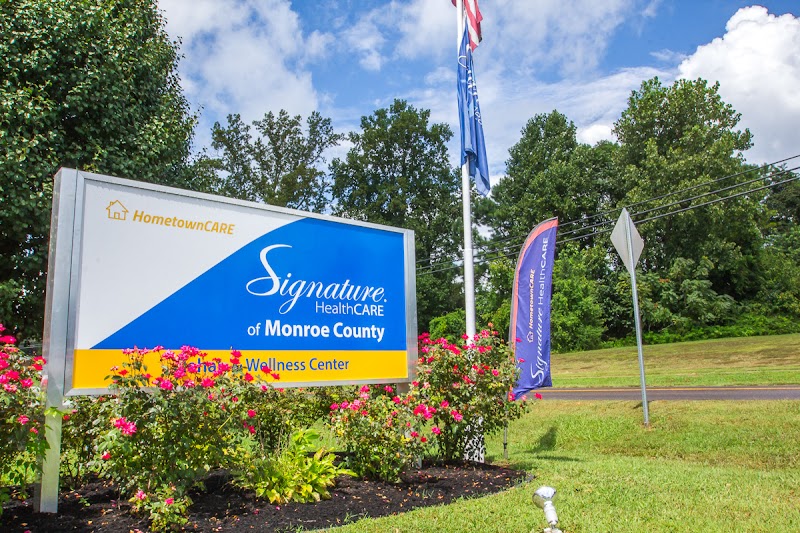
SIGNATURE HEALTHCARE OF MONROE COUNTY REHAB & WELL is owned by a for-profit company. For-profit facilities operate as businesses with obligations to shareholders or private owners. The facility is operated by SIGNATURE HEALTHCARE, a chain that manages multiple nursing homes. With 104 certified beds and approximately 76 residents (about 73% occupancy), it is a mid-sized facility located in TOMPKINSVILLE, Kentucky.
How Does Signature Healthcare Of Monroe County Rehab & Well Compare to Other Kentucky Nursing Homes?

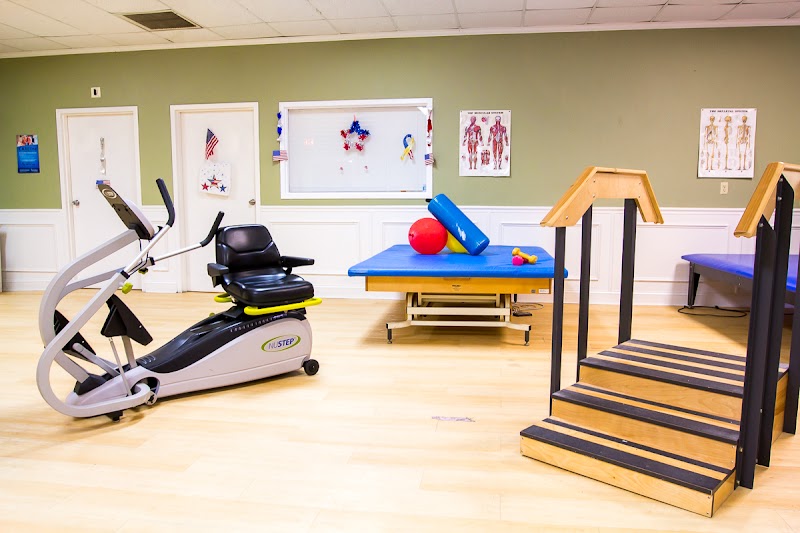
Compared to the 100 nursing homes in Kentucky, SIGNATURE HEALTHCARE OF MONROE COUNTY REHAB & WELL's overall rating (5 stars) is above the state average of 2.8, staff turnover (37%) is near the state average of 46%, and health inspection rating (5 stars) is much above the national benchmark.

What Should Families Ask When Visiting Signature Healthcare Of Monroe County Rehab & Well?

Based on this facility's data, families visiting should ask: "Can I visit during a mealtime to observe dining assistance and food quality?" "How do you handle medical emergencies, and what is your hospital transfer rate?" "Can I speak with family members of current residents about their experience?"

Is Signature Healthcare Of Monroe County Rehab & Well Safe?

Based on CMS inspection data, SIGNATURE HEALTHCARE OF MONROE COUNTY REHAB & WELL has a clean safety record: no substantiated abuse findings (meaning no confirmed cases of resident harm), no Immediate Jeopardy citations (the most serious violation level indicating risk of serious injury or death), and is not on the Special Focus Facility watch list (a federal program monitoring the lowest-performing 1% of nursing homes). The facility has a 5-star overall rating and ranks #1 of 100 nursing homes in Kentucky. While no facility is perfect, families should still ask about staff-to-resident ratios and recent inspection results during their visit.

Do Nurses at Signature Healthcare Of Monroe County Rehab & Well Stick Around?

SIGNATURE HEALTHCARE OF MONROE COUNTY REHAB & WELL has a staff turnover rate of 37%, which is about average for Kentucky nursing homes (state average: 46%). Moderate turnover is common in nursing homes, but families should still ask about staff tenure and how the facility maintains care continuity when employees leave.

Was Signature Healthcare Of Monroe County Rehab & Well Ever Fined?

SIGNATURE HEALTHCARE OF MONROE COUNTY REHAB & WELL has no federal fines on record. CMS issues fines when nursing homes fail to meet care standards or don't correct problems found during inspections. The absence of fines suggests the facility has either maintained compliance or corrected any issues before penalties were assessed. This is a positive indicator, though families should still review recent inspection reports for the full picture.

Is Signature Healthcare Of Monroe County Rehab & Well on Any Federal Watch List?

SIGNATURE HEALTHCARE OF MONROE COUNTY REHAB & WELL is not on any federal watch list. The most significant is the Special Focus Facility (SFF) program, which identifies the bottom 1% of nursing homes nationally based on persistent, serious quality problems. Not being on this list means the facility has avoided the pattern of deficiencies that triggers enhanced federal oversight. This is a positive indicator, though families should still review the facility's inspection history directly.