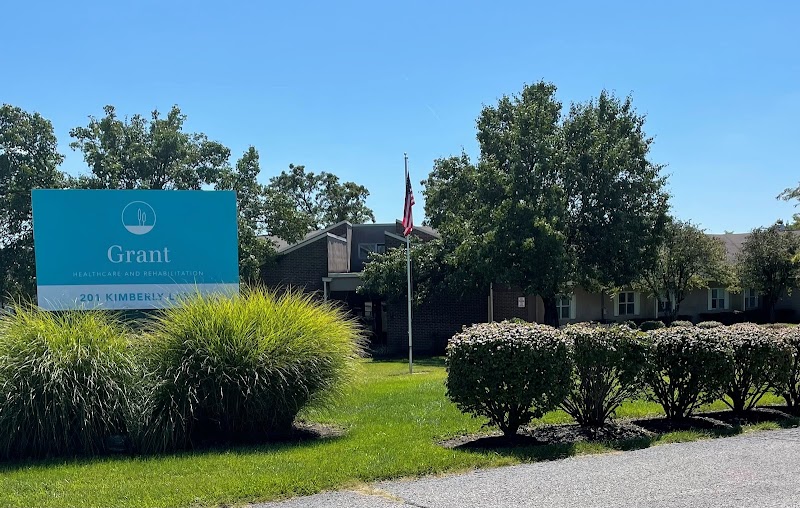
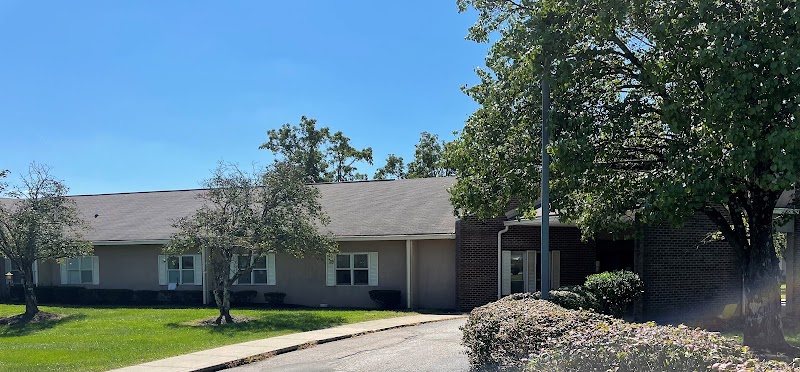
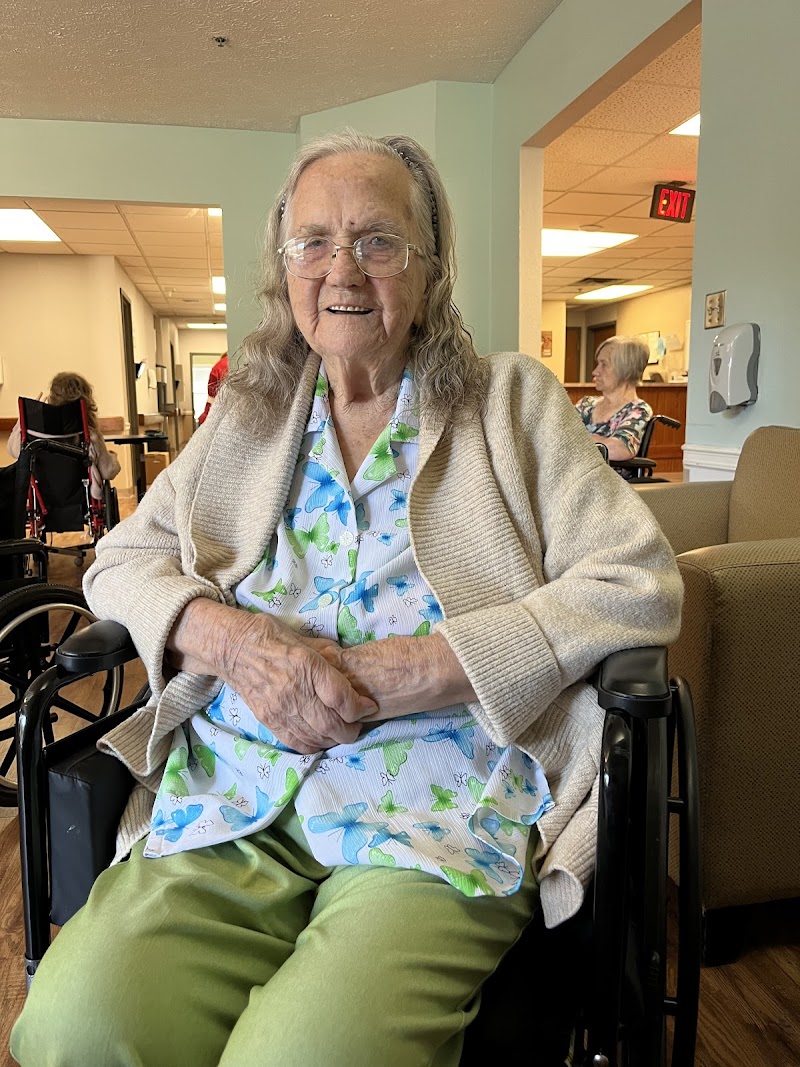
GRANT HEALTHCARE AND REHABILITATION

201 KIMBERLY LANE, WILLIAMSTOWN, KY 41097 (859) 824-7803
For profit - Corporation 95 Beds SIMCHA HYMAN & NAFTALI ZANZIPER Data: November 2025
Trust Grade
50/100
#163 of 266 in KY
Last Inspection: October 2024

Within standard 12-15 month inspection cycle. Federal law requires annual inspections.

Overview

Grant Healthcare and Rehabilitation in Williamstown, Kentucky has a Trust Grade of C, which means it is average and falls in the middle of the pack among nursing facilities. It ranks #163 out of 266 in the state, placing it in the bottom half, but it is the only option in Grant County. The facility is showing signs of improvement, with issues decreasing from 8 in 2019 to 3 in 2024. However, staffing is a concern, with a rating of 2 out of 5 stars and a turnover rate of 68%, significantly higher than the state average. Although there have been no fines, which is a positive aspect, there are serious concerns about resident safety, including an incident where a resident was physically restrained, resulting in bruising, and another where medications were improperly stored, highlighting ongoing compliance issues. Overall, while there are some strengths, potential residents and their families should be cautious and consider both the improvements and the serious concerns.

Trust Score
C
50/100
In Kentucky
#163/266
Bottom 39%
Safety Record
Low Risk
No red flags
Inspections
Getting Better
8 → 3 violations
Staff Stability
⚠ Watch
68% turnover. Above average. Higher turnover means staff may not know residents' routines.
Penalties
✓ Good
No fines on record. Clean compliance history, better than most Kentucky facilities.
Skilled Nurses
✓ Good
Each resident gets 44 minutes of Registered Nurse (RN) attention daily — more than average for Kentucky. RNs are trained to catch health problems early.
Violations
⚠ Watch
16 deficiencies on record. Higher than average. Multiple issues found across inspections.
★★☆☆☆
2.0
Overall Rating
★★☆☆☆
2.0
Staff Levels
★☆☆☆☆
1.0
Care Quality
★★★☆☆
3.0
Inspection Score
Stable
2019: 8 issues
2024: 3 issues

The Good

  • Full Sprinkler Coverage · Fire safety systems throughout facility
  • No fines on record

Facility shows strength in fire safety.

The Bad

2-Star Overall Rating

Below Kentucky average (2.8)

Below average - review inspection findings carefully

Staff Turnover: 68%

22pts above Kentucky avg (46%)

Frequent staff changes - ask about care continuity

Chain: SIMCHA HYMAN & NAFTALI ZANZIPER

Part of a multi-facility chain

Ask about local staffing decisions and management

Staff turnover is elevated (68%)

20 points above Kentucky average of 48%

The Ugly 16 deficiencies on record

Oct 2024 3 deficiencies
CONCERN (D) 📢 Someone Reported This

A family member, employee, or ombudsman was alarmed enough to file a formal complaint

Potential for Harm - no one hurt, but risky conditions existed

Free from Abuse/Neglect (Tag F0600)

Could have caused harm · This affected 1 resident

**NOTE- TERMS IN BRACKETS HAVE BEEN EDITED TO PROTECT CONFIDENTIALITY** Based on interview, record review, and review of the facility's policy, the facility failed to keep residents free from abuse fo...

Read full inspector narrative →
**NOTE- TERMS IN BRACKETS HAVE BEEN EDITED TO PROTECT CONFIDENTIALITY** Based on interview, record review, and review of the facility's policy, the facility failed to keep residents free from abuse for 1 of 25 sampled residents (Resident (R) 341). On [DATE], R341 was physically restrained by Certified Nursing Assistant (CNA) 6 and Licensed Practical Nurse (LPN) 6 while they were providing care which resulted in bruising of both of the resident's forearms. The findings include: Review of the facility's policy titled, Abuse, Neglect, and Exploitation, revised date [DATE], revealed, Abuse means the willful infliction of injury, unreasonable confinement, intimidation, or punishment with resulting physical harm, pain or mental anguish, which can include staff to resident abuse and certain resident to resident altercations. The policy also stated, 1. The facility will develop and implement written policies and procedures that: a. Prohibit and prevent abuse, neglect, and exploitation of residents and misappropriation of resident property; b. Establish policies and procedures to investigate any such allegations; and C. Include training for new and existing staff on activities that constitute abuse, neglect, exploitation, and misappropriaton of resident property, reporting procedures, and dementia management and resident abuse prevention; and d. Establish coordination with the QAPI program. Review of R341's Facesheet revealed the facility admitted the resident on [DATE] with diagnoses of Alzheimer's disease, dementia, mood disturbance, and cerebral infarction without residual deficits. Further review revealed R341 expired on [DATE]. Review of R341's quarterly Minimum Data Set (MDS) assessment with an Assesment Reference Date (ARD) of [DATE] revealed the facility assessed the resident to have a Brief Interview for Mental Status (BIMS) score of four out of 15, indicating the resident had severe cognitive impairment. Further review revealed R341 was dependent for toileting hygiene. Review of R341's Care Plan revealed R341 was care planned for behavioral symptoms related to a history of resisting/refusing the care regime with the intervention/approach of to respect the resident's right to make decisions, dated [DATE]; provide a calm environment and demeanor, and if the resident resisted care, try to do the task later without forcing her, dated [DATE]; and if the resident refused care, try at a later time, possibly with a different staff member, dated [DATE]. Review of R341's 09/2023 Medication Administration Record (MAR) revealed she had an order for aspirin 81 milligrams (mg) daily. Review of CNA6's Witness Statement, dated [DATE], revealed during rounds on [DATE], CNA6 entered R341's room and told her CNA6 was going to change her. R341 refused, pulled the covers up, and would not allow CNA6 to change her. Per the statement, CNA6 left the room and reported to LPN6 that R341 was refusing to be changed. Per the statement, CNA6 stated LPN6 told her she would help her change R341 when she was finished with her medication administration. Per the statement, CNA6 stated once LPN6 was finished, they both went into R341's room to change her, and the resident still refused to be changed. Per the statement, CNA6 stated LPN6 had to hold R341's hands against R341's chest because she was trying to hit them. Per the statement, once CNA6 changed the resident, they were rolling her back over, and CNA6 reported she was then holding R341's hands, and R341 was squeezing CNA6's hands. Per the statement, CNA6 was asked if at any point did R341 state they were hurting her. CNA6 stated yes. Review of R341's Wound Management Note, dated [DATE] at 6:34 PM, revealed the left lower arm bruise measured 12 centimeters (cm) long by 6.5 cm wide, and the color was black. The right lower arm bruise measured 18 cm (length) X 9.5 cm (width) and was black in color. Review of R341's Progress Notes on [DATE] at 9:05 PM revealed the resident was noted with discolorations to her bilateral upper extremities (BUE); the resident took aspirin daily; the Medical Director was aware of the bruising; a message was left for R341's representative to call the facility; and new orders were received to observe the resident every shift. Review of R341's Progress Notes on [DATE] at 1:23 AM revealed there was no change in the bruising on her arms; sleeves were in place; the resident denied pain or distress; and no open areas or infection were noted. Further review revealed on [DATE] at 2:17 PM geri-sleeves (placed on the arms to prevent skin injury) were in place. Review of R341's Progress Notes on [DATE] at 2:28 AM revealed the resident continued to have bruising to her BUE but denied pain and geri-sleeves were in place. The note stated on [DATE] at 10:04 AM the BUE bruising remained, and the resident would be followed by the Wound Nurse Practitioner (NP) on rounds. Per the note, R341's representative was now aware. Further review revealed on [DATE] at 2:43 PM the resident continued with bruising to her BUE, and geri-sleeves were in place. Review of R341's Progress Notes on [DATE] at 2:17 AM revealed the resident continued with bruising to her BUE but denied pain, and geri-sleeves were in place. Further review on [DATE] at 8:53 PM revealed both arms were looking better, and the bruising was getting lighter. Review of R341's Progress Notes on [DATE] at 6:53 AM and 10:03 AM revealed the bruises remained on her BUE, and the geri-sleeves were in place. Review of R341's Progress Notes on [DATE] at 2:45 AM revealed the resident denied pain; at 2:45 AM and 11:56 AM the note stated the resident continued with bruising to her BUE, and the geri-sleeves were in place. Review of R341's Progress Notes on [DATE] at 2:03 AM and [DATE] at 2:57 AM revealed the resident continued with bruising to her BUE, and the geri-sleeves were in place. Review of R341's Progress Notes on [DATE] at 11:13 AM revealed the resident refused a skin assessment and a shower and/or bed bath at this time. Per the note, the resident had no complaints of pain/discomfort. Review of R341's Progress Notes on [DATE] at 6:40 PM revealed the resident was seen by the Wound NP on rounds and documented the discoloration to the resident's BUE were healed, and the Medical Director was aware. Unsuccessful attempts were made to contact R341's representative on [DATE] at 4:04 PM. Immediately after this, a text message was sent, with no response received. During an interview with CNA6 on [DATE] at 6:00 PM, she stated she was familiar with R341 because she had just returned to work from maternity leave when the incident happened. She stated R341 had fragile skin and needed to be cleaned frequently. She stated when she entered R341's room to clean her up, R341 was not acting like she normally did, and the resident was being mean and combative. She stated she went out of room to get assistance from another staff member to help her. She stated she asked LPN6 for help, and LPN told her the LPN would help after she administered medications. CNA6 stated when she and LPN6 entered the room to clean R341, LPN6 was holding R341's arms to keep her from hitting. She stated, once they turned R341 over to get the dirty things out from under her, LPN6 instructed her to hold the resident's arms. She stated she followed instructions and held the resident's hands, but she did not feel like she held them tightly enough to cause bruising. She stated the whole time the resident was yelling that they were hurting her. She stated she did not know the bruises were there until the next day when she overheard staff talking about it. She stated when she entered R341's room the resident pointed CNA6 out, held up her arms, and said, You did this to me. CNA6 stated she was on her way to talk to the Director of Nursing (DON), when she was called into the office and suspended. She stated she was suspended for one week, and then the facility called her and terminated her over the phone. During an interview with Registered Nurse (RN) 3 on [DATE] at 9:20 AM, she stated she had no concerns related to care provided by CNA6 and did not recall the agency nurse involved. During an interview with LPN1 on [DATE] at 9:49 AM, she stated she was working the day the bruises were discovered on R341. LPN1 stated R341 complained that someone grabbed her arm. LPN1 stated she never had any issues/concerns with the care provided to residents by CNA6. She stated she did not remember LPN6. During an interview with the Activities Director (AD) on [DATE] at 12:30 PM, she stated she was a CNA at the time of the incident. She stated she entered the resident's room after coming on shift on [DATE]. She stated R341raised her arms and said, Look what they did to me. The AD stated R341 had bruises on both forearms that covered most of the surface area. The AD stated she had worked the previous day, and the bruises were not there. She stated she never had any concerns regarding care provided by CNA6 prior to this event. However, she stated CNA6 had no reaction when the resident showed her the bruises, and CNA6 never apologized to the resident. She stated CNA6 reported to her that she had to get a little aggressive and hold the resident's arms so she could perform care. During an interview with LPN6 on [DATE] at 1:05 PM, she stated she was an agency nurse at the time of the incident. She stated she worked at the facility via the agency for six to eight months. She stated she remembered the resident and the incident. She stated the incident was why she quit picking up shifts at the facility. She stated the resident was confused on the day of the incident and did not want to be cleaned. However, she stated the resident had a pressure ulcer to her bottom and needed to be cleaned. LPN6 stated she had always been able to redirect R341, and she was able this day as well. However, she stated midway through cleaning R341, the resident became angry, combative, and began to throw her arms around. She stated the resident hit her and CNA6, who was helping. LPN6 stated she had to protect herself and had to hold the resident's hands. However, LPN6 stated she did not feel she held the resident tight enough to cause bruising. She also stated, if CNA6 felt like she was causing harm to the resident, she would have expected the CNA to tell her. During an interview with the DON on [DATE] at 8:52 AM, she stated she never had any concerns with CNA6 providing care to residents. She stated she expected any abuse to be reported immediately. She also stated residents had the right to refuse care. During an interview with the Administrator on [DATE] at 9:38 AM, he stated he was also the abuse coordinator. He stated he attempted to reached out to both perpetrators and was unsuccessful with reaching LPN6 but was able to reach CNA6. He stated he had a conversation and took a statement from CNA6. He stated LPN6 was an agency nurse who never returned his call. He stated he did not believe CNA6 intended to harm to resident, but she was ultimately terminated. He stated LPN6 was placed on a do not return list. He stated the incident was reported to the Ombudsmen, state agency, and Adult Protective Services (APS). He stated LPN6 was reported to her agency. He stated CNA6 was previously employed at an assisted living facility before she came to the facility. He stated, once here, she had some issues with services related to changing/cleaning residents that was addressed but did not exhibit behaviors related to any abuse toward residents. He stated LPN6 did not exhibit any behaviors prior to the incident. He stated his expectation was that no one in the facility was abused. He stated if staff saw abuse, he expected staff to stop it, keep residents safe, and report it immediately. The Administrator stated this was important because, I care about the resident, and they should not be in an environment where there is a possibility they could be abused.
CONCERN (D)

Potential for Harm - no one hurt, but risky conditions existed

Deficiency F0761 (Tag F0761)

Could have caused harm · This affected 1 resident

Based on observation, interview, review of the website https://www.fda.gov/media/74866/download, review of Medication Refrigerator Temperature Guidelines: What You Should Know, and review of the facil...

Read full inspector narrative →
Based on observation, interview, review of the website https://www.fda.gov/media/74866/download, review of Medication Refrigerator Temperature Guidelines: What You Should Know, and review of the facility's policies, the facility failed to label and store drugs and biologicals in accordance with currently accepted professional principles for 1 of 2 medication refrigerators observed. A multi-use vial of Tuberculin Purified Protein Derivative (PPD) was found in a plastic bag in the door of the refrigerator and was opened and not dated in the Medication Room on Heritage Hall. The findings include: Review of the facility's policy titled, Medication Storage, revised 08/01/2024, revealed it was the policy of the facility to ensure all medications housed on the premises would be stored in accordance with the manufacturer's recommendations to ensure proper sanitation, temperature, light, ventilation, moisture control, segregation, and security. Review of the facility's policy titled, Medication Administration, revised 02/20/2024, revealed the nurse must identify the expiration date. Per the policy, if the medication was expired, the nurse manager should be notified. Review of website https://www.fda.gov/media/74866/download, under Storage for Tuberculin Purified Protein Derivative stated a vial of tubersol which has been entered and in use for 30 days should be discarded. It also stated PPD should be stored in a refrigerator at a temperature between 35 to 46 degrees Fahrenheit. Review of the American Biotech Supply document Medication Refrigerator Temperature Guidelines: What You Should Know, undated, revealed medications should be stored in the center of the refrigerator, away from the bottoms and sides. It stated to never store medications in door shelves or bins as these areas were prone to larger fluctuations in temperature. Observation on 10/22/2024 at 11:00 AM, revealed one opened and undated multiuse vial of PPD (used in a tuberculin skin test to diagnose tuberculosis) was found in door of the refrigerator on the Heritage Hall medication room. During an interview with an agency nurse, Licensed Practical Nurse (LPN) 7 on 10/24/2024 at 8:39 AM, she stated when opening a multi-use vial of medication, it was to be dated. LPN7 stated she was not aware of not storing medications in the door of the refrigerator. She stated she received all her education through her agency. During an interview with LPN5 on 10/24/2024 at 8:43 AM, she stated she knew to date multi-dose medications when opening for the first time. She stated she knew not to store medications in the refrigerator door. She stated all her education and competencies were done through the agency portal. During an interview with Registered Nurse (RN) 3 on 10/24/2024 at 9:20 AM, she stated any medication should be dated when opened. She stated, if a medication was found opened and undated, it should be discarded and replaced with a new one. She stated no medication should be kept in the door of the refrigerator due to not being stored at the proper temperature. During an interview with LPN1 on 10/24/2024 at 9:49 AM, she stated any medication should be dated when opened. She stated, if opened and not dated, the medication should be discarded and replaced with a new one. She stated this was done because if the medication was outdated, it might not work the same. LPN1 stated no medication should ever be placed in the door of the refrigerator. During an interview with the Director of Nursing (DON) on 10/24/2024 at 8:52 AM, she stated she expected nurses to date medications when they opened them. She stated no medications should be stored in the door of the refrigerator. During an interview with the Administrator on 10/25/2024 at 9:38 AM, he stated it was his expectation for staff to follow policies and procedures that were in place related to medication storage and administration. He stated staff had to date the medication when opened for the first time so staff knew when the medication should be discarded. He stated it was important to ensure the residents were not receiving expired medications.
CONCERN (D)

Potential for Harm - no one hurt, but risky conditions existed

Infection Control (Tag F0880)

Could have caused harm · This affected 1 resident

Based on observation, interview, review of the facility's policies, review of the manufacturer's directions for use for the Assure Prism Multi-Blood Glucose Monitoring System, and review of the instru...

Read full inspector narrative →
Based on observation, interview, review of the facility's policies, review of the manufacturer's directions for use for the Assure Prism Multi-Blood Glucose Monitoring System, and review of the instructions for Clorox Healthcare Bleach Germicidal Wipes, the facility failed to follow standard infection procedures for cleaning and handling 1 of 8 glucometers. The findings include: Review of the facility's policy titled, Routine Cleaning and Disinfection, dated 01/02/2020, revealed the purpose of the policy was to ensure the provision of routine cleaning and disinfection in order to provide a safe, sanitary environment and to prevent the development and transmission of infections to the extent possible. Review of the facility's policy titled, Blood Glucose Monitoring, dated 01/02/2020, revealed the purpose of the policy was for the facility to perform blood glucose monitoring to diabetic residents as per physician's orders. The policy outlined the procedure for obtaining a resident's blood glucose level. As part of the procedure for obtaining the blood glucose level, the policy stated the glucometer was to be cleaned and disinfected per manufacturer's instructions. Review of the Assure Prism Multi-Blood Glucose Monitoring System's User Instruction Manual revealed the glucometer should be cleaned and disinfected after use on each resident and might only be used for testing multiple residents when Standard Precautions and the manufacturer's disinfection procedures were followed. Further review revealed the only cleaning and disinfecting solution that had been validated for use with this glucometer was Clorox Healthcare Bleach Germicidal Wipes. Review of the cleaning and disinfecting instructions for Clorox Healthcare Bleach Germicidal Wipes container revealed for cleaning and disinfection the contact time was three (3) minutes. Observation on 10/23/2024 at 8:35 AM revealed Registered Nurse (RN) 1 placed the cleaned glucometer onto the surface of the medication cart labeled Cart 400-408, without a barrier underneath. Further observation revealed RN1 touched the glucometer without wearing gloves. In an interview with RN1 on 10/23/2024 at 8:35 AM, he stated he only placed cleaned glucometers on barriers when he set them on surfaces inside a resident's room. He also stated he did not wear gloves to touch the glucometer unless he was performing a blood glucose test, handling a used glucometer, or cleaning the glucometer. In an interview with Licensed Practical Nurse (LPN) 5 on 10/23/2024 at 8:58 AM, she stated glucometers were to be cleaned between residents. She stated they were to be cleaned/disinfected with Clorox Wipes. She stated after wiping the glucometer, she wrapped it in the Clorox wipe and placed it in a clean cup. LPN5 stated the time needed to kill microbes was three minutes. After the glucometer dried, she stated she placed it on a barrier (a paper towel) on top of her medicine cart. In an interview with the Director of Nursing (DON) on 10/24/2024 at 4:24 PM, she stated her expectation was that nursing staff would clean the glucometer after use, in between each resident. The DON stated the procedure for cleaning and disinfecting the glucometers was the glucometer was cleaned by wiping it with the Clorox Healthcare Bleach Germicidal Wipes and then disinfected by wrapping it in the wipe to keep it wet for the three minutes needed to kill microbes. She stated the wrapped glucometer was placed in a clean plastic cup. She stated, once cleaned and disinfected, the glucometer should be placed on a barrier. In an interview with the Administrator on 10/25/2024 at 8:20 AM, he stated glucometers should be cleaned after use/between each resident. He stated he expected nursing staff to clean and disinfect the glucometers with the wipes provided by the facility. He stated, once the glucometer was cleaned/disinfected, it should be placed on a barrier.
Aug 2019 8 deficiencies
CONCERN (D)

Potential for Harm - no one hurt, but risky conditions existed

Abuse Prevention Policies (Tag F0607)

Could have caused harm · This affected 1 resident

Based on interview, record review, and review of the facility's Policy, it was determined the facility failed to implement written policies related to reporting and investigating allegations of abuse....

Read full inspector narrative →
Based on interview, record review, and review of the facility's Policy, it was determined the facility failed to implement written policies related to reporting and investigating allegations of abuse. This affected two (2) of eighteen (18) sampled residents (Residents #81 and #31). There was no documented evidence the facility implemented their written abuse policies related to completing a thorough investigation after staff witnessed a resident-to-resident verbal altercation which lead to Resident #81 grabbing a butter knife and threatening to stab Resident #31 on 04/22/19. In addition, there was no documented evidence the facility implemented their written abuse polices related to reporting the alleged violation to State Agencies. (Refer to F-609 and F-610) The findings include: Review of the facility's Policy titled OPS300 Abuse Prohibition Policies and Procedures, revised 07/01/19, revealed anyone who witnesses an incident of suspected abuse, neglect, involuntary seclusion, injuries of unknown origin, or misappropriation of patient property is to tell the abuser to stop immediately and report the incident to his/her supervisor immediately. The notified supervisor will report the suspected abuse immediately to the Center Executive Director (CED) (Administrator) or designee and other officials in accordance with state law. If the resident sustains serious bodily injury, the employee who forms the suspicion or witnesses the incident must report no later than two (2) hours after forming the suspicion. All reports of suspected abuse must also be reported to the resident's family and attending physician. Upon receiving information concerning a report of suspected or alleged abuse, mistreatment, or neglect, the CED (Administrator) or designee will report the allegations not later than two (2) hours after the allegation is made. Further review of the Policy, revealed, Only an investigation can rule out abuse, neglect, or mistreatment. An investigation should be initiated within twenty-four (24) hours of an allegation of an allegation of abuse or neglect which should include clinical examination for signs of injuries, if indicated; causative factors; and interventions to prevent further injury. The investigation should be thoroughly documented to include witness interviews. The Center Executive Director (CED) (Administrator) or designee will take all necessary corrective action depending on the results of the investigation. The findings of all completed investigations should be reported within five (5) working days to the Department of Health using the state on-line reporting system or state-approved forms. All phases of the reporting process will be kept confidential. At monthly Quality Assurance and Performance (QAPI) meetings, the facility will review all allegations of abuse that were reported to the state in order to analyze occurrences to determine what changes are needed; prevent further occurrences; identify situations which have a potential for risk; and determine what preventive measures will be implemented by staff. Staff interviews revealed on 04/22/19, Resident #81 was involved in a resident-to-resident verbal altercation with Resident #31 that escalated resulting in Resident #81 grabbing a butter knife from the table and threatening to stab Resident #31. However, there was no documented evidence the facility notified the Administrator or State Agencies within two (2) hours of the allegation, nor was there documented evidence an investigation was completed related to the alleged violation. (Refer to F-609 and F-610) Interview with the Director of Nursing (DON), on 08/01/19 at 11:40 AM, revealed she did not witness the incident related to Resident #81, Resident #31 and other residents on 04/22/19, as she was not onsite at the time. Per the DON, based on documentation in the nurse's notes, in black and white, yes, I would consider this a reportable abuse event. She stated any allegation of abuse was to be reported immediately to the Administrator, Office of Inspector General (OIG), Adult Protective Services (APS), Ombudsman and if necessary, the police. She further stated there was a two (2) hour time crunch to report allegations of abuse to State Agencies. Further interview with the DON, revealed after a resident to resident altercation staff should start the paper work to include an Incident Report, Change in Condition Note, skin assessment for residents involved, pain evaluation for residents involved, care plan updates, Physician and responsible party notification, and also complete seventy-two (72) hour follow-up charting. However, she stated there was no documented evidence a thorough investigation occurred after the dining room incident involving Resident #81 and Resident #31 on 04/22/19. Per interview, she failed to implement the Policy for conducting the investigation and as a result there was no documented evidence of staff interviews, witness statements, resident interviews, or any interviews. Per interview, there was also no documented evidence of comprehensive follow-up assessments and charting for the residents involved. Interview with the Administrator, on 08/01/19 at 2:30 PM, revealed she recalled the dining room incident on April 22, 2019, which involved Resident #81 brandishing a butter knife and threatening staff and residents. She further stated she responded to a call regarding a disturbance in the dining room area and upon arriving in the area, Resident #81 was at the edge of the hallway outside the dining area and was very agitated, and not responding to conversations to de-escalate him/her. Per interview, the police were notified and after police arrived Resident #81 remained agitated, and the resident was loaded on to a stretcher and transported to the hospital. Further interview with the Administrator, revealed she (Administrator) was responsible for reporting the event or allegation and follow-up to the Office of Inspector General (OIG), Adult Protective Services (APS), and District Ombudsman immediately or within two (2) hours. Additional interview with the Administrator, revealed it was her expectation the facility Abuse Policy be implemented related to reporting any allegations of abuse. Continued interview with the Administrator, revealed it was her expectation the Abuse Policy be implemented related to investigating any allegations of abuse. Additional interview with the Administrator, revealed per facility policy, if a resident was threatening another resident, the investigation process should be followed which would include initiating an investigation within twenty-four (24) hours of an allegation of abuse/abuse. Per interview, the investigation should include documentation of interviews from witnesses, and residents involved. She further stated, the facility would also provide the resident (victim) with a safe environment by identifying persons with whom he/she felt safe and and Social Services would need to monitor the resident's (victim) feelings concerning the incident. Per interview, the findings of all completed investigations was to be reported to Office of Inspector General (OIG) within five (5) working days. Further interview with the Administrator, revealed the facility did not implement it's policy regarding reporting and investigating the incident on 04/22/19 involving Resident #81 and Resident #31 to State Regulatory Agencies. She stated, she was unaware of Resident #81 threatening to stab Resident #31 or she would have reported that immediately. Additional interview with the Administrator, revealed the facility did not do a thorough investigation as outlined in the Abuse Policy related to the resident to resident altercation involving Resident #81 and Resident #31 as there was no documented evidence of staff interviews, interviews with residents involved, witness statements, witness statements or any interviews related to the incident.
CONCERN (D)

Potential for Harm - no one hurt, but risky conditions existed

Report Alleged Abuse (Tag F0609)

Could have caused harm · This affected 1 resident

**NOTE- TERMS IN BRACKETS HAVE BEEN EDITED TO PROTECT CONFIDENTIALITY** Based on interview, record review, and review of the facility's Policy, it was determined the facility failed to ensure all alle...

Read full inspector narrative →
**NOTE- TERMS IN BRACKETS HAVE BEEN EDITED TO PROTECT CONFIDENTIALITY** Based on interview, record review, and review of the facility's Policy, it was determined the facility failed to ensure all alleged violations involving abuse are reported immediately, but no later than two (2) hours after the allegation is made, if the events that cause the allegation involve abuse, to the Administrator and to State Agencies for two (2) of eighteen (18) sampled residents (Residents #81 and Resident #31). On 07/30/19 at 12:56 PM, Resident #31 reported during an interview with the State Agency (SA) Representative, Resident #81 pulled a knife on him/her a few months ago. Review of Resident #81 Progress Notes, dated 04/22/19, revealed Resident #81 cussed a resident and subsequently picked up a knife off the table and stated he/she would stab the other resident. Staff interviews verified the allegation; however, there was no documented evidence the facility reported the allegation to the Administrator and to State Agencies. The findings include: Review of the facility's Policy titled OPS300 Abuse Prohibition Policies and Procedures, revised 07/01/19, revealed anyone who witnesses an incident of suspected abuse, neglect, involuntary seclusion, injuries of unknown origin, or misappropriation of patient property is to tell the abuser to stop immediately and report the incident to his/her supervisor immediately. The notified supervisor will report the suspected abuse immediately to the Center Executive Director (CED) (Administrator) or designee and other officials in accordance with state law. If the resident sustains serious bodily injury, the employee who forms the suspicion or witnesses the incident must report no later than two (2) hours after forming the suspicion. All reports of suspected abuse must also be reported to the resident's family and attending physician. Upon receiving information concerning a report of suspected or alleged abuse, mistreatment, or neglect, the CED (Administrator) or designee will report the allegations not later than two (2) hours after the allegation is made. Review of Resident #31's Clinical Record revealed the facility admitted the resident on 03/16/19 with diagnoses including Coronary Artery Disease, Dementia, and Diabetes Mellitus. Review of the admission Minimum Data Set (MDS) Assessment, dated 03/13/19, revealed the facility assessed the resident as having a Brief Interview for Mental Status (BIMS) score of fifteen (15) out of fifteen (15) indicating the resident was cognitively intact. Interview with Resident #31 on 07/30/19 at 12:56 PM, revealed Resident #81 pulled a knife on him/her a few months ago. Review of Resident #81's Clinical Record revealed the facility admitted the resident on 04/08/19 with diagnoses including Alzheimer's Disease, Unspecified Dementia with Behavioral Disturbance, and Unspecified Mood Affective Disorder. Review of Resident #81's Comprehensive Care Plan (CCP), dated 04/08/19, revealed the resident exhibited verbal behaviors which were exacerbated in the evening, and the resident became easily agitated. Per the CCP, the resident frequently thought he/she was in the army. The goal stated the resident would not exhibit verbal outburst directed toward others. There were several interventions including: offer cokes or sweets to re-direct the resident; if agitated, postpone care/activity; if over stimulated gently guide him/her to a quiet area; and notify Physician as needed. Review of Resident #81's admission Minimum Data Set (MDS) assessment dated [DATE], revealed the facility assessed the resident as having a Brief Interview for Mental Status (BIMS) score of eight (8) out of fifteen (15), indicating moderate cognitive impairment. Further review of the MDS Assessment, revealed the facility assessed the resident as having behavioral symptoms directed towards others one (1) to three (3) days during the look back period. Review of Resident #81's Clinical Record Progress Notes, dated 04/22/19 at 8:00 AM, completed by Licensed Practical Nurse (LPN) #2/Unit Manager (UM), revealed the nurse was called to the dining room related to Resident #81 fighting with another resident. Resident #81 was yelling at the other resident and throwing food at him/her. Attempted to redirect Resident #81, but he/she continued to yell at staff and another resident. Was able to calm both residents down and they returned to their tables. Further review of Resident #81 Progress Notes, dated 04/22/19 at 8:10 AM, completed by LPN #2/UM, revealed the nurse was called back to the dining room, and resident was yelling at same resident again and getting close to his/her face. Resident #81 was stating he/she would kick his/her ass. The other resident moved from the area. Additional review of Resident #81's Progress Notes, dated 04/22/19 at 8:28 AM, completed by LPN #2/Unit Manager, revealed Resident #81 was sitting at a table with another resident and was asked if he/she wanted some milk. Resident #81 started yelling and cursing at the resident. Resident #81 was redirected and moved to a different table. Review of Resident #81 Progress Notes, dated 04/22/19 at 8:43 AM, completed by LPN #2/UM, revealed the nurse was called to the dining room again related to Resident #81 cussing a resident and the other resident at the table returned comments. Resident #81 then picked up a knife off the table and stated he/she would stab him/her. Staff member intervened and Resident #81 held the knife up to the staff member and stated he/she would stab her too. Other staff members were able to remove the knife, and get Resident #81 out of the dining room, and back to his/her room. A call was placed to 911 to transport Resident #81 to the hospital. Resident #81 was yelling at staff and making movements like he/she would hit them with his/her walker. Staff members redirected Resident #81 down the hall with one on one (1:1) supervision. Police and transport arrived to transfer Resident #81 to the hospital for evaluation. A report was called to the hospital and a call was placed to Resident 81's son and a message was left notifying him of the incident. Interview with LPN #2/UM, on 7/31/19 at 4:15 PM revealed she reported any witnessed abuse or abuse allegations to her immediate supervisor, which in her case was the Director of Nursing (DON) and the DON would notify the Administrator of the allegations. Additional interview revealed on 04/22/19, staff reported Resident #81 was sitting at the dining table with Resident #31 and when Resident #81 started yelling and cursing at Resident #31, staff moved Resident #81 to a different table. Further interview revealed staff summoned LPN #2/UM to the dining area because Resident #81 and Resident #31 were feuding with each other and the feud was escalating. Per interview, when she arrived in the dining area, Resident #81 was very vocal, raising his/her voice, shouting. She stated she settled Resident #81 down, and allowed him/her to remain in the dining area because the staff was there, and could monitor both residents. Further interview with LPN #2/UM, revealed she came back to the dining area a second time by staff request to find Resident #81 yelling again. She stated she then re-located Resident #81 to the other side of the room and he/she appeared calm. She further stated after this Resident #81 began shouting, and cursing again and staff summoned LPN #2/UM a third time to the dining area. Per interview, this time Resident #81 began yelling at staff, including LPN #2/UM, and the facility Administrator who had entered the room. LPN #2/UM stated Resident #81 became belligerent, argumentative, striking out, and threatening LPN #2/UM and the facility Administrator, and would not calm down. Per interview, the facility called the police, and the police transported Resident #81 to the local Hospital, and then on to a Behavioral Health facility, for further evaluation. Additional interview with LPN #2/UM, revealed per her documentation in the Resident #81's medical, the resident did grab a butter knife and threaten to stab Resident #31. When LPN #2/UM was questioned if the situation as she described met criteria as a reportable abuse situation, as defined in her abuse training and outlined in the facility's Abuse Policy, she stated, Yeah, I guess. Per interview, although the Administrator arrived in the diningroom to assist related to Resident #81's behavior and ensured the police were called on 04/22/19, she was not sure if the Administrator was notified of Resident #81 grabbing a butter knife and threatening to stab Resident #31. Interview with State Registered Nurse Aide (SRNA) #2 on 08/01/19 at 2:00 PM, revealed she witnessed the entire dining room event on 04/22/19 with Resident #81. She stated during the first interaction, Resident #81 said something to Resident #31, but she could not hear the conversation. She further stated Resident #31 then stated he/she was going to hit Resident #81 with his/her cane. SRNA #2 stated she took the cane and separated the two (2) residents, and both residents calmed down. Further interview revealed a second interaction occurred when Resident #81 stated he/she was going to throw coffee on Resident #31. SRNA #2 stated she then moved Resident #81 to another table and encouraged him/her to calm down and he/she appeared calm. Continued interview with SRNA #2, revealed a third dispute erupted when Resident #81 began talking aggressively to another resident, but she could not remember if the other resident was Resident #31. Per interview, this other resident asked Resident #81 not to talk like that, and Resident #81 told the other resident he/she was going to stab him/her. SRNA #2 stated Resident # 81 picked up the butter knife, and SRNA #2 jumped in between the other resident and Resident #81. SRNA #2 stated a Physical Therapy Aide (PTA)/SRNA #3 came from across the hall and took the knife from Resident #81's hand. SRNA #2 further stated, LPN #2/UM came into the dining area after this, along with the facility Administrator and the police were called. Per interview, when the police arrived, Resident #81 remained very belligerent, very combative and uncooperative even when the police officers placed him/her on the gurney and transported him/her out. When SRNA #2 was questioned if what she witnessed was abuse, she stated it was Verbal abuse and resident to resident altercations. Interview with PTA/SRNA #3, on 08/01/19 at 3:00 PM, revealed she was in a room across the hall from the dining room when she heard a loud commotion coming from the dining room. She stated she opened the door and SRNA #2 summoned her to come to the dining room. Per interview, upon entering the dining room, Resident #81 was facing SRNA #2 with a butter knife in his/her hand, and SRNA #2 was telling him/her to put the knife down. PTA/SRNA #3 stated Resident #81 refused to put the knife down and he/she was loud, shouting, cursing, and threatening to stab SRNA #2 with the knife. Per interview, when Resident #81 rested his/her hand on the table, PTA/SRNA #3 managed to move to the side of him/her and retrieve the knife from his/her hand. Interview with the Assistant Director of Nursing (ADON)/Nurse Practice Educator (NPE) on 08/01/19 at 11:00 AM, revealed staff received abuse training and education upon hire. Per interview, she would oversaw this aspect of staff training and education. She stated abuse training took place annually, and whenever additional training was warranted, and covered types of abuse (physical, verbal, mental, seclusion), how to recognize abuse, who was report abuse (everybody), to whom (immediate supervisor) and the period (immediately). Further interview revealed a report of abuse to regulatory agencies must occur within two (2) hours. Further interview with the ADON/NPE, revealed she did not remember the resident-to-resident event that occurred April 22 involving Resident #81. She stated she did not witness the event, nor did she remember the staff informing her of the event. Per interview, she was aware Resident #81 was sent out to the Behavioral Health facility, but she did not remember being told about the butter knife incident. She stated the only thing she knew about the incident was what was in the Nurse's Notes and based on that documentation, she considered the incident a resident-to-resident abuse situation which was reportable, per facility policy. Interview with the DON, on 08/01/19 at 11:40 AM, revealed she did not witness the incident with Resident #81, and other residents on 04/22/19, as she was out of the building at the time. Per the DON, based on documentation in the nurse's notes, in black and white, yes, I would consider this a reportable abuse event. Further interview revealed any allegation of abuse was to be reported immediately to the Administrator, Office of Inspector General (OIG), Adult Protective Services (APS), Ombudsman and if necessary, the police. Per interview, there was a two (2) hour time crunch to report allegations of abuse to State Agencies. Interview with the Administrator, on 08/01/19 at 2:30 PM, revealed she recalled the dining room incident on April 22, 2019, involving Resident #81 brandishing a butter knife and threatening staff and residents. She stated she responded to a call regarding a disturbance in the dining room area and upon arriving in the area, Resident #81 was at the edge of the hallway outside the dining area and was very agitated, and not responding to conversations to de-escalate him/her. Per interview, the police were called and after police arrived Resident #81 remained agitated, and the resident was loaded on to a stretcher and transported to the hospital. Further interview with the Administrator, revealed per facility policy, if a resident was threatening an employee this was not reported to State Agencies. She stated other measures would be implemented such as Physician notification, police notified if necessary, or transferring the resident to the emergency room if needed. However, she stated if a resident threatened another resident, this would be an allegation of abuse and would need to be reported to State Agencies. The Administrator stated all staff received abuse training upon hire, annually, and intermittently based on facility needs, including the Administrator. Per interview, every employee was responsible for recognizing and reporting abuse. She stated the Administrator was responsible for reporting the event or allegation and follow-up to the OIG, APS, and District Ombudsman immediately or within two (2) hours. Additional interview with the Administrator, revealed it was her expectation staff follow the facility Abuse Policy related to reporting any allegations of abuse. When questioned if the facility followed it's policy regarding reporting the incident on 04/22/19 involving Resident #81 and Resident #31 to State Regulatory Agencies, she stated, At the time I did, as I did not know about the resident-to-resident threat. I would have reported that immediately. Further interview revealed based on the account of the incident as written in Resident #81's Progress Notes, this would be a reportable event.
CONCERN (D)

Potential for Harm - no one hurt, but risky conditions existed

Investigate Abuse (Tag F0610)

Could have caused harm · This affected 1 resident

Based on interview, record review, and review of the facility's policy, it was determined the facility failed to have evidence that all alleged violations of abuse are thoroughly investigated. This af...

Read full inspector narrative →
Based on interview, record review, and review of the facility's policy, it was determined the facility failed to have evidence that all alleged violations of abuse are thoroughly investigated. This affected two (2) of eighteen (18) sampled residents (Residents #81 and #31). Staff interviews revealed on 04/22/19, Resident #81 was involved in a resident-to-resident verbal altercation with Resident #31 that escalated resulting in Resident #81 grabbing a butter knife from the table and threatening to stab Resident #31. However, there was no documented evidence of an investigation related to this incident. The findings include: Review of the facility's OPS300 Abuse Prohibition Policies and Procedures, dated 06/01/96 and revised 07/01/19, revealed, Only an investigation can rule out abuse, neglect, or mistreatment. An investigation should be initiated within twenty-four (24) hours of an allegation of an allegation of abuse or neglect which should include clinical examination for signs of injuries, if indicated; causative factors; and interventions to prevent further injury. The investigation should be thoroughly documented to include witness interviews. The Center Executive Director (CED) (Administrator) or designee will take all necessary corrective action depending on the results of the investigation. The findings of all completed investigations should be reported within five (5) working days to the Department of Health using the state on-line reporting system or state-approved forms. All phases of the reporting process will be kept confidential. At monthly Quality Assurance and Performance (QAPI) meetings, the facility will review all allegations of abuse that were reported to the state in order to analyze occurrences to determine what changes are needed; prevent further occurrences; identify situations which have a potential for risk; and determine what preventive measures will be implemented by staff. Review of Resident #31's medical record revealed the facility admitted the resident on 03/16/19 with diagnoses including Coronary Artery Disease, Dementia, and Diabetes Mellitus. Review of the admission Minimum Data Set (MDS) Assessment, dated 03/13/19, revealed the facility assessed the resident as having a Brief Interview for Mental Status (BIMS) score of fifteen (15) out of fifteen (15) indicating the resident was cognitively intact. During an interview with Resident #31, on 07/30/19 at 12:56 PM, he/she revealed Resident #81 pulled a knife on him/her a few months ago. Review of Resident #81's medical record revealed the facility admitted the resident on 04/08/19 with diagnoses including Alzheimer's Disease, Unspecified Dementia with Behavioral Disturbance, and Unspecified Mood Affective Disorder. Review of Resident #81's Comprehensive Care Plan, dated 04/08/19, revealed the resident exhibited verbal behaviors which would exacerbate in the evening, and the resident became easily agitated. The goal stated the resident would not exhibit verbal outburst directed toward others. There were several interventions to include: offer cokes or sweets to re-direct the resident; if agitated, postpone care/activity; if over stimulated gently guide him/her to a quiet area; and notify Physician as needed. Review of Resident #81's admission MDS Assessment, dated 04/15/19, revealed the facility assessed the resident as having a BIMS score of eight (8) out of fifteen (15), indicating moderate cognitive impairment. Additional review of the MDS Assessment, revealed the facility assessed the resident as having behavioral symptoms directed towards others one (1) to three (3) days during the look back period. Review of Resident #81's Progress Notes, dated 04/22/19 at 8:00 AM, completed by Licensed Practical Nurse (LPN) #2/Unit Manager (UM), revealed the nurse was called to the dining room due to Resident #81 fighting with another resident. Per the Notes, Resident #81 was yelling at the other resident and throwing food at him/her. Attempted to redirect Resident #81; however, he/she continued to yell at staff and another resident. Per the Notes, the nurse was able to calm both residents down and they returned to their tables. Additional review of Resident #81 Progress Notes, dated 04/22/19 at 8:10 AM, completed by LPN #2/UM, revealed the nurse was called back to the dining room, and the resident was yelling at the same resident again and getting close to his/her face. Resident #81 was stating he/she would kick his/her ass, and the other resident moved from the area. Additional review of Resident #81's Progress Notes, dated 04/22/19 at 8:28 AM, completed by LPN #2/Unit Manager, revealed Resident #81 was sitting at a table with another resident and was asked if he/she wanted some milk. Resident #81 started yelling and cursing at the resident. Resident #81 was redirected and moved to a different table. Review of Resident #81's Progress Notes, dated 04/22/19 at 8:43 AM, completed by LPN #2/UM, revealed the nurse was called to the dining room again related to Resident #81 cussing a resident and the other resident at the table returned comments. Per the Notes, Resident #81 then picked up a knife off the table and stated he/she would stab him/her. Staff member intervened and Resident #81 held the knife up to the staff member and stated he/she would stab her too. Other staff members were able to remove the knife, and assist Resident #81 out of the dining room, and back to his/her room. A call was placed to 911 to transport Resident #81 to the hospital. Resident #81 was yelling at staff and making movements like he/she would hit them with his/her walker. Staff members redirected Resident #81 down the hall with one on one (1:1) supervision. Police and transport arrived to transfer Resident #81 to the hospital for evaluation. A report was called to the hospital and a call was placed to Resident 81's son and a message was left notifying him of the incident. Interview with LPN #2/UM, on 7/31/19 at 4:15 PM revealed on 04/22/19, staff reported Resident #81 was sitting at the dining table with Resident #31 and when Resident #81 started yelling and cursing at Resident #31, staff moved Resident #81 to a different table. Continued interview revealed staff summoned LPN #2/UM to the dining area because Resident #81 and Resident #31 were feuding with each other and the feud was escalating. She stated when she arrived in the dining area, Resident #81 was very vocal, raising his/her voice, shouting. She further stated she settled Resident #81 down, and allowed him/her to remain in the dining area because the staff was there, and could monitor both residents. Additional interview with LPN #2/UM, revealed she came back to the dining area a second time by staff request to find Resident #81 yelling again. Per interview, she then re-located Resident #81 to the other side of the room and he/she appeared calm. She stated after this Resident #81 began shouting, and cursing again and staff summoned LPN #2/UM a third time to the dining area. Per interview, this time Resident #81 began yelling at staff, including LPN #2/UM, and also the facility Administrator who had entered the room. LPN #2/UM further stated Resident #81 became belligerent, argumentative, striking out, and was threatening LPN #2/UM and the facility Administrator, and would not calm down. Per interview, the facility notified the police, and the police transported Resident #81 to the local Hospital, and then on to a Behavioral Health facility, for further evaluation. Further interview with LPN #2/UM, revealed per her documentation in the Resident #81's medical, the resident did grab a butter knife and threaten to stab Resident #31. LPN #2/UM was questioned if the situation as she described met criteria as an abuse situation, as defined in her abuse training and outlined in the facility's Abuse Policy, she stated, Yeah, I guess. Interview with State Registered Nurse Aide (SRNA) #2 on 08/01/19 at 2:00 PM, revealed she witnessed the entire dining room incident on 04/22/19 with Resident #81. She stated during the first interaction, Resident #81 said something to Resident #31, but she could not hear their conversation. She further stated Resident #31 then voiced he/she was going to hit Resident #81 with his/her cane. Per interview, SRNA #2 took the cane and separated the two (2) residents, and both residents calmed down. Continued interview revealed a second interaction occurred when Resident #81 stated he/she was going to throw coffee on Resident #31. Per interview, SRNA #2 moved Resident #81 to another table and encouraged him/her to calm down and he/she appeared calm. Additional interview with SRNA #2, revealed a third dispute erupted when Resident #81 began talking aggressively to another resident, but she could not remember if the other resident was Resident #31. Per interview, this other resident asked Resident #81 not to talk like that, and Resident #81 then told the other resident he/she was going to stab him/her. SRNA #2 further stated Resident # 81 picked up the butter knife, and SRNA #2 jumped in between the other resident and Resident #81. SRNA #2 revealed a Physical Therapy Aide (PTA)/SRNA #3 came from across the hall and took the knife from Resident #81's hand. SRNA #2 further revealed LPN #2/UM came into the dining area along with the facility Administrator and the police were called. Per interview, after the police arrived, Resident #81 remained very belligerent, very combative and uncooperative even when the police officers placed him/her on the gurney and transported him/her out. SRNA #2 was questioned if what she witnessed was abuse, and she stated it was Verbal abuse and resident to resident altercations. Interview with PTA/SRNA #3, on 08/01/19 at 3:00 PM, revealed she was in a room across the hall from the dining room and heard a loud commotion coming from the dining room on 04/22/19. Per interview, she opened the door and SRNA #2 summoned her to come to the dining room. She stated upon entering the dining room, Resident #81 was facing SRNA #2 with a butter knife in his/her hand, and SRNA #2 was telling him/her to put the knife down. PTA/SRNA #3 further stated Resident #81 refused to put the knife down and he/she was loud, shouting, cursing, and threatening to stab SRNA #2 with the knife. Further, when Resident #81 rested his/her hand on the table, PTA/SRNA #3 managed to move to the side of him/her and retrieve the knife from his/her hand. Interview with the Director of Nursing (DON), on 08/01/19 at 11:40 AM, revealed she did not witness the incident with Resident #81, and other residents on 04/22/19, as she was not onsite on that date. She stated based on documentation in the nurse's notes, in black and white, yes, I would consider this a reportable abuse event. Further interview revealed after a resident to resident altercation staff should start the paper work to include an Incident Report, Change in Condition Note, skin assessment for residents involved, pain evaluation for residents involved, care plan updates, Physician and responsible party notification, and seventy-two (72) hour follow-up charting. Further interview revealed there was no documented evidence a thorough investigation occurred after the dining room incident involving Resident #81 on 04/22/19. The DON stated she failed to utilize the Policy as a guide for conducting the investigation and as a result there was no documented evidence of staff interviews, witness statements, resident interviews, or any interviews. In addition, she stated there was no documented evidence of comprehensive follow-up assessments and charting for the residents involved. Interview with the Administrator, on 08/01/19 at 2:30 PM, revealed she did recall the dining room incident on April 22, 2019, involving Resident #81 brandishing a butter knife and threatening staff and residents. Per interview, she responded to a call regarding a disturbance in the dining room area and upon arriving in the area, Resident #81 was at the edge of the hallway outside the dining area and was very agitated, and not responding to conversations to de-escalate him/her. Further, the police were called and after police arrived Resident #81 remained agitated, and the resident was loaded on to a stretcher and transported to the hospital. Continued interview with the Administrator, revealed it was her expectation staff follow the facility Abuse Policy related to investigating any allegations of abuse. When the Administrator was questioned if the facility followed it's policy regarding investigating the incident on 04/22/19 involving Resident #81 and Resident #31 she stated, At the time I did, as I did not know about the resident-to-resident threat. Further interview revealed based on the account of the incident as written in Resident #81's Progress Notes, this would be an allegation of abuse. Additional interview with the Administrator, revealed per facility policy, if a resident was threatening another resident, the investigation process should be followed which would include initiating an investigation within twenty-four (24) hours of an allegation of abuse/abuse. Per interview, the investigation should include documentation of interviews from witnesses, and residents involved. She further stated, the facility would also provide the resident (victim) with a safe environment by identifying persons with whom he/she felt safe and and Social Services would need to monitor the resident's (victim) feelings concerning the incident. Per interview, the Administrator would take all necessary corrective action depending on the results of the investigation, and the findings of all completed investigations was to be reported to the Office of Inspector General (OIG) within five (5) working days. Additional interview with the Administrator, revealed the facility did not do a thorough investigation as outlined in the Abuse Policy related to the resident to resident altercation involving Resident #81 and Resident #31 as there was no documented evidence of staff interviews, interviews with residents involved, witness statements, witness statements or any interviews related to the incident. Per interview, there should have been a thorough investigation related to this altercation.
CONCERN (D)

Potential for Harm - no one hurt, but risky conditions existed

Transfer Notice (Tag F0623)

Could have caused harm · This affected 1 resident

Based on interview, record review, and review of facility Policy, it was determined the facility failed to notify the Resident or the Resident's Representative of the transfer/discharge and the reason...

Read full inspector narrative →
Based on interview, record review, and review of facility Policy, it was determined the facility failed to notify the Resident or the Resident's Representative of the transfer/discharge and the reasons for the transfer in writing, for two (2) of eighteen (18) sampled residents (Resident # 36 and Resident #39). Resident #36 was transferred to an acute care hospital, on 05/28/19 with return anticipated; however, there was no documented evidence Resident #36 or his/her Resident Representative received a written notice of transfer/discharge. Additionally, Resident #39 was transferred to an acute care hospital, on 05/18/19 with return anticipated; however, there was no documented evidence Resident #39 or his/her Resident Representative received a written notice of transfer/discharge. The findings include: Review of the facility Discharge and Transfer Policy, revised 02/01/19, revealed Transfer included movement of a patient to a bed outside of the certified Center. Additionally, the Center must immediately inform the patient/resident representative, when there was a decision to transfer the patient from the Center. Continued review of the Policy, revealed the patient and the resident representative must be notified in writing and in a language and manner, they understand. Further, for an unplanned, acute transfer to a hospital, the patient and/or resident representative will be notified verbally followed by written notification. 1. Review of Resident #36's closed medical record revealed the facility admitted the resident on 12/05/18, with diagnoses to include Cirrhosis of the Liver, Absence of leg below knee, Heart Failure, Bipolar Disorder, Major Depressive Disorder, Anxiety, Post Traumatic Stress Disorder, and Type II Diabetes. Review of Resident #36's Progress Note, dated 05/26/19 at 3:23 AM, revealed the resident came to the nurse's station with complaints of not feeling well and having a headache. Per the Note, the resident's skin was warm, dry and pale in color, and the resident's blood pressure was 196/111 (normal is less than 120/80 for adults) and heart rate 94 (normal-60 to 100 beats per minute for adults). Further review of the Note, revealed the resident's right leg had increased edema. Per the Note, the Medical Director was notified and new orders were received to send the resident to the emergency room for evaluation. Review of Resident #36's Nursing Home to Hospital Transfer Form, dated 05/26/19, revealed the resident had abnormal vital signs. Further, the resident's Emergency Contact and the hospital were notified of the resident's transfer and clinical status. Review of the subsequent Progress Note, dated 05/26/19 at 4:31 AM, revealed the resident was admitted to the Hospital with diagnoses including Congestive Heart Failure, Urinary Tract Infection, Hypoglycemia and Pneumonia. Review of the Discharge Return Anticipated Minimum Data Set (MDS) Assessment, dated 05/28/19, revealed the Discharge was unplanned and the facility assessed the resident as having no signs or symptoms of delirium or acute onset of mental status changes. However, further review of Resident #36's medical record, revealed there was no documented evidence Resident #36 or his/her Resident Representative received a written notice of transfer/discharge. 2. Review of Resident #39's closed medical record revealed the facility admitted the resident on 02/17/15, with diagnoses to include Chronic Diastolic Congestive Heart Failure, Coronary Artery Disease, Pulmonary Hypertension, Chronic Kidney Disease Stage III, Major Depressive Disorder, and Type II Diabetes. Review of Resident #39's Nursing Home to Hospital Transfer Form, dated 05/18/19, revealed the Resident was short of breath and required oxygen at two (2) liters per nasal cannula. Additionally, the resident had decreased platelet count, hemoglobin, and hematocrit. Continued review revealed the Emergency Contact and Hospital were notified of the resident's transfer and clinical status. Review of the Discharge Return Anticipated Minimum Data Set (MDS) Assessment, dated 05/18/19, revealed the Discharge was unplanned and the facility assessed the resident as having continuous disorganized thinking. However, further review of Resident #39's medical record, revealed there was no documented evidence Resident #39 or his/her Resident Representative received a written notice of transfer/discharge. Interview with the Director of Nursing, on 08/01/19 at 4:41 PM, revealed it was a resident's right to be informed of the reason for transfer out of the facility. Additionally, she stated it was her expectation the facility policy be followed related to Discharge and Transfer. However, she stated she was not aware if unplanned acute transfers required written notification related to transfer reasons, bed hold information or appeal rights. Further interview revealed the Social Worker was responsible for providing residents and/or resident representatives with written notification of transfer and/or discharge. Interview with the Director of Social Services, on 08/01/19 at 5:00 PM, revealed she provided the facility Bed Hold Policy with thirty (30) day Notices to residents and/or resident representatives. She stated she did not provide written Notice of Transfer/Discharge for acute unplanned hospital transfers. Continued interview revealed she was not aware of a facility process or policy related to providing or ensuring written Notice of Transfer/Discharge related to acute unplanned transfers. However, she stated residents and/or resident representatives should be made aware of the reason for transfer and of the resident's financial status and clinical status to ensure continuity of care. Interview with the Business Office Manager, on 08/01/19 at 5:20 PM, revealed she received a copy of the Bed Hold Notice of Policy and Authorization Form from nursing staff when a resident was transferred out of the facility for acute unplanned healthcare. Per interview, she reviewed the Bed Hold Notice of Policy and Authorization Form and determined if the resident and/or resident representative required follow up information. Continued interview revealed she relied on the copy of the Bed Hold Notice of Policy and Authorization Form (from nursing) to know when a resident had been transferred out of the facility. However, she stated she was not aware of any process in place to provide written Notification of Transfer/Discharge to the resident and/or resident representative for hospital transfers, other than nursing staff giving residents a copy of the Bed Hold Notice of Policy and Authorization Form. Further, she was not aware that acute hospital transfers required written notification to include the reason why a resident was sent to the hospital, or appeal rights. Interview with the Administrator, on 08/01/19 at 6:30 PM, revealed she expected facility staff to be aware of and follow the facility policy related to Discharge and Transfer. Additionally, she expected nursing staff to verbally notify the resident and/or the resident representative, at the time of transfer followed by written notification. Continued interview revealed the Transfer/Discharge Notice should include the reason for transfer, bed hold information, and information regarding appeal rights. Further, she was not aware of the facility's current process for notification related to transfer/discharge, forms, who was responsible, or of an audit process to maintain the facility policy. However, she stated it was important that residents and/or resident representatives were made aware of their appeal rights, the financial responsibility, and to be fully informed. She stated a written notice of discharge should have been provided to Resident #36 and Resident #39 and their Resident Representatives.
CONCERN (D)

Potential for Harm - no one hurt, but risky conditions existed

Deficiency F0625 (Tag F0625)

Could have caused harm · This affected 1 resident

**NOTE- TERMS IN BRACKETS HAVE BEEN EDITED TO PROTECT CONFIDENTIALITY** Based on interview, record review, and review of the facility's Policy, it was determined the facility failed to provide written...

Read full inspector narrative →
**NOTE- TERMS IN BRACKETS HAVE BEEN EDITED TO PROTECT CONFIDENTIALITY** Based on interview, record review, and review of the facility's Policy, it was determined the facility failed to provide written information to the Resident or the Resident Representative related to the Bed-hold Policy at the time of transfer for one (1) of eighteen (18) sampled residents (Resident #39). The facility obtained a Provider's Order to transfer Resident #39 to an acute care facility for evaluation following a change in condition on 05/18/19; however, there was no documented evidence the facility provided the Resident or the Resident's Representative written information related to the facility's Bed-hold Policy related to this transfer. The findings include: Review of the facility's Policy titled, Bed Hold Notice dated 12/14/18, revealed prior to a resident's transfer out of the center to a hospital or for therapeutic leave, the staff member conducting the transfer out will provide both the resident and resident representative, the Bed Hold Policy Notice and Authorization Form. Additionally, the resident copy will be given directly to the resident prior to transfer and this will be noted in the medical record. Continued review revealed the resident representative's copy will be delivered electronically via email/secure fax or a hard copy via mail if the representative was not present at the time of the transfer. The notice must be delivered to the resident/representative in order to satisfy federal regulation. Per policy, the Bed Hold Notice of Policy and Authorization Form was a four (4) carbon copy form. The original copy is to be sent to the Business Office, canary copy to be given to the resident, pink copy to be given to the resident representative, and goldenrod copy to be sent to medical records. Further, the Business Office will follow up with the resident or resident representative Review of Resident #39's closed medical record revealed the facility admitted the resident on 02/17/15, with diagnoses to include Chronic Diastolic Congestive Heart Failure, Coronary Artery Disease, Pulmonary Hypertension, Chronic Kidney Disease Stage III, Major Depressive Disorder, and Type II Diabetes. Review of Resident #39's Physician's Orders, dated 05/18/19, revealed orders to send the resident to the emergency room for evaluation and treatment. Review of Resident #39's medical record revealed a Nursing Home to Hospital Transfer Form, dated 05/18/19, which revealed the resident was short of breath and required oxygen at two (2) liters per nasal cannula. Additionally, the resident had decreased platelet count, hemoglobin, and hematocrit. Continued review revealed the Emergency Contact and Hospital were notified of the resident's transfer and clinical status. Review of the Discharge Return Anticipated Minimum Data Set (MDS), dated [DATE], revealed the Discharge was unplanned and the facility assessed the resident as having continuous disorganized thinking. However, further review of Resident #39's medical record revealed there was no documented evidence the resident or the resident's representative received a Bed-hold Notice related to the transfer on 05/18/19. Interview with the Director of Nursing (DON), on 08/01/19 at 4:41 PM, revealed it was the resident's right to be informed of the Bed Hold Policy when transferred out of the facility. Additionally, she stated it was her expectation the facility Bed Hold Policy be followed with each transfer. Further, the staff conducting the transfer out of the facility were responsible to ensure the Bed Hold Policy was initiated at the time of transfer. Interview with the Director of Social Services, on 08/01/19 at 5:00 PM, revealed she provided the facility Bed Hold Policy with thirty (30) day discharge notices to residents and/or resident representatives. She stated she did not provide Bed Hold forms with transfer/discharge for acute unplanned hospital transfers. Continued interview revealed she was not aware of a facility process related to providing Bed Hold forms for transfer/discharge related to acute unplanned transfers. However, she stated residents and/or resident representatives should be made aware of the Bed Hold Policy to ensure awareness of the financial responsibilities. Interview with the Business Office Manager, on 08/01/19 at 5:20 PM, revealed she received a copy of the Bed Hold Notice of Policy and Authorization, from nursing staff when a resident was transferred out of the facility to another healthcare facility. Per interview, she reviewed the Bed Hold Notice of Policy and Authorization Form and determined if a resident and/or resident representative required follow up information from her. Additional interview revealed the copy of the Bed Hold Notice of Policy and Authorization Form from the nursing staff notified her of when a resident was transferred out of the facility. However, further interview revealed she was not aware of any process in place to provide written notification of transfer to the resident and/or resident representative for hospital transfers, other than nursing staff giving residents a copy of the Bed Hold Notice of Policy and Authorization Form. Further, she was not aware that acute hospital transfers required written notification of the Bed Hold Policy. Interview with the Administrator, on 08/01/19 at 6:30 PM, revealed she expected facility staff to be knowledgeable of the Bed Hold Policy and to ensure this Policy was followed. Additional interview revealed she expected nursing staff to verbally notify the resident and/or the resident representative, at the time of transfer followed by written notification. Continued interview revealed Resident #39 and his/her representative should have received the Bed Hold Policy in writing related to the 05/18/19 transfer to the hospital. Further, she was not aware of the facility's current process for notification related to Bed Hold, forms, who was responsible, or if there was an audit process to ensure the facility policy was being implemented. However, she stated it was important residents and/or resident representatives were made aware of the Bed Hold and the financial responsibility, to ensure they were fully informed.
CONCERN (D)

Potential for Harm - no one hurt, but risky conditions existed

Comprehensive Care Plan (Tag F0656)

Could have caused harm · This affected 1 resident

Based on interview, record review, and review of facility Policy, it was determined the facility failed to develop and implement the Comprehensive Care Plan (CCP) to address the resident's needs for o...

Read full inspector narrative →
Based on interview, record review, and review of facility Policy, it was determined the facility failed to develop and implement the Comprehensive Care Plan (CCP) to address the resident's needs for one (1) of eighteen (18) sampled residents (Residents # 63). Resident #63 sustained a fall on 06/19/19, and the facility implemented a tab alarm to the resident's wheelchair as a fall prevention intervention. However, there was no documented evidence the CCP was developed and implemented with an intervention for ongoing re-assessment of the effectiveness of the tab alarm device with necessary modification as necessary. In addition, Resident #63 sustained a fall on 06/27/19. Per the Investigation, the facility determined the Root Cause Analysis (RCA) of the fall event was excess fluid removed during dialysis. However, there was no documented evidence the CCP was developed and implemented related to the intervention based on the Root Cause Analysis (RCA) to communicate with the dialysis clinic related to fluid volume exchange. The findings include: Review of the facility's Person-Centered Care Plan Policy, reviewed 06/12/19, revealed the CCP would include instructions needed to provide effective and person-centered care that meets professional standards of quality of care. Further, the CCP's purpose was to attain or maintain the resident's highest practicable physical, mental and psychosocial well-being by eliminating triggers that may cause re-traumatization of the resident and to promote positive communication between the interdisciplinary team and optimal clinical outcomes. Review of Resident #63's Electronic Medical Record (EMR), revealed the facility admitted the resident on 06/10/19, with diagnoses including End Stage Renal Disease, Dependence on Renal Dialysis, Type II Diabetes, Hemiplegia affecting right dominate side, Lack of Coordination, Difficulty Walking, Muscle Weakness, Major Depressive Disorder, Visual Loss Right eye, Contracture of Ankle, and Enthesopathy of the Right foot. Review of the CCP, initiated 06/10/19, revealed the resident was at Risk for Falls related to impaired mobility, difficulty walking, Diabetes, End Stage Renal Disease with Hemodialysis, medication use, and vision loss in the right eye. The goal stated the resident would have no falls with injury. The interventions included, but were not limited to: provide verbal cues initiated 06/10/19; place call light within reach initiated 06/10/19; maintain a clutter free environment initiated 06/10/19; and encourage activities initiated 06/10/19. Review of Resident #63's admission Minimum Data Set (MDS) Assessment, dated 06/17/19, revealed the facility assessed the resident as having a Brief Interview for Mental Status (BIMS) score of four (04) out of fifteen (15), indicating the resident was severely cognitively impaired. Further review of the MDS Assessment, revealed the facility assessed the resident as Independent with all functional status including transfers, ambulation and locomotion; and as having steady balance during transitions. Per the MDS Assessment, the facility was unable to determine fall history prior to admission. Review of the Fall Investigation, dated 06/19/19 at 5:15 PM, revealed the resident experienced a witnessed fall accident/incident in the dining room at the sink. Resident #63 independently transferred from his/her wheelchair and ambulated a short distance to the sink, lost his/her balance and fell to the floor before staff could assist him/her. Per the investigation, the facility determined the Root Cause Analysis (RCA) of the fall event was poor safety awareness, hemiplegia and recent changes in, condition related to Blood Pressure and medication changes. Further review of the Investigation, revealed the long-term intervention to prevent falls of the same nature was to implement a tab alarm to the wheelchair. Review of Resident #63's Physician's Orders, dated 06/19/19, revealed orders for a tab alarm to the wheelchair, and ensure placement and function every shift. Further review of the CCP, initiated 06/10/19 status post fall, revealed a revision on 06/19/19 for an intervention of tab alarm to the wheelchair. However, the CCP was not developed to include ongoing re-assessment of the effectiveness of the tab alarm device with necessary modification as necessary. Interview with the MDS Coordinator, on 08/01/19 at 5:15 PM, revealed the CCP guides resident care and was used by the entire team to provide person centered care to meet the resident's needs. Further interview revealed Resident #63's CCP should have been developed to include interventions for ongoing monitoring of the wheelchair tab alarm for effectiveness and to ensure safety related to usage of the device. Interview with the Director of Nursing (DON), on 08/01/19 at 4:41 PM, revealed the CCP should include ongoing reassessment of the effectiveness of the least restrictive devices (including alarms) and necessary modification, which was the responsibility of the Interdisciplinary Team (IDT). Per interview, this was to ensure safety and to reduce the risk for further fall accident/incidents of the same nature. Further, Resident #63's CCP should have been developed and implemented to provide ongoing assessment of the least restrictive device (alarm) and modification as necessary. Interview with the Administrator, on 08/01/19 at 6:30 PM, revealed she expected the CCP to be developed and implemented per the facility policies. Additionally, the CCP should include ongoing assessment of the least restrictive devices and alarms and modification as necessary to meet the resident's care needs. Review of Resident #63's Fall Investigation, dated 06/27/19 at 1:20 PM, revealed the resident experienced an unwitnessed fall event while sitting at the nurse's station in the wheelchair. Per the Investigation, the resident fell out of the wheelchair and onto the floor, hitting his/her head on the floor with loss of consciousness and seizure like activity which lasted thirty (30) seconds. According to the Investigation, the resident complained of right shoulder pain and was sent to the emergency room for further evaluation and treatment. Per the Investigation, the facility determined the RCA of the fall event was excess fluid removed during dialysis. In addition, the Investigation revealed the long term intervention to prevent falls of the same nature was to communicate with dialysis related to modification of fluid volume exchange during dialysis visits. However, there was no documented evidence the CCP was developed or implemented with the intervention to communicate with the dialysis clinic related to fluid volume exchange, based on the RCA status post fall on 06/27/19. Interview with the MDS Coordinator, on 08/01/19 at 5:15 PM, revealed the CCP guided resident care and was used by the entire team to provide personal centered care to meet the resident's needs. Additionally, after a resident sustains a fall, the CCP should be developed and implemented with an intervention based on the RCA to prevent further falls of the same nature. Further interview with the DON, revealed after Resident #63 experienced the fall on 06/27/19, the identified RCA was excess fluid taken off the resident during dialysis. Per interview, to prevent recurrence the facility was to communicate with dialysis related to modification of fluid volume exchange during dialysis visits. However, she stated she could find no documented evidence the CCP was developed with an intervention to include communication and collaboration with the Dialysis Clinic, nor could she find documented evidence this intervention was being implemented. Additionally, she stated she expected the CCP to be developed and implemented related to interventions based on the RCA after a resident sustained a fall in order to ensure safety and to reduce the risk for further falls of the same nature and minimize the risk for injury. Additional interview with the Administrator, revealed after Resident #63 sustained the fall on 06/27/19, the RCA was identified and to prevent recurrence the facility was to communicate with dialysis related to modification of fluid volume exchange during dialysis visits. Per interview, the CCP should have been developed related to this intervention in order for the intervention to be implemented in an attempt to prevent further falls.
CONCERN (D)

Potential for Harm - no one hurt, but risky conditions existed

Accident Prevention (Tag F0689)

Could have caused harm · This affected 1 resident

Based on interview, record review, and review of the facility Policies, it was determined the facility failed to ensure each resident receives adequate supervision and assistive devices to prevent acc...

Read full inspector narrative →
Based on interview, record review, and review of the facility Policies, it was determined the facility failed to ensure each resident receives adequate supervision and assistive devices to prevent accidents for one (1) of four (4) sampled residents reviewed for falls out of a total sample of eighteen (18) residents (Resident #63). Resident #63 was assessed by the facility to be a Fall Risk, per the admission Assessment, dated 06/10/19. The facility implemented a tab alarm to the resident's wheelchair as a fall intervention, on 06/19/19 after a fall accident/incident. However, there was no documented evidence in the medical record of an assessment for the tab alarm as a least restrictive device or no documented evidence of the reasons why this device would be appropriate/effective for this resident to prevent further falls prior to implementation of the device on 06/19/19, status post fall. In addition, Resident #63 sustained a fall on 06/27/19 and the Root Cause Analysis was identified as excess fluid removed during dialysis. Per the Falls Investigation dated 06/27/19, the facility was to communicate with dialysis related to modification of fluid volume exchange during dialysis visits. However, there was no documented evidence this intervention was being implemented in order to reduce the risk for further fall accident/incidents of the same nature and minimize the risk for injury. (Refer to F-656 and F-657) The findings include: Review of the facility's Accidents/Incident Policy, reviewed 05/02/18, revealed all accidents/incidents which occur will be reviewed and investigated by staff to define causative/contributing factors and institute preventative measures to avoid further occurrence. Additionally, accidents are defined as unexpected or unintentional incidents, which may result in injury or illness to a resident. Further, incidents are defined as any occurrence not consistent with routine operations that pose a threat to safety or security. Review of the facility's Fall Management Policy, reviewed 03/01/16, revealed residents would be assessed for falls risk as part of a nursing assessment process. Additionally, those determined to be at risk would receive appropriate interventions to reduce risk and minimize injury and the actually occurrence of falls. Further, after a fall accident/incident the Care Plan would be updated to reflect new interventions. Review of Resident #63's Electronic Medical Record (EMR) revealed the facility admitted the resident on 06/10/19, with diagnoses including End Stage Renal Disease, Dependence on Renal Dialysis, Type II Diabetes, History of Transient Ischemic Attack, Hemiplegia affecting right dominate side, Hypertension, Hypotension, Lack of Coordination, Reduced Mobility, Difficulty Walking, Muscle Weakness, Major Depressive Disorder, Visual Loss Right eye, Contracture of ankle, and Enthesopathy of right foot. Review of the Nursing admission Assessment, dated 06/10/19, revealed Resident #63 was a Fall Risk related to impaired cognition, impaired mobility, medications, and comorbidities related to diagnoses. Interview with the DON, on 08/01/19 at 10:02 AM, revealed the facility did not have a separate Fall Risk Assessment which would generate a score based on a scale of severity for Fall Risk. Review of the Comprehensive Care Plan (CCP), initiated on 06/10/19, revealed Resident #63 was at risk for falls related to impaired mobility, difficulty walking, Renal Osteodystropy, Diabetes, End Stage Renal Disease with Hemodialysis, medication use, and Vision Loss in the Right eye. The goal stated the resident would have no falls with injury. The interventions included, but were not limited to: provide verbal cues initiated; place call light within reach; maintain a clutter free environment; and encourage activities. All interventions were initiated 06/10/19. Review of Resident #63's admission Minimum Data Set (MDS) Assessment, dated 06/17/19, revealed the facility assessed the resident as having a Brief Interview for Mental Status (BIM) score of four (04) out of fifteen (15), indicating the resident was severely cognitively impaired. Continued review of the Assessment revealed the facility assessed the resident as Independent with all functional status including transfers, ambulation in room and corridor and locomotion. Additionally, the resident's balance during transitions was steady. Per the MDS Assessment, the facility was unable to determine fall history prior to admission. Review of the Fall Investigation, dated 06/19/19 at 5:15 PM, revealed Resident #63 experienced a witnessed fall accident/incident in the dining room at the sink. The resident independently transferred from his/her wheelchair and ambulated a short distance to the sink, lost his/her balance and fell to the floor before staff could assist him/her. Per the Investigation, the resident obtained a skin tear to the left elbow. Additionally, the facility determined the Root Cause Analysis (RCA) of the fall event was poor safety awareness, hemiplegia and recent change in condition related to Blood Pressure (BP) and medication changes. The long-term intervention to prevent falls of the same nature was to implement a tab alarm to the wheelchair. Review of Resident #63's Physician's Orders, dated 06/19/19, revealed orders to cleanse skin tears to left elbow with wound cleanser, apply triple antibiotic ointment and cover with dry dressing every evening shift; tab alarm to wheelchair, ensure placement and function every shift. Further review of the Falls CCP, revealed a new intervention for tab alarm to wheelchair was initiated 06/19/19. However, the CCP was not developed to include interventions for ongoing monitoring for effectiveness and modifying as necessary regarding the tab alarm to the wheelchair on 06/19/19. (Refer to 656) In addition, review of the medical record from 06/10/19 till 08/01/19 revealed no documented evidence of an Assessment related to the tab alarm to ensure this was the least restrictive device or and/or no documented evidence of the reasons why this device would be appropriate/effective for this resident prior to implementation of the device on 06/19/19, status post fall. Review of the Fall Investigation, dated 06/27/19 at 1:20 PM, revealed Resident #63 experienced an unwitnessed fall event while sitting at the nurse's station in the wheelchair. Per the Investigation, the resident fell out of the wheelchair and onto the floor, hitting his/her head on the floor with loss of consciousness and seizure like activity lasting thirty (30) seconds. Per the Investigation, the resident complained of right shoulder pain and was sent to the emergency room for further evaluation and treatment. Additionally, the facility determined the RCA of the fall event was excess fluid taken off the resident during dialysis. The long term intervention to prevent falls of the same nature was to communicate with dialysis related to modification of fluid volume exchange during dialysis visits. However, there was no documented evidence in the medical record the intervention to communicate with the dialysis clinic related to fluid volume exchange, was implemented based on the RCA after the fall on 06/27/19 or that the CCP was developed to include the intervention status post fall. (Refer to F-656) Interview with Resident #63, on 07/30/19 at 9:44 AM, revealed he/she was oriented to name, and place (the facility); however was uncertain of the time/date. Per interview, the resident had sustained a couple of falls in the past. However, he/she could not recall the specifics of the fall or interventions the facility had implemented to prevent further falls. Interview with the Director of Nursing (DON), on 08/01/19 at 4:41 PM, revealed she expected the least restrictive interventions to be implemented to prevent further fall accidents/incidents before the implementation of alarms to ensure freedom of movement, quality of life and safety. Per interview, the facility did not have a Policy specific to Least Restrictive Devices or Alarms. However, she stated the effectiveness and necessary modification was discussed each morning in the Clinical meeting, Monday through Friday, with the department heads, including Nursing, Administration and Therapy. Per the DON, she could not share the documentation with the State Inspector related to the daily review of Least Restrictive Devices and Alarms because it was an internal tool that was not part of the medical record. However, she stated there was no documented evidence of an assessment related to Resident #63's tab alarm since admission, which was the responsibility of the Interdisciplinary Team. Per interview, there should have a documented evaluation to ensure the tab alarm was the least restrictive device or documentation related to the need for the alarm as opposed to other least restrictive measures before the implementation of the tab alarm for Resident #63 on 06/19/19. Further interview with the DON, revealed after Resident #63 experienced the fall on 06/27/19, the identified RCA was excess fluid taken off the resident during dialysis. Per interview, to prevent recurrence the facility was to communicate with dialysis related to modification of fluid volume exchange during dialysis visits. However, she stated she could find no documented evidence this intervention was being implemented in order to reduce the risk for further fall accident/incidents of the same nature and minimize the risk for injury. Interview with the Administrator, on 08/01/19 at 6:30 PM, revealed she expected the IDT to implement the least restrictive device or least restrictive measures after a fall and only progress after there was reasonable rationale why the next level was necessary. Additionally, she stated she expected the facility to assess for the need for an alarm prior to implementing that intervention after a fall. Per interview, evaluation of alarms prior to placement was necessary and this assessment should be part of the EMR. Per interview, when an assessment of alarms was completed and the alarm was justified that would be when an alarm would be implemented as an appropriate intervention after a fall. Further interview with the Administrator, revealed after Resident #63 sustained the fall on 06/27/19, the RCA was identified and to prevent recurrence the facility was to communicate with dialysis related to modification of fluid volume exchange during dialysis visits. Per interview, this intervention should have been implemented in an attempt to prevent further falls.
CONCERN (E)

Potential for Harm - no one hurt, but risky conditions existed

Food Safety (Tag F0812)

Could have caused harm · This affected multiple residents

Based on observation, interview, and review of facility Policy, it was determined the facility failed to store, prepare, distribute and serve food in accordance with professional standards for food se...

Read full inspector narrative →
Based on observation, interview, and review of facility Policy, it was determined the facility failed to store, prepare, distribute and serve food in accordance with professional standards for food service safety. Observation on 07/30/19 at 11:40 AM, revealed food on the steam table was uncovered from 11:40 AM until 12:07 PM, a total of twenty-seven (27) minutes prior to food being served from tray line. In addition, observation on 07/31/19 at 11:40 AM, revealed food on the steam table was uncovered from 11:40 AM until 12:00 PM, a total of twenty (20) minutes, prior to food being served from tray line. Furthermore, observation of a test tray on 07/31/19 at 1:01 PM, revealed milk and juice temperatures were measured at fifty-two (52) degrees Fahrenheit (F), and tuna fish on the test tray was measured at sixty (60) degrees F, indicating cold foods did not hold temperature. The findings include: Review of the facility Food: Preparation Policy, revised 2017, revealed the Dining Services Directors/Cook(s) will be responsible for food preparation techniques which minimize the amount of time food items are exposed to temperatures greater than forty-one (41) degrees Fahrenheit and/or less than one hundred thirty-five (135) degrees Fahrenheit, or per state regulation. All foods will be held at appropriate temperatures, greater than 135 degrees Fahrenheit (F) for hot holding, and less than 41 degrees Fahrenheit for cold food holding. 1. Observation on 07/30/19 at 11:40 AM, revealed food items were placed on the steam table, and temperatures were obtained. Further observation revealed food on the steam table was uncovered from 11:40 AM until 12:07 PM, a total of twenty-seven (27) minutes. At 12:07 PM, the food trays started being served off the tray line. Observation on 07/31/19 at 11:40 AM, revealed food on the steam table was uncovered from 11:40 AM until 12:00 PM, a total of twenty (20) minutes. At 12:00 PM, the food trays started being served off the tray line. 2. Observation of temperatures obtained from a test tray on 07/31/19 at 1:01 PM, revealed the milk and juice temperatures on the test tray were measured at fifty-two (52) degrees Fahrenheit (F); and the temperature of the tuna fish on the test tray was measured at sixty (60) degrees F, indicating the cold foods did not hold temperatures. Interview with the Director of Dinning Services, on 08/01/19 at 2:29 PM, revealed he was not sure why the food on the steam table went uncovered as it was normal practice to cover food items to maintain the heat and temperature of the food and in accordance with professional standards for food safety. Further interview revealed he acknowledged milk and juice should have been below forty-one (41) degrees on the test tray, indicating the cold liquids were not holding temperature. He stated it was important temperatures were maintained as per regulation to ensure food safety and prevent bacteria growth. He further stated hot foods should remain hot and cold foods should remain cold, and the temperatures observed from the test tray on 07/31/19 for the cold foods were not acceptable. Interview with the Administrator, on 08/01/19 at 6:00 PM, revealed it was her expectation for foods to be served in in accordance with professional standards and at safe temperatures in order to maintain food safety for residents.
Jul 2018 5 deficiencies
CONCERN (D)

Potential for Harm - no one hurt, but risky conditions existed

Comprehensive Care Plan (Tag F0656)

Could have caused harm · This affected 1 resident

**NOTE- TERMS IN BRACKETS HAVE BEEN EDITED TO PROTECT CONFIDENTIALITY** Based on observation, interview, record review, and review of the facilities policies and procedures, it was determined the faci...

Read full inspector narrative →
**NOTE- TERMS IN BRACKETS HAVE BEEN EDITED TO PROTECT CONFIDENTIALITY** Based on observation, interview, record review, and review of the facilities policies and procedures, it was determined the facility failed to develop and implement a comprehensive person-centered care plan for each resident that included measurable objectives and timeframe's to meet the resident's medical, and nursing needs that were identified in the comprehensive assessment for one (1) of twenty-two (22) sampled Residents (Resident #84). The facility assessed Resident #84 in a Significant Change MDS Assessment, dated 01/11/18, and in a Quarterly Minimum Data Set (MDS) Assessment, dated 07/12/18; as having Functional Limitations in Range of Motion (ROM) of both lower extremities. However the Comprehensive Care Plan care plan was not developed to include the presence of contractures, or specific interventions to maintain or prevent declines in the resident's ROM. The findings include: Review of the facility's Person-Centered Care Plan Policy, revised on 03/01/18, revealed the purpose of a comprehensive care plan was to attain or maintain the patient's highest practicable physical, mental and psychosocial well-being. Additional review of the Policy, revealed the purpose of the Care Plan was to promote positive communication between patients, resident representatives, and team to obtain the patient's and resident representatives input into the plan or care, ensure effective communication, and optimize clinical outcomes. Continued review revealed the comprehensive care plan must include any services and treatments a resident would be furnished with including any services that would be required, but are not provided due to the patient's exercise of rights, including right to refuse treatment, and any specialized services such as rehabilitative services. Further review revealed care plans will be reviewed and revised by the interdisciplinary team after each assessment, comprehensive and quarterly, and as needed to reflect the response to care and changing needs and goals. Review of the facility's Range of Motion and Mobility Policy, effective date of 03/01/18, revealed services, care, and equipment would be provided to residents with limited ROM to increase and/or prevent further decrease in ROM. Additionally, Care Plan interventions may also be delivered through the facility's Restorative Nursing Program (RNP). Further, the developments of a care plan should include specific interventions and equipment, type of treatment, frequency and duration, presence of any contractures and interventions required, and presence of specific complications related to decrease in ROM/mobility and interventions to mitigate. Review of Resident #84's clinical record revealed the facility admitted the resident on 05/11/16, with diagnoses including, but not limited to: Parkinson's Disease, Chronic Pain, Abnormal Posture, Weakness, Osteoarthritis, Anxiety Disorder, and Dementia without Behavioral Disturbance. Review of Resident #84's Significant Change Minimum Data Set (MDS) Assessment, dated 01/11/18, revealed the facility assessed the resident as having a Brief Interview for Mental Status (BIMS) score of four (4) out of fifteen (15) indicating severe cognitive impairment. Continued review revealed the facility assessed the resident as requiring total assistance of two (2) staff for bed mobility; and as transfers occurring once or twice with assistance of two (2) staff. Additional review of the MDS Assessment, under Functional Limitations in Range of Motion, revealed the facility assessed the resident as having impairment of both lower extremities, and as receiving no therapies or restorative nursing services. Review of Resident #84's Physician's Orders, revealed an order dated 04/05/18 for Physical Therapy (PT) five (5) times a week for thirty (30) days for gait training, therapeutic activities, and therapeutic exercise. Review of the Physical Therapy Initial Evaluation, dated 04/05/18, with a Certification Period of 04/05/18 through 05/04/18, revealed Resident #84 required skilled Physical Therapy (PT) services to address effective positioning related to impaired ROM and pain. Further review revealed the resident would benefit from a bilateral lower extremity (BLE) ROM program to decrease wound development, as well as reduce difficulty for nursing staff to perform hygiene. The Evaluation further revealed the resident's bilateral hips were at approximately a forty-five (45) degree flex, bilateral knees were in maximum flexion; resident was unable to tolerate positioning outside of this due to complaints of pain; and resident did not get out of bed. A long term goal was to develop and implement a RNP for bilateral lower extremity (BLE) passive range of motion (PROM), with a target date of 05/04/18. Review of Resident #84's Comprehensive Care Plan, with a revision date of 04/09/18, revealed the resident required assistance for Activities of Daily Living (ADLs) related to bed mobility, and transfer due to chronic disease, compromising functional ability/Parkinson's Disease, tremors, weakness, anxiety, and pain. The goal stated the resident's ADL care needs would be anticipated and met in order to maintain the highest practicable level of function and physical well-being. Interventions included, but were not limited to: encourage resident to participate while providing ADL care. However, the care plan was not developed to include the resident's current extent of movement and presence of contractures to the resident's bilateral lower extremities (BLE). In addition, the Comprehensive Care Plan was not developed with interventions to maintain or prevent declines in the resident's ROM. Review of the Physical Therapy Progress Report, dated 04/11/18, revealed the dates of service were from 04/05/18 through 04/11/18. The Report revealed the resident's progress with BLE ROM was limited for reasons including pain with all ROM, and refusals. Per the Report, the resident required continued skilled PT services to promote quality of life through effective positioning. Continued review of the Report, revealed without skilled therapeutic intervention, the resident was at risk for contractures, decreased skin integrity, and dependency on caregivers. Review of the Physical Therapy Discharge summary, dated [DATE], revealed Resident #84 had limited progress in Passive Range of Motion (PROM) due to pain, refusals, and the family requested to discontinue the PT services. Additional review revealed the resident was discharged from PT with no recommendations. Interview with the Director of Rehabilitation, on 07/26/18 at 3:15 PM, revealed in April 2018 nursing staff referred Resident #84 to therapy related to pain with contractures, which was the first time Resident #84 received any therapy services while admitted at the facility. She further revealed during therapy services in April, the resident's son requested the resident be discontinued from therapy due to pain the resident was experiencing while performing exercises to his/her legs. Review of the Quarterly Minimum Data Set (MDS) Assessment, dated 07/12/18, revealed the facility assessed Resident #84 as having a BIMS score of three (3) out of fifteen (15) indicating severe cognitive impairment. Further review revealed the facility assessed the resident as requiring extensive assistance of one (1) staff for bed mobility, and as transfers did not occur. Continued review of the MDS Assessment, under Functional Limitations in Range of Motion, revealed the facility assessed the resident as having impairment of both lower extremities, and as receiving no therapies or restorative nursing services. Observation of Resident #84 on 07/24/18 at 10:19 AM, revealed he/she was in bed, with his/her head resting on a pillow, and his/her shoulders flat on the bed. The air mattress was in the semi-Fowlers position, and the bilateral upper quarter side rails were up. The resident was tucked in the covers from mid chest down. During this observation the resident stated his/her legs were hurting. Further discussion with the resident revealed his/her legs had been bent at the knees for a long time. Further, Resident #84 stated he/she did not exercise. Observation of Resident #84, on 07/25/18 at 2:19 PM, revealed State Registered Nurse Aide (SRNA) #1 and SRNA #2 were providing peri care, Foley Catheter care, and were repositioning the Resident. Resident # 84 was lying flat on his/her back in bed with a pillow between his/her legs. The resident's right hip was flat on the bed, and the left hip was rotated upward off the bed with his/her knees positioned towards the right. The resident's right leg was bent in a U shape and was tucked under the left leg, which was also bent in a U shape to a less degree. The resident's right heel touched his/her left trochanter. The resident's left medial foot rested on the bed at the great toe bunion, great toe pad, and malleolus. and his/her right lateral foot rested on the bed. Resident #84 was repositioned by the SRNAs and while he/she was lying on his/her left side, the SRNA's were reaching from behind, in between the Residents calves and feet, which were tucked close to the resident's buttocks during the peri care. During this observation, SRNA#1 and SRNA#2 stated ROM was not provided to the resident at any time because it was not on the care plan and the Resident voiced pain with moving his/her legs. Observation of Resident #84, on 07/26/18 at 10:35 AM, revealed RN #2 and SRNA #2 were providing a skin assessment check. The Resident was in bed, lying on his/her back, with two (2) small pillows between his/her legs at the knees and calves; and with an additional pillow between the resident's right heel and left trochanter. The Resident's legs where bent in a U shape, with the right leg underneath the left leg; and the left medial foot and right lateral foot were resting on the bed. Interview on 07/25/18 at 2:30 PM, with SRNA #1, who was assigned to Resident #84, revealed the resident's contractures of the legs effected his/her ability to participate in ADLs; and the resident voiced pain with ADLs when moved. SRNA #1 stated the resident's legs were bent over one another and would not separate in order to provide peri care and Foley catheter care. Additional interview revealed the care plan provided staff with necessary interventions each resident required. However, SRNA #1 stated Resident #84's care plan did not identify contractures to his/her BLE or note ROM as an intervention. She stated the only interventions for the resident's leg contractures was a pillow between his/her legs. Continued interview revealed Resident #84 was not provided ROM to any joint including his/her legs due to verbalizations of pain when she moved the Resident during care. Interview with Registered Nurse (RN) #2, on 07/26/18 at 10:35 AM, who was assigned to Resident #84, revealed she did not know if Resident #84 received RNP services or ROM. However, she stated Resident #84 should receive ROM to all joints related to his/her current contractures to BLEs. Additionally, RN #2 stated a resident's limitations in ROM/contractures, and interventions such as ROM, to maintain and prevent further decline should be addressed in the Comprehensive Care Plan to ensure consistent delivery of care was provided to the resident by all staff. RN #2 reviewed Resident #84's Comprehensive Care Plan and stated the only intervention related to the resident's contractures were pillows between the resident's legs. Interview with SRNA # 4, on 07/26/18 at 3:38 PM, who was assigned to Resident #84 on the second shift, revealed the resident required total assistance with ADLS including turning and repositioning, and keeping a pillow between his/her legs related to contractures. Further, he stated Resident #84's care plan did not identify contractures to his/her BLE or note ROM as an intervention and he did not provide ROM for this resident. Interview with the Clinical Care Coordinator (CCC), on 07/26/18 at 3:56 PM, revealed she completed Resident #84's Significant Change MDS assessment dated [DATE], related to discharge from hospice services. Further interview with the (CCC), revealed the Interdisciplinary Team (IDT), including nursing, therapy and Resident #84's representative determined that the resident would not benefit from a RNP. However, per the CCC's interview and record review there was no documented evidence of the IDT meeting regarding determination that the Resident would not benefit from a program or interventions to maintain or prevent decline in ROM/contractures. Continued interview with the CCC, revealed Resident #84 had BLE contractures which should have been care planned, including treatment and services attempted by the facility. Per interview, providing services and treatments to residents with limited ROM/contractures kept the residents at their highest functional level and helped maintain pain control and skin integrity. However, further interview and record review revealed Resident #84's care plan was not developed or revised with services and treatments related to the resident's limited ROM/contractures and did not include the resident representative's request to discontinue therapy service. Interview with the MDS Coordinator, on 07/26/18 at 3:56 PM, revealed she completed Resident #84's Quarterly MDS assessment dated [DATE]. She stated Resident #84's Comprehensive Care Plan should have identified the concern of the lower extremity contractures and there should have been interventions such as ROM to prevent new or worsening contractures. Per interview, the resident's Comprehensive Care Plan was not developed or revised with services and treatments related to the resident's bilateral Lower extremity contractures. Interview with Assistant Director of Nursing (ADON), on 07/26/18 at 4:43 PM, revealed residents with limitations in ROM/contractures should have a Comprehensive Care Plan to include interventions to prevent further decrease in ROM. She further stated the resident representative's wishes should be honored, documented and care planned. Interview with Nurse Executive, on 07/26/18 at 5:08 PM, revealed limitation in ROM/contractures should be identified on the comprehensive care plan and appropriate treatments and services, such as devices and ROM, should be provided to assist and maintain a resident's mobility. Additionally, she stated the resident and resident's representative choices should be documented and care planned. Per interview, it was important for the facility to provide ongoing assessment and treatment and services for limited ROM/contractures to decrease the risk for a resident to develop new or worsening contractures and to help prevent pain/discomfort, and skin impairment. Interview with Center Executive, on 07/26/18 at 5:22 PM, revealed the facility should provide treatment and services to resident with limited mobility/contractures to assure residents maintain the highest level of ROM and mobility. Additionally, the Administrator revealed limitations in ROM/contractures and appropriate treatment and services should be included on the comprehensive care plan. Further interview revealed providing treatment, and services to a resident with limited ROM/contractures decreased the risk for a resident to develop new or worsening contractures, pain, or skin impairments and maintains their quality of life. .
CONCERN (D)

Potential for Harm - no one hurt, but risky conditions existed

Deficiency F0688 (Tag F0688)

Could have caused harm · This affected 1 resident

**NOTE- TERMS IN BRACKETS HAVE BEEN EDITED TO PROTECT CONFIDENTIALITY** Based on observation, interview, record review, and review of the facility's policies and procedures, it was determined the faci...

Read full inspector narrative →
**NOTE- TERMS IN BRACKETS HAVE BEEN EDITED TO PROTECT CONFIDENTIALITY** Based on observation, interview, record review, and review of the facility's policies and procedures, it was determined the facility failed to ensure that a resident with limited Range of Motion (ROM) receives appropriate treatment and services to increase ROM and/or to prevent further decrease in ROM for one (1) of twenty-two (22) sampled Residents (Resident #84). Resident #84 was assessed in a Significant Change MDS Assessment, dated 01/11/18; and in a Quarterly Minimum Data Set (MDS) Assessment, dated 07/12/18; as having Functional Limitations in Range of Motion (ROM) of both lower extremities; however, there was no documented evidence of attempts made by the facility to implement interventions to address the resident's lower extremity contractures, except for the timeframe of 04/05/18 through 04/13/18 while the resident was receiving skilled therapy services through Physical Therapy. The findings include: Review of the facility's Range of Motion and Mobility Policy, effective 03/01/18, revealed services, care, and equipment would be provided to residents with limited ROM to increase and/or prevent further decrease in ROM. Additional review revealed Care Plan interventions may also be delivered through the facility's Restorative Nursing Program (RNP). Further review of the Policy, revealed the development of a care plan should include specific interventions and equipment, type of treatment, frequency and duration, presence of any contractures and interventions required, and presence of specific complications related to decrease in ROM/mobility and interventions to mitigate. Review of the facility's Restorative Nursing Policy, revised 03/15/16, revealed the Restorative Nursing Program (RNP) was provided to patients who were admitted to the facility with restorative needs, but were not candidates for formalized rehabilitation. Additionally, current clinical assessments, such as the RNP Needs Identification Tool, were used to determine if the RNP was indicated. Further review of the Policy, revealed development of specific measurable goals and interventions would be on a patient's restorative care plan; and implementation of the RNP would be according to the specifics of the care plan. Review of Resident #84's medical record revealed the facility admitted the resident on 05/11/16, with diagnoses including, but not limited to: Parkinson's Disease, Chronic Pain, Abnormal Posture, Weakness, Osteoarthritis, Anxiety Disorder, and Dementia without Behavioral Disturbance. Review of Resident #84's Physician's Orders, revealed an order dated 01/03/18 to discontinue Hospice services. Continued review revealed no orders for therapy services during the three (3) months, January 2018 through March 2018, after the resident's discharge from Hospice. Review of the Significant Change Minimum Data Set (MDS) Assessment, dated 01/11/18, revealed the facility assessed Resident #48 as having a Brief Interview for Mental Status (BIMS) score of four (4) out of fifteen (15) indicating severe cognitive impairment. Continued review revealed the facility assessed Resident #48 as requiring total assistance of two (2) staff for bed mobility; and as transfers occurring once or twice with assistance of two (2) staff. Further review of the MDS Assessment, under Functional Limitations in Range of Motion, revealed the facility assessed the resident as having impairment of both lower extremities, and as receiving no therapies or restorative nursing services. Review of Resident #84's Physician's Orders, revealed an order dated 04/05/18 for Physical Therapy five (5) times a week for thirty (30) days for gait training, therapeutic activities, and therapeutic exercise. Review of Resident #84's Physical Therapy Initial Evaluation, dated 04/05/18, with a Certification Period of 04/05/18 through 05/04/18, revealed the resident required skilled Physical Therapy (PT) services to address effective positioning related to impaired ROM and pain. Continued review revealed the resident would benefit from a bilateral lower extremity (BLE) ROM program to decrease wound development, as well as reduce difficulty for nursing staff to perform hygiene. Additionally review of the Evaluation, revealed the resident's bilateral hips were at approximately a forty-five (45) degree flex, bilateral knees were in maximum flexion; resident unable to tolerate positioning outside of this due to complaints of pain; and resident did not get out of bed. Further, a long term goal was to develop and implement a RNP for bilateral lower extremity (BLE) passive range of motion (PROM), with a target date of 05/04/18. Review of Resident #84's Comprehensive Care Plan, revised 04/09/18, revealed the resident required assistance for Activities of Daily Living (ADL) care for bed mobility, and transfers due to chronic disease, compromising functional ability/Parkinson's Disease, tremors, weakness, anxiety, and pain. The goal stated the resident's ADL care needs would be anticipated and met in order to maintain the highest practicable level of function and physical well-being. Interventions included, but were not limited to encourage resident to participate while providing ADL care. However, there was no documented evidence of interventions for ROM related to the resident's contractures. Review of the Physical Therapy Progress Report, dated 04/11/18, revealed the dates of service was 04/05/18 through 04/11/18. Per the Report, the resident's progress with BLE ROM was limited for reasons including pain with all ROM, and refusals. Additionally, the resident required continued skilled PT services to promote quality of life through effective positioning. Further review of the Report, revealed without skilled therapeutic intervention, the resident was at risk for contractures, decreased skin integrity, and dependency on caregivers. Review of the Physical Therapy Discharge summary, dated [DATE], revealed the resident had limited progress in PROM due to pain, refusals, and the family requested to discontinue PT services. Further review revealed the resident was discharged from PT with no recommendations. Interview with the Director of Rehabilitation, on 07/26/18 at 3:15 PM, revealed all residents were assessed for limitations in ROM and contractures by the therapy department on admission and ongoing in correlation with the Minimum Data Set (MDS) Assessments. Per interview, an ongoing assessment of ROM was important to determine if a resident had declined and needed therapy services, devices, or other treatments. However, there was no documented evidence of these admission and ongoing assessments for Resident #84. Continued interview with the Director of Rehabilitation, revealed in April 2018 nursing staff referred Resident #84 to therapy related to pain with contractures, which was the first time Resident #84 received any therapy services while admitted at the facility. She further stated during therapy services in April, the resident's son requested the resident be discontinued from therapy due to pain the resident was experiencing while performing exercises to his/her legs. Additional interview revealed when a resident was discharged from therapy per a resident representative's wishes, education to the resident's representative should be provided and documented related to the risk versus benefits of therapy services to include ROM. However, she was uncertain if this education was provided to the resident's son. Further interview with the Director of Rehabilitation, revealed documentation of education provided to the resident's son would be faxed to the State Agency Representative on 07/27/18, if the documentation existed. However, no documented evidence was provided to the State Agency Representative regarding Resident #84's son declining therapy or ROM, or regarding education provided to the resident's son related to risk versus benefits of therapy/ROM. Review of the Quarterly Minimum Data Set (MDS) Assessment, dated 07/12/18, revealed the facility assessed the resident as having a BIMS score of three (3) out of fifteen (15) indicating severe cognitive impairment. Continued review revealed the facility assessed the resident as requiring extensive assistance of one (1) staff for bed mobility, and as transfers did not occur. Further review of the MDS Assessment, under Functional Limitations in Range of Motion, revealed the facility assessed the resident as having impairment of both lower extremities, and as receiving no therapies or restorative nursing services. Observation on 07/24/18 at 10:19 AM, revealed Resident #84 was in bed, with his/her head resting on a pillow, and his/her shoulders flat on the bed. The air mattress was in semi-Fowlers position, and the bilateral upper quarter side rails were up. The resident was tucked in the covers mid chest down. During the observation the resident stated his/her legs were hurting. Additional discussion with the resident revealed his/her legs had been bent at the knees for a long time. Further, Resident #84 stated he/she did not exercise. Additional observation of Resident #84, 07/24/18 at 6:23 PM, revealed the resident was sitting in high fowlers position in bed. His/her head was resting on a pillow as his/her son assisted with the evening meal. Resident #84 was covered from the waist down with a thin blanket with bent knees close to the resident's body and knees towards the right as outlined under the covers. Observation of Resident #84, on 07/25/18 at 2:19 PM, revealed State Registered Nurse Aide (SRNA) #1 and SRNA #2 were providing peri care, Foley Catheter care, and repositioning of the Resident. Resident # 84 was lying flat on his/her back in bed with a pillow in between his/her legs. Resident #84's right hip was flat on the bed, and the left hip was rotated upward off the bed. His/her knees were positioned towards the right. The resident's right leg was bent in a U shape and was tucked under the left leg, which was also bent in a U shape of a less degree. His/her right heel touched the left trochanter. The resident's left medial foot rested on the bed at the great toe bunion, great toe pad, and malleolus. His/her right lateral foot rested on the bed. SRNA #1 and SRNA #2 turned the Resident onto his/her left side to complete peri care and Foley catheter care. As Resident #84 was lying on his/her left side, the SRNA's were reaching from behind, in between the Residents calves and feet, which were tucked close to the Resident's buttocks during the peri care. ROM was not provided to the Resident during this care. Further, during this observation, SRNA#1 and SRNA#2 stated ROM was not provided to the resident at any time because it was not on the care plan and the Resident voiced pain with moving his/her legs. Continued observation of Resident #84, on 07/26/18 at 10:35 AM, revealed RN #2 and SRNA #2 were providing a skin assessment check of Resident #84. The Resident was in bed, laying on his/her back, with two (2) small pillows between his/her legs at the knees and calves. An additional pillow was in-between the resident's right heel and left trochanter. The Resident's legs where bent in a U shape, with the right leg underneath the left leg. The left medial foot and right lateral foot rested on the bed. Interview on 07/25/18 at 2:30 PM, with SRNA #1, who was assigned to Resident #84, revealed Resident #84's contractures of the legs effected his/her ability to participate in ADLs; and the resident voiced pain with ADLs when moved. SRNA #1 stated the resident's legs were bent over one another and would not separate in order to provide peri care and Foley catheter care. Additional interview revealed the care plan provided staff with necessary interventions each resident required. However, SRNA #1 stated Resident #84's care plan did not identify contractures to his/her BLE or note ROM as an intervention. She stated the only interventions for the resident's leg contractures was a pillow between his/her legs. Continued interview with SRNA #1, revealed Resident #84 was not provided ROM to any joint including his/her legs due to verbalizations of pain when she moved the Resident during care. Further interview revealed SRNA #1 felt it was very important for residents to receive treatment and services for limited ROM and contractures to decrease their risks for immobility, increased pain, worsening contractures, or skin problems. Interview with Registered Nurse (RN) #2, on 07/26/18 at 10:35 AM, who was assigned to Resident #84, revealed she did not know if Resident #84 received RNP services or ROM; and she was uncertain which residents received RNP. However, she stated Resident #84 should receive ROM to all joints related to his/her current contractures to BLEs. Continued interview she thought ROM was assessed by therapy on admission and ongoing; however, the RN was uncertain where the assessment was documented. Additionally, RN #2 stated a resident's limitations in ROM/contractures, and treatment, such as ROM, to maintain and prevent further decline should be addressed in the Comprehensive Care Plan, to ensure consistent delivery of care was provided to the resident by all staff. RN #2 reviewed Resident #84's Comprehensive Care Plan and stated the only intervention related to the resident's contractures were pillows between his/her legs. Further interview revealed providing ROM for a resident with limited ROM was important to maintain quality of life, by preventing contractures, increased pain, and skin impairment. Interview with SRNA # 4, on 07/26/18 at 3:38 PM, revealed he was assigned to Resident #84 on the second shift. He stated Resident #84 required total assistance with ADLS including turning and repositioning, and keeping a pillow between his/her legs related to contractures. Further, he stated the care plan should include limited ROM/contracture and treatment interventions for residents with limited ROM such as Resident #84. However, he revealed Resident #84 care plan did not identify contractures to his/her BLE or note ROM as an intervention and he did not provide ROM for this resident. Interview with the Clinical Care Coordinator (CCC), on 07/26/18 at 3:56 PM, revealed she was the RN who completed Resident #84's Significant Change MDS assessment dated [DATE], related to discharge from hospice services. The CCC stated any resident could benefit from a RNP, with the exception of residents who were at end of life. Per interview, the goal of a RNP was to maintain a resident's current function. She stated nursing staff and therapy worked together to assess residents for changes in limitations in ROM/contractures ongoing and determined if skilled therapy or the RNP was necessary. Additional interview with the CCC, revealed she the MDS nurses completed ROM/contracture assessments on admission to the facility and quarterly thereafter. The CCC, stated she did not use a specific worksheet or tool to assess and document ROM or contractures, but used questions from the MDS Assessment and spoke with the nursing staff and resident. However, per the CCC's interview and record review there was no documented evidence the ROM/contracture assessments were completed for Resident #84. Continued interview with the (CCC), revealed the Interdisciplinary Team (IDT), including nursing, therapy and Resident #84's representative determined that the resident would not benefit from a RNP. However, per the CCC's interview and record review there was no documented evidence of the IDT meeting related to determination that the Resident would not benefit from a program or interventions to maintain or prevent decline in ROM/contractures. Further interview with the CCC, revealed Resident #84 had BLE contractures which should have been care planned, including treatment and services attempted by the facility. The CCC revealed providing services and treatments to residents with limited ROM/contractures kept the residents at their highest functional level and helped maintain pain control and skin integrity. However, per the CCC's interview and record review Resident #84's care plan was not developed or revised with services and treatments related to the resident's limited ROM/contractures and did not include the resident representative's request to discontinue therapy service. Interview with the MDS Coordinator, on 07/26/18 at 3:56 PM, revealed she was the RN who completed Resident #84's Quarterly MDS assessment dated [DATE]. Per interview, any resident regardless of receiving hospice services or comfort measure could benefit from services and treatment related to limitations in ROM/contractures. Additional interview revealed if a resident was not receiving skilled therapy or participating in the facility's RNP, there should be an ongoing assessment of limitations in ROM/contractures to ensure there had not been a declined in ROM. However, per interview, these assessments could not be found for Resident #84. Continued interview revealed Resident #84's Comprehensive Care Plan should have interventions such as ROM to prevent new or worsening contractures; however, per interview, the resident's Comprehensive Care Plan was not developed or revised with services and treatments related to the resident's bilateral Lower extremity contractures. Interview with Assistant Director of Nursing (ADON), on 07/26/18 at 4:43 PM, revealed she was responsible for the RNP in the facility. Per interview, her goal for residents with limitations in ROM was to keep them moving as long as possible to decrease their risk for worsening ROM/contractures, pain, and skin impairment. However, she stated the facility currently did not have an active RNP due to not being fully staffed. Additionally, she stated the facility did not have a Restorative SRNA properly trained by therapy to perform ROM. Further interview with the ADON, revealed the facility should have a consistent RNP, per facility policy, with dedicated trained staff members to provide necessary services and treatments to the residents. Per interview, residents with limited mobility should receive appropriate services, such as skilled therapy, RNP, ROM and ongoing assessment of mobility, to assist and maintain mobility. She revealed residents with limitations in ROM/contractures should have a Comprehensive Care Plan to include interventions to prevent further decrease in ROM. In addition, she revealed the resident representative's wishes should be honored, documented and care planned. Interview with the Nurse Executive, on 07/26/18 at 5:08 PM, revealed limited ROM/contractures should be assessed and documented on admission, ongoing quarterly, and as needed for all residents. Continued interview revealed limitation in ROM/contractures should be identified on the Comprehensive Care Plan and appropriate treatments and services, such as devices and ROM, should be provided to assist and maintain a resident's mobility. Per interview the resident and resident representative's choices related to ROM and therapy should be documented and care planned. Further, it was important to provide services for limited ROM/contractures to ensure a resident's needs were addressed as a decline in ROM could cause decreased mobility, pain/discomfort, risk for skin impairment, and worsening or new contractures. Additional interview revealed nursing staff was expected to provide ROM with care if a resident was not in skilled therapy or RNP. Per interview, the facility did not currently have a RNP related to staffing demands. However, she stated the facility should have a RNP per facility policy to ensure residents' needs were met. Interview with the Center Executive, on 07/26/18 at 5:22 PM, revealed limitations in residents' ROM and contractures should be assessed ongoing to maintain quality of life and provide necessary care and services. Per interview, the facility should provide treatment and services to residents with limited mobility/contractures to assure residents maintain the highest level of ROM and mobility. Additionally, she stated the facility should maintain a Restorative Nursing Program, per facility policy, for residents who warrant restorative services versus skilled services. Further interview revealed providing and documenting ongoing assessment, treatment, and services to a resident with limited ROM/contractures decreased the risk for a resident to develop new or worsening contractures.
CONCERN (D)

Potential for Harm - no one hurt, but risky conditions existed

Deficiency F0761 (Tag F0761)

Could have caused harm · This affected 1 resident

Based on observation, interview, and review of facility Policy, it was determined the facility failed to ensure proper storage of drugs and biologicals. Observation of the Heritage Medication storage...

Read full inspector narrative →
Based on observation, interview, and review of facility Policy, it was determined the facility failed to ensure proper storage of drugs and biologicals. Observation of the Heritage Medication storage room, on 07/25/18, revealed three (3) intravenous (IV) fifty (50) milliliters (ml) bags of Zosyn (antibiotic) 3.375 grams in the refrigerator and each bag had a bright orange rectangular sticker on the front which stated DO NOT USE AFTER 06/18/18. In addition, observation of the Providence medication storage room, revealed one (1) expired bottle of over the counter (OTC) antacid tablets, twenty (20) expired germicide wipes, and one (1) expired canister of germicide wipes. The findings include: Review of the facility's Storage and Expiration Dating of Medications, Biologicals, Syringes and Needles Policy, revised October, 2016, revealed drugs, biologicals, syringes, and needles were to be stored under proper conditions with regard to sanitation, temperature, light and moisture, ventilation, segregation, safety, security, and expiration date as directed by state and federal regulations and manufacturer/supplier guidelines. The Policy further revealed the purpose of this was to ensure the stability and quality of drugs, biologicals, syringes, needles, and prevent contamination. Further review of the Policy, revealed once any drug or biological package was opened, staff were to follow the manufacturer/supplier guidelines for expiration dating. Review of the Clorox Healthcare Bleach Germicidal Wipes, Safety Data Sheet (SDS), with an issue date of 01/05/15, revealed no references related to storage secondary to expiration dates. Review of Micro-Kill Bleach Germicidal Bleach Wipes, SDS, with no issue date, revealed no references related to storage secondary to expiration dates. 1. Observation of the Heritage Medication storage room, on 07/25/18 at 11:35 AM, revealed three (3) intravenous (IV) fifty (50) milliliters (ml) bags of Zosyn (antibiotic) 3.375 grams (gm) in the refrigerator, on the lowest shelf. Additional observation revealed the medication was labeled Zoysn 3.375 gm/50 ml, Infuse IV over thirty (30) minutes at a rate of one hundred (100) ml hour, every six (6) hours until 06/09/18. Further observation revealed a bright orange rectangular sticker on the front of the IV bags below the label which read DO NOT USE AFTER 06/18/18. 2. Observation of the Providence Medication storage room, on 07/25/18 at 11:35 AM, revealed one (1) over the counter (OTC) bottle of seventy (70) Rolaids (antacid), each tablet contained four hundred (400) milligrams (mg) calcium, and eighty-five (85) mg magnesium. Additional observation revealed the bottle had no pharmacy label. Further, the manufacturer's expiration date printed on the bottle was 06/2018. Further observation revealed there was one (1) box of twenty (20) Micro-Kill Bleach germicidal bleach wipes, each pre-saturated wipe contained one to ten (1:10) bleach solution with a manufacturer's expiration date of 01/2018. Additional observation revealed there was a one (1) pound eleven (11) ounce (oz) canister of Clorox Healthcare Bleach germicidal wipes with a manufacturer's expiration date of 05/02/18. Interview with the Assistant Director of Nursing (ADON), on 07/26/18 at 4:05 PM, revealed she provided in-service training to nurses on medication administration and storage. Continued interview revealed she expected nurses to look at the expiration date on medications before use because expired medication could be less effective and cause health problems for residents. Additionally, she stated left over/expired medication, such as refrigerated IV antibiotics, should be sent back to the pharmacy and not left in the medication storage room for a month. Per interview, she expected nursing staff to send OTC medications home with family members or destroy OTC medication that were past the expiration date. Further interview revealed she was not aware bleach wipes had expiration dates. However, she stated she expected staff to check the expiration date and not use the product if it was expired. Interview with the Nurse Executive, on 07/26/18 at 4:30 PM, revealed nurses were trained on medication administration and storage on hire, annually, and as needed. Additionally, she stated medications that were expired, or medications which belonged to a discharged resident were to be destroyed within a few days of expiration, or resident discharge. Further interview revealed there could be negative consequences of administering an expired medication because of possible compromised stability and effectiveness, which could lead to abnormal side effects. Continued interview revealed she expected bleach wipes to be destroyed that were past expiration dates as they may not be effective. Interview with the Center Executive, on 07/26/18 at 5:00 PM, revealed nursing staff were trained on medication administration and storage by the ADON who was also the facility's Nurse Practice Educator. Additionally, she stated it was her expectation staff followed facility policy, checked the expiration dates of medications before administration, and ensured expired medications were not accessible for use. Further interview revealed administering a medication that was expired could cause negative consequences such being less effective and not treating the symptom, which could cause a resident problems requiring hospitalization. Continued interview revealed expired supplies should be discarded.
CONCERN (D)

Potential for Harm - no one hurt, but risky conditions existed

Food Safety (Tag F0812)

Could have caused harm · This affected 1 resident

**NOTE- TERMS IN BRACKETS HAVE BEEN EDITED TO PROTECT CONFIDENTIALITY** Based on observation, interview, and review of facility policy, it was determined the facility failed to ensure food was stored ...

Read full inspector narrative →
**NOTE- TERMS IN BRACKETS HAVE BEEN EDITED TO PROTECT CONFIDENTIALITY** Based on observation, interview, and review of facility policy, it was determined the facility failed to ensure food was stored in accordance with professional standards for food service safety. Observation of the kitchen on 07/24/18, revealed expired Classic Sysco salad mustard; expired [NAME] House Sanka Instant Coffee; and potatoes that were soft to touch, wrinkled in appearance, and had darkened areas visible with sprouts. In addition, there were small flies in the kitchen. The findings include: Review of the facility's Food Storage: Dry Goods Policy, revised 09/2017, revealed all dry goods will be stored with dates marked appropriately. Review of the facility's Receiving Policy, revised 09/2017, revealed all non-perishable foods and supplies should be stored appropriately and in a manner that ensures timely utilization. Review of the facility's Infection Control Practices Policy, dated 11/2016, revealed the facility will provide a pest free environment. Review of the facility's Invoices from the pest control company, revealed the facility had received pest control services, including spraying for small flies, on 06/30/18. Observation of the kitchen, on 07/24/18 at 9:49 AM, revealed there was one (1) one-gallon tub of Classic Sysco salad mustard with an expiration date of 05/05/17; and one (1) one-gallon tub of Classic Sysco salad mustard with an expiration date of 07/01/17. Continued observation revealed there was one hundred (100) one (1) cup packets of [NAME] House Sanka Instant Coffee, decaffeinated, unopened, with an expiration date of 03/15/18. Further observation revealed a box of seventeen (17) potatoes that were soft to touch, wrinkled in appearance, and had darkened areas visible. Four (4) of the seventeen (17) potatoes had begun to grow sprouts. Further observation revealed several small flies were noted to be flying around the kitchen. Interview on 7/24/18 at 9:53 AM with [NAME] #1, revealed she had been a cook at the facility for approximately three (3) years. She stated the salad mustard and coffee should not have been on the shelves accessible for use as they had expired. She further stated the potatoes should not be used as they were rotten. Further interview revealed it was dangerous to used expired food as it could cause the residents to become sick; and it was dangerous to use the potatoes as they could give the residents food poisoning. [NAME] #1 revealed the Food Services Director was responsible for making sure no expired items were used in cooking, but it was all dietary's staff responsibility to check the expiration date before using the food product. Per interview, she had not noticed the small flies in the kitchen. Interview on 7/24/18 at 10:07 AM, with the Food Services Director, revealed he had been in his position for five (5) months. He stated expired food items should not be used and should be discarded. He further stated the rotten potatoes should have been thrown out and should not be used. Per interview, using expired products or rotten potatoes could result in the residents becoming ill with food poisoning. Continued interview revealed everyone was supposed to check the expiration dates on food before use. Additional interview revealed he had not noticed the small flies in the kitchen, but thought they were probably caused by the potatoes. Interview on 7/26/18 at 4:23 PM, with the Administrator, revealed it was her expectation food products in the kitchen be discarded immediately upon expiration. She stated the potatoes should not have been in the kitchen and should have been discarded. Per interview, using expired or rotten foods could result in the residents getting food poisoning. Per interview, the Food Services Director was responsible for checking food expiration dates. Continued interview revealed there should not be flies in the kitchen. She further stated the pest control company always goes to the kitchen and sprays for small flies, and the last visit from the pest control company was 07/12/18. The Administrator stated dietary staff should have called the Maintenance Director to notify the pest control company of the flies.
CONCERN (D)

Potential for Harm - no one hurt, but risky conditions existed

Medical Records (Tag F0842)

Could have caused harm · This affected 1 resident

**NOTE- TERMS IN BRACKETS HAVE BEEN EDITED TO PROTECT CONFIDENTIALITY** Based on interview, record review, and review of the facility's Policy, it was determined the facility failed to ensure each res...

Read full inspector narrative →
**NOTE- TERMS IN BRACKETS HAVE BEEN EDITED TO PROTECT CONFIDENTIALITY** Based on interview, record review, and review of the facility's Policy, it was determined the facility failed to ensure each resident's medical record was complete, accurately documented, readily accessible, systematically organized, and maintained in accordance with accepted professional standards and practices for one (1) of twenty-two (22) sampled residents (Resident #56). Review of Resident #56's Physician's orders dated [DATE], revealed orders for Do Not Resuscitate (DNR) code status. Review of the resident's Advance Directives in the paper chart revealed a signed and witnessed Kentucky Emergency Medical Services Do Not Resuscitate Order, dated [DATE]. However, review of the Comprehensive Care Plan, as well as the [NAME] (State Registered Nurse Aide Care Plan), revealed Full Code. The findings include: Review of the facility's Clinical Record: Charting and Documentation Policy, revised [DATE], revealed there should be a complete account of the patient's total stay from admission through discharge; information about the patient that would be used in developing a plan of care, and information used as a tool for measuring the quality of care provided to the patient. Further review revealed the charting should be concise, accurate, complete, factual, and objective. Review of the facility's Person-Centered Care Plan Policy, revised [DATE], revealed the purpose of the policy was to promote positive communication between patient, resident representative, and team to obtain the patient's and resident representative's input into the plan of care, ensure effective communication, and optimize clinical outcomes. Further review revealed the documentation in the person-centered care plan would include patient's goals and preferences. Continued review revealed the care plan would be reviewed and revised by the interdisciplinary team after each assessment, including both the comprehensive and quarterly review assessments, and as needed to reflect the response to care and changing needs and goals. Review of the facility's Health Care Decision Making Policy, revised [DATE], revealed the purpose of the policy was to assure that patients' wishes concerning health care decisions were communicated to all staff so that patients' rights would be honored and their wishes would be executed at the appropriate time. Continued review revealed the patient's decision would be documented on the chart and would be reviewed by the Social Worker at every care plan conference. Review of Resident #56's medical record revealed the facility admitted the resident on [DATE] with diagnoses of Alzheimer's disease, Dementia with Behavioral Disturbances, Cognitive Communication Deficit, Major Depressive Disorder, and Dysphagia. Review of Resident #56's hard copy medical record (paper chart) revealed Resident #56 had a neon orange sticker denoting a code status of DNR. Review of the Advance Directives section of the paper chart revealed Resident #56 had a Kentucky Emergency Medical Services Do Not Resuscitate (DNR) Order, which was signed and witnessed on [DATE]. Review of Resident #56's Comprehensive Care Plan (CCP), last review date [DATE], revealed Resident #56 was care planned for a code status of Full Code. Review of Resident #56's current [NAME], which was the title of the State Registered Nurse Aide (SRNA) Care Plan used as a reference for providing care, revealed Resident #56 had a code status of Full Code. Review of Resident #56's monthly Physician's orders dated dated [DATE], revealed orders for Do Not Resuscitate Interview on [DATE] at 10:42 AM, with SRNA #3, revealed she had been employed at the facility for approximately one and half (1.5) years. She stated if she needed to find the code status of a resident she would look for the code status sticker in the paper chart. She further stated if the sticker was not in the chart she would ask the resident's nurse for the resident's code status. Continued interview revealed she was not sure if code status was on the [NAME], which was the care plan the SRNAs referenced to provide care. Interview on [DATE] at 10:56 AM, with SRNA #1, revealed she had been employed at the facility for approximate seventeen (17) years. She stated if she needed to find the code status of a resident she would look in the paper chart on the first page for the code status sticker. She further stated if the sticker was not in the chart, she would look at the resident's Face Sheet inside the paper chart. Per interview, she was unsure if code status was on the [NAME]. Interview on [DATE] at 11:05 AM, with Licensed Practical Nurse (LPN) #1, revealed she had been employed at the facility for approximately two (2) years. She stated if she needed to find a resident's code status she would look in the paper chart, in either the front for the code status sticker or under the Advanced Directives. She further stated she could look on the electronic medical record under the orders. Continued interview revealed the resident's code status was on the CCP as well as the [NAME]. LPN #1 stated nursing was usually responsible for updating the CCP, and the CCP should be updated with a change in code status. Interview on [DATE] at 11:11 AM, with LPN #2, revealed she had been a nurse at the facility for approximately five (5) months. She stated if she needed to find a resident's code status she would look in the paper chart under the Advance Directives or in the electronic medical record in the Physician's orders section. She further stated she could look on the CCP if needed. Per interview, nursing staff was responsible for updating the CCP as needed; and the CCP should be updated if there was a change in the resident's code status. Interview on [DATE] at 3:32 PM, with the Director of Nursing (DON), revealed she had been the DON at the facility for approximately four and a half (4.5) years. She stated it was her expectation the CCP and the [NAME] accurately reflect the code status of the residents. She further stated she expected the CCP and [NAME] to be updated if there was a change in a resident's code status. Per interview, nursing staff was responsible for updating the CCP/[NAME] as needed. Further interview with the DON, revealed when nursing staff needed to determine the code status of a resident, they could check Physician's orders; code status sticker in the paper chart; KY EMS DNR form; or the CCP. She stated the CCP was important because it was to drive the care the resident receives. Per interview, if a care plan did not accurately reflect the code status of a resident this could result in a resident receiving Cardio Pulmonary Resuscitation (CPR) against their wishes or not receiving CPR if that was their wish. Interview on [DATE] at 4:23 PM, with the Administrator, revealed she had been the Administrator at the facility for approximately one (1) year. She stated it was her expectation the residents' code status was accurately reflected in the paper chart, electric medical record, Physician's orders, [NAME], and the CCP. She further stated she expected the care plan to be updated with a change in code status. Per interview, any department could update the CCP though it was usually nursing that was responsible for ensuring the CCP/[NAME] was up to date. She stated the residents' code status was a reflection of their wishes for end of life. She further stated if the medical record did not accurately reflect the Advance Directive of a resident, this could result in a resident receiving CPR against their wishes or not receiving CPR when they desired full code status. Per interview, it was her expectation the medical record be complete and accurately documented.
Understanding Severity Codes (click to expand)
Life-Threatening (Immediate Jeopardy)
J - Isolated K - Pattern L - Widespread
Actual Harm
G - Isolated H - Pattern I - Widespread
Potential for Harm
D - Isolated E - Pattern F - Widespread
No Harm (Minor)
A - Isolated B - Pattern C - Widespread

Questions to Ask on Your Visit

  • "Why is there high staff turnover? How do you retain staff?"
  • "Can I speak with families of current residents?"
  • "What's your RN coverage like on weekends and overnight?"

Our Honest Assessment

Strengths
  • • No major safety red flags. No abuse findings, life-threatening violations, or SFF status.
  • • No fines on record. Clean compliance history, better than most Kentucky facilities.
Concerns
  • • 16 deficiencies on record. Higher than average. Multiple issues found across inspections.
  • • Grade C (50/100). Below average facility with significant concerns.
  • • 68% turnover. Above average. Higher turnover means staff may not know residents' routines.
Bottom line: Mixed indicators with Trust Score of 50/100. Visit in person and ask pointed questions.

About This Facility

What is Grant Healthcare And Rehabilitation's CMS Rating?

CMS assigns GRANT HEALTHCARE AND REHABILITATION an overall rating of 2 out of 5 stars, which is considered below average nationally. Within Kentucky, this rating places the facility higher than 0% of the state's 100 nursing homes. A rating at this level reflects concerns identified through health inspections, staffing assessments, or quality measures that families should carefully consider.

How is Grant Healthcare And Rehabilitation Staffed?

CMS rates GRANT HEALTHCARE AND REHABILITATION's staffing level at 2 out of 5 stars, which is below average compared to other nursing homes. Staff turnover is 68%, which is 22 percentage points above the Kentucky average of 46%. High turnover can affect care consistency as new staff learn residents' individual needs.

What Have Inspectors Found at Grant Healthcare And Rehabilitation?

State health inspectors documented 16 deficiencies at GRANT HEALTHCARE AND REHABILITATION during 2018 to 2024. These included: 16 with potential for harm.

Who Owns and Operates Grant Healthcare And Rehabilitation?

GRANT HEALTHCARE AND REHABILITATION is owned by a for-profit company. For-profit facilities operate as businesses with obligations to shareholders or private owners. The facility is operated by SIMCHA HYMAN & NAFTALI ZANZIPER, a chain that manages multiple nursing homes. With 95 certified beds and approximately 92 residents (about 97% occupancy), it is a smaller facility located in WILLIAMSTOWN, Kentucky.

How Does Grant Healthcare And Rehabilitation Compare to Other Kentucky Nursing Homes?

Compared to the 100 nursing homes in Kentucky, GRANT HEALTHCARE AND REHABILITATION's overall rating (2 stars) is below the state average of 2.8, staff turnover (68%) is significantly higher than the state average of 46%, and health inspection rating (3 stars) is at the national benchmark.

What Should Families Ask When Visiting Grant Healthcare And Rehabilitation?

Based on this facility's data, families visiting should ask: "How do you ensure continuity of care given staff turnover, and what is your staff retention strategy?" "Can you walk me through typical staffing levels on day, evening, and night shifts?" "Can I visit during a mealtime to observe dining assistance and food quality?" "How do you handle medical emergencies, and what is your hospital transfer rate?" These questions are particularly relevant given the facility's high staff turnover rate and the below-average staffing rating.

Is Grant Healthcare And Rehabilitation Safe?

Based on CMS inspection data, GRANT HEALTHCARE AND REHABILITATION has a clean safety record: no substantiated abuse findings (meaning no confirmed cases of resident harm), no Immediate Jeopardy citations (the most serious violation level indicating risk of serious injury or death), and is not on the Special Focus Facility watch list (a federal program monitoring the lowest-performing 1% of nursing homes). The facility has a 2-star overall rating and ranks #100 of 100 nursing homes in Kentucky. While no facility is perfect, families should still ask about staff-to-resident ratios and recent inspection results during their visit.

Do Nurses at Grant Healthcare And Rehabilitation Stick Around?

Staff turnover at GRANT HEALTHCARE AND REHABILITATION is high. At 68%, the facility is 22 percentage points above the Kentucky average of 46%. High turnover means new staff may not know residents' individual needs, medications, or preferences. It can also be disorienting for residents, especially those with dementia who rely on familiar faces. Families should ask: What is causing the turnover? What retention programs are in place? How do you ensure care continuity during staff transitions?

Was Grant Healthcare And Rehabilitation Ever Fined?

GRANT HEALTHCARE AND REHABILITATION has no federal fines on record. CMS issues fines when nursing homes fail to meet care standards or don't correct problems found during inspections. The absence of fines suggests the facility has either maintained compliance or corrected any issues before penalties were assessed. This is a positive indicator, though families should still review recent inspection reports for the full picture.

Is Grant Healthcare And Rehabilitation on Any Federal Watch List?

GRANT HEALTHCARE AND REHABILITATION is not on any federal watch list. The most significant is the Special Focus Facility (SFF) program, which identifies the bottom 1% of nursing homes nationally based on persistent, serious quality problems. Not being on this list means the facility has avoided the pattern of deficiencies that triggers enhanced federal oversight. This is a positive indicator, though families should still review the facility's inspection history directly.