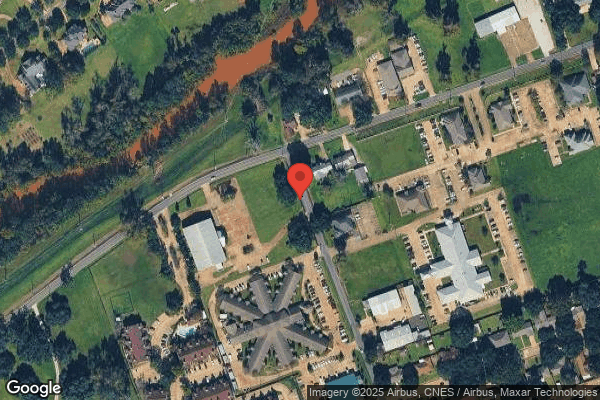

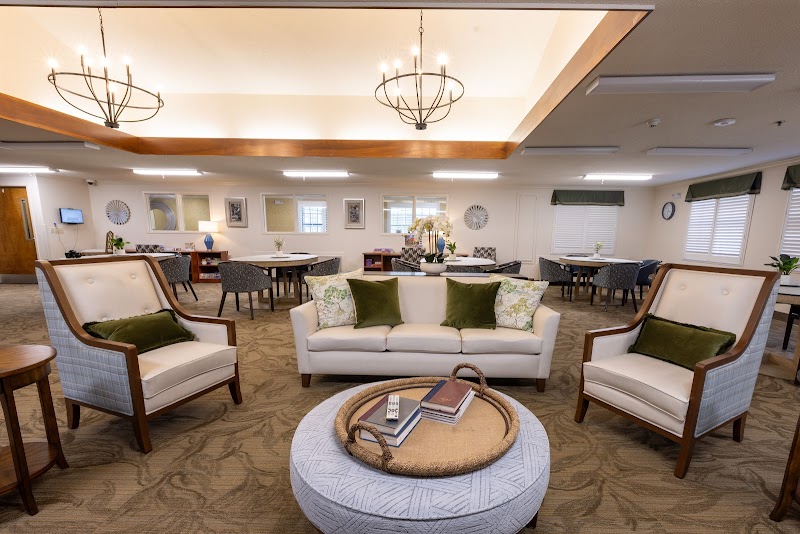
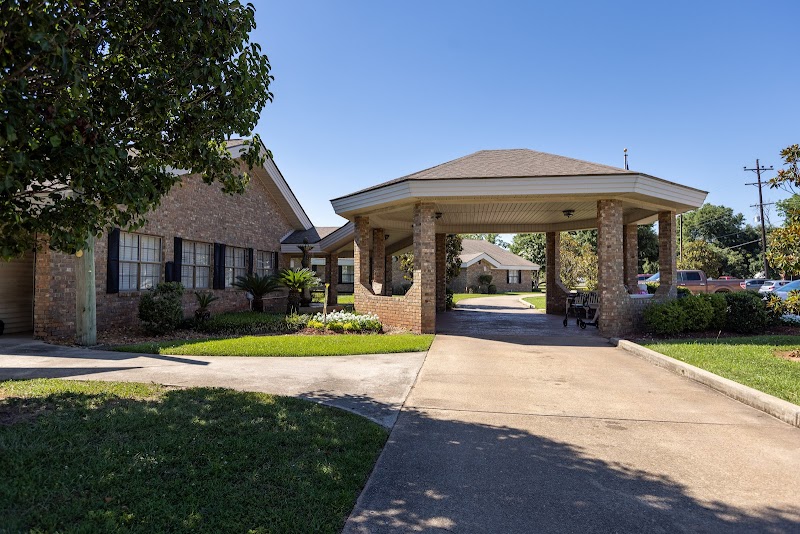

Lexington House

16 HEYMAN LANE, ALEXANDRIA, LA 71303 (318) 442-4364
For profit - Corporation 130 Beds THE BEEBE FAMILY Data: November 2025
Trust Grade
38/100
#139 of 264 in LA
Last Inspection: May 2025

Inspected within the last 6 months. Data reflects current conditions.

Overview

Lexington House in Alexandria, Louisiana, has received a Trust Grade of F, indicating significant concerns regarding care quality. It ranks #139 out of 264 facilities in Louisiana, placing it in the bottom half, while it is #3 out of 9 in Rapides County, meaning only two local options are worse. Unfortunately, the facility's situation is worsening, with the number of issues increasing from 6 in 2024 to 9 in 2025. Staffing is a weakness, with a rating of 2 out of 5 stars and a turnover rate of 59%, higher than the state average, which may impact continuity of care. Additionally, there have been concerning incidents, such as a resident with a PEG tube who developed an infection due to a lack of timely medical notification, and failures in food preparation and kitchen sanitation that could risk residents' health. While the facility does have good RN coverage, which is more than 83% of Louisiana facilities, the overall care quality raises serious red flags for families considering this option.

Trust Score
F
38/100
In Louisiana
#139/264
Bottom 48%
Safety Record
Moderate
Needs review
Inspections
Getting Worse
6 → 9 violations
Staff Stability
⚠ Watch
59% turnover. Above average. Higher turnover means staff may not know residents' routines.
Penalties
✓ Good
$9,945 in fines. Lower than most Louisiana facilities. Relatively clean record.
Skilled Nurses
⚠ Watch
Each resident gets only 21 minutes of Registered Nurse (RN) attention daily — below average for Louisiana. Fewer RN minutes means fewer trained eyes watching for problems.
Violations
⚠ Watch
21 deficiencies on record. Higher than average. Multiple issues found across inspections.
★★☆☆☆
2.0
Overall Rating
★★☆☆☆
2.0
Staff Levels
★☆☆☆☆
1.0
Care Quality
★★★☆☆
3.0
Inspection Score
Stable
2024: 6 issues
2025: 9 issues

The Good

  • Full Sprinkler Coverage · Fire safety systems throughout facility
  • No fines on record

Facility shows strength in fire safety.

The Bad

2-Star Overall Rating

Near Louisiana average (2.4)

Below average - review inspection findings carefully

Staff Turnover: 59%

13pts above Louisiana avg (46%)

Frequent staff changes - ask about care continuity

Federal Fines: $9,945

Below median ($33,413)

Minor penalties assessed

Chain: THE BEEBE FAMILY

Part of a multi-facility chain

Ask about local staffing decisions and management

Staff turnover is elevated (59%)

11 points above Louisiana average of 48%

The Ugly 21 deficiencies on record

1 actual harm
Aug 2025 1 deficiency
CONCERN (D) 📢 Someone Reported This

A family member, employee, or ombudsman was alarmed enough to file a formal complaint

Potential for Harm - no one hurt, but risky conditions existed

Resident Rights (Tag F0550)

Could have caused harm · This affected 1 resident

Based on observations, interviews and record review the facility failed to ensure that each Resident was treated with respect and dignity and in an environment that promoted maintenance or enhancement...

Read full inspector narrative →
Based on observations, interviews and record review the facility failed to ensure that each Resident was treated with respect and dignity and in an environment that promoted maintenance or enhancement of his or her quality of life for 1 (Resident #2) out of 3 (Resident #1, Resident #2, and Resident #3) sampled Residents, by failing to ensure staff displayed respect when speaking to Resident #2.Findings:Review of the facility's policy titled Dignity and Respect, with a revision date of 07/2022 revealed in part.A facility must treat each resident with respect and dignity and care for each resident in a manner and in an environment that promoted maintenance or enhancement of his or quality of life recognizing each residents individuality. The facility shall protect and promote the rights of the resident.1. Facility staff shall display respect when speaking with, caring for and talking about residents, as constant affirmation of their individuality and dignity as human beings.2. Each resident of the facility has the right to a dignified existence, self-determination, and communication with and access to persons and services inside and outside the facility.Review of Resident #2's medical record revealed an admit date of 05/20/2025, with diagnoses that included: Acute on Chronic Combined Systolic and Diastolic Congestive Heart Failure, Hypertensive Heart and Chronic Kidney Disease with Heart Failure, Paroxysmal Atrial Fibrillation, Type 2 Diabetes Mellitus with Diabetic Neuropathy, Major Depressive Disorder, Cognitive Communication Deficit and Anxiety Disorder.Review of Resident #2's admission MDS with an ARD of 05/27/2025, revealed Resident #2 had a BIMS score of 12 indicating moderate cognitive impairment. The MDS revealed Resident #2 required partial/moderate assistance with toileting, bathing and personal hygiene; set up assistance with eating. Resident #2's MDS revealed Resident #2 used a wheelchair for mobility.Review of Resident #2's Care Plan with a Target Date of 06/03/2025 revealed in part.Resident #2 needed assistance with ADL's; Resident #2 has Altered Thought Process related to Dementia with interventions that included: Maintain a quiet calm environment, observe for changes in cognitive status and reality orientation.Observation on 08/04/2025 at 11:16 a.m., this surveyor heard S2 CNA tell Resident #2 Don't hit the call light anymore, because I'm busy. Interview with S2 CNA at time of observation confirmed she had told Resident #2 not to put her call light on again. S2 CNA stated to Surveyor Do you know how many times I have been in that room? S2 CNA stated I know that was rude.Observation and Interview on 08/04/2025 at 11:29 a.m. with Resident #2 revealed she was sitting in a wheelchair in the doorway of her bathroom, with her head down. Resident #2 stated S2 CNA had told her not to put her call light on again because she was busy. Resident #2 stated that was not the first time S2 CNA had told her not to put her call light on. Resident #2 stated she didn't want S2 CNA telling her not to put her call light on.Interview on 08/04/2025 at 1:43 p.m. with S1 DON confirmed it was not the expectation of any staff to tell a resident not to put their call light on. S1 DON confirmed S2 CNA should not have told Resident #2 not to put her call light on again because she was busy.
May 2025 8 deficiencies
CONCERN (D)

Potential for Harm - no one hurt, but risky conditions existed

Deficiency F0558 (Tag F0558)

Could have caused harm · This affected 1 resident

Based on observation, interview and record review, the facility failed to ensure a resident received reasonable accommodation of needs by failing to ensure the call light was accessible by a resident ...

Read full inspector narrative →
Based on observation, interview and record review, the facility failed to ensure a resident received reasonable accommodation of needs by failing to ensure the call light was accessible by a resident for 1 (Resident #7) of 41 sampled residents. Findings: On 05/21/2025, Review of facility policy titled, Call Light/Bell, with revision date of 01/2024, revealed in part . Purpose: To provide the resident a means of communication with staff members. To provide staff members a means of summoning assistance when they are with the resident. Process: Ensure resident has call light in reach when in resident room . Leave the resident comfortable. Place the call light within the resident's reach before leaving the room . Resident #7 Review of Resident #7's electronic medical record revealed an admission date of 06/10/2022 with diagnoses that included: Type 2 Diabetes Mellitus with Hyperglycemia, Protein Calorie Malnutrition, Alzheimer's, Essential Primary Hypertension, Schizophrenia, Tachycardia, Edema, unspecified Dementia, severe with other behavior disturbances, History of Urinary Tract Infections (UTIs). Review of Resident #7's Quarterly MDS with ARD of 02/20/2025, revealed a BIMS Score of 3, indicating severe cognitive impairment. Resident #7 required total care and extensive assistance for bed mobility. Review of Resident #7's Care Plan revealed in part . Resident #7 had a high risk for falls related to decreased mobility, weakness, severe cognitive impairment, and poor safety awareness. Interventions included in part . place call light within reach. On 05/19/2025 at 09:35 a.m. Observation revealed Resident #7 lying in bed. Resident #7 was noninterviewable. Call light was observed on the floor next to Resident #7's bed. Resident #7 could not reach the call light. On 05/20/2025 at 11:39 a.m. Observation revealed Resident #7 lying in bed awake and alert. Call light was observed on the floor next to Resident #7's bed. Resident #7 could not reach the call light. On 05/20/2025 at 03:15 p.m. Observation revealed Resident #7 lying in bed awake and alert. Resident #7 was calm with no abnormal behaviors. Call light was observed on the floor next to Resident #7's bed. Resident #7 could not reach the call light. On 05/20/2025 at 03:16 p.m. S14 LPN accompanied surveyor to Resident #7's room. S14 LPN confirmed the call light was not accessible to the resident and should have been. On 05/20/25 at 03:20 p.m. above findings discussed with S1 Corp RN. S1 Corp RN acknowledged above findings and confirmed Resident #7's call light should have been within reach.
CONCERN (D)

Potential for Harm - no one hurt, but risky conditions existed

Deficiency F0582 (Tag F0582)

Could have caused harm · This affected 1 resident

Based on record review and interview, the facility failed to ensure the SNF ABN Form CMS-10055 (Skilled Nursing Facility Advance Beneficiary Notice of Non-Coverage Form CMS-10055) was provided to the ...

Read full inspector narrative →
Based on record review and interview, the facility failed to ensure the SNF ABN Form CMS-10055 (Skilled Nursing Facility Advance Beneficiary Notice of Non-Coverage Form CMS-10055) was provided to the resident and/or the resident's responsible party prior to the discontinuation of Medicare Part A services for 2 (#34 and #61) of 2 residents reviewed for Beneficiary Notification who required the notification. Findings: Resident #34 Review of Resident #34's clinical record revealed the resident was being discharged from Physical and Occupational Therapy on 05/08/2025 due to non-compliance or refusal to participate in therapy with benefit days remaining. In an interview on 05/21/2025 at 4:00 p.m., S16 Accounts Manager reported Resident #34 was discharged from Skilled Services due to refusing to participate in therapy but remained in the facility. S16 Accounts Manager confirmed a SNF ABN, Form CMS-10055 was not provided to the resident or their responsible party prior to discharge from skilled services because she was unaware of the form or that it needed to be sent. Resident #61 Review of Resident #61's SNF Beneficiary Notification Review form revealed Resident #61 was discharged from Medicare Part A services when benefit days were not exhausted. Further review revealed a SNF ABN, Form CMS-10055 was not provided to the resident or their RP prior to discharge from the services. In an interview on 05/21/2025 at 4:10 p.m., S17 MDS stated Resident #61 was discharged from therapy because she was not cognitively able to participate in therapy. In an interview on 05/21/2025 at 4:15 p.m., S16 Accounts Manager confirmed Resident #61 remained in the facility with benefit days remaining. S16 Accounts Manager confirmed she did not send the SNF ABN Form CMS-10055 to Resident #61 or her RP because she was unaware of the form or that it needed to be sent prior to discharge from skilled services.
CONCERN (D)

Potential for Harm - no one hurt, but risky conditions existed

Comprehensive Care Plan (Tag F0656)

Could have caused harm · This affected 1 resident

Based on observation, record review and interview, the facility failed to ensure the person-centered care plans were developed and implemented for 2 (#25 and #90) of 41 sampled residents. The facility...

Read full inspector narrative →
Based on observation, record review and interview, the facility failed to ensure the person-centered care plans were developed and implemented for 2 (#25 and #90) of 41 sampled residents. The facility failed to: 1. Ensure Resident #25 did not have a cigarette and lighter in his/her possession, as care planned; and 2. Ensure a care plan was developed timely for Resident #90 to address her known history of eating non-food items. Findings: Resident #25 Review of facility policy titled Smoking Policies and Regulation with a revision date of 10/2024, revealed in part . Cigarette lighters and matches are not permitted in a resident's room and will be kept at the nurses' stations. The facility will provide lighting devices and will light cigarettes upon request in designated areas set aside for smoking. Review of the electronic health record for Resident #25 revealed an original admit date of 11/06/2015 with a re-entry date of 10/23/2024 with diagnoses which included: Chronic Respiratory Failure with Hypoxia, Chronic Obstructive Pulmonary Disease, Chronic Kidney Disease, Diabetes, Hemiplegia and Hemiparesis following CVA of right dominate side, and Hypertensive Heart Disease without Heart Failure. The Quarterly MDS with an ARD of 04/08/2025, revealed Resident #25 has a BIMS score of 11, which indicated moderate cognitive impairment. Review of care plan initiated 06/29/2024 revealed Resident #25 was at risk for complications related to nicotine dependence (smoking). Resident #25 is a safe smoker. Interventions included: Cigarettes and smoking supplies are kept by nurses, Resident #25 is able to smoke at her reasonable request, and Resident #25 is to return all smoking supplies back to staff after each smoking session. Interview on 05/20/2025 at 2:37 p.m., Resident #25 revealed cigarettes are kept in a pouch on her wheelchair. Observed one pack of cigarettes and one lighter in resident's wheelchair pouch. Interview on 05/20/2025 at 2:46 p.m., S5 LPN revealed Resident #25 is a safe smoker. S5 LPN confirmed cigarettes and smoking supplies are stored at the nurses' station. S5 LPN confirmed Resident #25 should not have a lighter and pack of cigarettes in her wheelchair pouch. Interview on 05/20/2025 at 2:52 p.m., S12 CNA confirmed Resident #25 keeps smoking supplies in her wheelchair pouch regularly. Interview on 05/20/2025 at 3:15 p.m., S2 DON and S1 Corp RN confirmed smoking supplies should be kept at the nurses' station and were not. Resident #90 Review of Resident #90's electronic health record revealed an admission date of 05/13/2024 with pertinent diagnoses that included: Type 2 Diabetes Mellitus with other Specified Complication, Generalized Muscle Weakness, Cognitive Communication Deficit, Chronic Kidney Disease stage 1, Senile Degeneration of Brain, Severe Unspecified Dementia with other Behavioral Disturbance, Hypothyroidism, Iron Deficiency Anemia, Chronic or Unspecified Gastric Ulcer with Hemorrhage. Review of Resident #90's Significant Change MDS with ARD of 04/15/2025 revealed Resident #90 had a BIMS score of 4, indicating severe cognition impairment. Resident #90 required a mechanically altered diet and partial to moderate assistance with eating. Review of Resident #90's electronic health record progress notes revealed in part . Progress note dated 05/05/2025 at 08:58 a.m. created by S5 LPN on 05/21/2025 08:59 a.m. Resident #90 noted sitting at dining room table chewing on her straw, staff able to redirect Resident #90 attention at this time and S15 MD notified of behaviors with no new orders at this time. Resident #90 does have occasionals when she will chew on non-food items. Able to remove items from view at this time . Progress note dated 04/16/2025 1:16 p.m. created by S5 LPN revealed in part . Resident was seen by S15 MD discuss with MD about Resident #90 restless behaviors and paranoid behaviors. Resident has anxiety behaviors. Resident #90 will eat plastics, paper, will tear up different items, along with lap tray. Orders are to restart Risperdal 0.5mg bid . Review of Resident #90's current care plan on 05/20/2025 revealed Resident #90 was not care planned for the resident's behavior of eating non-food items. On 05/21/25 08:53 a.m., an observation revealed Resident #90 in bed positioned on her right side with head of bed elevated. Resident #90 was awake, alert, and observed to be chewing with string like material coming from her mouth. Resident #90 was observed holding a bib with several holes that had been bitten or chewed. Resident #90 was noninterviewable. Surveyor immediately requested S5 LPN come to Resident #90's bedside and notified S5 LPN of surveyor observation. S5 LPN immediately removed bib from Resident #90. S5 LPN requested Resident #90 open her mouth and spit out material. Resident #90 did not follow command to open mouth and spit out material. S5 LPN applied gloves and performed finger sweep of Resident #90's mouth. S5 LPN confirmed eggs and small pieces of cloth material were removed from Resident #90's mouth. S5 LPN stated Resident #90 did have a history of chewing on non-food items. On 05/21/2025 at 02:02 p.m., a review of Resident #90's electronic health record care plan revealed a care focus area was created by S13 MDS on 05/21/2025 and read in part . Focus: The resident has a behavior problem: resident eats/chews on nonfood items such as bibs, paper towel, blankets, sheets, magazines, tissues/napkins, etc. Goals: The resident will have fewer episodes of eating nonfood items by review date. Interventions: Labs as ordered, notify MD as indicated, observe behavior episodes as needed, redirect behaviors, offer food items in place, redirect for a potentially difficult situation. On 05/21/2025 at 02:30 p.m., an interview was conducted with S13 MDS. S13 MDS stated Resident #90 was care planned for behavior problem of eating nonfood items on 04/18/2025. S13 MDS stated Resident #90's electronic health record revealed a created date of 05/21/2025 because S13 MDS revised the care plan on 05/21/2025. Surveyor questioned what part of care plan was revised on 05/21/2025. S13 MDS stated nothing was revised, she was just looking at it. On 05/21/2025 at 03:28 p.m. Resident #90's care plan with a start date of 04/15/2025 and completion date of 04/24/2025 was reviewed with S13 MDS. S13 MDS confirmed Care Plan Focus: The resident has a behavior problem: resident eats/chews on nonfood items such as bibs, paper towel, blankets, sheets, magazines, tissues/napkins, etc. was not present in the care plan reviewed for those dates. S13 MDS confirmed if care plan focus was initiated on 04/18/2025, it should have been in the care plan reviewed for those dates and was not.
CONCERN (D)

Potential for Harm - no one hurt, but risky conditions existed

Deficiency F0658 (Tag F0658)

Could have caused harm · This affected 1 resident

Resident #11 Review of Resident #11's medical record revealed an admit date of 02/28/2012 and a readmission date of 01/16/2023 with diagnoses that included in part .Chronic Respiratory Failure with Hy...

Read full inspector narrative →
Resident #11 Review of Resident #11's medical record revealed an admit date of 02/28/2012 and a readmission date of 01/16/2023 with diagnoses that included in part .Chronic Respiratory Failure with Hypoxia, Dysphagia, Cognitive Communication Deficit, Stage 3 Chronic Kidney Disease and Pressure Ulcer of Sacral Region, Stage 3. Review of Resident #11's Significant Change MDS with an ARD of 05/01/2025 revealed a BIMS was not conducted because the resident was rarely or never understood. Further review revealed Resident #11 was dependent on staff with eating, toileting hygiene, rolling left and right, sitting to lying, and chair/bed to chair transferring. Review of Resident #11's current physician's orders revealed the following: 05/03/2025: Clean Stage 3 to sacrum with wound cleanser, pat dry, apply Santyl ointment to wound, and cover with a dermadress dressing every day until healed. Review of Resident #11's current care plan revealed the resident had a Stage 3 pressure ulcer to sacrum dated 03/27/2025. Interventions included: Administer treatments as ordered and observe for effectiveness as needed; Weekly treatment documentation to include measurement of each skin breakdown's width, length, and depth, type of tissue and exudate. Review of Resident #11's 04/2025 TAR (Treatment Administration Record) revealed Resident #11 had an order dated 03/28/2025 to Clean Stage 3 pressure ulcer to sacrum with wound cleanser, pat dry, apply Santyl ointment to wound and cover with a dermadress dressing every other day. Review of the TAR revealed wound care was not provided as ordered on 04/01/2025, 04/03/2025, 04/07/2025, 04/09/2025, 04/11/2025, 04/13/2025, 04/19/2025, 04/21/2025, 04/23/2025, 04/25/2025, and 04/27/2025. Further review revealed this wound care order was only completed 4 days in April 2025. Review of Resident #11's 05/2025 TAR revealed Resident #11's wound care orders for Stage 3 Sacral pressure ulcer were changed on 05/03/2025 to every day. Review of the TAR revealed wound care was not provided on 05/03/2025, 05/04/2025, 05/07/2025, 05/10/2025, and 05/11/2025. In an interview on 05/21/2025 at 10:50 a.m., S2 DON acknowledged wound care was not documented as completed each day as ordered, on Resident #11's 04/2025 and 05/2025 TARs and should have been. Resident #109 Review of Resident #109's medical record revealed an admit date of 11/15/2024 with the following diagnoses in part . Type 2 Diabetes Mellitus, Encounter for Orthopedic Aftercare following Surgical Amputation, Acquired Absence of Left Leg Below Knee, Peripheral Vascular Disease, and Non Pressure Chronic Ulcer of Right Foot. Review of Resident #109's Quarterly MDS with ARD of 02/21/2025 revealed Resident had a BIMS of 15 (Cognition Intact). Review of Resident 109's current plan of care revealed Resident had diabetic foot ulcer to right great toe. Interventions included: Treatment as ordered. Refer to eTAR. Review of Resident #109's Active Physician's Orders read in part . Clean diabetic ulcer to right tip of great toe with normal saline, pat dry, apply dermacol, then apply bordered dressing every day shift until healed. Clean MASD to bilateral buttock with normal saline, pat dry, apply nystatin powder 10000unit/gm every day and every evening shift until healed. Review of Resident #109's 04/2025 eTAR on 05/20/2025 at 11:30 a.m. revealed there was no evidence of a completed wound care for order of: Clean diabetic ulcer to right tip of great toe with normal saline, pat dry, apply dermacol, then apply bordered dressing every day shift until healed on 04/11/2025 and 04/18/2025. There was no evidence of completed wound care for order of: Clean MASD to bilateral buttock with normal saline, pat dry, apply nystatin powder 10000unit/gm every day and every evening shift until healed on 04/02/2025, 04/04/2025, 04/07/2025, 04/08/2025, 04/09/2025, 04/10/2025, 04/11/2025, 04/15/2025, 04/17/2025, and 04/18/2025. Review of Resident #109's 05/2025 eTAR on 05/20/2025 at 11:30 a.m. revealed there was no evidence of a completed wound care for order of: Clean MASD to bilateral buttock with normal saline, pat dry, apply nystatin powder 10000unit/gm every day and every evening shift until healed on 05/01/2025, 05/02/2025, 05/06/2025, 05/09/2025, 05/12/2025, 05/13/2025, 05/14/2025, 05/15/2025, and 05/16/2025. Interview on 05/21/2025 at 10:50 a.m., with S2 DON acknowledged wound care was not documented as completed each day as ordered, on Resident #109's April 2025 and May 2025 eTARs and should have been. Based on observation, record review, and interview the facility failed to provide care and services that met professional standards of quality by failing to ensure Physician's Orders were implemented. The facility failed to provide wound care as ordered for 3 (#6, #11, and #109) of 3 residents reviewed for skin and pressure ulcers. Total sample size was 41. Findings: Review of the facility's policy titled Prevention and Treatment of Skin Issues dated 11/2023 read in part . It is the policy to properly identify and assess residents whose clinical conditions increase the risk for impaired skin integrity, and pressure ulcers; to implement preventative measures; and to provide appropriate treatment modalities for wounds according to industry standards of care. Treatment of Skin Issues: If a resident is admitted with or there is a new development of a skin issue, the following procedures are to be implemented. Notify Physician/NP and obtain treatment orders communicating facility wound care protocols for consideration. Notify Supervisor/DON as assigned. Initiate Weekly Wound Documentation in the Wound Assessment Manager (WAM electronic documentation) which will include: type of wound, location, date, stage (pressure ulcers only) length, width and depth; wound base description, wound edge description and if present: drainage, odor, undermining, and/or tunneling. Document on any changes or concerns in the resident's medical record. Resident #6 Review of Resident #6's medical record revealed an admit date of 02/05/2020 with the following diagnoses in part . Chronic Respiratory Failure with Hypoxia; Chronic Obstructive Pulmonary Disease; Parkinson's Disease without Dyskinesia; Localized Edema; and Dementia. Review of Resident #6's Quarterly MDS with ARD of 05/30/2025 revealed Resident had a BIMS of 5 (Severe Cognitive Impairment). Review of Resident 6's current plan of care revealed Resident had a skin tear and bruises related to fragile hemorrhagic skin, picks, and scratches. Interventions included: if skin tear occurs, treat per facility protocol and notify physician and family. Monitor/document location, size and treatment of skin tear. Review of Resident #6's Active Physician's Orders read in part . Clean open lesion to right eyebrow with normal saline, pat dry, apply triple antibiotic ointment to wound and cover with Band-Aid daily until healed. Review of Resident # 6's 05/2025 eTAR on 05/20/2025 revealed there was no evidence of an order to complete wound care to the open lesion to right eyebrow. Observation on 05/19/2025 at 10:02 a.m. of Resident #6 revealed she had a hematoma to upper right eyebrow with an undated Band-Aid in place. Resident #6 had dried blood over her right eyebrow. Observation on 05/20/2025 at 08:06 a.m. of Resident #6 revealed she had dried blood over her right eyebrow with undated Band-Aid in place. Observation on 05/20/2025 at 11:33 a.m. of Resident #6 revealed she had dried blood over her right eyebrow with undated Band-Aid in place. Interview on 05/20/2025 at 11:47 a.m. with S5 LPN revealed Resident #6 had skin cancer on several areas of her body. S5 LPN stated that Resident #6 picked at right upper eyebrow causing skin tear and bleeding, so it was covered with a Band-Aid. S5 LPN confirmed the treatment to Resident #6's right eyebrow area should be performed daily and the dressing should have a date on it, but it did not.
CONCERN (D)

Potential for Harm - no one hurt, but risky conditions existed

Pharmacy Services (Tag F0755)

Could have caused harm · This affected 1 resident

**NOTE- TERMS IN BRACKETS HAVE BEEN EDITED TO PROTECT CONFIDENTIALITY** Based on observation, interview, and record review the facility failed to provide pharmaceutical services that assured accurate ...

Read full inspector narrative →
**NOTE- TERMS IN BRACKETS HAVE BEEN EDITED TO PROTECT CONFIDENTIALITY** Based on observation, interview, and record review the facility failed to provide pharmaceutical services that assured accurate acquiring, receiving, dispensing and/or administration of medications to meet the needs of each resident. The facility had a total census of 115 residents. The facility failed to: 1. Ensure an accurate account for controlled medications was completed at the time of administering narcotics on 1 (Cart 4) of 4 (Cart 1, Cart 2, Cart 3, and Cart 4) medication carts for Resident #28; and 2. Ensure proper nursing procedures and documentation were completed at the time of wasting/destroying narcotics on 1 (Cart 1) of 4 (Cart 1, Cart 2, Cart 3, and Cart 4) medication carts for Resident #1 Findings: Review of a facility policy on [DATE] at 11:54 a.m. titled, Destruction of Unused, Expired or Discontinued Medications revised on 10/2019 revealed the following in part .1. Unused or discontinued non-controlled medications are to be destroyed by the Director of Nursing (DON) or designee and another licensed nurse. Review of a facility policy on [DATE] at 4:15 p.m. titled, Administration of Medications revised on 03/2025 revealed the following in part .Purpose: To administer medications in accordance with best practice.14. Document all applicable information in the clinical record. 1. On [DATE] at 10:20 a.m., a controlled medications reconciliation was conducted with S3 LPN of Cart 4. At the time of the medication reconciliation, review of Resident #28's document titled, Individual Resident Narcotic Inventory Count for Clonazepam 0.5mg tablets revealed a total count of 60 tablets remaining. Observation of Resident #28's Clonazepam 0.5mg narcotic blister package revealed a total count of 59 tablets remaining. S3 LPN confirmed he administered one Clonazepam tablet this morning as ordered and failed to document timely in Resident #28's clinical record, but should have. 2. On [DATE] at 10:38 a.m., a controlled medications reconciliation was conducted with S4 LPN of Cart 1. At the time of medication reconciliation, review of Resident #1's document titled, Individual Resident Narcotic Inventory Count for Oxycodone/Acetaminophen 5mg/325mg tablets revealed two entries on [DATE] at 9:00 p.m. where two tablets were documented as wasted/dropped on floor by a nurse. Further review of the document revealed no evidence of a destruction witness signature for neither of the two waste entries. S4 LPN confirmed there should had been a witness/second signature when Resident #1's Oxycodone/Acetaminophen tablets were wasted on [DATE], but there was not. In an interview and record review on [DATE] at 11:00 a.m., S1 Corp RN and S2 DON revealed all floor nurses were aware they should document narcotics in the clinical record as soon as the narcotic is administered to the resident. S2 DON confirmed S3 LPN should have documented timely on Resident #28's clinical record upon administration of the Clonazepam tablet, but had not. S2 DON revealed all floor nurses were aware they must have a witness/second signature when wasting narcotic medications and properly document in the clinical record. S2 DON confirmed the nurse failed to follow proper nursing procedures for wasting Resident #1's narcotic medications. S2 DON confirmed there should have been a witness/second signature when Resident #1's Oxycodone/Acetaminophen tablets were wasted/destroyed on [DATE] on both occasions, but there was not.
CONCERN (D)

Potential for Harm - no one hurt, but risky conditions existed

Deficiency F0807 (Tag F0807)

Could have caused harm · This affected 1 resident

Based on record review, observation, and interview the facility failed to provide fluids sufficient to maintain adequate hydration. The facility failed to provide a water pitcher or any fluid for hydr...

Read full inspector narrative →
Based on record review, observation, and interview the facility failed to provide fluids sufficient to maintain adequate hydration. The facility failed to provide a water pitcher or any fluid for hydration at the bedside to 1 (Resident #37) of 41 sampled residents. Findings: On 05/21/2025, Review of facility policy titled, Hydration Provision of Fluids for Residents, with a revision date of 05/2018, revealed in part . Policy: The facility ensures that all residents receive sufficient amounts of fluids based on individual needs to maintain proper hydration and health. Procedure: The Director of Food and Nutrition Services/consultant assesses fluid needs based on the following guidelines . A minimum of 2000cc's (cubic centimeter) per day while on antibiotic therapy for UTI . .The nursing assistants offer fluids every 2 hours to residents, unless restricted .A water pitcher with water and ice is placed by the bedside of all residents unless contraindicated (NPO (nothing by mouth), Fluid Restriction, etc.). Resident #37 Review of Resident # 37's electronic medical record revealed an initial admission date of 06/15/2015 and a re-entry admission date of 08/10/2018 with diagnoses that included: Alzheimer's, Mild Protein- Calorie Malnutrition, Non Pressure chronic Ulcer of left ankle limited to break down of skin, Peripheral Vascular Disease, Anxiety disorder, Dysphagia, unspecified, Primary Generalized Osteoarthritis, History of Urinary Tract Infections. Review of Resident #37's Quarterly MDS with ARD of 03/19/2025, revealed Resident #37 was rarely/never understood with severely impaired cognition. Resident #37 required supervision or touching assistance with eating. Review of Residents #37's 05/2025 orders revealed in part . 09/18/2024: Doxycycline Hyclate Oral Tablet 100 mg (milligram) Give 1 tablet by mouth every 12 hours related to Non-pressure Chronic Ulcer to Left Ankle indefinitely. 05/16/2025: Macrodantin Oral Capsule 50mg Give 1 capsule by mouth one time a day related to history of UTI (Urinary Tract Infection) indefinitely. 05/09/2025: Ertapenem sodium injection solution 1 GM (gram) Inject 1 gram intramuscularly in the afternoon R/T (related to) UTI for 5 days. (Discontinued 05/14/25) 06/13/2024: Probiotic Oral Capsule give 1 capsule by mouth two times a day for R/T Prophylactic ABT (antibiotic). Review of Resident #37's Care Plan with an initiation date of 06/01/2024 revealed in part . 05/05/2025 Resident #37 was receiving antibiotic therapy r/t UTI/Sepsis. 05/09/2025 IM (intramuscular) antibiotic therapy for 5 days and oral antibiotic therapy BID (two times daily) for 5 days r/t UTI. Interventions included in part .Encourage fluids. Resident #37 had alteration in elimination r/t difficult stool and or loose stool. Interventions included in part . Encourage to drink all fluids on meal trays and fluids offered between meals. On 05/19/2025 at 10:05 a.m. Observation revealed Resident #37 sitting up in wheelchair in room. Resident #37 was awake, alert, and confused. Resident #37 was noninterviewable. No observation of a water pitcher or any other fluid for hydration at Resident #37's bedside. On 05/20/2025 at 08:31 a.m. Observation revealed Resident #37 sitting up in wheelchair in room awake and alert. Resident #37's speech was garbled and unintelligible. No observation of a water pitcher or any other fluid for hydration at Resident #37's bedside. On 05/20/2025 at 02:09 p.m. Observation reveals Resident #37 lying in bed resting with eyes closed. No water pitcher observed at the bedside. On 05/20/2025 at 02:27 p.m. review of Resident #37's electronic health record Facility Task: Offer Fluid Every 2 Hours While Awake with review dates of 05/16/2025- 05/20/2025 revealed in part . 05/16/2025 fluids offered: 1:11 p.m. and 3:48 p.m. 05/17/2025 fluids offered: 12:00 a.m., 07:39 a.m., 4:05 p.m., and 11:29 p.m. 05/18/2025 fluids offered: 07:37 a.m. and 4:44 p.m. 05/19/2025 fluids offered 06:06 a.m., 07:23 a.m., 6:54 p.m. 05/20/2025 fluids offered 07:25 a.m. On 05/21/2025 at 08:40 a.m. Observation reveals Resident #37 sitting up in wheelchair in room. Resident #37 was awake and alert. Resident #37 lips appeared dry. No observation of a water pitcher or any other fluid for hydration at Resident #37's bedside. On 05/21/2025 at 09:06 a.m. interview conducted with S12 CNA. S12 CNA revealed she was assigned to Resident #37's hall and familiar with Resident #37. S12 CNA stated Resident #37 required total care with the exception of feeding. S12 CNA states Resident #37 did drink well when offered fluids. S12 CNA confirmed all residents should have water pitcher at the bedside, unless they had restrictions. S12 CNA unable to recall if Resident #37 had restrictions. On 05/21/2025 at 09:08 a.m. S12 CNA accompanied surveyor to bedside. S12 CNA confirmed Resident #37 did not have a water pitcher at the bedside and should have one. On 05/21/2025 at 09:15 a.m. interview with S5 LPN revealed Resident #37 could drink from a cup independently once staff poured water into cup from water pitcher. S5 LPN confirmed Resident #37 did not have any fluid restrictions and should have water pitcher at the bedside. On 05/21/2025 at 09:25 a.m. interview conducted with S1 Corp RN and S2 DON to discuss above findings. S1 Corp RN and S2 DON acknowledged Resident #37 did not have a water pitcher at the bedside on multiple observations and should have.
CONCERN (E)

Potential for Harm - no one hurt, but risky conditions existed

Deficiency F0805 (Tag F0805)

Could have caused harm · This affected multiple residents

Based on observations and interviews, the facility failed to ensure recipes for pureed diets were followed during meal preparation. This failed practice had the potential to affect 12 residents (#6, #...

Read full inspector narrative →
Based on observations and interviews, the facility failed to ensure recipes for pureed diets were followed during meal preparation. This failed practice had the potential to affect 12 residents (#6, #11, # 36, #37, #46, #53, #58, #69, #71, #76, #85, and #101) who received pureed diets. Findings: Review of the Facility's lunch menu for 05/19/2025 revealed, in part .Barbeque ribs, macaroni and cheese, peas, green salad, and a roll. An observation on 05/19/2025 at 09:45 a.m. revealed a pan of pureed meat in the kitchen. S8 Dietary aide revealed meat was pureed prior to observation. S8 Dietary aide was observed pouring an unknown amount of peas in the electric food processor. S8 Dietary aide was observed not measuring portions or following the pureed recipe. Interview with S8 Dietary aide at that time revealed he eyeballs portions based on the pan he uses for pureed foods. S8 Dietary aide confirmed he does not follow recipes or measure portions when preparing pureed foods. Interview on 05/19/2025 at 09:47 a.m., S7 Dietary Manager confirmed S8 Dietary aide did not measure or follow pureed recipe and should have. S7 Dietary manger revealed S8 Dietary Aide had not followed pureed recipes in the past resulting in disciplinary action. Interview on 05/19/2025 at 10:00 a.m., S9 Dietician confirmed if pureed recipes are not followed, required nutritional contents may not be accurate.
CONCERN (E)

Potential for Harm - no one hurt, but risky conditions existed

Food Safety (Tag F0812)

Could have caused harm · This affected multiple residents

Based on observation and interview, the facility failed to maintain a clean and sanitary kitchen to prevent the likelihood of foodborne illnesses and failed to store, prepare, and serve food in accord...

Read full inspector narrative →
Based on observation and interview, the facility failed to maintain a clean and sanitary kitchen to prevent the likelihood of foodborne illnesses and failed to store, prepare, and serve food in accordance with professional standards for food service safety. The deficient practice had the potential to effect all of the residents who received meals from the kitchen. There were 115 residents who resided in the facility. The facility failed to ensure: 1. Food items in the pantry were labeled with an open date; 2. Staff were wearing hair restraints including beard restraints to prevent hair from contacting food; 3. Maintenance of a clean and sanitary kitchen at all times; and 4. Dishes were sanitized appropriately. Findings: 1. Observation on 05/19/2025 at 8:40 a.m. of the facility pantry revealed one undated, open bag of penne pasta. S7 Dietary Manager confirmed open food in pantry should be labeled with an open date and was not. 2. Observation on 05/19/2025 at 8:40 a.m. revealed S8 Dietary Aide had long facial hair with no use of a beard restraint. S8 Dietary Aide confirmed he was supposed to wear a beard restraint but stated the facility was currently out. Interview on 05/19/2025 at 8:45 a.m. with S7 Dietary Manager confirmed S8 Dietary Aide should have been wearing a beard restraint while preparing food and was not. S7 Dietary Manager then provided S8 Dietary Aide with a beard restraint. 3. On 05/19/2025 at 8:40 a.m. during the initial kitchen observation revealed unsanitary air conditioner vents covered in a black substance. S7 Dietary Manager revealed air conditioner vents are cleaned every few months but was unsure the last time they were cleaned. S7 Dietary Manager confirmed that air conditioner vents in the kitchen were unsanitary and needed cleaning. Interview on 05/21/25 at 9:30 a.m. with S10 Maintenance confirmed air conditioner vents in the kitchen were unsanitary and needed to be cleaned. 4. On 05/19/2025 at 9:00 a.m. during the initial kitchen observation revealed S8 Dietary Aide failed to sanitize dishes appropriately when utilizing the 3 compartment sink. Sanitation strip was non-reactive x 2 attempts by S8 Dietary Aide. Observed sanitation hose in the 2nd compartment sink. Interview with S8 Dietary Aide revealed sanitization hose should be in the 3rd compartment of the sink (sanitization compartment) and was not. S8 Dietary Aide then moved sanitization hose to 3rd compartment of the sink. S7 Dietary Manager confirmed sanitation strip was non-reactive x 2 attempts. S7 Dietary Manager confirmed chemical sanitizer was not mixed to the proper concentration. Interview with S8 Dietary Aide revealed sanitization for the 3 compartment sink should be monitored three times a day and recorded in a sanitation log. S8 Dietary Aide confirmed he did not check water temperature or sanitization this morning prior to utilizing the 3 compartment sink. Interview with S7 Dietary Manager confirmed chemical sanitizer and temperatures for the 3 compartment sink should be monitored three times a day and recorded in the appropriate log. S7 Dietary Manager was not able to provide a temperature/chemical sanitization log. On 05/19/2025 at 9:00 a.m., a review of Dishwasher Temperature Logs dated 12/2024-05/2025 revealed missing temperature logs for multiple dates.
Jul 2024 1 deficiency
CONCERN (E) 📢 Someone Reported This

A family member, employee, or ombudsman was alarmed enough to file a formal complaint

Potential for Harm - no one hurt, but risky conditions existed

Deficiency F0658 (Tag F0658)

Could have caused harm · This affected multiple residents

Based on record review and interview, the facility failed to ensure services were provided to meet professional standards of quality by failing to ensure a resident with a UTI received timely and appr...

Read full inspector narrative →
Based on record review and interview, the facility failed to ensure services were provided to meet professional standards of quality by failing to ensure a resident with a UTI received timely and appropriate treatment for 1 (#1) of 3 (#1, #2, & #3) sampled residents reviewed for UTIs. Findings: Resident #1 Review of Resident #1's medical record revealed an admit date of 04/03/2018 with diagnoses that included in part .Unspecified Dementia, Urinary Tract Infection, Overactive Bladder, Uterovaginal Prolapse, and Anxiety disorder. Review of Resident #1's Significant Change MDS with an ARD of 06/22/2024 revealed a BIMS score of 9, which indicated the resident had moderate cognitive impairment. Review of the MDS revealed Resident #1 required substantial to maximal assistance with toileting hygiene, rolling left and right, sitting to lying, lying to sitting, sit to stand and chair/bed to chair transferring. Review of Resident #1's record revealed she was care planned for a history of UTIs and bladder spasms with an onset date of 07/07/2021. Interventions included administer medications as ordered, notify MD of any complications or any decreased urine output, observe for effectiveness of medications, encourage fluid intake, and fluids with meals. Review of Resident #1's urinalysis collected and reported on 05/08/2024 revealed Resident #1's urinalysis was positive for leukocytes, nitrites, and blood. The urinalysis was date stamped on the bottom of the results and revealed S7 MD notified on 05/08/2024 at 6:00 p.m. with an order written that read Start Bactrim DS BID x 7 days r/t elevated leukocyte and bacteria in urine. Review of Resident #1's culture and sensitivity revealed it was reported originally on 05/09/2024 at 1:25 p.m. and revealed the pathogen of Escherichia Coli was resistant to Trimethoprim/Sulfamethoxazole (Bactrim DS) as well as Cefazolin, Cefepime, and Ceftriaxone (Cephalosporins). An antibiotic note on the report revealed ESBL detected and stated these organisms tend to be resistant to all Penicillins, Cephalosporins, and Aztreonam and are usually multi-drug resistant. Review of the report revealed the pathogen was susceptible to Ertapenem. Review of Resident #1's physician's orders revealed the following: 05/08/2024: Sulfamethoxazole-TMP DS (Bactrim DS) tablet give one tab PO BID X 7 days R/T elevated leukocytes and bacteria in urine. 05/17/2024: Cefuroxime Axetil (Ceftin-a cephalosporin) 500mg Tab give 1 PO BID x 7 days R/T UTI 05/27/2024: Ertapenem (Invanz) 1 GRAM vial Reconstitute with 3.2ml 1% Lidocaine HCL and administer IM QD x 7 days R/T UTI Review of Resident #1's May and June 2024 MARs revealed Resident #1 received the following: Received Sulfamethoxazole-TMP DS po bid from 05/08/2024-05/15/2024 Received Cefuroxime Axetil 500mg po bid from 05/17/2024-05/23/2024 Received Ertapenem 1 gram vial reconstitute w/ 3.2 ml 1% Lidocaine HCL IM every day from 05/27/2024-06/02/2024 In an interview on 07/31/2024 at 10:14 a.m. S3 LPN acknowledged he wrote the telephone/verbal order for Ceftin on 05/17/2024 but couldn't remember why S7 MD gave the order for Ceftin. In an interview on 07/31/2024 at 10:19 a.m., S4 RN reported she was looking through the lab binder for another resident and saw Resident #1's culture and sensitivity results on the top. S4 RN reported she looked at Resident #1's results and recognized that she had not been treated with an appropriate antibiotic. S4 RN stated she contacted the doctor and obtained the order for Ertapenem/Invanz on 05/27/2024. In a telephone interview on 07/31/2024 at 10:39 a.m. with the lab who ran Resident #1's urinalysis and culture and sensitivity, the lab staff confirmed all lab results are automatically faxed to the nursing facility when they are resulted. Lab personnel reported the nursing home has passwords and can pull up the results as soon as they are ready on a computer. In an interview on 07/31/2024 at 10:45 a.m. with S5 LPN and S6 [NAME] Clerk, S5 LPN reported the lab results come across the fax or we can go in the computer and print them. S6 [NAME] Clerk reported she takes the lab off the fax and gives them to the assigned nurse. In an interview on 7/31/2024 at 11:15 a.m., S1 DON stated results of labs are faxed to them and they get the C&S about 72 hours later. S1 DON stated the [NAME] Clerk stamps the labs and gives them to the nurse assigned to the resident and the assigned nurse handles it. In an interview on 07/31/2024 at 2:00 p.m., S2 ADON stated all labs come across the fax machine. An observation at that time of page 2/2 of Resident #1's culture and sensitivity (C&S) results revealed it was originally reported on 05/09/2024 at 1:25 p.m. and stamped by the facility on 05/10/2024. S2 ADON confirmed this was page 2 of the C&S and it was date stamped by the facility on 05/10/2024. S2 ADON reported if the results have not been received, nurses working with the resident should be looking for C&S results because they know it was ordered. In an interview on 07/31/2024 at 2:25 p.m., S1 DON acknowledged Resident #1 was not treated timely with an appropriate antibiotic until 05/27/2024. S1 DON reported treatment of Resident #1's UTI was delayed because they didn't get the C&S results until almost the end of the month. S1 DON confirmed staff can look up lab results in the computer.
Mar 2024 5 deficiencies
CONCERN (D)

Potential for Harm - no one hurt, but risky conditions existed

Resident Rights (Tag F0550)

Could have caused harm · This affected 1 resident

Based on observation and interview the facility failed to ensure a cognitively impaired resident was treated with respect and dignity and cared for in a manner that promotes enhancement of his or her ...

Read full inspector narrative →
Based on observation and interview the facility failed to ensure a cognitively impaired resident was treated with respect and dignity and cared for in a manner that promotes enhancement of his or her own quality of life. The facility failed to ensure that thickened water placed in front of the resident was offered as a drink for 1 (Resident #11) resident reviewed for dignity in a total sample of 28. Findings: Review of a Quarterly MDS Assessment with an ARD of 01/23/2024 revealed Resident #11's BIMS was coded as 99, indicating severe cognitive impairment. Resident #11 required dependent assistance with eating, with no swallowing disorder. Review of Resident #11's Care Plan with a target date of 04/24/2024 revealed altered nutritional status, approaches included resident is on a therapeutic diet- total assist with meals, Diet- Pureed NSOT (no sugar on tray), Honey thickened liquids. Observation of Resident #11 on 03/11/2024 at 11:51 a.m. revealed the resident seated in the facility's dining room at a table. S6 Activity Staff sat a 7 oz. glass of thickened water in front of the resident. Observations on 03/11/2024 at 12:06 p.m., and 12:19 p.m. revealed the glass of thickened water remained in front of Resident #11 and no staff had offered the water to the resident. Observation on 03/11/2024 at 12:22 p.m., a CNA came over to feed Resident #11. Interview on 03/12/2024 at 11:45 a.m. with S6 Activity Staff stated the activity department staff passed out water approximately 15- 20 minutes before lunch to all the residents seated in the dining room. S6 Activity Staff stated the activity staff will offer and/or assist residents who are able to drink water of natural consistency. S6 Activity Staff stated residents who have thicken added to his/her water was not offered and/or assisted to drink water by the activity staff because of choking precautions. S6 Activity Staff confirmed she had placed a glass of thickened water on the table in front of Resident #11 on 03/11/2024; not offering her any water; and leaving it for the CNA to offer the water to the resident while feeding her lunch. Interview on 03/13/2024 at 12:38 p.m. with S5 DON stated the activity department passed out water to all residents with the exception of the residents who receive thickened water. S5 DON stated thickened water was placed on the residents' tray by the dietary staff at the time the tray was prepared. S5 DON confirmed the activity staff should not have served Resident #11 thickened water nor should the thickened water been left in front of the resident.
CONCERN (D)

Potential for Harm - no one hurt, but risky conditions existed

Safe Environment (Tag F0584)

Could have caused harm · This affected 1 resident

Based on observations and interview, the facility failed to maintain a clean, comfortable, and homelike environment, by failing to ensure blinds were functioning properly in Room A. Total sample size ...

Read full inspector narrative →
Based on observations and interview, the facility failed to maintain a clean, comfortable, and homelike environment, by failing to ensure blinds were functioning properly in Room A. Total sample size 28. Findings: Observation of Room A on 03/11/2024 at 10:30 a.m., revealed a pair of closed wooden white window blinds with a stick hanging from the center. Interview with Resident #12 at the time of the observation revealed the blinds would not stay open. Resident #12 stated she liked to keep her door closed and the blinds open for sunlight. Observation of Room A on 03/12/2024 at 10:15 a.m., revealed the blinds were closed and would not stay open. Resident #12 stated by not being able to open the blinds, she had to leave her door open which kept her from taking naps during the daytime. Observation and interview with S7 Maintenance of Room A on 03/12/2024 at 2:45 p.m., confirmed the blinds were broken and needed to be replaced.
CONCERN (D)

Potential for Harm - no one hurt, but risky conditions existed

ADL Care (Tag F0677)

Could have caused harm · This affected 1 resident

Based on observation, interview and record review, the facility failed to ensure that residents who were unable to carry out ADL's (Activities of Daily Living) received the necessary services to maint...

Read full inspector narrative →
Based on observation, interview and record review, the facility failed to ensure that residents who were unable to carry out ADL's (Activities of Daily Living) received the necessary services to maintain good grooming and personal hygiene. The facility failed to provide nail care for 1 (Resident #13) of 28 residents sampled for ADL's. Findings: Review of the facility policy titled Nail Care with a review date of 01/2024 read in part .Purpose: To promote cleanliness, safety and a neat appearance. To observe skin condition on fingers and toes. Procedure: Document all appropriate information in the clinical record. Review of Resident #13's medical record revealed an admission date of 01/20/2020 with diagnoses that included in part .Type 2 Diabetes Mellitus with Hyperglycemia, Other Polyarthritis, Essential Hypertension, and Chronic Kidney Disease Stage 1. Review of Resident #13's Significant Change MDS with an ARD of 01/29/2024 revealed the resident had a BIMS score of 99 (resident was unable to complete assessment), required one person physical assistance with bed mobility, transfer, eating and toilet use. The MDS revealed Resident #13 had no behaviors or rejected care. Review of Resident #13's care plan with a target date of 03/27/2024 revealed in part .Resident required extensive assistance with personal grooming with approaches that included to assist with oral care, hair care and nail care (cleaning and filing). Observation on 03/11/2024 at 9:13 a.m. revealed Resident #13 with long fingernails approximately 1 inch long with a black substance under them. Observation and interview on 03/12/2024 at 8:42 a.m. revealed Resident #13 with long fingernails approximately 1 inch long with a black substance under them. Resident #13 revealed she would have liked her nails to be trimmed and cleaned. Interview on 03/12/2024 at 9:22 a.m. with S8 CNA revealed she provided care for Resident #13. S8 CNA stated she did not provide nail care to Resident #13 because she was a Diabetic and S9 RN did her nail care. Observation and interview on 03/12/2024 at 10:03 a.m. of Resident #13 accompanied by S9 RN revealed resident with long fingernails approximately 1 inch long with a black substance under them. S9 RN confirmed the above findings and stated she was responsible for Resident #13's nail care. S9 RN revealed she had not documented Resident #13's nail care in the clinical record and she should have.
CONCERN (D)

Potential for Harm - no one hurt, but risky conditions existed

Quality of Care (Tag F0684)

Could have caused harm · This affected 1 resident

Based on record review, observation, and interview, the facility failed to ensure that a Resident received treatment and care in accordance with professional standards of practice for 1 (Resident #20)...

Read full inspector narrative →
Based on record review, observation, and interview, the facility failed to ensure that a Resident received treatment and care in accordance with professional standards of practice for 1 (Resident #20) of 28 Sampled Residents. The facility failed to ensure physician orders to treat a newly identified wound were transcribed into the resident's medical record, and failed to perform and document a wound assessment of the newly identified wound. Findings: Review of facility's policy titled Physician Orders dated 09/2023 read in part .All physicians' orders shall be recorded for each resident and must be signed or initialed by the attending/ prescribing physician or nurse practitioner, clinical nurse specialist, or physician assistant as appropriate and allowable per state practice act. Verbal or telephone orders are considered to be in writing when dictated or given by the attending physician and later signed or initialed by him / her. Telephone orders are to be received/transcribed by a nurse. Facility nursing staff shall enter physician orders into the electronic medical record. Review of the facility's policy titled Prevention and Treatment of Skin Issues dated 11/2023 read in part . It is the policy to properly identify and assess residents whose clinical conditions increase the risk for impaired skin integrity, and pressure ulcers; to implement preventative measures; and to provide appropriate treatment modalities for wounds according to industry standards of care. Treatment of Skin Issues: If a resident is admitted with or there is a new development of a skin issue, the following procedures are to be implemented. Notify Physician/NP and obtain treatment orders communicating facility wound care protocols for consideration. Notify Supervisor/DON as assigned. Initiate Weekly Wound Documentation in the Wound Assessment Manager (WAM electronic documentation) which will include: type of wound, location, date, stage (pressure ulcers only) length, width and depth; wound base description, wound edge description and if present: drainage, odor, undermining, and/or tunneling. Document on any changes or concerns in the resident's medical record. Review of Resident #20's medical record revealed an admit date of 04/09/2010 with the following diagnoses in part . Chronic Kidney Disease-Stage 4, Chronic Diastolic Congestive Heart Failure, Type 2 Diabetes Mellitus with Diabetic Nephropathy, Generalized Edema, Non Pressure Chronic Ulcer of Left Heel and Midfoot, Non Pressure Chronic Ulcer of other part of Lower Left Leg, and Non Pressure Chronic Ulcer of Right Heel and Midfoot. Review of Resident #20's Quarterly MDS with ARD of 02/27/2024 revealed Resident had a BIMS of 15 (Cognition Intact). Review of Resident #20's Active 03/2024 Physician's Orders read in part . Clean left lateral calf with normal saline, pat dry, apply santyl with bulky dressing, 2 times weekly related to diabetic ulcer secondary to end stage vascular disease. 02/13/2024 Clean Left Great Toe with normal saline, pat dry, apply santyl with bulky dressing, 2 times weekly related to diabetic ulcer secondary to end stage vascular disease. 12/28/2023 Clean Right Heel with normal saline, pat dry, apply santyl with bulky dressing, 2 times weekly related to diabetic ulcer secondary to end stage vascular disease. 12/28/2023 Clean Left Heel with normal saline, pat dry, apply santyl with bulky dressing, 2 times weekly related to diabetic ulcer secondary to end stage vascular disease. 12/28/2023 Review of Resident #20's Active/Completed Wound Assessments on 03/12/2024 at 3:50 p.m. revealed there was no evidence of a completed wound assessment for right great toe wound. Interview on 03/11/2024 at 10:20 a.m. with Resident #20 revealed he had concerns about his wounds not healing and if the correct wound care was being performed to his wounds. Interview on 03/12/2024 at 2:51 p.m. with S2 Treatment Nurse in Resident #20's room revealed Resident had diabetic ulcers to left calf, left heel, left great toe, and right heel. S2 Treatment Nurse stated she would perform wound care to these areas. S2 Treatment Nurse stated the orders for all the wounds were to clean with normal saline, pat dry, apply santyl, and then apply dry dressing. S2 Treatment nurse stated this wound care was ordered to be completed twice a week, and as needed. Observation on 03/12/2024 at 3:20 p.m. revealed S2 Treatment Nurse removed old dressing from Resident #20's right foot. This surveyor observed wounds to Resident #20's right heel and right great toe. This surveyor questioned S2 Treatment Nurse on the wound to Resident #20's right great toe, as she did not mention it in prior interview, and there was no documentation of the wound, or an order to treat the wound in the Resident's medical record. S2 Treatment Nurse confirmed she did not have a written order to treat the right great toe wound, and an assessment of the wound had not been documented. Interview on 03/12/2024 at 3:38 p.m. with S2 Treatment Nurse following wound care observation revealed a wound assessment had not been completed for the right great toe, but should have been. Interview on 03/12/2024 at 4:25 p.m. with S2 Treatment Nurse revealed she was responsible for performing wound care and notifying S1 ADON and providers when she discovered any new wounds on residents. S2 Treatment Nurse stated on 03/07/2024 she verbally informed S1 ADON and Resident #20's provider of the new wound to his right great toe. S2 Treatment Nurse stated the provider informed her he would assess the new wound on his next round, and to treat the new wound to right great toe with the same orders as the other wounds. S2 Treatment Nurse confirmed she failed to transcribe/document this new order into Resident #20's medical record, but should have. Interview on 03/12/2024 at 4:35 p.m. with S1 ADON confirmed she was not informed by S2 Treatment Nurse of a wound to Resident #20's right great toe. S1 ADON reviewed Resident #20's completed wound assessments and confirmed a wound assessment had not been completed for the newly identified wound to right great toe, but should have been. Telephone interview on 03/12/2024 at 4:53 p.m. with Resident #20's provider revealed he was notified by S2 Treatment Nurse of new wound to Resident #20's right great toe and he gave order to follow the same treatment orders as the other wounds. The provider was unable to recall the exact date he was notified and gave order to treat wound.
CONCERN (E)

Potential for Harm - no one hurt, but risky conditions existed

Deficiency F0925 (Tag F0925)

Could have caused harm · This affected multiple residents

Based on observation and interview, the facility failed to maintain an effective pest control program by failing to ensure the facility was free from insects. The deficient practice had the potential ...

Read full inspector narrative →
Based on observation and interview, the facility failed to maintain an effective pest control program by failing to ensure the facility was free from insects. The deficient practice had the potential to affect 113 residents who resided in the facility. Findings: Review of the facility's pest control service agreement revealed in part the following . The facility will be treated at least once monthly and/or as often as necessary to satisfactorily control said pest in the critical areas, such as food preparation areas, nursing stations, storage areas, offices, tv rooms, common areas, bathrooms and the eating areas. During an observation in the kitchen on 03/11/2024 at 8:30 a.m. (1) live insect was observed crawling across the steam table on the serving line. S4 Dietary Manager confirmed the presence of the insect crawling across the steam table and removed the insect at that time. S4 Dietary Manager stated the kitchen was last sprayed by pest control 3 weeks ago. During an observation on 03/11/2024 at 10:55 a.m., (2) live insects were observed crawling on the steam table serving line. S4 Dietary manager confirmed the (2) live insects, removed the insects and stated she would call the exterminator. An interview 03/11/2024 at 11:40 a.m. with S3 Administrator revealed a pest control company sprayed the facility for pest monthly and that she had not received any complaints of pest issues in the facility. Review of the facility's pest control receipts revealed the facility had been treated once per month with the last treatment on 02/23/2024. During a Resident Council meeting on 03/11/2024 at 1:31 p.m. several residents brought up concerns of seeing pest in the facility daily.
Oct 2023 2 deficiencies
CONCERN (D) 📢 Someone Reported This

A family member, employee, or ombudsman was alarmed enough to file a formal complaint

Potential for Harm - no one hurt, but risky conditions existed

Deficiency F0557 (Tag F0557)

Could have caused harm · This affected 1 resident

Based on observation and interview the facility failed to treat residents with respect and dignity for 1 (Resident #4) of 4 (Resident #1, Resident #2, Resident #3, and Resident #4) residents reviewed ...

Read full inspector narrative →
Based on observation and interview the facility failed to treat residents with respect and dignity for 1 (Resident #4) of 4 (Resident #1, Resident #2, Resident #3, and Resident #4) residents reviewed for resident rights. Findings: Review of the facility Dignity and Respect Policy revealed the following including: A facility must treat each resident with respect and dignity and care for each resident in a manner and in an environment that promotes maintenance or enhancement of his or her quality of life recognizing each resident's individuality. The facility shall protect and promote the rights of the resident. 1. Facility staff shall display respect when speaking with, caring for and talking about residents, as constant affirmation of their individuality and dignity as human beings. Observation on 10/23/2023 at 11:35 a.m. from the south end of Hall W of the facility revealed S3 CNA coming out of a resident's room on the north end of Hall W. S3 CNA was pushing the resident in her wheelchair. S3 CNA yelled down the hall to S4 CNA who was in the middle of Hall W that Resident #4, who was in the next to last room on the north end of hall W had a poo diaper and needed to be changed. Interview at this time with S2 LPN confirmed that S3 CNA yelled Resident #4's information down the hall to another CNA and she shouldn't have. Interview on 10/23/2023 at 11:40 a.m. with S3 CNA confirmed that she yelled down the hall that Resident #4 needed her poo diaper changed. S3 CNA stated she knew she should not have done this. Interview on 10/23/2023 at 11:41 a.m. with S4 CNA confirmed that S3 CNA had yelled down the hall and told her that Resident #4 needed to be changed because she had a poo diaper. S4 CNA stated this was not normal practice and should not have been done.
CONCERN (E) 📢 Someone Reported This

A family member, employee, or ombudsman was alarmed enough to file a formal complaint

Potential for Harm - no one hurt, but risky conditions existed

Food Safety (Tag F0812)

Could have caused harm · This affected multiple residents

Based on observation and interview the facility failed to store and serve food in accordance with professional standards for food service safety for all 110 oral intake residents in the facility. Find...

Read full inspector narrative →
Based on observation and interview the facility failed to store and serve food in accordance with professional standards for food service safety for all 110 oral intake residents in the facility. Findings: Review of the facility's Ice Maker & Dispenser Cleaning Instructions revealed in part . Equipment shall be maintained in a clean and sanitary condition. Maintenance staff will perform cleaning. Review of the facility's Storage of Refrigerated Food policy revealed the following in part . The facility ensures the quality and safety of refrigerated foods through accepted storage practices. 11. Food shall be stored based on use-by expiration date and facility recommended food storage chart. Observation on 10/23/2023 at 9:30 a.m. with S1 Administrator and S5 Kitchen Staff revealed the kitchen's ice machine had pink mildew noted inside the ice storage area. S5 Kitchen Staff stated the ice machine had been serviced about a month ago. S1 Administrator confirmed the mildew in the ice machine and stated it should not be there. Observation at this time of the refrigerator in the kitchen area revealed 30 cartons of expired fat free milk (dated best by 10/22/2023). This expired milk was located in a crate with other unexpired fat free milk cartons. S5 Kitchen Staff stated this crate of milk had been used this morning for residents. S1 Administrator confirmed the findings and stated the expired milk should have been discarded. Observation on 10/23/2023 at 9:50 a.m. with S1 Administrator of the ice machine on Hall X of the facility revealed pink and black mildew noted inside the ice storage area. S1 Administrator stated the ice in the machine was used by staff for residents in the facility. S1 Administrator confirmed these findings and stated the mildew should not be present in the ice machine. Interview on 10/25/2023 at 10:14 a.m. with S6 Maintenance revealed he was the only maintenance staff working at the facility. S6 Maintenance stated he was responsible for cleaning the ice machines in the hall, but dietary staff was responsible for the ice machine in the kitchen area. S6 Maintenance stated he usually cleaned the ice machine monthly and every 3 months he cleaned the filter and line. S6 Maintenance stated he logged the cleaning in the maintenance log book. S6 Maintenance stated he had been working short-handed and had not been able to keep up with everything as he should. Interview on 10/25/2023 at 10:30 a.m. with S5 Kitchen Staff revealed a refrigeration company usually came out and cleaned the ice machine in the kitchen. S5 Kitchen Staff stated she had no record of the last time this was done.
Jul 2023 1 deficiency 1 Harm
SERIOUS (G) 📢 Someone Reported This

A family member, employee, or ombudsman was alarmed enough to file a formal complaint

Actual Harm - a resident was hurt due to facility failures

Quality of Care (Tag F0684)

A resident was harmed · This affected 1 resident

**NOTE- TERMS IN BRACKETS HAVE BEEN EDITED TO PROTECT CONFIDENTIALITY** Based on observation, record review, and interview the facility failed to ensure that residents receive treatment and care in ac...

Read full inspector narrative →
**NOTE- TERMS IN BRACKETS HAVE BEEN EDITED TO PROTECT CONFIDENTIALITY** Based on observation, record review, and interview the facility failed to ensure that residents receive treatment and care in accordance with professional standards of practice, and the comprehensive person-centered plan of care, for 1 (#5) of 5 (#1, #3, #5, #6, & #7) sampled residents who received nutrition via a PEG (percutaneous endoscopic gastrostomy) tube. The facility failed to: 1. Ensure Resident #5's physician was notified of any signs or symptoms of infection when brown drainage was noted from a Peg-tube site. This deficient practice resulted in an actual harm for Resident #5 on 05/12/2023 at 6:37 p.m. when Resident #5, who had been sent to the ED (Emergency Department) for shortness of breath, was found upon arrival to the ED to have putrid, malodorous, brown discharge emanating from around her PEG tube by the ED physician. Resident #5 was found to have an elevated white blood cell count of 13.0 (normal is 5.0-10.0), admitted to the hospital for antibiotics, and the PEG tube was removed. Due to Resident #5's moribund condition, she was too sick for surgery to replace the PEG tube and was placed on hospice. Findings: Review of the facility's policy titled Charting-Guidelines for Follow-Through Charting revealed in part . Acute Episodes-48 hours acute charting if stable-Notify doctor and document results of physician contact. Review of the facility's policy titled Tube Feedings revealed in part . 1. All tube feedings will be administered in accordance with verified medical necessity, established infection control policies and procedures and physician's orders . Review of the medical record for Resident #5 revealed an admit date of 04/13/2023 with diagnoses that included in part .Alzheimer's Disease, CKD, Quadriplegia, and Encounter for Attention to Gastrostomy. Review of Resident #5's 04/19/2023 admission MDS revealed a BIMS was not conducted as the resident was rarely or never understood. The MDS revealed Resident #5 was totally dependent on two persons for bed mobility, transferring, and toilet use; and totally dependent on one person for eating. Reveal of Resident #5's Physician Orders revealed the following order: 04/13/2023: Cleanse around G-tube site with Normal Saline, pat dry, apply split gauze daily. Monitor daily for signs and symptoms of complications. Review of Resident #5's Care Plan revealed a problem of potential for infection and impaired skin integrity related to abdominal opening secondary to G-tube stoma site. Interventions included: change dressing daily as ordered, monitor stoma site for signs or symptoms of infection or skin impairment, notify physician of any sign or symptom of infection or skin impairment to stoma site, monitor for signs or symptoms of pain, medicate as needed, and Direct Care Staff to report to nurse if any problems that may arise pertaining to dressing site while giving care. Review of Resident #5's SNF Documentation revealed the following entries in part . 05/06/23 at 11:29 p.m.No drainage from G-tube site at this time, dressing in place .Abdomen remains slightly distended. Completed by S6 LPN. 05/08/2023 at 1:16 p.m.Slight brown drainage from G-tube site, dressing replaced with clean and dry gauze. Abdomen remains slightly firm and distended. Completed by S3 LPN. 05/09/2023 at 2:29 p.m.Resident still with brown drainage from G-tube site, dressing replaced with clean and dry gauze as needed .Abdomen remains slightly firm and distended. Completed by S3 LPN. 05/10/2023 at 2:08 p.m.Resident still with brown drainage from G-tube site, dressing replaced with clean and dry gauze as needed .Abdomen remains slightly firm and distended. Observation to continue. Completed by S3 LPN. Review of Resident #5's EMAR revealed S3 LPN was the nurse on the 7:00 a.m. to 3:00 p.m., and 3:00 p.m. to 11:00 p.m. shifts on 05/11/2023; however, there was no nursing documentation for those shifts. Review of a Progress Note documented by the Medical Director dated 05/12/2023 (no time documented) read as follows in part .Patient with moderate to severe Alzheimer's disease, CKD, osteoarthritis, iron deficiency anemia, left hand contracture, bilateral foot drop, CVA with aphasia, dysphagia, acute. Patient seen at bedside. Does not respond to commands. Coarse breath sounds, will continue breathing treatments. Blood pressure optimal. Continue antiplatelet statins for CVA. Continue Tylenol for Osteoarthritis. Continue present. No issues reported. Review of symptoms-Denies chest pain, shortness of breath, nausea, vomiting, or diarrhea Physical exam: Gastrointestinal-soft, none tender Assessment & Plan: Alzheimer's dementia-moderate to severe, patient responded to commands. Osteoarthritis-continue Tylenol. Dysphagia-continue Peg tube feeds, monitor for aspiration. CKD-continue monitor renal panel, electrolytes avoid nephrotoxic agents. Iron deficiency anemia-continue iron supplementation. There was no documentation on the Medical Director's Progress Note that indicated he was notified of a problem with the G-tube site, or documentation regarding the G-tube site. The surveyor was unsuccessful in contacting the Medical Director as he was out of the country and would not return until August 2023. Review of Resident #5's SNF Documentation Record completed 06/05/2023 at 2:00 p.m. by S1 DON read as follows in part . 05/12/2023 at 5:00 p.m. - Resident lying in bed with eyes open, head of bed elevated, tube feeding continuous per pump, non-verbal, abdominal area distended, with hypoactive bowel sounds. Resident just had a large soft bowel movement earlier today (morning shift per staff that was attending to her this morning). When repositioned, resident started demonstrating grunting and moaning. Respirations are rapid and shallow. Resident's oxygen saturation ranges from 88-92%. No cough or congestion at this time.G-tube stoma site intact without drainage or redness to stoma site. Tube feeding turned off per nursing measure, dressing reapplied, Vital signs 134/61 89 25 99.9. 5:00 p.m. - Resident #5's physician/Medical Director notified of tube feeding being turned off and agreed with nursing measure, also notified of current condition and symptoms displayed, received new order to send to ____(hospital name) for eval and treatment. 5:10 p.m. - RP Notified 5:37 p.m. - Ambulance arrived in the facility 5:44 p.m. - Resident left facility per stretcher . Form Participants: S7 LPN, S2 RN/ADON, S1 DON Form Completed by: S1 DON Review of the Ambulance report dated 05/12/2023 at 5:38 p.m. revealed the following in part . Chief Complaint (Primary) - Respiratory Distress Provider Impression: Dyspnea/SOB. Head to Toe: Abdomen and Pelvis: - RLQ and LLQ Distended: Yes Narrative History Text: Patient was having periods of apnea and working to breathe, patient's abdomen was swollen with blood and crust around peg tube going through abdominal wall. Review of Resident #5's Emergency Provider Report dated 05/12/2023 at 6:37 p.m. revealed the following in part . Patient is an [AGE] year old female who presents to the ED via EMS for supposed difficulty breathing .On arrival, patient has putrid, malodorous, brown discharge emanating from around her PEG tube. Patient is in moribund condition, unable to answer questions . WBC on 5/12/23 at 6:41 p.m. is 13.0 (normal is 5.0-10.0) Patient appears ill on arrival, concerns about her overall mortality. She has her eyes open spontaneously, however, is otherwise unresponsive .She has putrid discharge emanating from around her PEG tube. Sepsis order set placed, however, due to patient having some edema and distention of her abdomen, will forego IV fluid bolus at present. Antibiotics ordered. Had frank discussion with son regarding PEG tube. I spoke to Dr. ___ as well. The consensus is if patient is to get another feeding tube, it would be a fairly significant operation. Patient's son does not want her to have an operation. I discussed palliative care, being discharged on hospice, however, patient's son not ready to make that decision. I am unable to discharge the patient safely back to the nursing home at this point due to the concern for infection of her abdomen as well as stercoral colitis. admitted to the hospital. Clinical Impression: Abdominal wall cellulitis In an interview on 07/19/2023 at 9:15 a.m., S4 CNA stated she worked Resident #5's hall six days per week. S4 CNA stated she worked the day shift on 05/12/2023 and bathed Resident #5. S4 CNA stated on 5/12/2023, she knew something wasn't right because Resident #5 did not respond with facial expressions, as she usually did. S4 CNA stated there was a thick, snotty-like discharge around the peg tube site. S4 CNA stated the drainage did have a little odor to it. S4 CNA stated she notified her nurse, S3 LPN, who assessed Resident #5, and agreed her stomach was hard with thick and snotty drainage from the PEG tube. In an interview on 07/19/2023 at 9:10 a.m., S3 LPN stated on 05/12/2023 Resident #5's PEG tube had snotty and thick drainage coming out of it. S3 LPN stated the PEG tube site was draining and her stomach was hard, so she notified S2 RN/ADON, and the resident was sent out to the ED later that day. In a telephone interview on 07/19/2023 at 10:00 a.m., S5 LPN stated he worked with Resident #5 from 11:00 p.m. on 05/11/2023 until 7:00 a.m. on 05/12/2023. S5 LPN said he changed the dressing to the PEG tube and there was a lot of drainage on the dressing. S5 LPN said he reported it to the oncoming nurse (S3 LPN), and she said the doctor was going to see Resident #5 that day. In an interview on 07/19/2023 at 10:40 a.m., S7 LPN confirmed she worked the evening shift (3:00 p.m.-11:00 p.m.) on 05/12/2023 when Resident #5 was sent out to the hospital. S7 LPN stated during shift change/report at 3:00 p.m., she was told by the off-going nurse (S3 LPN) that Resident #5 had no complications, had a bowel movement that day, and was okay with no problems being reported to her. S7 LPN stated she went in Resident #5's room during med pass, found the resident short of breath, and did a head to toe assessment. S7 LPN stated Resident #5's oxygen saturation was low, she had fever, and was sweating. S7 LPN said she notified the Medical Director who said to send the resident out. S7 LPN stated S3 LPN had not mentioned during report that there was a problem with Resident #5' peg tube. S7 LPN stated during her assessment, she found Resident #5's abdomen to be a little distended; however she wasn't familiar with Resident #5, and had nothing to compare it to. S7 LPN stated she didn't see the peg tube site because it was covered with a clean, dry dressing. S7 LPN stated the dressing was coming up and she reapplied it to the skin but didn't look at the site. In an interview on 07/19/2023 at 11:50 a.m., S2 RN/ADON stated Resident #5 was seen by the Medical Director on 05/12/2023. S2 RN/ADON stated she reported Resident #5's PEG tube drainage to the Medical Director, and he told them it could be stomach contents. S2 RN/ADON stated the Medical Director told them to look for red, bloody, or thick white purulent drainage, or to notify him if stoma was red. S2 RN/ADON said she saw Resident #5's PEG tube site before she was sent to the hospital on [DATE], and said Resident #5's stoma was fine and only had brown drainage. In an interview on 07/19/2023 at 12:20 p.m., S9 LPN/Treatment nurse acknowledged she documented on the ETAR on 05/11/2023 for providing care to Resident #5's peg tube, as ordered. S9 LPN/Treatment Nurse stated she could not remember Resident #5 or what the peg tube looked like on 05/11/2023. In a telephone interview on 07/19/2023 at 2:52 p.m. with the EMT/Paramedic who transported Resident #5 from the facility to the hospital on [DATE], he stated he remembered picking up Resident #5 for shortness of breath. The EMT/Paramedic stated Resident #5's PEG tube was rotting and severely infected. He said he visualized the PEG tube site and it was oozing black stuff. The EMT/Paramedic described the drainage as dark, brownish-black stuff that smelled bad. He stated it was obviously infected and her whole belly was swollen. In an interview at 9:28 a.m. on 07/24/2023, S3 LPN stated when she documented Resident #5's brown drainage on 05/08/2023, 05/09/2023, and 05/10/2023, she thought the drainage was just stomach contents. S3 LPN said she didn't recall S5 LPN mentioning anything at report on 05/12/2023 about the drainage from Resident #5's peg tube. S3 LPN said on 05/12/2023, when S4 CNA came to her to report the drainage was thick and snotty, she reported it to S2 ADON because she was still orienting, and S2 ADON was more familiar with Resident #5. S3 LPN confirmed Resident #5's drainage had increased on 05/12/2023. S3LPN stated she handed it off to S2 ADON instead of calling the doctor because she wasn't sure if it was a problem, and wanted S2 ADON to look at the resident. In an interview on 07/19/2023 at 3:08 p.m., S2 RN/ADON stated she did not know for certain if the Medical Director looked at Resident #5's peg tube site on 05/12/2023 when he saw her, as he sometimes sees the patients alone, and she did not go in Resident #5's room with him. S2 RN/ADON acknowledged the progress note did not mention that the Medical Director had assessed the PEG tube, and that he documented that No issues reported. In an interview on 07/24/2023 at 11:15 a.m., S1 DON stated she knew the doctor went in Resident #5's room during rounds, but doesn't remember if he touched Resident #5's abdomen or visualized her PEG tube. S1 DON acknowledged S3 LPN had documented Resident #5's peg tube was draining brown liquid for multiple days, but stated she was unsure if S3 LPN should have reported it to the physician because she didn't see it herself.
Mar 2023 3 deficiencies
CONCERN (D)

Potential for Harm - no one hurt, but risky conditions existed

ADL Care (Tag F0677)

Could have caused harm · This affected 1 resident

Based on observation, interview, and record review, the facility failed to ensure residents who were unable to carry out activities of daily living received the necessary services to maintain grooming...

Read full inspector narrative →
Based on observation, interview, and record review, the facility failed to ensure residents who were unable to carry out activities of daily living received the necessary services to maintain grooming and personal hygiene for 1 (Resident #36) of 36 sampled residents. Findings: Review of Resident #36's medical record revealed an admit date of 04/22/2016 with diagnoses that included: Type 2 Diabetes, Hemiplegia following Cerebral Infarction of right dominant side, Osteoarthritis, and Glaucoma. Review of Resident #36's Quarterly MDS with an ARD of 01/19/2023 revealed a BIMS score of 15, indicating intact cognition. Resident #36 required extensive assistance with one person physical assist for personal hygiene. Resident #36 had impairment on both sides of her upper extremities. Review of Resident #36's Care Plan with a goal date of 04/22/2023 revealed Resident #36 required extensive assistance with personal grooming. The interventions included to assist with oral care, hair care, nail care, and skin care. The goal was Resident #36 will be well groomed through the review date of 04/22/2023. Resident #36 had highly impaired vision related to legal blindness, Glaucoma, and Bullous Keratopathy with interventions to place items resident frequently uses in reach, keep room clutter free, and to notify MD of any complications. Resident #36 was at risk for complications related to history of Right Total Shoulder Arthroplasty. Observation on 03/27/2023 at 11:02 a.m. revealed Resident #36 in her room sitting in a wheelchair. Resident #36's right eye was closed and her left eye was partially open. Resident #36 had multiple strands of hair across her chin approximately 1.5 cm in length. Interview on 03/27/2023 at 11:02 a.m. with Resident #36 revealed she was unable to open her right eye and she had very poor vision. Resident #36 stated she would like her facial hair to be removed as needed, about every two weeks. Resident #36 reported staff had never offered to shave the hair on her chin. Resident #36 reported she needs assistance with showers and grooming due to her bad shoulders. Observation on 03/28/2023 at 9:59 a.m. revealed Resident #36 in her room sitting in a wheelchair. Resident #36 had multiple strands of hair across her chin approximately 1.5 cm in length and brown liquid on her gown. In an interview on 03/28/2023 at 9:59 a.m., Resident #36 stated she would like to have her facial hair shaved. Resident #36 reported she spilled a drink on her gown this morning. Observation on 03/28/2023 at 10:20 a.m. of Resident #36 in her room, accompanied by S2 RN, revealed Resident #36 had multiple strands of hair across her chin approximately 1.5 cm in length and had brown liquid on her gown. Interview on 03/28/2023 at 10:20 a.m. with S2 RN revealed Resident #36 needed to be bathed and shaved. S2 RN confirmed Resident #36 had multiple strands of hair across her chin and was not shaved, but should have been.
CONCERN (D)

Potential for Harm - no one hurt, but risky conditions existed

Respiratory Care (Tag F0695)

Could have caused harm · This affected 1 resident

Based on observation, interview, and record review, the facility failed to provide respiratory care consistent with professional standards for 1 (Resident #8) of 36 sampled residents. The facility fai...

Read full inspector narrative →
Based on observation, interview, and record review, the facility failed to provide respiratory care consistent with professional standards for 1 (Resident #8) of 36 sampled residents. The facility failed to ensure respiratory equipment was properly stored for Resident #8. Findings: Review of Resident #8's medical record revealed an admit date of 02/05/2020 with diagnoses that included: Chronic Obstructive Pulmonary Disease with Acute Exacerbation, Pneumonia, Muscle Weakness, Reduced Mobility, Dysphagia, and Parkinson's Disease. Review of Resident #8's Significant Change MDS with an ARD of 01/23/2023 revealed a BIMS score of 14, indicating intact cognition. Resident #8 required extensive assistance with 2+ persons physical assist for bed mobility and transfers. Resident #8 receives oxygen therapy. Review of Resident #8's Care Plan with a goal date of 04/24/2023 revealed Resident #8 received oxygen therapy with interventions that included: administer oxygen as ordered, observe oxygen saturation as ordered, change tubing to oxygen every 7 days, change humidified water bottle at least every month, and observe respiratory status. Resident #8 had a history of upper respiratory infections. Review of Resident #8's Physician Orders revealed an order for oxygen 2L per NC continuously with a start date of 01/20/2023. Observation on 03/27/2023 at 9:43 a.m. revealed Resident #8 was receiving 2L/min of oxygen through a nasal cannula via an oxygen concentrator. A portable oxygen tank was noted on the back of her wheelchair in her room by the bathroom. The nasal cannula attached to the oxygen tank was hanging from it and open to air. Observation on 03/28/2023 at 9:47 a.m. revealed Resident #8 lying in bed with the head of the bed elevated 30 degrees. Resident #8 was receiving 2L/min of oxygen through a nasal cannula via an oxygen concentrator. A portable oxygen tank was noted on the back of her wheelchair in her room by the bathroom. The nasal cannula attached to the oxygen tank was hanging from it and open to air. Observation on 03/28/2023 at 10:25 a.m. of Resident #8, accompanied by S2 RN, revealed a portable oxygen tank on the back of her wheelchair in her room by the bathroom. The nasal cannula attached to the oxygen tank was hanging from it and open to air. Interview on 03/28/2023 at 10:25 a.m. with S2 RN confirmed the nasal cannula was hanging from the portable oxygen tank and open to air, but it should not have been. S2 RN stated when the nasal cannula is not in use, it should be placed in a bag to be covered.
CONCERN (E)

Potential for Harm - no one hurt, but risky conditions existed

Safe Environment (Tag F0584)

Could have caused harm · This affected multiple residents

Based on interview and observation, the facility failed to ensure the Resident's had a clean and sanitary environment to prevent the spread of disease-causing organisms by failing to transport soiled ...

Read full inspector narrative →
Based on interview and observation, the facility failed to ensure the Resident's had a clean and sanitary environment to prevent the spread of disease-causing organisms by failing to transport soiled linen in a sanitary manner for 1 (Hall #1) of 6 halls . The total facility sample size was 36. Findings: Interview with S3 Laundry Staff on 03/27/2023 at 9:34 a.m. revealed the facility's staff had been bringing overfilled and uncontained soiled linen to the laundry area. S3 Laundry Staff stated she had reported this concern to the facility's Housekeeping/Laundry Supervisor. S3 Laundry Staff stated Hall #1's container was the container that was frequently overfilled and uncontained. Observation on 03/27/2023 at 9:45 a.m. revealed the Hall #1 soiled linen container was located outside of the laundry area with soiled linen hanging out, and the lid not closed to container. Observation on 03/27/2023 at 2:56 p.m. revealed the Hall #1 soiled linen container was located outside of the laundry area with soiled linen overflowing and hanging over the sides of the container. The lid was completely unattached to the container. Interview on 03/27/2023 at 2:58 p.m. with S3 Laundry Staff revealed the Hall #1 soiled linen container was brought to the laundry area with soiled linen overflowing and hanging over the sides of the container by the facility's staff working on Hall #1. Interview and observation on 03/27/2023 at 3:08 p.m. with S1 Interim Administrator outside of laundry area revealed Hall #1's soiled linen container was overflowing with soiled linen hanging over the sides of the container, with the lid not attached. S1 Interim Administrator confirmed the soiled linen container should not be overfilled, and the lid should be attached to contain the soiled linen, but it was not. Interview on 03/28/2023 at 8:36 a.m. with S4 House Keeping/Laundry Supervisor revealed she was aware of the concern of facility staff transporting soiled linen containers to laundry with the containers overfilled and the linen not contained. S4 House Keeping/Laundry Supervisor stated she had spoken to staff on several occasions to educate them on not over filling the soiled linen containers, but the staff continued to overfill soiled linen containers at times. Interview on 3/29/2023 at 2:30 p.m. with S5 Agency CNA on Hall #1 revealed transporting soiled linen to laundry was the CNA's responsibility. S5 Agency CNA stated she takes the soiled linen from Resident's room and brings the soiled linen in a bag to the soiled utility room located on the hall. S5 Agency CNA stated once the soiled linen container is full she then transports it from the hall to laundry. S5 Agency CNA stated the soiled linen container cannot be overfilled with things hanging out over the side and the lid must be attached before she can transport the soiled linen container to laundry. S5 Agency CNA stated she transports the soiled linen container to laundry at least 4 times per shift.
Understanding Severity Codes (click to expand)
Life-Threatening (Immediate Jeopardy)
J - Isolated K - Pattern L - Widespread
Actual Harm
G - Isolated H - Pattern I - Widespread
Potential for Harm
D - Isolated E - Pattern F - Widespread
No Harm (Minor)
A - Isolated B - Pattern C - Widespread

Questions to Ask on Your Visit

  • "Why is there high staff turnover? How do you retain staff?"
  • "Can I speak with families of current residents?"
  • "What's your RN coverage like on weekends and overnight?"

Our Honest Assessment

Strengths
  • • Licensed and certified facility. Meets minimum state requirements.
Concerns
  • • 21 deficiencies on record, including 1 serious (caused harm) violation. Ask about corrective actions taken.
  • • Grade F (38/100). Below average facility with significant concerns.
  • • 59% turnover. Above average. Higher turnover means staff may not know residents' routines.
Bottom line: Trust Score of 38/100 indicates significant concerns. Thoroughly evaluate alternatives.

About This Facility

What is Lexington House's CMS Rating?

CMS assigns Lexington House an overall rating of 2 out of 5 stars, which is considered below average nationally. Within Louisiana, this rating places the facility higher than 0% of the state's 100 nursing homes. A rating at this level reflects concerns identified through health inspections, staffing assessments, or quality measures that families should carefully consider.

How is Lexington House Staffed?

CMS rates Lexington House's staffing level at 2 out of 5 stars, which is below average compared to other nursing homes. Staff turnover is 59%, which is 13 percentage points above the Louisiana average of 46%. High turnover can affect care consistency as new staff learn residents' individual needs. RN turnover specifically is 64%, which is notably high. RNs provide skilled clinical oversight, so turnover in this role can affect medical care quality.

What Have Inspectors Found at Lexington House?

State health inspectors documented 21 deficiencies at Lexington House during 2023 to 2025. These included: 1 that caused actual resident harm and 20 with potential for harm. Deficiencies causing actual harm indicate documented cases where residents experienced negative health consequences.

Who Owns and Operates Lexington House?

Lexington House is owned by a for-profit company. For-profit facilities operate as businesses with obligations to shareholders or private owners. The facility is operated by THE BEEBE FAMILY, a chain that manages multiple nursing homes. With 130 certified beds and approximately 114 residents (about 88% occupancy), it is a mid-sized facility located in ALEXANDRIA, Louisiana.

How Does Lexington House Compare to Other Louisiana Nursing Homes?

Compared to the 100 nursing homes in Louisiana, Lexington House's overall rating (2 stars) is below the state average of 2.4, staff turnover (59%) is significantly higher than the state average of 46%, and health inspection rating (3 stars) is at the national benchmark.

What Should Families Ask When Visiting Lexington House?

Based on this facility's data, families visiting should ask: "How do you ensure continuity of care given staff turnover, and what is your staff retention strategy?" "Can you walk me through typical staffing levels on day, evening, and night shifts?" "Can I visit during a mealtime to observe dining assistance and food quality?" "How do you handle medical emergencies, and what is your hospital transfer rate?" These questions are particularly relevant given the facility's high staff turnover rate and the below-average staffing rating.

Is Lexington House Safe?

Based on CMS inspection data, Lexington House has a clean safety record: no substantiated abuse findings (meaning no confirmed cases of resident harm), no Immediate Jeopardy citations (the most serious violation level indicating risk of serious injury or death), and is not on the Special Focus Facility watch list (a federal program monitoring the lowest-performing 1% of nursing homes). The facility has a 2-star overall rating and ranks #100 of 100 nursing homes in Louisiana. While no facility is perfect, families should still ask about staff-to-resident ratios and recent inspection results during their visit.

Do Nurses at Lexington House Stick Around?

Staff turnover at Lexington House is high. At 59%, the facility is 13 percentage points above the Louisiana average of 46%. Registered Nurse turnover is particularly concerning at 64%. RNs handle complex medical decisions and coordinate care — frequent RN changes can directly impact care quality. High turnover means new staff may not know residents' individual needs, medications, or preferences. It can also be disorienting for residents, especially those with dementia who rely on familiar faces. Families should ask: What is causing the turnover? What retention programs are in place? How do you ensure care continuity during staff transitions?

Was Lexington House Ever Fined?

Lexington House has been fined $9,945 across 1 penalty action. This is below the Louisiana average of $33,178. While any fine indicates a compliance issue, fines under $50,000 are relatively common and typically reflect isolated problems that were subsequently corrected. Families should ask what specific issues led to these fines and confirm they've been resolved.

Is Lexington House on Any Federal Watch List?

Lexington House is not on any federal watch list. The most significant is the Special Focus Facility (SFF) program, which identifies the bottom 1% of nursing homes nationally based on persistent, serious quality problems. Not being on this list means the facility has avoided the pattern of deficiencies that triggers enhanced federal oversight. This is a positive indicator, though families should still review the facility's inspection history directly.