LADY OF THE OAKS RETIREMENT MANOR
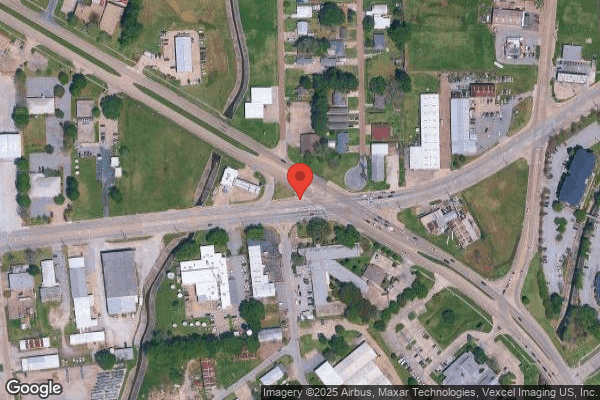

1005 ERASTE LANDRY ROAD, LAFAYETTE, LA 70506 (337) 232-6370
For profit - Limited Liability company 137 Beds PLANTATION MANAGEMENT COMPANY Data: November 2025
Trust Grade
70/100
#41 of 264 in LA
Last Inspection: June 2025

Inspected within the last 6 months. Data reflects current conditions.

Overview

Lady of the Oaks Retirement Manor has a Trust Grade of B, which indicates it is a good facility and a solid choice for care. It ranks #41 out of 264 facilities in Louisiana, placing it in the top half, and #2 out of 10 in Lafayette County, meaning only one nearby option is better. The facility has shown improvement, reducing its issues from 7 in 2024 to 5 in 2025. However, staffing is below average with a rating of 2 out of 5 stars and a turnover rate of 51%, which is concerning. While there have been no fines recorded, there are notable weaknesses, including incidents where staff did not follow infection control protocols for COVID-19 and failed to adhere to residents' care plans, such as neglecting dietary restrictions and proper meal assistance. Additionally, food safety issues were observed, with expired items in storage and lack of proper labeling. Overall, there are strengths in the facility's safety record and improvement trend, but families should be aware of the staffing challenges and specific care deficiencies.

Trust Score
B
70/100
In Louisiana
#41/264
Top 15%
Safety Record
Low Risk
No red flags
Inspections
Getting Better
7 → 5 violations
Staff Stability
⚠ Watch
51% turnover. Above average. Higher turnover means staff may not know residents' routines.
Penalties
✓ Good
No fines on record. Clean compliance history, better than most Louisiana facilities.
Skilled Nurses
⚠ Watch
Each resident gets only 9 minutes of Registered Nurse (RN) attention daily — below average for Louisiana. Fewer RN minutes means fewer trained eyes watching for problems.
Violations
⚠ Watch
23 deficiencies on record. Higher than average. Multiple issues found across inspections.
★★★★☆
4.0
Overall Rating
★★☆☆☆
2.0
Staff Levels
★★★☆☆
3.0
Care Quality
★★★★☆
4.0
Inspection Score
Stable
2024: 7 issues
2025: 5 issues

The Good

  • Full Sprinkler Coverage · Fire safety systems throughout facility
  • No fines on record

Facility shows strength in fire safety.

The Bad

Staff Turnover: 51%

Near Louisiana avg (46%)

Higher turnover may affect care consistency

Chain: PLANTATION MANAGEMENT COMPANY

Part of a multi-facility chain

Ask about local staffing decisions and management

The Ugly 23 deficiencies on record

Jun 2025 4 deficiencies
CONCERN (D)

Potential for Harm - no one hurt, but risky conditions existed

ADL Care (Tag F0677)

Could have caused harm · This affected 1 resident

**NOTE- TERMS IN BRACKETS HAVE BEEN EDITED TO PROTECT CONFIDENTIALITY** Based on observations, interviews, and record reviews, the facility failed to ensure that residents who were unable to carry out...

Read full inspector narrative →
**NOTE- TERMS IN BRACKETS HAVE BEEN EDITED TO PROTECT CONFIDENTIALITY** Based on observations, interviews, and record reviews, the facility failed to ensure that residents who were unable to carry out activities of daily living (ADLs) received assistance with incontinent care for 2 (#61 and #72) of 8(#3, #31, #43, #57, #61, #72, #82, and #92) residents investigated for ADL care. Findings: Resident #61 On 06/03/2025, a review of the facility's policy titled Incontinence Care Policy and Procedure effective 11/17/2015, read in part: Purpose .4. To prevent infection. Policy: Incontinence care will be performed as needed .11. Replace incontinence pad or apply disposable diaper as necessary. Review of Resident #61's Electronic Health Record revealed she was admitted to the facility on [DATE] with diagnoses which included, but were not limited to atherosclerosis of coronary artery bypass graft without angina pectoris, type 2 diabetes, and overactive bladder. Further review revealed a diagnosis of urinary tract infection with an onset date of 05/31/2025. Review of Resident #61's quarterly Minimum Data Set (MDS) dated [DATE], revealed in section C that the resident had a brief interview for mental status (BIMS) of 14, indicating her cognition was intact. Further review revealed in section H that the resident was frequently incontinent of urine and always incontinent bowel. Review of Resident #61's care plan revealed a focus area dated 12/21/2024 the resident requires staff assistance for ADL care and interventions which read in part, assist the resident with hygiene and grooming tasks. Further review revealed a focus area dated 06/01/2025 the resident has a urinary tract infection and interventions which read in part, check at least every 2 hours for incontinence. During an interview with Resident #61 on 06/02/2025 at 9:12 A.M., she stated that she was changed before she went to sleep last night (06/01/2025) and no one had changed her since then. The resident also stated that she had asked someone (unable to state who) who came in to change her roommate about an hour ago to ask her Certified Nurse Assistant (CNA) to come in and change her because her brief was wet and no one came. During an interview with S4CNA on 06/02/2025 at 9:17 A.M., she stated she started her shift at 6:00 A.M., and confirmed that she had not checked or changed Resident #61's incontinent brief. She further stated that no one told her the resident needed to be changed. During an interview with S2ADON (Assistant Director of Nursing) on 06/02/2025 at 9:36 A.M., she stated that CNAs are supposed to round on all their residents as soon as they start their shift. S2ADON stated that S4CNA should have known better. Resident #72 Resident #72 was admitted to the facility on [DATE], with diagnoses which included, but were not limited to Parkinson's disease without dyskinesia, benign prostatic hyperplasia, muscle weakness, difficulty in walking and other lack of coordination. Review of Resident #72's Annual Minimum Data Set (MDS) dated [DATE], revealed in section C that he had a brief interview for mental status (BIMS) of 14, indicating his cognition was intact. Further review revealed in section GG that the resident was dependent in toileting hygiene, and required substantial/maximal assistance in personal hygiene. Review of Resident #72's care plan revealed a focus area dated 11/13/2024 The resident requires staff assistance for ADL care r/t (related to) Parkinson's disease with interventions in part, assist the resident with hygiene . Further review revealed a focus area dated 11/13/2024 The resident has bladder incontinence, with interventions in part: Brief use: The resident uses disposable briefs .change PRN (as needed) check as required .Incontinent: Check as required for incontinence . During an observation of Resident #72 on 06/01/2025 at 9:53 A.M., the resident was lying in bed wearing a hospital gown. The resident stated that the last time a CNA (Certified nursing Assistant) checked his brief and changed him was around 5 A.M. Resident #72 was asked if he was wet and he stated, probably. On 06/01/2025 at 9:59 A.M., an observation of Resident #72 and an interview was conducted with S5LPN (Licensed Practical Nurse). She checked the resident's brief and stated it was wet, taped the wet brief back on the resident and told him she was going to get his CNA to change him. S5LPN stated that CNAs are supposed to round on their residents every 2 hours. During a follow-up interview with S5LPN on 06/03/2025 at 11:03 A.M., she stated that she should have changed Resident #72 on 06/02/2025 at 9:59 A.M. after she opened his brief to check him. S5LPN stated she did not think about it.
CONCERN (D)

Potential for Harm - no one hurt, but risky conditions existed

Safe Environment (Tag F0921)

Could have caused harm · This affected 1 resident

**NOTE- TERMS IN BRACKETS HAVE BEEN EDITED TO PROTECT CONFIDENTIALITY** Based on record review, observations, and interviews, the facility failed to provide a safe homelike environment for 1 (#100) ou...

Read full inspector narrative →
**NOTE- TERMS IN BRACKETS HAVE BEEN EDITED TO PROTECT CONFIDENTIALITY** Based on record review, observations, and interviews, the facility failed to provide a safe homelike environment for 1 (#100) out of 6 (#21, #24, #38, #61, #92, and #100) residents sampled for environment. Findings: A review of Resident #100's clinical record revealed she was admitted to the facility on [DATE] with diagnoses which included, but were not limited to, muscle weakness and Chronic Obstructive Pulmonary Disease. A review of Resident #100's admission MDS (Minimum Data Set) dated 03/07/2025 revealed a BIMS (Brief Interview for Mental Status) of 5, indicating her cognition was impaired. On 06/01/2025 at 9:06 A.M. an observation was conducted of Resident #100. A black wire was hanging down from the ceiling and over the resident's bed. The connector was exposed and near the resident while she was lying down in bed. Resident #100 stated the black wire has been like this since she moved into this room a few weeks ago. On 06/02/2025 at 2:36 P.M., a second observation was conducted of Resident #100's environment while she was lying in her bed. A black wire was hanging down from the ceiling and over the resident's bed. The plug in was exposed and near the resident while she was lying in bed. On 06/02/2025 at 3:16 P.M., an interview was conducted with S4CNA (Certified Nursing Assistant). S4CNA stated if there were any environmental concerns, they were instructed to notify the nurse and then put it in the maintenance log. An observation was conducted of Resident #100's environment with S4CNA. She confirmed there was a black wire hanging down from the ceiling, and the plug- in was exposed and near the resident while she was lying in bed. S4CNA was asked if she had noticed the black wire before this observation, and she stated its been there. Resident #100 stated that the wire had been there and sometimes it touched her when she laid in bed. S4CNA confirmed that she did not tell the nurse about the wire or put it in the maintenance log and should have. S4CNA confirmed this was not a homelike environment and the black wire should not have been exposed and near the resident. On 06/02/2025 at 3:17 P.M., an interview was conducted with S13MS (Maintenance Supervisor). He stated he was responsible for all repairs the facility requires regarding the environment, including checking residents' beds and anything electrical. He denied conducting rounds on residents' rooms periodically. He stated he fixed things that were listed on the maintenance log. An observation was conducted of Resident #100's room with S13MS. He confirmed that there was a black wire hanging from the ceiling that almost touched the resident's bed. He confirmed this was not a homelike environment, and the black wire should have been put in the ceiling and should not have been hanging down.
CONCERN (E)

Potential for Harm - no one hurt, but risky conditions existed

Comprehensive Care Plan (Tag F0656)

Could have caused harm · This affected multiple residents

**NOTE- TERMS IN BRACKETS HAVE BEEN EDITED TO PROTECT CONFIDENTIALITY** Based on records reviewed, observations, and interviews, the facility failed to ensure the resident's care plan and physician's ...

Read full inspector narrative →
**NOTE- TERMS IN BRACKETS HAVE BEEN EDITED TO PROTECT CONFIDENTIALITY** Based on records reviewed, observations, and interviews, the facility failed to ensure the resident's care plan and physician's orders were followed for 3 (#11, #91, and #102) of 34 sampled residents. This was evidenced when: 1. Facility staff failed to administer Resident #11, and Resident #102 their therapeutic diets as prescribed by the physician. 2. Facility failed to maintain right and left ear cushions to nasal cannula for Resident #91 3. Facility staff failed to ensure Resident #102 was assisted in meal set up per her comprehensive care plan, and failed to administer oxygen according to physician orders. Findings: Review of Resident #11's electronic clinical record revealed an admit date of 02/28/2022 with diagnoses that included encephalopathy, dementia, Alzheimer's disease, and dysphagia, oropharyngeal phase. Review of Resident #11's physician orders dated June 2025 revealed the following order: No added salt (NAS) pureed texture, nectar/mildly thick consistency. Review of the resident's care plan initiated 05/03/2022 read in part: resident is on a mechanical soft, NAS diet. Interventions read in part: provide/serve diet as ordered. On 06/02/2025 at 8:35 A.M., an observation of Resident #11's breakfast tray was conducted. The resident was observed eating grits, pureed scrambled eggs, pureed sausage, thickened lemon water, and milk that was not thickened. On 06/02/25 at 8:46 A.M., an observation and immediate interview was conducted with S5LPN (Licensed Practical Nurse) who stated that the milk was not the correct consistency according to the physician orders, and that the milk should have been thickened. On 06/03/2025 at 10:46 a.m. A.M., an interview was conducted with S6DM (Dietary Manager) who stated Resident #11, and was on a puree, nectar thickened liquid diet. She stated when food trays go on the hall, it was the responsibility of the certified nursing assistant to ensure the residents were receiving the correct diet and the correct fluids. Resident #102 Review of Resident #102's electronic clinical record revealed an admit date of 05/02/2025 with diagnoses which included alcoholic cirrhosis of liver with ascites, dyspnea, and chronic kidney disease stage 5. Review of Resident #102's physician's orders dated June 2025 read in part: Renal (Dialysis) diet regular texture. Further review revealed an order for oxygen via nasal cannula at 3 liters. Review of the resident's care plan dated 05/02/2025 read in part: resident requires staff assistance for Activities of Daily Living (ADL) care. Interventions included in part: assist the resident with their meal tray set up. Further review of the resident's care plan revealed the following: Oxygen therapy, with an interventions for oxygen via nasal cannula at 3 Liters continuous. On 06/01/2025 at 9:00 A.M., an interview was conducted with Resident #102's responsible party who stated that the resident had not received her breakfast tray. On 06/01/2025 at 9:33 A.M., an interview was conducted with S8CNA (Certified Nursing Assistant) who stated that Resident #102's breakfast tray was left on the food cart. She stated that the CNA who distributed the food trays was distracted by another resident and had forgotten to setup the breakfast tray for the resident. On 06/01/2025 at 9:35 A.M., S8CNA was observed assisting Resident #102 with her breakfast meal and giving her orange juice to drink. On 06/01/2025 at 9:40 A.M., an observation and immediate interview was conducted with S7LPN (Licensed Practical Nurse) who confirmed Resident #102 was on a renal diet and should not have been served orange juice. On 06/03/2025 at 11:25 A.M., an interview was conducted with S6DM who confirmed that the resident was on a renal diet, and should not have had orange juice on her meal tray. On 06/02/2025 at 7:35 A.M., an observation was conducted in Resident #102's room. The resident was observed lying in bed, awake, and alert. Further review revealed her oxygen concentrator machine was off, and the resident was not wearing her oxygen. On 06/02/2025 at 8:35 A.M., a second observation was conducted in the resident's room. The resident was alert, and awake. Further review revealed the oxygen concentrator was still off and, she was not wearing her oxygen as ordered by the physician. On 06/02/2025 at 10:14 A.M., a third observation of the resident was conducted in her room. The resident's responsible party was at the bedside. The resident was alert, and confused. On 06/02/2025 at 11:49 A.M., S11CNA checked Resident #102's oxygen saturation level which was 88% (percent) on room air. On 06/02/2025 at 11:56 A.M., S12LPN rechecked Resident #102's oxygen saturation level which was 84% on room air. After S12LPN applied the oxygen to the resident at 3 liters via nasal cannula, her oxygen saturation level increased to 94%. On 06/02/2025 at 2:35 P.M., an interview was conducted with S12LPN who stated Resident #102 had not had her oxygen on, and she should have had her oxygen on. Resident # 91 Review of Resident #91's admission Record revealed she was admitted to the facility on [DATE] with diagnoses that included in part, chronic obstructive pulmonary disease, acute respiratory failure with hypoxia and shortness of breath. Review of Resident #91's Order Summary Report revealed the following order dated 08/14/2024, Maintain right/left ear cushion q (every) shift to nasal cannula every shift. Review of Resident #91's Care Plan Report revealed the following in part, the resident has oxygen therapy r/t (related to) ineffective gas exchange. Interventions included in part, maintain bilateral ear cushions to nasal cannula. On 06/02/2025 at 11:29 A.M., an observation was conducted with Resident #91 in her room. Resident #91 was wearing a nasal cannula. There were no ear cushions were noted to the right or left side of nasal cannula. On 06/02/2025 at 12:21 P.M., a second observation was conducted with Resident #91 in her room. Resident #91 was wearing a nasal cannula. There were no ear cushions were noted to the right or left side of nasal cannula. On 06/02/2025 at 1:42 P.M., a third observation was conducted with Resident #91 in her room. Resident #91 was wearing a nasal cannula. There were no ear cushions were noted to the right or left side of nasal cannula. On 06/02/2025 at 2:09 P.M., an interview, record review and observation of Resident #91 was conducted with S10LPN (Licensed Practical Nurse). S10LPN confirmed that Resident #91 had a physician's order to maintain right and left ear cushions to nasal cannula. S10LPN confirmed that resident did not have right and left ear cushions on her nasal cannula.
CONCERN (E)

Potential for Harm - no one hurt, but risky conditions existed

Food Safety (Tag F0812)

Could have caused harm · This affected multiple residents

Based on observations, and interview, the facility failed to store food in accordance with professional standards for food service, and ensure sanitary conditions were maintained in the kitchen as evi...

Read full inspector narrative →
Based on observations, and interview, the facility failed to store food in accordance with professional standards for food service, and ensure sanitary conditions were maintained in the kitchen as evidenced by: 1. opened food items in the walk-in cooler not labeled with the date and time, name of food; and 2. expired food in the walk-in cooler and walk-in deep freezer. This facility had a census of 106 residents. Findings: On 06/01/2025, a review of the facility's policy titled, Storage of Refrigerated Food, with a last revision date of July 2012, revealed in part . Policy Statement: The facility ensures the quality and safety of refrigerated foods through accepted storage practices. Procedure: .4. All non-hazardous, opened foods are labeled name of food and date stored. 5. All hazardous foods are labeled with name of food and date to be discarded or date stored . On 06/01/2025, a review of the facility's policy titled, Storage of Frozen Food, with a last revision date of July 2012, revealed in part . Policy Statement: The facility ensures the quality and safety of frozen foods through accepted storage practices. Procedure .5. Food taken out of original containers is put in a clean, sanitized container with a tight fitting lid. No food is left uncovered .9. Frozen foods are used or discarded on or before the expiration date . On 06/01/2025 at 8:33 A.M., a tour of the facility's kitchen was conducted with S1DS (Dietary Supervisor), who stated that she was responsible for the day to day management of the kitchen. On 06/01/2025 at 8:45 A.M., an observation of the walk-in cooler was conducted with S1DS and revealed the following items were opened and not labeled with the date and time they were opened: a large container of mayonnaise, a large bag of sliced cheddar cheese, a large bag of shredded cheddar cheese, a carton of whole milk, and a large bag of shredded lettuce. The lettuce was observed with discoloration and texture changes that indicated the food was spoiled. Further review of the walk in cooler revealed the following items: two plastic gallon bags of taco shells dated 05/18/2025, and a tray of small covered plastic containers of red liquid that was not labeled, dated 05/24/2025. At that time, S1DS confirmed the food items listed above were opened, and not labeled with the date and time they were opened, and should have been. She also confirmed the shredded lettuce, taco shells, and tray of red liquid was spoiled/expired and should have been discarded. On 06/01/2025 at 8:52 A.M., an observation of the walk-in freezer was conducted with S1DS and revealed the following: a plastic gallon bag with an opened bag of hash browns with an expiration date of 03/11/2025, and a large, unsealed, bag of cut okra with an expiration date of 05/07/2025. At that time, S1DS confirmed the food items listed above were expired and should have been discarded.
Feb 2025 1 deficiency
CONCERN (D) 📢 Someone Reported This

A family member, employee, or ombudsman was alarmed enough to file a formal complaint

Potential for Harm - no one hurt, but risky conditions existed

Free from Abuse/Neglect (Tag F0600)

Could have caused harm · This affected 1 resident

**NOTE- TERMS IN BRACKETS HAVE BEEN EDITED TO PROTECT CONFIDENTIALITY** Based on interviews and record review, the facility failed to protect the residents' rights to be free from neglect by failing t...

Read full inspector narrative →
**NOTE- TERMS IN BRACKETS HAVE BEEN EDITED TO PROTECT CONFIDENTIALITY** Based on interviews and record review, the facility failed to protect the residents' rights to be free from neglect by failing to provide incontinence care for a dependent resident for 1 (#3) resident out of 3 (#1, #2, #3) sampled residents. Findings: Review of the facility's policy titled Abuse- Prevention and Prohibition Policy and Procedure with a last reviewed date of 03/25/2023 read in part 6. Neglect means failure of the facility, its employees or service providers to provide adequate medical care or goods and services to a resident to avoid, physical harm, pain, mental anguish, or emotional distress. Review of Resident #3's medical record revealed she was admitted to the facility on [DATE] with diagnoses including hemiplegia and hemiparesis following cerebral infraction affecting left non dominant side and aphasia following cerebral infarction. Review of Resident #3's quarterly MDS (Minimum Data Set) assessment dated [DATE] revealed the resident had a BIMS (Brief Interview for Mental Status) score of 15, indicating she was cognitively intact. Further review of the residents MDS assessment Section GG- Functional Abilities revealed the resident was coded as dependent and required the assistance of 2 or more staff for toileting. Review of Section H - Bowel and Bladder revealed the resident was always incontinent of bowel and bladder. Review of Resident #3's care plan initiated on 07/16/2024 revealed the resident required staff assistance for ADL (Activities of Daily Living) care with an intervention to assist the resident with hygiene and grooming tasks. Review of a grievance form dated 01/24/2025 completed by S2ADON (Assistant Director of Nursing) on behalf of Resident #3 revealed the following in part: On 01/23/2025, resident crying in room at approx. (approximately) 2:20 p.m.; asked resident to help describe issue by picture board or nod yes or no during questioning when trying to find out cause of resident crying. When asked if CNA (Certified Nursing Assistant) upset her she nodded yes. When asked if CNA left her wet during shift she nodded yes. Steps taken to investigate complaint: Watched facility camera, CNA did not make rounds on resident for over four hours .Summary of Pertinent Findings or Conclusions Regarding Concerns: CNA assigned to hall was S3CNA. CNA assisted resident at 9:44 a.m., and did not make scheduled 2 hr (hour) rounds. CNA went in room at 1:29 p.m. and turned light off and left room and did not return. On 02/17/2025 at 12:40 p.m., an interview was conducted with S3CNA who confirmed that she cared for Resident #3 on 01/23/2025 from 6:00 a.m.-2:00 p.m. She stated that later in the shift, the resident called for her incontinence brief to be changed, but she had no help at the time. She then explained to the resident that because she required two person assistance, she would have to get help. She turned off the call light alert in the room, exited the resident's room, and continued to complete other tasks. S3CNA stated she had gotten side-tracked as other lights were going off, and did not go back to change Resident #3. S3CNA further stated she could have asked the nurse she observed on the hallway passing medications, the DON (Director of Nursing), ADON (Assistant Director of Nursing), or other CNAs from other halls for assistance, but did not. S3CNA stated she did not go back to change the resident before clocking out at the end of her shift. On 02/17/2025 at 2:56 p.m., an interview was conducted with S2ADON (Assistant Director of Nursing) who confirmed she investigated Resident #3's grievance. Through video evidence, it was revealed S3CNA went into the resident's room at 9:44 a.m., and did not go back to the resident's room to complete two hour rounds as she was supposed to do. Also, she went into the resident's room at 1:29 p.m., turned off the call light alert, and left the room and did not return. S2ADON further stated that S3CNA told her that she was completing other tasks, did not change Resident #3, and failed to go back and change the resident before clocking out. S2ADON confirmed S3CNA was not the only CNA on the hall that shift, and another CNA or the nurse was available to assist her. On 02/17/2025 at 3:05 p.m., an interview was conducted with Resident #3. Resident #3 was nonverbal. When asked if S2ADON spoke with her about a CNA (S3CNA) leaving her wet in January 2025, she nodded yes. She also nodded yes when asked if she had to wait for extended periods of time to be changed. Resident #3 nodded yes when asked if she was upset when the S3CNA didn't come back to change her, and nodded yes when asked if that made her sad. When asked if things had improved after making the complaint with the facility, Resident # 3 shook her head no. On 02/18/2025 at 3:25 p.m., a joint interview was conducted with S1DON (Director of Nursing) and S2ADON. Both S1DON and S2ADON stated that CNAs were required to round on residents every two hours, and that S3CNA should have rounded on the resident again after her initial rounds at 9:44 a.m. They also acknowledged that when Resident #3 called to be changed at 1:29 p.m., S3CNA should not have turned the call light off in the resident's room until the task was completed. S1DON stated the CNAs were trained to leave the call light on until the task was complete so that if the task could not be completed, another staff member would be alerted that the resident still needed assistance. On 2/18/2025 at 3:25 p.m., and interview was conducted with S4CNA who stated that she worked on 01/23/2025 as a floater CNA. She stated that she was available to assist any of the nurses, CNAs, or residents if they asked for help. On 02/18/2025 at 3:35 p.m., an interview was conducted with S5LPN (Licensed Practical Nurse). S5LPN stated that she was Resident #3's nurse on 01/23/2025. She stated that she overheard S3CNA being informed that Resident #3's light was on for assistance, however S3CNA did not ask her for assistance with changing the resident. She was then told that Resident #3 had not been changed, and was informed that S3CNA had clocked out prior to changing Resident #3's soiled brief.
Apr 2024 7 deficiencies
CONCERN (D)

Potential for Harm - no one hurt, but risky conditions existed

Assessment Accuracy (Tag F0641)

Could have caused harm · This affected 1 resident

**NOTE- TERMS IN BRACKETS HAVE BEEN EDITED TO PROTECT CONFIDENTIALITY** Based on record review and interview, the facility failed to ensure the resident's Minimum Data Set (MDS) was completed accurate...

Read full inspector narrative →
**NOTE- TERMS IN BRACKETS HAVE BEEN EDITED TO PROTECT CONFIDENTIALITY** Based on record review and interview, the facility failed to ensure the resident's Minimum Data Set (MDS) was completed accurately for 1 (#77) out of 33 sampled residents. Findings: Review of Resident #77's electronic health record revealed she was admitted to the facility on [DATE] with diagnoses that included but not limited to, Cerebral Infarction, Hemiplegia affecting left non dominant site, Restlessness and agitation, Generalized Anxiety Disorder, Other lack of Coordination, Cognitive communication deficit, Muscle Weakness. Review of Resident #77's electronic health record revealed on 02/18/2023, a physician order to Maintain bed alarm q (every) shift. Review of Resident #77's Quarterly MDS assessment with an ARD (Assessment Reference Date) of 01/17/2024 revealed in Section P - Restraints- Bed alarm was coded as 0 that indicated Resident #77 had no bed alarm in use. On 04/11/2024 at 10:45 a.m., an interview and record review was conducted with S8MDS (Minimum Data Set) Lead Coordinator She reviewed Resident #77's Quarterly MDS with an ARD of 01/17/2024 and confirmed that it was inaccurately coded for the use of a bed alarm.
CONCERN (D)

Potential for Harm - no one hurt, but risky conditions existed

Comprehensive Care Plan (Tag F0656)

Could have caused harm · This affected 1 resident

**NOTE- TERMS IN BRACKETS HAVE BEEN EDITED TO PROTECT CONFIDENTIALITY** Based on observations, interviews and record reviews, the facility failed to develop and/or implement a person centered care pla...

Read full inspector narrative →
**NOTE- TERMS IN BRACKETS HAVE BEEN EDITED TO PROTECT CONFIDENTIALITY** Based on observations, interviews and record reviews, the facility failed to develop and/or implement a person centered care plan by failing to: 1. Ensure staff repositioned Resident #47 every 2 hours. 2. Develop a plan of care for the use of hand rolls for Resident #72. 3. Ensure Resident #77's bed alarm was in proper working condition. This deficient practice had the potential to affect all the residents who reside in the nursing home. Findings: 1. Resident#47 was admitted to the facility on [DATE] with a diagnoses including Muscle Weakness, Unspecified osteoarthritis, Pain, Other malaise, Dementia, unspecified severity, without behavior/psychosis/mood/anxiety. Review of the resident's care plan with a start date of 08/29/2021 revealed that she was high risk for skin breakdown r/t (related to) DM2 (Diabetes Mellitus II), Occasional Incontinence. Interventions included in part . Place me on the turn q (every) 2hr (hours) turn program. Further review of the resident's care plan revealed she required staff assistance with bed mobility. On 04/09/2024 at 08:45 a.m., Resident #47 was observed in bed lying on her back. A second observation was conducted at 10:45a.m. and the resident observed in bed lying on her back. A third observation was made at 1:00p.m. and Resident #47 was observed still lying in bed on her back. She stated that no one had turned her. An interview was conducted on 04/09/2024 at 1:15p.m.n with S6CNA. She stated that she, along with S7CNA were responsible for Resident #47's care. She stated she was familiar with the resident. She stated that staff do not have to turn the resident because she turns herself. A phone interview was conducted on 04/09/2024 at 2:10 p.m. with S7CNA. She stated that she was assigned the side of the hall Resident #47 was located from 6 a.m. to 12 p.m. because the regular scheduled CNA (Certified Nursing Assistant) called in. She stated she gave the resident a bed bath this morning between 8:30 a.m. and 9:00 a.m. After the bed bath, she positioned the resident on her back. She stated that she was aware that the resident needed to be turned every two hours. She confirmed that she had not turned/repositioned the resident during her shift. An interview was conducted on 04/11/2024 AM with S1DON (Director of Nursing). After reviewing the resident's care plan, she verified that the resident needs assistance with turning and repositioning. She confirmed that the staff should have been turned/repositioned the resident at least every two hours. 2. Review of Resident #72's electronic health record revealed he was admitted to the facility on [DATE] with diagnoses which included, but were not limited to, Dementia, Acute Kidney Failure, Epilepsy, Muscle Weakness, and Lack of Coordination. Review of Resident #72's April 2024 physician's orders revealed an order dated 08/30/2022 for Right Hand: Maintain hand roll as tolerated, may remove for ADLs (Activities of Daily Living) and/or split use. Review of Resident #72's care plan read in part ADLs .I require staff assistance for ADLs r/t (related to) Dementia, Epilepsy . I am mobile via staff propelled geri chair, I prefer to stay in bed. I have contractures to arms and legs. Further review of Resident #72's care plan revealed no interventions to include Right Hand: Maintain hand roll as tolerated. On 04/11/2024 at 11:47 a.m., an interview was conducted with S4MDS (Minimum Data Set Nurse) who stated that she was responsible for completing and updating the care plan for Resident #72. A review of the resident's care plan was conducted with S4MDS. S4MDS confirmed that Resident #72's care plan did not include that the resident had an order for right hand roll as tolerated. S4MDS confirmed the care plan should have been developed to include the intervention for right hand roll. 3. Resident #77 was admitted on [DATE]. Her diagnoses included in part, Cerebral Infarction (Stroke), Hemiplegia following cerebral infarct affecting left non-dominant site, Restlessness and agitation, Aphasia, Generalized anxiety disorder and Muscle weakness (generalized). Review of the resident's quarterly MDS (Minimum Data Set) with an ARD (Assessment Reference Date) of 01/17/2024 revealed the resident's BIMS (Brief Interview Mental Status) score was 15, cognitively intact. Review of the resident's April 2024 physician orders revealed an order dated 02/18/2023 that read, bed alarm q shift. Review of the resident's care plan addressed the resident's risk for falls and risk for injury/immobility. A bed alarm was used as an intervention that read, Check my device daily to make sure it is in good working condition . On 04/08/24 at 12:12 p.m., Resident #77 was observed lying in bed. Her bed alarm was observed hanging from the bed's right upper side rail. The wire connected to the alarm box was freely hanging and frayed on one end. Resident #77 communicated by nodding her head up and down that her bed alarm was not working. On 04/08/24 at 1:06 p.m., an interview with S5CNA (Certified Nursing Assistant). She verified that the resident should have a bed alarm. She observed the resident's bed alarm and confirmed that the wire had been cut. She stated the bed alarm wire should be connected to a bed alarm mat. S5CNA turned the resident on her right side and confirmed that there was no bed alarm mat under the resident. She confirmed that the bed alarm was not functioning correctly. On 04/08/24 at 1:14 p.m., an interview and observation with S1DON (Director of Nursing) was conducted. S1DON observed the bed alarm with the frayed wire on the resident's bed side rail. She verified that the bed alarm should be connected to a bed alarm mat under the resident. S1DON and another staff member turned the resident on her left side and then on her right side. S1DON confirmed that there was no bed alarm mat present under the resident. She stated that the bed alarm should be monitored by the nurses every shift to ensure it was working properly. She confirmed that the resident's bed alarm was not functioning properly.
CONCERN (D)

Potential for Harm - no one hurt, but risky conditions existed

Tube Feeding (Tag F0693)

Could have caused harm · This affected 1 resident

**NOTE- TERMS IN BRACKETS HAVE BEEN EDITED TO PROTECT CONFIDENTIALITY** Based on record review, observations and interview, the facility failed to ensure that a resident's enteral feeding was properly...

Read full inspector narrative →
**NOTE- TERMS IN BRACKETS HAVE BEEN EDITED TO PROTECT CONFIDENTIALITY** Based on record review, observations and interview, the facility failed to ensure that a resident's enteral feeding was properly changed for 1 (#61) resident out of 1 (#61) sampled resident reviewed for tube feeding. Findings: Review of Resident #61's electronic health record revealed she was admitted to the facility on [DATE] with diagnoses which included, but were not limited to, Traumatic Subdural Hematoma, Alzheimer's Disease, Abnormal Weight Loss, Aphasia, Dysphagia, Other Epilepsy, Gastro-Esophageal Reflux Disease, and Gastrostomy status. Review of Resident #61's April 2024 physician's orders revealed an order dated 02/01/2024 that read in part, . Isosource 1.5 at 45 ml/hr (milliliter per hour) continuously . On 04/08/2024 at 9:35 a.m., an observation of Resident #61's tube feeding bag and administration set revealed the formula bag label listed a date of 04/07, and a time of 8:00 a.m. On 04/08/2024 at 12:35 p.m., a second observation of Resident #61's tube feeding bag and administration set revealed the formula bag label listed a date of 04/07, and a time of 8:00 a.m. On 04/08/2024 at 12:37 p.m., an interview was conducted with S3LPN (Licensed Practical Nurse). S3LPN stated that tube feeding bags are changed every 24 hours and should be labeled with the formula type and rate, the resident's name, date, time and nurse's initial. An observation was made with S3LPN of Resident #'s 61's tube feeding bag. S3LPN confirmed the resident's feeding bag was dated 04/07 and confirmed the bag was not changed every 24 hours. S3LPN called S1DON (Director of Nursing) on her personal cell, and S1DON confirmed that tube feeding bags are changed every 24 hours and the bag should have been changed before 8:00 a.m. on 04/08/2024.
CONCERN (D)

Potential for Harm - no one hurt, but risky conditions existed

Deficiency F0726 (Tag F0726)

Could have caused harm · This affected 1 resident

**NOTE- TERMS IN BRACKETS HAVE BEEN EDITED TO PROTECT CONFIDENTIALITY** Based on record review and interviews the facility failed assure the nursing staff were competent to ensure 1 (#3) of 33 sampled...

Read full inspector narrative →
**NOTE- TERMS IN BRACKETS HAVE BEEN EDITED TO PROTECT CONFIDENTIALITY** Based on record review and interviews the facility failed assure the nursing staff were competent to ensure 1 (#3) of 33 sampled residents that was allergic to morphine did not receive this medication. Record review of Resident #3's face sheet (document that gives a resident's information at a quick glance) revealed she was admit to the facility on [DATE]. She was on Hospice care with diagnosis of End Stage Parkinson's disease. Her face sheet further revealed she was allergic to the medication, Morphine. Record review of Resident #3's care plan read in part, I am at risk for complications r/t (related to) my allergy. I am allergic to MORPHINE. I have no complications at this time r/t my allergy. My clinical record will be labeled to alert everyone to my allergies. Record review of Resident #3's physician orders revealed she was admitted to Hospice on 02/06/2024. On 03/04/2024, Morphine Sulfate 100 milligrams per 5 milliliter concentration to give 0.25 milliliters orally every 4 hours as needed for shortness of breath was ordered. Record review of Resident #3's MAR (Medication Administration Record) for February 2024, March 2024 and April 2024 revealed an order for Morphine Sulfate to administer 100 milligrams per 5 milliliter Concentrated to give 0.25 milliliters orally every 4 hours as needed for shortness of breath. Review of these MARs confirmed S12LPN, S13LPN, and S14LPN had administered Resident #3 Morphine Sulfate on various days during all three months. On 04/09/24 at 2:37 p.m., S12LPN stated the resident is on Hospice and is not cognizant and does not respond to verbal stimulation. She stated she gave the resident morphine for pain and discomfort at least once a day. S12LPN stated the hospice nurse told her to give her morphine to keep her comfortable as needed. On 04/11/2024 at 10:52 a.m., surveyor asked S12LPN how she would determine if Resident #3 was allergic to Morphine. She stated the resident's allergies were on the residents face sheet and on the MAR. At this time, S12LPN reviewed the MAR and stated Resident #3 was allergic to Morphine. S12LPN stated the nurses have gave Resident #3 morphine from February 2024 till present but has had no adverse effects to the Morphine. On 04/11/2024 at 11:02 a.m., S9MDS (Minimum Data Set) reviewed Resident #3's electronic record and confirmed the hospice physician wrote an order to administer Morphine as needed for shortness of breath on 03/04/2024. S9MDS reviewed the resident's electronic chart and confirmed the resident was allergic to Morphine. She stated the allergy to morphine was documented in the computer and on the Medication Administration Record. She also stated Resident #3's care plan listed that she was allergic to Morphine. She stated the nurses should have reviewed the allergies before giving the resident Morphine and notified the physician to get a clarification order prior to giving the medication. On 04/11/2024 at 2:02 p.m., S2DON (Director of Nursing) confirmed Resident #3 was allergic to Morphine and that nurses had administered it to the resident morphine despite the listed allergy. She stated the procedure for administering medications should have included reviewing the resident's allergies at the top of MAR to assure the resident was not allergic to the medications prior to administration. She also stated that nurse's should call the physician to get a clarification if the resident was ordered medication to which they were allergic.
CONCERN (D)

Potential for Harm - no one hurt, but risky conditions existed

Deficiency F0727 (Tag F0727)

Could have caused harm · This affected 1 resident

Based on record review and interview, the facility failed to ensure a Registered Nurse (RN) provided services for 8 consecutive hours a day, on a weekend for 2 days on the dates of 10/21/2023 and 10/2...

Read full inspector narrative →
Based on record review and interview, the facility failed to ensure a Registered Nurse (RN) provided services for 8 consecutive hours a day, on a weekend for 2 days on the dates of 10/21/2023 and 10/22/2023. Findings: Review of the facility's PBJ (Payroll Based Journal) Data time sheet for the dates of 10/21/2023 and 10/22/2023 revealed that there were no staffing hours for the RN. There was no evidence the RN worked 8 consecutive hours on those dates. On 04/11/2024 at 1:40 p.m., an interview was conducted with S1DON (Director of Nursing). She reviewed the PBJ Data time sheets and confirmed that there were no staffing hours for the RN for the dates of 10/21/2023 and 10/22/2023. S1DON stated that she could not provide evidence that an RN worked on the dates of 10/21/2023 and 10/22/2023.
CONCERN (D)

Potential for Harm - no one hurt, but risky conditions existed

Deficiency F0849 (Tag F0849)

Could have caused harm · This affected 1 resident

**NOTE- TERMS IN BRACKETS HAVE BEEN EDITED TO PROTECT CONFIDENTIALITY** Based on record review and interview, the facility failed to coordinate care as evidenced by failing to obtain pertinent informa...

Read full inspector narrative →
**NOTE- TERMS IN BRACKETS HAVE BEEN EDITED TO PROTECT CONFIDENTIALITY** Based on record review and interview, the facility failed to coordinate care as evidenced by failing to obtain pertinent information from the hospice agency for 1 (#152) out of 2 (#3, #152) residents investigated for hospice. Findings: Resident #152. Review of the resident's electronic clinical record revealed the resident was admitted to the facility on [DATE]. The resident's diagnoses included Cerebral Infarction and Pneumonitis due to Inhalation of Food and Vomit. Review of the resident's clinical record revealed that there was no evidence of a hospice election form, no hospice plan of care and no evidence of the physician's certification of the resident's terminal illness. On 04/11/2024 at 9:15 a.m., S2ADON (Assistant Director of Nursing) reviewed the resident's clinical record and confirmed that there was no evidence of a hospice election form, no hospice plan of care and no physician's certification of the resident's terminal illness available in the clinical record.
CONCERN (D)

Potential for Harm - no one hurt, but risky conditions existed

Safe Environment (Tag F0921)

Could have caused harm · This affected 1 resident

Based on observation and interview, the facility failed to maintain cleanliness of medication carts for 1 (MC#1) of 4 (MC1, MC2, MC3, MC4) medication carts observed. Findings: On 04/09/2024 at 9:59 a...

Read full inspector narrative →
Based on observation and interview, the facility failed to maintain cleanliness of medication carts for 1 (MC#1) of 4 (MC1, MC2, MC3, MC4) medication carts observed. Findings: On 04/09/2024 at 9:59 a.m., an observation of MC1 (Medication Cart) with S7LPN (Licensed Practical Nurse) revealed the left 2 lower drawers of the medication cart contained bottles of medication in plastic bags. In the second to last drawer, there were 4 bottles of medication in plastic bags. The bags were stuck to the bottom of the drawer and around the bottles. The bottom of the drawer was covered with a reddish gold sticky substance. When the bottles and plastic bags were picked up, the thick, sticky liquid stuck to the surveyor's fingers. In the bottom drawer, there were 3 bottles of medication in plastic bags. The plastic bags were stuck to the bottles of medication and the bottom of the drawer was covered with a thick reddish sticky substance. S1DON was called to MC1 and she confirmed that the left two lower drawers of the medication cart were not clean and sanitary and needed to be cleaned.
Sept 2023 1 deficiency
CONCERN (F) 📢 Someone Reported This

A family member, employee, or ombudsman was alarmed enough to file a formal complaint

Potential for Harm - no one hurt, but risky conditions existed

Infection Control (Tag F0880)

Could have caused harm · This affected most or all residents

**NOTE- TERMS IN BRACKETS HAVE BEEN EDITED TO PROTECT CONFIDENTIALITY** Based on observation, record review, and interview, the facility failed to maintain an infection prevention and control program ...

Read full inspector narrative →
**NOTE- TERMS IN BRACKETS HAVE BEEN EDITED TO PROTECT CONFIDENTIALITY** Based on observation, record review, and interview, the facility failed to maintain an infection prevention and control program designed to help prevent the spread of Coronavirus Disease-2019 (COVID-19) as evidenced by staff not putting on the required Personal Protective Equipment (PPE) before entering isolation rooms. This deficient practice had the potential to affect a census of 100 residents. Findings: Review of the facility's policy titled Isolation Policy and Procedure read in part .4. Droplet Precautions: b. Gloves, gown, mask, and goggles are to be utilized for all interactions that may involve contact with the resident. Resident #3 was admitted to the facility on [DATE] with diagnoses including Urinary Tract Infection and Other Abnormalities of Breathing. Resident #3 was placed in droplet isolation due to COVID- 19 on 09/24/2023, and was scheduled to be removed from isolation on 10/05/2023. Resident #4 was admitted to the facility on [DATE] with diagnoses including Burn of Second Degree of Right Foot and Type 2 Diabetes Mellitus. Resident #4 was placed in droplet isolation due to COVID-19 on 09/24/2023, and was scheduled to be removed from isolation on 10/05/2023. Resident R1 was admitted to the facility on [DATE] with diagnoses including Chronic Obstructive Pulmonary Disease and Heart Failure. Resident #R1 was placed in droplet isolation due to COVID- 19 on 09/24/2023, and was scheduled to be removed from isolation on 10/05/2023. Resident R2 was admitted to the facility on [DATE] with diagnoses including Unspecified Systolic Heart Failure and Acute Upper Respiratory Infection. Resident R2 was placed in droplet isolation due to COVID-19 on 09/24/2023, and was scheduled to be removed from isolation on 10/05/2023. On 09/25/2023 at 11:23 a.m., an observation was made of S2CNA (Certified Nursing Assistant) distributing beverages to residents on Hall A. S2CNA stopped in front of the shared room of Resident #3 and Resident #4 with the beverage cart. On the outside of the room, there was a sign that read in part Isolation/Droplet Precautions: Wear full PPE to enter this room (N-95 mask, cotton mask overlay, gown, face shield, gloves). S2CNA then went into the shared room of Resident #3 and Resident #4 with beverages in hand. She did not put on a gown or face shield before entering the room. S2CNA placed the residents' beverages on their bedside tables and exited the room. Upon exiting the room, S2CNA was asked if she was supposed to wear PPE including a gown and face shield when entering into a resident's room that was in isolation. S2CNA stated that she did not have to wear PPE because she did not have direct contact with the residents. She stated that she placed the beverages on the resident's bedside tables, but she wore gloves. S2CNA then went into the shared room of Resident #R1 and #R2, who were also in droplet isolation. She placed beverages on the residents' bedside tables. S2CNA did not put on a gown or face shield before entering Resident #R1 and Resident #R2's room. On 09/26/2023 at 8:39 a.m., an interview was conducted with S1IP (Infection Preventionist) who stated anyone that went into isolation rooms were to wear full PPE as designated on isolation signs. S1IP confirmed that when CNAs delivered meal trays and beverages to residents who were in droplet isolation, they were to wear to full PPE including gown and face shield.
Jul 2023 2 deficiencies
CONCERN (D) 📢 Someone Reported This

A family member, employee, or ombudsman was alarmed enough to file a formal complaint

Potential for Harm - no one hurt, but risky conditions existed

Comprehensive Care Plan (Tag F0656)

Could have caused harm · This affected 1 resident

Based on records reviewed, interview, and observation, the facility failed to ensure the resient's care plan and physician's ordered were followed for 1 (#5) of 5 (#1-#5) sampled residents. This was e...

Read full inspector narrative →
Based on records reviewed, interview, and observation, the facility failed to ensure the resient's care plan and physician's ordered were followed for 1 (#5) of 5 (#1-#5) sampled residents. This was evidenced when: 1. Facility staff failed to use a communication board and ensure Resident #5's eyeglasses were available per the resident's care plan; 2. S6LPN failed to implement an order for accuchecks (blood sugar checks) upon readmission to the facility; and 3. S7LPN failed to implement a medication, Pyridium, as ordered on 06/15/2023. Findings: Review of Resident #5's electronic clinical record revealed an admit date of 01/30/2023 with diagnoses that included Hemiplegia Following Cerebral Infarction Affecting Left Non Dominant Side, Urinary Tract Infection (UTI), Aphasia Following Cerebral Infarction, Anxiety, Cognitive Communication Deficit and Type 2 Diabetes Mellitus. Review of Resident #5's quarterly (Q) Minimum Data Set (MDS) Assessment revealed the resident had a Brief Interview for Mental Status (BIMS) score of 14 indicating the resident had intact cognition. 1. Review of the resident's electronic clinical record revealed the resident was care planned for having difficulty r/t (related to) aphasia following CVA (Stroke), resident able to nod/shake head to respond to questions appropriately w (with)/ interventions in part .Ensure glasses are clean and available, provide me with writing materials/exchange of written notes and need to be provided with a communication tool On 07/25/2023 at 9:45 a.m., Resident #5 was observed in bed, awake and watching TV with the head of bed elevated. Resident nodded yes when asked her name and nodded yes when asked if she ate breakfast. The resident's bedside table was positioned over her bed and there was no communication tool observed nor were there eyeglass observed. On 07/25/2023 at 9: 48 a.m., S8CNA (Certified Nursing Assistant) entered the resident's room and surveyor asked S8CNA where resident's communication board and glasses were and she stated I just came in here to answer the call bell; I'm not her CNA and she exited the room with the resident's room door opened and met up with S9CNA outside of the resident's room. S8CNA asked S9CNA where the resident's communication board was located and S9CNA replied I don't know what that is and therapy was nearby and overhead the CNAs conversation and entered Resident's room to speak with surveyor. On 07/25/2023 at 9:50 a.m., S4Therapy reported staff were not using the communication board because the resident was not consistent on answering the questions appropriately and was not sure why the resident's care plan included the communication board. On 07/25/2023 at 9:58 a.m., S5SSD (Social Services Department) entered resident's room and stated she used her own communication papers that she typed with a question and listed under the question were four different answers for the resident to point to that she used to assess the resident's cognition. On 07/25/2023 at 10:00 a.m., an observation was made of S5SSD communicate with the resident by asking the resident the question on the paper and the resident answered by pointing her right finger to the correct answer for four out of the five questions. The resident's communication board was located inside the top drawer of the resident's nightstand located in the corner of her room. On 07/25/2023 at 10:05 a.m., S9CNA entered resident's room and assured resident she would look for the resident's eyeglasses. On 07/26/2023 at 2:40 p.m., S1DON (Director of Nursing) and S2ADON (Assistant Director Nursing) confirmed the communication tool was not being used as ordered. 2. Review of facility's Daily Census Report dated 07/23/2023 revealed Resident #5 remained in the hospital. Review of facility's Daily Census Report dated 07/24/2023 revealed Resident #5 returned to the facility from the hospital at 5:25 p.m. Review of handwritten telephone order dated 07/24/23 at 5:25 p.m. read Accuchecks AC/HS (before meals/at bedtime) per S6LPN Review of resident's July 2023 eMAR (electronic Medication Administration Record) revealed an order for CBG (capillary blood glucose) checks AC/HS no SSI (sliding scale insulin). On 07/24/2023 at 8:00 pm an N was documented per S6LPN and no CBG reading was documented. Review of the resident's blood sugar logs failed to include a reading for 07/24/2023 at 8:00 p.m. On 07/26/2023 at 11:15 a.m., an interview was conducted with S3NP (Nurse Practitioner) who stated she eliminated sliding scale insulin and only order for Resident #5 to be treated for symptoms associated with hypoglycemia. S3NP further stated she gave verbal orders Monday 07/24/2023 upon the resident's return from the hospital to check CBG scheduled AC/HS and PRN. S3NP confirmed Resident #5 should have had her CBG checked on Monday 07/24/23 at bedtime as ordered. 3. Review of the resident's care plan revealed at risk for infection r/t (related to) Incontinence, Diabetes Mellitus type 2, Dysphagia and 07/19/23-On prophylactic ABT for UTI indefinitely with interventions in part .administer my medications as ordered. Review of resident's handwritten telephone orders revealed an entry dated 06/15/2023 at 1:00 p.m. per S3NP that read Pyridium 100 mg (milligram) 1 po (by mouth) TID (three times a day) x 3 days. Review of resident's June 2023 eMAR (electronic Medication Administration Record) did not include an order for Pyridium. On 07/25/2023 at 11:05 a.m., an interview was conducted with S7LPN who confirmed her signature on the handwritten telephone order dated 06/15/2023 for Pyridium 100 mg. S7LPN reviewed resident's June 2023 eMAR and confirmed there was no Pyridium administered because she had not entered the order. On 07/26/2023 at 10:40 a.m., S1DON confirmed S7LPN failed to enter order for Pyridium.
CONCERN (D) 📢 Someone Reported This

A family member, employee, or ombudsman was alarmed enough to file a formal complaint

Potential for Harm - no one hurt, but risky conditions existed

Quality of Care (Tag F0684)

Could have caused harm · This affected 1 resident

**NOTE- TERMS IN BRACKETS HAVE BEEN EDITED TO PROTECT CONFIDENTIALITY** Based on record review and interview, the facility failed to ensure all residents received all care and treatment in accordance ...

Read full inspector narrative →
**NOTE- TERMS IN BRACKETS HAVE BEEN EDITED TO PROTECT CONFIDENTIALITY** Based on record review and interview, the facility failed to ensure all residents received all care and treatment in accordance with professional standards of practice to meet the highest practicable physical well-being of residents for 1 (#5) out of 5 (#1- #5) sampled residents. This deficient practice was evidenced when S6LPN (Licensed Practical Nurse) failed to obtain a CBG (capillary blood glucose) per the facility's policy when a Resident #5 had a change in condition. Findings: Review of the facility's policy titled, Change in Condition read in part: Resident change in condition will be assessed and reported promptly. A follow up will occur as appropriate .2. The licensed nurse will assess the resident and note any signs and symptoms, including physical and mental changes in condition. Assessment may include but is not limited to: physical assessment findings, vital signs, blood glucose, oxygen, etc. The licensed nurse will document assessment findings in the electronic medical record .Equipment: 1. Resident medical chart 2. Electronic medical record 3. Vital signs machine, if applicable 4. Blood glucose monitoring device Review of the resident's electronic clinical record revealed the resident was admitted to the facility on [DATE] with diagnoses that included Hemiplegia Following Cerebral Infarction Affecting Left Non Dominant Side, Aphasia Following Cerebral Infarction, Anxiety, Cognitive Communication Deficit and Type 2 Diabetes Mellitus. Review of the resident's care plan, dated 02/05/2023, revealed problems including in part: -Have Difficulty with communication r/t aphasia following CVA, I am able to nod/shake head to respond to questions appropriately w/interventions in part .Ensure Glasses are clean and available, provide me with writing materials/exchange of written notes -Aphasic R/T hx CVA, am able to nod/shake my head appropriately in response to questions w/ interventions in part .need to be provided with a communication tool -Require Staff Assistance for ADL's r/t Hx CVA with left hemi, dysphagia, aphasia and intervention in part .assist with hygiene and grooming tasks, require assistance with bed mobility, require mechanical lift for transfers, help with my tray setup, require assistance with feeding Diagnosis of Diabetes with interventions in part . to monitor nutritional intake, obtain finger stick blood sugars as ordered, administer hypoglycemia agents as ordered, observe for s/s (signs/symptoms) hypo/hyperglycemia, monitor my blood sugar as ordered. Review of Resident #5's June physician's orders, dated 02/09/2023, revealed an order that read CBG (Capillary Blood Glucose) with no SSI (Sliding Scale Insulin) prn (as needed). Diabetes medication was not ordered. Review of Resident #5's July physician's orders, dated 07/18/2023, revealed to readmit to facility; dated 02/09/2023, revealed an order that read CBG (Capillary Blood Glucose) with no SSI (Sliding Scale Insulin) prn (as needed). Diabetes medication was not ordered. Review of Resident #5's June 2023 eMAR (electronic medication administration record) revealed there were no CBG readings checked from 06/01/2023 thru 06/29/2023. Review of facility's Daily Census Report dated 07/23/2023 revealed Resident #5 was sent out to the hospital on [DATE] at 12:08 a.m. Review of the hospital H & P (Health and Physical) revealed admitted inpatient on 07/22/2023 with chief complaint: Hypoglycemia (From nursing home found unresponsive with critically LO BG (Blood Glucose). EMS (Emergency Medical Staff) reports giving glucagon and D10 (dextrose). Repeat BG 222. History of CVA with left sided deficits. Patient more alert now but is non-verbal and admitted for hypoglycemia. Review of nurse's progress notes per S6LPN revealed the following entries: 07/21/2023 at 7:55 p.m. - resting in bed. AAOx2 (awake, alert, oriented), self and others. On RA (room air). PERRLA (pupils equal, round, reactive to light and accommodation). Able to move right side ext. (extremity). Refused meds (medications) and supper. Was encouraged to take meds and meal offered more than once with meds. And again did refuse again. RP .visited and made aware of same. 160/66 (blood pressure), 100 (pulse), 20 (respirations), 98.0 (temperature, 97% (oxygen saturation). 07/21/2023 at 11:36 p.m. - Refused meds and supper multiple times with multiple reattempts. RP .visited and made aware .has voided adequate amount within this shift; NP(nurse practitioner) .made aware, N.O. (new order) CMP (complete metabolic profile), CBC (complete blood count) and psych consult for Dx: MDD (Major Depressive Disorder) and Failure to Thrive. RP Stated he did not want to send to ER at this time and NP provided order to send to ER but RP .refused at this time 07/21/2023 at 11:58 p.m. - 11:36 PM note is a late entry for 5:15 PM 07/21/2023 at 11:59 p.m. - summoned to Resident Room by CNA .Went Entered room to assess resident. Resident noted lying in bed and unable to arouse w/ verbal or tactile stimulation; res nonlabored; vitals 160/88, 101, 20, 98.0, 97% RA 07/22/23 at 1:51 a.m. - Late Entry for 1208 AM. Blood sugar noted at 50 mg/DL per (EMS) reading and stated will give glucagon saline mixture per their standing orders. On 07/24/2023 at 7:05 p.m., a phone interview was conducted with Resident #5's RP (responsible party) who stated he visited on Friday night, 07/21/2023, around 7:00-7:30 p.m. He reported that when he saw the resident, the resident was just tracking with her eyes as he walked around the room and he asked her to squeeze his hand and he reported the resident would not squeeze his hand. He explained that normally, the resident was able to squeeze her right hand on command. He stated he informed the resident's night nurse, S6LPN, of his concerns and he was told by S6LPN that the resident looked good. S6LPN further stated that the resident's state was due to the resident not eating supper. On 07/25/2023 at 3:19 p.m., an interview was conducted with S6LPN who reported she was the nurse who sent the resident out on 07/22/2023 at 12:08 a.m. S6LPN reported the CNA summoned her to Resident #5's room because the CNA felt something was wrong. S6LPN stated Resident #5 was unresponsive to verbal stimuli and physical touch. S6LPN further stated the resident just had her vital signs checked and that the readings were normal so she called 911 immediately because the resident was unresponsive. S6LPN denied obtaining a CBG during the resident's change in condition. She stated she did not check the resident's blood sugar because it was an emergency situation. On 07/26/2023 at 10:35 a.m., an interview was conducted with S1DON (Director of Nursing) confirmed S6LPN had not checked Resident #5's CBG and should have because of how fast the resident has declined prior to recent hospitalizations.
Jun 2023 1 deficiency
CONCERN (D) 📢 Someone Reported This

A family member, employee, or ombudsman was alarmed enough to file a formal complaint

Potential for Harm - no one hurt, but risky conditions existed

Free from Abuse/Neglect (Tag F0600)

Could have caused harm · This affected 1 resident

**NOTE- TERMS IN BRACKETS HAVE BEEN EDITED TO PROTECT CONFIDENTIALITY** Based on record reviews and interviews, the facility failed to protect the residents' right to be free from physical abuse by an...

Read full inspector narrative →
**NOTE- TERMS IN BRACKETS HAVE BEEN EDITED TO PROTECT CONFIDENTIALITY** Based on record reviews and interviews, the facility failed to protect the residents' right to be free from physical abuse by another resident for 2 (#2, #3) of 6 (#1, #2, #3, #4, #6, #7) residents reviewed for resident-to-resident altercations. The facility failed to: 1. Protect Resident #2 from being hit on the arm by Resident #6 on 04/10/2023; 2. Protect Resident #3 from being hit on the leg by Resident #7 on 02/21/2023. Findings: Review of the facility's Abuse-Prevention and Prohibition Policy and Procedure revealed the following, in part: Each resident has the right to be free from abuse .No one shall abuse a resident. This policy applies to facility staff, other residents, family members or resident representatives, and anyone else present in our facility. Physical abuse includes hitting, slapping, pinching, biting, shoving, and kicking . 1.) Resident #2 Review of the Clinical Record revealed Resident #2 was admitted to the facility on [DATE] with diagnoses, which included Alzheimer's disease, Dementia, Major Depressive Disorder, Altered Mental Status, Anxiety Disorder, Weakness, and Cerebral Infarction. Review of the Quarterly MDS (Minimum Data Set) with an ARD (Assessment Reference Date) of 05/17/2023 revealed Resident #2 had a BIMS (Brief Interview for Mental Status) score of 3, which indicated she was severely cognitively impaired. Review of the Care Plan dated 04/10/2023 revealed in part: I was involved in a physical altercation with another resident, I had no injuries r/t this incident. Resident #6 Review of the Clinical Record revealed Resident #6 was admitted to the facility on [DATE] with diagnoses, which included Persistent Mood Disorder, Generalized Anxiety Disorder, Cognitive Communication Deficit, Dementia without Behavior Psychosis, and Symbolic Dysfunctions. Review of the most recent MDS with an ARD of 04/05/2023 revealed Resident #6 had a BIMS of 5, which indicated he was severely cognitively impaired. Review of the Care Plan dated 04/10/2023 revealed in part: I was involved in a physical altercation with another resident. Review of the facility's Investigative Report revealed the following: Accused Allegations- Physical Abuse Date/Time - 04/10/2023 at 5:25 p.m. Type of Injury- no injury Incident Reported by- S1ADM Narrative of incident: Read in part, on 04/10/2023 at 5:25 p.m., Resident #2 slowly propelled her wheelchair from the rear of fellow resident #6 who was also seated in his wheelchair coming to a stop at his left side slightly behind him. Resident #6 appeared to be startled and reactively made an open back handed swing towards Resident #2 who put her arms up and contact appeared to have been made with her right arm. Review of the facility's Nursing Notes revealed the following, in part: On 04/10/2023 at 5:49 p.m., S5LPN documented in part: At approximately 5:27 p.m., this nurse heard a smacking sound. When I looked up, Resident #6 was swinging his hand backward toward Resident #2 head. Resident #2 did manage to get her arm up between Resident #6's hand and her face. Resident #6 stated I'm tired of her always running into me on purpose. On 06/12/2023 at 3:25 p.m., an interview was conducted with S5LPN. She stated she remembered the incident on 04/10/2023. She said Residents #2 and #6 were both in the unit when the incident occurred. S5LPN confirmed she did hear the Resident #6 yelling and saw him slap Resident #2. She reported the incident to S1ADM and S2DON. On 06/13/2023 at 10:15 a.m., an interview was conducted with S2DON. She confirmed she was aware of the incident. 2.) Resident #3 Review of the Clinical Record revealed Resident #3 was admitted to the facility on [DATE] with diagnoses, which included in part Diabetes Mellitus, Hypertension, Shortness of Breath, Congestive Failure, Human Immunodeficiency Virus, and Major Depressive Disorder. Review of the Quarterly MDS with an ARD of 05/09/2023 revealed Resident #3 had a BIMS score of 15, which indicated he was cognitively intact. Review of the Care Plan dated 02/22/2023 revealed in part that Resident #3 was care planned for having an altercation with his aggressive roommate. Resident #7 Review of Clinical Record revealed Resident #7 was admitted to the facility on [DATE] with diagnoses, which included in part, Aftercare following joint replacement surgery, Gout, Hyperlipidemia, Atherosclerosis of CABG (Coronary Artery By-Pass Graft), Hypertension, and Major Depressive Disorder. Review of Significant Change MDS with an ARD of 03/22/2023 revealed Resident #7 had a BIMS score of 15, which indicated he was cognitively intact. Review of the Care Plan dated 02/22/2023 revealed in part that Resident #7 was care planned for having a verbal and physical altercation with his roommate. Review of the facility's Investigative Report revealed the following: Accused Allegations- Physical Abuse Date/Time - 02/21/2023 at 11:30 p.m. Type of Injury- None Incident Reported by- S1ADM Narrative of incident: Read in part, Resident #3 was asked by Resident #7 to turn his cell phone off several times. When Resident #3 did not do so, Resident #7 bumped Resident #3's leg using his walker. Review of the facility's Nursing Notes revealed the following, in part: On 02/22/2023 at 7:55 a.m., S6LPN documented in part: Resident #3 reported that on 02/21/2023 at about 11:30 p.m., Resident #7 was being verbally and physically aggressive, and hit him on the leg with his walker. On 06/12/2023 at 1:35 p.m., an interview was conducted with Resident #3, he confirmed that on 02/21/2023 he did have an altercation with his roommate. He stated that his roommate was upset during the night because he was playing on his phone and watching television. He stated that his roommate asked him to get off his phone and he did not get off his phone. He stated that his roommate (Resident #7) came up to him and bumped his leg with his walker. He stated that he did not report it until morning. He stated that on 02/22/2023 between 6:30 a.m. and 7:00 a.m. he told the nurse what happened and he was placed in another room for a while, then was able to go back to his room once his roommate (Resident #7) went to a behavioral facility. He stated that he was not injured and does not feel afraid. 3 On 06/12/2023 at 01:45 p.m., an interview was conducted with S4LPN. She confirmed that there was an altercation reported to her by S6LPN that occurred during the night. She stated that she was familiar with Resident #7 and he could be aggressive at times. On 06/12/2023 at 3:10 p.m., a phone interview with S6LPN, who was the nurse on the night of the incident (02/21/2023). She stated that she cannot remember all the details, but does confirm that there was an altercation reported between Resident #3 and Resident #7 on the night of 02/21/2023. She stated she reported the incident to the Administrator, Director of Nurses, Social Services, Physician and RP (Responsible Party). On 06/12/2023 at 3:25 p.m., an interview was conducted with Resident #7. He confirmed that he did hit Resident #3 because he was on his phone all night and when he asked him to get off, he refused. He stated that he bumped his foot with his walker. On 06/13/2023 at 11:25 a.m., an interview was conducted with S1ADM, he confirmed an incident did occur between Resident #3 and Resident #7 on 02/21/2023.
Mar 2023 6 deficiencies
CONCERN (D)

Potential for Harm - no one hurt, but risky conditions existed

Assessment Accuracy (Tag F0641)

Could have caused harm · This affected 1 resident

**NOTE- TERMS IN BRACKETS HAVE BEEN EDITED TO PROTECT CONFIDENTIALITY** Based on records reviewed and interview, the provider failed to ensure that a resident's MDS (Minimum Data Set) assessment was a...

Read full inspector narrative →
**NOTE- TERMS IN BRACKETS HAVE BEEN EDITED TO PROTECT CONFIDENTIALITY** Based on records reviewed and interview, the provider failed to ensure that a resident's MDS (Minimum Data Set) assessment was accurately coded to reflect the Resident had a functional impairment in range of motion to both upper and lower extremities for 1(#3) of 1 sampled residents investigated for Resident Assessment out of a total sample of 46 residents. The total facility census was 105. Findings: Resident #3 was admitted to the facility on [DATE] with diagnoses that included Alzheimer's Disease, Aphasia, Parkinson's Disease, Seizure Disorder, Depression Disorder and Schizophrenia. Review of the resident's quarterly MDS assessment dated [DATE] revealed under Section G: Functional Status, the resident was assessed as having no range of motion impairment to both upper and lower extremities. Review of signatures section revealed S7MDS (Minimum Data Set Nurse) completed the assessment for Section G. Review of the resident's significant change MDS assessment dated [DATE] revealed under Section G: Functional Status, the resident was assessed as having range of motion impairments to both of her upper and lower extremities. Review of signatures section revealed S9MDS (Minimum Data Set Nurse) completed the assessment for Section G. On 03/27/2023 at 9:30 a.m., an initial observation was made of Resident #3 motionless in bed resting with her eyes closed. Resident #3 was observed in bed, resting with eyes closed and motionless on 03/28/2023 at 9:11 a.m. On 03/29/2023 at 10:55 a.m. an observation was made of Resident #3 resting in bed, resting with her eyes closed and immobile. On 03/28/2023 at 11:06 a.m., an interview was conducted with S4LPN (Licensed Practical Nurse) who stated Resident #3 required total assistance, was nonverbal and completely relied on staff for care. On 03/29/2023 at 1:58 p.m. an interview was conducted with S9CNA (Certified Nursing Assistant) who stated Resident #3 required total assistance for all ADLs (Activities of Daily Living) and repositioning. S9CNA further stated Resident #3 required a lifter for transfers. On 03/29/2023 at 2:18 p.m., an interview was conducted with S7MDS and S9MDS who both stated they were familiar with Resident #3 and confirmed the Resident had functional range of motion impairments to both of her upper and lower extremities. S7MDS and S9MDS confirmed Resident #3's quarterly MDS assessment had been coded incorrectly.
CONCERN (D)

Potential for Harm - no one hurt, but risky conditions existed

Deficiency F0645 (Tag F0645)

Could have caused harm · This affected 1 resident

**NOTE- TERMS IN BRACKETS HAVE BEEN EDITED TO PROTECT CONFIDENTIALITY** Based on record review and interview, the facility failed to ensure residents identified with a Mental Disorder and/or Intellect...

Read full inspector narrative →
**NOTE- TERMS IN BRACKETS HAVE BEEN EDITED TO PROTECT CONFIDENTIALITY** Based on record review and interview, the facility failed to ensure residents identified with a Mental Disorder and/or Intellectual Disability had an accurate (PASRR) Pre-admission Screening and Resident Review Level 1 and/or Level 2 for 1 Resident (#60) out of 2 Residents reviewed for PASRR screening out of 46 sampled residents. Findings: Review of the facility's policy titled OBH (Office of Behavioral Health): PASRR/LEVEL 2 Policy and Procedure read in part: The facility is required to ensure that the Specialized Service Recommendations indicated on the PASRR/LEVEL 2 are implemented and documentation of the recommended services is recorded in the residents' clinical record. Review of Resident #60's clinical record revealed she was admitted on [DATE] with a diagnoses that include: Major Depressive Disorder, Obsessive-Compulsive Disorder, Bipolar Disorder, Anxiety, Personality Disorder, and Adjustment Disorder with Mixed Anxiety and Depressed Mood. Review of Resident #60's yearly MDS (Minimum Data Set) dated 01/18/2023 revealed a BIMS (Brief Interview for Mental Status) of 15 indicating intact cognition. Review of Resident #60's care plan in part, revealed she was care planned for exhibiting behaviors related to depression, anxiety, adjustment disorder as well as exhibiting obsessive compulsive behaviors. Both areas included an intervention to be evaluated for an outpatient program as appropriate. Review of Resident #60's PASRR dated 12/19/2019 on file at the facility revealed it was completed by another facility and did not reflect her current psychiatric diagnoses. Section III Mental Illness revealed a question that read, Do you suspect the applicant has, or has the applicant ever been diagnosed as having a mental illness? The response checked was, no, indicating the resident did not have a mental illness. On 03/29/23 at 2:25 p.m. an interview was conducted with S10SSD. She stated that when a resident came from the hospital or from another facility, she reviewed the resident's psychiatric diagnoses and then completed a PASRR Level 1 and/or Level 2 if required. She stated that Resident #60 was diagnosed with psychiatric diagnoses while at another facility, and the Level 1 and 2 PASRR should have been completed at the previous facility. She further stated that she was not the SSD when the resident admitted and was not aware that Resident #60 did not have an updated Level 1 or Level 2 PASRR. She also stated that because the resident had new psychiatric diagnoses since the previous level I had been completed, a new PASRR Level I and Level II screening should have been completed when the resident was admitted to the facility and was not.
CONCERN (D)

Potential for Harm - no one hurt, but risky conditions existed

Comprehensive Care Plan (Tag F0656)

Could have caused harm · This affected 1 resident

**NOTE- TERMS IN BRACKETS HAVE BEEN EDITED TO PROTECT CONFIDENTIALITY** Based on staff interviews, observations and record review, the facility failed to follow the physician's orders for 1( #3) Resid...

Read full inspector narrative →
**NOTE- TERMS IN BRACKETS HAVE BEEN EDITED TO PROTECT CONFIDENTIALITY** Based on staff interviews, observations and record review, the facility failed to follow the physician's orders for 1( #3) Resident as evidenced by failing to check for residual before the nurse administered PEG (percutaneous endoscopic gastrostomy) tube water flush as scheduled and failed to ensure the Resident's alternating air mattress was functioning out of a total sample of 46 residents. Findings Review of the facility's policy titled Enteral Nutritional Therapy, (Tube Feeding) read in part Check position of tube by: . b. To check residual stomach contents - Insert feeding syringe into feeding tube and aspirate stomach contents, gently. Hold feeding if 100 cc's (cubic centimeters) or greater and notify MD for further instruction. Return stomach contents back into resident's stomach once measured. Review of Resident #3's record revealed she was admitted to the facility on [DATE] with diagnoses which included, but were not limited to, Gastrostomy Status, Encounter for Attention to Gastrostomy, Dementia, Advanced Parkinson's Disease, Alzheimer's Disease, Seizure Disorder, Depression Disorder, Protein Calorie Malnutrition, Vitamin Deficiency and Schizophrenia. Review of the resident's Quarterly MDS (Minimum Data Set) dated 01/24/2023 revealed the Brief Interview for Mental Status assessment should not be conducted due to the Resident having severely impaired cognitive skills for daily decision making. Under Section K: Swallowing/Nutritional revealed the resident required nutrients via feeding tube. Section M: Skin Conditions revealed Resident #3 was at risk for developing pressure ulcers/injuries and had a reducing device for bed as a preventative treatment. Review of the resident's March 2023 physician's orders revealed an order entry with a start date of 09/27/2022 for an Alternating Air Mattress and an order entry with a start date of 12/13/2021 to Flush PEG with 150 mL (milliliter) water every six hours check residual (hold if residual above 100 mL and notify physician). Review of the resident's March 2023 MAR (Medication Administration Record) revealed the following to Flush PEG with 150 mL water every six hours check residual (hold if residual above 100mL and notify physician) scheduled for 12:00 a.m., 6:00 a.m., 12:00 p.m., and 6:00 p.m. Review of Resident #3's comprehensive care plan revealed she required a PEG tube for adequate nutritional intake, was a high risk for skin breakdown and at risk for injury/immobility due to being immobile. Nursing interventions included to check for residual before initiating feeding, to place pressure reducing device/product on bed as appropriate and to check device daily to make sure it was in good condition. During a random medication pass observation at 11:00 a.m. on 03/28/2023, S4LPN was observed pausing the Resident #3's continuous PEG feeding and then administered a water flush without checking the resident's stomach residual. On 03/28/2023 at 9:11 a.m., an observation was made of Resident #3 observed in bed, resting with her eyes closed and her air mattress pump attached to the foot of her bed was unplugged from the wall outlet. On 03/28/2023 at 11:14 a.m., an interview was conducted with S4LPN who confirmed she did not checked the resident's stomach residual before she administered the PEG tube water flush. On 03/28/2023 at 12:00 p.m., an interview was conducted with S3ADON (Assistant Director of Nursing) who confirmed that before administering Resident #3's water flushes via her PEG tube, S4LPN should have checked for residual first. On 03/28/2023 at 1:16 p.m., a follow up observation was made of Resident #3 resting in bed with her eyes closed and her pump attached to the foot of her bed remained unplugged from the wall outlet. On 03/28/2023 at 2:05 p.m., an interview was conducted with S4LPN who stated Resident #3 was bed bound and at high risk for developing pressure ulcers/injuries. S4LPN stated Resident #3 had a special mattress as a preventative measure. S4LPN accompanied surveyor to Resident #3's room and confirmed the pump at the foot of the Resident's bed was not functioning because it was unplugged. S4LPN confirmed the pump was used for the alternating air mattress that the Resident was laying on and should have been plugged in and was not. On 03/29/2023 at 4:09 p.m., an interview was conducted with S1DON (Director of Nursing) who stated Resident #3 was bed bound and required total assistance which put the Resident at a high risk for developing pressure ulcers/injuries. S1DON confirmed Resident #3 had an alternating air mattress as a preventative measure. She stated that the mattress would be not able to function unplugged.
CONCERN (D)

Potential for Harm - no one hurt, but risky conditions existed

Deficiency F0808 (Tag F0808)

Could have caused harm · This affected 1 resident

Based on record review, interview, and observation, the facility failed to serve a resident's physician prescribed therapeutic diet for 1 (#53) out of 46 sampled residents.This deficient practice had ...

Read full inspector narrative →
Based on record review, interview, and observation, the facility failed to serve a resident's physician prescribed therapeutic diet for 1 (#53) out of 46 sampled residents.This deficient practice had the potential to affect 102 residents who consumed meals from the kitchen. Findings: Review of Resident #53's clinical record indicated an admission date of 01/09/2020 with diagnoses that include Alzheimer's disease, Heart disease, Hypertension, and Hyperlipidemia (high cholesterol). Resident #53's Quarterly Minimum Data Set Assessment conducted on 12/28/2022, revealed a Brief Interview for Mental Status (BIMS) of 3, which indicated she had severe cognitive impairment. Resident #53's functional status for eating was supervision. Review of Resident #52's March 2023 physician orders revealed a prescribed diet of NAS (no added salt), No fried foods. Review of Resident #52's plan of care indicated Resident had an altered diet related to hypertension, heart disease and hyperlipidemia. Resident received a therapeutic diet with interventions that included, need my diet served to me as ordered. During an observation on 03/27/2023 at 11:45 a.m., Resident #52 was seated in the dining room, feeding herself from her lunch tray which consisted of red beans, rice and battered/fried okra. A review of the residents printed meal ticket located next to her plate indicated her diet as Regular, NAS, and no fried food. On 03/27/2023 at 11:54 a.m., an interview was conducted with S5DM (Dietary Manager). She confirmed the battered okra was prepared by frying. She reviewed Resident #52's meal ticket and acknowledged it read resident's diet order of no fried foods. She voiced that Resident #52 would be upset if she did not receive the same foods as her peers, so she is provided the same foods as her peers. On 03/28/2023 at 2:00 p.m., during an interview with Resident #52, she was unable to recall what she had consumed for her lunch meal, including the battered/fried okra.
CONCERN (E)

Potential for Harm - no one hurt, but risky conditions existed

Deficiency F0761 (Tag F0761)

Could have caused harm · This affected multiple residents

Based on staff interview and observation the facility failed to ensure controlled drugs that are were stored awaiting disposal were separately locked. The facility census was 105. Findings The facili...

Read full inspector narrative →
Based on staff interview and observation the facility failed to ensure controlled drugs that are were stored awaiting disposal were separately locked. The facility census was 105. Findings The facility provided no documented evidence of a policy for storage of controlled drugs. An observation was made on 03/29/2023 at 12:45 p.m. with S2DON (Director of Nursing) of her office and the door to her office was opened. On 03/29/2023 at 1:00 p.m., an interview was conducted with S2DON who stated that controlled drugs were to be double locked. S2DON explained that controlled drugs awaiting disposal were stored and locked in a cabinet with a single lock. She further explained that she locked the door to her office that served as the second lock. She confirmed that prior to entering her office with surveyor, her door was unlocked and opened. On 03/29/2023 at 1:20 p.m., an interview was conducted with S1QI (Quality Improvement/ Corporate Nurse) who stated that the facility double locked controlled drugs that were to be wasted by the pharmacist in a drawer located in S2DON's office. S1Q1 further stated that S2DON's office door was to be locked at all times. S1QI confirmed that since S2DON's office door was open, while she was not in her office, was not considered double locked. She stated the facility did not have a policy for storage of controlled drugs.
CONCERN (E)

Potential for Harm - no one hurt, but risky conditions existed

Room Equipment (Tag F0908)

Could have caused harm · This affected multiple residents

Based on observation and interview, the facility failed to ensure kitchen equipment was maintained in safe operating condition. This deficient practice had the potential to effect 102 residents that c...

Read full inspector narrative →
Based on observation and interview, the facility failed to ensure kitchen equipment was maintained in safe operating condition. This deficient practice had the potential to effect 102 residents that consumed meals and/or beverages prepared and served from the facility kitchen. Findings: At 8:50 a.m. on 03/27/2023, an inspection of the ice machine in the facility's kitchen resulted in a finding of a sporadic pattern of a black substance adhering to a large portion of each side of the light gray, poly, baffle that directs ice downward into the insulated bin for storage whenever it drops from the top section of the machine. Further inspection revealed that the perimeter of the rectangular chute, from which the newly manufactured ice drops into the bin, was surrounded with a similar black substance that stained the otherwise pale white sealant product that lined the opening. Lastly, as far as could be seen into the opening of the ice delivery chute, a light brown substance, in a mottled pattern, covered the inside of the otherwise black plastic lining of the chute. S5DM (Dietary Manager) verified the discovery. At 8:55 a.m. on 03/27/2023, S6MS (Maintenance Supervisor) arrived, inspected the ice machine, and agreed with the described finding.
Nov 2022 1 deficiency
CONCERN (D) 📢 Someone Reported This

A family member, employee, or ombudsman was alarmed enough to file a formal complaint

Potential for Harm - no one hurt, but risky conditions existed

Accident Prevention (Tag F0689)

Could have caused harm · This affected 1 resident

**NOTE- TERMS IN BRACKETS HAVE BEEN EDITED TO PROTECT CONFIDENTIALITY** Based on observations, record reviews, and interviews the facility failed to ensure residents had assistive devices used to prev...

Read full inspector narrative →
**NOTE- TERMS IN BRACKETS HAVE BEEN EDITED TO PROTECT CONFIDENTIALITY** Based on observations, record reviews, and interviews the facility failed to ensure residents had assistive devices used to prevent accidents in place for 2 (#3, #4) of 5 (#1, #2, #3 #4, and #5) sampled residents reviewed for falls. The facility's census was 106 residents. Findings: Resident #3: A review of Resident #3's record revealed she was admitted to the facility on [DATE]. Diagnoses included Alzheimer's disease, Major Depressive Disorder, Anxiety, Insomnia, Cognitive Communication Deficient, Muscle Weakness, and Mood Disorder. Record review of an MDS (Minimum Data Set) assessment dated [DATE] revealed a BIMS (Brief interview for Mental Status) score of 2, indicating the resident's cognition was severely impaired. Further review of the MDS revealed that she was assessed as using a bed alarm daily. Further review of Resident #3's record revealed a fall risk assessment dated [DATE], which revealed that, Resident had 1-2 falls in 3 months, and was on a fall prevention program. Resident #3's fall risk assessment score was 17, indicating that the resident was considered a high risk for falls. Further review of Resident #3's record revealed a restraint assessment dated [DATE]. The assessment included that Resident #3 used a bed alarm and that she was on complete bedrest/chair bound. The assessment included History of falls; Resident has bed alarm .to help prevent falls or injuries from falls .continues to need these devices. Resident #3's care plan read in part, Task Care Plan Nurse Aid Maintain bed Alarm every shift. A review of Resident #3's Physicians Orders revealed an order dated 06/23/2022 for staff to maintain a bed alarm Q (every) shift. A review of incident reports for Resident #3's revealed the following: On 10/10/22 at 1:00 AM, resident had an unobserved fall in her room. On 10/18/22 at 1:39 AM, resident had an unobserved fall in her room. A review of Resident #3's e-MAR (Electronic Medication Administration Record) for November 2022 read in part, Maintain Bed Alarm Q Shift, 6:00 a.m., 2:00 p.m. and 10:00 p.m. On 11/16/22 at 8:35 a.m., an interview was conducted with S6LPN (Licensed Practical Nurse). She stated Resident #3 required total assistance. She stated Resident #3 should have a bed alarm in place when she was in bed. On 11/16/22 at 3:06 p.m., an observation of Resident #3 with S3ADON (Assistant Director of Nursing) was conducted. The resident was lying in bed and no bed alarm pad was observed under the resident and no alarm was observed attached to the bed. Wires were observed hanging from the top drawer of the residents night stand. S3ADON removed the wires from the drawer and confirmed it was the bed alarm and should have been in the bed under the resident's bottom. She stated the bed alarm was supposed to be attached to the bed at all times while the resident was in the bed. S3ADON stated the resident can get out of bed own her own and had been falling. Resident #4: A review of Resident #4's record revealed Resident #4 was admitted to the facility on [DATE]. Diagnoses included, Blindness in Right Eye, Homonymous bilateral Field Deficient, Aphasia, Epilepsy, Major Depression, Anxiety, Limitation of activities due to disease, Obsessive Compulsive Disorder, Bipolar, Muscle Weakness, Lack of coordination, Left Hemiplegia, and Morbid Obesity. Further review of Resident #4's record revealed a fall risk assessment dated [DATE] revealed that the resident experienced intermediate confusion, was chair bound, had decreased muscle coordination, and that she was on a fall prevention program. Resident #4's total score indicated she was considered a high risk for falls. A restraint assessment dated [DATE] included that the resident used a chair alarm, on complete bed rest/chair bound, and had a history of falls. Further review of the assessment revealed the resident had a chair alarm and Pommel (anti-thrust/positioning cushion) cushion to the wheelchair to help prevent falls. Review of Resident #4's Physicians Orders dated 08/11/2022 revealed that staff was to maintain chair alarm to wheelchair. An order dated 10/18/2022 revealed that staff was to maintain a Pommel cushion in wheelchair. A review of Resident #4's MDS (Minimum Data Set) assessment dated [DATE] revealed a BIMS score of 15 indicating the resident was cognitively intact. Further review of the MDS assessment revealed that the resident used a wheel chair alarm daily. A review of Resident #4's e-MAR read in part, Maintain Chair Alarm to Wheel Chair 6:00 a.m., 2:00 p.m., and 10:00 p.m. Maintain Pommel .Cushion to Wheelchair. 6:00 a.m., 2:00 p.m., and 10:00 p.m. A review of Resident #4's Incident Reports revealed that she fell on 8/8/22, 8/10/2022, 09/08/2022, 09/29/2022, 10/01/2022, 10/13/2022, 10/16/2022, 10/17/2022, 11/10/2022, and 11/17/2022. On 11/21/2022 at 10:48 a.m., a review of Resident #4's care plan was conducted with S4MDS Coordinator. She confirmed that on 8/10/2022 the resident fell out of her wheelchair and the intervention in response was to utilize a wheelchair alarm monitored by nurses and documented on the MAR every shift, and on the task care plan for CNA (Certified Nursing Assistant) to ensure alarm worked and was in place. S4MDS confirmed that on 10/17/2022, the resident fell out of her wheelchair while trying to reposition herself. The intervention in response to the 10/17/22 fall was to put a Pommel Cushion in her wheelchair. She confirmed that on 11/10/22, the resident fell again from her wheelchair while reaching over to lock the brakes. The intervention for the 11/10/22 fall was to get longer wheelchair brake extensions. On 11/16/22 at 3:18 p.m., on observation and interview was conducted with Resident #4 who was seated in her wheelchair. The resident was alert and oriented. She stated she could not walk, was falling quite a bit lately, and that the facility had ordered a Pommel cushion for her wheel chair last month and she was to have an alarm in her wheelchair. No Pommel cushion or alarm on the resident's wheelchair was observed during the interview and the wheelchair brakes extensions were approximately 3 inches in height (short). On 11/17/22 at 8:41 a.m., an interview was conducted with S7 LPN. She confirmed that Resident #4 had been falling frequently. She stated that Staff were to check the resident's alarm on every shift to ensure it was working. On 11/17/2022 at 8:43 a.m., an additional observation of Resident #4 was made. No Pommel cushion was observed on her wheel chair and the wheelchair brake extension was approximately 3 inches in height (short). On 11/17/22 at 3:00 p.m., an observation of Resident #4 was conducted who was seated in her wheelchair. No Pommel cushion was observed on her wheelchair and the wheel chair alarm was not working. During the interview, Resident #4 attempted to turn on the alarm and it did not work. The wheelchair alarm pad was observed on the floor under her wheelchair and the wheelchair brake extenders was approximately 3 inches in height (short). On 11/21/2022 at 8:30 a.m., an interview was conducted with S8 LPN. She stated that Resident #4 had been falling due to left sided weakness from a stroke, and she was supposed to have her wheelchair alarm on at all times when she was up in the wheelchair. She stated that on 10/18/2022, a Pommel cushion had been ordered to prevent her from falling, and that wheelchair brake extenders 6 inches long had also been ordered about two weeks ago. On 11/21/2022 at 8:35 a.m., an interview was conducted with S9CNA. She confirmed that Resident #4 has fallen two times recently. She stated the staff were to ensure her wheelchair alarm was on when she was sitting in her wheelchair. On 11/17/2022 at 4:22 p.m., an interview was conducted with S2DON (Director of Nursing). She confirmed that a Pommel cushion had been ordered for Resident #4 on 10/18/22. She stated the Pommel cushion had not come in so she reordered the cushion today. She confirmed Resident #4 should have a wheelchair alarm while in the wheelchair and the LPN's and CNA's were to monitor the alarm per shift. She also stated she had ordered the resident a long wheelchair brake extension on 11/02/2022 that had not came in to replace the existing short handles. On 11/21/2022 at 12:30 p.m., an interview was conducted with S10RN (Regional Nurse). She confirmed that Resident #4 should have a Pommel Cushion, wheelchair brake extension handles and alarm in her wheelchair to prevent her from falling. She stated she had discussed with S2DON that the Pommel cushion and long wheelchair Brake extension were not on the wheelchair that there needed to be alternate interventions in place to prevent the resident from falling.
Understanding Severity Codes (click to expand)
Life-Threatening (Immediate Jeopardy)
J - Isolated K - Pattern L - Widespread
Actual Harm
G - Isolated H - Pattern I - Widespread
Potential for Harm
D - Isolated E - Pattern F - Widespread
No Harm (Minor)
A - Isolated B - Pattern C - Widespread

Questions to Ask on Your Visit

  • "Can I speak with families of current residents?"
  • "What's your RN coverage like on weekends and overnight?"

Our Honest Assessment

Strengths
  • • No major safety red flags. No abuse findings, life-threatening violations, or SFF status.
  • • No fines on record. Clean compliance history, better than most Louisiana facilities.
Concerns
  • • 23 deficiencies on record. Higher than average. Multiple issues found across inspections.
Bottom line: Mixed indicators with Trust Score of 70/100. Visit in person and ask pointed questions.

About This Facility

What is Lady Of The Oaks Retirement Manor's CMS Rating?

CMS assigns LADY OF THE OAKS RETIREMENT MANOR an overall rating of 4 out of 5 stars, which is considered above average nationally. Within Louisiana, this rating places the facility higher than 99% of the state's 100 nursing homes. This rating reflects solid performance across the metrics CMS uses to evaluate nursing home quality.

How is Lady Of The Oaks Retirement Manor Staffed?

CMS rates LADY OF THE OAKS RETIREMENT MANOR's staffing level at 2 out of 5 stars, which is below average compared to other nursing homes. Staff turnover is 51%, compared to the Louisiana average of 46%.

What Have Inspectors Found at Lady Of The Oaks Retirement Manor?

State health inspectors documented 23 deficiencies at LADY OF THE OAKS RETIREMENT MANOR during 2022 to 2025. These included: 23 with potential for harm.
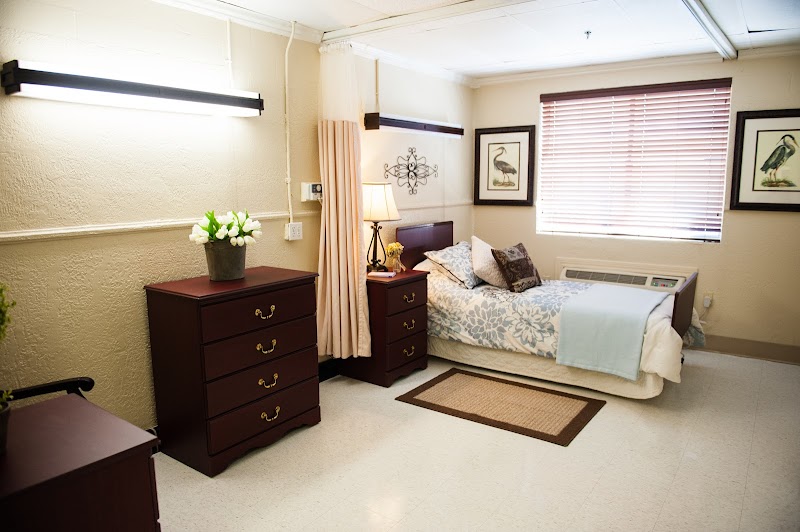
Who Owns and Operates Lady Of The Oaks Retirement Manor?

LADY OF THE OAKS RETIREMENT MANOR is owned by a for-profit company. For-profit facilities operate as businesses with obligations to shareholders or private owners. The facility is operated by PLANTATION MANAGEMENT COMPANY, a chain that manages multiple nursing homes. With 137 certified beds and approximately 102 residents (about 74% occupancy), it is a mid-sized facility located in LAFAYETTE, Louisiana.
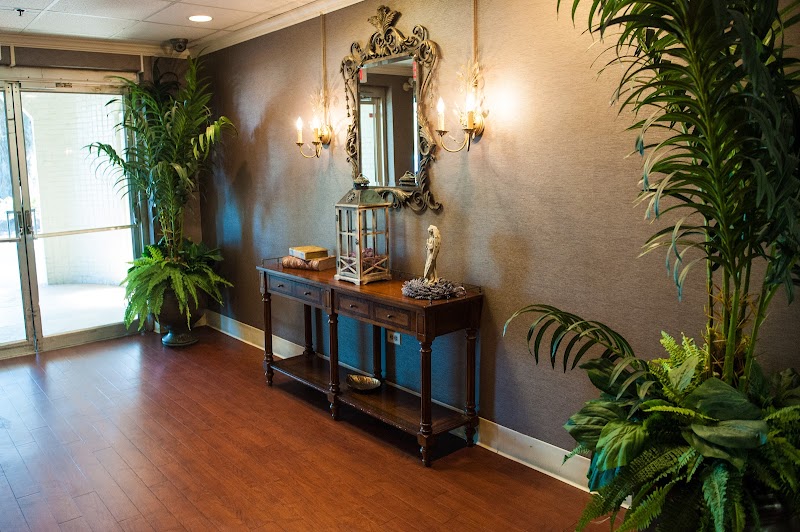
How Does Lady Of The Oaks Retirement Manor Compare to Other Louisiana Nursing Homes?

Compared to the 100 nursing homes in Louisiana, LADY OF THE OAKS RETIREMENT MANOR's overall rating (4 stars) is above the state average of 2.4, staff turnover (51%) is near the state average of 46%, and health inspection rating (4 stars) is above the national benchmark.

What Should Families Ask When Visiting Lady Of The Oaks Retirement Manor?

Based on this facility's data, families visiting should ask: "Can you walk me through typical staffing levels on day, evening, and night shifts?" "Can I visit during a mealtime to observe dining assistance and food quality?" "How do you handle medical emergencies, and what is your hospital transfer rate?" "Can I speak with family members of current residents about their experience?" These questions are particularly relevant given the below-average staffing rating.

Is Lady Of The Oaks Retirement Manor Safe?

Based on CMS inspection data, LADY OF THE OAKS RETIREMENT MANOR has a clean safety record: no substantiated abuse findings (meaning no confirmed cases of resident harm), no Immediate Jeopardy citations (the most serious violation level indicating risk of serious injury or death), and is not on the Special Focus Facility watch list (a federal program monitoring the lowest-performing 1% of nursing homes). The facility has a 4-star overall rating and ranks #1 of 100 nursing homes in Louisiana. While no facility is perfect, families should still ask about staff-to-resident ratios and recent inspection results during their visit.

Do Nurses at Lady Of The Oaks Retirement Manor Stick Around?

LADY OF THE OAKS RETIREMENT MANOR has a staff turnover rate of 51%, which is about average for Louisiana nursing homes (state average: 46%). Moderate turnover is common in nursing homes, but families should still ask about staff tenure and how the facility maintains care continuity when employees leave.

Was Lady Of The Oaks Retirement Manor Ever Fined?

LADY OF THE OAKS RETIREMENT MANOR has no federal fines on record. CMS issues fines when nursing homes fail to meet care standards or don't correct problems found during inspections. The absence of fines suggests the facility has either maintained compliance or corrected any issues before penalties were assessed. This is a positive indicator, though families should still review recent inspection reports for the full picture.

Is Lady Of The Oaks Retirement Manor on Any Federal Watch List?

LADY OF THE OAKS RETIREMENT MANOR is not on any federal watch list. The most significant is the Special Focus Facility (SFF) program, which identifies the bottom 1% of nursing homes nationally based on persistent, serious quality problems. Not being on this list means the facility has avoided the pattern of deficiencies that triggers enhanced federal oversight. This is a positive indicator, though families should still review the facility's inspection history directly.