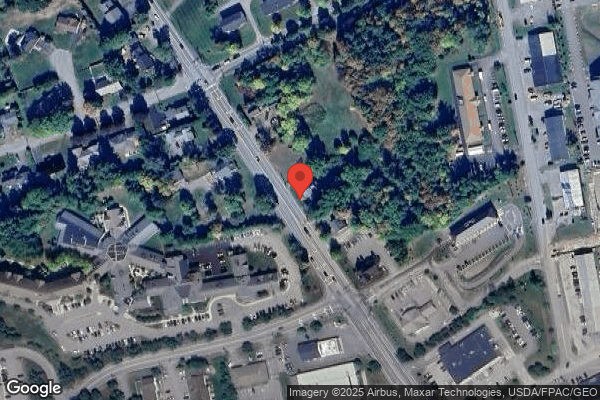
ROSS MANOR

758 BROADWAY, BANGOR, ME 04401 (207) 941-8400
For profit - Corporation 103 Beds FIRST ATLANTIC HEALTHCARE Data: November 2025
Trust Grade
63/100
#33 of 77 in ME
Last Inspection: April 2025

Within standard 12-15 month inspection cycle. Federal law requires annual inspections.

Overview

Ross Manor in Bangor, Maine has a Trust Grade of C+, which means it is slightly above average but not outstanding. It ranks #33 out of 77 facilities in the state, placing it in the top half, and #3 out of 11 in Penobscot County, indicating that only two local options are better. The facility is improving, with issues decreasing from 15 in 2024 to 11 in 2025. Staffing is a strong point with a 5/5 star rating and a turnover rate of 35%, which is well below the state average, suggesting that staff remain familiar with residents. However, the facility has faced some concerning incidents, such as a resident being given the wrong medications, leading to a hospital visit, and failures in following physician orders for medication and respiratory services, which could pose risks to residents’ health.

Trust Score
C+
63/100
In Maine
#33/77
Top 42%
Safety Record
Moderate
Needs review
Inspections
Getting Better
15 → 11 violations
Staff Stability
○ Average
35% turnover. Near Maine's 48% average. Typical for the industry.
Penalties
✓ Good
$8,018 in fines. Lower than most Maine facilities. Relatively clean record.
Skilled Nurses
✓ Good
Each resident gets 68 minutes of Registered Nurse (RN) attention daily — more than 97% of Maine nursing homes. RNs are the most trained staff who catch health problems before they become serious.
Violations
⚠ Watch
40 deficiencies on record. Higher than average. Multiple issues found across inspections.
★★★★☆
4.0
Overall Rating
★★★★★
5.0
Staff Levels
★★☆☆☆
2.0
Care Quality
★★★☆☆
3.0
Inspection Score
Stable
2024: 15 issues
2025: 11 issues

The Good

  • 5-Star Staffing Rating · Excellent nurse staffing levels
  • Full Sprinkler Coverage · Fire safety systems throughout facility
  • No fines on record
  • Staff turnover below average (35%)

    13 points below Maine average of 48%

Facility shows strength in staffing levels, fire safety.

The Bad

Staff Turnover: 35%

10pts below Maine avg (46%)

Typical for the industry

Federal Fines: $8,018

Below median ($33,413)

Minor penalties assessed

Chain: FIRST ATLANTIC HEALTHCARE

Part of a multi-facility chain

Ask about local staffing decisions and management

The Ugly 40 deficiencies on record

1 actual harm
Apr 2025 8 deficiencies
CONCERN (D)

Potential for Harm - no one hurt, but risky conditions existed

Deficiency F0655 (Tag F0655)

Could have caused harm · This affected 1 resident

**NOTE- TERMS IN BRACKETS HAVE BEEN EDITED TO PROTECT CONFIDENTIALITY** Based on clinical record review and interview, the facility failed to ensure a baseline care plan was developed and implemented ...

Read full inspector narrative →
**NOTE- TERMS IN BRACKETS HAVE BEEN EDITED TO PROTECT CONFIDENTIALITY** Based on clinical record review and interview, the facility failed to ensure a baseline care plan was developed and implemented within 48 hours that included the instructions needed to provide minimum healthcare information necessary to properly care for 1 of 2 sampled residents admitted for skilled care services (Resident #2[R2]). Finding: Review of R2's clinical record noted that he/she was initially admitted to the facility on [DATE], discharged on 2/23/25 and returned on 2/27/25. The clinical record lacked evidence that the base line care plan was developed with instructions needed to provide minimum healthcare information necessary to properly care for R2 until 3/3/25. On 4/17/25 at approximately 10:15 a.m., during an interview with the Assistant Director of Nursing, the surveyor confirmed that that baseline care plan was not developed/initiated until 3/3/25 4 days after admission and not within the 48 hours after admission.
CONCERN (D)

Potential for Harm - no one hurt, but risky conditions existed

ADL Care (Tag F0677)

Could have caused harm · This affected 1 resident

Based on interview, observation, and record review, the facility failed to consistently provide Activities of Daily Living (ADL) care in the area of oral hygiene for 1 of 1 residents reviewed for dent...

Read full inspector narrative →
Based on interview, observation, and record review, the facility failed to consistently provide Activities of Daily Living (ADL) care in the area of oral hygiene for 1 of 1 residents reviewed for dental care [Resident #58 (R58)]. Finding: On 4/15/25 at 10:15 a.m., during an interview with a surveyor, R58 stated staff do not soak or wash his/her dentures at night. At that time the surveyor observed the denture to be soiled with food debris. On 4/16/25, R58's clinical record was reviewed. The clinical record indicated R58 is cognitively intact. The Care Plan indicates a focus of [R58] has an ADL self-care performance deficit [related to] . hemiplegia affecting left non-dominant side . need for assistance with personal care. The Care Plan intervention for this focus states PERSONAL HYGIENE/ORAL CARE: the resident requires limited to extensive assist. Review of Oral Hygiene documentation indicates oral hygiene was not completed after the evening meal for 13 out of 31 days in March (3/1/25, 3/3/25, 3/5/25, 3/7/25, 3/9/25, 3/10/25, 3/14/25, 3/15/25, 3/16/25, 3/21/25, 3/22/25, 3/28/25, and 3/30/25). On 4/16/25 at 10:55 a.m., during an interview with a surveyor and the Director of Nursing (DON) the Oral Hygiene documentation was reviewed. The DON stated evening shift would document Not Applicable if they did not provide this service and she would not expect evening shift to complete this task if the previous shift had already documented it as completed. At this time the surveyor confirmed that oral hygiene was not provided consistently after the evening meal.
CONCERN (D)

Potential for Harm - no one hurt, but risky conditions existed

Medication Errors (Tag F0758)

Could have caused harm · This affected 1 resident

Based on record review and interviews, the facility failed to ensure there was a physician ordered renewal for an as needed (PRN) psychotropic medication without a stop date, making it available for a...

Read full inspector narrative →
Based on record review and interviews, the facility failed to ensure there was a physician ordered renewal for an as needed (PRN) psychotropic medication without a stop date, making it available for administration for 1 of 19 residents reviewed (Resident #6 [R6]). Finding: On 4/15/25 at 12:19 p.m., during R6's clinical record review, the record indicated that on 2/12/25 an order for Haldol (atypical antipsychotic medication) dose of 0.25 milliliters (ml) by mouth every 4 hours as needed was started. This medication order did not include a stop date for re-evaluation and the physician progress notes did not include a rationale for continued use of this medication. On 4/16/25 at 12:45 p.m., during interviews with LPN1 and RN, the surveyor confirmed that the order for the Haldol was still active beyond the 14-day limit without a rationale to continue, the order did not contain a stop date for a re-evaluation.
CONCERN (E)

Potential for Harm - no one hurt, but risky conditions existed

Quality of Care (Tag F0684)

Could have caused harm · This affected multiple residents

Based on clinical record reviews and interviews, the facility failed to follow physician orders for 2 of 19 residents reviewed. (Resident #64 [R64] and R90). Findings: 1. On 4/14/25 at 2:52 p.m. duri...

Read full inspector narrative →
Based on clinical record reviews and interviews, the facility failed to follow physician orders for 2 of 19 residents reviewed. (Resident #64 [R64] and R90). Findings: 1. On 4/14/25 at 2:52 p.m. during a clinical record review for R64 there is documentation that shows he/she had an order for Levofloxacin 750 milligrams (mg) by mouth every 48 hours until 4/22/25 with a start date of 4/2/25. Review of the electronic medication administration record (MAR) shows documentation that R64 received a dose of Levofloxacin on 4/2/25 at 6:33 a.m. and he/she received an additional dose on 4/3/25 at 3:18 p.m. which was not 48 hours after the previous dose as ordered. On 4/16/25 at 1:00 p.m. during an interview with LPN1 and LPN 2, they stated the facilities Pyxis does not have that dose of Levofloxacin and thought the medication would come early in the morning the next day 4/3/25. Review of the MAR with LPN1 and LPN2 the surveyor confirmed that R64 received a dose of Levofloxacin two days in a row (4/2 and 4/3) and not every 48 hours as ordered by the Provider. 2. On 4/15/25 at 12:49 p.m., during a clinical record review for R90, the Treatment Administration Record for April shows that on 4/12/25, R90 had a Blood Sugar (BS) result of 422, per his/her sliding scale insulin coverage the facility would need to give R90 12 units of insulin and call the Medical Doctor (MD). Clinical record shows that they did call the MD and received an order to give an additional 3 units of insulin and to recheck BS in 2 hours. On 4/16/25 at 12:35 p.m. during an interview with LPN1 and LPN2 the surveyor confirmed there was no evidence in R90's clinical record that his/her BS was not rechecked in 2 hours as ordered.
CONCERN (E)

Potential for Harm - no one hurt, but risky conditions existed

Respiratory Care (Tag F0695)

Could have caused harm · This affected multiple residents

**NOTE- TERMS IN BRACKETS HAVE BEEN EDITED TO PROTECT CONFIDENTIALITY** Based on clinical record reviews, and interviews, the facility failed to provide physician ordered respiratory services for 1 of...

Read full inspector narrative →
**NOTE- TERMS IN BRACKETS HAVE BEEN EDITED TO PROTECT CONFIDENTIALITY** Based on clinical record reviews, and interviews, the facility failed to provide physician ordered respiratory services for 1 of 1 resident (Resident [R2]) reviewed with a continuous positive airway pressure (CPAP) machine when the facility failed to obtain missing tubing for R2's machine. Finding: On 4/15/25 during a record review for R2, he/she was admitted with an order to apply CPAP every evening with a start date of 2/21/25. Nursing progress note dated 2/21/25 documents that the CPAP was not used, no tubing with machine. His/her clinical record documents that R2 was hospitalized on [DATE] with a return date of 2/27/25, he/she was hospitalized on [DATE] with a return date of 4/4/25 and was sent to the hospital on 4/6/25 with a return date of 4/10/25. All admission orders had the order to apply CPAP every evening. Documentation in the nursing progress notes and on the electronic treatment administration record (ETAR) shows that R2 was not using the CPAP as ordered due to missing parts. The facility did not assist the resident to obtain the missing parts which resulted in R2 having hospital readmissions. R2's last hospitalization was from 4/6/25 to 4/10/25 and since his/her return, the facility was able to obtain the missing part and R2 has been using it daily since receiving the part. On 4/15/25 at 10:00 a.m. during an interview with the Assistant Director of Nursing (ADON) she stated that when R2 first came to the facility, his/her CPAP was brought in and did not have the tubing, when the facility contacted the previous place of residence, they said R2 didn't have any parts there. The facility contacted the previous medical equipment provider (Lincare), and they said he/she was not allowed to get parts until September, the facility then contacted a local medical equipment provider (Americoast) and was able to get the parts (tubing) on 4/11/25. It was stated that R2 was refusing to use their CPAP or had stated they would not use it. During this interview the surveyor confirmed that if R2 wanted to use their CPAP they were not able to due to the missing part. On 4/15/25 at 10:00 a.m. during the interview with the ADON, the surveyor confirmed that for all admissions R2 was not able to use his/her CPAP as ordered due to missing parts and the facility had failed to obtain the missing part since his/her admission on [DATE] resulting in R2 having 4 hospital admissions relating to hypoxia (low oxygen levels). The missing part was ordered and received by 4/11/25 (50 days after initial admission)
CONCERN (E)

Potential for Harm - no one hurt, but risky conditions existed

Food Safety (Tag F0812)

Could have caused harm · This affected multiple residents

Based on observations and interviews, the facility failed to ensure that plumbing fixtures were properly installed to prevent backflow as required by the Maine State Plumbing Code for 2 of 3 kitchen e...

Read full inspector narrative →
Based on observations and interviews, the facility failed to ensure that plumbing fixtures were properly installed to prevent backflow as required by the Maine State Plumbing Code for 2 of 3 kitchen equipment that require a 1 air gap on 4 of 4 days of survey. Finding: On 4/14/25, at 12:05 p.m. during the initial kitchen tour, a surveyor observed there was an improper air gap provided on the drain lines of the ice machines, one located in the hallway leading to the kitchen and one located in the kitchen. This direct connection of wastewater and potable water was in violation of the 10-114 State of Maine Rules Chapter 226, definition Section A, which defines an Air-Gap Separation - A physical separation between the free-flowing discharge end of a potable water supply pipeline and an open or non-pressure receiving vessel. An air-gap separation shall be at least twice the diameter of the supply pipe measured vertically above the overflow rim of the vessel - in no case less than one inch (2.54 cm). On 4/14/25, at 12:05 p.m., a surveyor confirmed this finding with the Food Service Director (FSD). On 4/15/25 during a second visit to the kitchen, to observe meal preparation a surveyor observed the ice machines continued to have an improper air gap on the drain lines. On 4/16/25, during a third visit to the kitchen to observe a meal service, a surveyor observed the ice machines continued to have an improper air gap on the drain lines. On 4/17/25, during a final kitchen tour a surveyor observed the ice machines continued to have an improper air gap on the drain lines and the vegetable sink had the proper 1 air gap. On 4/17/25 at 10:00 a.m., during an interview with the FSD, a surveyor confirmed the improper air gaps remained on the ice machines.
CONCERN (E)

Potential for Harm - no one hurt, but risky conditions existed

Infection Control (Tag F0880)

Could have caused harm · This affected multiple residents

**NOTE- TERMS IN BRACKETS HAVE BEEN EDITED TO PROTECT CONFIDENTIALITY** Based on observations and interviews, the facility failed to maintain an infection prevention and control program to provide a s...

Read full inspector narrative →
**NOTE- TERMS IN BRACKETS HAVE BEEN EDITED TO PROTECT CONFIDENTIALITY** Based on observations and interviews, the facility failed to maintain an infection prevention and control program to provide a safe, sanitary, and comfortable environment to help prevent the development and transmission of communicable disease and infections for 3 of 4 days of survey (4/14/25, 4/15/25, and 4/16/25). Findings: On 4/14/25, a surveyor observed the following: -In the shared bathroom for Rooms 302A and 302B, a commode seat in use as an elevated toilet seat was observed over the toilet bowl. Dried blood was observed on the right side of the seat, and stool was observed smeared on the front of the commode seat. Dried blood droplets were observed on the floor in a trail leading toward the bathroom sink. A bed pan was observed unlabeled and exposed to the environment, resting against handrail and the bathroom wall. -In the shared bathroom for Rooms 303A and 303B, a large bed pan was observed to be soiled with stool, unlabeled, and exposed to the environment. -In room [ROOM NUMBER]B, a soiled linen bed chuck was observed on the floor. -In the bathroom of room [ROOM NUMBER], a surveyor observed a hole in the floor of the shower creating an uncleanable surface. -In room [ROOM NUMBER]A, a soiled linen bed chuck was observed on the floor. -In room [ROOM NUMBER] blood was observed on the bed frame of Resident #63 (R63) On 4/14/25 at 11:43 a.m., during an interview with a surveyor and a Registered Nurse (RN2), the following were observed and confirmed: -In the shared bathroom for Rooms 302A and 302B, a commode seat in use as an elevated toilet seat was observed over the toilet bowl. Dried blood was observed on the right side of the seat, and stool was observed smeared on the front of the commode seat. Dried blood droplets were observed on the floor in a trail leading toward the bathroom sink. A bed pan was observed unlabeled and exposed to the environment, resting against handrail and the bathroom wall. -In the shared bathroom for Rooms 303A and 303B, a large bed pan was observed to be soiled with stool, unlabeled, and exposed to the environment. RN2 stated bed pans should be in a bag until they are used, they should be labeled to identify who they belong to; after a bed pan is used it should be sanitized, then bagged for future use. On 4/14/25 at 1:00 p.m., during an interview with a surveyor and a Certified Nursing Assistant (CNA), the blood on R41's bed frame was observed and confirmed, the CNA was unable to identify where the blood came from. On 4/15/25 at 7:05 a.m., a surveyor observed residual blood dried on R63's bed frame. On 4/15/25 at 7:22 a.m., a surveyor observed CNA2 assist Resident #60 (R60) with using a bed pan. After CNA2 assisted R60 with peri care, CNA2 returned R60's toiletries to drawers while still wearing soiled gloves. CNA2 then began handling R60's clean clothing while still wearing soiled gloves, at this time the surveyor intervened and confirmed that CNA2 did not remove the soiled gloves or perform hand hygiene before contacting drawers and the resident's clean clothes. On 4/15/25 11:19 a.m., a surveyor observed opened dressing wrappers on Resident #41 (R41) blankets. At 11:27 a.m., this observation was confirmed with RN2. On 4/15/25 at 11:44 a.m., a surveyor observed Resident #47 (R47) in the hall, self-propelling in a wheelchair. R47's foley bag was observed dragging on the floor under the wheel chair. A surveyor observed and confirmed this finding with CNA-M. On 4/16/25 at 11:03 a.m., in an interview with the Director of Nursing (DON), a surveyor reviewed and confirmed the above findings. During the interview the surveyor and the DON observed and confirmed the following: -In the bathroom of room [ROOM NUMBER], the floor of the shower has a hole creating an uncleanable surface. -The commode seat used as a raised toilet seat in the shared bathroom, for Rooms 302A and 302B, was observed to have blood on the left side of the seat. This was confirmed at the time of the observation. -The bed frame in room [ROOM NUMBER]A was observed and confirmed to have residual blood on it (consistent with the original observation on 4/14/25).
MINOR (B)

Minor Issue - procedural, no safety impact

Medical Records (Tag F0842)

Minor procedural issue · This affected multiple residents

Based on a clinical record review and interviews, the facility failed to ensure that clinical records were complete and contained accurate information for 2 of 19 sampled residents (Resident #2 [R2], ...

Read full inspector narrative →
Based on a clinical record review and interviews, the facility failed to ensure that clinical records were complete and contained accurate information for 2 of 19 sampled residents (Resident #2 [R2], and [R1]). Findings: 1. On 4/15/25 at 10:00 a.m., during a clinical record review for R2 there was an order dated 2/21/25 which instructed nursing to apply continuous positive airway pressure (CPAP) daily at bedtime. Review of the Treatment administration record (TAR) for March 2025 has documentation of the CPAP being applied on 3/3, 3/4, 3/5, 3/13, 3/18 and 3/19/25. Documentation in R2's clinical record indicates that the CPAP had missing parts and was not able to be used. On 4/15/25 at 10:00 a.m., during an interview and clinical record review with the Assistant Director of Nursing (ADON), she stated that when R2 first came to the facility, his/her CPAP was brought in and did not have the tubing (had missing part). The surveyor confirmed that documentation on the TAR was inaccurate when it was signed off as the CPAP being applied on the above dates when the missing part was not received until 4/11/25. 2. On 4/16/25, R1's clinical record was reviewed. Review of the Medication Administration Record (MAR) indicated that R1 was prescribed Benztropine Mesylate (used to treat Parkinson's disease and side effects of other drugs) for Parkinson, and Ziprasidone (used to treat schizophrenia and bipolar disorder) for psychosis. Review of the active diagnosis list for R1 did not include a diagnosis of Parkinsons disease or Psychosis. Review of the provider notes indicated Benztropine Mesylate was prescribed to treat drug induced tremor, and Ziprasidone was prescribed for a diagnosis of bipolar disorder. On 4/16/25 at 2:45 p.m., during an interview with a surveyor and the Director of Nursing (DON), R1's clinical record was reviewed. The DON stated R1 does not have a diagnosis of Parkinson's or Psychosis. At this time a surveyor confirmed the MAR contained inaccurate information related to the diagnosed indication for the medications Benztropine Mesylate and Ziprasidone.
Feb 2025 3 deficiencies
CONCERN (D) 📢 Someone Reported This

A family member, employee, or ombudsman was alarmed enough to file a formal complaint

Potential for Harm - no one hurt, but risky conditions existed

Notification of Changes (Tag F0580)

Could have caused harm · This affected 1 resident

**NOTE- TERMS IN BRACKETS HAVE BEEN EDITED TO PROTECT CONFIDENTIALITY** Based on record review and interviews, the facility failed to ensure that the resident's representative was notified of a change...

Read full inspector narrative →
**NOTE- TERMS IN BRACKETS HAVE BEEN EDITED TO PROTECT CONFIDENTIALITY** Based on record review and interviews, the facility failed to ensure that the resident's representative was notified of a change in the resident's discharge plan, failed to notify the representative of the resident going outside the facility and failed to notify the medical provider of resident's elopement risk and exit seeking behaviors for 1 of 1 sampled resident (Resident #1) Findings: On 2/4/25 at 2:50 p.m., during an interview and record review, it was documented that the interdisciplinary team and resident representative made a decision that Resident #1 was going to need 24-hour supervision. A plan was made for Resident #1 to go over to [NAME] Place, an assisted living memory care unit, on Saturday 1/11/25. A decision was made not to transfer Resident #1 to the memory care unit and the facility failed to notify the resident representative of this change. On 2/4/25, during a clinical record review for Resident #1, a nursing note documents that Resident #1 went out the door that morning and attempted to climb over a railing. Resident #1 was redirected back into the facility. The clinical record lacks evidence that his/her representative was made aware of this incident. On 2/4/25 at 12:35 p.m., during an interview with Resident #1's provider, who was involved in his care since admission on [DATE], stated that she was not aware of Resident #1 having a wander guard or that he/she was an elopement risk. She examined Resident #1 on 1/16/25 after their elopement. On 2/5/25 at 8:30 a.m., during an interview with the Administrator, the surveyor confirmed that the resident representative was not aware of the change to his/her discharge plan. On 2/5/25 at 9:00 a.m., during an interview with the Director of Nursing and the Unit Manager, the surveyor confirmed the lack of evidence that that resident representative was made aware of the incident on 1/13/25.
CONCERN (D) 📢 Someone Reported This

A family member, employee, or ombudsman was alarmed enough to file a formal complaint

Potential for Harm - no one hurt, but risky conditions existed

Accident Prevention (Tag F0689)

Could have caused harm · This affected 1 resident

**NOTE- TERMS IN BRACKETS HAVE BEEN EDITED TO PROTECT CONFIDENTIALITY** Based on record reviews and interviews, the facility failed to supervise and monitor 1 of 1 (Resident #1) wandering resident res...

Read full inspector narrative →
**NOTE- TERMS IN BRACKETS HAVE BEEN EDITED TO PROTECT CONFIDENTIALITY** Based on record reviews and interviews, the facility failed to supervise and monitor 1 of 1 (Resident #1) wandering resident resulting in the resident eloping from the facility; wandered a mile away from the facility in 14-degree Fahrenheit weather, and being found near the Convenient MD building. Finding: On 2/4/25, a review of Resident #1's clinical record was completed. Resident #1 was admitted on [DATE] with a diagnosis of left frontal parietal subarachnoid hemorrhage with history of Alzheimer's disease. A Wandering Risk Assessment was completed the day of admission and indicated Resident #1 was a risk for wandering, a wander guard was put on Resident #1. On 1/3/25, staff observed Resident #1 exit seeking and wanting to leave, the resident was re-directed without incident. On 1/6/25, staff observed Resident #1 exit seeking and wanting to leave, the resident was re-directed without incident. On 1/8/25, the facility spoke with POA, and recommended Resident #1 be moved to the locked Memory Care unit for 24/7 supervision. On 1/9/25, staff observed Resident #1 exit seeking and wanting to leave, the resident was re-directed without incident. On 1/13/25, staff observed Resident #1 exit through the front door and the resident was re-directed back into the facility without incident. On 1/15/25, in the early morning hours staff observed Resident #1 exit seeking with his/her belongings packed in a clear bag and stated they wanted to leave and go home, the resident was re-directed without incident. On 1/15/25 at approximately 10:30 p.m. Resident #1 eloped and was missing for 2-3 hours. Documentation on the facility's elopement investigation indicated that at 10:30 p.m. Resident #1 was observed in their bed with his/her eyes closed. At 11:30 p.m. the nurse found that Resident #1 was not in his/her room. A search of the facility was done, and Resident #1 was not found. Upon inspection of his/her room it was noted the window in his/her room was open and the window screen was on the ground outside. Local law enforcement and management were called, a search of the local area was completed, and Resident #1 was returned to the facility at approximately 1:15 a.m. -1:30 a.m. The facility reports state that a complete assessment was done and did not identify any new injuries or areas of concern. The facility assigned a 1 on 1 staff to sit with Resident #1 for the remainder of his/her stay at the facility. On 2/4/25 at 8:13 p.m., during an interview with the Charge Nurse, she stated that on 1/15/25 in the early morning before shift change at 6:00 a.m., Resident #1 was carrying around a bag with his/her clothes and trying to get out the door on the 701 and 708 hallway saying that he/she wanted to go home. She stated that she told the Director of Nursing and the Unit Manager that Resident #1 was trying to get out that morning. On 1/16/25 Resident #1 returned to the facility at approximately 1:15 a.m. by the Police, Resident #1 was found at the beginning of the main road near the Convenient MD building (approximately 1 mile from facility). When Resident #1 returned his/her temperature was documented at 93.2. The on-call provider was called and was made aware that Resident #1 eloped from the facility and was out in the community for about 2-3 hours (exact time unknown, last seen at 10:30 p.m.) in 14-degree Fahrenheit weather. A video conference was held with the on-call provider who gave orders to treat his/her hypothermia and to continue the warming blankets and monitoring their vital signs and to notify the provider of any change in condition. During interviews throughout this investigation the surveyor identified that the facility was aware of Resident #1's attempts to leave the facility, with one occasion being successful on 1/13/25 with Resident #1 exiting the building through the door and attempting to climb a railing. They were aware the morning of 1/15/25 that Resident #1 packed his/her belongings and had stated that he/she wanted to go home. In the late night of the 15th with the last visual of Resident #1 being at 10:30 p.m. Resident #1 did elope out his/her bedroom window and was gone/missing for approximately 2-3 hours on a 14-degree Fahrenheit night and who was not dressed in appropriate winter clothing. On 2/5/24 at 9:10 a.m. during an interview with the Director of Nursing and the Unit Manager the surveyor confirmed that they were aware of Resident #1's increased elopement risk and Resident #1 eloping on 1/15/25.
CONCERN (D) 📢 Someone Reported This

A family member, employee, or ombudsman was alarmed enough to file a formal complaint

Potential for Harm - no one hurt, but risky conditions existed

Medical Records (Tag F0842)

Could have caused harm · This affected 1 resident

Based on record review and interviews, the facility failed to ensure that clinical records were complete and contained accurate information for 1 of 1 resident reviewed for elopement. (Residents #1). ...

Read full inspector narrative →
Based on record review and interviews, the facility failed to ensure that clinical records were complete and contained accurate information for 1 of 1 resident reviewed for elopement. (Residents #1). Finding: During an anonymous interview Resident #1 had the following days of exit seeking behaviors: On the afternoon of 1/3/25, on the morning of 1/6/25, on the morning of 1/9/25 and on the morning of 1/15/25 before shift change Resident #1 packed up his/her belongings and was making the statement that he/she was going home. On 2/4/25 at 8:13 p.m. During an interview with the charge nurse, she described what the resident was doing on 1/15/25 in the early morning. Resident #1 packed their clothing and was carrying around this bag that contained his/her clothing and trying to get out the door on the 701 and 708 hallway saying that he/she wanted to go home, this incident was not documented in the clinical record. On 2/5/25 at 9:00 a.m., during a review of Resident #1's clinical records with the Director of Nursing and a Unit Manager the surveyor confirmed the clinical records lacked evidence that a nurse's note was completed for Resident #1 with each elopement/exit seeking attempt.
Dec 2024 1 deficiency
CONCERN (D) 📢 Someone Reported This

A family member, employee, or ombudsman was alarmed enough to file a formal complaint

Potential for Harm - no one hurt, but risky conditions existed

Report Alleged Abuse (Tag F0609)

Could have caused harm · This affected 1 resident

Based on interviews, policy review, and record review, the facility failed to ensure staff reported an allegation of physical abuse immediately for 1 of 1 residents reviewed during a complaint investi...

Read full inspector narrative →
Based on interviews, policy review, and record review, the facility failed to ensure staff reported an allegation of physical abuse immediately for 1 of 1 residents reviewed during a complaint investigation. (Resident #1[R1]) Finding: A review of the facility's policy, Abuse, Neglect, Exploitation or Misappropriation-Reporting and Investigating, revised 02/2023, under the heading, on page 1, Reporting Allegations to the Administrator and Authorities, states, 1. If resident abuse .is suspected, the suspicion must be reported immediately to the administrator .2. The administrator or the individual making the allegation immediately reports his or her suspicion to the following persons or agencies: a. The state licensing/certification agency .3. Immediately is defined as: a. within two hours of an allegation involving abuse . On 11/12/24 at 3:24 p.m., the Division of Licensing and Certification received a reportable incident from the facility, alleging that on 11/11/24 at 9:30 p.m., a Certified Nursing Assistant (CNA #2) witnessed CNA #1 grab R1 by the left thumb and twist R1's arm behind his/her neck, causing bruising on his/her left thumb. Review of the incident form revealed that CNA #2 failed to report the allegation until 11/12/24 at 2:25 p.m., allowing the perpetrator to continue providing care to R1 on 11/11/24 into 11/12/24. A review of CNA#2's employee file revealed a follow-up conversation between CNA #2 and the Director of Nursing (DON), dated 11/15/24, stating that CNA#2 was asked if she reported the situation between CNA#1 and R1 to the charge nurse after it happened, and CNA #2 stated she didn't. The DON asked why, and CNA #2 stated that she didn't feel like anything would get done about it. The DON re-educated CNA #2 that if there is any question of alleged abuse, physical or verbal, that it needs to be reported immediately. On 12/6/24 at 10:00 a.m., during an interview with the DON, 2 surveyors confirmed that CNA #2 failed to report the allegation of resident physical abuse immediately.
Sept 2024 1 deficiency 1 Harm
SERIOUS (G) 📢 Someone Reported This

A family member, employee, or ombudsman was alarmed enough to file a formal complaint

Actual Harm - a resident was hurt due to facility failures

Deficiency F0760 (Tag F0760)

A resident was harmed · This affected 1 resident

**NOTE- TERMS IN BRACKETS HAVE BEEN EDITED TO PROTECT CONFIDENTIALITY** Based on review of the facility internal investigation, clinical record review, facility Medication Administration Policy and P...

Read full inspector narrative →
**NOTE- TERMS IN BRACKETS HAVE BEEN EDITED TO PROTECT CONFIDENTIALITY** Based on review of the facility internal investigation, clinical record review, facility Medication Administration Policy and Procedure, and interviews, the facility failed to protect a resident from receiving another residents medications resulting in the resident being transferred to the Acute Care Emergency Department (ED) for evaluation and monitoring of low blood pressure and a drop in hemoglobin and hematocrit for 1 of 1 resident reviewed (Resident #1 [R1]). Finding: On 9/3/24, a review of the facility's internal investigation was completed. The investigation indicated that on 8/27/24, during morning medication pass, Certified Nurse Assistant-Medication (C.N.A.-M) administered the wrong medications (Aspirin 81 milligrams (mg),Cholestyramine 1 packet for high cholesterol, Clopidogrel Bisulfate for atrial fibrillation, Isosorbide 90 mg [Imdur-used to prevent angina], Psyllium Husk Powder for constipation, Metoprolol Tartrate [used to treat high blood pressure/atrial fibrillation], and Tylenol 1000 mg for pain to R1. C.N.A.-M administered Resident #2's (R2's) medications to R1 in error. R1 was not allergic to any of the wrongfully administered medications. R1 was immediately assessed and a physician who was at the facility ordered the resident to be sent to the Emergency Department (ED). R1 was monitored in the ED for low blood pressure and was treated with intravenous fluids (IV) and R1's labs showed a mild drop in hemoglobin and hematocrit. The Skilled Nurse Manager documented in her investigation that C.N.A.-M stated she read the name in the computer system incorrectly, thinking that R1's name was R2's name. The medications were administered. When C.N.A.-M noticed the error, she immediately notified the nurse and R1 was evaluated and sent to the ED. The follow up to this incident was the facility audited the profiles of all residents to ensure pictures were connected to all residents. Audits were continued to monitor that all resident pictures are on their electronic Medication Administration Record (MAR). The Director of Nursing placed the facility's Medication Administration policy and sign sheets on all units to be reviewed by those who pass medications and ensured this was completed by 9/3/24. Documentation in R1's clinical record under the physician orders indicated R1 had an order for Metoprolol Tartrate (used to treat high blood pressure) 25 milligrams (mg) give 0.5 tablet by mouth two times a day for hypertension. Documentation on R1's Minimum Data Set 3.0, dated 8/20/24, was coded to indicate the resident's Brief Interview for Mental Status (BIMS) was a '12'. For this scoring system of 0-15, a score of 8-12 indicates mild cognitive impairment. R1 is alert and confused at times. A nurse's note dated 8/27/24 at 9:54 a.m., written by RN1, Laurel Unit Nurse Manager, indicated R1 was given medications that were not prescribed to him/her, one of which contained anti-hypertensives. Resident subsequently started to have low blood pressures for him/her, which was 88/60. Provider notified. Emergency Medical Services (EMS) called for emergent transfer immediately after error was noted. Resident transferred to bed. The Provider stated to put R1 in a Trendelenburg position (position used for hypotension-to help blood return to the heart and restore adequate brain perfusion) while waiting EMS arrival. A nurses note dated 8/27/24 at 10:44 a.m., written by RN2, [NAME] Unit Nurse Manager, indicated R1 was transferred to the ED after a medication pass error. R1 had been given Metoprolol 50 mg and Isosorbide (Imdur-used to prevent angina) 90 mg. Provider notified and resident son notified after call back. Resident transported to ED for evaluation. Documentation in the ED Provider note indicated R1 was inadvertently given the wrong medications. These medications included Imdur, Plavix (antiplatelet medication), aspirin, and a higher dose of Metoprolol. R1 was given IV fluids as her blood pressure was low for a period of time. R1's lab work was overall unremarkable other than a mild drop in hemoglobin and hematocrit (H+H) with no signs of bleeding (this was not a pre-existing problem). Documentation in R1's physician progress note, dated 8/30/24, indicated R1 transferred to ED on 8/27/24 was given wrong meds-Metoprolol 50 mg and Imdur 90 mg. Blood pressure was low and resident feeling lightheaded. H+H low-follow up labs to be done. Facility Medication Administration Policy and Procedure, under #6: The individual administering medications must verify the resident's identity before giving the resident his/her medications which include checking photograph attached to medical record and if necessary, verify resident identification with other facility personnel. Under #7: check the medication label three times for right individual, right medication, right dose . On 9/12/24 at 8:30 a.m., in an interview with the surveyor, R1 stated he/she was given the wrong medications and within a half hour of taking these medications R1 stated he/she felt dizzy/lightheaded. R1 stated he/she did not know who gave the medications, but he/she trusts them to give the correct medications. On 9/12/24 at 12:20 p.m., in an interview with the surveyor, C.N.A.-M confirmed that she gave R1 the wrong medications. She confirmed that she gave R2's medications to R1 on the morning of 8/27/24. C.N.A.-M stated she had come back to work after not working at this facility for about two months. She stated she remembered some residents but not others. It was breakfast time and in the small dining room near the 100/200 rooms, she saw R1 sitting at the table and thought it might be R2. C.N.A.-M stated she thought R2's last name was a females name. C.N.A.-M stated she did not recognize the resident and the name on her computer screen (electronic Medication Administration Record (MAR). R2's name was displayed on the MAR screen. C.N.A.-M stated she asked R1 if his/her name was the last name for R2. C.N.A.-M stated the resident acted as if he/she couldn't hear her, so C.N.A.-M got closer to the resident, spoke a little louder and asked again. C.N.A.-M stated the resident (R1) answered yes and she gave R1 the medications. C.N.A.-M stated she did not know R1 was confused. C.N.A.-M proceeded down the hall to the rooms. She put a room number in the computer and R2's name came up and showed that R2's medications had already been given. C.N.A.-M stated she was confused so she went through all the people she had given medications to and realized she gave R1 the wrong medications. C.N.A.-M stated she gave R2's medications to R1. C.N.A.-M stated she immediately told RN1. As a result of this isolated incident, the following corrective actions were initiated between 8/27/24 and 9/3/24. On 8/27/24, the Skilled Nurse Manager re-educated C.N.A.-M on the medication administration policy and procedure. On 8/27/24, copies of the Medication Administration policy and procedure along with sign sheets was placed at the nurse's stations and all medication technicians and nurses that administer medications were mandated to review the policy and procedure and sign the sheet that they did the review. This was completed by 9/3/24. In addition, the facility recognized that not all residents had a picture attached to their electronic MAR for facial identification. Audits of all the residents MARs was completed to ensure they all had a picture. The Skilled Nurse Manager stated about three residents needed a picture. On-going audits are being done by the director of Nursing and/or the Skilled Nurse Manager weekly for a month to ensure new residents have a picture taken and attached to their MAR.
May 2024 10 deficiencies
CONCERN (D) 📢 Someone Reported This

A family member, employee, or ombudsman was alarmed enough to file a formal complaint

Potential for Harm - no one hurt, but risky conditions existed

Resident Rights (Tag F0550)

Could have caused harm · This affected 1 resident

Based on observations and interviews, the facility failed to ensure that a resident requiring feeding assistance was done in a dignified manner for 1 of 2 residents observed requiring feeding assistan...

Read full inspector narrative →
Based on observations and interviews, the facility failed to ensure that a resident requiring feeding assistance was done in a dignified manner for 1 of 2 residents observed requiring feeding assistance (Resident #28 [R28]). Finding: On 5/16/24 between 8:28 a.m. through 8:35 a.m., a surveyor observed Certified Nursing Assistant #2 (CNA2) feeding R28 while standing at the side of the table, facing away from R28, talking to another staff. CNA2 used a spoon to pick up food, looked at R28 briefly to find placement of food in R28's mouth, then looked away and continued conversation with another staff. On 5/16/24 at 8:40 a.m., in an interview with CNA2, a surveyor confirmed the above finding. On 5/16/24 at 8:56 a.m. in an interview with Registered Nurse #2, a surveyor confirmed the above finding that CNA2 was not feeding R28 in a dignified manner.
CONCERN (D) 📢 Someone Reported This

A family member, employee, or ombudsman was alarmed enough to file a formal complaint

Potential for Harm - no one hurt, but risky conditions existed

Deficiency F0551 (Tag F0551)

Could have caused harm · This affected 1 resident

Based on record review and interviews, the facility failed to review an Advance Beneficiary Notice with a resident's legal guardian for 1 of 4 residents reviewed for beneficiary notices (Resident #147...

Read full inspector narrative →
Based on record review and interviews, the facility failed to review an Advance Beneficiary Notice with a resident's legal guardian for 1 of 4 residents reviewed for beneficiary notices (Resident #147 [R147]). This had the potential to prevent R147's right to appeal discharge. Findings: On 05/15/24, record review indicated R147's admitting diagnosis included bimalleolar fracture of right ankle and intellectual disability. Therapy documentation dated 11/4/23 indicated R147 is intellectually challenged and functions at a 5 year old level. The record identified a legal guardian as the responsible party for medical and financial decisions. However, the record revealed that on 12/16/23 the Advance Beneficiary Notice was signed by R147, not the legal guardian. On 5/15/24 at 11:40 a.m., in an interview with a surveyor, the Licensed Social Worker stated R147 should not have signed, R147 was not able to. On 05/15/24 at 12:16 p.m., in an interview with a surveyor, the Program Director of Therapy stated the notice should have been signed by the legal guardian. At this time a surveyor confirmed the Advance Beneficiary Notice was not reviewed with the legal guardian.
CONCERN (D) 📢 Someone Reported This

A family member, employee, or ombudsman was alarmed enough to file a formal complaint

Potential for Harm - no one hurt, but risky conditions existed

Deficiency F0578 (Tag F0578)

Could have caused harm · This affected 1 resident

**NOTE- TERMS IN BRACKETS HAVE BEEN EDITED TO PROTECT CONFIDENTIALITY** Based on record reviews and interview, the facility failed to ensure a resident's right to formulate an advanced directive regar...

Read full inspector narrative →
**NOTE- TERMS IN BRACKETS HAVE BEEN EDITED TO PROTECT CONFIDENTIALITY** Based on record reviews and interview, the facility failed to ensure a resident's right to formulate an advanced directive regarding code status (cardiopulmonary resuscitation [CPR]) was accurate in the electronic record for 2 of 6 residents reviewed for advanced directives (Resident #53 [R53] and Resident #68 [R68]). Findings: 1. On [DATE] at 2:05 p.m., review of R53's electronic record revealed a face sheet and provider order indicated under the advanced directive heading, CPR, Full Code. Review of R53's paper chart revealed a form signed by the R53's power of attorney on [DATE] indicating the code status of do not resuscitate (DNR). On [DATE] at 10:34 a.m., in an interview with a surveyor, the Director of Nursing reviewed R53's electronic and paper record and confirmed that R53's clinical record contained two different directions for code status. 2. On [DATE] at 10:16 a.m., review of R68's electronic record revealed a face sheet which indicated under the advanced directive heading, CPR. The provider order reflected full code status. Review of R68's paper chart revealed a form signed by the R68 on [DATE] indicating the code status of do not resuscitate (DNR). On [DATE] at 10:34 a.m., in an interview with a surveyor, the Director of Nursing reviewed R68's electronic and paper record and confirmed that R68's clinical record contained two different directions for code status.
CONCERN (D) 📢 Someone Reported This

A family member, employee, or ombudsman was alarmed enough to file a formal complaint

Potential for Harm - no one hurt, but risky conditions existed

PASARR Coordination (Tag F0644)

Could have caused harm · This affected 1 resident

Based on record review and interview, the facility failed to incorporate recommendations from the Preadmission Screening Resident Review (PASARR) level II determination and the PASARR evaluation repor...

Read full inspector narrative →
Based on record review and interview, the facility failed to incorporate recommendations from the Preadmission Screening Resident Review (PASARR) level II determination and the PASARR evaluation report into a resident's assessment, care planning, and transitions of care for 1 of 1 sampled resident (Resident #77 [R77]). Finding: On 05/14/24 at 8:25 a.m., during a record review of R77's record, the PASARR II dated 3/7/24 has the PASRR determination explanation the R77 met the State of Maine's definition for serious mental illness due to a diagnosis of schizoaffective disorder, anxiety disorder and major depressive disorder, these diagnosis has led to intermittent functional limitations in interpersonal functioning, concentration or adaptation to change causing significant distress and impairment in R77's ability to function independently. R77's PASRR recommended: Specialized services for ongoing service or support with ongoing psychiatric services by a psychiatrist to evaluate response and effectiveness of psychotropic medications on target symptoms, modify medication orders, and to evaluate ongoing need for additional behavioral health services. Rehabilitative services: Service or Support for socialization/leisure/recreation activities, family involvement in R77's care and supportive counseling from nursing facility staff. On 05/16/24 at 9:11 a.m., in an interview with the Licensed Social Worker conditional (LSW), She stated that she was new to working with PASRR level II's, she was used to the level II's having to do with therapy and not psychiatry. She stated because she was unfamiliar with what she had to do, and confirmed she hadn't done anything. As of 5/16/24, an order was received for a referral to a local psychiatrist for geriatric psych services and psych evaluations and to treat as appropriate.
CONCERN (D) 📢 Someone Reported This

A family member, employee, or ombudsman was alarmed enough to file a formal complaint

Potential for Harm - no one hurt, but risky conditions existed

Deficiency F0676 (Tag F0676)

Could have caused harm · This affected 1 resident

Based on record review and interviews, the facility failed to provide services to maintain and/or improve residents' highest level of functional mobility. The facility failed to provide Resident Resto...

Read full inspector narrative →
Based on record review and interviews, the facility failed to provide services to maintain and/or improve residents' highest level of functional mobility. The facility failed to provide Resident Restorative Nursing as outlined in care plan for 1 of 1 sampled resident (Resident #87 [R87]). Finding: Resident #87's care plan for need/preference, approach, goal dated 3/28/24 that directs staff to establish a restorative nursing program for me. R87's Restorative charting has an order for Nursing Rehab/Functional Maintenance Plan: PASSIVE RANGE OF MOTION DATE: 5/2/24 PROBLEM: Decreased range of motion/functional mobility r/t (related to): Disease process, GOAL: Resident will have no further loss of ROM (range of motion)/functional mobility x 3 months INTERVENTIONS: Perform PROM (passive range of motion) to LE (lower extremities) for 15 minutes QD (every day). The facility was not able to provide any documented evidence that R87 received his/her PROM as directed by his/her Restorative plan on 4/1/24, 4/2/24, 4/4/24 through 4/7/24, 4/9/24 through 4/16/24, 4/20/24, 4/21/24, 4/24/24, 4/25/24, 4/27/24, 4/28/24, 4/30/23, 5/2/24 through 5/5/24, and from 5/8/24 through 5/15/24, 34 of 45 days. On 5/16/24 at 9:21 a.m., during an interview with the Director of Nursing a surveyor confirmed the above finding.
CONCERN (D) 📢 Someone Reported This

A family member, employee, or ombudsman was alarmed enough to file a formal complaint

Potential for Harm - no one hurt, but risky conditions existed

Quality of Care (Tag F0684)

Could have caused harm · This affected 1 resident

2. R51's clinical record contained a physician order to check blood sugar (BS) levels 4 times a day and a physician order to use Insulin Lispro for BS readings greater than 300. If BS is greater that ...

Read full inspector narrative →
2. R51's clinical record contained a physician order to check blood sugar (BS) levels 4 times a day and a physician order to use Insulin Lispro for BS readings greater than 300. If BS is greater that 300 give 5 units of Lispro. A review of R51's MAR for May 2024 has the following documented: On 5/11/24 at 4:00 p.m., documentation showed that R51's BS was 165; documentation shows that R51 received 5 units of Lispro. R51 should not have received Lispro 5 units for coverage at that time because BS was below 300. On 5/16/24 at 10:44 a.m., during an interview with the DON, a surveyor reviewed the MAR for R51 with the DON and confirmed the above finding. Based on record reviews and interviews the facility failed to ensure physicians orders were followed for the use of sliding scale insulin order for 1 of 5 residents reviewed for unnecessary medications. (Resident#19 [R19], Resident #51 [R51]). Findings: 1. R19's clinical record contained a physician order to check blood sugar levels 4 times a day and a physician order to use sliding scale Insulin Aspart for Blood Glucose (BS) readings of 201-250 give 4 units, 251 - 300 give 6 units, 301-350 give 8 units, 351-400 give 10 units, greater than 400 call physician for administration instructions. A review of R19's Task Med Tech Medication Administration Record, (MAR) for May 2024 has the following documented: On 5/3/24 at 11:00 a.m., documentation showed that R19's BS was 254; documentation shows that R19 received 4 units of Aspart Insulin. The sliding scale indicates that for a BS of 254 he/she should have received 6 units of Aspart Insulin for coverage at that time. On 5/4/24 at 8:00 a.m., documentation showed that R19's BS was 90; documentation shows that R19 received 4 units of Aspart Insulin. The sliding scale indicates that R19 should not have received any Aspart Insulin coverage at that time. On 5/5/24 at 11:00 a.m., documentation showed that R19's BS was 276; documentation shows that R19 received 4 units of Aspart Insulin. The sliding scale indicates that R19 should have received 6 units of Aspart Insulin for coverage at that time. On 5/12/24 at 4:00 p.m., documentation showed that R19's BS was 266; documentation shows that R19 did not receive any Aspart Insulin. The sliding scale indicates that R19 should have received 6 units of Aspart Insulin for coverage at that time. On 5/15/24 at 8:15 a.m., during an interview with the Director of Nursing (DON), R19's MAR was reviewed, and the above findings were confirmed by the surveyor.
CONCERN (D) 📢 Someone Reported This

A family member, employee, or ombudsman was alarmed enough to file a formal complaint

Potential for Harm - no one hurt, but risky conditions existed

Accident Prevention (Tag F0689)

Could have caused harm · This affected 1 resident

Based on record review and interviews, the facility failed to provide supervision for resident safety when they sent a resident out to an appointment in the community independently for 1 of 1 resident...

Read full inspector narrative →
Based on record review and interviews, the facility failed to provide supervision for resident safety when they sent a resident out to an appointment in the community independently for 1 of 1 residents reviewed (Resident # 147 [R147]). Findings: On 5/15/24, record review indicated R147's admitting diagnosis included bimalleolar fracture of right ankle and intellectual disability. Therapy documentation dated 11/2/23, indicated R147's baseline needs include assistance from a caregiver 24 hours a day, 7 days a week for cognitive deficits, and safety awareness deficits. The record identified a legal guardian for decision making. A physician order indicated R147 was to be accompanied by a staff member for the scheduled follow up appointment on 12/14/23. On 5/15/24 at 10:40 a.m., in an interview with a surveyor, the Unit Manager stated staff did not accompany R147 to the appointment due to a miscommunication, as the facility thought a member from R147's group home would be there instead. On 5/15/24 at 10:50 a.m., in an interview with a surveyor, the Certified Nursing Assistant (CNA) stated R147 was transported to the appointment by Capitol's wheelchair van service. CNA did not accompany R147 until after the facility received phone calls of complaint for not sending staff to supervise the resident. At this time the surveyor confirmed the resident was not accompanied by a staff member to the appointment for safety and supervision.
CONCERN (D) 📢 Someone Reported This

A family member, employee, or ombudsman was alarmed enough to file a formal complaint

Potential for Harm - no one hurt, but risky conditions existed

Deficiency F0711 (Tag F0711)

Could have caused harm · This affected 1 resident

Based on record reviews and interviews, the facility failed to ensure the physician reviewed the resident's total program of care, which included signing orders for medications and treatments listed o...

Read full inspector narrative →
Based on record reviews and interviews, the facility failed to ensure the physician reviewed the resident's total program of care, which included signing orders for medications and treatments listed on the Physician Orders (block orders) in a timely manner for 1 of 6 sampled residents (Residents #13 [R13]). Finding: Documentation in Resident #13's clinical record stated the Physician signed Physician Orders (block orders) on 2/16/24. These orders were in effect for 60 days. The next Physician Orders (block orders), including a 10-day grace period, needed review and the Physician's signature by 4/26/24. The medical record lacked evidence that the Physician reviewed and signed orders on or around 4/26/24. On 5/16/24 at 9:00 a.m. in an interview with the Director of Nursing, a surveyor confirmed that the Physician Orders (block orders) were late and they are unable to find another one that was reviewed and signed as of 5/16/24.
CONCERN (D) 📢 Someone Reported This

A family member, employee, or ombudsman was alarmed enough to file a formal complaint

Potential for Harm - no one hurt, but risky conditions existed

Infection Control (Tag F0880)

Could have caused harm · This affected 1 resident

Based on record review, Wound Care Policy and Procedure review, observation and interview, the facility failed to ensure that the infection control practices according to the facility's Wound Policy a...

Read full inspector narrative →
Based on record review, Wound Care Policy and Procedure review, observation and interview, the facility failed to ensure that the infection control practices according to the facility's Wound Policy and Procedure during a pressure ulcer dressing change was followed for 1 of 2 sampled residents with a Stage 3 or higher pressure ulcer (Resident #83 [R83]). Finding: On 5/15/24, a review of R83's clinical record was completed. R83 is diagnosed with insulin dependent diabetes, obesity, status/post acute respiratory failure with hypoxia, kidney failure, hypotension, deep vein thrombosis, and a healing Stage 4 pressure ulcer on the sacrum. In the physician order section, the pressure ulcer treatment is to cleanse with Normal Saline and pat dry. Apply Lotrisone cream (antifungal antibiotic and topical steroid cream) around pressure ulcer wound, pack wound with Aquacel with Silver and cover the wound with Mepilex (absorbent foam dressing). Change daily and as needed. A review of the Wound Care Policy and Procedure indicated under the 'Steps in the Procedure', number 1, Use disposable cloth (paper towel is adequate) to establish a clean field on the resident's overbed table. Place all items to be used during procedure on the clean field. On 5/16/24 at 9:45 a.m., an observation of R83's dressing change, performed by Registered Nurse #1 (RN1) was done. RN1 used R83's overbed table to place her treatment supplies on. On the overbed table was a cellphone, a book, mug of water and a wash basin with used bath water. RN1 removed the washbasin. A ring of dirty wash water was left on bedside table and RN1 placed the sterile packages of sponges and Aquacel on the standing water and placed the cap to the Normal Saline spray bottle open side down on the soiled table. RN1 did not make a clean field on the overbed table prior to placing the treatment supplies on the table. On 5/16/24, at approximately 10:15 a.m., the surveyor discussed the lack of a clean field with RN1. RN1 confirmed she did not place a clean field on the overbed table prior to placing her treatment supplies on the table.
MINOR (B) 📢 Someone Reported This

A family member, employee, or ombudsman was alarmed enough to file a formal complaint

Minor Issue - procedural, no safety impact

MDS Data Transmission (Tag F0640)

Minor procedural issue · This affected multiple residents

Based on record reviews and interview, the facility failed to transmit a quarterly and annual Minimum Data Set 3.0 (MDS) electronically to the State MDS database within 14 days of completion for 2 of ...

Read full inspector narrative →
Based on record reviews and interview, the facility failed to transmit a quarterly and annual Minimum Data Set 3.0 (MDS) electronically to the State MDS database within 14 days of completion for 2 of 2 sampled residents reviewed for Resident Assessment (Resident#3 [R3], Resident#4 [R4]). Findings: On 5/15/24 at 1:52 p.m., during an interview with a surveyor, the MDS Registered Nurse (RN) and a surveyor reviewed the following: 1. R3's annual MDS was completed on 4/2/24. The clinical record lacked evidence of this being transmitted to the State MDS database. 2. R4's quarterly MDS was completed on 4/2/24. The clinical record lacked evidence of this being transmitted to the State MDS database. During this interview, the MDS RN submitted the above MDS and they were accepted.
Mar 2024 3 deficiencies
CONCERN (D) 📢 Someone Reported This

A family member, employee, or ombudsman was alarmed enough to file a formal complaint

Potential for Harm - no one hurt, but risky conditions existed

Resident Rights (Tag F0550)

Could have caused harm · This affected 1 resident

Based on record review and interviews the facility failed to respond to residents request for assistance in a manner that maintained or enhanced their dignity by not answering the call bells in a time...

Read full inspector narrative →
Based on record review and interviews the facility failed to respond to residents request for assistance in a manner that maintained or enhanced their dignity by not answering the call bells in a timely manner. In addition, the facility failed to respond to a residents request for assistance in speaking to the Administrator to voice grievance with respect to his/her treatment/care for 2 of 5 residents interviewed. (Resident #3, [R3}, and R2) Findings: 1. On 3/11/24 at 11:25 a.m., during an interview with R3, he/she stated that on Sunday he/she rang their call bell at 7:00 a.m., R3 stated he/she remembers the time because they looked at the clock, and no one came in to assist him/her with pain for 50 minutes. The nurse came into R3's room at 7:50 a.m. to address his/her needs. R3 stated this has happened a few times, the last time being when a family member was visiting and the call bell rang for 35 minutes before the family member had to go find staff to assist . R3 couldn't remember what they needed but he/she stated when they don't answer the call bell it increases their anxiety as they fear no one will be there to help if he/she has chest pains. (he/she did not have chest pains but worries that they could have a heart attack and by not having anyone respond to the call bell causes increased anxiety until they do answer the call bell. On 3/11/24 during review of the facility's call bell log, there were no reports to show how long R3's call bell did ring on those days, During an interview with the Director of Nursing, it was stated that mornings are very busy and it was possible R3's call bell did ring that long she would have to believe the resident. 2. On 3/11/24 at 2:20 p.m., during an interview with the charge nurse, it was stated that R2 requested to speak to the Administrator prior to discharge to voice concerns about their stay. The charge nurse stated R2 was very upset, and the staff did not assist him/her to meet or speak to the Administrator. The charge nurse stated that R2 was already discharged and because R2 was using foul language the staff did not respond to R2 request and they did not speak to him/her and R2 left the facility before talking to Administration. On 3/13/24, during an interview with R2, he/she did not receive daily showers as ordered by his/her provider and wanted to speak to the Administrator about this concern. R2 stated that on the day that he/she was leaving they asked to speak to the Administrator, and no one helped him/her with this request. He/she stated this caused him/her much mental anguish and got him/her angry. R2 stated he/she sat in that lobby waiting for someone to take them to talk to the Administrator, The charge nurse then told him/her that they were discharged and could leave. R2 Stated that they all stopped talking to him/her and he/she waited for 5 minutes. The charge nurse was sitting at the nurses station that's when she told him/her they were discharged and stopped talking to R2. R2 stated his/her rights were not taken into account he/she was very disappointed and distressed as it was their lack of providing personal hygiene that was needed to treat an open wound and that's why a daily shower was ordered, he/she stated they felt his/her care was not taken seriously and wanted to talk to the Administrator about it. On 3/11/24 at 2:20 p.m., a surveyor confirmed the above finding during an interview with the charge nurse. On 3/11/24 at 4:00 p.m., during the exit meeting the Administrator and the Director of Nursing were not aware that R2 had wanted to speak to them before he/she left the facility.
CONCERN (D) 📢 Someone Reported This

A family member, employee, or ombudsman was alarmed enough to file a formal complaint

Potential for Harm - no one hurt, but risky conditions existed

Free from Abuse/Neglect (Tag F0600)

Could have caused harm · This affected 1 resident

Based on record reviews and interviews the facility failed to ensure that a resident receiving care was free from neglect when the resident was denied a daily shower as ordered by their provider from ...

Read full inspector narrative →
Based on record reviews and interviews the facility failed to ensure that a resident receiving care was free from neglect when the resident was denied a daily shower as ordered by their provider from 2/24/24 to 3/4/24. (Resident #2 [R2]) Finding: On 3/4/24, the department of Health and Human Services received a report of resident neglect. The report alleges that the resident did not receive daily showers as ordered by their provider, and because of the neglect of personal hygiene it was reported that the resident developed a rash in the groin area. During a clinical record review, documentation in R2's clinical records indicated that R2 did have a written order for daily showers with specific instructions to allow staff to complete this task safely. On 2/29/24 a written order is for a shower daily, may get knee wet, put empty saline bottle between elbow and body for support. Left knee daily shower, remove dressing after loose in shower. After showering, flush with saline, apply Medi honey, telfa, ace wrap. Limit knee flexion to 80 degrees max. A review of R2's electronic treatment administration record (eTAR) for February and March 2024 shows that on 2/29/24 the order for daily showers was entered into the electronic clinical record. On the eTAR there were 3 entries, one in a red signature (meaning resident refused, one signed in black which would mean he/she received the shower and one in blue which means it was held. The Nursing Note, dated 3/3/24, documents that the treatment was held at 17:20 (5:20 p.m.), that R2 stated that therapy would work with him/her to shower since there were specific orders how to shower. On 3/11/24 at 2:45 p.m., during an interview with an Occupational therapist (OT),who worked with R2, he stated that he did not assist R2 with an actual shower and that he walked through the steps that R2 would need to take when taking a shower independently. He stated it was just a simulation of a shower. On 3/11/24 at 3:25 p.m., interview with a Certified nurse's assistant (Cna) who worked with R2 on the night it was documented that R2's shower was held 3/3/24. She stated the night before he/she had asked for a shower, but she told R2 that she didn't know what to do with his/her shoulder brace. She then stated that usually, OT will give the first shower and show us how after. She stated she just didn't know what to do with the brace and the nurse wasn't sure either and we told him/her that we didn't know how to give him/her a shower. I was never shown what to do so I was not comfortable giving him/her a shower. He/she did ask more than once for a shower, and she was unsure if R2 ever got a shower. The surveyor confirmed at this time that staff were not instructed or shown how to provide a shower to this resident. On 3/13/24 at 12:12 p.m., during an interview with R2 he/she stated they never received a shower nor were they given the opportunity to have a shower. He/she stated that they had a conversation with the charge nurse who told him/her that they failed R2 by not giving him/her daily showers. R2's son was on the phone when the charge nurse stated they couldn't figure out how to give him/her a shower. R2 stated that he/she was told he/she had refused a shower and that it was documented that R2 received a shower. R2 stated that was incorrect that he/she wouldn't be able so upset if they had received a shower as it was ordered to keep him/her clean. During review of R2's Certified Nurses Aide(CNA) documentation for showers the room R2 was in is scheduled for Showers on Monday evenings. The clinical record for bathing lacks evidence that R2 received a shower during their stay at the facility from 2/21/24 to 3/4/24. On 3/11/24 at 2:40 p.m., during an interview with the Director of Nursing the surveyor confirmed that R2 had not received a shower during their stay once cleared by the provider to take a shower on 2/24/24.
CONCERN (D) 📢 Someone Reported This

A family member, employee, or ombudsman was alarmed enough to file a formal complaint

Potential for Harm - no one hurt, but risky conditions existed

Deficiency F0676 (Tag F0676)

Could have caused harm · This affected 1 resident

**NOTE- TERMS IN BRACKETS HAVE BEEN EDITED TO PROTECT CONFIDENTIALITY** Based on record reviews, and interviews the facility failed to ensure that physician orders were followed for 1 of 5 residents r...

Read full inspector narrative →
**NOTE- TERMS IN BRACKETS HAVE BEEN EDITED TO PROTECT CONFIDENTIALITY** Based on record reviews, and interviews the facility failed to ensure that physician orders were followed for 1 of 5 residents reviewed (Resident #2 [R2] Finding: R2 was admitted on [DATE] from an acute hospital following a short stay for right shoulder rotator cuff tear, severe postoperative pain and impaired mobility due to left quadriceps tendon repair. R2 had greatly impaired mobility and safety related to inability to use right upper extremity and need to use cane due to quadriceps tendon repair. R2 was admitted with discharge orders from the hospital for wound care for dressing changes to right shoulder and left knee. With instructions that if R2 desires to have a shower R2 may have a shower while seated and follow wound care instructions after showering on 2/24/24. On 3/11/24, during a record review for R2 a written order, dated 2/29/24, was written for R2. The order is for a shower daily, may get knee wet, put empty saline bottle between elbow and body for support. Left knee daily shower, remove dressing after loose in shower. After showering, flush with saline, apply Medi honey, telfa, ace wrap. Limit knee flexion to 80 degrees max. On 3/11/24, during clinical record review for R2, Certified Nursing Assistant(CNA) documentation shows that from 2/24/24 when cleared to shower by provider to 3/3/24, R2 did not receive any showers. On 3/13/24, during an interview with a surveyor, R2 stated that he/she had been asking for showers and that he/she had a physician's order for a daily shower. R2 stated that when he/she asked staff for showers R2 was told by staff that they were not able to give him/her a shower due to not being trained in how to give him/her a shower. On 3/11/24 at 2:40 p.m., during an interview with the Director of Nursing, the surveyor confirmed that R2 had not received a shower during their stay once cleared by the provider to take a shower on 2/24/24.
Feb 2023 14 deficiencies
CONCERN (D)

Potential for Harm - no one hurt, but risky conditions existed

Deficiency F0554 (Tag F0554)

Could have caused harm · This affected 1 resident

Based on observations, interviews, and record review, the facilities interdisciplinary team failed to determine if it was clinically appropriate for a resident to keep a medication at bedside and self...

Read full inspector narrative →
Based on observations, interviews, and record review, the facilities interdisciplinary team failed to determine if it was clinically appropriate for a resident to keep a medication at bedside and self-administer medications for 2 of 4 days a medication was observed unlocked, and available for use in a residents room. (Resident #47) (2/14/23, 2/16/23) Findings: On 2/14/23 at 9:39 a.m., during an interview with Resident #47, a surveyor observed medication, Diclofenac Sodium 1% ointment (a topical pain medication) on the shelving unit beside head of bed. Resident #47 stated he/she does not have pain and disregarded the question about the use of this medication. On 2/16/23 during clinical record review, there was no evidence that the facility interdisciplinary team determined it was clinically appropriate for Resident #47 to keep any medication at bedside and self-administer a medication. On 2/16/23 at 8:13 a.m., during interview and observation with a surveyor, Licensed Practical Nurse (LPN) #1 was shown, and observed that Diclofenac Sodium 1% ointment was in Resident #47's room on the shelving unit beside head of bed, and available for use to the Resident. LPN #1 removed the medication from the room at this time, and stated it shouldn't be in there. On 2/16/23 at 8:14 a.m., during an interview with a surveyor, the Unit Manager - Registered Nurse #3 (UM #3) stated that Resident #47 was not assessed by the interdisciplinary if it was clinically appropriate for him/her to keep Diclofenac Sodium 1% ointment at the bedside and self-administer medication. UM #3 stated that Resident #47's spouse may have brought in the medication, and that the facility would assess the resident for self-administration.
CONCERN (D)

Potential for Harm - no one hurt, but risky conditions existed

Deficiency F0657 (Tag F0657)

Could have caused harm · This affected 1 resident

Based on record reviews and interview, the facility failed to review and revise the care plan by an interdisciplinary team (IDT) after each assessment and/or included the participation of the resident...

Read full inspector narrative →
Based on record reviews and interview, the facility failed to review and revise the care plan by an interdisciplinary team (IDT) after each assessment and/or included the participation of the resident and resident's representative, for 1 of 2 newly admitted residents who were reviewed for care planning (Resident #80). Finding: During a review of Resident #80's clinical record, the surveyor noted a Minimum Data Set (MDS) 3.0 admission assessment, dated 11/18/22. The clinical record lacked evidence that the resident and resident representative were included in the care plan meeting. On 2/14/23 at 11:04 a.m. during an interview with Resident #80, he/she stated they could not remember being invited to participate in the care plan meeting. On 2/15/23 at approximately 2:00 p.m. during an interview with the Licensed Social Worder, the surveyor confirmed that they do not have any documentation that the resident had a care plan meeting or was involved to create his/her care plan.
CONCERN (D)

Potential for Harm - no one hurt, but risky conditions existed

Deficiency F0676 (Tag F0676)

Could have caused harm · This affected 1 resident

**NOTE- TERMS IN BRACKETS HAVE BEEN EDITED TO PROTECT CONFIDENTIALITY** Based on record review and interviews, the facility failed to provide Restorative services as outlined in the resident's restora...

Read full inspector narrative →
**NOTE- TERMS IN BRACKETS HAVE BEEN EDITED TO PROTECT CONFIDENTIALITY** Based on record review and interviews, the facility failed to provide Restorative services as outlined in the resident's restorative therapy program to maintain and/or improve a residents highest level of Active Range of Motion (AROM and Passive Range of Motion (PROM), for 1 of 2 sampled residents (Resident #58). Finding: On 2/13/23, Resident #58's clinical record was reviewed. Resident #58's restorative therapy program (Nursing Rehab/Functional Maintenance Plan) directed staff to perform AROM to all extremities for 15 minutes every day (QD) and to perform PROM to lower extremities for 15 minutes QD. Staff are to document the minutes for each. On 2/16/23 at 11:00 a.m., the Unit Manager (UM) #2 and a surveyor reviewed February's documentation for AROM and PROM for Resident #58 and it was noticed that there were 11 out of 15 days that the range of motions (ROM) were not completed 15 minutes daily. On 2/16/23 at 11:10 a.m., during an interview with a surveyor, Certified Nursing Assistant (CNA) #3 stated that the CNAs should be doing the ROM and that Resident #58 does not refuse this task. On 2/16/23 at 11:33 a.m., during an interview with a surveyor, CNA #5 stated that she had Resident #58 yesterday and did not know that the resident had a ROM program that needed to be done. CNA #5 stated she did not do it. On 2/16/23 at 11:55 a.m., during an interview with a surveyor, the Staff Development Coordinator (SDC) provided Resident #58's Guidelines for daily care ([NAME]) that CNA staff would see that tells what care the resident needs. The surveyor and the SDC observed that Restorative is included.
CONCERN (D)

Potential for Harm - no one hurt, but risky conditions existed

Pressure Ulcer Prevention (Tag F0686)

Could have caused harm · This affected 1 resident

Based on record review and interview, the facility failed to follow a physician ordered treatment to complete daily wound documentation and failed to ensure that weekly pressure ulcer assessment docum...

Read full inspector narrative →
Based on record review and interview, the facility failed to follow a physician ordered treatment to complete daily wound documentation and failed to ensure that weekly pressure ulcer assessment documentation, used to monitor the healing progress of the wounds, included stage, length, width, and depth for 1 of 2 residents reviewed with a pressure ulcer (Resident #49). Findings: On 2/13/23, Resident #49's clinical record was reviewed which indicated that pressure injuries were found on 1/16/23 to both of Resident #49's heels. The Resident Matrix was received on 2/13/23 and was returned to the Director of Nursing for further clarification of Resident #49's pressure injuries to the heels. The Resident Matrix was updated on 2/14/23, to indicate that Resident #49 had an unstageable pressure injury that had worsened. 1. Resident #49's most recent physician orders included the following: on 2/3/23, a treatment was entered in the physician orders to complete daily wound documentation (for a pressure wound) 6 times a week for the left heel and on 2/6/23, a treatment was entered in the physician orders to complete daily wound documentation 6 times a week (for a pressure wound) to the right heel. There were also orders entered in treatments to complete weekly pressure wound documentation. A review of the documentation for daily assessments lacked evidence of daily wound documentation to the left heel on: 2/4/23 and to the right heel on 2/9/23 and 2/14/23. In addition, from 2/8/23 thru 2/15/23, it was noted that the daily wound monitoring for the left and right heel was now being documented inaccurately as venous by licensed staff instead of pressure. 2. The weekly wound charting for 1/23/23, lacked evidence of being completed for the right heel. The weekly wound charting, dated 1/30/23, was documented for the right heel, has area if (of) intact skin with non-blanchable redness (pressure stage 1), black area around the center that is open. It was documentation that there was drainage, the wound bed was red, and the wound bed was beefy red. There were no measurements for this open wound. On 2/1/23, the facility, identified that Licensed Nurses were documenting wounds incorrectly and was providing education 1 to 1 for nursing staff starting 2/1/23. This education included how to measure a wound and how to stage a pressure wound. This education defined a Stage I as observable, pressure-related alteration of intact skin and unstageable as slough or eschar known but not stageable due to coverage of wound bed by slough and/or eschar. Until enough slough or eschar has been removed, the stage cannot be determined. The weekly wound charting, dated 2/6/23, was documented for the right heel, Unstageable - wound bed covered by slough and/or eschar. There was no drainage, with black/brown eschar in the wound bed with eschar dry and flaking in areas with moist pink base exposed. There were no measurements documented for the right heel. In addition, the weekly documentation for the left heel did not include a stage. This information was reviewed by Unit Manager (UM) #2 on 2/8/23 with no addition to this documentation. The weekly wound charting, dated 2/13/23, was documented for the right heel, Unstageable - wound bed covered by slough and/or eschar. There was no drainage, with black/brown eschar in the wound bed with eschar dry and flaking in areas with moist pink base exposed. There were no measurements documented. On 2/16/23 at 3:12 p.m., during an interview with a surveyor, the Minimum Data Set (MDS) Coordinator #1 stated that she has been doing some audits as she works on individual MDS for residents with wounds. We have recognized an issue with some nursing documentation not being consistent. We have developed a plan and the Staff Development Coordinator (SDC) is educating one on one with our nurses along with Agency nurses. I have an audit sheet that I will use and take to our meeting every week so we can track improvements. I have a copy of the audit sheet, the education tool and sign off sheets for the nurses who have already received training. The MDS Coordinator #1 also provided information, In speaking with Registered Nurse (RN) who documented on the 1/30/23 weekly wound charting, the RN was confident in her documentation stating, wound bed was developing eschar. The MDS Coordinator #1 stated that the weekly documentation is supposed to include the weekly measurements so you know if they are improving or worsening. The MDS Coordinator and surveyor reviewed how staff enter their assessment in the Electronic Charting System, it was noted that the measurements section was available to enter your assessment but was just not being done. It was noted that assessment/documentation issues were still continuing even after the 2/1/23 education that a handful of nurses attended.
CONCERN (D)

Potential for Harm - no one hurt, but risky conditions existed

Medication Errors (Tag F0758)

Could have caused harm · This affected 1 resident

**NOTE- TERMS IN BRACKETS HAVE BEEN EDITED TO PROTECT CONFIDENTIALITY** Based on record review and interviews, the facility failed to ensure the physician wrote a rationale for the continued use of an...

Read full inspector narrative →
**NOTE- TERMS IN BRACKETS HAVE BEEN EDITED TO PROTECT CONFIDENTIALITY** Based on record review and interviews, the facility failed to ensure the physician wrote a rationale for the continued use of an as needed (PRN) psychotropic medication beyond the 14-day limit for 1 of 5 sampled residents reviewed for unnecessary medications (Resident #72). Finding: Resident #72 was admitted to the facility on [DATE] with an order for Alprazolam (Xanax), a psychotropic medication, 1 milligrams (mg) by mouth every 4 hours as needed with a 14 day stop date of 2/2/23, for anxiety. On 1/31/23, documentation in the clinical record completed by a Medical Provider (MP) #1 indicated that short term Xanax allow to fall of the Medication Administration Record (MAR). On 2/6/23, a telephone order was received from MP #2, an on-call provider, to renew Alprazolam 1 mg every 4 hours as needed for anxiety x 14 days. On 2/8/23, a progress note completed by MP #3 did not even acknowledge that Resident #72 was using the Xanax or that the resident had increased anxiety. On 2/16/23 at 8:14 a.m., during an interview with a surveyor, the [NAME] Manager (WM) stated that she could not find any rationale from a MP to support the extension/renewal of the PRN Xanax (psychotropic) medication, but would look into it. At 11:10 a.m., during an interview with a surveyor, the WM stated that the MP #2 that renewed the PRN order did not know that it was written (by MP#1) to let it fall off the MAR when nursing called and asked for the renewal order because she would not have renewed it. The surveyor confirmed there was no rationale documented by a Medical Provider to continue the use of this PRN medication beyond the 14 day limit.
CONCERN (D)

Potential for Harm - no one hurt, but risky conditions existed

Deficiency F0761 (Tag F0761)

Could have caused harm · This affected 1 resident

**NOTE- TERMS IN BRACKETS HAVE BEEN EDITED TO PROTECT CONFIDENTIALITY** Based on observation, interviews, and facility policy, the facility failed to ensure expired medications were removed from the s...

Read full inspector narrative →
**NOTE- TERMS IN BRACKETS HAVE BEEN EDITED TO PROTECT CONFIDENTIALITY** Based on observation, interviews, and facility policy, the facility failed to ensure expired medications were removed from the supply available for use and failed to ensure medications were appropriately administered to resident(s) after being removed from Pixus medication cabinet for 1 of 4 medication carts reviewed ([NAME] Unit). Findings: During a medication pass observation on the [NAME] Unit on 2/13/23 at 2:15 p.m., two unlabeled plastic zip lock bags were noted in the top left draw of the Medication Technician cart. One bag contained one foil sealed tablet labeled as hydroxyzine HCL [antihistamine]25 mg tablet. Second bag contained 6 foil sealed and loose tablets of lisinopril [cardiac medication]25 mg, 1 foil sealed tablet of vancomycin [antibiotic] 125 mg. 2 sealed tablets of carbidopa/levodopa [for treatment of Parkinson's disease] 25mg/100mg tablets and 2 tablets of sevelamer [medication for kidney disease] 800 mg with expiration date of 1/8/23. All the available medications were in the medication cart and available for use. Review of facility policy Storage of Medications dated 2/22 states .The facility shall not use discontinued, outdated, or deter drugs or biological's. All such drugs shall be returned to the dispensing pharmacy or destroyed. Review of Rx Now automated medication Cabinet Services dated 9/18 states The contents of the Cabinet shall remain the property of Pharmacy Until properly dispensed to a patient. Once an item is removed from the Cabinet, the client will be billed for the ingredient cost of the medication set forth in the pricing schedule of this agreement. Any items returned to the Cabinet in a condition suitable for reuse, as determined solely by Pharmacy and as allowed by Applicable Law, shall be credited to the client. During an interview on 2/13/23 at 2:16 p.m. Certified Medication Technician (CNA-M) confirmed that the medications should have not been left in the cart and she believes they were pulled from the Pixus machine at some point and just left in there. During an interview on 2/13/23 at 2:20 p.m., [NAME] Unit Manager (UM1) indicated that all medications in the medication cart should be labeled with resident name or labeled as stock medications and there should not be loose/unlabeled medications in the cart. UM1 and surveyor removed the medications from the 2 bags and reviewed them in the medication room. At this time UM1 confirmed the medications in the bags were taken from the Pixus machine and should have been given to the resident they were intended for at that time and should not have been left in the medication cart and available for use. UM1 also confirmed 2 tablets of sevelamer 800 mg with expiration date of 1/8/23 were left in medication cart and available for use. UM1 further indicated at there is no way to identify what resident they were intended for. During an interview on 2/16/22 at 3:30 p.m., the above findings were discussed with Administrator.
CONCERN (D)

Potential for Harm - no one hurt, but risky conditions existed

Deficiency F0883 (Tag F0883)

Could have caused harm · This affected 1 resident

Based on record review and interview, the facility failed to ensure that the resident representative was provided the opportunity to accept or refuse a Pneumococcal vaccine and ensure that the residen...

Read full inspector narrative →
Based on record review and interview, the facility failed to ensure that the resident representative was provided the opportunity to accept or refuse a Pneumococcal vaccine and ensure that the resident's clinical record included documentation of the status of Pneumococcal Vaccine for 1 of 5 residents reviewed for immunizations (Resident #32). Finding: On 2/16/23, during a clinical record review for vaccination status for Resident #32 (who was admitted in 2019), the surveyor was unable to verify in the electronic record that the resident had received or refused his/her Pneumococcal Vaccine. On 2/16/23 at 3:30 p.m., during an interview with a surveyor, the Infection Preventionist/Director of Skilled Nursing Services stated she has found the consent form in Resident #32's paper chart that is still awaiting family consent and that the form has been sitting in the chart for a while and had not been addressed.
CONCERN (E) 📢 Someone Reported This

A family member, employee, or ombudsman was alarmed enough to file a formal complaint

Potential for Harm - no one hurt, but risky conditions existed

Deficiency F0602 (Tag F0602)

Could have caused harm · This affected multiple residents

**NOTE- TERMS IN BRACKETS HAVE BEEN EDITED TO PROTECT CONFIDENTIALITY** Based on record review, facility policy, and interviews, the facility failed to ensure that resident's narcotic medication cards...

Read full inspector narrative →
**NOTE- TERMS IN BRACKETS HAVE BEEN EDITED TO PROTECT CONFIDENTIALITY** Based on record review, facility policy, and interviews, the facility failed to ensure that resident's narcotic medication cards were properly accounted for and free from misappropriation for 2 residents (Residents #300 and #301) identified in 1 of 1 facility reported incident/investigation reviewed (9/29/22). Finding: On 9/29/22 at 3:28 p.m., the Department of Licensing & Certification received a facility reported incident (FRI) indicating On 9/28/22 controlled substance medication card was found missing during shift count this morning. Review of facility 5-day follow up dated 10/3/22 states .During the investigation it was identified that 3 other medications were documented in the controlled substance book as destroyed on 9/22/22 with the DNS [Director of Nursing]. The medications were oxycodone 5 milligrams [mg] 111 tabs for resident [Resident #300], Norco 10/325mg 11 tabs for [Resident #301] and Norco 10/325mg 112 tabs for [Resident #301]. Both patients had been discharged before the medications were identifies as missing.Furthermore, the DNS's signature in the controlled substance book for destroying these medications was not written by the DNS. The unknown writer wrote the DNS's name in mostly printed letters. [The cosigners] name is unable to be identified . Review of facility Standard Operating Procedure for Controlled Substances undated states .If a patient is sent home with medication document this on page, write balance as zero. Have 2 nurses' sign out the medications. If medication is discontinued/patient has been discharged : complete 'Controlled Medication Disposal Record' take that form, the medication and the controlled substance book to the DON/DSNS for destruction. Medications must be removed from the cart within 3 days of discontinuation/discharge. Once medication destroyed, highlight the medication in the index and sign your name as the nurse responsible for removing the med from the cart . Review of facility policy Identifying Exploitation, Theft and Misappropriation of Resident Property revised 2/22 states .Exploitation, theft and misappropriation of resident property are strictly prohibited. Misappropriation of resident property means the deliberate misplacement, exploitation, or wrongful, temporary or permanent use of a resident's belongings or money without the resident's consent Examples of misappropriation of resident property include: .drug diversion (taking the resident's medication). Review of facility policy .Standard Operating Procedure for Controlled Substances undated states .Wasted or dropped medications are documented in narcotic book with explanation and 2 nurse signatures. When doing shift count: The off going nurse is in the narcotic book and the on-coming nurse in counting in the drawer. Both nurses must visualize the amount of medication on each card. Start in the index, turn to relevant page, and verify medication count. In back of book, on shift count pages, both nurses sign that count was completed and correct. Discontinuing/Destroying Medication: If patient is sent home with medication document this on the page, write balance as zero. Have 2 nurse's sign out the medications. If medication is discontinued/patient has been discharged : complete Controlled Medication disposal Record Take that form, the medication and the controlled substance book to the DNS/DSNS for destruction. Medications must be removed from the cart within 3 days of discontinuation/discharge. Once medication is destroyed, highlight the medication in the index and sign your name as the nurse responsible for removing the med from the cart . 1. Resident #300 was admitted to the facility on [DATE] for skilled care services with diagnoses to include benign prostatic hypertension (BPH), obstructive uropathy, and arthritis. Resident #300 was discharged on 9/8/22. Review of Resident #300's active Medications orders for August 2022 revealed order with start date of 8/23/22 for oxycodone 5mg Tablet Dose: (2 tablets/10mg) by mouth every 6 hours as needed .for Acute pain .level 7-10 Review of Controlled Substance Book [NAME] Nursing #8 page #110 revealed on 8/23/22 at 17:15 18 tablets of pain medication oxycodone 5mg tablets. Give one to two tabs by mouth every six hours as needed. was received for Resident #300. Further review of page #110 revealed the following: -On 8/25/22 at 23:20 two tablets were removed from count. Review of Resident #300's August 2022 Medication Administration Record (MAR) lacked evidence that this medication was administered or refused. -On 8/27/22 at 19:10, two tablets were removed from count. Review of Resident #300's August 2022 MAR lacked evidence that this medication was administered or refused. -On 8/28/22 at 11:10, one tablet was removed from count. Review of Resident #300's August 2022 MAR lacked evidence that this medication was administered or refused. -On 8/30/22 at 20:00, one tablet was removed from count. Review of Resident #300's August 2022 MAR lacked evidence that this medication was administered or refused. -On 9/1/22 at 06:25 the last documented dose (1 tablet) was removed from count leaving 4 tablets in count. The facility failed to provide documentation that this medication was sent home with Resident #300 upon discharge or destroyed. Review of Controlled Substance Book titled [NAME] Nursing #8 page #114 revealed on 8/31/22 112 tablets of oxycodone 5mg tablets. Give one-two table po [by mouth] were received for Resident #300 with directions: Give one - two tabs po [by mouth] q [every] hours PRN [as needed]. On 9/1/22 at 19:24, one table was removed from count leaving 111 tablets in count. Further review of page 114 revealed: Medication destroyed: quantity destroyed: 111. Date 9/22/22 destroyed by [Director of Nursing] and [unidentified person]. The facility failed to provide evidence that these medications were sent home with Resident #300 upon discharge or destroyed. Review of Discharge Instructions dated 9/8/22 lacked evidence that Resident #300 was discharged with the medication oxycodone. Review of facility provided untitled document dated 9/28/22 revealed interview with Registered Nurse (RN1) stating Do you remember sending [Resident #300] home with any pain medication? No, I remember [he/she] had not had [his/her] pain medication in a week. I asked the other nurse on if I should send them home with [him/her] and they said no. I remember seeing the medication in the med cart on Monday (9/26/22) Multiple sheets of it. Review of Post discharge Follow Up Calls Flow Sheet dated 9/28/22 revealed Did you have all of your medications? Yes: Was 2 every 8 hours- was weaned off. 2. Resident #301 was admitted to facility on 8/23/22 with diagnoses to include paraplegia, chronic osteomyelitis, anxiety, and sacral fracture. Resident #301 was discharged on 8/30/22. Review of Resident #301's active Medication orders for August 2022 revealed order with start date of 8/23/22 for hydrocodone-Acetaminophen 10mg/325mg tablet. Dose (1 tablet) by mouth every 6 hours as needed .for pain. Review of Controlled Substance Book titled [NAME] Nursing #8 page #106 revealed on 8/5/22 the facility received 60 tablets of the pain medication Norco 10/325mg take 1 tab q 6 hours PRN. for Resident #301. Further review of page #106 revealed the last dose Resident #301 received was on 9/1/22 at 07:30 leaving 11 tablets in count. -On 8/26/22 at 17:15, one tablet was removed from count. Review of Resident #301's August 2022 MAR lacked evidence that this medication was administered or refused. -On 8/27/22 at 17:55, one tablet was removed from count. Review of Resident #301's August 2022 MAR lacked evidence that this medication was administered or refused. -On 8/28/22 at 14:00, one tablet was removed from count. Review of Resident #301's August 2022 MAR lacked evidence that this medication was administered or refused. -On 8/30/22 at 07:30, the last documented dose (1 tablet) was removed from count leaving 11 tablets in count. Review of Resident #301's August 2022 MAR lacked evidence that this medication was administered or refused. -Further review of page #106 revealed Medication destroyed; quantity destroyed: 11, date: 9/22/22 by [Director of Nursing] and [illegible cosigner]. The facility failed to provide evidence that these medications were sent home with Resident #301 upon discharge or destroyed. Review of Controlled Substance Book titled [NAME] Nursing #8 page 115 revealed on 8/31/22 112 tablets of hydrocodone/acet [acetaminophen] 10/325mg [Norco] were received for Resident #301 with directions take 1-tab po q 6 [hs] PRN pain Further review of page #115 revealed Medication destroyed; quantity destroyed: 112; date: 9/22/22; destroyed by: [DNS] and [unidentified name]. The facility failed to provide evidence that these medications were sent home with Resident #301 upon discharge or destroyed. Review of [NAME] Medication Cart on 2/14/23 at 10:32 a.m. RN3 and a surveyor reviewed locked narcotic draw confirming medication card's #106, #110, #114 and #115 were not in the medication cart. Review of Shift Count page 294 (#a) was illegible for signatures. During an interview on 2/16/23 at 10:13 a.m., Registered Nurse (RN2) indicated that when she gives a controlled medication, she verifies script, pops it out of the card, documents it in the narcotic book, gives the mediation and then documents it in the Electronic medical record. RN2 further indicated that if a medication is refused, or dropped it has to be documented in the narcotic book with 2 nurses and a destruction form is filled out and provided to the DNS. At this time a surveyor reviewed Resident #301's August 2022 MAR and narcotic book page #106 with RN2 who confirmed she was the nurse that signed out Resident #301's Norco medications on 8/26/22 at 17:15, 8/27/22 at 17:55, 8/28/22 at 14:00 and on 8/30/22 at 07:30 and they were not documented as administered or refused. RN2 indicated that she must have forgotten to go back and document that they were administered, because he/she certainly knew when [he/she] was due for meds and [he/she] made sure they were received. RN2 then indicated that it is the responsibility of the DNS and Director of Skilled Nursing (DSN) to audit the narcotic book. During a phone interview with Director of Nursing in Administrators' presence on 2/16/23 at 12:26 p.m. the Director of nursing indicated that when it was reported to her that there were 4 missing medications from the narcotic count an immediate inventory/medication count/review of all narcotics was completed. At that time, it was discovered that [Resident #300] had more missing medications, during the investigation it was discovered that medications belonging to Resident #301 were also missing At this time DNS was again asked if she compared the MARs with narcotic count book for accuracy of administration and she indicated that she had, and that every unit's narcotic log was reviewed to include verifying in the MARs for accuracy and there were no discrepancies. This writer then asked if she was able to identify the unidentifiable signature noted in the original report and she said no, she was not able to identify the signature. DNS then indicated that she had not destroyed any of the medications in question and denies the signatures are hers. At this time this writer informed DNS that [Resident #301's] narcotic count (page #106) was not coinciding with the August 2022 MAR and discussed RN2's interview and the originally reported missing medications. At this time DNS confirmed that she did not discover where the missing narcotic medications were. During a follow up interview on 2/16/23 at 3:30 p.m., this writer and Administrator reviewed/compared the following Narcotic count pages vs. documentation in August 2023 MAR: Narcotic count page #110 for Resident #300 's indicating medication oxycodone 5mg was removed from count on 8/25/22 at 23:00, 8/27/22 at 19:10, 8/28/22 at 11:10 and 8/30/22 at 20:00. Review of Resident #300's August 2022 MAR lacked evidence this medication was administered or refused on these dates or times. Review of narcotic count page #106 indicating medication one tablet of Norco 10/325 mg was removed from count on 8/26/22 at 17:15, 8/27/22 at 17:55, 8/28/22 at 14:00 and 8?30/22 at 07:30. At this time Administrator confirmed the above concerns.
CONCERN (E) 📢 Someone Reported This

A family member, employee, or ombudsman was alarmed enough to file a formal complaint

Potential for Harm - no one hurt, but risky conditions existed

Investigate Abuse (Tag F0610)

Could have caused harm · This affected multiple residents

**NOTE- TERMS IN BRACKETS HAVE BEEN EDITED TO PROTECT CONFIDENTIALITY** Based on interviews, record review and facility policy, the facility failed to thoroughly investigate an incident that was repor...

Read full inspector narrative →
**NOTE- TERMS IN BRACKETS HAVE BEEN EDITED TO PROTECT CONFIDENTIALITY** Based on interviews, record review and facility policy, the facility failed to thoroughly investigate an incident that was reported by nursing staff during a controlled medication count on the a.m. shift on 9/28/22. This failure has the ability to affect all 30 residents on the 700 Wing. Findings: On 9/29/22 at 3:28 p.m., the Department of Licensing & Certification received a facility reported incident (FRI) indicating On 9/28/2022 controlled substance medication card was found missing during shift count this morning. Review of facility 5-day follow up dated 10/3/22 states .During the investigation it was identified that 3 other medications were documented in the controlled substance book as destroyed on 9/22/22 with the DNS [Director of Nursing]. The medications were oxycodone 5mg 111 tabs for resident [Resident #300], Norco 10/325mg 11 tabs for [Resident #301] and Norco 10/325mg 112 tabs for [Resident #301]. Both patients had been discharged before the medications were identifies as missing.Furthermore, the DNS's signature in the controlled substance book for destroying these medications was not written by the DNS. The unknown writer wrote the DNS's name in mostly printed letters. [The cosigners] name is unable to be identified . Review of facility policy Controlled Substances dated 2/22 states .Only authorized licensed nursing and/or pharmacy personnel shall have access to Schedule II controlled drugs maintained on premises .The charge Nurse on duty will maintain the keys to controlled substance containers. The Director of Nursing Services will maintain a set of back-up keys for all medication storage areas including keys to controlled substance containers . Unless otherwise instructed by the Director of Nursing Services, when a resident refuses a non-unit dose medication (or it is not given), medication shall be destroyed and may not be returned to the container. Nursing staff must count controlled medications at the end of each shift. The nurse coming on duty and the nurse going off duty must make the count together. They must document and report any discrepancies to the Director of Nursing Services. The Director of Nursing Services shall investigate any discrepancies in narcotics reconciliation to determine the cause and identify and responsibility parties, and shall give the Administrator a written report of such findings . 1. Resident #300 was admitted to the facility on [DATE] for skilled care services with diagnoses to include benign prostatic hypertension (BPH), obstructive uropathy, and arthritis. Resident #300 was discharged from the facility on 9/8/22. During a review of Controlled Substance Book titled [NAME] Nursing #8 page 110 revealed on 8/23/22 at 17:15, 18 tablets of pain medication oxycodone [pain medication] 5mg tablets were received for Resident #300 with directions: Give one - two tabs by mouth every six hours as needed. Further review of page 110 revealed on 9/1/22 at 06:25; there were 4 tablets left in count. Further review of page #110 lacked evidence that the remaining 4 tablets of Norco were removed from the narcotic count book and/or destroyed or sent home with Resident #300. During a review of Controlled Substance Book titled [NAME] Nursing #8 page 114 revealed on 8/31/22 112 tablets of oxycodone 5mg tablets were received for Resident #300 for [prescription number] Directions: Give one - two tabs po [by mouth] q [every] hours PRN [as needed]. Further review of page 114 revealed on 9/1/22 at 19:24 111 tablets were left in count. Further review of page #114 revealed: Medication destroyed: quantity destroyed: 111. Date 9/22/22 destroyed by [Director of Nursing] and [unidentified person]. The facility failed to provide evidence that this medication was destroyed. Review of Discharge Instructions dated 9/8/22 lacked evidence that Resident #300 was discharged with the medication oxycodone. Review of facility provided untitled document dated 9/28/22 revealed interview with Registered Nurse (RN1) stating Do you remember sending [Resident #300] home with any pain medication? No, I remember [he/she] had not had [his/her] pain medication in a week. I asked the other nurse on if I should send them home with [him/her] and they said no. I remember seeing the medication in the med cart on Monday (9/26/22) Multiple sheets of it. 2. Resident #301 was admitted to facility on 8/23/22 with diagnoses to include paraplegia, chronic osteomyelitis, anxiety, and sacral fracture. Resident #301 was discharged on 8/30/22. Review of Controlled Substance Book titled [NAME] Nursing #8 page #106 revealed on 8/5/22 60 tablets of the pain medication Norco 10/325 mg with directions take 1 tab q 6 hours PRN. Was received for Resident #301. Further review of page #106 revealed on 8/30/22 at 07:30 there were 11 tablet's left in count. Review of page #106 Medication destroyed; quantity destroyed: 11, date: 9/22/22 by [Director of Nursing] and [illegible cosigner]. The facility was unable to provide evidence this medication was destroyed. Review of Controlled Substance Book titled [NAME] Nursing #8 page 115 revealed on 8/31/22 112 (one hundred and twelve) tablets of hydrocodone/acet [acetaminophen] 10/325mg [Norco] were received for Resident #301 with directions take 1-tab po q 6 [hs] PRN pain There was no evidence provide to indicate that Resident #301 was administered or refused this medication. Further review of page #115 revealed Medication destroyed; quantity destroyed: 112; date: 9/22/22; destroyed by: [DNS] and [unidentified name]. The facility was unable to provide evidence this medication was destroyed. Review of [NAME] Medication Cart on 2/14/23 at 10:32 a.m. RN3 and a surveyor reviewed locked narcotic draw confirming medication card's #106, #110, #114 and #115 were not in the medication cart and available for use. During an interview on 2/16/23 at 10:13 a.m., Registered Nurse (RN2) indicated that when she gives a controlled medication, she verifies the script, pops medication out of the card, documents it in the narcotic book, gives the mediation and then documents it in the Electronic medical record. RN2 further indicated that if a medication is refused, or dropped it has to be documented in the narcotic book with 2 nurses and a destruction form is filled out and provided to the DNS. RN2 indicated that she can't remember exactly when, but she hadn't worked on [NAME] for a bit and when she came back noticed that [Resident #300's] medications were no longer in the cart and was excited because it was less to count. RN2 then indicated when a resident is discharged or expires the controlled medications should be taken out as soon as possible but back then it wasn't the case and the cards sat in the cart for a while RN2 further indicated that she believes that only Resident #300's 4 pills were missing and as far as she knew Resident #301's medications were still in the cart, but can't remember. At this time a surveyor reviewed Resident #301's August 2022 MAR and narcotic book page #106 with RN2 who confirmed she was the nurse that signed out Resident #301's Norco medications on 8/26/22 at 17:15, 8/27/22 at 17:55, 8/28/22 at 14:00 and on 8/30/22 at 07:30 and they were not documented as administered or refused. RN2 indicated that she must have forgotten to go back and document that they were administered, because he/she certainly knew when [he/she] was due for meds and [he/she] made sure they were received. At this time RN2 was asked if she could identify the signature in question on page #106, #114, and #115. RN2 quickly indicated that the two signatures under the destruction section were the DNS and RN6. During a phone interview with Director of Nursing (DNS), in Administrators' presence on 2/16/23 at 12:26 p.m. the Director of Nursing indicated that when it was reported to her that there were 4 missing medications from the narcotic count an immediate inventory/medication count/review of all narcotics was completed. At that time, it was discovered that [Resident #300] had more missing medications, as well as [Resident #301]. At this time DNS was asked if she compared the MARs with narcotic count book for accuracy of administration and she said yes, and that every units narcotic log was reviewed to include verifying in the MARS for accuracy and there were no discrepancies This writer then asked if she was able to identify the unidentifiable signature noted in the original report and she said no, she was not able to identify the signature. At this time this writer informed DNS that [Resident #301's] narcotic count (page #106) was not coinciding with the August 2022 MAR and discussed RN2's interview at which time RN2 indicated that she believed the illegible signature under destruction belonged to RN6. DNS indicated that she did not think it was [RN6] because she was not the nurse that day and was on the med cart and would not have had the keys to the cart. Surveyor asked if there was more information to be provided regarding this investigation as the provided information did not include a complete investigation root cause analysis as there were multiple concerns found in the documents provided. At this time Administrator asked if at this time the interview could be put on hold to allow time to scan and email documents to DNS for review and in 30 minutes it could be readdressed. On 2/16/23 at 1:00 p.m., Director of Skilled Nursing (DSN) entered conference room in presence of 4 surveyors presented this writer with initial report and 5 day follow up along with business card of [police officer: police department] and untitled and undated document stating Missing Medications- [Resident #300 and Resident #301], indicating: On 9/28/22 an investigation was initiated that included: -Audit of all controlled substance books and medication in the carts on all units and med rooms [SDS. and DNS]. -Audit of administration documentation in ECS compared to controlled substance book -Interviews with staff members that identified the discrepancy -Interviews began with staff members working on the effected unit -Report to the [police department]. At this time DSN confirmed the document provided was only bullet points and not the investigation information. Review of facility provided nursing schedule (#1) revealed 9/22/23 6am-2:30 pm states Working Manager: [NAME] Unit Manger (UM1) ;(Charge Nurse (RN): Charge Nurse (RN): [RN6]; Meds (CNA-M): [RN7] Review of facility provided nursing staffing (#2) revealed 6am-2:30 pm Working Manger: [UM1]; Charge .Charge Nurse (RN): [RN6] (name is crossed out) and replaced with [RN7] till 6pm is added. Meds (CNA-M): [RN7] till 6pm is crossed out and [RN6] is added. During a follow up interview on 2/16/22 at 2:25 pm. In the presence of 3 surveyors, Director of Skilled Nursing (DSN) was asked to review the facility staffing provided for 9/22/22 (#1 & #2). DSN was unable to indicate at what time RN6 and RN7's schedules were switched and therefore was unable to tell who had possession of the keys and for how long. During a follow up interview on 2/16/23 at 3:30 p.m., surveyor and Administrator reviewed/compared the following Narcotic count pages: #106, #110, #114 and #115 vs. documentation in August 2023 MAR's. Also discussed lack of complete investigation and root cause analysis. At this time the Administrator confirmed that a complete investigation was not performed for the above.
CONCERN (E)

Potential for Harm - no one hurt, but risky conditions existed

Comprehensive Care Plan (Tag F0656)

Could have caused harm · This affected multiple residents

**NOTE- TERMS IN BRACKETS HAVE BEEN EDITED TO PROTECT CONFIDENTIALITY** 2. Resident #60 was admitted to facility on 10/14/21 facility with diagnoses to include hemiplegia with left hand/wrist contract...

Read full inspector narrative →
**NOTE- TERMS IN BRACKETS HAVE BEEN EDITED TO PROTECT CONFIDENTIALITY** 2. Resident #60 was admitted to facility on 10/14/21 facility with diagnoses to include hemiplegia with left hand/wrist contracture and dementia with behaviors. Review of Resident #60's Quarterly Minimum Data Set (MDS) dated [DATE] revealed a Brief Interview for Mental Status of 0 of 15 indicating Resident #60 is not cognitively intact. Further review revealed he/she is dependent on staff for all his/her activities of daily living (ADL). Review of Resident #60's care plan initiated on 10/14/21, updated 12/30/22 lacked evidence that goals and interventions were put into place for his/her hand/wrist contracture. During 5 of 5 observations between 2/13/23 at 10:30 a.m. and 2/16/23 at 8:10 a.m., Resident #60 was observed to have a severe left hand/wrist contracture with bent elbow and hand tight against his/her/chest. Observations of Resident #60's room lacked evidence of any kind of splinting device during the entire survey. During an interview on 2/16/23 at 8:01 a.m., Registered Nurse (RN5) indicated that she was aware that Resident #60 had bad contracture but does not remember seeing any kind of splint or carrot for his/her hand. During an interview on 2/16/23 at 8:04 a.m., Rehabilitation Director (RD) indicated that Resident #60 was admitted with the left hand/wrist contracture and was not able to tolerate manipulation of the left hand without behaviors. At this time RD and surveyor reviewed Resident #60's clinical record which revealed Occupational Therapy (OT) daily therapy note dated 10/20/21 stating .built up washcloth provided to L Hand to reduce further skin injury and to reduce further joint injury . Review of OT note dated 12/22/21 stating .Therapist donned elbow splint to LUE to increase ROM during UB ADL's [activities of daily living] and to reduce contractures. Further review of Resident #60's clinical record lacked evidence as to when or why the splint/washcloth was no longer used. When asked if a hand contracture should be care planned, RD indicated it probably should be. During an interview on 2/16/23 at 8:10 a.m., Long Term Care Unit Manger (UM3) confirmed that she was aware that Resident #60 had contractures but was not aware that it needed to be in his/her care plan. During an interview on 2/16/23 at 3:45 p.m., the above was discussed with the Administrator. Based on record reviews and interviews, the facility failed to develop/implement a care plan with interventions and goals for 1 of 2 sampled residents with a history of post-traumatic stress disorder (PTSD) (Resident #72) and for 1 of 2 sampled residents with contractures (Resident #60). Findings: 1. On 2/14/23, Resident #72's clinical record was reviewed which indicated the resident was admitted to the facility on [DATE]. The clinical record included a late entry note dated 1/30/23, found under the Social Services Assessment/History, for an initial assessment completed on 1/23/23 that indicated Resident #72 had reported that he/she has PTSD but refused to elaborate on the cause, but did answer questions that he/she had upsetting thoughts, dreams, and memories about the event. This note which was written by the Social Services Assistant also indicated that she would report this to the Social Services Director (SSD) and Nurse Manager so the care planning can be initiated. On 2/15/23 at 10:05 a.m., during an interview with a surveyor, the Social Services Assistant stated that this morning she discussed with the Social Services Director about creating a care plan for Resident #72 for his/her PTSD but it was not done yet.
CONCERN (E) 📢 Someone Reported This

A family member, employee, or ombudsman was alarmed enough to file a formal complaint

Potential for Harm - no one hurt, but risky conditions existed

Medical Records (Tag F0842)

Could have caused harm · This affected multiple residents

**NOTE- TERMS IN BRACKETS HAVE BEEN EDITED TO PROTECT CONFIDENTIALITY** Based on record reviews, interviews, and facility policy, the facility failed to ensure that clinical records were complete and ...

Read full inspector narrative →
**NOTE- TERMS IN BRACKETS HAVE BEEN EDITED TO PROTECT CONFIDENTIALITY** Based on record reviews, interviews, and facility policy, the facility failed to ensure that clinical records were complete and contained accurate information for 2 of 3 sampled residents reviewed for medications (Resident's #300 and #301). Findings: On 9/29/22 at 3:28 p.m., the Department of Licensing & Certification received a facility reported incident (FRI) indicating On 9/28/222 controlled substance medication card was found missing during shift count this morning. Review of facility 5-day follow up dated 10/3/22 states .During the investigation it was identified that 3 other medications were documented in the controlled substance book as destroyed on 9/22/22 with the DNS [Director of Nursing]. The medications were oxycodone 5mg, 111 tabs for [Resident #300], Norco 10/325mg, 11 tabs for [Resident #301] and Norco 10/325mg, 112 tabs for [Resident #301]. Both patients had been discharged before the medications were identifies as missing.Furthermore, the DNS's signature in the controlled substance book for destroying these medications was not written by the DNS. The unknown writer wrote the DNS's name in mostly printed letters. [The cosigners] name is unable to be identified . Review of facility policy .Standard Operating Procedure for Controlled Substances undated states .Wasted or dropped medications are documented in narcotic book with explanation and 2 nurse signatures. When doing shift count: The off going nurse is in the narcotic book and the on-coming nurse in counting in the drawer. Both nurses must visualize the amount of medication on each card. Start in the index, turn to relevant page and verify medication count. In back of book, on shift count pages, both nurses sign that count was completed and correct. Discontinuing/Destroying Medication: If patient is sent home with medication document this on the page, write balance as zero. Have 2 nurse's sign out the medications. If medication is discontinued/patient has been discharged : complete Controlled Medication disposal Record Take that form, the medication and the controlled substance book to the DNS/DSNS for destruction. Medications must be removed from the cart within 3 days of discontinuation/discharge. Once medication is destroyed, highlight the medication in the index and sign your name as the nurse responsible for removing the med from the cart . 1. Resident #300 was admitted to the facility on [DATE] for skilled care services with diagnoses to include benign prostatic hypertension (BPH), obstructive uropathy, and arthritis. During a review of Controlled Substance Book titled Waterman Nursing #8 page 110 revealed on 8/23/22 the facility received 18 tablets of the pain medication oxycodone 5mg tablets. Give one - two tabs by mouth every six hours as needed. were received for Resident #300. Further review of page 110 revealed the following: -On 8/25/22 at 23:20, two tablets were removed from count. Review of Resident #300's August Medication Administration Report (MAR) lacked evidence this was administered or refused. -On 8/27/22 at 19:10, two tablets were removed from count. Review of Resident #300's August 2022 MAR lacked evidence this medication was administered or refused. -On 8/28/22 at 11:10, one tablet was removed from count. Review of Resident #300's August 2022 MAR lacked evident this medication was administered or refused. -On 8/30/22 at 20:00, one tablet was removed from count. Review of Resident #300's August 2022 MAR lacked evident this medication was administered or refused. 2. Resident was admitted to facility on 8/23/22 with diagnoses to include paraplegia, chronic osteomyelitis, anxiety, and sacral fracture. Review of Controlled Substance Book titled Waterman Nursing #8 page #106 revealed on 8/5/22 the facility received 60 tablets of the pain medication Norco 10/325 mg take 1 tab q 6 hours PRN. for Resident #301. Further review of page #106 revealed the following: -On 8/26/22 at 17:15, one tablet was removed from count. Review of Resident #301's August 2022 MAR lacked evidence that this medication was administered or refused. -On 8/27/22 at 17:55, one tablet was removed from count. Review of Resident #301's August 2022 MAR lacked evidence that this medication was administered or refused. -On 8/28/22 at 14:00, one tablet was removed from count. Review of Resident #301's August 2022 MAR lacked evidence that this medication was administered or refused. -On 8/30/22 at 07:30, one tablet was removed from count. Review of Resident #301's August 2022 MAR lacked evidence that this medication was administered or refused. During an interview on 2/16/23 at 10:13 a.m., Registered Nurse (RN)2 indicated that when she gives a controlled medication, she verifies script, pops it out of the card, documents it in the narcotic book, gives the mediation and then documents it in the Electronic medical record. At this time a surveyor reviewed Resident #301's August 2022 MAR and narcotic book page #106 with RN2 who confirmed she was the nurse that signed out Resident #301's Norco medications on 8/26/22 at 17:15, 8/27/22 at 17:55, 8/28/22 at 14:00 and on 8/30/22 at 07:30 and they were not documented as administered or refused. RN2 indicated that she must have forgotten to go back and document that they were administered, because he/she certainly knew when [he/she] was due for meds [medications] and [he/she] made sure they were received. On 2/16/22 at 2:25 p.m.,. In the presence of 3 surveyors, Director of Skilled Nursing (DSN) and a surveyor reviewed Resident #300's narcotic sheet page #110 and Resident #301's narcotic sheet page #106 and compared them with August 2022 MAR's. At this time DSN confirmed that the dates in question were not documented as administered or refused. During a phone interview with DNS, in Administrator's presence on 2/16/23 at 12:26 p.m. the Director of Nursing (DNS) indicated that when it was reported to her that there were 4 missing medication from the narcotic count on 8/28/22, an immediate inventory/medication count/review of all narcotics was completed .DNS was asked if she reviewed the MARs with narcotic count book for accuracy of administration and she said yes and every unit's narcotic log was reviewed to include verifying in the MARS for accuracy and there were no discrepancies. On 2/16/22 at 2:25 p.m.,. In the presence of 3 surveyors, Director of Skilled Nursing (DSN) and a surveyor reviewed Resident #300's narcotic sheet page #110 and Resident #301's narcotic sheet page #106 and compared them with August 2022 MAR's. At this time DSN confirmed that the dates in question were not documented as administered or refused. During a follow up interview on 2/16/23 at 3:30 p.m., a surveyor and Administrator reviewed/compared the following Narcotic count pages vs. documentation in August 2023 MAR's: Narcotic count page #110 for Resident #300 indicating two tablets of the medication oxycodone 5mg was removed from count on 8/25/22 at 23:00, and 8/27/22 at 19:10, 8/28/22. One tablet of oxycodone was removed from count on 8/28/22 at 11:10 and 8/30/22 at 20:00. Review of Resident #300's August 2022 MAR lacked evidence this medication was administered or refused on these dates or times. Review of narcotic count page #106 for Resident #301 indicating medication one tablet of Norco 10/325 mg was removed from count on 8/26/22 at 17:15, 8/27/22 at 17:55, 8/28/22 at 14:00 and 8/30/22 at 07:30. At this time Administrator confirmed the above findings.
MINOR (B)

Minor Issue - procedural, no safety impact

Transfer Notice (Tag F0623)

Minor procedural issue · This affected multiple residents

**NOTE- TERMS IN BRACKETS HAVE BEEN EDITED TO PROTECT CONFIDENTIALITY** 2. Resident #94 was admitted to the facility on [DATE] with diagnoses to include congestive heart failure (CHF), kidney disease ...

Read full inspector narrative →
**NOTE- TERMS IN BRACKETS HAVE BEEN EDITED TO PROTECT CONFIDENTIALITY** 2. Resident #94 was admitted to the facility on [DATE] with diagnoses to include congestive heart failure (CHF), kidney disease and Diabetes. Review of Resident #94's clinical record revealed nursing note dated 12/13/22 stating discharged to acute care hospital [Resident #94) for nausea/weakness/hypokalemia Review of Resident #94's clinical record lacked evidence that a written notice of transfer/discharge was provided to resident and/or legal representative. During an interview on 2/16/23 at 2:45 p.m., Social Services Director (SSD) and a surveyor reviewed Resident #94's clinical record. At this time SSD confirmed that Resident #94's clinical record lacked evidence that a written notice of transfer/discharge was provided to Resident #94 and/or his/her legal representative. During an interview on 2/16/23 at 3:45 p.m. above was discussed with Administrator. Based on record reviews and interviews, the facility failed to notify the resident and/or the resident's representative in writing of the transfers/discharges to an acute care hospital for 2 of 5 residents sampled for hospitalizations (Resident #54 and #94). Findings: 1. On 2/16/23, Resident #54's clinical record was reviewed and indicated that the resident was transferred to an acute care hospital on [DATE] and was admitted . The clinical record lacked evidence that Resident #54's Resident Representative (RR) were provided with a written transfer/discharge notice. On 2/16/23 at 12:38 p.m., during an interview with a surveyor, the Director of Social Services stated that Medical Records is the one that mails the Resident Representatives a copy of the transfer notices. Another resident's notice was reviewed and it was noted that Medical Records initialed and wrote mailed on this other resident's notice but there were no initials or notes that indicated that Resident #54's RR was provided a written copy.
MINOR (B)

Minor Issue - procedural, no safety impact

Deficiency F0625 (Tag F0625)

Minor procedural issue · This affected multiple residents

**NOTE- TERMS IN BRACKETS HAVE BEEN EDITED TO PROTECT CONFIDENTIALITY** 4. Resident #94 was admitted to the facility on [DATE] with diagnoses to include congestive heart failure (CHF), kidney disease ...

Read full inspector narrative →
**NOTE- TERMS IN BRACKETS HAVE BEEN EDITED TO PROTECT CONFIDENTIALITY** 4. Resident #94 was admitted to the facility on [DATE] with diagnoses to include congestive heart failure (CHF), kidney disease and diabetes. Review of Resident #94's clinical record revealed nursing note dated 12/13/22 stating discharged to acute care hospital [Resident #94) for nausea/weakness/hypokalemia Review of Resident #94's clinical record lacked evidence that a written notice of bed hold was provided to resident and/or legal representative. During an interview on 2/16/23 at 2:45 p.m., Social Services Director (SSD) and a surveyor reviewed Resident #94's clinical record. At this time SSD confirmed that Resident #94's clinical record lacked evidence that a written notice of bed hold was provided to Resident #94 and/or his/her legal representative. During an interview on 2/16/23 at 3:45 p.m., above was discussed with Administrator. Based on record reviews and interviews, the facility failed to issue a bed hold notice to the resident and /or legal representative for 4 of 5 sampled resident transferred to an acute care facility. (Resident #39, #54, #76, and #94). Findings: 1. On 2/14/23 at 8:48 a.m., during an interview with a surveyor, Resident #39 stated he/she was transferred to the hospital while at an appointment. The resident was unsure of any paperwork being received in regard to a bed hold notice. On 2/16/23 at 12:45 p.m., during an interview with a surveyor, the Social Services Director (SSD) stated that the facility must have had to provide the hospital with information in regard to Resident #39 (since he was a resident of the facility) but she was unable to find a bed hold notice in Resident #39's clinical record. 2. On 2/16/23, Resident #54's clinical record was reviewed and indicated that the resident was transferred to an acute care hospital on [DATE] and was admitted . The clinical record lacked evidence that Resident #54's resident representative (RR) was provided with a written bed hold notice. The written copy in the clinical record indicated that the RR was notified verbally on 12/17/22. On 2/16/23 at 12:38 p.m., during an interview with a surveyor, the SSD stated that Medical Records is the one that mails the resident representatives a copy of the bed hold notices. Another resident's notice was reviewed and it was noted that Medical Records initialed and wrote :mailed on this other resident's notice but there were no initials or notes that indicated that Resident #54's RR was provided a written copy 3. On 2/16/23, Resident #76's clinical record was reviewed and indicated that the resident was transferred to an acute care hospital on 1/13/23 and was admitted . The clinical record lacked evidence that the resident and/or resident representative were provided with a written bed hold notice as none could be found in the clinical record. On 2/16/23 at 8:43 a.m., during an interview with a surveyor, the SSD stated that she has searched the record for Resident #76 and was unable to find evidence of a bed hold notice.
MINOR (C)

Minor Issue - procedural, no safety impact

Staffing Information (Tag F0732)

Minor procedural issue · This affected most or all residents

**NOTE- TERMS IN BRACKETS HAVE BEEN EDITED TO PROTECT CONFIDENTIALITY** Based on observations and interview, the facility failed to post the current daily nurse staffing information that includes the ...

Read full inspector narrative →
**NOTE- TERMS IN BRACKETS HAVE BEEN EDITED TO PROTECT CONFIDENTIALITY** Based on observations and interview, the facility failed to post the current daily nurse staffing information that includes the facility name, day of the month, a breakdown of the number of registered and licensed nursing staff responsible for direct resident care and indicate which shifts the numbers corresponded to for 1 of 4 survey days, and the facility failed to keep a copy of the posted daily nurse staffing information for 18 months. Findings: 1. On 2/15/23 at 6:00 a.m., a surveyor observed that the posted nurse staffing information sheet located at the Laurel Unit nurses station had a date of 2/14/23 that listed the census, and 6a-2p shift schedule for licensed staff (Registered Nurse (RN), Licensed Practical Nurse (LPN), and Certified Nursing Assistant (CNA)). The nurse staffing information sheet did not include the previous evening shift, night shift, or total number and the actual hours worked for registered and licensed nursing staff responsible for direct resident care for 2/14/23. On 2/15/23 at 2:50 p.m., in an interview with a surveyor, the Scheduler stated that she had not listed the evening shift or night shift, but would start to include them. 2. On 2/15/23 at 8:20 a.m., a surveyor observed that the posted nurse staffing information sheet located at the [NAME] Unit nurses station had a date of 2/14/23 that listed the census, and 6a-2p shift schedule for licensed staff (RN, LPN, and CNA). The nurse staffing information sheet did not include the previous evening shift, night shift, or total number and the actual hours worked for registered and licensed nursing staff responsible for direct resident care for 2/14/23. On 2/15/23 at 2:50 p.m., in an interview with a surveyor, the Scheduler stated that she had not listed the evening shift or night shift, but would start to include them. 3. On 2/16/23 1:05 p.m., a surveyor requested to review previous posted nursing staffing information sheets, it was revealed, at this time, that the Scheduler had only been keeping the previous daily nurse staffing information sheets since 1/10/23. In an interview with a surveyor, the Scheduler stated that she was unaware that they needed to be kept for a minimum of 18 months. A surveyor confirmed the finding at this time.
Understanding Severity Codes (click to expand)
Life-Threatening (Immediate Jeopardy)
J - Isolated K - Pattern L - Widespread
Actual Harm
G - Isolated H - Pattern I - Widespread
Potential for Harm
D - Isolated E - Pattern F - Widespread
No Harm (Minor)
A - Isolated B - Pattern C - Widespread

Questions to Ask on Your Visit

  • "Can I speak with families of current residents?"
  • "What's your RN coverage like on weekends and overnight?"

Our Honest Assessment

Strengths
  • • 35% turnover. Below Maine's 48% average. Good staff retention means consistent care.
Concerns
  • • 40 deficiencies on record, including 1 serious (caused harm) violation. Ask about corrective actions taken.
Bottom line: Mixed indicators with Trust Score of 63/100. Visit in person and ask pointed questions.

About This Facility

What is Ross Manor's CMS Rating?

CMS assigns ROSS MANOR an overall rating of 4 out of 5 stars, which is considered above average nationally. Within Maine, this rating places the facility higher than 99% of the state's 100 nursing homes. This rating reflects solid performance across the metrics CMS uses to evaluate nursing home quality.

How is Ross Manor Staffed?

CMS rates ROSS MANOR's staffing level at 5 out of 5 stars, which is much above average compared to other nursing homes. Staff turnover is 35%, compared to the Maine average of 46%. This relatively stable workforce can support continuity of care.

What Have Inspectors Found at Ross Manor?

State health inspectors documented 40 deficiencies at ROSS MANOR during 2023 to 2025. These included: 1 that caused actual resident harm, 34 with potential for harm, and 5 minor or isolated issues. Deficiencies causing actual harm indicate documented cases where residents experienced negative health consequences.

Who Owns and Operates Ross Manor?

ROSS MANOR is owned by a for-profit company. For-profit facilities operate as businesses with obligations to shareholders or private owners. The facility is operated by FIRST ATLANTIC HEALTHCARE, a chain that manages multiple nursing homes. With 103 certified beds and approximately 89 residents (about 86% occupancy), it is a mid-sized facility located in BANGOR, Maine.

How Does Ross Manor Compare to Other Maine Nursing Homes?

Compared to the 100 nursing homes in Maine, ROSS MANOR's overall rating (4 stars) is above the state average of 3.0, staff turnover (35%) is significantly lower than the state average of 46%, and health inspection rating (3 stars) is at the national benchmark.

What Should Families Ask When Visiting Ross Manor?

Based on this facility's data, families visiting should ask: "Can I visit during a mealtime to observe dining assistance and food quality?" "How do you handle medical emergencies, and what is your hospital transfer rate?" "Can I speak with family members of current residents about their experience?"

Is Ross Manor Safe?

Based on CMS inspection data, ROSS MANOR has a clean safety record: no substantiated abuse findings (meaning no confirmed cases of resident harm), no Immediate Jeopardy citations (the most serious violation level indicating risk of serious injury or death), and is not on the Special Focus Facility watch list (a federal program monitoring the lowest-performing 1% of nursing homes). The facility has a 4-star overall rating and ranks #1 of 100 nursing homes in Maine. While no facility is perfect, families should still ask about staff-to-resident ratios and recent inspection results during their visit.

Do Nurses at Ross Manor Stick Around?

ROSS MANOR has a staff turnover rate of 35%, which is about average for Maine nursing homes (state average: 46%). Moderate turnover is common in nursing homes, but families should still ask about staff tenure and how the facility maintains care continuity when employees leave.

Was Ross Manor Ever Fined?

ROSS MANOR has been fined $8,018 across 1 penalty action. This is below the Maine average of $33,159. While any fine indicates a compliance issue, fines under $50,000 are relatively common and typically reflect isolated problems that were subsequently corrected. Families should ask what specific issues led to these fines and confirm they've been resolved.

Is Ross Manor on Any Federal Watch List?

ROSS MANOR is not on any federal watch list. The most significant is the Special Focus Facility (SFF) program, which identifies the bottom 1% of nursing homes nationally based on persistent, serious quality problems. Not being on this list means the facility has avoided the pattern of deficiencies that triggers enhanced federal oversight. This is a positive indicator, though families should still review the facility's inspection history directly.