HIBBARD SKILLED NURSING & REHABILITATION CENTER

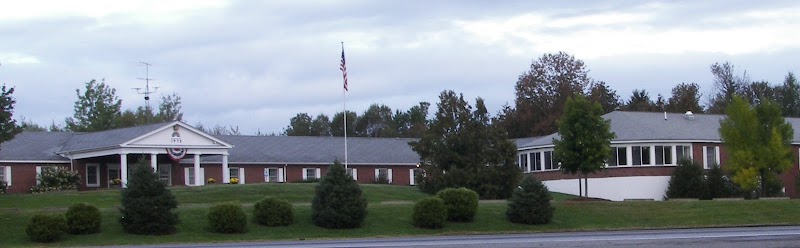
1037 WEST MAIN STREET, DOVER FOXCROFT, ME 04426 (207) 564-8129
For profit - Corporation 93 Beds FIRST ATLANTIC HEALTHCARE Data: November 2025
Trust Grade
35/100
#53 of 77 in ME
Last Inspection: June 2025

Inspected within the last 6 months. Data reflects current conditions.

Overview

Hibbard Skilled Nursing & Rehabilitation Center in Dover Foxcroft, Maine, has a Trust Grade of F, indicating significant concerns about its operations and care quality. With a state ranking of #53 out of 77, it is in the bottom half of Maine facilities, although it ranks #1 in Piscataquis County, meaning it is the only option in that area. The facility's trend is worsening, with reported issues increasing from 12 in 2024 to 17 in 2025, and it has accumulated $70,181 in fines, higher than 97% of Maine facilities, suggesting compliance problems. On a positive note, staffing is rated 4 out of 5 stars, indicating a relatively stable workforce, but the staff turnover rate of 51% is average. Recent inspections revealed serious concerns, including instances of residents experiencing fear and anxiety due to potential abuse, and failures to ensure proper medical directive assistance for residents, highlighting both the facility's weaknesses and areas for improvement.

Trust Score
F
35/100
In Maine
#53/77
Bottom 32%
Safety Record
Moderate
Needs review
Inspections
Getting Worse
12 → 17 violations
Staff Stability
⚠ Watch
51% turnover. Above average. Higher turnover means staff may not know residents' routines.
Penalties
✓ Good
$70,181 in fines. Lower than most Maine facilities. Relatively clean record.
Skilled Nurses
✓ Good
Each resident gets 45 minutes of Registered Nurse (RN) attention daily — more than average for Maine. RNs are trained to catch health problems early.
Violations
⚠ Watch
46 deficiencies on record. Higher than average. Multiple issues found across inspections.
★★☆☆☆
2.0
Overall Rating
★★★★☆
4.0
Staff Levels
★★☆☆☆
2.0
Care Quality
★★☆☆☆
2.0
Inspection Score
Stable
2024: 12 issues
2025: 17 issues

The Good

  • 4-Star Staffing Rating · Above-average nurse staffing levels
  • Full Sprinkler Coverage · Fire safety systems throughout facility
  • No fines on record

Facility shows strength in staffing levels, fire safety.

The Bad

2-Star Overall Rating

Below Maine average (3.0)

Below average - review inspection findings carefully

Staff Turnover: 51%

Near Maine avg (46%)

Higher turnover may affect care consistency

Federal Fines: $70,181

Well above median ($33,413)

Moderate penalties - review what triggered them

Chain: FIRST ATLANTIC HEALTHCARE

Part of a multi-facility chain

Ask about local staffing decisions and management

The Ugly 46 deficiencies on record

1 actual harm
Jun 2025 15 deficiencies
CONCERN (D)

Potential for Harm - no one hurt, but risky conditions existed

Deficiency F0554 (Tag F0554)

Could have caused harm · This affected 1 resident

**NOTE- TERMS IN BRACKETS HAVE BEEN EDITED TO PROTECT CONFIDENTIALITY** Based on observations, interviews and record review, the facility's interdisciplinary team (IDT) failed to determine if it was c...

Read full inspector narrative →
**NOTE- TERMS IN BRACKETS HAVE BEEN EDITED TO PROTECT CONFIDENTIALITY** Based on observations, interviews and record review, the facility's interdisciplinary team (IDT) failed to determine if it was clinically appropriate for a resident to keep medications at bedside and self-administer medications for 2 of 29 Residents reviewed during a medication pass (Residents #1 [R1] and R9). Findings: Review of facility policy, Self-Administration of Medications, revised 3/2025 states, .the interdisciplinary team (IDT) assesses each resident's cognitive and physical abilities to determine whether self-administering medications is safe and clinically appropriate for the resident .If it is deemed safe and appropriate for a resident to self-administer medications, this is documented in the medical record and the care plan .For self-administering residents, the nursing staff determine who is responsible (the resident or the nursing staff) for documenting that medications are taken . Self-administered medications are stored in a safe and secure place, which is not accessible by other residents .Nursing staff reviews the self-administered record for each nursing shift, and transfers pertinent information to the medication administration record (MAR) .noting that the doses were self-administered. During a medication pass observation for Resident (R)9 on 6/3/25 at 7:28 a.m., Certified Nursing Assistant/ Medication Technician (CNA/MT) was observed to retrieve 1 tablet of Medication [NAME] back and body oral 500-32.5 [milligram (mg)] and placed it in a medication cup. At this time CNA/MT stated, Just to let you know [he/she] has an order for self-administration of the [NAME], but I don't think its care planned, but there is an order to self-administer. CNA/MT was then observed walking into R9's room and placed medication cup on R9's over the bed table and left the room. Review of R9 clinical record revealed an order with start date 5/7/25 that states [NAME] Back & Body Oral Tablet 500-32.5 mg (Aspirin-Caffeine) Give 1 tablet by mouth one time a day related to other chronic pain. Administration time per resident request . Further review of R9s medication orders lacked evidence of an order to self-administer this medication. Review of R9's electronic and paper chart lacked evidence that a Self-Administration Assessment was completed. Review of R9's care plan updated 5/13/25 lacked evidence of self-administration goals and interventions. During a review of R9's clinical record with Long Term Care Unit Manager (LTCUM) on 6/3/25 at approximately 9:08 a.m., LTCUM stated residents should have an order to self-administrator medications, they should have an assessment completed as well as an established care plan. At this time LTCUM confirmed the above findings. 2.On 6/2/25 at 11:21 a.m. and 6/3/25 at 9:00 a.m., during observations of Resident #1's room, a box containing a 15 milliliter (mL) bottle of Muro 128 eye drops was observed in a basket on Resident #1's over-the-bed table. A review of Resident #1's clinical record revealed an active order with start date of 5/6/25 for Muro 128 Ophthalmic Solution 5% (Sodium Chloride Hypertonic) . Instill 2 drops in both eyes every 4 hours as needed for corneal edema. Review of Resident #1's May 2025 and June 2025 Medication Administration Record (MAR) lacked evidence of administration of the eye drops. Further review of Resident #1's clinical record lacked evidence of an IDT assessment for self-administering medications, a physician order to self-administer the eye drops, or documentation on the care plan. On 6/3/25 at 11:21 a.m., during an interview, Resident #1 stated he/she is supposed to administer the eye drops to himself/herself, 3 to 4 hours after the nurses administer his/her other eye drops. On 6/3/25 at 10:03 a.m. during an interview, Licensed Practical Nurse (LPN) #1 stated for a resident to self-administer medications, there needs to be a physician order to self-administer medications, an order to store the medication at bedside, and a self-administration assessment. At this time, LPN #1 reviewed Resident #1's entire electronic record and paper chart and confirmed it lacked evidence of an order to self-administer medications and lacked evidence of a self-administration assessment. On 6/3/25 at 10:15 a.m., the above finding was discussed with the Operations Consultant.
CONCERN (D) 📢 Someone Reported This

A family member, employee, or ombudsman was alarmed enough to file a formal complaint

Potential for Harm - no one hurt, but risky conditions existed

Investigate Abuse (Tag F0610)

Could have caused harm · This affected 1 resident

Based on interviews, record review and facility policy, the facility failed to thoroughly investigate an allegation injury of unknown origin for 2 of 3 facility incident reports reviewed [Resident #4 ...

Read full inspector narrative →
Based on interviews, record review and facility policy, the facility failed to thoroughly investigate an allegation injury of unknown origin for 2 of 3 facility incident reports reviewed [Resident #4 (R4) and R61]. Findings: Review of facility Abuse & Neglect - Clinical Protocol dated 10/22 states :Abuse is defined at 483.5 as the willful infliction of injury, unreasonable confinement, intimidation, or punishment with resulting physical harm, pain or mental anguish .It includes verbal abuse, sexual abuse, physical abuse, and mental abuse The nurse will assess the individual and document related findings: Assessment data will include: injury assessment (bleeding, bruising deformity, swelling etc); pain assessment; current behavior; patients age and sex.; all current medications, especially anticoagulants, NSAIDS, salicylate; other plate inhibitors; vital signs; behavior over last 24 hours (bruise could be related to movement disorder or aggressive behavior); history of any tendency toward bruising, any related labs The staff, with the physician's input (as needed) will investigate alleged occurrences of abuse and neglect to clarify what happened and identify possible causes . Review of facility policy titled Resident Rights, and dignity dated 10/2022 states . The staff, with the physician's input (as needed), will investigate all alleged occurrences of abuse and neglect to clarify what happened and identify possible causes . 1. On 5/27/25, the Department of Licensing received a Facility Reported Incident indicating that on 5/24/25, Resident #4 sustained an injury of unknown origin after he/she returned from an acute care hospital on 5/23/25, a nurse noted Resident #4's left knee to be swollen and warm to the touch. X-ray results revealed Resident #4 had sustained a femoral fracture. Review of H&P dated 5/28/25 states During transfer, patient had a seizure and was consequently transferred to eastern Maine medical center and subsequently admitted . After returning from the hospital on May 22, 2025, patient complained of left knee pain and x-ray discovered a left femoral supracondylar fracture. [He/she] was then sent to the emergency department . where [he/she] received a CT of [his/her] knee which showed a fracture of the distal epiphysis of the femur. Patient then complained of left wrist pain and an x-ray was obtained 2 days later which showed an acute angulated right distal radial fracture. [He/she] was then transferred to the emergency room and was given a splint for [his/her] wrist. Review of Facility 5-day Investigation Follow-up dated 5/27/25 states [RN] spoke with residents [family member] who reported to her that [Resident #4] complained of L [left] knee pain while hospitalized last week further review of the 5-day investigation named 3 staff members, Resident #4 and a family member were interviewed, but facility was unable to show any written documentation these interviews took place. Further review of Resident #4's clinical record lacked evidence that this injury was noted in the emergency department. During an interview on 6/2/25 at 10:03 a.m., Long Term Care Unit Manager (LTCUM) stated that the facility was not sure if the injuries happened at the facility or while in the hospital. 2. On 5/19/25 the Department of Licensing received a facility reported incident stating that on 5/18/25 Resident #61 sustained an Injury of Unknown Origin. Report states No known history of a fall . What interventions were in place at the time of the incident? Please describe in full below: Resident has rails next to toilet to assist with independent toileting, to prevent falls . Were there any adverse effects to the resident/patient (physical or mental)? Yes: Resident has a large hematoma near L [left] eye. Review of facility 5-day follow up dated 5/20/25 states Description of incident: bruise of unknown origin. Resident did have an unwitnessed fall on 5/18/25 prior to noticing bruise over left eye. Bruise was not noticed at time of assessment following fall. Resident has also had increasing confusion and unsteady gate . Further review of facility follow-up lacked evidence that this injury of unknown origin was thoroughly investigated. During a review of above 5-day follow ups on 6/2/25 at 12:31 p.m., Long Term Care Unit Manger (LTCUM) stated that all injuries of unknown injury should be investigated as possible abuse, she is now responsible for the investigations in Long Term Care and is new to this role and was unsure of how to complete the follow up investigations. At this time LTCUM confirmed thorough investigations of the above incidents were not conducted, and in the future, she will ensure she has all the necessary information in the investigation.
CONCERN (D)

Potential for Harm - no one hurt, but risky conditions existed

Deficiency F0655 (Tag F0655)

Could have caused harm · This affected 1 resident

Based on obervation, record review, and interview, the facility failed to ensure a baseline care plan was developed and implemented within 48 hours that included the instructions needed to provide min...

Read full inspector narrative →
Based on obervation, record review, and interview, the facility failed to ensure a baseline care plan was developed and implemented within 48 hours that included the instructions needed to provide minimum healthcare information necessary to care for 1 of 5 residents reviewed for baseline care plans (Resident #333). Finding: 1. Review of Facility policy, Care Plans-Baseline, revised 3/2025, states, A baseline plan of care to meet the resident's immediate health and safety needs is developed for each resident within forty-eight [48] hours of admission .and must include the minimum healthcare information necessary to properly care for the resident, including, but not limited to the following: Initial goals, based on admission orders and discussion with the resident/representative .physician orders .Dietary orders .Therapy services .Social services .PASSAR recommendation, if applicable . Resident #333 was recently admitted with diagnoses to include Coronary artery disease; Chest pain with exertion; Chronic Obstructive Pulmonary Disease (COPD); Type 2 Diabetes Mellitus (DM); Neuropathy (nerve pain); acute and chronic pain; peripheral artery disease, status post recent lower extremity bypass surgery and stenting, with surgical incisions of the right arm, left groin, and left leg; Left great toe arterial wound; and Stage 2 pressure ulcers of the sacrum and left heel. On 6/2/25 at 11:18 a.m., during an observation, Resident #333 had a gauze dressing on his/her left lower extremity, extending over his/her foot, and blood was observed coming through the dressing on the bottom of the foot. At this time, Resident #333 stated the nurse just changed his/her left leg dressing and had to come back in to change his/her wrist dressing because of bleeding and then stated he/she has been on 2 anticoagulants (blood thinner) since his/her surgery. A review of Resident #333's clinical record revealed the following active physician orders: -An order for Pregabalin Oral Capsule 75 MG .Give 75 mg by mouth three times a day for Pain -An order for ProAir HFA Inhalation Aerosol Solution .2 puff inhale every 4 hours as needed for COPD -An order for Nitrostat Sublingual Tablet .as needed for Chest pain .Notify MD [medical doctor] immediately -An order for Apixaban Oral Tablet 5 MG .Give 5 mg by mouth two times a day for DVT [Deep Vein Thrombosis] -An order for Clopidogrel Bisulfate Oral Tablet 75 MG .Give 75 mg by mouth one time a day for DVT -An order for Acetaminophen Oral Tablet 500 MG .Give 2 tablet by mouth every 6 hours as needed for chronic foot pain . -An order for Blood Glucose Monitoring before meals and HS [hour of sleep] four times a day for DM -An order for Apply dry dressing to the groin incision daily .for wound care -An order for Apply Mepilex to sacrum every 3 days or as needed .for wound care Review of Resident #333's baseline care plan lacked evidence that goals and interventions were put into place for the cardiac diagnoses, chest pain, anticoagulant use, COPD, Diabetes, acute and chronic pain, care of the surgical and pressure wounds, nutrition, or therapy services. On 6/4/25 at 2:02 p.m., the above concerns were discussed with the Director of Nursing.
CONCERN (D)

Potential for Harm - no one hurt, but risky conditions existed

Accident Prevention (Tag F0689)

Could have caused harm · This affected 1 resident

Based on Smoking Policy review, record review and interviews, the facility failed to complete a Safe Smoking Evaluation for 1 of 1 sampled resident that actively smokes cigarettes (Resident #383 [R383...

Read full inspector narrative →
Based on Smoking Policy review, record review and interviews, the facility failed to complete a Safe Smoking Evaluation for 1 of 1 sampled resident that actively smokes cigarettes (Resident #383 [R383]). Finding: On 6/5/25, a review of the facility's Smoking Policy indicated under Number 6-Resident smoking status is evaluated upon admission. If a smoker, the evaluation includes: 6d. ability to smoke safely with or without supervision (per a completed Safe Smoking Evaluation). On 6/5/25, a review of R383's clinical record was completed. In a Provider assessment note dated 5/21/25, the resident declines smoking cessation given his/her diagnosis of Amyotrophic Lateral Sclerosis (ALS) and being on Hospice for palliative care. There was no evidence that a Safe Smoker Evaluation had been completed. On 6/5/25 at 10:30 a.m., in an interview with the surveyor, the resident stated they are currently smoking when able. On 6/5/25 at 11:25 a.m., in an interview with the surveyor, the Skilled Nursing Manager confirmed that a Safe Smoker Evaluation was not completed.
CONCERN (D)

Potential for Harm - no one hurt, but risky conditions existed

Incontinence Care (Tag F0690)

Could have caused harm · This affected 1 resident

Based on record reviews and interview, the facility failed to notify the physician of a suspected Urinary Tract Infection (UTI) for 1 of 4 Residents (Resident #71) reviewed for indwelling urinary cath...

Read full inspector narrative →
Based on record reviews and interview, the facility failed to notify the physician of a suspected Urinary Tract Infection (UTI) for 1 of 4 Residents (Resident #71) reviewed for indwelling urinary catheters. Resident #71 was admitted in December 2024 with diagnoses to include Benign Prostatic Hyperplasia (enlarged prostate), retention of urine, obstructive uropathy (a blockage in the urinary tract that causes difficulty urinating), and indwelling urinary catheter (Foley catheter). Review of Resident #71's clinical record revealed a nursing progress note dated 6/1/25 states, Flushed resident's foley with acetic acid solution, replaced bag and tubing as it was full of sediment and smelled badly. Resident may have a UTI, recommend a UA [urinalysis] to r/o [rule out]. Further review of Resident #71's clinical record lacked evidence that the physician was notified of the above urinary concerns and that a urinalysis was done. On 6/2/25 at 12:13 p.m., during an interview, Resident #71's representative stated over the weekend, the staff told him/her they were going to check for a UTI because of a change in Resident #71's mental status, but he/she hasn't heard back. On 6/5/25 at 9:40 a.m., the above finding was discussed with the Administrator.
CONCERN (D)

Potential for Harm - no one hurt, but risky conditions existed

Deficiency F0697 (Tag F0697)

Could have caused harm · This affected 1 resident

Based on record reviews and interviews, the facility failed to implement, monitor and/or revise as necessary interventions to prevent or manage a resident's pain for 2 of 4 residents reviewed for pain...

Read full inspector narrative →
Based on record reviews and interviews, the facility failed to implement, monitor and/or revise as necessary interventions to prevent or manage a resident's pain for 2 of 4 residents reviewed for pain (Resident #52 (R52) and R333) Findings: 1. On 6/3/25, review of R52's clinical record revealed the following: -R52's Care Plan identifies Potential for Acute Pain / Chronic Pain, [R52] is on pain/OPIOD medication therapy [related to (r/t)] chronic pain, and [R52] has chronic pain r/t end stage liver failure with ascites. - On 4/7/25 at 10:45 a.m., the provider note indicated R52 had an existing order for 5 milligrams (mg) oxycodone for pain, and a new order for buprenorphine 5 micrograms (MCG) / hour (HR) transdermal (application of medicine through the skin) patch to be applied weekly. At 1:35 p.m., Order notes indicated, The order you have entered Buprenorphine Transdermal Patch Weekly 5 MCG/HR (Buprenorphine) *Controlled Drug* Apply 1 patch transdermally one time a day every [Tuesday (Tue)] for pain and remove per schedule Has triggered the following drug protocol alerts/ warning(s): Drug to Drug Interaction The system has identified a possible drug interaction with the following orders: oxycodone [Hydrochloride (Hcl)] Oral Tablet 5 mg . Severity: Severe Interaction: Buprenorphine, . may diminish the analgesic effect of opioid agonists and precipitate withdrawal symptoms in patients chronically maintained on full agonist opioids ([example (eg)], oxycodone Hcl Oral Tablet 5 MG). The opiate receptor antagonist effects of buprenorphine are expected at higher doses. The record lacks evidence that the severe interaction warning was discussed with the provider. - On 4/10/25 at 9:01 a.m., a nursing note indicated R52 stated he had exhibited suicidal behaviors because I am in pain. At 2:11 p.m., a nurse note indicated R52's family member expressed concern that [R52] is in constant pain .every time that I talk with [R52] [he/she] [complains of (c/o)] pain. -On 4/11/25 at 12:30 p.m., a provider note indicated R52 was seen by the provider. R52 stated he/she had stopped taking their medications because they were in pain. The provider ordered as needed medications would be scheduled as R52's cognition may prevent the resident from asking for pain medicine. At 4:04 p.m., an order note indicated a new order for oxycodone 5mg Give 1 tablet by mouth [immediately (STAT)] for pain stat dose for increased pain, triggered a severe drug to drug interaction warning. At 4:06 p.m., an order note indicated a severe drug to drug interaction between scheduled oxycodone 5 mg to be given by mouth twice a day and buprenorphine transdermal 5MCG/HR patch weekly. At 4:21 p.m., an order note indicated a severe drug to drug interaction between scheduled oxycodone 5 mg to be given by mouth twice a day and buprenorphine transdermal 5MCG/HR patch weekly. There is no evidence that the severe drug interaction warning was reviewed with the provider. On 6/3/25 at 11:22 a.m., during an interview with the surveyor and the Long Term Care Unit Manager (LTCUM) R52's medical record was reviewed. LTCUM stated there is no evidence that the drug interaction was addressed or reviewed with the provider. At this time the surveyor confirmed the resident had increased reports of pain after the introduction of the pain patch and the facility did not monitor and revise as necessary to treat R52's pain. On 6/4/25 at 10:23 a.m., during an interview with a surveyor, the Physician Assistant (PA) stated nursing did not make her aware of the medication conflict, and stated if she had known she would have used an alternative option. 2. Resident #333 was recently admitted with diagnoses to include Acute and chronic pain; status post recent lower extremity bypass surgery and stenting, with surgical incisions of the right arm, left groin, and left leg; Left great toe arterial wound; and Stage 2 pressure ulcers of the sacrum and left heel. A review of Resident #333's clinical record revealed the following physician orders: - An active order for Pain Monitoring - Assess for pain every shift for pain - An active order for oxycodone HCl Oral Tablet 5 MG .Give 2 tablet by mouth three times a day for pain for 30 Days -An active order for oxycodone HCl Oral Capsule 5 MG .Give 1 tablet by mouth every 4 hours as needed [PRN] for pain control for 29 Days On 6/3/25 at 12:45 p.m., a surveyor attempted to observe Resident #333's dressing changes with Licensed Practical Nurse (LPN) #2 and asked Resident #333 permission to observe the dressing change. Resident #333 became tearful, stating his/her pain medications are messed up and that he/she had spoken to the doctor and thought he/she would be receiving a PRN dose of oxycodone so he/she could have medication prior to the dressing change. Resident #333 then stated that he/she cannot tolerate a dressing change now because it will be too painful. Resident #333 proceeded to state he/she went 12 hours last night (6/2/25) without pain medication because the facility did not have the medication in stock. At this time, LPN #2 stated there is a call out to the physician to clarify the pain medication orders. On 6/4/25 at 8:40 a.m., during a follow-up interview, Resident #333, stated the nurse came in before supper last night and said he/she had orders for scheduled and PRN oxycodone but when he/she asked for a PRN dose at 1:30 a.m., he/she was told there was no oxycodone available, so he/she went 10 hours without pain medication. Review of Resident #333's June 2025 Treatment Administration Record (TAR) revealed Resident #333 received a PRN dose of Oxycodone at 12:45 p.m. on 6/2/25 and did not receive any additional doses of oxycodone until the 2:00 p.m. scheduled dose on 6/3/25. The TAR indicated Resident #333's pain level was 5/10 on the night shift on 6/3/25. Further review of the TAR revealed that on 6/3/25, Resident #333 received a scheduled dose of oxycodone at 10:00 p.m. and did not receive any additional doses of oxycodone until the 6:00 a.m. scheduled dose on 6/4/25. The TAR indicated Resident #333's pain level was 8/10 on the morning of 6/4/25. On 6/4/25 at 9:15 a.m., during an interview, LPN #1 stated new orders are entered in the electronic medical record (EMR) and go directly to the pharmacy, and the Cubex [medication storage cabinet] in the medication room has house stock available while awaiting the delivery from the pharmacy. In the presence of a surveyor, LPN #1 checked the medication cart and stated Resident #333 has 172 tablets of oxycodone 5mg on hand and that 6 have been given so far. At 9:17 a.m., in the presence of a surveyor, LPN #1 signed into the Cubex and confirmed there was no oxycodone 5mg in stock and stated she knows she used the last 6 tablets on the night of 6/2/25 and is not sure if it has been refilled since then. On 6/4/25 at 2:02 p.m., during an interview, the above finding was discussed with the Director of Nursing (DON). At this time, the DON stated that Resident #333 probably did get his/her pain medication and is telling everyone he/she is not getting it.
CONCERN (D)

Potential for Harm - no one hurt, but risky conditions existed

Deficiency F0761 (Tag F0761)

Could have caused harm · This affected 1 resident

Based on observations and interviews, the facility failed to ensure expired medications were removed from the available for use supply, for 1of 3 Medication storage Carts reviewed (Treatment Cart). Fi...

Read full inspector narrative →
Based on observations and interviews, the facility failed to ensure expired medications were removed from the available for use supply, for 1of 3 Medication storage Carts reviewed (Treatment Cart). Finding: On 6/3/25 at 7:33 a.m., during review of the treatment cart a surveyor observed and confirmed the following were on the cart and available for use with the Licensed Practice Nurse (LPN2): -1 used bottle (less than half full of fluid) 100 milliliters (ml) Normal Saline irrigation fluid, open, unlabeled, and undated. -1 Tube of Hydrophilic Wound Dressing (Triad) open, unlabeled, with an expiration date of 3/31/25. -1 sealed multi-use vial containing 10ml of Insulin glargine 100units (u)/10ml, labeled with a yellow sticker stating refrigerate. LPN2 stated it should be in the refrigerator until it is opened. LPN2 was unable to determine how long the vial had been out of the refrigerator. -1 sealed multi-use vial containing 10ml of Insulin Lispro 100u /10ml, labeled with a yellow sticker stating refrigerate. LPN2 stated it should be in the refrigerator until it is opened. LPN2 was unable to determine how long the vial had been out of the refrigerator. -1 3-ounce tube of GoodSense Arthritis Relief with an expiration date of 1/2025. -1 tube of Triamcinolone Acetonide 0.1%, the pharmacy label indicated Discard After 11/28/24 -1 opened package of Lidocaine Hydrochloride Jelly USP 2% (package is a sterile kit when sealed, used to numb genitalia prior to foley catheter insertion), resting in an unsealed zip lock bag dated 4/4/25.
CONCERN (D) 📢 Someone Reported This

A family member, employee, or ombudsman was alarmed enough to file a formal complaint

Potential for Harm - no one hurt, but risky conditions existed

Medical Records (Tag F0842)

Could have caused harm · This affected 1 resident

**NOTE- TERMS IN BRACKETS HAVE BEEN EDITED TO PROTECT CONFIDENTIALITY** Based on record reviews, interviews, and policy review, the facility failed to ensure that clinical records were complete and co...

Read full inspector narrative →
**NOTE- TERMS IN BRACKETS HAVE BEEN EDITED TO PROTECT CONFIDENTIALITY** Based on record reviews, interviews, and policy review, the facility failed to ensure that clinical records were complete and contained accurate information for 5 of 26 sampled residents reviewed. (Resident #46 [R46], R7, R52, R71, R333). Findings: Review of facility Abuse & Neglect - Clinical Protocol dated 10/22 states :Abuse is defined at 483.5 as the willful infliction of injury, unreasonable confinement, intimidation, or punishment with resulting physical harm, pain or mental anguish .It includes verbal abuse, sexual abuse, physical abuse, and mental abuse The nurse will assess the individual and document related findings> Assessment data will include: injury assessment (bleeding, bruising deformity, swelling etc.); pain assessment; current behavior; patients age and sex.; all current medications, especially anticoagulants, NSAIDS, salicylate; other plate inhibitors; vital signs; behavior over last 24 hours 9 bruise could be related to movement disorder or aggressive behavior); history of any tendency toward bruising, any related labs The staff, with the physician's input (as needed) will investigate alleged occurrences of abuse and neglect to clarify what happened and identify possible causes . On 4/19/25 the Department of Licensing received a facility reported incident indicating on 4/19/25 R#7 stated Resident #46 had threatened to shoot [him/her] earlier today. RN heard them arguing and heard Resident #46 say Ow. RN assessed R#46 and noted redness and slight swelling on R#46's left side of face. The residents were separated, and in-house provider will assess R#46. 1. R#46 was admitted [DATE] and has diagnoses to include vascular dementia with psychotic disturbance, and major depressive disorder. Review of Nursing note dated 4/19/25 at 16:21 states [R#46] was in [his/her] wheelchair in the hallway. [R#7] was going the same way and went beside [R#46]. [He/she] stated [R#46] had threatened to shoot [him/her] earlier today. This RN heard them arguing and heard [R#46] say OW I heard them as I was at the computer at the nurse's station, I did not see [him/her] hit [him/her]. Redness noted on left side of [R#46's] face with slight swelling. Residents were separated. Provider is in the building and was notified, she will assess [R#46]. Ice pack applied to [R#46's] face. Family to be notified. DON was notified. Review of R7's clinical record lacked evidence that the provider assessed this resident. Review of provider note dated 4/19/25 states [R#46] is a long-term resident I am asked to see on account of increasing episode of behaviors with agitation and outburst towards other residents. Today, there was an incident where [he/she] was telling another resident that [he/she] would kill them. ultimately, this resulted in the resident striking [R#46] in the face. There is no significant injury from this, however staff note that the episodes seem to be increasing in frequency greatly lately.[His/Her] BIMS score was 3 of 3, indicating severe cognitive impairment .has a history of vascular dementia with psychotic features, type 2 diabetes mellitus, and right above-knee amputation. bupropion was increased from 150 mg back to 300 mg daily. Review of progress note dated 5/1/25 at 15:05 states Behavior note: Argumentative with peer in front of the nurses station. Asked resident to please not engage with other resident as the other party will not end confrontation very easily. Separated residents and both seemed to be calmer and more agreeable. A short time later, this resident continued the verbal confrontation, Redirected. Progress note dated 5/1/25 at 16:09 states Behavior note: confrontation with peer again. Removed residents from situation. SS aware Music therapy initiated with positive effect. Review of Resident (R)46 care plan most recently updated 5/21/25 lacked evidence that it was updated to reflect goals/interventions for verbal and physical behaviors. Observation of Resident #46 on 6/2/25 at 11:39 a.m., resident in hall in wheelchair, self-propelling, dressed for time and season. stating: 'stinking pig, stinking pig . During an interview on 6/2/25 at 11:42 a.m., Licensed Practical Nurse (LPN)1 stated R#46 does have verbal and physical behaviors and can get vocal and has been in verbal altercation with previous roommate. 2. R7 has a diagnosis to include anxiety. Review of R#7's progress note dated 5/19/25 at 16:21 states [R#46] was in [his/her] wheelchair in the hallway. [R#7] was going the same way and went beside [R#46]. [He/she] stated [R#36] had threatened to shoot [him/her] earlier today. This RN heard them arguing and heard [R#46] say OW I heard them as I was at the computer at the nurse's station, I did not see [him/her] hit [him/her]. Redness noted on left side of [Resident #46's] face with slight swelling. Residents were separated. Provider is in the building and was notified, she will assess [R#46]. Ice pack applied to [R#46's] face. Family to be notified. DON was notified. Review of R7's clinical record lacked evidence that the provider assessed this resident. Review of R#7 care plan updated 5/30/25 lacked evidence that goals and interventions were put into place for R#7's physical behaviors. During an interview on 6/4/25 at 3:10 p.m. R#7 stated he/she was angry because R#46 comes into his/her room all the time, every day, and tells me to get of my own room. He/she yells all the time. Yes, I hit [him/her], and I don't feel bad about it either. During a review of R#7's clinical record with Long Term Care Unit Manager (LTUM) on 6/4/25 at 2:30 p.m., LTCUM confirmed R#7's progress note was a copy and paste directly from R#46's progress note, and there is no evidence that R#7 was assessed by the in house provider. During an interview LTCUM and Skilled Nursing Manager (SNM) on 6/4/25 at 3:15 p.m., SNM stated care plans are updated during the weekdays they are done in real time and if it happens over the weekend they are updated on Monday. At this time SNM reviewed R7's care plan and confirmed it was not updated for physical behaviors, and R#46 did not have a care plan for verbal and physical behaviors. During an interview on 6/4/25 at 4:02 p.m. the above was discussed with the Administrator. 3. On 6/3/25, review of R52's clinical record indicated the following: On 12/4/24 at 11:52 a.m., the provider note indicated the R52 was prescribed Risperidal 0.5 milligrams (mg) to be taken by mouth twice a day for anxiety. There was no mention of a diagnosis of Schizophrenia at that time. On 12/10/24 at 4:28 p.m., a new order for Risperidal 1mg to be taken by mouth twice a day for schizophrenia was entered by nursing staff. The clinical record lacks evidence that the resident was evaluated to confirm a new diagnosis of schizophrenia. On 12/16/24 at 10:23 a.m., the provider note did not address a new diagnosis of schizophrenia. The medications listed at the end of the provider note indicated Risperidal 1mg to be taken by mouth twice a day for schizophrenia. On 4/29/25, schizophrenia was added to R52's list of active diagnosis. The clinical record lacks evidence that the resident was evaluated to confirm a new diagnosis of schizophrenia. On 6/4/25 at 10:23 a.m., during an interview with a surveyor and the Physician Assistant (PA), R52's record was reviewed. The PA stated she knows R52 has psychosis but cannot state where the diagnosis of schizophrenia came from. The PA stated there is no order to change the diagnosis on the risperidone. The PA also confirmed the diagnosis heading found above nurse and provider notes, as well as the medications listed at the bottom of a provider note automatically flow over from Point Click Care (the electronic record) and are not documented by the provider. At this time the surveyor confirmed R52's record contained inaccurate / incomplete documentation regarding the new diagnosis of schizophrenia. 4. On 6/4/25 at 9:18 a.m., during an interview with a surveyor and the Licensed Social Worker (LSW) , R52's Social Services Quarterly Note and Pre-admission Screening and Resident Review (PASRR) were reviewed. The LSW confirmed R52 is on a psychotropic medication, but the Social Services Quarterly Note indicated R52 is not receiving psychotropic medications. At this time the surveyor confirmed the Social Services Quarterly Note had inaccurate documentation regarding the use of psychotropic medications, and the PASRR contained inaccurate information regarding R52's medical condition (See F644). 5. Resident #71 was admitted with diagnoses to include Benign Prostatic Hyperplasia (enlarged prostate), retention of urine, obstructive uropathy (a blockage in the urinary tract that causes difficulty urinating), and indwelling urinary catheter (Foley catheter). Review of Resident #71's clinical record revealed the following active physician orders: -An order for Measure I & O [intake and output] every shift for foley -An order for Weigh weekly in the morning every Wed [Wednesday] for weight monitoring Review of Resident #71's May and June 2025 Treatment Administration Records (TAR) lacked evidence that I &O was recorded for the following shifts on the following dates: -Day shift: -5/8/25 -Evening shift: -5/20/25 -6/2/25 -6/3/25 -Night shift: -5/2/25 -5/4/25 -5/16/25 -5/19/25 -5/28/25 -5/30/25 -5/31/25 -6/2/25 Further review of the May TAR lacked documentation of the weekly weight on 5/14/25 and 5/21/25. On 6/5/25 at 9:18 a.m., during an interview, Registered Nurse (RN) #2 stated I & O is documented by nurses and certified nursing assistants (CNAs), but nurses review the CNA documentation at the end of the shift and total the I & O recorded by the CNA and the nurse, and document that amount on the TAR because the physician reviews the TAR. 6. Resident #333 was recently admitted with diagnoses to include left great toe arterial wound and Stage 2 pressure ulcer of the sacrum. A review of Resident #333's clinical record revealed the following physician orders: -An active order for Apply mepilex [a type of foam dressing] to sacrum every 3 days or as needed for soiled dressing . -An order for Iodosorb External Gel 0.9% .Apply to L [left] great toe topically every day shift for wound -An active order for Blood Glucose Monitoring before meals and HS [bedtime] -An order for Insulin Lispro Injection Solution 100 UNIT/ML .Inject as per sliding scale .before meals for dm2 [Type 2 Diabetes Mellitus] Review of Resident #333's June 2025 TAR lacked evidence that the above Mepilex dressing and Iodosorb treatment was applied on 6/3/25, or that the resident refused treatment(s). Further review of the TAR revealed the Insulin Lispro was scheduled for 6:00 a.m., 11:00 a.m., and 4:00 p.m. daily and lacked evidence that the Insulin Lispro was administered, held, or refused for the 6:00 a.m. doses on 6/1/25, 6/2/25, and 6/3/25. On 6/5/25 at 9:40 a.m., the above findings were discussed with the Administrator.
CONCERN (D)

Potential for Harm - no one hurt, but risky conditions existed

Infection Control (Tag F0880)

Could have caused harm · This affected 1 resident

Based on observations and interviews, the facility failed to maintain an Infection Control Program designed to provide a sanitary environment to help prevent the development and transmission of diseas...

Read full inspector narrative →
Based on observations and interviews, the facility failed to maintain an Infection Control Program designed to provide a sanitary environment to help prevent the development and transmission of disease and infection related to a dressing change and the processing of linens for 1 of 2 observations during the survey. Findings: 1. On 6/4/25 at 9:59 a.m., a surveyor entered Resident #333's room with Registered Nurse (RN) #1 and Licensed Practical Nurse (LPN) #1 to observe Resident #333's wound dressing change. Upon entering the room, a surveyor observed an unbagged, soiled gown and an open, clear plastic trash bag containing soiled linen lying on the floor under the sink. RN #1 walked from Resident #333's bed to the sink and stepped on the soiled gown as she washed her hands. RN #1 then returned to Resident #333's bedside and began the dressing change. Resident #333 requested help supporting his/her left leg during the dressing change, and RN #1 proceeded to remove a pillow from the top of the bed and placed it under Resident #333's left knee. A surveyor observed dried blood on the pillowcase and asked Resident #333 if he/she uses this pillow, and he/she stated he/she uses it to sleep. RN #1 then began removing the existing left leg dressing. At this time (10:25 a.m.) a surveyor intervened and voiced concern regarding performing a wound dressing change on a soiled pillowcase. LPN #1 then changed the pillowcase and obtained a clean, disposable under pad to place over the pillow before completing the dressing change. RN #1 then stated Resident #333 was previously able to hold his/her leg up for the dressing change, so RN #1 did not come prepared with supplies. After the dressing change observation, a surveyor discussed the above concern regarding the soiled linens under the sink with RN #1, and that multiple staff entered and exited the room throughout the observation and failed to remove the soiled linens. On 6/4/25 at 1:20 p.m., during an interview, the above findings were discussed with the Infection Preventionist (IP).
CONCERN (D)

Potential for Harm - no one hurt, but risky conditions existed

Deficiency F0883 (Tag F0883)

Could have caused harm · This affected 1 resident

Based on facility policy review, record reviews, Centers for Disease Control and Prevention (CDC) recommendations, and interview, the facility failed to offer the updated Pneumococcal Conjugate Vaccin...

Read full inspector narrative →
Based on facility policy review, record reviews, Centers for Disease Control and Prevention (CDC) recommendations, and interview, the facility failed to offer the updated Pneumococcal Conjugate Vaccination (PCV) 20 to 2 of 5 residents (Resident #47 [R47] and R72). Findings: 1. The facility's policy, Pneumococcal Vaccine, revised 06/2022, indicated prior to or upon admission, residents will be assessed for eligibility to receive the Pneumococcal Vaccine series and when indicated, are offered the vaccine series within thirty (30) days of admission to the facility unless medically contraindicated or the resident has completed the current recommended vaccine series. Assessments of Pneumococcal vaccination status are conducted within five (5) working days of the resident's admission if not conducted prior to admission. Administration of the Pneumococcal vaccines are made in accordance with current CDC recommendations at the time of the vaccination. 1. The documentation in R72's clinical record indicated that R72 received the PCV13 in 2016, and Pneumococcal Polysaccharide Vaccine (PPSV) 23 in 2018. The CDC recommendation was based on shared clinical decision-making, decide whether to administer one dose of PCV20 or PCV21 at least 5 years after the last pneumococcal vaccine dose. The clinical record lacked evidence that the PCV20 was offered, provided, or refused by R72. 2. The documentation in R47's clinical record indicated that R47 received the PCV13 in 2018 but refused the PPSV23 in 2022. The CDC recommendation was to give one dose of PCV20 or PCV21 at least 1 year after PCV13. The clinical record lacks evidence that the PCV20 was offered, provided, or refused by R47. On 6/5/25 at 10:30 a.m., during an interview with a surveyor, the Administrative Coordinator stated she did not offer PCV20 to R47 or R72 because she believed they were up to date on the vaccine, that if a resident had the PCV13 they would not need the PCV20. The Administrative Coordinator and surveyor reviewed the policy. At this time the surveyor confirmed the PCV20 was not offered to R47 or R72 as recommended by CDC guidelines, or as directed by the facility's policy.
CONCERN (E)

Potential for Harm - no one hurt, but risky conditions existed

Deficiency F0578 (Tag F0578)

Could have caused harm · This affected multiple residents

Based on facility policy review, record reviews, and interview, the facility failed to ensure that the resident and/or resident representative received assistance/follow up assistance to complete the ...

Read full inspector narrative →
Based on facility policy review, record reviews, and interview, the facility failed to ensure that the resident and/or resident representative received assistance/follow up assistance to complete the written information provided concerning the right to accept or refuse medical or surgical treatment and/or formulate an advanced directive, or appoint a surrogate, for 5 of 7 residents reviewed for advanced directives. (Resident #21 [R21], R24, R42 R72, R75). Findings: Review of facility policy Advanced Directives dated 3/25, Page 3 of 5, Section: If the Resident Does not have an Advanced Directive states if the resident or representative indicates that he or she has not established advanced directives, the facility staff will offer assistance in establishing advanced directives. Nursing staff will document in the medical records the offer to assist and the residents decision to accept or decline assistance. 1. On 6/3/25, a review of R21's electronic medical record indicated that on 7/20/2023, R21 documented that they did not have an advanced directive and a family member would look into one. The medical record lacked evidence that the facility followed up with the resident and/or resident representative concerning the right to accept or refuse medical or surgical treatment and to ensure the completion of the resident's advanced directive wishes. 2. On 6/2/25, a review of R24's electronic medical record indicated that on 3/6/2019, documentation indicated that R24 did not have an advanced directive and declined to have one. Documentation in the clinical record indicated that R24 is diagnosed with Alzheimer's disease and is cognitively impaired and has a family member listed in the clinical record as the resident representative. The medical record lacked evidence that the facility followed up with the resident representative concerning the right to accept or refuse medical or surgical treatment and to ensure the completion of the resident's advanced directive wishes. 3. On 6/3/25, a review of R42's electronic medical record indicated that on 1/2/2024, documentation indicated that R42 did not have an advanced directive and would look into it. The medical record lacked evidence that the facility followed up with the resident/resident representative concerning the right to accept or refuse medical or surgical treatment and to ensure the completion of the resident's advanced directive wishes. On 6/3/25 at 11:25 a.m., in an interview with the surveyor, the Licensed Social Worker, confirmed that she was unable to find a documented note regarding the resident's/representative's advanced directive wishes and outcomes. 4. On 6/3/25, a review of Resident #71's Acknowledgement of Important Infomation and Policies, dated 12/3/24, indicates Resident #71 has an Advance Directive and states, will provide to us. On 6/3/25 at 11:35 a.m., during an interview, the Social Services Director stated Resident #71's spouse was looking for documents. At this time, the Social Services Director confirmed the clinical record lacks evidence that the facility followed up with Resident #71's representative concerning the right to formulate an Advance Directive. 5. On 6/3/25, a review of Resident #75's Acknowledgement of Important Infomation and Policies, dated 5/8/25, indicates Resident #75 does not have an Advance Directive and states, working on one. On 6/3/25 at 11:42 a.m., during an interview in the presence of 4 surveyors, the Social Services Director stated Resident #75 does not have an Advance Directive but that it was discussed in the Interdisciplinary Team (IDT) meeting dated 5/13/25, and Resident #75's family are working on one. A Review of the IDT meeting notes, dated 5/13/25, lacks evidence that Advance Directives were discussed.
CONCERN (E)

Potential for Harm - no one hurt, but risky conditions existed

PASARR Coordination (Tag F0644)

Could have caused harm · This affected multiple residents

Based on record review and interview, the facility failed to ensure that the State mental health authority for Pre-admission Screening and Resident Review (PASRR) was notified after a resident was new...

Read full inspector narrative →
Based on record review and interview, the facility failed to ensure that the State mental health authority for Pre-admission Screening and Resident Review (PASRR) was notified after a resident was newly diagnosed and/or experienced symptoms related to a mental disorder or trauma event to determine if a change in level of service was required, or incorporate the recommendations from a PASRR level II determination into a resident's assessment and care planning for 2 of 5 sampled residents reviewed for PASRR [Resident #30 (R30), R52]. Findings: 1. On 6/3/25, R30's clinical record was reviewed. R30's PASRR level II, completed on 4/22/20, indicated the following: Specialized Services: [R30] will need to be provided the following specialized services: -Individual therapy by licensed behavioral health professional (may include mobile therapy): You we're receptive to having a counselor to come meet with you at [another facility]. You were able to have a few visits prior to the COVID-19 Pandemic. You may benefit from having this service start again once the quarantine protocols are lifted. -Neuropsychiatric evaluation by neurological and behavioral health professional: Recommending a psychiatric and/or neurological evaluation to determine if symptoms are related to mental health for Parkinson's disease and to assess possible treatment options. Possibly looking into some holistic options that therapist could work on: breathing exercises and ways to communicate needs without being aggressive with care team. Rehabilitative services: [R30] will need to be provided the following services and/or supports: -Occupational Therapy Evaluation -Physical Therapy Evaluation -Speech/language therapy -Neurological Examination -Family Involvement in the Individual's Care -Supportive Counseling from [Nursing Facility (NF)] Staff -Obtain Archive Psychiatric Records to Clarify History The clinical record lacked evidence that these services were offered, provided, and/or refused, addressed in resident assessments or during care planning. On 6/4/25 at 1:06 p.m., during an interview with a surveyor, the Scheduler stated there are no appointments or referrals for R30 for specialized services. On 6/4/25 at 1:09 p.m., during an interview with the Long Term Care Manager and a surveyor, R30's clinical record was reviewed. At this time the surveyor confirmed that there was no evidence specialized services were offered, provided, and/or refused, or addressed in the care plan. 2. On 6/2/25 at 3:24 p.m., during an interview with a surveyor, R52 stated they wanted their call bell back, that the facility took it away after a suicide attempt. R52 stated he/she wanted therapy for Post Traumatic Stress Disorder (PTSD). On 6/3/25, review of R52's clinical record indicated the following: -Review of R52's PASRR, completed on 4/1/24, indicated R52's history of suicidal talk and behaviors occurred greater than 5 years ago. The PASRR level I result indicated: A PASRR Level II evaluation is not required at this time for the following reason: No status change has occurred and the current PASRR evaluation remains valid. If a status change occurs, then an updated level I must be submitted by the NF to report that change. -Review of the current PASRR evaluation indicated The following services must be provided to [R52]. 1. Initial psychiatric evaluation to determine diagnosis and develop plan of care, to manage psychotropic medicines, and assess need for changes if needed. 2. Individual therapy by a licensed behavioral health professional (may include mobile therapy) to address self-injurious behaviors and PTSD. -Review of the medical diagnosis list indicated that on 4/29/25, R52 had a new diagnosis of Schizophrenia (See F842). -The provider's note, signed 12/2/24 at 7:23 p.m., stated During [R52's] hospital stay, [R52] made statements about wanting to kill [himself/herself] and [R52] was seen by behavioral health team with medication adjustment. This note indicates R52 had suicidal talk / behaviors within the past 5 years prior to admission to the facility. -Review of nursing notes indicated that R52 had several incidents involving suicide talk/behaviors since their date of admission. The clinical record lacked evidence that R52 was referred to the State mental health authority for a new PASRR level II determination after new incidents of suicidal talk / behaviors, or after a new qualifying diagnosis. On 6/4/25 at 9:18 a.m., during an interview with the Licensed Social Worker and a Surveyor, R52's clinical record was reviewed. At this time, the surveyor confirmed the PASRR assessment was not accurate to the R52's condition on admission and was not resubmitted for a new level II determination after new incidents of suicidal talk / behaviors, or after a new qualifying diagnosis.
CONCERN (E)

Potential for Harm - no one hurt, but risky conditions existed

Quality of Care (Tag F0684)

Could have caused harm · This affected multiple residents

Based on observation, record reviews, and interview, the facility failed to obtain physician orders for the treatment of a surgical wound and pressure ulcer for 1 of 1 Resident sampled for wound care ...

Read full inspector narrative →
Based on observation, record reviews, and interview, the facility failed to obtain physician orders for the treatment of a surgical wound and pressure ulcer for 1 of 1 Resident sampled for wound care (Resident #333). Finding: Resident #333 was recently admitted with diagnoses to include status post recent lower extremity bypass surgery and stenting, with surgical incisions of the right arm, left groin, and left leg; Left great toe arterial wound; and Stage 2 pressure ulcers of the sacrum and left heel. A review of Resident #333's clinical record lacked treatment orders for the right arm surgical incision and the left heel pressure ulcer. On 6/4/25 between 9:59 a.m. and 11:15 a.m., during an observation of Resident #333's dressing changes, Registered Nurse (RN) #1 removed the existing bordered gauze dressing from Resident #333's right arm surgical wound, cleansed the wound with normal saline solution (NSS), and applied a new bordered gauze dressing. RN #1 then removed the existing silicone dressing from Resident #333's left heel, cleansed the wound with NSS, and applied a new silicone dressing. Following the wound treatments, a surveyor reviewed Resident #333's current Treatment Administration Record (TAR) with RN #1 and discussed the above concerns. At this time, RN #1 confirmed the clinical record lacked evidence of orders for the right arm surgical wound care and left heel arterial wound care and stated she thought she had a general order for dry dressings daily but that it could have been for another resident because she does not see that in the active orders. On 6/4/25 at 2:02 p.m., the above concerns were discussed with the Director of Nursing.
CONCERN (E)

Potential for Harm - no one hurt, but risky conditions existed

Deficiency F0699 (Tag F0699)

Could have caused harm · This affected multiple residents

**NOTE- TERMS IN BRACKETS HAVE BEEN EDITED TO PROTECT CONFIDENTIALITY** 2. On 6/3/25, review of R52's clinical notes indicated the following: On 12/2/24 at 7:23 p.m., a provider note stated During [R5...

Read full inspector narrative →
**NOTE- TERMS IN BRACKETS HAVE BEEN EDITED TO PROTECT CONFIDENTIALITY** 2. On 6/3/25, review of R52's clinical notes indicated the following: On 12/2/24 at 7:23 p.m., a provider note stated During [R52's] hospital stay, [R52] made statements about wanting to kill [himself/herself] and [R52] was seen by behavioral health team with medication adjustment. There is no evidence that a referral was made for follow-up services at that time. On 12/4/24 at 3:22 a.m., a provider note indicated [complaint of (c/o)] hallucinations. [He/She] is seeing 'corpses in the room with [him/her] . Actively having visual hallucinations. [Differential diagnosis (Ddx)] includes hepatic encephalopathy, infection, medication. There was no evidence that R52's active diagnosis of PTSD was addressed. On 12/4/24 at 6:37 a.m., a nurse note stated [R52] stated There is a dead body's on the wall and decomposing body's with maggots coming out of their mouths. A provider was notified and gave an order for Hydroxyzine 25mg x1 with positive effect. Additional orders for urine culture, and bloodwork were submitted at that time. There is no documentation to indicate PTSD was addressed at that time. On 12/4/24 at 11:52 a.m., The provider's admission note identified an active diagnosis of Suicidal ideation . Multiple episodes and will check to see if [he/she] is to continue following with Acadia, and Continue to follow up with Acadia. There is no evidence that Acadia was contacted for follow-up care at that time. On 12/11/24 at 6:50 a.m., a nurse note indicated R52 expressed suicidal ideation by throwing self on floor to break his/her skull, wanting a gun to shoot self, and use of johnny pants to strangle self. At 2:37 p.m., a social service note indicated, [Crisis Worker] reports that he believes that R52's suicidality can be managed in the facility. His reported listed the following recommendations for R52 to try when escalated: . 6. Participate in mental health counseling [Social Service Director (SSD)] will submit a referral for Counseling and will continue to check in with nursing as needed. There is no evidence that a referral was submitted for counseling at that time. On 12/16/24 at 10:23 a.m., a provider note indicated R52 had suicidal ideation with severe PTSD and anxiety. R52 was referred to Mayo Hospital Emergency Department (ED) for suicidal ideation and self-harm behavior. [R52] needs a psychiatric provider. [He/she] does go to the [Veteran Affairs (VA)] and maybe able to refer [him/her] to VA for telemedicine. Will check to see what maybe available for when [he/she] comes back from the hospital. There is no evidence that a referral was made to the VA. On 6/3/25, review of the current Pre-admission Screening and Resident Review (PASRR) evaluation indicated Individual therapy by a licensed behavioral health professional must be provided to R52 to address self-injurious behaviors and PTSD (See F644). There is no evidence that a referral was made by the facility for behavioral health services prior to 4/11/25. On 6/3/25 at 12:45 p.m., During an interview with a surveyor, the Scheduler stated R52 is on a waiting list for Acadia, they say it would be a year out before an in-person appointment. Nursing called Acadia on 4/11/25, but they were unable to connect due to an issue with the equipment (computer), follow-up calls were made on 4/28/25 and 5/1/25. R52 had their telepsych visit on 5/2/25. R52 tried telepsych, but said it wasn't working for him/her, R52 had an in-person appointment with Acadia on 5/28/25 and is now on their waiting list. On 6/3/25 at 3:38 p.m., during an interview with a surveyor, the Licensed Social Worker (LSW) stated she had not completed an initial trauma assessment on R52. On 6/4/25 at 9:18 a.m., during an interview with a surveyor, the LSW stated the referral for counseling services referenced in her note on 12/11/24, was the call made to Acadia on 4/11/25. At this time the surveyor confirmed that referrals were not made by the facility for counseling services, to Acadia, or to the VA for R52's active diagnosis of PTSD and / or incidents of suicidal speech / behaviors, to eliminate or mitigate re-traumatization, from admission through 4/11/25. The surveyor also confirmed at the time of the interview that no referrals had been made to the VA for services. Based on record reviews and interviews, the facility failed to address the needs of residents diagnosed with Post Traumatic Stress Disorder (PTSD) in order to eliminate or mitigate triggers that may cause re-traumatization for 2 of 4 residents reviewed with PTSD [Resident #52 (R52) and R57]. Findings: 1. A review of the facility's policy, Trauma Informed Care and Culturally Competent Care, revised 3/2025, states, Purpose .To address the needs of trauma survivors by minimizing triggers and/or re-traumatization .Resident Assessment .Assessment involves an in-depth process of evaluating the presence of symptoms, their relationship to trauma, as well as the identification of triggers .Resident Care Planning .Identify and decrease exposure to triggers that may re-traumatize the resident . Resident #57 was admitted in November 2022 and has diagnoses to include PTSD. Review of Resident #57's Quarterly Minimum Data Set (MDS), dated [DATE], Section I, 16100. Post Traumatic Stress Disorder, indicated Resident #57 has an active diagnosis of PTSD. Review of Resident #57's care plan, updated 5/31/25, includes, Focus: The resident has potential for psychosocial well-being problem r/t [related to] PTSD . but lacked evidence that a trauma informed care plan was established to include Resident #57's trigger(s) for PTSD. Review of Resident #57's clinical record revealed, Trauma Informed Care Assessment-PTSD 5, dated 4/29/25 and states, Sometimes things happen to people that are unusually or especially frightening, horrible, or traumatic Have you ever experienced this kind of event? The assessment response indicates, No. On 6/3/25 at 11:54 a.m., during an interview in the presence of 4 surveyors, the Social Services Director stated it is her understanding that she should be completing the above screening based only on changes in the past 90 days and confirmed she did not complete the assessment based on Resident #57's current PTSD diagnosis. At this time, the Social Services Director confirmed Resident #57's care plan does not address his/her trigger(s) for PTSD. On 6/3/25 at 3:59 p.m., during a follow-up Interview, the Social Services Director stated she does not have an initial trauma screen for Resident #57 and stated she does not know if an initial trauma screen was ever done for Resident #57.
CONCERN (E)

Potential for Harm - no one hurt, but risky conditions existed

Food Safety (Tag F0812)

Could have caused harm · This affected multiple residents

Based on record review, interview and facility policy the facility failed to ensure temperatures were monitored in the walk-in refrigerator and freezer in order to prevent food borne illness for 2 of ...

Read full inspector narrative →
Based on record review, interview and facility policy the facility failed to ensure temperatures were monitored in the walk-in refrigerator and freezer in order to prevent food borne illness for 2 of 3 months reviewed (January and February 2025). Findings: Review of facility Food Storage policy undated states .Refrigerated Food Storage: Foods must be maintained at or below 41 degrees.Thermometers should be checked twice per day and recorded on a temperature log . Frozen Food Storage: Frozen foods must be maintained at a temperature to keep the food frozen solid. At best that should be 0 degrees F or below. The freezer thermometers shall be checked twice per day and recorded on a temperature log Review of Jan [January] Year: 2025 Walk in Refrigerator Temperatures lacked evidence that temperatures were taken on 1/1/25 and 1/2/25 at 6 a.m., or 6 p.m. Review of Feb [February] Year 2025 lacked evidence temperatures were taken on 2/23/25 at 6 a.m. or 6 p.m., and 2/4/25, 2/18/25, and 2/29/35 at 6 p.m. Review of Jan [January] Year: 2025 Walk in Freezer Temperatures lacked evidence that temperatures were taken on 1/1/25 and 1/2/25 at 6 a.m., or 6 p.m. Review of Feb [February] Year 2025 lacked evidence temperatures were taken on 2/23/25 at 6 a.m., or 6 p.m., and 2/18/25 and 2/29/25 at 6 p.m. During a review of temperature logs with the Dietary Manager (DM) on 6/2/25 at 10:55 a.m., DM stated temperatures are supposed to be obtained and logged 3 times a day, and she had a hard time getting the cook at that time to ensure temperatures were being logged. At this time the DM confirmed the above findings. During an interview on 6/3/25 at 10:03 a.m. the above was discussed with the Administrator.
May 2025 1 deficiency
CONCERN (D) 📢 Someone Reported This

A family member, employee, or ombudsman was alarmed enough to file a formal complaint

Potential for Harm - no one hurt, but risky conditions existed

Deficiency F0657 (Tag F0657)

Could have caused harm · This affected 1 resident

Based on record review and interview, the facility failed to update and revise a resident's care plan to reflect a new safety concern with the resident handling of hot fluids for 1 of 1 resident revie...

Read full inspector narrative →
Based on record review and interview, the facility failed to update and revise a resident's care plan to reflect a new safety concern with the resident handling of hot fluids for 1 of 1 resident reviewed (Resident #1 [R1]). Finding: On 5/13/25, a review of R1's clinical record indicated that on 3/26/25 the resident accidentally spilled hot coffee on his/her right lateral thigh sustaining a second degree burn. R1 is diagnosed as a functional quadriplegic and has been able to independently handled his/her own coffee cup. A review of R1's current care plan does not address the new potential safety risk for the resident safely handling hot coffee or any hot beverage independently. On 5/13/25 at 2:15 p.m., in an interview with the Director of Nursing Services, he stated the resident's care plan was not updated to address safety issues with the resident's use of hot coffee.
Jan 2025 1 deficiency
CONCERN (D) 📢 Someone Reported This

A family member, employee, or ombudsman was alarmed enough to file a formal complaint

Potential for Harm - no one hurt, but risky conditions existed

Comprehensive Care Plan (Tag F0656)

Could have caused harm · This affected 1 resident

Based on record review and interview, the facility failed to update a care plan for the area of constipation/fecal impaction for 1 of 3 residents reviewed for bowel management. (Resident #1 [R1]). Fin...

Read full inspector narrative →
Based on record review and interview, the facility failed to update a care plan for the area of constipation/fecal impaction for 1 of 3 residents reviewed for bowel management. (Resident #1 [R1]). Finding: On 1/6/25 a review of R1's clinical record indicated R1 has a diagnoses of dementia and a history of chronic constipation. A review of R1's physician orders for bowel management during December 2024 indicated that R1 had orders for a High fiber diet, Lactulose (osmotic laxative) solution 10 Milligrams (GM)/15 milliliters (ml) give 15 ml by mouth twice a day for constipation, Senna Plus (stimulant laxative) 8.6-50 mg, give 2 tablets by mouth daily for constipation, Milk of Magnesia (laxative) oral suspension give 30 ml by mouth as needed for constipation every day, Bisacodyl Laxative 10 mg rectally suppository, insert one rectally as needed for bowel management every 3 days, Fleet oil rectal enema (mineral oil) insert one applicator rectally as needed for constipation every 3 days, Senna 8.6 mg give 2 tabs as needed for bowel management daily take with water. Docosate Sodium 100 mg, give two tabs daily as needed for constipation give at bedtime. On 12/22/24, a nurse note indicated R1 was transferred to acute care for an evaluation and treatment for constipation/fecal impaction and on 12/23/24 returned to the facility. R1 returned from the hospital with an order to discontinue the Ducosate and Miralax (osmotic laxative) Oral Powder 17GM scoop (polyethylene glycol 3350) give 1 scoop by mouth once a day for constipation was added. On 1/6/25, a review of R1's current care plan was completed. There was no evidence of a problem, goal or interventions addressing the resident's constipation and potential for fecal impaction. On 1/6/25 at 2:30 p.m., in an interview with the surveyor, the Administrator confirmed that the care plan had not been updated to reflect the residents' increasing problem with constipation.
Aug 2024 2 deficiencies
CONCERN (D) 📢 Someone Reported This

A family member, employee, or ombudsman was alarmed enough to file a formal complaint

Potential for Harm - no one hurt, but risky conditions existed

Medical Records (Tag F0842)

Could have caused harm · This affected 1 resident

Based on record review, facility policies review, and interviews, the facility failed to ensure a clinical record contained complete and accurate information for 1 of 1 residents reviewed for a skin t...

Read full inspector narrative →
Based on record review, facility policies review, and interviews, the facility failed to ensure a clinical record contained complete and accurate information for 1 of 1 residents reviewed for a skin tear incident (Resident #1 [R1]). Finding: The facility's policy, Accidents & Incidents - Investigation and Reporting, revised 2/2022, indicated that all accidents or incidents involving residents, employees, visitors, vendors, etc., occurring on our premises shall be investigated and reported to the Administrator. The Nurse Supervisor/ Charge Nurse and/or the department director or supervisor shall promptly initiate and document investigation of the accident or incident. The following data, as applicable, shall be included on the Report of Incident/Accident Form: - the date and time the accident or incident took place; - the nature of the injury/illness (bruise, fall, nausea, etc.); - the circumstances surrounding the accident or incident; - where the accident or incident took place; - the name(s) of witnesses and their accounts of the accident or incident; - the injured person's account of the accident or incident; - the time the injured persons attending physician was notified, as well as the time the physician responded and his or her instructions; - the condition of the injured person including his/her vital signs; - the disposition of the injured ( transfer to hospital, put to , sent home, returned to work, etc.) - any corrective action taken; - follow up information; - other pertinent data as necessary or required; what's going on now and - the signature and title of the person completing the report. The Nurse Supervisor/Charge Nurse and or the department director or supervisor shall complete a report of Incident/Accident form and submit the original to the Director of Nursing services within 24 hours of the accident or incident. The Director of Nursing shall ensure that the administrator receives a copy of the report of Incident/Accident form for each occurrence. Incident/Accident reports will be reviewed by the safety committee for trends related to accident or safety hazards in the facility and to analyze any individual resident vulnerabilities The facility's policy, Wound Care, last reviewed on 2/2022, stated that the following information should be recorded in the resident's medical record to include: The type of wound care given, the date and time the wound care was given, All assessment data (wound bed color,size, drainage, etc.) obtained when inspecting the wound. On 8/26/24, R1's clinical record was reviewed and included a nurses note completed by Registered Nurse #1 (RN1) that indicated on 8/2/24 at 7:48 a.m., R1's Resident Representative was notified of a skin tear. The clinical record lacked evidence of an Accident/Incident report being completed. There was also a fax sent to the provider on 8/1/24 at 8:48 p.m., letting the provider know, Skin tear to right lower leg. Got caught on leg rest while transferring to bed with Certified Nursing Assistant (CNA1) and that a dressing was applied per standing order. On 8/26/24 at 12:45 p.m., during an interview with a surveyor, the Long Term Care (LTC) Unit Manager stated that the nurse would have wrote something in the computer under incidents and that information would transfer to the Incident Report; LTC Unit Manager was unable to find any documentation of the incident in the computer or information that described the skin tear wound. The surveyor confirmed there is no documentation of an Incident Report or wound that a dressing was applied to, at the time the incident occurred. On 8/26/24 at 1:05 p.m., during an interview with a surveyor, LTC Unit Manager stated she believed that a foot rest was on (the wheelchair) when the skin tear occurred and R1 tried to get up before staff could remove it. On 8/27/24 at 10:15 a.m., R1's clinical record was reviewed and included a (late) entry incident charting, dated 8/26/24 at 8:57 p.m., completed by RN1, regarding the skin tear incident that occurred on 8/2/24. On 8/27/24 at 9:23 p.m., during a telephone interview with a surveyor, RN1 stated that she documented last night how she thought the incident occurred. CNA1 was present during this telephone conversation and demonstrated for RN1 how the incident occurred. CNA1 stated that R1 attempted to stand up from the wheelchair and grabbed onto the bed rail and when he/she did, R1 hit his/her leg on the wheelchair frame which caused the skin tear; there was not a leg/foot rest on that side. The surveyor confirmed at this time with RN1 that the Incident/Accident was not documented timely or correctly when it was finally documented.
CONCERN (D) 📢 Someone Reported This

A family member, employee, or ombudsman was alarmed enough to file a formal complaint

Potential for Harm - no one hurt, but risky conditions existed

Infection Control (Tag F0880)

Could have caused harm · This affected 1 resident

Based on observations and interviews, the facility failed to maintain a safe, sanitary environment to help prevent the development and transmission of communicable diseases and infections in 3 of 16 r...

Read full inspector narrative →
Based on observations and interviews, the facility failed to maintain a safe, sanitary environment to help prevent the development and transmission of communicable diseases and infections in 3 of 16 residents diagnosed with Coronavirus (COVID-19). Findings: According to the Centers for Disease Control (CDC) website, About COVID-19 | COVID-19 | CDC, revised June 13, 2024, Coronavirus (COVID 19) spreads when an infected person breathes out droplets and very small particles that contain the virus. Other people can breathe in these droplets and particles, or these droplets and particles can land on others' eyes, nose, or mouth. In some circumstances, these droplets may contaminate the surfaces they touch. On 8/26/24 at 10:50 a.m., a list was provided to a surveyor by the Administrator that identified resident's that currently tested positive for COVID-19. Further review indicated that R2 tested positive on 8/25/24, R3 tested positive on 8/23/24, R4 tested positive on 8/21/24 and 8/25/24. On 8/26/24 between 2:40 p.m. - 2:50 p.m., a tour of the facility was completed with the Administrator with the following observed and confirmed: 1. R2's room door was closed but there was an air conditioner in the window on R2's side of the room, blowing towards the roommate who was currently negative for COVID-19; 2. R3's room door was closed but there was a fan in the room on R3's side of the room, blowing towards the roommate who was currently negative for COVID-19; and 3. R4's room door was closed but there was a fan in the room on R4's side of the room and one in the center of room oscillating from side to side , blowing towards the roommate who was currently negative for COVID-19. During these observations/interviews, the Administrator spoke with staff present who were able to identify that the doors should be closed and that the fans should not be blowing towards the hallway, but did not think about the fan location in the room and the direction it was blowing towards.
Jul 2024 9 deficiencies
CONCERN (D) 📢 Someone Reported This

A family member, employee, or ombudsman was alarmed enough to file a formal complaint

Potential for Harm - no one hurt, but risky conditions existed

Notification of Changes (Tag F0580)

Could have caused harm · This affected 1 resident

Based on record review and interview, the facility failed to inform a resident representative that two new Stage II pressure ulcers were observed (Resident # 39 [R39]). Finding: On 7/9/24, R39's clini...

Read full inspector narrative →
Based on record review and interview, the facility failed to inform a resident representative that two new Stage II pressure ulcers were observed (Resident # 39 [R39]). Finding: On 7/9/24, R39's clinical record was reviewed. On 10/18/23, a nurses note indicated that there were two new open skin areas (Stage II pressure ulcers): one on R39's right buttocks/leg crease and one on the upper back side of the right leg. There was no evidence in the clinical record that R39's representative (son) was notified of the new pressure ulcer areas. On 07/10/24 at 7:42 a.m., in an interview with the surveyor, the Administrator confirmed that the son was never notified of the new two pressure ulcer.
CONCERN (D)

Potential for Harm - no one hurt, but risky conditions existed

Assessment Accuracy (Tag F0641)

Could have caused harm · This affected 1 resident

**NOTE- TERMS IN BRACKETS HAVE BEEN EDITED TO PROTECT CONFIDENTIALITY** Based on record review and interview, the facility failed to ensure that the Minimum Data Set (MDS) 3.0 was coded accurately on ...

Read full inspector narrative →
**NOTE- TERMS IN BRACKETS HAVE BEEN EDITED TO PROTECT CONFIDENTIALITY** Based on record review and interview, the facility failed to ensure that the Minimum Data Set (MDS) 3.0 was coded accurately on an admission and annual MDS assessment to indicate that a resident had a state Level II Preadmission Screening and Resident Review (PASRR) and Post Traumatic Stress Disorder (PTSD) for 1 of 1 sampled residents reviewed for PASRR (Resident #61 [R61]). Finding: On 7/9/24, R61's clinical record was reviewed and included a PASSR, dated 5/2/23, that indicated that R61 qualified for Level II services. Review of R61's admission MDS, dated [DATE], and annual MDS, dated [DATE], Section: A1500 were coded to indicate that R61 did not have a Level II PASRR. During review of R61's clinical record, the PASSR Level II, dated 5/2/23, indicated that the resident had a diagnosis of PTSD and physician progress notes repeatedly included documentation that PTSD was well managed considering his/her diagnosis. Review of R61's admission MDS, dated [DATE], and annual MDS, dated [DATE], Section: I6100 were coded to indicate that R61 did not have PTSD. On 7/9/24 at 1:44 p.m., during an interview with a surveyor, the MDS Coordinator reviewed R61's clinical record. R61's original admission MDS, dated [DATE], was coded to include both the PTSD and PASRR Level II. R61 was discharged on 4/11/23 and returned to the facility on 5/16/23. This information was inaccurately entered into R61's clinical record and therefore R61's admission MDS, dated [DATE] and annual MDS, dated [DATE], were both inaccurately coded for PASSR and PTSD. The surveyor confirmed these findings during this interview.
CONCERN (D)

Potential for Harm - no one hurt, but risky conditions existed

Comprehensive Care Plan (Tag F0656)

Could have caused harm · This affected 1 resident

Based on record review and interview, the facility failed to ensure that a care plan was developed for a resident with the diagnosis of Post Traumatic Stress Disorder (PTSD) for 1 of 1 sampled residen...

Read full inspector narrative →
Based on record review and interview, the facility failed to ensure that a care plan was developed for a resident with the diagnosis of Post Traumatic Stress Disorder (PTSD) for 1 of 1 sampled residents reviewed for PASRR (Resident #61 [R61]). Finding: On 7/9/24, Resident #61's clinical record was reviewed which included documentation on the Level II PASRR and physician progress notes that R61 had a diagnosis of PTSD and a trauma assessment, dated 7/9/23, had been completed that indicated R61 had an traumatic experience in the past. On 7/10/24 at 10:00 a.m., during an interview with a surveyor, the Long Term Care (LTC) Manager reviewed R61's care plan and was unable to find a care plan that addressed R61's possible triggers of PTSD and no evidence of interventions of what staff should do if R61 displayed signs of re-traumatization or should not do that may cause re-traumatization to the resident. The surveyor confirmed this finding during this interview.
CONCERN (D)

Potential for Harm - no one hurt, but risky conditions existed

Deficiency F0688 (Tag F0688)

Could have caused harm · This affected 1 resident

Based on interviews and observations, the facility failed to follow physician orders for use a equipment (wedge pillow) to maintain and/or improve residents' highest level of bed mobility for 1 of 1 r...

Read full inspector narrative →
Based on interviews and observations, the facility failed to follow physician orders for use a equipment (wedge pillow) to maintain and/or improve residents' highest level of bed mobility for 1 of 1 resident reviewed for positioning and mobility. (Resident #50 [R50]) Finding: On 7/09/24 at 10:55 a.m., a surveyor observed R50's position to be slouched in bed on R50's right side. In an interview with the surveyor, R50 stated the need for a wedge pillow to maintain positioning, without the wedge pillow he/she often ends up lying on their right side. R50 stated it also is hard to reach items at meal times without extra support, and the wedge pillow has been missing for a while. No wedge pillow or other support pillows were observed in use at the time of the interview. On 7/10/24 at 7:29 a.m., a surveyor observed R50 lying in bed waiting for breakfast. No wedge pillow or other support pillows were observed in use at the time of the observation. On 7/10/24 at 10:00 a.m., clinical record review for R50 included a doctor's order dated 6/17/24 to use wedge daily, the Plan of Care Summary indicated use pillows to position [R50] comfortably and [R50] should not be laying on the right side due to shoulder going in and out of placement. On 7/10/24 at 10:11 a.m., in an interview with the Skilled Nursing Facility Manager, a surveyor observed and confirmed R50 was not supported by a wedge pillow as ordered by the doctor to assist with positioning.
CONCERN (D)

Potential for Harm - no one hurt, but risky conditions existed

Respiratory Care (Tag F0695)

Could have caused harm · This affected 1 resident

Based on observations, manufacturer's manual review, and interview, the facility failed to ensure that an oxygen concentrator was operated and maintained per manufacturer's directions for 1 of 1 resid...

Read full inspector narrative →
Based on observations, manufacturer's manual review, and interview, the facility failed to ensure that an oxygen concentrator was operated and maintained per manufacturer's directions for 1 of 1 residents reviewed with oxygen (Resident #22 [R22]). Finding: On 7/8/24, a review of R22's physician order's indicated that R22 used oxygen at night and there was a weekly treatment to clean the filter and change the tubing on Sunday nights (7/7/24). On 7/8/24 at 12:17 p.m., a surveyor observed the oxygen concentrator in R22's room noting that it was missing the cabinet filter compartment which snaps on the back of the concentrator. Review of the manufacturer's manual for the Invacare Perfecto2 reads on page 24, do not operate the concentrator without the filter installed. On 7/9/24 at 10:35 a.m., a surveyor observed the oxygen concentrator again without the cabinet filter compartment attached to the concentrator. On 7/10/24 at 10:08 a.m., a surveyor showed the Long Term Care (LTC) Manager the diagram that outlined the oxygen concentrator parts in the manufacturer's manual and then went to R22's room to observe the oxygen concentrator. During this observation, the surveyor confirmed that the cabin filter compartment was missing and had been missing at least since Monday (7/8/24). The LTC Manager removed the concentrator from the room.
CONCERN (D)

Potential for Harm - no one hurt, but risky conditions existed

Laboratory Services (Tag F0770)

Could have caused harm · This affected 1 resident

**NOTE- TERMS IN BRACKETS HAVE BEEN EDITED TO PROTECT CONFIDENTIALITY** Based on record review and interview, the facility failed to ensure a Physician ordered lab was completed for a urine test for 1...

Read full inspector narrative →
**NOTE- TERMS IN BRACKETS HAVE BEEN EDITED TO PROTECT CONFIDENTIALITY** Based on record review and interview, the facility failed to ensure a Physician ordered lab was completed for a urine test for 1 of 2 urinalysis ordered for Resident #35 (R35). Finding: On 7/9/24, R35's clinical record was reviewed and included a physician order, dated 6/17/24, for a urinalysis as the physician thought that symptoms R35 was having was being caused by an infection. The order was entered into the computer to be completed on 6/18/24. The clinical record lacked evidence that a urine was collected for testing until another order was received and collected on July 7th. On 7/11/24 at 11:25 a.m., during an interview with a surveyor, the Long Term Care Manager stated she was unable to find evidence that a urine as collected and tested on [DATE].
CONCERN (D)

Potential for Harm - no one hurt, but risky conditions existed

Medical Records (Tag F0842)

Could have caused harm · This affected 1 resident

2. On 7/8/24, R14's clinical record was reviewed and included a RD note, dated 5/19/24, that indicated this was a follow up due to significant weight loss in April of 13.7% over 30 days and 14.8% over...

Read full inspector narrative →
2. On 7/8/24, R14's clinical record was reviewed and included a RD note, dated 5/19/24, that indicated this was a follow up due to significant weight loss in April of 13.7% over 30 days and 14.8% over 90 days. RD does question this weight as it is 17.2 lbs less than prior weight and R14 consumed 75-100% meal on average and resident has eaten 79% of meals on average over the past two weeks per Certified Nursing Assistant (CNA) charting. RD will follow upcoming weights as there was no May weight yet to review. The following weights were documented: 2/26/24-117.6#, 3/26/24-125.4#, 4/24/24-108.2#, 5/19/24-108.2# from 4/24/24, 5/23/24-116#, and 6/21/24-127.6#. On 7/10/24 at 12:04 p.m., during an interview with the surveyor, the LTC Manager stated the weights wed not seem correct (noting mainly 4/24/24 weight) and that R14 probably did not have that much weight loss. The LTC Manager immediatley contacted the Staff Development Coordinator about arranging education to staff on how to properly weigh residents. Based on record reviews and interviews, the facility failed to accurately document resident weights for 2 of 3 resident reviewed for weight loss concerns (Resident #39 [R39] and R14). Findings: 1. On 7/10/24, R39's clinical record was reviewed. A Registered Dietician's (RD) note, dated 6/18/24, indicated a follow up was done due to a weight loss of 51% over the past 30 days. The RD indicated from 4/9/24 to 6/13/24, weights ranged from 148.4 pounds (#) to 216# making it difficult to fully access trends. The following weights were documented: 4/9/24 - 216#, 4/18/24 - 167.3#, 5/7/24 - 156.4#, 6/4/24 - 190.6#, 6/13/24 - 148#. On 7/10/24 at 9:33 a.m., in an interview with the surveyor, the Long Term Care Manager (LTC Manager) confirmed that several of the weights were inaccurate and a re-weigh should have been done.
CONCERN (E)

Potential for Harm - no one hurt, but risky conditions existed

Safe Environment (Tag F0584)

Could have caused harm · This affected multiple residents

**NOTE- TERMS IN BRACKETS HAVE BEEN EDITED TO PROTECT CONFIDENTIALITY** 3. room [ROOM NUMBER]a - there was one fan in the room that was soiled with dust, and there was a screen on the window that was ...

Read full inspector narrative →
**NOTE- TERMS IN BRACKETS HAVE BEEN EDITED TO PROTECT CONFIDENTIALITY** 3. room [ROOM NUMBER]a - there was one fan in the room that was soiled with dust, and there was a screen on the window that was bent on the bottom. room [ROOM NUMBER]b - the veneer/stain on the dresser was worn creating an uncleanable surface. room [ROOM NUMBER]b - the veneer/stain on the top of the dresser was worn creating an uncleanable surface, and the top dresser drawer was missing. 2. In the locked unit, there were multiple torn cloth chairs that were placed around the tables and in the hallway. In the locked unit, there were multiple cloth living room chairs that had wet spots or dried soiled areas on them. room [ROOM NUMBER]b - there were two fans at the entrance of the room that were soiled with dust. room [ROOM NUMBER]a - there were small holes in the wall behind the headboard of the bed, the headboard of the bed was chipped around the edges creating an uncleanable surface, and there was torn white stuff on the floor between the bed and chair that was first observed on 7/8/24 at 12:00 p.m. and still there at the time of the tour. room [ROOM NUMBER]b - a quarter rail on the bed was soiled with a brown substance. This was first observed on 7/8/24 at 12:00 p.m. and still there at the time of the tour. room [ROOM NUMBER] - the front covers of the baseboard register were not secured to the brackets and there was a broken tile in the bathroom. room [ROOM NUMBER] - the bathroom smelled like urine (first observed on 7/8/24 at 11:46 a.m. and present at the time of the tour) and the drywall to the right of the toilet was bulged. room [ROOM NUMBER]a - the chair cover was soiled. room [ROOM NUMBER]b - the arm of the blue chair was soiled.Based on observations and interviews, the facility failed to adequately provide housekeeping and maintenance services necessary to maintain the building in good repair and in a sanitary condition for 3 of 3 environmental tours. On 7/22/24 at 8:01 a.m. through to 8:35 a.m., environmental tours were completed with the Administrator and surveyors with the following findings at the time of the observations. 1. room [ROOM NUMBER]a - the veneer/stain on the bedside table and dresser drawer was chipped and missing creating an uncleanable surface. room [ROOM NUMBER]a - the Lansko fan was soiled with dust. room [ROOM NUMBER]a - the veneer/stain on the bedside table and dresser drawer was chipped and missing creating an uncleanable surface. room [ROOM NUMBER]a - the covers on the fall safety floor mats are soiled and cracked creating an uncleanable surface. The cove base on the floor, left of the bathroom door was pulled away from the wall. The room divider curtain was soiled. room [ROOM NUMBER]a - the veneer/stain on the bedside table and dresser drawer was chipped and missing creating an uncleanable surface.
CONCERN (E)

Potential for Harm - no one hurt, but risky conditions existed

Quality of Care (Tag F0684)

Could have caused harm · This affected multiple residents

6. On 7/10/24 at 10:50 a.m., R50's clinical record was reviewed and included a physician's order to, Check weight daily every morning using the same scale at the same time of day with the same amount ...

Read full inspector narrative →
6. On 7/10/24 at 10:50 a.m., R50's clinical record was reviewed and included a physician's order to, Check weight daily every morning using the same scale at the same time of day with the same amount of clothes, dated to start 1/26/24. R50's clinical record lacks evidence that the weights were done as ordered on 7/7/24, 7/6/24, 7/5/24, 7/2/24, and 6/26/24, and lacked evidence indicating the resident refused these treatments. On 7/10/24 at 10:55 a.m., in an interview with the Administrator and SNF Manager, a surveyor confirmed daily weights were not completed as ordered for R50. 4. On 7/10/24, R55's clinical record/medication orders were reviewed. R55 had a physician medication order to hold one dose of Eliquis (a blood thinner) prior to a surgical procedure on 6/25/24. The medication dose was held on the evening of 6/24/24 and on the morning of 6/25/24, two doses prior to a surgical procedure, one dose too early. On 7/10/24, R55's discharge instructions from a medical facility were reviewed. R55 had a medical facility discharge instructions to restart Eliquis on the evening of 6/27/24. The discharge instructions state, no Eliquis until PM (evening) dose on 6/27/24. The medication was held on the PM evening dose on 6/27/24, and not given until the morning dose on 6/28/24, one dose too late. 5. On 7/10/24, R49's clinical record/medication orders were reviewed. R49 had a physician medication order for Humalog Lispro 100 unit/ml (milliliter) solution that states to hold sliding scale insulin if blood sugar level is below 151. On 7/7/24 the 11:30 a.m. blood sugar was 146, and Humalog Lispro 100 unit/ml solution 2 units was given subcutaneously (injection). R29 was administered 2 units of insulin when there was no additional coverage needed per order. On 7/10/24 at 10:45 a.m., in an interview with the Skilled Nursing Facility (SNF) Manager, a surveyor confirmed that physician orders were not followed for R55's medication, Eliquis, to be held and restarted, and for R49 receiving insulin when not needed. 2. On 7/10/24, R22's clinical record/medication orders were reviewed. A review of the clinical record from April thru July indicated the following: R22 had a medication order for Cranberry capsules, 450 mg to be given twice a day. on 4/11/24, this medication was not given at 9:00 a.m. and 8:00 p.m. because the medication was not available and on 4/12/24, this this medication was not given at 9:00 a.m. because the medication was not available. R22 had a medication order for Mirabegron Extended Release (ER) 25 mg tablet (used to treat overactive bladder) to be given once a day at 9:00 a.m. On 4/23/24, 4/28/24, and 4/29/24 this medication was not given because the medication was not available. R22 had a medication order for Calcium with Vitamin D3 to be given once daily at 8:00 p,. On 5/9/24, this medication was not given because the medication was not availabe. R22 had a medication order for Memantine HCL 10 mg tablet (used to treat moderate to severe dementia) to be given once a day. This medication was not given on 5/14/24, 6/19/24, 6/20/24, 6/22/24, 6/23/24, and 6/24/24 because the medication was not available. R22 had a medication order for Tramadol 50 mg tablet (pain medication) to given at 3:00 a.m. It was was given on 6/3/24 because the prescription needed to be renewed and tehy were waiting for the prescription to be renewed because they could get a code to remove it from the emergency stock. 3. On 7/10/24, R77's clinical record/medication orders were reviewed. A review of the clinical record from April thru July indicated the following: R77 had a medication order for Trazodone HCl 50 mg table, give 1/2 tablet (used for depression or sleep) to given at 8:00 p.m This medication was not given on 6/20/24 because the medication was not available. On 7/10/24 at 10:00 a.m., during an interview with a surveyor, the LTC Manager stated that this has been ongoing issue with medications not coming in and she has been trying to monitor it but it seems to still be happening. The surveyor confirmed that R22 and R77 missed medications because they were not available.Based on record reviews and interviews, the facility failed to ensure that physician orders for medications and treatments were followed for 6 of 8 Residents reviewed for unnecessary medications and/or treatments (Resident #39 [R39]), R22, R77, R55, R49, and R50). Findings: 1. On 7/10/24, R39's clinical record/medication orders were reviewed. R39 had a medication order for Prazosin Hydrochloric acid (HCL) 1 milligram (mg) by mouth every day for Post Traumatic Stress Disorder (PTSD). Prazosin is an antihypertensive drug also used to manage nightmares and sleep disturbances associated with PTSD. R39's May and June 2024 Medication Administration Record (MAR) and medication exception report indicated that from 6/13/24 through to 7/6/24 (25 days), R39's Prazosin was held (not administered to the resident). On 7/10/24 at 2:22 p.m., in an interview with the surveyor, the Long Term Care Manager (LTC) stated the medication was held because the facility was unable to get the correct dose from the pharmacy. She stated she made several calls to the pharmacy but was told the medication was not available at that time.
Jan 2024 1 deficiency
CONCERN (D) 📢 Someone Reported This

A family member, employee, or ombudsman was alarmed enough to file a formal complaint

Potential for Harm - no one hurt, but risky conditions existed

Notification of Changes (Tag F0580)

Could have caused harm · This affected 1 resident

Based on facility's investigation, written statements, record review and interviews, the facility failed to complete a resident assessment and notify a physician regarding a resident's complaint of in...

Read full inspector narrative →
Based on facility's investigation, written statements, record review and interviews, the facility failed to complete a resident assessment and notify a physician regarding a resident's complaint of increased pain with signs and symptoms of a hip/leg injury including a bump and bruising to residents left leg/hip area, causing a delay in medical treatment for 1 of 1 residents (Resident #1[R1]) for 4 days (7/8/23, 7/9/23, 7/10/23, and 7/11/23). Finding: On 7/11/23 the facility investigated an injury of unknown origin, during this investigation staff's written statements were obtained. On 1/23/24 during review of CNA#1's written statement, the statement for 7/8/23 reflects that [R1] reported to Certified Nursing Assistant (CNA#1) he/she was unable to bring his/her legs to the side of the bed or stand up. R1 was asked to roll on his/her left side to assist with incontinence care, R1 then reported increased pain to left hip area. R1 then stated to CNA #1 that resident broke his/her hip. The statement reflects the charge nurse was made aware. In addition, CNA #1's written statement indicated on 7/9/23, that during morning care, R1 reported that resident was in severe pain during care, a bump on R1's left thigh was observed. The statement reflects the charge nurse was made aware. During review of medical record, On 7/10/23, medical record indicated R1 remained in bed on 7/9/23 and 7/10/23 due to immobilizing pain and R1 did not feel well. On 7/11/23, medical record indicated CNA#1 provided incontinence care and noticed the bump with redness and bruising. The Nurse Manager went to assess R1, and resident was sent out for an evaluation at the Emergency Department where R1 was diagnosed with a hip fracture and was scheduled for surgery for repair. On 1/23/24, during review of LPN#1's written statement, the statement reflected that R1 was seen on 7/9/23 and in the evening hours had scheduled Tylenol and when asked if in pain, R1 stated from the waist up. On 7/10/23, LPN#1's statement reflects that R1's family was made aware that R1 was not feeling well and had a bruise on his/her leg. On 1/23/24, during review of LPN#2's written statement, the statement reflected that on 7/8/23, R1 reported pain and was medicated with his/her scheduled Tylenol. On 7/9/23, R1 was having pain and reported that to LPN#2 and was provided with his/her scheduled Tylenol. The surveyor could not find any evidence in R1's clinical record paper or electronic, that he/she was assessed, treated for pain or that the Provider was made aware on 7/8/23, 7/9/23, and 7/10/23. On 1/23/24, during a clinical record review, R1's Medication Administration Record/Treatment Administration Record (MAR/TAR) for July 2023 indicated that on the days 7/8/23, 7/9/23, 7/10/23 and 7/11/23, during his/her pain screening, R1's pain levels were all documented as 0 indicating no pain. The written statements indicate that R1 was having increased, immobilizing pain on those days. There is no evidence that the facility used ordered as needed treatments to address R1's increased pain. Review of his/her nursing notes from the date of 7/1/23 to 7/11/23, lacked evidence that R1 was assessed by a nurse or that a Provider was made aware of the increased pain, bruising and bump to his/her left leg until 7/11/23 at 10:15 a.m. On 1/23/24 at 3:01 p.m., during an interview with the Nurse Manager, two surveyors reviewed R1 clinical record paper and electronic and the staff's written statements and confirmed that R1 had displayed and stated he/she had increased pain and signs and symptoms of a possible leg injury that was not assessed and the Provider was not made aware of the possible left leg injury. R1's MAR/TAR was reviewed with the nurse Manager, his/her MAR/TAR showed documentation that his/her pain was not assessed or addressed. At this time the two surveyors confirmed that on 7/8/23 thru 7/11/23, R1 expressed increase pain, immobilizing pain, and stated he/she had a broken hip. In addition, confirmed by the Nurse Manager, a nurse did not assess R1 and that the Provider was not made aware of this change in condition which caused the delay in medical treatment and pain control until 10:15 a.m. when R1 was sent out to the Emergency Department for an evaluation and diagnosed with a hip fracture.
Apr 2023 11 deficiencies
CONCERN (D)

Potential for Harm - no one hurt, but risky conditions existed

Deficiency F0558 (Tag F0558)

Could have caused harm · This affected 1 resident

Based on observations and interviews, the facility failed to ensure that a call bell was accessible to 1 of 33 sampled residents, (#14) Findings: On 4/10/23 at 1:33 p.m., a surveyor observed Resident ...

Read full inspector narrative →
Based on observations and interviews, the facility failed to ensure that a call bell was accessible to 1 of 33 sampled residents, (#14) Findings: On 4/10/23 at 1:33 p.m., a surveyor observed Resident #14 sitting in his/her wheelchair motioning for this surveyor to enter the room. The call bell was observed to be on the opposite side of the room, on the bed, under the sheets. The resident tried to find the call bell and stated that he/she doesn't know where it is, and he/she does and can use the call bell. Resident #14 stated that he/she needed to go to the bathroom and couldn't get to the call bell to ring for assistance. On 4/10/23 at 1:36 p.m., a surveyor confirmed the finding in an interview with Certified Nursing Assistant - Medications (CNA-M) #3 that the call bell was on the opposite side of the room, on the bed, under the sheets and not accessible to the resident and that the resident is capable of using the call bell. CNA-M #3 assisted Resident #14 at this time.
CONCERN (D)

Potential for Harm - no one hurt, but risky conditions existed

Deficiency F0578 (Tag F0578)

Could have caused harm · This affected 1 resident

**NOTE- TERMS IN BRACKETS HAVE BEEN EDITED TO PROTECT CONFIDENTIALITY** Based on record reviews, facility policy, and interviews the facility failed to provide residents/representatives written inform...

Read full inspector narrative →
**NOTE- TERMS IN BRACKETS HAVE BEEN EDITED TO PROTECT CONFIDENTIALITY** Based on record reviews, facility policy, and interviews the facility failed to provide residents/representatives written information concerning the right to accept or refuse medical or surgical treatment and/or formulate an advance directive for 2 of 2 residents reviewed for advanced directives (Resident #25 and #61). Findings: Review of facility policy titled Advanced Directives dated 2/23 states . The resident has the right to formulate an advance directive, including the right to accept or refuse medical or surgical treatment . Advance directive is a written instruction, such as a living will or durable power of attorney for health care, recognized under State law (whether statutory or as recognized by the courts of the State), relating to the provision of health care when the individual is incapacitated. Advance directives are honored in accordance with state law and facility policy .If the resident or representative indicates that he or she has not established advance directives, the facility staff will offer assistance in establishing advance directives. The resident or representative is given the option to accept or decline assistance . Nursing staff will document in the medical record the offer to assist and the president's decision to accept or decline assistance. Information about whether or not the resident has executed an advanced directive is displayed prominently in the medical record in a section of the record that is retrievable by any staff. The attending physician provides information to the resident and legal representative regarding the president's health status, treatment options and expected outcomes during the development of the initial comprehensive assessment and care plan . 1. Resident #25 was admitted to the facility on [DATE] with diagnoses to include vascular dementia, chronic heart failure, chronic bronchitis. Review of quarterly Minimum Data Set (MDS) dated [DATE] revealed Resident #25 had a Brief Interview for Mental Status (BIMS) of 13 of 15 indicating [he/she] is cognitively intact and needs extensive with Activities of Daily Living (ADL). Review of Resident #25's entire clinical record lacked evidence that [he/she] was offered/refused the opportunity to formulate an advanced directive upon [his/her] admission on [DATE]. 2. Resident #61 admitted to facility on 9/6/22 with diagnoses to include major depressive disorder, neurogenic bladder (presence of catheter) demyelinating disease involving her right temporal lobe and longitudinally extensive transverse myelitis involving her C and T spine. Review of admission Minimum Data Set (MDS) dated [DATE] revealed Resident #61 had a Brief Interview for Mental Status (BIMS) of 15 of 15 indicating [he/she] is cognitively intact and needs extensive assist with ADL needs. During an interview on 4/12/23 at 9:04 a.m., Resident #61 indicated that [he/she] knows what an advanced directive is and that no one offered it to [him/her] or asked if [he/she] wanted help to fill one out. During an interview on 4/12/23 at 12:15 p.m., Licensed Practical Nurse (LPN)2 indicated that that is something that would be done on admission, but the facilty does not currently have a fulltme Social Worker and she is unsure of who else would be resppnsible to make sure it is done. At [NAME] time LPN2 confirmed that Resident #25 and #61's clinical record did not have any evidence of the presence of an advance directive nor was there evidence that it was offered or refused. LPN2 further indicated that Hospitals ask for them all the time when we transfer someone, and we never have them to give. During an interview on 4/12/23 at 3:45 p.m., the above was discussed with the Administrator.
CONCERN (D)

Potential for Harm - no one hurt, but risky conditions existed

Deficiency F0657 (Tag F0657)

Could have caused harm · This affected 1 resident

**NOTE- TERMS IN BRACKETS HAVE BEEN EDITED TO PROTECT CONFIDENTIALITY** Based on interview and record review, the facility failed to review and revise the care plan by an interdisciplinary team (IDT),...

Read full inspector narrative →
**NOTE- TERMS IN BRACKETS HAVE BEEN EDITED TO PROTECT CONFIDENTIALITY** Based on interview and record review, the facility failed to review and revise the care plan by an interdisciplinary team (IDT), that included, to the extent possible, participation of the resident and/or his/her representative after each assessment for 1 of 2 sampled residents. Findings: Review of facility policy Care Plans-Comprehensive dated 6/23 states The interdisciplinary [NAME] (IDT), in conjunction with the resident and his/her family or legal representative, develops and implements a comprehensive, person-centered care plan for each resident. The interdisciplinary team reviews and updates the care plan at least quarterly, in conjunction with he required quarterly MDS assessment . Resident #25 was admitted to the facility on [DATE] with diagnoses to include vascular dementia, and chronic heart failure. Review of quarterly Minimum Data Set (MDS) dated [DATE] revealed Resident #25 had a Brief Interview for Mental Status (BIMS) of 13 of 15 indicating [he/she] is cognitively intact. During an interview on 4/10/23 at 12:03 p.m., Resident #25 indicated that [he/she] had a meeting last year some time but does not remember having another one since that time. Review of Resident #25's clinical record, MDS was submitted on 3/8/23. Resident #25's clinical record lacked evidence that a care plan meeting was held by the interdisciplinary (IDT) team for the 3/8/23 assessment. During an interview on 4/13/23 at 9:15 a.m., Registered Nurse (RN)1 reviewed Resident #25's clinical record and confirmed no care plan meeting was held for MDS assessment completed on 3/8/23. During an interview on 4/13/23 at approximately 3:45 p.m., the above was discussed with Administrator.
CONCERN (D)

Potential for Harm - no one hurt, but risky conditions existed

Quality of Care (Tag F0684)

Could have caused harm · This affected 1 resident

Based on observation and interview, the facility failed to follow Physician orders for 1 of 4 sampled Residents observed during medication administration (Resident #2). Finding: On 4/12/23 at 1:39 p.m...

Read full inspector narrative →
Based on observation and interview, the facility failed to follow Physician orders for 1 of 4 sampled Residents observed during medication administration (Resident #2). Finding: On 4/12/23 at 1:39 p.m., a medication administration observation was completed. Resident #2 had a Physician order to administer Guaifenesin 100 milligrams (mg)/5 milliliters (ml) give 20 ml/400 mg (a medication known as expectorants, it works by thinning and loosening mucus in the airways, clearing congestion, and making breathing easier) via enteral tube (a way of delivering nutrition directly to your stomach or small intestine). While a surveyor observed the medication preparation, Licensed Practical Nurse (LPN) #1 poured the medication Geri Tussin DM (a generic medication Dextromethorphan 10 mg and Guaifenesin 100 mg 10mg-100mg/5 ml liquid) (a combination medication that works to thin mucus, and the Dextromethorphan belongs to a class of drugs known as cough suppressants) into a measured clear plastic cup to administer to Resident #2. The surveyor asked if LPN #1 was going to give the medication to Resident #2, and she stated yes. LPN#1 reviewed the Guaifenesin 100mg /5ml give 20mg/400mg via enteral tube order, looked at the Geri Tussin DM bottle to review the order and medication bottle and stated, yes, she was going to give this medication. The surveyor stopped LPN#1 prior to administering this medication to Resident #2, and confirmed that the medication prepared by LPN #1 to give to Resident #2 was the wrong medication as per physician order. LPN #1 stated that she has been at this facility since November, and that is the medication she has been giving Resident #2. LPN #1 looked in the medication cart, and the medication room behind the nursing station and could only find Geri Tussin DM liquid, and not the ordered Geri Tussin liquid medication (a generic medication for Guaifenesin 100mg 10mg-100mg/5ml liquid). LPN #1 contacted LPN #2 to inquire about the medication Geri Tussin DM. LPN #2 stated Geri Tussin DM was not the medication ordered and she would go find the correct medication.
CONCERN (D)

Potential for Harm - no one hurt, but risky conditions existed

Drug Regimen Review (Tag F0756)

Could have caused harm · This affected 1 resident

**NOTE- TERMS IN BRACKETS HAVE BEEN EDITED TO PROTECT CONFIDENTIALITY** Based on record reviews and interviews, the facility failed to respond to the consultant pharmacist's recommendations in a timel...

Read full inspector narrative →
**NOTE- TERMS IN BRACKETS HAVE BEEN EDITED TO PROTECT CONFIDENTIALITY** Based on record reviews and interviews, the facility failed to respond to the consultant pharmacist's recommendations in a timely manner for 1 of 4 sampled residents reviewed for unnecessary medications (Resident #12). Findings: Resident #12 was originally admitted to the facility on [DATE] and has diagnoses to include chronic kidney disease stage 3, major depressive disorder, insomnia, heart failure, vascular dementia, thoracic spine fx[fracture], and psychosis. Review of Resident #12's Recommendation Summary for Medical director and DON dated 2/22/23 states: This resident has been taking Trazodone 25 mg(milligrams) since 2/1/22. Please evaluate the current dose and consider a dose reduction. Review of Resident #12's complete clinical record lacked evidence that this recommendation was addressed. During an interview on 4/12/23 at 11:16 a.m., Registered Nurse (RN)1 confirmed the pharmacy recommendation dated 2/22/23 was not addressed for Resident #12. During an interview on 4/12/23 at 3:45 p.m., the above was discussed with Administrator.
CONCERN (D)

Potential for Harm - no one hurt, but risky conditions existed

Infection Control (Tag F0880)

Could have caused harm · This affected 1 resident

Based on observations, clinical record review, and interviews, the facility failed to ensure that 'Contact Precautions were maintained for 1 of 1 resident (Resident #119) on contact precautions. Findi...

Read full inspector narrative →
Based on observations, clinical record review, and interviews, the facility failed to ensure that 'Contact Precautions were maintained for 1 of 1 resident (Resident #119) on contact precautions. Finding: On 4/11/23 at 10:40 a.m., observed a Transmission Based Precaution (TBP) cart outside Resident #119's room. On top of the cart was the facility's 'Contact Precaution' instructions which indicated: Visitors must report to Nursing Station before entering. Perform hand hygiene before entering and before leaving room. Wear gloves when entering room or cubicle, and when touching resident's intact skin, surfaces, or articles in close proximity. Wear gown when entering room or cubicle and whenever anticipating that clothing will touch resident items or potentially contaminated environmental surfaces. Use resident-to-resident or single-use disposable shared equipment or clean and disinfect shared equipment (BP cuff, thermometers) between residents. On 4/11/23 at 11:45 a.m., a surveyor observed a Certified Nurse Assistant (CNA) don gloves, gown, was wearing an N95 and had a face shield on prior to entering the 'Contact Precaution' room. Observed CNA doff the appropriate Personal Protective Equipment (PPE's) and wash her hands prior to leaving the room. At 12:15 p.m., observed another CNA perform the same procedure prior to entering the room and before leaving the room. On 4/12/23, a review of Resident #119's clinical record was completed. Documentation indicated that since admission, he/she was on 'Contact Precautions' for open areas on bilateral feet and coccyx. Resident #119 has history of Methicillin Resistant Staphylococcus Aureus (MRSA) in open wounds and has infections of the skin. Resident #119's physician orders indicated he/she was on Cephalexin (anti-biotic) 500 milligrams (mg) by mouth four times a day for skin and skin structure infection. On 4/12/23 at 10:45 a.m., a surveyor observed a Housekeeper, walk into Resident #119's room and washed his over the bed table. The Housekeeper did not perform hand hygiene prior to entering the room, she did not don a gown before entering room, and did not perform hand hygiene before leaving the room. On 4/12/23 at 11:00 a.m., in an interview with the surveyor, the housekeeper stated she has just started working at the facility and she was not trained to identify precaution signs. The RN#2, Charge Nurse, confirmed the housekeeper should have followed the Contact Precaution instructions.
CONCERN (E)

Potential for Harm - no one hurt, but risky conditions existed

Safe Environment (Tag F0584)

Could have caused harm · This affected multiple residents

**NOTE- TERMS IN BRACKETS HAVE BEEN EDITED TO PROTECT CONFIDENTIALITY** Based on observations and interview, the facility failed to ensure resident furniture, baseboard for a radiator, privacy curtain...

Read full inspector narrative →
**NOTE- TERMS IN BRACKETS HAVE BEEN EDITED TO PROTECT CONFIDENTIALITY** Based on observations and interview, the facility failed to ensure resident furniture, baseboard for a radiator, privacy curtain, chairs, tables, carpeting, wheelchair, and bathroom were maintained in a clean and sanitary manner on 1 of 1 environmental tour. (4/12/23) Findings: On 4/12/23 between 2:28 p.m. and 2:35 p.m., during an environmental tour with the Maintenance Director, a surveyor, and the Maintenance Director observed the following: -In room [ROOM NUMBER], a television stand was marred, and the baseboard by the window was scraped showing rust. -In room [ROOM NUMBER], a privacy divider curtain was soiled with brown stains. -In room [ROOM NUMBER], there were cracks in approximately 12 floor tiles creating an uncleanable surface. -In the Special Care Unit (SCU), there were 13 of 13 armchairs (some recliners) that were cracked, stained, torn, and had dried debris on them. -In the SCU, 2 of 3 dining tables had varnish worn off the edges of the tables. -In the SCU, the hallway carpet was stained in several places. -In the SCU, a wheelchair located by the bathroom next to the community area was dirty with dried debris on the chair, and the back of the wheelchair seat was frayed. -In the SCU, the bathroom located next to the community area had yellow/brown stains around the base of the toilet. -In the Solarium, the armchairs had varnish worn off the arms of the chairs. The surveyor confirmed the above findings with the Maintenance Director at the time of the observations.
CONCERN (E)

Potential for Harm - no one hurt, but risky conditions existed

Pressure Ulcer Prevention (Tag F0686)

Could have caused harm · This affected multiple residents

Based on record review, observation of a pressure ulcer wound dressing change, interview and facility wound care policy and procedure review, the facility failed to ensure that infection control proce...

Read full inspector narrative →
Based on record review, observation of a pressure ulcer wound dressing change, interview and facility wound care policy and procedure review, the facility failed to ensure that infection control procedures and the facility's wound management policy and procedures were followed for 1 of 3 residents that require pressure ulcer wound treatments (Resident #51). Finding: 1. On 4/11/23, Resident #51's clinical record was reviewed and under the physician order section an order for the resident's Stage 3 pressure ulcer (on the coccyx) stated: Cleans the coccyx with wound cleanser, apply skin prep to peri-wound, pack with silver alginate and cover with Mepilex daily in am. On 4/11/23 at 11:10 a.m., the surveyor observed Registered Nurse #2 (RN#2) perform a dressing change on Resident #51's coccyx Stage 3 pressure ulcer. The wound was clean, no signs of infection and the resident stated it has been healing. The surveyor observed that the resident's wheelchair was placed next to his/her bed. On the seat of the wheelchair was a wash basin, and an unclean gold colored bed spread draped over the back of the wheelchair. On top of the bed spread, RN#2 had placed his dressing change supplies; wound cleanser spray bottle, scissors, gloves, gauze, and open package of silver alginate (alginate on sterile side of package). RN#2 donned the clean gloves that are now soiled after being placed on an unclean surface. He picks up the now soiled bottle of cleanser and cleans the wound with gauze and discards the gauze on the resident's bed linen. He changes gloves and discards the soiled gloves on the residents bed linen. He donned gloves that were placed on the unclean bed spread, picks up the scissors that were on the unclean bed spread and cuts a piece of the silver alginate. Places the alginate in the wound and covers the wound with a Mepilex dressing. On 4/11/23 at 11:25 a.m., in an interview with RN#2, the surveyor discussed the infection control practices that were not maintained. RN#2 did not establish a clean field to place his dressing change supplies. He placed clean supplies on an unclean bed spread that was draped over the resident's wheelchair. He did not have a designated disposal container for his soiled supplies. He dropped the soiled gloves and gauze on the resident's bed linens. RN#2 stated he did not know how long the bed spread had been there, but felt the bed spread was clean. He confirmed that he dropped soiled gloves and gauze on the resident's bed linens and did not have a proper disposal container. On 4/11/23, a review of the facility's Wound Care Policy and Procedure was completed. Under the 'Steps in the Procedure' section, under #1: Use disposable cloth (paper towel is adequate) to clean field on resident's overbed table. Place all items to be used during procedure on clean field, #3: Place disposable cloth next to resident (under the wound) to serve as a barrier to protect the bed linen and other body parts. #13: Be sure all clean items are on clean field. #16: Discard disposable items into the designated container. On 4/13/22 at 11:30 a.m., the breech in infection control practices was discussed with the Administrator.
CONCERN (E)

Potential for Harm - no one hurt, but risky conditions existed

Deficiency F0688 (Tag F0688)

Could have caused harm · This affected multiple residents

Based on record reviews and interviews, the facility failed to provide services to maintain and/or improve residents highest level of Active Range of Motion (AROM) and dressing and grooming, the facil...

Read full inspector narrative →
Based on record reviews and interviews, the facility failed to provide services to maintain and/or improve residents highest level of Active Range of Motion (AROM) and dressing and grooming, the facility failed to provide Restorative services as outlined in the resident's restorative therapy program care planned for 2 of 2 sampled residents (Resident #51 and Resident #48). Findings: 1. Resident #51's Nursing Rehab/Functional maintenance plan (FMP) with revision date of 4/3/23, Resident will maintain the ability to participate in Active/Active Range of Motion (A/AROM) exercises daily to maintain ROM and strength for functional mobility and participation on bed mobility and transfers with assist of one for 3 months. Interventions is resident to perform AROM to bilateral lower extremities daily 1-2 times a day. Resident to perform exercises either in supine or while seated in wheelchair or edge of bed. Provide resident with verbal cues and visual demonstration of each exercise for correct technique. Perform 15 reps of 2 sets of supine pelvic bridging exercises, hip flexion with knee flexion, hip abduction/adduction knee flexion/extension, heel slides and ankle dorsiflexion/plantarflexion, assist as needed to complete exercise to maximize range. Resident #51 also has a FMP for dressing and grooming with a goal that he/she will maintain his/her ability to participate in bathing, dressing and grooming tasks daily with extensive assist of one, this is to include washing and dressing upper body with limited to extensive assist of 1, while maintaining his/her functional ability in self-care tasks daily for 3 months interventions is to provide training/skill practice as below for at least 10 minutes twice a day. To lay out clothing in appropriate order and in easy reach of resident, hand resident each item of clothing one at a time, provide task segmentation and cueing to assist resident in process, to set resident up with supplies in bed or chair and to provide consistent routine to reduce confusion, allow sufficient time for dressing/grooming tasks. Assist as needed to complete tasks. Resident #51's clinical record shows documentation that reflects he/she did not receive his/her FMP for dressing and grooming for all 14 days reviewed. His/her clinical record reflects that he/she did not receive his/her FMP for ROM daily as planned. On 04/10/23 at 1:02 p.m., during an interview with Resident #51 he/she stated that they pull the restorative aide often to work the floor, so they don't do my ROM, she is supposed to work with me daily but not on the weekends. they just don't have the staff. I need to get better, and the only way I can is if they work with me. On 04/12/23 at 1:06 p.m., during a record review and interview the surveyor confirmed with the Registered Nurse (RN) #1 that Resident #51's FMP program that was reviewed for the last two weeks is not being followed as planned. On 04/13/23 at 11:00 a.m., during an interview with the Restorative Aide, she stated that she is pulled from her restorative aide position sometimes to work on the floor as a Certified Nursing Assistant (CNA). For Resident #51 she focuses more on the ROM exercises and not the dressing and grooming program that the floor CNA's are supposed to do it. For Resident #48 I do his/her ROM only for the day, they may not do it at night. 2. Resident #48 has an order to provide ROM in the AM and PM dated 4/13/22. His/her care plan dated 3/23/23 instructs staff to follow his/her FMP/Restorative Nursing Program (RNP) for ROM active and passive. Resident #48's clinical record shows that on the following dates he/she did not receive ROM in the AM and PM: 3/29/23, 3/30/23, 3/31/23, 4/4/23, 4/5/23, 4/6/23, 4/7/23, 4/9/23, 4/10/23, and 4/11/23. 10 out of 14 days he/she did not received ROM as planned/ordered. On 04/10/23 at 12:40 p.m., during an interview with Resident #48 he/she stated that he/she had an accident and they told him/her that they would never walk or talk again. He/she stated can now move my arms and legs, but I don't get therapy my insurance doesn't want to pay. They should be doing ROM twice a day but I'm lucky if I get it once a day. On 4/12/23 at 1:06 p.m., during a record review and interview the surveyor confirmed with the RN #1 that Resident #48's FMP that was reviewed for the last two weeks is not being followed as planned/ordered.
CONCERN (E)

Potential for Harm - no one hurt, but risky conditions existed

Deficiency F0725 (Tag F0725)

Could have caused harm · This affected multiple residents

**NOTE- TERMS IN BRACKETS HAVE BEEN EDITED TO PROTECT CONFIDENTIALITY** Based on observations, interviews, and record reviews, the facility failed to ensure sufficient direct care staff were scheduled...

Read full inspector narrative →
**NOTE- TERMS IN BRACKETS HAVE BEEN EDITED TO PROTECT CONFIDENTIALITY** Based on observations, interviews, and record reviews, the facility failed to ensure sufficient direct care staff were scheduled and on duty to meet the needs of all 60 residents that reside on [NAME]-[NAME] and Main units. This has the potential to affect all residents that need assistance with Activities of Daily Living (ADL). Findings: On 4/10/23 at 1:00 p.m. a surveyor observed 1 Certified Nursing Assistant (CNA) on the Special Care Unit (SCU) in the community area, next to the dining room. Resident #27 asked to go to the bathroom, the CNA took him/her, leaving 7 (seven) residents in the community area of the SCU unit unsupervised. A second CNA was observed walking in the hallway assisting Resident #216, at this time Resident #215 was observed unattended in the kitchen/dining area by a surveyor. He/she was opening kitchen cabinets in the dining room area, and then walked in the community area. A CNA-M was directing Resident # 216. There was not enough staff for the acuity of the resident population. The above was discussed with the Administrator. During an interview on 4/12/23 at 1:25 p.m., Resident #22 indicated that [he/she] receives a diuretic in the morning and activates the call bell in plenty of time to get to the bathroom but has ended up urinating [himself/herself] while waiting for staff to come answer call bell. During an interview on 4/12/23 at 1:36 p.m. Resident #23 indicated that [he/she] will activate the call bell and wait a long time for staff to come, and they say they will be right back and never come back, but you can hear them talking outside the door. During an interview on 4/12/23 at 9:24 a.m., the scheduler indicated that she was aware that the facility did not meet minimum staffing requirements on 7 of 14 days reviewed for staffing. On 4/12/23 at 3:43p.m., the above was discussed with Administrator
CONCERN (E)

Potential for Harm - no one hurt, but risky conditions existed

Menu Adequacy (Tag F0803)

Could have caused harm · This affected multiple residents

Based on interviews and record review, the facility failed to provide evidence that the menus were developed and based on the residents cultural needs based on the resident population, as well as bein...

Read full inspector narrative →
Based on interviews and record review, the facility failed to provide evidence that the menus were developed and based on the residents cultural needs based on the resident population, as well as being updated to reflect residents input for 4 of 4 days of survey. (4/10/23, 4/11/23, 4/12/23 and 4/13/23) Finding: On 4/10/23 the facility menu was reviewed after residents voiced concerns/complaints that they don't like the meals and they said dietary has not taken their concerns seriously. On 4/11/23 at 9:24 a.m., during an interview with the Food Service Manager (FSM); she stated I have received many concerns brought forward by the residents and I have tried and tried to get them to let me change the menu. I have reached out to our corporate Food Nutrition Service (FNS) Administrator and when I told him the residents don't like the menus, he told me no menu changes. I changed the wording used on the menu, so they knew what they were eating, and I was told not to change the wording on the menu. The FSM stated that the residents get baked beans and hot dogs on Saturdays and the residents do not like the beans and hot dogs, the beans were changed to a vegetarian bean and the hot dogs are ballpark brand. I have asked to change them to the baked beans and hot dogs the residents like, but I was told I could not order them. On 4/11/23 at 12:42 p.m., during an interview with the FSM, she stated she sends her requests via emails and her last request was for pudding snack packs that the residents have been requesting and the response from the FNS was that it did not fit the Price Per day (PPD) profile so the request was denied and stating that if he allowed this request the other facility's would want the same thing. On 04/11/23 at 1:35 p.m., a surveyor interviewed Resident Council president regarding meals and menus, he/she stated that they have complained about menus multiple times during a resident council meeting and the residents have requested to have someone from dietary to come talk to them and no one has talked to them yet. On 4/12/23 at 2:30 p.m., a surveyor confirmed with the FSM that the menu the facility uses is a corporate menu and all decisions are made by the corporate FNS Administrator, and she could not provide any evidence to indicate that residents cultural needs and preferences along with residents input were used in the development of the menus used.
Mar 2023 5 deficiencies 1 Harm
SERIOUS (G) 📢 Someone Reported This

A family member, employee, or ombudsman was alarmed enough to file a formal complaint

Actual Harm - a resident was hurt due to facility failures

Free from Abuse/Neglect (Tag F0600)

A resident was harmed · This affected 1 resident

**NOTE- TERMS IN BRACKETS HAVE BEEN EDITED TO PROTECT CONFIDENTIALITY** Based on record reviews, interviews, and facility policy, the facility failed to ensure a resident was free from physical and ps...

Read full inspector narrative →
**NOTE- TERMS IN BRACKETS HAVE BEEN EDITED TO PROTECT CONFIDENTIALITY** Based on record reviews, interviews, and facility policy, the facility failed to ensure a resident was free from physical and psychosocial harm which caused the resident to be afraid, angered, and embarrassed (Resident #1). In addition, the facility failed to ensure that a resident was free from physical and verbal abuse which caused the resident to have undue anxiety (Resident #2) for 2 of 2 facility incident reports reviewed. Findings: Review of facility policy titled Resident Abuse Prevention Policy and Procedure dated February 2022 states It is the policy of this facility to prevent abuse, neglect, and exploitation of residents living at this facility . Review of facility policy titled Resident Rights and Dignity dated February 2022 states Abuse is defined as the willful infliction of injury, unreasonable confinement, intimidation, or punishment with resulting physical harm, pain, or mental anguish .Instances of abuse of all residents, irrespective of any mental or physical condition, cause physical harm, pain, or mental anguish. It includes verbal abuse, sexual abuse, physical abuse, and mental abuse including abuse facilitated or enabled through the use of technology . The staff and physician will monitor individuals who have been abused at least until their medical condition, mood, and function have stabilized, and periodically thereafter .The medical director will advise facility management and staff about systems to ensure that basic medical, functional, and psychosocial needs are being met and the potentially preventable or treatable conditions affecting function and quality of life are addressed appropriately . 1. On 1/12/23 at 4:02 p.m., the Division of Licensing and Certification received a facility reported incident indicating that Resident #1 informed a member of the management team that on 1/9/23, Certified Nursing Assistant (CNA)1 force fed [him/her] lunch and ended up vomiting. During a medical record review, Resident #1 that was admitted to the facility on [DATE] with diagnosis to include narcolepsy [sleep disorder that causes an urge to fall asleep suddenly during the daytime] and dysphasia [difficulty swallowing] and is on aspiration [when food or fluid gets in the airway] precautions. Review of quarterly Minimum Data Set (MDS) dated [DATE] revealed Resident #1 has a Brief Interview for Mental Status (BIMS) 15 of 15 indicating resident is cognitively intact. Review of Resident #1's care plan, initiated 5/4/18 updated 1/17/23 states .I eat with supervision with set up . I have the potential to aspirate, because I have a history of dysphagia, on aspiration precautions . I may fall asleep during meals-wake me up please. I am a slow eater-allow plenty of time, I need my aides to set up my meal so I can eat . remind me and encourage me as needed look at me and speak to me during meals, let me take as much time to eat as I need, I eat slowly . Review of Social Service note, dated 1/12/23 at 3:40 p.m., states . [Resident #1] asked to speak with me. [Resident #1] stated that on 1/9/23 [he/she] was eating lunch and CNA1[Certified Nursing Assistant] told [him/her] she was going to feed [him/her]. [Resident #1] stated that [he/she] did not need to be fed and [he/she] could feed [himself/herself], [he/she] also told CNA1 Leave me alone.[He/she] stated that she stated, I want to get you out of here quicker and kept feeding [him/her] . I asked why [he/she] accepted the food CNA1 was giving [him/her [Resident #1] stated that [he/she] was afraid to choke and didn't wanna rock the boat or make anyone upset .a while later [Social Service] reported hearing CNA1 confront Resident #1 after the incident (in his/her room). Licensed Social Worker (LSW) heard Resident #1 state loudly get out multiple times and CNA1 was leaving Resident #1's room stating, if that's the way you want it. Resident stated to LSW [he/she] was ok was red faced and heavy breathing. Review of Resident #1's clinical record revealed Nursing note dated 1/9/23 at 1:44 p.m., stating Vomiting large amounts of food. States food intake was too quick for [Resident #1] at lunchtime. During an interview on 3/22/23 at 2:39 p.m., Long Term Care Unit Manger (LTC) indicated [Resident #1] is a choking risk and needs intermittent supervision because [he/she] also has narcolepsy and will fall asleep with food in his/her mouth and needs to be woken up. States [Resident #1] takes 1-3 hours per resident's preference because he/she is afraid will choke. LTC Manager further indicated that when an abuse allegation is brought to her attention, she will pull CNA right away and talk to resident and if any abuse they are sent home immediately. LTC indicated on 1/9/23 CNA1 and CNA3 ran to her and were upset and told her [Resident #1] told them that CNA1 force fed [him/her] and threw up. LTC Manager stated she spoke with CNA1 who said [Resident #1] was asleep with food coming out of [his/her] mouth, I offered to help [him/her], and [he she] said no, I feed myself. CNA1 then went and helped another resident eat and went back to [Resident #1] took [his/her] spoon and put a little broccoli on it said why don't you take a bite and [he/she] allowed her to feed [him/her] and afterwards thought about it and that [he/she] could think [he/she] was forced fed. LTC Manager stated that Resident #1 indicated that the first time [he/she] told her to stop and she went back to feed someone else and came back started feeding [him/her] without asking. LTC Manager indicated that because [Resident #1] said that [he/she] allowed it the second time, and it's not force feeding if you allow it, and [he/she] didn't say no. LTC then indicated that she changed CNA1's assignment to another unit which was away from Resident #1 for the remainder of the shift. During a telephone interview on 2/23/23, at 12:25 p.m. CNA2 indicated that she had observed CNA1 feeding Resident #1 lunch and asked another staff member [Medical Technician] why she was feeding [him/her] as [he/she] is an independent eater, eats really slow and hates to be fed. CNA2 further indicated that a little while later she was asked to help Resident #1 get cleaned up as [he/she] had vomited thier lunch. While CNA2 was cleaning Resident #1 up in [his/her] room, [he/she] was crying and informed CNA2 that CNA1 force fed [him/her] lunch and that's why [he/she] threw up. CNA2 indicated that CNA3 had come in the room to help, and Resident #1 told her what had happened while they were cleaning [him/her] up. At that time CNA1 (who had been listening outside the door) came into the Resident #1's room and said, I'm messy, you want to be messy, I can make things messy. CNA2 indicated Resident #1 was visibly scared, and she and CNA3 would not leave [him/her] alone in [his/her] room until CNA1 left the area. When CNA1 left the area, CNA2 and CNA3 immediately reported the incident to the Unit Manager. CNA2 further indicated that LTC Manager spoke with CNA1 in the office and then spoke with Resident #1 in [his/her] room and that afterward, LTC Manager told her that when she spoke with Resident #1, [he/she] said that [he/she] wasn't force fed. CNA2 further indicated that she (CNA2) went back into Resident #1's room to check on [him/her and asked [him/her] why [he/she] said [he/she] wasn't force fed, but it was what [he/she] told her [CNA2]. CNA2 then indicated that Resident #1 got very upset and told her [he/she] never said [he/she] wasn't force fed. At this time CNA2 stated, I know it really, really bothered [Resident #1] because [he/she] kept talking about it over and over for weeks. During a phone interview on 3/24/23 at 1:23 p.m., [Family member] indicated he/she was upset it happened because [Resident #1] has choked in the past and had needed the Heimlich maneuver. [Family member] further indicated [Resident #1] needs to eat very slowly and eats independently but staff need to wake [him/her] up because [he/she] has narcolepsy and will fall asleep with food in [his/her] mouth. [Family member] indicated that they visited a few days after the incident and [Resident #1] was distraught over the whole thing and told [family member] that CNA1 told [him/her] she was going to help [him/her] hurry up and eat and [he/she] ended up vomiting after which was very upsetting to us. [Family member] further indicated that [Resident #1 is very easy going and would not want to say anything that would get anyone into trouble, and it was obviously upsetting enough for [him/her] to say something to someone about it and [he/she] kept bringing it up for weeks after. During a telephone interview on 3/24/23 at 11:45 a.m., Licensed Social Worker (LSW) indicated that [Resident #1] is very articulate and came to her on 1/12/23 and was very upset and told her that CNA1 told [him/her] she was going to feed [him/her] and [Resident #1] said, no, I feed myself, but CNA1 fed [him/her] anyway. LSW asked [Resident #1] if [he/she] asked her to stop while she was feeding [him/her] and [Resident #1] said no, because [he/she] was afraid to because that the pace she was feeding [him/her], [he/she] was afraid [he/she] was going to choke, and [he's/she's] really afraid of choking. [Resident #1] then informed her that [he/she] ended up vomiting soon after the incident. LSW indicated that she feels that it was a traumatizing event for Resident #1 because [he/she] kept talking about it for quite some time afterward and even brought it up in the Interdisciplinary Team Meeting (IDT) in February (2023). LSW indicated that she spoke with CNA1 who said, It's not a big deal, I don't know what your problem it, that's how we do things. LSW stated she informed [CNA1] that it is a big deal, and resident have rights and they need to be respected and CNA1 walked away. Review of Resident #1's clinical record lacked evidence of monitoring by staff and/or medical provider. Review of CNA1's timecard revealed she worked the following shifts: 1/9/23 from 7:06 a.m., to 22:51. On 1/20/23 from 14:02 to 22:51, and on 1/12/23 from 14:11 to 22:52. During an interview on 2/22/23 at 3:07 p.m., Administrator confirmed a medical provider was initially informed of the incident but there has been no follow up, and that the facility had concluded that the allegation that Resident #1 made was true and CNA1's travel contract was canceled. 2. On 8/24/22 at 7:02 a.m., the Department of Licensing & Certification received a facility reported incident indicating that on 8/22/23 at 10:00 a.m., the LSW overheard CNA4 being verbally abuse, and when LSW went to Resident #2's room to check on the citation, she witnessed CNA4 being physically abusive toward Resident #2. Resident #2 was admitted to the facility on [DATE] with diagnoses to include dementia. Review of Quarterly MDS dated [DATE] indicated Resident #2 had a BIMS of 12 of 15 indicting moderate cognitive impairment. Further review revealed [he/she] needs extensive assist with Activities of Daily Living (ADL's). During an interview on 3/22/23 at 9:15 a.m., CNA5 indicated that a while ago Resident #2 had complained about a staff member with short dark hair, and [he/she] didn't like her attitude and [he/she] didn't like her as a person. CNA5 further indicated that no one could figure out who [he/she] was talking about but it had to have bothered [him/her] a lot because [he/she] mentioned her multiple times. During a telephone interview on 3/24/23 at 11:40 a.m., Licensed Social Worker (LSW) indicated that 8/22/22 at 10:00 a.m., she was walking up A wing and overheard CNA4 yelling at Resident#2 saying you're fine: CNA4 continued to yell at [him/her] but LSW could not understand what she was saying so she turned around and walked back to the room where she witnessed Resident #2 in a chair and CNA4 was stepping back as she pulled on Resident #2's right arm above the elbow with both of her hands gripped around [his/her] arm as she pulled up, and stepped back. [Resident #2] suddenly pulled up on [his/her] arm and screamed God Damn I it, get away from me that hurt. At this time [LSW] said what are you doing, and CNA4 stated well [he/she] is just ugly so I will come back later and she was walking down the hallway without stopping. Review of CNA4's timecard dated 8/22/23 revealed CNA4 punched in at 6:30 a.m., and out at 10:30 a.m. During an interview on 2/22/23 at 3:09 p.m., the Administrator confirmed the above concerns and indicated that she felt it was verbal and physical abuse and that it was CNA4's first and last shift at the facility.
CONCERN (D) 📢 Someone Reported This

A family member, employee, or ombudsman was alarmed enough to file a formal complaint

Potential for Harm - no one hurt, but risky conditions existed

Deficiency F0557 (Tag F0557)

Could have caused harm · This affected 1 resident

**NOTE- TERMS IN BRACKETS HAVE BEEN EDITED TO PROTECT CONFIDENTIALITY** Based on interviews, record reviews and policy review, the facility failed to ensure that residents were treated with dignity an...

Read full inspector narrative →
**NOTE- TERMS IN BRACKETS HAVE BEEN EDITED TO PROTECT CONFIDENTIALITY** Based on interviews, record reviews and policy review, the facility failed to ensure that residents were treated with dignity and respect for 2 of 2 facility reported incidents reviewed.(Resident #1 and Resident #2). Findings: 1. On 1/12/23 at 4:02 p.m., the Division of Licensing and Certification received a facility reported incident indicating that [Resident #1] informed a member of the management team that on 1/9/23 Certified Nursing Assistant (CNA)1 force fed him/her lunch and [Resident #1] ended up vomiting. Medical record review indicated Resident #1 was admitted to the facility on [DATE] with diagnosis to include narcolepsy (sleep disorder that causes an urge to fall asleep suddenly during the daytime) and dysphasia (difficulty swallowing) and is on aspiration (when food or fluid gets in the airway) precautions. Review of Quarterly Minimum Data Set (MDS), dated [DATE], revealed Resident #1 has a Brief Interview for Mental Status (BIMS) 15 of 15 indicating is cognitively intact. Review of Resident #1's care plan, initiated 5/4/18 updated 1/17/23 states .I eat with supervision with set up . I have the potential to aspirate, because I have a history of dysphagia, on aspiration precautions . I may fall asleep during meals-wake me up please. I am a slow eater-allow plenty of time, I need my aides to set up my meal so I can eat . remind me and encourage me as needed look at me and speak to me during meals, let me take as much time to eat as I need, I eat slowly . Review of Social Service note, dated 1/12/23 at 3:40 p.m., states . [Resident #1] asked to speak with me. [He/she] stated that on 1/9/23 [he/she] was eating lunch and CNA1 (Certified Nursing Assistant) told [him/her] she was going to feed [him/her]. [Resident #1] stated that [he/she] did not need to be fed and [he/she] could feed [himself/herself], [he/she] also told CNA1 Leave me alone.[He/she] stated that [CNA1] stated, I want to get you out of here quicker and kept feeding [Resident #1] . I asked why [he/she] accepted the food CNA1 was giving [him/her [He/she] stated that [he/she] was afraid to choke and didn't wanna rock the boat or make anyone upset .a while later [Licensed Social Worker] (LSW) reported hearing CNA1 confront Resident #1 after the incident (in his/her room). LSW heard Resident #1 state loudly get out multiple times and CNA#1 was leaving Resident #1's room stating, if that's the way you want it. Resident stated to SS [he/she] was ok was red faced and heavy breathing. During a telephone interview on 2/23/23 at 12:25 p.m., CNA2 indicated that she had observed CNA1 feeding Resident #1 lunch and asked another staff member why she was feeding him/her as he/she is an independent eater, eats really slow and hates to be fed. CNA2 further indicated that a little while later she was asked to help Resident #1 get cleaned up as resident had vomited [his/her] lunch. While CNA2 was cleaning Resident #1 up in [his/her] room, [he/she was crying] and informed CNA2 that CNA1 was force feeding him and that's why [he/she] threw up. CNA2 indicated that CNA3 had come in the room to help, and she was informed of the incident and while they were talking, CNA1 had been listening outside the door and came into the Resident #1's room and said, I'm messy, you want to be messy, I can make things messy. CNA2 indicated Resident #1 was scared, and she and CNA3 would not leave Resident#1 alone in [his/her] room until CNA1 left the area. When CNA1 left the area, CNA2 and CNA3 reported the incident to the Unit Manager. Review of Resident #1's clinical record revealed Nursing note dated 1/9/23 at 1:44 p.m., stating Vomiting large amounts of food. States food intake was to quick for [him/her] at lunchtime. During an interview on 2/22/23 at 3:08 p.m., the Administrator confirmed that Resident #1 was not treated with dignity and respect. 2. During a medical record review, Resident #2 was admitted to the facility on [DATE] with diagnoses to include dementia. Review of Quarterly MDS dated [DATE], indicated Resident #2 had a Brief Interview for Mental Status [BIMS] of 12 of 15 indicting moderate cognitive impairment. Further review revealed Resident #2 needs extensive assist with Activities of Daily Living (ADL's). During an interview on 3/22/23 at 9:15 a.m., CNA5 indicated that a while ago Resident #2 had complained about a staff member, but no one could figure out who resident was talking about but Resident#2 said it was someone with short dark hair, and he/she didn't like CNA's attitude and didn't like CNA as a person. CNA5 further indicated that Resident #2 mentioned the staff member multiple times. During a telephone interview on 3/24/23 at 11:40 a.m., Licensed Social Worker (LSW) indicated that 8/22/22 at 10:00 a.m., she was walking up A Wing and overheard CNA4 yelling at Resident#2 saying you're fine: CNA4 continued to yell at [Resident#2] but LSW could not understand what she was saying so she turned around and walked back to the room where she witnessed CNA4 stepping back as she pulled on Resident #2's right arm above the elbow with both of her hands gripped around Resident#2's arm as she pulled up and stepped back. [Resident #2] suddenly pulled up on [his/her] arm and screamed God Damn I it, get away from me that hurt. LSW said what are you doing, CNA4 stated well [Resident #2] is just ugly so I will come back later as CNA4 was walking down the hallway without stopping. During an interview on 2/22/23 at 3:09 p.m., the Administrator confirmed that CNA4 did not treat Resident #2 with dignity and respect.
CONCERN (D) 📢 Someone Reported This

A family member, employee, or ombudsman was alarmed enough to file a formal complaint

Potential for Harm - no one hurt, but risky conditions existed

Report Alleged Abuse (Tag F0609)

Could have caused harm · This affected 1 resident

**NOTE- TERMS IN BRACKETS HAVE BEEN EDITED TO PROTECT CONFIDENTIALITY** Based on interviews, faciilty policy, and record review the facility failed to report suspected abuse to the State Agency in a t...

Read full inspector narrative →
**NOTE- TERMS IN BRACKETS HAVE BEEN EDITED TO PROTECT CONFIDENTIALITY** Based on interviews, faciilty policy, and record review the facility failed to report suspected abuse to the State Agency in a timely manner after it was brought to their attention that it was suspected that a resident was force fed (Resident #1). This had the potential to affect all 18 residents of the [NAME]-[NAME] Unit. Findings: Review of facility policy titled Resident Abuse Prevention Policy and Procedure dated February 2022 states It is the policy of this facility to prevent abuse, neglect and exploitation of residents living at this facility .Reporting/Response: The Administrator, adult Protective Services and DHS Licensing and Certification will be notified immediately of any suspected abuse, neglect or exploitation . On 1/12/23 at 4:02 p.m., the Department of Licensing received a Facility Reported Incident indicating that on 1/9/23 at 12:00 p.m. [Resident#1] (who eats independently with set up) was force fed [his/her] noon time meal. During an interview on 3/22/23 at 2:39 p.m., LTC Manager indicated that that 2 CNA's ran up to her very upset on 1/9/23 and told her that Resident #1 told them that CNA1 force fed Resident #1, and ended up vomiting and that resident was very upset. LTC Manager further indicated that she and Social Services Assistant spoke with CNA1 and Resident #1 and that they concluded that Resident #1 said [he/she] allowed it, and it's not force feeding if you allow it. When asked if she felt that Resident #1 could have felt intimidated in the citation, LTC Manager indicated that it is possible. When asked if she felt that intimidation could be considered abuse, LTC indicated that it could be considered abuse. At this time LTC Manager confirmed that she was made aware of suspected abuse on 1/9/23 and it was not reported in a timely manner. On 3/22/23 at 3:06 p.m., Administrator indicated that she was made aware of the allegation of suspected abuse on 1/9/23 and it was not reported until 1/12/23.
CONCERN (D) 📢 Someone Reported This

A family member, employee, or ombudsman was alarmed enough to file a formal complaint

Potential for Harm - no one hurt, but risky conditions existed

Investigate Abuse (Tag F0610)

Could have caused harm · This affected 1 resident

Based in interviews, record review and facility policy, the facility failed to thoroughly investigate an allegation of suspected abuse for 1 of 2 facility incident reports reviewed. Findings: Review ...

Read full inspector narrative →
Based in interviews, record review and facility policy, the facility failed to thoroughly investigate an allegation of suspected abuse for 1 of 2 facility incident reports reviewed. Findings: Review of facility policy titled Resident Abuse Prevention Policy and Procedure dated 2/2022 states It is the policy of this facility to prevent abuse, neglect and exploitation of residents living at this facility . Investigation: Any incident which may in fact be abuse, neglect or exploitation will be logged, assigned to the Director of Nursing or the Social Service Director to investigate, and the results of this investigation provided to the Administrator by written report within three working days Review of facility policy titled Resident Rights and dignity dated 2/2022 states Abuse is defined as the willful infliction of injury, unreasonable confinement, intimidation, or punishment with resulting physical harm, pain, or mental anguish .Instances of abuse of all residents, irrespective of any mental or physical condition, cause physical harm, pain, or mental anguish. It includes verbal abuse, sexual abuse, physical abuse, and mental abuse .The staff, with the physician's input (as needed), will investigate all alleged occurrences of abuse and neglect to clarify what happened and identify possible causes . On 1/12/23 at 16:02 the Department of Licensing received a facility Reported Incident indicating that on 1/9/23 at 12:00 p.m. Resident#1 (who eats independently with set up) was force fed [his/her] noon time meal and ended up vomiting afterward. During an interview at 9:59 a.m., Licensed Practical Nurse (LPN)1 indicated that she finds Resident #1 to be pretty on point when [he/she] speaks of things.[He/she] eats independently with set up but takes a very long time to eat is a choking risk as [he/she] has narcolepsy and falls asleep with food in [his/her] mouth. LPN1 further indicated that if Resident#1 reported potential abuse she would definitely believe what [he/she] said and the allegation should be thoroughly investigated. During an interview on 2/22/23 at 2:39 p.m., Long Term Care Managerm (LTC) indicated that when an abuse allegation is brought to her attention, she will pull the staff member off the floor right away to talk and will also talk to the resident to see what happened and if they suspected any abuse the staff member is sent home immediately, and an investigation is done. LTC further indicated that she had spoken with Resident #1 and CNA1 and she didn't feel that the Resident was force fed, so she moved CNA1 to another unit and was not sure what happened with the investigation after that because she was not part of it. During an interview on 2/23/23 12:25 a.m., CNA2 indicated that she and CNA3 told LTC Manger that Resident #1 informed them that [he/she] felt like [he/she] was force fed and ended up vomiting and that CNA1 had come into Resident #1's room with them present and said, I'm messy, you want to be messy, I can make things messy and that Resident #1 was very upset. CNA2 further indicated that LTC spoke with CNA1 in the office and then spoke with Resident #1 in [his/her] room and that afterward, LTC told her that when she spoke with Resident #1, [he/she] said that [he/she] wasn't force fed. CNA2 further indicated that she (CNA2) went back into Resident #1's room to check on [him/her and asked [him/her] why [he/she] said [he/she] wasn't force fed, but it was what [he/she] told her [CNA2]. CNA2 then indicated that Resident #1 got very upset and told her he never said [he/she] want force fed. During an interview on 2/22/23 at approximately 5:30 p.m., Administrator confirmed that a thorough investigation was not completed for above concerns.
CONCERN (D) 📢 Someone Reported This

A family member, employee, or ombudsman was alarmed enough to file a formal complaint

Potential for Harm - no one hurt, but risky conditions existed

Comprehensive Care Plan (Tag F0656)

Could have caused harm · This affected 1 resident

**NOTE- TERMS IN BRACKETS HAVE BEEN EDITED TO PROTECT CONFIDENTIALITY** Based on record reviews and interviews, the facility failed to follow interventions outlined in the resident's care plan in the ...

Read full inspector narrative →
**NOTE- TERMS IN BRACKETS HAVE BEEN EDITED TO PROTECT CONFIDENTIALITY** Based on record reviews and interviews, the facility failed to follow interventions outlined in the resident's care plan in the areas of nutrition for 1 of 3 resident reviewed for care plans (Resident #1). Findings: Review of policy title Care Plans-Comprehensive dated 6/23 states The comprehensive, person-centered care plan: includes measurable objectives and time frames, describes the services that are to be furnished to attain or maintain the resident's highest practicable physical, mental, and psychosocial well- being . includes the resident's stated goals upon admission and desired outcomes . During a medical record review, Resident #1 that was admitted to the facility on [DATE] with diagnosis to include narcolepsy [sleep disorder that causes an urge to fall asleep suddenly during the daytime] and dysphasia [difficulty swallowing] and is on aspiration [when food or fluid gets in the airway] precautions. Review of Quarterly Minimum Data Set (MDS), dated [DATE], revealed Resident #1 has a Brief Interview for Mental Status (BIMS) 15 of 15 indicating he/she is cognitively intact and eats independently with set up. Review of Resident #1's care plan, initiated 5/4/18 updated 1/17/23 states .I eat with supervision with set up . I have the potential to aspirate, because I have a history of dysphagia, on aspiration precautions . I may fall asleep during meals-wake me up please. I am a slow eater-allow plenty of time, I need my aides to set up my meal so I can eat . remind me and encourage me as needed look at me and speak to me during meals, let me take as much time to eat as I need, I eat slowly . Review of Social Service note dated 1/12/23 at 3:40 p.m., states . [Resident #1] asked to speak with me on 1/9/23. [He/she] stated that on 1/9/23 [he/she] was eating lunch and CNA [Certified Nursing Assistant] told [him/her] she was going to feed [him/her]. Resident #1 stated that he/she did not need to be fed and he/she could feed himself. Resident #2 also told CNA1 Leave me alone . Resident stated that CNA said, I want to get you out of here quicker and kept feeding him/her . During a phone interview on 2/23/23 at 12:25 a.m., CNA2 indicated that on 1/9/23 during the lunch meal she walked past the activity room across from the nursing station and saw CNA1 feeding Resident #1. CNA2 further indicated that Resident #1 is not a feed, [he/she] eats independently, [he/she] has to take his/her time or the resident will choke, [Resident#1] takes a really long time. During a telephone interview on 2/24 9:29 a.m., CNA1 indicated that she had never been assigned to Resident #1 before that day and did not know that [he/she] was an aspiration risk, and she did not ask if Resident#1 had any special needs when eating. CNA1 further indicated that she was alone in the room with Resident#1 and a couple of other residents and just sat down and helped [him/her] eat. During an interview on 3/22/23 at 3:07 p.m., the Administrator confirmed the above findings.
Mar 2023 1 deficiency
CONCERN (D) 📢 Someone Reported This

A family member, employee, or ombudsman was alarmed enough to file a formal complaint

Potential for Harm - no one hurt, but risky conditions existed

ADL Care (Tag F0677)

Could have caused harm · This affected 1 resident

**NOTE- TERMS IN BRACKETS HAVE BEEN EDITED TO PROTECT CONFIDENTIALITY** Based on electronic clinical record reviews, hospital documentation reviews, and interviews, the facility failed to provide a re...

Read full inspector narrative →
**NOTE- TERMS IN BRACKETS HAVE BEEN EDITED TO PROTECT CONFIDENTIALITY** Based on electronic clinical record reviews, hospital documentation reviews, and interviews, the facility failed to provide a resident with care and services (oral care) to promote physical and mental health and well being for 1 of 2 residents reviewed for oral care (Resident1). Finding: On 3/6/23, a review of Resident1's nursing home electronic clinical record indicated Resident1 was diagnosed with advanced Parkinson's, chronic contractures and was total assist with all activities of daily living (ADLs). Documentation in a nurse's note, dated 2/21/23, indicated that Resident1 was transferred to the hospital Emergency Department (ED) for possible respiratory infection and unresponsive to stimuli. On 3/6/23, a review of the hospital ED admission history and physical, dated 2/21/23, the Physician documented the hard palate in the mouth also showed significant [NAME]. [NAME] is defined as a filthy/grimy/smelly/soiling substance. On 3/2/23 at 10:44 a.m., in an interview with Hospital RN1, she stated Resident1's mouth was crusted in a black substance with white spots and smelled badly. 3/6/23 at 2:15 p.m., in an interview with Hospital RN2, she stated Resident1 was mouth breathing, so she got a good look at his teeth and gums. RN2 stated there were black spots on the roof of his/her mouth, and his/her teeth were black/a black film. RN1 stated she didn't see any white except for white spots on Resident1's tongue and the teeth were covered with a black film. A review of the resident's nursing home current care plan, under the ADL section for oral care, indicated total assist of one staff to clean Resident1's teeth and gums daily. A review of the ADL Grid-CNA Daily Flowsheet-Access, under the Personal Hygiene section, was completed from 1/6/23 thru to 2/20/23. Out of these 46 days reviewed for oral care, 16 days were documented that oral care had been performed. There was no documentation for the remaining 30 days that oral care/mouth care had been completed. On 3/6/23 at 1:15 p.m., in an interview with the surveyor, a direct care giver for Resident1/C.N.A. confirmed this finding. In additioan, C.N.A stated that under the hygiene section of the ADL Grid, are options for different types of hygiene tasks that should be identified if performed. C.N.A. gave examples of tasks would be brush teeth or mouth care with swabs.
Understanding Severity Codes (click to expand)
Life-Threatening (Immediate Jeopardy)
J - Isolated K - Pattern L - Widespread
Actual Harm
G - Isolated H - Pattern I - Widespread
Potential for Harm
D - Isolated E - Pattern F - Widespread
No Harm (Minor)
A - Isolated B - Pattern C - Widespread

Questions to Ask on Your Visit

  • "Can I speak with families of current residents?"
  • "What's your RN coverage like on weekends and overnight?"

Our Honest Assessment

Strengths
  • • Licensed and certified facility. Meets minimum state requirements.
Concerns
  • • 46 deficiencies on record, including 1 serious (caused harm) violation. Ask about corrective actions taken.
  • • $70,181 in fines. Extremely high, among the most fined facilities in Maine. Major compliance failures.
  • • Grade F (35/100). Below average facility with significant concerns.
Bottom line: Trust Score of 35/100 indicates significant concerns. Thoroughly evaluate alternatives.

About This Facility

What is Hibbard Skilled Nursing & Rehabilitation Center's CMS Rating?

CMS assigns HIBBARD SKILLED NURSING & REHABILITATION CENTER an overall rating of 2 out of 5 stars, which is considered below average nationally. Within Maine, this rating places the facility higher than 0% of the state's 100 nursing homes. A rating at this level reflects concerns identified through health inspections, staffing assessments, or quality measures that families should carefully consider.

How is Hibbard Skilled Nursing & Rehabilitation Center Staffed?

CMS rates HIBBARD SKILLED NURSING & REHABILITATION CENTER's staffing level at 4 out of 5 stars, which is above average compared to other nursing homes. Staff turnover is 51%, compared to the Maine average of 46%.

What Have Inspectors Found at Hibbard Skilled Nursing & Rehabilitation Center?

State health inspectors documented 46 deficiencies at HIBBARD SKILLED NURSING & REHABILITATION CENTER during 2023 to 2025. These included: 1 that caused actual resident harm and 45 with potential for harm. Deficiencies causing actual harm indicate documented cases where residents experienced negative health consequences.

Who Owns and Operates Hibbard Skilled Nursing & Rehabilitation Center?

HIBBARD SKILLED NURSING & REHABILITATION CENTER is owned by a for-profit company. For-profit facilities operate as businesses with obligations to shareholders or private owners. The facility is operated by FIRST ATLANTIC HEALTHCARE, a chain that manages multiple nursing homes. With 93 certified beds and approximately 79 residents (about 85% occupancy), it is a smaller facility located in DOVER FOXCROFT, Maine.

How Does Hibbard Skilled Nursing & Rehabilitation Center Compare to Other Maine Nursing Homes?

Compared to the 100 nursing homes in Maine, HIBBARD SKILLED NURSING & REHABILITATION CENTER's overall rating (2 stars) is below the state average of 3.0, staff turnover (51%) is near the state average of 46%, and health inspection rating (2 stars) is below the national benchmark.

What Should Families Ask When Visiting Hibbard Skilled Nursing & Rehabilitation Center?

Based on this facility's data, families visiting should ask: "Can I visit during a mealtime to observe dining assistance and food quality?" "How do you handle medical emergencies, and what is your hospital transfer rate?" "Can I speak with family members of current residents about their experience?"

Is Hibbard Skilled Nursing & Rehabilitation Center Safe?

Based on CMS inspection data, HIBBARD SKILLED NURSING & REHABILITATION CENTER has a clean safety record: no substantiated abuse findings (meaning no confirmed cases of resident harm), no Immediate Jeopardy citations (the most serious violation level indicating risk of serious injury or death), and is not on the Special Focus Facility watch list (a federal program monitoring the lowest-performing 1% of nursing homes). The facility has a 2-star overall rating and ranks #100 of 100 nursing homes in Maine. While no facility is perfect, families should still ask about staff-to-resident ratios and recent inspection results during their visit.

Do Nurses at Hibbard Skilled Nursing & Rehabilitation Center Stick Around?

HIBBARD SKILLED NURSING & REHABILITATION CENTER has a staff turnover rate of 51%, which is about average for Maine nursing homes (state average: 46%). Moderate turnover is common in nursing homes, but families should still ask about staff tenure and how the facility maintains care continuity when employees leave.

Was Hibbard Skilled Nursing & Rehabilitation Center Ever Fined?

HIBBARD SKILLED NURSING & REHABILITATION CENTER has been fined $70,181 across 1 penalty action. This is above the Maine average of $33,781. Fines in this range indicate compliance issues significant enough for CMS to impose meaningful financial consequences. Common causes include delayed correction of deficiencies, repeat violations, or care failures affecting resident safety. Families should ask facility leadership what changes have been made since these penalties.

Is Hibbard Skilled Nursing & Rehabilitation Center on Any Federal Watch List?

HIBBARD SKILLED NURSING & REHABILITATION CENTER is not on any federal watch list. The most significant is the Special Focus Facility (SFF) program, which identifies the bottom 1% of nursing homes nationally based on persistent, serious quality problems. Not being on this list means the facility has avoided the pattern of deficiencies that triggers enhanced federal oversight. This is a positive indicator, though families should still review the facility's inspection history directly.