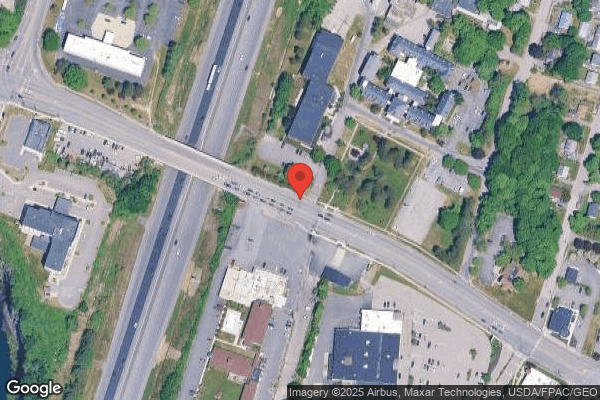
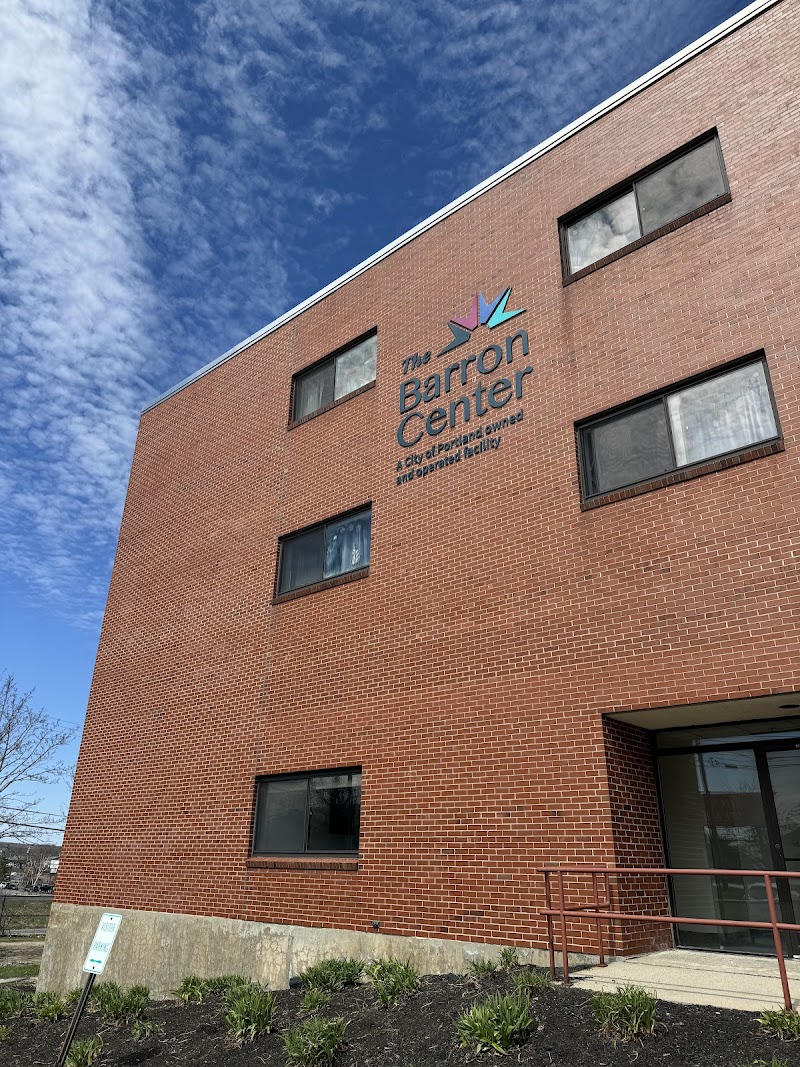
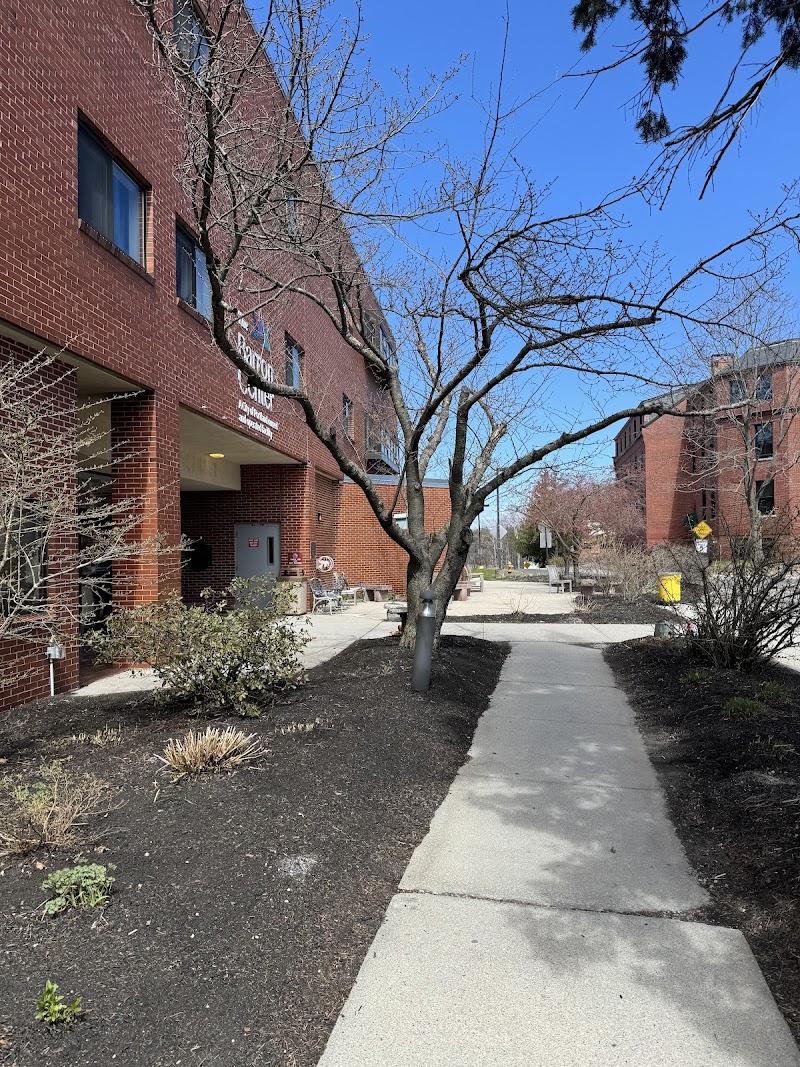
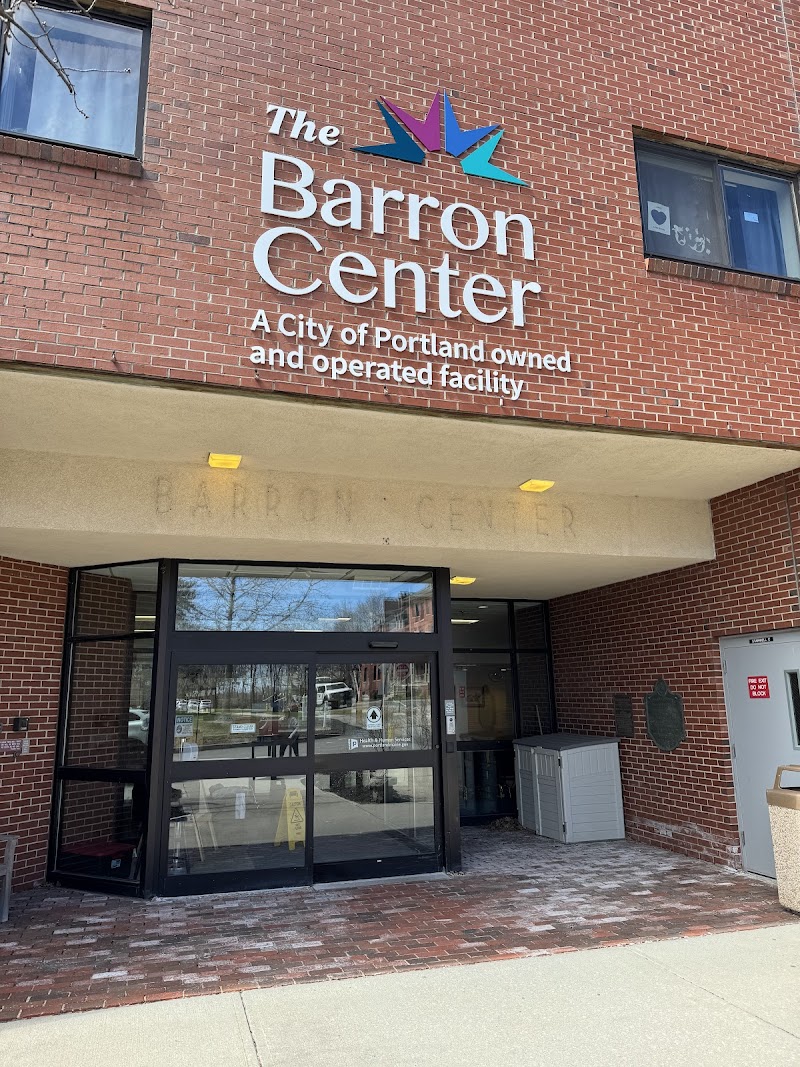
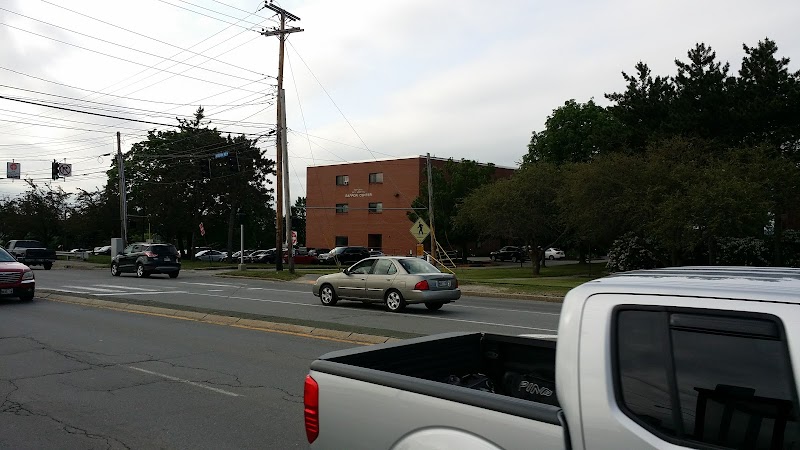
BARRON CENTER

1145 BRIGHTON AVE, PORTLAND, ME 04102 (207) 541-6548
Government - City/county 219 Beds Independent Data: November 2025
Trust Grade
73/100
#2 of 77 in ME
Last Inspection: July 2022

Over 2 years since last inspection. Current conditions may differ from available data.

Overview

The Barron Center in Portland, Maine, has a Trust Grade of B, indicating it is a good choice among nursing homes. It ranks #2 out of 77 facilities in the state, placing it in the top half for quality care, and is the best option out of 17 in Cumberland County. The facility shows an improving trend, with issues decreasing from 7 in 2022 to just 2 in 2025. However, staffing is a significant concern, rated at only 1 out of 5 stars, with a turnover rate of 98%, much higher than the state average. On the positive side, the center has good RN coverage, exceeding 94% of Maine facilities, which is crucial for identifying potential issues. While the facility has strengths, it has faced some specific concerns. For example, a survey found expired medications in the supply, which raises questions about medication management. Additionally, there was a failure to meet nutritional needs for a resident requiring tube feeding, resulting in weight loss. Lastly, infection control practices were not adequately maintained, with a urinary drainage bag observed dragging on the floor, posing an infection risk. Overall, while there are positives, families should weigh these concerns carefully when considering Barron Center.

Trust Score
B
73/100
In Maine
#2/77
Top 2%
Safety Record
Low Risk
No red flags
Inspections
Getting Better
7 → 2 violations
Staff Stability
⚠ Watch
98% turnover. Very high, 50 points above average. Constant new faces learning your loved one's needs.
Penalties
✓ Good
$8,278 in fines. Lower than most Maine facilities. Relatively clean record.
Skilled Nurses
⚠ Watch
Each resident gets only 8 minutes of Registered Nurse (RN) attention daily — below average for Maine. Fewer RN minutes means fewer trained eyes watching for problems.
Violations
⚠ Watch
18 deficiencies on record. Higher than average. Multiple issues found across inspections.
★★★★★
5.0
Overall Rating
★☆☆☆☆
1.0
Staff Levels
★★★★★
5.0
Care Quality
★★★★★
5.0
Inspection Score
Stable
2022: 7 issues
2025: 2 issues

The Good

  • 5-Star Quality Measures · Strong clinical quality outcomes
  • Full Sprinkler Coverage · Fire safety systems throughout facility
  • No fines on record

Facility shows strength in quality measures, fire safety.

The Bad

Staff Turnover: 98%

51pts above Maine avg (47%)

Frequent staff changes - ask about care continuity

Federal Fines: $8,278

Below median ($33,413)

Minor penalties assessed

Staff turnover is very high (98%)

50 points above Maine average of 48%

The Ugly 18 deficiencies on record

Aug 2025 1 deficiency
CONCERN (D) 📢 Someone Reported This

A family member, employee, or ombudsman was alarmed enough to file a formal complaint

Potential for Harm - no one hurt, but risky conditions existed

Report Alleged Abuse (Tag F0609)

Could have caused harm · This affected 1 resident

**NOTE- TERMS IN BRACKETS HAVE BEEN EDITED TO PROTECT CONFIDENTIALITY** Based on the facility's policy, record review, and interviews, the facility failed to investigate an allegation of potential mis...

Read full inspector narrative →
**NOTE- TERMS IN BRACKETS HAVE BEEN EDITED TO PROTECT CONFIDENTIALITY** Based on the facility's policy, record review, and interviews, the facility failed to investigate an allegation of potential misappropriation of a resident's loss of personal property, and failed to ensure that the facility's investigation was sent to the State Agency within 5 business days of the incident for 1 of 6 intake investigations reviewed during an annual survey.A review of the facility's policy, Abuse, Neglect, Exploitation, Mistreatment and Misappropriation of Resident Property, Section G. Reporting and Response, stated All allegations of abuse or neglect will be reported to the Administrator or designee at the time the allegation is made. The facility will: Immediately report all alleged violations to the administrator.Take all necessary actions as a result of the investigation, which may include, but are not limited to the following: Analyzing the occurrence(s) to determine why abuse, neglect, misappropriation of resident property or exploitation occurred, and what changes are needed to prevent future occurrences. Procedure. Internal Reporting: a. Employees must always report any abuse or suspicion of abuse immediately to the Administrator or designee. b. The Administrator or designee will involve key leadership personnel as necessary to assist with reporting, investigation and follow-up. External Reporting: Report the results of all investigations to the Administrator or designee and to other officials in accordance with State law, and follow-up report to the State Survey Agency within 5 working days of the incident. The Administrator or designee will inform the resident or resident's representative of the report of an incident and that the investigation is being conducted. On 4/8/25, the Division of Licensing and Certification received the facility's report that Resident #30 (R30) was missing 2 cell phones, a [NAME] case containing the resident's identification, Medicare card and a small amount of cash. A copy of an email, dated 4/8/25, sent to the social worker from R30's son stated he/she has never lost these items before and is usually mindful of where they are, because he/she uses them regularly every day for entertainment and contacting family. I believe on possible theory that was mentioned to us was that maybe these items fell into the trash can, which he/she keeps beneath the bedside tray. Although, this is possible, it feels unlikely, especially that all three items would fall into the trash and go unnoticed. A follow-up email, dated 4/8/25 from the social worker to R30's son stated when the items were discovered missing, staff searched trash, the resident's room, and notified the kitchen and laundry departments. The social worker notified the local police department via an online crime report. On 4/10/258, the police department replied and stated the report had been rejected because We do not complete police reports for missing or lost property. A review of R30's medical record noted a personal effects inventory, dated 2/5/25, which included an android phone with green wallet case, and an IPhone with charger and cord. On 8/19/25 at 2:20 p.m., in an interview with a surveyor, the facility's Social Services Director stated she was not able to locate evidence that an investigation had been completed, or that a 5-day report was sent to the State Agency on this incident. On 8/20/25 at 2:00 p.m., in an interview with a surveyor, the facility's Administrator stated the incident had never been reported to her. At this time, the facility's Director of Nursing stated she had no knowledge of the incident either and that it had not been discussed at morning staff meetings.
Jan 2025 1 deficiency
CONCERN (D) 📢 Someone Reported This

A family member, employee, or ombudsman was alarmed enough to file a formal complaint

Potential for Harm - no one hurt, but risky conditions existed

Accident Prevention (Tag F0689)

Could have caused harm · This affected 1 resident

Based on Interviews and Record Review the facility failed to provide care, based on the comprehensive assessment and the resident's comprehensive person-centered care plan as outlined in the facility ...

Read full inspector narrative →
Based on Interviews and Record Review the facility failed to provide care, based on the comprehensive assessment and the resident's comprehensive person-centered care plan as outlined in the facility policy Comprehensive Person-Centered Care Planning for resident (Resident #1) resulting in an avoidable accident (fall) as reported in the facility reported incident of 1/17/25. Finding: Review of the clinical record documents that on 1/17/25, during the night shift, Certified Nursing Assistant (CNA) #1 failed to follow the resident care plan for Resident #1 and attempted to toilet with a bed pan, alone when the care plan stated that the resident was a Max two assist. CNA#1 rolled the resident away from her and the resident fell past the bed rail and onto the floor. The bed was at waist level for care. Resident sustained visible injury to her left foot, right toes, and left big toe. Resident complained of pain to touch, and pain of neck and back, and she complained that she was dizzy, and had blurred vision and lethargy. Resident sent to hospital for evaluation. Additionally, the following documents were reviewed: Incident report form completed on 1/17/25 and documentation from the Nursing Supervisor states, Injury due to care plan not followed. Resident care planned for Max 2 assist. Statement from CNA#1 made on 1/17/25 that states, Having cared for the resident many times before independently, I also approached this task the same. On 1/30/25 the Administrator and the Director of Nursing (DON) stated and provided documentation of the correction actions that were taken as a result of the incident: -The resident was transported to the hospital for evaluation and treatment. Imaging done to all areas of concern and no injuries were found. Resident returned to the facility -CNA#1 was placed on paid administrative leave pending the outcome of the investigation. -Education provided to staff that day (1/17/25) by the DON -Education provided to staff on 1/22/25 by Nurse Educator -Follow-up education provided to staff on 1/27/25 by Nurse Educator -The facility has informed the union representing CNA#1 of the facility's intent to terminate the employee, with final meeting with employee and termination is scheduled for this week
Jul 2022 7 deficiencies
CONCERN (D)

Potential for Harm - no one hurt, but risky conditions existed

Investigate Abuse (Tag F0610)

Could have caused harm · This affected 1 resident

**NOTE- TERMS IN BRACKETS HAVE BEEN EDITED TO PROTECT CONFIDENTIALITY** Based on interviews and record review and facility policy, the facility failed to ensure an injury of unknown origin was thoroug...

Read full inspector narrative →
**NOTE- TERMS IN BRACKETS HAVE BEEN EDITED TO PROTECT CONFIDENTIALITY** Based on interviews and record review and facility policy, the facility failed to ensure an injury of unknown origin was thoroughly investigated for 1 of 5 facility reported incidents reviewed. (#6). Findings: Review of facility policy titled Falls Management dated 10/21 states.A fall incident report will be completed after a resident has had a fall, whether it is witnessed for not. an unwitnessed fall will cause the licensed nurse to initiate neurological checks. Complete a Post Fall Observation Tool following a fall to help identify if the cause of the fall is related to mental status changes, physical limitations or environmental factors . On 4/14/22 the Division of Licensing and Certification received from the facility a Reportable Incident Form which indicated Resident #6 obtained an injury of unknown origin. (large bruise lateral and superior to his/her right eye). Resident #6 was admitted to the facility on [DATE] with diagnoses to include type II diabetes mellitus, takotsubo syndrome (sudden and acute form of heart failure), vascular dementia with behavioral disturbance, delirium, sun downing, repeated falls, anxiety disorder, and insomnia. Review of facility provided Falls List for May, June, and July 2022 reveled Resident #6 fell on 9 occasions during this time period. Review of Resident #6's medication orders for April 2022 reveled new order with start date of 4/13/22 for Lorazepam 0.5 mg tablet by mouth . (1 tablet/0.5 mg) daily in 2000 for anxiety. The clinical record revealed follow-up note dated 4/15/22 injury of unknown origin Date of incident 4/14/22 around 08:45 .head injury observed. Bruise, left head, superior and lateral to eye .? resident's room . possible cause: suspect unwitnessed fall; high risk, ability to right self, inability to remember. Or unwitnessed altercation with other resident-hx of this as well. Further review, the clinical record lacked evidence that an investigation was completed regarding this incident. Review of Resident #6's clinical record lacked evidence that a Post Fall Observation Tool was completed following the above falls. Further review of Resident #6's clinical record lacked evidence that Resident #6's injury of unknown origin dated 4/14/22 was completely investigated to find the cause of the injury. During an interview on 7/19/22 at 12:05 p.m., Unit Manger (UM) indicated that a formal investigation was not completed or documented for Resident #6's injury on 4/14/22 because he/she has a predictable pattern and his/her anxiety level has increased since his/her admission in January (2022) as it is a new environment for him/her. UM further indicated that Resident #6 did have a change in his/her lorazepam but it has not increased or decreased his/her number of falls. In an interview with a surveyor on 7/20/22 at approximately 1:18 p.m., the surveyor confirmed with the Administrator that the injury of unknown origin was not thoroughly investigated.
CONCERN (D)

Potential for Harm - no one hurt, but risky conditions existed

Medical Records (Tag F0842)

Could have caused harm · This affected 1 resident

**NOTE- TERMS IN BRACKETS HAVE BEEN EDITED TO PROTECT CONFIDENTIALITY** Based on record reviews and interviews, and Facility Reported Incident review, the facility failed to ensure that clinical recor...

Read full inspector narrative →
**NOTE- TERMS IN BRACKETS HAVE BEEN EDITED TO PROTECT CONFIDENTIALITY** Based on record reviews and interviews, and Facility Reported Incident review, the facility failed to ensure that clinical records were complete and contained accurate information for 1 of 5 sampled residents reviewed for falls (#6), and for 1 of 3 sampled residents reviewed for respiratory care (#47). Findings: 1. On 4/14/22 the Division of Licensing and Certification received from the facility a Reportable Incident Form which indicated Resident #6 obtained an injury of unknown origin. (large bruise lateral and superior to his/her right eye). Resident #6 was admitted to the facility on [DATE] with diagnoses to include dementia with behavioral disturbance, delirium, sun downing, anxiety disorder, osteoporosis, and vitamin D deficiency. Review of the signed doctors' orders for April 2022 reveled, order with start date of 3/3/22 for Lorazepam 0.5 milligram (mg) tablet by mouth (0 .5 tablet/0.25 mg) daily 0800 for anxiety and order with start date of 4/13/22 for Lorazepam 0.5 mg tablet by mouth . (2 tablet/1 mg) b.i.d. (twice daily) 1400 for anxiety. Order with start date of 1/8/20 for Omeprazole 20 mg capsule delayed release by mouth. (1 capsule/20 mg) by mouth daily 0800 for .reflux, and Order with start date of 1/8/22 for Cholecalciferol 25 mcg (1000 UT) tablet by mouth . 1 capsule daily at 0800 for osteoporosis/vit d def. The Medication Administration Report (MAR) dated April 2022 lacked evidence that Resident #6 received Lorazepam 0.5 mg at 1400 on 4/11/22 and 0800 on 4/13/22, 1 mg Lorazepam at 1400, 20 mg of Omeprazole at 0800 or 25 mcg of Cholecalciferol at 0800 on 4/21/22. During an interview on 7/19/22 at 12:05 p.m., the Unit Manger indicated that all medications given should be signed off on the MAR when completed. During an interview on 7/21/22 at approximately 12:46 p.m. the Director of Nursing confirmed the above findings. 2. On 7/19/22 at 11:55 a.m. and 7/20/22 at 12:50 a.m., the surveyor and a Registered Nurse (RN) observed the Resident #47's nasal cannula and oxygen tubing that was attached to an oxygen concentrator laying on the floor next to the bed. Two labels on the oxygen concentrator indicated the oxygen tubing was changed on 6/10/22 and 6/30/22. The surveyor and RN reviewed the July Treatment Administration Records (TAR) which indicated that the oxygen tubing had been changed on 7/7/22 and 7/14/22. Review of facility policy titled Respiratory Care revised 1/22 states, Nasal Cannula's should be discarded and changed weekly. A label indicating the date and the initials of the staff changing the cannula/tubing should be applied to the nasal cannula. Oxygen Tubing should be discarded and changed every 2 weeks. A label indicating the date and the initials of staff changing the tubing should be applied to the tubing. Resident #47 TARs, order dated 4/16/21 instructs staff to Change all oxygen tubing and nebulizer sets every week on Thursdays the day shift. Sign and date new tubing, cannulas and nebulizer set up every week on Thursdays. On 7/20/22 12:57 pm, a surveyor confirmed the finding above of inaccurate documentation with the Director of Nursing (DON) who stated that she would inform the RN to change the tubing again.
CONCERN (D)

Potential for Harm - no one hurt, but risky conditions existed

Infection Control (Tag F0880)

Could have caused harm · This affected 1 resident

**NOTE- TERMS IN BRACKETS HAVE BEEN EDITED TO PROTECT CONFIDENTIALITY** Based on observations, interviews, and facility policy, the facility failed to maintain an Infection Control Program designed to...

Read full inspector narrative →
**NOTE- TERMS IN BRACKETS HAVE BEEN EDITED TO PROTECT CONFIDENTIALITY** Based on observations, interviews, and facility policy, the facility failed to maintain an Infection Control Program designed to provide a sanitary environment to help prevent the development and transmission of disease and infection related to wound care for and proper placement of Foley bag (urine drainage bag) for 1 of 1 resident (#25). Findings: Review of facility provided wound care guidelines, undated states . wash your hands thoroughly and don gloves. Ensure strict aseptic technique during dressing changes 1. Resident #25 was admitted to the facility on [DATE] with diagnoses to include a congenital deformity of his/her spine, scoliosis, quadriplegic cerebral palsy, chronic kidney disease, hydrocele, abscess of buttock and testis, history of Urinary Tract Infection (UTI) and neuromuscular bladder and has an ileostomy, and abscess of left scrotum. A providers order dated 6/23/22 instructs nursing to, Skin/wound treatment daily dressing change for scrotal wound daily . AM QID PRN . 1) wound cleanser: Vashe soaks-Dampen gauze and leave in place on wound for 3 to 5 minutes with each dressing change .2) Wipe away after removing the soaked gauze .3) Apply Cavillon border spray to peri wound area. 4) Dressing: Mesalt gauze gently tucked into the wound depth . 5) ABD pad and rolled gauze over Mesalt gauze packing . During observation of Residents #25's dressing change on 7/19/22 at 12:55 p.m., Registered Nurse (RN) was observed washing her hands at the sink and walked to the residents bed where she placed a glove on her right hand and then put her ungloved left hand in her left pocket and pulled out a paper tape measure and placed it directly on the residents side table. RN was then observed to take her left ungloved hand and removed the residents catheter bag from the bedframe and placed it on top of the bed and then proceeded to put a glove on her left hand without performing hand hygiene. At this time Surveyor asked if she is supposed to perform hand hygiene after removing gloves and before donning clean ones. RN stated, I don't have to sanitize my hands in between glove changes because this is a dirty wound, and you don't perform hand hygiene in between glove changes for dirty wounds. RN then used her left gloved hand to remove ABD dressing from the wound, picked up a spray bottle of wound cleanser with same left gloved hand and placed the wound cleanser bottle directly on the residents bed. RN then removed glove from left hand and donned a new left glove without performing hand hygiene. RN then used her left gloved hand and pulled packing out of the residents wound and placed it in the trash, removed bilateral gloves and immediately donned new gloves without performing hand hygiene. RN then used her left gloved hand to pick up package containing sterile Q tips, opened them, used left gloved hand to remove Q tip from the usable end and pulled it out of the package. She then put the Q tip inside the residents wound and then picked up the paper measuring tape to measure the depth of the wound and placed it on top of the side table. RN then removed both gloves and placed them in the trash and immediately donned new gloves. At this time RN removed clean chux from package with gloved left hand and used her right gloved hand to support it against her body to roll the chux into a log. She then dropped the chucx on the floor, picked it up with her left gloved hand and continued to roll it with the intent to place it on the residents bed. At this time surveyor intervened stating, you just dropped that chux on the floor didn't you. RN replied yes, I'll just get a new one then. RN then placed the chux in the trash can and took a new one out of the packaging with the same left gloved hand and again used her body to roll the chux. She then placed it under the resident. During an interview on 7/19/22 at 3:25 p.m., a surveyor discussed above with the Director of Nursing, she indicated the facility does not have a wound care policy, but that it was her expectation that nurses sanitize their hands in between glove changes and practice standard of care during dressing changes. 2. During an observation of Resident #25 on 7/19/22 at 8:45 a.m. and 11:15 a.m., his/her catheter bag was noted directly on the floor and visible from door. Review of Resident #25's care plan initiated on 6/10/22 most recently updated 7/16/22 states, I have a suprapubic catheter because I have a neurogenic bladder. in the past I have had a hx Urinary Tract infections, antibiotic resistant bacteria in my urine. I need my nurses to .care for my catheter .I have a history of developing infection leading to sepsis quickly . During an interview on 7/20/22 at approximately 1:09 p.m. a surveyor discussed above findings with the Director of Nursing.
CONCERN (E)

Potential for Harm - no one hurt, but risky conditions existed

Deficiency F0761 (Tag F0761)

Could have caused harm · This affected multiple residents

Based on observations, interviews, and record reviews, the facility failed to ensure expired medications, vaccinations, and point of care testing supplies were removed from the supply available for us...

Read full inspector narrative →
Based on observations, interviews, and record reviews, the facility failed to ensure expired medications, vaccinations, and point of care testing supplies were removed from the supply available for use in 1 of 8 medication carts, and 1 of 5 medication refrigerators. In addition, the facility failed to ensure vaccines were stored in a refrigerator without a freezer compartment for 1 of 5 medication refrigerators, and failed to provide evidence of temperature monitoring for medication refrigerators in accordance with United States Center for Disease Control and Prevention recommendations, for 4 of 5 medication refrigerators. Findings: 1. On 7/21/22 at 10:00 a.m., observation of 1 of 3 medication carts on the 2-South unit, found 1 expired medication of Liquid Tylenol, a 16 fluid ounce bottle, with an expiration date of 11/21, and two Seracult (testing solution for Occult blood) 15 ml (milliliter) bottles, with expiration dates of 6/22. The finding was confirmed with the Charge nurse and the Director of Nursing on 7/21/22 at 10:25 a.m. Additionally, on 7/21/22 at approximately 10:45 a.m., the medication refrigerator in the first floor supervisor's office was noted to contain the following: > 7 unopened boxes, and 1 opened box, of Afluria Influenza Vaccine Quadrivalent, Lot number P1003628, expiration 6/30/22, and; > 1 bottle of Tuberculin (TB) Purified Protein Derivative (Mantoux), Tubersol, manufacturer Sanofi Pasteur, Lot # C5841AB, expiration 6/17/23. The bottle was marked that it was opened on 5/2/22. The RN Admissions Coordinator confirmed at that time, that all of the items should have been removed from the refrigerator and that the bottle of TB solution should have been destroyed 30 days after opening, as per manufacturer's instructions. On 7/21/22 at 11:00 a.m., the finding of the expired influenza vaccine and TB solution was discussed with the Director of Nursing. 2. The United States Centers for Disease Control and Prevention's website, The Pink Book, Vaccine Storage and Handling, dated 8/21, states Never store any vaccine in a dormitory-style or bar-style combined unit. These units often have a single exterior door and an evaporator plate/cooling coil, usually located in an icemaker/freezer compartment. These units pose a significant risk of freezing vaccines, even when used for temporary storage. Additionally, refrigerators should maintain temperatures between 2°C (Celsius) and 8°C (36°F (Fahrenheit) and 46°F). The current temperature should be checked and recorded a minimum of two times (at the start and end of the workday). On 7/21/22, from approximately 9:50 a.m. to 11:00 a.m., observations of the medication storage refrigerators were completed. > On all nursing units: Zolov, 2 South, 3 South and 3 North units, dormitory style refrigerators with internal freezer compartments were observed. In the Zolov unit's medication storage refrigerator, 1 unit dose vial of Prevnar-13 (pneumococcal 13-valent conjugate), with an expiration date of 1/25/23, was observed. The finding was confirmed by the unit Nurse Manager. A review of medication refrigerator temperature logs, dated 7/1/22 through 7/21/22, revealed: > On the Zolov unit, 6 temperatures of 63 degrees F were recorded. > On the 2 South unit, there were 11 days with no temperatures recorded. > On the 3 South unit, there was no evidence of temperatures recorded for July. > On the 3 North unit, there were 5 days with no temperatures recorded. On 7/21/22 at 1:00 p.m., the Director of Nursing confirmed the findings concerning use of dormitory style refrigerators and lack of consistent monitoring and documentation of temperatures for medication refrigerators.
MINOR (B)

Minor Issue - procedural, no safety impact

Transfer Notice (Tag F0623)

Minor procedural issue · This affected multiple residents

Based on record review and interviews, the facility failed to issue a written transfer/discharge notice, which included information regarding appeal rights, and the name and address of the Office of t...

Read full inspector narrative →
Based on record review and interviews, the facility failed to issue a written transfer/discharge notice, which included information regarding appeal rights, and the name and address of the Office of the State Long-Term Care Ombudsman, to the resident or resident's representative for 1 of 3 sampled residents transferred/discharged by the facility to an acute care hospital (#3). Finding: Resident #3's clinical record noted he/she was transferred to an acute care facility on 4/11/22 and again on 5/15/22. The clinical record lacked evidence that the facility issued a written transfer/discharge notice to the resident, family member or legal representative for the transfer. On 7/19/22 at 11:45 a.m., in a discussion with the surveyor, the social worker stated the facility provides transfer/discharge notices only to residents who are on Medicaid. The social worker stated Resident #3 was private pay so did not receive the notices at the time of transfers to the hospital.
MINOR (B)

Minor Issue - procedural, no safety impact

Assessment Accuracy (Tag F0641)

Minor procedural issue · This affected multiple residents

**NOTE- TERMS IN BRACKETS HAVE BEEN EDITED TO PROTECT CONFIDENTIALITY** Based on clinical record review and interview, the facility failed to ensure that the Minimum Data Sets, version 3.0 (MDS) were ...

Read full inspector narrative →
**NOTE- TERMS IN BRACKETS HAVE BEEN EDITED TO PROTECT CONFIDENTIALITY** Based on clinical record review and interview, the facility failed to ensure that the Minimum Data Sets, version 3.0 (MDS) were accurately coded for 2 of 2 resident reviewed for smoking (#97 and #99) Findings: 1. Resident #97 was admitted to the facility on [DATE] with diagnosis of nicotine dependence. The medical record noted that Safe Smoking Assessments were completed on 8/22/19, 1/6/20, 6/12/20, 6/25/21 and 7/9/22. A review of the Annual MDS assessment dated [DATE] and the Quarterly MDS assessments dated 1/20/22, 4/14/22 and 7/5/22, under section J1300- (current tobacco use) were coded to indicate that Resident #97 does not use tobacco. On 7/19/22 at 8:34 a.m., during an interview, Resident #97, confirmed he/she smokes cigarettes daily. 2. Resident #99's History and Physical dated 11/16/20 noted history of tobacco use. The medical record noted that Safe Smoking Assessments were completed on 8/7/20, 10/27/20 and 7/9/22. A review of the Annual MDS assessment dated [DATE] and the Quarterly MDS assessments dated 1/22/22, 4/14/22 and 7/8/22, under section J1300- (current tobacco use) were coded to indicate that Resident #99 does not use tobacco. On 7/21/22 at 10:06 a.m., during an interview, Resident #99, confirmed he/she smokes 3 cigarettes daily. On 7/21/22 at 10:27 a.m., during an interview with the MDS coordinator, the above coding inaccuracy was confirmed.
MINOR (B)

Minor Issue - procedural, no safety impact

Staffing Information (Tag F0732)

Minor procedural issue · This affected multiple residents

Based on observation and interview, the facility failed to post the current daily nurse staffing information that includes the facility name, day of the month, a breakdown of the number of registered ...

Read full inspector narrative →
Based on observation and interview, the facility failed to post the current daily nurse staffing information that includes the facility name, day of the month, a breakdown of the number of registered and licensed nursing staff responsible for direct resident care and indicate which shifts the numbers corresponded to for facility census for 4 of 4 survey days. Findings: During observations of facility on 7/18/22, 7/19/22, 7/20/22 and 7/21/22 there was no evidence of posted daily staffing ratios for the facility. During an interview on 7/21/22 at 11:45 a.m. Nursing Scheduler (NS) indicated that she posts the schedule in the glass case daily. At this time a surveyor asked to see where the posted staffing was. NS escorted surveyor to the elevator area and pointed to an empty glass case indicating that she posts staffing in the glass case. At this time NS confirmed that posted staffing was not in place during 4 of 4 survey days. During an interview on 7/21/22 at 11:50 a.m. a surveyor discussed with Director of Nursing that staffing has not been posted during 4 of 4 survey days.
Jan 2020 1 deficiency
CONCERN (D)

Potential for Harm - no one hurt, but risky conditions existed

Deficiency F0698 (Tag F0698)

Could have caused harm · This affected 1 resident

Based on interviews and record review the facility failed to ensure that a resident requiring dialysis received services consistent with the professional standards of practice and the comprehensive pe...

Read full inspector narrative →
Based on interviews and record review the facility failed to ensure that a resident requiring dialysis received services consistent with the professional standards of practice and the comprehensive person-centered care plan for 1 of 2 residents sample who receive dialysis services (Resident #95). Finding: On review of Resident #95's clinical record, a surveyor noted the resident was receiving dialysis services for chronic kidney disease, stage 5. Resident #95's physician's diet order, originally dated 7/23/19 with a re-order dated 12/17/19, indicated FLUID RESTRICTION - 1600 ml (milliliters)/day. The surveyor noted on review of Resident #95's comprehensive person centered care plan, dated 10/16/19, that hemodialysis was addressed on the care plan and indicated, I need my nurses to observe me for changes in my mental status or behavior, collaborate with Southern Maine Dialysis regarding my fluid balances, and dialysis treatments on M-W-F, . monitor my fluid intake as I am on a 1600 ml (milliliters)/day fluid restriction. On review of Resident #95's electronic Medication and Treatment Administration Record (MAR/TAR), the surveyor noted documentation from 12/1/19 through 1/7/20 did not reflect consistent monitoring of fluid intake. The MAR/TAR for this time period reflected 73 out of 111 shifts where fluid intake was not monitored and 37 out of 37 days where documentation did not reflect monitoring for the entire 24 hour period. In an interview with the surveyor on 1/07/20 at 12:56 PM, the charge nurse stated she looked at Resident #95's MAR/TAR and noted that the fluid intake was not being monitored according to the physician's orders and personalized care plan. In an interview with the Director and Assistant Director of Nursing on 1/7/20 at 3:15 PM, they stated Resident #95 is active throughout the facility and is noncompliant with fluid restrictions, making it very difficult for staff to monitor the resident's intake. During the interview, the surveyor confirmed the finding.
Dec 2018 8 deficiencies
CONCERN (D)

Potential for Harm - no one hurt, but risky conditions existed

Comprehensive Care Plan (Tag F0656)

Could have caused harm · This affected 1 resident

Based on interviews and record review, the facility failed to develop a care plan to meet the safety needs of 1 of 1 residents reviewed for smoking (Resident #45). Finding: On 12/3/18 at 12:29 p.m.,...

Read full inspector narrative →
Based on interviews and record review, the facility failed to develop a care plan to meet the safety needs of 1 of 1 residents reviewed for smoking (Resident #45). Finding: On 12/3/18 at 12:29 p.m., Resident #45 stated to the surveyor he was heading out to smoke. He stated he kept his own cigarettes and lighter with him at all times. On 12/4/18 at 7:18 a.m., the surveyor observed Resident #45 smoking in a designated smoking area with appropriate safety measures in place. A review of the Facility's Smoking Policy - Residents, dated December 2016, indicated: 6. The resident will be evaluated on admission to determine if her or she is a smoker or non-smoker. If a smoker, the evaluation will include: a. Current level of tobacco consumption; b. Method of tobacco consumption (traditional cigarettes; electronic cigarettes; pipe, etc.); c. Desire to quit smoking, if a current smoker; and d. Ability to smoke safely without supervision. On review of Resident #45's comprehensive care plan, initiated 6/27/18 and revised 9/21/18, the surveyor could not find evidence that the care plan included an evaluation and monitoring of safe smoking practices. In an interview with the Registered Nurse, Unit Manager on 12/4/18 at approx 2:00 p.m., the surveyor confirmed that the clinical record did not have a completed evaluation on Resident #45 to determine the Resident's ability to smoke safely without supervision and the care plan did not include safe smoking practices.
CONCERN (D)

Potential for Harm - no one hurt, but risky conditions existed

Deficiency F0661 (Tag F0661)

Could have caused harm · This affected 1 resident

Based on interviews and clinical record review, the facility failed to develop a discharge summary which included a recapitulation of the resident's stay, a final summary of the resident's status, and...

Read full inspector narrative →
Based on interviews and clinical record review, the facility failed to develop a discharge summary which included a recapitulation of the resident's stay, a final summary of the resident's status, and reconciliation of all the resident's pre- and post-discharge medications for 1 of 1 resident reviewed for discharge to the community (Resident #169). Finding: On review of Resident #169's clinical record, a surveyor noted an admission date of 8/1/18 for respite care. The resident received hospice services prior to and throughout his/her admission. Resident #169 discharge back to the community with continued hospice services on 9/6/18. The surveyor could find no evidence in Resident #169's clinical record of a recapitulation of the Resident's stay, a final summary of his/her status or a summary of the Resident's pre- and post-discharge medications in the hard or electronic clinical record. During an Interview with the Director of Nursing Services, the Nursing Special Projects Registered Nurse and the Assistant Director of Nursing on 12/6/18 at 3:30 p.m., they stated a recap of the Resident's stay was not completed as the Resident remained on hospice services throughout his/her admission and returned to the community with the same hospice agency providing care in the community. At this time, the surveyor confirmed the medical record did not contain a recapitulation of Resident #169's stay in the facility.
CONCERN (D)

Potential for Harm - no one hurt, but risky conditions existed

Food Safety (Tag F0812)

Could have caused harm · This affected 1 resident

**NOTE- TERMS IN BRACKETS HAVE BEEN EDITED TO PROTECT CONFIDENTIALITY** Based on observation and interview, the facility failed to ensure two containers of applesauce were dated when opened and not in...

Read full inspector narrative →
**NOTE- TERMS IN BRACKETS HAVE BEEN EDITED TO PROTECT CONFIDENTIALITY** Based on observation and interview, the facility failed to ensure two containers of applesauce were dated when opened and not in use beyond discard dates as indicated per manufacture specifications; and failed to ensure that containers were removed from the refrigerator and unavailable for resident use, in 1 of 3 refrigerators ([NAME] Unit) on 2 of 4 days of survey. Findings: On 12/3/18 at 12:01 p.m., during a check of (3) refrigerators located in the BC2 building, it was noted in the [NAME] Unit kitchen refrigerator that two applesauce containers, one dated 9/13/18 and the second dated 10/4/18 were opened and in use. On 12/4/18 at 7:28 a.m., the Food Service Director stated the dates on the containers of applesauce are the dates they were received not opened. The surveyor located the discard dates as indicated per instructions on the labels of applesauce, Refrigerate immediately once opened and use within 10 days. The surveyor confirmed with the Food Service Director that there was no open date to determine how long the applesauce jars had been opened.
CONCERN (E)

Potential for Harm - no one hurt, but risky conditions existed

Deficiency F0692 (Tag F0692)

Could have caused harm · This affected multiple residents

Based on observation, interviews and record review, the facility failed to provide recommended nutritional services to 1 of 1 residents (#103) reviewed with a gastrostomy tube (tube feeding) for 15 da...

Read full inspector narrative →
Based on observation, interviews and record review, the facility failed to provide recommended nutritional services to 1 of 1 residents (#103) reviewed with a gastrostomy tube (tube feeding) for 15 days. Finding: During an initial observation of Resident #103 on 12/3/18 at 9:30 a.m., and again on 12/4/18 at 3:41 p.m., the resident appeared well nourished and hydrated. On review of Resident #103's clinical record, the surveyor noted physician's orders for tube feedings, initially dated 5/10/18, for: Jevity 1.2cal, 8 ounces bolus three times a day at 8:00 a.m., 1:00 p.m., and 6:00 p.m.; free fluids 300 milliliters (ml) twice a day; and physcian's orders, dated 9/12/18 for Jevity 1.2cal with water auto-flush 110ml/hour continuous for 10 hours, on at 10:00 p.m., off at 6:00 a.m. The surveyor also noted a Registered Dietitian's (RD) electronic note, dated 11/21/18, which indicated: Weights are trending down as follows (11/3) 128#[pounds]; (11/11) 122#. Trend indicates a loss of 6#, 4.7% within the month, almost qualifying as significant weight loss. Care must be taken to halt further weight loss. PLAN: 1. increase weight monitoring frequency to 3 times weekly for closer monitoring. 2. Extend length of tube feeding period by 2 hours if next weight is below 122# 3. Monitor skin integrity. On further review of the clinical record, the surveyor noted no additional weights recorded in Resident #103's clinical record except one weight of 127.8#, dated 11/24/18. The surveyor interviewed the Dietary Director on 12/6/18 at 7:31 a.m., who stated the dietary department did not make the physician and nursing staff of the RD's recommendations. The Dietary Director then showed the surveyor the Nutritional Diagnosis Form that should have been provided to the physician and nursing staff with the RD's recommendations. The form did not indicate the physician's approval of the recommendations. The surveyor confirmed with the Dietary Director at this time that the RD's recommendations were not followed from 11/21/18 to 12/6/18.
CONCERN (E)

Potential for Harm - no one hurt, but risky conditions existed

Infection Control (Tag F0880)

Could have caused harm · This affected multiple residents

Based on observations and interviews, the facility failed to maintain an infection control program designed to help prevent the development and transmission of infection related to pressure ulcer trea...

Read full inspector narrative →
Based on observations and interviews, the facility failed to maintain an infection control program designed to help prevent the development and transmission of infection related to pressure ulcer treatment for 1 of 3 sampled residents with pressure ulcers (Resident #36) and ensure that a urinary drainage bag and tubing was secured off the floor for 1 of 3 residents reviewed with an indwelling urinary catheter (Resident #26) during 1 of 4 survey days. Findings: 1. On 12/4/18 at 8:00 a.m., a surveyor observed with the charge nurse that Resident #26's Foley catheter bag was hanging underneath his/her wheelchair with the bag touching the floor and the urinary catheter tubing lying on and dragging on the floor with movement. The charge nurse acknowledged the finding and the infection control concern. In an interview with the surveyor and the nursing staff on 12/6/18, at 9:16 a.m., the finding was discussed with the nurse confirming that re-education of the nursing staff on positioning of Foley catheter bags and tubing was completed on 12/5/18. In an interview with the surveyor and the Director of Nursing Services (DNS) on 12/7/18, at 8:15 a. m., the finding was discussed. The surveyor confirmed the finding during the interview 2. On 12/6/18 at 10:39 a.m., 2 surveyors observed a Registered Nurse (RN) provide treatment to Resident #36's pressure ulcer. At the onset of the treatment, the RN washed his/her hands and donned clean gloves, then removed the soiled dressing, cleansed the wound with normal saline, opened up the sterile treated dressing package and removed the sterile treated dressing with the same gloved hands. The surveyor halted the procedure and directed the RN to change gloves. The RN proceeded with the treatment with clean gloves and a new sterile treated dressing. In an interview with the RN and RN Unit Manager directly following the procedure, the surveyor confirmed that the gloves were no longer clean once they were used to remove a soiled dressing and clean a wound.
MINOR (B)

Minor Issue - procedural, no safety impact

Deficiency F0625 (Tag F0625)

Minor procedural issue · This affected multiple residents

**NOTE- TERMS IN BRACKETS HAVE BEEN EDITED TO PROTECT CONFIDENTIALITY** Based on record review and interviews, the facility failed to issue bed hold notices to the resident's representative for 2 of 5...

Read full inspector narrative →
**NOTE- TERMS IN BRACKETS HAVE BEEN EDITED TO PROTECT CONFIDENTIALITY** Based on record review and interviews, the facility failed to issue bed hold notices to the resident's representative for 2 of 5 sampled residents who had been transferred to an acute care facility (#137 and 167). Finding: 1. Documentation in Resident #137's clinical record indicated that he/she was transferred to an acute hospital on [DATE] and subsequently admitted . The clinical record lacked evidence that the facility issued a bed hold notice to the resident's representative. On 12/4/18 at 1:29 p.m., during an interview with a surveyor, the Social Worker stated that she was unable to find evidence that the written transfer/discharge notice was given to Resident Representative #137. 2. Review of the documentation in the clinical record indicated that Resident #167 was transferred to an acute care facility and subsequently admitted on [DATE]. The clinical record lacked evidence that the facility issued a bed hold notice to the resident's representative. In an interview with the surveyor on 12/4/18 at 1:25 p.m., the Licensed Social Worker (LSW) provided a copy of the Notice of Transfer/Discharge form for Resident #167 provided to the resident's representative on 11/19/18. The written transfer form lacked evidence of bed hold policy and rate information provided to the representative. The LSW acknowledged the finding and confirmed the rate was not added to the form in error. In an interview with surveyor on 12/4/18, at 8:00 a.m., Resident #167 indicated he/she was made aware of the reason for the transfer but had received no written information on the facility's policy on bed hold. In an interview with the surveyor and the Director of Nursing Services on 12/7/18, at 8:15 a. m., the finding on Resident #167 was discussed. The surveyor confirmed the finding during the interview.
MINOR (C)

Minor Issue - procedural, no safety impact

Deficiency F0582 (Tag F0582)

Minor procedural issue · This affected most or all residents

Based on interviews and clinical record review, the facility failed to ensure liability notices, which included appeal rights, were provided to 3 of 3 residents whose Medicare services were discontinu...

Read full inspector narrative →
Based on interviews and clinical record review, the facility failed to ensure liability notices, which included appeal rights, were provided to 3 of 3 residents whose Medicare services were discontinued (Residents #18, #78 and #268). Findings: 1. On review of Resident #18's liability notices, issued prior to the end of Medicare Part A services on 5/31/18, the surveyor could not locate evidence that the Notice to Medicare Provider Non-coverage (NOMNC) was provided to the resident informing his/her right to an expedited review of a service termination. 2. On review of Resident #78's liability notices, issued prior to the end of Medicare Part A services on 5/31/18, the surveyor could not locate evidence that the NOMNC was provided to the resident informing his/her right to an expedited review of a service termination. 3. On review of Resident #268's liability notices, issued prior to the end of Medicare Part A services on 10/17/18, the surveyor could not locate evidence that the NOMNC was provided to the resident informing his/her right to an expedited review of a service termination. On 12/4/18 at 2:10 p.m., in an interview with two Licensed Social Workers, the surveyor confirmed that NOMNCs were not issued prior to the end of Medicare Part A services. They stated that they verbally inform the residents of their appeal rights, however, they stated they are not providing that information in writing.
MINOR (C)

Minor Issue - procedural, no safety impact

Assessment Accuracy (Tag F0641)

Minor procedural issue · This affected most or all residents

**NOTE- TERMS IN BRACKETS HAVE BEEN EDITED TO PROTECT CONFIDENTIALITY** Based on electronic medical records review and interviews, the facility failed to ensure that a Minimum Data Set, version 3.0 (M...

Read full inspector narrative →
**NOTE- TERMS IN BRACKETS HAVE BEEN EDITED TO PROTECT CONFIDENTIALITY** Based on electronic medical records review and interviews, the facility failed to ensure that a Minimum Data Set, version 3.0 (MDS)was accurately coded for restraints in 3 of 4 residents reviewed for restraints (Residents #70, #76 & #140). Findings: 1. Review of Resident #70's electronic charting revealed completion of a Side Rail/Restraint Assessment dated 10/5/18 which noted Resident uses 1/4 rails for mobility assist, not considered a restraint. Resident #70's quarterly MDS assessment dated [DATE], was inaccurately coded in Section P: Restraints to reflect the use of a restraint. 2. Observation of Resident #76's bed noted bilateral 1/4 rails. In an interview with the Nurse Manager, the Surveyor confirmed that the 1/4 rails are not a restraint. Resident #76's quarterly MDS assessment dated [DATE], was inaccurately coded in Section P: Restraints to reflect the use of a restraint. 3. Review of Resident #240's electronic charting reveals completion of a Side Rail/Restraint Assessment dated 10/30/18 which notes Resident uses 1/4 rails for mobility assist, not considered a restraint. Resident #140's annual MDS assessment dated [DATE], was inaccurately coded in Section P: Restraints to reflect the use of a restraint. On 12/6/18 between 9:00 a.m. and 9:30 a.m., the two MDS Coordinators, in an interview with the two Surveyors stated that there are no residents in house with a restraint nor are there residents who cannot get out of bed around their side rail. The Surveyors confirmed the findings at the time of the interview.
Understanding Severity Codes (click to expand)
Life-Threatening (Immediate Jeopardy)
J - Isolated K - Pattern L - Widespread
Actual Harm
G - Isolated H - Pattern I - Widespread
Potential for Harm
D - Isolated E - Pattern F - Widespread
No Harm (Minor)
A - Isolated B - Pattern C - Widespread

Questions to Ask on Your Visit

  • "Why is there high staff turnover? How do you retain staff?"
  • "Can I speak with families of current residents?"
  • "What's your RN coverage like on weekends and overnight?"

Our Honest Assessment

Strengths
  • • No major safety red flags. No abuse findings, life-threatening violations, or SFF status.
Concerns
  • • 18 deficiencies on record. Higher than average. Multiple issues found across inspections.
  • • 98% turnover. Very high, 50 points above average. Constant new faces learning your loved one's needs.
Bottom line: Mixed indicators with Trust Score of 73/100. Visit in person and ask pointed questions.

About This Facility

What is Barron Center's CMS Rating?

CMS assigns BARRON CENTER an overall rating of 5 out of 5 stars, which is considered much above average nationally. Within Maine, this rating places the facility higher than 99% of the state's 100 nursing homes. This rating reflects solid performance across the metrics CMS uses to evaluate nursing home quality.

How is Barron Center Staffed?

CMS rates BARRON CENTER's staffing level at 1 out of 5 stars, which is much below average compared to other nursing homes. Staff turnover is 98%, which is 51 percentage points above the Maine average of 47%. High turnover can affect care consistency as new staff learn residents' individual needs. RN turnover specifically is 94%, which is notably high. RNs provide skilled clinical oversight, so turnover in this role can affect medical care quality.

What Have Inspectors Found at Barron Center?

State health inspectors documented 18 deficiencies at BARRON CENTER during 2018 to 2025. These included: 12 with potential for harm and 6 minor or isolated issues.

Who Owns and Operates Barron Center?

BARRON CENTER is owned by a government entity. Government-operated facilities are typically run by state, county, or municipal agencies. The facility operates independently rather than as part of a larger chain. With 219 certified beds and approximately 108 residents (about 49% occupancy), it is a large facility located in PORTLAND, Maine.

How Does Barron Center Compare to Other Maine Nursing Homes?

Compared to the 100 nursing homes in Maine, BARRON CENTER's overall rating (5 stars) is above the state average of 3.1, staff turnover (98%) is significantly higher than the state average of 47%, and health inspection rating (5 stars) is much above the national benchmark.

What Should Families Ask When Visiting Barron Center?

Based on this facility's data, families visiting should ask: "How do you ensure continuity of care given staff turnover, and what is your staff retention strategy?" "Can you walk me through typical staffing levels on day, evening, and night shifts?" "Can I visit during a mealtime to observe dining assistance and food quality?" "How do you handle medical emergencies, and what is your hospital transfer rate?" These questions are particularly relevant given the facility's high staff turnover rate and the below-average staffing rating.

Is Barron Center Safe?

Based on CMS inspection data, BARRON CENTER has a clean safety record: no substantiated abuse findings (meaning no confirmed cases of resident harm), no Immediate Jeopardy citations (the most serious violation level indicating risk of serious injury or death), and is not on the Special Focus Facility watch list (a federal program monitoring the lowest-performing 1% of nursing homes). The facility has a 5-star overall rating and ranks #1 of 100 nursing homes in Maine. While no facility is perfect, families should still ask about staff-to-resident ratios and recent inspection results during their visit.

Do Nurses at Barron Center Stick Around?

Staff turnover at BARRON CENTER is high. At 98%, the facility is 51 percentage points above the Maine average of 47%. Registered Nurse turnover is particularly concerning at 94%. RNs handle complex medical decisions and coordinate care — frequent RN changes can directly impact care quality. High turnover means new staff may not know residents' individual needs, medications, or preferences. It can also be disorienting for residents, especially those with dementia who rely on familiar faces. Families should ask: What is causing the turnover? What retention programs are in place? How do you ensure care continuity during staff transitions?

Was Barron Center Ever Fined?

BARRON CENTER has been fined $8,278 across 1 penalty action. This is below the Maine average of $33,162. While any fine indicates a compliance issue, fines under $50,000 are relatively common and typically reflect isolated problems that were subsequently corrected. Families should ask what specific issues led to these fines and confirm they've been resolved.

Is Barron Center on Any Federal Watch List?

BARRON CENTER is not on any federal watch list. The most significant is the Special Focus Facility (SFF) program, which identifies the bottom 1% of nursing homes nationally based on persistent, serious quality problems. Not being on this list means the facility has avoided the pattern of deficiencies that triggers enhanced federal oversight. This is a positive indicator, though families should still review the facility's inspection history directly.