DENTON NURSING AND REHAB
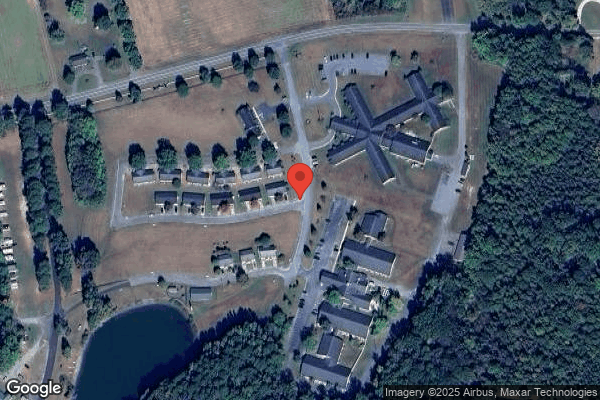
420 COLONIAL DRIVE, DENTON, MD 21629 (410) 479-4400
For profit - Limited Liability company 100 Beds KEY HEALTH MANAGEMENT Data: November 2025
Trust Grade
30/100
#197 of 219 in MD
Last Inspection: November 2024

Within standard 12-15 month inspection cycle. Federal law requires annual inspections.

Overview

Denton Nursing and Rehab has received a Trust Grade of F, indicating poor performance with significant concerns about care and safety. It ranks #197 out of 219 facilities in Maryland, placing it in the bottom half, and #2 out of 2 in Caroline County, meaning only one local option is worse. The facility is improving, as it reduced issues from 29 in 2024 to 9 in 2025, but still has a concerning staffing rating of 1/5 stars with a high turnover rate of 54%, above the state average. While it has no fines recorded, which is a positive aspect, it has shown less RN coverage than 92% of Maryland facilities, which could affect care quality. Specific incidents include a resident suffering serious injuries from improper transfer procedures and another resident being harmed due to unsafe environmental conditions, highlighting both serious weaknesses in care practices and the need for a more reliable staffing approach.

Trust Score
F
30/100
In Maryland
#197/219
Bottom 11%
Safety Record
Moderate
Needs review
Inspections
Getting Better
29 → 9 violations
Staff Stability
⚠ Watch
54% turnover. Above average. Higher turnover means staff may not know residents' routines.
Penalties
✓ Good
No fines on record. Clean compliance history, better than most Maryland facilities.
Skilled Nurses
⚠ Watch
Each resident gets only 26 minutes of Registered Nurse (RN) attention daily — below average for Maryland. Fewer RN minutes means fewer trained eyes watching for problems.
Violations
⚠ Watch
96 deficiencies on record. Higher than average. Multiple issues found across inspections.
★☆☆☆☆
1.0
Overall Rating
★☆☆☆☆
1.0
Staff Levels
★★★☆☆
3.0
Care Quality
★☆☆☆☆
1.0
Inspection Score
Stable
2024: 29 issues
2025: 9 issues

The Good

  • Full Sprinkler Coverage · Fire safety systems throughout facility
  • No fines on record

Facility shows strength in fire safety.

The Bad

1-Star Overall Rating

Below Maryland average (3.0)

Significant quality concerns identified by CMS

Staff Turnover: 54%

Near Maryland avg (46%)

Higher turnover may affect care consistency

Chain: KEY HEALTH MANAGEMENT

Part of a multi-facility chain

Ask about local staffing decisions and management

The Ugly 96 deficiencies on record

2 actual harm
Sept 2025 9 deficiencies 2 Harm
SERIOUS (G) 📢 Someone Reported This

A family member, employee, or ombudsman was alarmed enough to file a formal complaint

Actual Harm - a resident was hurt due to facility failures

Accident Prevention (Tag F0689)

A resident was harmed · This affected 1 resident

Based on a review of a complaint, medical record review, facility documentation review, and staff interviews, it was determined the facility failed to keep a dependent resident free from injury while ...

Read full inspector narrative →
Based on a review of a complaint, medical record review, facility documentation review, and staff interviews, it was determined the facility failed to keep a dependent resident free from injury while transferring the resident from the bed to the chair via a Hoyer lift, which resulted in actual harm to Resident (R) #11. The failure of facility staff to follow the plan of care while transferring a resident resulted in bilateral sacral fractures and a L2 fracture. This was evident for 1 (#11) of 3 residents reviewed for falls. The findings include:A Hoyer lift is a mechanical device that uses a sling to safely lift and move a resident who is unable to transfer themselves between surfaces like a bed, wheelchair, or toilet. The MDS (Minimum Data Set) is part of the Resident Assessment Instrument that was Federally mandated in legislation passed in 1986. The MDS is a set of assessment screening items employed as part of a standardized, reproducible, and comprehensive assessment process that ensures each resident's individual needs are identified, that care is planned based on those individualized needs, and that the care is provided as planned to meet the needs of each resident.A care plan is a guide that addresses the unique needs of each resident. It is used to plan, assess, and evaluate the effectiveness of the care.On 8/27/25 at 10:35 AM complaint 295983 was reviewed and alleged that an aide put Resident #11, who was an amputee and paralyzed, in a Hoyer lift and dropped the resident onto the floor which resulted in Resident #11 being transferred to the hospital.A review of Resident #11's medical record was conducted and revealed Resident #11 was admitted to the facility in June 2024 with diagnoses that included, but were not limited to quadriplegia, anxiety, and acquired absence of left leg above the knee.Review of a 12/16/24 at 15:00 (3:00 PM) nurse's note documented, GNA (geriatric nursing assistant) came to get me stating resident fell. Resident states that [his/her] back is hurting mostly on the left side. The note stated, is requesting to go to hospital.A 12/17/24 at 8:55 AM Nurse Practitioner (NP) progress note documented, patient returned from hospital s/p fall with bilateral sacral fractures and L2 compression fracture. Patient with complaints of pain. Patient is alert and responsive but does not appear at full baseline at this time, frequently falling asleep. However, patient spent the night in the ER and has not slept. The assessment was, bilateral fractures to bilateral sacrum and L2 compression.A 12/17/24 at 10:12 AM IDT (interdisciplinary team) note documented, IDT met today to discuss resident's witnessed fall on 12/16/24. Intervention initiated is staff re-education on Hoyer transfers.A 12/18/24 physician's note documented, is being evaluated following a fall while in a harness, landing on the buttock region. [He/she] was sent to the emergency department, where a CT scan revealed a bilateral sacral fracture and a mild L2 compression fraction. The patient reports experiencing mild pain with movement, which occurs even with assistance, as [he/she] is quadriplegic and requires help for mobility. The note documented the resident had quadriplegia after acute trauma after an MVA (motor vehicle accident) in 2009. The plan documented that a neurosurgery consult was placed. Tylenol was ordered every 6 hours for pain relief as the resident preferred not to take Oxycodone, but had it ordered if needed.Review of GNA #16's witness statement documented that Resident #11 wanted to get up. I grabbed one of the two slings placed in [his/her] chair. I placed the smallest sling under [him/her] while crossing the bottom of it. As I lifted [him/her] and proceeded to move [him/her] from the bed to chair. I hit the end of the bed with the wheel of the Hoyer, and [he/she] slipped through the sling and fell to the floor, bottom first. The GNA documented that she placed pillows under the resident and went to get the nurse.Review of Resident #11's 10/14/24 MDS assessment documented in Section GG0115 that the resident had impairment on both sides, upper and lower; dependent for all ADLs (activities of daily living.)Review of R #11's care plan, has an ADL self-care performance deficit r/t paralysis, that was initiated on 1/25/24, had the intervention, the resident requires Hoyer Lift with 2 staff assistance for transfers with a date initiated of 4/30/24.Review of the actual nursing schedule for 12/16/24 documented that there was 1 nurse (LPN #15) and 2 GNAs (GNA #16, and another GNA) for the 300 unit, the unit where R #11 resided. It was noted that GNA #16 was assigned to unit 300 and unit 400, therefore GNA #16 had a split assignment.On 8/28/25 at 8:10 AM an interview was conducted with LPN #15 who stated, I remember them coming to get me that [he/she] fell out of the Hoyer lift. I called the doctor and 911 and had [him/her] sent to the hospital. LPN #15 stated that they told her GNA #16 was transferring the resident by herself. I think we were short staffed that day. We worked short a lot. It happened at the end of day shift. I thought it was a lot taking care of people for the GNAs when short staffed. When I went in there the resident was on the floor. I can't remember if [he/she] was in pain. It was so busy, crazy that day and I was the only nurse on those 2 hallways.On 8/28/25 at 9:25 AM an interview was conducted with Staff #17, the previous Director of Nursing (DON). Staff #17 stated, one of our aides was transferring [him/her] by herself without a second person and she said the leg hit the bed and the resident slid out of the sling and fell on the floor. It was the right size sling. It was [his/her] sling. Staff #17 stated, We let her (GNA #16) go for transferring without a second person that resulted in the resident being hurt. On 9/2/25 at 3:02 PM GNA #22 was interviewed and stated that Resident #11 was totally dependent on staff for all ADLs. GNA #2 stated that Resident #11 was transferred with a Hoyer lift. I was working the morning shift. It happened at the end of the shift, and I was actually leaving. I was at the desk charting. I did hear a yell and then I went down to see what happened and I went and got the nurse. GNA #2 stated, the aide that was taking care of the resident at the time was in the room. When I went in there she was the only one in there when I walked in. All she said was that she was transferring [him/her] back into the bed and it was a split body sling, and [he/she] had fallen through it. I was on the 300 hallway. The groups on that hall changed a lot and I did not have [him/her.] We must have had a split hallway. Sometimes if we are short we have a split hallway. We did work short last December. On day shift I usually take care of 11 or 12 residents. That day we only had 3 aides on day shift. That is about 15 to 16 people that we would have had to take care of. That is a lot for day shift because most of them are total care. I can say sometimes I have transferred people by myself, but after that incident I have not transferred by myself using the Hoyer lift. During that time the nurse would try her best to help with transfers or a unit manager or someone but if they were too busy I'd have to do it myself, especially if it were 3 of us having 15-16 residents a piece. Prior to the fall I would see other GNAs transferring with the Hoyer by themselves. When I went in the room the resident was lying flat on [his/her] back. [He/She] was saying that [he/she] was in pain. I don't recall if [he/she] was crying but I do remember [him/her] saying [he/she] was in a lot of pain. There was a wound on [his/her] bottom and I believe it was bleeding after the fall. We got [him/her] back in bed with the Hoyer. It was 4 of us that got [him/her] back in bed. [He/She] was saying [he/she] was in pain when we were putting [him/her] back to bed. On 9/3/25 at 9:00 AM an interview was conducted with Physician #31. He stated he remembered the incident and stated, it was a big deal. Why was one person transferring the resident?On 9/4/25 at 11:30 AM the Nursing Home Administrator (NHA) and the interim DON were informed of the concern.
SERIOUS (G) 📢 Someone Reported This

A family member, employee, or ombudsman was alarmed enough to file a formal complaint

Actual Harm - a resident was hurt due to facility failures

Safe Environment (Tag F0921)

A resident was harmed · This affected 1 resident

**NOTE- TERMS IN BRACKETS HAVE BEEN EDITED TO PROTECT CONFIDENTIALITY** Based on medical record review, facility documentation and interview, it was determined the facility failed to provide a safe an...

Read full inspector narrative →
**NOTE- TERMS IN BRACKETS HAVE BEEN EDITED TO PROTECT CONFIDENTIALITY** Based on medical record review, facility documentation and interview, it was determined the facility failed to provide a safe and functional environment resulting in psychosocial and physical harm to a resident (Resident #9). This was evident for 1 of 79 residents in the facility on 1/24/25 and reviewed during the complaint survey.The findings include:Review of facility documentation provided by the Administrator on 8/27/25 revealed the Office of Health Care Quality (OHCQ) conducted a Life Safety Code complaint survey on 1/29/25 and found the facility was cited for not maintaining temperature in the attic to prevent pipes from freezing causing the pipes to rupture. During interview with the Director of Maintenance (DM) on 9/2/25 at 11:05 AM, The DM stated the pipes were not insulated and the broken pipes caused the ceiling to collapse on Resident #9 who was in room [ROOM NUMBER] on 1/24/25. The DM stated no other residents were affected. The DM stated the facility has implemented their plan of correction, the pipes have been insulated, and he is doing temperature checks in the attic regularly.Review of Resident #9's medical record on 8/27/25 revealed the Resident was admitted to the facility in November 2022 with a diagnosis to include quadriplegia. Quadriplegia is a severe medical condition characterized by the partial or total loss of function in all four limbs and the torso. The facility staff assessed the Resident on 12/15/24 to have a BIMS (Brief Interview for Mental Status) out of 15 which indicates the Resident has a fully intact cognitive function.Further review of Resident #9's medical record revealed a Change of Condition Assessment on 1/24/25 that stated: Pipe burst above resident room causing ceiling to collapse on top of resident and resident to be covered in water, insulation and drywall.During interview with Resident #9 on 8/27/25 at 10:45 AM, the Resident stated on 1/24/25 he/she heard water sounds and then saw water dripping from the ceiling by his/her feet and he/she called the front desk to get help. Resident #9 stated staff did come in, but it was too late, and the ceiling crashed on me and water was pouring on me. He/she stated I felt like I was drowning and was coughing. I couldn't move myself and it took them a few minutes to get me out of the room. The resident also stated that every time it rains; he/she is afraid it is going to happen again. Further review of the Resident's medical record revealed the Resident was sent to the emergency room on 1/24/25 and the triage note stated: Patient arrives after a piece of dry wall fell on him/her. A pipe burst in the ceiling and water was pouring on him/her for approximately 5 minutes until staff arrived to move him/her to another bed. The Resident received a CT scan of the head which showed no acute intracranial hemorrhage. The discharge instructions included lots of fluids, Tylenol or Motrin for pain and fever, follow-up with your primary care and the Resident was sent back to the facility on 1/24/25.Further review of Resident #9's medical record revealed the Resident was seen by the Physician (Staff #31) on 1/27/25 who diagnosed the Resident with cervical spine and lumbar strain. The Physician documented that the Resident was complaining of neck and back pain. The patient reports that baclofen, Tylenol, a short course of Flexeril, and ibuprofen (Motrin) as needed have not alleviated his/her symptoms. At that time the Physician ordered Oxycodone 5 mg every 6 hours as needed for pain for 14 days for the Resident.Review of Resident's Medication Administration Records (MAR) for January, February, March, April and May 2025 revealed the Resident was administered Oxycodone 5 mg twice a day from 1/27 through 1/31/25; at least once a day from 2/2 through 2/28/25; at least once a day in March 2025 except 3/9 and 3/22/25; at least once a day in April 2025 except 4/9, 4/15, 4/20, 4/29 and 4/30/25; and in May 2025 received Oxycodone 5mg on the following days: 5/1, 5/2, 5/6, 5/7, 5/11, 5/12, 5/15, 5/16, 5/17, 5/18, 5/19 and 5/21/25.Review of the Neurologist consultation on 5/16/25 revealed the Neurologist documented patient reports lower back pain since an incident on 1/24/25 when a ceiling fell on him/her. An MRI conducted on 5/6/25 showed a mild disc bulge at L5-S1. Mild disc bulge may be due to injury. The Resident is scheduled for a follow up Neurologist appointment 9/16/25. At that time the Neurologist recommended to continue physical therapy and may increase Oxycodone for better pain control.Review of Resident #9's physician orders revealed the Oxycodone 5 mg was discontinued on 5/22/25 and the Resident was ordered Suboxone film 4-1 mg every 24 hours as needed for pain. Further review of Resident #9's pain medication orders on 9/2/25 revealed the Resident is currently ordered Buprenorphine-Naloxone 2-0.5 mg 3 tablets every 24 hours as needed for pain with the last dose received on 9/2/25. Review of a psychiatric evaluation and consultation note dated 1/30/25 revealed it stated: seen for psych follow-up per facility request following a flood on the 300 unit. The patient is currently relocated to a new room. He/she reports the roof fell on him/her, and this has worsened his/her PTSD (Post Traumatic Stress Disorder).Review of a psychological services progress note dated 3/13/25 revealed it stated: He/she discussed the flood that occurred in his/her room and the ceiling falling. He/she discussed having PTSD triggers. Resident #9 was seen by psychological services on 4/8/25, 4/24/25 and 6/11/25.Review of psychological services progress note dated 7/2/25 revealed it stated: Patient did share that he/she would like to begin regular psychotherapy services because I want to talk about my trauma. Clinician reminded patient that these services are what this clinician provides, however, patient declined, expressing a preference for provider who is not affiliated with the facility.Interview with Staff #18 on 9/2/25 at 11:47 AM stated she was working that day when saw dripping from the ceiling in Resident #9's room by his/her feet. Staff #18 stated she and Staff #20 went to try to remove the Resident from the room when all of the sudden the ceiling crashed on the Resident. Staff #18 stated the size of the ceiling that fell was about the size of the Resident's bed. Staff #18 stated when the ceiling came down it was dry wall, insulation and water was all over the Resident. Staff #18 stated water was just pouring down. Staff #18 stated the Resident was mad and upset. Staff #18 stated she went to see the Resident later that day after the Resident was moved to a different room and the Resident was all shook up.During interview with Staff #19 on 9/2/25 at 12:20 PM, Staff #19 stated he/she wasn't here the day the ceiling fell on the Resident but cares for the Resident regularly. Staff #19 stated the Resident has stated he/she doesn't want to go back to that room because the Resident was traumatized, and the Resident will complain of low back pain to her. During interview with Staff #20 on 9/2/25 at 1:22 PM, Staff #20 stated he/she saw the water dripping from the Resident's ceiling and went in with the GNA (Staff #18) to remove the Resident from the room when all of the sudden the ceiling fell on the Resident. Staff #20 stated it was approximately a 4 ft by 6 ft section, then water rushed out and the water was all over the Resident. Staff #20 stated she got hit on the head by the drywall herself, so other staff took over removing the Resident from the room. Follow up interview with Resident #9 on 9/2/25 at 2:00 PM, the Resident stated he/she has had low back pain since the incident that he/she didn't have before, and he/she would also like to get counseling and physical therapy from someone not affiliated with the facility. Resident #9 states he/she feels unsafe at the facility and the incident on 1/24/25 has made his/her PTSD worse.Interview with the ADON (Assistant Director of Nursing) on 9/2/25 at 2:10 PM, the ADON was advised of Resident's request for outside counseling and therapy services. The ADON stated she was not aware the Resident wanted outside counseling and therapy services and would follow up with the Resident.Interview with the Resident's physician on 9/3/25 at 8:45 AM, the Surveyor advised the Resident's physician Resident #9 would like outside counseling and therapy sessions. The Physician stated he was unaware of the Resident's request, and he would talk to the ADON about looking into for the Resident. The Physician stated he is aware of the MRI results, and the Neurologist consult note on 5/16/25 stating the mild disc bulge may be due to the incident on 1/24/25. The Physician stated he is aware the Resident has an appointment with the Neurologist this month and he would follow up with what the Neurologist recommends.The Surveyor reviewed the concern of physical and psychosocial harm of Resident #9 on 9/3/25 at 10:45 with the ADON and Interim Director of Nursing related to the ceiling collapse on 1/24/25 due to the facility not maintaining temperatures in the attic to prevent pipes freezing and rupturing.
CONCERN (D) 📢 Someone Reported This

A family member, employee, or ombudsman was alarmed enough to file a formal complaint

Potential for Harm - no one hurt, but risky conditions existed

Deficiency F0558 (Tag F0558)

Could have caused harm · This affected 1 resident

**NOTE- TERMS IN BRACKETS HAVE BEEN EDITED TO PROTECT CONFIDENTIALITY** Based on observation, interview, and medical record review, it was determined the facility failed to ensure that the resident's ...

Read full inspector narrative →
**NOTE- TERMS IN BRACKETS HAVE BEEN EDITED TO PROTECT CONFIDENTIALITY** Based on observation, interview, and medical record review, it was determined the facility failed to ensure that the resident's call light was within reach, per the individualized care plans, to allow access to assistance when needed. This was evident for 1 (#13) of 14 residents reviewed during a complaint survey. The findings include: On 9/3/25 at 10:00 AM observation was made of Resident (R) #13 lying in bed. R #13 asked the surveyor to hand him/her the hair brush that was on the night stand. At that time observation was made of the call bell lying on the floor in front of the oxygen concentrator. R #13 was asked how he/she called the nurse. R #13 stated that the call bell was usually on the top of the bed, but [name] took it away from him/her because he/she was ringing it too much. At that time the surveyor showed Certified Medicine Aide (CMA) #23 the call bell that was lying on the floor. CMA #23 placed the call bell on the bed.Review of R #13's medical record revealed an ADL (activities of daily living) care plan related to hemiplegia (paralysis or weakness on one side of the body) that was initiated on 10/21/24. The intervention on the care plan stated, encourage the resident to use bell to call for assistance.A second care plan, at risk for falls had the intervention, be sure the resident's call light is within reach on [his/her] right side and encourage the resident to use it for assistance.On 9/3/25 at 10:55 AM the acting Director of Nursing (DON) and Assistant DON were informed of the observation. They stated that they were made aware and they were investigating the incident.
CONCERN (D) 📢 Someone Reported This

A family member, employee, or ombudsman was alarmed enough to file a formal complaint

Potential for Harm - no one hurt, but risky conditions existed

Notification of Changes (Tag F0580)

Could have caused harm · This affected 1 resident

Based on medical record review, facility documentation and interviews, it was determined the facility staff failed to notify a physician promptly when a resident had a change of condition (Resident #1...

Read full inspector narrative →
Based on medical record review, facility documentation and interviews, it was determined the facility staff failed to notify a physician promptly when a resident had a change of condition (Resident #12) and failed to notify a resident's representative when a resident had medication changes (Resident #6). This was evident for 2 of 14 residents reviewed during a complaint survey.The findings include:1.Review of Facility Reported Incident 295918 on 8/27/25 revealed the facility reported to the Office of Health Care Quality (OHCQ) that on 11/28/24 the facility staff reported to the Resident's nurse (Staff #34) that Resident #12 was declining, and Staff #34 failed to assess the Resident timely. Review of Resident #12's medical record on 8/27/25 revealed the Resident was admitted to the facility in 2015 had diagnosis to include traumatic brain injury, heart and renal failure. Further review of Resident #12's medical record revealed Staff #34's nurse's note on 11/28/24 at 12:04 PM that stated: patient noted as difficult to arouse, lethargic, plan of care ongoing. Further review of Resident #12's medical record revealed Staff #8's nurse's note on 11/28/24 at 12:28 PM that stated: was called to resident room by another staff member to collaborate with another nurse on resident due to change in condition. Resident was cool to touch, difficult to palpate radial pulse, sternal rub-unable to rouse resident. 15 Liter NRB (non-rebreather) mask applied while EMS enroute to facility. EMS arrived and transported resident to the hospital. Interview with Staff #8 on 8/27/25 at 2:35 PM, Staff #8 stated she received a message that Staff #34 wanted her to come up the hall. Staff #8 stated when she arrived on the unit Staff #34 stated since I was the RN (registered nurse) on duty she wanted me to look at the Resident who was unresponsive. Staff #8 stated I asked for the vital signs and Staff #34 had not gotten them, so we got vital signs. The Resident blood pressure was in the 60s over 30s, it was hard to get a oxygen reading and I said the Resident needs to go to the hospital and I put him on 15 Liters NRB mask. During interview with Staff #12 on 8/27/25 at 2:44 PM, Staff #12 stated a GNA (geriatric nursing assistant) asked me to come look at Resident #12 because the GNA couldn't get the Resident to respond, had told Staff #34 and Staff #34 had not checked on the Resident. The GNA thought I might be able to get the Resident to respond. I also couldn't get the Resident to respond to me and Staff #34 was sitting at the desk and I asked her is she knew about the Resident, she said she knew, and I told her if she didn't do something I was going to report her to the State. It was about lunchtime. During interview with Resident #14 (Resident #12's roommate) on 9/3/25 at 10:20 AM, Resident #14 asked if he/she remember the day Resident #12 left the facility in November 2024. Resident #14 stated he/she did remember and the last time the Resident spoke to him/her was the night prior. Resident #14 stated he/she remembered staff bringing in the Resident's breakfast, but the Resident was not talking, and he/she was breathing heavy and fast. The Resident stated it wasn't until after lunch that they did anything. That is when people came in and they put oxygen on him/her and then sent the Resident out. During interview with Staff #23 on 9/3/25 at 10:31 AM, Staff #23 stated she was working on a different unit and 2 GNAs asked me to come and look at Resident #12. I went to see Resident #12 and shook him/her and tried a sternal rub but he/she was not responding. I went and told Staff #34 and she stated she had been in there and the Resident was okay. I think it was about 11 AM. Review of Staff #34's employee file revealed Staff #34 was a LPN (licensed practical nurse) and on 12/10/24 Staff #34 was terminated with the reason documented due to on 11/28 several staff members reported issues with Resident (#12) immediate action was not taken. Interview with the Assistant Director of Nursing on 9/3/25 at 10:45 AM confirmed Staff #34 did not notify Resident #12's physician timely on 11/28/24 when the Resident had a change in condition. 2.On 8/28/25 at 11:50 AM a review of complaint 295977 alleged there was no communication with the RP when there were medication changes. On 8/28/25 at 11:50 AM a review of Resident (R) #16's medical record was conducted. R #16 was admitted to the facility in August 2023 with diagnoses that included but were not limited to non-rheumatic aortic (valve) stenosis, hyperlipidemia, dementia, hypertension, atrial fibrillation, and heart disease. Review of physician's orders revealed on 3/6/25 the anti-psychotic medication Risperdal was changed from 0.25 mg every day to twice per day. There was no RP notification found in the medical record. On 3/19/25 there was a new order for the anti-anxiety medication Buspar 5 mg. twice per day. There was no RP notification found in the medical record. On 4/16/25 the Risperdal dose increased to 0.5 mg twice per day. There was no RP notification found in the medical record. On 4/25/25 the Buspar frequency was increased from twice per day to three times per day. There was no RP notification found in the medical record. On 4/30/25 the Risperdal does was increased to 0.75 mg. twice per day. There was no RP notification found in the medical record. On 9/4/25 at 9:48 AM an interview was conducted with the Assistant Director of Nursing (ADON). The ADON stated that she thought it was an issue before she started working at the facility but was not currently an issue. The ADON reviewed the medical record and confirmed there was no documentation related to RP notification.
CONCERN (D) 📢 Someone Reported This

A family member, employee, or ombudsman was alarmed enough to file a formal complaint

Potential for Harm - no one hurt, but risky conditions existed

Report Alleged Abuse (Tag F0609)

Could have caused harm · This affected 1 resident

Based on review of facility reported incidents, record review, and interview, it was determined the facility failed to report an injury of unknown origin within 2 hours of becoming aware of the injury...

Read full inspector narrative →
Based on review of facility reported incidents, record review, and interview, it was determined the facility failed to report an injury of unknown origin within 2 hours of becoming aware of the injury, to the regulatory agency, the Office of Health Care Quality (OHCQ). This was evident for 1 (#1) 9 residents reviewed for 10 facility reported incidents during a complaint survey. The findings include: On 8/28/25 at 7:53 AM a review of facility reported incident 295995 was conducted and revealed on 4/6/25 at 5:38 PM a staff nurse was made aware of Resident #1 having a swollen, bruised left eye. Review of the facility's investigation revealed the resident had severe cognitive impairment and was unable to say what happened to his/her eye. Review of the email confirmation revealed the initial self-report was sent to OHCQ on 4/7/25 at 7:57 AM, which was not within 2 hours of being informed of a bruised and swollen eye that Resident #1 obtained while residing on the Memory Care Unit.On 9/3/25 at 10:55 AM an interview was conducted with the interim Director of Nursing (DON) and the Assistant Director of Nursing (ADON). The DON and ADON confirmed the findings as it was initially unknown if the resident was hit, fell, or had some other mechanism of injury.
CONCERN (D) 📢 Someone Reported This

A family member, employee, or ombudsman was alarmed enough to file a formal complaint

Potential for Harm - no one hurt, but risky conditions existed

Investigate Abuse (Tag F0610)

Could have caused harm · This affected 1 resident

Based on review of facility reported incidents, documents, and staff interview, it was determined the facility failed to provide documentation that allegations of misappropriation of property were tho...

Read full inspector narrative →
Based on review of facility reported incidents, documents, and staff interview, it was determined the facility failed to provide documentation that allegations of misappropriation of property were thoroughly investigated. This was evident for 1 (#2) of 9 residents reviewed for facility reported incidents during a complaint survey. The findings include: On 9/2/25 at 11:52 AM a review of facility reported incident 295797 was conducted and revealed Resident #2 alleged that on 12/17/24 between 10:00 AM and 1:00 PM someone entered the resident's room and stole money, a gift card, and 10 gift certificates. Review of the facility's investigation revealed written statements from (3) geriatric nursing assistants (GNA), (1) from the previous Director of Nursing (DON), and (3) other staff in leadership positions. The facility failed to obtain interviews or statements from any of the nurses that were working, staff from previous shifts, housekeeping staff, maintenance staff, or dietary staff that would have had access to the resident's room. On 9/4/25 at 11:08 AM an interview was conducted with the Nursing Home Administrator (NHA) and Assistant Director of Nursing (ADON). They both confirmed that other staff should have been interviewed in the investigation process.
CONCERN (D) 📢 Someone Reported This

A family member, employee, or ombudsman was alarmed enough to file a formal complaint

Potential for Harm - no one hurt, but risky conditions existed

Deficiency F0657 (Tag F0657)

Could have caused harm · This affected 1 resident

Based on medical record review and interview, it was determined that the facility staff failed to have quarterly care plan meetings for residents (Resident #9). This was evident for 1 of 14 residents ...

Read full inspector narrative →
Based on medical record review and interview, it was determined that the facility staff failed to have quarterly care plan meetings for residents (Resident #9). This was evident for 1 of 14 residents reviewed during a complaint survey. The findings include:Once the facility staff completes an in-depth assessment (MDS) of a resident, the interdisciplinary team meet and develop care plans. Care plans provide direction for individualized care of the resident. A care plan flows from each resident's unique list of diagnoses and should be organized by the resident's specific needs. The care plan is a means of communicating and organizing the actions and assure the resident's needs are attended to. The care plan is to be reviewed and revised at each assessment time of the resident to ensure the interventions on the care plan are accurate and appropriate for the resident. Care plan meetings are held each quarter and as needed. Review of Resident #9's medical record on 8/27/25 revealed the Resident was admitted to the facility in November 2022. Further review of Resident #9's medical record revealed the last quarterly care plan meeting was in December 2024. The facility staff completed quarterly MDS assessments on 3/17/25 and 6/17/25. The facility staff failed to have a quarterly care plan meeting in March and June 2025. Interview with Social Services Assistant on 9/3/25 at 12:25 PM confirmed there is no evidence the facility staff had a quarterly care plan meeting in March and June 2025. Interview with Resident #9 on 9/3/25 at 1:35 PM, Resident #9 stated he/she had not had any care plan meetings this year and has been asking for them. Interview with the Assistant Director of Nursing on 9/3/25 at 2:30 PM confirmed the facility staff failed to have a quarterly care plan meeting for Resident #9 in March and June 2025.
CONCERN (D) 📢 Someone Reported This

A family member, employee, or ombudsman was alarmed enough to file a formal complaint

Potential for Harm - no one hurt, but risky conditions existed

Deficiency F0757 (Tag F0757)

Could have caused harm · This affected 1 resident

Based on medical record review and staff interview it was determined the facility failed to keep a resident's drug regimen free from unnecessary drugs by failing to follow physician ordered blood pres...

Read full inspector narrative →
Based on medical record review and staff interview it was determined the facility failed to keep a resident's drug regimen free from unnecessary drugs by failing to follow physician ordered blood pressure and heart rate parameters for administering a blood pressure medication. This was evident for 1 (#6) of 13 residents reviewed during a complaint survey. The findings include: On 8/28/25 at 11:50 AM a review of Resident (R) #6's medical record was conducted. R #6 was admitted to the facility in August 2023 with diagnoses that included but were not limited to non-rheumatic aortic (valve) stenosis, hyperlipidemia, dementia, hypertension, atrial fibrillation, and heart disease. Review of R #6's physician's orders revealed the order for Metoprolol Tartrate 100 mg. two times per day related to hypertension (high blood pressure) and atrial fibrillation. Atrial fibrillation (AFib) is a heart rhythm disorder where the upper chambers of the heart (atria) beat irregularly and rapidly. The physician's order stated to hold for b/p (blood pressure) less than 110/65 and HR (heart rate) less than 65.Review of R #6's May 2025 Medication Administration Record (MAR) documented on 5/15/25 in the PM that the HR was 60. The medication was given. On 5/30/25 in the AM the b/p was 105/71 and the medication was given. Review of R #6's June 2025 MAR documented on 6/16/25 in the AM the HR was 62, 6/17/25 in AM the b/p was 109/64, and on 6/27/25 in the AM the HR was 59. The medication was given each time.Review of R #6's July 2025 MAR documented on 7/14/25 in the PM the HR was 62. The medication was given. Review of R #6's August 2025 MAR documented on 8/12/25 in the AM the HR was 61, on 8/13/25 in the AM the HR was 62, and on 8/23/25 in the PM the HR was 62. The medication was given. Review of R #6's September 2025 MAR documented on 9/2/25 in the AM the HR was 60. The medication was given. On 9/4/25 at 8:12 AM an interview was conducted with Staff #30. The surveyor reviewed the physician's order with her for the Metoprolol. Staff #30 stated that she would hold if one or the other was below parameters, either the blood pressure or heart rate. When the surveyor read the order to her with the word and she said, it should be or. Staff #30 stated, if there is a question about whether to hold or not hold the medication, I would call the physician.On 9/4/25 at 8:18 AM an interview was conducted with Physician #31. The surveyor read the order to him and asked if staff should hold only if both the b/p and the HR were outside of parameters as the order read. Physician #31 stated, no, if the HR is below 65 the med should be held or if the b/p was below 110/65 the med should be held. Physician #31 agreed that the order should have read OR so he changed it at that time. Physician #31 was informed of the times when the medication was given when it was outside of the physician ordered parameters. Physician #31 stated he would expect a phone call if there was a question about whether to hold or give the medication.On 9/4/25 at 9:33 AM the issue was discussed with the Assistant Director of Nursing (ADON), Nursing Home Administrator (NHA) and Staff #32. They all agreed the order should have said OR and not and. They were informed of the days that the medication was given when outside of physician ordered parameters.
CONCERN (D) 📢 Someone Reported This

A family member, employee, or ombudsman was alarmed enough to file a formal complaint

Potential for Harm - no one hurt, but risky conditions existed

Medical Records (Tag F0842)

Could have caused harm · This affected 1 resident

Based on medical record review and interview, it was determined the facility failed to maintain complete and accurate medical records in accordance with accepted professional standards (Resident #5). ...

Read full inspector narrative →
Based on medical record review and interview, it was determined the facility failed to maintain complete and accurate medical records in accordance with accepted professional standards (Resident #5). This was evident for 1 of 14 residents reviewed during a complaint survey. The findings include. A medical record is the official documentation of a healthcare organization. As such, it must be maintained in a manner that follows applicable regulations, accreditation standards, professional practice standards, and legal standards. All entries to the record should be legible and accurate. Review of Resident #5's medical record on 8/27/25 revealed the Resident was admitted to the facility in 2018 with a diagnosis to include cerebral infarction (stroke) and hemiplegia affecting left nondominant side. Hemiplegia is the total paralysis or severe loss of strength on one side of the body, affecting the arm, leg, and sometimes the face. It results from damage to the brain, often caused by stroke, brain tumors, or trauma. Review of Complaint 295996 on 8/27/25 revealed Resident #5 had lost his/her nursing home level of care, and the facility was looking into discharge options. During interview with the Social Services Assistant (SSA) on 8/27/25 at 11:49 AM, the SSA was asked about the Resident's loss of nursing home level of care. SSA stated he/she received notice the Resident had lost his/her level of care, our Regional MDS (Minimum Data Set) Coordinator appealed the findings in July 2025 and the Resident was again denied his/her level of care. SSA stated he/she had discussed the findings with Resident #5 and his/her representative. The Surveyor at that time asked for the paperwork submitted for nursing home level of care. Review of Resident #5's facility documentation provided to appeal the nursing home level of care revealed the documented diagnosis was personal history TIA (Transient Ischemic Attack) and Cereb Infarct (Stroke) no residual deficit. Further review of the facility documentation of electronic medical records submitted revealed it did include all of the Resident's diagnosis, including hemiplegia affecting left dominant side but this diagnosis was not included on the Resident's information sheet. Further review of Resident #5's medical record on 9/3/25 revealed no care plan meeting after April 2025 and no evidence of a discussion of loss of level of care in the Resident's medical record. On 9/3/25 at 11:50 AM, Social Services Assistant was asked for evidence of a care plan meeting since April 2025. On 9/3/25 at 12:25 PM the Social Services Assistant brought in evidence of a care plan meeting was held on 7/1/25 for Resident #5 on paper. During interview with Social Services on 9/3/25 at 12:25 PM, Social Services Assistant stated she keeps evidence of care plan meetings in her office, and the former Director of Nursing would upload the care plan meeting notes in the medical record but was unsure who was doing that now. During interview with the Regional MDS Coordinator (Staff #26) on 9/3/25 at 12:50 PM, Staff #26 stated she would change the diagnosis to include Resident #5's hemiplegia. During interview with the Assistant Director of Nursing (ADON) on 9/3/25 at 1:40 PM confirmed the facility staff failed to include Resident #5's July 2025 care plan meeting, and discussions with Resident and representative regarding loss of level of care in the medical record. The ADON also confirmed the diagnosis of no residual deficit was documented instead of left side hemiplegia. At that time the ADON stated the facility would be resubmitting paperwork for the Resident #5's nursing home level of care.
Nov 2024 29 deficiencies
CONCERN (D)

Potential for Harm - no one hurt, but risky conditions existed

Resident Rights (Tag F0550)

Could have caused harm · This affected 1 resident

**NOTE- TERMS IN BRACKETS HAVE BEEN EDITED TO PROTECT CONFIDENTIALITY** Based on observations, interviews, record review, and facility policy review, the facility failed to ensure that two of five res...

Read full inspector narrative →
**NOTE- TERMS IN BRACKETS HAVE BEEN EDITED TO PROTECT CONFIDENTIALITY** Based on observations, interviews, record review, and facility policy review, the facility failed to ensure that two of five residents (Resident (R) 14 and R65) were treated with dignity and respect, out of a total sample of 31 residents. This failure has the potential to negatively affect all residents residing in the facility by affecting a resident's psychosocial well-being. Findings include: Review of the facility's policy titled, Promoting/Maintaining Resident Dignity, dated 02/02/24 indicated, It is the practice of this facility to protect and promote resident rights and treat each resident with respect and dignity as well as care for each resident in a manner and is in an environment, that maintains or enhances resident's quality of life by recognizing each resident's individuality. All staff members are involved in providing care to residents to promote and maintain resident dignity and respect resident's rights .When interacting with a resident, pay attention to the resident as an individual .Maintain resident privacy. 1. Review of R14's admission Record, located under the Profile tab in the electronic medical record (EMR) indicated that R14 was re-admitted to the facility on [DATE] with a diagnoses of anxiety and depression. Review of R14's Minimum Data Set (MDS), located under the MDS tab in the EMR, with Assessment Reference Date (ARD) of 07/18/24 indicates R14 has a Brief Interview for Mental Status (BIMS) of 15 out of 15, indicating R14 was cognitively intact. During an interview on 10/29/24 at 12:30 PM, R14 indicated that the staff do not knock and/or introduce themselves prior to entering her room. During the resident interview, observed Certified Medicine Aide (CMA)1, opening R14's bedroom door without knocking or asking for permission, walked into the bedroom and placed R14's lunch tray on her overbed table, without introducing herself. During an observation on the 400-hall on 10/31/24 at 8:10 AM, R14 was telling CMA1, who was standing at the medication cart, You did not ask if I wanted that then R14 left the area going towards the nursing station, while CMA1 was observed rolling her eyes. During an interview on 10/31/24 at 9:18 AM, CMA1 was asked about R14, and she stated that R14 was saying something about her medication but could not explain exactly what the concern was, stating she does not know. CMA1 appeared to be nonchalant and continued to pass residents' medication. Another interview on 11/01/24 at 12:30 PM, CMA1 indicated that she did not roll her eyes at R14 and indicated that it was the expectation that staff treat all residents with respect. CMA1 said that all staff are to knock and wait for permission before entering a resident's room. During an interview on 11/01/24 at 9:15 AM, R14 indicated that the concern in the hallway yesterday was over CMA1 picking up her lunch tray on Tuesday prior to her being done. R14 said that CMA1 rolls her eyes all the time and was glad that someone saw this, indicating that this pisses her off when staff do this, and that she hates fake people. During an interview on 11/01/24 at 11:22 AM, the Interim Director of Nursing (DON) confirmed that staff are to knock and wait for an answer before entering a resident's room and confirmed at no time would she expect staff to roll their eyes at a resident. 2. Review of R65's admission Record, under the Profile tab in the EMR indicated, R65 was re-admitted to the facility on [DATE] with a diagnoses of obstructive and reflux uropathy. During a bath and catheter care observation in R65's room on 10/31/24 at 8:49 AM, Geriatric Nursing Assistant (GNA) 4 removed R65's gown, leaving R65 uncovered and exposed. GNA4 washed, rinsed, and patted dry R65's back, and assisted R65 to lay back on the bed, uncovered and exposed. At this point, R65 said that she was cold, and GNA4 told R65 that she was going to hurry up. GNA4 then proceeded to wash, rinse, and dry R65's chest area. GNA4 removed R65's incontinent brief, and washed, rinsed, and dried R65's perineal area, while R65 was observed lying on her bed, uncovered, exposed. Again, R65 said that she was cold. GNA4 did not respond to R65. GNA4 observed to wash, rinse, and pat dry R65's catheter tubing. Observed R65 placing both hands on the top of her head, stating Can you hurry up, as R65 was lying on her bed uncovered and exposed. Observed GNA4 did not respond to R65's comment and continued. GNA4 did not offer R65 a blanket and/or sheet to cover herself. GNA4 proceeded to wash, rinse and dry both legs. At this point, GNA4 assisted in turning R65 to her right side and washing, rinsing, and drying R65's back and bottom area. R65 was lying on her right side with her knees bent towards her chest, uncovered, and exposed. Review of R65's quarterly MDS assessment with ARD of 08/06/24, located under the MDS tab in the EMR, indicated R65 a Brief Interview for Mental Status (BIMS) score of zero out of 15 which indicated R65's cognition was severely impaired. The MDS indicated that R65 was not interviewable due to short-term and long-term memory issues. During an interview on 10/31/24 at 9:30 AM, GNA4 indicated that R65 states she is cold all the time, and said that if R65 complains of being cold, she will turn on the heat in her bedroom. During an interview on 10/31/24 at 6:00 PM, the Interim Director of Nursing (DON) stated that she expected staff to cover residents during care by using a blanket and/or sheet so that the resident would not be exposed.
CONCERN (D)

Potential for Harm - no one hurt, but risky conditions existed

Deficiency F0561 (Tag F0561)

Could have caused harm · This affected 1 resident

**NOTE- TERMS IN BRACKETS HAVE BEEN EDITED TO PROTECT CONFIDENTIALITY** Based on observations, interviews, and record review, the facility failed to allow one of one resident (Resident (R) 15) reviewe...

Read full inspector narrative →
**NOTE- TERMS IN BRACKETS HAVE BEEN EDITED TO PROTECT CONFIDENTIALITY** Based on observations, interviews, and record review, the facility failed to allow one of one resident (Resident (R) 15) reviewed from a sample of 31 residents for self-determination to make their own choice on the size of incontinent briefs to wear. This failure has the potential to affect R15 and other residents residing at the facility by not allowing the residents to make choices about aspects that affect their daily lives. Findings include: Review of R15's admission Record, under the Profile tab in the electronic medical record (EMR) indicated, R15 was re-admitted to the facility on [DATE] with a diagnosis of morbid obesity. During an interview with R15 on 10/29/24 at 1:00 PM, she said that she needs bigger incontinent briefs because the size she has now is rubbing her skin and they are painful to wear. During the interview, R15 was observed wearing a white incontinent brief which appeared to be too little and tight around her waist and thigh area. She said that she can not sit up with this size of an incontinence brief. R15 indicated that the nurse aides even say that she needs a bigger size. R15 stated that she has expressed this to the facility for the past two months and has been given no resolution. Review of R15's quarterly Minimum Data Set (MDS) assessment, located under the MDS tab in the EMR, with Assessment Reference Date (ARD) of 08/30/24 indicated, Brief Interview for Mental Status (BIMS) 15 out of 15, which indicates R15 is cognitively intact. During an interview on 10/31/24 at 7:15 AM, the Medical Records/Central Supply staff indicated that all residents were measured by the brief company about two to three months ago and indicated that R15's current size is 3x but said that R15 was measured at a large size. She indicates that the tape on the briefs should stop on the resident's hips and not be able to go over resident's stomach. About one month ago, R15 requested a larger size, so she let the staff try a 4x-5x which went all the way around R15. Medical Records/Central supply staff confirmed that she made the decision that R15 did not need the larger size of incontinent briefs and indicated that R15 did not complain afterwards. She indicated that she stocks each resident rooms with their appropriate size each Friday so that residents will have the necessary sizes over the weekend. During observation on 10/31/24 at 10:00 AM, R15 was lying in her bed with the right side of her incontinence brief undone, and the left side of the incontinent brief fastened on her hip area. An opened package of white incontinence briefs size 3x-4x size were in R15's closet. During an interview on 11/01/24 at 10:40 AM, GNA3 said that R15 currently wears an incontinent brief size 3x-4x; however, this size is not long enough. Indicated that R15 is a heavy wetter, so she needs an incontinent brief that can absorb the urine. GNA3 indicated that R15 has been trying to obtain a larger size of incontinence brief for some time. GNA3 indicated that if a larger size incontinent brief was needed for a resident, that staff should be able to obtain the larger size. During an interview on 10/31/24 at 6:18 PM, the Interim Director of Nursing (DON) indicated that the incontinent briefs appear little; however, from her understanding, is that residents have been measured and given sizes according to the manufacture's recommendation. The DON stated that she understands to get optimum usage out of the incontinent brief, it needs to be the correct size. The DON did not provide a response as to why R15 was not provided a larger size incontinence brief.
CONCERN (D) 📢 Someone Reported This

A family member, employee, or ombudsman was alarmed enough to file a formal complaint

Potential for Harm - no one hurt, but risky conditions existed

Notification of Changes (Tag F0580)

Could have caused harm · This affected 1 resident

**NOTE- TERMS IN BRACKETS HAVE BEEN EDITED TO PROTECT CONFIDENTIALITY** Based on medical record review and staff interview it was determined the facility failed to notify a resident's responsible part...

Read full inspector narrative →
**NOTE- TERMS IN BRACKETS HAVE BEEN EDITED TO PROTECT CONFIDENTIALITY** Based on medical record review and staff interview it was determined the facility failed to notify a resident's responsible party (RP) when a new treatment was started for a pressure ulcer. This was evident for 1 (#65) of 4 residents reviewed for pressure ulcers. The findings include: A pressure ulcer, also known as pressure sore or decubitus ulcer, is any lesion caused by unrelieved pressure that results in damage to the underlying tissue. Pressure ulcers are staged according to their severity from Stage I (area of persistent redness), Stage II ( superficial loss of skin such as an abrasion, blister or shallow crater), Stage III ( full thickness skin loss involving damage to subcutaneous tissue presenting as a deep crater), Stage IV (full thickness skin loss with extensive damage to muscle, bone or tendon) or Unstageable Pressure Ulcer (full thickness tissue loss in which the base of the ulcer is covered by slough and/or eschar in the wound bed). On 10/29/24 at 11:34 AM a review was conducted of Resident #65's medical record which revealed Resident #65 was sent out to the hospital on [DATE] and was re-admitted to the facility on [DATE]. Review of the nursing admission assessment documented Resident #65 had a pressure ulcer on the coccyx that was utd unable to determine length, width, depth, and stage. Review of a 10/25/23 wound note documented Resident #65 had a stage 3 pressure ulcer. Treatment orders were placed for the area to be cleansed with a wound cleanser, apply Medical grade honey, calcium alginate to the base of the wound, secure with a bordered gauze and change daily. Further review of the medical record failed to reveal documentation that the responsible party was notified of the Stage 3 pressure ulcer and treatment. An interview was conducted with the Director of Nursing on 10/31/24 at 4:15 PM who confirmed the findings.
CONCERN (D)

Potential for Harm - no one hurt, but risky conditions existed

Grievances (Tag F0585)

Could have caused harm · This affected 1 resident

**NOTE- TERMS IN BRACKETS HAVE BEEN EDITED TO PROTECT CONFIDENTIALITY** Based on interviews, record review, and facility policy review, the facility failed to ensure one of 31 sample residents (Reside...

Read full inspector narrative →
**NOTE- TERMS IN BRACKETS HAVE BEEN EDITED TO PROTECT CONFIDENTIALITY** Based on interviews, record review, and facility policy review, the facility failed to ensure one of 31 sample residents (Resident (R) 4) reviewed for Resident Council grievances was promptly resolved. Specifically, the facility failed to ensure a grievance voiced by R4 during a resident council meeting on 09/24/24 was investigated, resolved, and followed up by staff. This failure had the potential to cause further grievances to be unresolved for residents throughout the facility. Findings include: Review of the facility's policy titled, Resident Council Meetings, dated 02/06/24 and provided by the facility revealed, The facility will make prompt efforts to resolve grievances. 1. Review of R4's admission Record, located under the Profile tab of the Electronic Medical Record (EMR), revealed R4 was admitted to the facility on [DATE] with diagnoses that included Alzheimer's Disease, dementia, and major depression. Review of R4's quarterly Minimum Data Set (MDS) with an Assessment Reference Date (ARD) of 08/08/24 and located under the MDS tab of the EMR, revealed a Brief Interview for Mental Status (BIMS) score of 15 out of 15 which indicated R69 was cognitively intact. 2. Review of R34's admission Record, located under the Profile tab of the EMR, revealed R34 was admitted to the facility on [DATE] with diagnoses that included traumatic brain injury, major depression, and dementia Review of R34's quarterly MDS, with an ARD of 08/08/24 and located under the MDS tab of the EMR, revealed a BIMS score of 15 out of 15 which indicated R34 was cognitively intact. Review of the Resident Council Minutes provided by the facility, dated 09/26/24 revealed the Council Concern/Recommendation Form revealed [R4] expressed that [R34] is being rude to him because of the toilet not being cleaned properly after he goes to the bathroom. The Staff Response portion of the form revealed, Staff will assist [R4] with completing his toileting hygiene. The form was undated and unsigned. During the group meeting held on 10/31/24 at 1:57 PM, R4 stated when he goes to the bathroom, R34 who lives next door to him will start banging on the wall and tell him to get out of the bathroom. R4 said that he needs staff's help to get out of the bathroom. R4 said that one day in the dining room, R34 came to him and yelled at him for not cleaning up the toilet after he used it. During an interview on 11/01/24 at 10:58 AM, the Activities Director (AD) stated that when a resident expressed a concern in resident council, she would write the concern on the Council Concern/Recommendation Form and then give the form to the Social Services Assistant (SSA). The AD said once she gets the form back, she will review it in the next Resident Council. She thought R4's concern had been forgotten because the Director of Nursing (DON), who received the concern, was no longer employed at the facility. During an interview on 11/01/24 at 11:08 AM, the SSA said she was the grievance officer and would ensure that the grievance had been followed up on and a resolution was in place. She said then she would also follow up with the residents to ensure there were no further concerns. She said regarding the incident with R4 and R34, she had given the form to the former DON and had not seen it since. During an interview on 11/01/24 at 11:17 AM, the Administrator said that she oversaw all grievances and when a grievance was resolved she would review the documentation and provide the final signature. She said she had not seen the concern from R4 but confirmed there should be more follow-up. She said she expected any time a resident expressed a concern there should be follow-up within the week.
CONCERN (D) 📢 Someone Reported This

A family member, employee, or ombudsman was alarmed enough to file a formal complaint

Potential for Harm - no one hurt, but risky conditions existed

Free from Abuse/Neglect (Tag F0600)

Could have caused harm · This affected 1 resident

**NOTE- TERMS IN BRACKETS HAVE BEEN EDITED TO PROTECT CONFIDENTIALITY** Based on interviews, record reviews, and review of the facility's policy, the facility failed to protect the resident's right to...

Read full inspector narrative →
**NOTE- TERMS IN BRACKETS HAVE BEEN EDITED TO PROTECT CONFIDENTIALITY** Based on interviews, record reviews, and review of the facility's policy, the facility failed to protect the resident's right to be free from physical abuse for one of six residents (Resident (R) 39) reviewed for abuse out of a total sample of 31. Findings include: Review of the facility's policy titled, Compliant with Reporting Allegations of Abuse/Neglect/Exploitation, with an implementation date of 02/20/24, revealed, the purpose of . assuring the facility is doing all that is within its control to prevent occurrences [of abuse] . The policy recorded that abuse is the willful infliction of injury, unreasonable confinement, intimidation, or punishment with resulting physical harm, pain or mental anguish, which can include . certain resident to resident altercations. Review of R39's Electronic Medical Record (EMR) revealed the resident was admitted to the facility on [DATE] with diagnoses that included chronic hepatitis, alcoholic cirrhosis of the liver, anxiety disorder, panic disorder, and dementia. Review of R39's annual Minimum Data Set (MDS), with an Assessment Reference Date (ARD) of 06/22/24 and located under the MDS tab of the EMR, revealed R39 had long and short-term memory problems. Review of R63's EMR revealed the resident was admitted to the facility on [DATE] with diagnoses that included Alzheimer's disease, vascular dementia, and altered mental status. R63's care plan was reviewed and revealed a focus, initiated on 07/25/24, that recorded R63 had the potential to be physically aggressive related to dementia. Interventions included medications as ordered, to analyze triggers, and try to assess and anticipate his needs. Review of R39's EMR revealed a Practitioner Note, dated 08/07/24 at 1:00 AM. The note stated that R39 was in an altercation with another resident. Per the note, R39 was punched in the face by R63, then the residents were separated and redirected. The note also indicated that R39 had no pain or bruising. An interview was conducted with the Administrator and the Nurse Practitioner (NP) on 10/29/24 at 2:47 PM, and they indicated that they were not aware of an incident between R39 and R63. The Administrator confirmed that she was not aware of report being made regarding the resident-to-resident incident. The Director of Nursing (DON) was interviewed on 10/30/24 at 2:19 PM, and she stated that she was not familiar with the incident as she has only been the DON for about a month. She stated she would gather more information. At 2:42 PM the DON confirmed that there was no internal investigation into the incident and the State Agency had not been notified. Registered Nurse (RN) 3, a nurse supervisor, was interviewed on 10/30/24 at 2:49 PM, and she stated that she did not witness the incident but had been told R39 wandered into R63's room. RN3 stated R63, who had a BIMS of 15, could be aggressive and hard to redirect at times. RN3 stated R63 was very particular about his space. RN3 stated a stop sign had been placed in front of R63's door to help prevent other residents from entering the room. She stated she could not be sure that R39 understood the purpose of the sign. Continuing with the interview on 10/30/24 at 2:49 PM, RN3 stated that R39 appeared to be agitated, wandered the unit, and at times wandered into other residents' rooms. She stated that she had been advised that R39 was found in R63's room and was removed and placed near the nurses' station. RN3 started approximately 10 minutes later, R63 approached R39 and punched him in the face. She stated that R63 was immediately removed from the area and taken back to his room. RN3 stated R39 was assessed and no injuries were noted. She added that R39 was kept at the nurses' station for monitoring. RN3 confirmed that both resident representatives and physicians were contacted. RN3 was asked if she had reported the incident. She stated that she was not sure, but it was the facility's policy to report. She stated she believed she did report the incident but could not remember when or to whom she reported it. The Minimum Data Set Coordinator (MDSC), who was the Unit Manager (UM) of the 500-unit when the incident occurred, was interviewed on 10/30/29 at 2:57 PM. She stated she remembered hearing of the incident but was not present at the facility when this incident occurred. She stated that she was pretty sure the previous DON was notified of the incident. The MDSC stated that R63 was a high functioning dementia patient that could be triggered at times by the other residents on the unit. Geriatric Nursing Assistant (GNA) 8 was interviewed on 10/31/24 at 09:03AM. GNA8 confirmed that she witnessed the incident. GNA8 stated that R39 was a wanderer and had a habit of wandering into other residents' rooms. GNA8 stated that R39 could be difficult to redirect and was able to move fast. She stated that at the time of the incident, she did not witness R39 in R63's room, but she did see R63 approach R39 as he stood near the nurses' station and pinch punch [hit with a closed fist] R39 in the face. GNA8 stated that the residents were separated immediately, and the nurse on duty was advised of the incident. GNA8 was asked if she had received any formal abuse training given by the facility, and she confirmed that she had and knew who and where to report any abuse related concerns. Review of R39's Care Plan revealed a focus that stated that the resident wandered due to his diagnosis of dementia with behaviors. The interventions included offering pleasant diversions to distract the resident. The care plan also revealed a focus, dated 09/19/23, that R39 had the potential to be physically and verbally aggressive towards others. Interventions included providing medications as ordered and intervening before any escalations.
CONCERN (D) 📢 Someone Reported This

A family member, employee, or ombudsman was alarmed enough to file a formal complaint

Potential for Harm - no one hurt, but risky conditions existed

Report Alleged Abuse (Tag F0609)

Could have caused harm · This affected 1 resident

**NOTE- TERMS IN BRACKETS HAVE BEEN EDITED TO PROTECT CONFIDENTIALITY** 4) On 10/29/24 at 11:34 AM a review of Resident #65's medical record revealed an 8/7/24 physician's progress note that documente...

Read full inspector narrative →
**NOTE- TERMS IN BRACKETS HAVE BEEN EDITED TO PROTECT CONFIDENTIALITY** 4) On 10/29/24 at 11:34 AM a review of Resident #65's medical record revealed an 8/7/24 physician's progress note that documented Resident #65 was seen by the nurse practitioner the day prior and Resident #65's daughter noticed bruising and swelling of the right hand. The physician documented, no known new injury. There have been no reports of new falls. The physician documented that when he saw the resident the previous week he did not notice any pain, swelling, or bruising of the hands and the family was not concerned last week regarding the resident's hands. No notification by any nursing staff regarding patient having a new injury from now until my last visit. The patient is in no distress at this time. [He/She] tells me [he/she] has some mild discomfort of [his/her] right hand. [He/She] cannot answer me whether [he/she] fell or not. I again asked nursing staff and they report no known history of new injuries. X-ray was ordered by nurse practitioner yesterday and it came back showing a hairline nondisplaced fracture of the right second metacarpal. The physician documented there was musculoskeletal bruising and swelling over the dorsal surface of the right hand and mild pain with palpation of the right second metacarpal (finger). On 10/29/24 at 2:30 PM the Director of Nursing stated there were no reportable incidents related to Resident #65. On 10/31/24 at 7:45 AM an interview was conducted with the Nursing Home Administrator (NHA) about reporting. The NHA stated she was told by Corporate that it wasn't a reportable because of the previous fall. The surveyor informed the NHA that the physician documented that no one knew how the resident got the bruise which was a week after the previous fall and the hand was swollen with a fracture. The NHA was asked how they could determine the cause of the bruise, swelling, and fracture if an investigation was not done. The NHA agreed that an investigation should have been done and it should have been reported to the state agency. 5) Review of the investigation of Facility Reported Incident MD00206192 revealed the facility reported to OHCQ on 5/23/24, Resident #62 reported a missing bank card and gift card of unknown amount on 5/21/24. Review of a statement from Staff #15 on 5/22/24, revealed on 5/22/24 at 8:30 AM Resident #62 reported that when he/she returned from activities on 5/21/24 his/her bank card was missing. Review the submission to OHCQ revealed it was reported on 5/23/24 at 10:54 AM, not within the required 2 hours. Interview with the Administrator on 10/31/24 at 8:27 AM confirmed the facility staff failed to report an allegation of misappropriation of Resident #62's property to OHCQ in a timely manner. Based on the facility's investigations, medical record reviews, interviews, and policy review, the facility failed to timely report allegations of physical abuse and verbal abuse for 5 (Resident (R) 233, R32, R28, R65, R62) of 31 residents reviewed for abuse. This failure increased the risk of continued abuse to these residents. Findings include: Review of the facility policy, Abuse Neglect and Exploitation, dated 02/02/24, revealed . abuse means the willful infliction of injury . intimidation . with resulting physical harm, pain, or mental anguish which can include staff to resident abuse and certain resident to resident altercations . instances of abuse of all residents . cause mental anguish . It includes verbal abuse . and mental abuse . alleged violation is a situation or occurrence that is observed or reported by staff, resident, or others but has not yet been investigated . mental abuse includes, but is not limited to . threats of punishment . physical abuse includes, but is not limited to hitting, slapping, punching . verbal abuse means the use of oral . or gestured communication or sounds that willfully includes disparaging . terms to residents . the facility will develop and implement written policies and procedures that prohibit and prevent abuse . establish policies and procedures to investigate any such allegations . possible indicators of abuse include . physical abuse of a resident observed . sudden or unexplained changes in behaviors and/or activities such as fear of a person . the facility will have written procedures that include: reporting of all alleged violations to the Administrator, state agency, adult protective services and to all other required agencies (e.g. law enforcement when applicable) within specified timeframes: a. Immediately, but not later than 2 hours after the allegation is made if the events that cause the allegation involve abuse or result in serious bodily injury. 1. Review of the Facility Reported Incident (FRI) MD00201316 revealed R233 reported an allegation of physical and verbal abuse to Registered Nurse (RN)1 that Geriatric Nursing Assistant (GNA)15 was rough during care and threatened him if you touch your diaper you will regret it for the rest of your life and if I come back in the morning you better not have messed with your diaper. Cross Reference: F610 Investigate, Protect Alleged Violation. Review of the electronic medical record (EMR) Face Sheet revealed R233 was admitted to the facility on [DATE] status post stroke. Review of the EMR Minimum Data Set (MDS), with an Assessment Reference Date (ARD) of 11/16/23, revealed a Brief Interview for Mental Status (BIMS) score of 15 out of 15, indicating R233 was cognitively intact. Further review of this MDS revealed R233 was dependent on staff for toileting and displayed no physical or verbal behaviors of agitation or refusal of care. Review of the facility's investigation, provided by the Administrator, revealed a Witness Statement, dated 01/08/24 and written by the former Director of Nursing (DON)2. The nature of the incident per the witness statement was alleged verbal abuse. The date of the incident was recorded as 01/06/24 on the 11PM-7AM shift. The statement read, Upon entering my office this am [sic], I had found a written statement that was slid under my door. The statement was regarding an abuse allegation against an aide on 11-7. I immediately notified the administrator [sic] of the facility and went to speak with the resident. The resident reported that the aide was allegedly very rough with him during his care and his arms and neck were sore as a result. He said he was threatened and was scared. He mentioned that she had allegedly told him if he kept playing with his diaper, he would 'regret it for the rest of his life.' I asked if he knew the name of the aide that was providing care and he told me he did not. I asked him to describe her and he told me she had glasses. I then looked at the schedule to see who was working on that unit overnight and scheduled aide for unit [number] was [GNA15]. I contacted [GNA15] and asked her to send me her statement in which she began to make statements about how she is being targeted by everyone, including myself [sic]. I also requested statements from other staff that were working at this time, awaiting those statements as well . Resident was evaluated by supportive care for mental health evaluation and placed on daily safety check to assure [sic] resident's safety and comfort within the facility. Resident reports he is not sleeping well as a result of this and is scared every time someone comes through the door. Review of the Maryland Department of Health Office of Health Care Quality (OHCQ) Facility Reported Incident Initial Report Form, submitted by DON2 and dated 01/08/24 at 10:15 AM, revealed DON2 stated the alleged incident occurred on Saturday 1/6/24 11-7 shift (technically Sunday morning 11/7/24 [sic-1/7/24] but that she was made aware on 01/08/24 at 8:45 AM when she found the written statement under her office door. Review of the Maryland OHCQ Facility Reported Incident Follow-Up Investigation Report Form, submitted by DON2 and dated 01/12/24 at 12:00 PM, revealed, Due to there being no visible injuries on the resident we could not confirm that the aide was rough with the resident during care despite resident reporting it and saying he was very sore. We also could not prove the verbal abuse as the statements [by the three staff] were contradictory and there was no other proof . Allegation unsubstantiated. During a telephone interview on 10/30/24 at 4:45 PM, RN1 stated that he was told on 01/07/24 during the 3-11 PM shift by R233 that the previous night his aide was rough, threatened him, and he was afraid to go to sleep. RN1 stated, I texted the DON and she said to write a statement and slip it under her door, which I did. I didn't see the aide after that [her 11-7 shift on 01/07/24]. When asked when he texted the DON about the allegation, RN1 stated, That evening as soon as [R233] told me. During a telephone interview on 10/30/24 at 5:10 PM, DON2 stated she first found out about the abuse allegation on Monday morning (01/08/24) when she found the written statement under her door. After the interview, DON2 called this surveyor back on 10/30/24 at 5:23 PM and stated that RN1 did text her the evening of 01/07/24 and I told him to put a written statement under my door and to not allow that aide to take care of that resident [R233]. DON2 verified that she did not report the abuse allegation until Monday morning 01/08/24 although she was notified via text message on 01/07/24. During an interview on 10/31/24 at 9:15 AM, the Administrator stated DON2 reported the allegation to her via telephone after RN1 texted DON2 on 01/07/24. The Administrator stated, I told [DON2] to pull her [GNA15] off the floor meaning [GNA15] did not have to leave the facility but could not be on the same unit as [R233] while the investigation was ongoing. I also told [DON2] to get statements from [GNA15] and the resident. When asked when an allegation of abuse should be reported to the State Agency, the Administrator stated, Within two hours of learning of the allegation. 2. Review of R32's admission Record, located under the Profile tab in the EMR, indicated that R32 was re-admitted to the facility on [DATE] with diagnoses including dementia. During an initial observational tour of the facility on 10/29/24 at 12:30 PM, R32 attempted to be interviewed; however, R32 only looked up when her name was called, but was unable to answer any questions. Review of R32's quarterly MDS, assessment with an ARD of 08/06/24, indicated that R32 had short-term and long-term memory loss. Review of a facility provided Maryland Department of Health Office of Health Care Quality Facility Reported Incident Report Form (initial report), dated 06/10/24, indicated, . Allegation type: sexual . Director of Nursing (DON) notified on 06/10/24 at 3:34 PM, DON notified Administrator on 06/10/24 at 3:40 PM . Allegation was allegedly reported to [name of hospice nurse] by [R32] during her assessment . They raped me and it hurt, it did not feel good it hurt no matter what they say . Facility provider and Medical Director made aware. Resident interviewed to the best of our ability-[R32] has a history of dementia. Full head to toe assessment completed by two nurses. Family made aware. Review of a facility provided Maryland Department of Health Office of Health Care Quality Facility Reported Incident Follow-Up Investigation Report Form (5-day summary), dated 06/14/24, indicated, . [R32] was interviewed by Unit Manager . on 06/10/24. Notified Nurse Practitioner (NP) on 06/11/24 and Medical Doctor (MD) on 06/12/24. Neither of the interviewees were able to substantiate allegations . All support staff that provide care or worked on the unit with [R32] were interviewed. No one reported seeing or hearing anything that would substantiate [R32]'s claims. Five residents from [R32]'s unit were interviewed, none reported seeing or hearing anything that would substantiate claims of abuse. All nurses that provided care for [R32] were interviewed. None reported seeing or hearing that would substantiate [R32]'s claims .After interviews were completed from staff and residents, we were unable to substantiate claims of abuse made to hospice on the date in question. Review of the facility's investigation indicated no evidence that police were contacted about this allegation of sexual abuse. During an interview with the interim DON on 10/30/24 at 3:10 PM, she confirmed that the police were not contacted and indicated that the police should have been contacted. 3. Review of the EMR for R28 revealed the resident was admitted to the facility on [DATE] with diagnoses that included dementia, Parkinson's disease, anxiety, and depression. Review of a facility investigative file for R28 revealed that on 04/11/24 during the 3-11 shift, GNA7 noted that R28 had redness to her right eye. In a statement provided by GNA7, it was recorded GNA7 notified the nurse on duty, RN3. The statement recorded GNA7 then began to see swelling and darkening of the area, and GNA7 again reported the information to RN3. It was recorded that when GNA7 had reported the second time to RN3, RN3 responded by asking GNA7 what she would like for her to do about it because she (RN3) did not know what had happened. It was recorded an investigation was started on 04/12/24 after the family of R28 reported a concern regarding the bruising. A written statement by RN3, dated 04/13/24, recorded that she had been notified by staff that family had identified bruising and reported the bruising, but the statement did not record on what date the family had identified the bruising. The conclusion of the investigation was that the resident likely had an unwitnessed fall in her room. Review of the Facility Reported Incident (FRI) form revealed that the bruising of unknown origin was reported to the State Agency until 04/16/24. During an interview on 10/29/24 at 2:47 PM, the Administrator stated she was unaware of the bruising with R28 and the late reporting as DON2 would have been the person responsible for reporting. During an interview on 10/31/24 at 5:35 AM, RN3 stated she did not remember the situation, but she would have reported it if she had knowledge because that was facility policy. An interview was conducted with GNA7 on 10/31/24 at 2:40 PM. She stated that on 04/11/24, she reported redness to R28's right eye to the nurse on shift. GNA7 stated she believed she told RN3. GNA7 stated that she worked a double that day (3-11 & 11-7 on 04/11/24), and during the 11-7 shift, she noticed the redness began to darken and swell. GNA7 stated that she told the nurse again but felt RN3 had not taken her seriously. GNA7 stated that she had the next day off and received a call from someone at the facility asking about the bruising that had been noticed by the family during a visit that day. GNA7 was advised that on her next shift she would need to write a statement. GNA7 confirmed the contents of her statement in the investigative file.
CONCERN (D)

Potential for Harm - no one hurt, but risky conditions existed

MDS Data Transmission (Tag F0640)

Could have caused harm · This affected 1 resident

**NOTE- TERMS IN BRACKETS HAVE BEEN EDITED TO PROTECT CONFIDENTIALITY** Based on record review, interview, review of the Resident Assessment Instrument (RAI manual and policy review, the facility fail...

Read full inspector narrative →
**NOTE- TERMS IN BRACKETS HAVE BEEN EDITED TO PROTECT CONFIDENTIALITY** Based on record review, interview, review of the Resident Assessment Instrument (RAI manual and policy review, the facility failed to ensure one resident (Resident (R) 75) out of 31 sampled Minimum Data Set (MDS) assessments was transmitted in a timely manner. Findings include: Review of R75's Electronic Medical Record (EMR) revealed the resident was admitted to the facility on [DATE] and died in the facility on [DATE]. Review of R2's MDS with Assessment Reference Date (ARD) of [DATE] revealed the Death in Facility MDS was completed timely. Further review revealed this assessment was transmitted on [DATE] and should have been transmitted by [DATE] During an interview on [DATE] at 08:20AM, the MDS Coordinator (MDSC)confirmed that the facility sends their assessments to their corporate offices, and they transmit the assessments in batches. She added that she does not know when they submitted the assessment, but that she sent it to them immediately. Review of Center for Medicare and Medicaid Services (CMS) Long-term Care Facility Assessment Instrument 3.0 User's Manual, version 1.19.1, dated [DATE], revealed, Chapter 2: Assessments for the Resident Assessment Instrument, 2.6: Required OBRA Assessments for the MDS .RAI OBRA-required assessment summary for Death in Facility assessment . Transmission date no later than MDS death date + 14 calendar days . Review of the facility's policy, MDS Completion and Submission Timeframes revised [DATE] indicated, Our facility will conduct and submit resident assessment in accordance with current federal and state submission timeframes.
CONCERN (D)

Potential for Harm - no one hurt, but risky conditions existed

Comprehensive Care Plan (Tag F0656)

Could have caused harm · This affected 1 resident

**NOTE- TERMS IN BRACKETS HAVE BEEN EDITED TO PROTECT CONFIDENTIALITY** Based on observations, interviews, and record review, the facility failed to develop a written care plan with interventions and ...

Read full inspector narrative →
**NOTE- TERMS IN BRACKETS HAVE BEEN EDITED TO PROTECT CONFIDENTIALITY** Based on observations, interviews, and record review, the facility failed to develop a written care plan with interventions and goals for the use and discontinuation of an indwelling urinary catheter for one of one resident (Resident (R)11) reviewed for urinary catheters out of a sample of 31 residents. This failure resulted in R11 having an indwelling urinary catheter in place for seven months without a written comprehensive plan to discontinue the use of the urinary catheter. Findings include: A policy for care plan development was requested but not provided by the exit of the survey. Review of the electronic medical record (EMR) Face Sheet revealed R11 was admitted to the facility on [DATE]. Review of the EMR quarterly Minimum Data Set (MDS) with an Assessment Reference Date (ARD) of 08/13/24 revealed a Brief Interview for Mental Status (BIMS) score of 14 out of 15 indicating R11 was cognitively intact. During an interview and observation on 10/29/24 at 10:30 AM, R11 was observed to have a urinary catheter collection bag attached to their bed frame. R11 stated they were not sure when or why they got the Foley catheter placed. R11 did state that their physician had recently ordered the Foley to be removed but the resident asked to wait a couple of days until they were feeling better. Review of the EMR Progress Notes reveled a physician's note dated 03/07/24 stating, Urine retention urine Foley catheter placed. Neurogenic bladder versus obstructive uropathy in [sic] the differential. Urinalysis and urine culture ordered along with Urology consultation for a followup [sic]. The patient reports continued to have burning with urination despite finishing another course of antibiotics. She/he states that she is having difficulty getting urine out . Review of the EMR Progress Notes revealed a nurse practitioner note dated 03/08/24 stating, urinary retention most likely due to current infection. Will await us [urinalysis and culture] results and then plan for voiding trial after adequate treatment for UTI. consult to urology. Review of the EMR Orders tab revealed a physician's order dated 03/07/24 to Insert Foley for retention one time only for 1 day. Further review of the EMR Orders tab revealed multiple orders from 03/07/24 to 10/30/24 for Foley catheter care and replacement as needed. Review of the EMR Orders tab revealed a physician's order dated 03/07/24 for a urology consult to rule out possible neurogenic bladder (urinary bladder problems due to disease or injury to the nerves that control urination). Review of the EMR Miscellaneous and Evaluations tabs revealed no urology consult was done on 03/07/24. This was verified by the Director of Nursing (DON) on 11/01/24 at 4:00 PM. Review of the EMR Evaluations tab revealed a urology consult done on 10/01/24 stating, [R11] . was referred to me for assessment for recurrent urinary tract infections . She/he states that she has a history of urinary urge incontinence [leakage of urine] which is currently treated with a chronic indwelling Foley catheter . I advised the patient that as long as she/he has an indwelling Foley catheter she/he is going to have recurrent urinary tract infections . I would also advise her primary doctors to only treat a UTI when she/he has systemic symptoms as she/he will always grow out positive urine cultures due to colonization [when bacteria are present without causing illness] . Review of the EMR Orders tab revealed a physician's order dated 10/29/24 to discontinue Foley catheter NOW. Monitor for voiding for next 24 hours. If no void in 8 hours call MD [physician] During an interview on 10/29/24 at 1:42 PM, Licensed Practical Nurse (LPN)3 verified that she/he had removed the Foley catheter just a few minutes prior to the interview. During an interview on 11/01/24 at 12:07 PM, the Attending Physician stated that he originally ordered the Foley to be placed because R11 was complaining of not being able to empty her bladder. The Attending Physician stated he was waiting for the urology consult before making a decision on whether to remove the catheter. During an interview on 11/01/24 at 1:28 PM, the Medical Director reviewed R11's medical record and stated that there was no medical indication for the prolonged use of a Foley catheter. The Medical Director stated that resident complaints of not emptying their bladder is not an appropriate justification for the use of a Foley catheter, that a voiding trial should have been attempted earlier and that the urology consult should not have taken seven months to occur. Review of the EMR Care Plan tab revealed no care plan had been developed for the assessment for an appropriate indication, continued use, and/or attempts to discontinue an indwelling urinary catheter that was originally to be for one day after R11 complained of urinary retention on 03/07/24. The failure to develop a care plan with interventions and goals for the use and discontinuation of a urinary catheter resulted in R11 having a Foley catheter without an appropriate indication for seven months. During an interview on 11/01/24 at 4:11 PM, the DON verified that there was no care plan for the use of an indwelling urinary catheter in R11's medical record.
CONCERN (D)

Potential for Harm - no one hurt, but risky conditions existed

Deficiency F0657 (Tag F0657)

Could have caused harm · This affected 1 resident

**NOTE- TERMS IN BRACKETS HAVE BEEN EDITED TO PROTECT CONFIDENTIALITY** Once the facility staff completes an in-depth assessment (MDS) of the resident, the interdisciplinary team meet and develop care...

Read full inspector narrative →
**NOTE- TERMS IN BRACKETS HAVE BEEN EDITED TO PROTECT CONFIDENTIALITY** Once the facility staff completes an in-depth assessment (MDS) of the resident, the interdisciplinary team meet and develop care plans. Care plans provide direction for individualized care of the resident. A care plan flows from each resident's unique list of diagnoses and should be organized by the resident's specific needs. The care plan is a means of communicating and organizing the actions and assure the resident's needs are attended to. The care plan is to be reviewed and revised at each assessment time of the resident to ensure the interventions on the care plan is accurate and appropriate for the resident. Care plan meetings are held each quarter and as needed. 2. Review of Resident #19's medical record on 10/29/24 revealed the Resident was admitted to the facility on [DATE]. Further review of Resident #19's medical record revealed the last quarterly care plan meeting was in July 2024. The facility staff failed to have a quarterly care plan meeting in October 2024. Interview with Social Services Assistant on 10/30/24 at 9:40 AM confirmed the facility staff failed to have a quarterly care plan meeting in October 2024. Interview with the Director of Nursing on 10/31/24 at 2:20 PM confirmed the facility staff failed to have a quarterly care plan meeting for Resident #19 in October 2024. 3. Review of Resident #45's medical record on 10/29/24 revealed the Resident was admitted to the facility on [DATE]. Further review of Resident #45's medical record revealed the last quarterly care plan meeting was in June 2024. The facility staff failed to have quarterly care plan meetings in December 2023, March 2024 and September 2024. Interview with Social Services Assistant (SSA) on 10/30/24 at 9:40 AM confirmed the facility staff failed to have quarterly care plan meetings in December 2023, March 2024 and September 2024 for Resident #45. At that time the SSA stated he/she asked the Resident to meet but the Resident declined. Review of the medical record revealed no documentation the Resident was invited to a care plan meeting or the facility staff held a care plan meeting without the Resident in December 2023, March 2024 and September 2024. Interview with the Director of Nursing on 10/31/24 at 2:20 PM confirmed the facility staff failed to have quarterly care plan meetings for Resident #45 in December 2023, March 2024 and September 2024. 4. On 10/29/24 at 11:34 AM complaint MD00201918 was reviewed and revealed an allegation that the facility had not had a care plan meeting with Resident #65's family in a year. Review of Resident #65's medical record revealed the resident was admitted to the facility in August 2023. Review of documentation provided to the surveyor from the Director of Nursing (DON) on 10/31/24 at 4:15 PM revealed Resident #65's signature acknowledging care plans on 9/25/23. Further review of the medical record failed to produce documentation that a care plan meeting had been held between 9/25/23 and 8/6/24. On 10/31/24 at 10:30 AM an interview was conducted with the Social Services Assistant who stated they had not had any care plan meetings since 9/25/23. SSA stated in April 2024 the family was not available to attend and in July 2024 the family canceled and rescheduled. However, there was no documentation that the IDT (interdisciplinary team) had a care plan meeting. A care plan meeting was held on 8/6/24. Based on record review, interviews, hospice contract review, and facility policy reviews, the facility failed to ensure that one out of one resident (Resident (R) 32) reviewed for hospice had a care plan to include hospice out of a sample size of 31 residents. In addition, the facility failed to ensure that all necessary interdisciplinary team (IDT) members and outside resources were invited to participate in one of one resident (R32) care conferences, out of a sample size of 31 residents. Also, facility staff failed to have quarterly care plan meetings for residents (Resident #19, #45 and #65). This was evident for 3 of 33 residents reviewed during an annual survey. These failures had the potential to affect resident care. Findings include: Review of the facility's policy titled, Care Plan Revisions Upon Status Change, dated 02/13/24, indicated, .The comprehensive care plan will be reviewed, and revised as necessary .The Minimum Data Set (MDS) Coordinator and the IDT [Interdisciplinary Team] will discuss the resident condition and collaborate on intervention options .The care plan will be updated with the new or modified interventions. Review of facility policy titled, Comprehensive Care Plans, dated 02/13/24, indicated, The comprehensive care plan will be prepared by an IDT, that includes, but is not limited to: the attending physician or non-physician practitioner, a registered nurse (RN) with responsibility for the resident, a nurse aide with responsibility for the resident, a member of the food and nutrition services staff, the resident and the resident's representative, to the extent practicable, other appropriate staff or professionals in disciplines as determined by the resident's needs or as requested by the resident. Review of facility provided Agreement Between [name of the facility] and [name of hospice], dated 12/12/22, indicated, .2.4: Coordination of Care .(c) Modifications to Plan of Care. The facility will assist with periodic review and modification of the Plan of Care. Facility will not make any modifications to the Plan of Care without first consulting Hospice. Hospice retains the sole authority for determining the level of hospice care provided to each Hospice Patient. Review of R32's admission Record, under the Profile tab in the electronic medical record (EMR) indicated, R32 was re-admitted to the facility on [DATE] with a diagnosis of dementia. Review of R32's significant change in status Minimum Data Set (MDS) located under the MDS tab in the EMR, with Assessment Reference Date (ARD) of 05/06/24, indicated hospice while a resident in the facility. Review of R32's Care Plan located under the Care Plan tab in the EMR indicated no evidence of hospice being integrated into the resident's care plan. During an interview with Licensed Social Worker (LSW) on 10/30/24 at 3:30 PM, she confirmed that there was no hospice care plan and that not all IDT team members were participating in care planning meetings. She said that either a nurse from the floor and/or the unit manager, activities, dietary, social work, family, residents, and outside sources such as hospice should be invited to the care plan meetings. The LSW Confirmed that a nurse aide was not invited to the meetings. During an interview with Hospice Nurse on 10/30/24 at 4:27 PM, she confirmed that she was never invited to R32's care plan meetings. During an interview with the Social Services Assist (SSA) on 10/31/24 at 2:56 PM, she said that she was unaware of inviting a hospice representative and/or nurse aide to care planning meetings. The SSA confirmed that she invites the resident, family, activities, sometimes nursing and sometimes the physician and/or Nurse Practitioner (NP).
CONCERN (D)

Potential for Harm - no one hurt, but risky conditions existed

Deficiency F0658 (Tag F0658)

Could have caused harm · This affected 1 resident

**NOTE- TERMS IN BRACKETS HAVE BEEN EDITED TO PROTECT CONFIDENTIALITY** Based on record review and interview, the facility failed to ensure that one of one resident (Resident (R) 3) reviewed for weigh...

Read full inspector narrative →
**NOTE- TERMS IN BRACKETS HAVE BEEN EDITED TO PROTECT CONFIDENTIALITY** Based on record review and interview, the facility failed to ensure that one of one resident (Resident (R) 3) reviewed for weight loss had weekly weights completed as ordered by the physician, out of a total sample of 31 residents. This had the potential to have increased weight loss for R3. Findings include: Review of R3's admission Record, under the Profile tab in the electronic medical record (EMR) indicated R3 was re-admitted to the facility on [DATE] with a diagnosis of dysphagia. Review of R3's Order Summary Report, dated 10/31/24, located under the Orders tab in the EMR indicated, .Weekly weights .for four weeks, start date of 10/14/24. Review of Weights and Vitals, located under the tab Weights in the EMR indicated:, 10/11/24: 115, 09/15/24: 128.6, 08/05/24: 124.6, 07/02/24: 121.8, 06/27/24: 125, and 05/31/24: 120.3. There was no documentation that R3 was weighed on 10/14/24 and/or 10/21/24. Review of Registered Dietitian (RD) Note-Nutrition/Dietary Note, dated 10/11/24, found under tab Notes in the electronic medical record (EMR), indicated, .Weight loss of 14 pounds (11%) x 30 days, this weight loss follows previously noted weight gains of roughly same quantity, weight remains within usual body weight (UBW): 100-147 pounds .Will recommend weekly weights for closer monitoring. Review of R3's Treatment Administration Record (TAR), for October 2024, located under the Orders tab in the EMR, indicated that there was no evidence of weekly weights for 10/14/24, and/or 10/21/24. During an interview with the Interim Director of Nursing (DON) on 10/31/24 at 6:11 PM, she confirmed that weekly weights were not completed on 10/14/24 or 10/21/24. She said that she would expect staff to complete physician orders as written.
CONCERN (D)

Potential for Harm - no one hurt, but risky conditions existed

ADL Care (Tag F0677)

Could have caused harm · This affected 1 resident

**NOTE- TERMS IN BRACKETS HAVE BEEN EDITED TO PROTECT CONFIDENTIALITY** 2). Review of complaint MD00206688 and MD00199271 alleged that Resident #33 was not receiving showers. On 10/29/24 at 2:20 PM Re...

Read full inspector narrative →
**NOTE- TERMS IN BRACKETS HAVE BEEN EDITED TO PROTECT CONFIDENTIALITY** 2). Review of complaint MD00206688 and MD00199271 alleged that Resident #33 was not receiving showers. On 10/29/24 at 2:20 PM Resident #33's medical record was reviewed and revealed Resident #33 was admitted to the facility in June 2023 with a history of having a stroke and had weakness and paralysis on the left side of the body as a result of the stroke. The MDS is part of the Resident Assessment Instrument that was Federally mandated in legislation passed in 1986. The MDS is a set of assessment screening items employed as part of a standardized, reproducible, and comprehensive assessment process that ensures each resident's individual needs are identified, that care is planned based on those individualized needs, and that the care is provided as planned to meet the needs of each resident. Review of the admission MDS assessment with an assessment reference date of 6/28/23 documented that Resident #33 was totally dependent on staff for bathing. Review of Resident #33's GNA (geriatric nursing assistant) [NAME] documented Resident #33 was assigned to receive showers on Tuesdays and Fridays. Review of Resident #33's ADLs documented that the resident did not receive any showers in October 2024 from 10/1/24 to 10/29/24. There was documentation of bed baths and resident refusals. Review of Resident #33's Documentation for bathing for June 2024, July 2024, August 2024, and September 2024 revealed the resident did not receive a shower, only bed baths. On 10/30/24 at 11:27 AM an interview was conducted with Licensed Practical Nurse, LPN #10 who stated that the resident's shower days were Tuesday and Friday and that she normally sees the resident getting a bed bath. LPN #10 stated, I feel at one point it was because there wasn't a bariatric shower bed. They did get a bariatric shower bed and the appropriate slings. On 10/30/24 Resident #33 was interviewed and stated, they tell me that the shower sling has to come out from under me during the shower. I don't want it taken out. I am afraid I will fall when they turn me from side to side. Both shower beds are broken and missing a pin. The GNA always says there is not enough staff or there are call outs so they can't give me a shower. Yesterday during the day, they were going to give me a shower but again they said they have to take the sling out from under me because they don't want to get wet. So, I refuse. On 10/30/24 at 2:19 PM an interview was conducted with LPN #8 who stated that Resident #33 was offered a shower but refused. LPN #8 stated, at first [he/she] refused but then changed [his/her] mind. The GNA took the shower bed in there and the pin was loose, so she didn't feel it was safe to put [him/her] on there. The surveyor asked if the shower bed was fixed, and LPN #8 stated she did not know. The surveyor asked if anyone was notified of the broken pin and LPN #8 stated she was not sure. The surveyor then asked if she followed up with the GNA and LPN #8 stated, I told her to put it in TELS. TELS is the computerized system where staff can put repair orders in for maintenance. On 10/30/24 at 2:24 PM an interview was conducted with GNA #9. GNA #9 was asked if she gave Resident #33 a shower on 10/29/24 and she stated, at first, [he/she] said no and then I went back a little later and [he/she] said OK. I took the shower bed in there, but the pin on the bed was broke. The surveyor asked if she told anyone, and she said she told LPN #8. When asked what LPN #8 stated, she said that LPN #8 would put it in TELS. When asked about the sling on the shower bed, GNA #9 stated she took it off because, you get wet because it won't drain right. On 10/30/24 at 2:27 PM an interview was conducted with the Regional Maintenance Director (RMD) and the Director of Nursing (DON) in the shower room while looking at the shower bed. The RMD showed the surveyor and the DON the broken pin and he proceeded to fix the pin during the interview. The DON was explaining how the sling worked on the shower bed, however the surveyor expressed concern that staff were telling the resident and the surveyor that the sling had to be removed because the staff was getting wet when the sling was left on the shower bed. On 10/30/24 at 2:31 PM, with the DON, Resident #33 was interviewed again and Resident #33 informed the DON that he/she did not feel safe being rolled to the side while on the shower bed and while the GNA was trying to pull the sling out from under him/her. The DON asked Resident #33 when the last time he/she had a shower and he/she said, a long time. I have only been getting bed baths. Resident #33 also stated that the he/she prefers to get showers on the day shift because the evening shift always has excuses about being short staffed, therefore bed baths had to be given. The DON was informed on 10/30.24 that LPN #8 did not follow through with the status of the broken shower chair. Based on observations, interviews, record review and facility policy review, the facility failed to ensure that two of two residents (Resident (R) 15, and R33) reviewed out of 33 sampled residents, for activities of daily living (ADL) received the necessary services to maintain appropriate grooming. This failure has the potential to affect R15 and other residents residing at the facility's highest practicable physical, mental, and psychosocial well-being by not providing necessary ADL care to dependent residents. Findings include: Review of the facility's policy titled, Activities of Daily Living, dated 02/02/24, indicated, The facility will, based on the resident's comprehensive assessment and consistent with the resident's needs and choices . Care and services will be provided for the following activities of daily living: bathing .A resident who is unable to carry out ADL's will receive the necessary services to maintain good .grooming. Review of R15's admission Record, under the Profile tab in the electronic medical record (EMR) indicated, R15 was re-admitted to the facility on [DATE] with a diagnosis of morbid obesity. During the initial observational tour of the facility and resident interview on 10/29/24 at 1:00 PM, R15 was in her bed, wearing a hospital gown and her hair appeared greasy with white flakes throughout her hair. R15 said that since she is too big by two inches on each hip to fit into the shower chair and does not like the shower bed. R15 stated that she gets bed baths; however, her hair does not get washed. Review of R15's quarterly Minimum Data Set (MDS) assessment, located under the MDS tab in the EMR, with Assessment Reference Date (ARD)of 08/30/24 indicated a Brief Interview for Mental Status (BIMS) score of 15 out of 15 which indicated R15 was cognitively intact. The MDS indicated that R15 was dependent on staff for bathing/hygiene. During observation on 10/31/24 at 10:00 AM, R15 was in her bed, dressed in a hospital gown and R15's greasy hair was up in a ponytail with white flakes in the hair. Review of the October 2024 Plan of Coordination (POC) Response History, located under the EMR tab Tasks, indicated no evidence that showers were offered and/or declined. Further review indicated not applicable (n/a) was marked on the following dates: 10/07/24, 10/10/24, 10/12/24, 10/17/24, 10/18/24, 10/21/24, and 10/29/24. During an interview on 10/31/24 at 6:35 PM, the Interim Director of Nursing (DON) said that R15 does not like the shower chair because she had expressed that she feels that staff cannot get her bottom clean enough and that she does not want to sit that long. The Interim DON confirmed that she measured R15 last week and that R15 was two inches in each hip bigger than the facility's shower bed. She said that the previous maintenance director was looking into obtaining a larger shower bed. She could not recall that R15 has been offered a shower and her hair washed in the past month. The Interim DON was shown R15'sbathing history: for October 2024, she confirmed that that R15 was not offered showers.
CONCERN (D) 📢 Someone Reported This

A family member, employee, or ombudsman was alarmed enough to file a formal complaint

Potential for Harm - no one hurt, but risky conditions existed

Pressure Ulcer Prevention (Tag F0686)

Could have caused harm · This affected 1 resident

**NOTE- TERMS IN BRACKETS HAVE BEEN EDITED TO PROTECT CONFIDENTIALITY** Based on medical record review and staff interview it was determined the facility failed to provide timely treatment/services to...

Read full inspector narrative →
**NOTE- TERMS IN BRACKETS HAVE BEEN EDITED TO PROTECT CONFIDENTIALITY** Based on medical record review and staff interview it was determined the facility failed to provide timely treatment/services to prevent/heal pressures ulcers. This was evident for 1 (#65) of 4 residents reviewed for pressure ulcers. The findings include: A pressure ulcer, also known as pressure sore or decubitus ulcer, is any lesion caused by unrelieved pressure that results in damage to the underlying tissue. Pressure ulcers are staged according the their severity from Stage I (area of persistent redness), Stage II ( superficial loss of skin such as an abrasion, blister or shallow crater), Stage III ( full thickness skin loss involving damage to subcutaneous tissue presenting as a deep crater), Stage IV (full thickness skin loss with extensive damage to muscle, bone or tendon) or Unstageable Pressure Ulcer (full thickness tissue loss in which the base of the ulcer is covered by slough and/or eschar in the wound bed). On 10/29/24 at 11:34 AM a review was conducted of Resident #65's medical record which revealed Resident #65 was sent out to the hospital on [DATE] and was re-admitted to the facility on [DATE]. Review of the nursing admission assessment dated [DATE] documented Resident #65 had a pressure ulcer on the coccyx that was utd unable to determine length, width, depth, and stage. Review of a 10/25/23 wound note documented Resident #65 had a stage 3 pressure ulcer that was present on admission. Treatment orders were placed for the area to be cleansed with a wound cleanser, apply medical grade honey, calcium alginate to the base of the wound, secure with a bordered gauze and change daily. Review of Resident #65's October 2023 Treatment Administration Record (TAR) revealed the wound dressing was not started until 10/28/23. There were no treatments documented from 10/17/23 until 10/28/23. An interview was conducted with the Director of Nursing on 10/31/24 at 4:15 PM who confirmed the findings.
CONCERN (D)

Potential for Harm - no one hurt, but risky conditions existed

Accident Prevention (Tag F0689)

Could have caused harm · This affected 1 resident

**NOTE- TERMS IN BRACKETS HAVE BEEN EDITED TO PROTECT CONFIDENTIALITY** Based on observations, interviews, record review and policy review, the facility failed to ensure that the designated smoking ar...

Read full inspector narrative →
**NOTE- TERMS IN BRACKETS HAVE BEEN EDITED TO PROTECT CONFIDENTIALITY** Based on observations, interviews, record review and policy review, the facility failed to ensure that the designated smoking area was safe for one of one resident (Resident (R) 29) reviewed for smoking. R29 was the only smoker in the facility. Specifically, the facility failed to ensure there was an accessible metal container with a self-closing cover where the ashtrays could be emptied, that did not contain trash and there was no protective cover over the smoking area to protect R29 from rain and snow. Findings include: Review of the facility policy titled, Resident Smoking dated 02/11/24 revealed, It is the policy of this facility to provide a safe and healthy environment for residents, visitors, and employees, including safety as related to smoking .Smoking is prohibited in all areas except the designated smoking areas .Safety measures for the designated smoking are will included, but not limited to: Protection from weather conditions, accessible metal containers with self-closing covers into which ashtrays can be emptied. Review of R29's admission Record, located under the Profile tab of the Electronic Medical Record (EMR), revealed R29 was admitted to the facility on [DATE] with diagnoses that included Hemiplegia, Chronic Obstructive Pulmonary Disease and Major Depression. Review of R29's quarterly Minimum Data Set (MDS) with an Assessment Reference Date (ARD) of 10/04/24 and located under the MDS tab of the EMR, revealed R29 scored 15 out of 15 on the Brief Interview for Mental Status (BIMS), which indicated R29 was cognitively intact. The MDS did not report any mood or behavior concerns. Review of R29's Smoking Assessment dated 10/27/24 revealed R29 smoked 10+ cigarettes per day, during the morning, afternoon, and evening. Based on the assessment, R29 was safe to smoke with or without supervision. During an interview and observation of the smoking area on 10/31/24 at 12:03 PM with the Regional Director of Labor, the Maintenance Director (MD),the Administrator in Training (AIT), the Regional Director of Labor, the MD and the AIT agreed there was no protective covering over the smoking area, only a plastic strip attached to the wall above the door that appeared to once have had something attached to it that could provide protection, and a small metal container with self-closing cover full of trash. Both the Regional Director of Labor, the MD and AIT agreed that this did not follow the facility's smoking policy and had the potential to be unsafe when the smoking area was in use. During an interview on 10/31/24 at 3:30 PM, R29 said he will typically smoke six cigarettes per day and will smoke at all three designated smoking times. He said he had never had any type of accident related to smoking. During an interview/observation on 11/01/24 at 12:15 PM, the Administrator observed the smoking area and agreed there was no cover over the smoking area to provide protection for R29. The Administrator observed the trash in the metal covered container and stated the metal can should be free of trash prior to R29 smoking.
CONCERN (D)

Potential for Harm - no one hurt, but risky conditions existed

Incontinence Care (Tag F0690)

Could have caused harm · This affected 1 resident

**NOTE- TERMS IN BRACKETS HAVE BEEN EDITED TO PROTECT CONFIDENTIALITY** Based on observations, interviews, and record review, the facility failed to attempt a voiding trial and to discontinue an indwe...

Read full inspector narrative →
**NOTE- TERMS IN BRACKETS HAVE BEEN EDITED TO PROTECT CONFIDENTIALITY** Based on observations, interviews, and record review, the facility failed to attempt a voiding trial and to discontinue an indwelling urinary catheter after multiple urinary tract infections for one of one resident (Resident (R)11) reviewed for urinary catheters out of a total sample of 31 residents. This failure increased the risk of continued urinary tract infections and antibiotic usage. Findings include: A policy for urinary catheter use was requested but not provided by the time of exit of the survey. 1. Review of the electronic medical record (EMR) Face Sheet revealed R11 was admitted to the facility on [DATE]. Review of the EMR quarterly Minimum Data Set (MDS) with an Assessment Reference Date (ARD) of 08/13/24 revealed a Brief Interview for Mental Status (BIMS) score of 14 out of 15 indicating R11 was cognitively intact. During an interview and observation on 10/29/24 at 10:30 AM, R11 was observed to have an indwelling urinary catheter collection bag attached to her bed frame. R11 stated she was not sure when or why she got the Foley catheter placed. R11 did state that her physician had recently ordered the Foley to be removed but the resident asked to wait a couple of days until she was feeling better. Review of the EMR Orders tab revealed a physician's order dated 10/29/24 to discontinue Foley catheter NOW. Monitor for voiding for next 24 hours. If no void in 8 hours call MD [physician] During an interview on 10/29/24 at 1:42 PM, Licensed Practical Nurse (LPN)3 verified that she had removed the Foley catheter just a few minutes prior to the interview. Review of the EMR Progress Notes revealed a physician's note dated 03/07/24 stating, Urine retention urine Foley catheter placed. Neurogenic bladder versus obstructive uropathy in [sic] the differential. Urinalysis and urine culture ordered along with Urology consultation for a followup [sic]. The patient reports continued to have burning with urination despite finishing another course of antibiotics. She states that she is having difficulty getting urine out . Review of the EMR Progress Notes revealed a Nurse Practitioner note dated 03/08/24 stating, urinary retention most likely due to current infection. Will await us [urinalysis and culture] results and then plan for voiding trial after adequate treatment for UTI. consult to urology. Review of the EMR Orders tab revealed a physician's order dated 03/07/24 for a urology consult to rule out possible neurogenic bladder (urinary bladder problems due to disease or injury to the nerves that control urination). Review of the EMR Miscellaneous and Evaluations tabs revealed no urology consult was done on 03/07/24. This was verified by the Director of Nursing (DON) on 11/01/24 at 4:00 PM. Review of the EMR Orders tab revealed a physician's order dated 03/07/24 to Insert Foley for retention one time only for 1 day. Further review of the EMR Orders tab revealed multiple orders from 03/07/24 to 10/30/24 for Foley catheter care and replacement as needed. Review of the EMR Progress Notes revealed a Nurse Practitioner note dated 03/14/24 stating, staff reported that the foley catheter fell out this AM. Patient currently on abx [antibiotic] for UTI [urinary tract infection] . orders to replace foley catheter. Review of the EMR Results tab revealed the following: Microbiology Report dated 03/30/24 of a UTI that was treated with the antibiotic Cipro 500mg (milligram) twice a day for seven days. Microbiology Report dated 05/30/24 of a culture report that showed two different bacterial organisms in R11's urine. Microbiology Report dated 07/12/24 of a UTI from E. coli ESBL (a bacteria that is resistant to commonly used oral antibiotics such as penicillin). Further review of this report revealed that the physician ordered an antibiotic to be administered by injection once a day for seven days. Microbiology Report dated 09/18/24 of a UTI that was treated with the antibiotic Macrobid 100mg twice a day for seven days. Microbiology Report dated 10/26/24 of a UTI that was treated with the antibiotic Macrobid 100mg twice a day for seven days. Review of the EMR Evaluations tab revealed a urology consult done on 10/01/24 stating, [R11] . was referred to me for assessment for recurrent urinary tract infections . She states that she has a history of urinary urge incontinence [leakage of urine] which is currently treated with a chronic indwelling Foley catheter . I advised the patient that as long as she has an indwelling Foley catheter she is going to have recurrent urinary tract infections . I would also advise her primary doctors to only treat a UTI when she has systemic symptoms as she will always grow out positive urine cultures due to colonization [when bacteria are present without causing illness] . During an interview on 11/01/24 at 12:07 PM, the Attending Physician stated that he originally ordered the indwelling urinary catheter to be placed because R11 was complaining of not being able to empty her bladder. The Attending Physician stated he was waiting for the urology consult before making a decision on whether to remove the catheter. He was concerned about the number of UTIs and that the bacteria was becoming resistant to antibiotics. He stated that he followed the McGeers criteria for antibiotic use and because R11 complained of pain and blood in the urine, he ordered antibiotics. During an interview on 11/01/24 at 1:28 PM, the Medical Director reviewed R11's medical record and stated that there was no medical indication for the prolonged use of an indwelling urinary catheter. The Medical Director stated that if a resident complains of not emptying their bladder it is not an appropriate justification for the use of a Foley catheter, that a voiding trial should have been attempted earlier and that the urology consult should not have taken seven months to occur. 2. Review of the facility's policy titled, Catheter Care, dated 02/15/24, indicated, .Female: 9. Gently separate the labia to expose the urinary meatus, 10. Wipe from front to back with a clean cloth moistened with water and perineal cleaner (soap), 11. Use a new part of the cloth or different cloth for each side, 12. With a new moistened cloth, starting at the urinary meatus moving out, wipe the catheter making sure to hold the catheter in place so as to not pull on the catheter, 13. Dry are with towel. Review of R65's admission Record, under the Profile tab in the EMR indicated R65 was re-admitted to the facility on [DATE] with a diagnosis of obstructive and reflux uropathy. During initial tour observation on 10/29/24 between 10:35 AM-2:00 PM, R65 was in bed, with an indwelling urinary catheter bag hanging on the right side of the bed. Review of R65's Physician Orders, dated 07/06/24, located under the EMR tab Orders, indicated Foley care every shift. During an observation on 10/31/24 at 8:49 AM, Geriatric Nursing Assistant (GNA)4 prepared to provide R65's incontinence care. GNA4 removed R65's incontinent brief, and with a washcloth washed the top of R65's perineal area. GNA4 then with an upwards and downwards motion, washed R65's left side of the perineal area, several times without changing the direction of the washcloth. GNA4 did not wash R65's right side of the perineal area nor did she separate the labia and wash the area. GNA4 placed the washcloth back into the basin, without changing her gloves, obtained another washcloth from the basin and rinsed the left side of R65's perineal area in an upward and downward motion, without changing the direction, several times. GNA4 washed and rinsed the indwelling urinary catheter tubing in a back-and-forth motion several times and patted dry. During an interview on 10/31/24 at 9:30 AM, GNA4 stated that she always changes the direction of the washcloth during catheter care and cleans the labia area. During an interview with the Interim DON on 10/31/24 at 6:00 PM, she confirmed that staff should have cleaned R65's labia and should have changed the direction of the washcloth and/or obtain another washcloth.
CONCERN (D) 📢 Someone Reported This

A family member, employee, or ombudsman was alarmed enough to file a formal complaint

Potential for Harm - no one hurt, but risky conditions existed

Deficiency F0727 (Tag F0727)

Could have caused harm · This affected 1 resident

Based on facility provided staffing documentation and interview, the facility failed to have a Registered Nurse (RN) for at least 8 consecutive hours a day, 7 days week. This was evident for 4 of 56 d...

Read full inspector narrative →
Based on facility provided staffing documentation and interview, the facility failed to have a Registered Nurse (RN) for at least 8 consecutive hours a day, 7 days week. This was evident for 4 of 56 days reviewed during an annual survey. The findings include: Review of numerous complaints regarding low staffing from residents, staff and families during the annual survey, on 10/31/24 the Surveyor reviewed the following days for RN (Registered Nurse) coverage: 12/5/23-12/11/23, 12/29/23, 12/30/23, 1/24/24-1/30/24, 3/13-24/24, and 10/1/24-10/29/24. The following days did not have a RN as required on the staffing sheets provided by the Regional Director of Labor Management: 1/26/24 no RN coverage 1/28/24 no RN coverage 10/5/24 no RN coverage 10/20/24 no RN coverage Interview with the Regional Director of Labor Management on 11/1/24 at 8:40 AM confirmed the dates the facility failed to have a RN 8 consecutive hours a day.
CONCERN (D)

Potential for Harm - no one hurt, but risky conditions existed

Medication Errors (Tag F0758)

Could have caused harm · This affected 1 resident

Based on interview, record review and policy review, the facility failed to ensure medication regimens was free from unnecessary medications. The facility failed to ensure an as needed (PRN) psychotro...

Read full inspector narrative →
Based on interview, record review and policy review, the facility failed to ensure medication regimens was free from unnecessary medications. The facility failed to ensure an as needed (PRN) psychotropics were not prescribed beyond 14 days without documented rational, for one (Resident (R)17) of five residents reviewed for unnecessary medications. Findings include: Review of R17's electronic medical record (EMR), revealed R17's annual Minimum Data Set (MDS) with an Assessment Reference Date (ARD) of 09/18/24, indicated the resident has a Brief Interview for Mental Status (BIMS) of 10 out of 15 which indicated R17's cognition was moderately impaired. The EMR also revealed diagnosis of anxiety disorder. Review of R17's Care plan in the EMR under the Care Plan tab revealed a focus related to R17's use of psychotropic medications initiated 12/27/23. The goal indicated be/remain free of psychotropic drug related complications, including movement disorder, discomfort, hypotension, gait disturbance, constipation/impaction or cognitive/behavioral impairment through review date. Interventions included administering medications as ordered. Review of R17's physician orders located in the EMR under Physician Orders tab, revealed Lorazepam .0.25ml [milliliters] by mouth every 6 hours as needed for anxiety dated 08/20/24. Review of R17's Medication Administration Record (MAR) dated September 2024 indicated the resident received the medication on 09/01/24 at 01:55PM, 09/29/24 at 09:48AM, and on 09/30/24 at 12:59AM. Review of the facility's policy titled, Medication Regimen Review (MRR) dated 02/15/24, revealed, drug regimen of each resident reviewed at least once a month by a licensed pharmacist and includes a review of the resident's medical chart. Interview on 11/01/24 at 3:09 PM, the Director of Nursing (DON) confirmed that the facility does not have a psychotropic medication policy that addresses PRN (as needed) orders for psychotropic drugs are limited to 14 days. Interview with the Medical Director on 11/01/24 at 04:13PM, he stated the consultant pharmacy made the recommendation on 10/25/24, to discontinue R17's PRN Lorazepam antipsychotic that should have been limited to 14 days. The Medical Director confirmed that the pharmacist's recommendation was overlooked. Review of the facility's policy titled, Medication Regimen Review (MRR) dated 02/15/24, revealed, drug regimen of each resident reviewed at least once a month by a licensed pharmacist and includes a review of the resident's medical chart.
CONCERN (D)

Potential for Harm - no one hurt, but risky conditions existed

Deficiency F0840 (Tag F0840)

Could have caused harm · This affected 1 resident

**NOTE- TERMS IN BRACKETS HAVE BEEN EDITED TO PROTECT CONFIDENTIALITY** Based on observations, interviews, and record review, the facility failed to obtain a urology consult timely to assess the conti...

Read full inspector narrative →
**NOTE- TERMS IN BRACKETS HAVE BEEN EDITED TO PROTECT CONFIDENTIALITY** Based on observations, interviews, and record review, the facility failed to obtain a urology consult timely to assess the continued need for an indwelling urinary catheter for one of one resident (Resident (R)11) reviewed for indwelling urinary catheters out of a total sample of 31 residents. This failure resulted in the continued use of an indwelling urinary catheter without an appropriate indication for the catheter. Findings include: A policy for outside consultations was requested but not provided by the survey exit. Review of the electronic medical record (EMR) Face Sheet revealed R11 was admitted to the facility on [DATE]. Review of the EMR quarterly Minimum Data Set (MDS) with an Assessment Reference Date (ARD) of 08/13/24 revealed a Brief Interview for Mental Status (BIMS) score of 14 out of 15 indicating R11 was cognitively intact. During an interview and observation on 10/29/24 at 10:30 AM, R11 was observed to have an indwelling urinary catheter collection bag attached to her bed frame. R11 stated she was not sure when or why she got the catheter placed. R11 did state that her physician had recently ordered the Foley to be removed but the resident asked to wait a couple of days until she was feeling better. Review of the EMR Progress Notes reveled a physician's note dated 03/07/24 stating, Urine retention urine Foley catheter placed. Neurogenic bladder versus obstructive uropathy in [sic] the differential. Urinalysis and urine culture ordered along with Urology consultation for a followup [sic]. The patient reports continued to have burning with urination despite finishing another course of antibiotics. She states that she is having difficulty getting urine out . Review of the EMR Progress Notes revealed a Nurse Practitioner note dated 03/08/24 stating, urinary retention most likely due to current infection. Will await us [urinalysis and culture] results and then plan for voiding trial after adequate treatment for UTI. consult to urology. Review of the EMR Orders tab revealed a physician's order dated 03/07/24 for a urology consult to rule out possible neurogenic bladder (urinary bladder problems due to disease or injury to the nerves that control urination). Review of the EMR Miscellaneous and Evaluations tabs revealed no urology consult was done on 03/07/24. This was verified by the Director of Nursing (DON) on 11/01/24 at 4:00 PM. Review of the EMR Progress Notes revealed a physician's note dated 09/11/24 stating, The patient stated that she was supposed to see Urology last week, but she is not sure what happened, if the appointment was canceled or not. Hematuria [blood in the urine] urinalysis and urine culture ordered to rule out UTI. I notified the Unit Manager regarding Urology appointment to see when her Urology appointment is as it was supposed to be last week, and it appears to have been canceled. Review of the EMR Evaluations tab revealed a urology consult done on 10/01/24 stating, [R11] . was referred to me for assessment for recurrent urinary tract infections . She states that she has a history of urinary urge incontinence [leakage of urine] which is currently treated with a chronic indwelling Foley catheter . I advised the patient that as long as she has an indwelling Foley catheter she is going to have recurrent urinary tract infections . I would also advise her primary doctors to only treat a UTI when she has systemic symptoms as she will always grow out positive urine cultures due to colonization [when bacteria are present without causing illness] . Review of the EMR Orders tab revealed a physician's order dated 10/29/24 to discontinue Foley catheter NOW. Monitor for voiding for next 24 hours. If no void in 8 hours call MD [physician] During an interview on 10/29/24 at 1:42 PM, Licensed Practical Nurse (LPN)3 verified that she had removed the Foley catheter just a few minutes prior to the interview. During an interview on 11/01/24 at 12:07 PM, the Attending Physician stated that he originally ordered the Foley to be placed because R11 was complaining of not being able to empty her bladder. The Attending Physician stated he was waiting for the urology consult before making a decision on whether to remove the catheter. The Attending Physician did not know why the urology consult did not occur for seven months. During an interview on 11/01/24 at 1:28 PM, the Medical Director reviewed R11's medical record and stated that the urology consult should not have taken seven months to occur.
CONCERN (D) 📢 Someone Reported This

A family member, employee, or ombudsman was alarmed enough to file a formal complaint

Potential for Harm - no one hurt, but risky conditions existed

Medical Records (Tag F0842)

Could have caused harm · This affected 1 resident

**NOTE- TERMS IN BRACKETS HAVE BEEN EDITED TO PROTECT CONFIDENTIALITY** Based on medical record review and interview, it was determined the facility failed to maintain complete and accurate medical re...

Read full inspector narrative →
**NOTE- TERMS IN BRACKETS HAVE BEEN EDITED TO PROTECT CONFIDENTIALITY** Based on medical record review and interview, it was determined the facility failed to maintain complete and accurate medical records in accordance with accepted professional standards (Resident #19, #45 and #62). This was evident for 3 of 33 residents reviewed during an annual survey. The findings include. A medical record is the official documentation of a healthcare organization. As such, it must be maintained in a manner that follows applicable regulations, accreditation standards, professional practice standards, and legal standards. All entries to the record should be legible and accurate. 1. Review of Resident #19's medical record on 10/29/24 revealed the resident was admitted to the facility on [DATE]. On 10/30/24, Social Services Assistant was asked for evidence of care plan meetings for the last year. Social Services Assistant brought in evidence of care plan meetings in September 2023, November 2023, March 2024 and July 2024 on paper. Further review of Resident #19's medical record on 10/30/24 revealed the March and July 2024 care plan meetings are not in the resident's medical record. During interview with Social Services on 10/30/24 at 9:40 AM, Social Services stated she keeps evidence of care plan meetings in her office and tries to upload in the medical record when she can. Interview with the Director of Nursing on 10/31/24 at 2:20 PM confirmed the facility staff failed to include Resident #19's March and July 2024 care plan meetings in the medical record. 2. Review of Resident #45's medical record on 10/29/24 revealed the resident was admitted to the facility on [DATE]. On 10/30/24, Social Services Assistant was asked for evidence of care plan meetings for the last year. Social Services Assistant brought in evidence of care plan meetings in September 2023 and June 2024 on paper. Further review of Resident #45's medical record on 10/30/24 revealed the June 2024 care plan meetings are not in the resident's medical record. During interview with Social Services Assistant on 10/30/24 at 9:40 AM, Social Services stated she keeps evidence of care plan meetings in her office and tries to upload in the medical record when she can. Interview with the Director of Nursing on 10/31/24 at 2:20 PM confirmed the facility staff failed to include Resident #45's June 2024 care plan meeting in the medical record. 3. Review of Resident #62's medical record on 10/29/24 revealed the resident was admitted to the facility on [DATE]. On 10/30/24, Social Services Assistant was asked for evidence of care plan meetings for the quarterly care plan meetings since admission. Social Services Assistant brought in evidence of care plan meetings in March, June and September 2024 on paper. Further review of Resident #62's medical record on 10/30/24 revealed the September 2024 care plan meetings are not in the resident's medical record. During interview with Social Services Assistant on 10/30/24 at 9:40 AM, Social Services stated she keeps evidence of care plan meetings in her office and tries to upload in the medical record when she can. Interview with the Director of Nursing on 10/31/24 at 2:20 PM confirmed the facility staff failed to include Resident #62's September 2024 care plan meeting in the medical record.
CONCERN (D)

Potential for Harm - no one hurt, but risky conditions existed

Deficiency F0909 (Tag F0909)

Could have caused harm · This affected 1 resident

Based on observation, interviews, document review and record review, the facility failed to ensure a resident's bed was inspected and maintained for one (Resident (R) 2) of 31 residents in the sample....

Read full inspector narrative →
Based on observation, interviews, document review and record review, the facility failed to ensure a resident's bed was inspected and maintained for one (Resident (R) 2) of 31 residents in the sample. Findings include: During an observation and interview on 10/30/24 at 10:25AM, R2 stated her bed was broken, A physical check of the electric bed revealed that the headboard and footboard were not securely attached to the bed. This resulted in a gap of approximately three to five inches between the mattress and the headboard and the footboard. Review of R2's electronic medical record (EMR), annual Minimum Data Set (MDS)' with an Assessment Reference Date (ARD) of 08/16/24, has a Brief Interview of Mental Status (BIMS) score of 15 out of 15 which indicated the resident's cognition was intact. The Regional Director of Maintenance (RDM) was advised of this concern during an interview on 10/30/24 at 10:30AM. He confirmed that the loose headboard and footboard were a safety hazard. He added that the expectation was that residents' equipment was checked in accordance with the facility's maintenance management TELS system. He stated that these things have not been completed in over six months. Review of the TELS scheduled maintenance checklist provided by the Administrator, revealed, electric beds revealed the electric beds were to be inspected monthly. Interview on 10/30/24 at 10:35AM, the Administrator stated that the electric bed was to be inspected monthly since the beds could be a safety hazard.
CONCERN (E) 📢 Someone Reported This

A family member, employee, or ombudsman was alarmed enough to file a formal complaint

Potential for Harm - no one hurt, but risky conditions existed

Safe Environment (Tag F0584)

Could have caused harm · This affected multiple residents

**NOTE- TERMS IN BRACKETS HAVE BEEN EDITED TO PROTECT CONFIDENTIALITY** Based on review of complaints, observation of resident rooms and equipment, and resident and staff interview, it was determined ...

Read full inspector narrative →
**NOTE- TERMS IN BRACKETS HAVE BEEN EDITED TO PROTECT CONFIDENTIALITY** Based on review of complaints, observation of resident rooms and equipment, and resident and staff interview, it was determined the facility staff failed to provide housekeeping and maintenance services necessary to maintain a sanitary, orderly, and comfortable interior. This was evident on 3 of 4 nursing units observed. The findings include: On 10/30/24 at 8:30 AM a review of complaint MD00201981 alleged that there was black mold in the rooms on the 400 wing. On 10/30/24 at 9:00 AM an environmental tour was conducted, and the following was observed: Room: 401/403 bathroom: Observed in the shared bathroom on the wall was a 1 ft. by 4-inch hole in the wall where the plaster was busted through to the wood studs. Room: 407 - (A) bed: the over the bed light on the wall was rusted from top to bottom. (B) bed area on back wall by the head of the bed was a 3 ft. by 2 ft. area of spackle that was not painted. The Resident stated it has been that way for a least 8 months. The trim on the wall under the television area was pulled away from the wall. The front of the counter of the sink was chipped approximately 1 ½ inches by 1 inch. There was a gap around the radiator that had no molding. Room: 408 - The wall in the bath had spackle approximately 8 ft. by 20 inches that was not painted over. In the bedroom under the sink was a 2 ft. area of black appearing mold. Room: 410 - black mold appearing spots on the wall under the sink that covered a 2 ft. area. Room: 412 - the toilet was constantly running and the housekeeper stated it had been like that for 1 week. Room: 400 - there was black appearing mold ingrained on the inside of the wood bathroom door. Room: 307 - there was black appearing mold under the sink counter on the wall that covered approximately 3 ft. Room: 200 - there was missing base molding in the bathroom to the left of the toilet approximately 3 ft. in length. Room: 203 - the wall by the hand sanitizer was missing paint approximately 6 inches by 3 inches. Room: 204 - in the bathroom the cover to the smoke detector was missing and the cover to the ceiling ventilation fan was missing. Room: 205 - there was black appearing mold on the wall under the sink. On 10/30/24 at 9:22 AM an interview was conducted with Staff #14 who stated, the maintenance guy didn't do anything last week. Last Friday was his last day. Staff #14 stated, there was massive mold in room [ROOM NUMBER] on the toilet. Maintenance was aware of all the mold and didn't take care of it. On 10/30/24 at 9:45 AM an interview was conducted with Resident #8 who stated she had been telling the Maintenance Director about the mold, but he wouldn't do anything about it. Resident #8 had a yellow sticky note on the bathroom door where the mold was located. On 10/30/24 at 11:00 AM a tour was conducted with the Regional Director of Maintenance (RDM) who was shown all areas of concern. The RDM confirmed the surveyor's findings and stated there was a lot of work to be done.
CONCERN (E) 📢 Someone Reported This

A family member, employee, or ombudsman was alarmed enough to file a formal complaint

Potential for Harm - no one hurt, but risky conditions existed

Abuse Prevention Policies (Tag F0607)

Could have caused harm · This affected multiple residents

**NOTE- TERMS IN BRACKETS HAVE BEEN EDITED TO PROTECT CONFIDENTIALITY** Based on review of the facility's investigations, medical record reviews, interviews, and policy review, the facility failed to ...

Read full inspector narrative →
**NOTE- TERMS IN BRACKETS HAVE BEEN EDITED TO PROTECT CONFIDENTIALITY** Based on review of the facility's investigations, medical record reviews, interviews, and policy review, the facility failed to fully implement their abuse policy for an allegation of physical abuse and verbal abuse and misappropriation of property three of five residents (Resident (R) 233, R11, and R232) reviewed for abuse out of a total sample of 31 residents. This failure to fully implement the abuse policy, including timely and thorough investigations and and timely reporting, increased the risk of continued abuse to residents. Findings include: Review of the facility policy, Abuse Neglect and Exploitation, dated 02/02/24, revealed abuse means the willful infliction of injury . intimidation . with resulting physical harm, pain, or mental anguish which can include staff to resident abuse and certain resident to resident altercations . instances of abuse of all residents . cause mental anguish . It includes verbal abuse . and mental abuse . alleged violation is a situation or occurrence that is observed or reported by staff, resident, or others but has not yet been investigated . mental abuse includes, but is not limited to . threats of punishment . misappropriation of resident property means the deliberate misplacement , exploitation, or wrongful, temporary or permanent use of a resident's belongings or money without the resident's consent . physical abuse includes, but is not limited to hitting, slapping, punching . verbal abuse means the use of oral . or gestured communication or sounds that willfully includes disparaging . terms to residents . the facility will develop and implement written policies and procedures that prohibit and prevent abuse . and misappropriation of resident property; establish policies and procedures to investigate any such allegations . possible indicators of abuse include . physical abuse of a resident observed . sudden or unexplained changes in behaviors and/or activities such as fear of a person . an immediate investigation is warranted when suspicion of abuse . reports of abuse . identifying and interviewing all involved persons, including the alleged victim, alleged perpetrator, witnesses, and others who might have knowledge of the allegations . providing complete and thorough documentation of the investigation . protection of resident . to ensure all residents are protected from physical and psychosocial harm, as well as additional abuse, during and after the investigation . responding immediately to protect the alleged victim . the facility will have written procedures that include: reporting of all alleged violations to the Administrator, state agency, adult protective services and to all other required agencies (e.g. law enforcement when applicable) within specified timeframes: a. Immediately, but not later than 2 hours after the allegation is made if the events that cause the allegation involve abuse or result in serious bodily injury. 1. Review of the Facility Reported Incident (FRI) MD00201316 revealed R233 reported an allegation of physical and verbal abuse to Registered Nurse (RN)1 that Geriatric Nursing Assistant (GNA)15 was rough during care and threatened him if you touch your diaper you will regret it for the rest of your life and if I come back in the morning you better not have messed with your diaper. Review of the electronic medical record (EMR) Face Sheet revealed R233 was admitted to the facility on [DATE] status post stroke. Review of the EMR Minimum Data Set (MDS), with an Assessment Reference Date (ARD) of 11/16/23, revealed a Brief Interview for Mental Status (BIMS) score of 15 out of 15, indicating R233 was cognitively intact. Further review of this MDS revealed R233 was dependent on staff for toileting and displayed no physical or verbal behaviors of agitation or refusal of care. Review of the facility's investigation, provided by the Administrator, revealed a Witness Statement, dated 01/08/24 and written by the former Director of Nursing (DON)2. The nature of the incident per the witness statement was alleged verbal abuse. The date of the incident was recorded as 01/06/24 on the 11PM-7AM shift. The statement read, Upon entering my office this am [sic], I had found a written statement that was slid under my door. The statement was regarding an abuse allegation against an aide on 11-7. I immediately notified the administrator [sic] of the facility and went to speak with the resident. The resident reported that the aide was allegedly very rough with him during his care and his arms and neck were sore as a result. He said he was threatened and was scared. He mentioned that she had allegedly told him if he kept playing with his diaper, he would 'regret it for the rest of his life.' I asked if he knew the name of the aide that was providing care and he told me he did not. I asked him to describe her and he told me she had glasses. I then looked at the schedule to see who was working on that unit overnight and scheduled aide for unit [number] was [GNA15]. I contacted [GNA15] and asked her to send me her statement in which she began to make statements about how she is being targeted by everyone, including myself [sic]. I also requested statements from other staff that were working at this time, awaiting those statements as well . Resident was evaluated by supportive care for mental health evaluation and placed on daily safety check to assure [sic] resident's safety and comfort within the facility. Resident reports he is not sleeping well as a result of this and is scared every time someone comes through the door. Further review of the facility's investigation revealed a Witness Statement, dated 01/11/24 and written by RN1. The nature of the incident per the witness statement was alleged abuse. The statement read, patient stated to me that his aide the previous night had threatened him. He asked if anything could be done about it, so I filled out the grievance form with him. Further review of the facility's investigation revealed a Concern Form. dated 01/07/24 and written for R233 by RN1. The description of the concern read, Per the resident-She came in and looked down my face and said, 'If you touch your diaper you will regret it for the rest of your life.' She said, 'I better not come in the morning and you've messed with your diaper.' I think she's mad because they brought me over here [to that unit]. She scared me a little bit, and I thought she was going to get a hold of me. The Concern Form was signed by R233 and RN1. Review of the Maryland Department of Health Office of Health Care Quality (OHCQ) Facility Reported Incident Initial Report Form, submitted by DON2 and dated 01/08/24 at 10:15 AM, revealed DON2 stated the alleged incident occurred on Saturday 1/6/24 11-7 shift (technically Sunday morning 11/7/24 [sic-1/7/24] but that she was made aware on 01/08/24 at 8:45 AM when she found the written statement under her office door. During a telephone interview on 10/30/24 at 4:45 PM, RN1 stated that he was told on 01/07/24 during the 3-11 PM shift by R233 that the previous night his aide was rough, threatened him, and he was afraid to go to sleep. RN1 stated, I texted the DON and she said to write a statement and slip it under her door, which I did. I didn't see the aide after that [her 11-7 shift on 01/07/24]. When asked when he texted the DON about the allegation, RN1 stated, That evening as soon as [R233] told me. During a telephone interview on 10/30/24 at 5:10 PM, DON2 stated she first found out about the abuse allegation on Monday morning (01/08/24) when she found the written statement under her door. After the interview, DON2 called this surveyor back on 10/30/24 at 5:23 PM and stated that RN1 did text her the evening of 01/07/24 and I told him to put a written statement under my door and to not allow that aide to take care of that resident [R233]. DON2 verified that she did not report the abuse allegation until Monday morning 01/08/24 although she was notified via text message on 01/07/24. Review of the Maryland OHCQ Facility Reported Incident Follow-Up Investigation Report Form, submitted by DON2 and dated 01/12/24 at 12:00 PM, revealed, Due to there being no visible injuries on the resident we could not confirm that the aide was rough with the resident during care despite resident reporting it and saying he was very sore. We also could not prove the verbal abuse as the statements [by the three staff] were contradictory and there was no other proof . Allegation unsubstantiated. Further review of the facility's investigation revealed written statements from GNA15, GNA16 (no longer employed by the facility), and RN2. All three staff statements denied any verbal or physical abuse during the 3PM-11PM or the 11PM-7AM shifts that GNA 15 worked on 01/06/24 - 01/07/24. There were no other staff statements or resident statements obtained as part of the investigation for the allegation of verbal and physical abuse against GNA15. Cross Reference: F609 Reporting, F610 Investigate Protect Alleged Violation. 2. Review of FRI MD00196438 revealed missing narcotics for R11 (one oxycodone) and R232 (one oxycodone and one oxycontin) on 08/29/23. Final report. Medication became unaccounted for indefinitely. Employee states the medication was correct on count . Employee terminated . Nurses educated on narcotic count policy and safe handling of controlled medications. Facility is unable to determine what happened with the missing medication. However, residents remain safe and pain is controlled. Review of the EMR Progress Notes, Medication Administration Records (MARs), and Physician Orders for R11 and R232 verified that on 08/29/23 three pills total were unaccounted for but the residents did not have any complaints of unrelieved pain. Review of the Corrective Action Notice, provided by the facility and dated 08/26/23, revealed RN4 had three missing narcotics that were unaccounted for on shift change. [RN4] reports unsure of where they [missing narcotics] went. Agrees cart was correct during hand off. Nurse [RN4] walked out of the building with staff . Termination. During an interview on 11/01/24 at 3:00 PM, the Administrator and the [NAME] President of Clinical Operations (VPCO), were asked for all the documentation for this investigation. Review of the facility investigation, provided by the facility Administrator and the VPCO revealed no written statements from R11 or R232 or other residents or from staff concerning the missing narcotics. The investigation included an audit of all residents in the facility, background checks on RN4, in-services of the nursing staff on medication administration and narcotic counts, and a copy of an Attorney General Subpoena State of Delaware for information on RN4. Review of the documentation revealed the administrative staff at the time of the incident were no longer employed at the facility. The Interim DON was unfamiliar with the incident since she had been employed at the facility for a month prior to the survey. Cross Reference: F610 Investigate Protect Alleged Violation.
CONCERN (E) 📢 Someone Reported This

A family member, employee, or ombudsman was alarmed enough to file a formal complaint

Potential for Harm - no one hurt, but risky conditions existed

Investigate Abuse (Tag F0610)

Could have caused harm · This affected multiple residents

**NOTE- TERMS IN BRACKETS HAVE BEEN EDITED TO PROTECT CONFIDENTIALITY** 3) On 10/29/24 at 11:34 AM a review of Resident #65's medical record revealed an 8/7/24 physician's progress note that documente...

Read full inspector narrative →
**NOTE- TERMS IN BRACKETS HAVE BEEN EDITED TO PROTECT CONFIDENTIALITY** 3) On 10/29/24 at 11:34 AM a review of Resident #65's medical record revealed an 8/7/24 physician's progress note that documented Resident #65 was seen by the Nurse Practitioner the day prior and Resident #65's daughter noticed bruising and swelling of the right hand. The physician documented, no known new injury. There have been no reports of new falls. The physician documented that when he saw the resident the previous week he did not notice any pain, swelling, or bruising of the hands and the family was not concerned last week regarding the resident's hands. No notification by any nursing staff regarding patient having a new injury from now until my last visit. The patient is in no distress at this time. [He/She] tells me [he/she] has some mild discomfort of [his/her] right hand. [He/She] cannot answer me whether [he/she] fell or not. I again asked nursing staff, and they report no known history of new injuries. X-ray was ordered by Nurse Practitioner yesterday and it came back showing a hairline nondisplaced fracture of the right second metacarpal. The physician documented there was musculoskeletal bruising and swelling over the dorsal surface of the right hand and mild pain with palpation of the right second metacarpal (finger). On 10/29/24 at 2:30 PM the Director of Nursing stated there were no reportable incidents related to Resident #65, therefore there was no investigation. On 10/31/24 at 7:45 AM an interview was conducted with the Nursing Home Administrator (NHA) about investigation of the new injury. The NHA stated she was told by Corporate that it wasn't a reportable because of the previous fall, therefore it was not investigated. The surveyor informed the NHA that the physician documented that no one knew how the resident got the bruise which was a week after the previous fall and the hand was swollen with a fracture. The NHA was asked how they could determine the cause of the bruise, swelling, and fracture if an investigation was not done. The NHA agreed that an investigation should have been done. Based on review of the facility's investigations, medical record reviews, interviews, and policy review, the facility failed to investigate allegations of physical abuse, verbal abuse, and misappropriation of property timely and thoroughly for 4 of 31 residents (Resident (R) 233, R11, R232, and R65) reviewed for abuse. The findings include: 1. Review of the Facility Reported Incident (FRI) MD00201316 revealed R233 reported an allegation of physical and verbal abuse to Registered Nurse (RN)1 that Geriatric Nursing Assistant (GNA)15 was rough during care and threatened him if you touch your diaper you will regret it for the rest of your life and if I come back in the morning you better not have messed with your diaper. Review of the electronic medical record (EMR) Face Sheet revealed R233 was admitted to the facility on [DATE] status post stroke. Review of the EMR Minimum Data Set (MDS), with an Assessment Reference Date (ARD) of 11/16/23 revealed a Brief Interview for Mental Status (BIMS) score of 15 out of 15 indicating R233 was cognitively intact. Further review of this MDS revealed R233 was dependent on staff for toileting and displayed no physical or verbal behaviors of agitation or refusal of care. Review of the EMR Care Plan tab revealed no care plan for behaviors was initiated upon admission. Further review of the EMR Care Plan tab revealed a care plan for Stressful Life Experience Resident has experienced a stressful life experience related to abuse allegation from 1/7/2024 Date Initiated: 01/08/2024 Created on: 01/10/2024 Resident will verbalize a sense of control and safety Interventions/Tasks: Actively listen to resident as they describe life's stressful events . Encourage verbalization of feelings, perceptions, and fears . Explore with resident previous methods of dealing with stress . Identify and avoid triggers for stresses (specify) . Review of the facility's investigation, provided by the Administrator, revealed a Witness Statement, dated 01/08/24 and written by the former Director of Nursing (DON)2. The nature of the incident per the witness statement was alleged verbal abuse. The date of the incident was recorded as 01/06/24 on the 11PM-7AM shift. The statement read, Upon entering my office this am [sic], I had found a written statement that was slid under my door. The statement was regarding an abuse allegation against an aide on 11-7. I immediately notified the administrator [sic] of the facility and went to speak with the resident. The resident reported that the aide was allegedly very rough with him during his care and his arms and neck were sore as a result. He said he was threatened and was scared. He mentioned that she had allegedly told him if he kept playing with his diaper, he would 'regret it for the rest of his life.' I asked if he knew the name of the aide that was providing care and he told me he did not. I asked him to describe her and he told me she had glasses. I then looked at the schedule to see who was working on that unit overnight and scheduled aide for unit [number] was [GNA15]. I contacted [GNA15] and asked her to send me her statement in which she began to make statements about how she is being targeted by everyone, including myself [sic]. I also requested statements from other staff that were working at this time, awaiting those statements as well . Resident was evaluated by supportive care for mental health evaluation and placed on daily safety check to assure [sic] resident's safety and comfort within the facility. Resident reports he is not sleeping well as a result of this and is scared every time someone comes through the door. Further review of the facility's investigation revealed a Witness Statement, dated 01/11/24 and written by RN1. The nature of the incident per the witness statement was alleged abuse. The statement read, patient stated to me that his aide the previous night had threatened him. He asked if anything could be done about it, so I filled out the grievance form with him. Further review of the facility's investigation revealed a Concern Form, dated 01/07/24 and written for R233 by RN1. The description of the concern read, Per the resident-She came in and looked down my face and said 'If you touch your diaper you will regret it for the rest of your life.' She said 'I better not come in the morning and you've messed with your diaper.' I think she's mad because they brought me over here [to that unit]. She scared me a little bit, and I thought she was going to get a hold of me. The Concern Form was signed by R233 and RN1. Further review of the facility's investigation revealed written statements from GNA15, GNA16 (no longer employed by the facility), and RN2. All three staff statements denied any verbal or physical abuse during the 3PM-11PM or the 11PM-7AM shifts that GNA 15 worked on 01/06/24 - 01/07/24. There were no other staff statements or resident statements obtained as part of the investigation for the allegation of verbal and physical abuse against GNA15. Review of the Maryland Department of Health Office of Health Care Quality (OHCQ) Facility Reported Incident Initial Report Form, submitted by DON2 and dated 01/08/24 at 10:15 AM, revealed DON2 stated the alleged incident occurred on Saturday 1/6/24 11-7 shift (technically Sunday morning 11/7/24 [sic-1/7/24] but that she was made aware on 01/08/24 at 8:45 AM when she found the written statement under her office door. Review of the Maryland OHCQ Facility Reported Incident Follow-Up Investigation Report Form, submitted by DON2 and dated 01/12/24 at 12:00 PM, revealed Due to there being no visible injuries on the resident we could not confirm that the aide was rough with the resident during care despite resident reporting it and saying he was very sore. We also could not prove the verbal abuse as the statements [by the three staff] were contradictory and there was no other proof . Allegation unsubstantiated. During a telephone interview on 10/30/24 at 4:45 PM, RN1 stated that he was told on 01/07/24 during the 3-11 PM shift by R233 that the previous night his aide was rough, threatened him, and he was afraid to go to sleep. RN1 stated, I texted the DON and she said to write a statement and slip it under her door, which I did. I didn't see the aide after that [her 11-7 shift on 01/07/24]. When asked when he texted the DON about the allegation, RN1 stated, that evening as soon as [R233] told me. During a telephone interview on 10/30/24 at 5:10 PM, DON2 stated she first found out about the abuse allegation on Monday morning (01/08/24) when she found the written statement under her door. After the interview, DON2 called this surveyor back on 10/30/24 at 5:23 PM and stated that RN1 did text her the evening of 01/07/24 and I told him to put a written statement under my door and to not allow that aide to take care of that resident [R233]. DON2 verified that she did not start an investigation of the abuse allegation until Monday morning 01/08/24 although she was notified via text message on 01/07/24. DON2 verified that she was not aware that GNA15 was not in the facility after her 11PM-7 AM shift on 01/07/24 when she instructed RN1 to not allow GNA15 to take care of R233. DON2 verified that since the investigation was not started immediately to determine what happened and who the alleged perpetrator was, R233 and other residents were at risk for being abused. During an interview on 10/31/24 at 9:15 AM, the Administrator stated DON2 reported the allegation to her via telephone after RN1 texted DON2 on 01/07/24. The Administrator stated, I told [DON2] to pull her [GNA15] off the floor meaning GNA15 did not have to leave the facility but could not be on the same unit as R233 while the investigation was ongoing. I also told DON2 to get statements from [GNA15] and the resident. When asked how she ensured that GNA15 was not still working with R233, the Administrator stated, I hope she [GNA15] was pulled [removed from caring for F233] because that was a directive. During a telephone interview on 10/31/24 at 10:15 AM, GNA15 denied being rough and threatening R233. GNA15 stated she provided incontinence care for R233 on 01/07/24 (review of the task report on 01/07/24 showed care provided by GNA15 at 2:27 AM) without an issue. GNA15 stated she went home sick on 01/07/24 at 6:00 AM and did not return to the facility until after her planned surgery on 02/04/24. GNA15 stated she was not told she was on administrative leave until 01/10/24, three days after the abuse allegation against her. Review of the Progress Notes tab in the EMR revealed the following notes: 01/08/24 11:15 AM . At this time resident reports that he is feeling safe at this time but is scared for her to come back. 01/08/24 12:21 PM DAILY SAFETY CHECK This writer went to check on resident due to pending abuse allegations. Resident anxious and reports that he did not sleep well last night. He is reporting that he is scared every time someone comes in the door it will be her. He does not want to be threatened anymore . Primary Care Provider Feedback: Primary Care Provider responded with the following feedback: A. Recommendations: Daily safety checks and urgent mental health evaluation. Review of a psychiatric evaluation, provided by the facility, date 01/08/24, revealed in the history, [R233] . presents for evaluation of potential abuse. Patient reports that an aide has been very rude to him and handles him roughly when she helps him with ADLs [activities of daily living]. Patient reports that yesterday morning, she threatened that if he touched his diaper again, he would 'regret it.' . He is frightened of her and is anxious she will come in the room again. Not sleeping well either as a result . Suspected aide is on administrative leave pending investigation . Further review of the EMR Progress Notes revealed the following: 01/9/24 at 1:08 PM Note Text: patient safety check: spoke with patient, upon approaching, patient noted to pull back as if afraid of approaching nurse. Asked patient how he was feeling, maintained distance so patient felt safe and ease in presence of nurse. listened to patients concerns regarding incident over weekend. patient confided that he was scared that he would be hurt and retaliated against. patient stated he is afraid someone would come in his room and rummage through and take his things. this nurse listened to patients fears and concerns, was able to reassure patient that he was safe and would not be retaliated against . patient visibly shaken and upset regarding event. reassured patient that if he had any other concerns to please let myself [sic] know and that it would be handled appropriately and timely. patient thanked me and smiled, confided that he felt safe at this time. During an interview on 10/30/24 at 4:22 PM, Licensed Practical Nurse (LPN) 2 verified she wrote the note dated 01/09/24 at 1:08 PM. LPN2 stated, He [R233] was very pleasant and never withdrawn and I came in one day and there was an allegation that an aide had been rough with him, so they wanted us to do safety checks on him. He seemed very withdrawn, and he pulled back when I approached him and that was a new behavior . I remember him being afraid of staff [after the allegation of abuse was made]. Further review of the EMR Progress Notes revealed the following: 01/11/24 at 11:13 AM Note Text: Daily Safety Check. This writer spoke with resident this am [sic] with administrator present regarding how he is feeling. Resident states 'I ain't ever going to get over that, I could have been dead'. I asked if resident feels safe and comfortable in the building today, he states 'yes, thank god [sic] there isn't anyone else coming in and doing that.' Reports he slept a little better last night and wants to thank everybody for all that they have done for him. 01/11/24 at 3:00 PM DISCHARGE NOTE . GENERAL CONDITION OF RESIDENT UPON discharge: Resident clean, calm and cooperative. Alert and oriented x3. R233 was discharged to another nursing facility. 2. Review of FRI MD00196438 revealed missing narcotics for R11 (one oxycodone) and R232 (one oxycodone and one oxycontin) on 08/29/23. Final report. Medication became unaccounted for indefinitely. Employee states the medication was correct on count . Employee terminated . Nurses educated on narcotic count policy and safe handling of controlled medications. Facility is unable to determine what happened with the missing medication. However, residents remain safe and pain is controlled. Review of the EMR Progress Notes, Medication Administration Records (MARs), and Physician Orders for R11 and R232 verified that on 08/29/23 three pills total were unaccounted for but the residents did not have any complaints of unrelieved pain. Review of the Corrective Action Notice, provided by the facility and dated 08/26/23, revealed RN4 had three missing narcotics that were unaccounted for on shift change. [RN4] reports unsure of where they [missing narcotics] went. Agrees cart was correct during hand off. Nurse [RN4] walked out of the building with staff . Termination. During an interview on 11/01/24 at 3:00 PM, the Administrator and the [NAME] President of Clinical Operations (VPCO), were asked for all the documentation for this investigation. Review of the facility investigation, provided by the facility Administrator and the VPCO, revealed no written statements from R11 or R232 or other residents or from staff concerning the missing narcotics. The investigation included an audit of all residents in the facility, background checks on RN4, in-services of the nursing staff on medication administration and narcotic counts, and a copy of an Attorney General Subpoena State of Delaware for information on RN4. Review of the documentation revealed the administrative staff at the time of the incident were no longer employed at the facility. The Interim DON was unfamiliar with the incident since she had only been employed at the facility for a month prior to the survey.
CONCERN (F)

Potential for Harm - no one hurt, but risky conditions existed

Deficiency F0725 (Tag F0725)

Could have caused harm · This affected most or all residents

Based on observations, staff and resident interviews, record reviews, and facility policy review, the facility failed to ensure sufficient staffing was scheduled to meet the needs of the 81 residents ...

Read full inspector narrative →
Based on observations, staff and resident interviews, record reviews, and facility policy review, the facility failed to ensure sufficient staffing was scheduled to meet the needs of the 81 residents in the facility. Five residents (Resident (R) 55, R48, R15, R44, and R48) and staff members, Geriatric Nurse Aide (GNA 11, GNA4, GNA9, GNA6, GNA3, GNA8, GNA5, GNA7, and GNA10), Registered Nurse (RN1), the Administrator, the Director of Nursing (DON), and the Regional Director of Labor Management voiced concerns regarding sufficient staffing, and the facility exhibited multiple failures related to a lack of sufficient staffing throughout the survey. Findings include: 1. Failure to Ensure that Residents Reviewed for Activities of Daily Living (ADL) Care Cross-reference F677: ADL Care Provided for Dependent Residents. The facility failed to ensure that R15 reviewed for ADLs received the necessary services to maintain appropriate grooming. 2. Failure to Ensure that Residents Reviewed for Weight Loss had Weekly Weights Cross-reference F658: Quality of Care. The facility failed to ensure that R3 reviewed for weight loss had weekly weights completed as ordered by the physician. This had the potential to have increased weight loss for R3 and the potential to place other residents residing in the facility at risk for weight loss. Review of the Nursing Services and Sufficient Staff Policy dated 02/08/24, revealed It is the policy of this facility to provide sufficient staff with appropriate competencies and skill sets to assure resident safety and attain or maintain the highest practicable physical, mental, and psychosocial well-being of each resident. The facility's census, acuity and diagnoses of the resident population will be considered based on the facility assessment. 3. During an interview on 10/29/24 at 1:00 PM, R15 said there is not enough staff, and said that she required two staff to provide her care. Review of the quarterly Minimum Data Set (MDS) with an Assessment Reference Date (ARD) of 08/30/24 indicated a Brief Interview for Mental Status (BIMS) score of 15 put pf 15 which indicated R15 was cognitively intact. During an interview on 10/29/24 at 2:00 PM, R44 said she gets showers on Wednesday and Saturday in the evening time. She said that due to not having enough staff, she sometimes does not get her bath on Saturdays, especially if there is only one or two GNAs working. Review of R44's annual MDS with an ARD of 07/17/24 indicated a BIMS score of 14 out of 15, which indicated R44 was cognitively intact. During an interview on 10/29/24 at 3:39 PM, R55 said there were not enough staff on the weekends, and it was difficult to get her call light answered. Review of R55's quarterly MDS with an ARD of 09/23/24 indicated a BIMS score of 15 out of 15 which indicated R55 was cognitively intact. During an interview on 10/30/24 at 9:15 AM, R48 stated he gets aggravated when the staff insist on providing care when he is not ready. R48 stated the staff want to provide care when they have time since they have so many residents to care for. 4. During an interview on 10/31/24 at 9:03 AM, GNA8 and GNA5 said it was difficult to complete all their assignments and ensure the safety of all of the residents. GNA8 said she thought the GNAs were able to complete 75% of their assignments. GNA8 said if both aides were working with residents or in resident rooms, they would not be able to prevent or redirect wandering residents. GNA5 confirmed she usually worked on the 500-unit. She said with only two GNAs it is difficult to monitor every resident. During an interview on 10/31/24 at 2:40 PM, GNA7 said additional staffing would be beneficial when caring for the residents. GNA7 said she had worked in the 500-unit as the only assigned aide in the past. She said having only one GNA feels it potentially could hinder residents from receiving care. She said she cannot provide a resident a shower and also watch the other residents on the unit. During an interview on 10/31/24 at 2:46 PM, GNA 11, GNA4, GNA9, GNA6, and GNA3 said they were always short staffed. They said typically there was one GNA on the 400 hall and one on the 300 hall and one GNA that would be split between both halls. The GNAs agreed it was difficult to attend to everyone timely because there were not enough GNA and the 300 multiple residents that required a mechanical lift and two people for transfers and Activities of Daily Living (ADL) assistance. During an interview on 10/31/24 at 3:21 PM, RN1 said that he did not think there was enough staff to do a good job and he worries if something were to happen without enough staff things could be difficult. He said he works the afternoon and night shift. He said two days a week he works a double shift. He said on 09/24/24 he was the only nurse working the night shift and that caused him to be very nervous. During an interview on 10/31/24 at 6:20 PM, the DON the facility was short staffed and currently the assigned Unit Managers are consistently assigned to a medication cart. During an interview on 11/01/24 at 1:31 PM, the Regional Director of Labor Management, the Administrator, the DON and GNA 10 (also the scheduler) agreed the facility was short staffed. The Regional Director of Labor Management and GNA11 said they are always offering staff bonuses, gift cards, and negotiating days to get GNAs to cover shifts. The Administrator said they were at a point where we had to take what we could get. They said they would also pull from other departments to help GNAs on the floor.
CONCERN (F)

Potential for Harm - no one hurt, but risky conditions existed

Deficiency F0730 (Tag F0730)

Could have caused harm · This affected most or all residents

Based on interviews and personnel files review, the facility failed to ensure a performance review was completed for five of five Geriatric Nurse Aides (GNA)5, GNA7, GNA13, GNA4, GNA 14) once every 12...

Read full inspector narrative →
Based on interviews and personnel files review, the facility failed to ensure a performance review was completed for five of five Geriatric Nurse Aides (GNA)5, GNA7, GNA13, GNA4, GNA 14) once every 12 months. The failure to ensure annual performance reviews were completed had the potential to impact all 80 residents in the facility related to safety, person-centered environment, and the number of adverse events or other resident complications. Findings include: Review of five GNAs' personnel files revealed: GNA5 with a start date of 11/01/22; GNA7 with a start date of 02/15/22; GNA13 with a start date of 03/27/23; GNA4 with a start date of 11/01/22; and GNA14 with a start date of 09/14/21, revealed they had not received an annual performance review in the past 12 months. During an interview on 11/01/24 at 3:27 PM, the Human Resources (HR) Director said GNA annual performance reviews were not being completed because of nurse leadership turnover. During an interview on 11/01/24 at 4:59 PM, the Administrator, and the Director of Nursing (DON) both confirmed that annual GNA evaluations were not being completed. During an interview on 11/01/24 at 5:05 PM, the Chief Nursing Officer (CNO) confirmed that her expectation was that annual GNA performance evaluations should be completed. She said she had implemented the directive when she started in her role in January 2024. During an interview on 11/01/24 at 5:15 PM, the [NAME] President of Clinical Operations (VPCO) confirmed annual GNA evaluations were not being completed.
CONCERN (F)

Potential for Harm - no one hurt, but risky conditions existed

Deficiency F0804 (Tag F0804)

Could have caused harm · This affected most or all residents

Based on interviews, document review and observations, the facility failed to ensure food was served at a palatable and appetizing temperature for two of two meal tray observations. This deficient pra...

Read full inspector narrative →
Based on interviews, document review and observations, the facility failed to ensure food was served at a palatable and appetizing temperature for two of two meal tray observations. This deficient practice had the potential to affect the meal consumption for all 80 of 80 residents who consumed food prepared from the facility's kitchen. Findings include: During the initial screening on 10/29/24 several residents made comments regarding the taste and temperature of the food provided by the facility. During an interview on 10/29/24 12:53 PM, Resident (R) 339 stated that the food was not good at the facility and that the eggs for breakfast were not appetizing. Review of R339's electronic medical record (EMR) revealed R339's admission Minimum Data Set (MDS) with an Assessment Reference Date (ARD) of 10/18/24 with a Brief Interview for Mental Status (BIMS) of 13 out of 15 indicated R339's cognition was intact. During an interview on 10/29/24 at 2:10 PM, R336 stated he will get a piece of hard meat and half-baked toast. Review of R336's EMR revealed the admission MDS with an ARD of 10/24/24 and a BIMS score of 15 out of 15, which indicated R336's cognition was intact. During the group meeting on 10/31/24 at 01:36PM, R62's annual MDS with an ARD of 09/08/24, with a BIMS score of 15 out of 15, which indicated R62's cognition was intact stated that the food was typically cold and was tasteless. Other residents in attendance at the meeting included R4 who's quarterly MDS with an ARD of 08/08/24, R18 who's quarterly MDS with an ARD of 10/02/24, and R55 who's quarterly MDS with an ARD of 09/23/24 all had a BIMS score of 15 out of 15 which indicates the residents' cognition was intact stated that the food was cold and tasteless. Review of the facility's resident council minutes from October 2023 through October 2024, revealed residents attending the meetings complained of food for nine of the 13 meetings. A second tray observation on 10/31/24 at 12:16PM revealed the meal consisted of ham, a sweet potato, green beans, and cake for dessert. There was cranberry juice and a salt and pepper packet on the tray as well. The ham was warm and salty. The sweet potato and green beans were hot but had no taste. The cake was dry and tasteless. Review of the facility's policy titled, Food and Nutrition Services revised October 2017 indicated, Each resident is provided with a nourishing, palatable, well-balanced diet .taking into consideration the preferences of each resident.
CONCERN (F)

Potential for Harm - no one hurt, but risky conditions existed

Food Safety (Tag F0812)

Could have caused harm · This affected most or all residents

Based on observations, interviews, document review, policy review and review of the Federal and Drug Administration (FDA) Food Code, the facility failed to ensure food was served and prepared under sa...

Read full inspector narrative →
Based on observations, interviews, document review, policy review and review of the Federal and Drug Administration (FDA) Food Code, the facility failed to ensure food was served and prepared under sanitary conditions. The facility failed to ensure floors, baseboards, walls, appliances, hood vent and ice machine were kept clean and in good working condition. The facility also failed to ensure dietary staff adhered to sanitary requirements related to hair restraints. The deficient practice has the potential to affect 80 of 80 residents who received meals prepared in the facility kitchen. Findings include: Observation during the initial kitchen tour on 10/29/24 at 09:20AM, revealed the ice machine compressor was on top of the ice chest. The seam at the base of the compressor was covered with a white powdery substance. This substance could also be observed on the floor. Observation of the floor around the ice machine revealed trash, debris, a powdery white substance, and spider webs. The ice scoop was in a holder that was covered with a lid and attached to the ice chest. Inside of the holder was a scoop and at the base of the holder was approximately a quarter inch or water, that had a brown colored, gritty appearance. Inside the ice chest revealed a blackish-brown, gritty substance that was wiped from the black splash panel located at the roof of the ice chest bin. Observation of the floor around and underneath the reach-in refrigerators, range, steam oven, shelf/table/stand holding a mixer and meat slicer, the shelf between the range and steam table along with the steam table, had discolored tile and grout along with a greasy, dark colored sticky substance around the legs of the kitchen equipment and along the baseboards. There was also trash, silverware, and cups found underneath the range, reach-in refrigerators, and the shelf/table/stands. The tile grout throughout the kitchen appeared black in color. The tile grout underneath the shelving in the dry storage room was white. Observation of the facility hood vent, during the initial kitchen tour on 10/29/24 at 09:20AM, revealed it was last cleaned in February of 20024 and was due August of 2024. There was a visible buildup of grease on the filters. Review of the TELS maintenance schedule advises that the hood vent filters be cleaned quarterly. The Dietary Manager (DM) was interviewed during the initial tour on 10/29/24 at 09:20AM and he was asked who was responsible for ensuring the ice machine being clean and maintained. The DOM stated that it was the responsibility of the maintenance director. The DM stated that he and his staff clean and wipe down the ice machine daily. During an interview with the Regional Director of Maintenance (RDM) on 11/01/24 at 11:31AM, he confirmed that many of the scheduled maintenance items have not been completed as scheduled. When asked if he was aware of the maintenance team was responsible for maintaining the inside of the ice machine, he said that he was aware of the task and that it required to be done monthly, per the manufacturer's recommendation. Review of the Dietary Cleaning Schedule, provided by the DM revealed that the floors should be swept and mopped daily, along with the storage shelves wiped down daily. During an observation of the tray line on 10/31/24 at 07:21AM, dietary staff dietary aide (DA) 1, who was responsible for ensuring the drinks were ready and placed on the residents' meal tray was wearing a hair restraint but was not wearing a facial hair restraint. Interview on 10/31/24 at 09:19AM, the Registered Dietitian (RD)confirmed that the DM was responsible for issues related to dietary department and staffing. Review of the FDA Food Code 2022, under section 2-402 Hair Restraints, states FOOD EMPLOYEES shall wear hair restraints such as hats, hair coverings or nets, beard restraints, and clothing that covers body hair, that are designed and worn to effectively keep their hair from contacting exposed FOOD; clean EQUIPMENT, UTENSILS, and LINENS; and unwrapped SINGLE-SERVICE and SINGLE-USE ARTICLES. Review of the undated facility's policy titled, Ice Machines and Portable Ice Carts, revealed that It is the policy of the facility to ensure that ice machines/carts are working in proper order, cleaned, and maintained .manufacturer's instruction and current standards of practice can be prone to microbial contamination due to improper handling or storage of ice, poor cleaning, or maintenance of equipment or through ice handling equipment.
CONCERN (F)

Potential for Harm - no one hurt, but risky conditions existed

Garbage Disposal (Tag F0814)

Could have caused harm · This affected most or all residents

Based on observations, interviews, document review, and policy review, the facility failed to ensure garbage and refuse was properly disposed of in that the facility did not ensure dumpsters were main...

Read full inspector narrative →
Based on observations, interviews, document review, and policy review, the facility failed to ensure garbage and refuse was properly disposed of in that the facility did not ensure dumpsters were maintained in a sanitary condition. This deficient practice had the potential to affect all residents in the facility, Findings include: During the initial kitchen tour with the Dietary Manager (DM) on 10/29/42 at 9:20AM, observation of the garbage and refuse area revealed three separate green dumpsters, on a pad of grass. In the grass, at the front and sides of the dumpsters were multiple disposable gloves. At the rear of the dumpsters was a clear plastic trash bag that had a hole and contained disposable gloves, napkins and food wrappers Interview at this time, the DM was asked who was responsible for maintaining the garbage and refuse area. The DM stated that it was a housekeeping task but added that the dietary staff will pick up around the dumpster if they find trash on the ground. The DM provided a cleaning schedule for the dietary staff, and it did not indicate that they had any responsibility for maintaining the garbage and refuse area. Interview on 10/29/31 at 1:55 PM, Housekeeper (HK)1 was asked who was responsible for maintaining the garbage and refuse area. HK1 stated that she believed it was maintenance but added that all staff should clean around the dumpster area. During an interview with the Administrator on 10/30/24 at 10:35AM, she was asked who was responsible for maintaining and cleaning the garbage and refuse area. She stated that she believed it was the dietary staff and housekeeping. Review of the facility's policy titled, Disposal of Garbage and Refuse dated 01/15/24 revealed, . Surrounding area shall be kept clean so that accumulation of debris and insect/rodent attractions are minimized .Garbage should not accumulate or be left outside the dumpster.
CONCERN (F)

Potential for Harm - no one hurt, but risky conditions existed

Infection Control (Tag F0880)

Could have caused harm · This affected most or all residents

**NOTE- TERMS IN BRACKETS HAVE BEEN EDITED TO PROTECT CONFIDENTIALITY** Based on observations, interviews, record review and facility policy review, the facility failed to wear the appropriate PPE whe...

Read full inspector narrative →
**NOTE- TERMS IN BRACKETS HAVE BEEN EDITED TO PROTECT CONFIDENTIALITY** Based on observations, interviews, record review and facility policy review, the facility failed to wear the appropriate PPE when providing catheter care for one of one resident (Resident (R) 65) observed during catheter care out of a total sample of 31 residents. In addition, the facility failed to ensure that one resident (R65) had personal protective equipment (PPE) readily available to use during catheter care that was on enhanced barrier precautions (EBP) and failed to ensure that staff used EBP for two of three residents (R11, and R33) during care. This failure has the potential to place R65, R11 and R33 at risk for infection to the urinary tract. In addition, the facility failed to have a water management program. This failure has the potential to place all 80 residents residing in the facility at risk for Legionella. Findings include: Review of the facility's policy titled, Personal Protective Equipment (PPE), dated 01/31/24, indicated, .4. Indications/considerations for PPE use: a. Gloves: .ii. Perform hand hygiene before donning gloves after removal. Gloves are not a substitute for hand hygiene .iv. Change gloves and perform hand between clean and dirty tasks, when moving from one body part to another, when heavily contaminated, or when torn. Review of the facility's policy titled, Enhanced Barrier Precautions (EBP), revised 03/26/24, indicated, .Policy Explanation and Compliance Guidelines: It is the policy of this facility to implement enhanced barrier precautions [EBP] for the prevention of transmission of multi-drug resistant organisms . Enhanced Barrier Precautions refer to an infection control intervention . that employs targeted gown and gloves [sic] use during high contact resident care activities . 2. Initiation of EBP: .b. An order for EBP will be obtained for residents with any of the following: i. Wounds (e.g., chronic wounds such as pressure ulcers, diabetic foot ulcers, unhealed surgical wounds, and chronic venous stasis ulcers) and/or indwelling medical devices (e.g., central lines, urinary catheters, feeding tubes, tracheostomy/ventilator tubes) even if the resident is not known to be infected or colonized with a multi-drug resistant organism (MDRO) .3. Implementation of EBP: a. Make gowns and gloves available immediately near or outside of the resident's room .b. PPE for EBP is only necessary when performing high-contact care activities and may not need to be donned (place on) prior to entering the resident's room .4. High-contact resident care activities include .e. changing linens .g. device care or use: .urinary catheters. 1. Review of R65's admission Record, under the Profile tab in the EMR indicated, R65 was re-admitted to the facility on [DATE] with a diagnosis of obstructive and reflux uropathy. During initial tour observation on 10/29/24 between 10:35 AM-2:00 PM, observed R65 lying in bed, with an indwelling urinary catheter bag hanging on the right side of the bed. Review of R65's Physician Orders, dated 07/06/24, located under the EMR tab Orders, indicated, Enhanced barrier precautions every shift. During R65's indwelling urinary catheter care observation on 10/31/24 at 8:49 AM, Geriatric Nursing Assistant (GNA) 4, wore only gloves for her PPE and did not wear a gown while providing R65's catheter care. During an interview with GNA4 on 10/31/24 at 9:30 AM, stated that she was unaware that R65 should be on EBP due to having an indwelling urinary catheter. During an interview with the Interim Director of Nursing (DON) on 10/31/24 at 6:00 PM, she said that EBP is used for indwelling urinary catheters and draining wounds. The appropriate PPE should be in a bin outside of resident's room. She was unaware that R65 did not have PPE outside the door. The Interim DON stated that when staff go from a dirty area to a clean area, gloves should be changed and that for EBP, staff should wear gowns and gloves when providing direct resident care. 2. Review of the electronic medical record (EMR) Face Sheet revealed R11 was admitted to the facility on [DATE]. Review of the EMR quarterly Minimum Data Set (MDS) with an Assessment Reference Date (ARD) of 08/13/24 revealed a Brief Interview for Mental Status (BIMS) score of 14 out of 15 indicating R11 was cognitively intact. During an interview and observation on 10/29/24 at 10:30 AM, R11 was observed to have a catheter collection bag attached to her bed frame. Observation on 10/29/24 at 10:39 AM revealed no signage to indicate R11 was under EBP due to the use of an indwelling urinary catheter. During an interview on 10/29/24 at 11:30 AM, Licensed Practical Nurse (LPN)3 stated that R11 was not on EBP and stated, I think it may have been discontinued. Review of the EMR Orders tab revealed a physician's order dated 07/30/24 for EBP for foley cath [catheter] use. Further review of the EMR Orders tab revealed no order to discontinue the EBP. Review of the EMR Orders tab revealed a physician's order dated 10/29/24 to discontinue Foley catheter NOW. Monitor for voiding for next 24 hours. If no void in 8 hours call MD [physician] During an observation and interview on 10/29/24 1:26 PM, GNA17 was observed leaving R11's room. When asked, GNA17 verified that she had just provided incontinence care without wearing a gown. GNA17 stated, was I supposed to? During an observation and interview on 10/29/24 at 1:42 PM, LPN3 verified that she did not wear a gown for enhanced barrier precautions when removing the indwelling urinary catheter. 3. Review of the EMR Face Sheet revealed R33 was admitted to the facility on [DATE] with diagnosis of status post stroke. Review of the EMR MDS with an ARD of 09/26/24 revealed a BIMS score of 13 out of 15 indicating R33 was cognitively intact. Further review of this MDS revealed R33 required substantial/maximal assistance with bathing. Review of the EMR Orders revealed a physician's order dated 06/09/24 for ESBL [a drug resistant bacteria] UTI [urinary tract infection]. Further review of the Orders revealed no order to discontinue the EBP. Observation on 10/29/24 at 11:10 AM, revealed signage for EBP on the wall next to the door for R33's room. Also, observed was a container of gowns and gloves in the hallway next to R33's room. During an observation and interview on 10/29/24 at 11:51 AM, GNA6 was observed coming out of R33's. GNA6 was asked if she had worn a gown when providing R33's bath. GNA6 verified that she had not. GNA6 stated, I don't know why it is there [gowns and gloves] since he doesn't have anything [infectious] that I am aware of. During an interview on 11/01/24 at 12:17 PM, the Attending Physician stated he expected the staff to follow the requirements for EBP. 4. During review of the infection control program, there was no evidence that the facility had a water management plan. Interview on 11/01/24 at 3:49 PM, Regional Director of Maintenance confirmed that the facility does not have a water management plan. He confirmed that he has no knowledge of concerns with legionella.
CONCERN (F)

Potential for Harm - no one hurt, but risky conditions existed

Deficiency F0947 (Tag F0947)

Could have caused harm · This affected most or all residents

Based on interviews, personnel files review and policy review, the facility failed to ensure 12 hours of required in-service training for five of 5 Geriatric Nurse Aides (GNA)5, GNA7, GNA13, GNA4, GNA...

Read full inspector narrative →
Based on interviews, personnel files review and policy review, the facility failed to ensure 12 hours of required in-service training for five of 5 Geriatric Nurse Aides (GNA)5, GNA7, GNA13, GNA4, GNA14) was provided to ensure continuing competencies. The failure to ensure an effective training program was in place had the potential to impact 80 residents in the facility related to safety, person-centered environment, and the number of adverse events or other resident complications. Findings include: Review of the facility's policy titled, Required Training, Certification and Continuing Education of Nurse Aides dated 09/16/24 revealed, The facility will provide at least 12 hours of in-service training annually, based on the employment date, not calendar year. Review of five GNA personnel folders revealed: GNA5 with a start date of 11/01/22; GNA7 with a start date of 02/15/22; GNA13 with a start date of 03/27/23; GNA4 with a start date of 11/01/22; and GNA14 with a start date of 09/14/21, revealed they had not completed their 12 hours of required in-service training to ensure continuing competencies. During an interview on 11/01/24 at 3:27 PM, the Human Resources (HR) Director stated that the clinical staff were not providing the GNAs the required in-service training. During an interview on 11/01/24 at 4:59 PM, the Administrator and the Director of Nursing (DON) confirmed 12 hours of competency training were not being provided to the GNAs. During an interview on 11/01/24 at 5:05 PM, the Chief Nursing Officer (CNO) confirmed that her expectation was that all nursing staff should have started their skills fair and competency training in June. During an interview on 11/01/24 at 5:15 PM, the [NAME] President of Clinical Operations (VPCO) confirmed 12 hours of competency training were not being provided to GNAs.
Aug 2023 20 deficiencies
CONCERN (D) 📢 Someone Reported This

A family member, employee, or ombudsman was alarmed enough to file a formal complaint

Potential for Harm - no one hurt, but risky conditions existed

Notification of Changes (Tag F0580)

Could have caused harm · This affected 1 resident

**NOTE- TERMS IN BRACKETS HAVE BEEN EDITED TO PROTECT CONFIDENTIALITY** Based on medical record review and interview, it was determined the facility staff failed to notify the resident's responsible p...

Read full inspector narrative →
**NOTE- TERMS IN BRACKETS HAVE BEEN EDITED TO PROTECT CONFIDENTIALITY** Based on medical record review and interview, it was determined the facility staff failed to notify the resident's responsible party (RP) and physician timely when a resident had a change of condition (Resident #31). This was evident for 1 of 41 residents reviewed during a complaint survey. The findings include: Review of Resident #31's medical record on 8/28/23 revealed the Resident was admitted to the facility on [DATE] and the Resident has diagnosis to include peripheral vascular disease (PVD). PVD is a circulatory condition in which narrowed blood vessels reduce blood flow to the limbs. Further review of the Resident's medical record revealed on 2/3/23 the Nurse Practitioner (Staff #38) assessed the Resident's right foot and documented the Resident had a dressing around his/her right foot. During interview with the Resident's RP on 8/29/23 at 3:00 PM, the RP stated he/she visited the Resident almost daily and noted the Resident had a dressing on his/her right foot for a few days prior to 2/3/23 and asked the facility staff on 2/3/23 to have the physician evaluate the need for the dressing due to the Resident complaining of discomfort and wanted to know how long the dressing would be in place. Further review of the Resident's medical record revealed no documentation the Resident's physician or RP were made aware of the need for a dressing to the Resident's right foot prior to 2/3/23. Interview with the Director of Nursing on 8/29/23 at 11:40 AM confirmed no notification to the Resident #31's RP or physician of a wound to the Resident's right foot in a timely manner.
CONCERN (D) 📢 Someone Reported This

A family member, employee, or ombudsman was alarmed enough to file a formal complaint

Potential for Harm - no one hurt, but risky conditions existed

Safe Environment (Tag F0584)

Could have caused harm · This affected 1 resident

Based on observation and staff interview it was determined the facility staff failed to provide maintenance services necessary to maintain a sanitary, orderly, and comfortable interior. This was evide...

Read full inspector narrative →
Based on observation and staff interview it was determined the facility staff failed to provide maintenance services necessary to maintain a sanitary, orderly, and comfortable interior. This was evident on 2 of 5 nursing units observed during a complaint survey. The findings include: On 8/30/23 at 10:10 AM observation was made of Resident #39 sitting in a wheelchair in the bedroom. The vinyl on the left wheelchair armrest was torn along the entire length of the outside edge which exposed the underneath yellow padding. The vinyl on the right armrest was also torn in a couple of areas which also exposed the underneath padding. Observation was made of Resident #20's wheelchair. The front of the right armrest was missing vinyl and the underneath padding approximately 1 inch in width and length. Observation was made of Resident #12's wheelchair. The vinyl on the right armrest was torn halfway through the top of the armrest with the underneath padding exposed. This concern was cited on the complaint survey that ended on 2/24/23. The plan of correction (POC) documented that the Environmental Services (EVS) and Maintenance Director would educate the housekeeping and maintenance staff. The facility alleged compliance on 3/24/23. On 8/30/23 at 11:22 AM the Director of Maintenance was interviewed and stated, we don't do room audits. I do some myself and when I see stuff, I will fix it. I see rooms when they are empty. When asked if he took part in the plan of correction from the complaint survey that ended on 2/24/23, he stated, the Director of Nursing, Assistant Director of Nursing, and the Nursing Home Administrator (NHA) were involved in the POC from the previous survey. I had to do the audits. It was something to do with the lighting, refrigerator temps for the med rooms. I could be missing something. When asked if wheelchairs were checked he said, everything comes to me in TELS (electronic documentation system for maintenance). Unless housekeeping tells me when washing if something needs to be done, I don't know about it. Therapy will let us know about brakes and pads. The NHA beats it in their heads about TELS and she doesn't like them walking up to me. It is easier for them to put in the computer. The Maintenance Director ran a TELS report for August 2023. There was only 1 work order for a wheelchair repair for the armrest. On 11/30/23 at 11:41 AM the NHA was informed of the finding. The NHA stated it was constant education with the staff regarding maintenance issues.
CONCERN (D) 📢 Someone Reported This

A family member, employee, or ombudsman was alarmed enough to file a formal complaint

Potential for Harm - no one hurt, but risky conditions existed

Free from Abuse/Neglect (Tag F0600)

Could have caused harm · This affected 1 resident

**NOTE- TERMS IN BRACKETS HAVE BEEN EDITED TO PROTECT CONFIDENTIALITY** Based on review of facility documentation and interviews, it was determined the facility staff failed to protect a resident from...

Read full inspector narrative →
**NOTE- TERMS IN BRACKETS HAVE BEEN EDITED TO PROTECT CONFIDENTIALITY** Based on review of facility documentation and interviews, it was determined the facility staff failed to protect a resident from verbal abuse from facility staff (Resident #24). This was evident for 1 of 11 residents reviewed for abuse during a complaint survey. The findings include: Review on 8/23/23 of a facility reported incident that occurred on 7/14/23 revealed Staff #23 (Licensed practical nurse) witnessed Staff #39 (geriatric nursing assistant) tell Resident #24 (expletive language) you. Review of Resident #24's medical record on 8/23/23 revealed the Resident was admitted to the facility on [DATE] and is alert and oriented. During interview with Resident #24 on 8/24/23 at 10:20 AM, Resident #24 stated on the evening of 7/14/23 he/she had asked Staff #39 if she could put the him/her back to bed. Resident #24 reported every time he/she asked Staff #39 they would tell the Resident they were busy and would have to do it later. Resident #24 then stated the last time he/she asked Staff #39 to put him/her to bed Staff #39 said she was going on break. On Staff #39's return from break, Resident #24 asked Staff #39 to but him/her to bed again and Staff #39 said she had to take care of another resident first, at that time Resident #24 stated he/she told Staff #39 then I want another aide. Resident stated Staff #39 turned to the Resident and said well then (expletive language) you and went to a resident's room across the hall and slammed the door. During interview with Staff #23 on 8/25/23 at 2:30 PM, Staff #23 stated Resident #24 was next to my medication cart telling me that Staff #39 would not put him/her back to bed when Staff #39 came walking down the hallway. Staff #23 heard Resident #24 asked Staff #39 to put him/her back to bed and Staff #39 stated the Resident would have to wait. Staff #23 stated she heard the Resident say I want another aide then. Staff #23 stated then Staff #39 told the Resident (expletive language) you and went into another resident room and slammed the door. Interview with the Director of Nursing on 8/31/23 at 11:30 AM confirmed the facility investigation concluded Staff #39 cursed at Resident #24 on 7/14/23.
CONCERN (D) 📢 Someone Reported This

A family member, employee, or ombudsman was alarmed enough to file a formal complaint

Potential for Harm - no one hurt, but risky conditions existed

Assessment Accuracy (Tag F0641)

Could have caused harm · This affected 1 resident

Based on medical record review and staff interview, it was determined the facility staff failed to ensure Minimum Data Set (MDS) assessments were accurately coded. This was evident for 3 (#5, #9, #11)...

Read full inspector narrative →
Based on medical record review and staff interview, it was determined the facility staff failed to ensure Minimum Data Set (MDS) assessments were accurately coded. This was evident for 3 (#5, #9, #11) of 41 residents reviewed during a complaint survey. The findings include: The MDS is part of the Resident Assessment Instrument that was Federally mandated in legislation passed in 1986. The MDS is a set of assessment screening items employed as part of a standardized, reproducible, and comprehensive assessment process that ensures each resident's individual needs are identified, that care is planned based on those individualized needs, and that the care is provided as planned to meet the needs of each resident. 1) On 8/23/23 at 11:48 AM a review of Resident #5's medical record was reviewed and revealed several behavioral notes. On 1/23/23 at 15:38 (3:38 PM) a note documented, Resident was very rude and disrespectful when this nurse attempted to give [him/her] medication. I went into [his/her] room the 2nd time to pop the pills out of the pack in front of [him/her] and [he/she] started screaming, threw the medicine cup and starting cursing at me and stated for me to get out of [his/her] room. Review of Resident #5's MDS with an assessment reference date (ARD) of 1/31/23, Section E0200, behaviors, verbal behavioral symptoms directed towards others, failed to capture the behavior on 1/23/23. On 5/3/23 at 21:19 (9:19 PM) a nursing note documented, BEHAVIOR: Cursing and verbally abusive to staff. Description of Behaviors: cursing and verbally abusive to staff. This writer questioned patient at hs (bedtime) if [he/she] would be taking [his/her] medications this evening. Patient stated, Not from you, you dumb ass bitch. Review of Resident #5's MDS with an ARD of 5/3/23, Section E0200, behaviors, failed to capture the cursing behavior. On 8/7/23 at 14:55 (2:55 PM) a general note was written that stated, came to my office to discuss what staff members [he/she] would like to have. [He/She] had a list provided of names. I explained to [him/her] that we could make an appointment time to discuss this in detail, that I would need to get to my stand down meeting. [He/She] became irate and began cussing at me, calling me a bitch. When I walked away from the conversation [he/she] hit the forward button on [his/her] motorized scooter to hit me. Review of Resident #5's MDS with an ARD of 8/9/23, Section E0200, behaviors, failed to capture the physical behavior while in the motorized scooter and the verbal behaviors of cursing at others. On 8/23/23 at 1:59 PM an interview was conducted with the MDS Coordinator who confirmed the errors. The MDS Coordinator stated that she was looking at behavioral sheets and not nursing notes. 2) On 8/24/23 at 9:43 AM a review of Resident #11's medical record revealed vital signs for respiratory that documented the resident received oxygen therapy. In November 2021 it was documented that Resident #11 received oxygen during the 14-day time period up to 11/15/21. In February 2022 it was documented Resident #11 received oxygen during the 14-day time period up to 2/8/22. Review of Resident #11's MDS assessments with ARDs of 11/15/21 and 2/8/22, Section O, failed to capture oxygen therapy. 3) On 8/28/23 at 7:33 AM a review of Resident #9's medical record revealed a 12/22/22 nutrition note that documented Resident #9 was a readmission and returned on Hospice care. A 12/23/22 note documented the resident was seen by the Hospice nurse. A 12/24/22 note documented that the Hospice social worker visited and assessed the resident. Review of Resident #9's significant change MDS with an ARD of 12/28/23, section O, failed to capture that Resident #9 was receiving Hospice services. Continued review of Resident #9's medical record revealed a 9/11/22 note that documented, this nurse was informed by nursing assistant that resident fell on the floor. Assessed, no injury noted. Review of Resident #9's admission MDS with an ARD of 9/14/23, admission - Section J - failed to capture the fall of 9/11/22. On 8/30/23 at 3:00 PM the errors were reviewed with the Director of Nursing.
CONCERN (D) 📢 Someone Reported This

A family member, employee, or ombudsman was alarmed enough to file a formal complaint

Potential for Harm - no one hurt, but risky conditions existed

Comprehensive Care Plan (Tag F0656)

Could have caused harm · This affected 1 resident

**NOTE- TERMS IN BRACKETS HAVE BEEN EDITED TO PROTECT CONFIDENTIALITY** Based on review of resident medical records and interview with staff, it was determined that the facility failed to develop a ca...

Read full inspector narrative →
**NOTE- TERMS IN BRACKETS HAVE BEEN EDITED TO PROTECT CONFIDENTIALITY** Based on review of resident medical records and interview with staff, it was determined that the facility failed to develop a care plan for residents receiving oxygen therapy and for a resident that was to be discharged to the community. This was evident for 3 (#11, #8, #16) of 41 residents reviewed during a complaint survey. The findings include: A care plan is a guide that addresses the unique needs of each resident. It is used to plan, assess, and evaluate the effectiveness of the resident's care. 1) On 8/24/23 at 9:43 AM Resident #11's medical record was reviewed and revealed the vital sign section of the electronic medical record that documented oxygen use with oxygen saturation levels that began as early as 8/13/21 up to 3/9/22. Review of Resident #11's care plans failed to produce a respiratory care plan. On 8/30/23 at 3:34 PM the Director of Nursing (DON) confirmed there was no care plan. The DON stated that they have had issues with care plans and that was something they would be working on. 2) On 8/24/23 at 12:36 PM Resident #8's medical record was reviewed and revealed a hospital Discharge summary dated [DATE] that documented Resident #8 was admitted to the hospital for hypoxic hypercapnic respiratory failure. Respiratory failure is a condition where there is not enough oxygen in the tissues in the body (hypoxia) or when there is too much carbon dioxide in the blood (hypercapnia). Review of July and August 2022 physician's orders documented an order for CPAP/BIPAP for Obstructive Sleep Apnea. CPAP is a method of respiratory therapy in which air is pumped into the lungs through the nose or nose and mouth during spontaneous breathing, used in the treatment of sleep apnea and other respiratory disorders. Review of the vital sign section of the medical record documented from 7/20/22 to 8/5/22 that Resident #8 received oxygen on and off, however there was no active order for the oxygen. Continued review of Resident #8's medical record failed to produce any type of respiratory care plan for the resident who had been in the hospital for respiratory failure and now required CPAP and supplemental oxygen. On 8/30/23 at 3:30 PM the DON confirmed the findings. 3) On 8/28/23 at 7:50 AM Resident #16's medical record was reviewed and revealed on 3/2/23 at 11:14 AM a social work note documented that the social worker, Nursing Home Assistant Administrator, and the Nursing Home Administrator (NHA) met with Resident #16 to inform the resident that he/she had a denial for Medicaid and that the facility would be looking for appropriate placement for the resident to discharge to. On 4/19/23 at 17:17 (5:17 PM) a general note documented that Resident #16 was given a 30-day discharge letter for not meeting Medicaid eligibility based on a level of care and that a discharge planning meeting would be held. On 8/29/23 at 8:45 AM review of Resident #16's care plans failed to produce a care plan for the upcoming discharge. There was a care plan that was initiated on 3/28/23 for admitted for long term care placement which had the goal, to remain in long term care. On 8/29/23 at 12:33 PM care plans were reviewed with the NHA. The NHA stated to the surveyor, there is no care plan for discharge planning.
CONCERN (D) 📢 Someone Reported This

A family member, employee, or ombudsman was alarmed enough to file a formal complaint

Potential for Harm - no one hurt, but risky conditions existed

Pressure Ulcer Prevention (Tag F0686)

Could have caused harm · This affected 1 resident

**NOTE- TERMS IN BRACKETS HAVE BEEN EDITED TO PROTECT CONFIDENTIALITY** Based on medical record review and interview, the facility staff failed to provide treatment/services to prevent/heal pressures ...

Read full inspector narrative →
**NOTE- TERMS IN BRACKETS HAVE BEEN EDITED TO PROTECT CONFIDENTIALITY** Based on medical record review and interview, the facility staff failed to provide treatment/services to prevent/heal pressures ulcers (Resident #18 and #27). This is evident for 2 of 41 residents reviewed during a complaint survey. The findings included: A pressure ulcer also known as pressure sore or decubitus ulcer is any lesion caused by unrelieved pressure that results in damage to the underlying tissue. Pressure ulcers are staged according the their severity from Stage I (area of persistent redness), Stage II ( superficial loss of skin such as an abrasion, blister or shallow crater), Stage III ( full thickness skin loss involving damage to subcutaneous tissue presenting as a deep crater), Stage IV (full thickness skin loss with extensive damage to muscle, bone or tendon) or Unstageable Pressure Ulcer (full thickness tissue loss in which the base of the ulcer is covered by slough and / or eschar in the wound bed). A deep tissue injury (DTI) is a unique form of pressure ulcer. The National Pressure Ulcer Advisory Panel defines a deep tissue injury as A pressure-related injury to subcutaneous tissues under intact skin. Initially, these lesions have the appearance of a deep bruise. 1. Review of Resident #18's medical record on 8/28/23 revealed the Resident was admitted to the facility on [DATE] and has diagnosis to include pressure ulcers. The Resident was sent to the hospital and readmitted on [DATE]. On 3/5/21 Resident #18 was assessed by the Wound Nurse Practitioner to have a Stage III pressure ulcer to the right heel, a suspected DTI to the left heel. Further review of Resident #18's medical record revealed no weekly assessment of the Resident's pressure ulcers from 3/5/21 until discharge on [DATE] Interview with the Director of Nursing on 8/28/23 at 3:28 PM confirmed the facility failed to document a weekly assessment of Resident #18's pressure ulcers from 3/5/21 until 4/19/21. 2. Review of Resident #27's medical record on 8/24/23 revealed the Resident was admitted to the facility on [DATE] with diagnosis to include pressure ulcers. The Resident was discharged from the facility on 6/16/21. A. On 4/21/21 Resident #27 was assessed by the Wound Nurse Practitioner to have a Stage II pressure ulcer to the right heel, left heel and right buttocks. Further review of Resident #27's medical record revealed no weekly assessment of the Resident's pressure ulcers on 5/19/21 and 6/2/21. B. Review of Resident #27's May 2021 Treatment Administration Record revealed the facility staff failed to perform physician ordered pressure ulcer treatment for the Resident's right heel on 5/20, 5/26, 5/27, 5/28 and 5/29/21; left heel on 5/26 and 5/27/21 and right buttocks on 5/11, 5/13, 5/20 and 5/27/21. Review of Resident #27's June 2021 Treatment Administration Record revealed the facility staff failed to perform physician ordered pressure ulcer treatment for the Resident's right heel on 6/7, 6/12 and 6/14/21; left heel on 6/7, 6/12 and 6/14/21; and right buttocks on 6/7, 6/12 and 6/14/21. Interview with the Director of Nursing on 8/25/23 at 11:10 AM confirmed the Surveyor's findings.
CONCERN (D) 📢 Someone Reported This

A family member, employee, or ombudsman was alarmed enough to file a formal complaint

Potential for Harm - no one hurt, but risky conditions existed

Deficiency F0688 (Tag F0688)

Could have caused harm · This affected 1 resident

**NOTE- TERMS IN BRACKETS HAVE BEEN EDITED TO PROTECT CONFIDENTIALITY** Based on medical record review and interview, the facility staff failed to follow up and obtain a motorized wheelchair for a res...

Read full inspector narrative →
**NOTE- TERMS IN BRACKETS HAVE BEEN EDITED TO PROTECT CONFIDENTIALITY** Based on medical record review and interview, the facility staff failed to follow up and obtain a motorized wheelchair for a resident in a timely manner (Resident #19). This was evident for 1 of 41 residents reviewed during a complaint survey. The findings include: Review of Resident #19's medical record on 8/22/23 revealed the Resident was admitted to the facility on [DATE] with a diagnosis to include quadriplegia. Quadriplegia is a form of paralysis that affects all four limbs. During interview with Resident #19 on 8/22/23 at 8:30 AM, Resident #19 stated he/she has been waiting on the facility to get his/her motorized wheelchair ordered. During interview with the Administrator on 8/25/23 at 12:55 PM, the Administrator stated the wheelchair has been approved and the facility is in the process of getting. At that time the Administrator brought the Surveyor a copy of the invoice and it was noted the date on the invoice is 5/24/23. During interview with the Administrator on 8/29/23 at 4:30 PM, the Administrator states she received an email yesterday from the facility's accounts receivable department and they told her it will take about 6 weeks to get payment from Medicaid. The Administrator stated once the facility receives payment from Medicaid they will pay the wheelchair company. During interview with the Director of Rehabilitation (DOR) on 8/30/23 at 11:00 AM, the DOR stated she began at the facility in April 2023 and her review of the Resident's therapy record revealed the Resident was evaluated and measured for the electronic wheelchair on 2/27/23. During interview with motorized wheelchair representative on 8/30/23 at 2:04 PM, they stated the paperwork was sent for approval on 5/5/23 and we received approval and submitted an invoice to the facility for Resident #19's motorized wheelchair on 5/24/23. The motorized wheelchair representative stated their company has not received any payment for the motorized wheelchair as of 8/30/23. During interview with the Administrator on 8/30/23 at 2:10 PM, the Administrator was advised the facility was sent the motorized wheelchair invoice on 5/24/23 and the Surveyor provided the Administrator with the motorized wheelchair representative contact information.
CONCERN (D) 📢 Someone Reported This

A family member, employee, or ombudsman was alarmed enough to file a formal complaint

Potential for Harm - no one hurt, but risky conditions existed

Respiratory Care (Tag F0695)

Could have caused harm · This affected 1 resident

**NOTE- TERMS IN BRACKETS HAVE BEEN EDITED TO PROTECT CONFIDENTIALITY** Based on medical record review and staff interview it was determined the facility failed to 1) ensure that a resident who was pl...

Read full inspector narrative →
**NOTE- TERMS IN BRACKETS HAVE BEEN EDITED TO PROTECT CONFIDENTIALITY** Based on medical record review and staff interview it was determined the facility failed to 1) ensure that a resident who was placed on oxygen had a physician's order for oxygen along with the amount of oxygen to be administered and 2) ensure that an order for CPAP/BIPAP and oxygen had complete orders. This was evident for 2 (#11, #8) of 41 residents reviewed during a complaint survey. The findings include: 1) On 8/24/23 at 9:43 AM Resident #11's medical record was reviewed and revealed the vital sign section of the electronic medical record that documented oxygen use with oxygen saturation levels that began as early as 8/13/21 up to 3/9/22. Review of physician's orders for Resident #11 failed to produce an order for oxygen. Review of Resident #11's Medication Administration Record (MAR) and Treatment Administration Record (TAR) failed to produce documentation that the resident was receiving oxygen. The Director of Nursing (DON) stated on 8/30/23 at 3:34 PM that there was no order for the oxygen and nowhere to sign the oxygen off as administered. There also was no care plan for the oxygen therapy. Cross Reference F656 2) On 8/24/23 at 12:36 PM Resident #8's medical record was reviewed and revealed a hospital Discharge summary dated [DATE] that documented Resident #8 was admitted to the hospital for hypoxic hypercapnic respiratory failure. Respiratory failure is a condition where there is not enough oxygen in the tissues in the body (hypoxia) or when there is too much carbon dioxide in the blood (hypercapnia). CPAP is a method of respiratory therapy in which air is pumped into the lungs through the nose or nose and mouth during spontaneous breathing, used in the treatment of sleep apnea and other respiratory disorders. Review of July and August 2022 physician's orders documented an order, CPAP/BIPAP____cmH2O (inhalation & exhalation) apply at night, remove in a.m. at bedtime for Obstructive Sleep Apnea. The order was incomplete. There was also an order, oxygen continuous at ____liters/min via ______ every shift for shortness of breath. The order was in effect from 7/6/22 to 7/13/22. The nurses initialed that the oxygen was administered even though there was not an amount of how much to administer. Additionally, from 7/20/22 to 8/5/22 the vital sign section of the electronic medical record documented that Resident #8 received oxygen on and off, however there was no active order for the oxygen. Continued review of Resident #8's medical record failed to produce any type of respiratory care plan for the resident who was in respiratory failure and required supplemental oxygen. Cross Reference F656. On 8/20/23 at 3:30 PM the DON confirmed the findings.
CONCERN (D) 📢 Someone Reported This

A family member, employee, or ombudsman was alarmed enough to file a formal complaint

Potential for Harm - no one hurt, but risky conditions existed

Deficiency F0761 (Tag F0761)

Could have caused harm · This affected 1 resident

Based on observation, staff interview, and documentation review, it was determined that facility staff failed to keep medication carts locked when unattended. This was evident for 1 of 5 nursing units...

Read full inspector narrative →
Based on observation, staff interview, and documentation review, it was determined that facility staff failed to keep medication carts locked when unattended. This was evident for 1 of 5 nursing units observed. The findings include: On 8/30/23 at 10:12 AM observation was made of an unlocked and unattended medication cart in the 500-nursing unit next to the nurse's station. The 500-nursing unit was the dementia unit. There were no staff near the medication cart and there were 4 residents sitting in the day room and there was 1 resident walking the hallway. The surveyor was able to open the top drawer of the medication cart which contained a plastic 30 ml. medication cup containing 1 blue pill, 1 brown pill, 1 green pill, 1 white round pill, and 1 oval white pill. The other drawers of the medication cart contained resident prescription medications, supplements, and miscellaneous items. The surveyor stood at the medication cart between 1 to 2 minutes before Registered Nurse (RN) #28 walked up to the cart. RN #28 was complaining about the falls and the surveyor asked her if she realized she left the medication cart unlocked. RN #28 stated, yes. They said someone was having trouble breathing. I know I should not have done that. On 8/30/23 at 11:41 AM the Nursing Home Administrator (NHA) gave the surveyor a copy of the Storage of Medication Policy. The policy documented, #7. Compartments (including, but not limited to, drawers, cabinets, rooms, refrigerators, carts, and boxes) containing drugs and biologicals shall be locked when not in use, and trays or carts used to transport such items shall not be left unattended if open or otherwise potentially available to others. Number 8 documented, drugs shall be stored in an orderly manner in cabinets, drawers, carts, or automatic dispensing systems. Each resident's medications shall be assigned to an individual cubicle, drawer, or other holding area to prevent the possibility of mixing medications of several residents. On 8/30/23 at 11:41 AM the NHA was informed of the unlocked and unattended medication cart in the dementia unit and the cup of medications sitting unlabeled in the top drawer. The NHA stated she was aware, and education was currently going on in the dementia unit.
CONCERN (D) 📢 Someone Reported This

A family member, employee, or ombudsman was alarmed enough to file a formal complaint

Potential for Harm - no one hurt, but risky conditions existed

Deficiency F0839 (Tag F0839)

Could have caused harm · This affected 1 resident

Based on facility record review and interview, it was determined the facility failed to have a full time licensed Nursing Home Administrator (NHA) authorized by the State of Maryland from 1/29/23 unti...

Read full inspector narrative →
Based on facility record review and interview, it was determined the facility failed to have a full time licensed Nursing Home Administrator (NHA) authorized by the State of Maryland from 1/29/23 until 5/15/23. This is being cited as past noncompliance since the facility has had a licensed administrator in place since 5/15/23 and was verified by the Surveyor on 8/24/23. The findings include: During interview of the Administrator on 8/24/23 at 8:30 AM, the Administrator stated she was a licensed NHA in Virginia when she began working at the facility in November 2022 and had applied for a provisional nursing home administrator license in October 2022. The NHA stated her Regional NHA (Staff #10) was covering as the licensed NHA for the facility and had 4 buildings he was overseeing until 5/15/23 when she received her license. The NHA provided documentation on 8/24/23 from the Maryland State Board of Long-Term Care Administrators a provisional nursing home administrator license with an effective date of 10/31/22 until 1/29/23. On 8/24/23 at 8:43 AM the NHA stated she took the licensed nursing home administrator exam in April 2023 and her received her authorized nursing home administrator license on 5/15/23. The NHA provided a copy of her license at that time to the Surveyor. Interview with NHA on 8/24/23 at 8:43 AM confirmed the facility did not have a full time licensed Nursing Home Administrator from 1/29/23 until 5/15/23.
CONCERN (D) 📢 Someone Reported This

A family member, employee, or ombudsman was alarmed enough to file a formal complaint

Potential for Harm - no one hurt, but risky conditions existed

Medical Records (Tag F0842)

Could have caused harm · This affected 1 resident

**NOTE- TERMS IN BRACKETS HAVE BEEN EDITED TO PROTECT CONFIDENTIALITY** 2. Review of Resident #2's medical record on 8/22/23 revealed the Resident was admitted to the facility on [DATE] with diagnosis...

Read full inspector narrative →
**NOTE- TERMS IN BRACKETS HAVE BEEN EDITED TO PROTECT CONFIDENTIALITY** 2. Review of Resident #2's medical record on 8/22/23 revealed the Resident was admitted to the facility on [DATE] with diagnosis to include paraplegia and neuromuscular dysfunction of bladder. The Resident was documented to have a suprapubic catheter. A suprapubic catheter is a surgically created connection between the urinary bladder and the skin used to drain urine from the bladder in individuals with obstruction of normal urinary flow. Review of the Resident's physician orders revealed an order for an urology appointment on 8/23/22 and 9/7/22. Further review of Resident #2's medical record from May 2021 until May 2023 revealed no documented urology consult notes. Interview with the Director of Nursing on 8/30/23 at 3:00 PM confirmed Resident #2's medical record did not contain any urology consult notes. Based on review of a facility reported incident, medical record review, and staff interview, it was determined the facility failed to maintain complete and accurate medical records in accordance with accepted professional standards (Resident #2 and #13) This was evident for 2 of 41 residents reviewed during a complaint survey. The findings include: A medical record is the official documentation for a healthcare organization. As such, it must be maintained in a manner that follows applicable regulations, accreditation standards, professional practice standards, and legal standards. All entries to the record should be legible and accurate. 1) On 8/25/23 at 11:15 AM a review of facility reported incident MD00189149 documented Resident #13 had an injury of unknown origin that was reported to the facility on 2/15/23 from an acute care facility. According to the incident, Resident #13 was transferred to the acute care facility emergently on 2/15/23 at 7:15 PM. The facility's investigation revealed written statements from nurses and geriatric nursing assistants that Resident #13 was admitted on [DATE] at approximately 5:30 PM. The investigation revealed a signed statement from Licensed Practical Nurse (LPN) #18 that documented the resident was dropped off by transport at approximately 5:30 PM with no report. LPN #18 was called to the room because the resident was trying to climb out of bed. The statement then documented LPN #18 was then called to the resident's room as the resident appeared to be gasping for air and lung sounds were wet. Staff called 911 and the resident was transported to the hospital at 7:15 PM. Review of the electronic medical record system for the facility was accessed by the surveyor on 8/25/23 at 11:15 AM and there was no documentation in Resident #13's medical record that indicated the resident had been admitted . The census section that documents the date of admission, the assessment section, the vital sign section, and the progress notes assessment were void of any documentation in February 2023. All the documentation had a start date of 3/15/23. There was documentation in the miscellaneous section of preadmission documentation that was scanned in on 2/10/23 and 2/15/23. On 8/25/23 at 11:25 AM an interview was conducted with the Director of Nursing (DON). The DON was informed that the surveyor could not find any evidence that Resident #13 was admitted prior to 3/15/23 per the census tab and progress notes in the electronic medical record. There was no nursing admission assessment, vital signs, or progress note documenting what happened to the resident prior to being sent out to the hospital on 2/15/23. The DON stated, when the patient came in for admission the nurse had not gotten to that patient within the 2-hour period. The nurse did not do initial assessment or vitals, no progress notes, and no general note. The DON stated the resident was in the facility for 1 hour and 45 minutes before being transferred out. On 8/25/23 at 11:37 AM an interview was conducted with LPN #18 who stated, there was an intake nurse for new admissions, and she was supposed to be doing all intakes. Even when I went to work that night, there were 5 admissions coming and another nurse was helping so I had to just input the orders. I did not write any notes on the resident. On 8/28/23 at 10:14 AM an interview was conducted with the Nursing Home Administrator (NHA). The NHA stated, I know [he/she] came in, it may have been after normal business hours. The next day I was told [he/she] went out and they never admitted [him/her]. The NHA stated, I know I said if the resident did not get admitted , what about the entry. There was no entry done, no baseline, no documentation. I can't remember if there was documentation from the transport. All I know is the next morning we didn't have anything. On 8/29/23 at 8:43 AM an interview was conducted with LPN #20. LPN #20 stated, I was putting orders in for the new residents that came. I was not working on [his/her] orders at the time. I never saw paperwork on [him/her. I was not on that unit. I was on a different unit.
CONCERN (D) 📢 Someone Reported This

A family member, employee, or ombudsman was alarmed enough to file a formal complaint

Potential for Harm - no one hurt, but risky conditions existed

Deficiency F0882 (Tag F0882)

Could have caused harm · This affected 1 resident

Based on facility documentation and interview, the facility failed to have an Infection Preventionist (IP) onsite. Failure to have an Infection Preventioinist has the potential to affect all the resid...

Read full inspector narrative →
Based on facility documentation and interview, the facility failed to have an Infection Preventionist (IP) onsite. Failure to have an Infection Preventioinist has the potential to affect all the residents in the facility. The findings include: An Infection Preventioinist is responsible for assessing, developing, implementing, monitoring the facility's Infection Prevention and Control Program to prevent and control infections. During interview with the Director of Nursing (DON) on 8/23/23 at 8:05 AM, the DON stated the Assistant Director of Nursing (ADON) was serving as the IP for the facility. The DON at that time stated the ADON is not certified as an IP and has only completed 13 of the 23 modules in the CDC (Centers for Disease Control and Prevention) IP training course. On 8/25/23 the ADON presented evidence to the Surveyor she has completed all the CDC IP training modules as of 8/24/23. At that time the ADON stated she began working at the facility in June 2023. Interview with the DON on 8/31/23 at 11:30 AM confirmed the facility failed to have an IP onsite until 8/24/23.
CONCERN (E) 📢 Someone Reported This

A family member, employee, or ombudsman was alarmed enough to file a formal complaint

Potential for Harm - no one hurt, but risky conditions existed

Resident Rights (Tag F0550)

Could have caused harm · This affected multiple residents

Based on observation and facility staff interview, it was determined the facility staff failed to serve and assist residents with meals on a dementia unit in a dignified manner (Resident #29, #32, #33...

Read full inspector narrative →
Based on observation and facility staff interview, it was determined the facility staff failed to serve and assist residents with meals on a dementia unit in a dignified manner (Resident #29, #32, #33, #34, #35, #36, #38). This was evident for 7 of 17 residents observed during a complaint survey. The findings include: The Surveyor observed 3 meals on the locked dementia unit due to multiple resident family members concerns that the residents on that unit are not being fed or assisted in their meals. Observation on 8/28/23 at 12:20 PM of lunch being served on the locked dementia unit revealed 17 residents in the dining room with 4 staff handing out lunch trays. At 12:30 PM Resident #37 took the milk off of Resident #36's tray. At that time Staff #30 took the milk away from Resident #37. Staff #30 failed to replace Resident #36's milk and the Resident was left with nothing to drink for the entire lunch meal. Also on 8/28/23 at 12:30 PM Staff #22 was observed standing while feeding Resident #35 and Staff #33 was observed standing while feeding Resident #29. Also on 8/28/23 at 12:40 PM a resident's family member alerted me to Resident #32 not eating his/her food. The Surveyor observed the Resident unable to use his/her utensils to get food to his/her mouth. The Surveyor did not observe any staff assist the Resident from the time the trays were served at 12:20 PM until 1:00 PM. On 8/29/23 at 8:35 AM, the Surveyor observed the facility staff serve Resident #32 his/her breakfast tray but did not open his/her milk, the Resident's milk was opened at 8:44 AM. On 8/29/23 at 12:14 PM, the Surveyor observed lunch being served on the locked dementia unit. At 12:20 PM Resident #32 is observed unable to use his/her utensils and is eating with his/her hands chopped up food. Also at that time Staff #33 is observed standing while feeding Resident #29. Resident #35 is next to Resident #29 and has not yet been served and reaching out towards Resident #29. Staff #35 is heard saying to Resident #35 it's okay we are going to feed you. Staff #35 begins feeding Resident #35 at 12:33 PM, 13 minutes after the Resident next to her/him was served. On 8/29/23 at 12:23 PM Resident #34 is served his her pureed tray and is eating with a spoon. At 12:25 PM Resident #33 has not been served his/her tray and is observed picking up Resident #34's used spoon and feeding him/herself off of Resident #34's tray until the Surveyor intervened and notified Staff #22. At 12:38 PM Resident #32 is observed continuing to use his/her hands to eat without any intervention from staff. On 8/29/23 at 12:50 PM Resident #38 has been observed during the lunch meal and has not eaten, at that time another resident's family member is observed starting to feed Resident #38. At 12:55 PM Resident #38 was then assisted in feeding by Staff #22. On 8/29/23 at 12:52 PM Resident #33 was assisted by another resident's family member by putting his/her food and utensils in reach. On 8/29/23 at 1:00 PM Resident #32 is assisted by Staff #22, 40 minutes after his/her lunch was served and only was able to use his/her hands to feed him/herself until staff intervened. The Surveyor's observations were shared with the Director of Nursing and Administrator on 8/31/23 at 11:30 AM. At that time the Director of Nursing stated she will start immediate education on the dementia unit regarding feeding of the residents.
CONCERN (E) 📢 Someone Reported This

A family member, employee, or ombudsman was alarmed enough to file a formal complaint

Potential for Harm - no one hurt, but risky conditions existed

Abuse Prevention Policies (Tag F0607)

Could have caused harm · This affected multiple residents

Based on facility investigation review, interview, and policy review, it was determined that the facility failed to implement the abuse policy by failing to do thorough investigations of alleged abuse...

Read full inspector narrative →
Based on facility investigation review, interview, and policy review, it was determined that the facility failed to implement the abuse policy by failing to do thorough investigations of alleged abuse, neglect, injury of unknown origin, and misappropriation of resident property. This was evident for 5 (#3, #15, #4, #14, #12) of 16 residents reviewed for abuse, neglect, injury of unknown origin, and misappropriation of resident property. The findings include: 1) On 8/22/23 at 1:05 PM a review of facility reported incident MD00173027 was conducted and revealed Resident #3 complained of left upper arm to shoulder pain. Resident #3 alleged he/she had been fixing a recliner and a tall man assisted the resident off the floor by grabbing the arm and the resident has had pain since. Review of the facility's investigation was incomplete as it did not have a statement from all staff that had worked with the resident during and before the alleged incident. 2) On 8/23/23 at 8:40 AM a review of facility reported incident MD00186361 was conducted and revealed Resident #15 was noted with bruising to the right inner ankle and an x-ray which was suspicious for a nondisplaced fracture. Review of the investigation packet that was given to the surveyor did not have an investigation. There were no resident or staff interviews. There were only nursing notes and a copy of the x-ray. 3) On 8/23/23 at 1:22 PM a review of facility reported incident MD00178973 revealed on 5/16/22 Resident #4 reported he/she had not seen (3) twenty-dollar bills since 5/12/22 and had noticed it had been missing since 5/14/22 after breakfast. There was no investigation provided to the surveyor that would have included resident and staff interviews. 4) On 8/23/23 at 2:04 PM a review of facility reported incident MD00184871 was conducted and revealed Resident #14 alleged that an aide had smacked him/her while giving a shower. The date of the alleged incident was unknown. Review of the facility's investigation packet that was given to the surveyor included a pain assessment, a skin check, a change in condition, and lab results. There was a typed statement from the previous DON about what the allegation was about, a typed statement from the previous social worker, and a typed statement of an interview the DON had with 1 GNA. There were no other staff or resident interviews. 5) On 8/28/23 at 2:20 PM a review of facility reported incident MD00181445 was conducted and revealed Resident #12 alleged he/she had been assaulted by 2 men, one from up the street and one from down the street on 3/15/22. The surveyor reviewed the packet from the facility and there was no Comprehensive and Extended Care Facilities Self-Report Form with documentation of what the alleged event consisted of. A folder with progress notes, a physician's visit and an incident/accident report that documented, not part of the medical record was included. There was no investigation or statements given to the surveyor. On 8/30/23 at 10:00 AM an interview was conducted with the Director of Nursing (DON). The DON stated she was not here during that time period and will try to see if she can find anything else, but at this time has no further documentation. On 8/30/23 at 11:17 AM the DON stated that she could not find any information in her files, and she emailed corporate and corporate said, if it is not here then we don't have it. Cross Reference F610 Review of the Policy and Procedure Abuse and Neglect Prevention revealed on page 3, Investigation, The facility will document investigation findings, including witness statements, corrective actions, and conclusions in administrative file. The individual conducting the investigation will, at a minimum: d. interview any witness to the incident, g. interview all staff members (on all shifts) who have had contact with the resident during the period of the alleged incident (48 hours), i. interview other residents to whom the accused employee provides care or services, and k. witness reports will be in writing. On 8/30/23 at 3:00 PM the DON was made aware of all findings.
CONCERN (E) 📢 Someone Reported This

A family member, employee, or ombudsman was alarmed enough to file a formal complaint

Potential for Harm - no one hurt, but risky conditions existed

Report Alleged Abuse (Tag F0609)

Could have caused harm · This affected multiple residents

Based on documentation review and interview it was determined the facility failed to report allegations of abuse, neglect, or an injury of unknown origin within 2 hours of the allegation to the regula...

Read full inspector narrative →
Based on documentation review and interview it was determined the facility failed to report allegations of abuse, neglect, or an injury of unknown origin within 2 hours of the allegation to the regulatory agency, the Office of Health Care Quality (OHCQ) and failed to submit a final report within 5 business days. This was evident for 3 (#15, #4, #12) of 11 residents reviewed for abuse during a complaint survey. The findings include: 1) On 8/23/23 at 8:40 AM a review of facility reported incident MD00186361 was conducted and revealed Resident #15 was noted with bruising to the right inner ankle and an x-ray which was suspicious for a nondisplaced fracture. A 11/30/22 at 8:59 AM nursing note documented that the GNA (geriatric nursing assistant) noted a bruise to the resident's right inner ankle while providing AM care. The right inner ankle had a, 12 cm x 11 cm x 0 cm yellow/greenish bruise. Right ankle is swollen and painful to touch. Radiology results that were reported on 12/1/22 at 6:34 AM reported a possible nondisplaced fracture. Review of the Comprehensive and Extended Care Facilities Self-Report Form documented that the initial report was initially sent over on 12/2/22 at 17:57 (5:57 PM). This was not reported timely as it was greater than 48 hours after a bruise and swelling was noted and greater than 24 hours after the x-ray reported a possible nondisplaced fracture. On 8/23/23 at 9:40 AM the Director of Nursing (DON) confirmed the findings. 2) On 8/23/23 at 1:22 PM a review of facility reported incident MD00178973 revealed on 5/16/22 Resident #4 reported he/she had not seen (3) twenty-dollar bills since 5/12/22 and had noticed it had been missing since 5/14/22 after breakfast. Review of the Comprehensive and Extended Care Facilities Self-Report Form documented that the initial report was sent in on 5/16/22 at 2:00 PM, however there was no evidence that a final report was sent in within 5 working days. On 8/23/23 at 1:26 PM an interview was conducted with the Nursing Home Administrator (NHA) who stated she did not have any more information. The NHA stated it was before her time, but she would check the grievance log and see if there was anything else. On 8/28/23 at 2:33 PM an interview of NHA revealed she had no further information. 3) On 8/28/23 at 2:20 PM a review of facility reported incident MD00181445 was conducted and revealed Resident #12 alleged he/she had been assaulted by 2 men, one from up the street and one from down the street. The surveyor reviewed the packet from the facility and there was no Comprehensive and Extended Care Facilities Self-Report Form with a date of when the initial report was sent, or a time sent. There were no email confirmations as to when the initial report and 5-day report was sent to OHCQ. On 8/30/23 at 11:17 AM the Director of Nursing (DON) stated that she could not find any information in her files, and she emailed corporate and corporate said, if it is not here then we don't have it.
CONCERN (E) 📢 Someone Reported This

A family member, employee, or ombudsman was alarmed enough to file a formal complaint

Potential for Harm - no one hurt, but risky conditions existed

Investigate Abuse (Tag F0610)

Could have caused harm · This affected multiple residents

**NOTE- TERMS IN BRACKETS HAVE BEEN EDITED TO PROTECT CONFIDENTIALITY** 6) During investigation on 8/24/23 of a facility reported incident that Staff #14 was notified of on 8/12/22 Resident #24 report...

Read full inspector narrative →
**NOTE- TERMS IN BRACKETS HAVE BEEN EDITED TO PROTECT CONFIDENTIALITY** 6) During investigation on 8/24/23 of a facility reported incident that Staff #14 was notified of on 8/12/22 Resident #24 reported Staff #40 told him/her to shut up. Further review of the facility investigation revealed no interview of Staff #14. Review of Resident #24's medical record revealed the Resident was admitted to the facility on [DATE] and is alert and oriented. Interview with Resident #24 on 8/24/23 at 10:20 AM confirmed he/she notified Staff #14 of the incident. Interview with the Director of Nursing on 8/24/23 at 10:15 AM confirmed the facility staff failed to completed a thorough investigation of the facility reported incident on 8/12/22 involving Resident #24. Based on review of facility reported incident investigations and interview, it was determined the facility failed to thoroughly investigate allegations of abuse, neglect, and misappropriation of resident property. This was evident for 6 (#3, #15, #4, #14, #12, #24) of 16 residents reviewed for abuse, neglect, and misappropriation of property. The findings include: 1) On 8/22/23 at 1:05 PM a review of facility reported incident MD00173027 was conducted and revealed Resident #3 complained of left upper arm to shoulder pain. Resident #3 alleged he/she had been fixing a recliner and a tall man assisted the resident off the floor by grabbing the arm and the resident has had pain since. Review of the facility's investigation was incomplete as it did not have a statement from all staff that had worked with the resident during and before the alleged incident. On 8/23/23 at 9:40 AM the Director of Nursing (DON) stated that she only started in June 2023 and was not here at the time and that was all that was in the investigative folder from the administration that worked at the facility in October 2021. 2) On 8/23/23 at 8:40 AM a review of facility reported incident MD00186361 was conducted and revealed Resident #15 was noted with bruising to the right inner ankle and an x-ray which was suspicious for a nondisplaced fracture. A 11/30/22 at 8:59 AM nursing note documented that the GNA (geriatric nursing assistant) noted a bruise to resident right inner ankle this morning while providing AM care. The right inner ankle had a, 12 cm x 11 cm x 0 cm yellow/greenish bruise. Right ankle is swollen and painful to touch. Radiology results that were reported on 12/1/22 at 6:34 AM reported a possible nondisplaced fracture. Review of the investigation packet that was given to the surveyor did not have an investigation. There were no resident or staff interviews. There were only nursing notes and a copy of the x-ray. On 8/23/23 at 9:40 AM the Director of Nursing confirmed there was no documented investigation. 3) On 8/23/23 at 1:22 PM a review of facility reported incident MD00178973 revealed on 5/16/22 Resident #4 reported he/she had not seen (3) twenty-dollar bills since 5/12/22 and had noticed it had been missing since 5/14/22 after breakfast. Review of the Comprehensive and Extended Care Facilities Self-Report Form documented that staff were interviewed and residents were encouraged not to bring in large amounts of money. On 8/23/23 at 1:26 PM the Nursing Home Administrator (NHA) was asked if she had made a complete investigation that would have included the resident and staff interviews. The NHA stated she did not have any more information. The NHA stated it was before her time, but she would check the grievance log and see if there was anything else. On 8/28/23 at 2:33 PM the NHA was interviewed, and she stated she had no further information. 4) On 8/23/23 at 2:04 PM a review of facility reported incident MD00184871 was conducted and revealed Resident #14 alleged that an aide had smacked him/her while giving a shower. The date of the alleged incident was unknown. Review of the facility's investigation packet that was given to the surveyor included a pain assessment, a skin check, a change in condition, and lab results. There was a typed statement from the previous DON about what the allegation was about, a typed statement from the previous social worker, and a typed statement of an interview the DON had with 1 GNA. There were no other staff or resident interviews. On 8/23/23 at 9:40 AM the DON stated there was no further information in the file that would have included staff interviews and resident interviews. The DON stated it was before her time at the facility. 5) On 8/28/23 at 2:20 PM a review of facility reported incident MD00181445 was conducted and revealed Resident #12 alleged he/she had been assaulted by 2 men, one from up the street and one from down the street on 3/15/22. The surveyor reviewed the packet from the facility and there was no Comprehensive and Extended Care Facilities Self-Report Form with documentation of what the alleged event consisted of. A folder with progress notes, a physician's visit and an incident/accident report that documented, not part of the medical record was included. There was no investigation or statements given to the surveyor. On 8/30/23 at 10:00 AM an interview was conducted with the Director of Nursing (DON). The DON stated she was not here during that time period and will try to see if she can find anything else, but at this time has no further documentation. On 8/30/23 at 11:17 AM the DON stated that she could not find any information in her files, and she emailed corporate and corporate said, if it is not here then we don't have it.
CONCERN (E) 📢 Someone Reported This

A family member, employee, or ombudsman was alarmed enough to file a formal complaint

Potential for Harm - no one hurt, but risky conditions existed

Deficiency F0657 (Tag F0657)

Could have caused harm · This affected multiple residents

**NOTE- TERMS IN BRACKETS HAVE BEEN EDITED TO PROTECT CONFIDENTIALITY** Based on medical record review and interview, it was determined the facility staff failed to hold care plan meetings to include ...

Read full inspector narrative →
**NOTE- TERMS IN BRACKETS HAVE BEEN EDITED TO PROTECT CONFIDENTIALITY** Based on medical record review and interview, it was determined the facility staff failed to hold care plan meetings to include the interdisciplinary team, resident and resident's representative for residents. (Resident #2, #8, #17, #19, #27 and #29). This was evident for 6 out of 41 residents reviewed during a complaint survey. The findings include: Once the facility staff completes an in-depth assessment (MDS) of the resident, the interdisciplinary team meet and develop care plans. Care plans provide direction for individualized care of the resident. A care plan flows from each resident's unique list of diagnoses and should be organized by the resident's specific needs. The care plan is a means of communicating and organizing the actions and assure the resident's needs are attended to. The care plan is to be reviewed and revised at each assessment time of the resident to ensure the interventions on the care plan is accurate and appropriate for the resident. Care plan meetings are held each quarter and as needed. 1. Review of Resident #2's medical record on 8/22/23 revealed the Resident was admitted to the facility on [DATE]. Further review of the Resident's medical record revealed the Resident does not have a documented care plan meeting since 8/19/22. Interview with the Director of Nursing on 8/30/23 at 3:00 PM confirmed the facility staff failed to hold quarterly care plan meetings for Resident #2 since 8/19/22 until his/her discharge on [DATE]. 2. Review of Resident #19's medical record on 8/24/23 revealed the Resident was admitted to the facility 11/11/22 and remains in the facility. Further review of the Resident's medical record revealed the Resident does not have a documented care plan meeting since 11/14/22. Interview with the Administrator on 8/25/23 at 2:45 PM confirmed the facility staff failed to hold quarterly care plan for Resident #19 since 11/14/22. 3. Review of Resident #27's medical record on 8/24/23 revealed the Resident was admitted to the facility on [DATE] and discharged on 6/16/21. Further review of the Resident's medical record revealed the Resident does not have a documented care plan meeting to discuss discharge planning since 4/26/21. Interview with Director of Nursing on 8/25/23 at 11:10 AM confirmed the facility staff failed to hold a care plan meeting for Resident #27's discharge. 4. Review of Resident #29's medical record on 8/28/23 revealed the Resident was admitted to the facility on [DATE] and remains in the facility. Further review of the Resident's medical record revealed the Resident does not have a documented care plan meeting since 4/11/23. Interview with the Director of Nursing on 8/30/23 at 10:00 AM confirmed the facility staff failed to hold a quarterly care plan meeting for Resident #29 since 4/11/23. 5. On 8/28/23 at 7:56 AM complaint MD00178256 was reviewed and revealed the complainant stated, no one has set up a care plan meeting. Review of the medical record for Resident #17 failed to produce documentation that a care plan meeting was held. On 8/30/23 at 8:46 AM the Nursing Home Administrator (NHA) was asked if she could find any documentation related to a care plan meeting being held or if there was a care plan sign-in sheet. The NHA came back to the surveyor and stated that she could find that any care plan meetings were held between 11/15/21 to 2/16/22 and there were no care plan meeting sign in sheets. 6. On 8/24/23 at 12:36 PM complaint MD00180429 was reviewed and revealed the complainant stated that she tried to reach nursing administration to get a better understanding of the plan of care. Review of Resident #8's medical record revealed no evidence that the facility held a care plan meeting to discuss the resident's plan of care. There were no care plan sign in sheets or any notes from nursing or social work that would have indicated a meeting took place. On 8/30/23 at 3:00 PM the Director of Nursing (DON) confirmed that there were no care plan meetings. The DON, who just started in June 2023, stated that they are putting a process in place to make sure care plan meetings will be held. 334
CONCERN (E) 📢 Someone Reported This

A family member, employee, or ombudsman was alarmed enough to file a formal complaint

Potential for Harm - no one hurt, but risky conditions existed

Quality of Care (Tag F0684)

Could have caused harm · This affected multiple residents

**NOTE- TERMS IN BRACKETS HAVE BEEN EDITED TO PROTECT CONFIDENTIALITY** 2) Review of Resident #2's medical record on 8/29/23 revealed the Resident was admitted to the facility on [DATE] with a diagnos...

Read full inspector narrative →
**NOTE- TERMS IN BRACKETS HAVE BEEN EDITED TO PROTECT CONFIDENTIALITY** 2) Review of Resident #2's medical record on 8/29/23 revealed the Resident was admitted to the facility on [DATE] with a diagnosis to include chronic pain. Further review of Resident #2's medical record revealed a physician order on 4/6/23 for Oxycodone 15 mg 1 tablet every 6 hours for pain. Oxycodone is a narcotic pain medication used to treat moderate to severe pain. Review of the Resident's May 2023 Medication Administration Record revealed the facility staff failed to administer Oxycodone on 5/2/23 at 12 PM and 6 PM, 5/3/23 at 12 AM, 5/18/23 at 6 AM, 12 PM and 6 PM and 5/19/23 at 12 AM and 6 AM. Interview with the Director of Nursing on 8/30/23 at 3:00 PM confirmed the facility staff failed to administer Resident #2 Oxycodone as ordered on 5/2, 5/3, 5/18 and 5/19/23. 3) Review of Resident #26's medical record on 8/24/23 revealed the Resident was admitted to the facility on [DATE] from the hospital for administration of IV antibiotics and with a diagnosis to include opioid dependence. A. Further review of the Resident's medical record revealed the Resident had a PICC line. A PICC line is one type of catheter used to access the large veins in your chest. Review of the Resident's Medication and Treatment Administration Records for January and February 2022 revealed no documentation the facility staff performed PICC line maintenance or required flushes of the PICC line prior and after the administration of IV antibiotics. B. Further review of the Resident's medical record revealed on 1/31/22 the physician Suboxone 1/31/22 every 12 hours for opioid addiction. Review of Resident #26's February 2022 Medication Administration Record revealed the facility staff failed to administer the Suboxone on 2/3/22 at 10:00 PM, 2/4/22 at 10:00 PM and 2/5/22 at 10:00 AM. Interview with the Director of Nursing on 8/24/23 at 3:04 PM confirmed the facility staff failed to perform PICC line maintenance and failed to administer Suboxone as ordered for Resident #26. 4) Review of Resident #31's medical record on 8/28/23 revealed the Resident was admitted to the facility on [DATE] and the Resident has diagnosis to include peripheral vascular disease (PVD). PVD is a circulatory condition in which narrowed blood vessels reduce blood flow to the limbs. Further review of the Resident's medical record revealed on 2/3/23 the Nurse Practitioner (Staff #38) assessed the Resident's right foot that had a dressing around the Resident's right foot. During interview with the Resident's RP on 8/29/23 at 3:00 PM, the RP stated he/she visited the Resident almost daily and noted the Resident had a dressing on his/her right foot for a few days prior to 2/3/23 and asked the facility staff on 2/3/23 to have the physician evaluate the need for the dressing due to the Resident complaining of discomfort and wanted to know how long the dressing would be in place. Review of Resident #31's medical record revealed no documentation when the wound on the right foot occurred, no assessment of the wound at that time and no physician order for the dressing to the right foot. Interview with the Director of Nursing on 8/29/23 at 11:40 AM confirmed the Surveyor's findings of no documentation of when the wound on the right foot occurred, no assessment of the wound at that time and no physician order for the dressing to the right foot. 5) Review of Resident #30's medical record revealed the Resident was admitted to the facility on [DATE] with diagnosis to include heart disease and anxiety. Further review of Resident #30's medical record revealed a physician order dated 12/5/20 for Lasix 80 mg once a day for edema related to heart disease. Review of the Resident's November 2021 Medication Administration Record revealed the facility staff failed to administer Lasix on 11/16 and 11/19/21. Further review of Resident #30's medical record revealed a physician order dated 12/5/20 for Buspirone 15 mg one time a day for anxiety disorder. Review of the Resident's November 2021 Medication Administration Record revealed the facility failed to administer Buspirone on 11/19/21. Interview with the Director of Nursing on 8/29/23 at 1:10 PM confirmed the facility staff failed to administer Lasix and Buspirone to Resident #30 as ordered by the physician. Based on review of a complaint, medical record review and interview, it was determined the facility failed to ensure residents received medications and treatment in accordance with professional standards of practice (Resident #2, #10, #26, #30 and #31) This was evident for 5 of 41 residents reviewed during a complaint survey. The findings include: 1) On 8/24/23 at 8:34 AM complaint #MD00186966 was reviewed and revealed Resident #10 was admitted to the facility on [DATE] at approximately 5:00 PM. The complaint alleged that Resident #10 did not receive his/her scheduled blood pressure medication and pain medication until the next evening. Review of Resident #10's medical record on 8/24/23 at 8:34 AM revealed a discharge summary from the acute care facility which documented Resident #10 was to receive Tylenol 1,000 mg. every 6 hours every day for pain. The summary also documented the medication Diltiazem 120 mg. was to be given twice per day. Diltiazem is prescribed for chest pain and hypertension (high blood pressure). Review of Resident #10's Medication Administration Record (MAR) for December 2022 listed Diltiazem 120 mg. to be given at 9:00 AM and 17:00 (5:00 PM). The nurse initialed on 12/19/22 at 5:00 PM that the medication was not given because it was not available, waiting for pharmacy delivery. Review of the list of medications that were available for emergency use until residents' medication was delivered from the pharmacy revealed Diltiazem 120 mg. was on the list of being on hand in the facility. The nurse failed to utilize the emergency drug supply. Further review of Resident #10's MAR for December 2022 failed to list the Tylenol as being administered every 6 hours. The medication was not transcribed from the hospital discharge summary to the physician's orders. On 8/24/23 at 10:35 AM an interview was conducted with Resident #10 who stated, I never received my pain medication. On 8/30/23 at 3:00 PM an interview was conducted with the Director of Nursing (DON) who stated, the medication was in the emergency medication supply and should have been given to the resident. The DON also confirmed that the staff missed transcribing the Tylenol from the discharge summary to the physician's orders and the MAR.
CONCERN (E) 📢 Someone Reported This

A family member, employee, or ombudsman was alarmed enough to file a formal complaint

Potential for Harm - no one hurt, but risky conditions existed

Deficiency F0692 (Tag F0692)

Could have caused harm · This affected multiple residents

**NOTE- TERMS IN BRACKETS HAVE BEEN EDITED TO PROTECT CONFIDENTIALITY** Based on medical record review and interview, it was determined the facility staff failed to failed to follow up on a resident w...

Read full inspector narrative →
**NOTE- TERMS IN BRACKETS HAVE BEEN EDITED TO PROTECT CONFIDENTIALITY** Based on medical record review and interview, it was determined the facility staff failed to failed to follow up on a resident with weight loss to determine cause and need for additional interventions (Resident #18, #29 and #30). This was evident for 3 of 41 residents reviewed during a complaint survey. The findings include: 1. Review of Resident #18's medical record on 8/28/23 revealed the Resident was admitted to the facility on [DATE] with diagnosis to include dysphagia. Dysphagia is the difficulty swallowing of foods and liquids. Review of Resident's weights revealed the Resident weighed 129.6 on 4/23/20 and 115.2 on 7/29/20 for a 14.4 pound weight loss or 11%. Review of Resident's quarterly nutrition assessments revealed the Resident was assessed by the Dietitian on 4/20/20. Further review of Resident #18's medical record revealed the Resident was not assessed quarterly by the Dietitian in July or October 2020 following a weight loss. Interview with the Director of Nursing on 8/28/23 at 2:30 PM confirmed the Dietitian failed to perform quarterly nutrition assessments in July and October 2020 and failed to recognize a weight loss in July 2020 for Resident #18. 2. Review of Resident #29's medical record on 8/28/23 revealed the Resident was admitted to the facility on [DATE] with a diagnosis to include malnutrition. Malnutrition occurs when the body doesn't get enough nutrients. Review of Resident #29's weights revealed the last documented weight on the Resident's record was 89.4 pounds on 4/3/23. Review of Resident #29's physician notes revealed on 7/26/23, Physician #1 documented Dietitian will follow to monitor for weight loss and help make sure appetite is intact, and the patient getting adequate intake. On 8/4/23, Physician #1 documented: Dietitian will follow to monitor for weight loss and help make sure appetite intact, and patient getting adequate intake. bmi (body mass index) low-continue to follow up dietitian and monitor weights and increase supplementation. During interview of Resident's responsible party (RP) on 8/28/23 at 12:15 PM, the RP stated he/she wasn't aware the Resident hasn't been weighed since April 2023 and would like the Resident weighed. During interview of Dietitian on 8/30/23 at 9:41 AM, the Dietitian stated she does not attend care plan meetings and unsure if the family wants the Resident weighed. Interview of Director of Nursing on 8/30/23 at 12:10 PM confirmed the Dietician is not attending care plan meetings, Resident #29 hasn't been weighed since April 2023 and the physician is documenting to monitor for weight loss. 3. Review of Resident #30's medical record on 8/29/23 revealed the Resident was admitted to the facility on [DATE] and was discharged from the facility on 11/20/21. Further review of Resident's medical record revealed the Resident weighed 129.6 pounds on 7/5/21. There is no documented weight for the Resident in August 2021. On 9/13/21 the Dietitian completed a nutritional assessment and documented the Resident's September 2021 weight was pending. There no weights again on the Resident until 11/4/21 and at that time the Resident weighed 117 pounds. There is no documented follow up from the Dietitian from 9/13/21 when the Dietitian completed a nutritional assessment without a weight and the facility staff failed to follow up until the Resident was weighed on 11/4/21. Interview with the Director of Nursing on 8/29/23 at 1:10 PM confirmed the Dietitian did an incomplete nutritional assessment in September 2021 and failed to follow up to determine Resident #30's nutritional status.
CONCERN (E) 📢 Someone Reported This

A family member, employee, or ombudsman was alarmed enough to file a formal complaint

Potential for Harm - no one hurt, but risky conditions existed

Deficiency F0711 (Tag F0711)

Could have caused harm · This affected multiple residents

**NOTE- TERMS IN BRACKETS HAVE BEEN EDITED TO PROTECT CONFIDENTIALITY** 4) Review of Resident #18's medical record on 8/28/23 revealed the Resident was admitted to the facility on [DATE] with diagnosi...

Read full inspector narrative →
**NOTE- TERMS IN BRACKETS HAVE BEEN EDITED TO PROTECT CONFIDENTIALITY** 4) Review of Resident #18's medical record on 8/28/23 revealed the Resident was admitted to the facility on [DATE] with diagnosis to include dysphagia. Dysphagia is the difficulty swallowing of foods and liquids. Review of Resident's weights revealed the Resident weighed 129.6 on 4/23/20 and 115.2 on 7/29/20 for a 14.4 pound weight loss or 11%. Further review of Resident #18's medical record revealed Physician #2 documented on 7/31/20 patient eating well. no weight change. Interview with the Director of Nursing on 8/28/23 at 2:30 PM confirmed Resident #18's physician failed to recognize the resident's weight loss on 7/31/20. 5) Review of Resident #29's medical record on 8/28/23 revealed the Resident was admitted to the facility on [DATE] with a diagnosis to include malnutrition. Malnutrition occurs when the body doesn't get enough nutrients Review of Resident #29's weights revealed the last documented weight on the Resident's record was 89.4 pounds on 4/3/23. Review of Resident #29's physician notes revealed on 7/26/23, Physician #1 documented Dietitian will follow to monitor for weight loss and help make sure appetite is intact, and the patient getting adequate intake. On 8/4/23, Physician #1 documented: Dietitian will follow to monitor for weight loss and help make sure appetite intact, and patient getting adequate intake. bmi (body mass index) low-continue to follow up dietitian and monitor weights and increase supplementation. Interview with Physician #1 on 8/30/23 at 10:50 AM, the Surveyor reviewed concern of his notes on 7/26/23 and 8/14/23 stating the dietitian will monitor weights for weight loss and Resident #29 hasn't been weighed since 4/3/23 with a weight of 89 pounds. Physician #1 stated he didn't know the Resident hasn't been weighed since April 2023. Physician #1 stated will put in for weekly weight times 4 then monthly until we get a handle on and he will talk to the facility's medical director about adding an appetite suppressant. Interview of Director of Nursing on 8/30/23 at 12:10 PM confirmed the Physician #1 failed to recognize the Resident hadn't been weighed since April 2023 to monitor for weight loss. Based on medical record review and staff interview it was determined physician progress notes were not in the resident medical records the day the resident was seen (Resident #7, #9, #17) and the physician failed to review the resident's total program of care (Resident #18 and #29). This was evident for 5 of 41 residents reviewed during a complaint survey. The findings include: 1) On 8/25/23 at 8:35 AM a medical record review was conducted for Resident #7. Review of physician/nurse practitioner (NP) progress notes revealed the notes were not signed and in the medical record at the time of the visit. The 7/21/21, 7/22/21, 7/30/21, 8/4/21, and 8/11/21 progress notes were not signed and put into the electronic record until 9/13/21. The 8/3/21 note was signed and put into the electronic record on 9/12/21, the 8/19/21 note was put in on 8/23/21, the 8/24/21 note was put in on 8/31/21, the 9/29/21 note was put in on 9/8/21 and the 9/14/21 note was put in on 9/29/21. 2) On 8/28/23 at 7:33 AM a medical record review was conducted for Resident #9. Review of physician/NP progress notes revealed the notes were not signed and in the medical record at the time of the visit. The 9/12/22 note was not signed and put into the electronic record until 9/25/22, the 9/19/22 note was signed and put into the electronic record on 9/28/22 and the 10/6/22 note was signed and put into the electronic record on 10/14/22. 3) On 8/28/23 at 7:56 AM a medical record review was conducted for Resident #17. Review of physician/NP progress notes revealed the notes were not signed and in the medical record at the time of the visit. The 11/29/21 progress note was not signed and put into the electronic record until 12/13/21. The 12/9/21 note was signed and put into the electronic record on 1/5/22 and the 1/6/22 note was signed and put into the electronic system on 1/15/22. On 8/30/21 at 12:04 PM the medical director was interviewed and stated that it had been a larger problem and the nurse practitioners are no longer working at the facility. He stated it is still being addressed with the medical staff.
Feb 2023 8 deficiencies
CONCERN (D) 📢 Someone Reported This

A family member, employee, or ombudsman was alarmed enough to file a formal complaint

Potential for Harm - no one hurt, but risky conditions existed

Assessment Accuracy (Tag F0641)

Could have caused harm · This affected 1 resident

Based on medical record review and staff interview, it was determined the facility staff failed to ensure Minimum Data Set (MDS) assessments were accurately coded. This was evident for 2 (#2, #11) of ...

Read full inspector narrative →
Based on medical record review and staff interview, it was determined the facility staff failed to ensure Minimum Data Set (MDS) assessments were accurately coded. This was evident for 2 (#2, #11) of 11 residents reviewed during a complaint survey. The findings include: The MDS is part of the Resident Assessment Instrument that was Federally mandated in legislation passed in 1986. The MDS is a set of assessment screening items employed as part of a standardized, reproducible, and comprehensive assessment process that ensures each resident's individual needs are identified, that care is planned based on those individualized needs, and that the care is provided as planned to meet the needs of each resident. 1) On 2/23/23 at 10:30 PM a review of Resident #2's medical record was conducted. Review of the MDS with an assessment reference (ARD) date of 2/1/23 documented that the resident was supervision only for bed mobility, transfer, and walking in room and was independent off the unit. Further review of the MDS revealed that Section M1200, Skin and ulcer treatments, documented Resident #2 was on a turning/repositioning program. Continued review of the MDS revealed that Section O0250, influenza vaccine, documented that Resident #2 received the vaccine in the facility for this year's vaccination season with a date received of 10/25/21. On 2/24/23 at 9:29 AM, an interview was conducted with Staff #8, the MDS coordinator. Staff #8 was asked how Resident #2 could be on a turning and repositioning program when the resident was only supervision for bed mobility. Staff #8 was also asked about the date of the vaccination. On 2/24/23 at 10:59 AM Staff #8 informed the surveyor that those items were errors and that she would be submitting a correction. 2a) On 2/24/23 at 11:00 AM Resident #11's medical record was reviewed. Review of the MDS with an ARD of 1/26/23 documented in section J, J0100A, that Resident #11 did not receive pain medication in the previous 5 days. Review of the January 2023 Medication Administration Record (MAR) documented that Resident #11 received Tylenol 325 mg (2) twice per day. Further review of the January 2023 MAR for Resident #11 documented the resident received the antipsychotic medication Seroquel every evening for bipolar disorder, Clindamycin (antibiotic) for cellulitis of the right ring finger, and Clonazepam (anti-anxiety) twice per day for bipolar disorder. Review of Section N0410, Medications, for the MDS with an ARD of 1/26/23 failed to capture the use of the antipsychotics, antibiotics, and anti-anxiety medication. 2b) Review of the admission MDS assessment with an ARD of 1/15/23, Section I, Active Diagnoses, documented Resident #11 had atrial fibrillation or other dysrhythmias. Review of the 1/13/23 physician's history and physical did not reveal a diagnosis of atrial fibrillation. Review of hospital documentation prior to admission did not reveal the diagnosis of atrial fibrillation. Further review of the physician's history and physical documented Resident #11 with a diagnosis of BPH (benign prostatic hyperplasia). Review of the January 2023 MAR documented the resident received the medication Tamsulosin every evening for BPH. BPH was not listed as an active diagnosis in Section I of the MDS. Continued review of the January 2023 MAR documented Resident #11 received the medication Cetirizine every evening, Flonase Suspension (2) sprays in each nostril every day and Montelukast Sodium tablet every evening for allergy (allergic rhinitis). The allergy was not listed in the active diagnosis section. Continued review of the January 2023 MAR for Resident #11 documented the resident received the antipsychotic medication Seroquel every evening for bipolar disorder, Cephalexin (antibiotic) for bacteremia, and Clonazepam (anti-anxiety) twice per day for bipolar disorder. Review of the nurse's January 2023 MAR documented the resident received Insulin Glargine 100 unit/ml (38) units injection at bedtime and Trulicity 1.5 mg injection every Sunday morning for Diabetes Mellitus. Review of Section N0300, Injections, was coded 0 which indicated the resident did not receive injections during the lookback period. Additionally, Section N0410, Medications, failed to capture the use of Seroquel, Cephalexin, and Clonazepam. On 2/24/23 at 2:15 PM, Staff #8 confirmed the errors. Staff #8 stated that someone else was doing the MDS assessments during that time. Discussed with the Nursing Home Administrator and the Director of Nursing on 2/24/23 at 2:30 PM.
CONCERN (D) 📢 Someone Reported This

A family member, employee, or ombudsman was alarmed enough to file a formal complaint

Potential for Harm - no one hurt, but risky conditions existed

Comprehensive Care Plan (Tag F0656)

Could have caused harm · This affected 1 resident

Based on observation, interview with facility staff, and review of resident medical records, it was determined that the facility failed to develop a care plan for one resident with a urinary catheter ...

Read full inspector narrative →
Based on observation, interview with facility staff, and review of resident medical records, it was determined that the facility failed to develop a care plan for one resident with a urinary catheter and one resident with a pressure ulcer. This was evident for 1 (Resident #15) of 3 residents reviewed for urinary catheter care plans and 1 (Resident #14) of 3 residents reviewed for pressure ulcer care plans. The findings include: Resident #15 was observed in his/her room on 2/24/23 at 12:49 PM. The resident was noted to have a urinary catheter whose bag had fallen to the floor beneath the wheelchair that the resident was seated in. Geriatric Nursing Assistant (GNA) #14 was notified and secured the urinary bag on the wheelchair, saying that she had seen the bag secured to the resident's wheelchair prior to the resident going to physical therapy about 1 hour ago. Resident #15's medical record was reviewed on 2/24/23 at 1:30 PM. After reviewing the resident's care plan, it was noted that the resident did not have a care plan topic that included urinary catheter care. Review of the resident's admission Minimum Data Set (MDS) assessment with an assessment reference date of 1/9/23 revealed that the assessment triggered the Urinary Incontinence and Indwelling Catheter Care Area because the resident was noted to have an indwelling urinary catheter. The assessment stated that this Care Area was to be addressed in the resident's care plan. On 2/24/23 at 1:45 PM, three residents with pressure ulcers were sampled for review of pressure ulcer care planning. Their medical records were reviewed at that time. Of those three residents, one resident lacked a care plan for pressure ulcers (Resident #14). Review of Resident #14's physician orders confirmed that the resident was still being treated for a pressure ulcer on the left buttock.
CONCERN (D) 📢 Someone Reported This

A family member, employee, or ombudsman was alarmed enough to file a formal complaint

Potential for Harm - no one hurt, but risky conditions existed

Deficiency F0660 (Tag F0660)

Could have caused harm · This affected 1 resident

**NOTE- TERMS IN BRACKETS HAVE BEEN EDITED TO PROTECT CONFIDENTIALITY** 2) Resident #1's medical record was reviewed on 2/23/23 at 10:22 AM. The medical record indicated that the resident was admitted...

Read full inspector narrative →
**NOTE- TERMS IN BRACKETS HAVE BEEN EDITED TO PROTECT CONFIDENTIALITY** 2) Resident #1's medical record was reviewed on 2/23/23 at 10:22 AM. The medical record indicated that the resident was admitted in April, 2021, and discharged to a motel via taxi at 6:15 PM on 2/17/23. Review of Resident #1's progress notes revealed a social work note dated 1/25/23 at 1:18 PM that indicated Resident #1 had been declined Maryland Medicaid, did not require skilled nursing care, and would need to discharge from the facility. That note, as well as social work notes written on 2/2/23 and 2/3/23, demonstrated attempts by the social worker to arrange a discharge location for the resident including to the resident's family. No progress note indicated that the social worker or any staff member had spoken with the resident about discharge planning prior to a note dated 2/16/23. That note, written by the Social Worker (SW, Staff #3), stated, This writer met with the resident to inform him/her that due to his/her continued inability to remain in the facility due to financial reasons, placement has been obtained if s/he agreed. This note was written one day prior to the resident's discharge on [DATE]. No evidence could be found of the resident's involvement in discharge planing prior to this note. Further review of Resident #1's medical record revealed that the resident had scored 14 out of 15 on the most recent Brief Interview for Mental Status (BIMS) assessment (dated 12/4/22), which indicated no mental impairment. The resident was listed as his/her own responsible party and was certified by his/her attending physician as having capacity to make decisions. Resident #1's care plan was reviewed on 2/24/23 at 9:40 AM. Review of the care plan revealed a care plan topic entitled, Resident admitted for long term care placement. The topic was initiated on 8/3/21 and revised on 11/8/22. The care plan goal stated, Resident to remain in long term care with a target date of 3/1/23. No care plan topic could be found that involved discharge planning. Ongoing record review for Resident #1 revealed a KEY Discharge Planning Instruction V4 document dated 2/16/23, one day prior to the resident's discharge. The document was signed by the resident on 2/17/23. No element of the resident's medical record constituted a comprehensive discharge plan that had been developed by the interdisciplinary team with the resident as an active partner and included the resident's discharge goals, post-discharge needs, caregiver support, and resident education. There was also no evidence that a discharge care plan meeting had been held with the resident and the interdisciplinary team. The Director of Social Services (Staff #3) was interviewed on 2/23/23 at 12:15 PM. During the interview, Staff #3 stated that she had made the referral to home health for Resident #1 in the afternoon of 2/15/23. Evidence of this referral was requested by the survey team. On 2/23/23 at 2:02 PM an interview was conducted with Staff #1 who was acting as RN advisor to the administrator and Staff #5, the Regional Director of Operations. The staff persons were asked to provide evidence of the facility's attempt to obtain Maryland Medicaid services for Resident #1. The facility provided evidence that the facility had submitted an application for Maryland Medicaid on 9/14/21 and 12/20/21. The resident was denied Medicaid services through both applications. A follow-up interview was conducted with the Director of Social Services (Staff #3) on 2/24/23 at 10:28 AM. During the interview, Staff #3 stated that she could not find evidence of having sent Resident #1's documentation to the home health company via fax, that she instead recalled hand-delivering it to the home health staff person while they were in the building. Home Health Staff #14 was interviewed on 2/28/23 at 2:37 PM. Staff #14 worked for the home health company that Staff # 3 had referred Residents #1 and #2 to. During the interview, Staff #14 stated that the home health company's documentation showed that they had received the referral for Residents #1 and #2 on 2/16/23 at 10:00 AM. Staff #14 indicated that the referral had fewer documents than usual, including only a face sheet, a medication list, and a typed request saying, discharging from [facility] next week to [motel]. Staff #14 said, Normally we also get progress notes and orders, but this time we only got a face sheet and a medication list. Staff #14 then also said, we questioned who the signing provider would be and heard there was none. We reached out to a provider group that comes to see patients in their homes but they had no availability. I believe my staff informed the facility the next day, on 2/17/23. But we never accepted the residents because we never had a provider who could write orders for us. Based on complaint documentation, medical record review, and interview with facility staff, it was determined that the facility failed to develop and implement a safe discharge of residents to a motel. The failure of the facility to have an effective plan in place prior to discharge and confirmation that home health services could initiate services prior to discharge placed the residents at risk for harm. This was evident for 2 (#2, #1) of 10 residents reviewed for discharge. The findings include: 1) On 2/23/23 at 9:30 AM review of complaint MD00189212 revealed that Resident #2 was issued a 30-day notice of involuntary discharge and that Resident #2 was going to be discharged to a hotel. It was documented that all services would be put in place prior to discharge such as home health with a home health aide, Meals on Wheels, Occupational Therapy, and Physical Therapy, and a home health aide. According to the complaint, upon discharge a nurse would visit the motel and do an assessment and identify the services and hours of service to be provided to the resident. Meals would also start upon discharge, personal funds would be given to the resident, and a pharmacy would deliver medications to the motel. On 2/23/23 at 10:30 AM a review of Resident #2's medical record was conducted. Resident #2 had been a resident at the facility since July of 2018. Resident #2's medical diagnoses include but were not limited to a cerebrovascular (CVA) event that left the resident with left sided hemiplegia and hemiparesis, depression, pain, and muscle spasms. Hemiparesis is a mild or partial weakness or loss of strength on one side of the body. Hemiplegia is a severe or complete loss of strength or paralysis on one side of the body. Review of Resident #2's quarterly MDS assessment with an assessment reference date of 2/1/23, Section G, documented Resident #2 was supervision with bed mobility, transfer, walking in room, dressing, eating, toilet use, and personal hygiene. The MDS documented the resident was independent for walking in corridor, locomotion off the unit, and bathing. The resident was coded as not steady when moving from a seated to standing position, walking, moving on and off the toilet, but able to stabilize without staff assistance. It was documented that Resident #2 had impairment on one side of the upper and lower extremities. Section C, (cognition) of the MDS documented Resident #2 had a BIMS score of 14. BIMS stands for Brief Interview for Mental Status. It is a screening tool used to assist with identifying a resident's current cognition and to help determine if any interventions need to occur. A series of standardized questions in the BIMS are scored and when added result in a total score between 0-15. The numeric value falls into one of three cognitive categories: Intact which is 13 to 15 points, Moderate which is 8 to 12 points or Severe cognitive impairment which is 0 to 7 points. The MDS is part of the Resident Assessment Instrument that was Federally mandated in legislation passed in 1986. The MDS is a set of assessment screening items employed as part of a standardized, reproducible, and comprehensive assessment process that ensures each resident's individual needs are identified, that care is planned based on those individualized needs, and that the care is provided as planned to meet the needs of each resident. Review of Resident #2's care plan, discharge to community was created on 2/13/23, which was 3 days after the resident received a notice of proposed involuntary discharge or transfer. The reason for the discharge notice was documented as, the safety of individuals in this facility is endangered by your continued stay. A 2/14/23 physician's progress note documented, facility requesting discharge due to patient being a danger to other staff members and female patients. A 2/16/23 social services note documented that the resident was informed that the facility was made aware that the resident had a no contact order from the charges received on 2/8/23. The resident was informed that the facility had agreed to pay for the resident to go to a motel and they found the resident a roommate (Resident #1) to split the cost of the hotel after the facility was no longer going to pay. The note documented that both residents were introduced and were in agreement. The note documented that home health had been ordered as well as Meals on Wheels, pharmacy to deliver medications, home health to assist with getting medication as well as setting up a primary care physician. The resident was also informed assistance would be given to have Social Security changed over and a cab would pick up and drive to motel and that social work would deliver belongings. On 2/17/23 at 6:41 PM a progress note documented, resident left via wheelchair. Alert and oriented. Medications given with discharge instructions. Resident verbalized understanding. Resident also took cane with [him/her] upon discharge. On 2/23/23 at 12:15 PM an interview was conducted with the Director of Social Services, Staff #3. Staff #3 was asked about the discharge process and what services were set up prior to discharge. Staff #3 stated that for home health she calls to companies if the resident wants home health after discharge. Staff #3 stated, once we have a discharge date and orders and I document who they chose, I refer to them and I send paperwork for referral. They let me know when the start of care will be. Staff #3 stated, the confirmation is verbal, or they will email me and say the start of care will be such and such. When the phone call happens I will write it down in the note in the resident's record or in the discharge summary. Staff #3 was asked specifically about Resident #2's discharge. I contacted home health. I originally contacted [name] and I sent over the orders for home health to include PT/OT, nursing, and SW (social work). I also contacted Meals on Wheels. The daughter was made aware over the phone, and she was in agreement for him/her to go to the hotel. Over the course of the next day, I never did hear back from home health and multiple calls were made and I am assuming because it was the holiday, she never returned my call. Staff #3 stated that before the resident was discharged , GNA (geriatric nursing assistant) documentation revealed the resident was able to toilet and shower independently. I personally believe it was a safe discharge even though the services did not start right away. There were people giving them medications and getting them meals 3 times a day. I see [name of Resident #2] every day in the building. I see [he/she] can ambulate, is able to walk household distances and I felt comfortable with [him/her] having [his/her] cane and wheelchair and felt [he/she] was safe until all services started. Staff #3 stated, we have never had an issue with home health in the past starting on the weekend. Would it have been a better decision, in my opinion, yes to start after the holiday weekend. I felt it was ok since we had made arrangements prior to make sure they had meals and meds. On Friday the 17th I had to work at the [facility's sister facility] because they don't have a social worker. When I am filling in up there, there is not a social worker here. Apparently, [name] sent a response back to my email and I didn't see it until 11:53 PM that evening. The email response stated it was not safe to discharge to a hotel. It was already after the fact. On 2/23/23 at 12:59 PM an interview was conducted with Staff #1 who was acting as RN advisor to the administrator. When asked about Resident #2's discharge she stated, Home health services to include therapy, nursing, social services, medical services, and Meals on Wheels were set up. When asked if the social worker should have had confirmation that the services were set up prior to discharge, Staff #1 stated, yes, it is typical to get confirmation to have services set up before discharge. Not sure why it did not happen. On 2/23/23 at 2:02 PM an interview was conducted with Staff #5, the Regional Director of Operations. Staff #5 stated, the social worker was not overseen by a licensed social worker at the time of discharge, but now we have a contract with a licensed social worker effective 2/20/23. Staff #5 stated, in my mind if there were confirmations that those services were going to start as the resident arrived at the hotel then it would be a safe discharge. It was my understanding that they were being discharged with the services in place and starting at time of discharge. On 2/23/23 at 3:00 PM an interview was conducted with Staff #4 (Provisional Nursing Home Administrator). Staff #4 stated, my impression was that everything was starting that evening. I found out Saturday that those things were not in place approximately late afternoon 3 or 4 PM. Staff #4 stated that the social worker texted or called her, and she found out that it had not happened. Staff #4 stated, we came to the facility and discussed what happened. I physically went that night to the hotel. The surveyors were informed on 2/24/23 that the resident returned to the facility on 2/23/23 with 1:1 supervision.
CONCERN (D) 📢 Someone Reported This

A family member, employee, or ombudsman was alarmed enough to file a formal complaint

Potential for Harm - no one hurt, but risky conditions existed

Medical Records (Tag F0842)

Could have caused harm · This affected 1 resident

Based on a documentation review, medical record review, and staff interview, it was determined the facility failed to maintain complete and accurate medical records in accordance with accepted profess...

Read full inspector narrative →
Based on a documentation review, medical record review, and staff interview, it was determined the facility failed to maintain complete and accurate medical records in accordance with accepted professional standards. This was evident for 1 (#11) of 15 residents reviewed during a revisit survey. The findings include: 1a) On 2/24/23 at 10:30 AM a review was conducted of the discharge list for residents discharged from the facility from 1/1/23 to 2/23/23 and where the residents were discharged to. The list included Resident #11 who was discharged on 1/26/23 to a private home. On 2/24/23 at 11:00 AM a review of Resident #11's medical record was conducted. Review of a discharge planning instruction revealed the planning tool was created on 1/20/23 with a planned discharge date of 1/26/23. The discharge summary assessment documented vital signs dated 1/20/23 at 8:43 AM. The last page of the discharge plan documented that documents were provided to resident at discharge with a date signed 1/26/23. There was no documentation on the form what time the resident discharged and there was no signature of the person receiving the discharge instructions. Review of nursing progress notes revealed a discharge summary note was written by the Nurse Practitioner on 1/26/23. However, there was nothing in the medical record that documented what time the resident was discharged . There were no nursing notes to document the condition of the resident at the time of discharge and how the resident left the facility and the name of the person the resident left with. b) Continued review of Resident #11's medical record revealed under the immunizations tab in the electronic medical record that Resident #11 received the influenza vaccine on 10/19/22. Review of Resident #11's Medication Administration Record (MAR) and Treatment Administration Record (TAR) for October 2022 failed to document administration of the vaccine along with the monitoring for side effects. On 2/24/23 at 2:30 PM the Director of Nursing (DON) was asked if nursing should have documented on the MAR that the resident received an injection. The DON stated, yes. The DON was also informed about the lack of documentation the day Resident #11 was discharged . The DON confirmed that there should have been documentation in the medical record by nursing.
CONCERN (E) 📢 Someone Reported This

A family member, employee, or ombudsman was alarmed enough to file a formal complaint

Potential for Harm - no one hurt, but risky conditions existed

Safe Environment (Tag F0584)

Could have caused harm · This affected multiple residents

**NOTE- TERMS IN BRACKETS HAVE BEEN EDITED TO PROTECT CONFIDENTIALITY** During a tour of the memory care unit that took place on 2/24/23 at 12:34 PM, it was noted that ceiling tiles throughout both wi...

Read full inspector narrative →
**NOTE- TERMS IN BRACKETS HAVE BEEN EDITED TO PROTECT CONFIDENTIALITY** During a tour of the memory care unit that took place on 2/24/23 at 12:34 PM, it was noted that ceiling tiles throughout both wings of the unit were damaged, cracked, hanging down, and did not fit in the grid. Tiles hung as far as 1 below the grid. A tile was missing outside room [ROOM NUMBER]. During the tour, it was noted that plastic lighting fixtures were cracked. Three ceiling panel lights were out outside of rooms [ROOM NUMBER]. During the tour, it was noted that vertical blinds were broken or missing from the window of room [ROOM NUMBER]. An additional three rooms were sampled: 518, 517, and 515. All three additional rooms also had broken and missing vertical blinds. Nearly a quarter to a third of the blinds were missing from the windows in all four rooms. Based on observation and staff interview it was determined the facility staff failed to provide housekeeping and maintenance services necessary to maintain a sanitary, orderly, and comfortable interior. This was evident in 1 (memory care unit) of 5 units in the facility and in 4 (rooms 519, 518, 517, and 515) of 4 sampled resident rooms. The findings include: On 2/24/23 at 12:28 PM a tour of the dementia unit was conducted. Observation was made of Resident #12 sitting in a wheelchair in the dining room. The vinyl on the right and left wheelchair armrest was torn approximately 1 inch by 1 inch in the front with yellow padding exposed. Observation was made of Resident #13 sitting in a wheelchair in the dining room. The right wheelchair armrest was missing and all that was on the frame was a broken piece of black plastic. Observation was made of room [ROOM NUMBER]. There was an approximate 8-inch piece of molding around the edge of the over the bed tray table that was missing which exposed the underneath laminate. On 12:32 PM an interview was conducted with Geriatric Nursing Assistant (GNA) #10. GNA #10 was asked if there was anything that she did if she saw something in disrepair. GNA #10 stated, I will put it in TELS. TELS was the electronic system to put repair notices in. The Nursing Home Administrator and Director of Nursing were informed of the concerns on 2/24/23 at 2:30 PM.
CONCERN (E) 📢 Someone Reported This

A family member, employee, or ombudsman was alarmed enough to file a formal complaint

Potential for Harm - no one hurt, but risky conditions existed

Deficiency F0761 (Tag F0761)

Could have caused harm · This affected multiple residents

Based on observation, staff interview, and documentation review, it was determined that facility staff failed to 1) keep medication carts and medication rooms locked when unattended, and 2) consistent...

Read full inspector narrative →
Based on observation, staff interview, and documentation review, it was determined that facility staff failed to 1) keep medication carts and medication rooms locked when unattended, and 2) consistently monitor medication room refrigerator temperatures and report temperatures that were out of range. This was evident for 2 of 5 nursing units observed. The findings include: 1) On 2/24/23 at 10:01 AM observation was made of an unlocked medication cart in the 100 hallway across from the Director of Nursing's office. The surveyor was able to open the right top drawer of the medication cart which contained Vitamins B12, D3, Ferrous Sulfate, Magnesium, Melatonin, Aspirin and Senna. The top center drawer had Assure 10 pro safety pin/needles (18) 0.30 mm x 5 mm 30G x 3/16 inches. In the third drawer were 3 bottles of Ultra Tuss, Vitamin C, calcium, Pepto bismol, MiraLAX, multivitamins, vitamin D and Juven. The bottom drawer had oxygen humidification bottles, a 20-gauge needle and IV start kits. The surveyor stood in the hallway by the unlocked medication cart and no nursing staff was available on the unit. The occupational therapist was asked where the nurse was, and she said she did not know. At that point the surveyor walked to the other hallway to ask the nurse whose medication cart was on the 100 hallway. At 10:11 AM Licensed Practical Nurse (LPN) #13 was asked if she knew who the cart belonged to. She said she had not used it today. At that time, she walked down to the cart and locked it. 2) On 2/24/23 at 12:40 PM, while on the dementia unit, the surveyor checked to see if the medication room door was locked and when checking the handle was able to push open the medication room door. In the medication room observation was made of an unlocked treatment cart with scissors in the top drawer. There were also ointments, wound cleansers, alcohol, and other medicated treatments. Observation was also made of the medication refrigerator which was unlocked with insulin pens inside the refrigerator. Further observation revealed a paper on the front of the refrigerator titled, Refrigeration Temperatures for Month: Feb Year: 2023. There was only documentation for 9 of 24 days that the temperature was taken and documented. On the bottom of the form were standards for the temperature range for refrigerators which documented 36 to 40 degrees. A statement, if any temperature is out of range at any time, you must tell your supervisor as soon as possible. On all 9 days that the temperature was taken the temperature was over 40 degrees. The temperature ranged from 44.2 degrees on 2/6/23 to 48.9 degrees on 2/24/23. The surveyor opened the door to the refrigerator and the temperature reading on the thermometer in the refrigerator was 44 degrees. There was also a sign on the inside of the medication room door that stated, do not prop the med room door open. On 2/24/23 at 12:44 PM Registered Nurse (RN) #11 was shown the door to the medication room. RN #11 was able to push the door open and stated, I have not been in here today. This is my first day back on this unit. The surveyor showed the nurse the temperature log, the unlocked treatment cart, and the door. RN #11 stated she would have someone look at the door. On 2/24/23 at 2:30 PM the DON was informed of the above findings. The DON stated that they told her about the door and maintenance had already gone back to the unit to fix the door.
MINOR (C) 📢 Someone Reported This

A family member, employee, or ombudsman was alarmed enough to file a formal complaint

Minor Issue - procedural, no safety impact

Deficiency F0577 (Tag F0577)

Minor procedural issue · This affected most or all residents

Based on observation and staff interview, it was determined the facility failed to post a notice of where the results of the most recent surveys, certifications, and complaint investigations were loca...

Read full inspector narrative →
Based on observation and staff interview, it was determined the facility failed to post a notice of where the results of the most recent surveys, certifications, and complaint investigations were located. This was evident during the first day of the complaint survey. The findings include: On 2/23/23 at 8:15 AM, observation was made of the facility lobby and entrance hallway. There was no sign posted of where the most recent results from the annual or complaint surveys were located. The surveyors looked around the lobby for survey binders and were unable to locate. On 2/23/23 at 8:50 AM, a tour of the facility was conducted. The lobby was observed again and survey results were not located. A tour of all nursing units and hallways was conducted and there was no signage as to where the results of the surveys was located. On 2/23/23 at 9:10 AM an interview of the receptionist, Staff #12 was conducted. Staff #12 walked over to a small table that had 2 shelves. On top of the table was the binder where visitors signed in and answered questions related to COVID symptoms. The (2) black survey results binders were located on the next shelf under the top of the table, unseen except for the bottom of the binder with pages. The description of the binders was pushed under the shelf far enough that the title could not be seen. There was no signage as to where the survey results were located. Staff #12 was asked where the sign was located to inform residents and visitors where the survey results were located. Staff #12 stated there was no sign and that she would get one made up. The Director of Nursing and Nursing Home Administrator were informed on 2/24/23 at 2:30 PM.
MINOR (C) 📢 Someone Reported This

A family member, employee, or ombudsman was alarmed enough to file a formal complaint

Minor Issue - procedural, no safety impact

Staffing Information (Tag F0732)

Minor procedural issue · This affected most or all residents

Based on observation, documentation review, and staff interview it was determined that the facility failed to post, the total number and actual hours worked by categories of Registered nurses, License...

Read full inspector narrative →
Based on observation, documentation review, and staff interview it was determined that the facility failed to post, the total number and actual hours worked by categories of Registered nurses, Licensed practical nurses, and Certified nursing aides at the beginning of the day shift. This was evident on the first of two days on a complaint survey. The findings included. On 2/23/23 at 8:15 AM observation was made of the daily staffing form that was posted in the facility's lobby. The daily staffing form was dated 2/21/23. On 2/23/23 at 8:50 AM a tour of the facility was conducted and revealed that there were no nursing hours posted on any of the 5 nursing units. Units 500, 400, and 300 had the names of the nurse and Geriatric Nursing Assistants (GNA) on a posted assignment sheet. The assignment sheet also documented the unit number, census, date, shift, assignments, and resident to staff ratio. There were no nursing hours posted. Unit 100 and 200 had the name of the nurse and GNA, however, the assignment sheet was dated 2/21/23. There was no census, ratios, or nursing hours posted. On 2/24/23 at 2:30 PM the Director of Nursing (DON) was interviewed and stated that there was confusion related to when to post the nursing hours. The staff person responsible for posting thought the previous day had to be updated with who actually worked and then post the hours, therefore was a day behind. The DON confirmed the daily posted nursing hours was a working document and was to be updated every shift.
Jul 2019 16 deficiencies
CONCERN (D)

Potential for Harm - no one hurt, but risky conditions existed

Resident Rights (Tag F0550)

Could have caused harm · This affected 1 resident

Based on medical record review, interview and observation, it was determined the facility staff failed to promote care for residents in an environment that maintains or enhances each resident's dignit...

Read full inspector narrative →
Based on medical record review, interview and observation, it was determined the facility staff failed to promote care for residents in an environment that maintains or enhances each resident's dignity and respect in full recognition of his or her individuality by labeling a resident as feeder on the July 2019 order summary sheet. This was evident for 1 of 4 residents (Resident #42) reviewed for dignity during the annual survey. The findings included: On 7/25/19 a review of the medical record for Resident #42 revealed the following order 1-1 feeder for meals every day and evening shift for feeding. The term feeder Feeder is an undignified label meaning a resident is incapable of eating by themselves and is dependent on the nursing staff to feed them. Interview with the Director of Nursing on 7/25/19 at 9:00 AM confirmed that Resident #42 was labeled on the order summary sheet as a feeder.
CONCERN (D)

Potential for Harm - no one hurt, but risky conditions existed

Deficiency F0578 (Tag F0578)

Could have caused harm · This affected 1 resident

**NOTE- TERMS IN BRACKETS HAVE BEEN EDITED TO PROTECT CONFIDENTIALITY** Based on observation, medical record review and interview it was determined the facility staff failed to honor residents' right ...

Read full inspector narrative →
**NOTE- TERMS IN BRACKETS HAVE BEEN EDITED TO PROTECT CONFIDENTIALITY** Based on observation, medical record review and interview it was determined the facility staff failed to honor residents' right to form advanced directives concerning life sustaining treatments. This was evident for 3 of 4 residents (Resident #25, #52 and #54) selected for review of advanced directives. The findings include: Maryland Medical Orders for Life-Sustaining Treatment (MOLST) is a portable and enduring medical order form covering options for cardiopulmonary resuscitation and other life-sustaining treatments. The medical orders are based on a resident's wishes about medical treatments. 1.) Resident #25 who was admitted [DATE] with a diagnosis of dementia and had a care planning meeting on 3/29/19 with the facility staff and his/her health care agent. During the meeting Social Worker #16 noted the MOLST and Advanced Directive was not on the paper or electronic medical record. The health care agent reported they had one at home and would send to the facility. On 7/25/19 at review of Resident #25's paper and electronic medical record revealed no MOLST form or advanced directive. On 7/26/19 at 8:30 AM the Director of Nursing (DON) confirmed Resident #25 did not have a MOLST form or Advanced Directive. The Director of Nursing had a new MOLST made with Resident #25's health care agent and Nurse Practitioner on 7/25/19. 2.) Review of the medical record for Resident #52 on 7/22/19 at 9:33 AM revealed a MOLST form in the chart dated 2/27/19. The back of the MOLST was also signed however the form was blank. 3.) Review of the medical record for Resident #54 on 7/22/19 at 9:53 AM revealed a completed MOLST form dated 5/4/15. The back of the MOLST was also signed however, the form was blank. The facility social worker was interviewed on 7/24/19 at 4:14 PM regarding the surveyor's findings for Resident #52 and #54. She stated that the back of the form should be either completed or crossed out as it leaves it open for anyone to fill out the back of the form. At 4:23 PM on 7/24/19 the concerns were also reviewed with the DON and she too stated that it would be an open order since the MOLST forms were signed.
CONCERN (D)

Potential for Harm - no one hurt, but risky conditions existed

Deficiency F0582 (Tag F0582)

Could have caused harm · This affected 1 resident

Based on medical record review and interview with the facility staff, it was determined that the facility failed to provide timely notification to a resident or representative (RP) regarding notificat...

Read full inspector narrative →
Based on medical record review and interview with the facility staff, it was determined that the facility failed to provide timely notification to a resident or representative (RP) regarding notification and explanation of their rights regarding a pending discharge from Medicare covered services. This was evident in 3 of 3 residents (Resident #128, #129 and #66), reviewed regarding liability notices. The findings include: Notification to residents regarding the end of their Medicare coverage is required to be minimally 48 hours prior to the scheduled effective date that coverage will end, therefore, affording them an opportunity to appeal the decision or to prepare for discharge. In addition, a specific form is required to be used for the notification of the non-coverage of Medicare services. On 7/25/19 at 11:54 AM the Administrator presented the survey team with 3 beneficiary notices for Resident #128, #129 and #66 for review. Upon presentation he reported that none of notices were presented to the respective residents timely for multiple reasons. He further stated that the current full-time social worker is aware of the regulation and that the notices will be presented timely.
CONCERN (D)

Potential for Harm - no one hurt, but risky conditions existed

Safe Environment (Tag F0584)

Could have caused harm · This affected 1 resident

**NOTE- TERMS IN BRACKETS HAVE BEEN EDITED TO PROTECT CONFIDENTIALITY** Based on interviews and observation of residents rooms during a tour of the facility on the 300 hundred wing revealed residents'...

Read full inspector narrative →
**NOTE- TERMS IN BRACKETS HAVE BEEN EDITED TO PROTECT CONFIDENTIALITY** Based on interviews and observation of residents rooms during a tour of the facility on the 300 hundred wing revealed residents' rooms were not being maintained at comfortable temperatures between 71° to 81° Fahrenheit. This was observed in 4 resident rooms. The findings include: During an initial tour of the facility resident rooms on the 300 wing on 7/23/19 at 10:12 AM the following rooms were observed to be below the accepted range of 71 to 81 degrees. The rooms were observed to have a wall unit with an adjustable thermostat for heating and cooling inside the unit that can be adjusted by staff or residents. room [ROOM NUMBER] unit thermostat was set on 64, but the surveyor's thermometer read air temperature at 67 degrees. room [ROOM NUMBER] unit thermostat was set on 66, but the surveyor's thermometer read air temperature at 67 degrees. Observation of Resident #6 revealed the resident to be shivering in the room and covers pulled up to his/her chin. room [ROOM NUMBER] unit thermostat was set on 64 degrees, but the surveyor's thermometer read air temperature at 67 degrees. room [ROOM NUMBER] unit thermostat was set on 61 degrees, but the surveyor's thermometer read air temperature at 65 degrees. Interview with License Practical Nurse (LPN) #19 at the nurse's station on 7/23/19 at 11:30 AM revealed she would immediately go to the rooms and check the air temperature. She also was going to speak to the housekeeper that had cleaned those rooms that morning. Interview with the Maintenance Supervisor #2 and the Nursing Home Administrator on 7/24/19 at 11:18 AM revealed the Maintenance Supervisor #2 had followed-up in the rooms that were reported to him by nursing staff on 7/23/19 and the temperatures in the above named rooms were registering at 71 degrees or higher when he measured the air temperature.
CONCERN (D)

Potential for Harm - no one hurt, but risky conditions existed

Deficiency F0604 (Tag F0604)

Could have caused harm · This affected 1 resident

Based on observation, medical record review and interview with facility staff it was determined that the facility failed to have a system in place to identify and assess the side rails on the resident...

Read full inspector narrative →
Based on observation, medical record review and interview with facility staff it was determined that the facility failed to have a system in place to identify and assess the side rails on the residents' beds. This was evident on the observation of 3 of 3 beds (Resident #52, #26 and #57) were side rails were covering the length of the bed that could not be lowered by the residents. The findings include: 1.) Surveyor attempted to interview Resident #52 on 7/22/19 at 9:39 AM. S/he was noted in bed with bilateral side rails up. The side rails were positioned in the middle of the bed and larger than the quarter and assist rails that were observed on the beds of other residents. Resident #52 was observed up against the right-side rail and holding on to it. S/he was unable to complete the interview screening questions or verbalize if s/he was able to lower the side rail. A second tour of the room on 7/24/19 at 10:18 AM revealed Resident #52 in bed. Staff #4 was present and confirmed the half side rails. A review Resident #52's medical record on 7/24/19 at 10:19 AM failed to reveal any documentation of the presence of the side rails. This concern was reviewed with the facility Director of Nursing (DON) on 7/24/19 at 1:00 PM. 2.) During the attempted interview of Resident #52, it was noted that the roommate's bed also had what is considered half side rails. Observation of Resident #26 during the screening process, it was observed that s/he did not have the physical ability to lower the side rails. A review of Resident #26's medical record revealed diagnosis including cerebral palsy with contractures of the right and left shoulder, right and left elbow and right and left knee. A second observation of Resident #26's bed on 7/24/19 was made with Staff #4 also confirmed the observation the resident was unable to lower the side rail. 3.) During interview with Resident #57 on 7/22/19 at 10:06 AM surveyor noted that the residents' bed had bilateral side rails in place. Surveyor attempted to interview Resident #57 at that time. S/he stated during the interview that s/he has trouble seeing and was recently in the hospital. The resident was distracted and unable to stay on task with the interview. A review of Resident #57's medical record on 7/24/19 at 9:55 AM failed to reveal any documentation about the placement of the side rails. The review also revealed diagnosis including abnormal posture and diagnoses including schizophrenia and major depressive disorder. The side rails were again observed up and in place with staff #4 on 7/24/19 at 10:18 AM. The concern that the residents have side rails up in place along the length of their body that they are unable to lower and without subsequent documentation was reviewed with the DON on 7/24/19 at 10:30 AM. Cross Reference F656
CONCERN (D)

Potential for Harm - no one hurt, but risky conditions existed

Report Alleged Abuse (Tag F0609)

Could have caused harm · This affected 1 resident

Based on administrative documentation, medical record review, and staff interview it was determined the facility failed to report an allegation of neglect to the state survey and certification agency ...

Read full inspector narrative →
Based on administrative documentation, medical record review, and staff interview it was determined the facility failed to report an allegation of neglect to the state survey and certification agency in a timely manner. This was found to be evident for 1 out of 1 resident (Resident #228) reviewed during the investigative stage of the survey. The findings include Review of incident MD00129060 on 7/24/19 revealed an allegation of neglect involving Resident #228. Review of the investigative documentation revealed that on 7/14/18 the resident alleged he/she was left on the floor for about an hour by nursing staff. Further review revealed that the staff allegedly told other staff to leave the resident on the floor. Further review of the facility report revealed that Office of Health Care Quality (OHCQ) received the report of suspected neglect on 7/16/18 2 days after the alleged incident. During interview with the Director of Nursing (DON) on 7/24/19, the surveyor asked for the exact date that it was reported to the state survey agency and after reviewing the investigation she reported that it was reported to OHCQ on 7/16/18. The DON acknowledged that the facility was late in reporting the allegation of abuse/neglect because staff was late in notifying administration.
CONCERN (D)

Potential for Harm - no one hurt, but risky conditions existed

Transfer Notice (Tag F0623)

Could have caused harm · This affected 1 resident

2. On 7/25/19 a review of Resident # 45's medical records revealed the resident had been admitted to the facility in March 2019 for rehabilitation and with diagnoses that includes high blood pressure ...

Read full inspector narrative →
2. On 7/25/19 a review of Resident # 45's medical records revealed the resident had been admitted to the facility in March 2019 for rehabilitation and with diagnoses that includes high blood pressure difficulty swallowing, history of falling and stroke. Review of the medical records revealed that the resident was discharged to an acute care hospital in May 2019. Further review of the medical record failed to reveal any documentation that a notice regarding the transfer had been provided to the resident or the resident's responsible party including appeal rights and ombudsman contact information. During an interview with the Director of Nursing on 7/25/19 at 12:30 PM, she revealed the prior social worker was responsible for ensuring that all the required paper work was included with the resident upon transfer or discharge. The current social worker is not yet aware of the requirements when residents are transferred out. The concern regarding the failure to have a system in place to ensure resident or responsible party is notified about transfer in writing was reviewed with Administrator and the DON at the survey exit on 7/26/19. Based on medical record review and interview with staff it was determined that the facility failed to have a system in place to ensure the resident, or their responsible party 1.) was notified in writing of the reason a resident's was transferred to the hospital (Resident #69); and 2.) received written notification of a transfer to the hospital, including appeal rights and ombudsman contact information (Resident #45). This was found to be evident for 2 out of 2 residents reviewed for hospitalization during the investigation stage of the survey. The findings include: On 6/6/19, Resident #69 was sent to the hospital for elevated temperature and blood pressure and not wanting to take food or fluids. On 7/25/19 at 10:50 AM during an interview with the Director of Nursing (DON) it was revealed that as of July 2019 the facility had not sent the residents or their representative a written notice of the reason for the transfer to the hospital. The Director of Nursing (DON) verbalized understanding of the deficient practice.
CONCERN (D)

Potential for Harm - no one hurt, but risky conditions existed

Deficiency F0645 (Tag F0645)

Could have caused harm · This affected 1 resident

Based on medical record review and interview with facility staff, it was determined that the facility staff failed to ensure a resident's Preadmission Screening and Resident Review (PASARR) form was c...

Read full inspector narrative →
Based on medical record review and interview with facility staff, it was determined that the facility staff failed to ensure a resident's Preadmission Screening and Resident Review (PASARR) form was completed correctly on readmission to the facility. This was evident during the review of 1 of 1 resident (Resident #51) reviewed for PASARR screening. The findings include: Preadmission Screening and Resident Review is a federal requirement to help ensure that individuals are not inappropriately placed in nursing homes for long term care. Everyone who applies for admission to a nursing facility must be screened for evidence of serious mental illness (MI) and/or intellectual disabilities (ID), developmental disabilities (DD), or related conditions. Review of the medical record for Resident #51 on 7/23/19 at 12:41 PM revealed a completed PASARR form dated 10/16/17. Further review of the medical record for Resident #51 revealed in the hospital discharge record for 10/16/17, discharge diagnosis including cerebral palsy. In addition, certifications of incapacity were issued according to the summary. Further review of the PASARR completed on 10/16/17 revealed in section B-1 for does the individual have a diagnosis of ID or related condition, the answer was marked no, as were the subsequent questions relating to intellectual disability. Review of Resident #51's previous admissions and completed PASARR's revealed that the facility had positively identified Resident #51 as a PASARR II. According to Resident #51's Minimum Data Set (MDS) assessment completed 10/2017 under section A identification/information; A1500 addresses PASARR assessment and determination: (A1500) 1. Yes, was selected noting the resident has a serious mental condition and/or mental retardation or related condition; (A1510) was marked B. for mental retardation. The Director of Nursing (DON) was interviewed on 7/24/19 at 3:58 PM regarding the PASARR. She stated that the social worker should have reviewed the PASARR form on the resident's admission and noticed that it was filled out inaccurately. Although the resident was identified on the MDS as a positive PASARR II, the PASARR form was not completed correctly and further sent to the appropriate agencies for further review and has the potential to affect the resident's future plan of care.
CONCERN (D)

Potential for Harm - no one hurt, but risky conditions existed

Comprehensive Care Plan (Tag F0656)

Could have caused harm · This affected 1 resident

2.) On 7/24/19 a review of Resident #45's medical records revealed the resident had been admitted to the facility in March 2019 for rehabilitation and with diagnoses that includes high blood pressure ...

Read full inspector narrative →
2.) On 7/24/19 a review of Resident #45's medical records revealed the resident had been admitted to the facility in March 2019 for rehabilitation and with diagnoses that includes high blood pressure difficulty swallowing, history of falling and stroke. Further review of the medical records revealed that the resident had a daughter who was very involved in the resident's care. Review of the care plan revealed a generalized care plan which revealed the following: Resident is dependent on staff for activities, cognitive simulation, social interaction related to immobility. The interventions are to converse with the resident while providing care, the resident needs assistance to and from activity. Further review of the care plan failed to reveal an individualize care plan that met the resident needs. During an interview with the activity assistant Staff #18 on 7/24/19 the surveyor asked if she does the care plan for activity and she replied yes. While reviewing Resident #45's care plan for activity she acknowledged that it was a basic care plan, and not a individualized care plan for the resident. She further reported that moving forward she is aware that care plans need to be more person centered for each resident. The concern regarding the failure to have a person-centered individualized care plan was reviewed at time of exit on 7/26/19 with the Director of Nursing and the Administrator. Based on medical record review and interview with facility staff, it was determined that the facility failed to develop person-centered individualized comprehensive care plan as evidenced by failure to develop a care plan to address: 1.) three residents identified as having restraints (Resident #52, #25 and #57); 2.) activities (Resident #45). This was evident during the review of 4 of 25 residents during the investigative portion of the survey. The findings include: A care plan is a guide that addresses the unique needs of each resident. It is valuable in preventing avoidable declines in functioning or functional levels. It must reflect immediate steps for assuring outcomes which improve the resident's status and progress. 1a.) Surveyor observed Resident #52 on 7/22/19 at 9:39. Bilateral side rails were noted in the up position in the middle of the bed and larger than the quarter and assist rails that were observed on the beds of other residents. A review Resident #52's medical record on 7/24/19 at 10:19 AM failed to reveal any documentation of the presence of the side rails including a care plan. Resident #52's care plan addressed having a 'concave mattress to bed,' however this was not noted to be in place. This concern was reviewed with the facility Director of Nursing (DON) on 7/24/19 at 1:00 PM and she confirmed there was no care plan in place. In addition, confirmed that there was an intervention noted that was not in place related to the concave mattress. 1b.) During the observation of Resident #52, it was noted that the roommate's bed also had what is considered half side rails. Observation of Resident #26 during the screening process, it was observed that s/he did not have the physical ability to lower the side rails. A review of Resident #26's medical record revealed diagnoses including cerebral palsy with contractures of the right and left shoulder, right and left elbow and right and left knee. Further review of the resident's care plan failed to reveal any documentation related to the use of the side rails. This was addressed with the DON on 7/24/19 at 1:00 PM and she confirmed the surveyors review of the medical record. 1c.) During interview with Resident #57 on 7/22/19 at 10:06 AM surveyor noted that the residents bed had bilateral side rails in place. A review of Resident #57's medical record on 7/24/19 at 9:55 AM failed to reveal any documentation about the placement of the side rails. The concern of the presence of the side rails without further care plan documentation was reviewed with the DON on 7/24/19 at 1:00 PM. Cross Reference F604
CONCERN (D)

Potential for Harm - no one hurt, but risky conditions existed

Deficiency F0657 (Tag F0657)

Could have caused harm · This affected 1 resident

**NOTE- TERMS IN BRACKETS HAVE BEEN EDITED TO PROTECT CONFIDENTIALITY** 4. A review of the medical record was conducted for Resident #43 on 7/25/19 and revealed the resident's diagnosis which included...

Read full inspector narrative →
**NOTE- TERMS IN BRACKETS HAVE BEEN EDITED TO PROTECT CONFIDENTIALITY** 4. A review of the medical record was conducted for Resident #43 on 7/25/19 and revealed the resident's diagnosis which included multiple fractures of ribs on the left side. The resident returned to the facility after a hospitalization on 7/10/2019. Review of the hospital Discharge summary dated [DATE] revealed the resident to have an incentive spirometer for respiratory help. The resident was also prescribed a narcotic pain medication. Review of the care plan dated 6/19/19 as last revised for Resident #43 revealed there were no interventions listed for pain management or use for the spirometer for respiratory assistance upon the return of resident from the 7/10/19 hospitalization. During an interview with the DON on 7/26/19 at 11:34 AM, the DON acknowledged that care plans had not been revised upon the return of the resident on 7/10/19. All findings discussed with the DON and Nursing Home Administrator during the survey exit 7/26/19. Based on medical record review and interview with facility staff, it was determined that the facility failed to revise care plans related to: 1.) a resident's repeated falls; 2.) a resident's visual needs; 3.) pain management and 4.) care plan updates hospitalization. This was evident during the review of 4 of 25 residents (Resident #52, #57, #70, and #43) reviewed during the investigative portion of the survey. The findings include: 1.) Review of the medical record for Resident #52 on 7/22/19 at 12:53 PM revealed a change in condition note on 6/29/19. Further review of Resident #52's medical record revealed diagnoses including; cognitive impairment, degenerative joint disease and dysphasia requiring feeding via a gastrostomy tube. The Director of Nursing (DON) was asked on 7/23/19 for any further falls and investigations related to falls for Resident #52 for the past 6 months. It was noted on 7/26/19 at 9:46 AM that Resident #52 had 2 falls occurring on 6/13/19 and 6/29/19. A review of the care plan failed to reveal any documentation or updates to the care plan related to the falls. This concern was reviewed with the DON on 7/26/19 at 10:21 AM and again at exit on 7/26/19 at 5:30 PM. 2.) During an initial interview with Resident #57 on 7/22/19 at 10:01 AM s/he verbalized having trouble seeing and losing his/her glasses in his/her previous home. S/he was asked if his/her vision had been assessed here at the facility and Resident #57 responded yes. Review of Resident #57's care plan on 7/24/19 at 9:37 AM, revealed a care plan related to vision, however it did not address any individual care needs the resident may need to meet his/her highest potential to function activities of daily living. The care plan only addressed medical concerns to monitor for the resident. This concern was reviewed with the DON on 7/26/19 at 1:45 PM. 3a.) Review of the medical record for Resident #70 on 7/25/19 at 4:20 PM failed to reveal a care plan individualized for the resident's pain medication needs and pain goals. Resident was reviewed for wounds, pain and unnecessary medications related to the use of opioids. This concern was reviewed with the DON on 7/25/19 at 4:50 PM and she confirmed that there was no care plan in place related to pain for Resident #70. 3b.) Resident #52's medical record was reviewed on 7/22/19 at 12:53 PM for falls and pain and failed to reveal a care plan in place for pain. This concern was reviewed with the DON on 7/26/19 at 2:18 PM and she confirmed after review that there was no care plan in place related to pain for Resident #52.
CONCERN (D)

Potential for Harm - no one hurt, but risky conditions existed

Deficiency F0679 (Tag F0679)

Could have caused harm · This affected 1 resident

Based on observations of residents, review of medical records and staff interview it was determined that the facility staff failed to ensure residents are provided with activities that meet the reside...

Read full inspector narrative →
Based on observations of residents, review of medical records and staff interview it was determined that the facility staff failed to ensure residents are provided with activities that meet the resident's needs based on their assessment. This was evident for 1 out of 6 residents (Resident #45) reviewed for activity during the investigation stage of the survey The findings include: On 7/24/19 a review of Resident #45's medical records revealed the resident had been admitted to the facility in March 2019 for rehabilitation and with diagnoses that included high blood pressure, history of falling and stroke. Further review of the medical records revealed that the resident has a daughter who was very involved in the resident's care. A review of the resident's admission preference and activity assessment revealed the assessments had all dashes indicating it was not completed. Review of the instructions for completing the assessment revealed if resident is unable to complete, attempt to complete interview with family member or significant other. Review of the resident's Individual Resident Daily Participation Record for June 2010 revealed for the 29 potential activities for the resident such as hand massage, movies and current events the resident was coded as unable. Further review of the daily participation log revealed that the resident was as active participant in napping. During an interview with the activity assistant Staff #18 on 7/24/19 the surveyor asked if the activity staff is responsible for completing the preference and activity assessment, and she replied yes. After review of the assessment with Staff #18 the surveyor asked if anyone attempted to complete it with the resident or the family and she replied that she wasn't sure. The surveyor asked Staff #18 if she was familiar with the resident, she replied yes, she further noted that the resident probably could tell some of the things that interest her/him. In addition, the surveyor reviewed the daily participation log with Staff #18 and she acknowledged that it needed more work so it could be individualized for each resident and that more activities could have been provided for Resident #45. The Director of Nursing and the Administrator were informed of the surveyor concern about the lack of activity for the resident at the time of exit on 7/26/19.
CONCERN (D)

Potential for Harm - no one hurt, but risky conditions existed

Deficiency F0711 (Tag F0711)

Could have caused harm · This affected 1 resident

Based on medical record review and interview with facility staff, it was determined that the facility attending physician failed to: 1.) document procedural treatments rendered to a resident and 2.) d...

Read full inspector narrative →
Based on medical record review and interview with facility staff, it was determined that the facility attending physician failed to: 1.) document procedural treatments rendered to a resident and 2.) document an updated and complete assessment of a resident's medication for 11 months. This was evident during the review of 2 of 25 residents (Resident #52 and #70) reviewed during the investigative portion of the survey. The findings include: 1.) Review of the medical record for Resident #52 on 7/22/19 at 9:36 AM revealed treatment orders for a wound. Further review of the resident's medical record revealed weekly notes from LPN #1 or the Assistant Director of Nursing, both with certifications in wound care regarding the wound changes and needs for wound management. Further review of Resident #52's medical record revealed a wound debridement on 3/22/19. Debridement is the removal of unhealthy tissue from a wound to promote healing. It can be done by surgical, chemical, mechanical, or autolytic (using your body's own processes). A physician note from 3/22/19 noted that in plan sacral ulcer did a debridement. There was no further documentation related to the type of debridement, pain management, potential blood loss or plan for ongoing treatment. Objective of note stated, sacral ulcer, debridement and pt. handled well. In addition, there was no nursing notes or assessments following up on the procedure that was completed on 3/22/19. This concern was reviewed with the Director of Nursing (DON) on 7/25/19 at 1:45 PM. 2.) Review of the medical record for Resident #70 on 7/23/19 at 12:34 PM revealed a change in attending physicians around 8/2018. Review of the physician notes form 8/2018 through 7/2019 revealed the same documented medications for Resident #70, although after review of the medication Resident #70 was receiving s/he was not on the documented medications or the documented doses in 8/2018 or through 7/2019. Resident #70 has a diagnoses including chronic pain, migraines, chronic obstructive pulmonary disease requiring oxygen intermittently, major depressive disorder and bipolar disorder. Review of the physician's notes under plan documented medications attached to this encounter. The medications listed were not on Resident #70's physician order list or medication administration record in August 2018 or through July 2019. The physician notes documented different medication doses and intervals of current medications. For example, the physician note documented the resident as being on Morphine 30 mg every 8 hours and Oxycodone 15 mg scheduled every 8 hours. Resident #70 was ordered Morphine 30 mg scheduled twice a day and Oxycodone 10mg every 6 hours as needed. Additionally, the physician signed his notes next to the medication list on the physician note. The concern that the resident's medication was documented incorrectly on the physician note and the physician note documented that the medications were reviewed by the physician was reviewed with the DON and the Administrator throughout the survey and again at exit on 7/26/19.
CONCERN (D)

Potential for Harm - no one hurt, but risky conditions existed

Deficiency F0760 (Tag F0760)

Could have caused harm · This affected 1 resident

Based on observation, medical record review and staff interview it was determined the facility staff failed to only administer ordered medications. This was evident for 1 of 6 residents (Resident #5) ...

Read full inspector narrative →
Based on observation, medical record review and staff interview it was determined the facility staff failed to only administer ordered medications. This was evident for 1 of 6 residents (Resident #5) observed during the medication administration task during the annual survey. The findings included: On 7/25/19 at 7:50 AM during medication administration observation LPN #11 crushed Resident #5's medications. She then poured a water cup full of MedPass 2.0. When questioned she said Resident #5 is on nectar consistency liquids due to a swallowing problem and the MedPass 2.0 is the same consistency so she uses it for Resident #5 to swallow his/her medications since she doesn't have any liquid thicker on her cart. Liquid thickener just thickens liquids like water or juice and does not add calories or nutritional supplements. LPN #11 then administered the crushed medications and had Resident #5 swallow the cup of MedPass 2.0. MedPass 2.0 is a fortified nutritional shake used to supplement calories and protein to enable weight maintenance or weight gain. MedPass 2.0 requires a physician order to administer and is not of a nectar consistency. On 7/24/19 at 1:00 PM the Director of Nursing (DON) confirmed that LPN #11 did not have an order for the MedPass 2.0 and it is unknown how much of the supplement Resident #5 had received during medication pass. The DON also confirmed that MedPass 2.0 is not of nectar consistency.
CONCERN (D)

Potential for Harm - no one hurt, but risky conditions existed

Food Safety (Tag F0812)

Could have caused harm · This affected 1 resident

Based on observation and staff interview , it was determined that the facility had not properly labeled and dated leftover food that was in the refrigerator. This was true of 1 out 2 observations made...

Read full inspector narrative →
Based on observation and staff interview , it was determined that the facility had not properly labeled and dated leftover food that was in the refrigerator. This was true of 1 out 2 observations made in the kitchen's walk-in refrigerator. This deficient practice can impact all residents and the facility's infection control practices. Findings include: On 7/25/19 at 10:12 AM a tour of the kitchen was conducted with the Dietary Manager #7. The following items were not dated when the package/container was opened: 1. A box that contained fresh tomatoes. 2. Raw Carrots that were in a 50 lb. bag 3. Raw onions that were in a 50 lb. bag 4. Box of butter blocks Review of the facility food service policy on 7/25/19 revealed that items shall be labeled and dated when put into use. Interview with Dietary Manger #7 on 7/25/19 at 11:44 AM confirmed the facility's policy.
CONCERN (D)

Potential for Harm - no one hurt, but risky conditions existed

Infection Control (Tag F0880)

Could have caused harm · This affected 1 resident

Based on observation and staff interview it was determined the facility staff failed to clean hands between residents during medication pass observation. This was evident for 4 of 6 residents observed...

Read full inspector narrative →
Based on observation and staff interview it was determined the facility staff failed to clean hands between residents during medication pass observation. This was evident for 4 of 6 residents observed during the medication pass task. The findings include: On 7/22/19 during medication pass observation with LPN #11 she passed medications to 4 residents. After completing the medication pass she exited the rooms never washed or used hand sanitizer to her hands. LPN #11 then continued on to the next resident. The facility's administering medications policy states staff shall follow established facility infection control procedures(e.g., handwashing, antiseptic technique, gloves, isolation precautions,etc) for the administration of medications, as applicable. This finding of LPN #11 not cleaning hands was confirmed with the Director of Nursing on 7/24/19 at 1:00 PM.
CONCERN (D)

Potential for Harm - no one hurt, but risky conditions existed

Deficiency F0925 (Tag F0925)

Could have caused harm · This affected 1 resident

Based on observation, resident and staff interview and review of facility documentation, it was determined that the facility failed to maintain an effective pest control program. This was evident on 3...

Read full inspector narrative →
Based on observation, resident and staff interview and review of facility documentation, it was determined that the facility failed to maintain an effective pest control program. This was evident on 3 out of 4 nursing units and has the ability to impact all residents, staff and visitors in the facility. Findings include: Review of facility pest control reports on 7/25/19 at 9:46 AM revealed the Insect Light trap was not working on the 200 wing on 5/22/19, 6/5/19, 6/19/19, 7/11/19, and 7/17/19 per the pest control contractor for the facility. Observation on an initial tour of the facility revealed flies and small black bugs that were observed coming from under the window air conditioning units and from the base molding on the 300 and 400 resident wings on 7/22/19 at 2:44 PM and 7/23/19 at 11:14 AM Interview with Resident #54 who resided on the 400 wing revealed the fly problem is worse in the hot summer months and mice had been seen in December 2018 and January 2019. Resident #54 revealed on 7/24/19 at 4:10 PM he/she and their daughter had fly swatter contests some evenings to see who could kill the most flies. The resident and her family member had reported this to the Administrator but were unable to provide when the Administrator was notified. On 7/24/19 at 4:23 PM Certified Medicine Aide (CMA) #5 was observed in the 400 resident room hallway using a fly swatter to eliminate flies near the medication cart. Interview with the Nursing Home Administrator and Maintenance Director Staff #2 on 7/25/19 at 10:56 AM revealed that Staff #2 was aware that the Insect Light Trap was not working since May 2019 and it needed a part but it had not been ordered as of 7/26/19. No reason for why the part had not been ordered was provided.
Mar 2018 14 deficiencies
CONCERN (D)

Potential for Harm - no one hurt, but risky conditions existed

Free from Abuse/Neglect (Tag F0600)

Could have caused harm · This affected 1 resident

**NOTE- TERMS IN BRACKETS HAVE BEEN EDITED TO PROTECT CONFIDENTIALITY** Based on observation, review of medical records, facility self-report and interview with resident's guardian and facility staff ...

Read full inspector narrative →
**NOTE- TERMS IN BRACKETS HAVE BEEN EDITED TO PROTECT CONFIDENTIALITY** Based on observation, review of medical records, facility self-report and interview with resident's guardian and facility staff it was determined that the facility failed to provide adequate supervision of a resident who displayed sexually inappropriate behaviors towards vulnerable residents and staff. This was found to be evident for 1 out of 2 residents (Resident #29) reviewed for sexually inappropriate behavior and placed all 23 residents on the Dementia unit at risk. The findings include: Review of Resident #29's medical record revealed diagnoses which included schizophrenia, bipolar with psychotic features, dementia, and chronic kidney disease. Resident #29 also had two certificates of incapacity since June of 2016. Review of Resident #29's medical records for the months of April, May, and June 2017 revealed that the resident had exhibited a history of sexually inappropriate and aggressive behaviors during this time as evidenced by the following primary care physician (PCP) notes: -Note dated 4/17/17: resident had increased auditory hallucinations and had asked staff members to have intercourse with him. -Note dated 4/26/17: resident had a few episodes of inappropriate sexual comments, and noted by staff to have gone into female residents' rooms and asked them to take their shirts off. -Note dated 5/15/17: for the past six weeks prior to the note, the resident displayed worrisome behaviors. Resident found naked in his/her room while an unidentified female resident exited without a shirt on them. It was also reported in the note that resident had been kicking, hitting other residents, and chased a nurse around the nurses' station. An interdisciplinary progress note dated 5/17/17 at 2:35 PM revealed Resident #29 had 5 episodes of sexual inappropriate behaviors that morning: Resident found standing in room naked asking for solicit magazines; The resident asked a female resident for their hand and to go with them into resident's room; The resident approached a nurse and asked them to see what you got in a sexual manner; The resident had attempted to follow another female resident into his/her room. Review of the Behavior Symptom Monitoring Flow Record for the Month of June 2017 revealed that on 6/3/17 staff noted that resident had behaviors of yelling out, resistive to care, and trying to kick during all their shifts. Further review of the record revealed that on 6/4/17, the resident exhibited the behaviors of masturbation in public place and taking off clothes in hallway. Review of a facility report (#MD00120117) submitted to the State Agency revealed Resident #29 was involved in a resident to resident altercation on 6/5/17. While attempting to transfer the resident to the hospital he/she struck a police officer. According to the document, staff were re-educated regarding dealing with the resident's behaviors. Review of the facility's investigation of this incident on 3/22/18, revealed the following additional details that were not provided to the State Agency in the previously submitted report: Resident #29 was discovered standing alone in a corridor of their unit wearing his/her pants down around their ankles. The unit staff intervened and redressed the resident. Less than10 minutes later, unit staff found the resident standing in an alcove, again wearing pants and their brief down around their ankles while holding Resident #63's shirt in their hands. Minutes later unit staff discovered Resident #29 again in the alcove pushing Resident #63 against a window with one hand while grabbing his/her hair from behind with the other. After several attempts by staff, Resident #29 was persuaded to release Resident #63 to remove her/him from the area. Review of Resident Safety Check documentation for Resident #29 failed to reveal documentation that the q (every) 15-minute checks were completed during the evening shift of 6/4/17. In addition, no documentation could be found of 15- minute checks being completed on 6/5/17. Further review of Resident #29's medical record revealed a 6/6/17 late entry note for 6/5/17 that confirmed the facility's investigation report for the 6/5/17 incidents. Review of Resident #29's medical record revealed that further events occurred in December of 2017. A SBAR (Situation, Background, Assessment, Recommendation: a technique that can be used to facilitate prompt and appropriate communication) Communication Form and progress note dated 12/1/17 at 3:41 PM stated: Resident exposed [her/his] self to another resident and was attempting to make that resident fondle [him/her]. The note also revealed that the primary care physician was notified. No evidence was found that any new orders were received, or any additional interventions were implemented. Review of another facility report revealed that, on 12/2/17 Resident #29 was found by maintenance and housekeeper without clothes on in Resident #49's room. Resident #49 was topless. Resident #29 appeared to be sexually aroused. The residents were separated immediately, and q 15 minutes checks initiated. Both residents were seen approximately 20 minutes prior to this incident. The residents were seen in two separate areas of the dementia unit. Further review of the facility report revealed that the resident had been sent to the local hospital and returned on 12/6/17 and was on 24-hour observation until the resident was transferred to a psychiatric hospital on [DATE]. Review of the witness statement from Staff #4 regarding the 12/2 incident revealed the following: . [Resident #49] came out of [his/her] room. [He/She] was undressed from the waist up. [He/She] appeared upset .It was a rather disturbing event for [Resident #49] . Review of witness statement from Staff #6 regarding the 12/2 incident revealed: [male/female] resident (whose name [he/she] did not know) came out of [his/her] room yelling and braless . Further review of the facility report revealed that the resident had been sent to the local hospital and returned on 12/6/17 and was on 24-hour observation until the resident was transferred to a psychiatric hospital on [DATE]. Further review of the resident's medical record revealed that there was no care plan created to address the sexually inappropriate behaviors exhibited on June 5, 2017. In addition, a care plan associated with sexual inappropriateness was not started until 12/18/2018, while the resident was not residing in the facility. Resident was re-admitted to the facility on [DATE]. A nursing note dated 1/5/18 at 5:43 PM revealed an order was obtained to send the resident to the local emergency department (ED) for evaluation and possible transfer to [psychiatric hospital]. At 11:10 PM a note revealed resident returned from ED with recommendation for medication changes. Further review of the medical record revealed orders dated 1/5/18 for resident to be on 1:1 monitoring x 24 hours a day, 7 days a week indefinitely. On 1/7/18 nursing notes revealed resident was sent to the ED again and returned to facility later that day. The order was changed to q 15-minute checks on 2/15/18. Initial tour of the facility's Dementia unit was conducted on 3/19/18 from 7:15 AM - 12:50 PM. The unit is a separate part of the building designated for residents who have Alzheimer's and other types of dementia and need special care and close monitoring. The unit is located at the end of a hallway and had a locked door that required a code to be entered on a key pad to gain entrance and exit the unit. Surveyor noted that on entrance through the doorway on the immediate right is an alcove, which is not seen from the nursing station, the connecting hallways or by camera. Further observation revealed that all the residents if able were free to wander throughout the unit. During an interview with the DON on 3/23/18 at 12:20PM s/he confirmed that the resident returned to the facility on 1/5/18 and it was noted immediately that the resident's behaviors had not improved. Since the resident could not be directly re-admitted back to the psychiatric hospital from the facility, attempts were made to have him/her admitted there by the local hospital ED. The DON went on to say since the resident was unable to be re-admitted to the psychiatric hospital, s/he remained in the facility under the care of their physician and in-house psychiatric services. The DON explained during an interview on 3/28/18 at 10:30 AM that per discussion with the PCP that since return on 1/5/15, the resident was place back on Lithium and deemed to be stabilized so the 1:1 monitoring was lifted, and staff was instructed to start tracking behaviors. The DON added that the facility tried to do what was least restrictive for the resident, while protecting the other residents by keeping the 15-minute checks, educated staff on what they can do; such as provide music and bible reading which seemed to help. However, review of progress notes up to 10 days prior and 6 days after the order change revealed that the resident continued to have behaviors. The notes detailed the following: -Progress note dated 2/5/18: resident was following another resident around and when redirected by staff, s/he would roll the wheelchair backwards on the staff; -Progress note dated 2/7/18: the resident was talking inappropriately; -Progress note dated 2/13/15: resident approached a couple of female residents; -Progress note dated 3/20/18: resident had inappropriate talk while doing skin checks, resident tried to enter female room this am - resident was unable to enter the room, MD notified; -Progress note dated 3/21/18: resident made inappropriate comments to lab staff; asked if s/he could wash hands and touch her breast. During an interview on 3/22/18 at 9:30 AM when asked if he could provide any additional information regarding the investigation, the DON shared that Resident #29 had returned to the facility on 6/29/17 and was placed on 15-minute behavior monitoring (Resident Safety Checks). An interview was conducted on 3/23/18 at 2:00 PM with GNA #7 assigned to Resident #29. The GNA was asked to tell the surveyor about Resident #29 and any behaviors observed. The GNA stated the resident wandered around the unit, walking at times or in his/her wheelchair. Resident #29 liked to write and read the bible. The GNA went on to say that today was an off day for the resident. S/he stated that the resident had good mornings and bad mornings and that specifically today was a bad morning because the resident said, B**** a couple of times. The assigned GNA stated that Resident #29 was currently on 15-minute checks and that during this time staff are to know where the resident is and what he/she is doing. The GNA was asked if the resident was observed to have any sexual inappropriate behaviors and the GNA responded, none today. The GNA further stated s/he was told of Resident #29's past behaviors but had not seen any because s/he had only been working there for 2 weeks. An interview was conducted with GNA #8 on 3/23/18 at 2:20 PM, who was also working on the unit and was sometimes assigned to Resident #29. The GNA was asked to tell the surveyor about Resident #29 and any behaviors observed. The GNA stated the resident asks women, can I see your breast, and is always requesting to see the upper body. GNA #8 went on to say that s/he had never seen the resident disrobe and that the resident was currently on 15-minute checks and that the staff is to know where the resident is located. During an interview with the Director of Nursing (DON) on 3/23/18 at 2:25 PM he submitted documentation that confirmed abuse training was conducted on 7/14/17 and 7/15/17, the facility failed to provide documentation that staff was trained immediately after the 6/5/17 incident regarding keeping residents safe. Further observation on 3/23/18, revealed that Resident #29 resided on the dementia unit with 23 residents and the q 15-minute checks remained in place. A record review and interview with the DON was conducted on 3/23/18 at 3:25 PM. Regarding the order to discontinue the 1:1 monitoring, the DON reported that the resident's physician was working with the psychiatric team. They had reportedly made several adjustments to the resident's medications, and decided the resident no longer needed to be monitored that way but the q 15-minute checks were to remain. Regarding the 12/1/17 incident he stated he did not know anything about that incident and was unaware that the resident's physician was notified. He was also unaware that he did not reinitiate the 1 to 1 monitoring or added any new interventions. He acknowledged that if he had been made aware of the 12/1/17 incident, this maybe/could have prevented the 12/2/17 incident.
CONCERN (D)

Potential for Harm - no one hurt, but risky conditions existed

Report Alleged Abuse (Tag F0609)

Could have caused harm · This affected 1 resident

Based on record review and staff interview it was determined that the facility staff failed to notify the state survey agency about an incident of resident behaving sexually inappropriate in a timely ...

Read full inspector narrative →
Based on record review and staff interview it was determined that the facility staff failed to notify the state survey agency about an incident of resident behaving sexually inappropriate in a timely manner. This was true of 1 of 2 reportable incidents regarding sexual abuse reviewed for the month of December 2017. The findings include: Review of a facility report submitted to the state survey office revealed that, on 12/2/17 Resident #29 was found by maintenance and housekeeper without clothes on in Resident #49's room. Resident #49 was topless. Resident #29 appeared to be sexually aroused. The residents were separated immediately and q [every] 15 minutes checks initiated. Both residents were seen approximately 20 minutes prior to this incident. The residents were seen in two separate areas of the [dementia unit]. Review of Resident #29 medical record was conducted on 3/23/18 at 9:45 AM. Review of an SBAR (an acronym for Situation, Background, Assessment, Recommendation: a technique that can be used to facilitate prompt and appropriate communication) Communication Form and progress note dated 12/1/17 at 3:41 PM stated: Resident exposed [her/his] self to another resident and was attempting to make that resident fondle [him/her]. However, further review revealed that this incident was not forward to the state survey office. During an interview with the Director of Nursing on 3/23/18 at 3:25 PM he was aware that the resident had previous incidents of sexual inappropriateness in the past. However, he was not made aware of the 12/01/17 incident and confirmed that a report of this event was not sent to the state survey office. (Cross Reference F 600)
CONCERN (D)

Potential for Harm - no one hurt, but risky conditions existed

Investigate Abuse (Tag F0610)

Could have caused harm · This affected 1 resident

Based on administrative and medical record review and interviews of facility staff, it was determined the facility failed to complete a thorough investigation for a resident who exhibited sexual inapp...

Read full inspector narrative →
Based on administrative and medical record review and interviews of facility staff, it was determined the facility failed to complete a thorough investigation for a resident who exhibited sexual inappropriate behaviors. This was evident for 1 of 2 residents (#66) reviewed with sexual inappropriate behaviors. The findings include: Review of Resident #66's medical record revealed the resident was last evaluated by psychiatric services on 12/26/17. The psychiatric consult and assessment did not contain any information to suggest nursing reported any inappropriate sexual behaviors. Review of Resident #66's medical record on 3/27/18 revealed a nursing note for 3/24/18 at 6:18 PM documenting the resident made attempts of grabbing Staff #17's bottom. The note further stated that there were other documented incidents of behaviors such as this. In a brief interview with the Director of Nursing (DON) on 3/27/18 at 3:20 PM, he submitted a soft file to the survey team. Inside of the soft file was a single document that revealed an interaction that involved Resident #66 and Staff 17. According to the note, Staff #17 demonstrated what had occurred. Staff #17 was educated on proper approach to resident and not to place him/herself in an environment for an incident to occur. Resident #66 was placed on 15 minute checks. Another interview was conducted with the DON on 3/28/18 at 12:10 PM and he was asked if the facility completed an investigation of the incident which occurred on 3/24/18 and he responded no. The DON went on to say that Staff #17 was educated and told not to turn her back towards the resident, and also the proper way to approach the resident. The DON confirmed that no statements and no staff interviews were obtained. On 3/28/18 at 5:30 PM the DON submitted to the survey team documented resident responses to a questionnaire which asked the residents, if they felt safe at the facility. The DON stated that the interviews and responses of residents were just obtained.
CONCERN (D)

Potential for Harm - no one hurt, but risky conditions existed

Transfer Notice (Tag F0623)

Could have caused harm · This affected 1 resident

Based on medical record review and interview with staff it was determined that the facility failed to have a system in place to ensure that residents or resident representatives and the ombudsman were...

Read full inspector narrative →
Based on medical record review and interview with staff it was determined that the facility failed to have a system in place to ensure that residents or resident representatives and the ombudsman were notified in writing that the resident was being transferred out of the facility and the reason for the transfer. This was found to be evident for 1 of 1 resident (#126) reviewed for hospitalization but has the potential to affect any resident discharged from the facility. The findings include: On 3/19/18 review of Resident #126's medical record revealed that the resident had been discharged to the hospital in February and again in March 2018. Further review of the medical record failed to reveal any documentation that the ombudsman, the resident or the resident's responsible party had been notified in writing that the resident was being transferred and the reason for the transfer. On 3/28/18 at 3:22 PM the Director of Nursing (DON) reported that they inform the resident/responsible party of transfers verbally and confirmed no plan at present for providing written transfer. The DON also acknowledged at this time that they would be working on a process for notification to the ombudsman. The concern regarding failure to provide written transfer notifications was addressed with the Administrator and DON at time of exit on 3/28/18.
CONCERN (D)

Potential for Harm - no one hurt, but risky conditions existed

Deficiency F0625 (Tag F0625)

Could have caused harm · This affected 1 resident

Based on medical record review and interview with staff it was determined that the facility failed to have a system in place to ensure that residents or the resident's responsible party are given writ...

Read full inspector narrative →
Based on medical record review and interview with staff it was determined that the facility failed to have a system in place to ensure that residents or the resident's responsible party are given written notification of the facility bed hold policy when a resident is transferred out of the facility to a hospital. This was found to be evident for one out of 1 of 1 resident (Resident #126) reviewed for hospitalization during the investigative portion of the survey and has the potential to affect any resident discharged to the hospital. The findings include: On 3/19/18 review of Resident #126's medical record revealed that the resident had been discharged to the hospital in February and again in March 2018. On 3/28/18 further review of the medical record failed to reveal any documentation that a written copy of the bed hold policy had been provided to the resident or the resident's responsible party at the time of these two discharges. On 3/28/18 at 3:22 PM the Director of Nursing (DON) reported that the bed hold policy is provided at admission but not sent out when the resident is discharged to the hospital. The concern regarding the facility's failure to provide the bed hold policy at time of discharge to hospital was reviewed with the Administrator and the DON at time of exit on 3/28/18.
CONCERN (D)

Potential for Harm - no one hurt, but risky conditions existed

Assessment Accuracy (Tag F0641)

Could have caused harm · This affected 1 resident

Based on medical record review and interview with staff it was determined that the facility failed to accurately assess a resident's medication usage on a Quarterly Minimum Data Set (MDS) assessment a...

Read full inspector narrative →
Based on medical record review and interview with staff it was determined that the facility failed to accurately assess a resident's medication usage on a Quarterly Minimum Data Set (MDS) assessment as evidenced by documenting that the resident received antipsychotic medication on a routine basis when the resident had not been administered any antipsychotic medications during the assessment period. This was found to be evident for one out of six residents (Resident #47) reviewed for unnecessary medication during the investigative portion of the survey. The findings include: The MDS is a federally-mandated assessment tool used by nursing home staff to gather information on each resident's strengths and needs. Information collected drives resident care planning decisions. MDS assessments need to be accurate to ensure each resident receives the care they need. On 3/22/18 review of Resident #47's medical record revealed a Quarterly MDS assessment with an assessment reference date of 2/6/18. Review of section N - Medications revealed documentation that the resident received antipsychotic medication on 7 out of the 7 days of the assessment period and that the these antipsychotics were received on a routine basis only. Further review of the medical record failed to reveal any documentation that the resident was ordered or received any antipsychotic medication during the assessment period. On 3/28/18 at 9:15 AM surveyor reviewed with the MDS nurse (Staff #16) the concern regarding the assessment that the resident was receiving an antipsychotic medication when there was no evidence of this in the medical record. The MDS nurse proceeded to identify one of the resident's anti-seizure medications as an antipsychotic, reporting that she would consult her medication list. On 3/28/18 at 9:21 AM the MDS nurse confirmed that the assessment of the medication as an antipsychotic was in error. The concern regarding the failure to accurately document medications on the MDS was reviewed with the Administrator and the Director of Nursing at time of exit.
CONCERN (D)

Potential for Harm - no one hurt, but risky conditions existed

Deficiency F0655 (Tag F0655)

Could have caused harm · This affected 1 resident

**NOTE- TERMS IN BRACKETS HAVE BEEN EDITED TO PROTECT CONFIDENTIALITY** Based on interviews with residents and facility staff, it was determined the facility failed to give to the resident and/or fami...

Read full inspector narrative →
**NOTE- TERMS IN BRACKETS HAVE BEEN EDITED TO PROTECT CONFIDENTIALITY** Based on interviews with residents and facility staff, it was determined the facility failed to give to the resident and/or family representative a written copy of their care plan. This was evident for 2 of 30 residents (#9 and #68) resident's reviewed during the investigation part of survey. The findings include: 1. On 3/19/18 at 10:05 AM, during an interview with Resident #9, s/he stated that they do not attend care plan meetings and had never received a copy of the care plan. A record review was conducted on 3/22/18 at 10:58 AM. At that time this surveyor spoke with the Social Worker (SW) who stated the resident attended some care plan meetings, but refused at times. The SW went on to say, the resident's family attended one care plan meeting some time ago but had not seen the family since. The SW further stated that when s/he calls the family, the calls go unanswered. Resident #9 [NAME] a history of dementia, but the SW stated, s/he was able to understand some aspects of the care plan process. On 3/22/18 during an interview with the SW, s/he confirmed that copies of the care plans are not given out, unless a family member or resident requested one. 2. On 3/19/18 at 10:41 AM an interview was conducted with Resident #68. The resident stated s/he had never attended a care plan meeting. An interview was conducted with the SW on 3/22/18 at 12:21 PM and s/he stated the resident had been at the facility for less then 60 days, but did attend one care plan meeting (signature was on sign in sheet). Social worker stated s/he did not give a copy of the care plan to Resident #68. These concerns were discussed with the Nursing Home Administrator at the time of exit.
CONCERN (D)

Potential for Harm - no one hurt, but risky conditions existed

Comprehensive Care Plan (Tag F0656)

Could have caused harm · This affected 1 resident

2. A medical record review was conducted on 3/22/18 at 12:33 PM and it revealed there was no care plan for Resident #68 that addressed the resident's dental concerns, follow-up dental care, and no den...

Read full inspector narrative →
2. A medical record review was conducted on 3/22/18 at 12:33 PM and it revealed there was no care plan for Resident #68 that addressed the resident's dental concerns, follow-up dental care, and no dental consultations. Resident #68 was observed on 3/23/18 and it was noted that the resident had broken teeth in need of repair. 3. On 3/22/18 at 2:12 PM a record review was done for Resident #20. The progress notes indicated that on 9/16/17, Resident #20 was in the room with staff using a sit to stand lift. The Resident became unstable and felt like s/he was going to fall and lowered self to the floor. There were no injuries noted. On 9/29/17, Physical therapy evaluated the resident to see if sit to stand for transfers was still appropriate and to work with resident on transfers. Resident was discharged from PT on 10/16/17. Sit to stand transfers continued to be appropriate for this resident. There was no care plan in place for this resident who was at risk for falls Based on medical record review and interviews with the facility staff, it was determined the facility failed to develop a care plan for 1. a resident with sexual inappropriate behaviors, 2. a resident with broken teeth and 3. a resident who had a fall. This was evident for 3 of 30 residents (#66, #68 and #20) reviewed during the facility's annual Medicare/Medicaid survey. The findings include: 1. Review Resident #66's psychiatric consult dated 9/25/17 revealed the following: resident moved from dementia unit, and has reportedly been sexually inappropriate verbally. Review of psychiatric consults from 10/16/17,11/20/17 and 12/26/17, did not reveal recent inappropriate sexual behaviors. A medical record review was conducted for Resident #66 on 3/27/18. Upon review, it was revealed that on 3/24/18 Resident #66 attempted to grab Staff #17's bottom, and s/he reported this immediately to supervisors. Resident #66's care plan was reviewed on 3/27/18 and it failed to have a specific care plan in place that addressed the resident's sexual inappropriate behaviors. During an interview with the Director of Nursing (DON) on 3/27/18 at 3:15 PM he confirmed that there was no care plan for sexual inappropriate behaviors for Resident #66. The facility Nursing Home Administrator (NHA) and Director of Nursing (DON) was made aware of the concerns at the time of exit .
CONCERN (D)

Potential for Harm - no one hurt, but risky conditions existed

Deficiency F0660 (Tag F0660)

Could have caused harm · This affected 1 resident

Based on review of the medical record and other pertinent documentation and interviews it was determined that the facility failed to 1) address discharge planning in the resident's care plan, and 2) d...

Read full inspector narrative →
Based on review of the medical record and other pertinent documentation and interviews it was determined that the facility failed to 1) address discharge planning in the resident's care plan, and 2) document contact with and responses from local agencies in regard to discharge. This was found to be evident for one out of two residents (Resident #47) reviewed for discharge during the investigative portion of the survey. The findings include: On 3/22/18 review of Resident #47's medical record revealed a Care Conference Summary note which revealed a care plan meeting had occurred on 12/20/17. Review of the Social Work Summary section of this note revealed the following: Resident rehab and health goals are complete and IDT [interdisciplinary team] encourage to transition back into the community. Resident's ADLs [activity of daily living] are independent and will need to discharge from facility. Resident states he/she does not have a place to live. Evaluation Goals: To locate appropriate housing for transition into the community. On 3/22/17 further review of the medical record failed to reveal a care plan addressing discharge needs and plans. No social service or nursing notes regarding interventions towards discharge were found. On 3/22/18 at 3:22 PM when asked about plans for discharge for this resident the Social Service Director reported that they were looking for placement now. Surveyor discussed the concern that the December care plan note indicated the resident was to be discharged but no care plan could be found. After reviewing the care plans in the electronic health record the Social Service Director confirmed that there was no care plan for discharge. Further review of the medical record failed to reveal any documentation regarding discussions with the resident about possible discharge placements. On 3/27/18 at 11:54 AM surveyor discussed the concern that based on review of the medical record there was no care plan to address discharge planning, and no documentation that Social Services was doing anything towards assisting the resident with discharge planning. The Social Service Director reported that she kept separate notes and writes a weekly report to the Administrator regarding interventions towards discharge. Social Service Director (SSD Staff #2) provided a copy of the portion of the Facility's Discharge report pertaining to Resident #47. Review of the Facility's Discharge report (an internal document, not part of the medical record) revealed that SSD had been working on identifying discharge locations starting in January 2018. On 3/27/18 at approximately 12:20 PM, the facility provided copies of social service notes for 1/11/18 and 3/23/18 that addressed discharge planning. The Social Work Progress note entered into the computer on 1/11/18 was noted to be a late entry and referenced a call from a family member that included: will not be able to come to the care plan meeting on 12/31. Further review of this note failed to reveal a date when this phone call occurred. This note did reveal that SW [social work] updated [family member] of the discharge process and addressed the challenges in finding placement. No documentation was found in this note regarding actual interventions/contacts made to agencies or discussion with the resident regarding discharge planning. The Social Service note dated 3/23/18 was entered as a Discharge Summary and included the following: SW actively seeking alternative placement for resident as discussed in care plan meeting. The note also listed 4 of the interventions that were found in the Facility's Discharge report, however no dates as to when these interventions occurred were included. The concern regarding the facility's failure to develop a care plan to address the resident's discharge needs was addressed with the Administrator and the Director of Nursing on 3/28/18.
CONCERN (D)

Potential for Harm - no one hurt, but risky conditions existed

Deficiency F0726 (Tag F0726)

Could have caused harm · This affected 1 resident

Based on a review of employee records, it was determined that the facility failed to have skilled competency check off available for Employee #14. This was evident for 1 of 5 employees reviewed for sk...

Read full inspector narrative →
Based on a review of employee records, it was determined that the facility failed to have skilled competency check off available for Employee #14. This was evident for 1 of 5 employees reviewed for skilled competencies. The findings include: On 3/28/18 at 10:15 AM, this surveyor met with ADON (Assistant Director of Nursing) to obtain copies of skill sets and competencies for 5 employees selected. The ADON was able to provide 4 of the 5 requested employee records containing completed competencies. The ADON was unable to locate the competencies for Employee #14 who was a full time GNA (Geriatric Nursing Assistant) who was hired in Oct. 2017. The Nursing Home Administrator was made aware of these concerns at the time of exit.
CONCERN (D)

Potential for Harm - no one hurt, but risky conditions existed

Medication Errors (Tag F0758)

Could have caused harm · This affected 1 resident

**NOTE- TERMS IN BRACKETS HAVE BEEN EDITED TO PROTECT CONFIDENTIALITY** Based on a review of medical records, the facility failed to ensure Resident #27 did not receive unnecessary anti-psychotic medi...

Read full inspector narrative →
**NOTE- TERMS IN BRACKETS HAVE BEEN EDITED TO PROTECT CONFIDENTIALITY** Based on a review of medical records, the facility failed to ensure Resident #27 did not receive unnecessary anti-psychotic medication. This was evident for 1 of 1 resident reviewed for anti-psychotic medication. The findings include: On 3/22/18 at 04:26 PM, Resident #27's medical record was reviewed. This review revealed the resident was admitted in October 2017 with a diagnosis which included: Dysphagia (difficulty in swallowing), difficulty walking, need for assistance with personal care, Diabetes Mellitus (DM) Type 2, depression, epilepsy (seizures), mood disorder, stage 4 kidney disease, heart failure, and TIA (Transient Ischemic Attack: a mini stroke) symptoms. He/she was admitted to the facility after a hospital stay for stroke like symptoms. Resident was sent back to the hospital after he/she had stoke like symptoms again and returned to facility on 10/6/17. CT scan (computed tomography) medical imaging done at the hospital indicated no acute change. Resident #27 had a PRN (as needed) psych consult ordered on 10/4/17 and 2/2/18 for dementia with psychotic behaviors and was currently prescribed Remeron 7.5. mg 1 tab at hour of sleep, Zoloft 75 mg 1 time per day, and Risperdal 0.25 mg 1 time per day for psychosis. A consultation report done by pharmacy indicated that the resident was on 2 antidepressant medications and recommended Remeron be discontinued, which was done on 2/7/18. Psychiatry saw the resident on 2/7/18 and the resident denied being depressed. The nurse practitioner stated resident had a low mood and her/his affect was blunted and flat. Review of the medication regimen review did not reveal any recommendations. Psych's plan was to do a gradual dose reduction in the future with other medications, but wanted to wait because Remeron was just discontinued. Since 9/1/17 there had been no progress notes indicating any behavior issues. The Behavior [NAME] indicated there were no behaviors. There were also no physician notes indicating any behaviors and psych did not document any episodes of psychotic behaviors. There had been no gradual dose reduction suggested for Risperdal. There were also no alternatives interventions planned for non pharmacological efforts, while the resident remained on the medication. The Director of Nursing was made aware of the concerns during an interview on 3/22/18 at 4:45 PM and confirmed the surveyor findings.
CONCERN (D)

Potential for Harm - no one hurt, but risky conditions existed

Medical Records (Tag F0842)

Could have caused harm · This affected 1 resident

Based on medical record review and interview with staff it was determined that the facility failed to ensure medical records were complete as evidenced by: 1) Social Service Directors failure to docum...

Read full inspector narrative →
Based on medical record review and interview with staff it was determined that the facility failed to ensure medical records were complete as evidenced by: 1) Social Service Directors failure to document discharge planning interventions in the medical record, 2) failure to include the date of an event within a late entry documentation and 3) failure to document that an ordered consultation was no longer needed. This was found to be evident for 1 of 30 residents (#47) reviewed during the investigative portion of the survey. The findings include: 1a) On 3/22/18 review of Resident #47's medical record revealed a Care Conference Summary note which revealed a care plan meeting had occurred on 12/20/17. Review of the Social Work Summary section of this note revealed the following: Resident rehab and health goals are complete and IDT [interdisciplinary team] encourage to transition back into the community. Resident's ADLs [activity of daily living] are independent and will need to discharge from facility. Resident states do not have a place to live. Evaluation Goals: To locate appropriate housing for transition into the community. On 3/22/17 further review of the medical record failed to reveal a care plan addressing discharge needs and plans. No social service or nursing notes regarding interventions towards discharge were found. On 3/22/18 at 3:22 PM when asked about plans for discharge for this resident the Social Service Director reported that they were looking for placement now. Further review of the medical record failed to reveal any documentation regarding discussions with the resident about possible discharge placements. On 3/27/18 at 11:54 AM surveyor discussed the concern that based on review of the medical record no documentation was found that Social Services was doing anything towards assisting the resident with discharge planning. The Social Service Director reported that she kept separate notes and writes a weekly report to the Administrator regarding interventions towards discharge. Social Service Director (SSD) provided a copy of the portion of the Facility's Discharge report pertaining to Resident #47. Review of the Facility's Discharge report (an internal document, not part of the medical record) revealed that SSD had been working on identifying discharge locations starting in January 2018. On 3/27/18 at approximately 12:20 PM facility provided copies of social service notes dated 1/11/18 and 3/23/18 that addressed discharge planning. The Social Work Progress note entered into the computer on 1/11/18 was noted to be a late entry and referenced a call from a family member that included: will not be able to come to the care plan meeting on 12/31. Further review of this note failed to reveal a date when this phone call occurred. The Social Service note dated 3/23/18 was entered as a Discharge Summary and included the following: SW actively seeking alternative placement for resident as discussed in care plan meeting. The note also listed 4 of the interventions that were found in the Facility's Discharge report, however no dates as to when these interventions occurred were included. Of note, 3/23/18 was the day after surveyor discussed the lack of a discharge care plan with the Social Service Director. No other documentation regarding discharge planning was provided by the facility. The concern regarding failure of Social Service Director to document discharge interventions in the medical record was reviewed with the Administrator and Director of Nursing at time of exit. 2b) On 3/27/18 further review of Resident #47's medical record revealed a physician order, dated 1/24/18 for: Consult Neurology - Neck pain/Migraine HA [headache] Doctor in [name of town]. Further review of the medical record failed to reveal any documentation that this neurology consult had been scheduled or followed up on. On 3/27/18 at 12:30 PM interview with the unit nurse manager (Staff #3) revealed that they attempted to make the appointment but it required a lot of testing prior to scheduling the appointment and that the MD was aware and that appointment was not scheduled. Surveyor informed the unit manager of the concern that there were no notes in the medical record to this effect. At approximately 2:30 PM unit manager provided surveyor with a nurses note, dated 3/27/18 at 2:00 PM which revealed the physician had been contacted for clarification and included the following: .MD stated that he had a conversation with resident within the last two weeks and determined consult was not indicated at this time NNO [no new order] at this time. At approximately 3:10 PM unit manager provided an additional nurse's note, dated 3/27/18 at 2:53 PM which stated: Clarification: Neurology consult order d/c today per MD during phone conversation with this writer. Resident has been made aware by this writer. The concern regarding failure to document follow up regarding consult was addressed with the Administrator and Director of Nursing at time of exit.
CONCERN (E)

Potential for Harm - no one hurt, but risky conditions existed

Deficiency F0657 (Tag F0657)

Could have caused harm · This affected multiple residents

Based on medical record review and interview with staff it was determined that the facility failed to ensure that the resident's care plans were reviewed and revised by the interdisciplinary team afte...

Read full inspector narrative →
Based on medical record review and interview with staff it was determined that the facility failed to ensure that the resident's care plans were reviewed and revised by the interdisciplinary team after each assessment as evidenced by failing to have a care plan meetings following the completion of Quarterly Minimum Data Set (MDS) assessments This was found to be evident for 1 of 30 residents (Resident #47) reviewed during the survey. The findings include: The MDS is a federally-mandated assessment tool used by nursing home staff to gather information on each resident's strengths and needs. Information collected drives resident care planning decisions. A care plan meeting enables the interdisciplinary team, including the resident and or the resident's responsible party, to review and revise the resident's goals and interventions. According to state regulations the facility shall hold the care planning conference not later than 7 calendar days after completion of the assessment, but may hold the conference earlier if agreed to by the resident, a family member, or a resident's representative. On 3/22/18 review of Resident #77's medical record revealed that MDS assessments were completed with the following assessment reference dates: 8/21/17 (admission assessment), 9/16/17, 11/6/17, and 2/6/18. Review of the Care Conference Record sign in sheets revealed that only one care plan meeting had occurred since the resident's admission in August. This meeting occurred on 12/20/17. On 3/28/18 at 12:22 PM the MDS nurse (Staff #16) reported that she had been scheduling the care plan meetings with the quarterly MDS. She confirmed no care plan meeting was scheduled at present for the resident, stating that the next quarterly was due in May. She went on to confirm that the most recent MDS assessment had been 2/6/18 but the last care plan meeting had been held on 12/20/17. Surveyor discussed the concern that there had only been one care plan meeting since August 2017. The concern regarding failure to have quarterly care plan meetings and giving copies of the care plan summary to the resident and or family was addressed with the Administrator and the Director of Nursing at time of exit on 3/28/18.
CONCERN (E)

Potential for Harm - no one hurt, but risky conditions existed

Infection Control (Tag F0880)

Could have caused harm · This affected multiple residents

**NOTE- TERMS IN BRACKETS HAVE BEEN EDITED TO PROTECT CONFIDENTIALITY** 2. On 3/19/18 9:56 AM surveyor noted Geriatric Nursing Assistant (GNA-Staff #8) exiting a resident's room wearing gloves while c...

Read full inspector narrative →
**NOTE- TERMS IN BRACKETS HAVE BEEN EDITED TO PROTECT CONFIDENTIALITY** 2. On 3/19/18 9:56 AM surveyor noted Geriatric Nursing Assistant (GNA-Staff #8) exiting a resident's room wearing gloves while carrying linen into the hallway. GNA (Staff #7) came out of the room wearing gloves and interacted with Resident #19 who was standing next to the soiled linen cart near room [ROOM NUMBER]. The GNA then touched Resident #19 on the back, lifted the lid of the cart, disposed of linen in the bin. S/he then removed gloves and placed them in a yellow trash bin and proceeded down the hallway past the nursing station, turned the door knob to the linen room and entered without sanitizing hands. On 03/19/18 at 10:52 AM, Surveyor noted Staff #18 exiting room [ROOM NUMBER], walking into room [ROOM NUMBER] B, then seconds later headed down the hallway to the nurse's station wearing gloves. While s/he stood at the nursing station, the unit manager (Staff #19) approached and told her to remove gloves. The hairdresser asked the Unit Manager if she could wear gloves in the rooms stating that she had a cuticle infection that was not caught early enough. The unit manager replied that she could but had to change them in between residents. The hairdresser replied of course and walked back into room [ROOM NUMBER] still wearing gloves. Surveyor noted that the manager did not instruct Staff #18 regarding the facility's hand sanitizing practices. 3. On 03/19/18 at 11:32 AM surveyor noted Housekeeper (Staff #4) pushing a linen bin past the nursing station to exit the unit. GNA (staff #7) was observed walking out of a resident's room waving wet linen as she called out to HK staff to stop to deposit the linen inside of the cart. During interview on 3/19/18 at 12:38 PM the Unit Manager (Staff #19) revealed that it was expected that all staff sanitize their hands in between caring for residents, transport soiled linen in a closed bag, and keep soiled linen and trash carts close to the room they were working in. She acknowledged surveyor's concerns and stated she would re-educate the staff. The Administrator and Director of Nursing was made aware of surveyor's findings during exit meeting. Based on observations and staff interview it was determined that facility staff failed to adhere to infection control practices and guidelines by 1). Failing to clean a resident's shower that had feces on the floor, 2) Failing to follow hand hygiene practices consistent with accepted standards of practice and 3) Failing to transport all linens and laundry in accordance with accepted national standards to produce hygienically clean laundry and prevent the spread of infection to the extent possible. This was evident of infection control practices observed during the facility's annual Medicare/Medicaid survey. The findings include: 1. An observation was made of Resident #56's room on 3/19/18 at 9:30 AM and there was a pile of feces observed on the floor in the shower. The nurse (Staff #3) was made aware immediately on 3/19/18 at 9:35 AM and s/he stated that they would remove it and have housekeeping clean the room.
Understanding Severity Codes (click to expand)
Life-Threatening (Immediate Jeopardy)
J - Isolated K - Pattern L - Widespread
Actual Harm
G - Isolated H - Pattern I - Widespread
Potential for Harm
D - Isolated E - Pattern F - Widespread
No Harm (Minor)
A - Isolated B - Pattern C - Widespread

Questions to Ask on Your Visit

  • "Can I speak with families of current residents?"
  • "What's your RN coverage like on weekends and overnight?"

Our Honest Assessment

Strengths
  • • No fines on record. Clean compliance history, better than most Maryland facilities.
Concerns
  • • 96 deficiencies on record, including 2 serious (caused harm) violations. Ask about corrective actions taken.
  • • Grade F (30/100). Below average facility with significant concerns.
Bottom line: Trust Score of 30/100 indicates significant concerns. Thoroughly evaluate alternatives.

About This Facility

What is Denton Nursing And Rehab's CMS Rating?

CMS assigns DENTON NURSING AND REHAB an overall rating of 1 out of 5 stars, which is considered much below average nationally. Within Maryland, this rating places the facility higher than 0% of the state's 100 nursing homes. A rating at this level reflects concerns identified through health inspections, staffing assessments, or quality measures that families should carefully consider.

How is Denton Nursing And Rehab Staffed?

CMS rates DENTON NURSING AND REHAB's staffing level at 1 out of 5 stars, which is much below average compared to other nursing homes. Staff turnover is 54%, compared to the Maryland average of 46%. RN turnover specifically is 70%, which is notably high. RNs provide skilled clinical oversight, so turnover in this role can affect medical care quality.

What Have Inspectors Found at Denton Nursing And Rehab?

State health inspectors documented 96 deficiencies at DENTON NURSING AND REHAB during 2018 to 2025. These included: 2 that caused actual resident harm, 92 with potential for harm, and 2 minor or isolated issues. Deficiencies causing actual harm indicate documented cases where residents experienced negative health consequences.

Who Owns and Operates Denton Nursing And Rehab?

DENTON NURSING AND REHAB is owned by a for-profit company. For-profit facilities operate as businesses with obligations to shareholders or private owners. The facility is operated by KEY HEALTH MANAGEMENT, a chain that manages multiple nursing homes. With 100 certified beds and approximately 79 residents (about 79% occupancy), it is a mid-sized facility located in DENTON, Maryland.

How Does Denton Nursing And Rehab Compare to Other Maryland Nursing Homes?

Compared to the 100 nursing homes in Maryland, DENTON NURSING AND REHAB's overall rating (1 stars) is below the state average of 3.0, staff turnover (54%) is near the state average of 46%, and health inspection rating (1 stars) is much below the national benchmark.

What Should Families Ask When Visiting Denton Nursing And Rehab?

Based on this facility's data, families visiting should ask: "Can you walk me through typical staffing levels on day, evening, and night shifts?" "Can I visit during a mealtime to observe dining assistance and food quality?" "How do you handle medical emergencies, and what is your hospital transfer rate?" "Can I speak with family members of current residents about their experience?" These questions are particularly relevant given the below-average staffing rating.

Is Denton Nursing And Rehab Safe?

Based on CMS inspection data, DENTON NURSING AND REHAB has a clean safety record: no substantiated abuse findings (meaning no confirmed cases of resident harm), no Immediate Jeopardy citations (the most serious violation level indicating risk of serious injury or death), and is not on the Special Focus Facility watch list (a federal program monitoring the lowest-performing 1% of nursing homes). The facility has a 1-star overall rating and ranks #100 of 100 nursing homes in Maryland. While no facility is perfect, families should still ask about staff-to-resident ratios and recent inspection results during their visit.

Do Nurses at Denton Nursing And Rehab Stick Around?

DENTON NURSING AND REHAB has a staff turnover rate of 54%, which is 8 percentage points above the Maryland average of 46%. Moderate turnover is common in nursing homes, but families should still ask about staff tenure and how the facility maintains care continuity when employees leave.

Was Denton Nursing And Rehab Ever Fined?

DENTON NURSING AND REHAB has no federal fines on record. CMS issues fines when nursing homes fail to meet care standards or don't correct problems found during inspections. The absence of fines suggests the facility has either maintained compliance or corrected any issues before penalties were assessed. This is a positive indicator, though families should still review recent inspection reports for the full picture.

Is Denton Nursing And Rehab on Any Federal Watch List?

DENTON NURSING AND REHAB is not on any federal watch list. The most significant is the Special Focus Facility (SFF) program, which identifies the bottom 1% of nursing homes nationally based on persistent, serious quality problems. Not being on this list means the facility has avoided the pattern of deficiencies that triggers enhanced federal oversight. This is a positive indicator, though families should still review the facility's inspection history directly.