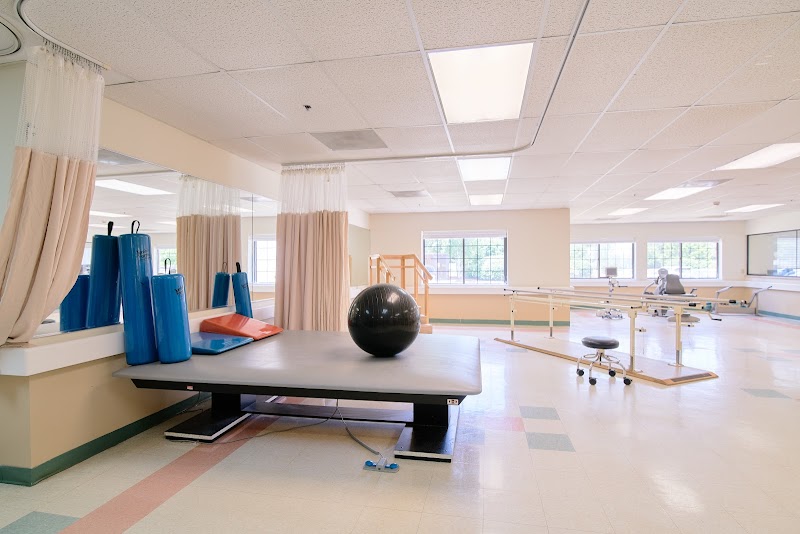
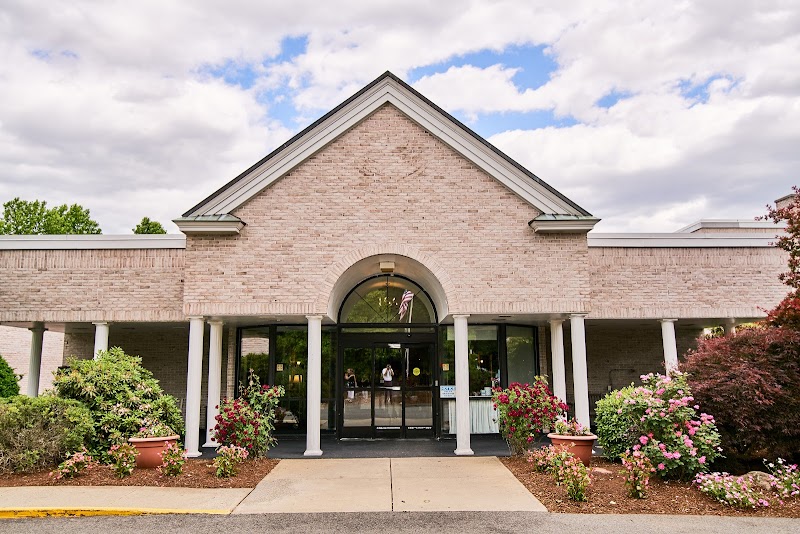
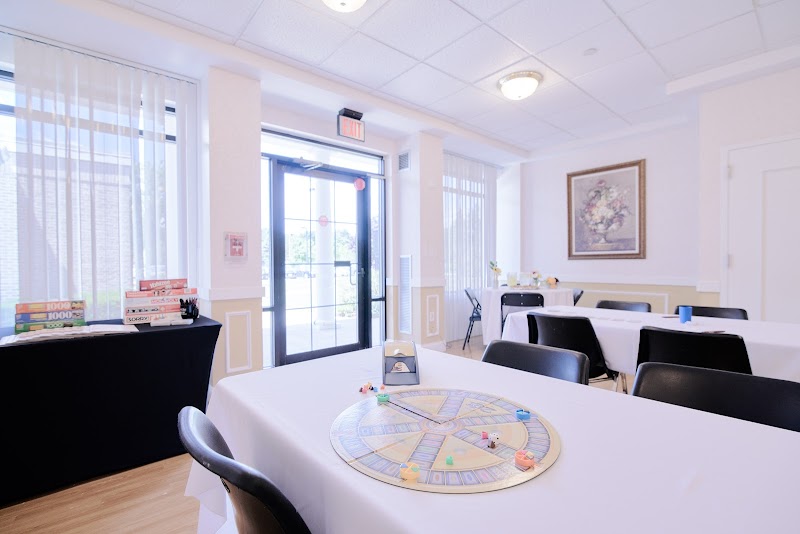
CARE ONE AT REDSTONE

135 BENTON DRIVE, EAST LONGMEADOW, MA 01028 (413) 525-3336
For profit - Limited Liability company 254 Beds CAREONE Data: November 2025
Trust Grade
35/100
#144 of 338 in MA
Last Inspection: August 2025

Inspected within the last 6 months. Data reflects current conditions.

Overview

Care One at Redstone in East Longmeadow, Massachusetts, has received a Trust Grade of F, which indicates significant concerns about the quality of care provided. Ranking #144 out of 338 facilities in the state places them in the top half, while their county rank of #11 out of 25 suggests they have some local competition. The facility is improving, reducing issues from 15 in 2024 to 12 in 2025, but still has a concerning history with 49 total deficiencies, including serious incidents where staff failed to monitor critical lab values and address significant weight loss for residents. Staffing levels are average, with a turnover rate of 39%, which aligns with the state average, and RN coverage is also average. However, the facility has accumulated $66,660 in fines, indicating some compliance issues that families may want to consider.

Trust Score
F
35/100
In Massachusetts
#144/338
Top 42%
Safety Record
High Risk
Review needed
Inspections
Getting Better
15 → 12 violations
Staff Stability
○ Average
39% turnover. Near Massachusetts's 48% average. Typical for the industry.
Penalties
✓ Good
$66,660 in fines. Lower than most Massachusetts facilities. Relatively clean record.
Skilled Nurses
○ Average
Each resident gets 33 minutes of Registered Nurse (RN) attention daily — about average for Massachusetts. RNs are the most trained staff who monitor for health changes.
Violations
⚠ Watch
49 deficiencies on record. Higher than average. Multiple issues found across inspections.
★★★☆☆
3.0
Overall Rating
★★★☆☆
3.0
Staff Levels
★★★★☆
4.0
Care Quality
★★★☆☆
3.0
Inspection Score
Stable
2024: 15 issues
2025: 12 issues

The Good

  • 4-Star Quality Measures · Strong clinical quality outcomes
  • Full Sprinkler Coverage · Fire safety systems throughout facility
  • No fines on record
  • Staff turnover below average (39%)

    9 points below Massachusetts average of 48%

Facility shows strength in quality measures, fire safety.

The Bad

3-Star Overall Rating

Near Massachusetts average (2.9)

Meets federal standards, typical of most facilities

Staff Turnover: 39%

Near Massachusetts avg (46%)

Typical for the industry

Federal Fines: $66,660

Above median ($33,413)

Moderate penalties - review what triggered them

Chain: CAREONE

Part of a multi-facility chain

Ask about local staffing decisions and management

The Ugly 49 deficiencies on record

3 actual harm
Aug 2025 7 deficiencies
CONCERN (D)

Potential for Harm - no one hurt, but risky conditions existed

Deficiency F0604 (Tag F0604)

Could have caused harm · This affected 1 resident

Based on observations, record reviews, and interviews, the facility failed to ensure one Resident (#157), out of total sample of 33 residents, was free from the use of physical restraints. Specificall...

Read full inspector narrative →
Based on observations, record reviews, and interviews, the facility failed to ensure one Resident (#157), out of total sample of 33 residents, was free from the use of physical restraints. Specifically, the facility failed to ensure Resident #157's Velcro self-releasing seatbelt was released during supervised activities and failed to evaluate Resident #157's ability to self-release the Velcro seatbelt every shift, restricting his/her ability to move freely when the Resident had a history of attempting to stand up from a seated position. Findings include:Review of the facility's policy titled Use of Restraints, revised April 2017, indicated the following: -Restraints should only be used for the safety and well-being of the resident(s) and only after other alternatives have been tried successfully. -Restraints shall only be used to treat the resident's medical symptom(s) and never for discipline or staff convenience, or for the prevention of falls. -When the use of restraints is indicated, the least restrictive alternative will be used for the least amount of time necessary, and the ongoing re-evaluation for the need for restraints will be documented. - Physical Restraints are defined as any manual method or physical or mechanical device, material or equipment attached or adjacent to the resident's body that the individual cannot remove easily, which restricts freedom of movement or restricts normal access to one's body. -Care plans shall also include the measures taken to systemically reduce or eliminate the need for restraint use. Resident #157 was admitted to the facility in February 2025 with diagnoses that included metabolic encephalopathy, repeated falls, and unspecified dementia. Review of the Care Plan for the use of a Velcro alarming seatbelt, initiated on 2/25/25, indicated the following: -Resident #157 had impulsivity, motor restlessness, impaired cognition, poor safety awareness, poor spatial awareness, weakness and unsteady gait. -Restraint Release: FYI- with supervised activities, meals and on rounds, initiated 2/25/25. Review of the active Physician's Orders, initiated 4/23/25, indicated the following: -Velcro alarming seatbelt- prompt for ability to release seatbelt on command. (ensure they document ability in nurse's notes) every shift. Review of the Minimum Data Set (MDS) Assessment, dated 5/12/25, indicated the following for Resident #157: -Brief Interview for Mental Status (BIMS) score of 5 out 15 indicating a severe cognitive impairment. -used a manual wheelchair for mobility. -a history of two or more falls since admission. -does not utilize a restraint. Review of the Nursing Progress notes from 2/23/25 through 8/15/25, did not show evidence of every shift documentation regarding Resident #157's ability to self-release the Velcro Alarmed seatbelt. During a continuous observation on 8/15/25 at 8:04 A.M.- 8:32 A.M., Resident #157 was assisted into the supervised dining room and positioned at a dining room table and remained seated in the wheelchair with the Velcro Seatbelt secured around his/her waist. A breakfast tray was delivered to the Resident and the Velcro seatbelt remained secured at Resident #157's waist throughout the entire breakfast meal while a staff member was supervising the dining room. During a continuous observation on 8/15/25 at 1:46 P.M. - 2:16 P.M., Resident #157 was sitting in a wheelchair with a Velcro Seatbelt secured around his/her waist in the activities room while being supervised by two activities staff members and one Certified Nursing Assistant (CNA). Resident #157 did not attempt to self-rise and did not display any signs of agitation or impulsivity but was smiling and happy while speaking nonsensically to another Resident. Two activity staff members were performing manicures and hand massages to the residents sitting on each side of Resident #157. The Velcro seatbelt remained secured around Resident #157's waist during the supervised activity. During an observation on 8/15/25 at 2:16 P.M., Resident #157 was removed from the activity and brought to the nurse's station where maintenance staff were performing maintenance on the alarmed seatbelt. The seatbelt remained secured at this time. During an interview on 8/19/25 at 12:12 P.M with Unit Manager (UM) #5 and the Director of Nurses (DON)., UM #5 said Resident #157 used a Velcro Alarmed seatbelt due to multiple falls in the facility, agitation, and impulsivity. The DON said that the facility should assess any potential restraint quarterly and that a quarterly restraint assessment should have been completed according to the MDS scheduled for 8/6/25, but that did not happen. The DON said that if the Resident was in a supervised activity or at a supervised meal, then the restraint should have been removed if the Resident was not having impulsive behaviors. The DON further said that nurses should have been documenting Resident #157's ability to self-release the Velcro Seatbelt in the nursing progress notes every shift but could not show evidence this occurred. During an interview on 8/19/25 at 1:35 P.M., the DON said that Resident #157's mental status varied daily and his/her ability to self-release the seat belt was inconsistent, therefore the Self-releasing Velcro Alarmed seatbelt should have been considered a restraint.
CONCERN (D)

Potential for Harm - no one hurt, but risky conditions existed

Deficiency F0658 (Tag F0658)

Could have caused harm · This affected 1 resident

Based on interview and record review, the facility failed to provide nursing services consistent with professional standards of practice for two Residents (#175 and #4) out of a total sample of 33 res...

Read full inspector narrative →
Based on interview and record review, the facility failed to provide nursing services consistent with professional standards of practice for two Residents (#175 and #4) out of a total sample of 33 residents. Specifically, for Resident #175 and Resident #4, the facility failed to reorder the Residents' medications resulting in the facility staff borrowing other Residents' medications to administer the prescribed dosages. Findings include: Review of the facility's policy titled Medication Ordering and Receiving from Pharmacy, revised January 2018, indicated: -Medications and related products are received from the dispensing pharmacy on a timely basis. The facility maintains accurate records of medication order and receipt. - If not automatically refilled by the pharmacy, repeat medications (refills) are written on a medication order form, by placing a re-order portion of the prescription label in the appropriate area on the order form provided by the pharmacy for that purpose. - The nurse who re-orders the medication is responsible for notifying the pharmacy of changes in directions for use or previous labeling errors. - The re-order is called in, faxed, sent electronically or otherwise transmitted to the pharmacy. - Delivery records are retained for one (1) year. Review of the facility's policy titled Pharmacy Services Overview, dated 2001, indicated: -Residents have sufficient supply of their prescribed medications and receive medications (routine, emergency or as needed) in a timely manner. - Medications are received, labeled, stored, administered and disposed of according to all applicable state and federal laws and consistent with standards of practice. - Pharmacy services are available to residents 24 hours a day, seven days a week. - Nursing staff communicate prescriber orders to the pharmacy and are responsible for contacting the pharmacy if a resident's medication is not available for administration. - Borrowing medications from other residents or from the emergency medication supply because of a failure to order or reorder a medication in time for a resident to receive scheduled medication is not acceptable practice. 1. Resident #175 was admitted to the facility in June 2025 with diagnoses including Adrenocortical Insufficiency (a condition where the hormones do not produce enough cortisol leading to symptoms of fatigue and muscle weakness). Review of Resident #175's August 2025 Physician's Order indicated: - Prednisone Tablet 5 milligram (mg), give 1.5 tablet by mouth one time a day for Adrenocortical Insufficiency total dose=7.5mg. Start date 6/4/25. Review of Resident #175's August 2025 Medication Administration Record (MAR) indicated: -Prednisone 7.5 mg had been administered from 8/1/25 to 8/14/25. On 8/15/25 at 8:41 A.M., the surveyor observed Nurse #1 prepare to administer medications to Resident #175. The surveyor did not observe Nurse #1 administer Prednisone 7.5 mg as ordered by the Physician. During an interview immediately following the observation, Nurse #1 said Resident #175's Prednisone 7.5 mg was not available from the medication cart or the Omnicell (back-up automating and managing medication and supply dispensing in healthcare settings) to be administered as ordered by the physician. Nurse #1 said that it appeared someone attempted to reorder the Prednisone 7.5 mg medication but did not follow through, so the re-order was not transmitted to the pharmacy on 8/5/25. 2. Resident #4 was admitted to the facility in July 2025 with diagnoses including restless leg syndrome. Review of Resident #4's Physician's Orders for August 2025 included but was not limited to: - Ropinirole HCl Oral Tablet 0.5 MG (Ropinirole Hydrochloride) Give 1 tablet by mouth two times a day for restless leg syndrome. Start date 7/9/25. Review of Resident #4's August 2025 MAR indicated: - Ropinirole 0.5 mg by mouth twice a day medication had been administered 22 times from 8/1/25 to 8/15/25. - Ropinirole 0.5 mg by mouth twice a day medication had been documented as not available six times from 8/1/25 to 8/15/25. - Ropinirole 0.5 mg by mouth twice a day medication had been documented as not applicable one time from 8/1/25 to 8/15/25. On 8/15/25 at 9:00 A.M., the surveyor observed Nurse #1 prepare to administer medications to Resident #4. The surveyor did not observe Nurse #1 administer Ropinirole 0.5 mg as ordered by the Physician. During an interview immediately following the observation, Nurse #1 said Resident #4's Ropinirole 0.5 mg medication was not available to be administered. The Resident had run out of the Ropinirole 0.5 mg medication, and the medication was not available in the Omnicell. Nurse #1 said there was no indication that the Ropinirole 0.5 mg medication had been re-ordered. During an interview on 8/15/25 at 9:05 A.M., Unit Manager (UM) #1 said she had no record of Resident #4's Ropinirole medication or Resident #175's Prednisone 7.5 mg medication being ordered and or received from the pharmacy. During an interview on 8/15/25 at 10:15 A.M., the Director of Nursing (DON) said a 10-day supply of the Prednisone medication was last delivered from the pharmacy on 7/28/25 and would have been completed on 8/7/25. There was no evidence that the Prednisone medication was reordered after 8/7/25. The DON further said she was not aware that Resident #175 and Resident #4 had run out of their medications. During an interview on 8/15/25 at 10:51 A.M., the Pharmacy Consultant said the Prednisone 7.5 mg medication was last ordered by the facility on 7/28/25 for a 10-day supply. The Pharmacy Consultant said the Ropinirole 0.5 mg medication was last ordered on 7/18/25 by the facility and a 10-day supply was delivered. The Pharmacy Consultant further said the facility had not re-ordered the Ropinirole 0.5 mg medication since it was last delivered on 7/18/25 and the Prednisone 7.5 mg since it was last delivered on 7/28/25. During an interview on 8/15/25 at 1:58 P.M., Nurse #1 said she had borrowed the Prednisone and Ropinirole medications from other residents and administered the medications. Nurse #1 said she had not reordered the medications. Nurse #1 said she was a float Nurse and would fill in when the regular nurses were off. Nurse #1 further said she should not have borrowed medications, but she did. During an interview on 8/19/25 at 7:52 A.M., Nurse #3 said she worked as a regular nurse on the unit. Nurse #3 said whenever the residents were out of medications she would borrow from other residents. Nurse #3 further said she knew it was not an acceptable practice to borrow medications from other residents, but she did.
CONCERN (D)

Potential for Harm - no one hurt, but risky conditions existed

Deficiency F0687 (Tag F0687)

Could have caused harm · This affected 1 resident

Based on observation, interview, and record review, the facility failed to ensure that one Resident (#14) received proper treatment and care to maintain mobility and good foot health, out of a total s...

Read full inspector narrative →
Based on observation, interview, and record review, the facility failed to ensure that one Resident (#14) received proper treatment and care to maintain mobility and good foot health, out of a total sample of 33 residents. Specifically, the facility failed to ensure Resident #14 received timely foot care and treatment in order to prevent potential and actual complications when Resident #14 was identified as being high risk due to a diagnosis of Diabetes, having elongated toenails that were affecting his/her balance and mobility, experiencing discomfort during physical therapy treatments, and received toenail care on 8/15/25, 73 days after the initial identification of need on 6/3/25.Findings include:Review of the facility's policy titled Nursing Care of the Older Adult with Diabetes, revised November 2020, indicated the following:-Complications associated with Diabetes can be attributed to: (1) uncontrolled hyperglycemia and subsequent damage to vasculature; over treatment of diabetes resulting in hypoglycemia; or (3) common co-morbidities of diabetes.-Hyperglycemia and vascular damage can lead to.<Foot complications- neuropathy, dry skin, calluses, poor circulation, ulcers;<Skin problems- fungal/bacterial infections, itching, diabetic dermopathy.-Skin and Foot Care:<Toenails should only be trimmed by personnel qualified to do so (this can be regular associates, and does not have to be a podiatrist). Resident #14 was admitted to the facility in May 2025 with diagnoses including Vascular Dementia with Agitation and Diabetes Mellitus Type II. Review of the Minimum Data Set (MDS) Assessment, dated 5/28/25, indicated the following relative to Resident #14:-he/she was moderately cognitively impaired as evidenced by Brief Interview for Mental Status (BIMS) score of 8 out of a possible 15.-rejected care 1-3 days out of the last 7.-fell in the past month prior to facility admission.-was at risk for developing pressure ulcers/injuries. -did not have dressing or medications to feet. Review of the comprehensive plan of care for Activities of Daily Living (ADLs), last revised 8/7/25, indicated the Resident was at risk for self-care deficits related to physical limitations, incontinence, cognitive loss, and decreased communication. The plan of care included the following:-Goal: Resident to be clean, dressed, and well-groomed daily to promote dignity and psychosocial well-being.-Intervention for Physical Therapy and treatment.-Interventions:>provide assist of one staff with transfers to/from toilit (sic)>Setup to assist of 1 with daily hygiene, grooming, dressing, oral care, and eating.>Supervised to assist of one staff with bed mobility, transfers, and ambulation using front wheeled walker. During a telephone interview on 8/14/25 at 1:37 P.M., Resident Representative (RR) #1 said Resident #14's toenails were very bad, affected the Resident's balance, and that this concern had been discussed with the facility staff previously. RR #1 said he/she had been in touch with the facility and understood that the facility was attempting to get the Resident seen by a Podiatrist, but he/she was unsure of when the next visit would be. During an interview on 8/15/25 at 9:57 A.M., Nurse #6 said Resident #14 was new to her unit, needed to be seen by the Podiatrist, and she was unsure if the Resident was on the list to be seen. During an interview and observation on 8/15/25 at 10:08 A.M., the Surveyor and Nurse #6 observed Resident #14's feet and toenails. All ten toenails were observed to be hard, thick, elongated, yellow, and discolored with ridges. The large toe toenails on both feet were observed to be 2 inches in length beyond the skin, textured, curling at the tips, and overlapping onto the next toenail. Resident #14 verbalized ow when the Nurse manipulated the right great toe to for examination. Resident #14 said that he/she wanted to see the Podiatrist and have his/her toenails cut. Nurse #6 said the Resident's toenails had been elongated like this since the Resident transferred to the unit. Review of the Physical Therapy Treatment Encounter Note, dated 6/3/25, indicated but was not limited to the following:-Care plan meeting was held with the Resident, Therapy staff, Unit Manager, Case manager, Healthcare Proxy (HCP), and RR #1.-Education was provided regarding concerns of the lengths of the Resident's toenails which affected his/her ability to utilize toe muscles effectively.-Resident was a high risk for falls. Review of the Case Management Note, dated 6/3/25, indicated but was not limited to the following:-Physical Therapist reported the Resident's toenails were too long and were affecting his/her ability to walk and his/her balance.-Resident agreed to all services available. Review of Resident #14's medical record indicated a Request for Service form with consent for Podiatry services was signed by the Resident's Representative on 6/26/25. During an interview on 8/15/25 at 11:52 A.M., the Medical Record Staff said the last Podiatry visit occurred on 6/7/25 and Resident #14 had not been seen because a consent had not been signed or submitted until 6/26/25. During an interview on 8/15/25 at 12:59 P.M., the Medical Record staff said the facility was between contracted Podiatrists and that another date and provider had not yet been scheduled since the last visit on 6/7/25. Review of the Physical Therapy Encounter Note, dated 8/9/25, indicated:-The Resident was unable to complete the session due to reports of toenail pain.-The Resident stated that he/she needed the toenails to be cut.-A message was left for request to have the Resident seen by Podiatry on the Unit Manager's phone. During an interview on 8/15/25 at 2:21 P.M., the Director of Nursing (DON) said that she observed and evaluated Resident #14's toenails and determined that they needed to be trimmed urgently. She said she had the facility Nurse Practitioner (NP) and the Medical Doctor (MD) trim Resident #14's toenails today. The DON said she had been aware there had been concerns in obtaining Podiatry services for Resident #14 in the past. The DON further said she was not aware of how severe Resident #14's toenails were until she evaluated them today. Review of Resident #14's Progress Note by Nurse Practitioner (NP), dated 8/15/25, indicated:-Resident had bilateral (on both sides) foot pain caused by extremely large thick fungal nails.-Nails were cut with the MD present.-Great care taken since the Resident was diabetic.-The Resident's toes had very large, thick curling toenails bilateral. During an interview on 8/19/25 at 10:03 A.M., Unit Manager (UM) #2 said when a resident transferred to the Unit, she reviews if the resident or their representative would want to access services like Podiatry and she would complete the Request for Service form and send to the Podiatrist group. UM #2 said if a resident needed services like Podiatry outside of the services group scheduled visits, the facility would make arrangements with an outside services and the resident's family, and if those were not options, she would coordinate with the DON. UM #2 said she recalled having Resident #14's representative HCP sign the Request for Services form, and that she faxed the completed form on 6/26/25 to the Podiatry service group. UM #2 said that she was not aware of how severe Resident #14's toenails were until 8/15/25. UM #2 said residents with diabetes were considered high risk and a Podiatrist or medical professional needed to trim their toenails. During an interview on 8/19/25 at approximately 11:00 A.M., UM #3 said Resident #14 was initially admitted to the facility for short-term rehabilitation services on the Unit she managed and transitioned to long term care placement where the Resident resided currently. UM #3 said she participated in the care plan meeting on 6/3/25 and spoke with the Resident to provide education on the risk of infection, pain, and how toenails could affect his/her ambulation during the meeting. UM #3 said when she approached the Resident after providing the education, and the Resident still declined to consent to Podiatry services. UM #3 said Resident #14's Representative was invoked later on 6/17/25 and then the Resident transferred to another unit for long term care placement. UM #3 said she did not recall contacting the medical provider to review alternative options when the Resident declined Podiatry services after she approached the Resident on 6/3/25. During a telephone interview on 8/19/25 at 1:16 P.M., the NP said Resident #14's toenails were extremely long and thick, one was curled around the toe itself and the toenails were in very poor condition and difficult to remove. The NP said if Resident #14's nails had not been addressed, the Resident would be at risk for additional complications. The NP said that when a resident has an urgent need for podiatry services, the facility would make outside arrangements to meet the resident needs. Further review of the medical record indicated Resident #14 was identified as needing specialized foot care services on 6/3/25 and did not receive foot care services for toenail trimming until 8/15/25, 73 days after the initial identification of need.
CONCERN (D)

Potential for Harm - no one hurt, but risky conditions existed

Incontinence Care (Tag F0690)

Could have caused harm · This affected 1 resident

Based on observation, record review, and interview, the facility failed to provide appropriate treatment and services related to an indwelling urinary catheter (a thin, flexible tube inserted into the...

Read full inspector narrative →
Based on observation, record review, and interview, the facility failed to provide appropriate treatment and services related to an indwelling urinary catheter (a thin, flexible tube inserted into the bladder to drain urine outside the body) for three Residents (#1, #2 and #3), out of a total sample of 33 residents. Specifically, the facility failed: 1. For Residents #1 and #3, to ensure staff followed the Physician's orders relative to the Foley (type of indwelling urinary catheter) catheter size, increasing the Resident's risk for indwelling urinary catheter complications; and 2. For Resident #2, to ensure the Resident's Foley catheter was secured with a securement device to reduce friction and movement at the insertion site. Findings include: Review of the facility's policy titled Catheter Care, Urinary, dated 2001, indicated: -Purpose is to prevent urinary catheter-associated complications including urinary tract infections. - Review the resident’s care plan to assess any special needs of the resident. - Ensure the catheter remains secured with a securement device to reduce friction and movement at the insertion site. - Review and document the clinical indications for catheter use prior to inserting. 1A. Resident #1 was admitted to the facility in August 2025 with diagnoses of Chronic Kidney Disease, Chronic Respiratory Failure with Hypoxia, and Infection and Inflammatory reaction due to Indwelling Urethral Catheter. Review of the Minimum Data Set (MDS) Assessment, dated 8/17/25, indicated that Resident #1: - Was cognitively intact as evidenced by a Brief Interview for Mental Status (BIMS) score of 15 out of 15; - Had an indwelling urinary catheter; and - Needed assistance for activities of daily living (ADLs- basic skills such as bathing, dressing, eating, etc.). Review of Resident #1’s August 2025 Physician’s Orders indicated: -Foley catheter, every night shift, every Saturday, Change the catheter secure tube holder - as needed for breakage/soilage Change the Foley catheter bag 18 French (Fr) (unit measurement used to indicate the diameter of the catheter) 10 milliliters (ml) - as needed Flush the Foley catheter with 10 ml Sterile Saline - every shift, provide Foley catheter care - every shift Document urinary Output - as needed for blockage/leakage change Urinary catheter with French size:18 Fr Balloon size: 10 ccs (cubic centimeters). Start date 8/11/25. On 8/18/25 at 8:58 A.M., Unit Manager (UM) #1 observed Resident #1’s Foley catheter with the surveyor. UM #1 said Resident #1’s Foley catheter size was 16 Fr with 10 cc’s balloon. UM #1 reviewed Resident #1’s Physician’s order with surveyor as said the Resident had the wrong Foley catheter size. UM #1 said Resident #1’s Foley catheter size should have been 18 Fr and not 16 Fr. B. Resident #3 was admitted to the facility in April 2025 with diagnoses of Sepsis, Heart Failure, Difficulty Walking, Urinary Tract Infection, and Bladder Neck Obstruction. Review of the MDS Assessment, dated 7/10/25, indicated that Resident #3: - Was cognitively intact as evidenced by a BIMS score of 14 out of 15. - Had an indwelling urinary catheter. Review of Resident #3’s August 2025 Physician's Orders indicated: -Foley catheter as needed for blockage/leakage change Urinary catheter with French size:18 FR and Balloon size:10cc - Start Date 04/15/2025. - Foley catheter every night shift, every Saturday, Change the catheter secure tube holder - as needed for breakage/soilage Change the Foley catheter bag - every 8 hours as needed Flush the Foley catheter with 10 cc Sterile Saline - every shift provide Foley catheter care - every shift Document urinary Output - as needed for blockage/leakage change Urinary catheter with French size: 18 Fr and Balloon size: 10cc - Change Foley catheter on 5/16/25 and every 4 weeks. Order start date 05/15/25 On 8/15/25 at 8:09 A.M., Nurse #2 observed Resident #3’s Foley catheter with the surveyor. Nurse #2 said Resident #3’s Foley catheter size was 16 Fr with 10 cc’s balloon. Nurse #2 said Resident #3’s physician's order indicated the Resident’s catheter size should be 18 Fr and 10 cc’s balloon, and that the Resident did not have the right size as ordered by the Physician. During an interview on 8/15/25 at 8:15 A.M., UM #1 reviewed Resident #3’s physician’s order with surveyor and said the Resident had the wrong Foley catheter size. UM #1 said Resident #3’s Foley catheter size should have been 18 Fr and not 16 Fr. 2. Resident #2 was admitted to the facility in October 2024 with a diagnosis of retention of urine. Resident #2’s MDS Assessment, dated 8/4/25, indicated the following: -the Resident was cognitively intact as evidenced by a BIMS score of 15 out of a possible score of 15. -the Resident used an indwelling urinary catheter Review of Resident #2’s August 2025 Physician's Orders indicated: -an active order dated 7/30/25 for Foley Catheter: change the catheter secure tube holder every night shift on Saturday During an interview on 8/19/25 at 9:37 A.M., the surveyor observed Resident #2 lying in bed with catheter tubing and lower ¾ of the thigh exposed. There were no catheter securement devices observed in place. The Resident stated he/she had never had a device that secured the catheter tubing in place. On 8/20/25 at 8:10 A.M., UM #2 and the surveyor observed Resident #2’s indwelling urinary catheter together. No securement device was observed to be in place on the indwelling urinary catheter. During an interview on 8/20/25 at 8:13 A.M., UM #2 said that there was not a securement device in place on Resident #2 but that she would apply one. UM #2 further said that she believed the Resident had a history of removing the device and would look for evidence of this. At the time of survey exit, no additional information was provided to the survey team.
CONCERN (D)

Potential for Harm - no one hurt, but risky conditions existed

Deficiency F0800 (Tag F0800)

Could have caused harm · This affected 1 resident

Based on observation, interview, and record review, the facility failed to ensure that one Resident (#95), out of a total sample of 33 residents, had the ability to make choices about their daily pref...

Read full inspector narrative →
Based on observation, interview, and record review, the facility failed to ensure that one Resident (#95), out of a total sample of 33 residents, had the ability to make choices about their daily preferences. Specifically, for Resident #95, the facility failed to ensure the Resident's preference to receive a peanut butter and jelly sandwich for dinner was honored. Findings include:Review of the Resident's Right Policy and Procedure, dated February 2021, indicated that federal and state law guarantee certain basic rights to all residents of this facility. These rights include the resident's right to: -self-determination. -be informed of, and participate in, his or her care planning and treatment. Resident #95 was admitted to the facility in April 2024 with diagnoses that included Glaucoma and Gastric Esophageal Reflux Disease (GERD). Review of the Minimum Data Set (MDS) Assessment, dated 7/3/25, indicated Resident #95: -was moderately cognitively impaired as evidenced by a Brief Interview for Mental Status (BIMS) score of 11 out of 15. -was able to make him/herself understood -was able to understand others -required set-up assistance from staff for eating. Review of the Dietary slip for Resident #157 indicated he/she had a preference to receive a peanut butter and jelly sandwich with every dinner meal. During an interview on 8/14/25 at 10:41 A.M., Resident #95 said he/she had spoken with the dietitian a few months prior and requested to receive a peanut butter and jelly sandwich with the dinner meal. Resident #95 said that he/she cannot eat a regular dinner meal because it upsets his/her stomach. Resident #95 said the peanut butter and jelly sandwich only comes on the dinner tray once or twice a week and when it does not come on the tray, he/she does not eat. Resident #95 said he/she does not like to bother staff for the sandwich, since the request has already been made for it to arrive on the dinner tray. During an interview on 8/15/25 at 7:45 A.M., Resident #95 said that a peanut butter and jelly sandwich did not come on the dinner tray on 8/14/25, and as a result he/she did not eat dinner. Resident #95 said he/she did not request a sandwich on 8/14/25 and wanted to avoid asking for items repetitively and has asked several times for a peanut butter and jelly sandwich to arrive on the dinner tray. During an interview on 8/15/25 at 11:24 A.M., the Dietitian said that she meets with the residents regarding food preferences/dislikes and passes that information onto the dietary team. The Dietitian showed the surveyor Resident #95's dietary slip that included a preference for him/her to receive a peanut butter and jelly sandwich with dinner. During an interview on 8/15/25 at 11:26 A.M., the Food Service Director (FSD) said that if a resident has food preferences listed on the dietary slip, those preferences should be honored. The FSD said that dietary staff are supposed to refer to the dietary slip when preparing meal trays and Resident #95 should have been receiving a peanut butter and jelly sandwich on every dinner tray. During an interview on 8/15/25 at 11:28 A.M., the Dietitian said it would be important for Resident #95 to receive a peanut butter and jelly sandwich for dinner to avoid nutritional complications such as weight loss and malnutrition. The Dietitian said that Resident #95 was continuously monitored for weight loss and should have been receiving the sandwich as requested. During an interview on 8/15/25 at 1:36 P.M., with the Dietitian and Resident #95, the Resident told the Dietitian that he/she has not been receiving the peanut butter and jelly sandwich and does not eat dinner if it does not come on the tray because he/she cannot eat a heavy meal at dinner. The Dietitian informed Resident #95 that he/she should have been receiving the sandwich as requested.
CONCERN (D)

Potential for Harm - no one hurt, but risky conditions existed

Infection Control (Tag F0880)

Could have caused harm · This affected 1 resident

**NOTE- TERMS IN BRACKETS HAVE BEEN EDITED TO PROTECT CONFIDENTIALITY** Based on observations, interviews, and records reviewed, the facility failed to maintain infection control practices to provide ...

Read full inspector narrative →
**NOTE- TERMS IN BRACKETS HAVE BEEN EDITED TO PROTECT CONFIDENTIALITY** Based on observations, interviews, and records reviewed, the facility failed to maintain infection control practices to provide a safe, sanitary, and comfortable environment and to prevent the potential spread of infection on two Units ([NAME] and [NAME]), out of five Units observed. Specifically, on the [NAME] Unit, the facility failed to ensure:1. Staff wore appropriate personal protective equipment (PPE) when providing incontinence care to a resident who was on contact precautions; [NAME] the [NAME] Unit, the facility failed to ensure:2. Contaminated gloves were disposed of properly and appropriate hand hygiene was performed after removal of contaminated gloves, increasing the potential spread of healthcare-associated infections.Findings include: Review of the facility's policy titled Isolation- Categories of Transmission Based Precautions, last revised September 2022, indicated the following: -Transmission-based precautions are initiated when a resident develops signs and symptoms of a transmissible infection, arrives for admission with symptoms of an infection; or has laboratory confirmed infection; and is at risk for transmitting the infection to other residents. - Contact Precautions: < Contact precautions are implemented for residents known or suspected to be infected with microorganisms that can be transmitted by direct contact with the resident or indirect contact with environmental surfaces or resident-care items in the resident’s environment. < Contact precautions are also used in situations when a resident is experiencing…incontinence or diarrhea…that cannot be contained and suggest an increased potential for extensive environmental contamination… < Staff and visitors wear gloves (clean, non-sterile) when entering the room… < Staff and visitors wear a disposable gown upon entering the room and remove gown before leaving the room… Review of the Handwashing/Hand Hygiene policy, revised October 2023, indicated the following:-This facility considers hand hygiene the primary means to prevent the spread of healthcare-associated infections. -All personnel are expected to adhere to hand hygiene policies and practices to help prevent the spread of infections to other personnel, residents, and visitors. -Hand hygiene products and supplies are readily accessible and convenient for staff use to encourage compliance with hand hygiene. -Residents, family members and/or visitors are encouraged to practice good hand hygiene. -Hand hygiene is indicated: >Immediately after glove removal -The use of gloves does not replace hand washing/hand hygiene. 1. Resident #33 was admitted to the facility in August 2022 with a diagnosis of Enterocolitis due to Clostridium difficile (C-diff). Review of Resident #33’s August 2025 Physician’s Orders indicated the following: -Maintain contact precautions for C-diff, every shift; initiated 7/16/25. On 8/14/25 at 9:23 A.M., the surveyor observed signage outside of Resident #33’s room indicating contact precautions and instructions for staff on handwashing, and PPE use of gown and gloves. The surveyor observed Unit Manager (UM) #2 providing the Resident with incontinence care at the bedside. UM #2 was wearing gloves only and was not observed wearing a gown. UM #2 exited the room at 9:31 A.M. and was not observed removing a gown. During an interview on 8/14/25 at 9:31 A.M., UM #2 said Resident #33 was on contact precautions due to active C-diff infection. UM #2 said that she provided Resident #33 with incontinence care and that she should have been wearing a gown and had not been. She said that contact precautions are important to prevent the spread of infection to others. During an interview on 8/20/25 at 8:56 A.M., the Infection Control Nurse (ICN) said that the expectation for staff when caring for residents on contact precautions is that staff don gowns and gloves prior to entering the room and remove gowns and gloves prior to exiting the room. The ICN said that signage outside of resident rooms will indicate which PPE staff should use. The ICN further said staff should preform hand hygiene prior to donning gloves at any time. 2. On 8/15/25 at 8:52 A.M., the surveyor observed Hospice Staff Member #1, walk out of a resident room, into the hallway wearing gloves on both hands and holding three plastic bags of soiled material. Hospice Staff Member #1 entered the soiled utility room and disposed of the three plastic bags, while holding the door open with her foot and remaining visible to the surveyor. Hospice Staff Member #1 removed her gloves and put the dirty gloves in her shirt pocket; they fell out of the pocket and Hospice Staff Member #1 picked the gloves off the floor and put the dirty gloves back into her shirt pocket before re-entering the same resident room. During an interview on 8/15/25 at 9:01 A.M., Hospice Staff Member #1 said that when she disposed of the bags holding soiled linen and briefs, she should have removed her gloves, thrown them in the trash and washed her hands right away but did not. Hospice Staff Member #1 said she had turned the dirty gloves inside out and put them into her pocket and did not sanitize her hands but should have. Hospice Staff Member #1 said she should have thrown the gloves into a trash can and sanitized her hands to reduce the chances of cross contamination to a resident. During an interview on 8/15/25 at 9:11 A.M., UM #5 said staff should not be wearing dirty gloves in the hallway and that Hospice Staff Member #1 should have disposed of the gloves properly then washed her hands. During an interview on 8/15/25 at 12:03 P.M., the Director of Nursing (DON) said it is the facility’s responsibility to educate outside providers on facility infection control policies, such as hospice agencies before they provide care in the building, but this did not happen. The DON said that Hospice Staff Member #1 should have disposed of the dirty gloves into a trash can and should have performed hand hygiene right away.
MINOR (B)

Minor Issue - procedural, no safety impact

Safe Environment (Tag F0584)

Minor procedural issue · This affected multiple residents

Based on observations, interview, and record review, the facility failed to maintain a homelike environment for one Resident (#15), out of a total sample of 33 residents. Specifically, the facility fa...

Read full inspector narrative →
Based on observations, interview, and record review, the facility failed to maintain a homelike environment for one Resident (#15), out of a total sample of 33 residents. Specifically, the facility failed to ensure timely repair of a cracked second floor bedroom window for Resident #15 when it had been reported to the facility 84 days prior.Findings include:Review of the facility's policy titled Homelike Environment, revised February 2021, indicated the following:-Residents are provided with a safe, clean, comfortable, and homelike environment.-The facility staff and management maximizes, to the extent possible, the characteristics of the facility that reflect a personalized, homelike setting.Resident #15 was admitted to the facility in August 2024 with diagnoses including Non-Alzheimer's Dementia, Depression, and Post-Traumatic Stress Disorder (PTSD). During a telephone interview on 8/14/25 at 4:16 P.M., Resident Representative (RR) #2 said that Resident #15 had a large crack in their bedroom window on the second floor. RR #2 further said he/she had asked the facility staff in prior care plan meetings to repair the window and had been told a window needed to be ordered, but he/she was unsure if this occurred and the window remained cracked.During an interview on 8/14/25 at 4:36 P.M., the Administrator said she was aware of a cracked window for Resident #15 and that maintenance was in the process of replacing the window. On 8/14/25 at 4:40 P.M., the surveyor observed Resident #15's room which included a large crack in the lower half of the window across four windowpanes.During an interview on 8/14/25 at 4:56 P.M., Nurse #5 said she was not aware of a cracked window in Resident #15's room. The Nurse said any maintenance requests were put in the book on the unit, and the Nurse demonstrated where and how the request book was kept. Further review of the unit Maintenance Request book did not provide evidence of maintenance requests made for Resident #15's room.Review of Resident #15's Care Conference Note, dated 5/27/25, indicated the following attendees: -Social Services,-Nursing,-Recreation, and- RR #2 via telephone call. During an interview on 8/15/25 at 1:35 P.M. Social Worker (SW) #1 said that she participated in Resident #15's care plan meeting on 5/27/25 and recalled that RR #2 had voiced a concern about the Resident's cracked window. SW #1 said that she notified the administrative team about the Resident's window on 5/27/25 during the afternoon wrap-up meeting.During an interview on 8/15/25 at 12:23 P.M. with the Maintenance Director, Administrator, and Maintenance Worker #1, the Maintenance Director stated he was new in the role and was training with Maintenance Worker #1. Maintenance Worker #1 said that he was made aware by the Administrator in July of a cracked window in Resident #15's room. Maintenance Worker #1 said he had initiated the process of obtaining a glass vendor to repair the Resident's window once he was notified, and payment for the repair had been made on 8/15/25, but they do not have an estimated timeframe for the repair to occur.During an interview at the same time on 8/15/25 at 12:23 P.M., the Administrator said the facility had been made aware of RR #2's concern of a cracked window in Resident #15's room earlier than July but she was unable to provide evidence prior to July addressing the cracked window.On 8/19/25 at 9:42 A.M., the surveyor observed that the window in Resident #15's room remained cracked and unrepaired, 84 days after being reported to the facility.
Jun 2025 3 deficiencies
CONCERN (D) 📢 Someone Reported This

A family member, employee, or ombudsman was alarmed enough to file a formal complaint

Potential for Harm - no one hurt, but risky conditions existed

Notification of Changes (Tag F0580)

Could have caused harm · This affected 1 resident

Based on records reviewed and interviews for one of three sampled residents (Resident #1) who had a diagnosis of Epilepsy (seizures) and had a Physician's Orders for anti-convulsant medications (used ...

Read full inspector narrative →
Based on records reviewed and interviews for one of three sampled residents (Resident #1) who had a diagnosis of Epilepsy (seizures) and had a Physician's Orders for anti-convulsant medications (used to treat seizures), the Facility failed to ensure nursing notified the Provider when he/she did not receive the anti-convulsant medication as ordered. Findings include: Review of the Facility's policy titled, Change in a Resident's Condition or Status, revised February 2021 indicated: -The nurse will notify the resident's attending physician or physician on call when there has been a (an): -need to alter the resident's medical treatment significantly. -refusal of treatment or medication two (2) or more consecutive times. Resident #1 was admitted to the Facility in February 2025, diagnoses included but was not limited to Epilepsy. Review of Resident #1's Physician's Orders for the Month of April 2025, indicated it included orders for, but not limited to the following: A) 8:00 A.M.-Oxcarbazepine (anti-convulsant medication used to treat epilepsy) oral tablet, 300 milligrams (mg) give one tablet in the morning. B) 6:00 P.M.-Oxcarbazepine 300 mg, give two tablets in the evening. C) 2:00 P.M.-Lamotrigine (anti-convulsant) 100 mg oral tablet, give 400 mg by mouth one time a day. A) Review of Resident #1's Medication Administration Record (MAR) for the Month of April 2025 indicated he/she did not receive the ordered Oxcarbazepine 300 mg, one tablet in the morning, and that the nurses had documented the code 9 (other, see nursing note) on the following dates and times. 04/02/24 at 8:00 A.M. 04/03/25 at 8:00 A.M. 04/18/25 at 8:00 A.M. 04/19/25 at 8:00 A.M. 04/21/25 at 8:00 A.M. B) Review of Resident #1's Medication Administration Record (MAR) for the Month of April 2025 indicated he/she did not receive the ordered Oxcarbazepine 300 mg, give two tablets in the evening, and that the nurses had documented the code 9 (other, see nursing note) on the following dates and times. 04/01/25 at 6:00 P.M. 04/02/25 at 6:00 P.M. 04/03/25 at 6:00 P.M. 04/14/25 at 6:00 P.M. 04/15/25 at 6:00 P.M. C) Review of Resident #1's Medication Administration Record (MAR) for the Month of April 2025 indicated he/she did not receive the ordered Lamotrigine 100 mg oral tablet, give 400 mg by mouth one time a day, and that the nurses had documented the code 9 (other, see nursing note) on the following dates and times. 04/12/25 at 2:00 P.M. 04/21/25 at 2:00 P.M. Review of the Nurse Progress Notes indicated there was no documentation to support nursing notified the Provider on 04/01/25, 04/02/25, 04/3/25, 04/14/25, 04/15/25, 04/18/25, 04/19/25 and 04/21/25 of missed doses of Oxcarbazepine, or notified the Provider on 04/12/25 and 04/21/25 of missed doses of Lamotrigine. During an interview on 06/25/25 at 1:40 P.M., the Nurse Practitioner said that she had not been notified by nursing that Resident #1 had not been administered Oxcarbazepine and Lamotrigine as prescribed. During an interview on 06/25/25 at 11:35 A.M., Nurse #1 said that she had not administered to Resident #1, his/her prescribed Oxcarbazepine 300 mg on 04/02/25 or 04/03/25 at 8:00 A.M., and she had not administered Oxcarbazepine 300 mg, 2 tablets, on 04/03/25 at 6:00 P.M. because it was not available. During a telephone interview on 06/27/25 at 9:00 A.M., Nurse #3 said that she had not administered to Resident #1 his/her Lamotrigine 400 mg on 04/12/25 at 2:00 P.M. because it was not available. During an interview on 06/25/25 at 2:00 P.M., the Director of Nurses said when medication is not available the nurse is expected to notify the Provider, document the notification and the Provider's response in the Nurses Notes and that this had not been done as required. On 06/25/25, the Facility presented the Surveyor with a plan of correction that addressed the areas of concern identified in this survey, the Plan of Correction is as follows: A. Resident #1 no longer resides at the Facility. B. On 04/21/25, the Facility Educator completed re-education of licensed nurses on the policy titled, Change in a Residents Condition or Status, including that the nurse will notify the residents' provider when there had been a need to alter the resident's medical treatment significantly or refusal of treatment or medication two or more consecutive times. C. On 04/21/25 the Facility Educator completed re-education of licensed nurses on the policy titled, Pharmacy Services Overview, including that residents have a sufficient supply of their prescribed medications, receive medication in a timely manner, that nursing staff communicate prescriber orders to the pharmacy and are responsible for contacting the pharmacy if a resident's medication is not available for administration. D. The facility initiated the use of a local pharmacy on 04/22/25, and a back-up pharmacy on 04/24/25, to obtain mediations. E. On 04/24/25 the Unit Managers and/or designee completed an initial audit of current residents with prescribed medications to ensure sufficient supply of medications. F. The Unit Manager and/or designee completed an initial audit of provider notification of unavailable medications on 05/02/25. G. The Unit Managers or designee discuss missing medications daily in morning meetings. H. The Unit Manager or designee notifies the pharmacy electronically or via telephone daily for any missing medications. I. The Director of Nursing and /or designee completed ongoing audits of provider notification of unavailable medications for three weeks on 05/09/25, 05/16/25 and 05/23/25. J. The Director of Nursing and /or designee completed ongoing audits of current residents with prescribed medications to ensure a sufficient supply of medications on 05/05/25, 05/16/25 and 05/23/25. K. Physician notification, medication availably, and medication errors have been reviewed in Quality Assurance Performance Improvement (QAPI) committee meetings. L. The Director of Nursing and/or designee is responsible for compliance.
CONCERN (D) 📢 Someone Reported This

A family member, employee, or ombudsman was alarmed enough to file a formal complaint

Potential for Harm - no one hurt, but risky conditions existed

Pharmacy Services (Tag F0755)

Could have caused harm · This affected 1 resident

Based on records reviewed and interviews, for one of three sampled Residents (Resident #1) who had a diagnosis of Epilepsy (seizures) and had a Physician's Orders for anti-convulsant (used to treat se...

Read full inspector narrative →
Based on records reviewed and interviews, for one of three sampled Residents (Resident #1) who had a diagnosis of Epilepsy (seizures) and had a Physician's Orders for anti-convulsant (used to treat seizures) medications, the Facility failed to ensure they obtained, and Resident #1 was provided the medication as ordered by his/her Provider. Findings include: Review of the Facility's policy titled, Pharmacy Services Overview, revised April 2019, indicated but was not limited to: -Residents have a sufficient supply of their prescribed medications and receive medications (routine, emergency or as needed) in a timely manner. -Nursing staff communicate prescriber orders to the pharmacy and are responsible for contacting the pharmacy if a resident's medication is not available for administration. -Medications are received, labeled, stored, administered and disposed of according to all applicable state and federal laws and consistent with standards of practice. Resident #1 was admitted to the Facility in February 2025, diagnoses included but were not limited to Epilepsy. Review of Resident #1's Physician's Orders for the Month of April 2025, indicated it included orders for, but not limited to the following: A) 8:00 A.M.-Oxcarbazepine (anti-convulsant medication used to treat epilepsy) oral tablet, 300 milligrams (mg) give one tablet in the morning. B) 6:00 P.M.-Oxcarbazepine 300 mg, give two tablets in the evening. C) 2:00 P.M.-Lamotrigine (anti-convulsant medication used to treat epilepsy) 100 mg oral tablet, give 400 mg by mouth one time a day. A) Review of Resident #1's Medication Administration Record (MAR) for the Month of April 2025 indicated he/she did not receive the ordered Oxcarbazepine 300 mg, one tablet in the morning, and that the nurses had documented the code 9 (other, see nursing note) on the following dates and times. 04/02/24 at 8:00 A.M. 04/03/25 at 8:00 A.M. 04/18/25 at 8:00 A.M. 04/19/25 at 8:00 A.M. 04/21/25 at 8:00 A.M. B) Review of Resident #1's MAR for the Month of April 2025 indicated he/she did not receive the ordered Oxcarbazepine 300 mg, two tablets in the evening, and that the nurses had documented the code 9 (other, see nursing note) on the following dates and times. 04/01/25 at 6:00 P.M. 04/02/25 at 6:00 P.M. 04/03/25 at 6:00 P.M. 04/14/25 at 6:00 P.M. 04/15/25 at 6:00 P.M. C) Review of Resident #1's MAR for the Month of April 2025 indicated he/she did not receive the ordered Lamotrigine 100 mg oral tablet, give 400 mg by mouth one time a day and that the nurses had documented the code 9 (other, see nursing note) on the following dates and times. 04/12/25 at 2:00 P.M. 04/21/25 at 2:00 P.M. A) Review of Resident #1's Nursing Progress Notes indicated it included notes titled, Administration Note, for Oxcarbazepine 300mg, one tablet in the morning, at 8:00 A.M., indicated the following: 04/02/25-9:49 A.M.-on order 04/03/25 9:23 A.M.-med is on order 04/18/25-8:31 A.M.-the pharmacy has indicated that the order will not be filled because it has been rejected. 04/19/25-9:12 A.M.-med on order 04/21/25-8:01 A.M.-the pharmacy has indicated that the order will not be filled because it has been rejected. There was no documentation to support what additional steps were taken by nursing, and therefore the facility, in order to obtain the medications from the pharmacy. B) Review of Resident #1's Nursing Progress Notes indicated it included notes titled, Administration Note, for Oxcarbazepine 300 mg, two tablets in the evening, at 6:00 P.M, indicated the following: 04/01/25-7:14 P.M.-on order. 04/02/25-7:55 P.M.-on order 04/03/25-7:04 P.M.-on order 04/14/25-6:41 P.M.-med on order 04/15/25-6:40 P.M.-on order There was no documentation to support what additional steps were taken by nursing, and therefore the facility, in order to obtain the medications from the pharmacy. C) Review of Resident #1's Nursing Progress Notes indicated it included notes titled, Administration Note for Lamotrigine 100 mg oral tablet, give 400 mg by mouth one time a day at 2:00 P.M., indicated the following: 04/12/25-2:09 P.M.-reordered 04/21/25-1:20 P.M.-reordered medical aware During an interview on 06/25/25 at 11:35 A.M., Nurse #1 said that she had not administered Resident #1, his/her prescribed Oxcarbazepine 300 mg on 04/02/25 or 04/03/25 at 8:00 A.M., and she had not administered Oxcarbazepine 300 mg, 2 tablets, on 04/03/25 at 6:00 P.M. because it was not available. Nurse #1 said that when Resident #1's Oxcarbazepine was not available on 04/02/25 for his/her 8:00 A.M. dose, she had called the pharmacy and was told that it was going to be delivered, but that it was still not available on 04/03/25 for his/her 8:00 A.M., or 6:00 P.M. dose. Nurse #1 said when the medication was still not available on 04/03/25 she documented 9 on the medication administration record and added a note that indicated it was on order. During a telephone interview on 06/27/25 at 9:00 A.M., Nurse #3 said that she had not administered Resident #1 his/her Lamotrigine 400 mg on 04/12/25 at 2:00 P.M. because it was not available. Nurse #3 said that she had called the pharmacy for a STAT (immediate) delivery but that a STAT delivery takes four hours for the medication to be delivered and that she was not able to give the 2:00 P.M. dose. During a telephone interview on 06/27/25 at 11:00 A.M., Nurse #2 said that getting medications from the pharmacy had been and big, big problem. Nurse #2 said that the pharmacy will say the medication is coming, but they will only send one- or two-days' worth of medication and that she would have to start re-calling for medication again as soon as it arrives at the facility. Nurse #2 said that she had waited for 20-30 minutes for the pharmacy to answer the phone when she has called for medications. During an interview on 06/25/25 at 2:00 P.M., the Director of Nursing (DON) said that Resident #1 was not administered his/her doses of Oxcarbazepine and Lamotrigine as prescribed by the Provider because it was not available from the Pharmacy. On 06/25/25, the Facility presented the Surveyor with a plan of correction that addressed the areas of concern identified in this survey, the Plan of Correction is as follows: A. Resident #1 no longer resides at the Facility. B. On 04/21/25, the Facility Educator completed re-education of licensed nurses on the policy titled, Change in a Residents Condition or Status, including that the nurse will notify the residents' provider when there had been a need to alter the resident's medical treatment significantly or refusal of treatment or medication two or more consecutive times. C. On 04/21/25 the Facility Educator completed re-education of licensed nurses on the policy titled, Pharmacy Services Overview, including that residents have a sufficient supply of their prescribed medications, receive medication in a timely manner, that nursing staff communicate prescriber orders to the pharmacy and are responsible for contacting the pharmacy if a resident's medication is not available for administration. D. The facility initiated the use of a local pharmacy on 04/22/25, and a back-up pharmacy on 04/24/25, to obtain mediations. E. On 04/24/25 the Unit Managers and/or designee completed an initial audit of current residents with prescribed medications to ensure sufficient supply of medications. F. The Unit Manager and/or designee completed an initial audit of provider notification of unavailable medications on 05/02/25. G. The Unit Managers or designee discuss missing medications daily in morning meetings. H. The Unit Manager or designee notifies the pharmacy electronically or via telephone daily for any missing medications. I. The Director of Nursing and /or designee completed ongoing audits of provider notification of unavailable medications for three weeks on 05/09/25, 05/16/25 and 05/23/25. J. The Director of Nursing and /or designee completed ongoing audits of current residents with prescribed medications to ensure a sufficient supply of medications on 05/05/25, 05/16/25 and 05/23/25. K. Physician notification, medication availably, and medication errors have been reviewed in Quality Assurance Performance Improvement (QAPI) committee meetings. L. The Director of Nursing and/or designee is responsible for compliance.
CONCERN (D) 📢 Someone Reported This

A family member, employee, or ombudsman was alarmed enough to file a formal complaint

Potential for Harm - no one hurt, but risky conditions existed

Deficiency F0760 (Tag F0760)

Could have caused harm · This affected 1 resident

Based on record review and interviews, for one of three sampled residents (Resident #1) who had a diagnosis of Epilepsy (seizures) and had a Physician's Orders for anti-convulsant (used to treat seizu...

Read full inspector narrative →
Based on record review and interviews, for one of three sampled residents (Resident #1) who had a diagnosis of Epilepsy (seizures) and had a Physician's Orders for anti-convulsant (used to treat seizures) medications, the Facility failed to ensure the resident was free from significant medication errors when he/she was not administered the medication as prescribed, placing him/her at risk for seizures. Findings include: Review of the Facility policy titled, Administering Medication, revised 2019, indicated the following: -Medications are administered in accordance with prescriber orders, including any required time frame. -Medications are administered within one (1) hour of their prescribed times, unless otherwise specified (for example, before and after meal orders). Resident #1 was admitted to the Facility in February 2025, diagnoses included but were not limited to Epilepsy. Review of Resident #1's Physician's Orders for the Month of April 2025, indicated it included orders for, but not limited to the following: A) 8:00 A.M.-Oxcarbazepine (anti-convulsant) oral tablet, 300 milligrams (mg) give one tablet in the morning. B) 6:00 P.M.-Oxcarbazepine 300mg, give two tablets in the evening. C) 2:00 P.M.-Lamotrigine (anti-convulsant) 100 mg oral tablet, give 400 mg by mouth one time a day. Review of Davis's DRUG GUIDE FOR NURSES®, 19th edition (2025) indicated the following: Oxcarbazepine: Take missed doses as soon as possible but not just before next dose; do not double dose. Notify health care professional if more than 1 dose is missed. Medication should be gradually discontinued to prevent seizures. Lamotrigine: should be discontinued gradually over at least 2 weeks, unless safety concerns require a more rapid withdrawal. Abrupt discontinuation may cause increase in seizure frequency. A) Review of Resident #1's Medication Administration Record (MAR) for the Month of April 2025 indicated he/she did not receive the ordered Oxcarbazepine 300 mg, one tablet in the morning on the following dates: 04/02/24 at 8:00 A.M. 04/03/25 at 8:00 A.M. 04/18/25 at 8:00 A.M. 04/19/25 at 8:00 A.M. 04/21/25 at 8:00 A.M. B) Review of Resident #1's Medication Administration Record (MAR) for the Month of April 2025 indicated he/she did not receive the ordered Oxcarbazepine 300mg, two tablets in the evening on the following dates: 04/01/25 at 6:00 P.M. 04/02/25 at 6:00 P.M. 04/03/25 at 6:00 P.M. 04/14/25 at 6:00 P.M. 04/15/25 at 6:00 P.M. C) Review of Resident #1's Medication Administration Record (MAR) for the Month of April 2025 indicated he/she did not receive the ordered Lamotrigine 400 mg by mouth one time a day at 2:00 P.M. on the following dates: 04/12/25 at 2:00 P.M. 04/21/25 at 2:00 P.M. During an interview on 06/25/25 at 11:35 A.M., Nurse #1 said that she had not administered to Resident #1, his/her prescribed Oxcarbazepine 300 mg on 04/02/25 or 04/03/25 at 8:00 A.M., and she had not administered Oxcarbazepine 300 mg, 2 tablets, on 04/03/25 at 6:00 P.M. because it was not available. Nurse #1 said that when Resident #1's Oxcarbazepine was not available on 04/02/25 for his/her 8:00 A.M. dose, she had called the pharmacy and was told that it was going to be delivered, but that it was still not available on 04/03/25 for his/her 8:00 A.M., or 6:00 P.M. dose. Nurse #1 said that missing doses of anti-convulsant mediation could lead Resident #1 to have a seizure. During an interview on 6/25/25 at 12:00 P.M., the Unit Manager said that she was aware that Resident #1 had missed some doses of his anti-convulsant medication and that missed doses of anticonvulsant medication could lead to a seizure. During a telephone interview on 06/27/25 at 9:00 A.M., Nurse #3 said that she had not administered Resident #1 his/her Lamotrigine 400 mg on 04/12/25 at 2:00 P.M. because it was not available. Nurse #3 said that she had called the pharmacy for a STAT (immediate) delivery because she knew that a certain blood level of the medication was required to prevent seizures. Nurse #3 said that a STAT delivery takes four hours for the medication to be delivered and that she was not able to give the 2:00 P.M. dose on 04/12/25. During an interview on 6/25/25 at 2:00 P.M., the Director of Nursing (DON) said the medication errors had occurred because Resident #1's medications were not being delivered to the facility on time for them to be administered as prescribed. The DON said that the facility utilized two additional pharmacies to fill residents prescriptions and that the issue of medication availability had been corrected. On 06/25/25, the Facility presented the Surveyor with a plan of correction that addressed the areas of concern identified in this survey, the Plan of Correction is as follows: A. Resident #1 no longer resides at the Facility. B. On 04/21/25, the Facility Educator completed re-education of licensed nurses on the policy titled, Change in a Residents Condition or Status, including that the nurse will notify the residents' provider when there had been a need to alter the resident's medical treatment significantly or refusal of treatment or medication two or more consecutive times. C. On 04/21/25 the Facility Educator completed re-education of licensed nurses on the policy titled, Pharmacy Services Overview, including that residents have a sufficient supply of their prescribed medications, receive medication in a timely manner, that nursing staff communicate prescriber orders to the pharmacy and are responsible for contacting the pharmacy if a resident's medication is not available for administration. D. The facility initiated the use of a local pharmacy on 04/22/25, and a back-up pharmacy on 04/24/25, to obtain mediations. E. On 04/24/25 the Unit Managers and/or designee completed an initial audit of current residents with prescribed medications to ensure sufficient supply of medications. F. The Unit Manager and/or designee completed an initial audit of provider notification of unavailable medications on 05/02/25. G. The Unit Managers or designee discuss missing medications daily in morning meetings. H. The Unit Manager or designee notifies the pharmacy electronically or via telephone daily for any missing medications. I. The Director of Nursing and /or designee completed ongoing audits of provider notification of unavailable medications for three weeks on 05/09/25, 05/16/25 and 05/23/25. J. The Director of Nursing and /or designee completed ongoing audits of current residents with prescribed medications to ensure a sufficient supply of medications on 05/05/25, 05/16/25 and 05/23/25. K. Physician notification, medication availably, and medication errors have been reviewed in Quality Assurance Performance Improvement (QAPI) committee meetings. L. The Director of Nursing and/or designee is responsible for compliance.
Apr 2025 2 deficiencies
CONCERN (D) 📢 Someone Reported This

A family member, employee, or ombudsman was alarmed enough to file a formal complaint

Potential for Harm - no one hurt, but risky conditions existed

Notification of Changes (Tag F0580)

Could have caused harm · This affected 1 resident

Based on records reviewed and interviews for one of three sampled residents (Resident #3), who had a history of Hypokalemia (low potassium levels in the blood) and had a Physician's Order for potassiu...

Read full inspector narrative →
Based on records reviewed and interviews for one of three sampled residents (Resident #3), who had a history of Hypokalemia (low potassium levels in the blood) and had a Physician's Order for potassium supplements, the Facility failed to ensure nursing notified the Provider when he/she did not receive the supplement as ordered. Findings include: Review of the Facility's policy titled, Change in a Resident's Condition or Status, revised February 2021 indicated: - The nurse will notify the resident's attending physician or physician on call when there has been a(an): - need to alter the resident's medical treatment significantly. - refusal of treatment or medication two (2) or more consecutive times. Review of Resident #3's Hospital Discharge/Transfer Note, dated 03/12/25, indicated his/her medication orders included (but was not limited to) the following: - Potassium Phosphate-Sodium Phosphate 250 milligrams (mg) -280 mg-160 mg oral powder, administer by mouth two times per day for 14 days. Further review of Resident #3's Hospital Discharge/Transfer note indicated lab work was performed on 03/12/25 and his/her serum (blood) potassium level was 3.6 milliequivalents per liter (mEq/L, a unit of measurement that expresses the chemical equivalence of a substance's concentration in a solution). The normal range for potassium levels in adults is typically between 3.5 and 5.2 mEq/L). Resident #3 was admitted to the Facility in March 2025, diagnoses included Hypokalemia, Metabolic Encephalopathy (a problem in the brain caused by a chemical imbalance in the blood), Influenza, and Respiratory Syncytial Virus (RSV, a virus that causes infections of the respiratory tract). Review of Resident #3's Physician's Orders for March 2025 indicated he/she had an order for Potassium and Sodium Phosphate Oral Packet 280-160-250 mg, give one packet by mouth two times per day for low potassium levels with a start date of 03/13/25 and discontinuation date of 03/17/25. Review of Resident #3's Medication Administration Record (MAR), indicated Resident #1 did not receive the ordered Potassium and Sodium Phosphate Oral Packet and that nurses documented code 9 (other, see nursing note) for the following dates and times:. - 03/13/25: 8:00 A.M., 5:00 P.M. - 03/14/25: 8:00 A.M., 5:00 P.M. - 03/15/25: 8:00 A.M. On 03/16/25, Resident #3 was transferred to the Hospital Emergency Department (ED) due to new onset mental status changes, and was subsequently admitted to the Hospital for treatment of a urinary tract infection (UTI, a bacterial infection that affects the urinary tract). Review of Resident #3's Hospital admission Note, dated 03/16/25 indicated his/her potassium level was 2.9 mEq/L (below normal range for an adult) upon arrival to the ED and he/she required 40 mEq of intravenous (through the vein) Potassium Chloride (KCl, a medication used in the management and treatment of Hypokalemia). During an interview on 04/02/25 at 12:00 P.M., (which included review of Resident #3's March 2025 MAR) Nurse #2 said that Resident #3 did not receive any Potassium and Sodium Phosphate on 03/13/25, 03/14/25 and did not receive his/her morning dose on 03/15/25. Nurse #2 said the code 9 corresponding to these dates and times on the MAR indicated the medication was not received from the Pharmacy. Nurse #2 said she did not notify Resident #3's Provider that the Potassium and Sodium Phosphate was unavailable when she went to administer it on 03/15/25, and she said was not aware of a policy or protocol in place as to when to notify the Provider if a medication was not available and/or if a resident missed multiple doses of a prescribed medication. Further review of Resident #3's medical record indicated there was no documenation to support nursing notified the provider on 3/13/25 or 3/14/25, after they were unable to administer the medication because it was unavailable. During an interview on 04/02/25 at 1:00 P.M., Unit Manager #2 said nursing staff should notify the Provider if a resident misses two doses of a medication in order for the Provider to determine what the next steps would be, such as ordering an alternative medication or to obtain a medication from the Facility's emergency supply. During an interview on 04/02/25 at 2:21 P.M., (which included a review of her provider notes and documentation related to Resident #3) the Nurse Practitioner (NP) said she could not see where nursing staff notified her that Resident #3 missed multiple doses of Potassium and Sodium Phosphate due to the medication not being delivered from the Pharmacy. The NP said that she would have liked to have been notified because Resident #3 was known to have repeated instances of Hypokalemia, and the medication was intended to maintain a normal potassium level in his/her blood. The NP said if that particular medication was unavailable from the Pharmacy, she could have prescribed something different, including one that was available in the Facility's emergency medication supply. During a telephone interview on 04/09/25 at 2:03 P.M., the Director of Nursing said that it is their expectation that nursing staff attempt to obtain any prescribed medications from the Pharmacy, and if they are unable to obtain the medication, the expectation is that they notify the resident's Provider.
CONCERN (D) 📢 Someone Reported This

A family member, employee, or ombudsman was alarmed enough to file a formal complaint

Potential for Harm - no one hurt, but risky conditions existed

Pharmacy Services (Tag F0755)

Could have caused harm · This affected 1 resident

Based on records reviewed and interviews, for one of three sampled residents (Resident #3), who had a history of Hypokalemia (low potassium levels in the blood) and a Physician's order for Potassium S...

Read full inspector narrative →
Based on records reviewed and interviews, for one of three sampled residents (Resident #3), who had a history of Hypokalemia (low potassium levels in the blood) and a Physician's order for Potassium Sodium Sulfate (a supplement that can help maintain a therapeutic potassium level in the body), the facility failed to ensure they obtained and Resident #3 was provided the medication, as ordered by his/her Provider. Findings include: Review of the Facility's policy titled, Pharmacy Services Overview, revised April 2019, indicated but was not limited to: - Residents have a sufficient supply of their prescribed medications and receive medications (routine, emergency or as needed) in a timely manner. - Nursing staff communicate Prescriber orders to the pharmacy and are responsible for contacting the pharmacy if a resident's medication is not available for administration. Resident #3 was admitted to the Facility in March 2025, diagnoses included Hypokalemia, Metabolic Encephalopathy (a problem in the brain caused by a chemical imbalance in the blood), Influenza, and Respiratory Syncytial Virus (RSV, a virus that causes infections of the respiratory tract). Review of Resident #3's Physician's Orders for March 2025, indicated it included an order for (but was not limited to) the following: - Potassium and Sodium Phosphate Oral Packet 280-160-250 milligrams (mg), give one packet two times per day for low potassium levels, initiated 3/13/25. Review of Resident #3's Medication Administration Record (MAR), indicated Resident #1 did not receive the ordered Potassium and Sodium Phosphate Oral Packet and that nurses documented code 9 (other, see nursing note) for the following dates and times:. - 03/13/25: 8:00 A.M., 5:00 P.M. - 03/14/25: 8:00 A.M., 5:00 P.M. - 03/15/25: 8:00 A.M. Review of Resident #3's Nurse Progress Notes, indicated it included notes titled, Administration Note (for Potassium and Sodium Phosphate) with nursing documenting: - 03/13/25 8:59 A.M., Medication not available, on order. - 03/13/25 4:34 P.M , Medication not available, pharmacy called. - 03/14/25 9:11 A.M., Medication not available, pharmacy contacted. - 03/14/25 4:15 P.M., No reason given as to why the medication was not given or what steps nursing took after they were unable to administer the medication. - 03/15/25 8:53 A.M., No reason given as to why the medication was not given or what steps nursing took after they were unable to administer the medication. During an interview on 04/02/25 at 12:00 P.M., Nurse #2 said the particular potassium supplement that was prescribed to Resident #3 was not available in the Facility's emergency medication supply. Nurse #2 said the Facility has had a lot of issues with their Pharmacy related to the medications taking a long time to be delivered, medications being out of stock, and medications being on backorder. Nurse #2 said they make a list of medications that were not available at the end of the day shift (the shift she primarily works) and call the Pharmacy to find out the status of the missing medication(s). Nurse #2 said the Facility had not received Potassium and Sodium Phosphate timely from the Pharmacy and that it should have been delivered to the Facility before Resident #3 was due to be administered his/her 5:00 P.M. dose on 03/15/25. During an interview on 04/02/25 at 1:00 P.M., Unit Manager #1 said they often have trouble obtaining medications from the Pharmacy and when they call, the Pharmacy gives them various reasons for why the medications were not delivered. Unit Manager #1 said the Pharmacy will give reasons such as, the medication is on backorder, they (the Pharmacy) need to obtain the medication from another pharmacy, or the medication will be on the next delivery. Unit Manager #1 said she has sent emails to the Pharmacy about medications that are not delivered and sometimes she receives no reply at all or other times she will receive a reply with the previously stated reasons. Unit Manager #1 said the Pharmacy email address the Facility utilizes is a generic customer service email address and the responses, when they receive them, are from various Pharmacy staff and they do not have a consistent customer service person to contact. Unit Manager #1 said that Resident #3 should have received his/her Potassium and Sodium Sulfate prior to 03/15/25. Review of Resident #3's Medical Record indicated there was no documentation to support Nursing communicated with the Pharmacy on 03/13/25 and 03/14/25 to inquire about when the medication would be delivered. During a telephone interview on 04/09/25 at 1:08 P.M., the Pharmacy Manager said he reviewed Resident #3's prescriptions, that the Potassium and Sodium Phosphate was considered an over the counter (OTC) medication and said the Facility should be aware the Pharmacy does not send OTC medications unless they get a signed OTC form from the Facility. The Pharmacy Manager said they never received a signed OTC form from the Facility, and according to their records, the medication order was never sent to the Facility. The Pharmacy Manager said he did not know if the Facility contacted anyone directly (via telephone) at the Pharmacy regarding the medication not being delivered. During a telephone interview on 04/09/25 at 2:03 P.M., the Director of Nursing (DON) said Potassium and Sodium Phosphate packets are not a medication the Facility stocks in the emergency medication supply. The DON said the Pharmacy has sent OTC medications to the Facility without needing an OTC form in the past. The DON said the Pharmacy has been inconsistent with their communication. The DON said that their current Pharmacy has had ongoing problems and are in the process of being acquired by another Pharmacy. During a follow up telephone interview on 04/10/25 at 2:45 P.M., the DON said other than the Administration Notes on 03/13/25 and 03/14/25 which indicated that nursing staff contacted the Pharmacy, there was no further documentation of the details of the conversation with the Pharmacy that indicated a reason as to why there was no Potassium and Sodium Phosphate available for the nursing staff to administer to Resident #3.
Jun 2024 14 deficiencies
CONCERN (D)

Potential for Harm - no one hurt, but risky conditions existed

Deficiency F0552 (Tag F0552)

Could have caused harm · This affected 1 resident

**NOTE- TERMS IN BRACKETS HAVE BEEN EDITED TO PROTECT CONFIDENTIALITY** Based on interview and record review, the facility failed to ensure that one Resident (#24) out of a total sample of 29 resident...

Read full inspector narrative →
**NOTE- TERMS IN BRACKETS HAVE BEEN EDITED TO PROTECT CONFIDENTIALITY** Based on interview and record review, the facility failed to ensure that one Resident (#24) out of a total sample of 29 residents, was afforded the ability to review/sign documents pertaining to his/her medical care. Specifically, the facility failed to ensure that Resident #24, who was identified as his/her own person and was able to make his/her own decisions, was able to review and sign documentation relative to Advanced Directives (life sustaining measures that can be taken when a person's heart stops or they fail to breathe on their own) and ancillary services that could be provided while at the facility. Findings include: Resident #24 was admitted to the facility in August 2022 with a diagnosis including Cerebral Infarction (Stroke: occurs when the blood flow to the brain is disrupted causing tissue damage) without residual effects. Review of the Resident's clinical record included the following: -Request for Services Form for consent or declination for audiology (hearing services), eye care, podiatry (foot care services), dental, and behavioral health, which was completed, all services were declined and was signed by the Resident's Representative on 8/17/22. -Advanced Directive Care Plan, initiated on 8/18/22, which included the intervention to discuss Advanced Directives with the patient, family or legal representative, and to honor the Medical Orders for Life-Sustaining Treatment (MOLST: indicates preferences for life sustaining measures) form. -MOLST form completed and signed by the Resident's Representative on 10/20/22. Further review of Resident #24's clinical record indicated that Resident #24 was not invoked (put into effect, was not dependent on a designated person to make medical and health care decisions) by the Physician/Medical Provider since his/her admission. Review of the Minimum Data Set (MDS) assessment dated [DATE], indicated Resident #24 was cognitively intact as evidenced a Brief Interview of Mental Status (BIMS) score of 15 out of 15. On 6/4/24 at 3:55 P.M., the surveyor and Unit Manager (UM) #3 reviewed the Resident's clinical record. During an interview at the time, UM #3 said Resident #24 was not invoked relative to decision making. After review of the Resident's MOLST form, which was signed by the Resident's Representative, UM #3 said that she would have a new MOLST form completed because the Resident did not sign the MOLST form and was able to make his/her own decisions. During an interview on 6/4/24 at 4:02 P.M., Resident #24 said that he/she would like to sign his/her own paperwork. The Resident further said that because of visual deficits, the paperwork would need to be reviewed with him/her but that he/she was capable and able to sign it once reviewed. During a follow-up interview on 6/5/24 at 5:32 P.M., Resident #24 said he/she could not recall if ancillary services like dental, eye/vision care and foot care were discussed/offered to him/her and was not aware if his/her Representative had previously signed paperwork for this. The Resident said that he/she would like someone from the facility to review the options for services with him/her, and possibly look into receiving new eyeglasses and dental care. The Resident further said that if this information was discussed on admission and he/she was out of it, it was possible that his/her Representative signed for him/her but did not recall anyone from the facility reviewing the services with him/her.
CONCERN (D)

Potential for Harm - no one hurt, but risky conditions existed

Deficiency F0645 (Tag F0645)

Could have caused harm · This affected 1 resident

Based on record review, policy review, and interview, the facility failed to accurately complete a Level I Preadmission Screening and Resident Review (PASARR- screen to determine if a resident had an ...

Read full inspector narrative →
Based on record review, policy review, and interview, the facility failed to accurately complete a Level I Preadmission Screening and Resident Review (PASARR- screen to determine if a resident had an intellectual or developmental disability (ID or DD) and/or serious mental illness (SMI) and needed further evaluation) for one Resident (#112), out of a total sample of 29 total residents. Specifically, for Resident #112 the facility failed to accurately complete a Level I PASRR indicating that the Resident had a diagnosis of Bipolar Disorder, and received Behavioral Health Services within the last two years in the community, resulting in a Level II PASRR Evaluation (an evaluation conducted to determine if an individual who screened positive for an SMI or ID/DD requires specialized services) not being completed as required. Findings include: Resident #112 was admitted to the facility in February 2023 with the following diagnoses: Bipolar Disorder (a mental illness that causes extreme mood swings, from high to low, that affect your energy, thinking and behavior) and Adjustment Disorder (excessive reactions to stress that involve negative thoughts, strong emotions and changes in behavior) with mixed anxiety and depressed mood. Review of the facility policy titled admission Criteria, edited on 6/23/22, indicated the following: -If the Level I screen indicates that the individual may meet the criteria for a MD, ID (or RD [related disorders], he or she is referred to the state PASARR [SIC] representative for the Level II (evaluation and determination) screening process. Review of the Hospital admission Information referral dated 2/11/24, indicated Resident #112 had a history of Bipolar Disorder. Review of the Social Service admission Evaluation dated 2/21/24, indicated the Resident had a history of Bipolar Depression and utilized outside Behavioral Health Services. Review of the PASRR Level I Screening, dated 2/20/23 indicated No to the following questions: -Does the applicant have a documented diagnosis of a mental illness or disorder (MI/D) or substance use disorder (SUD) that may lead to chronic disability? -Within the past two years, is the applicant known to have required one of the treatments or interventions listed below, that is, or may be due to a mental illness or disorder (MI/D) .Association with mental health agency. During an interview on 6/4/24 at 12:12 P.M., the surveyor and Social Worker (SW) #2 reviewed Resident #112's Social Service admission Evaluation dated 2/21/24 and the PASRR that was completed upon admission. SW#2 said that the PASRR was not completed correctly upon admission. SW #2 said that the PASRR should have indicated the Resident had a diagnosis of Bipolar Disorder, and that the Resident received Behavioral Health Services within the last two years in the community. SW #2 said that if the information had been completed accurately the Resident would have been reviewed and prompted a Level II PASRR evaluation to be completed. SW #2 further said that a Level II PASRR had not been completed as required.
CONCERN (D)

Potential for Harm - no one hurt, but risky conditions existed

Deficiency F0657 (Tag F0657)

Could have caused harm · This affected 1 resident

**NOTE- TERMS IN BRACKETS HAVE BEEN EDITED TO PROTECT CONFIDENTIALITY** Based on interview, record and policy review, the facility failed to ensure that the Resident and/or Resident Representative was...

Read full inspector narrative →
**NOTE- TERMS IN BRACKETS HAVE BEEN EDITED TO PROTECT CONFIDENTIALITY** Based on interview, record and policy review, the facility failed to ensure that the Resident and/or Resident Representative was provided the right to participate in the care plan process for two Residents (#2 and #122), out of a total sample of 29 residents. Specifically, the facility failed to: 1) For Resident #2, ensure that quarterly care plan meetings were conducted as required. 2) For Resident #122, ensure that an admission and subsequent care plan meetings were conducted as required. Findings include: Review of the facility policy titled Comprehensive Person-Centered Care Plans, revised 4/25/22, included the following: -Interdisciplinary Team (IDT), in conjunction with the resident and his/her family or legal representative, develops and implements a comprehensive, person-centered care plan for each resident. -IDT includes: the Attending Physician, a Registered Nurse who was responsible for the resident, a nurse aide who is responsible for the resident, a member of food and nutrition services staff, the resident and the resident's legal representative (to the extent practicable), and other appropriate staff or professionals as determined by the resident's needs or as requested by the resident -Each resident's comprehensive person-centered care plan will be consistent with the resident's rights to participate in the development and implementation of his or her plan of care, including the right to: >participate in the planning process, >identify individuals or roles to be included, >request meetings, >request revisions to the plan of care, >participate in establishing the expected goals and outcomes of care, >participate in determining the type, amount, frequency and duration of care, >receive the services and/or items included in the plan of care, and >see the care plan and sign it after significant changes are made -Resident will be informed of his or her right to participate in his or her treatment -An explanation will be included in a resident's medical record if the participation of the resident and his/her resident representative for developing the resident's care plan is determined to not be practicable. -The IDT must review and update the care plan: >when there has been a significant change in the resident's condition, >when the desired outcome is not met, >when the resident has been readmitted to the facility from a hospital stay, and >at least quarterly, in conjunction with the required quarterly Minimum Data Set (MDS) assessment -The resident has the right to refuse to participate in the development of his/her care plan and medical and nursing treatment. Such refusals will be documented in the resident's clinical record in accordance with established policies. 1. Resident #2 was admitted to the facility in January 2012, with diagnoses including Depression (a mental health disorder characterized by persistently depressed mood or loss of interest in activities, causing significant impairment in daily life) and Type 2 Diabetes Mellitus (DM II - condition in which the body does not produce enough insulin and has trouble controlling blood sugar levels). Review of the MDS assessment dated [DATE], indicated that Resident #2 was cognitively intact as evidenced by a Brief Interview of Mental Status (BIMS) score of 14 out of 15. Review of Resident #2's clinical record indicated no documented evidence that the Resident/Resident Representative were invited to/participated in the care planning process or that the IDT meet quarterly to review the plan of care, as required. Further review of the clinical record indicated no meetings or refusal to participate in the meetings by the Resident/Resident Representative were documented: -between 11/29/22 and 5/16/23 -between 5/16/23 and 11/7/23 -after 1/30/24 During an interview on 6/4/24 at 11:39 A.M., Social Worker (SW) #1 said the MDS Nurses arrange the resident care plan meetings and the notifications to the meetings go through reception. SW #1 said that notices of the scheduled care plan meetings are sent to the residents or their representative about the date and time of the meeting. SW #1 said the Social Services Department was responsible for coordinating the resident care plan meetings and documenting that the care plan meetings occurred in the resident's clinical record. During a follow-up interview on 6/4/24 at 1:56 P.M., SW #1 said Resident #2 should have had a care plan meeting on 4/23/24, but there was no documented evidence that a care plan meeting occurred. SW #1 further said that he was unable to find evidence that the required care plan meetings occurred between 11/29/22 and 5/16/23 and between 5/16/23 and 11/7/23 as required. SW #1 said the care plan meeting notes should include who was present at the meeting, topics that were discussed and the Resident/Resident Representative would be provided with a copy of the care plan. SW #1 said even if the Resident/Resident Representative was unable or declined to attend the scheduled meetings, the care plan meeting would still occur. During an interview on 6/4/24 at 3:02 P.M., MDS Nurse #2 said she creates the care plan meeting schedule after the scheduled MDS assessments, typically 14-21 days after the assessment reference date (ARD: the last date of the observation period that the assessment covers), or when residents are transferred to a new unit or are new to Hospice Care. MDS Nurse #2 said she sends notifications via email to the IDT team to remind them of the scheduled care plan meetings and reminds them to document the meeting in the required note within the resident's clinical record. MDS Nurse #2 said she was made aware that the required meetings for Resident #2 did not occur as scheduled. MDS Nurse #2 said that there should have been care plan meetings scheduled in February 2023 and in August 2023 but these meetings did not occur. 2. Resident #122 was admitted to the facility in January 2024 with diagnoses including Dementia (a group of conditions characterized by impairment of at least two brain functions, such as memory and loss of judgment), Depression and Type 2 Diabetes Mellitus. Review of the MDS assessment dated [DATE], indicated that Resident #122 was moderately cognitive impaired as evidenced by a BIMS score of 9 out of 15. Review of the clinical record indicated no documented evidence that care plan meetings were held for Resident #122 since January 2024, as required. On 6/4/24 at 11:39 A.M., the surveyor requested evidence of the Resident's care plan meetings from SW #1 since admission to the facility. During an interview on 6/4/24 at 2:54 P.M., SW #1 said there were no care plan meetings held for Resident #122, as required and that the care plan meetings must have been overlooked. During an interview on 6/4/24 at 3:18 P.M., MDS Nurse #3 said Resident #122 should have had a care plan meeting on admission and another care plan meeting after the 4/16/24 MDS Assessment, but there was no evidence that the meetings occurred as required.
CONCERN (D)

Potential for Harm - no one hurt, but risky conditions existed

Deficiency F0685 (Tag F0685)

Could have caused harm · This affected 1 resident

**NOTE- TERMS IN BRACKETS HAVE BEEN EDITED TO PROTECT CONFIDENTIALITY** Based on observation, interview, record and policy review, the facility failed to ensure that an audiology (hearing services) ap...

Read full inspector narrative →
**NOTE- TERMS IN BRACKETS HAVE BEEN EDITED TO PROTECT CONFIDENTIALITY** Based on observation, interview, record and policy review, the facility failed to ensure that an audiology (hearing services) appointment was arranged for one Resident (#10), out of a total sample of 29 residents. Specifically, the facility staff failed to ensure that Resident #10 was provided with audiology services as required, when the Resident voiced a concern about being able to hear adequately. Findings include: Review of the facility policy titled Physician Orders for Consultation dated 9/30/15, indicated the following: -To ensure that residents receive proper treatment and assistive devices to maintain vision and hearing abilities, the facility must, if necessary, assist the resident- 1. In making appointments, and 2. By arranging for transportation to and from the office of a Practitioner specializing in the treatment of vision or hearing impairment or the office of a professional specializing in the provision of vision or hearing assistive devices. Resident #10 was admitted to the facility in December 2021. Review of the Request for Services Form, signed by the Resident on 12/4/21, indicated audiology as a requested service to be provided by the facility mobile contracted agency. Review of the Care Plan indicated the following: -Potential difficulty communicating related to hearing loss . Date created 12/10/21. Review of the Nursing Progress Note dated 4/8/24, indicated the following: -patient and family concerned with the patient not able to hear the television clearly. -New order: Debrox (a medication used to soften and loosen ear wax) 5 drops each ear for four days, flush with warm water on day five, document results. Review of the April 2024 Medication Administration Record, indicated the Resident was administered Debrox Otic Solution 6.5%, 5 drops in both ears on 4/8/24 through 4/12/24. Further review of the Medication Administration notes indicated the results after the flush was - no cerumen (ear wax). Review of the Minimum Data Set (MDS) assessment dated [DATE], indicated the Resident: -had moderate cognitive impairment as evidenced by a Brief Interview for Mental Status (BIMS) score of 12 out of 15, -had minimal difficulty hearing, -and did not have a hearing aid. During an observation and interview on 5/30/24 at 2:50 P.M., the surveyor observed that the Resident could only hear questions when asked with a raised voice. Resident #10 said he/she had not had his/her hearing checked while at the facility but that he/she would like to have his/her hearing checked. During an interview on 5/31/24 at 1:30 P.M., Unit Manager (UM) #3 said Resident #10 had not been seen by an Audiologist. UM #3 further said the Medical Records Clerk was responsible for scheduling appointments with the mobile contracted provider. During an interview on 5/31/24 at 1:41 P.M., the Medical Records Clerk said that she receives the schedule of audiology visits from the mobile contracted provider prior to each visit. The Medical Records Clerk reviewed the list of residents scheduled for the next audiology visit scheduled on 7/23/24 and said that Resident #10 was not scheduled to be seen. The Medical Records Clerk further said that according to the contracted providers census sheet, the Resident should have been seen on 3/23/24 but she did not have any notes from that visit. During a follow-up interview on 6/4/24 at 8:28 A.M., the Medical Records Clerk said that she had spoken to the mobile contracted provider service representative and was told that Resident #10 was not enrolled for audiology services. The Medical Records Clerk said she then re-called the mobile contracted provider and spoke with the Regional Account Manager and was told the Resident had been enrolled since 2021 but had never been seen by the Audiologist. The Medical Records Clerk said she did not know why the mobile contracted provider census sheet was not correct as it was provided to her from the contracted provider. The Medical Records Clerk further said that sometimes the mobile contracted provider sends her visit dates but then the provider did not always come to the facility when scheduled. The Medical Records Clerk said that sometimes she receives calls from family members asking what was happening with the appointments. During an interview on 6/5/24 at 12:04 P.M., the Administrator said that he was not aware that Resident #10 was not provided audiology services as requested.
CONCERN (D)

Potential for Harm - no one hurt, but risky conditions existed

Deficiency F0699 (Tag F0699)

Could have caused harm · This affected 1 resident

**NOTE- TERMS IN BRACKETS HAVE BEEN EDITED TO PROTECT CONFIDENTIALITY** Based on interview and record review, the facility failed to ensure that one Resident (#106) out of a total sample of 29 residen...

Read full inspector narrative →
**NOTE- TERMS IN BRACKETS HAVE BEEN EDITED TO PROTECT CONFIDENTIALITY** Based on interview and record review, the facility failed to ensure that one Resident (#106) out of a total sample of 29 residents received trauma-informed care in accordance with professional standards of practice. Specifically, for Resident #106 who had a history of Post Traumatic Stress Disorder (PTSD: a mental and behavioral disorder that developed from having experienced a traumatic event, causing flashbacks, nightmares and severe anxiety), the facility failed to complete an assessment and develop a care plan that included the Resident's identified PTSD triggers (certain stimuli that bring back strong memories from a traumatic event, these can include but are not limited to sounds, smells, physical actions, and thoughts, that can cause an adverse reaction). Findings include: Review of the facility policy titled Trauma-Informed and Culturally Competent Care, edited 12/29/22, indicated the following: *Resident Screening: -Perform universal screening of residents, which includes a brief, nonspecialized identification of possible exposure to traumatic events. -Utilize initial screening to identify the need for further assessment and care. *Resident Assessment: -Assessment involves an in-depth process of evaluating the presence of symptoms, their relationship to trauma, as well as the identification of triggers. *Resident Care Planning -Develop individualized care plans that address past trauma in collaboration with the resident and family, as appropriate. -Identify and decrease exposure to triggers that may re-traumatize the resident. Resident #106 was admitted to the facility in May 2024, with a diagnosis of PTSD. Review of the most recent comprehensive Minimum Data Set (MDS) assessment dated [DATE], indicated Resident #106 was cognitively intact as evidenced by a Brief Interview of Mental Status (BIMS) score of 13 out of 15. During an interview on 5/30/24 at 9:13 A.M., Resident #106 said he/she had recently been involved in a motor vehicle accident, had a history of PTSD, and utilized medication for Depression (a mental health disorder characterized by persistently depressed mood or loss of interest in activities, causing significant impairment in daily life). Review of the Resident's medical record indicated no documentation that the Resident had been assessed for his/her triggers related to PTSD and that a care plan had been developed related to his/her diagnosis of PTSD. During an interview on 6/3/24 at 4:00 P.M., the Director of Social Services (DSS) said upon admission all residents should be assessed for trauma and if the resident have a history of PTSD. The DSS said he had reviewed Resident #106's medical record and was not able to locate a trauma informed care assessment that should have been completed at the time of admission. During an interview on 6/3/24 at 4:48 P.M., Social Worker (SW) #1 said upon admission the trauma informed care assessment should be completed for each resident. SW #1 further said Resident #106 had a diagnosis of PTSD and a care plan should have been developed on admission to address the Resident's history of trauma and if he/she had any triggers related to his/her past trauma that staff should be aware of. SW#1 said no care plan had been developed until the surveyor brought it to the facility's attention today.
CONCERN (D)

Potential for Harm - no one hurt, but risky conditions existed

Drug Regimen Review (Tag F0756)

Could have caused harm · This affected 1 resident

2. Resident #58 was admitted to the facility in February 2024 with a diagnosis of Asthma (condition where the airways narrow and swell [inflammation] making it difficult to breathe). Review of the Re...

Read full inspector narrative →
2. Resident #58 was admitted to the facility in February 2024 with a diagnosis of Asthma (condition where the airways narrow and swell [inflammation] making it difficult to breathe). Review of the Resident's April 2024 and May 2024 Physician's orders indicated the following: -Symbicort Inhalation Aerosol, two puff inhale orally two times a day, with a start date of 3/5/24. Review of the April and May 2024 Medication Administration Record (MAR) indicated the Resident utilized the Symbicort as directed daily when in the facility. Review of the Pharmacy Interim Medication Regimen Review (IMRR), dated 4/15/24, indicated the following recommendation: -Symbicort - add rinse parameter to order. Review of the Symbicort website www.mysymbicort.com, last updated April 2024, indicated the following: -Rinse your mouth with water without swallowing after using Symbicort to help reduce your chance of getting thrush (a fungal infection that can occur due to use of oral steroids). During an interview on 6/4/24 at 7:49 A.M., the DON said the Unit Managers (UMs) review the Pharmacist's MRRs and address the nursing concerns or provide the MRRs to the Physician if appropriate. The DON said she had reviewed the MRR with the UM #1 and UM #1 had not updated the Physician's order to indicate nursing should have the Resident rinse his/her mouth after being administered the Symbicort inhaler per the Pharmacist's recommendation. During an interview on 6/4/24 at 4:45 P.M., the DON said the MRRs should be reviewed, and the recommendations implemented within a month. Based on interview, record and policy review, the facility failed to ensure the Consultant Pharmacist recommendations were responded to timely for two Residents (#71 and #58), of five applicable residents reviewed, out of a total sample of 29 residents. Specifically, the facility failed to: 1. For Resident #71, implement two Consultant Pharmacist recommendations directed to Nursing staff when the Resident was prescribed an antipsychotic medication (used to manage psychosis or severe mental condition when thought and emotions are affected and some contact with reality is lost). 2. For Resident #58, implement the Consultant Pharmacist recommendation to clarify the administration orders of a prescribed inhaler. Findings include: Review of the facility policy titled Medication Regimen Review (MRR), effective February 2019, indicated the Consultant Pharmacist performs a comprehensive review of each resident's medication regimen and clinical record at least month. The policy also included the following: -The MRR involves a thorough review of the resident records, and may include collaboration with other members of the interdisciplinary team (IDT) . -Involves reporting of findings with recommendations for improvement -All findings and recommendations are reported to the Director of Nurses (DON), Attending Physician, the Medical Director, and the Administrator. -the Prescriber is notified of the Consultant findings applicable to the Prescriber by the facility in a timely manner to allow the Prescriber sufficient time to respond prior to the next monthly Consultant visit. 1. Resident #71 was admitted to the facility in October 2021 with diagnoses including Depression (a mental health disorder characterized by persistently depressed mood or loss of interest in activities, causing significant impairment in daily life), Delirium (disturbed state of mind or consciousness, characterized by symptoms of confusion, disorientation, agitation, and hallucinations), Psychotic Disturbance (mental disorder characterized by a disconnection from reality), Mood Disturbance (disorder where long periods of extreme happiness, sadness, anger and/or irritability are experienced), Dementia (a group of conditions characterized by impairment of at least two brain functions, such as memory and loss of judgment) and Anxiety (feeling of unease, such as worry or fear, that can be mild or severe/ intense, excessive, and persistent worry and fear about everyday situations), and Insomnia (sleep disorder with problems falling and/or staying asleep). Review of the Minimum Data Set (MDS) Assessment, dated 7/13/23, indicated Resident #71: -had severe cognitive impairment as evidenced by a Brief Interview of Mental Status (BIMS) score of 0 out of 15, -had physical behaviors daily which impacted the Resident's care and participation in social interactions, -and received antipsychotic medications on a routine basis. Review of the June 2023 Physician's orders included the following: -ABH gel (combination of Ativan (antianxiety medication), Benadryl (antihistamine used to treat pain and itchiness and also used to aide in sleep) and Haldol (antipsychotic medication used to treat mental disorders), 1/25/1 milligram (mg)/milliliter (ml), apply to inner wrist topically twice daily for anxiety related to major depressive disorder, initiated 8/23/23. Review of Resident #71's clinical record indicated the Consultant Pharmacist had recommendations on 12/29/23 and 2/28/24. Further review of the clinical record indicated no documented evidence of what the Consultant Pharmacist recommendations were. On 6/4/24 at 10:57 A.M., the surveyor requested from the DON the Consultant Pharmacist recommendations made for Resident #71 on 12/29/23 and 2/28/24. During an interview on 6/4/24 at 4:48 P.M., the DON provided the surveyor with the requested Consultant Pharmacist recommendations. The DON said when the Consultant Pharmacist conducts the MRR's monthly for the residents, any recommendations for nursing or the Attending Physician are given to the Unit Managers (UM) to follow-up on and then placed in the pharmacy book once completed and/or responded to. Review of the Consultant Pharmacist recommendations dated 12/29/23 and 2/28/24 indicated the following: -12/29/23 was addressed to nursing: please note this new resident is on antipsychotic medication therapy and will need: 1. AIMS (abnormal involuntary movement - Clinician rated scale to assess severity of dyskinesias [specifically orofacial movements]) test, 2. Orthostatic (measurements obtained when lying, sitting and standing) Blood Pressures (BPs), and 3. Psychiatric Evaluation -2/28/24 was addressed to the DON due to no response on 12/29/23 recommendations, and included the same recommendations as 12/29/23. During the interview on 6/4/24 at 4:48 P.M., the DON said the Consultant Pharmacist recommendation dated 2/28/24 was a duplicate recommendation from the 12/29/23 MRR completed. The DON further said that she would look into these recommendations to see if they were addressed. Review of the Resident's Clinical record indicated the following: -A Psychiatric Evaluation and AIMS testing was completed on 2/19/23 (approximately 1.5 months after the recommendations made by the Consultant Pharmacist. -The Physician's order to obtain orthostatic BPs was initiated on 4/12/24 to be completed monthly (approximately 3.5 months after the recommendation was made by the Consultant Pharmacist). On 6/5/24 at 10:13 A.M., the surveyor and Unit Manager (UM) #3 reviewed Resident #71's clinical record. During an interview at the time, UM #3 she was not aware of the 12/29/23 Consultant Pharmacist recommendations. UM #3 further said there was no documented evidence that orthostatic BPs were entered into the Resident's clinical record to be monitored until April 2024 and that a Psychiatric evaluation was completed on 2/19/23.
CONCERN (D)

Potential for Harm - no one hurt, but risky conditions existed

Deficiency F0760 (Tag F0760)

Could have caused harm · This affected 1 resident

**NOTE- TERMS IN BRACKETS HAVE BEEN EDITED TO PROTECT CONFIDENTIALITY** Based on interview and record review, the facility failed to ensure that one Resident (#73) out of a total sample of 29 resident...

Read full inspector narrative →
**NOTE- TERMS IN BRACKETS HAVE BEEN EDITED TO PROTECT CONFIDENTIALITY** Based on interview and record review, the facility failed to ensure that one Resident (#73) out of a total sample of 29 residents was free of significant medication errors. Specifically, for Resident #73, the facility failed to ensure two nurses (Nurse #10 and Nurse #9) administered the correct opioid pain medication (a drug class of strong pain medications) as ordered by the Physician on two separate occasions, placing the Resident at risk for sedation (medication induced calm and/or sleepiness) and respiratory depression (slowing of breathing that can include stopping breathing all together). Findings include: Review of the Professional Standards of Practice in the Lippincott Nursing Procedures 9th Edition (2023) manual, safe medication administration is included but was not limited to the following: -Follow the five rights of medication administration: the right patient, the right medication, the right dose, the right time and the right route. -Some literature indicates use of nine rights which adds the right documentation, the right action, the right form and the right response. -Identify high alert medications, examples of these include opioid medications and precautions may include having a second Nurse independently verify the medication and dose before administration. Resident #73 was admitted to the facility in April 2024 with the following diagnoses: Osteomyelitis of Vertebra, Sacral Region (infection of the bone(s) in the lower spine in the area of the low back and buttocks), Stage 4 Pressure Ulcer (a wound caused by pressure extending down into the muscle, tendon or to the bone) of the Sacral Region (in the area of the buttocks), Stage 3 Pressure Ulcer of the Right Buttock (a wound caused by pressure extending past the surface skin into fat tissues but not to the muscle), and a Stage 4 Pressure Ulcer of the Right Hip. Review of Resident #73's Minimum Data Set (MDS) assessment dated [DATE], indicated: -that the Resident was cognitively intact as evidenced by a Brief Interview of Mental Status (BIMS) score of 14 out of 15. -His/her pain assessment indicated pain was almost constant with the worst pain rating at 9 out of 10 on the pain scale (severe) and had an almost constant effect on his/her sleep and activities of daily living (ADLs: dressing, bathing, getting in out of bed, mobility). Review of Resident #73's April 2024 through May 2024 Physician's orders included the following relative to Morphine Sulfate (a opioid pain medication): -Morphine Sulfate extended release (ER - a type of Morphine Sulfate that works over a longer period than traditional Morphine Sulfate tablets for a more controlled effect on pain) 15 milligram (mg) scheduled twice a day at 8:00 A.M. and 8:00 P.M., with a start date of 4/21/24 -Morphine Sulfate oral tablet (a short acting type of morphine that takes effect quicker but does not last as long as the ER) 15 mg every 6 hours as needed (PRN) for pain before dressing change, with an order date of 5/11/24 and discontinued date of 5/16/24, -Morphine Sulfate oral solution (liquid version of the short acting Morphine pain medication) 5 mg every 4 hours as needed (PRN) for pain, with an order date of 5/12/24 and a discontinued date of 5/17/24, -Morphine Sulfate oral tablet 7.5 mg every 4 hours as needed (PRN) for pain, with a start date of 5/15/24 Review of Resident #73's clinical record indicated the following: -Medication Administration Note, dated 5/12/24 at 9:54 A.M., indicated the Morphine Sulfate ER tablet was held for the 8:00 A.M. scheduled dose due to the 11:00 P.M. to 7:00 A.M. (night shift) Nurse administering the scheduled medication at 4:53 A.M. on 5/12/24. -Nursing Clinical Note, dated 5/16/24 at 3:37 P.M., indicated that the Resident was given his/her scheduled Morphine Sulfate ER tablet at 2:00 A.M. on 5/16/24, and this was reported to the medical staff, the Resident was being monitored, and was stable. Review of the facility Medication Error Report for Resident #73, dated 5/12/24, indicated that Nurse #10 administered Morphine Sulfate ER 15 mg tablet at 5:00 A.M. instead of the ordered as needed (PRN) Morphine Sulfate oral tablet 15 mg that he intended to administer. Further review of the Medication Error Report indicated that Nurse #10 was educated on the rights of medication administration. Review of the facility Medication Error Report for Resident #73, dated 5/16/24, indicated that Nurse #9 administered Morphine Sulfate ER 15 mg tablet at 2:00 A.M. instead of the ordered as needed (PRN) Morphine Sulfate oral solution 5 mg that she intended to administer. Further review of the Medication Error Report indicated that Nurse #9 was educated on the rights of medication administration. During an interview on 6/5/24 at 3:44 P.M., Nurse #10 said he was not thinking when the medication error occurred on 5/12/24, and just popped out the wrong pill from the medication card and not noticing that it was the ER medication. Nurse #10 said he did not know if there was a way to prevent the medication error from occurring again in the future. When the surveyor asked if there was something Nurse #10 should have done to ensure that the correct medication was administered, Nurse #10 said he did not know. During an interview on 6/5/24 at 4:04 P.M., Nurse #9 said when she went to administer the medication on 5/16/24, she made an error and administered the incorrect pain medication for the as needed (PRN) dose. Nurse #9 said that after the medication administration, the error was identified, it was reported to the Provider and the Resident was monitored with no adverse outcomes observed from the error. When the surveyor asked if there were ways to prevent the error in the future, Nurse #9 said that she had received education on the rights of medication administration and listed the rights to the surveyor. During an interview on 6/5/24 at 4:13 P.M., the Director of Nursing (DON) said that both Nurse #9 and Nurse #10 received education on the rights of medication administration from the Staff Development Coordinator (SDC). The surveyor discussed with the DON the interview with Nurse #10 and his response to how to prevent re-occurrence of the medication error in the future. The DON said there would be concern that Nurse #10 could make another medication error and that Nurse #10 may have needed some further education.
CONCERN (D)

Potential for Harm - no one hurt, but risky conditions existed

Deficiency F0761 (Tag F0761)

Could have caused harm · This affected 1 resident

**NOTE- TERMS IN BRACKETS HAVE BEEN EDITED TO PROTECT CONFIDENTIALITY** Based on observation and interview, the facility failed to ensure that medications were stored in a sanitary manner on two units...

Read full inspector narrative →
**NOTE- TERMS IN BRACKETS HAVE BEEN EDITED TO PROTECT CONFIDENTIALITY** Based on observation and interview, the facility failed to ensure that medications were stored in a sanitary manner on two units (Kensington and [NAME]) out of five units observed. Specifically, the facility failed to ensure that the medication refrigerators on the Kensington Unit and the [NAME] Unit were maintained in a clean and sanitary manner. Findings include: Review of the facility policy Medication Labeling and Storage, undated, indicated but was not limited to: -The nursing staff is responsible for maintaining medication storage and preparation areas in a clean, safe, and sanitary manner. On 6/5/24 at 9:20 A.M., the surveyor and Unit Manager (UM) #1 conducted an inspection of the Kensington Unit medication room refrigerator. The surveyor and UM #1 observed a wet, reddish brown substance dripping down the interior back wall of the refrigerator onto a shelf where medications were stored. UM #1 said the refrigerator was dirty and definitely needed to be cleaned. On 6/5/24 at 10:30 A.M., the surveyor and Nurse #2 conducted an inspection of the [NAME] Unit medication room refrigerator. The surveyor and Nurse #2 observed that the interior back wall of the refrigerator was dripping water, and a reddish brown wet substance was pooling along the back interior edge as well as on the interior floor of the refrigerator where medications were stored. Nurse #2 said the refrigerator needed to be cleaned because there would be a risk of contaminating the medications that are stored in the refrigerator.
CONCERN (D)

Potential for Harm - no one hurt, but risky conditions existed

Deficiency F0773 (Tag F0773)

Could have caused harm · This affected 1 resident

Based on interview and record review, the facility failed to ensure Physician Ordered lab work and diagnostic testing was obtained for one Resident (#2), of five applicable residents reviewed for unne...

Read full inspector narrative →
Based on interview and record review, the facility failed to ensure Physician Ordered lab work and diagnostic testing was obtained for one Resident (#2), of five applicable residents reviewed for unnecessary medication review, out of a total sample of 29 residents. Specifically, the facility failed to obtain yearly lab work and diagnostic testing for Resident #2 who was prescribed an antipsychotic medication (used to treat mental disorders) and had a history of breast cancer. Findings include: Resident #2 was admitted to the facility in January 2012 with diagnoses including Schizoaffective Disorder-Bipolar Type (condition that includes hallucinations or delusions as well as Depression or periods of excitement/euphoria), Morbid Obesity (disorder of having too much body fat), and history of Breast Cancer. Review of the June 2024 Physician's orders included the following: -Abilify (antipsychotic medication) 20 milligrams (mg) daily, initiated 10/28/22 -Electrocardiogram or EKG (a test to record the electrical signals in the heart) annually due to Abilify use, ordered 1/24/19 -Annual mammogram (X-Ray of the breast) screening ., ordered 1/24/19 -Yearly lab work: Complete Blood Count (CBC), Basic Metabolic Panel (BMP), HgbA1c, Liver Function Tests (LTFs), Thyroid Stimulating Hormone (TSH), Free T4 and Lipid Profile, starting on 2/1/23 Review of Resident #2's clinical record indicated no documented evidence that the following lab work and diagnostic tests were completed as ordered: -EKG since ordered on 1/24/19 -Annual Mammogram screening since ordered on 1/24/19 -TSH and Free T4 level since 2/1/23 On 6/4/24 at 12:56 P.M., the surveyor requested evidence that the scheduled lab work and diagnostic testing were completed for Resident #2. During an interview on 6/4/24 at 3:47 P.M., Unit Manager (UM) #3 said the Resident's TSH and Free T4 were not obtained and there was no annual mammogram or EKG scheduled this year as ordered by the Physician. During a follow-up interview on 6/5/24 at 9:34 A.M., UM #3 said she was unable to find evidence that the Resident has had a mammogram or an EKG since the testing was ordered by the Physician on 1/24/19.
CONCERN (D)

Potential for Harm - no one hurt, but risky conditions existed

Medical Records (Tag F0842)

Could have caused harm · This affected 1 resident

Based on record review and interview, the facility failed to maintain complete and accurate medical records for one Resident (#30) out of a total sample 29 total residents. Specifically, for Resident...

Read full inspector narrative →
Based on record review and interview, the facility failed to maintain complete and accurate medical records for one Resident (#30) out of a total sample 29 total residents. Specifically, for Resident #30, the facility failed to maintain accurate and consistent medical records relative to Advanced Directives (written instructions that are provided for medical care and the individual's health care wishes i.e: MOLST [Massachusetts Medical Orders for Life Sustaining Treatments]). Findings include: 1. Resident #30 was admitted to the facility in March 2024 with a diagnosis of Dementia. Review of the facility policy titled Advanced Directives, undated, indicated the following: -The Director of Nursing Services (DNS) or designee notifies the Attending Physician of Advance Directives (or changes in the Advanced Directives) so that appropriate orders can be documented in the resident's medical record and plan of care. Review of a MOLST form signed by the Resident on 3/18/24, indicated the following: -Do Not Resuscitate (DNR - a legally recognized order signed by the Physician at the Resident/Resident Representative's request to withhold resuscitation in the event of cardiac arrest or respiratory failure). -Do Not Intubate and Ventilate (Intubate- to place a breathing tube down the throat and into the trachea to assist with breathing]/[Ventilate - the use of a ventilator to assist with breathing when someone is unable to breathe on their own]). Review of the June 2024 Physician's orders indicated no order relative to the Resident's wishes of being resuscitated or not resuscitated. Review of the Advance Directive Care Plan initiated on 3/20/24 and revised on 3/25/24, indicated the Resident wished to be a full code (if a person's heart stopped beating and/or they stopped breathing, all resuscitation procedures will be provided to keep them alive) and had a MOLST in place. During an interview on 6/4/24 at 8:27 A.M., the surveyor and Unit Manager (UM) #4 reviewed the June 2024 Physician orders, the signed MOLST form and the Advanced Directives Care Plan. UM #4 said that the MOLST form reflected the Resident's wishes however the Advanced Directives Care Plan was inaccurate and should read DNR/DNI to match the MOLST form. UM #4 also said that the Physician orders should reflect the Resident's MOLST form specifically because the Resident's wishes are DNR/DNI.
CONCERN (E)

Potential for Harm - no one hurt, but risky conditions existed

Notification of Changes (Tag F0580)

Could have caused harm · This affected multiple residents

Based on observation, interview, record and policy review, the facility failed to notify the Physician of a need to alter treatment for two Residents (#130 and #73), out of a total sample of 29 reside...

Read full inspector narrative →
Based on observation, interview, record and policy review, the facility failed to notify the Physician of a need to alter treatment for two Residents (#130 and #73), out of a total sample of 29 residents. Specifically: 1) For Resident #130, the facility failed to notify the Physician/ Provider timely for an emergency order and/or alternative pain medication when the ordered pain medication was unavailable from the pharmacy to address the Resident's pain. 2) For Resident #73, the facility failed to notify the Provider when the ordered pain medication regimen was determined to be ineffective in managing the Resident's pain. Findings include: Review of facility policy titled Pain Assessment and Management, with an edit date of 11/10/22, indicated but was not limited to the following: -Pain management is a multidisciplinary care process that includes the following: >monitoring for the effectiveness of interventions >and modifying approaches as necessary. -The medication regime is implemented as ordered. -Results of the interventions are documented and communicated directly to the provider when appropriate. -Ongoing communication between the prescriber and the staff is necessary for the optimal and judicious use of pain medication. -Contact the prescriber immediately if the resident's pain or medications side effects are not adequately controlled. -Report the following information to the physician or practitioner: .prolonged, unrelieved pain despite care plan interventions. 1) Resident #130 was admitted to the facility in April 2024 with diagnoses including Fracture of the Right Patella with surgical repair (broken bone in the knee that required surgery to fix) and Anxiety Disorder (mental health disorder characterized by feelings of worry, anxiety, or fear that are strong enough to interfere with daily activities). Review of the Minimum Data Set (MDS) Assessment, dated 4/10/24, indicated Resident #130 was cognitively intact based on a Brief Interview for Mental Status (BIMS) score of 15 out of a total 15. Review of the Resident's Physician's orders for April 2024 indicated: -Morphine Sulfate (opiate medication that works by changing the way the brain and nervous system respond to pain) oral tablet, 22.5 milligrams (mg) every 6 hours for pain (on a scale of 7-10), initiated 4/6/24 at 11:30 P.M. Review of Resident #130's Nursing Evaluation Note dated 4/6/24 at 8:25 P.M., indicated the Resident had a pain assessment score of 8 out of 10 (severe pain on a scale where 0 is no pain and 10 is the worst pain). Review of Resident #130's Nursing Note dated 4/7/24 at 7:28 A.M., indicated that Nurse #5 contacted the pharmacy several times regarding the pending delivery of the Resident's Morphine Sulfate immediate release medication with no answer from the pharmacy. Further review of the clinical record indicated no documented evidence that the Physician and/or covering Provider was notified of Resident #130's complaint of severe pain (8 out of 10) on 4/6/24 and that the Morphine Sulfate ordered for the Resident was not available to be administered. During an interview on 6/4/24 at 3:01 P.M., Nurse #5 said if a resident was admitted to the facility with pain, and was awaiting delivery of their own supply of pain medication from the pharmacy, she would contact the on-call Provider (a Physician, Nurse Practitioner[NP], or Physician Assistant[PA]) to obtain an order for narcotic medication (strong pain medication such as morphine) from the emergency kit (supply the facility maintains on site to minimize gaps in medication administration of essential medications). During an interview on 6/4/24 at 3:15 P.M., the surveyor and Unit Manager (UM) #2 reviewed the Resident's Evaluation Note dated 4/7/24 at 8:25 P.M. UM #2 said the pain scale indicated the Resident's pain was an 8 out of 10 at the time of evaluation and a strong pain medication should have been offered. UM #2 said if the appropriate pain medication was not immediately available, the Nurse should have contacted the on-call Provider to get an order to administer a pain medication that was available in the facility emergency kit. During an interview on 6/5/24 at 9:22 A.M., NP #1 said with the Resident's pain scale being an 8 out of 10, the on-call Provider should have been called for an order to administer the same or similar pain medication from the facility emergency kit to manage the Resident's pain until his/her supply of pain medication arrived from the pharmacy. During an interview on 6/5/24 at 4:19 P.M. the Director of Nursing (DON) said the expectation relative to pain medication administration for Resident #130 was that the Nurse should have contacted the on-call Provider to obtain a one-time dose of pain medication from the emergency kit. 2) Resident #73 was admitted to the facility in April 2024 with diagnoses including Osteomyelitis of Vertebra, Sacral Region (infection of the bone(s) in the lower spine in the area of the lower back and buttocks), Stage 4 Pressure Ulcer (a wound caused by pressure extending down into the muscle, tendon or to the bone) of the Sacral Region (in the area of the buttocks), Stage 3 Pressure Ulcer of the Right Buttock (a wound caused by pressure extending past the surface skin into fat tissues but not to the muscle), and a Stage 4 Pressure Ulcer of the Right Hip. Review of the MDS Assessment for Resident #73 dated 4/27/24, indicated the Resident: -was cognitively intact as evidenced by a BIMS score of 14 out of 15. -his/her pain assessment indicated pain was almost constant with the worst pain rating at 9 out of 10 on the pain scale (severe) and had an almost constant effect on his/her sleep and activities of daily living (ADLs: dressing, bathing, getting in out of bed, mobility). Review of Resident #73's Physician's orders, from April 2024 through May 2024 included the following medications for pain: -Morphine Sulfate extended release 15 mg (a type of Morphine Sulfate that works over a longer period of time than traditional Morphine Sulfate tablets for a more controlled effect on pain) scheduled twice a day at 8:00 A.M. and 8:00 P.M., initiated 4/21/24 -Dilaudid (Hydromorphone: opioid analgesic medication prescribed for pain) 2 mg every 4 hours as needed (PRN), initiated 4/21/24 and hold dates (dates the medication could not/should not be administered) from 5/15/24 through 5/22/24 -Morphine Sulfate oral tablet 15 mg every 6 hours as needed (PRN) for pain before dressing change, initiated 5/11/24 and discontinued 5/16/24 -Morphine Sulfate oral solution (liquid version of Morphine pain medication) 5 mg every 4 hours as needed (PRN) for pain, initiated 5/17/24 and discontinued 5/17/24 -Morphine Sulfate oral tablet 7.5 mg every 4 hours as needed for pain, initiated 5/15/24 -No order for Tylenol medication Review of the Resident#73's clinical record indicated the PRN medications were used to treat pain and were documented as ineffective after administration on the follow-up pain assessment on the following dates/times: >Dilaudid 2 mg on: -4/22/24 at 8:43 A.M. with a 10 out of 10 pain, follow-up pain assessment -4/24/24 at 11:27 A.M. with a 10 out of 10 pain, follow-up pain assessment -4/25/24 at 10:28 A.M. 10 out of 10 pain, follow-up pain assessment -4/29/24 at 10:52 A.M. with an 8 out of 10 pain, follow-up pain assessment -5/1/24 at 11:46 A.M. with a 10 out of 10 pain, follow-up pain assessment -5/2/24 at 10:48 A.M. with a 10 out of 10 pain, follow-up pain assessment >Morphine Sulfate 15 mg on: -5/12/24 at 4:53 A.M. with a 10 out of 10 pain, follow-up pain assessment -5/15/24 at 4:00 A.M. with a 10 out of 10 pain, follow-up pain assessment >Morphine Sulfate 7.5 mg on: -5/29/24 at 3:15 P.M. with no documented follow-up pain assessment Further review of the clinical record for Resident #73 indicated no documented evidence that the on-call Provider was contacted and notified that the Resident's pain medication regimen was not managing his/her pain effectively. During an interview on 5/31/24 at 8:34 A.M., the Resident said he/she has had issues with constant pain, that the pain medication helps some, but he/she still had to deal with a lot of pain. During an interview on 6/4/24 at 11:22 A.M., Nurse #4 said that if pain medication was ineffective in managing pain, the Provider should be notified for additional orders and/or to have the Provider reassess the Resident. During an interview on 6/4/24 at 3:22 P.M., the surveyor and UM #2 reviewed the clinical record for Resident #73. UM #2 said if the follow-up pain assessment indicated the Resident's medication to treat pain was ineffective, she would expect the Nurse to contact the Provider for additional orders. When the surveyor asked UM #2 if there was evidence that the Provider was contacted relative to Resident #73's pain documentation, UM #2 was unable to provide any documented evidence that the ineffectiveness of the Resident's pain medication was communicated to the Provider. During an interview on 6/5/24 at 9:13 A.M., NP #1 said her expectation would be for staff to contact her or the on-call Provider relative to a resident who was experiencing unrelieved pain so that an order for an additional dose of medication could be obtained. NP #1 said she was not notified that Resident #73 was experiencing unrelieved pain. During an interview on 6/5/24 at 4:13 P.M., the DON said if a follow-up assessment indicated a resident's pain relief was ineffective, the staff would be expected to contact the Provider to obtain additional orders. Please Refer to F697
CONCERN (E)

Potential for Harm - no one hurt, but risky conditions existed

Deficiency F0658 (Tag F0658)

Could have caused harm · This affected multiple residents

**NOTE- TERMS IN BRACKETS HAVE BEEN EDITED TO PROTECT CONFIDENTIALITY** Based on observation, interview, record and policy review, the facility failed to provide care in accordance with professional s...

Read full inspector narrative →
**NOTE- TERMS IN BRACKETS HAVE BEEN EDITED TO PROTECT CONFIDENTIALITY** Based on observation, interview, record and policy review, the facility failed to provide care in accordance with professional standards of practice for two Residents (#66 and #71), out of a total sample of 29 residents. Specifically, 1. For Resident #66, the facility failed to: a)complete PICC device dressing changes as ordered by the Physician, b)complete external catheter length measurements as ordered, c)notify the Provider timely when changes in external catheter length and arm circumference measurements were identified for a Resident with a Peripherally Inserted Central Catheter (PICC: a thin, soft tube that is inserted into a vein in the arm, for long-term antibiotics, nutrition, medications, and blood draws. The PICC is a type of CVAD [Central Vascular Access Device] catheter) placing Resident #66 at risk for undiagnosed infiltration (when fluid or medication given by an intravenous [IV] device exits the vein and enters the soft tissues) and/or deep vein thrombosis (DVT: a blood clot in a deep vein). 2. For Resident #71, the facility failed to ensure that: a) required steps were taken when scheduled medication was unavailable from the pharmacy for 24 days, including notifying the Physician of the continued medication non-availability b) administer medication via the right route as prescribed by the Physician. Findings include: 1. Review of the facility policy titled Central Venous Catheter Care and Dressing Changes, undated, indicated the following: -Perform site care and dressing change at established intervals . -Change the dressing if it becomes damp, loosened, or visibly soiled and: -at least every seven days . -Measure the length of the external central vascular access device with each dressing change or if catheter dislodgement is suspected. Compare with the length documented at insertion. -Report any signs and symptoms of complications to Physician, supervisor, and oncoming shift. According to Lippincott Nursing Procedures-9th Edition (2023), to ensure to ensure the PICC line has not migrated (moved out of the appropriate location for safe use): -the Nurse should measure the external length of the catheter during dressing changes. Resident #66 was admitted to the facility in May 2024, with diagnoses of Pneumonia with Lung Abscess (an infection of the lungs that may be caused by bacteria, viruses, fungi or aspiration [when food or liquid is accidentally inhaled into airways and lungs] with abscesses resulting from necrosis [death of body tissue] of the pulmonary tissue and formation of cavities) and Sepsis (a life-threatening medical emergency that occurs when an infection triggers the body's immune system to damage its own organs and tissues). Review of the June 2024 Physician's orders indicated the following: -Dressing-PICC .24 hours after insertion, then weekly and PRN. >Change needless connector with weekly dressing change and after blood draw. >If securement device is used, change at time of dressing change, every day shift, every seven days, > measure external catheter length in centimeters (cm), with a start date of 5/20/24. -PICC Baseline Assessment Total Catheter Length 43 cm, External Length 0 centimeters (cm). >Document changes in external length in nurses notes. >Baseline arm circumference 38 cm, no routine interval, check PRN only, with a start date of 5/21/24. -Ceftriaxone Sodium Injection Solution Reconstituted (antibiotic) 2 grams (gm), use two gram intravenously one time a day for Sepsis until 6/12/24, with start date of 5/17/24. Review of the Minimum Data Set (MDS) assessment dated [DATE], indicated the Resident was cognitively intact as evidenced by a Brief Interview of Mental Status (BIMS) score of 14 out of 15. During an interview on 5/30/24 at 1:52 P.M., Resident #66 said he/she had to ask for his/her PICC dressing to be changed as it had not been done since it was originally changed at the time of his/her admission to the facility. Resident #66 said the staff at the facility were not regularly changing the dressing, and were not measuring the catheter length. The Resident further said that a Nurse came in very early this morning and changed the dressing for him/her because the dressing was falling off and he/she asked for it to be changed. During an observation of the Resident's PICC line dressing on his/her right upper arm, the surveyor observed that the dressing was changed at 12:15 A.M., but there was no date documented on the bandage. Review of the IV Insertion Company Record for IV Placement dated 5/7/24, indicated the external catheter length was 0 cm. Review of the May 2024 Treatment Administration Record (TAR) indicated the Resident's PICC dressing was changed on 5/21/24, but no measurement of the external catheter length was recorded. Further review of the TAR indicated on 5/28/24 the Resident was supposed to have the PICC dressing changed and external catheter length measured, but the documentation was left blank on the TAR. Review of the Nursing Progress Note dated 5/30/24, indicated the Resident's PICC dressing was changed and the external catheter length measured at 2 cm (which was a change from the 5/7/24 external catheter length of 0 cm). Review of the June 2024 TAR indicated that on 6/4/24 the Resident's PICC dressing was changed and the external catheter length measured at 11 cm (which was a change from the 5/30/24 external catheter length of 2 cm). During an interview and observation on 6/4/24 at 2:45 P.M., two surveyors observed Nurse #1 demonstrate how she would measure the external catheter length of Resident #66's PICC line. Nurse #1 demonstrated and measured from the PICC line insertion site (the site at which the catheter tubing enters under the skin) down to the top of the clamp (device used to keep the catheter tubing closed when not in use). Nurse #1 stated she had no recent facility specific training on PICC line measurements and had only been working at the facility for a couple months. Nurse #1 further said she had not compared her external catheter length measurement to the previously documented external catheter length measurements and she was unsure if there had been changes since the external catheter length was last measured. During an interview on 6/4/24 at 2:55 P.M., Unit Manager (UM) #1 said the facility used the initial external catheter measurements obtained from the hospital as a baseline, then would measure the external catheter length every seven days following admission. UM #1 said the order for measuring the external length should be obtained at the time of admission. UM #1 said the order for Resident #66 was not obtained until 5/20/24, several days after the Resident had been admitted to the facility. The surveyor and UM #1 reviewed the Resident's TAR and UM #1 said the PICC line dressing was changed on 5/21/24 but there was no documentation to indicate if the external catheter length was measured, per the Physician's order. UM #1 also said on 5/28/24 there was no documentation to indicate the PICC line dressing change was performed or the external catheter length was measured as ordered. UM #1 further said she was unable to find any documentation that on 5/30/24 and 6/4/24 the Physician had been notified that there were changes in the external catheter length. UM #1 said it was important to update the Physician regarding changes in external catheter length because the changes could indicate that the catheter may have moved out of place and the Resident could be ask risk for the medication not being delivered correctly and the Physician would need to give orders on how the facility should proceed. 2. Resident #71 was admitted to the facility in October 2021, with diagnoses including Depression (a mental health disorder characterized by persistently depressed mood or loss of interest in activities, causing significant impairment in daily life), Delirium (disturbed state of mind or consciousness, characterized by symptoms of confusion, disorientation, agitation, and hallucinations), Psychotic Disturbance (mental disorder characterized by a disconnection from reality), Mood Disturbance (disorder where long periods of extreme happiness, sadness, anger and/or irritability are experienced), Dementia (a group of conditions characterized by impairment of at least two brain functions, such as memory and loss of judgment) and Anxiety (feeling of unease, such as worry or fear, that can be mild or severe/ intense, excessive, and persistent worry and fear about everyday situations), and Insomnia (sleep disorder with persistent problems falling and/or staying asleep). Review of the Resident's clinical record included specific care plans to address the following: -Verbal/physical agitation/aggression due to diagnoses of Dementia and Depression, initiated 10/25/21 -Episodes of combativeness with staff, throwing things, and refusals of care and medications, initiated 10/25/21 -Behavior management, initiated 10/25/21 -Cognition/communication loss related to dementia with behavioral disturbance, initiated 10/25/21 and revised 10/28/21 -At risk for adverse effects related to use of .antipsychotic medications (medications that treat symptoms of psychosis), initiated 10/25/21 and revised 8/15/22 Review of the Minimum Data Set (MDS) Assessment, dated 1/1/24, indicated Resident #71: -was severely cognitively impaired as obtained by staff interview, -was dependent on staff for activities of daily living (eating, bathing, dressing, toileting activities), -had physical behaviors and rejection of care that occurred 4-6 days of the assessment period. 2a.) Review of the facility policy titled Unavailable Medications, effective February 2019, indicated medications used by residents in the nursing facility may be unavailable for dispensing from the pharmacy on occasion and included the following: -The facility must make every effort to ensure that medications are available to meet the needs of each resident: a. The pharmacy staff shall: >Call or notify nursing staff that the ordered product(s) is/are unavailable. >Notify nursing when it is anticipated that the drug(s) will be available >Suggest alternative, comparable drug(s) and dosage of drug(s) that is/are available, which is covered by the resident's insurance. b. The nursing staff shall: > Notify the attending Physician of the situation and explain the circumstances, expected availability and optional therapy(ies) that are available. >If the facility Nurse is unable to obtain a response from the attending Physician, the Nurse should notify the nursing supervisor and contact the facility Medical Director for orders and/or direction. >Obtain a new order and cancel/discontinue the order for the non-available medication. >Notify the pharmacy of the replacement order. Review of the Physician's orders for Resident #71 dated January 2024, included the following orders: -ABH gel (combination of Ativan (antianxiety medication), Benadryl (antihistamine used to treat pain, itchiness and also used to aid in sleep) and Haldol (antipsychotic medication used to treat mental disorders), 1/25/1 milligram (mg)/milliliter (ml), apply to inner wrist topically twice daily for anxiety related to major depressive order, initiated 8/23/23. Review of the January 2024 Medication Administration Record (MAR) indicated the ABH gel was documented as administered to Resident #71 twice daily from 1/1/24 through 1/7/24. Further review of the January 2024 MAR indicated 9 was documented from 1/8/24 through 1/31/24, with the exception of 1/29/24 at 5:00 P.M. where there was no documentation (left blank). Review of Resident #71's Medication Administration Notes from 1/8/24 through 1/31/24 indicated the following relative to the ABH gel administration: -1/8/24 at 9:07 A.M. medication was unavailable, Physician was notified for the script (prescription) to be sent and call out to the pharmacy to verify -medication not available, awaiting delivery from the pharmacy on: >1/8/24 at 4:07 P.M., >1/12/24 at 5:34 P.M., >1/15/24 at 4:09 P.M., >1/16/24 at 4:25 P.M., >1/17/24 at 4:22 P.M., >1/20/24 at 4:38 P.M., >1/21/24 at 4:29 P.M., >1/22/24 at 4:26 P.M., >1/25/24 at 4:27 P.M., >1/26/24 at 4:26 P.M., >1/30/24 at 4:33 P.M., >1/31/24 at 4:35 P.M. -medication not available: >1/9/24 at 7:30 A.M., >1/11/24 at 7:51 A.M., >1/11/24 at 4:06 P.M., >1/11/24 at 10:11 P.M., >1/18/24 at 8:13 A.M., >1/22/24 at 9:51 A.M., >1/23/24 at 7:43 A.M., >1/24/24 at 7:44 A.M., >1/25/24 at 9:06 A.M., >1/26/24 at 8:00 A.M., >1/29/24 at 8:04 A.M., >1/30/24 at 8:03 A.M. -not available from the pharmacy: >1/9/24 at 4:08 P.M. -not available: >1/10/24 at 9:39 A.M., >1/13/24 at 10:53 A.M., >1/14/24 at 9:06 A.M., -waiting for pharmacy to deliver: >1/10/24 at 5:26 P.M. -awaiting delivery: >1/12/24 at 10:17 A.M. -on order: >1/13/24 at 4:52 P.M., >1/14/24 at 5:57 P.M., >1/18/24 at 6:55 P.M., >1/19/24 at 4:32 P.M., >1/23/24 at 5:32 P.M., >1/24/24 at 5:26 P.M., >1/27/24 at 7:13 P.M., >1/28/24 at 6:20 P.M. -awaiting pharmacy: >1/15/24 at 8:17 A.M. -awaiting medications: >1/16/24 at 9:15 A.M. -unavailable: >1/17/24 at 9:10 A.M., >1/28/24 at 9:39 A.M. -no documentation noted: >1/19/24 at 8:42 A.M., >1/20/24 at 8:11 A.M., >1/21/24 at 9:43 A.M., >1/27/24 at 10:05 A.M., >1/31/24 at 8:13 A.M. Review of the clinical record indicated no documented evidence that the Physician and/or other Medical Provider (Nurse Practitioner/Physician Assistant) was notified that the ABH gel was not available to administer to the Resident, so that additional orders could be obtained after the request for the prescription was sent to the pharmacy on 1/8/24. During an interview on 6/5/24 at 10:33 A.M., the surveyor asked Unit Manager (UM) #3 about the January 2024 MAR documentation for the ABH gel which indicated 9 from 1/8/24 through 1/31/24. UM #3 said that she could recall a period of time when the medication needed to be made at the pharmacy and the facility was unable to obtain the medication. When the surveyor asked what happened when a medication was not available as ordered by the Physician for administration, UM #3 said the Physician would be notified and additional orders would be obtained for alternate medications. During an interview on 6/5/24 at 12:00 P.M., the Director of Nursing (DON) said there have been issues with the pharmacy that the facility utilized. The DON said if a medication was not available, the Physician would be notified and additional orders for medication change would be obtained. The DON said there should be documentation in the Resident's clinical record that this communication occurred, that she would look into the documentation, and get back to the surveyor. During a follow-up interview on 6/5/24 at 1:12 P.M., the DON said she was unable to find evidence that the Physician was notified of the ABH gel not being available from the pharmacy from 1/8/24 through 1/31/24. 2b) Review of the Journal of the American Medical Directors Associations Article titled ABH Gel ., dated January 2021, indicated the following areas for administration: -Application of ABH gel is typically to the volar (pertaining to the palm or sole) or palmar (inner) surface of the wrists, rubbed behind the ears or the bottoms of the feet. Review of the Lippincott Nursing Procedures 9th Edition (2023) manual for safe medication administration included but was not limited to the following: -Follow the five rights of medication administration: >the right patient, >the right medication, >the right dose, >the right time >and the right route. -Some literature indicates use of nine rights which adds the right documentation, the right action, the right form and the right response. -Identify high alert medications, examples of these include opioid medications and precautions may include having a second Nurse independently verify the medication and dose before administration Review of the Physician's orders from December 2023 through June 2024 included the following order: -ABH gel: 1/25/1 mg/ml, apply to inner wrist topically (application to body surfaces such as skin or mucous membranes) twice daily for anxiety related to major depressive order, initiated 8/23/23. Review of the December 2023 through June 2024 MARs indicated the ABH gel was administered to the following locations (other than the inner wrist as ordered by the Physician): -left or right inner ankle: on 51 occurrences -left or right outer ankle: on six occurrences -right or left forearm: on two occurrences -top of left foot: on two occurrences -right or left arm: on one occurrences -front of thigh: on one occurrence -right leg: on one occurrence During an interview on 6/5/24 at 10:13 A.M., UM #3 said Resident #71's Physician's orders indicate to apply the ABH gel to his/her inner wrist, if the nurses were applying the gel elsewhere, they would need to contact the Physician and have the order clarified. Nurse #6, who was present during the interview, said that she applies the ABH gel to the Resident's inner ankle. During an interview on 6/5/24 at 12:00 P.M., the DON said that she had only ever seen ABH gel applied to patients' inner wrists. The DON further said she would follow-up with the Provider about the application of the ABH gel to other locations on Resident #71's body. During a follow-up interview on 6/5/24 at 12:39 P.M., the DON said the Provider was contacted and indicated that the ABH gel could be applied to other specified locations, but it was usually ordered to be applied to the inner wrist because the medication was better absorbed. The DON said if the nurses had concerns about applying the medication to the Resident's inner wrist as ordered, the Physician/Provider should have been notified to request to change the Resident's administration order for the ABH gel to allow application to other areas.
CONCERN (E)

Potential for Harm - no one hurt, but risky conditions existed

Deficiency F0697 (Tag F0697)

Could have caused harm · This affected multiple residents

**NOTE- TERMS IN BRACKETS HAVE BEEN EDITED TO PROTECT CONFIDENTIALITY** Based on observation, interview, record and policy review, the facility failed to provide pain management consistent with profes...

Read full inspector narrative →
**NOTE- TERMS IN BRACKETS HAVE BEEN EDITED TO PROTECT CONFIDENTIALITY** Based on observation, interview, record and policy review, the facility failed to provide pain management consistent with professional standards of practice for two Residents (#130 and #72), of two applicable Residents reviewed for pain, out of a total sample of 29 residents. Specifically: 1) For Resident #130, the facility failed to provide pain medication as ordered for severe pain reported by the Resident. The facility also failed to contact the Physician/ Provider for an emergency order and/or alternative pain medication to aid in managing the Resident's pain when the ordered pain medication was unavailable from the pharmacy to be administered. 2) For Resident #73, the facility failed to appropriately monitor the Resident for effectiveness of prescribed pain medication, and notify the Physician/ Provider for evaluation and modification of the pain medication regimen as needed. Findings include: Review of facility policy titled Pain Assessment and Management, with an edit date of 11/10/22, indicated but was not limited to the following: -Pain management is a multidisciplinary care process that includes the following: monitoring for the effectiveness of interventions; and modifying approaches as necessary. -The medication regime is implemented as ordered. -Results of the interventions are documented and communicated directly to the provider when appropriate. -Ongoing communication between the prescriber and the staff is necessary for the optimal and judicious use of pain medication. -Contact the prescriber immediately if the resident's pain or medications side effects are not adequately controlled. -Report the following information to the physician or practitioner: .prolonged, unrelieved pain despite care plan interventions. 1) Resident #130 was admitted to the facility in April 2024 with diagnoses including Fracture of the Right Patella with surgical repair (broken bone in the knee that required surgery to fix), and Anxiety Disorder (mental health disorder characterized by feelings of worry, anxiety, or fear that are strong enough to interfere with daily activities). Review of the Minimum Data Set (MDS) assessment dated [DATE], indicated that Resident #130 was cognitively intact as indicated by a Brief Interview for Mental Status (BIMS) score of 15 out of a total 15. Review of the April 2024 Physician's orders, included the following: -Morphine Sulfate (opioid medication used to reduce moderate to severe pain) oral tablet, 22.5 milligrams (mg) every 6 hours for pain (on a scale of 7-10 out of 10), with an order date of 4/6/24. -Scheduled Tylenol (medication used for mild/minor pain) 650 mg every 6 hours (at 12:00 A.M., 6:00 A.M., 12:00 P.M. and 6:00 P.M.) with an order date of 4/6/24. -Ativan (medication to treat anxiety), 0.5 mg every 12 hours as needed (PRN) for anxiety with an order date of 4/7/24 Review of Resident #130's Nursing Evaluation Note dated 4/6/24 at 8:25 P.M., indicated a pain assessment score of 8 out of 10 (severe pain on a scale where 0 is no pain and 10 is the worst pain). Review of the Medication Administration Note dated 4/7/24 at 3:00 A.M., indicated that Nurse #5 administered Ativan to the Resident for right knee pain per the Resident's request. Review of the Nursing Clinical Note dated 4/7/24 at 7:28 A.M., indicated that Nurse #5 contacted the pharmacy several times about the pending delivery of the Resident's Morphine Sulfate immediate release medication (a strong medication used to relieve pain) with no answer. Further review of the Nursing Clinical Note indicated that the Resident was offered and accepted ice applied to the knee which helped the pain a little and he/she was able to sleep after the administration of Ativan from 3:50 A.M. until 6:00 A.M. on 4/7/24. Review of Resident #130's April 2023 Medication Administration Records (MAR) indicated: -Tylenol was documented as administered to Resident #130 on 4/7/24 at 12:00 A.M. (3.5 hours after the Resident expressed an 8 out of 10 pain scale). -Morphine Sulfate oral tablet was documented as administered to the Resident on 4/7/24 at 11:26 A.M. (approximately 15 hours after the Resident expressed a severe 8 out of 10 pain scale) Further review of the clinical record indicated no documented evidence that the Physician/ Provider was notified that the Resident had expressed severe pain and that the ordered Morphine Sulfate pain medication was not available to be administered for pain management. During an interview on 5/31/24 at 11:57 A.M., Resident #130 said he/she went a long time without any pain medications upon admission to the facility. During an interview on 6/4/24 at 3:01 P.M., Nurse #5 said that Ativan was not a medication used to treat pain. Nurse #5 further said that if a resident was admitted to the facility with pain, and was awaiting delivery of their own supply of pain medication from the pharmacy, that she would contact the on-call Provider (Physician, Nurse Practitioner [NP], or Physician Assistant [PA]) to obtain an order for narcotic medication (strong pain medication such as morphine) from the emergency kit (supply the facility maintains on site to minimize gaps in medication administration of essential medications). During an interview on 6/4/24 at 3:15 P.M., the surveyor and UM #2 reviewed the Resident Evaluation Note dated 4/7/24 at 8:25 P.M. UM #2 said the pain scale indicated that the Resident's pain was an 8 out of 10 at the time of assessment, and a strong pain medication should have been offered. The surveyor and UM #2 also reviewed the Nursing Clinical Notes dated 4/7/24 at 3:00 A.M., and 4/7/24 at 7:28 A.M. UM #2 said that Ativan was not a pain medication and should not have been administered for pain. UM #2 said if the appropriate pain medication was not immediately available, the Nurse should have contacted the on-call Provider to get an order to administer a pain medication that was available in the facility emergency kit. During an interview on 6/5/24 at 9:22 A.M. Nurse Practitioner (NP) #1 said with the Resident's pain scale being an 8 out of 10, the on-call Provider should have been called for an order to administer the same or similar pain medication from the facility emergency kit to manage the Resident's pain until his/her supply of pain medication arrived from the pharmacy. NP #1 said Ativan medication was not used for pain management. During an interview on 6/5/24 at 4:19 P.M., the Director of Nursing (DON) said the Nurse should have contacted the on-call Provider to obtain a one-time dose from the emergency kit when Resident #130 had severe pain and the prescribed medication was not available to be administered. The DON further said that because Resident #130 regularly took narcotic pain medication prior to admission, there would be concern for both withdrawal from the pain medication as well as pain becoming harder to manage effectively due to the lapse in administering the medication. 2) Resident #73 was admitted to the facility in April 2024, with diagnoses including Osteomyelitis of Vertebra, Sacral Region (infection of the bone(s) in the lower spine in the area of the low back and buttocks), Stage 4 Pressure Ulcer (a wound caused by pressure extending down into the muscle, tendon or to the bone) of the Sacral Region (in the area of the buttocks), Stage 3 Pressure Ulcer of the Right Buttock (a wound caused by pressure extending past the surface skin into fat tissues but not to the muscle), and a Stage 4 Pressure Ulcer of the Right Hip. Review of Resident #73's MDS assessment dated [DATE], indicated that the Resident: -was cognitively intact as evidenced by a BIMS score of 14 out of 15. -His/her pain assessment indicated pain was almost constant with the worst pain rating at 9 out of 10 on the pain scale (severe) and had an almost constant effect on his/her sleep and activities of daily living (ADLs: dressing, bathing, getting in out of bed, mobility). Review of the Resident's Pain Care Plan, revised 4/29/24, indicated the following goal: -Resident will express pain management was within acceptable limits. Review of Resident #73's Physician's orders, from April 2024 through May 2024 included the following medications for pain: -Morphine Sulfate extended release (ER: a type of Morphine Sulfate that works over a longer period of time than traditional Morphine Sulfate tablets for a more controlled effect on pain) 15 mg scheduled twice a day at 8:00 A.M. and 8:00 P.M., initiated 4/21/24 -Dilaudid (opioid analgesics used to manage pain) 2 mg every 4 hours as needed (PRN), initiated 4/21/24 and hold dates (dates the medication could not/should not be administered) from 5/15/24 through 5/22/24 -Morphine Sulfate oral tablet 15 mg every 6 hours as needed (PRN) for pain before dressing change, initiated 5/11/24 and discontinued on 5/16/24 -Morphine Sulfate oral solution (liquid version of morphine pain medication) 5 mg every 4 hours as needed (PRN) for pain, initiated 5/17/24 and discontinued on 5/17/24 -Morphine Sulfate oral tablet 7.5 mg every 4 hours as needed (PRN) for pain, initiated 5/15/24 Review of the April 2024 and May 2024 Medication Administration Records (MARs) indicated that the Resident received his/her scheduled Morphine Sulfate ER 15 mg twice daily as ordered. Review of Resident #73's clinical record indicated the following PRN pain medications were administered and the follow-up pain assessments conducted by the Nurse indicated the medication was ineffective on the following dates/times: > Dilaudid 2 mg: -4/22/24 at 8:43 A.M.: initial pain scale was 6 out of 10, follow-up pain scale was 10 out of 10 -4/24/24 at 11:27 A.M.: initial pain scale was 6 out of 10, follow-up pain scale was 10 out of 10 -4/25/24 at 10:28 A.M.: initial pain scale was 8 out of 10, follow-up pain scale was 10 out of 10 -4/29/24 at 10:52 A.M.: initial pain scale was 10 out of 10, follow-up pain scale was 8 out of 10 -5/1/24 at 11:46 A.M.: initial pain scale was 10 out of 10, follow-up pain scale was 10 out of 10 -5/2/24 at 10:48 A.M.: initial pain scale was 9 out of 10, follow-up pain scale was 10 out of 10 >Morphine Sulfate 15 mg: -5/12/24 at 4:53 A.M.: initial pain scale of 8 out of 10, follow-up pain scale was 10 out of 10 -5/15/24 at 4:00 A.M.: initial pain scale of 8 out of 10, follow-up pain scale was 10 out of 10 >Morphine Sulfate 7.5 mg: -5/29/24 at 3:15 P.M.: there was no documentation that pain was assessed using the pain scale at the time of medication administration and the follow-up pain assessment. Review of the clinical record indicated no documented evidence that additional interventions were offered to Resident #73 to manage and relieve pain, or that the on-call Provider was contacted and notified that the pain medication was ineffective in managing the Resident's pain. During an interview on 5/31/24 at 8:34 A.M., Resident #73 said he/she has issues with constant pain, that the pain medication helps some, but he/she still had to deal with a lot of pain. During a follow-up interview on 6/4/24 at 10:10 A.M., Resident #73 said when his/her pain medication had been ineffective, neither medication or non-medication interventions were offered to help with his/her unrelieved pain. The Resident said that he/she had asked for Tylenol at times but was not given or offered anything to assist with the unrelieved pain. Review of the clinical record indicated no documented evidence that Tylenol medication was ordered or had been administered for Resident #73. During an interview on 6/4/24 at 11:22 A.M., with Nurse #4, who said she was a regular staff member and familiar with providing care for Resident #73. Nurse #4 said if she assessed the Resident after pain medication was administered and it was not effective, she would offer him/her another dose if he/she was due, but she had not documented offering another dose and should have. Nurse #4 said that if pain medication was ineffective in managing pain, the Provider should be notified for additional orders and/or to reassess the Resident. During an interview on 6/4/24 at 3:22 P.M., the surveyor and UM #2 reviewed the clinical record. UM #2 said the Medication Administration Note dated 5/2/24 at 10:48 A.M., indicated that the Resident's follow-up pain scale after the Dilaudid administration was 10 out of 10 (severe pain). UM #2 said the Nurse should have contacted the Provider after completing the follow-up assessment for Resident #73 to obtain additional pain medication orders. When the surveyor asked UM #2 if there was documented evidence that the Provider was contacted relative to Resident #73's pain documented on 5/2/24, UM #2 said she was unable to provide any evidence the 5/2/24 occurrence had been communicated to the Provider or that additional pain control measures had been offered to the Resident. During an interview on 6/5/24 at 9:13 A.M., NP #1 said her expectation would be for staff to contact her or the on-call Provider relative to a resident who was experiencing unrelieved pain so an order for an additional dose of medication could be obtained. NP #1 further said that if notified, the Provider would know to review whether the pain medication regimen needed to be changed for improved pain management. NP #1 said she was not notified that Resident #73 was having unrelieved pain. During an interview on 6/5/24 at 4:13 P.M., the DON said if a follow-up assessment indicated a resident's pain medication was ineffective, the staff would be expected to contact the Provider to obtain additional orders. The DON further said that unrelieved pain would be concern that could indicate a larger issue and that the Provider would need to determine if a medical workup could be managed in-house or if it would have required the Resident to be transferred to the hospital for further evaluation.
CONCERN (F)

Potential for Harm - no one hurt, but risky conditions existed

Food Safety (Tag F0812)

Could have caused harm · This affected most or all residents

Based on observation, interview and policy review, the facility failed to properly follow sanitation and food handling practices to prevent the risk of foodborne illness in accordance with professiona...

Read full inspector narrative →
Based on observation, interview and policy review, the facility failed to properly follow sanitation and food handling practices to prevent the risk of foodborne illness in accordance with professional standards for food service safety. Specifically, the facility failed to: 1. Ensure resident food was prepared and distributed to prevent potential for cross contamination. 2. Ensure beard nets were worn in the food preparation area. Findings include: Review of the facility policy titled Preventing Foodborne Illness- Employee Hygiene and Sanitary Practices, revised December 2008, indicated Food Service employees shall follow appropriate hygiene and sanitary procedures to prevent the spread of foodborne illness. The policy also included the following: -Employees must wash their hands: >after handling soiled equipment or utensils >during food preparation, as often as necessary to remove soil and contamination and to prevent cross contamination when changing tasks >after engaging in other activities that contaminate the hands -Gloves are considered single-use items and must be discarded after completing the task for which they were used. -Food service employees will be trained in the proper use of utensils as tongs, gloves, deli paper and spatulas as tools to prevent foodborne illness -Hair restraints or caps and/or beard restraints must be worn to keep hair from contacting exposed food, clean equipment, utensils, and linens On 6/5/24 at 4:46 P.M., the surveyor observed the following during dinner service in the facility kitchen: -three Dietary Aides (#1, #2 and #3) with facial hair that was not covered with a beard restraint during dinner preparation. During an interview with Dietary Aide #3 at the time, Dietary Aide #3 said that beard restraints are not required if the facial hair was less than 1/2 inch in length. During an interview on 6/5/24 at 4:50 P.M., the Food Service Director (FSD) said he thought that beard restraints were only required for facial hair that is longer than 1/4 inch in length. The surveyor requested to review the facility policy relative to hair restraints at this time. From 4:58 P.M. through 5:17 P.M., the surveyor observed the dinner service and observed the following: -Dietary Aide #3, without a beard restraint, preparing grilled cheese sandwiches. -Dietary Aide #1 serving the food, using gloved hands, to scoop tuna tortellini salad onto plates that had cut up lettuce on them. Dietary Aide #1 used his gloved hands to arrange the tuna tortellini salad and then used the same gloved hands to pick up unwrapped dinner rolls and place them on the plate without changing his gloves and performing hand hygiene. -At 5:08 P.M., Dietary Aide #1 left the serving line, walked through the kitchen, and into the dry storage room, got a box containing bags of chips, exited the storage room, put the open box of chips on a utility cart placed by the serving line, moved the utility cart using the handle and then resumed serving dinner with the same gloved hands used previously. The surveyor stopped Dietary Aide #1 prior to him plating the food and instructed him to remove the gloves and perform hand hygiene, which he did. -At 5:13 P.M., the FSD provided tongs to serve the dinner rolls. During an interview on 6/5/24 at 5:17 P.M., the FSD said that Dietary Staff should be using serving utensils for food items to prevent potential cross contamination. The FSD said this could occur when touching handles and other items and then touching ready to eat foods. During a follow-up interview on 6/6/24 at 7:47 A.M., the FSD said that hair and beard restraints should be worn in the kitchen and serving utensils should be utilized when serving food to prevent potential for food contamination.
Jan 2024 1 deficiency
CONCERN (D) 📢 Someone Reported This

A family member, employee, or ombudsman was alarmed enough to file a formal complaint

Potential for Harm - no one hurt, but risky conditions existed

Medical Records (Tag F0842)

Could have caused harm · This affected 1 resident

**NOTE- TERMS IN BRACKETS HAVE BEEN EDITED TO PROTECT CONFIDENTIALITY** Based on records reviewed, observations, and interviews, for one of three sampled residents (Resident #1), who sustained two unw...

Read full inspector narrative →
**NOTE- TERMS IN BRACKETS HAVE BEEN EDITED TO PROTECT CONFIDENTIALITY** Based on records reviewed, observations, and interviews, for one of three sampled residents (Resident #1), who sustained two unwitnessed falls, and was later diagnosed with a C1 cervical fracture which required a cervical collar to be worn at all times, the Facility failed to ensure they maintained a complete and accurate medical record when nursing failed to 1) document scheduled neurological checks following both unwitnessed falls and 2) failed to transcribe the order to wear a cervical collar at all times to prevent a high spinal cord injury, upon discharge from the hospital. Findings include: Review of the Facility's policy, titled Falls - Clinical Protocol, dated March 2018, indicated the following: -The staff, with the physician's guidance, will follow up on any fall with associated injury until the resident is stable and delayed complications such as late fracture or subdural hematoma have been ruled out or resolved. -Delayed complications such as late fractures and major bruising may occur hours or days after a fall, while signs of subdural hematomas or other intracranial bleeding could occur up to several weeks after a fall. -The staff and physician will monitor and document the individual's response to interventions intended to reduce falling or the consequences of falling. Risks of serious adverse consequences can sometimes be minimized even if falls cannot be prevented. Review of the Facility's policy, titled Neurological Assessment, with a revision date of 11/26/23, indicated the following: -Routine neurological assessment is conducted to evaluate the resident for small changes over time that may be indicative of neurological injury. -Routine neurological exams include assessing: *mental status and level of consciousness *pupillary response *motor strength *sensation -All assessment data obtained during the procedure should be recorded in the resident's medical record. Resident #1 was admitted to the Facility in December 2023, diagnoses included chronic anemia, Cirrhosis of liver, [NAME] encephalopathy, ataxia (impaired balance), chronic kidney disease, thrombocytopenia (low platelets which impair the ability to make blood clots to stop bleeding) and history of falling. Review of Resident #1's admission Minimum Data Set (MDS) assessment, dated 12/12/23, indicated Resident #1 had severe cognitive impairment and had sustained a fall in the previous month of his/her admission to the Facility. 1) Review of Resident #1's Nursing Progress Note, dated 12/09/23, indicated that Resident #1 was found on the floor in his/her room, in front of his/her wheelchair, lying mostly on his/her left side. Resident #1 had two lumps to his/her left temple, one above and one below his/her left eye, and also a bruise to his/her left knee. Review of Resident #1's Incident Report packet, provided by the Facility, indicated a Neurological Check Flowsheet was initiated. The frequency of the checks (unless specified by a physician) were as follows: -every 15 minutes x 1 hour -every 30 minutes x 4 fours -every 1 hour x 2 hours -every shift x 72 hours The instructions for the Neurological Check Flowsheet included the following: -Level of consciousness -Pupil responses -Motor functions- hand grasps and extremities -Pain response -Vital signs Further review of Resident #1's Neurological Check Flowsheet, that was initiated on 12/09/23 at 10:05 A.M. indicated that Neurological Checks were not completed, as evidenced by blank spaces on: -12/11/23 on the 3:00 P.M. to 11:00 P.M. shift and the 11:00 P.M. to 7:00 A.M. shift -12/12/23 (all shifts) Review of Resident #1's Nursing Progress Note, dated 12/13/23, indicated that Resident #1 was found on his/her bathroom floor and no injuries were observed. Review of Resident #1's Incident Report packet, provided by the Facility, indicated Resident #1's Neurological Check Flowsheet was initiated on 12/13/23 at 2:00 P.M. Further review of the Flowsheet indicated that Neurological Checks were not completed, as evidenced by blank spaces on: -12/14/23 on the 7:00 A.M. to 3:00 P.M. shift -12/15/23 (all shifts) -12/16/23 (all shifts) During an interview on 01/17/24 at 3:34 P.M., the Unit Manager said that Resident #1 should have had neurological checks after each fall (12/09/23 and 12/13/23). The Unit Manager reviewed Resident #1's Neurological Check Flowsheets for 12/09/23 and 12/13/23 and said that some of the neurological checks were missed. During an interview on 01/17/24 at 4:56 P.M., the Regional Nurse said that neurological checks should be done for all unwitnessed falls. The Regional Nurse reviewed Resident #1's Neurological Check Flowsheets for 12/09/23 and 12/13/23 and said that the neurological checks were incomplete. 2) Review of Resident #1's Hospital Discharge summary, dated [DATE], indicated that Resident #1 was diagnosed with a subarachnoid hemorrhage (bleeding between the brain and the tissue that covers the brain), intraparenchymal (intracranial) hematoma of the left side of the brain due to trauma, a sternal fracture and a C1 cervical fracture. Further review of the Discharge Summary, indicated the Aspen (cervical) collar was to remain in place at all times in order to prevent a high spinal cord injury. Review of Resident #1's Physician's Orders, for the month of December 2023, did not include an order for the Aspen collar. Review of Resident #1's Physician's Orders, for the month of January 2024, indicated a Physician's Order, dated 01/03/24 (five days after Resident #1 was readmitted to the facility), for the Aspen collar to be worn at all times. Review of Resident #1's Treatment Administration Record (TAR) for the month of January 2024, indicated the Physician's Order for the Aspen collar to be worn at all times was put into place on 01/03/24. During an interview on 01/17/24 at 3:34 P.M., the Unit Manager said that she was responsible for reviewing all of the Physician Orders when residents were readmitted to the facility. The Unit Manager said that she noticed on 01/03/24 that the order for Resident #1 to wear the Aspen collar at all times, was not put into place when Resident #1 was readmitted to the Facility, so she (Unit Manager) obtained the order on 01/03/24. During an interview on 01/17/24 at 4:56 P.M., the Regional Nurse said the order for Resident #1 to wear the Aspen collar at all times should have been put into place when Resident #1 was readmitted to the Facility, and that did not happen.
Nov 2023 2 deficiencies
CONCERN (E) 📢 Someone Reported This

A family member, employee, or ombudsman was alarmed enough to file a formal complaint

Potential for Harm - no one hurt, but risky conditions existed

Transfer Requirements (Tag F0622)

Could have caused harm · This affected multiple residents

Based on interviews and records reviewed, for 4 of 9 sampled residents (Residents #1, #2, #3 and #4) who resided on a unit that the Facility intended to close for renovations on an undetermined future...

Read full inspector narrative →
Based on interviews and records reviewed, for 4 of 9 sampled residents (Residents #1, #2, #3 and #4) who resided on a unit that the Facility intended to close for renovations on an undetermined future date, the Facility failed to ensure that prior to discharging Resident #1, #2, #3 and #4 from the Facility, that they were made aware of their right to 30 days notice of intent to discharge, that they had the right to appeal the discharge and should have been permitted to remain in the Facility until the appeal hearing was held. Findings include: Review of the Facility Policy titled Transfer or Discharge, Facility-Initiated, dated October 2022, indicated that each resident will be permitted to remain in the Facility and not be transferred or discharged unless: - it is necessary for the resident's welfare and the resident's needs cannot be met in the Facility, - it is necessary because the resident's health has improved sufficiently that the resident no longer needs the services of the Facility, - the safety of other individuals in the Facility is endangered, the health of other individuals in endangered, - the resident has failed to pay or submit the necessary paperwork for third party payment, or, - the Facility ceases to operate. The Policy indicated that a resident's discharge is Facility initiated if the resident objects to the discharge or if the resident did not originate the discharge through the resident's verbal or written request. The Policy indicated that a resident's lack of objection to a Facility initiated discharge is not considered a resident initiated discharge. The Policy indicated that the resident and his/her representative are given thirty (30) days advance written notice of an impending transfer or discharge. Review of Resident #1's medical record indicated he/she was admitted to the Facility during July 2021. Resident #1's most recent Annual Minimum Data Set Assessment (MDS), completed 9/13/23, indicated Resident #1's cognitive patterns were severely impaired, his/her Health Care Proxy was activated and he/she had no discharge plans. Resident #1 was discharged from the Facility during November 2023 to another long-term care facility. Review of Resident #2's medical record indicated he/she was admitted to the Facility during July 2022. Resident #2's most recent Quarterly MDS, completed 10/04/23, indicated Resident #2's cognitive patterns were intact, his/her Health Care Proxy was activated and he/she had no discharge plans. Resident #2 was discharged from the Facility during November 2023 to another long-term care facility. Review of Resident #3's medical record indicated he/she was admitted to the Facility during July 2022. Resident #3's most recent Quarterly MDS, completed 10/05/23, indicated Resident #3's cognitive patterns were moderately impaired and he/she had no discharge plans. Resident #3 was discharged from the Facility during October 2023 to another long-term care facility. Review of Resident #4's medical record indicated he/she was admitted to the Facility during July 2022. Resident #4's most recent Quarterly MDS, completed 7/06/23, indicated Resident #4's cognitive patterns were severely impaired, his/her Health Care Proxy was activated and he/she had no discharge plans. Resident #4 was discharged from the Facility during September 2023 to another long-term care facility. During an interviews on 11/06/23: - at 2:17 P.M. with Family Member #1 (Resident #1's Health Care Agent), - at 2:50 P.M. with Family Member #2 (Resident #2's Health Care Agent), - at 1:45 P.M. with Family Member #3 (Resident #3's spouse), and, - at 2:07 P.M. with Family Member #4 (Resident #4's Health Care Agent), they said the following; That Facility staff members told them that the Unit, where Residents #1, #2, #3 and #4 resided and were long-term care residents, was closing and the Facility intended to find beds for Residents #1, #2, #3 and #4 in other long-term care facilities. The Family Members said the Facility did not provide them with any written notices related to intent to discharge the residents when staff initiated conversations about discharging Residents #1, #2, #3 and #4. The Family Member said they were upset because Residents #1, #2, #3 and #4 had not planned to discharge from the Facility and said they had all (Residents #1, #2, #3 and #4) to intended remain at the Facility for long-term care. The Family Member said staff members did not tell them Residents #1, #2, #3 and #4 had the right to remain at the Facility, had the right to receive 30 days notice before a Facility-initiated discharge or that they had the right to appeal the Facility's decision. Review of the Notices provided to Residents #1, #2 and #3 and Family Members #1, #2 and #3 indicated that on 11/01/23 (the day Residents #1, #2 and #3 were discharged ), the Facility issued a Notice of Intent to Discharge or Transfer Resident with Less Than 30 Days Notice (Expedited Appeal) to each of them (Residents #1, #2 and #3) which indicated the reason for the transfers/discharges was the nursing facility unit ceases to operate due to unit construction. Review of the Notice provided to Resident #4 and Family Member #4 indicated that on 9/18/23 (three days after Resident #4 was discharged from the facility), the Facility issued a Notice of Intent to Discharge or Transfer Resident with Less Than 30 Days Notice (Expedited Appeal) to Resident #4 which indicated the reason for the transfer/discharge was Resident #4 requested transfer to another facility for long term care. Family Member #4 said she did not request to have Resident #4 transferred to another long-term care Facility and said she only agreed to Resident #4's discharge from the Facility because she was told the Unit he/she resided on was closing. Review of Resident #4's progress notes indicated there was no documentation to support Resident #4 or Family Member #4 requested, verbally or in writing, to be discharged to another facility for long term care. During interviews on 11/06/23 at 9:00 A.M. and 4:00 P.M., the Administrator said the Facility planned to close the Unit that Resident #1, #2, #3 and #4 resided on for renovations on an undetermined future date. The Administrator said the Facility planned initially to discharge residents from the Unit who already had discharge plans in place and to then transfer residents from the affected Unit to other long-term care units in the Facility. The Administrator said that after resident's with planned discharges left the Unit and transfers to other Facility units occurred, the Facility located beds in local long-term care facilities and offered them to other Unit residents. The Administrator said that the Facility informed the Unit residents of the planned future renovation and suggested they consider being discharged to beds available in local long-term care facilities. The Administrator said that residents on the Unit that had the potential to be impacted by the Unit closure, were informed that at some point in the future, the Facility would issue Notices of Discharge and, at that time, the residents would be discharged wherever the Facility located long-term care beds. The Administrator said they told residents and their family members that these beds might not be in the local community and could be in areas as far as 60 miles away. The Administrator said that when staff presented local bed availability to Family Members #1, #2, #3 and #4, and they agreed to the discharges of Residents #1, #2, #3 and #4, the Facility then issued Notices of Discharge or Transfer with Less Than 30 Days Notice (Expedited Appeal). The Surveyor asked the Administrator why the Facility used Expedited Appeal Notices instead of providing residents with 30 days notice of the Facility initiated discharges. The Administrator said because it was difficult issuing discharge notices simultaneously to all of the affected Unit's residents when there were so few beds available in local long-term care facilities, that the Facility waited until the residents and/or their responsible parties accepted beds which the Facility located for them in other long-term care facilities and had agreed to a discharge date , before issuing the Expedited Notice. The Administrator said residents and/or their responsible parties were encouraged to discharge from the facility quickly, while the recipient facility had beds available, because the beds were not being held for the residents and could be filled by other residents if Residents #1, #2, #3 and #4 waited 30 days to be discharged . The Surveyor asked the Administrator how the Facility made residents and/or their responsible parties aware of their right to remain in the Facility, their right to 30 days notice of Facility initiated discharge and their right to appeal the Facility-initiated discharge. The Administrator said that because Residents #1, #2, #3 and #4 and their responsible parties chose to ben discharged to another long-term facility that they located for them, that Resident #1, #2, #3 and #4 had no appeal rights.
CONCERN (E) 📢 Someone Reported This

A family member, employee, or ombudsman was alarmed enough to file a formal complaint

Potential for Harm - no one hurt, but risky conditions existed

Transfer Notice (Tag F0623)

Could have caused harm · This affected multiple residents

Based on interviews and records reviewed for 4 of 9 sampled residents (Residents #1, 2, #3 and #4) the Facility failed to ensure they provided appropriate advanced written Notice of Transfer and Disch...

Read full inspector narrative →
Based on interviews and records reviewed for 4 of 9 sampled residents (Residents #1, 2, #3 and #4) the Facility failed to ensure they provided appropriate advanced written Notice of Transfer and Discharge to the Resident and/or Resident's Representative at the time the Facility initiated discharges for Residents #1, #2, #3 and #4, in accordance with the Facility Policy. Findings Include: Review of the Facility Policy titled Transfer or Discharge, Facility-Initiated, dated October 2022, indicated that each resident will be permitted to remain in the Facility and not be transferred or discharged unless: - it is necessary for the resident's welfare and the resident's needs cannot be met in the Facility, - it is necessary because the resident's health has improved sufficiently that the resident no longer needs the services of the Facility, - the safety of other individuals in the Facility is endangered, the health of other individuals in endangered, - the resident has failed to pay or submit the necessary paperwork for third party payment, or, - the Facility ceases to operate. The Policy indicated that a resident's discharge is Facility initiated if the resident objects to the discharge or if the resident did not originate the discharge through the resident's verbal or written request. The Policy indicated that a resident's lack of objection to a Facility initiated discharge is not considered a resident initiated discharge. The Policy indicated that the resident and his/her representative are given thirty days advance written notice of an impending transfer or discharge. The Policy indicates the notice contains the following: - specific reason for the transfer/discharge, - the effective date of the transfer/discharge, - the location to which the resident is being transferred/discharged , - an explanation of the resident's rights to appeal the transfer or discharge to the State, - contact information for the entity that receives hearing requests, - information about how to obtain an appeal form and how to get assistance in completing the appeal process - the names, addresses and telephone numbers for the Ombudsman, - the names, addresses and telephone numbers the Agency responsible for protection and advocacy for residents with intellectual disabilities, - the Agency responsible for protection and advocacy for residents with mental disorders, and, - the State Health Department Agency designated to handle appeals of discharge/transfer notices. Review of Resident #1's medical record indicated he/she was admitted to the Facility during July 2021. Resident #1's most recent Annual Minimum Data Set Assessment (MDS), completed 9/13/23, indicated Resident #1's cognitive patterns were severely impaired, his/her Health Care Proxy was activated and he/she had no discharge plans. Resident #1 was discharged from the Facility during November 2023 to another long-term care facility. Review of Resident #2's medical record indicated he/she was admitted to the Facility during July 2022. Resident #2's most recent Quarterly MDS, completed 10/04/23, indicated Resident #2's cognitive patterns were intact, his/her Health Care Proxy was activated and he/she had no discharge plans. Resident #2 was discharged from the Facility during November 2023 to another long-term care facility. Review of Resident #3's medical record indicated he/she was admitted to the Facility during July 2022. Resident #3's most recent Quarterly MDS, completed 10/05/23, indicated Resident #3's cognitive patterns were moderately impaired and he/she had no discharge plans. Resident #3 was discharged from the Facility during October 2023 to another long-term care facility. Review of the Notices provided to Residents #1, #2 and #3 and Family Members #1, #2 and #3 (Health Care Agent or responsible party) indicated that on 11/01/23, the Facility issued a Notice of Intent to Discharge or Transfer Resident with Less Than 30 Days Notice (Expedited Appeal) to Residents #1, #2 and #3. The Notices indicated that date of the discharges and/or transfers of Residents #1, #2 and #3 was 11/01/23 and indicated the reason for the transfers/discharges was the nursing facility unit (they resided on) ceases to operate due to unit construction. Review of Resident #4's medical record indicated he/she was admitted to the Facility during July 2022. Resident #4's most recent Quarterly MDS, completed 7/06/23, indicated Resident #4's cognitive patterns were severely impaired, his/her Health Care Proxy was activated and he/she had no discharge plans. Resident #4 was discharged from the Facility during September 2023 to another long-term care facility. Review of the Notice provided to Resident #4 and Family Member #4 (Resident #4's Health Care Agent) indicated that on 9/18/23, the Facility issued a Notice of Intent to Discharge or Transfer Resident with Less Than 30 Days Notice (Expedited Appeal) to Resident #4. The Notice indicated that date of Resident #2's discharge/transfer was 9/15/23 (three days earlier) and indicated the reason for the transfer/discharge was Resident #1 requested transfer to another facility for long term care. Review of Resident #4's progress notes indicated there was no documentation to support Resident #4 or Family Member #4 requested, verbally or in writing, for him/her to be discharged to another facility for long term care. During an interviews on 11/06/23: - at 2:17 P.M. with Family Member #1 (Resident #1's Health Care Agent), - at 2:50 P.M. with Family Member #2 (Resident #2's Health Care Agent), - at 1:45 P.M. with Family Member #3 (Resident #3's spouse), and, - at 2:07 P.M. with Family Member #4 (Resident #4's Health Care Agent), they said the following: The Family Members said Facility staff members told them that the Unit where Residents #1, #2, #3 and #4 resided and were long-term care residents, was closing and the Facility intended to find beds for them in other long-term care facilities. The Family Members said the Facility did not provided them with any advanced written notices related to intent to discharge when staff initiated conversations about discharging Residents #1, #2, #3 and #4. Review of Progress Notes for Residents #1, #2, #3 and #4 indicated there was no documentation to support when the conversations were initiated by facility staff and occurred with the Family Members regarding the future closure of the Unit. Family Member #1 said he never received the Notice of Intent to Discharge or Transfer Resident with Less Than 30 Days Notice (Expedited Appeal) for Resident #1 from the Facility. Family Member #2 said that on 11/04/23, he received the Notice of Intent to Discharge or Transfer Resident with Less Than 30 Days Notice (Expedited Appeal) for Resident #2 dated 11/01/23 and post-marked 11/02/23 after Resident #2 had already been discharged to another long-term care facility on 11/01/23. Family Member #3 said she never received the Notice of Intent to Discharge or Transfer Resident with Less Than 30 Days Notice (Expedited Appeal) for Resident #3 from the Facility. Family Member #4 said that she received a Notice of Intent to Discharge or Transfer Resident with Less Than 30 Days Notice (Expedited Appeal) for Resident #4, but that is had been mailed to her home after Resident #4 had already been discharged to another long-term care facility. During interviews on 11/06/23 at 9:00 A.M. and 4:00 P.M., the Administrator said the Facility planned to close the Unit Resident #1, #2, #3 and #4 resided on for renovations on an undetermined future date. The Administrator said the Facility located beds in local long-term care facilities and offered them to residents on the affected Unit. The Administrator said that the Facility informed the Unit residents of the planned future renovation and suggested they consider being discharged to beds in local long-term care facilities. The Administrator said residents were informed that at some point in the future, the Facility would issue Notices of Discharge and at that time, the residents would be discharged wherever the Facility located long-term care beds. The Administrator said that when Family Members #1, #2, #3 and #4 agreed to the discharges of Residents #1, #2, #3 and #4, that was when the Facility issued Notices of Discharge of Transfer with Less Than 30 Days Notice (Expedited Appeal). The Surveyor asked the Administrator why the Facility used Expedited Appeal Notices instead of providing residents with 30 days notice of the Facility initiated discharges. The Administrator said because it was difficult issuing notices to all of that Unit's residents when there were so few beds available in local long-term care facilities, that the Facility waited until residents/responsible parties accepted a discharge to the bed the Facility located in another long-term care facility, had agreed to a discharge date and then issued the Expedited Notice at that time.
Feb 2023 20 deficiencies 3 Harm
SERIOUS (G)

Actual Harm - a resident was hurt due to facility failures

Quality of Care (Tag F0684)

A resident was harmed · This affected 1 resident

**NOTE- TERMS IN BRACKETS HAVE BEEN EDITED TO PROTECT CONFIDENTIALITY** Based on interview, policy review, and record review, the facility and its staff failed to ensure quality care and services were...

Read full inspector narrative →
**NOTE- TERMS IN BRACKETS HAVE BEEN EDITED TO PROTECT CONFIDENTIALITY** Based on interview, policy review, and record review, the facility and its staff failed to ensure quality care and services were provided to one Resident (#161) out of a total sample of 37 Residents. Specifically, the facility failed to: A) monitor and notify the Physician of critical lab values consistent with hypernatremia and acute kidney injury resulting in a hospitalization, and B) identify, address and monitor an unplanned, significant weight loss by failing to re-check weights timely, monitor enteral (a liquid form of nutrition delivered into the digestive system) intake consistently, and implement nutritional interventions to prevent further significant weight loss. Findings include: Resident #161 was admitted to the facility in October 2022 with diagnoses including: Cerebral Infarction, Dysphagia with gastrostomy tube placement (g-tube: a surgically placed device used to give direct access to a resident's stomach for supplemental feeding, hydration or medicine). Review of the most recent Minimum Data Set (MDS), dated [DATE] indicated Resident #161 was rarely or never understood or understands others, was 65 inches (5 feet, 5 inches) tall, had a weight of 135 pounds and was dependent for nutritional intake through a feeding tube. The MDS further indicated the Resident had a 5% weight loss in the past month and was not on a prescribed weight loss regimen. A) Review of the facility policy titled, Change in Resident's Condition or Status, dated February 2021, indicated but was not limited to the following: - Our facility promptly notifies the resident, his or her attending Physician, and the resident representative of changes in the resident's medical/mental condition and/or status. - The nurse will notify the resident's attending Physician or Physician on-call when there as been a(an): significant change in the resident's physical/emotional/mental condition; need to alter the resident's medical treatment significantly. - A significant change of condition is a major decline or improvement in the resident's status that: - will not normally resolve itself without intervention by staff or by implementing standard disease-related clinical interventions - impacts more than one area of the resident's health status; - requires interdisciplinary review and/or revision to the care plan Review of Resident #161's Physician's Orders for November 2022 indicated the following: - Enteral Feed Order at bedtime, bolus (given over a short period of time) feed: 240 ml prior to bedtime (10/11/22) - (Order did not indicate formula used for bolus feed) - Enteral Feed Order four times a day flush tube with 190 ml water (10/11/22) - Enteral Feed Order with meals: Glucerna 1.2 bolus feeds: 480 ml three times per day (10/11/22) Review of the medical record for Resident #161 indicated that labs were obtained on 1/2/23 and the following critical results were indicated: - WBC (white blood cells): 17.8 HIGH (normal 4.8-10.8) - Sodium: 152 (normal 135-145) - BUN (blood [NAME] nitrogen): 114 HIGH (normal 5-25) - Creatinine: 3.58 HIGH (normal 0.7-1.3) Comparatively, the previous lab obtained within the facility for Resident #161 on 11/17/22 indicated the following results: - WBC 11.3 (4.8-10.8) - Sodium: 137 (135-145) - BUN: 26 (5-25) - Creatinine: 1.0 (0.7-1.3) Review of the medical record failed to indicate the critical laboratory values obtained on 1/2/23 were reviewed and the Physician was notified. During an interview on 2/6/23 at 12:40 P.M., Nurse #10 said she was the nurse caring for Resident #161 on 1/2/23. She said she could not recall the labs being drawn on that day but would have documented if she called out to the Physician. She further said she could recall the Nurse Practitioner ordering additional labs later in the week but was unsure of the exact date. Review of the medical record indicated STAT labs were obtained on 1/5/23, three days after the critical lab values were obtained, and the following critical results were indicated: - WBC: 25.4 HIGH (4.8-10.8) - worse in comparison to the 1/2/23 results - Sodium: 160 (135-145) - worse in comparison to the 1/2/23 results - BUN (blood [NAME] nitrogen): 117 HIGH (5-25) - worse in comparison to the 1/2/23 results - Creatinine: 3.82 HIGH (0.7-1.3) - worse in comparison to the 1/2/23 results Further review of the medical record indicated the Resident was transferred to the hospital on 1/5/23. Review of the hospital discharge paperwork for Resident #161 indicated the following: - Acute Hypernatremia, free water deficit close to seven liters. -Unclear how he/she got so dry if his/her home regimen includes standing free water boluses. Most likely having increased insensible loses secondary to COVID infection and not meeting baseline needs with home regimen. Per nutrition, the 190 cc free water four times per day that he/she gets at home is not sufficient to cover his/her maintenance needs. Not clear who manages his/her G-tube outpatient. No reported GI losses (vomiting/diarrhea) from facility. During an interview on 2/6/23 at 11:50 A.M., with Nurse Practitioner (NP) #2 the medical record was reviewed with the surveyor. NP #2 said she saw Resident #161 on 1/12/23 when he/she returned from the hospital after laboratory results indicated he/she had hypernatremia and acute kidney injury likely from dehydration. She said the Resident had remained stable up until this recent hospitalization and felt the Resident was not receiving enough water. NP #2 said when you have a resident who is NPO (nothing by mouth) and completely dependent for all nutrition and hydration, you have complete control over keeping labs and weights stable. She said she was not in the facility on 1/2/23 due to the holiday and was not notified by the nursing staff of the critical labs obtained on the Resident. She said when she was reviewing the medical record on 1/5/23, the labs on 1/2/23 were identified and she ordered STAT labs and requested Resident #161 be sent out to the hospital (three days after the first set of labs were obtained and resulted). Nurse Practitioner #2 further said it is her expectation that the nursing staff review all labs obtained, compare them to the previous labs and call the on-call service to report changes. She said this was not done for Resident #161 on 1/2/23. During an interview on 2/6/23 at 1:20 P.M., Regional Nurse #1 said the nurses should be following up on all labs and notifying the Physician or Nurse Practitioner of any abnormal labs. Review of the Progress Note from Nurse Practitioner #2 indicated the following: - Hypernatremia: Concerns that patient may not have been receiving his/her free water boluses as directed - Discussed with Nurse Manager who is implementing system with nursing to ensure that patient is receiving his/her free water as ordered During an interview on 2/6/23 at 12:00 P.M., Nurse Practitioner #2 said she had concerns that Resident #161 was not receiving adequate water intake based on his/her recent labs. She said she spoke with Unit Manager (UM) #2 about putting a system in place to ensure that the Resident was receiving his/her bolus flushes as ordered. During an interview on 2/7/23 at 10:10 A.M., UM #2 said the Nurse Practitioner did have a conversation with her regarding Resident #161. UM #2 said she educated the staff on bolus flushes but could provide no documentation that the education was completed. She further said she was only tracking the Resident's output and did not have documented input for the Resident to track the total amount of food and fluid he/she was receiving. The Unit Manager could provide no further information or documentation regarding this and said monitoring Resident #161's total input might be a good idea. B) Review of the facility policy, titled Weight Assessment and Intervention, last edited 6/15/22, indicated but was not limited to the following: - A weight change of five pounds or more in a patient weighing more than 100 pounds or of a two pound in a patient weighing less than 100 pounds since the last weight assessment will be retaken for validation. If the weight is verified, nursing will notify the dietician. - The dietician will respond within one week. - Weights will be reviewed by the 10th of the month to follow individual weight trends overtime. Negative trends will be evaluated to determine significant, unplanned and undesired weight loss. - The threshold for significant unplanned and undesired weight loss will be based on the following criteria [where percentage of body weight loss = (usual weight-actual weight) / (usual weight x 100)]: a. One month - Five percent weight loss is significant: greater than five percent is severe. b. Six months - Ten percent weight loss is significant: greater than ten percent is severe. Review of the Physician's Orders as of 11/1/2022 indicated the following: - Weekly weight on Tuesday x 4 weeks (10/17/22 through 11/15/22) - Weigh monthly (start date 12/1/22) Review of the medical record indicated the following weights were obtained for Resident #161: - 10/11/22: 149.7 pounds (lbs) - 10/22/22: 154.5 lbs - 10/25/22: 157.6 lbs - 11/1/22: 154.4 lbs - 11/7/22: 155 lbs - 11/8/22: 155.2 lbs - 11/9/22: 155 lbs - 11/16/22: 155 lbs - 12/7/22: 146 lbs - 1/15/23: 135 lbs Review of the Nutrition Follow-Up Assessment, dated 12/2/22, indicated the Resident weighted 155 pounds on 11/16/22, was NPO (nothing by mouth) and dependent for enteral nutrition/hydration, through the gastrostomy tube. Further review of Resident #161's medical record indicated a weight of 146 pounds was obtained on 12/7/22, which was a -5.81% weight loss. Review of the Nutrition Progress note, dated 12/9/22, indicated the following: - Reweigh requested to verify weight of 146.0 pounds obtained on 12/7/22 as previous weight noted 155.0 pounds on 11/16/22. Will follow for re-weigh results. Review of the Nutrition Progress note, dated 12/19/22, indicated the following: - Unable to verify current weight status - resident noted to have refused weight on 12/10/22 During an interview on 2/8/23 at 2:50 P.M., Unit Manager #3 said if a resident refuses to be weighed, the nursing staff should re-educate the resident, attempt a re-weigh again at a later time, and notify the Physician of the refusal. She said this should be documented in the medical record. There was no indication in the medical record that a re-weigh was re-attempted or the Physcian was notified of the Resident's refusal to be weighed. During an interview on 2/2/23 at 12:16 P.M., the Dietician said obtaining re-weighs within the building has been an ongoing struggle. She said if weight loss is identified she would review the medical record and put interventions in place for the Resident. During an interview on 2/2/23 at 3:12 P.M., the Director of Nurses said obtaining weights within the building as been an ongoing issue. She said re-weighs should be obtained if a significant weight change is identified. Review of the medical record failed to indicate that the Physician was notified and interventions were implemented for Resident #161 for the 5.81% weight loss between 11/16/22 and 12/7/22. During an interview on 2/6/23 at 3:56 P.M., the Dietician said she did not put interventions in place for Resident #161 because he/she had remained stable previously and since the weight of 146 lbs was not very different from his/her initial weight of 149.7 lbs in October 2022, the interventions did not change. Resident #161 was transferred to the hospital in January 2023. Review of the medical record indicated Resident #161 did not have another documented weight until 1/15/23, four days after he/she returned from the hospital, which was 135 pounds and indicated a significant weight loss of 12.90% in two months. Review of the Nutritional Evaluation following the recent hospitalization for Resident #161, dated 1/12/23, indicated the most recent weight for the Resident was 146 pounds, obtained on 12/7/22. However, the evaluation further indicated readmission weight requested - weight of 155.0 lbs from 11/15/22 utilized to calculate estimated nutritional needs/BMI at this time. re-admission weight was not obtained until 1/15/23, four days after the Resident's return from the hospital. Review of the Nutrition progress note, dated 1/16/23 indicated the following: - Resident with fluctuating weights/refusals making it difficult to assess weight trend. Re-weigh requested to verify weight of 135 pounds obtained on 1/15/23. A re-weight of 134 pounds was obtained on 1/18/23, two days after the re-weigh was requested by the Dietician. Review of the Nutrition Follow-up Assessment, dated 1/19/23 indicated the following: - Noted to have a weight loss; percentage of weight loss equals timeframe for weight change noted to be within three months; Weight loss is unplanned. - Re-weigh noted 134 pounds on 1/18/23 indicated a significant weight decline of 13.3% in three months.
SERIOUS (G)

Actual Harm - a resident was hurt due to facility failures

Pressure Ulcer Prevention (Tag F0686)

A resident was harmed · This affected 1 resident

**NOTE- TERMS IN BRACKETS HAVE BEEN EDITED TO PROTECT CONFIDENTIALITY** Based on observations, interviews, and record review, the facility failed to ensure its staff prevented one Resident (#58), of 1...

Read full inspector narrative →
**NOTE- TERMS IN BRACKETS HAVE BEEN EDITED TO PROTECT CONFIDENTIALITY** Based on observations, interviews, and record review, the facility failed to ensure its staff prevented one Resident (#58), of 10 applicable residents, from developing two pressure injuries/ulcers (injuries to skin and underlying tissue resulting from prolonged pressure on the skin), out of a total sample of 37 residents. Specifically, the facility staff failed to: a) accurately assess the Resident's risk for developing pressure injuries while at the facility for post-operative care after spinal surgery, and b) also accurately assess, document and treat the Resident's pressure injuries. Findings include: Review of the facility policy titled, Pressure Ulcers/Skin Breakdown - Clinical Protocol, revised April 2018, indicated the following: - The nursing staff and practitioner will assess and document an individual's significant risk factors for developing pressure ulcers. - The nurse shall describe and document/report the following: >full assessment of pressure sore including location, stage, length, width and depth, presence of exudate (drainage) or necrotic (dead) tissue >pain assessment >mobility status >current treatments including support surfaces and all active diagnoses - The staff and practitioner will examine the skin of newly admitted residents for evidence of existing pressure ulcers or other skin conditions. a) Resident #58 was admitted to the facility in January 2023 with diagnoses of status post laminectomy (a surgical procedure that removes a portion of a vertebra (series of small bones which form the backbone) called the lamina which is the roof of the spinal canal - a major spine operation) of L4-L5 (the two lowest vertebrae in the lower spine) with bilateral microdiscectomy (surgery to remove part or all of a bulging or damaged disc (soft pad between the vertebrae of the spine) in the lower spine. Review of the Minimum Data Set (MDS) Assessment, dated 1/17/23, indicated the Resident was cognitively intact as evidenced by a Brief Interview for Mental Status (BIMS) score of 15 out of 15. Further review of the MDS assessment indicated: -the Resident required extensive assistance of two plus persons for bed mobility and transfers -was at risk for developing pressure ulcers/injuries -did not currently have a pressure injury -was not on a turning and positioning program. Review of the Resident's Care Plan included: - At Risk for Skin Alteration Care Plan, initiated 1/11/23, indicated the Resident was at risk due to impaired mobility and included the following interventions: -observe skin condition with care daily, report abnormalities -provide preventative skin care routinely and as needed -refer to therapy plan of treatment in the medical record for any more details Review of the Hospital Discharge summary dated [DATE], indicated: Given the severity of the patient's condition, he/she was told along with family members the probability of him/her regaining control of his/her bowel and bladder function is very low. Review of the Resident Evaluation (admission assessment completed by Nurse #8), dated 1/10/23 indicated the following: - On page 8, the assessment indicated the Resident was incontinent of bowel. - On page 10, the skin evaluation included a Norton Plus Skin Risk Assessment score of 17 indicating the Resident was at minimal risk for pressure injuries. [The Norton Plus Scale consists of five subscale scores that range from five to 20. A lower score indicated higher levels of risk for pressure injuries. A score of 14 or less indicated at-risk status]. Scores included the following: -Physical Condition - scored as good (free of major health problems - score of four instead of Poor (chronic serious health conditions and/or major surgery - score of two). -Incontinence - scored as not incontinent - score of four instead of a possible score of one indicating the Resident lacked control of both bowel and bladder (which contradicted the information Nurse #8 recorded on page eight, and ultimately affected the total Norton risk score). -On page 11, the Nurse indicated there was no current skin breakdown or skin conditions present. Review of the January 2023 Physician's Orders indicated: -Norton Plus Skin Risk Assessment on admission, times (x) three weeks post admission every night shift, every Tuesday for three weeks, initiated 1/10/23. -Weekly skin checks - complete skin observation tool every day shift, every Wednesday, initiated 1/11/23. Review of the Resident's medical record indicated that Norton Plus Skin Assessments were started on 1/12/23 and 1/18/23 but were not completed for either date and the remaining two weeks, as ordered. Review of the Nursing Skin Observation Tool, dated 1/17/23 and completed by Nurse #8, indicated the following: Nurse #8 checked boxes that indicated both a previously identified area and newly identified area was observed. The location of the previously identified area(s) was documented as the Resident's left and right gluteal fold (horizontal crease between the bottom of the buttocks and top of the thighs), and the area(s) was described as shearing (a combination of downward pressure and friction). There was no information (location, description) under the newly identified area on the assessment and there were no measurements of the identified areas to the Resident's gluteal folds. Review of the Medical Record indicated no evidence the Norton Plus Skin Assessment was completed on 1/17/23, as ordered. Review of an Occupational Therapy Progress Note, dated 1/22/23, indicated the following: -Resident #58 had a left heel pressure area which was round, dark in color and was non-blanchable (discoloration of skin does not turn white when pressed - a clinically significant skin abnormality). The nurse was notified and recommended to apply a layer of skin prep prior to applying the Resident's socks, which was done. Review of a Physical Therapy Assistant (PTA) Progress Note, dated 1/22/23, indicated the PTA inspected and palpated (examined by touch) the Resident's left heel due to increased deep tissue injury (DTI, an injury to a person's underlying tissue below the skin's surface that results from prolonged pressure in an area of the body, restricting blood flow in the tissue causing tissue to die) and applied skin prep to prevent further injury. The PTA indicated that the assigned Physical Therapist (PT) and nursing staff were notified and recommended the Resident wear no socks unless he/she was standing. Review of Physical Therapy Progress Note dated 1/22/23 indicated the writer was notified by the PTA that Resident #58 had a darkened area on his/her left heel. The heel was inspected and appeared to have a DTI on the bottom of the Resident's foot measuring 4.3 centimeters (cm) long x 3.5 cm wide with a deep purple non-blanchable center and slight blanchable peri-wound (area surrounding wound). The Physical Therapist (PT) indicated that care partners were notified about the area on the Resident's left heel and therapy made the following recommendations: -avoid footwear/socks during non-weight bearing activity -to wear non-skid socks only during weight bearing activities -as well as to eliminate pressure to heels when in bed to optimize healing Review of a Physician Assistant (PA) progress note dated 1/23/23, indicted: Resident stated buttocks were sore and burned when he/she had stool in his/her briefs. Buttock soreness discussed with nursing to apply barrier cream and prompt brief changes as well as position changes to prevent breakdown. Review of an Occupational Therapy (OT) Progress Note, dated 1/24/23, indicated: -Resident #58 was observed in bed and was wearing bilateral TEDS stockings (tight stockings that help reduce the risk of developing blood clots in the lower leg) and non-skid socks. The OT indicated that PT recommended Resident #58 was not to have socks when in bed, however after a discussion with the Nurse and Unit Manager, who were aware of the patient's heels pressure areas, that the TEDS/non-skid socks were to be worn at all times except during hygiene. b) Review of the Nursing Skin Observation Tool, dated 1/25/23, completed by Nurse #8 indicated the following: No skin breakdown (despite the documented DTI on the Resident's left heel that was discussed with Nursing by both PT and OT staff). Review of the PA progress note dated 1/25/23, indicated: buttocks raw and erythematous (red). Further review of the Resident's Care Plan, updated 1/26/23 indicated: Actual skin breakdown related to: (reason for skin breakdown was left blank). Review of the PA progress note dated 1/27/23, indicated: buttocks raw and erythematous. Review of the PA progress note dated 1/30/23, indicated: buttocks wound, local treatment, keep clean, pressure relief and consult in house wound Nurse Practitioner (NP). Review of the PA progress note dated 2/1/23, indicated: coccyx (triangular bone at the base of the spine), wound base is fibrinous and left side eschar (meaning devitalized/dead tissue). Continue local treatment and will consult wound clinic. Review of the Nursing Skin Observation Tool dated 2/1/23, completed by Nurse #8 indicated the following: the Nurse checked the box indicating there was a previously identified area and indicated the location of the area to be both the right and left buttocks (not the gluteal fold as indicated on the Skin Observation Tool completed by Nurse #8 on 1/17/23), and that the areas to the buttocks were larger and there was drainage with new orders being implemented for treatment. The assessment did not include measurements of the area of concern (buttocks), and still did not include any documentation of the DTI to the Resident's left heel. Review of the Norton Plus Skin assessment dated [DATE], indicated the Resident was at high risk for pressure injuries as indicated by a score of 9, indicating the Resident's physical condition was poor and lacked control of both bowel and bladder. During an observation and interview on 2/1/23 at 9:43 A.M., with Resident #58 and family members at the Resident's bedside, the surveyor observed the Resident lying on his/her back in bed with an air mattress in use. The Resident was wearing an incontinence brief and between the brief and the air mattress the surveyor observed a sheet and a thick bath blanket folded up underneath the Resident's buttocks. Family Members #2 and #3 were present and told the surveyor the Resident has a wound to his/her left foot and to his/her backside. The surveyor observed the Resident's heels were resting directly on the air mattress. Both family members and Resident #58 said the Resident was supposed to be toileted regularly and that he/she had been feeling the sensation to have bowel movements but when he/she rings his/her call bell for help, no one responds timely and the Resident winds up having a bowel movement in the bed. Family member #3 said that sometimes there were pillows under the Resident's legs to keep his/her heels off the bed and sometimes there were not. Family Member #3 said this was the second day in a row when she came to visit that the Resident's heels were laying directly on the bed mattress. The surveyor observed the Resident's left heel and noted a non-blanchable purple area measuring approximately 4 cm x 3 cm to the plantar (sole) aspect of the heel. There was a pillow underneath the Resident's calves, however not high enough to keep the Resident's heels off the bed surface. Family member #3 said the Resident also had an open area on his/her buttocks. At this time a Certified Nursing Assistant (CNA) #4 entered the room to let the Resident know that they would be back in to clean him/her up, adjusted his/her blanket and found the cap to a bottle of ointment underneath the Resident, however, could not find the ointment at that time. After the CNA left the room, Family Member #2 moved the Resident to his/her left and found the tube of ointment that was underneath the Resident's thigh. During this time, the Nursing Supervisor, CNA #4 and Nurse #8 entered the Resident's room to provide care. CNA #4 and Nurse #8 rolled the Resident to his/her side to provide personal care. Both Family Member's #2 and #3 gasped and became tearful saying, they told us this was getting better .this looks bad! The Nursing Supervisor said the area to the Resident's buttocks appeared to be due to pressure and the PA was changing the wound care treatment because the wound had worsened. She further said the Resident should not be laying on a bath blanket due to the blanket causing increased heat and moisture, and the fact that air mattress manufacturers caution against putting layers between the air mattress and the body because the air mattress cannot effectively function to prevent skin breakdown. She also said she was not aware the Resident had a wound to his/her left heel, that she had just started in her position. During an interview on 2/1/23 at 12:20 P.M., CNA #4 said when the Resident arrived, his/her skin was completely intact although his/her entire buttock area was darker than the rest of his/her skin. Nurse #8 said she had noticed the Resident's buttocks wound had worsened this past Sunday (1/29/23), she then attempted to describe the wound to surveyor, then said, I don't know, I'm not good with wound stuff and was unable to describe the wound characteristics she had observed. During an interview on 2/1/23 at 3:54 P.M., the Director of Nursing (DON) said when any alteration in skin integrity was discovered, an incident report should be completed. She further said there was no evidence the Norton Plus Skin Assessments for 1/12/23 and 1/18/23 were completed as required, there were no incident reports completed relative to the Resident's buttocks wound or his/her left heel DTI and no evidence of any nursing documentation at all relative to the Resident's left heel DTI, as required. During an interview on 2/2/23 at 9:23 A.M., Nurse #8 said wounds should be measured upon discovery and weekly thereafter and this did not happen for Resident #58, as required. She further said if there was no documentation, there was no way to know if the wounds have improved or worsened. She said she was off for a few days and when she worked on Sunday, the Resident's buttocks wounds were much worse, that she was surprised at how bad they had gotten, and felt this could have been prevented. In addition, she said she did not recall ever having competencies or training relative to wound care at this facility. During an observation on 2/2/23 at 8:57 A.M., the surveyor observed the Resident lying on his/her back in bed with a pillow under his/her legs, his/her right heel was floated (elevated) off the bed but his/her left heel was resting directly on the pillow and not floating, as ordered. Review of a Wound Care Progress Note dated 2/3/23 indicated the following: I am asked to see the Resident today to evaluate reported in-house acquired two wounds to his/her coccyx (triangular bone at the base of the spine) and left heel. Nursing has been applying Santyl to his/her coccyx wound for the last four days, started with triad paste when they noticed skin breakdown and placed him/her on a LAL (low air loss) mattress. -Wound #1 - Coccyx extending to bilateral buttocks is an unstageable pressure injury (full thickness tissue loss in which actual depth of the ulcer is completely obscured by slough in the wound bed). Initial measurements are 10cm length x 5cm width x 0.2 cm deep with an area of 50 square cm and a volume of 10 cubic cm. There is a large amount of serosanguinous-sanguineous (exudate composed of red blood cells and serous fluid) drainage noted with mild odor. The wound bed has 1-25% eschar (dead tissue) and 51-75% slough. -Wound #2 - Left Heel is a DTI. Initial wound measurements are 4.5 cm length x 4.5 cm width with an area of 20.25 square cm. -Recommendation: -Nursing to perform dressing changes with skin prep to peri-wound (area surrounding wound), -Apply Santyl, followed by Calcium Alginate (an absorbent dressing used for heavily draining wounds), followed by foam dressing, changing twice per day (2x/Day) to the coccyx wound due to large serosanguinous drainage. -Apply skin prep to bilateral heels every shift for protection and offload. -Turn and position every two hours and as needed. -Dietary consult for protein supplementation. -Low air loss mattress and gel cushion for wheelchair to remain in place. During an interview on 2/6/23 at 9:10 A.M., the Nursing Supervisor reviewed the Resident's medical record with the surveyor. She said the Resident should have been turned and positioned every two hours, and should have been reflected in the CNA documentation and was not, as required. She further said the Resident's care plan was incomplete relative to what the impairment in his/her skin integrity was related to (body areas). The Nursing Supervisor further said the Norton Plus Skin Assessment in the initial Resident Evaluation (Nursing admission Assessment) should have indicated the Resident's physical condition at the very least coded as fair due to his/her surgery prior to admission, and that he/she was incontinent. She said by not answering these questions correctly, it ultimately impacted the score which would have put the Resident at risk for pressure injuries versus minimal risk, as was initially coded. When the surveyor asked how the Norton Scale was used, she said if a Resident was scored at risk for pressure injuries, immediate interventions would have been put into place to prevent such injuries, such as utilizing an air mattress which was not implemented until after the Resident's skin integrity had already been compromised. She further said that upon discovery, any alteration in skin should be documented in an incident report/assessment and the areas of concern should be measured every week on Tuesdays - which was not done, as required and there was no documentation at all for the Resident's left foot DTI, as required. During a telephone interview on 2/7/23 at 10:42 A.M., Physician Assistant (PA) #1 said she was aware of the Resident's pressure injury to his/her buttocks. PA #1 said that one day the Resident told her his/her bottom was sore and upon observation she noted redness. She further said that the Resident was at high risk for skin breakdown due to his/her incontinence and limited mobility. She said the buttocks wound progressed quickly from being a reddened, closed area one week where she ordered barrier cream and an air mattress, to a slight open area the following week, then grew to a large open area with fibrinous tissue and slough (dead tissue). She further said that she was not aware the Resident had a DTI to his/her left heel until this surveyor told her during this telephone interview.
SERIOUS (G)

Actual Harm - a resident was hurt due to facility failures

Deficiency F0692 (Tag F0692)

A resident was harmed · This affected 1 resident

Based on observation, interviews, record and policy review, the facility failed to ensure that staff identified, addressed and monitored significant weight loss of one resident (#82) with unplanned, s...

Read full inspector narrative →
Based on observation, interviews, record and policy review, the facility failed to ensure that staff identified, addressed and monitored significant weight loss of one resident (#82) with unplanned, significant weight loss, out of a sample of 37 residents. Specifically, the facility failed to notify a Physician or Nurse Practitioner of Resident #82's change in condition, recheck weights timely, weigh resident at the frequency ordered by the Physician and implement nutritional interventions to prevent further significant weight loss. Findings include: Resident #82 was admitted to the facility in September 2018, with multiple diagnoses including Alzheimer's Disease, Insulin Dependent Diabetes, and Dysphagia. Review of the most recent Minimum Data Set (MDS) Assessment, dated 12/31/22, indicated: -Resident #82 was rarely/never understood -non-ambulatory -dependent with eating -was 60 inches tall (5 feet) and weighed 76 pounds The MDS further indicated that Resident #82 had a significant weight loss and was not on a Physician prescribed weight loss regime. Further review of the medical record indicated that Resident #82's Health Care Proxy (HCP) was invoked in June of 2020. Physician's orders for Advanced Directives indicated the Resident was a Full Code/CPR (Cardiopulmonary Resuscitation), use Non-Invasive Ventilation (NIV-administering ventilatory support without using an artificial airway), may transfer (to hospital if needed for medical care), use dialysis (procedure used to remove waste and excess fluid when the kidneys stop functioning), use artificial nutrition and hydration. During an interview on 1/31/23 at 12:46 P.M., with Family Member #1, she said she was also the Resident's Health Care Proxy (HCP). Family Member #1 said she comes in at least once per day at mealtimes to assist with feeding Resident #82 because they do not have the staff to do it. She said she brings in Glucerna (a high-calorie nutritional drink) from home because they won't give it to him/her. Family Member #1 said she's not happy with the care because the Resident has lost weight. At the time of the interview, the Family Member was at the Resident's bedside feeding him/her lunch, which he/she was eating. Review of the facility policy, titled Weight Assessment and Intervention, last edited 6/15/22, indicated but was not limited to the following: - A weight change of five pounds or more in a patient weighing more than 100 pounds or of a two pound in a patient weighing less than 100 pounds since the last weight assessment will be retaken for validation. If the weight is verified, nursing will notify the dietitian. - The dietitian will respond within one week. - Weights will be reviewed by the 10th of the month to follow individual weight trends overtime. Negative trends will be evaluated to determine significant, unplanned and undesired weight loss. - The threshold for significant unplanned and undesired weight loss will be based on the following criteria [where percentage of body weight loss = (usual weight-actual weight) / (usual weight x 100)]: a. One month - Five percent weight loss is significant: greater than five percent is severe. b. Six months - Ten percent weight loss is significant: greater than ten percent is severe. Review of the facility policy titled, Change in Resident's Condition or Status, dated February 2021, indicated but was not limited to the following: - Our facility promptly notifies the resident, his or her attending Physician, and the Resident Representative of changes in the resident's medical/mental condition and/or status. - The nurse will notify the resident's attending Physician or Physician on-call when there has been a(an): significant change in the resident's physical/emotional/mental condition, need to alter the resident's medical treatment significantly. - A significant change of condition is a major decline or improvement in the resident's status that: - will not normally resolve itself without intervention by staff or by implementing standard disease-related clinical interventions - impacts more than one area of the resident's health status - requires interdisciplinary review and/or revision to the care plan Review of the Physician's Orders for Resident #82 indicated the following: -weigh weekly in the morning every Tuesday for dietary recom (recommendations), dated 6/28/22. - Nutritional juice drink four times per day for dietary recom (recommendations), dated 6/23/22 During observation on 2/1/23 at 8:26 A.M., the surveyor arrived to the Unit. Resident #82 was observed sleeping in bed with his/her breakfast tray on the bedside table, covered and untouched. At 8:44 A.M., CNA #10 entered the Resident's room, took the bedside chair out of the room, but did not assist the Resident with his/her meal. The tray remained on the bedside table, untouched. At 9:37 A.M., the CNA was observed again entering the room, collected the roommate's tray and did not assist Resident #82 with his/her meal. The tray remained at the bedside, untouched. At 9:39 A.M., CNA #10 was observed re-entering the room, repositioned Resident #82 and began assisting him/her with the breakfast meal, more than an hour after the breakfast tray was first observed in Resident #82's room. During an observation on 2/1/23 at 9:46 A.M., CNA #10 was observed leaving Resident #82's room with the breakfast tray in her hands. She placed the tray onto the food truck and said the Resident did not eat very much and only took a few bites. She said she did not feel the food needed to be warmed up despite being left in the Resident's room for over an hour. CNA #10 further said it took some time to assist the Resident with breakfast because she is responsible for feeding all the residents who require assistance on her assignment, about three to four residents. She said Resident #82 typically doesn't eat very much at meal times which is why it didn't take very long (feeding the Resident). During an observation on 2/1/23 at 12:40 P.M., Resident #82 was observed lying in bed with the lunch tray on the bedside, untouched. At 1:10 P.M., CNA #10 was observed entering the Resident's room and began assisting him/her with his/her meal, 30 minutes after the food tray was first observed in the Resident's room. Review of the medical record indicated the following weights were obtained for Resident #82: 11/1/22: 90.0 lbs. (pounds) 11/04/22 86.4 lbs. 11/17/22 85.4 lbs. 12/6/22: 80.4 lbs. 12/23/22 76.1 lbs. 1/25/23: 75.0 lbs. Further review of the medical record failed to indicate that the Resident was weighed weekly on Tuesdays per Physician's Order. Review of the Dietitian's Progress Note dated 12/8/22, two days after the 12/6/22 weight was obtained, indicated the following: -Re-weigh requested to verify weight of 80.4 lbs obtained on 12/6/22 as previous weight noted 85.4 lbs on 11/17/22. Will follow for re-weight result. There was no indication in the medical record that Resident #82 was re-weighed, per facility policy or that the Physician was notified of the weight change. Further review of the Dietitian's progress note dated 12/22/22, 16 days after the 12/6/22 weight was obtained indicated the following: -Re-weight remains unavailable to assess - requested again There was no indication in the medical record that Resident #82 was re-weighed per facility policy, that the Physician or HCP was notified of the 5.85% significant weight loss, or that interventions were put into place to prevent further weight loss. Review of the Dietitian's Progress Note dated 12/23/22, 17 days after the 12/6/22 weight was obtained, indicated the following: -Re-weigh noted 76.1 lbs on 12/23/22. -Resident is receiving pureed, CCHO (consistent carbohydrate) diet with thin liquids - appetite is fair to good. -Resident noted dependent at meals. -Resident is receiving and accepting nutritional juice drink supplement four times daily. -12/7/22 labs reviewed: glucose-58, chloride-111, total protein-WNL (within normal limits), albumin-2.9, triglycerides-186, vitamin D-24, TSH cascade-WNL. -Resident's weight continues to show decline despite nutrition interventions. -Resident remains full code status. -Physician and IDT(Interdisciplinary Team) notified of continued weight loss. -Care plan updated. During an interview on 2/2/23 at 2:57 P.M., the Dietician said the re-weight for Resident #82 took over two weeks to obtain. She said the Resident was already receiving nutritional drinks four times per day but continued to lose weight despite this being put into place. The Dietician said she did not put additional interventions in place after the re-weight of 76.1 pounds was obtained. Review of the medical record failed to indicate interventions were put into place for Resident #82 for the 10.89% significant weight loss on 12/23/22. During an interview on 2/1/23 at 2:30 P.M., with the Registered Dietitian (RD), she said that she reviews weights as part of her assessment. If a weight is not available or is out of expected range, she will ask nursing for a re-weight using the communication form. If re-weight is not done within a few days she will request re-weight from Unit Manager again. She said that sometimes getting weights and re-weights completed is a challenge because of turnover of Unit Managers. She further said completing assessments are hard when weights are not being obtained. During an interview on 2/1/23 at 2:00 P.M., with Unit Manager (UM) #3, she said that weights are documented in the Electronic Medical Record (EMR) under the Weights/Vitals Tab. UM #3 said there is no where else the weights would be documented. She said that weekly weights are usually documented by the Nurse in the MAR. This will populate into the Weights/Vitals Tab. She said that re-weights are requested by the RD on the Dietary Communication Form. Nurses or the Unit Manager will tell the assigned Certified Nursing Assistant (CNA) or write it onto the daily Assignment if a weight is needed and the Nurse will follow up to ensure it gets done. She said the Physician and Dietitian should be notified of a weight variance.
CONCERN (D)

Potential for Harm - no one hurt, but risky conditions existed

Safe Environment (Tag F0584)

Could have caused harm · This affected 1 resident

Based on observations and interviews, the facility and its staff failed to ensure a homelike environment was provided for two Residents (#1 and #36), out of a sample of 37 residents. Specifically, lac...

Read full inspector narrative →
Based on observations and interviews, the facility and its staff failed to ensure a homelike environment was provided for two Residents (#1 and #36), out of a sample of 37 residents. Specifically, lack of functional window shade and privacy curtains. Findings include Resident #1 was admitted to the facility in August 2013. Resident #36 was admitted to the facility in November 2022. During an observation and interview on 2/1/23 at 2:00 P.M., the surveyor observed both Resident #1 and Resident #36 lying in bed. The window shade next to Resident #1's bed, was drawn, with several missing slats within the middle of the window shade allowing the room to be visible from the outside and outside light to enter the room. A white pillowcase was observed hanging over the upper and lower slats on the left side of the shade. The surveyor also observed that the privacy curtain around Resident #1's bed was pulled around the left side and bottom of the bed, but did not provide privacy on the right side of the bed where the window within the room was located. During an interview at this time, Resident #1 said that he/she had difficulty sleeping at night because a light located outside of the window shone into the room from the window. When the surveyor inquired about how long the window shade had been broken, Resident #1 said he/she was unsure. During an interview on 2/1/23 at 2:03 P.M., Certified Nurse Aide (CNA) #1 said that the window shade in Resident #1 and Resident #36's room had been broken for about a month. She said that she was not aware of why the pillow case was placed over part of the shade, but thought that it may be because the sunlight was coming into the window and may be bothersome to Resident #1. During an observation on 2/01/23 at 2:37 P.M., with Unit Manager (UM) #1, the surveyor observed both Residents lying in bed, the window shade was down, numerous slats were missing and the pillowcase remained hanging on the left side of the side of the window shade. Sunlight was observed coming through the open sections of the window shade where the slats were missing. Upon entering the Residents' room UM #1 asked Resident #1 if the sunlight was too bright for him/her. The surveyor inquired about the window shade with the missing slats and UM #1 said that she was aware that the shade was broken and had mentioned it to the Maintenance Department. UM #1 further said that repairs/requests for maintenance that needed to be completed would be entered into a Maintenance book located at the nursing station. The UM accompanied the surveyor to the nursing station, retrieved the Maintenance book and reviewed it with the surveyor. Review of the Maintenance book did not indicate documented evidence that Resident #1 and Resident #36's window shade was broken and needed to be replaced. Further review of the Maintenance book from 1/12/23 - 2/1/23, indicated one other resident room had numerous requests to have the broken window shade fixed. UM #1 said that she verbally told the Maintenance department about the broken shades, and was told they were on order. She further said she understood the concern about the Resident's complaints about the light entering the window causing him/her to have difficulty with sleeping and that the facility staff needed to find a solution. When the surveyor also relayed the potential privacy concerns, UM #1 said that the area outside of Resident #1 and Resident #36's window was a locked courtyard which was not accessible during the night by staff or residents, and that the pillowcase may have been placed on the window shade to help with the light and provide privacy. During an observation and interview on 2/1/23 at 3:30 P.M., the Director of Maintenance said that he was made aware of the issue in Resident #1 and Resident #36's room about a month prior. He further said that he attempted to order window shades multiple times and that the orders had been canceled due to the request of the vendor for payment. He said he put another order in about a week ago for the window shades, and that if the vendors were not paid, the product would not be sent. When the surveyor asked if this issue was communicated to Administration, the Maintenance Director said that Administration was aware. The surveyor relayed Resident #1's concern about the light coming through the window, as well as the potential privacy concern and the Director of Maintenance said that he would locate a window shade from an empty room to replace the broken window shade.
CONCERN (D)

Potential for Harm - no one hurt, but risky conditions existed

Deficiency F0655 (Tag F0655)

Could have caused harm · This affected 1 resident

**NOTE- TERMS IN BRACKETS HAVE BEEN EDITED TO PROTECT CONFIDENTIALITY** Based on interview and record review, the facility failed to ensure that its staff initiated a baseline care plan within 48 hour...

Read full inspector narrative →
**NOTE- TERMS IN BRACKETS HAVE BEEN EDITED TO PROTECT CONFIDENTIALITY** Based on interview and record review, the facility failed to ensure that its staff initiated a baseline care plan within 48 hours of admission for two Residents (#77 and #143), out of a sample of 37 residents. Specifically, the facility staff failed to initiate baseline care plans relative to falls for both residents with previous history of falls. Findings include: Review of the facility policy titled Care Plans- Baseline, revised March 2022, indicated: a baseline care plan to meet the resident's immediate health and safety needs is developed for each resident within forty-eight hours of admission and includes instructions needed to provide effective, person-centered care of the resident. a) Resident #77 was admitted to the facility in December 2022 with diagnoses of muscle weakness, unsteadiness on feet, and other abnormalities of gait and mobility. Review of a clinical note dated 12/30/22 at 22:25 (10:25 P.M.) indicated that the resident had an unwitnessed fall and complained of bilateral pelvic pain. The Physician was notified and Resident #77 was sent to the hospital for evaluation. Review of chart binder indicated hospital discharge instructions for patient dated 12/31/22, and indicated x-rays of both hips and pelvis were negative and the discharge diagnosis was hip contusion. Review of the Minimum Data Set Assessment (MDS) dated [DATE] indicated: -the Resident was cognitively intact as evidenced by a score of 15 out of 15 on the Brief Interview of Mental Status (BIMS) Assessment -needed extensive assistance with toileting -limited assist with bed mobility and transfers -had a history of a fall (6 months prior to admission) -had one fall since admission with injury, and a history of hip fracture Review of the Nursing Care Plan indicated a falls risk care plan was implemented 1/4/23. (7 days after admission date of 12/28/22, and 4 days after re-admission on [DATE]). Further review of the record indicated no documented evidence that a baseline care plan was initiated within 48 hours relative to fall risk. During an interview on 1/31/23 at 9:11 A.M., Resident #77 said he/she fell once since his/her admission and fractured his/her pelvis. He/she said that he/she needed to go to the bathroom and was waiting for help and tried to get up but fell and fractured his/her pelvis. During an interview on 2/1/23 at 11:00 A.M., Nurse #4 said that the falls care plan was initiated on 1/4/23, after the Resident's fall. She said she was not aware of a baseline care plan form. She said that after a resident fell, the nurse immediately completed a fall investigation form and put measures in place to protect the person from falling again as best as we can. b) Resident #143 was admitted to the facility in January 2023 with a diagnosis of Dementia. Review of the Minimum Data Set Assessment (MDS) dated [DATE] indicated: -Resident #143 had severe cognitive impairment as evidenced by a score of zero out of 15 on the (Brief Interview for Mental Status (BIMS) -needed extensive assist for activities of daily living -had a history of falls prior to admission -a history of prior fracture Review of the Nursing Care Plan indicated a falls risk care plan was implemented 1/9/23. (6 days after admission on [DATE]). Further review of the record indicated no documented evidence that a baseline care plan was initiated within 48 hours of admission relative to fall risk. During an interview on 2/6/23 at 9:00 A.M., Unit Manager #4 said that she was unsure who initiated the baseline care plans and she would have to check. During an interview on 2/7/23 at 10:31 A.M., the Nursing Supervisor (NS) was asked by the surveyor if there was a separate baseline care plan form from the nursing care plan found in the EMR (electronic medical record). The NS said all residents should be care planned for falls, that the regular care plan is initiated within 48 hours of admission, and there was no separate baseline care plan form. She further said that everyone was considered a fall risk when admitted and that Residents #77 and #143 should have had a falls risk care plan initiated within 48 hours of admission and that was not done as required.
CONCERN (D)

Potential for Harm - no one hurt, but risky conditions existed

Deficiency F0660 (Tag F0660)

Could have caused harm · This affected 1 resident

**NOTE- TERMS IN BRACKETS HAVE BEEN EDITED TO PROTECT CONFIDENTIALITY** Based on interview and record review, the facility failed to ensure its staff developed a discharge plan for one Resident (#17) ...

Read full inspector narrative →
**NOTE- TERMS IN BRACKETS HAVE BEEN EDITED TO PROTECT CONFIDENTIALITY** Based on interview and record review, the facility failed to ensure its staff developed a discharge plan for one Resident (#17) out of a sample of 37 residents. Findings Include: Review of the facilities job description for a Social Worker indicated the following: -Coordinates discharge planning and assists with developing an organized discharge plan for all residents. Resident #17 was admitted to the facility in May 2022. Review of the Minimum Data Set (MDS) assessment dated [DATE] indicated Resident #17 scored a 13 out of 15 on the Brief Interview of Mental Status (BIMS) assessment indicating that he/she was cognitively intact. During an interview on 1/31/23 at 9:52 A.M., Resident #17 said his/her plan was to transfer to another skilled nursing facility but that he/she had not heard any more from the Social Worker regarding the transfer. Review of the Resident's medical record indicated no Social Work documentation regarding discharge planning since 6/3/22 when the Social Work note indicated the Resident wished to return home. Further review of the medical record indicated no Discharge Planning Care Plan had been created to address any of the Resident's discharge needs. Review of the behavioral health teams notes dated 12/12/22, 1/19/23, and 1/30/23 indicated the Resident had expressed wanting to transfer to another skilled nursing facility. During an interview on 2/2/23 at 11:12 A.M., the Social Services Director said the Resident's current Social Worker was on vacation, but he reviewed the Resident's medical record and was unable to find any documentation regarding discharge planning for the Resident to move to another skilled nursing facility. He said the Social Worker's should be reading the behavioral health notes and addressing any concerns that are put forth by the behavioral health care team such as discharge planning. He said the Social Worker should have read those notes and created a plan with the Resident regarding discharge planning for him/her to move to another skilled nursing facility, and should have created a written discharge care plan, and this had not been done.
CONCERN (D)

Potential for Harm - no one hurt, but risky conditions existed

Deficiency F0687 (Tag F0687)

Could have caused harm · This affected 1 resident

Based on observations, interviews, and record review, the facility failed to ensure its staff provided foot care for one Resident (#36), out of a total sample of 37 residents. Specifically, the facili...

Read full inspector narrative →
Based on observations, interviews, and record review, the facility failed to ensure its staff provided foot care for one Resident (#36), out of a total sample of 37 residents. Specifically, the facility staff failed to ensure diabetic foot care was provided to maintain good foot health per facility policy and professional standards. Findings include: Review of the facility policy titled Foot Care, revised 10/2022, indicated that residents will receive appropriate care and treatment in order to maintain mobility and foot health. The policy also included the following: -residents are provided with foot care and treatment in accordance with professional standards of practice. -overall foot care includes the care and treatment of medical conditions to prevent foot complications from these conditions (for example: diabetes (condition that results in high levels of sugar in the blood), immobility .) Review of the Centers for Disease Control and Prevention (CDC) article titled 'Diabetes and Your Feet', dated 6/20/22, indicated that nerve damage can occur with diabetes which most often affects the feet and legs and can cause loss of feeling and other complications. The article included the following recommendations to maintain good foot health: -inspect feet daily for cuts, redness, swelling, sores, blisters, corns, calluses, or any other change to the skin or nails -wash (don't soak) feet every day in warm (not hot) water. -dry feet completely and apply lotion to the top and bottom, but not between the toes, which could lead to infection. Resident #36 was admitted to the facility in November 2022 with diagnoses including Type 2 Diabetes Mellitus (DM II: chronic condition that affects the way the body processes blood sugar), generalized muscle weakness, unsteadiness on feet, and need for assistance with personal care. Review of the Resident's Diabetes Care Plan, initiated 11/16/22, included the following intervention: -diabetic foot care Review of the Minimum Data Set (MDS) Assessment, dated 1/17/23, indicated Resident #36 had severe cognitive impairment with a Brief Interview of Mental Status (BIMS) score of three out of 15, required extensive assistance of one staff for personal hygiene, was totally dependent on staff for bathing, and had a diagnosis of Diabetes. During an observation on 2/1/23 at 2:00 P.M., the surveyor observed Resident #36 lying in bed dressed in a hospital gown with both lower legs/feet exposed. The surveyor observed the resident's lower legs, bottoms and sides of both feet to be very dry, scaly with peeling skin present. During an interview on 2/1/23 at 2:03 P.M., Certified Nursing Assistant (CNA) #1 said that Resident #36 was diabetic and required assistance with care. CNA #1 said that during care, lotion was routinely applied to the Resident's bottom (buttocks) and arms. When the surveyor asked about care and services to the Resident's legs and feet, CNA #1 said there were no scheduled treatments but if the Resident asked to have lotion applied to his/her feet, it could be applied. During observation and interview on 2/1/23 at 2:19 P.M., through 2:27 P.M., the surveyor observed CNA #1 in Resident #36's room with the privacy curtain pulled. During an interview upon exiting the room, CNA #1 said care was provided to Resident #36. During an observation on 2/1/23 at 2:37 P.M., the surveyor, accompanied by Nurse #1, observed Resident #36's feet and lower legs. Nurse #1 said both of the Resident's feet were observed as very dry and scaly. When the surveyor asked about foot care for the Resident, Nurse #1 said that she was not sure. During the interview, Unit Manager (UM) #1 entered the room. After inspecting both of Resident #36's feet, UM #1 said that it did not appear that foot care had been provided and should have been. UM #1 further said that there should be Physician's Orders for diabetic foot care which would include washing and applying lotion to the Resident's feet. Review of the January 2023 Physicians's Orders indicated no documented evidence that diabetic foot care was ordered.
CONCERN (D)

Potential for Harm - no one hurt, but risky conditions existed

Accident Prevention (Tag F0689)

Could have caused harm · This affected 1 resident

**NOTE- TERMS IN BRACKETS HAVE BEEN EDITED TO PROTECT CONFIDENTIALITY** Based on observation, interview, and policy review, the facility failed to ensure its staff maintained an environment that remai...

Read full inspector narrative →
**NOTE- TERMS IN BRACKETS HAVE BEEN EDITED TO PROTECT CONFIDENTIALITY** Based on observation, interview, and policy review, the facility failed to ensure its staff maintained an environment that remained free of accident and hazards. Specifically, the facility staff failed to: 1) safely maintain unlocked and unattended medication and treatment carts, and 2) appropriately monitor and secure medications, on two (Kensington and [NAME]) of five units. Findings include: Review of the facility policy titled Storage of Medications, revised November 2020, indicated the following: -the facility stores all drugs and biologicals in a safe and secure manner and administer medications have access to locked medications -compartments containing drugs and biologicals are locked when not in use -unlocked medication carts are not left unattended. 1. During an observation on 2/1/23 at 8:37 A.M., the surveyor observed an unlocked treatment cart in the corridor across from the nurse's station on the Kensington Unit. During an observation on 2/1/23 at 10:44 A.M., the surveyor observed that the treatment cart remained unlocked and positioned across from the nurse's station. There was staff walking by, and residents wheeling by in their wheelchairs at frequent intervals. There was an unlicensed staff person seated at the desk in the nurse's station. During an observation and interview on 2/1/23 at 12:23 P.M., the surveyor observed the treatment cart for the Kensington Unit remained parked in the hallway across from the nurse's station and was unlocked and unattended. Nurse #4 was present during the observation and said the treatment cart was not locked and it should always be locked for safety reasons. She showed the surveyor the prescription creams and wound treatments that were stored in the cart as well as wound cleansers and Dakin's solution (a bleach-based wound cleanser). During an observation on 2/6/23 at 8:50 A.M., the surveyor observed an unlocked treatment cart in the hallway across from nurse's station on the Kensington unit. There were no staff at the nurse's station. There were several residents seated in wheelchairs in the dining room, near the unlocked cart. During an interview on 2/7/23 at 11:21 A.M., the Unit Manager (UM) #4 said the treatment cart should always be locked when a licensed staff member is not actively using it. During an observation on 2/7/23 at 12:08 P.M., the surveyor observed an unlocked and unattended medication cart at the end of the hallway, outside resident rooms on the Kensington unit. There were visitors and staff in the hallway and the surveyor observed both the medication nurses to be down the hall and around the corner in the nurse's station. The cart was not in either nurse's direct line of vision. The surveyor remained with the cart until Nurse #12 returned to the cart at 12:11 P.M During an interview following the observation at 12:12 P.M., Nurse #12 said the medication cart was left unlocked and it was supposed to be locked when the Nurse is not with it. She said she thought she had locked it. During an interview on 2/7/23 at 12:30 P.M., UM #4 said the medication carts should always be locked when the Nurse is not in close proximity and the cart is not within the nurse's direct line of vision. 2. The facility staff failed to ensure medications were secured on [NAME] Unit. During an observation on 2/6/23 from 12:15 P.M. through 12:52 P.M., during the lunch meal, the surveyor observed a medication cart positioned near the nursing station with a blister package of Nitrofurantoin (an antibiotic medication) present and unsecured on the top of the cart. The surveyor observed that no staff were present numerous times during this time frame as the lunch meal pass was occurring on the unit. Two residents were observed self-propelling wheelchairs by and near the medication cart with the unsecured medication when no staff members were present in the vicinity. On 2/6/23 at 12:53 P.M., Nurse #1 and Unit Manager (UM) #1 returned to the nursing station, where the surveyor relayed the observations of the unsecured medication. During an interview at this time, Nurse #1 said that the medication was left on top of the medication cart because it needed to be destroyed. She further said that it should not have been left there and that she would take care of it immediately.
CONCERN (D)

Potential for Harm - no one hurt, but risky conditions existed

Deficiency F0761 (Tag F0761)

Could have caused harm · This affected 1 resident

**NOTE- TERMS IN BRACKETS HAVE BEEN EDITED TO PROTECT CONFIDENTIALITY** Based on observation, interview, and policy review, the facility failed to ensure its staff stored drugs and biologicals in acco...

Read full inspector narrative →
**NOTE- TERMS IN BRACKETS HAVE BEEN EDITED TO PROTECT CONFIDENTIALITY** Based on observation, interview, and policy review, the facility failed to ensure its staff stored drugs and biologicals in accordance with their policy and manufacturer recommendations on two out of five units. Specifically, the facility: 1) failed to remove expired medication from the medication cart, 2) failed to properly label medication when opened, and 3) failed to ensure an unopened insulin kit was refrigerated. Review of the policy titled, Storage of Medications, dated [DATE], indicated the following: -Drugs and biologicals used in the facility are stored in locked compartments under proper temperature, light and humidity controls. -Drug containers that have missing, incomplete, improper, or incorrect labels are returned to the pharmacy for proper labeling before storing. -Discontinued, outdated, or deteriorated drugs or biologicals are returned to the dispensing pharmacy or destroyed. -Medications requiring refrigeration are stored in a refrigerator located in the drug room at the nurses' station or other secured locations. Review of the policy titled, Administering Medications, dated [DATE] indicated the following: -The expiration/beyond use date on the medication label is checked prior to administering. -When opening a multi-dose container, the date opened is recorded on the container. -Insulin pens are clearly labeled with the resident's name or other identifying information. Review of the manufacturer's package inserts for storage of Humalog, Lantus, Novolog, Novolin R, Novolin N and Novolin 70/30 insulins (insulin is a hormone which regulates the amount of glucose/sugar in the blood) indicated that unopened insulin should be stored in a refrigerator between 36-46 degrees Fahrenheit. 1) During an observation and interview on [DATE] at 12:15 P.M., the surveyor observed a Humalog Kwik Pen in the medication cart on the [NAME] Unit. No resident name was indicated on the medication, the Date Opened label was left blank, and the Discard After label was dated [DATE]. Nurse #5 said she could not tell if the insulin pen was labeled incorrectly or was expired. 2) During an observation and interview on [DATE] at 12:15 P.M., the surveyor observed the following medications in the medication cart on the [NAME] Unit: -Humalog vial: date opened not indicated on label. -Lantus vial: date opened not indicated on label. -Latanoprost eye drop bottle: date opened not indicated on label. -Timolol eye drop bottle: date opened not indicated on label. Nurse #5 said that vials and eye drops should be labeled when opened and discarded after 28 days. 3) During an observation and interview on [DATE] at 8:08 A.M., the surveyor observed Insulin kit #R5 on the counter, and unrefrigerated in the medication room on the Kensington Unit. The Insulin kit contained one, unopened, 10 milliliter vials of each of the following insulins: Humalog, Lantus, Novolog, Novolin R, Novolin N and Novolin 70/30. Nurse #4 said the Insulin kit should have been refrigerated. During an interview on [DATE] at 9:15 A.M., Consulting Staff #2 said insulin kits should be stored in the refrigerator.
CONCERN (D)

Potential for Harm - no one hurt, but risky conditions existed

Medical Records (Tag F0842)

Could have caused harm · This affected 1 resident

Based on interview and record review, the facility failed to ensure its staff provided documented evidence of the ongoing assessment of an Arteriovenous Fistula (AV- connection between artery and vein...

Read full inspector narrative →
Based on interview and record review, the facility failed to ensure its staff provided documented evidence of the ongoing assessment of an Arteriovenous Fistula (AV- connection between artery and vein that is used to provide dialysis) site for one Resident (#17) receiving dialysis (a procedure where a machine filters waste and toxins from the blood when the kidneys are no longer functioning properly), out of a total of 37 sampled residents. Findings Include: Review of the facility policy titled Hemodialysis Pre and Post Care, revised 3/2010, indicated the following: -Routes of hemodialysis treatments will be monitored for potential complications or infections . -Treatment sites are to be assessed regularly . -Access sites should be inspected for signs and symptoms of inflammation or infections process; bruit and thrills . Ongoing assessment of the resident's condition and monitoring for complications before and after dialysis treatments received at a certified dialysis facility. Resident #17 was admitted to the facility in May 2022 with a diagnosis of End Stage Renal Disease (ESRD- a disease where the kidneys no longer function properly to clear the blood of waste and toxins and dialysis is needed for the body to properly excrete the waste and toxins). Review of the December 2022 Physician's Orders indicated the following: -Check left AV (arteriovenous) fistula (connection between artery and vein that is used to provide dialysis) for bruit/thrill (bruit-sound that can be hear with stethoscope/auscultated, thrill-sensation that can be felt/ palpated) every shift with a start date of 12/13/22. -Check left AV fistula for infection/hemorrhage/occlusion every shift with a start date of 12/13/22. Review of the December 2022 Treatment Administration Record (TAR) indicated the following: -From 12/21/22 through 12/31/22: only 27 of 33 shifts had documentation that the left AV fistula was checked for bruit/thrill (6 shifts were not documented). -From 12/21/22 through 12/31/22: only 31 of 33 shifts had documentation that the left AV fistula was checked for infection/hemorrhage/occlusion (2 shifts were not documented). Review of the January 2023 TAR indicated the following: -From 1/1/23 through 1/31/23: only 87 of 93 shifts had documentation that the left AV fistula was checked for bruit/thrill (6 shifts were not documented). -From 1/1/23 through 1/31/23: only 87 of 93 shifts had documentation that the left AV fistula was checked for infection/hemorrhage/occlusion (6 shifts were not documented). During an interview on 2/1/23 at 2:17 A.M., Nurse #9 said checking the Resident's left AV fistula for bruit/thrill and for infection/hemorrhage/occlusions should be completed every shift and documentation that it was completed should be signed off in the TAR. She reviewed the December 2022 and January 2023 TARs with the surveyor and said she could not be sure that ongoing assessment of the Resident's AV fistula had been done on the shifts in question where there was no documentation on the TAR. She further said after the Nurse had completed those assessments, they should have signed off on the TAR, and they did not, as required.
CONCERN (E)

Potential for Harm - no one hurt, but risky conditions existed

Transfer Notice (Tag F0623)

Could have caused harm · This affected multiple residents

**NOTE- TERMS IN BRACKETS HAVE BEEN EDITED TO PROTECT CONFIDENTIALITY** Based on record review and interview, the facility failed to ensure its staff: 1) provided a written Notice of Transfer and Disc...

Read full inspector narrative →
**NOTE- TERMS IN BRACKETS HAVE BEEN EDITED TO PROTECT CONFIDENTIALITY** Based on record review and interview, the facility failed to ensure its staff: 1) provided a written Notice of Transfer and Discharge to the Resident and/or Residents Representative at the time of discharge for seven Residents (#17, #79, #160, #77, #133, #143, and #126), and 2) notified a Representative in the Office of the State Long Term Care Ombudsman when a resident was transferred from the facility for four Residents (#79, #160, #36, and #126), out of a total sample of 37 residents. Findings Include: Review of the facility policy titled Transfer or Discharge, Facility-Initiated, dated October 2022, indicated the following: -Notice of Transfer is provided to the resident and representative as soon as practicable before the transfer and to the Long-Term care Ombudsman when practicable . 1. For Resident #17 the facility policy was not followed as staff failed to ensure the Resident and/or the Resident's Representative was provided with a Notice of Transfer and Discharge at the time of discharge or shortly thereafter. Resident #17 was admitted to the facility in May 2022. Review of the hospital Discharge summary dated [DATE] indicated the resident was discharged from the facility and admitted to the hospital in December 2022. Review of the Resident's medical record indicated no documentation that a Notice of Transfer and Discharge was provided to the Resident and/or the Resident's Representative before or upon transfer to the hospital. 4. Resident #77 was admitted to the facility in December 2022. Review of a nursing progress note dated 12/30/22 at 10:25 P.M., indicated that the Resident was sent to the hospital for evaluation and treatment after a fall. Review of the Resident's medical record indicated no documentation that a Notice of Transfer and Discharge was provided to the Resident and/or the Resident's Representative before or upon transfer to the hospital. 5. Resident #133 was admitted to the facility in November 2022. Review of a Situation, Background, Appearance, and Review (SBAR) form used for a change of condition, completed 12/1/22 at 5:55 P.M., indicated that the Resident was sent to the hospital for evaluation of respiratory distress. Review of the Resident's medical record indicated no documentation that a Notice of Transfer and Discharge was provided to the Resident and/or the Resident's Representative before or upon transfer to the hospital. 6. Resident #143 was admitted to the facility in January 2023. Review of a SBAR form, completed 1/23/23 at 8:51 A.M., indicated that the Resident was sent to the hospital for evaluation and treatment after a fall. Review of the Resident's medical record indicated no documentation that a Notice of Transfer and Discharge was provided to the Resident and/or the Resident's Representative before or upon transfer to the hospital. 2. Resident #79 was admitted to the facility in June 2022. Review of the medical record indicated the Resident was transferred to the hospital in October 2022. Further review of the medical record indicated no documented evidence that a written notice of transfer/discharge was provided to the Resident/Resident Representative upon transfer, and no documented evidence that the Ombudsman was notified of the transfer per the facility policy. 3. Resident #160 was admitted to the facility in January 2023. Review of the medical record indicated the Resident was transferred to the hospital in January 2023. Further review of the medical record indicated no documented evidence that a written notice of transfer/discharge was provided to the Resident/Resident Representative upon transfer, and no documented evidence that the Ombudsman was notified of the transfer per the facility policy. 7. Resident #36 was admitted to the facility in November 2022. Review of the clinical record indicated Resident #36 was transferred to the hospital for evaluation and was readmitted to the facility in January 2023. Further review of the clinical record indicated no documented evidence that the Office of the State Long-Term Care Ombudsman was notified of the Resident's transfer, as required. 8. Resident #126 was admitted to the facility in July 2021. Review of the clinical record indicated Resident #126 was transferred to the hospital for evaluation on 10/26/22 and returned to the facility on [DATE]. Further review of the clinical record indicated no documented evidence that the Resident and/or Resident Representative were informed in writing of the transfer requirements including the reason for transfer, the date, the location, and a statement indicating appeal rights (contact person, address and telephone number), instructions on how to obtain, complete and submit an appeal form, and the contact information for the Office of the State Long-Term Ombudsman. There was also no documented evidence that the Ombudsman was notified of the Resident's transfer, as required. During an interview on 2/1/23 at 10:56 A.M., the Director of Social Services said that nursing was responsible for the discharge paperwork, including the required notices for transfer when residents were transferred out of the facility to the hospital. He further said that the Social Service Department was responsible for notifying the Office of the State Long-Term Care Ombudsman of the facility transfers, but he did not think that it has been done. During an interview on 2/1/23 at 1:00 P.M., the Director of Nurses (DON) said that the required notification to the Ombudsman had not completed upon transfer, as required. During an interview on 2/1/22 at 2:38 P.M., Unit Manager (UM) #2 said a Notice of Transfer and Discharge should be provided at the time of discharge or shortly after the time of discharge to the Resident and/or the Resident's Representative and a copy should be placed in the Resident's medical record, and this was not done, as required.
CONCERN (E)

Potential for Harm - no one hurt, but risky conditions existed

Deficiency F0625 (Tag F0625)

Could have caused harm · This affected multiple residents

**NOTE- TERMS IN BRACKETS HAVE BEEN EDITED TO PROTECT CONFIDENTIALITY** Based on record review and interview, the facility failed to ensure its staff provided written notification of the Bed- Hold Pol...

Read full inspector narrative →
**NOTE- TERMS IN BRACKETS HAVE BEEN EDITED TO PROTECT CONFIDENTIALITY** Based on record review and interview, the facility failed to ensure its staff provided written notification of the Bed- Hold Policy to the Resident and/or the Resident's Representative for seven Residents (#17, #79, #160, #77, #133, #143, and #126) out of a total sample of 37 residents, who were transferred to the hospital. Findings Include: Review of the facility policy titled Bed-Holds and Return, dated October 2022, indicated the following: -All residents/representatives are provided written information regarding the facility and state Bed-Hold Policies .at the time of transfer (or, if the transfer was an emergency, within 24 hours). 1. For Resident #17, a written copy of the Bed-Hold Policy at the time of discharge or shortly thereafter was not provided to the Resident and/or the Resident Representative. Resident #17 was admitted to the facility in May 2022. Review of the hospital Discharge summary dated [DATE] indicated the resident was discharged from the facility and admitted to the hospital in December 2022. Review of the Resident's medical record indicated no documentation that a Bed-Hold Policy was provided to the Resident and/or the Resident Representative at the time of discharge or shortly thereafter. During an interview on 2/1/22 at 2:38 P.M., Unit Manager (UM) #2 said she was unable to locate a copy of the Bed-Hold Policy in the Resident's medical record so she could not say for sure that the Resident and/or Resident Representative had received a copy of the Bed-Hold Policy when the Resident was transferred to the hospital. She further stated that a copy should have been placed in the Resident's medical record at the time the Bed-Hold Notice was sent out. 4. Resident #77 was admitted to the facility in December 2022. Review of a nursing progress note dated 12/30/22 at 10:25 P.M., indicated that the Resident was sent to the hospital for evaluation and treatment after a fall. Review of the Resident's medical record indicated no documentation that a written notice of the Bed-Hold Policy was provided to the Resident and/or Resident Representative upon transfer or within 24 hours of transfer to the hospital. 5. Resident #133 was admitted to the facility in November 2022. Review of a Situation, Background, Appearance, and Review (SBAR) form used for a change of condition, completed 12/01/22 at 5:55 P.M., indicated that the Resident was sent to the hospital for evaluation of respiratory distress. Review of the Resident's medical record indicated no documentation that a written notice of the Bed-Hold Policy was provided to the Resident and/or the Resident Representative upon transfer or within 24 hours of transfer to the hospital. 6. Resident #143 was admitted to the facility in January 2023. Review of a SBAR form on 1/23/23 at 8:51 A.M., indicated that the Resident was sent to the hospital for evaluation and treatment after a fall. Review of the Resident's medical record indicated no documentation that a written notice of the Bed-Hold Policy was provided to the Resident and/or the Resident Representative upon transfer or within 24 hours of transfer to the hospital. During an interview on 2/2/23 at 12:19 P.M., the Director of Social Services said that he was not able to provide evidence that a written Bed-Hold Notice was provided to Residents #77, #133, and #143 upon transfer to the hospital, as required. 2. Resident #79 was admitted to the facility in June 2022. Review of the medical record indicated the Resident was transferred to the hospital in October 2022. Further review of the medical record indicated no documented evidence that the Resident and/or Resident Representative was provided a written notice of the Bed-Hold Policy. 3. Resident #160 was admitted to the facility in January 2023. Review of the medical record indicated the Resident was transferred to the hospital in January 2023. Further review of the medical record indicated no documented evidence that the Resident and/or Resident Representative was provided a written notice of the Bed-Hold Policy. During an interview on 2/1/23 at 10:50 A.M., Unit Manager (UM) #2 said that she was unable to locate any evidence that the Resident and/or Resident Representative received a written notice of the Bed-Hold Policy for Resident's #79 and #160. 7. Resident #126 was admitted to the facility in July 2021. Review of the clinical record indicated Resident #126 was transferred to the hospital for evaluation in October 2022 and returned to the facility in November 2022 . Further review of the clinical record indicated no documented evidence that the Resident and/or Resident Representative were informed in writing of the facility's Bed-Hold Policy, time frames and payments, if applicable. During an interview on 2/1/23 at 11:26 A.M., Nurse #3 said that there should be a packet that was completed by the nursing staff prior to transfer out of the facility which included the required information about the facility's Bed-Hold Policy. Nurse #3 showed the surveyor where these packets were located at the nursing station. Nurse #1 who was also present during the interview said that she was not aware of the process and did not know that there were transfer packets that were available and located at the nursing station. During an interview on 2/6/23 at 10:59 A.M., the surveyor requested documentation about the required notices of transfer which included information about the facility's Bed-Hold Policy for Resident #126. During an interview at this time, Unit Manager (UM) #1 said that this was not completed for Resident #126 as required. She further said that this was a building wide issue.
CONCERN (E)

Potential for Harm - no one hurt, but risky conditions existed

Comprehensive Care Plan (Tag F0656)

Could have caused harm · This affected multiple residents

**NOTE- TERMS IN BRACKETS HAVE BEEN EDITED TO PROTECT CONFIDENTIALITY** 2. For Resident #95 the facility staff failed to implement a plan of care relative to risk for falls and bowel incontinence. Re...

Read full inspector narrative →
**NOTE- TERMS IN BRACKETS HAVE BEEN EDITED TO PROTECT CONFIDENTIALITY** 2. For Resident #95 the facility staff failed to implement a plan of care relative to risk for falls and bowel incontinence. Resident #95 was admitted to the facility in January 2020. Review of the Fall Risk Care Plan, revised 9/11/22, indicated the following: -Resident #95 was at risk for falls due to history of falls, incontinence, and non-compliance with calling for assistance -Facility staff will reinforce the need to call for assistance Review of the Bowel Incontinence Care Plan, revised 9/11/22, indicated the following: -Resident #95 was at risk for bowel incontinence related to impaired mobility and decreased sphincter control -Facility would provide assist of one care giver for toileting On 2/1/23 the surveyor observed the following: -At 9:41 A.M., Resident #95 was sitting in the hallway across from the nurses' station and called out- take me to the bathroom or I am going to poop my pants. -At 9:44 A.M., Resident #95 asked Activity Aide (AA) #1 to take him/her to the bathroom. AA#1 told him/her that somebody will take him/her soon and that she needs to take two more people to the hairdresser. -At 9:47 A.M., Resident #95 asked Certified Nursing Assistant (CNA) #3 to take him/her to the bathroom. CNA #3 responded that she is coming, to which the Resident said- I am going to poop my britches. -At 9:49 A.M., Resident #95 asked CNA # 2 to take him/her to the bathroom. CNA #2 told him/her it was being cleaned and walked away down the hall. -At 9:53 A.M., Resident #95 called out loudly-I got to shit. -At 9:57 A.M., Resident #95 called out loudly I got to poo. Nurse #1 told him/her she was going to get someone. -At 10:00 A.M., Resident #95 again called out loudly-I got to poo. AA #1 asked him/her to wait and to promise that he/she would not yell because we had company. -At 10:04 A.M., Resident #95 called out loudly-I got to poo. AA #1 told him/her someone was coming, the Resident asked how long, AA #1 told him/her-10 minutes. -At 10:12 A.M., (31 minutes after the Resident first requested assistance), CNA #2 wheeled Resident #95 to the bathroom. During an interview on 2/1/23 at 4:00 P.M., the Director of Nurses (DON ) said that staff should respond to the toileting needs of residents immediately. During an interview on 2/2/23 at 9:45 A.M., CNA #2 said that Resident #95 knows when he/she needs to go to the bathroom and will ask to be toileted. 4. For Resident #133, the facility failed to implement the care plan relative to daily weights. Resident #133 was admitted to the facility in November 2022 with Congestive Heart Failure (CHF), Chronic Obstructive Pulmonary Disease (COPD: a progressive lung disease causing shortness of breath and respiratory symptoms which worsen with mild exertion), and Diabetes Mellitus Type II (a disease characterized by the body's inability to regulate blood sugar levels). Review of the Minimum Data Set Assessment, dated 1/5/23 indicated the Resident was cognitively intact with a score of 14 out of 15 on the Brief Interview of Mental Status (BIMS) assessment, needed extensive assistance for activities of daily living but was able to eat independently, and weighed 145 lbs. During an interview and observation on 1/31/23 at 2:37 P.M., the surveyor noted the Resident appearance as thin. Resident #133 told the surveyor that he/she had lost an awful lot of weight, and worked with the Facility's Dietician and, for the most part, together they had resolved the problems. The Resident stated the food did not taste good and was told he/she would receive supplements but has not seen any. The Resident said that peanut butter and jelly sandwiches were his/her default meal and the staff brought them when he/she asked for them. Review of the active Physician's Orders as of 2/6/23 indicated: -Daily weights (ordered 1/2/23) -Mighty shakes NSA (a supplement drink used to add calories and protein) one time a day (ordered 2/4/23) -Carbohydrate Controlled House Diet, regular texture, thin consistency, No Added Salt, with fortified potato at lunch and dinner meals (ordered 1/25/23) Review of the nursing care plan indicated an at risk for malnutrition care plan dated 12/1/22 and included the intervention to monitor weights as ordered. Review of the Weights and Vitals Summary from 1/2/23 through 2/2/23 in the Electronic Medical Record indicated: -daily weights were recorded 20 times out of 37 opportunities. During an interview on 2/2/23 at 12:02 P.M., the Dietician said that the Resident's weight was down overall, and monitoring the weight was complicated by edema and the use of diuretics although she said the Resident's lab values had improved. She said she had ordered daily weights to monitor the Resident's weight loss but there was an issue with consistency, and the weights were not always obtained or there were discrepancies. She said she was not aware of the Resident's dissatisfaction with the food. 5. For Resident #143, the facility failed to ensure staff implemented the care plan relative to falls safety. Resident #143 was admitted to the facility in January 2023 with Dementia. Review of the Minimum Data Set Assessment (MDS) dated [DATE] indicated Resident #143 had severe cognitive impairment as evidenced by a score of zero out of 15 on the Brief Interview of Mental Status (BIMS) assessment, needed extensive assist for activities of daily living, had a history of falls prior to admission and a history of prior fracture. Review of the Nursing Care Plan indicated a falls risk care plan, implemented 1/9/23, and included to maintain bed in the low position. Review of the [NAME] which served as an instruction to Certified Nursing Assistants (CNAs), indicated to maintain bed in low position. During an observation on 2/1/23 at 2:30 P.M., the surveyor observed Resident #143 in bed napping with eyes closed. The bed height was approximately waist high and in the regular position (not low to the ground). During an interview on 2/1/23 at 2:49 P.M., in the Resident's room, CNA #6 said she doesn't know if the Resident really understood and could not tell staff when he/she needed to be toileted. The surveyor then asked about the position of the bed and CNA #6 said that the Resident could stand up quickly, and the bed should be in the lowest position when the Resident is in the bed and the bed was not in the lowest position. During an observation and interview on 2/2/23 at 8:55 A.M., the surveyor observed Resident #143 in bed with eyes closed. The bed was observed to be approximately hip height off the floor. The surveyor requested Nurse #11's assistance to address the bed position. Nurse #11 entered the room, lowered the bed approximately 3 feet closer to the floor and said the bed was not left in the lowest position as care planned. Based on observation, record review, and interview, the facility failed to ensure its staff implemented the plan of care for five Resident's (#160, #95, #134, #133 and #143) out of a sample of 37 total residents. Findings include: Review of the facility policy titled Care Plans, Comprehensive Person-Centered, last revised December 2016, indicated the following in part: -A comprehensive, person-centered care plan .is developed and implemented for each resident. 1. For Resident #160 the facility failed to ensure its staff implemented a care plan relative to falls safety. Resident #160 was admitted to the facility in January 2023 with diagnoses including Parkinson's Disease, Dementia, anxiety, muscle weakness, unsteadiness on feet, and difficulty walking. Review of the fall care plan indicated the following: -Maintain the bed in low position, initiated on 1/10/2023 -Bed alarm in place when the Resident is in bed. -Check for placement and function of bed alarm, initiated on 1/20/2023 Review of the [NAME] (a tool utilized by the Certified Nurse Assistants [CNAs] found in the electronic medical record, that gives information on how to provide individualized care for each resident) indicated: -to use a bed alarm when the Resident is in bed and to check for placement and function. During an observation and interview on 2/1/23 at 10:43 A.M., CNA #5 and the surveyor observed the Resident lying in bed. When the surveyor asked how the staff would know if the bed alarm was working, CNA #5 said that the alarm box would flash indicating it is on and working or sometimes we unplug it, and the alarm will sound. CNA #5 proceeded to unplug the cord from the alarm box. The alarm did not sound. He said that the alarm had not been turned on and that it should have been. CNA #5 also said that the current position of the bed would not be considered low position as it was too high from the ground (approximately standing hip height). When the surveyor asked how the CNA would know if the bed should be in the lowest position as a fall intervention for this Resident, he said that this information would be indicated in the Residents care plan, specifically on the [NAME]. During an interview on 2/1/23 at 11:36 A.M., Unit Manager (UM) #2 said that the bed in low position intervention had not been carried over onto the [NAME] from the initial care plan and should have been. She said that because the intervention had not been carried over, the CNAs were not aware that the bed in low position intervention was in place. 3. For Resident #134, the facility failed to implement the Physician's Order for the administration of Oxygen therapy. Resident #134 was admitted to the facility in March 2022 with diagnoses including Congestive Heart Failure (CHF-chronic condition in which the heart is unable to pump blood adequately and can cause shortness of breath), Emphysema (condition of the lungs where the air sacs are damaged and enlarged causing breathlessness), and Chronic Respiratory Failure (condition where lungs cannot get enough oxygen into the blood or cannot adequately eliminate carbon dioxide from the body) with Hypoxia (lack of oxygen in the body tissues). Review of the Resident #134's Physician's Orders indicated the following order initiated on 3/23/22: -administer Oxygen at 2 Liters per Minute (LPM- measurement of the flow rate of Oxygen delivery) continuously via a nasal cannula (a pronged tube inserted into the nose for Oxygen delivery) Review of the Respiratory Impairment Care Plan, initiated on 3/24/22, included the following: -Administer Oxygen per the Physician's Order. Review of the Resident Care Card listed under Special Needs indicated Oxygen at 2 LPM via nasal cannula. During an observation on 1/31/23 at 11:37 A.M., the surveyor observed Resident #134 lying in bed with his/her eyes closed. Oxygen was being administered to Resident #134 via a nasal cannula set at a flow rate of 5 LPM which was connected to an oxygen concentrator positioned near the bed. During an observation on 2/3/23 at 10:17 A.M., and at 12:47 P.M., the surveyor observed Resident #134 lying in bed with Oxygen being administered via a nasal cannula set at flow rate of 5 LPM which was connected to an oxygen concentrator positioned near the bed. Review of the January and February 2023 Treatment Administrator Records (TARs), dated 1/31/23 through 2/2/23 indicated Oxygen at 2 LPM was signed off by the nursing staff as administered on all three shifts. During an observation and interview on 2/3/23 at 12:57 P.M., Nurse #1 accompanied the surveyor to Resident's #134 room where he/she was lying in bed with Oxygen being administered at 5 LPM via a nasal cannula. When the surveyor asked Nurse #1 what the Resident's Oxygen flow rate was, Nurse #1 looked at the Oxygen concentrator and said that Resident #134's Oxygen was set at a flow rate of 5 LPM and should be set at 2 LPM. Nurse #1 reviewed the Physician's orders for Resident #134 with the surveyor and said the order indicated the Oxygen flow rate should be set at 2 LPM. During an interview on 2/3/23 at 2:36 P.M., Unit Manager (UM) #1 said Resident #134's Oxygen should have been set at 2 LPM per the Physician's Orders and that education would have to be completed with the nursing staff.
CONCERN (E)

Potential for Harm - no one hurt, but risky conditions existed

Incontinence Care (Tag F0690)

Could have caused harm · This affected multiple residents

**NOTE- TERMS IN BRACKETS HAVE BEEN EDITED TO PROTECT CONFIDENTIALITY** Based on observation, interview, and record review, the facility failed to ensure its staff provided urinary catheter (a flexibl...

Read full inspector narrative →
**NOTE- TERMS IN BRACKETS HAVE BEEN EDITED TO PROTECT CONFIDENTIALITY** Based on observation, interview, and record review, the facility failed to ensure its staff provided urinary catheter (a flexible tube inserted into the body to allow urine to flow) care and services relative to: 1) proper positioning of a urinary draining bag to prevent the backflow of urine into the bladder, 2) proper infection control practices for catheter care specifically ensuring catheter bags were kept off the floor to prevent infection, and 3) documented post void residuals (the amount of urine retained in the bladder after a voluntary void) and straight catheter output (the amount of urine that is voided) amounts as ordered by the Physician, for four Residents (#62, #134, #159 and #36), of six applicable residents with urinary catheters, out of a total sample of 37 residents. Findings Include: Review of the facility policy titled Catheter Care, Urinary, dated September 2014 indicated the following: -Input/Output .Maintain an accurate record of the resident's daily output, per facility policy and procedures. -Maintaining Unobstructed Urine Flow .the urinary drainage bag must be held or positioned lower than the bladder at all times to prevent the urine in the tubing and drainage bag from flowing back into the urinary bladder. -Infection Control .Be sure the catheter tubing and drainage bag are kept off the floor. -Documentation -The following information should be recorded in the resident's medical record: -All assessment data obtained when giving catheter care. 1. For Resident #62 the facility failed to ensure staff maintained the Resident's catheter bag at a level lower than the bladder when he/she was resting in bed. Resident #62 was admitted to the facility in October 2018 with diagnoses including Chronic Kidney Disease (CKD-a disease where there is a gradual loss of kidney function. The kidneys function to cleanse blood and turn waste/toxins into urine to be excreted) and Urinary Retention (difficulty urinating and completely emptying the bladder voluntarily). Review of the February 2022 Physician's Orders indicated Resident #62 had a foley catheter (urinary catheter: a flexible tube inserted into the body to allow urine flow) in place with a start date of 1/6/23. Review of the Resident's most recent Minimum Data Set (MDS) assessment dated [DATE] indicated the Resident required extensive assist of one person for personal hygiene and toileting needs. During an observation on 2/2/23 at 9:00 A.M., the surveyor observed Resident #62 lying flat in bed, his/her catheter bag was visible and was laying on the bed next to the Resident at hip level. During an interview on 2/2/23 at 9:05 A.M., Certified Nurses Aide (CNA) #5 said the Resident's catheter bag should not be laying flat on the bed when the Resident was in bed. He said the catheter bag should be hung from the bed lower than the Resident to allow the urine to drain properly from the tubing into the bag and it was not. 2. For Resident #134, the facility failed to ensure the staff reduced the risk of contamination and infection by maintaining the urinary drainage bag below the bladder and off the floor. Resident #134 was admitted to the facility in March 2022 with diagnoses including Benign Prostatic Hyperplasia (BPH) with Lower Urinary Tract Symptoms (abnormal growth of the prostate gland causing symptoms of increased urination, weak urine stream, leaking or dribbling of urine) and Urinary Retention (difficulty urinating and completely emptying the bladder voluntarily). Review of the Minimum Data Set (MDS) Assessment, dated 12/13/22, indicated Resident #134 had moderate cognitive impairment as evidenced by a Brief Interview of Mental Status (BIMS) score of 10 out of 15, required extensive assistance of one person with toileting needs and had an indwelling urinary catheter (a flexible tube inserted into the body to allow urine flow). Review of the Urinary Catheter Care Plan, initiated on 3/24/22, included the following goal and interventions: -the Resident will have no acute complications of urinary catheter use -assistance of one staff with catheter care -maintain catheter drainage bag below the bladder level During an observation on 1/31/23 at 11:37 A.M., the surveyor observed Resident #134 lying in bed with eyes closed. The Resident's urinary drainage bag was observed hanging from the adjustment knob of a raised over the bed table positioned next to the Resident's bed. Sections of the urinary drainage tubing and the urinary collection bag were observed not placed below the Resident's bladder and urine was not observed in the tubing. During an observation on 2/1/23 at 3:01 P.M., the surveyor, accompanied by Unit Manager (UM) #1, observed Resident #134 lying in bed. The urinary drainage bag and tubing were observed laying on the floor on the right side of the Resident's bed. During an interview, UM #1 said that the urinary drainage bag and tubing should be kept off the floor, that this was an infection control issue, and that the drainage bag and tubing could be potentially contaminated. The surveyor relayed the previous observation of the urinary drainage bag positioned above the Resident while he/she was lying in bed and UM #1 said that positioning the urinary drainage bag above the bladder could cause urine to flow back into the bladder causing infections and was not okay. 3. For Resident #159, the facility failed to ensure that staff reduced the risk of contamination and infection by maintaining the urinary drainage bag off of the floor. Resident #159 was admitted to the facility in December 2022 with diagnoses including Obstructive and Reflux Uropathy (condition in which urine is unable to flow either partially or completely out of the body and flows backwards from bladder into the kidneys) and Sepsis (serious condition resulting in presence of harmful microorganisms in the body or other body tissues potentially causing malfunction of various organs, shock and death). Review of the MDS Assessment, dated 12/19/22, indicated Resident #159 required extensive assistance of two staff with toileting and had an indwelling urinary catheter. Review of the January 2023 Physician's Orders included the following: -Empty left nephrostomy tube (thin plastic tube which is placed through the skin (from the back) and into the kidney to drain urine out of the body) every shift, initiated 12/17/22. Review of the Nephrostomy Care Plan, initiated 12/21/22, included the following goal: -the Resident will have no acute complications related to nephrostomy use. During observations on 1/31/23 at 11:33 A.M., and 2/1/23 at 8:32 A.M., the surveyor observed Resident #159 lying in bed. The urinary drainage bag was observed laying on the floor on the right side of the Resident's bed. During an observation on 2/1/23 at 3:01 P.M., the surveyor, accompanied by UM #1, observed Resident #159 lying in bed. The urinary drainage bag was observed laying on the floor on the right side of the bed. UM #1 shook her head and said that the Resident's urinary drainage bag should not be on the floor, that it was an infection control and contamination issue and that the drainage bag would need to be changed. 4. For Resident #36, the facility failed to ensure that staff recorded amounts of Post Void Residuals ( PVR-amount of urine measured in cubic centimeters (cc's) remaining in the bladder after voiding or urinating) and if catheterization (a tube inserted into the bladder to allow urine to flow) was required as ordered by the Physician. Resident #36 was admitted to the facility in November 2022 with diagnoses including Urinary Tract Infection (UTI) and Urinary Retention. Review of the MDS Assessment, dated 1/17/23 indicated Resident #36 had severe cognitive impairment as evidenced by a BIMS score of five out of 15, required extensive assistance of two staff with toileting, and had an indwelling urinary catheter in place. Review of the Chronic Urinary Tract Infection Care Plan, initiated 11/16/22, included the following intervention: -obtain labs and diagnostic tests as ordered by the Physician and notify the Physician of the results. Review of the Urology Consult, dated 12/30/22, indicated Resident #36 was evaluated to establish care for UTIs and urinary retention. The Urologist (Physician who specializes in function and disorders of the urinary system) indicated that the Resident reported difficulty urinating, numerous UTIs and that the facility staff had been catheterizing him/her but have not been doing this consistently and that he/she was always having suprapubic (region of the abdomen located below the belly button) discomfort. An indwelling catheter was placed by the Urologist, 250 cc's of urine was returned (obtained within urinary drainage bag after the catheter was placed) and a urine specimen was collected. The Urologist recommended to continue with the indwelling catheter, and treat if the culture was positive for UTI. Review of the Nurse Practitioner (NP) Progress Note, dated 1/10/23, indicated the Resident was seen by Urology for urinary retention and multiple failed voiding trials. The urine culture obtained at the Urology office was positive for an infection and an antibiotic was initiated. Review of a Nurse's Note, dated 1/28/23, indicated the Practitioner was updated regarding the Resident's condition and gave an order to remove the indwelling catheter, bladder scan (a diagnostic tool used to measure the amount of urine in the bladder) and straight catheterize the Resident every shift, and follow up with the Urologist ASAP (as soon as possible). Review of the January Physician's Orders indicated the urinary catheter was discontinued on 1/28/23. Further review of the orders indicated an order to bladder scan every shift and straight catheterize for 300 cc's or greater, initiated on 1/29/23. Review of the January 2023 Medication Administration Record (MAR) indicated the following order initiated 1/29/23: -bladder scan every shift and straight catheterize for 300 cc's or greater (of urine) every shift. Review of a NP Progress Note, dated 1/30/23, indicated Resident #36 was examined, that nursing reported the Resident was (bladder) scanned overnight for 240 cc's and was straight catheterized (despite the Physician's order to catheterize for PVR 300 cc's or greater). The NP indicated in the progress note that there was no documented evidence of the PVR amounts and that this was discussed with nursing. The plan included to continue PVR after each void and follow bladder scan protocol. Review of NP Progress Note, dated 1/31/23, indicated the Resident was examined and that nursing reported that he/she continued to void without difficulty. The Practitioner discussed with the nursing the need for accurate PVR amounts. Review of the Resident's clinical record indicated no documented evidence of the amounts for PVR's or if straight catheterization was required as ordered by the Physician. During an interview and review of the clinical record on 2/2/23 at 10:06 A.M., Nurse #1 said that PVR amounts should show up on the MAR or be documented in the progress notes but she was unable to find any evidence of the PVR amounts and apologized to the surveyor. Review of a Nurse's Note, dated 2/3/23, indicated Resident #36 had a Urology appointment, an indwelling catheter was placed and antibiotics were ordered for treatment of a UTI. During an interview on 2/6/23 at 10:21 A.M., UM #1 said that when there was an order for bladder scanning, the PVR should be measured and the amount documented within the clinical record. She further said that if the Resident required catheterization, there should be evidence that this had occurred and the amount of urine obtained from the catheterization should be documented. UM #1 said she reviewed the Resident's clinical record and was unable to find documented evidence of the PVR amounts or if/when Resident #36 required catheterization and the amounts obtained as required.
CONCERN (E)

Potential for Harm - no one hurt, but risky conditions existed

Deficiency F0726 (Tag F0726)

Could have caused harm · This affected multiple residents

**NOTE- TERMS IN BRACKETS HAVE BEEN EDITED TO PROTECT CONFIDENTIALITY** Based on interview and in-service documentation review, the facility failed to ensure that the nursing staff received the approp...

Read full inspector narrative →
**NOTE- TERMS IN BRACKETS HAVE BEEN EDITED TO PROTECT CONFIDENTIALITY** Based on interview and in-service documentation review, the facility failed to ensure that the nursing staff received the appropriate competencies and skill sets necessary for the care and treatment of residents. Specifically, the facility failed to: 1) Ensure annual competencies were completed and documented for two out of two certified nursing assistants (CNAs), and five out of five licensed nurses whose education records were reviewed. Findings include: According to the Board of Registration in Nursing, 244 CMR 9.00 &10.00: Standards of Conduct, Definitions and Severability; a competency is defined as the application of knowledge and the use of affective, cognitive, and psychomotor skills required for the role of a nurse licensed by the Board and for the delivery of safe nursing care in accordance with accepted standards of practice. Competency is a measurable pattern of knowledge, skills, abilities, behaviors, and other characteristics that an individual needs to perform work roles or occupational functions successfully. Review of the facility policy, titled Staffing, Sufficient and Competent Nursing, last revised [DATE], indicated but was not limited to the following: - All nursing staff must meet the specific competency requirements of their respective licensure and certification requirements defined by state law. - Staff must demonstrate the skills and techniques necessary to care for residents needs including (but not limited to) the following areas: - Basic Nursing Skills - Skin and wound care - Medication management - Infection Control - Identification of changes in condition - Competency requirements and training for nursing staff are established and monitored by the nursing leadership with input from the Medical Director to ensure that: - programming for staff training results in nursing competency - gaps in education are identified and addressed - education topics and skills needed are determined based on the resident population 1) Throughout the Recertification Survey ([DATE] through [DATE]), the surveyors identified concerns across multiple care areas including but not limited to: - Weight Loss - Pressure Ulcers and Prevention - Assessments - Change in condition - Tube Feedings Review of Attachment #2 of the Facility Assessment Tool, dated [DATE], indicated competencies should be completed for licensed staff and Certified Nursing Assistants on hire, annually and ad lib. Some examples of annual competencies include but are not limited to the following: - G-tube change/care - Clean Dressing Change - Medication Administration - Finger stick glucose monitoring - Foley cath insertion -Trach care -Mechanical Lifts -CPR/Mock Code During an interview on [DATE] at 8:10 A.M., the Staff Development Coordinator (SDC) said she has been working at the facility since [DATE]. She said educational packets and competencies should be completed yearly and since she started, she has only been focusing on the monthly education and not on completing competencies with the nursing staff, including both Certified Nursing Assistants (CNAs) and licensed nurses. The SDC provided the surveyor with competency packets for the CNAs and nurses. Review of the annual competencies, undated, indicated upon satisfactory completion, the skills evaluation will be placed in the employee's personnel education file. Review of the education records for two out of two CNAs, and five out of five licensed nurses failed to indicate that annual competencies were completed in 2022. During an interview on [DATE] at 8:48 A.M., the SDC said it would be the expectation that a test or competency is completed yearly with all education to ensure all staff is competent in the care they provide. The SDC also said she has been trying to get herself organized in the role but has been unable to locate any competencies completed within the past year for nursing staff. She was unable to explain to the surveyor how she determines if staff is competent in the daily skills required for resident care.
CONCERN (E)

Potential for Harm - no one hurt, but risky conditions existed

Pharmacy Services (Tag F0755)

Could have caused harm · This affected multiple residents

**NOTE- TERMS IN BRACKETS HAVE BEEN EDITED TO PROTECT CONFIDENTIALITY** Based on observation, interview, and policy review, the facility failed to ensure that its staff secured the emergency medicatio...

Read full inspector narrative →
**NOTE- TERMS IN BRACKETS HAVE BEEN EDITED TO PROTECT CONFIDENTIALITY** Based on observation, interview, and policy review, the facility failed to ensure that its staff secured the emergency medication kits (E-kits), and that all medications were accounted for, in four out of five medication storage rooms reviewed. Findings include: During an observation and interview on 2/3/23 at 11:57 A.M., with Nurse #4 on the Kensington Unit, the surveyor observed the Emergency Combo Insulin Kit #16 to be open with items missing. Nurse #4 said she did not know when the kit was opened and could not provide any evidence that the kit had been re-ordered. During an observation and interview on 2/3/23 at 12:15 P.M., with Nurse #6 on the [NAME] Unit, the surveyor observed Emergency Combo Insulin Kit #4 to be open with items missing. Nurse #6 said she did not know how long the kit had been opened and could not provide any evidence that the kit had been re-ordered. During an observation and interview on 2/3/23 at 12:30 P.M., with Nurse #7 on the [NAME] Unit, the surveyor observed the Emergency Combo Insulin Kit #12 to be open with items missing. Nurse #7 said she did not know how long the kit had been opened and could not provide any evidence that the kit had been re-ordered. During an interview on 2/3/23 at 1:41 P.M., with the DON, the DON said the facility was in the process of changing pharmacies. During an interview on 2/3/23 at 2:15 P.M., the Regional Nurse said that the E-kits should be supplied by the new pharmacy contractor. She further said that there was no last day for the previous pharmacy provider. During an observation and interview on 2/7/23 at 8:19 A.M., with Nurse #8 on the [NAME] Unit, the surveyor observed the Emergency Combo Insulin Kit #14 to be opened with items missing. A Report and Refill Request form was inside the kit and indicated the following items had been removed: -Novolog Mix 70/30 pen, date used, 10/5/22 -Levemir pen, date used 11/22/22 -Humalog Kwikpen, date used 12/28/22 Nurse #8 said it looked like the kit was opened on 10/5/22 and had not been refilled. She could not provide any evidence that the kit had been re-ordered. During an interview on 2/7/23 at 9:15 A.M., Consulting Staff #2 said when the insulin kit is opened, the nurses are supposed to fill out and fax the Request for Refill form to the Pharmacy for replacement. She could not provide evidence that the insulin kits had been re-ordered.
CONCERN (E)

Potential for Harm - no one hurt, but risky conditions existed

Medication Errors (Tag F0758)

Could have caused harm · This affected multiple residents

4) For Resident #95, the facility staff failed to ensure PRN orders for psychotropic medications including Trazodone were limited to 14 days and were not renewed unless the attending Physician or pres...

Read full inspector narrative →
4) For Resident #95, the facility staff failed to ensure PRN orders for psychotropic medications including Trazodone were limited to 14 days and were not renewed unless the attending Physician or prescribing Practitioner documented a rationale for the appropriateness of that medication for an extended duration. Resident #95 was admitted to the facility in January 2020, with diagnoses of Dementia and Anxiety. Review of the Minimum Data Set (MDS) Assessment, dated 12/7/22, indicated a Brief Interview for Mental Status (BIMS) score of one out of 15 indicating the Resident had severe cognitive impairment. The MDS indicated the Resident exhibited verbal behavioral symptoms and received psychotropic medications. Review of the medical record indicated a Physician's order for the antidepressant medication Trazodone 25 mg (milligrams) twice a day PRN for increased Anxiety, date initiated 8/2/22. The duration of the PRN order was not indicated. Review of the medication administration record (MAR), dated January 2023, indicated Resident #95 received Trazodone 25 mg on the following dates: -1/3/23 -1/4/23 -1/7/23 -1/11/23 -1/15/23 -1/22/23 Further review of the medical record indicated documentation that Resident #95's PRN order for Trazodone was reviewed by the Physician on 12/20/22 but failed to include a stop date or a re-evaluation date to extend beyond the 14 days. During an interview on 2/1/23 at 12:17 P.M., Unit Manager (UM) #1 said she had no evidence the Physician documented a rationale to extend the order for PRN Trazodone past 14 days. Based on record review and staff interview, the facility and its staff failed to ensure the drug regimen for residents was free of unnecessary psychotropic medications for four Residents (#103 and #92, #141 and #95), out of a total sample of 37 residents. Specifically, the facility failed to: 1) ensure PRN (as needed) orders for the psychotropic medications were limited to 14 days, and a renewal rationale documented for Resident #103, 2) ensure AIMS (Abnormal Involuntary Movement Scale) testing was completed and side effects were monitored for the daily use of an antipsychotic medication for Resident #92, and 3) ensure PRN orders for the psychotropic medications including Trazodone were limited to 14 days, and were not renewed without prescriber rationale for the appropriateness of that medication for an extended duration for Residents #141 and #95. Review of the facility's policy titled Psychopharmacologic Medication Policy, last revised September 2018, included but was not limited to the following: - Residents who receive psychopharmacological medications have been appropriately assessed and are monitored to evaluate the effectiveness of the medication(s) used, whether any side effects are present, and for reduction opportunities on an ongoing basis. - the need for continued PRN (as needed) orders for psychotropic medications beyond 14 days requires that the practitioner document the rationale for the extended order. The duration of the PRN order will be indicated in the order. -PRN orders for antipsychotic medications will not be renewed beyond 14 days unless the healthcare practitioner has evaluated the resident for the appropriateness of that medication. - If an antipsychotic medication has been prescribed, complete a baseline AIMS (Abnormal Involuntary Movement Scale) test to document any existing movement abnormalities. - At least every six months, and upon initiation of antipsychotic use, the AIMS test will be completed to screen for the presence of movement related to side effects for residents receiving antipsychotic medication therapy. 1) For Resident #103, the facility staff failed to ensure PRN (as needed) orders for the psychotropic medications including Trazodone (antidepressant), Lorazepam (antianxiety) and Haldol (antipsychotic) were limited to 14 days and were not renewed unless the attending Physician or prescribing Practitioner documented a rationale for the appropriateness of that medication for an extended duration and an AIMS test was completed to monitor for side effects related to antipsychotic medication use. Resident #103 was admitted to the facility in September 2022 with diagnoses including Dementia, psychotic disturbance, mood disturbance and Anxiety. Review of the most recent Minimum Data Set (MDS) assessment, dated 1/14/23, indicated Resident #103 had a Brief Interview for Mental Status (BIMS) score of zero out of 15, indicating he/she had severely impaired cognition. Review of the current Physician's Orders for Resident #103 indicated: -Trazodone (antidepressant): Give 25 mg by mouth every 12 hours as needed (PRN) for mood, dated 1/10/23 -There was no order to re-evaluate the as needed Trazodone after 14 days -Haldol (antipsychotic): Give 1 mg by mouth every four hours as needed (PRN), dated 1/7/23 -There was no order to re-evaluate the as needed Haldol after 14 days. -Lorazepam (antianxiety) 2 ml: Give 1 mg by mouth every one hour as needed (PRN) for anxiety, order date 5/18/22. - There was no order to re-evaluate as needed Lorazepam after 14 days. Review of the January 2023 Medication Administration Record (MAR) for Resident #103 indicated he/she received the PRN Trazodone one time, the PRN Haldol one time and the PRN Lorazepam nine times within the month of January. Review of the medical record failed to indicate a re-evaluation or rationale for continued use of the PRN Lorazepam, Haldol and Trazodone. Further review of the medical record failed to indicate an AIMS assessment for Resident #103 was completed since the start of the antipsychotic medication. During an interview on 2/2/23 at 9:36 A.M., Unit Manager #2 said an AIMS assessment should be completed for all residents who are receiving an antipsychotic medication. She said she could not locate an AIMS test for Resident #103 in the medical record. She further said there may have been confusion because Resident #103 is on Hospice, but there should be documentation for the continued use of PRN medications. 2) For Resident #92, the facility staff failed to ensure AIMS (Abnormal Involuntary Movement Scale) testing was completed and side effects were monitored for the daily use of Seroquel, an antipsychotic medication. Resident #92 was admitted to the facility in November 2019 with diagnoses which included Dementia, Anxiety Disorder, and Depression. Review of the most recent Minimum Data Set (MDS) assessment, dated 12/14/22, indicated Resident #92 had a Brief Interview for Mental Status (BIMS) score of two out of 15, indicating he/she had severely impaired cognition. Review of the current Physician's Orders for Resident #92 indicated: - Seroquel 25 mg (antipsychotic): Give 25 mg by mouth two times per day (12/28/22) - Seroquel 50 mg: Give one tablet by mouth at bedtime (12/28/22) Review of Resident #92's Medication Administration Record (MAR) indicated he/she was receiving the Seroquel per the Physician's order. Review of the medical record failed to indicate an AIMS assessment was completed for Resident #92 since the start of the antipsychotic medication. During an interview on 2/2/23 at 10:44 A.M., Unit Manager (UM) #2 reviewed the medical record with the surveyor. She said there was no AIMS test completed for Resident #92. During an interview on 2/2/23 at 11:04 A.M., the Director of Nurses (DON) said it is the responsibility of the nursing staff to ensure psychotropic medications are being monitored and AIMS testing is being done. She said she would expect the AIMS test to be completed for all residents on antipsychotic medications. 3) For Resident #141, the facility staff failed to ensure PRN orders for the psychotropic medications including Trazodone were limited to 14 days and were not renewed unless the attending Physician or prescribing Practitioner documented a rationale for the appropriateness of that medication for an extended duration. Resident #141 was admitted to facility in July 2022 with multiple diagnoses including unspecified Dementia, psychotic disturbance, mood disturbance, Anxiety Disorder, Vascular Dementia - mild, with other behavioral disturbance. Review of the most recent Minimum Data Set (MDS) assessment, dated 11/29/22, indicated Resident #141 was unable to be interviewed for the Brief Interview for Mental Status (BIMS) Assessment indicating severe impaired cognition. Review of the current Physician's Orders for Resident #141 indicated the following: -Trazodone HCl Tablet 50 mg - Give 25 mg by mouth every 6 hours as needed for Anxiety, order date 12/14/22. -There was no order to re-evaluate the PRN order for Trazodone after 14 days. Review of the Medication Administration Record (MAR) for Resident #141 indicated the PRN Trazodone was administered to the Resident four times during the month of January 2023. Further review of the medical record failed to indicate documentation that Resident #141's PRN order for Trazodone was re-evaluated by the attending Physician or Psychiatric Consultant to determine that it was appropriate to extend beyond 14 days as required. During an interview on 2/1/23 at 2:00 P.M., Unit Manager #3 stated there should be an end date after 14 days for the Physician or Psychiatric Consultant to re-evaluate the rationale for extending the use of a PRN medication. The UM said she was unable to locate the end date or rationale.
CONCERN (E)

Potential for Harm - no one hurt, but risky conditions existed

Deficiency F0804 (Tag F0804)

Could have caused harm · This affected multiple residents

**NOTE- TERMS IN BRACKETS HAVE BEEN EDITED TO PROTECT CONFIDENTIALITY** Based on observations and interviews, the facility failed to ensure that its staff provided meals that were palatable, and of ap...

Read full inspector narrative →
**NOTE- TERMS IN BRACKETS HAVE BEEN EDITED TO PROTECT CONFIDENTIALITY** Based on observations and interviews, the facility failed to ensure that its staff provided meals that were palatable, and of appropriate temperatures on four out of four units observed, and ensure policies/procedures were in place for the safe reheating of food and beverage items in three out of the five unit kitchenettes observed. Findings include: During the initial pool process conducted by the survey team on 1/31/23, the following food concerns were identified by Residents/Resident Representatives: - numerous concerns that hot meals were served cold - food was inedible - chicken and potatoes were always served - the bread that sandwiches was served on were often stale and the temperature, taste and lack of alternatives were issues at the facility - the staff have to reheat everything, which makes the meat difficult to eat and the vegetables mushy or rubbery - too many carbohydrates and too much salt - gravy was very salty - no communal dining and the meals are brought served on meal trays A) On 2/6/23 at 11:16 A.M., the surveyor requested test trays and calibrated thermometers to be sent to the [NAME], [NAME], [NAME] and Kensington Units and the following was observed: 1) At 12:00 P.M., the second meal cart was delivered to the Kensington Unit. At 12:42 P.M., the last meal tray was delivered and the following temperatures were obtained with Certified Nurse Aide (CNA) #9: Eggplant Parmesan: 124 degrees Fahrenheit (F), bland, very soft and difficult to keep on the fork Spaghetti: 120 degrees F, lukewarm Green Beans: 100 degrees F, lukewarm Coffee: 124 degrees F, lukewarm Cranberry Juice: 56 degrees F, cool Orange Fat Free Sherbet: 24 degrees F, soupy 2) At 12:15 P.M., the second meal cart was delivered to the [NAME] Unit. At 12:52 P.M., the last meal trays were delivered and the following temperatures were obtained with Unit Manger (UM) #1: Eggplant Parmesan: 110 degrees F, lukewarm Green Beans: 100 degrees F, not hot Cranberry Juice: 60 degrees F ice cream: 30 degrees F, melted and not appetizing Pureed Eggplant Parmesan: 128 degrees F, warm Mashed Potatoes: 129 degrees F, warm Pureed Beans: 122 degrees F, pasty, not warm, Cranberry Juice: 55 degrees F, Vanilla Pudding: 50 degrees F 3) At 12:35 P.M., the second meal cart arrived to the [NAME] Unit. At 12:50 P.M., the last tray was delivered and the following temperatures were obtained: Green Beans: 101 degrees F- cool to taste, not hot Pasta: 110 degrees F Eggplant: 128 degrees F Cranberry Juice 43 degrees F Orange Sherbert: 30 degrees F, melted and unappealing 4) At 12:53 P.M., the second meal cart arrived to the [NAME] Unit. At 1:17 P.M., the last tray was delivered and the following temperatures were obtained: Spaghetti: 115 degrees F Green Beans: 85 degrees F, not hot Eggplant Parmesan: 115 degrees F, the eggplant was mushy and the cheese was hardened on top Cranberry Juice: 59 degrees F During an interview on 2/7/23 at 1:04 P.M., the surveyor reviewed the temperature results from the test trays completed on 2/6/23 with the Food Service Director (FSD). The FSD said that he was previously made aware of the food temperature concerns during the Food Committee Meeting held on 1/30/23. He said that the temperatures in the kitchen have been monitored to ensure that they were within the required parameters prior to service and that he would be completing test trays, but had not started yet. He provided the surveyor with a blank test tray form which indicated minimum temperatures for service of hot and cold food/beverage items 20 minutes after tray assembly. During a review of the form with the FSD, he said the resident food/beverages should be at the minimum temperatures and meal trays served within 20 minutes after arriving to the units. He said per the form: - the hot foods should be at least 135 degrees F -hot beverages/soup at least 150 degrees F -all cold items should be 41 degrees F or below. The FSD said that the nursing staff were responsible for resident meal tray distribution, and that he had observed meal service on the units and noticed that it can take a long time. Upon reviewing the temperatures obtained from the test trays from 2/6/23, the FSD said that the hot foods were not hot enough and the cold foods were not cold enough. B) During an observation and interview on 2/6/23 at 1:02 P.M., UM #1 said that she had not heard of too many issues with the temperatures of the resident food, but if there were concerns, the items could be reheated. She further said the residents frequently request to have the coffee reheated. The surveyor accompanied UM #1 to the kitchenette located on the [NAME] Unit where there was a microwave present. The surveyor observed no reheating instructions, thermometer or temperature checking device to ensure food/fluids were at safe temperatures. When the surveyor asked how staff reheat items for residents utilizing the microwaves located in the kitchenette, UM #1 said that the staff usually reheat items in 30 second increments but was unable to state how it could be determined if the reheated items were at safe temperatures. She further said there was no process in place that she was aware of. During an interview on 2/6/23 at 1:04 P.M., CNA #2 said that she has had instances when residents complain about the food temperatures on the [NAME] Unit, and the staff were able to reheat items in the kitchenette microwave. When the surveyor asked about the process for reheating items, CNA #2 said that she reheated the food/beverages for 30 seconds and if the resident expressed that it was still not hot enough, she would continue to heat up the item using the 30 second button. When the surveyor asked if there was a way that staff could ensure that the temperature of the reheated items were safe, CNA #2 said there was no way to check the temperatures. During an observation on the [NAME] Unit Kitchenette on 2/7/23 at 11:46 A.M., the surveyor observed a Blank Reheating Instructions Form, dated February 2019, posted above the microwave. The Form indicated that the required reheating internal temperature was 165 degrees F for 15 seconds. There was no thermometer or temperature checking device observed in the kitchenette. During an interview on 2/7/23 at 11:50 A.M., CNA # 12 said that there were times when resident meals need to be reheated because the resident was sleeping when the meal was delivered. When the surveyor asked what the process was for reheating, CNA #12 said that she usually heated the meal up for 30 seconds. When the surveyor asked if the temperatures of the foods were checked after reheating, CNA #12 said that there was no way to check the food temperatures. During an interview on 2/7/23 at 11:51 A.M., UM #2 said that she had worked at other facilities and thought there should be a way to check the temperatures of items reheated in the unit kitchenette microwaves, but there had never been a way to check at this facility. During an observation on 2/7/23 at 11:55 A.M., the surveyor observed the [NAME] Unit Kitchenette. A microwave was observed in the kitchenette but no reheating instructions or temperature checking devices were observed. During an interview on 2/7/23 at 12:00 P.M., CNA #10 said that there were residents on the [NAME] Unit that frequently ask to have their beverages heated up. She also said that because the residents who require assistance were the last to be fed, by the time those meals were passed, many were not hot, so the staff would utilize the microwaves to reheat those residents meals. When the surveyor asked how foods/beverages were reheated, CNA #10 said that she reheats items for 30 seconds and then puts her hand over the item to see if it feels hot. When asked if there was a process/policy for reheating items, CNA #10 said there was no process that she was aware of. During an interview on 2/7/23 at 1:04 P.M., the surveyor discussed the observations and concern about reheating process on the Units with the FSD. The FSD said that if facility staff are reheating food items in the microwaves located in the unit kitchenettes, there would need to be a process in place, education about reheating requirements and thermometers for checking the temperature to ensure the safety of the items.
CONCERN (F)

Potential for Harm - no one hurt, but risky conditions existed

Deficiency F0725 (Tag F0725)

Could have caused harm · This affected most or all residents

**NOTE- TERMS IN BRACKETS HAVE BEEN EDITED TO PROTECT CONFIDENTIALITY** 2) a) On 2/1/23 at 11:26 A.M., During the Resident Council Group Meeting Residents #124 and #221 both stated there was fewer nur...

Read full inspector narrative →
**NOTE- TERMS IN BRACKETS HAVE BEEN EDITED TO PROTECT CONFIDENTIALITY** 2) a) On 2/1/23 at 11:26 A.M., During the Resident Council Group Meeting Residents #124 and #221 both stated there was fewer nursing staff (Certified Nurses Aides (CNAs) and Nurses) on the weekends. Both Residents said wait times for call bells to be answered was much longer on the weekends. Resident #221 further said the wait time during breakfast was much longer because often times CNAs are pulled onto other units in the building to assist with providing care and he/she had to wait until those CNAs returned or after the other CNAs who were still on the unit were done assisting with breakfast. b) Resident #148 was admitted to the facility in December 2022 and resided on the Kensington Unit. Review of the Minimum Data Set Assessment (MDS) dated [DATE] indicated Resident #148 was cognitively intact as evidenced by a score of 15 out of 15 in the Brief Interview of Mental Status (BIMS), required extensive assistance with activities of daily living, and had a history of Diabetes Mellitus (DM: a disease characterized by high blood sugar levels: hyperglycemia). During an interview on 1/31/23 at 11:19 A.M., Resident #148 said the doctor specifies the medication times and he/she never gets them at the same time. Review of the facility policy Administering Medications revised April 2019 and edited 5/21/2019 indicated: -medications are administered in a safe and timely manner, and as prescribed -medications are administered in accordance with prescriber orders, including any required time frames -staffing schedules are arranged to ensure that medications are administered without unnecessary interruptions -medication administration times are determined by resident need and benefit, not staff convenience and the following factors are considered: enhancing optimal therapeutic effect of the medication, preventing potential interactions and honoring resident choices and preferences consistent with his or her care plan -Medications are administered within one (1) hour of their prescribed time, unless otherwise specified -for medications given at a time other than the scheduled time, the individual administering the medication should utilize the appropriate code in the EMR Review of the January 2023 Physician's Orders for Resident #148 indicated the following: -Januvia (a medication used to lower the blood sugar) tablet 50 milligrams (mg): give one tablet once a day -Lantus Solution (a long acting insulin used to control high blood sugar) 100 units per milliliter (ml - the strength of insulin in liquid volume), inject 20 units at bedtime -Tizanidine HCL (a muscle relaxant) tablet 4 mg give one tablet by mouth three times a day for muscle spasms -Baclofen (a medication used to treat muscle spasms) 10 milligram tablet, give one tablet three times a day for back pain muscle spasms Review of the January 2023 Medication Administration Record (MAR) indicated: - the morning doses of Baclofen and Tizanidine were scheduled to be administered at 8 A.M. -the Januvia was scheduled for a 9 A.M. administration time - the Lantus was scheduled for a 9 P.M. administration time Review of the Medication Administration Audit report for January 2023 indicated: On 1/2/23 9pm Lantus insulin given at 11:02 P.M. 1/5/23 8am Tizanidine HCL given at 9:47 A.M. 1/7/23 9am Januvia 50mg tablet given at 1:39 P.M. 1/8/23 9am Januvia 50mg given at 12:35 P.M. 1/21/2 8am Baclofen 10mg given at 9:23 A.M. 1/23/23 8am Baclofen 10mg tab given at 10:55 A.M. 8am Tizanidine hcl 4mg given at 10:55 A.M. 9am Januvia 50mg given at 10:56 A.M. During an interview on 2/6/23 at 3:27 P.M., Nurse #4 said that the facility policy was to give meds within a two-hour window (between one hour before and one hour after the administration time). She said to be honest, we are out of regulation time if there are only two nurses on the unit as there are too many medications to give out and not enough time. She said she was not sure if the facility policy was to notify the doctor when medications were given outside the two-hour window. During an interview on 2/6/23 at 3:49 P.M., the Nursing Supervisor (NS) said that the facility policy is to give medications within a two-hour window (an hour before and an hour after the administration time). She said sometimes, if the medication (med) pass was late, the Practitioners were notified in their morning meeting that the med pass was late due to a transfer or some event on the floor. NS viewed the medication administration report for 1/23/23 with the surveyor and said that she was on the medication cart that day and it was a really bad day. She said she had to transfer a resident to the hospital and there was a call out. She further said that the unit census was close to full, and that a nurse had called out sick. She said when the unit only has two nurses it was difficult to get the medications out within the two-hour window. In a subsequent interview on 2/6/23 at 4:30 P.M., the NS indicated that there was no code in the Electronic Medical Record (EMR) system for late medication administration and that the system just enters the time of administration. During an interview on 2/7/23 at 9:57 A.M., Physician's Assistant (PA) #1 said the medical staff doesn't get called when medications were given late, they get called if a dose was not available for administration. She viewed the Medication Administration Audit report and said, regarding the late doses of the Baclofen and Tizanidine, the Resident would not get the benefit of pain control for the spasms because he/she had to wait so long between doses. She further said the Resident could be at risk of episodic hypoglycemia when the Januvia and the Lantus dose were administered late. She said that for ease of administration and patient preference it was probably not good to administer a 9 P.M. dose of Lantus at 11 P.M., which was late. During an interview on 2/7/23 at 10:31 AM., the NS said medications given late were a concern, especially with the Januvia and the Lantus and the concern was the resident's blood sugar getting too low (hypoglycemia). She further said there were only two nurses on duty on 1/23/23 with a resident census of 37 on the sub-acute floor and that the nurse's workload was unmanageable. c) Resident #77 was admitted to the facility in December 2022 with muscle weakness, unsteadiness on feet, and other abnormalities of gait and mobility and resided on the Kensington Unit. During an interview on 1/31/23 at 9:06 A.M., Resident #77 said that he/she has had to make some reports about sitting in his/her own feces for over two hours waiting for assistance. He/she said the facility was short staffed but there were no specific pattern of the shortages, that the problem was not restricted to a specific day or shift. Resident #77 further said that he/she felt bad for the staff and the residents. He/she said that it was hard to get help when needed. During a subsequent interview on 1/31/23 at 9:11 A.M., Resident #77 said he/she fell once since his/her admission and fractured his/her pelvis. He/she said that he/she needed to go to the bathroom and was waiting for help, tried to get up by himself/herself, and fell. During an interview on 2/6/23 at 9:14 A.M., Resident #77 said that on day that he/she fell and was injured he/she had rung the call bell and waited for assistance for over 2 hours and no one had answered the call bell. Review of the Minimum Data Set Assessment (MDS) dated [DATE] indicated the Resident was cognitively intact as evidenced by a score of 15 out of 15 on the Brief Interview of Mental Status (BIMS) Assessment, needed extensive assistance with toileting, and limited assist with bed mobility and transfers, had a history of falls prior to admission and had one fall since admission with injury, and a history of hip fracture. Review of clinical note dated 12/30/22 at 22:25 indicated that the resident had an unwitnessed fall and complained of bilateral pelvic pain. The Physician was notified and Resident #77 was sent to the hospital for evaluation. Review of chart binder indicated hospital discharge instructions for patient dated 12/31/22, and indicated x-rays of both hips and pelvis were negative, and the discharge diagnosis was hip contusion. Review of the Daily Attendance Report for the Kensington unit on 12/30/22, the day of the fall, indicated there were three Certified Nursing Assistants (CNAs) and two nurses on duty at the time of the fall. d) During an interview on 1/31/23 at 10:36 A.M., Resident #53, who resided on Kensington Unit said there were issues with staffing when he/she was first admitted . The resident said that he/she was on the bedpan for 45 minutes waiting for someone to answer his/her call bell and take him/her off the bedpan. Based on observation, record review, and interview, the facility and its staff failed to provide: 1) sufficient nursing staff (including Certified Nurse Assistants [CNAs]) for its Residents, and 2) staff with the appropriate competencies and skills sets to provide nursing and related services to assure resident safety and attain or maintain the highest practicable physical, mental, and psychosocial well-being, in accordance with the facility assessment, for five out of five units observed. Findings include: Review of the facility policy titled Staffing, Sufficient and Competent Nursing, revised August 2023, indicated the following in part: -Our facility provides sufficient number of nursing staff with the appropriate skills and competency necessary to provide nursing and related care and services for all residents in accordance with resident care plans and the facility assessment. -Staffing numbers and the skill requirements of direct care staff are determined by the needs of the residents based on each resident's plan of care, the resident assessment, and the facility assessment. -Factors considered in determining appropriate staffing ratios and skills include an evaluation of the diseases, conditions, physical or cognitive limitations of the resident population and acuity. 1) Review of the Facility Assessment Tool (an assessment used by facilities to determine what resources are necessary to care for residents competently during regular operations and emergencies), last reviewed on 4/21/22 indicated the following in part: - .the approach takes into consideration both the type of staff (licensure or other credentials) and number required. SEE ATTACHMENT ONE STAFFING BY SHIFT: -Attachment one indicated the following shift staffing levels by units: -Kensington Unit: >Shift one (7A.M.-3P.M.)- three Charge Nurses and four CNAs >Shift two (3P.M.-11P.M.)-three Charge Nurses and four CNAs >Shift three (11P.M. - 7A.M.)- two Charge Nurses and three CNAs -[NAME] Unit/ [NAME] Unit/ [NAME] Unit and [NAME] Unit: >Shift one - two Charge Nurses and four CNAs >Shift two - two Charge Nurses and four CNAs >Shift three - one Charge Nurse and two CNAs During an interview on 2/6/23 at 10:11 A.M., the Staffing Coordinator said that when creating the schedule, she follows the required staffing levels found in the facility assessment titled Attachment One. Together the surveyor and Staffing Coordinator reviewed Attachment One and she said that the document was mostly correct with some adjustments due to the resident census being lower. She verbally corrected the following: -Kensington: shift three - two CNAs -[NAME]: >shift one - one Charge Nurse and two CNAs >shift two - one Charge Nurse and one to one and one half CNAs >shift three - one Charge Nurse and one CNA During a follow up interview on 2/6/23 at 3:28 P.M., the Staffing Coordinator said that she will usually go by the numbers listed on Attachment One unless told differently by management and that does not usually happen. Together the Surveyor and the Staffing Coordinator reviewed the following days and shifts that did NOT meet the staffing numbers identified in the facility assessment for 1/23/23 and 2/1/23 through 2/6/23: 1/23/23 (Monday) - Kensington Unit: shift one - two Charge Nurses (not three as required) 2/1/21 (Wednesday) - Kensington Unit: shift two - three CNAs (not four) - [NAME] Unit: shift two - three CNAs (not four) 2/2/23 (Thursday) -Kensington Unit: shift two - two Charge Nurses (not three) -[NAME] Unit: shift two - three CNAs (not four) 2/3/23 (Friday) -[NAME] Unit: shift one - one CNA (not two) -[NAME] Unit: shift two - three CNAs (not four) -Kensington Unit: shift two - two CNAs (not four) and shift three - one CNA (not two) -[NAME] Unit: shift two - three CNAs (not four) and shift three - one CNA (not two) 2/4/23 (Saturday) -Kensington Unit: shift two -three CNAs (not four) -[NAME] Unit shift two - three CNAs (not four) 2/5/23 (Sunday) -Kensington Unit: shift one - two Charge Nurses (not three) and shift two - three CNAs (not four) -[NAME] Unit: shift one - three CNAs (not four) and shift two - three CNAs (not four) 2/6/23 (Monday) -[NAME] Unit: shift one - one Charge Nurse (not two) -[NAME] Unit: shift two - three CNAs (not four) The Staffing Coordinator said that the weekends can be difficult to staff despite utilizing a combination of facility staff, agencies, and traveling nurses. She additionally said that when she is aware that the facility will be short staffed, she will notify the Director of Nurses (DON) and the staff will be dispersed throughout the building based on need. She additionally said that the shifts noted above did not have the required number of staff scheduled as required per the facility assessment. During an interview on 2/6/23 at 4:34 P.M., Unit Manager (UM) #4 said that she will occasionally work as a cart nurse when needed. She did not work on a cart on 1/23/23, when two Charge Nurses were scheduled to work on Kensington Unit. She said that it is her expectation that there are three nurses scheduled to work on the carts for Kensington Unit. She additionally said that when there are only two Charge Nurses scheduled, she will do anything she can to help the nurses so they can focus on completing the medication pass. e) The facility failed to ensure sufficient staffing relative to Certified Nurse Aides and Nurses on the [NAME] Unit where 45 residents resided. During observations and interviews conducted during the recertification survey on 1/31/23 through 2/3/23, and on 2/6/23 and 2/7/23, the following was concerns were identified: -During an interview on 1/31/23 at 8:00 A.M., Unit Manager (UM) #1 said the unit had two nurses and three CNAs currently working and that four CNAs were supposed to working. -During an interview on 1/31/23 at 11:15 A.M., an anonymous resident said that the facility was short staffed on a daily basis. -During an interview on 1/31/23 at 11:58 A.M., an anonymous resident said that there were multiple occasions when he/she would ring the call bell for staff assistance in using the bathroom and had not received assistance for at least 30 minutes and had episodes of incontinence. -During an interview on 1/31/23 at 12:31 P.M., an anonymous resident said that morning care had not been provided three times in the last month. He/she said that there was not enough staff to help him/her out of bed, had not been out of bed for several weeks and had asked staff to assist him/her from the bed but it never occurred because the staff never come back to assist. -During an interview on 2/1/23 at 2:55 P.M., Nurse #17 (who was regular staff) said that five CNAs were scheduled on the [NAME] Unit today but one had to float to another floor at 7:30 A.M., and one CNA left at 1:00 P.M., so the unit currently only had three CNAs. Nurse #17 said that there were supposed to be four CNAs on shift one (7:00 A.M. to 3:00 P.M.) and shift two (3:00 P.M. to 11:00 P.M.) and two CNAs on shift three (11:00 P.M. to 7:00 A.M.). Nurse #17 said that because of the census on the unit and the acuity of the residents, the current staffing level was problematic. She further said that there were lots of residents who had increased needs. -During an interview on 2/1/23 at 2:59 P.M., CNA #1 said there were not enough staff on the unit to assist with the needs of the residents. -During an interview on 2/3/23 at 12:57 P.M., Nurse #1 said that she was regular staff at the facility and works until 5:00 P.M., most days because there was too much to do. She said the acuity of the residents who reside on the unit was high, there are multiple residents with tracheotomies, tube feedings, hospice services and with skin issues/concerns. Nurse #1 said that there was not enough staff to provide the residents with the care that they need and there was no consistency and continuity to do an appropriate job. She further said that it was a struggle to get the work done, that her job was very difficult because of the current staffing levels, and that she had relayed these concerns to Administration. -During an interview on 2/6/23 at 10:38 A.M., Nurse #16, who was a regular staff person on the Unit, said she was not able to consistently take her breaks and regularly worked until 5:00/5:30 P.M., to get the work done. Nurse #16 said that there were numerous residents that required increased care and/or had numerous requests that require staff time. She further said that there were numerous respiratory and skin treatments which required increased time. Nurse #16 said that 2-3 times a week, the Unit had been staffed with only three CNAs, which was not enough. There are call outs and the staff are burnt out. Nurse #16 said she had relayed these concerns to the previous administration and nothing changed. -During an interview on 2/6/23 at 10:48 A.M., CNA #11 said that four CNAs was not enough on the [NAME] Unit. When there are four CNAs, she was responsible for 11 residents and it is too many residents to care for. She further said that there are some days, usually on the weekends, that there were only three CNAs working. CNA #11 said that many residents on the Unit require the assistance of two staff, and in addition, there are many residents who ring their call lights frequently for staff assistance. She further said that she liked working at the facility, but it was very demanding and difficult to complete all that was required. - During an interview on 2/7/23 at 12:00 P.M., CNA #10 said that she was a regular agency staff who worked on all units, including the [NAME] unit. CNA #10 said that there were not enough CNAs to provide the residents with the care they need. She further said there were days when there were only two CNAs, and her care assignment would include 12-16 residents, which was too many. She further said it was not possible to complete all that was required. CNA #10 further said that many residents required assistance of two staff and are frequently told that they need to wait because there are not enough CNAs to assist with the resident care needs. CNA #10 said she did not think the residents received the care that they need/deserve.
CONCERN (F)

Potential for Harm - no one hurt, but risky conditions existed

Deficiency F0909 (Tag F0909)

Could have caused harm · This affected most or all residents

Based on record review and interview, the facility failed to ensure its staff conducted regular inspections of all bed frames, mattresses, and bed rails, as part of a regular maintenance program to id...

Read full inspector narrative →
Based on record review and interview, the facility failed to ensure its staff conducted regular inspections of all bed frames, mattresses, and bed rails, as part of a regular maintenance program to identify areas of possible entrapment on five out of five units. Findings include: Review of the facility policy titled Bed Safety and Bed Rails, revised August 2022, indicated the following in part: -Maintenance staff routinely inspects all beds and related equipment to identify risks and problems including potential entrapment risks. During an interview on 2/1/23 at 1:53 P.M., the Director of Maintenance said that they had not completed a full house inspection of side rails since 2019 but should have as it is required to be completed annually. He further said that the facility staff utilize the Bed Safety Entrapment Kit (kit used to assess the risk of entrapment in hospital beds) to conduct an assessment that would identify areas of possible entrapment. He said they use the kit when changing out mattresses but was unable to provide documentation relative to any recent assessments that had been conducted.
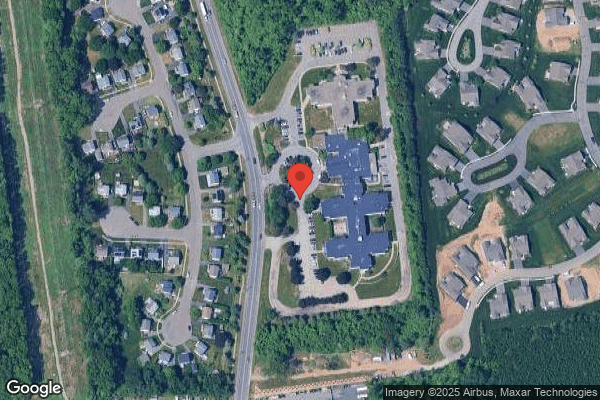
Understanding Severity Codes (click to expand)
Life-Threatening (Immediate Jeopardy)
J - Isolated K - Pattern L - Widespread
Actual Harm
G - Isolated H - Pattern I - Widespread
Potential for Harm
D - Isolated E - Pattern F - Widespread
No Harm (Minor)
A - Isolated B - Pattern C - Widespread

Questions to Ask on Your Visit

  • "Can I speak with families of current residents?"
  • "What's your RN coverage like on weekends and overnight?"

Our Honest Assessment

Strengths
  • • 39% turnover. Below Massachusetts's 48% average. Good staff retention means consistent care.
Concerns
  • • Multiple safety concerns identified: 3 harm violation(s), $66,660 in fines. Review inspection reports carefully.
  • • 49 deficiencies on record, including 3 serious (caused harm) violations. Ask about corrective actions taken.
  • • $66,660 in fines. Extremely high, among the most fined facilities in Massachusetts. Major compliance failures.
  • • Grade F (35/100). Below average facility with significant concerns.
Bottom line: Trust Score of 35/100 indicates significant concerns. Thoroughly evaluate alternatives.

About This Facility

What is Care One At Redstone's CMS Rating?

CMS assigns CARE ONE AT REDSTONE an overall rating of 3 out of 5 stars, which is considered average nationally. Within Massachusetts, this rating places the facility higher than 99% of the state's 100 nursing homes. This mid-range rating indicates the facility meets federal standards but may have areas for improvement.

How is Care One At Redstone Staffed?

CMS rates CARE ONE AT REDSTONE's staffing level at 3 out of 5 stars, which is average compared to other nursing homes. Staff turnover is 39%, compared to the Massachusetts average of 46%. This relatively stable workforce can support continuity of care.

What Have Inspectors Found at Care One At Redstone?

State health inspectors documented 49 deficiencies at CARE ONE AT REDSTONE during 2023 to 2025. These included: 3 that caused actual resident harm, 45 with potential for harm, and 1 minor or isolated issues. Deficiencies causing actual harm indicate documented cases where residents experienced negative health consequences.

Who Owns and Operates Care One At Redstone?

CARE ONE AT REDSTONE is owned by a for-profit company. For-profit facilities operate as businesses with obligations to shareholders or private owners. The facility is operated by CAREONE, a chain that manages multiple nursing homes. With 254 certified beds and approximately 154 residents (about 61% occupancy), it is a large facility located in EAST LONGMEADOW, Massachusetts.

How Does Care One At Redstone Compare to Other Massachusetts Nursing Homes?

Compared to the 100 nursing homes in Massachusetts, CARE ONE AT REDSTONE's overall rating (3 stars) is above the state average of 2.9, staff turnover (39%) is near the state average of 46%, and health inspection rating (3 stars) is at the national benchmark.

What Should Families Ask When Visiting Care One At Redstone?

Based on this facility's data, families visiting should ask: "Can I visit during a mealtime to observe dining assistance and food quality?" "How do you handle medical emergencies, and what is your hospital transfer rate?" "Can I speak with family members of current residents about their experience?"

Is Care One At Redstone Safe?

Based on CMS inspection data, CARE ONE AT REDSTONE has a clean safety record: no substantiated abuse findings (meaning no confirmed cases of resident harm), no Immediate Jeopardy citations (the most serious violation level indicating risk of serious injury or death), and is not on the Special Focus Facility watch list (a federal program monitoring the lowest-performing 1% of nursing homes). The facility has a 3-star overall rating and ranks #1 of 100 nursing homes in Massachusetts. While no facility is perfect, families should still ask about staff-to-resident ratios and recent inspection results during their visit.

Do Nurses at Care One At Redstone Stick Around?

CARE ONE AT REDSTONE has a staff turnover rate of 39%, which is about average for Massachusetts nursing homes (state average: 46%). Moderate turnover is common in nursing homes, but families should still ask about staff tenure and how the facility maintains care continuity when employees leave.

Was Care One At Redstone Ever Fined?

CARE ONE AT REDSTONE has been fined $66,660 across 1 penalty action. This is above the Massachusetts average of $33,745. Fines in this range indicate compliance issues significant enough for CMS to impose meaningful financial consequences. Common causes include delayed correction of deficiencies, repeat violations, or care failures affecting resident safety. Families should ask facility leadership what changes have been made since these penalties.

Is Care One At Redstone on Any Federal Watch List?

CARE ONE AT REDSTONE is not on any federal watch list. The most significant is the Special Focus Facility (SFF) program, which identifies the bottom 1% of nursing homes nationally based on persistent, serious quality problems. Not being on this list means the facility has avoided the pattern of deficiencies that triggers enhanced federal oversight. This is a positive indicator, though families should still review the facility's inspection history directly.