
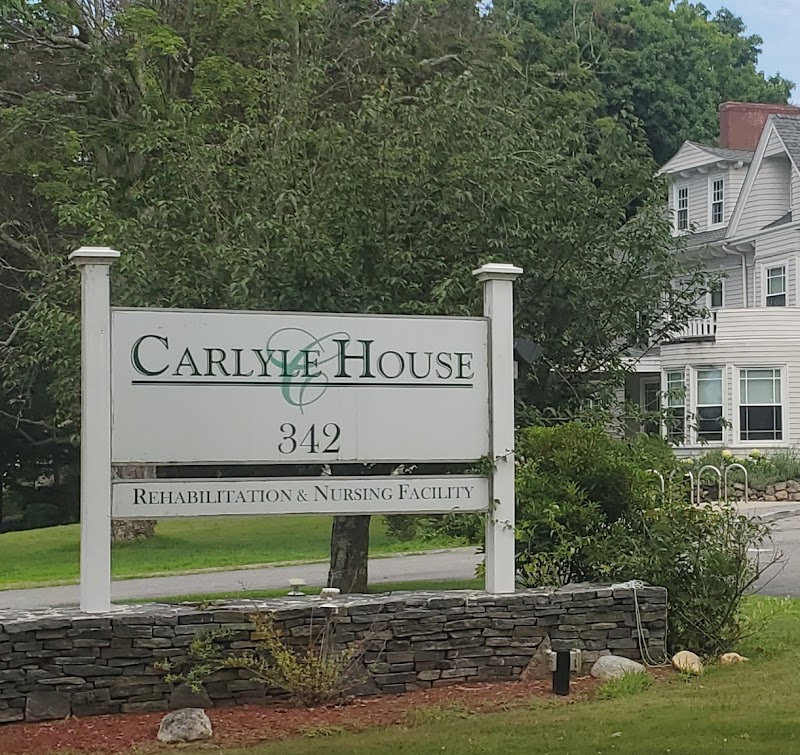

CARLYLE HOUSE

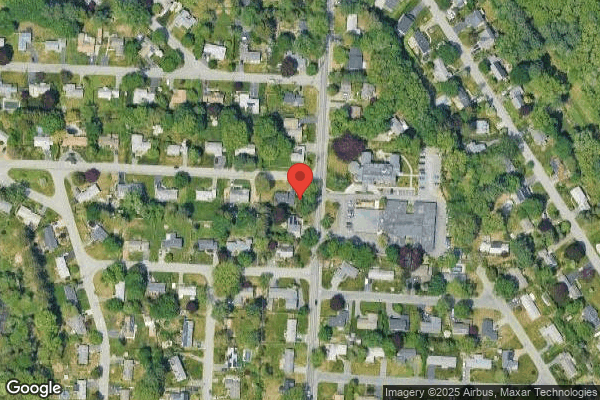
342 WINTER STREET, FRAMINGHAM, MA 01701 (508) 879-6100
For profit - Corporation 55 Beds Independent Data: November 2025 2 Immediate Jeopardy citations
Trust Grade
19/100
#280 of 338 in MA
Last Inspection: July 2025

Inspected within the last 6 months. Data reflects current conditions.

Overview

Carlyle House in Framingham, Massachusetts has received a Trust Grade of F, indicating significant concerns about the facility's overall care quality and safety. Ranking #280 out of 338 nursing homes in Massachusetts places it in the bottom half of facilities in the state, and #58 out of 72 in Middlesex County means there are only a few local options that are better. Unfortunately, the facility is worsening, with the number of issues increasing from 6 in 2024 to 8 in 2025. Staffing is relatively strong, boasting a 4/5 star rating, but it is concerning that there is less RN coverage than 86% of facilities in the state, which could impact the level of care residents receive. Serious incidents have occurred, including a tragic case where a resident died after becoming trapped between the mattress and bed rail, highlighting critical safety issues that need to be addressed. Overall, while Carlyle House has some strengths in staffing, the alarming trends and safety concerns present significant risks for potential residents.

Trust Score
F
19/100
In Massachusetts
#280/338
Bottom 18%
Safety Record
High Risk
Review needed
Inspections
Getting Worse
6 → 8 violations
Staff Stability
○ Average
40% turnover. Near Massachusetts's 48% average. Typical for the industry.
Penalties
○ Average
$16,153 in fines. Higher than 70% of Massachusetts facilities. Some compliance issues.
Skilled Nurses
⚠ Watch
Each resident gets only 28 minutes of Registered Nurse (RN) attention daily — below average for Massachusetts. Fewer RN minutes means fewer trained eyes watching for problems.
Violations
⚠ Watch
20 deficiencies on record. Higher than average. Multiple issues found across inspections.
★☆☆☆☆
1.0
Overall Rating
★★★★☆
4.0
Staff Levels
★★★☆☆
3.0
Care Quality
★☆☆☆☆
1.0
Inspection Score
Stable
2024: 6 issues
2025: 8 issues

The Good

  • 4-Star Staffing Rating · Above-average nurse staffing levels
  • Full Sprinkler Coverage · Fire safety systems throughout facility
  • No fines on record
  • Staff turnover below average (40%)

    8 points below Massachusetts average of 48%

Facility shows strength in staffing levels, fire safety.

The Bad

1-Star Overall Rating

Below Massachusetts average (2.9)

Significant quality concerns identified by CMS

Staff Turnover: 40%

Near Massachusetts avg (46%)

Typical for the industry

Federal Fines: $16,153

Below median ($33,413)

Minor penalties assessed

The Ugly 20 deficiencies on record

2 life-threatening
Jul 2025 5 deficiencies
CONCERN (D)

Potential for Harm - no one hurt, but risky conditions existed

Deficiency F0578 (Tag F0578)

Could have caused harm · This affected 1 resident

Based on interviews, and record review, the facility failed to ensure that the appropriate individual had the authority to make decisions regarding Advance Directives (legal documents that provide ins...

Read full inspector narrative →
Based on interviews, and record review, the facility failed to ensure that the appropriate individual had the authority to make decisions regarding Advance Directives (legal documents that provide instructions for medical care when an individual is incapacitated) for one Resident (#26) out of a total sample of 13 residents. Specifically, for Resident #26, the facility failed to ensure that the MOLST (Massachusetts Medical Order for Life-Sustaining Treatment) Form was completed by a Legal Guardian (person assigned by the court to make decisions for an individual who is incapacitated) who had an expansion for the authority to make decisions about the Resident's Advance Directives relative to his/her wishes for life-sustaining treatments. Findings include: Review of the facility policy for Medical Orders - Life Sustaining Treatment, last revised 6/18/19, indicated:-to ensure that resident/responsible party's wishes concerning life sustaining treatment are documented properly and respected to the extent possible by the facility.-A guardian has the authority to request changes to an existing MOLST, or void the MOLST, provided the guardianship document includes an expansion to allow authorization for medical orders for life sustaining treatment. -Note: Guardianship documents may be specific as to which medical orders can be authorized. Ensure the document permits the changes being requested by the Guardian. Resident #26 was admitted to the facility in September 2020, with diagnoses including Paranoid Schizophrenia and Dementia. Review of Resident #26's clinical record indicated:-a MOLST Form signed on 4/15/21, by Resident #26's Legal Guardian with requests for DNR (Do Not Resuscitate), DNI (Do Not Intubate), DNH (Do Not Hospitalize), no dialysis, no artificial nutrition and no artificial hydration. -letters of Guardianship for an incapacitated person dated 9/16/20, without the expansion for authorization of Advance Directives.-the Legal Guardian did not have the authority to refuse or discontinue life-sustaining treatments on the Resident's behalf. Review of Resident #26's July 2025 Physician's orders indicated an order to follow the MOLST instructions. During an interview on 7/24/25 at 11:49 A.M., Social Worker (SW) #1 said that Resident #26's Legal Guardian was a friend, and not a family member. During an interview on 7/24/25 2:25 P.M., SW #1 said that Resident #26's MOLST Form was not valid because the Legal Guardian did not have the required Guardianship expansion to sign the Resident's MOLST Form for DNR, DNI, DNH, no dialysis, no artificial nutrition and no artificial hydration.
CONCERN (D)

Potential for Harm - no one hurt, but risky conditions existed

Assessment Accuracy (Tag F0641)

Could have caused harm · This affected 1 resident

**NOTE- TERMS IN BRACKETS HAVE BEEN EDITED TO PROTECT CONFIDENTIALITY** Based on record review, and interview, the facility failed to accurately code Minimum Data Set (MDS) Assessments as the clinical...

Read full inspector narrative →
**NOTE- TERMS IN BRACKETS HAVE BEEN EDITED TO PROTECT CONFIDENTIALITY** Based on record review, and interview, the facility failed to accurately code Minimum Data Set (MDS) Assessments as the clinical basis for care planning and care delivery for four Residents (#4, #20, #7 and #36) out of a total sample of 13 residents. Specifically: 1.For Resident #4, the facility failed to accurately code an intravenous line (IV) access when the Resident had an IV access in place. 2. For Resident #20, the facility failed to accurately code antidepressant and antipsychotic medications when the Resident was ordered for and being administered an antidepressant medication daily but was coded as receiving an antipsychotic medication when the Resident was not ordered for antipsychotic medication. 3. For Resident #7, the facility failed to accurately code for the administration of anti-anxiety medication when the Resident was ordered for and being administered anti-anxiety medication. 4. For Resident #36, the facility failed to accurately code for dialysis treatment when the Resident was routinely receiving dialysis services. Findings include: 1. Resident #4 was admitted to the facility in April 2025, with diagnoses including Urinary Tract Infection (UTI) and Benign Prostatic Hyperplasia with Lower Urinary Tract Symptoms. Review of the MDS dated [DATE] indicated Resident #4 had no IV access. Review of Resident #4’s July 2025 Physician’s orders indicated: -Bard midline single lumen placed left basilic, Gauge: 4 FR [French - catheter measurement], length int [sic] 15 cm (centimeters), total length 15 cm, arm circumference 27 cm. Start date 6/26/25. -flush IV with 10 cc (cubic centimeters) normal saline for patency, every night shift for patency. Start date 6/26/25. During an interview on 7/29/25 at 2:20 P.M., the MDS Nurse said Resident #4 did have IV access during the 7-day look back period for the MDS dated [DATE], and that the MDS was coded incorrectly. The MDS Nurse said the MDS should have been coded yes, the Resident did have IV access. 2. Resident #20 was admitted to the facility in February 2025, with diagnoses including Liver Disease Unspecified, Unspecified Dementia Unspecified Severity with Other Behavioral Disturbances and Major Depressive Disorder. Review of Resident #20’s MDS assessment dated [DATE], indicated the Resident was being administered an antipsychotic medication and was not being administered an antidepressant medication. Review of the Resident’s May 2025 Physician’s orders indicated: -Trazadone HCL Oral Tablet 50 mg [milligrams] (Trazadone HCL - antidepressant medication), give 0.5 [half] tablet by mouth at bedtime for mood and related symptoms (total dose 25 mg). Review of Resident #20’s May 2025 Medication Administration Record (MAR) indicated the Trazadone medication was administered as ordered by the Physician at bedtime. Further review of the Resident’s May 2025 Physician’s orders and MAR failed to indicate that the Resident had an order for an antipsychotic medication or that he/she was administered an antipsychotic medication. During an interview on 7/29/25 at 2:20 P.M., the MDS Nurse said Resident #20 was receiving an antidepressant medication and was not receiving an antipsychotic medication during the 7-day look back period for the MDS dated [DATE]. The MDS Nurse said the MDS was coded incorrectly. The MDS Nurse said the MDS should have been coded yes for antidepressant medication and no for an antipsychotic medication use. 3. Resident #7 was admitted to the facility in December 2023 with diagnoses of anxiety disorder and Post-Traumatic Stress Disorder (PTSD). Review of Resident #7's July 2025 Physician's orders indicated: -ALPRAZolam Oral Tablet 0.25 mg (Alprazolam/ Xanax - anti-anxiety medication). Give 0.25 mg by mouth every 24 hours as needed (PRN) for anxiety. Start Date 5/25/25. Review of Resident #7's MAR for June 2025 indicated that the Resident was administered the ALPRAZolam medication on June 19th and June 23rd. Review of Resident #7's MDS assessment dated [DATE], failed to indicate any anti-anxiety medication administration for the Resident. During an interview on 7/29/25 at 1:49 P.M., the MDS Nurse said that Resident #7's MDS dated [DATE] was coded incorrectly for anti-anxiety medication. The MDS Nurse said that she had reviewed the Resident's June 2025 MAR, and the Resident did receive anti-anxiety medication twice during the MDS 7-day look back period. The MDS Nurse said that the Resident's MDS dated [DATE] should have indicated anti-anxiety medication use but it did not. 4. Resident #36 was admitted to the facility in October 2024 with diagnoses including Dependence on renal dialysis and Hypertensive Chronic Kidney Disease with Stage 5 Chronic Kidney Disease (CKD) or End Stage Renal Disease (ESRD). Review of Resident #36's July 2025 Physician's orders indicated: -Dialysis Appointment - Pickup Time 9:15am . every Day Shift Monday, Wednesday, Friday . Start date 1/8/25 Review of Resident #36's April 2025 MAR indicated that the Resident attended dialysis treatments in April 2025 on the following days: 4/2/25, 4/4/25, 4/9/25, 4/11/25, 4/14/25, 4/16/25, 4/18/25, 4/21/25, 4/23/25, 4/25/25, 4/28/25 and 4/30/25. Review of Resident #36's MDS assessment dated [DATE], failed to indicate that the Resident was receiving Dialysis Treatment. During an interview on 7/29/25 at 1:50 P.M., the MDS Nurse said that Resident #36's MDS dated [DATE] was coded incorrectly for Dialysis Treatment. The MDS Nurse said that the Resident had been receiving Dialysis Treatment since being admitted to the facility. The MDS Nurse said the Resident's MDS dated [DATE] should have indicated Dialysis Treatment for the Resident but it did not.
CONCERN (D)

Potential for Harm - no one hurt, but risky conditions existed

Deficiency F0657 (Tag F0657)

Could have caused harm · This affected 1 resident

**NOTE- TERMS IN BRACKETS HAVE BEEN EDITED TO PROTECT CONFIDENTIALITY** Based on interview, and record review, the facility failed to ensure that the Resident was provided the right to participate in ...

Read full inspector narrative →
**NOTE- TERMS IN BRACKETS HAVE BEEN EDITED TO PROTECT CONFIDENTIALITY** Based on interview, and record review, the facility failed to ensure that the Resident was provided the right to participate in the care plan process for one Resident (#26), out of a total sample of 13 residents. Specifically, the facility failed to ensure that quarterly care plan meetings were conducted as required for Resident #26, and that the Resident and/or Resident Representative were encouraged to participate in the care plan meetings. Findings include:Review of the facility policy titled Resident Assessment, release date 9/1/20, indicated:-to obtain the necessary information to develop and maintain an individualized interdisciplinary plan of care, treatment and services with appropriate education and training about each resident's illness and care needs. -once the comprehensive, interdisciplinary care plan is established, the interdisciplinary team [IDT] reviews the plan of care, treatment, services, and goals collaboratively with the resident and family/responsible party no later than 21 days after admission.-the interdisciplinary team evaluates the resident goals and effectiveness of the plan of care, treatment and services at least every 92 days or more frequently.-the resident goals and plan of care, treatment, and services are reviewed and revised, when necessary, with the interdisciplinary team collaboratively and with the resident, family or responsible party. Resident #26 was admitted to the facility in September 2020, with diagnoses including Paranoid Schizophrenia and Dementia. Review of the MDS (Minimum Data Set) assessment dated [DATE], indicated that Resident #26:-was cognitively impaired as evidenced by a Brief Interview of Mental Status (BIMS) score of 3 out of 15. -was English speaking.-is usually understood and usually understands others. During an interview on 7/23/25 at 7:52 A.M., Resident #26 said that he/she was unaware of what a care plan meeting was, but that he/she would like to be invited to them. Review of the MDS Schedule for Resident #26 indicated that the Resident had care plan meetings scheduled for 8/7/24, 11/6/24, 2/5/25 and 5/7/25. Review of Resident #26's clinical record failed to indicate documented evidence that the Resident participated in the care planning process with the IDT during quarterly care plan reviews as required, in August 2024, November 2024, February 2025 and May 2025. Further review of Resident #26's clinical record failed to indicate documented evidence as to why the Resident did not or could not participate in any care plan meetings, or refusals to participate in the meetings in 2024 and 2025. During an interview on 7/24/25 at 2:14 P.M., Social Worker (SW) #1 said that Resident #26 had not been invited to attend his/her care plans meetings. SW #1 said that she was unable to provide evidence from the clinical record that the Resident had been invited to or attended the care plan meetings in 2024 and 2025.
CONCERN (D)

Potential for Harm - no one hurt, but risky conditions existed

Deficiency F0761 (Tag F0761)

Could have caused harm · This affected 1 resident

Based on observation, and interview, the facility failed to ensure that drugs and biologicals were stored in accordance with currently accepted professional principles of practice on one Unit (Front U...

Read full inspector narrative →
Based on observation, and interview, the facility failed to ensure that drugs and biologicals were stored in accordance with currently accepted professional principles of practice on one Unit (Front Unit) and one (Medication Cart A) of two medication carts reviewed. Specifically, the facility failed to ensure that multi-dose vials of eye medications were dated once opened according to manufacturer's guidelines in the Front Unit medication storage room, and for Medication Cart A located on the Front Unit. Findings include:Review of the facility policy titled Medication Storage in the Facility, dated January 2024, indicated that .:-When the original seal of a manufacturer's container or vial is initially broken, the container or vial will be dated.-The nurse shall place a date opened sticker on the medication and enter the date opened and the new date of expiration.-Medication in multidose containers may be used until the manufacturer's expiration date, or for the length of time allowed by the state regulation, whichever is less. -The date opened and/or the triggered expiration date should be recorded on a label for such purpose affixed to the vial. Expiration dates triggered by opening should be available either in the manufacturer's labeling or package insert, on a chart provided by the pharmacy, or from the pharmacist.-In the absence of manufacturer guidance for discarding multi-dose vials after opening, the facility will defer to the USP 797 guidelines which recommend discarding multi-dose vials (other than some Insulins) at 28 days after opening. Review of the facility policy titled Timolol Eye Drop Policy, undated, included:-most manufacturers recommend discarding Timolol eye drops 4 weeks after opening the bottle.-Risk of contamination: After opening, eye drops lose their sterile seal, making them susceptible to contamination by bacteria and other germs that can cause serious eye infections and even vision loss.-Loss of effectiveness: Over time, the active ingredients in eye drops can break down and become less potent, reducing their ability to treat the intended condition. Review of the facility policy titled Artificial Tears Policy, undated, included:-Unopened artificial tears generally last for 1 to 2 years from the manufacturing date. Once opened, the duration of use is significantly shorter. Most experts recommend discarding opened bottles of artificial tears, whether they contain preservatives or not, after 30 days. On 7/24/25 at 8:30 A.M., during a medication storage room observation on the Front Unit with the Director of Nursing (DON), the surveyor observed an open multi-dose vial of Timolol Maleate ophthalmic Eye Drop Solution 0.25% (eye medication) in the refrigerator. The surveyor further observed the open vial of ophthalmic solution did not have an open or use by date noted on the vial. During an interview at the time, the DON said that when a multi-dose vial of medication was opened it should be labeled with an open and use by date, but this open vial did not have either. On 7/24/25 at 9:57 A.M., the surveyor and Nurse #1 observed Medication Cart A on the Front Unit, and the surveyor observed an open multi-dose vial of Natural Tears eye drop solution with no open or discard date noted on the vial. When the surveyor asked, Nurse #1 said he did not know when the multi-dose vial of Natural Tears eye drops had been opened. Nurse #1 said that the correct procedure was to date a multi-dose vial of eye drops on the day that the vial was first opened. Nurse #1 said he was not sure how long the eye drops would be good to use once they were opened but there should also be a use by date labeled on the eye drops on the day they are opened. The surveyor also observed a plastic cup containing two open multi-dose vials of Timolol Maleate ophthalmic Eye Drop Solution in Medication Cart A. One opened vial had an open date of 4/3 noted on it, and the second vial had no open date. Neither of the two vials were labeled with a use by date. Nurse #1 further said that both vials should have an open and use by date, but the vials were missing the use by date and the second vial had no open date information. Nurse #1 said that both vials should be discarded because he could not tell when they had been opened. During an interview on 7/28/2025 at 8:15 A.M., the DON said when the nursing staff open any multi-dose vial of medication, they should apply a yellow sticker and write the open date and the discard date on the sticker. The DON said the Timolol Maleate eye drops should have a use by date 4 weeks after opening, and the Natural Tears eye drops should have a discard date that is 30 days after opening. The DON said the Timolol and Natural Tears multi-dose vials that were identified should have been labeled after opening but they had not been, and so the staff could not determine if the medication was still viable. The DON said that the opened and unlabeled eye medication would all have to be discarded.
CONCERN (D)

Potential for Harm - no one hurt, but risky conditions existed

Deficiency F0883 (Tag F0883)

Could have caused harm · This affected 1 resident

**NOTE- TERMS IN BRACKETS HAVE BEEN EDITED TO PROTECT CONFIDENTIALITY** Based on interview, and record review, the facility failed to administer Pneumococcal Vaccinations for one Resident (#9) out of ...

Read full inspector narrative →
**NOTE- TERMS IN BRACKETS HAVE BEEN EDITED TO PROTECT CONFIDENTIALITY** Based on interview, and record review, the facility failed to administer Pneumococcal Vaccinations for one Resident (#9) out of five applicable residents, out of a total sample of 13 residents. Specifically, for Resident #9, the facility failed to administer Pneumococcal Vaccines when the Resident was eligible to receive, and the Responsible Party consented to the Pneumococcal immunization, putting the Resident at risk of acquiring pneumococcal illnesses.Findings include:Review of the facility's policy titled Resident Pneumococcal Vaccine, last issued January 2023, indicated the following:-Prior to or upon admission, residents are assessed for eligibility to receive the pneumococcal vaccine series, and when indicated, will be offered the vaccine series within ninety days of admission to the facility unless medically contraindicated or the resident has already been vaccinated. -Pneumococcal vaccines are administered to residents (unless medically contraindicated, already given, or refused) per our facility's physician approved pneumococcal vaccination protocol. -Administration of the pneumococcal vaccines are made in accordance with current Centers for Disease Control and Prevention (CDC) recommendations at the time of the vaccination. Review of the CDC guidance titled Pneumococcal Vaccine Timing for Adults, dated October 2024, indicated but was not limited to the following:>Adults 50 years or older:-Shared clinical decision-making for those who already completed the series with PCV13 (Pneumococcal Conjugate Vaccine: vaccine used to protect against 13 types of pneumococcal bacteria that commonly cause serious infections) and PPSV23 (Pneumovax 23: vaccine used to help protect against serious infections caused by 23 types of pneumococcal bacteria).-Prior vaccines shared clinical decision-making option for adults [AGE] years old or older.>Complete series: previously received PCV13 at any age & PPSV23 at or older than 65 yrs and it has been more than five years since the series was completed.>Together, with the patient, vaccine providers may choose to administer PCV20 or PCV21 to adults that are [AGE] years old or older who have already received PCV13 (but not PCV15, PCV20, or PCV21) at any age and PPSV23 at or after the age of [AGE] years old. Resident #9 was admitted to the facility in December 2022 with diagnoses including hemiplegia and hemiparesis and dysphagia. Review of Resident #9's Immunization Record indicated the Resident received a dose of Prevnar 13 Vaccine (PCV13) on 5/24/17 and the Pneumovax 23 (PPSV23) on 10/1/19 prior to his/her facility admission. Review of Resident #9's clinical record indicated:-The Resident was greater than [AGE] years of age.-No evidence the Resident had received any Pneumococcal Vaccinations since the dose of PPSV23 on 10/1/19.-Consent for administration of Pneumococcal Vaccine signed by the Resident's Responsible Party on 12/16/22, if the vaccine is indicated.-A Physician's order dated 1/9/23, indicating may have Pneumococcal vaccine. Review of the CDC PneumoRecs VaxAdvisor online calculator indicated the following recommendation for Resident #9:-Give one dose of PCV20 or PCV21 at least 5 years after the last pneumococcal vaccine dose. During an interview on 7/29/25 at 9:06 A.M., the Director of Nursing (DON) said that Resident #9 should have received the Pneumococcal Vaccine, when he/she became eligible in 2024, but he/she had not received the Pneumococcal Vaccine.
Mar 2025 3 deficiencies 2 IJ
CRITICAL (J) 📢 Someone Reported This

A family member, employee, or ombudsman was alarmed enough to file a formal complaint

Immediate Jeopardy (IJ) - the most serious Medicare violation

Accident Prevention (Tag F0689)

Someone could have died · This affected 1 resident

**NOTE- TERMS IN BRACKETS HAVE BEEN EDITED TO PROTECT CONFIDENTIALITY** Based on observation, records reviewed and interviews, for one of six sampled residents (Resident #1), who had limited mobility ...

Read full inspector narrative →
**NOTE- TERMS IN BRACKETS HAVE BEEN EDITED TO PROTECT CONFIDENTIALITY** Based on observation, records reviewed and interviews, for one of six sampled residents (Resident #1), who had limited mobility due to a cylinder (plaster type) cast on his/her right leg from his/her mid thigh down to his/her ankle, required physical assistance from staff with rolling and moving in bed, and had requested the use of bed rails for bed mobility, the Facility failed to ensure he/she was adequately supervised for safety and potential hazards related to the use of bed rails as an assistive device, in order to prevent an incident and/or accident resulting in serious injury or death. On [DATE] around 6:00 A.M., Resident #1 was found unresponsive, without a pulse, his/her lower body was hanging off the mattress with his/her feet touching the floor, and his/her head/neck area was hyperextended and caught between the mattress and the bed rail. Resident #1 was pronounced dead at the facility. Findings include: Review of the Facility's Policy titled Bed Rails, dated as released [DATE], indicated the facility will ensure the resident receives assistance as needed for bathroom utilization, transferring in and out of bed, bed mobility and other care needs. Review of the Report submitted by the Facility via the Health Care Facility Reporting System (HCFRS), dated [DATE], indicated that around 6:00 A.M. on [DATE], staff members observed Resident #1 in bed with his/her head between the mattress and the bed rail and his/her right leg and leg cast off of the mattress with his/her foot touching the floor. The Report indicated that Resident #1 did not have a pulse, CPR was initiated and 911 was called, however, Resident #1 was pronounced dead at the Facility. Resident #1 was admitted to the Facility in [DATE], with diagnoses that included right patella (kneecap) fracture and Parkinson's Disease. Review of Resident #1's Baseline Care Plan, dated [DATE], indicated bed rails per resident request for turning and positioning. During a telephone interview on [DATE] at 2:30 P.M. the MDS Nurse said that she wrote the notation on Resident #1's Baseline Care Plan that bed rails were requested by Resident #1 for turning and positioning after a conversation with Resident #1 during which he/she asked for the bed rails to be put on the bed. Review of Resident #1 medical record indicated there was no documentation to support nursing obtained a physician's order for use of bed rails. During an interview on [DATE] at 12:00 P.M., the Maintenance Director said that, on [DATE], at the request of nursing staff, he installed two half bed rails on Resident #1's bed. The Maintenance Director said he completed an entrapment assessment at that time. Resident #1's admission Minimum Data Set Assessment, dated as completed [DATE], indicated the following: -his/her cognitive patterns were intact, -he/she was 5'3 tall and weighed 131 pounds, -was always incontinent of bowel and bladder, -had impaired functional mobility in lower extremity on one side, -required partial to moderate assistance for bed mobility, -required substantial to maximum assistance to move from lying to siting on the edge of the bed and vice versa, (staff provided more than half the effort to complete activity). -he/she was dependent for transferring between surfaces (staff member does all the effort to complete the activity). Further review of Resident #1's medical record indicated there was no documentation to support that nursing assessed him/her for the use of bed rails upon admission, if the bed rails potentially posed a safety hazard or that any alternative measures were attempted. During an interview on [DATE] at 1:25 P.M., the Director of Nursing said that it was the Facility practice for all newly admitted residents to be assessed for bed rails on admission. The Director of Nursing said that the nurse who completed Resident #1's admission worked for an Agency and had not completed his/her bed rail assessment, but should have. The Surveyor was unable to interview the Agency Nurse that completed Resident #1's admission as she did not respond to the Department of Publics requests for an interview. During a follow-up interview on [DATE] at 1:13 P.M., the Director of Nursing said that at the time of Resident #1's admission, the Facility did not have a procedure in place for auditing to ensure bed rail assessments for newly admitted residents had been completed within twenty-four hours of admission. Review of Resident #1's physician orders and Treatment Administration Record (TAR), dated [DATE] through [DATE], indicated he/she had a hinge brace on his/her right leg (from mid thigh area down to just above the ankle). However, there was no documentation to support the Facility developed a care plan which addressed Resident #1's bed rail use. Review of Resident #1's physician orders and Treatment Administration Record (TAR), dated [DATE] through [DATE], indicated he/she had a cylinder cast on his/her right leg (from mid thigh area down to just above the ankle). Further review of Resident #1's medical record indicated there was no documentation to support that after Resident #1 had the hinged brace removed and a cylinder cast was placed on his/her right leg (from the upper thigh to ankle) on [DATE], which also limited his/her mobility with an increased need for staff assistance to lift and move his/her right leg, that nursing re-assessed him/her for an appropriate alternative to bed rails, or re-assessed him/her for safety or potential for hazards related to continued use of bed rails. Review of Resident #1's Comprehensive Care Plan related to Focus Area of Activities of Daily Living (ADL) self-care performance deficit due to Parkinson's Disease and patella fracture and incontinence care needs, dated [DATE], indicated interventions included the following: - the resident is totally dependent on two staff for repositioning and turning in bed every 2 hours and as necessary, - the resident requires assistance by one to two staff to move between surfaces, - check every two hours and as required for incontinence During an in-person interview on [DATE] at 12:55 P.M. with the Rehab Manager (RM) and a telephone interview on [DATE] at 1:15 P.M. with the Physical Therapy Assistant (PTA), they said the following: Resident #1 was admitted to the Facility with a right patella fracture following a motor vehicle accident. Resident #1 was admitted to the Facility with a hinge brace on his/her right leg which kept his/her right leg in a fully extended position. That on [DATE], Resident #1 had a surgical procedure (an open reduction and internal fixation of the right patella and soft tissue repair) and returned to the Facility with a cylinder (long leg) cast. The Rehab Manager said the cast extended from Resident #1's mid-thigh to ankle, ended with a large plaster lump in the area of his/her ankle and made the cast heavier. The RM and PTA said that on [DATE], Resident #1 went for a surgical follow up and returned with a different cylinder cast which also extended from his/her mid thigh to ankle, that there was no longer a large lump at the ankle, but that is was still difficult for Resident #1 to move his/her right without assistance due to the weight of the cast. The RM and PTA said Resident #1 was able to stand and bear weight, was non-ambulatory, and required maximum assistance to transfer between surfaces. The RM and PTA said Resident #1 required physical assistance with bed mobility, that he/she had trouble moving his/her right leg on his/her own because of the weight of the cast. The RM and PTA said staff had to pick up and help move Resident #1's right leg (in the cylinder cast) when he/she moved from sitting to lying down and vice versa, as well as during transfers between surfaces. During an interview on [DATE] at 7:07 A.M., CNA #3 said that she was assigned to care for Resident #1 during the overnight shift that started on [DATE] and ended on [DATE]. CNA #3 said that she did not know Resident #1 well and staff members on the 3:00 P.M. to 11:00 P.M. shift told her that Resident #1 would ring his/her call bell for assistance if he/she needed anything. CNA #3 said that she checked on Resident #1 at 11:00 P.M. and 3:00 A.M., and said Resident #1 appeared to be asleep, the head of his/her bed was raised and the bed was in a low position. CNA #1 said she did not check Resident #1 for incontinence, did not provide any personal care and did not reposition him/her during the 11:00 P.M. to 7:00 A.M. shift. CNA #3 said sometime around 5:30 A.M. or 6:00 A.M. (exact time unknown). when she went to check on him/her, she found Resident #1 half off the bed and called for help from the nurse. During an interview on [DATE] at 1:06 P.M., Nurse #1 said that she was the nurse assigned to Resident #1's unit during the 7:00 P.M. to 7:00 A.M. shift starting on [DATE] and ending on [DATE]. Nurse #1 said that had cared for Resident #1 one or two times prior to the shift. Nurse #1 said Resident #1 received medications around 8:00 P.M. or 9:00 P.M. and usually slept through the night. Nurse #1 said that between 5:30 A.M. and 6:00 A.M., she was in and out of Resident #1's room several times because Resident #1's roommate had a problem with his/her blood sugar. Nurse #1 said that she could see Resident #1 in his/her bed asleep while she attended to the roommate. Nurse #1 said that around 6:00 A.M., when she was at his/her medication cart in the hallway, one of the CNAs came running and reported that something was wrong in Resident #1's room. Nurse #1 said when she arrived at Resident #1's room, she saw that Resident #1's legs were dangling off the mattress and hanging over the safety mat that was on the floor beside the bed. Nurse #1 said that it looked like Resident #1 had rolled out of bed. Nurse #1 said that Resident #1's buttock area was neither on the mattress or the floor, was hanging in the air. Nurse #1 said that Resident #1's right (casted) leg was crossed over his/her left leg. Nurse #1 said that the only part of Resident #1's body that was on the floor were his/her feet. Nurse #1 said that Resident #1's head was on the bed rail, with the bed rail under Resident #1's chin, his/her face was pointed up toward the ceiling and the back of his/her head was on the corner edge of the mattress. Nurse #1 said that Resident #1's head was stuck between the bottom corner of the bed rail and the mattress. Nurse #1 said that the head of Resident #1's bed was raised to 45 degrees, that the bed rail was down, and that the lower corner of the bed rail was higher than the mattress. Nurse #1 said that Resident #1 was not alert, was pale, had no pulse and did not appear to be breathing. Nurse #1 said they called a Code Blue, called 911, Nurse #2 came to assist her, the CNAs assisted Nurse #2 with transferring Resident #1 back to bed, and CPR was initiated. During an interview on [DATE] at 6:15 A.M., Nurse #2 said that on [DATE] around 6:00 A.M. she was called to Resident #1's unit to assist with a Code Blue. Nurse #2 said that when she arrived at Resident #1's room, Resident #1 was on the side of the bed with the side rail in front of him/her keeping him/her from falling out of bed. Nurse #2 said that Resident #1's legs were off the mattress and angled toward the floor and his/her chin was resting on top of the bed rail. Nurse #2 said Resident #1's head was hyperextended and his/her face was pointed upward toward the ceiling. Nurse #2 said she released the side rail and Resident #1 fell forward into the arms of CNA #1 and CNA #7 and they lifted him/her into bed. Nurse #2 said Resident #1's body was warm, he/she was not breathing, his/her face color was ashen and his/her left leg was discolored and almost mottled. During an in-person interview on [DATE] at 4:11 P.M. with Certified Nurse Aide (CNA) #1 and a telephone interview on [DATE] at 11:00 A.M. with CNA #7, they said on [DATE], they assisted with putting Resident #1 back to bed around 6:30 A.M. They said that Resident #1's head was stuck between the mattress and the bed rail, his/her chin was caught on the bed rail, his/her lower body was off the bed and his/her legs were extended out in front of him/her. CNA #7 said that when Resident #1 was freed from the bed rail, he saw that the area underneath Resident #1's neck was red and his/her head remained in the same position, with his/her neck extended and face looking upward. Nurse #1 said that while administering CPR she noted bruising under Resident #1's chin. Nurse #1 said Emergency Medical Services (EMS) arrived and pronounced Resident #1 dead. The Police Report, dated [DATE], indicated the police arrived at the Facility at 6:23 A.M. having been dispatched for an unresponsive resident. The Police Report indicated Resident #1 was found by Nurse #1 with his/her body laying half off the bed with his/her body on the ground and his/her head pinned between the mattress and the guardrails [bed rails]. The EMS Patient Care Report for the ambulance service dated [DATE] at 6:30 A.M. indicated EMS arrived at the Facility for an unresponsive patient. The Report indicated staff were unable to provide a certain time Resident #1 was last known to be well. The Report indicated staff reported that they found no pulse or breathing and began CPR. The Report indicated that on exam, Resident #1 was unresponsive to painful stimuli and the paramedic was unable to manipulate his/her neck, jaw, shoulders, hips and knees due to rigor (rigor mortis, stiffening of the joints and muscles of the body a few hours after death). The Report indicated that resuscitative efforts for Resident #1 were ceased due to bodily condition clearly indicating biological death. During an interview on [DATE] at 1:40 P.M., the Administrator said that he was informed of Resident #1's accident/incident at the Facility on [DATE] and responded to the Facility to initiate an investigation and assist the police who were on site and also conducting an investigation.
CRITICAL (J) 📢 Someone Reported This

A family member, employee, or ombudsman was alarmed enough to file a formal complaint

Immediate Jeopardy (IJ) - the most serious Medicare violation

Deficiency F0700 (Tag F0700)

Someone could have died · This affected 1 resident

**NOTE- TERMS IN BRACKETS HAVE BEEN EDITED TO PROTECT CONFIDENTIALITY** Based on observation, records reviewed and interviews for one of six sampled residents (Resident #1) who had limited mobility in...

Read full inspector narrative →
**NOTE- TERMS IN BRACKETS HAVE BEEN EDITED TO PROTECT CONFIDENTIALITY** Based on observation, records reviewed and interviews for one of six sampled residents (Resident #1) who had limited mobility in his/her right leg related the need for a hinge brace which was changed to a long leg cylinder cast (both of which kept his/her right leg fully extended) for treatment of a fractured patella (knee cap), and had requested bed rails to aide in bed mobility, the Facility failed to ensure nursing completed bed rail assessment on Resident #1, attempted the use of an appropriate alternative to bed rails and obtained informed consent prior to installing two quarter bed rails on his/her bed. On [DATE], around 6:00 A.M., Resident #1 was found by staff unresponsive, without a pulse, his/her legs were off the bed, extended over the floor mat next to the bed, his/her head/neck was caught on and hyperextended up over the bed rail, and the back of his/head was against the mattress. Resident #1 was pronounced dead at the facility. Findings include: Review of the Facility's Policy titled Bed Rails, dated as released [DATE], indicated the facility will: - attempt to use appropriate alternatives prior to installing a bed rail, - assess the resident risk for entrapment using established systems, - obtain informed consent, - ensure the care plan reflects bed rail usage, including purpose of the bed rails, - will periodically reassess the resident's needs and bed rail usage to determine ongoing appropriateness, and, - ensure the resident receives assistance as needed for bathroom utilization, transferring in and out of bed, bed mobility and other care needs. Federal regulations related to Bed Rails, include guidance facilities' need to consider when determining whether to use bed rails to meet the needs of a resident, the following components of the resident assessment should be considered including, but not limited to: -Medical diagnosis, conditions, symptoms, and/or behavioral symptoms; -Size and weight; -Sleep habits; -Medication(s); -Acute medical or surgical interventions; -Underlying medical conditions; -Existence of delirium; -Ability to toilet self safely; -Cognition; -Communication; -Mobility (in and out of bed); and -Risk of falling Review of the Report submitted by the Facility via the Health Care Facility Reporting System (HCFRS), dated [DATE], indicated that around 6:00 A.M. on [DATE], staff members observed Resident #1 in bed with his/her head between the mattress and the side rail and his/her right leg and leg cast off the mattress with his/her foot touching the floor. The Report indicated that Resident #1 did not have a pulse, CPR was initiated, 911 was called, and was pronounced dead at the Facility. Resident #1 was admitted to the Facility during [DATE] following a hospitalization with diagnoses that included right patella (knee cap) fracture and Parkinson's Disease. During a telephone interview on [DATE] at 2:30 P.M. the MDS Nurse said she had a conversation with Resident #1 right after his/her admission and that he/she requested bed rails be put on his/her to help with turning and positioning. The MDS Nurse said she did not discuss alternatives to bed rails with Resident #1 or discuss the risks and benefits of bed rails with Resident #1 during their conversation. During an interview on [DATE] at 12:00 P.M., the Maintenance Director said that, on [DATE], at the request of nursing staff, he assessed Resident #1's bed for entrapment risk and installed two half bed rails. Review of the Bed System Measurement Device Test Results Worksheet, dated [DATE] and signed by the Maintenance Director, indicated two half rails were installed on Resident #1's bed. Resident #1's admission Minimum Data Set Assessment, dated as completed [DATE], indicated the following: -his/her cognitive patterns were intact, -he/she was 5'3 tall and weighed 131 pounds, -was always incontinent of bowel and bladder, -had impaired functional mobility in lower extremity on one side, -required partial to moderate assistance for bed mobility, -required substantial to maximum assistance to move from lying to siting on the edge of the bed and vice versa, (staff provided more than half the effort to complete activity). -he/she was dependent for transferring between surfaces (staff member does all the effort to complete the activity). Further review of Resident #1's medical record indicated there was no documentation to support that nursing assessed him/her for the use of bed rails upon admission, if the bed rails potentially posed a safety hazard or that any alternative measures were attempted. During an interview on [DATE] at 1:25 P.M., the Director of Nursing said that every Facility resident has a bed rail assessment completed by nursing as part of their admission assessment, but said however, that Resident #1's bed rail assessment had not been completed. Further review of Resident #1's medical record indicated there was no documentation to support nursing reviewed and documented the risks and benefits of bed rail use with Resident #1 or that they obtained informed consent from Resident #1 prior to installing the two half bed rails on his/her bed. The Surveyor asked the Director of Nursing if the facility had any documentation related to the review of the risks and benefits of the use of bed rails with Resident #1 or of his/her informed consent for the bed rails, prior to the Facility having installed his/her bed rails. The Director of Nursing provided the Surveyor with a blank Side (bed) Rail Consent Form and said the Facility used the Form to document informed consent for bed rails with residents, including documentation of discussions of the risks and benefits of bed rails. The Director of Nursing said that staff had not completed a Side (bed) Rail Consent Form with Resident #1. Review of Resident #1's physician orders and Treatment Administration Record (TAR), dated [DATE] through [DATE], indicated he/she had a hinge brace on his/her right leg (from mid thigh area down to just above the ankle). Review of Resident #1's Comprehensive Care Plan indicated the Facility initiated care plans for the following Focus Areas between [DATE] and [DATE]: - Activities, - ADL self-care performance deficit due to Parkinson's Disease and patella fracture, - Wish to return home when medically cleared for discharge, - Risk for falls due to unaware of safety needs, - Adjustment disorder with mixed anxiety and depressed mood, - Potential Nutritional problem due to self-imposed diet restrictions, - Parkinson's Disease without dyskinesia - Risk for pain due to patella fracture - Potential for pressure ulcer development due to immobility - Bladder and bowel incontinence, and, - Impaired visual function. Although, Resident #1's Baseline Care Plan indicated he/she had requested bed rails, there was no documentation to support the Facility developed an individualized comprehensive care plan which addressed his/her use of bed rails. Review of Resident #1's physician orders and Treatment Administration Record (TAR), dated [DATE] through [DATE], indicated he/she had a cylinder cast on his/her right leg (from mid thigh area down to just above the ankle). Further review of Resident #1's care plan indicated there was no documentation to support that after Resident #1 had the hinged brace removed and a cylinder cast was placed on his/her right leg (from the upper thigh to ankle) on [DATE], which also limited his/her mobility with an increased need for staff assistance to lift and move his/her right leg, that nursing re-assessed him/her for an appropriate alternative to bed rails, or re-assessed him/her for safety related to continued use of bed rails. During an in person interview on [DATE] at 12:55 P.M. with the Rehab Manager (RM) and a telephone interview on [DATE] at 1:15 P.M. with the Physical Therapy Assistant (PTA) they said the following: Resident #1 was admitted to the Facility with a right patella fracture following a motor vehicle accident. Resident #1 was admitted to the Facility with a hinge brace on his/her right leg which kept his/her right leg fully extended. That on [DATE], Resident #1 had a surgical procedure (an open reduction and internal fixation of the right patella and soft tissue repair) and returned to the Facility in a long leg cylinder cast. The Rehab Manager said the cast extended from Resident #1's mid-thigh to ankle, ended with a large plaster lump in the area of his/her ankle, which made the cast heavier. The RM and PTA said that on [DATE], Resident #1 went for a surgical follow up and returned with a different cylinder cast which also extended from his/her mid thigh to ankle, that there was no longer a large lump at the ankle, but that is was still difficult for Resident #1 to move his/her right without assistance. The Rehab Manager and PTA said that during his/her stay at the Facility, Resident #1 was able to stand and bear weight, however, was non-ambulatory and that required maximum assistance to transfer between surfaces. They said Resident #1 required physical assistance with bed mobility, had trouble moving his/her right leg on his/her own because of the weight of the cast, and used the bed rails to shift his/her weight. They said that staff members had to pick up, support and move Resident #1's right leg when he/she moved from sitting to lying down and vice versa and during transfers between surfaces. During a telephone interview on [DATE] at 2:18 P.M., Certified Nurse Aide (CNA) #5 said Resident #1 did not always understand how to use his/her call light and sometimes called out for assistance when staff entered his/her room during rounds. CNA #5 said Resident #1 used the bed rails to help him/herself roll. CNA #5 said that on more than one occasion, when she entered Resident #1's room after having previously left him/her positioned properly in the bed, she observed Resident #1 with his/her legs off the mattress hanging toward the floor. CNA #5 said she had not reported what she had seen to nursing or rehab staff. CNA #5 said that Resident #1 could move his/her legs off the mattress when he/she wanted to get out of bed. During an interview on [DATE] at 7:07 A.M., CNA #3 said that on [DATE] sometime around 5:30 A.M. or 6:00 A.M. (exact time unknown), she found Resident #1 half off the mattress and called for help from the nurse. During an interview on [DATE] at 1:06 P.M., Nurse #1 said that between 5:30 A.M. and 6:00 A.M., she was in and out of Resident #1's room several times because Resident #1's roommate had a problem with his/her blood sugar. Nurse #1 said that around 6:00 A.M., one of the CNAs came running and reported that something was wrong in Resident #1's room. Nurse #1 said when she arrived to Resident #1's room she saw that Resident #1's legs were dangling off of the mattress over the fall mat on the floor beside the bed. Nurse #1 said that it looked like Resident #1 had rolled out of bed. Nurse #1 said that Resident #1's buttocks were neither on the mattress or the floor and were hanging in the air. Nurse #1 said that Resident #1's right (casted) leg was crossed over his/her left leg. Nurse #1 said that the only part of Resident #1's body on the floor were his/her feet. Nurse #1 said that Resident #1's head was on the bed rail with the bed rail under Resident #1's chin, his/her face was pointed up toward the ceiling and the back of his/her head was on the corner edge of the mattress. Nurse #1 said that Resident #1's head was stuck between the bottom corner of the bed rail and the mattress. Nurse #1 said that the head of Resident #1's bed was raised to 45 degrees and although the bed rail was down, said the corner of the bed rail was higher than the mattress. Nurse #1 said that Resident #1 was not alert, was pale, had no pulse and did not appear to be breathing. During an interview on [DATE] at 6:15 A.M., Nurse #2 said that on [DATE] around 6:00 A.M. she was called to Resident #1's unit from another unit to assist. Nurse #2 said that when she arrived to Resident #1's room, Resident #1 was on the side of the bed with the bed rail in front of him/her keeping him/her from falling out of bed. Nurse #2 said that Resident #1's legs were angled down toward the floor and his/her chin was resting on top of the bed rail. Nurse #2 said Resident #1's head was hyperextended and his/her face was pointed up toward the ceiling. Nurse #1 said she and Nurse #2 initiated CPR and 911 was called. Nurse #1 said that while administering CPR she noted bruising under Resident #1's chin. Nurse #1 said Emergency Medical Services (EMS) arrived and pronounced Resident #1 dead. The Police Report, dated [DATE], indicated the police arrived at the Facility at 6:23 A.M. having been dispatched for an unresponsive resident. The Police Report indicated Resident #1 was found by Nurse #1 with his/her body laying half off of her/her bed with his/her body in the ground and his/her head pinned between the mattress and the guardrail [bed rail]. The EMS Patient Care Report for the ambulance service, dated [DATE] at 6:30 A.M., indicated EMS arrived at the Facility for an unresponsive patient. The Report indicated staff were unable to provide a certain time Resident #1 was last known to be well. The Report indicated staff reported that they found no pulse or breathing and began CPR. The Report indicated that on exam, Resident #1 was unresponsive to painful stimuli and the paramedic was unable to manipulate his/her neck, jaw, shoulders, hips and knees due to rigor (rigor mortis, stiffening of the joints and muscles of the body a few hours after death). The Report indicated that resuscitative efforts for Resident #1 were ceased due to bodily condition clearly indicating biological death. During an interview on [DATE] at 1:40 P.M., the Administrator said that he was informed of Resident #1's accident/incident at the Facility on [DATE] and responded to the Facility to initiate an investigation and assist the police who were on site and conducting an investigation.
CONCERN (D) 📢 Someone Reported This

A family member, employee, or ombudsman was alarmed enough to file a formal complaint

Potential for Harm - no one hurt, but risky conditions existed

Comprehensive Care Plan (Tag F0656)

Could have caused harm · This affected 1 resident

Based on records reviewed and interviews, for two of six sampled residents (Resident #1 and Resident #5), who both had bed rails on their beds, the Facility failed to ensure they developed and impleme...

Read full inspector narrative →
Based on records reviewed and interviews, for two of six sampled residents (Resident #1 and Resident #5), who both had bed rails on their beds, the Facility failed to ensure they developed and implemented individualized comprehensive plans of cares that included interventions, treatment goals and measurable outcomes, when Resident #1 and Resident #5, Plans of Care did not include or address the installation and use of bed rails. Findings include: Review of the Facility's Policy titled Resident Assessment and Care Plan, dated as revised 10/01/17, indicated the Facility would develop and maintain an individualized interdisciplinary plan of care, treatment and services with appropriate education and training about each resident's care needs. The Policy indicated the care plan identifies the plan for the resident's care, treatment and services and how services will be provided. Review of the Facility's Policy titled Bed Rails, dated as released 11/28/17, indicated the facility will ensure the care plan reflects bed rail usage, including purpose of the bed rails. 1) Resident #1 was admitted to the Facility during December 2024 following a hospitalization with diagnoses that included right patella (kneecap) fracture and Parkinson's Disease. Review of Resident #1's Baseline Care Plan, dated 1/01/25, indicated side rails per resident request for turning and positioning. During an interview on 2/20/25 at 12:00 P.M., the Maintenance Director said that, on 1/02/25, at the request of nursing staff, he installed two half bed rails on Resident #1's bed. Resident #1's admission Minimum Data Set Assessment, dated as completed 1/07/25, indicated his/her cognitive patterns were intact, he/she required partial or moderate assistance for bed mobility, substantial to maximum assistance to move from lying to siting on the edge of the bed and vice versa and was dependent for transferring between surfaces. Review of Resident #1's Comprehensive Care Plan indicated there was no documentation to support the Facility developed and implemented a care plan to address Resident #1's bed rail use. During a telephone interview on 2/26/25 at 2:30 P.M. the MDS Nurse said that it was an oversight that the use of bed rails were not included and developed as care planned area, and said that there were no interventions, goals or outcomes identified in Resident #1's care plan. 2) Resident #5 was admitted to the Facility during July 2024, with diagnoses that included low back pain and coronary artery disease. Resident #1's most recent Quarterly Minimum Data Set Assessment, completed 1/22/25, indicated his/her cognitive patterns were intact, he/she was independent for rolling side to side in bed and required supervision or physical assistance to move from lying to siting on the edge of the bed and vice versa and for transferring between surfaces. Review of Resident #5's physician orders indicated there was a physician order in place, dated 7/16/24, for two half rails. The Bed System Measurement Device Test Results Worksheet, dated 7/16/24, indicated the Maintenance Director applied a half rail to the right side of Resident #5's bed. Review of Resident #5's Comprehensive Care Plan indicated there was no documentation to support the Facility developed and implemented a care plan to address Resident #1's side rail use, until 2/11/25. During an interview on 3/03/25 at 2:40 P.M. the MDS Nurse said that it was an oversight that the bed rails were not included as an intervention on Resident #5's care plan between July 2024 and 2/11/25.
May 2024 6 deficiencies
CONCERN (D)

Potential for Harm - no one hurt, but risky conditions existed

Deficiency F0583 (Tag F0583)

Could have caused harm · This affected 1 resident

**NOTE- TERMS IN BRACKETS HAVE BEEN EDITED TO PROTECT CONFIDENTIALITY** Based on interview, record and policy review, the facility failed to provide privacy and confidentiality for one Resident (#50) ...

Read full inspector narrative →
**NOTE- TERMS IN BRACKETS HAVE BEEN EDITED TO PROTECT CONFIDENTIALITY** Based on interview, record and policy review, the facility failed to provide privacy and confidentiality for one Resident (#50) out of a total sample of 13 residents. Specifically, for Resident #50, the facility staff failed to provide privacy while assisting with personal care in the facility shower room, when an unauthorized CNA (Certified Nurses Aide #1) entered the shower room to utilize their personal cell phone, and CNA #2 who was providing personal care did not cover or drape the Resident to prevent exposure of body parts. Findings include: Review of the facility policy for Cell Phone and Recording Devices, dated 9/1/11, indicated: -It is the policy of the facility that the use of cell phones and other recording devices is not permitted in resident care areas. -Resident care area is defined as any area inside or outside of the building designed for resident occupancy or use. This includes but is not limited to resident rooms and bathrooms, common areas and dining rooms, resident patios . -Examples of situations that constitute violation of this policy: using a device in a resident room, resident bathroom, or other resident area. Review of the facility policy for Quality of Life-Dignity, last revised February 2020, indicated: -Each resident shall be cared for in a manner that promotes and enhances his or her sense of well-being, level of satisfaction with life, feeling of self-worth and self-esteem. -Resident's private space and property are respected at all times -Staff promote, maintain, and protect resident privacy, including bodily privacy during assistance with personal care and during treatment procedures. Resident #50 was admitted to the facility in November 2023 with diagnoses including: wedge compression fracture of the T5 and T6 vertebrae (the fifth and sixth bones) of the thoracic (part of the body between the neck and the abdomen) spine, non-traumatic subarachnoid hemorrhage (bleeding in the area between the brain and the thin tissues that cover and protect the brain). Review of the Minimum Data Set (MDS) assessment dated [DATE], indicated that Resident #50 scored 12 out of 15 on the Brief Interview for Mental Status (BIMS) exam indicating that he/she was moderately cognitively impaired. Review of the Documentation Survey Report [CNA flow sheets] for April 2024 indicated that Resident #50 was showered by CNA #2 on 4/25/24, during the 3:00 P.M. to 11:00 P.M. evening shift. During an interview on 4/29/24 at 10:35 A.M., Resident #50 said that CNA #1 had been using their personal cell phone while he/she was being assisted with showering by CNA #2 on 4/25/24. Resident #50 further said that he/she felt embarrassed as he/she was naked, and was worried that CNA #1 could have been recording him/her with the personal cell phone. During an interview on 4/29/24 at 2:13 P.M., the Administrator said that CNA #1 should not have been in the resident shower room on their personal cell phone, and he had been using his cell phone in the resident shower area. During an interview on 4/30/24 at 3:37 P.M., CNA #2 said she saw CNA #1 enter the shower room while Resident #50 was being showered on 4/25/24. CNA #2 said that CNA #1 did not announce his presence and was on his personal cell phone. CNA #2 said CNA #1 should not have been using the cell phone in a resident shower area. When the surveyor asked if the Resident was covered while CNA #1 was in the shower room on his personal cell phone, CNA #2 said she continued to shower the Resident and did not cover him/her for privacy.
CONCERN (D)

Potential for Harm - no one hurt, but risky conditions existed

Deficiency F0699 (Tag F0699)

Could have caused harm · This affected 1 resident

Based on interview, record and policy review, the facility failed to perform a trauma assessment on admission to the facility for two Residents (#7 and #45) out of a total sample of 13 residents. Spe...

Read full inspector narrative →
Based on interview, record and policy review, the facility failed to perform a trauma assessment on admission to the facility for two Residents (#7 and #45) out of a total sample of 13 residents. Specifically, the facility failed to assess whether Resident's #7 and #45 had any history of trauma, and/or any triggers which may cause re-traumatization to the Residents. Findings include: Review of the facility's policy titled Trauma Informed Care, last revised January 2023, indicated: -Nursing staff are trained on screening tools, trauma assessment and how to identify triggers associated with re-traumatization. -Include trauma informed care as part of the QAPI plan, so that needs, and problem areas are identified and addressed. -Implement universal screening of residents for trauma, including but limited to, upon admission and annually. 1. Resident #7 was admitted to the facility in December 2022 with a diagnosis of Bi-Polar Disorder (a serious mental illness characterized by extreme mood swings. They can include extreme excitement episodes or extreme depressive feelings). Review of Resident #7's medical record did not include any documentation that an assessment for trauma and the prevention of potential re-traumatization had been initiated. 2. Resident #45 was admitted to the facility in November 2022 with diagnoses including: Schizophrenia (a severe mental disorder characterized by delusions [false beliefs], hallucinations [perception of sights, sounds, etc. that are not actually present], incoherence and physical agitation) and Major Depressive Disorder. Review of Resident #45's medical record did not include any documentation that an assessment for trauma and the prevention of potential re-traumatization had been initiated. During an interview on 4/30/24 at 4:02 P.M., Social Worker (SW) #1 said that the trauma informed care assessments should be completed for all residents on admission and/or annually. SW #1 also said the trauma assessments had not been completed for Residents #7 and #45 and the assesments should have been completed.
CONCERN (D)

Potential for Harm - no one hurt, but risky conditions existed

Infection Control (Tag F0880)

Could have caused harm · This affected 1 resident

Based on observation, interview, and record review, the facility failed to ensure that its staff adhered to infection control standards for one Resident (#25) out of a total sample of 13 residents. S...

Read full inspector narrative →
Based on observation, interview, and record review, the facility failed to ensure that its staff adhered to infection control standards for one Resident (#25) out of a total sample of 13 residents. Specifically, the facility staff failed to perform appropriate hand washing/hygiene for four opportunities, during a wound care procedure to prevent contamination and the spread of infection. Findings include: Review of the facility policy titled Handwashing/Hand Hygiene, issued January 2023 indicated the following: -Hand Hygiene is the final step after removing and disposing of personal protective equipment (PPE). -The use of gloves does not replace hand washing/hand hygiene. -Integration of glove use along with routine hand hygiene is recognized as the best practice for preventing healthcare associated infections. Review of the facility policy titled Personal Protective Equipment - Gloves, issued January 2023, indicated the following: -Wash your hands with appropriate alcohol-based hand sanitizer or soap and water after removing gloves. Review of the Centers for Disease Control Guidelines for Core Infection Prevention and Control Practices in All Settings indicated the following: >Use an alcohol-based hand rub or wash with soap and water for the following clinical indications: -Immediately before touching a patient. -Before performing an aseptic task (e.g., placing an indwelling device) or handling invasive medical devices. -Before moving from work on a soiled body site to a clean body site on the same patient. -After touching a patient or the patient's immediate environment. -After contact with blood, body fluids or contaminated surfaces. -Immediately after glove removal. Review of the Centers for Disease Control Hand Hygiene in Healthcare Settings Glove Use indicated the following: -Gloves are not a substitute for hand hygiene. -If your task requires gloves, perform hand hygiene prior to donning gloves, before touching the patient or the patient environment. -Perform hand hygiene immediately after removing gloves. -Change gloves and perform hand hygiene during patient care, if gloves become damaged, or visibly soiled with blood or body fluids following a task. -Change gloves and perform Hand hygiene when moving from work on a soiled body site to a clean body site on the same patient or if another clinical indication for hand hygiene occurs. -Never wear the same pair of gloves in the care of more than one patient. -Carefully remove gloves to prevent hand contamination. Resident #25 was admitted to the facility in November 2018, with diagnoses of Alzheimer's Disease (a progressive disease that destroys memory and other important mental functions) and sacral pressure ulcer ([PU: localized damage to the skin and/or underlying soft tissue usually over a bony prominence or related to a medical or other device], sacral: a wound located above the buttocks). Review of the Minimum Data Set (MDS) Assessment, dated 7/30/23, indicated Resident #25 was severely cognitively impaired and rarely or never participated in daily decision making. Review of Resident #25's Physician's orders dated 5/1/24, indicated the following: -Sacrum: >wash NS (normal saline: sodium chloride and water mixture that can be used to cleanse wounds), >pat dry, >apply Alginate (wound care product used to absorb heavy drainage and promote healing), Skin Prep (skin care product used to form a protective barrier) to peri-wound (fragile skin found around a wound that is prone to injury), >cover with foam dressing, >may use Ostomy Paste (product used to fill uneven skin contours to create a flatter surface) to the lower peri-wound. Initiated 4/19/24. On 5/1/24 at 11:05 A.M., the surveyor observed the Assistant Director of Nurses (ADON) and Nurse #1 providing the following wound care for Resident #25's sacral wound: -Nurse #1 and the ADON performed hand hygiene and donned (put on) disposable gowns and gloves. -Nurse #1 removed the old sacral dressing and placed it in the trash receptacle. -Nurse #1 then removed her gloves and placed them in the trash receptacle. -Nurse #1 then put on clean gloves (without performing hand washing/hygiene first) and cleansed the wound as ordered. -Nurse #1 then removed her gloves and placed them in the trash receptacle. -Nurse#1 then put on clean gloves (without performing hand washing/hygiene first) and applied skin prep to the peri-wound area. -Nurse #1 then removed her gloves and placed them in the trash receptacle. -Nurse #1 then put on clean gloves (without performing hand washing/hygiene first) and applied the Alginate dressing to the wound. -Nurse #1 then removed her gloves and placed them in the trash receptacle. -Nurse #1 then put on clean gloves (without performing hand washing/hygiene first), reached into her pocket and retrieved a marker pen, initialed the outer foam dressing and placed the foam dressing on the Resident's wound. During an interview on 5/1/24 at 11:19 A.M., the ADON said that Nurse #1 did not perform hand hygiene after removing the soiled gloves and before putting on clean gloves because Nurse #1 would have had to leave the wound care supplies and go into the bathroom to wash her hands. During an interview on 5/1/24 at 11:30 A.M., Nurse #1 said that she sometimes brings a bottle of alcohol-based hand sanitizer into the room when she performs wound care. Nurse #1 said should have used an alcohol-based hand sanitizer each time she removed her gloves while providing wound care for Resident #25 but she did not use a hand sanitizer.
CONCERN (D)

Potential for Harm - no one hurt, but risky conditions existed

Deficiency F0883 (Tag F0883)

Could have caused harm · This affected 1 resident

**NOTE- TERMS IN BRACKETS HAVE BEEN EDITED TO PROTECT CONFIDENTIALITY** Based on interview, record and policy review, the facility failed to ensure that the Pneumococcal (any infection caused by bacte...

Read full inspector narrative →
**NOTE- TERMS IN BRACKETS HAVE BEEN EDITED TO PROTECT CONFIDENTIALITY** Based on interview, record and policy review, the facility failed to ensure that the Pneumococcal (any infection caused by bacteria called Streptococcus pneumoniae, or pneumococcus that can range from ear and sinus infections to pneumonia and blood stream infections) Vaccination was administered to two Residents (#42 and #36) for five applicable residents, out of a total sample of 13 residents, increasing the Residents' risk for facility acquired Pneumococcal infections. Specifically, the facility staff failed to: -identify whether Residents #42 and #36 were up to date with their Pneumococcal Vaccinations. -administer the Pneumococcal Vaccine to Residents #42 and #36 when the Residents were not up to date with their Pneumococcal Vaccinations and were eligible to receive the Pneumococcal Vaccine. Findings include: Review of the facility's policy, titled Pneumococcal Vaccine, dated January 2023, indicated: -All residents will be offered pneumococcal vaccines to aid in preventing pneumonia/pneumococcal infections. -Assessment of pneumococcal vaccination status will be conducted within 30 working days of the resident's admission if not conducted prior to admission. -Residents/representatives have the right to refuse vaccination. If refused, appropriate entries will be documented in each resident's medical record indicating the date of the refusal of the pneumococcal vaccination. -Administration of the pneumococcal vaccines or re-vaccinations will be made in accordance with current Centers for Disease Control and Prevention (CDC) recommendations at the time of vaccination. Review of CDC guidelines titled Pneumococcal Vaccination Timeline for Adults, dated 3/15/23, indicated the following for adults aged 65 years and older: -Make sure your patients are up to date with Pneumococcal Vaccination. -If no Pneumococcal doses have been received, administer either one dose of PCV20 (Pneumococcal Conjugate Vaccine/ Prevnar 20: vaccine used to protect against 20 types of pneumococcal bacteria that commonly cause serious infections) or one dose of PCV15 (Pneumococcal Conjugate Vaccine 15-valent: vaccine used to protect against 15 types of pneumococcal bacteria that commonly cause serious infections in adults) followed by one dose of PPSV23 (Pneumovax 23: vaccine used to help protect against serious infections caused by 23 types of pneumococcal bacteria) no earlier than one year following the administration of the prior PCV15 dose. -If one dose only of PCV13 (Prevnar 13: vaccine used to protect against 13 types of pneumococcal bacteria that commonly cause serious infections) has been received at any age, one dose of PCV20 or PPSV23 should be administered no earlier than one year following the administration of the prior PCV13 dose. 1. Resident #42 was admitted to the facility in December 2022 with diagnoses including: Diabetes Mellitus (disorder in which the body has high sugar levels for prolonged periods of time) and Dementia (a group of conditions characterized by impairment of at least two brain functions, such as memory and loss of judgment, and interferes with daily life activity). Review of Resident #42's medical record indicated the Resident was over [AGE] years of age. Review of Resident #42's May 2024 Physician's orders indicated an order, initiated 1/9/23 with no stop date, as follows: -May have Pneumococcal Vaccine. Review of Resident #42's 2023-2024 Immunization Consent Form, dated and signed by the Resident's Representative on 10/3/23, indicated that Resident #42's Representative consented to the administration of the Pneumococcal Vaccine for Resident #42. Review of Resident #42's Minimum Data Set (MDS) Assessment, dated 3/27/24, indicated the Resident was severely cognitively impaired as evidenced by a Brief Interview for Mental Status (BIMS) score of three out of 15 total points. Review of Resident #42's Immunization Report, printed and provided by the facility on 5/1/24, indicated the Resident received one dose of PCV13 on 3/27/23. Further review of Resident #42's Immunization Report indicated no evidence the Resident had ever received any other dose of the Pneumococcal Vaccine. 2. Resident #36 was admitted to the facility in February 2024 with diagnoses including: Chronic (persisting for a long time) Leukemia (type of cancer which affects the production and function of blood cells) and Diabetes Mellitus (DM - disease in which the body's ability to produce or respond to the hormone insulin is impaired resulting in elevated blood glucose [sugar] levels in the blood). Review of Resident #36's medical record indicated the Resident was over [AGE] years of age. Review of Resident #36's Physician's orders dated 2/22/24, with no stop date, indicated: -May have Pneumococcal Vaccine. Review of Resident #36's Minimum Data Set (MDS) assessment dated [DATE], indicated the Resident was moderately cognitively impaired as evidenced by a Brief Interview for Mental Status (BIMS) score of 8 out of 15 total points. Review of Resident #36's Immunization Consent Form, dated and signed by the Resident on 2/22/24, indicated the Resident wished to receive the Pneumococcal Vaccine if it was indicated. Review of Resident #36's Immunization Report, printed and provided by the facility on 5/1/24, indicated no evidence the Resident had ever received Pneumococcal Vaccination. During an interview on 4/30/24 at 10:27 A.M., the Infection Preventionist (IP) said he began working at the facility about 30 days prior to survey as the IP and that he was responsible for overseeing resident vaccines. The IP said he had not offered Pneumococcal Vaccines to any residents other than new admissions over the previous 30 days and that he would review Residents #42 and #36 medical records regarding their Pneumococcal Vaccination status. The IP further said that the facility was behind on Pneumococcal Vaccinations for residents. During an interview on 5/1/24 at 10:05 A.M., the IP said he located some vaccine information in the Massachusetts Immunization Information System (MIIS) for Residents #42 and #36 and that the immunization records generated for both Residents from the MIIS had been uploaded into the Resident's electronic medical record (EMR). On 5/1/24 at 1:32 P.M., the surveyor and the IP reviewed the facility's Pneumococcal Vaccine Policy and Immunization Records for residents #42 and #36. During an interview at the time, the IP said he realized approximately one week prior to the survey period that the facility was not in compliance with offering and administering Pneumococcal Vaccinations for residents and that he ran a facility-wide audit, but had not had the opportunity to assess each residents' vaccination status. The IP said Resident #36 was recently admitted to the facility, in February 2024, and that the Resident's Pneumococcal Vaccination status had not been assessed until the surveyor's inquiry (more than 30 days following the Resident's admission to the facility). The IP also said he was not aware that Resident #42 and Resident #36 were not up to date and were eligible for Pneumococcal Vaccinations until after the surveyor's inquiry.
CONCERN (F)

Potential for Harm - no one hurt, but risky conditions existed

Deficiency F0727 (Tag F0727)

Could have caused harm · This affected most or all residents

Based on record review and interview, the facility failed to utilize the services of a Registered Nurse (RN) for at least eight consecutive hours a day, seven days a week, as required. Specifically, ...

Read full inspector narrative →
Based on record review and interview, the facility failed to utilize the services of a Registered Nurse (RN) for at least eight consecutive hours a day, seven days a week, as required. Specifically, the facility failed to have an RN working at least eight consecutive hours for 16 days between 10/1/23 and 2/11/24, placing all residents at risk for not having their clinical needs met either directly by the RN or indirectly by the Licensed Practical Nurse (LPN) or Certified Nurses Aides (CNA) that the RN was responsible for overseeing with provision of resident care. Findings include: Review of the Fiscal Year Quarter One (dated 10/1/23 through 12/31/23) Payroll Based Journal (PBJ: reporting system to which nursing facilities report on staffing data) Report indicated that the facility reported No RN in the facility for eight consecutive hours on the following dates: -10/21/23 - 10/22/23 -11/4/23 - 11/5/23 -11/18/23 - 11/19/23 -11/24/23 -12/2/23 - 12/3/23 -12/17/23 -12/30/23 - 12/31/23 During an interview on 4/29/24 at 9:26 A.M., the Administrator said the facility had no Nurse staffing waivers. During an interview on 5/1/24 at 1:02 P.M., with the Administrator and the Director of Nursing (DON), the Administrator said there was no RN in the facility for the required eight consecutive hours on the dates reported on the PBJ Report. The Administrator said that one RN was on a leave of absence and one RN had resigned which impacted the facility's RN coverage between the period of 10/1/23 and 12/31/23. The DON said if no RN was scheduled to work in the facility, she would attempt to work with staffing agencies for RN coverage or ask another RN to cover the shift, or she would have to come in. The DON said RN staffing had improved and she would review payroll records to see whether any additional dates indicated the RN coverage requirement had not been met since 12/31/23. During a follow-up interview on 5/1/24 at 2:30 P.M., the DON said she reviewed Nurse staffing schedules after 12/31/23, and identified four more days (1/27/24, 1/28/24, 2/10/24, and 2/11/24), in addition to the dates reported on the PBJ Report, when the facility had no RN coverage. The DON provided the surveyor with her time card and said she was not in the facility on any of the additional four days identified to provide the required RN coverage.
MINOR (B)

Minor Issue - procedural, no safety impact

Assessment Accuracy (Tag F0641)

Minor procedural issue · This affected multiple residents

**NOTE- TERMS IN BRACKETS HAVE BEEN EDITED TO PROTECT CONFIDENTIALITY** 2. Resident #55 was admitted to the facility in December 2023 with diagnoses including: Hypertension (HTN: high blood pressure. ...

Read full inspector narrative →
**NOTE- TERMS IN BRACKETS HAVE BEEN EDITED TO PROTECT CONFIDENTIALITY** 2. Resident #55 was admitted to the facility in December 2023 with diagnoses including: Hypertension (HTN: high blood pressure. When the blood pressure measures consistently above 130/80 millimeters of mercury [mm Hg]). Review of Resident #55's Physician's orders dated 2/7/24, indicated: -May discharge home with meds (medications) and services. Review of Resident 55's Nurse Practitioner (NP) Progress Note dated 2/7/24, indicated that Resident #55 could be discharged home with medications and services. Review of the Nurse Progress Note dated 2/7/24, indicated that Resident #55 was discharged home in the care of family. Review of Resident #55's Minimum Data Set (MDS) assessment dated [DATE], indicated that the Resident was discharged to the hospital. During an interview on 5/1/24 at 12:04 P.M., the MDS Nurse said the coding was inaccurate on the MDS assessment dated [DATE], for Resident #55. The MDS Nurse said Resident #55 was discharged home so the discharge location should have been coded as discharge to home/community. Based on interview and record review, the facility failed to ensure that Minimum Data Set (MDS) Assessments were accurately coded for two Residents (#45 and #55), out of a total sample of 13 residents. Specifically, the facility failed to ensure that: 1. Two consecutive MDS Assessments for Resident #45 were accurately coded relative to the use of psychotropic (drugs that affects how the brain works and causes changes in mood, awareness, thoughts, feelings or behavior) medications. 2. One MDS Assessment for Resident #55 was accurately coded relative to the Resident's discharge status. Findings include: 1. Resident #45 was admitted to the facility in November 2022 with diagnoses including Schizophrenia (a severe mental disorder characterized by delusions [false beliefs], hallucinations [perception of sights, sounds, etc. that are not actually present], incoherence and physical agitation) and Major Depressive Disorder (symptoms lasting greater than two weeks of a persistently low or depressed mood and a loss of interest in activities that a person used to enjoy). Review of Resident #45's care plans, last revised 3/12/24 indicated: -The Resident had Depression related to their disease process. -The Resident was at risk for falls due to psychoactive (medication that affects how the brain works) drug use. Review of Resident #45's MDS assessments dated 2/21/24 and 4/9/24, did not indicate that the Resident was receiving antidepressant medication. Review of Resident #45's Physician's orders for April 2024 indicated the following prescribed medications: -Celexa (antidepressant) 10 milligrams (mg), with a start date of 2/19/24 . -Remeron (antidepressant) 7.5 mg, with a start date of 2/15/24. During an interview on 5/1/24 at 1:24 P.M., the MDS Nurse said that the 2/21/24 and 4/9/24 MDS assessments had been inaccurately coded and that Resident #45's MDS assessments should have been coded as receiving antidepressant medications.
Nov 2022 6 deficiencies
CONCERN (D)

Potential for Harm - no one hurt, but risky conditions existed

Deficiency F0578 (Tag F0578)

Could have caused harm · This affected 1 resident

**NOTE- TERMS IN BRACKETS HAVE BEEN EDITED TO PROTECT CONFIDENTIALITY** Based on record review and interview the facility failed to ensure that its staff honored the wishes for one Resident (#45) out ...

Read full inspector narrative →
**NOTE- TERMS IN BRACKETS HAVE BEEN EDITED TO PROTECT CONFIDENTIALITY** Based on record review and interview the facility failed to ensure that its staff honored the wishes for one Resident (#45) out of 13 total sampled residents for advanced directives (a person's wishes regarding medical treatment). Specifically, the staff failed to accurately document and execute a Medical Orders for Life-Sustaining Treatment (MOLST - a medical order form that converts an individual's wishes regarding life-sustaining treatment into medical orders) form for Resident #45. Findings include: Review of the facility policy titled Medical Orders - Life Sustaining Treatment revised [DATE] included: -purpose .to ensure that resident/responsible party's wishes concerning life sustaining treatment are documented properly and respected to the extent possible by the facility. -MOLST forms should be re-discussed with the resident/responsible party periodically, as necessary, and revised as needed to ensure that it accurately reflects treatment preferences. Resident #45 was admitted to the facility in [DATE]. Review of the Resident's clinical record showed evidence of two MOLST forms filed under the advanced directive section of the record. The MOLST forms were both located in one plastic sleeve with the first MOLST covering up the second more recent MOLST form. The first MOLST form signed by the Resident's Health Care Proxy (HCP - a person that you trust as your proxy, or agent, to express your wishes and make health care decisions for you) on [DATE], was cosigned by the Resident's physician on [DATE], and indicated that the Resident would be considered a Do Not Resuscitate (DNR - do not perform cardiopulmonary resuscitation (CPR) if a patient's breathing stops or if the patient's heart stops beating). The second MOLST form was signed by the Resident on [DATE], but was not cosigned by any advanced practitioner, and indicated that the Resident wished for resuscitation to be attempted in the event that he/she stopped breathing or if his/her heart stopped beating. Review of the Care Plan Meeting note dated [DATE] indicated that the Resident's HCP had not been invoked (made active) by the advanced practitioner, indicating that the Resident still made his/her own decisions regarding health care. Review of the Minimum Data Set Assessment, dated [DATE], indicated the Resident was cognitively intact as evidenced by a score of 15 out of 15 on the Brief Interview for Mental Status. Review of the Social Service (SS) progress note dated [DATE] indicated .Discussed current MOLST . with patient individually. Per pt (patient) request, discussed with both pt and spouse .current MOLST directives .DNR .Pt would like to change MOLST after discussing with spouse in person. Review of the Resident's current Physician's orders dated [DATE] indicated that the Resident's status for advanced directives was a DNR, order initiated [DATE]. During an interview on [DATE] at 12:03 P.M., Nurse #1 said that if a resident was unresponsive, she would go and look in the chart to determine if the patient should be resuscitated or not by reviewing the MOLST form. When asked what she would do for Resident #45 if he/she became unresponsive, Nurse #1 reviewed the Resident's record and said that Resident #45 was a DNR per the MOLST, so she would not perform CPR. After the surveyor pointed out that there were actually two MOLST forms in the record, Nurse #1 reviewed the two MOLST forms. The Nurse said that both forms were actually invalid because the first MOLST form dated [DATE] was signed by the HCP which was not invoked and should have been signed by the Resident, and that the second MOLST form was never signed by the Physician. Nurse #1 said that there were actually no valid advanced directives in place. Nurse #1 said that after reviewing the forms she decided that she would perform CPR for Resident #45 if he/she became unresponsive During an interview on [DATE] at 4:40 P.M., the Director of Nursing (DON) said that she spoke with the Resident in [DATE] after she identified that the current MOLST dated [DATE] was signed by the HCP and not the Resident, even though the HCP was not invoked. The DON further said that she met with the Resident in [DATE] and the Resident said that he/she wished to be a full code (wished to be resuscitated if his/her breathing stops or if his/her heart stops beating). The DON said that she assisted the Resident in completing a new MOLST form on [DATE], and the Physician was notified. The DON was not able to provide any documentation that the Physician was notified about the updated MOLST form. The DON said that she thought the MOLST form had been completed and placed in the Resident's clinical record. After reviewing the two MOLST forms located in the Resident's record, the DON acknowledged that both MOLST forms were invalid as the HCP should not have signed for the Resident on [DATE] and the Physician did not sign the MOLST form dated [DATE].
CONCERN (D)

Potential for Harm - no one hurt, but risky conditions existed

Deficiency F0645 (Tag F0645)

Could have caused harm · This affected 1 resident

Based on record review and interview, the facility failed to ensure that its staff completed a timely Level One Preadmission Screening and Resident Review (PASRR) for one Resident (#6) before the Resi...

Read full inspector narrative →
Based on record review and interview, the facility failed to ensure that its staff completed a timely Level One Preadmission Screening and Resident Review (PASRR) for one Resident (#6) before the Resident was admitted to the facility. Specifically, the facility failed to ensure that its staff completed a Level One PASRR for Resident #6 prior to him/her being admitted to the facility when the Resident had documented mental illness and was likely to require more than 30 days of care. Findings include: Resident #6 was admitted to the facility in April 2022 with diagnoses including major depression and post traumatic stress disorder. Review of Resident #6's clinical record included the following: - A Baseline Care Plan, dated 4/1/22, which indicated that the Resident's goal was to reside at the facility. - A Social Service Note, dated 4/8/22, which indicated that the Resident had been admitted to the facility, from another long term care facility, for long term care. - A Level One PASRR which was not completed prior to the Resident's admission to the facility, and was dated 5/31/22. During an interview on 11/2/22 at 9:22 A.M., the Admissions Director said that Level One PASRRs were required to be completed prior to residents being admitted to the facility and that the purpose of completing the Level One PASRR was to determine whether a resident required further evaluation of needs for specialized services related to mental illness or intellectual disability. She said that staff at the facility had been having some difficulty getting Level One PASRRs completed timely within the previous one to one and a half years due to workload. The Admissions Director said that Resident #6 was admitted to the facility for long term care from another long term care facility and that the Level One PASRR should have been completed prior to him/her being admitted , but it was not. The Admissions Director said that she had no further explanation for why the Level One PASRR had not been completed timely, as required.
CONCERN (D)

Potential for Harm - no one hurt, but risky conditions existed

Comprehensive Care Plan (Tag F0656)

Could have caused harm · This affected 1 resident

Based on observation, interview and record review the facility failed to ensure that 1) for Resident #1, the facility followed a Physician's order for a pressure wound to the left heel, and, 2) for Re...

Read full inspector narrative →
Based on observation, interview and record review the facility failed to ensure that 1) for Resident #1, the facility followed a Physician's order for a pressure wound to the left heel, and, 2) for Resident #37, failed to implement a care plan intervention for the use of a seat cushion as part of the skin integrity care plan when the Resident had been identified as being at risk, in a total sample of 13 Residents. Findings include: 1. Resident #1 was admitted to the facility in June 2022. Review of a Physician's order, implemented 10/25/22, indicated the following: -Wash left heel wound with normal saline, pat dry. -Apply a thin later of Mupirocin (antibacterial ointment) -Cover with gauze -Wrap with Kling wrap (a gauze roll) During an observation on 11/2/22 at 3:00 P.M., the surveyor observed Nurse #3 perform a dressing change to Resident #1's left heel. When Nurse #3 removed the Resident's sock, a 2 X 2 piece of gauze covered with tape was observed covering the wound. No Kling gauze wrap was observed per the Physician's order. During an interview at this time with Nurse #3, she said the previous dressing did not include the use of the Kling gauze wrap. See F880 2. Resident #37 was admitted to the facility in July 2022. Review of the Resident's care plan for skin integrity indicated the Resident had the potential for skin alterations because of a decrease in mobility, a decrease in the ability to position himself/herself, nutritional problems, and incontinence. One intervention to prevent an alteration in skin integrity was the use of a pressure relieving cushion to the Resident's wheelchair. On 11/3/22 at 2:45 P.M., the surveyor observed Resident #37 in a common area seated in a wheelchair. No pressure cushion was observed. During an interview with Nurse #5 at that time, she said the Resident did not have the pressure relieving cushion on his/her wheelchair per the care plan.
CONCERN (D)

Potential for Harm - no one hurt, but risky conditions existed

Incontinence Care (Tag F0690)

Could have caused harm · This affected 1 resident

**NOTE- TERMS IN BRACKETS HAVE BEEN EDITED TO PROTECT CONFIDENTIALITY** Based on observation, interview, and record review, the facility failed to ensure that its staff provided care and services to m...

Read full inspector narrative →
**NOTE- TERMS IN BRACKETS HAVE BEEN EDITED TO PROTECT CONFIDENTIALITY** Based on observation, interview, and record review, the facility failed to ensure that its staff provided care and services to maintain an indwelling urinary catheter (tube inserted into the body used to drain urine from the bladder) for one Resident (#26), according to the Resident's plan of care. Specifically, facility staff failed to provide documented evidence that Resident #26 was provided with monthly follow-up visits to the Urologist (a doctor who specializes in the study or treatment of the function and disorders of the urinary system), status post hospitalization for a urinary tract infection (UTI), to have his/her indwelling urinary catheter tube changed, when it was indicated in the Resident's Indwelling Suprapubic (SP; area of the stomach, between the pubic bone and the navel) Catheter care plan. Findings include: Resident #26 was admitted to the facility in January 2019 with diagnoses including neuromuscular dysfunction (loss of control due to brain, spinal cord, or nerve problems) of the bladder and indwelling SP catheter. Review of a Discharge Tracking Minimum Data Set, dated [DATE], indicated that Resident #26 had an unplanned discharge to the acute hospital, and he/she was anticipated to return to the facility. Review of the Resident's acute hospital admission History and Physical, dated 6/26/22, included that the Resident presented to the hospital with lethargy, high-grade fever, and decreased appetite. Further review of the document included the following: - The Resident had a history of recurrent urinary tract infections (UTIs) with chronic catheter use; given fever, lethargy, decreased appetite, hypotension (low blood pressure), hypoxia (low blood-oxygen levels), and positive urinalysis (test of the urine used to detect disorders, such as infection), this is most likely sepsis secondary to UTI. - Acute issues included sepsis (body's extreme response to an infection, which can start in the urinary tract, and is considered a medical emergency) and UTI. - The plan included to consult Urology. Review of a Nurse Progress Note, dated 6/30/22, indicated that Resident #26 had returned to the facility and included that a note was left for the incoming staff to make an appointment with the Urologist who would replace the SP catheter every month. Review of the Resident's active Indwelling Catheter Care Plan included the following: - Resident #26 had an indwelling SP urinary catheter. - Special needs/considerations, updated 6/30/22, included that the Resident had experienced sepsis .and was positive for a UTI. - An additional entry, dated 7/5/22, included that the Resident's SP tube was to be changed monthly in the office status post hospitalization. - An undated intervention that indicated that the Resident's SP tube could be changed at the facility if it became clogged or dislodged. Review of a Nurse Progress Note, dated 7/24/22, included that the Resident presented with lethargy and a high temperature, and required a transfer to the acute hospital. Review of the Resident's acute care hospital Discharge summary, dated [DATE], included that the Resident had been admitted to the hospital due to a catheter associated UTI, Urology was consulted, and the Resident's SP catheter was replaced. Review of a Nurse Progress Note, dated 7/28/22, included that Resident #26 returned to the facility from the hospital on 7/27/22. Review of a Social Service Progress Note, dated 8/5/22, included that a care plan review meeting had been held and that care plan focus areas had been reviewed. There was no evidence that any revisions were made for the Indwelling SP Catheter Care Plan related to the entry for the Resident to have his/her SP tube changed monthly in the office. Review of a Physician Progress Note, dated 9/3/22, included: Urology follow-up is awaited. Review of the November 2022 Physician Orders included the following: - An order, initiated 4/9/19 with no stop date, which indicated: May have Urology follow-up as needed. - An order, initiated 4/24/19 with no stop date, which indicated: SP tube maintained by Urology as ordered; may be changed in-house as needed. - An order, initiated 6/15/21 with no stop date, which indicated: May change SP catheter in-house as needed if clogged or dislodged, based on clinical indication of infection, or if closed system is compromised. Review of the clinical record included no documented evidence that Resident #26 had his/her SP catheter changed more than one time since his/her return from the acute hospital on 6/30/22, and there was no evidence that the Resident had been to the Urologist monthly, as indicated in the care plan, since 7/5/22. During an interview on 11/3/22 at 11:00 A.M., the Director of Nursing (DON) reviewed Resident #26's clinical record with the surveyor and said that she was unable to locate evidence that the Resident had been to the Urologist to have his/her SP catheter changed, according to the Resident's Care Plan, but that she would contact the Urology office to request notes from the Resident's appointments there. On 11/7/22 at 12:36 P.M., the surveyor made a follow-up request to the DON for evidence of Resident #26's Urology appointments since 7/5/22, but no evidence was provided. During an interview on 11/7/22 at 2:10 P.M., Nurse #5 said that she had worked at the facility for a couple of months and, to her knowledge, Resident #26 had never had an appointment to see the Urologist since she had worked there. No documented evidence that Resident #26 had been to the Urologist to have his/her SP catheter changed monthly, as indicated in the care plan on 7/5/22, was provided to the surveyor before the time of survey completion on 11/7/22.
CONCERN (D)

Potential for Harm - no one hurt, but risky conditions existed

Medical Records (Tag F0842)

Could have caused harm · This affected 1 resident

Based on interview and record review, the facility failed to ensure that its staff maintained a complete and accurate medical record for one Resident (#1) relative to the care of a pressure ulcer (PU;...

Read full inspector narrative →
Based on interview and record review, the facility failed to ensure that its staff maintained a complete and accurate medical record for one Resident (#1) relative to the care of a pressure ulcer (PU; injury to the skin and underlying tissue resulting from prolonged pressure on the skin). Specifically, the facility failed to ensure that its staff 1.)transcribed a verbal order provided by the Physician to continue treatment for a stage three (full thickness skin loss) PU on the Resident's left heel, and 2.) documented the treatment that was provided for the care of the Resident's stage three left heel PU, which increased the Resident's risk of not receiving care for, and/or deterioration of, the PU. Findings include: Resident #1 was admitted to the facility in June 2022. Review of the Wound Assessment Report, dated 7/28/22, included that Resident #1 was identified to have an unstageable deep tissue injury (DTI; purple intact tissue with underlying tissue damage as a result of prolonged pressure) on his/her left heel and that the treatment included: 1.) Wash with normal saline, pat dry. 2.) Apply skin prep. 3.) Leave open to air. Review of the Wound Care Specialist Physician Note, dated 9/29/22, included that the Resident had an unstageable PU on his/her left heel and that the wound dressing recommendation plan was to apply skin prep to the wound daily and as needed (PRN). Review of the Wound Care Specialist Physician Note, dated 10/13/22, included the following: - The Resident had an unstageable PU on his/her left heel. - The PU had deteriorated. - The wound dressing plan recommendation included: Bactroban (antibiotic ointment), dry protective dressing using a 4x4 gauze, and kling to the left heel wound, change daily for seven days and PRN. Review of the Wound Care Specialist Physician Note, dated 10/20/22, included the following: - The Resident had an improved stage three PU on his/her left heel. - The wound dressing plan recommendation included: Bactroban (antibiotic ointment), dry protective dressing using a 4x4 gauze, and kling to the left heel wound, change daily and PRN. - A Wound Care Specialist Physician visit was recommended in one to two weeks. Review of the October 2022 Treatment Administration Record (TAR) included the following: - An order, dated 10/13/22 with a stop date of 10/21/22, to 1.) wash the Resident's left heel PU with normal saline and pat dry, 2.) apply a thin layer of Mupirocin (generic antibiotic ointment) to the wound bed, 3.) cover with gauze, and 4.) wrap with kling wrap. - An order, dated 10/25/22 with no stop date, to 1.) wash the Resident's left heel PU with normal saline and pat dry, 2.) apply a thin layer of Mupirocin to the wound bed, 3.) cover with gauze, and 4.) wrap with kling wrap. Further review of the October 2022 TAR included that treatment to the Resident's left heel was provided as ordered from 10/13/22 through 10/21/22, and 10/25/22 through 10/31/22, but there was no evidence that the Resident received any treatment to his/her left heel PU on 10/22/22, 10/23/22, or 10/24/22. Review of the Resident's clinical record included no evidence that an order or instructions had been obtained from the Physician relative to treatment for Resident #1's stage three left heel PU between 10/22/22 and 10/24/22. During an interview on 11/3/22 at 7:57 A.M., Nurse #5 said that the Resident was currently receiving daily treatment for his/her stage three left heel PU. She said that the treatment included washing the site, patting it dry, applying an ointment, covering it with gauze, and wrapping with kling wrap. Nurse #5 said that the Resident was being followed by the Wound Physician and that when he made recommendations, the Nurse was responsible to communicate those recommendations to the primary Physician to obtain an order for the treatment, then enter it into the resident's clinical record. Nurse #5 said that she would need to review the Resident's record to determine what treatment was in place for Resident #1's stage three left heel PU for 10/22/22, 10/23/22, and 10/24/22. During a follow-up interview on 11/3/22 at 9:16 A.M., Nurse #5 said that once a treatment order for a PU was obtained, it would be reflected on the TAR and that the Nurse was responsible to record on the TAR that the treatment had been administered to a resident. Nurse #5 then reviewed the October 2022 TAR with the surveyor and said that no treatment for the Resident's left heel stage three PU had been documented between 10/22/22 and 10/25/22. She also said that no treatment order from the Physician had been entered into the Resident's record after the Wound Physician made recommendations on 10/20/22, or when the order already in place had ended on 10/21/22. Nurse #5 then said that after the treatment order had ended on 10/21/22, a new order had not been documented in the Resident's clinical record until 10/25/22. Nurse #5 said that although the treatment had not been documented, as required, as administered in the clinical record, the Resident would have continued to receive the same daily treatment for his/her stage three left heel PU that had been previously provided until a new order was obtained because the Nurses who worked on the unit knew the Resident well. When asked how a Nurse from another unit, or who was unfamiliar with Resident #1, would know that he/she had a PU, required treatment, and what the treatment provided should be, During an interview on 11/3/22 at 1:06 P.M., the Physician said that he oversaw Resident #1's care while the Resident was residing at the facility. The Physician said that he was aware of the Resident's stage three left heel pressure ulcer, that he had observed the wound, and that the treatment ordered through 10/21/22 continued to be appropriate for the Resident after the order ended because the PU was improving. The Physician also said he was sure that there was no break in time that the treatment was provided to the Resident because he had provided verbal instructions to the Nurse to continue the same treatment after the order ended on 10/21/22, but that it must not have been entered into the Resident's clinical record until 10/25/22.
CONCERN (D)

Potential for Harm - no one hurt, but risky conditions existed

Infection Control (Tag F0880)

Could have caused harm · This affected 1 resident

2. The facility failed to ensure that its staff implemented recommended infection control practices, in accordance with Centers for Disease Control and Prevention (CDC) standards, relative to hand hyg...

Read full inspector narrative →
2. The facility failed to ensure that its staff implemented recommended infection control practices, in accordance with Centers for Disease Control and Prevention (CDC) standards, relative to hand hygiene and disinfecting a.) a contaminated surface and b.) a shared temporal thermometer. Specifically, the facility failed to ensure its staff a.) performed hand hygiene prior to self-collecting a nasal specimen for COVID-19 testing, b.) disinfected a multipurpose use table inside the entrance of the facility before and after a staff member used the table as a surface to perform a COVID-19 self-test, and c.) disinfected a shared temporal thermometer between staff uses when staff used it to complete the screening process to report to work. Review of the CDC document, titled Hand Hygiene in Healthcare Settings, dated 1/8/21, included that hand hygiene should be performed after contact with contaminated surfaces. Review of the CDC's Guidance for SARS-CoV-2 Rapid Testing Performed in Point-of-Care Settings, dated 4/4/22, included the following for specimen collection and handling of rapid tests: - Disinfect surfaces within 6 feet of the specimen collection and handling area Before testing begins each day and between each specimen collection. Review of the policy provided by the facility, titled Infection Prevention and Control Policy COVID -19 Testing and Personal Protective Equipment (PPE) Utilization Plan, undated, included that high touch surfaces would be cleaned and disinfected in accordance with CDC standards. On 11/7/22 at 6:50 A.M., upon entry to the facility, the surveyor observed two tables pushed together and positioned against the wall inside the facility entrance which stored the following items: - One pump bottle of hand sanitizer. - Two open boxes of surgical face masks. - A mug containing pens. - Two additional pens that were secured to the tables. - A COVID-19 screening log for visitors. - A COVID-19 screening log for staff. - One hand held temporal thermometer. - One box of COVID-19 rapid point of care test kits on a shelf, under the tabletop. - Two boxes of unopened surgical masks on a shelf, under the tabletop. - A trash bin containing used rapid COVID-19 testing cards and swabs, with the top of the trash bin open to air. - To the left of the table, secured to the wall, was the facility time clock and one automatic dispenser containing hand sanitizer. No disinfectant cleaners were observed in the facility entrance. On 11/7/22 between 6:51 A.M. and 7:30 A.M., the surveyor observed the following: - A staff member entered the facility and immediately recorded an entry in the COVID-19 screening log for staff. The staff member then opened the box of COVID-19 rapid test kits and retrieved the supplies needed to complete a rapid COVID-19 test. The staff member did not perform hand hygiene before accessing the test supplies from the box, nor did she perform hand hygiene prior to opening the test kit/nasal swab or prior to self-collecting her nasal specimen. After self-collecting her nasal specimen, the staff member inserted the nasal swab into the test card and placed the test card directly on the tabletop. The staff member did not disinfect the table top prior to performing the self-test. The staff member then left the test card and specimen on the tabletop, and exited the facility entry way through the downstairs doorway. When the staff member returned to the table where her COVID-19 test card and specimen still rested, the staff member picked the test card and specimen up from the table, looked at it, and placed it back down on the table, to the right of where it was originally placed. The staff member later removed the test card and specimen from the table, performed hand hygiene, and entered the Back Unit. The staff member did not disinfect the table where the COVID-19 test card and nasal specimen had been stored. - Two staff members entered the facility at 6:57 A.M. One of the staff members used the handheld thermometer to take her temperature while the other staff member used the time clock, which required her to push buttons and place her hand on a surface attached to the time clock. When the staff member removed her hand from the time clock, she retrieved the handheld thermometer and took her temperature, following its use by the other staff member. Neither staff member disinfected the handheld thermometer at any time. - One staff member entered the facility at 7:20 A.M., used the handheld thermometer to take their temperature, and placed the thermometer back on the table, but did not disinfect it. - One staff member entered the facility at 7:30 A.M., completed the COVID-19 staff screening log and used the handheld thermometer to take their temperature. The staff member placed the thermometer back on the table, but did not disinfect it. On 11/7/22 at 11:30 A.M., the surveyor observed the facility entrance area. All items observed previously were still stored on and under the tables, and there were no disinfectant cleaning supplies observed. During an interview on 11/7/22 at 11:45 A.M., Nurse #4 said that staff were required to complete the COVID-19 screening log and take their temperatures using the thermometer on the table in the facility entrance when they reported to work. She also said that staff were required to test for COVID-19, using rapid COVID-19 test kits, on specified days and that the supplies for testing were located in the facility entrance. Nurse #4 said that when staff tested themselves for COVID-19, they would place the test card, including the nasal specimen, on the table in the facility entry while they awaited the test results. She also said that staff were supposed to use disinfectant wipes to disinfect the table surface after it was used for COVID-19 testing, and also to disinfect the hand held thermometer between uses. Nurse #4 said that there was hand sanitizer located in the facility entrance for staff to use, as required. When asked where the disinfectant wipes were located, Nurse #4 said that they should be located in the facility entrance. The surveyor then observed the facility entrance area with Nurse #4 and Nurse #4 said that there were no disinfectant wipes observed in the area. During an interview on 11/7/22 at 2:41 P.M., the Director of Nursing (DON) said that when staff self-tested at the facility for COVID-19, they were supposed to place a barrier between the table and the test card with the nasal specimen, and that they were supposed to clean the table, using disinfectant wipes, after discarding the barrier and test card with the nasal specimen. The DON said that the handheld temporal thermometer located in the facility entry was supposed to be disinfected after each use, and that hand sanitizer was also located in the facility entry for staff to use when needed. The DON said that staff working at the facility had been trained in hand hygiene, disinfection of shared equipment, and disinfection practices when performing rapid COVID-19 testing, and that if disinfectant supplies needed to be re-stocked, staff were expected to notify housekeeping. Based on observation, policy review and record review, the facility failed to 1) ensure its staff implemented the policy for Clean Dressing Change during a dressing change related to hand hygiene between handling contaminated and clean dressing materials for one Resident (#1), in a total sample of 13 Residents, and, 2) failed to ensure its staff implemented infection control practices related to the following: Hand hygiene during staff self Covid-19 testing Disinfection of shared equipment (temporal thermometer) between use by staff Disinfection of a contaminated surface after staff self Covid-19 testing Findings include: 1. Resident #1 was admitted to the facility in June 2022. Review of the facility's policy for Clean Dressing Change dated 9/1/2004 indicated the following: -Clean work surface -Wash hands -Prepare clean field and place plastic bag within easy reach -Put on gloves -Wash hands -Put on gloves -Clean wound as ordered. Carefully dry skin around wound and evaluate -Remove gloves -Wash hands -Put on clean gloves -Apply dressing and secure as ordered During an observation on 11/2/22 at 3:00 P.M. of a clean dressing change for Resident #1 with Nurse #3, the surveyor observed the following: -Nurse #3 removed a sock from the Resident's left foot and removed the previous dressing which consisted of a 2 X 2 square piece of gauze covered with tape. -Nurse #3 washed the wound with normal saline and wiped the area with clean gauze -Nurse #3 told the surveyor the wound measured 0.5 X 0.5 centimeters. -Nurse #3 applied an ointment to the area -Nurse #3 applied a clean 2 X 2 gauze bandage and wrapped the area with a Kling gauze roll. -Nurse #3 washed her hands. During an interview with Nurse #3 right after the wound care was completed, she said she forgot to wash her hands between handling the contaminated dressing materials and the clean dressing materials, but said she should have.
Understanding Severity Codes (click to expand)
Life-Threatening (Immediate Jeopardy)
J - Isolated K - Pattern L - Widespread
Actual Harm
G - Isolated H - Pattern I - Widespread
Potential for Harm
D - Isolated E - Pattern F - Widespread
No Harm (Minor)
A - Isolated B - Pattern C - Widespread

Questions to Ask on Your Visit

  • "What changes have you made since the serious inspection findings?"
  • "Can I speak with families of current residents?"
  • "What's your RN coverage like on weekends and overnight?"

Our Honest Assessment

Strengths
  • • 40% turnover. Below Massachusetts's 48% average. Good staff retention means consistent care.
Concerns
  • • Multiple safety concerns identified: 2 life-threatening violation(s). Review inspection reports carefully.
  • • 20 deficiencies on record, including 2 critical (life-threatening) violations. These warrant careful review before choosing this facility.
  • • $16,153 in fines. Above average for Massachusetts. Some compliance problems on record.
  • • Grade F (19/100). Below average facility with significant concerns.
Bottom line: Trust Score of 19/100 indicates significant concerns. Thoroughly evaluate alternatives.

About This Facility

What is Carlyle House's CMS Rating?

CMS assigns CARLYLE HOUSE an overall rating of 1 out of 5 stars, which is considered much below average nationally. Within Massachusetts, this rating places the facility higher than 0% of the state's 100 nursing homes. A rating at this level reflects concerns identified through health inspections, staffing assessments, or quality measures that families should carefully consider.

How is Carlyle House Staffed?

CMS rates CARLYLE HOUSE's staffing level at 4 out of 5 stars, which is above average compared to other nursing homes. Staff turnover is 40%, compared to the Massachusetts average of 46%. This relatively stable workforce can support continuity of care.

What Have Inspectors Found at Carlyle House?

State health inspectors documented 20 deficiencies at CARLYLE HOUSE during 2022 to 2025. These included: 2 Immediate Jeopardy (the most serious level, indicating potential for serious harm or death), 17 with potential for harm, and 1 minor or isolated issues. Immediate Jeopardy findings are rare and represent the most serious regulatory concerns. They require immediate corrective action.

Who Owns and Operates Carlyle House?

CARLYLE HOUSE is owned by a for-profit company. For-profit facilities operate as businesses with obligations to shareholders or private owners. The facility operates independently rather than as part of a larger chain. With 55 certified beds and approximately 52 residents (about 95% occupancy), it is a smaller facility located in FRAMINGHAM, Massachusetts.

How Does Carlyle House Compare to Other Massachusetts Nursing Homes?

Compared to the 100 nursing homes in Massachusetts, CARLYLE HOUSE's overall rating (1 stars) is below the state average of 2.9, staff turnover (40%) is near the state average of 46%, and health inspection rating (1 stars) is much below the national benchmark.

What Should Families Ask When Visiting Carlyle House?

Based on this facility's data, families visiting should ask: "What changes have been made since the serious inspection findings, and how are you preventing similar issues?" "Can I visit during a mealtime to observe dining assistance and food quality?" "How do you handle medical emergencies, and what is your hospital transfer rate?" "Can I speak with family members of current residents about their experience?" These questions are particularly relevant given the facility's Immediate Jeopardy citations.

Is Carlyle House Safe?

Based on CMS inspection data, CARLYLE HOUSE has documented safety concerns. Inspectors have issued 2 Immediate Jeopardy citations (the most serious violation level indicating risk of serious injury or death). The facility has a 1-star overall rating and ranks #100 of 100 nursing homes in Massachusetts. Families considering this facility should ask detailed questions about what corrective actions have been taken since these incidents.

Do Nurses at Carlyle House Stick Around?

CARLYLE HOUSE has a staff turnover rate of 40%, which is about average for Massachusetts nursing homes (state average: 46%). Moderate turnover is common in nursing homes, but families should still ask about staff tenure and how the facility maintains care continuity when employees leave.

Was Carlyle House Ever Fined?

CARLYLE HOUSE has been fined $16,153 across 1 penalty action. This is below the Massachusetts average of $33,240. While any fine indicates a compliance issue, fines under $50,000 are relatively common and typically reflect isolated problems that were subsequently corrected. Families should ask what specific issues led to these fines and confirm they've been resolved.

Is Carlyle House on Any Federal Watch List?

CARLYLE HOUSE is not on any federal watch list. The most significant is the Special Focus Facility (SFF) program, which identifies the bottom 1% of nursing homes nationally based on persistent, serious quality problems. Not being on this list means the facility has avoided the pattern of deficiencies that triggers enhanced federal oversight. This is a positive indicator, though families should still review the facility's inspection history directly.