MONT MARIE REHABILITATION & HEALTHCARE CENTER


36 LOWER WESTFIELD ROAD, HOLYOKE, MA 01040 (413) 538-6050
For profit - Limited Liability company 84 Beds MARQUIS HEALTH SERVICES Data: November 2025
Trust Grade
68/100
#105 of 338 in MA
Last Inspection: April 2025

Within standard 12-15 month inspection cycle. Federal law requires annual inspections.

Overview

Mont Marie Rehabilitation & Healthcare Center has a Trust Grade of C+, indicating it is slightly above average but not outstanding. It ranks #105 out of 338 facilities in Massachusetts, placing it in the top half, and #9 out of 25 in Hampden County, suggesting there are only a few better local options. The facility is experiencing a worsening trend, with issues increasing from 4 in 2024 to 7 in 2025. Staffing is a concern, with a turnover rate of 53%, which is higher than the state average, and they have an average RN coverage. There have been some serious incidents, such as a resident being discharged without proper notice, causing emotional distress, and failures in ensuring staff competencies for critical care like hemodialysis, which could impact resident safety. Additionally, there were concerns about timely medication administration for residents, highlighting areas where the facility needs to improve despite some strengths in overall quality and health inspection ratings.

Trust Score
C+
68/100
In Massachusetts
#105/338
Top 31%
Safety Record
Moderate
Needs review
Inspections
Getting Worse
4 → 7 violations
Staff Stability
⚠ Watch
53% turnover. Above average. Higher turnover means staff may not know residents' routines.
Penalties
○ Average
$8,278 in fines. Higher than 72% of Massachusetts facilities. Some compliance issues.
Skilled Nurses
✓ Good
Each resident gets 48 minutes of Registered Nurse (RN) attention daily — more than average for Massachusetts. RNs are trained to catch health problems early.
Violations
⚠ Watch
17 deficiencies on record. Higher than average. Multiple issues found across inspections.
★★★★☆
4.0
Overall Rating
★★★☆☆
3.0
Staff Levels
★★★★☆
4.0
Care Quality
★★★★☆
4.0
Inspection Score
Stable
2024: 4 issues
2025: 7 issues

The Good

  • 4-Star Quality Measures · Strong clinical quality outcomes
  • Full Sprinkler Coverage · Fire safety systems throughout facility
  • No fines on record

Facility shows strength in quality measures, fire safety.

The Bad

Staff Turnover: 53%

Near Massachusetts avg (46%)

Higher turnover may affect care consistency

Federal Fines: $8,278

Below median ($33,413)

Minor penalties assessed

Chain: MARQUIS HEALTH SERVICES

Part of a multi-facility chain

Ask about local staffing decisions and management

The Ugly 17 deficiencies on record

1 actual harm
Apr 2025 2 deficiencies
CONCERN (D) 📢 Someone Reported This

A family member, employee, or ombudsman was alarmed enough to file a formal complaint

Potential for Harm - no one hurt, but risky conditions existed

Deficiency F0658 (Tag F0658)

Could have caused harm · This affected 1 resident

Based on records reviewed and interviews for one of three sampled residents (Resident #1), whose physician's orders included the administration of multiple medications to help manage his/her specific ...

Read full inspector narrative →
Based on records reviewed and interviews for one of three sampled residents (Resident #1), whose physician's orders included the administration of multiple medications to help manage his/her specific gastrointestinal diseases, the Facility failed to ensure Resident #1 was provided with nursing care and treatment that met professional standards when the nursing staff failed to administer his/her bowel medications and other medications timely. Findings include: Review of the Facility's Policy titled, Administering Medications, dated as last revised April 2019, indicated the following: - Medications are administered within one (1) hour of prescribed time, unless otherwise specified (for example, before and after meal orders). Pursuant to Massachusetts General Law (M.G.L.), chapter 112, individuals are given the designation of Registered Nurse and Practical Nurse which includes the responsibility to provide nursing care. Pursuant to the Code of Massachusetts Regulation (CMR) 244, Rules and Regulations 3.02 and 3.04 define the responsibilities and functions of a Registered Nurse and Practical Nurse respectively. The regulations stipulate that both the Registered Nurse and Practical Nurse bear full responsibility for systematically assessing health status and recording the related health data. They also stipulate that both the Registered Nurse and Practical Nurse incorporate into the plan of care and implement prescribed medical regimens. The Rules and Regulations 9.03 define Standards of Conduct for Nurses where it is stipulated that a nurse licensed by the Board shall engage in the practice of nursing in accordance with accepted standards of practice. Resident #1 was admitted to the Facility in January 2025, diagnoses included Parkinson's disease (a progressive, neurological disorder primarily affecting movement, caused by the loss of brain cells that produce dopamine, a chemical that helps control movement), ulcerative colitis (a chronic inflammatory bowel disease that primarily affects the colon and rectum, causing inflammation and ulcers in the lining of the digestive tract), and he/she has an ileostomy (a surgically-created opening, called a stoma, constructed by bringing part of the small intestine through an opening in the abdominal wall). During an interview on 04/15/25 at 12:24 P.M., Resident #1's Representative said Resident #1 suffered from excessive amounts of loose stool and required several medications to be administered at specific intervals, including before meals to alleviate this condition. Resident #1's Representative said that there were many occasions where Resident #1 did not receive these (and other) medications timely and as a result there were issues managing the consistency and volume of output from his/her ileostomy. Review of Resident #1's Physician's Orders for February 2025, indicates they included the following medication orders: - Diphenoxylate-Atropine Oral Tablet (Lomotil, used to treat severe diarrhea), 2.5-0.025 milligrams (mg), give two tablets by mouth five times per day for loose stool, scheduled for 8:00 A.M., 11:00 A.M., 3:30 P.M., and 8:00 P.M. - Loperamide HCl Oral Tablet (Imodium, a medication used to treat diarrhea and also used to decrease the amount of drainage in patients with a stoma), 2 mg, give two tablets by mouth before meals and at bedtime for diarrhea, scheduled for 8:00 A.M., 11:00 A.M., 4:00 P.M., and 9:00 P.M. - Review of the Loperamide HCL (Imodium) product information website indicated to take the medication only on an empty stomach (1 hour before or 2 hours after a meal). - Cholestyramine Oral Powder (a medication that can be used to treat diarrhea caused by excess bile acids in the intestines), 4 grams (gm) per dose, give one dose by mouth before meals and at bedtime, scheduled for 8:00 A.M., 11:00 A.M., 4:00 P.M., and 9:00 P.M. - Review of the National Library of Medicine Medline Plus web page titled, Cholestyramine Resin, last revised 08/15/17, indicated to take the medication before a meal and/or at bedtime. - Benefiber Prebiotic-Probiotic Oral Tablet Chewable (a fiber supplement that can help slow bowel movements), give one tablet by mouth before meals, scheduled for 8:00 A.M., 12:00 P.M., and 5:00 P.M. Review of the Facility's Meal Delivery Times indicated that for the unit on which Resident #1 resided, the meals were scheduled to be delivered at the following times: - Breakfast: 7:45 A.M. and 7:50 A.M. - Lunch 11:45 A.M., and 11:50 A.M. - Dinner 4:45 P.M., and 4:50 P.M. Review of Resident #1's Medication Administration Audit Report for February, 2025 indicated the following medications were administered late on the following dates and times: - 02/06/25 -3:30 P.M. dose of Diphenoxylate-Atropine Oral Tablet administered at 4:54 P.M. (over an hour late) -4:00 P.M. dose of Loperamide HCl Oral, administered at 5:49 P.M. (over an hour late and after the dinner meal) -4:00 P.M. Cholestyramine Oral Powder administered at 5:48 P.M. (over an hour late and after the dinner meal) -4:00 P.M. Carbidopa-Levodopa Oral Tablet, 25-100 mg administered at 5:45 P.M. (over an hour late) -4:30 P.M. Famotidine (reduces stomach acid) Oral Tablet administered at 5:48 P.M. (over an hour late) -7:00 P.M. Carbidopa-Levodopa Oral Tablet, 25-100 mg administered at 9:35 P.M. (over an hour late) -8:00 P.M. dose of Diphenoxylate-Atropine Oral Tablet administered at 9:35 P.M. (over an hour late) - 02/17/25 -11:00 A.M. Diphenoxylate-Atropine Oral Tablet administered at 1:58 P.M. (over an hour late) -11:00 A.M. Cholestyramine Powder administered at 1:58 P.M. (over an hour late and after the lunch meal) -11:00 A.M. Loperamide HCl Oral Tablet administered at 1:58 P.M. (over an hour late after the lunch meal) -12:00 P.M. Benefiber Prebiotic-Probiotic Oral Tablet administered at 1:59 P.M. (over an hour late and after the lunch meal) - 02/20/25 -3:30 P.M. Diphenoxylate-Atropine Oral Tablet administered at 5:23 P.M. (over an hour late) -4:00 P.M. Cholestyramine Oral Powder administered at 5:23 P.M. (over an hour late and after the dinner meal) -4:00 P.M. Loperamide HCL Oral Tablet administered at 5:23 P.M. (over an hour late and after the dinner meal) -4:00 P.M. Carbidopa-Levodopa Oral Tablet administered at 5:23 P.M. (over an hour late) - 02/24/25 -11:00 A.M. Cholestyramine Oral Powder administered at 12:31 P.M. (over an hour late and after the lunch meal) -11:00 A.M. Loperamide HCl Tablet administered at 12:31 P.M. (over an hour late and after the lunch meal) -4:00 P.M. Cholestyramine Oral Powder administered at 6:23 P.M. (over an hour late and after the dinner meal) -4:00 P.M. Loperamide HCl Tablet administered at 6:23 P.M. (over an hour late and after the dinner meal) -4:00 P.M. Carbidopa-Levodopa Oral Tablet administered at 6:25 P.M. (over an hour late) -5:00 P.M. Benefiber Prebiotic-Probiotic Oral Tablet administered at 6:23 P.M. (over an hour late and after the dinner meal) On 04/15/25 at 3:00 P.M., after reviewing Resident #1's Medication Administration Audit Report with the surveyor, the Director of Nursing said all of these medications were administered late, and not according to the Physician's Orders.
CONCERN (D) 📢 Someone Reported This

A family member, employee, or ombudsman was alarmed enough to file a formal complaint

Potential for Harm - no one hurt, but risky conditions existed

Deficiency F0760 (Tag F0760)

Could have caused harm · This affected 1 resident

**NOTE- TERMS IN BRACKETS HAVE BEEN EDITED TO PROTECT CONFIDENTIALITY** Based on record reviews and interviews for one of three sampled residents (Resident #1), whose physician's orders included the a...

Read full inspector narrative →
**NOTE- TERMS IN BRACKETS HAVE BEEN EDITED TO PROTECT CONFIDENTIALITY** Based on record reviews and interviews for one of three sampled residents (Resident #1), whose physician's orders included the administration of a medication to manage his/her movement disorder, the Facility failed to ensure he/she was free from significant medication errors, when upon admission, the medication was inaccurately reconciled from his/her Hospital Discharge Summary by nursing and he/she was administered incorrect dosages of the medication for multiple days. Findings include: Review of the Facility's Policy titled, Medication Reconciliation, dated as last revised [DATE], indicated that the medication reconciliation procedure is to ensure medication safety by accurately accounting for resident's medications, routes and dosages upon admission or readmission to the facility. The Policy further indicated that: - Medication reconciliation is a process of comparing pre-discharge medications to post-discharge medications by creating an accurate list of both prescription and over the counter medications that includes the drug name, dosage, frequency, route, and indication for use for the purpose of preventing unintended changes or omissions at transition points in care. - Medication reconciliation helps to ensure that medications, routes and dosages have been accurately communicated to the Attending Physician and the care team. Resident #1 was admitted to the Facility in [DATE], with a diagnosis of Parkinson's disease (a progressive, neurological disorder primarily affecting movement, caused by the loss of brain cells that produce dopamine, a chemical that helps control movement). During a telephone interview on [DATE] at 12:24 P.M., Resident #1's Representative said Resident #1 told her that he/she could not keep his/her eyes open and wanted to see a doctor. Resident #1's Representative said she inquired about Resident #1's medications to see if he/she was receiving anything new and learned Resident #1 was receiving the incorrect dose of Carbidopa-Levodopa (a medication used to alleviate the symptoms of Parkinson's disease) since he/she was admitted . Review of Resident #1's Hospital Discharge Medication List, dated [DATE], indicated his/her orders included the following: - Carbidopa-Levodopa, oral tablet, 25-100 milligrams (mg), administer two tablets (50-100 mg) orally five times per day (for a total of [PHONE NUMBER] mg daily) - Carbidopa-Levodopa, 50-200 mg extended release oral tablet, administer two tablets (for a total of 100-400 mg) orally daily at bedtime. Review of Resident #1's [DATE] Physician Order Summary Report indicated the following: - Carbidopa-Levodopa oral tablet, 25-100 mg, administer one tablet by mouth five times per day (for a total of only 125-500 mg daily) - Carbidopa-Levodopa extended release tablet, 50-200 mg, administer one tablet by mouth at bedtime, (for a total of only 50-200 mg at bedtime). Review of Resident #1's Medication Administration Record (MAR) indicated he/she received only one tablet (instead of the two tablets he/she was supposed to receive) of the following: - Carbidopa-Levodopa 25-100 mg five times daily ( received one tablet only) for a total of 14 times - Carbidopa-Levodopa ER 50-200 (received one tablet only) for a total of four times Therefore, Resident #1 received half the amount of medication that he/she had been receiving in the Hospital, to manage his/her movement disorder. Review of an article in MedCentral.com related to the administration of Carbidopa-Levidopa, indicated this medication must be carefully adjusted according to individual requirements, response and tolerance. The risk of precipitating (to happen suddenly) a system complex resembling neuroleptic malignant syndrome (rare but potentially fatal reaction to certain drugs, characterized by symptoms such as fever, muscle rigidity, and altered mental status, triggered by increasing or stopping a dose) patients should be watched closely if carbidopa- levodopa dose is reduced abruptly. During an interview on [DATE] at 1:55 P.M., Nurse #1 said there is a process to reconcile medications when a resident is admitted or re-admitted to the Facility. Nurse #1 said it is the responsibility of the nurse performing the admission to review the medication list supplied by the hospital (if the resident is being admitted from the hospital). Nurse #1 said the process was to carefully go through the list, go over the list with the Facility Provider so they can approve the orders or make any necessary changes, and after verifying the orders with the Provider, the nurse enters the orders into the computer. During an interview on [DATE] at 2:03 P.M., the Nursing Supervisor said when reconciling admission medications, the preferred hospital documentation is within the Hospital Discharge Summary, titled Discharge Medications. The Nursing Supervisor said the Discharge Medication List contains details such as which medications were newly prescribed, which medications were changed, and which medications were unchanged or discontinued at the hospital. The Nursing Supervisor reviewed Resident #'1's Discharge Medication List with the surveyor, and said Resident #1 had been receiving two tablets of Carbidopa-Levodopa both immediate release (25-100 mg) and extended release (50-200 mg) while in the hospital. The Nursing Supervisor and the surveyor then reviewed a Physician Assistant (PA) Visit Note, dated [DATE], where the PA indicated Resident #1's Carbidopa-Levodopa order was 25-100 mg, two tablets five times per day and 50-200 mg extended release, two tablets at bedtime. The Nursing Supervisor said Resident #1 should have been receiving two tablets of each Carbidopa-Levodopa formulations since admission, and the nurse had entered the admission orders incorrectly. During an interview on [DATE] at 3:00 P.M., the Director of Nursing (DON) said when Resident #1 was admitted , the Nurse transcribed and obtained orders for the incorrect dose of Carbidopa-Levodopa (both immediate release and extended release tablets), and Resident #1 was administered the incorrect dose until it was remedied on [DATE]. On [DATE], the Facility was found to be in Past Non-Compliance and provided the surveyor with a plan of correction which addressed the area of concern as evidenced by: A) On [DATE], The Physician Assistant assessed Resident #1 and his/her physician's orders were immediately corrected. B) On [DATE], the Director of Nursing (DON) conducted a Medication Administration Review with the Nurse who reconciled Resident #1's medications incorrectly with education provided on the Five Rights of Medication Administration and admission Process for Medication Reconciliation along with a competency evaluation administered by the Staff Development Coordinator. C) From [DATE] through [DATE] the DON provided in-person education to Licensed Nursing staff, titled admission Medication Reconciliation and the Five Rights of Medication Administration with competencies. D) On [DATE], the DON immediately audited all new admissions starting from [DATE] to ensure admission medication orders were reconciled correctly. E) Weekly audits continue to be conducted by the DON to ensure admission medication orders were reconciled correctly. F) On [DATE] an Ad-Hoc Quality Assurance Performance Improvement (QAPI) meeting was held. The Facility leadership team developed a plan of correction related to the deficient practice. I) Effectiveness of this plan will be reviewed during Monthly QAPI meetings until further notice. J) The Director of Nursing and/or designee will be responsible for overall compliance.
Apr 2025 5 deficiencies 1 Harm
SERIOUS (G)

Actual Harm - a resident was hurt due to facility failures

Transfer Requirements (Tag F0622)

A resident was harmed · This affected 1 resident

**NOTE- TERMS IN BRACKETS HAVE BEEN EDITED TO PROTECT CONFIDENTIALITY** Based on interviews, and records reviews, the facility failed to provide appropriate notice of discharge for a facility-initiate...

Read full inspector narrative →
**NOTE- TERMS IN BRACKETS HAVE BEEN EDITED TO PROTECT CONFIDENTIALITY** Based on interviews, and records reviews, the facility failed to provide appropriate notice of discharge for a facility-initiated discharge, when the Resident did not initiate a request of discharge for one Resident (#72) out of three closed records. Specifically, the facility failed to provide appropriate notice of discharge to Resident #72 when: -the facility determined that the Resident was acting Against Medical Advice (AMA) by driving his/her personal vehicle to a scheduled eye surgery appointment. -the facility notified the Resident he/she was discharged upon return to the facility from the scheduled eye surgery appointment. -the Resident's personal belongings were packed without his/her participation and he/she was discharged with personal belongings to his/her vehicle, resulting in emotional distress when the Resident expected to return to the facility after the eye surgery appointment. Findings include: Review of the facility policy titled Transfer or Discharge Resident-Initiated, revised October 2022, indicated the following: -Transfer refers to the movement of a resident from a bed in one certified facility to a bed in another certified facility when the resident expects to return to the original facility. -Discharge refers to the movement of a resident from one certified facility to a bed in another certified facility or other location in the community, when return to the original facility is not expected. -Resident-initiated transfer or discharge means the resident or, if appropriate, the resident representative has provided verbal or written notice of intent to leave the facility (leaving the facility does not include the general expression of a desire to return home .) a. Therapeutic Leave is a type of resident-initiated transfer. However if the facility makes a determination to not allow the resident to return, the transfer becomes a facility-initiated discharge. b. A resident's lack of objection to a facility-initiated transfer or discharge is not considered resident-initiated. c. A resident verbal or written notice of intent to leave against medical advice is considered a resident-initiated discharge. -Documentation: 1. For resident-initiated discharges, the medical record contains: a. Documentation of evidence the resident's or resident representative's verbal or written notice of intent to leave the facility; b. a discharge care plan; and c. documented discussions with the resident, or if appropriate, his/her representative containing details of discharge planning and arrangements for post-discharge care. 2. The comprehensive care plan contains the resident's goals for admission and desired outcomes, which will be in alignment with the discharge if it is resident initiated. Resident #72 was admitted to the facility in October 2024 with diagnoses including Peripheral Vascular Disease (PVD), Chronic Kidney Disease (CKD) Stage 4, Depression, and Anxiety. Review of a recent Quarterly MDS (Minimum Data Set) assessment dated [DATE], indicated Resident #72: -was cognitively intact as evidenced by Brief Interview for Mental Status (BIMS) score of 15 out of a total possible 15. Review of the Discharge MDS assessment dated [DATE], indicated Resident #72: -BIMS assessment was not conducted. -was assessed as Independent for making decisions regarding tasks of daily life and there was no acute mental status change. -MDS was a discharge assessment with return not anticipated. -Discharge was unplanned. -Discharge location was to home/community. Review of Resident #72's Comprehensive Plan of Care for Discharge Potential, initiated 10/9/24, indicated the following goal and interventions: >I plan to discharge to community alone, community with family, ALF (Assisted Living Facility), LTC (Long term care) placement, other - Undecided at current time. Pending outcome of therapy sessions, clinical medical stability progress reviewed weekly, initiated 11/29/24. >Encourage patient and family to be involved in planning of care and discharge planning, initiated 10/9/24. >Notify MD (Medical Doctor) of discharge plans, ensure all required discharge documentation is complete including Orders, and prescriptions are available at time of discharge, initiated 10/9/24. >Nursing, Care Navigator (Social Work), Clinical Nurse Navigator, and therapy shall discuss progress and discharge plan weekly and as needed, initiated 10/9/24. Further review of the Comprehensive Plan of Care for Discharge Potential failed to indicate any interventions relative to driving or coordination with any specific community support services. Review of Resident #72's Physician's orders, discontinued 3/13/25, indicated the following: -May go out for appointments, initiated 10/6/24, with no end date. -discharged AMA (against medical advice) with personal belongings, ordered 3/7/25, with no end date. Review of the Nurse Practitioner (NP) Encounter Note dated 3/6/25, indicated: -[Resident] reports he/she has [Lasik eye] surgery tomorrow and a friend will be bringing him/her. Further review of Resident #72's NP Encounter Note dated 3/6/25, indicated an addendum on 3/8/25 at 7:03 A.M. with the following: -[Resident] left the facility today to go to Lasik appointment. -He/she was not cleared to drive but ended up taking his/her car him/herself anyways. -Due to this he/she was advised to go to hospital for re-evaluation and not able to return. Review of the Leaving Against Medical Advice (AMA) Form, dated 3/7/25, indicated: -I, [Resident #72], am leaving against the advice of my Physician and the facility. -Documented as refused in Resident signature section. -Signed by DON (Director of Nursing) and Administrator as facility representative and witness, respectively. -Comments section on the Leaving Against Medical Advice (AMA) Form was blank. Review of Resident #72's Nursing Progress Note dated 3/7/25 at 15:17 (3:17 P.M.) indicated: -[Resident] left the facility prior to being formally discharged and was seen driving their personal vehicle to a scheduled appointment. -The [Resident] chose to leave the facility against medical advice (AMA). Further review of the Nursing Progress Note dated 3/7/25, failed to indicate that any notice of discharge was provided to Resident #72 at the time of discharge or that the Resident consented to an AMA discharge. Review of Resident #72's Social Service Progress Note dated 3/7/25 at 18:02 (6:02 P.M.) indicated: -Social Worker (SW) #2 was made aware during morning meeting that [Resident] was driving to an appointment by him/herself and had just left the facility. -Social Worker informed management that [Resident] was not given the approval to drive by the Medical Doctor. -[Resident] was informed that if he/she went out and drove . it would be considered him/her leaving against medical advice. -When [Resident] returned to the building DON and Administrator met with [Resident] and helped him/her put his/her belongings into the vehicle. -[Resident] was discharged AMA and Elder Protective [report] will be submitted. Further review of the Social Service Progress Note dated 3/7/25, failed to indicate that any notice of discharge was provided to the Resident or that the Resident consented to an AMA discharge. During an interview on 4/3/25 at 3:01 P.M., with surveyor #1, the Director of Nursing (DON), and the Administrator, the DON said that on 3/7/25, the Resident had planned eye surgery that day and the facility had booked transportation. The DON further said that the transportation company had arrived that day to pick up Resident #72 as observed by the Receptionist and Nurse #1, and Resident #72 turned the transportation away. The DON said that around noontime, Resident #72 and Resident Representative (RR) #1 arrived back at the facility and the DON said she witnessed the Resident and RR #1 arrive in separate vehicles and the Resident was wearing specialty glasses at the time. The DON said she spoke with Resident #72 privately and said to the Resident that he/she had left the facility and driven his/her vehicle which was considered against medical advice. The DON said she provided Resident #72 with information about going to the hospital. The DON said that Resident was out of the facility (away) on 3/7/25 from around 8:00 A.M. to noon. The DON said she left phone messages for the Resident and RR #2 informing them of the concern of leaving against medical advice. During an interview on 4/3/25 at 3:03 P.M., with surveyor #2 and Social Worker (SW) #1, SW #1 said that Resident #72 had been working with Social Worker (SW) #2 and that SW #2 was no longer employed at the facility. SW #1 said that Resident #72 had his/her personal vehicle on admission to the facility, was homeless, and had nowhere to store the vehicle. SW #1 said the Resident told staff that he/she was going to a medical appointment and he/she was told it was not in the Resident's best interest to drive due to the nature of the appointment. SW #1 said that she was not in the facility when the Resident left on 3/7/25, but the facility had transportation arranged for the Resident's appointment and SW #1 said she believed the Resident cancelled the transportation. SW #1 said the facility's process for Against Medical Advice (AMA) discharge is to educate the Resident regarding the risks of AMA, attempt to get them a Visiting Nurse Agency, and file a protective services report. SW #1 said the facility does not provide a notice of transfer or discharge to residents that leave AMA but the Ombudsman is notified of AMA discharges. During a telephone interview on 4/4/25 at 8:33 A.M., the Resident was contacted by surveyor #2 as he/she is no longer residing at this facility. Resident #72 said that he/she was admitted to the facility after hospitalization and was a Resident at the facility from October 2024. Resident #72 said he/she had Lasik eye surgery planned on 2/21/25, and waited for transportation which had been arranged by the facility for 2/21/25 but transportation did not show. Resident #72 said he/she was frustrated with the transportation process, had re-scheduled the eye surgery him/herself, and indicated to staff that he/she wanted to make his/her own arrangements for transportation to the new appointment. Resident #72 said he/she communicated the new eye surgery appointment to RR #2 who planned to drive him/her to the appointment. Resident #72 said on the morning of the re-scheduled appointment (3/7/25), he/she notified Nurse #1 of the eye surgery appointment, RR #2 arrived to the facility and drove the Resident in his/her own vehicle to the appointment. Resident #72 further said that RR #2 dropped him/her off at the appointment, RR #2 then returned the Resident's vehicle to the facility, and RR #2 left the facility in their own vehicle. Resident #72 said he/she made arrangements with RR #1 to pick him/her up after the eye surgery appointment and RR #1 was the person who drove him/her back to the facility in RR#1's vehicle. Resident #72 said when he/she and RR #1 returned to the facility and went to his/her room, there was none of his/her personal belongings in the room at that time. Resident #72 said after that he/she was approached by a Staff Member, whom he/she thought was the Administrator, who told him/her that he/she was outta here, I saw you drive to the appointment. Resident #72 said that he/she was not provided with any AMA paperwork and/or medications at that time. Resident #72 said he/she tried to explain to the Staff Member that RR #2 drove the Resident's vehicle to the appointment that morning and the Staff Member did not see him/her switch cars with RR #2. Resident #72 said he/she knew that he/she was not supposed to drive to the appointment as it was planned eye surgery. Resident #72 said that the Maintenance Director placed big green bags of his/her belongings in the back of the Resident's and RR #1's vehicle. Resident #72 said that he/she felt terrible with a total emptiness inside and that he/she thought what did I do wrong? Resident #72 further said they went through all of my personal belongings without me being there which I felt was the wrong way to do it. Resident #72 said after he/she spoke with the Staff Member and his/her belongings were loaded in his/her vehicle, the Resident and RR #1 sat in his/her vehicle for about 30 minutes to see if anyone would ask them to leave the property. Resident #72 said I was not sure what I would do. Resident #72 said that he/she then called RR #2 to discuss his/her options and he/she decided to go to the hospital from the facility. Resident #72 said he/she was admitted to a local area hospital the same day he/she left the facility and that the local area hospital was unable to place him/her in another local nursing home after about a week. During a telephone interview on 4/4/25 at 9:16 A.M., with surveyor #2, Resident Representative (RR) #1 said that he/she picked up the Resident around noon from the eye surgery appointment and returned to the facility with the Resident in RR #1's vehicle. RR #1 said when he/she and the Resident entered the facility and went to the Resident's room, none of Resident #72's personal belongings were in the room. RR #1 said that Resident # 72 met with one of the facility staff privately and the Resident told RR #1 They kicked me out, I have to leave. RR#1 said that he/she checked the Resident's room again to locate any belongings left behind, and found the Resident's car keys in the nightstand drawer. RR #1 said that RR #2 had driven Resident #72 to the eye surgery appointment, and drove his/her vehicle back from the appointment and dropped the car keys off to the facility. RR #1 further said the Resident was very upset that he/she had no place to go and just had an operation. RR #1 said the whole thing was a traumatic experience for me and Resident #72. They had all of his/her stuff packed already and then loaded it into the Resident and my cars. During an interview on 4/4/25 at 10:34 A.M., the Maintenance Director (MD) said that the Resident had their vehicle on the property since his/her admission to the facility. The MD said that he had been out of the facility on the morning of 3/7/25 and returned to the facility around midday and observed several large full travel bags that the facility used for residents that were discharging on a flatbed cart. The MD said the Administrator told him the travel bags were Resident #72's items and the MD was instructed by the Administrator to bring the bags outside to the Resident. The MD said that he brought the bags out to the Resident's car and put one bag in the Resident's friend's vehicle as well. During an interview on 4/4/25 at 10:56 A.M., with surveyor #2, the DON, Nurse #1, and CNA #2, Nurse #1 said that she and CNA #2 packed up the Resident's belongings as instructed by the DON. Nurse #1 said that she attempted to call the Resident and RR #2 without success and left voicemails indicating the Resident had left the facility against medical advice, that his/her belongings were packed by staff, and that the belongings would be given to him/her in the lobby when he/she returned. Nurse #1 further said the Resident returned to the facility around noon accompanied by a friend, came back up to the floor and back to his/her room. The DON said that she was the Staff Member who spoke with the Resident on 3/7/25, but she did not document the conversation when he/she provided the Resident with AMA paperwork. The DON said that she provided education to the Resident that he/she could go to two of [local area hospital] emergency rooms and the Resident left in their own vehicle and was ambulating with a cane at the time. The DON said that a notice of discharge was not provided to the Resident as Resident #72 had left against medical advice. During an interview on 4/4/25 at 11:45 A.M., SW #1 said that there was no documentation of any discharge paperwork provided to Resident #72. During a telephone interview on 4/4/25 at 11:46 A.M., Resident Representative (RR) #2 said that he/she arrived to the facility on 3/7/25 around 9:20 A.M., the Resident had his/her vehicle started and running when he/she arrived, and RR #2 drove Resident #72 to the eye surgery appointment in the Resident's vehicle. RR #2 said that he/she returned to the facility around mid-morning after dropping off the Resident at the eye surgery appointment. RR#2 said that he/she saw CNA #3 in the lobby when he/she returned and asked CNA #3 if the CNA would bring the Resident's car keys back to his/her room. RR #2 said CNA #3 took the car keys and RR #2 left the facility. During a telephone interview on 4/4/25 at 12:17 P.M., CNA #3 said on 3/7/25 around 10:30 A.M., she was returning from her morning break and was approached in the facility lobby by RR #2. CNA #3 said that she recognized RR #2 as Resident #72's relative, that they knew each other, and RR #2 handed CNA #3 a set of keys and asked CNA #3 to put them in Resident #72's nightstand drawer. CNA #3 said that she put the keys in the Resident's nightstand drawer as requested and returned to her scheduled shift assignment. Please Refer to F623
CONCERN (D)

Potential for Harm - no one hurt, but risky conditions existed

Transfer Notice (Tag F0623)

Could have caused harm · This affected 1 resident

**NOTE- TERMS IN BRACKETS HAVE BEEN EDITED TO PROTECT CONFIDENTIALITY** Based on record review, and interview, the facility failed to provide a written Notice of Intent to Transfer and Discharge to th...

Read full inspector narrative →
**NOTE- TERMS IN BRACKETS HAVE BEEN EDITED TO PROTECT CONFIDENTIALITY** Based on record review, and interview, the facility failed to provide a written Notice of Intent to Transfer and Discharge to the Resident and/or Resident Representative (RR) and notify the Office of the State Long-Term Care Ombudsman at the time of discharge or shortly thereafter for two Residents (#72 and #34) out of a total sample of 18 residents. Specifically, the facility failed to: 1. For Resident #72, provide a written Notice of Intent to Transfer and Discharge and statement of appeal rights as required to the Resident and/or Resident Representative for an unplanned discharge when the facility notified the Resident of the discharge upon his/her return to the facility from a scheduled eye surgery appointment. 2. For Resident #34, provide a written Notice of Intent to Transfer and Discharge to the Resident and/or Resident Representative and notify the Office of the State Long-Term Care Ombudsman when the Resident was transferred to the hospital. Findings include: Review of the facility policy titled Transfer or Discharge, Facility-Initiated, revised October 2022, indicated the following: -Notice of Transfer is provided to the resident and representative as soon as practicable and to the long term care (LTC) ombudsman when practicable . 1. Resident #72 was admitted to the facility in October 2024 with diagnoses including Peripheral Vascular Disease, Chronic Kidney Disease Stage 4, Depression, and Anxiety. Review of the most recent Quarterly MDS (Minimum Data Set) assessment dated [DATE] indicated Resident #72: -Resident was cognitively intact as evidenced by Brief Interview for Mental Status Score of 15 out of a total possible 15. Review of the Discharge MDS assessment dated [DATE], indicated Resident #72: -was assessed as Independent for making decisions regarding tasks of daily life and there was no acute mental status change. -MDS was a discharge assessment with return not anticipated. -Discharge was unplanned. -Discharge location was to home/community. Review of Resident #72's Physician's orders, discontinued 3/13/25, indicated: -May go out for appointments, ordered 10/6/24, with no end date. -discharged AMA (against medical advice) with personal belongings, ordered 3/7/25, with no end date. Review of Resident #72's Nursing Progress Note dated 3/7/25 at 15:17 indicated: -[Resident] left the facility prior to being formally discharged and was seen driving their personal vehicle to a scheduled appointment. -The [Resident] chose to leave the facility against medical advice (AMA). Review of the Nurse Practitioner (NP) Encounter Note dated 3/6/25 indicated: -[Resident] reports he/she has [Lasik eye] surgery tomorrow and a friend will be bringing him/her. Further review of Resident #72's NP Encounter Note dated 3/6/25, indicated the following addendum on 3/8/25 at 7:03 A.M.: -[Resident] left the facility today to go to Lasik appointment. -He/she was not cleared to drive but ended up taking his/her car him/herself anyways. -Due to this he/she was advised to go to hospital for re-evaluation and not able to return. Review of the Leaving Against Medical Advice form, dated 3/7/25, indicated: -I, [Resident #72], am leaving against the advice of my Physician and the facility. -Documented as refused in Resident signature section. -Signed by the Director of Nursing (DON) and Administrator as facility representative and witness, respectively. -The comments section on Leaving Against Medical Advice Form was blank. During an interview on 4/4/25 at 10:56 A.M., with surveyor #2, the DON, Nurse #1, and CNA #2, Nurse #1 said that she and CNA #2 packed up the Resident's belongings as instructed by the DON on 3/7/25. Nurse #1 said that she attempted to call the Resident and his/her Representative without success and left voicemails indicating the Resident had left the facility against medical advice, that his/her belongings were packed by staff, and that the belongings would be given to him/her in the lobby when he/she returned. Nurse #1 further said the Resident returned to the facility around noon accompanied by a friend, came back up to the floor and back to his/her room. The DON said that she spoke with the Resident on 3/7/25, but she did not document the conversation between the DON and the Resident when the Resident was provided with the AMA paperwork. The DON said that she provided education to the Resident that he/she could go to two local area hospital emergency rooms and the Resident left the facility in their own vehicle. The DON said that a Notice of Intent to Transfer and Discharge was not provided to the Resident as Resident #72 had left against medical advice. 2. Resident #34 was admitted to the facility in November 2024. Review of the Skilled Nursing Facility (SNF)/Nursing Facility (NF) to Hospital Transfer Form, dated 1/13/25, indicated Resident #34 was transferred from the facility to the hospital on 1/13/25. Further review of Resident 34's medical record failed to indicate documentation that a written Notice of Intent to Transfer, and Discharge was provided to the Resident and/or Resident Representative at the time of discharge or shortly thereafter or that the Office of the State Long-Term Care Ombudsman had been notified of the Resident's transfer to the hospital. During an interview on 4/3/25 at 10:37 A.M., the Social Worker (SW) said she was unable to provide documentation to show that a Notice of Intent to Transfer or Discharge was provided in writing to the Resident and/or the Resident's Representative or that the Office of the State Long-Term Care Ombudsman had been notified when Resident #34 was transferred to the hospital on 1/13/25.
CONCERN (D)

Potential for Harm - no one hurt, but risky conditions existed

Deficiency F0742 (Tag F0742)

Could have caused harm · This affected 1 resident

Based on interview, and record review, the facility failed to ensure recommendations made by the Behavioral Health Care Team were implemented for one Resident (#53), out of a total sample of 18 reside...

Read full inspector narrative →
Based on interview, and record review, the facility failed to ensure recommendations made by the Behavioral Health Care Team were implemented for one Resident (#53), out of a total sample of 18 residents. Specifically, for Resident #53, the facility failed to ensure an Electrocardiogram (EKG-noninvasive medical test that records the electrical activity of the heart) was completed every six months as recommended by the Behavioral Health Nurse Practitioner. Findings include: Resident #53 was admitted to the facility in February 2024 with diagnoses including Parkinson's Disease, Obsessive Compulsive Disorder, and Dementia with psychotic disturbance. Review of the Nurse Practitione(NP) from the Behavioral Health Provider Notes, dated 4/3/24, 7/22/24, 9/30/24, 1/27/25, and 3/10/25, indicated the following: >Current Medication -Seroquel (antipsychotic medication that has potential to cause heart arrhythmias) >Plan/Recommendations -Medication Monitoring: EKG for QTc (test that checks for a change in the QTc interval [a part of the heart rhythm] which could indicate potentially dangerous arrhythmias). Review of Resident #53's medical record indicated Resident #53 had a baseline EKG completed on 1/27/24, prior to his/her admission to the facility. Further review of Resident #53's medical record indicated the next EKG for Resident #53 was performed on 3/3/25, (14 months after the baseline EKG was completed). During an interview on 4/3/25 at 12:52 P.M., the Director of Nursing (DON) said she would expect a recommendation made by the Behavioral Health Provider to be put into place shortly after the recommendation had been made. The DON said a Physician order should have been put into place for a follow-up EKG to be performed six months after the baseline EKG was performed on 1/27/24, as the Resident was administered Seroquel medication daily.
CONCERN (D)

Potential for Harm - no one hurt, but risky conditions existed

Infection Control (Tag F0880)

Could have caused harm · This affected 1 resident

Based on observation, record review, and interview, the facility failed to maintain appropriate hygiene practices while serving meals in the dining room, on one (3rd Floor Unit) out of three Units obs...

Read full inspector narrative →
Based on observation, record review, and interview, the facility failed to maintain appropriate hygiene practices while serving meals in the dining room, on one (3rd Floor Unit) out of three Units observed. Specifically, the facility failed to ensure that nursing staff who were distributing food during the breakfast meal on the 3rd Floor Unit performed appropriate hand hygiene to prevent contamination and the spread of foodborne illnesses. Findings include: Review of the facility policy titled Food Preparation and Service, revised 2001, indicated: -Food distribution means the processes involved in getting food to the resident. This may include .dispensing food portions for individual residents, family style and dining room service, or delivering meals to residents' rooms or dining areas to be distributed . -Food service means the process involved in actively serving food to the resident. When actively serving residents in dining room or outside a resident's room where trained staff are serving food/beverage choices from a mobile food cart or steam table, there is not need for food to be covered. -Food Distribution and Service: >Food and nutrition services staff, including nursing personnel, wash their hands before serving food to residents. >Employees also wash their hands after collecting soiled plates and food waste prior to handling food trays. On 4/2/25 from 7:46 A.M. through 8:06 A.M., during the breakfast meal observation in the 3rd Floor Dining Room, the surveyor observed: -7 Staff members (2 Nurses, 4 Certified Nurses Aides [CNAs], 1 Dietary Aide) were in the dining room and assisting with the meal service. -The 2 Nurses and 4 CNA's were serving meal trays which were plated by the Dietary Aide who was at the steam table. -10 residents were seated in the dining room and being served meals by the staff. -Staff were observed serving residents, pouring and serving beverages, and clearing plates, cups, and other dirty utensils and items for the residents in the dining room. -1 CNA cleared the used tableware and placed the dirty plates, cups and utensils in the dirty utensil bins with bare hands, and did not perform hand hygiene between handling dirty tableware and serving other residents meal items. -A hand washing sink was located behind the steam table, but was not observed used by staff for hand hygiene. -No staff were observed performing hand hygiene between distributing the residents meals and after removing dirty plates, cups, and utensils. During an interview on 4/2/25 at 8:49 A.M., Nurse #2 who assisted with the dining room meal service said that the staff should perform hand hygiene between serving residents, Nurse #2 said she would use the Alcohol Hand Sanitizer dispensers in the hallway for hand hygiene. Nurse #2 said that there was no Hand Sanitizer dispenser in the Dining Room. During an interview on 4/2/25 at 9:21 A.M., the Director of Nursing (DON) said the expectation is that staff should wash their hands or perform hand hygiene between serving each resident. The DON said that staff have been educated on appropriate hand hygiene practices in the past.
MINOR (B)

Minor Issue - procedural, no safety impact

Assessment Accuracy (Tag F0641)

Minor procedural issue · This affected multiple residents

**NOTE- TERMS IN BRACKETS HAVE BEEN EDITED TO PROTECT CONFIDENTIALITY** Based on record review and interview the facility failed to accurately complete Minimum Data Set (MDS) Assessments for two Resid...

Read full inspector narrative →
**NOTE- TERMS IN BRACKETS HAVE BEEN EDITED TO PROTECT CONFIDENTIALITY** Based on record review and interview the facility failed to accurately complete Minimum Data Set (MDS) Assessments for two Residents (#52 and #60) out of a total sample of 18 residents. Specifically, the facility failed to: 1. For Resident #52, accurately code for dental status when the Resident had full upper and lower dentures that were loose fitting. 2. For Resident #60, accurately code for two unhealed pressure ulcers present during the MDS observation period. Findings include: 1. Review of the Centers for Medicare and Medicaid Services (CMS) Long-Term Care Facility Resident Assessment Instrument (RAI) User's Manual version 1.19.1 dated October 2024, indicated the following: -Poor oral health has a negative impact on: - quality of life - overall health - nutritional status -Ask the resident, family, or significant other whether the resident has or recently had dentures or partials. (If resident or family/significant other reports that the resident recently had dentures or partials, but they do not have them at the facility, ask for a reason.) -Check L0200A, broken or loosely fitting full or partial denture: if the denture or partial is chipped, cracked, uncleanable, or loose. A denture is coded as loose if the resident complains that it is loose, the denture visibly moves when the resident opens their mouth, or the denture moves when the resident tries to talk. -Many residents have dentures or partials that fit well and work properly. However, for individualized care planning purposes, consideration should be taken for these residents to make sure that they are in possession of their dentures or partials and that they are being utilized properly for meals, snacks, medication pass, and social activities. -Additionally, the dentures or partials should be properly cared for with regular cleaning and by assuring that they continue to fit properly throughout the resident's stay. Resident #52 was admitted to the facility in February 2024 with diagnoses including Cachexia, Dysphagia Oropharyngeal Phase, and Malignant Neoplasm Unspecified. Review of Resident #52's Dental Consult dated 7/16/24, indicated: -Resident was alert, oriented, calm, and cooperative. -Full upper and full lower Dentures were present. -Resident wore the upper dentures sometimes, and the lower dentures never. -The upper and lower dentures were loose. -There were no natural teeth present. Review of the MDS dated [DATE], indicated Resident #52: -was cognitively intact as evidenced by a Brief Interview for Mental Status (BIMS) score of 15 out of a possible 15 points. -had no dentures, no missing or broken teeth, or any other dental concerns. On 4/1/25 at 10:46 A.M., the surveyor observed a full upper denture plate in Resident 52's mouth, and no teeth or dentures were present on the bottom gum. During an interview at the time, Resident #52 said that he/she has had full upper and lower dentures for years. Resident #52 also said that the dentures were loose and that he/she only wore the upper dentures for eating, but never wore the lower dentures because they were too large. During an interview on 4/3/25 at 9:59 A.M., Nurse #3 said Resident #52 had no (natural) teeth. Nurse #3 said that the Resident was wearing full upper dentures, and he/she told Nurse #3 that the full lower dentures were in the bedside drawer. Nurse #3 said that Resident #52 did not care to wear the bottom dentures because they were too loose. During an interview on 4/3/25 at 10:15 A.M., with the Regional Director of Case Management and the MDS Coordinator, the Regional Director of Case Management said that the MDS dated [DATE], should have reflected that Resident #52 was edentulous (without natural teeth) since his/her admission to the facility, and that the Resident's dentures were noted as loose in the clinical record. The Regional Director of Case Management also said that each comprehensive MDS completed since Resident #52 was admitted to the facility was incorrectly coded for dental status. The Regional Director of Case Management said that the MDS dated [DATE], should have been coded for edentulous and for loose fitting dentures, but was not coded accurately. 2. Review of the Centers for Medicare and Medicaid Services, Long-Term Care Facility Resident Assessment Instrument 3.0 (RAI) User's Manual Version 1.19.1, Dated October 2024 indicated: -Coding instructions for pressure ulcer/injury, code yes if the resident had any pressure ulcer/injury (Stage 1, 2, 3, 4, or unstageable) in the 7-day look back period. Resident #60 was admitted to the facility in December 2024 with diagnoses including Diabetes Mellitus Type II, Acute Kidney Failure Unspecified, dependance on Renal Dialysis. Review of Resident #60's Care Plan for Pressure Ulcer Development indicated: -right heel wound unstageable and Stage 2 of left foot, initiated 1/16/25. Review of Resident #60's February 2025 Treatment Administration Record (TAR) indicated the Resident: >was receiving wound care treatments for the right heel, initiated 2/5/25 >wound care treatments were completed as ordered by the Physician, 2/5/25 through 2/26/25 >was also receiving treatments to the left lateral foot, initiated 2/17/25 >left lateral foot treatments were completed as ordered by the Physician, 2/17/25 through 2/26/25 Review of the Wound Assessment Report dated 2/25/25, indicated Resident #60: -had an unstageable right heel pressure injury and a Stage 2 pressure injury of the left lateral foot. Review of Resident #60's most recent Minimum Data Set (MDS) Assessment with an Assessment Reference Date (ARD - the last day of the seven day look back observation period) of 2/26/25, indicated Resident #60: -had no unhealed pressure ulcers. During an interview on 4/2/25 at 2:38 P.M., the MDS Coordinator said Resident #60's MDS assessment dated [DATE], should have been coded yes for pressure ulcer/injury for the left foot and right heel pressure ulcers present during the 7-day look back period. The MDS Coordinator said the MDS was not coded for the left foot and right heel pressure ulcers and would need to be corrected.
Mar 2024 4 deficiencies
CONCERN (D)

Potential for Harm - no one hurt, but risky conditions existed

Assessment Accuracy (Tag F0641)

Could have caused harm · This affected 1 resident

**NOTE- TERMS IN BRACKETS HAVE BEEN EDITED TO PROTECT CONFIDENTIALITY** Based on interview and record review the facility failed to ensure that Minimum Data Set (MDS) Assessments were accurately code...

Read full inspector narrative →
**NOTE- TERMS IN BRACKETS HAVE BEEN EDITED TO PROTECT CONFIDENTIALITY** Based on interview and record review the facility failed to ensure that Minimum Data Set (MDS) Assessments were accurately coded for three Residents (#16, #45, #61) out of a total sample of 19 residents and for one Resident (#71) out of three sampled closed records. Specifically, the facility failed to ensure the MDS Assessment: 1. For Resident #16, was accurately coded relative to the use of a feeding tube. 2. For Resident #45, was accurately coded relative to the use of Oxygen. 3.For Resident #61, was accurately coded relative to pressure ulcers (injury to the skin resulting from prolonged pressure) when the Resident had no pressure ulcers. 4. For Resident #74, was accurately coded relative to the discharge destination when the Resident discharged from the facility. Findings include: 1. Resident #16 was admitted to the facility in November 2023 with diagnoses including severe malnutrition. Review of Resident#16's nutrition care plan, last revised 12/18/23, indicated that the Resident required enteral (passing through the intestine through an artificial opening) tube feeding due to a diagnosis of severe malnutrition. Review of Resident #16's MDS dated [DATE], indicated that the Resident did not have a feeding tube. Review of Resident #16's Physician's orders for March 2024 indicated the following: -Enteral Feed in the evening for tube feeding starting at 6 pm: Osmolite (liquid formula for tube feeding) 1.2 Cal liquid via feeding tube, feeding pump set at 80 milliliters (ml)/hour (hr) for 12 hours, total volume 960 ml, start date 12/21/23 -Tube feeding down at 6 am in the morning, start date 2/4/24 -Elevate head of bed at 30 - 45 degrees during enteral feeding, flushing, medication administration, and for 1-hour after feeding every shift, start date 11/22/23 On 3/21/23 at 9:35 A.M, the surveyor observed Resident #16 lying in bed. He/she said showed the surveyor that a feeding tube was in place by means of lifting their shirt. During an interview on 3/25/23 at 3:09 P.M., the [NAME] President (VP) of Case Management said that Resident #16's MDS had been inaccurately coded and should have been coded as having a feeding tube. 2. Resident #45 was admitted to the facility in February 2024, with a diagnosis of Chronic Obstructive Pulmonary Disease (COPD-a group of lung diseases that block airflow and make it difficult to breathe). Review of the most recent comprehensive MDS Assessment, dated 2/15/24, indicated Resident #45 was cognitively intact as evidenced by a Brief Interview of Mental Status (BIMS) score of 15 out of 15 and that Resident #45 did not use utilize Oxygen (O2) while a resident in the facility. During an observation and interview on 3/21/24 at 9:31 A.M., the surveyor observed Resident #45 to be seated on his/her bed receiving supplemental O2 via nasal cannula (tubing placed in the base of the nostrils that delivers supplemental oxygen via an oxygen concentrator). Resident #45 said he/she had been using O2 daily since his/her admission to the facility. Review of the Admission/readmission Screener (a form utilized by the facility to medically assess a resident upon admission to the facility), effective date 2/10/24, indicated that Resident #45 utilized O2 at the time of admission. During an interview on 3/25/24 at 1:21 P.M., the VP of Case Management (who oversaw the MDS Assessment process at the facility) said Resident #45 had utilized O2 since his/her admission to the facility, and that the MDS assessment dated [DATE], was coded incorrectly and needed to be modified. 3. Resident #61 was admitted to the facility in January 2024, with diagnoses including Diabetes with diabetic neuropathy (nerve damage that occurs in someone with diabetes) and chronic venous Hypertension with bilateral lower extremity ulcers (increase in blood pressure within the lower legs that causes ulcers to form). Review of the most recent comprehensive MDS assessment dated [DATE], indicated Resident #61 had one Stage One pressure ulcer (localized damage to the skin and/or underling soft tissue as a result of prolonged pressure that presents as intact skin with an area of redness that remains reddened when pressed). Review of the Weekly Skin Assessment (a form utilized by the facility to assess a resident's skin), effective date 1/16/24, indicated the Resident did not have any pressure ulcers. During an interview on 3/25/24 at 1:22 P.M., the VP of Case Management said Resident #61 did not have any pressure ulcers at the time the 1/22/24 MDS Assessment was completed, that the MDS assessment dated [DATE], was coded incorrectly and needed to be modified. 4. Resident #74 was admitted to the facility in December 2023, with a diagnosis of End Stage Renal Disease (ESRD-a condition in which the kidneys lose the ability to remove waste and balance fluids in the body). Review of the discharge MDS assessment dated [DATE], indicated the Resident was discharged from the facility to a short-term hospital (acute care hospital). Review of the Nursing Progress Note dated 12/30/23, indicated the Resident was discharged from the facility to home. During an interview on 3/26/24 at 12:46 P.M., the MDS Nurse said Resident #74 discharged to the community, and that the MDS assessment dated [DATE], was coded incorrectly and needed to be modified.
CONCERN (D)

Potential for Harm - no one hurt, but risky conditions existed

Incontinence Care (Tag F0690)

Could have caused harm · This affected 1 resident

**NOTE- TERMS IN BRACKETS HAVE BEEN EDITED TO PROTECT CONFIDENTIALITY** Based on observation, record and policy review, and interview, the facility failed to provide care and services for a suprapubic...

Read full inspector narrative →
**NOTE- TERMS IN BRACKETS HAVE BEEN EDITED TO PROTECT CONFIDENTIALITY** Based on observation, record and policy review, and interview, the facility failed to provide care and services for a suprapubic catheter (an indwelling urinary catheter placed directly into the bladder through the abdomen) for one Resident (#30) out of a total sample of 19 residents, to prevent catheter related complications. Specifically, for Resident #30, the facility staff failed to obtain verification of the Physician's order for the correct size of a suprapubic urinary catheter and ensure that the verified size catheter was in place. Findings include: Review of the facility policy for Catheter Care, last revised August 2022, indicated to review the Resident's care plan to assess for any special needs of the Resident to prevent urinary catheter associated complications. Resident #30 was admitted to the facility in March 2020, with diagnoses including malignant neoplasm (a cancerous tumor that spreads), neuromuscular dysfunction (a condition that affects the communication between the muscle and the nerves) of the bladder and obstructive and reflux (conditions that affect the urinary tract due to blockage or backward flow of urine) uropathy. Review of Resident #30's suprapubic catheter care plan, last revised 2/29/24, indicated: -that the catheter size was 22 Fr (French scale or system used to size catheters) with a Balloon (retention balloon- a tiny balloon at the end of the indwelling urinary catheter that is inflated with water to prevent the indwelling urinary catheter from dislodging and sliding out of the body) size of 10 milliliters (ml). Review of the Minimum Data Set (MDS) assessment dated [DATE], indicated that Resident #30 was cognitively impaired due to a Brief Interview for Mental Status (BIMS) score of 3 out of 15. Further review of the MDS Assessment indicated that the Resident had an indwelling urinary catheter and a diagnosis of neurogenic bladder (a urinary dysfunction in which the bladder does not empty properly). Review of the March 2024 Physician's orders for Resident #30 indicated: -a different size catheter order (than the 22 Fr size on the suprapubic catheter care plan, revised 2/29/24) with no balloon size: >change 18 Fr catheter monthly, one time a day, every 28 days, start date 10/30/23 Review of Resident #30's Treatment Administration Records (TAR) indicated that the catheter had been changed monthly to an 18 Fr catheter on the following dates: -10/30/23 -11/27/23 -12/25/23 -1/22/24 -2/19/24 -3/18/24 During an observation of the suprapubic catheter on 3/25/24 at 11:11 P.M. with Nurse #1, Nurse #1 verified the current suprapubic catheter that was in place for Resident #30 was a size 20 Fr/10 ml catheter (which was different from the March 2024 Physician order for 18 Fr [no balloon] and suprapubic catheter care plan, revised 2/29/24 for 22 Fr/10 ml balloon). Nurse #1 said that she was not certain what the correct urinary catheter size should be for Resident #30. During an interview on 3/26/24 at 7:51 A.M., the Assistant Director of Nurses (ADON) said that the Nurses should check the Physician's orders and the care plan before changing the urinary catheter. The ADON said the Physician's orders and the care plan would indicate the sizes of the urinary catheter. The ADON also said that there should have been a balloon size on the Physician's orders and there was none documented. During an interview on 3/26/24 at 9:02 A.M., the ADON said that the Physician's order should have been in place for the correct urinary catheter size and that both Resident #30's care plan and Physician's orders had incorrect catheter sizes. The facility staff did not provide documentation as requested on what the correct size of the urinary catheter should have been for Resident #30 through the time of the survey exit.
CONCERN (D)

Potential for Harm - no one hurt, but risky conditions existed

Respiratory Care (Tag F0695)

Could have caused harm · This affected 1 resident

**NOTE- TERMS IN BRACKETS HAVE BEEN EDITED TO PROTECT CONFIDENTIALITY** Based on observation, interview, and record review, the facility failed to provide necessary respiratory care and services in ac...

Read full inspector narrative →
**NOTE- TERMS IN BRACKETS HAVE BEEN EDITED TO PROTECT CONFIDENTIALITY** Based on observation, interview, and record review, the facility failed to provide necessary respiratory care and services in accordance with professional standards of practice for two Residents (#45 and #278) out of a total sample of 19 residents. Specifically, the facility staff failed to ensure: 1. For Resident #45, that Physician's orders were in place for the use of Oxygen (O2). 2. For Resident #278, that Physician's orders were in place for the use of O2 on admission, and that the appropriate liter per minute (LPM- the amount of supplemental Oxygen someone received through an oxygen delivery device) of Oxygen was administered as ordered by the Physician. Findings include: Review of the AARC (American Association for Respiratory Care) Clinical Practice Guideline, updated 2014: https://www.aarc.org/wp-content/uploads/2014/08/08.07.1063.pdf indicates: -All oxygen must be prescribed and dispensed in accordance with federal, state, and local laws and regulations. -Oxygen is a medical gas and should only be dispensed in accordance with all federal, state, and local laws and regulations. -Undesirable results or events may result from noncompliance with physicians' orders or inadequate instruction for oxygen therapy. -Equipment maintenance and supervision: All oxygen delivery equipment should be checked at least once daily Facets to be assessed include proper function of the equipment, prescribed flowrates, remaining liquid or compressed gas content, and backup supply. Review of the facility policy titled Oxygen Administration, revised October 2010, indicated the following: -Verify that there is a Physician's order for this procedure (safe oxygen administration). -Review the Physician's orders or facility protocol for oxygen administration. 1. Resident #45 was admitted to the facility in February 2024, with a diagnosis of Chronic Obstructive Pulmonary Disease (COPD- a group of lung diseases that block airflow and make it difficult to breathe). Review of the comprehensive Minimum Data Set (MDS) assessment dated [DATE], indicated the Residents was cognitively intact as evidenced by a Brief Interview of Mental Status (BIMS) score of 15 out of 15. During an observation and interview on 3/21/24 at 9:31 A.M., the surveyor observed Resident #45 seated in bed and utilizing supplemental O2 set at 3 LPM via nasal cannula (a device that delivers oxygen through a tube and into your nose). Resident #45 said he/she had been using supplemental O2 since 2023. During an interview on 3/21/24 at 2:34 P.M., Nurse #2 said the Resident who utilized O2 should have Physician's orders in place for the use of O2. Nurse #2 further said those orders should include the LPM needed to maintain the Residents' O2 saturations (SpO2- measure of Oxygen in the blood as a percentage of the maximum Oxygen the blood could carry) to be equal to or greater than 90%, and the ability to titrate (increase or decrease the LPM) if the Resident needed their LPM changed to maintain 90% or greater SpO2. Review of the Physician's History and Physical dated 2/13/24, indicated the Resident had a diagnosis of COPD and utilized supplemental O2 since August 2023. Review of the March 2024 Physician's Order Summary Report, indicated the following order: -O2 at 3 LPM via nasal cannula to keep SpO2 equal to or above 90%, every shift for COPD, start date 3/19/24 Further review of the Physician's orders indicated no Oxygen orders that corresponded with the Resident's admission on [DATE] were in place until the current order from 3/19/24. On 3/25/24 at 9:16 A.M., the surveyor observed Resident #45 seated in bed receiving O2 via nasal cannula, set at 3 LPM. During an interview on 3/25/24 at 10:11 A.M., the Assistant Director of Nurses (ADON) said Physician's orders for the use of O2 for Resident #45 should have been obtained at the time of his/her admission because he/she was utilizing O2 when he/she was admitted to the facility, and it did not appear that O2 orders were in place until 3/19/23. 2. Resident #278 was admitted to the facility in March 2024 with a diagnosis of Pneumonia (infection in the lungs). Review of the Social Services Assessment, effective 3/19/24, indicated that the Resident was cognitively intact as evidenced by a BIMS score of 15 out of 15. During an observation and interview on 3/21/24 at 10:26 A.M., the surveyor observed Resident #278 lying in bed receiving O2 via nasal cannula set at 2.5 LPM. Resident #278 said he/she utilized the O2 all day and had only been using O2 since he/she was hospitalized for Pneumonia. Resident #278 further said he/she was unsure what LPM his/her O2 should be set at. Review of the Admission/readmission Screener (a form used by the facility to medically evaluate a resident on admission), effective date 3/17/24, indicated the Resident required O2 and he/she utilized O2 via nasal cannula. Review of the March 2024 Physician Order Summary Report, indicated the following order: -O2 at 2 LPM via nasal cannula, to keep SpO2 equal to or above 90% every shift , start date 3/19/24 Further review of the Physician's orders indicated no orders that corresponded with the Resident's admission on [DATE] until the current order from 3/19/24. On 3/25/24 at 8:26 A.M., the surveyor observed Resident #278 lying in bed receiving O2 via nasal cannula set to 3 LPM. On 3/26/24 at 7:58 A.M., the surveyor and Nurse #2 observed Resident #278 lying in bed receiving O2 via nasal cannula set at 3 LPM. During an interview following the observation, Nurse #2 said Resident #278's O2 Physician's order was for 2 LPM and his/her O2 LPM should not have been set on 3 LPM. Nurse #2 further said if the Resident needed their O2 titrated to maintain their SpO2 at or above 90% then there should be an order in place for nursing staff to titrate the O2 and Resident #278 did not have an order for titration. On 3/26/24 at 8:03 A.M., the Nurse Supervisor said if the Resident requires a higher liter flow of O2 than what the Physician ordered, staff should be updating the Physician of the increased O2 use and should get an order to titrate the O2 to maintain the Resident SpO2 at 90% or greater. The Nurse Supervisor said Resident #278 currently did not have an order to titrate his/her O2. On 3/26/24 at 9:04 A.M., the ADON said Resident #278 was on O2 at the time of his/her admission to the facility and she was unable to provide evidence that the Physician's orders were in place for the use of O2 prior to 3/19/24.
CONCERN (D)

Potential for Harm - no one hurt, but risky conditions existed

Medical Records (Tag F0842)

Could have caused harm · This affected 1 resident

**NOTE- TERMS IN BRACKETS HAVE BEEN EDITED TO PROTECT CONFIDENTIALITY** Based on record review, and interview, the facility failed to maintain accurate medical records for one Resident (#26) out of a ...

Read full inspector narrative →
**NOTE- TERMS IN BRACKETS HAVE BEEN EDITED TO PROTECT CONFIDENTIALITY** Based on record review, and interview, the facility failed to maintain accurate medical records for one Resident (#26) out of a total sample of 19 residents, relative to identifying and documenting the Resident as a falls risk. Specifically, the facility staff failed to ensure that Resident #26's care plan accurately reflected that the Resident was at risk of falling, when the falls care plan was marked as resolved and rendered inactive. Findings include: Review of the facility policy titled Fall Risk Assessment, undated, indicated the following: -The nursing staff, in conjunction with the attending physician, consultant pharmacist, therapy staff, and others will seek to identify and document resident fall risk factors for falls and establish a resident-centered falls prevention plan based on relevant assessment information. Resident #26 was admitted to the facility in October 2017, with diagnoses including Alzheimer's Disease (a progressive disease that destroys memory and other mental functions), Syncope (fainting), and a history of repeated falls. Review of the Minimum Data Set (MDS) assessment dated [DATE], indicated Resident #26 was severely cognitively impaired as evidenced by a Brief Interview for Mental Status (BIMS) score of two out of a score of 15. Review of the facility fall investigations for Resident #26 indicated the following fall incidents: -2/25/23 Resident fell while ambulating out of his/her room. -3/2/23 Resident fell while attempting to exit his/her bed. -6/7/23 Resident fell from chair to floor. -8/13/23 Resident fell from a chair in the dayroom of the nursing unit. -9/14/23 Resident fell while attempting to stand from a wheelchair. -1/24/24 Resident fell out of bed. -1/29/24 Resident fell while ambulating in the hallway. Review of the current care plans for Resident #26 indicated that there was no comprehensive Resident centered fall prevention care plan. During an interview on 3/26/24 at 12:23 P.M., the Assistant Director of Nurses (ADON) said that resident care plans are reviewed periodically but Resident #26's care plan had not been reviewed recently. The ADON said Resident #26's fall care plan had been marked resolved in February 2024 in error and that if a care plan is marked resolved it indicated the care plan was no longer active. The ADON said she did not know how or why Resident #26's fall care plan was marked resolved but it should not have been resolved because the Resident was at risk of falling.
Sept 2022 6 deficiencies
CONCERN (D)

Potential for Harm - no one hurt, but risky conditions existed

Assessment Accuracy (Tag F0641)

Could have caused harm · This affected 1 resident

**NOTE- TERMS IN BRACKETS HAVE BEEN EDITED TO PROTECT CONFIDENTIALITY** Based on record review and interview, the facility failed to ensure that its staff completed the Minimum Data Set (MDS) assessme...

Read full inspector narrative →
**NOTE- TERMS IN BRACKETS HAVE BEEN EDITED TO PROTECT CONFIDENTIALITY** Based on record review and interview, the facility failed to ensure that its staff completed the Minimum Data Set (MDS) assessment accurately for three Residents (#33, #20, #61) out of a total sample of 18 residents. Specifically: 1) The facility failed to accurately assess vision status for Resident #33, 2) The nutritional status on three consecutive MDS assessments for Resident #20, and 3) Ambulation and eating status for Resident #61. Findings include: 1. Resident #33 was admitted to the facility in June 2022 with diagnoses including Stroke and Cortical Blindness (vision impairment caused by neurological problems affecting the vision part of the brain). During an interview on 9/1/22 at 9:54 A.M., CNA (Certified Nursing Assistant) #2 said that Resident #33 needs a lot of assistance because he/she is blind. CNA #2 also said the Resident told her that he/she can only see shadows. Review of the MDS assessment dated [DATE], section B Vision, indicated the Resident had adequate vision and was able to see fine detail including regular print in newspapers/books. During an interview on 9/1/22 at 12:50 P.M., the MDS Nurse said that the MDS dated [DATE] was coded incorrectly for Resident #33 with regards to vision and that the documentation in the Resident's record supported that the Resident is blind. 3. For Resident #61 the facility's staff failed to accurately code two MDS assessments relative to the Resident's ability to ambulate (walk) and eat. Resident #61 was admitted to the facility in November 2021. Review of the CNA Documentation Survey Report for November 2021 indicated the Resident ambulated on 11/2/21 during the evening and night shift and ate independently for all three meals on 11/2/21 - 11/6/21. Review of the CNA Documentation Survey Report for July 2022 indicated the Resident ambulated on 7/2/22 during the day shift, 7/3/22 during the evening shift, 7/4/22 during the day and evening shifts and ate independently for all meals on 7/1/22 - 7/4/22. Review of the MDS Assessments, dated 11/7/21 and 7/5/22 indicated the Resident did not ambulate in his/her room or in the corridor and required supervision with meals during the assessment periods. During an interview on 8/31/22 at 9:08 A.M., the Director of Rehabilitation said the Resident met his/her rehabilitation goals and was able to ambulate to the rehabilitation gym independently with his/her walker to utilize the exercise equipment if therapy staff were present. During an interview on 8/31/22 5:00 P.M., the MMQ (Management Minutes Questionnaire) Nurse said the MDS assessments dated 11/7/21 and 7/5/22 were coded incorrectly relative to the Resident's ambulation and eating and needed to be modified to indicate the Resident ambulated and ate independently. 2. For Resident #20, the facility failed to ensure that its staff accurately coded the Resident's nutritional status on three consecutive MDS Assessments. Resident #20 was admitted to the facility in July 2021. Review of the clinical record included the following: - three consecutive MDS Assessments, dated 3/29/22, 4/18/22, and 6/21/22 that indicated Resident #20 had received a therapeutic diet (a meal plan used to control the intake of certain foods or nutrients and is used as part of the treatment for a medical condition). - a Nutrition Assessment, dated 6/17/22, that indicated the Resident received a regular diet. Review of the September 2022 Physician Order Summary included an order, initiated 9/22/21, that the Resident required a regular diet with regular texture foods and thin consistency liquids. During an interview on 9/1/22 at 8:36 A.M., the MDS Nurse said that Resident #20 had been on a therapeutic diet but that it was discontinued in September 2021. The MDS Nurse said that the MDS Assessments dated 3/29/22, 4/18/22, and 6/21/22 should not have been coded to indicate that the Resident received a therapeutic diet and that this was an error.
CONCERN (D)

Potential for Harm - no one hurt, but risky conditions existed

Comprehensive Care Plan (Tag F0656)

Could have caused harm · This affected 1 resident

**NOTE- TERMS IN BRACKETS HAVE BEEN EDITED TO PROTECT CONFIDENTIALITY** Based on observation interview and record review, the facility failed to ensure that its staff developed and implemented a compr...

Read full inspector narrative →
**NOTE- TERMS IN BRACKETS HAVE BEEN EDITED TO PROTECT CONFIDENTIALITY** Based on observation interview and record review, the facility failed to ensure that its staff developed and implemented a comprehensive person-centered care plan for four Residents (#33, #3, #15 and #44) out of a total sample of 18 residents. Specifically: 1) The facility failed to ensure that its staff developed and implemented a plan of care relative to vision for Resident #33, 2) Personal preference for activities for Resident #3, 3) Update and implement new wound care orders for Resident #15, and 4) Follow the care plan to obtain weights on Resident #44. Findings include: 1. Resident #33 was admitted to the facility in June 2022 with diagnoses including Stroke and Cortical Blindness (visual impairment caused by neurological problems affecting the vision part of the brain) Review of the Minimal Data Set (MDS) assessment dated [DATE], section B Vision, indicated the Resident had adequate vision and was able to see fine detail including regular print in newspapers/books. Review of the Resident's current care plan indicated no comprehensive plan of care for visual impairment or blindness. During an interview on 9/1/22 at 9:54 A.M., Certified Nursing Assistant (CNA) #2 said that Resident #33 needs a lot of help because he/she is blind, and the Resident told CNA #2 that he/she can only see shadows. CNA #2 also said that she doesn't provide care differently for the Resident because of his/her blindness. During an interview on 9/1/22 at 9:59 A.M., Nurse #2 said that Resident #33 is blind and cannot do much for himself/herself. Nurse #2 said that sometimes when the Resident is eating, he/she will tell her where the food is on his/her plate. During an interview on 9/1/22 at 12:50 P.M., the MDS Nurse said that the MDS assessment dated [DATE] was coded incorrectly for Resident #33 with regards to vision status and that the documentation in the Resident's record supported that the Resident is blind. 2. For Resident #3 the facility's staff failed to follow a care plan relative to the Resident's personal preference for activities. Resident #3 was admitted to the facility in June 2021 with diagnoses including Hemiplegia (paralysis of one side of the body), Hemiparesis (weakness of one side of the body), major depressive disorder, and anxiety disorder. Review of the Activities care plan, initiated on 7/7/21, indicated the following: -Dependent on staff for activities, cognitive stimulation, social interaction related to hemiplegia and hemiparesis following a cerebral infarction (stroke) affecting the right, dominant side. -Preferred activities are watching television, especially science-fiction and Red Sox games, listening to rock music, 1:1 visits, and family visits. -When I choose not to participate in organized activities, turn on the television to a Red Sox game, the Science Fiction channel, or rock music on television in the room to provide sensory stimulation. Additionally, the care plan identified activity staff, CNAs, and nursing staff, to be responsible for ensuring the interventions are completed. On 8/30/22 at 9:34 A.M., the surveyor observed Resident #3 lying in bed in his/her room. The television was not on nor was there any music playing. The Resident was slightly restless, trying to pull off a bootie that was on one foot as well as the sheets that were tangled around his/her feet. During an interview immediately following the observation, Nurse #4 said that the Resident is was able to make his/her basic needs known and will talk a little if he/she is up to it. On 8/31/22 at 11:48 A.M., the surveyor observed Resident #3 awake in bed wearing a hospital gown. Both the room lights and the television were switched off and there was no music playing. On 8/31/22 at 2:10 P.M., the surveyor Observed Resident #3 awake in bed, uncovered, wearing a hospital gown. When the surveyor asked the Resident if the Red Sox were his/her favorite team, he/she smiled back. When asked if he/she was able to watch any of the games on the television, he/she shook his/her head no and pointed at the television. During an interview on 8/31/22 at 2:20 P.M. Nurse #3 said that there was no television or music on in his/her room and it was very quiet. She said that she was unaware of the Resident's personal preferences. 3. For Resident #15 the facility failed to update and implement new wound care orders relative to the frequency of a wound dressing change. Resident #15 was admitted to the facility in January 2022. Review of the Wound Care Specialist note, dated 8/30/22, indicated the following: -Change dressing DAILY - Oil emulsion (type of treatment used for healing wounds) apply once daily for 23 days -Gauze island with border (type of adhesive dressing treatment for wound) apply once daily for 23 days Review of the current Physician's Order indicated the following: -Left hip - normal saline wash and pat dry. Skin area - apply oil emulsion to area followed by bordered gauze, three times a week and as needed when soiled, ordered on 8/25/22. -Review wound orders and update when applicable weekly until wound healed one time a day every Wednesday, start on 8/31/22. Review of the August 2022 Medical Administration Record (MAR) indicated that the order to review wound orders and update when applicable, was initialed on 8/31/22, indicating that it had been reviewed and updated. During an interview and document review on 9/6/22 at 10:40 A.M., Unit Manager (UM) #1 said that it is the facility's process to review the new orders/recommendations and make appropriate updates to the Resident's orders/care plans every Wednesday, following the Wound Care Specialist scheduled visits every Tuesday. UM #1 and the surveyor together reviewed the following documents: -Current Physician orders indicating that the dressing be changed three times weekly -Wound doctor note on 8/30/22 indicating new recommendations for dressing changes to be completed DAILY. -August 2022 MAR indicating that the new Wound Doctor recommendations were reviewed, addressed, and initialed by a nurse on 8/31/22. UM #1 said that someone should have updated the wound order on 8/31/22, to reflect the dressings being changed daily, and they did not as required. 4. For Resident #44 the facility's staff failed to follow the care plan to routinely obtain the Resident's weights. Review of the facility policy titled, Weight Assessment and Interventions, undated, indicated the following in part: -Resident weights are monitored for undesirable or unintended weight loss or gain. -Weights are recorded in each unit's weight record chart and in the individual's medical record. -Unless notified of significant weight change, the Dietician will review the unit weight record monthly to follow individual weight trends over time. Resident #44 was admitted to the facility in March 2021 with a diagnosis of Dementia. Review of a Nutritional note dated 2/13/22, indicated that the Resident experienced significant weight loss of seven pounds (lbs.), a -5.8% weight loss over the past month. The note further indicated to trial 237 milliliters (mls) of Ensure Plus (a nutritional supplement) and continue to monitor weight. Review of the medical record indicated no weights had been recorded in the months of March 2022 (after a significant weight loss was noted) or July 2022. During an interview on 8/31/22 at 11:07 A.M., UM #1 and the surveyor together reviewed the Resident's weight summary. UM #1 said that weights were missing for the months of March 2022 and July 2022 and should have been obtained. She further said that it is the facility's policy to obtain a Resident's weight monthly unless otherwise indicated by a Physician.
CONCERN (D)

Potential for Harm - no one hurt, but risky conditions existed

Food Safety (Tag F0812)

Could have caused harm · This affected 1 resident

Based on observation, record review, and interview, the facility failed to ensure that its staff adhered to food safety requirements to prevent foodborne illness. Specifically, the facility failed to ...

Read full inspector narrative →
Based on observation, record review, and interview, the facility failed to ensure that its staff adhered to food safety requirements to prevent foodborne illness. Specifically, the facility failed to ensure one staff member with a beard, working in the food preparation area of the kitchen, wore a hair restraint to contain his beard during meal preparation. Findings include: Review of the facility's policy, titled Staff Attire, dated May 2014, included that all staff members' hair, including facial hair, would be properly restrained. On 8/31/22 at 11:22 A.M., during the noon time meal preparation, the surveyor observed Dietary Staff #1 in the food preparation area of the kitchen taking temperatures of cooked foods. The staff member wore a surgical mask and had exposed facial hair out of the mask, on both sides of his face and protruding from his chin. During an interview on 8/31/22 at 11:22 A.M., the Food Service Director (FSD) said that Dietary Staff #1 had exposed facial hair out of his mask, on both sides of his face and protruding from his chin, while he was taking temperatures of the hot foods to be served at the Residents' noon meal. The FSD said that he thought the use of a surgical mask was adequate for restraining facial hair, but when the surveyor asked whether the dietary staff member's facial hair was restrained as required, he said it was not.
CONCERN (D)

Potential for Harm - no one hurt, but risky conditions existed

Infection Control (Tag F0880)

Could have caused harm · This affected 1 resident

Based on observations and interview, the facility failed to ensure its staff practiced proper infection control standards relative to isolation precautions and urinary catheter care for one Resident (...

Read full inspector narrative →
Based on observations and interview, the facility failed to ensure its staff practiced proper infection control standards relative to isolation precautions and urinary catheter care for one Resident (#384) out of a total of 18 sampled residents, placing the Resident at risk for urinary infection as well as putting other residents, facility staff and visitors at risk for infection. Findings include: Review of the facility policy titled, Isolation - Categories of Transmission-Based Precautions, Revised 2018, indicated the following: -Contact Precautions may be implemented for residents known or suspected to be infected with microorganisms that can be transmitted by direct contact with the resident or indirect contact with environmental services or resident care items in the resident's environment. Staff and visitors will wear gloves when entering the room. Staff will avoid touching potentially contaminated environmental surfaces or items in the resident's room after gloves are removed. Staff and visitors will wear a disposable gown upon entering the room and remove before leaving the room and avoid touching potentially contaminated surfaces with clothing after gown is removed. Review of the facility policy titled, Catheter Care, Urinary, undated, indicated the following: - Infection Control: Be sure the catheter tubing and drainage bag are kept off the floor. Resident #384 was admitted to the facility in August 2022. On 8/30/22 at 8:15 A.M., the surveyor observed a sign outside the Resident's door indicating he/she was on Contact Precautions. The sign included the following instructions: - Perform hand hygiene - Wear gown to enter the room, discard gown inside the room. Do not re-use. - Wear gloves when entering the room. Change after contact with infective material. After donning (putting on) the appropriate Personal Protective Equipment (PPE), the surveyor entered the room and observed the Resident to be utilizing a Foley catheter (a tube inserted into the bladder to drain urine) with the urine collection bag laying on the floor with the drainage tube exposed and also in direct contact with the floor. The room smelled of feces. Upon doffing (taking off) the PPE in the Resident's bathroom, prior to exiting the room, the surveyor observed two separate bins. One bin designated for trash contained an un-bagged, open incontinence brief soiled with loose fecal material and what appeared to be dried fecal material along the outside top edge of the bin and one bin designated for soiled linens and reusable gowns designated to use for disposal of PPE. At 8:23 A.M., the surveyor observed the Resident calling out for assistance and Certified Nursing Assistant (CNA) #1 enter the Resident's room without stopping to sanitize her hands or don PPE prior to entering the room as directed by the precaution sign outside the Resident's door. The surveyor observed the CNA leaning over the Resident, speaking with the Resident and adjusting his/her blankets. During an interview at 8:30 A.M., CNA #1 said she did not look at the precaution sign outside of the Resident's door, proceeded into his/her room without even thinking and should have sanitized her hands and donned a gown and gloves prior to entering the room. She said she thought the Resident was on precautions for C.diff (Clostridioides difficile, a bacteria that causes diarrhea and inflammation of the large intestine (colon) that can survive on surfaces and unwashed hands making the bacterium easily transmissible). Upon observing the trash bin in the Resident's bathroom, CNA #1 said the soiled incontinence brief should not have been left open and the fecal matter on the trash bin needed to be cleaned. She further said that the Foley catheter should not be laying on the floor because germs would get into the catheter. During an interview at 8:50 A.M., Nurse #3 said the Resident was being treated for C.diff. infection.
CONCERN (D)

Potential for Harm - no one hurt, but risky conditions existed

Deficiency F0883 (Tag F0883)

Could have caused harm · This affected 1 resident

Based on interview and record review, the facility's staff failed to assess if one Resident (#28) out of five sampled residents needed a Pneumococcal (pneumonia) vaccination as required. Review of th...

Read full inspector narrative →
Based on interview and record review, the facility's staff failed to assess if one Resident (#28) out of five sampled residents needed a Pneumococcal (pneumonia) vaccination as required. Review of the facility policy titled, Vaccination of Residents, undated, included the following: - All residents will be offered vaccines that aid in preventing infectious diseases unless the vaccine is medically contraindicated, or the resident has already been vaccinated. - New residents shall be assessed for current vaccination status upon admission. Resident #28 was admitted to the facility in October 2021. Review of the clinical record included a Pneumococcal Immunization Informed Consent signed and dated by the Resident on 10/26/21, however the form was incomplete. The form did not indicate whether the Resident refused the vaccination, whether the Resident had received the vaccination, nor was there a signature indicating when and which staff member reviewed the consent with the Resident. Review of the electronic medical record (EMR) Immunizations section did not indicate that a pneumococcal vaccine had ever been administered by the facility, nor did it include a date when the Resident may have received the vaccine prior to admission to the facility, however it did include documentation the Resident received an influenza vaccine prior to admission. Review of the Physician's Orders included the following: May have influenza and pneumonia vaccine, initiated 10/26/21 During an interview on 9/6/22 at 10:56 A.M., the Director of Nursing (DON) said there is a standing order for pneumococcal vaccination upon admission to the facility and when a resident is admitted , staff will access the Massachusetts Immunization Information System (MIIS), a web-based immunization registry intended to give health care providers a tool to help ensure that all individuals are immunized based on the latest recommendations, to determine whether a resident is up to date with their vaccines. She further said if it is noted in the MIIS system that a resident had been vaccinated in the past, the facility will update the resident's clinical record and if the system indicated the resident was not up to date with their vaccinations, the facility should offer the vaccine. During an interview on 9/06/22 at 4:17 P.M., the DON said there was no evidence that the facility assessed Resident #28's Pneumococcal immunization status as required, and upon review of the MIIS system determined there was no evidence the Resident had ever received a Pneumococcal immunization.
CONCERN (E)

Potential for Harm - no one hurt, but risky conditions existed

Deficiency F0726 (Tag F0726)

Could have caused harm · This affected multiple residents

Based on observation, interview, and record review, the facility failed to ensure that its staff providing direct care and services to residents were assessed for the required competencies. Specifical...

Read full inspector narrative →
Based on observation, interview, and record review, the facility failed to ensure that its staff providing direct care and services to residents were assessed for the required competencies. Specifically, the facility failed to ensure that its staff provided evidence that licensed nursing staff competencies were assessed for care and services provided to residents who received hemodialysis (dialysis - mechanical process of purifying the blood for a person whose kidneys do not work normally), as required, according to the facility's policy for nursing staff competency and the Annual Facility Assessment, directly impacting Resident #25. Findings include: Review of the facility's Hemodialysis Access Care Competency assessment checklist, dated April 2018, included that if there was major bleeding from the dialysis access site post-dialysis treatment, staff were to apply pressure to the insertion site, contact emergency services and the dialysis center .this would be a medical emergency .do not leave resident alone until emergency services arrive. Review of the facility policy, titled Hemodialysis Access Emergency Care, dated March 2022, included the following: - In the event of bleeding from a hemodialysis access site, nursing staff would provide emergency care. - Emergency care, in the event that bleeding occurred from a resident's arteriovenous fistula (AV fistula: surgical connection made between an artery and a vein to create a dialysis access point), staff were to immediately apply firm manual pressure directly to the site of bleeding ., maintain that pressure for at least 10 minutes ., have another nurse notify the dialysis center or physician of the bleeding and obtain instructions ., if bleeding was major or uncontrolled, staff were to continue applying direct pressure to the site and have another staff member call emergency services ., and that staff were not to leave the resident alone or stop the application of pressure until instructed by emergency services. Review of the facility's policy, titled Competency of Nursing Staff, undated, included the following: - All nursing staff were required to meet the specific competency requirement of their respective licensure and certification requirements defined by State law. - Licensed nurses .employed (or contracted) by the facility would .demonstrate specific competencies and skill sets deemed necessary to care for the needs of residents, as identified through resident assessments and described in the plans of care. - The Facility Assessment would include an evaluation of the staff competencies necessary to provide the level of care and types of care specific to the resident population. - Facility and resident specific competency evaluations would be conducted upon hire, annually, and as deemed necessary. - Competency demonstrations would be evaluated based on the staff member's ability to use and integrate knowledge and skills obtained in training, which would be evaluated by staff already deemed competent in that skill or knowledge. Review of the document, titled Facility Assessment, dated 8/1/22, included the following: - Staff competency evaluations would be conducted for new employees, throughout employment, and annually to ensure staff ability to safely and competently provide the levels and types of care required by the resident population. - The resident population included residents that received hemodialysis services. Resident #25 was admitted to the facility in August 2021 with a diagnosis of end stage renal disease (ESRD - when one's kidneys no longer work as they should to filter waste and excess fluid from the blood). Review of a Minimum Data Set (MDS) Assessment, dated 8/8/21, included the following: -The Resident was cognitively intact as demonstrated by a Brief Interview for Mental Status (BIMS) score of 13 out of 15. -The Resident had a diagnosis of ESRD and had an AV fistula. Review of the facility Matrix on 8/30/22 indicated that 12 residents in the facility, including Resident #25, received hemodialysis services. During an interview on 8/30/22 at 11:34 A.M., Resident #25 said that he/she attended dialysis. On 9/1/22 at 10:20 A.M., the surveyor observed Resident #25 in his/her room after he/she had returned from dialysis treatment. The Resident had two bandages that were secured over his/her left upper extremity AV fistula site. At this time, Nurse #1 said that he/she was responsible for Resident #25's care that day. Nurse #1 said that if the Resident's AV fistula started to bleed, he/she would notify the supervisor and would get a large gauze dressing (ABD) pad from the storage unit down the hall to stop the bleeding. During an interview on 9/1/22 at 2:20 P.M., the Staff Development Coordinator (SDC) said that if a resident experienced bleeding from their AV fistula, the Nurse would be required to immediately provide pressure to the site, maintain that pressure for at least 10 minutes, and have another staff member contact emergency services. She also said that the staff member applying pressure should not leave the Resident. The SDC said that notifying the supervisor of a Resident with bleeding from an AV fistula, then going to collect supplies before applying pressure to the site was not an appropriate intervention to control a Resident's bleeding. The SDC further said that there was no evidence that licensed nurses working at the facility were assessed for competency relative to the care of Residents who received hemodialysis services. During a follow-up interview on 9/6/22 at 4:00 P.M., the Regional Nurse provided a list of 13 Residents in the facility that were receiving hemodialysis as of 9/6/22 and said that six of those residents' dialysis access sites were via the use of AV fistulas.
Understanding Severity Codes (click to expand)
Life-Threatening (Immediate Jeopardy)
J - Isolated K - Pattern L - Widespread
Actual Harm
G - Isolated H - Pattern I - Widespread
Potential for Harm
D - Isolated E - Pattern F - Widespread
No Harm (Minor)
A - Isolated B - Pattern C - Widespread

Questions to Ask on Your Visit

  • "Can I speak with families of current residents?"
  • "What's your RN coverage like on weekends and overnight?"

Our Honest Assessment

Strengths
  • • Licensed and certified facility. Meets minimum state requirements.
Concerns
  • • 17 deficiencies on record, including 1 serious (caused harm) violation. Ask about corrective actions taken.
Bottom line: Mixed indicators with Trust Score of 68/100. Visit in person and ask pointed questions.

About This Facility

What is Mont Marie Rehabilitation & Healthcare Center's CMS Rating?

CMS assigns MONT MARIE REHABILITATION & HEALTHCARE CENTER an overall rating of 4 out of 5 stars, which is considered above average nationally. Within Massachusetts, this rating places the facility higher than 99% of the state's 100 nursing homes. This rating reflects solid performance across the metrics CMS uses to evaluate nursing home quality.
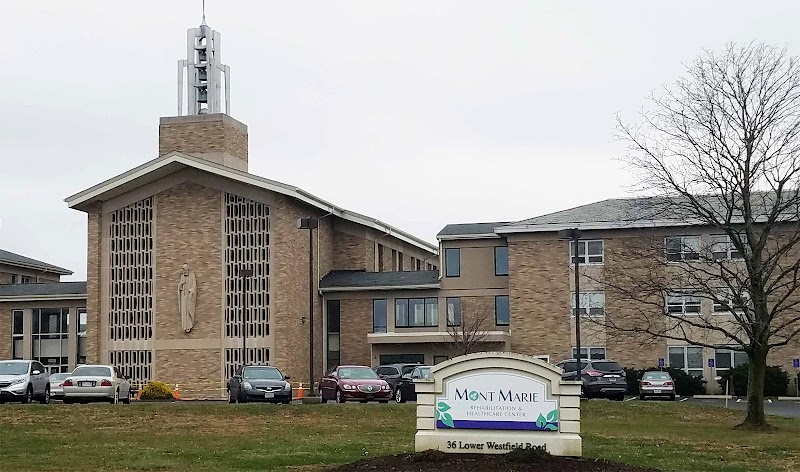
How is Mont Marie Rehabilitation & Healthcare Center Staffed?

CMS rates MONT MARIE REHABILITATION & HEALTHCARE CENTER's staffing level at 3 out of 5 stars, which is average compared to other nursing homes. Staff turnover is 53%, compared to the Massachusetts average of 46%.

What Have Inspectors Found at Mont Marie Rehabilitation & Healthcare Center?

State health inspectors documented 17 deficiencies at MONT MARIE REHABILITATION & HEALTHCARE CENTER during 2022 to 2025. These included: 1 that caused actual resident harm, 15 with potential for harm, and 1 minor or isolated issues. Deficiencies causing actual harm indicate documented cases where residents experienced negative health consequences.
Who Owns and Operates Mont Marie Rehabilitation & Healthcare Center?

MONT MARIE REHABILITATION & HEALTHCARE CENTER is owned by a for-profit company. For-profit facilities operate as businesses with obligations to shareholders or private owners. The facility is operated by MARQUIS HEALTH SERVICES, a chain that manages multiple nursing homes. With 84 certified beds and approximately 78 residents (about 93% occupancy), it is a smaller facility located in HOLYOKE, Massachusetts.
How Does Mont Marie Rehabilitation & Healthcare Center Compare to Other Massachusetts Nursing Homes?

Compared to the 100 nursing homes in Massachusetts, MONT MARIE REHABILITATION & HEALTHCARE CENTER's overall rating (4 stars) is above the state average of 2.9, staff turnover (53%) is near the state average of 46%, and health inspection rating (4 stars) is above the national benchmark.

What Should Families Ask When Visiting Mont Marie Rehabilitation & Healthcare Center?

Based on this facility's data, families visiting should ask: "Can I visit during a mealtime to observe dining assistance and food quality?" "How do you handle medical emergencies, and what is your hospital transfer rate?" "Can I speak with family members of current residents about their experience?"

Is Mont Marie Rehabilitation & Healthcare Center Safe?

Based on CMS inspection data, MONT MARIE REHABILITATION & HEALTHCARE CENTER has a clean safety record: no substantiated abuse findings (meaning no confirmed cases of resident harm), no Immediate Jeopardy citations (the most serious violation level indicating risk of serious injury or death), and is not on the Special Focus Facility watch list (a federal program monitoring the lowest-performing 1% of nursing homes). The facility has a 4-star overall rating and ranks #1 of 100 nursing homes in Massachusetts. While no facility is perfect, families should still ask about staff-to-resident ratios and recent inspection results during their visit.

Do Nurses at Mont Marie Rehabilitation & Healthcare Center Stick Around?

MONT MARIE REHABILITATION & HEALTHCARE CENTER has a staff turnover rate of 53%, which is 7 percentage points above the Massachusetts average of 46%. Moderate turnover is common in nursing homes, but families should still ask about staff tenure and how the facility maintains care continuity when employees leave.

Was Mont Marie Rehabilitation & Healthcare Center Ever Fined?

MONT MARIE REHABILITATION & HEALTHCARE CENTER has been fined $8,278 across 1 penalty action. This is below the Massachusetts average of $33,162. While any fine indicates a compliance issue, fines under $50,000 are relatively common and typically reflect isolated problems that were subsequently corrected. Families should ask what specific issues led to these fines and confirm they've been resolved.

Is Mont Marie Rehabilitation & Healthcare Center on Any Federal Watch List?

MONT MARIE REHABILITATION & HEALTHCARE CENTER is not on any federal watch list. The most significant is the Special Focus Facility (SFF) program, which identifies the bottom 1% of nursing homes nationally based on persistent, serious quality problems. Not being on this list means the facility has avoided the pattern of deficiencies that triggers enhanced federal oversight. This is a positive indicator, though families should still review the facility's inspection history directly.