ALLIANCE HEALTH AT MARIE ESTHER


720 BOSTON POST ROAD, MARLBOROUGH, MA 01752 (508) 485-3791
Non profit - Corporation 78 Beds ALLIANCE HEALTH & HUMAN SERVICES Data: November 2025
Trust Grade
83/100
#3 of 338 in MA
Last Inspection: July 2024

Within standard 12-15 month inspection cycle. Federal law requires annual inspections.

Overview

Alliance Health at Marie Esther in Marlborough, Massachusetts, has a Trust Grade of B+, indicating that it is above average in quality and recommended for families seeking care. It ranks #3 out of 338 facilities in the state and #2 out of 72 in Middlesex County, placing it in the top tier of options available. The facility is improving, as it has reduced the number of issues from two in 2023 to none in 2024. Staffing is rated 4 out of 5, though with a high turnover rate of 50%, which is concerning compared to the state average of 39%. While the facility has received $7,901 in fines, which is average, there are serious concerns due to incidents like a staff member hitting a resident during care and failures to provide appropriate assistance during meals for residents with specific needs. Overall, while there are notable strengths in quality and RN coverage, these serious incidents and staffing challenges should be carefully considered by families.

Trust Score
B+
83/100
In Massachusetts
#3/338
Top 1%
Safety Record
Moderate
Needs review
Inspections
Getting Better
2 → 0 violations
Staff Stability
⚠ Watch
50% turnover. Above average. Higher turnover means staff may not know residents' routines.
Penalties
⚠ Watch
$7,901 in fines. Higher than 79% of Massachusetts facilities, suggesting repeated compliance issues.
Skilled Nurses
✓ Good
Each resident gets 58 minutes of Registered Nurse (RN) attention daily — more than average for Massachusetts. RNs are trained to catch health problems early.
Violations
○ Average
7 deficiencies on record. Average for a facility this size. Mostly minor or procedural issues.
★★★★★
5.0
Overall Rating
★★★★☆
4.0
Staff Levels
★★★★★
5.0
Care Quality
★★★★★
5.0
Inspection Score
Stable
2023: 2 issues
2024: 0 issues

The Good

  • 4-Star Staffing Rating · Above-average nurse staffing levels
  • 5-Star Quality Measures · Strong clinical quality outcomes
  • Full Sprinkler Coverage · Fire safety systems throughout facility
  • No fines on record

Facility shows strength in staffing levels, quality measures, fire safety.

The Bad

Staff Turnover: 50%

Near Massachusetts avg (46%)

Higher turnover may affect care consistency

Federal Fines: $7,901

Below median ($33,413)

Minor penalties assessed

Chain: ALLIANCE HEALTH & HUMAN SERVICES

Part of a multi-facility chain

Ask about local staffing decisions and management

The Ugly 7 deficiencies on record

1 actual harm
Sept 2023 1 deficiency 1 Harm
SERIOUS (G) 📢 Someone Reported This

A family member, employee, or ombudsman was alarmed enough to file a formal complaint

Actual Harm - a resident was hurt due to facility failures

Free from Abuse/Neglect (Tag F0600)

A resident was harmed · This affected 1 resident

Based on records reviewed and interviews, for one of three sampled residents (Resident #1), who had severe cognitive impairment and was dependent on staff for care, the Facility failed to ensure he/sh...

Read full inspector narrative →
Based on records reviewed and interviews, for one of three sampled residents (Resident #1), who had severe cognitive impairment and was dependent on staff for care, the Facility failed to ensure he/she was free from physical abuse from a staff member when on 09/09/23, Resident #1 became combative during care and Certified Nurse Aide (CNA) #1 in response to Resident #1's behavior, hit Resident #1 on the top of his/her right hand, the incident was witnessed by CNA #2 and CNA #3, who were present and also assisted CNA #1 with Resident #1 at the time of the incident. A cognitively intact person would experience pain and mental anguish after being hit by a caregiver. Findings include: Review of the Facility's Policy titled Abuse Prohibition, dated as revised 10/11/22, indicated the following: -the Facility will provide an environment in which the resident is free from abuse, neglect, mistreatments, misappropriation of resident property, or exploitation, including but not limited to freedom from corporal punishment, involuntary seclusion, and any physical and chemical restraint that is not required to treat the resident's medical symptoms; -abuse is the willful infliction of injury, unreasonable confinement, intimidation, or punishment with resulting physical harm, pain or mental anguish, or assault and battery; -physical abuse is hitting, slapping, pinching, kicking and control of behavior through corporal punishment, and -the Facility assumes the responsibility of ensuring the safety and well-being of the residents in their care. Staff are trained and knowledgeable in how to react and respond appropriately to resident behavior. Staff are expected to to respond appropriately and professionally to resident behaviors. Review of the Report submitted by the Facility via the Health Care Facility Reporting System (HCFRS), dated as submitted 09/09/23, indicated that on 09/09/23 at approximately 2:25 P.M., a CNA (later identified as CNA #2) reported to the Director of Nurses (DON) that another CNA (later identified as CNA #1) hit Resident #1's right hand while providing care. Review of the Facility's Investigation Summary, dated 09/09/23, indicated that on 09/09/23 at 2:25 P.M., CNA #2 reported that she saw CNA #1 hit Resident #1 while providing care in his/her bathroom. The Summary indicated that the Director of Nurses (DON) interviewed CNA #2 and she (CNA #2) told her it was not a tap, and that CNA #1 hit Resident #1 because he/she was being resistive and combative with care. The Summary indicated that the DON also interviewed CNA #3 and she told the DON that she was assisting CNA #1 with Resident #1's care in his/her bathroom and that Resident #1 was combative and pushed CNA #1 away. The Summary indicated that CNA #3 told the DON that CNA #1 took Resident #1's right hand and hit it, stating, no. The Summary indicated that CNA #1 told the DON that Resident #1 was pushing her away and hitting her. The Summary indicated that CNA #1 motioned that she took Resident #1's hand, hit it, and said no. Resident #1 was admitted to the Facility in December 2020, diagnoses included Alzheimer's disease, adjustment disorder with depressed mood, psychotic disorder with delusions, and anxiety disorder. Review of Resident #1's Annual Minimum Data Set (MDS) Assessment, dated 08/28/23, indicated that he/she had severe cognitive impairment and required extensive assistance from one staff member for hygiene and bathing, and was dependent on two staff members for toileting. Review of Resident #1's Behavior Care Plan, dated 10/13/22, indicated the following interventions: -maintain a calm environment and approach to the resident, and -if resident has verbal or physical outbursts, assess, maintain safety and reapproach. Review of CNA #1's Written Witness Statement/Interview, dated 09/09/23, indicated that Resident #1 hit her when she was changing him/her. The Statement/Interview indicated that CNA #1 took Resident #1's hand and hit it back and said no. The Statement indicated that CNA #1 gestured taking a hand and hitting it with hers. The Statement/Interview indicated that the Director of Nurses (DON) told CNA #1 that this was abuse and requested that she leave the Facility. The Surveyor was unable to interview CNA #1 as she did not respond to the Department of Public Health's telephone call or letter request for an interview. During an interview on 09/28/23 at 12:11 P.M., and review of Certified Nurse Aide (CNA) #2's Written Witness Statement, dated 09/09/23, CNA #2 said that at approximately 2:00 P.M., she heard Resident #1 screaming, so she went to his/her room to help. CNA #2 said that Resident #1 was in his/her bathroom with CNA #1 and CNA #3, and was very agitated, so she tried to calm Resident #1 down. CNA #2 said she, CNA #1, and CNA #3 dressed Resident #1 in his/her bathroom. CNA #2 said that CNA #1 became very impatient and forceful with Resident #1. CNA #2 said that she saw CNA #1 grab Resident #1's hand and hit the top of his/her hand. CNA #2 said it was not just a tap, and said she also heard a slapping noise when CNA #1 hit Resident #1's hand. CNA #2 said she told CNA #1 to leave the bathroom and said she and CNA #3 finished providing care to Resident #1. During an interview on 09/29/23 at 12:40 P.M., and review of Certified Nurse Aide (CNA) #3's Written Witness Statement, dated 09/09/23, CNA #3 said that at approximately 2:00 P.M., she and CNA #1 were providing care for Resident #1 in his/her bathroom. CNA #3 said Resident #1 became combative, and then CNA #2 came to help them. CNA #3 said CNA #1 was being very impatient and forceful with Resident #1 and then Resident #1 hit CNA #1. CNA #3 said she saw CNA #1 hold Resident #1 by the wrist and forcefully hit the top of his/her hand. During an interview on 09/28/23 at 1:25 P.M., Nurse #1 said Resident #1 could be combative with care at times and said the CNAs should reapproach at a later time if this occurs. During an interview on 09/28/23 at 2:36 P.M., the Director of Nurses (DON) said that CNA #2 came to her on 09/09/23 sometime between 2:00 P.M. and 2:30 P.M. and told her that she saw CNA #1 hit Resident #1. The DON said CNA #2 told her that CNA #3 also witnessed the alleged potential abuse. The DON said she went to find CNA #1 who was on break, and said she asked CNA #1 to demonstrate what she did to Resident #1. The DON said CNA #1 demonstrated with her, using her hand how she (CNA #1) took Resident #1's hand and hit it the top of it. The DON said CNA #1 did not seem to think she had done anything wrong and said she had trouble removing CNA #1 from the Facility. The DON said that the Facility substantiated the allegation of physical abuse, and CNA #1 was no longer allowed in the Facility. Although Resident#1's impaired cognition minimized his/her understanding of the incident, an unimpaired individual would have experienced physical pain and mental anguish after being treated by a caregiver in this manner.
Apr 2023 1 deficiency
CONCERN (D)

Potential for Harm - no one hurt, but risky conditions existed

Deficiency F0676 (Tag F0676)

Could have caused harm · This affected 1 resident

Based on observations, interviews and record review, the facility failed to ensure its staff provided appropriate treatment and services to maintain one Resident's (#25) comfort during dining, out of ...

Read full inspector narrative →
Based on observations, interviews and record review, the facility failed to ensure its staff provided appropriate treatment and services to maintain one Resident's (#25) comfort during dining, out of a total sample of 12 residents. Specifically, the facility failed to get Resident #25 out of bed for meals per preference, when the Resident required assistance from staff with transfers, and voiced concerns with choking and discomfort when eating while lying in bed. Finding include: Resident #25 was admitted to the facility in April 2022 with diagnoses including Fibromyalgia (chronic disorder characterized by widespread pain, fatigue, muscle stiffness and insomnia), Parkinsonism (brain condition that cause slowed movements, rigidity/stiffness and tremors), Traumatic Subdural Hemorrhage (condition where blood collects between the skull and the surface of the brain), Gastroesophageal Reflux Disease (GERD-chronic disease that occurs when stomach acid or bile flows into the food pipe and irritates the lining) and Irritable Bowel Syndrome (IBS-intestinal disorder causing pain in the belly, gas, diarrhea and constipation). Review of a Nurse's Note, dated 2/21/23, indicated Resident #25 called nursing staff into his/her room during breakfast stating that he/she choked on a prune pit and a Speech Language Pathologist (SLP) screen was submitted to evaluate his/her diet consistency for safety. Review of a Nurse's Note, dated 2/23/23, indicated that the SLP evaluated Resident #25 and made no diet texture/consistency changes. Review of the Minimum Data Set (MDS) Assessment, dated 3/13/23, indicated Resident #25 was cognitively intact as evidenced by a Brief Interview of Mental Status (BIMS) score of 14 out of 15, had no behaviors or refusals of care, required total assistance from staff with bed mobility and transfers and was independent with eating. On 4/12/23 at 9:20 A.M., the surveyor observed Resident #25 lying in bed. The head of the bed was elevated and an overbed table with a hot beverage mug was positioned in front of him/her. The Resident was wearing a hospital gown and crumbs were observed on the front of the Resident's chest. During an interview at this time, Resident #25 said that he/she had asked the facility staff to be out of bed and to be seated up in the wheelchair for breakfast because he/she was concerned about choking. The Resident said that he/she was unable to reposition/boost him/herself and relied on facility staff to assist with this. Resident #25 said that he/she had asked and that nothing had been done about his/her request. On 4/13/23 at 9:14 A.M., Resident #25 was observed lying in bed with the head of the bed elevated. An overbed table with a hot beverage mug was positioned in front of him/her. During an interview at this time, Resident #25 said that he/she didn't know why breakfast was so difficult and felt it was due to having to eat while lying in bed. He/she said it was difficult to drink liquids while lying in bed and would prefer to sit up in his/her wheelchair for better positioning during meals. On 4/14/23 at 8:22 A.M., the surveyor observed Resident #25 lying in bed, eating from a breakfast tray that was on an overbed table positioned in front of him/her. The head of the bed was elevated, and the Resident was eating cereal from a container on his/her lap. During an interview at this time, Resident #25 said that he/she had to eat while reclined in bed, and had told the facility staff that he/she preferred to be up in the wheelchair for breakfast. Resident #25 said that it had been months since he/she had made this request, that his/her family had also raised the concern that it was difficult to eat while reclined in bed and that he/she was fearful of choking. Resident #25 said that when his/her concern had been raised to facility staff, he/she was told that they don't have enough staff to get him/her up, and because he/she was not a choking risk and able to eat by him/herself, they didn't have to get him/her out of bed for breakfast. During an interview on 4/14/23 at 8:25 A.M., Certified Nurse Aide (CNA) #2 said Resident #25 gets up out of bed after breakfast and staff breaks. CNA #2 said Resident #25 was not a choking risk and was able to eat while in bed. CNA #2 further said that there were other residents who request to be up for breakfast, but the staff were unable to accommodate due to all of the residents who are required to be up out of bed due to their feeding/swallowing ability. CNA #2 said that once the meals arrive on the unit, they were unable to provide resident care while the meals were being served. During an interview on 4/14/23 at 8:38 A.M., Rehabilitation Staff #1 said that she had worked with Resident #25 numerous times. She further said that there were eight residents who needed to be out of bed for meals and supervised, and that she has heard Resident #25 request to be out of bed for breakfast but because the Resident was independent with eating, he/she was able to eat in his/her room. During an interview on 4/14/23 at 8:49 A.M., Nurse #2 said Resident #25 requests to be up out of bed in the morning prior to breakfast but other residents have priority due to their risk of aspiration (accidentally breathing food/fluids into the airway) and need for increased supervision with meals. Nurse #2 said Resident #25 was independent with meals therefore could eat in his/her room. Nurse #2 also said there was a list of residents that the 11:00 P.M. to 7:00 A.M. staff assist with getting out of bed in the morning prior to breakfast, but Resident #25 was not included on that list. During an interview on 4/14/23 at 10:52 A.M., the surveyor spoke with Resident #25's family member, who said that she was aware of the Resident's ongoing concern. She said Resident #25 got up early in the morning and liked to be out of bed for breakfast because he/she was not comfortable eating reclined in bed. Resident #25's family member said there was an incident recently where he/she was eating breakfast in bed and almost choked on a pitted prune but was able to catch it. The family member said that she thought this incident made Resident #25 more nervous and that eating while lying in bed really affected him/her. The family member said that Resident #25 would like to be seated in his/her wheelchair or in the dining room for breakfast and that the facility staff had explained that there was not enough people to help with this due to the number of residents that were required to be up and out of bed based on their level of assistance/supervision with meals or choking risk, and that these residents take priority. She further said that Resident #25 was very uncomfortable eating while lying in bed, that he/she never ate meals that way and wanted to be up in a wheelchair for breakfast. The family member said that this concern had been brought up for over six months and had been discussed in the last two care plan conferences, but nothing had been done. Review of the Care Plan Conference Reports dated 10/19/22, 1/4/23 and 3/29/23, indicated meetings with the Resident, family member and interdisciplinary team were held, that areas were discussed and that all who participated were in agreement with the plan of care. There was no documented evidence of the specific details of what was discussed during the care plan meeting nor any issues/concerns that were identified. During an interview on 4/14/23 at 11:42 A.M., Social Worker (SW) #1 said that she oversees the care plan meeting process. SW #1 said that Resident #25, his/her family member and the interdisciplinary team attended the meetings. She said at the most recent care plan meeting a grievance was discussed about the Resident's concern about not getting up out of bed for breakfast. SW #1 said that an explanation was given to the Resident and his/her family that those on altered diets needed to be up and out of bed for breakfast and that Resident #25 was independent with eating. During an interview on 4/14/23 at 12:08 P.M., the Director of Nurses (DON) said Resident #25 was offered to get out of bed on the 11:00 P.M. to 7:00 A.M. shift, that this would occur around 4:00 A.M., and the Resident declined. The DON did not think that there was documentation to indicate this. The DON said that there were approximately eight residents that were required to be up for breakfast for safety reasons and also 17 residents who needed to be up to attend morning services for religious purposes. During an interview on 4/14/23 at 12:10 P.M., the Regional Nurse said that at 7:00 A.M., the facility had two to three CNAs to provide care. She said that the religious residents needed to be washed and dressed and up as well as the other residents who require supervision/assistance prior to breakfast, and that the facility followed a Per Patient Day (PPD- hours of scheduled nursing staff divided by the total number of residents) for staffing on the unit.
Dec 2021 5 deficiencies
CONCERN (D)

Potential for Harm - no one hurt, but risky conditions existed

Assessment Accuracy (Tag F0641)

Could have caused harm · This affected 1 resident

**NOTE- TERMS IN BRACKETS HAVE BEEN EDITED TO PROTECT CONFIDENTIALITY** Based on record review and interview, the facility failed to accurately code a medication administered over the last 7 days on t...

Read full inspector narrative →
**NOTE- TERMS IN BRACKETS HAVE BEEN EDITED TO PROTECT CONFIDENTIALITY** Based on record review and interview, the facility failed to accurately code a medication administered over the last 7 days on the Minimum Data Set (MDS) Assessment for one Resident (#231), out of a total sample of 12 residents. Findings include: Resident #231 was admitted to the facility in November 2021 with diagnoses including: -fracture of the left femur (the thigh bone of the upper leg) -surgical repair of the femur -history of stroke (poor blood flow to the brain) Review of the Physician's Orders, dated 11/12/21, indicated: Apixaban (A target specific oral anticoagulant medication used to treat and prevent blood clots and to prevent stroke) 2.5 milligrams (mg) give one tab (tablet) po (by mouth) 2 times a day. Review of the Medication Administration Record (MAR) for Resident #231, dated November 2021, indicated that from 11/12/21 through 11/18/21, Apixaban 2.5 mg was administered 11 times over 6 days. Review of the MDS assessment, dated 11/19/21, Section N titled Medications, indicated that no anticoagulant medication had been administered to the Resident beginning 11/12/21 through 11/18/21. During an interview on 12/1/21 at 10:39 A.M., the MDS nurse said that she had completed the MDS on 11/19/2021, and that she had not coded the Apixaban as an anticoagulant medication in Section N of the MDS assessment because she did not think it was an anticoagulant medication. During an interview on 12/1/21 at 12:38 P.M., the Staff Development/Infection Preventionist nurse said that she had never coded Apixaban as an anticoagulant, and it was her understanding that it was not required. Review of the MDS Resident Assessment Instrument (RAI) 3.0 Manual v1.17.1, October 2019, in reference to Section N0410-E: Medications Received, indicated but was not limited to: *N0410A-H: Code medications according to the pharmacological classification, not how they are being used. *N0410E, Anticoagulant (example: warfarin, heparin, or low- molecular weight heparin): Record the number of days an anticoagulant medication was received by the resident at any time during the 7-day look-back period (or since admission/entry or reentry if less than 7 days). Do not code antiplatelet medications such as aspirin/extended release, dipyridamole, or clopidogrel here. *Anticoagulants such as Target Specific Oral Anticoagulants (TSOACs), which may or may not require laboratory monitoring, should be coded in N0410E, as an Anticoagulant. Review of the article titled Target-Specific Oral Anticoagulants published April 18, 2014 in the U.S. Pharmacist Journal, US Pharm. 2014;39(4):69-74, authors [NAME] and [NAME], included Apixaban as a target specific oral anticoagulant.
CONCERN (D)

Potential for Harm - no one hurt, but risky conditions existed

ADL Care (Tag F0677)

Could have caused harm · This affected 1 resident

Based on observation, record review and interview, the facility failed to provide the necessary services to maintain grooming for one Resident (#14) in a total sample of 12 residents. Findings includ...

Read full inspector narrative →
Based on observation, record review and interview, the facility failed to provide the necessary services to maintain grooming for one Resident (#14) in a total sample of 12 residents. Findings include: Resident #14 was admitted to the facility in April 2019. On 11/30/21 at 8:20 A.M., the surveyor observed Resident #14 sitting up in bed, eating breakfast, and he/she had noticeably long facial hair. Review of the Care Plan, updated 10/2021, indicated the Resident was dependent with grooming. Review of November 2021 Nursing Assistant Flow Sheets indicated the Resident required total dependent care for grooming tasks from the nursing assistants on the 7:00 A.M. to 3:00 P.M. and 3:00 P.M. to 11:00 P.M. shifts. On 12/1/21 at 8:16 A.M., the surveyor observed Resident #14 sitting up in bed eating breakfast, and he/she still had noticeably long facial hair. On 12/1/21 at 10:25 A.M., the surveyor observed the Resident sitting in his/her wheelchair beside the bed. Resident #14 was dressed, his/her hair was brushed, however his/her facial hair was still long and appeared unchanged since the initial observation on the morning of 11/30/21. During an interview on 12/1/21 at 10:30 A.M., Nurse #1 said that the Resident's morning care was completed. When asked about the Resident's facial hair, the nurse said the Resident should have been shaved. The nurse asked Resident #14 if he/she would like to have his/her facial hair shaved, and the Resident said yes. The Resident then told the nurse that the razor was in the top drawer.
CONCERN (D)

Potential for Harm - no one hurt, but risky conditions existed

Deficiency F0868 (Tag F0868)

Could have caused harm · This affected 1 resident

Based on interview and Quality Assurance and Performance Improvement (QAPI) meeting sign-in sheets, the facility failed to ensure the required members were present for one out of four quarterly meetin...

Read full inspector narrative →
Based on interview and Quality Assurance and Performance Improvement (QAPI) meeting sign-in sheets, the facility failed to ensure the required members were present for one out of four quarterly meetings. Findings include: Review of the last four quarters of QAPI meeting sign-in sheets indicated the Director of Nurses (DON) was not present for the most recent meeting held on October 26, 2021. During an interview on 12/1/21 at 2:18 P.M., the administrator reviewed the October 26, 2021 sign-in sheet and said the DON was not in attendance and should have been. He said the DON was supposed to attend every QAPI meeting.
CONCERN (E)

Potential for Harm - no one hurt, but risky conditions existed

Deficiency F0727 (Tag F0727)

Could have caused harm · This affected multiple residents

Based on record review and interview the facility failed to use the services of a registered nurse (RN) for at least 8 consecutive hours a day, 7 days a week. Findings include: Review of the actual wo...

Read full inspector narrative →
Based on record review and interview the facility failed to use the services of a registered nurse (RN) for at least 8 consecutive hours a day, 7 days a week. Findings include: Review of the actual worked schedules from 11/6/21 through 11/30/21 indicated that on 11/6/21, 11/7/21, 11/20/21, 11/21/21, and 11/25/21 there were no RNs present at the facility in a 24 hour period. During an interview on 11/30/21 at 3:07 P.M., the Staff Development Coordinator/Infection Preventionist said that she did not believe there was an RN in the facility for 8 hours every day of the week. She said they only had licensed practical nurses (LPN) on the weekends, and sometimes they had an RN on one of the weekend days. During an interview on 11/30/21 at 4:07 P.M., the Director of Nurses said they had LPNs only, every other Saturday and Sunday, so one day per week there was no RN in the facility.
MINOR (B)

Minor Issue - procedural, no safety impact

Deficiency F0582 (Tag F0582)

Minor procedural issue · This affected multiple residents

Based on record review and interview the facility failed to issue a Notice of Medicare Non-Coverage (NOMNC) as required for two Residents (#131 and #132), out of two applicable sampled residents. Fin...

Read full inspector narrative →
Based on record review and interview the facility failed to issue a Notice of Medicare Non-Coverage (NOMNC) as required for two Residents (#131 and #132), out of two applicable sampled residents. Findings include: Review of the Skilled Nursing Facility (SNF) Beneficiary Protection Notification Review indicated Resident #131 received Medicare Part A skilled services from 10/25/21 through 10/31/21. Further review indicated a NOMNC was not issued to the Resident or Resident Representative to inform him/her that skilled services were being discontinued. Review of the SNF Beneficiary Protection Notification Review indicated Resident #132 received Medicare Part A skilled services from 5/10/21 through 6/3/21. Further review indicated a NOMNC was not issued to the Resident or Resident Representative to inform him/her that skilled services were being discontinued. During an interview on 12/01/21 at 9:58 A.M., Social Worker (SW) #1 said she didn't have copies of either of the NOMNCs being issued. She said a notice was never issued and should have been. She said that they had an interim SW at the time and that may have been why they were missed.
Understanding Severity Codes (click to expand)
Life-Threatening (Immediate Jeopardy)
J - Isolated K - Pattern L - Widespread
Actual Harm
G - Isolated H - Pattern I - Widespread
Potential for Harm
D - Isolated E - Pattern F - Widespread
No Harm (Minor)
A - Isolated B - Pattern C - Widespread

Questions to Ask on Your Visit

  • "Can I speak with families of current residents?"
  • "What's your RN coverage like on weekends and overnight?"

Our Honest Assessment

Strengths
  • • Grade B+ (83/100). Above average facility, better than most options in Massachusetts.
Concerns
  • • 7 deficiencies on record, including 1 serious (caused harm) violation. Ask about corrective actions taken.
Bottom line: Generally positive indicators. Standard due diligence and a personal visit recommended.

About This Facility

What is Alliance Health At Marie Esther's CMS Rating?

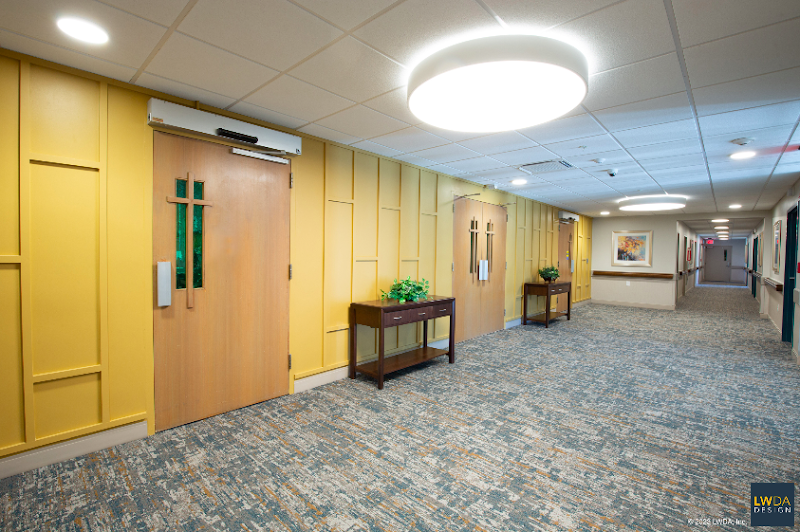
CMS assigns ALLIANCE HEALTH AT MARIE ESTHER an overall rating of 5 out of 5 stars, which is considered much above average nationally. Within Massachusetts, this rating places the facility higher than 99% of the state's 100 nursing homes. This rating reflects solid performance across the metrics CMS uses to evaluate nursing home quality.
How is Alliance Health At Marie Esther Staffed?

CMS rates ALLIANCE HEALTH AT MARIE ESTHER's staffing level at 4 out of 5 stars, which is above average compared to other nursing homes. Staff turnover is 50%, compared to the Massachusetts average of 46%. RN turnover specifically is 62%, which is notably high. RNs provide skilled clinical oversight, so turnover in this role can affect medical care quality.

What Have Inspectors Found at Alliance Health At Marie Esther?

State health inspectors documented 7 deficiencies at ALLIANCE HEALTH AT MARIE ESTHER during 2021 to 2023. These included: 1 that caused actual resident harm, 5 with potential for harm, and 1 minor or isolated issues. Deficiencies causing actual harm indicate documented cases where residents experienced negative health consequences.
Who Owns and Operates Alliance Health At Marie Esther?

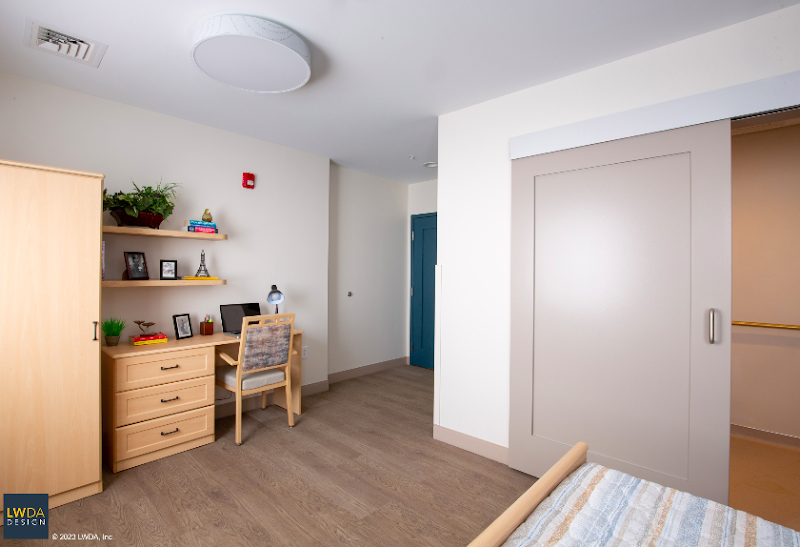
ALLIANCE HEALTH AT MARIE ESTHER is owned by a non-profit organization. Non-profit facilities reinvest revenue into operations rather than distributing to shareholders. The facility is operated by ALLIANCE HEALTH & HUMAN SERVICES, a chain that manages multiple nursing homes. With 78 certified beds and approximately 32 residents (about 41% occupancy), it is a smaller facility located in MARLBOROUGH, Massachusetts.

How Does Alliance Health At Marie Esther Compare to Other Massachusetts Nursing Homes?

Compared to the 100 nursing homes in Massachusetts, ALLIANCE HEALTH AT MARIE ESTHER's overall rating (5 stars) is above the state average of 2.9, staff turnover (50%) is near the state average of 46%, and health inspection rating (5 stars) is much above the national benchmark.

What Should Families Ask When Visiting Alliance Health At Marie Esther?

Based on this facility's data, families visiting should ask: "Can I visit during a mealtime to observe dining assistance and food quality?" "How do you handle medical emergencies, and what is your hospital transfer rate?" "Can I speak with family members of current residents about their experience?"

Is Alliance Health At Marie Esther Safe?

Based on CMS inspection data, ALLIANCE HEALTH AT MARIE ESTHER has a clean safety record: no substantiated abuse findings (meaning no confirmed cases of resident harm), no Immediate Jeopardy citations (the most serious violation level indicating risk of serious injury or death), and is not on the Special Focus Facility watch list (a federal program monitoring the lowest-performing 1% of nursing homes). The facility has a 5-star overall rating and ranks #1 of 100 nursing homes in Massachusetts. While no facility is perfect, families should still ask about staff-to-resident ratios and recent inspection results during their visit.

Do Nurses at Alliance Health At Marie Esther Stick Around?

ALLIANCE HEALTH AT MARIE ESTHER has a staff turnover rate of 50%, which is about average for Massachusetts nursing homes (state average: 46%). Moderate turnover is common in nursing homes, but families should still ask about staff tenure and how the facility maintains care continuity when employees leave.

Was Alliance Health At Marie Esther Ever Fined?

ALLIANCE HEALTH AT MARIE ESTHER has been fined $7,901 across 1 penalty action. This is below the Massachusetts average of $33,158. While any fine indicates a compliance issue, fines under $50,000 are relatively common and typically reflect isolated problems that were subsequently corrected. Families should ask what specific issues led to these fines and confirm they've been resolved.

Is Alliance Health At Marie Esther on Any Federal Watch List?

ALLIANCE HEALTH AT MARIE ESTHER is not on any federal watch list. The most significant is the Special Focus Facility (SFF) program, which identifies the bottom 1% of nursing homes nationally based on persistent, serious quality problems. Not being on this list means the facility has avoided the pattern of deficiencies that triggers enhanced federal oversight. This is a positive indicator, though families should still review the facility's inspection history directly.