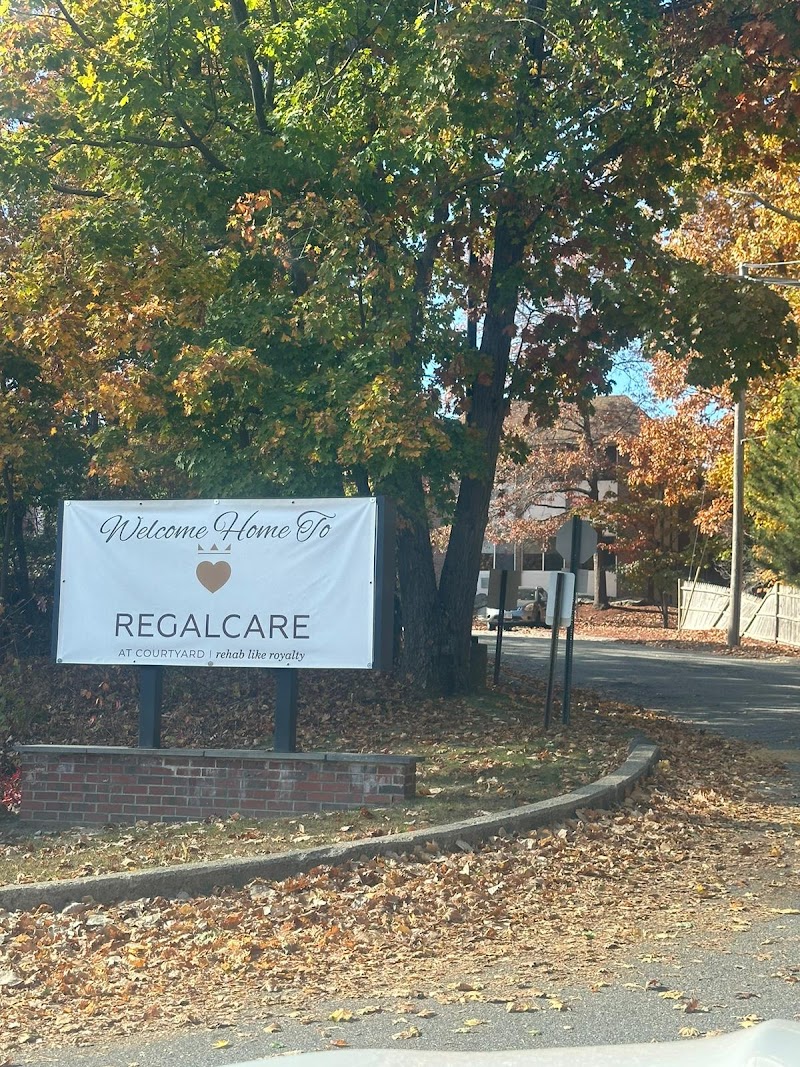
REGALCARE AT COURTYARD-MEDFORD

200 GOVERNORS AVENUE, MEDFORD, MA 02155 (781) 391-5400
For profit - Limited Liability company 224 Beds REGALCARE Data: November 2025
Trust Grade
0/100
#314 of 338 in MA
Last Inspection: March 2025

Within standard 12-15 month inspection cycle. Federal law requires annual inspections.

Overview

RegalCare at Courtyard-Medford has a Trust Grade of F, indicating significant concerns about the quality of care provided. It ranks #314 out of 338 facilities in Massachusetts, placing it in the bottom half, and #68 out of 72 in Middlesex County, suggesting that there are very few local options that perform better. The facility's performance is worsening, with the number of issues increasing from 25 in 2024 to 29 in 2025. Staffing is a concern here, with a rating of 2 out of 5 stars and a high turnover rate of 53%, which is above the state average. Additionally, the facility has incurred $227,226 in fines, which is higher than 86% of Massachusetts facilities, indicating potential compliance problems. While the facility does have average RN coverage, specific incidents raise alarms. For example, one resident with severe cognitive impairment went for several hours without care for incontinence, and other residents did not receive timely wound care or necessary treatments, leading to worsened health conditions. Overall, families should weigh these significant weaknesses against any potential strengths before deciding on this facility for their loved ones.

Trust Score
F
0/100
In Massachusetts
#314/338
Bottom 8%
Safety Record
High Risk
Review needed
Inspections
Getting Worse
25 → 29 violations
Staff Stability
⚠ Watch
53% turnover. Above average. Higher turnover means staff may not know residents' routines.
Penalties
○ Average
$227,226 in fines. Higher than 71% of Massachusetts facilities. Some compliance issues.
Skilled Nurses
○ Average
Each resident gets 38 minutes of Registered Nurse (RN) attention daily — about average for Massachusetts. RNs are the most trained staff who monitor for health changes.
Violations
⚠ Watch
79 deficiencies on record. Higher than average. Multiple issues found across inspections.
★☆☆☆☆
1.0
Overall Rating
★★☆☆☆
2.0
Staff Levels
★★★☆☆
3.0
Care Quality
★☆☆☆☆
1.0
Inspection Score
Stable
2024: 25 issues
2025: 29 issues

The Good

  • Full Sprinkler Coverage · Fire safety systems throughout facility
  • No fines on record

Facility shows strength in fire safety.

The Bad

1-Star Overall Rating

Below Massachusetts average (2.9)

Significant quality concerns identified by CMS

Staff Turnover: 53%

Near Massachusetts avg (46%)

Higher turnover may affect care consistency

Federal Fines: $227,226

Well above median ($33,413)

Significant penalties indicating serious issues

Chain: REGALCARE

Part of a multi-facility chain

Ask about local staffing decisions and management

The Ugly 79 deficiencies on record

7 actual harm
Apr 2025 1 deficiency
CONCERN (D) 📢 Someone Reported This

A family member, employee, or ombudsman was alarmed enough to file a formal complaint

Potential for Harm - no one hurt, but risky conditions existed

Deficiency F0777 (Tag F0777)

Could have caused harm · This affected 1 resident

Based on records reviewed and interviews for one of three sampled residents (Resident #1), who had new physician's orders on 3/05/25, for a STAT (without delay, immediately) chest X-ray (two views) du...

Read full inspector narrative →
Based on records reviewed and interviews for one of three sampled residents (Resident #1), who had new physician's orders on 3/05/25, for a STAT (without delay, immediately) chest X-ray (two views) due to onset of acute respiratory congestion, the Facility failed to ensure Resident #1 was provided with radiology services consistent with his/her Physician's Orders, when the Radiology Provider was not contacted by nursing on 3/05/25 to order the STAT X-ray, the order was not followed-up on by nursing and as a result, the chest X-ray was not obtained, as ordered. Findings Include: The Facility Policy titled, Labs and Diagnostic, dated as revised 04/2022, indicated the Physician will identify, order diagnostic and lab testing, based on diagnostic and monitoring needs. The Policy indicated the staff will process test requisitions and arrange for tests. The Policy indicated a Nurse will identify the urgency of communicating with the Attending Physician based on the Physician request, the seriousness of any abnormality, and the individual's current condition. Resident #1 was admitted to the Facility in March 2025, diagnoses included Chronic Pulmonary Disease (a group of lung diseases that blocks airflow and make it difficult to breathe), Bipolar (a disorder associated with episodes of mood swings ranging from depressive lows to manic highs), Emphysema (chronic lung disease that permanently damages the lungs' air sacs, making it difficult to breathe), Chronic Kidney Disease Stage III (the kidneys have mild to moderate damage and are less able to filter waste and fluid out of the body), Anxiety (a feeling of fear, dread, and uneasiness), Alzheimer's Disease (a progressive disease that destroys memory and other important mental functions), Dementia (a loss of memory, language, problem solving and other thinking abilities that are severe enough to interfere with daily life), Depression (a serious mental illness that can impact how you think, feel act, and perceive the world), Hypertension (high blood pressure), Left Bundle Branch Block (a delay or blockage of electrical impulses to the left side of the heart), and Neoplasm of Bronchus and Lung (bronchogenic carcinoma or lung cancer). Review of Resident #1's Medication Administration Recorded, dated 03/05/25, indicated Resident #1 had new Physician's Orders (Prescriber Entered) for Diagnostic Management as follows: - Chest X-ray (2 views) STAT (without delay, immediately) for respiratory congestion. During an interview on 04/03/25 at 4:06 P.M., Nurse #1 said on 03/05/25, he worked the 7:00 A.M. to 3:00 P.M. shift and received a change of shift Nurse Report, around 7:00 A.M. Nurse #1 said he was told that Resident #1 was not feeling well and was coughing. Nurse #1 said he informed the Nurse Practitioner (NP), who assessed Resident #1 and provided new orders. Nurse #1 said he was aware there were new orders for the Flu and COVID swabs, but was unaware that the NP wrote orders for a STAT chest X-ray. Nurse #1 said if he had seen the STAT chest X-ray Order, he would have called the Clinical Services (Radiology Company), faxed over the paperwork and then ensure the company was aware it was a STAT Chest X-ray Order. Nurse #1 said if the Radiology Company was unable to obtain the STAT chest X-ray and there would have been a delay, he would have called the Nurse Practitioner to notify her to obtain new orders. Review of Resident #1's Nurse Practitioner's Progress Note, dated 03/05/25 indicated Resident #1 presented with acute cough symptoms, sinus congestion and evidence of chills upon assessment. The Note indicated an Order was provided (written) for Nursing to obtain a Stat Chest X-ray (2 views) on Resident #1. During an interview on 04/03/25 at 2:49 P.M., The Nurse Practitioner (NP) said she had assessed Resident #1 on 03/05/25, that he/she had sinus congestion, was shivering, and had an increased cough with a hoarse voice. The NP said Resident #1 had a history of Lung Cancer, and she was concerned about him/her having the Flu since other residents in the Facility had developed the Flu during this time, so she Ordered a STAT chest X-ray (2 views) for Resident #1. The NP said she did not receive an update from nursing staff regarding Resident #1's STAT chest X-ray and that she would have expected to be informed if the Radiology Company was unable to perform a STAT chest X-ray. The NP said she would have developed an alternate plan to ensure Resident #1 had a STAT chest X-ray completed. During an interview on 04/03/25 at 1:16 P.M., The Unit Manager said she was unaware Resident #1 had a STAT (urgent) Order for a chest X-ray that the Nurse Practitioner (NP) entered into the Electronic Medical Record on 03/05/25. The Unit Manager (during the interview) reviewed Resident #1's Medication Administration Record and said the Provider (NP) wrote an order on 03/05/25, for Resident #1, to have a STAT chest X-ray for his/her respiratory congestion. The Unit Manager said if a Provider orders a STAT X-ray, this indicates it is urgent, that nursing staff need to notify the Radiology Company of the STAT Order, because it can take two to three days for a non-STAT, non-emergent X-ray to be completed. During a telephone interview on 04/14/25 at 8:53 A.M., Nurse #2 said she worked the 3:00 P.M. to 11:00 P.M., shift on 03/05/25, and was unaware of Resident #1's STAT chest X-ray Order until the end of shift when she completed her documentation in Resident #1's medical record, and read that he/she had been seen by the NP earlier in the day, who had ordered labs and a STAT chest X- ray. Nurse #2 said it was late in the shift when she became aware of the STAT X-ray order and that she did not follow-up to see if the STAT chest X-ray had been ordered or obtained. Nurse #2 said a STAT X-ray indicates the X-ray needs to be done right away and if they were unable to get the X-ray, the Nurse Practitioner would need to be informed. Review of Resident #1's Medical Record indicated there was no documentation to support Resident #1's STAT chest X-ray had been obtained and completed as ordered by the Nurse Practitioner on 03/05/25. There was no documentation to support nursing followed up with the Radiology Company (X-ray Department) regarding Resident #1's STAT chest X-ray Order, and no documentation to support nursing staff informed the NP that the STAT chest X-ray had not been completed. During a telephone interview on 04/14/25 at 9:30 A.M., the Supervisor Coordinator of the Radiology Company said they did not receive a call on 03/05/25 from the Facility regarding a STAT chest X-ray for Resident #1. The Coordinator said according to their records, there was no order placed with them by the Facility, for a STAT chest X-ray for Resident #1. During an interview on 04/03/25 at 6:17 P.M., the Director of Nurses (DON) said Resident #1's Nurse Practitioner placed his/her STAT chest-X ray in the Facility's Point Click Care System (an Electronic Health Record) and his expectations was that nursing call the Radiology Company, notify the Company of the STAT chest X-ray Order, inquire about their availability, and if there was going to be any delays in obtaining it, for nursing to inform the Nurse Practitioner to obtain new orders. The DON said the Radiology Company arrived at the Facility on 03/09/25, to obtain Resident #1's STAT chest X-ray, however Resident #1 was no longer at the Facility. The DON said he was unaware when Resident #1's order for the STAT Chest-X-ray was placed, or by whom. The DON said the Radiology Company's documentation indicated Resident #1's chest X-ray did not indicate it was a STAT Order and the X-ray was canceled on 03/09/25 by the facility because Resident #1 was no longer at the Facility.
Mar 2025 27 deficiencies 4 Harm
SERIOUS (G)

Actual Harm - a resident was hurt due to facility failures

Quality of Care (Tag F0684)

A resident was harmed · This affected 1 resident

**NOTE- TERMS IN BRACKETS HAVE BEEN EDITED TO PROTECT CONFIDENTIALITY** 2.) For Resident #629, the facility failed to obtain an antibiotic medication from the pharmacy in a timely manner, resulting in...

Read full inspector narrative →
**NOTE- TERMS IN BRACKETS HAVE BEEN EDITED TO PROTECT CONFIDENTIALITY** 2.) For Resident #629, the facility failed to obtain an antibiotic medication from the pharmacy in a timely manner, resulting in a worsening skin infection. Resident #629 was admitted in July 2024 with diagnoses including type 2 diabetes and peripheral vascular disease. Review of the Minimum Data Set (MDS) assessment, dated 7/31/24, indicated Resident #629 scored a 13 out of a possible 15 on the Brief Interview for Mental Status exam, indicating intact cognition. During an interview on 3/7/25 at 8:40 A.M., Nurse Practitioner #1 said that she had concerns regarding communication between the facility and the providers. Nurse Practitioner #1 said that she ordered an antibiotic for Resident #629 due to an infection. She said that she was not notified timely by the facility that the order flagged an allergy alert that required her to address, and that therefore the antibiotic was not sent. Nurse Practitioner #1 said that following this incident she filed a safety report with the facility because the infection worsened and the Resident had increased pain because of the delay. Review of the nurse progress note, dated 8/17/24, indicated the following: Spoke to on call NP regarding changes to skin tear to R shin. Noted skin around tear is red, warm to the touch, and mildly painful to the patient. Redness continues throughout the front of the patient's shin. Bilateral swelling, which is baseline for patient noted to both legs. R leg noted to be significantly warmer to the left . New orders for Keflex 500 mg TID x 5 days. Override to penicillin allergy. Order to follow up with MD/NP on Monday 8/19/24. Review of the progress note, dated 8/18/24, indicated Keflex Oral Capsule 500 mg - Pharmacy notified. Unable to pull from Medwhiz. (the facility's contracted pharmacy). Review of the progress note, dated 8/19/24, indicated Keflex Oral Capsule 500 mg- Awaiting clarification for pharmacy to send. The record failed to indicate the Physician or Nurse Practitioner were notified that the facility was unable to obtain the medication on 8/17/24, 8/18/24 or 8/19/24. Review of the Medication Administration Record (MAR) for August 2024 indicated that on 8/18/24 and 8/19/24, Resident #629 did not receive the Keflex of 500 mg. During an interview on 3/10/25 at 11:37 P.M., the Director of Nursing said if there is a delay with a pharmacy then the nurses should notify the provider and then the provider would determine the course of action. The Director of Nursing said that they should also let him know if they are missing a medication because he keeps backup medications in the emergency kit. The Director of Nursing said that all of the actions should be documented in the progress notes, but were not. 3.) Resident #130 was admitted to the facility in December 2020 with diagnoses including Alzheimer's Disease. Review of Resident #130's most recent Minimum Data Set (MDS), dated [DATE], indicated the Resident was unable to complete the Brief Interview for Mental Status (BIMS) and staff had assessed him/her to have severe cognitive impairment. The MDS also indicated Resident #130 was dependent on staff for all care. On 3/04/25 at 9:02 A.M., Resident #130 was observed lying in bed with the sheets lifted to expose both legs. The Resident was observed to have black scabs on bilateral knees. Review of Resident #130's physician orders indicated the following orders: - Right buttocks area, cleanse with NS (normal saline). Pat dry and apply xeroform dressing. Cover with DPD dressing every day and pm (night), initiated on 2/7/25. - Check skin daily and report if skin irritation is notes, in the evening for skin breakdown, initiated 1/10/25. Review of Resident #130's nursing notes from 2/7/25 to present failed to indicate skin impairment on the right buttocks requiring the above stated order. Review of Resident #130's Treatment Administration Record (TAR) failed to indicate the nursing documented any skin irritation or abnormalities per the order. Review of Resident #130's weekly skin assessments, dated 2/17/25, 2/20/25, 2/22/25 and 3/1/25, failed to indicate the right buttock area or the bilateral knee scabs were observed and documented. During an interview on 3/6/25 at 7:39 A.M., Unit Manager #1 said all skin impairments should be included on the weekly skin assessments. Unit Manager #1 said she was unsure if Resident #130 had a skin impairment on his/her buttocks, however said if there was an impairment this should be included on the skin assessment. Unit Manager #1 then entered the Resident's room and observed the two black scabs on the Resident's bilateral knees and also observed a reddened small opened area on the Resident's buttock. Nurse #1 then entered Resident #130's room, observed the two scabs and buttocks and said these areas have been present for a couple of weeks. Both Nurse #1 and Unit Manager #1 said all three of these skin impairments should have been documented on the past skin assessments. During an interview on 3/6/25 at 9:31 A.M., the Director of Nursing said all skin impairments should be documented on the weekly skin assessment, with descriptions of the impairment included. Based on observation, record review and interview the facility failed to ensure that three Residents (#70, #629, and #130) out of a total sample of 42 residents received treatment and care in accordance with professional standards of practice, the comprehensive person-centered care plan, and the residents' choices. Specifically: 1. For Resident #70, the facility failed to a) initiate a treatment for a genital wound which subsequently became infected and deteriorated and b) failed to implement the wound Nurse Practitioner's (NP) recommendation for a change in wound treatment. 2. For Resident #629, the facility failed to obtain an antibiotic medication from the pharmacy in a timely manner, resulting in a worsening skin infection. 3. For Resident #130, the facility failed to complete weekly documentation of skin conditions. Findings Include: 1a.) Resident #70 was admitted to the facility in October 2022 with a diagnosis of diabetes. Review of the most recent Minimum Data Set (MDS) assessment, dated 12/30/24, indicated that Resident #70 scored a 15 out of 15 on the Brief Interview for Mental Status exam, indicating the Resident was cognitively intact. Review of Resident #70's activities of daily living (ADL) care plan indicated the Resident was at risk for decreased ability to performs ADLs in bathing, grooming, personal hygiene, dressing, eating, bed mobility, transfer, locomotion, and toileting related to weakness. Interventions in the care plan included: -Provide resident/patient with total assist of 1 for personal hygiene (grooming), initiated 10/18/22. Review of Resident #70's most recent [NAME] plus pressure ulcer scale, dated 12/30/24, indicated the Resident was at high risk for developing pressure injuries. Review of Resident #70's hospital discharge paperwork, dated 12/29/24 indicated Resident #70 was hospitalized from [DATE] to 12/29/24. Further review of the hospital paperwork indicated the Resident had a genital lesion, that the Resident had first noticed the lesion in his/her nursing facility after his/her most recent admission (13 days earlier) and that the Resident associated the lesion with a cut he/she experienced from his/her urinary catheter. Further review of the hospital paperwork indicated that the hospital assessed the genital wound on 12/28/24, described the wound as scabbed and were cleansing the wound with soap and water. Review of NP #2's progress note dated 12/31/24 indicated Resident #70 returned to the facility from the hospital on [DATE] and that the Resident's hospitalization was complicated by a genital lesion. Further review of NP #2's progress note indicated the Resident had a small genital lesion most likely related to pressure from a urinary catheter. Review of the physician note, dated 1/2/25, indicated Resident #70 had a history of foley trauma of his/her urethra with a cut which was slow healing. Review of a nursing progress note, dated 1/8/25, indicated that therapy reported blood dripping from Resident #70's genitals. Review of a nursing note, dated 1/13/25, indicated that the nurse had reported a small pressure area on Resident #70's genitals to the NP. Review of the incident report titled new pressure ulcer, dated 1/13/25, indicated Resident #70 had an area on his/her genitals which was previously seen by the NP and documented as pressure due to the Foley catheter; the wound was noted with slough. Review of NP #2's progress note, dated 1/14/25 indicated Resident #70 had a small ulcer on his/her genitals that was tender and draining purulent discharge. Further review of NP #2's progress note indicated that the lesion appeared bigger than previously observed with a recommendation to continue to clean the lesion daily with NS (normal saline). Review of a nursing progress note, dated 1/14/25, indicated that Resident #70 was started on an antibiotic by the NP for infection. Review of a nursing progress note, dated 1/15/25, indicated Resident #70 was started on an antibiotic due to a pressure area on his/her genitals. Review of NP #2's progress note, dated 1/21/25, indicated Resident #70's genital lesion improved after treatment with antibiotics but remains open with yellow slough with a plan to wash the wound daily with NS. Review of Resident #70's physician orders indicated the following order: Genitals: Cleanse wound area with NS pad dry twice daily, initiated 1/20/25. Genitals: Monitor for bleeding until the end of the month, if bleeding continue, will refer PT (patient) to urology. Notify NP/MD (medical doctor) for excessive bleeding, initiated 1/8/25 Further review of Resident #70's physician orders indicated that the order for cleansing the wound area with NS was initiated 20 days after the facility became aware of Resident #70's genital wound and an order to monitor for genital bleeding was initiated eight days after the facility became aware of Resident #70's genital wound. Review of Resident #70's Medication Administration Records and Treatment Administration Records (MAR/TAR) failed to indicate that the Residents genital wound was being cleansed with normal saline until 1/21/25, 21 days after the facility became aware of Resident #70's genital wound. Review of the wound NP's progress note, dated 1/21/25, indicated Resident #70 had a traumatic wound on his/her genitals measuring 3 x 2.5 x 0.6 cm (centimeters) with 60% soft tissue and 40% slough. Further review of the progress note indicated a recommendation for the following treatment: Wash with wound cleanser, pat dry, medihoney to slough, cover with collagen wafer and ABD (a gauze pad). Prompt peri care and frequent repositioning. Keep area dry. During an interview on 3/6/25 at 12:28 P.M., Nurse # 7 said when a resident had a wound, nursing would notify the provider who would either ask nursing what kind of treatment they think would be appropriate for the wound or would place a treatment order themselves. Nurse #7 said she would expect a treatment to be in place for all wounds. Nurse #7 said Resident #70 had a laceration on his/her genitals. During interviews on 3/6/25 at 3:51 P.M., and 3/7/25 at 8:40 A.M. and 11:48 A.M. NP #2 said all wounds should have treatments in place. NP #2 said that if a treatment was not implemented that it would put the resident at high risk for wound infection. NP #2 said Resident #70 had a wound on his/her genitals which developed from a urinary catheter. NP #2 said she had first noticed that the Resident had an open wound on his/her genitals when she assessed the Resident on 12/31/24 after his/her re-admission from the hospital. NP #2 said she would have expected an order for cleansing the wound with normal saline to have been initiated when the Resident was re-admitted from the hospital on [DATE]. NP #2 said that on 1/14/25 she was concerned the Resident's wound was infected because it was draining pus, white exudate, was red and macerated so she started the resident on antibiotics; NP #2 said that Resident #70's genital wound looked worse on 1/14/25 than it did on 12/31/24. NP #2 said she assessed the Resident again on 1/21/25 and the wound had no pus but was still open and had slough. During an interview on 3/7/25 at 2:17 P.M. the wound NP said she would have expected that someone started a treatment plan before she was consulted to assess Resident #70's genital wound on 1/21/25 as the wound could deteriorate without a treatment and/or become infected. The wound NP said that on 12/31/24 she had noticed that Resident #70 had a small open wound on his/her genitals while she was assessing a different wound in proximity of the genital wound and that the other wound had since resolved. The wound NP said she wasn't consulted to assess the Resident's genital wound until 1/21/25, but would have expected a treatment to cleanse the wound with NS to have been initiated on 12/31/24 and that she had failed to documented her observation of the newer genital wound in her 12/31/24 assessment in error. During an interview on 3/6/25 at 5:06 P.M. Unit Manager #4 said she would have expected a treatment order to be in place for Resident #70's genital wound when he/she first returned from the hospital in December 2024. 1b.) Review of the wound NP's progress note, dated 2/25/25, indicated Resident #70's traumatic genital wound had increased in measurement and that the Resident reported the wound was tender to the touch. Further review of the progress note indicated the genital wound measured 6 x 3.5 x 0.6 cm. with 100% soft tissue with the following recommended treatment: Wash with wound cleanser, pat dry, collagen powder to wound and leave OTA (open to air). Keep wound clean and dry Qday (every day)/PRN (and as needed). During an interview on 3/6/25 at 12:28 P.M., Nurse # 7 said the wound NP saw Resident #7 and that they received the wound NP's report on 2/26/25. Nurse #7 said she was not sure if there were new recommendations but if there were she would expect them to be implemented right away. Review of Resident #70's physician orders indicated the wound NP's recommended treatment was not implemented until 3/6/25, 8 days after the facility received the recommendation and after the surveyor brought the concern to the attention of the facility. During an interview on 3/6/25 at 3:51 P.M. NP #2 said the wound NP comes in on a weekly basis and that she would expect wound NP recommendations to be implemented within 24 hours of the facility receiving them. NP #2 said she was not aware of any new recommendations to change Resident #70's genital wound treatment. During an interview on 3/7/25 at 2:17 P.M. the wound NP said she comes in once a week and that her notes with recommendations were emailed to the facility by the next day; the wound NP said she would expect her recommendations to be implemented as soon as the facility received them. The wound NP said that Resident #70's gauze pad was getting moist, gross and wadded so she recommended to change the treatment to leave the wound open to air to reduce moisture accumulation on 2/25/25. The wound NP said she was unaware that her most recent recommendation was not implemented until 3/6/25. During an interview on 3/6/25 at 5:06 P.M. Unit Manager # 4 said the wound NP's recommendation was implemented today and that if a wound retains too much moisture that it could make the wound worse; UM #4 said the recommendation should have been implemented earlier. During an interview on 3/6/25 at 7:30 P.M., the Director of Nursing (DON) said he would expect an order for a wound treatment and that he would expect wound NP recommendations to be implemented.
SERIOUS (G)

Actual Harm - a resident was hurt due to facility failures

Medication Errors (Tag F0758)

A resident was harmed · This affected 1 resident

**NOTE- TERMS IN BRACKETS HAVE BEEN EDITED TO PROTECT CONFIDENTIALITY** 2.) Resident #109 was admitted in 5/2021 with diagnoses including dementia and major depressive disorder. Review of the Minimum...

Read full inspector narrative →
**NOTE- TERMS IN BRACKETS HAVE BEEN EDITED TO PROTECT CONFIDENTIALITY** 2.) Resident #109 was admitted in 5/2021 with diagnoses including dementia and major depressive disorder. Review of the Minimum Data Set (MDS) assessment, dated 1/30/25, indicated Resident #109 could not participate in the Brief Interview for Mental Status exam due to severe cognitive impairment. Review of the facility policy titled Psychotropic Medication, dated 4/2022, indicates the following - The consultant pharmacist reviews the appropriateness of the psychoactive medication order as part of each drug regimen review and monitors for; - Appropriateness of psychoactive administration based on diagnosis, clinical indications and prescribing guidelines and; - Reassessment for trial reduction in dose in accordance with state/federal regulations. On 3/4/25 at 9:55 A.M., Resident #109 was observed lying in bed. The Resident was not interviewable and at the time of observation, his/her mouth was moving with repetitive involuntary movement, similar to tardive dyskinesia. Review of the psychiatric follow up note, dated 1/14/25, indicated the following recommendations: - GDR (gradual dose reduction) recommended for Seroquel (an antipsychotic medication used to treat Schizophrenia), lower to 25 mg (milligrams) in AM (morning) and 50 mg in the evening. Review of the clinical record failed to indicate that the recommendation was reviewed by the Physician or Nurse Practitioner or that it was implemented. Review of the psychiatric follow up note, dated 2/4/25, indicated the following: - Resident #109 was seen on 1/14 and a GDR for Seroquel was recommended at that time but was not completed. There is no accompanying documentation in his/her chart as to why this was not completed. Review of the active physician orders indicated Resident #109's Seroquel order was changed on 2/4/25 to 25 mg in the morning and 50 mg in the evening, 18 days after the initial recommendation. Review of the psychiatric follow up note, dated 2/25/25, indicated the following recommendations: - Depression and agitation with positive response from current medications and no adverse effects from current Seroquel GDR. I would like to continue this dose reduction today and would recommend a lowering of his/her Seroquel to 25 mg 2x daily at this time. Review of the physician's orders failed to indicate that the recommendation from 2/25/25 had been implemented or reviewed. During an interview on 3/10/25 at 10:07 A.M., Unit Manager #1 said that the psychiatric nurse speaks with the charge nurse or nurse on duty when making recommendations. Unit Manager #1 said that the psychiatric nurse also sends an email that all the nurses have access to. The nurse who receives the recommendation will then notify the physician. During an interview on 3/10/25 at 11:42 A.M., the Director of Nursing said that the nurses receive the recommendations from the psychiatric nurse but also need to read the psychiatric nurse progress notes. Once the nurse reads the recommendation, they are to notify the physician and healthcare proxy. The Director of Nursing said that psychiatric nurse recommendations is a process that the facility is working on and is a work in progress. Based on observations, interviews and record review, the facility failed to ensure two Residents (#138 and #109) were free from the administration of unnecessary psychotropic medications (medications that affect brain activity associated with mental processes and behavior) out of a total sample of 42 residents. Specifically, 1.) For Resident #138, upon readmission to the facility, a new physician's order for ramelteon (a hypnotic medication) was implemented without informing the Resident or his/her representative of it's use or risks/benefits. Nurse Practitioner #2 recommended to evaluate the discontinuation of this medication, but it was never done, and as a result, Resident #138 experienced a significant decline in functional and cognitive status that included increased somnolence, decline in ability to self-feed, decline in ability to reposition himself/herself in bed, and the development of pressure injuries. 2.) For Resident #109, the facility failed to implement a gradual dose reduction in a timely manner as recommended by the psychiatric nurse practitioner. Findings include: 1.) Review of the facility policy titled 'Psychotropic Medications', revised April 2022, indicated, but was not limited to: - Policy: To administer and monitor effects of psychoactive medications when prescribed. Monitoring for drug side effects leads to early identification and reporting in accordance with state/federal regulations. - An informed consent from the resident (or legally authorized individual in the case of resident incompetence) is required for administration of psychoactive medication. - Reassessment for trial reduction in dose in accordance with state/federal regulations. Review of the facility policy titled 'Behavioral Management', revised April 2022, indicated, but was not limited to: - The facility will comply with regulatory requirements related to the use of medications to manage behavioral changes. - The resident and/or representatives will be informed of the resident's condition as well as the potential risks and benefits or proposed interventions. - Psychiatric recommendations will be reviewed by the IDT (interdisciplinary team) and will implement as indicated. - When medications are prescribed for behavioral symptoms, documentation will include: potential risks and benefits of medications as discussed with the resident and/or representative, monitoring for efficacy and adverse consequences. - Monitoring: If the resident is being treated for altered behavior or mood, the IDT will observe for changes in the individual's behavior, mood, and function. Resident #138 was admitted to the facility in June 2024 with diagnoses including functional urinary incontinence and dementia. During a telephone interview on 3/6/25 at 9:07 A.M., Resident #138's health care proxy said she was never made aware and never consented to Resident #138 receiving ramelteon. Resident #138's health care proxy said she was very angry because she had told the facility many times that she believed Resident #138 was overmedicated and receiving medications that affected him/her mentally, but the facility denied it. Resident #138's health care proxy said she had asked for a medication list many times, but it was never provided to her. Resident #138's health care proxy said she would have never consented to ramelteon, or any other hypnotic medication. Resident #138's health care proxy said before Resident #138 went to the hospital on [DATE] he/she was able to communicate in full sentences, was able to feed himself/herself, was able to get out of bed, and did not have pressure ulcers. Resident #138's health care proxy said since he/she returned from the hospital on [DATE] he/she has significantly declined. Resident #138's health care proxy said he/she no longer talks, except yes/no questions, and is often difficult to arouse. Resident #138's health care proxy said sometimes she has to shake him/her to wake them up and even then they fall back asleep right away. Resident #138's health care proxy said sometimes she must watch his/her chest to check to see if he/she is breathing because she thinks he/she's dead. Resident #138's health care proxy said he/she has also lost the ability to feed himself/herself or even able to sit up in his/her chair and is now bedbound with multiple pressure ulcers. Review of Resident #138's medical record indicated he/she was discharged to the hospital on [DATE] and did not receive Ramelteon, or any other hypnotic medication, prior to this hospital discharge. Further review of Resident #138 medical record indicated he/she was readmitted to the facility on [DATE]. Review of quarterly Minimum Data Set (MDS) assessment prior to discharge to hospital, dated 9/11/24, indicated Resident #138 had severe cognitive impairment as evidenced by a Brief Interview for Mental Status (BIMS) score of 3 out of 15. This MDS indicated Resident #138: - Was understood by staff and usually able to understand staff communication. - Had no pressure ulcers. - Was able to roll in bed with supervision or touching assistance - Was able to feed himself/herself after set-up. This MDS indicated Resident #138 was not receiving hypnotic medication. Review of discharge Minimum Data Set (MDS) assessment, dated 10/24/24, did not include any cognitive assessments and indicated Resident #138: - Had no pressure ulcers - Was able to roll in bed with partial/moderate assistance - Was able to feed himself/herself after set-up. This MDS indicated Resident #138 was not receiving hypnotic medication. Review of Resident #138's hospital Discharge summary, dated [DATE], indicated: - Indication for admission: diarrhea and altered mental status found to have Clostridium difficile (a bacterium that causes diarrhea and inflammation of the colon). - Delirium: Patient has trouble sleeping with intermittent yelling/vocalizations throughout the night during admission. Psych was consulted due to concern for delirium. - Discharge medication list includes: Start taking these medications: Ramelteon 8 milligram (mg) tablet by mouth nightly. Review of Resident #138's physician orders upon readmission to the facility from the hospital, dated 10/24/24, indicated a new physician order for Ramelteon 8 mg once daily for anxiety. Review of Resident #138's medical record failed to indicate the Resident or the Resident's representative was informed of the risks/benefits or gave consent to administer Ramelteon 8 mg. Review of Manufacturer's guidelines for ramelteon indicated: - Ramelteon is a hypnotic (sleep) medicine. - Common side effects include drowsiness and tiredness. - Most common adverse reactions (>3% and more common than with placebo) are: somnolence, dizziness, fatigue, nausea, and exacerbated insomnia. Review of Resident #138's progress note from Nurse Practitioner #1, dated 10/28/24, indicated: - Consider stopping ramelteon next week once settled in if no new issues - this was started because of delirium in the hospital. Review of Resident #138's nursing progress note, dated 10/30/24, indicated: - Significant change identified by IDT today due to decline in ADL (activities of daily living) and mobility function, decline in cognition and increase assistance with decision making. Review of Significant Change in Status Minimum Data Set (MDS) assessment, dated 11/6/24, indicated Resident #138 had severe cognitive impairment based on a Staff Assessment for Mental Status. This MDS indicated Resident #138: - Was rarely/never understood. - Had one new stage three pressure ulcer - Required substantial/maximal assist to roll in bed - Was dependent on staff to feed him/her. This MDS indicated Resident #138 was receiving hypnotic medication. Review of Resident #138's medical record indicated he/she was discharged to the hospital on [DATE]. Further review of medical record indicated Resident #138 had received ramelteon daily as ordered from 10/24/24 until this discharge on [DATE]. Review of Resident #138's hospital Discharge summary, dated [DATE], indicated: - Sent to hospital for hypoxia, more somnolence, and decreased level of alertness and poor po (by mouth) intake. - According to the prior record even though patient has history of dementia his/her baseline mental status is usually very talkative person, very social. Last known well 10/1/24. - Somnolent. Hypoactive since prior hospital discharge (on 10/24/24). Review of Resident #138's medical record indicated he/she was readmitted to the facility on [DATE] and that the ramelteon 8 mg was continued without a re-evaluation by the provider to consider stopping the hypnotic medication. Review of Resident #138's progress note written by Unit Manager #2, dated 11/13/24, indicated: - HCP (health care proxy) came to visit resident, states he/she is sleepy and not arousable. Verbalizes the nurse is overmedicating Resident. This writer reviewed meds (medications) given this morning with HCP, which included Tramadol PRN (as needed) due to pain r/t (related to) wound tx (treatment). During a follow-up interview on 3/6/25 at 9:35 A.M., Unit Manager #2 said she was hired at the facility after Resident #138's October hospitalization and she never knew his/her cognitive/functional status prior to that hospitalization. Unit Manager #2 said since that hospitalization he/she had episodes of somnolence and spoke in yes/no questions only, but she believed that was his/her baseline. Review of Resident #138's nursing progress note, dated 12/2/24, indicated: -(Health care proxy) stating she does not want Resident overmedicated. Review of the most recent Minimum Data Set (MDS) assessment, dated 1/29/25, indicated Resident #138 had severe cognitive impairment based on a Staff Assessment for Mental Status. This MDS also indicated Resident #138: - Had one stage three pressure ulcer. - Required substantial/maximal assistance to roll in bed. - Was dependent of staff on staff to feed him/her. This MDS indicated Resident #138 was receiving hypnotic medication. Review of Resident #138's medical record, dated 10/24/24 to 3/4/25, failed to indicate any re-evaluation to consider stopping ramelteon. During this timeframe Resident #138 was not seen by psychiatric services. Further review indicated Resident #138 received ramelteon daily during this time frame. During an interview on 3/6/25 at 9:31 A.M., Nurse Supervisor #1 said side effects for ramelteon include somnolence, fatigue, drowsiness, and behavior disorders. Nurse Supervisor #1 said was hired at the facility after Resident #138's October hospitalization and she never knew his/her cognitive/functional status prior to that hospitalization and believed this was his/her baseline. Nurse Supervisor #1 said if a family member or health care proxy reported increased somnolence or any mental status change from his/her baseline, she would expect the physician to be notified and a medication review to be completed. During an interview on 3/6/25 at 10:26 A.M., the Social Worker said he had known Resident #138 since he/she was admitted in June 2024. The Social Worker said before his/her October 2024 hospitalization he/she had cognitive deficits but was able to communicate and was more alert. The Social Worker said since his/her hospitalization in October 2024 they completed a significant change in status assessment because he/she had a decline functionally and cognitively. The Social Worker said following the October 2024 hospitalization Resident #138's alertness decreased, and his communication deficit was too poor to complete the Brief Interview for Mental Status (BIMS) assessment anymore, when he/she previously could. During an interview on 3/6/25 at 11:02 A.M., the Director of Nursing (DON) said a consent, including education of risks/benefits of the medication, must be obtained and a consent form signed before administration of psychotropic medication. During a telephone interview on 3/7/25 at 6:29 A.M., Certified Nurse's Assistant (CNA) #7 said she had known Resident #138 since he/she was admitted in June 2024. CNA #7 said before his/her October 2024 hospitalization he/she was able to communicate in full sentences and was more alert. CNA #7 said when he/she returned from the hospital at the end of October 2024 he/she was less alert and required more assistance functionally. CNA #7 said he/she lost the ability to self-feed and became dependent on staff for assistance to eat. CNA #7 said he/she could no longer communicate in full sentences and could only respond to yes/no questions. During an interview on 3/7/25 at 8:40 A.M., Nurse Practitioner #1 said Resident #138 had a cognitive and functional decline after his/her hospitalization in October 2024. Nurse Practitioner #1 said she was not aware Resident #138 was receiving ramelteon. Nurse Practitioner #1 said somnolence or decreased alertness is a common side effect of ramelteon. Nurse Practitioner #1 said if a provider documented consider stopping ramelteon next week once settled in if no new issues - this was started because of delirium in the hospital one of the providers should have re-evaluated the ramelteon the next week and documented it. During an interview on 3/10/25 at 10:12 P.M., the DON said if a provider documented consider stopping ramelteon next week once settled in if no new issues - this was started because of delirium in the hospital the facility would expect the provider to follow up with a re-evaluation of the medication and document it the next week. The DON declined to answer questions regarding the monitoring and reporting of adverse effects of ramelteon and said the facility should be following their policy regarding psychotropic medications. Review of Resident #138's hospitalist progress note, dated 3/9/25, indicated: - Resident #138 is no longer receiving ramelteon. During a follow-up telephone interview on 3/10/25 at 8:56 A.M., Resident #138's health care proxy said the Resident is no longer receiving ramelteon and is more alert during meals and his/her intake is improving.
SERIOUS (H)

Actual Harm - a resident was hurt due to facility failures

Free from Abuse/Neglect (Tag F0600)

A resident was harmed · This affected multiple residents

**NOTE- TERMS IN BRACKETS HAVE BEEN EDITED TO PROTECT CONFIDENTIALITY** 2a.) Resident #110 was admitted to the facility in April 2022 with diagnoses including dementia. Review of Resident #110's most...

Read full inspector narrative →
**NOTE- TERMS IN BRACKETS HAVE BEEN EDITED TO PROTECT CONFIDENTIALITY** 2a.) Resident #110 was admitted to the facility in April 2022 with diagnoses including dementia. Review of Resident #110's most recent Minimum Data Set (MDS) assessment, dated 1/9/25, indicated the Resident scored a 0 out of a possible 15 on the Brief Interview for Mental Status exam, indicating he/she has severe cognitive impairment. The MDS indicated the Resident requires substantial assistance for toilet transfers and is dependent on staff for toileting tasks. Section H of the MDS indicated Resident #110 is always incontinent of both bowel and bladder. On 3/5/25 at 9:00 A.M., Resident #110 was observed sitting in his/her wheelchair in the dining room. The Resident was observed sitting in the dining room from 9:00 A.M. until 12:00 P.M. Throughout this time Resident #110 was not observed to have either of the two nursing assistants or the nurse working on the floor approach the Resident to check for incontinence or to provide care. On 3/7/25 at 8:05 A.M., Resident #110 was observed sitting in his/her wheelchair in the dining room. The Resident was observed sitting in the dining room from 9:00 A.M. until 11:57 A.M. Throughout this time Resident #110 was not observed to have either of the two nursing assistants or the nurse working on the floor approach the Resident to check for incontinence or to provide care. At 1:12 P.M., the surveyor returned to the unit and Resident #110 was observed lying in bed. Review of Resident #110's most recent Norton Pressure Ulcer assessment dated [DATE], indicated the Resident has double incontinence and is a high risk for pressure ulcer development. Review of Resident #110's ADL care plan indicated the following intervention: - Provide resident/patient with limited assist of 1 for toileting after meals and as needed. Review of Resident #110's incontinence care plan, failed to indicate an intervention of a toileting schedule or how often the Resident should be checked/changed. During an interview on 3/5/25 at 1:48 P.M., Certified Nursing Assistant (CNA) #4 said the unit is very short staffed, and because of this it takes a long time to provide care to residents and ensure that all the care is being completed. During an interview on 3/7/25 at 1:12 P.M., CNA #5 and #6 said they provide incontinence care to residents on the floor in the morning and then again in the afternoon. CNA #5 said the staff on the floor know the residents well on the floor and can predict when they go to the bathroom so there is no need to check for incontinence. CNA #5 said she did not provide care to Resident #110 while the surveyor was off the unit. CNA #5 said Resident #110 requires maximal assistance from staff for toileting and is incontinent of both bladder and bowel. CNA #5 said she provided care to Resident #110 and assisted him/her back to lunch after bed. CNA #5 said she did not provide incontinent care to the Resident when she placed him/her back in bed and she was waiting until after she completed her afternoon paperwork. During interviews on 3/5/25 at 2:03 P.M., and 3/7/25 at 1:22 P.M., Nurse #1 said all residents should be checked for incontinence and have incontinent care provided to them every 2-3 hours. Nurse #1 said there is not enough staff on the floor for the acuity of the residents and because of this people are often left soaking with incontinence because staff cannot get to the residents on time. Nurse #1 said residents are cared for in the morning and then are often not cared for again until the afternoon when the next shift comes in. Nurse #1 said she and the other staff do not have enough time to complete rounds on residents. During an interview on 3/7/24 at approximately 1:00 P.M., the Administrator said not providing services or care to residents when needed is considered neglect. During an interview on 3/7/25 at 1:58 P.M., the Director of Nursing (DON) said residents who are incontinent should be changed every 2-3 hours. The DON said he would have to defer to the Administrator's definition of neglect and would not answer if not providing care could be considered neglect. 2b.) Resident #106 was admitted to the facility in March 2018 with diagnoses including dementia. Review of Resident #106's most recent Minimum Data Set (MDS) assessment, dated 2/6/25, indicated the Resident scored 3 out of a possible 15 on the Brief Interview for Mental Status exam, indicating he/she has severe cognitive impairment. Section H of the MDS also indicated the Resident is always incontinent of bladder and bowel and is dependent on staff for toileting tasks. On 3/5/25 at 9:00 A.M., Resident #106 was observed sitting on the couch in the dining room. The Resident was observed sitting in the dining room from 9:00 A.M. until 12:00 P.M. Throughout this time Resident #106 was not observed to have either of the two nursing assistants or the nurse working on the floor approach the Resident to check for incontinence or to provide care. On 3/7/25 at 8:05 A.M., Resident #106 was observed lying on the couch in the dining room. The Resident was observed sitting in the dining room from 9:00 A.M. until 11:57 A.M. Throughout this time Resident #106 was not observed to have either of the two nursing assistants or the nurse working on the floor approach the Resident to check for incontinence or to provide care. At 1:12 P.M., the surveyor returned to the unit and Resident #106 was observed still sitting on the couch. Review of Resident #106's most recent Norton Pressure Ulcer assessment dated [DATE], indicated the Resident has urinal incontinence and is a moderate risk for pressure ulcer development. Review of Resident #106's ADL care plan indicated the following intervention: -(The Resident) needs assistance of one with bathing, dressing, grooming (needs extra encouragement for hygiene), locomotion, transfers, and toileting. (The Resident) can eat independently with set up of a tray. (He/she) is incontinent of both bowel and bladder. Review of Resident #106's incontinence care plan, failed to indicate an intervention of a toileting schedule or how often the Resident should be checked/changed. During an interview on 3/5/25 at 1:48 P.M., Certified Nursing Assistant (CNA) #4 said the unit is very short staffed, and because of this it takes a long time to provide care to residents and ensure that all the care is being completed. During an interview on 3/7/25 at 1:12 P.M., CNA #5 and #6 said they provide incontinence care to residents on the floor in the morning and then again in the afternoon. CNA #5 said the staff on the floor know the residents well on the floor and can predict when they go to the bathroom so there is no need to check for incontinence. CNA #6 said she did not provide care to Resident #106 while the surveyor was off the unit. CNA #6 said Resident #106 requires maximal assistance from staff for toileting and is incontinent of both bladder and bowel. CNA #6 said she provided care to Resident #106 and will be providing care to the Resident again. On 3/7/25 at 1:22 P.M., CNA #5 transferred Resident #106 from the couch to a wheelchair. When Resident #106 stood, a strong odor similar to urine was observed by the surveyor. CNA #5 then assisted the Resident to the bathroom to provide care. Once care was provided, CNA #5 showed the surveyor Resident #106's brief that had just been removed. The brief was soiled with a significant amount of urine. During interviews on 3/5/25 at 2:03 P.M., and 3/7/25 at 1:22 P.M., Nurse #1 said all residents should be checked for incontinence and have incontinent care provided to them every 2-3 hours. Nurse #1 said there is not enough staff on the floor for the acuity of the residents and because of this people are often left soaking with incontinence because staff cannot get to the residents on time. Nurse #1 said residents are cared for in the morning and then are often not cared for again until the afternoon when the next shift comes in. Nurse #1 said she and the other staff do not have enough time to complete rounds on residents. During an interview on 3/7/24 at approximately 1:00 P.M., the Administrator said not providing services or care to residents when needed is considered neglect. During an interview on 3/7/25 at 1:58 P.M., the Director of Nursing (DON) said residents who are incontinent should be changed every 2-3 hours. The DON said he would have to defer to the Administrator's definition of neglect and would not answer if not providing care could be considered neglect. 2c.) Resident #130 was admitted to the facility in December 2020 with diagnoses including Alzheimer's Disease. Review of Resident #130's most recent Minimum Data Set (MDS) assessment, dated 12/19/24, indicated the Resident was unable to complete the Brief Interview for Mental Status exam and staff had assessed him/her to have severe cognitive impairment. Section H of the MDS also indicated the Resident is always incontinent of bladder and bowel and is dependent on staff for toileting tasks. On 3/5/25 at 9:00 A.M., Resident #130 was observed reclined in his/her reclining Broda chair in the dining room. The Resident was observed sitting in the dining room from 9:00 A.M. until 12:00 P.M. Throughout this time Resident #130 was not observed to have either of the two nursing assistants or the nurse working on the floor approach the Resident to check for incontinence or to provide care. On 3/7/25, Resident #130 was observed in the dining room from 10:26 A.M. until 11:57 A.M. Throughout this time Resident #106 was not observed to have either of the two nursing assistants or the nurse working on the floor approach the Resident to check for incontinence or to provide care. At 1:12 P.M., the surveyor returned to the unit and Resident #130 was observed still reclined in the dining room. Review of Resident #130's most recent Norton Pressure Ulcer assessment dated [DATE], indicated the Resident has both bladder and bowel incontinence and is a high risk for pressure ulcer development. Review of Resident #130's ADL care plan indicated the following intervention: -(The Resident) needs dependent care of 1-2 for all of (his/her) ADLs. Review of Resident #130's incontinence care plan, failed to indicate an intervention of a toileting schedule or how often the Resident should be checked/changed. During an interview on 3/5/25 at 1:48 P.M., Certified Nursing Assistant (CNA) #4 said the unit is very short staffed, and because of this it takes a long time to provide care to residents and ensure that all the care is being completed. During an interview on 3/07/25 at 1:12 P.M., CNA #5 and #6 said they provide incontinence care to residents on the floor in the morning and then again in the afternoon. CNA #5 said the staff on the floor know the residents well on the floor and can predict when they go to the bathroom so there is no need to check for incontinence. CNA #5 said Resident #130 is dependent on staff for all care, including toiling and that the Resident is incontinent of both bladder and bowel. CNA #5 said she did not provide care to Resident #130 while the surveyor was off the unit. CNA #5 said she provided care to Resident #130 this morning and because the Resident did not get up from bed until after breakfast, he/she would not receive care again until the afternoon staff starts their shift. During interviews on 3/5/25 at 2:03 P.M., and 3/7/25 at 1:22 P.M., Nurse #1 said all residents should be checked for incontinence and have incontinent care provided to them every 2-3 hours. Nurse #1 said there is not enough staff on the floor for the acuity of the residents and because of this people are often left soaking with incontinence because staff cannot get to the residents on time. Nurse #1 said residents are cared for in the morning and then are often not cared for again until the afternoon when the next shift comes in. Nurse #2 said she and the other staff do not have enough time to complete rounds on residents. During an interview on 3/7/24 at approximately 1:00 P.M., the Administrator said not providing services or care to residents when needed is considered neglect. During an interview on 3/7/25 at 1:58 P.M., the Director of Nursing (DON) said residents who are incontinent should be changed every 2-3 hours. The DON said he would have to defer to the Administrator's definition of neglect and would not answer if not providing care could be considered neglect. Refer to F686 and F725. Based on observations, record review and interviews, the facility failed to ensure four Residents (#138, #110, #106, and #130) were free from abuse and neglect out of a total sample of 42 residents. Specifically, 1.) For Resident #138, the facility failed to ensure staff provided necessary care of repositioning and incontinence care resulting in the deterioration of a pressure wound. 2.) For Residents #110, #106 and #130, the facility neglected to provide the necessary care for incontinence management. Findings include: Review of the facility policy titled, Abuse: Prevention, dated revised 3/2022, indicated the following: Purpose: To allow residents freedom of the risk of abuse, neglect, involuntary seclusion, and misappropriation and exploitation of resident property. Policy: - The facility will be proactive with any type of abuse. - The facility Administrator will be the Abuse Prevention Coordinator. - The Administrator or designee has the ability to delegate actions and tasks to other employees, such as gathering of pertinent data, so that a timely resolution of an event and/or alleged event will occur. Procedure: - 3. The Administrator will ensure that residents, families, and staff have information on how to and whom they may report concerns, incidents, and grievances without fear of retribution, and provide feedback regarding concerns that have been expressed. - 6. Facility specific characteristics will be considered when planning for prevention. Such characteristics may include: a. Features of the physical environment that may make abuse and/or neglect more likely to occur, such as secluded areas of the facility; b. The deployment of staff on each shift in sufficient numbers to meet the needs of the residents, and assure that the staff assigned have knowledge of the individual residents' care needs; c. The supervision of staff to identify inappropriate behaviors, such as using derogatory language, rough handling, ignoring residents while giving care, directing residents who need toileting assistance to urinate or defecate in their beds; and d. The assessment, care planning and monitoring of residents with needs and behaviors which might lead to conflict or neglect, such as residents with a history of aggressive behaviors, residents who have behaviors such as entering other resident rooms, residents with self-injurious behaviors, residents with communication disorders, those that require heavy nursing care and/or are totally dependent on staff. Review of the facility policy titled, Abuse Prohibition, dated 3/2022, indicated the following: Purpose: - Each resident has the right to be free from verbal, sexual, physical and mental abuse, neglect, corporal punishment, involuntary seclusion, and misappropriation of their property, Every resident in the facility will always be treated with respect and dignity, - Neglect: Failure to provide goods and services necessary to avoid physical harm, mental anguish or mental illness. Policy: - Residents will not be subjected to abuse by anyone, including but not limited to, facility staff, other residents, consultants, volunteer staff, family members, friends, or other individuals, - Staff will refrain from all actions that could be considered abuse, mistreatment, neglect, exploitation, and/or misappropriation. 1.) For Resident #138, the facility failed to ensure staff provided necessary care to reposition and provide incontinence care resulting in the deterioration of a pressure wound. Resident #138 was admitted to the facility in June 2024 with diagnoses including functional urinary incontinence and dementia. Review of the most recent Minimum Data Set (MDS) assessment, dated 1/29/25, indicated Resident #138 had severe cognitive impairment based on a Staff Assessment for Mental Status. The MDS further indicated Resident #138 had a stage three pressure ulcer, required substantial/maximal assistance to roll in bed, was always incontinent of bowel and bladder, and was dependent of staff for toileting hygiene and transfers. Review of Resident #138's medical record indicated he/she had been transferred to the hospital on 3/4/25 for deteriorating coccyx wound with increased size, drainage, and foul smell. During a telephone interview on 3/6/25 at 9:07 A.M., Resident #138's health care proxy said she does not believe Resident #138 was repositioned every two hours or was receiving incontinence care timely and that this caused his/her pressure ulcer to worsen. During a follow-up telephone interview on 3/10/25 at 8:56 A.M., Resident #138's health care proxy said she was looking for another facility for Resident #138 because he/she was being neglected at the facility. Resident #138's health care proxy said Resident #138's wound worsened to a stage four pressure ulcer with visible bone in the wound bed because he was not being turned and repositioned every two hours which the physician had ordered. Resident #138's health care proxy said Resident #138 also often did not have necessary incontinence care provided. Resident #138's health care proxy said she had told the Administrator, the Director of Nursing (DON), the Unit Manager, and many nurses and certified nurses assistants (CNAs) that Resident #138 was not being repositioned or having necessary incontinence care, but it continued. Review of Resident #138's plan of care related to actual alteration in skin integrity, initiated 11/7/24, indicated: - Turn and reposition every 2-3 hours every shift. Review of Resident #138's plan of care related incontinence of bladder, initiated 6/4/24, indicated: - Check twice a shift and as needed for incontinence. Wash, rinse, and dry perineum. Change clothing PRN after incontinence episodes. Review of Resident #138's report titled 'Documentation Survey Report' (a report including certified nursing (CNA) documentation), dated 10/24/24 to 3/4/25, indicated the Resident was always incontinent and always required staff assistance for repositioning. Review of Resident #138's assessment titled 'Skin Observation Tool', dated 10/25/24, indicated the Resident did not have any pressure ulcers on 10/25/24. Review of Resident #138's Wound Nurse Practitioner progress note, dated 10/29/24, indicated initial exams for two new wounds including: - Initial exam: left buttock pressure ulcer, stage 1. - Initial exam: MASD (moisture associated skin damage) coccyx. Review of Resident #138's Wound Nurse Practitioner progress notes, dated 10/29/24, 11/5/24, 11/19/24, 11/26/24, 12/3/24, 12/10/24, 12/17/24, 12/27/24, 12/31/24, 1/7/25, 1/14/25, 1/21/25, 1/28/25, 2/4/25, 2/11/25, 2/18/25, 2/25/25, and 3/4/25, indicated: - Treatment recommendations for left buttock pressure ulcer and MASD coccyx include prompt peri care and frequent repositioning. Review of Resident #138's Wound Nurse Practitioner progress note, dated 11/5/24, indicated: - Deteriorating left buttock pressure ulcer, unstageable. - MASD to coccyx was reclassified as an unstageable pressure ulcer. - Deteriorating pressure ulcer coccyx, unstageable. - New stage three right buttock pressure ulcer. During a review of Resident #138's 'Documentation Survey Report' from time between new wound was noted and when the wound deteriorated, dated 10/30/24 to 11/5/24, indicated: - Toileting hygiene was not provided on 4 shifts. - Turning and repositioning every 2 hours was not provided 12 times. Review of Resident #138's Wound Nurse Practitioner progress note, dated 12/10/24, indicated: - Deteriorating coccyx pressure ulcer which increased in size. During a review of Resident #138's 'Documentation Survey Report' from the timeframe before the wound deteriorated, dated 11/6/24 to 12/10/24, indicated: - Toileting hygiene was not provided on 33 shifts. - Turning and repositioning every 2 hours was not provided 45 times. Review of Resident #138's Wound Nurse Practitioner progress notes, dated 12/17/24, indicated: - Coccyx pressure wound reclassified to a stage three and increased in size. During a review of Resident #138's 'Documentation Survey Report' from the timeframe before the wound deteriorated, dated 12/11/24 to 12/17/24, indicated: - Toileting hygiene was not provided on 7 shifts. - Turning and repositioning every 2 hours was not provided 17 times. Review of Resident #138's nursing progress note, dated 1/27/25, indicated: - (Health care proxy) stated he/she need to be changed right now. The nurse explained that I will notify the nursing aide for you. The resident aide was on break, the nurse was on break, two of the aide was with a resident in shower room. The other one was helping a resident with food. After a couple of minutes, while this writer was verify a dressing order, so that she was going to change when she heard someone was screaming at her: hey you, if you don't want to do your job just (expletive) stay home. This writer reply are you talking to me please do not yelled at me. This family member keep shouting and screaming at the nurse .This writer did not reply, just report it to the aide to change the resident as soon as he returned from break. [sic] Review of Resident #138's Wound Nurse Practitioner progress notes, dated 2/11/25, indicated: - Pressure ulcer to coccyx is deteriorating this week. During a review of Resident #138's 'Documentation Survey Report' from the timeframe before the wound deteriorated, dated 2/1/25 to 2/11/25, indicated: - Toileting hygiene was not provided on 16 shifts. - Turning and repositioning every 2 hours was not provided 31 times. Review of Resident #138's nursing progress note, dated 2/12/25, indicated: - Pressure ulcer to coccyx deteriorating this week. Review of Resident #138's Wound Nurse Practitioner progress notes, dated 2/18/25, indicated: - Deteriorating coccyx pressure ulcer which increased in size. - New stage two right buttock pressure ulcer. During a review of Resident #138's 'Documentation Survey Report' from the timeframe before the wound deteriorated, dated 2/12/25 to 2/18/25, indicated: - Toileting hygiene was not provided on 6 shifts. - Turning and repositioning every 2 hours was not provided 5 times. Review of Resident #138's Wound Nurse Practitioner progress notes, dated 3/4/25, indicated: - Deteriorating coccyx pressure ulcer. - New left buttock maceration. - Stable right buttock stage two pressure ulcer. Review of Resident #138's nursing progress note, dated 3/4/25, indicated: - Coccyx wound in deteriorating, foul smell noted, with increased size and drainage. NP (nurse practitioner) orders to send patient for ED (emergency department) evaluation. During a review of Resident #138's 'Documentation Survey Report' from the timeframe before the wound deteriorated, dated 2/19/25 to 3/4/25, indicated: - Toileting hygiene was not provided on 9 shifts. - Turning and repositioning every 2 hours was not provided 9 times. Review of Resident #138's hospitalist progress note, dated 3/7/25, indicated: - No definite sacral osteomyelitis, but the MRI is not adequate for evaluation due to significant motion artifact. - Recommendations for wound care include to change positions regularly. Review of Resident #138's entire medical record, dated 10/24/24 to 3/4/25, failed to indicate the Resident refused repositioning or incontinence care. During a telephone interview on 3/7/25 at 6:29 A.M., Certified Nurse Assistant (CNA) #7 said the facility has been short staffed several days a week for the past few months. CNA #7 said several days a week there was only one CNA on the overnight shift making it physically impossible to turn and reposition all the residents on the unit. CNA #7 said she does not believe Resident #138 was repositioned every two hours consistently over the past three months. During a telephone interview on 3/7/25 at 8:40 A.M., Nurse Practitioner (NP) #1 said she sees that staff isn't always able to reposition and provide toileting/incontinence care. During an interview on 3/7/25 at approximately 1:00 P.M., the Administrator said not providing services or care to residents when needed is considered neglect. During an interview on 3/7/25 at 1:12 P.M., Certified Nurse Assistant (CNA) #8 said leaving a resident in their feces or urine for hours or not turning and repositioning them is neglect. During an interview on 3/7/25 at 1:17 P.M., Nurse #8 said leaving a resident in their feces or urine for hours or not turning and repositioning them is neglect. Nurse #8 said not providing frequent repositioning or prompt incontinence care could cause a wound to deteriorate. During an interview on 3/7/25 at 1:19 P.M., Unit Manager #2 said Resident #138 should have been repositioned every two hours and incontinence care should have been provided promptly. Unit Manager #2 said repositioning and incontinence care should be documented by the CNAs, which is where the information from the report titled 'Documentation Survey' populates, under repositioning and toileting hygiene. Unit Manager #2 said if a Resident refuses repositioning or incontinence care that should be documented accordingly. Unit Manager #2 said not providing frequent repositioning or prompt incontinence care could cause a wound to deteriorate. During an interview on 3/7/25 at 1:58 P.M., the Director of Nursing (DON) said residents who are incontinent should be changed every 2-3 hours. The DON said he would have to defer to the Administrator's definition of neglect and would not answer if not providing care could be considered neglect. During an interview on 3/7/25 at 2:49 P.M., the Wound Nurse Practitioner (NP) said not providing frequent repositioning or prompt incontinence care could cause a wound to deteriorate. The Wound NP said 50% of the time during weekly wound visits Resident #138's brief was soiled or full of urine. During an interview on 3/10/25 at 10:11 A.M., the Director of Nursing (DON) and the Regional Nurse Consultant said CNA documentation should be completed by the end of each shift, including repositioning and incontinence care. The DON and Regional Nurse Consultant declined to comment on if not providing frequent repositioning or prompt incontinence care can cause a wound to deteriorate.
SERIOUS (H)

Actual Harm - a resident was hurt due to facility failures

Pressure Ulcer Prevention (Tag F0686)

A resident was harmed · This affected multiple residents

**NOTE- TERMS IN BRACKETS HAVE BEEN EDITED TO PROTECT CONFIDENTIALITY** Based on observations, interviews and record review, the facility failed to provide necessary treatment, services, and/or interv...

Read full inspector narrative →
**NOTE- TERMS IN BRACKETS HAVE BEEN EDITED TO PROTECT CONFIDENTIALITY** Based on observations, interviews and record review, the facility failed to provide necessary treatment, services, and/or interventions to promote healing and prevent new ulcers from developing for four Residents (#138, #30, #167, and #143), who had pressure ulcers, out of 42 total sampled residents. Specifically, 1a.) For Resident #138, the facility failed to implement multiple wound care orders timely, resulting in the deterioration of the wound. 1b.) For Resident #138, the facility failed to ensure staff provided prompt incontinence care and was repositioned every two hours for pressure ulcer care, resulting in the deterioration of the wound. 1c.) For Resident #138, the facility failed to ensure staff implemented an appropriate support surface based on it's therapeutic benefit for the Resident's specific situation when the Resident, who had multiple worsening pressure ulcers and difficulty communicating needs, utilized an air mattress without specified settings. 2a.) For Resident #30, the facility failed to ensure wound care orders were implemented at the correct frequency. 2b.) For Resident #30, the facility failed to ensure staff implemented an appropriate support surface based on it's therapeutic benefit for the Resident's specific situation when the Resident, who had multiple pressure ulcers and incontinence, utilized an air mattress without specified settings. 3.) For Resident #167, the facility failed to ensure wound care recommendations were implemented timely. 4.) For Resident # 143, the facility failed to obtain physician orders for the use of a support surface (air mattress/overlay). Findings include: 1.) Resident #138 was admitted to the facility in June 2024 with diagnoses including functional urinary incontinence and dementia. Resident #138 did not have any pressure ulcers on admission to the facility. Review of the most recent Minimum Data Set (MDS) assessment, dated 1/29/25, indicated Resident #138 had severe cognitive impairment based on a Staff Assessment for Mental Status. This MDS also indicated Resident #138 had a stage three pressure ulcer, required substantial/maximal assistance to roll in bed, and was dependent on staff for toileting hygiene and transfers. During a telephone interview on 3/6/25 at 9:07 A.M., Resident #138's health care proxy said she was concerned that the Resident was not receiving the wound care he/she needs because his/her wounds kept worsening. Review of Resident #138's medical record indicated he/she had been transferred to the hospital on 3/4/25 for deteriorating coccyx wound with increased size, drainage, and foul smell. 1a.) Review of Resident #138's assessment titled 'Skin Observation Tool', dated 10/25/24, indicated the Resident did not have any pressure ulcers on 10/25/24. Review of Resident #138's Wound Nurse Practitioner progress note, dated 10/29/24, indicated initial exams for two new wounds including: - Initial exam: left buttock pressure ulcer, stage 1. - Initial exam: MASD (moisture associated skin damage) coccyx. - Treatment recommendation for left buttock pressure ulcer and MASD coccyx: Wash with soap and water, pat dry. Apply zinc paste to bilateral buttocks and coccyx QD (every day) and PRN (as needed). Review of Resident #138's physician orders indicated: - Wash with soap and water, pat dry, then apply zinc oxide paste to BL (bilateral) buttocks and coccyx QD and PRN, initiated 10/31/24, which was two days after recommendation was made. Review of Resident #138's treatment administration record (TAR), dated October 2024, failed to indicate any treatment for the Resident's left buttock pressure ulcer or MASD on coccyx on 10/29/24 or 10/30/24. This TAR further indicated that on 10/31/24 the treatment order to Wash with soap and water, pat dry, then apply zinc oxide paste to BL (bilateral) buttocks and coccyx QD and PRN was not marked as implemented, but instead not documented by the nurse. This wound order was not implemented until 11/1/24, which was three days after it was recommended. Review of Resident #138's Wound Nurse Practitioner progress note, dated 11/5/24, indicated: - Deteriorating left buttock pressure ulcer, unstageable. - MASD to coccyx was reclassified as an unstageable pressure ulcer. - Deteriorating pressure ulcer coccyx, unstageable. - New stage three right buttock pressure ulcer. - Treatment recommendation for left buttock pressure ulcer and unstageable coccyx pressure ulcer: Wash with wound cleanser, pat dry. Skin prep to peri skin. Santyl to open area, cover with collagen and sacral dressing, QD and PRN. - Treatment recommendation for right buttock pressure ulcer: Wash with wound cleanser, pat dry, skin prep to peri skin, collagen into open area, cover with sacral dressing, QD and PRN. Review of Resident #138's physician orders indicated: - Rt (Right) Buttock: Wash with wound cleanser, pat dry, skin prep to peri skin, collagen into area, cover with sacral dressing QD/PRN, initiated 11/8/24. This wound order was not implemented until three days after the recommendation was made. - Left buttock/coccyx: Wash with wound cleanser, pat dry, skin prep to peri skin. Santyl to open area, cover with collagen and sacral dressing QD and PRN with peri care, initiated 11/8/24. This wound order was not implemented until three days after the recommendation was made. Review of Resident #138's Wound Nurse Practitioner progress note, dated 12/10/24, indicated: - Deteriorating coccyx pressure ulcer which increased in size. - Treatment recommendation for unstageable coccyx pressure ulcer: Wash with wound cleanser, pat dry. Skin prep to peri skin. Collagen with silver to wound bed, cover with sacral dressing QD/PRN/with peri care. Review of Resident #138's physician orders indicated: - Wash with wound cleanser, pat dry, skin prep to peri skin. Collagen with silver to wound bed. Cover with sacral dressing QD/PRN and with peri care, initiated 12/17/24. This wound order was not implemented until seven days after the recommendation was made. Review of Resident #138's medication administration record (MAR) indicated santyl ointment was applied to his/her coccyx wound from 12/10/24 to 12/18/24, which was eight days after santyl was no longer recommended by the Wound Nurse Practitioner. Review of Resident #138's Wound Nurse Practitioner progress notes, dated 12/17/24, indicated: - Coccyx pressure wound reclassified to a stage three and increased in size. Review of Resident #138's Wound Nurse Practitioner progress notes, dated 2/11/25, indicated: - Pressure ulcer to coccyx is deteriorating this week. - Treatment recommendation for stage three coccyx pressure ulcer: Wash with wound cleanser, pat dry. Skin prep to peri skin. Santyl to slough. Collagen to open area and cover with sacral dressing QD/PRN/with peri care. Review of Resident #138's physician orders indicated: - Pressure coccyx wound: Wash with WC (wound cleanser), pat dry, skin prep to peri skin. Santyl to slough, collagen to open area and cover with sacral dressing QD/PRN with peri care, initiated 2/14/25. This wound order was not implemented until three days after the recommendation was made. Review of Resident #138's nursing progress note, dated 2/12/25, indicated: - Pressure ulcer to coccyx deteriorating this week. Review of Resident #138's Wound Nurse Practitioner progress notes, dated 2/18/25, indicated: - Deteriorating coccyx pressure ulcer which increased in size. - New stage two right buttock pressure ulcer. - Treatment recommendation for stage three coccyx pressure ulcer and stage two right buttock pressure ulcer: Wash with wound cleanser, pat dry. Skin prep to peri skin. Santyl to slough. Collagen to open area and cover with sacral dressing QD/PRN/with peri care. Review of Resident #138's physician orders indicated: - Pressure coccyx wound: Wash with WC (wound cleanser), pat dry, skin prep to peri skin. Santyl to slough, collagen to open area and cover with sacral dressing QD/PRN with peri care, initiated 2/14/25. - No wound treatment order was implemented for the Resident's new stage two right buttock pressure ulcer until 3/4/25. This wound order was not implemented until 14 days after the recommendation was made. Review of Resident #138's Wound Nurse Practitioner progress notes, dated 2/25/25, indicated: - Treatment recommendation for stage three coccyx pressure ulcer and stage two right buttock pressure ulcer: Wash with wound cleanser, pat dry. Skin prep to peri skin. Collagen to open area and cover with sacral dressing QD/PRN/with peri care. Review of Resident #138's physician orders indicated the stage three coccyx pressure ulcer treatment recommendation was never implemented prior to the next scheduled weekly Wound Nurse Practitioner's visit on 3/4/25 during which wound deterioration was noted. Review of Resident #138's Wound Nurse Practitioner progress notes, dated 3/4/25, indicated: - Deteriorating coccyx pressure ulcer. - New left buttock maceration. - Stable right buttock stage two pressure ulcer. Review of Resident #138's nursing progress note, dated 3/4/25, indicated: - Coccyx wound in deteriorating, foul smell noted, with increased size and drainage. NP (nurse practitioner) orders to send patient for ED (emergency department) evaluation. Review of Resident #138's hospitalist progress note, dated 3/7/25, indicated: - No definite sacral osteomyelitis, but the MRI is not adequate for evaluation due to significant motion artifact. - Recommendations for wound care include to change positions regularly. During an interview on 3/7/25 at 1:19 P.M., Unit Manager #2 said she usually completes the weekly wound rounds with the Wound Nurse Practitioner. Unit Manager #2 said the Wound Nurse Practitioner verbally communicates wound treatment changes before she leaves the floor. Unit Manager #2 said the Wound Nurse Practitioner always sends the written progress note with the treatment recommendations the next day, and the latest the facility receives it is the next day. Unit Manager #2 said the treatment recommendations should be communicated to the Resident's provider when the recommendation is received and implemented or documented why it was not. Unit Manager #2 said Wound NP treatment recommendations should be addressed and implemented the day they are received. During an interview on 3/7/25 at 2:49 P.M., the Wound Nurse Practitioner (NP) said she always tells the nurse or unit manager if there are any wound treatment recommendations before she leaves the facility. The Wound NP said she always sends the written progress note with the treatment recommendations the next day. The Wound NP said she expects the treatment recommendation to be implemented or addressed prior to the next scheduled dressing change. The Wound NP said not implementing Resident #138's wound treatment recommendations timely could cause the wound to deteriorate. The Wound NP said santyl is a debriding agent that can damage healthy tissue and applying it when no longer indicated could cause a wound to deteriorate. During an interview on 3/10/25 at 10:11 A.M., the Director of Nursing (DON) and the Regional Nurse Consultant declined to comment on what was an acceptable time frame for Wound NP treatment recommendations to be addressed/implemented. 1b.) Review of the facility policy titled 'Preventative Pressure Ulcer', revised April 2022, indicated: - Prevention: Moisture: Keep skin clean and free of exposure to urine and fecal matter. - Prevention: Mobility/Repositioning: At least every two hours, reposition residents who are reclining and dependent of staff for repositioning. During a telephone interview on 3/6/25 at 9:07 A.M., Resident #138's health care proxy said she does not believe he/she is repositioned every two hours or is receiving incontinence care timely and that it's caused his/her pressure ulcers to worsen. Resident #138's health care proxy said she believed this was related to the facility not having enough staff. Review of Resident #138's plan of care related to actual alteration in skin integrity, initiated 11/7/24, indicated: - Turn and reposition every 2-3 hours every shift. Review of Resident #138's plan of care related incontinence of bladder, initiated 6/4/24, indicated: - Check twice a shift and as needed for incontinence. Wash, rinse, and dry perineum. Change clothing PRN after incontinence episodes. Review of Resident #138's report titled 'Documentation Survey Report' (a report including certified nursing (CNA) documentation), dated 10/24/24 to 3/4/25, indicated the Resident was always incontinent and always required staff assistance for repositioning. Review of Resident #138's assessment titled 'Skin Observation Tool', dated 10/25/24, indicated the Resident did not have any pressure ulcers on 10/25/24. Review of Resident #138's Wound Nurse Practitioner progress note, dated 10/29/24, indicated initial exams for two new wounds including: - Initial exam: left buttock pressure ulcer, stage 1. - Initial exam: MASD (moisture associated skin damage) coccyx. Review of Resident #138's Wound Nurse Practitioner progress notes, dated 10/29/24, 11/5/24, 11/19/24, 11/26/24, 12/3/24, 12/10/24, 12/17/24, 12/27/24, 12/31/24, 1/7/25, 1/14/25, 1/21/25, 1/28/25, 2/4/25, 2/11/25, 2/18/25, 2/25/25, and 3/4/25, indicated: - Treatment recommendations for left buttock pressure ulcer and MASD coccyx include prompt peri care and frequent repositioning. Review of Resident #138's Wound Nurse Practitioner progress note, dated 11/5/24, indicated: - Deteriorating left buttock pressure ulcer, unstageable. - MASD to coccyx was reclassified as an unstageable pressure ulcer. - Deteriorating pressure ulcer coccyx, unstageable. - New stage three right buttock pressure ulcer. During a review of Resident #138's 'Documentation Survey Report' from time between new wound was noted and when the wound deteriorated, dated 10/30/24 to 11/5/24, indicated: - Toileting hygiene was not provided on 4 shifts. - Turning and repositioning every 2 hours was not provided 12 times. Review of Resident #138's Wound Nurse Practitioner progress note, dated 12/10/24, indicated: - Deteriorating coccyx pressure ulcer which increased in size. During a review of Resident #138's 'Documentation Survey Report' from the timeframe before the wound deteriorated, dated 11/6/24 to 12/10/24, indicated: - Toileting hygiene was not provided on 33 shifts. - Turning and repositioning every 2 hours was not provided 45 times. Review of Resident #138's Wound Nurse Practitioner progress notes, dated 12/17/24, indicated: - Coccyx pressure wound reclassified to a stage three and increased in size. During a review of Resident #138's 'Documentation Survey Report' from the timeframe before the wound deteriorated, dated 12/11/24 to 12/17/24, indicated: - Toileting hygiene was not provided on 7 shifts. - Turning and repositioning every 2 hours was not provided 17 times. Review of Resident #138's nursing progress note, dated 1/27/25, indicated: - (Health care proxy) stated he/she need to be changed right now. The nurse explained that I will notify the nursing aide for you. The resident aide was on break, the nurse was on break, two of the aide was with a resident in shower room. The other one was helping a resident with food. After a couple of minutes, while this writer was verify a dressing order, so that she was going to change when she heard someone was screaming at her: hey you, if you don't want to do your job just (expletive) stay home. This writer reply are you talking to me please do not yelled at me. This family member keep shouting and screaming at the nurse .This writer did not reply, just report it to the aide to change the resident as soon as he returned from break. [sic] Review of Resident #138's Wound Nurse Practitioner progress notes, dated 2/11/25, indicated: - Pressure ulcer to coccyx is deteriorating this week. During a review of Resident #138's 'Documentation Survey Report' from the timeframe before the wound deteriorated, dated 2/1/25 to 2/11/25, indicated: - Toileting hygiene was not provided on 16 shifts. - Turning and repositioning every 2 hours was not provided 31 times. Review of Resident #138's nursing progress note, dated 2/12/25, indicated: - Pressure ulcer to coccyx deteriorating this week. Review of Resident #138's Wound Nurse Practitioner progress notes, dated 2/18/25, indicated: - Deteriorating coccyx pressure ulcer which increased in size. - New stage two right buttock pressure ulcer. During a review of Resident #138's 'Documentation Survey Report' from the timeframe before the wound deteriorated, dated 2/12/25 to 2/18/25, indicated: - Toileting hygiene was not provided on 6 shifts. - Turning and repositioning every 2 hours was not provided 5 times. Review of Resident #138's Wound Nurse Practitioner progress notes, dated 3/4/25, indicated: - Deteriorating coccyx pressure ulcer. - New left buttock maceration. - Stable right buttock stage two pressure ulcer. Review of Resident #138's nursing progress note, dated 3/4/25, indicated: - Coccyx wound in deteriorating, foul smell noted, with increased size and drainage. NP (nurse practitioner) orders to send patient for ED (emergency department) evaluation. During a review of Resident #138's 'Documentation Survey Report' from the timeframe before the wound deteriorated, dated 2/19/25 to 3/4/25, indicated: - Toileting hygiene was not provided on 9 shifts. - Turning and repositioning every 2 hours was not provided 9 times. Review of Resident #138's hospitalist progress note, dated 3/7/25, indicated: - No definite sacral osteomyelitis, but the MRI is not adequate for evaluation due to significant motion artifact. - Recommendations for wound care include to change positions regularly. Review of Resident #138's entire medical record, dated 10/24/24 to 3/4/25, failed to indicate the Resident refused repositioning or incontinence care. During a telephone interview on 3/7/25 at 6:29 A.M., Certified Nurse Assistant (CNA) #7 said the facility had been short staffed several days a week for the past few months. CNA #7 said several days a week there is only one CNA on the overnight shift making it physically impossible to turn and reposition all the residents on the unit. CNA #7 said she does not believe Resident #138 was repositioned every two hours consistently over the past three months. During a telephone interview on 3/7/25 at 8:40 A.M., Nurse Practitioner (NP) #1 said she sees that staff isn't always able to reposition and provide toileting/incontinence care. During an interview on 3/7/25 at 1:17 P.M., Nurse #8 said not providing frequent repositioning or prompt incontinence care could cause a wound to deteriorate. During an interview on 3/7/25 at 1:19 P.M., Unit Manager #2 said Resident #138 should have been repositioned every two hours and incontinence care should have been provided promptly. Unit Manager #2 said repositioning and incontinence care should be documented by the CNAs, which is where the information from the report titled 'Documentation Survey' populates, under repositioning and toileting hygiene. Unit Manager #2 said if a Resident refuses repositioning or incontinence care that should be documented accordingly. Unit Manager #2 said not providing frequent repositioning or prompt incontinence care could cause a wound to deteriorate. During an interview on 3/7/25 at 2:49 P.M., the Wound Nurse Practitioner (NP) said not providing frequent repositioning or prompt incontinence care could cause a wound to deteriorate. The Wound NP said 50% of the time during weekly wound visits Resident #138's brief was soiled or full of urine. During an interview on 3/10/25 at 10:11 A.M., the Director of Nursing (DON) and the Regional Nurse Consultant said CNA documentation should be completed by the end of each shift, including repositioning and incontinence care. The DON and Regional Nurse Consultant declined to comment on if not providing frequent repositioning or prompt incontinence care can cause a wound to deteriorate. 1c.) Review of the facility policy titled 'Preventative Pressure Ulcer', revised April 2022, indicated: - Support Surfaces and Pressure Redistribution: Select appropriate support surfaces based on the resident's mobility, continence, skin moisture and perfusion, body size, weight, and overall risk factors. Review of Manufacturer's guidelines for Medline Supra APL Mattress System indicated: - To set the Medline Supra APL, first connect the pump and mattress, then power it on and inflate. Adjust the mattress based on the patient's weight. On 3/4/25 at 9:40 A.M. and at 3:04 P.M., the surveyor observed Resident #138 in bed on a Medline Supra APL air mattress. Resident #138 did not respond to the surveyors questions. During both observations the air mattress pump was set to 180 weight (lbs). Review of Resident #138's 'Monthly Weight Report' indicated the following weights: - December 2024: 160.8 lbs. - January 2025: 149.8 lbs. - February 2025: 142 lbs. - March 2025: 141 lbs. Review of Resident #138's physician order, initiated 10/29/24, indicated: - Pressure air pad and pump, every shift, for Dry Skin and limited bed mobility, initated 10/29/24 and discontinued 3/4/25. - Low airloss mattress to bed set to comfort, initiated 3/4/25 without stop date. Review of Resident #138's plan of care related to actual alteration in skin integrity, initiated 11/7/24, indicated: - Therapeutic air mattress to be applied: Setting: set to resident's preference. Review of Resident #138's medical record indicated he/she had been transferred to the hospital on 3/4/25 for deteriorating coccyx wound with increased size, drainage, and foul smell. During a telephone interview on 3/6/25 at 9:07 A.M., Resident #138's health care proxy said Resident #138 often called out because he/she was uncomfortable in bed during the past few months. During an interview on 3/10/25 at 9:35 A.M., Unit Manager #2 said Resident #138's air mattress did not require specific settings because it can be changed based on his/her comfort. Unit Manager #2 said Resident #138 had difficulty communicating and could not communicate discomfort verbally. During an interview on 3/11/25 at 10:52 A.M., Unit Manager #2 said Resident #138 had a physician's order for an air mattress for pressure ulcer management. During an interview on 3/11/25 at 10:59 A.M., the Regional Nurse Consultant said she changed all the orders for any residents on air mattresses to be set related to resident comfort. The Regional Nurse Consultant said air mattresses should be set according to facility policy. The Regional Nurse Consultant there is no system in place to monitor the effectiveness or comfort of each resident on an air mattress, even if they are not able to communicate their needs, but they expect the nurses to be monitoring for signs of discomfort and adjusting the air mattress settings as necessary based on the nurses assessment of each resident's comfort. During an interview on 3/7/25 at 2:49 P.M., the Wound Nurse Practitioner (NP) said if air mattresses are used for wounds they require settings usually related to size and weight. If an air mattresses is set too firm or too soft it puts the resident at risk for skin breakdown or worsening wounds. The Wound NP said Resident #138 was on an air mattress to treat his/her pressure ulcers. 2.) Resident #30 was admitted to the facility in December 2020 with diagnoses including diabetes and pressure ulcers. Review of the most recent Minimum Data Set (MDS) assessment, dated 1/22/25, indicated Resident #30 was cognitively intact as evidenced by a Brief Interview for Mental Status (BIMS) score of 15 out of 15. This MDS also indicated Resident #30 had a stage three pressure ulcer and a stage four pressure ulcer. 2a.) On 3/10/25 at 2:02 P.M., the surveyor observed Nurse #8 and Unit Manager #2 perform a wound dressing change for Resident #30's left buttock stage four pressure ulcer. Nurse #8 said we always change his/her left buttock dressing twice a day. Review of Resident #30's Wound Nurse Practitioner (NP) progress note, dated 3/4/25, indicated: - Stage four pressure ulcer left buttock. - Treatment recommendation for pressure ulcer left buttock: Wash with wound cleanser, pat dry. Skin prep peri skin, Santyl to slough. Pack entire wound with collagen. Cover with silicone foam dressing QD (every day)/PRN (as needed). Review of Resident #30's physician's order, initiated 3/4/25, indicated the following for his/her left buttock: - Wash with WC (wound cleanser), pat dry. skin prep PS (peri skin), santyl to slough, pack entire wound with collagen, then silicone foam dsg (dressing) QD/PRN, every day shift and every evening shift. Review of Resident #30's treatment administration record (TAR), dated 3/4/25 to 3/9/25, indicated the physician's order to Wash with WC (wound cleanser), pat dry. skin prep PS (peri skin), santyl to slough, pack entire wound with collagen, then silicone foam dsg (dressing) QD/PRN was documented as implemented twice daily. During an interview on 3/10/25 at 2:40 P.M., Unit Manager #2 said she reviewed the Wound NP's treatment recommendation and the physician's order for Resident #30's left buttock. Unit Manager #2 said it was transcribed incorrectly and accidentally scheduled to be completed twice a day, instead of once a day. During an interview on 3/11/25 at 9:15 A.M., the Director of Nursing (DON) said Resident #30's physician's order for his/her left buttock should have been transcribed at frequency recommended, and the left buttock treatment being completed twice day was incorrect. 2b.) Review of Manufacturer's guidelines for Selectis Serenity Air Mattress indicated: - The Selectis Serenity alternating low air loss mattress system helps provide prevention therapy and treatment of multiple stage wounds. - By tailoring the pressure based on the patient's weight and specific ailment, optimal comfort and support can be achieved. On 3/4/25 at 9:45 A.M., the surveyor observed Resident #30 in bed on a Selectis Serenity air mattress. The air mattress pump was set to 300 pounds (lbs.) weight. Resident #30 said his/her air mattress is uncomfortable. Resident #30 said it often feels deflated and that when she tells them it takes a long time to fix it. During observations on 3/4/25 at 3:10 P.M., 3/5/25 at 7:01 A.M., and 3/6/25 at 5:34 A.M., Resident #30 was in bed on a Selectis Serenity air mattress with the pump set to 300 pounds weight. Review of Resident #30's 'Monthly Weight Report' indicated the following weights: - December 2024: 190.5 lbs. - January 2025: 194.5 lbs. - February 2025: 195.5 lbs. Review of Resident #30's physician orders indicated: - Low air mattress to bed check every shift/function every shift. Settings are per weight (192.4), initiated 1/29/24 and discontinued 3/4/25. - Air mattress to bed check every shift/function set to resident comfort level, initiated 3/4/25 without stop date. Review of Resident #30's plan of care related to actual alteration in skin integrity, initiated 10/16/24, indicated: - Air mattress, set to patient comfort. During an interview on 3/10/25 at 9:35 A.M., Unit Manager #2 said residents on air mattresses did not require specific settings because it can be changed based on his/her comfort. During an interview on 3/11/25 at 10:52 A.M., Unit Manager #3 said Resident #30 had a physician's order for an air mattress for pressure ulcer management. During an interview on 3/11/25 at 10:59 A.M., the Regional Nurse Consultant said she changed all the orders for any residents on air mattresses to be set related to resident comfort. The Regional Nurse Consultant said air mattresses should be set according to facility policy. The Regional Nurse Consultant there is no system in place to monitor the effectiveness or comfort of each resident on an air mattress, but they expect the nurses to be monitoring for signs of discomfort and adjusting the air mattress settings as necessary based on the nurse's assessment of each resident's comfort. During an interview on 3/7/25 at 2:49 P.M., the Wound Nurse Practitioner (NP) said if air mattresses are used for wounds, they require settings usually related to size and weight. If an air mattress is set too firm or too soft, it puts the resident at risk for skin breakdown or worsening wounds. 3.) Resident #167 was admitted to the facility in December 2024 with diagnoses including diabetes, prostate cancer, and chronic kidney disease. Review of the most recent Minimum Data Set (MDS) assessment, dated 2/5/25, indicated that Resident #167 is cognitively intact as evidenced by a Brief Mental Status (BIMS) score of 13 out of 15. The MDS also indicated that he/she was at high risk for pressure ulcers and had two Stage 3 pressure ulcers. Review of Resident #167's Norton Plus Pressure Ulcer Scale, dated, 12/6/24, 12/16/24,12/30/24, 12/31/24, 1/12/25, 1/16/25, and 2/4/25 indicated that he/she was at high risk for pressure ulcers. Review of Resident #167's nursing progress note, dated 12/25/24, indicated Resident sustained a pressure ulcer to coccyx, Nurse Practitioner (NP) #3 notified, area covered pending wound care evaluation. Review of Resident #167's Treatment Administration Record (TAR), dated 12/7/24, indicated Apply triad and DPD to coccyx area daily. Review of Resident #167's Wound care progress note, dated 12/27/24, indicated pressure ulcer coccyx measuring 3 centimeters (cm) x 2.3 cm x 0.1 cm. Treatment Recommendations: wash, dry, apply Med honey to wound bed, cover with dry protective dressing (DPD) daily and as needed. Review of Resident #167's nursing progress note, dated 12/30/24, indicated Resident followed up by wound care consultant on 12/27/24, report on 12/30/24 as follows: evaluated for new area on coccyx, stage 2. Recommended treatment: Wash with wound cleanser, pat dry, apply med [NAME] to wound bed, cover with dry protective dressing (DPD) daily and as needed. NP #3 in agreement. Order in place. Review of Resident #167's plan of care, dated 12/30/24, indicated actual in skin integrity related to stage 3 to coccyx. Interventions include: -wash with wound cleanser, pat dry, skin prep peri skin, apply collagen wafer, then apply silicone border dressing daily and as needed. Review of Resident #167's TAR, dated 12/30/24, indicated Pressure Coccyx wound: wash with wound cleanser, pat dry, apply med honey to wound bed, cover with DPD daily and as needed. Further review of TAR, dated 12/30/24, failed to indicate that treatment was signed as completed on 12/30/24 or 12/31/24. Review of Resident #167's TAR, dated 12/31/24, indicated Pressure Coccyx wound: wash with wound cleanser, pat dry, apply med honey to wound bed, cover with DPD daily and as needed. Further review of TAR, dated 12/31/24, failed to indicate that treatment was signed as completed on 12/31/24 and 1/1/25. During an interview on 3/11/25 at 9:15 A.M., the Director of Nursing (DON) said he would expect wound care recommendations to be followed. 4.) Resident #143 was admitted to the facility in January 2025 with diagnoses including osteomyelitis (bone infection) of right tibia and fibula, diabetes, and peripheral vascular disease. Review of the most recent Minimum Data Set (MDS) assessment, dated 1/7/25, indicated that Resident #143 was cognitively intact as evidenced by a Brief Interview for Mental Status (BIMS) score of 13 out of 15. The MDS indicated Resident #143 was at risk for pressure ulcer, required maximum assist for bed mobility, and had two deep tissue injuries (DTIs). On 3/04/25 at 8:35 A.M., the surveyor observed Resident # 143 sleeping in bed with a[TRUNCATED]
CONCERN (D)

Potential for Harm - no one hurt, but risky conditions existed

Resident Rights (Tag F0550)

Could have caused harm · This affected 1 resident

2.) During the resident group meeting on 3/5/25 at 10:05 A.M. the surveyors met with residents and the following concern was expressed: - Staff talking in foreign language outside of the residents' do...

Read full inspector narrative →
2.) During the resident group meeting on 3/5/25 at 10:05 A.M. the surveyors met with residents and the following concern was expressed: - Staff talking in foreign language outside of the residents' door. On 3/5/25 at 7:22 A.M., the surveyor observed two staff members speaking in a foreign language to each other in a common area on the C Unit, there was a resident within earshot of the staff members. On 3/5/25 at 7:29 A.M. the surveyor observed two staff members speaking in a foreign language to each other in a common area on the D Unit within earshot of residents. On 3/7/25 at 8:50 A.M. the surveyor observed a staff member say some of them are feeders in a common area on the C Unit while passing out breakfast trays. There were three residents within earshot of the staff member. On 3/7/25 at 8:55 A.M. the surveyor observed a staff member say we have feeders, I have feeders in a common area on the C Unit while passing out breakfast trays. There were three residents within earshot of the staff member. On 3/7/25 at 8:56 A.M. the surveyor observed a staff member ask another staff member who is a feeder? in a common area on the C Unit while passing out breakfast trays. The surveyor observed the other staff member respond she is a feeder while pointing at a resident who was within earshot of the staff members. On 3/11/25 at 8:40 A.M. the surveyor observed a staff member say he's a feeder in a common area on the C Unit while passing out breakfast trays. There were three residents within earshot of the staff member. During an interview on 3/11/25 at 12:58 P.M. the Director of Nursing (DON) said staff should not refer to residents as feeders, but rather by their names, and that staff should not be speaking a foreign language to each other in front of residents. Based on observations and interviews the facility failed to provide a dignified experience for one Resident (#167) out of a total sample of 42 residents and for residents on two of six units. Specifically: 1.) For Resident #167 the facility failed to place the Resident's nephrostomy tube drainage bag in a privacy bag, leaving it exposed to others. 2.) For residents on two of six, units the facility failed to ensure that staff did not refer to residents as feeders within earshot of residents or speak a foreign language while within earshot of residents. Findings include: Review of the facility policy, titled Resident Rights, revised April 2022, indicated the following: - Federal and state laws guarantee certain basic rights to all residents of this facility. These rights include the residents' right to a dignified experience. 1.) Resident #167 was admitted to the facility in December 2024 with a diagnosis of prostate cancer with irradiation cystitis with hematuria (caused by radiation therapy, leading to inflammation and bleeding in the bladder, resulting in painful urination and blood in the urine), hydronephrosis (back up of urine in one or more kidneys), and had bilateral nephrostomy tubes. Review of the Minimum Data Set (MDS) assessment, dated 11/23/24, indicated Resident #167 was cognitively intact as evidenced by a Brief Interview for Mental Status exam score of 13 out of 15. Further review of the MDS indicated Resident #167 was dependent for bed mobility and had an indwelling catheter (including nephrostomy tubes). On 3/5/25 at 10:24 A.M., the surveyor observed Resident #167 lying in bed, with both nephrostomy urinary drainage bags on top of sheets. The drainage bag was fully visible from the hallway and not placed in a privacy bag to conceal from public view. On 3/6/25 at 5:36 A.M., the surveyor observed Resident #167 lying in bed, with the nephrostomy urinary drainage bag on top of sheets. The drainage bag was fully visible from the hallway and not placed in a privacy bag to conceal from public view. On 3/11/25 at 8:10 A.M., the surveyor observed Resident #167 lying in bed, with the nephrostomy urinary drainage bag hanging off right side of bed. The drainage bag was fully visible from the hallway and not placed in a privacy bag to conceal it from public view. During an interview on 3/11/25 at 11:08 A.M., Nurse #2 said all drainage bags should be placed in a privacy bag. During an interview on 3/11/25 at 11:18 A.M., Unit Manager #2 said the nephrostomy urinary drainage bags should be hanging on side of bed in a privacy bag. During an interview on 3/11/25 at 12:25 P.M., the Director of Nursing (DON) said the nephrostomy urinary drainage bags should have been in a privacy bag to maintain the Resident's dignity.
CONCERN (D)

Potential for Harm - no one hurt, but risky conditions existed

Deficiency F0552 (Tag F0552)

Could have caused harm · This affected 1 resident

**NOTE- TERMS IN BRACKETS HAVE BEEN EDITED TO PROTECT CONFIDENTIALITY** Based on record review and interviews, the facility failed to obtain written informed consent for the use of psychotropic medica...

Read full inspector narrative →
**NOTE- TERMS IN BRACKETS HAVE BEEN EDITED TO PROTECT CONFIDENTIALITY** Based on record review and interviews, the facility failed to obtain written informed consent for the use of psychotropic medication for two Residents (#138 and #40) out of a total sample of 42 residents. Specifically, 1.) For Resident #138, the facility failed to obtain written informed consent for use of ramelteon (a hypnotic medication). 2.) For Resident #40, the facility failed to obtain written informed consent for the use of depakote (a mood stabilizer medication). Findings include: Review of the facility policy titled 'Psychotropic Medications', revised April 2022, indicated, but was not limited to: - An informed consent from the resident (or legally authorized individual in the case of resident incompetence) is required for administration of psychoactive medication. 1.) Resident #138 was admitted to the facility in June 2024 with diagnoses including functional urinary incontinence and dementia. Review of the most recent Minimum Data Set (MDS) assessment, dated 1/29/25, indicated Resident #138 had severe cognitive impairment based on a Staff Assessment for Mental Status. This MDS also indicated Resident #138 was receiving hypnotic medication. Review of Resident #138's medical record indicated he/she was discharged to the hospital on [DATE] and was readmitted to the facility on [DATE]. Review of Resident #138's hospital Discharge summary, dated [DATE], indicated: - Discharge medication list includes: Start taking these medications: Ramelteon 8 milligram (mg) tablet by mouth nightly. Review of Resident #138's physician orders upon readmission to the facility from the hospital, dated 10/24/24, indicated a new physician order for Ramelteon 8 mg once daily for anxiety. Review of Resident #138's medication administration record, dated 10/24/24 to 3/4/35, indicated he/she received ramelteon 8 mg daily as ordered by the physician. Review of Resident #138's medical record, dated 10/24/24 to 3/4/25, failed to indicate the Resident or the Resident's representative was informed of the risks/benefits or gave consent to administer ramelteon 8 mg. During a telephone interview on 3/6/25 at 9:07 A.M., Resident #138's health care proxy said she was never made aware and never consented to Resident #138 receiving ramelteon. Resident #138's health care proxy said she would have never consented to this medication and did not want him/her to receive it because of the side effects. During an interview on 3/6/25 at 9:34 A.M., Unit Manager #2 said signed consent is required before the administration of any psychotropic medications, including ramelteon. Unit Manager #2 reviewed Resident #138's medical record and said she checked everywhere the consent could be stored but was unable to find it. Unit Manager #2 said it must have been missed. During an interview on 3/6/25 at 11:02 A.M., the Director of Nursing (DON) said a consent, including education of risks/benefits of the medication, must be obtained and a consent form signed before administration of psychotropic medication.2.) Resident #40 was admitted to the facility in October 2024 with diagnoses including Alzheimer's Disease. Review of Resident #40's most recent Minimum Data Set (MDS) assessment, dated 2/10/25, indicated the Resident scored 1 out of a possible 15 on the Brief Interview for Mental Status exam, indicating the Resident had severe cognitive impairment. Review of Resident #40's physician orders indicated the following order: - Depakote sprinkles (a mood stabilizer medication) 125 mg (milligrams). Give 2 capsules by mouth two times a day for dementia with behavioral discontrol, initiated on ordered 2/11/25. Review of Resident #40's Medication Administration Record indicated the Resident has been taking the Depakote since prescribed. Review of Resident #40's medical record failed to indicate a signed consent for the use of Depakote from Resident #40 and/or his/her health care proxy. During an interview on 3/05/25 at 1:53 P.M., Unit Manager #1 said consent needs to be obtained from the resident or their representative prior to the start of a psychotropic medication. Unit Manger #1 said the consent should be in written form and the facility had only obtained verbal consent for the use of Depakote from Resident #40's health care proxy. During an interview on 3/6/25 at 9:41 A.M., the Director of Nursing said written consent for the use of psychotropic medications should always be obtained, even if verbal consent was initially given.
CONCERN (D)

Potential for Harm - no one hurt, but risky conditions existed

Deficiency F0554 (Tag F0554)

Could have caused harm · This affected 1 resident

Based on observation, record review and interview, the facility failed to ensure that one Resident (#117)did not self-administer medications out of a total sample of 42 residents. Specifically, Reside...

Read full inspector narrative →
Based on observation, record review and interview, the facility failed to ensure that one Resident (#117)did not self-administer medications out of a total sample of 42 residents. Specifically, Resident (#117) was observed with a cup of pills left on lunch tray for self-administration without being assessed for self-administration. Findings include: Review of the facility policy titled 'Medication Storage', dated March 2022, indicated the following: - The facility shall store all drugs and biologicals in a safe, secure, and orderly manner. Resident #117 was admitted to the facility in June 2024 with diagnoses including acute transverse myelitis in demyelinating disease of central nervous system (an inflammatory condition that damages the myelin sheath, the protective covering of nerve fibers in the spinal cord). Review of Resident #117's Minimum Data Set (MDS) assessment, dated 2/20/25, indicated the Resident scored a 15 out of a possible 15 on the Brief Interview for Mental Status exam, indicating he/she was cognitively intact. The MDS further indicated the Resident did not reject care. On 3/5/25 at 1:55 P.M., the surveyor observed a medicine cup on the Resident's lunch tray with five tablets identified as renal-vite oral tablet, sevelamer carbonate oral tablets, and Tylenol extra strength tablets. Resident #117 said that his/her nurse had brought the medication in when he/she returned from dialysis and left for him/her to take. Review of the medical record indicated the following physician's orders: - Renal-vite oral tablet 0.8 mg (milligrams). Give one tablet by mouth one time a day for supplement. - Sevelamer Carbonate oral tablet 800 mg. Give two tablets by mouth three times a day for supplement with meals. - Tylenol Extra Strength oral tablet 500 mg. Give two tablets by mouth three times a day for pain. Review of medical record failed to indicate Resident #117 had been care planned to self administer medication and failed to indicate a resident self-medication administration assessment had been completed. During an interview on 3/5/25 at 2:00 P.M., Nurse #3 said that Resident #117 should not have his/her medications left at bedside as he/she has not been assessed for self administration of medication. He also said that nurses are supposed to stay with the Resident during medication administration to ensure all medications are taken. During an interview on 3/10/25 at 12:24 P.M., the Director of Nursing (DON) said medications should not be left at the bedside unless a Resident has been assessed as able to self administer. He also said nurses are expected to stay with the resident until all the medications are consumed and should not leave any medications unattended with Resident #117.
CONCERN (D)

Potential for Harm - no one hurt, but risky conditions existed

Deficiency F0604 (Tag F0604)

Could have caused harm · This affected 1 resident

Based on observations, record review and interviews, the facility failed to ensure one Resident (#130) was free from restraints, out of a total sample of 40 residents. Findings include: Review of the...

Read full inspector narrative →
Based on observations, record review and interviews, the facility failed to ensure one Resident (#130) was free from restraints, out of a total sample of 40 residents. Findings include: Review of the facility policy titled, Use of Restraints, dated April 2022, indicated the following: - Restraints should only be used for the safety and well-being of the resident(s) and only after other alternatives have been tried successfully. Restraints shall only be used to treat the resident's medical symptom(s) and never for discipline of staff convenience, or for the prevention of falls. - Physical Restraints are defined as any manual method or physical or mechanical device, material or equipment attached or adjacent to the resident's body that the individual cannot remove easily, which restricts the freedom of movement or restricts normal access to one's body. - The definition of a restraint is based on the functional status of the resident and not the device. If the resident cannot remove the device in the same manner in which the staff applied it given that resident's physical condition and this restricts his/her typical ability to change position place, that device may be considered a restraint. - Prior to placing a resident in restraints, there shall be a pre restraining assessment and review to determine the need for restraints. The assessment shall be used to determine possible underlying causes of the problematic medical symptom and to determine if there are less restrictive interventions (programs, devices, referrals, etc.) that may improve the symptoms. - Restraints shall only be used upon the written order of a physician and after obtaining consent from the resident and/or representative. Resident #130 was admitted to the facility in December 2020 with diagnoses including Alzheimer's Disease. Review of Resident #130's most recent Minimum Data Set (MDS) assessment, dated 12/19/24, indicated the Resident was unable to complete the Brief Interview for Mental Status exam and staff had assessed him/her to have severe cognitive impairment. The MDS also indicated Resident #130 was dependent on staff for all care. On 3/4/25 at 9:04 A.M., Resident #130 was observed lying in bed, leaning to the left side of the bed and his/her head was against the side rail. A pillow was observed under his/her right arm. The bed was slanted to the left and approximately 5 inches from the radiator/wall and not in the center of his/her side of the room. On 3/5/25 at 7:03 A.M., Resident #130 was observed lying in bed. Pillows were placed between the Resident's legs and under his/her right arm. A pillow was also observed under the fitted sheet of the bed on his/her left side. The pillow was not touching the Resident. The Resident's bed was slanted to the left (same side as the pillow) and was approximately 5 inches from the radiator/wall and not in the center of his/her side of the room. Review of Resident #130's care plan for pain indicated the following intervention: - Assist resident to a position of comfort, utilizing pillows and appropriate positioning devices. The record failed to indicate a restraint assessment had been completed or that a Physician's order was in place for the use of a restraint. During an interview on 3/5/25 at 7:05 A.M., Nurse #1 said Resident #130 wiggles around in bed a lot and the nursing assistants put the pillow on the edge of the bed to prevent the Resident from rolling around and rolling out of bed. Nurse #1 did not say the pillow was being used for comfort. Nurse #1 did not know why the bed was so close to the wall. During an interview on 3/5/25 at 7:07 A.M., Unit Manager #1 said she was unsure why the pillow was placed under the fitted sheet and removed it. Unit Manager #1 did not say the pillow was being used for comfort. Unit Manager #1 also said she was unsure why the bed was so close to the wall as it should be in the center of the space and straight. During an interview on 3/5/25 at 1:48 P.M., Certified Nursing Assistant (CNA) #4 said Resident #130 slides a lot in bed and the staff have to use pillows to make sure he/she doesn't slide out of bed. During interviews on 3/5/25 at 1:32 P.M., and 3/6/25 at 9:31 A.M., the Director of Nursing (DON) said a restraint is any device added to a person that would limit their movement. The DON said he would have had to see the bed that close to the wall or a pillow in place to know if it was a restraint. When discussing the use of pillows for comfort, the DON could not answer how the pillow could have been used as a positioning device if it was not touching the Resident and under a fitted sheet.
CONCERN (D)

Potential for Harm - no one hurt, but risky conditions existed

Assessment Accuracy (Tag F0641)

Could have caused harm · This affected 1 resident

**NOTE- TERMS IN BRACKETS HAVE BEEN EDITED TO PROTECT CONFIDENTIALITY** Based on observations, record reviews and interviews, the facility failed to accurately code the Minimum Data Set (MDS) Assessme...

Read full inspector narrative →
**NOTE- TERMS IN BRACKETS HAVE BEEN EDITED TO PROTECT CONFIDENTIALITY** Based on observations, record reviews and interviews, the facility failed to accurately code the Minimum Data Set (MDS) Assessment for two Residents (#130 and #36) out of a total sample of 42 residents. Specifically, 1.) For Resident #130, the facility failed to accurately code that the Resident had bilateral upper and lower extremity contractures. 2.) For Resident #36, the facility failed to accurately code that the Resident sustained a fall. 1.) Resident #130 was admitted to the facility in December 2020 with diagnoses including Alzheimer's Disease. Review of Resident #130's most recent Minimum Data Set (MDS) assessment, dated 12/19/24, indicated the Resident was unable to complete the Brief Interview for Mental Status exam and staff had assessed him/her to have severe cognitive impairment. The MDS also indicated Resident #130 was dependent on staff for all care. On 3/4/25 at 9:04 A.M., Resident #130 was observed lying in bed with bilateral upper and lower extremity contractures. Review of section GG of the MDS failed to indicate Resident #130 had bilateral upper and lower extremity contractures. During an interview on 3/11/25 at 10:49 A.M., the Director of Rehabilitation said Resident #130 has had bilateral upper and lower extremity contractures for over a year. During an interview on 3/12/25 at 8:16 A.M., the MDS Nurse said the MDS was inaccurate, and Resident #130 has bilateral upper and lower contractures. 2.) Resident #36 was admitted to the facility in January 2024 with diagnoses including anemia and age related cognitive decline. Review of Resident #36's Minimum Data Set (MDS) assessment, dated 7/24/24, failed to indicate the Resident had any falls since the previous MDS (5/1/24). Review of Resident #36's nursing progress note, dated 7/8/24, indicated: - Patient fell out of his/her bed, while bed was in low position, he/she was found between the two beds in his/her room. Review of Resident #36's facility incident report, dated 7/8/24, indicated: - Unwitnessed Fall: Nursing Description: About 6:30pm, Resident was found laying down on the floor in his/her room in between the two beds. During an interview on 3/5/25 at 3:50 P.M., The MDS Nurse reviewed Resident #36's medical record and said the MDS, dated [DATE], was inaccurate. The MDS Nurse said according to Resident Assessment Instrument (RAI) guidelines, the Resident's fall on 7/8/24 should have been captured on the 7/24/25 quarterly assessment but was not. During an interview on 3/11/25 at 9:15 A.M., the Director of Nursing (DON) said all MDS's should be coded according to RAI guidelines.
CONCERN (D)

Potential for Harm - no one hurt, but risky conditions existed

Deficiency F0658 (Tag F0658)

Could have caused harm · This affected 1 resident

Based on observation, record review, and interviews, the facility failed to ensure care and services are provided according to accepted standards of clinical practice for two Residents (#143 and #117)...

Read full inspector narrative →
Based on observation, record review, and interviews, the facility failed to ensure care and services are provided according to accepted standards of clinical practice for two Residents (#143 and #117) out of a total sample of 42 residents. Specifically: 1.) For Resident #143, the facility failed to obtain daily weights as indicated in physician's orders. 2.) For Resident #117, the facility failed to obtain a physician's order for the use of an air mattress. Findings include: Review of the facility policy titled 'Weight Management', dated April 2022, indicated the purpose is to monitor the Resident's weight from time of admission and to provide interdisciplinary support and/or intervention to avert adverse trends. Review of the facility policy titled 'Preventative Pressure Ulcer', date April 2022, indicated the purpose is to provide information regarding identification of pressure ulcer/injury risk factors and interventions for specific risk factors. - Supports surfaces and pressure redistribution: select appropriate support surfaces based on the Resident's mobility, continence, skin moisture and perfusion, body size, weight, and overall risk factors. 1.) Resident #143 was admitted to the facility in January 2025 with diagnoses that include diabetes, and congestive heart failure. Review of the most recent Minimum Data Set (MDS) assessment, dated 1/7/25, indicated that Resident #143 was cognitively intact as evidenced by a Brief Interview for Mental Status (BIMS) score of 13 out of 15. The MDS indicated Resident #143 had a diagnosis of congestive heart failure. Review of Resident #143's physician's orders, dated 1/20/25, indicated daily weights. Notify MD (Medical Doctor/Nurse Practitioner) for weight over 2lb (pounds) or more within 1-2 days. One time a day for Congestive Heart Failure (CHF). Review of the weights portal in the electronic medical record (EMR) indicated the following weights: - 2/12/25 156.2 Lbs. - 2/13/25 156.0 Lbs. - 2/14/25 157.0 Lbs. - 2/16/25 157.0 Lbs. - 2/17/25 157.0 Lbs. - 2/20/25-2/27/25 Medical leave of absence (MLOA) - 2/28/25 158.9 Lbs. - 3/3/25 158.0 Lbs. - 3/6/25 158.0 Lbs. Review of Resident #143's Medication Administration Record (MAR) indicated: - 3/1/25 coded as 7 (sleeping). - 3/2/25 no entry. - 3/3/25 coded as 7 (sleeping). - 3/4/25 no entry. - 3/5/25 coded as 2 (refused). - 3/6/25 158.0 Lbs. - 3/7/25 coded as 2 (refused). Review of Resident #143's nursing progress notes failed to indicate that MD had been notified that the Resident was not weighed 3/1/25 through 3/5/25 and 3/7/25. During an interview on 3/7/25 at 7:47 A.M., Nurse #5 said that daily weights should be completed at 6:30 A.M. every day as indicated in the physician's orders. She said that if a resident refuses to be weighed it should be documented and physician should be notified. During an interview on 3/7/25 at 7:54 A.M., Unit Manager #3 said if unable to obtain weight on scheduled shift, then would try to obtain on next shift and if he/she still refused, would notify the physician. During an interview on 3/10/25 at 10:25 A.M., the Director of Nurses (DON) said that he would expect that nurses are following physician's orders as it is the standard of practice. 2.) Resident #117 was admitted to the facility in June 2024 with diagnoses including acute transverse myelitis in demyelinating disease (an inflammatory condition that damages the myelin sheath, the protective covering of nerve fibers in the spinal cord) of central nervous system, paraplegia and diabetes. Review of the most recent Minimum Data Set (MDS) assessment, dated 2/20/25, indicated that Resident #117 was cognitively intact as evidenced by a Brief Interview for Mental Status (BIMS) score of 15 out of 15. The MDS further indicated that Resident #117 was dependent for bed mobility and had a stage 3 pressure ulcer. Review of Resident #117's physician's orders, dated 3/6/25, failed to indicate an order for an air mattress to his/her bed. Review of Resident #117's active plan of care failed to include the interventions of an air mattress to his/her bed. On 3/7/25 at 8:22 A.M., Unit Manager #4 and the surveyor observed Resident #117 on an air mattress in his/her bed. During an interview on 1/10/25 at 9:04 A.M., Unit Manager #4 said she would expect a Resident with an air mattress to have a physician's order so the appropriate setting for Resident's mobility and weight could be monitored. During an interview on 3/10/25 at 10:25 A.M., the Director of Nursing said he would expect a Resident with an air mattress to have a physician's order.
CONCERN (D)

Potential for Harm - no one hurt, but risky conditions existed

Deficiency F0676 (Tag F0676)

Could have caused harm · This affected 1 resident

**NOTE- TERMS IN BRACKETS HAVE BEEN EDITED TO PROTECT CONFIDENTIALITY** Based on interviews and record review, the facility failed to provide necessary treatment and services to maintain activities of...

Read full inspector narrative →
**NOTE- TERMS IN BRACKETS HAVE BEEN EDITED TO PROTECT CONFIDENTIALITY** Based on interviews and record review, the facility failed to provide necessary treatment and services to maintain activities of daily living for one Resident (#138) out of a total sample of 42 residents. Specifically, the facility failed to address and provide therapy services for a decline Resident #138's ability to self-feed from set-up assistance to total dependence. Findings include: Review of facility policy titled 'Rehabilitation Services', dated April 2022, indicated: - Physical/Occupational therapy services are part of a constellation of rehabilitative services designed to improve or restore functionality following disease, injury, or loss of a body part. - Impairments, functional limitations, and disabilities thus identified are then addressed by the design and implementation of a therapeutic intervention tailored to the specific needs of the individual Resident. - The goal for a Resident is to return to the highest level of function realistically attainable and within the context of the disability. Resident #138 was admitted to the facility in June 2024 with diagnoses including functional urinary incontinence and dementia. During a telephone interview on 3/6/25 at 9:07 A.M., Resident #138's health care proxy said before Resident #138 went to the hospital on [DATE] he/she was able to feed himself/herself. Resident #138's health care proxy said since he/she returned from the hospital on [DATE] he/she was totally dependent on staff to feed him/her. Resident #138's health care proxy said the facility did not want to provide any therapy services and she had to fight for physical therapy, but they never addressed his/her ability to self-feed. Review of Resident #138's medical record indicated he/she was discharged to the hospital on [DATE] for diarrhea and altered mental status found to have Clostridium difficile (a bacterium that causes diarrhea and inflammation of the colon). Review of quarterly Minimum Data Set (MDS) assessment prior to discharge to hospital, dated 9/11/24, indicated Resident #138 was able to feed himself/herself after set-up. Review of discharge Minimum Data Set (MDS) assessment, dated 10/2/24, indicated Resident #138 was able to feed himself/herself after set-up. Review of Resident #138's report titled 'Documentation Survey Report' (a report including certified nursing (CNA) documentation), dated 10/24/24 to 10/2/24, indicated the Resident was usually able to feed himself/herself after set-up. Review of Resident #138's hospital Discharge summary, dated [DATE], indicated: - Goals of care: Goal was for patient to return to LTC (long term care) eating on his/her own. Review of Resident #138's nursing progress note, dated 10/30/24, indicated: - Significant change identified by IDT (interdiciplinary team) today due to decline in ADL (activities of daily living) and mobility function, decline in cognition and increase assistance with decision making. Review of Resident #138's speech therapy evaluation, dated 10/30/24, indicated an evaluation for dysphagia (difficulty swallowing) and: - Prior level of function: Self Feeding = Did not test. - Clinical Bedside Assessment of Swallowing: Self Feeding: TD (typical development) (Patient is unable to participate in less than 25% of the activity or is unable to initiate, participate, or perform any part of the activity. Staff provides 100% assistance.) Further review of this speech therapy evaluation failed to indicate speech therapist made referrals to assess Resident's decline in self-feeding or rationale for why referral was not made. Review of Significant Change in Status Minimum Data Set (MDS) assessment, dated 11/6/24, indicated Resident #138 was dependent on staff to feed him/her. Review of Resident #138's medical record indicated he/she was discharged to the hospital on [DATE] for hypoxia, more somnolence, and decreased level of alertness and poor po (by mouth) intake. Review of medical record from 10/24/24 to 11/8/24 failed to indicate any assessment or intervention for decline in self-feeding or rationale for why referral was not made. Review of Resident #138's report titled 'Documentation Survey Report', dated 11/1/24 to 11/8/24, indicated the Resident was usually dependent of staff to feed him/her. Review of Resident #138's medical record indicated he/she was readmitted to the facility 11/12/24. Review of Resident #138's speech therapy evaluation, dated 2/5/25, indicated: - Prior Level of Function: Self Feeding: TD (typical development) (Patient is unable to participate in less than 25% of the activity or is unable to initiate, participate, or perform any part of the activity. Staff provides 100% assistance.) - Clinical Bedside Assessment of Swallowing: Self Feeding: TD (Patient is unable to participate in less than 25% of the activity or is unable to initiate, participate, or perform any part of the activity. Staff provides 100% assistance.) Review of the most recent Minimum Data Set (MDS) assessment, dated 1/29/25, indicated Resident #138 was dependent of staff on staff to feed him/her. Review of Resident #138's report titled 'Documentation Survey Report', dated 2/26/2 to 3/4/25, indicated the Resident was usually dependent of staff to feed him/her. Review of medical record from 11/12/24 to 3/4/25 failed to indicate any assessment or intervention for decline in self-feeding or rationale for why referral was not made. During an interview on 3/6/25 at 9:35 A.M., Unit Manager #2 said she was hired at the facility after Resident #138's October hospitalization, and she never knew his/her cognitive/functional status prior to that hospitalization. Unit Manager #2 said since that hospitalization he/she was dependent on staff for eating, but she believed that was his/her baseline. During a telephone interview on 3/7/25 at 6:29 A.M., Certified Nurse's Assistant (CNA) #7 said she had known Resident #138 since he/she was admitted in June 2024. CNA #7 said before his/her October 2024 hospitalization he/she was able to feed himself/herself. CNA #7 said when he/she returned from the hospital he/she lost the ability to self-feed and became dependent on staff for assistance to eat. During an interview on 3/7/15 at 11:16 A.M., the Director of Rehab (DOR) said he was never notified that Resident #138 had a decline in self-feeding. The DOR said they never received a referral for treatment for self-feeding, so the self-feeding decline was not evaluated. The DOR conflictingly said since he/she required supervision with meals for dysphagia and nursing was providing the assist anyway, it was decided to not pursue self-feeding. The DOR said Resident #138 did not have a quarterly screen for self-feeding between 10/24/24 to 2/27/25 because he/she was on caseload for physical therapy (which did not evaluate or treat self-feeding). The DOR said Resident #138 was never seen by any therapy discipline to address a decline in self-feeding. The DOR said he would expect any rationale for not evaluating or treating a decline self-feeding to be documented. The DOR was unable to locate any documentation regarding this. During an interview on 3/10/25 at 10:12 A.M., the Director of Nursing (DON) said he would expect therapy to evaluate a decline in self-feeding and document in the medical record. During a telephone interview on 3/11/25 at 7:53 AM, Speech Therapist (ST) #1 said the ST who evaluated Resident #138 on 10/30/24 no longer worked for the facility, but that she was unaware of any referrals ever made for a decline in self-feeding. ST #1 said if the ST felt any resident could benefit from another discipline, such as occupational therapy for self-feeding, a referral should be made and documented in the record. ST #1 said she personally evaluated Resident #138 on 2/4/25 and felt he might have gotten better at feeding himself, but did not make a referral to occupational therapy because the Resident needed to have supervision by staff with meals anyway and was being assisted by staff with meals. Refer to F758.
CONCERN (D)

Potential for Harm - no one hurt, but risky conditions existed

Deficiency F0688 (Tag F0688)

Could have caused harm · This affected 1 resident

Based on observation, interview, and record review, the facility failed to consistently provide range of motion (ROM) care and treatment in accordance with professional standards of practice for one R...

Read full inspector narrative →
Based on observation, interview, and record review, the facility failed to consistently provide range of motion (ROM) care and treatment in accordance with professional standards of practice for one Resident (#8) out of a total sample of 42 residents. Specifically, the facility failed to ensure staff implemented Resident #8's physician ordered right hand carrot orthosis. Findings include: Review of the facility policy titled 'Rehabilitative Nursing Care', revised April 2022, indicated: - General rehabilitative nursing care is that which does not require the use of a qualified Professional Therapist to render such care. - The facility's rehabilitative nursing care is designed to assist each resident to achieve and maintain an optimal level of selfcare and independence. - Rehabilitative nursing care is performed daily during ADL (activities of daily living) care through passive range of motion. Such services includes, but is not limited to: a. maintaining good body alignment and proper positioning; and f. assisting residents with their routine range of motion exercises. Resident #8 was admitted to the facility in January 2020 with diagnoses including a right hand contracture. Review of the most recent Minimum Data Set (MDS) assessment, dated 2/12/25, indicated Resident #8 was cognitively intact as evidenced by a Brief Interview for Mental Status (BIMS) score of 13 out of 15. This MDS also indicated Resident #8 had functional limitation in range of motion in one upper extremity. Review of Resident #8's physician order, initiated 4/15/24, indicated: - Apply Carrot Orthosis to right hand daily, remove at HS (bedtime). Review of Resident #8's plan of care related to activities of daily living, revised 4/15/24, indicated: - Apply Carrot to right hand daily. On 3/4/25 at 9:25 A.M., the surveyor observed Resident #8 sitting in bed without a carrot orthosis in his/her right hand. On 3/4/25 at 3:04 P.M., the surveyor observed Resident #8 sitting in bed with a napkin and silver wrapper in his/her right hand. There was no carrot orthosis in his/her right hand. On 3/5/25 at 6:57 A.M., the surveyor observed Resident #8 in bed with a napkin in his/her right hand. There was no carrot orthosis in his/her right hand. Resident #8 said he/she has a carrot in his/her room but uses the napkin because staff doesn't assist him/her to apply it. Resident #8 further said sometimes when he/she wears it other residents try to take it from him/her, and it is often missing because it was stolen. On 3/5/25 at 10:18 A.M., the surveyor observed Resident #8 sitting in his/her chair with a napkin and silver wrapper in his/her right hand. There was no carrot orthosis in his/her right hand. During an interview and observation on 3/10/25 at 7:57 A.M., Certified Nurse Assistant (CNA) #9 said Resident #8 is supposed to have a carrot orthosis in his/her right hand. CNA #9 said she has not seen it in a while, so instead they tape a washcloth in place on his/her right hand. During this observation Resident #8 was in bed without anything in his/her right hand. During this observation CNA #9 located the carrot orthosis in his/her room. Review of Resident #8's medical record, including medication administration record (MAR), treatment administration record (TAR), progress notes, and care plan, failed to indicate any rationale regarding why Resident #8 was not wearing the right hand carrot orthosis. During an interview on 3/10/25 at 8:10 A.M., Nurse #4 said Resident #8 was supposed to have a carrot orthosis in his/her right hand. Nurse #4 said Resident #8 does not refuse anything to be put in his/her right hand. Nurse #4 said she was not aware if anyone notified the therapy department to order a new one. Nurse #4 said if the carrot orthosis was not available to use, a new one should have been obtained and/or the physician's order and care plan should have been updated. During an interview on 3/11/25 at 8:12 A.M., Unit Manager #2 said Resident #8 should have a carrot orthosis in his/her right hand because he/she has a physician's order for it. Unit Manager #2 said she was not aware that it was missing or that anyone reported to therapy that it was missing. Unit Manager #2 said if it was not used it should not have been documented that it was. Unit Manager #2 further said that if the Resident did not wish to wear it, the conversation and changes should have been documented in the medical record. During an interview on 3/10/25 at 10:12 A.M., the Director of Nursing (DON) said if Resident #8 had a physician's order and care plan for a carrot orthosis to be applied to his/her right hand, it should have been in place. The DON said if it was not in place, the rationale should be documented in the medical record.
CONCERN (D)

Potential for Harm - no one hurt, but risky conditions existed

Deficiency F0692 (Tag F0692)

Could have caused harm · This affected 1 resident

Based on record reviews and interviews, the facility failed to ensure weekly weights were obtained for one Resident (#106), with a recent weight loss, out of a total sample of 42 residents. Findings i...

Read full inspector narrative →
Based on record reviews and interviews, the facility failed to ensure weekly weights were obtained for one Resident (#106), with a recent weight loss, out of a total sample of 42 residents. Findings include: Review of the facility policy titled, Weight Management, dated April 2022, indicated the following: - Weekly weights should be done on residents who are assessed as high nutritional risk. Resident #106 was admitted to the facility in March 2018 with diagnoses including dementia. Review of Resident #106's most recent Minimum Data Set (MDS) assessment, dated 2/6/25, indicated the Resident scored 3 out of a possible 15 on the Brief Interview for Mental Status exam, which indicated he/she has severe cognitive impairment. The MDS also indicated the Resident is dependent on staff for all self-care tasks. Review of Resident #106's weights indicated that on 11/21/2024, the Resident weighed 117.8 lbs (pounds) and on 2/6/2025, the Resident weighed 109 lbs., which is a -7.47 % loss in three months. Review of Resident #106's physician orders indicated the following orders: - Weekly weights due to weight loss, initiated 2/14/25. - Re-check weight in the morning of 3/1/25 one time only until 3/1/25, initiated on 2/28/25. Review of Resident #106's weight log failed to indicate weekly weights had been taken since the order was initiated on 2/14/25, with weights missing on 2/14/25, 2/21/25 and 3/7/25. Review of Resident #106's Treatment Administration Record (TAR) for March 2025, failed to indicate a weight was obtained on 3/1/25 as ordered. Review of Resident #106's nutritional care plan last revised 2/17/25, indicated the following intervention: - Weigh as indicated and alert dietitian and physician to any significant weight loss or gain. During interviews on 3/5/25 at 11:12 A.M., and 3/6/25 at 7:39 A.M., Unit Manager #1 said all weights that have been obtained are in the record and Resident #106 had a recent weight loss and was put on supplements. Unit Manager #1 said she was unaware of the order of weekly weights and was unsure if this had occurred. Unit Manager #1 reviewed the Resident's weights in the electronic medical record and confirmed the physician's orders had not been completed. Unit Manager #1 also reviewed the facility's risk meeting notes and said there was no indication that Resident #106 had been weighed as ordered. During an interview on 3/6/25 at 9:31 A.M., the Director of Nursing said he expects all orders to be followed as written, including orders to increase the frequency of obtaining weights due to weight loss.
CONCERN (D)

Potential for Harm - no one hurt, but risky conditions existed

Deficiency F0790 (Tag F0790)

Could have caused harm · This affected 1 resident

Based on observation, record review, and interview, the facility failed to provide dental services to one Resident (#93) out of a total sample of 42 residents. Findings include: Resident #93 was adm...

Read full inspector narrative →
Based on observation, record review, and interview, the facility failed to provide dental services to one Resident (#93) out of a total sample of 42 residents. Findings include: Resident #93 was admitted to the facility in 6/2023 with diagnoses including dementia and depression. Review of the Minimum Data Set (MDS) assessment, dated 1/30/25, indicated Resident #93 scored a 14 out of a possible 15 on the Brief Interview for Mental Status exam, indicating intact cognition. Review of the oral section of the MDS indicated Resident #93 had no broken teeth. During an interview on 3/4/25 at 9:58 A.M., Resident #93 said his/her teeth were broken and need to be fixed. Review of the medical record and consents failed to indicate that Resident #93 had been seen by the dentist or signed a consent form to be seen by the dentist. During an interview on 3/11/25 at 10:32 A.M., the Medical Records staff member said that Resident #93 had not been seen by a dentist in house and would find out if he/she had been seen outside of the facility. The facility failed to provide any indication that Resident #93 had seen the dentist.
CONCERN (D)

Potential for Harm - no one hurt, but risky conditions existed

Deficiency F0844 (Tag F0844)

Could have caused harm · This affected 1 resident

Based on interviews and review of the Health Care Facility Reporting System (HCFRS-State Agency reporting system), the facility failed to provide written notice to the State Agency of a change in the ...

Read full inspector narrative →
Based on interviews and review of the Health Care Facility Reporting System (HCFRS-State Agency reporting system), the facility failed to provide written notice to the State Agency of a change in the Director of Nursing position. Findings include: During an interview on 3/5/25 at 3:28 P.M., the Administrator said there was a recent change in the Director of Nursing position and the new Director of Nursing started in October 2024. Review of HCFRS on 3/4/24, failed to indicate the facility submitted a change in Director of Nursing notice, as required. During an interview on 3/5/25 at 3:59 P.M., the Administrator said they did not report the change in Director of Nursing position to the state agency, as required, but should have.
CONCERN (E)

Potential for Harm - no one hurt, but risky conditions existed

ADL Care (Tag F0677)

Could have caused harm · This affected multiple residents

**NOTE- TERMS IN BRACKETS HAVE BEEN EDITED TO PROTECT CONFIDENTIALITY** Based on observations, record review and interview, the facility failed to provide assistance with activities of daily living (A...

Read full inspector narrative →
**NOTE- TERMS IN BRACKETS HAVE BEEN EDITED TO PROTECT CONFIDENTIALITY** Based on observations, record review and interview, the facility failed to provide assistance with activities of daily living (ADLs) for five Residents (#110, #106, #130, #148, and #87) out of a total sample of 42 residents. Specifically, the facility failed to: 1.) Provide incontinence care for Residents #110, #106, and #130; 2.) Provide showers for Residents #106 and #148; and 3.) Provide assistance with self-feeding for Resident #87. Findings include: Review of the facility policy titled, Activities of Daily Living Support, revised April 2022, indicated the following: - Residents will be provided with care, treatment and services as appropriate to maintain or improve their ability to carry out their activities of daily living (ADLs). - Residents who are unable to carry out activities of daily living independently will receive the services necessary to maintain good nutrition, grooming and personal and oral hygiene. - Residents will be provided with care, treatment and services to ensure that their activities of daily living do not diminish unless the circumstances of their clinical condition(s) demonstrate that diminishing ADLs are unavoidable. - Appropriate care and services will be provided for residents who are unable to carry out their ADL's independently, with the consent of the resident and in coordination with the plan of care, including appropriate support and assistance with: - a. Hygiene (bathing, dressing, grooming, and oral care); - c. Elimination (toileting) - d. dining (meals and snacks) - If residents with cognitive impairment or dementia resist care, staff will attempt to identify the underlying cause of the problem and not just assume the resident is refusing or declining care period approaching the resident in a different way or at a different time, or having another staff member speak with the resident may be appropriate. 1a.) Resident #110 was admitted to the facility in April 2022 with diagnoses including dementia. Review of Resident #110's most recent Minimum Data Set (MDS) assessment, dated 1/9/25, indicated the Resident scored a 0 out of a possible 15 on the Brief Interview for Mental Status exam, indicating he/she has severe cognitive impairment. The MDS further indicated Resident #110 requires substantial assistance for toilet transfers and is dependent on staff for toileting tasks. Section H of the MDS indicated Resident #110 is always incontinent of both bowel and bladder. On 3/5/25 at 9:00 A.M., Resident #110 was observed sitting in his/her wheelchair in the dining room. The Resident was observed sitting in the dining room from 9:00 A.M. until 12:00 P.M. Throughout this time Resident #110 was not observed to have either of the two nursing assistants or the nurse working on the floor approach the Resident to check for incontinence or to provide care. On 3/7/25 at 8:05 A.M., Resident #110 was observed sitting in his/her wheelchair in the dining room. The Resident was observed sitting in the dining room from 9:00 A.M. until 11:57 A.M. Throughout this time Resident #110 was not observed to have either of the two nursing assistants or the nurse working on the floor approach the Resident to check for incontinence or to provide care. At 1:12 P.M., the surveyor returned to the unit and Resident #110 was observed lying in bed. Review of Resident #110's most recent Norton Pressure Ulcer assessment, dated 1/8/25, indicated the Resident has double incontinence and is a high risk for pressure ulcer development. Review of Resident #110's ADL care plan indicated the following intervention: - Provide resident/patient with limited assist of 1 for toileting after meals and as needed. Review of Resident #110's incontinence care plan failed to indicate an intervention of a toileting schedule or how often the Resident should be checked/changed. During an interview on 3/5/25 at 1:48 P.M., Certified Nursing Assistant (CNA) #4 said the unit is very short staffed, and because of this it takes a long time to provide care to residents and ensure that all the care is being completed. During an interview on 3/7/25 at 1:12 P.M., CNA #5 and #6 said they provide incontinence care to residents on the floor in the morning and then again in the afternoon. CNA #5 said the staff on the floor know the residents well on the floor and can predict when they go to the bathroom so there is no need to check for incontinence. CNA #5 said she did not provide care to Resident #110 while the surveyor was off the unit. CNA #5 said Resident #110 requires maximal assistance from staff for toileting and is incontinent of both bladder and bowel. CNA #5 said she provided care to Resident #110 and assisted him/her back to lunch after bed. CNA #5 said she did not provide incontinent care to the Resident when she placed him/her back in bed and she was waiting until after she completed her afternoon paperwork During interviews on 3/5/25 at 2:03 P.M., and 3/7/25 at 1:22 P.M., Nurse #1 said all residents should be checked for incontinence and have incontinent care provided to them every 2-3 hours. Nurse #1 said there is not enough staff on the floor for the acuity of the residents and because of this people are often left soaking with incontinence because staff cannot get to the residents on time. Nurse #1 said residents are cared for in the morning and then are often not cared for again until the afternoon when the next shift comes in. Nurse #1 said she and the other staff do not have enough time to complete rounds on residents. During an interview on 3/7/25 at 1:58 P.M., the Director of Nursing said residents who are incontinent should be changed every 2-3 hours. The DON said this is something that is expected and told to nursing staff during their orientation process. 1b.) Resident #106 was admitted to the facility in March 2018 with diagnoses including dementia. Review of Resident #106's most recent Minimum Data Set (MDS) assessment, dated 2/6/25, indicated the Resident scored a 3 out of a possible 15 on the Brief Interview for Mental Status exam, indicating he/she has severe cognitive impairment. Section H of the MDS indicated the Resident is always incontinent of bladder and bowel and is dependent on staff for toileting tasks. On 3/5/25 at 9:00 A.M., Resident #106 was observed sitting on the couch in the dining room. The Resident was observed sitting in the dining room from 9:00 A.M. until 12:00 P.M. Throughout this time Resident #106 was not observed to have either of the two nursing assistants or the nurse working on the floor approach the Resident to check for incontinence or to provide care. On 3/7/25 at 8:05 A.M., Resident #106 was observed lying on the couch in the dining room. The Resident was observed sitting in the dining room from 9:00 A.M. until 11:57 A.M. Throughout this time Resident #106 was not observed to have either of the two nursing assistants or the nurse working on the floor approach the Resident to check for incontinence or to provide care. At 1:12 P.M., the surveyor returned to the unit and Resident #106 was observed still sitting on the couch. Review of Resident #106's most recent Norton Pressure Ulcer assessment, dated 2/5/25, indicated the Resident has urinal incontinence and is a moderate risk for pressure ulcer development. Review of Resident #106's ADL care plan indicated the following intervention: - (The Resident) needs assistance of one with bathing, dressing, grooming (needs extra encouragement for hygiene), locomotion, transfers, and toileting. (The Resident) can eat independently with set up of a tray. (He/she) is incontinent of both bowel and bladder. Review of Resident #106's incontinence care plan failed to indicate an intervention of a toileting schedule or how often the Resident should be checked/changed. During an interview on 3/5/25 at 1:48 P.M., Certified Nursing Assistant (CNA) #4 said the unit is very short staffed, and because of this it takes a long time to provide care to residents and ensure that all the care is being completed. During an interview on 3/07/25 at 1:12 P.M., CNA #5 and #6 said they provide incontinence care to residents on the floor in the morning and then again in the afternoon. CNA #5 said the staff on the floor know the residents well on the floor and can predict when they go to the bathroom so there is no need to check for incontinence. CNA #6 said she did not provide care to Resident #106 while the surveyor was off the unit. CNA #6 said Resident #106 requires maximal assistance from staff for toileting and is incontinent of both bladder and bowel. CNA #6 said she provided care to Resident #106 and will be providing care to the Resident again. On 3/7/25 at 1:22 CNA #5 transferred Resident #106 from the couch to a wheelchair. When Resident #106 stood, a strong odor similar to urine was observed by the surveyor. CNA #5 then assisted the Resident to the bathroom to provide care. Once care was provided, CNA #5 showed the surveyor Resident #106's brief that had just been removed. The brief was soiled with a significant amount of urine. During an interviews on 3/5/25 at 2:03 P.M., and 3/7/25 at 1:22 P.M., Nurse #1 said all residents should be checked for incontinence and have incontinent care provided to them every 2-3 hours. Nurse #1 said there is not enough staff on the floor for the acuity of the residents and because of this people are often left soaking with incontinence because staff cannot get to the residents on time. Nurse #1 said residents are cared for in the morning and then are often not cared for again until the afternoon when the next shift comes in. Nurse #1 said she and the other staff do not have enough time to complete rounds on residents. During an interview on 3/7/25 at 1:58 P.M., the Director of Nursing said residents who are incontinent should be changed every 2-3 hours. The DON said this is something that is expected and told to nursing staff during their orientation process. 1c.) Resident #130 was admitted to the facility in December 2020 with diagnoses including Alzheimer's Disease. Review of Resident #130's most recent Minimum Data Set (MDS) assessment, dated 12/19/24, indicated the Resident was unable to complete the Brief Interview for Mental Status exam and staff had assessed him/her to have severe cognitive impairment. Section H of the MDS indicated the Resident is always incontinent of bladder and bowel and is dependent on staff for toileting tasks. On 3/5/25 at 9:00 A.M., Resident #130 was observed reclined in his/her reclining Broda chair in the dining room. The Resident was observed sitting in the dining room from 9:00 A.M. until 12:00 P.M. Throughout this time Resident #130 was not observed to have either of the two nursing assistants or the nurse working on the floor approach the Resident to check for incontinence or to provide care. On 3/7/25, Resident #130 was observed in the dining room from 10:26 A.M. until 11:57 A.M. Throughout this time Resident #106 was not observed to have either of the two nursing assistants or the nurse working on the floor approach the Resident to check for incontinence or to provide care. At 1:12 P.M., the surveyor returned to the unit and Resident #130 was observed still reclined in the dining room. Review of Resident #130's most recent Norton Pressure Ulcer assessment, dated 12/18/25, indicated the Resident has both bladder and bowel incontinence and is a high risk for pressure ulcer development. Review of Resident #130's ADL care plan indicated the following intervention: - (The Resident) needs dependent care of 1-2 for all of (his/her) ADLs. Review of Resident #130's incontinence care plan, failed to indicate an intervention of a toileting schedule or how often the Resident should be checked/changed. During an interview on 3/5/25 at 1:48 P.M., Certified Nursing Assistant (CNA) #4 said the unit is very short staffed, and because of this it takes a long time to provide care to residents and ensure that all the care is being completed. During an interview on 3/07/25 at 1:12 P.M., CNA #5 and #6 said they provide incontinence care to residents on the floor in the morning and then again in the afternoon. CNA #5 said the staff on the floor know the residents well on the floor and can predict when they go to the bathroom so there is no need to check for incontinence. CNA #5 said Resident #130 is dependent on staff for all care, including toiling and that the Resident is incontinent of both bladder and bowel. CNA #5 said she did not provide care to Resident #130 while the surveyor was off the unit. CNA #5 said she provided care to Resident #130 this morning and because the Resident did not get up from bed until after breakfast, he/she would not receive care again until the afternoon staff starts their shift. During interviews on 3/5/25 at 2:03 P.M., and 3/7/25 at 1:22 P.M., Nurse #1 said all residents should be checked for incontinence and have incontinent care provided to them every 2-3 hours. Nurse #1 said there is not enough staff on the floor for the acuity of the residents and because of this people are often left soaking with incontinence because staff cannot get to the residents on time. Nurse #1 said residents are cared for in the morning and then are often not cared for again until the afternoon when the next shift comes in. Nurse #1 said she and the other staff do not have enough time to complete rounds on residents. During an interview on 3/7/25 at 1:58 P.M., the Director of Nursing said residents who are incontinent should be changed every 2-3 hours. The DON said this is something that is expected and told to nursing staff during their orientation process. 2.) Review of the resident group monthly meeting notes from November 2024 to January 2025 indicated the residents of the facility have been complaining about not being offered showers consistently and feel showers are not occurring as often as they should. 2a.) Resident #148 was admitted to the facility April 2022 with diagnoses including Alzheimer's Disease. Review of Resident #148's most recent Minimum Data Set (MDS) assessment, dated 1/23/25, indicated the Resident scored a 2 out of a possible 15 on the Brief Interview for Mental Status exam, indicating he/she had severe cognitive impairment. The MDS further indicated Resident #148 was dependent on staff for all functional daily tasks. On 3/04/25 at 9:59 A.M., Resident #148 was observed lying in bed with significant dry skin build-up on his/her face and scalp. The Resident was able to say he/she was not in pain but was unable to answer any questions about ADL care. Review of Resident #148's ADL care plan indicated the following: - Focus: (The Resident) requires extensive to dependent for ADL care in bathing, grooming, personal hygiene, dressing, eating, bed mobility, transfer, locomotion, toileting related to: Chronic disease/condition: End stage dementia with limited mobility. Further review of Resident #148's care plans indicated a care plan for resistance to care, however, the care plan failed to indicate the Resident refuses showers. Review of the shower schedule indicated Resident #148 is scheduled for showers on Wednesdays and Sundays. Review of the Documentation Survey Report (a report indicating all ADL care provided) for the months of October 2024, November 2024, December 2024, January 2025, February 2025 and March 2025 failed to indicate Resident #106 has been provided a shower in the past six months. Review of the medical record failed to indicate Resident #148 has refused a shower if offered. During an interview on 3/5/25 at 1:48 P.M., Certified Nursing Assistant (CNA) #4 said residents are scheduled to have at least two showers a week. CNA #4 said she is always able to provide showers to residents but not all staff do because the floor is very busy and has a lot of dependent residents so showers cannot be completed. During an interview on 3/11/25 at 9:19 A.M., Unit Manager #1 said showers should be given twice a week to all residents and if a resident refuses, the refusal should be documented by the nursing assistants and nurses. Unit Manager #1 said she believes Resident #148 was given a shower last week but is unable to say why there is no documentation of it. During an interview on 3/11/25 at 9:41 A.M., the Director of Nursing (DON) said showers are provided twice a week or as needed. The DON said nursing has to document the refusal of care. 2b.) Resident #106 was admitted to the facility in March 2018 with diagnoses including dementia. Review of Resident #106's most recent Minimum Data Set (MDS) assessment, dated 2/6/25, indicated the Resident scored 3 out of a possible 15 on the Brief Interview for Mental Status exam, indicating he/she has severe cognitive impairment. Section H of the MDS also indicated the Resident is always incontinent of bladder and bowel and is dependent on staff for toileting tasks. On 3/4/25 at 9:51 A.M., Resident #106 was observed sitting on the couch in the dining room. The Resident has significantly greasy hair with white flakes similar to dandruff. The Resident was unable to be interviewed. Review of Resident #106's ADL care plan indicated the following intervention: - (The Resident) needs assistance of one with bathing, dressing, grooming (needs extra encouragement for hygiene), locomotion, transfers, and toileting. (The Resident) can eat independently with set up of a tray. (He/she) is incontinent of both bowel and bladder. Review of the shower list indicated Resident #106 is scheduled for showers on Tuesdays and Saturdays. Review of the Documentation Survey Report (a report indicating all ADL care provided) for the months of January 2025, February 2025 and March 2025 failed to indicate Resident #106 has been provided a shower in the past three months. Review of the medical record failed to indicate Resident #106 has refused a shower if offered. During an interview on 3/5/25 at 1:48 P.M., Certified Nursing Assistant (CNA) #4 said residents are scheduled to have at least two showers a week. CNA #4 said she is always able to provide showers to residents but not all staff do because the floor is very busy and has a lot of dependent residents so showers cannot be completed. During an interview on 3/11/25 at 9:19 A.M., Unit Manager #1 said showers should be given twice a week to all residents and if a resident refuses, the refusal should be documented by the nursing assistants and nurses. Unit Manager #1 said she was unable to recall the last time Resident #106 was provided with a shower. During an interview on 3/11/25 at 9:41 A.M., the Director of Nursing (DON) said showers are provided twice a week or as needed. The DON said nursing has to document the refusal of care. 3.) Resident #87 was admitted to the facility in December 2020 and had diagnoses of dementia, need for assistance with personal care and dysphagia (difficulty swallowing). Review of the Minimum Data Set (MDS) assessment, dated 2/19/25, indicated that Resident #87 scored a 3 out of a possible 15 on the Brief Interview for Mental Status exam, indicating the Resident had severe cognitive impairment. The MDS further indicated the Resident required substantial/maximal assistance with eating. Review of Resident #87's activity of daily living care plan indicated the following intervention: -Resident #87 is dependent for bathing, grooming, personal hygiene, dressing, bed mobility, transfer, locomotion, toileting related to generalized weakness, dementia with cognitive loss. Mod (moderate) assist with eating. Dressed in bed for dignity. Position with assist of 2 in bed, initiated 12/2/21. Review of Resident #87's comprehensive nutritional evaluation, dated 2/17/25, indicated Resident #87 required total feeding assistance at mealtimes. Review of Resident #87's most recent occupational therapy (OT) Discharge summary, dated [DATE], indicated the Resident required modx1 (moderate, one staff) assistance with eating. On 3/4/25 at 8:55 A.M., the surveyor observed Resident #87 in bed in his/her room, the Resident's breakfast tray was in front of the Resident and there were no staff or family members in the room or within eyesight of the Resident. On 3/5/25 at 9:03 A.M., the surveyor observed Resident #87 in bed in his/her room, the Resident's breakfast tray was in front of the Resident, there was milk spilled on the Residents tray and there were no staff or family members in the room or within eyesight of the Resident. On 3/5/25 at 12:13 P.M., the surveyor observed Resident #87 in bed in his/her room, the Resident was eating lunch and coughing; there were no staff or family members in the room or within eyesight of the Resident. During an interview on 3/6/25 at 5:48 P.M., Nurse #6 said care plans for eating should be followed and that Resident #87 required feeding assistance with meals. Nurse #6 said that the Resident's son provided feeding assistance when he visited but that staff should provide feeding assistance when the son was not visiting; Nurse #6 said he would expect a staff member to be in the Resident's room throughout the entire meal period if the Resident was being fed by staff. During an interview on 3/6/25 at 5:58 P.M., Resident #87's son said the Resident needed to be fed due to his/her Alzheimer's disease and that he would expect staff to assist with feeding as the Resident can't do too much. During an interview on 3/6/25 at 6:15 P.M., the Registered Dietitian (RD) said Resident #87 required total feeding assistance due to dementia and mobility issues. The RD said she would expect a staff to be with the Resident during the entire meal period. During an interview on 3/6/25 at 6:50 P.M., the Director of Rehabilitation (DOR) said he would expect staff to be with Resident #87 throughout the entire meal period due to the Resident's cognitive fluctuation. During an interview on 3/6/25 at 7:30 P.M., the Director of Nursing (DON) said he would expect staff to provide the level of assistance outlined in the care plan and recommended by rehabilitation services.
CONCERN (E)

Potential for Harm - no one hurt, but risky conditions existed

Deficiency F0679 (Tag F0679)

Could have caused harm · This affected multiple residents

**NOTE- TERMS IN BRACKETS HAVE BEEN EDITED TO PROTECT CONFIDENTIALITY** Based on observations, record review and interviews, the facility failed to provide an activity program for four Residents (#106...

Read full inspector narrative →
**NOTE- TERMS IN BRACKETS HAVE BEEN EDITED TO PROTECT CONFIDENTIALITY** Based on observations, record review and interviews, the facility failed to provide an activity program for four Residents (#106, #110, #130 and #148) out of a total sample of 42 residents. Findings include: 1.) Resident #106 was admitted to the facility in March 2018 with diagnoses including dementia. Review of Resident #106's most recent Minimum Data Set (MDS) assessment, dated 2/6/25, indicated the Resident scored 3 out of a possible 15 on the Brief Interview for Mental Status exam, indicating he/she has severe cognitive impairment. The MDS further indicated Resident #106 is always incontinent of bladder and bowel and is dependent on staff for care. Review of Section F on the MDS indicated that staff assessed Resident #106's activity preferences and listed his/her activities of preference are listening to music, being around animals such as pets, keeping up with the news, reading magazines, books and newspapers, doing things with groups of people, participating in group activities and spending time outdoors. On 3/5/25 the following was observed: - At 9:26 A.M., the activity assistant came to the unit and put music on. She was not observed entering resident rooms to the common area were to begin. Resident #106 was already in the common area sitting on the couch. - At 9:30 A.M., the activity calendar had sorting and sequencing as the activity. This did not occur. The activity assistant began a basketball activity. Resident #106 was given one opportunity to roll the basketball into the hoop. - At 9:39 A.M., the activity assistant started a picture game where residents needed to find the missing item in the picture. Resident #106 was not able to participate in this activity. The activity assistant never approached the Resident to offer extra support or provide individual activity materials. - At 10:07 A.M., the activity assistant again put music on and began singing. From 10:07 A.M. until 10:43 A.M., the activity assistant sang music while looking at the lyrics on her phone and did not interact with Resident #106. The Resident was lying down on the couch throughout this time and was in and out of sleep. - At 10:43 A.M., a second activity assistant came to the floor and the first activity assistant left. From 10:43 A.M. until the unit prepared for lunch at 12:00 P.M., the activity assistant sat at a table in the common area with three residents while Resident #106 remained on the couch. Throughout this time, the activity assistant did not attempt to engage Resident #106 in the conversation/coloring activity or provide individual activity materials to him/her. - The activity calendar lists emotion posters for 11:15 A.M. This activity did not occur. - Resident #106 was observed not moving from the couch from 8:00 A.M. to 12:00 P.M. On 3/7/25, the following was observed: - At 9:27 A.M., the activity assistant came to the unit and put music on. She was not observed entering resident rooms to the common area were to begin. Resident #106 was already in the common area sitting on the couch. - The 9:30 A.M. activity listed on the activity calendar was morning stretches. The activity assistant began exercising without explaining the activity to the residents in the room. Resident #106 continued to sit on the couch without exercising and the activity assistant did not approach the Resident to get him/her to engage in the activity. - At 9:45 A.M., the activity assistant began balloon toss without explanation. The activity assistant tossed the balloon to Resident #106 and the balloon bounce off his/her head. - At 10:35 A.M., Resident #106 was given a brief hand massage. - At 11:00 A.M., the activity assistant put on music and began singing. The Residents in the room were not engaged in the song, did not have any individual activity materials in front of them and Resident #106 was observed to be sleeping on the couch. - At 11:30 A.M., a second activity assistant began a coloring activity. Resident #106 was not provided with any activity or coloring materials. - Resident #106 was observed not moving from the couch from 8:00 A.M. to 11:57 A.M. Review of Resident #106's activity care plan indicated the following interventions: - I (the Resident) would benefit from accommodation for cognitive limitations by using demonstrations, reminders, one-to-one settings, small groups, and/or verbal prompts. - I (the Resident) like to use a computer, do crossword/sudoku, listen to classical music, look out the window, lay down/rest, meditate, read on the computer, reading Machinal engineering system, and/or [NAME], spending time by myself in my bedroom, or common spaces. - Compliment (the Resident) for activity participation. - Provide 1:1 (one-on-one) visits that incorporate (the Resident's) past interest: active games (i.e. tennis, soccer, exercising), surfing the web together - looking at machinal engineer systems, listening/watching classical music, watching a soccer/tennis/rowing program, play trivia games, also include sensory therapy, active games/exercise during 1:1 visits. Respect (his/her) right to refuse. - I would benefit from accommodation for hearing loss by using placement near the speaker/leader, and/or written instructions/gestures. During interviews on 3/10/25 at 10:58 A.M., and 1:24 P.M., the Activity Director said she develops the activity calendar based on all cognitive levels and ensures activities range from high and low functioning activities. The Activity Director said she expects the calendar to be followed as written. The Activity Director said low level activities are typically done on the units and include activities such as sensory activities, reminiscing, nails, massage, sorting, and music. The Activity Director said the activity assistants should also be completing one-on-one visits and attempting to invite all residents to the activities. The Activity Director said the activity assistant on Resident #106's unit does not seem to be a good fit for the unit and she may not know how to organize activities for residents with a lower cognitive ability and she should be attempting to engage Resident #106 in all activities. The Activity Director said the facility could do a better job with activities on that unit. 2.) Resident #110 was admitted to the facility in April 2022 with diagnoses including dementia. Review of Resident #110's most recent Minimum Data Set, dated [DATE], indicated the Resident scored a 0 out of a possible 15 on the Brief Interview for Mental Status, which indicated he/she has severe cognitive impairment. The MDS also indicated the Resident requires substantial assistance for toilet transfers and is dependent on staff for toileting tasks. Review of Section F on the MDS indicated that staff assessed Resident #110's activity preferences and listed his/her activities of preference are reading books, magazines and newspapers, listening to music, being around animals such as pets, keeping up with the news, being in groups of people, participating in favorite activities, spending time outdoors and religious activities. On 3/5/25 the following was observed: - At 9:26 A.M., the activity assistant came to the unit and put music on. She was not observed entering resident rooms to the common area were to begin. Resident #110 was already in the common area sitting in his/her wheelchair. - At 9:30 A.M., the activity calendar had sorting and sequencing as the activity. This did not occur. The activity assistant began a basketball activity. Resident #110 was given one opportunity to roll the basketball into the hoop and was unable to complete this task. The Activity assistant never returned to the Resident for another opportunity to participate. - At 9:39 A.M., the activity assistant started a picture game where residents needed to find the missing item in the picture. Resident #110 was not able to participate in this activity and eventually fell asleep. The activity assistant never attempted to engage the Resident or provide him/her with individual activity materials. - At 10:07 A.M., the activity assistant again put music on and began singing. From 10:07 A.M. until 10:43 A.M., the activity assistant sang music while looking at the lyrics on her phone and did not interact with Resident #110. The Resident was sleeping in his/her wheelchair. - At 10:43 A.M., a second activity assistant came to the floor and the first activity assistant left. From 10:43 A.M. until the unit prepared for lunch at 12:00 P.M., the activity assistant sat at a table in the common area with three residents while Resident #110 remained in his/her wheelchair not engaged. Throughout this time, the activity assistant did not attempt to engage Resident #110 in the conversation/coloring activity or provide individual activity materials to him/her. - The activity calendar lists emotion posters for 11:15 A.M. This activity did not occur. On 3/7/25, the following was observed: - At 9:27 A.M., the activity assistant came to the unit and put music on. She was not observed entering resident rooms to the common area were to begin. Resident #110 was already in the common area sitting in his/her wheelchair. - The 9:30 A.M. activity listed on the activity calendar was morning stretches. The activity assistant began exercising without explaining the activity to the residents in the room. Resident #110 continued to sit in his/her wheelchair without exercising and the activity assistant did not approach the Resident to get him/her to engage in the activity. - At 9:45 A.M., the activity assistant began balloon toss without explanation. The activity assistant tossed the balloon to Resident #110 and he/she was not able to hit the balloon back. - At 10:35 A.M., the activity assistant was providing hand massages. Resident #110 was sleeping and she did not attempt to wake the Resident to give him/her a hand massage. - At 11:00 A.M., the activity assistant put on music and began singing. The Residents in the room were not engaged in the song, did not have any individual activity materials in front of them and Resident #110 was observed to be sleeping. - At 11:30 A.M., a second activity assistant began a coloring activity. Resident #110 was sitting close to the table but was not provided with coloring materials. Review of Resident #110's activity care plan indicated the following interventions: - Compliment (the Resident's) participation and efforts. - Gently attempt to use cueing, demonstration, and/or redirect (the Resident) attention as necessary with (the Resident's) tolerance to remain on task. - Give (the Resident) time to respond, providing simple, clear directions for task with (the Resident's) abilities, giving (the Resident) time to process/respond. - Recreation staff will encourage (the Resident) in activity preferences: Religious services, outdoor programs, bingo, pokeno, musical programs, card games, active games, veteran clubs and movies. Respect (his/her) right to refuse. - Repeat instructions and demonstrate actions on a one-to one basis within group program. Review of Resident #110's most recent activities assessment, dated 1/8/25, indicated the following: - Resident #110 has had a slight decline over the past year and requires more cueing, re-direction and demonstration for active participation. - Resident #110's favorite activities are: playing cards, watching boxing programs and sports programs, touch sensory, active games, spending time outside in good weather, playing mini bingo/table games with staff support, arts and crafts, musical programs, religious services, men's club, sporting programs, and watching movies. - The interventions/approaches for Resident #110 are: giving him/her time to respond, providing simple ,clear directions for task within his/her abilities, and giving him/her time to process/respond. During interviews on 3/10/25 at 10:58 A.M., and 1:24 P.M., the Activity Director said she develops the activity calendar based on all cognitive levels and ensures activities range from high and low functioning activities. The Activity Director said she expects the calendar to be followed as written. The Activity Director said low level activities are typically done on the units and include activities such as sensory activities, reminiscing, nails, massage, sorting, and music. The Activity Director said the activity assistants should also be completing one-on-one visits and attempting to invite all residents to the activities. The Activity Director said the activity assistant on Resident #110's unit does not seem to be a good fit for the unit and she may not know how to organize activities for residents with a lower cognitive ability and she should be attempting to engage Resident #110 in all activities. The Activity Director said the facility could do a better job with activities on that unit. 3.) Resident #130 was admitted to the facility in December 2020 with diagnoses including Alzheimer's Disease. Review of Resident #130's most recent Minimum Data Set (MDS), dated [DATE], indicated the Resident was unable to complete the Brief Interview for Mental Status (BIMS) and staff had assessed him/her to have severe cognitive impairment. The MDS also indicated Resident #130 was dependent on staff for all care. Review of Section F on the MDS, dated [DATE], indicated that staff assessed Resident #130's activity preferences and listed his/her activities of preference are listening to music, being around animals such as pets, keeping up with the news, being in groups of people, participating in favorite activities, spending time outdoors and religious activities. On 3/5/25 the following was observed: - At 9:26 A.M., the activity assistant came to the unit and put music on. She was not observed entering resident rooms to the common area were to begin. Resident #130 was already in the common area reclined in a Broda chair. The Resident was observed to have bilateral UE (upper extremity) contractions of elbows and shoulders. - At 9:30 A.M., the activity calendar had sorting and sequencing as the activity. This did not occur. The activity assistant began a basketball activity. Resident #130 was not approached to participate and was positioned at the side of the room, not with the other residents who the activity assistant was engaging with. - At 9:39 A.M., the activity assistant started a picture game where residents needed to find the missing item in the picture. Resident #130 was not approached to participate and was positioned at the side of the room, not with the other residents who the activity assistant was engaging with. Resident #130 was given a sensory mat that he/she would be unable to use due to contractures, and the mat was placed on the table a foot away from him/her. - At 10:07 A.M., the activity assistant again put music on and began singing. From 10:07 A.M. until 10:43 A.M., the activity assistant sang music while looking at the lyrics on her phone and did not interact with Resident #130. - At 10:43 A.M., a second activity assistant came to the floor and the first activity assistant left. From 10:43 A.M. until the unit prepared for lunch at 12:00 P.M., the activity assistant sat at a table in the common area with three residents while Resident #130 remained removed from the group. - The activity calendar lists emotion posters for 11:15 A.M. This activity did not occur. On 3/7/25, the following was observed: - At 9:27 A.M., the activity assistant came to the unit and put music on. She was not observed entering resident rooms to the common area were to begin. Resident #130 was still in his/her room and the surveyor did not observe the activity assistant enter the Resident's room to see if he/she could attend the activity. - At 10:35 A.M., the activity assistant was providing hand massages. Resident #130 was reclined in his/her Broda chair and the activity assistant was not observed approaching the Resident to provide a hand massage. -A t 11:00 A.M., the activity assistant put on music and began singing. The Residents in the room were not engaged in the song, did not have any individual activity materials in front of them and Resident #130 was observed to be sleeping. - At 11:30 A.M., a second activity assistant began a coloring activity. Resident #130 was brought closer to the table by the activity assistant, however she did not provide any one-on-one activities to the Resident. Review of Resident #130's activity care plan indicated the following: - Focus: needs one-to-one recreation interventions to help promote sensory, mental and social stimulation - Goal: will make eye contact, follow 1-step directions during one-to-one recreation sensory therapy, physical programs, and social stimulation 3-5 times per week. - Interventions: encourage (the Resident) participation in one-to-one recreation visits 3-5 times per week of (the Resident's) preference of: musical programs, exercising, and socialization, reading (mysteries), pet therapy (dogs and/or cats), praying together, sensory therapy. Respect (his/her) right to refuse. - Offer gentle, hand-over-hand guidance for sensory and physical stimulation. - Provide demonstration, verbal cueing, 1-step direction and giving (the Resident) time to respond to stimuli. Review of Resident #130's most recent activity assessment, dated 12/19/24, indicated the following: - Resident #130's favorite activities are 1:1 visits for sensory, physical stimulation and companionship. - Activity staff should be providing 1:1 visits, providing hand-over-hand guidance, cueing/re-directions, demonstration and 1 step directions. - Resident #130 may have changes in facial expressions at times and can be passive at times. During interviews on 3/10/25 at 10:58 A.M., and 1:24 P.M., the Activity Director said she develops the activity calendar based on all cognitive levels and ensures activities range from high and low functioning activities. The Activity Director said she expects the calendar to be followed as written. The Activity Director said low level activities are typically done on the units and include activities such as sensory activities, reminiscing, nails, massage, sorting, and music. The Activity Director said the activity assistants should also be completing one-on-one visits and attempting to invite all residents to the activities. The Activity Director said the activity assistant on Resident #130's unit does not seem to be a good fit for the unit and she may not know how to organize activities for residents with a lower cognitive ability and she should be attempting to engage Resident #130 in all activities. The Activity Director said the facility could do a better job with activities on that unit. 4.) Resident #148 was admitted to the facility April 2022 with diagnoses including Alzheimer's Disease. Review of Resident #148's most recent Minimum Data Set (MDS), dated [DATE], indicated the Resident scored a 2 out of a possible 15 on the Brief Interview for Mental Status (BIMS), which indicated he/she had severe cognitive impairment. The MDS also indicated Resident #148 was dependent on staff for all functional daily tasks. Review of Section F on the MDS indicated that Resident #148's activity preferences are to listen to music, be around animals such as pets, do favorite activities, get fresh air when the weather is good, and participate in religious activities. Throughout all days of survey, Resident #148 was always observed in bed and the television was never on and no music was ever playing in his/her room. On 3/5/24 from 9:27 A.M. to 12:00 P.M., two activity assistants were observed on Resident #148's unit. At no point was either assistant observed entering Resident #148's room to provide a one-on-one visit. On 3/7/25 from 9:30 A.M., to 11:57 A.M., two activity assistants were observed on Resident #148's unit. At no point was either assistant observed entering Resident #148's room to provide a one-on-one visit. Review of Resident #148's activity care plan indicated the following: - Focus: (the Resident) seems to need bed-side sensory/activity stimulation secondary to late-stage terminal diagnosis of Alzheimer's Disease. - Keep stimulation within optimal levels for (the Resident's) tolerance. - Provide hand-over-hand guidance for sensory stimulation within (the Resident's) tolerance level. - Provide one-on-one contacts based on (the Resident's) individual preference: play Italian music, provide sensory stimulation, review (his/her) life story to (him/her). - Re-direct (the Resident's) attention to recreation program, via demonstration, cueing/demonstration, simple single step activity cueing, hand-over-hand guidance, giving (the Resident) time to process and respond. Review of Resident #148's most recent activity assessment, dated 1/23/25, indicated the following: - Resident #148 continues to be responsive to 1:1 activity visits 3 times per week and will make brief eye contact, use verbalization, and may have changes in facial expression. During interviews on 3/10/25 at 10:58 A.M., and 1:24 P.M., the Activity Director said she develops the activity calendar based on all cognitive levels and ensures activities range from high and low functioning activities. The Activity Director said she expects the calendar to be followed as written. The Activity Director said low level activities are typically done on the units and include activities such as sensory activities, reminiscing, nails, massage, sorting, and music. The Activity Director said the activity assistants should also be completing one-on-one visits and attempting to invite all residents to the activities. The Activity Director said the activity assistant on Resident #148's unit does not seem to be a good fit for the unit and she may not know how to organize activities for residents with a lower cognitive ability and she should be attempting to engage Resident #148 in one-on-one bedside sensory activities. The Activity Director said the facility could do a better job with activities on that unit.
CONCERN (E)

Potential for Harm - no one hurt, but risky conditions existed

Accident Prevention (Tag F0689)

Could have caused harm · This affected multiple residents

**NOTE- TERMS IN BRACKETS HAVE BEEN EDITED TO PROTECT CONFIDENTIALITY** Based on observations and interviews the facility failed to ensure an environment free from accident hazards for one Resident (#...

Read full inspector narrative →
**NOTE- TERMS IN BRACKETS HAVE BEEN EDITED TO PROTECT CONFIDENTIALITY** Based on observations and interviews the facility failed to ensure an environment free from accident hazards for one Resident (#59) out of a total sample of 42 residents. Specifically, the facility failed to ensure that there was not a space heater placed in Resident #59's room on top of a trash can which had a plastic lid and contained paper waste. Findings Include: Review of life safety code K781, Portable Space Heaters, indicated the following: Portable space heating devices shall be prohibited in all health care occupancies. Unless used in nonsleeping staff and employee areas where the heating elements do not exceed 212 degrees Fahrenheit (100 degrees Celsius). 18.7.8, 19.7.8. Resident #59 was admitted to the facility in November 2023 with a diagnosis of dementia and parapalegia. Review of the Minimum Data Set (MDS), dated [DATE], indicated that Resident #59 scored a 12 out of 15 on the Brief Interview for Mental Status (BIMS) indicating the Resident had moderate cognitive impairment. Further review of the MDS indicated the Resident was dependent on staff for transferring out of bed. During an interview and observation on 3/4/25 at 10:07 A.M., Resident #59 said the heater in her room was broken and that the facility provided him/her with a space heater (a small portable heating unit) during the interim to keep the room warm. The surveyor observed the Resident in bed and the space heater, which was plugged in and produced heat, placed on top of a trash can with a plastic lid. On 3/4/25 at 7:23 A.M., the surveyor observed Resident #59 in bed, there was a space heater in his/her room. The space heater was on, producing heat, and placed on top of a trash can with a plastic lid. The surveyor observed paper waste products inside the trash can, below the space heater. Review of the maintenance log indicated the following entry: - Resident #59's heat is not working, dated 11/26/24. During an interview on 3/5/25 at 12:17 P.M., Unit Manager #4 said Resident #59 had a space heater and that facility was in the process of getting Resident #59's heat fixed. During an interview on 3/5/25 at 12:50 P.M., the Maintenance Director said the heat in Resident #59's room was not working and that an outside company was in the process of fixing it. The Maintenance Director said the facility provided the Resident with a space heater during the interim but that it should not be placed on top of a trash can with a plastic lid. During an interview on 3/6/25 at 6:40 P.M., the Administrator said Residents should not have space heaters in their rooms.
CONCERN (E)

Potential for Harm - no one hurt, but risky conditions existed

Deficiency F0725 (Tag F0725)

Could have caused harm · This affected multiple residents

Based on observation, record review, and interview, the facility failed to ensure that there was sufficient qualified nursing staff available at all times to provide nursing and related services to me...

Read full inspector narrative →
Based on observation, record review, and interview, the facility failed to ensure that there was sufficient qualified nursing staff available at all times to provide nursing and related services to meet the residents' needs safely and in a manner that promotes each resident's rights, physical, mental and psychosocial well-being. Specifically, 1.) The facility failed to maintain sufficient staffing according to the facility assessment and facility staffing requirements. 2.) The facility failed to ensure staff were not sleeping in resident areas during their shifts on three out of six units. Findings include: 1.) Review of the comprehensive Facility Assessment Tool, updated and reviewed by the facility in October 2024, indicated the following staffing ratios for Certified Nursing Aides (CNAs): - 1:12 ratio for days (ratio of CNA to number of residents to care for) - 1:14 ratio for evenings - 1:21 ratio for nights During an interview on 3/10/15 at 12:54 P.M., the Staff Scheduler said that when he makes the schedule, he does it based off the census on the unit. The Staff Scheduler said that he staffs the units as follows: - A unit, C unit, and D unit require 4 certified nursing aides (CNA's) on 7-3 shift, 4 CNA's on the 3-11 shift, and 2 CNA's on the 11-7 shift. - E and F unit requires 2 CNA's on the 7-3 shift, 2 CNA's on the 3-11 shift, and 1 CNA on the 11-7 shift - B unit requires 2-3 CNA's on the 7-3 shift, 2-3 CNA's on the 3-11 shift, and 1 CNA on the 11-7 shift (depending on the census as it is the short term unit) During a telephone interview on 3/7/25 at 6:29 A.M., Certified Nurse Assistant (CNA) #7 said the facility has been short staffed several days a week for the past few months. CNA #7 said several days a week there is only one CNA on the overnight shift making it physically impossible to turn and reposition all the residents on the unit. During a telephone interview on 3/6/25 at 9:07 A.M., one Resident's health care proxy said that she believes that the Resident, who has wounds, had not been turned and repositioned every two hours and is not receiving incontinence care because of lack of staff. During an interview on 3/5/25 at 1:48 P.M., CNA #4 said that she is over worked and that not all staff give showers because there are not enough staff to provide showers. CNA #4 said that some residents require two people to assist and those resident's will go without showers because there is not enough staff. CNA #4 said the facility used to put 3 CNA's on the floor and now they only schedule two. CNA #4 said residents stay in bed longer, food takes a while to pass out, and it takes a longer time to get everyone ready. During an interview on 3/5/25 at 2:03 P.M., Nurse #1 said there is just not enough staff so medications are passed out late. Nurse #1 said that it causes trays to be passed out late and residents that require feeding assistance end up with cold food because there's not enough staff to feed them. Nurse #1 said residents are often soaking wet because we can't get to them in time. Nurse #1 said the staff are unable to provide every 2-3 hour incontinence care because they don't have enough staff and don't have time to go around and do rounds on people. During an interview on 3/7/25 at 1:12 P.M., CNA #5 and CNA #6 said they don't feel like they have enough staff and it affects the residents. CNA #5 and #6 said that low staffing delays residents getting up, being fed, and receiving showers. During a telephone interview on 3/7/25 at 8:40 A.M., Nurse Practitioner (NP) #1 said she sees that staff isn't always able to reposition and provide toileting/incontinence care. During the medication pass on 3/5/25, A unit, B unit, and F unit's medications were all delivered one hour and 30 minutes late. Review of the actual daily schedule report for 1/1/25 indicates the following: - B unit 11-7 shift- No CNA scheduled for a census of 17. - C unit 11-7 shift- 1 CNA scheduled for a census of 39. - D unit 11-7 shift - 1 CNA scheduled for a census of 38. Review of the actual daily schedule report for 1/5/25, indicated the following: - A unit 7-3 shift - 2 CNA's for a census of 42, which is a ratio of 1:21 - B unit 11-7- no Nurse on duty - C unit 11-7 shift- one CNA for a census of 39. Review of the actual daily schedule report for 1/19/25 indicated the following: - A unit 7-3 shift- 3 CNA's for a census of 41, which is a ratio of 1:13.6 Review of the actual daily schedule report for 1/20/25 indicated the following: - A unit 7-3 shift- 3 CNA's for a census of 41, which is a ratio of 1:13.6 - A unit 11-7 shift- 0 CNA's for a census of 41 - B unit 11-7 shift- 0 CNA's for a census of 18 - C unit 11-7 shift- 1 CNA for a census of 37 - D unit 11-7 shift- 1 CNA for a census of 38 Review of the actual daily schedule for 2/1/25, indicated the following: - A unit 7-3 shift- 2 CNA's for a census of 41, which is a ratio of 1:20.5 - A unit 11-7 shift- 1 CNA for a census of 41 - D unit 7-3 shift- 2 CNA's for a census of 38 Review of the actual daily schedule for 2/9/25, indicated the following: - D unit 11-7 shift- 1 CNA for a census of 40 Review of the actual daily schedule for 3/1/25 indicated the following: - C unit 3-11- 2 CNA's for a census of 39, which is a ratio of 1:19.5 During an interview on 3/11/25 at 11:13 A.M., the Staff Scheduler said that if there are call outs then he will try to get other staff to stay for the shift or offer bonuses. The Staff Scheduler says he never has an issue getting staff to cover open shifts. During an interview on 3/11/25 at 9:23 A.M., the Administrator said that staffing has stabilized and was more of an issue when he got here. The Administrator said that the facility was pushed to eliminate agency and that they transitioned those agency staff to the building. The Administrator said that staff have come to him about staffing levels and he has explained the process to them and how the facility is staffed based on acuity. The Administrator said that based on the acuity depends on how many staff each unit gets. 2.) Review of the employee handbook, dated April 2, 2024, indicated, but was not limited to the following: - Standards of Conduct: Any violation of company rules, including the following, may result in disciplinary action: Sleeping on duty. During the initial tour of the facility on 3/4/25 at 8:47 A.M., there were multiple concerns regarding care during the night shift including: - One resident said he/she has seen staff sleeping in the resident dining room. This resident said there is not enough staff at night and the call bell wait time can take up to two hours. - Another resident said there is long call light wait times, especially at night. - Another resident said sometimes it takes up to four hours to answer call lights during the night shift. During the 'Resident Group' meeting on 3/5/25 at 10:05 A.M., 13 residents met with the surveyor and indicated the following: - 13 out of 13 expressed concerns with staffing and prolonged call light wait time. - 3 out of 13 residents expressed concerns that staff were sleeping during the night shift. On 3/6/25 at 3:01 A.M., a surveyor entered the F Unit and observed a certified nurse assistant (CNA) covered in a blanket with her head on a pillow and eyes closed, appearing to be asleep. During an interview on 3/6/25 at 3:03 A.M., Nurse #9 said the CNA on F Unit was asleep, and could not say for how long. On 3/6/25 at 3:04 A.M., a surveyor entered D Unit and observed a CNA covered in a blanket laying on two chairs pushed together in the dining room with her eyes closed, appearing to be asleep. There was another CNA with eyes closed, appearing to be asleep, on a chair in the hallway. During an interview on 3/6/25 at 3:06 A.M., Nurse #10, who was working on D Unit, said staff should not be sleeping on the unit. On 3/6/25 at 2:58 A.M., a surveyor entered the A Unit and observed a CNA in a chair covered with a blanket and head on a pillow with her eyes closed, appearing to be asleep, in the resident dining room. The CNA opened her eyes after a few minutes and said she had been sleeping. During an interview on 3/6/25 at 3:01 A.M., Nurse Supervisor #1 and CNA #7 were sitting at the nurse's station on A Unit. They said there was nobody on break on the A Unit. During an interview on 3/6/25 at 3:12 A.M., Nurse Supervisor #1 said there is an ongoing concern with staff sleeping. Nurse Supervisor #1 said she is suspicious when she walks on a unit and the lights are off that staff might be sleeping. Nurse Supervisor #1 said about two weeks ago a CNA was disciplined by being moved to a different unit because she was caught sleeping. During an interview on 3/6/25 at 4:25 A.M., The Administrator and the Regional Nurse Consultant said staff should not be sleeping in resident areas during their shift. The Administrator and Regional Nurse Consultant said if staff want to sleep on their breaks, it must be in the staff break room.
CONCERN (E)

Potential for Harm - no one hurt, but risky conditions existed

Deficiency F0726 (Tag F0726)

Could have caused harm · This affected multiple residents

Based on interviews, record review, staff education review, and Facility Assessment review, the facility failed to ensure the nursing staff were trained and demonstrated the competencies and skill set...

Read full inspector narrative →
Based on interviews, record review, staff education review, and Facility Assessment review, the facility failed to ensure the nursing staff were trained and demonstrated the competencies and skill sets necessary to provide the level and types of care and services needed as outlined in the Facility Assessment. Specifically, the facility failed to ensure 5 of 5 nurse records reviewed were trained and demonstrated competency related to wound care. Findings include: According to the Board of Registration in Nursing, 244 CMR 9.00: Standards of Conduct, a competency is defined as the application of knowledge and the use of affective, cognitive, and psychomotor skills required for the role of a nurse licensed by the Board and for the delivery of safe nursing care in accordance with accepted standards of practice. Competency is a measurable pattern of knowledge, skills, abilities, behaviors, and other characteristics that an individual needs to perform work roles or occupational functions successfully. Review of the comprehensive Facility Assessment Tool, updated and reviewed by the facility in October 2024, indicated the following: - The facility accepts residents with a broad range of diseases and disabilities, primarily including common diseases of the elderly for its long-term care unit. These conditions, physical and cognitive disabilities, or combination of conditions require complex medical care and management. - Listed under common diagnoses the facility treats included skin ulcers, injuries, skin and soft tissue infections. - The type of care that the facility provides includes the following: *Pressure injury prevention and care, skin care, wound care (surgical, other skin wounds). - The facility considers the following competencies (this is not an inclusive list): *Person-centered-care - This should include but not be limited to person-centered care planning, education of resident and family/resident representative about treatment and medications, documentation of resident treatment preferences, end of life care, and advance care planning. *Medication administration - injectable, oral, subcutaneous, topical. *Resident assessment and examinations - admission assessment, skin assessment, pressure injury assessment, neurological check, lung sounds, nutritional check, observations of response to treatment, pain assessment. *Specialized care - wound care/dressings. Throughout the Recertification survey (3/4/25 through 3/7/25 and 3/10/25 through 3/11/25) the surveyors identified multiple concerns regarding wound care. The surveyor reviewed staff education files for wound competencies for five licensed nurses: - 0 out of 5 nurses had evidence of wound care competencies completed in the past year. During an interview on 3/11/25 at 9:38 A.M., with the Director of Nursing (DON) he said that he was unable to provide wound care competencies for 5 of 5 nurse records reviewed. The DON said that on 1/29/25 there was verbal education regarding wound care provided to him and several facility staff. The DON said that the instructor verbally reviewed wound care however there were no competency's assessed. During an interview on 3/11/25 at 9:48 A.M., the Administrator said that is the expectation that nursing staff demonstrate wound competency.
CONCERN (E)

Potential for Harm - no one hurt, but risky conditions existed

Deficiency F0730 (Tag F0730)

Could have caused harm · This affected multiple residents

Based on record review and interview, the facility failed to complete annual Certified Nurse Aide (CNA) performance reviews for 5 out of 5 eligible sampled CNAs. Findings include: During review of 5 C...

Read full inspector narrative →
Based on record review and interview, the facility failed to complete annual Certified Nurse Aide (CNA) performance reviews for 5 out of 5 eligible sampled CNAs. Findings include: During review of 5 CNA employee records, the Surveyor was unable to locate annual performance reviews for 5 out of 5 eligible CNAs. Employee records indicated the following: - A CNA last had an annual review on 7/13/21; - A CNA last had an annual review on 10/23/21; - A CNA last had an annual review on 3/19/20; - A CNA last had an annual review on 2/26/21; - A CNA never had an annual review, but was eligible. During an interview on 3/11/25 at 9:38 A.M., the Director of Nursing (DON) said it is the expectation that annual reviews be done annually and could not say why that was not happening. During an interview on 3/11/25 at 9:48 A.M., the Administrator said that it is the expectation that all staff receive annual performance reviews. The Administrator said that he could not speak to why reviews were not happening in the past but was aware that they were not done.
CONCERN (E)

Potential for Harm - no one hurt, but risky conditions existed

Unnecessary Medications (Tag F0759)

Could have caused harm · This affected multiple residents

Based on observations, record review, and interviews, the facility failed to ensure it was free from a medication error rate of greater than 5% when three out of three nurses observed made seven error...

Read full inspector narrative →
Based on observations, record review, and interviews, the facility failed to ensure it was free from a medication error rate of greater than 5% when three out of three nurses observed made seven errors out of 29 opportunities, resulting in a medication error rate of 24.14%. Those errors impacted three Residents (#149, #8, and #433), out of three residents observed. Specifically, 1.) For Resident #8, Nurse #4 failed to administer his/her medications within the one-hour time frame. 2.) For Resident #433, Nurse #5 failed to administer his/her medications within the one-hour time frame. 3.) For Resident #149, Nurse #1 failed to administer his/her medications within the one-hour time frame. Findings include: Review of the facility policy titled 'Oral Medication Administration', dated as revised 4/2022, indicated the following: The purpose of this procedure is to provide guidelines for the safe administration of oral medications. - Verify that there is a physician's medication order for this procedure. 1.) Review of Resident #8's physician orders indicated the following: - Phenobarbital 97.2 milligrams (mg) one tablet two times a day for seizures. Scheduled two times daily at 8:00 A.M., and 8:00 P.M. - Carbamazepine 200 mg two tablets a day for seizures. Scheduled two times daily at 8:00 A.M., and 8:00 P.M. - Sodium Chloride (NaCl) one gram (gm) one tablet three times a day for supplement. Scheduled three times daily at 8:00 A.M., 12 P.M., and 4:00 P.M. On 3/5/25 at 9:32 A.M., the surveyor observed Nurse #4 prepare and administer morning medications to Resident #8 including the following: - Phenobarbital 97.2mg one tablet. The medication was administered one hour and 32 minutes after the scheduled time. - Carbamazepine 200 mg two tablets. The medication was administered one hour and 32 minutes after the scheduled time. - NaCl one gram one tablet. The medication was administered one hour and 32 minutes after the scheduled time. 2.) Review of Resident #433's physician orders indicated the following: - Gabapentin 300 mg one capsule two times a day for pain. Scheduled two times daily at 8:00 A.M., and 8:00 P.M. On 3/5/25 at 10:03 A.M., the surveyor observed Nurse #5 prepare and administer morning medications to Resident #433 including the following: - Gabapentin 300 mg one capsule. The medication was administered two hours and three minutes after the scheduled time. 3.) Review of Resident #149's physician orders indicated the following: - Tylenol 500 mg one tablet three times a day for pain. Scheduled three times daily at 9:00 A.M., 1:00 P.M., and 9:00 P.M. - Eliquis 5mg one tablet two times a day for blood thinner. Scheduled two times daily at 9:00 A.M., and 9:00 P.M. - Buspar 5mg one tablet three times a day for anxiety. Scheduled three times daily at 9:00 A.M., 5:00 P.M., and 9:00 P.M. On 3/5/25 at 10:38 A.M., the surveyor observed Nurse #1 prepare and administer morning medications to Resident #149 including the following: - Tylenol 500 mg one tablet. The medication was administered one hour and 38 minutes after the scheduled time. - Eliquis 5mg one tablet. The medication was administered one hour and 38 minutes after the scheduled time. - Buspar 5mg one table. The medication was administered one hour and 38 minutes after the scheduled time. During an interview on 3/5/25 at 9:35 A.M., Nurse #4 said she was late administering medications and medications should be administered within a one-hour window. During an interview on 3/5/25 at 10:06 A.M., Nurse # 5 said she was late administering medications and medications should be administered within a one-hour window. During an interview on 3/5/25 at 10:40 A.M., Nurse #1 said she was late administered medications and medications should be administered within a one-hour window. During an interview on 3/10/25 at 12:24 P.M., the Director of Nursing (DON) said medications should be administered within one hour of the scheduled times.
CONCERN (E)

Potential for Harm - no one hurt, but risky conditions existed

Deficiency F0804 (Tag F0804)

Could have caused harm · This affected multiple residents

Based on observation and interviews, the facility failed to serve food that was palatable, and at a safe and appetizing temperature, on four out of six units. Findings include: During the initial tour...

Read full inspector narrative →
Based on observation and interviews, the facility failed to serve food that was palatable, and at a safe and appetizing temperature, on four out of six units. Findings include: During the initial tour of the facility on 3/4/25 the surveyors met with residents, 12 residents voiced dissatisfaction with the temperature and/or taste of the food served at the facility. During the resident group meeting on 3/5/25 at 10:05 A.M. the surveyors met with residents and the following concerns were expressed. - One Resident said that the food was terrible, that some people aren't getting salt and have to get it themselves. - One Resident said it takes half an hour to get food. - 13 out of 13 residents said food was not hot. On 3/7/25 at 9:06 A.M., the E Unit food truck arrived at the resident care unit. After all resident trays were served the surveyor received the test tray at 9:15 A.M., and the following was recorded and observed: - Scrambled eggs tasted warm, not hot and bland. - Potatoes tasted warm, not hot. - Toast was soft. - Oatmeal was bland. - Juice tasted cool, not cold. - Milk tasted cool, not cold. - Coffee was hot. On 3/7/25 at 7:48 A.M., the B Unit food truck arrived at the resident care unit. After all resident trays were served the surveyor received the test tray at 8:01 A.M., and the following was recorded and observed: - Scrambled eggs tasted warm, not hot, and bland. - Potatoes tasted warm, not hot, and were spicy. - Toast was warm and soggy. - Oatmeal tasted warm, not hot. - Juice tasted cool, not cold. - Milk tasted cool, not cold. On 3/7/25 at 8:15 A.M., the F Unit food truck arrived at the resident care unit, the surveyor observed that the food truck door was left open while staff passed the trays out. After all resident trays were served the surveyor received the test tray at 8:34 A.M., and the following was recorded and observed: - Scrambled eggs tasted warm, not hot and bland. - Potatoes were warm, not hot and had so much black pepper that they were indelibly spicy. - Oatmeal tasted warm, not hot, and bland; there were no sugar packets or condiments on the tray. - Toast tasted warm, not hot and had a soggy texture. - Juice tasted cold. - Milk tasted cold. - Coffee tasted hot. On 3/7/25 at 8:37 A.M., the C Unit food truck arrived at the resident care unit. After all resident trays were served the surveyor received the test tray at 8:58 A.M., and the following was recorded and observed: - Scrambled eggs were lukewarm, not hot. - The potatoes were soggy, overly peppery/spicy, and tasted lukewarm/room temperature, not hot. - Toast tasted room temperature. - Oatmeal tasted warm, not hot and tasted watery. - Juice tasted cool, not cold. - Milk tasted cool, not cold. - Coffee tasted hot. On 3/7/25 at 8:05 A.M., the D Unit food truck arrived at the resident care unit. After all resident trays were served the surveyor received the test tray at 8:26 A.M., and the following was recorded and observed: - Scrambled eggs tasted lukewarm and bland. - Potatoes tasted lukewarm, almost cold. - Oatmeal tasted warm, not hot, and bland. On 03/11/25 at 07:41 A.M. the surveyor observed the Food Service Director (FSD) calibrate all six thermometers to be used for test trays, the thermometers were submersed in ice water and all thermometers read within a degree of 32 degrees Fahrenheit. On 3/11/25 at 8:10 A.M., the F Unit food truck arrived at the resident care unit. After all resident trays were served the surveyor received the test tray at 8:42 A.M., and the following was recorded and observed: - Oatmeal was 124.1 degrees Fahrenheit and tasted luke warm, not hot, and bland. There were no condiments on the tray. - Waffle was 114.2 degrees Fahrenheit, tasted luke warm, not hot, and was incredibly hard around the edges. - Scrambled eggs were 114 degrees Fahrenheit and lukewarm, not hot. The eggs had a crumbly texture, consistent with overcooking, and tasted bland. - Sausage was 127 degrees Fahrenheit and tasted warm, not hot. On 3/11/25 at 8:01 A.M., the D Unit food truck arrived at the resident care unit. After all resident trays were served the surveyor received the test tray at 8:15 A.M., and the following was recorded and observed: - Waffle was 135 degrees Fahrenheit and tasted cool and hard. - Coffee was 167 degrees Fahrenheit and tasted hot. - Juice was 34.5 degrees Fahrenheit and tasted cold but was watery. - Milk was 37.8 degrees Fahrenheit and tasted cold. - Scrambled eggs were 137.7 degrees Fahrenheit and tasted cool and bland. - Sausage was 137 degrees Fahrenheit and tasted warm, not hot. - Oatmeal was 136.9 degrees Fahrenheit and tasted lukewarm, not hot and bland. On 3/11/25 at 8:27 A.M., the C Unit food truck arrived at the resident care unit. After all resident trays were served the surveyor received the test tray at 8:44 A.M., and the following was recorded and observed: - Scrambled eggs were 129.9 degrees Fahrenheit, tasted warm not hot, and had a crispy texture mixed throughout consistent with overcooking. - Waffle was 123 degrees Fahrenheit and tasted lukewarm, not hot. The waffle was soggy in the middle but had a dark color and crunchy texture around the perimeter consistent with burning; the surveyor was unable to cut the perimeter of the waffle without using significant force due to the density of the waffle. - Sausage was 130 degrees Fahrenheit and tasted warm, not hot. - Oatmeal was 137 degrees Fahrenheit and tasted hot. - Juice was 43.1 degrees Fahrenheit and tasted cold, but was partially frozen. - Milk was 32 degrees Fahrenheit and tasted cold but was partially frozen. - Coffee was 143 degrees Fahrenheit and tasted hot. On 3/11/25 at 8:58 A.M., the E Unit food truck arrived at the resident care unit. After all resident trays were served the surveyor received the test tray at 9:00 A.M., and the following was recorded and observed: - Scrambled eggs were 124.8 degrees Fahrenheit and tasted warm, not hot. - Waffles were 121.6 degrees Fahrenheit and tasted warm, not hot. - Sausage was 135.1 degrees Fahrenheit and tasted hot. - Oatmeal was 126.1 degrees Fahrenheit and tasted hot. - Milk was 39.9 degrees Fahrenheit and tasted cold. - Juice was 45.8 degrees Fahrenheit and tasted cold. - Coffee was 159.4 degrees Fahrenheit and tasted hot. During and interview on 3/7/25 at 1:16 P.M., the Food Service Director (FSD) said food hot food leaves the kitchen at a temperature of around 175 degrees Fahrenheit and that he would expect hot food to be at least 150 degrees Fahrenheit when it arrives to the residents. The FSD said cold food should be below 40 degrees Fahrenheit when it arrives to the residents.
CONCERN (E)

Potential for Harm - no one hurt, but risky conditions existed

Food Safety (Tag F0812)

Could have caused harm · This affected multiple residents

Based on observation and interview, the facility failed to store food in accordance with professional standards for food service safety. Specifically, the facility failed to ensure that food was dated...

Read full inspector narrative →
Based on observation and interview, the facility failed to store food in accordance with professional standards for food service safety. Specifically, the facility failed to ensure that food was dated, that produce with significant signs of decomposition were discarded, and that food was covered in a walk-in refrigerator in the setting of potential environmental contaminants. Findings include: Review of the facility's policy titled 'Food Brought into the Facility', revised May 2022, indicated, but was not limited to, the following: - Visitors and family members should take all food to the nurses station before it is provided to the resident. - Perishable food must be stored and identified with the residents name, food item, and use-by date. These can be stored in the nursing unit kitchen nourishment refrigerator. - The nursing staff is responsible for discarding perishable foods on or before the use-by date. Review of the facility's policy titled 'Food Storage', revised April 2024, indicated, but was not limited to, the following: - Prepared foods in the refrigerator shall be kept covered, labeled and dated. - Refrigerators and freezers shall be kept clean at all times, and should be on a daily and weekly cleaning schedule as assigned. On 3/4/25 at 7:17 A.M., the surveyor made the following observations during the initial walkthrough of the kitchen: - A greyish-black wispy growth on the walls, ceiling and fan cover of the walk-in refrigerator. - The metal shelving in the walk-in refrigerator was rusting and covered with a significant amount of a thin flaking substance. There was food stored on top of and below the shelving. - A pan containing a package of hot dogs in the walk-in refrigerator, the package was open, unwrapped and undated. - A rack with a pan of Salisbury steaks, the Salisbury steaks and rack were uncovered in the walk-in refrigerator. - Ham open and wrapped but undated in the walk-in refrigerator. - A bag of shredded mozzarella cheese wrapped but undated in the walk-in refrigerator. - A piping bag of whipped cream open and undated in the walk-in refrigerator. - Iceberg lettuce with significant signs of decomposition, including color and textural changes. - Cabbage with significant signs of decomposition, including color and textural changes. - Celery with significant signs of decomposition, including color and textural changes. - Carrots with significant signs of decomposition, including color and textural changes. On 3/4/25 at 7:44 A.M., the surveyor made the following observations in the A Unit kitchenette refrigerator: - A cup of coleslaw, uncovered and undated. On 3/4/25 at 7:41 A.M., the surveyor made the following observation in the B Unit kitchenette refrigerator: - A container of food undated and unlabeled. On 3/4/25 at 7:56 A.M., the surveyor made the following observations in the C Unit kitchenette refrigerator: - A glass jar of pre-prepared soup opened and dated 2/22. - A green cup of liquid undated and unlabeled. - A cup of creamy coffee undated, the cup had a crusty substance surrounding the mouth nozzle. On 3/4/25 at 7:49 A.M., the surveyor made the following observations in the D Unit kitchenette refrigerator: - A Ziploc bag containing a muffin which was undated and unlabeled. - A bottle of lemonade open and undated. - A bottle of fruit punch open and undated. On 3/4/25 at 8:04 A.M., the surveyor made the following observations in the E Unit kitchenette refrigerator: - A tub of orange liquid dated 2/26. - A white tub of a thick orange substance undated and unlabeled, the tub had a crusted substance around the opening. - A thawed pre-packaged meal, the packaging on the meal instructed to keep the food item frozen. - A cup containing a separated milky solid, the cup was undated. On 3/4/25 at 9:36 A.M., the surveyor made the following observations in the Governor's dinning room kitchenette refrigerator: - A white plastic container of food undated and unlabeled - A container of pasta and sauce labeled with a resident name and dated 2/26. - A plastic container of milky soup undated and unlabeled. - An individual milk container with an expiration date of 2/25/25. - An individual container of milk with an expiration of 1/18/25, the container of milk was bulging. - A plastic container with cherry tomatoes, the cherry tomatoes were discolored/blackened and had a white, wispy growth permeating throughout the container. - A cup of juice with a lid on it, undated. During an interview on 3/4/25 at 9:42 A.M., Nurse Supervisor #1 said that staff should date all food items in kitchenette refrigerators and that the white wispy substance growing on the cherry tomatoes looked like mold. During an interview on 3/7/25 at 8:04 A.M., the Food Service Director (FSD) said the refrigerator should be deep cleaned monthly and as needed and that the substance on the walls must have been missed. The FSD said anything placed in the walk-in refrigerator should be covered including the Salisbury steaks. The FSD said he would consider getting new racks as the flaking metal on the current racks could contaminate leftover food, and that the racks should be clean. The FSD said all food must be labeled and dated when placed into kitchenette refrigerators and discarded if expired or undated.
CONCERN (E)

Potential for Harm - no one hurt, but risky conditions existed

Medical Records (Tag F0842)

Could have caused harm · This affected multiple residents

Based on observation, record review and interview, the facility failed to accurately document in the medical record for 2 Residents (#36 and #138) out of 42 total sampled residents. Specifically, 1.)...

Read full inspector narrative →
Based on observation, record review and interview, the facility failed to accurately document in the medical record for 2 Residents (#36 and #138) out of 42 total sampled residents. Specifically, 1.) For Resident #36, the facility failed to document accurately that a cervical collar was not applied. 2.) For Resident #138, the facility failed to ensure they maintained complete and accurate medical records related to documentation of activities of daily living (basic tasks everyone needs to do each day, such as eating, dressing, hygiene, and using the toilet). Findings include: Review of the facility policy titled 'Charting and Documentation', revised April 2022, indicated: - Documentation in the medical record will be objective (not opinionated or speculative), complete, and accurate. 1.) Resident #36 was admitted to the facility in January 2024 with diagnoses including age related cognitive decline and a history of stroke with left sided hemiplegia (one sided muscle weakness). Review of the most recent Minimum Data Set (MDS) assessment, dated 1/8/25, indicated Resident #36 had severe cognitive impairment as evidenced by a Brief Interview for Mental Status (BIMS) score of 2 out of 15. This MDS also indicated Resident #36 was totally dependent on staff for all activities of daily living, including repositioning and dressing. Review of Resident #36's plan of care related to activities of daily living, revised 4/15/24, indicated: - Apply Cervical Collar at all times, may remove for daily hygiene and skin checks. - Document Resident behavior if he/she refuses, document all refusals. Review of Resident #36's physician order, initiated 4/15/24, indicated: - Apply cervical collar at all times may remove for hygiene and skin check; If resident is non compliant notify MD (physician) and document refusals every shift. On 3/4/35 at 10:15 A.M. and at 3:07 P.M., the surveyor observed Resident #36 in bed. He/she was not wearing a cervical collar, which was on his/her dresser. Resident #36's neck was at an extreme angle with his/her head resting on his/her chest. On 3/5/25 at 6:58 A.M., 3/5/25 at 10:20 A.M., and 3/6/25 at 5:31 A.M., the surveyor observed Resident #36 in bed. He/she was not wearing a cervical collar. Review of Resident #36's treatment administration record (TAR) indicated the following order documented as implemented on every shift on 3/4/25, 3/5/25, and 3/6/25. - Apply cervical collar at all times may remove for hygiene and skin check; If resident is non compliant notify MD (physician) and document refusals every shift. Review of the TAR failed to indicate Resident #36 refused to wear cervical collar. Review of Resident #36's medical record failed to indicate Resident #36 refused to wear his/her cervical collar or that the physician had been notified of any refusal. During an interview on 3/10/25 at 7:50 A.M., Certified Nurse Assistant (CNA) #9 said Resident #36 needs to wear a cervical collar at all times. During an interview on 3/10/25 at 8:07 A.M., Nurse #8 said Resident #36 needs to wear a cervical collar at all times and if he/she refused it, the refusal should be documented. During an interview on 3/10/25 at 8:17 A.M., Unit Manager #2 said Resident #36 needs to wear a cervical collar at all times and if he/she refused it, the refusal should be documented. Unit Manager #2 said if the physician's order says to document refusals and notify the provider of noncompliance, that should have been done. During an interview on 3/10/25 at 10:12 A.M., the Director of Nursing (DON) said if there is a physician's order to wear the cervical collar, it should be in place. The DON said if the physician's order says to document refusals and notify the provider of noncompliance, that should have been done. During an interview on 3/11/25 at 9:41 A.M., the DON said documentation has been an ongoing issue in the building with it being not done and being inaccurate. 2.) Resident #138 was admitted to the facility in June 2024 with diagnoses including functional urinary incontinence and dementia. Review of the most recent Minimum Data Set (MDS) assessment, dated 1/29/25, indicated Resident #138 had severe cognitive impairment based on a Staff Assessment for Mental Status. This MDS also indicated Resident #138 had a stage three pressure ulcers, required substantial/maximal assistance to roll in bed, and was dependent of staff for toileting hygiene and transfers. Review of Resident #138's report titled 'Documentation Survey Report' (a report including certified nursing (CNA) documentation), dated January 2025 and February 2025, indicated CNA documentation for all activities of daily living was not documented on the following dates and shifts: - 1/1/25 on 7:00 A.M. to 3:00 P.M., and 11:00 P.M. to 7:00 A.M. - 1/2/25 on 11:00 P.M. to 7:00 A.M. - 1/4/25 on 11:00 P.M. to 7:00 A.M. - 1/5/25 on 7:00 A.M. to 3:00 P.M. - 1/6/25 on 11:00 P.M. to 7:00 A.M. - 1/12/25 on 3:00 P.M. to 11:00 P.M. - 1/13/25 on 3:00 P.M. to 11:00 P.M. - 1/17/25 on 3:00 P.M. to 11:00 P.M. - 1/18/25 on 3:00 P.M. to 11:00 P.M. - 1/19/25 on 7:00 A.M. to 3:00 P.M., and 11:00 P.M. to 7:00 A.M. - 1/20/25 on 11:00 P.M. to 7:00 A.M. - 1/21/25 on 11:00 P.M. to 7:00 A.M. - 1/22/25 on 3:00 P.M. to 11:00 P.M. and 11:00 P.M. to 7:00 A.M. - 1/23/25 on 3:00 P.M. to 11:00 P.M. and 11:00 P.M. to 7:00 A.M. - 1/24/25 on 11:00 P.M. to 7:00 A.M. - 1/25/25 on 3:00 P.M. to 11:00 P.M. - 1/26/25 on 7:00 A.M. to 3:00 P.M., 3:00 P.M. to 11:00 P.M., and 11:00 P.M. to 7:00 A.M. - 1/27/25 on 7:00 A.M. to 3:00 P.M. and 3:00 P.M. to 11:00 P.M. - 1/28/25 on 7:00 A.M. to 3:00 P.M. - 1/29/25 on 3:00 P.M. to 11:00 P.M. - 1/30/25 on 3:00 P.M. to 11:00 P.M. and 11:00 P.M. to 7:00 A.M. - 1/31/25 on 7:00 A.M. to 3:00 P.M. and 3:00 P.M. to 11:00 P.M. - 2/1/25 on 7:00 A.M. to 3:00 P.M. - 2/2/25 on 7:00 A.M. to 3:00 P.M. and 11:00 P.M. to 7:00 A.M. - 2/4/25 on 3:00 P.M. to 11:00 P.M. - 2/5/25 on 3:00 P.M. to 11:00 P.M. - 2/7/25 on 7:00 A.M. to 3:00 P.M. and 3:00 P.M. to 11:00 P.M. - 2/9/25 on 11:00 P.M. to 7:00 A.M. - 2/19/25 on 11:00 P.M. to 7:00 A.M. - 2/27/25 on 11:00 P.M. to 7:00 A.M. During an interview on 3/7/25 at 1:12 P.M., CNA #8 said CNA documentation for activities of daily living should be completed by the end of the shift, and at the latest the next shift. During an interview on 3/10/25 at 9:35 A.M., Unit Manager #2 said CNA documentation for activities of daily living should be completed by the end of the shift, and at the latest the next shift. During an interview on 3/10/25 at 10:12 A.M., the Director of Nursing (DON) said CNA documentation for activities of daily living should be completed by the end of the shift. During an interview on 3/11/25 at 9:41 A.M., the DON said documentation has been an ongoing issue in the building with it being not done and being inaccurate.
CONCERN (F)

Potential for Harm - no one hurt, but risky conditions existed

Safe Environment (Tag F0584)

Could have caused harm · This affected most or all residents

**NOTE- TERMS IN BRACKETS HAVE BEEN EDITED TO PROTECT CONFIDENTIALITY** Based on observations and interviews, the facility failed to maintain a homelike environment on: 1) Six out of six resident unit...

Read full inspector narrative →
**NOTE- TERMS IN BRACKETS HAVE BEEN EDITED TO PROTECT CONFIDENTIALITY** Based on observations and interviews, the facility failed to maintain a homelike environment on: 1) Six out of six resident units (A, B, C, D, E, F, and G) in the facility which included stained ceiling tiles, chipped and loose floor tiles, broken blinds, holes in walls, gouged walls, peeling baseboards, missing baseboards, peeling wallpaper, dark and brown substance on ceiling tiles, streaks of dried soap on the wall, loose fitting ceiling tiles, flickering lights, and missing closet doors. 2) Specifically in Resident #80's room a significant portion of the heater was covered in tape. Findings include: A review of the facility policy titled 'Accommodation of needs and preferences and homelike environment policy', with no revision date, indicated the following: - The facility will provide a safe, clean, comfortable, and homelike environment, allowing the resident to use his or her personal belongings to the extent possible. - The objective of the accommodation of resident needs and preferences is to create an individualized, home-like environment to maintain and/or achieve independent functioning, dignity, and wellbeing to the extent possible in accordance with the resident's own needs and preference. - Definitions: Environment refers to any environment in the facility that is frequented by residents, including (but not limited to) the residents' rooms, bathrooms, hallways, dining areas lobby, outdoor patios, therapy areas and activity areas. - A homelike environment is one that de-emphasizes the institutional character of the setting, to the extent possible, and allows the resident to use those personal belongings that support a homelike environment. A determination of homelike should include the resident's opinion of the living environment. - Orderly is defined as an uncluttered physical environment that is neat and well kept. Procedure: - The resident's environment will be maintained in a homelike manner to ensure, appropriate housekeeping and private closet space for each resident. 1.) On 3/10/25 at 7:47 A.M., to 9:06 A.M., the surveyor observed the following in A Unit and the Dining area: A 101- Stained ceiling tiles. A 102-Stained ceiling tiles, unfinished wall painting. A 103- The Resident told the surveyor his/her toilet was clogged and not flushing. The Resident tried to flush the toilet with the surveyor in the room. The toilet was clogged. A 104-The bathroom sink drainpipe was wrapped in a towel. The towel was wet. A 106- Hole in the wall under the bathroom sink next to the drainpipe. Hole in the wall in the corner of the bathroom, next to the toilet. A 108- Hole in the wall under the bathroom sink next to the drainpipe. A 109- Hole in the wall under the bathroom sink next to the drainpipe. A 114- Stained ceiling tiles next to the bathroom door. A 115- Stained ceiling tile in the closet, gouged wall in the closet, peeling baseboards. Hole in the bottom wall next to the toilet, the toilet appeared not securely fit to the floor. Stained ceiling tile in the bathroom. Dining area- Space underneath the diet kitchen sink cabinet which appeared dirty. Peeled wallpaper behind the ice machine. A 117- Stained ceiling tile in the bathroom. A 118- Stained ceiling tiles above the television and clock. A 119- Stained ceiling tile above the closet, next to the room entrance. Stained ceiling tiles above the tub in the bathroom. A 121- A dark and brown substance next to the ceiling tiles in the bathroom. The wall below the area appeared wet. A 124- Stained ceiling tile at the entrance to the room. Hole in the wall next to the sprinkler in the ceiling. A 125- Broken window blinds. A 126- Stained ceiling tiles above the bathroom sink and above the door. A 127- Streaks of dried soap on the wall under the soap dispenser in the bathroom. A 128- Loose closet door handle and a gouge under the bathroom sink. A 130- Chipped floor tile on the bathroom floor and hole in the bottom wall in the left corner next to the toilet. A 131- Hole in the bottom left wall in the bathroom corner next to the toilet. Peeling and cracked baseboard next to the toilet, chipped ceiling tile in the bathroom. Stained, wet, peeling ceiling tiles at the room entrance. On 3/1025 at 9:12 A.M., to 9:47 A.M., the surveyor observed the following on the B Unit: B 101- Break in baseboard behind the toilet. B 102- Steel wool stuck in a hole under the bathroom sink drainpipe. Stained ceiling tiles above the bed light, next to the privacy curtains in the middle of the room. B 104- Peeling baseboard next to the dresser at the room entrance. Peeling baseboard behind the toilet. B 105- Chipped and cracked floor tiles next to the toilet. Space between ceiling tiles above the toilet. B 106- Space between ceiling tiles above the entrance to the room. B 107- Chipped floor tile next to the toilet. Hole in the bottom wall in the corner of the bathroom next to the bathroom sink. B 109- Cracked floor tile around the toilet. B 110- Loose fitting ceiling tile above the toilet in the bathroom. B 111- Stained ceiling tiles above the entrance to the room. B 113- Hole in the ceiling in the bathroom and storage room next to the bathroom. B 114- Stained ceiling tile in the closet. B 115- Peeling baseboard in the bathroom. B 116- Chipped floor tiles under the bathroom sink next to the trash can. B 117- Stained and cracked ceiling tile above the toilet. B 118- Baseboard off the wall on the floor under the bathroom sink. B 119- Hole in the wall under the heater stuffed with steel wool. On 3/10/25 at 9:52 A.M., to 10:24 A.M., the surveyor observed the following in the C Unit: C 101- Flickering lights in the bathroom. C 102- Closet without a closet door. C 104- Hole in the bottom wall behind the toilet, hole in the wall from the bathroom sink drainpipe. C 105- Chipped floor tile in front of bed B. Chipped floor tile next to the toilet. C 106- Peeled paint above bed A and next to the closet next to bed A. C 108- Missing closet door. C 110- Chipped floor tile in the bathroom and hole in the wall from the bathroom sink drainpipe. C 111- Broken and missing floor tiles in the shower area. C 112- Bumpy cracked floor tiles in front of the dresser. C 114- Broken tile behind the toilet creating a hole. Space under the radiator. C 115- Loose fitting ceiling tile above the bathroom sink. C 116- Crack on wall tile behind the toilet creating a hole. C 118- Cracked floor tiles on both sides of the toilet creating holes. C 119- Hole in the wall behind the toilet drainpipe. C 123- Peeling baseboard behind the toilet. Chipped floor tiles beside bed B. C 124- Stained ceiling tiles above the bed B's dresser. On 3/10/25 at 10:55 A.M., to 11:33 A.M., the surveyor observed the following on the D Unit and the Governor's room: D 101- Bumpy floor tiles at the entrance of the room. Chipped tile in front of the dresser. Peeled baseboard behind the trash can in the bathroom. D 102- Stained ceiling tiles next to the privacy curtains railing. Peeled baseboard behind the toilet next to the trash can. D 103- Cracked floor tile beside the toilet. D 104- Cracked base board and loose floor tile in the bathroom corner next to the toilet. D 105- Hole behind the toilet wall from the toilet drainpipe. Chipped floor tile in front of the toilet. D 106- Loose fitting ceiling tile in the bathroom. D 107- Loose fitting piece of wood nailed to cover a hole in the left bottom wall next to the toilet. D 109- Hole in the wall under the bathroom sink wall from the drainpipe. Hole in the bottom wall behind the toilet on the right side. D 110- Chipped floor tiles next to bed B and under bed B. Peeling baseboards next to the first closet. D 112- Hole in the bottom wall beside the toilet on the right side. D 113- Holes in the bottom wall on both sides of the toilet. Four missing tiles in the bathroom wall in front of the sink. D 114- Cracked floor tiles in the bathroom shower area. Holes in the bottom wall on both sides of the toilet. D 115- Holes in the bottom wall on both sides of the toilet. D 116- Holes in the bottom wall on both sides of the toilet. Chipped floor tile next to the air conditioner. D 117- A part of the baseboard missing on the wall behind both Residents' beds. D 118- Missing baseboard on the side of the radiator. Hole on the side of the radiator. Stained ceiling tiles above the radiator. D 119- Hole in the bottom wall on the right side of the toilet. D 120- Holes in the bottom wall on both sides of the toilet. D 121- Broken window blinds. Holes in the bottom wall on both sides of the toilet. D 122- Stained ceiling tile above the dresser and television next to bed B. Holes in the bottom wall on both sides of the toilet. Chipping on baseboard behind the toilet. Chipped floor tiles in the bathroom. D 123- Peeling wallpaper under the bathroom sink and next to the toilet. Hole in the wall from the bathroom sink drainpipe. Peeling baseboard next to the dresser, television and bed A. Governor's room- Chipped floor tiles at the entry way. On 3/10/25 at 11:37 A.M., to 11:50 A.M., the surveyor observed the following on the E Unit: E 104- Hole in the wall under the bathroom sink from the drainpipe. Holes in the bottom walls on both sides of the toilet. E 105- Hole in the bottom wall on the right side of the toilet. E 106- Broken blinds. Holes on the bottom wall on both sides of the toilet. E 107- Holes on the bottom walls on both sides of the toilet. E 109- Holes on the bottom walls on both sides of the toilet. Hole in the corner of the bathroom. E 110- Hole in the wall from the bathroom sink drainpipe. Hole on the bottom wall next to the toilet on the left side. On 3/10/25 at 11:54 A.M., to 12:13 P. M., the surveyor observed the following on the F Unit: F 101- Chipped tile next to the heater. F 102- Broken blinds. Hole in the wall in the corner of the bathroom. Hole in the wall from the drainpipe from the bathroom sink. F 103- Chipped floor tiles at the bathroom entrance. F 104- Broken blinds. Hole in the bottom left side of the wall next to the toilet. Hole in the wall in the corner in the bathroom. F 105- Hole in the wall from the drainpipe from the bathroom sink. F 106- Hole in the wall from the drainpipe from the bathroom sink. F 107- Space between the wall and ceiling tiles next to the bathroom entrance. Hole in the wall from bathroom sink drainpipe. Broken blinds. F 108- Hole in the wall from drainpipe from the bathroom sink. Small dresser missing the top drawer. F 109- Hole on the bottom wall of the right side of the toilet. Chipped floor tile in front of the bathroom. The hallway in front of room F 109 has a hole in the wooden floor. During an interview on 3/11/25 at 7:36 A.M., Unit Manager #2 said, for repairs on the unit, staff write the repairs needed on a work order book on the unit, the Maintenance Director is responsible for completing rounds daily to work on repairing the concerns written in the work order book. Unit Manager #2 said if the repair is an emergency, the Maintenance Director is called on the phone to respond to the repair immediately. Unit Manager #2 said she has seen holes in walls in residents' rooms. Unit Manager #2 said she has reported these concerns at morning meeting to management. During an interview on 3/11/25 at 10:12 A.M., the Administrator and Maintenance Director said staff communicate repairs needed in the facility in a work order binder on each unit. The Maintenance Director said if there is a repair emergency, staff will call him so he can address the concern immediately. The Maintenance Director said for the repairs added in the work order logbook, he does rounds three times a day, every day, and addresses the repairs. The Maintenance Director said for all completed repairs, he crosses out the concern in the work log. A review of the worklogs on all the units failed to indicate that staff had noted down the concerns identified above except for broken blinds that needed repair in room E-106. The repair concern was dated 3/7/25 and had not been addressed. The Administrator said staff will be educated on how to identify repair concerns on the units. The Administrator and Maintenance Director said there are still a lot more repairs that need to be completed in the facility, especially in the residents' rooms to create a homelike environment. 2.) Resident #80 was admitted to the facility in September 2020 with a diagnosis of hypertension. Review of the Minimum Data Set (MDS), dated [DATE], indicated that Resident #80 scored a 15 out of 15 on the Brief Interview for Mental Status (BIMS) indicating the Resident was cognitively intact. During an interview and observation in room [ROOM NUMBER]d on 3/5/25 at 11:38 A.M., the surveyor observed that a significant portion of the cover for Resident #80's heater was covered in a variety of tape. Resident #80 said the heater cover has been broken for three and a half years and that he/she had been told it was too expensive to repair it. The Resident said he/she had been told to take care of it him/herself so his/her sister bought the tape to hold the cover in place. During an interview on 3/5/25 at 12:50 P.M., the Maintenance Director said there was nothing functionally wrong with the heater just that the cover was broken. The Maintenance Director said he wouldn't be able to buy a separate cover so in order to fix it he would have to replace the entire heater which was expensive. The Maintenance Director said keeping the heater in its current state was the lesser of two evils. During an interview on 3/11/25 at 9:50 A.M. the Administrator said he would not consider the current state of Resident #80's heater to be an appropriate permanent fix, and that he was unaware of the issue. Refer to F925.
CONCERN (F)

Potential for Harm - no one hurt, but risky conditions existed

Deficiency F0925 (Tag F0925)

Could have caused harm · This affected most or all residents

**NOTE- TERMS IN BRACKETS HAVE BEEN EDITED TO PROTECT CONFIDENTIALITY** Based on observation, record review, and interviews, the facility failed to maintain and implement an effective pest control pro...

Read full inspector narrative →
**NOTE- TERMS IN BRACKETS HAVE BEEN EDITED TO PROTECT CONFIDENTIALITY** Based on observation, record review, and interviews, the facility failed to maintain and implement an effective pest control program on six out of six resident units in the facility which included residents reporting mice sightings daily and mice droppings in resident's rooms and resident areas. Findings include: Review of the facility policy title Pest Control, dated 1/2025, indicates the following: - Facility Management * Conduct regular inspections for potential pest entry points and address any issues promptly. * Coordinate with a licensed pest control provider to implement an IPM program. * Maintain records of pest control activities and treatment applications. - Prevention * Seal cracks and crevices around doors, windows, and utilities * Maintain proper sanitation practices, including regular cleaning of spills and debris. * Store food in airtight containers. * Regular inspect incoming deliveries for pests. - Monitoring * Establish pest monitoring stations in key areas. Throughout the survey and during the resident council meeting, multiple residents complained of pests; specifically mice, were running throughout the facility, particularly at night. Review of resident council minutes, dated 11/22/24, indicated the following: - Agenda item three: Maintenance, housekeeping, and exterminator vendor continue to work together to control mouse sightings. (Company name) started after meeting to increase Exterminator Vendor to weekly. Council members continue to report seeing mice in room. Educated residents to inform staff so that it can be documented in the Pest control book at the front desk, 11/22/24. Review of the pest control logs indicated that the pest control company provided services on 12/3/24, 12/20/24, 1/3/25, 2/7/25, 2/21/25, and on 3/7/25. There was no indication that the pest control company had visited weekly in the facility. During an observation on 3/6/25 at 3:04 A.M., a surveyor observed a mouse running in the hallway on the C Unit into a resident's room. During an observation on 3/6/25 at 3:07 A.M., the surveyors observed four mice on the A Unit. One mouse was behind the linen cart, one ran out from under the refrigerator, one ran down a wheelchair, and another ran out from under the kitchenette. Observations and interviews were conducted on all resident units as follows: A Unit: A 101-During an interview on 3/10/25 at 7:47 A.M., the Resident in bed A reported seeing mice daily from the heater during the night.(The Resident's Minimum Data Set (MDS) dated [DATE] indicated a Brief Interview for Mental Status Score (BIMS) of 15/15 indicating intact cognition). A 103-During an interview on 3/10/25 at 7:57 A.M., the Resident in bed B reported seeing mice daily during the night coming from the heater.(The Resident's Minimum Data Set (MDS) dated [DATE] indicated a Brief Interview for Mental Status Score (BIMS) of 14/15 indicating intact cognition). A 109-On 3/10/25 at 8:09 A.M., the surveyor observed mice droppings in the closet, next to the dresser and air conditioner. A 111- During an interview on 3/10/25 at 8:10 A.M., the Resident in bed B reported seeing mice coming from under the heater, at least 2-4 mice daily. (The Resident's Minimum Data Set (MDS) dated [DATE] indicated a Brief Interview for Mental Status Score (BIMS) of 15/15 indicating intact cognition.) A 112-During an interview on 3/10/25 at 8:12 A.M., both Residents reported seeing mice every night. (The Residents' Minimum Data Set (MDS) dated [DATE] indicated a Brief Interview for Mental Status Score (BIMS) of 13/15 and 15/15 respectively indicating intact cognition). A 113-On 3/10/25 at 8:18 A.M., the surveyor observed mice droppings next to the wheelchair storage area. The Resident in bed A said he/she sees mice daily during the night. (The Resident's Minimum Data Set (MDS) dated [DATE] indicated a Brief Interview for Mental Status Score (BIMS) of 15/15 indicating intact cognition). A 114- On 3/10/25 at 8:19 A.M., the surveyor observed mice droppings in the bathroom. A 116-During an interview on 3/10/25 at 8:25 A.M., the Resident in bed A said he/she has seen mice in the room during the day and night. (The Resident's Minimum Data Set (MDS) dated [DATE] indicated a Brief Interview for Mental Status Score (BIMS) of 13/15 indicating intact cognition). On 3/10/25 at 8:43 A. M, the surveyor observed mice droppings next to the bookshelf in the dining room on unit A. A 120-On 3/10/25 at 8:45 A.M., the surveyor observed mice droppings in the storage room next to the bathroom. A 121-During an interview on 3/10/25 at 8:48 A.M., the Resident in bed B reported seeing mice at night coming from the radiator.(The Resident's Minimum Data Set (MDS) dated [DATE] indicated a Brief Interview for Mental Status Score (BIMS) of 15/15 indicating intact cognition). A 122-During an interview on 3/10/25 at 8:50 A.M., the Resident in B bed reported seeing mice at night. He/she said the mice traps in the room are not working. (The Resident's Minimum Data Set (MDS) dated [DATE] indicated a Brief Interview for Mental Status Score (BIMS) of 15/15 indicating intact cognition). A 124- During an interview on 3/10/25 at 8:55 A.M., the Resident in B bed reported seeing mice coming from the radiator daily. He/she said he/she put a towel under the radiator and the mice are coming into the room less. (The Resident's Minimum Data Set (MDS) dated [DATE] indicated a Brief Interview for Mental Status Score (BIMS) of 15/15 indicating intact cognition). B Unit: B 101-During an interview on 3/10/25 at 9:12 A.M., the Resident in bed B and the Resident's family member said they do see mice in the room daily. They both said the mice traps in the room are not working. (The Resident's Minimum Data Set (MDS) dated [DATE] indicated a Brief Interview for Mental Status Score (BIMS) of 15/15 indicating intact cognition). C Unit: C 101-During an interview on 3/10/25 at 9:52 A.M., the Resident in bed A reported seeing mice in the room daily. (Resident's Minimum Data Set (MDS) dated [DATE] indicated a Brief Interview for Mental Status Score (BIMS) of 15/15 indicating intact cognition). C 102- During an interview on 3/10/25 at 9:54 A.M., the Resident in B bed said mice are present in the room daily and are coming from the radiator. (The Resident's Minimum Data Set (MDS) dated [DATE] indicated a Brief Interview for Mental Status Score (BIMS) of 14/15 indicating intact cognition). C 103-During an interview on 3/10/25 at 9:55 A.M., the Resident in bed B said mice are present in the room daily and they come from the radiator. Mice droppings observed next to the radiator. (The Resident's Minimum Data Set (MDS) dated [DATE] indicated a Brief Interview for Mental Status Score (BIMS) of 14/15 indicating intact cognition). C 104-On 3/10/25 at 9:58 A.M., the surveyor observed mice droppings at the entrance to the room. C 109-During an interview on 3/10/25 at 10:04 A.M., the Resident in bed B reported seeing mice daily coming from the radiator. (The Resident's Minimum Data Set (MDS) dated [DATE] indicated a Brief Interview for Mental Status Score (BIMS) of 11/15 indicating moderate impaired cognition). C 110-During an interview on 3/10/25 at 10:05 A.M., the Resident in bed A reported seeing mice coming into the room from the hallway daily. (The Resident's Minimum Data Set (MDS) dated [DATE] indicated a Brief Interview for Mental Status Score (BIMS) of 14/15 indicating intact cognition). C 118-During an interview on 3/10/25 at 10:17 A.M., the Resident in bed A reports seeing mice in the room yesterday. (The Resident's Minimum Data Set (MDS) dated [DATE] indicated a Brief Interview for Mental Status Score (BIMS) of 11/15 indicating moderate impaired cognition). C 121-During an interview on 3/10/25 at 10:21 A.M., the Resident in bed B reported mice are coming into the room from the radiator daily. (The Resident's Minimum Data Set (MDS) dated [DATE] indicated a Brief Interview for Mental Status Score (BIMS) of 15/15 indicating intact cognition). C 122-On 3/10/25 at 10:22 A.M., the surveyor observed mice droppings under the bathroom sink. C 124-On 3/10/25 at 10:24 A.M., the surveyor observed mice droppings at the bathroom entrance. D Unit: D 108-During an interview on 3/10/25 at 11:08 A.M., both Residents in the room reported seeing mice coming into the room from the radiator daily. (The Residents' Minimum Data Set (MDS) dated [DATE] and 12/30/24 respectively indicated a Brief Interview for Mental Status Score (BIMS) of 13/15 and 15/15 indicating intact cognition). D 114-During an interview on 3/10/25 at 11:17 A.M., the Resident reported there was a mouse in the room today. He/she said staff removed it. (The Resident's Minimum Data Set (MDS) dated [DATE] indicated a Brief Interview for Mental Status Score (BIMS) of 15/15 indicating intact cognition). E Unit: E 108- On 3/10/25 at 11:48 A.M., the surveyor observed a mouse running around in the room. F Unit: F 102- During an interview on 3/10/25 at 11:58 A.M., the Resident in bed A reported seeing mice in the room daily. (The Resident's Minimum Data Set (MDS) dated [DATE] indicated a Brief Interview for Mental Status Score (BIMS) of 14/15 indicating intact cognition). During an interview on 3/11/25 at 7:33 A.M., Certified Nurse's Assistant (CNA) #1 said she continues to see mice and mice droppings in resident's rooms and on the unit. She said the residents have a lot of food in the room that is not stored properly and is left out. During an interview on 3/4/25 at 2:00 P.M., the Ombudsman said that the mice issue has been ongoing and asked the Administrator about implementing sealed plastic containers as storage for resident's food items and snacks. The Ombudsman said she opened a case regarding the mice on October 18th, 2024. During an interview on 3/11/25 at 7:36 A.M., Unit Manager #2 said she continues to see mice and mice droppings on the unit. She said she has tried to help residents store food in sealed containers but some of the residents have refused to use the sealed containers to store food. Unit Manager #2 said she has seen holes in walls in the residents' bathrooms. She said mice can hide and nest in those holes. Unit Manager #2 said there is a pest control book at the front desk. All staff are expected to report any mice sightings so pest control can address the concerns when they come to the building. During an interview on 3/11/25 at 7:20 A.M., the Housekeeping Manager said she expects the housekeeping staff to clean all residents' rooms daily. She said she expects them to wipe all items in the room, sanitize everything, sweep, mop, and take out the trash. The Housekeeping Manager said she expects the housekeepers to move items in the room and clean behind them, clean in room corners and in storage rooms. She said she is aware of the mice problem in the facility and her staff should always be available to clean mice droppings. The House Keeping Manager said keeping all the residents' rooms clean ensures a homelike environment for the residents. During an interview on 3/5/25 at 12:56 P.M., the Maintenance Director said that the facility uses an outside pest control company that he believes comes out once every 10 days. The Maintenance Director said that the mice problem has gotten really bad in the last 3-4 months and a lot of it is self-inflicted because a lot of residents are hoarders with food. The Maintenance Director said that the facility was going to provide plastic containers, but they haven't been given out yet. During an interview on 3/11/25 at 9:24 A.M., the Administrator said the pest control company is coming into the facility weekly due to the mice problem. He said families and residents have been educated to report any mice sightings to the front desk so the pest control company can address the concerns when they visit the facility. He said when holes are identified in walls, the Maintenance Director is notified to plug in the holes in walls with steel wool prior to the pest control company arriving at the facility. He said he expects the pest control company to address and treat the holes in the walls. The Administrator said he then expects the Maintenance Director to patch the holes afterwards. The Administrator said most of the residents on the units do not store their food in sealed containers. He said managers on the units emphasize proper food storage with residents. He said he expects all the residents to store food in sealed Tupperware provided by the facility. He said Tupperware has not been handed out to all residents in the facility because a bulk Tupperware order has not been made yet.
Jan 2025 1 deficiency
CONCERN (D) 📢 Someone Reported This

A family member, employee, or ombudsman was alarmed enough to file a formal complaint

Potential for Harm - no one hurt, but risky conditions existed

Medical Records (Tag F0842)

Could have caused harm · This affected 1 resident

Based on records reviewed and interviews, for three of three sampled residents (Resident #1, #2, and #3), the Facility failed to ensure they maintained complete and accurate medical records related to...

Read full inspector narrative →
Based on records reviewed and interviews, for three of three sampled residents (Resident #1, #2, and #3), the Facility failed to ensure they maintained complete and accurate medical records related to Certified Nurse Aide (CNA) Activity of Daily Living (ADL) Flow Sheets, when daily documentation by CNA's (for all three shifts) was not consistently completed, and flow sheets were often left completely blank. Findings Include: Review of the Facility's Policy tilted Charting and Documentation, dated 04/2022, indicated documentation in the medical record will be objective, complete, and accurate. Review of the Facility's Policy tilted Medical Record, dated 04/2022, indicated a medical record, health record, clinical record or chart is a systematic documentation of the resident's medical history and care. Review of the Facility's documentation for care and services provided by CNA's is recorded on the Facility's document titled Documentation Survey Report v2, going forward in this deficiency the document will be referred as the Resident's ADL Flow Sheet. 1) Resident #1 was admitted to the Facility in December 2023, diagnoses included constipation, type 2 diabetes mellitus, hypertension, hypothyroidism, adult failure to thrive, dysphagia (difficulty swallowing), muscle weakness, and abnormalities of gait and mobility. Review of Resident #1's ADL Flow Sheets, dated 12/01/24 through 12/24/24, indicated that for the following shifts, documentation on the flow sheets was incomplete. -7:00 A.M. to 3:00 P.M.- 1 day (out of 24) all care areas were left blank -3:00 P.M. to 11:00 P.M.- 22 days (out of 24) all care areas were left blank -11:00 P.M. to 7:00 A.M.- 13 days (out of 24) all care areas were left blank This does not include dates and shifts when Resident #1 was a Medical Leave of Absence (MLOA) 12/25/24 through 12/31/24. 2) Resident #2 was admitted to the Facility in September 2019, diagnoses included constipation, major depressive disorder, and lack of coordination. Review of Resident #2's ADL Flow Sheets, dated 01/01/25 through 01/27/25, indicated that for the following shifts, documentation on the flow sheets was incomplete. -7:00 A.M. to 3:00 P.M.- 1 day (out of 27) all care areas were left blank -3:00 P.M. to 11:00 P.M.- 11 days (out of 27) all care areas were left blank -11:00 P.M. to 7:00 A.M.- 14 days (out of 27) all care areas were left blank 3) Resident #3 was admitted to the Facility in April 2021, diagnoses included chronic idiopathic (disease of unknown cause) constipation, hyperlipidemia, mild cognitive impairment, and major depressive disorder. Review of Resident #3's ADL Flow Sheets, dated 01/01/25 through 01/27/25, indicated that for the following shifts, documentation on the flow sheets was incomplete. -7:00 A.M. to 3:00 P.M.- 7 days (out of 27) all care areas were left blank -3:00 P.M. to 11:00 P.M.- 26 days (out of 27) all care areas were left blank -11:00 P.M. to 7:00 A.M.- 18 days (out of 27) all care areas were left blank During an interview on 01/28/25 at 1:27 P.M., CNA #1 said she documents the care provided to residents in the Point of Care (POC, Facility's Electronic Medical Record) system on the computer and that it has to be done by the end of the shift. CNA #1 said she does not always have time to do her documentation because it is very busy someday's. During an interview on 01/28/25 at 2:16 P.M., CNA #3 said she has to document the care provided to the residents on her assignment in the POC computer system every day before the end of her shift. CNA #3 said she does not always have time to do her documentation because it gets very busy, and she will often document the next day she is scheduled to work. During an interview on 01/28/25 at 3:37 P.M., the Unit Manager said she was not aware the CNAs were not completing daily documentation on the ADL flow sheets. The Unit Manager said the CNAs are responsible to document care provided to residents everyday by the end of their shift and that there should not be any blanks on the residents ADL flow sheets. During an interview on 01/28/25 at 3:55 P.M., the Director of Nursing (DON) said he expects the CNAs to follow the Facility's policy and complete documentation daily.
Dec 2024 1 deficiency
CONCERN (D) 📢 Someone Reported This

A family member, employee, or ombudsman was alarmed enough to file a formal complaint

Potential for Harm - no one hurt, but risky conditions existed

Medical Records (Tag F0842)

Could have caused harm · This affected 1 resident

Based on records reviewed and interviews, for one of three sampled residents (Resident #2), the Facility failed to ensure nursing staff maintained a complete and accurate medical record, when after Re...

Read full inspector narrative →
Based on records reviewed and interviews, for one of three sampled residents (Resident #2), the Facility failed to ensure nursing staff maintained a complete and accurate medical record, when after Resident #2 experienced a medical emergency, Unit Manager #1 failed to accurately document her findings after assessing him/her. Findings include: The Facility Policy, titled Medical Record, dated 04/2022, indicated documentation would include observations and descriptions of significant changes in the resident's condition. The Facility Policy, titled Charting and Documentation, dated 04/2022, indicated that services provided to the resident or any changes in condition would be documented in the resident's medical record. Resident #2 was admitted to the Facility in May 2024, diagnoses included Amyloidosis (a multisystem, rapidly progressive nature of the disease leads to disability and premature death), dementia, neuropathy, fibromyalgia, and dysphagia. Review of Resident #2's Nurse Progress Note, dated 12/03/24, indicated that at 09:13 A.M., Resident #2 was found without respirations and Cardiopulmonary Resuscitation (CPR) was initiated. During an interview on 12/19/24 at 12:19 P.M., Unit Manager #1 said that on 12/03/24 at 09:13 A.M., she was called to Resident #2's room by staff, observed that Resident #2 had food in his/her mouth and had drool coming from his/her mouth. Unit Manager #1 said she removed a golf ball sized bolus of food from Resident #2's mouth at that time, that he/she was not breathing, that a Code Blue was called and CPR were initiated. Unit Manager #2 said she did not document that Resident #2 had food in his/her mouth, but should have. Further Review of Resident #2's Medical Record indicated there was no documentation to support that he/she was found with food in his/her mouth on 12/03/24. During an interview on 12/19/24 at 03:07 P.M., the Director of Nurses (DON) said it was expected that nursing staff would document any change in resident condition in the medical record and said Unit manager #1 should have documented that Resident #2 had a bolus of food in his/her mouth but did not.
Sept 2024 2 deficiencies
CONCERN (D) 📢 Someone Reported This

A family member, employee, or ombudsman was alarmed enough to file a formal complaint

Potential for Harm - no one hurt, but risky conditions existed

Deficiency F0698 (Tag F0698)

Could have caused harm · This affected 1 resident

Based on records reviewed and interviews, for one of three sampled residents (Resident #1), whose physician's orders included hemodialysis three times a week, the Facility failed to ensure he/she rece...

Read full inspector narrative →
Based on records reviewed and interviews, for one of three sampled residents (Resident #1), whose physician's orders included hemodialysis three times a week, the Facility failed to ensure he/she received care and services consistent with professional standards of practice, when he/she did not receive hemodialysis as ordered, per his/her established schedule, experienced mental status changes, and was transferred to the Hospital to receive dialysis. Findings include: Review of the Facility Policy, titled Care of a Resident With End Stage Renal Disease, dated as revised 04/2022, indicated residents with end stage renal disease (ESRD) would be cared for according to currently recognized standards of care, and the Facility would arrange for the resident to receive dialysis treatment from a dialysis facility. Resident #1 was admitted to the Facility in December 2017, diagnoses included diabetes, ESRD, and dementia. Review of Resident #1's Medication Administration Record (MAR), for August 2024 indicated he/she had a physician's order for nursing staff to transport him/her to the Dialysis Center in the basement of the Facility every Monday, Wednesday, and Friday. Further review of Resident #1's August 2024 MAR indicated that the box for Friday, 08/09/24 was coded as 5 which meant Dialysis was on hold and to refer to the Progress Note. Review of Resident #1's Nurse Progress Note, dated 08/09/24, indicated the Dialysis Center at the Facility was closed that day, and Resident #1 would have dialysis on 08/10/24. Review of the Email, dated 08/10/24, indicated the Administrator was informed by the Dialysis Center that Resident #1 had not had dialysis since 08/07/24, and would need to be transferred to the Hospital Emergency Department. Review of Resident #1's Transfer/Discharge Evaluation, dated 08/10/24 indicated Resident #1 was transferred to the Hospital Emergency Department because he/she had not had dialysis since Wednesday, 08/07/24. Review of Resident #1's Hospital admission Note, dated 08/10/24, indicated he/she missed dialysis on 08/09/24 and was added to the schedule for 08/10/24, however due to a miscommunication, he/she missed dialysis again on 08/10/24 and was subsequently transferred to the Hospital Emergency Department for dialysis. The Hospital admission Note indicated Resident #1 was admitted to the Hospital and diagnosed with altered mental status in the setting of having missed his/her dialysis treatment. During a telephone interview on 09/10/24 at 11:08 A.M., Unit Manager #1 said that on 08/09/24 she was notified by the Facilty's Dialysis Center that residents who would normally receive dialysis on that day would instead receive dialysis on 08/10/24. Unit Manager #1 said she notified the 07:00 A.M. to 03:00 P.M., nursing staff on Resident #1's unit of the change and expected that staff would pass on that information in shift reports. During an interview on 09/09/24 at 01:26 P.M., Nurse #1 said that on 08/10/24, she was the nurse assigned to Resident #1's unit and said that she was not made aware of any change in the dialysis schedule until 10:00 A.M., when the dialysis nurse called the unit asking for another resident to be transferred down to the Dialysis Center. Nurse #1 said when she transferred the other resident, that was when she was told that residents who would normally have been dialyzed on 08/09/24 were rescheduled to 08/10/24. Nurse #1 said she knew Resident #1 had not had dialysis since 08/07/24, and that he/she usually went very early in the morning but had not gone yet on 08/10/24. Nurse #1 said she asked the dialysis nurse about whether Resident #1 was on the schedule and said the dialysis nurse said she did not have him/her on the schedule for 08/10/24. Nurse #1 said that on 08/10/24, Nurse Supervisor #1 told her he had heard from the Administrator that since Resident #1 had not had dialysis since 08/07/24, he/she would have to be transferred to the Hospital Emergency Department for dialysis. During a telephone interview on 09/10/24 at 02:05 P.M., Nurse Supervisor #1 said that later in the day on 08/10/24, he received a call from the Administrator stating that Resident #1 had not received dialysis since 08/07/24 and would require transfer to the Hospital Emergency Department. Nurse Supervisor #1 said prior to this, he was not aware that there was a schedule change for any of the residents who required dialysis. During an interview on 09/09/24 at 04:15 P.M., the Administrator said that on 08/10/24, he received an email from the Facility's Dialysis Center that indicated Resident #1 would need to be transferred to the Hospital Emergency Department because he/she had not received dialysis treatment since 08/07/24. The Administrator said he was unsure why Resident #1 did not receive dialysis on 08/10/24, but said he/she should have. During a telephone interview on 09/09/24 at 03:34 P.M., the Assistant Director of Nurses (ADON) said it was never determined exactly where the communication breakdown between the Facility's Dialysis Center staff and nursing unit staff occurred and said that nursing should have ensured that Resident #1 received dialysis as scheduled but did not.
CONCERN (D) 📢 Someone Reported This

A family member, employee, or ombudsman was alarmed enough to file a formal complaint

Potential for Harm - no one hurt, but risky conditions existed

Medical Records (Tag F0842)

Could have caused harm · This affected 1 resident

Based on records reviewed and interviews, for two of three sampled residents (Resident #1 and Resident #3), the Facility failed to ensure it maintained complete and accurate medical records when 1) fo...

Read full inspector narrative →
Based on records reviewed and interviews, for two of three sampled residents (Resident #1 and Resident #3), the Facility failed to ensure it maintained complete and accurate medical records when 1) for Resident #1, nursing staff failed to ensure there was documentation of a physician's order to transport him/her to the Hospital Emergency Department on 08/10/24, and 2) for Resident #3, documentation by nursing related to the conduction of weekly skin assessments was not consistently completed. Findings include: Review of the Facility Policy, titled Charting and Documentation, dated 04/2022, indicated that services provided to the resident, any changes in the resident's medical, physical, functional, or psychological condition would be documented in the resident's medical record. 1) Review of the Facility Policy, titled Physician Order, dated 04/2022, indicated physician orders would be maintained in chronological order. Resident #1 was admitted to the Facility in December 2017, diagnoses included diabetes, ESRD, and dementia. Review of Resident #1's Transfer/Discharge Evaluation, dated 08/10/24 indicated Resident #1 was transferred to the Hospital Emergency Department. Further review of Resident #1's medical record indicated there was no documentation to support there was a physician's order to transfer him/her to the Hospital Emergency Department on 08/10/24. Review of Resident #1's Physician's Order Recap Report for order dates 08/01/24 through 08/31/24 indicated there was no documentation to support that he/she had a physician's order for a transfer to the Hospital Emergency Department on 08/10/24. During an interview on 09/09/24 at 11:18 A.M., the Regional Nurse Consultant said there should be a physician's order documented any time a resident was transferred to the Hospital, but for Resident #1 there was not. 2) Review of the Facility Policy, titled, Preventative Pressure Ulcer, dated 04/2022, indicated nursing would conduct weekly skin assessments. Review of the Facility Policy, titled Pressure Ulcer/Injury Risk Assessment, dated 03/2022, indicated assessments would be documented utilizing facility forms. Resident #3 was admitted to the Facility in April 2019, diagnoses included End Stage Renal Disease, Parkinsonism, and Cerebral Palsy. Review of Resident #3's medical record indicated he/she had a physician's order, dated as initiated 07/27/20 and as of September 2024 was still an active order, for nursing to conduct weekly skin checks every Friday. Review of Resident #3's Treatment Administration Records for August and September 2024 indicated that he/she was scheduled to have weekly skin checks on 08/01/24, 08/08/24, 08/15/24, 08/22/24, 08/29/24, and 09/05/24. Further review of Resident #3's TAR indicated for his/her weekly skin checks, that all these dates were checked off as having been conducted by nursing. However, further review of Resident #3's Medical Record indicated that there was no documentation to support that Weekly Skin Assessment Forms were completed for 08/01/24, 08/15/24, 08/22/24, 08/29/24, and 09/05/24. During an interview on 09/09/24 at 11:18 A.M., the Regional Nurse Consultant said nursing should document weekly skin assessments on the Facility's electronic skin observation tool for Resident #3, but had not.
Jul 2024 2 deficiencies
CONCERN (E) 📢 Someone Reported This

A family member, employee, or ombudsman was alarmed enough to file a formal complaint

Potential for Harm - no one hurt, but risky conditions existed

Notification of Changes (Tag F0580)

Could have caused harm · This affected multiple residents

Based on records reviewed and interviews, for 13 of 22 sampled residents (Resident #1, #3, #5, #6, #9, #10, #11, #14, #15, #16, #17, #18, and #22) the Facility failed to ensure nursing staff notified ...

Read full inspector narrative →
Based on records reviewed and interviews, for 13 of 22 sampled residents (Resident #1, #3, #5, #6, #9, #10, #11, #14, #15, #16, #17, #18, and #22) the Facility failed to ensure nursing staff notified their Attending Physicians when on 06/24/24, during the 07:00 A.M. to 03:00 P.M. shift, the administration of multiple medications to each of these residents, were omitted by nursing. Findings include: The Facility Policy, titled Change of Condition in a Resident Status, dated 03/2017, indicated the Facility would notify the resident's Attending Physician of any changes in the resident's medical condition including accidents or incidents involving the resident. The Facility Policy, titled Oral Medication Administration, dated as revised 04/2022, indicated nursing staff would administer medications as ordered, and would notify the practitioner and document accordingly in the event that a resident refused medications. The Facility Policy, titled Accidents, dated as revised 04/2022, indicated all accidents and incidents would be investigated, including medication errors, and the attending physician would be notified. Review of the Medication Administration Records (MAR) for the following residents indicated the following medications were omitted during the 7:00 A.M. to 3:00 P.M., shift on 06/24/24: Resident #1: -Metoprolol Succinate (antihypertensive) 25 mg Extended Release tablet. -Paroxetine (mood stabilizer) 20 mg tablet -Xarelto (blood thinner) 20 mg tablet. Resident #3: -Amiodarone (antihypertensive) 200 mg tablet -Aspirin (antiplatelet) Chewable tablet by mouth. -Folic Acid (for renal disease) 1 mg tablet -Lidocaine (for pain) patch 5% apply to bilateral shoulders one time daily in the morning -Midodrine (treats low blood pressure) 10 mg tablets administer two tablets (20 mg) Mondays Wednesdays and Fridays. -Pantoprazole Sodium (for renal disease) 40 mg packet. -Renal-Vite (supplement) 0.8 mg tablet -Venalfaxine Hydrochloride (antidepressant) 150 mg tablet. -Cholecalciferol (vitamin D supplement) 400 unit tablet -Advair (for congestion) Diskus 250-50 micrograms (mcg) inhale two puffs. -Fludrocortisone Acetate (treats low blood pressure) 0.1 mg tablet. -Sevelamir Hydrochloride (lowers phosphorous) 800 mg tablet by mouth with every meal. Resident #5: -Divaloprex Sodium (antiseizure) Extended Release 500 mg tablet, administer two tablets (1000 mg) by mouth every morning. -Empagliflozin (treats diabetes) 10 mg tablet. -Finasteride (treats enlarged prostate) 5 mg. -Flomax (treats enlarged prostate) 0.4 mg. -Metoprolol Succinate Extended Release 50 mg tablet. -Apixaban (anticoagulant) 2.5 mg tablet. Resident #6: -Escitalopram Oxalate (antidepressant) 20 mg tablet. -Aspirin Chewable 81 mg tablet. -Fluoxetine Hydrochloride (antidepressant) 20 mg tablet. -Lidocaine Patch 4% apply to affected area every morning and remove every night. -Losartan Potassium (antihypertensive) 50 mg tablet. -Midodrine Hydrochloride 5 mg tablet, Monday, Wednesday, and Friday. -Advair Diskus 500/50 mcg per activation one puff inhale orally every 12 hours. Resident #9: -Ipratropium-Albuterol (bronchodilator) Solution 0.5-2.5 mg per milliliter (ml) inhalation. Resident #10: -Humalog (insulin) 100 units per ml, inject 18 units subcutaneously (under the skin) with breakfast. -Humalog 100 units per ml, inject 18 units subcutaneously with lunch. -Humulin N (insulin) 100 units per ml, inject 30 units subcutaneously every morning with breakfast. -Advair Inhalation Aerosol 230-21 mcg per activation two puffs inhale orally two times every day. -Midodrine Hydrochloride 5 mg tablet, (missed 1:00 P.M. dose). Resident #11: -Cetirizine (anticholinergic) 10 mg tablet. -Famotidine (antacid) 20 mg tablet. -Omeprazole (protein pump inhibitor) 20 mg capsule. -Torsemide (diuretic) 20 mg tablet. Resident #14: -Lidocaine Patch 4% apply to affected area every morning and remove every night. -Tresiba FlexTouch (insulin) 200 units per ml inject 24 units subcutaneously. -Fingerstick Blood Glucose measurement three times daily before meals (11:30 A.M. scheduled measurement was not done). -Lispro (insulin) 100 units per ml solution inject 7 units, daily before each meal (08:00 A.M., and 11:30 A.M. doses were not administered). -Albuterol Sulfate Hydrofluoroalkane (treats bronchospasm) Inhalation Aerosol Solution 108 (90 base) micrograms (mcg) per activation two puffs (12:00 P.M. dose was not administered). Resident #15: -Buspirone Hydrochloride (anxiolytic) 7.5 mg tablet (1:00 P.M. dose was not administered). -Gabapentin (for nerve pain) 300 mg tablet (1:00 P.M., dose was not administered). -Ipratropium-Albuterol Solution 0.5-2.5 mg per ml inhale (11:00 A.M., dose was not administered. Resident #16: -Lidocaine Patch 5% apply to affected area every morning and remove every night. -Renal-Vite 1 mg tablet. -Hyralazine Hydrochloride (antihypertensive) 50 mg tablet. -Novolog (insulin) 100 units per ml inject 2 units subcutaneously three times a day with meals. -Pancrelipase (replaces pancreatic enzymes) 24,000-76,000 unit delayed release capsules administer 2 capsules with meals (12:00 P.M., dose was not administered). -Renvela (lowers blood phosphorous) 800 mg tablets with meals (breakfast and lunch not administered). Resident #17: -Amlodipine (antihypertensive) 5 mg tablet administer 2 tablets. -Lidocaine Patch 5% apply two patches to affected area every morning and remove every night. -Renal-Vite 0.8 mg tablet. -Heparin Sodium (anticoagulant) 5,000 units per ml, inject 1 ml subcutaneously twice a day. -Sevelamer Carbonate (lowers phosphorous) 800 mg tablet with meals (breakfast and lunch not administered). Resident #18: -Glargine (insulin) 300 units per ml, inject 28 units subcutaneously. -Lidoderm Patch 5% apply to left knee topically in the morning and remove at night. -Lokelma (lowers blood potassium level) 5 gram Oral Packet administer 3 packets. -Metoprolol Succinate Extended Release 200 mg tablet. -Procardia XL (antihypertensive) Extended Release 30 mg tablet administer two tablets. -Torsemide 20 mg tablet administer three tablets. -Enalapril Maleate (antihypertensive) 10 mg tablet. -Terazosin Hydrochloride (antihypertensive) 1 mg tablet administer three tablets. Resident #22: -Amlodipine 10 mg tablet. -Aspirin Enteric Coated 81 mg tablet. -Atorvastatin Calcium 80 mg tablet. -Hydralazine Hydrochloride 10 mg. -Sertraline (mood stabilizer) 25 mg tablet. -Carvedilol (antihypertensive) 25 mg tablet. -Ticagrelor (platelet aggregator inhibitor) 90 mg. -Sevelamir Hydrochloride 800 mg tablet by mouth with meals (breakfast and lunch not administered). Further review of the Medical Records indicated there was no documentation to support that these residents' Attending Physicians were notified of the omission of these medications. During an interview on 07/09/24 at 11:48 A.M., Unit Manager #1 said that on 06/24/24 at 09:15 A.M., she was asked by the Administrator to float to the Beechwood Unit to administer medications. Unit Manager #1 said she was the only nurse on the unit and said she was unable to administer all of the medications on the unit. Unit Manager #1 said she did not notify any of the residents' physicians whose medications were omitted. During an interview on 07/07/24 at 12:16 P.M., Unit Manager #2 said she was not in the Facility on 06/24/24, and on 06/25/24 she was made aware that there missed medication for many of the residents on the Beechwood Unit. Unit Manager #2 said she did not report the missed medications to the residents' physicians, and did not ask anyone if the omitted medication were reported to the physicians. During an interview on 07/09/24 at 03:01 P.M., the Regional Nurse said nursing staff were expected to report omitted medication doses to the physician in accordance with Federal regulations and Facility Policy.
CONCERN (E) 📢 Someone Reported This

A family member, employee, or ombudsman was alarmed enough to file a formal complaint

Potential for Harm - no one hurt, but risky conditions existed

Deficiency F0760 (Tag F0760)

Could have caused harm · This affected multiple residents

Based on records reviewed and interviews, for 13 of 22 sampled residents (Resident #1, #3, #5, #6, #9, #10, #11, #14, #15, #16, #17, #18, and #22), the Facility failed to ensure the residents were fre...

Read full inspector narrative →
Based on records reviewed and interviews, for 13 of 22 sampled residents (Resident #1, #3, #5, #6, #9, #10, #11, #14, #15, #16, #17, #18, and #22), the Facility failed to ensure the residents were free from significant medication errors, when on 06/24/24, nursing omitted and did not administer several medications these residents, including critical medications such as insulin doses, anti-hypertensive's, and anticoagulants, placing then at risk for an adverse reaction related to the missed doses of the medications. Findings include: The Facility Policy, titled Medication Monitoring and Management, dated 11/2021, indicated medications would be administered at the frequency and times indicated in the prescriber orders, and medication administrations would be documented. The Facility Policy, titled Oral Medication Administration, dated as revised 04/2022, indicated nursing staff would administer medications as ordered. Review of the Medication Administration Records (MAR) for the following residents indicated the following medication doses were omitted during the 7:00 A.M., to 3:00 P.M., shift on 06/24/24: Resident #1: -Metoprolol Succinate (antihypertensive) 25 mg tablet. -Paroxetine (mood stabilizer) 20 mg tablet. -Xarelto (blood thinner) 20 mg tablet. Resident #3: -Amiodarone (antihypertensive) 200 mg tablet. -Aspirin (antiplatelet) Chewable tablet. -Folic Acid (for renal disease) 1 mg tablet. -Lidocaine (for pain) patch 5% to bilateral shoulders one time daily in the morning. -Midodrine (treats low blood pressure) 10 mg tablets administer two tablets (20 mg). -Pantoprazole Sodium (for renal disease) 40 mg packet. -Renal-Vite (supplement) 0.8 mg tablet. -Venalfaxine Hydrochloride (antidepressant) 150 mg tablet. -Cholecalciferol (vitamin D supplement) 400 unit tablet. -Advair (for congestion) Diskus 250-50 micrograms (mcg) inhale two puffs. -Fludrocortisone Acetate (treats low blood pressure) 0.1 mg tablet. -Sevelamir Hydrochloride (lowers phosphorous) 800 mg tablet. Resident #5: -Divaloprex Sodium (antiseizure) Extended Release 500 mg tablet, two tablets (1000 mg). -Empagliflozin (treats diabetes) 10 mg tablet. -Finasteride (treats enlarged prostate) 5 mg tablet. -Flomax (treats enlarged prostate) 0.4 mg capsule. -Metoprolol Succinate Extended Release 50 mg tablet. -Apixaban (anticoagulant) 2.5 mg tablet. Resident #6: -Escitalopram Oxalate (antidepressant) 20 mg tablet. -Aspirin Chewable 81 mg tablet. -Fluoxetine Hydrochloride (antidepressant) 20 mg tablet. -Lidocaine Patch 4% to affected area every morning. -Losartan Potassium (antihypertensive) 50 mg tablet. -Midodrine Hydrochloride 5 mg tablet. -Advair Diskus 500/50 mcg per activation one puff. Resident #9: -Ipratropium-Albuterol (bronchodilator) Solution 0.5-2.5 mg per milliliter (ml) inhalation. Resident #10: -Humalog (insulin) 100 units per ml, 18 units subcutaneously (under the skin). -Humalog 100 units per ml, 18 units subcutaneously. -Humulin N (insulin) 100 units per ml, 30 units subcutaneously. -Advair Inhalation Aerosol 230-21 mcg per activation two puffs. -Midodrine Hydrochloride 5 mg tablet, three tablets (15 mg) (1:00 P.M. dose not administered). Resident #11: -Cetirizine (anticholinergic) 10 mg tablet. -Famotidine (antacid) 20 mg tablet. -Omeprazole (protein pump inhibitor) 20 mg capsule. -Torsemide (diuretic) 20 mg tablet. Resident #14: -Lidocaine Patch 4% to affected area every morning. -Tresiba FlexTouch (insulin) 200 units per ml inject 24 units subcutaneously. -Fingerstick Blood Glucose measurement three times daily before meals (11:30 A.M. scheduled measurement was not done). -Lispro (insulin) 100 units per ml solution inject 7 units subcutaneously three times daily before each meal (08:00 A.M., and 11:30 A.M. doses were not administered) -Albuterol Sulfate Hydrofluoroalkane (treats bronchospasm) Inhalation Aerosol Solution 108 (90 base) micrograms (mcg) per activation two puffs inhale orally four times a day (12:00 P.M. dose was not administered). Resident #15: -Buspirone Hydrochloride (anxiolytic) 7.5 mg tablet (01:00 P.M. dose was not administered). -Gabapentin (for nerve pain) 300 mg tablet, two tablets (600 mg) three times daily (01:00 P.M., dose was not administered). -Ipratropium-Albuterol Solution 0.5-2.5 mg per ml every six hours (11:00 A.M., dose was not administered). Resident #16: -Lidocaine Patch 5% apply to affected area every morning. -Renal-Vite 1 mg tablet. -Hyralazine Hydrochloride (antihypertensive) 50 mg tablet. -Novolog (insulin) 100 units per ml inject 2 units subcutaneously. -Pancrelipase (replaces pancreatic enzymes) 24,000-76,000 unit delayed release capsules 2 capsules (12:00 P.M., dose was not administered). -Renvela (lowers blood phosphorous) 800 mg tablet. Resident #17: -Amlodipine (antihypertensive) 5 mg tablet, 2 tablets (10 mg). -Lidocaine Patch 5% two patches to affected area. -Renal-Vite 0.8 mg tablet. -Heparin Sodium (anticoagulant) 5,000 units per ml, inject 1 ml. -Sevelamer Carbonate (lowers phosphorous) 800 mg tablet. Resident #18: -Glargine (insulin) 300 units per ml, 28 units subcutaneously. -Lidoderm Patch 5% apply to left knee. -Lokelma (lowers blood potassium level) 5 gram Oral Packet administer 3 packets (15 grams). -Metoprolol Succinate Extended Release 200 mg tablet. -Procardia XL (antihypertensive) Extended Release 30 mg tablet, 2 tablets (60 mg). -Torsemide 20 mg tablet administer 3 tablets (60 mg). -Enalapril Maleate (antihypertensive) 10 mg tablet. -Terazosin Hydrochloride (antihypertensive) 1 mg tablet administer 3 tablets (3 mg). Resident #22: -Amlodipine 10 mg tablet. -Aspirin Enteric Coated 81 mg tablet. -Atorvastatin Calcium 80 mg tablet. -Hydralazine Hydrochloride 10 mg tablet. -Sertraline (mood stabilizer) 25 mg tablet. -Carvedilol (antihypertensive) 25 mg tablet. -Ticagrelor (platelet aggregator inhibitor) 90 mg tablet. -Sevelamir Hydrochloride 800 mg tablet. Further review of the Medical Records indicated there was no documentation to support that these residents' Attending Physicians were notified of the omission of these medication doses, and that nursing obtained new orders related to any of the missed medications. During an interview on 07/09/24 at 11:48 A.M., Unit Manager #1 said that on 06/24/24 at 09:15 A.M., she was asked by the Administrator to float to the Beechwood Unit to administer medications. Unit Manager #1 said she was the only nurse on the unit and said she was unable to administer all of the medications on the unit. Unit Manager #1 said omitted medication doses put residents at risk for potential negative outcomes such as high blood glucose levels, hypertension, and blood clots. During an interview on 07/07/24 at 12:16 P.M., Unit Manager #2 said she was not in the Facility on 06/24/24, and on 06/25/24 she was made aware that there missed medication doses for many of the residents on the Beechwood Unit, and said omitted medication doses put residents at risk for negative effects such as high blood glucose levels and hypertension. During an interview on 07/09/24 at 03:01 P.M., the Regional Nurse said nursing staff were expected to report omitted medication doses to the physician in accordance with Federal regulations and Facility Policy.
Mar 2024 20 deficiencies 2 Harm
SERIOUS (G)

Actual Harm - a resident was hurt due to facility failures

Free from Abuse/Neglect (Tag F0600)

A resident was harmed · This affected 1 resident

**NOTE- TERMS IN BRACKETS HAVE BEEN EDITED TO PROTECT CONFIDENTIALITY** Based on record review and interview, the facility failed to prevent abuse for 1 Resident (#157) out of a total sample of 41 res...

Read full inspector narrative →
**NOTE- TERMS IN BRACKETS HAVE BEEN EDITED TO PROTECT CONFIDENTIALITY** Based on record review and interview, the facility failed to prevent abuse for 1 Resident (#157) out of a total sample of 41 residents. Specifically, Resident #157 was physically restrained to a chair by a staff member, causing emotional distress and weepiness. Findings include: Review of the facility policy titled Abuse Prohibition, dated 10/24/22, indicated the following: -Centers prohibit abuse, mistreatment, neglect, misappropriation of resident/patient (hereinafter patient) property, and exploitation for all patients. This includes, but is not limited to, freedom from corporal punishment, involuntary seclusion, and any physical or chemical restraint not required to treat the patient's medical symptoms. -The center will implement an abuse prohibition program through the following: * Prevention of occurrences * Identification of possible incidents or allegations which need investigation * Investigation of all incidents and allegations * Protection of patients during investigation * Reporting of incidents, investigations, and center response to the results of their investigation. -Abuse is defined as the willful infliction of injury, unreasonable confinement, intimidation or punishment with the resulting physical harm, injury, or mental anguish. Resident #157 was admitted in April 2022 with diagnoses including dementia and anxiety. Review of the Minimum Data Set (MDS), dated [DATE], indicated that Resident #157 did not score on the Brief Interview for Mental Status (BIMS), but is severely cognitively impaired. Review of the MDS indicated that Resident #157 requires supervision with mobility. Review of the Incident Report investigation, dated 3/8/24, indicated the following: At about 6:45am today, pt was found by nurse from a different department crying upon examination, pt restrained by clothing on a chair in the common area. Review of a witness statement, dated 3/8/24, indicated the following: Approximately 6:45 AM, I was helping a resident in his/her wheelchair to get to the common area on the unit. After he was set, I noticed Resident #157 sitting in a chair crying, behind me. I walked over to him/her and saw that there was a blanket covering the back of the chair. I pulled the blanket back, and noted that his/her shirt was pulled over the back of the chair he/she was sitting on. It was so far down that I had a hard time pulling it off the back of the chair . During an interview on 3/21/24 at 10:08 A.M., the Director of Nursing said that she was told of the incident by the MDS nurse, who noticed that Resident #157's shirt was up and over the back of the chair and tucked under. The Director of Nursing said that the shirt being tucked under was preventing the Resident from rising and the Resident was teary and whining. The Director of Nursing said that she interviewed the certified nursing aide and nurse that were on the unit, but neither admitted to restraining the Resident. The Director of Nursing said that there was no way the Resident could have tucked his/her shirt behind him/her in the chair. The Director of Nursing notified the Resident's family, police, and terminated both employees. She said that they are doing education shiftly and initiated a quality assurance performance improvement (QAPI) program. On 3/21/24, the facility provided the surveyor with a plan of correction that addressed the areas of concern identified during this survey. The plan of correction is as follows: -Investigation of the circumstances leading up to and including the restraint -Education of restraints and abuse to all employees on every shift, before the beginning of their shift daily for 14 days, then weekly for two weeks, then monthly for 2 months until 3/25/24. -Audit of each unit on 3/12/24 for restraints -The Director of Nursing, Assistant Director of Nursing, Unit Manager, Supervisors, and Facility Educator are responsible for completion of the education. REF to F604.
SERIOUS (G)

Actual Harm - a resident was hurt due to facility failures

Deficiency F0604 (Tag F0604)

A resident was harmed · This affected 1 resident

**NOTE- TERMS IN BRACKETS HAVE BEEN EDITED TO PROTECT CONFIDENTIALITY** Based on record review and interview, the facility failed to prevent 1 Resident (#157) from being free from restraints, out of a...

Read full inspector narrative →
**NOTE- TERMS IN BRACKETS HAVE BEEN EDITED TO PROTECT CONFIDENTIALITY** Based on record review and interview, the facility failed to prevent 1 Resident (#157) from being free from restraints, out of a total of 41 residents. Specifically, Resident #157 was physically restrained to a chair by a staff member. Findings include: Review of the facility policy titled Restraints: Use of, dated 6/15/22, indicated the following: -Patients have the right to be free from any physical or chemical restraints imposed for purposes of discipline or convenience, and not required to treat the patient's medical symptoms. -Physical restraint is defined as any manual method, physical or mechanical device, equipment, or materials that meets all of the following criteria: -Is attached or adjacent to the patient's body -Cannot be removed easily by the patient -Restricts the patients freedom of movement or normal access to their body Resident #157 was admitted in April 2022 with diagnoses including dementia and anxiety. Review of the Minimum Data Set (MDS), dated [DATE], indicated that Resident #157 did not score on the Brief Interview for Mental Status (BIMS), but is severely cognitively impaired. Review of the MDS indicated that Resident #157 requires supervision with mobility. Review of the Incident Report investigation, dated 3/8/24, indicated the following: At about 6:45am today, pt was found by nurse from a different department crying upon examination, pt restrained by clothing on a chair in the common area. Review of a witness statement, dated 3/8/24, indicated the following: Approximately 6:45 AM, I was helping a resident in his/her wheelchair to get to the common area on the unit. After he was set, I noticed Resident #157 sitting in a chair crying, behind me. I walked over to him/her and saw that there was a blanket covering the back of the chair. I pulled the blanket back, and noted that his/her shirt was pulled over the back of the chair he/she was sitting on. It was so far down that I had a hard time pulling it off the back of the chair . During an interview on 3/21/24 at 10:08 A.M., the Director of Nursing said that she was told of the incident by the MDS nurse, who noticed that Resident #157's shirt was up and over the back of the chair and tucked under. The Director of Nursing said that the shirt being tucked under was preventing the Resident from rising and the Resident was teary and whining. The Director of Nursing said that she interviewed the certified nursing aide and nurse that were on the unit, but neither admitted to restraining the Resident. The Director of Nursing said that there was no way the Resident could have tucked his/her shirt behind him/her in the chair. The Director of Nursing notified the Resident's family and police and terminated both employees. She said that they are doing education shiftly and initiated a quality assurance performance improvement (QAPI) program. On 3/21/24, the facility provided the surveyor with a plan of correction that addressed the areas of concern identified during this survey. The plan of correction is as follows: -Investigation of the circumstances leading up to and including the restraint -Education of restraints and abuse to all employees on every shift, before the beginning of their shift daily for 14 days, then weekly for two weeks, then monthly for 2 months until 3/25/24. -Audit of each unit on 3/12/24 for restraints -The Director of Nursing, Assistant Director of Nursing, Unit Manager, Supervisors, and Facility Educator are responsible for completion of the education.
CONCERN (D)

Potential for Harm - no one hurt, but risky conditions existed

Resident Rights (Tag F0550)

Could have caused harm · This affected 1 resident

Based on observation, record review and interview the facility failed to ensure that care was provided in a manner that promoted dignity and enhanced the quality of life for three Residents (#14, #130...

Read full inspector narrative →
Based on observation, record review and interview the facility failed to ensure that care was provided in a manner that promoted dignity and enhanced the quality of life for three Residents (#14, #130, and #132) in a total sample of 41 residents. Specifically, 1. For Resident #14, Resident #130, and Resident #132, the facility failed to provide a dignified meal service and 2. For Resident #132, the facility failed to provide privacy for a Foley catheter bag (a urinary collection bag). Findings include: Review of the facility's policy titled OPS206 Resident Rights Under Federal Law, dated February 2023, indicated: 1. Resident Rights: The resident has a right to a dignified existence, self-determination, and communication with and access to persons and services inside and outside the facility. 1.1 The facility must treat each resident with respect and dignity and care for each resident in a manner and in an environment that promotes maintenance or enhancement of his/her quality of life, recognizing each resident's individuality. 8. Privacy and confidentiality: the resident has a right to personal privacy and confidentiality of his/her personal and medical records. 8.1 Personal privacy includes accommodations, medical treatment, written and telephone communications, personal care. 1 (a.) During an observation on 3/19/24 at 8:45 A.M., Resident #130 was in bed, visible from the doorway, eating French toast with his/her hands and had syrup on his/her hands. Staff checked in on the Resident during his/her meal and did not intervene to assist the Resident with eating or to maintain his/her dignity. During an observation on 3/20/24 at 8:58 A.M., Resident #130 was in bed, visible from the doorway, eating cornflakes with his/her hands and had milk on his/her hands. Staff checked in on the Resident during his/her meal and did not intervene to assist the Resident with eating or to maintain his/her dignity. During an observation on 3/20/24 at 9:20 A.M., Resident #130 was in bed, visible from the doorway, eating pancakes with his/her hands and had syrup on his/her hands. Staff checked in on the Resident during his/her meal and did not intervene to assist the Resident with eating or to maintain his/her dignity. During an observation on 3/20/24 at 12:45 P.M., Resident #130 was in the dining room eating a cup of mandarin oranges with his/her hands. Staff were present during the observation and at no time did staff intervene to assist the Resident with eating or to maintain his/her dignity. 1 (b.) During an observation on 3/20/24 at 1:10 P.M., Resident #132 was in the dining room eating green beans with his/her hands. Staff were present during the observation and at no time did staff intervene to assist the Resident with eating or to maintain his/her dignity. 1. (c.) During an observation on 3/21/24 at 9:18 A.M., Resident #14 was in the dining room eating French toast with his/her hands and had syrup on his/her hands. Staff were present during the observation and at no time did staff intervene to assist the Resident with eating or to maintain his/her dignity. During an interview on 3/21/24 at 11:42 A.M., Unit Manager #1 said that residents would not eat with their hands unless they were provided finger foods such as a sandwich. Unit Manager #1 said she would expect residents to be offered finger food if they are unable to use utensils or decline feeding assistance. 2. Resident #132 was admitted to the facility in October 2020 with diagnoses that include but are not limited to benign prostatic hyperplasia and obstructive and reflux uropathy. Review of Resident #132's care plan, dated October 2020, indicated: Focus: Resident requires indwelling Foley catheter. Intervention: Provide privacy and comfort. During an observation on 3/19/24 at 8:20 A.M., Resident #132's Foley bag was observed hanging from the side of the bed with urine in it and without a privacy bag. They Foley bag was visible to staff and Resident #132's roommate. During an observation on 3/20/24 at 8:07 A.M., Resident #132's Foley bag was observed hanging from the side of the bed with urine in it and without a privacy bag. They Foley bag was visible to staff and Resident #132's roommate. During an observation and interview on 3/21/24 at 9:36 A.M., CNA #3 observed that Resident #132's Foley bag was hanging from the side of the bed with urine in it and without a privacy bag. The Foley bag was visible to staff and Resident #132's roommate. CNA #3 said Foley bags should have privacy bags, but a lot of mornings he comes in and the night shift staff haven't put privacy bags on. CNA #3 said Resident #132's Foley bag did not have a privacy bag because he hadn't had time yet to go around and fix things. During an interview on 3/21/24 at 11:42 A.M., Unit Manager #1 said she would expect privacy bags to be covering Foley bags for privacy and dignity.
CONCERN (D)

Potential for Harm - no one hurt, but risky conditions existed

Deficiency F0552 (Tag F0552)

Could have caused harm · This affected 1 resident

**NOTE- TERMS IN BRACKETS HAVE BEEN EDITED TO PROTECT CONFIDENTIALITY** Based on record review and interview, the facility failed to ensure that one Resident (#156) had the right to be informed and pr...

Read full inspector narrative →
**NOTE- TERMS IN BRACKETS HAVE BEEN EDITED TO PROTECT CONFIDENTIALITY** Based on record review and interview, the facility failed to ensure that one Resident (#156) had the right to be informed and provide consent for the administration of psychotropic medication, out of a total sample of 41 residents. Findings include: Review of the facility policy titled Psychotropic Medication Use, dated 10/24/22, indicated the following: - Facility staff should inform the resident and/or resident representative of the initiation, reason for use, and the risks associated with the use of psychotropic medications, per facility policy or applicable state regulations. Resident #156 was admitted in April 2022 with diagnoses including dementia. Review of the Minimum Data Set (MDS), dated [DATE], indicated Resident #156 scored a 3 out of a possible 15 on the Brief Interview for Mental Status (BIMS), indicating severe cognitive impairment. Resident #156 has a health care proxy, and the health care proxy was activated on 10/17/22. Review of the active physician's orders indicated that Resident #156 was receiving the following medications: -Trazodone (a medication used to treat depression) (initiated 2/10/24) -Zoloft (a medication used to treat depression) (initiated 2/11/24) Review of the discontinued physician's orders indicated that Resident #156 received the following: -Zoloft (a medication used to treat depression) from 4/19/22 to 2/10/24 -Ativan (a medication used to treat anxiety) from 5/24/22 to 9/13/22 Review of the psychotropic medication consent forms indicated that the following consents were not signed by either a facility representative or a resident representative. - Trazodone - Ativan - Zoloft During an interview on 3/21/24 at 8:07 A.M., Unit Manager #4 said that she has been trying to reach the healthcare proxy to sign the consents. Unit Manager #4 said that she has not mailed the consents and that staff wait for the representative to come in the facility to sign the consents. During an interview on 3/21/24 at 10:13 A.M., the Director of Nursing said that she would not administer a medication without a consent signed and if family was not able to be reached, then she would fax the consent or mail the consents for them to sign.
CONCERN (D)

Potential for Harm - no one hurt, but risky conditions existed

Deficiency F0554 (Tag F0554)

Could have caused harm · This affected 1 resident

Based on observations, record review, and interviews, the facility failed to ensure one Resident (#37), out of 41 total sampled residents, was assessed for the ability to self-administer medications. ...

Read full inspector narrative →
Based on observations, record review, and interviews, the facility failed to ensure one Resident (#37), out of 41 total sampled residents, was assessed for the ability to self-administer medications. Specifically, a nurse left medications unattended with Resident #37 to self-administer without a physician's order and an assessment for self-administration completed. Findings include: Review of the facility policy titled NSG309 Medications: Self-Administration, revised 3/1/22, indicated: -Patients who request to self-administer medications will be evaluated for safe and clinically appropriate capability based on the patient's functionality and health condition. If it is determined the patient is able to self administer: -A physician/advanced practice provider (APP) order is required. -Evaluation of capability must be performed initially, quarterly, and with any significant change in condition. Resident #37 was admitted to the facility in June 2020 with diagnoses including diabetes and anemia. Review of the most recent Minimum Data Set (MDS) assessment, dated 3/6/24, indicated that Resident #37 was cognitively intact as evidenced by a Brief Interview for Mental Status (BIMS) score of 15 out of 15. Review of Resident #37's medical record failed to indicate Resident #37 was assessed for self-administration of medication. Review of Resident #37's active physician's orders failed to indicate a physician order for self-administration of medication. On 03/19/24 9:13 A.M., the surveyor observed Resident #37 with a medication cup in his/her hand containing approximately four pills. Resident #37 swallowed two of the pills in front of the surveyor. There was no nurse in the room or in the hallway outside the Resident's room. Resident #37 said the nurse usually leaves pills because he/she can do it by his/herself. While the surveyor was in the room at 9:16 A.M., Nurse #1 came into the room to deliver Resident #37 a hot chocolate and then left. Resident #37 had approximately two pills left in the medication cup he/she was holding during his/her interaction with Nurse #1. On 03/21/24 8:26 A.M., the surveyor observed Resident #37 with a medication cup in his/her hand and was putting a white pill into his/her mouth. There was no nurse in the room or in the hallway outside the Resident's room at this time. During an interview on 3/21/24 at 8:29 A.M., Nurse #1 said she sometimes leaves medications unattended with Resident #37. Nurse #1 said she did not know if she was supposed to do that. During an interview on 3/21/24 at 8:30 A.M., Unit Manager #3 said nurses must stay with residents while they take their medications. During an interview on 3/21/24 at 8:45 A.M., the Director of Nursing (DON) said nurses cannot leave medications unattended at bedside unless they are assessed for self-administration of medications. The DON said Resident #37 was not assessed for self-administration of medication.
CONCERN (D)

Potential for Harm - no one hurt, but risky conditions existed

Comprehensive Care Plan (Tag F0656)

Could have caused harm · This affected 1 resident

**NOTE- TERMS IN BRACKETS HAVE BEEN EDITED TO PROTECT CONFIDENTIALITY** 2. Resident #2 was admitted to the facility in August 2020 with diagnoses that included muscle weakness, primary osteoarthritis,...

Read full inspector narrative →
**NOTE- TERMS IN BRACKETS HAVE BEEN EDITED TO PROTECT CONFIDENTIALITY** 2. Resident #2 was admitted to the facility in August 2020 with diagnoses that included muscle weakness, primary osteoarthritis, and chronic pain syndrome. Review of the most recent Minimum Data Set (MDS) assessment, dated 1/24/24, indicated that Resident #2 had a Brief Interview for Mental Status (BIMS) score of 15 out of 15 indicating that Resident #2 is cognitively intact. On 3/19/24 at 11:47 A.M. the surveyor observed Resident #2 sitting in a chair in his/her room. Resident #2 was not wearing any braces on either his/her left or right arm. On 3/19/24 at 2:20 P.M., the surveyor observed Resident #2 lying in bed. Resident #2 was not wearing any braces on either his/her left or right arm. On 3/20/24 at 7:57 A.M., the surveyor observed Resident #2 sleeping in bed. Both of Resident #2's arms were visible over the blankets, neither arm had a brace in place. On 3/20/24 at 10:44 A.M., the surveyor observed Resident #2 in his/her wheelchair in the hallway. The surveyor did not observe a brace on either arm of Resident #2. On 3/20/24 at 12:28 P.M., the surveyor observed Resident #2 sitting in his/her wheelchair in his/her room waiting for the lunch meal. The surveyor did not observe a brace on either arm of Resident #2. Resident #2 said that usually he/she applies the braces on his/her own, but that staff do not check to ensure that he/she is wearing them. Resident #2 said that he/she does not refuse to wear the braces. On 3/21/24 at 6:51 A.M., the surveyor observed Resident #2 sleeping in bed without a brace to either his/her right or left arm. Two braces were observed in Resident #2's room on a box across the room from Resident #2's bed. Review of Resident #2's physician's order, dated 1/5/24, indicated Resident to wear wrist cock-up splint [a splint that holds the wrist in neutral position to reduce pain] to left hand/ wrist every night during sleep. [NAME] (apply) with nighttime care and doff (remove) in the morning with skin checks pre/post Resident #2's physician's orders further indicated an order, dated 10/22/20, WHFO palmar med right brace [wrist/ hand/ finger/ orthotic brace utilized to support appropriate positioning of a joint to prevent contratures and manage pain] to be worn at all times. Remove for hygiene, transfers and ambulation. Check skin integrity QS [every shift] Review of Resident #2's functional mobility care plan, dated 8/21/23, indicated that Resident [#2] exhibits or is at risk for alterations in functional mobility related to contracture deformity. Preventative and Treatment: left hand contracture, WHFO palmar brace. Use of braces as ordered. During an Interview on 3/21/24 at 6:58 A.M., Nurse #4 said that Resident #2 did not have his/her braces on. Nurse #4 said that she did not apply them on her shift. During an interview on 3/21/24 at 8:28 A.M., the Director of Nursing (DON) said she would expect the braces to be on as ordered. Based on observations, interviews, and record reviews, the facility failed to develop and implement a comprehensive person-centered care plan for two Residents (#164, and #2), out of 41 total sampled residents. Specifically, 1. For Resident #164, the facility failed to develop a care plan related to the use of a suction machine. 2. For Resident #2, the facility failed to apply braces as indicated in his/her plan of care. Findings include: 1. Resident #164 was admitted in April 2023 with diagnoses including dysphagia and dementia. Review of the Minimum Data Set (MDS), dated [DATE], indicated that Resident #164 did not score on the Brief Interview for Mental Status (BIMS) and is severely cognitively impaired. Review of the MDS indicated that Resident #164 is dependent with all activities of daily living. During an observation on 3/19/24 at 11:25 A.M., Resident #164 was lying in bed and had a suction machine sitting on his/her bedside table. The cannister of the suction contained a yellowish/red fluid inside and the tubing to the suction machine was hanging, unbagged, directly touching the nightstand. During an observation on 3/20/24 at 9:39 A.M., Resident #164 was lying in bed and had a suction machine sitting on his/her bedside table. The cannister of the suction contained a yellowish/red fluid inside and the tubing to the suction machine was hanging, unbagged, directly touching the nightstand. Review of the care plan did not indicate any care plan for the use of the suction machine. Review of the progress noted, dated 1/11/24, indicated the following: Resident #164 is seen after recent call on 1/9 from nurse at the facility. She reported that ptp has been having lots of secretions in her mouth and nose. Staff has had to suction ptp to clear his/her airway. Review of the progress note, dated 3/11/24, indicated the following: Pt has had several similar episodes during the past 2-3 months, which are usually managed with suctioning. During an interview on 3/21/24 at 10:16 A.M., the Director of Nursing said that there should be a care plan for the use of a suction machine and she is not sure why there was a machine in the Resident's room to begin with. The Director of Nursing was not aware that Resident #164 was being suctioned since January.
CONCERN (D)

Potential for Harm - no one hurt, but risky conditions existed

ADL Care (Tag F0677)

Could have caused harm · This affected 1 resident

**NOTE- TERMS IN BRACKETS HAVE BEEN EDITED TO PROTECT CONFIDENTIALITY** Based on observations, record review, and interviews, the facility failed to provide assistance with activities of daily living ...

Read full inspector narrative →
**NOTE- TERMS IN BRACKETS HAVE BEEN EDITED TO PROTECT CONFIDENTIALITY** Based on observations, record review, and interviews, the facility failed to provide assistance with activities of daily living (ADLs) as needed for one Resident (#130) out of a total of 41 sampled residents. Findings include: Review of the policy titled NSG270 Meal Service dated, June 2021, indicated: Practice Standards: 4. Staff will provide assistance during meal services to meet patient needs. 4.1 Provide cueing, prompting, or assist a patient to eat, when applicable. Resident #130 was admitted to the facility in March 2021 and has diagnosis including but not limited to dementia. Review of the Minimum Data Set Assessment (MDS) dated [DATE] indicated Resident #130 scored a 3 out of 15 on the Brief Interview for Mental Status Exam (BIMS) indicating a severe cognitive impairment. Review of Resident #130's care plan indicated the following: Provide resident/patient with limited assist with cuing of one for eating, dated 2/16/24. Review of Resident #130's [NAME] (a form indicating a residents care needs) , dated 3/21/24, indicated: provide resident/patient with limited assist with cuing of one for eating. During an observation on 3/19/24 at 8:45 A.M., Resident #130 was observed in bed, eating French toast with his/her hands, dropping pieces on the floor and on himself/herself. On 3/20/24 beginning at 8:48 A.M., the surveyor made the following observations and interview: Resident #130 was observed in bed eating a completely peeled banana with his/her hands, while CNA #1 prepared Resident #130's breakfast tray on his/her dresser across the room. CNA #1 gave Resident #130 a bowl of cornflakes in milk with a spoon and left the room. Resident #130 dropped his/her spoon in his/her lap and ate some of the cornflakes out of the milk with his/her hands and also dropped cornflakes in his/her lap. CNA #1 returned to Resident #130's room, took away the bowl of cereal, leaving the spoon in his/her lap. CNA #1 set up a plate of pancakes for Resident #130 with a fork and left the room. Resident #130 was observed holding the fork upside down with a piece of pancake on it, unable to bring the piece of pancake to his/her mouth. Resident #130 set down the fork and began eating the pancakes with his/her hands. Resident #130 said it's hard to use a fork sometimes. CNA #1 returned to the room, took the fork away but left the plate of pancakes that Resident #130 was eating with his/her hands. CNA #1 left the room and Resident #130 continued eating pancakes with his/her hands, sometimes dropping pieces on the floor and in his/her lap. During an interview on 3/21/24 at 9:53 A.M., CNA #1 said she sets up Resident #130's tray and he/she eats with his/her hands and makes a mess. CNA #1 said Resident #130's [NAME] says he/she eats independently. The surveyor showed CNA #1 that Resident #130's [NAME] said he/she requires limited assist with cuing of one for eating. CNA #1 said this means she sets up everything for Resident #130. CNA #1 said that Resident #130 has declined due to his/her dementia and had started eating with his/her hands about one month ago. CNA #1 said that nursing and nutrition are aware that Resident #130 eats with his/her hands. During an interview on 3/21/24 at 11:45 A.M., Unit Manager #1 said Resident #130 used to eat independently with setup but has declined in the past month and now requires limited assistance with verbal cueing during eating. Unit Manager #1 said Resident #130 needs encouragement for eating, and lets you assist him/her. Unit Manager #1 said Resident #130 has finger food and staff offer finger foods to him/her and place them in his/her hands. Unit Manager #1 said that if Resident #130 were offered foods that are not finger foods, then she would expect staff to assist him/her with eating and would not expect Resident #130 to eat those types of foods with his/her hands.
CONCERN (D)

Potential for Harm - no one hurt, but risky conditions existed

Quality of Care (Tag F0684)

Could have caused harm · This affected 1 resident

**NOTE- TERMS IN BRACKETS HAVE BEEN EDITED TO PROTECT CONFIDENTIALITY** Based on observation, record review and interview for one Resident (#114), out of a total sample of 41 residents, the facility f...

Read full inspector narrative →
**NOTE- TERMS IN BRACKETS HAVE BEEN EDITED TO PROTECT CONFIDENTIALITY** Based on observation, record review and interview for one Resident (#114), out of a total sample of 41 residents, the facility failed to ensure quality of care that met professional standards of practice when Resident #144 sustained two purple and blue areas on his/her skin on his/her left arm, which was not identified by staff performing daily care nor identified by nursing staff performing weekly skin checks in accordance with the physician's orders and plan of care. Findings include: Review of the facility's policy titled Skin Integrity and Wound Management revised 2/1/23, indicated the following: To provide safe and effective care to promote optimal skin health, prevent pressure injuries, and promote healing within the context of what matters most to patients. 6. The license nurse will: evaluate any reported or suspected skin changes or wounds; document newly identified skin/wound impairments as a change in condition, document skin/wound findings on the 24-hour report and perform and document skin inspection on all newly admitted /readmitted patients weekly thereafter and with any significant change of condition. Resident #114 was admitted to the facility in September 2020 with diagnoses that include but not limited to unspecified dementia, atrial fibrillation, chronic obstructive pulmonary disease, adult failure to thrive and fibromyalgia. Review of Resident #114's Minimum Data Set (MDS) assessment dated [DATE], indicated Resident #114 scored a 14 out of 15 on the Brief Interview for Mental Status exam indicating he/she had intact cognition. The MDS further indicated the Resident was dependent on staff for shower/bathing. On 3/19/23 at 10:00 A.M., the surveyor observed Resident #114 in bed, Resident #144's left forearm had two circular areas on his/her forearm in varying color of purple, blue and yellow, consistent with bruising. Resident #114 said he/she may have bumped it (arm) on the door. Resident #114 said the nurses must have seen it, and that he/she did not tell them. Review of Resident #114's medical record indicated the following: -A physician's order dated 2/9/2021, weekly head to toe skin assessment every night shift Tue. For skin integrity. -A care plan focus, dated as revised 4/26/23, Resident is at risk for skin breakdown related to limited mobility, incontinence, and recent GI surgery, with the intervention dated 9/20/2020 observe skin condition daily with ADL (activity of daily living) care and report abnormalities. -A care plan focus, Resident is at risk for injury or complications related to the use of anticoagulant therapy dated 9/9/202. Interventions included: Observe for active bleeding, i.e., bruising, dated 9/9/2020. On 3/20/24 at 8:51 A.M., the surveyor observed Resident #114 in bed eating his/her breakfast. Resident #114's left forearm bruise was observed as faded blue and yellow. Resident #114 pulled up his/her sleeve revealing a circular bruise larger than a quarter, that was blue and yellow in areas. Review of the Skin Check-V 4, for Resident #114 dated 2/21/24, 2/28/24, 3/1/24, 3/6/24, 3/13/24 did not identify any new skin injury/wound. The Skin Check -V4 dated 3/20/24 at 06:00 (A.M.), conducted after the observation was made on 3/19/24 of Resident #114's left arm bruising, failed to identify the bruising. Review of the progress notes in Resident #114's medical record indicated the following: On 3/1/24 Resident was send (sic) to the ER (emergency room) On 3/1/24 Resident returned to floor; no skin issues observed. During an interview on 3/20/24 at 2:05 P.M., Nurse #10 said if a resident has a new skin injury including a bruise or skin tear an incident report is completed, and said the doctor and responsible family is notified. Nurse #10 said Resident #114's bruises on his/her left arm have been there for about the last two weeks. Nurse #10 said she thought the bruises were from lab work when the Resident went to the hospital recently. Nurse #10 reviewed the weekly Skin Check-V 4 in the medical record dated 3/1/24, 3/6/24 3/13/24 and 3/20/24 and said the skin checks do not indicate the presence of Resident #114's left arm bruises. Nurse #10 said bruises should have been identified by staff and on the skin checks.
CONCERN (D)

Potential for Harm - no one hurt, but risky conditions existed

Deficiency F0688 (Tag F0688)

Could have caused harm · This affected 1 resident

**NOTE- TERMS IN BRACKETS HAVE BEEN EDITED TO PROTECT CONFIDENTIALITY** Based on observations, record reviews and interviews, the facility failed to identify and prevent a decrease in range of motion ...

Read full inspector narrative →
**NOTE- TERMS IN BRACKETS HAVE BEEN EDITED TO PROTECT CONFIDENTIALITY** Based on observations, record reviews and interviews, the facility failed to identify and prevent a decrease in range of motion for one Resident (#48) out of a total sample of 41 residents. Findings include: Review of the facility's policy titled NSG259 Range of Motion and Mobility, dated June 2022, indicated: Policy: Centers will provide services care and equipment to ensure that a patient: Who enters the center without limited range of motion (ROM) does not experience reduction in ROM unless a clinical condition demonstrates that a reduction in ROM is clinically unavoidable; With limited ROM receives appropriate treatment and services to increase and/or prevent further decrease in ROM; With limited mobility receives appropriate services, equipment, and assistance to maintain or improve mobility with the maximum practicable independence unless a reduction in mobility is demonstrably unavoidable. Nursing and rehabilitation will collaborate to identify services, care, and equipment based on individual patient needs. Purpose: To maintain or improve to the highest level of ROM and mobility. To prevent contractures and shortening of musculoskeletal structures. To prevent complications of immobility. Resident #48 was admitted to the facility in September 2019 with diagnoses including anemia, heart failure, thyroid disorder, and osteoarthritis of the left shoulder. Review of Resident #48's most recent Minimum Data Set (MDS), dated [DATE], indicated Resident #48 scored a 15 out of 15 on the Brief Interview for Mental Status Exam (BIMS), indicating he/she was cognitively intact. The MDS also indicated Resident #48 had no functional impairment in range of motion to both upper extremities. Review of Resident #48's medical record indicated the following: Resident #48 did not have a neurological diagnosis that would indicate unavoidable, progressive contractures. An Occupational Therapy evaluation note dated 7/25/23 indicated that Resident #48's upper extremity range of motion was within functional limits and tone was normal. Resident #48 had up to 70% available active range of motion, limited secondary to body habitus (physical body shape/morbid obesity). Occupational Therapy and Physical Therapy notes from 7/25/23 to 10/21/23 indicated that Resident #48 had been seen for ambulation, standing, dressing, and osteoarthritis of the left shoulder, but failed to indicate a range of motion deficit of Resident #48's left hand. Since discharge from rehabilitation skilled services on 10/21/23, the subsequent quarterly Interdisciplinary Therapy Screen completed, dated 3/1/24, failed to identify a range of motion deficit of Resident #48's left hand. Progress notes failed to indicate Resident #48 had a decrease in range of motion of his/her left hand. During an observation on 3/19/24 at 8:32 A.M., Resident #48 was sitting up in bed, brushing his/her teeth with his/her left hand using only the index finger, middle finger and thumb of his/her left hand. His/her fourth and fifth fingers were observed flexed, nearly touching the palm. During an observation and interview on 3/19/24 at 10:22 A.M., Resident #48 said he/she can't straighten out the fingers of his/her left hand and has been unable to straighten them out for months. Resident #48's left hand was observed flexed 90 degrees at the first knuckle across four fingers. Resident #48 said he/she tries to do his/her own hand exercises and demonstrated attempting to use his/her right hand to passively open the fingers of his/her left hand to a neutral position but was unable to do so. Resident #48 said he/she told CNA #1 about his/her concerns with his/her left hand, and that CNA #1 told Resident #48 that it's probably arthritis and is not something that can be fixed. Resident #48 said he/she is not aware that CNA #1 notified a nurse, and that nursing and occupational therapy did not come to see Resident #48 after he/she shared his/her concerns about his/her left hand with CNA #1. During an observation on 3/20/24 at 9:15 A.M., Resident #48 was sitting up in bed eating and drinking with his/her left hand using using only the index finger, middle finger and thumb of his/her left hand to hold utensils and a cup. His/her fourth and fifth fingers were observed flexed, nearly touching the palm. During an interview on 3/20/24 at 1:57 P.M., CNA #1 said she didn't tell a nurse about Resident #48's concern with his/her left hand because it looks like arthritis. CNA #1 said that she thinks Resident #48 has medication for pain if he/she needs it. CNA #1 said she is not aware that Resident #48 has been seen by rehabilitation for his/her for hands. During an observation and interview on 3/20/24 at 4:26 P.M., Nurse #6 said that she has cared for Resident #48 for five years. Nurse #6 said she is not aware of any change in range of motion of Resident #48's left hand. Nurse #6 entered Resident #48's room with the surveyor and saw his/her left hand. Nurse #6 said Resident #48's left hand looked contracted and that she had never noticed it before. Resident #48's left hand was observed flexed 90 degrees at the first knuckle across four fingers. Nurse #6 and Resident #48 both tried to passively extend the fingers on Resident #48's left hand to a neutral position but were unable to do so. Resident #48 winced in pain during the attempted passive extension and when asked by Nurse #6, said his/her pain level was four out of ten. Resident #48 said he/she needs to be able to use his/her hands. Nurse #6 said that Resident #48's left hand had resistance with attempted extension and appeared contracted. Nurse #6 said this was a new issue for Resident #48. During an interview on 3/21/24 at 10:52 A.M., Rehabilitation Services Staff #3 said she just received an order to evaluate Resident #48's hands today. Rehabilitation Services Staff #3 said that residents are screened quarterly by rehabilitation. During an interview on 3/21/24 at 11:57 A.M., Unit Manager #1 said she is not aware that Resident #48 has had any changes in range of motion of his/her hands and that nobody brought it to her attention. Unit Manager #1 said she would expect staff to report a change in range of motion so that nursing can do an assessment, let the provider know, and make a request for rehabilitation. Unit Manager #1 said she is aware that rehabilitation used to work with Resident #48 on ambulation but is not aware that he/she had been seen by rehabilitation for his/her hands. During an interview on 3/21/24 at 12:18 P.M, Rehabilitation Services Staff #1 said that the quarterly rehabilitation screen doesn't specifically address range of motion and that he would expect a request be submitted to rehabilitation to evaluate a resident for a decrease in range of motion. Rehabilitation Services Staff #1 said that rehabilitation services received the first request to evaluate Resident #48's hands from the provider last night and hadn't received a request to evaluate his/her hands before. Review of an Occupational Therapy evaluation note from 3/21/24 indicated that Resident #48 is both right-handed (for writing) and left-handed (for utensils). Resident #48 was able to bring all fingers into neutral with passive range of motion, and rated pain seven out of ten. Resident #48 had impaired upper extremity strength. Resident #48 reported moderate difficulty with using a knife to cut his/her food. Resident #48 is at risk for contractures and impairments to skin integrity without skilled therapeutic intervention. It was recommended that Resident #48 wear finger separators and a resting hand splint to both hands in order to reduce risk for contractures. During an interview on 3/21/24 at 11:30 A.M., Rehabilitation Services Staff #3 said she was able to extend Resident #48's fingers of his/her left hand to neutral by going very slowly and extending one finger at a time. Rehabilitation Services Staff #3 said Resident #48 had some range of motion deficit while eating and recommended resting hand splints and finger braces to prevent contraction of both hands.
CONCERN (D)

Potential for Harm - no one hurt, but risky conditions existed

Tube Feeding (Tag F0693)

Could have caused harm · This affected 1 resident

**NOTE- TERMS IN BRACKETS HAVE BEEN EDITED TO PROTECT CONFIDENTIALITY** Based on observation, record reviews and interviews the facility failed to provide care according to professional standards of p...

Read full inspector narrative →
**NOTE- TERMS IN BRACKETS HAVE BEEN EDITED TO PROTECT CONFIDENTIALITY** Based on observation, record reviews and interviews the facility failed to provide care according to professional standards of practice for one Resident (#136) with a gastrostomy tube (g-tube) a tube that is placed directly into the stomach through an abdominal wall incision for administration of food, fluids, and medications, out of a total sample of 41 residents. Findings include: Resident #136 was admitted to the facility in February 2024 with diagnoses including dysphagia, diverticulum of esophagus, gastrostomy tube. Review of Resident #136's Minimum Data Set (MDS) dated [DATE] indicated the Resident scored an 8 out of a possible 15 on the Brief Interview for Mental Status (BIMS) indicating he/she was moderately cognitively impaired. The MDS further indicated that the Resident had a gastrostomy tube. Review of the current physician's orders indicated the following: -Enteral feed order continuous for nutrition Nepro 1.8 continuous at 45 ml/hr. (milliliter/hour), 60 ml of free water before and after medication. -70 ml free water every two hours via G-tube -Enteral feed continuous every shift On 3/19/24 at 9:28 A.M., the surveyor observed a bag of cream liquid which hung from the tube feed pole in Resident #136's room. The feeding tube was connected to the Resident. The bag failed to indicate the name of the Resident, the date and time it was hung and the name of the nurse that hung the bag. The feeding pump indicated it was infusing at a rate of 45 milliliters/ hour with a water flush of 70 milliliter every two hours. The surveyor was unable to determine when the bag was hung. On 3/20/24 at 7:10 A.M., the surveyor observed a bag of cream liquid which hung from the tube feed pole in Resident #136's room. The feeding tube was connected to the Resident. The bag failed to indicate the name of the Resident, the date and time it was hung and the name of the nurse that hung the bag. The feeding pump indicated it was infusing at a rate of 45 milliliters/ hour with a water flush of 70 milliliter every two hours. The surveyor was unable to determine when the bag was hung. On 3/20/24 at 9:19 A.M., the surveyor observed a bag of cream liquid which hung from the tube feed pole in Resident #136's room. The feeding tube was connected to the Resident. The bag failed to indicate the name of the Resident, the date and time it was hung and the name of the nurse that hung the bag. The feeding pump indicated it was infusing at a rate of 45 milliliters/ hour with a water flush of 70 milliliter every two hours. The surveyor was unable to determine when the bag was hung. During an interview on 3/20/24 at 1:06 P.M., Nurse #9 said the contents of the bag was Nepro and the bag should be labeled with name of the feed, date and time when it was hung and the initials of the nurse that hung the feeding. On 3/20/24 at 1:15 P.M., the surveyor reviewed the ready-to-hang enteral feeding container Nepro instructions which indicated the following but not limited to: -Hang products up to 48 hours after initial connection when clean technique and only one new feeding set are used. Otherwise hang no longer than 24 hours. During an interview on 3/20/24 at 10:22 A.M., the Director of Nursing said the enteral feeding should be labeled, dated, and initialed by the nurse hanging the feeding.
CONCERN (D)

Potential for Harm - no one hurt, but risky conditions existed

Deficiency F0698 (Tag F0698)

Could have caused harm · This affected 1 resident

**NOTE- TERMS IN BRACKETS HAVE BEEN EDITED TO PROTECT CONFIDENTIALITY** 1 (d.) Resident #105 was admitted to the facility in October 2023 with diagnoses including but not limited to end stage renal di...

Read full inspector narrative →
**NOTE- TERMS IN BRACKETS HAVE BEEN EDITED TO PROTECT CONFIDENTIALITY** 1 (d.) Resident #105 was admitted to the facility in October 2023 with diagnoses including but not limited to end stage renal disease and dependence on renal dialysis. Review of Resident #105's MDS indicated he/she scored 10 out of a 15 on the Brief Interview for Mental Status exam, indicating Resident #105 as having moderately impaired cognition. Review of Resident #105's medical record indicated that Resident #105 has a hemodialysis catheter. Review of Resident #105's care plan indicated: Intervention: Maintain smooth catheter clamps at the bedside (and on patient when out of bed) in case of breakage or excessive bleeding from catheter, dated 11/1/2023. During an observation on 3/19/24 at 8:20 A.M. Resident #105 was observed sleeping in bed. No smooth clamp was located on his/her wheelchair nor observed on bedside or above the bed. During an observation and interview on 3/20/24 at 12:15 P.M., Resident #105 stated he/she had just returned from dialysis and was very tired. There were no smooth clamps observed near or readily available in Resident #105's area. During an interview on 3/20/24 at 12:33 P.M., Unit Manager #1 said staff doesn't send smooth clamps down to dialysis with residents since there is a supply of smooth clamps in the dialysis den and it's a short trip to get to the dialysis den downstairs. Unit Manager #1 said the clamp was not at Resident #105's bedside this morning because it was taped up on the wall, but it had fallen down. Based on record review, policy review and interview, the facility failed to provide care and services consistent with professional standards for four Residents (#49, #434, #36 and #105), out of 17 residents who required renal dialysis (a life sustaining treatment that helps your body remove extra fluid and waste products from your blood when the kidneys are not able to) out of a total sample of 41 residents. Specifically, 1. The facility failed to ensure that emergency smooth clamps were kept with Residents (#49, #434, #36 and #105) for emergencies related to a hemodialysis catheter (a plastic tube used for exchanging blood between a patient and a hemodialysis machine). Findings include: Review of the facility's Minimum Data Resident Matrix provided by the facility on 3/19/24, four hours after the survey commenced indicated 17 residents were checked off as receiving dialysis. Review of the facility policy titled 'Hemodialysis External Catheter Evaluation and Maintenance' last revised December 2021, indicated the following but not limited to: *Maintain two smooth edge clamps with the patient at all times. *Smooth edge clamps must be placed at bedside at time of admission. *Smooth edged clamps are to be attached to the patient's clothing during transport to and from dialysis facility or for any appointment(s) outside the nursing center. *If the patient is mobile throughout the center, smooth edged clamps must be attached to the patient's clothing at all times. *In the event of a catheter fracture or breakage, immediately clamp the catheter as close to the chest wall, or catheter exit site, as possible. 1 (a). Resident #49 was admitted to the facility in February 2024 with diagnoses including end stage renal disease, dependence on renal dialysis. Review of Resident #49's Minimum Data Set (MDS) dated [DATE], indicated the Resident scored a 13 out of a possible 15 on the Brief Interview for Mental Status indicating he/she was cognitively intact. Review of Resident #49's medical record indicated the following orders: *External hemodialysis catheter left upper chest. *Check for smooth clamps at the bedside and on patient wheelchair (if applicable) every shift. On 3/19/24 at 11:37 A.M., the surveyor observed Resident #49 sitting in his/her wheelchair. The surveyor did not observe emergency smooth clamps on the Resident's wheelchair nor the bedside. On 3/20/24 at 9:23 A.M., the surveyor observed Resident #49 sitting in his/her wheelchair. The surveyor did not observe emergency smooth clamps on the Resident's wheelchair nor the bedside. On 3/21/24 at 8:57 A.M., the surveyor observed Resident #49 lying in his/her bed. The surveyor did not observe emergency smooth clamps on the Resident's wheelchair nor the bedside. During an interview on 3/21/24 at 9:06 A.M., Nurse #11 said the emergency smooth clamps should be on the wall above the bed in the Resident's room. During an interview on 3/21/24 at 10:22 A.M., the Director of Nursing said the smooth clamps should be in the Resident's room taped to the wall above the bed, or their wheelchair if applicable. 1(b). Resident #434 was admitted to the facility in March 2024 with diagnoses including chronic diastolic congestive heart failure, dependence on renal dialysis. Review of Resident #434's Brief Interview for Mental Status dated 3/14/24, indicated the Resident scored a 15 out of a possible 15 indicating he/she was cognitively intact. Review of Resident #434's medical record indicated the following order: *Check smooth clamps at the bedside and on patient wheelchair (if applicable) every shift. *External hemodialysis catheter double lumen CVC dialysis internal jugular right tunneled do not change end caps. On 3/19/24 at 8:48 A.M., the surveyor observed Resident #434 lying in his/her bed. The surveyor did not locate emergency smooth clamps in the Resident's room. On 3/19/24 at 11:18 A.M., the surveyor observed Resident #434 lying in his/her bed. The surveyor did not locate emergency smooth clamps in the Resident's room. On 3/20/24 at 9:35 A.M., the surveyor observed Resident #434 in his/her room. The surveyor did not locate emergency smooth clamps in the Resident's room. During an interview on 3/21/24 at 9:06 A.M., Nurse #11 said the emergency smooth clamps should be on the wall above the bed in the Resident's room. During an interview on 3/21/24 at 10:22 A.M., the Director of Nursing said the smooth clamps should be in the Resident's room taped to the wall above the bed, or their wheelchair if applicable.1 (c.) Resident #36 was admitted to the facility in January 2024 with diagnoses that include but not limited to end stage renal disease and dependence on renal dialysis. Review of Resident #36's MDS, dated [DATE], indicated he/she scored 11 out of 15 on the Brief Interview for Mental Status exam, indicating Resident #36 as having moderately impaired cognition. Review of Resident #36's medical record indicated the following: -External hemodialysis catheter double lumen CVC internal jugular right tunneled, dated 12/5/2023. -Check smooth clamps at the bedside and on patient wheelchair (if applicable) every shift, dated 12/4/2023. -A care plan focus, risk for impaired renal function and is at risk for complications related to hemodialysis, dated as initiated 1/11/2024, with the intervention dated 1/11/24 maintain smooth catheter clamps at the bedside (and on patient when out of bed) in case of breakage or excessive bleeding from catheter. During an interview on 3/19/24 at 10:40 A.M., Resident #36 said he/she went to dialysis yesterday and his/her access is in his/her chest. There were no smooth clamps observed near or readily available in Resident #36's room. On 3/20/24 at 8:55 A.M., Resident #36 was not observed in his/her room. There was no smooth clamp observed in the resident's area. Nurse #10 said Resident #36 was at dialysis and returns between 9:30 A.M.-10:00 A.M. On 3/20/24 at 10:10 A.M., Resident #36 returned from dialysis and was observed in his/her room eating breakfast. No smooth clamp was located on his/her wheelchair nor observed on the bedside table or above the bed. The bedside table drawer was filled with items, but no smooth clamp was observed or readily available in Resident #36's room. During an interview on 3/20/24 at 4:00 P.M. Nurse #15 said the smooth clamp for Resident #36 should be available in the Resident's room.
CONCERN (D)

Potential for Harm - no one hurt, but risky conditions existed

Pharmacy Services (Tag F0755)

Could have caused harm · This affected 1 resident

Based on observation, policy review, record review and interview, the facility failed to ensure pharmaceutical services met the needs of each resident for one Resident (#17) in a total sample of 41 re...

Read full inspector narrative →
Based on observation, policy review, record review and interview, the facility failed to ensure pharmaceutical services met the needs of each resident for one Resident (#17) in a total sample of 41 residents. Specifically, for Resident #17 the facility failed to ensure routine drugs were available for administration. Findings include: Review of the facility policy, Medication Shortages/ Unavailable Medications, dated as Revised 1/1/22, indicated: 1. Upon discovery that Facility has an inadequate supply of a medication to administer to a resident, Facility staff should immediately initiate action to obtain the medication from Pharmacy. If the medication shortage is discovered at the time of medication administration, Facility staff should immediately take action to notify the Pharmacy. Resident #17 was admitted to the facility in December 2020 with diagnosis including chronic obstructive pulmonary disease, allergic rhinitis, and overactive bladder. Review of the Minimum Data Set (MDS) assessment, dated 1/3/24, indicated Resident #17 had a Brief Interview for Mental Status (BIMS) score of 10 out of a possible 15 which indicated he/she had a moderate cognitive impairment. The MDS indicated Resident #17 was frequently incontinent of bladder. On 3/19/24 at 10:16 A.M., the surveyor observed Nurse #3 prepare medications for Resident #17. Nurse #3 said she did not have Resident #17's physician's ordered Myrbetriq (medication used to treat an overactive bladder). Review of the physician's order, dated 12/28/20, indicated: -Myrbetriq Tablet Extended Release 24 Hour 25 mg, give 1 tablet by mouth one time a day for overactive bladder. Review of the Medication Administration Record (MAR), dated March 2024, indicted the Myrbetriq was not administered on 3/12/24, 3/14/24, 3/15/24, 3/16/24, and 3/20/24 Review of the eMAR notes, dated 3/12/24, 3/15/24, 3/16/24, indicated: -Myrbetriq Tablet Extended Release 24 Hour 25 mg, give 1 tablet by mouth one time a day for overactive bladder, awaiting delivery. During an interview on 3/19/24 at 10:21 A.M., Nurse #3 said that she has not had the Myrbetriq for Resident #17 for several days. Nurse #3 said she was not sure why the pharmacy has not sent the medication. During an interview on 3/20/24 at 10:22 A.M., Nurse #8 said Resident #17's Myrbetriq has not been available for administration for about a week. Nurse #8 said she contacted the pharmacy, and the pharmacy told her that the medication had been delivered but it was too early for a refill so the medication would not be sent. Nurse #8 said that the pharmacy told her that the Myrbetriq could be delivered if facility provided an override request and the facility would pay for the medication, Nurse #8 said she did not authorize the delivery of the medication and said the DON would have to approve the medication delivery. Nurse #8 said the pharmacy should have reached out to the DON for authorization and payment. On 3/20/24 at 10:45 A.M., the surveyor made the Director of Nursing (DON) aware of the missing medication. The DON said the medication should be available.
CONCERN (D)

Potential for Harm - no one hurt, but risky conditions existed

Medication Errors (Tag F0758)

Could have caused harm · This affected 1 resident

Based on record review, policy review, and interview, the facility failed to ensure that each Resident's drug regimen was free from unnecessary psychotropic medications for two Residents out of a tota...

Read full inspector narrative →
Based on record review, policy review, and interview, the facility failed to ensure that each Resident's drug regimen was free from unnecessary psychotropic medications for two Residents out of a total sample of 41 residents. Specifically, for Resident #2 and Resident #33 the facility failed to ensure an Abnormal Involuntary Movement Scale (AIMS, a clinical outcome checklist completed by a healthcare provider to assess the presence and severity of adverse outcomes, such as abnormal movements of the face, limbs, and body in patients) assessment was completed. Findings include: Review of facility policy titled Behaviors: Management of Symptoms, revised 10/24/22, indicated Complete the Abnormal Involuntary Movement Scale (AIMS) per nursing schedule for patients receiving antipsychotic medications. Review of the Assessment Grid attached to the policy indicated that an AIMS assessment should be completed Upon new order for an antipsychotic and every 6 months when on an antipsychotic. 1. Resident #2 was admitted to the facility in August 2020 with diagnoses that included major depressive disorder, post-traumatic stress disorder and anxiety disorder. Review of Resident #2's most recent Minimum Data Set (MDS) assessment, dated 1/24/24, indicated that Resident #2 has a Brief Interview for Mental Status score of 15 out of 15, indicating that Resident #2 is cognitively intact. The MDS Assessment further indicated that Resident #2 received an antipsychotic medication. Review of Resident #2's active physician's orders, dated 11/21/23, indicated seroquel (an antipsychotic medication) 75 milligrams three times daily. Review of Resident #2's assessments indicated that the most recent AIMS assessment was completed on 1/21/22. Review of Resident #2's psychotropic medication care plan, dated as revised 8/21/23, indicated that [Resident #2] is at risk for complications related to the use of psychotropic drugs. On 3/21/24 at 10:44 A.M., the surveyor and Unit Manager #2 reviewed Resident #2's medical record and Unit Manager #2 said the most recent AIMS assessment was completed on 1/21/22. During an interview on 3/21/23 at 11:15 A.M., the Director of Nursing (DON) said that she would expect that an AIMS assessment is completed every 6 months for a resident who is receiving antipsychotic medications. 2. Resident #33 was admitted to the facility in December 2020 with diagnoses that included schizophrenia, schizoaffective disorder and major depressive disorder. Review of Resident #33's most recent MDS assessment, dated 2/21/24, indicated a BIMS score of 15 out of 15, indicating that Resident #33 is cognitively intact. The MDS assessment further indicated that Resident #33 received an antipsychotic medication. Review of Resident #33's active physician's orders indicated an order, dated 12/15/21, for ziprasidone (an antipsychotic medication) 80 milligrams, give two capsules at bedtime. Review of Resident #33's active physician orders indicated an order, dated 2/12/24, for Perphenazine (an antipsychotic medication) 16 milligrams two times a day. Review of Resident #33's assessments indicated that the most recent AIMS assessment was completed on 12/27/22. Review of Resident #33's Behavioral Health note, dated 3/8/2024, indicated that the last AIMS assessment was completed 12/27/22 and that a new AIMS assessment is due as the last test was over 6 months ago. Review of Resident #33's psychotropic medication care plan, dated 1/25/22, indicated [Resident #33] is at risk for complications related to the use of psychotropic drugs. During an interview on 3/21/23 at 11:15 A.M., the Director of Nursing (DON) said that she would expect that an AIMS assessment is completed every 6 months for a resident who is receiving antipsychotic medications.
CONCERN (D)

Potential for Harm - no one hurt, but risky conditions existed

Food Safety (Tag F0812)

Could have caused harm · This affected 1 resident

Based on observation and interview, the facility failed to distribute food in a sanitary manner during the breakfast meal. Specifically, ensure the management of pests to prevent the potential contami...

Read full inspector narrative →
Based on observation and interview, the facility failed to distribute food in a sanitary manner during the breakfast meal. Specifically, ensure the management of pests to prevent the potential contamination of food. Findings include: During an observation on 3/19/24 at 8:39 A.M., the food truck on one of the units was open and contained several trays that had not been passed out. Inside the back of the food truck was a large cockroach climbing up the inside of the food transport truck. The trays were removed from the truck and checked. The surveyor immediately notified the Director of Nursing and she said that she would implement a plan right away to clean all of the food transport trucks.
CONCERN (D)

Potential for Harm - no one hurt, but risky conditions existed

Medical Records (Tag F0842)

Could have caused harm · This affected 1 resident

**NOTE- TERMS IN BRACKETS HAVE BEEN EDITED TO PROTECT CONFIDENTIALITY** 2. Resident #49 was admitted to the facility in February 2024 with diagnoses including end stage renal disease, dependence on re...

Read full inspector narrative →
**NOTE- TERMS IN BRACKETS HAVE BEEN EDITED TO PROTECT CONFIDENTIALITY** 2. Resident #49 was admitted to the facility in February 2024 with diagnoses including end stage renal disease, dependence on renal dialysis. Review of Resident #49's Minimum Data Set (MDS) dated [DATE] indicated the Resident scored a 13 out of a possible 15 on the Brief Interview for Mental Status. Indicating he /she was cognitively intact. Review of the medical record indicated the following physician orders that were discontinued on 3/20/24: * Implanted port valved flush when accessed 10 milliliter normal saline. * Intravenous: change administration set every 24 hours label with date/time/initials change sterile end cap on intermittent administration with each use. *Change needleless connector upon admission and weekly every 24 hours. Review of the Medication Administration Record (MAR) for the month of March 2024 indicated that nursing staff signed on the MAR that the tasks were completed as ordered from 3/1/24 through 3/20/24. Further review of the medical record failed to indicate that the Resident had an implanted port valve. During an interview on 3/21/24 at 1:37 P.M., Unit Manager #5 said the Resident did not have an implanted valve port and that nurses should not have signed off in the MAR as completed. She further said that the documentation was inaccurate. During an interview on 3/21/24 at 10:22 A.M., the Director of Nursing said nurses should not document on tasks that were not completed. Based on observation, record review and interviews for two Residents (#17 and #49) of 41 sampled Residents, the facility failed to ensure nursing maintained accurate documentation. 1.) For Resident #17 the facility failed to ensure nursing maintained accurate documentation in the medical record for a.) nebulizer tubing changes documented as completed and b.) wound treatments documented as completed. 2.) For Resident #49 the facility failed to ensure nursing maintained accurate documentation in the medical record for an implanted port valved catheter that the Resident did not have. Findings include: 1.) For Resident #17 the facility failed to ensure nursing maintained accurate documentation in the medical record for a.) nebulizer tubing changes documented as completed and b.) wound treatments documented as completed. Resident #17 was admitted to the facility in December 2020 with diagnoses including chronic obstructive pulmonary disease, allergic rhinitis, and overactive bladder. Review of the Minimum Data Set (MDS) assessment, dated 1/3/24, indicated Resident #17 had a Brief Interview for Mental Status (BIMS) score of 10 out of a possible 15 which indicated he/she had a moderate cognitive impairment. The MDS indicated Resident #17 was frequently incontinent of bladder. a.) Nursing inaccurately documented nebulizer tubing changes as completed. On 3/19/24 at 10:18 A.M. and 3/20/24 at 12:35 P.M., there was no nebulizer machine in Resident #17's room. Resident #17 said he/she does not use a nebulizer. Review of the physician's order, dated 7/24/23, indicated: -Replace and date nebulizer tubing and mouth piece/mask every night shift Review of the Treatment Administration Record (TAR), dated March 2024, indicated nursing implemented the physician's order for the nebulizer tubing and mouth piece changes on 3/19/24 and 3/20/24. b.) Nursing inaccurately documented wound treatments completed. During an interview on 3/19/24 at 10:06 A.M., Nurse #3 said that Resident #17 does not have any skin breakdown other than redness to his/her breasts. Review of the Skin Check. - V 4 assessment, dated 3/4/24, 3/8/24, 3/18/24, failed to include skin breakdown on the buttocks. Review of the physician's order, dated 12/29/23, indicated: - Wash left buttock with wound cleanser and pat dry. Apply xeroform and clean dry dressing. Apply skin prep to peri wound. Change daily. - Wash right buttock with wound cleanser. Pat dry. Apply xeroform and cover with clean dry dressing. Change daily. Review of the Treatment Administration Record (TAR), dated March 2024, indicated nursing implemented the left and right buttock wound dressing changes on 3/18/24 and 3/19/24. During an interview on 3/20/24 at 12:45 P.M., Resident #17 said he/she does not have a bandage or dressing on his/her bottom anymore. Resident #17 said staff put cream on his/her bottom. During an interview on 3/20/24 at 2:22 P.M., Nurse #8 said she has not completed a treatment to Resident #17's buttocks in a few months and she only applied barrier cream. During an interview on 3/20/24 at 4:52 P.M., the Director of Nursing (DON) said that treatments should only be documented as completed if they are actually completed.
CONCERN (D)

Potential for Harm - no one hurt, but risky conditions existed

Infection Control (Tag F0880)

Could have caused harm · This affected 1 resident

2. Review of the facility's s policy titled NSG270 Meal Service, dated June 2021 indicated the following: Policy: Person-centered meal service includes the delivery of a safe, sanitary, and comfortabl...

Read full inspector narrative →
2. Review of the facility's s policy titled NSG270 Meal Service, dated June 2021 indicated the following: Policy: Person-centered meal service includes the delivery of a safe, sanitary, and comfortable environment for meals. Practice Standards: 1. Staff will utilize proper handling techniques during meal service. 2. Staff will use proper hygienic practices during meal service. On 3/20/24 at 12:45 P.M., A resident took a grilled cheese sandwich from another resident's plate and ate it with his/her hands while the other resident was watching television with his/her back to them. On 3/20/24 at 12:50 P.M., Unit Manager #1 walked up to the table, saw the resident eating the other resident's grilled cheese. Unit Manager #1 took the partially eaten grilled cheese from in front of the resident and put it back on the other resident's tray. The other resident then ate the grilled cheese that had been handled by Unit Manager #1 and the resident. During an interview on 3/21/24 at 11:42 A.M., Unit Manager #1 said that residents should not handle or touch each other's food. Based on observation, record review and interview the facility failed to ensure infection control practices were implemented to prevent the spread of infection on one of six resident care units. Specifically, 1. staff failed to remove gloves and perform hand hygiene when exiting a resident room and 2. failed to adhere to infection control practices, when staff removed food that was handled and consumed by a resident and placed the food on another resident's tray where it was consumed by the other resident, increasing the risk of communicable infection. Findings include: Review of the facility's policy titled, Infection Control Policies and Procedures, dared 6/30/23 indicated: Hand Hygiene: HCP (Health Care Personnel) will perform hand hygiene per CDC guidelines and policy. Review of the Centers for Disease Control and Prevention, Hand Hygiene Guidance, not dated indicated the following: The Core Infection Prevention and Control Practices for Safe Care Delivery in All Healthcare Settings recommendations of the Healthcare Infection Control Practices Advisory Committee (HICPAC) include the following strong recommendations for hand hygiene in healthcare settings. Healthcare personnel should use an alcohol-based hand rub or wash with soap and water for the following clinical indications: - Immediately before touching a patient - Before performing an aseptic task (e.g., placing an indwelling device) or handling invasive medical devices -Before moving from work on a soiled body site to a clean body site on the same patient - After touching a patient or the patient's immediate environment - After contact with blood, body fluids, or contaminated surfaces - Immediately after glove removal During an observation on the C unit on 3/19/24 at 8:12 A.M., a staff member exited a resident room, wearing gloves on both hands, holding a (clean) colostomy bag appliance. The staff member removed both gloves in the hall, deposited them in the medication cart trash, then without hand hygiene proceeded placed the colostomy bag on the counter on the nursing desk, used the keyboard, then picked up the colostomy bag, and returned and entered the resident's room. During an interview on 3/21/24 at 9:58 A.M., Unit Manager #1 said staff should not have exited a resident's room wearing gloves and that staff should have removed the gloves and perform hand hygiene before exiting a room.
CONCERN (E)

Potential for Harm - no one hurt, but risky conditions existed

Deficiency F0658 (Tag F0658)

Could have caused harm · This affected multiple residents

**NOTE- TERMS IN BRACKETS HAVE BEEN EDITED TO PROTECT CONFIDENTIALITY** 2.) For Resident #33, the facility failed to ensure nursing transcribed physician's orders accurately and failed to implement th...

Read full inspector narrative →
**NOTE- TERMS IN BRACKETS HAVE BEEN EDITED TO PROTECT CONFIDENTIALITY** 2.) For Resident #33, the facility failed to ensure nursing transcribed physician's orders accurately and failed to implement the 24-hour chart check policy. Resident #33 was admitted to the facility in December 2020 with diagnoses that include schizophrenia, chronic pain and chronic kidney disease. Review of Resident #33's most Recent Minimum Data Set (MDS) assessment, dated 2/21/24, indicated that Resident #33 had a Brief Interview for Mental Status (BIMS) score of 15 out of 15 indicating that Resident #33 is cognitively intact. Review of Resident #33's medical record indicated a written physician's order dated 3/18/24 for Metformin (a medication used to lower blood sugar) 1000 mg by mouth twice daily. Review of Resident #33's Medication Administration Record indicated that the physician's order dated 3/18/24, had been incorrectly transcribed into the electronic medical record as Metformin 500 mg, give one tablet by mouth two times a day. Review of Resident #33 medical record indicated a form titled 24- hour chart check which indicated that a 24- hour chart check was performed on 3/18/24 and 3/19/24. The Nurse performing the 24- hour chart check signed off on the form indicating that orders were checked for accuracy in transcription. During an interview on 3/21/24 at 8:23 A.M., the Director of Nursing (DON) said that she would have expected the transcription error to have been corrected by nursing with the 24- hour chart checks. 4. For Resident #434 the facility failed to obtain daily weights as ordered. Resident #434 was admitted to the facility in March 2024 with diagnoses including chronic diastolic congestive heart failure, dependence on renal dialysis. Review of Resident #434's Brief Interview for Mental Status dated 3/14/24, indicated the Resident scored a 15 out of possible 15 indicating he/she was cognitively intact. Review of Resident #434's current physician orders indicated the following: -Daily weights per Nurse Practitioner in the morning (6:00 A.M) Review of the Medication Administration Record (MAR) failed to indicate weights were documented on the following days: -On 3/17/24 no documentation. -On 3/18/24 no documentation. Review of the progress notes failed to indicate the Nurse practitioner had been notified of the weights not being obtained. During an interview on 3/20/24 at 1:10 P.M., Nurse #9 said daily weight should be done as ordered, she further said if the Resident has a diagnosis of heart failure, any refusal should be reported to the Nurse Practitioner. During an interview on 03/21/24 at 10:27 A.M., the Director of Nursing said daily weights should be completed as ordered if refused, it should be documented in the medical record and reported to the physician. Based on observation, record review and interview, the facility failed to meet professional standards of quality for four Residents (#17, #33, #164, and #434), out of a total sample of 41 residents. Specifically, the facility failed to: 1.) For Resident #17, the facility failed to ensure nursing transcribed physician's orders accurately and failed to implement the 24-hour chart check policy to identify and correct improper physician's orders. 2.) For Resident #33, the facility failed to ensure nursing transcribed physician's orders accurately and failed to implement the 24-hour chart check policy to identify and correct improper physician's orders. 3.) For Resident #164, the facility failed to obtain a physician order for the use of a suction machine. 4.) Resident #434 the facility failed to obtain daily weights as ordered. Findings include: 1.) For Resident #17, the facility failed to ensure nursing transcribed physician's orders accurately and failed to implement the 24-hour chart check policy to identify and correct improper physician's orders. Review of the facility policy titled, Transcription of Orders, dated as reviewed 5/1/23, indicated: - Orders from an authorized licensed independent practitioner are accepted by a licensed nurse. Review of the facility policy titled, 24 Hours Chart Check, dated as 6/1/21, indicated: - Licensed nursing staff are responsible for completing a chart check once every 24 hours. The 24-hour chart check includes all physician/ advanced practice provider orders written in the last 24 hours from the prior chart check. - The licensed nurse completing the 24-hour chart check identifies and corrects improper orders in the medication record and/or on the Medication Administration Record. Resident #17 was admitted to the facility in December 2020 with diagnoses including chronic obstructive pulmonary disease, allergic rhinitis, and overactive bladder. Review of the Minimum Data Set (MDS) assessment, dated 1/3/24, indicated Resident #17 had a Brief Interview for Mental Status (BIMS) score of 10 out of a possible 15 which indicated he/she had a moderate cognitive impairment. Review of the 24-Hour Chart Check form, dated January 2024, indicated a chart check was completed on 1/20/24. Review of the physician's note, dated 1/19/24, indicated: - add intranasal antihistamine to intranasal glucocorticoid. - Azelastine-Fluticasone (Dymista, medication used for allergies) 137-50 microgram, 1 spray by nasal route in the morning and 1 spray before bedtime. Review of the physician's order in the paper medical record, dated 1/19/24, indicated: - Dymista Nasal Suspension 137-50 micrograms (Azelastine HCl-Fluticasone Propionate), 1 spray in both nares twice a day for allergic rhinitis. Review of the physician's order transcribed in the electronic health record, dated 1/22/24, indicated: - Dymista Nasal Suspension 137-50 micrograms (Azelastine HCl-Fluticasone Propionate), 2 puffs in both nostrils one time a day for COPD. During an interview on 3/20/24 at 10:24 A.M., Nurse #8 reviewed the physician's order in the medical record, and she said the order was not transcribed correctly. Nurse #8 said the transcription error should have been caught during the 24-hour chart check but was not. During an interview on 3/20/24 4:37 P.M., the Director of Nursing (DON) said nursing should transcribe physician's orders correctly and nursing should implement a 24-hour chart check to review accuracy of physician's orders. 3.) The facility failed to ensure there was a physician's order for the use of a suction machine for Resident #164. Resident #164 was admitted in April 2023 with diagnoses including dysphagia and dementia. Review of the Minimum Data Set (MDS), dated [DATE], indicated that Resident #164 did not score on the Brief Interview for Mental Status (BIMS) and is severely cognitively impaired. Review of the MDS indicated that Resident #164 is dependent with all activities of daily living. During an observation on 3/19/24 at 11:25 A.M., Resident #164 was lying in bed and had a suction machine sitting on his/her bedside table. The cannister of the suction contained a yellowish/red fluid inside and the tubing to the suction machine was hanging, unbagged, directly touching the nightstand. During an observation on 3/20/24 at 9:39 A.M., Resident #164 was lying in bed and had a suction machine sitting on his/her bedside table. The cannister of the suction contained a yellowish/red fluid inside and the tubing to the suction machine was hanging, unbagged, directly touching the nightstand. Review of the physician's orders did not indicate an order for the suction machine or the care of the suction machine. Review of the progress noted, dated 1/11/24, indicated the following: Resident #164 is seen after recent call on 1/9 from nurse at the facility. She reported that ptp has been having lots of secretions in his/her mouth and nose. Staff has had to suction ptp to clear his/her airway. This is the second time the nurse has witnessed Resident #164 have an episode like this. She describes that episodes happen all of a sudden without any apparent provocative factors and then it's like a volcano with a lot of secretions coming out of the Resident's mouth and notstrils. Secretions are white, not too thick. Nurse can hear gurgling sound of secretions in throat. They have had to suction mouth to remove copious secretions. Review of the progress note, dated 3/11/24, indicated the following: Pt has had several similar episodes during the past 2-3 months, which are usually managed with suctioning. During an interview on 3/20/24 at 1:26 P.M., Unit Manager #4 said that Resident #164 sometimes has secretions in his/her mouth that need to be suctioned and that if a physician order is needed then they could ask for one. During an interview on 3/21/24 at 10:16 A.M., the Director of Nursing said that there should be a physician's order for a suction machine and she is not sure why there was a machine in the Resident's room to begin with. The Director of Nursing was not aware that Resident #164 was being suctioned since January.
CONCERN (E)

Potential for Harm - no one hurt, but risky conditions existed

Respiratory Care (Tag F0695)

Could have caused harm · This affected multiple residents

**NOTE- TERMS IN BRACKETS HAVE BEEN EDITED TO PROTECT CONFIDENTIALITY** 3. Resident #95 was admitted to the facility in December 2020 with diagnoses that included emphysema, chronic bronchitis, sleep ...

Read full inspector narrative →
**NOTE- TERMS IN BRACKETS HAVE BEEN EDITED TO PROTECT CONFIDENTIALITY** 3. Resident #95 was admitted to the facility in December 2020 with diagnoses that included emphysema, chronic bronchitis, sleep apnea and abnormal finding of lung field. Review of Resident #95's most recent Minimum Data Set (MDS) assessment, dated 12/20/23, indicated a Brief Interview for Mental Status (BIMS) score of 15 out of 15, indicating that Resident #95 was cognitively intact. The MDS Assessment further indicated that Resident #95 utilizes oxygen. On 3/19/24 at 8:25 A.M., the surveyor observed Resident #95 lying in bed utilizing oxygen via nasal canula. The date on the nasal canula tubing was 2/14/24. On 3/19/24 at 2:18 P.M., the surveyor observed Resident #95 lying in bed utilizing oxygen via nasal canula. The date on the nasal canula tubing was 2/14/24. On 3/20/24 at 7:36 A.M., the surveyor observed Resident #95 sleeping in bed utilizing oxygen via nasal canula. The date on the nasal canula tubing was 2/14/24. On 3/20/24 at 10:51 A.M., the surveyor observed Resident #95 lying in bed utilizing oxygen via nasal canula. The date on the nasal canula tubing was 2/14/24. Review of Resident #95's physician's orders indicated an order dated 10/24/23, Oxygen tubing change weekly label each component with date and initials. Review of Resident #95's February and March 2024 Treatment Administration Record indicated that oxygen tubing was changed on 2/20/24, 2/27/24, 3/5/24, 3/12/24 and 3/19/24. During an interview on 3/21/24 at 7:09 A.M., Nurse #4 said that she would expect a nurse to follow physician's orders to change oxygen tubing and that if it was signed off as completed that it was done. During an interview on 3/21/24 at 8:26 A.M., the Director of nursing (DON) said that she would expect oxygen tubing to be changed weekly as ordered. 4. Resident #163 was admitted to the facility in November 2022 with diagnoses that included Chronic obstructive pulmonary disease (a chronic inflammatory lung disease that causes obstructed airflow to the lungs), chronic respiratory failure and anxiety disorder. Review of Resident #163's most recent MDS assessment indicated a BIMS score of 11 out of 15 indicating moderate cognitive impairment. The MDS assessment further indicated the Resident required continuous oxygen use. On 3/19/24 at 9:23 A.M. and 2:21 P.M, the surveyor observed Resident #163 lying in bed utilizing oxygen via nasal canula. The date on the nasal canula tubing was 2/27/24. On 3/20/24 at 7:38 A.M. and 10:53 A.M, the surveyor observed Resident #163 lying in bed utilizing oxygen via nasal canula. The date on the nasal canula tubing was 2/27/24. Review of Resident #163's physician's orders, dated 11/17/22, indicated Oxygen tubing change weekly label each component with date and initials. Change every Thursday. Review of Resident #163's March 2024 Treatment Administration Record indicated that oxygen tubing was changed on 3/7/24 and 3/14/24. During an interview on 3/21/24 at 7:09 A.M., Nurse #4 said that she would expect a nurse to follow physician's orders to change oxygen tubing and that if it was signed off as completed that it was done. During an interview on 3/21/24 at 8:26 A.M., the Director of nursing (DON) said that she would expect oxygen tubing to be changed weekly as ordered. Based on observations, record review and interviews, the facility failed to provide respiratory care services consistent with professional standards of practice for four Residents (#36, #133, #95, #163) out of a total sample of 41 residents. Specifically: 1. For Resident #133 the facility failed to develop and maintain a plan for the care of the nebulizer machine, (a small machine that turns liquid medicine into a mist that can be easily inhaled), mask and tubing. 2. For Resident #36 the facility failed to develop and maintain a plan for the care for the CPAP (continuous positive airway pressure) machine, including the mask, and tubing. 3. For Resident #95 the facility failed to change oxygen tubing per physician's orders 4. For Resident #163 the facility failed to change oxygen tubing per physician's orders. Findings include: Review of facility Procedure, titled Respiratory Equipment/ Supply/ Cleaning/ Disinfection, revised 7/15/21, indicated 5. Schedule for Supply Changes: Oxygen delivery devices should be changed every seven days and as needed for soiling and Nebulizers/Aerosols should be changes daily and as needed for soiling. 1. Resident #133 was admitted to the facility in December 2023 with diagnoses that include but not limited to acute respiratory failure, severe persistent asthma with exacerbation, and personal history of other diseases of the respiratory system. Review of the Minimum Data Set assessment (MDS), dated [DATE], indicated Resident #133 scored a 13 out of 15 on the Brief Interview for Mental Status exam, indicating a moderately impaired cognition. During an observation and interview on 3/19/24 at 10:15 A.M., Resident #133 was resting in bed. An uncovered nebulizer mask was resting on top of the contents in the bedside table drawer. Resident #133 said he/she uses a nebulizer when needed. On 3/20/24 at 8:28 A.M. Resident #133 was observed resting in bed. The nebulizer mask was observed uncovered and in the top drawer resting on items. Review of Resident #133's medical record indicated the following: -A physician's order dated 1/29/2024, Ipratropium-albuterol Solution 0.5-2.5 (3) mg/3ml, 3 milliunit (sic) inhale orally every 4 hours as needed for SOB (shortness of breath) or wheezing pretreatment evaluation in supplemental documentation. -The Treatment Administration Record (TAR) indicated the as needed Ipratropium-albuterol solution was administered at 2344 (11:44 P.M.) on 3/17/24. Review of Resident #133's medical record failed to indicate a physician's order or care plan for the care of the nebulizer machine including the tubing or mask was developed or implemented. During an interview and observation on 3/21/24 at 7:03 A.M., Nurse #16 went with the surveyor to Resident #133's room. The nebulizer mask was observed to be uncovered and on top of items in the bedside drawer. Nurse #16 took a closer look at the mask, which was observed to be dated 3/4/24. Nurse #16 said the tube and mask should be changed weekly and the mask should be covered to keep less contaminates from it. 2. Resident #36 was admitted to the facility in January 2024 with diagnoses that include but not limited to end stage renal disease and dependence on renal dialysis. Review of Resident #36's MDS, dated [DATE], indicated he/she scored 11 out of a 15 on the Brief Interview for Mental Status exam, indicating Resident #36 as having moderately impaired cognition. During an interview on 3/19/24 at 10:40 A.M., Resident #36 said his/her CPAP machine is not working. The CPAP mask was observed to be uncovered and hanging off the back of the bedside table. On 3/20/24 at 8:55 A.M., Resident #36 was not in his/her room. The CPAP machine vessel was observed to contain water. The CPAP mask and tubing were not dated, and the mask was uncovered and hanging off the bedside table. No bag was observed near the Resident's area. Review of Resident #36's orders indicated the following: -An order dated as active 12/4/2023 CPAP on HS (hour of sleep) every evening shift and night shift. Review of the current physician's orders and care plans failed to indicate interventions for the care of the CPAP machine. During an interview on 3/20/24 at 4:13 P.M. Nurse #15 said Resident #36 does use the CPAP and it is applied on the 3:00 P.M. 11:00 P.M., shift. During an interview on 3/21/24 at 7:13 A.M., Nurse #16 said the CPAP mask should be covered when not in use and showed the surveyor that the facility has bags designated for the use to cover respiratory equipment.
CONCERN (E)

Potential for Harm - no one hurt, but risky conditions existed

Unnecessary Medications (Tag F0759)

Could have caused harm · This affected multiple residents

Based on observations, records reviewed, policy review, and interviews, the facility failed to ensure it was free from a medication error rate of greater than 5% when 3 out of 4 nurses observed made 5...

Read full inspector narrative →
Based on observations, records reviewed, policy review, and interviews, the facility failed to ensure it was free from a medication error rate of greater than 5% when 3 out of 4 nurses observed made 5 errors out of 25 opportunities, resulting in a medication error rate of 20%. Those errors impacted 3 Residents (#69, #19, and #17), out of 4 residents observed. Findings include: Review of the facility policy, General Dose Preparation and Medication Administration, dated as revised 1/1/22, indicated: 3.7 Facility staff should verify that the medication name and dose are correct when compared to the medication order on the medication administration record. 3.11 Facility staff should not split tablets. 3.12 Facility staff should enter the date opened on the label of medications with shortened expiration dates (e.g., insulins, irrigation solutions, etc.) 4.1.1 Verify each time a medication is administered that it is the correct medication, at the correct dose, at the correct route, at the correct rate, at the correct time, for the correct resident, as set forth in facility's medication administration schedule. 4.1.3 Check the expiration date on the medication. 1.) For Resident #69, the facility failed to ensure nursing administered the correct form of multiple vitamin. Resident #69 was admitted to the facility in September 2023 with diagnoses of dementia and anemia. On 3/19/24 at 9:19 A.M., the surveyor observed Nurse #1 administer medications to Resident #69 including: - one multiple vitamin tablet with minerals Review of the physician's orders, dated 9/1/23, indicated: -Multivitamin Oral Tablet (Multiple Vitamin), give 1 tablet by mouth one time a day for supplement. During an interview on 3/19/24 at 9:25 A.M., Nurse #1 said she administered the wrong multiple vitamin. During an interview on 3/20/24 at 4:32 P.M., the Director of Nursing (DON) said nursing should administer the correct multiple vitamin. 2.) For Resident #19 the facility failed to ensure nursing administered medications on time. Resident #19 was admitted to the facility in July 2022 with diagnoses including schizophrenia and depression. On 3/19/24 at 9:48 A.M., the surveyor observed Nurse #2 administer medications to Resident #19 including: - Risperdal 3 milligrams (mg), 1 tablet Review of the physician's order, dated 6/31/23, indicated: - Risperdal oral tablet 3 milligrams (mg) (Risperidone), give 3 mg by mouth two times a day for agitation, increased confusion. Scheduled twice daily at 8:00 A.M., and 8:00 P.M., Administered 1 hour and 48 minutes after the scheduled time. During an interview on 3/19/24 at 9:59 A.M., Nurse #2 said he was late on the medication pass and medications should be administered within one hour of the scheduled time. During an interview on 3/20/24 at 4:33 P.M., the Director of Nursing (DON) said nursing should administer medications within one hour of their scheduled time. 3.) For Resident #17 the facility failed to ensure nursing administered Lactaid with a meal, the correct form of guaifenesin, and administered an inhaler that was opened an undated and therefore nursing was unable to determine if the medication was good. Resident #17 was admitted to the facility in December 2020 with diagnoses including chronic obstructive pulmonary disease, and overactive bladder. On 3/19/24 at 10:04 A.M., the surveyor observed Nurse #3 administer medications to Resident #17 including: - one Lactaid tablet - one and a half tablets of guaifenesin 400 mg (total dose 600 mg), not extended release. - one inhalation of Fluticasone-Umeclidinium-Vilanterol inhaler, opened and undated. Review of the physician's order, dated 6/17/21, indicated: - Lactaid Tablet (Lactase), give 1 tablet by mouth with meals for bowel irritation. Scheduled three times daily at 8:00 A.M., 12:00 P.M., and 5:00 P.M., administered 2 hours and 4 minutes after the scheduled time and without a meal. Review of the physician's order, dated 10/12/23, indicated: -guaifenesin (ER) oral tablet extended release 12 Hour 600 milligrams (Guaifenesin), give 1 tablet by mouth two times a day for cough/congestion. Review of the physician's order, dated 10/19/23, indicated: - Fluticasone-Umeclidinium-Vilanterol inhaler 100-62.5-25 micrograms, give 1 puff inhale orally one time a day for COPD. Further review of the manufacture's guidelines indicated to discard the inhaler 6 weeks after opening. During an interview on 3/19/24 at 10:21 A.M., Nurse #3 said that the Lactaid should have been administered with breakfast, she did not have the correct form of guaifenesin and the inhaler did not have a date opened. During an interview on 3/20/24 at 4:34 P.M., the Director of Nursing (DON) said nursing should administer medications with meals, administer the correct form of guaifenesin, and check the expiration date of medications before administration.
CONCERN (E)

Potential for Harm - no one hurt, but risky conditions existed

Deficiency F0761 (Tag F0761)

Could have caused harm · This affected multiple residents

**NOTE- TERMS IN BRACKETS HAVE BEEN EDITED TO PROTECT CONFIDENTIALITY** 1e.) Resident #105 was admitted to the facility in October 2023 and has diagnoses that include but are not limited to diabetes, ...

Read full inspector narrative →
**NOTE- TERMS IN BRACKETS HAVE BEEN EDITED TO PROTECT CONFIDENTIALITY** 1e.) Resident #105 was admitted to the facility in October 2023 and has diagnoses that include but are not limited to diabetes, dementia, and renal disease. During an observation on 3/20/24 at 8:00 A.M on the C unit, three boxes of eye drops labeled Systane, Refresh Digital, and Refresh Relieva PF were on Resident #105's bedside table, not secured. Review of Resident #105's physician's orders, dated 10/31/2023, indicated Resident #105 may not self-administer medications. During an interview on 3/20/24 at 1:36 P.M., Unit Manager #1 said that medications should not be left at bedside.Based on observations, interviews, and policy review, the facility failed to ensure that medications and biologicals were appropriately stored in locked compartments and not accessible to unauthorized individuals, medication with shortened expiration were dated, and topical medications were stored separately from oral medications on four of six units. Specifically; 1.) the facility was observed to have multiple medications and biologicals that were left unlocked at the resident's bedside on two of six resident units for five Residents (#125, #30, #37 #133 and #105), out of a total sample of 41 residents. 2.) the facility failed to ensure the medication cart on one of six units had dated medication when opened and properly stored topical medication from by mouth medication. 3.) the facility failed to ensure that one of six medication rooms was locked and secured. Findings include: Review of the facility policy titled Storage and Expiration Dating of Medications, Biologicals, revised 8/7/23, indicated, but was not limited to, the following: -The facility should ensure that all medications and biologicals, including treatment items, are securely stored in a locked cabinet/cart or locked medication room that is inaccessible by resident's or visitors. -Facility should store bedside medications or biologicals in a locked compartment within the resident's room. -When an opthalmic solution or suspension has a manufactures shortened beyond use date once opened, facility staff should record the date opened and the date to expire on the container. -Topical (external) use medications or other medications should be stored separately from oral medications when infection control issues may be a consideration. 1a.) Resident #125 was admitted to the facility in July 2022 with diagnoses including hypertension. Review of the most recent Minimum Data Set (MDS) assessment, dated 1/10/24, indicated that Resident #125 was cognitively intact as evidenced by a Brief Interview for Mental Status (BIMS) score of 15 out of 15. The surveyor observed the following medications/biologicals on the D unit, unlocked and clearly visible, in Resident #125's room: -On 3/19/24 at 8:39 A.M., one bottle of 200 mg (milligram) caffeine pills on bedside shelf and one bottle of men's one-a-day multivitamins on over the bed table. -On 3/19/24 at 1:18 P.M., one bottle of 200 mg caffeine pills on bedside shelf and one bottle of men's one-a-day multivitamins on over the bed table. -On 3/20/24 at 7:14 A.M., one bottle of 200 mg caffeine pills on bedside shelf and one bottle of men's one-a-day multivitamins on over the bed table. -On 3/20/24 at 10:42 A.M., one bottle of 200 mg caffeine pills on bedside shelf and one bottle of men's one-a-day multivitamins on over the bed table. -On 3/20/24 at 12:12 P.M., one bottle of 200 mg caffeine pills on bedside shelf and one bottle of men's one-a-day multivitamins on over the bed table. -On 3/21/24 at 7:58 A.M., one bottle of 200 mg caffeine pills on bedside shelf and one bottle of men's one-a-day multivitamins on over the bed table. During an interview on 3/21/24 at 8:06 A.M., Nurse #13 said he thinks caffeine pills and one-a-day multivitamins should be locked in either the medication cart or at bedside so that other residents do not have access to the medications. During an interview on 3/21/24 at 8:11 A.M., Unit Manager #3 said those medications are at bedside because he/she had been assessed to self-administer those medications. Unit Manager #3 said she has known those medications have been unlocked at the bedside in room [ROOM NUMBER]B. During an interview on 3/21/24 at 8:40 A.M., the Clinical Lead #1 said caffeine pills and multivitamins should not be left unlocked at the bedside, even if they are able to self-administer medications. During an interview on 3/21/24 at 8:40 A.M., Regional Nurse #1 said caffeine pills and multivitamins should not be left unlocked at the bedside, even if they are able to self-administer medications. 1b.) Resident #30 was admitted to the facility in March 2023 with diagnoses including heart failure and hypertension. Review of the most recent Minimum Data Set (MDS) assessment, dated 12/27/23, indicated that Resident #30 had moderate cognitive impairment as evidenced by a Brief Interview for Mental Status (BIMS) score of 9 out of 15. The surveyor observed the following medications/biologicals, unlocked and clearly visible on the D unit, in Resident #30's room: -On 3/19/24 at 8:17 A.M., saline nasal spray, neosporin, and dry mouth spray on the over the bed table. -On 3/20/24 at 7:14 A.M., dry mouth spray on the over the bed table. -On 3/20/24 at 10:22 A.M., dry mouth spray on the over the bed table. -On 3/21/24 at 7:59 A.M., dry mouth spray on the over the bed table. Review of Resident #30's medical record on 3/21/24 failed to indicate a self-administration of medication assessment was present. During an interview on 3/21/24 at 8:06 A.M., Nurse #13 said saline nasal spray, neosporin, and dry mouth spray should not be left unlocked at bedside. During an interview on 3/21/24 at 8:11 A.M., Unit Manager #3 said saline nasal spray, neosporin, and dry mouth spray should not be left unlocked at bedside. During an interview on 3/21/24 at 8:37 A.M., the Director of Nursing (DON) said saline nasal spray, neosporin, and dry mouth spray should not be left unlocked at bedside. 1c.) Resident #37 was admitted to the facility in June 2020 with diagnoses including diabetes and anemia. Review of the most recent Minimum Data Set (MDS) assessment, dated 3/6/24, indicated that Resident #37 was cognitively intact as evidenced by a Brief Interview for Mental Status (BIMS) score of 15 out of 15. The surveyor observed the following medications/biologicals, unlocked and clearly visible, in Resident #37's room: -On 3/19/24 at 9:13 A.M., one bottle of zeasorb antifungal powder and one bottle of [NAME] lotion on a shelf. -On 3/19/24 at 1:21 P.M., one bottle of zeasorb antifungal powder and one bottle of [NAME] lotion on a shelf. -On 3/20/24 at 7:21 A.M., one bottle of [NAME] lotion on a shelf. -On 3/20/24 at 8:49 A.M., one bottle of [NAME] lotion on a shelf. -On 3/20/24 at 11:07 A.M., one bottle of [NAME] lotion on a shelf. -On 3/21/24 at 8:03 A.M., one bottle of [NAME] lotion on a shelf. Review of Resident #37's medical record on 3/21/24 failed to indicate a self-administration of medication assessment was present. During an interview on 3/21/24 at 8:06 A.M., Nurse #13 said [NAME] lotion and zeasorb antifungal powder should not be left unlocked at bedside. During an interview on 3/21/24 at 8:11 A.M., Unit Manager # 3 said [NAME] lotion and zeasorb antifungal powder should not be left unlocked at bedside. During an interview on 3/21/24 at 8:37 A.M., the Director of Nursing (DON) said [NAME] lotion and zeasorb antifungal powder should not be left unlocked at bedside. During the inspection of the medication cart on Unit F, on 3/20/23 at 6:30 A.M., the surveyor observed the following in the medication cart: -Atropine sulphate opthalmic eye drop 1 % opened and undated thus unable to determine the expiration date. -Clotrimazole 1% topical cream in the medication cart stored with by mouth medications. During an interview on 3/20/24 at 6:44 A.M., Nurse #5 said eye drops should be dated when opened and be discarded after 28 days, he further said the topicals ointments should be kept separately in the treatment cart. During an interview on 3/21/24 at 10:22 A.M., the Director of Nursing said eye drops should be dated when opened, the topicals should be separated from the by mouth medications and be kept in the treatment cart.2. On 3/19/24 from 7:46 A.M. to 8:57 A.M., the surveyor observed the A unit medication room was unlocked and unsupervised. On 3/20/24 at 7:10 A.M. and 9:10 A.M., the surveyor observed the A unit medication room was unlocked and unsupervised. During an interview on 3/20/24 at 7:12 A.M., Nurse #4 said that the medication room should be locked at all times and is not locked at this time. During an interview on 3/20/24 at 10:22 A.M., Unit Manager #2 said the medication room door should always be locked. 1d.) Resident #133 was admitted to the facility in December 2023 and has diagnoses that include but are not limited to acute respiratory failure with hypoxia, and severe persistent asthma with exacerbation. During an observation and interview on the C Unit on 3/19/24 at 10:15 A.M., Resident #133 was resting in bed, a handheld inhaler was on his/her over bed table. It was not labeled or secure. Resident #133 said he/she uses it when he/she needs it. On 3/19/24 at 12:07 P.M. the handheld inhaler was observed on Resident #133's over bed table, not secured. On 3/19/24 at 1:01 P.M., the handheld inhaler was observed on Resident #133's over bed table, not secured. On 3/20/24 at 8:27 A.M., the handheld inhaler was observed on Resident #133's over bed table, not secured. On 3/20/24 at 1:07 P.M., the handheld inhaler was on Resident #133's over bed table, not secured. Review of Resident #133's medical record on 3/20/24 failed to indicate a self-administration of medication assessment was present. During an interview on 3/20/24 at 1:07 P.M., Nurse #10 said Resident #133 transferred to the unit with the inhaler and had an order to have it with him/her. Nurse #10 reviewed the physician's orders and said Resident #133 has an order for albuterol inhaler and did not have an order to keep the medication bedside. During an interview on 3/20/24 at 1:14 P.M., Resident #133 said to Nurse #10 and the surveyor that a nurse gave the inhaler to him/her and did not take it back. Nurse #10 observed the inhaler and said it was not labeled with the Resident's name. Nurse #10 was unable to find Resident #133's albuterol inhaler in the medication cart. Nurse #10 said all medications are to be labeled with the resident's name, secure and locked in the medication cart.
Jan 2023 24 deficiencies
CONCERN (D)

Potential for Harm - no one hurt, but risky conditions existed

Deficiency F0557 (Tag F0557)

Could have caused harm · This affected 1 resident

Based on observation, record review and interview the facility failed to ensure care was provided in a dignified manner for 1 Resident (#166) out of a total sample of 36 residents. Findings include: ...

Read full inspector narrative →
Based on observation, record review and interview the facility failed to ensure care was provided in a dignified manner for 1 Resident (#166) out of a total sample of 36 residents. Findings include: Review of the Facility's policy dated 11/28/22, titled Resident Rights Under Federal Law, indicated the following: The facility must treat each resident with respect and dignity and care for each resident in a manner and in an environment that promotes maintenance or enhancement of his/her quality of life, recognizing each resident's individuality. Resident #166 was admitted to the facility in in March, 2022 and has diagnoses that include chronic kidney disease, type 2 diabetes mellitus, metabolic encephalopathy, dysphagia, and dementia. Review of the quarterly Minimum Data Set Assessment with an Assessment Reference Date of 11/17/22 indicated Resident #166 scored 3 out of possible 15 on the Brief Interview for Mental Status Exam, indicating severe cognitive impairment and his/her primary language was not English. Further review of the MDS indicated Resident #166 was dependent on staff for bathing and transfers, required extensive assistance for personal hygiene and was incontinent of bowel and bladder. During an observation on 1/5/23 at 8:40 A.M., Certified Nursing Assistant (CNA) #7 was observed providing care to Resident #166. While quickly rolling Resident #166 on his/her right side to provide incontinence care, CNA #7 was talking with a hospice CNA who was behind the privacy curtain, providing care to Resident #166's roommate. Resident #166 was not part of the conversation CNA #7 was having with the other CNA. It was not until CNA #7 saw the surveyor that CNA #7, began speaking with Resident #166. During an interview on 1/5/23 at 12:18 P.M., the Director of Nursing said staff should tell residents what is happening in their care and the focus of conversation should be with the resident.
CONCERN (D)

Potential for Harm - no one hurt, but risky conditions existed

Deficiency F0604 (Tag F0604)

Could have caused harm · This affected 1 resident

**NOTE- TERMS IN BRACKETS HAVE BEEN EDITED TO PROTECT CONFIDENTIALITY** Based on observation, record review and interview the facility failed to ensure that 1 Resident (#172) out of a total sample of ...

Read full inspector narrative →
**NOTE- TERMS IN BRACKETS HAVE BEEN EDITED TO PROTECT CONFIDENTIALITY** Based on observation, record review and interview the facility failed to ensure that 1 Resident (#172) out of a total sample of 36 residents, was free from unnecessary physical restraint when Resident #172 had a recliner and other furniture around the perimeter of his/her bed. Findings include: Review of the facility's policy titled Restraints: Use of, with a revision date of 6/15/22 indicated the following: *Patients have the right to be free from any physical or chemical restraints imposed for purposes of discipline or convenience, and not required to treat the patient's medical symptoms. *Definitions: Physical restraint is defined as any manual method, physical or mechanical device, equipment, or material that meets all of the following criteria: Is attached or adjacent to the patient's body; cannot be removed easily by the patient and restricts patients' freedom of movement or normal access to his/her body. *Patients will be evaluated for the use of restraints or protective devices during the nursing assessment process. Resident #172 was admitted to the facility in April, 2022 with diagnoses that include history of falling, hypertension, osteoarthritis, and dementia. Review of the quarterly Minimum Data Set Assessment (MDS) with an Assessment Reference Date of 10/20/22 indicated Resident #172 scored a 1 out of a possible 15 on the Brief Interview for Mental Status Exam indicating severe cognitive impairment. The MDS also indicated Resident #172 requires limited assistance from 1 staff for ambulation in his/her room and in the hall. The MDS did not indicate that Resident #172 was coded for exhibiting behaviors or the use of restraints. On 1/3/23 at 9:15 A.M., Resident #172's bed was observed to have two side by side tall bureaus against the left (facing) side of the bed. A Geri-recliner, in a reclined position, was against the right(facing) side of the bed. The bed area was observed to be boxed in with the bureaus, recliner, and the foot and headboards of the bed. At the time of this observation Resident #172 was sitting outside of his/her room in the common area. Resident #172 did not have access to his/her bed. During an interview on 1/3/23 at 9:20 A.M., Nurse #17, who was the 11:00 P.M.-7:00 A.M. nurse, said Resident #172 got up in the night around 4:30 A.M.-5:00 A.M. Nurse #17 said the Resident stayed out of bed since 5:00 A.M., went for a walk, had a snack, and did not go back to bed. Nurse #17 accompanied the surveyor to Resident #172's room to observe the Resident's bed. Nurse #17 said the bed was barricaded. Nurse #17 said she did not know the Resident well but did not think he/she could have moved the furniture by him/herself. On 1/3/23 at approximately 9:34 A.M., the Director of Nurses (DON) and the Administrator observed Resident #172's room. The DON and Administrator said it looked to be a restraint with the furniture and the Geri-chair positioned around the bed. The Administrator said she is on the floor doing rounds often and has never seen this before and it is alarming. During an interview on 1/3/23 at 9:38 A.M., Nursing Supervisor #1 said he was the 11:00 P.M. -7:00 A.M. supervisor last night and did not get any reports from the unit for any concerns or behaviors. He said an investigation into who and why the furniture and Geri-recliner were arranged around Resident #172's bed would need to take place. Nursing Supervisor #1 said both Residents in the room have dementia. He said the furniture could have been positioned this way in order to prevent him/her from getting up or getting back into bed. Review of Resident #172's medical record indicated the following: *No physician's orders for the use of furniture/or chair to be placed around the perimeter of Resident #172's bed. *A nursing assessment dated [DATE] section O. device summary did not indicate any devices in use and reviewed at this time (devices include but not limited to rails, mattresses, alarms, restraints, etc.) *A Care Plan, dated as revised 5/12/22, with the focus of falls did not include the use of furniture or Geri recliner to be placed around the bed. *Certified Nursing Behavior Flow Sheet did not code Resident #172 of exhibiting behaviors in the last 14 days. On 1/4/23 at 10:53 A.M., Resident #172 was observed in the common area. He/she made several attempts to get up and walk and nearby staff would redirect him/her to sit back down. Resident #172 did walk down the hall holding a picture and a nurse approached and walked with Resident #172. During an interview on 1/5/23 at 5:15 P.M., Certified Nursing Assistant (CNA) #9 said he was the only CNA for the 11:00 P.M.-7:00 A.M., shift on 1/3/23. CNA #9 said Resident #172 kept getting out of bed and touching the heating controls and after the fifth or sixth time getting out of bed, he said he put the Geri-recliner next to the bed in front of the heater. CNA #9 said he did this to keep Resident #172 from getting out of bed and falling and to prevent him/her from touching the heating control. CNA #9 said he did not place the bureaus on the other side of the bed and only moved one dresser when he got Resident #172 out of bed. During an interview on 1/4/23 at 3:43 P.M., with the Director of Nursing and Administrator, the Administrator said the CNA said he placed the Geri-recliner in front of the heating/cooling system for safety because Resident #172 was playing with heating ptac system. She said the bureaus were put in place to prevent the Resident from having access to the ptac. The DON said she was not aware that Resident #172 was up at night.
CONCERN (D)

Potential for Harm - no one hurt, but risky conditions existed

Report Alleged Abuse (Tag F0609)

Could have caused harm · This affected 1 resident

**NOTE- TERMS IN BRACKETS HAVE BEEN EDITED TO PROTECT CONFIDENTIALITY** Based on observations, record review and interviews, the facility failed to report a potential incident of abuse for 1 Resident ...

Read full inspector narrative →
**NOTE- TERMS IN BRACKETS HAVE BEEN EDITED TO PROTECT CONFIDENTIALITY** Based on observations, record review and interviews, the facility failed to report a potential incident of abuse for 1 Resident (#161) out of a total sample of 36 residents. Findings include: Review of the facility policy titled, Abuse Prohibition, dated 4/9/21, indicated the following: * Injuries of unknown source are defined as an injury with both of the following conditions: -the source of the injury was not observed by any person or the source of the injury cannot be explained by the patient -the injury is suspicious because of the extent of the injury or the location of the injury (i.e., the injury is located in an area not generally vulnerable to trauma) or the number of injuries observed at one particular point in time or the incidence of injuries over time. * immediately upon receiving information concerning a report of suspected or alleged abuse, mistreatment, or neglect, the CED (Center Executive Director) or designee will perform the following: -report allegations no later than two hours after the allegation is made -report allegations to the appropriate state and local authorities no later than two hours after the allegation is made if the event results in serious bodily injury. Serious bodily injury is reportable. Only an investigation can rule out abuse, neglect, or mistreatment. Resident #161 was admitted to the facility in December, 2021 with diagnoses including dementia, adult failure to thrive and abnormal weight loss. Review of Resident #161's most recent Minimum Data Set (MDS) dated [DATE] indicated the Resident has a Brief Interview for Mental Status (BIMS) score of 3 out of a possible 15 which indicates he/she has severe cognitive impairment. The MDS also indicates Resident #161 requires limited assistance from staff for self-feeding tasks. On 1/04/23 at 1:29 P.M., the surveyor observed a yellow mark on Resident #161's forehead. The Nurse Practitioner (NP) was present and observed the Resident with the surveyor. The NP said the yellow mark was a bruise, began to touch it and the Resident said it was painful to touch. Review of Resident #161's medical record and the state agency reporting system failed to indicate the NP reported the bruise of unknown origin to the facility or the state agency. During an interview on 1/4/23 at 1:39 P.M., the Assistant Director of Nursing (ADON) said any injury of unknown origin needs to be investigated and reported to the state agency if it is potential abuse. The ADON said if a resident has an injury of unknown origin in a potentially suspicious location and cannot explain a possible origin of the injury, the staff must immediately notify management and the management staff must report this to the state agency within 2 hours. During an interview on 1/05/23 at 11:48 A.M., the Director of Nursing (DON) said the expectation of the facility is that all staff, including the NP, report any injury of unknown origin to the management staff so an investigation can begin immediately and reporting to the state agency can occur if necessary. The DON said if a resident has an injury of unknown origin and cannot explain how the injury occurred, this incident needs to be reported to the state agency within 2 hours. The DON said she did not hear about Resident #161's bruise until the surveyor brought it to her attention, over 12 hours after the NP had assessed the bruise.
CONCERN (D)

Potential for Harm - no one hurt, but risky conditions existed

Investigate Abuse (Tag F0610)

Could have caused harm · This affected 1 resident

**NOTE- TERMS IN BRACKETS HAVE BEEN EDITED TO PROTECT CONFIDENTIALITY** Based on observations record review and interviews, the facility failed to investigate a potential incident of abuse for 1 Resid...

Read full inspector narrative →
**NOTE- TERMS IN BRACKETS HAVE BEEN EDITED TO PROTECT CONFIDENTIALITY** Based on observations record review and interviews, the facility failed to investigate a potential incident of abuse for 1 Resident (#161) out of a total sample of 36 residents. Findings include: Review of the facility policy titled, Abuse Prohibition, dated 4/9/21, indicated the following: * Injuries of unknown source are defined as an injury with both of the following conditions: -the source of the injury was not observed by any person or the source of the injury cannot be explained by the patient -the injury is suspicious because of the extent of the injury or the location of the injury (i.e., the injury is located in an area not generally vulnerable to trauma) or the number of injuries observed at one particular point in time or the incidence of injuries over time. * Injuries of unknown origin will be investigated to determine if abuse or neglect as suspected. Resident #161 was admitted to the facility in December 2021 with diagnoses including dementia, adult failure to thrive and abnormal weight loss. Review of Resident #161's most recent Minimum Data Set (MDS) dated [DATE] indicated the Resident has a Brief Interview for Mental Status (BIMS) score of 3 out of a possible 10 which indicates he/she has severe cognitive impairment. The MDS also indicates Resident #161 requires limited assistance from staff for self-feeding tasks. On 1/4/23 at 1:29 P.M., the surveyor observed a yellow mark on Resident #161's forehead. The Nurse Practitioner (NP) was present and observed the Resident with the surveyor. The NP said the yellow mark was a bruise, began to touch it and the Resident said it was painful to touch. Review of Resident #161's medical record indicate a note written by the NP on 1/4/23, however, the note failed to indicate she informed management of the bruise of unknown origin or had begun an investigation into the bruise. During an interview on 1/4/23 at 1:39 P.M., the Assistant Director of Nursing (ADON) said any injury of unknown origin needs to be investigated immediately. The ADON said if a resident has an injury of unknown origin in a potentially suspicious location and cannot explain a possible origin of the injury, the staff must immediately notify management and the management staff must begin their investigation. During an interview on 1/5/23 at 11:48 A.M., the Director of Nursing (DON) said the expectation of the facility is that all staff, including the NP, report any injury of unknown origin to the management staff so an investigation can begin immediately. The DON said she did not hear about Resident #161's bruise until the surveyor brought it to her attention, over 12 hours after the NP had assessed the bruise and that an investigation into the injury had not yet begun.
CONCERN (D)

Potential for Harm - no one hurt, but risky conditions existed

Transfer Notice (Tag F0623)

Could have caused harm · This affected 1 resident

**NOTE- TERMS IN BRACKETS HAVE BEEN EDITED TO PROTECT CONFIDENTIALITY** Based on record review and interview the facility failed to ensure a notice of transfer/discharge was issued for 1 Resident (#16...

Read full inspector narrative →
**NOTE- TERMS IN BRACKETS HAVE BEEN EDITED TO PROTECT CONFIDENTIALITY** Based on record review and interview the facility failed to ensure a notice of transfer/discharge was issued for 1 Resident (#160) out of 6 applicable residents in a total sample of 36 residents. Findings include: Resident #120 was admitted to the facility in 12/2021 and has diagnoses that include anemia, hypertension and dementia. Review of the comprehensive Minimum Data Set Assessment (MDS) with an Assessment Reference Date of 11/10/22 indicated Resident #160 scored 1 out of a possible 15 on the Brief Interview for Mental Status Exam indicating severe cognitive impairment. The MDS also indicated Resident #160 is dependent on staff for daily care. Further review of the MDS assessments indicated an MDS dated [DATE] for discharge with return anticipated and an MDS dated [DATE] for re-entry. Review of Resident #160's medical record indicated the following: A Social Service Progress note dated 12/19/22, that Resident #160 was transferred to the hospital. The note failed to indicate if the required transfer/discharge notice was provided to the resident or responsible person. A Social Service note dated 12/27/22 that Resident #160 returned to the facility. During an interview on 1/4/21 at approximately 11:20 P.M., the Social Service Director said he was not sure what the system is or who provides the transfer/discharge notices to residents when transferred to the hospital. He said medical records is looking for the transfer discharge notice for the Resident. On 1/4/23 at 2:24 P.M., during an interview with the Director of Social Services, he said a transfer/discharge notice was not located for Resident #160's hospitalization in December.
CONCERN (D)

Potential for Harm - no one hurt, but risky conditions existed

Deficiency F0646 (Tag F0646)

Could have caused harm · This affected 1 resident

**NOTE- TERMS IN BRACKETS HAVE BEEN EDITED TO PROTECT CONFIDENTIALITY** Based on observations, record review and interview, the facility failed to notify the physician of a new pressure area for 1 Res...

Read full inspector narrative →
**NOTE- TERMS IN BRACKETS HAVE BEEN EDITED TO PROTECT CONFIDENTIALITY** Based on observations, record review and interview, the facility failed to notify the physician of a new pressure area for 1 Resident (#33) out of a total sample of 36 residents. Findings include: Review of the facility policy titled, Change in condition: Notification of, dated 6/1/21 indicated the following: *A center must immediately inform the resident/patient (hereinafter patient), consult with the patient's physician, and notify, consistent with his/her authority, the patient's Health Care Decision Maker (HCDM), where it is a significant change in the patient's physical, mental or psychosocial status. Resident #33 was re-admitted to the facility in April 2020 with diagnoses including diabetes mellitus and cerebral infarction. Review of Resident #33's Minimum Data Set Assessment (MDS) dated [DATE] indicated he/she was cognitively intact and scored a 15 out of 15 on the Brief Interview for Mental Status (BIMS). The MDS further indicated he/she had no behaviors, did not reject care and required extensive assistance with personal hygiene, bed mobility and toileting and was at risk for developing pressure ulcers/ injuries and had Moisture Associated Skin Damage (MASD). Review of the skin check dated 1/2/23 indicated the following: New skin injury/wounds identified: pressure- coccyx (1cm x 1cm), right buttock Review of Resident #33's medical record failed to indicate the physician or nurse practitioner was notified of the change in condition to Resident #33's skin. During an interview on 1/09/23 at 7:47 A.M. Nurse #11 said she identified the new skin area on Resident #33's coccyx on 1/2/23. Nurse #11 said she did not notify management or the physician of the skin change of condition. During an interview on 1/09/23 at 8:29 A.M., the Director of Nursing said the physician needs to be notified when any new skin conditions/pressure areas develop and confirmed this did not happen.
CONCERN (D)

Potential for Harm - no one hurt, but risky conditions existed

Deficiency F0657 (Tag F0657)

Could have caused harm · This affected 1 resident

**NOTE- TERMS IN BRACKETS HAVE BEEN EDITED TO PROTECT CONFIDENTIALITY** Based on observation, interview and record review, the facility failed to revise the plan of care for 2 Residents (#4 and #289) ...

Read full inspector narrative →
**NOTE- TERMS IN BRACKETS HAVE BEEN EDITED TO PROTECT CONFIDENTIALITY** Based on observation, interview and record review, the facility failed to revise the plan of care for 2 Residents (#4 and #289) out of a total sample of 36 residents. Findings include: 1. For Resident #4, the facility failed to revise the plan of care after documenting the Resident was caught smoking in the facility. Resident #4 was admitted to the facility in November 2022 with diagnoses including Methicillin Resistant Staphylococcus Aureus (MRSA), Chronic Obstructive Pulmonary Disease (COPD) and difficulty in walking. Review of Resident #4's Minimum Data Set Assessment (MDS) dated [DATE] indicated he/she was cognitively intact and scored a 15 out of 15 on the Brief Interview for Mental Status Exam (BIMS), had no behaviors, did not reject care, required supervision with care activities and received Intravenous (IV) medications. On 1/03/23 at 9:18 A.M., Resident #4 was observed in bed. Resident #4 said he/she is a smoker but doesn't smoke while in the facility. Review of Resident #4's medical record indicated the following: -A general note dated 12/15/2022 at 5:59 P.M.: This nurse received multiple c/o smelling cigarette smoke on the unit. I searched the unit and the smell of smoke traced me back to the spa room in which Resident #4 was in the shower. The smell of smoke got stronger once in the room, but Resident #4 denied smoking or having cigarettes on his/her person. Resident #4 allowed Social Services (SS) to search his/her belongings in which no cigarettes or lighter were found. He/she has been caught smoking multiple times in this smoke-free facility prior to this incident and educated on the danger it cause to other patients/staff in the building. He/she was offered smoking cessation products but refused multiple attempts stating I have quit so many times in the past this time is no different. Review of Resident #4's care plans failed to indicate any revisions had been made to the Resident's plan of care regarding smoking, despite the note indicating he/she had been caught smoking multiple times in the facility. During an interview on 1/5/23 at 3:45 P.M., Unit Manager #2 said Resident #4 has had a few occasions of cigarette smell being noted but has denied smoking. Unit Manager #2 said there was one incident in which staff found the Resident smoking and that the Resident's smoking materials were given to facility and education was provided. During an interview on 1/06/23 at 8:31 A.M., the Director of Nursing said care plans are developed by the interdisciplinary team and that for any new concern, issue, problem or treatment the care plan should be revised and updated. The Director of Nursing said her understanding was that the Resident was never caught smoking in the facility but acknowledged the note written 12/15/22 which indicated the Resident had been caught smoking multiple times in this smoke free facility. The Director of Nursing said a care plan should have been developed indicating Resident #4 is a smoker. 2. For Resident #289, the facility failed to develop a care plan related to oxygen (O2) use. Resident #289 was admitted to the facility in October 2022 with diagnoses including trouble swallowing, type 2 diabetes, and mild-protein calorie malnutrition. Review of Resident #289's Minimum Data Set Assessment (MDS) dated [DATE] indicated he/she was severely cognitively impaired and scored a 7 out of 15 on the Brief Interview for Mental Status Exam (BIMS). The MDS further indicated he/she had no behaviors and did not reject care, required extensive assistance with care activities and had a risk of developing pressure ulcers/injuries. On 1/03/23 at 8:18 A.M., Resident #289 was observed lying in bed. He/she was wearing O2 at 2 liters/min (L/min) via nasal cannula. Resident #289 said he/she wears O2 all the time. On 1/04/23 at 7:55 A.M., Resident #289 was observed in bed wearing O2 at 2L. On 1/05/23 at 8:02 A.M., Resident #289 was observed lying in bed wearing O2 at 2L. Review of Resident #289's medical record on 1/03/23 at 11:40 A.M. failed to indicate any orders for O2 use and failed to indicate any care plans had been developed or implemented related to oxygen use. On 1/04/23 at 11:40 A.M., the Director of Nursing said she would look for a policy related to general oxygen use and orders for oxygen. During an interview on 1/05/23 at 8:15 A.M., Nurse #11 she thinks Resident #289 wears O2 as needed not continuously and that staff sets the O2 up and manages it and the Resident does not. During an interview on 1/06/23 at 8:31 A.M., the Director of Nursing said the interdisciplinary team develops care plans and for any new concerns, treatments or problems, the care plan should be revised and updated. The Director of Nursing said that Resident #289 should have had a care plan for O2 use.
CONCERN (D)

Potential for Harm - no one hurt, but risky conditions existed

Deficiency F0658 (Tag F0658)

Could have caused harm · This affected 1 resident

**NOTE- TERMS IN BRACKETS HAVE BEEN EDITED TO PROTECT CONFIDENTIALITY** Based on record review and interview, the facility failed to a) implement a comprehensive plan of care related to a pacemaker (a...

Read full inspector narrative →
**NOTE- TERMS IN BRACKETS HAVE BEEN EDITED TO PROTECT CONFIDENTIALITY** Based on record review and interview, the facility failed to a) implement a comprehensive plan of care related to a pacemaker (a surgically implanted device used to help control the heartbeat) and b) failed to communicate abnormal lab results to the provider for 1 Resident (#290), out of a total sample of 36 residents. Findings include: 1a.) Review of facility policy titled 'Pacemaker Care' revised 6/01/21, indicated the following: *Upon admission of patient who has a pacemaker: Identify pacemaker type, serial number, and manufacturer of pacemaker, date and site of implementation, and cardiologist's/surgeon's name and document in medical record; contact cardiologist for specifics regarding patient's pacemaker, if available. Resident #290 was admitted to the facility in December 2022 with diagnoses including vascular dementia, end stage renal disease and paroxysmal atrial fibrillation. Review of Resident #290's Minimum Data Set Assessment (MDS) dated [DATE] indicated the Resident was cognitively intact and scored 14 out of 15 on the Brief Interview for Mental Status (BIMS). The MDS further indicated the Resident had no hallucinations or delusions, no behaviors, did not reject care, required assistance with care activities and received dialysis. Review of Resident #290's medical record indicated the following: -A physician's order dated 12/14/22: Pacemaker apical pulse check: check apical pulse for one minute daily. Pulse rate should be the same as pacemaker rate or faster. Notify physician if pulse is more than 5-10 beats lower than pacemaker's setting. The order failed to include what the pacemaker setting was to be able to determine when to notify the physician. -A care plan created 12/13/22 which indicated the Resident is at risk of complications related to pacemaker/ internal defibrillator with the following interventions: *Monitor for signs/ symptoms of pacemaker complications i.e. SOB, weakness, syncope, fatigue, cyanosis, bradycardia *Monitor pulse q _______ (this was left blank) and PRN (as needed) *Notify physician as needed *Pacemaker checks as ordered Further review of Resident #290's medical record failed to indicate the pacemaker setting. During an interview on 1/04/23 at 12:15 P.M., Unit Manager #2 said Resident #290 has a pacemaker and orders are to check an apical pulse daily and if less than 5-10 beats below pacemaker setting notify the doctor. Unit Manager #2 was unable to say what pacemaker setting is and therefore was unable to say what 5-10 beats lower than the pacemaker's setting were. Unit Manager #2 said without the pacemaker setting in the order, the nurse checking his/her pulse would not know what the number is. Unit Manager #2 said the pacemaker setting should be in the order and she would have to review the hospital paperwork. During a follow up interview on 1/04/23 at 2:08 P.M., Unit Manager #2 said that she found the pacemaker setting in Resident #290's hospital paperwork and said it must have been missed when when the original orders were put in. During an interview on 1/04/23 at 2:55 P.M., the Director of Nursing said the expectation would be that the settings would be in the order and they should have been included. 1b.) Additional review of Resident #290's medical record indicated the following: -A Nursing Documentation note dated 12/25/22: Patient complains of burning sensation on urination. On call notified with new order to collect urinalysis (UA) & culture and sensitivity (C&S) in the morning. -A General note dated 12/27/22 written by Nurse #13: Patient had urine culture labs drawn. Final result was abnormal. Urine culture A. -A urine culture lab result dated 12/27/22 which indicated abnormal results (A). The lab result was flagged in his/her chart and not initialed or signed off by a provider. -A Nurse Practitioner (NP) encounter effective 12/28/22 and signed off on 1/04/23 which failed to indicate he/she was notified of the Resident's abnormal urine culture results. During an interview on 1/04/23 at 3:38 P.M., Nurse #13 said that the Resident never had any abnormal labs and said the general process for abnormal lab results is to notify the provider or on-call provider, if after hours, of the results and document a response and any treatment ordered. Nurse #13 reviewed his notes with the surveyor and said that Resident #290 had an abnormal urine culture. Nurse #13 said he thought he notified the on-call provider and and it should be documented. During an interview on 1/04/23 at 3:47 P.M., Unit Manager #2 said for any abnormal lab or result the provider should be notified and after hours will call on-call. Unit Manager #2 said if there was no response, the nurse should call again and document any contact made. Unit Manager #2 further said that if a lab is abnormal there should be documentation from the provider indicating it was addressed and that generally the provider will initial or sign off on the lab result to indicate they had reviewed it. During an interview on 1/04/23 at 5:08 P.M., the Director of Nursing said there was a urine culture result documented as abnormal and the expectation would be that any abnormal results would be communicated to the provider to determine next steps. The surveyor attempted to interview the provider and did not receive a response.
CONCERN (D)

Potential for Harm - no one hurt, but risky conditions existed

Deficiency F0676 (Tag F0676)

Could have caused harm · This affected 1 resident

**NOTE- TERMS IN BRACKETS HAVE BEEN EDITED TO PROTECT CONFIDENTIALITY** Based on observations, record review and interview, the facility failed to provide vision services for 1 Resident (#23) out of a...

Read full inspector narrative →
**NOTE- TERMS IN BRACKETS HAVE BEEN EDITED TO PROTECT CONFIDENTIALITY** Based on observations, record review and interview, the facility failed to provide vision services for 1 Resident (#23) out of a total sample of 36 residents. Findings include: Resident #23 was admitted to the facility in August 2020 with diagnoses including diabetes, Alzheimer's Disease, and heart disease. Review of Resident #23's most recent Minimum Data Set (MDS) dated [DATE], indicated the Resident had a Brief Interview for Mental Status (BIMS) score of 2 out of a possible 15 indicating he/she has severe cognitive impairment. The MDS also indicated Resident #23 requires extensive assistance from staff for activities of daily living. Review of Resident #23's medical record indicated a signed consent for contracted eye services provider (the company providing vision services to the facility) to provide vision services dated 11/12/20. Review of Resident #23's physician orders indicated the following order written on 8/18/20: *Podiatry, Dental and Ophthalmology Consult and treatment as needed for patient health and comfort. Review of Resident #23's vision impairment care plan last revised 7/26/22, indicated the following intervention: *Consult with physician for vision evaluation as needed. Resident #23 was seen by the optometrist on 5/23/22 with the following recommendation made: *Ophthalmology consult, patient and facility educated *PLEASE MAKE NEXT AVAILABLE OPHTHAMOLOGY APPT* OS vision worse compared to [NAME], refer to OMD in case further intervention warranted. Review of Resident #23's medical record as well as the appointment book on the unit failed to indicate a referral was made to the ophthalmologist. Resident #23 was again seen by the optometrist on 8/30/22 with the continued recommendation for an ophthalmology appointment secondary to worsening glaucoma in the left eye. During an interview on 1/04/23 at 11:13 at A.M., the Medical Records Assistant and Nurse #3 said residents are signed up for consultant vision services upon admissions and once a consent is signed, the resident is seen by that discipline. The Medical Records Assistant said the medical records department keeps track of appointments and file the after visit summaries. She said if recommendation is made by the consulting doctor, they tell the nurse and then the nurses make sure the recommendations are followed. Nurse #3 said she was unaware of the recommendation for an ophthalmologist referral and does not believe this referral had been made.
CONCERN (D)

Potential for Harm - no one hurt, but risky conditions existed

Deficiency F0679 (Tag F0679)

Could have caused harm · This affected 1 resident

**NOTE- TERMS IN BRACKETS HAVE BEEN EDITED TO PROTECT CONFIDENTIALITY** Based on observations, record reviews and interviews, the facility failed to provide an activity program for 1 Resident (#161) o...

Read full inspector narrative →
**NOTE- TERMS IN BRACKETS HAVE BEEN EDITED TO PROTECT CONFIDENTIALITY** Based on observations, record reviews and interviews, the facility failed to provide an activity program for 1 Resident (#161) out of a total sample of 36 residents. Findings include: Resident #161 was admitted to the facility in December 2021 with diagnoses including dementia, adult failure to thrive and abnormal weight loss. Review of Resident #161's most recent Minimum Data Set (MDS) dated [DATE] indicated the Resident has a Brief Interview for Mental Status (BIMS) score of 3 out of a possible 15 which indicates he/she has severe cognitive impairment. The MDS also indicates Resident #161 requires limited assistance from staff for self-feeding tasks. On 1/3/23, Resident #161 was observed sitting in the dining room, facing the wall from 8:30 A.M., to 2:00 P.M. Other than the times the Resident was provided with meals, there were no staff observed to have interacted with him/her. The television (TV) was on in the dining room, however Resident #161 was unable to see the TV due to him/her facing the opposite wall. On 1/4/23, Resident #161 was observed sitting in the dining room, facing the wall from 8:45 A.M., to 2:30 P.M. Other than the times the Resident was provided with meals, there were no staff observed to have interacted with him/her. The television (TV) was on in the dining room, however Resident #161 was unable to see the TV due to him/her facing the opposite wall. An activity staff member was observed completing one on one visits with residents on the unit, however she did not visit with Resident #161. On 1/5/23, Resident #161 was observed sitting in the dining room, facing the wall from 8:30 A.M., to 12:30 P.M. Other than the times the Resident was provided with meals, there were no staff observed to have interacted with him/her. The television (TV) was on in the dining room, however Resident #161 was unable to see the TV due to him/her facing the opposite wall. At 10:44 A.M., Resident #161's chair was turned to face the room, not the wall, however no staff interacted with him/her. At 12:30 P.M., Resident #161 was placed back at the table to face the wall and was observed there until 2:20 P.M., without any interaction from staff. Review of Resident #162's activity care plan last revised 7/26/22 indicated the following: *(The Resident) needs individualized visit program for stimulation of his/her senses and for Companionship. * Provide 1:1 recreation visits to stimulate senses and provide contact, target music, sensory (classical), religious programs, pet visits, touch sensory, and review his/her life story Review of Resident #161's physician orders indicated the following order initiated on 12/7/21: *May participate in activity and general conditioning program as desired. Activity as tolerated. Review of the quarterly progress note dated 12/12/22 indicated the following: *Resident #161 likes to be engaged in morning and afternoon. *Resident #161 never participates in groups. *(The Resident) continues to receive 1:1 recreation visits 3x a week where he/she can be receptive majority of the time. He/she conversate, will smile, answer simple question, reminiscing and will do hand over hand movement. (The Resident) continues to receive social carts. (The Resident) is currently still on hospice and continue to spend time in his/her room listens to the TV, will sometimes socializes with his/her roommate. His/her niece is very supportive and will visits on a rare occasion. Review of the activity participation log for January 2023 indicated Resident #161 did not have any activity participation or one on one visits from 1/3/23 to 1/5/23. During an interview on 1/06/23 at 10:58 A.M., the Activities Director said Resident #161 is able to participate in both group and one on one visits from activities staff. The Activity Director said Resident #161 should have one to one visits at least three times a week and if activity staff are unable to provide these visits, the nursing staff should help to provide stimulation to the Resident. The Activity Director was unaware Resident #161 did not have any activity interaction in the past three days.
CONCERN (D)

Potential for Harm - no one hurt, but risky conditions existed

Pressure Ulcer Prevention (Tag F0686)

Could have caused harm · This affected 1 resident

**NOTE- TERMS IN BRACKETS HAVE BEEN EDITED TO PROTECT CONFIDENTIALITY** Based on observations, record review and interview, the facility failed to implement treatment of a new pressure area for 1 Resi...

Read full inspector narrative →
**NOTE- TERMS IN BRACKETS HAVE BEEN EDITED TO PROTECT CONFIDENTIALITY** Based on observations, record review and interview, the facility failed to implement treatment of a new pressure area for 1 Resident (#33) out of a total sample of 36 residents. Findings include: Review of the facility policy titled, Skin Integrity and Wound Management, dated 9/1/22 indicated the following: *The licensed nurse staff will: 1) evaluate any reported or suspected skin changes or wounds, 2) document newly identified skin/wound impairments as a change in condition, 3) document skin/wound findings on the 24 hour report, 4) choose wound products per the Wound Treatment Guidelines and Medical Supply Guide. Obtain physician/AAP orders for wound/skin care treatments. Resident #33 was re-admitted to the facility in April, 2020 with diagnoses including diabetes mellitus and cerebral infarction. Review of Resident #33's Minimum Data Set Assessment (MDS) dated [DATE] indicated he/she was cognitively intact and scored a 15 out of 15 on the Brief Interview for Mental Status (BIMS). The MDS further indicated he/she had no behaviors, did not reject care and required extensive assistance with personal hygiene, bed mobility and toileting and was at risk for developing pressure ulcers/ injuries and had Moisture Associated Skin Damage (MASD). During an interview on 1/06/23 at 8:59 A.M., Resident #33 was observed sitting in bed. The Resident said he/she had a new sore on his/her right buttock but isn't sure if it's open or not. Resident #33 said the area is sore and nursing is putting an antifungal cream on the area but not covering it. Review of the skin check dated 1/2/23 indicated the following: *New skin injury/wounds identified: pressure- coccyx (1cm x 1cm), right buttock. Review of Resident #33's medical record failed to indicate the physician or nurse practitioner was notified of the change in condition to Resident #33's skin. Review of Resident #33's physician orders indicated the following: *An order for Z-guard (a skin protective cream) to use daily on Resident #33's buttocks. The order was initiated on 9/22/21 and was not modified after the new pressure area was identified. *The were no indications a new treatment for the newly found pressure ulcer had been initiated after the skin assessment on 1/2/23. During an interview on 1/06/23 at 8:52 A.M., Nurse #12 said she was not aware of any skin issue on Resident #33's coccyx. Nurse #12 said if a new skin pressure area is identified, the nurse will notify the wound nurse and the physician, and both would evaluate the area to see if a new treatment should be put in place. During a follow-up interview on 1/06/23 at 10:05 A.M., Nurse #12 and the surveyor observed Resident #33's coccyx area. Nurse #12 said the area was open and she was not notified by the other nursing staff in report that the Resident had a new pressure area. Nurse #12 said the nurse who originally identified the area during the skin assessment on 1/2/23 should have notified someone if she identified an open area. During an interview on 1/09/23 at 7:47 A.M. Nurse #11 said she identified the new skin area on Resident #33's coccyx on 1/2/23. Nurse #11 said she did not notify management or the physician of the skin change of condition. During an interview on 1/09/23 at 8:29 A.M., the Director of Nursing (DON) said the physician needs to be notified when any new skin conditions/pressure areas develop so a new treatment can be put into place. The DON said the building needs to develop a system for identifying and notifying the proper individuals when a new skin issue develops. The DON said she would have expected the nurse to notify management and the physician of the new pressure area on Resident #33's coccyx so a new treatment could have been initiated.
CONCERN (D)

Potential for Harm - no one hurt, but risky conditions existed

Deficiency F0688 (Tag F0688)

Could have caused harm · This affected 1 resident

**NOTE- TERMS IN BRACKETS HAVE BEEN EDITED TO PROTECT CONFIDENTIALITY** Based on observation, record review and interview, the facility failed to ensure a functional maintenance program (FMP) was impl...

Read full inspector narrative →
**NOTE- TERMS IN BRACKETS HAVE BEEN EDITED TO PROTECT CONFIDENTIALITY** Based on observation, record review and interview, the facility failed to ensure a functional maintenance program (FMP) was implement when rehabilitation services were discontinued for 1 Resident (#159) out of a total sample of 36 residents. Findings include: Resident #159 was admitted to the facility in October 2022 with diagnoses that include type 2 diabetes mellitus, essential hypertension and chronic kidney disease. Review of Resident #159's most recent Minimum Data Set, dated [DATE] revealed that he/she had a Brief Interview for Mental Status sore of 14 out of a possible 15 indicating that he/she is cognitively intact. Further review of the Resident's MDS indicated that he/she requires extensive assistance with activities of daily living. During an interview on 1/4/23 at 8:03 A.M., Resident #159 said he/she has not walked since Thanksgiving and his/her insurance ran out, so he/she has not seen therapy since then. During an interview on 1/9/23 at 8:05 A.M., Resident #159 said she would like to walk but therapy, nursing or the nursing aides have not helped me walk using my walker. Review of Resident #159's care plan indicates the following: *Focus: Resident is at risk for decreased ability to perform ADLs (activities of daily living) in bathing, grooming, personal hygiene, dressing, eating, bed mobility, transfer, locomotion, toileting. *Interventions: Provide resident/patient with limited assist of 1 for bed mobility. Provide resident with limited assist of 1 for transfers using a walker. Provide resident with limited assist of 1 for ambulation using a walker. Review of the document titled Physical Therapy - PT Discharge Summary, dates of service 10/6/2022 - 11/30/2022 indicate the following: *Discharge Reason: Maximum Potential Achieved, referred for FMP *Diagnosis: Difficulty walking, Discharge Recommendations: remain in facility, Prognosis to maintain CLOF (current level of function) = Good with strong family support, Good with consistent staff follow-through. Review of Resident #159's FMP titled Walking and Transfers dated 11/17/22 states the following: Patient will ambulate to bathroom and transfer to chair with staff as desired. Resident is at contact guard/supervision level. Resident #159's FMP is signed by Unit Manager #1 and Nurse #1 both of which primary work on Resident #159's unit, thus indicating they were educated and completed the FMP as recommended. Review of Resident #159's nursing documentation for the months of November 2022, December 2022 and January 2023 indicated that the Resident did not walk in his/her room. During an interview on 1/6/23 at 1:35 P.M., Certified Nursing Assistant (CNA) #6 said that Resident #159 is able to stand and pivot and needs a 1 person assist to go to the bathroom. She continued to say she doesn't remember the Resident ever walking in his/her room or using his/her walker. During an interview on 1/9/23 at 8:12 A.M., Unit Manager #1 said if therapy wants staff to do an FMP they have staff sign off on it and then staff would document it in the nursing care card and that is how it is communicated. She continued to say an FMP should be followed if it is signed off and staff should be documenting if Resident #159 is walking.
CONCERN (D)

Potential for Harm - no one hurt, but risky conditions existed

Incontinence Care (Tag F0690)

Could have caused harm · This affected 1 resident

**NOTE- TERMS IN BRACKETS HAVE BEEN EDITED TO PROTECT CONFIDENTIALITY** Based on observations, record review and interviews, the facility failed to provide incontinence care to 1 Resident (#161) out o...

Read full inspector narrative →
**NOTE- TERMS IN BRACKETS HAVE BEEN EDITED TO PROTECT CONFIDENTIALITY** Based on observations, record review and interviews, the facility failed to provide incontinence care to 1 Resident (#161) out of a total sample of 36 residents. Findings include: Review of the facility policy titled, Continence Management, dated 6/15/22, indicated the following: *Provide routine incontinence care. Resident #161 was admitted to the facility in December 2021 with diagnoses including dementia, adult failure to thrive and abnormal weight loss. Review of Resident #161's most recent Minimum Data Set (MDS) dated [DATE] indicated the Resident has a Brief Interview for Mental Status (BIMS) score of 3 out of a possible 15 which indicates he/she has severe cognitive impairment. The MDS also indicates Resident #161 requires limited assistance from staff for self-feeding tasks. On 1/3/23, Resident #161 was observed sitting in the dining room, facing the wall from 8:30 A.M., to 2:00 P.M. Other than the times the Resident was provided with meals, there were no staff observed to have interacted with him/her no repositioning or incontinence care was provided. On 1/4/23, Resident #161 was observed sitting in the dining room, facing the wall from 8:45 A.M., to 2:30 P.M. Other than the times the Resident was provided with meals, there were no staff observed to have interacted with him/her and no repositioning or incontinence care was provided. On 1/5/23, Resident #161 was observed sitting in the dining room from 8:30 A.M. and 2:30 P.M. Other than the times the Resident was provided with meals, there were no staff observed to have interacted with him/her and no repositioning or incontinence care was provided. Review of Resident #161's risk for skin breakdown care plan last revised 7/26/22 indicated the following: *Turn/and or reposition and check skin every 2-3 hours as determined by tissue tolerance. Review of the Licensed Nursing Summaries dated 11/25/22 and 12/19/22 both indicated Resident #161 was incontinent of bowel and bladder and required repositioning every 2 hours. During an interview on 1/05/23 at 1:28 P.M., Certified Nursing Assistant (CNA) #2 said Resident #161 has morning care provided by the hospice aide prior to breakfast around 7:00 A.M. CNA #2 said Resident #161 is not checked for incontinence throughout the day. CNA #2 said the facility staff do not provide any personal or incontinence care to Resident #161 until approximately 2:30 P.M. - 3:00 P.M., right before change of shift. During an interview on 1/06/23 at 8:22 A.M., the Director of Nursing said she would expect residents who are incontinent to be changed 2-3 hours.
CONCERN (D)

Potential for Harm - no one hurt, but risky conditions existed

Respiratory Care (Tag F0695)

Could have caused harm · This affected 1 resident

**NOTE- TERMS IN BRACKETS HAVE BEEN EDITED TO PROTECT CONFIDENTIALITY** Based on observation, interview and record review the facility failed to obtain an order for oxygen (O2) use for 1 Resident (#28...

Read full inspector narrative →
**NOTE- TERMS IN BRACKETS HAVE BEEN EDITED TO PROTECT CONFIDENTIALITY** Based on observation, interview and record review the facility failed to obtain an order for oxygen (O2) use for 1 Resident (#289) out of a total sample of 36 residents. Findings include: Resident #289 was admitted to the facility in October 2022 with diagnoses including trouble swallowing, type 2 diabetes, and mild-protein calorie malnutrition. Review of Resident #289's Minimum Data Set Assessment (MDS) dated [DATE] indicated he/she was severely cognitively impaired and scored a 7 out of 15 on the Brief Interview for Mental Status Exam (BIMS). The MDS further indicated he/she had no behaviors and did not reject care, required extensive assistance with care activities and had a risk of developing pressure ulcers/injuries. On 1/03/23 at 8:18 A.M., Resident #289 was observed lying in bed. He/she was wearing O2 at 2 liters/min (L/min) via nasala cannula. Resident #289 said he/she wears O2 all the time. Review of Resident #289's medical record on 1/03/23 at 11:40 A.M. failed to indicate any orders for O2 use and failed to indicate any care plans had been developed or implemented related to oxygen use. On 1/04/23 at 7:55 A.M., Resident #289 was observed in bed wearing O2 at 2L. On 1/05/23 at 8:02 A.M., Resident #289 was observed lying in bed wearing O2 at 2L. On 1/04/23 at 11:40 A.M., the Director of Nursing said she would look for a policy related to general oxygen use and orders for oxygen. During an interview on 1/05/23 at 8:15 A.M., Nurse #11 she thinks Resident #289 wears O2 as needed not continuously and that staff sets the O2 up and manages it and the Resident does not. During an interview on 1/05/23 at 11:49 A.M., the Director of Nursing said that the expectation would be that an order for oxygen would be in place prior to administration, unless it was an emergency. During an interview on 1/06/23 at 8:31 A.M., the Director of Nursing said there was no general oxygen administration policy.
CONCERN (D)

Potential for Harm - no one hurt, but risky conditions existed

Dental Services (Tag F0791)

Could have caused harm · This affected 1 resident

**NOTE- TERMS IN BRACKETS HAVE BEEN EDITED TO PROTECT CONFIDENTIALITY** Based on observations, record review and interview, the facility failed to provide dental services for 1 Resident (#23) out of a...

Read full inspector narrative →
**NOTE- TERMS IN BRACKETS HAVE BEEN EDITED TO PROTECT CONFIDENTIALITY** Based on observations, record review and interview, the facility failed to provide dental services for 1 Resident (#23) out of a total sample of 36 residents. Findings include: Resident #23 was admitted to the facility in August 2020 with diagnoses including Alzheimer's Disease, diabetes and heart disease. Review of Resident #23's most recent Minimum Data Set (MDS) dated [DATE], indicated the Resident had a Brief Interview for Mental Status (BIMS) score of 2 out of a possible 15 indicated he/she has severe cognitive impairment. The MDS also indicated Resident #23 requires extensive assistance from staff for activities of daily living. During interviews on 1/3/23 at approximately 12:30 P.M., and 1/5/23 at 9:32 A.M., Resident #23 was observed to have several missing teeth and the teeth present in his/her mouth were brown in color and his/her bottom right corner tooth appeared broken at the top. Resident #23 was unable to say the last time he/she had been seen by the dentist. Review of Resident #23's medical record indicated a signed consent for consultant dental services (the company providing dental services to the facility) to provide dental services dated 11/12/20. Review of Resident #23's physician orders indicated the following order written on 8/18/20: *Podiatry, Dental and Ophthalmology Consult and treatment as needed for patient health and comfort. Review of the dental note visit dated 11/19/21 indicated a recommendation for Resident #23 to be seen again in 6 months. During an interview on 1/04/23 at 11:13 at A.M., the Medical Records Assistant and Nurse #3 said residents are signed up for consultant dental services upon admission and once a consent is signed, the resident is seen by that discipline. The Medical Records Assistant said the medical records department keeps track of appointments and file the after visit summaries. She said if recommendation is made by the consulting doctor, they tell the nurse and then the nurses make sure the recommendations are followed. During an interview on 1/04/23 at 1:30 P.M., the Medical Record Director said Resident #23 was last seen by the dentist in November 2021 and was not seen for the 6 month appointment in 2022.
CONCERN (D)

Potential for Harm - no one hurt, but risky conditions existed

Deficiency F0825 (Tag F0825)

Could have caused harm · This affected 1 resident

**NOTE- TERMS IN BRACKETS HAVE BEEN EDITED TO PROTECT CONFIDENTIALITY** Based on record review and interview, the facility failed to provide rehabilitation services for 1 Resident (#76) out of a total...

Read full inspector narrative →
**NOTE- TERMS IN BRACKETS HAVE BEEN EDITED TO PROTECT CONFIDENTIALITY** Based on record review and interview, the facility failed to provide rehabilitation services for 1 Resident (#76) out of a total sample of 36 residents. Findings include: Resident #76 was admitted to the facility in May 2022 with diagnoses that include multiple sclerosis, atrial fibrillation, generalized anxiety disorder and major depressive disorder. Review of Resident #76's most recent Minimum Data Set (MDS) dated [DATE] indicated that the Resident had a Brief Interview for Mental Status score of 13 out of a possible 15 indicating that he/she is cognitively intact. Further review of the MDS revealed that the Resident requires total dependence with transfers and extensive assistance with all activities of daily living. During an interview on 1/3/23 at 2:18 P.M., Resident #76 said he/she has been requesting to see physical therapy for his/her feet as they do not move well and wants to walk. The surveyor observed the Resident's feet to be pointing downward. During an interview on 1/5/23 at 1:12 P.M., the Director of Therapy (DOR) said Resident #76 had been on his list as someone who needed a physical therapy evaluation for quite some time. The DOR said Resident #76 has muscular sclerosis and due to this disease being a progressive neurological disease, the Resident has the potential for decline. The DOR said a physical therapy evaluation was warranted to assess if there had been a decline and to implement a passive range of motion program to prevent the Resident from getting contractures. The DOR said the therapy department had been without a full-time physical therapist since approximately January of 2022 and, although they have had agency physical therapists working at the facility, the focus had been on providing treatment to short stay residents and some long-term residents have not been able to have rehabilitation services. The DOR said he was aware of Resident #76's requests for a physical therapy evaluation, thought it was clinically appropriate for him/her to have an evaluation, but did not provide the Resident with rehabilitation services due to the lack of a physical therapist in the building.
CONCERN (D)

Potential for Harm - no one hurt, but risky conditions existed

Infection Control (Tag F0880)

Could have caused harm · This affected 1 resident

Based on observation and interview, the facility failed to follow infection control protocols to prevent the possible spread of infection by 1) failing to insure a COVID positive resident was kept iso...

Read full inspector narrative →
Based on observation and interview, the facility failed to follow infection control protocols to prevent the possible spread of infection by 1) failing to insure a COVID positive resident was kept isolated from non-positive residents and 2) failed to properly use personal protective equipment and glove hygiene to possibly prevent the spread of infection on 1 out of 6 units. Findings include: Review of the facility policy titled, Personal Protective Equipment, dated 11/28/17, indicated the following: *The purpose of using personal protective equipment is to prevent transmission of microorganisms from employee to resident or resident to employee. *Change gloves after contact with each individual resident or after contact with contaminated articles. * Wash hands after removing gloves. 1. On 1/3/23 at approximately 7:30 A.M., the Minimum Data Set Nurse informed the surveyors that Resident #65 was positive for COVID-19. Upon entry to the C Unit on 1/3/23 at 8:00 A.M., the surveyor observed Resident #65's room. The room failed to have a precaution sign or precaution cart outside of the door and did not have any signage to identify a COVID positive resident was in the room. At this time, Nurse #1 informed the surveyor that Resident #65 did not have any precautions and had been cleared to leave his/her room and anyone could go inside without personal protective equipment. On 1/3/23 at 9:45 A.M., Resident #65 was observed out of his/her room in the dining room, without a mask on, speaking with 3 other residents who were sitting at the same table and also not wearing masks. During an interview on 1/09/23 at 9:21 A.M., the Assistant Director of Nursing (ADON) said communication for COVID cases are sent out by the administrator to inform staff and all staff should be aware of all positive cases in the building. The ADON said all residents who are positive for COVID should be kept separate from other residents to prevent outbreak of the illness. 2. On 1/3/23, the following was observed on the C Unit: *At 8:24 A.M., a Certified Nursing Assistant (CNA) was wearing a yellow protective gown while leaving a resident's room. She was wearing gloves carrying a bag of soiled linens. She walked approximately 20 feet down the hallway, disposed of the dirty linens and gloves in a hallway receptacle, and then walked back and entered different resident's room while still wearing the same yellow gown. The CNA exited the room while still wearing the yellow gown, re-entered the original resident room and continued to provide personal care. The CNA put on a new pair of gloves without performing hand hygiene. After care was completed, the CNA left the room and still wearing the same yellow gown entered another resident's room and began providing person care to another resident. *At 8:38 A.M., a CNA was observed wearing gloves walking down hallway while holding a bag of soiled linens. She opened both the clean utility room door and dirty utility room doors while wearing the gloves that could have been potentially soiled. *At 1:19 P.M., a housekeeper was observed wearing gloves while pushing a dirty linen cart down the hallway. *At 12:18 P.M., a CNA was observed wearing gloves while holding a bag of soiled linens with walking down the hallway. During an interview on 1/09/23 at 9:21 A.M., the Assistant Director of Nursing (ADON) said all staff should doff personal protective equipment before moving to the next room and there is no use of extended personal protective equipment use currently in the facility.
CONCERN (E)

Potential for Harm - no one hurt, but risky conditions existed

Comprehensive Care Plan (Tag F0656)

Could have caused harm · This affected multiple residents

**NOTE- TERMS IN BRACKETS HAVE BEEN EDITED TO PROTECT CONFIDENTIALITY** 5) For Resident #136, the facility failed to develop a communication care plan for a non-English speaking resident. Resident #1...

Read full inspector narrative →
**NOTE- TERMS IN BRACKETS HAVE BEEN EDITED TO PROTECT CONFIDENTIALITY** 5) For Resident #136, the facility failed to develop a communication care plan for a non-English speaking resident. Resident #136 was admitted to the facility in November 2022 with diagnoses including muscle weakness and age-related osteoporosis. Review of Resident #136's most recent Minimum Data Set (MDS), dated [DATE] indicted that the Resident had a Brief Interview for Mental Status score of 15 out of a possible 15 indicating that he/she is cognitively intact. Further review of the MDS revealed that Resident #136 requires extensive assistance with all activities of daily living and total dependence with bathing. During an interview on 1/4/22 at 7:47 A.M., Resident #136 was unable to respond to interview questions in English and made attempts to respond using his/her native language. The Resident showed no evidence of his/her ability to comprehend English. Review of Resident #136's Nursing Progress Notes indicated the following: *Dated 11/2/22: Pt (patient) is Mandarin speaking, daughter helps with translation. *Dated 12/12/22: Alert verbally responsive in Chinese, able to make needs known through daughter. *Dated 12/30/22: Resident is alert, non-English speaking, very hard to communicate with him/her as he/she does not speak any English. Review of Resident #136's Nutritional assessment dated [DATE] indicated that the Resident is Mandarin speaking only. During an interview of 1/4/22 at 7:53 A.M., Nurse #14 said the Resident does not speak any English. During an interview on 1/5/22 at 8:00 A.M., Resident #136's roommate says the Resident does not speak any English, but his/her daughter does when she is visiting. During an interview on 1/5/23 at 8:23 A.M., Certified Nursing Assistant (CNA) #6 said Resident #136 does not speak English and his/her daughter is always here and she does speak English. When asked how the Resident communicates with staff when the daughter is not here he/she replied: that is a good question, we would ask housekeeping to translate for him/her. During an interview on 1/5/23 at 8:43 A.M., Unit Manager #1 said Resident #136 does not speak English, his/her family is here the majority of the time, and they are able to speak English. She further said the Resident should have a communication care plan in his/her medical record. During an interview on 1/5/23 at 9:25 A.M., the Director of Nursing said residents who do not speak English should have a communication care plan in place. 3. For Resident #6, the facility failed to implement an orthotic care plan. Resident #6 was readmitted to the facility in December 2019 with diagnoses including stroke and contracture of the left hand. Review of Resident #6's most recent Minimum Data Set (MDS) dated [DATE] indicated the Resident had a Brief Interview for Mental Status score of 14 out of a possible 15 indicating he/she is cognitively intact. The MDS also indicated Resident #6 requires extensive assistance for all self-care tasks. On 1/3/23 at 2:05 P.M., 1/4/23 at 9:00 A.M., and on 1/5/23 at 12:52 P.M., Resident #6 was observed lying in bed with his/her left wrist bent and he/she was unable to straighten it. Resident #6 was not wearing an orthotic during any of the observed times. Review of Resident #6's physician order indicated the following order initiated on 5/1/19: *Left hand splint: Apply in AM: Remove at bedtime. Every day and evening shift related to contracture, left hand muscle. Review of Resident #6's Activity of Daily Living care plan last revised 8/23/22, indicated the following intervention: *Left hand splint to be applied daily in the AM, and off in PM. Nursing to check skin integrity when removed. During an interview on 1/5/23 at 1:31 P.M., Certified Nursing Assistant (CNA)#1 said Resident #6 is supposed to have a splint on his/her left hand daily but hasn't been wearing it. CNA #1 said the nurses are supposed to put it on and they sometimes do not put it on because the Resident goes to dialysis. 4. For Resident #161 and #100, the facility failed to implement orders for weekly skin checks. a. Resident #161 was admitted to the facility in December 2021 with diagnoses including dementia, adult failure to thrive and abnormal weight loss. Review of Resident #161's most recent Minimum Data Set (MDS) dated [DATE] indicated the Resident has a Brief Interview for Mental Status (BIMS) score of 3 out of a possible 15 which indicates he/she has severe cognitive impairment. Review of Resident #161's physician orders indicated the following order initiated on 4/11/22: *Weekly head to toe skin assessment every evening sift every Monday for skin integrity. Review of Resident #161's medical record indicated a skin check performed on 12/19/22 that was not marked as completed. There were no skin checks documented on 12/26/22 or 1/2/23 as ordered. During an interview on 1/06/23 at 11:18 A.M., the Director of Nursing said she expects all physician orders to be followed. b. Resident #100 was admitted to the facility in August 2022 with diagnoses including congestive heart failure and chronic kidney disease. Review of Resident #100's most recent Minimum Data Set (MDS) dated [DATE] indicated the Resident has a Brief Interview for Mental Status (BIMS) score of 13 out of a possible 15 which indicates he/she is cognitively intact. Review of Resident #100's physician orders indicated the following order initiated on 8/31/22: *Skin check Thursdays 11-7, every night shift every Thursday. Review of Resident #100's medical record indicated the last skin assessment completed for Resident #100 was on 11/25/22, 5 weeks ago. During an interview on 1/06/23 at 8:30 A.M., Nurse #5 confirmed Resident #100 had not had a skin assessment since 11/25/22 and several skin assessments had been missed. During an interview on 1/06/23 at 11:18 A.M., the Director of Nursing said she expects all physician orders to be followed. Based on observation, record review and interview, the facility failed to ensure the plan of care was implemented for 6 residents out of a total sample of 36 residents. Specifically, the facility 1) failed to implement orders related to Peripherally Inserted Central Catheter (PICC) line care for 1 Resident (#4), 2) failed to implement orders to offload heels while in bed for 1 Resident (#289), 3) failed to implement an orthotic care plan for 1 Resident (#6), 4) failed to implement orders for skin checks for 2 Residents (#161 and #100), and 5) failed to develop a communication care plan for a non-English speaking resident for 1 Resident (#136) out of a total sample of 36 residents. Findings include: 1. For Resident #4, the facility failed to implement orders related to PICC (a long catheter inserted through a peripheral vein, often in the arm, into a larger vein in the body used when intravenous treatment is required over a long period) line care. Resident #4 was admitted to the facility in November 2022 with diagnoses including Methicillin Resistant Staphylococcus Aureus (MRSA), Chronic Obstructive Pulmonary Disease (COPD) and difficulty in walking. Review of Resident #4's Minimum Data Set Assessment (MDS) dated [DATE] indicated he/she was cognitively intact and scored a 15 out of 15 on the Brief Interview for Mental Status Exam (BIMS), had no behaviors, did not reject care, required supervision with care activities and received Intravenous (IV) medications. On 1/03/23 at 9:18 A.M., Resident #4 was observed in bed. He/she was observed to have a PICC line in his/her left upper extremity infusing antibiotic medications. Resident #4's PICC dressing was dated 1/2/22 and he/she said the dressing is changed weekly. Review of Resident #4's medical record indicated the following: -A physician order dated 11/18/22: Change catheter site transparent dressing. Indicate external catheter length and upper arm circumference (10 centimeters{cm} above antecubital. Notify practitioner if external length has changed since last measurement. Every day shift every Friday weekly. -November 2022 Medication Administration Record (MAR) indicated an entry on 11/25/22 that the dressing change was signed off as completed and NA (not applicable) was documented in the boxes to indicate arm circumference and external catheter length. -December 2022 Medication Administration Record indicated: *12/9/22- dressing change signed off as completed with circumference documented as intact and external length documented as a/o (as ordered). *12/16/22-dressing change signed off as completed with no measurements documented and indicated a linked nurse's note (NN). Review of nurses notes for that date failed to indicate any measurement of Resident #4's arm circumference or the external catheter length. *12/23/22-dressing change signed off as completed with no measurements documented and indicated a linked nurse's note (NN). Review of nurses notes for that date failed to indicate any measurement of Resident #4's arm circumference or the external catheter length. *12/30/22-dressing change signed off as completed with no measurements documented and indicated a linked nurse's note (NN). Review of nurses notes for that date failed to indicate any measurement of Resident #4's arm circumference or the external catheter length. Further review of Resident #4's medical record failed to indicate measurements of his/her arm circumference and the external length of his/her catheter had been completed as ordered. During an interview on 1/05/23 at 3:45 P.M., Unit Manager #2 said for any resident with a PICC line, there will be orders for care including dressing changes to be done weekly and as needed. Unit Manager #2 said when PICC line dressings are changed, the nurse should be measuring the circumference of the arm and the external length of the catheter and said this will be documented on the MAR. During an interview on 1/05/23 at 4:40 P.M., the Director of Nursing said that measurements should be obtained with weekly dressing changes and said nurses should be measuring the external length of catheter if any and sometimes upper arm circumference. The Director of Nursing was unable to provide the surveyor with a PICC dressing change policy. During a followup interview on 1/06/23 at 8:24 A.M., the Director of Nursing said that the expectation would be that measurements would be obtained with dressing changes in accordance with orders and said she was unable to locate documentation that the measurements were done. 2. For Resident #289, the facility failed to offload his/her heels while in bed. Resident #289 was admitted to the facility in October 2022 with diagnoses including trouble swallowing, type 2 diabetes, and mild-protein calorie malnutrition. Review of Resident #289's Minimum Data Set Assessment (MDS) dated [DATE] indicated he/she was severely cognitively impaired and scored a 7 out of 15 on the Brief Interview for Mental Status Exam (BIMS). The MDS further indicated he/she had no behaviors and did not reject care, required extensive assistance with care activities and had a risk of developing pressure ulcers/injuries. On 1/03/23 at 8:18 A.M., Resident #289 was observed lying in his/her bed. Resident #289 appeared frail. His/her heels were directly on the mattress. Review of Resident #289's medical record indicated a physician order dated 11/10/22: Heel suspension device: to be donned on both foot while in bed. Remove for cleansing as needed, remove every 2 hours for skin inspection. On 1/03/23 at 12:25P.M., Resident #289 was observed in bed with his/her heels directly on the mattress. On 1/04/23 at 7:55 A.M., Resident #289 was observed in bed with his/her heels directly on the mattress. On 1/04/23 at 2:04 P.M., Resident #289 was observed in bed with his/her heels directly on the mattress. On 1/05/23 at 8:03 A.M., Resident #289 was observed lying in bed with his/her heels directly on the mattress. On 1/05/23 at 3:38 P.M. Resident #289 was observed lying in bed with his/her heels directly on the mattress. Prevalon boots (pressure relieving boots) were observed on top of his/her dresser under 2 pillows. During an interview on 1/05/23 at 3:52 P.M., Unit Manager #2 said that Resident #289 should be wearing Prevalon boots while in bed and that sometimes the Resident kicks them off unintentionally. Unit Manager #2 said staff should be putting the Prevalon boots on while he/she is in bed and acknowledged multiple observations of the resident not wearing the boots. Unit Manager #2 acknowledged the boots were on top of his/her dresser under pillows.
CONCERN (E)

Potential for Harm - no one hurt, but risky conditions existed

ADL Care (Tag F0677)

Could have caused harm · This affected multiple residents

**NOTE- TERMS IN BRACKETS HAVE BEEN EDITED TO PROTECT CONFIDENTIALITY** 2. For Resident #131, the facility failed to provide assistance with showers. Resident #131 was admitted to the facility in May...

Read full inspector narrative →
**NOTE- TERMS IN BRACKETS HAVE BEEN EDITED TO PROTECT CONFIDENTIALITY** 2. For Resident #131, the facility failed to provide assistance with showers. Resident #131 was admitted to the facility in May 2022 with diagnoses that include polyneuropathy, type 2 diabetes mellitus, difficulty in walking and unsteadiness on feet. Review of Resident #131's Minimum Data Set (MDS) indicated that the Resident had a Brief Interview for Mental Status score of 15 out of a possible 15, indicating that he/she is cognitively intact. Further review of the MDS revealed that Resident #131 requires extensive assistance with all ADLs and total dependence with a 2 person assist with bathing. During an interview on 1/3/23 at 1:45 P.M., Resident #131 said he/she has not had a shower in over a month. The surveyor observed the Resident's hair to be greasy. Review of the unit's ADL book indicated that Resident #131 should be getting showers on Tuesdays. During an interview on 1/4/23 at 10:25 A.M., Resident #131 said he/she did not receive a shower yesterday (Tuesday) and he/she would really like to have one. Review of Resident #131's ADL care plan, revised on 8/26/22 indicates the following: *Resident #131 requires assistance for ADL care in bathing, grooming, personal hygiene, dressing, bed mobility, transfer, locomotion and toileting related to generalized weakness and decreased mobility. *Resident's (#131) ADL care needs will be anticipated and met throughout the review period. Review of Resident #131's nursing documentation for the last 31 days indicated that the Resident's last shower was documented on 12/12/22, 22 days prior to the surveyor's initial interview with the Resident. Review of Resident #131's Nursing progress notes do not indicate any refusal of ADL care. During an interview on 1/4/23 at 10:46 A.M., Certified Nursing Assistant (CNA) #6 said Resident #131 is dependent on staff with a shower or bed bath. CNA #6 said every resident has a shower day, and they should be getting showers two times per week, and she would expect them to get a shower on their assigned day. The surveyor and CNA #6 looked at the shower schedule and determined that Resident #131 should be having showers on Tuesdays. When the surveyor told CNA #6 that Resident #131 has not had a shower since 12/12/22 she said that was unacceptable and he/she should have had one. During an interview on 1/5/23 at 9:18 A.M., the Director of Nursing said residents should be getting showers 1 to 2 times per week or when they ask for them. When notified about Resident #131 she said it was a concern. Based on observation, record reviews and interviews, the facility failed to provide needed assistance for activities of daily living (ADLs) for 4 Residents (#32, #131, #22 and #161) out of a total sample of 36 residents. Findings include: Review of the facility policy titled, Activities of Daily Living, revised 6/01/21, indicated the following: *Based on a comprehensive assessment of the resident/patient (hereinafter patient) and consistent with the patient's needs and choices, the Center must provide the necessary care and services to ensure that a patient's activities of daily living (ADL) activities are maintained or improved and do not diminish unless circumstances of the individual's clinical condition demonstrates that a change was unavoidable. *Practice Standards: 4. Encourage the patient to perform ADL's as much as the patient is able. -4.2 A patient who is unable to carry out ADL's will receive the necessary level of ADL assistance to maintain good nutrition, grooming, and personal and oral hygiene. 1. For Resident #32, the facility failed to provide assistance with showers. Resident #32 was admitted to the facility in June 2018, with diagnoses including Type 2 Diabetes Mellitus without complications, adult failure to thrive, unilateral primary osteoarthritis, left knee, generalized anxiety, muscle weakness, other abnormalities of gait and mobility, and repeated falls. Review of Resident #32's most recent Minimum Data Set (MDS) dated [DATE], revealed the Resident had a Brief Interview for Mental Status (BIMS) score of 14 out of a possible 15, indicating he/she is cognitively intact. The MDS also indicated Resident #32 requires extensive assist of one person for all self-care activities. During an interview on 1/03/22 at 2:27 P.M., Resident #32 said he/she does not get showers because he/she requires a Hoyer lift for transfers and would love to have one. Review of Resident #32's care card (a form that shows all resident care needs) indicated Resident #32 required physical assistance from staff for bathing tasks. Review of the shower schedule for the unit indicated Resident #32 was scheduled to have a shower weekly on Fridays. Review of nursing documentation for the past 30 days, failed to indicate Resident #32 had received a shower. Review of Resident #32's behavior care card (a form that shows all residents behaviors) failed to indicate Resident #32 refused care. During an interview on 1/05/22 at 12:02 P.M., Nurse #9 said all residents are scheduled for showers at least once a week. Nurse #9 said she had not been made aware that Resident #32 had not received his/her weekly shower in the past 30 days. She said we have been short staffed, but even if there is not enough coverage on that shower day, we will do the best to make it happen at a later time. 3. For Resident #22, the facility failed to provide assistance with showers. Resident #22 was admitted to the facility in February 2021 with diagnoses including muscle weakness, pulmonary disease, and diabetes. Review of Resident #22's most recent Minimum Data Set (MDS) dated [DATE] indicated the Resident has a Brief Interview for Mental Status (BIMS) score of 7 out of a possible 15 which indicates he/she had severe cognitive impairment. The MDS also indicates the Resident is dependent on staff for bathing tasks and requires extensive assistance from staff for grooming tasks. During an interview on 1/03/23 at 9:25 A.M., Resident #22 said the staff do not provide showers on a consistent basis and he/she has not had a shower in a very long time. The Resident said he/she would love to have a shower. Resident #22 was observed to have significantly greasy hair. Review of Resident #22's Activity of Daily Living (ADL) care plan last revised 4/6/22, indicated the following intervention: *(The Resident) needs limited assistance at times, with grooming and dressing. He/she needs assistance of one with showering and toileting (at times). Review of the Documentation Survey Report dated for the months of June 2022 to January 2023 indicated Resident #22 has not been given a shower in over 6 months. Review of the nursing unit's showering schedule failed to indicate a scheduled day for showers for Resident #22 on the 7:00 A.M. - 3:00 P.M. daytime shift and indicates Saturday as the day he/she is scheduled to take a shower on the 3:00 P.M. - 11:00 P.M. shift. During an interview on 1/04/23 at 1:09 P.M., Certified Nursing Assistant (CNA) #1 said all residents are given a shower at least once a week on their scheduled day. CNA looked at the shower schedule with the surveyor and said Resident #22 was not on the schedule. CNA #1 said Resident #22 used to reside in a different room and when he/she had a room change, his/her name was not added to the shower schedule. During an interview on 1/4/23 at 1:12 P.M., CNA #3 said he used to provide Resident #22 with showers but once the Resident changed rooms, he/she was no longer on his assignment, and he has not given the Resident a shower since then. 4. For Resident #161, the facility failed to a) provide assistance with feeding tasks and b) provide assistance with showers. Resident #161 was admitted to the facility in December 2021 with diagnoses including dementia, adult failure to thrive and abnormal weight loss. Review of Resident #161's most recent Minimum Data Set (MDS) dated [DATE] indicated the Resident has a Brief Interview for Mental Status (BIMS) score of 3 out of a possible 15 which indicates he/she has severe cognitive impairment. The MDS also indicates Resident #161 requires limited assistance from staff for self-feeding tasks. a. On 1/03/23 at 9:37 A.M., Resident #161 was observed eating breakfast in the dining room. He/she was facing the wall and staff could not supervise him/her eating from the hallway and were not present to assist if needed. On 1/03/23 at 1:17 P.M., Resident #161 was observed eating lunch in the dining room. He/she was facing the wall and staff could not supervise him/her eating from the hallway and were not present to assist if needed. On 1/04/23 at 9:39 A.M., Resident #161 was observed eating breakfast in the dining room. He/she was facing the wall and staff could not supervise him/her eating from the hallway and were not present to assist if needed. Resident #161 was using his/her fingers to eat scrambled eggs. On 1/04/23 at 1:24 P.M., Resident #161 was observed eating lunch in the dining room. He/she was facing the wall and staff could not supervise him/her eating from the hallway and were not present to assist if needed. Resident #161 was eating the pureed food provided with his/her fingers. On 1/05/23 at 9:17 A.M., Resident #161 was observed eating breakfast in the dining room. He/she was facing the wall and staff could not supervise him/her eating from the hallway and were not present to assist if needed. Review of Resident #161's Activity of Daily Living (ADL) care plan last revised 7/26/22, indicated the following intervention: *Provide (the Resident) with assistance with eating. During an interview on 1/05/23 at 9:16 A.M. Certified Nursing Assistant (CNA) #2 said staff can look up the level of care each resident requires on the computer. CNA #2 said you can do this prior to caring for a resident to ensure they are getting the level of care required. During an interview on 1/04/23 at 1:27 P.M., CNA #3 said Resident #161 is independent for self-feeding and does not require assistance or supervision to self-feed. b. On 1/03/23 at 9:37 A.M., 1/04/23 at 9:39 A.M., and 1/05/23 at 9:17 A.M., Resident #161 was observed with significantly greasy hair. Review of Resident #161's Activity of Daily Living (ADL) care plan last revised 7/26/22, indicated the following intervention: *Provide (the Resident) with extensive assistance of 1 for bathing. Review of the Documentation Survey Report dated for the months of October 2022 to January 2023 indicated Resident #161 has not been given a shower in over 3 months. During an interview on 1/05/23 at 9:16 A.M., Certified Nursing Assistant (CNA) #2 said she typically takes care of Resident #161, and the Resident requires 2 CNA's for showering. CNA #2 said Resident #161 did not have a shower this week and sometimes does not have one provided due to low staffing and not having 2 staff members available.
CONCERN (E)

Potential for Harm - no one hurt, but risky conditions existed

Quality of Care (Tag F0684)

Could have caused harm · This affected multiple residents

**NOTE- TERMS IN BRACKETS HAVE BEEN EDITED TO PROTECT CONFIDENTIALITY** Based on observations, record review and interviews, the facility 1) failed to identify and investigate bruises on unknown origi...

Read full inspector narrative →
**NOTE- TERMS IN BRACKETS HAVE BEEN EDITED TO PROTECT CONFIDENTIALITY** Based on observations, record review and interviews, the facility 1) failed to identify and investigate bruises on unknown origin for 1 Resident (#14) and 2) failed to assess and treat edema for 1 Resident (#100) out of a total sample of 36 residents. Findings include: 1. For Resident #14, the facility failed to assess and investigate a bruise of unknown origin that was not suspected to be abuse. Resident #14 was admitted to the facility in June 2017 with diagnoses including stroke. Review of Resident #14's most recent Minimum Data Set (MDS) dated [DATE] indicated the Resident has a Brief Interview for Mental Status (BIMS) score of 15 out of a possible 15 indicating he/she is cognitively intact. On 1/03/23 at 9:07 A.M., Resident #14 was observed lying in bed. He/she had a small green discoloration approximately the size of a quarter resembling a bruise on his/her right hand and dime sized yellow discoloration on his/her left bicep. On 1/03/23 at 1:55 P.M., the surveyor informed Nurse #2 of the two areas on Resident #14. During a follow-up interview at approximately 2:30 P.M., Nurse #2 said she observed the areas on Resident #14's hand and arm and that both areas were bruises. Review of Resident #14's medical record on the morning of 1/4/23, failed to indicate Nurse #2 wrote a note about the newly discovered bruises, that a skin check had been completed, that a change of status was provided to the physician or that a note had been generated in the facility's risk management system. On 1/4/23 at approximately 11:00 A.M., Nurse #2 said she had informed the Nurse Educator about Resident #14's bruising but she had not written a note, completed a skin assessment or started an investigation because she didn't know what the facility protocol was when a new bruise is observed. During an interview on 1/04/23 at 12:17 P.M., the Nurse Educator said she observed Resident #14's bruise late in the day on 1/3/23 and thought it was not suspicious. She said she had not yet started an entry into the risk management system or begun an investigation into the cause of the bruise, almost 24 hours after the bruise was first observed by Nurse #2. During an interview on 1/04/23 at 1:39 P.M., the Assistant Director of Nursing (ADON) said if a new bruise is identified, the very first thing is determine the cause of bruise. The ADON said if the origin of the bruise is known or cause is not suspicious, the facility is expected to notify the physician and family and do a full skin assessment and incident report. During an interview on 1/04/23 at 2:52 P.M., the Director of Nursing (DON) said she would expect a note to be written, a skin assessment to be completed and an incident report with investigation to be initiated if a new bruise is found on a resident. The DON said all three things would need to be completed even if abuse is ruled out. The DON confirmed none of this occurred after the nurse was made aware of the new bruise. 2. For Resident #100, the facility failed to assess and implement orders for the treatment of edema. Resident #100 was admitted to the facility in August 2022 with diagnoses including congestive heart failure and chronic kidney disease. Review of Resident #100's most recent Minimum Data Set (MDS) dated [DATE] indicated the Resident has Brief Interview for Mental Status (BIMS) score of 13 out of a possible 15 which indicates he/she is cognitively intact. The MDS also Review of Resident #100's physician orders indicated the following orders: *Weight patient twice a week, one time a day every Monday, Thursday for Edema. Call for weight gain greater than two lbs. (pounds), initiated on 12/16/22. *Skin check Thursdays, 11-7 every night shift every Thursday, initiated on 9/1/22. Review of Resident #100's weight record indicated the following weights: *On 12/22/22, Resident #100 weighed 252.4 lbs. *On 12/26/22, Resident #100 weighed 241 lbs. This is a loss of 11 pounds and review of the medical chart failed to indicate the physician was notified. *On 1/3/23, Resident #100 weighed 246 lbs. This is a gain of 5 pounds and review of the medical chart failed to indicate the physician was notified. Further review of Resident #100's medical record failed to indicate any skin assessments had been completed since 11/25/22, 5 weeks ago. Review of Resident #100's care plans failed to indicate an edema management care plan. During an interview on 1/06/23 at 8:30 A.M., Nurse #5 confirmed the facility had not completed the physician order of weekly skin assessments and that the last 5 skin assessments had been missed. Nurse #5 also confirmed that one weight that was supposed to be obtained on 12/29/22 was missed and that it did not appear that the physician was notified for the two weights that were changes of more than two pounds. Nurse #5 said is was important to notify the physician of these weight changes because you have to monitor the weight of residents who have edema very closely. Nurse #5 said all residents who have a diagnosis of edema should have an edema management care plan. During an interview on 1/06/23 at 11:18 A.M., the Director of Nursing (DON) said an edema care plan should be in place for any resident with a diagnosis of edema. The DON said she would expect that all physician orders would be followed and confirmed Resident #100's weight and skin assessment orders had not been completed.
CONCERN (E)

Potential for Harm - no one hurt, but risky conditions existed

Deficiency F0692 (Tag F0692)

Could have caused harm · This affected multiple residents

**NOTE- TERMS IN BRACKETS HAVE BEEN EDITED TO PROTECT CONFIDENTIALITY** 3)For Resident #138, the facility failed to implement an intervention for significant weight loss. Resident #138 was admitted t...

Read full inspector narrative →
**NOTE- TERMS IN BRACKETS HAVE BEEN EDITED TO PROTECT CONFIDENTIALITY** 3)For Resident #138, the facility failed to implement an intervention for significant weight loss. Resident #138 was admitted to the facility in July 2022 with diagnoses that include major depressive disorder, spinal stenosis, and unspecified protein calorie malnutrition. Review of Resident #138's Minimum Data Set (MDS) indicated that he/she had a Brief Interview for Mental Status score of 15 out of a possible 15 indicating that he/she is cognitively intact. Further review of the MDS indicated that the Resident requires extensive assistance with all activities of daily living and supervision while eating. During an interview on 1/3/23 at 8:55 A.M., Resident #138 said he/she has been seeing the registered dietitian as he/she has been losing weight. He/she said that he/she had requested to get two ice creams with each meal but has only been getting one ice cream per day. Review of Resident #138's recorded weights indicates the following: *On 8/3/22: 230 lbs. (pounds) *On 9/13/22 and 10/11/22 the Resident refused to be weighed *On 11/10/22: 188.6 lbs. - a 18% weight loss in 3 months. *On 12/8/22: 188.8 lbs. *Resident #138 had a total weight loss of 41.2 lbs., resulting in a significant weight loss of 18% in 4 months. Review of the document titled Nutritional Assessment dated 11/11/22 indicated the following: *Resident interested in supplementation of house shake, and enjoys ice creams. Encouraged intake as able. *The resident has had a significant weight loss of 18% in a time frame of 3 months. *Evaluation/Nutrition Plan: Continue least restrictive diet, encourage adequate intakes as able. Arrange well accepted/kcal (calorie) dense foods with meals (ice creams, fruits, yogurt). Continue to monitor intake, weight, skin, labs, bowel movements. Review of the document titled Nutritional Assessment dated 11/21/22 indicated the following: *Reported appetite is fair. Continues to be preoccupied with his weight and caloric intake and is requesting 2 ice creams at all meals. Will arrange ice creams as requested with meals. Continue least restrictive diet as observed. *Evaluation/Nutrition Plan: Continue least restrictive diet, encourage adequate intakes as able. Arrange well-accepted/kcal (calorie) dense foods with meals (ice creams, fruits, yogurt) - 2 ice creams with each meal per patient request. Review of the Nutrition Progress note dated 12/9/22 indicated the following: Ice cream arranged with meals as requested, kitchen providing to the best of their ability per supply. The surveyor conducted the following interviews with Resident #138: *On 1/4/23 at 10:55 A.M.: The Resident said he/she only got one ice cream yesterday and none for breakfast today. He/she said he/she is always hungry as he/she doesn't like the food that much and not enough is offered. *On 1/4/23 at 12:46 P.M.: The Resident only received one ice cream with his/her lunch tray. He/she complained and received a second one. *On 1/5/23 at 8:24 A.M.: The Resident did not receive any ice cream with his/her breakfast tray, did not receive peaches, and the Resident reports that he/she is still hungry. *On 1/5/23 at 12:59 P.M.: The Resident did not receive any ice cream or peaches on his/her lunch tray. He/she says he/she never receives them and reports that he/she is hungry when he/she does not receive the ice creams. During an interview on 1/5/23 at 1:42 P.M., the Registered Dietitian said Resident #138 is very adamant about what he/she wants to eat, especially the two ice creams per meal. We have talked about optimizing his/her meal intake and not trying to rely on supplements, but they are sometimes needed to stabilize weights. Weight maintenance without significant weight loss is the goal, in his/her situation, the ice creams are valid to make sure his/her weight stays stable since he/she is a picky eater. The registered dietitian further said it is my expectation that what is on the meal ticket would match what is on the tray, this has been a consistent issue with the kitchen. During an interview on 1/6/23 at 9:55 A.M., the Food Service Director said if something is on the patient's meal ticket she would expect it to be put on their tray and she has talked with her staff about ensuring accuracy of meal tickets. She further said she was made aware of Resident #138 not receiving his/her ice creams and she said he/she should have been receiving them since they are on the ticket, and there is plenty of ice cream in the freezer. 4) For Resident #159, the facility failed to follow physician orders for obtaining weekly weights while sustaining a significant weight loss. Review of the facility policy titled Weights and Heights, revised 1/31/20 indicted the following: *Patients are weighed upon admission and/or re-admission, then weekly for four weeks and monthly thereafter. Additional weights may be obtained at the discretion of the interdisciplinary care team. *Purpose: To obtain baseline weight and identify significant weight change, to determine possible causes of significant weight change. Resident #159 was admitted to the facility in October 2022 with diagnoses that include type 2 diabetes mellitus, dysphagia (difficulty swallowing), essential hypertension and chronic kidney disease. Review of Resident #159's most recent Minimum Data Set, dated [DATE] revealed that he/she had a Brief Interview for Mental Status sore of 14 out of a possible 15 indicating that he/she is cognitively intact. Further review of the Resident's MDS indicated that he/she requires extensive assistance with activities of daily living and supervision with meals. Review of Resident #159's active physician orders indicated the following: Weigh Monday 11-7, every night shift every Monday, with a start date of 10/24/22 and no documented end date. Review of Resident #159's weight record indicated the following: *Weights were not taken weekly since the physician's order was implemented on 10/24/22 with only 2 out of 11 opportunities for weights completed. *On 10/5/22: 118.6 lbs. (pounds) *On 10/10/22: 115.8 lbs. *On 10/13/22: 113 lbs. *On 11/7/22: 109.4 lbs. - a 7.76% weight loss in 1 month *On 12/22/22: 105.4 lbs. - an additional 3.66% weight loss in 1.5 months *Resident #159 had a total weight loss of 13.2 lbs., resulting in a significant weight loss of 11.13% in 2.5 months. Review of the document titled Nutritional Assessment dated 11/7/22 indicated that Resident #159 had a 7.8% weight loss in one month. Review of the document titled Nutritional Assessment dated 12/22/22 indicated that Resident #159 had a weight loss of 11.1% in three months. During an interview on 1/5/23 at 1:31 P.M., the Registered Dietitian said if significant weight gain is happening, we always try and get a re-weigh to verify accuracy. If significant weight loss is an appropriate diagnosis I would follow up once per week, sometimes twice per week if necessary. She continued to say she would expect a physician's weight orders to be followed. During an interview on 1/6/23 at 7:55 A.M., Unit Manager #1 said weights are done monthly and if any issues are observed we write notes and send them to the physician or dietitian. She continued to say if there was a physician's order for weekly weights, she would expect it to be followed. 2. For Resident #121, the facility failed to follow the care plan related to dietary preferences. Resident #121 was admitted to the facility in April 2018 with diagnoses including major depressive disorder, chronic obstructive pulmonary disease, dysphagia (trouble swallowing). Review of Resident #121's Minimum Data Set Assessment (MDS) dated [DATE] indicated he/she was cognitively intact and scored a 13 out of 15 on the Brief Interview for Mental Status Exam (BIMS). Further review of the Resident's MDS indicated he/she had no behaviors, did not reject care, requires assistance with care activities and had a loss of 5% or more in the last month or loss of 10% or more in the last 6 months. On 1/03/23 at 4:02 P.M., Resident #121 was observed lying in bed. He/she appeared thin and frail. Review of Resident #121 recorded weights indicated: *11/1/22: 106 pounds (lbs) *12/13/22: 89 lbs *1/5/23: 94 lbs Review of Resident #121's medical record indicated the following: -A dietitian note dated 12/14/22: RD (Registered Dietitian) aware of sig weight loss of -16% x 1 month. Weight had previously been stable 100 lb range x 5 month. Discussed with Assistant Director of Nursing (ADON). See full nutrition assessment completed 12/12/22. Resident has a history of refusing all supplements and nourishments. He/she often does not respond well to encouragement or assistance at mealtimes. At this time, appropriate to continue added condiments with meals in attempt to increase appeal/ flavor and encourage intake of kcal dense foods (milk, ice cream) as able. RD remains available and will continue to follow as able. -A Nutritional assessment dated [DATE]: Quarterly assessment. Resident due for updated December weight .small eater at baseline .Historically Resident refuses supplements/nourishments between meals. If staff try to assist/encourage at mealtimes, he/she can become agitated. Suggest continue least restrictive diet as ordered, continue to encourage intake of high kcal foods with meals (whole milk, ice creams) as able. Will continue to monitor. -A care plan for nutritional risk related to history of weight loss, history of refusing supplements/nourishments, cognitive decline further inhibiting intakes, revised 12/12/22, with interventions to provide the least restrictive diet as ordered, encourage use of extra condiments and intake of kcal dense items (whole milk, ice cream). On 1/04/23 at 1:39 P.M., the Resident was observed eating lunch in his/her room. Resident #121 ate part of a hot dog and 2% milk (his/her tray ticket indicated he/she should receive whole milk). Resident #121 said he/she loves milk. Resident #121 did not eat his/her hotdog roll or beans. He/she ate part of a hot dog. There were no condiments observed with the meal. Resident #121 said the food is okay and was unsure if he/she had any weight loss. On 1/05/23 at 9:17 A.M., Resident #121 was observed eating breakfast in his/her bed. Resident #121's breakfast tray had 2 containers of skim milk, eggs, and toast. There was no whole milk, no banana, no cheerios, no jelly, and no tea as ordered on tray ticket. Resident #121 did not eat the eggs or toast and said the toast was dry. On 1/05/23 at 1:28 P.M., Resident #121 was observed eating lunch in his/her room. Resident #121's lunch tray had chocolate ice cream, quesadilla, corn, soup, potatoes, a glass of water and a tea bag (but no hot water) with 3 sugar packets. Resident #121's tray ticket indicated indicated he/she should additionally have sour cream and whole milk. There was no milk or sour cream observed on his/her tray. During an interview on 1/05/23 at 1:41 P.M., the Dietitian said that she is aware of tray tickets not being followed by the kitchen and that the expectation is that tray tickets and orders will be followed. The Dietitian said she had met with the Resident a few times and that after verifying his/her weight loss was accurate, she met with Resident #121. The Dietitian said the Resident refuses all supplements but likes milk and ice cream and acknowledged missing items from his/her meal trays. The Dietitian said she was unaware of any issues with milk deliveries or a lack of whole milk in the facility. Based on observation, record review and interview the facility failed to ensure that interventions to prevent further weight loss or maintain nutritional status were implemented for 4 Residents (#166, #121 and #138 and #159) out of a total sample of 36 residents. Specifically, for Resident #166 the facility failed to do a re-weigh timely to confirm a significant weight loss, for Resident #121 and #138 staff failed to ensure nutritional interventions were implemented in accordance with the plan of care and for Resident #159 staff failed to obtain weekly weights as ordered. Findings include: Review of the facility's policy titled Weights and Heights dated 6/15/22 indicated the following: Patients are weighed upon admission and /or readmission, then weekly for four weeks and monthly thereafter. Patient height will be measured upon admission, readmission and annually and recorded in the patient's medical record. Additional weights may be obtained at the discretion of the interdisciplinary team. Purpose: to obtain baseline weight and identify significant weight change, to determine possible causes of significant weight change, and to obtain baseline height. A second facility policy titled Weights and Heights with a revision date indicated the following: Obtaining and documenting weight: *admission and re-admissions will be weighed within 24 hours of admission. *Adaptative or assistive equipment (e.g., scale, wheelchair, prosthetic, portable o2) used during measurement will also be documented. *If using a lift to weigh patient, refer to manufacturer's instructions for the lift. *If body weight is not as expected, re-weigh the patient. *Significant weight change is defined as 5% in one month, 10% in 6 months. 1. For Resident #166 the facility failed to obtain a re-weigh timely to verify a significant weight loss. Resident #166 was admitted to the facility in in 3/2022 and has diagnoses that include chronic kidney disease, type 2 diabetes mellitus, metabolic encephalopathy, dysphagia (difficulty swallowing), and dementia. Review of the quarterly Minimum Data Set Assessment with an Assessment Reference Date of 11/17/22 indicated Resident #166 scored 3 out of 15 on the Brief Interview for Mental Status Exam, indicating severe cognitive impairment and is dependent on staff for daily care. Further review of the MDS indicated Resident #166 weighed 101 pounds and was 60 inches in height. On 1/03/23 at 10:35 A.M., Certified Nursing Assistant (CNA) #8 was observed removing an uneaten breakfast tray from Resident #166's room. CNA #8 said Resident #166 did not eat well and she was going to offer him/her a drink. CNA #8 said she did not know if Resident #166 had weight loss. Resident #166 was observed coiled in the bed, frail and small in stature. Review of Resident #166's medical record indicated the following: *A physician's order dated 11/13/22, Regular Diet, dysphagia puree texture. No dairy/lactose. OK for DA (dysphagia allowed) snacks with supervision. *Weights: 03/02/22 102.3 lbs (pounds) 03/09/22 101.6 lbs 04/04/22 98.8 lbs 05/13/22 103.8 lbs 06/01/22 108.4 lbs 07/01/22 105.8 lbs 08/01/22 110.0 lbs 09/01/22 104.4 lbs 09/15/22 114.6 lbs 10/03/22 105.8 lbs 10/26/22 105.8 lbs 11/07/22 103.6 lbs 12/06/22 103.6 lbs 01/01/23 88.2 lbs Review of Resident #166's medical record on 1/04/23 at 8:29 A.M., indicated that on 12/6/2022, Resident #166 weighed 103.6 lbs. and on 1/1/2023 Resident #166 weighed 88.2 pounds which is a -14.86 % Loss. (significant.) Further review of Resident #166's medical record indicated the following: *A nutritional progress note, dated 1/3/23, RD (Registered Dietitian) aware of sig weight loss triggers. ADON (Assistant Director of Nursing)/Nursing notified, re-weigh requested. Suspect an error given the Resident's weight is historically stable within 102-108 pounds and unlikely weight loss of 15 pounds in one week. Continue liberal diet as ordered, mechanically altered textures per Speech Language Pathologist. RD will monitor and adjust as appropriate. During an interview on 1/5/23 at 8:56 A.M., CNA #7 said she knows and cares for Resident #166. CNA #7 said she weighed Resident #166 on 1/1/23 and recorded the weight as 88.2. CNA #7 said that weight was not the Residents usual weight. CNA #7 said she told the nurse Resident #166 weighed 88 pounds. CNA #7 said she was not asked to re-weigh Resident #166 and was not sure if Resident #166 was re-weighed. On 1/5/23 at 9:20 A.M., Nurse #15 said if a weight loss is identified the doctor and the registered dietitian is notified and a re-weigh should be completed. During an interview on 1/5/23 at 2:02 PM., the Registered Dietitian said she would expect a re-weigh of Resident #166 to be taken but said she was not sure the timeframe to re-weigh. The RD said she did not know if a re-weigh was completed for Resident #166. During an interview on 1/5/23 at 4:48 P.M., the Director of Nursing said she would expect a re-weigh to verify the weight and said the procedure did not indicate a time frame, but she would have Resident #166 re-weighed. During an interview on 1/9/23 at 8:17 A.M., Nurse #15 found a handwritten weight on the assignment sheet dated 1/5/23 at 87.2, confirming the significant weight loss. Review of Resident #166's medical record indicated an RD assessment dated [DATE] confirming the significant weight loss with an added juice nutritional supplement as an intervention.
CONCERN (E)

Potential for Harm - no one hurt, but risky conditions existed

Deficiency F0725 (Tag F0725)

Could have caused harm · This affected multiple residents

**NOTE- TERMS IN BRACKETS HAVE BEEN EDITED TO PROTECT CONFIDENTIALITY** Based on observations, interviews and record review, the facility failed to ensure that sufficient staffing levels were maintain...

Read full inspector narrative →
**NOTE- TERMS IN BRACKETS HAVE BEEN EDITED TO PROTECT CONFIDENTIALITY** Based on observations, interviews and record review, the facility failed to ensure that sufficient staffing levels were maintained to safely and adequately meet each resident's personal care needs. Findings included: Review of the facility assessment indicated the following: *Staff personal required: 1 full time equivalent (FTE) for Director of Nursing (DON) Registered Nurse (RN) full-time days and Assistant Director of Nursing (ADON), RN full time days; Days: 16 Licensed Nurses for the Center; Evenings: 13 Licensed Nurses for the Center; and Nights: 9 Licensed Nurses for the Center. *Courtyard provides multiple different types of care such as: activities of daily living, mobility and fall with injury prevention, bowel/bladder, skin integrity, mental health and behaviors, pain management, infection prevention and control, management of medical conditions, therapy, nutrition, and other special care needs as they arise. The Administrator provided the surveyor with the hours per patient per day (HPPD) report that indicated the staffing levels for the building. The report indicated the following: *The budgeted hours per patient per day (HPPD) is 3.58 and indicated for the months of November, December and Januray the facility failed to meet the appropriate staffing levels for 43 of 61 days. Observations and interviews during all days of survey indicated the following: 1.Throughout all days of the survey Resident #32 was observed with greasy hair. Review of Resident #32's most recent Minimum Data Set (MDS) dated [DATE], revealed the Resident had a Brief Interview for Mental Status (BIMS) score of 14 out of a possible 15, indicating he/she is cognitively intact. The MDS also indicated Resident #32 requires extensive assist of one person for all self-care activities During an interview on 1/03/22 at 2:27 P.M., Resident #32 said he/she does not get showers because she was told by a CNA she requires a Hoyer for transfers. Review of nursing documentation for the past 30 days, failed to indicate Resident #32 has received a shower. During an interview on 1/05/22 at 12:02 P.M., with Nurse #9 said all residents are scheduled for showers at least once a week. Nurse #9 said she had not been made aware that Resident #32 had not received his/her weekly shower in the past 30 days. She said we have been short staffed, but even if there is not enough coverage on that shower day, we will do the best to make it happen at a later time During an Interview on 1/6/23 at 11:59 A.M., the Administrator said we are doing the best we can when reviewing the HPPD report indicating that the actual working schedules are consistently below the indicated appropriate staffing levels determined in the most recent facility assessment. During an interview on 1/4/23 at 1:44 P.M., CNA #5 said there is not enough help on the D-unit, there used to be 5 aides and now sometimes there are only 2. She further said it cannot be expected that we can care for all these residents with only 2 aides, we can't get everyone showered, dressed, or fed when expected to. 2. Resident #161 was admitted to the facility in December 2021 with diagnoses including dementia, adult failure to thrive and abnormal weight loss. Review of Resident #161's most recent Minimum Data Set (MDS) dated [DATE] indicated the Resident has a Brief Interview for Mental Status (BIMS) score of 3 out of a possible 15 which indicates he/she has severe cognitive impairment. The MDS also indicates Resident #161 requires limited assistance from staff for self-feeding tasks. On 1/03/23 at 9:37 A.M., 1/04/23 at 9:39 A.M., and 1/05/23 at 9:17 A.M., Resident #161 was observed with significantly greasy hair. Review of the Documentation Survey Report dated for the months of October 2022 to January 2023 indicated Resident #161 has not been given a shower in over 3 months. During an interview on 1/05/23 at 9:16 A.M., Certified Nursing Assistant (CNA) #2 said she typically takes care of Resident #161, and the Resident requires 2 CNA's for showering. CNA #2 said Resident #161 did not have a shower this week and sometimes does not have one provided due to low staffing and not having 2 staff members available. 3. For Resident Care Unit F, the facility failed to ensure sufficient staffing to assure residents received care and services that meet each resident's needs. Specifically, the F-Unit had one light duty Certified Nursing Assistant (CNA) to care for 20 residents for three hours on 1/3/23. Review of the Resident census for the F Unit indicated that on 1/3/22, 20 residents resided on the Unit. Review of the Resident Matrix, a Centers for Medicare and Medicaid Services document, provided by the facility and provides information on resident needs, indicated that 13 out of 20 residents on the F-Unit have Alzheimer's/Dementia. On 1/3/23 at 9:05 A.M., the following observations were made on the F Unit: *At 9:05 A.M., CNA #8 was observed passing breakfast trays. *At 9:15 A.M, 15 out of 20 residents were in bed. *One Nurse (#16) was observed at the medication cart and administering medications. *Several residents were eating breakfast in their room. *At 10:03 A.M., a resident did not have the nasal canula for administering oxygen in his/her nose. *At 10:24 A.M.,15 residents remained in bed at this time. During an interview on 1/3/23 at 10:21 A.M., CNA #8 said she is a float to the F Unit, is on light duty and is currently the only CNA on the unit. CNA #8 said she assisted residents who needed to be fed, can only assist residents who can turn themselves and has not provided any turning or incontinent changes. During an interview on 1/3/22 at 10:30 A.M., Nurse #16 said the F-Unit, usually has 2 CNAs scheduled on the 7:00 A.M-3:00 P.M. shift. but today they have only 1 CNA who is on light duty. Nurse #16 said residents can be out of their rooms and no current quarantine or reason to remain in their rooms. During a follow up interview on 1/3/23 at 11:33 A.M. Nurse #16 said a 2nd CNA came up about ten minutes ago and is in a resident room helping the CNA on light duty. Nurse #16 said 5 residents require 2 people for transfers, positioning and toileting. During a follow up interview on 1/3/21 at approximately 12:00 P.M., CNA #8 said she got help but was not sure what time it was. CNA #8 said that no residents were changed or repositioned and she only helped with the breakfast and help residents who required assist of 1. During an interview on 01/03/23 1:45 P.M. Activity Assistant #1 said was on the F Unit around 10 this morning and did room visits. The Activities Assistant (AA) #1 said typically residents on the unit are up and out in the common area. AA #1 acknowledged that many residents were not out of bed this morning. During an interview on 1/4/23 at 11:05 A.M., CNA #7 said she regularly works on the F-Unit and the day shift is scheduled for 2 CNA's. CNA #7 said one CNA would not be able to provide care for residents who require 2 staff for care. CNA #7 said 6 residents require assistance from 2 staff for care. During an interview on 1/4/23 3:59 P.M. the Director of Nursing (DON) said she did not know until around 10:30 A.M., that the F-Unit had only one CNA. The DON and Administrator said they were not aware that the 1 CNA was on light duty. The Administrator said she should have been made aware sooner and that the scheduler usually informs her of staffing but was out on 1/3/22. The Administrator said the 11:00 P.M.-7:00 A.M. CNA stayed until 8:00 A.M. The DON acknowledged that 1 light duty CNA could not provide the activities of daily living required by the Residents. Review the care plans of five residents identified, provided by the Director of Nursing indicated 4 of the 5 required 2 staff for transfers, and 1 required extensive assistance of 1 for bed mobility, toileting, and bathing.
CONCERN (E)

Potential for Harm - no one hurt, but risky conditions existed

Deficiency F0761 (Tag F0761)

Could have caused harm · This affected multiple residents

Based on observation, interview, and policy review, the facility: 1) failed to ensure medications were stored securely and unlocked medication carts were not unattended on 2 of 6 resident care units a...

Read full inspector narrative →
Based on observation, interview, and policy review, the facility: 1) failed to ensure medications were stored securely and unlocked medication carts were not unattended on 2 of 6 resident care units and 2) failed to ensure outdated medications were not available for administration in 3 of 3 medication rooms and 4 of 6 medication carts inspected. Findings include: Review of facility policy titled 'Storage and Expiration Dating of Medications, Biologicals, revised July 2022, indicated the following: *Procedure: 3.3. Facility should ensure that all medications and biologicals, including treatment items, are securely stored in a locked cabinet/cart or locked medication room that is inaccessible by residents and visitors. 5. Once any medication or biological package is opened, facility should follow manufacturer/supplier guidelines with respect to expiration dates for opened medications. Facility staff should record the date opened on the primary medication container (vial, bottle, inhaler) when the medication has a shortened expiration date once opened. 1. The facility failed to ensure medications were stored securely and unlocked medication carts/ medication rooms were not attended. On 1/6/23 at 8:59 A.M., medication room door on unit C was unlocked. The nursing staff was not within eyesight or reach of the unlocked medication room. During an interview on 1/6/23 at 9:00 A.M., Nurse #3 said that medication room should be always locked. On 1/6/23 at 9:30 A.M., one of the two A unit medication carts was observed to be unlocked. The Nurse was not within eyesight or reach of the unlocked medication cart. During an interview on 1/6/23 at 9:31 A.M., Nurse #4 said medication cart should be locked. 2. The facility failed to ensure outdated medications were not available for administration in 3 of 3 medication rooms and 4 of 6 medication carts. During an inspection of the C unit medication room on 1/6/23 at 8:59 A.M., the following medications were available for administration: -3 vials of shingles vaccine with expiration date of 10/10/21 in the medication fridge. -1 bottle of xalatan (an eye medication) opened with no date indication when it was opened and when to discard. During an interview on 1/6/23 at 9:05 A.M., Nurse #3 said expired medications should be removed and destroyed, that opened eye drops are good for 30 days after opening and should have the dates of when they are opened written on the bottle. During an inspection of the B unit medication room on 1/6/23 at 10:30 A.M., the following medications were available for administration: -2 vials of flu vaccines opened and undated During an interview on 1/6/23 at 10:31 A.M., Unit Manager #2 said vaccines should be dated when opened and when to discard. During an inspection of the D unit medication room on 1/6/23 at 10:58 A.M., the following medications were available for administration: -1 syringe of flu vaccine expired 5/2022 -1 bottle of expired gastrografin (medication used for diagnostic examination of gastrointestinal tract) -1 bottle of expired sodium polystyrene powder (medication used to treat high levels of potassium in the blood) During an interview on 1/6/23 at 11:00 A.M., Nurse #1 said all expired medications should be removed and destroyed. During an inspection of the A unit medication cart (team 2,3,4) on 1/6/23 at 9:34 A.M., the following medications were available for administration: -2 pens of Lantus insulin ( a long acting insulin) opened and undated -1 vial of Lantus insulin opened and undated -5 Albuterol inhalers (medication to treat breathing conditions) open and undated, therefore unable to determine an expiration date. - 2 bottles of eye drops open and undated - 1 bottle of pink bismuth (medication to treat upset stomach) with expiration date of 6/2021 During an interview on 1/6/23 at 9:40 A.M., Nurse #5 said medications should have dates of when opened and expired medications should be removed and discarded. During an inspection of the B unit medication cart (team 3 and team 4) on 1/6/23 at 10:35 A.M., the following medications were available for administration: -1 bottle of eye drops open and undated -1 Albuterol inhaler (medication to treat breathing conditions) open and undated, therefore unable to determine an expiration date. During an interview on 1/6/23 at 10:38 A.M., Nurse #6 said medications should be dated when opened. During an inspection of the D unit medication cart side 1 on 1/6/23 at 10:55 A.M., the following medication was available for administration: -1 Albuterol inhaler (medication to treat breathing conditions) open and undated, therefore unable to determine an expiration date. During an interview on 1/6/23 at 10:57 A.M., Unit Manager #1 said opened inhalers should have a date of when opened and when to discard. During an inspection of the F unit medication cart on 1/6/23 at 11:27 A.M., the following medication was available for administration: -1 Albuterol inhaler (medication to treat breathing conditions) open and undated, therefore unable to determine an expiration date. During an interview on 1/6/23 at 11:30 A.M., Nurse #8 said the medication should have a date of when it was opened. During an interview on 1/6/23 at 1:13 P.M., the Director of Nursing said medication rooms should be closed at all times, medication carts locked when not in use and all medications opened should be dated when opened and when to discard and expired medications should be removed from use and destroyed.
CONCERN (F)

Potential for Harm - no one hurt, but risky conditions existed

Food Safety (Tag F0812)

Could have caused harm · This affected most or all residents

Based on observation, record review and interview, the facility failed to ensure that food is stored, prepared, and distributed in accordance with professional standards in the main kitchen and in fou...

Read full inspector narrative →
Based on observation, record review and interview, the facility failed to ensure that food is stored, prepared, and distributed in accordance with professional standards in the main kitchen and in four out of six nourishment kitchens. Findings include: Review of the Facility's policy titled Food Storage, revised 9/2017 indicated the following: Dry Goods: All dry goods will be appropriately stored will be appropriately stored in accordance with the Food and Drug Administration Food Code. Procedures: - 1 All items will be stored on shelves at least 6 inches above the floor. -5 All packaged and canned food items will be kept clean, dry, and properly sealed. -6 Storage areas will be neat, arranged for easy identification, and date marked as appropriate. -7 Toxic materials will not be stored with food Cold Foods: All time/temperature control for safety foods, frozen and refrigerated, will be appropriately stored in accordance with guidelines of the FDS food code. Procedures: -5 All foods will be stored wrapped or in covered containers, labeled and dated and arranged in a manner to prevent cross contamination. During a tour of the kitchen on 1/3/23 at 7:41 A.M., with the Food Service Director, the following was observed: *The floor had debris on it throughout the kitchen including plastic wrap, lids, and other debris. In the dry storage area: *A bag of pasta, tied in a knot, not labeled, or dated. In the walk-in refrigerator: *A bag of shredded cheese opened, not labeled, or dated. In the walk-in freezer: *Individual ice cream containers on the floor and various other debris. *A bag of frozen cookies was tied in a knot and not labeled or dated. *A large box on the floor containing frozen beef. In the reach in refrigerator: *A bowl containing fruit had no label or date. In the kitchen area near the three-bay sink, a metal shelving unit was observed with a sleeve of plastic bowls on the top shelf, sitting on a visibly dirty sheet pan. The bottom shelf had two white pails, visibly soiled, one of the pails had rags inside. Further, the bottom shelf had an unidentified spray bottle with built up drips, hardened on the nozzle and extended onto the floor, and several visibly dirty long metal strips. The FSD said she did not know why those items were there. In the chemical storage area: *A gallon container of freezer cleaner was stored on the floor. *A gallon of mop cleaner was opened and did not have a cap/cover. *A container of bleach wipes was in a food prep area. The FSD said it should be stored in the office. During an interview with the FSD at the time of the observations, she said food items are to be stored with the received date, then labeled and dated with the open and use by date. The FSD said all areas of the kitchen should be clean, and chemicals should be stored properly. On 1/4/23 during the food distribution line at 11:39 A.M., the following was observed: *The glass face on the thermometer used by [NAME] #1 to temp the food had a cracked face. *Cook #1 dropped serving tongs on the floor. Picked them up with gloved hands, placed them in the nearby sink and proceeded to grab serving utensils without removing the gloves and performing hand hygiene. The Surveyor told the FSD of the observation and the FSD intervened. The following was observed on four out of the six nourishment kitchens on the resident care units: On 1/03/23 at 8:58 A.M., the following was observed in the C Unit nourishment kitchen: *A package of wheat bread with the bread having significant green discoloration resembling mold. *The refrigerator was missing a thermometer. Both the refrigerator and the freezer had significant red and brown stains throughout, resembling spilled food and beverage. On 1/5/23 at 8:30 A.M., the following was observed in the F Unit nourishment kitchen: *The microwave had rust colored areas on the inside of the door and a build up of food debris was stuck on the top and around the sides of the microwave. *The toaster had a build up of food debris on the top area. *The freezer had several unlabeled or dated bottles filled with clear liquid. A pitcher filled with clear liquid not labeled or covered. *The back wall of the snack cabinet had red splatter on it. On 1/5/23 at 8:45 A.M., the following was observed on the E Unit nourishment kitchen: *The dish in the microwave was covered with food debris. Unit Manager #3 said staff should clean the microwave as needed and that the housekeeping staff clean the nourishment kitchen and the dietary staff stocks and cleans the refrigerator. On 1/5/23 at 2:26 P.M., the following was observed on the A Unit nourishment kitchen: *Nine ice packs in the freezer. During an interview Nurse #10 said the ice packs looked to be medical ice packs used to apply cold to body areas. Nurse #10 said they should not be stored in the freezer in the kitchenette. During a return visit to the Kitchen on 1/5/23 at 10:52 A.M., the following was observed: *The door to the reach in refrigerator was not fully closed from 10:52 through 10:59 when the surveyor spoke to the FSD. She said it happens often with that door. The thermometer inside was at 41 degrees. *The walk-in freezer floor had individual ice creams on the floor, and food debris on the floor and threshold.
Dec 2022 1 deficiency 1 Harm
SERIOUS (G) 📢 Someone Reported This

A family member, employee, or ombudsman was alarmed enough to file a formal complaint

Actual Harm - a resident was hurt due to facility failures

Accident Prevention (Tag F0689)

A resident was harmed · This affected 1 resident

**NOTE- TERMS IN BRACKETS HAVE BEEN EDITED TO PROTECT CONFIDENTIALITY** Based on records reviewed and interviews, for one of three sampled residents, (Resident #1), who was newly admitted to the facil...

Read full inspector narrative →
**NOTE- TERMS IN BRACKETS HAVE BEEN EDITED TO PROTECT CONFIDENTIALITY** Based on records reviewed and interviews, for one of three sampled residents, (Resident #1), who was newly admitted to the facility after undergoing surgical repair of left hip fracture due do a fall, had severe cognitive impairment with poor safety awareness, and was noted upon admission by nursing to be at increased risk for falls, the Facility failed to ensure he/she was provided with adequate safety measures and supervision to meet his/her immediate safety care needs in an effort to prevent a fall with injury. Resident #1 was in the facility less than 24 hours when he/she had an unwitnessed fall, was found on the floor in his/her room beside the bed, and required emergent transfer to the Hospital Emergency Department for evaluation. Resident #1 was diagnosed with a right hip fracture and subarachnoid hemorrhage (brain bleed), was admitted to the Intensive Care Unit, and required surgical intervention to repair his/her right hip fracture. Findings include: Review of the Facility's Policy titled, Fall Management, dated as revised 6/15/22, indicated all patients (residents) will be assessed for risk of falls upon admission. The Policy indicated that the Facility would implement and document patient-centered interventions according to individual risk factors in the patient's (resident's) plan of care. The Policy indicated that the Facility would educate staff and the patient (resident) as appropriate to increase awareness of at risk patients and to provide possible strategies to minimize risk for falls. Review of Resident #1's Hospital History and Physical, dated 11/15/22, indicated Resident #1 had been admitted to the ED for left hip pain after he/she fell. The History and Physical indicated Resident #1 was diagnosed with a left femoral neck (hip) fracture, and his/her head computerized tomography (CT) scan was negative for intracranial (inside the skull) findings. Review of the Hospitalist's Note, dated 11/18/22, indicated Resident #1 underwent left hip surgery to repair his/her left hip fracture. Resident #1 was admitted to the Facility in November 2022, diagnoses included dementia, and left femur (hip) fracture, secondary to a fall on same level from slipping, tripping, and stumbling without subsequent striking against an object. Review of Nurse #1's admission Nursing Note, dated 11/19/22, indicated Resident #1 was admitted to the Facility following a left femur (hip) fracture with subsequent surgical repair. The Note indicated Resident #1 required the assistance of two staff members for mobility and he/she had experienced a fall in the last two to six months prior to admission. The Note indicated Resident #1 had a history of dementia, was confused, and was not oriented to place or time. The Note indicated Resident #1's decision making skills were severely impaired and staff needed to anticipate and meet resident's needs. During an interview on 12/21/22 at 2:24 P.M., Nurse #1 said she completed the admission assessments on Resident #1 to help Nurse #2. Nurse #1 said she assessed Resident #1 as being a high fall risk. Nurse #1 said after completing the assessments, she passed care of Resident #1 back to Nurse #2. Nurse #1 said she told Nurse #2 that Resident #1 was a high fall risk. Nurse #1 said typically, an intervention such as an alarm would be added once a resident was determined to be a high fall risk, but said she just helped Nurse #2 by doing the admission assessments. Nurse #1 said she did not know if the Certified Nurse Aides (CNAs) were made aware that Resident #1 was a high fall risk. During an interview on 12/21/22 at 2:44 P.M., Nurse #2 said nurses should add fall prevention interventions to the residents' Falls Care Plan upon admission, but said he did not initiate an admissions care plan or interventions related Resident #1's fall risk or safety concerns. Review of Resident #1's Bed Rail Evaluation, dated 11/19/22, indicated he/she was at high risk for falls. Further review of Resident #1's medical record indicated there was no documentation to support that the CNA Care [NAME] (which is were each residents specific care needs are identified and communicated to the CNAs) was updated to indicate he/she was at increased risk for falls and that there were safety concerns. Review of a Nurse's Note, dated 11/20/22, indicated Resident #1 was found (on the floor in his/her room beside the bed) lying on his/her right side with a laceration on the right side of his/her head. The Note indicated Resident #1 was transferred to the Hospital's ED for evaluation. Review of a Nurse's Note, dated 11/20/22, indicated Resident #1 suffered a subarachnoid hemorrhage (brain bleed) and was admitted to the Hospital's ICU. Review of the Report submitted by the Facility via the Health Care Facility Reporting System (HCFRS), dated 11/25/22, indicated Resident #1 had an unwitnessed fall with a head strike in his/her room on 11/20/22 at approximately 11:15 A.M. The Report indicated a nurse responded to the sound of a loud bang and found Resident #1 lying on the ground (floor) with bleeding from his/her face, and a laceration on his/her right eyebrow. The Report indicated it appeared that Resident #1 had attempted to walk by him/herself. The Report indicated Resident #1 was sent to the Hospital's Emergency Department (ED) evaluated, diagnosed with a right hip fracture and subarachnoid hemorrhage (brain bleed) and subsequently admitted to the Intensive Care Unit (ICU) for further care. The Report indicated Resident #1 required surgical repair of his/her right femur (hip) fracture. During an interview on 12/22/22 at 10:15 A.M., Nursing Supervisor #1 said the nurse completing the resident admission, is required to develop a Falls Care Plan upon admission and add appropriate fall prevention interventions to the Care Plan. Nursing Supervisor #1 said Resident #1's Care Plan for Falls and safety concerns was not developed or put into place upon admission. Nursing Supervisor #1 said she developed Resident #1's Falls Care Plan, which is dated 11/20/22, and included interventions to help maintain his/her safety, but said she did so after Resident #1 had already fallen at the Facility and had been transferred to the Hospital's ED. During an interview on 12/21/22 at 11:45 A.M., the Assistant Director of Nurses (ADON) said he had been the acting Director of Nurses (DON) on 11/19/22 when Resident #1 was admitted to the Facility, and when he/she fell the following day. The ADON said there was a breakdown in communication and he was not made aware that Resident #1 was being admitted over the weekend. The ADON said, based on Resident #1's recent fall with a left hip fracture prior to admission, he/she should have been considered a high fall risk, and nursing staff should have implemented a Falls Care Plan upon admission to the Facility, but did not. The ADON said he was unable to locate any documentation to support fall prevention interventions had been put into place upon admission or prior to Resident #1's fall on 11/20/22. The ADON said had he been aware Resident #1 was being admitted over the weekend, based on his/her history of falls, and most recent fall with a left hip fracture, he would have made sure Resident #1's room was located closer to the Nurses' Station if possible, and that he/she was provided with a bed alarm, if needed. The ADON said CNAs refer to the CNA Care [NAME] for each resident to determine fall risk and level of staff assistance needed to care for the resident. The ADON said this information does not appear on the CNA Care [NAME] until after the nurse adds it to the resident's care plan. The ADON said Resident #1's Falls Care Plan and safety interventions were not initiated until after Resident #1 fell in the facility on 11/20/22. During an interview on 01/04/22 at 10:10 A.M., the Administrator said every resident that is admitted to the Facility should be considered a fall risk. Review of Resident #1's Summary of Hospital Course, dated 11/20/22, indicated Resident #1 presented to the Hospital's ED following a fall at the Facility on 11/20/22, and was found to have a right frontal lobe subarachnoid hemorrhage. The Summary also indicated Resident #1 was found to have a right femoral neck (hip) fracture which required surgical repair.
Understanding Severity Codes (click to expand)
Life-Threatening (Immediate Jeopardy)
J - Isolated K - Pattern L - Widespread
Actual Harm
G - Isolated H - Pattern I - Widespread
Potential for Harm
D - Isolated E - Pattern F - Widespread
No Harm (Minor)
A - Isolated B - Pattern C - Widespread

Questions to Ask on Your Visit

  • "What safeguards are in place to prevent abuse and neglect?"
  • "Can I speak with families of current residents?"
  • "What's your RN coverage like on weekends and overnight?"

Our Honest Assessment

Strengths
  • • Licensed and certified facility. Meets minimum state requirements.
Concerns
  • • Multiple safety concerns identified: Federal abuse finding, 7 harm violation(s), $227,226 in fines. Review inspection reports carefully.
  • • 79 deficiencies on record, including 7 serious (caused harm) violations. Ask about corrective actions taken.
  • • $227,226 in fines. Extremely high, among the most fined facilities in Massachusetts. Major compliance failures.
  • • Grade F (0/100). Below average facility with significant concerns.
Bottom line: This facility has a substantiated abuse finding. Extreme caution advised. Explore alternatives.

About This Facility

What is Regalcare At Courtyard-Medford's CMS Rating?

CMS assigns REGALCARE AT COURTYARD-MEDFORD an overall rating of 1 out of 5 stars, which is considered much below average nationally. Within Massachusetts, this rating places the facility higher than 0% of the state's 100 nursing homes. A rating at this level reflects concerns identified through health inspections, staffing assessments, or quality measures that families should carefully consider.

How is Regalcare At Courtyard-Medford Staffed?

CMS rates REGALCARE AT COURTYARD-MEDFORD's staffing level at 2 out of 5 stars, which is below average compared to other nursing homes. Staff turnover is 53%, compared to the Massachusetts average of 46%. RN turnover specifically is 81%, which is notably high. RNs provide skilled clinical oversight, so turnover in this role can affect medical care quality.

What Have Inspectors Found at Regalcare At Courtyard-Medford?

State health inspectors documented 79 deficiencies at REGALCARE AT COURTYARD-MEDFORD during 2022 to 2025. These included: 7 that caused actual resident harm and 72 with potential for harm. Deficiencies causing actual harm indicate documented cases where residents experienced negative health consequences.

Who Owns and Operates Regalcare At Courtyard-Medford?

REGALCARE AT COURTYARD-MEDFORD is owned by a for-profit company. For-profit facilities operate as businesses with obligations to shareholders or private owners. The facility is operated by REGALCARE, a chain that manages multiple nursing homes. With 224 certified beds and approximately 174 residents (about 78% occupancy), it is a large facility located in MEDFORD, Massachusetts.

How Does Regalcare At Courtyard-Medford Compare to Other Massachusetts Nursing Homes?

Compared to the 100 nursing homes in Massachusetts, REGALCARE AT COURTYARD-MEDFORD's overall rating (1 stars) is below the state average of 2.9, staff turnover (53%) is near the state average of 46%, and health inspection rating (1 stars) is much below the national benchmark.

What Should Families Ask When Visiting Regalcare At Courtyard-Medford?

Based on this facility's data, families visiting should ask: "What safeguards and monitoring systems are in place to protect residents from abuse or neglect?" "Can you walk me through typical staffing levels on day, evening, and night shifts?" "Can I visit during a mealtime to observe dining assistance and food quality?" "How do you handle medical emergencies, and what is your hospital transfer rate?" These questions are particularly relevant given the substantiated abuse finding on record and the below-average staffing rating.

Is Regalcare At Courtyard-Medford Safe?

Based on CMS inspection data, REGALCARE AT COURTYARD-MEDFORD has documented safety concerns. The facility has 1 substantiated abuse finding (meaning confirmed case of resident harm by staff or other residents). The facility has a 1-star overall rating and ranks #100 of 100 nursing homes in Massachusetts. Families considering this facility should ask detailed questions about what corrective actions have been taken since these incidents.

Do Nurses at Regalcare At Courtyard-Medford Stick Around?

REGALCARE AT COURTYARD-MEDFORD has a staff turnover rate of 53%, which is 7 percentage points above the Massachusetts average of 46%. Moderate turnover is common in nursing homes, but families should still ask about staff tenure and how the facility maintains care continuity when employees leave.

Was Regalcare At Courtyard-Medford Ever Fined?

REGALCARE AT COURTYARD-MEDFORD has been fined $227,226 across 3 penalty actions. This is 6.4x the Massachusetts average of $35,351. Fines at this level are uncommon and typically indicate a pattern of serious deficiencies, repeated violations, or failure to correct problems promptly. CMS reserves penalties of this magnitude for facilities that pose significant, documented risk to resident health or safety. Families should request specific documentation of what issues led to these fines and what systemic changes have been implemented.

Is Regalcare At Courtyard-Medford on Any Federal Watch List?

REGALCARE AT COURTYARD-MEDFORD is not on any federal watch list. The most significant is the Special Focus Facility (SFF) program, which identifies the bottom 1% of nursing homes nationally based on persistent, serious quality problems. Not being on this list means the facility has avoided the pattern of deficiencies that triggers enhanced federal oversight. This is a positive indicator, though families should still review the facility's inspection history directly.