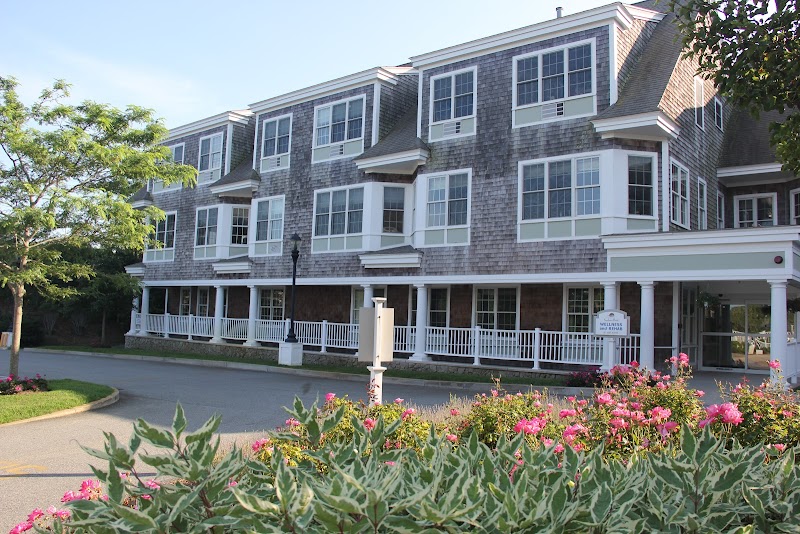
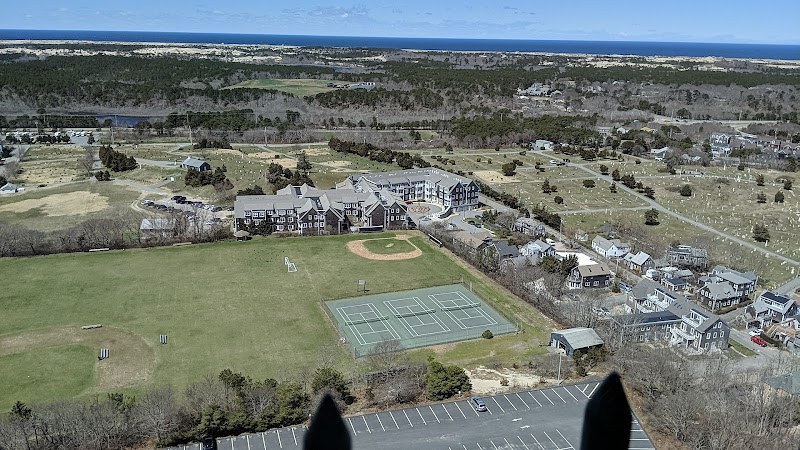
ADVINIACARE AT PROVINCETOWN

100 ALDEN STREET, PROVINCETOWN, MA 02657 (508) 487-7090
For profit - Limited Liability company 41 Beds ADVINIACARE Data: November 2025
Trust Grade
23/100
#263 of 338 in MA
Last Inspection: March 2025

Within standard 12-15 month inspection cycle. Federal law requires annual inspections.

Overview

Adviniacare at Provincetown has received a Trust Grade of F, indicating poor performance with significant concerns. It ranks #263 out of 338 facilities in Massachusetts, placing it in the bottom half of the state, and #11 out of 15 in Barnstable County, meaning there are very few local options that are better. The facility's trend is worsening, with issues increasing from 13 in 2024 to 17 in 2025. Staffing is a relative strength, earning 4 out of 5 stars with a turnover rate of 37%, which is below the state average, and the facility boasts more RN coverage than 98% of Massachusetts facilities. However, there are serious concerns, such as a resident being injured when they were transferred alone rather than with the required two staff members, and another resident not receiving adequate care to prevent pressure ulcers, highlighting significant weaknesses in care practices.

Trust Score
F
23/100
In Massachusetts
#263/338
Bottom 23%
Safety Record
High Risk
Review needed
Inspections
Getting Worse
13 → 17 violations
Staff Stability
○ Average
37% turnover. Near Massachusetts's 48% average. Typical for the industry.
Penalties
⚠ Watch
$11,782 in fines. Higher than 80% of Massachusetts facilities, suggesting repeated compliance issues.
Skilled Nurses
✓ Good
Each resident gets 67 minutes of Registered Nurse (RN) attention daily — more than 97% of Massachusetts nursing homes. RNs are the most trained staff who catch health problems before they become serious.
Violations
⚠ Watch
37 deficiencies on record. Higher than average. Multiple issues found across inspections.
★☆☆☆☆
1.0
Overall Rating
★★★★☆
4.0
Staff Levels
★☆☆☆☆
1.0
Care Quality
★★☆☆☆
2.0
Inspection Score
Stable
2024: 13 issues
2025: 17 issues

The Good

  • 4-Star Staffing Rating · Above-average nurse staffing levels
  • Full Sprinkler Coverage · Fire safety systems throughout facility
  • No fines on record
  • Staff turnover below average (37%)

    11 points below Massachusetts average of 48%

Facility shows strength in staffing levels, fire safety.

The Bad

1-Star Overall Rating

Below Massachusetts average (2.9)

Significant quality concerns identified by CMS

Staff Turnover: 37%

Near Massachusetts avg (46%)

Typical for the industry

Federal Fines: $11,782

Below median ($33,413)

Minor penalties assessed

Chain: ADVINIACARE

Part of a multi-facility chain

Ask about local staffing decisions and management

The Ugly 37 deficiencies on record

3 actual harm
Mar 2025 17 deficiencies
CONCERN (D)

Potential for Harm - no one hurt, but risky conditions existed

Deficiency F0655 (Tag F0655)

Could have caused harm · This affected 1 resident

Based on record review and interview, the facility failed to ensure staff provided the resident and/or their representative with a summary of the baseline care plan for one Resident (#141), out of a t...

Read full inspector narrative →
Based on record review and interview, the facility failed to ensure staff provided the resident and/or their representative with a summary of the baseline care plan for one Resident (#141), out of a total sample of 12 residents. Findings include: Review of the facility's policy titled Care Plan Baseline, revised October 2022, indicated but was not limited to the following: -A baseline plan of care to meet the resident's immediate needs shall be developed for each resident within forty-eight (48) hours of admission. -The Interdisciplinary Team will review the healthcare practitioner's orders (e.g., dietary needs, medications, routine treatments, etc.) and implement a baseline care plan to meet the resident's immediate care needs including but not limited to: a. Initial goals based on admission orders b. Physician orders c. Dietary orders d. Therapy services e. Social services; and f. PASARR recommendations, if applicable. -The baseline care plan will be used until the staff can conduct the comprehensive assessment and develop an interdisciplinary person-centered care plan. The resident and their representative will be provided a summary of the baseline care plan that includes but is not limited to: a. The initial goals of the resident b. A summary of the residents' medication and dietary instructions c. Any services and treatments to be administered by the facility and personnel acting on behalf of the facility; and d. Any updated information based on the details of the comprehensive care plan. -Facility will document and record receipt of information by family, whether in the form of a copy of signed acknowledgement or note within resident's clinical record. Resident #141 was admitted to the facility in March 2025 and had diagnoses including repeated falls, dementia, influenza A virus with other respiratory manifestations, metabolic encephalopathy (condition where the brain's function is impaired due to an underlying metabolic disturbance), urinary retention, and myoclonus (muscle jerks). On 3/4/25 at 7:49 A.M., the surveyor observed Resident #141 lying in bed. The Resident was confused asking why he/she was there. The Resident was unable to be interviewed. During an interview on 3/5/25 at 4:03 P.M., Family Member #1 (Resident's representative) said she wasn't sure what was happening with the Resident's care at the facility and had not yet had a sit down with anyone to discuss the plan of care. She said the Resident came in for short-term rehab but wasn't sure now. She said she was told she'd have a sit down with the Director of Nursing (DON) to discuss the plan, but it hadn't happened yet. She said she had spoken with the physician but is learning about what's happening to the Resident through friends that are visiting, not the staff, unless she is there to ask. Review of Resident #141's Baseline Care Plan, completed by the Minimum Data Set (MDS) Nurse, indicated the Resident and representative's signature lines on the document were blank, indicating it had not been reviewed with the Resident and/or Resident's representative. Further review of the medical record failed to indicate documentation that the Resident and/or representative were provided with a written summary of his/her baseline care plan that included initial goals for the resident, current medications and dietary instructions, and services and treatments to be administered by the facility and personnel acting on behalf of the facility. During an interview on 3/6/25 at 10:20 A.M., the DON said there hadn't been a care plan meeting with the Resident and/or representative yet and there wasn't a social worker this week so he would need to get back to the surveyor on any documentation that a summary of the baseline care plan was provided to the Resident and/or representative. During an interview on 3/6/25 at 12:06 P.M., the DON and Administrator reviewed Resident #141's baseline care plan with the surveyor and said the Resident's signature and date line and the representative's signature and date line were blank, indicating it had not been reviewed and provided to them. The Administrator said the MDS Nurse did not offer or have the representative sign it when she was there yesterday but should have. She said, in general, staff should have offered it to the Resident's representative, but they did not. The Administrator and DON said the Resident's representative did not yet have a copy of the baseline care plan or summary at this time but should have. During an interview on 3/6/25 at 12:12 P.M., the Administrator said during the morning meeting, new admissions are discussed and it's a team effort to gather the information to complete the baseline care plan within 48 hours. He said usually the DON, Staff Development Coordinator (SDC), MDS Nurse, or other nurse completes it and provides a summary of it to the Resident and/or representative.
CONCERN (D)

Potential for Harm - no one hurt, but risky conditions existed

Deficiency F0658 (Tag F0658)

Could have caused harm · This affected 1 resident

Based on record review and staff interviews, the facility failed to ensure that care and services were provided according to accepted standards of clinical practice for two Residents (#12 and #15), ou...

Read full inspector narrative →
Based on record review and staff interviews, the facility failed to ensure that care and services were provided according to accepted standards of clinical practice for two Residents (#12 and #15), out of a total sample of 12 residents. Specifically, the facility failed: 1. For Resident #12, to obtain a physician's order for the provision of Hospice services; and 2. For Resident #15, a. to ensure handwritten physician's telephone orders for Carbidopa-Levodopa Capsule Extended Release (ER) capsules (medication used to treat symptoms of Parkinson's disease-a progressive neurological disorder that affects movement, balance, and coordination) were transcribed into electronic medical record; and b. neurological checks (assessment of consciousness, orientation, and cognitive function) were conducted after Resident #15 sustained unwitnessed falls. Findings include: Review of the Massachusetts Board of Registration in Nursing Advisory Ruling on Nursing Practice, dated as revised April 11, 2018, indicated the following: - Nurse's Responsibility and Accountability: Licensed nurses accept, verify, transcribe, and implement orders from duly authorized prescriber that are received by a variety of methods (i.e., written, verbal/telephone, standing orders/protocols, pre-printed order sets, electronic) in emergent and non-emergent situations. Licensed nurses in a management role must ensure an infrastructure is in place, consistent with current standards of care, to minimize error. 1. Review of the facility's policy titled Hospice Services, last revised January 2023, indicated but was not limited to: -Once the resident and/or resident representative has agreed to Hospice services, the Licensed Nurse will obtain an order from the medical provider. Resident #12 was admitted to the facility in March 2016 and had diagnoses including Parkinson's disease (a progressive brain disorder that causes movement problems, stiffness, and balance issues) and dementia. Review of the significant change Minimum Data Set (MDS) assessment, dated of 1/17/25 indicated that Resident #12 had long- and short-term memory problems, had severely impaired cognitive skills for daily decision making, was dependent on staff for all activities of daily living (ADLs) and received Hospice care. Review of the medical record indicated a handwritten physician's order, dated 12/5/24, for a Hospice consult if the family approves. The order failed to identify which Hospice provider was to do the consultation. Review of Resident #12's Hospice binder indicated a Hospice Certification and Plan of Care, initiated 1/12/25 for certification through 4/11/25. Further review of the medical record failed to indicate any physician's order for Hospice services. During an interview on 3/4/25 at 11:10 A.M., Nurse #4 reviewed Resident #12's electronic medical record and said she could not locate a physician's order for Hospice services. During an interview on 3/4/25 at 12:00 P.M., Medical Records Staff #1 reviewed Resident #12's paper medical record and was unable to locate a physician's order for Hospice services. During interviews on 3/4/25 at 12:32 P.M. and 4:10 P.M., the Director of Nursing (DON)said he was unable to locate a physician's order for Hospice services. 2. Resident #15 was admitted to the facility in October 2024 and had diagnoses including Parkinson's disease and drug induced dyskinesia (involuntary, repetitive, and often abnormal movements). Review of the MDS assessment, dated 10/26/24, indicated Resident #15 had severe cognitive impairment as evidenced by a Brief Interview for Mental Status score of 7 out of 15 and had a history of falls. a. Review of the medical record indicated but was not limited to the following Physician's Orders for the treatment of Parkinson's disease: -Carbidopa-Levodopa ER Oral Capsule Extended Release 23/75-95 milligrams (mg), give one capsule by mouth one time a day (1/3/25) -Carbidopa-Levodopa ER Oral Capsule Extended Release 36.25-145 mg, give one capsule by mouth two times a day (1/3/25) -Sinemet Oral Tablet 25-100 mg (Carbidopa-Levodopa), give 0.5 tablet by mouth six times a day (1/3/25) -Crush Sinemet and mix in resident's Coca Cola or applesauce/pudding, every shift (1/3/25) Review of the medical record indicated handwritten physician's orders, dated 1/7/25 and signed by the nurse as noted on 1/7/25, including but not limited to: -The Carbidopa-Levodopa ER capsules= for both dosing regimens: open capsules and put in pudding/applesauce or Ensure/supplement. Review of current Physician's Orders failed to indicate the 1/7/25 handwritten physician's orders for the Carbidopa-Levodopa ER capsules= for both dosing regimens: open capsules and put in pudding/applesauce or Ensure/supplement were entered into the electronic medical record. During an interview on 3/5/25 at 3:32 P.M., the DON said that the handwritten order to open the Carbidopa-Levodopa ER capsules should have been entered into the electronic medical record but wasn't. b. Review of the facility's policies titled Fall Prevention and Management, last revised January 2023, and Accidents and Incidents, last revised October 2022, indicated but was not limited to: Post Fall: -obtain neurological checks per policy for any unwitnessed fall or any fall with evidence of injury to head. -Resident fall will be evaluated for 72 hours post fall, including full vital signs every shift. Review of the incident reports provided to the surveyor by the DON indicated Resident #15 sustained five unwitnessed falls between 10/24/24 through 2/18/25. Further review of the five unwitnessed fall incident reports and the medical record failed to indicate any evidence that neurological assessments were conducted after three of the falls. Review of the incident reports indicated the following: -Fall date 10/24/24 at 4:30 P.M., Resident #15 had an unwitnessed fall and was found on the floor next to his/her bed. An initial Neurological focused evaluation was conducted. Review of the incident report and entire medical record failed to indicate a neurological assessment was conducted following the fall. -Fall date 11/15/24 at 7:01 A.M., Resident #15 had an unwitnessed fall and was found on the floor mat next to his/her bed. An initial Neurological focused evaluation was conducted. Review of the incident report and entire medical record failed to indicate a neurological assessment was conducted following the fall. Further review of the medical record revealed Resident #15 sustained an unwitnessed fall in the bathroom on 1/7/25. There was no incident report, investigation or any other evidence to indicate a neurological assessment was conducted following the fall. During an interview on 3/6/25 at 3:12 P.M., the DON reviewed Resident #15's entire medical record and said there was no evidence that neurological assessments were conducted following Resident #15's unwitnessed falls on 10/24/24, 11/15/24 and 1/7/25. He said neurological checks should have been completed after every fall and were not.
CONCERN (D)

Potential for Harm - no one hurt, but risky conditions existed

Quality of Care (Tag F0684)

Could have caused harm · This affected 1 resident

Based on record review and interviews, the facility failed to promote and manage the delivery of safe nursing care in accordance with accepted Standards of Nursing Practice for one Resident (#15), out...

Read full inspector narrative →
Based on record review and interviews, the facility failed to promote and manage the delivery of safe nursing care in accordance with accepted Standards of Nursing Practice for one Resident (#15), out of a total sample of 12 residents. Specifically, the facility failed to ensure two Certified Nursing Assistants (CNAs) did not move a Resident off the floor and into a Broda chair (positioning chair) after the Resident sustained an unwitnessed fall prior to having a nurse assess the Resident. Findings include: Review of the facility's policy titled Fall Prevention and Management, dated as revised January 2023, indicated but was not limited to the following: Post Fall -In the event a resident has fallen and/or is found on the ground, a complete head-to-toe assessment must be performed. -Only move the resident if there is a life-threatening safety concern present. -Remain with the resident while calling for assistance, if at all possible. -Upon arrival of the nurse, a quick head-to-toe scan will be performed without unnecessary movement, palpating and examining all areas for breaks in the skin and/or other abnormal findings. -If no obvious injury, move resident to a comfortable position. -Nursing should determine the safest manner in which to reposition/move resident. Resident #15 was admitted to the facility in October 2024 and had diagnoses including Parkinson's disease and drug induced dyskinesia (involuntary, repetitive, and often abnormal movements). Review of the Minimum Data Set assessment, dated 10/26/24, indicated Resident #15 had severe cognitive impairment as evidenced by a Brief Interview for Mental Status score of 7 out of 15 and had a history of falls. Review of Nursing Progress Notes, dated 11/18/24, indicated but was not limited to: -Resident #15 was last seen sitting in a chair at the nurses' station at 8:15 P.M. The nurse indicated she went into the bathroom, and when she exited the bathroom, she saw two CNAs picking up the Resident from the floor. The Resident was assessed and found to have discoloration on his/her right cheek. Review of the Incident Report, dated 11/18/24, indicated Resident #15 had an unwitnessed fall out of his/her Broda chair at the nursing station at 8:30 P.M. and two CNAs helped the Resident off the floor and into a Broda chair. Further review of the Incident Report failed to indicate statements were part of the 11/18/24 fall investigation. During an interview on 3/5/25 at 3:32 P.M., the Director of Nursing (DON) reviewed Resident #15's medical record and 11/18/24 Incident Report. He said the CNAs should not have picked the Resident up off the floor without the Resident first being assessed by the nurse. He said there were no staff interviews/statements as part of the investigation, and he did not know who the CNAs were that picked the Resident up. Review of the staffing schedule for 11/18/24 indicated CNA #3 and CNA #4 were working on Resident #15's hallway (side 2) at the time of the fall. During an interview on 3/6/25 at 2:30 P.M., CNA #4 said he heard about Resident #15's fall out of his/her chair at the nursing station, but he was not one of the CNAs that picked him/her up off the floor. He said he did not know who it was. During an interview on 3/6/25 at 3:00 P.M., CNA #3 said he remembers finding Resident #15 on the floor at the nursing station on 11/18/24. He said the nurse was not there and he and another CNA picked up the resident and put him/her back into the chair. He said he can't remember who the other CNA was that helped him pick the Resident up. During a telephone interview on 3/6/25 at 3:58 P.M., Nurse #6 said she was working when Resident #15 had the unwitnessed fall out of his/her chair at the nursing station on 11/18/25. She said she was coming out of the bathroom and saw two CNAs lifting Resident #15 off the floor in front of the nursing station and place him/her back into the Broda chair. Nurse #6 said she couldn't recall which CNAs lifted the Resident off the floor. She said the CNAs should not have lifted the Resident off the floor without her first assessing the Resident.
CONCERN (D)

Potential for Harm - no one hurt, but risky conditions existed

Respiratory Care (Tag F0695)

Could have caused harm · This affected 1 resident

Based on observation, interview, and record review, the facility failed for one Resident (#34), out of a total sample of 12 residents, to ensure staff provided the necessary care and services in accor...

Read full inspector narrative →
Based on observation, interview, and record review, the facility failed for one Resident (#34), out of a total sample of 12 residents, to ensure staff provided the necessary care and services in accordance with professional standards of practice. Specifically, the facility failed to ensure the proper care and storage of respiratory equipment. Findings include: Review of the facility's policy titled Nebulizer Medication/COVID-19, revised January 2023, indicated but was not limited to the following: -When equipment is completely dry, store in a plastic bag with resident's name and the date on it. Review of the facility's policy titled Oxygen-Concentrators, revised January 2023, indicated but was not limited to the following: -Oxygen concentrators are used for residents on continuous oxygen. Procedure: -Rear filter should be checked daily and cleaned with soap and water as needed. Cleaning: -Clean the exterior of the oxygen concentrator with soapy water solution or commercial cleanser to remove any debris. Be careful not to get any liquid into the interior of the unit. -Clean the exterior with a chemical disinfection solution. Review of the AirSep-NewLife Elite Oxygen Concentrator patient manual, dated March 2002, indicated but was not limited to the following: -The air we breathe contains approximately 21% oxygen, 78% nitrogen, and 1% other gases. In the NewLife Elite unit, room air passes through a regenerative adsorbent material, called molecular sieve. This material separates the oxygen from the nitrogen and other gases. The result is a constant supply of concentrated high purity supplemental oxygen that is delivered to the patient. Filters: -Air enters the unit through an air intake gross particle filter located on the back of the oxygen concentrator. The filter removes dust particles and other impurities from the air. Before you operate the unit, make sure this filter is clean and positioned correctly. Cleaning, Care, and Proper Maintenance: Cabinet -Disconnect the power cord from the electrical outlet before you clean the cabinet. -Clean the cabinet and power cord only with a mild household cleaner applied with a damp cloth or sponge and then wipe them dry. -On a weekly basis, wash the air intake gross particle filter, located on the back of the unit. Your Equipment Provider may advise you to clean it more often depending on your operating conditions. Follow these steps to properly clean the air intake gross particle filter: 1. Remove the filter and wash in a warm solution of soap and water. 2. Rinse the filter thoroughly and remove excess water with a soft absorbent towel. 3. Replace the filter. Resident #34 was admitted to the facility in November 2024 and had diagnoses including chronic obstructive pulmonary disease (COPD- group of lung diseases that block airflow and make it difficult to breathe) and chronic respiratory failure with hypoxia (absence of enough oxygen in the tissues to sustain bodily functions). Review of the Minimum Data Set (MDS) assessment, dated 2/6/25, indicated Resident #34 was cognitively intact as evidenced by a Brief Interview for Mental Status (BIMS) score of 13 out of 15 and was receiving oxygen therapy. Review of current Physician's Orders indicated the following: -Supplemental oxygen (O2) via nasal cannula at 3-4 Liters (L)/minute (LPM) to maintain oxygen sats greater than 88-94% every shift. Check O2 sat every shift, 12/3/24 -Ipratropium-Albuterol 0.5-2.5 (3) milligrams (mg)/2 milliliters (ml), (3) ml inhale orally every 2 hours as needed for SOB (shortness of breath) or wheezing via nebulizer, 1/23/25 - Ipratropium-Albuterol 0.5-2.5 (3) mg/2 ml, (3) ml inhale orally one time a day for SOB or wheezing via nebulizer, 1/23/25 On 3/3/25 at 10:26 A.M., the surveyor observed a nebulizer (small machine that turns liquid medicine into a mist that can be easily inhaled into the lungs) machine resting on top of Resident #34's side table. The nebulizer tubing and mouthpiece were resting on top of the machine and were not stored inside a plastic bag, potentially exposing them to environmental contaminants. The Resident was not observed in the room. During an interview on 3/3/25 at 12:40 P.M., Resident #34 said he/she used the nebulizer machine for his/her COPD and for shortness of breath. During an observation with interview on 3/4/25 at 7:52 A.M., the surveyor observed Resident #34 lying in bed. Nasal cannula (device that delivers extra oxygen through a tube and into your nose) tubing was observed inserted into the Resident's nostrils with extension tubing attached to an O2 concentrator delivering 3 LPM of oxygen. The exterior surface of the concentrator was laden with dust and numerous short pieces of hair. The external rear filter was laden with dust. Resident #34 said he/she used the oxygen continuously for his/her COPD. Further review of physician's orders did not indicate an order to clean the exterior of the oxygen concentrator or check and clean the external filter for proper care and maintenance. On 3/4/25 at 3:35 P.M., the surveyor observed Resident #34 sitting in his/her wheelchair in their room. Nasal cannula tubing was observed inserted into the Resident's nostrils with extension tubing attached to an O2 concentrator delivering 3 LPM of oxygen. The exterior surface of the concentrator was laden with dust and numerous short pieces of hair. The external rear filter was laden with dust. During an observation with interview on 3/4/25 at 3:39 P.M., Nurse #3 entered the Resident's room with the surveyor and observed the Resident's respiratory equipment. Nurse #3 said housekeeping was responsible for wiping down oxygen equipment. During an interview on 3/4/25 at 3:46 P.M., Nurse #3 said the surveyor should ask maintenance about who cleans the filters on the oxygen concentrators as she wasn't sure. On 3/4/25 at 1:13 P.M. and 3:35 P.M., the surveyor observed Resident #34 sitting in his/her wheelchair in their room. Nasal cannula tubing was observed inserted into the Resident's nostrils with extension tubing attached to an O2 concentrator delivering 3 LPM of oxygen. The exterior surface of the concentrator was laden with dust and numerous short pieces of hair. The external rear filter was laden with dust. On 3/5/25 at 7:11 A.M., the surveyor observed Resident #34 sleeping in bed. Nasal cannula tubing was observed inserted into the Resident's nostrils with extension tubing attached to an O2 concentrator delivering 3 LPM of oxygen. The exterior surface of the concentrator was laden with dust and numerous short pieces of hair. The external rear filter was laden with dust. During an interview on 3/5/25 at 7:25 A.M., Housekeeper #1 said she does not clean oxygen concentrators as part of her housekeeping duties. During an interview on 3/5/25 at 12:49 P.M., the Maintenance Director said neither housekeeping nor maintenance staff wipe down the oxygen concentrators or clean the filters. He said, That's nursing. During an interview on 3/6/25 at 10:09 A.M., the Director of Nursing (DON) said the nebulizer mouthpiece and tubing should have been stored in a plastic bag when not in use. The surveyor reviewed the Resident's medical record with the DON who said there wasn't an order for the oxygen concentrator or filter to be cleaned. He said the nursing 11:00 P.M.-7:00 A.M. shift was responsible for monitoring, cleaning and/or changing the filter once a week including wiping down the oxygen concentrators. He said the expectation is that they are clean and working appropriately. The DON said the filter clears out impurities from the environment to prevent illness. He said there is nowhere that staff document that it's being done so could not ensure that it was.
CONCERN (D)

Potential for Harm - no one hurt, but risky conditions existed

Deficiency F0700 (Tag F0700)

Could have caused harm · This affected 1 resident

Based on observation, interview, and record review, the facility failed to perform assessments for the risk of entrapment with the use of side rails for three Residents (#12, #15, and #33), out of a t...

Read full inspector narrative →
Based on observation, interview, and record review, the facility failed to perform assessments for the risk of entrapment with the use of side rails for three Residents (#12, #15, and #33), out of a total sample of 12 residents. Specifically, the facility failed to ensure: 1. For Resident #12, an initial side rail assessment was conducted upon admission and when the Resident received an air overlay pressure reducing mattress to ensure the Resident was not at risk of entrapment and that the bed's dimensions were appropriate for the Resident's size and weight; 2. For Resident #15, an initial side rail assessment was conducted upon admission, appropriate alternatives were attempted prior to installation of the side rails, and an assessment was conducted when the Resident received a perimeter air mattress (mattress with raised edges that create a defined boundary, enhancing fall prevention); and 3. For Resident #33, appropriate alternatives were attempted prior to installation of the side rails, and a quarterly bed rail assessment was conducted to ensure the Resident was not at risk of entrapment and that the bed's dimensions were appropriate for the Resident's size and weight. Findings include: Review of the facility's policy titled Side Rails/Bed Rails, last revised 10/24/22, indicated but was not limited to: -The facility shall ensure that prior to the installation of bed rails, the facility has attempted to use alternatives. -The facility shall ensure the bed is appropriate for the resident and that bed rails are properly installed and maintained. -In determining whether to use bed rails to meet the needs of a resident, the following components of the resident assessment may be considered on an individual basis including, but not limited to: -medical diagnosis, conditions, symptoms, and/or behavioral symptoms -Size and weight -Sleep habits -Medication(s) -Acute medical or surgical interventions -Underlying medical conditions -Existence of delirium -Ability to toilet self safely -Cognition -Communication -Mobility (in and out of bed) -Risk of falling -In addition, the resident assessment should include an evaluation of the alternatives to the use of a bed rail that was attempted and how these alternatives failed to meet the resident's assessed needs. -Potential risks can be exacerbated by improper match of the bed rail to bed frame, improper installation and maintenance, and use with other devices or supports. 1. Resident #12 was admitted to the facility in March 2016 and had diagnoses including Parkinson's disease (a progressive brain disorder that causes movement problems, stiffness, and balance issues) and dementia. Review of the significant change Minimum Data Set (MDS) assessment, dated 1/17/25, indicated that Resident #12 had long- and short-term memory problems, had severely impaired cognitive skills for daily decision making, and was dependent on staff for all activities of daily living (ADLs). On 3/3/25 at 11:02 A.M., the surveyor observed Resident #12 lying in bed asleep with bilateral side rails up and in use. An air mattress was noted in place on the Resident's bed and was set to 120 pounds (lbs.). On 3/4/25 at 7:54 A.M., the surveyor observed Resident #12 lying in bed asleep with bilateral side rails up and in use. An air mattress was noted in place on the Resident's bed and was set to 120 lbs. On 3/5/25 at 7:07 A.M., the surveyor observed Resident #12 lying in bed asleep with bilateral side rails up and in use. An air mattress was noted in place on the Resident's bed and was set to 120 lbs. Review of the medical record indicated the following Physician's Orders: -two quarter (1/4) side rails up in bed to help promote bed mobility, safety, and positioning (9/26/23) -Air overlay Pressure Reducing Mattress (a thin mattress topper that sits on top of a regular mattress to relieve pressure and treat pressure ulcers); inflate to Resident's comfort (12/16/24) Further review of the medical record failed to indicate an initial side rail assessment was conducted upon admission and when the Resident received the air overlay pressure reducing mattress on 12/16/24 to ensure the Resident was not at risk of entrapment and that the bed's dimensions were appropriate for the Resident's size and weight. During an interview on 3/6/25 at 8:45 A.M., the Director of Nursing (DON) said nursing side rail assessments are to be conducted upon admission and then quarterly. He reviewed Resident #12's entire medical record and said he could not locate an initial nursing side rail assessment or an assessment when the Resident received an air overlay pressure reducing mattress to ensure the Resident was not at risk of entrapment and that the bed's dimensions were appropriate for the Resident's size and weight. 2. Resident #15 was admitted to the facility in October 2024 and had diagnoses including Parkinson's disease with dyskinesia (a condition where someone with Parkinson's disease experiences involuntary, uncontrolled movements (dyskinesia) such as writhing, twisting, or jerking motions in different parts of the body like the face, arms, or legs). Review of the MDS assessment, dated 10/26/24, indicated Resident #15 had severe cognitive impairment as evidenced by a Brief Interview for Mental Status (BIMS) score of 7 out of 15 and had a history of falls. On 3/5/25 at 7:03 A.M., the surveyor observed Resident #15 lying in bed asleep with bilateral side rails up and in use. An air perimeter mattress was noted in place on top of the mattress. Review of the medical record indicated the following Physician's Orders: -two quarter (1/4) side rails up in bed to help promote bed mobility, safety and positioning (2/10/25) Review of the facility's Side Rail Consent Form, signed by Resident #12 on 10/21/24, indicated the following: -What other methods were tried and deemed inappropriate for this resident? None at this time. Further review of the medical record failed to indicate an initial side rail assessment was conducted and when the Resident received the air perimeter mattress to ensure the Resident was not at risk of entrapment and that the bed's dimensions were appropriate for the Resident's size and weight. During an interview on 3/5/25 at 3:32 P.M., the DON reviewed Resident #15's medical record and said the consultant Hospice provider documented that an air mattress was ordered for Resident #15 on 10/25/24. He said he could not find any information about when the air mattress was delivered and placed on the Resident's bed. He said he could not locate an initial nursing side rail assessment or assessment when the Resident received the air mattress to ensure the Resident was not at risk of entrapment and that the bed's dimensions were appropriate for the Resident's size and weight. The DON said nursing side rail assessments are to be conducted upon admission and then quarterly. 3. Resident #33 was admitted to the facility in November 2022 and had diagnoses including Alzheimer's disease. Review of the MDS assessment, dated 1/12/25, indicated Resident #33 had long- and short-term memory problems, had severely impaired cognitive skills for daily decision making, and was dependent on staff for all ADLs. On 3/6/25 at 2:19 P.M., the surveyor observed Resident #33 lying in bed asleep with bilateral side rails up and in use. Review of the medical record indicated the following Physician's Orders: -May have 1-2 quarter side rails up in bed to assist with positioning and transfer (10/5/23) Review of the facility's Side Rail Consent Form, signed by Resident #12 on 11/21/22, indicated the following: -What other methods were tried and deemed inappropriate for this resident? None at this time. Further review of the medical record failed to indicate an initial side rail assessment was conducted to ensure the Resident was not at risk of entrapment and that the bed's dimensions were appropriate for the Resident's size and weight. During interviews on 3/6/25 at 2:20 P.M. and 2:37 P.M., Nurse #1 reviewed Resident #33's medical record and said the side rail assessment was last completed on 10/17/23. She said it is done upon admission and then quarterly. She was unable to locate any side rail assessments following the 10/17/23 assessment.
CONCERN (D)

Potential for Harm - no one hurt, but risky conditions existed

Drug Regimen Review (Tag F0756)

Could have caused harm · This affected 1 resident

3. Resident #2 was admitted to the facility in February 2023 and had diagnoses including hypothyroidism (thyroid gland doesn't make enough thyroid hormones to meet your body's needs) and GERD. Review ...

Read full inspector narrative →
3. Resident #2 was admitted to the facility in February 2023 and had diagnoses including hypothyroidism (thyroid gland doesn't make enough thyroid hormones to meet your body's needs) and GERD. Review of the medical record indicated a Pharmacy Consultant Note, dated 6/5/24, which indicated that recommendations were made and to see the Consultant Pharmacist report for the recommendations. Further review of the entire medical record failed to indicate a consultant pharmacy recommendation dated 6/5/24. During an interview on 3/4/25 at 12:32 P.M. and 4:10 P.M., the DON reviewed Resident #2's medical record and the three-ringed binder where copies of the recommendation are kept and said he could not find the 6/5/24 pharmacy recommendation. During an interview on 3/6/24 at 1:05 P.M., the Pharmacy Consultant reviewed his records and said he made a recommendation for Resident #2 during his 6/5/24 MRR, He said he recommended a thyroid lab and to consider a decrease in dose of Protonix. He said he always speaks with the DON before he leaves the facility to let him know about his recommendations and emails the formal recommendation to the DON. The Pharmacist said he would forward the DON copies of the 6/5/24 recommendations again today. During an interview on 3/6/25 at 1:35 P.M., the DON provided the surveyor copies of the Pharmacist's 6/5/24 medication recommendations. The recommendations were as follows: -This Resident currently receives Levoxyl 75 micrograms (mcg), suggest periodic thyroid stimulating hormone (TSH) lab -This Resident has been receiving the proton pump inhibitor Protonix 40 mg twice daily for more than 12 weeks. Could the ongoing need for this therapy be re-assessed at this time? Review of the medical record failed to indicate the Physician/Physician extender ever reviewed and addressed the pharmacist's recommendations to consider dose reduction of Protonix and reviewed and addressed a thyroid lab in a timely manner. 2. Resident #16 was admitted to the facility in February 2018 and had diagnoses including restlessness and agitation, adjustment disorder with mixed anxiety and depressed mood, Alzheimer's disease with late onset, dementia with other behavioral disturbance, and psychosis not due to a substance or known physiological condition. Review of the medical record for Resident #16 indicated a monthly MRR was completed by a consultant pharmacist on 6/5/24. The assessment indicated a pharmacy recommendation was made. During an interview on 3/5/25 at 3:31 P.M., the DON said he found Resident #16's 6/5/24 pharmacy recommendation and provided it to the surveyor. Review of the recommendation indicated: Consultant Pharmacist Recommendation to Nursing: Category: Order clarification request -The resident has orders for multiple bowel medications. Please clarify the orders by adding the sequence of administration as indicated by the prescriber and/or the house protocol. Resident has a PEG (percutaneous endoscopic gastrostomy) order not part of the current bowel med protocol. Review of the medical record failed to indicate that nursing addressed the Consultant Pharmacist's recommendation for an order clarification request regarding the Resident's bowel medications. During an interview on 3/6/25 at 9:47 A.M., the DON said there was no evidence that the recommendation for the order clarification had been reviewed and addressed as required.Based on interviews and record review, the facility failed to ensure monthly Medication Regimen Review (MRR) recommendations made by the pharmacy consultant were addressed timely and maintained as part of the permanent medical record for three Residents (#7, #16, and #2), out of a total sample of 12 residents. Specifically, the facility failed: 1. For Resident #7, to ensure the June 2024 consultant pharmacist recommendations were acted upon timely to clarify the need for two as needed Guaifenesin (cough/expectorant medication) orders; 2. For Resident #16, to ensure the June 2024 consultant pharmacist nursing recommendation for an order clarification was acted upon timely; and 3. For Resident #2, to ensure the June 2024 consultant pharmacist recommendations were acted upon timely to re-assess the ongoing need for Protonix (proton pump inhibitor medication used to treat gastroesophageal reflux disease- GERD: a chronic digestive condition where stomach contents flow back up into the esophagus, causing irritation and discomfort) and a recommendation for lab work to monitor thyroid stimulating hormone for the use of Levoxyl (replaces a hormone normally produced by your thyroid gland to regulate the body's energy and metabolism). Findings include: Review of the facility's policy titled Medication Regime Review, revised 10/2022, indicated but was not limited to the following: -Medication Regime Review shall consist of a review and analysis of prescribed medication therapy and medication use review, including nursing documentation of medication ordering and administration. -The Consultant Pharmacist shall review the medication regime of each resident at least monthly. --The primary purpose of this review is to help the facility maintain each resident's highest practicable level of functioning by helping them utilize medications appropriately and prevent or minimize adverse consequences related to medication therapy to the extent possible. -The Consultant Pharmacist will provide a written report to physicians for each resident with an identified irregularity. -The attending physician documents in the medical record that the irregularity has been reviewed and what (if any) action was taken to address it within 30 days of receiving the report. -Copies of drug/medication regime review reports, including physician responses, will be maintained as part of the permanent medical record. 1. Resident #7 was admitted to the facility in November 2023 with diagnoses including vascular dementia. Review of the medical record indicated the consultant pharmacist made recommendations for Resident #7 in June 2024 and generated a report to be acted upon and reported to nursing, however, the surveyor was unable to locate the 6/6/24 MRR report in the Resident's medical record. On 6/5/24 at 12:02 P.M., the Director of Nursing (DON) provided the surveyor with a printed copy of the June 2024 report. Review of the 6/6/24 Consultant Pharmacist Recommendations to Nursing report for Resident #7 indicated the following recommendation: -Medication DC request (non-psychotropic). This resident appears to have duplicate medication orders for PRN Guaifenesin. Suggest discontinuing one of the orders or clarify need. Review of the current Physician's Orders included the following medications: -Guaifenesin liquid 100 milligrams (mg)/ 5 milliliters (ml). Give 10 ml by mouth every four hours as needed for cough -Guaifenesin oral tablet 400 mg give one tablet by mouth every 12 hours as needed for COPD Further review of the medical record failed to indicate that nursing addressed the Consultant Pharmacist's recommendation by discontinuing or clarifying the need for duplicate therapy. During an interview on 3/6/25 at 9:29 A.M., the DON reviewed the Consultant Pharmacist Recommendations to Nursing report. The DON said he would clarify any nursing recommendations with the Physician when needed. The DON said he signed the form which signified he looked at the recommendation. The DON said he did not see any documentation that the recommendation had been addressed, and if it was not documented, it was not done.
CONCERN (D)

Potential for Harm - no one hurt, but risky conditions existed

Deficiency F0757 (Tag F0757)

Could have caused harm · This affected 1 resident

Based on record review and interview, the facility failed to ensure that for one Resident (#16), out of a total sample of 12 residents, their drug regimen was free of unnecessary drugs. Specifically, ...

Read full inspector narrative →
Based on record review and interview, the facility failed to ensure that for one Resident (#16), out of a total sample of 12 residents, their drug regimen was free of unnecessary drugs. Specifically, the facility failed to monitor adverse consequences (side effects) of anticoagulant medications (used to prevent the blood from clotting, a blood thinner). Findings include: Review of the Eliquis (apixaban-anticoagulant) package insert, revised December 2012, indicated but was not limited to the following: -Eliquis is a factor Xa inhibitor anticoagulant indicated to reduce the risk of stroke and systemic embolism in patients with nonvalvular atrial fibrillation. Warnings and Precautions: -Eliquis can cause serious, potentially fatal bleeding. Promptly evaluate signs and symptoms of blood loss. Adverse Reactions: -Most common adverse reactions (>1%) are related to bleeding. Resident #16 was admitted to the facility in February 2018 and had diagnoses including thrombophlebitis (a condition in which a blood clot in a vein causes inflammation and pain). Review of the Minimum Data Set (MDS) assessment, dated 2/6/25, indicted Resident #16 was receiving anticoagulant medications. Review of current Physician's Orders indicated the following: -Eliquis oral tablet 2.5 milligrams (mg) (apixaban), give 1 tablet by mouth two times a day related to phlebitis and thrombophlebitis of other sites, reevaluate after results of ultrasound, 12/13/23 -Monitor for s/sx (signs and symptoms) of bleeding/bruising Q (every) shift while on Eliquis, every shift for bleeding risk anti-coagulation, 12/18/23 Review of the January 2025 through March 2025 Medication Administration Records (MARs) indicated that Eliquis was administered as ordered by the physician. Further review of the medical record failed to indicate that staff monitored the Resident for signs and symptoms of bleeding as required. During an interview on 3/6/25 at 9:53 A.M., the Director of Nursing (DON) said there's an order set for monitoring of side effects for the Eliquis but the nurse who entered the orders did not put it on the MAR or Treatment Administration Record (TAR) to be documented on. He said Resident #16 takes the Eliquis for a history of jugular thrombosis and there is a risk of bleeding so the Resident should have been monitored for bleeding and bruising. The DON said he can't determine if the Resident is experiencing side effects from the medications if it's not being documented.
CONCERN (D)

Potential for Harm - no one hurt, but risky conditions existed

Medication Errors (Tag F0758)

Could have caused harm · This affected 1 resident

2. Resident #16 was admitted to the facility in February of 2018 and had diagnoses including restlessness and agitation, adjustment disorder with mixed anxiety and depressed mood, Alzheimer's disease ...

Read full inspector narrative →
2. Resident #16 was admitted to the facility in February of 2018 and had diagnoses including restlessness and agitation, adjustment disorder with mixed anxiety and depressed mood, Alzheimer's disease with late onset, dementia with other behavioral disturbance, and unspecified psychosis not due to a substance or known physiological condition. Review of the Minimum Data Set (MDS) assessment, dated 2/6/25, indicted Resident #16 was receiving antidepressant and antipsychotic medications. Review of current Physician's Orders indicated the following: -escitalopram (Lexapro), give 1 tablet orally in the morning for antidepressant, 10/10/23 -Seroquel (quetiapine) oral tablet 25 mg, give 0.5 tablet by mouth two times a day for delusions related to unspecified psychosis not due to a substance or known physiological condition, 2/26/25 Review of the January 2025 through March 2025 MARs indicated that escitalopram was administered as ordered by the physician. Review of the February 2025 through March 2025 MARs indicated that Seroquel was administered as ordered by the physician. Further review of the medical record failed to indicate that staff monitored the Resident for significant side effects related to the use of the antidepressant and antipsychotic medications as required. During an interview on 3/6/25 at 9:53 A.M., the DON said the Resident is on Seroquel, an antipsychotic, and staff should be monitoring for side effects such as sedation, waking, edema, constipation, dry mouth, urinary retention, drowsiness, blurred vision, extrapyramidal reaction, postural hypotension, sweating, and loss of appetite. The DON said the Resident is potentially at risk for over medication and death if not monitored. He said the Resident also takes escitalopram for depression and should have been monitored for side effects such as dry mouth, blurred vision, tachycardia, muscle tremors, agitation, headache, skin rash, photosensitivity, and excess weight gain. The DON said he can't determine if the Resident is experiencing side effects from the medications if it's not being documented. Based on record review and interview, the facility failed to ensure for two Residents (#7 and #16), out of a total sample of 12 residents, that each resident's drug regimen was free from unnecessary psychotropic medications to promote or maintain the Residents' highest practicable mental, physical, and psychosocial well-being. Specifically, the facility failed: 1. For Resident #7, to ensure targeted behaviors and signs and symptoms of side effects were adequately monitored to evaluate the effectiveness of an antipsychotic medication; and 2. For Resident #16, to ensure signs and symptoms were monitored to evaluate the effectiveness of an antidepressant and antipsychotic medication. Findings include: Review of the facility's policy titled Psychotropic Medication, dated 7/2018, indicated but was not limited to: -Physicians and mid-level providers will use psychotropic medications appropriately working with the interdisciplinary team to ensure appropriate use, evaluation and monitoring. Psychotropic drugs - any drug that affects brain activities associated with mental processes and behavior. These drugs include but are not limited to drugs in the following categories: -Anti-psychotic -Antidepressant -Licensed nurses should be aware of potential side effects of psychotropic medications and report any side effects to the resident's attending physician. -The facility will make every effort to comply with state and federal regulations related to the use of psychopharmacological medications in the long-term care facility to include regular review for continued need, appropriate dosage, side effects, risks and/or benefits. Review of the facility's policy titled Antipsychotic Medication Use, dated 7/2018, indicated but was not limited to: -Antipsychotic medications may be considered for residents with dementia but only after medical, physical, functional, psychological, emotional psychiatric, social and environmental causes of behavioral symptoms have been identified and addressed. -Residents will only receive antipsychotic medications when necessary to treat specific conditions for which they are indicated and effective. -The Attending Physician and other staff will gather and document information to clarify a resident's behavior, mood, function, medical condition, specific symptoms, and risks to the resident and others. -The staff will observe, document, and report to the Attending Physician information regarding the effectiveness of any interventions, including antipsychotic medications. -Nursing staff shall monitor for and report any of the following side effects and adverse consequences of antipsychotic medications to the Attending Physician: a. General/anticholinergic: constipation, blurred vision, dry mouth, urinary retention, sedation; b. Cardiovascular: orthostatic hypotension, arrhythmias; c. Metabolic: increase in total cholesterol/triglycerides, unstable or poorly controlled blood sugar, weight gain; or d. Neurologic: Akathisia, dystonia, extrapyramidal effects, akinesia, tardive dyskinesia, stroke or TIA. 1. Resident #7 was admitted to the facility in November 2023 with diagnoses including vascular dementia, moderate psychotic disturbance and depression. Review of Resident #7's current Physician's Orders included but was not limited to: -Lexapro (antidepressant) Oral Tablet 10 milligrams (mg) Give one tablet by mouth one time a day for depression, dated 11/16/24 -Risperdal (antipsychotic) Oral Tablet 0.5 mg Give one tablet by mouth three times a day for unspecified psychosis, dated 2/13/25 Review of Resident #7's Medication Administration Record (MAR) for February 2025 and March 2025 indicated he/she received Risperdal per the physician's order. Review of Resident #7's MAR for February 2025 and March 2025 failed to indicate he/she was monitored for side effects of the antipsychotic medication being administered. Review of Resident #7's MAR for February 2025 and March 2025, failed to indicate he/she was monitored for behaviors related to the use of an antipsychotic medication. During an interview on 3/5/25 at 9:37 A.M., Nurse #5 said every Resident had physician's orders on the MAR to monitor side effects and behaviors for antipsychotic medications. The surveyor and Nurse #5 reviewed Resident #7's physician's orders. Nurse #5 said she only saw side effects and behaviors for his/her antidepressant medication. Nurse #7 said there were no orders to monitor side effects or behaviors for his/her administration of antipsychotic medication. During an interview on 3/6/25 at 9:51 A.M., the Director of Nurses (DON) said there should be an order to document the monitoring for side effects and specific behaviors of any antipsychotic medication. The DON reviewed the physician's orders and said the facility did not monitor for side effects/adverse consequences or behaviors for Resident #7's antipsychotic medication.
CONCERN (E)

Potential for Harm - no one hurt, but risky conditions existed

Deficiency F0558 (Tag F0558)

Could have caused harm · This affected multiple residents

Based on observation, interview, and record review, the facility failed to ensure three Residents (#4, #27, and #12), out of a total sample of 12 residents, had their call bell devices accessible and ...

Read full inspector narrative →
Based on observation, interview, and record review, the facility failed to ensure three Residents (#4, #27, and #12), out of a total sample of 12 residents, had their call bell devices accessible and within reach to utilize them to call for staff assistance while in their beds. Findings include: Review of the facility's policy titled Call Bell Policy, revised January 2023, indicated but was not limited to the following: Procedure: -As soon as a call bell is activated a staff member observing the light activation should answer promptly. c. Turn off the call light, make sure it is still within reach of the resident. f. Ensure the resident is safe and the call bell is within reach. -If a resident is unable to manipulate a call bell effectively provide the resident will be provided (sic) with an alternative device. a. Resident #4 was admitted to the facility in December 2020 and had diagnoses including unspecified dementia and overactive bladder. Review of the Minimum Data Set (MDS) assessment, dated 12/18/24, indicated Resident #4 had moderate cognitive impairment as evidenced by a Brief Interview for Mental Status (BIMS) score of 9 out of 15. Review of the Falls care plan, initiated 1/22/24, indicated but was not limited to the following: Focus: Resident is at risk for falls characterized by history of falls/injury, multiple risk factors related to impaired balance, unsteady gait, and new unwitnessed falls. Intervention: Call bell pinned to gown when in bed, 3/17/24, Reinforce need to call for assistance, 1/22/24 On 3/3/25 at 10:59 A.M., the surveyor observed Resident #4 sitting up in bed. An overbed tray table was observed with two empty plastic cups, an empty yogurt container, and half of a peanut butter and jelly sandwich wrapped in saran wrap. Resident #4 said he/she was waiting for staff to come in and take it all, but they never come. The surveyor observed the Resident's call bell device wrapped around the Resident's left upper side rail, which was in the upright position, and hanging down toward the floor, not within reach or accessible to the Resident. The Resident said he/she didn't know where his/her call bell was. On 3/4/25 at 3:54 P.M., the surveyor observed Resident #4 sitting up in bed. The Resident's call bell device was wrapped around the Resident's left upper side rail, which was in the upright position, and hanging down toward the floor, not within reach or accessible to the Resident. The Resident was unable to demonstrate locating the call bell device for use and said he/she didn't know where it was. b. Resident #27 was admitted to the facility in January 2021 with diagnoses including frontotemporal neurocognitive disorder, polymyalgia rheumatica (inflammatory disorder causing muscle pain and stiffness around the shoulders and hips), and urinary tract infections. Review of the MDS assessment, dated 1/1/25, indicated Resident #27 had severe cognitive impairment as evidenced by a BIMS score of 5 out of 15 and had had two falls without injury since admission or prior assessment. Review of the Falls care plan, initiated 1/22/24, indicated but was not limited to the following: Focus: Resident is at risk for injuries related to decreased mobility and impaired balance Intervention: Call light within reach On 3/3/25 at 10:59 A.M., the surveyor observed Resident #27 lying in bed. The Resident said he/she didn't have a call bell. The surveyor observed the Resident's call bell device wrapped around the Resident's right upper side rail, which was in the upright position, with the end of the cord including the push button device no longer visible as it was underneath the mattress. The call bell was not within reach and was inaccessible to the Resident. Resident #27 was unable to demonstrate locating the call bell device and when asked how he/she would call for help he/she said, I can't. On 3/4/25 at 3:54 P.M., the surveyor observed Resident #27 lying in bed. The Resident said he/she didn't have a call bell. The surveyor observed the Resident's call bell device wrapped around the Resident's right upper side rail, which was in the upright position, with the end of the cord including the push button device no longer visible as it was underneath the mattress. The call bell was not within reach and was inaccessible to the Resident. Resident #27 was unable to demonstrate locating the call bell device and when asked how he/she would call for help he/she said, I don't know. During an observation with interview on 3/6/25 at 7:40 A.M., Nurse #2 entered Resident #4 and #27's (roommates) room and observed Resident #27's call bell device wrapped around the Resident's right upper side rail and disappearing underneath the mattress and Resident #4's call bell device wrapped around the Resident's left upper side rail which was in the down position and hanging down towards the floor. Nurse #2 said the call bells should have been accessible and within the Residents' reach. She said usually the two Residents call out if they need something. c. Resident #12 was admitted to the facility in March 2016 and had diagnoses including Parkinson's disease (a progressive brain disorder that causes movement problems, stiffness, and balance issues) and dementia. Review of the MDS assessment, dated 1/17/25, indicated that Resident #12 had severe cognitive impairment as evidenced by the BIMS unable to be completed due to the Resident being rarely/never understood. On 3/3/25 at 11:02 A.M. and 3/4/25 at 7:54 A.M., the surveyor observed Resident #12 reclined in bed asleep. The Resident's call light cord was observed wrapped around the upper side rail, which was in the upright position, and hanging down towards the floor and out of the Resident's reach. On 3/4/25 at 8:30 A.M., the surveyor observed Resident #12 sitting upright in bed being fed his/her breakfast meal by CNA #6. CNA #6 had a beeper fastened to her shirt and said when the Resident pulls the call light, the beeper sounds. The call light cord was observed wrapped around the upper left side rail, which was in the upright position, hanging down nearly touching the floor and out of the Resident's reach. During an interview on 3/6/25 at 10:42 A.M., the Director of Nursing said all residents should have call bell devices that are easily accessible and within reach of the residents.
CONCERN (E)

Potential for Harm - no one hurt, but risky conditions existed

Deficiency F0565 (Tag F0565)

Could have caused harm · This affected multiple residents

Based on review of Resident Council Minutes, and interviews, the facility failed to ensure that staff addressed and promptly resolved grievances brought forward during Resident Council Meetings held f...

Read full inspector narrative →
Based on review of Resident Council Minutes, and interviews, the facility failed to ensure that staff addressed and promptly resolved grievances brought forward during Resident Council Meetings held from 3/4/24 through 1/6/25. Findings include: Review of the facility's policy titled Resident Council, last revised January 2023, included but was not limited to: -The Recreation Department should be responsible for assisting residents in organizing and facilitating a monthly resident council meeting in which residents bring their concerns to Department Heads respectively. -Concerns that are raised at the meeting must be recorded in minutes and followed with a concern/response form filled out by the designated staff representative and addressed to the corresponding Department Head to provide a resolution. All supporting documentation (i.e. in-services, staff education, clinical notes) must be attached. Concern/response forms must be completed within seven days of being issued. -Should a resident raise a concern that may need to be investigated, the concern must be escalated to Social Services as a grievance. Designated staff members must notify residents that concern has been forwarded to Social Services. -Residents who express a concern will be provided with a resident notification summary form, providing a summary of the concern stated and resolution given by the Department Head. Residents will be asked to sign a notification summary if the resident acknowledges and agrees with the resolution. Review of the facility's policy titled Grievances, last revised October 2022, included but was not limited to: -The Facility will assist residents, their representatives, family members or resident advocates in filing a grievance/concern form when concerns are expressed. The facility will investigate and resolve resident grievances timely to ensure residents' safety and protect residents' rights. -Grievances/complaints may be submitted orally or in writing. -Upon receipt of a complaint/grievance, the corresponding department will investigate the allegation(s) and submit a written report of such findings within seven business days. -The resident and/or resident representative filing the grievance/complaint will be informed verbally and in writing of the findings of the investigation and the action(s) taken to correct any identified problems. During an interview on 3/4/25 at 9:17 A.M., the Administrator provided the survey team with the Grievance book for review. She said the book included only one grievance from 2024 and 2025. The grievance was filed on 1/6/25, for two missing nightshirts for one resident. The grievance was resolved on 1/9/25. The Administrator confirmed that there were no other grievances to review. On 3/4/25 at 1:30 P.M., the surveyor held a resident group meeting with 12 residents in attendance. All residents said long call bell wait times have been an ongoing issue for a long time; mostly on the evening and night shift and some weekends and have not been resolved. One resident said he/she waits 15 minutes or longer and there are times when he/she soils him/herself because it takes so long for staff to respond. They said that they do not receive any type of follow-up or discussion about the issues they raise during Resident Council meetings until the next monthly meeting. On 3/6/25 at 9:11 A.M., the Activity Director (AD) and surveyor reviewed Resident Council Minutes as follows: Review of the Resident Council Minutes, dated 3/4/24, indicated eight residents participated in the meeting, and brought forward the following grievances/complaints/concerns: -Three residents expressed concerns that call bells were not being answered in a timely manner, including on the overnight shift. -Residents wanted to know who could help with ordering things online. Review of the grievance book failed to indicate the concerns documented during the 3/4/24 Resident Council meeting were documented on a grievance/complaint/concern form. Review of the Resident Council Minutes, dated 4/8/24, indicated 10 residents participated in the meeting, and brought forward the following grievances/complaints/concerns: -Concerns with call bells. Residents recommended that all call bells should be answered by any staff member to make sure all is ok and then direct resident requests to the proper department. -White boards (dry erase boards) are not always updated with the correct date or staff members. Residents recommend that boards be updated daily with the correct date and staff members that will be assisting them for the day. There was no follow up or resolution to the issues brought forward during the previous meeting and they continued to be a concern. Review of the grievance book failed to indicate the concerns documented during the 4/8/24 Resident Council meeting were documented on a grievance/complaint/concern form. Review of the Resident Council Minutes, dated 5/6/24, indicated eight residents participated in the meeting, and brought forward the following grievances/complaints/concerns: -Residents stated that they need a full-time Social Worker that is available when needed. -Some residents feel there should be sensitivity training. -Curfews after dinner? -Nursing: Call bell, whiteboards, name tags. Need improvement. Staff patience needs improvement. Review of the grievance book failed to indicate the concerns documented during the 5/6/24 Resident Council meeting were documented on a grievance/complaint/concern form and continue to be a concern. Review of the Resident Council Minutes, dated 6/3/24, indicated eight residents participated in the meeting, and brought forward the following grievances/complaints/concerns: -Call bells are being checked more often but are then turned off and the person answering the bell will tell the assigned CNA what is needed, and no one comes back. -Residents recommend that call bells not be turned off until their needs are met. -White boards and call bells continue to need improvement. Name tags flip over and can't see the name. Review of the grievance book failed to indicate the concerns documented during the 6/3/24 Resident Council meeting were documented on a grievance/complaint/concern form and continue to be a concern. Review of the Resident Council Minutes, dated 7/1/24, indicated 11 residents participated in the meeting, and brought forward the following grievances/complaints/concerns: -Call bells; if nobody answers, we start to yell help. -One resident complained that he/she was missing an article of clothing and provided a description. The resident indicated he/she has asked several times, but it is not resolved. -Concerns about routine care when getting residents up: i.e. washing before dressing and brushing teeth. Review of the grievance book failed to indicate the concerns documented during the 7/1/24 Resident Council meeting were documented on a grievance/complaint/concern form and continue to be a concern. Review of the Resident Council Minutes, dated 8/3/24, indicated seven residents, one family member and the Ombudsman participated in the meeting, and brought forward the following grievances/complaints/concerns: -One resident is getting a replacement for clothing items. -Call bells about the same, maybe a little quicker. -One resident and one family member concerned about call bells not being answered in a timely manner to prevent any falls if trying to help him/herself. Review of the grievance book failed to indicate the concerns documented during the 8/3/24 Resident Council meeting were documented on a grievance/complaint/concern form and continue to be a concern. Review of the Resident Council Minutes, dated 9/2/24, indicated eight residents participated in the meeting, and brought forward the following grievances/complaints/concerns: -Call bells Review of the grievance book failed to indicate the concerns documented during the 9/2/24 Resident Council meeting were documented on a grievance/complaint/concern form and continue to be a concern. Review of the Resident Council Minutes, dated 10/14/24, indicated eight residents participated in the meeting, and brought forward the following grievances/complaints/concerns: -Staff extremely loud while directing mealtimes. -New Nurses, are they licensed? Review of the grievance book failed to indicate the concerns documented during the 10/14/24 Resident Council meeting were documented on a grievance/complaint/concern form. Review of the Resident Council Minutes, dated 11/4/24, indicated six residents participated in the meeting, and brought forward the following grievances/complaints/concerns: -Often searching for more linens-run out often. Review of the grievance book failed to indicate the concerns documented during the 11/4/24 Resident Council meeting were documented on a grievance/complaint/concern form. Review of the Resident Council Minutes, dated 12/2/24, indicated nine residents participated in the meeting, and brought forward the following grievances/complaints/concerns: -One resident indicated he/she is missing an article of clothing. -Some bathrooms need attention. -One resident said white boards and call bells are still a problem. Review of the grievance book failed to indicate the concerns documented during the 12/2/24 Resident Council meeting were documented on a grievance/complaint/concern form and continue to be a concern. Review of the Resident Council Minutes, dated 1/6/25, indicated 11 residents participated in the meeting, and brought forward the following grievances/complaints/concerns: -One resident indicated he/she has some concerns and will speak to the Director of Nursing about them. Review of the grievance book failed to indicate the concerns documented during the 1/6/25 Resident Council meeting were documented on a grievance/complaint/concern form. During an interview on 3/6/25 at 9:11 A.M., the AD said she sets up the monthly Resident Council meetings. The residents invite her to attend, she gets the meeting going and then she leaves. She said after the meeting, the Resident Council President gives her the handwritten minutes of the meetings and she types them up. When she is done, she has the Resident Council President proofread and approve them. She said if an issue comes up during the meetings, she highlights the meeting minutes with a pen and gives them to the appropriate Department Head. The AD said she did not think the issues brought forward during the Resident Council meetings were grievances, and did not complete a grievance/complaint/concern form. She said she was out on leave for three months in 2024 (September, October and November) and no one reviewed the Resident Council minutes. She said the handwritten minutes were just filed in the Resident Council book. She said if the residents had an issue that was brought up during the Resident Council meetings during that time, no one would have reviewed the minutes to know about it. She said she did not start doing education or audits of call bell response times or white board use by staff until January 2025, 10 months and nine months respectively, after the grievances were brought forward through Resident Council. During an interview on 3/6/25 at 10:30 A.M., the Administrator identified herself as the Grievance Official. She confirmed that the only grievance filed was the 1/6/25 grievance in the Grievance book. The Administrator and surveyor reviewed Resident Council Minutes from 3/4/24 through 1/6/25. She said she does not feel that the residents' complaints rise to the level of a grievance. She said it is her understanding that if an issue has an outcome associated with it, it is considered a grievance. The Administrator explained that an example of a grievance is if a resident soils themselves from waiting too long for their call light to be answered.
CONCERN (E)

Potential for Harm - no one hurt, but risky conditions existed

Deficiency F0583 (Tag F0583)

Could have caused harm · This affected multiple residents

Based on observations and interviews, the facility failed to ensure resident protected health information (PHI) was secure and not visible to others on one of one nursing unit. Findings include: Accor...

Read full inspector narrative →
Based on observations and interviews, the facility failed to ensure resident protected health information (PHI) was secure and not visible to others on one of one nursing unit. Findings include: According to the National Institute of Health, November 24, 2024: The US Health Insurance Portability and Accountability Act (HIPAA), enacted in 1996, was established to safeguard patient privacy and secure health information. HIPAA sets strict standards for managing, transmitting, and storing protected health information. HIPAA applies to healthcare providers, insurers, and other organizations handling patient data, mandating safeguards to prevent unauthorized access or misuse of sensitive information. HIPAA regulations uphold patients' rights to confidentiality and empower them to control the disclosure of their health information, fostering trust in healthcare systems. On 3/4/25 at 11:27 A.M., the surveyor observed an unattended medication cart positioned outside the main dining room, where seven residents were seated and waiting for food to be served. The computer on top of the cart was open, displaying various residents' names, photos, and identifying information. The computer screen was visible to others in the vicinity including one resident, one visitor, and one dietary aide. During an interview on 3/4/25 at 10:32 A.M., Nurse #3 said she should have closed the screen to the computer before leaving it unattended to keep residents' health information private. On 3/5/25 at 11:06 A.M., the surveyor observed an unattended medication cart positioned against the wall in the unit hallway. The computer on top of the cart was open, displaying a resident's name and a list of his/her medications and was visible to others in the vicinity including a consultant mobile imaging provider and a non-clinical staff person. During an interview on 3/5/25 at 11:11 A.M., Nurse #5 said she was responsible for the medication cart and should have closed the computer screen before she left the medication cart unattended so no one could see the resident's private health information. During an interview on 3/6/25 at 3:05 P.M., the Director of Nursing said that nursing staff should either log out of the computer or close the computer screen when the carts are unattended to protect residents' private health information.
CONCERN (E)

Potential for Harm - no one hurt, but risky conditions existed

Accident Prevention (Tag F0689)

Could have caused harm · This affected multiple residents

Based on observation, record review, and interviews, the facility failed to provide residents with adequate supervision and effective interventions to prevent avoidable accidents. Specifically, the fa...

Read full inspector narrative →
Based on observation, record review, and interviews, the facility failed to provide residents with adequate supervision and effective interventions to prevent avoidable accidents. Specifically, the facility failed to develop and consistently implement effective interventions to prevent six unwitnessed falls for one Resident (#15), out of a total sample of 12 residents. Findings include: Review of the facility's policies titled Fall Prevention and Management, last revised January 2023 and Accidents and Incidents, last revised October 2022, indicated but was not limited to: Fall Assessment and Prevention: -Fall risk assessments will be completed for all residents; initially on admission/readmission, quarterly, significant change and after an identified fall. -As part of the assessment, the nurse will help identify individuals with a history of falls and risk factors for subsequent falling. Root causes for fall history will be identified. Post Fall: -The nurse will complete an incident report. -Resident will be referred to therapy for a screen-for indication of need for therapy interventions. Cause Identification: -For an individual who has fallen, staff will attempt to define possible causes within 24 hours of the fall-causes refer to factors that are associated with or that directly result in fall. Monitoring and Follow Up: -Interdisciplinary team should monitor and document on the resident's response/success with fall reduction interventions -Residents who continue to fall with interventions in place will be assessed for changes in or additions to interventions -If continuous falls occur, Physician may assess for incorrectable risk factors, that may include reasons why additional interventions may not prevent falls. Resident #15 was admitted to the facility in October 2024 and had diagnoses including Parkinson's disease and drug induced dyskinesia (involuntary, repetitive, and often abnormal movements). Review of the Minimum Data Set (MDS) assessment, dated 10/26/24, indicated Resident #15 had severe cognitive impairment as evidenced by a Brief Interview for Mental Status score of 7 out of 15, was dependent on staff for transfers and toileting and had sustained one fall since admission to the facility. Review of a Physician's Progress Note, dated 10/25/24, indicated Resident #15 had a history of falls and is considered a major fall risk. Review of the initial Fall Risk Evaluation, dated 10/21/24, provided by the Director of Nursing was incomplete, unsigned and failed to indicate a fall risk score to guide care plan development. Review of comprehensive care plans indicated but was not limited to: -Focus: Falls-Resident is at risk for injuries related to fall history (10/22/24) -Interventions: Invite, encourage, remind, escort to activity program consistent with resident's interests to enhance physical strengthening needs; observe for side effects of any drugs; provide low bed, call light, glare free lighting, area free of clutter; remind resident and reinforce safety awareness; report falls to physician and responsible party; use fall screen to identify risk factors (10/22/24) -Goal: Resident will not sustain a fall related injury by utilizing fall precautions through next review (10/22/24; target date: 4/18/25) Review of the medical record indicated Resident #15 had six unwitnessed falls from October 2024 to February 2025. During an interview on 3/5/25 at 10:03 A.M., the Director of Nursing (DON) said the Resident has had five falls since admission to the facility. He provided the surveyor with copies of five fall incident reports and investigations for Resident #15 (a sixth unwitnessed fall was identified by the surveyor incidentally during record review). Review of the falls indicated: -10/24/24 at 4:30 P.M., Resident had an unwitnessed fall and was found lying on his/her back on the side of the left side of the bed in his/her room. The Resident reported he/she slid out of bed. Precipitating and/or contributing factors identified included confusion, behaviors, limitation with range of motion (ROM), involuntary movements, and unable to transfer on/off toilet. The investigation failed to include a root cause analysis of the fall and had no staff statements. Interventions to prevent further falls: fall mat provided. This fall intervention was added to the care plan on 10/30/24. -11/9/24 at 3:51 P.M., Resident #15 had an unwitnessed fall and was found on the floor next to his/her bed. Interventions in place at the time of the fall were a safety mat at the side of the bed and the bed was in the lowest position. The root cause analysis indicated the Resident has Parkinson's disease and is constantly moving. Interventions to prevent further falls: offer toileting more frequently. The Resident's care plan for incontinence already indicated to check and change the Resident every 2 to 3 hours and as needed (10/31/24). The incident report and investigation did not include any staff statements. No new interventions were added to the care plan to prevent future falls. -11/15/24 at 7:01 A.M., Resident #15 had an unwitnessed fall and was found on the floor mat next to his/her bed. The Resident sustained an abrasion to his/her head, a bruise to the right elbow and complained of pain to his/her forehead. Interventions in place at the time of the fall included a safety mat at the side of the bed, the bed was in the lowest position, and a canoe mattress (creates a raised rail, defined perimeter for enhanced fall prevention). The investigation failed to include a root cause analysis of the fall and had no staff statements. New interventions to prevent further falls: floor mat (already in place), bed placed in low position (already in place), Resident placed closer to nurses' station and diversional activity provided. No new interventions were added to the care plan to prevent further falls. -11/18/24 at 8:30 P.M., Resident #15 had an unwitnessed fall and was found lying on the floor beside his/her Broda (positioning) chair in front of the nurses' station. New interventions to prevent further falls: bed placed in low position (already in place and not relevant to the fall as the Resident fell out of a Broda chair at the nurses' station). -2/18/25 at 7:00 A.M., Resident #15 had an unwitnessed fall and was found by housekeeping staff lying on the floor mat beside his/her bed. The Resident was assisted into a Broda chair and brought out in front of the nurses' station for supervision. New interventions to prevent further falls: toileting scheduled. The Resident's care plan for incontinence already indicated to check and change the Resident every 2 to 3 hours and as needed (10/31/24). No new intervention was added to the care plan to prevent further falls. Review of the medical record indicated an Occupational Therapy (OT) Screening Form, dated 1/8/25, indicated Resident #15 fell off the toilet on 1/7/25. A Risk Meeting Note, dated 1/9/25, indicated the Resident had a fall in the bathroom. A new intervention was added for close supervision with all ADLs because the Resident flails and is very unsteady at baseline. This intervention was added to the care plan two days after the fall. During interviews on 3/5/25 at 3:32 P.M. and 3/6/25 at 3:05 P.M., the DON reviewed Resident #15's medical record and investigations for five unwitnessed falls. He said they should have identified new interventions after each fall that occurred and if they were not effective, tried something else. He reviewed the 1/9/25 Risk Meeting Note and could not explain why the fall that occurred on 1/7/25 was not documented in the medical record. There was no incident/accident report to review and no other documentation in the medical record for this unwitnessed fall on 1/7/25. Review of the staff schedule for 1/7/25 indicated Nurse #6 was assigned to Resident #15's care on that day. During a telephone interview on 3/6/25 at 3:58 P.M., Nurse #6 said she heard about Resident #15's fall in the bathroom during report when she came on duty on 1/7/25 at 11:00 P.M. She said she was told that Certified Nursing Assistant (CNA) #4 placed the Resident on the toilet and at that time, another resident across the hall started screaming out for help. She said the nurse on duty did not respond to the resident screaming for help, so the CNA left the bathroom and ran across the hall to check on the screaming resident. When the CNA returned to Resident #15 in the bathroom, he/she was on the floor. During an interview on 3/6/25 at 4:15 P.M., CNA #4 said he was working on the 3:00 P.M. to 11:00 P.M. shift on 1/7/25 when Resident #15 had a fall. He said he had placed the Resident on the toilet in the bathroom in his/her room when a resident across the hall started screaming his name over and over again. He said the resident's voice sounded panicked. CNA #4 said no other staff was responding to the screaming resident so he left Resident #15 on toilet to go help the other resident. He said when he returned to Resident #15, he/she had fallen off the toilet. He said he then called for Nurse #2, and she came to help the Resident. During an interview on 3/6/25 at 4:20 P.M., Nurse #2 said Resident #15 was on her assignment on 1/7/25 on the 3:00 P.M. to 11:00 P.M. when he/she fell off the toilet. She said CNA #4 was in the bathroom with the Resident, and a resident in a room across the hallway started screaming. She said the CNA left the Resident on the toilet to go to the screaming resident. She said she heard the resident screaming, but didn't go to assist the resident because he/she can be behavioral and scream. Nurse #2 said CNA #4 called her to let her know the resident had fallen and she assessed Resident #15. She said she didn't document anything about the fall in a note or anywhere in the medical record. She said she did not document the fall because she wanted to wait to speak to the DON to see how they (the facility) wanted it to be written so it didn't sound as bad.
CONCERN (E)

Potential for Harm - no one hurt, but risky conditions existed

Deficiency F0725 (Tag F0725)

Could have caused harm · This affected multiple residents

Based on observation, document review, and interview, the facility failed to ensure sufficient staffing to ensure residents attained or maintained the highest practicable physical, mental, and psychos...

Read full inspector narrative →
Based on observation, document review, and interview, the facility failed to ensure sufficient staffing to ensure residents attained or maintained the highest practicable physical, mental, and psychosocial well-being. Specifically, the facility failed: 1. To have sufficient staffing on the weekends as indicated on the payroll-based journal (PBJ) report submitted to Centers for Medicare and Medicaid Services (CMS) for Fiscal Year Quarter 4, 2024 when no nurse staffing waivers were in place; and 2. To ensure call bell devices were responded to timely to address the residents' needs per Resident Group voiced concerns and review of Resident Council minutes. Findings include: 1a. Review of the PBJ Staffing Data Report, CASPER Report 1705D FY Quarter 4, 2024 (7/1/24-9/30/24) indicated the following: This Staffing Data Report identifies areas of concern that will be triggered (e.g., requires follow-up during the survey). Excessively Low Weekend Staffing - Triggered = Submitted Weekend Staffing data is excessively low Review of the facility's healthcare Facility Assessment (FA), revised December 2024, indicated but was not limited to the following: Part 1: Resident Profile 1.1 Number of residents facility is licensed to provide care for - 41 -We offer 41 beds for both long-stay, short-stay, respite and hospice residents and patients. The nursing home is a licensed SNF and is located on one floor with a single nursing station. 1.2 Average daily census: 38 residents 1.5 Acuity: The average acuity level of our residents ranges from low to complex acuity. While many long-stay patients tend to have lower acuity levels, short-stay patients tend to have higher acuity levels. Part 3: Facility Resources Needed to Provide Competent Support and Care for our Resident Population Every Day and During Emergencies: Staffing Plan 3.2: Based on our resident population and their needs for care and support, our general approach to ensure we have sufficient staff is to meet the needs of the residents at any given time is outlined below. Nursing and clinical staffing is continuously (often by shift) adjusted for acuity and census fluctuations. Staffing Plan B: Below is a description of our general staffing plan to ensure we have sufficient staff to meet the needs of our facility residents at any given time. Staff: (Licensed Nurses (LN): Registered Nurse (RN), Licensed Practical Nurse (LPN), providing direct care, leadership and supervision of unit activities): Plan: -Director of Nursing (DON) - 1 RN full-time -Days - 2 Nurses, RN or LPN -Evenings - 2 Nurses, RN or LPN -Nights - 1 Nurse, RN or LPN Staff: (Direct Care Staff) Plan: -Days - 4 to 5 Certified Nursing Assistants (CNAs) -Evenings - 4 CNAs -Nights - 2 CNAs The Facility Assessment (FA) did not include a minimum standard of staffing for hours per patient day (HPPD- staffing hours per resident per day, which is the total number of hours worked by each type of staff divided by the total number of residents) of direct nursing care provided to ensure the residents' health and safety. During the entrance conference on 3/03/25 at 9:27 A.M., with the Administrator and Director of Nursing (DON), the Administrator said there was no scheduling coordinator, so the DON was assuming the role for the nursing schedules for now. They said there were no nurse staffing waivers in place. During an interview on 3/4/25 at 2:35 P.M., the Administrator and DON provided the requested weekend as worked licensed and direct care staff schedules for FY Quarter 4 (7/1/24 - 9/30/24) and corresponding daily staffing reports. The DON said staff names with a circle around them mean that they called out and staff names that are grayed out means that they picked up a shift. They said staffing is based on the census and they couldn't run a PPD (nursing hours per patient day) report because they don't submit staffing per PPD, rather by the number of licensed and unlicensed staff. The Administrator said it was a small facility with small staff, and they have trouble with the geographical area and travel. They said they only use one agency for agency staff and were currently only using agency staff for about one shift a week for licensed and unlicensed staff. They said they didn't use the agency much during the FY Quarter 4 and maybe not at all for about a month during that time but would confirm. They said during the quarter they had three CNAs that were out for a period of time and said the average daily staffing for day shift (7a-3p) is 2 Nurses and 4-5 CNAs depending on the census; evening shift (3p-11p) is 2 Nurses and 4 CNAs; and the night shift (11p-7a) is 1 Nurse and 2 CNAs. The Administrator and DON said if the census was 37, there are always 4 to 5 CNAs, and the goal is 1 CNA for every 8-10 residents. For example, they said, if the census is 30-31 residents, then they would need 3 CNAs but try to have a fourth. They further said there's a lot of CNAs that call out and said CNAs will pick up shifts then call out, so they think they're all set, but then they're not. The DON said there was no pattern, however, for call outs. During an interview on 3/5/25 at 3:00 P.M., the Administrator said corporate submits the PBJ staffing data. Review of the as worked weekend staffing schedules and daily staffing reports provided by the Administrator for licensed nurses and nurse aides during FY Quarter 4, 2024, (7/1/24-9/30/24) indicated the following: 7/5/24: Total census 35 3p-11p shift: -1 Licensed Nurse from 3p-7p (this is 1 less than the minimum required) -3 CNAs (this is 1 less than the minimum required), 2 call outs 7/6/24: Total census 37 3p-11p shift: -1 Licensed Nurse from 7p-11p (this is 1 less than the minimum requirement) -3 CNAs (this is 1 less than the minimum required) 7/7/24: Total census 37 3p-11p shift: -1 Licensed Nurse from 7p-11p (this is 1 less than the minimum required) -3 CNAs (this is 1 less than the minimum required), 1 call out 7/12/24: Total census 38 3p-11p shift: -1 Licensed Nurse from 7p-11p (this is 1 less than the minimum required) -3 CNAs (this is 1 less than the minimum required) 7/13/24: Total census 38 7a-3p shift: -2 CNAs (this is 2 less than the minimum required), 2 call outs 3p-11p shift: -1 Licensed Nurse from 7p-11p (this is 1 less than the minimum required) -2 CNAs (this is 2 less than the minimum required), 3 call outs 7/14/24: Total census 37 3p-11p shift: -1 Licensed Nurse from 7p-11p (this is 1 less than the minimum required) -3 CNAs (this is 1 less than the minimum required), 1 call out 7/19/24: Total census 36 3p-11p shift: -1 Licensed Nurse from 7p-11p (this is 1 less than the minimum required) 7/20/24: Total census 37 7a-3p shift: -3 CNAs (this is 1 less than the minimum required) 3p-11p shift: -1 Licensed Nurse from 7p-11p (this is 1 less than the minimum required) -census 37 7/21/24: Census 36 3p-11p shift: -1 Licensed Nurse from 7p-11p (this is 1 less than the minimum required) 7/26/24: Census 37 3p-11p shift: -1 Licensed Nurse from 7p-11p (this is 1 less than the minimum required) -3 CNAs (this is 1 less than the minimum required), 1 call out 7/27/24: Census 37 -census 37 7a-3p shift: -3 CNAs, (this is 1 less than the minimum requirement) 3p-11p shift: -1 Licensed Nurse from 7p-11p (this is 1 less than the minimum requirement) -3 CNAs (this is 1 less than the minimum requirement) 7/28/24: Census 36 3p-11p shift: -1 Licensed Nurse from 7p-11p (this is 1 less than the minimum requirement) -3 CNAs (this is 1 less than the minimum requirement) 8/3/24: Census 32 3p-11p shift: -1 Licensed Nurse from 7p-11p (this is 1 less than the minimum requirement) 8/4/24: Census 31 3p-11p shift: -1 Licensed Nurse from 7p-11p (this is 1 less than the minimum requirement) 8/9/24: Census 32 7p-3p shift: -3 CNAs (this is 1 less than the minimum requirement) 3p-11p shift: -3 CNAs (this is 1 less than the minimum requirement), 2 call outs 8/10/24: Census 33 7a-3p shift: -3 CNAs (this is 1 less than the minimum requirement), 1 call out 3p-11p shift: -1 Licensed Nurse from 7p-11p (this is 1 less than the minimum requirement) 8/11/24: Census 34 7a-3p shift: -3 CNAs (this is 1 less than the minimum required), 1 call out 3p-11p shift: -1 Licensed Nurse from 7p-11p (this is 1 less than the minimum required) 8/17/24: Census 34 3p-11p shift: -1 Licensed Nurse from 7p-11p (this is 1 less than the minimum required) 8/23/24: Census 31 7a-3p shift: -2 CNAs (this is 1 less than the minimum required), 2 call outs 8/24/24: Census 32 7a-3p shift: -2 CNAs (this is 2 less than the minimum required), 2 call outs 3p-11p shift: -3 CNAs (this is 1 less than the minimum requirement), 1 call out 8/25/24: Census 33 7a-3p shift: -2 CNAs (this is 2 less than the minimum requirement), 1 call out 3p-11p shift: -1 Licensed Nurse 7p-11p (this is 1 less than the minimum requirement) -2 CNAs (this is 2 less than the minimum requirement), 1 call out 8/30/24: Census 34 3p-11p shift: -1 Licensed Nurse from 7p-11p (this is 1 less than the minimum requirement) -3 CNAs (this is 1 less than the minimum requirement) 8/31/24: Census 34 7a-3p shift: -2 CNAs (this is 2 less than the minimum requirement) 3p-11p shift: -3 CNAs (this is 1 less than the minimum requirement) 9/1/24: Census 35 7a-3p shift: -2 CNAs (this is 2 less than the minimum requirement) 3p-11p shift: -1 Licensed Nurse from 7p-11p (this is 1 less than the minimum requirement) -2 CNAs (this is 2 less than the minimum requirement) 9/6/24: Census 33 7a-3p shift: -3 CNAs (this is 1 less than the minimum requirement) 3p-11p shift: -1 Licensed Nurse from 7p-11p (this is 1 less than the minimum requirement) -3 CNAs (this is 1 less than the minimum requirement) 9/7/24: Census 32 7a-3p shift: -3 CNAs (this is 1 less than the minimum requirement) 3p-11p shift: -1 Licensed Nurse from 7p-11p (this is 1 less than the minimum requirement) 9/13/24: Census 33 7a-3p shift: -3 CNAs (this is 1 less than the minimum requirement) 9/14/24: Census 33 7a-3p shift: -3 CNAs (this is 1 less than the minimum requirement) 3p-11p shift: -3 CNAs (this is 1 less than the minimum requirement), 1 call out 9/15/24: Census 33 7a-3p shift: -3 CNAs (this is 1 less than the minimum requirement) 3p-11p shift: -1 Licensed Nurse from 7p-11p (this is 1 less than the minimum requirement) 9/20/24: Census 33 7a-3p shift: -3 CNAs (this is 1 less than the minimum requirement), 2 call outs 3p-11p shift: -3 CNAs (this is 1 less than the minimum requirement), 2 call outs 9/21/24: Census 35 7a-3p shift: -3 CNAs (this is 1 less than the minimum requirement), 1 call out 3p-11p shift: -3 CNAs (this is 1 less than the minimum requirement), 2 call outs 9/22/24: Census 34 7a-3p shift: -2 CNAs (this is 2 less than the minimum requirement), 3 call outs 3p-11p shift: -3 CNAs (this is 1 less than the minimum requirement), 1 call out 9/27/24: Census 33 7a-3p shift: -3 CNAs (this is 1 less than the minimum requirement), 1 call out 9/28/24: Census 33 3p-11p shift: -1 Licensed Nurse from 7p-11p (this is 1 less than the minimum requirement) -3 CNAs (this is 1 less than the minimum requirement), 1 call out 9/29/24: Census 33 7a-3p shift: -3 CNAs (this is 1 less than the minimum requirement) 3p-11p shift: -1 Licensed Nurse 7p-11p (this is 1 less than the minimum requirement) -3 CNAs (this is 1 less than the minimum requirement), 1 call out Further review of the weekend staffing schedules and daily staffing reports indicated the facility was below the needed or average staffing requirement for 35 out of 39 days for Licensed Nurses and/or CNAs to assure residents attained or maintained the highest practicable physical, mental, and psychosocial well-being. On 3/5/25 at 1:37 P.M., the surveyor reviewed a total sample of seven employee timecards for accuracy of as worked schedules. Minor discrepancies were noted and clarified with the Administrator and Director of Nursing (DON). During an interview on 3/5/25 at 2:44 P.M., the surveyor reviewed the Facility Assessment staffing requirement with the Administrator and DON who said it is consistent with what they try to schedule. They said they go by body, not hours worked. During an interview on 3/5/25 03:28 P.M., the surveyor reviewed the as worked schedules and daily staffing reports dated 7/5/24, 7/6/24, 7/7/24, 7/12/24, 7/13/24, 7/14/24, 7/19/24, 7/20/24, 7/21/24, 7/26/24, 7/27/24, 7/28/24, 8/3/24, 8/4/24, 8/9/24, 8/10/24, 8/11/24, 8/17/24, 8/23/24, 8/24/24, 8/25/24, 8/20/4, 8/31/24, 9/1/24, 9/6/24, 9/7/24, 9/13/24, 9/14/24, 9/15/24, 9/20/24, 9/21/24, 9/22/24, 9/27/24, 9/28/24, and 9/29/24 for FY Quarter 4 2024 with the Administrator and DON. The Administrator said they had more of an issue with CNA coverage than Licensed Nursing coverage. She said they did not meet their minimum staffing totals for all the dates reviewed. She said they want to make sure they're meeting all the residents' needs with staffing, activities of daily living (ADLs), toileting, and mobility. The Administrator said short-term residents may not need more help for ADLs, but skilled care residents do. She said staffing is based on making sure they can take care of everyone's needs. b. During an interview on 3/3/25 at 8:18 A.M., Resident #35 said he/she had a complaint about long call wait times but there was no particular day or shift that was worse. The Resident said one time he/she had pain in his/her right side and had to wait three hours for someone to come in. During an interview on 3/3/25 at 8:29 A.M., CNA #2 said sometimes the facility is short staffed and it's hard to do her tasks. She said it can be all shifts, all days, but felt the day shift was the worst. She said housing has a lot to do with it and while she does work double shifts, she offers to do it if needed sometimes and has never been mandated. She said if there's a call out, they will call agency staff and try to fill it if needed, but housing is an issue and distance driving late at night. She said a resident fell out of bed two nights ago, but it's not always related to staffing. She said they could have 5 CNAs and there could still be falls. She said due to staffing, sometimes she won't take a lunch break to instead complete her tasks. During an interview on 3/4/25 at 11:00 A.M., Resident #2 said there is low staff at the facility, especially on the weekends. She said there are long call bell wait times, especially on the 2nd and 3rd shifts and on weekends. The Resident could not be specific as to when the last time he/she experienced this. During an interview on 3/4/25 at 11:22 A.M., Nurse #3 said the registered nurse (RN) coverage has improved lately but it was tough last summer. She said the facility uses an agency and uses a RN for approximately 4-5 shifts/week. She said last summer they got rid of agency, but didn't know why, so they were short, but then they got agency again. She said about a month ago they weren't paying agency staff but now they are. Nurse #3 said she offers to work doubles sometimes and on occasion the day shift nurse will call out, so she has to stay a little longer until the DON or someone arrives to hand off her keys. She said despite the shortage; she is still able to complete her tasks. She said the staffing shortage was mostly Fridays and Saturdays. During an interview on 3/4/25 at 11:28 A.M., Nurse #4 said she has worked at the facility for about eight years now and staffing has improved. She said the facility uses agency staff and currently there hasn't been an issue with CNA staffing. Nurse #4 said about a month and a half ago though corporate said they couldn't use agency staff, and that some agency staff weren't getting paid, but now they are using agency again. During an interview on 3/5/25 at 10:23 A.M., CNA #3 said there has been low CNA staffing, mostly in the summer. He said the facility has agency, but they aren't using them. He said they need to. He said it's expensive to live there with the rent so many have to travel. He said this past summer there were a lot of call outs and in the winter people get sick. He said call outs are the worst during the summer and on the weekends. CNA #3 said there aren't enough CNA staff for the census if they have a lot of call outs. He said when they're short staffed it makes his job harder, especially during day shift, but said there hasn't been a bad outcome or higher incident of falls because of it that he knew of. He said if the house is full there should be 5 CNAs. During an interview on 3/5/25 at 12:43 P.M., CNA #3 said about six months ago, there were only 2 CNAs for 37-38 residents, and it was terrifying. During an interview on 3/6/25 at 3:15 P.M., CNA #4 and CNA #1 said they always need more people. CNA #4 said staffing was a problem from July to September last year because in the summer people don't pick up shifts and said other places offer more money. He said without enough staff everyone is in trouble. CNA #4 said when they are short staffed, it's harder to do their job. CNA #4 and CNA #1 said they choose sometimes to work through their breaks to get their work done but were never asked to do this and do a lot of doubles. They said they've never been mandated to work. They further said there's a lot of call outs and the facility can't always fill the spots. They said it's a safety concern if there isn't enough staff, but said it's gotten much better. 2. On 3/4/25 at 1:30 P.M., the surveyor held a Resident Group Meeting with 12 residents in attendance. All residents said long call bell wait times have been an ongoing issue for a long time; mostly on the evening and night shift and some weekends and have not been resolved. One resident said he/she waits 15 minutes or longer and there are times when he/she soils him/herself because it takes so long for staff to respond. They said that they do not receive any type of follow-up or discussion about the issues they raise during Resident Council meetings until the next monthly meeting. On 3/6/25 at 9:11 A.M., the Activity Director (AD) and surveyor reviewed Resident Council Minutes as follows: Review of the Resident Council Minutes, dated 3/4/24, indicated eight residents participated in the meeting, and brought forward the following grievances/complaints/concerns: -Three residents expressed concerns that call bells were not being answered in a timely manner. Overnight call bells also. Review of the Resident Council Minutes, dated 4/8/24, indicated 10 residents participated in the meeting, and brought forward the following grievances/complaints/concerns: -Concerns with call bells. Residents recommended that all call bells should be answered by any staff member to make sure all is ok and then direct resident requests to the proper department. Review of the Resident Council Minutes, dated 5/6/24, indicated eight residents participated in the meeting, and brought forward the following grievances/complaints/concerns: -Nursing: Call bell, whiteboards, name tags. Need improvement. Staff patience needs improvement. Review of the Resident Council Minutes, dated 6/3/24, indicated eight residents participated in the meeting, and brought forward the following grievances/complaints/concerns: -Call bells are being checked more often but are then turned off and the person answering the bell will tell the assigned CNA what is needed, and no one comes back. -Residents recommend that call bells not be turned off until their needs are met. Review of the Resident Council Minutes, dated 7/1/24, indicated 11 residents participated in the meeting, and brought forward the following grievances/complaints/concerns: -Call bells; if nobody answers, we start to yell help. -Concerns about routine care when getting residents up: i.e. washing before dressing and brushing teeth. Review of the Resident Council Minutes, dated 8/3/24, indicated seven residents, one family member and the Ombudsman participated in the meeting, and brought forward the following grievances/complaints/concerns: -Call bells about the same, maybe a little quicker. -One resident and one family member concerned about call bells not being answered in a timely manner to prevent any falls if trying to help him/herself. Review of the Resident Council Minutes, dated 9/2/24, indicated eight residents participated in the meeting, and brought forward the following grievances/complaints/concerns: -Call bells During an interview on 3/6/25 at 9:11 A.M., the AD said she did not start doing education or audits of call bell response times or white board use by staff until January 2025, 10 months and 9 months respectively after the grievances were brought forward through Resident Council.
CONCERN (E)

Potential for Harm - no one hurt, but risky conditions existed

Deficiency F0761 (Tag F0761)

Could have caused harm · This affected multiple residents

2a. On 3/4/25 at 11:27 A.M., the surveyor observed an unlocked medication cart positioned outside the main dining room. Seven residents were seated and waiting for food to be served in the room. One r...

Read full inspector narrative →
2a. On 3/4/25 at 11:27 A.M., the surveyor observed an unlocked medication cart positioned outside the main dining room. Seven residents were seated and waiting for food to be served in the room. One resident, one visitor and one dietary aide were observed walking in the vicinity of the unlocked medication cart. No staff were in the vicinity or within a line of sight of the unlocked medication cart. On 3/4/25 at 10:32 A.M., the surveyor observed Nurse #3 walk around the corner from the unit hallway, approach the medication cart and begin to prepare medications. She said she was responsible for the medication cart and should have locked it before she left it unattended. b. On 3/5/25 at 11:05 A.M., the surveyor observed Nurse #5 standing behind the nursing desk. On 3/5/25 at 11:06 A.M., the surveyor observed an unlocked medication cart positioned against the wall in the unit hallway around the corner and out of the line of sight of the nursing desk. Certified Nursing Assistant (CNA) #4 was seated at a kiosk at the end of the hallway using a computer tablet mounted to the wall. On 3/5/25 at 11:09 A.M., a consultant imaging provider walked down the hallway to a resident's room next to the unlocked medication cart. The consultant asked CNA #4 where the resident was. CNA #4 walked down the hallway and around the corner leaving the consultant alone standing next to the unlocked medication cart. On 3/5/25 at 11:11 A.M., the surveyor observed Nurse #5 walk around the corner and down the hallway and approach the unlocked medication cart. Nurse #5 said she was responsible for the medication cart and should have locked it before she left the hallway and went to the nursing desk. During an interview on 3/6/25 at 3:05 P.M., the DON said that medication carts must be locked at all times when they are unattended. Based on observation, interview, and document review, the facility failed to ensure all drugs and biologicals used in the facility were stored in accordance with currently accepted professional principles. Specifically, the facility failed to: 1. Properly monitor medication refrigeration temperatures in one of one medication storage rooms reviewed to ensure the safety and integrity of medications and vaccines stored; and 2. Ensure medication carts were locked when not in direct supervision of the licensed nurse for two of two medication carts. Findings include: 1. Review of the facility's policy titled Medication Storage, revised October 2022, indicated but was not limited to the following: -This center will have medications stored in a manner that maintains the integrity of the product, ensures the safety of the residents, and is in accordance with Department of Health guidelines. -Medication will be stored at the appropriate temperatures in accordance with the pharmacy and/or manufacturer labeling. Appropriate temperature will be determined as per the following: c. Cold place -Medications requiring refrigeration will be stored in a refrigerator that is maintained between 2 to 8 degrees Celsius (36 to 46 degrees Fahrenheit (F)). -Refrigerators used for medication storage will contain a thermometer to indicate the temperature within. Review of Centers for Disease Control and Prevention (CDC) guidance titled Epidemiology and Prevention of Vaccine-Preventable Diseases: Chapter 5: Vaccine Storage and Handling, dated 4/3/24, indicated but was not limited to the following: Monitoring Vaccine Temperatures: -To ensure the safety of vaccines, the storage unit minimum and maximum temperatures should be checked and recorded at the start of each workday. If using a TMD (temperature monitoring device) that does not display minimum and maximum temperatures, then the current temperature should be checked and recorded a minimum of two times (at the start and end of the workday). -A temperature monitoring log sheet should be placed on each storage unit door (or nearby), and the following information should be recorded: -Minimum/maximum temperature (or current temperature if using a device that does not record minimum/maximum temperatures) -Date -Time -Name of person who checked and recorded the temperature -Any actions taken if a temperature excursion occurred On 3/5/25 at 11:39 A.M., the surveyor reviewed the facility's medication storage room with Nurse #1 and observed the following: -Medication refrigerator dial analog thermometer on top shelf observed at 55 degrees F -Internal temperature monitoring device observed though surveyor did not locate the unit and current temperature -Insulin (regulates blood sugar levels) emergency kit, tobramycin (antibiotic), insulin pens, and four boxes of pre-filled syringes of Afluria quadrivalent influenza vaccine (18 syringes remaining) stored inside the refrigerator Review of the Seqirus package insert, undated, indicated but was not limited to the following: -AFLURIA QUADRIVALENT is an inactivated influenza vaccine indicated for active immunization against influenza disease caused by influenza A subtype viruses and type B viruses contained in the vaccine. -Storage and Handling: Store refrigerated at 2-8 C (36-46 F) Review of the medication refrigerator Temperature Log dated December 2024 through March 2025 indicated temperatures were being monitored and recorded only once daily. The normal range was 36-45 degrees F. Further review of the Temperature Log indicated the following out of range temperatures and/or missing documentation: December 2024: -4 out of 31 days no temperatures recorded January 2025: -10 out of 31 days no temperatures recorded -1/21/25 - 48 degrees F -1/28/25 - 48 degrees F February 2025: -2/4/25 - 48 degrees F -2/7/25 - 48 degrees F -2/8/25 - 50 degrees F During an interview on 3/5/25 at 11:39 A.M., Nurse #1 said she wasn't sure who monitors and records the temperatures, but the log looked like it was the 11:00 P.M.-7:00 A.M. shift. During an interview on 3/5/25 at 12:18 P.M., the surveyor and Infection Preventionist (IP) reviewed the medication storage room refrigerator. The IP said a new medication refrigerator is on order and she had asked to separate the vaccines from the other refrigerated medications, but they weren't yet. She said the facility was using a state vaccine temperature monitoring device and reached underneath the counter showing the surveyor a small yellow box on the upper right side of the refrigerator. A current temperature of 38.3 degrees F was observed. The surveyor did not observe a minimum and maximum temperature displayed. She said the unit will alarm if the temperature gets too high or too low. She said it continuously records temperatures but said the temperatures are still expected to be documented twice daily to ensure proper function of the unit because vaccines are stored in there. She said if the medications and vaccines stored inside the refrigerator are not stored at the proper temperatures then they could lose their potency and no longer be good. The surveyor requested to review previous temperature recordings. The IP said she thought the Maintenance Director could do that. During an interview on 3/5/25 at 12:49 P.M., the Maintenance Director said while the temperature monitoring device records continuously, he didn't know how to print a report. He said it goes to the state and asked the surveyor if it could be reviewed. He said he installed the unit two years ago and said it will alarm if the temperature is too high or too low. When asked how it's monitored by staff for proper function, he said it goes to the state, and it alarms. The surveyor requested the manufacturer's instructions for use. It was unclear by staff if the unit had alarmed due to out-of-range temperatures. During an interview on 3/6/25 at 7:05 A.M., the Maintenance Director said he could not locate the box the unit came in or the instructions, so he wasn't sure how to print out a temperature recording report to review with the surveyor but said the temperatures are only stored for 30 days. During an interview on 3/6/25 at 10:05 A.M., the Director of Nursing (DON) said medication refrigerator temperatures should be checked twice a day by the 11:00 P.M.-7:00 A.M. shift and day shift when vaccines are stored. He said he thought he could pull temperature logs from the past 30 days from the unit but didn't know maintenance said he couldn't do it. The DON said he didn't know how to do it either. He said vaccines have been stored in the refrigerator since December 2024 and said the normal temperature range is supposed to be between 36-45 degrees F. The DON said the potential harm of not monitoring twice daily is you could lose the efficacy of the vaccines stored.
CONCERN (E)

Potential for Harm - no one hurt, but risky conditions existed

Food Safety (Tag F0812)

Could have caused harm · This affected multiple residents

Based on observation and interview, the facility failed to follow professional standards of practice for food safety and sanitation to prevent potential spread of foodborne illness to residents who ar...

Read full inspector narrative →
Based on observation and interview, the facility failed to follow professional standards of practice for food safety and sanitation to prevent potential spread of foodborne illness to residents who are at high risk. Specifically, the facility failed to properly label, date and discard food products when past their use by date stored in the free-standing refrigerator and walk-in freezer in the main kitchen. Findings include: Review of the 2022 Food Code by the U.S. Food and Drug Administration (FDA) indicated but was not limited to: - 3-501.17 Ready-to-Eat, Time/Temperature Control for Safety Food, Date Marking. (A)Except when PACKAGING FOOD using a reduced oxygen packaging method as specified under § 3-502.12, and except as specified in (E) and (F) of this section, refrigerated, READY-TO-EAT, TIME/TEMPERATURE CONTROL FOR SAFETY FOOD prepared and held in a FOOD ESTABLISHMENT for more than 24 hours shall be clearly marked to indicate the date or day by which the FOOD shall be consumed on the PREMISES, sold, or discarded when held at a temperature of 5ºCelsius (41ºFahrenheit) or less for a maximum of 7 days. The day of preparation shall be counted as Day 1. (B)Except as specified in (E) - (G) of this section, refrigerated, READY-TO-EAT TIME/TEMPERATURE CONTROL FOR SAFETY FOOD prepared and PACKAGED by a FOOD PROCESSING PLANT shall be clearly marked, at the time the original container is opened in a FOOD ESTABLISHMENT and if the FOOD is held for more than 24 hours, to indicate the date or day by which the FOOD shall be consumed on the FDA Food Code 2022 Chapter 3. Food Chapter 3 - 29 PREMISES, sold, or discarded, based on the temperature and time combinations specified in (A) of this section and: (1) The day the original container is opened in the FOOD ESTABLISHMENT shall be counted as Day 1; and (2) The day or date marked by the FOOD ESTABLISHMENT may not exceed a manufacturer's use-by date if the manufacturer determined the use-by date based on FOOD safety. (D) A date marking system that meets the criteria stated in (A) and (B) of this section may include: (1) Using a method approved by the regulatory authority for refrigerated, ready-to-eat time/temperature control for safety food that is frequently rewrapped, such as lunch meat or a roast, or for which date marking is impractical, such as soft serve mix or milk in a dispensing machine; (2) Marking the date or day of preparation, with a procedure to discard the food on or before the last date or day by which the food must be consumed on the premises, sold, or discarded as specified under (A) of this section; (3) Marking the date or day the original container is opened in a food establishment, with a procedure to discard the food on or before the last date or day by which the food must be consumed on the premises, sold, or discarded as specified under (B) of this section; or (4) Using calendar dates, days of the week, color-coded marks, or other effective marking methods, provided that the marking system is disclosed to the REGULATORY AUTHORITY upon request. - 3-501.18 Ready-to-Eat, Time/Temperature Control for Safety Food, Disposition. (A) A food specified in 3-501.17(A) or (B) shall be discarded if it: (1) Exceeds the temperature and time combination specified in 3- 501.17(A), except time that the product is frozen; (2) Is in a container or package that does not bear a date or day; or (3) Is inappropriately marked with a date or day that exceeds a temperature and time combination as specified in 3-501.17(A). On 3/3/25 at 8:14 A.M. and 8:54 A.M., the surveyor reviewed the cook's refrigerator and the walk-in freezer in the main kitchen with the Food Service Manager (FSM) and observed the following inside: Cook's refrigerator: -One clear plastic storage container with a lid and contained eight peeled, hard-boiled eggs. The storage container was undated and unlabeled with its contents. -One large resealable plastic storage bag contained five muffins. The bag was undated and unlabeled with its contents. -One metal pan contained several raw hamburger patties in a resealable plastic bag. The bag was dated 2/24/25 and unlabeled with its contents. -One metal pan contained: -one resealable plastic storage bag contained sliced deli meat, dated 3/1/25 and was unlabeled. The bag was unsecured and its contents was open to air. -one resealable plastic bag contained sliced deli meat, dated 3/1/25 and was labeled turkey. The bag was unsecured its contents was open to air. -sliced deli meat wrapped in plastic wrap, undated and unlabeled with its contents. -One resealable plastic bag contained cooked elbow pasta. The bag was dated 2/28/25 and was unlabeled. The bag was unsecured and its contents were open to air. Walk-in freezer: -One large cardboard box contained a plastic bag of corn kernels that was unsecured and open to air potentially exposing the corn and carrots to environmental contaminants. -One large cardboard box contained a plastic bag of carrots slices with a plastic cup inside. The plastic bag was unsecured and open to air potentially exposing the corn and carrots to environmental contaminants. During an interview on 3/3/25 at 8:54 A.M., the FSM said all food stored in the refrigerator and freezer should be labeled, dated and properly stored and not open to air for food safety. She said that food not in it's original packaging should be purged after 48 hours and any food item that is not labeled, dated or stored properly should be discarded.
CONCERN (E)

Potential for Harm - no one hurt, but risky conditions existed

Medical Records (Tag F0842)

Could have caused harm · This affected multiple residents

Based on interviews and record review, the facility failed to ensure staff maintained accurate documentation for one Resident (#140), out of a total sample of 12 residents. Specifically, the facility ...

Read full inspector narrative →
Based on interviews and record review, the facility failed to ensure staff maintained accurate documentation for one Resident (#140), out of a total sample of 12 residents. Specifically, the facility failed to ensure March 2025 Medication Administration Records (MAR) were accurate in calculating the total daily fluid restriction and staff consistently implemented the prescribed fluid restriction of 1200 milliliters (ml) a day. Findings include: Review of the facility's policy titled Fluid Restrictions, revised January 2023, indicated but was not limited to the following: -It is the policy of this center that fluid restrictions ordered by a physician are carried out by the Nursing and Nutrition Services Department. The physician order should include the number of MLs (cc's) of fluids permitted each day. -The nursing department and dietary should work together to determine the amount of fluids each department will provide. Nursing fluids are divided into medication passes and the individual's daily routine. Nursing is responsible for recording the intake and output of fluids each shifts. Review of the facility's policy titled Intake and Output, dated as revised January 2023, indicated but was not limited to the following: -Clinical Services personnel will maintain a record of intake and output in keeping with physician orders for residents requiring monitoring as determined by the physician. -Verify that there is a physician's order for this procedure and/or that the procedure is being performed per facility policy. -Record the fluid intake as soon as possible after the resident has consumed the fluids. -At the end of your shift, total the amounts of all liquids the resident consumed. Resident #140 was admitted to the facility in February 2025 and had diagnoses including congestive heart failure, hypertension, chronic pulmonary edema, and hyponatremia. Review of Physician's Orders included but was not limited to: -Fluid Restriction 1200 ml; Serve 840 ml for dietary/day. Dietary Amount per Meal: Breakfast: 360 ml, Lunch: 240 ml, Dinner: 240 ml. Serve 360 ml for Nursing/day. Nursing Amount per shift: 7-3 shift equals 180 ml, 3-11 shift equals 120 ml, 11-7 shift equals 60 ml -Fiber Oral Powder give one teaspoon by mouth in the morning mix in 6 ounces (oz.) cold liquid -House Supplement in the evening give 1 cup with dinner -House supplement one time day for risk of malnutrition give 4 oz. Record amount consumed in cc/ml On 3/4/25 at 8:56 A.M., the surveyor observed Resident #140 sitting in his/her room eating breakfast. Fluids provided on the tray included one 4-oz. cup of apple juice and a cup of coffee that were being consumed. Resident #140 said he/she did not think he/she was getting enough to drink. Review of the March 2025 MAR indicated documentation of the 1200 cc fluid restriction did not reflect the accurate amounts of fluid intake for each shift or total for a 24-hour period as follows: 3/1/25 7-3: 400 ml 3-11: 300 ml 11-7: 60 ml 3/2/25 7-3: 400 ml 3-11: 120 ml 11-7: 60 ml 3/3/25 7-3: 60 ml 3-11: 60 ml 11-7: 60 ml 3/4/25 7-3: 400 ml 3-11: Blank 11-7: 60 ml Further review of the medical record failed to indicate documentation of the amount of fluid per 24 hours that was distributed to the Resident between the Food and Nutrition Department and the Nursing Department. During an interview on 3/5/25 at 11:00 A.M., Nurse #5 and surveyor reviewed Resident #140's intake from 3/1/25-3/4/25. Nurse #5 said she did not see a 24-hour total intake documented. Nurse #5 said she would only document the fluids that she gave to the Resident. Nurse #5 said she would not add the amount of house supplement taken to the total shift allotted amount. During an interview on 3/5/25 at 11:40 A.M., Certified Nursing Assistant (CNA) #3 said they have nowhere to document a resident's intake. CNA #3 said they just tell the nurse how much fluid intake there was after each meal, and the nurses would document it somewhere. During an interview on 3/6/25 at 7:48 A.M., Nurse #1 said that the combined intake for 7-3 shift would be 780 ml, the combined intake for 3-11 shift would be 360 ml and 11-7 would be 60 ml. In reviewing Resident #140's March 2025 MAR, Nurse #1 said there was no 24-hour intake documented. Nurse #1 said the CNAs would usually tell the nurses what fluids Resident #140 drank from each meal. Nurse #1 said sometimes they forget as there is no place to document. Nurse #1 said it did not appear that the daily shift amounts were accurate. Nurse #1 said she would not add the amount of house supplement taken to the total shift amount. During an interview on 3/6/25 at 9:32 A.M., the Director of Nurses (DON) and surveyor reviewed the fluid restriction intake for Resident #140. The DON said it is the expectation that the nurses would eyeball each meal tray for amount of fluids consumed. The DON said the nurses should be instructing the CNAs to let them view the tray so they can get an accurate percentage of fluids for the shift. The DON said all fluids should be calculated into the shift amounts and totaled at the end of each 24-hour period. The DON said at this time there was no way of knowing if the Resident met or was over his/her fluid intake for the day.
CONCERN (E)

Potential for Harm - no one hurt, but risky conditions existed

Deficiency F0909 (Tag F0909)

Could have caused harm · This affected multiple residents

Based on observation, record review, and interview, the facility failed to complete a new assessment of the bed, side rails and mattresses in active use for potential entrapment when the bed mattress ...

Read full inspector narrative →
Based on observation, record review, and interview, the facility failed to complete a new assessment of the bed, side rails and mattresses in active use for potential entrapment when the bed mattress was changed from the previously assessed mattress, placing two Residents (#12 and #15), out of a sample of 12 residents, who had limited mobility and utilized bilateral side rails, at risk for possible entrapment. Findings include: Review of the facility's policy titled Side Rails/Bed Rails, last revised 10/24/22, indicated but was not limited to: -The facility shall ensure the bed is appropriate for the resident and that bed rails are properly installed and maintained. -Potential risks can be exacerbated by improper match of the bed rail to bed frame, improper installation and maintenance, and use with other devices or supports. -Assuring the correct installation and maintenance of bed rails is an essential component in reducing the risk of injury resulting from entrapment or falls. -Before bed rails are installed, the facility should: -Check with the manufacturer(s) to make sure the bed rails, mattresses and bedframe are compatible, since most bed rails and mattresses are purchased separately from the bed frame. -When installing and using the bed rails, the facility should: -Ensure that the bed's dimensions are appropriate for the resident. -Confirm that the bed rails to be installed are appropriate for the size and weight of the resident using the bed. -Install bed rails using the manufacturer's instructions to ensure a proper fit. -Inspect and regularly check the mattress and bed rails for areas of possible entrapment. -Regardless of mattress width, length, and/or depth, the bed frame, bed rail and mattress should leave no gap wide enough to entrap a resident's head or body. Gaps can be created by movement or compression of the mattress which may be caused by resident weight, resident movement or bed position, or by using a specialty mattress, such as an air mattress, mattress pad or water bed. -Check bed rails regularly to make sure they are still installed correctly as rails may shift or loosen over time. 1. Resident #12 was admitted to the facility in March 2016 and had diagnoses including Parkinson's disease (a progressive brain disorder that causes movement problems, stiffness, and balance issues) and dementia. Review of the significant change Minimum Data Set (MDS) assessment, dated of 1/17/25, indicated that Resident #12 had long- and short-term memory problems, had severely impaired cognitive skills for daily decision making, and was dependent on staff for all activities of daily living (ADLs). On 3/3/25 at 11:02 A.M., the surveyor observed Resident #12 lying in bed asleep with bilateral side rails up and in use. An air mattress was noted in place on the Resident's bed and was set to 120 pounds (lbs.). Review of the medical record indicated the following Physician's Orders: -two quarter (1/4) side rails up in bed to help promote bed mobility, safety and positioning (9/26/23) -Air overlay Pressure Reducing Mattress (a thin mattress topper that sits on top of a regular mattress to relieve pressure and treat pressure ulcers); inflate to Resident's comfort (12/16/24) 2. Resident #15 was admitted to the facility in October 2024 and had diagnoses including Parkinson's disease with dyskinesia (a condition where someone with Parkinson's disease experiences involuntary, uncontrolled movements (dyskinesia) such as writhing, twisting, or jerking motions in different parts of the body like the face, arms, or legs). Review of the MDS assessment, dated 10/26/24, indicated Resident #15 had severe cognitive impairment as evidenced by a Brief Interview for Mental Status score of 7 out of 15 and had a history of falls. On 3/5/25 at 7:03 A.M., the surveyor observed Resident #15 lying in bed asleep with bilateral side rails up and in use. A perimeter air mattress (mattress with raised edges that create a defined boundary, enhancing fall prevention) was noted in place on top of the mattress. The mattresses were not aligned with the bed frame and were off set. Large gaps were noted between the mattresses and the head and footboards spanning from approximately five to seven inches in width. Review of the medical record indicated the following Physician's Orders: -two quarter (1/4) side rails up in bed to help promote bed mobility, safety and positioning (2/10/25) During an interview on 3/6/25 at 12:17 P.M., the Maintenance Director said he does bed entrapment checks of all the beds in the facility once a year. He said his last check was conducted in August 2024 and all of the beds passed. He provided a three-ringed binder with documented Bed Entrapment Assessments for all the beds in the facility conducted in August 2024. He said he does not identify the manufacturer, make and model of the bedframes, mattresses and side rails because they are all purchased from the same company and they are all compatible. The Maintenance Director and surveyor went to Resident #15's room. The Maintenance Director said the Resident's bed has an air mattress on top of the regular mattress and noted the large gaps between the mattress and the headboard and footboard. The Maintenance Director said he is not told when residents get specialty mattresses and did not know that he had to reassess mattresses and side rails for entrapment. During an interview on 3/6/25 at 1:57 P.M., the Director of Nursing said that after he and the Maintenance Director reviewed all of the beds in the facility with specialty mattresses, it was determined that 10 of 36 beds in use in the facility had not been reassessed after the placement of specialty mattresses, but should have been.
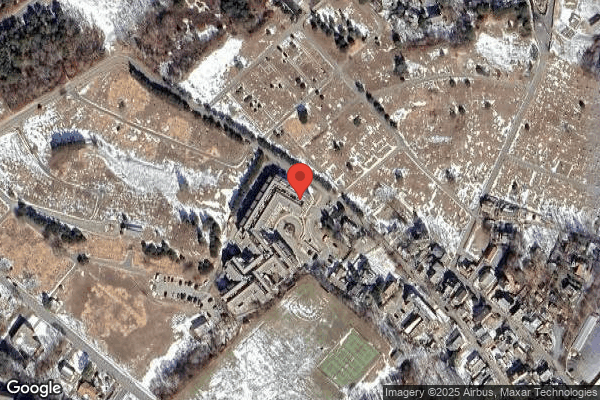
Feb 2024 11 deficiencies
CONCERN (D)

Potential for Harm - no one hurt, but risky conditions existed

Deficiency F0658 (Tag F0658)

Could have caused harm · This affected 1 resident

Based on observation, interview, record review, and policy review, the facility failed, for one Resident (#9), out of a total sample of 12 residents, to provide care and services consistent with profe...

Read full inspector narrative →
Based on observation, interview, record review, and policy review, the facility failed, for one Resident (#9), out of a total sample of 12 residents, to provide care and services consistent with professional standards of practice. Specifically, the facility failed to communicate timely to the physician a newly identified skin tear on the Resident's right thigh, obtain a physician's order prior to providing a wound care treatment, complete a comprehensive assessment of the wound with documentation in the electronic health record (EHR), initiate an incident report, and review and revise the care plan for new goals and interventions. Findings include: Review of the facility's policy titled Protocol-Wound Care and Rounds, revised January 2023, indicated but was not limited to the following: New Wound Identified In-House: -Licensed nurse should complete an assessment of wound including shape, size, depth, staging (if applicable) condition of wound. -Licensed nurse/manager/supervisor will notify the physician and obtain a treatment order. -The manager or designee will notify the family. -An Incident Report will be initiated. -An RN: Initial Event Documentation (within electronic health record system) will be completed by the RN on shift. -Licensed nurses should document on resident every shift for three days. -Interdisciplinary team should review and revise the care plan for new interventions, during morning meeting the following day as applicable. -A comprehensive nurse's note will be completed identifying the wound as unavoidable/avoidable with documentation including comorbidities, risk factors, and interventions. Resident #9 was admitted to the facility in June 2023 and had diagnoses including chronic kidney disease, cognitive communication deficit, iron deficiency anemia, and adult failure to thrive. Review of the Minimum Data Set (MDS) assessment, dated 12/6/23, indicated Resident #9 was at risk for developing pressure ulcers. On 2/10/24, Resident #9's Brief Interview for Mental Status (BIMS) score was re-assessed as 6 out of 15 indicating he/she had severe cognitive impairment. During an observation with interview on 2/12/24 at 9:08 A.M., the surveyor observed Resident #9 lying in bed. The bed linens were pushed down towards the end of the bed exposing Resident #9's lower extremities. A medium sized, rectangular wound dressing was observed adhered to the Resident's right lateral thigh, dated 2/8/24. Resident #9 said he/she wasn't sure what happened and said, I don't want to get into it. During an interview on 2/12/24 at 9:15 A.M., Nurse #1 said the Resident sustained a skin tear to his/her right thigh from self-propelling in his/her wheelchair and was not sure what the dressing change orders were, but it was last changed on 2/8/24 when she was last there. Review of current Physician's Orders failed to indicate a treatment order for the Resident's right thigh wound. Review of the Skin Only Evaluation, dated 2/8/24, indicated a new skin tear on the Resident's right lateral thigh measuring 2 centimeters (cm) x 2 cm. The care planned goals and clinical suggestions sections on the evaluation form were not completed. The evaluation did not indicate the physician was notified. Further review of the medical record failed to indicate the interdisciplinary team had reviewed and revised the care plan for new interventions related to the newly identified skin tear, failed to indicate the physician was notified, and failed to indicate an Incident Report had been completed per facility policy. Review of Progress Notes, dated 2/8/24 through 2/12/24, failed to indicate a comprehensive nurse's note was completed identifying the wound as unavoidable/avoidable with documentation including comorbidities, risk factors, and interventions or that licensed nurses documented on the Resident every shift for three days per facility policy. During an interview on 2/12/24 at 3:34 P.M., the surveyor reviewed the medical record with Nurse #1 who said there was no treatment order for the Resident's right thigh skin tear and nurses should not be doing dressing changes without an order. Nurse #1 said the skin tear was first identified on 2/8/24 and the progress note only indicated that it was a small skin tear measuring 2 cm x 2 cm. During an interview on 2/14/24 at 1:39 P.M., Nurse #5 said she was assigned to the Resident that day but wasn't sure if he/she had a dressing applied to the right thigh or even if there was a wound there. She said Resident #9 fell the night prior, however, and got a small new tear on his/her right knee and right upper back. During an observation with interview on 2/15/24 at 7:45 A.M., the surveyor observed Resident #9 lying in bed. The bed linens were pushed down towards the end of the bed exposing Resident #9's lower extremities. A dressing was not observed on the Resident's right lateral thigh which had an open area approximately 1 to 2 cm in circumference. There was no drainage observed. The surrounding skin was pink and thin in appearance. A second open area was observed on the Resident's right knee approximately 1 cm x 2 cm long with a small amount of dried blood in the center of the wound. The surrounding skin was pink and thin in appearance. Resident #9 said he/she had dressings there, but they fell off overnight. During an interview on 2/15/24 at 11:38 A.M., the surveyor reviewed the medical record with Nurse #3 who said Resident #9 had a right thigh skin tear first identified on 2/8/24 that was very fragile with eschar (dead tissue that eventually sloughs off healthy skin after an injury) but wasn't sure how he/she got it. She said dressing change orders for the wound were not obtained until 2/13/24 and said there were no previous orders. Nurse #3 said if a new wound is identified, then they should complete an assessment, a skin evaluation, and get an order for a dressing from the physician. She said the facility protocol for wound treatment is just first aid and the doctor needed to be called for orders. She said there was no documented evidence that the physician was notified until 2/13/24, five days after it was first identified, and an Incident Report was not completed until 2/13/24 which would say what you want to modify on the care. Nurse #3 said interventions were not added until 2/13/24 when the Incident Report was done but it didn't specify the Resident had a skin tear on his/her right thigh. She said the MDS Nurse developed the care plans. During an interview on 2/15/24 at 1:49 P.M., the surveyor reviewed the medical record with the Director of Nursing (DON) who said he was not aware the Resident had a right thigh skin tear. He said it was first identified on 2/8/24 on the Skin Only Evaluation form. The DON said a separate nursing progress note and Incident Report had not been completed but it was the expectation for staff to do so. He said the nurse should have notified the physician and family and obtained an order for a dressing. The DON further said an order was not obtained until 2/13/24 and the wound should have been care planned with interventions. He said the nurses were responsible for updating the care plans and that the wound management care plans were incomplete and should have been updated to reflect the right thigh skin tear.
CONCERN (D)

Potential for Harm - no one hurt, but risky conditions existed

Deficiency F0699 (Tag F0699)

Could have caused harm · This affected 1 resident

Based on record review and interviews, the facility failed to ensure one Resident (#4), out of a total sample of 12 residents, received culturally competent, trauma-informed care in accordance with pr...

Read full inspector narrative →
Based on record review and interviews, the facility failed to ensure one Resident (#4), out of a total sample of 12 residents, received culturally competent, trauma-informed care in accordance with professional standards of practice. Specifically, the facility failed to assess Resident #4 and identify triggers of trauma to prevent potential re-traumatization. Findings include: Review of the facility's policy titled Trauma-Informed Care, dated as revised 10/22/22, indicated but was not limited to: -Each resident should be screened for a history of trauma upon admission -The facility social worker or designee should conduct the screening in a private setting -The facility will account for residents' experiences, preferences, and cultural differences in order to eliminate or mitigate triggers that may cause re-traumatization of the resident -Potential causes of re-traumatization by staff may include, but are not limited to: -Being unaware of the resident's traumatic history -Failing to screen resident for trauma history prior to treatment planning -Challenging or discounting reports of traumatic events -Labeling behaviors/feelings as pathological -The facility should collaborate with resident trauma survivors, and as appropriate, the resident's family, friends, and any other health care professionals (such as psychologists, mental health professionals) to develop and implement individualized interventions. -Care plans should have interventions that minimize or eliminate the effect of the known triggers Resident #4 was admitted to the facility in February 2023 with diagnoses including schizoaffective disorder, post-traumatic stress disorder (PTSD-occurs in some individuals who have encountered a shocking, scary, or dangerous situation), and major depressive disorder. Review of the Minimum Data Set (MDS) assessment, dated 11/15/23, indicated Resident #4 was cognitively intact as evidenced by a Brief Interview for Mental Status (BIMS) score of 15 out of 15 and had a diagnosis of PTSD. Review of Resident #4's medical record failed to indicate a trauma informed care assessment had been conducted during this admission. Further review of Resident #4's medical record failed to indicate facility staff gathered information related to Resident #4's PTSD to develop an individualized person-centered plan of care that identified potential triggers of trauma and prevented re-traumatization. During an interview on 2/14/24 at 10:31 A.M., Certified Nursing Assistant (CNA) #2 said she took care of Resident #4 regularly. CNA #2 said she was unaware of any trauma indicators or triggers for this Resident and did not know about his/her trauma history. During an interview on 2/15/24 at 7:45 A.M., Nurse #5 said she was unaware of Resident #4's trauma history and could not identify triggers or interventions to prevent potential re-traumatization. During an interview on 2/15/24 at 12:52 P.M., the surveyor and MDS Nurse reviewed Resident #4's medical record. The MDS Nurse said there was no evidence that a PTSD assessment had been completed. A call was placed on 2/15/24 at 1:14 P.M., to the Director of Social Services, who was not available at the facility, to inquire on the process for assessing a Resident with PTSD. The surveyor did not receive a return call by the end of the survey. During an interview on 2/15/24 at 1:35 P.M., the Director of Nurses (DON) said the Social Worker should complete an assessment to identify a history of trauma upon admission for all residents. The DON said when a resident has a history of trauma it should be care planned and include individualized interventions to prevent potential re-traumatization. The DON said Resident #4's care plan was not individualized. On 2/15/24 at 3:47 P.M., there was no further supporting documentation furnished to the survey team at exit indicating a trauma-informed care assessment had been conducted.
CONCERN (D)

Potential for Harm - no one hurt, but risky conditions existed

Drug Regimen Review (Tag F0756)

Could have caused harm · This affected 1 resident

Based on record review, interview, and policy review, the facility failed to act promptly upon recommendations made by the Consultant Pharmacist during the monthly Medication Regimen Reviews (MRR) for...

Read full inspector narrative →
Based on record review, interview, and policy review, the facility failed to act promptly upon recommendations made by the Consultant Pharmacist during the monthly Medication Regimen Reviews (MRR) for one Resident (#34), out of a total sample of 12 residents. Specifically, the facility failed to ensure that the December 2023 and February 2024 consultant pharmacist's recommendations were maintained in the facility, readily available for review, and/or acted upon in a timely manner to ensure there was a stop date for an as needed (prn) medication, Lorazepam (sedative that can relieve anxiety), as required. Findings include: Review of the facility's policy titled Pharmacy Consultant Med Review, revised January 2023, indicated but was not limited to the following: -The facility shall employ/contract and maintain the services of a licensed pharmacist (pharmacy consultant), who shall review the medication regimen review (MRR) of each resident at least monthly and more frequently, as needed. -The primary purpose of this review is to assist the facility to maintain each resident's highest practicable level of functioning and quality of life, by helping them utilize medications appropriately and prevent or minimize adverse consequences related to medication therapy to the extent possible. -The pharmacy Consultant should report irregularities to the attending physician, medical director, and Director of Nurses (DON) with the resident's medication regimen. -The Pharmacy Consultant will document his/her findings and recommendations on the monthly drug/regimen review report. -The DON will give the unit manager or designee, a copy of the unit's monthly pharmacy consultant report. -The unit manager/designee will make sure all recommendations are acted upon and reported to the physician. -The unit manager/designee will return the copy of the consultant's report to the DON when notifications, follow-ups, and documentation have been completed. Resident #34 was admitted to the facility in October 2023 with diagnoses including Alzheimer's disease, anxiety disorder, and adjustment disorder. Review of the Minimum Data Set (MDS) assessment, dated 1/4/24, indicated Resident #34 had severe cognitive impairment as evidenced by a Brief Interview for Mental Status (BIMS) score of 0 out of 15 and was taking antipsychotic, antianxiety, and antidepressant medications on a routine basis. Review of the medical record indicated the consultant pharmacist made recommendations regarding Resident #34's medication regime every month from December 2023 through February 2024 and generated reports to be acted upon and reported to the physician, however, the surveyor was unable to locate the 12/3/23 and 2/2/24 MRR reports in the Resident's medical record. During an interview on 2/15/24 at 2:45 P.M, the MDS Nurse said the 12/3/23 and 2/2/24 reports were never seen by the Director of Nursing (DON) because the pharmacy consultant was emailing the former DON and not the current DON. She said the December through February reports were all for the same reason though. The MDS Nurse further said the 1/1/24 recommendation was received but not addressed until 2/7/24. The surveyor requested a copy of the reports for review. On 2/15/24 at 3:04 P.M., the MDS Nurse provided the surveyor with a printed copy of the December report but said she didn't have the February report. Review of the 12/3/23 Consultant Pharmacist Recommendations to Prescriber report for Resident #34 indicated the following recommendation: -Resident is receiving the following PRN psychotropic medication (Lorazepam). Regardless of Hospice care, these medications are required to be re-evaluated after 14 days. If therapy is to continue beyond 14 days, please note medical justification for continued use in progress note and specify the number of days the PRN order is to continue. Review of current Physician's Orders included the following medications: -Ativan (lorazepam) (treats anxiety) oral tablet 0.5 milligrams (mg), give 1 tablet by mouth every 8 hours as needed for restlessness and anxiety until 2/21/24, re-eval in 14 days, (order date 2/7/24) Further review of the medical record failed to indicate the physician/physician extender addressed the consultant pharmacist's recommendations in a timely manner. During an interview on 2/15/24 at 3:10 P.M., the DON said the pharmacy was sending the recommendations to the former DON and the pharmacy was not made aware by the facility of the change in DON. He said he wasn't sure who was responsible for notifying the pharmacy of the change, maybe the Administrator. He said once a recommendation is received it's placed in the physician's folder or given to the nurses. The DON said either the physician will agree or disagree, and the form gets faxed back to the pharmacy. He said the recommendation should have been addressed in a timely manner but wasn't. He said the December and February reports were not received until February. During an interview on 2/15/24 at 3:54 P.M., with the Administrator and DON (start date 11/13/23), the Administrator said the DON told her that the pharmacy recommendations were being sent to the previous DON, so they contacted the pharmacy about a month ago. The DON said it was towards the end of January. The DON said the December, January, and February recommendations were all received at the same time on 2/2/24.
CONCERN (D)

Potential for Harm - no one hurt, but risky conditions existed

Medication Errors (Tag F0758)

Could have caused harm · This affected 1 resident

Based on record review, policy review, and interview, the facility failed to ensure for one Resident (#35), out of a total sample of 12 residents, that each Resident's drug regimen was free from unnec...

Read full inspector narrative →
Based on record review, policy review, and interview, the facility failed to ensure for one Resident (#35), out of a total sample of 12 residents, that each Resident's drug regimen was free from unnecessary psychotropic medications. Specifically, for Resident #35, the facility failed to ensure psychotropic medications were monitored for adverse consequences of their use. Findings include: Review of the facility's policy titled Psychotropic Medication, last revised 10/2022, included but was not limited to: -Physicians and mid-level providers will use psychotropic medications appropriately working with the interdisciplinary team to ensure appropriate use, evaluation and monitoring -The facility will make every effort to comply with state and federal regulations related to the use of psychopharmacological medications in the long-term care facility to include regular review for continued need, appropriate dosage, side effects, risks and/or benefits -Psychotropic medications include: anti-anxiety/hypnotic, antipsychotic and antidepressant classes of drugs -Monitoring of the use of psychotropic medications is performed by the Pharmacy Consultant and Director of Nursing Resident #35 was admitted to the facility in November 2022 with diagnoses that included Alzheimer's disease and anxiety. Review of the Minimum Data Set (MDS) assessment, dated 1/11/24, indicated Resident #35 had a Brief Interview for Mental Status (BIMS) score coded as 99. A BIMS was not conducted as Resident #35 was rarely/never understood. Resident #35's cognitive skills for daily living was severely impaired. Resident #35's short- and long-term memory was a problem. Review of Resident #35's current Physician's Orders included but was not limited to: -Citalopram (antidepressant) 20 milligrams (mg) give 1.5 tablets by mouth daily, dated 10/4/23 -Quetiapine (antipsychotic) 25 mg give 1 tablet by mouth two times a day, dated 1/12/24 -Trazodone (antidepressant) 50 mg give 0.5 tablet by mouth in the evening, dated 10/4/23 Review of Resident #35's physician orders failed to indicate monitoring for potential adverse consequences of their use. Review of Resident #35's February 2024 Medication Administration Record (MAR) and Treatment Administration Record (TAR) indicated he/she received Citalopram, Quetiapine and Trazodone as ordered. Further review of Resident #35's February 2024 MAR and TAR failed to indicate he/she was monitored for potential adverse consequences of their use. During an interview on 2/14/24 at 9:37 A.M., Nurse #1 said the physician would write an order to monitor for side effects of antidepressants and antipsychotic medications. Nurse #1 said the nurses would document the side effects of the medications in the MAR. Nurse #1 and the surveyor reviewed the physician's orders and the MAR. Nurse #1 said there was no order to monitor for side effects of antidepressant or antipsychotic medications. During an interview on 2/15/24 at 11:22 A.M., the Director of Nurses (DON) said there should be an order to document the monitoring for side effects of any psychotropic medication. The DON reviewed the medical record and said the facility did not monitor for side effects/adverse consequences to Resident #35's antidepressant or antipsychotic medications.
CONCERN (D)

Potential for Harm - no one hurt, but risky conditions existed

Medical Records (Tag F0842)

Could have caused harm · This affected 1 resident

Based on interviews and record review, the facility failed to ensure its staff maintained accurate documentation for one Resident (#4), out of a total sample of 12 residents. Specifically, the facilit...

Read full inspector narrative →
Based on interviews and record review, the facility failed to ensure its staff maintained accurate documentation for one Resident (#4), out of a total sample of 12 residents. Specifically, the facility failed to ensure January 2024 and February 2024 Medication Administration Records (MAR) were accurate and reflected the administration of porta cath (implanted venous port, a small device, about the size of a quarter. It is used to carry medicine into the bloodstream. It can also be used to draw blood for testing) flushes according to physician's orders. Findings include: Resident #4 was admitted to the facility in February 2023 with diagnoses including schizoaffective disorder, implanted porta cath, post-traumatic stress disorder (PTSD), and major depressive disorder. Review of current Physician's Orders included but was not limited to: -Biweekly Complete Blood Count (CBC) while on Clozaril (antipsychotic used to treat schizophrenia) every 14 days, dated 12/19/23 -Draw CBC with differential from implanted port every 2 weeks on Tuesday, dated 10/12/23 -Implanted port: Flush with 10 millimeters (ml) saline pre-use and 20 ml saline post-use, followed by 500 units of Heparin (5 ml of 100 units/ml) as needed for implanted port flush per IV protocol, dated 10/12/23 -Heparin Sodium flush implanted venous port: use 5 ml intravenously every 24 hours as needed for implanted port flush use as directed per IV protocol for post lab draw flush, dated 10/12/23 Review of the January 2024 and February 2024 MARs indicated the following orders were not signed as administered as evidenced by several blank, unsigned boxes corresponding to the dates and times porta cath flushes were to be administered on six occasions as follows: - Implanted port: Flush with 10 millimeters (ml) saline pre-use and 20 ml saline post-use, followed by 500 units of Heparin (5 ml of 100 units/ml) as needed for implanted port flush: 1/15/24, 1/29/24, 2/12/24 - Heparin Sodium flush implanted venous port: use 5 ml intravenously every 24 hours as needed for implanted port flush use as directed per IV protocol for post lab draw flush: 1/15/24, 1/29/24, 2/12/24 During an interview on 2/15/24 at 9:46 A.M., the surveyor and Nurse #3 reviewed Resident #4's MARs. Nurse #3 said she had drawn blood through Resident #4's porta cath on 1/15/24 and 2/12/24. Nurse #3 said she had in the past documented porta cath flushes on a paper MAR. Nurse #3 said the facility had changed to a new electronic medical record (EMR), Point Click Care (PCC), in October 2023 and she did not know where to document the flushes. Nurse #3 said she did not know the porta cath flushes were entered as a PRN (as needed) order. Nurse #3 said she did not document the flushes. During an interview on 2/15/24 at 10:07 A.M., the surveyor and Nurse #2 reviewed Resident #4's MARs. Nurse #2 said she had drawn blood through Resident #4's porta cath on 1/29/24. Nurse #2 said the facility had changed to a new EMR, PCC, in October 2023 and she did not know where to document the flushes. Nurse #2 said she had received little training on the new EMR. Nurse #2 said she had flushed the porta cath pre- and post-use, but she did not document in the MAR. During an interview on 2/15/24 at 1:43 P.M., the Director of Nursing (DON) said the nurses had been documenting porta cath flushes on paper prior to documenting in PCC starting at the end of October 2023. The DON and surveyor reviewed Resident #4's MAR for January 2024 and February 2024. The DON said the order for porta cath flushes was transposed to the MAR as a PRN order. The DON said the nurses were not documenting when the flushes had been administered as ordered. The DON said the expectation was that the nurses were to document the flushes in the MAR.
CONCERN (D)

Potential for Harm - no one hurt, but risky conditions existed

Deficiency F0849 (Tag F0849)

Could have caused harm · This affected 1 resident

Based on record review, interview, hospice contract review, and policy review, the facility failed to ensure for one Resident (#34), out of a total sample of 12 Residents, that hospice services were p...

Read full inspector narrative →
Based on record review, interview, hospice contract review, and policy review, the facility failed to ensure for one Resident (#34), out of a total sample of 12 Residents, that hospice services were provided in accordance with professional standards and principles between the hospice service provider and the facility. Specifically, the facility failed to: a. Ensure the Hospice agency provided a list of hospice staff to retain overall professional management of the Resident; b. Designate a member of the facility's interdisciplinary team who was responsible for working with hospice representatives to coordinate care to the Resident; c. Ensure an integrated care plan was developed to accurately reflect services provided by both the hospice provider and facility; and d. Ensure both the hospice and nursing facility maintained the appropriate documentation of hospice services provided in the medical record including all hospice visits to ensure prompt communication and continuity of care. Findings include: Review of the facility's policy titled Hospice Services, revised January 2023, indicated but was not limited to the following: - When a resident participates in the hospice program, a coordinated plan of care between the facility, hospice agency, and resident/family will be developed and shall include directives for managing pain and other uncomfortable symptoms. -The care plan shall be revised and updated as necessary to reflect the resident's current status. -The hospice agency retains overall professional management responsibility for directing the implementation of the plan of care related to the terminal illness and related conditions, which includes designation of a Hospice Registered Nurse to coordinate the implementation of the plan of care. -The facility and hospice will identify the specific services that will be provided by each entity and this information will be communicated in the plan of care. -The hospice and facility will communicate with each other when any changes are indicated or made to the plan of care. Review of the Hospice Inpatient Services Agreement, dated January 2020, indicated but was not limited to the following: Responsibilities of Facility: -Facility shall designate an individual within the facility who shall be responsible for the implementation of the provisions of this agreement. -Facility shall prepare and maintain complete and detailed clinical records concerning each hospice patient receiving inpatient services. Each clinical record shall completely, promptly, and accurately document all services provided to, and events concerning, each hospice patient, including evaluations, treatments, and progress notes. Responsibilities of Hospice: - Methods used to evaluate the care may include review of documentation. -For each hospice patient, hospice shall designate a registered nurse, who will be responsible for coordinating and supervising services provided to a hospice patient. The hospice representative shall monitor the facility and be available to provide information to the facility regarding the provision of inpatient services. Resident #34 was admitted to the facility in October 2023 and had diagnoses including insomnia, Alzheimer's disease, severe protein-calorie malnutrition, chronic kidney disease, anxiety disorder, and adjustment disorder with depressed mood. Review of the Minimum Data Set (MDS) assessment, dated 1/4/24, indicated Resident #34 had severe cognitive impairment as evidenced by a Brief Interview for Mental Status (BIMS) score of 0 out of 15 and was receiving hospice services. Review of current Physician's Orders indicated an order to admit Resident #34 to hospice, 10/13/23. a. During an interview on 2/12/24 at 4:28 P.M., the surveyor reviewed Resident #34's hospice binder with Nurse #1. The binder failed to indicate the name of the registered nurse (RN) who was responsible for coordinating and supervising hospice services provided to the Resident. Further review of the binder failed to list any of hospice's interdisciplinary team members involved in providing inpatient services to Resident #34. Nurse #1 said the hospice facility did not provide a list of staff in the binder that were assigned to the Resident and said she wasn't sure who they were. During an interview on 2/14/24 at 2:28 P.M., the surveyor reviewed the hospice binder with the Director of Nursing (DON) who said it did not contain the names of hospice staff including the assigned RN case manager, but he knew who she was. During an interview on 2/14/24 at 3:37 P.M., Hospice Staff #2 said the RN case manager was responsible for printing out a list of the hospice staff responsible for the Resident's care and placing it in the Resident's binder. She said she wasn't sure why it wasn't there, but it should have been. b. During an interview on 2/14/24 at 2:05 P.M., Nurse #5 said she wasn't sure, but she thought the DON was the facility staff member designated to coordinate hospice care between the hospice provider and facility staff. During an interview on 2/14/24 at 2:28 P.M., the DON said there was no designated facility staff member to coordinate care to the Resident provided by the long-term care facility staff and hospice staff. He said it was not him. The Infection Preventionist (IP) was present in the room and said maybe it was the Social Worker (SW). The DON called the Social Worker who said she was not the designated person and was not at the facility a lot so had no part in the hospice coordination of care. During an interview on 2/14/24 at 3:35 P.M., the DON said the Administrator was the person designated to oversee hospice coordination. During an interview on 2/14/24 at 3:37 P.M., Hospice Staff #2 said the hospice agency would call and speak to the DON or Social Worker at the nursing facility to coordinate care per Hospice Staff #3. During an interview on 2/15/24 at 11:56 A.M., Nurse #3 said the DON or MDS nurse would be the designated staff member to coordinate hospice care. During an interview on 2/15/24 at 4:40 P.M., the Administrator said the facility did not have a designated staff person to coordinate hospice care between the hospice provider and facility staff. c. Review of Resident #34's interdisciplinary care plans included but was not limited to: Focus: Resident is receiving hospice support for end-of-life care. Mechanically altered diet is indicated (10/18/23) Interventions: Obtain weight per MD order or at the request of hospice on the same scale. Notify MD/NP/RD of significant changes (10/18/23) The care plan was not integrated and failed to include a description of the facility and hospice services provided to the Resident. During an interview on 2/15/24 at 2:02 P.M., the DON said Resident #34 should have had a care plan that indicated he/she was on hospice with a description of the services provided. The DON said the care plan was not integrated but should have been and the MDS Nurse was responsible for doing this. During an interview on 2/15/24 at 2:54 P.M., the MDS Nurse said she was responsible for the comprehensive development of care plans and Resident #34's care plan only included a few basic things and was not comprehensive or person-centered but should have been. d. Review of Resident #34's medical record and hospice binder failed to indicate both the hospice and nursing facility maintained the appropriate documentation of services provided including all hospice visits since December 2023 to ensure prompt communication and continuity of care. During an interview on 2/12/24 at 4:28 P.M., the surveyor reviewed the medical record and hospice binder with Nurse #1 who said the last hospice visit note was from December 2023. Nurse #1 said she was unable to locate any further hospice documentation since that time. During an interview on 2/14/24 at 2:05 P.M., the surveyor reviewed the medical record and hospice binder with Nurse #5 who said the last hospice visit notes in the medical record were from December 2023. She said she wasn't sure why they weren't in there but believed hospice staff documented directly into the electronic health record (EHR). During an interview on 2/14/24 at 2:28 P.M., the DON said hospice staff did not document in the EHR. He said the hospice visit notes should have been maintained in the Resident's medical record but weren't and called the hospice agency to have them faxed over from 12/1/23 to the current date. On 2/14/24 at 2:41 P.M., the Infection Preventionist provided the DON and surveyor with copies of hospice visit notes received from the hospice facility. During an interview on 2/14/24 at 3:37 P.M., Hospice Staff #2 said the missing documentation was faxed over to the facility earlier that day. She said the hospice RN case manager was responsible for ensuring that all hospice visit notes for all disciplines get put into the hospice binder and wasn't sure why she was behind on this. She said hospice visits were made to the Resident on 1/3/24 (nurse), 1/3/24 (chaplain), 1/3/24 (home health aide) (HHA), 1/5/24 (HHA), 1/8/24 (nurse), 1/8/24 (HHA), 1/9/24 (SW), 1/11/24 (HHA), 1/16/24 (nurse), 1/16/24 (HHA), 1/17/24 (volunteer), 1/17/24 (HHA), 1/18/24 (HHA), 1/19/24 (HHA), 1/22/24 (nurse), 1/22/24 (HHA), 1/22/24 (SW), 1/23/24 (HHA), 1/24/24 (HHA), 1/29/24 (HHA), 1/30/24 (HHA), 1/31/24 (nurse), 2/1/24 (SW), 2/2/24 (HHA), 2/5/24 (HHA), 2/6/24 (HHA), 2/7/24 (nurse), and 2/12/24 (HHA) and should have been in the binder.
CONCERN (E)

Potential for Harm - no one hurt, but risky conditions existed

Comprehensive Care Plan (Tag F0656)

Could have caused harm · This affected multiple residents

Based on observations, interviews, and records reviewed, for four Residents (#16, #19, #34, and #35), of 12 sampled residents, the facility failed to ensure that individualized, comprehensive care pla...

Read full inspector narrative →
Based on observations, interviews, and records reviewed, for four Residents (#16, #19, #34, and #35), of 12 sampled residents, the facility failed to ensure that individualized, comprehensive care plans were developed, consistently implemented, and revised as needed. Specifically, the facility failed: 1. For Resident #16, to ensure that a care plan was developed to address the Resident's Foley catheter (medical device that helps drain urine from the bladder); 2. For Resident #19, to revise a care plan after five of six falls to ensure approaches were effective, individualized, and appropriate for the Resident; 3. For Resident #34, to ensure an interdisciplinary comprehensive care plan was developed and individualized to address: a. his/her dementia care needs and psychosocial needs as it related to his/her diagnoses of depression, anxiety, and adjustment disorder, and b. the Resident's use of psychotropic medications and identified target behaviors, non-pharmacological interventions, and measurable goals of treatment; and 4. For Resident #35, to revise the plan of care to ensure care approaches were effective, individualized, and appropriate for the Resident's risk for falls. Findings include: Review of the facility's policy titled Care Plan Comprehensive, dated as revised 10/22/22, indicated but was not limited to: -Policy: A comprehensive, person-centered care plan that includes measurable objectives and timetables to meet the resident's physical, psychological and functional needs is developed and implemented for each resident. -Procedures A. The interdisciplinary team (IDT), in conjunction with the resident and his/her family or legal representative, develops and implements a comprehensive, person-centered care plan for each resident. B. The care plan interventions are derived from a thorough analysis of the information gathered as part of the comprehensive assessment. C. The services provided or arranged by facility, as outlined by the comprehensive care plan, shall meet professional standards. D. Assessments of residents are ongoing and care plans are revised as information about the residents and the residents' conditions change. 1. Resident #16 was admitted to the facility in January 2024 with diagnoses including acute kidney failure and benign prostatic hyperplasia (BPH, enlarged prostate). Review of the most recent Minimum Data Set (MDS) assessment, dated 1/25/24, indicated Resident #16 was cognitively intact as evidenced by a Brief Interview for Mental Status (BIMS) score of 15 out of 15. On 2/12/24 at 9:52 A.M., the surveyor observed Resident #16 in bed with a Foley catheter connected to a drainage bag. Review of Resident #16's February 2024 Physician's Orders included but was not limited to: - Urinary Catheter: Monitor urinary output Q shift (every shift)/Catheter Care Q shift & PRN (as needed) every shift for Catheter Care/Urinary Output AND as needed for Catheter Care PRN (1/25/24) Further review of the medical record failed to indicate there was a care plan for Resident #16's Foley catheter. During an interview on 2/15/24 at 2:02 P.M., the MDS Nurse said she was responsible for the comprehensive care plans that are put in on admission, during a comprehensive assessment, or with a significant change. The MDS Nurse said the nurse who put the order in for the Foley catheter should have put in the care plan but did not. During an interview on 2/15/24 at 2:05 P.M., Nurse #2 said she did not know who put care plans in the computer. Nurse #2 said sometimes the assessments would prompt us to put in a care plan but in this case it did not. I don't even know how to put care plans into the computer. During an interview on 2/15/24 at 11:32 A.M., the Director of Nursing (DON) said the expectation is that Resident #16 would have had a care plan for his/her Foley catheter but did not. His expectation was that the nurse who put the order in should have put in the care plan. 2. Resident #19 was admitted to the facility in July 2023 with diagnoses including vascular dementia, cerebral infarction (stroke), difficulty walking, and repeated falls. Review of the MDS assessment, dated 1/22/24, indicated Resident #19 had severe cognitive impairment as evidenced by a BIMS score of 5 out of 15. Further review of the MDS indicated the Resident required maximum assistance from one person for transfers. Review of the medical record indicated that Resident #19 had six falls, one with minor injury (1/27/24 twice, 1/28/24, 1/30/24, 2/3/24, and 2/4/24) in an eight-day period. Review of the Current Functional Performance, dated 10/24/23, indicated Resident #19 required extensive assistance of one person for transfers, toileting, and locomotion on and off the unit. Review of Resident #19's care plans indicated but was not limited to: Focus: Risk for Falls Date Initiated: 10/24/23 Goal: Resident Will Be Free of Falls Date Initiated: 10/24/23 Revision on: 01/22/24 Interventions: 11-7 will assist resident out of bed on last rounds Date Initiated: 02/05/24, Assist resident with ambulation and transfers, utilizing therapy recommendations Date Initiated: 10/24/23, Evaluate fall risk on admission and PRN Date Initiated: 10/24/23, If fall occurs, alert provider Date Initiated: 10/24/23, If fall occurs, initiate frequent neuro and bleeding evaluation per facility protocol Date Initiated: 10/24/23, If resident is a fall risk, initiate fall risk precautions Date Initiated: 10/24/23 Focus: Documented Safety Concerns Date Initiated: 10/24/23 Goal: Resident Will Remain Safe Date Initiated: 10/24/23 Revision on: 01/22/24 Interventions: Encourage use of prescribed assistive devices Date Initiated: 10/24/23, Perform safety risk evaluation(s) on admission, as needed and upon changes in condition Date Initiated: 10/24/23, Safety measures - including strategies to reduce the risk of infection, falls, injury initiated as appropriate Date Initiated: 10/24/23 Review of the Incident Report (for fall #1), dated 1/27/24, indicated Resident #19 was found sitting on the floor propped up against his/her bed, no apparent injury. Further review of the incident report failed to provide an intervention to prevent further falls and an update to the care plan. Review of the Incident Report (for fall #2), dated 1/27/24, indicated Resident #19 had a witnessed fall beside his/her bed. Further review of the incident report failed to provide an intervention to prevent further falls and an update to the care plan. During an interview on 2/15/24 at 10:25 A.M., Nurse #2 said the process for after a fall was to complete an incident report, write a nurse's note, then put in interventions into the care plan and notify the other staff. Nurse #2 said this process was not followed after fall #2 on 1/27/24. Review of the Incident Report (for fall #3), dated 1/28/24, indicated Resident #19 was found sitting on the floor in another resident's room. Further review of the incident report failed to provide an intervention to prevent further falls and an update to the care plan. Review of the Incident Report (for fall #4), dated 1/30/24, indicated Resident #19 was found sitting on the floor in his/her room with his/her back against the dresser, with no apparent injuries. Further review of the incident report failed to provide an intervention to prevent further falls and an update to the care plan. Review of the Incident Report (for fall #5), dated 2/3/24, indicated Resident #19 was found leaning against the double doors on the unit heading out to the lobby. Further review of the incident report failed to provide an intervention to prevent further falls and an update to the care plan. Review of the Incident Report (for fall #6), dated 2/4/24, indicated Resident #19 was found on the ground cross-legged in front of his/her bed, with no apparent injuries noted, unwitnessed fall out of bed during attempted self-transfer to wheelchair. Further review of the incident report indicated interventions were implemented and the care plan was updated. During an interview on 2/14/24 at 4:24 P.M., the MDS Nurse said Resident #19 has had poor insight. The MDS Nurse said the process was to put an intervention in a nurse's note and care plan after every fall. The MDS Nurse said the facility had attempted many interventions to prevent falls for Resident #19 but had failed to document them. During an interview on 2/15/24 at 10:40 A.M., the Director of Nursing (DON) said his expectation was that after a fall the nurse would implement an intervention and update the resident's care plan. After reviewing the six incident reports with the DON, he said that interventions were not established for five out of the six falls and the care plan with interventions were not updated. The DON said the care plan should have been updated to help reduce future falls.4. Resident #35 was admitted to the facility in November 2022 with diagnoses that included Alzheimer's disease and anxiety. Review of the MDS assessment, dated 1/11/24, indicated Resident #35 had a BIMS score coded as 99. The BIMS was not conducted as Resident #35 was rarely/never understood. Resident #35's cognitive skills for daily living were severely impaired. Resident #35's short- and long-term memory was a problem. Further review of the MDS indicated Resident #35 had two or more falls. Review of the care plan, initiated 10/17/23, indicated Resident #35 was at risk for falls. The goal identified was that Resident #35 will be free of major injury related to falls. Interventions included but were not limited to the following: -11/23/22 Address toileting needs promptly -11/23/22 Call light within reach while in room -12/12/23 Encourage to call for assistance -3/22/23 PT/OT eval requested -5/16/23 Resident was assisted into bed for a nap as per his/her usual routine -12/9/23 Certified Nursing Assistant (CNA) was turning away from closet and didn't realize Resident was standing behind her, bumped into Resident causing him/her to fall. Resident developed left hip pain. X-ray was obtained which was negative 10/17/23 Evaluate fall risk on admission and PRN 5/21/23 Sat on the floor while ambulating, 5/24/23 lost balance. Ambulates without assistive device, uses furniture and handrails at times. Resident has akathisia, resident has occasional losses of balance, is usually able to right self. Staff provide supervision/handheld assist during ambulation 10/17/23 If fall occurs, alert provider 10/17/23 If fall occurs, initiate frequent neuro and bleeding evaluation per facility protocol 12/12/23 Keep all needed items near patient for easy accessibility 12/12/23 Maintain a safe and clutter free environment 12/12/23 Provide appropriate footwear 12/12/23 Rehab consult PRN 12/12/23 Resident had a fall on 9/9 and 9/10. On the 9th there was a question of a medical event. Daughter declined transfer; neuro vital signs monitored per protocol. Scheduled pacemaker check performed today, no notification of adverse findings. Fall on 9/10 occurred when Resident wandered into another resident room, the resident yelled at her and he/she lost his/her balance when attempting to leave the room. Stop sign in place across doorway of that room Further review of the medical record indicated Resident #35 had sustained additional falls on 1/30/24 and 1/31/24. Although the plan of care, revised 2/12/24, for the risk of falls included approaches to prevent falls, there was no documented evidence that the interdisciplinary team reviewed the effectiveness of the interventions being put in place to prevent the falls. During an interview on 2/15/24 at 10:07 A.M., the surveyor and Nurse #2 reviewed Resident #35's falls care plan. Nurse #2 said the nurses would update the care plan with new interventions when a Resident had a fall. Nurse #2 said the facility had changed to a new electronic medical record system (EMR), Point Click Care (PCC), in October 2023. Nurse #2 said she had received little training on the new EMR. Nurse #2 said she would not know how to update the care plans. During an interview on 2/15/24 at 1:35 P.M., the DON and surveyor reviewed Resident #35's medical record. The DON said Resident #35 had sustained a fall on 1/30/24 and 1/31/24 and interventions were not revised to prevent further falls. The DON reviewed Resident #35's current care plan and said he agreed the care plan had a lot of interventions and many interventions were not effective. The DON said falls were reviewed in weekly RISK meetings and care plans revised as needed but, due to several factors, RISK meetings have not been held since 1/17/24. The DON said the current falls care plan needed to be revised. 3. Resident #34 was admitted to the facility in October 2023 and had diagnoses including insomnia, Alzheimer's disease, anxiety disorder, and adjustment disorder with depressed mood. Review of the MDS assessment, dated 1/4/24, indicated Resident #34 had severe cognitive impairment as evidenced by a BIMS score of 0 out of 15, and was taking antipsychotic, antianxiety, and antidepressant medications on a routine basis. a. Review of the medical record failed to indicate that an interdisciplinary comprehensive care plan was developed with measurable objectives and timeframes to address the Resident's dementia care needs and psychosocial needs related to his/her diagnoses of Alzheimer's dementia, anxiety disorder, and adjustment disorder with depressed mood. b. Review of current Physician's Orders included the following medications: -Ativan (lorazepam) (treats anxiety) oral tablet 0.5 milligrams (mg), give 1 tablet by mouth every 8 hours as needed for restlessness and anxiety until 2/21/24, re-eval in 14 days, 2/7/24 -Depakote sprinkles (divalproex sodium) (treats seizure disorders and mental/mood conditions) oral capsule delayed release sprinkle, 125 mg, give 1 capsule by mouth two times a day for behaviors, 10/13/23 -Risperidone (antipsychotic) tablet, 1 mg, give 0.5 mg by mouth two times a day for behaviors, 10/13/23 -Sertraline HCL (antidepressant) oral tablet 50 mg, give 1 tablet by mouth in the morning for depression, 10/14/23 -Trazodone HCL (antidepressant and sedative) oral tablet, give 12.5 mg by mouth at bedtime for sleep, total dose = 75 mg, 10/13/23 -Trazodone HCL tablet, 50 mg, give 0.5 mg tablet by mouth two times a day for anxiety, total dose = 25 mg, 10/13/23 Further review of the medical record failed to indicate that an interdisciplinary comprehensive care plan was developed to address Resident #34's use of psychotropic medications including an antipsychotic medication that identified target behaviors, non-pharmacological interventions, and measurable goals of treatment to evaluate the Resident's progress. During an interview on 2/15/24 at 12:16 P.M., Nurse #3 said there was no care plan developed for the Resident's use of psychotropic medications that included measurable objectives and timeframes to meet the Resident's medical, nursing, mental, and psychosocial needs including goals, desired outcomes, and preferences. During an interview on 2/15/24 at 2:04 P.M., the surveyor reviewed the medical record with the Director of Nursing who said Resident #34's care plan in general was not comprehensive or person-centered and did not address the Resident's dementia care needs, psychosocial needs, or use of psychotropic medications. During an interview on 2/15/24 at 2:54 P.M., the MDS Nurse said she was responsible for the comprehensive development of care plans and Resident #34's care plan only included a few basic things and was not comprehensive or person-centered but should have been.
CONCERN (E)

Potential for Harm - no one hurt, but risky conditions existed

Accident Prevention (Tag F0689)

Could have caused harm · This affected multiple residents

Based on observations, policy review, interviews, and record reviews for two Residents (#19 and #34) of 12 sampled residents, the facility failed to provide adequate supervision to prevent accidents. ...

Read full inspector narrative →
Based on observations, policy review, interviews, and record reviews for two Residents (#19 and #34) of 12 sampled residents, the facility failed to provide adequate supervision to prevent accidents. Specifically, the facility failed to: 1. For Resident #19, ensure falls were thoroughly investigated and interventions were initiated/implemented to prevent further falls per facility policy; and 2. For Resident #34, who was assessed by nursing to be a high risk for falls, to ensure staff provided adequate supervision and updated the falls care plan with appropriate goals and interventions to help prevent future falls. Findings include: Review of the facility's policy titled Fall Prevention and Management, dated as revised January 2023, indicated but was not limited to the following: - Policy: The Fall Risk Evaluation (completed on admission) will determine fall risk factors. The interdisciplinary team identifies and implements appropriate interventions to reduce the risk of falls or injuries while maximizing dignity and independence. -Assessment and Prevention 1. The staff will: -Implement goals and interventions with resident/patient/family for inclusion in the interdisciplinary care plan based on the resident's individual needs. - Review and revise IDT (interdisciplinary) care plan when a change is identified, after an event. 2. The staff will evaluate and document falls that occur while the individual is in the facility; for example, when and where they happened, any observations of events, etc. 3. If the individual continues to fall, the staff and physician will re-evaluate the situation and consider other possible reasons for the resident's falling (besides those that have already been identified) and will re-evaluate the continued relevance of current interventions. -Post Fall 1. Resident fall will be referred to therapy for a screen- for indication of need for therapy and interventions. -Cause Identification 1. For an individual who has fallen, staff will attempt to define possible causes within 24 hours of the fall. - Monitoring and Follow Up 1. Interdisciplinary team should monitor and document on resident's response/ success with fall reduction interventions. 2. Resident's who continue to fall with interventions in place will be assessed for changes in or additions to interventions. Review of the facility's policy titled Incident Reports, dated as revised 10/2022, indicated but was not limited to the following: -Incident reports shall be filled out for any unusual or dangerous occurrence. Some examples are . resident fall 1. Resident #19 was admitted to the facility in July 2023 with diagnoses including vascular dementia, cerebral infarction (stroke), difficulty walking, and repeated falls. Review of the Minimum Data Set (MDS) assessment, dated 1/22/24, indicated Resident #19 had severe cognitive impairment as evidenced by a Brief Interview for Mental Status (BIMS) score of 5 out of 15. Further review of the MDS indicated the Resident required maximum assistance from one person for transfers. On 2/12/24 at 9:31 A.M., the surveyor observed Resident #19 seated slouching forward, leaning to the right self-propelling in his/her wheelchair. Review of the Current Functional Performance, dated 10/24/24, indicated Resident #19 required extensive assistance of one person for transfers, toileting, and locomotion on and off the unit. Further review of Resident #19's care plans indicated but was not limited to: Focus: Risk for Falls Date Initiated: 10/24/23 Goal: Resident Will Be Free of Falls Date Initiated: 10/24/23 Revision on: 01/22/24 Interventions: 11-7 will assist Resident #19 out of bed on last rounds Date Initiated: 02/05/24, Assist resident with ambulation and transfers, utilizing therapy recommendations Date Initiated: 10/24/23, Evaluate fall risk on admission and PRN Date Initiated: 10/24/23, If fall occurs, alert provider Date Initiated: 10/24/23, If fall occurs, initiate frequent neuro and bleeding evaluation per facility protocol Date Initiated: 10/24/23, If Resident is a fall risk, initiate fall risk precautions Date Initiated: 10/24/23 Focus: Documented Safety Concerns Date Initiated: 10/24/23 Goal: Resident Will Remain Safe Date Initiated: 10/24/23 Revision on: 01/22/24 Interventions: Encourage use of prescribed assistive devices Date Initiated: 10/24/23, Perform safety risk evaluation(s) on admission, as needed and upon changes in condition Date Initiated: 10/24/23, Safety measures - including strategies to reduce the risk of infection, falls, injury initiated as appropriate Date Initiated: 10/24/23 Review of the medical record indicated that Resident #19 had six falls (1/27/24 twice, 1/28/24, 1/30/24, 2/3/24, and 2/4/24) in an eight-day period. Review of the Incident Report (for fall #1), dated 1/27/24, indicated Resident #19 was found sitting on the floor propped up against his/her bed, had obtained no apparent injury. Further review of Resident #19's medical record, after fall #1, indicated the facility failed to: -investigate the cause of the fall -implement interventions to prevent future falls -complete nine shifts of nursing notes to indicate the Resident's response/ success with fall reduction intervention Review of the Incident Report (for fall #2), dated 1/27/24, indicated Resident #19 had a witnessed fall beside his/her bed. Resident #19 said he/she was attempting to stand and had obtained no apparent injury. Further review of the Resident #19's medical record, after fall #2, indicated the facility failed to: -investigate the cause of the fall -implement interventions to prevent future falls -complete nine shifts of nursing notes to indicate the Resident's response/ success with fall reduction intervention During an interview on 2/15/24 at 10:25 A.M., Nurse #2 said after it was established that Resident #19 did not have an injury and was safe, then the resident was picked up off the floor. Nurse #2 said the process for after a fall was to complete an incident report, write a nurse's note, then put in interventions into the care plan and notify the other staff. Nurse #2 said this process was not followed after fall #2 on 1/27/24. Review of the Incident Report (for fall #3), dated 1/28/24, indicated Resident #19 was found sitting on the floor in another Resident's room with no apparent injury. Resident #19 had his/her shoes off and his/her wheelchair was not locked. Further review of Resident #19's medical record, after fall #3, indicated the facility failed to: -investigate the cause of the fall -implement interventions to prevent future falls -complete nine shifts of nursing notes to indicate the Resident's response/success with fall reduction intervention Review of the Incident Report (for fall #4), dated 1/30/24, indicated Resident #19 was found sitting on the floor in his/her room with his/her back against the dresser, with no apparent injuries. Further review of Resident #19's medical record, after fall #4, indicated the facility failed to: -investigate the cause of the fall -implement interventions to prevent future falls -complete nine shifts of nursing notes to indicate the Resident's response/ success with fall reduction intervention Review of the Incident Report (for fall #5), dated 2/3/24, indicated Resident #19 was found leaning against the double doors on the unit heading out to the lobby. Resident #19 had bitten their lip and was bleeding. Resident #19 said he/she was trying to get to his/her apartment. Further review of Resident #19's medical record, after fall #5, indicated the facility failed to: -implement interventions to prevent future falls -complete nine shifts of nursing notes to indicate the Resident's response/success with fall reduction intervention Review of the Incident Report (for fall #6), dated 2/4/24, indicated Resident #19 was found on the ground cross-legged in front of his/her bed, with no apparent injuries noted. The incident report indicated the unwitnessed fall occurred when the Resident attempted to self-transfer from bed to chair. Further review of Resident #19's medical record, after fall #6, indicated the facility failed to: -complete nine shifts of nursing notes to indicate the Resident's response/ success with fall reduction intervention During an interview on 2/14/24 at 3:41 P.M., Certified Nursing Assistant (CNA) #3 said Resident #19 had many falls and he/she always got up without assistance. CNA # 3 said she was unaware of any interventions to prevent Resident #19 from falling. During an interview on 2/14/24 at 4:24 P.M., the MDS Nurse said Resident #19 has poor insight. The MDS Nurse said the process for when a resident has a fall would be to complete an incident report, start analyzing the fall and determining a root cause, put interventions in a nurse's note and care plan, then discuss the fall at risk meeting on Wednesdays. The MDS Nurse said the facility had attempted several interventions to prevent falls for Resident #19 but failed to document them. During an interview on 2/15/24 at 7:32 A.M., CNA #1 said Resident #19 has had multiple falls. CNA #1 said she was unaware of any interventions to prevent Resident #19 from falling. During an interview on 2/15/24 at 9:02 A.M., CNA #2 said Resident #19 is often in his/her wheelchair leaning forward attempting to take their shoes and socks off. CNA #2 said that they try to keep Resident #19 busy but that is about it. During an interview on 2/15/24 at 10:40 A.M., the Director of Nursing (DON) said his expectation was that after a fall the nurse completes an incident report, gathers witness statements regardless of whether the fall was witnessed or unwitnessed, writes a nurse's note the day of the fall and every shift for 72 hours (for nine total shifts), and update the resident's care plan. Then the fall will be discussed at morning meeting the next day. The DON said that the fall is then discussed at the weekly risk meeting, but that there had not been a Risk Meeting since 1/17/24. After reviewing the six incident reports with the DON, he said that the policy to investigate and update the care plan with interventions was not followed. The DON said some of Resident #19's falls could have been prevented if the prior falls had been investigated and interventions had been initiated/implemented. 2. Resident #34 was admitted to the facility in October 2023 and had diagnoses including Alzheimer's disease, unsteadiness on feet, anxiety disorder, and adjustment disorder with depressed mood. Review of the MDS assessment, dated 1/4/24, indicated Resident #34 had severe cognitive impairment as evidenced by a BIMS score of 0 out of 15, was taking antipsychotic, antianxiety, and antidepressant medications on a routine basis, required substantial assist to dependence on staff for repositioning, and had one fall since admission or the previous assessment. Review of the Fall Risk Evaluation, dated 1/3/24, indicated Resident #34 was a high risk for potential falls and prevention protocol should be initiated immediately and documented on the care plan. Review of the Risk for Falls care plan, initiated 1/3/24, indicated the following: Goals: -None listed Interventions: -None listed Further review of the Risk for Falls care plan failed to indicate a falls prevention protocol had been initiated and documented on the care plan per the 1/3/24 Fall Risk Evaluation. On 2/12/24 at 3:21 P.M., the surveyor observed Resident #34 in a Broda chair (chair with wheels that offers tilt, recline, and leg rest adjustments) in the day room tilted back with the leg and footrests adjusted in the elevated position. The Resident's knees were bent with his/her feet placed on the footrest. Resident #34 was observed scooted down in the chair with his/her buttocks nearing the end of the seat cushion. No staff were present in the day room. Two nurses were observed through the dayroom window sitting at the nurses' station; however, the Resident was positioned near the divider wall and was not fully visible revealing only the mid to upper portion of his/her head. Resident #34 continued to slide down in the chair. The surveyor exited the day room to alert Nurse #4 who said he/she's our little inchworm. Nurse #4 and another staff member entered the dayroom to reposition the Resident then exited immediately after. On 2/12/24 at 3:24 P.M., three minutes later, the surveyor observed Resident #34 in the same location slowly scooting back down in the Broda chair with his/her buttocks nearing the end of the seat cushion. No staff were present in the immediate vicinity or at the nurses' station. The chair was tilted back with the leg and footrests adjusted in an elevated position. The Resident's knees were bent with his/her feet placed on the footrest. On 2/12/24 at 4:03 P.M., the surveyor observed the tip of Resident #34's nose and upper portion of his/her forehead and hands through the day room window from the nurses' station on the unit. No staff were present in the day room. The surveyor entered the day room and observed Resident #34 in a Broda chair that was tilted back with the leg and footrests adjusted in the elevated position. The Resident's knees were bent with his/her feet placed on the footrest. Resident #34 was observed scooted down in the chair with his/her buttocks nearing the end of the seat cushion. At 4:28 P.M., 25 minutes later, two staff members entered the day room and repositioned the Resident. On 2/14/24 at 8:18 A.M., the surveyor observed Resident #34 in a Broda chair in the day room tilted back with the leg and footrests adjusted in the elevated position. The Resident's knees were bent with his/her feet placed on the footrest. Resident #34 was observed scooted down in the chair with his/her buttocks nearing the end of the seat cushion. No staff were present in the day room. Staff members were observed outside of the day room in the hallway preparing and passing breakfast trays. During an interview on 2/14/24 at 1:47 P.M., the surveyor observed Certified Nursing Assistant (CNA) #4 in Resident #34's room preparing to transfer the Resident into the Broda chair. CNA #4 said the Resident sat on a cushion with a gel pad underneath to prevent him/her from scooting down in his/her chair, but the Resident did it anyway and, even while in bed, he/she scooted down. During an interview on 2/15/24 at 11:57 A.M., Nurse #3 said Resident #34 was a high risk for falls and had contributing diagnoses including Alzheimer's disease, anxiety, adjustment disorder, and unsteadiness on feet. Nurse #3 said Resident #34 scooted down frequently in the Broda chair because he/she wants to get off his/her buttocks and reposition. She said Resident #34 had a history of falls at the facility and required constant supervision. Nurse #3 said the fall risk care plan was not initiated until 1/3/24 and was incomplete. She said there weren't any goals or interventions specific to the Resident's fall risk or behaviors to help prevent future falls. During an interview on 2/15/24 at 2:07 P.M., the DON said Resident #34 was a high fall risk and was taking psychotropic medications which could increase his/her risk of falls. He said the fall risk care plan had nothing on it. The DON said the Resident displayed frequent behaviors of scooting down in the Broda chair and had a history of falls so needed constant supervision to prevent falls. He said the fall risk care plan did not address goals or interventions needed to prevent falls and the Resident's frequent scooting behavior.
CONCERN (E)

Potential for Harm - no one hurt, but risky conditions existed

Food Safety (Tag F0812)

Could have caused harm · This affected multiple residents

Based on observation, interview, and record review, the facility failed to ensure staff stored, prepared, distributed, and served food in the facility kitchen in accordance with professional standards...

Read full inspector narrative →
Based on observation, interview, and record review, the facility failed to ensure staff stored, prepared, distributed, and served food in the facility kitchen in accordance with professional standards for food service safety. Specifically, the facility failed to: 1. Ensure all food items were properly labeled and dated in one of one walk-in refrigerators in the main kitchen; 2. Ensure the floor in the main kitchen was maintained in a sanitary condition, specifically the floor tile grout was free from built up dirt and dust and the main kitchen floor was free from dirt, dust, and debris, including under stationary tables, rolling racks, dishwashing area, and the meal preparation area; 3. Maintain adequate cooking and proper holding temperatures of food for safety to help prevent the growth of pathogens that can cause foodborne illness; and 4. Follow proper sanitation and safe food handling practices to help prevent cross contamination (transfer of pathogens from one surface to another) and potential foodborne illnesses during the facility's lunch service. Findings include: Review of the U.S. Food and Drug Administration's (FDA) 2022 Food Code, revised January 2023, indicated but was not limited to the following: Personal Cleanliness: -Food employees shall clean their hands and exposed portions of their arms immediately before engaging in food preparation including working with exposed food, as often as necessary to remove soil and contamination and to prevent cross contamination when changing tasks, and after engaging in other activities that contaminate hands. Outer Clothing: -Clean Condition. Food employees shall wear clean outer clothing to prevent contamination of food, equipment, utensils, linens, and single-service and single-use articles. Sources, Specifications, and Original Containers and Records: - Packaged food shall be labeled Raw Animal Foods: -Raw animal foods such as eggs, fish, meat, poultry, and foods containing these raw animal foods, shall be cooked to heat all parts of the food to a temperature and for a time that complies with one of the following methods based on the food that is being cooked: 63 degrees Celsius (C) (145 degrees Fahrenheit (F) or above for 15 seconds for fish; and 74 degrees C (165 degrees F) or above for < 1 second (instantaneous) for POULTRY Reheating for Hot Holding: -Time/temperature control for safety food that is cooked, cooled, and reheated for hot holding shall be reheated so that all parts of the food reach a temperature of at least 74 degrees C (165 degrees F) for 15 seconds. Kitchenware and Tableware: -Single-service, single-use articles, and cleaned and sanitized utensils shall be handled, displayed, and dispensed so that contamination of food- and lip-contact surfaces is prevented. Time/Temperature Control for Safety Food (formerly potentially hazardous food (PHF): Time/temperature control for safety food means a food that requires time/temperature control for safety (TCS) to limit pathogenic microorganism growth or toxin formation. 1. Review of the facility's policy titled Left-Over Food Labeling, undated, indicated but was not limited to the following: -Any food items opened from their original containers will be labeled with the date opened. -All food will be labeled with the date of preparation (month, date, and year), taking into consideration all ingredients and their initial preparation date and the common name. -Dates will be the date of preparation, not discard date. On 2/14/24 at 9:33 A.M., during the kitchen tour with the Food Service Manager (FSM), the surveyor observed the following in one of one walk-in refrigerators in the main kitchen: -One clear square container of melted butter covered in saran wrap. The container was not labeled with the name of the food or date of preparation (month, day, and year). -One plastic bag of frozen chicken breasts with the packaging seal opened. -One large rectangular metal pan with stacked raw chicken covered in saran wrap. The container was not labeled with the name of the food or date of preparation (month, day, and year). -One rectangular plastic container of shaved beef covered in saran wrap. The container was not labeled with the date of preparation (month, day, and year). -One rectangular plastic container with a clear Ziploc bag with sliced salami inside. The Ziploc bag was not labeled with the date of preparation (month, day, and year). During an interview on 2/14/24 at 9:33 A.M., the FSM said the food items should have been properly labeled, dated, and sealed but weren't. 2. Review of a Dining Services Opening and Closing Checklist document, dated 2020, indicated the following: End of Shift Duties: -Sweep and Mop Floors Review of the Daily Cleaning Schedule document, dated 2020, indicated the following task: -Sweep and Mop Kitchen Floor During an observation with interview on 2/14/24 at 10:26 A.M., during the kitchen tour with the FSM, the surveyor observed dirt, dust, and debris throughout the main kitchen floor including underneath stationary tables, rolling racks, dishwashing station, and meal service preparation areas. The floor tile grout had built up dirt and dust. The FSM said the dishwasher was responsible for thoroughly cleaning the kitchen floor in the evening at the end of shift and as needed throughout the day. She said the floor tiles were old and the grout was difficult to clean. The FSM said the floor needed to be cleaned. During an observation with interview on 2/15/24 at 7:45 A.M., the surveyor observed dirt, dust, and debris throughout the main kitchens floor including underneath stationary tables, rolling racks, the dishwashing station, and meal service preparation areas. The floor tile grout had built up dirt and dust. Dietary Staff #3 said he had worked a double shift the day prior so only did a spot clean of the floor and not a thorough clean as he should have. 3. Review of the facility's Lunch Food Temperature Chart document, dated 2/11/24 through 2/17/24, indicated but was not limited to the following desired temperatures: -Hot Entrée (140-165 degrees F) -Gravy/Sauce (140-165 degrees F) -Starch (140-165 degrees F) -Milk and Juice (35-41 degrees F) During an observation of the lunch tray line service on 2/14/24 at 11:40 A.M., the surveyor observed Line [NAME] #1 begin to plate hot food items from the steam table. Multiple trays were observed prepped on the tray line awaiting plating service from Line [NAME] #1. The surveyor asked Line [NAME] #1 for the holding temperatures of the hot food items to ensure the foods were safe for consumption. Line [NAME] #1 said she didn't check them yet then retrieved a temperature monitoring device. Line [NAME] #1 inserted a thermometer into each hot food item to determine the internal holding temperatures while showing the surveyor and did not document them on the food temperature chart. The following food items were observed as being below the required internal temperature ranges: -Fish patty (116 degrees F) -Gravy (135 degrees F) -Ground chicken (117 degrees F) During an interview on 2/14/24 at 11:40 A.M., Line [NAME] #1 said she should have checked the food temperatures prior, then began to plate the hot food items despite the below range temperatures. During an interview on 2/14/24 at 11:50 A.M., the FSM joined the surveyor. The surveyor informed the FSM of the below range temperatures for the fish patty, gravy, and ground chicken. The FSM said the hot food item holding temperatures were not maintained as required and the temperatures should have been documented by Line [NAME] #1. Neither the FSM nor Line [NAME] #1 removed the fish patty, gravy, or ground chicken from the tray line and reheated the items to 165 degrees F for 15 seconds. During an observation with interview on 2/14/23 at 12:03 P.M., the surveyor observed Dietary Staff #2 place plastic cups of milk from a rolling rack next to the tray line onto the plated lunch trays. The cups of milk were not stored on ice or in a refrigerated container while waiting to be served. The FSM said the milk was stored on the rolling rack per Dietary Staff #2's preference. The FSM retrieved a temperature monitoring device and inserted it into a cup of milk showing the surveyor a temperature reading of 53 degrees F. The FSM said the milk was stored below the required range (35-41 F). 4. During an interview with observation of the lunch tray line service on 2/14/24 at 11:40 A.M., the surveyor observed Line [NAME] #1 begin to plate hot food items from the steam table. The surveyor asked Line [NAME] #1 for the holding temperatures of the hot food items to ensure the foods were safe for consumption. Line [NAME] #1 said she didn't check them yet then retrieved a temperature monitoring device. Line [NAME] #1 inserted a thermometer into the steamed rice, wiped the thermometer probe with a yellow food-stained cloth towel that was draped over her apron, then quickly inserted the thermometer into a cooked chicken breast. Line [NAME] #1 did not properly sanitize the thermometer probe prior to inserting it into the chicken breast. Line [NAME] #1 said she should have used a sanitizing wipe instead of her towel then continued with lunch service. During an observation with interview on 2/14/24 at 11:45 A.M., the surveyor observed Line [NAME] #1 leaning forward over the steam table while plating hot food items. Line [NAME] #1's staff identification badge which was attached to a lanyard, hung forward away from her body and contacted the serving end of a pair of tongs. Line [NAME] #1 failed to ensure her identification badge did not contact the serving tongs to minimize the risk of foodborne illness. The surveyor also observed Dietary Staff #2 preparing the lunch trays with a potentially contaminated surgical mask attached to her exposed left forearm. Dietary Staff #2 said she needed the mask to go up on the unit and that there was concern for potential cross-contamination but did not remove the mask from her forearm until 12:15 P.M., a half hour later. During an interview on 2/14/24 at 11:50 A.M., the FSM joined the surveyor. The surveyor informed the FSM of her observations made. The FSM said Line [NAME] #1 should not have used her towel to clean the thermometer probe. She said a sanitizing wipe should have been used instead prior to inserting the probe into another food item. The FSM further said Dietary Staff #2 should not have been wearing a surgical mask around her forearm while preparing food.
CONCERN (F)

Potential for Harm - no one hurt, but risky conditions existed

Deficiency F0801 (Tag F0801)

Could have caused harm · This affected most or all residents

Based on staff interviews, the facility failed to designate a person who met the minimum qualifications to serve as the Food Service Director (FSD), when the facility did not employ a full-time dietit...

Read full inspector narrative →
Based on staff interviews, the facility failed to designate a person who met the minimum qualifications to serve as the Food Service Director (FSD), when the facility did not employ a full-time dietitian. Findings include: During an interview on 2/14/24 at 10:26 A.M., the Food Service Manager (FSM) said she was not certified but was in the process and had been in her role as an FSM for almost two years at the facility. She said she was not a certified FSM or certified dietary manager, was not a nationally certified food service manager, and did not have her associates as an FSM. She said the facility's registered dietitian (RD) worked part-time at the facility. During an interview on 2/14/24 at 10:25 A.M., the Administrator said the RD only worked part-time on Wednesdays for about eight hours total. During an interview on 2/14/24 at 11:33 A.M., the RD said she was only part-time at the facility and worked a maximum of eight hours a week. She said she was the only RD employed by the facility and had frequent consults with the FSM because she needed the support. The RD said the FSM was not qualified to be the director of food and nutrition services. During an interview on 2/14/24 at 12:20 P.M., the Administrator said the FSM had been at the facility for less than two years with a start date of 8/22/22 and was not aware that she was not qualified to be the director of food and nutrition services with the RD only working on a part-time basis.
CONCERN (F)

Potential for Harm - no one hurt, but risky conditions existed

Infection Control (Tag F0880)

Could have caused harm · This affected most or all residents

**NOTE- TERMS IN BRACKETS HAVE BEEN EDITED TO PROTECT CONFIDENTIALITY** Based on document review and interview, the facility failed to maintain an infection prevention and control program to help prev...

Read full inspector narrative →
**NOTE- TERMS IN BRACKETS HAVE BEEN EDITED TO PROTECT CONFIDENTIALITY** Based on document review and interview, the facility failed to maintain an infection prevention and control program to help prevent the development and potential transmission of communicable diseases and infections. Specifically, the facility failed to have a written water management plan and documentation to ensure a facility risk assessment was conducted to identify where Legionella (bacteria that can cause Legionnaires' disease, a serious type of pneumonia) and other opportunistic waterborne pathogens could grow and spread in the facility's water system. Findings include: Review of Centers for Medicare & Medicaid Services (CMS) Memorandum titled Requirement to Reduce Legionella Risk in Healthcare Facility Water Systems to Prevent Cases and Outbreaks of Legionnaires' Disease, revised July 2018, indicated but was not limited to the following: - In manmade water systems, Legionella can grow and spread to susceptible hosts, such as persons who are at least [AGE] years old, smokers, and those with underlying medical conditions such as chronic lung disease or immunosuppression. Legionella can grow in parts of building water systems that are continually wet, and certain devices can spread contaminated water droplets via aerosolization. Examples of these system components and devices include: - Hot and cold-water storage tanks - Water heaters - Water-hammer arrestors - Pipes, valves, and fittings - Expansion tanks - Water filters - Electronic and manual faucets - Aerators - Faucet flow restrictors - Showerheads and hoses - Centrally-installed misters, atomizers, air washers, and humidifiers - Non-steam aerosol-generating humidifiers - Eyewash stations - Ice machines - Hot tubs/saunas - Decorative fountains - Cooling towers - Medical devices (such as CPAP machines, hydrotherapy equipment, bronchoscopes, heater-cooler units) CMS expects Medicare and Medicare/Medicaid certified healthcare facilities to have water management policies and procedures to reduce the risk of growth and spread of Legionella and other opportunistic pathogens in building water systems. Facilities must have water management plans and documentation that, at a minimum, ensure each facility: - Conducts a facility risk assessment to identify where Legionella and other opportunistic waterborne pathogens (e.g. Pseudomonas, Acinetobacter, Burkholderia, Stenotrophomonas, non-tuberculous mycobacteria, and fungi) could grow and spread in the facility water system. Review of the facility's Risk Management Plan for Legionella Control, on 2/14/24 at 4:31 P.M., failed to indicate a facility specific risk assessment had been completed to identify where Legionella and other waterborne pathogens could grow and spread in the facility water system or a water management plan specific to the facility. Further review of the Risk Management Plan for Legionella Control indicated but was not limited to: - A schematic drawing which included showers and wash basins in Wards 1-5, maternity (and birthing pools), ICU (intensive care unit) and foyer. Water dispenser foyer, dental suite. - List uses of water within the facility, for example: clinical uses (e.g. dialysis, hydrotherapy, dental chairs) - Hot water system- Measure temperature daily and adjust if too low. - Daily water temperature checks/Preventative Maintenance (PM) of both mixing valves and audited residents rooms/showers. - Control procedures- Risk management plan procedures (edit, add or delete rows as required) a. Pipework- e.g. MTS xxxx Flushing of pipes in [NAME] 2 b. Treatment- e.g. OPS xxxx adjustment of chlorine dose -Operational monitoring, showing examples (edit, add or delete rows as required) a. System Component- Warm Water b. Risk- Water temperature that supports Legionella growth. c. Parameter- Temperature d. Frequency- Daily e. Location- Outlet furthest from water heater (wash basin tap in room xx) f. Record- Daily temperature- [NAME] 2 record sheet. -Key incident response people and their responsibilities- Incident response key personnel and their responsibilities (edit, add, and delete rows as required). a. Water sampling/system investigation- no responsible person listed. b. Coordination system decontamination- no responsible person listed. c. High risk patient identification- no responsible person listed. d. Implementation of high risk patient protection procedures- no responsible person listed. e. Media liaison- no responsible person listed. -Review of Plan a. Summary of actions: 1. Prepare a schedule for review of plan. 2. List actions for updating plan. During an interview on 2/15/24 at 9:25 A.M., the surveyor reviewed the Risk Management Plan for Legionella Control with the Maintenance Director (MD) who said this was a cookie cutter policy and not specific to the facility. He said the facility does not utilize a chlorine-based system for water treatment. The MD said the schematic drawing was an example and not specific to the facility. He said the facility only had one unit and does not have five wards, an ICU, or delivery room. He continued to say the facility did not provide dialysis or hydrotherapy and did not have dental chairs. The MD said water temperatures in resident's rooms were checked weekly, not daily. The MD said the Risk Management Plan for Legionella Control was given to him two and half years ago and that was the last time he had received an updated plan. During an interview on 2/15/24 at 3:51 P.M., the Administrator said she oversaw the water management plan. She said the Risk Management Plan for Legionella Control was not specific to the facility and that they need to do a better job customizing it for the facility.
Feb 2024 2 deficiencies 2 Harm
SERIOUS (G) 📢 Someone Reported This

A family member, employee, or ombudsman was alarmed enough to file a formal complaint

Actual Harm - a resident was hurt due to facility failures

Comprehensive Care Plan (Tag F0656)

A resident was harmed · This affected 1 resident

**NOTE- TERMS IN BRACKETS HAVE BEEN EDITED TO PROTECT CONFIDENTIALITY** Based on records reviewed and interviews, for one of three sampled residents (Resident #1), whose Plan of Care indicated that he...

Read full inspector narrative →
**NOTE- TERMS IN BRACKETS HAVE BEEN EDITED TO PROTECT CONFIDENTIALITY** Based on records reviewed and interviews, for one of three sampled residents (Resident #1), whose Plan of Care indicated that he/she required the use of a hoyer lift (mechanical floor lift system used to transfer a medically dependent person from point A to point B), physical assistance of two staff members for transfers and was assessed by nursing at high risk for falls, the Facility failed to ensure nursing staff consistently implemented and followed interventions identified in his/her Plan of Care while meeting his/her transfer needs. On 01/13/24, Certified Nurse Aide (CNA) #1 transferred Resident #1 with a hoyer lift out of bed into a reclining wheelchair without another staff member present to assist him and then stepped out of Resident #1's room to get another staff member to assist him with positioning Resident #1 appropriately in the reclining wheelchair. Upon returning to Resident #1's room, staff found Resident #1, who was still on the hoyer lift pad in his/her wheelchair which had tipped over backwards, and his/her head had hit the floor resulting in a laceration to the back of his/her head. Resident #1 was transferred to the Hospital Emergency Department (ED) for evaluation and required seven staples to close the wound to the back of his/her head. Findings include: Review of the Facility's Policy, titled Care Plans, dated as revised January 2023, indicated the following: -each resident shall be involved in the development and review of his/her care plan along with his/her family member; -the interdisciplinary team shall evaluate the resident's progress toward meeting the goals outlined in the plan of care, revise the plan of care, treatment, and services, collaborate with the resident and the family in revising the plan of care; - the interdisciplinary team shall document the goals and interventions; -documentation of resident response and progress toward the goals shall be designated by the interdisciplinary team; -care plans shall be updated and documented in the resident's medical record. Review of the Facility's Policy, titled Lift - Mechanical, dated as revised January 2023, indicated the following: -this procedure is to establish the general principles of safe lifting using a mechanical lifting device; -at least two nursing assistants are needed to safely move a resident with a mechanical lift; - mechanical lifts may be used for tasks that require transferring a resident from bed to chair; -staff must be trained and demonstrate competency using the specific machines or devices utilized in the facility. Resident #1 was admitted to the Facility in April 2017, diagnoses included normal pressure hydrocephalus, benign neoplasm of cerebral meninges, dementia with behavioral disturbance, anxiety disorder, muscle weakness, and atherosclerotic heart disease. Review of the Quarterly Minimum Data Set Assessment (MDS), dated [DATE], indicated Resident #1 was severely cognitively impaired and was totally dependent on staff with transfers. Review of Resident #1's Care Plan related to Functional Performance, dated 11/08/23, indicated that he/she required the physical assistance of two staff members with transfers and bed mobility. Review of Resident #1's Care Plan related to Risk for Falls, dated 11/09/23, indicated that he/she required a hoyer lift with two staff members for all transfers. Review of the Facility's Internal Investigation Report, dated 01/22/24, indicated that on 01/13/24 at 6:30 A.M., Resident #1 was being transferred from bed to wheelchair via a mechanical lift (hoyer) and sustained a fall. The Report indicated that Resident #1 was sent to the Hospital Emergency Department (ED) for evaluation of his/her injury and returned with seven staples to his/her head. Review of a Nurse Progress Note, dated 01/13/24 at 8:41 A.M., (written by Nurse #2) indicated that a CNA (later identified as CNA #1) alerted the nurse that Resident #1 had fallen and that he needed help to get Resident #1 up. The Note indicated that Resident #1 was observed on the floor still positioned in the wheelchair with the hoyer pad underneath him/her with his/her feet up in the air. The Note indicated that Resident #1 was bleeding from a deep gash to the back of his/her head. The Note indicated that 911 (Emergency Medical Services) was called and Resident #1 was transferred to the Hospital Emergency Department. During a telephone interview on 02/13/24 at 10:03 A.M., (which included review of her written witness statement), Nurse #2 said that she was sitting at the nurse's station when Nurse #1 asked her for assistance with Resident #1. Nurse #2 said that when she entered Resident #1's room, he/she was lying on the floor with his/her head lifted off the floor and there was a lot of blood on the floor. Nurse #2 said she, Nurse #1 and CNA #1 safely transferred Resident #1 back into bed. Nurse #2 said that Resident #1 required a hoyer lift for transfers and that he/she required the assistance of two staff members to transfer with a hoyer lift. Review of Nurse #1's Written Witness Statement, undated, indicated that a CNA (later identified as CNA #1) notified her that Resident #1 had fallen, and he needed help getting Resident #1 back up. The Statement indicated that Resident #1 was observed lying on the floor still physically in his/her wheelchair with hoyer pad underneath him/her. The Statement indicated that Resident #1 had a deep laceration to the back of his/her head, 911 was called and Resident #1 was transferred to the Hospital ED. During a telephone interview on 02/08/24 at 7:03 A.M., Nurse #1 said that CNA #1 had informed her that Resident #1 had fallen. Nurse #1 said that she found Resident #1 sitting on the hoyer pad in the reclining wheelchair which was tipped backwards with the leg rest up in the air. Nurse #1 said that Resident #1's head was on the floor and there was a lot of blood on the floor. Nurse #1 said that she assessed Resident #1 for injury and noted that the back of his/her head had a deep laceration. Nurse #1 said that 911 was called and Resident #1 was transferred to the Hospital ED. Nurse #1 said that Resident #1 required a hoyer lift for transfers and that he/she required the assistance of two staff members to transfer with a hoyer lift. Review of Certified Nurse Aide (CNA) #1's Written Witness Statement, dated 1/13/24, indicated that he transferred Resident #1 from bed to wheelchair and when he tried to lift the head (back rest) of the wheelchair, the left side would not go up. The Statement indicated that he brought the wheelchair (back rest) to what he thought was a stable position and left the room to get help. The Statement indicated that he heard a thud, rushed back in and saw that the wheelchair had tipped over and Resident #1 had hit his/her head on the floor. During a telephone interview on 2/08/24 at 9:16 A.M., CNA #1 said that Resident #1 required the use of a hoyer lift and the assistance of two staff members for all transfers. CNA #1 said that on 1/13/24, he transferred Resident #1 by himself from the bed into his/her reclining wheelchair using the hoyer lift, because he thought he could transfer Resident #1 with the hoyer lift by himself without the assistance of another staff member. CNA #1 said that he should not have transferred Resident #1 with the hoyer lift without another staff member and said he did not follow the facility's hoyer transfer rules (policy) of always having another staff member present when you use the hoyer for transfers. CNA #1 said that the head (back) of Resident #1's reclining wheelchair was down in a reclining position and he was having difficulty getting the head (back rest) of the reclining wheelchair adjust into a sitting position. CNA #1 said that he lowered the reclining wheelchair to where he thought it was stable and said that he left Resident #1 in a lying position in the reclining wheelchair while he went to get someone to help him. CNA #1 said that he walked out of Resident #1's room and then heard a thud. CNA #1 said he went back into Resident #1's room and found the reclining wheelchair had tipped backwards, the leg rests were up in the air and Resident #1's head was on the floor. CNA #1 said that Resident #1 slid backwards out of the reclining wheelchair and the back his/her head hit the floor. Review of a Hospital Emergency Department Discharge summary, dated [DATE], indicated that Resident #1 was in a wheelchair and the wheelchair went backwards striking the back of his/her head on the floor. The Summary indicated that Resident #1 sustained a scalp laceration to the back of his/her head which bled fairly copiously and required seven staples to close the wound. During an interview on 02/07/24 at 2:30 P.M., the Director of Nurses (DON) said that Resident #1 requires a hoyer lift and the assistance of two staff members with all transfers. The DON said that CNA #1 transferred Resident #1 from bed to his/her reclining wheelchair without the assistance of another staff member. The DON said that CNA #1 did not follow Resident #1's plan of care and said that it was her expectation that staff follow the plan of care. On 02/07/24, the Facility was found to be in Past Non-Compliance and presented the Surveyor with a plan of correction that addressed the area(s) of concern as evidenced by: A) On 01/13/24, Resident #1 was immediately assessed by Nursing for any injuries, first aid was administered, and he/she was transferred to the Hospital Emergency Department for evaluation. B) On 01/13/24, CNA #1 wrote a written witness statement and was sent home during the Facility's internal investigation. C) On 01/14/24, an audit of all residents requiring a mechanical lift for transfers was completed by the Director of Nurses. D) On 01/15/24, CNA #1 was educated on the Facility's mechanical lift (hoyer) policy, on reviewing and following the resident's plan of care prior to providing care and a mechanical lift (hoyer) competency was completed with him prior to working his next shift. E) On 01/15/24 through 01/19/24, all licensed nurses and CNA's were educated by the DON on the Facility's mechanical lift (hoyer) policy, as well as the need to review and follow the resident's plan of care prior to providing care. F) On 01/15/24 through 01/19/24, the DON completed mechanical lift competencies with all licensed nurses and CNA's. G) On 01/22/24, Resident #1's Care Plan was updated by the Director of Nurses to indicate that he/she required two staff for all hoyer transfers. H) On 01/24/24, Resident #1's reclining wheelchair and the mechanical lift (hoyer) was inspected by the Director of Maintenance to ensure they were both in good working order. I) On 01/24/24, Audits were initiated of Resident transfers with the mechanical lift to ensure that the mechanical lift policy was followed, and will be completed by unit nurses three times a week. The DON is responsible for ensuring that the audits are being completed weekly. J) Results of the Audits will be discussed and reviewed monthly at the Quality Assurance and Performance Improvement (QAPI) Committee meeting for three months and then quarterly until the team determines compliance is met. K) The Director of Nurses and/or designee are responsible for overall compliance.
SERIOUS (G) 📢 Someone Reported This

A family member, employee, or ombudsman was alarmed enough to file a formal complaint

Actual Harm - a resident was hurt due to facility failures

Accident Prevention (Tag F0689)

A resident was harmed · This affected 1 resident

**NOTE- TERMS IN BRACKETS HAVE BEEN EDITED TO PROTECT CONFIDENTIALITY** Based on records reviewed and interviews, for one of three sampled residents (Resident #1), who was assessed by nursing to be at...

Read full inspector narrative →
**NOTE- TERMS IN BRACKETS HAVE BEEN EDITED TO PROTECT CONFIDENTIALITY** Based on records reviewed and interviews, for one of three sampled residents (Resident #1), who was assessed by nursing to be at high risk for falls, and required the use of a hoyer lift (mechanical floor lift system used to transfer a medically dependent person from point A to point B) and physical assistance of two staff members for transfers, the Facility failed to ensure he/she was provided with the required level of staff assistance in an effort to prevent an accident resulting in an injury. On 01/13/24, Certified Nurse Aide (CNA) #1 transferred Resident #1 with a hoyer lift out of bed into a reclining wheelchair, by himself, without another staff member present to assist him. CNA #1 was unable to secure the positioning of the head (back rest) of the wheelchair, and left Resident #1's room to get another staff member to help him. While left unattended, Resident #1's reclining wheelchair tipped over backwards, and his/her head hit the floor resulting in a laceration to the back of his/her head. Resident #1 was transferred to the Hospital Emergency Department (ED) for evaluation and required seven staples to close the wound to the back of his/her head. Findings include: Review of the Facility's Policy, titled Lift - Mechanical, dated as revised January 2023, indicated the following: -this procedure is to establish the general principles of safe lifting using a mechanical lifting device; -at least two nursing assistants are needed to safely move a resident with a mechanical lift; - mechanical lifts may be used for tasks that require transferring a resident from bed to chair; -staff must be trained and demonstrate competency using the specific machines or devices utilized in the facility. Review of the Facility's Policy, titled Fall Prevention and Management, dated as revised January 2023, indicated the following: -a fall risk evaluation will be completed for all residents, upon admission, re-admission, quarterly, significant change and after an identified fall; -the fall risk evaluation will determine fall risk factors; -the nurse will help identify individuals with a history of falls and risk factors for subsequent falling; -the staff will document risk factors for falling in the resident's record and discuss the resident's fall risk; -the staff will implement goals and interventions for inclusion in the interdisciplinary care plan based on the resident's individual needs; -if interventions have been successful in preventing falls, the staff will continue with current approaches; -all staff shall receive education on the fall prevention program at orientation and annually. Resident #1 was admitted to the Facility in April 2017, diagnoses included normal pressure hydrocephalus, benign neoplasm of cerebral meninges, dementia with behavioral disturbance, anxiety disorder, muscle weakness, and atherosclerotic heart disease. Review of Resident #1's Fall Risk Evaluation, dated 11/08/23, indicated that he/she was at high risk for falls. Review of the Quarterly Minimum Data Set Assessment (MDS), dated [DATE], indicated Resident #1 was severely cognitively impaired and was totally dependent on staff with transfers. Review of Resident #1's Care Plan related to Functional Performance, dated 11/08/23, indicated that he/she required the physical assistance of two staff members with transfers and bed mobility. Review of Resident #1's Care Plan related to Risk for Falls, dated 11/09/23, indicated that he/she required a hoyer lift with two staff members for all transfers. Review of the Facility's Internal Investigation Report, dated 01/22/24, indicated that on 01/13/24 at 6:30 A.M., Resident #1 was being transferred from bed to chair via a mechanical lift (hoyer) and sustained a fall. The Report indicated that Resident #1 was sent to the Hospital Emergency Department (ED) for evaluation of his/her injury and returned with seven staples to his/her head. Review of a Nurse Progress Note, dated 01/13/24 at 8:41 A.M., (written by Nurse #2) indicated that a CNA (later identified as CNA #1) alerted the nurse that Resident #1 had fallen and that he needed help to get Resident #1 up. The Note indicated that Resident #1 was observed on the floor still positioned in the wheelchair with the hoyer pad underneath him/her with his/her feet up in the air. The Note indicated that Resident #1 was bleeding from a deep gash to the back of his/her head. The Note indicated that 911 (Emergency Medical Services) was called and Resident #1 was transferred to the Hospital Emergency Department. During a telephone interview on 02/13/24 at 10:03 A.M., (which included review of her written witness statement), Nurse #2 said that she was sitting at the nurse's station when Nurse #1 asked her for assistance with Resident #1. Nurse #2 said that when she entered Resident #1's room, he/she was lying on the floor with his/her head lifted off the floor and there was a lot of blood on the floor. Nurse #2 said that she and Nurse #1 assessed Resident #1 for any further injuries and then she, Nurse #1 and CNA #1 safely transferred Resident #1 back into bed. Nurse #2 said that she further assessed Resident #1 to see exactly where the bleeding was coming from and noted a deep laceration with a flap to the back of his/her head. Nurse #2 said that 911 was called and Resident #1 was transferred to the Hospital ED. Review of Nurse #1's Written Witness Statement, undated, indicated that a CNA (later identified as CNA #1)notified her that Resident #1 had fallen, and he needed help getting Resident #1 back up. The Statement indicated that Resident #1 was observed lying on the floor still physically in his/her wheelchair with hoyer pad underneath him/her. The Statement indicated that Resident #1 had a deep laceration to the back of his/her head, 911 was called and Resident #1 was transferred to the Hospital ED. During a telephone interview on 02/08/24 at 7:03 A.M., Nurse #1 said that CNA #1 had informed her that Resident #1 had fallen. Nurse #1 said that she found Resident #1 sitting on the hoyer pad in the reclining wheelchair which was tipped over backwards with the leg rests up in the air. Nurse #1 said that Resident #1's head was on the floor and there was a lot of blood on the floor. Nurse #1 said that she assessed Resident #1 for injury and noted that the back of his/her head had a deep laceration. Nurse #1 said that 911 was called and Resident #1 was transferred to the Hospital ED. Review of Certified Nurse Aide (CNA) #1's Written Witness Statement, dated 1/13/24, indicated that he transferred Resident #1 from bed to wheelchair and when he tried to lift the head (back rest) of the wheelchair, the left side would not go up. The Statement indicated that he brought the wheelchairs (head, back rest) to what he thought was a stable position and left the room to get help. The Statement indicated that he heard a thud, rushed back in, saw that the wheelchair had tipped over and that Resident #1 had hit his/her head on the floor. During a telephone interview on 2/08/24 at 9:16 A.M., CNA #1 said that Resident #1 required the use of the hoyer and the assistance of two staff members for all transfers. CNA #1 said that on 1/13/23, he transferred Resident #1 by himself from the bed into his/her reclining wheelchair using the hoyer lift because he thought he could transfer Resident #1 with the hoyer lift by himself. CNA #1 said that he should not have transferred Resident #1 with the hoyer lift without another staff member present to assist with the transfers and to help position him/her in the reclining wheelchair. CNA #1 said that the head (back rest) of the reclining wheelchair was down in a reclining position and he was having difficulty getting the head (back rest) of the reclining wheelchair up and into a sitting position. CNA #1 said that he lowered the head (back rest) of reclining wheelchair to where he thought was a stable position and said that he left Resident #1 in a lying position in the reclining wheelchair while he went to get someone to help him. CNA #1 said that he walked out of Resident #1's room and then heard a thud. CNA #1 said he went back into Resident #1's room and found that the reclining wheelchair had tipped over backwards, the leg rests were up in the air and Resident #1's head was on the floor. CNA #1 said that Resident #1 had slid backwards out of the reclining wheelchair and the back his/her head hit the floor. Review of a Hospital Emergency Department Discharge summary, dated [DATE], indicated that Resident #1 was in a wheelchair and the wheelchair went backwards striking the back of his/her head on the floor. The Summary indicated that Resident #1 sustained a scalp laceration to the back of his/her head which bled fairly copiously and required seven staples to close the wound. During an interview on 02/07/24 at 2:30 P.M., the Director of Nurses (DON) said that Resident #1 requires a hoyer lift and the assistance of two staff members with all transfers. The DON said that CNA #1 transferred Resident #1 from bed to his/her reclining wheelchair without the assistance of another staff member. The DON said that CNA #1 had not followed facility policy related to the use of mechanical lift for transfers and the need for two staff members to assist, as well as not having followed Resident #1's plan of care. On 02/07/24, the Facility was found to be in Past Non-Compliance and presented the Surveyor with a plan of correction that addressed the area(s) of concern as evidenced by: A) On 01/13/24, Resident #1 was immediately assessed by Nursing for any injuries, first aid was administered, and he/she was transferred to the Hospital Emergency Department for evaluation. B) On 01/13/24, CNA #1 wrote a witness statement and was sent home during the Facility's internal investigation. C) On 01/14/24, an audit of all residents requiring a mechanical lift for transfers was completed by the Director of Nurses. D) On 01/15/24, CNA #1 was educated on the Facility's mechanical lift (hoyer) policy, on reviewing and following the resident's plan of care prior to providing care and a mechanical lift (hoyer) competency was completed with him prior to working his next shift. E) On 01/15/24 through 01/19/24, all licensed nurses and CNA's were educated by the DON on the Facility's mechanical lift (hoyer) policy and the need to review and follow the resident's plan of care prior to to providing care to resident's. F) On 01/15/24 through 01/19/24, the DON completed mechanical lift competencies with all licensed nurses and CNA's. G) On 01/22/24, Resident #1's Care Plan was updated by the Director of Nurses to indicate that he/she requires two staff for all hoyer transfers. H) On 01/24/24, Resident #1's reclining wheelchair and the mechanical lift (hoyer) were checked by the Director of Maintenance to ensure they were both in good working order. I) On 01/24/24, Audits were initiated of Resident transfers with the mechanical lifts to ensure that the mechanical lift policy was followed and will be completed by unit nurses three times a week. The DON is responsible for ensuring that the audits are being completed weekly. J) Results of the Audits will be discussed and reviewed monthly at the Quality Assurance and Performance Improvement (QAPI) Committee meeting for three months and then quarterly until the team determines compliance is met. K) The Director of Nurses and/or designee are responsible for overall compliance.
Dec 2021 7 deficiencies 1 Harm
SERIOUS (G)

Actual Harm - a resident was hurt due to facility failures

Pressure Ulcer Prevention (Tag F0686)

A resident was harmed · This affected 1 resident

**NOTE- TERMS IN BRACKETS HAVE BEEN EDITED TO PROTECT CONFIDENTIALITY** Based on record review, observation, and staff interview, the facility failed to ensure that staff provided care consistent with...

Read full inspector narrative →
**NOTE- TERMS IN BRACKETS HAVE BEEN EDITED TO PROTECT CONFIDENTIALITY** Based on record review, observation, and staff interview, the facility failed to ensure that staff provided care consistent with professional standards of practice to prevent pressure ulcers from developing for one Resident (#23), out of a total sample of 13 residents. Findings include: Resident #23 was admitted to the facility in March 2021 with diagnoses including a closed displaced fracture of the surgical neck of the right humerus (upper arm), acute pain due to trauma, pain in the right arm, and other abnormalities of gait (manner of walking) and mobility. Review of the Minimum Data Set (MDS) assessment, dated 3/21/21, indicated that Resident #23 was totally dependent for bed mobility, transfers, and personal hygiene, was always incontinent of bowel and bladder, and was at risk for developing pressure ulcers. Further review of the MDS indicated the Resident did not have any unhealed pressure ulcers/injuries upon admission to the facility and had occasional moderate pain requiring pain medication as needed. Review of the Nursing Assessment, dated 3/14/21, indicated that except for bruising at the right elbow, left elbow, and right shoulder, the Resident's skin was intact. Review of the Interim Care Plan, dated 3/14/21, indicated that Resident #23 scored an 11 (high risk) on the Norton Plus Score (assesses the risk for pressure injuries). The interim care plan indicated that the Resident will have intact skin or show evidence of wound healing x 20 days. Interventions listed on the Interim Care Plan were: -Encourage nutrition and hydration -Assist with mobility/positioning No additional interventions to provide off-loading (distributing the load to other areas which are not susceptible to pressure) of the coccyx and/or heels were listed on the Interim Care Plan. During an interview on 12/15/21 at 12:36 P.M., the surveyor and the Director of Nurses (DON) reviewed the Resident's development of the Stage IV (full-thickness loss of skin and tissue) coccyx pressure ulcer and the unstageable left heel wound that developed shortly after admission on [DATE]. The DON said that upon admission, the Resident was assessed to be at high risk for the development of pressure ulcers, as determined by the Norton Plus Score Skin Assessment, conducted on 3/15/21, which the Resident scored an 11 (Between 14-10 High Risk). The DON also said that upon admission, the Resident's skin was intact and the facility was unaware that the Resident had a history of pressure ulcer development. The DON said that the facility learned that the Resident had been treated by the wound care clinic as far back as 2007, only after the Resident began receiving treatment at the wound clinic in May 2021, for the facility-acquired coccyx and left heel pressure ulcers. The DON said the facility would have provided the Resident with additional interventions to prevent skin breakdown if they had known about the Resident's history for pressure ulcer development. The DON remarked, We own it, in reference to the Resident's Stage IV coccyx pressure ulcer being treated at the wound clinic at present. The DON said that the Resident did not have a specialty, pressure off-loading mattress, upon admission, but instead a regular mattress that did not provide any added pressure relieving properties. The DON said that it was a challenge repositioning the Resident due to his/her fractured humerus. Review of the Comprehensive Care Plan for Pressure Ulcer Prevention, dated 3/18/21, indicated the following: Problem Start Date: 3/18/21 Resident is at risk for pressure ulcer due to moisture/decreased mobility/incontinence, Norton Plus Score of 8 (Norton Score previously listed as 11 on 3/14/21). Short Term Goal Target Date: 1/21/2022 Approach Start Date: 3/26/21 -Air overlay applied to bed Approach Start Date: 3/26/21 -Off-load heels at all times in bed Approach Start Date: 3/18/21 - Assess for other moisture problem areas such as under breasts Approach Start Date: 3/18/21 -Avoid hot water, use mild soap and soft cloths, or packaged cleanser wipes Approach Start Date: 3/18/21 -Check incontinence pads frequently (every 2-3 hours) and change as needed, turn and reposition every 2 hours and PRN (as needed) Approach Start Date: 3/18/21 -Moisturize dry unbroken skin Approach Start Date: 3/18/21 -Position/reposition every 2 hours Approach Start Date: 3/18/21 -Skin assessment and inspection every shift with close attention to heels Review of the facility's policy titled Pressure Ulcer (Injury) Prevention Program, reviewed by the Governing Body on 2/7/21, indicated: Based upon the assessment and resident's clinical condition, choices, and identified needs, the resident's plan of care shall include interventions to: -Redistribute pressure -Minimize the resident's skin exposure to moisture -Keep the skin clean -Provide appropriate pressure-redistributing support surfaces -Provide non-irritating surfaces -Maintain or improve nutrition and hydration status when feasible -Monitor any adverse drug reactions related to the resident drug regimen (i.e. those drugs that cause anorexia or cause lethargy. Interventions shall be incorporated into the resident's plan of care, evaluated, and revised as the condition of the resident indicates. The facility failed to provide an appropriate level of pressure-redistribution for the Resident, assessed to be at high risk for pressure ulcer development (8 on Norton Scale) , who presented with compromised bed mobility, due to the fractured humerus, pain, and at added risk for pressure ulcer development due to bowel and bladder incontinence and exposure of skin to urine and feces. Review of a Nursing Progress Note, dated 3/30/21, indicated the Resident was observed by nursing to have developed an open, 1 centimeter (cm) x 1 cm x 0.1 cm, wound on the coccyx. The note further indicated that there was no s/s (signs or symptoms) of infection, NP (nurse practitioner) notified, awaiting tx (treatment) orders. OT (occupational therapy) in to eval w/c (wheelchair) cushion air mattress in place. Review of a Nursing Progress Note, dated 3/30/21 at 3:33 P.M., indicated the Resident was A & O (alert and oriented) x 2, sling in place to right arm as ordered. OOB (out of bed) to w/c cont. (continue) with PT/OT/SLP (physical therapy/occupational therapy/speech language pathology) in to see pt (patient), see rehab note. Bi-lat (bilateral heels) off-loaded, area to right heel unchanged, left heel red, boggy, and skin prepped, new area to coccyx. Record review on 12/15/21 and 12/16/21, indicated the facility-acquired left heel pressure ulcer resolved sometime in June 2021, with the interventions of a wound care clinic. However, the coccyx pressure ulcer continued to decline from March 30, 2021, when first observed, until the Resident began receiving treatment at the wound clinic on May 25, 2021. On 12/15/21, the DON provided the surveyor with the Resident's Care Plan for Pressure Ulcers, dated 4/13/21. The Care Plan indicated the following: Problem Start Date: 04/13/21 Category: Pressure ulcer Resident has a pressure ulcer on her coccyx measured 4 cm x 2 cm x 1.8 cm (1.0 cm long x 1.0 cm wide x 0.1 cm deep on 3/30/21) Goal: Short Term Goal Target Date: 01/21/22 -Resident will not develop additional pressure ulcers Approach Start Date: 7/1/2021 -Alternating air mattress for pressure relief while in bed. Approach Start Date: 4/13/2021 -Apply dressings per MD order daily. Approach Start Date: 04/13/2021 -Assess the pressure ulcer for stage, size, (length, width, and depth), presence/absence of granulation tissue and epithelization, and condition of surrounding skin. Approach Start Date: 04/13/2021 -Conduct a systematic skin inspection weekly and as needed, Report any signs of any further skin breakdown (sore, tender, red, or broken areas). Approach Start Date: 04/13/21 -Keep clean and dry as possible. Minimize skin exposure to moisture. Approach Start Date: 04/13/21 -Provide incontinence care after each incontinent episode. Approach Start Date: 04/13/21 -Turn and reposition every 2 hours. Approach Start Date: 04/13/21 -Use a Roho cushion for pressure reduction when resident is in chair. Approach Start Date: 04/13/21 -Use moisture barrier product to perineal area. On 5/25/21, the Resident was seen at the wound clinic as a new patient. The Stage IV coccyx wound was treated at that time. Record Review indicated that the wound had increased in size from 3/30/21, to 3.5 cm length x 5 cm width x 1.9 cm depth. Undermining was listed as 2.5 cm at 4 o'clock and 5 o'clock position. According to the wound clinic report, the coccyx wound was debrided of nonviable tissue and cellular debris. Tissue exposed pre-procedure was listed as fat/subcutaneous and bone. The wound clinic report indicated: Patient with history of pressure ulcers primarily coccyx typically occurring after injuries. Initial coccyx ulcer approximately 2003. She/He also developed recurrent coccyx ulcers while recovering from left arm fracture 2017, left hip replacement, right knee replacement, and most recently right arm fracture February 2020. The report indicated that the patient's [family member] stated that patient was recovering in rehab (facility), not able to off-load, and developed coccyx breakdown. This is being treated with VAC (wound vacuum). Prior treatments listed as Dakin's solution (Dakin's solution is made from bleach that has been diluted. Chlorine, the active ingredient in Dakin's solution, is a strong antiseptic) and gauze and other topical agents. Patient's [family member] remains concerned regarding off-loading. On 12/15/21 at 1:31 P.M., the surveyor observed Resident #23 sitting up in bed positioned at a 90 degree angle, placing direct pressure on the Resident's coccyx wound. The surveyor requested the DON come to the Resident's room to observe the position of the Resident in bed. The DON and Staff Development Coordinator (SDC) who were both present, acknowledged the risk and added pressure to the Resident's coccyx wound sitting in bed at a 90 degree angle. The SDC said that the Resident needed to remain upright after meals. It was unclear how long it had been since the Resident finished her/his meal. On 12/15/21 at 1:45 PM., the Resident's Treatment to his/her Stage IV coccyx wound by the SDC was observed by the surveyor. The DON provided assistance with holding the Resident in position while the SDC conducted the treatment. The gauze packing removed from the coccyx wound was observed to contain a large amount of dark, greenish-brown-colored drainage. The wound presented as an irregularly-shaped, deep, (approximate 2 cm depth), half-dollar sized pressure wound. The inner aspect of the wound and the wound periphery presented as pink, granulation tissue. (On 11/19/21, the wound clinic assessed the wound at Stage IV, 2.8 cm length x 2 cm width x 1.9 cm depth. The wound was debrided at the wound clinic with the recommendation to continue topical wound care with Dakin's solution and off-load). The Resident was observed to be alert and oriented and tolerated the treatment without incident. However, the Resident was observed to be totally dependent with turning and repositioning, and required complete assistance from the DON to maintain a side-lying position. On 12/15/21 at 2:30 PM, the surveyor observed Resident #23 lying flat in bed, positioned on his/her back with the head of the bed elevated at approximately 45 degrees, placing pressure on the coccyx wound. A sign was observed over the Resident's bed that indicated, (Resident's name) is to be placed on his/her side at all times while in bed. No exceptions. Turn every 2 hours. During an interview on 12/16/21 at 8:36 A.M., regarding the Resident's development of the Stage IV, coccyx pressure ulcer, the DON reiterated that the facility would have implemented additional interventions to off-load pressure sooner, had they known of the Resident's past history of pressure ulcer development following injury, i.e. provide an alternating air/low air loss mattress, and other off-loading measures sooner.
CONCERN (D)

Potential for Harm - no one hurt, but risky conditions existed

Accident Prevention (Tag F0689)

Could have caused harm · This affected 1 resident

Based on observation, interview, record review, and policy review, the facility failed to ensure for one Resident (#16), out of a total sample of 13 residents, that the Resident received adequate supe...

Read full inspector narrative →
Based on observation, interview, record review, and policy review, the facility failed to ensure for one Resident (#16), out of a total sample of 13 residents, that the Resident received adequate supervision to prevent accidents. Specifically, the facility failed to monitor the effectiveness of interventions and revise the plan of care as per the facility policy. Findings include: Resident #16 was admitted to the facility with a history of falls, cerebral infarction, and abnormalities of gait (manner of walking) and mobility. Review of the Minimum Data Set (MDS) assessment, dated 9/15/21, indicated that Resident #16 was severely cognitively impaired as evidenced by a Brief Interview for Mental Status (BIMS) score of 5 out of 15, required an assist with transfer, required supervision and assist for walking, and used a walker and wheelchair. On 12/14/21 at 11:06 A.M., the surveyor observed Resident #16 in his/her wheelchair. He/she was self-propelling using his/her feet in the hallway of the Wellness Center Unit. A moderate sized bruise was observed on his/her right cheek. The skin on his/her right temple was pink. Social Worker #1 approached the Resident returning him/her to his/her room and told the surveyor the Resident fell a lot and the bruise looked better than previous ones he/she had. During an interview on 12/16/21 at 10:29 A.M., Clinical Supervisor #1 said Resident #16's bruise on his/her right cheek and temple were healing from a fall in October. On 12/16/21 at 1:01 P.M., the surveyor observed Resident #16 sitting in his/her wheelchair on the opposite side of the nurses' station. He/she then stood up from the wheelchair and was unsteady on his/her feet holding onto the nurses' station counter for support. Clinical Supervisor #1 was sitting behind the nurses' station and did not see the Resident stand up until alerted by the surveyor. No other staff was nearby. Review of the Fall Risk assessment, dated 5/15/20, indicated Resident #16 was at risk for falls. Review of the Falls Care Plan, initiated 5/28/20, indicated Resident #16 was at risk for falling related to cerebrovascular accident (CVA), poor balance, and use of adaptive equipment. The goal was Resident #16 would remain free from injury. Interventions to achieve this goal were as follows: - encourage use of wheelchair for mobility when visible fatigued - provide reorientation and assistance with room location when resident ambulating (walking) outside his/her room - remind resident to request assistance when needed - analyze resident's falls to determine pattern/trend Review of the clinical record indicated Resident #16 sustained three falls between August 2021 and November 2021. All three falls were unwitnessed. The Resident was transferred to the emergency room (ER) for further evaluation after the fall on 10/27/21 which resulted in a laceration and profuse bleeding of the right temple and required laceration repair. Review of a facility document titled Post Fall Actions, undated, included but was not limited to the following: Documentation: - Incident report Post Investigation: - Update plan of care - Team meeting to discuss possible causes and additional interventions as needed Review of Nursing Progress Notes, dated 10/27/21, indicated that at 6:00 A.M. Resident #16 was found lying supine (facing upward) on the floor at the foot of his/her bed with an open laceration to the right temple. Profuse bleeding required first aid treatment and the Resident was transported to the emergency room (ER) for evaluation. Review of the ER record, dated 10/27/21, indicated Resident #16 was diagnosed with a facial laceration requiring laceration repair. Further review of the medical record failed to indicate an event report/investigation was completed after the 10/27/21 fall, per facility policy, and there were no new recommendations added to the care plan to help reduce the risk of future falls. Review of the event report, dated 11/16/21, indicated that at 3:02 P.M. Resident #16 sustained a fall, three weeks after the 10/27/21 fall, while self-transferring from his/her wheelchair to his/her chair. No new interventions were added to the care plan. During an interview on 12/15/21 at 2:28 P.M., the Director of Nurses said a falls event report should have been completed after the fall on 10/27/21 which would have included additional interventions, but was not done. The DON said she did not have documentation of team meetings discussing Resident #16's falls.
CONCERN (D)

Potential for Harm - no one hurt, but risky conditions existed

Deficiency F0698 (Tag F0698)

Could have caused harm · This affected 1 resident

Based on interview, record review, and policy review, the facility failed to ensure staff implemented dialysis care and services consistent with professional standards of practice for one Resident (#2...

Read full inspector narrative →
Based on interview, record review, and policy review, the facility failed to ensure staff implemented dialysis care and services consistent with professional standards of practice for one Resident (#24), out of one total Resident receiving dialysis, by providing ongoing assessments of the Resident's Arteriovenous (AV) fistula (surgically created for hemodialysis treatment) site. Findings include: Resident #24 was admitted to the facility with diagnoses including end stage renal disease. Review of the Minimum Data Set (MDS) assessment, dated 10/13/21, indicated Resident #24 received dialysis. On 12/14/21 at 11:37 A.M., the surveyor observed Resident #24 lying in bed with his/her right forearm exposed. Two white bandages were adhered to his/her skin. Resident #24 said he/she received dialysis three days a week on Mondays, Wednesdays, and Fridays and had post dialysis bleeding from the AV fistula site on occasion after he/she had returned to the facility. He/she said, I'm a bleeder. Review of the facility's policy titled, Dialysis Care, reviewed 2/7/21, included but was not limited to the following: Assessing, observing, and documenting care of access sites, as applicable, such as: - Auscultation/palpation of the AV fistula (pulse, bruit, and thrill) to ensure adequate blood flow. The medical record should reflect the care and monitoring of the access site, including but not limited to: - Examining the arteriovenous fistula (AV fistula) and/or surgical incisions to detect problems that require immediate notification of the attending practitioner. Review of Nursing Progress Notes, dated 8/26/21, indicated Resident #24's right forearm AV fistula site was bleeding and three attempts were made to apply pressure and control the bleeding without effect. The Resident was transported to the emergency room (ER) and returned the following day with a pressure dressing over the site. Review of the August 2021 Treatment Administration Record (TAR) failed to indicate an order to monitor the AV fistula site for signs and symptoms of bleeding. Review of the October 2021 through December 2021 TAR indicated an order, originated 7/6/21, to monitor the inner forearm for bruit (audible vascular sound associated with turbulent blood flow) and thrill (rumbling or swooshing sound) of the AV shunt every shift. Lack of bruit or thrill can indicate narrowing of the vessel requiring immediate notification to the physician. The TARs failed to indicate consistent documentation that the treatment was completed for 10 out of 93 shifts in October 2021, 17 out of 90 shifts in November 2021, and 9 out of 45 shifts in December 2021. Further review of the October 2021 through December 2021 TAR failed to indicate an order to monitor the AV fistula site for signs and symptoms of bleeding. During an interview on 12/16/21 at 1:23 P.M., the Director of Nurses said there should have been an order to monitor for complications of bleeding at Resident #24's AV fistula site, but there was not. She further said staff should have been consistently documenting assessment of the AV fistula site for bruit and thrill, but they were not.
CONCERN (F)

Potential for Harm - no one hurt, but risky conditions existed

Deficiency F0726 (Tag F0726)

Could have caused harm · This affected most or all residents

Based on the Facility Assessment, document review, in-servicing records, and interview, the facility failed to ensure that nursing staff completed annual competencies for Intravenous (IV) Therapy, spe...

Read full inspector narrative →
Based on the Facility Assessment, document review, in-servicing records, and interview, the facility failed to ensure that nursing staff completed annual competencies for Intravenous (IV) Therapy, specifically, for the care and treatment of a Peripherally Inserted Central Catheter (PICC). Findings include: Review of the Facility Assessment, dated 12/1/21, included but was not limited to: Services and Care Offered Based on our Residents' needs: -Medications-Intravenous (peripheral or central line) Review of a facility document titled, In-Service Education (undated), given to the surveyor by the Administrator included but was not limited to: It is the policy of this facility to follow all updated regulatory guidance from Centers for Disease Control and Prevention (CDC), Centers for Medicare and Medicaid Services (CMS), and Massachusetts Department of Public Health regarding resident care. All Departments Regular In-Service Education: In-service education is provided to each employee upon hire, monthly, annually, and as needed. On 12/15/21 at 10:00 A.M., the surveyor was at the nurses' station and heard the Director of Nursing (DON) speaking to another staff member about the possibility of a new admission with a PICC line in place for IV antibiotics. On 12/16/21 at 6:50 A.M., Nurse #3 said that there was a a new admission who had a PICC line in place. During an interview on 12/16/21 at 11:12 A.M., the surveyor reviewed nursing staff training/competencies (upon hire and annually) with the DON. Review of the trainings failed to indicate a competency for the care and treatment of a PICC line. The DON said the facility Pharmacy would come to the facility and provide IV classes to the staff, but because of the COVID-19 pandemic, there had not been any classes offered. During an interview on 12/16/21 at 11:50 A.M., the DON said the competencies for 2021 could not be located. She further said that the 2021 competencies would not include a competency for the care of PICC line, as it was not included on the Nursing Department Licensed Skills Checklist. During an interview on 12/16/21 at 11:55 A.M., the Staff Development Coordinator (SDC) said the annual competencies for the PICC/Midline were not included in the orientation/annual competencies folder/packet. During an interview on 12/16/21 at 1:26 PM, the SDC and the Administrator said the required annual competencies had not been completed for the care and treatment of a PICC line.
CONCERN (F)

Potential for Harm - no one hurt, but risky conditions existed

Deficiency F0761 (Tag F0761)

Could have caused harm · This affected most or all residents

Based on observation, interview, and policy review, the facility failed to ensure staff properly stored all drugs and biologicals in locked compartments permitting only authorized personnel to have ac...

Read full inspector narrative →
Based on observation, interview, and policy review, the facility failed to ensure staff properly stored all drugs and biologicals in locked compartments permitting only authorized personnel to have access for one of one treatment carts and one of one units. Findings include: Review of the facility's policy titled Medication Storage, revised June 2021, included but was not limited to: Medications and biologicals in medication rooms, carts, boxes, and refrigerators will be maintained with: - secured (locked) locations, accessible only to designated staff On 12/15/21 at 7:15 A.M., the surveyor observed the treatment cart in the hallway by the nurses' station unlocked, unattended, and easily accessible to residents passing by. Multiple creams and ointments were located inside the cart. During an interview on 12/15/21 at 7:16 A.M., Nurse # 2 walked by and told the surveyor she had gotten something out of the cart and should have locked it afterwards, but did not. On 12/15/21 at 1:41 P.M., the surveyor observed the medication storage room door ajar. There were no staff in the immediate vicinity. Clinical Supervisor #1 entered the nurses' station and observed the open door with the surveyor and said the door should have been closed and locked, but was not. During an interview on 12/16/21 at 11:31 A.M., the Director of Nurses said both the treatment cart and medication storage room door should have been locked.
CONCERN (F)

Potential for Harm - no one hurt, but risky conditions existed

Deficiency F0882 (Tag F0882)

Could have caused harm · This affected most or all residents

Based on interview and review of the Infection Preventionist (IP) credentials, the facility failed to ensure that a qualified IP worked at the facility, at least part-time. Findings include: During an...

Read full inspector narrative →
Based on interview and review of the Infection Preventionist (IP) credentials, the facility failed to ensure that a qualified IP worked at the facility, at least part-time. Findings include: During an interview on 12/15/21 at 3:00 P.M., the Director of Nursing (DON) said she believed the Staff Development Coordinator (SDC) had completed the specialized training in infection prevention and control and was the facility's IP. During an interview on 12/16/21 at 9:58 A.M., the surveyor asked the DON for the IP's certification. The DON said the SDC had not completed the infection control (IC) training, and still had a couple of modules left to complete; she did not have a certificate for the SDC. The DON then gave the surveyor a copy of the Chief Clinical Officer's (cooperate position) IC certificate. The DON said the Chief Clinical Officer was in the facility about twice a month, and not part-time. During an interview on 12/16/21 at 10:15 A.M., the DON said the facility did not have a qualified IP in the facility, at least part-time, as required by the regulation.
CONCERN (F)

Potential for Harm - no one hurt, but risky conditions existed

Deficiency F0943 (Tag F0943)

Could have caused harm · This affected most or all residents

Based on interview, review of Dementia training documentation, and policy review, the facility failed to ensure that all employees were provided with training on Dementia management as required. Speci...

Read full inspector narrative →
Based on interview, review of Dementia training documentation, and policy review, the facility failed to ensure that all employees were provided with training on Dementia management as required. Specifically, the facility failed to (1) Provide 4 out of 9 new staff (hired 1/1/21 to 12/12/21) eight hours of training on Dementia management; and (2) Ensure that employees were provided with the required four hours of Dementia training, per the facility policy. Findings include: Review of the policy titled Dementia Training, effective 7/18/18 (revised 2/25/21), included but was not limited to the following: Direct-care workers are required to receive a minimum of: -Eight hours of initial training and Dementia care during their orientation period -Four hours of ongoing training annually Training Content The training must: -Be at least partially interactive During an interview on 12/16/21 at 8:36 A.M., the Director of Nursing (DON) said that Human Resources (HR) tracks the hours of the employees for the Dementia training. The DON further said that the Dementia training is completed by the employees through the facility's on line program. The DON said the Staff Development Coordinator (SDC) completed the interactive portion of the training. On 12/16/21 at 12:09 P.M., HR gave the surveyor a print out of employees who had completed the four hour Dementia Training (1/1/19 through 12/16/21), and the DON provided the surveyor with the new hire Dementia training (1/1/21 through 12/16/21). Review of the training documents with the DON indicated that 4 out of 9 new hires did not receive the facility's eight hour Dementia training and the remaining five employees had done the eight hours of Dementia training through the facility's on line program. On 12/16/21 at 12:15 P.M., the DON and the surveyor asked the SDC if any of the Dementia training during orientation/annual training was interactive, and she said, No. Review of the annual four hour Dementia training documentation indicated all employees had not completed the four hours as required in 2021. The last training completed was in 2020. During an interview on 12/16/21 at 12:23 P.M., the Administrator and the DON said the facility failed to conduct Dementia training for employees in accordance with the regulation, and the facility's policy.
Understanding Severity Codes (click to expand)
Life-Threatening (Immediate Jeopardy)
J - Isolated K - Pattern L - Widespread
Actual Harm
G - Isolated H - Pattern I - Widespread
Potential for Harm
D - Isolated E - Pattern F - Widespread
No Harm (Minor)
A - Isolated B - Pattern C - Widespread

Questions to Ask on Your Visit

  • "Can I speak with families of current residents?"
  • "What's your RN coverage like on weekends and overnight?"

Our Honest Assessment

Strengths
  • • 37% turnover. Below Massachusetts's 48% average. Good staff retention means consistent care.
Concerns
  • • Multiple safety concerns identified: 3 harm violation(s). Review inspection reports carefully.
  • • 37 deficiencies on record, including 3 serious (caused harm) violations. Ask about corrective actions taken.
  • • $11,782 in fines. Above average for Massachusetts. Some compliance problems on record.
  • • Grade F (23/100). Below average facility with significant concerns.
Bottom line: Trust Score of 23/100 indicates significant concerns. Thoroughly evaluate alternatives.

About This Facility

What is Adviniacare At Provincetown's CMS Rating?

CMS assigns ADVINIACARE AT PROVINCETOWN an overall rating of 1 out of 5 stars, which is considered much below average nationally. Within Massachusetts, this rating places the facility higher than 0% of the state's 100 nursing homes. A rating at this level reflects concerns identified through health inspections, staffing assessments, or quality measures that families should carefully consider.

How is Adviniacare At Provincetown Staffed?

CMS rates ADVINIACARE AT PROVINCETOWN's staffing level at 4 out of 5 stars, which is above average compared to other nursing homes. Staff turnover is 37%, compared to the Massachusetts average of 46%. This relatively stable workforce can support continuity of care.

What Have Inspectors Found at Adviniacare At Provincetown?

State health inspectors documented 37 deficiencies at ADVINIACARE AT PROVINCETOWN during 2021 to 2025. These included: 3 that caused actual resident harm and 34 with potential for harm. Deficiencies causing actual harm indicate documented cases where residents experienced negative health consequences.

Who Owns and Operates Adviniacare At Provincetown?

ADVINIACARE AT PROVINCETOWN is owned by a for-profit company. For-profit facilities operate as businesses with obligations to shareholders or private owners. The facility is operated by ADVINIACARE, a chain that manages multiple nursing homes. With 41 certified beds and approximately 34 residents (about 83% occupancy), it is a smaller facility located in PROVINCETOWN, Massachusetts.

How Does Adviniacare At Provincetown Compare to Other Massachusetts Nursing Homes?

Compared to the 100 nursing homes in Massachusetts, ADVINIACARE AT PROVINCETOWN's overall rating (1 stars) is below the state average of 2.9, staff turnover (37%) is near the state average of 46%, and health inspection rating (2 stars) is below the national benchmark.

What Should Families Ask When Visiting Adviniacare At Provincetown?

Based on this facility's data, families visiting should ask: "Can I visit during a mealtime to observe dining assistance and food quality?" "How do you handle medical emergencies, and what is your hospital transfer rate?" "Can I speak with family members of current residents about their experience?"

Is Adviniacare At Provincetown Safe?

Based on CMS inspection data, ADVINIACARE AT PROVINCETOWN has a clean safety record: no substantiated abuse findings (meaning no confirmed cases of resident harm), no Immediate Jeopardy citations (the most serious violation level indicating risk of serious injury or death), and is not on the Special Focus Facility watch list (a federal program monitoring the lowest-performing 1% of nursing homes). The facility has a 1-star overall rating and ranks #100 of 100 nursing homes in Massachusetts. While no facility is perfect, families should still ask about staff-to-resident ratios and recent inspection results during their visit.

Do Nurses at Adviniacare At Provincetown Stick Around?

ADVINIACARE AT PROVINCETOWN has a staff turnover rate of 37%, which is about average for Massachusetts nursing homes (state average: 46%). Moderate turnover is common in nursing homes, but families should still ask about staff tenure and how the facility maintains care continuity when employees leave.

Was Adviniacare At Provincetown Ever Fined?

ADVINIACARE AT PROVINCETOWN has been fined $11,782 across 1 penalty action. This is below the Massachusetts average of $33,197. While any fine indicates a compliance issue, fines under $50,000 are relatively common and typically reflect isolated problems that were subsequently corrected. Families should ask what specific issues led to these fines and confirm they've been resolved.

Is Adviniacare At Provincetown on Any Federal Watch List?

ADVINIACARE AT PROVINCETOWN is not on any federal watch list. The most significant is the Special Focus Facility (SFF) program, which identifies the bottom 1% of nursing homes nationally based on persistent, serious quality problems. Not being on this list means the facility has avoided the pattern of deficiencies that triggers enhanced federal oversight. This is a positive indicator, though families should still review the facility's inspection history directly.