WEBSTER PARK REHABILITATION AND HEALTHCARE CENTER
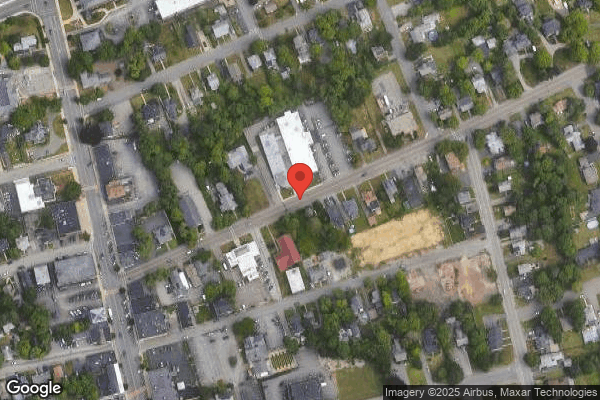

56 WEBSTER STREET, ROCKLAND, MA 02370 (781) 871-0555
For profit - Limited Liability company 110 Beds MARQUIS HEALTH SERVICES Data: November 2025
Trust Grade
83/100
#58 of 338 in MA
Last Inspection: January 2025

Within standard 12-15 month inspection cycle. Federal law requires annual inspections.

Overview

Webster Park Rehabilitation and Healthcare Center has a Trust Grade of B+, indicating it is above average and generally recommended for families considering long-term care. It ranks #58 out of 338 facilities in Massachusetts, placing it in the top half, and #8 out of 27 in Plymouth County, meaning only a few local options are better. The facility is improving, with the number of issues dropping from 6 in 2023 to 5 in 2025. Staffing is rated at 3 out of 5 stars, with a turnover rate of 26%, which is lower than the state average, suggesting that staff tend to stay longer and build relationships with residents. However, there are some concerns, such as less RN coverage than 97% of state facilities and specific incidents like failing to inform a resident's guardian about important changes in their health and not maintaining a proper infection control program. Overall, while there are strengths in staffing and a good trust score, families should be aware of the noted deficiencies.

Trust Score
B+
83/100
In Massachusetts
#58/338
Top 17%
Safety Record
Low Risk
No red flags
Inspections
Getting Better
6 → 5 violations
Staff Stability
✓ Good
26% annual turnover. Excellent stability, 22 points below Massachusetts's 48% average. Staff who stay learn residents' needs.
Penalties
✓ Good
No fines on record. Clean compliance history, better than most Massachusetts facilities.
Skilled Nurses
⚠ Watch
Each resident gets only 18 minutes of Registered Nurse (RN) attention daily — below average for Massachusetts. Fewer RN minutes means fewer trained eyes watching for problems.
Violations
⚠ Watch
21 deficiencies on record. Higher than average. Multiple issues found across inspections.
★★★★★
5.0
Overall Rating
★★★☆☆
3.0
Staff Levels
★★★★★
5.0
Care Quality
★★★★☆
4.0
Inspection Score
Stable
2023: 6 issues
2025: 5 issues

The Good

  • 5-Star Quality Measures · Strong clinical quality outcomes
  • Low Staff Turnover (26%) · Staff stability means consistent care
  • Full Sprinkler Coverage · Fire safety systems throughout facility
  • No fines on record
  • Staff turnover is low (26%)

    22 points below Massachusetts average of 48%

Facility shows strength in quality measures, staff retention, fire safety.

The Bad

Chain: MARQUIS HEALTH SERVICES

Part of a multi-facility chain

Ask about local staffing decisions and management

The Ugly 21 deficiencies on record

Jan 2025 5 deficiencies
CONCERN (D)

Potential for Harm - no one hurt, but risky conditions existed

Deficiency F0919 (Tag F0919)

Could have caused harm · This affected 1 resident

Based on observation, record review, and interviews, the facility failed to ensure the call light was accessible and within reach for one Resident (#37), out of a total of 21 sampled residents. Specif...

Read full inspector narrative →
Based on observation, record review, and interviews, the facility failed to ensure the call light was accessible and within reach for one Resident (#37), out of a total of 21 sampled residents. Specifically, the facility failed to ensure the call light switch above Resident #37's bed had a string attached to it to enable the Resident to independently call for assistance. Findings include: Review of the facility's policy titled Answering the Call Light, dated April 2016, indicated but was not limited to: - Purpose: The purpose of this procedure is to respond to the resident's requests and needs. - General Guidelines: 4. Be sure that the call light is plugged in at all times. 5. When the resident is in bed or confined to a chair be sure the call light is within easy reach of the resident. Resident #37 was admitted to the facility in January 2018 with diagnoses including chronic obstructive pulmonary disease and need for assistance with personal care. Review of the Minimum Data Set (MDS) assessment, dated 12/10/24, indicated Resident #37 was cognitively intact as evidenced by a Brief Interview for Mental Status (BIMS) assessment score of 15 out 15. Further review of Resident #37's MDS indicated he/she required assistance with toileting, bathing, and dressing and was supervised for ambulation. Review of the Facility Assessment, undated, indicated but was not limed to: - Physical Environment -Equipment utilized to care for our resident population includes but is not limited to: - General Facility Equipment: Nurse call system Review of Resident #91's (roommate to Resident #37) MDS assessment, dated 12/19/24, indicated Resident #91 was cognitively intact as evidenced by a BIMS assessment score of 15 out 15. On 1/23/25 at 8:45 A.M., 12:24 P.M., and 3:39 P.M., and on 1/24/25 at 10:32 A.M., the surveyor observed Resident #37 in bed with a call light switch above his/her bed with the call light string attached to Resident #91's bedrail, the call light switch above Resident #37's bed did not have a string attached to the switch and therefore could not be used or reached to call for assistance. During an interview on 1/23/25 at 8:56 A.M., Resident #37 said he/she does not have a call light or any means to independently call for assistance. Resident #37 said he/she would ask his/her roommate to pull the call light string if they needed assistance. During an interview on 1/23/25 at 8:46 A.M., Resident #91 said they share a call light with Resident #37. Resident #91 said when Resident #37 needed assistance he/she would ask Resident #91 to pull the call light string for them to request assistance from the staff. Resident #91 said he/she was the keeper of the call light string because they required more assistance. Resident #91 said when staff would respond to the call light, he/she would tell them they had called for Resident #37. During an interview on 1/27/25 at 12:28 P.M., Resident #91 said on Friday (1/24/25) a maintenance person had come in and fixed Resident #37's call light by adding a pull string to the switch above their bed, after the surveyor had left his/her room. During an interview on 1/28/25 at 8:46 A.M., Nurse #2 said all residents should have their own call light. Nurse #2 said if Resident #37 needed anything he/she would have to walk down to the nurses' station and request it. During an interview on 1/28/25 at 8:48 A.M., Certified Nursing Assistant (CNA) #1 said if a resident needed assistance they would pull their call light string to request assistance. CNA #1 said all residents should have their own call light to request assistance. During an interview on 1/28/25 at 8:53 A.M., CNA #2 said both Resident #37 and Resident #91 are alert and oriented. She said when she would answer the call light in Resident #37's room she would go into the room and ask both Resident #37 and Resident #91 which one of them needed help and then shut off the shared call light. CNA #2 said both Residents should have had their own call light to request assistance. During an interview on 1/28/25 at 8:57 A.M., Unit Manager (UM) #3 said each resident should have their own call light. UM #3 said the strings attached to the call light switches in the wall are cheap and would break easily. UM #3 said she was not sure how long Resident #37 and his/her roommate had been sharing a call light. UM #3 said a new string was attached to the call light switch on Friday (1/24/25) to ensure both Residents had their own access to request assistance using the call light system. During an interview on 1/28/25 at 9:55 A.M., the Director of Maintenance (DOM) said on Friday (1/24/25) he had repaired Resident #37's call light, adding a pull string to the switch so it could be activated, but he was not aware of how long it had been without a string attached to the call light switch. During an interview on 1/28/25 at 1:51 P.M., the Assistant Director of Nursing (ADON) said the expectation was for each resident to have their own call light within their reach to be able to call for assistance.
CONCERN (E)

Potential for Harm - no one hurt, but risky conditions existed

Deficiency F0552 (Tag F0552)

Could have caused harm · This affected multiple residents

Based on record review and interviews, the facility failed to ensure for one Resident (#15), out of a total sample of 21 residents, that the Resident's legal guardian (a person who has been appointed ...

Read full inspector narrative →
Based on record review and interviews, the facility failed to ensure for one Resident (#15), out of a total sample of 21 residents, that the Resident's legal guardian (a person who has been appointed by a court or otherwise has the legal authority to care for the personal and property interests of another person who is deemed incapacitated) was informed of a change in skin condition by the physician or other practitioner or professional, informed of the risks and benefits of proposed care, of treatment and treatment alternatives or treatment options, and to choose the alternative or option he/she preferred. Specifically, the facility failed to inform the legal guardian when Resident #15 developed wounds on his/her left heel and the second and third toes of the right foot, failed to inform of the risks and benefits of treatment and obtain consent for surgical debridement (surgically cleaning a wound by removing non-viable tissue with a scalpel or other surgical tools) and skin substitute grafting of wounds to the Resident's left heel and/or second and third toes of the right foot on 16 occasions. Findings include: Resident #15 was admitted to the facility in February 2019 and had diagnoses including dementia. Review of the Minimum Data Set (MDS) assessment, dated 12/4/24, indicated Resident #15 had moderate cognitive impairment as evidenced by a Brief Interview for Mental Status (BIMS) score of 7 out of 15, and had a legal guardian. Review of the medical record indicated Resident #15 was adjudicated incapacitated by the court and was appointed a legal guardian on 4/10/15. Further review of the medical record indicated the consultant wound physician's evaluations and progress notes included but was not limited to: -10/10/24 (initial visit): Patient has wounds on the left heel (unstageable deep tissue injury), right third toe and right second toe. Treatments performed included sharp selective debridement procedure (a medical technique where a healthcare professional uses sharp instruments like a scalpel, scissors, or forceps to carefully remove only dead or necrotic tissue from a wound, leaving healthy tissue unharmed) to the left heel, surgical excisional debridement procedure to the right, third toe and cauterization for abnormal granulation to the right, second toe. Treatment options-risks-benefits and the possible need for subsequent additional procedures on the wounds were explained on 10/10/24 to the patient who indicated agreement to proceed with the procedure(s). Further review of the note failed to indicate the legal guardian was informed of the wounds, risks and benefits of treatment options, and provided consent for surgical debridement and cauterization to be performed. -10/17/24: The patient has a wound on the left heel and left second toe. The wounds on the right third toe and right second toe have resolved. Treatment performed included sharp selective debridement procedure to remove devitalized tissue at margins of a wound on the left heel. Treatment options-risks-benefits and the possible need for subsequent additional procedures on this wound were explained on 10/10/24 to the patient who indicated agreement to proceed with the procedure(s). Further review of the note failed to indicate the legal guardian was informed of the wounds, risks and benefits of treatment options, and provided consent for surgical debridement to be performed. -10/24/24: The patient has wounds on the left heel and left second toe. Treatment included sharp selective debridement procedure to remove devitalized tissue at margins of a wound on the left heel and non-contact, non-thermal, low frequency ultrasound, which was indicated to promote healing based on debridement attempt but aborted due to pain in the left second toe. Treatment options-risks-benefits and the possible need for subsequent additional procedures on this wound were explained on 10/24/24 to the patient who indicated agreement to proceed with the procedure(s). Further review of the note failed to indicate the legal guardian was informed of the wounds, risks and benefits of treatment options, and provided consent for surgical debridement and ultrasound to be performed. -10/31/24: The patient has a wound on the left heel; left second toe wound resolved. Treatment performed included sharp selective debridement procedure to remove devitalized tissue at margins of a wound on the left heel. Treatment options-risks-benefits and the possible need for subsequent additional procedures on this wound were explained on 10/24/24 to the patient who indicated agreement to proceed with the procedure. Further review of the note failed to indicate the legal guardian was informed of the wounds, risks and benefits of treatment options, and provided consent for surgical debridement to be performed. -11/7/24: The patient has a wound on the left heel. Treatment performed included sharp selective debridement procedure to remove devitalized tissue at margins of a wound on the left heel. Treatment options-risks-benefits and the possible need for subsequent additional procedures on this wound were explained on 10/24/24 to the patient who indicated agreement to proceed with the procedure. Further review of the note failed to indicate the legal guardian was informed of the wounds, risks and benefits of treatment options, and provided consent for surgical debridement to be performed. -11/14/24: The patient has a wound on the left heel. Treatment performed included sharp selective debridement procedure to remove devitalized tissue at margins of a wound on the left heel. Treatment options-risks-benefits and the possible need for subsequent additional procedures on this wound were explained on 10/24/24 to the patient who indicated agreement to proceed with the procedure. Further review of the note failed to indicate the legal guardian was informed of the wounds, risks and benefits of treatment options, and provided consent for surgical debridement to be performed. -11/21/24: The patient has a wound on the left heel. Debridement attempted but aborted due to pain. Today this wound underwent treatment with non-contact, non-thermal, low frequency ultrasound. Further review of the note failed to indicate the legal guardian was informed of the wounds, risks and benefits of treatment options, and provided consent for surgical debridement and ultrasound to be performed. -11/27/24: The patient has a wound on the left heel that has been present for greater than 46 days and has failed to respond appropriately for over 30 days despite standard management. The wound was evaluated as a candidate for wound treatment using a skin substitute. The anticipated amount of skin substitute material that is being considered for use on this wound is 12 cm2 (centimeters squared). Discussion of the potential risks and benefits of using this human tissue-based skin substitute graft treatment was held with the patient who expressed that all questions and concerns were addressed. It was agreed upon by all parties to proceed with the placement during the subsequent wound care visit. Today this wound underwent treatment with non-contact, non-thermal, low frequency ultrasound. Further review of the note failed to indicate the legal guardian was informed of the wounds, risks and benefits of treatment options, and provided consent for ultrasound and that the Resident was evaluated for a skin substitute graft. -12/5/24: The patient has a wound on the left heel. During today's visit this full thickness, chronic arterial wound of the left heel underwent the placement of a skin substitute graft. Further review of the note failed to indicate the legal guardian was informed of the risks and benefits of treatment options and provided consent for any procedure to be performed. -12/12/14: The patient has a wound on the left heel. Application of skin substitute graft material was performed today on this wound. Further review of the note failed to indicate the legal guardian was informed of the wound, risks and benefits of treatment options, and provided consent for application of a skin substitute graft to the left heel. -12/19/24: The patient has a wound on the left heel. During today's visit this full thickness, chronic arterial wound of the left heel underwent the placement of a skin substitute graft. In preparation of the wound bed, surgical excisional debridement was performed to remove visible necrosis just prior to skin substitute application. Further review of the note failed to indicate the legal guardian was informed of the wound, risks and benefits of treatment options, and provided consent for surgical debridement and application of a skin substitute graft to the left heel. -12/27/24: The patient has a wound on the left heel. During today's visit this full thickness, chronic arterial wound of the left heel underwent the placement of a skin substitute graft. Further review of the note failed to indicate the legal guardian was informed of the wound, risks and benefits of treatment options, and provided consent for the application of a skin substitute graft to the left heel. -1/3/25: The patient has a wound on the left heel. During today's visit this full thickness, chronic arterial wound of the left heel underwent the placement of a skin substitute graft. Further review of the note failed to indicate the legal guardian was informed of the wound, risks and benefits of treatment options, and provided consent for the application of a skin substitute graft to the left heel. -1/9/25: The patient has a wound on the left heel. During today's visit this full thickness, chronic arterial wound of the left heel underwent the placement of a skin substitute graft. Further review of the note failed to indicate the legal guardian was informed of the wound, risks and benefits of treatment options, and provided consent for the application of a skin substitute graft to the left heel. -1/16/25: The patient has a wound on the left heel. During today's visit this full thickness, chronic arterial wound of the left heel underwent the placement of a skin substitute graft. Further review of the note failed to indicate the legal guardian was informed of the wound, risks and benefits of treatment options, and provided consent for the application of a skin substitute graft to the left heel. -1/23/25: The patient has a wound on the left heel. During today's visit this full thickness, chronic arterial wound of the left heel underwent the placement of a skin substitute graft. Further review of the note failed to indicate the legal guardian was informed of the wound, risks and benefits of treatment options, and provided consent for the application of a skin substitute graft to the left heel. Review of the nursing progress notes from 10/10/24 through 1/28/25 failed to indicate Resident #15's legal guardian was informed of the wounds, informed in advance of the risks and benefits of proposed treatment and gave consent for treatments administered from 10/10/24 through 1/23/25 including surgical debridement of wounds, low frequency ultrasound and weekly application of a substitute skin graft. During a telephonic interview on 1/27/25 at 12:22 P.M., Resident #15's legal guardian reviewed her documentation and said her last communication with the facility was on 9/17/24 for a care plan meeting and she has not heard from them since that time. She said she assumes the Resident's status is stable and has had no changes in condition. The surveyor read the consultant wound physician's notes from 10/10/24 to 1/23/25 to the legal guardian. She reviewed her notes again and said she was not informed of the wounds by telephone or email, was not provided with any information about treatments and did not give consent for the treatments. She said she should have been informed of the changes and proposed treatment because she is the Resident's legal guardian and must give consent. During a telephonic interview on 1/27/25 at 2:55 P.M., the consultant wound physician (MD #1) said he sees Resident #15 weekly for assessment and treatment of the Resident's wounds. The surveyor read aloud his wound evaluation and summary note, dated 10/10/24. He said he obtained consent from Resident #15 to perform surgical debridement of the left heel wound and the right, third toe and also cauterization for the wound on the right, second toe. MD #1 said he was not aware, and facility staff did not tell him, that Resident #15 had a legal guardian and was unable to give consent for any of the procedures. During interviews on 1/27/25 at 3:20 P.M. and 1/28/25 at 7:40 A.M., the Director of Nursing (DON) said that she spoke to Resident #15's legal guardian following surveyor inquiry and said the legal guardian did not give consent for any of the treatment procedures performed by MD #1 from 10/10/24 to 1/23/25. She said the procedures should not have been performed without consent from the Resident's legal guardian. She said she reviewed the Resident's medical record and said nursing documented that the guardian was aware. During an interview on 1/28/25 at 9:10 A.M., Unit Manager #3 said she documented that the guardian was aware of Resident #15's wounds but was not able to confirm that she spoke to the legal guardian or left a message for her regarding Resident #15's wounds and proposed treatment. During a subsequent telephonic interview on 1/29/25 at 12:00 P.M., Resident #15's legal guardian said the facility has both her cell phone number and landline number to use to contact her. She said she reviewed her cell phone records back to October 2024 and did not receive a call, voice or text message from the facility during that timeframe. She said she has had difficulty with her landline since the end of August 2024 and even with the assistance of her telephone provider, has been unable to retrieve any phone records to confirm the facility called her or left a voice message to inform her of the Resident's wounds, proposed treatment, and to obtain consent for surgical debridement and other treatments.
CONCERN (E)

Potential for Harm - no one hurt, but risky conditions existed

Grievances (Tag F0585)

Could have caused harm · This affected multiple residents

Based on observation, interviews, and document review, the facility failed to ensure that residents were fully aware of the grievance process. Specifically, for 14 of 14 residents attending the reside...

Read full inspector narrative →
Based on observation, interviews, and document review, the facility failed to ensure that residents were fully aware of the grievance process. Specifically, for 14 of 14 residents attending the resident group meeting during the facility survey, the facility failed to ensure residents were aware they could formulate grievances anonymously, should they choose not to alert a staff member of their concern(s). Findings include: Review of the facility's policy titled Grievance and Complaint Procedure, dated January 2022, indicated but was not limited to: -Upon admission, residents are provided with written information on how to file a grievance or complaint within the facility. Such information will also be posted on the resident bulletin board. -Grievances and complaints may be submitted orally or in writing without threat or fear of retaliation. They may also be filed anonymously. On 1/24/25 at 10:30 A.M., the surveyor held a resident group meeting with 14 residents, representing each of the facility's three units, in attendance. The residents said they don't always want to identify who they are when they have a complaint, so they don't fill out a grievance form or say anything to staff. Fourteen of 14 residents in attendance were not aware that they have the right to file a grievance anonymously. During an interview on 1/28/25 at 9:46 A.M., the Activity Director said she coordinates the monthly Resident Council Meeting and records the meeting minutes. She said she is aware that residents don't want to say who they are when they have a complaint, and this is an obstacle to them bringing issues forward. On 1/28/25 at 10:32 A.M. on the second-floor unit and at 11:36 A.M. on the third-floor unit, the surveyor observed a wall mounted file holder with blank grievance forms in a folder at the elevator. A sign was posted alongside the folder and indicated the following: -What is grievance? A grievance is a dispute resolution process that you may use when you have a complaint or concern. -You have the right to: -You may voice grievances without discrimination or reprisal; -Know of a timely resolution of your grievances including those with respect to the behavior of other residents; -You may recommend changes in policies and services to facility staff and/or outside representatives, free from interference, coercion, discrimination, restraint, or reprisal from the facility; -You may voice grievances concerning your care without fear of discrimination; -Be ensured that a method is in place to respond promptly to your complaints or grievances and recommendations. -You may write a grievance on the form located on your neighborhood or express your concern with staff who will then write a grievance form out for you. The posted grievance information failed to indicate residents could file a complaint or grievance anonymously. During an interview on 1/28/25 at 10:50 A.M., the Administrator said he is the Grievance Officer and grievance forms are available on each of the units. He said he was not aware that residents did not know they could file a grievance anonymously. On 1/28/25 at 11:45 A.M., the surveyor and Social Worker toured the first-floor unit and were unable to locate any posting about the grievance process.
CONCERN (E)

Potential for Harm - no one hurt, but risky conditions existed

Deficiency F0658 (Tag F0658)

Could have caused harm · This affected multiple residents

Based on interview and record review, the facility failed to provide care and services consistent with professional standards of practice for three Residents (#85, #15, and #23), out of a total sample...

Read full inspector narrative →
Based on interview and record review, the facility failed to provide care and services consistent with professional standards of practice for three Residents (#85, #15, and #23), out of a total sample of 21 residents. Specifically, the facility failed to ensure: 1. For Resident #85, staff implemented a taper and discontinuation of a Nicotine patch (smoking cessation treatment) recommended by the consultant pharmacist and agreed upon by the Resident's physician; 2. For Resident #15, the consultant wound physician did not perform treatments including invasive surgical procedures, cauterization, ultrasound therapy and substitute skin grafts to the Resident's wounds without obtaining informed consent to do so from the Resident's legal guardian; and 3. For Resident #23, to ensure a left upper extremity (LUE) hand carrot (device designed to position fingers away from the palm protecting the skin from moisture, pressure and other injury) was donned/doffed (put on/ taken off) as prescribed in physician's orders. Findings include: 1. Resident #85 was admitted to the facility in January 2024 with diagnoses including chronic pulmonary embolism and chronic obstructive pulmonary disease. Review of the Minimum Data Set (MDS) assessment, dated 12/4/24, indicated Resident #85 was cognitively intact as evidenced by a Brief Interview for Mental Status (BIMS) score 13 out of 15 and did not use tobacco. Review of a three-ringed binder labeled with Resident #15's attending physician's name on it indicated Consultant Pharmacist Recommendations to Prescriber, dated 7/20/24, to consider the manufacturer recommended taper schedule: -Nicotine Patch 14 milligrams (mg)/24-hour (hr) everyday x 2 weeks; then -Nicotine Patch 7 mg/24-hr everyday x 2 weeks, then discontinue Nicotine Patch The physician/prescriber response section indicated the physician agreed and signed the recommendation on 7/25/24. Review of the January 2025 Physician's Orders indicated but was not limited to: - Nicotine Patch 24 Hour 14 mg/24 hr Apply 1 patch transdermally one time a day for Smoking Cessation. Remove the old one and remove per schedule (1/15/24) Review of January 2024 through January 2025 Medication Administration Records (MAR) indicated the Nicotine Patch 14 mg/24 hr was applied at 9:00 A.M. and the previous patch removed at 8:59 A.M. daily as ordered. Further review of the entire medical record failed to indicate the Nicotine Patch taper was implemented as agreed upon by the physician on 7/25/24. During an interview on 1/27/25 at 11:00 A.M., Unit Manager #3 said the process for pharmacy recommendations is that the recommendation forms are placed in the physician's three-ringed binder on the unit, the physician reviews them and indicates if they agree or disagree with the recommendation and then signs the form. She said nursing retrieves the signed recommendations from the binder, makes sure they get done, then files the forms in the resident's medical record. She said she doesn't know why Resident #15's signed and approved recommendation from July 2024 was still in the three-ringed binder. She said it should have been implemented when it was signed by the physician. During an interview on 1/28/25 at 1:15 P.M., the Director of Nursing (DON) reviewed Resident #15's entire medical record and said she was unable to find any evidence that nursing followed through with the physician's authorization to initiate the taper or that the Resident refused. 2. Resident #15 was admitted to the facility in February 2019 and had diagnoses including dementia. Review of the MDS assessment, dated 12/4/24, indicated Resident #15 had moderate cognitive impairment as evidenced by a BIMS score of 7 out of 15, and had a legal guardian. Review of the medical record indicated Resident #15 was adjudicated incapacitated by the court and was appointed a legal guardian on 4/10/15. Review of the medical record indicated consultant wound physician (MD #1) performed an initial evaluation on 10/10/24 and identified an unstageable deep tissue injury (a pressure injury where the stage is unclear because the wound is covered by dead tissue) to Resident #15's left heel, a non-pressure wound of the third right toe, and a wound of the right second toe. The note indicated MD #1 performed a sharp selective debridement procedure (a medical technique where a healthcare professional uses sharp instruments like a scalpel, scissors, or forceps to carefully remove only dead or necrotic tissue from a wound, leaving healthy tissue unharmed) to the left heel, surgical excisional debridement procedure to the right, third toe and cauterization (a medical procedure that uses heat to destroy or seal off tissue) for abnormal granulation to the right, second toe. Further review of the note indicated MD #1 performed surgical debridement and wound cauterization without obtaining consent from the legal guardian. Further review of the medical record indicated MD #1 performed 15 additional treatments to the Resident's wounds without obtaining consent from the legal guardian as follows: -10/17/24: sharp selective debridement procedure to the left heel. -10/24/24: sharp selective debridement procedure to the left heel and left second toe; non-contact, non-thermal, low frequency ultrasound. -10/31/24: sharp selective debridement procedure to the left heel. -11/7/24: sharp selective debridement procedure to the left heel. -11/14/24: sharp selective debridement procedure to the left heel. -11/21/24: sharp selective debridement procedure to the left heel and non-contact, non-thermal, low frequency ultrasound. -11/27/24: non-contact, non-thermal, low frequency ultrasound. -12/5/24: the left heel wound underwent the placement of a skin substitute graft (a material used to replace skin that has been damaged or removed). -12/12/24: application of skin substitute graft material was applied to the left heel wound. -12/19/24: sharp selective debridement procedure to the left heel and application of skin substitute graft material was applied to the left heel wound. -12/27/24: application of skin substitute graft material was applied to the left heel wound. -1/3/25: application of skin substitute graft material was applied to the left heel wound. -1/9/25: application of skin substitute graft material was applied to the left heel wound. -1/16/25: application of skin substitute graft material was applied to the left heel wound. -1/23/25: application of skin substitute graft material was applied to the left heel wound. Review of the entire medical record, including nursing progress notes from 10/10/24 through 1/28/25, failed to indicate Resident #15's legal guardian was informed and gave consent for any treatments administered to Resident #15 from 10/10/24 through 1/23/25. During a telephonic interview on 1/27/25 at 12:22 P.M., Resident #15's legal guardian reviewed her documentation and said her last communication with the facility was on 9/17/24 for a care plan meeting and she has not heard from them since that time. The surveyor read the consultant wound physician's notes from 10/10/24 to 1/23/25 to the legal guardian. She reviewed her notes again and she said she was not informed of the wounds by telephone or email, was not provided with any information about treatments and did not give consent for the treatments. She said she should have been informed of the changes and proposed treatment because she is the Resident's legal guardian and must give consent. During a telephonic interview on 1/27/25 at 2:55 P.M., MD #1 said he performed treatments to Resident #15's left heel and toe wounds including surgical debridement, cauterization, ultrasound and skin grafts. He said he was not aware, and facility staff did not tell him that Resident #15 had a legal guardian and was unable to give consent for any of the procedures. He said he obtained consent for the procedures from the Resident. During interviews on 1/27/25 at 3:20 P.M. and 1/28/25 at 7:40 A.M., the DON said that she spoke to Resident #15's legal guardian following surveyor inquiry and said the legal guardian did not give consent for any of the treatment procedures performed by MD #1 from 10/10/24 to 1/23/25. She said the procedures should not have been performed without consent from the Resident's legal guardian. 3. Review of the Massachusetts Board of Registration in Nursing Advisory Ruling on Nursing Practice, dated as revised April 11, 2018, indicated: Nurse's Responsibility and Accountability: Licensed nurses accept, verify, transcribe, and implement orders from duly authorized prescriber's that are received by a variety of methods (i.e., written, verbal/telephone, standing orders/protocols, pre-printed order sets, electronic) in emergent and non-emergent situations. Licensed nurses in a management role must ensure an infrastructure is in place, consistent with current standards of care, to minimize error. Resident #23 was admitted to the facility in October 2022 with diagnoses including Parkinson's disease, dementia, and muscle weakness. Review of the MDS assessment, dated 12/31/24, indicated Resident #23 was severely cognitively impaired as evidenced by a BIMS score of 4 out of 15; he/she had a left upper extremity range of motion (ROM) impairment and required extensive assistance for activities of daily living. Review of Resident #23's Physician's Orders included but were not limited to the following: - 1/23/25: LUE carrot daily as tolerated; apply with A.M. care and doff with P.M. care; may remove for skin checks and hygiene; two times a day for skin integrity. - 7/9/24 to 1/23/25: LUE carrot for up to 8 hours; remove for skin checks and hygiene; two times a day for skin integrity. The surveyor observed Resident #23 in bed with no LUE carrot in his/her hand as follows: - On 1/23/25 at 9:45 A.M. - On 1/23/25 at 4:15 P.M. - On 1/27/25 at 8:59 A.M. - On 1/27/25 at 2:58 P.M. - On 1/27/25 at 4:24 P.M. Review of Resident #23's Treatment Administration Record (TAR) for January 2025 indicated Resident #23's LUE carrot was donned and doffed with A.M./P.M. care since 1/23/25 twice daily. Review of Resident #23's medical record failed to indicate refusal to wear the LUE carrot and/or inability to tolerate wearing the LUE carrot. The medical record also failed to indicate any attempts by the Resident to self-remove the LUE carrot. During an interview on 1/28/25 at 8:43 A.M., Certified Nurse Aide (CNA) #7 said Resident #23 only sometimes wears the LUE carrot in his/her hand. CNA #7 said they are able to don/doff the LUE carrot to his/her hand during care. CNA #7 said she was not aware of when or how often the LUE carrot was supposed to be worn or removed. During an interview on 1/28/25 at 8:57 A.M., Occupational Therapist (OT) #1 said she recently did an Occupational Therapy evaluation on 1/24/25 to assess the LUE carrot for Resident #23's hand contracture. OT #1 said she did not initially issue the LUE carrot to the Resident, but she believed it was an appropriate device for their contracture management. OT #1 said she spoke the Unit Manager (UM) about the Resident's wearing schedule and tolerance to the device. OT #1 said she would expect communication back to the Rehabilitation Department if the Resident was refusing to wear the LUE carrot, having difficulty tolerating the LUE carrot or had a change in condition. OT #1 said she had not received any communication about the Resident not being able to wear the LUE carrot since the reassessment on 1/24/25. During an interview on 1/28/25 at 9:17 A.M., Nurse #3 said Resident #23 wears a LUE carrot in his/her hand. Nurse #3 said either nursing staff or OT staff place the LUE carrot on the Resident in the morning. Nurse #3 said the Resident was supposed to wear the LUE carrot for eight hours a day. Nurse #3 said she would let the UM or the therapy department if the Resident was refusing to wear the device or there were complications related to the use of the LUE carrot. During an interview on 1/28/25 at 9:30 A.M., UM #2 said Resident #23 had been wearing a LUE carrot for a while. UM #2 said nursing dons the LUE carrot every morning and it should be worn for eight hours daily. UM #2 said nursing documents on the TAR when the LUE carrot is donned/doffed. UM #2 and the surveyor reviewed the observations made during the survey process. UM #2 said nursing should identify on the TAR if they were unable to don the LUE carrot for the Resident. During an interview on 1/28/25 at 10:52 A.M., Resident Representative (RR) #1 said she visits the Resident several times per week. RR #1 said the Resident does not always have the LUE carrot on when they visit. RR #1 said the LUE carrot is not consistently donned. RR #1 said the Resident had never complained the LUE carrot was uncomfortable or needed to be taken off when they were visiting. During an interview on 1/28/25 at 12:11 P.M., the DON said the Resident often requires multiple attempts to don the LUE carrot. The DON said the expectation would be for the CNA staff to notify the Nurse or UM if the resident was refusing the LUE carrot or taking it off by themselves. The DON said it should be identified and documented if the Resident refused or if multiple attempts were required to don the LUE carrot.
CONCERN (E)

Potential for Harm - no one hurt, but risky conditions existed

Unnecessary Medications (Tag F0759)

Could have caused harm · This affected multiple residents

Based on observation, record review, and interview, the facility failed to ensure it was free from a medication error rate of greater than 5% when two of five nurses observed made two errors out of 28...

Read full inspector narrative →
Based on observation, record review, and interview, the facility failed to ensure it was free from a medication error rate of greater than 5% when two of five nurses observed made two errors out of 28 opportunities, resulting in a medication error rate of 7.14%. Those errors impacted two Residents (#22 and #64). Findings include: Review of the facility's policy titled Administering Medications, revised April 2019, indicated but was not limited to the following: -Medications are administered in accordance with prescriber orders, including any required time frame. -Medication errors are documented, reported, and reviewed by the QAPI committee to inform process changes and/or the need for additional staff training. -The individual administering the medication checks the label three times to verify the right resident, right medication, right dosage, right time, and right method (route) of administration before giving the medication. 1. Resident #22 was admitted to the facility in July 2022 and had diagnoses including atrial fibrillation, osteoarthritis, benign intracranial hypertension, and lymphedema (swelling most often in the leg or arm caused by lymphatic system blockage). On 1/27/25 at 8:51 A.M., the surveyor observed Nurse #4 prepare Resident #22's medications and observed the following: 8:51 A.M. - Nurse #4 opened an over-the-counter bottle of generic One-Daily Multi-vitamin with Minerals (includes a combination of various vitamins alongside essential minerals like calcium, iron, and magnesium, while a multivitamin without minerals contains only a blend of vitamins) from the top drawer of the medication cart and added one whole tablet into a medication cup along with five other various whole tablets. 9:06 A.M. - Nurse #4 administered the medications to Resident #22. Review of current Physician's Orders on 1/27/25 at 11:13 A.M., indicated the following: -Multivitamin Tablet (Multiple Vitamin), Give 1 tablet by mouth in the morning for vitamin deficiency, 7/27/22 During an interview on 1/27/25 at 1:28 P.M., the surveyor reviewed the medical record with Nurse #4 who said the order was for a multivitamin tablet, without minerals. She said all medications should be given per physician's orders. 2. Resident #64 was admitted to the facility in January 2021 and had diagnoses including thrombocytopenia (low number of platelets in the blood) and hypercholesterolemia. On 1/27/25 at 9:17 A.M., the surveyor observed Nurse #5 prepare Resident #64's medications and observed the following: 9:17 A.M. - Nurse #5 opened an over-the-counter bottle of generic One-Daily Multi-vitamin with Minerals from the top drawer of the medication cart and added one whole tablet into a medication cup along with another whole tablet. 9:21 A.M. - Nurse #5 administered the medications to Resident #64. Review of current Physician's Orders on 1/27/25 at 11:24 A.M., indicated the following: -Multiple Vitamin Tablet, Give 1 tablet by mouth one time a day for supplementation, 3/18/24 During an interview on 1/27/25 at 1:22 P.M., the surveyor reviewed the medical record with Nurse #5 who said the order was for a multivitamin tablet daily, not a multivitamin tablet with minerals. She said one has just vitamins and the other has minerals added to it. She said medications should be administered per physician's orders. During an interview with the Assistant Director of Nurses and the Director of Nurses (DON) on 1/27/25 at 4:49 P.M., the DON said she was already made aware of the medication errors and both said nursing staff should follow physician's orders for medication administration.
Oct 2023 6 deficiencies
CONCERN (D)

Potential for Harm - no one hurt, but risky conditions existed

Unnecessary Medications (Tag F0759)

Could have caused harm · This affected 1 resident

Based on observations, interviews, record review, and policy review, the facility failed to ensure it was free from a medication error rate of greater than 5% when 1 out of 3 nurses observed made 2 er...

Read full inspector narrative →
Based on observations, interviews, record review, and policy review, the facility failed to ensure it was free from a medication error rate of greater than 5% when 1 out of 3 nurses observed made 2 errors out of 28 opportunities, resulting in a medication error rate of 7.14%. Those errors impacted one Resident (#56), out of three residents observed. Findings include: Review of the facility's policy titled Medication Administration-General Guidelines, dated November 2021, indicated but was not limited to: - FIVE RIGHTS-Right resident, right drug, right dose, right route, and right time, are applied for each medication being administered. - A triple check of the five rights is recommended at three steps in the process of preparation of a medication for administration: (1) when the medication is selected, (2) when the dose is removed from the container, and finally (3) just after the dose is prepared and the medication is put away. - Check #2: Prepare the dose- the dose is removed from the container and verified against the label and the medication administration record (MAR) by reviewing the 5 Rights. - The MAR [Medication Administration Record] is always present and used during medication administration, in addition, prior to administration of any medication, the medication and dosage schedule on the resident's MAR are compared with the medication label. - Medications are administered in accordance with written orders of the prescriber. Review of Resident #56's Physician's Orders indicated but were not limited to the following: -Cozaar (a medication that treats high blood pressure) oral Tablet 100 milligrams (mg), give one tablet by mouth one time a day: hold for systolic blood pressure less than 100, dated 2/3/23 -Guaifenesin Syrup (a cough syrup that treats congestion) 100 mg/5 milliliters (ml), give 10 ml by mouth three times a day, dated 12/5/19 On 10/27/23 at 8:16 A.M., the surveyor observed Nurse #1 prepare and administer medications to Resident #56 including: - Cozaar 100 mg tab, the nurse did not measure the Resident's blood pressure, per the physician's order prior to administering the medication. - Guaifenesin 10mg/5 ml, the Nurse poured the liquid medication and did not verify the dosage in the cup; the surveyor observed the liquid to read above the 10 ml line, but below the 15 ml line. During an interview on 10/27/23 at 8:40 A.M., the surveyor asked Nurse #1 if he was ready to administer the medications to Resident #56 to which he responded yes. The surveyor asked Nurse #1 to confirm the dose of Guaifenesin that had been prepared. Nurse #1 said that he had overpoured and he should have only prepared 10 ml. During an interview on 10/27/23 at 10:34 A.M., Nurse #1 reviewed the order and said he should have taken Resident #56's blood pressure prior to administering the medication per the physician's orders. Nurse #1 said that he did not measure the Resident's blood pressure because he did not know that he had too. Nurse #1 said that usually medications that have parameters will have a box that pops up and asks for blood pressure, but this order did not.
CONCERN (D)

Potential for Harm - no one hurt, but risky conditions existed

Deficiency F0761 (Tag F0761)

Could have caused harm · This affected 1 resident

Based on observations, policy review, and interview, the facility failed to ensure all drugs and biologicals were secured in locked compartments with only authorized personnel having access. Findings...

Read full inspector narrative →
Based on observations, policy review, and interview, the facility failed to ensure all drugs and biologicals were secured in locked compartments with only authorized personnel having access. Findings include: Review of the facility's policy titled Storage of Medications, dated November 2021, indicated but was not limited to: -Medications and biologicals are stored safely and securely following manufacturers' recommendations or those of the supplier. -The medication supply is accessible only to licensed nursing personnel, pharmacy personnel, or staff members lawfully authorized to administer medications. On 10/27/23 at 8:34 A.M., the surveyor observed Nurse #1 prepare medications to administer to a resident, placing them into a medication cup. Nurse #1 put the medication cup containing the medications in the medication cart and locked the cart, and then walked away from the medication cart and entered the medication room and closed the door. Nurse #1 left the medication cart unattended and not within this eyesight, with the following medications left on top of the medication cart: -Cardizem (used to treat high blood pressure) one capsule laying on the medication cart -a cup with 17 grams (gm) of Miralax (used to treat constipation) -a medication cup with Guaifenesin (cough suppressant) in it just below the 5-milliliter line -Advair Diskus (used to treat chronic obstructive pulmonary disease) -a bottle of Dairy Aid (used to help treat lactose intolerance) -a bottle of Preser Vision (vitamin for the eyes) -a bottle of Cranberry Tabs -a bottle of Vitamin D3 -a bottle of Miralax On 10/26/23 at 8:39 A.M., five minutes after walking away from the above listed medications, Nurse #1 returned to the medication cart and finished preparing the medication. Nurse #1 took the prepared medication cup, Advair Diskus, and the cup with 17gm of Miralax and went into a resident's room. Nurse #1 left the medication cup with Guaifenesin and bottles of Dairy Aid, Preser Vision, Cranberry Tabs, Vitamin D3 and Miralax on top of the medication cart while in the resident's room. The medication cart was left unattended in the hallway and not in direct view of the Nurse. During an interview on 10/27/23 at 8:59 A.M., Nurse #1 said he should not have walked away from the medication cart with medications left on top and available to anyone. Nurse #1 said he did not follow the process for medication storage.
CONCERN (E)

Potential for Harm - no one hurt, but risky conditions existed

Grievances (Tag F0585)

Could have caused harm · This affected multiple residents

Based on interview, policy review, grievance review, and review of Resident Council Minutes, the facility failed to ensure residents' grievances were brought forward and the grievance process was impl...

Read full inspector narrative →
Based on interview, policy review, grievance review, and review of Resident Council Minutes, the facility failed to ensure residents' grievances were brought forward and the grievance process was implemented, and concerns were resolved in a timely manner. Specifically, the facility failed: 1. For Resident #2, to implement the grievance process for lost laundry; and 2. To address and promptly resolve several grievances regarding lost laundry brought forward during the September 2023 Resident Council Meeting. Findings include: Review of the facility's policy titled Grievance and Compliant Procedure, dated January 2022, indicated but was not limited to the following: -Residents and their representatives have the right to file grievances, either orally or in writing, to the facility staff or to the government agencies without threat or fear of retaliation. -The administrator and staff will make prompt efforts to resolve grievances to the satisfaction of the resident and/or complainant. -Any resident, family member, or appointed resident representative may file a grievance or complaint concerning care, treatment, behavior of other residents, staff members, theft of property, or any other concerns regarding their stay at the facility. -Upon receipt of a grievance or complaint, the facility administrator or designee will review and investigate the allegation and compile documentation of such findings within a reasonable time frame of receiving the grievance/complaint. -The administrator and/or designee will review the findings of the investigation to determine what corrective actions, if any, need to be taken. -The administrator or designee will promptly inform the resident, or person filing the grievance on behalf of the resident, of the findings of the investigation and the actions that will be taken to correct any identified problems. 1. Resident #2 was admitted to the facility in May 2023 with the following diagnoses: cancer, heart failure, anxiety, and depression. Review of the most recent Minimum Data Set (MDS) assessment, dated 9/15/23, indicated that Resident #2 was cognitively intact as evidenced by a Brief Interview for Mental Status (BIMS) score of 13 out of 15. During an interview on 10/25/23 at 10:20 A.M., Resident #2 said he/she has no clothes left, they all went to the laundry and never came back. Resident #2 said he/she has been missing clothes and he/she tells the staff and nobody does anything about it. During an interview on 10/26/23 at 1:28 P.M., Resident #2 said he/she has been missing a cranberry-colored jacket, and just noticed this week that he/she is missing two pairs of shorts (one blue and one black), and a sleeveless, blue nightgown. Resident #2 said he/she has told the nurses and the certified nursing assistants (CNAs) about the missing clothes and they just say they will look for them. During an interview with Unit Manager #1 and Consulting Staff #2 on 10/31/23 at 11:13 A.M., Unit Manager #1 said if a resident loses their clothes, they look in the laundry to see if they can find them. If they can't find them, then she is not sure what the next step is. Consulting Staff #2 said if they can't find the laundry, then the staff will fill out a grievance, and if they don't find the missing laundry, the facility will reimburse the resident. During an interview on 10/31/23 at 11:16 A.M., Activity Assistant #1 said Resident #2 told her on 10/29/23 he/she was missing a cranberry-colored jacket. Activity Assistant #1 said if a resident is missing clothing, she did not fill out a grievance for the resident, she just tells the Director of Laundry about the missing clothing. During an interview on 10/31/23 at 11:17 A.M., Nurse #5 said residents do lose their clothes. She said she also just tells the Director of Laundry about the missing clothes. Review of the Grievance Logs from July 2023 to October 2023 indicated there was only one grievance filed for missing laundry which was on 10/19/23 and it was not Resident #2. During an interview on 10/27/23 at 3:55 P.M., the Administrator said staff should be filling out a grievance for the missing laundry. 2. On 10/27/23 at 10:30 A.M., the surveyor conducted a Resident Group Meeting with 12 residents in attendance, who voiced concerns regarding lost clothing. Twelve out of 12 residents unanimously agreed there is a big problem with lost laundry, making the following complaints: -I have a lot of missing clothes, they never find them once they go missing. -We are supposed to write a list of missing clothes and they try to find them. -I am missing a jacket and clothes. -It took a long time to get my blanket back. -During Resident Council meeting, they said they would put all the clothes on a rack and bring it to the next council meeting. -Another resident said they should not have to wait a month for them to bring the rack of clothes to them. -A third resident said we need our clothes now, not in a month. If you send your clothes to the laundry, some clothes never come back. -Two residents said they did not have pants to come to the Resident Council meeting today and the CNA had to get them a pair from the laundry. One of the residents said the pants he/she was given were not even his/hers. -I have been missing three pairs of non-skid socks for three weeks. Review of the 9/27/23 Resident Council Minutes indicated it was attended by eight residents who raised the concern of a lot of missing items to the Laundry Department. The facility response was answered by the Director of Laundry which included the following statement: -The Laundry Department will make sure their protocol of laundry procedure (illegible word) and make sure our staff are well educated. There was no indication grievances were filled out for the residents' complaints of missing clothing expressed in the September 2023 Resident Council Meeting. Review of the Grievance Logs from July 2023 to October 2023 indicated there was only one grievance filed for missing laundry which was on 10/19/2023. During an interview on 10/27/23 at 3:41 P.M., the Director of Laundry said if a resident is missing clothes, he receives an email from the Administrator notifying him of the resident and the missing clothes. He reviewed his file and there was only one resident complaint dated 10/19/23 since July 2023. The surveyor and the Director of Laundry viewed a full rack of clothes that he said were not labeled. He said if a resident is missing clothes, he will bring the resident's family member down and they can look at the rack for their missing clothes. He said he keeps the unlabeled clothes for three months and then he donates them, adding as you can see, we have a lot. During an interview on 10/27/23 at 3:55 P.M., the Administrator said staff should be filling out a grievance for the missing laundry.
CONCERN (F)

Potential for Harm - no one hurt, but risky conditions existed

Infection Control (Tag F0880)

Could have caused harm · This affected most or all residents

Based on document review, policy review, and interviews, the facility failed to maintain an infection prevention and control program with a complete and accurate system of surveillance to identify any...

Read full inspector narrative →
Based on document review, policy review, and interviews, the facility failed to maintain an infection prevention and control program with a complete and accurate system of surveillance to identify any trends of actual or potential infections within the facility using their predetermined infection definition criteria. Findings include: Review of the facility's policy titled Surveillance of Infections, dated as revised September 2017, indicated but was not limited to the following: - The purpose of surveillance of infections is to identify both individual cases and trends of epidemiologically significant organisms and healthcare-associated infections to guide appropriate interventions and prevent future infections. - Criteria for infections are based on current standard definitions of infections. - In addition to collecting data on incidents of infections the surveillance system is designated to capture certain epidemiologically important data that may influence how overall surveillance data is interpreted, for example: surveillance data gathered for residents with a recent hospital stay. During an interview on 10/26/23 at 9:31 A.M., the Infection Preventionist (IP) said the facility uses the laboratory supplied surveillance sheet to document the surveillance of illnesses in the facility and McGeer Criteria to define whether an illness is an infection by criteria protocol. Review of the McGeer Criteria Checklist, in use by the facility, indicated but was not limited to the following: Syndrome: Clostridium difficile (C. Diff or C. difficile) Infection Must fulfill 1 and 2 criteria 1. At least one of the following criteria: -Diarrhea: 3 or greater liquid or watery stools above what is normal for the resident within 24 hours -Presence of toxic megacolon (radiologic finding of abnormal large bowel dilation) 2. At least one of the following diagnostic criteria: -Stool sample positive for C. difficile toxin A or B, or detection of toxin-producing C. difficile by culture in stool sample -Pseudomembranous colitis identified in endoscopic exam, surgery, or histopathologic exam of biopsy specimen Syndrome: Urinary tract infection (UTI) Must fulfill both 1 and 2 criteria 1. At least one of the following sign or symptoms: -Acute dysuria or pain, swelling, or tenderness of testes, epididymis, or prostate -Fever or leukocytosis (a high level of white blood cells), and one or more of the following: -Acute costovertebral angle pain or tenderness, suprapubic pain, gross hematuria, new or marked increase in incontinence, urgency or frequency. -If no fever or leukocytosis, then two or more of the following: -Suprapubic pain, gross hematuria, new or marked increase in incontinence, urgency and frequency. 2. At least one of the following microbiologic criteria - greater than or equal to 100,000 count of no more than two species of organisms in a voided urine sample, OR - greater than or equal to 50,000 count of any organism(s) in a specimen collected by an in-and-out catheterization Syndrome: Pneumonia Must fulfill 1, 2, and 3 criteria 1. Chest X-ray, with pneumonia or a new infiltrate 2. At least one of the following criteria: -New or increased cough or sputum production, oxygen saturation (O2 sat) less than 94% on room air, new or changed lung exam abnormalities, pleuritic chest pain, respiratory rate of 25 breaths per minute or greater 3. At least one of the following criteria: -Fever, leukocytosis, acute mental status change or acute functional decline. Review of the laboratory surveillance sheet key in use by the facility: -Categories: Gastrointestinal = GI; Urinary tract = UTI; Other = O; Pneumonia = PNU -Status: Healthcare acquired infection = HAI; Community acquired infection = CAI Review of the facility provided surveillance listings indicated the following: July 2023: PACU Unit Resident #411 Category: GI; date of onset: on admit; symptoms: diarrhea; results: positive C. Diff; status: CAI; count: No The surveillance data for Resident #411 indicated McGeer criteria was met, however it was not counted as an actual infection within the facility, indicating the surveillance forms were completed incorrectly. Unit 2 Resident #2 category: UTI; date of onset: 7/24/23; symptoms: blank; results: greater than100,000 Escherichia Coli (E. Coli); status: HAI; count: Yes The surveillance listing for Resident #2 failed to indicate any symptoms (incomplete), making the surveillance incomplete and the count of the infection inaccurate in accordance with the facility's use of McGeer criteria. Unit 3 Resident #410 category: UTI; date of onset: 7/6/23; symptoms: change in mental status, malaise and fatigue; results: greater than100,000 E. Coli; status: HAI; count: Yes The surveillance listing for Resident #410 failed to indicate all criteria was met for this illness to be counted as an infection, making the surveillance sheet inaccurate. August 2023: Unit 2 Resident #2 category: PNU; date of onset: 8/29/23; symptoms: shortness of breath (SOB), decreased O2 sats; results: positive chest x-ray (CXR) at hospital; status: HAI; count: Yes The surveillance listing for Resident #2 did not indicate the symptoms met McGeer criteria for the illness to count as an infection and therefore the information was inaccurate and potentially incomplete. Unit 3 Resident #41 category: other; date of onset: 8/9/23; symptoms: increased white blood cell count (WBC), odor, urgency; results: less than10,000 (with no identified organism); status: HAI; count: Yes The surveillance listing for resident #41 failed to indicate a site of testing, or any identified organism, and never defined the other for the category. The surveillance form was incomplete and undefined. September 2023 Unit 2 Resident #11 category: UTI; date of onset: 9/10/23; symptoms: nausea and vomit; results: greater than100,000 E.Coli; status: HAI; count: Yes Resident #42 category: PNU; date of onset: 9/30/23; symptoms: cough and congestion; results: positive CXR; status: HAI; count: Yes The surveillance listing for Resident #11 and Resident #42 failed to indicate there were documented symptoms that met the facility defined McGeer criteria to count these illnesses as infections within the facility, making the surveillance inaccurate and potentially incomplete. During an interview on 10/27/23 at 11:16 A.M., the IP stated she does not count any community acquired infection even if they meet criteria, so they do not count against the facility. Therefore, no tracking or trending of community acquired infections is completed and any reactivation of an infection would be counted as an HAI. For Resident #411, she said the infection met criteria and was not counted and should have been. For Resident #2, she said the symptoms did not meet criteria to count the infection, although she did and the surveillance was inaccurate. She stated she is unsure what the symptoms were and the surveillance listing was incomplete and did not meet criteria for an infection per McGeer, making the surveillance inaccurate. For Resident #410, she said he/she did not meet criteria for the UTI to count but counted it anyways to ensure the lab would put it in the statistical data for analysis, however the surveillance and therefore the data would be inaccurate. For Resident #41, when asked what the other category meant, she stated she does not know what that means, and the surveillance is inaccurate and should not have been counted. She said it should have been documented on the surveillance listing what other meant, and there is no way to know at this time, rendering the surveillance inaccurate and incomplete. For Resident #11, she said the surveillance data was inaccurate and should not indicate they met the infection criteria. For Resident #42, she said he/she did not meet the criteria and should not be counted, and the information is inaccurate. The IP went on to say she does not always use the McGeer criteria accurately, according to the reviewed line listings and infections, and realizes she should only count the illness as an infection if the resident actually meets the facility defined criteria. She said she understands the data must be accurate for the facility to have an accurate attack rate to track and trend infections. She said the data was not sufficient per the policy of surveillance and she needed some further education on using the updated McGeer criteria. During an interview on 10/27/23 at 4:38 P.M., Consulting Staff Member #2 and the surveyor reviewed the inaccurate and incomplete data on the surveillance listings. Consulting Staff Member #2 said she understood there are issues and room for improvement. She said the facility would not be capable of having accurate data for analysis and said, Garbage in garbage out. She said improvements are needed to ensure the data on surveillance was an accurate reflection of all infections within the facility.
MINOR (B)

Minor Issue - procedural, no safety impact

Deficiency F0844 (Tag F0844)

Minor procedural issue · This affected multiple residents

Based on interviews and review of the Health Care Facility Reporting System (HCFRS- State agency reporting system), the facility failed to provide written notice to the State agency when a change in t...

Read full inspector narrative →
Based on interviews and review of the Health Care Facility Reporting System (HCFRS- State agency reporting system), the facility failed to provide written notice to the State agency when a change in the facility's Administrator and a change in Director of Nursing (DON) occurred. Findings include: Review of HCFRS indicated the last time the State was notified of DON and Administrator changes for the facility were: -change in facility DON occurred on 12/9/19 -change in facility administrator occurred on 5/4/22 Further review of HCFRS failed to indicate the State Agency was notified when the change took place for the current Administrator and current DON as required. During an interview on 10/25/23 at 9:03 A.M., the Administrator said that he started on 4/17/23 and the DON started on 4/24/23. The Administrator said that he thought the changes were made in HCFRS. During an interview on 10/26/23 at 8:35 A.M., the Administrator and surveyor reviewed HCFRS together, the last time the Administrator information was updated for the facility was on 5/4/22 and for the DON the last updated change was on 12/9/19. The Administrator said he thought that he had updated the information, but he had not. Review of HCFRS on 10/26/23 at 4:00 P.M., indicated that the Administrator updated the change of the Administrator and DON for the facility on 10/26/23, five months after they started in the facility.
MINOR (B)

Minor Issue - procedural, no safety impact

Deficiency F0848 (Tag F0848)

Minor procedural issue · This affected multiple residents

Based on document review, policy review, and interview, the facility failed to ensure their arbitration agreement specifically provides for the selection of a venue that is convenient to both parties....

Read full inspector narrative →
Based on document review, policy review, and interview, the facility failed to ensure their arbitration agreement specifically provides for the selection of a venue that is convenient to both parties. Findings include: Review of the facility's policy titled Binding Arbitration Agreements, undated, indicated but was not limited to the following: -Agreements provide for the selection of a mutually agreed upon neutral arbitrator and venue Review of the arbitration agreement in use by the facility titled Alternative Dispute Resolution Agreement Between Resident and Facility, undated, failed to identify the use or delineation of a venue for arbitration. During an interview on 10/27/23 at 1:34 P.M., the Administrator reviewed the agreement in use by the facility and said he does not see anything specific about a mutually agreed upon venue that is convenient to both parties and would assume the arbitrator would select the venue. During an interview on 10/31/23 at 1:41 P.M., the regional director of operations reviewed Alternative Dispute Resolution Agreement and said he does not see anything specific, in regard to a venue for arbitration disputes in the document the residents receive and sign.
Jun 2021 10 deficiencies
CONCERN (D)

Potential for Harm - no one hurt, but risky conditions existed

Comprehensive Care Plan (Tag F0656)

Could have caused harm · This affected 1 resident

Based on observations, interview, and record review, the facility failed to implement the plan of care for one Resident (#72), out of a total sample of 25 residents. Specifically, the facility failed ...

Read full inspector narrative →
Based on observations, interview, and record review, the facility failed to implement the plan of care for one Resident (#72), out of a total sample of 25 residents. Specifically, the facility failed to cue the Resident during meal time. Findings include: Resident #72 was admitted to the facility in January 2018 with diagnoses of dementia and dysphagia. Review of the nursing progress notes, dated 5/6/21, indicated Resident #72 had been coughing during eating. Review of the care plans for Resident #72 indicated: Interventions: -allow extra time to eat; -encourage good food and fluid intake; and -encourage small sips. Review of the Certified Nursing Assistant (CNA) care card indicated the Resident needed cueing to take small bites, take a drink every so often with eating, encourage alternating between solid foods and liquids, encourage small sips, ensure Resident is 90 degrees in bed, remind to eat slowly, to chew thoroughly and to monitor for pocketing of food, prolonged swallow time, coughing or throat clearing. On 6/25/21 at 8:01 A.M., the surveyor observed Resident #72 in bed, sitting at a 75 degree angle (not at 90 degrees as indicated on the care card). The Resident was observed to be breaking up pieces of bread and putting it in the oatmeal. There was no staff with the Resident to provide cueing for safe swallowing strategies. At 8:16 A.M., the Resident was observed to be placing pieces of bread into the cup of coffee; there was no staff with the Resident. During an interview on 6/25/21 at 12:12 P.M., the Speech Therapist (SLP) said Resident #72 ate all meals in the unit dining room. He said the staff had been educated to provide the Resident with cueing to encourage sips between bites and to decrease talking while eating. On 6/29/21 at 8:06 A.M., the surveyor approached the closed room door of Resident #72 and entered the room. The Resident was observed behind a closed privacy curtain, in bed with a breakfast tray on the overbed table. The Resident was observed to be feeding him/herself. There was no staff there to provide the Resident with cueing. During an interview on 6/29/21 at 9:24 A.M., Certified Nursing Assistant (CNA) #2 said she was caring for Resident #72. She said the Resident was provided set-up for meals (opening containers); was independent with eating; and that she did not provide cueing during meals. During an interview on 6/30/21 at 9:23 A.M., Unit Manager #3 said Resident #72 ate independently and sometimes could be reminded to have a drink, but there were no other cues provided. During an interview on 6/30/21 at 9:33 A.M., with the SLP and Unit Manager #3, the SLP said the Resident could eat independently, but needed cueing for small bites and sips between bites. The surveyor inquired as to who was cueing the Resident when he/she was eating in bed, alone. The SLP said he was not aware Resident #72 was eating in his/her room. Unit Manager #3 said she was not aware Resident #72 needed to be eating in the unit dining room for all meals to ensure cueing.
CONCERN (D)

Potential for Harm - no one hurt, but risky conditions existed

Deficiency F0660 (Tag F0660)

Could have caused harm · This affected 1 resident

Based on record review and interview, the facility failed to ensure one Resident (#56), out of a total sample of 25 residents, was involved in the discharge planning process. Findings include: Reside...

Read full inspector narrative →
Based on record review and interview, the facility failed to ensure one Resident (#56), out of a total sample of 25 residents, was involved in the discharge planning process. Findings include: Resident #56 was admitted to the facility in March 2020 for short term rehabilitation related to failure to thrive. Review of the medical record for Resident #56 indicated the Resident was his/her own responsible person and decision maker. During an interview on 06/23/21 at 10:20 A.M., Resident #56 said he/she wanted to be discharged to the community and did not understand why he/she was still there after 16 months. Review of the medical record for Resident #56 included a care plan with a goal to return to the community with services and Meals on Wheels. Review of the Minimum Data Set (MDS) assessment, dated 5/11/21, section Q for participation in assessment and goal setting, indicated the Resident had participated in the assessment, that active discharge planning was not already occurring, that the Resident should only be asked about discharge planning on comprehensive assessments (annually or during significant changes) and that a referral to the local contact agency was not needed. Review of the Social Service's assessment, dated 5/13/21, indicated Resident #56 wanted to return to the community, but it was not clear if he/she had a place to go and that he/she would remain in the facility for the time being. Review of the most recent Social Service's progress note, dated 5/27/21 (27 days prior to surveyor review), indicated the social worker had made a call to the person Resident #56 was previously living with and left a message to determine if the Resident was able to return to that living environment. There were no additional notes to follow up on the progress of the discharge plan for Resident #56. During an interview on 6/23/21 at 1:55 P.M., the Social Worker said Resident #56 did not have any place to go; therefore she had not been working on discharge planning. She said the Resident previously lived in a trailer on someone else's property and it had no running water. She said the Resident needed long term care because his/her family member did not feel the Resident would be safe in the community. When asked what the Resident wanted, the Social Worker confirmed the Resident wanted to return to the community. She said she had not contacted the previous services of visiting nurses or protective services to see what services could be offered to the Resident in the community. She said she completed the MDS section Q based on thinking the Resident needed long term care, despite the Resident requesting to return to the community since admission and would follow-up if the referral to the local contact agency had ever been made to assist with discharge planning options. During an interview on 6/29/21 at 9:32 A.M., the Social Worker said she had reviewed her documentation and had never referred Resident #56 to Options Counseling (a Massachusetts local agency that assists with discharging nursing home residents to the community).
CONCERN (D)

Potential for Harm - no one hurt, but risky conditions existed

Pressure Ulcer Prevention (Tag F0686)

Could have caused harm · This affected 1 resident

Based on policy review, observations, interviews, and record review the facility failed to ensure professional standards of practice were followed for the care and treatment of pressure injuries for t...

Read full inspector narrative →
Based on policy review, observations, interviews, and record review the facility failed to ensure professional standards of practice were followed for the care and treatment of pressure injuries for two Residents (#23 and #203), out of a total sample of 25 residents. Specifically, 1) For Resident #23 the facility did not accurately evaluate, assess and identify areas on the bilateral feet, failed to identify the correct sites of the areas, failed to complete a weekly skin assessment and failed to follow a recommendation from the wound physician; and 2) For Resident #203, the facility failed to assess and treat a pressure injury, identified by the hospital, upon the Resident's readmission to the facility. Findings include: Review of the facility's policy titled Assessment of Skin Condition and Integrity, undated, indicated a comprehensive head to toe skin assessment was to be conducted upon admission, weekly, prior to discharge and as needed and to inspect skin daily when performing or assisting with personal care. In addition, if any new skin alteration was noted, a weekly wound progress report would be initiated. 1. Resident #23 was admitted to the facility in April 2021 with a diagnosis of failure to thrive. Review of Resident #23's Treatment Administration Record (TAR) indicated the weekly skin check was not completed on 6/18/21, as ordered. Review of Resident #23's electronic medical record included a weekly skin check assessment, dated 6/20/21, which indicated there were skin impairments; however, the rest of the assessment was blank with no information regarding any areas. On 6/23/21 at 10:20 A.M., the surveyor observed Resident #23 in bed and observed the Resident's feet to have the following: -the left foot had an oval reddened area in the middle of the lateral side; and -the right foot had two reddened areas on the medial side, one circle on the bony prominence towards the great toe and one oval in the middle of the medial area. Review of Resident #23's medical record on 6/23/21 did not include any documentation of areas to either foot. On 6/24/21 at 4:13 P.M., the surveyor observed Resident #23 in a wheelchair. The Resident was observed to have both feet wrapped in gauze, with slipper socks over the gauze. Review of Resident #23's medical record indicated a new treatment order, dated 6/24/21, for each foot: to apply skin prep to the affected areas, apply an ABD (abdominal) pad, then wrap with kling (stretch conforming gauze) daily, every evening shift. Review of Resident #23's medical record on 6/25/21 at 10:43 A.M., did not include a weekly wound progress report, per the facility policy for the areas identified on 6/24/21 by the nurse. On 6/25/21 the wound physician conducted a virtual visit with Resident #23. Review of the progress note indicated the following areas to the feet: -friction wound to the left medial foot, duration greater than 8 days; with a treatment plan of skin prep every shift (three times per day) for 22 days. -abrasion wound to the left lateral foot, duration greater than 1 day; with a treatment plan of skin prep every shift (three times per day) for 22 days. -an addendum was written to add an area to the right medial foot; with a treatment plan of skin prep every shift (three times per day). During an interview on 6/29/21 at 11:42 A.M., the Assistant Director of Nurses (ADON) said the Resident had friction areas to bilateral feet and the treatment in place of skin prep was for preventative measures. She said the friction areas had been identified by the nurse who worked on 6/24/21 from 7:00 A.M. to 3:00 P.M. She said she was not sure why the areas, observed by the surveyor on 6/23/21, were not identified or evaluated on 6/23/21. The ADON said when the areas were identified the Nurse Practitioner (NP) was notified and ordered a treatment of skin prep, followed by ABD, and kling wrap. She said the following day, on 6/25/21, the wound physician did a virtual visit to review all of the wounds. The ADON said following this visit, the Unit Manager called the NP and asked if the NP would like the wound treatment order to stay the same. She said she was not sure if the Unit Manager reviewed the wound physician recommendation which would have changed the skin prep from once per day to three times per day and not apply the ABD pad and kling wrap. During an interview on 6/29/21 at 2:29 P.M., the wound physician said Resident #23 developed areas from moving in the bed, creating a friction. He said he conducted a virtual visit with the Resident on 6/25/21 and addressed the two areas on the left foot and the one area on the right foot. Review of the weekly skin check, dated 6/27/21, indicated the following areas on the feet: -Two abraised areas to left medial foot, noted as friction wound. There was no documentation regarding the left lateral foot or the right medial foot. Due to the conflicting documentation and surveyor observations of the Resident's skin areas on 6/23/21, the surveyors requested an additional opportunity to observe the feet of Resident #23. On 6/30/21 at 8:17 A.M., the surveyors observed the wounds of Resident #23 with Unit Manager #3 and the ADON and made the following observations: -The Resident's left foot had an area in the middle of the lateral foot, with an oval blistering area, the area was non-blanchable (when pressure is applied the area does not become pale or white). The ADON said this was now a pressure area. Review of the entire left foot indicated there were no areas on the left medial foot, as indicated in the documentation. -The Resident's right foot had two areas. One area on the middle of the right medial foot was reddened, but blanchable. The right medial bony prominence near the big toe was observed to have a small scabbing area (as seen by the surveyor on 6/23/21) which was now connected to a larger dark purple area, which was non-blanchable. The ADON indicated the area was indicative of a deep tissue injury. During an interview on 6/30/21 at 10:15 A.M., the ADON said a nurse had discovered the areas the previous evening on 6/29/21. Review of the nursing progress note, dated 6/29/21, indicated redness to the right lateral leg, and right inner medial, left heel redness and left foot inner lateral redness. The ADON said these areas were not reflective of what was seen during the observation with the surveyors on 6/30/21. She said the nurse had not completed any further documentation to evaluate, assess, describe, or measure the areas. During an interview on 6/30/21 at 12:03 P.M., the ADON said the nurses on 6/24/21 and 6/29/21 did not accurately assess, evaluate and document the skin areas. The ADON was unable to provide documentation to indicate the nurses or the wound physician had identified and evaluated both areas on the right medial foot, one of which was now indicative of a deep tissue injury. 2. Resident #203 was admitted in June 2021 following a hospitalization for aspiration pneumonia. The hospital discharge documentation, dated 6/17/21, indicated the Resident had a pressure wound on the gluteal fold (a prominent fold on the back of the upper thigh that marks the upper limit of the thigh from the lower limit of the buttock). The summary had no other wound information to review. Review of the current physician's order failed to indicate any treatments for the pressure area. Review of the Medication Administration and Treatment records from 6/17/21 - 6/25/21 failed to indicate any treatment information of the gluteal fold wound. During record review and interviews on 6/25/21 at 1:23 P.M., the Nurse Supervisor and Unit Manager (UM) #1 both said Resident #203's skin is clear. Both reviewed the Resident's medical record and said the Resident has no pressure areas. The surveyor informed them of the hospital discharge information that indicated the Resident has a gluteal pressure wound and asked them to check his/her gluteal fold area. On 6/25/21 at 1:30 P.M., the surveyor observed the Resident's gluteal fold with the Nurse Supervisor and UM #1. The skin area on the right gluteal fold was reddened (3 inch circular) with the skin intact. The area was non-blanching. The Nurse Supervisor said he would address the wound. UM #1 said she would start a treatment.
CONCERN (D)

Potential for Harm - no one hurt, but risky conditions existed

Deficiency F0688 (Tag F0688)

Could have caused harm · This affected 1 resident

Based on record review, observation, and interviews, the facility failed to ensure a comprehensive plan of care was developed for one Resident (#39) with limited mobility that included services for pr...

Read full inspector narrative →
Based on record review, observation, and interviews, the facility failed to ensure a comprehensive plan of care was developed for one Resident (#39) with limited mobility that included services for proper foot support/positioning, out of a total sample of 25 residents. Findings include: Resident #39 was admitted to the facility in January 2021 with diagnoses including hemiplegia (paralysis of one side of the body), cerebral infarct, and atherosclerosis (narrowing of arteries) of extremities. The Minimum Data Set assessment, dated 4/27/21, indicated Resident #39 required extensive assistance for positioning, transfers, bed mobility, bathing and dressing. The assessment indicated a functional impairment of one side for upper and lower extremities and the Resident was non-ambulatory. Review of a progress note for podiatry treatment services, dated 5/7/21, indicated Resident #39 has bilateral drop foot (inability to raise the front of the foot due to weakness or paralysis). Review of rehabilitation therapy notes, dated 6/19/21, indicated Resident #39 was being evaluated for wheelchair mobility and safety now that his/her electric chair was repaired, in addition to stiffness and impaired range of motion of right and lower extremities. The rehabilitation evaluation indicated an ankle contracture (shortening and hardening of tissues leading to rigidity of joints) and to further assess for an orthotic device. During an interview on 6/24/21 at 4:50 P.M., the Resident said that he/she had a right ankle fracture many years ago and wears a soft bootie for preventative skin issues. On 6/24/21 at 1:15 P.M., the surveyor observed Resident #39 in his/her electric wheelchair, positioned at an angle with the left leg pointed outward from the chair with no foot support as the left foot hung in the air above, and to the left, of the footboard. The Resident independently managed the electric wheelchair in and out of the dining room. On 6/25/21 at 10:30 A.M., the surveyor observed Resident #39 sitting in his/her room in the electric wheelchair. The Resident was tilted in the chair to the left and not upright. The Resident's left foot dangled above the foot board while the right foot was positioned in a foam bootie close to the foot board. The Resident said he/she would be more comfortable if repositioned, straight. On 6/29/21 at 12:25 P.M., the surveyor observed Resident #39 eating lunch in his/her room. The Resident was seated upright in his/her wheelchair with their left foot hanging above the footboard and their right foot in a foam bootie. On 6/30/21 at 12:20 P.M., the surveyor observed Resident #39 in his/her wheelchair with the left foot unsupported above the footboard and the right foot in a foam bootie. Review of Resident #39's care plan (initiated 1/27/21) for activity of daily living and self-care deficit, indicated the goal included the use of an adaptive device such as wheelchair with interventions for two person assistance and use of a mechanical lift transfer. The care plan failed to address any interventions for proper foot support while seated in the wheelchair. Further review of the care plan indicated the adaptive devices included utensils to eat. There was no mention of the foam bootie used on the right foot or any plan for the left foot. During an interview on 6/30/21 at 12:50 P.M., the Rehab Director observed Resident #39 in his/her wheelchair and said that the Resident's left foot and right foot were not supported in the current chair, and due to the Resident's stature that adjustments/devices for proper foot support may be needed.
CONCERN (D)

Potential for Harm - no one hurt, but risky conditions existed

Incontinence Care (Tag F0690)

Could have caused harm · This affected 1 resident

Based on interview and record review the facility failed to ensure a follow up with urology was provided to one Resident (#42) with a suprapubic catheter, out of a total sample of 25 residents. Findi...

Read full inspector narrative →
Based on interview and record review the facility failed to ensure a follow up with urology was provided to one Resident (#42) with a suprapubic catheter, out of a total sample of 25 residents. Findings include: Resident #42 was admitted to the facility in April 2021 with obstructive reflux uropathy, bladder neck obstruction, benign prostatic hyperplasia, with a midline abdominal laparotomy incision with Steri strips for a suprapubic catheter. Review of the discharge summary from the referring facility indicated Resident #42 had a suprapubic catheter present with a follow-up urology appointment scheduled for 5/17/21 at 10:30 A.M. Review of Resident #42's medical record did not include documentation of the urology appointment. During an interview on 6/29/21 at 2:21 P.M., Unit Manager (UM) #3 said Resident #42 had not attended a urology appointment. A review of the appointment book for the unit did not include a urology appointment for Resident #42 on 5/17/21. UM #3 said she remembered calling the urology office to schedule an appointment, but had not heard back from them. UM #3 could not say why she was now scheduling an appointment when the Resident already had an appointment. During an interview on 6/29/21 at 3:50 P.M., UM #3 and the Assistant Director of Nurses said Resident #42 had refused to go to the appointment and provided the surveyor with a note from the Nurse Practitioner (NP) indicating the Resident refused to attend the appointment and the NP would follow up on the following visit. The progress note had a visit date of 5/17/21 (signed by the NP on 6/29/21). A review of the progress note from the NP, with a visit date of 5/18/21 (the following day) had no mention of the Resident's refusal of attending the urology appointment or a plan for follow up with urology. UM #3 said it would have been the responsibility of the Unit Manager or the nurse to schedule a follow up appointment, if a resident were to refuse. UM #3 confirmed there had not been any follow up with urology to reschedule Resident #42's appointment almost six weeks later.
CONCERN (D)

Potential for Harm - no one hurt, but risky conditions existed

Tube Feeding (Tag F0693)

Could have caused harm · This affected 1 resident

**NOTE- TERMS IN BRACKETS HAVE BEEN EDITED TO PROTECT CONFIDENTIALITY** Based on record review and staff interviews, the facility failed to provide services for one Resident (#203) out of two resident...

Read full inspector narrative →
**NOTE- TERMS IN BRACKETS HAVE BEEN EDITED TO PROTECT CONFIDENTIALITY** Based on record review and staff interviews, the facility failed to provide services for one Resident (#203) out of two residents with gastrostomy tubes, by not assessing and verifying placement of the tube, out of a total sample of 25 residents. Findings include: Resident #203 was admitted [DATE] following a hospitalization for aspiration pneumonia. The hospital documentation indicated the Resident had an enteral feeding tube/ Gastrostomy tube (GT) inserted on 6/9/21 and included water flushes be administered every shift. Review of Resident #203's medical record indicated the Resident has multiple diagnoses that included a history of cecal adenocarcinoma (colon cancer). Review of Resident #203's plan of care, dated 6/18/21, noted an intervention to check tube placement and gastric contents/residual volume per facility protocol and record. Review of the policy for enteral tube feeding, not dated, indicated one of the procedural steps was to verify placement of the tube. Review of the Resident's current physician's order failed to indicate information for assessing and checking the GT placement. The Medication Administration and the Treatment Administration records failed to indicate that nurses were checking the GT placement. During record review and interview on 6/25/21 at 1:23 P.M., Unit Manager (UM) #1 and the Nursing Supervisor reviewed the physician's orders and both said there were no orders for checking the GT placement. They reviewed the entire record and could find no documentation of the nurses assessing and verifying the GT placement, per facility policy. The Resident's GT was not verified for placement, from admission to the time of surveyor review, a total of eight days.
CONCERN (D)

Potential for Harm - no one hurt, but risky conditions existed

Respiratory Care (Tag F0695)

Could have caused harm · This affected 1 resident

2. Resident #30 was admitted to the facility with diagnoses including malignant neoplasm of the lungs and chronic obstructive pulmonary disease (lung disease that blocks airflow and makes it difficult...

Read full inspector narrative →
2. Resident #30 was admitted to the facility with diagnoses including malignant neoplasm of the lungs and chronic obstructive pulmonary disease (lung disease that blocks airflow and makes it difficult to breathe). Review of the facility's policy titled Oxygen Administration, undated, indicated, but is not limited to, the following: The purpose of this procedure is to provide guidelines for safe Oxygen administration. Verify that there is a physician's order for this procedure. Review the physician's orders or the facility protocol for Oxygen administration. The physician's order will specify the rate of the flow of O2 [Oxygen]. ALERT: Caution should be used in administration of O2 in residents with Chronic Obstructive Pulmonary Disease (COPD) and history of Carbon Dioxide retention. Make sure oxygen flow rate and concentration remain as ordered by the physician. Review of Resident #30's recent physician's order indicated Oxygen (O2) at 2 liters/minute via NC (nasal cannula) continuously every shift. On 6/23/21 at 9:45 A.M., the surveyor observed Resident #30 in bed with the O2 flow rate set at 2.75 liters (the indicator ball was between the two and three liter line). On 6/24/21 at 10:00 A.M., the surveyor observed Resident #30 in bed with the O2 flow rate set at 2.75 liters. On 6/28/21 at 12:50 P.M., the surveyor observed that Resident #30's oxygen was off. Staff assisted the Resident with care, and then set the O2 flow rate set at 1.75 liters. On 6/28/21 at 3:00 P.M., the surveyor observed Resident #30 in bed with the O2 flow rate set at 1.75 liters. On 6/29/21 at 9:22 A.M., the surveyor observed Resident #30 in bed with the O2 flow rate set at 1.5 liters. During an interview on 6/29/21 at 9:30 A.M., Unit Manager #2 adjusted the flow rate to 2.0 liters from 1.5 liters and told the surveyor that she did not know that the indicator ball had to be in the middle of the 2.0 liter line, nor that you needed to be at eye level with the black lines and the indicator ball, to assure that the rate was correct. During an interview on 6/30/21 at 11:00 A.M., the Infection Preventionist said that it would be the expectation that the Nurse would know how to set the liter flow of the oxygen concentrator as per standards of nursing practice. 3. Resident #81 was admitted to the facility with diagnoses that included acute and chronic respiratory failure with hypoxia, obstructive sleep apnea, and chronic obstructive pulmonary disease. Review of Resident #81's medical record indicated that the Resident has a physician's order for the following: -Bi-pap (an electronic breathing device used in the treatment of sleep apnea, lung disease and used to treat respiratory weakness) -Bi-pap settings @ 1 15 centimeters (cm) and E 10 cm H2 at 10, O2 at 4 liters oxygen via nasal cannula to maintain O2 saturation greater than 90% -Oxygen at 4 liters/minutes via NC (nasal cannula) continuously. On 6/30/21 at 11:30 A.M., the surveyor observed Resident #81 in bed, asleep and using the Bi-pap machine. The O2 was set at 5 liters. On 6/30/21 at 11:48 A.M., Unit Manager #2 said that Resident #81's O2 was set at 5 liters and should be set at 4 liters. Unit Manager #2 said that the facility staff failed to follow the physician's orders for the O2 flow rate and that it should have been set at 4 liters. Based on policy review, observation, staff interview and record review, the facility failed to provide the necessary respiratory care and services in accordance with professional standards of practice and the medical plan of care for three Residents (#77, #30 and #81), out of a total sample of 25 residents. Specifically, 1) For Resident #77, the facility failed to perform tracheostomy care, per standards of practice for infection control and the facility's policy for the cleaning of the stoma; and 2) For Residents #30 and #81, the facility failed to ensure the oxygen liter flow rate was implemented at the rate the physician had ordered. Findings include: 1. Resident #77 was admitted to the facility with multiple diagnoses that included respiratory failure with a tracheostomy. Review of the facility's policy for tracheostomy care, not dated, indicated, but is not limited to, procedural guidelines that included: - wash hands - put exam gloves on both hands - remove supplemental oxygen mask from tracheostomy - remove old dressings, pull soiled gloves over the dressing and discard into appropriate receptacle - wash hands During an interview on 6/25/21 at 8:50 A.M., the Respiratory Therapist (RT) said she provides the care for the residents with tracheostomies and would be providing care for Resident #77's now. On 6/25/21 at 9:15 A.M., the surveyor observed the RT prepare to provide tracheostomy care to Resident #77. The RT opened the sterile kit and went to place the disposable clean covering on the overbed table. The RT was asked if she had disinfected the table and the RT said, No, I will now. The surveyor observed the RT remove the oxygen connector and the soiled dressing from the tracheostomy site and place the soiled item on the sterile field thereby contaminating it. The RT cleaned the area with gauze and dropped the used gauze onto the clean field. The RT dried the Resident's neck area with gauze, and placed the soiled gauze on the clean field. The surveyor did not observe the RT remove her gloves after touching soiled items (she contaminated both gloves) and put on new gloves, and perform hand hygiene, per the facility policy. After completing the cleaning of Resident #77's tracheostomy site, the RT said, I messed up, I did not keep it sterile.
CONCERN (D)

Potential for Harm - no one hurt, but risky conditions existed

Deficiency F0698 (Tag F0698)

Could have caused harm · This affected 1 resident

Based on record review and staff interview, the facility failed to implement a recommendation by the Dialysis center physician for one Resident (#45), out of a total sample of 25 residents. Specifical...

Read full inspector narrative →
Based on record review and staff interview, the facility failed to implement a recommendation by the Dialysis center physician for one Resident (#45), out of a total sample of 25 residents. Specifically, for Resident #45, the facility failed to obtain a Urinalysis (UA) for a laboratory Culture and Sensitivity (C&S) as recommended by the Dialysis center physician and approved by the Resident's Primary Care Physician (PCP). Findings include: Resident #45 was admitted to the facility with diagnoses including End Stage Renal Disease resulting in the Resident receiving hemodialysis three times a week on Tuesday, Thursday, and Saturday. Review of the Dialysis communication book (a form of written communication between the nursing facility and the dialysis center that includes, but is not limited to recommendations made by the Dialysis center for the nursing facility and includes the resident's condition before, during and after receiving hemodialysis) indicated that on 6/16/21 the Dialysis center physician made recommendations for the following: *Remeron 7.5 milligrams (mg) by mouth at hour of sleep for appetite stimulation; *Decrease the Calcium Acetate (used to control high levels of phosphorus in people with kidney disease who are on dialysis) to one capsule (667 mg) by mouth three times a day; *Obtain a UA and C&S. Review of Resident #45's medical record indicated the Resident's PCP approved the recommendations made by the Dialysis center physician on 6/25/21. Further medical record review indicated there was no physician's order to obtain the UA and C&S, and there were no laboratory results in the medical record. On 6/30/21 at 11:48 A.M., Unit Manager #2 reviewed the physician's orders, dated 6/25/21, and said that the order was entered into the electronic medical record (EMR) incorrectly. The order to obtain the UA and C&S had a stop date of 6/28/21 entered into the EMR. This resulted in the order being discontinued prior to the urine being obtained. Unit Manager #2 said that because the order had been incorrectly entered into the EMR, the urine had not been obtained as per the PCP's order.
CONCERN (D)

Potential for Harm - no one hurt, but risky conditions existed

Medical Records (Tag F0842)

Could have caused harm · This affected 1 resident

Based on record review and interviews, the facility failed to ensure information in the medical record was accurate for one Resident (#69), out of a total sample of 25 residents. Findings include: Res...

Read full inspector narrative →
Based on record review and interviews, the facility failed to ensure information in the medical record was accurate for one Resident (#69), out of a total sample of 25 residents. Findings include: Resident #69 was admitted in May 2021 with diagnoses including a wound infection. Record review indicated the Resident was being treated for Methicillin Resistant Staphylococcus Aureus (MRSA) bacteremia (bacteria in the blood). During an interview on 6/25/21 at 1:42 P.M., the Infection Preventionist (IP) said the Resident did not have MRSA and the Nurse Practitioner and Hospice notes were incorrect. The IP said Resident #69 was not on precautions and his/her antibiotic treatment was for proteus and enterococcus bacteria in his/her wounds. Upon further record review with the IP, indicated there was no information from the admission referral paperwork indicating Resident #69 had MRSA, nor any documentation of current MRSA infection found from facility laboratory reports. The IP contacted Resident #69's attending physician and the physician confirmed the information in the medical record was incorrect and the Resident did not have MRSA.
CONCERN (E)

Potential for Harm - no one hurt, but risky conditions existed

Food Safety (Tag F0812)

Could have caused harm · This affected multiple residents

Based on policy review, observations, and interviews, the facility failed to maintain a sanitary kitchen environment. Specifically, the facility failed to: 1) maintain clean kitchen equipment includin...

Read full inspector narrative →
Based on policy review, observations, and interviews, the facility failed to maintain a sanitary kitchen environment. Specifically, the facility failed to: 1) maintain clean kitchen equipment including carts, floors, and ventilation; and 2) ensure sanitizing solution was at a proper concentration to sanitize surfaces. Findings include: Review of the policy titled Environment, dated 9/2017, indicated, but is not limited to: -the kitchen is to be maintained in a clean and sanitary manner including floors, walls, ceilings, lighting and ventilation; -all food preparation areas & food service areas will be maintained in a clean and sanitary condition; and -routine cleaning schedules will be in place for all cooking equipment, food storage areas, and surfaces. 1. On 6/23/21 at 9:02 A.M., the surveyor observed the following in the main kitchen: -Dust laden vents and air conditioning (AC) unit -Floors with debris and a black, thick substance in the corners -Thick, black/ brown, sticky substance on the floors around the base of the equipment -The slicer stored dirty with food particles on it -The mixer stored dirty with food particles on it During an interview on 6/23/21 at 9:17 A.M., the Food Service Director (FSD) said the vents were very dirty and doesn't believe the Heating Ventilation and Air Conditioning (HVAC) company cleans the vents or the outside of the AC unit. On 6/23/21 at 12:48 P.M., the Regional Dietary Manager (RDM), the FSD and two surveyors made the following observations in the kitchen: -The AC unit was very dirty -A cart had dried food splatter and crumbs on it. In addition, the cart had many gouges in its surface making the surface porous -Food delivery trucks had a ring of a dark brown sticky substance around the perimeter of the base -Two plastic cutting boards (next to the stove) were worn with porous surfaces During an interview on 6/23/21 at 12:50 P.M. with the RDM and FSD, the RDM confirmed the AC unit was dirty and said it should not be in the kitchen in that condition. The RDM said the cart was porous and in disrepair and could not be properly sanitized and therefore unsanitary. The FSD agreed the cart was dirty and therefore the items on it were dirty. The FSD said the delivery trucks needed cleaning. The FSD said they were supposed to be removed from service because the old boards are porous and can hide germs and cannot be sanitized properly. Review of the dietary cleaning schedules and assignments indicated there were 17 items that were not completed and had not been initialed by staff as having been completed. Items not signed off as completed for cleaning tasks included, but were not limited to: food delivery carts, trayline table top and bottom shelf, clean starter station, clean condiment containers, and clean utensil drawers. During an interview on 6/23/21 at 2:31 P.M., the FSD had no explanation as to why the cleaning tasks were not completed. 2. Review of the Sanitizer Bucket/Sink Filling Procedure, undated, indicated the sanitizer (quaternary compound) is to read between 200 and 400 parts per million (PPM) for effective use, based on the guidelines on the test strip container and that the sanitizer should be changed every two hours. During an observation and interview on 6/23/21 at 12:40 P.M., the surveyor observed a red bucket filled with liquid at the prep area by [NAME] #1. [NAME] #1 said the bucket filled with sanitizing solution is used to sanitize surfaces. At the surveyor's request, [NAME] #1 obtained a testing strip and tested the sanitizer concentration. The test strip did not change color (reading of zero on the test chart), indicating the solution was incapable of sanitizing surfaces or killing germs. [NAME] #1 confirmed the liquid was not at the proper concentration to sanitize surfaces. During an observation and interview on 6/23/21 at 4:45 P.M., the surveyor observed a red sanitizer bucket filled with liquid at the prep area and requested the solution be tested by the FSD. The FSD retrieved a test strip and tested the solution in the bucket. The test strip did not change color (reading of zero on the test chart) indicating there was not a sufficient amount of sanitizer in the bucket. The FSD said the water in the bucket could not be used to sanitize anything and he did not know why the sanitation bucket tested twice today did not contain any sanitizer.
Understanding Severity Codes (click to expand)
Life-Threatening (Immediate Jeopardy)
J - Isolated K - Pattern L - Widespread
Actual Harm
G - Isolated H - Pattern I - Widespread
Potential for Harm
D - Isolated E - Pattern F - Widespread
No Harm (Minor)
A - Isolated B - Pattern C - Widespread

Questions to Ask on Your Visit

  • "Can I speak with families of current residents?"
  • "What's your RN coverage like on weekends and overnight?"

Our Honest Assessment

Strengths
  • • Grade B+ (83/100). Above average facility, better than most options in Massachusetts.
  • • No major safety red flags. No abuse findings, life-threatening violations, or SFF status.
  • • No fines on record. Clean compliance history, better than most Massachusetts facilities.
  • • 26% annual turnover. Excellent stability, 22 points below Massachusetts's 48% average. Staff who stay learn residents' needs.
Concerns
  • • 21 deficiencies on record. Higher than average. Multiple issues found across inspections.
Bottom line: Generally positive indicators. Standard due diligence and a personal visit recommended.

About This Facility

What is Webster Park Rehabilitation And Healthcare Center's CMS Rating?

CMS assigns WEBSTER PARK REHABILITATION AND HEALTHCARE CENTER an overall rating of 5 out of 5 stars, which is considered much above average nationally. Within Massachusetts, this rating places the facility higher than 99% of the state's 100 nursing homes. This rating reflects solid performance across the metrics CMS uses to evaluate nursing home quality.

How is Webster Park Rehabilitation And Healthcare Center Staffed?

CMS rates WEBSTER PARK REHABILITATION AND HEALTHCARE CENTER's staffing level at 3 out of 5 stars, which is average compared to other nursing homes. Staff turnover is 26%, compared to the Massachusetts average of 46%. This relatively stable workforce can support continuity of care.

What Have Inspectors Found at Webster Park Rehabilitation And Healthcare Center?

State health inspectors documented 21 deficiencies at WEBSTER PARK REHABILITATION AND HEALTHCARE CENTER during 2021 to 2025. These included: 19 with potential for harm and 2 minor or isolated issues.
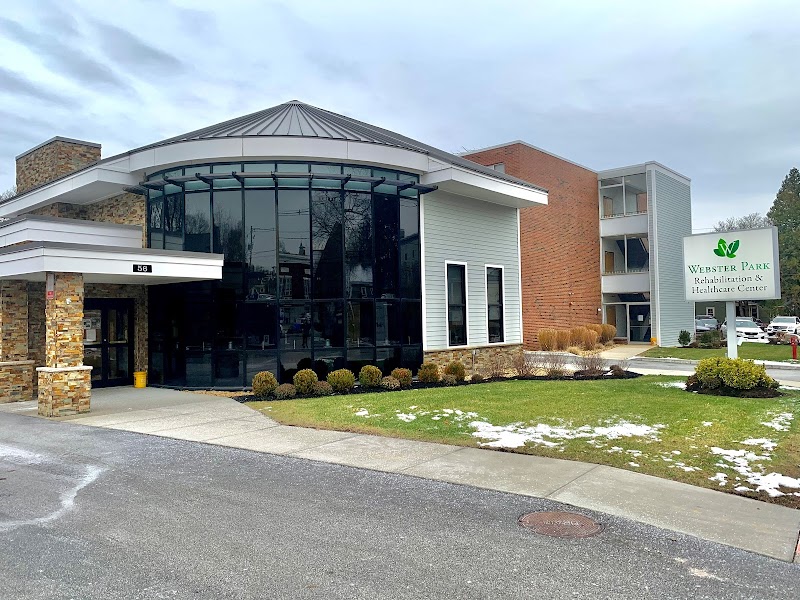
Who Owns and Operates Webster Park Rehabilitation And Healthcare Center?

WEBSTER PARK REHABILITATION AND HEALTHCARE CENTER is owned by a for-profit company. For-profit facilities operate as businesses with obligations to shareholders or private owners. The facility is operated by MARQUIS HEALTH SERVICES, a chain that manages multiple nursing homes. With 110 certified beds and approximately 100 residents (about 91% occupancy), it is a mid-sized facility located in ROCKLAND, Massachusetts.

How Does Webster Park Rehabilitation And Healthcare Center Compare to Other Massachusetts Nursing Homes?

Compared to the 100 nursing homes in Massachusetts, WEBSTER PARK REHABILITATION AND HEALTHCARE CENTER's overall rating (5 stars) is above the state average of 2.9, staff turnover (26%) is significantly lower than the state average of 46%, and health inspection rating (4 stars) is above the national benchmark.

What Should Families Ask When Visiting Webster Park Rehabilitation And Healthcare Center?

Based on this facility's data, families visiting should ask: "Can I visit during a mealtime to observe dining assistance and food quality?" "How do you handle medical emergencies, and what is your hospital transfer rate?" "Can I speak with family members of current residents about their experience?"

Is Webster Park Rehabilitation And Healthcare Center Safe?

Based on CMS inspection data, WEBSTER PARK REHABILITATION AND HEALTHCARE CENTER has a clean safety record: no substantiated abuse findings (meaning no confirmed cases of resident harm), no Immediate Jeopardy citations (the most serious violation level indicating risk of serious injury or death), and is not on the Special Focus Facility watch list (a federal program monitoring the lowest-performing 1% of nursing homes). The facility has a 5-star overall rating and ranks #1 of 100 nursing homes in Massachusetts. While no facility is perfect, families should still ask about staff-to-resident ratios and recent inspection results during their visit.

Do Nurses at Webster Park Rehabilitation And Healthcare Center Stick Around?

Staff at WEBSTER PARK REHABILITATION AND HEALTHCARE CENTER tend to stick around. With a turnover rate of 26%, the facility is 20 percentage points below the Massachusetts average of 46%. Low turnover is a positive sign. It means caregivers have time to learn each resident's needs, medications, and personal preferences. Consistent staff also notice subtle changes in a resident's condition more quickly.

Was Webster Park Rehabilitation And Healthcare Center Ever Fined?

WEBSTER PARK REHABILITATION AND HEALTHCARE CENTER has no federal fines on record. CMS issues fines when nursing homes fail to meet care standards or don't correct problems found during inspections. The absence of fines suggests the facility has either maintained compliance or corrected any issues before penalties were assessed. This is a positive indicator, though families should still review recent inspection reports for the full picture.

Is Webster Park Rehabilitation And Healthcare Center on Any Federal Watch List?

WEBSTER PARK REHABILITATION AND HEALTHCARE CENTER is not on any federal watch list. The most significant is the Special Focus Facility (SFF) program, which identifies the bottom 1% of nursing homes nationally based on persistent, serious quality problems. Not being on this list means the facility has avoided the pattern of deficiencies that triggers enhanced federal oversight. This is a positive indicator, though families should still review the facility's inspection history directly.