BERKSHIRE REHABILITATION & SKILLED CARE CENTER


7 SANDISFIELD ROAD BOX 216, SANDISFIELD, MA 01255 (413) 258-4731
For profit - Limited Liability company 57 Beds ATHENA HEALTHCARE SYSTEMS Data: November 2025
Trust Grade
28/100
#202 of 338 in MA
Last Inspection: October 2024

Within standard 12-15 month inspection cycle. Federal law requires annual inspections.

Overview

Berkshire Rehabilitation & Skilled Care Center has received a Trust Grade of F, indicating poor performance and significant concerns. Ranking #202 out of 338 facilities in Massachusetts places it in the bottom half overall, and #9 out of 13 in Berkshire County shows that there are only a few local options that are better. While the facility is improving, having reduced issues from five in 2024 to three in 2025, it still faces serious challenges. Staffing is a concern with a 2/5 rating and a turnover rate of 46%, which is average, but they have less RN coverage than 76% of state facilities, suggesting less oversight for residents. Recent incidents include a serious case of verbal and physical abuse directed at a resident by the Director of Nursing and a failure to properly assess residents for COVID-19 symptoms during an outbreak, illustrating both the strengths and weaknesses of the facility.

Trust Score
F
28/100
In Massachusetts
#202/338
Bottom 41%
Safety Record
High Risk
Review needed
Inspections
Getting Better
5 → 3 violations
Staff Stability
⚠ Watch
46% turnover. Above average. Higher turnover means staff may not know residents' routines.
Penalties
⚠ Watch
$16,719 in fines. Higher than 97% of Massachusetts facilities. Major compliance failures.
Skilled Nurses
⚠ Watch
Each resident gets only 23 minutes of Registered Nurse (RN) attention daily — below average for Massachusetts. Fewer RN minutes means fewer trained eyes watching for problems.
Violations
⚠ Watch
25 deficiencies on record. Higher than average. Multiple issues found across inspections.
★★☆☆☆
2.0
Overall Rating
★★☆☆☆
2.0
Staff Levels
★★★☆☆
3.0
Care Quality
★★☆☆☆
2.0
Inspection Score
Stable
2024: 5 issues
2025: 3 issues

The Good

  • Full Sprinkler Coverage · Fire safety systems throughout facility
  • No fines on record

Facility shows strength in fire safety.

The Bad

2-Star Overall Rating

Below Massachusetts average (2.9)

Below average - review inspection findings carefully

Staff Turnover: 46%

Near Massachusetts avg (46%)

Higher turnover may affect care consistency

Federal Fines: $16,719

Below median ($33,413)

Minor penalties assessed

Chain: ATHENA HEALTHCARE SYSTEMS

Part of a multi-facility chain

Ask about local staffing decisions and management

The Ugly 25 deficiencies on record

1 actual harm
May 2025 3 deficiencies 1 Harm
SERIOUS (G) 📢 Someone Reported This

A family member, employee, or ombudsman was alarmed enough to file a formal complaint

Actual Harm - a resident was hurt due to facility failures

Free from Abuse/Neglect (Tag F0600)

A resident was harmed · This affected 1 resident

Based on records reviewed and interviews, for one of three sampled residents (Resident #1), who was newly admitted , was unfamiliar with the facility, the staff, and was having difficulty adjusting to...

Read full inspector narrative →
Based on records reviewed and interviews, for one of three sampled residents (Resident #1), who was newly admitted , was unfamiliar with the facility, the staff, and was having difficulty adjusting to his/her admission, the Facility failed to ensure he/she was free from abuse, when on 05/01/25 at approximately 1:30 P.M., Director of Nurses (DON) #1 engaged in a verbally and physically abusive altercation with Resident #1. DON #1 with the assistance of Certified Nurse Aide #1, physically restrained Resident #1 to retrieve a bottle of medication he/she had in his/her possession, they pinned him/her up against the wall, blocked him/her from exiting the area, held him/her by his/her arms, pried open his/her hand to check for pills and searched his/her pockets, which only served to escalate Resident #1's resistive and combative behaviors. Findings include: Review of the Facility Abuse, Neglect and Exploitation Policy, implemented February 2023, indicated that it was the policy of the Facility to provide protections for the health, welfare and rights of each resident by developing and implementing written policies and procedures that prohibit and prevent abuse. The Policy indicated that the definition of abuse included unreasonable confinement. Review of the Report submitted by the Facility via the Health Care Facility Reporting System (HCFRS), dated 05/11/25, indicated they reported an allegation of physical abuse that occurred on 05/01/25, involving the Former Director of Nurses (hereby referred to as DON #1) and Certified Nurse Aide (CNA) #1, which included the following: Resident #1 arrived at the Facility at 9:15 A.M. by taxi, carrying only a bag of medications. Resident #1 was unaware of his/her admission to the Facility, having been informed by the Assisted Living Facility he/she was discharged from, that he/she was going on a medical appointment. Upon arrival, Resident #1 appeared agitated due to the unexpected nature of the admission, the realization that he/she would be residing at the Facility, and the bag of medications was taken by a nurse for inventory. Later that afternoon, Nurse #1 observed Resident #1 take pills from a medication bottle that was in his/her pocket, and that Resident #1 told Nurse #1 that they were his/her pain pills and refused to give her the bottle of medication. The Report indicated that when Nurse #1 told Nurse #2 that Resident #1 had taken pain pills from a medication bottle in his/her pocket, she surmised that DON #1 had overheard the exchange. DON #1 then quickly approached Resident #1 and there was a brief physical altercation when she attempted to retrieve the bottle of medication from Resident #1's possession, and that he/she was agitated, uncooperative, and attempted to hit DON #1. DON #1 yelled out to staff call 911 and Nurse #2 responded by telephoning the police. The Report further indicated that DON #1 pried the medication from Resident #1's fingers, that CNA #1 helped hold Resident #1 while she (DON #1) searched his/her pockets, pulling out change and a lighter. DON #1 informed the Substance Use Disorder (SUD) Counselor that Resident #1 had a bottle of prescription medication in his/her possession, and that she was searching for other items. Resident #1 was sent to the Hospital Emergency Department (ED) for evaluation, due to his/her combativeness and the staff's inability to determine how many pills he/she had taken. The Report indicated that upon interview, Resident #1 had no recollection of the altercation. Based on the reasonable person concept, it would be more likely than not, that Resident #1 would have experienced psychosocial harm, recurrent fear, anxiety or anger as a result of the unreasonable confinement since there is an expectation that he/she would not be restrained and searched by a provider that had been entrusted to care for him/her. Resident #1 was admitted to the Facility in May of 2025, diagnoses included alcohol dependence with alcohol-induced persisting amnesic disorder (a chronic memory disorder caused by severe deficiency of vitamin B-1), opioid abuse, major depressive disorder and post-traumatic stress disorder. Review of Resident #1's Medical Record indicated that he/she was alert and oriented and could make his/her needs known. Further review of the Record indicated that his/her Health Care Proxy (HCP) was activated prior to admission. During an interview on 05/20/25 at 2:59 P.M., Resident #1 was unable to speak to the events of 05/01/25 and did not have any recollection of the altercation with staff. During a telephone interview on 05/21/25 at 11:22 A.M., Director of Nurses (DON) #1 said that on 05/01/25, Resident #1 had been agitated all morning, and had been yelling and swearing in the hallway because he/she was upset about being tricked into admission to the Facility that morning. DON #1 said that she was called to the first floor at approximately 1:30 P.M. because Resident #1 had a bottle of oxycodone (opioid, used for the treatment of moderate to severe pain) in his/her possession. DON #1 said that when she approached Resident #1, across from the nurses' station, he/she tried to hit her with his/her cane. During a telephone interview on 05/21/25 at 12:45 P.M., Certified Nurse Aide #1 said that on 05/01/25, Resident #1 had been agitated all morning, yelling, swearing and threatening to leave the Facility. CNA#1 said Resident #1 was upset about his/her admission to the Facility. During an interview on 05/20/25 at 2:05 P.M., Nurse #1 said that on 05/01/25 during the early afternoon, Resident #1 approached her medication cart and asked for a cup of water. Nurse #1 said she observed Resident #1 dispense three pills from a prescription medication bottle into the palm of his/her hand. Nurse #1 said that when she asked Resident #1 What have you got there? he/she said that they were his/her pain pills, oxy. Nurse #1 said she asked Resident #1 if she could see the medication bottle and when she reached for it, he/she put the medication bottle back in his/her jacket pocket and said no, they are mine. Nurse #1 said she notified Nurse #2 that Resident #1 had a bottle of pain medication in his/her possession and asked for her help because she wanted to closely monitor Resident #1 until she could reapproach him/her, in attempt to avoid confrontation. Nurse #1 said that DON #1 may have overheard the conversation between herself and Nurse #2, because shortly thereafter, DON #1 appeared suddenly and approached Resident #1 loudly and in a rapid manner, causing the situation to quickly escalate. Nurse #1 said that Resident #1 refused to hand over the medication to DON #1 and verbally threatened to punch someone. Nurse #1 said that DON #1 loudly instructed someone nearby to call 911. Nurse #1 said that at the time of the altercation, Resident #1 was standing in an alcove across from the nurses' station with his/her back against the wall. Nurse #1 said that CNA #1 responded to the situation and positioned himself on Resident #1's left side, while DON #1 was positioned on Resident #1's right side, going through his/her pockets. Nurse #1 said that Resident #1 could not go anywhere because his/her movements were blocked by DON #1 and CNA #1. Nurse #1 said that Resident #1 was yelling and swearing and that DON #1 was responding to him/her with the same level of volume. Nurse #1 said It was out of control, like a street fight. Nurse #1 said the altercation lasted a few minutes. During an interview on 05/20/25 at 2:34 P.M., Nurse #2 said that Nurse #1 notified her that Resident #1 had a bottle of oxycodone in his/her possession and that she (Nurse #1) saw him/her consume two pills from the bottle. Nurse #2 said that she assumed DON #1 overheard her discussion with Nurse #1, because she (DON #1) rushed over to Resident #1 and engaged in a verbal altercation with him/her. Nurse #2 said that when Resident #1 became physical toward DON #1, she (DON #1) yelled, Call 911, and she did as DON #1 directed. Nurse #2 said that there was so much yelling between DON #1 and Resident #1, that the police dispatcher on the other end of the telephone asked who was yelling in the background. Nurse #2 said the altercation between DON #1, CNA #1 and Resident #1 lasted less than five minutes. During a telephone interview on 05/22/25 at 12:01 P.M., Nurse #3 said that she went downstairs to tell DON #1 that Resident #1 had a bottle of oxycodone in his/her possession and would not relinquish it. Nurse #3 said DON #1 went upstairs immediately to address the situation. CNA #1 said he/she was at the nurses' station around 1:30 P.M., when the altercation between DON #1 and Resident #1 began. CNA #1 said that upon seeing Resident #1 lunge toward DON #1, as if he/she was going to hit her, he intervened and positioned himself close to Resident #1's left side, preventing him/her from pulling his/her arm away from the wall. CNA #1 said that when DON #1 tried to get Resident #1 to hand over what he/she was holding, he/she kept his/her hand closed. CNA #1 said that when Resident #1 didn't respond when asked to open his/her hand, he stepped in to block Resident #1's movement and physically pried open his/her hand. During a telephone interview on 05/22/25 at 10:07 A.M., the Finance Assistant said that sometime during the afternoon of 05/01/25, she went upstairs to the unit after hearing a situation was unfolding. The Finance Assistant said she went with the intent to help redirect residents as needed. The Finance Assistant said that from her position at the back of the nurses' station, she observed that DON #1 and CNA #1 held Resident #1 against the wall. The Finance Assistant said that DON #1 was positioned on Resident #1's right side, holding his/her right arm while CNA #1 was on his/her left side, holding his/her left arm. The Finance Assistant said that Resident #1 was yelling, swearing and resisting what was going on. The Finance Assistant said that the altercation lasted less than five minutes. During a telephone interview on 05/22/25 at 10:15 A.M., Certified Nurse Aide (CNA) #3 said that on 05/01/25 at approximately 1:30 P.M., she witnessed Resident #1 being cornered by DON #1 and CNA #1, that Resident #1 had his/her back against the wall in an alcove area across from the nurses' station. CNA #3 said Resident #1 was visibly upset while DON #1 went through his/her pockets, and when he/she refused to open his/her hand. CNA #3 said she heard DON #1 tell CNA #1 to pull back Resident #1's thumb and pry open his/her hand. CNA #3 said CNA #1 held Resident #1's arm, pulled back his/her thumb, and pried open his/her hand. During an interview on 05/20/25 at 1:00 P.M., the Substance Use Disorder (SUD) Counselor said that sometime during the afternoon of 05/01/25, the Social Worker asked him to come inside to assist with a situation involving Resident #1. The SUD Counselor said he observed Resident #1 in the alcove across from the nurses' station with his/her back against the wall. The SUD Counselor said that DON #1 was standing on Resident #1's right side, holding his/her right arm with her left hand, while she used her right hand to go through his/her pockets. The SUD Counselor said that CNA #1 was holding Resident #1 against the wall with his hands on Resident #1's left upper arm. The SUD Counselor said that during the altercation, Resident #1 resisted being held, was visibly upset, and repeated, No! and Leave me alone! The SUD Counselor said the altercation was already underway when he arrived and that he only saw the last 20-30 seconds. The SUD Counselor said the altercation ended after DON #1 pulled a lighter from Resident #1's pocket and then released him/her. Nurse #3 said that she witnessed Resident #1 standing against the wall in an alcove across from the nurses' station. Nurse #3 said that DON #1 was on Resident #1's right side and CNA #1 was on his/her left side, and they each held one of Resident #1's arms. Nurse #3 said she witnessed the altercation for about 30 seconds before it broke up. Nurse #3 said that once the altercation was over, DON #1 went into her office with the items she had found in Resident #1's possession: a bottle of oxycodone, two lighters, and a box of cigarettes. Nurse #3 said she counted the oxycodone with DON #1. During an interview on 05/20/25 at 12:30 P.M., the current Director of Nurses (hereby referred to as DON #2) said that DON #1 was asked to go upstairs to address an issue with Resident #1 and that when she did not come back downstairs, she went to the unit and saw DON #1 walking from the nurses' station to her office. DON #2 said that DON #1 had a bottle of oxycodone, a box of cigarettes and two lighters that had been in Resident #1's possession. DON #2 said she counted the oxycodone with DON #1 and Nurse #3, and that when they could not determine how much of the medication Resident #1 had ingested, the physician gave an order to send him/her to the Hospital Emergency Department to be evaluated. During her interview, DON #1 denied restraining Resident #1 against the wall and denied going through his/her pockets for the bottle of medication. DON #1 said Resident #1 eventually handed over the bottle of medication. DON #1 said she could not recall whether CNA #1 was present during the altercation and did not remember finding two lighters inside a box of cigarettes in Resident #1's possession. During an interview on 05/20/25 at 3:23 P.M., the Administrator said that DON #1 should have cleared the area and attempted to diffuse Resident #1's agitation, monitor him/her closely and reapproach him/her later. The Administrator said that DON #1 and CNA #1 should not have pushed the issue when Resident #1 was agitated. The Administrator said that the outcome of the Facility's internal investigation into the allegations of abuse against DON #1 and CNA #1, was that they did not find their actions to include willful intent. The Administrator said the Facility decided to separate employment with both CNA #1 and DON #1 out of an abundance of caution based on poor customer service.
CONCERN (D) 📢 Someone Reported This

A family member, employee, or ombudsman was alarmed enough to file a formal complaint

Potential for Harm - no one hurt, but risky conditions existed

Abuse Prevention Policies (Tag F0607)

Could have caused harm · This affected 1 resident

Based on interviews and records reviewed, for one of three sampled residents (Resident #1), and for two of three sampled employees (Certified Nurse Aide #1 and the Substance Use Disorder [SUD] Counsel...

Read full inspector narrative →
Based on interviews and records reviewed, for one of three sampled residents (Resident #1), and for two of three sampled employees (Certified Nurse Aide #1 and the Substance Use Disorder [SUD] Counselor), the Facility failed to ensure staff implemented and followed their abuse policy related to reporting of abuse allegations and employment requirements. 1) On 05/01/25, although several employees witnessed the Director of Nurses #1 and Certified Nurse Aide #1 physically restrain Resident #1 against the wall while they searched his/her pockets and pried open his/her hand, no one reported the physically abusive altercation immediately to the Administrator or Director of Nurses, who were not made aware until four days later, and 2) prior to working at the facility, a Criminal Offender Record Information (CORI) check was not conducted on Certified Nurse Aide (CNA) #1, and a Massachusetts Nurse Aide Registry (NAR) check was not conducted on the SUD Counselor, as required. Findings include: 1) Review of the Facility Abuse, Neglect and Exploitation Policy, implemented February 2023, indicated it was the policy of the Facility to provide protections for the health, welfare and rights of each resident by developing and implementing written policies and procedures that prohibit and prevent abuse, neglect, exploitation, and misappropriation of resident property. The Policy also indicated that the facility will have written procedures that include reporting of all alleged violations to the administrator, state agency, adult protective services and to all other required agencies (e.g. law enforcement when applicable) within specified time frames: -immediately but not later than two hours after the allegation is made if the events that caused the allegation involve abuse or result in serious bodily injury or, -not later than 24 hours if the events that caused the allegation do not involve abuse and do not result in serious bodily injury. Review of the Report submitted by the Facility via the Health Care Facility Reporting System (HCFRS), dated 05/11/25, indicated an allegation of physical abuse that occurred on 05/01/25, involving the Former Director of Nurses (hereby referred to as DON #1) and Certified Nurse Aide (CNA) #1, was reported. The Report indicated that during the afternoon of 05/01/25, Nurse #1 observed Resident #1 take pills from a medication bottle that was in his/her pocket. The Report indicated that Resident #1 told Nurse #1 that they were his/her pain pills and refused to give her the bottle of medication. The Report indicated that DON #1 quickly approached Resident #1 and there was a brief physical altercation when she attempted to retrieve the bottle of medication from Resident #1's possession. The Report indicated that Resident #1 was agitated, uncooperative, and attempted to hit DON #1. The Report indicated that DON #1 yelled, call 911 and Nurse #2 responded by telephoning the police. The Report indicated that DON #1 pried the medication from Resident #1's fingers and that CNA #1 helped hold Resident #1 while she (DON #1) searched his/her pockets, pulling out change and a lighter. The Report indicated that DON #1 told the Substance Use Disorder (SUD) Counselor that Resident #1 had a bottle of prescription medication in his/her possession, and that she was searching him/her for other items. The Report indicated that Resident #1 was sent to the Hospital Emergency Department (ED) for evaluation, due to his/her combativeness and the staff's inability to determine how many pills he/she had taken. The Report indicated that upon interview, Resident #1 had no recollection of the altercation. Resident #1 was admitted to the Facility in May of 2025, diagnoses included alcohol dependence with alcohol-induced persisting amnesic disorder (a chronic memory disorder caused by severe deficiency of vitamin B-1), opioid abuse, major depressive disorder and post-traumatic stress disorder. Review of Resident #1's Medical Record indicated that he/she was alert, oriented and could make his/her needs known. Further review of the Record indicated that his/her Health Care Proxy (HCP) was activated prior to admission. During an interview on 05/20/25 at 1:00 P.M., the Substance Use Disorder (SUD) Counselor said that sometime during the afternoon of 05/01/25, the Social Worker asked him to come inside to assist with a situation involving Resident #1. The SUD Counselor said he observed Resident #1 in the alcove across from the nurses' station with his/her back against the wall. The SUD Counselor said that DON #1 was standing on Resident #1's right side, holding his/her right arm with her left hand, while she used her right hand to go through Resident #1's pockets. The SUD Counselor said that CNA #1 was holding Resident #1 against the wall with his hands on his/her left upper arm. The SUD Counselor said that during the altercation, Resident #1 resisted being held, was visibly upset, and repeated No! and Leave me alone! The SUD Counselor said the altercation was already underway when he arrived and that he only saw the last 20-30 seconds. The SUD Counselor said the altercation ended after DON #1 pulled a lighter from Resident #1's pocket and then they (DON #1 and CNA #1) released him/her. The SUD Counselor said that several other employees had witnessed the altercation as well. The SUD Counselor said he did not report the abuse allegation until 05/05/25, four days later, and that he should have reported it immediately to the Administrator. During an interview on 05/20/25 at 3:23 P.M., the Administrator said that although he was notified on 05/01/25 that Resident #1 had a bottle of oxycodone in his/her possession and was sent out to the ED for evaluation, he was unaware of the allegation of abuse involving DON #1 and CNA #1, until it was reported to him on 05/05/25 by the SUD Counselor. The Administrator said the allegation of abuse should have been reported immediately. 2) Review of the Facility Abuse, Neglect and Exploitation Policy, implemented February 2023, indicated that potential employees would be screened for a history of abuse, neglect, exploitation, or misappropriation of resident property. The Policy further indicated that background reference and credential checks shall be conducted on potential employees, contracted temporary staff, students affiliated with academic institutions, volunteers, and consultants. The Policy indicated the facility will maintain documentation of proof that the screening occurred. Review of CNA #1's Employee File indicated his first date of employment at the Facility was on 02/10/25. Further review of CNA #1's Employee File indicated a CORI check was not obtained until 04/23/25, over two months after CNA #1 started working at the Facility. There was no documentation to support that a CORI check had been conducted prior to his employment at the Facility. Review of the SUD Counselor's Employee File indicated his first date of employment at the Facility was on 10/07/24. Further review of the SUD Counselor's Employee File indicated that there was no documentation to support that a Massachusetts NAR check had been conducted prior to his employment at the Facility. The Administrator said the Facility had no documentation to support that an NAR check had been conducted for the SUD Counselor or that a CORI check had been conducted on CNA #1, before they started working at the Facility. The Administrator said that CORI checks and NAR checks should be run on all employees prior to working at the Facility.
CONCERN (D) 📢 Someone Reported This

A family member, employee, or ombudsman was alarmed enough to file a formal complaint

Potential for Harm - no one hurt, but risky conditions existed

Report Alleged Abuse (Tag F0609)

Could have caused harm · This affected 1 resident

Based on records reviewed and interviews, for one of three sampled residents (Resident #1), the Facility failed to ensure that on 05/05/25, after Facility Administration was made aware of an allegatio...

Read full inspector narrative →
Based on records reviewed and interviews, for one of three sampled residents (Resident #1), the Facility failed to ensure that on 05/05/25, after Facility Administration was made aware of an allegation of physical abuse of a resident (Resident #1) by Director of Nurses (DON) #1 and Certified Nurse Aide (CNA) #1, that they reported the allegation to the Department of Public Health (DPH) within two hours as required, when it was not reported to DPH until 05/11/25, (six days later). Findings include: Review of the Facility's Policy titled, Abuse, Neglect and Exploitation, dated as revised February 2023, indicated reporting of all alleged violations to the administrator, state agency, adult protective services and to all other required agencies (e.g., law enforcement when applicable) within specified time frames: -Immediately but not later than two hours after the allegation is made, if the events that cause the allegation involve abuse or result in serious bodily injury, or -Not later than 24 hours if the events that cause the allegation do not involve abuse and do not result in serious bodily injury. Review of the Report submitted by the Facility via the Health Care Facility Reporting System (HCFRS), dated as submitted 05/11/25, indicated an allegation of physical abuse occurred on 05/01/25, involving the Former Director of Nurses (hereby referred to as DON #1) and Certified Nurse Aide (CNA) #1. The Report indicated that during the afternoon of 05/01/25, Nurse #1 observed Resident #1 take pills from a medication bottle that was in his/her pocket. The Report indicated that Resident #1 told Nurse #1 that they were his/her pain pills and refused to give her the bottle of medication. The Report indicated that DON #1 quickly approached Resident #1 and there was a brief physical altercation when she attempted to retrieve the bottle of medication from Resident #1's possession. The Report indicated that Resident #1 was agitated, uncooperative, and attempted to hit DON #1. The Report indicated that DON #1 yelled, call 911 and Nurse #2 responded by telephoning the police. The Report indicated that DON #1 pried the medication from Resident #1's fingers and that CNA #1 helped hold Resident #1 while she (DON #1) searched his/her pockets, pulling out change and a lighter. The Report indicated that DON #1 told the Substance Use Disorder (SUD) Counselor that Resident #1 had a bottle of prescription medication in his/her possession, and that she was searching him/her for other items. The Report indicated that Resident #1 was sent to the Hospital Emergency Department (ED) for evaluation, due to his/her combativeness and the staff's inability to determine how many pills he/she had taken. The Report indicated that upon interview, Resident #1 had no recollection of the altercation. Review of a Written Report, dated 05/05/25, given to the Administrator by the SUD Counselor, alleged that on 05/01/25, DON #1 and Certified Nurse Aide (CNA) #1 held Resident #1 against the wall by his/her arms, searched him/her, then removed coins and a lighter from his/her pockets. The Report alleged that DON #1 said that Resident #1 had a bottle of prescription medicine in his/her pocket and that she was also searching for other items. Resident #1 was admitted to the Facility in May of 2025, diagnoses included alcohol dependence with alcohol-induced persisting amnesic disorder (a chronic memory disorder caused by severe deficiency of vitamin B-1, opioid abuse, major depressive disorder, recurrent, and post-traumatic stress disorder. Review of Resident #1's Medical Record indicated that he/she was alert and oriented and could make his/her needs known. Further review of the Record indicated that his/her Health Care Proxy (HCP) was activated prior to admission. During an interview on 05/20/25 at 1:00 P.M., the Substance Use Disorder (SUD) Counselor said that on the morning of 05/05/25, he reported an allegation of physical abuse involving Resident #1 to the Administrator, that occurred on 05/01/25 during an altercation with DON #1 and CNA #1. The SUD Counselor said he reported the allegation both verbally and in writing. During an interview on 05/20/25, the Administrator said he was unsure why the allegation of physical abuse was not submitted to DPH within the required two hours. The Administrator said he would need to verify when the current Director of Nurses (hereby referred to as DON #2) reported the physical abuse allegation via HCFRS. During an interview on 05/20/25 at 4:20 P.M., DON #2 said that she started to report the abuse allegation on 05/05/25 to DPH via HCFRS, but did not submit the information until 05/11/25 because she misunderstood and thought she had five days to submit the allegation.
Oct 2024 5 deficiencies
CONCERN (D)

Potential for Harm - no one hurt, but risky conditions existed

Deficiency F0657 (Tag F0657)

Could have caused harm · This affected 1 resident

Based on record review and interview, the facility failed to review and revise the plan of care pertaining to urinary catheter care and services for one Resident (#30) out of a total sample of 16 resi...

Read full inspector narrative →
Based on record review and interview, the facility failed to review and revise the plan of care pertaining to urinary catheter care and services for one Resident (#30) out of a total sample of 16 residents. Specifically, the facility failed to review and revise the plan of care when Resident #30's indwelling urinary catheter (a thin, flexible tube inserted into the bladder to drain urine outside the body) was changed in the hospital from a suprapubic catheter (an indwelling urinary catheter placed directly into the bladder through the abdomen) to an indwelling urinary catheter (a tube inserted through the urinary tract into the bladder, connected to a drainage bag). Findings include: Resident #30 was admitted to the facility in September 2018, with a diagnosis of Neuromuscular Dysfunction of the Bladder (a condition where the nerves and muscles of the bladder do not work together well and can cause problems with the emptying of the bladder). Review of Resident #30's medical record indicated that a care plan, initiated on 7/23/24, was created for the use of a suprapubic catheter (an indwelling urinary catheter placed directly into the bladder through the abdomen) because of neurogenic bladder (a urinary dysfunction in which the bladder does not empty properly). Further review of the medical record indicated the care plan was last revised on 7/24/24. Review of Nursing Progress Note dated 8/27/24, indicated Resident #30 returned from the hospital ER (Emergency Room), was unsuccessful in reinserting a new suprapubic catheter and an indwelling urethral Foley [brand name of the catheter] catheter was placed. Review of Nursing Progress Note dated 10/1/24, indicated the facility staff received a call from the hospital stating the hospital staff replaced the indwelling urethral Foley catheter with an 18 Fr (French -size of urinary catheter). Review of Resident #30's October 2024 Physician's orders indicated the following Foley catheter orders initiated on 8/28/24: -Foley catheter care every shift -Foley catheter to bedside for drainage -Irrigate Foley catheter as needed . -Replace Foley catheter as needed Further review of the October 2024 Physician's orders did not indicate what size Foley catheter/ balloon (retention balloon- a tiny balloon at the end of the indwelling urinary catheter that is inflated with water to prevent the indwelling urinary catheter from sliding out of the body) was in place for Resident #30. During an interview on 10/7/24 at 2:15 P.M., the surveyor, the Assistant Director or Nursing (ADON), and the Director of Nursing (DON) reviewed the October 2024 Physician orders and the care plans for Resident #30. The DON said that the Foley catheter size should be written on the Physician orders but was not. The DON said that the care plans should have been updated in August, when the Resident returned from the hospital and the suprapubic catheter was replaced with an indwelling urinary Foley catheter, but the care plans had not been updated as required.
CONCERN (D)

Potential for Harm - no one hurt, but risky conditions existed

Quality of Care (Tag F0684)

Could have caused harm · This affected 1 resident

Based on record review, and interview, the facility failed to provide care in accordance with professional standards of practice related to Hospice (a program that gives special care to people who are...

Read full inspector narrative →
Based on record review, and interview, the facility failed to provide care in accordance with professional standards of practice related to Hospice (a program that gives special care to people who are near the end of life and have stopped treatment to cure or control their disease) care for one Resident (#24) out of a total sample of 16 residents. Specifically, for Resident #24, the facility failed to ensure that the Physician orders which indicated agreement with the Hospice recommendations for scheduled pain and anxiety management were implemented and the care plan followed for appropriate pain management and symptom control resulting in the Resident requiring frequent pain and anxiety medication administration for pain and symptom management. Findings include: Review of the facility's policy titled Comfort Measures dated April 2015, indicated the following: -The care plan will include interventions developed to promote pain management and to address the actual and/or potential physical/emotional/spiritual comfort needs of the resident/patient. Resident #24 was admitted to the facility in January 2024, with Vascular Dementia (brain damage from impaired blood flow to the brain caused by multiple strokes leading to memory loss and difficulty with reasoning, planning, judgment and other thought processes). Review of the Resident's most recent Minimum Date Set (MDS) assessment, dated 8/20/24, indicated: -the Resident had severe cognitive impairment as evidenced by the Brief Interview of Mental Status (BIMS) score of zero out of a possible 15 points. -the Resident was dependent on staff for all activities of daily living (ADL). -the Resident was receiving Hospice Care Services. Review of the Nurses Progress Note, dated 8/14/24, indicated the Resident was admitted to Hospice Services. Review of the Hospice Care Narrative Notes, dated 8/28/24, indicated the following recommendations: -Schedule Morphine (pain medication used to treat moderate to severe pain) 0.25 milliliters (ml) PO (orally)/SL (sublingual-under the tongue) twice daily. -Schedule Lorazepam (Ativan - medication used to treat anxiety) 0.5 milligrams (mg) PO/SL twice daily. -PRN (as needed) orders for Morphine and Lorazepam will stay the same. Further review of the Hospice Care Narrative Notes, dated 8/28/24, indicated a circled initial at the bottom of the Hospice Care Narrative Note. Review of the Nurses Progress Notes dated 8/28/24 through 10/3/24, showed no evidence to indicate the Hospice recommendations from 8/28/24 had been reviewed, accepted or declined, and showed no evidence of the Resident's current Hospice plan of care. Review of the current Physician's orders dated 10/3/24, indicated the following: -Hospice evaluation when approved by Guardian (a court appointed person who makes important personal and healthcare decisions for an adult who lacks the capacity to make their own decisions), dated 8/1/24. -Morphine Sulfate oral solution 20 mg/ml, give 0.25 ml by mouth every four hours as needed (PRN) for mild to moderate pain/shortness of breath, date initiated 8/14/24. -Morphine Sulfate oral solution 20 mg/ml, give 0.5 ml by mouth every four hours as needed (PRN) for severe pain/shortness of breath, date initiated 8/14/24. -Lorazepam oral tablet 0.5 mg, give one tablet by mouth every four hours as needed (PRN) for mild to moderate anxiety/agitation/restlessness, date initiated 8/14/24. - Lorazepam oral tablet 0.5mg, give two tablets by mouth every four hours as needed (PRN) for severe anxiety/agitation/restlessness, date initiated 8/14/24. Further review of the Physician's orders dated 10/3/24 (total of 36 days since the Hospice recommendations were made on 8/28/24), showed no evidence that the Hospice recommendations dated 8/28/24, to schedule Morphine 0.25 ml/5 mg and Ativan 0.5 mg twice daily had been implemented. Review of the August 2024 Medication Administration Record (MAR) indicated the Resident received Morphine 0.25 ml by mouth, for mild to moderate pain, as needed (PRN) with effect on the following days/times: 8/28/24: -at 4:11 A.M. for a pain score of 9 out of ten -at 11:04 P.M. for a pain score of eight out of ten 8/31/24: -at 2:13 A.M. for a pain score of six out of ten -at 7:56 P.M. for a pain score of five out of ten Review of the August 2024 MAR also indicated that the Resident received Lorazepam 0.5 mg, two tablets as needed (PRN) for severe anxiety/agitation/restlessness with effect on the following days/times: >8/18/24 at 8:30 AM >8/21/24 at 5:23 PM Further review of the August 2024 MAR indicated the Resident received Lorazepam 0.5 mg, one tablet as needed (PRN), for mild to moderate anxiety/agitation/restlessness with effect on the following days/times: >8/28/24: -at 5:15 P.M. >8/31/24: -at 2:13 A.M -at 7:56 P.M. Further review of the August 2024 MAR showed no evidence that the Hospice recommendations dated 8/28/24, to schedule Morphine 0.25 ml/5 mg and Ativan 0.5 mg twice daily had been implemented. Review of the September 2024 MAR indicated the Resident received Morphine 0.25 ml by mouth, as needed (PRN) for mild to moderate pain with effect on the following days/times: >9/4/24: -at 6:35 A.M. for a pain score of eight out of ten >9/11/24: -at 4:12 A.M. for a pain score of 8 out of ten >9/13/24: at 12:30 A.M. for a pain score of 6 out of ten Further review of the September 2024 MAR indicated the Resident received Morphine 0.5 ml by mouth, as needed (PRN) for severe pain with effect on the following days/times: >9/2/24: -at 2:07 A.M. and 11:35 P.M. for a pain score of seven out of ten -at 11:25 P.M. for a pain score of six out of ten >9/3/24: -at 11:21 P.M. for a pain score of six out of ten >9/5/24: -at 4:45 A.M. for a pain score of seven out of ten -at 11:43 P.M. for a pain score of six out of ten >9/7/24: -at 4:30 A.M. for a pain score of eight out of ten >9/10/24: -at 4:14 A.M. for a pain score of seven out of ten >9/12/24: -at 3:31 A.M. for a pain score of seven out of ten -at 10:00 P.M. for a pain score of five out of ten >9/15/24: -at 5:25 P.M. for a pain score of six out of ten -at 11:49 P.M. for a pain score of eight out of ten >9/19/24: -at 7:07 A.M. for a pain score of eight out of ten >9/20/24: -at 8:21 A.M. for a pain score of nine out of ten >9/23/24: -12:00 A.M. and 4:00 A.M. for a pain score of seven out of ten >9/24/24: -at 4:36 A.M. for a pain score of seven out of ten >9/26/24: -at 1:00 A.M. for a pain score of seven out of ten >9/27/24: -at 12:05 A.M. for a pain score of seven out of ten >9/28/24: -at 1:43 A.M. for a pain score of five out of ten >9/29/24: -at 12:10 A.M. for a pain score of seven out of ten -at 4:48 P.M. for a pain score of six out of ten >9/30/24: -at 12:13 A.M. for a pain score of seven out of ten Further review of the September 2024 MAR indicated the Resident received Lorazepam 0.5 mg, one tablet as needed (PRN), for mild to moderate anxiety/agitation/restlessness with effect on the following days/times: >9/2/24: -at 2:07 A.M. >9/3/24: -at 11:21 P.M. >9/5/24: -at 4:45 A.M. >9/7/24: -at 4:40 A.M. >9/10/24: -at 4:15 A.M. and 5:16 P.M. >9/12/24: -at 1:43 A.M. and 11:37 P.M. >9/14/24: at 4:17 A.M. >9/15/24: at 5:24 P.M. >9/19/23: at 9:01 A.M. >9/22/24: at 8:02 A.M. >9/24/24: at 4:35 A.M. Review of the September 2024 MAR indicated the Resident received Lorazepam 0.5mg, two tablets as needed (PRN) for severe anxiety/agitation/restlessness with effect on the following days/times: >9/11/24: -at 4:58 A.M. >9/13/24: -at 12:00 A.M. >9/16/24: -at 12:28 A.M. >9/22/24: -at 12:44 P.M. >9/30/24: -at 12:12 A.M. Further review of the September 2024 MAR showed no evidence that the Hospice recommendations, dated 8/28/24, to schedule Morphine 0.25 ml/5 mg and Ativan 0.5 mg twice daily had been implemented. Review of the MAR dated 10/1/24 and 10/2/24 indicated the Resident received Morphine 0.5 ml by mouth, as needed (PRN) for severe pain with effect on the following days/times: >10/1/24: -at 2:17 A.M. for a pain score of six out of ten >10/2/24: -at 2:10 A.M. for a pain score of seven out of ten Further review of the MAR, dated 10/1/24 and 10/2/24, showed no evidence that the Hospice recommendations, dated 8/28/24, to schedule Morphine 0.25 ml/5 mg and Ativan 0.5 mg twice daily had been implemented. Review of the Resident's Care Plan dated 10/3/24, showed no documented evidence that a Hospice care plan was part of the medical record. During an interview on 10/3/24 at 8:45 A.M., the MDS Nurse said she was unable to find a Hospice Care Plan for the Resident. The MDS Nurse further said that she should have initiated a Hospice care plan in the portion maintained by the facility after the significant change assessment had been completed on 8/20/24. The MDS Nurse said that once she sees there is an order for Hospice, she schedules an MDS assessment and an Interdisciplinary Team (IDT) meeting. The MDS Nurse said that she should have created a Hospice Care Plan at that time, but she did not. During an interview on 10/3/24 at 9:08 A.M., the surveyor and the Staff Development Coordinator (SDC) reviewed the Hospice Narrative Note dated 8/28/24. The SDC said the circled initial on the bottom of the Hospice Narrative Note indicated that the Provider (Physician) had reviewed and approved the Hospice recommendations to schedule Morphine and Lorazepam twice a day. The SDC said that she was not sure why the orders had not been entered into the electronic medical record (EMR). The SDC said that she would check with the Director of Nursing (DON). The SDC said the process for new Hospice recommendations is that the Hospice Nurse writes the recommendations and gives them to the facility Nurse, the facility Nurse then gives the recommendations to, or calls the Provider and if the Provider approved, enters the new orders into the EMR. During an interview on 10/3/24 at 10:06 A.M., the DON said that she or the Assistant Director of Nursing (ADON) are the facility contact staff for collaborating with the Hospice Provider. The DON said that she reached out to Hospice today to try to figure out what went wrong with the facility system. The DON said that the Hospice Nurse comes to the facility every week and should have noticed that the recommendations from 8/28/24 had not been started. The DON further said the Hospice recommendations should have been initiated as soon as they had been approved by the Provider, but that they had not been initiated until today.
CONCERN (D)

Potential for Harm - no one hurt, but risky conditions existed

Respiratory Care (Tag F0695)

Could have caused harm · This affected 1 resident

Based on observation, interview, record and policy review, the facility failed to provide respiratory care and services based on professional standards of practice, for one Resident (#22) out of a tot...

Read full inspector narrative →
Based on observation, interview, record and policy review, the facility failed to provide respiratory care and services based on professional standards of practice, for one Resident (#22) out of a total sample of 16 residents. Specifically, for Resident #22, the facility failed to: 1. Change the oxygen tubing as ordered by the Physician. 2. Follow infection control measures related to the care, handling, and/or storage, by ensuring the Resident's oxygen tubing was maintained off the floor and stored in a clean storage bag. Findings include: Review of the facility's Nursing Policy and Procedure Manual (Oxygen Administration Nasal Cannula) last revised November 2020, indicated the following: -Replace and date cannula and tubing weekly or when visibly soiled or damaged . - .The nasal cannula will be stored in a plastic bag and maintained off the floor. Resident #22 was admitted to the facility in January 2024, with diagnoses including shortness of breath, dependence on supplemental Oxygen, and Emphysema (a chronic lung condition where air is abnormally present in the lungs causing shortness of breath) Review of the October 2024 Physician orders indicated the following: -Oxygen (O2) via two liters per minute (2 LPM) nasal cannula (n/c - a thin flexible tube that provides supplemental oxygen through the nose via nasal prongs) (order date 1/22/24) -Change O2 tubing every Sunday on 11-7 shift (order date 1/22/24) Review of the Resident #22's September 2024 Treatment Administration Record (TAR) indicated the oxygen tubing was changed on 9/29/24 during the 11-7 shift, signed off with a check mark and the Nurses' initials. On 10/2/24 at 9:29 A.M., the surveyor observed Resident #22 lying in bed with his/her head covered with blankets, with the oxygen tubing and nasal cannula on the floor under the Resident's bed. The surveyor observed that the oxygen tubing was dated 9/23/24. On 10/3/24 at 10:30 A.M., the surveyor observed Resident #22 sleeping in bed with the oxygen tubing and nasal cannula on the floor. The surveyor observed that the oxygen tubing was dated 9/23/24. During an interview on 10/3/24 at 11:00 A.M., Nurse #1 said that the Resident had an order for continuous oxygen, however he/she would frequently take the Oxygen off. Nurse #1 said that the Resident required frequent reminders to put the Oxygen back on. The surveyor and Nurse #1 reviewed the October 2024 Physician orders and the September 2024 TAR for Resident #22. Nurse #1 said that it appeared the oxygen tubing was last changed on 9/29/24 as it had been checked off and initialed by the Nurse. On 10/3/24 at 11:06 A.M., immediately following the interview, the surveyor and Nurse #1 observed the following in Resident #22's room: -Resident lying in bed sleeping, not wearing Oxygen. -Oxygen tubing was on the floor next to the Resident's bed. -Oxygen tubing was dated 9/23/24, not 9/29/24 as indicated on the TAR. -Portable oxygen tank, located on the Resident's wheelchair, was on and running. -The oxygen tubing and nasal cannula attached to the portable oxygen tank was on the floor underneath the wheelchair. -No plastic oxygen storage bags were visible in the Resident's room. Nurse #1 said that the oxygen tubing from the (stationary) oxygen concentrator (medical device that uses air in the atmosphere, filters it, and delivers air that is 90 - 95% oxygen concentrated to the individual) and the portable oxygen tank should not be on the floor. Nurse #1 said that when the n/c was not in use, the n/c and oxygen tubing should be stored in a plastic bag, not on the floor. Nurse #1 said that there was not a plastic bag available in the Resident's room to store the unused oxygen tubing. Nurse #1 said that the date on the oxygen tubing did not reflect what had been signed off on the TAR and that the oxygen tubing had not been changed weekly as ordered.
CONCERN (D)

Potential for Harm - no one hurt, but risky conditions existed

Deficiency F0699 (Tag F0699)

Could have caused harm · This affected 1 resident

Based on interview, and record review, the facility failed to develop a comprehensive Trauma Informed Care Plan for one Resident (#18) out of a total sample of 16 residents. Specifically, for Residen...

Read full inspector narrative →
Based on interview, and record review, the facility failed to develop a comprehensive Trauma Informed Care Plan for one Resident (#18) out of a total sample of 16 residents. Specifically, for Resident #18, the facility failed to ensure that a comprehensive Trauma Informed Care Plan was developed relative to the Resident's history of Post Traumatic Stress Disorder (PTSD- a mental and behavioral disorder that develops from having experienced a traumatic event, causing flashbacks, nightmares, and severe anxiety). Findings include: Review of the facility policy titled Trauma Informed Care Policy and Procedure, undated, indicated a trauma informed care plan will be documented in the Resident's medical record by Social Services in conjunction with the IDT (Interdisciplinary Team). Resident #25 was admitted to the facility in September 2022, with diagnoses including PTSD, Anxiety (feeling of unease, such as worry or fear, that can be mild or severe/ intense, excessive, and persistent worry and fear about everyday situations), Alcohol Dependence, and Bipolar Disorder (a mental health condition that causes extreme mood swings that include emotional highs [mania or hypomania] and lows [depression]). Review of Resident #25's medical record indicated no documented evidence that a comprehensive care plan had been developed for Resident #18 relative to the Resident's history of PTSD. During an interview on 10/7/24 at 3:29 P.M., Social Worker (SW) #2 said that an initial baseline care plan should be completed upon admission and if a Resident had a diagnosis of PTSD, it would be noted on the mood care plan. SW #2 said that if a Resident had active symptoms of PTSD the staff would then create a specific care plan relative to PTSD. SW #2 said that Resident #18 does have a diagnosis of PTSD and it would most likely be noted on a mood care plan. The surveyor, SW #1, and SW #2, reviewed Resident #18's care plans and did not find a care plan that referenced a history of PTSD, possible triggers, or any individualized interventions.
MINOR (B)

Minor Issue - procedural, no safety impact

Transfer Requirements (Tag F0622)

Minor procedural issue · This affected multiple residents

Based on interview, record and policy review, the facility failed to ensure that the required transfer documentation was completed, and that the transfer documentation communicated the appropriate inf...

Read full inspector narrative →
Based on interview, record and policy review, the facility failed to ensure that the required transfer documentation was completed, and that the transfer documentation communicated the appropriate information to the receiving health care institution for one Resident (#40), out of a total sample of 16 residents. Specifically, the facility failed to ensure that Resident #40 was transferred to the emergency room with a form/packet that included important information relative to the Resident's medical history and the reason for transfer, putting the Resident at risk for complications and adverse events upon transfer to the hospital. Findings include: Review of the facility's Instructions for Completion of the Universal Transfer Form (packet), undated, indicated the form (packet) included the following: -Contact information and Checklist -Physician Order and Nursing Assessments -Therapy and Behavioral Information -Medication List -Test, Appointments and Additional Notes -Anticoagulation Referral Form and Warfarin Flow Sheet (if applicable) Resident #40 was admitted to the facility in March 2023, with diagnoses including Schizophrenia (a mental disorder characterized by hallucinations, delusions, disorganized thinking and behavior, and flat or inappropriate affect), and Parkinson's Disease (a chronic and progressive disorder that affects the nervous system and causes movement problems). Review of a Nursing Progress Note dated 7/9/24, indicated the following: -Resident sent out after being found painting his/her face and bed with stool, -Resident refused medications, -Resident exposed self to other residents and staff, -Resident resistive to care, -Order obtained to Section 12 (a transportation to a hospital for an evaluation of a person's mental health). Review of the Resident's medical record indicated no documented evidence of any discharge paperwork that included the Contact Information and Checklist, Physician Order and Nursing Assessments, Therapy and Behavioral Information, Medication List, Tests, Appointments and Additional Notes, Anticoagulation Referral Form and Warfarin Flow Sheet (if applicable) for the transfer of Resident #40 that occurred on 7/9/24. During an interview on 10/7/24 at 10:43 A.M., Nurse #1 said that when a Resident is sent out to the hospital, a transfer packet is completed, a progress note is usually written in the electronic medical record and copy of the transfer packet should be made. The surveyor and Nurse #1 reviewed the Resident's chart and did not find evidence that a transfer packet had been completed and a copy of the transfer packet had been sent to the hospital as required. Nurse #1 said that even if a Resident was sent out as a Section 12 transfer, the same process applies. During an interview on 10/7/24 at 2:13 P.M., the Assistant Director of Nursing (ADON) said that she requested a copy of the transfer packet from medical records earlier in the day, however at this time the facility staff were not able to locate a copy of the transfer packet and could not confirm that any of the information had been completed or provided to the receiving facility as required.
Sept 2023 7 deficiencies
CONCERN (D)

Potential for Harm - no one hurt, but risky conditions existed

Safe Environment (Tag F0584)

Could have caused harm · This affected 1 resident

**NOTE- TERMS IN BRACKETS HAVE BEEN EDITED TO PROTECT CONFIDENTIALITY** Based on observations and interviews, the facility failed to ensure a safe, clean environment for two Residents (#13 and #20), o...

Read full inspector narrative →
**NOTE- TERMS IN BRACKETS HAVE BEEN EDITED TO PROTECT CONFIDENTIALITY** Based on observations and interviews, the facility failed to ensure a safe, clean environment for two Residents (#13 and #20), out of a total sample of 14 residents. Specifically, the facility failed to ensure the wheelchairs for Resident's #13 and #20 were free from dirt and debris build-up, repairs done as needed and maintained in a clean manner. Findings include: 1. Resident #13 was admitted to the facility in October 2013 with diagnoses including: right-sided Hemiplegia (paralysis) due to Stroke, Aphasia (loss of the ability to understand or express speech caused by brain damage) and right leg amputation (the loss or removal of a body part). Review of the most recent Minimum Data Set (MDS) assessment dated [DATE], indicated the Resident: -had moderate cognitive impairment according to the Staff Assessment for Mental Status. -was dependent on a wheelchair for mobility. During an observation and interview on 9/26/23 at 8:14 A.M., the surveyor observed the Resident seated in his/her wheelchair in the hallway. The vinyl on the wheelchair's left armrest was observed to be worn and peeling. The surveyor further observed layers of crusty debris all along the lower left and right side metal rails between the wheels of the chair. When the surveyor asked the Resident if the facility staff cleaned his/her wheelchair, he/she insistently shook his/her head No. When the surveyor asked the Resident if he/she would like the staff to clean his/her wheelchair, he/she vigorously indicated Yes! On 9/27/23 at 8:26 A.M., the surveyor observed the Resident seated in his/her wheelchair and that the wheelchair remained with the debris and dried crusty material. The Resident observed the surveyor looking at the wheelchair and began waving his/her left hand around and pointing to the worn out and dirty areas. 2. Resident #20 was admitted to the facility in June 2014 with diagnoses including Hemiplegia due to Stroke. Review of the most recent MDS assessment dated [DATE], indicated the Resident: -was cognitively intact as evidenced by a Brief Interview for Mental Status (BIMS) score of 15 out of 15. - was dependent on a wheelchair for mobility. During an observation and interview on 9/27/23 at 12:15 P.M., the surveyor observed the Resident seated in a wheelchair next to the nurses station eating lunch. The wheelchair was noted to have dried and crusty debris along the arm rests and coating the plastic over the wheels. The Resident said he/she tried to wipe down the areas where he/she could reach however he/she could not reach the debris on the plastic all along the area over the wheels. Resident #20 further said that the facility staff do not clean the wheelchair and he/she would like to see his/her wheelchair cleaner. During an interview on 9/27/23 at 4:42 P.M., the Maintenance Director said the housekeeping department was responsible for the cleaning of the residents' wheelchairs and it should have been part of their daily room cleaning rounds. The Maintenance Director reviewed the surveyor photos of the Resident's wheelchairs and said the wheelchairs appeared as if they had not been cleaned in a long time, that the debris appeared to be old, and the chairs needed to be cleaned.
CONCERN (D)

Potential for Harm - no one hurt, but risky conditions existed

Medication Errors (Tag F0758)

Could have caused harm · This affected 1 resident

Based on interview and record review the facility failed to ensure the attending Physician or Prescribing Practitioner documented rationale for the continued use of an as needed (PRN) antipsychotic me...

Read full inspector narrative →
Based on interview and record review the facility failed to ensure the attending Physician or Prescribing Practitioner documented rationale for the continued use of an as needed (PRN) antipsychotic medication for one Resident (#22) out of a total sample of 14 residents. Specifically, the facility staff failed to ensure that the Physician or Prescribing Practitioner directly examined the Resident and documented why a PRN antipsychotic medication was still necessary. Findings include: Resident #22 was admitted to the facility in January 2014 with diagnoses including Major Depressive Disorder, Bipolar Disorder, Schizophrenia, and Anxiety Disorder. Review of the Physician's Telephone Order, dated 9/11/23 indicated a renewal of the following order: -Seroquel (an antipsychotic medication) 25 milligrams (mg) by mouth (PO) every 8 hours (Q8) for increased agitation as needed (PRN) for 14 days, end date 9/25/23. Review of the September 2023 MAR indicated the Resident had utilized the PRN Seroquel on the following dates: 9/12/13, 9/14/23, 9/15/23, 9/18/23, and 9/19/23. Further review of the Resident's medical record indicated no documentation the attending Physician or Prescribing Practitioner had directly examined and documented rationale why the continued use of the Seroquel was necessary prior to renewing the PRN Seroquel order on 9/11/23. During an interview on 9/27/23 at 1:26 P.M., Nurse Practitioner (NP) #1 said a direct examination had not been completed for Resident #22 when his/her Seroquel PRN order had been renewed on 9/11/23. She further said the process is that nursing staff call the Provider and get a telephone order, no additional examination or documentation on the rationale for the continued use of the PRN antipsychotic medication is done since it is just a telephone order.
CONCERN (D)

Potential for Harm - no one hurt, but risky conditions existed

Unnecessary Medications (Tag F0759)

Could have caused harm · This affected 1 resident

Based on observations, interviews and records reviewed, the facility failed to maintain a medication pass error rate of less than five percent (%) when the medication error rate was calculated to be 3...

Read full inspector narrative →
Based on observations, interviews and records reviewed, the facility failed to maintain a medication pass error rate of less than five percent (%) when the medication error rate was calculated to be 30% for one Resident (#45), out of five applicable residents, in a total of 30 opportunities. Specifically, the 30% medication error rate resulted from Resident's #45's medications not being administered within the ordered time frame. Findings include: Review of the facility's policy titled, Administration Procedures for all Medications, dated 2017, indicated but was not limited to: - Review five rights, three times. Review of the eight rights' of medication administration, Nursing 2022 Drug Handbook, Wolters Kluwer, page 17, included but was not limited to: > Traditionally Nurses have been taught the five rights of medication administration. These are broadly stated goals and practices to help Nurses administer drugs safely and correctly. > The five rights include: -the right drug -the right patient -the right dose -the right time -the right route > The right time - Ensure the drug is administered at the correct time and frequency. Resident #45 was admitted to the facility in June 2023 with the following diagnoses: Transient Ischemic Attack (TIA- a stroke that lasts a few minutes caused by the blood supply to part of the brain being interrupted), Cerebral Infarction (a stroke as a result of disrupted blood flow to the brain due to problems with the blood vessels that supply it), Seizures, Hypertension (HTN- high blood pressure), Depression, Anxiety, and Diabetes. On 9/27/23 at 9:50 A.M., during a medication administration pass, the surveyor observed Nurse #1 administer the following medications to Resident #45: -Eliquis (a blood thinning medication that is used to prevent blood clots and stroke), 5 milligrams (mg) - 1 tablet by mouth -Metoprolol (a medication used to treat high blood pressure), 12.5 mg - 1 tablet by mouth -Gabapentin (a medication used to treat seizures, nerve pain caused by diabetes, or behaviors), 300 mg - 1 capsule by mouth Review of the September 2023 Physician's orders indicated the following: -Eliquis 5 mg tablet, give one tablet by mouth twice daily, 8:00 A.M. and 8:00 P.M. -Metoprolol 25 mg tablet, give one half tablet (12.5 mg) by mouth twice daily, 8:00 A.M. and 8:00 P.M. -Gabapentin 300 mg capsule, give one capsule by mouth three times daily, 8:00 A.M., 12:00 P.M., and 8:00 P.M. During an interview on 9/27/23 at 11:58 A.M., Nurse #1 said the medications he administered at 9:50 A.M. were due at 8:00 A.M. and they were all administered late. He further said the medications are expected to be administered within a window of an hour before and an hour after the ordered time. Nurse #1 said if the medications were administered outside of that window, that would be considered an error.
CONCERN (D)

Potential for Harm - no one hurt, but risky conditions existed

Deficiency F0761 (Tag F0761)

Could have caused harm · This affected 1 resident

**NOTE- TERMS IN BRACKETS HAVE BEEN EDITED TO PROTECT CONFIDENTIALITY** Based on observation, interview and policy review, the facility failed to ensure medications were secured appropriately on one o...

Read full inspector narrative →
**NOTE- TERMS IN BRACKETS HAVE BEEN EDITED TO PROTECT CONFIDENTIALITY** Based on observation, interview and policy review, the facility failed to ensure medications were secured appropriately on one of one units. Specifically, the facility staff failed to ensure that an unattended medication storage cart was secured and stored to prevent unintentional access and accidental hazard to the unit residents. Findings include: Review of the facility's policy titled, Medication Storage Room/Medication Cart Policy, dated February 2018, indicated, but was not limited to: -Medications are stored primarily in a locked mobile medication cart which is accessible only to licensed nursing personnel. -The medication cart is to be kept locked at all times when not in use by the nurse. On 9/27/23 at 9:40 A.M., during a medication administration pass, the surveyor observed Nurse #1 place his medication cart with the drawers facing the doorway of room [ROOM NUMBER]. The surveyor observed the cart to be unlocked at that time as Nurse #1 was preparing to administer medications to the resident in room [ROOM NUMBER]. A resident standing outside of a room across and down the hall, called out to Nurse #1 that he/she did not receive his/her breakfast tray. Nurse #1 left the unlocked medication cart in the doorway of room [ROOM NUMBER] with the drawers facing toward the resident in the room, walked across the hall with his back to the unsecured medication cart, spoke briefly with the resident that summoned him, then proceeded down the hall and was out of sight for five minutes. The resident in room [ROOM NUMBER] was seated in a wheelchair facing the unlocked, unsecured medication cart while Nurse #1 was gone, and the surveyor observed many ambulatory residents on the unit. During an observation and interview on 9/27/23 at 9:45 A.M., Nurse #1 came back down the hall and approached the medication cart and the surveyor. Nurse #1 said he should not have left the cart unattended and unlocked because it could be dangerous for a resident. He further said that he went to help the other resident and did not think to lock the medication cart.
CONCERN (E)

Potential for Harm - no one hurt, but risky conditions existed

Medical Records (Tag F0842)

Could have caused harm · This affected multiple residents

**NOTE- TERMS IN BRACKETS HAVE BEEN EDITED TO PROTECT CONFIDENTIALITY** c) For Resident #47 the facility failed to ensure documentation from the Resident's MOLST accurately matched documentation on th...

Read full inspector narrative →
**NOTE- TERMS IN BRACKETS HAVE BEEN EDITED TO PROTECT CONFIDENTIALITY** c) For Resident #47 the facility failed to ensure documentation from the Resident's MOLST accurately matched documentation on the Physician's orders, Medication Administration Record (MAR), Care Plan, and the Resident's Legal Status form (a form utilized by the facility, stored in front of the MAR, to make staff aware of the Resident's code status). Resident #47 was admitted to the facility in [DATE] with a diagnosis of Chronic Obstructive Pulmonary Disease (COPD- progressive lung disease characterized by long term respiratory symptoms and airflow limitation). Review of Resident #47's MOLST signed and dated by the Health Care Proxy (HCP) on [DATE], and signed and dated by the Nurse Practitioner (NP) on [DATE], indicated the following: -DNR -Do Not Intubate and Ventilate (DNI and DNV) -Transfer to Hospital -No Dialysis -No Artificial Nutrition -No Artificial Hydration Review of the [DATE] Physician's orders indicated the following: -Full Code (that the Resident wished to have CPR started if his/her heart were to stop beating) Review of the [DATE] MAR indicated the following: -Full Code Review of the Advanced Directive care plan dated [DATE], indicated the following intervention: -Support Resident's decision for CPR. Review of the Resident's Legal Status form, dated [DATE], indicated the following: -Full Code During an interview on [DATE] at 9:20 A.M., Nurse #1 said if the Resident's heart were to stop beating, he would review the Resident's Legal Status form which was located at the front of the MAR. Nurse #1 further said the Resident's Legal Status form indicated the Resident was a Full Code and thus he would start CPR on the Resident. He reviewed the [DATE] Physician's orders and the [DATE] MAR and said those also indicated the Resident was a Full Code. The surveyor and Nurse #1 reviewed the Resident's MOLST and Nurse #1 said the Resident was not a Full Code, he/she was a DNR per the MOLST and that the Resident's Legal Status form, Physician's orders, and MAR was not correct. 3. For Resident #17 the facility failed to ensure documentation was completed weekly for urinary catheter bag (bag that holds urine drained from the bladder) changes. Resident #17 was admitted to the facility in [DATE] with diagnoses including neuromuscular dysfunction of the bladder (nerves and muscles in the bladder do not function properly leading to the inability to empty the bladder fully), and Parkinson's Disease. Review of the [DATE] Physician's orders indicated the following: -Change catheter bag weekly, Wednesdays on the 11-7 shift. Review of the [DATE] Treatment Administration Record (TAR) indicated no documentation that the Resident's urinary catheter bag had been changed on [DATE] and [DATE]. During an interview and observation on [DATE] at 11:56 A.M., Nurse #1 said that when a catheter bag is changed each week, it should be documented that it was completed on the TAR. The surveyor and Nurse #1 reviewed the [DATE] TAR and Nurse #1 said he could not be sure that the Resident's catheter bag had been changed as required on [DATE] and [DATE], as there was no documentation to show the Nurse had changed the catheter bag on those days. Based on observations, record reviews and interviews, the facility failed to maintain complete, accurate, and readily accessible medical records for four Residents (#28, #37, #51, #47 and #17) out of a total sample of 14 residents. Specifically, the facility failed to ensure: 1. for Resident #28, that a Substance Abuse/Issues Disorder Evaluation was accurately completed, and a documented history of ETOH (abbreviation for ethyl alcohol, also known as ethanol and the active ingredient in alcohol) abuse was assessed. 2. for Resident's #37, #51 and #47, that accurate information relative to Advanced Directives were documented and consistent across all active medical records. 3. for Resident #17, that documentation was completed weekly as required for urinary catheter bag (bag that holds urine drained from the bladder) changes. Findings include: 1. For Resident #28 the facility failed to accurately document and assess in the quarterly Substance and/or Alcohol Abuse evaluation for a history of ETOH abuse. Resident #28 was admitted to the facility in [DATE] with a diagnosis of ETOH abuse. Review of the facility policy titled Treatment Options for Residents with a History of Substance Abuse Issues/Disorders dated 12/2016, indicated the following: -Resident with a history of substance abuse issues/disorders will have a Substance Abuse/Issues Disorder Evaluation completed by nursing . Review of the following quarterly Substance and/or Alcohol Abuse evaluations indicated NO - (that the Resident has no known history of substance and/or alcohol abuse): -[DATE] -[DATE] -[DATE] -[DATE] -[DATE] -[DATE] -[DATE] During an interview and review of the quarterly evaluations on [DATE] at 3:49 P.M., the Minimum Data Set (MDS) Nurse said that the assessments should have been answered with a YES, which would have then expanded the assessment and required the nursing staff to complete the full assessment. The MDS Nurse further said that it is the responsibility of the nursing staff to complete the assessments quarterly, that the assessments were marked incorrectly since [DATE] and should have indicated that Resident #28 did in fact have a history of ETOH abuse. 2. For Resident's #37, #51 and #47, the facility failed to ensure accurate information relative to Advanced Directives was maintained across all active medical records. a) For Resident #37 the facility failed to ensure the correct Massachusetts Medical Orders for Life Sustaining Treatment (MOLST- legal Physician's order that indicates what types of emergent treatment a person would or would not receive) was in the Resident's medical record. Resident #37 was admitted to the facility in [DATE] with the following diagnoses: Cerebral Infarction due to thrombosis of right vertebral artery (a type of stroke) and Heart Failure. Review of the [DATE] Physician's orders indicated the following Advanced Directives: -Do Not Resuscitate (DNR-a medical order issued by a Physician or other authorized non-Physician Practitioner that directs healthcare providers not to administer CPR [cardiopulmonary resuscitation] in the event of cardiac or respiratory arrest). -Do Not Intubate (DNI- a medical order directing the healthcare team of a resident's wish to not be placed on a ventilator [breathing machine] in the event of a life-threatening situation). Review of the Advanced Directive Care Plan initiated on [DATE] and last revised on [DATE], indicated Resident #37 wished to be a DNR/DNI. On [DATE] at 1:26 P.M., the surveyor reviewed the Resident's paper chart located at the nurses station and found the following: -a MOLST form belonging to another resident in the facility. The MOLST form in Resident #37's paper chart indicated to attempt resuscitation and to not intubate and ventilate. During an interview on [DATE] at 5:06 P.M., Nurse #3 said that if there was an emergency with a resident that was found to be unresponsive, she would check the sheet that is kept on the Nurse's cart indicating the code status of all of the residents. She said that if she was not at the cart, but at the nurses station, she would reach for the resident's chart and refer to the MOLST. Together, the surveyor and Nurse #3 reviewed the MOLST in Resident #37's chart. Nurse #3 said that the MOLST that was in the chart did not match what her sheet said, nor did it match the Physician's order. She said that in fact, the name on the MOLST was that of a different resident and that the form had been misfiled. Nurse #3 said that this was an issue because if the staff were at the nurses station and reached for the chart they would start compressions (in an emergency), which were not the Resident's wishes per the Physician's orders or the Resident's Advanced Directive Care Plan. b) For Resident #51 the facility failed to ensure the Physician's orders were updated to reflect the Resident/Guardian's Advanced Directive wishes. Resident #51 was admitted to the facility in [DATE] with the following diagnoses: Dementia, failure to thrive, Atrial Fibrillation, Chronic Obstructive Lung Disease. Review of the [DATE] Physician's orders indicated the following: -Advanced Directives - Full Code Review of the Certificate of Appointment document, located in the Resident's medical record, indicated Resident #51 was appointed a Guardian (a person who looks after, and is legally responsible for someone who is unable to manage their own affairs) on [DATE]. Review of the Physician/APRN (Advanced Practice Registered Nurse) Statement with Regard to DNR Status signed on [DATE] and approved on [DATE] indicated the following in part: -Physician or APRN recommending DNR. -Relevant Diagnoses: Dementia, failure to thrive, Atrial Fibrillation, Chronic Obstructive Lung Disease. During an interview on [DATE] at 4:48 P.M., Social Worker (SW) #1 said that the Physician/APRN Statement with Regard to DNR Status is an official MOLST used in the state in which the Resident was from. SW #1 additionally said when the Resident returned to the facility after a hospitalization, she called the facility lawyer to ensure that the Physician/APRN Statement with Regard to DNR Status was an acceptable form to use and learned that it was. She said that the Physician's order had not been updated or that a phone order should have been completed to reflect the change, but neither had occurred as required.
CONCERN (F)

Potential for Harm - no one hurt, but risky conditions existed

Food Safety (Tag F0812)

Could have caused harm · This affected most or all residents

Based on observations, interview, and policy review, the facility failed to maintain professional standards for safe and sanitary food storage and management in the main kitchen and one out of one kit...

Read full inspector narrative →
Based on observations, interview, and policy review, the facility failed to maintain professional standards for safe and sanitary food storage and management in the main kitchen and one out of one kitchenette. Findings include: Review of the facility policy titled Cleaning Schedule, dated 2/2005, indicated the following: -Cleaning schedule will be available for staff. -Cleaning schedule will be posted weekly, followed by staff, and monitored for the Director of Dining Services (Food Service Director-FSD). Review of the facility policy titled Water Pitcher Sanitation, dated 2/2005, indicated the following: -All water pitchers will be sanitized daily. Review of the daily cleaning tasks worksheet provided by the facility indicated the following tasks were to be completed daily: -Sweep and Mop Floors. Review of the Kitchen Sanitation Worksheet provided by the facility indicated the following tasks were to be completed/monitored on a regular basis: -Ice scoop stored in holder outside ice machine. -Drawers clean. -Fans if in use, are free of dust/debris. On 9/26/23 at 7:36 A.M., during an initial tour of the kitchen, the surveyor observed the following: -The fan in the dishwashing area was on, it was covered with a layer of dust and blowing towards the clean dishes. -Clean pitchers on the drying rack had a layer of caked-on material on the inside which the surveyor was able to scrape off. -The stove hood had a layer of dust and small black debris on it. -The ceiling light near the stove had a significant layer of bugs adhered to it. -In the dry storage room food, debris was noted underneath the dry storage racks. -In the dry storage room, the ice scoop was stored directly inside the ice machine. During an interview immediately following the initial tour of the kitchen on 9/26/23, Dietary Aide #1 said the fan in the dishwashing room should be cleaned regularly and that the layer of dust on the fan could contaminate the clean dishes as it was blowing in the direction of the clean dishes. She said the pitchers on the drying rack were still dirty and the caked-on material on the inside of the pitchers should have been scrubbed clean. She also said the film on the stove hood should have been wiped clean and she believed maintenance completed this task but was unsure when it was last completed. Dietary Aide #1 further said the ceiling light near the stove that was covered in bugs should have been cleaned as it was located right near where the cooking was done. On 9/28/23 at 8:35 A.M., Dietary Aide #1 and the surveyor observed the resident kitchenette and observed the following: -The toaster was laden with a thick layer of food debris in the crumb drawer and the top of the toaster was dirty with dried brown and pink substances. - A drawer with straws had food debris and dried brown substance in it. During an interview immediately following the observation on 9/28/23, Dietary Aide #1 said the kitchenette should be cleaned regularly but she was not sure when the kitchenette was last cleaned and who should be cleaning the kitchenette. She said the food debris in the toaster oven was a fire hazard and should have been cleaned out thoroughly. Dietary Aide #1 further said the drawers in the kitchenette should be clean of food debris, as this posed the risk for attracting pests. On 9/28/23 at 10:06 A.M., during a follow-up tour of the kitchen with the FSD, the surveyor observed the following: -In the dry storage room, food debris was noted underneath the dry storage racks. -In the dry storage room, the ice scoop was stored directly inside the ice machine. During an interview on 9/28/23 at 10:20 A.M., the FSD said the floors in the kitchen should be swept regularly so food debris is not left on the floor. She said having food debris laying on the floor could attract pests. She further said that the ice scoop should not be stored in the ice machine. The FSD said the kitchenette should be cleaned every Friday and as needed, but had no documentation to show when cleaning was last completed.
CONCERN (F)

Potential for Harm - no one hurt, but risky conditions existed

Infection Control (Tag F0880)

Could have caused harm · This affected most or all residents

**NOTE- TERMS IN BRACKETS HAVE BEEN EDITED TO PROTECT CONFIDENTIALITY** 3. The facility failed to appropriately assess residents for signs and symptoms of Covid-19 (an infectious respiratory infection...

Read full inspector narrative →
**NOTE- TERMS IN BRACKETS HAVE BEEN EDITED TO PROTECT CONFIDENTIALITY** 3. The facility failed to appropriately assess residents for signs and symptoms of Covid-19 (an infectious respiratory infection) during an active Covid-19 outbreak in the facility (9/2/23 through 9/8/23 and 9/18/23 through 9/28/23[DPH survey end]), per Massachusetts Department of Public Health (DPH), Centers for Disease Control (CDC) guidance and facility policy. During an interview on 9/26/23 at 3:53 P.M., the Infection Prevention (IP) Nurse said the facility experienced a Covid-19 outbreak beginning on 9/2/23 which ended on 9/8/23, after the facility had been seven days without any positive cases. The IP Nurse further said the facility experienced a new Covid-19 outbreak beginning on 9/18/23 after a staff member who had close contact with the residents tested positive for Covid-19 and at the time of the survey, the facility was still in outbreak mode due to continued positive Covid-19 cases in the facility. Review of the Massachusetts DPH Memorandum titled, Update to Infection Prevention and Control Considerations When Caring for Long-Term Care Residents, Including Visitation Conditions, Communal Dining, and Congregate Activities, dated May 10, 2023 included, but was not limited to: -Residents included in outbreak testing or who are being tested following an exposure, should be assessed for symptoms of Covid-19 during each shift. Review of the CDC website (cdc.gov) titled, Interim Infection Prevention and Control Recommendations for Healthcare Personnel during the Coronavirus Disease Pandemic, Nursing Homes section, updated May 9, 2023, indicated, but was not limited to: -When performing an outbreak response to a known case, facilities should always defer to the recommendations of the jurisdiction's public health authority. Review of the facility policy titled, Coronavirus (Covid-19), revised October 2022, indicated, but was not limited to: -This facility follows the professional standards and recommendations set forth by the CDC, Centers for Medicare and Medicaid Services (CMS) and state health care agencies regarding Coronavirus. -Units conducting outbreak testing will assess residents for signs and symptoms of Covid-19 every shift. Review of the facility Covid-19 Facility Assessment, undated, indicated, but was not limited to: -The facility Infection Control Policy is based on CDC, Massachusetts DPH, and Association for Professionals in Infection Control (APIC) guidelines. a) Resident #1 was admitted to the facility in November 2007 with diagnoses including Diabetes and Hypertension (high blood pressure). Review of the Resident's medical record did not indicate the Resident was monitored for Covid-19 signs and symptoms every shift during the facility outbreak from 9/2/23 - 9/8/23 and from 9/18/23 until he/she tested positive for Covid-19 on 9/23/23. b) Resident #26 was admitted to the facility in September 2016 with diagnoses including Diabetes, Heart Failure and Hypertension. Review of the Resident's medical record did not indicate the Resident was monitored for Covid-19 signs and symptoms every shift during the facility outbreak from 9/2/23-9/8/23 and from 9/18/23 until he/she tested positive for Covid-19 on 9/27/23. c) Resident #55 was admitted to the facility in September 2023 with diagnoses including Diabetes, Hypertension and Dementia. Review of the Resident's medical record did not indicate the Resident was monitored for Covid-19 signs and symptoms every shift from 9/6/23 - 9/8/23 and from 9/18/23 during the period of facility outbreak, until he/she tested positive for Covid-19 on 9/25/23. During an interview on 9/27/23 at 4:17 P.M., Nurse #1 said that during a Covid-19 outbreak in the facility, the only residents who are monitored for signs and symptoms every shift are those residents who test positive for Covid-19. He further said the facility staff were not required to monitor the residents who were non-Covid positive for signs and symptoms at all during an outbreak. During an interview on 9/27/23 at 5:12 P.M., the Director of Nursing (DON) said the facility staff were only monitoring the residents who tested positive for Covid-19 for signs and symptoms every shift. During an interview on 9/28/23 at 9:00 A.M., the IP Nurse said they were under the impression only the residents who tested positive for Covid-19 needed to be monitored every shift. She further said the facility follows the Massachusetts DPH guidelines in regard to practices related to Covid-19. During an interview on 9/28/23 at 10:15 A.M., the IP Nurse said that Massachusetts DPH guidance indicated that during an outbreak, all residents should be monitored for signs and symptoms every shift, and the facility did not follow their own policy or DPH guidance, as required. Based on observation, interview, record review, and policy review, the facility failed to follow professional standards of infection control to prevent communication and spread of infectious organisms for two Residents (#17 and #47) out of a total sample of 14 residents, and three Residents (#1, #26 and #55) out of three residents reviewed on transmission based precautions. Specifically, the facility staff failed to: 1. ensure proper infection control practices were followed for the use of a urinary catheter (tubing inserted into the bladder to allow urine to drain) for Resident #17. 2. ensure proper infection control practices were provided for the storage of a nebulizer (a device that delivers medication in the form of a inhaled mist) equipment for Resident #47. 3. ensure monitoring for signs and symptoms of COVID-19 was completed every shift during a COVID-19 outbreak in the facility for Residents #1, #26, and #55. Findings include: 1. For Resident #17 the facility staff failed to ensure the Resident's urinary catheter equipment remained off the floor, to prevent the risk for increased urinary tract infections. Review of the Centers for Disease Control and Preventions Guideline for Prevention of Catheter-Associated Urinary Tract Infections, dated June 6, 2019 indicated the following: -Do not rest the bag on the floor Resident #17 was admitted to the facility in December 2020 with diagnoses including neuromuscular dysfunction of the bladder (nerves and muscles in the bladder do not function properly leading to the inability to empty the bladder fully), and Parkinson's Disease. Review of the most recent Minimum Data Set (MDS) assessment dated [DATE], indicated the Resident utilized a urinary catheter. On 9/26/23 at 8:26 A.M., the surveyor observed Resident #17 sleeping in bed. His/her catheter tubing and bag were visible and laying on the floor. On 9/26/23 at 3:14 P.M., the surveyor observed the Resident in the hallway, with his/her catheter bag hanging from his/her wheelchair in a dignity bag (bag that holds a catheter bag so urine is not visible to others) but the Resident's urinary catheter tubing was noted to be touching the floor. During an interview on 9/26/23 at 3:16 P.M., Nurse #3 said the catheter tubing should not be touching the floor as this poses a risk for increased urinary tract infections (UTIs). During an observation and interview on 9/27/23 at 11:14 A.M., the surveyor and the Director of Nursing (DON) observed the Resident sleeping in his/her bed. His/her urinary catheter bag was laying on the floor. The DON said the Resident's catheter bag should have been hung from the bed so it was not touching the floor. The DON said that the catheter bag being in contact with the floor was an infection control concern. 2. For Resident #47 the facility staff failed to ensure the Resident's nebulizer equipment was appropriately stored when not in use, to prevent the risk for respiratory infections. Review of the facility policy titled Aerosol Nebulizer Therapy (Handheld Nebulizer), undated, indicated the following: -The cleaning of the circuit is necessary to help prevent infections. -After each treatment .Place back in a plastic bag. Resident #47 was admitted to the facility in June 2021 with a diagnosis of Chronic Obstructive Pulmonary Disease (COPD-progressive lung disease characterized by long term respiratory symptoms and airflow limitation). Review of the September 2023 Physician's orders indicated the following order: -Albuterol (a medication used to help relax the muscles around the airways thus helping the airway to open up to make breathing easier) Nebulizer .As needed (PRN) four times daily. Review of the September 2023 Medication Administration Record (MAR) indicated the following for Resident #47's nebulizer usage: -two treatments on 9/25/23 -one treatment on 9/27/23. On 9/26/23 at 8:38 A.M., the surveyor observed the Resident to have a nebulizer in his/her room hanging from the side of the Resident's nightstand and the mask (the portion of the nebulizer treatment setup that goes directly over a person's nose and mouth) was unbagged and laying on the floor in the Resident's room. On 9/27/23 at 9:07 A.M., the surveyor observed that the Resident's nebulizer mask was unbagged and laying on the nightstand. On 9/27/23 at 9:42 A.M., during an observation and interview the Infection Preventionist (IP) and the surveyor observed the Resident's nebulizer mask to be unbagged and in direct contact with the nightstand. The IP said after treatments were completed the Nurse should clean the nebulizer and bag the nebulizer mask so it is stored in a way that would prevent the risk for infections.
Feb 2023 1 deficiency
CONCERN (E)

Potential for Harm - no one hurt, but risky conditions existed

Infection Control (Tag F0880)

Could have caused harm · This affected multiple residents

Based on interview and record review the facility failed to ensure its staff followed their COVID-19 monitoring plan to prevent the spread of COVID-19. Specifically, the facility's staff failed to scr...

Read full inspector narrative →
Based on interview and record review the facility failed to ensure its staff followed their COVID-19 monitoring plan to prevent the spread of COVID-19. Specifically, the facility's staff failed to screen for signs and symptoms of COVID-19 every shift (Q-shift) while outbreak testing was being conducted with facility for three Residents (#1, #2, and #3) out of three residents sampled. Findings Include: Review of the facility policy titled COVID-19 New Facility Outbreak for MA, revised 11/8/22, indicated the following: -Increased monitoring for all residents to Q-shift for signs and symptoms of COVID-19 During an interview on 2/7/23 at 8:05 A.M., the Infection Preventionist (IP) said the facility had initiated outbreak testing for all residents starting on 1/11/23 when they first identified a COVID-19 positive resident, and due to ongoing cases, the facility was still conducting outbreak testing on all residents. 1. Resident #1 was admitted to the facility in February 2018. Review of Resident #1's progress notes from 1/31/23 through 2/3/23 indicated Resident #1 had only been monitored for signs and symptoms of COVID-19 on five of 12 shifts. Further review of the Resident's medical record indicated no additional documentation that the Resident was being monitored Q-shift for signs and symptoms of COVID-19. 2. Resident #2 was admitted to the facility in December 2012. Review of Resident #2's progress notes from 1/25/23 through 2/1/23 indicated Resident #1 had only been monitored for signs and symptoms of COVID-19 on 12 of 24 shifts. Further review of the Resident's medical record indicated no additional documentation that the Resident was being monitored Q-shift for signs and symptoms of COVID-19. 3. Resident #3 was admitted to the facility in July 2021. Review of Resident #3's progress notes from 2/1/23 through 2/6/23 indicated Resident #3 had only been monitored for signs and symptoms of COVID-19 on 10 of 21 shifts. Further review of the Resident's medical record indicated no additional documentation that the Resident was being monitored Q-shift for signs and symptoms of COVID-19. During an interview on 2/7/23 at 11:56 A.M., Nurse #1 said every resident was being monitored Q-Shift for signs and symptoms of COVID-19. He further said nursing was required to document a note Q-Shift regarding monitoring for signs and symptoms of COVID-19 in the progress notes in the electronic medical record (EMR). During an interview on 2/7/23 at 12:22 P.M., the Director of Nursing (DON) said staff should be monitoring for signs and symptoms of COVID-19 each shift and documenting whether or not the resident exhibited signs and symptoms of COVID-19 in the progress notes in the EMR. She further said it was important for staff to monitor residents Q-shift for signs and symptoms of COVID-19 so the facility could detect newly positive residents as quickly as possible and this was not done for Residents #1, #2, and #3, as required.
Jan 2023 2 deficiencies
CONCERN (D) 📢 Someone Reported This

A family member, employee, or ombudsman was alarmed enough to file a formal complaint

Potential for Harm - no one hurt, but risky conditions existed

Comprehensive Care Plan (Tag F0656)

Could have caused harm · This affected 1 resident

**NOTE- TERMS IN BRACKETS HAVE BEEN EDITED TO PROTECT CONFIDENTIALITY** Based on records reviewed and interviews for one of three sampled residents (Resident #1), who was assessed as being at increase...

Read full inspector narrative →
**NOTE- TERMS IN BRACKETS HAVE BEEN EDITED TO PROTECT CONFIDENTIALITY** Based on records reviewed and interviews for one of three sampled residents (Resident #1), who was assessed as being at increased risk for choking related to difficulty swallowing, and whose plan of care indicated that he/she required continual supervision during meals, and that food items needed to be cut up into bite size pieces, the Facility failed to ensure staff implemented and followed interventions identified in his/her care plan related to eating. When on 1/14/23 at approximately 5:30 P.M., a staff member delivered Resident #1's dinner tray, which included pizza, to him/her in his/her room, however the staff member did not cut up Resident #1's pizza and did not remain with Resident #1 to supervise him/her while he/she was eating, leaving Resident #1 unsupervised with his/her meal tray. A few minutes later, Resident #1 was found by staff on the floor outside his/her bathroom and complaining he/she had choked on a piece of pizza, which he/she had eaten from the meal tray. Findings Include: Review of the Facility's Policy, titled Comprehensive Care Plan, dated August 2015, indicated that the care plan is as follows: - Developed by the Interdisciplinary Team for each resident includes measurable objectives and timelines to accommodate preferences, and identified special medical, nursing and psychosocial needs. - Provides residents with all necessary care and services to enable them to achieve the highest quality of life. - Are oriented toward preventing avoidable decline in clinical and functional levels, maintaining a specific level of functioning. Resident #1 was admitted to the Facility in September 2018, diagnosis included a traumatic brain injury with a resultant cerebro-vascular accident, dysphagia (difficulty swallowing), a history of choking, and schizoaffective disorder. Review of Resident #1's Speech Therapy Consultation, dated 1/15/21, indicated in 12/2020, he/she had a prior history of choking and impulsive behaviors during meals. The Consult indicated that recommendations were to continue with prompting him/her with verbal cues to slow his/her rate of oral intake, maintain small bites of food, alternate solids and liquids when eating, and to provide a mechanical soft diet. Review of Resident #1's diet order meal ticket, dated from 12/31/2020 to current, indicated Resident #1's diet was a mechanical soft, dysphagia diet. Special instructions indicated to provide supervision and cues for small bites and slow his/her rate of eating. Review of Resident #1's the Quarterly Minimum Data Set (MDS), dated [DATE], indicated Resident #1 was moderately cognitively impaired, with a Brief Interview for Mental Status (BIMS) score of 12, required supervision when eating, encouragement and cueing. Review of Resident #1's Physician's Order, dated December 2022, indicated to continue the regular diet, mechanical soft texture, staff to provide supervision and cues for small bites at a slow rate of eating. Review of Resident #1's Care Plan related to Eating, dated 10/17/22, indicated he/she had difficulty swallowing (dysphagia) due to a history of a traumatic brain injury and dementia. Interventions included, to provide continual supervision during meals and provide meals according to the Physician's diet order. Review of Resident #1's Nursing Progress Note, dated 1/14/23 at 6:59 P.M., written by the Nursing Supervisor, indicated that staff reported possible seizure activity and Resident #1's color was ashen/gray and he/she was transferred to the Emergency Department for evaluation. Review of the Facility's Investigation Report, dated 1/14/23, indicated on 1/14/23 at 5:30 P.M., Resident #1 was eating dinner moments before being found on the floor in his/her doorway. The Investigation indicated Resident #1 said that something was stuck (in his/her throat) and he/she was unable to describe on what was stuck. Review of Nurse #1's Written Witness Statement, dated 1/14/23, indicated she heard a loud bang down the hallway, and CNA #1 was calling for assistance from Resident #1's room. Resident #1 was lying on his/her left side, the color of Resident #1's lips were bluish purple, he/she was nonverbal, he/she was rolled on to his/her back, and Resident #1's color improved. Resident #1 said his/her food got stuck and he/she tried to throw it up in the bathroom. Resident #1 said he/she had also fallen and hit his/her head on the floor. During an interview on 1/24/23 at 11:55 A.M., Nurse #1 said when she rolled Resident #1 on the floor from his/her left side to his/her back, Resident #1 smiled and said he/she had choked (on food) and may have dislodged it. Nurse #1 said Resident #1 said he/she was choking and went into the bathroom to throw up (what was stuck in his/her throat), when he/she came out of the bathroom, he/she fell into the door and then fell to the floor. Nurse #1 said when she observed Resident #1 on the floor his/her head was shaking, Nurse #1 was not sure if he/she was having a seizure or choking. Nurse #1 said we never found out who delivered the meal tray to Resident #1. During an interview on 1/24/23 at 10:45 A.M., Resident #1 said that on 1/14/23, his/her dinner tray was left in his/her room (but no staff member stayed in his/her room). Resident #1 said he/she was eating a slice of pizza which was not cut up into pieces, and he/she choked on the pizza. Resident #1 said it was scary because the pizza was stuck in his/her throat. Resident #1 said he/she went to the bathroom and coughed it up, then fell leaving the bathroom. Review of Resident #1's Hospital's Emergency Department Note, indicated on 1/14/23 at 6:48 P.M., Resident #1 was evaluated (after a choking episode and a fall). A Computerized Tomography (CT) scan was performed, and there were no acute intracranial processes. A Chest X-Ray was negative for aspiration. On 1/14/23, Resident #1 was discharged from the Hospital Emergency Department, and transferred back to the Facility. During an interview on 1/24/23 at 8:40 A.M., the Director of Nurses said that nursing should have followed Resident #1's Physician's Order and implemented interventions from his/her Plan of Care, that a staff member should have been supervising Resident #1 in his/her room and cut up his/her pizza into small bite size pieces during his/her evening meal. On 1/24/23, the Facility presented the Surveyor with a Plan of Correction that addressed the areas of concern identified in this survey; the Plan of Correction provided is as follows: A. Resident #1 was transferred to the Hospital Emergency Department for evaluation and treatment, he/she returned to the Facility the same day with no new orders. B. On 1/15/23, a Facility wide audit was completed by the Director of Nursing to ensure all Residents had the correct meal consistency and staff assistance level with meals as care planned. C. On 1/14/23, the Interdisciplinary Team identified locations where Residents who required supervision would receive each meal. Nursing staff were assigned to each resident who required staff supervision during meals and the nursing staffing was increased. D. On 1/16/23, a Quality Assurance Performance Improvement (QAPI) meeting was conducted and they discussed Resident #1's choking incident and the results of the Audit completed by the Director of Nursing. E. On 1/18/23, the Facility completed the Education of all nursing staff on meal tray service policy, cutting and preparing resident's food as per the meal ticket, reviewing plan of care prior to entering the resident's room, and providing the correct level of staff supervision or assistance required. F. The Director of Nursing is responsible to ensure compliance with the random audits of the tray and meal service, with cutting and preparing food as per the meal ticket prior to entering the resident's room and ensuring the staff are providing the correct level of supervision. These audits will be completed weekly for three months or until substantial compliance is achieved. The audits will be brought to the QAPI meeting for 3 months. G. The Director of Nursing and/or Designee are responsible for overall compliance.
CONCERN (D) 📢 Someone Reported This

A family member, employee, or ombudsman was alarmed enough to file a formal complaint

Potential for Harm - no one hurt, but risky conditions existed

Accident Prevention (Tag F0689)

Could have caused harm · This affected 1 resident

**NOTE- TERMS IN BRACKETS HAVE BEEN EDITED TO PROTECT CONFIDENTIALITY** Based on records reviewed and interviews, for one of three sampled residents (Resident #1), who had a prior history of choking w...

Read full inspector narrative →
**NOTE- TERMS IN BRACKETS HAVE BEEN EDITED TO PROTECT CONFIDENTIALITY** Based on records reviewed and interviews, for one of three sampled residents (Resident #1), who had a prior history of choking with a diagnosis of dysphagia (difficulty swallowing), who required continual supervision when eating, and food items needed to be cut up into bite size pieces, the Facility failed to ensure he/she was provided with the required level of supervision during meals to maintain his/her safety to an effort to prevent an incident of choking. When on 1/14/23 at approximately 5:30 P.M., a staff member delivered Resident #1's dinner tray, which included pizza, to him/her in his/her room, however the staff member did not cut up Resident #1's pizza and did not remain with Resident #1 to supervise him/her while he/she was eating, leaving Resident #1 unsupervised with his/her meal tray. A few minutes later, Resident #1 was found by staff on the floor outside his/her bathroom and complaining he/she had choked on a piece of pizza, which he/she had eaten from the meal tray. Resident #1 was transferred to the Hospital Emergency Department for evaluation. Findings Include: Review of the Facility's Policy, titled Meal Service and Tray Service, dated April 2015, indicated that the correct meal will be provided to the right resident, and that the staff will observe and provide whatever assistance the resident requires with eating. Resident #1 was admitted to the Facility in September 2018, diagnosis included a traumatic brain injury with a resultant cerebro-vascular accident, dysphagia, a history of choking, and schizoaffective disorder. Review of Resident #1's diet order meal ticket, dated from 12/31/2020 to current, indicated Resident #1's diet was a mechanical soft, dysphagia diet. Special instructions indicated to provide supervision and cues for small bites and slow his/her rate of eating. Review of Resident #1's Speech Therapy Consultation, dated 1/15/21, indicated in 12/2020, he/she had a prior history of choking and impulsive behaviors during meals. The recommendations were to continue with prompting him/her with verbal cues to slow his/her rate of oral intake, maintain small bites of food, alternate solids and liquids when eating, and to provide a mechanical soft diet. Review of Resident #1's Quarterly Minimum Data Set (MDS), dated [DATE], indicated Resident #1 was moderately cognitively impaired, with a Brief Interview for Mental Status (BIMS) score of 12, required supervision when eating and cueing. Review of Resident #1's Physician's Order, dated December 2022, indicated to continue the regular diet, mechanical soft texture, staff to provide supervision and cues for small bites at a slow rate of eating. Review of Resident #1's Care Plan related to Eating, dated 10/17/22, indicated he/she had difficulty swallowing (dysphagia) due to a history of a traumatic brain injury and dementia. Interventions included, to provide continual supervision during meals and provide meals according to the Physician's diet order. Review of Resident #1's Monthly Nursing Summary, dated 12/2022, indicated he/she required continual supervision and cueing when eating. Review of Resident #1's Nursing Progress Note, dated 1/14/23 at 6:59 P.M., written by the Nursing Supervisor, indicated that staff reported possible seizure activity, Resident #1's color was ashen/gray, and he/she was transferred to the Hospital Emergency Department for evaluation. Resident #1's written Witness Statement, dated 1/16/23, indicated that (on 1/14/23) at approximately 5:30 P.M. (dinner time), he/she felt something was stuck in his/her throat, and when he/she went to spit it out in the toilet, he/she fell when leaving the bathroom. During an interview on 1/24/23 at 10:45 A.M., Resident #1 said that on 1/14/23, his/her dinner tray was left in his/her room (but the staff member did not stay in his/her room). Resident #1 was eating a slice of pizza which was not cut up into pieces, and he/she choked on the pizza. Resident #1 said it was scary because the pizza was stuck in his/her throat. Resident #1 said he/she went to the bathroom, coughed it up, and fell leaving the bathroom. Review of the Facility's Investigation Report, dated 1/14/23, indicated on 1/14/23 at 5:30 P.M., Resident #1 was eating dinner moments before being found on the floor in his/her doorway. Resident #1 said that something was stuck (in his/her throat) and was unable to describe on what was stuck. Review of Nurse #1's Written Witness Statement, dated 1/14/23, indicated she heard a loud bang down the hallway, and CNA #1 was calling for assistance from Resident #1's room. Resident #1 was lying on his/her left side, the color of Resident #1's lips were bluish purple, he/she was nonverbal, he/she was rolled on to his/her back, and Resident #1's color improved. Resident #1 said his/her food got stuck and he/she tried to throw it up in the bathroom. Resident #1 said he/she had also fallen and hit his/her head on the floor. During an interview on 1/24/23 at 11:55 A.M., Nurse #1 said when she rolled Resident #1 on the floor from his/her left side to his/her back, Resident #1 smiled and said he/she had choked on his/her food and may have dislodged it. Nurse #1 said Resident #1 said he/she was choking and went into the bathroom to throw up (what was stuck in his/her throat), that when he/she came out of the bathroom, he/she fell into the door, and then fell to the floor. Nurse #1 said when she observed Resident #1 on the floor his/her head was shaking, Nurse #1 was not sure if he/she was having a seizure or choking. Nurse #1 said we never found out who delivered the meal tray to Resident #1. Review of Nurse #2's, Witness Statement, dated 1/14/23, indicated that when Resident #1 was lying on the floor, he/she was alert to verbal questions, shaking slightly, his/her color was dusky. The Statement indicated this was possibly an unwitnessed choking incident and an unwitnessed fall. During an interview on 1/25/23 at 11:50 A.M., Nurse #2 said that after Resident #1 had fallen, he/she was alert, verbal and answering questions appropriately, that Resident #1 had slight tremors of his/her upper arms, which did not look like a seizure. Review of Resident #1's Hospital's Emergency Department Note, indicated on 1/14/23 at 6:48 P.M., Resident #1 was evaluated (after a choking episode and a fall). A Computerized Tomography (CT) scan was performed, and there were no acute intracranial processes. A Chest X-Ray was negative for aspiration. On 1/14/23, Resident #1 was discharged from the Hospital Emergency Department, and transferred back to the Facility. During an interview on 1/24/23 at 8:40 A.M., the Director of Nurses said that nursing should have followed Resident #1's Physician's Order and implemented interventions from his/her Plan of Care, that a staff member should have been supervising Resident #1 in his/her room and cut up his/her pizza into small bite size pieces during his/her evening meal. On 1/24/23, the Facility presented the Surveyor with a Plan of Correction that addressed the areas of concern identified in this survey; the Plan of Correction provided is as follows: A. On 1/14/23, Resident #1 was transferred to the Hospital Emergency Department for evaluation and treatment as needed, he/she returned to the Facility the same day with no new orders. B. On 1/15/23, a Facility wide audit was completed by the Director of Nursing to ensure all Residents had the correct consistency and staff assistance level with meals as care planned. The Director of Nursing identified those residents who had a Physician's Order and meal ticket that indicated a Resident was supervised for meals and evaluated the required level of assistance. C. Changed the process for meal tray delivery and preparation of the food: - Determined how to separate the residents with a dysphagia diet requiring supervision and the staff location for supervising these residents. - When loading the meal cart in the Kitchen separating, which meals are delivered first based on the level of supervision required, with those not requiring continual supervision, delivered first and then those requiring continual supervision or feeding assistance are delivered next. - Required that all food must be cut into pieces as ordered by the physician prior to delivering the meal tray to the resident. D. On 1/14/23, the Interdisciplinary Team identified locations where Residents who required supervision would receive each meal. Nursing staff were assigned to each resident who required staff supervision during meals and the nursing staffing was increased. E. On 1/16/23, a Quality Assurance Performance Improvement (QAPI) meeting was conducted and they discussed Resident #1's choking incident and the results of the Audit completed by the Director of Nursing. F. On 1/18/23, the Facility completed the Education of all nursing staff on meal tray service policy, cutting and preparing resident's food as per the meal ticket prior to entering the resident's room and providing the correct level of assistance needed. G. The Director of Nursing is responsible to ensure compliance with the random audits of the tray and meal service, with cutting and preparing food as per the meal ticket prior to entering the resident's room and ensuring the staff are providing the correct level of supervision. These audits will be completed weekly for three months or until substantial compliance is achieved. The audits will be brought to the QAPI meeting for 3 months. H. The Director of Nursing and/or Designee are responsible for overall compliance.
Dec 2022 2 deficiencies
CONCERN (D) 📢 Someone Reported This

A family member, employee, or ombudsman was alarmed enough to file a formal complaint

Potential for Harm - no one hurt, but risky conditions existed

Safe Environment (Tag F0921)

Could have caused harm · This affected 1 resident

Based on observation and interviews, the Facility failed to ensure they maintained a safe, functional and sanitary environment in main kitchen. Findings include: During the Surveyors initial tour of ...

Read full inspector narrative →
Based on observation and interviews, the Facility failed to ensure they maintained a safe, functional and sanitary environment in main kitchen. Findings include: During the Surveyors initial tour of the Main Kitchen on 12/06/22 at 7:34 A.M , accompanied by a Kitchen Aide, and then at 9:40 A.M. with the Food Service Director (FSD) at 9:40 A.M., observations related to sanitation issues were as follow: - The windowsill above the prep table, in the same area where spice were stored, and there was also a loaf of bread laying near, the Surveyor observed three dead flies and an accumulation of dust. - The Dishwashing Room had a large wall fan above the dishwasher which was heavily laden with dust above it, creating the potential for contamination of the cleaned dishware. - The stove had spillage of an unknown brown substance stuck to the sides. During an interview on 12/06/22 at 10:10 A.M., the Food Service Director acknowledged that the fan in the Dishwasher Room needed to be cleaned. The FSD said that the cleaning schedule related to windowsill above the prep table and sides of the stove, needed to addressed.
CONCERN (E) 📢 Someone Reported This

A family member, employee, or ombudsman was alarmed enough to file a formal complaint

Potential for Harm - no one hurt, but risky conditions existed

Food Safety (Tag F0812)

Could have caused harm · This affected multiple residents

Based on observation, records review, and interviews, the Facility failed to ensure that food was stored, prepared, and distributed under sanitary conditions, to minimize the risk of food-borne illnes...

Read full inspector narrative →
Based on observation, records review, and interviews, the Facility failed to ensure that food was stored, prepared, and distributed under sanitary conditions, to minimize the risk of food-borne illnesses. Finding include: Review of the Facility's Training Policy titled, Dining Services, dated 2/2005, indicated that major factors of food borne illness are improper holding temperatures and cross contamination. Prepare raw foods in separate areas from produce, cooked or ready to eat foods and thaw foods properly. During the initial tour of the Main Kitchen on 12/06/22 at 7:45 A.M., the Surveyor, accompanied by the Kitchen Aide, observed the following sanitation issues: - There was a steak wrapped in plastic on the shelf above the cooked and uncooked eggs, and multiple cartoons of liquid eggs. - on storage shelf below the prep table there was an open box of cream of wheat, and a one gallon bottle of Worcestershire sauce without a it's cap to protect contamination, the bottle's opening was only partially sealed with a piece of loose fitting tin foil. During an interview on 12/06/22 at 7:45 A.M., the Kitchen Aide said that the thawing steak should have been on a bottom shelf to prevent cross contamination. During an interview on 12/06/22 at 8:15 A.M., the Administrator said that the staff have been educated regarding not storing raw meat above other food. The Administrator said that the bottle of Worcestershire sauce should have been properly sealed with it's original cap.
Aug 2022 5 deficiencies
CONCERN (D)

Potential for Harm - no one hurt, but risky conditions existed

Deficiency F0558 (Tag F0558)

Could have caused harm · This affected 1 resident

Based on observation, record review, and interview, the facility failed to ensure one Resident (#39) had access to his/her call light, out of a total of 15 residents sampled. Findings include: Resid...

Read full inspector narrative →
Based on observation, record review, and interview, the facility failed to ensure one Resident (#39) had access to his/her call light, out of a total of 15 residents sampled. Findings include: Resident #39 was admitted to the facility in May 2012. Review of the Minimum Data Set (MDS) assessment, dated 3/24/22, indicated Resident #39 had a Brief Interview for Mental Status (BIMS) score of 14 out of 15, which indicated he/she was cognitively intact. During an observation and interview on 8/03/22 at 9:32 A.M., the surveyor and Certified Nurses Aide (CNA) #1 observed Resident #39 in bed with no call light accessible. CNA #1 was initially unsure where the call light was or how it worked. She followed the cord from the wall and located the Resident's call light cord on the floor, in between the two beds. She said the Resident did not have access to the call light and should have.
CONCERN (D)

Potential for Harm - no one hurt, but risky conditions existed

Assessment Accuracy (Tag F0641)

Could have caused harm · This affected 1 resident

Based on record review and interview, the facility failed to ensure its staff correctly code a Minimum Data Set (MDS) assessment for one Resident (#17), out of a total of 15 sampled residents. Finding...

Read full inspector narrative →
Based on record review and interview, the facility failed to ensure its staff correctly code a Minimum Data Set (MDS) assessment for one Resident (#17), out of a total of 15 sampled residents. Findings include: Resident #17 was admitted to the facility in June 2019 with diagnoses including antisocial personality disorder, post-traumatic stress disorder, anxiety, dementia with behavioral disturbances, and past history of traumatic brain injuries. Review of the Resident's MDS assessments, dated 2/17/22 and 5/19/22, Section N - Medications, indicated the Resident received antipsychotic medications on an as needed (PRN) basis only. Review of the Resident's clinical record included Physician's Orders for the following antipsychotic medication: Olanzapine, 20 milligrams (mg), give one tablet by mouth at bedtime, initiated 2/8/20. Olanzapine, 5 mg, give one tablet twice daily, initiated 11/10/21. Review of the Medication Administration Records (MAR) for February 2022 and May 2022 indicated Olanzapine was given scheduled three times per day at 8:00 A.M., 2:00 P.M., and 8:00 P.M. daily, as ordered. During an interview on 8/04/22 at 2:41 P.M., the MDS Nurse said the MDS assessments for 2/17/22 and 5/19/22 were coded incorrectly and should have reflected the Resident received antipsychotic medications on both a scheduled and PRN basis.
CONCERN (D)

Potential for Harm - no one hurt, but risky conditions existed

Infection Control (Tag F0880)

Could have caused harm · This affected 1 resident

Based on observation, interview, record review, and policy review, the facility failed to identify and control the potential spread of infection, including COVID-19 within the facility. Specifically, ...

Read full inspector narrative →
Based on observation, interview, record review, and policy review, the facility failed to identify and control the potential spread of infection, including COVID-19 within the facility. Specifically, the facility failed to ensure staff monitored residents' temperatures daily and monitored residents for signs and symptoms of COVID-19 every shift during a COVID-19 outbreak for three Residents (#10, #11, and #36), out of three total residents sampled, per the facility's policy and Centers for Disease Control (CDC) and Massachusetts Department of Public Health (DPH) guidance. Findings include: Review of the facility's policy, Coronavirus (Covid-19), revised 3/16/20, included the following: - The facility follows the professional standards and recommendations set forth by the Centers for Disease Control (CDC) and state health care agencies regarding Coronavirus. - The facility will monitor resident temperatures every shift and monitor for respiratory symptoms. - All residents will have a temperature taken every shift. Review of the CDC guidance titled, Interim Infection Prevention Control Recommendations to prevent SARS-CoV-2 (Covid-19) Spread in Nursing Homes, updated 2/2/22 indicated the following: - When performing an outbreak response to a known case, facilities should always defer to the recommendations of the jurisdiction's public health authority. - A single new case of SARS-CoV-2 infection in any health care provider or a nursing home onset of infection in a resident should be evaluated as a potential outbreak. - Consider increasing monitoring all residents from daily to every shift to more rapidly detect those with new symptoms. Review of the Massachusetts Department of Public Health (DPH) guidance titled, Updates to Long-Term Care Surveillance and Outbreak Testing, dated 1/3/22 and updated 6/10/22, indicated the following: - On unit(s) conducting outbreak testing, a long-term care facility should assess residents for symptoms of COVID-19 during each shift. Symptoms include cough, shortness of breath, sore throat, myalgia (muscle aches), chills, new onset loss of taste or smell, and a fever. Runny nose, sore throat and headache have been identified as more common symptoms in individuals infected with the Omicron variant of COVID-19. During an interview on 8/5/22 at 11:45 A.M., the Director of Nursing (DON) said the facility followed the guidance of the CDC and DPH relative to COVID-19 and the facility was in the middle of a COVID-19 outbreak during the month of May 2022. She further said that during an outbreak, the residents were to be monitored for signs and symptoms of COVID-19 every shift and their temperatures should have been monitored at least daily. a. Resident #10 was admitted to the facility July 2021 and according to his/her medical record, tested positive for COVID-19 on 5/17/22. Review of the Resident's clinical record indicated the facility staff did not monitor Resident #10's temperature daily, as required, on the following dates in May 2022: - 5/12, 5/15-5/20, 5/29. Further review of the Resident's clinical record indicated the facility staff did not monitor for signs and symptoms of COVID-19 every shift, as required, during the entire month of May 2022. b. Resident #11 was admitted to the facility in November 2017. Review of the Resident's clinical record indicated the facility staff did not monitor Resident #11's temperature daily, as required, on the following dates in May 2022: - 5/22 and 5/23 Further review of the Resident's clinical record indicated the facility staff did not monitor for signs and symptoms of COVID-19 every shift, as required, on the following dates in May 2022: - 5/1-5/2, 5/4-5/6 and 5/11-5/31 c. Resident #36 was admitted to the facility in December 2010. Review of the Resident's clinical record indicated the facility staff did not monitor Resident #36's temperature daily, as required, on the following dates in May 2022: 5/1, 5/15-5/19 and 5/29 Further review of the Resident's clinical record indicated the facility staff did not monitor for signs and symptoms of COVID-19 every shift, as required, during the entire month of May 2022. During an interview on 8/5/22 at 1:57 P.M., the DON said Resident #10 tested positive for COVID-19 on 5/17/22, he/she did not have temperatures evaluated daily and was not monitored for signs and symptoms of COVID-19 every shift, as required. She further said that if Resident #10 refused any assessments, it should have been documented in the progress notes. She further said that both Resident #11 and Resident #36 did not have temperatures monitored daily and were not assessed for signs and symptoms of COVID-19 every shift, as required.
CONCERN (E)

Potential for Harm - no one hurt, but risky conditions existed

Deficiency F0727 (Tag F0727)

Could have caused harm · This affected multiple residents

Based on observation and interview, the facility failed to use the services of a registered nurse (RN) for at least 8 consecutive hours a day, 7 days a week. Findings include: Review of the facility's...

Read full inspector narrative →
Based on observation and interview, the facility failed to use the services of a registered nurse (RN) for at least 8 consecutive hours a day, 7 days a week. Findings include: Review of the facility's weekly nursing schedule, dated 6/26/22 through 7/30/22, indicated an RN was not scheduled for 8 consecutive hours on 6/26/22, 7/9/22, 7/10/22, 7/23/22, and 7/24/22. During an interview on 8/05/22 at 1:03 P.M., the Administrator said there should be an RN scheduled for eight hours for each 24-hour period and there was not.
CONCERN (F)

Potential for Harm - no one hurt, but risky conditions existed

Food Safety (Tag F0812)

Could have caused harm · This affected most or all residents

Based on observation, interview, and policy review, the facility failed to 1.) Maintain sanitary conditions relative to the cleanliness of kitchen equipment and proper cleaning and sanitizing of cook...

Read full inspector narrative →
Based on observation, interview, and policy review, the facility failed to 1.) Maintain sanitary conditions relative to the cleanliness of kitchen equipment and proper cleaning and sanitizing of cookware; and 2.) Properly store an ice scoop used for the ice chest in the kitchenette, on the resident care unit, as an appropriate infection control practice when dispensing ice. Findings include: 1. Review of the facility's policy titled Manual Warewashing and Sanitizing, with a review date of 2/05, indicated the following: Pot Washing and Sanitizing -Procedure: to manually wash and sanitize: after scraping, wash with an approved detergent mixed according to manufacturer's specifications. Rinse with potable water. Sanitize pre-cleaned items by preparing a solution of an approved sanitizing agent mixed according to manufacturer's specifications, at not less than 75 degrees Fahrenheit . -The approved Warewashing detergent for this facility is: (facility left blank) -The approved sanitizing agent for this facility is: (facility left blank) Review of the facility's policy titled pH Testing (pH is used to measure the acid and alkaline present in various fluids) in manual Warewashing with a review date of 2/05, indicated the following: -Procedure: Sanitize all pre-cleaned items using an accepted food grade sanitizing solutions, following the manufacturer's directions for use. -Test with pH strips that there is 200 parts per million (ppm) active quaternary solution in the mixture Review of the facility's policy titled Cleaning Schedule, revised on 2/05, indicated the following: -A cleaning schedule will be posted weekly, followed by staff, and monitored by the Director of Dining Services. During an initial walk through of the kitchen with the Lead [NAME] on 8/03/22 at 7:26 A.M., the surveyor observed the following: -Debris build up on top of the oven -A dark, thick layer of grease build up around and in the grease drain, located on the bottom right corner of the stove top. -Coating of thick dust located on the underside of the stovetop and above the oven doors -Burnt food and white dust located inside of the oven The lead cook said that the cleaning is done whenever the staff had time and was not able to provide a cleaning schedule. During a follow up visit to the kitchen on 8/04/22 at 1:06 P.M., the following was observed: -Dietary Aide #1 running pots and pans through the dishwasher. -A two compartment sink (the sink on left had water in it for sanitizing, the sink on the right was empty with food debris) At the time of the observation, Dietary Aide #1 provided the surveyor with a step-by-step process of how the two-compartment sink is utilized. He was unable to demonstrate how the water was tested to ensure the cookware was properly sanitized. Additionally, he was unable to provide evidence that the water was being tested daily. The Regional Food Service Director additionally said that he was unable to locate any test strips to test the water. The surveyor's observations from the previous day indicated the oven and stove top remained dirty: -Debris build up on top of the oven -Dark and thick grease build up around and, in the grease drain located on the bottom right corner of the stove top -Coating of dust located on the underside of the stovetop and above the oven doors -Burnt food and white dust located inside of the oven At the time of the observation the Regional Director of Food Services said that the expectation is that the oven would be cleaned daily (inside and outside), and it does not appear that it has been. 2. Review of the 2013 Food Code (model for safeguarding public health and ensuring food is safe for consumption) indicated to store ice scoops outside of the ice machine in a clean, protected location to avoid contaminating the ice. During an observation with interview on 8/4/22 at 12:45 P.M., Certified Nurse's Aide (CNA)#1 and the surveyor observed an ice scoop resting on top of the ice in the ice chest, located in the kitchenette on the resident care unit. CNA #1 said the ice scoop should not be in there as the handle was resting in the ice and that is not sanitary.
Understanding Severity Codes (click to expand)
Life-Threatening (Immediate Jeopardy)
J - Isolated K - Pattern L - Widespread
Actual Harm
G - Isolated H - Pattern I - Widespread
Potential for Harm
D - Isolated E - Pattern F - Widespread
No Harm (Minor)
A - Isolated B - Pattern C - Widespread

Questions to Ask on Your Visit

  • "What safeguards are in place to prevent abuse and neglect?"
  • "Can I speak with families of current residents?"
  • "What's your RN coverage like on weekends and overnight?"

Our Honest Assessment

Strengths
  • • Licensed and certified facility. Meets minimum state requirements.
Concerns
  • • Multiple safety concerns identified: Federal abuse finding, 1 harm violation(s). Review inspection reports carefully.
  • • 25 deficiencies on record, including 1 serious (caused harm) violation. Ask about corrective actions taken.
  • • $16,719 in fines. Above average for Massachusetts. Some compliance problems on record.
  • • Grade F (28/100). Below average facility with significant concerns.
Bottom line: This facility has a substantiated abuse finding. Extreme caution advised. Explore alternatives.

About This Facility

What is Berkshire Rehabilitation & Skilled's CMS Rating?

CMS assigns BERKSHIRE REHABILITATION & SKILLED CARE CENTER an overall rating of 2 out of 5 stars, which is considered below average nationally. Within Massachusetts, this rating places the facility higher than 0% of the state's 100 nursing homes. A rating at this level reflects concerns identified through health inspections, staffing assessments, or quality measures that families should carefully consider.
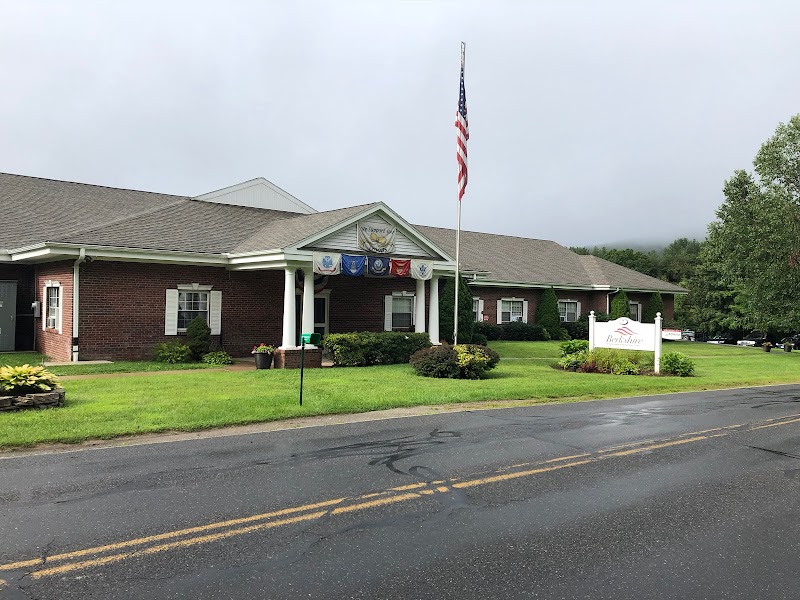
How is Berkshire Rehabilitation & Skilled Staffed?

CMS rates BERKSHIRE REHABILITATION & SKILLED CARE CENTER's staffing level at 2 out of 5 stars, which is below average compared to other nursing homes. Staff turnover is 46%, compared to the Massachusetts average of 46%.

What Have Inspectors Found at Berkshire Rehabilitation & Skilled?

State health inspectors documented 25 deficiencies at BERKSHIRE REHABILITATION & SKILLED CARE CENTER during 2022 to 2025. These included: 1 that caused actual resident harm, 23 with potential for harm, and 1 minor or isolated issues. Deficiencies causing actual harm indicate documented cases where residents experienced negative health consequences.

Who Owns and Operates Berkshire Rehabilitation & Skilled?

BERKSHIRE REHABILITATION & SKILLED CARE CENTER is owned by a for-profit company. For-profit facilities operate as businesses with obligations to shareholders or private owners. The facility is operated by ATHENA HEALTHCARE SYSTEMS, a chain that manages multiple nursing homes. With 57 certified beds and approximately 54 residents (about 95% occupancy), it is a smaller facility located in SANDISFIELD, Massachusetts.
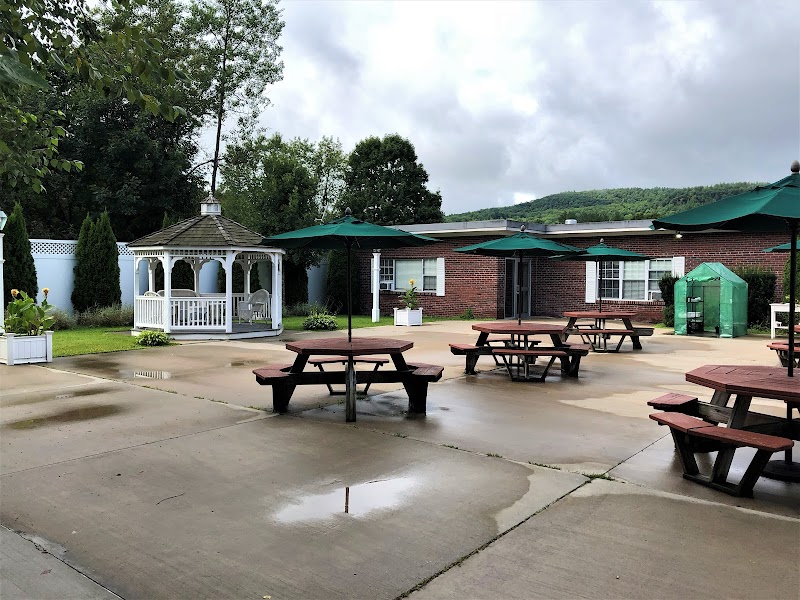
How Does Berkshire Rehabilitation & Skilled Compare to Other Massachusetts Nursing Homes?

Compared to the 100 nursing homes in Massachusetts, BERKSHIRE REHABILITATION & SKILLED CARE CENTER's overall rating (2 stars) is below the state average of 2.9, staff turnover (46%) is near the state average of 46%, and health inspection rating (2 stars) is below the national benchmark.

What Should Families Ask When Visiting Berkshire Rehabilitation & Skilled?

Based on this facility's data, families visiting should ask: "What safeguards and monitoring systems are in place to protect residents from abuse or neglect?" "Can you walk me through typical staffing levels on day, evening, and night shifts?" "Can I visit during a mealtime to observe dining assistance and food quality?" "How do you handle medical emergencies, and what is your hospital transfer rate?" These questions are particularly relevant given the substantiated abuse finding on record and the below-average staffing rating.

Is Berkshire Rehabilitation & Skilled Safe?

Based on CMS inspection data, BERKSHIRE REHABILITATION & SKILLED CARE CENTER has documented safety concerns. The facility has 1 substantiated abuse finding (meaning confirmed case of resident harm by staff or other residents). The facility has a 2-star overall rating and ranks #100 of 100 nursing homes in Massachusetts. Families considering this facility should ask detailed questions about what corrective actions have been taken since these incidents.

Do Nurses at Berkshire Rehabilitation & Skilled Stick Around?

BERKSHIRE REHABILITATION & SKILLED CARE CENTER has a staff turnover rate of 46%, which is about average for Massachusetts nursing homes (state average: 46%). Moderate turnover is common in nursing homes, but families should still ask about staff tenure and how the facility maintains care continuity when employees leave.

Was Berkshire Rehabilitation & Skilled Ever Fined?

BERKSHIRE REHABILITATION & SKILLED CARE CENTER has been fined $16,719 across 1 penalty action. This is below the Massachusetts average of $33,246. While any fine indicates a compliance issue, fines under $50,000 are relatively common and typically reflect isolated problems that were subsequently corrected. Families should ask what specific issues led to these fines and confirm they've been resolved.

Is Berkshire Rehabilitation & Skilled on Any Federal Watch List?

BERKSHIRE REHABILITATION & SKILLED CARE CENTER is not on any federal watch list. The most significant is the Special Focus Facility (SFF) program, which identifies the bottom 1% of nursing homes nationally based on persistent, serious quality problems. Not being on this list means the facility has avoided the pattern of deficiencies that triggers enhanced federal oversight. This is a positive indicator, though families should still review the facility's inspection history directly.