GREENWOOD NURSING & REHABILITATION CENTER
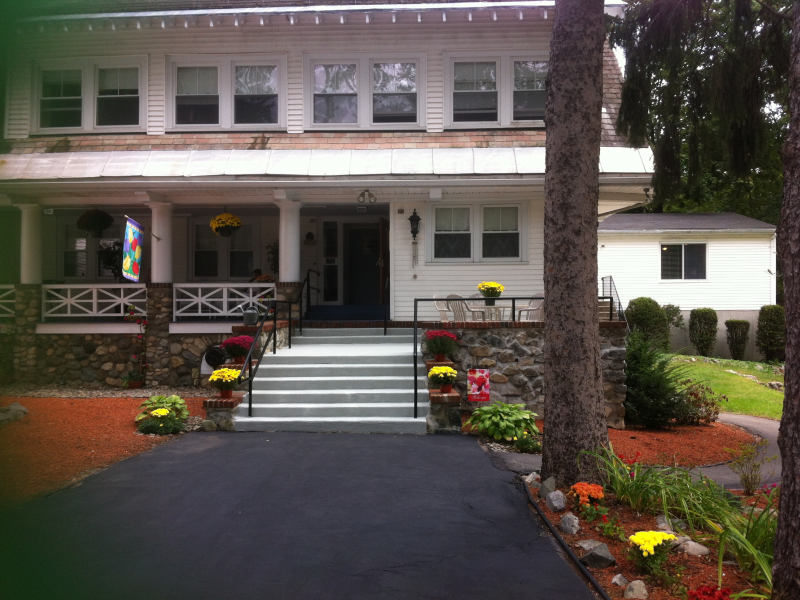
90 GREENWOOD STREET, WAKEFIELD, MA 01880 (781) 246-0211
For profit - Corporation 36 Beds Independent Data: November 2025
Trust Grade
90/100
#23 of 338 in MA
Last Inspection: August 2024

Within standard 12-15 month inspection cycle. Federal law requires annual inspections.

Overview

Greenwood Nursing & Rehabilitation Center has received a Trust Grade of A, which means it is considered excellent and highly recommended for care. It ranks #23 out of 338 facilities in Massachusetts, placing it in the top half, and #10 out of 72 in Middlesex County, indicating that only nine local options are better. The facility is on an improving trend, having reduced its issues from five in 2023 to none in 2024. Staffing is a strength here with a 4/5 star rating and a turnover rate of 32%, which is below the state average, suggesting staff are stable and experienced. However, there have been some concerns, including instances where staff failed to properly clean medical equipment between residents, and a lack of dignity in dining experiences for some residents, which raises questions about compliance with care standards. On a positive note, there have been no fines reported, and the facility offers average RN coverage, ensuring that residents receive essential care.

Trust Score
A
90/100
In Massachusetts
#23/338
Top 6%
Safety Record
Low Risk
No red flags
Inspections
Getting Better
5 → 0 violations
Staff Stability
○ Average
32% turnover. Near Massachusetts's 48% average. Typical for the industry.
Penalties
✓ Good
No fines on record. Clean compliance history, better than most Massachusetts facilities.
Skilled Nurses
○ Average
Each resident gets 33 minutes of Registered Nurse (RN) attention daily — about average for Massachusetts. RNs are the most trained staff who monitor for health changes.
Violations
⚠ Watch
11 deficiencies on record. Higher than average. Multiple issues found across inspections.
★★★★★
5.0
Overall Rating
★★★★☆
4.0
Staff Levels
★★★★★
5.0
Care Quality
★★★★★
5.0
Inspection Score
Stable
2023: 5 issues
2024: 0 issues

The Good

  • 4-Star Staffing Rating · Above-average nurse staffing levels
  • 5-Star Quality Measures · Strong clinical quality outcomes
  • Full Sprinkler Coverage · Fire safety systems throughout facility
  • No fines on record
  • Staff turnover below average (32%)

    16 points below Massachusetts average of 48%

Facility shows strength in staffing levels, quality measures, fire safety.

The Bad

Staff Turnover: 32%

14pts below Massachusetts avg (46%)

Typical for the industry

The Ugly 11 deficiencies on record

Apr 2023 5 deficiencies
CONCERN (D)

Potential for Harm - no one hurt, but risky conditions existed

Resident Rights (Tag F0550)

Could have caused harm · This affected 1 resident

**NOTE- TERMS IN BRACKETS HAVE BEEN EDITED TO PROTECT CONFIDENTIALITY** Based on observation and interview, the facility failed to provide a dignified dining experience for 2 Residents (#11 and #4) ou...

Read full inspector narrative →
**NOTE- TERMS IN BRACKETS HAVE BEEN EDITED TO PROTECT CONFIDENTIALITY** Based on observation and interview, the facility failed to provide a dignified dining experience for 2 Residents (#11 and #4) out of a total sample of 15 residents. Findings include: Review of the undated facility policy, titled Feeding Policy, indicated the following: *Treat residents with dignity and respect *Assure proper positioning of resident 1. Resident #11 was admitted in September, 2018 with diagnoses including Alzheimer's Disease. Review of the Minimum Data Set (MDS), dated [DATE], indicated that Resident #11 was unable to participate in a Brief Interview for Mental Status (BIMS) as the Resident is seldom/never understood. Further review of the MDS indicated the Resident is totally dependent on staff for eating. Review of Resident #11's Activities of Daily Living care plan indicated the Resident is dependent on staff for eating. Review of Resident #11's Nursing Summary, dated 03/20/23, indicated the Resident is totally dependent on staff for eating. During an observation on 04/19/23 at 08:07 A.M., a staff member was feeding Resident #11 while standing over the Resident's bed. The bed was not raised, the staff member was not at the eye level of the Resident, and the staff had to bend at the waist in order to reach down to feed the resident. During an observation on 04/19/23 at 11:59 A.M., a staff member was feeding Resident #11 while standing over the Resident's bed. The bed was not raised, the staff member was not at the eye level of the Resident, and the staff had to bend at the waist in order to reach down to feed the resident. During an interview on 4/20/23 at 8:46 A.M., the Director of Nursing (DON) said staff feeding residents must be either sitting or standing with the bed raised so that the Resident and staff member are at eye level with each other. 2. Resident #4 was admitted in September, 2021 with diagnoses including Dementia. Review of the Minimum Data Set (MDS), dated [DATE], indicated that Resident #4 scored a 10 out of 15 on a Brief Interview for Mental Status (BIMS), which indicates moderate cognitive impairment. Further review of the MDS indicated the Resident is totally dependent on staff for eating. Review of Resident #4's Activities of Daily Living care plan indicated the Resident is dependent on staff for eating. Review of Resident #4's Nursing Summary, dated 03/16/23 indicated the Resident is totally dependent on staff for eating. During an observation on 04/19/23 at 08:22 A.M., a staff member was feeding Resident #4 while standing over the Resident's bed. The bed was not raised, the staff member was not at the eye level of the Resident, and the staff had to bend at the waist in order to reach down to feed the resident. During an observation on 04/20/23 at 8:21 A.M., a staff member was feeding Resident #4 while standing over the Resident's bed. The bed was not raised, the staff member was not at the eye level of the Resident, and the staff had to bend at the waist in order to reach down to feed the resident. During an interview on 4/20/23 at 8:46 A.M., the Director of Nursing (DON) said staff feeding residents must be either sitting, or standing with the bed raised so that the Resident and staff member are at eye level with each other.
CONCERN (D)

Potential for Harm - no one hurt, but risky conditions existed

Comprehensive Care Plan (Tag F0656)

Could have caused harm · This affected 1 resident

**NOTE- TERMS IN BRACKETS HAVE BEEN EDITED TO PROTECT CONFIDENTIALITY** Based on observation, record review and interview, the facility failed to ensure plan of care for use of side rail was followed ...

Read full inspector narrative →
**NOTE- TERMS IN BRACKETS HAVE BEEN EDITED TO PROTECT CONFIDENTIALITY** Based on observation, record review and interview, the facility failed to ensure plan of care for use of side rail was followed for 1 Resident (#25) out of a total 15 sampled residents. Findings include: Review of facility policy titled 'Bed Rail Use Policy', undated indicated the following: Procedure: * f. The facility will document ongoing need for the use of a bed rail. * j. Resident care plan will include use of bed rails as assessed. - Based upon the individualized comprehensive assessment if it is determined that bed rails will be indicated to assist resident in maintaining or improving functional ability and do not constitute a restriction as defined as a restraint, bed rails may be utilized and care planned with consent of the resident/ resident representative to meet the individualized need. Resident #25 was admitted to the facility in April 2022 with diagnoses including dementia, anxiety disorder, glaucoma bilateral. Review of the most recent Minimum Data Set (MDS) assessment dated [DATE] indicated Resident #25 scored a 4 out of 15 on the Brief Interview for Mental Status (BIMS) indicating severe cognitive impairment. The MDS further indicated he/she required extensive assist of one person for bed mobility and limited assistance of one person for transfers. During an observation on 4/19/23 at 7:28 A.M., Resident #25 was observed laying in his/her bed with bilateral half bed rails down. During an observation on 4/20/23 at 6:50 A.M., Resident #25 was observed laying in his/her bed with bilateral half bed rails down. Review of side rail assessment tool dated 3/27/23 indicated the following: - Side rails top right and left of the resident bed. -Side rails are used at all times when resident is in bed. Review of care plan dated 4/23 indicated the following: - Problem: physical mobility impaired: related to weakness and cognitive deficits related to dementia. - Interventions: Right and left half side rails up when in bed to facilitate bed mobility. During an interview with Nurse #2 on 4/20/23 at 7:33 A.M., she said she did not know if Resident #25 needed side rails. She further said that Resident #25 gets assistance from staff when getting in and out of bed. During an interview with the Director of Nursing on 4/20/23 at 7:50 A.M., she said Resident #25 was independent and should not have the side rails. She further said that Resident #25 should have been assessed to determine if he/she does no longer require side rails in place.
CONCERN (D)

Potential for Harm - no one hurt, but risky conditions existed

Quality of Care (Tag F0684)

Could have caused harm · This affected 1 resident

Based on observation, record review and interview the facility failed to change a wound dressing, as ordered, for 1 Resident (#12) out of a total 15 sampled residents. Findings include: Review of fac...

Read full inspector narrative →
Based on observation, record review and interview the facility failed to change a wound dressing, as ordered, for 1 Resident (#12) out of a total 15 sampled residents. Findings include: Review of facility policy titled 'Wound Care Monitoring and Documentation' undated, indicated the following: Procedure: * F. Dressings shall be assessed each shift to ensure the wound is clean, dry and dressing is intact and dressing care documented in the progress note section of the medical record. * G. The dressing will be dated, timed and initialed by the nurses at the time of application and/or change. Resident #12 was admitted to the facility in August 2016 with diagnoses including, congestive heart failure, kidney disease, dementia and failure to thrive. Review of the most recent Minimum Data Set (MDS) assessment, dated 2/16/23, revealed that on the Brief Interview for Mental Status exam (BIMS). Resident #12 scored a 3 out of a possible 15, indicating severe cognitive impairment. The MDS further indicated Resident #12 had no behaviors and did not reject care. During an observation on 4/19/23 at 7:46 A.M., Resident #12 was seated in his/her room in a wheelchair with a bandage on his/her right ankle, dated 4/18/23. During an observation on 4/20/23 at 7:00 A.M., Resident #12 was in his/her bed with a bandage on his/her right ankle, dated 4/18/23. Review of the current physician order's for Resident #12 indicated an order, for Treatment to right lower leg stasis ulcer, normal saline wash, apply emulsion dressing cover with non adhesive dressing and kerlix daily until healed. Review of the Treatment Administration Record indicated, on 4/19/2023 there was no documentation of the treatment being completed. Review of Care plan indicated the following: - Actual skin breakdown related to open area right lower extremity stasis ulcer dated 2/23; interventions- Treatment as ordered. During an interview with Nurse #2 on 4/20/23 at 7:42 A.M., she said dressing changes should occur daily or per the physician's orders. During an interview with the Director of Nursing on 4/20/23 at 7:56 A.M., she said that it was her expectation that dressing changes should be done according to the physician orders.
CONCERN (D)

Potential for Harm - no one hurt, but risky conditions existed

Unnecessary Medications (Tag F0759)

Could have caused harm · This affected 1 resident

Based on observation, interview and record review, the facility failed to ensure it was free from a medication error rate of greater than 5 percent. One out of one nurse observed made 2 errors in 26 o...

Read full inspector narrative →
Based on observation, interview and record review, the facility failed to ensure it was free from a medication error rate of greater than 5 percent. One out of one nurse observed made 2 errors in 26 opportunities on one of two units resulting in a medication error rate of 7.69%. These errors impacted 2 Residents (#11 and #7) out of 4 residents observed. Findings include: Review of the facility policy titled 6-1 Medication Administration Specific Procedures and dated 1/1/23, indicated that the nurse is to pour the correct number of tablets or capsules into the medication cup. 1. Resident #8 was admitted to the facility in January 2023 with diagnoses including type 2 diabetes, chronic back pain and high blood pressure. Review of the doctor's orders dated April 2023 indicated an order for Metformin (used to treat diabetes) 500 mg (milligrams) two tablets (1,000 mg) by mouth twice daily at 8:00 A.M. and 8:00 P.M. During medication pass on 4/19/23, at 8:32 A.M., the surveyor observed Nurse #1 give Metformin 500 mg one tablet. During an interview on 4/19/23, at 9:02 A.M., Nurse #1 acknowledged that she omitted the second tablet of Metformin 500 mg by mistake. 2. Resident #18 was admitted to the facility in March 2021 with diagnoses including heart disease, high blood pressure and chronic kidney disease. Review of the doctor's orders dated April 2023 indicated an order for Metoprol TAR (used to treat high blood pressure) 25 mg (milligrams) one tablet by mouth twice daily at 8:00 A.M. and 8:00 P.M. During medication pass on 4/19/23, at 8:11 A.M., the surveyor observed Nurse #1 omit the medication Metoprol TAR 25 mg. Nurse #1 did not tell the surveyor that the medication Metoprol TAR was being held secondary to a low SBp (systolic blood pressure). During an interview on 4/19/23, at 9:02 A.M., Nurse #1 said she omitted the Metoprol because Resident #18's systolic blood pressure (SBp) was below 100 mgHg (milligrams of mercury). Nurse #1 then acknowledged that the order for the medication did not include the directive to hold the medication for an SBp below 100 mgHg.
CONCERN (E)

Potential for Harm - no one hurt, but risky conditions existed

Infection Control (Tag F0880)

Could have caused harm · This affected multiple residents

Based on observation and interview the facility failed to ensure infection control practices were maintained to prevent the spread of infection during 1) medication pass and 2) in the dinning room. Fi...

Read full inspector narrative →
Based on observation and interview the facility failed to ensure infection control practices were maintained to prevent the spread of infection during 1) medication pass and 2) in the dinning room. Findings include: Review of the facility policy titled Nursing Equipment Cleaning Protocol and dated as revised 3/1/21, indicated that blood pressure (BP) cuffs and rolling BP monitor will be cleaned between residents with bleach germicidal wipes or 70% isopropyl alcohol. 1a. During medication pass on 4/19/23, at 8:11 A.M., the surveyor observed Nurse #1 bring the rolling BP monitor from the hall into a resident's room and without cleaning the BP cuff and the oximeter (used to take the oxygen level in the blood, SpO2) Nurse #1 obtained the BP and SpO2 of the resident. Nurse #1 then placed the contaminated rolling BP monitor unit back in the hall without cleaning it. 1b. During medication pass on 4/19/23, at 8:32 A.M., the surveyor observed Nurse #1 bring the rolling BP monitor from the hall into a resident's room and without cleaning the BP cuff and the oximeter. Nurse #1 obtained the BP and SpO2 of the resident. 1c. During medication pass on 4/19/23, the surveyor observed Nurse #1 place two fingers on the foil opening in the back of the medication card and guide the pills exiting the medication card with her fingers, contaminating all of the medications contained in medication cards that were dispensed during medication pass. During an interview on 4/19/23, at 8:42 A.M., Nurse #1 acknowledged that she had not disinfected the BP cuff or the oximeter between resident use. Nurse #1 then acknowledged placing her fingers in a manner that caused the medications exiting the medication cards to touch her fingers. 2. On 4/19/23, at 11:27 A.M. the surveyor observed Certified Nurse's Aide (CNA) #1 bending down to speak to a resident in the dining room, within 6 inches of the resident's face. The surveyor also observed CNA #1 with her mask beneath her mouth and nose during the encounter with the resident. During an interview on 4/19/23, at 11:27 A.M. CNA #1 acknowledged that her mask was not covering either her mouth or her nose and that she was very close to the resident's face.
Mar 2022 6 deficiencies
CONCERN (D)

Potential for Harm - no one hurt, but risky conditions existed

Resident Rights (Tag F0550)

Could have caused harm · This affected 1 resident

**NOTE- TERMS IN BRACKETS HAVE BEEN EDITED TO PROTECT CONFIDENTIALITY** Based on observation and interview the facility failed to ensure the dignity and privacy of 1 Resident (#26) while urinating, ou...

Read full inspector narrative →
**NOTE- TERMS IN BRACKETS HAVE BEEN EDITED TO PROTECT CONFIDENTIALITY** Based on observation and interview the facility failed to ensure the dignity and privacy of 1 Resident (#26) while urinating, out of a sample of 12 residents. On 3/16/22, at 7:55 A.M., the surveyor observed Resident #26 in the doorway of his/her bedroom urinating, in full view of passers by. Staff walked by the room, twice, passing breakfast to other residents without intervention. On 3/17/22 at 7:40 A.M., the surveyor observed from the hallway, Resident #26 urinating. Staff passed by the resident's room twice with no intervention. Review of facility policy, undated, indicated 2. GNRC ([NAME] Nursing and Rehabilitation Center) makes every effort to assist residents in exercising their rights and to assure that the resident is always treated with respect, dignity and kindness. On 3/17/22, at 9:52 A.M., Certified Nurse's Aide (CNA) #1 said that to ensure privacy, staff should close the resident's door or pull the privacy curtain for resident's who urinate privately. On 3/17/22, at 10:55 A.M., the Administrator acknowledged that staff should re-direct residents if they are exposing themselves to others from their doorway, pull the curtain or ask to close the door.
CONCERN (D)

Potential for Harm - no one hurt, but risky conditions existed

Report Alleged Abuse (Tag F0609)

Could have caused harm · This affected 1 resident

**NOTE- TERMS IN BRACKETS HAVE BEEN EDITED TO PROTECT CONFIDENTIALITY** Based on observation, record review and interview the facility failed to identify and report a bruise of unknown origin to the S...

Read full inspector narrative →
**NOTE- TERMS IN BRACKETS HAVE BEEN EDITED TO PROTECT CONFIDENTIALITY** Based on observation, record review and interview the facility failed to identify and report a bruise of unknown origin to the State Agency for 1 Resident (#7) out of a total sample of 12 residents. Findings include: Review of the facility's policy, entitled Suspected adult, disabled resident or elderly abuse/neglect/exploitation dated as revised 3/8/17, indicated the following under procedure: Ensure that all alleged violations involving abuse, neglect, exploitation, or mistreatment, including injuries of unknown source and misappropriation of resident property, are reported immediately, but not later than 2 hours after the allegation is made, if the events that cause the allegation involved abuse or result in bodily injury, or not later than 24 hours if the events that cause the allegation do not involve abuse and do not result in serious bodily injury. Resident #7 was admitted to the facility in February 2020 with diagnoses that include hypertension, muscle weakness and dementia. Review of the most recent Minimum Data Set assessment dated [DATE], indicated that Resident #7 scored 10 out of 15 on the Brief Interview for Mental Status exam, indicating moderately impaired cognition. Further review indicated that Resident #17 required extensive assistance from staff for bed mobility, bathing, dressing and personal hygiene. On 3/16/22, at 8:50 A.M., the surveyor observed Resident #7 resting in his/her bed. Resident #7's right forearm was observed to have a circular purple area approximately four inches in length covering the width of his/her forearm. The area had a small red dot within the purple area. On 3/16/22, at 2:25 P.M., the surveyor observed Resident # 7 resting in bed. His/her right forearm was observed to have a large purple area with a small red dot within the purple area. On 3/16/22, the surveyor observed staff assisting Resident #7 throughout the 7:00 A.M. -3:00 P.M., shift. Review of the medical record indicated that Resident #7's weekly skin check sheets dated 3/4/22, and 3/11/22, did not indicate any skin injury areas. Further review of Resident #7's medical record indicated in a nursing monthly progress note dated 3/15/22, Resident #7's skin was dry and intact. During an interview on 3/16/22, at 4:41 P.M., Nurse #2 said that Resident #7 requires full care and mostly prefers to stay in bed. Nurse #2 said that staff provide incontinent care and address Resident #7's needs throughout the day. Nurse #2 said she did not receive in shift change report information about Resident #7's skin. At this time Nurse #2 and the surveyor went to see Resident #7 who was resting in bed. Nurse #1 observed Resident #7's right forearm and said it was a purple bruise and was unknown as to how it occurred. Nurse #2 then asked Nurse #3 to look at the area on Resident #7's right arm. On the way to Resident #7's room Nurse #3 said staff should have pointed it out. Nurse #3 looked at Resident #7's arm and said is was a bruise but could not tell the age of it. Nurse #3 said she would report it to the administrator. Nurse #3 said Resident #7 had a history of banging his/her arms on the bed rail. During an interview on 3/17/22, at 10:55 A.M., the Administrator said staff are to report any incidents involving a resident, including bruises. The Administrator said she did not report the bruise to the State Agency. She said she interviewed Resident #7 after the bruise was brought to her attention and that Resident #7 said that he/she did not know what happened to his/her arm and the resident denied that anyone hurt him/her. The Administrator said she would be continuing to investigate the bruise and had five days to complete a report.
CONCERN (D)

Potential for Harm - no one hurt, but risky conditions existed

Comprehensive Care Plan (Tag F0656)

Could have caused harm · This affected 1 resident

Based on observation, interview and record review the facility failed to ensure the plan of care for two Residents (#17 and #21) was followed out of a total 12 sampled. Findings include: The facility...

Read full inspector narrative →
Based on observation, interview and record review the facility failed to ensure the plan of care for two Residents (#17 and #21) was followed out of a total 12 sampled. Findings include: The facility policy titled Activities of Daily Living (ADLs, Supporting, undated, indicated Residents will be provided with care, treatment and services as appropriate to maintain or improve their ability to carry out activities of daily living. 1.) For Resident #17, the facility failed to provide the required supervision with meals. Resident #17 was admitted to the facility in January 2021, and had diagnoses that included dementia and legal blindness. Review of the most recent Minimum Data Set (MDS) assessment, dated 1/22/22, revealed that on the Brief Interview for Mental Status (BIMS) exam Resident #17 scored a 15 out of a possible 15, indicating intact cognition. The MDS further indicated Resident #17's vision was Highly impaired-object identification in question, but eyes appear to follow objects, that Resident #17 did not reject care and required supervision with eating. On 3/16/22, at 7:55 A.M., a staff person set up Resident #17's meal tray on a tray table in front of him/her, told Resident #17 where items were on the tray and then exited the room, leaving Resident #17 unsupervised for the entire meal. Review of the medical record on 3/16/22, at 9:10 A.M., the following was indicated: * A visual impairment care plan, reviewed 1/2022, that indicated Resident #17 was legally blind, with the intervention Resident requires staff assistance with ADL's related to decreased vision. * A self care deficit care plan, reviewed 1/2022, that indicated Resident #17 had a self care deficit related to eating, with the intervention Resident eats with staff supervision 1:8 , cueing encouragement. Resident is legally blind and requires tray set up and description of location of items on the tray by staff. Resident may be unable to find items or not eat items because he/she cannot see them, requiring staff cueing to complete meals. * The past 2 months of clinical nurse progress notes failed to indicate Resident #17 refused supervision with meals. On 3/16/22 at 8:26 A.M., Resident 17 said that it was very frustrating because I don't get the help I need, my hands don't work like they used to to hold onto things and I have never in my life had to eat food with my hands, but I do all the time now, and it is embarrassing. On 3/17/22, at 7:56 A.M., the surveyor observed Certified Nursing Assistant (CNA) #1 bring Resident #17's breakfast tray to him/her. CNA #1 instructed Resident #17 where items were on the tray and walked out, leaving Resident #17 unsupervised for the entire meal. * At 8:10 A.M., the surveyor observed Resident #17 accidentally knock over and spill a cup of water all over his/her tray and lap. On 3/17/22, at 11:03 A.M., CNA #1 said that Resident #17 was blind and that when she brings Resident #17 his/her meals she tells him/her where everything is on the tray but does not stay with him/her. CNA #1 also she said that she had not been instructed that Resident #17 needed supervision with meals. On 03/17/22, 11:18 A.M., Nurse #1 said that she knows that Resident #17 needs to be supervised with her meals, but that she is only one person and there are a lot of residents that also need supervision so she just checks in on him/her. The surveyor shared the observation of Resident #17 spilling the drink on the tray and him/herself, and Nurse #1 responded that is why she needs someone there, sometimes he/she can do it and sometimes he/she needs to be fed. 2.) For Resident #21 the facility failed to provide the required supervision with meals. Resident #21 was admitted to the facility in August 2018, and had diagnoses that included Dementia. Review of the most recent Minimum Data Set (MDS) assessment, dated 2/14/22, revealed that on the Brief Interview for Mental Status (BIMS) exam Resident #21 scored a 1 out of a possible 15, indicating severely impaired cognition. The MDS further indicated Resident #21 required setup and supervision for meals. On 3/16/22, at 7:55 A.M., the surveyor observed a staff person set up Resident #21's breakfast tray and on a tray table directly in front of him/her and exit the room. No staff were present to supervise the meal. Review of the medical record on 3/16/22, at 8:59 A.M., the following was indicated: * An Activities of Daily Living (ADL) care plan indicating Resident #21 eats with staff supervision 1:8 cueing/encouragement. * The last three quarterly nutrition assessments dated 9/18/21, 12/1/21 and 2/14/22 indicated that Resident #21's required supervision with dining. * The last two months of nurse clinical progress notes failed to indicate Resident #21 refused supervision or cueing with meals. On 3/17/22, at 8:07 A.M., the surveyor observed a nurse deliver a breakfast to Resident #21 in his/her room. The nurse set up the meal tray and exited the room, leaving Resident #21 unsupervised for the meal. On 3/17/22, at 11:06 A.M. Resident #21's Certified Nursing Assistant (CNA) #1 said that Resident #21 was able to feed him/herself, but that he/she sometimes falls asleep while he/she's eating and needs reminders to eat his/her meal. CNA #1 also said that she had not been told Resident #21 required supervision with meals. On 3/17/22, 11:17 AM Nurse #1 said that she knows that Resident #21 needs to have cues and supervision with her meals, but that she is only one person and there are a lot of residents that also need cues and supervision so she just checks in on her.
CONCERN (D)

Potential for Harm - no one hurt, but risky conditions existed

ADL Care (Tag F0677)

Could have caused harm · This affected 1 resident

Based on observation, interview and record review the facility failed to offer or provide assistance with feeding and drinking to one Resident (#19), who was totally dependent on staff, out of a total...

Read full inspector narrative →
Based on observation, interview and record review the facility failed to offer or provide assistance with feeding and drinking to one Resident (#19), who was totally dependent on staff, out of a total 12 sampled residents. Findings include: The facility policy titled Activities of Daily Living (ADLs), Supporting, undated, indicated the following: * Residents who are unable to carry out activities of daily living independently will receive the services necessary to maintain good nutrition, grooming and personal and oral hygiene. Resident #19 was admitted to the facility in December 2020, and had diagnoses that included dementia and aspiration pneumonia. Review of the most recent Minimum Data Set (MDS) assessment, dated 2/4/22, revealed that on the Brief Interview for Mental Status (BIMS) exam, Resident #19 scored a 3 out of a possible 15, indicating severely impaired cognition. The MDS further indicated Resident #19 required extensive physical assistance from staff for eating. On 3/16/22, at 7:49 A.M., the surveyor observed Resident #19 asleep in bed. A staff person placed a breakfast tray on a tray table, out of reach, and exited the room. The staff person did not attempt to wake Resident #19, nor did she offer to assist with feeding. The surveyor continued to make the following observations: * At 8:02 A.M., the Nurse (#1) entered and exited the room. Nurse #1 did not attempt to wake Resident #19, nor did she offer to assist Resident #19 with feeding. * At 8:11 AM a Certified Nursing Assistant (CNA) #1 briefly entered then exited the room. CNA #1 did not attempt to wake Resident #19, nor did she offer to assist Resident #19 with feeding. * At 8:17 A.M., Nurse #1, passed by the room, briefly stopping to look in the room, then continued walking down the hall. Nurse #1 did not attempt to wake Resident #19, nor did she offer to assist Resident #19 with feeding. * At 8:23 A.M., a CNA entered and then exited Resident #19's room. The CNA spoke to Nurse #1 and asked about Resident #19's feeding needs. The surveyor overheard Nurse #1 say to the CNA Resident #19 does not eat anymore, I don't know why they give him/her a tray. During a record review on 3/16/22 at 8:41 A.M., the following was indicated: * An ADL care plan, dated 2/2022, with an intervention Resident eats with staff assistance. Resident is on aspiration precautions related to dysphasia and requires feeding assistance by staff. May participate in eating, but is not consistent. * A behavior care plan, dated 2/2022, failed to indicate Resident #19 had any behavior of refusing assistance with eating or drinking. * A nutrition care plan, revised 3/2022, that indicated Resident #19 required assist with eating. * A swallowing care plan, dated 2/2022, that indicated Resident #19 was fed by staff. * The most recent care plan summary review, dated 2/11/22, indicated that Resident #19 eats with staff assist. * The March 2022, Medication Administration Record (MAR), indicated Resident #19 was on a puree low lactose diet with nectar thick liquids. On 3/16/22, between 11:57 P.M., and 12:33 P.M., the surveyor observed Resident #19 in bed, in his/her room. Two CNA's were present in the room several times during that time however neither offered or attempted to assist Resident #19 with eating. On 3/17/22, between 7:52 A.M., 8:43 A.M., the surveyor observed Resident #19's tray was on a cart in the hallway. Staff never brought the breakfast tray to Resident #19, or offered to assist him During an interview on 3/17/22, at 8:43 A.M., Nurse #1 said that Resident #19's tray was still on the cart because she was a feeder. On 3/17/22, at 8:59 A.M., the surveyor accompanied Nurse #1 to Resident #19's room. Nurse #1 offered Resident #19 Orange Juice, and Resident #19 nodded his/her head yes. Nurse #1, then assisted Resident #19, and Resident #19 drank the orange juice.
CONCERN (D)

Potential for Harm - no one hurt, but risky conditions existed

Food Safety (Tag F0812)

Could have caused harm · This affected 1 resident

Based upon observation and interview the facility failed to distribute and serve food in accordance with professional standards for food service safety on 1 of 2 resident units during meal tray pass. ...

Read full inspector narrative →
Based upon observation and interview the facility failed to distribute and serve food in accordance with professional standards for food service safety on 1 of 2 resident units during meal tray pass. Findings include: The facility policy titled Safe Food Handling, undated, indicated the following: * All food purchased, stored and distributed is handled with accepted food-handling practices. * Food is not stored, prepared, handled and/or consumed in any area in which food may be contaminated, particularly around blood, body fluids or hazardous chemicals. On 3/16/22, the surveyor observed the following on the 2nd floor unit at lunchtime: * At 12:21 P.M., a Certified Nursing Assistant (CNA) removed a finished/contaminated lunch tray from a resident room and placed it on the food cart, above 2 unserved lunch trays. The CNA cleared the dirty dishes off the tray and placed them in a plastic bin that was on the cart below the 2 un-served lunch trays; * At 12:22 P.M., the CNA then removed one of the clean trays from the cart and served it to a resident. * At 12:24 P.M., the CNA removed a finished/contaminated lunch tray from another resident room and placed it on the food cart, above the 1 un-served lunch tray. The CNA then cleared the dirty dishes off of the tray and placed them in a plastic bin that was on the cart below the 2 un-served lunch trays; * At 12:25 P.M., after clearing off the dirty tray, and without performing hand hygiene, the CNA picked up the remaining resident tray and served it to a resident. On 3/17/22, at 8:00 A.M., a CNA was observed passing out breakfast trays. She delivered the trays one by one, and after exiting each resident room, placed the contaminated plate covers, from the trays she served, and placed them on the cart beside the un-served breakfast trays. During an interview with the Food Service Director (FSD) on 3/17/22, at 11:27 A.M., the surveyor shared observations of cross contamination between dirty and cleans trays. The FSD said that there was a shelf on the unit that the staff were expected to utilize for dirty/contaminated trays and service items.
CONCERN (F)

Potential for Harm - no one hurt, but risky conditions existed

Infection Control (Tag F0880)

Could have caused harm · This affected most or all residents

**NOTE- TERMS IN BRACKETS HAVE BEEN EDITED TO PROTECT CONFIDENTIALITY** Based on observation and interview the facility failed to (1) ensure staff wore the required Personal Protective Equipment (PPE)...

Read full inspector narrative →
**NOTE- TERMS IN BRACKETS HAVE BEEN EDITED TO PROTECT CONFIDENTIALITY** Based on observation and interview the facility failed to (1) ensure staff wore the required Personal Protective Equipment (PPE) and (2) conduct COVID-19 screening of a visitor, upon arrival to the facility. Findings include: The facility policy titled Use of Personal Protective Equipment (PPE), undated, indicated the following: * All [NAME] personnel should wear a face mask while they are in the facility and eye protection when providing direct care to residents. * See updated Department of Public Health (DPH) guidance 3/2/22. The facility policy titled Visitor Policy During COVID-19 Pandemic, revised Sept. 2021, indicated the following: 1. All individuals will be screened before entering the building beyond the nurse's station. 2. Individuals will be screened for elevated temperature, cough, SOB (shortness of breathe), myalgia, chills or new onset of loss of smell or taste. 3. All individuals must wear a mask while they are in the building regardless of vaccination status. On 3/16/22, at 1:30 P.M., the surveyors observed a staff person from the kitchen twice, walk out of the kitchen and walk up to the resident units to collect dirty food bins. The entire time he wore no face mask. On 3/16/22, at 1:49 P.M., the surveyors observed a visitor enter the facility onto the 1st floor resident unit. The visitor put on a facemask, took her temperature, then entered the facility into a resident area. There were no staff members at the nursing station, or within the vicinity, to instruct the visitor to fill out the daily symptom attestation for COVID-19 form, or to screen the visitor for signs or symptoms of COVID-19. On 3/17/22, at 11:38 A.M., the Food Service Director said that it was the expectation that kitchen staff wear a mask, at all times, when anywhere in the facility except the kitchen. On 3/17/22, at 12:32 P.M., the Nursing Home Administrator said that it was the expectation that visitors follow the instructions, on the sign on the front door of the facility. She also said that the sign instructs visitors to ring the bell at the front door and not enter the facility until they are screened for COVID-19 signs and symptoms by the nurse on the 1st floor.
Understanding Severity Codes (click to expand)
Life-Threatening (Immediate Jeopardy)
J - Isolated K - Pattern L - Widespread
Actual Harm
G - Isolated H - Pattern I - Widespread
Potential for Harm
D - Isolated E - Pattern F - Widespread
No Harm (Minor)
A - Isolated B - Pattern C - Widespread

Questions to Ask on Your Visit

  • "Can I speak with families of current residents?"
  • "What's your RN coverage like on weekends and overnight?"

Our Honest Assessment

Strengths
  • • Grade A (90/100). Above average facility, better than most options in Massachusetts.
  • • No major safety red flags. No abuse findings, life-threatening violations, or SFF status.
  • • No fines on record. Clean compliance history, better than most Massachusetts facilities.
  • • 32% turnover. Below Massachusetts's 48% average. Good staff retention means consistent care.
Concerns
  • • 11 deficiencies on record. Higher than average. Multiple issues found across inspections.
Bottom line: Generally positive indicators. Standard due diligence and a personal visit recommended.

About This Facility

What is Greenwood Nursing & Rehabilitation Center's CMS Rating?

CMS assigns GREENWOOD NURSING & REHABILITATION CENTER an overall rating of 5 out of 5 stars, which is considered much above average nationally. Within Massachusetts, this rating places the facility higher than 99% of the state's 100 nursing homes. This rating reflects solid performance across the metrics CMS uses to evaluate nursing home quality.

How is Greenwood Nursing & Rehabilitation Center Staffed?

CMS rates GREENWOOD NURSING & REHABILITATION CENTER's staffing level at 4 out of 5 stars, which is above average compared to other nursing homes. Staff turnover is 32%, compared to the Massachusetts average of 46%. This relatively stable workforce can support continuity of care.

What Have Inspectors Found at Greenwood Nursing & Rehabilitation Center?

State health inspectors documented 11 deficiencies at GREENWOOD NURSING & REHABILITATION CENTER during 2022 to 2023. These included: 11 with potential for harm.

Who Owns and Operates Greenwood Nursing & Rehabilitation Center?

GREENWOOD NURSING & REHABILITATION CENTER is owned by a for-profit company. For-profit facilities operate as businesses with obligations to shareholders or private owners. The facility operates independently rather than as part of a larger chain. With 36 certified beds and approximately 30 residents (about 83% occupancy), it is a smaller facility located in WAKEFIELD, Massachusetts.

How Does Greenwood Nursing & Rehabilitation Center Compare to Other Massachusetts Nursing Homes?

Compared to the 100 nursing homes in Massachusetts, GREENWOOD NURSING & REHABILITATION CENTER's overall rating (5 stars) is above the state average of 2.9, staff turnover (32%) is significantly lower than the state average of 46%, and health inspection rating (5 stars) is much above the national benchmark.

What Should Families Ask When Visiting Greenwood Nursing & Rehabilitation Center?

Based on this facility's data, families visiting should ask: "Can I visit during a mealtime to observe dining assistance and food quality?" "How do you handle medical emergencies, and what is your hospital transfer rate?" "Can I speak with family members of current residents about their experience?"

Is Greenwood Nursing & Rehabilitation Center Safe?

Based on CMS inspection data, GREENWOOD NURSING & REHABILITATION CENTER has a clean safety record: no substantiated abuse findings (meaning no confirmed cases of resident harm), no Immediate Jeopardy citations (the most serious violation level indicating risk of serious injury or death), and is not on the Special Focus Facility watch list (a federal program monitoring the lowest-performing 1% of nursing homes). The facility has a 5-star overall rating and ranks #1 of 100 nursing homes in Massachusetts. While no facility is perfect, families should still ask about staff-to-resident ratios and recent inspection results during their visit.

Do Nurses at Greenwood Nursing & Rehabilitation Center Stick Around?

GREENWOOD NURSING & REHABILITATION CENTER has a staff turnover rate of 32%, which is about average for Massachusetts nursing homes (state average: 46%). Moderate turnover is common in nursing homes, but families should still ask about staff tenure and how the facility maintains care continuity when employees leave.

Was Greenwood Nursing & Rehabilitation Center Ever Fined?

GREENWOOD NURSING & REHABILITATION CENTER has no federal fines on record. CMS issues fines when nursing homes fail to meet care standards or don't correct problems found during inspections. The absence of fines suggests the facility has either maintained compliance or corrected any issues before penalties were assessed. This is a positive indicator, though families should still review recent inspection reports for the full picture.

Is Greenwood Nursing & Rehabilitation Center on Any Federal Watch List?

GREENWOOD NURSING & REHABILITATION CENTER is not on any federal watch list. The most significant is the Special Focus Facility (SFF) program, which identifies the bottom 1% of nursing homes nationally based on persistent, serious quality problems. Not being on this list means the facility has avoided the pattern of deficiencies that triggers enhanced federal oversight. This is a positive indicator, though families should still review the facility's inspection history directly.