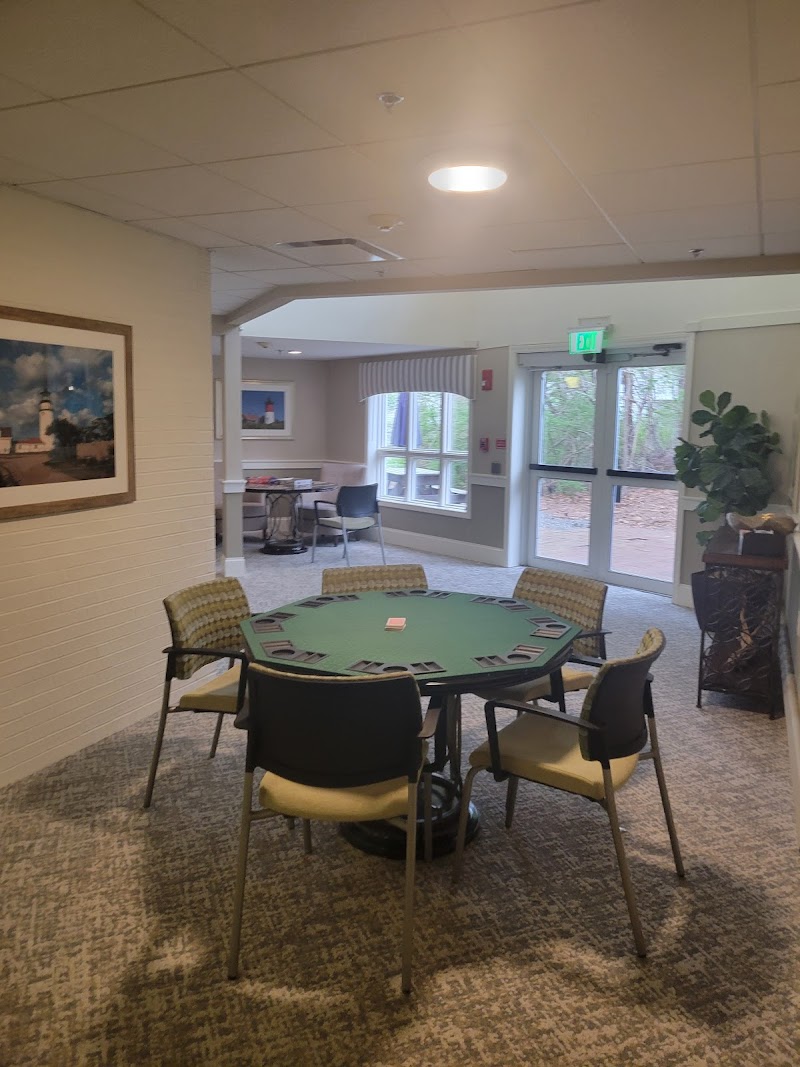
MAYFLOWER PLACE NURSING & REHABILITATION CENTER

579 BUCK ISLAND ROAD, WEST YARMOUTH, MA 02673 (508) 957-7007
For profit - Corporation 72 Beds Independent Data: November 2025
Trust Grade
50/100
#227 of 338 in MA
Last Inspection: August 2024

Within standard 12-15 month inspection cycle. Federal law requires annual inspections.

Overview

Mayflower Place Nursing & Rehabilitation Center has a Trust Grade of C, which means it is considered average, placing it in the middle of the pack among nursing homes. It ranks #227 out of 338 facilities in Massachusetts, indicating it is in the bottom half, and #9 out of 15 in Barnstable County, suggesting only a few local options are better. The facility is showing improvement, with issues decreasing from 19 in 2023 to 15 in 2024. Staffing is a notable strength, with a rating of 4 out of 5 stars and a turnover rate of 38%, which is below the state average. However, it has less RN coverage than 88% of Massachusetts facilities, which could impact the quality of care. Specific incidents of concern include failures in food safety, where food items were not labeled or stored properly, increasing the risk of foodborne illness. Additionally, the facility did not maintain proper infection control during a COVID-19 outbreak, failing to follow testing procedures and appropriate use of protective equipment. Lastly, medications were not always stored and labeled according to professional standards, which could compromise patient safety. Overall, while there are some strengths in staffing, the facility has significant weaknesses that families should consider.

Trust Score
C
50/100
In Massachusetts
#227/338
Bottom 33%
Safety Record
Low Risk
No red flags
Inspections
Getting Better
19 → 15 violations
Staff Stability
○ Average
38% turnover. Near Massachusetts's 48% average. Typical for the industry.
Penalties
✓ Good
No fines on record. Clean compliance history, better than most Massachusetts facilities.
Skilled Nurses
⚠ Watch
Each resident gets only 24 minutes of Registered Nurse (RN) attention daily — below average for Massachusetts. Fewer RN minutes means fewer trained eyes watching for problems.
Violations
⚠ Watch
37 deficiencies on record. Higher than average. Multiple issues found across inspections.
★★☆☆☆
2.0
Overall Rating
★★★★☆
4.0
Staff Levels
★★☆☆☆
2.0
Care Quality
★★☆☆☆
2.0
Inspection Score
Stable
2023: 19 issues
2024: 15 issues

The Good

  • 4-Star Staffing Rating · Above-average nurse staffing levels
  • Full Sprinkler Coverage · Fire safety systems throughout facility
  • No fines on record
  • Staff turnover below average (38%)

    10 points below Massachusetts average of 48%

Facility shows strength in staffing levels, fire safety.

The Bad

2-Star Overall Rating

Below Massachusetts average (2.9)

Below average - review inspection findings carefully

Staff Turnover: 38%

Near Massachusetts avg (46%)

Typical for the industry

The Ugly 37 deficiencies on record

Aug 2024 14 deficiencies
CONCERN (D)

Potential for Harm - no one hurt, but risky conditions existed

Safe Environment (Tag F0584)

Could have caused harm · This affected 1 resident

Based on observation, interview, and document review, the facility failed to maintain comfortable room temperatures for two Residents (#18 and #19) residing on one of two units, out of a total sample ...

Read full inspector narrative →
Based on observation, interview, and document review, the facility failed to maintain comfortable room temperatures for two Residents (#18 and #19) residing on one of two units, out of a total sample of 17 residents. Findings include: 1. Resident #18 was readmitted to the facility in March 2024 and had diagnoses including urinary tract infection, type 2 diabetes mellitus, heart failure, obstructive and reflux uropathy, COVID-19, cough, and impaired vision. Review of the Minimum Data Set (MDS) assessment, dated 6/5/24, indicated Resident #18 was cognitively intact as evidenced by a Brief Interview for Mental Status (BIMS) score of 15 out of 15. During an observation with interview on 8/5/24 at 11:08 A.M., the surveyor, upon entering the room, felt the room to be very warm and humid. Resident #18 was lying in bed. The windowpane on the wall to the Resident's left was in an open position with warm air entering the room. The air conditioning (AC) unit was blowing warm air. The Resident said he/she was positive for COVID-19 and the window kept blowing open off and on for a week now. The Resident said he/she said was waiting for maintenance to fix it but said they've done what they can and no one seemed to know. The Resident said staff have to push it closed from the outside. Resident #18 said it's too hot for me and was usually quite hot. At 11:56 A.M., Nurse #6 entered the room and was overheard telling the Resident that she could not close the window all the way and that the room was hot. She said the AC was blowing, but not enough and would tell maintenance. Resident #18 told Nurse #6 that he/she gets soaked. Nurse #6 said the heat from outside was coming into the room. During an observation with interview on 8/6/24 at 11:42 A.M., the surveyor observed the room to be cooler than the day prior with the window closed. The AC was blowing cool air. Resident #18 was lying in bed and said the room was much cooler than yesterday. He/she said they fixed it and that the AC temperature valve had been stuck. The Resident said the room used to be so hot but was now cooled. During an interview on 8/5/24 at 12:34 P.M., Maintenance Staff #1 said staff were not supposed to be opening the windows, it was too hot outside, and the plastic isolation door for COVID-19 was not helping because the air could not circulate. Maintenance Staff #1 said the window was open and he was not able to close it all the way and it was broken. He said he'd need a part to fix it. He further said he was not made aware of the temperature issue or window until today after surveyor intervention. He said no one told him. 2. Resident #19 was admitted to the facility in January 2023 and had diagnoses which included major depressive disorder, chronic congestive heart failure, and COVID-19. Review of the Minimum Data Set (MDS) assessment, dated 6/12/24, indicated Resident #19 had severe cognitive impairment as evidenced by a Brief Interview for Mental Status (BIMS) score of 6 out of 15. During an observation with interview on 08/05/24 at 10:50 A.M., the surveyor, upon entering the room, felt the room to be hot and humid. The wall thermostat was set at 90 degrees Fahrenheit (F). Two vertical fans were observed circulating in the room, one on the opposite side of the room and one near the Resident's window. Resident #19 was observed sitting in his/her wheelchair next to the bed. The Resident had a long-sleeved shirt on with his/her arms pulled out of the sleeves and the shirt collar hanging low from his/her neck exposing the skin. Resident #19 said he/she was miserable and so warm and was thirsty all the time. A Styrofoam cup was observed in a cup holder on the wheelchair with condensation around its perimeter. The Resident's AC unit felt slightly warm to touch. Resident #19 said he/she told someone last week, but they didn't do anything about it. He/she said, It's always hot in here. During an interview on 8/5/24 at 11:19 A.M., Nurse #6 said she hadn't been in the Resident's room yet that day but saw him/her stripping down. Nurse #6 said she worked last Friday (three days prior), and the room was hot. She said she told Unit Manager (UM) #1 that day. Nurse #6 said she also worked the day after in the morning and the Resident's window was open, but it wasn't helping. She said the room was hot. She said staff tried to open the windows over the weekend to cool the room down, but it got worse, so they closed them. She said she used the roommate's fan who wasn't there to help circulate the air. She said she had just told Maintenance Staff #1 today while he was on the unit about the hot rooms. Nurse #6 said there used to be a log to document on but now staff enter requests into the TELS (web-based technology designed to tackle to day-to-day challenges of building operations) system. She said she didn't enter any work requests for Resident #18 and Resident #19's rooms and said a lot of the rooms were really hot since the weekend. During an interview on 8/5/24 at 12:33 P.M., Maintenance Staff #1 said staff were not supposed to be opening the windows and Resident #19 had a plastic door for COVID-19, so the air was not circulating. He said the AC unit was turned on low, so he turned it up to high. On 8/6/24 at 11:07 A.M., the surveyor observed Resident #19 lying in bed clothed with blankets on. The room temperature was noticeably cooler. During an interview on 8/7/24 at 2:26 P.M., UM #1 said staff had not notified her of Resident #18 or Resident #19's rooms being so hot last Friday or over the weekend and was just made aware of it by the surveyor. She said maintenance requests are either verbal or get entered into the TELS system. She said there was no hard copy log for requests. During an interview on 8/7/24 at 2:55 P.M., with the Maintenance Director (MD) and Maintenance Staff #2, the MD said he was not notified verbally or through the TELS system of the Residents' room temperatures until Monday. He said all work orders need to go into the TELS and he would review for any work requests related to the hot temperatures and get back to the surveyor. Maintenance Staff #2 said he found out on Monday and saw that Resident #19's thermostat was set at 90 degrees F and that's why the room was so hot and didn't understand why staff didn't think to turn it down. He said once he turned it down, the room cooled right down. Maintenance Staff #2 said Resident #18's AC unit valve was stuck and needed to be fixed. During an interview on 8/7/24 at 3:42 P.M., the MD reviewed the TELS work orders, dated 8/2/24 through 8/4/24, and said there was nothing there to address Residents #18 and Resident #19's hot room temperatures. During an interview on 8/8/24 at 11:10 A.M., the Director of Nursing said the process is to enter work requests into the TELS, but staff will text as well or communicate verbally. She said all should be entered, however, into the TELS system. She said this process was not followed for Residents #18 and #19. She said she was not made aware of the hot room temperatures either.
CONCERN (D)

Potential for Harm - no one hurt, but risky conditions existed

Grievances (Tag F0585)

Could have caused harm · This affected 1 resident

Based on interview and document review, the facility failed to ensure there was a resolution for a grievance/complaint of an allegation of physical abuse for one Resident (#57), out of six grievances ...

Read full inspector narrative →
Based on interview and document review, the facility failed to ensure there was a resolution for a grievance/complaint of an allegation of physical abuse for one Resident (#57), out of six grievances reviewed. Findings include: Review of the Facility's Grievance policy, dated 8/8/2017, included but was not limited to the following: - The facility Director of Social Services is the Grievance official who is responsible for overseeing the grievance process including receiving and tracking grievances to conclusion. - If the grievance involves an allegation of abuse, neglect, mistreatment, misappropriation of property, exploitation or injuries of unknown source, the incident or allegation shall be investigated and reported immediately to the Director of Nursing, Administrator or grievance official. - Upon completion of the review, the grievance official should document the following: steps taken to investigate the grievance, a summary of the pertinent findings or conclusions regarding the grievance, a statement as to whether the grievance was confirmed or not, and any corrective action taken or to be taken in response Review of the Grievance Book included a grievance log (a list of grievances filed for each month), which indicated on 7/25/24 Resident #57 filed a grievance against a Certified Nursing Assistant (CNA), saying the CNA was pushing him/her while getting onto the bedpan. Review of the Grievance/Concern form indicated on 7/25/24 Resident #57 reported the CNA came to help him/her use the bed pan, and the CNA shoved me over. The summary of pertinent findings indicated: - CNA statement differs from resident concerns - What action was taken to resolve the concern: CNA put on administrative leave as further investigation ongoing. CNA will be removed from Resident #57 assignment if she returns. - Grievance was confirmed: blank - Grievance was not confirmed: blank - Recommended corrective action: blank - Was grievance/concern resolved: blank - Resident notified by staff member: blank - This form was completed by: blank - Administrator review/Signature; blank Further review of the grievance form failed to indicate the facility addressed and thoroughly investigated Resident #57's report of physical mistreatment as an allegation of potential abuse. Resident #57 was admitted to the facility in July 2024 with diagnoses which included left hip hemiarthroplasty (partial hip replacement). Review of the most recent Minimum Data Set (MDS) assessment, dated 7/22/24, indicated Resident #57 scored 15 out of 15 on the Brief Interview for Mental Status (BIMS), indicating the Resident was cognitively intact. During an interview on 8/6/24 at 12:18 P.M., Resident #57 said that a CNA was assisting him/her onto the bed pan and pushed him/her over very roughly, and it really hurt. Resident #57 said he/she reported the incident to a nurse the night it occurred and to the Social Worker the next day. Resident #57 said no one updated her on the outcome of her complaint. During an interview on 8/7/24 at 10:35 A.M., the Director of Social Services said she was the Grievance Official. The surveyor reviewed the grievance with the Director of Social Services. She said it is her responsibility to track and follow up on resolutions of grievances and she did not complete the investigation as she should of, and it was incomplete.
CONCERN (D)

Potential for Harm - no one hurt, but risky conditions existed

Abuse Prevention Policies (Tag F0607)

Could have caused harm · This affected 1 resident

Based on interview and record review, the facility failed to implement policies and procedures for potential physical abuse by a staff member for one Resident (#57), out of 17 sampled residents. Speci...

Read full inspector narrative →
Based on interview and record review, the facility failed to implement policies and procedures for potential physical abuse by a staff member for one Resident (#57), out of 17 sampled residents. Specifically, the facility failed to investigate and report an allegation of physical abuse for Resident #57, in accordance with the facility's abuse policy. Findings include: Review of the facility's policy titled Training & Identification and Reporting Incidents that may be indicative of abuse and neglect, dated as revised 7/2017, indicated but was not limited to the following: - To provide training and direction for identifying and reporting incidents/events that may be incidents of abuse and/or neglect. - All staff, residents and families will be provided training and will be knowledgeable in the definition of abuse, including mental abuse. - Training on abuse prevention will be provided during on hire orientation, annually and whenever there is a need for re-education. - Supervise/monitor staff to identify possible inappropriate behaviors, such as use of derogatory language, rough handling, or not meeting residents needs or requests. - Facility staff will receive in-service training at least annually on abuse prohibition. The in-service training will include, but not to be limited to: - Reporting and investigation requirements for any allegation of abuse, mistreatment or neglect. - All reports will be forwarded to the Director of Nursing. - The Director of Nursing (or his/her designee) will review all known or unexplained findings to further determine patterns or trends being vigilant to the possibility of abuse. - Notification of state agencies will occur per State and federal requirements. Review of the facility's policy titled Investigation Guidelines for Allegations of Abuse or Neglect, dated as revised 7/17, indicated but was not limited to the following: - All reports of resident abuse, neglect, mental abuse, mistreatment, and injuries of an unknown origin (bruises, skin tears) shall be investigated thoroughly and promptly by facility management. - Analysis of the incident and investigation will be conducted to determine what changes are needed, if any, to policies and procedures to deter further occurrences. - The Administrator and Director of Nursing will keep the resident and his/her representative informed of the progress of the investigation. - A copy of the completed investigation and report will be provided to the Administrator and the Department of Public Health within five working days of the reported incident per State and federal requirements. - Any alleged violations and all substantiated incidents of any form of abuse will be reported to the state agency and to all other agencies as required by State and federal regulations, and corrective actions will be taken as necessary pending on the results of the investigation. Resident #57 was admitted to the facility in July 2024 with diagnoses which included left hip hemiarthroplasty (partial hip replacement). Review of the Minimum Data Set (MDS) assessment, dated 7/22/24, indicated Resident #57 scored 15 out of 15 on the Brief Interview for Mental Status (BIMS), indicating the Resident was cognitively intact. During an interview on 8/6/24 at 12:18 P.M., Resident #57 said a Certified Nursing Assistant (CNA) was assisting him/her onto the bed pan and pushed him/her over very roughly, and it really hurt. Resident #57 said he/she reported the incident to a nurse the night it occurred and to the Social Worker the next day. Resident #57 said no one updated her on the outcome of her complaint. Review of the Grievance/Concern form indicated on 7/25/24, Resident #57 reported the CNA came to help him/her use the bed pan, and the CNA shoved me over. The summary of pertinent findings indicated: -Nurse statement from Resident #57 -CNA statement differs from resident concerns -Director of Social Services statement from Resident #57 -Former Administrator interview with Resident #57 -What action was taken to resolve the concern: CNA put on administrative leave as further investigation ongoing. CNA will be removed from Resident #57's assignment if she returns. -Grievance was confirmed: blank -Grievance was not confirmed: blank -Recommended corrective action: blank -Was grievance/concern resolved: blank -Resident notified by staff member: blank -This form was completed by: blank -Administrator review/Signature: blank During an interview on 8/7/24 at 10:35 A.M., the surveyor reviewed the grievance with the Director of Social Services. She said it was her responsibility to track and follow up on resolutions of grievances and she did not complete the investigation as she should of, and it was incomplete. During an interview on 8/7/24 at 10:57 A.M., the Director of Nursing (DON) reviewed Resident #57's grievance with the surveyor and said it was an allegation of abuse, and the investigation was incomplete. She said it was missing interviews and resolutions, and a thorough investigation was not conducted in accordance with the facility Abuse Policy. Additionally, she said the allegation was not reported to the state as required.
CONCERN (D)

Potential for Harm - no one hurt, but risky conditions existed

Report Alleged Abuse (Tag F0609)

Could have caused harm · This affected 1 resident

Based on interview and record review, the facility failed to ensure an allegation of physical abuse by a Certified Nursing Assistant (CNA) was reported timely to the state agency as required for one R...

Read full inspector narrative →
Based on interview and record review, the facility failed to ensure an allegation of physical abuse by a Certified Nursing Assistant (CNA) was reported timely to the state agency as required for one Resident (#57), of a total sample of 17 residents Findings include: Review of the facility's policy titled Investigation guidelines for allegations of abuse or neglect, dated as revised 7/17, indicated, but was not limited to the following: - When an alleged or suspected case of abuse, mistreatment, neglect, exploitation, misappropriation of resident property, or injuries of unknown origin is reported, the Administrator, or designee, will immediately notify the State Agency but no later than 2 hours after the allegation is made if the events that cause the allegation of abuse or result in serious bodily injury - Not later than 24 hours if the events that cause the allegation do not involve abuse and do not result in serious bodily injury to the State Agency and all other persons or agencies in accordance by State law through established procedures. - Reports to the state agency will be submitted electronically through the HCFRS (Health Care Facility Reporting System). Resident #57 was admitted to the facility in July 2024 with diagnoses which included left hip hemiarthroplasty (partial hip replacement). Review of the most recent Minimum Data Set (MDS) assessment, dated 7/22/24, indicated Resident #57 scored 15 out of 15 on the Brief Interview for Mental Status (BIMS), indicating the Resident was cognitively intact. During an interview on 8/6/24 at 12:18 P.M., Resident #57 said a CNA was assisting him/her onto the bed pan and pushed him/her over very roughly, and it really hurt. Resident # 57 said he/she reported the incident to a nurse the night it occurred and to the Social Worker the next day. Resident #57 said no one updated her on the outcome of her complaint. Review of the Grievance/Concern form indicated on 7/25/24, Resident #57 reported the CNA came to help him/her use the bed pan, and the CNA shoved me over. The summary of pertinent findings indicated: -Nurse statement from Resident #57 -CNA statement differs from resident concerns -Director of Social Services statement from Resident #57 -Former Administrator interview with Resident #57 -What action was taken to resolve the concern: CNA put on administrative leave as further investigation ongoing. CNA will be removed from Resident #57's assignment if she returns. -Grievance was confirmed: blank -Grievance was not confirmed: blank -Recommended corrective action: blank -Was grievance/concern resolved: blank -Resident notified by staff member: blank -This form was completed by: blank -Administrator review/Signature: blank Review of HCFRS on 8/6/24 at 12:05 P.M., failed to indicate the allegation of physical abuse by a CNA was reported as required. During an interview on 8/7/24 at 10:57 A.M., the Director of Nursing (DON) reviewed Resident #57's grievance with the surveyor and said it was an allegation of abuse, and the investigation is incomplete. She said her expectation was for an allegation of abuse to be reported through HCFRS within two hours of receiving the complaint.
CONCERN (D)

Potential for Harm - no one hurt, but risky conditions existed

Investigate Abuse (Tag F0610)

Could have caused harm · This affected 1 resident

Based on record review, interview and policy review, the facility failed to ensure that allegations of abuse, neglect, exploitation, or mistreatment were thoroughly investigated for one Resident (#57)...

Read full inspector narrative →
Based on record review, interview and policy review, the facility failed to ensure that allegations of abuse, neglect, exploitation, or mistreatment were thoroughly investigated for one Resident (#57), out of a total sample of 17 residents. Specifically, the facility failed to ensure an allegation of physical abuse by a Certified Nursing Assistant (CNA) was thoroughly investigated in accordance with the facility's abuse policy. Findings include: Review of the facility's policy titled Investigation Guidelines for Allegations of Abuse or Neglect, dated as revised 7/17, indicated, but was not limited to the following: - All reports of resident abuse, neglect, mental abuse, mistreatment, and injuries of an unknown origin (bruises, skin tears) shall be investigated thoroughly and promptly by facility management. - The Administrator, Director of Nursing or her/his designee will coordinate gathering of information for purposes of investigation on all alleged incidents. - The Investigator will obtain a complete report outlining the event. Interviews will be conducted as directed by Director of Nursing/Administrator. - The individual conducting the investigation will identify and interview all individuals who are relevant to the incident. In addition the individual will: - Review the reported allegation. - Review the resident's medical record to determine events leading up to the incident. - Interview the person reporting the incident. - Interview the resident (as medically appropriate). - Interview any staff (on all shifts) who had contact with the resident during the period of the alleged incident. - Interview the resident's roommate, family members, and visitors. - Interview other residents whom the accused employee provides care or services. - Review the events and circumstances leading up to the alleged incident and interview any individuals who may be relevant. Resident #57 was admitted to the facility in July 2024 with diagnoses which included left hip hemiarthroplasty (partial hip replacement). Review of the most recent Minimum Data Set (MDS) assessment, dated 7/22/24, indicated Resident #57 scored 15 out of 15 on the Brief Interview for Mental Status (BIMS), which indicated the Resident was cognitively intact. During an interview on 8/6/24 at 12:18 P.M., Resident #57 said a CNA was assisting him/her onto the bed pan and pushed him/her over very roughly, and it really hurt. Resident #57 said he/she reported the incident to a nurse the night it occurred and to the Social Worker the next day. Resident #57 said no one updated her on the outcome of her complaint. Review of the Grievance/Concern form indicated on 7/25/24, Resident #57 reported the CNA came to help him/her use the bed pan, and the CNA shoved me over. The summary of pertinent findings indicated: -Nurse statement from Resident #57 -CNA statement differs from resident concerns -Director of Social Services statement from Resident #57 -Former Administrator interview with Resident #57 -What action was taken to resolve the concern: CNA put on administrative leave as further investigation ongoing. CNA will be removed from Resident #57's assignment if she returns. -Grievance was confirmed: blank. -Grievance was not confirmed: blank. -Recommended corrective action: blank. -Was grievance/concern resolved: blank. -Resident notified by staff member: blank. -This form was completed by: blank. -Administrator review/Signature: blank. Review of the full investigation included the following: - Nurse statement from Resident #57. - CNA statement differs from resident concerns. - Director of Social Services statement from Resident #57. - Former Administrator interview with Resident #57 - Situation, Background, Assessment, Recommendation (SBAR) Communication Tool which indicated the following: - Situation: CNA request recommendation for next step - Background: Coaching and Counseling - Assessment: No conclusion at this time - Recommendation: Other statements may be provided from co-workers that have had concerns regarding CNA. Not available at this time - No further documentation was included in investigation Further review of the investigation failed to indicate the facility thoroughly investigated the Resident's report of physical mistreatment as an allegation of potential abuse. During an interview on 8/7/24 at 10:35 A.M., the Director of Social Services said she informed the former Administrator of Resident #57's complaint. She said the former Administrator was handling the investigation. She said she did not investigate the complaint and it was incomplete. During an interview on 8/7/24 at 10:57 A.M., the Director of Nursing (DON) reviewed the investigation with the surveyor of Resident #57's allegation of abuse, and said it was incomplete. She said the investigation was missing interviews and resolutions, and a thorough investigation was not conducted in accordance with the facility Abuse Policy.
CONCERN (D)

Potential for Harm - no one hurt, but risky conditions existed

Comprehensive Care Plan (Tag F0656)

Could have caused harm · This affected 1 resident

Based on observation, interview, and record review, the facility failed for one Resident (#12), out of a total sample of 17 residents, to develop and implement individualized person-centered care plan...

Read full inspector narrative →
Based on observation, interview, and record review, the facility failed for one Resident (#12), out of a total sample of 17 residents, to develop and implement individualized person-centered care plans to meet the resident's physical, psychosocial and functional needs. Specifically, the facility failed to ensure comprehensive care plans, including measurable objectives and timeframes were implemented. Findings include: Review of the facility's policy titled Comprehensive Care Plans, dated July 2023, indicated but was not limited to the following: -Facility will develop and implement an individualized interdisciplinary plan of care for each resident that includes instructions needed to provide effective and person-centered care. -The Comprehensive Care Plan will be reviewed and revised on a quarterly basis, with a significant change in condition, on re-admission from inpatient hospital stay, and as requested by the Resident/Representative. -The Comprehensive Care Plan will be ongoing, focusing on each individual resident as a unitary being. -Residents and their representatives will play an active role in the development of goals and implementation of the residents' Comprehensive Care Plan, where practicable. -The interdisciplinary team will develop and implement the Comprehensive Care Plan within 21 days of admission. The comprehensive care plan will address measurable resident goals, actual and potential problems, needs, strengths, and individual preferences of the resident. -Each discipline will be responsible for the initiation and ongoing follow-up for care plans as related to their area of expertise. Resident #12 was admitted to the facility in July 2024 with diagnoses which included heart failure, urinary retention, anxiety, glaucoma, and difficulty walking. Review of the comprehensive Minimum Data Set (MDS) assessment, dated 7/9/24, indicated in Section V: Care Area Assessments, the following Care Areas were triggered: Cognitive loss/dementia, visual function, communication, ADL functioning/rehabilitation potential, urinary incontinence, behavioral symptoms, falls, nutritional status, and pressure ulcers. Subsequent review of Resident #12's paper and electronic medical record failed to include any comprehensive care plans. During an interview on 8/8/24 at 1:55 P.M., MDS Nurse #1 reviewed the medical record with the surveyor and was unable to locate any comprehensive care plans. The MDS Nurse said once the comprehensive MDS was completed, and care areas were triggered, the care plans should have been developed but were not.
CONCERN (D)

Potential for Harm - no one hurt, but risky conditions existed

Deficiency F0658 (Tag F0658)

Could have caused harm · This affected 1 resident

Based on document review and interview, the facility failed to follow physician's orders and ensure diagnostic tests were completed timely, as ordered, for two Residents (#20 and #13), out of a sample...

Read full inspector narrative →
Based on document review and interview, the facility failed to follow physician's orders and ensure diagnostic tests were completed timely, as ordered, for two Residents (#20 and #13), out of a sample of 17 residents. Findings include: Review of the facility's policy titled Physician Orders, dated as revised 11/2005, indicated but was not limited to the following: - physician's orders are to be transcribed by licensed personnel only - the nurse transcribing the order is responsible for ensuring that needed labs are obtained and shall indicate that each order has been noted Review of the facility's policy titled Diagnostic Services Guidelines, dated 1/2014, indicated but was not limited to the following: - the purpose is to provide laboratory and other diagnostic studies for the residents in the facility as ordered - physicians order the diagnostic service to be performed - laboratory and other diagnostic services are available 24 hours per day 7 days per week - diagnostic results are to be obtained and included in the medical record Review of the Massachusetts Board of Registration in Nursing Advisory Ruling on Nursing Practice, dated as revised April 11, 2018, indicated: Nurse's Responsibility and Accountability: Licensed nurses accept, verify, transcribe, and implement orders from duly authorized prescriber's that are received by a variety of methods (i.e., written, verbal/telephone, standing orders/protocols, pre-printed order sets, electronic) in emergent and non-emergent situations. Licensed nurses in a management role must ensure an infrastructure is in place, consistent with current standards of care, to minimize error. 1. Resident #20 was admitted to the facility in April 2018 and had diagnoses including: hypertension, chronic obstructive pulmonary disease, and anemia. Review of the monthly medication regimen reviews for Resident #20 indicated but was not limited to the following: - 5/15/24: Resident receives Lasix, a diuretic medication, and has not had a basic metabolic panel (BMP) documented in the medical record in the previous six months, please monitor a BMP on the next convenient lab day. The physician signed the recommendation in agreement on 5/20/24 and wrote ordered on the pharmacy recommendation. - 6/12/24: Resident had orders for labs on 5/20/24 but they were not available in the medical record, please ensure the ordered labs are obtained. The physician initialed the pharmacy recommendation, it was undated. Review of Resident #20's Physician's Orders from May 2024 indicated but were not limited to the following: - 5/20/24 CMP (complete metabolic panel), CBC (complete blood count), TSH (thyroid stimulating hormone) on Wednesday. This order was handwritten and signed by the Physician and noted by the Nurse. Review of the medical record including lab results and progress notes failed to indicate the labs ordered on 5/20/24 had been completed and results were available. During an interview on 8/7/24 at 8:02 A.M., Unit Manager (UM) #1 said the Lab Provider routinely comes to the facility on Mondays, Wednesdays, and Fridays. She reviewed the medical record for Resident #20 and also the Lab Provider's patient portal and said there were no lab results for the month of May for the ordered CMP, CBC, or TSH for the Resident. She said there is no indication in the medical record as to why the labs were not completed and she does not know why they were missed but it was an error. UM #1 said it appears they were completed on 7/3/24, six weeks after they were originally ordered by the physician. During an interview on 8/7/24 at 12:02 P.M., Physician #1 said his expectation is that labs ordered for a resident are completed when they are ordered. He said the labs for Resident #20 were ordered in May and should have been completed the Wednesday after they were ordered, but they were missed and not obtained until July which was a long time from the original order and that should not have occurred. During an interview on 8/7/24 at 1:28 P.M., the Director of Nurses (DON) said she was made aware of the missing labs ordered in May as a result of a pharmacy recommendation for Resident #20. She said she was unsure how the error could have occurred since the nurse noted the order, but she felt it was a long time in between the order being written and the labs being obtained and did not meet the standard of practice for following physician orders as written. 2. Resident #13 was admitted to the facility in November 2019 and had diagnoses including: dementia, hypertension, and urinary tract infection (UTI). Review of the Nurse Practitioner's (NP) note from 8/2/24 indicated but was not limited to the following: - Resident status post fall from bed, no injury, reports not feeling well but non-specific other than tired. Plan to obtain Urinalysis (U/A) culture and sensitivity (C&S) rule out (R/O) UTI Review of the active current Physician's Orders for Resident #13 on 8/7/24 indicated but were not limited to the following: - U/A C&S R/O UTI - may straight cath (8/2/24) - this order was handwritten by the NP and noted by a nurse - Obtain urine sample to rule out UTI, may straight cath, discontinue (d/c) this order once collected (8/3/24) Review of the medical record, including progress notes, failed to indicate the urine sample had been collected, the staff were experiencing problems collecting the sample, or any results were available. During an interview on 8/7/24 at 8:22 A.M., UM #1 said the urine had been ordered on 8/2/24 but there were no results available in the Lab Provider's system and no evidence that the specimen had been collected yet. She reviewed the progress notes for Resident #13 and said there was no evidence that the staff were having issues obtaining the urine. During an interview on 8/7/24 at 12:03 P.M., Physician #1 said when an order is provided to the facility for a urine specimen to be obtained and it is a regular lab specimen to look for a potential UTI and the order contains a clause that the staff may straight cath the resident, then he expects the urine to be obtained by the next day at the latest. He said beyond that timeframe there should be documentation of behaviors and the staff attempting to collect the specimen numerous times and by the second day he would expect a call for an alternative order. He said that Resident #13 should not be waiting for almost five days for a urine specimen to be obtained and that is too long between the order date and the staff completing the order. He said in general when orders are written he expects them to be completed without delay. During an interview on 8/7/24 at 2:13 P.M., Family Member #2 said the facility notified her of the orders to obtain a urine specimen to R/O a UTI a few days ago but she has not been informed of the results yet. She said if the specimen hasn't been collected yet she would consider that an unacceptable amount of time to be waiting to get a urine sample since they usually get it through a straight cath. She said Resident #13 has frequent UTIs and she would not be happy if there was a delay in checking for the potential infection and beyond two days to get the sample feels to be an excessive timeframe. During an interview on 8/7/24 at 4:02 P.M., the DON said she is aware that there was a delay on the part of the staff collecting a urine sample for Resident #13. She said she expects a urine sample should be able to be collected and sent pretty quickly, in about a day or two but if it was not for any reason that the reasons would be documented and the physician would be notified of the issue and that did not occur. She said the expectation is that nurses are following physician's orders as written and urine specimens are obtained within two days and said in this instance that expectation was not met.
CONCERN (D)

Potential for Harm - no one hurt, but risky conditions existed

Incontinence Care (Tag F0690)

Could have caused harm · This affected 1 resident

Based on observation, interview, and record review, the facility failed to provide appropriate treatment and services for the care of an indwelling catheter (tube inserted into the bladder to drain ur...

Read full inspector narrative →
Based on observation, interview, and record review, the facility failed to provide appropriate treatment and services for the care of an indwelling catheter (tube inserted into the bladder to drain urine into a collection bag outside the body) for one Resident (#18), out of total sample of 17 residents. Specifically, the facility failed to ensure staff were consistently providing Foley catheter care and ongoing assessment to help prevent catheter-related urinary tract infections and any related problems. Findings include: Review of the facility's policy titled Catheter Care - Indwelling, revised July 2006, indicated but was not limited to the following: Purpose: -To ensure that indwelling catheters are patent. -To minimize the risk of catheter-associated urinary tract infections and its related problems. -To observe for increased sedimentation, mucous, crepitus, presence of hematuria or decreased drainage. Procedure: -Wash resident's perineal area with soap per-wash and warm water. -Roll catheter gently between fingers near the meatus to check for pressure of crepitus (feels like sand in the tubing and indicates the need for changing the catheter) -Observe the connection of the catheter to drainage bag for cracks in tubing. -Observe drainage tubing and bag for cracks or discoloration to indicate need for a new bag. -Observe urine flow for amount, color, odor, presence of sediment, mucous or blood. -Catheter care should be done at least twice daily. -Empty the catheter drainage bag at least every 8 hours or as necessary. -Cleanse the spigot on the drainage bag with an alcohol wipe before and after emptying. -Chart catheter care on appropriate nurse's notes. -Note amount, color, and clarity or urine output and include any pertinent observations regarding the catheter. -An unobstructed urine flow and a closed sterile drainage system should be maintained. Resident #18 was readmitted to the facility in March 2024 and had diagnoses including urinary tract infection, benign prostatic hyperplasia (BPH-enlarged prostate), type 2 diabetes mellitus, obstructive and reflux uropathy, visual impairment, and infection and inflammatory reaction due to indwelling urethral catheter. Review of the Minimum Data Set (MDS) assessment, dated 6/5/24, indicated Resident #18 was cognitively intact as evidenced by a Brief Interview for Mental Status (BIMS) score of 15 out of 15, had an indwelling urinary catheter, and had no unhealed wounds, or skin problems. The MDS also indicated the Resident required partial to moderate assistance by staff for personal hygiene and required substantial to maximum assistance by staff for toileting and bathing. Review of the Indwelling Urinary Catheter care plan, initiated 10/7/22, indicated but was not limited to the following: Problem: -Need for indwelling urinary catheter related to BPH, obstructive uropathy, status post transurethral resection of the prostate (TURP) (surgical procedure that involves removing part of the prostate gland through the urethra) 12/12/22 and lithotripsy on 9/19/22. Resident has Foley catheter changes monthly at urology. Goal: -The resident will have a patent indwelling urinary catheter without complication. Foley and bag changed monthly at urologist. Approach: -Consults as ordered, 4/11/23 -Assess and document complications and update physician as needed, 4/11/23 -Medications and treatments as ordered, 4/11/23 -Indwelling urinary catheter care as ordered, 4/11/23 Review of current Physician's Orders and the July and August 2024 Medication Administration Records (MAR)/Treatment Administration Records (TAR) did not indicate Resident #18 had a Foley catheter care order in place and failed to indicate orders for Foley catheter care, observation, and monitoring. Further review of the medical record failed to indicate Foley catheter care was being consistently provided by staff and documented in the appropriate nurses' notes twice daily per facility policy to minimize the risk of catheter-associated urinary tract infections and its related problems. On 8/5/24 at 11:08 A.M. and 8/6/24 at 11:42 A.M., the surveyor observed Resident #18 lying in bed. His/her Foley catheter was draining yellow urine into the urinary collection bag. During an observation with interview on 8/7/24 at 9:55 A.M., the surveyor observed Resident #18 lying in bed. His/her Foley catheter was draining yellow urine with sediment (can make the urine look cloudy, can be a sign of a number of conditions) into the urinary collection bag. Resident #18 denied signs or symptoms of a urinary tract infection (UTI) but said his/her UTIs come and go. When asked if he/she was currently being treated for a UTI, he/she said, I never know. Review of the Anti-Infective Agent report indicated Resident #18 was most recently treated for a UTI on 3/7/24 and 5/7/24. During an interview with Nurse #9 and Unit Manager (UM) #1 on 8/8/24 at 9:15 A.M., the surveyor reviewed the medical record with Nurse #9 who said Resident #18 did not currently have a UTI but did about a month ago. She said staff should be doing Foley care daily. She said the Resident was followed by urology monthly for catheter changes and had an appointment to have a suprapubic catheter (small incision into the abdomen where a medical device helps to drain urine from your bladder) but then didn't want to do it. Nurse #9 said the Resident's penis was bad, really bad because the catheter had been in place for so long. She said the Resident got frequent UTIs with the last being in June. She said the Resident got periods of inflammation at the Foley insertion site but was okay right now. Nurse #9 said there wasn't an order for Foley catheter care. UM #1 said the Resident was followed monthly by urology. UM #1 said there was nowhere to document catheter care on the MAR/TAR, but the Resident was good at telling staff if he/she had symptoms. During an interview on 8/8/24 at 10:31 A.M., UM #1 said she wasn't sure what type of care is needed for Foley catheter care or where it's documented but would review the policy. During an interview on 8/8/24 at 1:49 P.M., UM #1 said Foley catheter care should be done at least twice daily and documented per facility policy in nurses' notes. The surveyor reviewed the medical record with UM #1 who said that this was not being done consistently. She said Foley catheter care is needed to monitor for signs and symptoms of infection and to monitor for any changes that may occur. She said she could not show the surveyor that this was being done/documented consistently. During an interview on 8/12/24 at 10:19 A.M., the Director of Nursing (DON) said the Resident was admitted with a Foley catheter and had bleeding on/off at the catheter site and the whole penis was basically split in half which put him/her at higher risk for complications and had legal blindness so couldn't see it. She said the Resident was followed by urology monthly and the plan was for a suprapubic tube to minimize the risks. The DON said there's an order set they put in for Foley catheter care which would include catheter care each shift including emptying the drainage bag, changing the drainage bags, and looking at the urine to see how it looks. She said staff should be documenting it and nurses should be looking for sediment, signs and symptoms of infection, patency, flushing, all of that. She said the purpose is to monitor for signs and symptoms, urinary output, and hematuria (blood in the urine). The DON said there was no order set entered. She said catheter care should be done every shift and documented by nurses on the MAR, nurse progress notes, and CNA documentation in the electronic system, and should be consistently done. She said care plan interventions for the Resident's Foley catheter were not implemented consistently.
CONCERN (D)

Potential for Harm - no one hurt, but risky conditions existed

Deficiency F0849 (Tag F0849)

Could have caused harm · This affected 1 resident

**NOTE- TERMS IN BRACKETS HAVE BEEN EDITED TO PROTECT CONFIDENTIALITY** 2. Resident #50 was admitted to the facility in [DATE] with diagnosis including Cerebral Vascular Accident (poor blood flow to t...

Read full inspector narrative →
**NOTE- TERMS IN BRACKETS HAVE BEEN EDITED TO PROTECT CONFIDENTIALITY** 2. Resident #50 was admitted to the facility in [DATE] with diagnosis including Cerebral Vascular Accident (poor blood flow to the brain causes cell death) (CVA). Review of the Minimum Data Set (MDS) assessment, dated [DATE], indicated Resident #50 had moderate cognitive impairment as evidenced by score of 9 out of 15 on the Brief Interview for Mental Status (BIMS). Additionally, he/she was receiving Hospice services. Review of the Physician's Orders indicated Resident #50 had been admitted to Hospice services [DATE] with a diagnosis of CVA. Review of the Hospice Binder for Resident #50 had a recertification statement, dated [DATE], with a benefit period of [DATE] through [DATE]. The binder did not include the current recertification period as required. Additionally, there was no Hospice staff schedule located in the binder or on the unit, to provide continuity of care between the facility and the Hospice provider. During an interview with observation on [DATE] at 12:07 P.M., UM #1 said Hospice updates the binders with the documentation needed. She said the binder should have the current recertification period included. UM #1 said the recertification expired on [DATE], and the hospice record is incomplete. Additionally, she said the hospice schedule gets emailed weekly and gets posted in the nursing communication room. UM#1 and surveyor observed the communication room, and there was no schedule posted. She said the schedule is not posted as it should be. During an interview on [DATE] at 12:21 P.M., Social Worker #2 (SW) said the Hospice team updates all communications in the resident binders. She said she is responsible for checking the binders weekly to ensure all documentation is provided. SW #2 reviewed Resident #50's Hospice binder with surveyor and said the recertification period is not current. She said her expectation is for the binder to be up to date with the current recertification period. Based on interview and record review, the facility failed to ensure services were coordinated with the hospice provider to implement the resident's plan of care as required in the provider contract agreement for three Residents (#30, #21, #50), out of a total sample of 17 residents. Specifically, the facility failed: 1. For Resident #30, to provide on-going documentation, and maintain a complete medical record of services to ensure prompt and effective communication for continuity of care for the Resident; 2. For Resident #50, to ensure a current signed recertification statement for hospice eligibility and a schedule of hospice services were available in the medical record to maintain continuity of care; and 3. For Resident #21, to provide a schedule of hospice services, including involvement and collaboration of the coordinated plan of care. Findings include: Review of the facility's policy titled Palliative or Hospice Care, dated [DATE], indicated but was not limited to: - To ensure that all residents who might benefit from palliative/hospice care and/or their designated health care agent are provided with information about, and access to, palliative/hospice care in order to prevent or relieve pain and suffering and to enhance the resident's quality of life, consistent with resident needs and preferences. - Document the resident's acceptance or refusal to receive such services in his/her progress notes, as well as if/when such services are accessed, and any changes in services that are made. - Include the need/choice for palliative/hospice care, if applicable, and all palliative/hospice-care related services on the resident's care plan. - Provide on-going case management and monitoring of the resident and notify the Medical Provider of any abrupt or progressive changes. 1. Review of the facility's Hospice Agreement, dated [DATE], indicated but was not limited to the following: - Records: Facility shall prepare and maintain complete and detailed records concerning each Hospice Patient receiving Inpatient Services under this Agreement in accordance with prudent record-keeping procedures and as required by applicable federal and state laws and regulations and Medicare and Medicaid program guidelines. - Records: Each clinical record shall completely, promptly and accurately document all services provided to, and events concerning, each Hospice Patient, including evaluations, treatments, progress notes, authorizations to admission to Hospice and/or Facility, physician orders entered pursuant to this Agreement and discharge summaries. Resident #30 was admitted to the facility in [DATE] with diagnoses including dementia, depression and anxiety. Review of the Physician's Orders failed to indicate an order for admission to hospice. Review of the black hospice binder for Resident #30 on the unit failed to included the following: - Current/active Hospice Certification and Plan of Care; - Documentation of any visits occurring after [DATE] by nursing, home health aides (HHA) or social services; and - A current schedule of services for nursing and/or HHA services provided to the Resident. During an interview on [DATE] at 12:50 P.M., Unit Manager (UM) #2 said the facility receives a schedule from Hospice providers. UM #2 said he was not sure where the Hospice schedule was posted on the unit. UM #2 looked for the posted schedule on the unit but was unable to locate. UM #2 said the Hospice provider usually has a schedule, but it was not posted on the unit. During an interview on [DATE] at 1:02 P.M., Nurse #2 said she was unaware of what information should be included in the Resident's Hospice binder. 3. Resident #21 was admitted to the facility in [DATE] with diagnoses which included acute respiratory failure and adult failure to thrive. Review of the current Physician's Orders included: - Admit for Hospice, date ordered, [DATE] Review of the medical record indicated a Hospice Certification and Plan of Care with Certification period of [DATE] through [DATE]. The plan of care indicated frequency and duration of visits for the skilled nurse to be one time weekly for nine weeks and for the Home Health Aide, twice weekly for nine weeks. During an interview on [DATE] at 11:30 A.M., Nurse #5 said Resident #21 received hospice services but she was not aware of an official schedule of hospice services and not aware of the day or time services were provided to Resident #21. During an interview on [DATE] at 3:15 P.M., the Director of Nursing (DON) said she would expect the most recent Hospice certification to be in the record. The DON said she would expect all documentation including notes from Hospice nurse and HHA to be included in the record. The DON said she would expect a physician's order for admission to hospice to be present in the medical record. The DON said the Hospice provider schedule should be posted on the unit or in the Residents' record.
CONCERN (E)

Potential for Harm - no one hurt, but risky conditions existed

Accident Prevention (Tag F0689)

Could have caused harm · This affected multiple residents

**NOTE- TERMS IN BRACKETS HAVE BEEN EDITED TO PROTECT CONFIDENTIALITY** Based on observation, interview, and record review, the facility failed to consistently implement approaches to prevent falls an...

Read full inspector narrative →
**NOTE- TERMS IN BRACKETS HAVE BEEN EDITED TO PROTECT CONFIDENTIALITY** Based on observation, interview, and record review, the facility failed to consistently implement approaches to prevent falls and provide adequate oversight to prevent future falls for one Resident (#50) who was considered a fall risk and had suffered nine falls between January 2024 and June 5, 2024 resulting in three injuries on 3/3/24, 5/3/24, and 5/8/24 including one hospitalization, out of 17 sampled residents. Findings include: Review of the facility's policy titled Incidents Falls, dated as reviewed 2/2018, indicated but was not limited to the following: - it is the policy of the facility to implement preventative measures to reduce residents' fall risk and risk of injury related to the same, and - all falls will be investigated as to their cause and interventions will be in place to prevent further falls. Review of the facility's policy titled Purposeful Rounding, dated as revised 4/2024, indicated but was not limited to the following: - purpose of the policy is to ensure resident needs are met and reduce the number of falls due to preventable interventions - residents may be designated for purposeful rounding if they have a history of falls that are bathroom or environment related or at the discretion of the Nurse, Unit Manager (UM), Supervisor or Director of Nurses (DON) - purposeful rounding will address hydration, toileting, safety and other needs and the Nurse is responsible for ensuring unlicensed staff follows purposeful rounding policies and procedures - an orange purposeful rounding form will be hung on the door of the designated resident with a start time of midnight (12:00 A.M.) - residents are to be rounded on by staff every one to two hours and documented on the purposeful rounding form - the form is intended to assist the staff in addressing resident needs - the staff will indicate the time of the round and which items were addressed with their initials Review of the purposeful rounding sheets in use by the facility indicated but were not limited to the following: - Purposeful rounding is a structured means of promoting resident centered communication between staff, residents and their families and improves the resident experience - reduces resident falls and improves a resident's perception of their care - gives nursing staff more time for patient care tasks and more control of their time by being proactive rather than reactive, meaning less call bells - please initial in each box when you round and check on a resident Time across the top of the form: 12:00 A.M., 2:00 A.M., 4:00 A.M., 6:00 A.M., 8:00 A.M., 10:00 A.M., 12:00 P.M., 2:00 P.M., 4:00 P.M., 6:00 P.M., 8:00 P.M., 10:00 P.M. Patient care tasks/prompts: Does the resident have pain? If yes, notify the nurse; Does the resident need to use the bathroom?; Does the resident need repositioning?; Are personal items in reach?; Does the resident have water? Resident #50 was admitted to the facility in September 2023 and had diagnoses including: cerebrovascular disease (medical condition that affects the blood vessels of the brain and its circulation), ataxia (impaired coordination), polyneuropathy (illness affecting peripheral nerves on each side of the body causing numbness, pain, or weakness), and restlessness and agitation. Review of the Minimum Data Set (MDS) assessment, dated 6/12/24, for Resident #50 indicated but was not limited to the following: - Section C (Cognitive patterns): Brief Interview for Mental Status score of 9 out of 15 indicating the Resident had moderately impaired cognition. - Section J (Health conditions): Resident has had 2 or more falls since prior assessment with minor injury and 2 or more falls since prior assessment with no injury. Review of the most recent fall risk assessment for Resident #50, dated 6/1/24, was a score of 13, indicating the Resident is at risk (score of 10 or higher represents a high risk for falls). The Resident also had six other fall risk assessments completed in 2024 indicating he/she was a high fall risk with scores over 10 on 1/16, 1/28, 3/3, 3/25, 5/3, and 5/28. Review of the medical record indicated Resident #50 had nine falls in 2024 on 1/16/24, 1/28/24, 3/3/24, 3/25/24, 5/3/24, 5/8/24, 5/28/24, 6/1/24 and 6/5/24. Review of the facility fall Incident/Accident reports for Resident #50 from January 2024 to August 2024 indicated the following: 1/16/24 at 11:15 A.M., Unwitnessed fall in Resident room; last seen at 10:00 A.M. in wheelchair, last toileted at 9:00 A.M., Resident said he/she slid out of wheelchair, no injury. Staff statements indicated Resident was lying on their back on the floor beside their bed, suggestions to prevent future falls included: dycem to wheelchair, chair alarm and new wheelchair. New interventions post investigation: dycem to wheelchair beneath Resident (on care plan). 1/28/24 at 1:20 P.M., Unwitnessed fall in Resident room; last seen at 1:10 P.M. in wheelchair, last toileted at 1:00 P.M., Resident said he/she was trying to reach their glasses and water and lost their balance, no injury. Staff statements indicated Resident was lying on the floor in their room, suggestions to prevent future falls included: chair alarm. New intervention post investigation: keep table with personal items in reach when out of bed (on care plan, duplicate intervention from 9/14/23 - keep frequently used items in reach). 3/3/24 at 5:00 P.M., Unwitnessed fall in Resident's room; last seen at 4:30 P.M. in bed, last toileted at 2:00 P.M., Report indicated frequently used items and call bell were not in reach at the time of the fall, Resident said they were trying to stand up, fall resulted in skin tear/laceration on the nose with small amount of blood loss and moderate pain and Resident was sent to the hospital for further evaluation. Staff statements indicated Resident was lying face first on the floor half in and half out of the bed, suggestions to prevent future falls included: frequent safety checks and a bed alarm. New intervention post investigation: frequent safety checks (on care plan but resolved for purposeful rounding on 4/1/24) per care plan a scoop mattress was also added to the care plan. Resident returned from the hospital with no acute intercranial injury when a head CT was completed at the hospital. 3/25/24 at 3:30 A.M., Unwitnessed fall in Resident's room; last seen at 2:00 A.M. in bed, last toileted at 12:00 A.M., the Resident did not provide an explanation, no injury. Staff statements indicated Resident was found lying on his/her back on the floor, suggestions to prevent future falls did not include an idea for intervention, but did indicate the Resident is confused and impulsive and does not remember to ring for help. New intervention post investigation: safety checks every two hours on 11:00 P.M. to 7:00 A.M. shift (on care plan but resolved for purposeful rounding on 4/9/24). 5/3/24 at 3:30 P.M., Unwitnessed fall in Resident's room; last seen at 3:15 P.M. in bed, last toileted at 2:00 P.M., the Resident said he/she was trying to move, fall resulted in a 4 centimeter (cm) by 4 cm bruise on the left elbow with mild pain; licensed nurse note of incident indicated the Resident told the nurse he/she hit their head, but there was no obvious injury. Staff statements indicated the Resident was lying on the floor on his/her back next to the bed, suggestions to prevent future falls included: bed alarm and hospice consult for increased anxiety. New intervention post investigation: hospice consult related to increase anxiety (on care plan). Review of Hospice skilled note, dated 5/3/24, indicated but was not limited to: -Ativan (an anti-anxiety medication) recommended twice a day and as needed every 4 hours. Family describes increase restlessness as well and said if the Resident was less restless he/she would likely not have the urge to crawl out of bed or chair. 5/8/24 at 8:00 P.M., Unwitnessed fall in Resident's room; last seen at 7:30 P.M., in bed, last toileted at 7:00 P.M., Resident did not provide an explanation, fall resulted in skin tears/lacerations to right side of forehead, right side of nose, and left and right upper extremities (arms) with moderate blood loss and moderate pain. Staff statements indicated the Resident was lying on the floor beside the bed, was seen 20 minutes prior in passing and was lying calmly in bed, suggestions to prevent future falls included: 5 minute checks, private aide, toileting, fall alert pad, or something to make him/her more comfortable. New intervention post investigation: floor mats (on care plan). 5/28/24 at 6:15 A.M., Unwitnessed fall in Resident room; last seen 6:00 A.M., in bed, last toileted at 5:45 A.M., Resident denied attempting to get out of bed, no injury. Only one staff statement was available and indicated: Resident was sitting on the floor leaning against the bed and was calm and sleeping when last seen, with no suggestions for prevention of future falls. New intervention post investigation: Verbal cues, encourage the use of the call light prior to getting out of bed (not on the care plan). 6/1/24 at 9:03 P.M. [sic], Witnessed fall without head strike in Resident room; last toileted 8:12 A.M., witness indicated Resident slid out of wheelchair, no injury. Staff statements indicated: Resident was last seen prior to fall by staff at 8:10 A.M., calm and in his/her chair, suggestions to prevent future falls: applying dycem to Resident's seat at all times and needs 24 hour private aide. New intervention post investigation: Ensure dycem is on chair seat at all times when Resident is seated (on care plan, duplicate intervention from 1/16/24 - dycem to wheelchair beneath Resident). 6/5/24 at 5:00 P.M., Unwitnessed fall in Resident room; last seen at 4:50 P.M. resting in bed, last toileted 2:00 P.M., Resident said he/she wanted to get up, no injury. There was no investigation packet available for review and no evidence that an investigation was completed to determine the cause of the fall. New intervention on the care plan: Resident to be toileted and up out of bed prior to dinner at 4:45 P.M. (on care plan). Six of the nine falls between January 2024 and June 5, 2024 have occurred from the bed and three have been from the chair. One fall had been witnessed and three falls resulted in minor injuries, including a brief hospitalization on 3/3/24 for a laceration on the nose. Review of the Physician and Nurse Practitioner progress notes indicated but were not limited to the following: - 3/3/24: Patient fell out of bed bleeding from nose and nose deviating to the left side complained of moderate pain to nose, arm and leg, patient was sent to ER (emergency room) for evaluation. - 5/3/24: Fall - found lying on floor, poor historian, staff was able to safely Hoyer (mechanical lift) the resident into the Broda chair (positioning chair), positive restlessness in Broda chair, staff has noted increase in restlessness, hospice updated, would benefit from as needed ativan, may need to begin comfort meds. - 5/8/24: Unwitnessed fall with injury, found laying on the floor. Nurse states that resident is very restless, hospice was contacted. Head: no hematoma, blood noted to right (Rt) temple and Rt side of nose; skin tear to Rt lower arm 2 cm by 2 cm with two steri strips applied and left lower arm 0.5 cm by 2 cm with one steri strip applied. This is an acute new problem, the patient's condition is stable - 5/10/24: Fall - found on the floor on 5/8/24, initially reported shoulder pain but since then resolved without intervention, patient was started on Ativan and remains a fall risk On 8/5/24 at 9:32 A.M., the surveyor observed Resident #50 in bed with a fall safety mat folded up and leaning against the wall, not on the floor beside the bed. On 8/8/24 the surveyor made the following observations of Resident #50: - 8:12 A.M., In bed with fall mat on the floor on the Resident's left side of the bed (none observed on the right), call light attached to side rail of the bed, Resident appears calm and comfortable, purposeful rounding sheet posted on the door but blank from 12:00 A.M. until 8:00 A.M., signed off at 8:00 A.M. - 9:02 A.M., In Broda chair with dycem on cushion, call light is not in reach but behind the Resident's chair draped over the bedside table, purposeful rounding sheet posted on the door but blank from 12:00 A.M. until 8:00 A.M. - 9:32 A.M., In Broda chair with dycem on cushion, purposeful rounding sheet posted on the door and signed as completed for 10:00 A.M., time slot, slipper socks on feet, call light not in reach but behind the Resident on the bedside table - 10:32 A.M., In Broda chair with dycem on cushion, purposeful rounding sheet posted on the door and signed as completed for 10:00 A.M., time slot, slipper socks on feet, call light not in reach but behind the Resident on the bedside table - 11:35 A.M., In Broda chair with dycem to chair, slipper socks on feet, purposeful rounding sheet posted on the door and signed as completed for 12:00 P.M., call light on bedside table behind Resident, out of reach. - 2:06 P.M., In Broda chair with dycem on chair and chair in a reclined position, call light is not in reach and is observed draped over the resident bedside table, purposeful rounding sheet posted on the door and signed as completed for 12:00 P.M. but not 2:00 P.M. - 2:43 P.M., In Broda chair, purposeful rounding sheet posted on the door and signed as completed for 12:00 P.M., but not 2:00 P.M., call light is behind the Resident on the bedside table - not in reach - 4:29 P.M., In Broda chair reclined, purposeful rounding sheet posted on the door and incomplete since 12:00 P.M., call light is behind the Resident on the bedside table - not in reach - 5:16 P.M., In Broda chair reclined awake and restless, but said he/she is comfortable, Resident said he/she did not know where the call light was when asked, it was observed behind the chair draped over the bedside table, overbed table in front of Resident with daily news sheet on it, purposeful rounding sheet posted on door is incomplete since 12:00 P.M. - 5:42 P.M., In Broda chair reclined, call light remains out of reach draped over the bedside table behind the Resident's chair, Resident is calm with eyes closed, purposeful rounding sheet posted on door is incomplete since 12:00 P.M. Throughout 8/8/24 during the surveyors observations the Resident was never observed to have his/her call light in reach, and the purposeful rounding sheet from 8/8/24 was incomplete from 12:00 A.M., until 8:00 A.M., and then incomplete again from 2:00 P.M., through 6:00 P.M., indicating the purposeful rounding was not implemented or complete for the Resident at those times as required. During an interview on 8/8/24 at 11:40 A.M., Certified nurse assistant (CNA) #5 said purposeful rounding is a new program in which residents who fall often are highlighted to the staff for more intense monitoring to ensure they have everything they need in an effort to help prevent falls. She said the night shift (11:00 P.M. to 7:00 A.M.) collect the old sheets and put a new one up each night and the process runs for the full 24 hour day. She said the staff is supposed to document at each two hour interval when they complete the rounds. She said she thinks the sheets just a reminder to all staff to pay closer attention to the residents. She said Resident #50 is a fall risk and on purposeful rounding because of frequent falls. During an interview on 8/8/24 at 11:43 A.M., CNA #4 said she is not exactly sure what purposeful rounding is, but does know that if a resident has an orange sheet on their door they need to have it signed off and staff have to make sure the resident has everything they need every two hours. She said the form is on the door for a whole day and all three shifts are required to complete the form. She said Resident #50 is a fall risk and sits in a chair in their room throughout the day. She said the Resident should have their call light in reach at all times, she said staff can tell what the Resident's fall interventions are by looking at the [NAME]. She said the purposeful rounding form needs to be signed off by the staff every two hours. During an interview on 8/8/24 at 11:45 A.M., Nurse #5 said purposeful rounding is a newer program to the facility and it is for residents who are a high fall risk. She said the program puts a high focus on visually checking on the resident more often than just during normal care tasks. She said residents on the program have an orange sign off sheet posted on their door to alert staff to the need for a higher focus and let them know the resident is a potential safety hazard and risk of falls. She said the night shift posts the sheets each night and the process goes throughout all three shifts and staff are required to sign off each box at each allocated time to prove they saw the residents and addressed their needs. She said the UM may know how the forms are used. She said Resident #50 is a high fall risk and is on the purposeful rounding program as a fall intervention, she said additional interventions would be found on the care plan or in the [NAME]. During an interview on 8/8/24 at 11:49 A.M., UM #1 said purposeful rounding is a newer process that has been implemented in the last few months in the facility for residents who are a higher risk for falls or have suffered from numerous falls and it is a care plan intervention for staff to visualize the resident more in an effort to prevent further falls by making sure the resident's have everything they need. She said the program would be on the care plan and [NAME] as a fall intervention and the orange sheet is posted on the resident's door by the night shift each night and is to be completed by the staff on all three shifts, all staff have a responsibility to look at these residents more frequently. Review of the current care plans for Resident #50 indicated, but were not limited to the following: PROBLEM: Fall risk/impaired mobility related to: decreased balance, strength, endurance, range of motion and coordination; non-ambulatory; muscle weakness; decreased safety awareness, psych medication use, as evidenced by fall risk assessment identifies risk factors. (9/14/23) APPROACHES: Move slowly and carefully with A.M. and P.M. care, wheelchair for independent mobility as needed, assist of one to far destinations as needed, monitor frequently for safe positioning and alignment, refer to [NAME] for current level of assist, medications as ordered, keep environment clutter free, call bell in reach answer as soon as possible, keep frequently used items in reach, all disciplines monitor and intervene using interventions listed in the care plan, assess medications related to fall risk (9/14/23); remind spouse not to push wheelchair (11/26/23); rehab referral as needed for wheelchair positioning and safety, place dycem on top of wheelchair cushion, monitor post fall for injury for 72 hours after falls (1/16/24); Keep bedside table with personal items within reach when out of bed (1/30/24); Scoop mattress to bed (3/3/24); Add to purposeful rounding (4/1/24); Hospice consult for increase anxiety (5/3/24); Floor mats to both sides of the bed at all times when in bed (5/8/24); Dycem to Broda chair cushion to prevent slipping (6/1/24); Toilet and up out of bed prior to dinner at 4:45 P.M. (6/5/24) Review of the [NAME] in place for Resident #50 indicated but was not limited to the following: Page one: Safety: 9/14/23: Fall Risk, Items and call bell within reach, encourage out of bed for meals, encourage activities Page two: 1/16/24: Fall - Dycem to wheelchair (w/c) seat; 1/28/24: Fall - from w/c no injury; 3/3/24: Fall from bed frequent safety checks; 3/3/24: scoop mattress status post fall; 3/25/24: Fall - no injuries out of bed, safety checks every 2 hours on night shift (discontinued 4/9/24); 4/9/24 add to hourly rounding Page three: 5/3/24: Fall in room consult hospice related to increase anxiety; 5/8/24: Mats placed on floor on both sides of bed with bed lowered at all times when in bed; 5/28/24: fall in room sitting on mat next to bed, intervention: (blank); 6/1/24: slid out of Broda chair intervention dycem (duplicate from 1/16/24); 6/5/24: Fall out of bed sitting on mat, intervention: toilet and out of bed prior to dinner at 4:45 P.M. 7/10/24: in & out of bed schedule Review of the current Physician's Orders as of 8/8/24 for Resident #50 indicated but were not limited to the following: - Healthcare proxy (HCP) invoked (activated) (12/21/23) - Add to hourly rounding (4/9/24) - Ensure dycem in wheelchair at all times when resident is seated (6/1/24) Review of the July 2024 and August 1-8, 2024 general nursing flow sheets indicated the following: - Add to hourly rounding (4/9/24) - this is an FYI and not signed off by the licensed nursing staff - Ensure dycem in wheelchair at all times when resident is seated (6/1/24) - this has not been signed off by the licensed nurses throughout the month of July or in the first 22 shifts of the month of August 2024. During an interview on 8/8/24 at 2:49 P.M., Nurse #5 said the process should a fall occur on your shift is to assess the resident and complete a fall incident packet. She said the packet includes notification to the family and the doctor or Nurse practitioner (NP), then you speak with the staff and obtain statements, assess for pain and skin injury and the staff document notes for three days post incident. She said the staff try to determine the cause of the fall to put a new intervention in place to prevent another fall. She said the care plan and [NAME] are then both updated with the new intervention so they can be implemented by all staff. She said if a duplicate intervention is put in place by the nurse on duty she would assume that the UM or office would come up with a new intervention since one is required. She said the care plan for falls safety should always be followed. During an interview on 8/8/24 at 5:00 P.M., Family Member #1 said Resident #50 has had a lot of falls and is forgetful and can be restless. She said the staff do contact her when a fall occurs but they do not tell her specifically what they will do to prevent another fall but say they will look into something to prevent another fall. She said the majority of the falls have been from the bed and she did not realize it was a total of nine falls in six months, which she said seemed like a lot. She said she knows and expects that the fall mats be on either side of the bed when the Resident is in bed, the call light is in reach next to or in his/her hand since they will use it and the staff are frequently checking on the Resident and if they were not doing these things consistently it would be unacceptable. On 8/9/24, the surveyor made the following observations at the following times of Resident #50: - 6:56 A.M., In bed with bed low to the ground and a fall mat on the Resident's left side (there was no fall mat observed on the right side), the call light is not in reach and is observed to be draped over the bedside table with the button on the far side by the wall, away from the Resident, there was no purposeful rounding sheet posted on the door or anywhere in the room. - 7:31 A.M., In bed with bed low to the ground and a fall mat on the Resident's left side (there was no fall mat observed on the right side), the call light is observed to be draped over the bedside table with the button on the far side by the wall not in the Resident's reach, there was no purposeful rounding sheet posted on the door or anywhere in the room. During an interview with observation on 8/9/24 at 8:19 A.M., UM #1 observed Resident #50 who was in his/her bed. The Resident had the bed in a low position and there was one fall mat on the Resident's left side, but no fall mat on the right side. The UM said she was unsure as to why there was no purposeful rounding sheet on the Resident's door or in his/her room and confirmed the Resident was still on purposeful rounding. She said it was not good that the Resident did not have access to his/her call bell since it was draped over the bedside table out of reach. She said she was unaware of the Resident's need for bilateral fall mats and would have to check the care plan and [NAME]. She said Resident #50 is a high risk for falls and all of his/her interventions should be in place per the care plan at all times in hopes of preventing further falls. She reviewed the 8/8/24 purposeful rounding sheet with the surveyor and said the sheet was incomplete and only completed at 8:00 A.M., 10:00 A.M., and 12:00 P.M., and should be completed at each interval to be a fully implemented and effective intervention and she does not know why it was not. She said there is no way to tell if the staff are rounding on the Resident and completing purposeful rounding as in intervention if they do not complete the sheet daily and the staff do not appear to be following the falls interventions and care plan as they should be. On 8/9/24 at 8:42 A.M., the surveyor observed Resident #50 out of bed in his/her Broda chair sitting in their room with their breakfast tray in front of them. The Resident said they needed assistance with their drink and usually had a sip cup. The Resident said he/she did not know where the call light was to call the staff for help. The call bell was observed to be draped over the bedside table behind the Resident's chair and out of their reach. The surveyor alerted staff to the Resident's need for assistance. During an interview with observation on 8/9/24 at 8:47 A.M., the DON entered Resident #50's room with the cup he/she requested. She said the Resident is a fall risk and is on purposeful rounding and that the program starts each day at midnight and the night shift staff put the sheets out each night. She said she is unsure as to why this Resident did not have a purposeful rounding sheet and she would have to check with the UM because one should be in place. She said the Resident should have his/her call light at all times as well and retrieved the call bell from behind the Resident over the bedside table and handed it to the Resident. She said the Resident should have been given their call light so they could contact staff if they needed anything. During an interview on 8/9/24 at 9:46 A.M., UM #1 reviewed the medical record for Resident #50 including the care plans, fall incident reports and [NAME] with the surveyor. She said there are instances in which interventions should have already been in place and were put on the care plan and [NAME] a second time and that shouldn't have happened if they were already implemented as they should have been. She said the incident report from 3/3/24 indicated the Resident did not have their fall interventions in place and required a brief hospitalization and had a laceration to their nose from the fall. She said there is no interventions in place on the care plan for 3/25/24 and thinks it was likely resolved when purposeful rounding started since that would take the place of the every 2 hour night rounding. She said there is no evidence that a new intervention was implemented for the fall that occurred on 5/28/24 and there was no documentation on the care plan or the [NAME] to show that a new intervention was implemented as it should have been. She said now that each fall is being broken down and looked at as a group she can see how the process is not working and interventions need to be specific to the cause of the fall, documented so they are known by all staff and implemented to improve the safety of the Resident and prevent further falls. She said it is apparent that interventions are not consistently implemented as they should be and it has appeared to cause further falls for the Resident. She said there is no fall packet or investigation for the 6/5/24 fall and she does not know why it cannot be located to show whether or not the fall investigation process was complete. She said the process for reviewing falls is that she checks the packets for completeness and then forwards them to the DON. She said they discuss the falls in general but not necessarily all the details or each new intervention. She said the [NAME] is cluttered and difficult to read and that may be a factor in why she did not notice that interventions put in place should have already been in place. She said the process does not appear to be working as it is intended to and needs some work. She said she can confirm that the Resident was observed this morning by herself and the surveyor without all his/her safety interventions in place to prevent future falls in accordance with the care plan and the care plan was not implemented as it should have been. During an interview on 8/9/24 at 11:32 A.M., the DON said the expectation is that safety interventions for falls are consistently implemented and a new intervention is put in place related to the cause of the fall following each incident to ensure the Resident remains safe and in an effort to prevent further falls or injuries. She said the process had not been consistently followed as it should have been.
CONCERN (E)

Potential for Harm - no one hurt, but risky conditions existed

Antibiotic Stewardship (Tag F0881)

Could have caused harm · This affected multiple residents

Based on line listing review, interview, and policy review, the facility failed to implement their antibiotic stewardship program. Specifically, the facility failed to maintain complete surveillance l...

Read full inspector narrative →
Based on line listing review, interview, and policy review, the facility failed to implement their antibiotic stewardship program. Specifically, the facility failed to maintain complete surveillance line listing reports to ensure antibiotic use protocols were followed. Findings include: Review of the facility's policy titled Antibiotic Stewardship - Review and Surveillance of Antibiotic Use and Outcomes, revised December 2016, indicated but was not limited to the following: -Antibiotic usage and outcome data will be collected and documented using a surveillance tracking form. The data will be used to guide decisions for improvement of individual antibiotic prescribing practices and facility-wide antibiotic stewardship. -All resident antibiotic regimens will be documented on the facility tracking form. The information gathered will include: b. symptoms and start date of symptoms f. pathogen identified, if identified, and date identified Review of the facility's policy titled Antibiotic Stewardship - Orders for Antibiotics, revised December 2016, indicated but was not limited to the following: -Appropriate indications for use of antibiotics include: a. criteria met for clinical definition of active infection or suspected sepsis; and b. pathogen susceptibility, based on culture and sensitivity, to antimicrobial (or therapy begun while culture is pending) Review of the facility surveillance line listings on 8/8/24 at 7:28 A.M. for June 2024 through August 2024 failed to indicate the collection and documentation of signs and symptoms of infection for all residents listed or the date of onset to ensure the minimum criteria for initiation of antibiotics had been met. The line listings also failed to indicate the dates the pathogens were identified. During an interview on 8/8/24 at 12:10 P.M., the surveyor reviewed the line listings with the Infection Preventionist (IP) who said the facility uses the Loeb evidenced based surveillance criteria to define infections including the type of bacteria, what the treatment is, the duration of treatment, and if the infection is facility acquired or not. She said there was no symptom documentation on the facility's monthly tracking tools to determine whether any of the residents listed met the clinical criteria for the initiation of antibiotics. She said she had nothing else to show the surveyor that the residents met the criteria for antibiotic stewardship. The IP said the purpose of an antibiotic stewardship program is to ensure antibiotics are being prescribed in an appropriate manner and treating the appropriate thing, to limit the use of antibiotics, and to prevent multidrug-resistant organisms (MDROs). She said the providers had a little more work to do.
CONCERN (F)

Potential for Harm - no one hurt, but risky conditions existed

Food Safety (Tag F0812)

Could have caused harm · This affected most or all residents

**NOTE- TERMS IN BRACKETS HAVE BEEN EDITED TO PROTECT CONFIDENTIALITY** Based on observation, record review, and staff interview, the facility failed to store, prepare and serve food in accordance wit...

Read full inspector narrative →
**NOTE- TERMS IN BRACKETS HAVE BEEN EDITED TO PROTECT CONFIDENTIALITY** Based on observation, record review, and staff interview, the facility failed to store, prepare and serve food in accordance with professional standards of practice for food safety and sanitation to prevent the potential spread of foodborne illness to residents who are at high risk. Specifically, the facility failed to properly label, date, and store food products in two of two nourishment kitchenettes. Findings include: Review of the facility's policy titled Safe Handling for Food Brought in From Visitors, dated effective 3/2023, indicated but was not limited to: - It is [Facility Name's] policy to assist residents in properly storing and safely consuming foods brought into the center for residents by visitors. - When food items are intended for later consumption, the responsible staff member will label foods with resident name and current date. - Refrigerator/freezers for storage of food brought in by visitors will be properly maintained. - Daily monitoring for refrigerated storage duration and discard of (sic) any food items that have been stored for maximum of 48 hours. On 8/5/24 at 4:07 P.M., the surveyor observed the following on the [NAME] Unit nourishment kitchenette: - Nectar thick lemon water opened and dated 7/24/24. The manufacturer label on the container indicated the product should be discarded seven days after opening. - Nectar thick orange juice opened and dated 6/24/24. The manufacturer label on the container indicated the product should be discarded seven days after opening. - Nectar thick cranberry juice opened and dated 7/23/24. The manufacturer label on the container indicated the product should be discarded 10 days after opening. - Bologna and cheese sandwich in plastic container with no labeling or date. - A 12-ounce can of Wild Cherry Pepsi with no labeling or date. On 8/6/24 at 8:16 A.M., the surveyor observed the following on the [NAME] Unit nourishment kitchenette: - Nectar thick lemon water opened and dated 7/24/24. The manufacturer label on the container indicated the product should be discarded seven days after opening. - Nectar thick orange juice opened and dated 6/24/24. The manufacturer label on the container indicated the product should be discarded seven days after opening. - Nectar thick cranberry juice opened and dated 7/23/24. The manufacturer label on the container indicated the product should be discarded 10 days after opening. - Bologna and cheese sandwich in plastic container with no labeling or date. - A 12-ounce can of Wild Cherry Pepsi with no labeling or date. On 8/6/24 at 8:21 A.M., the surveyor observed following on the [NAME] Unit nourishment kitchenette: - Nectar thick orange juice opened and dated 5/8/24. The manufacturer label on the container indicated the product should be discarded seven days after opening. - Nectar thick apple juice opened with no date. The manufacturer label on the container indicated the product should be discarded 10 days after opening. - Honey consistency milk opened with no date. The manufacturer label on the container indicated the product should be discarded seven days after opening. During an interview on 8/6/24 at 12:00 P.M., Food Service Director (FSD) #2 said dietary staff are responsible for stocking and cleaning nourishment kitchenettes in the facility. During an interview on 8/6/24 at 1:39 P.M., FSD #1 said dietary aides are responsible for cleaning kitchenettes, including removal of expired products. The FSD #1 said all items should be labeled with a resident name and date. FSD #1 said all items brought in for residents from visitors should be discarded within 48 hours. FSD #1 said items outside the manufacturer's date should be discarded.
CONCERN (F)

Potential for Harm - no one hurt, but risky conditions existed

Infection Control (Tag F0880)

Could have caused harm · This affected most or all residents

**NOTE- TERMS IN BRACKETS HAVE BEEN EDITED TO PROTECT CONFIDENTIALITY** Based on observation, interview, and document review, the facility failed to maintain an infection prevention and control progra...

Read full inspector narrative →
**NOTE- TERMS IN BRACKETS HAVE BEEN EDITED TO PROTECT CONFIDENTIALITY** Based on observation, interview, and document review, the facility failed to maintain an infection prevention and control program designed to provide a safe, sanitary, and comfortable environment, and to help prevent the development and potential transmission of communicable diseases and infections when the facility was currently experiencing an outbreak of COVID-19 infection. Specifically, the facility failed to: 1. Ensure proper COVID-19 outbreak testing procedures were implemented for 3 of 3 facility staff members reviewed representing 2 of 2 COVID-19 affected units; 2a. Ensure staff rapid antigen COVID-19 testing (BinaxNOW) was conducted in a manner that is consistent with current standards of practice and manufacturer's instructions for use for 3 of 3 staff members observed; and b. Ensure proper infection control practices were followed while conducting rapid COVID-19 outbreak testing of staff using BinaxNOW antigen testing cards; and 3. Ensure staff implemented appropriate use of personal protective equipment (PPE) for the care of COVID-19 positive residents to prevent unnecessary exposure and the potential spread of COVID-19 infection and ensure signage displayed outside resident rooms were accurate to reflect the type of transmission-based precaution and the PPE to be used. Findings include: Upon entrance to the facility on [DATE] at 7:30 A.M., the surveyor observed a COVID-19 outbreak posting that indicated that, as of 8/5/24, the facility had 23 total positive residents (four residents on the [NAME] Unit and 19 residents on the [NAME] Unit) and seven positive staff members. During an interview on 8/5/24 at 2:01 P.M., the Infection Preventionist (IP) said the facility was currently experiencing a COVID-19 outbreak which started on 7/13/24 when two staff members had tested positive. She said all residents and staff on the [NAME] Unit were being tested as part of outbreak testing procedures. She said the first resident tested positive on the [NAME] Unit on 7/23/24 and that the second unit ([NAME] Unit) became affected after a resident tested positive there on 7/28/24. The IP said the facility was currently performing outbreak testing of all staff and residents on the affected units starting within 48 hours after the potential exposure, then every 48 hours thereafter until the facility goes seven days without a new COVID-19 case. She said these criteria had not been met yet. The IP said the expectation was for staff to test prior to their shift or if symptomatic. During an interview on 8/7/24 at 7:44 A.M., the IP said the facility used Massachusetts Department of Public Health (DPH), Centers for Disease Control and Prevention (CDC), and Centers for Medicare and Medicaid Services (CMS) guidance, whichever is the most recent. 1. Review of the Massachusetts Department of Public Health (DPH) Memorandum titled Update to Infection Prevention and Control Considerations When Caring for Long-Term Care Residents, Including Visitation Conditions, Communal Dining, and Congregate Activities, dated May 10, 2023, indicated but was not limited to the following: - Long-term care facilities are required to perform outbreak testing of residents and staff as soon as possible when a case is identified. - If the long-term care facility identifies that the resident or staff member's first exposure occurred less than 24 hours ago, then they should wait until 24 hours after any exposure, if known. -Once a new case is identified in a facility, following outbreak testing, long-term care facilities should test exposed residents and staff at least every 48 hours on the affected unit until the facility goes seven days without a new case unless the DPH epidemiologist directs otherwise. -Residents and staff who are recovered from COVID-19 in the last 30 days can be excluded from this testing. Review of the facility's policy titled Coronavirus Disease (COVID-19) - Testing Staff, undated, indicated but was not limited to the following: Staff in the facility, including all paid and unpaid individuals with potential for direct or indirect exposure to residents or infectious materials, are tested for SARS-CoV-2 virus as indicated to detect the presence of current infections (viral testing) and to help prevent the transmission of COVID-19 in the facility. -An outbreak investigation is initiated when a single new case of COVID-19 occurs among residents or staff to determine if others have been exposed. Outbreak response is guided by the infection preventionist, in conjunction with the public health authority for the facility jurisdiction. -Viral testing of all staff (regardless of vaccination status) is conducted if there is an outbreak in the facility. Testing approaches may consist of contact tracing (focused testing) or broad-based (facility wide or group-level) testing. -When utilizing broad-based testing, all residents and staff identified as close contacts or on the affected unit(s) are tested, regardless of vaccination status. -As part of the broad-based approach, testing will continue on affected unit(s) or facility-wide every 3-7 days until there are no new cases for 14 days. If antigen testing is used, more frequent testing (every 3 days), will be considered. On 8/7/24 at 4:45 P.M., the surveyor reviewed timecards and schedules worked for three randomly sampled staff (Staff #4, Staff #5, Staff #6) who were identified by the IP as being close contacts or on the affected units and were to be included in the facility's current COVID-19 outbreak testing protocol. The staff were as follows: a. Review of Nurse #4's July and August 2024 timecard indicated that she had worked on the following days since the start of the current COVID-19 outbreak that occurred on 7/13/24 on the [NAME] Unit after a staff member had tested positive with the first resident testing positive on 7/23/24: -7/13, 7/17, 7/19, 7/20, 7/26, 7/27, 7/31, 8/2, and 8/3 on the [NAME] Unit -8/7 on the [NAME] Unit Review of the staff COVID-19 Positive Line Listing did not indicate Nurse #4 had recently recovered from COVID-19 in the past 30 days, therefore, would not be excluded from testing. Review of the staff July and August 2024 Testing Logs failed to indicated Nurse #4 conducted COVID-19 outbreak testing as required for any of the dates worked. During an interview on 8/7/24 at 8:07 A.M., Nurse #4 was observed on a medication cart in front of a resident's room on the [NAME] Unit. Nurse #4 said she tested prior to her shift that day in the library then said there were supplies on the unit. Nurse #4 then said, I didn't test and asked the IP who was nearby where she was supposed to test. Review of the resident COVID-19 Positive Line Listing provided by the IP on 8/7/24 at 12:04 P.M. indicated there were currently six residents residing on the [NAME] Unit that had active COVID-19 infection at that time. b. Review of Nurse #5's July and August 2024 timecard indicated that he/she had worked the following days on the [NAME] Unit: -7/13, 7/15, 7/18, 7/25, and 7/26 Review of the staff COVID-19 Positive Line Listing did not indicate Nurse #5 had recently recovered from COVID-19 in the past 30 days, therefore, would not be excluded from testing. Review of the staff July 2024 Testing Logs failed to indicate Nurse #4 conducted COVID-19 outbreak testing as required for any of the dates worked. c. Review of Nurse #6's July and August 2024 timecard indicated that he/she had worked on the following days after the first resident had tested positive for COVID-19 on the [NAME] Unit on 7/28/24: -7/28, 7/29, 7/30, 7/31, 8/3, 8/4, 8/5, 8/6, 8/7, all on the [NAME] Unit Review of the staff COVID-19 Positive Line Listing did not indicate Nurse #6 had recently recovered from COVID-19 in the past 30 days, therefore, would not be excluded from testing. Review of the staff July and August 2024 Testing Logs failed to indicated Nurse #6 conducted COVID-19 outbreak testing as required for any of the dates worked. Further review of the staff July and August 2024 Testing Logs failed to indicate any documentation of staff outbreak testing from 7/13/24 (start of outbreak) through 7/16/24 and 7/24/24 through 7/30/24 (continued outbreak). 2a. Review of the [NAME] BinaxNOW COVID-19 Ag Card product insert, revised April 2021, indicated but was not limited to the following: -The BinaxNOW COVID-19 Ag Card is a lateral flow immunoassay for the qualitative detection of the nucleocapsid protein antigen to SARS-CoV-2 directly from the anterior nasal (nares) swab specimens collected from individuals who are suspected of COVID-19 by their healthcare provider within seven days of the onset of symptoms. Precautions: -Proper sample collection, storage, and transport are essential for correct results. -Inadequate or inappropriate sample collection, storage, and transport may yield false test results. Test Procedure: -To collect a nasal swab sample, carefully insert the entire absorbent tip of the swab (usually ½ to ¾ of an inch (1 to 1.5 cm) into the nostril. Firmly sample the nasal wall by rotating the swab in a circular path against the nasal wall 5 times or more for a total of 15 seconds, then slowly remove from the nostril. Using the same swab, repeat sample collection in the other nostril. -Read result in the window 15 minutes after closing the card. In order to ensure proper test performance, it is important to read the result promptly in 15 minutes, and not before. Results should not be read after 30 minutes. Review of COVID Testing Instructions, dated September 2023, displayed on the testing wall indicated but was not limited to the following: -Give both nostrils a shallow swab for about 15 seconds on each side. -Return to check your results after 15 minutes. -Interpret your results. -Record your test results next to your name on the sheet provided. -Throw away completed test once results are recorded. On 8/7/24 at 7:17 A.M., the surveyor observed Staff #1 conduct rapid antigen COVID-19 outbreak testing in the library (designated testing room). The surveyor observed Staff #1 insert the absorbent tip of the nasal swab in each nostril rotating the swab in a circular motion only 3 times in each nostril, not 5 times or more for a total of 15 seconds per manufacturer's instructions for use (IFU). There was no testing log available at the testing station for documentation. Staff #1 said he/she wasn't sure where the pad of paper went that had their names and dates at the top of it. Staff #1 said today was a staff testing day and they were required to do it every other day. During an observation with interview on 8/7/24 at 7:21 A.M., the surveyor observed Staff #2 conduct rapid antigen COVID-19 outbreak testing in the library. Staff #2 closed and sealed the test card at 7:24 A.M. and did not label the card with the time. Staff #2 said staff are required to test every time they come in for work prior to their shift and before they go on the nursing floor. Upon completion of the test, Staff #2 said the IP usually checks the results and he/she just reports to the unit and doesn't wait for the results. Staff #2 exited the testing room and did not return within the required time frame to interpret the results or document them. On 8/7/24 at 7:25 A.M., the Infection Preventionist (IP) entered the library and placed the staff testing log on top of the testing cart for staff to document. On 8/7/24 at 7:25 A.M., the surveyor observed Staff #3 conduct rapid antigen COVID-19 outbreak testing in the library. The surveyor observed Staff #3 insert the absorbent tip of the nasal swab in each nostril rotating the swab in a circular motion only 3 times in each nostril, not 5 times or more for a total of 15 seconds per manufacturer's IFU. On 8/7/24 from 6:45 A.M. through 8:05 A.M., only three staff members had reported to the library to conduct COVID-19 outbreak testing prior to their shift. During an interview on 8/7/24 at 7:44 A.M., the IP said all staff were required to test prior to their shift today as it was a testing day but were not required to wait for their results prior to reporting to their assigned unit. She said staff could test at home as well prior to their shift and will just tell her if they're positive, that's how she monitors it. She said there was no oversight to ensure staff were conducting outbreak testing as required. The surveyor requested documentation of staff home testing results. The IP said she didn't have any. When asked how staff knew when to interpret results if there were no times written on the testing cards, she said she knew and the testing cards should be read at 15 minutes, but the results wouldn't change after that one way or the other. During an interview on 8/7/24 at 8:08 A.M., CNA #1 was observed working on the [NAME] Unit. He said he had not tested that day prior to his shift but was supposed to. During an interview on 8/7/24 at 8:12 A.M., Nurse #8 was at a medication cart on the [NAME] Unit and said he tested negative at home prior to his shift that day but did not document the results anywhere when he arrived to work or tell anyone, and no one had asked him. During an interview on 8/7/24 at 8:14 A.M., the Director of Nursing (DON) said she could not provide to the surveyor any documentation of at home staff testing this day. During an interview on 8/7/24 at 9:03 A.M., Housekeeping Staff #1 was observed working on the [NAME] Unit. She said she did not conduct COVID-19 outbreak testing that day and asked the surveyor if she was supposed to. During an interview on 8/8/24 at 8:41 A.M., the IP said she didn't have any other testing logs to provide to the surveyor upon request. She said they had not been good at documenting staff testing at home or in the facility. b. On 08/07/24 at 6:53 A.M., the surveyor observed the facility's staff COVID-19 testing station/cart in the library. There was an absorbent pad resting on top of the testing cart with three sealed BinaxNOW COVID-19 Ag Cards with the nasal swabs still inserted. All three testing cards were labeled with staffs' names and dated 8/6/24, the day prior. There were no times written. The BinaxNOW COVID-19 Ag testing cards were not properly disposed of after use per infection control standards of practice. During an interview on 8/7/24 at 7:26 A.M., the IP said the testing cards from the day prior should have been disposed of after use. 3. Review of the Centers for Disease Control and Prevention, Infection Control Guidance: SARS-CoV-2, dated 6/24/24 indicated the following: - HCP who enter the room of a patient with suspected or confirmed SARS-CoV-2 infection should adhere to Standard Precautions and use a NIOSH Approved particulate respirator with N95 filters or higher, gown, gloves, and eye protection (i.e., goggles or a face shield that covers the front and sides of the face). Review of the Massachusetts Department of Public Health (DPH) Memorandum titled Comprehensive Personal Protective Equipment (PPE) Guidance, dated May 2023, indicated but was not limited to the following: -DPH recommends that a fit-tested N95 filtering facepiece respirator or alternative and eye protection be used when caring for patients with suspected or confirmed COVID-19. If there is any contact with potentially infectious material, an isolation gown and gloves should also be used. Review of the Massachusetts Department of Public Health (DPH) Memorandum titled Update to Infection Prevention and Control Considerations When Caring for Long-Term Care Residents, Including Visitation Conditions, Communal Dining, and Congregate Activities, dated May 10, 2023, indicated but was not limited to the following: -Residents with COVID-19 may be released from isolation after five days from symptom onset, if afebrile for at least 24 hours, any symptoms have improved and they have a negative viral test collected on day five or late or, if asymptomatic, after five days from specimen collection date of the positive COVID19 test and have a negative viral test collected on day five or later. These residents must wear a mask around others through day 10. Recommended Sign for Resident Room: COVID-19 Positive Residents - Isolation Sign COVID-19 Suspected Residents (i.e. symptomatic, with test results pending) - Isolation Sign Review of the facility's policy titled Coronavirus Disease (COVID-19) - Using Personal Protective Equipment, undated, indicated but was not limited to the following: -When caring for a resident with suspected or confirmed SARS-CoV-2 infection, personnel who enter the room of a resident will adhere to standard precautions and use a NIOSH-approved N95 or equivalent or higher-level respirator, gown, gloves, and eye protection. -An N95 respirator is donned before entry into the resident room or care areas. -Disposable respirators are removed and discarded after exiting the resident's room or care area and closing the door. -Eye protection (goggles or face shield) is applied upon entry to the resident room or care area. -Non-sterile gloves are applied upon entry into the resident room or care area. -A clean isolation gown is donned upon entry into the resident room or area. Review of the facility's policy titled Isolation - Initiating Transmission-Based Precautions, undated, indicated but was not limited to the following: -When transmission-based precautions are implemented, the infection preventionist (or designee): a. clearly identifies the type of precautions, the anticipated duration, and the personal protective equipment (PPE) that must be used; and d. determines the appropriate notification on the room entrance door and on the front of the resident's chart so that personnel and visitors are aware of the need for and type of precaution: (1). The signage informs the staff of the type of CDC precaution(s), instructions for use of PPE, and/or instructions to see a nurse before entering the room. [NAME] Unit a. On 8/5/24 at 9:38 A.M., the surveyor observed CNA #6 enter a resident's room wearing a gown, gloves, and surgical facemask. An isolation contact/droplet precaution sign was posted outside the resident's room indicating that staff were required to wear eye protection, a gown, and gloves at the door. The sign also indicated staff must wear a fit tested N95 mask or higher when performing aerosol-generating procedures. CNA #6 did not don (to put on) an N95 respirator or eye protection prior to entering the room. A PPE cart was located directly outside the resident's room stocked with face shields and N95 respirators. Review of the resident COVID-19 Line Listing indicated the resident tested positive for COVID-19 on 8/4/24 and was still on isolation precautions. The type of transmission-based precaution sign displayed by the facility was not appropriate for the type of PPE required for use by staff upon entering the COVID-19 positive resident's room. During an interview on 8/5/24 at 3:13 P.M., CNA #6 said she didn't know she had to wear an N95 facemask and face shield in the room. She said it was a COVID-19 positive room but didn't know until after lunch so would wear them now. b. During an observation with interview on 8/5/24 at 9:39 A.M., the surveyor observed CNA #10 enter a resident's room wearing a gown, gloves, and surgical facemask. A quarantine droplet/contact precaution sign was posted outside the resident's room indicating eye protection, a gown, and gloves were required to enter the room. The sign also indicated a facemask was acceptable if an N95 mask was not available. CNA #10 did not don an N95 respirator or eye protection prior to entering the room to retrieve a breakfast tray. A PPE cart was located directly outside the resident's room stocked with face shields and N95 respirators. CNA #10 said he didn't wear an N95 or eye protection because he was just getting a tray. Review of the resident COVID-19 Testing Log indicated that the resident tested positive for COVID-19 on 7/31/24 and 8/5/24. The signage displayed was not accurate to reflect the type of precaution. c. On 8/5/24 at 9:54 A.M., the surveyor observed CNA #11 inside a residents' room wearing personal eyeglasses, a gown, gloves, and surgical mask. An isolation droplet/contact precaution sign was posted outside the room indicating that eye protection, a gown, and gloves must be worn to enter the room. The sign also indicated that an N95 respirator was required, but a facemask was acceptable if an N95 was not available; fit tested N95 or higher to be worn for aerosol generating procedures. CNA #11 did not don an N95 facemask or eye protection. A PPE cart was observed directly outside the room which contained N95 facemasks and disposable face shields. On 8/5/24 at 9:59 A.M., the surveyor observed CNA #8 hand CNA #11 clean linens through the plastic zip enclosure to the room. CNA #11 was still not wearing an N95 facemask or eye protection. CNA #8 told the surveyor that one of the residents in the room was COVID-19 positive. CNA #8 then donned a gown, gloves, and N95 to enter the room to assist CNA #11. CNA #8 did not don eye protection prior to entering the room. During an observation with interview on 8/5/4 at 10:25 A.M., the surveyor observed CNA #11 exit the resident's room (31 minutes after entering) still wearing her surgical facemask. CNA #11 said she wasn't sure which resident in the room had COVID-19 and didn't usually work on that unit so couldn't answer what the expectation for PPE was upon entering a COVID-19 positive resident's room. She asked CNA #1 who was across the hall and said she was supposed to be wearing full PPE with an N95 facemask upon entering the room. During an observation with interview on 8/5/24 at 10:28 A.M., the surveyor observed CNA #8 exit the resident's room (29 minutes after entering). CNA #8 said it was a COVID-19 positive room and she should have worn eye protection but did not. d. On 8/6/24 at 8:52 A.M., the surveyor observed CNA #2 enter Resident #52's room wearing a surgical mask, gown, gloves, and face shield. A quarantine droplet/contact precaution sign was posted outside the resident's room indicating eye protection, a gown, and gloves were required to enter the room. The sign also indicated a facemask was acceptable if an N95 mask was not available. CNA #2 did not don an N95 facemask. A PPE cart was located directly outside the resident's room stocked with face shields and N95 respirators. CNA #2 was observed to be wearing a surgical facemask throughout her time in the room assisting Resident #52. During an interview on 8/6/24 at 8:54 A.M., the surveyor observed CNA #2 exit the room. CNA #2 said the sign said quarantine, so she was unsure if she needed an N95 or a surgical mask. Review of the resident COVID-19 Line Listing indicated Resident #52 tested positive for COVID-19 on 8/1/24 and remained on isolation precautions. The signage displayed was not accurate to reflect the type of precaution. During an interview on 8/6/24 at 9:34 A.M., CNA #2 said the sign said quarantine, but the Resident was positive for COVID-19. She said she didn't know why the sign said quarantine and that it was ambiguous. During an interview on 8/6/24 at 11:12 A.M., the IP said Resident #19 was COVID-19 positive and should have had an isolation sign displayed, not a quarantine sign, and was in the process of changing it. She said the other sign was wrong. During an interview on 8/8/24 at 11:17 A.M. the surveyor reviewed the findings with the IP and Director of Nursing (DON). The IP said she oversees COVID-19 testing and that the facility was still conducting outbreak testing for residents and staff. She said staff are to test every 48 hours at home or in the facility prior to when their shift starts. She said if staff are testing at the facility, they are to wait 15 minutes, document their test results, then proceed with their day, but staff were masking and using standard precautions, so she wasn't terribly concerned about them waiting. The IP said it was a documentation thing so that's why they're now asking staff to wait. She said the testing log should be maintained, accurate, and complete. She said she could not provide evidence that this was being done. The IP said they started testing on the [NAME] Unit on 7/15/24 and the [NAME] Unit on 7/28/24 and all residents on the unit and staff were included per the facility's outbreak testing protocol. She said all residents and staff were included in outbreak testing regardless of vaccination status unless they were recovered from COVID-19 in the last 30 days and weren't symptomatic. The DON said the facility staff did not follow outbreak testing protocol. The IP and DON said the nostrils only needed to be swabbed 3 times each but then said the instructions posted on the wall said to give both nostrils a shallow swab for about 15 seconds on each side. The IP further said staff were required to wear full PPE including a gown, gloves, N95 facemask, and eye protection in COVID-19 positive rooms including when delivering or retrieving trays. She said the facility was not in a PPE crisis and was receiving a shipment of PPE the next day. She further said all the residents should have had isolation signs and not quarantine signs to reflect the appropriate type of precaution. The DON said there was some confusion with the roommates and that staff were getting very confused. The IP said if residents are still positive on day 5, then they are tested until day 10 and will remove precautions on day 11 as long as they are asymptomatic. The IP said if residents test negative for COVID-19 on day 6 and are asymptomatic, they can be removed from precautions but have to wear a mask outside the room until day 10.
MINOR (B)

Minor Issue - procedural, no safety impact

Assessment Accuracy (Tag F0641)

Minor procedural issue · This affected multiple residents

Based on observation and interview, the facility failed to ensure the Minimum Data Set (MDS) assessment accurately reflected the status for one Resident (#19), out of a total sample of 17 residents. F...

Read full inspector narrative →
Based on observation and interview, the facility failed to ensure the Minimum Data Set (MDS) assessment accurately reflected the status for one Resident (#19), out of a total sample of 17 residents. Findings include: Resident #19 was admitted to the facility in January 2023 with diagnoses which included major depressive disorder and chronic congestive heart failure. Review of the MDS assessments, dated 3/13/24 and 6/12/24, indicated in Section O-Special Treatments and Programs, Resident #12 received Hospice services. Further review of the paper and electronic medical record failed to indicate a Physician's order, documentation, or care plans to reflect Resident #19 received Hospice services. During an interview on 8/7/24 at 2:19 P.M., MDS Nurse #2 and the surveyor reviewed the MDS assessments, dated 3/13/24 and 6/12/24. MDS Nurse #2 said Resident #19 did not receive Hospice services during those assessment dates and the MDSs were not accurate. MDS Nurse #2 said Hospice services were checked in error.
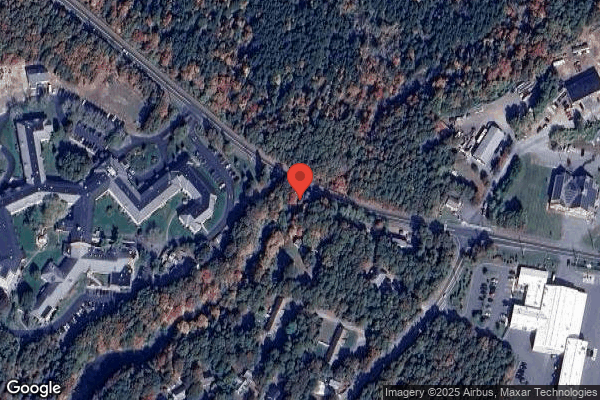
Jun 2024 1 deficiency
CONCERN (D) 📢 Someone Reported This

A family member, employee, or ombudsman was alarmed enough to file a formal complaint

Potential for Harm - no one hurt, but risky conditions existed

Comprehensive Care Plan (Tag F0656)

Could have caused harm · This affected 1 resident

Based on records reviewed and interviews, for one of three sampled residents (Resident #1), who was assessed by nursing as being at high risk for falls, and whose comprehensive plan of care indicated ...

Read full inspector narrative →
Based on records reviewed and interviews, for one of three sampled residents (Resident #1), who was assessed by nursing as being at high risk for falls, and whose comprehensive plan of care indicated he/she required the use of a mat on the floor next to his/her bed for safety, the Facility failed to ensure to staff consistently implemented and followed safety interventions identified in his/her plan of care related to the use of floor mat(s) while in bed. Findings include: Review of the Facility's Policy, titled Comprehensive Care Plans, dated July 2023, indicated the interdisciplinary team will develop and implement an individualized interdisciplinary plan of care for each resident that includes instructions needed to provide effective and person-centered care. Resident #1 was admitted to the Facility in January 2024, diagnoses included dementia with anxiety, psychotic disorder with delusions, acute posthemorrhagic anemia, restlessness and agitation, restless leg syndrome, acute respiratory failure with hypoxia and history of COVID-19. Review of Resident #1's Fall Risk Care Plan, dated 02/03/24, indicated that his/her interventions included for staff to place a mat on the floor. Review of Resident #1's Certified Nurse Aide (CNA) Care Plan (used as a reference guide by CNA's), dated 02/03/24, indicated that his/her interventions included a mat on the floor for safety. However, further review of Resident #1's Fall Risk Care Plan and CNA Care Plan indicated there was no specific location designated (left or right side) as to where the placement of the floor mat should be, or if there should be floor mats on both sides of the bed. Review of Resident #1's Fall Risk Assessment, dated 02/20/24, indicated he/she was assessed by nursing as being at high risk for falls. Review of Resident #1's Fall Incident Report, dated 5/14/24 at 9:30 P.M., indicated that he/she rolled out of bed (on to the floor) striking the left side of his/her head, and sustained a skin tear to the left side of his/her head. Review of a Nurse Progress Note, dated 5/14/24, (written by Nurse #3), indicated that Resident #1 rolled out of bed and hit his/her head. Review of Nurse #3's Written Witness Statement, dated 5/14/24, indicated that Resident #1 rolled out of bed, was observed on the floor next to the bed on his/her left side with his/her head on the leg of the overbed tray table. The Statement indicated that there was no floor mat was in place at the time of the fall. During a telephone interview on 06/13/24 at 11:43 A.M., Nurse #3 said that on 05/14/24, Resident #1 was very agitated and restless and she assisted CNA #1 with his/her care. Nurse #3 said that she noticed that the floor mat was not on the floor next to Resident #1's bed and said she asked CNA #1 to place the mat on the floor next to the left side of the bed. Nurse #3 said she left the room and a said that a little while later, CNA #1 called out for help and when she entered Resident#1's room, he/she was on the floor. Nurse #3 said that the floor mat was not on the floor next to Resident #1's bed when she went into his/her room after the fall occurred. During a telephone interview on 06/12/24 at 2:20 P.M., CNA #1 said that on 05/14/24 Resident #1 was very agitated, the nurse assisted her with his/her care. CNA #1 said that Resident #1 was kicking his/her legs and swinging his/her arms in the bed, then threw his/her upper body out of bed and fell out of bed onto the floor. CNA #1 said that there was no floor mat on the floor next to the bed when he/she fell out of bed onto the floor. CNA #1 said that the floor mat was tucked behind the wheelchair. CNA #1 could not explain why the floor mat was not on the floor by Resident #1's bed. During a telephone interview on 06/13/24 at 2:12 P.M., The Director of Nurses (DON) said that at the time of Resident #1's fall on 5/14/24, the floor mat was not on the floor by Resident #1's bed. The DON said that the floor mat was part of Resident #1's care plan as a fall safety intervention and said her expectation was that staff follow the plan of care.
Nov 2023 2 deficiencies
CONCERN (D) 📢 Someone Reported This

A family member, employee, or ombudsman was alarmed enough to file a formal complaint

Potential for Harm - no one hurt, but risky conditions existed

Abuse Prevention Policies (Tag F0607)

Could have caused harm · This affected 1 resident

Based on records reviewed and interviews for one of four sampled Employee Personnel File (Nurse Aide (NA) #1), who was contracted to work at the Facility through a staffing agency, the Facility failed...

Read full inspector narrative →
Based on records reviewed and interviews for one of four sampled Employee Personnel File (Nurse Aide (NA) #1), who was contracted to work at the Facility through a staffing agency, the Facility failed to ensure that Massachusetts Nurse Aide Registry (NAR) and Criminal Offender Record Information (CORI) checks were conducted prior to her date of employment at the Facility, in accordance with their Abuse Policy. Findings include: Review of the Facility's Policy, titled Abuse and Neglect Policy and Procedure, dated as revised 2017, indicated the following: -The Facility will not knowingly hire an individual who has had a history of abuse or who has a finding(s) entered into the nurse aide registry, -All potential employees will be screened prior to employment to rule out a history of abuse, neglect, mistreatment, misappropriation or exploitation of residents, and -The Facility will conduct employee background screening checks that include a criminal background check no later than the date of initial orientation and verification with the appropriate licensing boards and nurse aide registry in all states where the applicant has worked. Review of the Staffing Agency Agreement between the Facility and Staffing Agency #1, dated 01/05/23, indicated the following: -The Facility wishes to contract with Staffing Agency #1 for the services of Staffing Agency #1 to provide registered nurses (RN), licensed practical nurses (LPN), and certified nursing assistants (CNA), licensed as required under the laws of the Commonwealth of Massachusetts, -Staffing Agency #1 shall have on file for each assigned employee, verification of the employee's license/certification with the Commonwealth of Massachusetts, and a criminal background check showing no offenses that might pose a risk to the Facility, and -To the extent that any of this information/documentation is required to be kept at the Facility, Staffing Agency #1 will provide copies of such documentation to the Facility. Review of Nurse Aide #1, (Agency Staff Member) Employee Personnel File, indicated her date of hire with the Agency was 02/01/23, and the first time she worked in the Facility was 02/02/23, however there was no documentation to support that NAR or CORI checks had been conducted prior to NA #1 working at the Facility. Further review of the File indicated there was no documentation to support that NA #1 had obtained the required certification by 09/11/23 to work as a Certified Nurse Aide (CNA). During the survey the Facility, who was in communication with Staffing Agency #1, was unable to provide the Surveyor with any documentation to support that Massachusetts NAR or CORI checks had been conducted prior to NA #1's date of hire. The Facility was unable to obtain NA #1's personnel file documentation from Staff Agency #1 during the survey. The Facility faxed NA #1's personnel file documentation they had received from Staffing Agency #1 to the Surveyor on 11/15/23 and 11/17/23, however, there was no additional documentation provided by the Facility to support the NAR or CORI or checks had been conducted prior to NA #1's date of hire, and the documentation indicated that NA #1 had not obtained her certification and was not listed in the CNA Registry. During a telephone interview on 11/7/23 at 10:30 A.M., Director of Nurses (DON) #2 said NA #1 first worked in the Facility on 02/02/23. DON #2 said Staffing Agency #1 was unable to provide any documentation to the Facility that they (Agency) had conducted NAR or CORI checks on NA #1 prior to hire, or that NA #1 was certified. DON #2 said that the Agency told her that they attempted to conduct a CORI on NA #1 on the day of survey (11/14/23), but that NA #1 had not cooperated and refused to sign the paperwork.
CONCERN (D) 📢 Someone Reported This

A family member, employee, or ombudsman was alarmed enough to file a formal complaint

Potential for Harm - no one hurt, but risky conditions existed

Investigate Abuse (Tag F0610)

Could have caused harm · This affected 1 resident

Based on records reviewed and interviews, for one of three sampled residents (Resident #1), who was cognitively intact, and required maximum assistance from staff to meet his/her care needs, the Facil...

Read full inspector narrative →
Based on records reviewed and interviews, for one of three sampled residents (Resident #1), who was cognitively intact, and required maximum assistance from staff to meet his/her care needs, the Facility failed to ensure that after being made aware on 10/15/23 of an allegation of potential verbal abuse, that they obtained and maintained evidence that a thorough investigation was completed. Findings include: Review of the Facility's Policy, titled Abuse and Neglect Policy and Procedure, dated as revised 2017, indicated the following: -All reports of resident abuse, neglect, mental abuse, mistreatment, and injuries of unknown origin (bruises, skin tears) shall be investigated thoroughly and promptly by facility management, -The Administrator, Director of Nurses (DON) or his/her designee will coordinate gathering of information for purposes of investigation of all alleged incidents, -The investigator will obtain a complete report outlining the event, -The individual conducting the investigation will identify and interview all individuals who are relevant to the incident, -The individual conducting the investigation will interview any staff (on all shifts) who had contact with the resident during the period of the alleged incident, interview any witnesses to the incident, and interview other residents to whom the accused employee provides care or services. Review of the Report submitted by the Facility via the Health Care Facility Reporting System (HCFRS), dated as submitted 10/15/23, indicated that Resident #1 reported to the nurse (later identified as Nurse #2) that a Certified Nurse Aide (later identified as Nurse Aide #1) from last night (during the overnight shift) told him/her to stop using his/her call light, and had reported that he/she was afraid of Nurse Aide (NA) #1. Review of the Nursing Schedule, dated 10/14/23, indicated that NA #1, CNA (Certified Nurse Aide) #2, CNA #3, and Nurse #2 worked the night shift (beginning on 10/14/23 at 11:00 P.M. and ending on 10/15/23 at 7:00 A.M.) on Resident #1's unit. Review of the Facility's Internal Investigation file indicated there was no documentation to support that Nurse #2 was interviewed or that she provided a written statement as a possible witness. There was no documentation to support any other residents who had been on NA #1's care assignment had been interviewed to see if they had any concerns about how they had been treated or about their care. Resident #1 was admitted to the Facility in October 2023, diagnoses included cerebral infarction and metabolic encephalopathy. Review of Resident #1's Minimum Data Set (MDS) admission Assessment, dated 10/09/23, indicated he/she had a Brief Interview for Mental Status (BIMS) score of 15 out of 15 (cognitively intact), and he/she was dependent on staff to meet his/her care needs. Review of Resident #1's Witness Statement, dated 10/15/23, (obtained during an interview with him/her and documented by Nursing Supervisor #1) indicated Resident #1 said he/she rang his/her call bell at approximately midnight because he/she was hot. The Statement indicated NA #1 entered his/her room said, What do you want me to do about it? (being hot). The Statement indicated Resident #1 asked NA #1 to take his/her blankets off and NA #1 said do it yourself. The Statement indicated Resident #1 also reported that NA #1 told him/her to stop ringing the call bell. During an interview on 11/14/23 at 2:05 P.M., Director of Nurses (DON) #2 said she conducted the investigation into the alleged incident with Resident #1 and the allegations regarding NA #1, along with DON #1, who was new to the Facility. DON #2 said she did not interview other residents that could be potential witnesses, or other residents that NA #1 had contact with during the night shift that began on 10/14/23, but should have. DON #2 also said she did not interview or request a statement from Nurse #2 who was the only nurse who worked on Resident #1's unit that night, but should have. DON #2 said she thought the incident most likely had occurred, but she did not have enough evidence to prove it. DON #2 said NA #1 was not allowed to return to the Facility. During an interview on 11/14/23 at 2:54 P.M., the Administrator said that typically the Nursing Department conducted investigations into incidents involving residents and kept her in the loop. The Administrator said all staff who worked on Resident #1's Unit during the night shift that began on 10/14/23, should have been interviewed or provided a written statement. The Administrator said other residents should have also been interviewed as part of their investigation.
Jun 2023 17 deficiencies
CONCERN (D)

Potential for Harm - no one hurt, but risky conditions existed

Respiratory Care (Tag F0695)

Could have caused harm · This affected 1 resident

Based on observation, interview, and policy review, the facility failed for one Resident (#16), out of a total sample of 18 residents, to safely maintain and store respiratory tubing when not in use b...

Read full inspector narrative →
Based on observation, interview, and policy review, the facility failed for one Resident (#16), out of a total sample of 18 residents, to safely maintain and store respiratory tubing when not in use by the Resident per the physician's order. Findings include: Resident # 16 was admitted to the facility in May 2023 with diagnoses which included interstitial pulmonary disease. Review of the Minimum Data Set (MDS) assessment, dated 5/30/23, indicated the Resident was receiving oxygen therapy. Review of the Physician's Orders, dated 5/17/23, indicated to administer Oxygen at two liters per minute as needed, may titrate two liters per minute to maintain oxygen saturation greater than 88 percent, every shift as needed; and store tubing in plastic bag when not in use. Label the bag with the resident's name and date changed. On 06/13/23 at 04:07 P.M., the surveyor observed Resident #16's oxygen tubing on the floor, near the concentrator that was turned off. The nasal cannula was not stored in a plastic bag. On 6/14/23 at 08:08 A.M. and 11:50 A.M., the surveyor observed the Resident's tubing on the floor near the concentrator. The nasal cannula was not stored in a plastic bag. During an interview with observation on 06/14/23 at 11:50 A.M., the surveyor, with the Resident's family member present, observed the oxygen tubing on the floor; the concentrator was turned off. The Resident's family member said this is not right to have the oxygen tubing on the floor. During an interview on 6/14/23 at 2:20 P.M., Nurse #4 said Resident #16 was receiving Oxygen at two liters per minute as needed. Nurse #4 said the tubing should have been maintained in one of the respiratory plastic bags when not in use. Nurse #4 said this was a breach in infection control. During an interview on 06/15/23 at 12:26 P.M., the Infection Control Nurse said oxygen tubing has to be labeled and stored in a respiratory plastic bag when not in use. During an observation and an interview on 06/15/23 at 01:15 P.M., the Director of Nurses (DON) observed that Resident #16's respiratory tubing was on the floor. The DON said the tubing should not be on the floor, it should be placed in a respiratory plastic bag. The DON agreed the oxygen tubing was potentially contaminated while not in use.
CONCERN (D)

Potential for Harm - no one hurt, but risky conditions existed

Deficiency F0849 (Tag F0849)

Could have caused harm · This affected 1 resident

Based on observation and interview, the facility failed to ensure the Hospice provider provided Home Health Aide (HHA) services per the plan of care, for one Resident (#37), out of a sample of 18 resi...

Read full inspector narrative →
Based on observation and interview, the facility failed to ensure the Hospice provider provided Home Health Aide (HHA) services per the plan of care, for one Resident (#37), out of a sample of 18 residents. Findings include: Resident #37 was admitted to the facility in August 2022 with diagnoses including moderate protein-calorie malnutrition, dementia, unspecified and adult failure to thrive. Review of the Resident's Physician's Orders dated June 2023 indicated to: -Admit to hospice, (4/13/23). Review of the Minimum Data Set assessment, dated 4/25/23, indicated Resident #37 was receiving hospice care. Review of the Nursing Facility Services Agreement, dated 2/20/17, with the selected hospice provider indicated but was not limited to the Hospice plan of care shall reflect the participation of Hospice, Facility, Hospice Patient and Patient's family to the extent possible. The plan of care must identify the care and services that are needed and specify which provider is responsible for performing the respective functions. Review of the medical record indicated a Hospice Comprehensive Assessment Certification and Plan of Care with a certification period of 4/13/23 through 7/11/23. The plan of care indicated frequency and duration of visits for the benefit period to include skilled nurse visits once weekly and hospice aide visits once weekly for 13 weeks. During an interview on 6/14/23 at 8:11 A.M., Unit Manager #1 said Resident #37 was currently receiving hospice services. She said she has not seen an HHA from hospice as planned weekly. During an interview on 6/14/23 at 10:38 A.M., in the presence of the Director of Nurses, Unit Manager #1 said there was a lack of communication because she was not aware of when the HHA should be at the facility to assist Resident #37. Unit Manager #1 said she would contact the hospice nurse to find out. During an interview on 6/14/23 at 1:15 P.M., Unit Manager #1 said she contacted the Hospice Nurse, and the nurse told her the Hospice could not provide the facility with a schedule because they are having issues with staffing. She said the Hospice Nurse told her they are currently dependent on volunteers for providing HHA service. At 2:20 P.M., the Unit Manager provided the surveyor with a written note via fax from the Hospice provider. Review of the note indicated that the last time the Resident was seen by an HHA was on 5/17/23. During an interview on 6/14/23 at 2:35 P.M., the Director of Social Services said her department provided oversight for the coordination of hospice services. The Director of Social Services said she was not aware that hospice services had been limited.
CONCERN (D)

Potential for Harm - no one hurt, but risky conditions existed

Deficiency F0943 (Tag F0943)

Could have caused harm · This affected 1 resident

Based on policy/document review and staff interview, the facility failed to ensure that one staff member, Certified Nursing Assistant (CNA) #3, out of 5 employee files reviewed, received annual abuse/...

Read full inspector narrative →
Based on policy/document review and staff interview, the facility failed to ensure that one staff member, Certified Nursing Assistant (CNA) #3, out of 5 employee files reviewed, received annual abuse/neglect training in accordance with the facility policy. Findings include: Review of the facility's Abuse/Neglect policy, revised 2017, indicated that, Training in abuse prevention will be provided during on hire orientation, annually and whenever there is a need for re-education. During the investigation of the facility's handling of two residents' allegations of abuse by CNA #3, personnel training documents were reviewed for compliance with the facility policy on staff education for abuse/neglect. Review of CNA #3's personnel file on 6/15/23, indicated that the CNA had not received annual education on abuse/neglect in 2020, 2021, and 2022. During an interview on 6/15/23 at 5:15 P.M., the Director of Nursing said that CNA #3 had not received annual education on Abuse/Neglect, in accordance with the facility's policy.
CONCERN (E)

Potential for Harm - no one hurt, but risky conditions existed

Grievances (Tag F0585)

Could have caused harm · This affected multiple residents

Based on policy review, interview, and document review, the facility failed to implement the facility's grievance policy for five of five grievances reviewed for Residents (#4, #9, #1B, #30, and #1A)....

Read full inspector narrative →
Based on policy review, interview, and document review, the facility failed to implement the facility's grievance policy for five of five grievances reviewed for Residents (#4, #9, #1B, #30, and #1A). Specifically, the facility failed to thoroughly investigate grievances identified in the Grievance log, and/or if a grievance/complaint involved a potential violation of a resident right or allegation of abuse or misappropriation, they were reported to the state agency. Findings include: Review of the Facility's Grievance policy, undated, included but was not limited to: -The facility's Grievance Official is the Director of Social Services. He/she is responsible for overseeing the grievance process, receiving and tracking grievances through to their conclusion; leading any necessary investigations by the facility; issuing written grievance decisions to the resident; and coordinating with state and federal agencies as necessary in light of specific allegations; -Allegations of abuse, neglect, or misappropriation of resident property along with injuries of unknown source will be addressed in accordance with state law and the facility's policies regarding the same. Review of the grievance log and grievances from August 2022 to June 2023 indicated the following grievances were logged onto the monthly log reports: 1. An 8/22/22 grievance form indicated Resident #4's family reported a concern/complaint related to management of a sling, Oxygen not being put back on after the Resident uses the bathroom, elevated blood pressure, staff not using a gait belt when transferring the Resident, and some staff members being rude at times. Further review of the grievance documentation indicated an interview with Resident #4 in which he/she reported to the Social Worker that during morning care, the Certified Nursing Assistant (CNA) took off his/her johnny (hospital gown) and put a shirt on him/her and felt it was rough handling. Further review of the grievance form indicated the grievance was confirmed as indicated by a check mark in the box grievance confirmed and the following steps were taken to investigate the grievance: Discussed with therapy, who will do in-service with CNAs regarding placement of sling. The summary of pertinent findings indicated: Spoke with family member, concerns attached. Family was concerned about high blood pressure, rough handling with A.M. care, and sling placement. What action was taken to resolve the concern: Interviewed resident, family and staff. Inservice provided on proper sling placement. Staff reminded to be gentle during A.M. care. Spoke with nurse regarding blood pressure. Further review of the grievance form and investigation failed to indicate the facility identified and addressed rough handling as a potential allegation of abuse, failed to address the complaint of Oxygen not being put back on after the Resident uses the bathroom, staff not using a gait belt when transferring the Resident, and some staff members being rude at times. Review of the Health Care Facility Reporting System (HCFRS) on 6/13/23 at 2:00 P.M. failed to indicate Resident #4's allegation of rough handling was reported as required. 2. A 1/13/23 grievance form indicated Resident #9 reported that a CNA was very mean to me. The investigation identified the accused CNA. However, the CNA was not interviewed. The summary of pertinent findings indicated: -CNA gave resident shower on 1/11, no incidents reported. Resident very thankful for the shower. -What action was taken to resolve the concern: blank -Recommended corrective action: blank -Was grievance/concern resolved: blank -Resident notified regarding the resolution: blank -This form was completed by: blank -The Administrator signed the incomplete grievance form on 1/17/23. Further review of the grievance form and investigation failed to indicate the facility identified, addressed and thoroughly investigated the Resident's report of verbal mistreatment as an allegation of potential abuse. Review of HCFRS on 6/13/23 at 2:00 P.M. failed to indicate Resident #4's allegation of rough handling was reported as required. 3. A 4/14/23 grievance form indicated Resident #1B reported that at 10:00 P.M. on 4/13/23, two CNAs came to help him/her with toileting. The Resident reported that the CNA was yelling at him/her and said, You people don't know how hard we work to take care of you. The grievance form indicated that the Director of Nursing interviewed the Resident and staff. However, there were no statements included as part of the investigation. The summary of pertinent findings indicated: Staff deny accusations. What action was taken to resolve concern: Spoke with staff regarding customer service/resident's rights. Further review of the grievance form and investigation failed to indicate the facility identified, addressed, and thoroughly investigated the report of staff yelling at the Resident as a potential allegation of abuse. Review of HCFRS on 6/13/23 at 2:00 P.M. failed to indicate Resident #1B's allegation of being yelled at by a CNA was reported as required. 4. A 4/28/23 grievance form indicated Resident #30 reported that a CNA says mean and nasty things to me. She obviously doesn't like me. The grievance indicated that the accused CNA denied the allegation. What action was taken to resolve the concern: Spoke with resident, emotional support provided. Recommended corrective action: 2 staff at a time, accused CNA removed from assignment. No education was provided to staff. Further review of the grievance form and investigation failed to indicate the facility identified, addressed, and thoroughly investigated the report of staff verbally mistreating the Resident as a potential allegation of abuse. Review of HCFRS on 6/13/23 at 2:00 P.M. failed to indicate Resident #30's allegation of a CNA's verbal mistreatment was reported as required. 5. A 6/5/23 grievance form indicated Resident #1A reported that the previous night, he/she called for help and when the CNA came in, she told him/her to clean it up him/herself and threw a towel at me. The Resident reported he/she was wet with urine and stool. The Resident did not want to give a name and was hesitant to complain as he/she was fearful of retribution. Further review of the grievance form failed to indicate if the grievance was confirmed or not confirmed and the following steps were taken to investigate the grievance: Interviewed Resident and staff. Summary of the pertinent findings indicated: Upon interview, the Resident stated the CNA threw the towel onto the bed, not at him/her in frustration because he/she is independent with activities of daily living and was incontinent. The accused CNA said she did ask the Resident why he/she did not go to the bathroom but denies throwing a towel. The CNA said she helped to clean the Resident's incontinence. The Resident stated that she did not. Recommended corrective action: Inservice CNA, remove CNA from assignment. The grievance was noted to be resolved and was signed by the Director of Nursing and Administrator on 6/5/23. Further review of the grievance form and investigation failed to indicate the facility identified, addressed, and thoroughly investigated the report of staff failure to provide incontinence care and throwing a towel toward the Resident as a potential allegation of abuse. Review of HCFRS on 6/13/23 at 2:00 P.M. failed to indicate Resident #1A's allegation of not being provided incontinent care when requested and having a towel thrown at him/her by a CNA was reported as required. During an interview on 6/15/23 at 8:35 P.M., the Administrator and surveyor reviewed five resident grievances. She said after reviewing them, she realizes they all were allegations of verbal abuse, neglect and rough handling and should have ensured they were thoroughly investigated and reported within two hours. During an interview on 6/15/23 at 11:40 A.M., the Director of Social Services said that she was the Grievance Officer. The surveyor reviewed five grievances with the Director of Social Services. She said in hindsight, she sees that all of the grievances include allegations of verbal abuse, rough handling and staff refusal to provide care and should have been thoroughly investigated and reported within two hours.
CONCERN (E)

Potential for Harm - no one hurt, but risky conditions existed

Abuse Prevention Policies (Tag F0607)

Could have caused harm · This affected multiple residents

3. Review of the grievance log and grievance investigations from August 2022 to June 2023 indicated the following grievances were logged onto the monthly log reports: a. An 8/22/22 grievance form indi...

Read full inspector narrative →
3. Review of the grievance log and grievance investigations from August 2022 to June 2023 indicated the following grievances were logged onto the monthly log reports: a. An 8/22/22 grievance form indicated Resident #4 reported to the Social Worker that during morning care, the Certified Nursing Assistant (CNA) took off his/her johnny (hospital gown) and put a shirt on him/her and felt it was rough handling. The grievance documentation failed to indicate the facility identified the grievance as an allegation of abuse, failed to thoroughly investigate the allegation, failed to suspend the accused staff pending the outcome of the investigation, and failed to report it to local, state, and federal agencies according to facility policy. b. A 1/13/23 grievance form indicated Resident #9 reported that a CNA was very mean to me. Further review of the grievance indicated it was incomplete and the following sections were blank: -What action was taken to resolve the concern -Recommended corrective action -Was grievance/concern resolved -Resident notified regarding the resolution -This form was completed by The Administrator signed the incomplete grievance form on 1/17/23. The grievance documentation failed to indicate the facility identified the grievance as an allegation of verbal abuse, failed to thoroughly investigate the allegation, failed to suspend the accused staff pending the outcome of the investigation, and failed to report it to local, state, and federal agencies according to facility policy. c. A 4/14/23 grievance form indicated Resident #1B reported that at 10:00 P.M. on 4/13/23, two CNAs came to help him/her with toileting. The Resident reported that the CNA was yelling at him/her and said, You people don't know how hard we work to take care of you. The grievance documentation failed to indicate the facility identified the grievance as an allegation of verbal abuse, failed to thoroughly investigate the allegation, failed to suspend the accused staff pending the outcome of the investigation, and failed to report it to local, state, and federal agencies according to facility policy. d. A 4/28/23 grievance form indicated Resident #30 reported that a CNA says mean and nasty things to me. She obviously doesn't like me. The grievance documentation failed to indicate the facility identified the grievance as an allegation of verbal abuse, failed to thoroughly investigate the allegation, failed to suspend the accused staff pending the outcome of the investigation, and failed to report it to local, state, and federal agencies according to facility policy. e. A 6/5/23 grievance form indicated Resident #1A reported that the previous night, he/she called for help and when the CNA came in, she told him/her to clean it up him/herself and threw a towel at me. The Resident reported he/she was wet with urine and stool and the CNA refused to provide incontinent care. The grievance indicated the Resident did not want to give a name and was hesitant to complain as he/she was fearful of retribution. The grievance documentation failed to indicate the facility identified the grievance as an allegation of verbal abuse, failed to thoroughly investigate the allegation, failed to suspend the accused staff pending the outcome of the investigation, and failed to report it to local, state, and federal agencies according to facility policy. Review of the Health Care Facility Reporting System (HCFRS) on 6/13/23 at 2:00 P.M. failed to indicate Residents #4, #9, #1B, #30, #1A's allegations of verbal abuse, neglect and rough handling was reported as required. During an interview on 6/15/23 at 8:35 P.M., the Administrator and surveyor reviewed the five resident grievances. She said after reviewing them, she realizes they all were allegations of verbal abuse, neglect and rough handling and should have ensured they were reported within two hours and thoroughly investigated. During an interview on 6/15/23 at 11:40 A.M., the Director of Social Services said that she was the Grievance Officer. The surveyor reviewed the five grievances with the Director of Social Services. She said in hindsight, she sees that all of the grievances include allegations of verbal abuse, rough handling and staff refusal to provide care and should have been reported within two hours and thoroughly investigated. Based on policy review, record review, and interview, the facility failed to ensure staff implemented the facility's policy and thoroughly investigated, reported, and/or protected the resident's safety for seven Residents (#39, #218, #4, #9, #1B, #30, and #1A), of a total sample of 18 residents. Specifically, the facility failed: 1. For Resident #39, to ensure an allegation of verbal abuse by a CNA (Certified Nursing Assistant) was thoroughly investigated in accordance with the facility abuse policy; 2. For Resident #218, to ensure an allegation of mistreatment was investigated after the Resident witnessed the alleged verbal abuse of Resident #39 by a CNA; and 3. For Residents #4, #9, #1B, #30, and #1A, to ensure staff thoroughly investigated and protected the Residents pending the outcome of the investigations of alleged mistreatment, abuse, and neglect. Findings include: Review of the facility's policies titled Training & Identification and Reporting Incidents that may be indicative of abuse and neglect, last revised 7/2017, and Investigation Guidelines for Allegations of Abuse or Neglect, last revised 7/2017, included but was not limited to: -Facility staff will receive in-service training at least annually on abuse prohibition. The in-service training will include, but not to be limited to: -Information/definition on what constitutes abuse, including mental: -Abuse, neglect, mistreatment, exploitation or misappropriation of resident property -Reporting and investigation requirements for any allegation of abuse, mistreatment or neglect. -How staff may report their knowledge related to allegations of abuse, mistreatment or neglect without fear of reprisal including the Department of Public Health (DPH) Abuse Hotline -The facility will make every effort to identify, correct, and intervene in situations where abuse, neglect, exploitation and/or misappropriation of resident property is more likely to occur. This will include: -Supervise/monitor staff to identify possible inappropriate behaviors, such as use of derogatory language, rough handling, or not meeting residents' needs or requests -Any alleged violations and all substantiated incidents of any form of abuse or suspicious injuries of unknown origin will be reported to the state agency and to all other agencies within 2 hours after the allegation is made, if the events that cause the allegation of abuse or result in serious bodily injury, or not later than 24 hours if the events that cause the allegation do not involve abuse and do not result in serious bodily injury -Reports to the state agency will be submitted electronically through the Healthcare Facility Reporting System (HCFRS) -All reports of resident abuse, neglect, mental abuse, mistreatment and injuries of an unknown origin shall be investigated thoroughly and promptly by facility management. -The Administrator, Director of Nursing or her/his designee will coordinate gathering of information for purposes of investigation on all alleged incidents. The investigator will obtain a complete report outlining the event. Interviews will be conducted as directed by the Director of Nursing/Administrator. -The individual conducting the investigation will identify and interview all individuals who are relevant to the incident. In addition, the individual will: -Review the reported allegation -Review the resident's medical record to determine events leading up to the incident -Interview the person(s) reporting the incident -Interview any witnesses to the incident -Interview the resident (as medically appropriate) -Interview any staff (on all shifts) who had contact with the resident during the period of the alleged incident -Interview the resident's roommate, family members, and visitors -Interview other residents to whom the accused employee provides care or services -Review the events and circumstances leading up to the alleged incident, and interview any individuals who may be relevant -Interviews will be transcribed into written reports and witnesses will be required to sign and date such reports -While the investigation is being conducted, accused individuals not employed by the facility will be denied unsupervised access to residents. -Employees of this facility who have been accused of resident abuse may be suspended immediately from duty until the results of the investigation have been reviewed by the Administrator and Director of Nursing on a daily basis concerning the progress/findings of the investigation; -A copy of the completed investigation will be provided to the Administrator and DPH within 5 working days of the reported incident per State and Federal requirements. 1. Resident #39 was admitted to the facility in April 2023 with diagnoses which included urinary tract infection (UTI) and congestive heart failure (CHF). During an interview on 6/9/23 at 9:48 A.M., Resident #39 said that two Certified Nursing Assistants (CNA) on the night shift were rude and verbally abusive. The Resident said that one of the CNAs called him/her mouthy and told the Resident that she was the boss. The Resident said he/she told the CNAs that he/she paid their salary and they taunted him/her about that. The Resident said that the incident occurred about a week prior and he/she reported it to the Director of Nursing (DON). During an interview on 6/9/23 at 4:15 P.M., the DON said he was informed by a nurse of a complaint of verbal abuse by the Resident on 6/1/23 on the 11:00 P.M. to 7:00 A.M. shift. However, he said that he had not reported it to the State and had not conducted a thorough investigation to rule out the Resident's allegation of abuse, in accordance with the facility Abuse/Neglect Policy. Following the surveyor's inquiry into the alleged verbal abuse of the Resident, the Social Worker (SW) initiated a Grievance/Concern Form, dated 6/9/23. 2. Resident #218 was admitted to the facility in May 2023 with diagnoses which included right hip fracture, UTI, and proctocolitis (inflammation of the rectum). During an interview on 6/9/23 at 9:48 A.M., Resident #218 said that on the 11:00 P.M. to 7:00 A.M. shift on 6/1/23, he/she was not provided with incontinent care for 17 hours. The Resident explained that he/she was afraid to call for help after witnessing how his/her roommate (Resident #39) was treated by the CNA. During an interview with the DON and Social Worker (SW) on 6/9/23 at 4:15 P.M., the SW said that the Resident complained to her on 6/5/23 that he/she had to wait 17 hours for incontinent care on 6/1/23 on the night shift. Review of the Grievance Form, completed by the SW on 6/5/23, indicated the Resident said he/she did not put her light on for assistance, and No one came in to check on me. I was afraid. The Grievance Form was completed by the DON on 6/5/23. He wrote that he interviewed the Resident, staff and verified tasks in Matrixcare. The DON summarized that the Resident did not sit in the same brief for 17 hours and received care multiple times during the night. However, there were no witness statements of staff on duty, or statements from the Resident's roommate who was in the room at the time. During an interview on 6/9/23 at 4:15 P.M., the DON said he had not reported the Resident's allegation of mistreatment on 6/1/23 to the State, nor had he conducted a thorough investigation, as staff on duty at the time, and other residents, were not interviewed.
CONCERN (E)

Potential for Harm - no one hurt, but risky conditions existed

Report Alleged Abuse (Tag F0609)

Could have caused harm · This affected multiple residents

2. Review of the Grievance Log and Grievances from August 2022 to June 2023 indicated the following grievances were logged onto the monthly log reports: a. A 8/22/22 grievance form indicated Resident ...

Read full inspector narrative →
2. Review of the Grievance Log and Grievances from August 2022 to June 2023 indicated the following grievances were logged onto the monthly log reports: a. A 8/22/22 grievance form indicated Resident #4 reported to the Social Worker that during morning care, the Certified Nursing Assistant (CNA) took off his/her johnny (hospital gown) and put a shirt on him/her and felt it was rough handling. Further review of the grievance failed to indicate the facility identified the grievance as a potential violation of a resident right and failed to report it to facility administration and DPH as required. b. A 1/13/23 grievance form indicated Resident #9 reported that a CNA was very mean to me. Further review of the grievance indicated it was incomplete and the following sections were blank: -What action was taken to resolve the concern -Recommended corrective action -Was grievance/concern resolved -Resident notified regarding the resolution -This form was completed by The Administrator signed the incomplete grievance form on 1/17/23. Further review of the grievance failed to indicate the facility identified the grievance as a potential violation of a resident right and failed to report it to facility administration and DPH as required. c. A 4/14/23 grievance form indicated Resident #1B reported that at 10:00 P.M. on 4/13/23, two CNAs came to help him/her with toileting. The Resident reported that the CNA was yelling at him/her and said, You people don't know how hard we work to take care of you. Further review of the grievance failed to indicate the facility identified the grievance as a potential violation of a resident right and failed to report it to facility administration and DPH as required. d. A 4/28/23 grievance form indicated Resident #30 reported that a CNA says mean and nasty things to me. She obviously doesn't like me. Further review of the grievance failed to indicate the facility identified the grievance as a potential violation of a resident right and failed to report it to facility administration and DPH as required. e. A 6/5/23 grievance form indicated Resident #1A reported that the previous night, he/she called for help and when the CNA came in, she told him/her to clean it up him/herself and threw a towel at me. The Resident reported he/she was wet with urine and stool and the CNA refused to provide incontinent care. The grievance indicated the Resident did not want to give a name and was hesitant to complain as he/she was fearful of retribution. Further review of the grievance failed to indicate the facility identified the grievance as a potential violation of a resident right and failed to report it to facility administration and DPH as required. Review of HCFRS on 6/13/23 at 2:00 P.M. failed to indicate Residents #4, #9, #1B, #30, #1A's allegations of verbal abuse, neglect, and rough handling were reported as required. During an interview on 6/15/23 at 8:35 A.M., the Administrator and surveyor reviewed the five resident grievances. She said after reviewing them, she realizes they all were allegations of verbal abuse, neglect and rough handling and should have ensured they were reported within two hours. During an interview on 6/15/23 at 11:40 A.M., the Director of Social Services said that she was the Grievance Officer. The surveyor reviewed the five grievances with the Director of Social Services. She said in hindsight, she sees that all of the grievances include allegations of verbal abuse, rough handling and staff refusal to provide care and should have been reported within two hours. Based on staff and resident interviews and policy review, the facility failed to ensure that allegations of resident abuse were reported in accordance with the facility policy, for seven Residents, (#39, #218, #4, #9, #1B, #30, #1A), of a total sample of 18 residents. Specifically, the facility failed to ensure: 1. For Resident #39, an allegation of verbal abuse by a Certified Nursing Assistant (CNA) was reported timely to the state agency, as required; 2. For Resident #218, an allegation of mistreatment was reported timely to the state agency after the Resident witnessed the alleged verbal abuse of their roommate (Resident #39) by a CNA.; and 3. For Residents #4, #9, #1B, #30, #1A, allegations of a potential violation of a resident right or allegation of neglect, abuse, or misappropriation were immediately reported to the Department of Public Health (DPH) within two hours in accordance with federal guidelines. Findings include: Review of the facility's Abuse/Neglect Policy, effective 7/17, indicated that When an alleged or suspected case of abuse, mistreatment, neglect, exploitation, misappropriation of resident property, or injuries of unknown origin is reported, the Administrator, or designee, will immediately notify the State Agency but no later than 2 hours after the allegation is made, if the events that cause the allegation of abuse or result in serious bodily injury, or not later than 24 hours if the events that cause the allegation do not involve abuse and do not result in serious bodily injury to the State Agency and all other persons or agencies in accordance by State law through established procedures. Reports to the state agency will be submitted electronically through the HCFRS [Healthcare Facility Reporting System]. 1. Resident #39 was admitted to the facility in April 2023 with diagnoses which included urinary tract infection (UTI) and congestive heart failure (CHF). During an interview on 6/9/23 at 9:48 A.M., Resident #39 said that a CNA on the night shift was rude and verbally abusive. The Resident said that the incident occurred approximately a week earlier, and he/she reported it to the Director of Nursing (DON). The Resident said that one CNA called him/her mouthy and told the Resident that she (the CNA) was the boss. The Resident said that the CNA was very disrespectful. Review of HCFRS on 6/9/23, failed to indicate the allegation of verbal abuse by a CNA was reported for Resident #39. During an interview on 6/9/23 at 4:15 P.M., the DON said he was aware of a complaint of verbal abuse by Resident #39, however he confirmed that he had not reported it to the state agency electronically within two hours as required. 2. Resident #218 was admitted to the facility in May 2023 with diagnoses which included right hip fracture, UTI, and proctocolitis (inflammation of the rectum). During an interview with Resident #39's roommate, Resident #218, on 6/9/23 at 9:48 A.M., Resident #218 said that he/she was afraid of the 11:00 P.M.-7:00A.M. CNA/staff, after witnessing how his/her roommate was treated, and Resident #218 remained in a wet brief for 17 hours because he/she was afraid to call a CNA for help. During an interview on 6/9/23 at 4:15 P.M., the SW said that the Resident complained to her on 6/5/23 that he/she had to wait 17 hours for incontinent care on 6/1/23 on the night shift. Review of the Grievance Form, completed by the SW on 6/5/23, indicated the Resident said he/she did not put her light on for assistance, and No one came in to check on me. I was afraid. Review of HCFRS on 6/9/23, failed to indicate the allegation of mistreatment by a CNA was reported for Resident #218. During an interview on 6/9/23 at 4:15 P.M., the Director of Nursing (DON) and the Social Worker (SW) said that they were aware of Resident #218's complaints of mistreatment by a CNA on the 11:00 P.M. to 7:00 A.M. shift on 6/1/23 and did not report it as required.
CONCERN (E)

Potential for Harm - no one hurt, but risky conditions existed

Investigate Abuse (Tag F0610)

Could have caused harm · This affected multiple residents

3a. Review of an 8/22/22 grievance form indicated Resident #4 reported to the Social Worker that during morning care, the Certified Nursing Assistant (CNA) took off his/her johnny (hospital gown) and ...

Read full inspector narrative →
3a. Review of an 8/22/22 grievance form indicated Resident #4 reported to the Social Worker that during morning care, the Certified Nursing Assistant (CNA) took off his/her johnny (hospital gown) and put a shirt on him/her and felt it was rough handling. The grievance documentation failed to indicate the facility identified the grievance as an allegation of abuse, failed to thoroughly investigate the allegation, and failed to suspend the accused staff pending the outcome of the investigation. b. Review of a 1/13/23 grievance form indicated Resident #9 reported that a CNA was very mean to me. Further review of the grievance indicated it was incomplete and the following sections were blank: -What action was taken to resolve the concern -Recommended corrective action -Was grievance/concern resolved -Resident notified regarding the resolution -This form was completed by The Administrator signed the incomplete grievance form on 1/17/23. The grievance documentation failed to indicate the facility identified the grievance as an allegation of abuse, failed to thoroughly investigate the allegation, and failed to suspend the accused staff pending the outcome of the investigation. c. Review of a 4/14/23 grievance form indicated Resident #1B reported that at 10:00 P.M. on 4/13/23, two CNAs came to help him/her with toileting. The Resident reported that the CNA was yelling at him/her and said, You people don't know how hard we work to take care of you. The grievance documentation failed to indicate the facility identified the grievance as an allegation of abuse, failed to thoroughly investigate the allegation, and failed to suspend the accused staff pending the outcome of the investigation. d. Review of a 4/28/23 grievance form indicated Resident #30 reported that a CNA says mean and nasty things to me. She obviously doesn't like me. The grievance documentation failed to indicate the facility identified the grievance as an allegation of abuse, failed to thoroughly investigate the allegation, and failed to suspend the accused staff pending the outcome of the investigation. e. A 6/5/23 grievance form indicated Resident #1A reported that the previous night, he/she called for help and when the CNA came in, she told him/her to clean it up him/herself and threw a towel at me. The Resident reported he/she was wet with urine and stool and the CNA refused to provide incontinent care. The grievance indicated the Resident did not want to give a name and was hesitant to complain as he/she was fearful of retribution. The grievance documentation failed to indicate the facility identified the grievance as an allegation of abuse, failed to thoroughly investigate the allegation, and failed to suspend the accused staff pending the outcome of the investigation. During an interview on 6/15/23 at 8:35 A.M., the Administrator and surveyor reviewed the five resident grievances. She said after reviewing them, she realizes they all were allegations of verbal abuse, neglect and rough handling and should have ensured the facility abuse policy was followed as required. During an interview on 6/15/23 at 11:40 A.M., the Director of Social Services said that she was the Grievance Officer. The surveyor reviewed the five grievances with the Director of Social Services. She said, in hindsight, she sees that all of the grievances include allegations of verbal abuse, rough handling and staff refusal to provide care and they should have followed the facility's abuse policy. Based on interviews, record review, and policy review, the facility failed to ensure that allegations of abuse, neglect, exploitation, or mistreatment were thoroughly investigated for seven Residents (#39, #218, #4, #9, #1B, #30, #1A), of a total sample of 18 residents. Specifically, the facility failed: 1. For Resident #39, to ensure an allegation of verbal abuse by a Certified Nursing Assistant (CNA) was thoroughly investigated in accordance with the facility abuse policy; 2. For Resident #218, to ensure an allegation of mistreatment was thoroughly investigated after the Resident witnessed the alleged verbal abuse of Resident #39 by a CNA; and 3. For Residents #4, #9, #1B, #30, #1A, to ensure staff thoroughly investigated and protected the Residents pending the outcome of the investigations of alleged mistreatment, abuse, and neglect. Findings include: Review of the facility's Abuse/Neglect Policy, revised 7/17, indicated that All reports of resident abuse, neglect, mental abuse, mistreatment and injuries of an unknown origin (bruises, skin tears) shall be investigated thoroughly and promptly by facility management. The Administrator, Director of Nursing or her/his designee will coordinate gathering of information for purposes of investigation on all alleged incidents. The Investigator will obtain a complete report outlining the event. Interviews will be conducted as directed by Director of Nursing/Administrator. The individual conducting the investigation will identify and interview all individuals who are relevant to the incident. In addition the individual will: -Review the reported allegation. -Review the resident's medical record to determine events leading up to the incident. -Interview the person reporting the incident. -Interview the resident (as medically appropriate). -Interview any staff (on all shifts) who had contact with the resident during the period of the alleged incident. -Interview the resident's roommate, family members, and visitors. -Interview other residents whom the accused employee provides care or services. -Review the events and circumstances leading up to the alleged incident, and interview any individuals who may be relevant. 1. Resident #39 was admitted to the facility in April 2023 with diagnoses which included urinary tract infection (UTI) and congestive heart failure (CHF). During an interview on 6/9/23 at 9:48 A.M., Resident #39 said that two CNAs on the night shift were rude and verbally abusive. The Resident said that one of the CNAs called him/her mouthy and told the Resident that she was the boss. The Resident said he/she told the CNAs that he/she paid their salary and they taunted him/her about that. The Resident said that the incident occurred about a week prior and he/she reported it to the Director of Nursing (DON). During an interview on 6/9/23 at 4:15 P.M., the DON said he was informed by a nurse of a complaint of verbal abuse by the Resident on 6/1/23 on the 11:00 P.M. to 7:00 A.M. shift. However, he said that he had not conducted a thorough investigation to rule out the Resident's allegation of abuse, in accordance with the facility Abuse/Neglect Policy. Following the surveyor's inquiry into the alleged verbal abuse of the Resident, the Social Worker (SW) initiated a Grievance/Concern Form, dated 6/9/23. 2. Resident #218 was admitted to the facility in May 2023 with diagnoses which included right hip fracture, UTI, and proctocolitis (inflammation of the rectum). During an interview on 6/9/23 at 9:48 A.M., Resident #218 said that on the 11:00 P.M. to 7:00 A.M. shift on 6/1/23, he/she was not provided with incontinent care for 17 hours. The Resident explained that he/she was afraid to call for help after witnessing how his/her roommate was treated by the CNA. During an interview with the DON and SW on 6/9/23 at 4:15 P.M., the SW said that the Resident complained to her on 6/5/23 that she had to wait 17 hours for incontinent care on 6/1/23 on the night shift. Review of the Grievance Form, completed by the SW on 6/5/23, indicated the Resident said he/she did not put her light on for assistance, and No one came in to check on me. I was afraid. The Grievance Form was completed by the DON on 6/5/23. He wrote that he interviewed the Resident, staff and verified tasks in Matrixcare. The DON summarized that the Resident did not sit in the same brief for 17 hours and received care multiple times during the night. However, there were no witness statements of staff on duty, or statements from the Resident's roommate who was in the room at the time. During an interview on 6/9/23 at 4:15 P.M., the DON said he had not conducted a thorough investigation, as staff on duty at the time, and other residents, were not interviewed.
CONCERN (E)

Potential for Harm - no one hurt, but risky conditions existed

Comprehensive Care Plan (Tag F0656)

Could have caused harm · This affected multiple residents

**NOTE- TERMS IN BRACKETS HAVE BEEN EDITED TO PROTECT CONFIDENTIALITY** Based on observation, record review, and interview, the facility failed to ensure that individualized, comprehensive care plans ...

Read full inspector narrative →
**NOTE- TERMS IN BRACKETS HAVE BEEN EDITED TO PROTECT CONFIDENTIALITY** Based on observation, record review, and interview, the facility failed to ensure that individualized, comprehensive care plans were developed and consistently implemented for two Residents (#45 and #39), out of 18 sampled residents. Specifically, the facility failed: 1. For Resident #45, to consistently implement care plan interventions for the Resident's risk for falls; and 2. For Resident #39, to develop a care plan for the care and treatment of the peripherally inserted central catheter (PICC) line, or for a urinary tract infection (UTI) with Vancomycin Resistant Enterococcus (strain of bacteria). Findings include: 1. Resident #45 was admitted to the facility in November 2022 with diagnoses including dementia and hemiparesis (weakness or the inability to move on one side of the body). Review of the most recent Minimum Data Set (MDS) assessment, dated 4/12/23, indicated Resident #45 had moderate cognitive impairment as evidenced by a Brief Interview for Mental Status score of 12 out of 15, required extensive assistance from staff for bed mobility, transfers, bathing, and dressing. The MDS indicated Resident #45 had functional limitations in range of motion on one side of his/her upper extremities, and of both lower extremities. Review of Resident #45's comprehensive care plans included but was not limited to: Problem: Fall risk/impaired mobility related to unsteadiness on feet, muscle weakness, lack of coordination; history of falls, cerebral vascular accident with right lower extremity weakness (1/12/23) Approach: Resident not to be left alone in wheelchair when in room (5/3/23); See [NAME] for daily care assistance needed (4/13/23) Goal: The Resident will have no injury from falls and transfer safely everyday (7/13/23). Review of the Interdisciplinary Team Care Plan/[NAME] (brief overview of individual patient care) included but was not limited to: Safety: Bed in low position with mat (2/22/23), do not leave in wheelchair in room (5/3/23) On 6/9/23 at 11:47 A.M., the surveyor observed Resident #45 lying in bed awake. The bed was not in the low position and a mat was not in place on the floor next to the bed. On 6/12/23 at 8:28 A.M., the surveyor observed Resident #45 lying in bed awake. The bed was not in the low position and a mat was not in place on the floor next to the bed. On 6/12/23 at 10:05 A.M., the surveyor observed the privacy curtain drawn along the entire length of Resident #45's bed. After walking around Resident #45's roommate's bed, and around the privacy curtain, the surveyor observed Resident #45 seated in a wheelchair at the bedside alone. The Resident could not be seen from the doorway. On 6/13/23 at 12:30 P.M., the surveyor observed the privacy curtain drawn along the entire length of Resident #45's bed. After walking around Resident #45's roommate's bed, and around the privacy curtain, the surveyor observed Resident #45 seated in a wheelchair at the bedside alone eating lunch. The Resident could not be seen from the doorway. On 6/14/23 at 8:20 A.M., the surveyor observed Resident #45 lying in bed awake. The bed was not in the low position and a mat was not in place on the floor next to the bed. During an interview on 6/14/23 at 11:55 A.M., Unit Manager #1 said Resident #45's care plan was not followed and should not have the curtain pulled and be out of view when seated in a wheelchair in his/her room, and the Resident's bed is supposed to be in the low position with a mat on the floor at all times when in bed. 2. Resident #39 was admitted to the facility in April 2023 with diagnoses which included UTI and pneumonia. The Resident had a two lumen PICC and was receiving intravenous (IV) antibiotics. Record review on 6/13/23 indicated that the Resident had been receiving IV antibiotics starting on 6/3/23. During an interview on 6/14/23 at 9:04 A.M., Nurse #6 said that the Resident had completed the course of antibiotics, the PICC line was just being flushed with normal saline (NS) twice daily and would likely be discontinued pending a urine culture. Further record review on 6/13/23, indicated that the Resident did not have a care plan for the care and treatment of the PICC line, or for the UTI with Vancomycin Resistant Enterococcus. During an interview on 6/14/23 at 12:06 P.M., the Director of Nursing confirmed the lack of care plans for the Resident's PICC line and UTI.
CONCERN (E)

Potential for Harm - no one hurt, but risky conditions existed

Accident Prevention (Tag F0689)

Could have caused harm · This affected multiple residents

Based on observation, record review, and interview, the facility failed to ensure staff provided adequate supervision and consistently implemented effective care plan interventions to prevent seven fa...

Read full inspector narrative →
Based on observation, record review, and interview, the facility failed to ensure staff provided adequate supervision and consistently implemented effective care plan interventions to prevent seven falls for one Resident (#24), out of 18 sampled residents. Findings include: Review of the facility's policies titled Incidents: Falls, last reviewed 2/2018 and Incidents: Other, last revised 1/2020, included but was not limited to: -It is the policy of the facility to implement preventative measures to reduce residents' fall risk and risk of injury related to the same. -It is our policy that all falls will be investigated for causative factors and interventions will be in place to prevent further falls. -Investigative packet will be completed by the floor nurse within 48 hours and given to Quality Assurance Registered Nurse (QA RN)/Director of Nursing Services (DNS) to review for further investigation and completion. -The QA nurse or DNS will then create a root cause analysis and generate a summary of analysis findings. Resident #24 was admitted to the facility in January 2023 with diagnoses including Parkinson's disease and repeated falls. Review of the 4/19/23 Minimum Data Set (MDS) assessment indicated Resident #24 had moderate cognitive impairment as evidenced by a Brief Interview for Mental Status (BIMS) score of 12 out of 15, required extensive assistance of staff for bed mobility, transfers, and activities of daily living. The assessment indicated that Resident #24 utilized bed and chair alarms daily. Review of the medical record indicated Resident #24 had seven unwitnessed falls from January 2023 to June 2023. Review of the falls indicated: -1/14/23 at 4:30 P.M., Resident had an unwitnessed fall and was found sitting up on the floor next to the wheelchair in his/her room. The Resident reported he/she was picking something up off the floor and fell and hit the left side of his/her head. The personal alarm was attached to the Resident but it did not sound. Interventions to prevent further falls: chair alarm, wheelchair belt. Further review of the Incident Report failed to indicate it was given to the QA nurse and DNS for review for further investigation and completion of a root cause analysis and a summary of analysis findings according to facility policy. -1/17/23 at 7:30 P.M., Resident had an unwitnessed fall and was found on the bathroom floor on his/her left side. Interventions in place at the time of the fall were a bed and chair alarm. The report indicated the Resident removed the alarm prior to the fall and the alarm was not sounding. The wheelchair belt recommended on 1/14/23 was not implemented. New interventions to prevent further falls: wheelchair seatbelt alarm, check placement and function of alarms every shift. Review of Physician's Orders indicated: -Check function and placement of wheelchair seatbelt alarm/bed alarms, Check resident can remove seatbelt alarm (1/19/23) -1/31/23 at 10:45 P.M., Resident had an unwitnessed fall and was observed crawling on his/her hands and knees down the unit hallway. The investigation failed to indicate what interventions were in place at the time of the fall, and if bed/chair alarms were functioning. Staff investigative statements indicated a functioning bed alarm would prevent a future fall. New interventions to prevent further falls: re-orient to call bell, bed in low position with floor mat to right side of bed, and re-orient to safety. -2/28/23 at 3:45 P.M., Resident had an unwitnessed fall and was observed sitting on the floor in front of his/her wheelchair next to a bed in another resident's room. Interventions in place at the time of the fall were a seat belt alarm that did not function. New interventions to prevent further falls: chair alarm (already in place), offer afternoon nap. -3/7/23 at 1:15 P.M., Resident had an unwitnessed fall and was observed sitting on the floor on the right side of his/her bed. The investigation indicated the Resident may have attempted to self-transfer from wheelchair to bed. Resident reported that he/she removed the alarmed seatbelt in the wheelchair to stand up and reach for something. Interventions in place at the time of the fall were bed and chair alarms. However, the alarmed seat belt did not function. New interventions to prevent further falls: offer afternoon nap (already in place), reminders to call for staff assist, keep call button within reach, reacher, keep personal items close to bed. -3/25/23 at 7:05 A.M., Resident had an unwitnessed fall out of bed and was found sitting on the floor with his/her back leaning against the bed during rounds. Interventions in place at the time of the fall was a bed alarm. However, the bed alarm did not function. The investigation failed to indicate any staff interviews/statements, no root cause analysis or summary of analysis findings. -5/19/23 at 4:45 A.M., Resident had an unwitnessed fall out of bed. The Resident was observed sitting on the floor at the bedside. The investigation failed to indicate if the bed alarm was in place and functioning. New interventions to prevent further falls: visual reminder not to self-transfer at bedside, ongoing reminders to use call bell system. During an interview on 6/12/23 at 10:00 A.M., the surveyor observed Resident #24 seated in a wheelchair in the unit hallway. A Velcro alarm seatbelt was secured around the Resident's waist, and an alarm box was noted on the back of the wheelchair. The Resident said the seatbelt is there so he/she doesn't fall out of the wheelchair. The Resident unfastened the seatbelt by separating and pulling apart the Velcro tabs, then refastened it. Although the Resident pulled each end of the seatbelt apart and the contacts were not engaged, the alarm did not sound. During an interview on 6/14/23 at 11:55 A.M., Unit Manager #1 said Resident #24 likes to have the alarmed seatbelt in place because it reminds him/her to not stand up without assistance. She said the Resident's alarmed seatbelt hasn't been working for a while. She was unable to remember how long it has not been working and could not explain why it has not been replaced with a functioning device. During an interview on 6/15/23 at 2:13 P.M., the Quality Assurance nurse said she is aware that sometimes staff are not engaging the alarms but doesn't know how to get them to do it consistently.
CONCERN (E)

Potential for Harm - no one hurt, but risky conditions existed

Medication Errors (Tag F0758)

Could have caused harm · This affected multiple residents

Based on interview and record review, the facility failed to ensure three Residents (#13, #24, and #45) were free from unnecessary psychotropic medications, in a total sample of 18 residents. Specific...

Read full inspector narrative →
Based on interview and record review, the facility failed to ensure three Residents (#13, #24, and #45) were free from unnecessary psychotropic medications, in a total sample of 18 residents. Specifically, the facility failed to ensure: 1. For Resident #13, resident specific, targeted behaviors were identified and monitored for the use of Clonazepam (used to treat anxiety), Zyprexa (antipsychotic), and Lamotrigine (anticonvulsant that also treats bipolar disorder); 2. For Resident #24, resident specific, targeted behaviors were identified and monitored for the use of Sertraline (antidepressant); and 3. For Resident #45, resident specific, targeted behaviors were identified and monitored for the use of Citalopram (antidepressant) and Risperdal (antipsychotic). Findings include: 1. Resident #13 was admitted to the facility in November 2021 with diagnoses including anxiety and bipolar disorder. Review of the 5/3/23 Minimum Data Set (MDS) assessment indicated Resident #13 was cognitively intact as evidenced by a Brief Interview for Mental Status (BIMS) score of 15 out of 15 and received psychotropic medication daily. Review of the June 2023 Physician's Orders included but was not limited to the following: -Clonazepam 1 milligram (mg), 3 tablets at bedtime (7/26/22) -Zyprexa 10 mg once an evening (7/26/22) -Lamotrigine 50 mg twice a day (8/17/22) -Anti-psychotic medication use- observe resident closely for significant side effects (5/4/23) -Anti-convulsant medication use- observe resident closely for significant side effects (5/4/23) The physician's orders failed to identify resident specific, targeted behaviors for the use of the psychotropic medications, and failed to include monitoring of targeted behaviors. Further review of the medical record failed to indicate that staff monitored resident specific, targeted behaviors for the use of psychotropic medication as required. 2. Resident #24 was admitted to the facility in January 2023 with diagnoses including Parkinson's disease and dementia. Review of the 4/19/23 MDS assessment indicated Resident #24 had moderately impaired cognitive status as evidenced by a BIMS score of 12 out of 15 and received psychotropic medication daily. Review of the June 2023 Physician's Orders included but was not limited to the following: -Sertraline 150 mg once a day (1/11/23) The physician's orders failed to identify resident specific, targeted behaviors for the use of the psychotropic medications, and failed to include monitoring of targeted behaviors. Further review of the medical record failed to indicate that staff monitored resident specific, targeted behaviors for the use of psychotropic medication as required. 3. Resident #45 was admitted to the facility in November 2022 with diagnoses including dementia with psychotic disturbance. Review of the 4/12/23 MDS assessment indicated Resident #45 had moderate cognitive impairment as evidenced by a BIMS score of 12 out of 15, had hallucinations, and received psychotropic medication daily. Review of the June 2023 Physician's Orders included but was not limited to the following: -Citalopram 20 mg at bedtime (11/22/22) -Risperdal 0.25 mg in the evening (1/23/23) -Antidepressant use-observe resident closely for significant side effects (5/4/23) -Anti-convulsant medication use- observe resident closely for significant side effects (5/4/23) The physician's orders failed to identify resident specific, targeted behaviors for the use of the psychotropic medications, and failed to include monitoring of targeted behaviors. Further review of the medical record failed to indicate that staff monitored resident specific, targeted behaviors for the use of psychotropic medication as required. During an interview on 6/14/23 at 11:55 A.M., Unit Manager #1 said facility staff do not monitor behaviors for the use of psychotropic medications, they only monitor for side effects. During an interview on 6/14/23 at 2:25 P.M., the Quality Assurance (QA) nurse said that staff do not do ongoing monitoring of resident specific targeted behaviors. On 6/15/23 at 1:00 P.M., the Director of Nursing confirmed that resident specific targeted behaviors are not monitored for Residents #24 and #45.
CONCERN (E)

Potential for Harm - no one hurt, but risky conditions existed

Deficiency F0804 (Tag F0804)

Could have caused harm · This affected multiple residents

**NOTE- TERMS IN BRACKETS HAVE BEEN EDITED TO PROTECT CONFIDENTIALITY** Based on observation, interview, and test tray results, the facility failed to ensure foods and beverages were prepared by metho...

Read full inspector narrative →
**NOTE- TERMS IN BRACKETS HAVE BEEN EDITED TO PROTECT CONFIDENTIALITY** Based on observation, interview, and test tray results, the facility failed to ensure foods and beverages were prepared by methods which conserved nutritional value, flavor, appearance, palatability, and appetizing temperatures for two of three test trays observed. Findings include: During a Resident Group Meeting with the surveyor on 6/12/23 at 1:44 P.M., seven of the nine residents in attendance said the food was cold. On 6/13/23 at 11:44 A.M., the surveyor observed lunch service preparations in the main kitchen and made the following observations: -Cook #2 was preparing the four-cheese baked macaroni and cheese. She was observed putting pasta onto the steam table and then pouring the hot cheese sauce over the pasta and mixing it together. -Cook #2 was then observed preparing the pureed baked four cheese casserole and cauliflower (separately in the food processor and adding water to liquefy the contents). -Cook #2 prepared regular texture baked four cheese casserole, by plating the macaroni and cheese and then sprinkling a bread crumb mixture over the top. The surveyor requested a test tray, which was placed on a dining truck for delivery to the [NAME] unit at 12:16 P.M. The test tray arrived at the [NAME] Unit at 12:18 P.M. The last tray was served off the dining cart at 12:24 P.M. The test tray was observed by Nurse #6 with the following results: -Pureed four cheese casserole: 128.7 degrees Fahrenheit (F), presented as a large flat round orange circle and was not served with any of the bread crumb topping (bread crumb topping was added to regular diet plates). The taste was bland, more cheese than pasta. -Pureed Cauliflower: 137.7 degrees F, presented as a large flat white circle on a white plate. Taste was bland and watery. -French meat pie: 135.7 degrees F, presented well and had good flavor -Gravy: 145.9 degrees F, good flavor -Cauliflower: 128.2 degrees F, bland -Brownie with dollop of whip cream: good flavor -Milk: 50 degrees F, not cold. Nurse #6 said the puree meal did not look good with the two big orange and white circles on the plate. She tasted the cauliflower and said it was bland and watery. On 6/15/23 at 8:10 A.M., the surveyor observed breakfast service and requested a test tray at 8:16 A.M. that was placed on the dining cart for delivery to [NAME] unit. The last tray was served from the dining cart at 8:27 A.M. -The test tray was observed by the Director of Nurses (DON) with the following results: -Scrambled eggs: 124.5 degrees F, very bland, pasty and left a funny after taste. -Pancake: 112.5 degrees F, cold and dry -Oatmeal: 160.0 degrees F, palatable -Milk: 52.9 degrees F, not cold and was not palatable -Juice: 60.1 degrees F, was not cold, not palatable The DON said after tasting the scrambled eggs, they were not good. On 6/15/23 at 8:45 A.M., the surveyor interviewed 10 residents eating breakfast on the [NAME] unit and the following comments were made about the morning breakfast: -Breakfast was not so good -Breakfast was cold, the taste was fine -Eggs are not impressive, I call them quiet, no flavor. Sometimes they put cheese on the eggs and those eggs taste good. -Breakfast was cold -Breakfast is often cold -Eggs were so-so During an interview on 6/15/23 at 3:00 P.M., with the Food Service Director (FSD) and the Dietitian, the Dietitian said they use liquid eggs, and they could make them taste better. She said they usually use molds for the puree food for a better presentation. She said her expectation was the four-cheese casserole would have been baked in the oven with the topping cooked, rather than sprinkled on top. She feels that it would have also given the puree cheese casserole a better flavor. The FSD said the drinks are put in the freezer before meal service and maybe need to be put in the freezer longer to keep better temperature for meal service.
CONCERN (E)

Potential for Harm - no one hurt, but risky conditions existed

Infection Control (Tag F0880)

Could have caused harm · This affected multiple residents

**NOTE- TERMS IN BRACKETS HAVE BEEN EDITED TO PROTECT CONFIDENTIALITY** Based on observation and interview, the facility failed to ensure that acceptable infection control and prevention measures were...

Read full inspector narrative →
**NOTE- TERMS IN BRACKETS HAVE BEEN EDITED TO PROTECT CONFIDENTIALITY** Based on observation and interview, the facility failed to ensure that acceptable infection control and prevention measures were implemented to help prevent the development and potential transmission of communicable diseases and infections. Specifically, the facility failed to: 1. Ensure staff properly handled a medication tablet that was dropped into the medication cart during the medication pass observation; 2. For Resident #56, ensure resident care equipment was santized following its use for a Resident with an active infection and on transmission-based precautions; and 3. Develop and implement a Water Management Program as part of their ongoing risk management for Legionella infection or other waterborne pathogens with a system of surveillance that included a facility risk assessment, testing protocols, ongoing monitoring of control measure locations, and annual water testing. Findings include: 1. Review of the facility's policy titled Handwashing/Hand Hygiene, revised August 2019, indicated but was not limited to the following: -Use an alcohol-based hand rub containing at least 62% alcohol; or, alternatively, soap (antimicrobial or non-antimicrobial) and water for the following situations: before preparing or handling medications On 6/12/23 at 9:07 A.M., during a medication pass, the surveyor observed Nurse #1 drop a Lorazepam (controlled substance, sedative) tablet into the narcotic box located inside the medication cart while trying to push it through the blister pack (a form of tamper-evident packaging where an individual pushes individually sealed tablets through the foil). Nurse #1 picked up the tablet and placed it inside a medication cup. Nurse #1 did not wear gloves or perform hand hygiene prior. Nurse #1 administered the medication tablet to the resident. During an interview on 6/12/23 at 9:50 A.M., Nurse #1 said he should have worn gloves to pick up the tablet and it was ok to give it to the resident because I know these carts are clean. During an interview on 6/12/23 at 2:27 P.M., the Director of Nursing (DON) said Nurse #1 should not have handled the tablet with his bare hand and should have destroyed the tablet with another nurse and administered a new one to the resident. 3. Review of the facility's Water Treatment Agreement titled Water Chemicals, dated 5/1/23-4/30/24, failed to indicate a documented water management program was in place based on nationally accepted standards (such as ASHRAE (formerly the American Society of Heating, Refrigerating, and Air Conditioning Engineers) or CDC) and included: a WMP Team, risk assessment, policies and procedures, facility surveillance, disinfection program, and testing. According to the Center for Disease Control and Prevention (CDC), the key to preventing Legionnaires' disease (a serious type of pneumonia) is to make sure that building owners and managers maintain building water systems to reduce the risk of Legionella (bacterium) growth and spread. During an interview on 06/14/23 at 8:44 A.M., the Maintenance Director said the facility did not have a water management program in place. The Maintenance Director said he had not assessed where Legionella could grow and spread. He said there was not a water management team in place at the facility. During an interview on 06/14/23 at 10:30 A.M., the Maintenance Director displayed no knowledge of Legionella that could be present in their water supply. He said the City/Town manages their water system. The Maintenance Director said he obtained the water temperature for general use but was not monitoring to prevent Legionella from forming. During an interview on 06/14/23 at 1:57 P.M., the Maintenance Director confirmed that the facility did not have a water management program in place. During an interview on 06/15/23 at 8:30 A.M., the Director of Nurses said the facility did not have a Water Management Program in place. During an Interview on 06/15/23 at 12:26 P.M., the Infection Preventionist Nurse said the facility did not have a Water Management Program; she looked for the program book and did not locate one. 2. Review of the Center for Disease Control and Prevention (CDC) Strategies to Prevent Transmission of (Clostridium difficile) C. diff., ([NAME] ER, Infect Control Hosp Epidemiol, 2014), the following Strategies to Prevent Transmission were recommended: -Identify C. difficile Infection (CDI) early (Clinically significant diarrhea) -Initiate Contact Precautions (i.e. private room, dedicated equipment, frequent cleaning, gloves and gown upon entry) promptly -Promote strict glove use and hand hygiene -Ensure appropriate cleaning and disinfection of equipment and environment Resident #56 was admitted to the facility in March 2023 with diagnoses which included, acute metabolic encephalopathy with secondary diagnoses of leukocytosis and C. difficile (an infectious, transmissible disease of the colon). During an interview on 6/9/23 at 1:55 P.M. (in a room identified to be an Enteric, Contact Precaution room), Resident #56 said that he/she had C. difficile. All durable medical equipment (DME) used in the Resident's room was considered contaminated and required sanitizing with an approved bleach-containing product, prior to removal from the precaution room. On 6/9/23 at 1:55 P.M., the surveyor observed CNA #4 inside the Resident's room and had just transferred the Resident with the use of a Hoyer (mechanical) lift. She was observed wheeling the Hoyer lift out of the Resident's room and did not sanitize the lift prior to removing it from the precaution room. CNA #4 then wheeled the lift down the corridor, past the nurses' station, placed it in a corridor to the right, and walked away without sanitizing it. During an interview on 6/9/23 at 2:00 P.M., Nurse #5 said that CNA #4 should have sanitized the Hoyer lift with bleach wipes prior to removing it from the room.
CONCERN (F)

Potential for Harm - no one hurt, but risky conditions existed

Deficiency F0761 (Tag F0761)

Could have caused harm · This affected most or all residents

**NOTE- TERMS IN BRACKETS HAVE BEEN EDITED TO PROTECT CONFIDENTIALITY** Based on observation, policy review, and interview, the facility failed to ensure that all medications were properly stored and ...

Read full inspector narrative →
**NOTE- TERMS IN BRACKETS HAVE BEEN EDITED TO PROTECT CONFIDENTIALITY** Based on observation, policy review, and interview, the facility failed to ensure that all medications were properly stored and labeled in accordance with currently accepted professional principles on two of two units reviewed with four of four medication carts reviewed. Findings include: Review of the facility's policy titled Medication Storage in the Facility, revised January 2018, indicated but was not limited to the following: Expiration Dating: -Certain medications or package types such as multiple dose injectable vials and ophthalmics require an expiration date shorter than the manufacturer's expiration date to ensure medication purity and potency -Drugs dispensed in the manufacturer's original container will carry the manufacturer's expiration date. Once opened, these will be good to use until the manufacturer's expiration date is reached unless the medication is in a multi-dose injectable vial or an item for which the manufacturer has specified a usable life after opening. -When the original seal of a manufacturer's container or vial is initially broken, the container or vial will be dated. The nurse shall place a date opened sticker on the medication and enter the date opened and/or the new date of expiration. The date opened and/or the triggered expiration date should be recorded on a label for such purpose affixed to the vial. Expiration dates triggered by opening should be available either in the manufacturer's labeling or package insert, on a chart provided by the pharmacy, or from the pharmacist. -Disposal of any medications prior to the expiration dating will be required if contamination is apparent. Review of a pharmacy document titled Storage Guidelines and Shortened Expiration Dates, dated June 2019, indicated but was not limited to the following: General Guidelines: -Multiple dose vials will be dated and shall be deemed outdated 28 days from initial entry -All ophthalmic preparations shall be deemed outdated 28 days after initial entry date, unless otherwise specified by the manufacturer -Humalog vials (Insulin Lispro) (treats diabetes), expiration 28 days after opening -Lantus vials (Insulin glargine) (treats diabetes), expiration 28 days after opening -Symbicort (Budesonide and formoterol) (bronchodilator), expiration 45 days after removing from foil pouch -Xalatan (Latanoprost) (treats glaucoma), expiration 6 weeks after opening [NAME] Unit: 1a. On 6/12/23 at 8:52 A.M., during the medication cart (Cart B) review with Nurse #2, the surveyor observed the following: -One bottle each of Latanoprost Ophthalmic Solution 0.005%, Dorzolamide HCL (Trusopt) Ophthalmic 2% solution (treats glaucoma), and Bimatoprost (Lumigan) Ophthalmic Solution 0.015% (treats glaucoma), all labeled with a resident's name, packaging boxes and bottles opened, none labeled with the triggered expiration dates once opened -Insulin Lispro, labeled with a resident's name, packaging box and multi-dose vial opened, neither labeled with the triggered expiration date once opened During an interview on 6/12/23 at 8:52 A.M., Nurse #2 said eye drops, he believed, were good for 30 days and both the packaging box and bottle should have been labeled with the expiration date but were not. Nurse #2 said the Insulin should have been labeled with the expiration date once opened but was not. b. On 6/12/23 at 10:50 A.M., during the medication cart (front cart) review with Nurse #3, the surveyor observed the following: -Insulin Lispro, labeled with a resident's name, packaging box and multi-dose vial opened, vial not labeled with an open date, packaging box and vial not labeled with the triggered expiration date once opened -One multi-dose vial each of Insulin Lispro and Lantus, each packaging box labeled with a resident's name, each packaging box and multi-dose vial opened, neither the packaging boxes or vials labeled with open dates or triggered expiration dates, vials without resident specific pharmacy label During an interview on 6/12/23 at 10:50 A.M., Nurse #3 said the insulin had a short expiration but was not sure what it would be. Nurse #3 said staff is supposed to label the packaging box and multi-dose insulin vials with the dates they were opened and the use by dates, especially since they could get mixed up. Nurse #3 said a pharmacy label should have been on the insulin vials which would match the pharmacy labels on the packaging boxes but were not. Nurse #3 said if there was no open date, then she could not be sure of the expiration dates. [NAME] Unit: 2a. On 6/12/23 at 9:52 A.M., during the medication cart (front cart) review with Nurse #1, the surveyor observed the following: -Two bottles of Fluticasone Propionate nasal spray 50 micrograms (mcg), both labeled with a resident's name, packaging boxes and bottles opened, none labeled with the dates when opened or expiration dates -Deep Sea Premium Saline nasal spray, bottle labeled with a resident's name, bottle not labeled when opened, pharmacy label date cut off, unable to view when dispensed or an expiration date, no cap on the bottle while stored in the top drawer of the medication cart -Azelastine HCL (antihistamine) nasal solution 0.1%, labeled with a resident's name, packaging box and bottle opened, neither labeled with an open date or expiration date -Lantus, labeled with a resident's name, packaging box and multi-dose vial opened, vial not labeled with an open date or triggered expiration date During an interview on 6/12/23 at 1:55 P.M., the DON said the bottle should have been stored with a cap on it and should be disposed of. During an interview on 6/12/23 at 9:52 A.M., Nurse #1 said the Fluticasone packaging boxes and bottles should have been labeled with the open dates and use by dates but were not. He said the saline nasal spray bottle should be thrown out. b. On 6/12/23 at 10:33 A.M., during the medication cart (back side cart) review with Unit Manager (UM) #1, the surveyor observed the following: -Lumigan Ophthalmic Solution 0.01%, labeled with a resident's name, packaging box and bottle opened, neither labeled with the triggered expiration date once opened -Symbicort 160 mcg/4.5 inhaler, packaging box labeled with a resident's name, packaging box opened, inhaler used per UM #1, neither labeled with the open date or triggered expiration date once opened, inhaler without resident label -Azelastine HCL nasal solution 0.1%, labeled with a resident's name, packaging box and bottle opened, neither labeled with the open date once opened During an interview on 6/12/23 at 10:33 A.M., UM #1 said she was not sure what the use by date for the eye drops would be but would go by the pharmacy expiration and would have to check. UM #1 said the Symbicort inhaler was not labeled with the resident's name but should have been in case the inhaler got separated from the box. During an interview on 6/12/23 at 1:55 P.M., the Director of Nursing (DON) said there were four medication carts total, two on each unit. He said when a packaging box is opened, the box and the contents inside should be labeled with the resident's name, date when opened, and the date it is supposed to be discarded whether it be insulins, eye drops, nasal sprays, or other meds. The DON said eye drops and injectable multi-dose vials have short expiration dates, and both the packaging box and vials should have been labeled properly. The DON further said the saline nasal spray should have been discarded if it did not have a cap on it and staff did not follow facility policy or the expectation for medication storage or labeling.
CONCERN (F)

Potential for Harm - no one hurt, but risky conditions existed

Food Safety (Tag F0812)

Could have caused harm · This affected most or all residents

**NOTE- TERMS IN BRACKETS HAVE BEEN EDITED TO PROTECT CONFIDENTIALITY** Based on observation and interview, the facility failed to follow professional standards of practice for food safety and sanitat...

Read full inspector narrative →
**NOTE- TERMS IN BRACKETS HAVE BEEN EDITED TO PROTECT CONFIDENTIALITY** Based on observation and interview, the facility failed to follow professional standards of practice for food safety and sanitation to prevent the potential spread of foodborne illness to residents who are at high risk. Specifically, the facility failed to: 1. Ensure food was stored, labeled, dated and maintained under sanitary conditions in the main kitchen walk-in refrigerator and freezer; 2. Handle ready to eat food (food which does not require cooking or further preparation prior to consumption) utilizing proper hand hygiene to prevent cross contamination; and 3. Wear hair restraints in the main kitchen during meal preparation and service. Findings include: Review of the 2022 Food Code by the U.S. Food and Drug Administration (FDA) indicated but was not limited to: -2-402 Hair Restraints 2-402.11 Effectiveness. (A) Except as provided in (B) of this section, FOOD EMPLOYEES shall wear hair restraints such as hats, hair coverings or nets, beard restraints, and clothing that covers body hair, that are designed and worn to effectively keep their hair from contacting exposed FOOD; clean EQUIPMENT, UTENSILS, and LINENS; and unwrapped SINGLE-SERVICE and SINGLE-USE ARTICLES. -3-304.15 Gloves, Use Limitation. (A) If used, single-use gloves shall be used for only one task such as working with ready-to-eat food or with raw animal food, used for no other purpose, and discarded when damaged or soiled, or when interruptions occur in the operation. -2-103 Duties 2-103.11 Person in Charge. The PERSON IN CHARGE shall ensure that: (B) PERSONS unnecessary to the FOOD ESTABLISHMENT operation are not allowed in the FOOD preparation, FOOD storage, or WAREWASHING areas, except that brief visits and tours may be authorized by the PERSON IN CHARGE if steps are taken to ensure that exposed FOOD; clean EQUIPMENT, UTENSILS, and LINENS; and unwrapped SINGLE-SERVICE and SINGLE-USE ARTICLES are protected from contamination. 3-501.18 Ready-to-Eat, Time/Temperature Control for Safety Food, Disposition. (A) A FOOD specified in 3-501.17(A) or (B) shall be discarded if it: (1) Exceeds the temperature and time combination specified in 3- 501.17(A), except time that the product is frozen; P (2) Is in a container or PACKAGE that does not bear a date or day; P or (3) Is inappropriately marked with a date or day that exceeds a temperature and time combination as specified in 3-501.17(A). 3-501.17 Ready-to-Eat, Time/Temperature Control for Safety Food, Date Marking. (A) Except when PACKAGING FOOD using a REDUCED OXYGEN PACKAGING method as specified under § 3-502.12, and except as specified in (E) and (F) of this section, refrigerated, READY-TO-EAT, TIME/TEMPERATURE CONTROL FOR SAFETY FOOD prepared and held in a FOOD ESTABLISHMENT for more than 24 hours shall be clearly marked to indicate the date or day by which the FOOD shall be consumed on the PREMISES, sold, or discarded when held at a temperature of 5ºC (41ºF) or less for a maximum of 7 days. The day of preparation shall be counted as Day 1. 1. On 6/9/23 at 8:30 A.M., during the initial tour of the main kitchen, the surveyor made the following observations: Walk-in refrigerator: -Life in [NAME] Brie, best by date 10/11/22 -Boursin basil & chive cheese, best by date 10/13/22 - Goat cheese crumbles, best by date 2/12/23 - Creme de Brie cheese, best by date of 6/5/23 -Open bag of Imperial crumbled blue cheese which majority of the bag was green/dark color (undated) -Box of six goat cheese logs, best by date 12/1/22. One open goat cheese log with the end having spots of dark blotches (undated). -Box of half-filled individual cultured sour cream, with a use by date of 5/29/23 -Box of 12 maple syrup butter, expiration date 2/19/22 -Box of nine cartons of Hood fat free cultured buttermilk, expiration date of 6/5/23 -Four blocks of cheese in plastic wrap, not labeled or dated -Chef [NAME] chocolate flavored cream pie opened with date of 5/23 -Plastic container labeled pastry cream, dated 5/14 -Plastic container diet tapioca, dated 6/4 -Sealed container not labeled, but identified by the Food Service Manager as mashed potatoes, best by date 5/22/23 -[NAME] New York Style cheesecake opened and undated -Metal pan of chopped chicken, labeled chicken noodle prep, undated Dessert rack: -On top rack, open bag of wilted lettuce, undated -Tray of lime Jell-O, partially covered, dated 5/26 -Tray of red Jell-O, partially covered, dated 5/30 -One slice of white cake uncovered, dated 6/3 -Half of a chocolate cake, uncovered, undated -Stored on the bottom shelf, directly below the uncovered desserts was an open box of cod fillets (undated), with one fillet hanging out of the box. The package was wet and slimy. Raw meat rack: -The top shelf had an open bag of lettuce, containers of cut purple onions, carrots, cucumbers, all not labeled or dated -below the listed above was an open package of raw hamburger, the open end the meat had turned brown, undated -Brisket dated 5/12 -Multiple open pieces of meat wrapped in plastic wrap, not labeled or dated, and the packages were wet and slimy -Hickory smoked turkey breast with a use or freeze by date 5/23/23 -Individually packaged pieces of meat with a freeze by date 5/23/23 Walk-in freezer: -Floor under the racks had large number of frozen vegetables, french fries, trash (paper and plastic) and visible dirt. -Multiple open boxes and unsecured plastic bags exposing food, including corn, carrots, broccoli, meats, and bread items. During an interview on 6/9/23 at 9:30 A.M., the Food Service Director (FSD) and the surveyor viewed the walk-in freezer and refrigerator to observe expired, unlabeled, undated, and uncovered food listed above, the FSD said there should be no expired food and everything should be wrapped. He said all the food should also be labeled and dated and thrown out after three days. FSD said he shares the refrigerator and freezer with the retirement community and all the food is co-mingled, and he understands the food safety issues observed. During the interview with the FSD, a dietary aide entered the walk-in refrigerator with a tray of drinks which included cartons of milk and placed them on the shelf for storage. The surveyor asked the FSD to obtain a temperature of one of the cartons of milk. The FSD temped the milk to be 58.8 degrees Fahrenheit. The FSD said those drinks were from breakfast service at the retirement community and should not be returned to the refrigerator but should be thrown away. 2. On 6/13/23 at 11:50 A.M., the surveyor observed [NAME] #3 making sandwiches wearing a pair of gloves. [NAME] #3 completed making two sandwiches, left the prep table with the sandwiches, handled a box of plastic wrap and wrapped the sandwiches. She returned to the prep station wearing the same gloves, retrieved two more pieces of bread, opened the cold cut and cheese package and made another sandwich. During an interview 6/13/23 at 11:59 A.M., [NAME] #3 said after she left the prep station to wrap the sandwiches, she should have washed her hands and changed her gloves before returning to making more sandwiches. On 6/13/23 at 12:10 P.M., the surveyor observed [NAME] #2 wearing gloves while setting up the steam table for lunch service including getting utensils, removing and handling the steam table covers and pulling the plate warmer machine over towards the steam table. [NAME] #2 wearing the same pair of gloves was then observed mixing the bread crumb topping using her gloved hands. During meal service, the bread crumb topping (never cooked) was sprinkled on top of the regular diet four cheese casserole. [NAME] #2 was also observed during meal service cutting the French meat pie by placing her gloved hand on top of the pie to stabilize it as she cut it. During an interview on 6/13/23 at 12:15 P.M., the Food Service Director said [NAME] #2 should have changed her gloves after touching the different surfaces before mixing the bread crumb mixture. He said once other surfaces are touched, you need to wash your hands and change your gloves before touching ready to eat foods. On 6/15/23 at 8:10 A.M., the surveyor observed breakfast meal service and observed [NAME] #1 wearing a pair of gloves handling the plates, covers, various utensils and touching multiple surfaces. [NAME] #1 when plating breakfast used his gloved hands to plate the ready to eat food pancakes and the toast. During an interview on 6/15/23 at 8:15 A.M., the Food Service Director (FSD) said [NAME] #1 should not be handling the ready to eat food after touching other items and surfaces in the kitchen. He said he should be using tongs to plate the pancakes and toast, not his gloved hands. 3a. On 6/9/23 at 8:27 A.M., the surveyor observed the main kitchen which is shared with the retirement community. The nursing home cook, and all the dietary aides for the nursing home and the retirement community were not wearing hair nets. The surveyor also observed the retirement community wait staff, entering and exiting the kitchen not wearing hair nets. During an interview on 6/9/23 at 9:30 A.M., the Food Service Director (FSD) said all staff in the kitchen food preparation area should be wearing hair restraints. b. On 6/13/23 at 12:05 P.M., during lunch service for the nursing home, two men entered the main kitchen, did not perform hand hygiene, were not wearing hair nets and proceeded to the retirement side of the kitchen and retrieved their lunches and exited the kitchen. During an interview on 6/13/23 at 12:08 P.M., the Food Service Director (FSD) said the two men were maintenance workers from the retirement community. He said the retirement community side of the kitchen does serve meals to their staff during meal service. During an interview on 6/14/23 at 9:15 A.M., the Dietitian said they should not be serving staff lunches out of the kitchen, while the nursing home is in the middle of their lunch service.
CONCERN (F)

Potential for Harm - no one hurt, but risky conditions existed

QAPI Program (Tag F0867)

Could have caused harm · This affected most or all residents

Based on record review, review of the Quality Assurance Performance Improvement (QAPI) plan, and interview, the facility failed to ensure that the Quality Assurance Committee identified quality defici...

Read full inspector narrative →
Based on record review, review of the Quality Assurance Performance Improvement (QAPI) plan, and interview, the facility failed to ensure that the Quality Assurance Committee identified quality deficient areas and to develop and implement an appropriate corrective action plan, to ensure satisfactory outcomes from concerns brought forth from resident council meetings. Findings include: Review of the facility's policy titled Quality Assurance and Performance Improvement (QAPI) Program, dated as revised October 2013, indicated the following: Feedback, Data Systems and Monitoring: -Monitoring care and services -Collecting data from various sources -Tracking, investigating and monitoring adverse events and action plans to prevent reoccurrence Performance Improvement Projects (PIPs) -Conducts PIPs to examine and improve care and services in areas needing improvement -PIP identifies a specific problem which may be specific to one area or a problem that is throughout the facility -Information gathering to clarify issues or problems and identify approaches for improvement During the group meeting on 6/12/23 at 1:44 P.M., 7 out of 7 participating residents said they had brought their concern of ongoing issues with staff being rude with not nice interactions, being rushed with care assistance and long call bell wait times and had not received resolutions or feedback. During an interview on 6/15/23 at 2:13 P.M., the Quality Assurance (QA) nurse said that she was in charge of the QAPI program at the facility. She said staff turnover is the biggest issue right now and they have a lot of agency staff. The QA nurse said that she is aware of resident grievances and complaints regarding treatment and care by staff and long call bell wait times. She said these issues have not been brought forward to QAPI, and no action plans have been developed to prevent reoccurrence of this systemic problem.
MINOR (C)

Minor Issue - procedural, no safety impact

Transfer Notice (Tag F0623)

Minor procedural issue · This affected most or all residents

Based on record review and interview, the facility failed to ensure the Resident and/or the Resident's representative and the Ombudsman were provided with a written notice of transfer as required for ...

Read full inspector narrative →
Based on record review and interview, the facility failed to ensure the Resident and/or the Resident's representative and the Ombudsman were provided with a written notice of transfer as required for one Resident (#37), out of a total sample of 18 residents. Findings include: Resident #1 was admitted to the facility in August 2022. Review of the Physician's Interim/Telephone Orders, dated 3/10/23, indicated a new order to transfer the Resident to the hospital for an evaluation post positive stool guaiac sample (blood present in stool). Review of the clinical record failed to document the facility provided the Resident/ Resident's family with the required transfer notification documentation and appeal notification when the Resident was transferred to the hospital in March 2023 for evaluation. Further review of the clinical record included no evidence that the notice of transfer and a copy of the emergency transfer were sent to the Ombudsman's office. During an interview on 6/14/23 at 10:23 A.M., the Social Service Director said that Admissions was handling notice of transfer/ discharge. During an interview on 6/14/23 at 10:30 A.M., in the presence of the Social Service Director, the Admissions Director said nurses do not turn in notice of transfer to her office when residents are transferred out to the hospital. She said nurses would verbally tell her the resident's name of who was transferred out and she would contact the family via a telephone call. She said she was not aware that the Resident was transferred to the hospital. During an interview on 6/14/23 at 11:30 A.M., the Social Worker said she did not have any record of notice of transfer in her office and said that the notice of transfer was not completed. During an interview on 6/14/23 at 1:10 P.M., the Director of Nurses (DON) reviewed the medical record and said the notice of transfer was not completed because it was not available for review. Then DON said that the notice of transfer was not faxed to the Ombudsman.
MINOR (C)

Minor Issue - procedural, no safety impact

Deficiency F0625 (Tag F0625)

Minor procedural issue · This affected most or all residents

Based on record review and interview, the facility failed to ensure the Resident's representative was provided with a written notice of a bed-hold as required for one Resident (#37), out of a total sa...

Read full inspector narrative →
Based on record review and interview, the facility failed to ensure the Resident's representative was provided with a written notice of a bed-hold as required for one Resident (#37), out of a total sample of 18 residents. Findings include: Resident #37 was admitted to the facility in August 2022 and had an Activated Health Care Proxy. Review of the medical record indicated Resident #37 was transferred to the hospital in March 2023. Further review of the medical record failed to indicate that a facility bed-hold notice was issued to the Resident Representative as required for the March 2023 transfer. During an interview on 6/14/23 at 10:23 A.M., the Social Service Director said that Admissions was handling bed hold notices. During an interview on 6/14/23 at 10:30 A.M., in the presence of the Social Service Director, the Admissions Director said nurses do not turn in the bed hold notices to her office when residents are transferred out to the hospital. She said nurses would verbally tell her the resident's name of who was transferred out and she would contact the family via telephone call. The Admissions Director confirmed that the bed hold notice was not completed. During an interview on 6/14/23 at 11:30 A.M., the Social Worker said she did not have any record of a bed hold notice in her office and said that it was not completed because it was not in the medical record. During an interview on 6/14/23 at 1:10 P.M., the Director of Nurses (DON) reviewed the medical record and said the bed hold notice was not completed because it was not available for review. The DON agreed that the bed hold notice was not in the clinical record.
Jan 2020 3 deficiencies
CONCERN (D)

Potential for Harm - no one hurt, but risky conditions existed

Accident Prevention (Tag F0689)

Could have caused harm · This affected 1 resident

**NOTE- TERMS IN BRACKETS HAVE BEEN EDITED TO PROTECT CONFIDENTIALITY** Based on staff interview and record review, the facility failed to ensure the environment remains free of accident hazards by sp...

Read full inspector narrative →
**NOTE- TERMS IN BRACKETS HAVE BEEN EDITED TO PROTECT CONFIDENTIALITY** Based on staff interview and record review, the facility failed to ensure the environment remains free of accident hazards by specifically failing to assess and identify root cause analysis of a fall for 1 (#58) Resident, out of a total sample of 16 Residents. Findings include: Review of the medical record indicated that on 1/6/20 Resident #58 was transferred to the hospital for increased swelling to the bridge of his/her nose, bruising to the bilateral eyebrows and under bilateral eyes and a small scratch on the bridge of nose. At the time of transfer, the cause of bruising was unknown. Resident #58 was admitted to the facility in December of 2019 with a diagnosis of a right femoral endarterectomy (a procedure to clear a blockage from an artery in the leg). Review of the most recent admission Minimum Data Set (MDS) dated [DATE], indicated that Resident #58 had a Brief Interview for Mental Status (BIMS) score of 15 out of a possible 15, which indicated that he/she was cognitively intact. Review of the hospital Discharge summary dated [DATE], indicated that Resident #58 reported to hospital staff that he/she fell the prior afternoon. Review of the Facility Policy titled Incidents - Falls, dated 1/2016 with a revision date of 2/2018, indicated the following: - After immediate emergency care has been provided and the resident's condition stabilized, it is our policy that all falls will be investigated as to their cause and interventions will be put in place to prevent further falls. During an interview on 1/14/20 at 1:30 P.M. the Director of Nurses said she did not see the hospital discharge summary for Resident #58 and was unaware that he/she reported having a fall resulting in the facial bruising. The Director of Nurses reviewed the facility policy and said the facility policy was not followed and a further investigation should have been conducted.
CONCERN (D)

Potential for Harm - no one hurt, but risky conditions existed

Medication Errors (Tag F0758)

Could have caused harm · This affected 1 resident

**NOTE- TERMS IN BRACKETS HAVE BEEN EDITED TO PROTECT CONFIDENTIALITY** Based on record review and staff interview, the facility failed to ensure that an as needed (PRN) order for a psychotropic medic...

Read full inspector narrative →
**NOTE- TERMS IN BRACKETS HAVE BEEN EDITED TO PROTECT CONFIDENTIALITY** Based on record review and staff interview, the facility failed to ensure that an as needed (PRN) order for a psychotropic medication was limited to 14 days, unless otherwise documented by the attending physician or prescribing practitioner, that it is appropriate to extend beyond 14 days for 1 (#21) Resident, from a total sample of 16 Residents. Findings include: For Resident #21, the facility failed to limit the PRN anti-anxiety medication Ativan to 14 days, then re-evaluate the use of the medication by the physician or nurse practitioner with documentation to support the continued use of the medication. Resident #21 was admitted to the facility in June of 2019 with diagnoses including chronic kidney disease, high blood pressure and anemia. Review of the medical record indicated that Resident #21 had a physician's order dated 10/31/19, for the medication Ativan 0.5 mg by mouth every 6 hours as needed, PRN, for shortness of breathe and increased anxiety. The Resident was hospitalized from [DATE] until 11/13/19 at which time the PRN Ativan was reordered with no stop date. Review of the medication administration records for November 2019, December 2019 and January 2020 indicated that Resident #21 received the PRN medication as follows: November 2019-did not receive any PRN Ativan. December 2019- received PRN Ativan 3 times. January 2020-received PRN Ativan 16 times (1/1/20-1/16/20). Review of the Physician/Nurse Practitioner (NP) progress notes indicated no documented evidence that the physician or NP documented the rationale for the continued use of the PRN Ativan for anxiety. During an interview on 1/15/20 at 12:23 P.M., Unit Manager #1 said there was no stop date for the use of the PRN Ativan. Unit Manager #1 also said that the medication was originally started due to the Resident's skin irritation and the NP thought it might help the Resident.
CONCERN (F)

Potential for Harm - no one hurt, but risky conditions existed

Deficiency F0761 (Tag F0761)

Could have caused harm · This affected most or all residents

**NOTE- TERMS IN BRACKETS HAVE BEEN EDITED TO PROTECT CONFIDENTIALITY** Based on observation, staff interview and record review, the facility failed to ensure that for 2 of 2 medication refrigerators,...

Read full inspector narrative →
**NOTE- TERMS IN BRACKETS HAVE BEEN EDITED TO PROTECT CONFIDENTIALITY** Based on observation, staff interview and record review, the facility failed to ensure that for 2 of 2 medication refrigerators, temperatures were taken twice daily to ensure vaccines were stored safely at proper temperatures and that other appropriate environmental controls were in place to preserve the vaccine's integrity. Findings include: Review of the Facility Policy titled Storage and Expiration of Medications, Biologicals, Syringes and Needles indicated the following: * Facilities should ensure that medications and biologicals are stored at their appropriate temperatures according to the United States Pharmacopeia guidelines for temperature ranges. Facilities staff should monitor the temperature of vaccines twice a day. On 1/14/20 at 3:43 P.M., the surveyor observed boxes of the Influenza vaccine in the [NAME] medication room refrigerator, located at the nurse's station. Review of the [NAME] Vaccine Refrigerator Temperature Log documentation indicated that from 1/1/20-1/14/20, only A.M. Temperatures were taken. On 1/15/20 at 10:00 A.M., the surveyor observed boxes of the Influenza and Pneumonia vaccines in the [NAME] medication room refrigerator located at the nurse's station. Review of the [NAME] Vaccine Refrigerator Temperature Log documentation indicated that from 1/1/20-1/14/20, only A.M. temperatures were taken. During an interview on 1/15/20 at 10:07 A.M., Unit Manager #1 said temperatures were documented once a day by the nurse on the overnight shift (11:00 P.M.-7:00 A.M.) on the [NAME] Unit. During an interview on 1/15/20 at 10:00 A.M., Nurse #1 said temperatures were documented once daily by the overnight shift nurse (11:00 P.M.-7:00 A.M.). Nurse #1 said no P.M. temperature checks were found. During an interview on 1/15/20 at 10:05 A.M., the Infection Control Preventionist (ICP) said incorrectly the policy is to check the medication refrigerator temperature logs once daily. During an interview on 1/15/20 at 10:36 A.M., the Director of Nurses (DON) said she was not aware of the current policy for twice daily documentation. After review of the Facility's policy, the DON said that staff should be checking temperatures twice a day, but were only doing it once.
Understanding Severity Codes (click to expand)
Life-Threatening (Immediate Jeopardy)
J - Isolated K - Pattern L - Widespread
Actual Harm
G - Isolated H - Pattern I - Widespread
Potential for Harm
D - Isolated E - Pattern F - Widespread
No Harm (Minor)
A - Isolated B - Pattern C - Widespread

Questions to Ask on Your Visit

  • "Can I speak with families of current residents?"
  • "What's your RN coverage like on weekends and overnight?"

Our Honest Assessment

Strengths
  • • No major safety red flags. No abuse findings, life-threatening violations, or SFF status.
  • • No fines on record. Clean compliance history, better than most Massachusetts facilities.
  • • 38% turnover. Below Massachusetts's 48% average. Good staff retention means consistent care.
Concerns
  • • 37 deficiencies on record. Higher than average. Multiple issues found across inspections.
  • • Grade C (50/100). Below average facility with significant concerns.
Bottom line: Mixed indicators with Trust Score of 50/100. Visit in person and ask pointed questions.

About This Facility

What is Mayflower Place Nursing & Rehabilitation Center's CMS Rating?

CMS assigns MAYFLOWER PLACE NURSING & REHABILITATION CENTER an overall rating of 2 out of 5 stars, which is considered below average nationally. Within Massachusetts, this rating places the facility higher than 0% of the state's 100 nursing homes. A rating at this level reflects concerns identified through health inspections, staffing assessments, or quality measures that families should carefully consider.

How is Mayflower Place Nursing & Rehabilitation Center Staffed?

CMS rates MAYFLOWER PLACE NURSING & REHABILITATION CENTER's staffing level at 4 out of 5 stars, which is above average compared to other nursing homes. Staff turnover is 38%, compared to the Massachusetts average of 46%. This relatively stable workforce can support continuity of care.

What Have Inspectors Found at Mayflower Place Nursing & Rehabilitation Center?

State health inspectors documented 37 deficiencies at MAYFLOWER PLACE NURSING & REHABILITATION CENTER during 2020 to 2024. These included: 34 with potential for harm and 3 minor or isolated issues.

Who Owns and Operates Mayflower Place Nursing & Rehabilitation Center?

MAYFLOWER PLACE NURSING & REHABILITATION CENTER is owned by a for-profit company. For-profit facilities operate as businesses with obligations to shareholders or private owners. The facility operates independently rather than as part of a larger chain. With 72 certified beds and approximately 65 residents (about 90% occupancy), it is a smaller facility located in WEST YARMOUTH, Massachusetts.

How Does Mayflower Place Nursing & Rehabilitation Center Compare to Other Massachusetts Nursing Homes?

Compared to the 100 nursing homes in Massachusetts, MAYFLOWER PLACE NURSING & REHABILITATION CENTER's overall rating (2 stars) is below the state average of 2.9, staff turnover (38%) is near the state average of 46%, and health inspection rating (2 stars) is below the national benchmark.

What Should Families Ask When Visiting Mayflower Place Nursing & Rehabilitation Center?

Based on this facility's data, families visiting should ask: "Can I visit during a mealtime to observe dining assistance and food quality?" "How do you handle medical emergencies, and what is your hospital transfer rate?" "Can I speak with family members of current residents about their experience?"

Is Mayflower Place Nursing & Rehabilitation Center Safe?

Based on CMS inspection data, MAYFLOWER PLACE NURSING & REHABILITATION CENTER has a clean safety record: no substantiated abuse findings (meaning no confirmed cases of resident harm), no Immediate Jeopardy citations (the most serious violation level indicating risk of serious injury or death), and is not on the Special Focus Facility watch list (a federal program monitoring the lowest-performing 1% of nursing homes). The facility has a 2-star overall rating and ranks #100 of 100 nursing homes in Massachusetts. While no facility is perfect, families should still ask about staff-to-resident ratios and recent inspection results during their visit.

Do Nurses at Mayflower Place Nursing & Rehabilitation Center Stick Around?

MAYFLOWER PLACE NURSING & REHABILITATION CENTER has a staff turnover rate of 38%, which is about average for Massachusetts nursing homes (state average: 46%). Moderate turnover is common in nursing homes, but families should still ask about staff tenure and how the facility maintains care continuity when employees leave.

Was Mayflower Place Nursing & Rehabilitation Center Ever Fined?

MAYFLOWER PLACE NURSING & REHABILITATION CENTER has no federal fines on record. CMS issues fines when nursing homes fail to meet care standards or don't correct problems found during inspections. The absence of fines suggests the facility has either maintained compliance or corrected any issues before penalties were assessed. This is a positive indicator, though families should still review recent inspection reports for the full picture.

Is Mayflower Place Nursing & Rehabilitation Center on Any Federal Watch List?

MAYFLOWER PLACE NURSING & REHABILITATION CENTER is not on any federal watch list. The most significant is the Special Focus Facility (SFF) program, which identifies the bottom 1% of nursing homes nationally based on persistent, serious quality problems. Not being on this list means the facility has avoided the pattern of deficiencies that triggers enhanced federal oversight. This is a positive indicator, though families should still review the facility's inspection history directly.