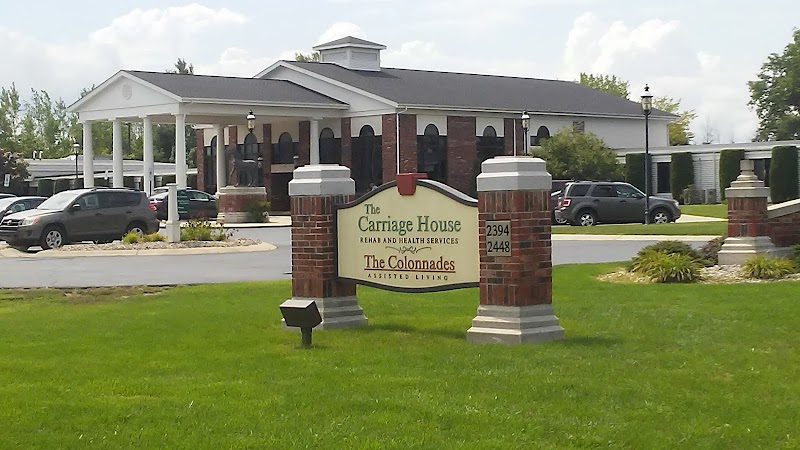
Carriage House Nursing and Rehabilitation
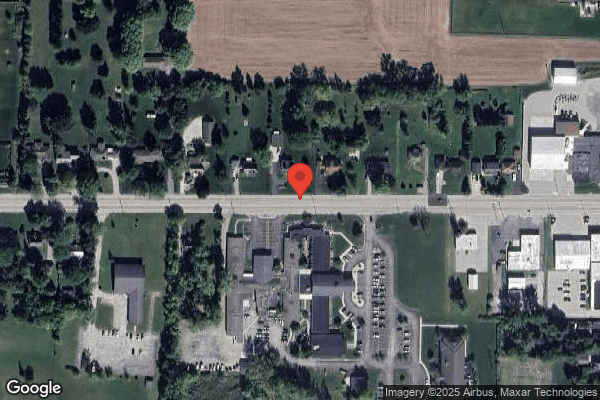
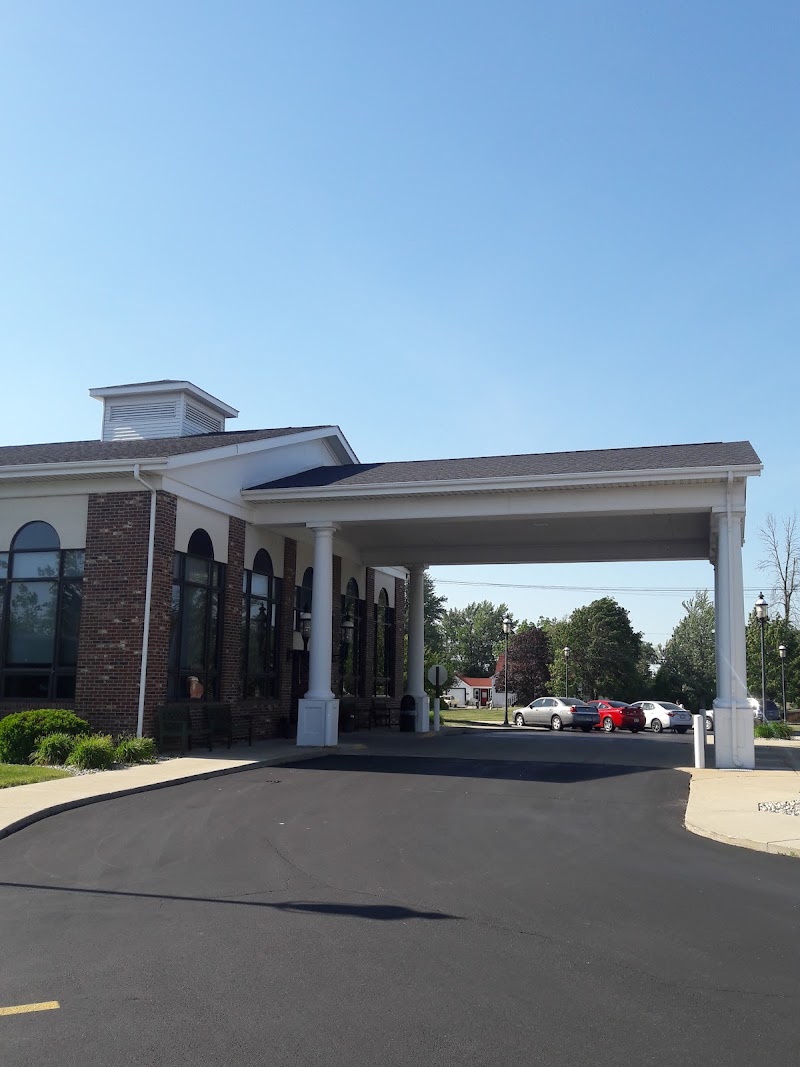
2394 Midland Road, Bay City, MI 48706 (989) 684-2303
For profit - Individual 120 Beds PREFERRED CARE Data: November 2025
Trust Grade
50/100
#190 of 422 in MI
Last Inspection: March 2025

Within standard 12-15 month inspection cycle. Federal law requires annual inspections.

Overview

Carriage House Nursing and Rehabilitation has a Trust Grade of C, which means it is average and sits in the middle of the pack for nursing homes. It ranks #190 out of 422 facilities in Michigan, placing it in the top half, and #4 out of 6 in Bay County, indicating that only one other local option is better. The facility is improving, having reduced the number of issues from 15 in 2024 to 8 in 2025. Staffing is rated average with a turnover rate of 48%, which is close to the state average, suggesting some staff stability. While the facility has not incurred any fines, there have been serious incidents, including a failure to provide timely interventions for a resident that resulted in severe injuries and pressure ulcers that led to hospitalization for another resident. Overall, while there are strengths such as no fines and a good quality measure rating, the serious incidents highlight areas needing attention.
Trust Score
C
50/100
In Michigan
#190/422
Top 45%
Safety Record
Moderate
Needs review
Inspections
Getting Better
15 → 8 violations
Staff Stability
⚠ Watch
48% turnover. Above average. Higher turnover means staff may not know residents' routines.
Penalties
✓ Good
No fines on record. Clean compliance history, better than most Michigan facilities.
Skilled Nurses
✓ Good
Each resident gets 42 minutes of Registered Nurse (RN) attention daily — more than average for Michigan. RNs are trained to catch health problems early.
Violations
⚠ Watch
36 deficiencies on record. Higher than average. Multiple issues found across inspections.
★★★☆☆
3.0
Overall Rating
★★★☆☆
3.0
Staff Levels
★★★★☆
4.0
Care Quality
★★★☆☆
3.0
Inspection Score
Stable
2024: 15 issues
2025: 8 issues

The Good

  • 4-Star Quality Measures · Strong clinical quality outcomes
  • Full Sprinkler Coverage · Fire safety systems throughout facility
  • No fines on record

Facility shows strength in quality measures, fire safety.

The Bad

3-Star Overall Rating

Near Michigan average (3.1)

Meets federal standards, typical of most facilities

Staff Turnover: 48%

Near Michigan avg (46%)

Higher turnover may affect care consistency

Chain: PREFERRED CARE

Part of a multi-facility chain

Ask about local staffing decisions and management

The Ugly 36 deficiencies on record

2 actual harm
Mar 2025 7 deficiencies
CONCERN (D)

Potential for Harm - no one hurt, but risky conditions existed

Assessment Accuracy (Tag F0641)

Could have caused harm · This affected 1 resident

**NOTE- TERMS IN BRACKETS HAVE BEEN EDITED TO PROTECT CONFIDENTIALITY** Resident #49: On 3/11/2025 the survey team received the CMS-802 Resident Matrix form from the facility as an accurate resident a...

Read full inspector narrative →
**NOTE- TERMS IN BRACKETS HAVE BEEN EDITED TO PROTECT CONFIDENTIALITY** Resident #49: On 3/11/2025 the survey team received the CMS-802 Resident Matrix form from the facility as an accurate resident assessment overview of residents residing within the facility during the annual survey. The form was hand signed and dated. Observation and interview on 03/11/25 at 09:24 AM with Resident #49 revealed some confusion. Licensed Practical Nurse M came into the resident room and stated that the resident #49 he goes to (local) hemodialysis on Tuesday/Thursday/Saturday schedule. LPN M was able to show the state surveyor Resident #49's right chest hemodialysis catheter with a white bandage dressing with no date. LPN M stated that Resident #49 was dressed and ready to go to his hemodialysis treatment and had a pick-up time of 9:45 AM per order. Record review on 03/12/25 at 10:30 AM of the facility-provided CMS-802 form signed and dated 3/11/2025 by Registered Nurse E did not identify the Dialysis therapy for Resident #49. In an interview on 03/13/25 at 12:24 PM, Registered Nurse (RN) E MDS (Minimum Data Set) assessment nurse revealed that the nurse reviews the resident admission orders for the residents as part of the assessment. Record review of the CMS-802 form by RN E stated that was his signature and date on the CMS-802 form. RN E revealed that the Interdisciplinary Team (IDT) team meets every morning and to discuss residents' diagnoses and any changes. The MD nurses enter the assessment changes manually each Monday of the week and go into (electronic medical record) and run a report on new admits, diagnosis, orders, specialty (UTI/Antibiotics) and update that on the assessment. Record review of Resident #49's CMS-802 dialysis category was blank, Why? RN E stated that's a good question. The Infection Control nurse hands out a sheet with dialysis/hospice residents that is reviewed, I don't have an answer. I probably missed the box. Resident #49 was admitted in February 2025. It didn't transfer over to the CMS-802 form because of the update button. It messes with all residents' assessments. It was just missed. Based on interview and record review, the facility failed to ensure the CMS 802 (form utilized by the facility to list all current residents and to note pertinent care categories) was accurate for three residents (#48 #49 and #93) of 10 residents reviewed for matrix accuracy. Findings include: Resident #48: Upon entrance on 3/11/2025, review was conducted of the CMS 802. The 802 indicated, Resident #48 was being administered an antibiotic due to a current UTI (Urinary Tract Infection). On 3/12/2025 at 9:00 AM, a review was conducted of Resident #48's clinical record and it indicated the resident admitted to the facility on [DATE] with diagnoses that included, Cerebral Infarction, Vascular Dementia, Anxiety, Major Depressive Disorder and Hypertension. Further review yielded the following results: March 2025 MAR (Medication Administration Record): Indicated Resident #48 was not currently prescribed an antibiotic. February 2025 MAR: Bactrim Tablet - Give 1 tablet by mouth two times a day for infection for 14 days. Started on 2/12/2025 and ended on 2/26/2025. Resident #93: Upon entrance on 3/11/2025, CMS 802. The 802 indicated Resident #93 was being administered an antibiotic due to a current UTI (Urinary Tract Infection) for infection indicated at M (multidrug-resistant Organism). On 3/12/2025 at 9:15 AM, a review was conducted of Resident of Resident #93's clinical records and it indicated he was admitted to the facility on [DATE] with diagnoses that included Anxiety, Schizoaffective, Thyroid Disorder, Hyperlipidemia and Heart Failure. Further review of the record yielded the following: February MAR: Macrobid Oral Capsule 100 MG (milligrams) give 1 capsule by mouth two times a day for 14 days. Started on 2/16/2025 and ended on 3/1/2025. On 3/12/2025 at 2:15 PM, Infection Preventionist B was queried if Resident #93 is currently being treated with an antibiotic for an UTI. Preventionist B stated not currently as the resident completed her treatment on 2/26/2025. Preventionist B was further queried if Resident #93 currently has a UTI, and she stated he does not as he finished his course of treatment on 3/1/2025. She was asked how this information is updated for facility usage, and it was explained they go over it in morning meeting but also she emails an updated list at least weekly of current infections with antibiotic usage. On 3/15/2025 at 3:15 PM, an interview was conducted with MDS (Minimum Data Set) Coordinator E regarding accuracy of CMS 802. Coordinator E stated the 802 is a real-time depiction of resident care categories. Coordinator E was queried if Residents #48 and #93 currently have UTI's and are being treated with antibiotics and he stated they are not. He reported Resident #93's treatment ended last week and Resident #48 at the end of February. He stated it was an oversight on his part as he completes the 802 manually.
CONCERN (D)

Potential for Harm - no one hurt, but risky conditions existed

Deficiency F0726 (Tag F0726)

Could have caused harm · This affected 1 resident

**NOTE- TERMS IN BRACKETS HAVE BEEN EDITED TO PROTECT CONFIDENTIALITY** Based on interview and record review, the facility failed to ensure licensed nursing staff competency for medication administrat...

Read full inspector narrative →
**NOTE- TERMS IN BRACKETS HAVE BEEN EDITED TO PROTECT CONFIDENTIALITY** Based on interview and record review, the facility failed to ensure licensed nursing staff competency for medication administration for one resident (Resident #21) of one resident reviewed, resulting in medication administration without a Health Care Provider's order and inappropriate medication administration per professional standards of practice. Findings include: Resident #21: Record review revealed Resident #21 was originally admitted to the facility on [DATE] with diagnoses which included Coronary Artery Disease (CAD), depression, and anxiety. Review of the Minimum Data Set (MDS) assessment dated [DATE] revealed the Resident was cognitively intact and required supervision to moderate assistance with bathing, dressing and transfers. On 3/12/25 at 7:39 AM, an interview was completed with Resident #21 in their room. When queried regarding their care in the facility, Resident #21 stated, The care is getting worse. Resident #21 was asked what was getting worse and revealed they had a bad experience with a nurse during the prior night. When asked what happened, Resident #21 revealed a new nurse (LPN R) was working. Resident #21 stated, (LPN R) comes in here and sits the pills down. There were two pills in there and they looked like they were for my bladder. (LPN R) didn't explain it, just left them there. Resident #21 then stated, I went out (to the nurses' station) this morning and found out. When asked what they meant, Resident #21 revealed they did not take the pills they did not recognize that the nurse left in their room and took the pills to the nurses' station to find out what the pills were. When queried if the nurse left any other medications in their room, Resident #21 revealed the only medications they did not take were the ones they did not recognize. With further inquiry, Resident #21 revealed they were told the pills they did not recognize were for gas when they took them to the nurses' station. Resident #21 stated, I guess they ran out of the correct pills. When queried what happened when they went to the nurses' station to ask what the medication was, Resident #21 replied, (LPN R) was madder than hell and threw the pills out. Resident #21 stated, They aren't supposed to leave the pills on the table. When asked how they knew LPN R was mad, Resident #21 stated, (LPN R) was rude to me. (LPN R) told me, go back to your room, I ain't going to listen to you anymore. When asked how that made them feel, LPN R revealed they were upset and angry. LPN R stated, Who the hell does (LPN R) think they are. Don't treat me like that. Resident #21 continued, I can't understand why they have such a problem with the people on third shift. When asked if they had other concerns, LPN R then stated, I had cream in here and the (Certified Nursing Assistant [CNA]) threw it out last night. Resident #21 was asked what kind of cream they had and why the CNA threw it out, Resident #21 indicated it was a cream for the skin irritation under their breasts and revealed the staff told them they had to throw the cream away because the State is here. . An interview was completed with Unit Manager LPN H on 3/12/25 at 8:13 AM. When queried regarding Resident #21, LPN H revealed the Resident had expressed care concerns related to night shift staff and medications to them that morning. LPN H was asked about LPN R and revealed the nurse was new to the facility. When queried regarding the medications, LPN H stated, (LPN R) gave (Resident #21) Tums (Active ingredient: calcium carbonate- neutralizes stomach acid and reduces heartburn/indigestion. Used to treat heartburn and acid reflux) and not Simethicone (Active ingredient: dimethicone- breaks down gas bubbles in the stomach, reduces gas, bloating, and abdominal discomfort). When queried how they knew LPN R administered Tums and not Simethicone, LPN H revealed they spoke to LPN R after Resident #21 verbalized their concerns to them this morning. When queried if they asked LPN R why they gave the Resident Tums and not Simethicone and revealed LPN R told them they were unable to locate the Simethicone. With further inquiry, LPN H revealed simethicone is located in the facility medication storage room and in each medication cart. A review of Resident #21's Health Care Provider (HCP) orders and Medication Administration Record (MAR) revealed the Resident did not have an order for Tums. The Resident did have an order for Simethicone. Resident #21 also had an order for Milk of Magnesia (medication used to treat constipation, upset stomach, and heartburn). Review of progress note documentation in Resident #21's Electronic Medical Record (EMR) revealed no related progress note documentation from the night shift on 3/11/25 to 3/12/25. On 3/12/25 at 8:25 AM, LPN H called LPN R and placed the phone on speaker. A phone interview was completed at this time. When asked what occurred with Resident #21's Simethicone, LPN R stated, I couldn't find it, so I gave (Resident #21) Tums. When queried if the Resident brought the medication to the nurses' station later in the shift, LPN R stated, (Resident #21) came up (to nurses' station) and was upset because the CNA took the things out of their room and threw them away because the State was here. When asked if they understood they were speaking to a Surveyor, LPN R confirmed they did. LPN R was then asked why they gave the Resident Tums if the order was for Simethicone, LPN R stated, I gave it to (Resident #21) with their other pills and they came back out with the Tums and said what are these. I told (Resident #21) I explained it to you. LPN R was stopped and asked if they were saying they left the Resident's medications in the room and stated, No. When asked if the only medication they administered to Resident #21 was the Tums, LPN R replied they Resident had other medications. LPN R was then asked if the Resident brought all the medications out the nurses' station and indicated they only brought the Tums. LPN R was asked again how the Resident brought the medication to the nurses' station if they administered them in the room and did not respond. When asked if they left the medications in Resident #21's room for them to take, LPN R confirmed they did. When asked why they left Resident #21's medications at their bedside for them to take, LPN R stated, I figure she is cognitive enough to take them by themselves. When asked if Resident #21 had a medication self-administration assessment, LPN R responded they did not know. When queried what the facility policy/procedure is regarding medication self-administration, LPN R verbalized they did not know. When asked, Unit Manager LPN H informed LPN R that nursing staff are to administer and stay with residents during medication administration and not leave medications at residents' bedsides. When queried why they administered Tums and not Simethicone to Resident #21, LPN R revealed they could not find Simethicone in the medication cart. When queried if they asked another nurse for assistance in locating the medication in a different area or medication cart, LPN R replied, No. When asked if they reviewed Resident #21's MAR to see if they had orders for any other medications which may assist with complaints of gas and stated, No. When queried if Resident #21 had a Healthcare Provider order for Tums, LPN R stated, No. When asked if they contacted the Resident's Healthcare Provider to inform them of the situation and obtain an order, LPN R verbalized they did not. When asked why they administered Tums instead of simethicone, without a Healthcare Provider order, LPN R replied, I just thought it would be easier. When asked if it is within their scope of practice to administer medications without a healthcare provider order, LPN R stated, No. LPN R was then asked where they documented administration of the Tums and revealed they did not chart it. When queried what they told Resident #21 when they came to the nurses' station regarding the medication, LPN R replied, I told (Resident #21) there was no problem with meds. When asked if the Resident was upset, LPN R confirmed they were. When queried why they told Resident #21 there was not a problem with the medications when there was, LPN R did not provide an explanation. After the phone call was completed, LPN H was asked if they had any additional comments and stated, I got nothing. A review of LPN R's Human Resource (HR) and education/training records revealed they completed medication administration training and competency at the facility An interview was completed with the Director of Nursing (DON) on 3/13/25 at 1:52 PM. When queried regarding LPN R administrating Tums to Resident #21 without a HCP order and leaving the medications at the Resident's bedside, the DON stated, We don't give meds without orders here.
CONCERN (D)

Potential for Harm - no one hurt, but risky conditions existed

Deficiency F0757 (Tag F0757)

Could have caused harm · This affected 1 resident

**NOTE- TERMS IN BRACKETS HAVE BEEN EDITED TO PROTECT CONFIDENTIALITY** Resident #76: In an interview on 03/11/25 at 11:43 AM, Resident #76 while she was seated up in a high back wheelchair in the res...

Read full inspector narrative →
**NOTE- TERMS IN BRACKETS HAVE BEEN EDITED TO PROTECT CONFIDENTIALITY** Resident #76: In an interview on 03/11/25 at 11:43 AM, Resident #76 while she was seated up in a high back wheelchair in the resident's room was asked about illness/infections by the surveyor. Resident #76 stated, It was for my pee, I couldn't go to the bathroom very well. In a record review on 03/11/25 at 11:52 AM of Resident #76's Medication Administration Record (MAR)for January 2025, Resident #76 received the antibiotic medication every morning at 7:00 AM from 1/9/2025 through 2/28/2025. An interview and record review on 03/12/25 at 02:52 PM with Registered Nurse/Infection Control Preventionist B revealed Resident #76 was admitted on [DATE] with the antibiotic Cephalexin 250mg one capsule by mouth one time a day for Urinary Tract Infection (UTI) Prophylaxis (recurrent UTI). RN B revealed Resident #76 was on antibiotic because she has a history of re-current Urinary Tract infections (UTI). Resident #76 went to hospital on 1/1/25 till 1/8/25 for metabolic encephalopathy and recurrent UTI's and came back to the facility on an antibiotic. On 2/24/2025, Resident #76 acquired an in-house acquired UTI with Proteus Mirablis and Cephalexin. On 2/28/2025 Resident #76 was started on Cephalexin 250mg twice daily was started and then stopped on 3/5/25. Resident #76 was started on Cephalexin 250mg one capsule by mouth one time a day for Urinary Tract Infection (UTI) Prophylaxis (recurrent UTI's). prophylactic antibiotic. The state surveyor inquired about a Risk vs Benefit statement for prophylaxis antibiotic therapy? RN B performed a Record review of Resident #76's electronic medical record and revealed there to be no Risk vs benefit by the physician for prophylactic antibiotic usage. RN B did not find Risk vs benefit by the physician for prophylaxis use from December 2024 through March 2025. None were found. RN B stated that Yes we should have gotten a risk vs benefits from our physician prior to use. Record review of the facility 'Antibiotic Stewardship- Orders for antibiotics' policy, dated 9/2024, revealed antibiotics will be prescribed and administered to residents under the guidance of the facility's antibiotic stewardship program and in conjunction with the facility's general policy for medication utilization and prescribing: (4.) Empirical (based on experience; determined from experimental data, as opposed to theoretical. [NAME]-Keen, Encyclopedia & Dictionary of Medicine, Nursing, & Allied Health, 7th edition, page 584.) use of an antibiotic based on clinical criteria of suspected sepsis may be appropriate. The staff and practitioner will document the specific criteria that support the suspicion in the resident's clinical record. Resident #85: Observation on 3/11/2025 around 10:00 AM, during the initial screening process of the annual survey, revealed that Resident #85 was lying in bed with oxygen at 2-liter nasal cannula. Resident #85 opened her eye to her name and did not respond to questions about her care. Record review on 03/12/25 at 12:32 PM of Resident #85's medical diagnosis list revealed admission date of : Dementia, severe, with psychotic disturbance; unspecified dementia, severe with anxiety; other mixed anxiety disorders; alcohol dependence with alcohol-induced persisting dementia; cognitive communication deficit . Record review of Resident #85's March 2025 Medication Administration Record (MAR) revealed antipsychotic medication Olanzapine (Zyprexa) 2.5mg give one tablet by mouth two times a day related to unspecified dementia, severe with psychotic disturbance started on 3/9/2025. In an interview on 03/12/25 at 01:43 PM, Social Worker N revealed that Resident #85 was on Zyprexa (antipsychotic) 10mg daily, and the facility lowered the dose down to 5mg daily currently, it's only been since the 3/9/25. The Xanax (anxiolytic) 0.25mg at HS, ordered on 8/30/24, was a 0.5mg dose, and was lowered to a 0.25mg dose. Record review on 03/12/25 at 01:53 PM with Social Worker N of Resident #85's Zyprexa antipsychotic medication consent listed dementia with behavioral features. Improve functionality, reduce adverse behaviors. The proposed course of the medication is: Prolonged treatment. There were no behaviors identified on the consent. What are the behaviors? Social Worker N stated it is the wrong diagnosis, and It was signed by 2 nurses. In an interview and record review on 03/12/25 at 2:01 PM, Registered Nurse (RN) G stated I did get consents for Zyprexa and Xanax for Resident #85. I believe it was her guardian. On 2/27/2025 it was not a new order; we were updating paperwork. No, I did not write a note that I contacted the DPOA. I called to let guardian know that we were changing the paperwork, due to new CMS guidelines. What behaviors are you treating? not on the consent form. RN G stated I was just helping out; she's not my resident. Record review of Resident #85's physician order record states psychotic disturbance? what disturbance? hallucinations, delusions, what? RN G stated I don't know. No, I did not document the call for phone consent either. Record review of the consent form noted 'Also document Obtained Phone Consent in Nurse's Notes. This was not done. Record review of Progress notes with no note for consents. Based on interview and record review the facility failed to effectively monitor four residents (#60, #76 #85, #276) of five residents reviewed for unnecessary medications. Resulting in, Residents # #60, #85 and #276) being administered medications without the proper indications for usage and Resident #76 being administered a prophylactic antibiotic without risk versus benefit analysis. Findings Include: Resident #60: On 3/12/2025 at 8:40 AM, a review was conducted of Resident #60's records, and it indicated the resident initially admitted to the facility on [DATE] with diagnoses that included, Acute and Chronic Respiratory Failure with Hypoxia, Anxiety Disorder, Atrial Fibrillation and Major Depressive Disorder. Resident #60 can make her needs known to facility staff and is her own person. Further review yielded the following: Physician Orders: Risperidone Tablet 0.5 MG (milligram) Give 1 tablet by mouth one time a day related to Major Depressive Disorder. Ordered on 2/25/2025 Risperidone Tablet 0.5 MG Give 1 tablet by mouth one time a day for antipsychotics. Ordered on 2/22/2025 and discontinued on 2/24/2025. While Resident #60 does have a diagnosis of Major Depressive Disorder that is not a proper indication of usage for Risperidone nor is stating the class the medication appropriate. Psychiatric Note dated 2/5/2025 Chief complaint: Psychosis, Anxiety .She is noted to be prescribed Risperdal for reported hallucinations previously experienced . Resident #256: On 3/12/2025 a review was conducted of Resident #256's medical records and it indicated she admitted to the facility on [DATE] with diagnoses that included, Peripheral Vascular Disease, Atrial Fibrillation, Pulmonary Hypertension and Metabolic Encephalopathy. Resident #256 can make her needs known to facility staff. Further review of the records yielded the following: Physician Orders: Ramelteon Oral Tablet 8 MG (Ramelteon) Give 1 tablet by mouth in the evening for sleep. Ordered on 3/10/2025. Aripiprazole Oral Tablet 5 MG Give 2 tablet by mouth one time a day for antipsychotic/antimanic. Ordered on 3/10/2025. It is unknown why Resident #256 was prescribed a hypnotic and antipsychotic when she does not have any mental health or sleep disorder diagnoses. Review was conducted of the signed consent for Abilify and Ramelteon and they did not indicate which specific condition was being treated for the administration of medications. On 3/13/2025 at 8:30 AM, Social Worker Director N was queried regarding Resident #60's Risperidone administration for Major Depressive Disorder and was asked if this was an appropriate indication of use. Social Worker N stated it was not, review was completed of chart and found there was a diagnosis of psychosis listed in a recent psychiatric evaluation that did not integrate into the residents' diagnoses list. Social Worker Director N was further queried regarding Resident #256's antipsychotic and hypnotic usage without proper indications and after review of the record reported it appear that when the resident was in the hospital, she was diagnosed with hospital acquired delirium and prescribed both medications but again the diagnoses were not integrated into her clinical record.
CONCERN (D)

Potential for Harm - no one hurt, but risky conditions existed

Deficiency F0760 (Tag F0760)

Could have caused harm · This affected 1 resident

Based on observation, interview and record review, the facility failed to ensure proper administration of medication for one resident (Resident #83), resulting in Resident #83 receiving levothyroxine ...

Read full inspector narrative →
Based on observation, interview and record review, the facility failed to ensure proper administration of medication for one resident (Resident #83), resulting in Resident #83 receiving levothyroxine (thyroid hormone replacement) with med pass supplement and other medications. Findings include: Record review of facility 'Medication Administration' policy dated 1/25, revealed medication are administered in a safe and timely manner, and as prescribed. (7.) Medications are administered within (1) hour of their prescribed time, unless otherwise specified (for example, before and after meal orders). (8.) If a dosage is believed to be inappropriate or excessive for resident, or a medication has been identified as having potential adverse consequences for the resident or is suspected of being associated with adverse consequences, the person preparing or administering the medication will contact the prescriber, the resident's attending physician or the facility Medical Director to discuss concerns. (22.) The individual administering the medication initials the resident's EMAR (Electronic Medication Administration Record) after giving each medication and before administering the next ones. (24.) The nurse must ensure residents consume medications before leaving the resident. Resident #83: Observation and interview on 03/12/25 at 07:03 AM with Registered Nurse (RN) I of Resident #83 blood sugar check, revealed a blood sugar level of 69. N I provided cranberry juice to resident. RN I prepared Resident #83's oral medications of: Med pass 120ml, cholecalciferol tablet 1000-unit x 2 tablets, levothyroxine 137mcq, Lasix 40mg, glipizide 10mg, metoprolol 25mg, potassium chloride ER 20meq, xifaxan 550mg, Zyprexa 2.5mg, lactulose solution 10gm/ml, give 30ml. Resident #83 was observed to take the medications after the Med pass solution and lactulose solutions. Record review of Resident #83's March 2025 Medication Administration Record (MAR) revealed Registered Nurse I signed out 7:00 AM medication administration for 3/12/2025 including levothyroxine thyroid hormone therapy medication with the 7:00 AM supplements and medications. Record review on 03/12/25 at 10:25 AM of Resident #83's March 2025 Medication Administration Record (MAR) revealed that on 3/13/2025 Resident #83 received levothyroxine 137mcq medication which was signed out as administered with other medications and supplements. In an interview and record review on 03/13/25 at 10:43 AM, Licensed Practical Nurse (LPN) manager H revealed that Breakfast is served at 8:00 AM to 8:15 AM. The state surveyor inquired of Resident #83's thyroid medication orders; on Monday 3/10/2025 levothyroxine on Monday was at 5:00AM given with no food and on an empty stomach. LPN H reviewed Resident #83's levothyroxine was given at 7:00 AM on 3/12/2025 with other medications and supplements. On 3/13/2025 again levothyroxine was given at 7:00 AM. The state surveyor inquired who entered the medication order on 3/11/2025? Record review with LPN H of the orders revealed that LPN H had put the order in for 7:00 AM. LPN H stated that she knew better and that the medication should have been scheduled to be administered at 5:00 AM. In an interview on 03/13/25 at 11:10 AM, Registered Nurse (RN) Unit manager F revealed that the medication levothyroxine is administered, at 5:00 AM because it is to be given on and empty stomach and before other medications. Record review of 'Nursing 2017 Drug Handbook' page 875, revealed levothyroxine oral medication administration recommended to be given at the same time each day on an empty stomach, preferable 1 hour before breakfast. Interactions noted oral antidiabetics may alter glucose level.
CONCERN (D)

Potential for Harm - no one hurt, but risky conditions existed

Deficiency F0810 (Tag F0810)

Could have caused harm · This affected 1 resident

**NOTE- TERMS IN BRACKETS HAVE BEEN EDITED TO PROTECT CONFIDENTIALITY** Based on observation, interview and record review, the facility failed to follow care plan interventions for dining for one resi...

Read full inspector narrative →
**NOTE- TERMS IN BRACKETS HAVE BEEN EDITED TO PROTECT CONFIDENTIALITY** Based on observation, interview and record review, the facility failed to follow care plan interventions for dining for one resident (Resident #8) out of five residents reviewed for dining, resulting in a lack of assistive devices provided. Findings include: Resident #8: On 3/11/25, at 11:45 AM, Resident #8 was sitting up in their bed with their lunch meal. A review of Resident #8's meal ticket on their tray revealed the resident required a Scoop plate (a dining aid plate with a non-slip suction with a high rim) and a Kennedy cup (a dining aid cup with a J shaped handle and is spill proof). Resident #8 was drinking their cranberry juice from a small plastic juice glass. Their meal was housed on a white plate. There was no Scoop plate provided. The Kennedy cup was empty. On 3/12/25, at 9:00 AM, a record review of Resident #8's electronic medical record revealed an admission on [DATE] with diagnoses that revealed Amnesia, Anorexia, and Seizures. Resident #8 required assistance with Activities of Daily Living. A review of the most recent Minimal Data Set assessment (MDS) Date 1/7/2025 revealed a Brief Interview of Mental Status result of 07 which revealed severely impaired cognition. A review of the I have a nutritional problem care plan Date Initiated: 12/03/2024 revealed Goal I will maintain adequate nutritional and hydration status . Interventions Adaptive Equipment: -[NAME] cups -scoop plate Date Initiated: 12/04/2024 . A review of the NUTRITIONAL EVALUATION Effective Date: 03/10/2025 revealed . Weight: 139.5 Date: 03/04/2025 Usual body weight 145 . ADAPTIVE EQUIPMENT Is any adaptive dining equipment used? . The Yes was check marked. On 3/12/25, at 12:08 PM, Resident #8 was sitting up in their bed with their lunch meal. There was no Scoop plate provided nor a Kennedy cup. There was one small plastic glass of cranberry juice. On 3/13/25, at 12:19 PM, Resident #8 was sitting up in their bed with their lunch meal. The Kennedy cup provided on the tray was tipped upside down and empty. The meal was provided on a Scoop plate. The Scoop side of the plate was at 12 O'clock and not closest to the resident. There was a small plastic juice glass of cranberry juice. On 3/13/25, at 12:23 PM, CNA C entered Resident #8's room and was asked why the Kennedy cup was tipped upside down and empty. As CNA C explained that the resident didn't like to use it. On 3/13/25, at 12:29 PM, the Director of Nursing (DON) was alerted Resident #8 was not provided the assistive devices listed on their care plan.
CONCERN (D)

Potential for Harm - no one hurt, but risky conditions existed

Infection Control (Tag F0880)

Could have caused harm · This affected 1 resident

**NOTE- TERMS IN BRACKETS HAVE BEEN EDITED TO PROTECT CONFIDENTIALITY** Based on observation, interview and record review, the facility failed to transport clean linen and store gloves in a sanitary m...

Read full inspector narrative →
**NOTE- TERMS IN BRACKETS HAVE BEEN EDITED TO PROTECT CONFIDENTIALITY** Based on observation, interview and record review, the facility failed to transport clean linen and store gloves in a sanitary manner, resulting in contamination of linen and Personal Protective Equipment (gloves). Findings include: On 3/11/25, at 10:05 AM, an observation of room [ROOM NUMBER] revealed a box of clear gloves on top of the counter. There were gray gloves piled on top of the box of clear gloves. The gray gloves were not covered and some were flopped over the box touching the top of the counter. The resident offered yes, the staff use the gloves. On 3/11/25, at 4:18 PM, an observation of CNA O in the 200 hallway was conducted. CNA O was carrying a pile of clean linens with their left arm. The pile of linen was resting on their uniform top. The linen was uncovered. On 3/11/25, at 4:19 PM, CNA O was asked if that was how they normally carried clean linen and CNA O offered, No. CNA O was asked what the facility expectation was for transporting clean linen and CNA O moved their left arm out away from their body. On 3/12/25, at 7:45 AM, a further observation of room [ROOM NUMBER] revealed the pile of gray gloves remained. It appeared the pile of gray gloves was less than the day prior. On 3/12/25, at 8:27 AM, an observation along with the Director of Nursing (DON) of gloves in room [ROOM NUMBER] was conducted. The DON was asked if the gloves are supposed to be stored exposed and the DON offered, No, they're not supposed to be. The resident offered that they do see the staff use the gray gloves. On 3/13/25, at 10:30 AM, Infection Control Nurse A was alerted of the observations of the glove storage and CNA O with the clean linen touching their uniform. IC Nurse A offered, I heard about that.
CONCERN (E)

Potential for Harm - no one hurt, but risky conditions existed

Deficiency F0761 (Tag F0761)

Could have caused harm · This affected multiple residents

Based on observation, interview and record review, the facility: (1.) Failed to ensure proper labeling of medications in 3 of 3 medication carts, (2.) Failed to ensure properly secure/lock 1 treatment...

Read full inspector narrative →
Based on observation, interview and record review, the facility: (1.) Failed to ensure proper labeling of medications in 3 of 3 medication carts, (2.) Failed to ensure properly secure/lock 1 treatment cart with medical supplies and prescription creams/ointments, and (3.) Failed to ensure proper completion of medication refrigerator temperature log, resulting in opened and undated medications. Findings include: Record review of facility 'Storage of Medications' policy dated 1/25, revealed the facility stores all drugs and biologicals in a safe, secure, and orderly manner. (5.) Discontinued, outdated, or deteriorated drugs or biologicals are returned to the dispensing pharmacy or for destroyed. (8.) Compartments (including, but not limited to, drawers, cabinets, rooms, refrigerators, carts, and boxes) containing drugs and biologicals are locked when not in use. Record review of facility 'Medication Administration' policy dated 1/25, revealed medication are administered in a safe and timely manner, and as prescribed. (12.) The expiration/beyond use date on the medication label is checked prior to administering. When opening a multi-dose container, the date opened is recorded on the container. Observation and interview on 03/11/25 at 09:57 AM with Registered Nurse (RN) K offthe 600-unit medication Cart #6 revealed one loose white oval tablet found in the second drawer. Resident #53 had a multi-dose bottle of Dorzolamide 2% eye drops, opened and not dated on the bottle. RN K could not say when the bottle was opened. Resident #37's multi-dose Fiasp flex touch insulin pen, open date 3/7/2025, with no expiration date on insulin pen. Observation and interview on 03/12/25 at 06:20 AM with Licensed Practical Nurse (LPN) P corporate Clinical support of the 400-unit medication Cart #4, revealed she had medications setting out on the top of the medication cart. Observation of Resident #32 Ventolin multi-dose inhaler with box lid missing revealed that there was no open date on the inhaler device or box. Resident #73 Timolol 0.25% ophthalmic eye drop multi-dose bottle, and box had no date when opened. Resident #73 had a second bottle of Timolol 0.25% ophthalmic solution 1 drop right eye daily was also opened with no date on bottle or box. Resident #95 medication Flonase nasal spray 50mcg per spray multi-dose bottle opened with no date on bottle or box. Observation and interview on 03/12/25 at 06:34 AM with Licensed Practical Nurse (LPN) L on 500-unit medication Cart #5, revealed Resident #18 eye drop medication latanoprost 0.005% ophthalmic solution had no date on the open multi-dose bottle or box and the top drawer of the medication cart had a black tablet loose in the drawer tray. LPN L stated that he thought the black tablet was iron. Observation on 03/12/25 at 06:41 AM with Licensed Practical Nurse (LPN) L of the Medication room on the 500/600 unit revealed the refrigerator to have for Resident #91 a bottle of Lorazepam intensol oral concentrate 2mg/ml, give 0.5mg via peg tube. The multi-dose bottle of Lorazepam intensol oral concentrate was not dated and open with 14 ml left the bottle of 30 ml. No date on bottle or the box. Record review of the 'Control Substance Record' form for Lorazepam 2mg/ml concentrate noted first use on 7/1/- and on 8/15/- documented the bottle spilled in the refrigerator, and on 10/28/24 the line was signed out and then crossed out. Observation and interview on 03/12/25 at 06:45 AM with Licensed Practical Nurse (LPN) H of the 500/600 medication room refrigerator of Resident #91's Lorazepam intensol oral concentrate 2mg/ml, reviewed the control substance sign-out sheet and the crossed-out dosing and medication spill revealed that the sheet should not have had cross outs, that's not how to waste a narcotic. Observation and interview on 03/13/25 at 09:42 AM with Registered Nurse (RN) Q of the 100/200 medication room revealed an electronic Med bank dispenser with fingerprint style. RN Q revealed that with narcotics, it takes 2 nurses. Review of the medication refrigerator temperature log revealed that the day shift for 3/12/2025 was not documented. RN Q stated that she has not documented or checked the refrigerator for today. Review of refrigerator temperature noted a manual dial thermometer noted on the second shelf of the refrigerator. observation of medication within the refrigerator noted multiple multi-dose insulin pens, eye drops and other medications that require refrigeration. Record review of the facility 'Temperature Log' form undated revealed: (1.) Record the current controlled room temperature twice daily. (3.) Refrigerator temperature must be between 36 degrees Fahrenheit and 46 degrees Fahrenheit. Record review of the 100/200-unit medication refrigerator temperature logs revealed: April 2024: noted 19 shifts failed to document/check the refrigerator temperature. On 4/28/24 and on 4/30/24 staff documented below the recommended temp. May 2024: noted 22 shifts failed to document/check the refrigerator temperature. June 2024: noted 19 shifts failed to document/check the refrigerator temperature. July 2024: noted 25 shifts failed to document/check the refrigerator temperature. August 2024: noted 24 shifts failed to document/check the refrigerator temperature. December 2024: noted 22 shifts failed to document/check the refrigerator temperature. February 2025: noted 18 shifts failed to document/check the refrigerator temperature. March 2025: noted 1 shift failed to document/check the refrigerator temperature. In an interview on 03/13/25 at 11:13 AM, Registered Nurse F unit manager reviewed the 100/200 medication refrigerator temperature logs which revealed multiple empty/blank check spots. RN F stated the facility replaced the thermometer and we have replaced the refrigerator, if the temperature is not in range staff are to notify the unit manager or Infection Control Preventionist, it's an infection control issue. Record review of facility 'Refrigerator Temperature Monitoring for Medications' policy, dated 1/2025, revealed the purpose was to ensure that medications stored in refridgerators are kept at approriate temperature to maintain thier stability, potency, and effectiveness, in compliance with healthcare regulations and best practices. On 3/11/25 at 2:36 PM, the treatment cart outside of Unit Five and Six nurses' station was observed unlocked and unattended by staff. Four staff were observed walking past the treatment cart. The staff did not address the cart was unlocked. On 3/11/25 at 2:44 PM, Unit Manager Licensed Practical Nurse (LPN) H was requested to come to the treatment cart. When asked if the treatment cart was unlocked, LPN H confirmed. Upon opening the cart, topical prescription medications as well as stock medications were contained in the cart. When queried if the cart is supposed to be locked, LPN H stated, Yes.
Feb 2025 1 deficiency
CONCERN (D) 📢 Someone Reported This

A family member, employee, or ombudsman was alarmed enough to file a formal complaint

Potential for Harm - no one hurt, but risky conditions existed

Quality of Care (Tag F0684)

Could have caused harm · This affected 1 resident

**NOTE- TERMS IN BRACKETS HAVE BEEN EDITED TO PROTECT CONFIDENTIALITY** Based on observation, interview and record review, the facility failed to document pain medication administration and complaints...

Read full inspector narrative →
**NOTE- TERMS IN BRACKETS HAVE BEEN EDITED TO PROTECT CONFIDENTIALITY** Based on observation, interview and record review, the facility failed to document pain medication administration and complaints of ankle pain for one resident (Resident #1) of three residents reviewed for falls, resulting in a lack of documented left ankle assessments and Tylenol administration. Findings include: Resident #1: On 2/4/25, at 9:30 AM, Resident #1 was resting in their bed. Resident #1 was asked how they hurt their ankle and Resident #1 offered, I was trying to get in my chair and my foot got caught in the bed. I heard a pop. Resident #1 offered that no staff were helping her at the time she got her leg caught but then one nurse came in to assist her. On 2/4/25, at 9:40 AM, Nurse B was interviewed regarding Resident #1's left ankle fracture. Nurse B offered that Nurse C reported that she gave her some Tylenol. Nurse B offered that they assessed Resident #1's toe nails, didn't see any ankle swelling and Resident #1 did not complain of pain. Nurse B was asked if they placed a progress note regarding the ankle assessment and Nurse B stated, no. On 2/4/25, at 10:10 AM, the Director of Nursing (DON) was interviewed regarding Resident #1's ankle injury. The DON explained they did an investigation and concluded a hypothesis as to the cause of the injury. The DON offered the complete investigation for review. On 2/4/25, at 10:30 AM, a record review of the injury investigation summary revealed: 12-21-24 . At approximately 1120 AM on 12-31-24 (Resident #1) c/o (complained of) left ankle pain. Some swelling was noted. X-ray left ankle ordered by NP. Bio-freeze and Tylenol ordered as directed. Resident tells NP it started couple days ago, it feels broken . After querying multiple staff members from the unit (Resident #1) resides on the following can be Gleaned: The night of 29th of December when (CNA E) was here for 2nd shift (Resident #1) told her My ankle hurts, I got it caught in the bed. It hurts. (CNA E) says no one was around nor did (Resident #1) blame anyone for her injury. The CENA immediately told the Nurse and had her come and look at (Resident #1's) ankle. The Nurse did see discoloration but did not think it was swollen. She gave her Tylenol and (Resident #1) had no further complaints to the Nurse. Later that night (Resident #1) told another CENA (CENA F) that she was getting in her chair and got her foot stuck. She told CENA F I am not going to do that anymore . (Nurse C) . Did anyone report to you an injury of (Resident #1) left ankle? Yes, Sunday night (CENA E) reported to me that (Resident #1) said her left ankle hurt. I went in to assess her and she had no swelling or bruising so I though it was some arthritis pain. I asked if she would take some Tylenol and she said yes. I brought back two Tylenol and she was only going to take one but I encouraged in to taking the two if it was bothering her. She usually does not take her meds so I reported to (Nurse B) the next morning to continue to monitor her because she normally does not ask for meds or complain. She did have a dark area by her ankle but I thought it was just discolored skin but now I wonder if it was a bruise starting . I worked Monday night and she did not complain of pain at all. I thought it was just that one night it bothered her. She never said anything about it on Monday . A review of Resident #1's electronic medical record revealed an admission on [DATE] with diagnoses that included Dementia, disorders of bone density and nondisplaced Trimalleolar fracture of left lower leg. Resident #1 required assistance with Activities of Daily Living and had impaired cognition. A review of the progress notes revealed an entry on 12/5/2024 and not again until 12/31/2024 11:19 . c/o pain left ankle Observed some swelling to ankle NP examined N.O. (new order) X-ray left ankle Biofreeze to ankle BID (twice a day) Notify NP of results and possible further orders. A review of the MEDICATION ADMINISTRATION RECORD 12/1/2024 -12/31/2024 revealed Acetaminophen Tablet 325 MG Give 2 tablet by mouth every 6 hours as needed for general discomfort -Start Date-12/31/2024 There was no documented Tylenol administration for the Tylenol administered on 12/29/24 by Nurse C. On 2/4/25, at 11:30 AM, a record review of the investigation report and Resident #1's electronic medical record along with the DON was conducted. The DON offered, that after talking to numerous staff on the night of the 29th, she told CENA E that she hurt her leg and that it got caught in the bed and that (Nurse C) assessed her and gave her Tylenol. A review of the progress notes revealed no documentation of Resident #1 complaints of pain on 12/29/24 or of any Tylenol administration on that night. The DON offered, oh, she didn't put in a note. The DON was alerted there was no progress notes of Resident #1's complaints of ankle pain or that they hurt their leg until 12/31/2024.
Oct 2024 1 deficiency
CONCERN (D) 📢 Someone Reported This

A family member, employee, or ombudsman was alarmed enough to file a formal complaint

Potential for Harm - no one hurt, but risky conditions existed

Deficiency F0660 (Tag F0660)

Could have caused harm · This affected 1 resident

**NOTE- TERMS IN BRACKETS HAVE BEEN EDITED TO PROTECT CONFIDENTIALITY** This citation pertains to intake number MI00147076 Based on observation, interview and record review the facility failed to main...

Read full inspector narrative →
**NOTE- TERMS IN BRACKETS HAVE BEEN EDITED TO PROTECT CONFIDENTIALITY** This citation pertains to intake number MI00147076 Based on observation, interview and record review the facility failed to maintain professional standards and complete comprehensive and safe discharge for one resident (Residednt #808) reviewed for discharge, resulting in Resident #808 being discharged from the facility with a multitude of another resident's (Resident #807) medications in their possession. Findings Include: Resident #808: On 10/22/2024 at 4:30 PM, Resident #808 was observed watching television in her room. She was in good spirits and when asked about her most recent discharge from the facility she stated the nurse gave her another residents medications. Resident #808 explained she was discharged around 5:30 PM (on 9/20/2024) and provided with a lot of medications which she thought was odd as she was only prescribed 2-3 medications. Resident #808 reported she did take one pill from the blister pack which resembled another one of her medications. When Resident #808's Home Health Care nurse arrived on Sunday (9/22/2024) was when it was discovered the incorrect medications were discharged with the resident. The nurse observed the name on the blister packs were incorrect. Resident #808 reported she did not have any adverse reactions from ingesting the medications. On 10/22/2024 at approximately 4:45 PM, a review was completed of Resident #808's medical record. It revealed the resident admitted to the facility on [DATE] with diagnoses that included Rhabdomyolysis, Adult Failure to Thrive, Hyperlipidemia, Peripheral Vascular Disease and Foot Drop. Further review revealed the following: Progress Notes: 9/20/2024 17:23: Resident discharged home with family, left facility in her wheelchair with all of her belongings. Meds given to family member and reviewed. No belongings left in room. All questions answered. Med rec printed. It can be noted while this discharge note was charted, it is not an accurate depiction of what truly occurred during Resident #808's discharge from the facility. On 10/23/2024 at 8:40 AM, an interview was conducted with DON (Director of Nursing) regarding Resident #808's discharge. The DON reported Nurse L contacted her on 9/20/2024 and asked what medications Resident #808 was being discharged with. The DON explained the resident would either have a bag of medications, scripts completed or provide her with medications from the cart. The DON further explained the social worker completes a discharge folder for each resident and the nurse would have to complete the medication reconciliation document, discharge instructions and obtain the resident signature. The DON let Nurse L know if there were any issues to contact the Unit Manager who would further guide her. Nurse L searched the medication room and was not able to locate Resident #808's medications and the discharge folder did not have the scripts. The nurse contacted the Unit Manager who instructed her to pull the meds needed from the medications cart to last until Resident #808's first doctor appointment. The DON reported on Saturday evening she worked the floor, and another nurse was searching for missing medication blister packs that they knew were there yesterday. The nurse had to go in backup to obtain the medications for the resident. The DON stated upon entering the medication room she noticed a bag of medications for Resident #808 atop the counter and questioned Nurse L about it as she was working. The nurses asserted the bag of medications were not in the facility yesterday and someone was playing tricks on her. The DON reviewed the delivery receipt which indicated the medications were delivered Thursday September 19, 2024, and indeed were in the building upon Resident #808' discharge. Nurse L further expressed she enlisted two other nurses to search for the medications which was unsuccessful. The DON interviewed both nurses and one stated Nurse L provided them with a different resident name and the other nurse stated she never assisted in the search. On Sunday morning, Nurse Q alerted the DON that Nurse L discharged Resident #808 with 7 blister packs for another resident (#807). Nurse Q gathered the residents correct medications and delivered them to her. The DON discussed this with Nurse L who admitted to not reviewing the blister pack of medications she pulled from her medication cart, completing a medication reconciliation nor reviewing the specific medications given to resident prior to her leaving. Nurse L's reasoning was they were busy and room changes were completed that day. The medications that the incorrectly sent home with Resident #808 are as follows: -Seroquel 400 MG 1 card -Trintellix 5 mg- 1 card -Atorvastatin 20 mg 1 card -Seroquel 300 MG 1 card -Potassium 20 MeQ- 1 card -Lasix 40mg- 1 card -Prednisone 5 mg 1 card -Gabapentin 600 mg 1 card -Amitriptyline -25 mg 1 card On 10/23/2024 at approximately 11:00 AM, a review was completed of medication Packing Slip for Resident #808. It indicated Resident #808's medications were delivered to the facility on 9/19/2024. The medications delivered were: 40 MG (milligram) Atorvastatin tab 40 MG DR (delayed release) Pantoprazole On 10/23/2024 at 11:55 AM, an interview was attempted with Nurse L regarding their discharge of Resident #808 on 9/20/2024. Nurse L expressed she was not comfortable answering questions from this writer and would be contacting her attorney. On 10/23/2024 at 12:10 PM, an interview was conducted with Nurse Q regarding Resident #808's discharge from the facility. Nurse Q explained on Saturday they were not able to find Resident #807's medications and there were only two blister packs in the cart. They pulled what they could from backup but were unable to ascertain where her medications were. Nurse Q reported on Sunday 9/22/2024 the receptionist informed her Resident #808 was on the phone and stated she received another residents' medications when discharged on Friday. The home health care nurse visited her that morning and discovered the discrepancy. Nurse Q delivered Resident #808's correct medications to her home and picked up Resident #807's medications that had been sent with the resident. Upon arrival at Resident #808's home she told the nurse she took the pink/orange pill as Trintellix (identified by Nurse Q) as she thought it would make her depressed. Nurse Q reported Resident #808 had about 10 blister packs of Resident #807's medications in her possession. On 10/23/2024 at approximately 12:30 PM, a review was conducted of the facility's investigation into the incident and following was reviewed: Disciplinary Action for Nurse L dated 9/22/2024: Nurse sent resident home with incorrect discharge meds, and incorrect/missing discharge instructions. Nurse L was suspended on 9/23/24 and terminated on 9/24/24. Medication Error Report: 9/20/2024: Nurse (L) sent resident (#808) home with another resident meds (medications). Resident took one Trintellix 5 mg tab that was not ordered for her . Resident remains at her baseline at home . Education mandatory to all nurses. Nurse terminated. History and Physical from Acute Care Hospital: .Patient states that she was discharged from (facility) on Friday 9/20/2024 due to end of paid rehab days. Patient states that on Friday night and Saturday patient took her discharge medications, patient states that she noticed that the pills made her dizzy which is not a normal side effect of her medications. Patient states that she only takes two medications normally and was wondering why there were more medications now than when she was patient at (the facility). Patient discovered that there was a different patient name on the medications and that they were the medications of the patient she shared a room with. Patient states that she called (the facility) to inquire about the medications and they told her oops we made a mistake. Patient does not know what medications that she took, but she does state after taking the medications, she had dizziness, loss of consciousness, loss of coordination of her lower legs with numbness and tingling from the knee down . Medication Reconciliation Sheet: -The form was not completed under discharge medication/treatment section for Atorvastatin Calcium 40 MG by mouth at bedtime and Pantoprazole Sodium Oral Tablet Delayed release 40 MG in the morning. Investigative Summary: 9/20/2024: Nurse (L) discharged (Resident #808) home as ordered. Prior to discharge she called DON And asked what medications she was to go home with? This DON told her that she needed to Look and see if medications were in med. room from pharmacy for her or if scripts were in the Discharge folder for her. (Nurse L) asked why the med. rec. document was not completed for her? I let her know that is the Nurses job and that we do it right before discharge so that the last time they received each medication will pop up on the med. rec so they know when they Get home .When she called (Unit Manager) She told the unit manager that there were no meds in the med room for her patient to go Home with and no scripts in the folder. Unit manager Looked up her medications on her Computer and told (Nurse L) well she is only on protonix and Atorvastatin so just give Her the cards from the med cart and I will let DON know that we sent those home With her . When DON went in med. room for First time on Saturday I noticed bag of meds on the counter that clearly said the name of the resident that (Nurse L) was supposed to discharge yesterday (Resident #808) I asked (Nurse L) why those meds. were in there still, she said l don't know where those meds Came from but they were not there yesterday, someone is playing tricks on me, l had Three nurses looking with me yesterday for her meds, and no one found them. DON checked delivery receipt and medication bag was delivered on Thursday so they most Certainly were in the med. room when someone looked for them. Nurse says she looked. She Volunteered two other nurse's names that also looked. One of the nurses said she told her A different name to look for. told her the name she had told her was not in there. (The nurse) never Saw (Nurse L) go in med room and look. The other nurse that (Nurse L) said . she had no idea what I was talking about and did not help (Nurse L) look for any meds. (Nurse L) then told DON I don't know why everyone is asking me where this other lady's meds Went. I had nothing to do with anyone losing their meds. Something weird is going on? The next morning we receive a call from resident (#808) that (Nurse L) discharged and she tells Receptionist and Nurse on duty from an agency that she has the wrong meds from when She was discharged .Sunday afternoon DON and Unit manager came in to discuss the adverse event with (Nurse L) When we looked at documentation she did have correct person that discharged Sign the discharge instructions and saved us a copy but there was no med rec completed, Printed or given to resident. Computer showed it was opened by Social worker but Never touched by Nursing. (Nurse L) admitted to grabbing a bunch of med cards and Putting them in a bag and giving them to resident to take home. She states she did not Go over the meds with resident . A review was completed of the facility policy entitled, Discharge Policy, reviewed 11/23. The policy stated, The resident will be discharged from the facility in a safe and orderly manner, consistent with their personal goals and desired outcomes . Provide written and oral instruction to the resident and/or resident representative, regarding treatments, activity restrictions, dietary modifications and follow-up care, in language the resident and/or the resident representative can understand. Document education in the Discharge Plan, Instructions & Summary . Print the Discharge Plan, Instructions & Summary and Medication Reconciliation Form and documents listed in Documents section of the Discharge Plan, Instructions & Summary form. Sign as staff providing the information and obtain resident and/or resident representative signature. Make a copy of signed form, original to the resident or resident representative and copy to medical records. Provide written and oral instruction to the resident and/or resident representative, regarding reconciliation of pre-and post-discharge medications in language the resident and/or the resident representative can understand. Complete the Medication Reconciliation form. Sign as staff providing the information and obtain resident and/or resident representative signature. Make a copy of signed form, original to the resident or resident representative and copy to medical records .
Mar 2024 10 deficiencies
CONCERN (D)

Potential for Harm - no one hurt, but risky conditions existed

Deficiency F0698 (Tag F0698)

Could have caused harm · This affected 1 resident

Based on observation, interview and record review, the facility failed to ensure that medication administration times were adjusted to coordinate care when one resident (Resident #3) was out of the fa...

Read full inspector narrative →
Based on observation, interview and record review, the facility failed to ensure that medication administration times were adjusted to coordinate care when one resident (Resident #3) was out of the facility for dialysis treatments, of two residents reviewed for dialysis, resulting in medications not administered with the potential for the exacerbation of diagnoses for Resident #3. Findings include: Resident #3: On 3/27/24 at 11:35 AM, an observation was made of Resident #3 sitting up in bed, awake. The Resident was interviewed, answered questions and engaged in conversation. The Resident indicated she had gone to dialysis, goes early in the morning and gets back to eat a late breakfast. The Resident reported not always getting her medications on the days that she goes for dialysis and stated, I don't always get my meds on dialysis days, sometimes I get them and sometimes not, it's a problem, and reported she had missed them sometimes a couple times in one week. A review of Resident #3's medical record revealed the Resident was admitted into the facility 11/30/18 with readmissions on 4/12/21 and 9/7/23 with diagnoses that included acute respiratory failure, diabetes, depression, cancer, heart disease, schizophrenia, gout, epilepsy, and end stage renal disease. A review of the Minimum Data Set assessment revealed the Resident had a Brief Interview of Mental Status (BIMS) score of 12/15 that indicated moderately impaired cognition. Further review of the medical record revealed the Resident went out of the facility for dialysis treatments three times a week. A review of Resident #3's care plan revealed, a focus for hemodialysis and intervention Dialysis Date/Time: M-W-F chair time early AM . A review of Resident #3's Medication Administration Record (MAR) revealed the following: -January 5th and 10th 2024, the medications were not given with a Chart Code of 3 which indicated, 3=Absent from home without meds, that indicated the medications that were scheduled to be administered at 7:00 AM or 8:00 AM, were not given included the following: -Alopurinol 100mg, Give 1 tablet by mouth one time a day for gout -Escitalopram Oxalate 10 mg, give 1 tablet by mouth one time a day for antidepressant -Ferrous Sulfate 325 mg, one time a day for supplement -Insulin Detemir 20 Units, subcutaneously one time a day for diabetes, documented not given on 1/5/24. -Insulin Glargine 30 Units, subcutaneously one time a day for diabetes, documented not given on 1/10/24. -Letrozole 2.5 g, one time a day related to malignant neoplasm of unspecified site of right female breast -Nephrocaps Capsule 1 mg, one time a day for supplement. -Vitamin D3 25 mcg, one time a day for supplement. -Docusate 100 mg, two times a day for stool softener, documented not given on 1/5, 1/10, and 1/26. -Levetiracetam 250 mg, two times a day related to epilepsy, documented not given on 1/5, 1/10, and 1/26. -Metoprolol 25 mg, two times a day for Cardiac, documented not given on 1/5, 1/10, and 1/26. -Tylenol 325 mg, two tablets two times a day for pain, documented not given on 1/5, 1/10, and 1/26. February 2024 MAR revealed the following medications that were not given with documentation of 3 absent from home without meds: -Alopurinol 100mg, Give 1 tablet by mouth one time a day for gout. Documented not given 2/2, 2/7, 2/12, 2/16, and 2/26. -Escitalopram Oxalate 10 mg, give 1 tablet by mouth one time a day for antidepressant. Documented not given 2/2, 2/7, 2/12, 2/16, and 2/26. -Ferrous Sulfate 325 mg, one time a day for supplement. Documented not given 2/2, 2/7, 2/12, 2/16, and 2/26. -Letrozole 2.5 g, one time a day related to malignant neoplasm of unspecified site of right female breast. Documented not given 2/2, 2/7, 2/12, 2/16, and 2/26. -Lidocaine HCl external pad, apply to left knee topically one time a day for pain. Documented not given 2/2, 2/7, 2/12, 2/16, and 2/26. -Lidocaine HCl external pad, apply to right wrist topically one time a day for pain. Documented not given 2/12, 2/16, and 2/26. -Nephrocaps Capsule 1 mg, one time a day for supplement. Documented not given 2/2, 2/7, 2/12, 2/16, and 2/26. -Vitamin D3 25 mcg, one time a day for supplement. Documented not given 2/2, 2/7, 2/12, 2/16, and 2/26. -Docusate 100 mg, two times a day for stool softener. Documented not given 2/2, 2/7, 2/12, 2/16, and 2/26. -Levetiracetam 250 mg, two times a day related to epilepsy. Documented not given 2/2, 2/7, 2/12, 2/16, and 2/26. -Metoprolol 25 mg, two times a day for Cardiac. Documented not given 2/2, 2/7, 2/12, 2/16, and 2/26. -Tylenol 325 mg, two tablets two times a day for pain. Documented not given 2/2, 2/7, 2/12, 2/16, and 2/26. March 2024 MAR revealed the following medications that were not given with documentation of 3 absent from home without meds: -Alopurinol 100mg, Give 1 tablet by mouth one time a day for gout. Documented not given 3/1, 3/6, 3/11, and 3/25. -Escitalopram Oxalate 10 mg, give 1 tablet by mouth one time a day for antidepressant. Documented not given 3/1, 3/6, 3/11, and 3/25. -Ferrous Sulfate 325 mg, one time a day for supplement. Documented not given 3/1, 3/6, 3/11, and 3/25. -Letrozole 2.5 g, one time a day related to malignant neoplasm of unspecified site of right female breast. Documented not given 3/1, 3/6, 3/11, and 3/25. -Lidocaine HCl external pad, apply to left knee topically one time a day for pain. Documented not given 3/1, 3/6, 3/11, and 3/25. -Lidocaine HCl external pad, apply to right wrist topically one time a day for pain. Documented not given 3/1, 3/6, and 3/11. -Nephrocaps Capsule 1 mg, one time a day for supplement. Documented not given 3/1, 3/6, 3/11, and 3/25. -Vitamin D3 25 mcg, one time a day for supplement. Documented not given 3/1, 3/6, 3/11, and 3/25. -Docusate 100 mg, two times a day for stool softener. Documented not given 3/1, 3/6, 3/11, and 3/25. -Levetiracetam 250 mg, two times a day related to epilepsy. Documented not given 3/1, 3/6, 3/11, and 3/25. -Metoprolol 25 mg, two times a day for Cardiac. Documented not given 3/1, 3/6, 3/11, and 3/25. -Tylenol 325 mg, two tablets two times a day for pain. Documented not given 3/1, 3/6, 3/11, and 3/25. On 3/28/24 at 1:46 PM, an interview was conducted with Nurse - regarding Resident #3's medications not given on some days when the Resident had dialysis. A review of the medications not given on some of the days in March were reviewed with the Nurse. The Nurse indicated she had not given the medication before the Resident left for dialysis because they would be washed out with the dialysis treatment and when the Resident came back, the Resident had other meds due to be given. On 3/28/24 at 11:42 AM, an interview was conducted with Director of Nursing (DON) regarding the lack of medication administered to Resident #3 on some mornings of dialysis treatments days. The DON indicated they would have to get an order from the doctor to determine when those medications could be given where before of after dialysis. When asked if that would be part of coordination of care for a Resident on dialysis, the DON indicated that it was part of the coordination of care. A review of facility policy titled, Medication Administration, revealed, .Policy Interpretation and Implementation . 4. Medications are administered in accordance with prescriber orders, including any required time frame. 5. Medication administration times are determined by resident need and benefit, not staff convenience. Factors that are considered include: a. Enhancing optimal therapeutic effect of the medication; .c. Honoring resident choices and preferences, consistent with his or her care plan . 7. Medications are administered within one [1] hour of their prescribed time, unless otherwise specified [for example, before and after meal orders] .
CONCERN (D)

Potential for Harm - no one hurt, but risky conditions existed

Deficiency F0700 (Tag F0700)

Could have caused harm · This affected 1 resident

Based on observation, interviews, and record review, the facility failed to ensure that side rails were assessed, the results communicated to the resident and a consent and a physician's order were ob...

Read full inspector narrative →
Based on observation, interviews, and record review, the facility failed to ensure that side rails were assessed, the results communicated to the resident and a consent and a physician's order were obtained, ensure that maintenance did the appropriate installation and assessed for risk of entrapment for one resident (Resident #27) of one sampled resident from a total sample of 20 residents resulting in the potential for accidents. Findings include: Resident #27 (R27): On 03/26/24 at 2:39 PM, during the initial observation tour, R27 was observed in bed with bilateral quarter side rails attached to the bed that was loose, wobbly, unsecured, and unstable. When R27 was asked about the side rails, she responded, It scares me all the time. I felt like I was going to fall. According to the review of Electronic Medical Records (EMR), R27 was admitted to the facility initially on 10/17/2020 with the diagnosis of Atherosclerotic Heart Disease with other forms of Angina Pectoris, Bipolar Disorder, and Schizo-Affective Disorder, in addition to other diagnosis. R27 has an Authorized Representative (AR) as assigned guardian. Although she did not have a recent fall on record, R27 was determined at risk for falls with a self-care deficit with extensive assistance to total dependence requiring one to two person staff depending on the daily task. R27 Brief Interview for Mental Status (BIMS) Score dated 1/26/24 was 11/15. A score of 8 to 12 suggests moderately impaired cognition. On 03/27/24 at 1:13 PM, a tour observation and interview with the Maintenance Staff A was conducted. R27 was out of the room attending activities at this time. Upon physical inspection, Maintenance A revealed that both side rails were not secured and screws that attached the side rails from the bed were significantly loose. Maintenance A did not recall getting a work order nor reported that the side rails needed adjustment. When asked about daily, weekly, or monthly maintenance checks, Maintenance A denied doing any measurements nor assessing the side rails for entrapment. Maintenance A indicated after assessing both quarter side rails that the screws needed tightening. However, after Maintenance A made adjustments, the left side rails remained unstable and indicated they needed replacement. Maintenance A removed the left side rails from the bed frame and replaced them afterward. On 3/28/24 at 1:55 am, an observation tour and interview with the Director of Nursing (DON) was conducted. The left side quarter rail had been replaced on R27's bed but remained shaky and unstable. The DON was queried about R27's entrapment assessment, monitoring, and maintenance record, and the DON admitted that they did not have the following documentation of R27's: Assessment and reason for using bilateral side rails. Care Plan to monitor, assess, and reevaluate the use of bilateral side rails. Informed Consent given by R27 or to the designated power of attorney/responsible party discussing the risks and benefits of using the device. Record of measurements done by designated staff obtained periodically per policy assessing the space between the mattress and the side rails to reduce the risk for entrapment. The DON further explained that they did not secure copies of these documents when they switched to a new Electronic Medical Record (EMR) company. An interview with the Minimum Data Set (MDS) Nurse B was conducted on 3/28/24 at 12:45 PM. MDS Nurse B revealed no assessment on the side rails, nor was entrapment found on R27 EMR. MDS Nurse B could not find a care plan for monitoring and maintaining the bilateral side rails. A review of the facility's Proper Use of Side Rails Policy (revised date December 2023) revealed that .The purposes of these guidelines are to ensure the safe use of side rails as resident mobility aids and to prohibit the use of side rails as restraints unless necessary to treat a resident's medical symptoms. General Guidelines: 1. Side rails are considered a restraint when they are used to limit the resident's freedom of movement (prevent the resident from leaving his/her bed). (Note: The side rails may have the effect of restraining one individual but not another, depending on the individual resident's condition and circumstances.) 2. Side rails are only permissible if they are used to treat a resident's medical symptoms or to assist with mobility and transfer of residents. 3. An assessment will be made to determine the resident's symptoms, risk of entrapment and reason for using side rails. When used for mobility or transfer, an assessment will include a review of the resident's: a. Bed mobility; b. Ability to change positions, transfer to and from bed or chair, and to stand and toilet; c. Risk of entrapment from the use of side rails; and d. That the bed's dimensions are appropriate for the resident's size and weight. 4. The use of side rails as an assistive device will be addressed in the resident care plan. 5. Consent for using restrictive devices will be obtained from the resident or legal representative per facility protocol. 6. Less restrictive interventions that will be attempted. 7. Documentation will indicate if less restrictive approaches are not successful, prior to considering the use of side rails. 8. The risks and benefits of side rails will be considered for each resident. 9. Consent for side rail use will be obtained from the resident or legal representative, after presenting potential benefits and risks. (Note: Federal regulations do not require written consent for using restraints. Signed consent forms do not relieve the facility from meeting the requirements for restraint use, including proper assessment and care planning. While the resident or family (representative) may request a restraint, the facility is responsible for evaluating the appropriateness of that request.) 10. Manufacturer instructions for the operation of side rails will be adhered to. 11. The resident will be checked periodically for safety relative to side rail use. 12. If side rail use is associated with symptoms of distress, such as screaming or agitation, the resident's needs and use of side rails will be reassessed. 13. When side rail usage is appropriate, the facility will assess the space between the mattress and side rails to reduce the risk for entrapment (the amount of safe space may vary, depending on the type of bed and mattress being used). 14. Side rails with padding may be used to prevent resident injury in situations of uncontrollable movement disorders, but are still restraints if they meet the definition of a restraint. 15. Facility staff, in conjunction with the Attending Physician, will assess and document the resident's risk for injury due to neurological disorders or other medical conditions .
CONCERN (D)

Potential for Harm - no one hurt, but risky conditions existed

Deficiency F0760 (Tag F0760)

Could have caused harm · This affected 1 resident

Based on observation, interview and record review, the facility failed to administer an ulcer medication prior to the breakfast meal for one resident (Resident #30), resulting in late administration a...

Read full inspector narrative →
Based on observation, interview and record review, the facility failed to administer an ulcer medication prior to the breakfast meal for one resident (Resident #30), resulting in late administration and the likelihood of decreased therapeutic effectiveness of the ulcer medication. Finings include: On 3/27/24, at 9:27 AM, During medication pass task, Nurse E prepared medications for Resident #30. It was noted that the Sucralfate ulcer medication was in red. Nurse E was asked why it was highlighted red and Nurse E it is a little late. Resident #30 was lying in their bed and offered they had already eaten their breakfast. A reconciliation was done of the morning medications for Resident #30. The following medications were administered and consumed at 9:33 AM. morphine 15 mg 1 tab metoprolol tartrate 25 mg) Sucralfate 1 gm lasix 40 mg 1 metformin 500 mg 1 vitamin d 1000ieu 1 colace 100 mg 1 pepcid 20 mg 1 lisinopril 2.5mg 1 A review of Resident #30's physician orders revealed Sucralfate Oral Tablet 1 GM (gram) Give 1 tablet by mouth before meals and at bedtime for GI (gastrointestinal) Ulcers A review of the facility provided Medication Administration Policy Reviewed 11/23 revealed . Medications are administered I accordance with prescriber orders, including any required time frame. Medication administration times are determined by resident need and benefit, not staff convenience. Factors that are considered include: Enhancing optimal therapeutic effect of the medication .
CONCERN (D)

Potential for Harm - no one hurt, but risky conditions existed

Infection Control (Tag F0880)

Could have caused harm · This affected 1 resident

Based on observation, interview and record review, the facility failed to follow enhanced barrier precautions during a medical treatment and disinfect reusable medical equipment for two residents (Res...

Read full inspector narrative →
Based on observation, interview and record review, the facility failed to follow enhanced barrier precautions during a medical treatment and disinfect reusable medical equipment for two residents (Resident #30, Resident #40), resulting in cross contamination of medical equipment and a nurse uniform with the likelihood of further cross contamination and spread of infectious causing bacteria. Findings include: On 3/27/24, at 9:27 AM, During medication pass task with Nurse E was conducted of Resident #30. Nurse E took the rolling cart with the blood pressure cuff into the resident's room The door to the room was noted to have an enhanced precautions sign with a caddy full of Personal Protection Equipment (gowns, gloves). Nurse E took Resident #30 's blood pressure, left out of room and placed the blood pressure cart next to the wall without disinfecting the blood pressure cuff. On 3/27/24, at 2:28 PM, Resident #40 was in their room lying in their bed with the dressings to their left leg off. Nurse E was standing on the left side of Resident #40 's bed with their uniform touching the side of the bed. Nurse E did not have a gown on protecting their uniform. There was an enhanced barrier precaution sign along with a caddy of Personal Protection Equipment (gowns, gloves) hanging on the outside of the door. On 3/27/24, at 2:32 PM, Unit Manager (UM) G opened Resident #40's door and observed Nurse E at the bedside performing a dressing change. UM G was asked if Nurse E had a gown on and UM G stated, She does not. On 3/27/24, at 3:30 PM, a record review of Resident #40's physician orders revealed an order for Enhanced Barrier Precautions Start Date 11/9/2023. A review of the progress notes revealed 3/18/2024 Infection Note . Resident required Enhanced Barrier Precautions related to wound, education provided, PPE and signage in place.
CONCERN (E) 📢 Someone Reported This

A family member, employee, or ombudsman was alarmed enough to file a formal complaint

Potential for Harm - no one hurt, but risky conditions existed

Resident Rights (Tag F0550)

Could have caused harm · This affected multiple residents

**NOTE- TERMS IN BRACKETS HAVE BEEN EDITED TO PROTECT CONFIDENTIALITY** Resident #34: A review of Resident #34 medical record revealed an admission into the facility on 8/5/21 and readmission on [DATE...

Read full inspector narrative →
**NOTE- TERMS IN BRACKETS HAVE BEEN EDITED TO PROTECT CONFIDENTIALITY** Resident #34: A review of Resident #34 medical record revealed an admission into the facility on 8/5/21 and readmission on [DATE] with diagnoses that included respiratory failure, heart failure, cognitive communication deficit, diabetes, and dementia. A review of the Minimum Data Set (MDS) assessment revealed a Brief Interview of Mental Status (BIMS) score of 5/15 that indicated severely impaired cognition and needed supervision or touching assistance for eating. On 3/27/24 at 4:20 PM, an observation was made of Resident #34 sitting in their wheelchair in their room and had the overbed table in front of them. The Resident had a meal tray on the table. The meal tray was uncovered with carrots remaining on the plate and exposed to the air and dry, cups and bowels had food debris in them which most of the food had been consumed. The Resident was asked if that was her dinner tray. The Resident stated she was not sure and asked what time it was. The Resident was told it was 4:20 PM and the Resident stated, I think it is lunch then, I guess dinner is coming then, and indicated she had been done with that meal that was on her table. Resident #46: A review of Resident #46's medical record revealed an admission into the facility on 5/13/21 and readmission on [DATE] with diagnoses that included encephalopathy, diabetes, anemia, heart disease, end stage renal disease and dependence on renal dialysis. A review of the MDS revealed a BIMS score of 15/15 that indicated intact cognition and the Resident was independent with shower/bathing self. On 3/26/24 at 11:23 AM, an observation was made of Resident #46 lying in bed. The Resident was interviewed, answered questions and engaged in conversation. The Resident was asked about showering and bathing activities. The Resident reported he took his own shower in the shower room that was down the hall on the other side of the Nurses' Station. The Resident reported that it was not comfortable taking a shower in there because of a constant breeze that was felt in the room. The Resident stated, Its not bad when you are dressed, but when you get undressed and wet, it blows cold air on you, and indicated that taking a shower you would get really cold in there. Resident #55: A review of Resident #55's medical record revealed an admission into the facility on 4/13/22 and readmission on [DATE] with diagnoses that included acute and chronic respiratory failure, influenza, unsteadiness on feet and need for assistance with personal care. A review of the MDS revealed a BIMS score of 14/15 that indicated intact cognition, was independent with eating and needed partial/moderate assistance with bathing. On 3/26/24 at 2:32 PM, an observation was made of Resident #55 sitting in her room, dressed and in a wheelchair. The Resident was interviewed, answered questions and engaged in conversation. The Resident was asked about bathing activity and if she received regular showers. The Resident indicated she did not want to take a shower and stated, There is cold air that blows in there and I don't want to take a shower. It stresses me out every time they ask, it's like a freezer. The Resident complained of the breeze while in the shower room, was uncomfortable when taking a shower and she would get washed up in her room instead. When asked about food, the Resident indicated that the food tasted good and that she usually ate in her room. When asked if the meal trays were picked up timely, the Resident indicated that the breakfast tray would be left until almost time for lunch and reported she got her tray at 8 or 8:30 (in the morning) and the tray was not picked up sometimes until 11:00. The Resident stated, I have to call to get the tray removed so I can do something else on my table. On 3/27/24 at 2:32 PM, an observation was made with Unit Manager, Nurse H of the [NAME] halls shower room. A different temperature that was cooler than the air in the hallway was noticed when first entering the shower room. A breeze was noted anywhere you stood in the shower room with the door closed. There was an exhaust fan in the ceiling that was running the time the observation was made in the shower room. When asked if the fan ran continuously, the Unit Manager was unsure. The shower curtain around one of the shower areas was positioned lower than the ceiling with a gap between the ceiling and the rod for the shower curtain. The top of the shower curtain was mesh that allowed air flow and the shower curtain was not all the was to the floor. Standing in the shower area, a flow of air was detected. On 3/28/24 at 11:08 AM, an interview was conducted with the Director of Nursing (DON). Resident complaint and observation of meal trays not picked up timely and the cold shower room on the [NAME] halls was reviewed with the DON. The DON indicated she watches for trays not getting picked up but had not noticed concerns. The DON indicated she did not know why Resident #34's tray had been left and indicated the Resident can be a slow eater and she would have to ask about why the tray was left in the room. A review of the complaint of the shower room being cold was reviewed, the DON indicated the fan in there would be drawing the air up and out. A review of the facility policy titled, Resident Rights, reviewed 12/2023, revealed, Policy Statement: Employees shall treat all residents with kindness, respect, and dignity. Policy Interpretation and Implementation: 1. Federal and state laws guarantee certain basic rights to all residents of this facility. These rights include the resident's right to: a. a dignified existence; b. be treated with respect, kindness, and dignity . This Citation pertains to Intake Number MI00143283. Based on observation, interview and record review, the facility failed to (1.) Ensure a comfortable shower room, (2.) Ensure that meal trays were picked up timely, (3.) Ensure that call light tasks were completed and answered in a dignified manner for three residents (Resident #34, Resident #46, Resident #55) and residents at the Resident Council confidential group meeting, resulting in concerns of a cold shower room, meal trays be left in residents' rooms, and call light task/needs to go unmet in a timely manner. Findings include: Record review of the facility 'Resident Rights' policy dated 12/2023 revealed that employees shall treat all residents with kindness, respect, and dignity. Federal and state laws guarantee basic rights to all residents of this facility. Record review of the facility 'Call light, Use of' policy dated 3/2023 revealed the procedure purpose: (1.) To respond promptly to resident's call for assistance, (2.) To assure call system is in proper working order. Procedure details: (1.) Facility personnel must be aware of call lights. (2.) Answer call lights in a prompt, calm, courteous manner. (3.) You must turn the call light off at the point of origin; this is accomplished by pushing the switch or by depressing the ring around the button that activates the call light Resident Council Group Meeting: Record review on 03/26/24 at 02:53 PM set up resident council meeting and review of six months of Resident Council notes, October 2023 through March 2024 were reviewed by the state surveyor prior to the resident council task meeting held on 3/27/2024 at 2:00 PM. Concerns noted: October 2023- call light answering/promptly, [NAME] end unit staff concerns. November 2023- nursing etiquette, shower issues, call light issues. January 2024- Call light times March 2024- Call light timing A Confidential Resident Council meeting held on 03/27/24 at 02:00 PM with Resident attendance taken, 12-14 and then some residents wanted to leave after they found out there was no Bingo being played. The state surveyor explained the survey process and that resident care was important. Concerns from previous meetings were discussed for resolutions. Concern: Call lights timely? 03/27/24 02:29 PM Shut off the call lights and not come back? A confidential resident stated the staff either come into the room and shut the light off and say they will be back, and don't come back, or they can shut the call light off at the nursing desk. when asked of the residents in attendance 6 of 12 Residents raised their hands as having to wait over 30 minutes to an hour for call lights needs to be responded to, and 7 out of 12 have experiences wetting their pants while waiting for staff assistance. Residents in attendance related that staff would tell the resident I'll tell your aide, and do not assist the resident and shut off the call light. On 03/27/24 at 2:45 PM during the Resident council meeting the state surveyor inquired about staff courtesy/respect/dignity toward residents. When inquiring about this 8 out of 12 residents raised their hands to staff rudeness and acknowledged that not all staff had attitude issues, that it depends on the shift and who is working. Residents related the night shift is short and when they answer a light, the tell the resident I'll tell your aide And nobody comes, or just a minute and it takes over 30 minutes for the staff to return. Six residents from the [NAME] end related the [NAME] hallway gets 4 aides, but when there are call-ins the facility pulls 2 aides from the [NAME] hallway and that only leave 2 aides for 50 people per residents. When asked to the resident group in attendance 7 out of 12 residents raised their hands to having wet them self's while waiting for assistance. During the Resident Council Meeting on 03/27/24 at 02:55 PM, the state surveyor inquired about the [NAME] Hall shower room cold/breezy? There were 8 out of 12 residents in attendance that raised their hands and stated that there is cold air from up above and the air comes from under the door or when the door is opened, and a cool breeze blows in. Residents stated that they are to receive 2 showers per week and that they are not getting them because the evening showers are not given because the dinner trays have to be picked and then residents have to be laid down for bed and then they tell them that it's too late at night (10:30 PM) to give showers. One confidential resident stated that the staff leave residents alone in the shower room and are not supposed to do that. The state surveyor inquired about observations that the state survey team noted that Breakfast Meal trays were left in resident rooms till lunch time. There were 6 out of 12 residents raised their hands to acknowledged that breakfast meal trays are left in the rooms. In an interview on 03/28/24 at 11:28 AM with Activity Director C regarding the monthly resident council meetings reaching a resolution to concerns, Activity Director C related that he asks about each department, housekeeping, nursing, etc. and then he is to fill out a grievance form. The activity director acknowledged that if a grievance form is filled out and give them to Nursing Home Administrator. The Activity director stated that he does a follow-up at morning meeting pass on the issues to all staff present and that call lights sometimes take longer to get answered. In an interview and record review on 03/28/24 at 12:33 PM with the Nursing Home Administrator (NHA)/Abuse coordinator- the confidential Resident council meeting concerns were discussed. Call lights- The NHA stated that the facility does monthly audits on the call light response times. The NHA shared the audits with the state surveyor record review of the call light response audits did not acknowledge that the residents' needs were satisfied by the staff, and only how long the call light was on and the response time. The NHA stated that on the third shift the facility reduce the staff to two Certified Nurse Assistance (CNA's) on the west end, and the facility does not pull them to another area to work, it's just the staffing flow. On 03/28/24 at 01:18 PM the NHA was asked about the resident concerns with not receiving showers and were there any grievances. The NHA stated that none were reported after review of the grievance binder. The NHA stated that the meal trays are to be picked up when resident is done eating.
CONCERN (E) 📢 Someone Reported This

A family member, employee, or ombudsman was alarmed enough to file a formal complaint

Potential for Harm - no one hurt, but risky conditions existed

ADL Care (Tag F0677)

Could have caused harm · This affected multiple residents

**NOTE- TERMS IN BRACKETS HAVE BEEN EDITED TO PROTECT CONFIDENTIALITY** Resident #55: A review of Resident #55's medical record revealed an admission into the facility on 4/13/22 and readmission on [D...

Read full inspector narrative →
**NOTE- TERMS IN BRACKETS HAVE BEEN EDITED TO PROTECT CONFIDENTIALITY** Resident #55: A review of Resident #55's medical record revealed an admission into the facility on 4/13/22 and readmission on [DATE] with diagnoses that included acute and chronic respiratory failure, influenza, unsteadiness on feet and need for assistance with personal care. A review of the MDS revealed a BIMS score of 14/15 that indicated intact cognition, was independent with eating and needed partial/moderate assistance with bathing. On 3/26/24 at 2:32 PM, an observation was made of Resident #55 sitting in her room, dressed and in a wheelchair. The Resident was interviewed, answered questions and engaged in conversation. The Resident was asked about bathing activity and if she received regular showers. The Resident indicated she did not want to take a shower and stated, There is cold air that blows in there and I don't want to take a shower. It stresses me out every time they ask, it's like a freezer. The Resident complained of the breeze while in the shower room, was uncomfortable when taking a shower and she would get washed up in her room instead. A review of Resident #55's care plan revealed a Focus I have an ADL self-care performance deficit related to: unsteady on feet, HTN (hypertension), DM (diabetes), osteoarthritis to knee, with an Intervention of Bathing/Showering: I require assistance by (1) staff with bathing/showering, date initiated: 3/14/24. There was no preference of the Resident taking a shower or bed bath documented on the care plan or [NAME]. A review of Resident #55's medical record of Task: Shower/Bed Bath Sun (Sunday) and Thurs (Thursday) days and PRN (as needed) with documentation for 3/14/24 and 3/17/24 of bed bath given and 3/21/24 and 3/24/24 documented as activity itself did not occur. Further review of the progress notes revealed a lack of why the Resident did not have a shower, if refused, why she refused, if the nurse was made aware and the action taken regarding a refusal of a shower and/or bed bath. Resident #60: A review of Resident #60's medical record revealed an admission into the facility on 9/3/21 with readmission on [DATE] with diagnoses that included stroke, epilepsy, gastrostomy status, pneumonia, autistic disorder, muscle weakness, aphasia, dysphagia and profound intellectual disabilities. A review of the MDS revealed the Resident had severely impaired cognitive skills and was dependent on staff to provide activities of daily living including shower/bathing activities. On 3/26/24 at 11:31 AM, an observation was made of Resident #60 lying in bed. The Resident was awake but did not answer questions or engage in conversation. An observation was made of Resident's right hand with long fingernails, unable to see underneath the nail beds but some of the nails did not look clean. The Resident had his left hand covered by the bed covers and was not visualized at this time. A review of Resident #60's care plan and [NAME] revealed intervention for Bathing/Showering: I am totally dependent on (1) staff to provide bath/shower and as necessary. Shower/Bed Bath Monday and Thursday 1st shift & PRN. There was not a preference for shower versus bed bath, and Personal Hygiene/oral care: I am totally dependent on (1) staff for personal hygiene and oral care. A review of Resident #60's Task: Shower/Bed Bath Monday and Thursday 1st shift and PRN from 2/29/24 to 3/25/24, revealed bed bath given on 2/29, 3/4, 3/11, 3/14, 3/18, 3/21, 3/25 and documented as No bath given attempted x 2 on 3/7/24. A review of the progress notes revealed lack of documentation why the Resident did not get a bath on 3/7 and a lack of documentation why a bed bath was given versus a shower. On 3/27/24 at 2:15 PM, an interview was conducted with Unit Manager, Nurse H regarding Resident #60's bathing activities. The Unit Manager was asked why the Resident received bed baths instead of showers, the Unit Manager stated, I was not aware he wasn't being taken to the shower, and indicated they had a reclining shower chair that could be used for Resident #60. The Unit Manager stated, He is supposed to be a shower. I don't know why they are not showering him. The Unit Manager was asked about facility policy, and she indicated that everyone was offered a shower, and if refused then they can give a bed bath. The Unit Manager indicated that the Resident would not refuse a shower and reported he should be taken to the shower at least one of the two weekly showers instead of receiving bed baths. A review of the task in the medical record revealed bed baths had been given to Resident #60 consistently and no showers were indicated. A review of the care plan and [NAME] revealed no directive for the Resident to receive a shower versus a bed bath. The Unit Manager stated, It should be care planned for their preference. On 3/27/24 at 2:20 PM, an observation was made with Unit Manager, Nurse H of Resident #60 lying in bed, dressed. The Unit Manager examined Resident #60 fingernails that were long on bilateral hands. The Unit Manager turned over the hands and observations were made of some debris caked underneath a couple of the nailbeds. There was a band-aid on a finger of the left hand that was not dated, looked ragged and the pad of the band-aid was discolored on the edge. The Unit Manager was asked how long the band aid was on but was unsure. The Unit Manager stated, I will have this taken care of, and indicated the nails needed to be trimmed. On 3/28/24 at 11:12 AM, an interview was conducted with the Director of Nursing (DON) regarding Resident #55's and Resident #60's bathing activities. The lack of bathing activities for Resident #55 and the bed baths given versus a shower was reviewed with the DON. The DON indicated that the Resident had a history of refusal of care and medications. When asked about facility policy regarding refusals for showering, the DON indicated that a shower should be offered each time a Resident was scheduled for bathing, if refuse, ask a couple times and let the nurse know and the issue would be addressed, education to the Resident. When asked about documentation, the DON indicated it would be documented in the progress notes and stated, I would hope they are charting on it. A review of the tasks for the bed baths given and not a shower, and not received twice a week and care plan without a preference was reviewed with the DON. The DON indicated they did not provide the preference in the care plan and that it was expected they would be asked for a shower and then if the Resident refused, the nurse was notified and document what was done. The DON indicated staff didn't do their charting. When asked about the cold shower room, the DON indicated she had Maintenance address it and explained it was an exhaust fan that the air was going up the vent in the ceiling. The concern of Resident #60's lack of nail care and showering versus bed baths was reviewed with the DON. The DON indicated she was made aware of the condition of Resident #60's nails and stated, That's not how we should have his nails, and indicated she had not looked into his showers, but indicated family communication was frequent and no concerns were brought forth regarding bathing/showering. A review of facility policy titled, Fingernails/Toenails, Care of, revised 8/2023, revealed, Purpose: The purposes of this procedure are to clean the nail bed, to keep nails trimmed, and to prevent infections . General Guidelines: 1. Nail care includes regular cleaning and regular trimming/filing. 2. Proper nail care can aid in the prevention of skin problems around the nail bed .4. Trimmed and smooth nails prevent the resident from accidentally scratching and injuring his or her skin . A review of facility policy titled, Bath-Shower, reviewed 2/2024, revealed, .Care Plan Documentation Guidelines: List the amount of assistance the resident needs with bathing and any resident preferences, precautions, special soap or lotion to be used, etc. This Citation pertains to Intake Number MI00143283. Based on interview and record review, the facility failed to ensure Activities of Daily Living (ADL) care was provided for two residents (Resident #55, Resident #60) and residents from the Resident Council confidential group meeting, resulting in residents voicing concerns with not receiving two showers weekly and the likelihood for a negative psychosocial outcome for residents. Findings include: Record review of the 'Facility Assessment' dated 12/2023 revealed that on page 9 of 19, services provided based on resident need included general care of: Activities of Daily Living: Bathing, showers, oral/denture care, dressing, eating, support with needs related to hearing/vision/sensory impairment. During the Resident Council Meeting on 03/27/24 at 02:55 PM, the state surveyor inquired about the [NAME] Hall shower room cold/breezy? There were 8 out of 12 residents in attendance that raised their hands and stated that there is cold air from up above and the air comes from under the door or when the door is opened, and a cool breeze blows in. Residents stated that they are to receive 2 showers per week and that they are not getting them because the evening showers are not given because the dinner trays have to be picked and then residents have to be laid down for bed and then they tell them that it's too late at night (10:30 PM) to give showers. One confidential resident stated that the staff leave residents alone in the shower room and are not supposed to do that.
CONCERN (E) 📢 Someone Reported This

A family member, employee, or ombudsman was alarmed enough to file a formal complaint

Potential for Harm - no one hurt, but risky conditions existed

Deficiency F0725 (Tag F0725)

Could have caused harm · This affected multiple residents

**NOTE- TERMS IN BRACKETS HAVE BEEN EDITED TO PROTECT CONFIDENTIALITY** This Citation pertains to Intake Number MI00143283. Based on observation, interview and record review, the facility failed to pr...

Read full inspector narrative →
**NOTE- TERMS IN BRACKETS HAVE BEEN EDITED TO PROTECT CONFIDENTIALITY** This Citation pertains to Intake Number MI00143283. Based on observation, interview and record review, the facility failed to provide sufficient nursing staff for a census of 93 residents residing in the facility, resulting in sampled Resident #55 and Confidential Resident Group residents voicing concerns of insufficient staff, long call light wait times, unmet care needs and incontinence due to call lights not answered timely or needs responded to timely. Findings include: Resident #55: On 3/26/24 at 10:10 AM, an observation was made of Resident #55 dressed, sitting in her wheelchair in her room. An observation was made of the call light within reach of the Resident. The Resident was interviewed, answered questions and engaged in conversation. The Resident was asked about response times when the call light was used. The Resident reported that sometimes staff were quick to answer and sometimes it's not answered for an hour to and hour and a half. The Resident reported that occurred especially on the nightshift, only 2 CNA's here for the whole hall. That's not enough. The Resident reported that they can three CNA's on the nightshift, but they pull the staff to work elsewhere and are left with one or two CNA's. A review of Resident #55's medical record revealed an admission into the facility on 4/13/22 and readmission on [DATE] with diagnoses that included acute and chronic respiratory failure, influenza, unsteadiness on feet and need for assistance with personal care. A review of the MDS revealed a BIMS score of 14/15 that indicated intact cognition, was independent with eating and needed partial/moderate assistance with bathing. On 3/28/24 at 12:04 PM, an interview was conducted with Staffing Coordinator (SC), O during the sufficient and competent nursing staffing task during the survey. The Staffing Coordinator was asked what the goal for staffing was for the individual shifts. The SC indicated that their preferred staffing was 10 CNA's on first shift (days) and 2nd shift (afternoons) and 7 on the 3rd shift (night shift) with 5 Nurses on 1st and 2nd shift and 4 on 3rd shift, with a census that was in the 90's. Random days in February and March 2024 of the facility documents Nursing Hours and CNA Schedule were reviewed and included the following: -2/16/24 Nursing Hours documented 7 CNA's for Night Shift. The CNA Schedule had 5 ½ CNA's and one call in. The Nursing Hours did not reflect the call in, and half a shift worked by a CNA with a census of 96. -On 2/19/24, 6 CNA's were listed on the CNA Schedule and 5 on the Nursing Hours for Night shift and 8 ½ for Afternoon shift with a census of 96. -On 2/23/24, Nursing Hours documented 7 ½ CNA's on Day shift, 5 ½ on Afternoon shift and 6 on Night shift with a CNA crossed out as off leaving 5 CNA's on the Night shift, with a census of 96. -3/4/34, Nursing Hours documented 7 ½ CNA's on Afternoon shift and 5 ½ CNA's on the Night shift. There was not a CNA Schedule to compare with the Nursing Hours that was received from the facility. -3/8/24, Nursing Hours document revealed 8 CNA's on Day shift, 8 on Afternoon shift and 5 ½ on night shift. The Staffing Coordinator was asked about the CNA's not meeting the preferred staffing numbers and after review of the CNA Schedules, the [NAME] Hall was left with one to two CNA's on the night shift. The SC indicated that they would move CNA's around to ensure coverage of the three units with the available staff. The SC indicated the facility had done hiring and changed to 12 hours shifts that will help fill the gaps we are having in our schedule. A review of the facility policy titled, Staffing, revealed, Policy Statement: Our facility provides sufficient numbers of staff with the skills and competency necessary to provide care and services for all residents in accordance with resident care plans and the facility assessment . Confidential Resident Council Meeting Concern: Record review on 03/26/24 at 02:53 PM set up resident council meeting and review of six months of Resident Council notes, October 2023 through March 2024 were reviewed by the state surveyor prior to the resident council task meeting held on 3/27/2024 at 2:00 PM. Concerns noted: October 2023- call light answering/promptly, [NAME] end unit staff concerns. November 2023- nursing etiquette, shower issues, call light issues. January 2024- Call light times March 2024- Call light timing A Confidential Resident Council meeting held on 03/27/24 at 02:00 PM with Resident attendance taken, 12-14 and then some residents wanted to leave after they found out there was no Bingo being played. The state surveyor explained the survey process and that resident care was important. Concerns from previous meetings were discussed for resolutions. Concern: Call lights timely? 03/27/24 02:29 PM Shut off the call lights and not come back? A confidential resident stated the staff either come into the room and shut the light off and say they will be back, and don't come back, or they can shut the call light off at the nursing desk. when asked of the residents in attendance 6 of 12 Residents raised their hands as having to wait over 30 minutes to an hour for call lights needs to be responded to, and 7 out of 12 have experiences wetting their pants while waiting for staff assistance. Residents in attendance related that staff would tell the resident I'll tell your aide, and do not assist the resident and shut off the call light. On 03/27/24 at 2:45 PM during the Resident council meeting the state surveyor inquired about staff courtesy/respect/dignity toward residents. When inquiring about this 8 out of 12 residents raised their hands to staff rudeness and acknowledged that not all staff had attitude issues, that it depends on the shift and who is working. Residents related the night shift is short and when they answer a light, the tell the resident I'll tell your aide And nobody comes, or just a minute and it takes over 30 minutes for the staff to return. Six residents from the [NAME] end related the [NAME] hallway gets 4 aides, but when there are call-ins the facility pulls 2 aides from the [NAME] hallway and that only leave 2 aides for 50 people per residents. When asked to the resident group in attendance 7 out of 12 residents raised their hands to having wet them self's while waiting for assistance. Record review of the facility 'Call light, Use of' policy dated 3/2023 revealed the procedure purpose: (1.) To respond promptly to resident's call for assistance, (2.) To assure call system is in proper working order. Procedure details: (1.) Facility personnel must be aware of call lights. (2.) Answer call lights in a prompt, calm, courteous manner. (3.) You must turn the call light off at the point of origin; this is accomplished by pushing the switch or by depressing the ring around the button that activates the call light
CONCERN (E)

Potential for Harm - no one hurt, but risky conditions existed

Deficiency F0761 (Tag F0761)

Could have caused harm · This affected multiple residents

**NOTE- TERMS IN BRACKETS HAVE BEEN EDITED TO PROTECT CONFIDENTIALITY** Based on observation, interview and record review, the facility failed to 1.) Reconcile narcotics for one resident (Resident #29...

Read full inspector narrative →
**NOTE- TERMS IN BRACKETS HAVE BEEN EDITED TO PROTECT CONFIDENTIALITY** Based on observation, interview and record review, the facility failed to 1.) Reconcile narcotics for one resident (Resident #295) and store medications including a narcotic (Lyrica) properly during medication administration task; 2.) Properly dispose of expired medication/medical supplies and ensure proper securement of the [NAME] hall treatment cart; and 3.) Ensure proper labeling of eye drop medication and dispose of expired testing solutions and sign out narcotic medications timely on the East-North medication cart of three medication carts, two medication rooms and two treatment carts reviewed for medication labeling and storage, resulting in improper medication storage with the likelihood of narcotic drug diversion going unnoticed, administration of expired medication with decreased efficacy, prescription medication/treatments left unlocked and not under direct supervision of the nurse with the potential of drug diversion and ingestion of prescription medications. Findings include. On [DATE], at 8:00 AM, During medication pass task, an observation of Nurse F prepared medications for a resident. Nurse F prepared 11 medications including one controlled medication (Lyrica). Nurse F entered the resident's room who was using the bed pan and refused to take them at that time. Nurse F walked back to the medication cart with the cup of pills and wrote the residents name on the med cup. Nurse F then placed the medication cup in the top drawer of the medication cart. Nurse F then prepared medications for the next resident. On [DATE], at 8:36 AM, Nurse F prepared medications for a resident who was unavailable to take their medications. Nurse F walked back to the medication cart, wrote the resident's name on the medication cup and placed it into the top drawer right next to the other residents medication cup. Nurse F was asked if they normally do that and Nurse F stated, yes. On [DATE], at 8:46 AM, the Director of Nursing (DON) was alerted that Nurse F had placed two different medication cups into the top drawer after writing resident names on them including a narcotic. The DON walked to the medication cart and asked Nurse F to open their top drawer. The DON instructed Nurse F that they could not do that and that the narcotic needs to be under two locks. Nurse F discarded the medications and reconciled the wasted narcotic (Lyrica) with the DON. On [DATE], at 8:18 AM, during medication storage task, an observation of the narcotic drawer was conducted along with Nurse E. Upon opening the narcotic drawer, it was noted there was a brown paper outside pharmacy bag with (Resident #295's) name stapled to it. Nurse E was asked what was inside the paper sack and Nurse E stated, I was told not to open it. On [DATE], at 8:25 AM, an observation of Nurse E and Nurse D was conducted of the narcotic drawer. Nurse E opened up the paper sack to reveal a bottle of liquid Morphine and a pill bottle of Lorazepam (Ativan) tablets. A review of the narcotic reconciliation CONTROLLED DRUG ADMINISTRATION RECORD along with Nurse E and Nurse D revealed the Morphine 100 mg/5ml 30 ml was received [DATE] and the Lorazepam 1 mg was received on [DATE]. The record did not have signatures of two nurses reconciling the controlled medications upon receipt. Nurse E and Nurse D signed the controlled drug record and documented validated count [DATE]. A review of the facility provided Storage of Medications Policy Statement Reviewed 2/24 revealed . the nursing staff is responsible for maintaining medication storage and preparation areas in a clean, safe, and sanitary manner . Resident medications are stored separately from each other to prevent the possibility of mixing medications between residents . Schedule II-V controlled medications are stored in separately locked, permanently affixed compartments, Security access to controlled medication is separate from access to non-controlled medications . On [DATE] at 2:32 PM, an observation was made with Unit Manager, Nurse H of the [NAME] halls shower room. After coming out of the shower room, the treatment cart for the [NAME] Unit was observed to be pulled out. The cart was unattended by Nursing. The drawers of the treatment cart were able to be opened and contained medical supplies and prescription treatment medications. The lock on the cart was pushed into the locking position but not all the drawers were pushed in. Nurse F who was assigned to half of the [NAME] Hall unit was asked about the cart. The Nurse indicated that if one drawer was not pushed in all the way, after being locked, all the drawers were accessible and able to be pulled open. The Unit Manager indicated the treatment cart needed to be locked. On [DATE] at 1:58 PM, an observation was made with Nurse I of the [NAME] treatment cart. The items in the cart were reviewed for medication labeling and storage. A container of deep moisture Vaseline cream was opened and had an expiration date on 4/2023. The Nurse removed the item from the drawer due to it being expired. On [DATE] at 2:08 PM, an observation was made with Nurse L of the East North medication cart during medication labeling and storage task of the survey process. An open bottle of eye drops was observed with out a date of when opened. The sticker on the bottle was not present and the eye drops had a Resident's last name on it, with out a first name or room number or when the bottle was opened. The Nurse was queried and indicated the label should be replaced with the correct identification information and an opened date. Blood glucose monitor control solutions were observed to be opened with out a date of when the solutions were opened. When asked about the facility policy on dating the control solutions, Nurse L stated, Yes they should be dated, with an open date. Covid-19 testing solution was opened and had an expiration date on [DATE]. The Nurse indicated that she thought the manufactures' date was extended but indicated it should be labeled. An observation was made of a glucose jell that had leaked out and was dried on the container, the Nurse threw it out. A reconciliation of narcotic medication was conducted with Nurse L. One medication of Gabapentin had 27 marked on the Control Substance Record and there were 26 left in the blister packet. When queried, Nurse L reported she had not signed out the medication after giving it around noon today. The Nurse indicated that she does not sign out her narcotic medications at time given and reported when she gets done with medication administration, she signs out the meds. On [DATE] at 2:43 PM, an interview was conducted with the Director of Nursing (DON) regarding the concerns observed during medication labeling and storage. The DON reported that the Covid-19 tests had the expiration dates extended. The DON indicated that facility policy was to sign out the narcotic medication at the time the medication was given. A review of facility policy titled, Medication Administration, revealed, . 12. When opening a multi-dose container, the date opened is recorded on the container . 19. During administration of medications, the medication cart is kept closed and locked when out of sight of the medication nurse or aide . 22. The individual administering the medication initials the resident's MAR on the appropriate line after giving each medication and before administering the next ones . A review of facility policy titled, Storage of Medications, revealed, .Discontinued, outdated, or deteriorated drugs or biological's are returned to the dispensing pharmacy or destroyed . 8. Compartments [including, but not limited to, drawers, cabinets, rooms, refrigerators, carts, and boxes] containing drugs and biological's are locked when not in use. 9. Unlocked medication carts are not left unattended .
CONCERN (F)

Potential for Harm - no one hurt, but risky conditions existed

Food Safety (Tag F0812)

Could have caused harm · This affected most or all residents

**NOTE- TERMS IN BRACKETS HAVE BEEN EDITED TO PROTECT CONFIDENTIALITY** Based on observation, interview, and record review, the facility failed to maintain equipment in good repair, properly cool cook...

Read full inspector narrative →
**NOTE- TERMS IN BRACKETS HAVE BEEN EDITED TO PROTECT CONFIDENTIALITY** Based on observation, interview, and record review, the facility failed to maintain equipment in good repair, properly cool cooked potentially hazardous foods, and provide backflow protection for plumbing equipment, resulting in the potential for an increased risk of foodborne illness and contamination of the potable water supply, affecting all residents that consume food from the kitchen. Findings include: On 3/27/24 at 10:42 AM, during an inspection of the kitchen, the reach-in cooler internal ambient thermometer was observed to be reading at 46 degrees F. At this time, Dietary Manager M measured the temperature of sliced tomato, mixed fruit, and pickles from the reach-in cooler, which all read 47 degrees F. Dietary Manager M stated that the staff had the reach-in cooler open while prepping for lunch so it may cool back down. At 11:05 AM, Dietary Manager M measured the temperature of a container of cottage cheese from the reach-in cooler and it read 48 degrees F. Dietary Manager M stated they will discard the food from the reach-in cooler. According to the 2017 FDA Food Code Section 4-501.11 Good Repair and Proper Adjustment. (A) EQUIPMENT shall be maintained in a state of repair and condition that meets the requirements specified under Parts 4-1 and 4-2 . On 3/27/24 at 10:55 AM, a pan of chicken and rice casserole and mashed potatoes were observed to be cooling in the walk-in cooler. The Dietary Manager confirmed that the cooling food items were on the menu for dinner. A temperature of the casserole and mashed potatoes were taken using a digital probe thermometer and were 70 degrees F and 101 degrees F, respectively. At this time, Dietary Staff N stated that the casserole and mashed potatoes were placed in the cooler around 10:30 AM. A review of the facility's HACCP Cooling Log, it notes on 3/27, the mashed potatoes started the cooling process at 8:00 AM at 135 degrees F, and after two hours, the temperature fell to 105 degrees F, not meeting the required 70 degree F target temperature. The log also notes on 3/27, the gravy started the cooling process at 8:00 AM at 135 degrees F, and after two hours, the temperature fell to 95 degrees F. At 11:09 AM, the Surveyor identified the cooling temperatures, and Dietary Manager M stated they will discard the product. According to the 2017 FDA Food Code Section 3-501.14 Cooling. (A) Cooked TIME/TEMPERATURE CONTROL FOR SAFETY FOOD shall be cooled: (1) Within 2 hours from 57ºC (135ºF) to 21ºC (70°F); P and (2) Within a total of 6 hours from 57ºC (135ºF) to 5ºC (41°F) or less. P (B) TIME/TEMPERATURE CONTROL FOR SAFETY FOOD shall be cooled within 4 hours to 5oC (41oF) or less if prepared from ingredients at ambient temperature, such as reconstituted FOODS and canned tuna. P (C) Except as specified under (D) of this section, a TIME/TEMPERATURE CONTROL FOR SAFETY FOOD received in compliance with LAWS allowing a temperature above 5oC (41oF) during shipment from the supplier as specified in 3-202.11(B), shall be cooled within 4 hours to 5oC (41oF) or less. P (D) Raw EGGS shall be received as specified under 3-202.11(C) and immediately placed in refrigerated EQUIPMENT that maintains an ambient air temperature of 7oC (45oF) or less. P On 3/27/24 at 11:00 AM, the water supply line for the steamer was observed to not be provided with a backflow protection device (a device used to prevent contaminated water from entering the potable water supply). According to the steamer's Operation, Installation & Maintenance Manual, it notes, . 3) The National Sanitation Foundation (NSF) requires installation of a check-valve (or other approved anti-backflow / anti-siphon device) (not provided) in all supply lines in accordance with and as required by local, state, and national health, sanitation, and plumbing codes . According to the 2017 FDA Food Code Section 5-203.14 Backflow Prevention Device, When Required. A PLUMBING SYSTEM shall be installed to preclude backflow of a solid, liquid, or gas contaminant into the water supply system at each point of use at the FOOD ESTABLISHMENT, including on a hose [NAME] if a hose is attached or on a hose [NAME] if a hose is not attached and backflow prevention is required by LAW, by: (A) Providing an air gap as specified under § 5-202.13 P; or (B) Installing an APPROVED backflow prevention device as specified under § 5-202.14. P
MINOR (C)

Minor Issue - procedural, no safety impact

Staffing Information (Tag F0732)

Minor procedural issue · This affected most or all residents

Based on observation, interview and record review, the facility failed to update the required nurse staffing hours and retain accurate records for required nurse staffing hours, resulting in the poten...

Read full inspector narrative →
Based on observation, interview and record review, the facility failed to update the required nurse staffing hours and retain accurate records for required nurse staffing hours, resulting in the potential to affect all 93 residents residing at the facility, resident representatives, staff and visitors to be unable to accurately determine nursing staff who are on duty. Findings include: Based on interview and record review, the facility failed to ensure that required posting of daily nurse staffing was accurate and updated, resulting in a lack of accurate documentation of daily staffing and a lack of accurate and readily accessible staffing information availability for all 93 Residents residing in the facility, Resident Representatives, staff and visitors. Findings include: On 3/28/24 at 12:04 PM, an interview was conducted with Staffing Coordinator (SC), O during the sufficient and competent nursing staffing task during the survey. March 2024 facility document Nursing Hours was reviewed with SC and the facility document CNA Daily Schedule was reviewed with SC. The SC indicated that the CNA Daily Schedule was filled out with where the CNA's were scheduled to work, and the documents indicated call ins and no shows when a CNA did not work the day they were scheduled. The Nursing Hours document listed the required nurse staffing hours for the day. A review of documents for March 2024 revealed multiple discrepancies between the documents of the CNA hours on the Nursing Hours when there were call ins on the night shift CNAs. The CNA Schedule and the CNA hours on the Nursing Hours document had multiple discrepancies. A review of two of the discrepancies revealed: -CNA Daily Schedule for 3/8/24 revealed five CNAs on the full shift and one CNA working half a shift for the night shift. The SC indicated there was a call in and stated, We started with 5 and 1/2, had a call in and we ran with 4 ½ and one orientee. The Nursing Hours document had 5 ½ for the total number of staff on the night shift CNAs from 10:30 pm to 6:30 am. The call in was not reflected on the Nursing Hours document. -2/16/24 Nursing Hours documented 7 CNAs for Night Shift. The CNA Schedule had 5 ½ CNAs and one call in. The Nursing Hours did not reflect the call in, and half a shift worked by a CNA. When asked about the discrepancies, the SC indicated they were not aware that the Nursing Hours document had to be changed to reflect the number of staff that had actually worked. The SC stated, I did not know I had to change those to make them match the schedule. I would change it if I was aware of the call ins, but they (Nursing Hours document) were not changed once it was done, and indicated that the issue would be for call ins or no shows on the 3rd shift and weekends. Further review of the Nursing Hours required document revealed 2/17/24 and 2/18/24 with no documentation filled in for that weekend. The Staffing Coordinator indicated that was before starting as the Staffing Coordinator. A facility policy for the required posting of daily nurse staffing was requested but not received prior to the exit of the survey.
Mar 2024 4 deficiencies 1 Harm
SERIOUS (G) 📢 Someone Reported This

A family member, employee, or ombudsman was alarmed enough to file a formal complaint

Actual Harm - a resident was hurt due to facility failures

Accident Prevention (Tag F0689)

A resident was harmed · This affected 1 resident

**NOTE- TERMS IN BRACKETS HAVE BEEN EDITED TO PROTECT CONFIDENTIALITY** Based on observation, interview and record review, the facility failed to implement timely interventions, provide appropriate su...

Read full inspector narrative →
**NOTE- TERMS IN BRACKETS HAVE BEEN EDITED TO PROTECT CONFIDENTIALITY** Based on observation, interview and record review, the facility failed to implement timely interventions, provide appropriate supervision and ensure that staff assisted with transfers to prevent recurrent falls for one resident (Resident #5), resulting in a forehead laceration requiring emergency care and neck and rib fractures. Finding include: Resident #5: On 3/4/24, at 11:00 AM, a record review of Resident #5 electronic medical record (EMR) revealed an admission on [DATE] with diagnoses that included Stroke, unsteadiness on feet and Parkinson's disease. Resident #5 required assistance with all activities of daily living (ADL) and had severely impaired cognition. The Fall Assessment, Date 12/28/2023, revealed that Resident #5 was at High Risk for falls. A review of the Incident reports for Resident #5 revealed the following falls: 2/4/2024 12:44 (12:44 PM) Incident Description . This took place on 2/3/24 Resident was sitting on his bed and was attempting to get up and into his w/c (wheelchair) with help from staff. Resident slid too far to the edge of the bed and went onto his knees instead of standing, Resident was assisted back up onto his bed then into his w/c . Immediate Action Take . Assisted resident up and into w/c . No Injuries Observed at time of incident . 2/7/2024 12:00 Incident Description . Resident was sitting on the floor next to his bed with his w/c next to him . Immediate Action Taken Full assessment completed. No change from neuro baseline. Denies any pain. Grippy placed under mattress to keep it in place when resident transferring in and out of it. Root cause: self-transfer Intervention: Reminded to use call light for assistance, gripper pad placed on frame of bed under mattress . No injuries observed at time of incident . No witnesses found. 2/18/2024 02:23 (2:23 AM) Incident Description: CNA heard a thud in resident room, walked in and observed resident lying on the left side of bed on his left side propped up with his hands with laceration and hematoma above the left eye. Pressure applied to forehead, Resident is able to move all extremities independently. Page placed to (physician) DON (Director of Nursing) and wife notified. Ambulance called, resident sent to (local hospital emergency) for eval and treat . Unable to verbalize what happened, crying and trying to get himself up on the bed in spite of the Nurse trying to get him to be still on the floor until paramedics arrive. Roommate states he could hear him raising and lowering his bed throughout the evening. Immediate Action Taken Root cause: rolled out of bed Nurse providing first aid without moving resident while waiting for the paramedics to arrive. Intervention upon return Bed to be kept in low position when in bed. Bedside stand moved away from left side of bed. Sent to ER for eval and treat. Left side of bed placed against the wall, floor mat to the right side of bed when in bed and to be picked up when up in w/c . Injury Type Laceration . Forehead . Mental Status Orientated to Person . was checked . Other Info poor safety awareness, forgetful, playing with his bed controls . No Witnesses found. A review of the care plan I am at risk for falls related to generalized weakness, impaired mobility and lack of balance . Date Initiated: 12/29/2023 . My interventions will minimize my risk for serious injury related to falls . Interventions/Tasks Bed side stand to be kept away from ed. Date Initiated: 02/18/2024 Floor mat to the right side of the bed when in bed and picked up when out of bed. Date Initiated: 02/18/2024 Gripper placed on bed frame under the mattress. Date Initiated: 02/07/2024 Have commonly used articles within easy reach Date Initiated: 12/29/2023 Left side of bed placed against the wall. Date Initiated: 02/18/2024 Maintain bed in low position Date Initiated: 12/29/2023 Observe for signs and symptoms of medication side effects and report to Physician as needed. Date Initiated: 12/29/2023 Remind me often to use call light for assistance. Date Initiated: 02/07/2024 Revision on 02/07/2024 Resident will independently move bed from low position to a high position using the bed remote. Remind him to leave bed in low position for his safety. Date Initiated: 02/18/2024 A review of the I have an ADL self-care performance deficit related to Weakness, Respiratory failure Date Initiated: 12/29/2023 I will improve current level of function in ADL's through the review date . Interventions/Tasks . TRANSFER: I require extensive assist (1) staff assistance for transfers using my walker. Date Initiated: 12/29/2023 . A review of Resident #5's hospital discharge summary Date 2/19/2024 revealed: . All Diagnoses This Visit Fall Traumatic hematoma of forehead C1 cervical fracture C2 cervical fracture Rib fracture . A review of the facility provided Falls and Fall Risk Managing Policy Statement revealed Based on previous evaluations and current data, the staff will identify interventions related to the resident's specific risks and causes to try to prevent the resident from falling and to try to minimize complications from falling . The staff, with the input of the IDT, will implement a resident-centered fall prevention plan to reduce the specific risk factor (s) of falls for each resident at risk or with a history of falls . If underlying causes cannot be readily identified or corrected, staff will try various interventions, based on assessment of the nature of category of falling, until falling is reduced or stopped, or until the reason for the continuation of the falling is identified as unavoidable . Prior to exit, the DON was asked if the facility could have done anything else to keep Resident #5 safe from falls and the DON stated, No.
CONCERN (D) 📢 Someone Reported This

A family member, employee, or ombudsman was alarmed enough to file a formal complaint

Potential for Harm - no one hurt, but risky conditions existed

Quality of Care (Tag F0684)

Could have caused harm · This affected 1 resident

**NOTE- TERMS IN BRACKETS HAVE BEEN EDITED TO PROTECT CONFIDENTIALITY** Based on observation, interview and record review the facility failed to reconcile admission orders for one resident (Resident #...

Read full inspector narrative →
**NOTE- TERMS IN BRACKETS HAVE BEEN EDITED TO PROTECT CONFIDENTIALITY** Based on observation, interview and record review the facility failed to reconcile admission orders for one resident (Resident #13) of three residents sampled for pressure ulcers resulting in wound care treatment orders not being in place. Findings include: Resident #13: On 03/04/24 record review revealed Resident #13 was re-admitted to the facility on [DATE] with diagnoses of pulmonary edema, end stage renal disease, dependence on peritoneal dialysis, seizures and hypertensive heart and chronic kidney disease without heart failure On 03/04/24 record review revealed Resident #13 had a right heel pressure ulcer (PU) classified as a deep tissue injury (DTI) and an unstageable PU to the right rear malleolus. Both pressure ulcers were present on admission. The National Pressure Injury Advisory Panel defines a DTI as intact or non-intact skin with localized area of persistent non-blanchable deep red, maroon, purple discoloration or epidermal separation revealing a dark wound bed or blood filled blister. The wound may evolve rapidly to reveal the actual extent of tissue injury, or may resolve without tissue loss. The National Pressure Injury Advisory Panel defines an unstageable pressure ulcer as, full-thickness skin and tissue loss in which the extent of tissue damage within the ulcer cannot be confirmed because it is obscured by slough or eschar. If slough or eschar is removed, a Stage 3 or Stage 4 pressure injury will be revealed. Stable eschar (i.e. dry, adherent, intact without erythema or fluctuance) on the heel or ischemic limb should not be softened or removed. On 03/04/24 at 04:20 PM record review revealed a care plan for wounds that stated medications, treatments and appointments as ordered. On 03/04/24 at 04:25 PM, record review revealed there was no order for wound dressing changes for the pressure ulcers. On 03/04/24 at 04:30 PM, this surveyor requested to observe wound care for the residents' pressure ulcers, Nurse A stated to come back at 04:45 PM and they would be ready for wound care. At 04:45 PM this surveyor approached Nurse A to observe the wound care for the resident. Nurse A told this surveyor that when they were looking in the medical record there was no order for wound care present and that they had to notify the Nurse Practitioner (NP) to get orders. Nurse A stated that the NP told them to resume previous orders for wound care, which are painting the wound with betadine and to leave open to air. On 03/04/24 at 05:00 PM Nurse A was asked if the resident is a daily wound dressing change and they said yes. When asked if the resident missed two days of treatment on 03/02/24-03/03/24 due to not having a wound care orders, they stated yes the resident missed two days of wound care. On 03/05/24 record review revealed an order for wound care that read: right malleolus: cleanse with wound cleanser, pat dry. Paint wound bed with betadine swab. Leave open to air. Order start time was 3/4/24 at 5:11 PM.
CONCERN (D) 📢 Someone Reported This

A family member, employee, or ombudsman was alarmed enough to file a formal complaint

Potential for Harm - no one hurt, but risky conditions existed

Pharmacy Services (Tag F0755)

Could have caused harm · This affected 1 resident

**NOTE- TERMS IN BRACKETS HAVE BEEN EDITED TO PROTECT CONFIDENTIALITY** Based on interview and record review, the facility failed to provide medication timely per physician's orders for one resident (...

Read full inspector narrative →
**NOTE- TERMS IN BRACKETS HAVE BEEN EDITED TO PROTECT CONFIDENTIALITY** Based on interview and record review, the facility failed to provide medication timely per physician's orders for one resident (Resident #9), resulting in a delay in medication treatment with the likelihood of increased neurological symptoms. Findings include: Resident #9: On 3/4/2024, at 1:00 PM, a record review of Resident #9's electronic medical record (EMR) revealed an admission on [DATE] with diagnoses that included Brain cancer, repeated falls and Metabolic encephalopathy. A review of the physician's orders revealed an order Decadron Oral Tablet (Dexamethasone) Give 2 mg (milligrams) by mouth three times a day Start Date 2/3/2024 . A review of the progress notes revealed Effective Date 02/04/2024 10:34 This DON called Pharmacy r/t (related to) Decadron order not arriving. The Pharmacy stated a back order issue but have tablets being sent STAT at this time and should arrive by noon today. Nurse on duty communicating with Physician, resident and family. Give as soon as they arrive. Any other concerns or absence of delivery call Physician immediately for guidance. A review of messages from the facility/DON to the pharmacy revealed This is the Director of Nursing. This resident (Resident #9) has been waiting for Decadron 2ng PO 3 times per day. We have been waiting for 2 days for it to be delivered. She has a brain tumor and is confused. The Physician wants to know where the drug is and so do I. We will have to send her back to the hospital if it can't be DROP SHIPPED from a Pharmacy locally IMMEDIATELY. Please respond immediately.
CONCERN (D) 📢 Someone Reported This

A family member, employee, or ombudsman was alarmed enough to file a formal complaint

Potential for Harm - no one hurt, but risky conditions existed

Deficiency F0760 (Tag F0760)

Could have caused harm · This affected 1 resident

**NOTE- TERMS IN BRACKETS HAVE BEEN EDITED TO PROTECT CONFIDENTIALITY** Based on interview and record review the facility failed to administer medications per the physician's order for one resident (R...

Read full inspector narrative →
**NOTE- TERMS IN BRACKETS HAVE BEEN EDITED TO PROTECT CONFIDENTIALITY** Based on interview and record review the facility failed to administer medications per the physician's order for one resident (Resident #1) of three residents sampled for medication administration, resulting in a physician-ordered intravenous (IV) antifungal (Micafungin) not being administered. Findings include: Resident #1: On 03/04/24 record review revealed that Resident #1 re-admitted to the facility on [DATE] after being hospitalized for peritonitis at the peritoneal dialysis catheter site. Resident #1 had diagnoses of end stage renal disease, bipolar disorder, chronic obstructive pulmonary disorder, diabetes mellitus and non-ST elevated myocardial infarction. On 03/04/24 record review of an admission nursing assessment dated [DATE] noted that resident had a surgical wound on her abdomen from her most recent hospital stay. On 03/04/24 record review revealed that IV Micafungin for peritonitis(inflammation of the lining of the inner wall of the abdomen) at the old peritoneal dialysis catheter site was ordered and started on 07/19/23 at bedtime for 9 days, with the last dose to be given on 07/27/23. On 03/04/24 record review of the July 2023 medication administration record (MAR) revealed a 9 on 07/19/23 which indicates hold see nurse's note. Nurse's note stated awaiting delivery from pharmacy. MAR did not indicate that a dose was given on 07/19/23. On 03/04/24 record review of the July 2023 MAR revealed that the medication was not administered on 07/22/23 and 07/23/23. On 03/04/24 at 03:40 PM the Director of Nursing (DON) was asked why there were doses of the Micafunging not signed out on the MAR. The DON replied they did not know why there were missed doses but they would review the medical record to see why. On 03/05/24 at 07:50 AM the DON approached this surveyor and stated they could not find a reason why those doses of the Micafungin were missed.
Mar 2023 10 deficiencies
CONCERN (D)

Potential for Harm - no one hurt, but risky conditions existed

Resident Rights (Tag F0550)

Could have caused harm · This affected 1 resident

**NOTE- TERMS IN BRACKETS HAVE BEEN EDITED TO PROTECT CONFIDENTIALITY** Based on observation, interview, and record review the facility failed to ensure that one resident (Resident #61) was provided w...

Read full inspector narrative →
**NOTE- TERMS IN BRACKETS HAVE BEEN EDITED TO PROTECT CONFIDENTIALITY** Based on observation, interview, and record review the facility failed to ensure that one resident (Resident #61) was provided with the opportunity to vote, resulting in, the facility not arranging transportation for Resident #61 to vote at their local precinct in the Michigan Midterm Election after she expressed a desire to do so. Findings Include: During Resident Council on 3/16/2023 at 1:30 PM, attendees were asked if they were able to exercise their right to vote in November 2022. Resident #61 reported she expressed her desire to vote when staff approached her but was not allowed to as she is a registered voter in a different county. On 3/16/2023 at approximately 3:45 PM, a review was completed of Resident #61's medical records and it revealed the resident was admitted to the facility on [DATE] with diagnoses that included: Morbid Obesity, Hypertension, Hypothyroidism and Heart Failure. The resident is cognitively intact and able to make her own decisions. Further review of Resident #61's medical record showed the following: Activities Notes: 4/25/2022 at 7:45 AM: . She is a registered voter, votes at the polls, and is Christian. She shared she enjoys going to bingo, reading, cooking and spending time with her family and friends. Staff will continue to provide resident with a monthly activity calendar, encourage her to engage in activities, and provide her with activity supplies upon request. 1/23/2023 at 10:23 AM: .She is a registered voter, votes at the polls . On 3/17/2023 at 3:00 PM, Resident #61 stated activities staff came around in November 2022 and inquired if she wanted to vote in the upcoming election and she responded, yes. About a week prior she approached Activity Aide G and asked about her voting and obtaining an absentee ballot. Activity Aide G followed up and found it was pas the deadline to request an absentee ballot and Resident #61 would be required vote at her designated precinct. Resident #61 stated transportation was never secured to take her vote and was aware that other residents were provided with the opportunity to vote but she was not. On 3/17/2023 at 3:05 PM, an interview was conducted with Activity Aide G regarding her involvement with assessing residents want to vote. Activity Aide G explained the previous Activities Director asked a few weeks before the election if residents at the facility voted and they informed the Director that the residents were offered the opportunity to vote but the majority of the residents utilized absentee ballots. The activities aides were then instructed to ask all residents if they wanted to vote and bring the list back to the Director. Activity Aide G stated she completed the list and about 3-4 residents (on the unit she completed the audit on) expressed their want to vote and she provided the information to the Activities Director. About a week before the election Activity Aide G was informed by the Activities Director that it was too late to request absentee ballots and residents would have to vote at their precinct in their municipality. Activity Aide G reported if was upsetting to inform residents of this information but Resident #61 was still interested in voting. Aide G reported it was up to the Activities Director to secure transportation for the residents to vote at their designated precinct. On 3/22/23 at 8:25 AM, an interview was conducted with Activities Director D who began his tenure at the facility in February 2023. Director D stated he searched his office for any documentation related to residents voting and only found the absentee registration forms, but no other documentation was located. He reported he is aware their department is responsible for ensuring residents are afforded the opportunity to vote and beginning that process timely to guarantee residents are not missed. On 3/23/2023 at 10:00 AM, a review was completed of the facility policy entitled, Voting Rights, revised 1/2022. The policy stated, Residents are encouraged to exercise their right to vote in local, state and national elections. The facility will help residents expressing a desire to exercise their right to vote achieve that right .
CONCERN (D)

Potential for Harm - no one hurt, but risky conditions existed

Deficiency F0578 (Tag F0578)

Could have caused harm · This affected 1 resident

**NOTE- TERMS IN BRACKETS HAVE BEEN EDITED TO PROTECT CONFIDENTIALITY** Based on observation, interview, and record review the facility failed to timely assess and formulate advance directives for one...

Read full inspector narrative →
**NOTE- TERMS IN BRACKETS HAVE BEEN EDITED TO PROTECT CONFIDENTIALITY** Based on observation, interview, and record review the facility failed to timely assess and formulate advance directives for one resident (Resident #65), resulting in Resident #65 being severely cognitively impaired with no established responsible party or guardian. Findings include: Resident #65: During initial tour on 3/15/2023, Resident #65 was observed in her room, she did not appear to be in any distress but was not able to answer any questions from this writer. On 03/16/23 at 1:40 PM, a review was completed of Resident #65's medical records and it revealed the resident was admitted to the facility on [DATE] with diagnoses that included: Hypertensive Chronic Kidney Disease, Peripheral Vascular Disease, Diabetes and Dementia. Upon admission Resident #65 was administered a cognitive assessment and scored a 0 which indicated severe cognitive impairment. Further review was completed of Resident #65's medical records and it revealed the following: Care Conference 11/30/2022 -Spoke with (daughter #1) via phone .(daughter #1) stated that daughter (#2) is the POA, but lives in Oregon. Will have (daughter #2) fax POA (Power of Attorney) paperwork . Social Work Progress Notes: 12/6/2022 09:19: admission assessment, resident is not alert and oriented. BIMS could not be completed. Dementia without diagnosis on file .Possible DPOA (Durable Power of Attorney), family to fax when they find it. 02/27/2023 11:26: SW contacted (Resident #65's daughter) regarding DPOA and code status. She is contacting her siblings for paperwork and to discuss DNR with them . 3/15/2023 09:54: SW contacted (Resident #65's daughter), she stated her sister .in Oregon has that paperwork, [NAME] will contact her and have her call the facility. There was no other documentation located in Resident #65's record regarding timely initiation of a capacity evaluation or guardianship application as the family had failed to provide the DPOA paperwork as requested. Resident #65 had been without care and custody at the facility since November 2022 with no other avenues explored to ensure continuum of care. On 03/17/23 at 09:20 AM, an interview was conducted with Social Worker B regarding Resident #65's capacity to make informed decisions for herself. Social Worker B explained when the initial cognitive assessment was completed it showed severe impairments and after a second evaluation was completed it was the same outcome. Social Worker B reported the resident is not able to make informed decision for herself. The DPOA paperwork was requested from the family upon Resident #65's admission, and they just recently received it. Social Worker B was queried if a capacity evaluation has been completed and she stated it was recently provided to the DON (Director of Nursing) for completion. A discussion was held with Social Worker B regarding the importance of not delaying pursing appropriate care/custody of any because of family delay in providing needed documentation. Social Worker B expressed understanding and stated they are working on new processes for advance directives. On 03/17/23 at 10:56 AM, Resident #65 was observed in self-propelling in the hallways with a cup of juice in her hand. This writer attempted to speak to the resident, but she did not acknowledge this writer and she mumbled inaudible words and sounds. On 3/23/23 at 11:00 AM, a review was completed of the facility policy entitled, Advance Directive, reviewed 3/2021. The policy stated, .Prior to or upon admission of a resident, the Social Services Director or designee will inquire of the resident, his/her family members and/or his or her legal representative, about the existence of any written advance directives . Prior to or upon admission of a resident, the Social Services Director or designee will inquire of the resident, his/her family members and/or his or her legal representative, about the existence of any written advance directives . If the resident indicates that he or she has not established advance directives, the facility staff will offer assistance in establishing advance directives .The resident will be given the option to accept or decline the assistance, and care will not be contingent on either decision .
CONCERN (D) 📢 Someone Reported This

A family member, employee, or ombudsman was alarmed enough to file a formal complaint

Potential for Harm - no one hurt, but risky conditions existed

Accident Prevention (Tag F0689)

Could have caused harm · This affected 1 resident

**NOTE- TERMS IN BRACKETS HAVE BEEN EDITED TO PROTECT CONFIDENTIALITY** Based on observation, interview and record review, the facility failed to ensure appropriate interventions were enacted and supe...

Read full inspector narrative →
**NOTE- TERMS IN BRACKETS HAVE BEEN EDITED TO PROTECT CONFIDENTIALITY** Based on observation, interview and record review, the facility failed to ensure appropriate interventions were enacted and supervision was provided to prevent a fall for one resident (Resident #28) of eight residents reviewed for falls, resulting in Resident #28 falling when staff transferred the resident with 1-person assistance when 2-person assistance was required. Findings Include: Resident #28: On 3/15/23 at 1:16 PM, during a tour of the facility Resident #28 said she fell in the facility during a 1-person transfer. She said the staff usually used 2 people to transfer her. She said her left leg knee surgical incision opened. She said she went to the hospital and then returned and believes this is why her stay at the facility has taken so long. A record review of the Face sheet and Minimum Data Set (MDS) assessment indicated Resident #28 was admitted to the facility on [DATE] with diagnoses: post surgical care following joint replacement/left knee, pain left knee, disruption of wound left knee 1/31/2023, debridement of left knee wound 1/31/2023, infection left knee 1/31/2023, hypertension, unsteadiness on feet, and depression. The MDS assessment dated [DATE] revealed Resident #28 had full cognitive abilities with a Brief Interview for Mental Status (BIMS) score of 14/15 and needed two-person assistance with transfers, ambulation, dressing, toileting, and hygiene. A review of the Care Plans for Resident #28 revealed the following: I am at risk for falls related to decreased mobility, self-transferring and depression . Date initiated 1/12/2023 and revised 1/18/2023 with 5 Interventions: Have commonly used articles within easy reach; Maintain bed in low position; observe for signs and symptoms of medication side effects and report to physician as needed; Reinforce the need to call for assistance, all dated 1/12/2023 and Try to anticipate my needs before I try to self-transfer, dated 1/18/2023. There was no mention of providing assistance with transfers, toileting or ambulation. I have an ADL (activities of daily living) self-care performance deficit related to left knee arthroplasty. I have generalized weakness, impaired mobility and impaired cognition. I am partial weight bearing to the left lower extremity, date initiated 1/12/2023, and revised 1/23/2023 with Interventions: Toilet use: I require limited assistance by 2 staff for toileting, date initiated 1/12/2023; Transfer: I require limited assistance by 2 staff to move between surfaces, date initiated 1/12/2023; Ambulation: I require set up assistance by 1 staff to walk, date initiated 2/1/2023: this was updated from the 1/19/2023 MDS that indicated 2-person assistance was needed with ambulation. A record review of the progress notes identified the following: 1/12/2023 at 2:40 PM, a Physician/Practitioner Progress Note, . significant past medical history of vertigo (dizziness) and frequent falls admitted . after undergoing a left knee arthroplasty with repair . on 1/9/2023. She was unable to return to her assisted living as she was requiring more therapy . generalized weakness . 1/12/2023 at 2:45 PM, a Nursing/Clinical note, Resident arrived to facility via EMT's (Emergency medical technician's) from (hospital) related to a total left knee replacement . was assisted to bed via help of EMT's and staff . she has some bruising. She has 35 staples in left knee area. Staples are intact and some drainage noted. She is toe touch at this time. No other open areas no edema noted . 1/16/2023 at 9:37 AM, a Physician/Practitioner Progress Note, . Review of Systems . Positive dizziness . moving all extremities with generalized weakness . Barrier to discharge: Frequent falls. Partial weightbearing . Current Functional Status/Progression to Goals: Bed mobility max; transfers dependent; mod ambulation; dependent ADL's . Chronic right lower extremity weakness and numbness post lumbar laminectomy many years ago . 1/18/2023 at 3:09 AM, a Nursing/Clinical note, Resident was transferring with CNA (Certified Nursing Assistant) & when she went to sit down missed the edge of the chair. She slid on to her butt & was lowered to the floor. She did not hit head. She did c/o (complain of) pain in her left knee. Dressing was saturated with blood . She was requested to be taken to ER for an X-ray of knee . She did not want to get up off of the floor until EMS arrived. They assisted her with CNA & nurse to be lifted to cart with a blanket under her . 1/18/2023 at 5:52 AM, . she arrived back via EMS at 0445. She was assisted to bed by two EMS & nurse . 2 Island dressings in place with small amount of blood at bottom of incision. Left knee does now have some swelling & bruising . 1/18/2023 at 3:59 PM, a Nursing/Clinical note, Post fall day 1: Resident with complaints of pain to knee this morning . A record review of the Incident and Accident reports for Resident #28 revealed the following: Witnessed Fall,: date 1/18/2023 at 2:05 AM: Nursing Description: Resident (#28) was transferring with CNA & when she went to sit down missed the edge of the chair. She slid on to her (buttocks) & was lowered to the floor . Resident Description: CNA transferring me & I missed the chair . She did c/o (complain of) pain in her left knee. Dressing was saturated with blood. Immediate Intervention: It was changed. She requested to be taken to ER for an x-ray of knee Therapy services in place, transfer PA x 2, staff education . Predisposing Physiological Factors: Gait Imbalance . 2-person transfer education completed with staff . A review of the post fall nursing checklist dated 1/18/2023 at 2:08 AM for Resident #28 provided, 2-person transfer still, only one CNA was assisting. On 3/15/23 at 1:40 pm, interviewed the Director of Nursing/DON and Unit Manager related to the fall and wound on left knee. DON provided a fall Incident and Accident Report. It identified that Resident #28 fell on 1/18/23. The resident had been complaining of discomfort to area prior to fall, would pick at knee dressing, confused/not normal for resident, reviewed wound care notes with pictures. The resident had increased pain in the left knee after the fall the surgical incision the opened. The DON said staff were reeducated related to transferring the resident with one assist when she needed 2 assist. A review of the facility policy titled, Falls and Fall Risk, Managing, date revised March 2018 and reviewed 12/22 revealed, Based on previous evaluations and current data, the staff will identify interventions related to the resident's specific risks and causes to try to prevent the resident from falling . The staff, with input of the IDT (interdisciplinary team) will implement a resident-centered fall prevention plan .
CONCERN (D)

Potential for Harm - no one hurt, but risky conditions existed

Deficiency F0692 (Tag F0692)

Could have caused harm · This affected 1 resident

**NOTE- TERMS IN BRACKETS HAVE BEEN EDITED TO PROTECT CONFIDENTIALITY** Resident #65: During initial tour on 3/15/2023, Resident #65 was observed in her room, she did not appear to be in any distress ...

Read full inspector narrative →
**NOTE- TERMS IN BRACKETS HAVE BEEN EDITED TO PROTECT CONFIDENTIALITY** Resident #65: During initial tour on 3/15/2023, Resident #65 was observed in her room, she did not appear to be in any distress but was not able to answer any questions from this writer. On 03/16/23 at 1:40 PM, a review was completed of Resident #65's medical records and it revealed the resident was admitted to the facility on [DATE] with diagnoses that included: Hypertensive Chronic Kidney Disease, Peripheral Vascular Disease, Diabetes and Dementia. Upon admission Resident #65 was administered a cognitive assessment and scored a 0 which indicated severe cognitive impairment. Further review was completed of Resident #65's medical records and it revealed the following: Weight Summary: 11/28/2022: 89.9 lbs(pounds) 11/30/2022: 88.4 lbs 12/1/2022: 90.2 lbs 12/20/2022: 95.2 lbs 1/1/2023: 94.8 lbs 2/8/2023: 92.4 lbs 3/1/2023: 88.0 lbs 3/19/2023: 81.4 lbs Care Plan: Focus: I have nutritional problem or potential nutritional problem R/T (related to) sub- optimal nutritional intake; generally eating 50% most meals. Needs assistance and cueing d/t (due to) dementia. Underweight with BMI (Body Mass Index) of 17.6 3/2/2023 Weight loss, significant 5% x 30 days. Interventions: 2/20/23 Pureed diet .3/2/23 Extra Margarine/Gravy on appropriate hot foods. Staff to assist and encourage with intake .Explain and reinforce to me the importance of maintaining the diet ordered. Encourage me to comply. Explain consequences of refusal, obesity/malnutrition risk factors .Monitor weights routinely . It can be noted the resident is not cognitively intact and staff explaining consequences of refusal, is not an effective care plan intervention. Resident #65 triggered for 5% weight loss on 3/1/2023 and a reweigh was not completed until 19 days later and she had lost 6.8 pounds without meaningful interventions in place. On 03/17/23 at 10:56 AM, Resident #65 was observed in self-propelling in the hallways with a cup of juice in her hand. This writer attempted to speak to the resident, but she did not acknowledge this writer and she mumbled inaudible words and sounds. On 03/17/23 at 12:07 PM, a interview was conducted with Registered Dietitian V regarding Resident #65's weight loss and current interventions in place to maintain her weight. Dietitian V stated the resident admitted to the facility in November with a weight of 89 pounds and she did gain some weight but gradually her weight began to decline. Dietitian V reported the resident is underweight and they added med pass, twice a day, chocolate milk and mighty shake upon her waking. Dietitian V stated Resident #65 sleeps through breakfast and many times they will hold her meal tray. Dietitian V continued she did have a significant weight loss of 5% that was attributed to downgraded diet and fall with fracture. Dietitian V was asked if after her weight on 3/1/2023 that triggered her for significant weight loss were there any interventions added to stimulate her appetite and were reweighs ordered to verify this was a weight loss. Dietitian V reported she is not on weekly weights and was going to ask for a reweigh on Monday (3/20/2023) nor has an appetite stimulate or other interventions discussed. A review was completed with Dietitian V of Resident #65's FAR (Food Acceptance Record) for the last 30 days and it showed the resident ate 0% of her breakfast 21 times over the last 30 days. Dietitian V was asked if Resident #65 not eating breakfast was on her nutrition care plan and she stated it was not. Dietitian V was asked if the resident was ordered a magic cup and she reported she was not, but she would add it. Further review was completed of Resident #65's medical record and it showed the following: Nighttime Snacks: -Over the last 30 days Resident #65 was provided with a snack prior to bed 9 times of the 30 opportunities. Registered Dietitian Progress Notes: 3/20/2023 at 10:16 AM: Re-weigh obtained 3/19 at 81.2# which is down another 6.8#. Eleven pounds or 12% weight loss in 30 days .Called resident's daughter . (Daughter) stated that she is unsure about a feeding tube but would like to contact her sister first . feels that her mom would not want a feeding tube nor tolerate it . Resident #65 was already at risk on admission and there were minimal meaningful interventions to attempt to maintain her weight. Resident #65 triggered 5% weight loss on 3/1/2023 and her current interventions were not reassessed to ensure her nutritional needs were being met nor was she on reweigh to verify the weight loss. When she was finally reweighed, 18 days later, it was found she lost another 6.8 pounds and a discussion was held with her family regarding a feeding tube. On 3/21/23 at 8:30 AM, an interview was held with Unit Manager F regarding Resident #65's weight loss. Manager F reported the resident is typically sleep during breakfast but once she awakes staff will assist with feeing her. Manager F stated she knew the resident had weight loss but was unaware of the significant weight loss over the course of the last month and the absence of meaningful interventions. Manager F expressed understanding of the concern of this writer. Review of facility policy/procedure entitled, Weight Policy, (Reviewed 11/2022) revealed, Purpose: Weight changes have significant nutritional implications . Procedures: 1. admission height and weight are to be obtained by nursing staff and recorded in . chart . 2. Nursing staff weighs and records resident weights each month by the 10th of the month. Weekly weights are obtained on those residents within the first 4 weeks of admission and those residents deemed appropriate per the assessment of the dietitian, dietary manager, physician or as determined by IDT. 3. If the monthly or weekly weight shows more than a 5 # gain or loss, the resident is re-weighed within 24 hours. 4. Weights and re-weigh results with dates obtained are recorded and initialed by nursing staff in resident chart. 5. The weights are then evaluated by the RD for significant weight changes. Weight variance will be evaluated for significance . 6. Significant, unplanned weight changes are reviewed by the IDT. The physician and family members are notified as necessary . Based on observation, interview, and record review the facility failed to implement and operationalize policies and procedures for comprehensive and interdisciplinary nutritional monitoring, assessment, and documentation of nutritional status for two residents (Resident #60 and Resident #65) of two residents reviewed, resulting in a lack of ongoing monitoring per professional standards of practice, a lack of implementation of meaningful interventions to prevent loss and/or maintenance of weight, and reevaluation and documentation of the appropriateness of interventions. Resident #65 experienced a 12% weight loss in 30 days and Resident #60 experienced a 18.25 % weight loss over three months with the likelihood for malnutrition, decreased quality of life, and increased mortality. Findings include: Resident #60: On 3/16/23 at 10:37 AM, an interview was completed with Resident #60 in their room. The Resident was in bed, positioned on their back. The Resident was thin with a gaunt appearance. A bedside table was present near the Resident's bed, but no food/snacks were observed. An interview was completed at this time. When asked about mobility and assistance needed from facility staff, Resident #60 revealed they require staff assistance to get out of bed. When queried if they needed assistance with eating and if they eat in the dining room, Resident #60 indicated they eat independently after the staff bring and set up their tray. Resident #60 further revealed they eat in their room. A chair was not present in the room. When queried where in their room they eat, Resident #60 indicated they eat in their bed. When asked how often they get out of bed, Resident #60 stated, The staff don't want to help me get out of bed. When queried regarding meals and food served by the facility, Resident #60 did not provide positive or negative feedback. Record review revealed Resident #60 was admitted to the facility on [DATE] for and readmitted on [DATE] with diagnoses which included uterine and cervical cancer, nephrostomy (surgically created opening through the back to the to the kidneys to allow for the drainage of urine), Right Lower Extremity (RLE) Deep Vein Thrombosis (DVT- blood clot), vesicovaginal fistula (abnormal opening between the bladder and vagina), and severe protein-calorie malnutrition. Review of the Minimum Data Set (MDS) assessment dated [DATE] revealed the Resident was cognitively intact and required limited to extensive assistance to complete Activities of Daily Living (ADL) with the exception of supervision with eating. The MDS further indicated the weighed 103 pounds (lbs) and did not have any weight loss. Review of Resident #60's care plans revealed a care plan entitled, I have a nutritional problem R/T (Related To) Stage 4 cancer, recent chemotherapy and pain. Protein calorie malnutrition aeb (as evidenced by) BMI (Body mass index underweight at 16.1 and variable intake from poor appetite. 2/6/23 Improved appetite - Significant weight loss 17% (Initiated: 12/21/22; Revised: 2/8/23). The care plan goal was, I will maintain adequate nutritional and hydration status aeb weight stable, no s/sx of malnutrition or dehydration through review date (Initiated: 12/21/22) and included the interventions: - Diet as ordered: Regular (Initiated and Revised: 12/26/22) - Explain and reinforce to me the importance of maintaining the diet ordered. Encourage me to comply. Explain consequences of refusal, obesity/malnutrition risk factors (Initiated: 12/21/22) - Honor preferences as able. See tray card for preferences -Hot cocoa offered all meals. -PB & J sandwich with lunch prn (as needed) - Nutritional Juice offered. -HS Snack offered (Initiated: 12/26/22; Revised: 2/8/23) - Monitor for s/sx (signs/symptoms) malnutrition such as weight loss, poor appetite, muscle weakness, muscle loss/cachexia. Report to nursing/MD/RD (Registered Dietician) as needed (Initiated: 12/26/22) - RD to evaluate and make diet change recommendations PRN (as needed) (Initiated: 12/21/22; Revised: 12/26/22) - Supplements as ordered: ProStat BID (twice a day) (Initiated and Revised: 1/18/23) Review of Resident #60's documented weights in the Electronic Medical Record (EMR) revealed the Resident experienced an 18.25% weight loss from 12/21/22 to 3/10/23. A detailed review of all the Resident's documented weights included the following: - 12/21/22 at 5:19 PM: 103.0 lbs - 2/8/23 at 8:09 AM: 85.4 lbs - 2/9/23 at 8:48 PM: 85.0 lbs - 3/10/23 at 10:35 AM: 84.2 lbs Census documentation in Resident #60's EMR revealed the Resident was transferred to the hospital and readmitted twice since their admission on [DATE]. Dates included: - Transferred on 1/7/23 and readmitted on [DATE] - Transferred on 1/23/23 and readmitted on [DATE] The Resident was not weighed upon their readmission to the facility on 1/12/23 nor on 1/30/23. Review of Resident #60's EMR revealed a Nutritional Evaluation . assessment dated [DATE]. The evaluation detailed, General Information . admission assessment . Most Recent Weight: 103 (lbs) Date: 12/21/22 . Usual Body Weight (UBW) . 120 (lbs) . Diet Orders . Regular . Any Skin Issues: Yes . Fistula . Are there any dental/oral issues affecting eating . edentulous on top; has teeth on bottom .b Laboratory Values . Hospital Values . Alb (Albumin - protein level which can be indicative of malnutrition) . Patient's Weight Status: Stable . Estimated Nutritional Needs . Calorie Needs: 1405-1873 (per day) . Protein needs: 47-66 gms (grams) . Are there any Nutrition Problems? Yes . Inadequate protein-energy intake . Altered nutrition related laboratory values . Underweight . Are there Nutrition interventions? Yes . Vitamins and mineral supplements . Liberalize diet . Other: See POC (Plan of Care) . Does the patient require Nutrition Education? No . admission Assessment: Resident is a [AGE] year-old . admitted for rehabilitation after hospitalization for B/L (bilateral) LE (Lower Extremity) weakness d/t Stage 4 malignant cancer of the cervix s/p (status post) chemotherapy and radiation. Resident is eating ~50% meals . appetite is fair, declines supplements like Ensure or Boost/shakes. Agrees to try the Nutritional Juice drink. Has missing teeth on top but can chew Regular diet without trouble. Denies trouble swallowing food. Some difficulty with pills. Advised to try medications in applesauce and/or pudding. Discussed alternatives to menu offered, adequate protein, and supplements. Resident is able to eat independently and make own food selections . underweight with a BMI of 16.1 although weight is stable x 7 months. Goal is weight gain, see POC. Will monitor PO (oral) intake, weight and labs . Review of Progress Note documentation in Resident #60's EMR revealed the following: - 1/18/23 at 9:06 AM: Nutrition . Resident has returned after a short hospital stay for sepsis. Has a sacral ulcer (pressure ulcer- wound caused by pressure) and continues with the rectal/vaginal fistulas . eating well and snacking on PB & J sandwich at HS and PB (Peanut Butter) crackers between meals. Taking fluids well. Educated on adequate protein intake for healing . agrees to Protein supplement; ProStat. Will start BID to provide 200 calories/30 gms protein daily. - 2/1/23 at 2:30 PM: Physician/Practitioner Progress Note . Physiatry (physical medicine and rehabilitation) consult for rehabilitation management . Positive weight loss . - 2/6/23 at 3:30 PM: Nutrition . Resident has been eating ~75% meals since re-admission from short hospital stay. Continues a General diet; receives additional protein every meal (see care plan) and ProStat BID (Twice a Day) to assist in healing. Awaiting weight. - 2/8/23 at 8:17 AM: Nutrition . Resident weighed yesterday by therapy. Weight of 85.4# obtained. This is a loss of 17.6# or 17% which is significant. Much of the loss was during hospital stay as expected. Currently she is eating better and really trying to eat as much as she can. Diet preferences honored and updated. Discussed weight with resident and IDT. - 2/8/23 at 12:50 PM: Nutrition . Resident agrees to continue on the ProStat BID and will try taking it with soda. Dr. Pepper currently in the (unit) nourishment refrigerator. No other progress note documentation related to weight loss was noted in Resident #60's EMR. Review of Resident #60's Health Care Provider orders pertaining to diet and nutrition in the EMR revealed the following: - Regular diet - Regular texture, Thin consistency (Ordered: 12/22/22; Discontinued due to hospitalization: 1/10/23; Ordered (Active): 1/30/23) - Protein liquid two times a day for wound healing 30 mLs (milliliters): ProStat . (Ordered: 1/18/23; Discontinued due to hospitalization: 1/25/23; Ordered (Active): 2/2/23) - Multiple Vitamin Tablet Give 1 tablet by mouth one time a day for supplement (Ordered: 12/21/22; Discontinued due to hospitalization: 1/10/23; Re-ordered: 1/12/23; Discontinued due to hospitalization: 1/25/23; Ordered (Active): 1/30/23) - Daily Weight - Call for weight gain greater than 3 lbs for 2 consecutive nights everyday shift for 3 Days (Ordered: 1/13/23) No orders for laboratory testing were noted in the EMR. A task entitled, Was bedtime snack offered and accepted. The options for documentation included: Yes . 2 attempts and resident refused . No . was noted in Resident #60's EMR. Review of Resident #60's documentation for the task from 2/20/23 to 3/20/23 detailed No was documented seven of the 28 days on 2/20/23, 2/21/23, 2/27/23, 3/1/23, 3/12/23, 3/13/23, and 3/15/23 indicating a bedtime snack was not offered and/or provided for 25% of the dates reviewed. The task documentation did not specify if the Resident actually ate and/or the percentage consumed the snack on the dates when it was offered and accepted. Review of food intake documentation from 2/20/23 to 3/20/23 (30 day look back longest timeframe available for review in EMR) revealed documentation indicating the Resident's meal intake varied between 0 to 100% of their meals (intake documented as 0 ,25, 75 or 100 %). On 3/21/23 at 10:42 AM, Resident #60 was observed in their room, lying in bed. Upon entering the Resident's room, a pervasive, foul odor was immediately perceptible. The Resident's arms were visible and very thin, with a fragile appearance. When queried if they receive snacks before they go to bed, Resident #60 revealed they can ask for a snack if they want one. An interview was conducted with Registered Dietician (RD) V on 3/21/23 at 11:43 AM. When queried regarding Resident #60's weight loss, RD V indicated they were aware. When asked what Resident #60's goal weight was, in relationship to the initial assessment specifying Usual Body Weight (UBW) was 130 lbs. and being underweight (103 lbs.) at that time with a goal to gain weight, RD V revealed there was no specific weight goal. When queried regarding the contradictory goals between the nutritional assessment of gaining weight and the care plan of maintaining a stable weight, RD V was unable to provide an explanation. Resident #60's documented weights were reviewed with RD V at this time. When asked, RD V confirmed the Resident had significant weight loss. RD V was asked if a nutritional assessment is completed when a Resident is readmitted and stated, No, only quarterly. I would just have a note. The Nutrition progress notes were reviewed with RD V at this time. When queried regarding identification of Resident #60's weight loss, RD V declared they had identified the Resident's weight loss occurred in the hospital as they wrote in their progress note dated 2/8/23. When asked how they knew the weight loss occurred in the hospital, when the Resident had not been weighed since 12/21/22 at the facility, RD V stated, I said most (of the weight loss in progress note). RD V was asked again how they knew the Resident did not lose weight in the facility and responded, (Resident #60) refuses everything. RD V was asked where it was documented that Resident #60 refuses everything and stated, Well it's not. When queried if they reviewed hospital documentation of the Resident's weight and nutritional status when they were readmitted , RD V revealed they did not recall but would have documented if they had. Any hospital documentation pertaining to Resident #60's weight and/or nutritional status was requested from RD V at this time. When queried regarding the facility policy/procedure regarding weight monitoring, RD V revealed all residents should be weighed upon admission and regularly as ordered by the physician. RD V was asked how Resident #60's weights were monitored and assessed when the Resident was not weighed at specific time intervals, and replied, Well it is regular. When asked why the Resident was not weighed at the facility during the month of January 2023, RD V did not respond. When queried if Residents should be weighed when they are readmitted , RD V acknowledged they should be. When asked why Resident #60 was not weighted following their readmission on [DATE] and 1/30/23, RD V declared that nursing staff is responsible to obtain weights. When queried regarding the facility procedure in place to ensure weights are obtained, RD V indicated they send a list of residents who need to be weighed to nursing staff. RD V was asked what interventions were implemented on 2/8/23 due to the identified 17% weight loss and stated, I encourage (Resident #60). RD V was then asked when the ProStat supplement was added. After reviewing Resident #60's EMR, RD V revealed they added the supplement in February. When asked why the original order indicated the supplement was started in January, RD V then confirmed it was started in January. When asked how much added nutrition Resident #60 received from the ProStat supplement, RD V replied, 15 grams protein and 200 calories. When asked about the order indicated the supplement was ordered for wound healing, RD V revealed the Resident had a pressure ulcer (wound caused by pressure) which was now healed. When asked what intervention was implemented following the identified significant weight loss, RD V revealed the Resident did not like beverages with thick consistency and a nutritional juice was provided with meal trays. When asked when the nutritional juice was implemented, RD V revealed they were unsure how to find the information. Resident #60's Nutritional care plan history was reviewed with RD V at this time. The care plan history detailed the following: - Honor preferences as able. See tray card for preferences -Hot cocoa offered all meals. -PB&J sandwich with lunch prn Resident does not like supplements (Revised: 12/26/22 by RD V) - Honor preferences as able. See tray card for preferences -Hot cocoa offered all meals. -PB&J sandwich with lunch prn - Nutritional Juice offered. (Revised: 12/27/22 by RD V) - Honor preferences as able. See tray card for preferences -Hot cocoa offered all meals. -PB&J sandwich with lunch prn - Nutritional Juice offered. -HS Snack offered (Revised: 2/8/23 by RD V) When queried if the nutritional juice was added on 12/27/22, RD V confirmed it was. When queried how they monitored if the Resident drank the nutritional juice, RD V revealed it is not documented. When asked if all Residents are offered snacks at bedtime, unless medically contraindicated, RD V revealed all Residents should be offered bedtime snacks. When queried if they reviewed food intake, including bedtime snacks, as part of the nutritional assessment data, RD V indicated they did. RD V was then asked if they were able to determine if the Resident ate the snack when accepted, RD V stated, No. When asked how they knew the Resident was receiving adequate nutrition and calorie/protein intake, RD V revealed the Resident should receive adequate caloric intake from the meals to maintain current weight. When asked if the goal was to maintain or gain weight, RD V did not respond. When queried regarding their admission assessment detailing Resident #60's albumin level was low at the hospital upon admission, RD V revealed they would anticipate the laboratory result to be decreased due to the Resident's diagnosis. When asked if the laboratory value had been redrawn since their admission to the facility, RD V stated, No. When queried if they had discussed and/or recommended any additional laboratory tests to monitor the Resident's nutritional status with the Health Care Provider, RD V revealed they had not. When queried if the Resident's weight loss was discussed with the Health Care Provider, RD V did not provide a response. When asked if other interventions were considered such as medications, laboratory testing, additional weight monitoring, other supplements, activity/pain level, fortification of foods, etc., RD V revealed no other interventions were attempted. Why asked why they were not, an explanation was not provided. When queried regarding the Resident's last weight being obtained 10 days prior, on 3/10/23, with additional weight loss from weight on 2/9/23, and why the Resident had not been weighed again, RD V did not provide an explanation. At 3:22 PM on 3/21/23, an interview was completed with Unit Manager Registered Nurse (RN) H. When queried regarding Resident #60's gaunt appearance and nutritional status monitoring, RN H indicated the Resident has had a difficult time with their health. When asked about nutritional assessment and needs, RN H revealed nutritional status is primarily assessed and evaluated by RD V. When queried regarding the facility policy/procedure related to weight monitoring, RN H stated, (RD V) puts out a list and then says something in the morning meeting. Resident #60's weights and weight loss were reviewed with RN H. When queried regarding interventions, RN H indicated interventions were on the care plan. On 3/22/23 at 9:05 AM, an interview was completed with Certified Nursing Assistant (CNA) P and CNA Q. When queried regarding Resident #60's intake, both CNA P and CNA Q indicated the Resident's intake varies. When asked, the CNA staff verified they document the percentage of food Residents eat for their meals. When asked how they determine what percentage to document, the staff indicated it is an estimate and they do not specifically document if a resident consumes a specific food and/or supplement.
CONCERN (D)

Potential for Harm - no one hurt, but risky conditions existed

Respiratory Care (Tag F0695)

Could have caused harm · This affected 1 resident

**NOTE- TERMS IN BRACKETS HAVE BEEN EDITED TO PROTECT CONFIDENTIALITY** Based on observation, interview and record review, the facility failed to implement and operationalize policies and procedures f...

Read full inspector narrative →
**NOTE- TERMS IN BRACKETS HAVE BEEN EDITED TO PROTECT CONFIDENTIALITY** Based on observation, interview and record review, the facility failed to implement and operationalize policies and procedures for care and maintenance of respiratory therapy equipment for two residents (Resident #86 and Resident #192) of three residents reviewed, resulting in a lack of monitoring of oxygen therapy, incorrect oxygen administration rates, undated/labeled oxygen tubing, and the potential for alteration in respiratory status and infection. Findings include: Resident #86: On 3/15/23 at 12:00 PM, Resident #86 was observed in their room. The Resident was in bed and their call light was not in reach. A portable oxygen tank with attached tubing was present in the holder on the back of the Resident's wheelchair. The tubing on the portable tank was undated. Record review revealed Resident #86 was admitted to the facility on [DATE] with diagnoses which included depression, repeated falls, vertebra fracture, Congestive Heart Failure (CHF), and Chronic Obstructive Pulmonary Disease (COPD). Review of the Minimum Data Set (MDS) assessment dated [DATE] revealed the Resident was moderately cognitively impaired and required limited to extensive assistance to complete Activities of Daily Living (ADL) with the exception of supervision for eating. The MDS also revealed the Resident received oxygen therapy. Review of Resident #86's Health Care Provider Orders revealed the following orders: - Oxygen at 2 Liters/minute via nasal cannula every shift continuous every shift (Ordered: 2/24/23) - Oxygen Tubing - Change Weekly every night shift every Mon (Ordered: 2/24/23; Start Date: 2/27/23) - Oxygen - clean O2 concentrator filter weekly every night shift every Mon (Ordered: 2/24/23; Start Date: 2/27/23) Review of Resident #86's care plans revealed a care plan entitled, I have altered respiratory status/difficulty breathing COPD Oxygen dependent (Initiated: 2/24/23; Revised: 2/27/23). The care plan included the intervention, Oxygen Settings: O2 (oxygen) via nasal cannula@ 2L (Liters) per minute (Initiated and Revised: 2/27/23) On 3/21/23 at 9:49 AM, Resident #84 was observed in their room sitting in a wheelchair. Resident #84 had a nasal cannula in place for oxygen administration at a rate of 2.5 liters/minute connected to the concentrator in the room. The nasal cannula was positioned on the Resident's cheek and not in their nose. A portable oxygen tank with attached tubing was present in the holder on the back of the Resident's wheelchair. The tubing on the portable tank was undated. At 9:52 AM, Unit Manager Registered Nurse (RN) H was observed in the hallway outside of Resident #86's room. An interview and observation of Resident #86 was conducted with RN H at this time. RN H repositioned the nasal cannula tubing, so the flow of oxygen therapy was directed into the Resident's nose. When queried regarding the oxygen flow rate, RN H indicated the rate is supposed to be set at 2 liters/minute and adjusted the rate. When queried regarding the undated tubing attached to the portable tank, RN H confirmed the tubing was undated. RN H removed and disposed of the tubing at this time. When queried regarding the facility policy/procedure related to oxygen administration and tubing, RN H revealed the tubing should have been labeled and should be administered at the ordered rate. No further explanation was provided. Resident #192: On 3/16/23 at 9:08 AM, Resident #192 was observed in sitting in their wheelchair in their room. The Resident was visibly short of breath with accessory muscle use observed. When asked if they were okay, Resident #192 stated they felt like they could not breath. Resident #192 had oxygen therapy in place at 3 liters/minute. Resident #192 was queried what rate they normally received oxygen therapy and replied, Normally at 2 liters. An interview was conducted with Certified Nursing Assistant (CNA) Y on 3/16/23 at 9:13 AM. When queried if Resident #192's vital signs had been obtained this shift, CNA Y replied, Yeah. CNA Y was asked if the Resident had complained of shortness of breath when they were in the room and stated, (Resident #192) did just a bit ago. When asked if they had informed the nurse, CNA Y stated, No, I just turned (Resident #192's) oxygen up a little bit. CNA Y was asked to have the nurse come to the Resident room. An interview was completed with Unit Manager Registered Nurse (RN) H on 3/16/23 at 9:16 AM. When queried if CNA staff are supposed to titrate oxygen therapy administration rates, RN H stated, No. When queried regarding observation and interview with CNA Y, RN H verbalized they would complete staff education. Record review revealed Resident #192 was admitted to the facility on [DATE] with diagnoses which included COPD, CHF, and renal failure with dialysis dependence. Review of the MDS assessment dated [DATE] revealed the Resident was cognitively intact but did not include the level of assistance required to complete ADL due to not occurring and/or only occurring once or twice. The MDS did not indicate the Resident was receiving oxygen therapy. Review of Resident #192's care plans included a care plan entitled, I use Oxygen Therapy r/t (related to) CHF (Initiated and Revised: 3/20/23). The care plan included the interventions: - Give medications as ordered by physician. Monitor/document side effects and effectiveness (Initiated: 3/20/23) - Monitor for s/sx (signs/symptoms) of respiratory distress and report to MD PRN (as needed): Respirations, Pulse oximetry, Increased heart rate (Tachycardia), Restlessness, Diaphoresis, Headaches, Lethargy, Confusion, Atelectasis, Hemoptysis, Cough, Pleuritic pain, Accessory muscle usage, Skin color (Initiated: 3/20/23) - Oxygen at 2L(liters)/NC (Nasal Cannula) to keep O2 (oxygen) sats (saturation) above 90% (Initiated: 3/20/23) Another care plan entitled, Has COPD (Initiated and Revised: 3/14/23) was present in Resident #192's EMR. This care plan included the interventions: - Droplet Precautions in Place when Nebulizer in use and 1 hour after. Wear PPE (Personal Protective Equipment) during Treatment and 1 hour after. Keep Door CLOSED during Treatment and 1 hour after (Initiated: 3/16/23) - Monitor for difficulty breathing (Dyspnea) on exertion. Remind resident not to push beyond endurance (Initiated: 3/14/23) - Oxygen Settings: O2 via 2L to keep O2 sat above 88% (Initiated and Revised: 3/14/23) On 3/21/23 at 9:42 AM, Resident #192 was observed sitting in their room in a wheelchair. The Resident was receiving oxygen therapy via nasal cannula at 3 liters/minute from the oxygen concentrator in the room. A portable oxygen tank was present on the back of the Resident's wheelchair with oxygen tubing attached. The oxygen tubing attached to the portable tank was not contained and hanging downward with the part of the tubing which is inserted in the nose touching the wheel. An interview was completed with RN H on 3/21/23 at 4:24 PM. When queried what rate Resident #192 was supposed to receive oxygen at, RN H stated, Should be at two. When queried why it was it at 3 liters, RN H replied, I don't know. Review of facility policy/procedure entitled, Oxygen Administration and Storage (Revised 3/23) detailed, The purpose of this procedure is to provide guidelines for safe oxygen administration and storage . 1. Verify that there is a physician's order . 3. Monitor portable O2 tanks frequently to ensure tank is not nearing empty . Assessment: 1. While the resident is receiving oxygen therapy, assess as needed for any sign of respiratory distress and check SPO2 saturation levels as needed or as ordered. 2. Report saturation levels <88% to physician or as physician ordered. 3. Adjust the oxygen delivery device so that it is comfortable for the resident and the proper flow of oxygen is being administered per physician order. 4. Securely anchor and date the oxygen tubing. 5. Observe the resident upon setup and periodically thereafter to be sure oxygen is being tolerated and continues at the prescribed liter flow. 7. Periodically re-check liter flow settings on portable tanks and room concentrators .
CONCERN (D)

Potential for Harm - no one hurt, but risky conditions existed

Deficiency F0698 (Tag F0698)

Could have caused harm · This affected 1 resident

**NOTE- TERMS IN BRACKETS HAVE BEEN EDITED TO PROTECT CONFIDENTIALITY** Based on observation, interview and record review, the facility failed to operationalize policies and procedures to ensure that ...

Read full inspector narrative →
**NOTE- TERMS IN BRACKETS HAVE BEEN EDITED TO PROTECT CONFIDENTIALITY** Based on observation, interview and record review, the facility failed to operationalize policies and procedures to ensure that assessment and coordination of care for in-facility peritoneal dialysis (process by which toxins are removed through the body placing and removing dialysate fluid through a surgically inserted tube in the abdomen) treatments for one resident (Resident #196) of one resident reviewed, resulting in a lack of assessment, monitoring, and documentation of vital signs, weights, and the potential for further decline in kidney function and overall health. Findings include: Resident #196: On 3/16/23 at 10:04 AM, an interview was conducted with Resident #196 in their room. Peritoneal dialysis equipment was observed in the Resident's room. When queried regarding the equipment, Resident #196 revealed they receive peritoneal dialysis every night in the facility. When asked if the dialysis was completed by facility nursing staff, Resident #196 revealed an external dialysis company comes to the facility to connect and disconnect the treatment. Review of Resident #196's Electronic Medical Record (EMR) revealed the Resident was admitted to the facility on [DATE] with diagnoses which included diabetes mellitus, heart disease, and end stage kidney disease with dialysis dependence. Review of the Minimum Data Set (MDS) assessment dated [DATE] revealed the Resident was cognitively intact, required supervision to limited assistance to perform Activities of Daily Living (ADL), and was dependent on renal dialysis. Review of Resident #196's care plans revealed a care plan entitled, I need peritoneal dialysis. It is provided nightly by (external dialysis provider) (Initiated and Revised: 3/10/23). The care plan included the interventions: - Labs as ordered by MD and report as necessary (Initiated: 3/10/23) - Monitor/document and report to physician signs/symptoms of renal insufficiency, changes in level of consciousness, change in skin turgor, change in vital signs or heart/lung sounds, access site infection (Initiated: 3/10/23) - My peritoneal dressing will be changed by (external dialysis provider) (Initiated: 3/10/23) Review of Resident #196's health care provider orders revealed the order, Peritoneal Dialysis nightly to be provided by (external company) every shift . (Ordered: 3/10/23). There was no order related to obtaining and/or monitoring the Resident's weight. Review of Resident #196's progress note documentation in the EMR included the following: - 3/10/23 at 7:03 PM: Peritoneal Dialysis Progress Note-Connection .Weight: None taken . Staff/patient education provided .Daily weights - 3/11/23 at 8:02 AM: Dialysis Progress Note-Disconnection . Fluid volume out: 2800 .Staff/patient education provided: Daily weight . - 3/15/23 at 8:54 AM: Peritoneal Dialysis Progress Note-Disconnection . Fluid volume out: 3300ml . Staff/patient education provided: asked for new weight today . - 3/16/23 at 6:18 AM: Peritoneal Dialysis Progress Note-Disconnection .Fluid volume out: 3000 . Staff/patient education provided: daily weights . - 3/16/23 at 7:19 PM: Peritoneal Dialysis Progress Note-Connection . Weight: none taken . Staff/patient education provided: daily weights . - 3/17/23 at 6:17 AM: Peritoneal Dialysis Progress Note-Disconnection . Fluid volume out: 2900 . - 3/17/23 at 8:06 PM: Peritoneal Dialysis Progress Note-Connection . Vitals (and blood glucose level if the patient has diabetes): 142/78 (blood pressure), 70 (pulse), 20 (respirations), 97.3 (temperature), Weight: none taken today . Staff/patient education provided: daily weight . Note: No Blood Glucose Level included in note - 3/18/23 at 6:06 AM: Peritoneal Dialysis Progress Note-Disconnection . Staff/patient education provided: daily weights . Review of Resident #196's Weight Summary documentation in the EMR indicated the Resident was only weighed on 3/10/23. The documentation included: - 3/10/23 at 1:02 PM: 244.0 pounds (lbs), Standing - 3/10/23 at 1:06 PM: 239.4 lbs, Wheelchair Review of Resident #196's Medication Administration Record (MAR) and Treatment Administration Record (TAR) did not include any additional weight documentation. An interview was conducted with Certified Nursing Assistant (CNA) P and CNA Q on 3/21/23 at 10:55 AM. When queried regarding the peritoneal dialysis equipment in Resident #196's room, both CNA's revealed the equipment stays in the room for the dialysis staff. When asked how often Resident #196 is supposed to be weighed, CNA P and CNA Q revealed they were not aware of having a task in place to weigh the Resident. On 3/21/23 at 11:06 AM, an interview was completed with Resident #196 in their room. When queried regarding their peritoneal dialysis, Resident #196 revealed they were completing the treatment at home prior to coming to the facility. When queried regarding monitoring their weight related to dialysis, Resident #196 stated, I weigh myself at home before dialysis. When asked if they are weighed before dialysis at the facility, Resident #196 stated, No, not here. When asked why, Resident #196 indicated the dialysis staff said they spoke to the facility staff about getting their weights but the facility staff are busy. An interview was completed with Registered Dietician (RD) V on 3/21/23 at 11:34 AM. When queried regarding weight and nutritional monitoring and assessment for Residents receiving dialysis, RD V stated, Gotta follow the policy for where you're at for how often weigh (residents). RD V was then asked if Resident #196 had an order for weight monitoring in the EMR. RD V reviewed the EMR and stated, I do not see a weight order. When asked if there should be an order to monitor the Resident's weight, RD V indicated there should be. RD V stated, I don't know why not. I thought it was automatic. When asked what they meant, RD V revealed they thought an order for weight monitoring was automatically entered in the EMR when a resident was admitted . With further inquiry, RD V stated, I don't know. I don't put that in. When asked if they monitor Resident weights, RD V indicated they did. RD V was then asked to review Resident #196's documented weights. When queried regarding the weights documented, including variation in the two weights on the same day, RD V stated, I can't explain that. When asked if they were aware Resident #196 was receiving peritoneal dialysis, RD V revealed they were. When queried regarding nutritional and weight monitoring and assessment, RD V stated, (Resident #196) should have weights for sure. For peritoneal (dialysis), we are supposed to be weighing them. No further explanation was provided. An interview and review of Resident #196's EMR was completed with Unit Manager Registered Nurse (RN) H on 3/21/23 at 3:50 PM. When queried regarding Resident #196's peritoneal dialysis, RN H specified the treatment is completed nightly by an external dialysis provider who comes to the facility. RN H was queried regarding communication between the dialysis provider and the facility including written documentation such as an information binder and stated, They don't have a folder because they chart in our charts. When queried how often Residents who are receiving dialysis daily should be weighed, RN H replied. Daily. RN H was asked to review Resident #196's healthcare provider orders in the EMR. After reviewing the orders, RN H stated, No daily weights. When queried why there was no order to obtain the Resident's weight, RN H confirmed but did not provide an explanation. RN H revealed they would put in an order for weights. When queried if vital signs should be obtained prior to and/or after dialysis, RN H indicated vital signs should be obtained before and after the treatment. Resident #196's documentation was reviewed with RN H at this time. When asked if the vital signs documented in the notes and vital sign section were pre or post dialysis treatment, RN H stated, Those are all pre (dialysis) vitals. When asked about the completion of post dialysis vitals, RN H stated, I would think it's important. When queried why post dialysis vitals were not obtained and documented, RN H did not provide further explanation. Review of facility provided policy/procedure entitled, Policy: Performing Dialysis in the SNF Procedure (Effective 9/2022) did not include any information pertaining to vital sign and/or weight monitoring. Review of Nursing Facility Peritoneal Dialysis Agreement (Effective Date: 9/7/22) detailed, . Duties and Responsibilities . 3. Nursing Facility is responsible for . d. Monitoring the patients before, during, and after dialysis treatments for complications possibly related to dialysis .
CONCERN (D)

Potential for Harm - no one hurt, but risky conditions existed

Unnecessary Medications (Tag F0759)

Could have caused harm · This affected 1 resident

**NOTE- TERMS IN BRACKETS HAVE BEEN EDITED TO PROTECT CONFIDENTIALITY** Resident #242: A medication pass observation for Resident #242 was completed with Licensed Practical Nurse (LPN) X on 3/17/23 at...

Read full inspector narrative →
**NOTE- TERMS IN BRACKETS HAVE BEEN EDITED TO PROTECT CONFIDENTIALITY** Resident #242: A medication pass observation for Resident #242 was completed with Licensed Practical Nurse (LPN) X on 3/17/23 at 8:04 AM. LPN X was observed removing the following medications from the medication cart for administration to the Resident: - Iron Supplement 325 milligram (mg); one tablet - Midodrine HCL (medication used to treat hypotension- low blood pressure) 10 mg; one tablet - Potassium Chloride (supplement) 10 milliequivalent (mEq); two tablets - Metformin (medication used to treat diabetes mellitus) 1000 mg; one tablet - Effient (anti-platelet medication) 10 mg; one tablet - Zoloft (antidepressant medication) 5 mg; one tablet - Bumex (diuretic medication)1 mg; one tablet LPN X rapidly removed the medications from the original containers, marked the medications off with a Y in the Electronic Medication Record (EMAR) to indicate they were being administered, and placed them in a medication cup. LPN X then returned the medication containers to the medication cart. LPN X proceeded to lock the cart and pick up the medication cup containing the medication to take to Resident #242's room for administration. Observation revealed there were only seven pills in the medication cup. Prior to entering Resident #242's room to administer the medications, LPN X was asked to stop and count the number of pills (medications) in the medication cup. LPN X counted the pills in the medication cup and stated there were seven. When queried how many medications (pills) Resident #242 was supposed to receive and how many medications they marked off on the EMAR, LPN Y indicated seven medications. LPN Y was asked to verify the EMAR. After review, LPN Y revealed the Resident should have eight pills. LPN Y revealed they were unaware a medication was missing. A visual review and comparison of Resident #242's medications revealed the medication not contained in the medication cup was Resident #242's Bumex 1 mg tablet. LPN X placed the Bumex 1 mg tablet in the medication cup for administration. LPN Y was queried regarding the reason the medication not being in the cup and documented as being administered on the EMAR prior to this Surveyor stopping them but did not provide an explanation. Resident #41: On 3/17/23 at 8:23 AM, a medication observation for Resident #41 was completed with LPN X. LPN X removed an eye drop medication contained in a box from the medication cart and indicated that was the only medication Resident #41 had due at this time. The medication removed from the medication cart was Prednisone 1% (steroid) Ophthalmic (eye) drops and Opened 2/15/23 was written on the container. LPN X marked Y for administration on the EMAR, placed the container in a plastic cup, and proceeded to walk into the Resident's room to administer the medication. Prior to administration, LPN X was stopped. When asked how long Prednisone 1% eye drops are able to be used for after opened, LPN X stated, I don't know. LPN X was asked if there is a facility policy/procedure pertaining to shelf life and efficiency after opening and indicated they did not know. LPN X then Googled the medication and identified it was good for 28 days after opening. When asked, LPN X revealed the medication was past 28 days since being opened. LPN X further revealed the medication would need to be reordered from the pharmacy as there was not any more available. When asked why they were going to administer an expired medication to Resident #41, LPN X did not provide an explanation. Following this medication pass observation, LPN X was asked if they had any Resident's receiving intravenous (IV) medications. LPN X revealed Resident #75 had an IV medication due later in the day and observation of the medication was scheduled. This Surveyor requested to observe all steps of IV medication administration including all preparation and spiking of the IV tubing. LPN X verbalized understanding. Resident #75: A planned intravenous (IV) medication pass observation for Resident #75 was completed with LPN X on 3/17/23 at 1:00 PM. LPN X presented a prepared and spiked bag of Unasyn (IV antibiotic) 1.5 gram (gm)/100 milliliter (mL) with the tubing attached. When queried regarding the IV bag being spiked and tubing connected, LPN X indicated they had prepared the medication but did not provide further explanation. LPN X entered Resident #75's room to administer the IV medication. LPN X adjusted the Resident's clothing to access their right upper chest wall central line. LPN X wiped the hub of the lumen with an alcohol pad and flushed the line with 10 mL of normal saline without checking for blood return. LPN X then disconnected the flush and dropped the lumen where it was observed touching the Resident's clothing. LPN X proceeded to program the IV pump and feed the tubing through the pump. LPN X then wiped the central line lumen with an alcohol pad and attached the IV tubing three seconds later. Observation of the IV pump revealed it was programmed for Unasyn 1.5 gm/50mL at a rate of 100 mL per hour. The volume to be infused was set at 50 mL. LPN X was asked what the medication infusion rate was supposed to be and indicated 100 mL per hour after reviewing the information on the IV medication bag. When asked why the pump settings did not reflect the medication being administered, LPN X revealed the medication was not an option in the pump. LPN X was then asked what the medication volume to be infused was. After reviewing the information on the medication bag, LPN X indicated it was 100 mL. When asked why the pump volume to be infused was set at 50 mL when the volume of the medication was 100 mL, LPN X adjusted the pump settings but did not provide an explanation for the incorrect rate. Review of LPN X's nursing competency documentation revealed a form entitled RN-LPN Orientation Checklist. The form revealed LPN X was hired on 3/11/22 and the checklist was completed 4/19/22. The section on the checklist entitled, Medication Pass/Documentation/Emergency Boxes were blank indicating the checkoff for competency was not completed. An interview was completed with the Director of Nursing (DON) on 3/21/22 at 11:00 AM. When queried regarding LPN X's competency checklist section for medication administration being blank, the DON indicated they had missed that when they reviewed it. When asked, the DON indicated they would look to see there was additional documentation pertaining to medication administration competency in LPN X file. A document entitled Medication Pass Observation dated 5/12/22 was provided by the facility. Review of the provided document revealed it was an observation of LPN X passing oral medications but did not address competency for any other routes of administration. A review of the facility policy titled, Administering Medications, revised April 2019 and reviewed 1/2023 revealed, Medications are administered in a safe and timely manner, and as prescribed . 4. Medications are administered in accordance with prescriber orders, including any required time frame . 10. The individual administering the medication checks the label THREE (3) times to verify the right resident, right medication, right dosage, right time and right method (route) of administration before giving the medication. 11. The following information is checked/verified for each resident prior to administering medications . 12. The expiration/beyond use date on the medication label is checked prior to administering. When opening a multi-dose container, the date opened is recorded on the container . Based on observation, interview and record review, the facility failed to ensure a medication error rate of less than 5%, when 5 medication errors were observed from a total of 27 opportunities, for 5 residents (Resident # 41, Resident #62, Resident #75, Resident #80 and Resident #242) of 7 residents observed for medication administration, resulting in an error rate of 18.51%. Findings Include: Medication Administration: On 3/17/2023 at 9:40 AM, Medication administration was observed with Nurse I for Resident # 62. The resident received two injections of insulin. The orders revealed the following: Insulin Detemir Solution Inject 20 units subcutaneously two times a day for diabetes, Start date 4/21/2022. Insulin Aspart Solution 100 units/ml, Inject 4 units subcutaneously before meals for diabetes, hold if accucheck below 100, start date 4/27/2022. The Medication Administration Record (MAR) indicated the Insulin Detemir was to be given at 8:00 AM and 8:00 PM and the Insulin Aspart was to be given at 8:00 AM, 12:00 PM and 5:00 PM. Nurse I was asked about the Insulin being given after breakfast, as the resident had already eaten and stated, We try to give it before meals. Resident #62: A record review of the Care Plan for Resident #62 revealed, I have Diabetes Mellitus, date initiated and revised 9/7/2021, with Interventions: Diabetes medication as ordered by doctor. Monitor/document for side effects and effectiveness, date initiated 9/7/2021. On 3/17/2023 at approximately 11:40 AM, medication administration was observed with Nurse W for Resident #80, the resident received an injection of 10 units of insulin for a blood glucose of 366. Resident #80 was asked what she had eaten that day and she said she was on her way to lunch, but she listed a variety of foods she had eaten for breakfast and during facility activity functions. The resident stated, I had my insulin lat this morning; It was after breakfast. The insulin order was identified as follows: Insulin Lispro [NAME] Kwikpen subcutaneous Solution Pen-injector 100 units/ml (Insulin Lispro) Inject as per sliding scale: . subcutaneously before meals and at bedtime related to Type 2 Diabetes Mellitus . start date 2/15/2023. Resident #80: The MAR for Resident #80 indicated the Insulin Lispro per sliding scale was to be given at 7:30 AM, 11:30 AM, 4:30 PM and 8:00 PM. A record review of the Face sheet and Minimum Data Set (MDS) assessment for Resident #80 indicated the resident had full cognitive abilities with a Brief Interview for Mental Status (BIMS) score of 15/15. A review of the Care Plan for Resident #80 provided, I have Diabetes Mellitus, type II, date initiated and revised 3/15/2023 with Interventions: 'Diabetes medication as ordered by doctor. Monitor/document for side effects and effectiveness, date initiated and revised 3/15/2023.
CONCERN (D)

Potential for Harm - no one hurt, but risky conditions existed

Deficiency F0849 (Tag F0849)

Could have caused harm · This affected 1 resident

**NOTE- TERMS IN BRACKETS HAVE BEEN EDITED TO PROTECT CONFIDENTIALITY** Based on observation, interview, and record review the facility failed to collaborate with hospices services for one resident (R...

Read full inspector narrative →
**NOTE- TERMS IN BRACKETS HAVE BEEN EDITED TO PROTECT CONFIDENTIALITY** Based on observation, interview, and record review the facility failed to collaborate with hospices services for one resident (Resident #12), resulting in hospice and the facility failing to establish an effective communication and collaboration process, including how the communication will be documented between the facility and the hospice provider, to ensure that the needs of the resident are addressed and met 24 hours per day. Resident #12: During initial tour on 3/16/2023, Resident #12 was observed in the dining area resting in his Broda chair. He did not appear to be in distress but was not able to be interviewed. On 3/16/2023 at approximately 4:00 PM, a review was completed of Resident #12's medical records and it revealed the resident was admitted to the facility on [DATE] with diagnoses of Alzheimer's Disease, Dementia, Major Depressive Disorder, Anxiety Disorder and Chronic Kidney Disease. Resident #12 is severely cognitively impaired and required assistance with his daily cares and is a hospice patient since before his admission to the facility. Further review of Resident #12's records revealed the following: Care Plan: Focus: I am on end of life comfort care with facility and .Hospice. Interventions: Assist me to from activities of my choice. Assist me with activities as needed. I enjoy western movies. Provide me with activity supplies upon request . Progress Notes: Resident #12's progress notes were reviewed from December 2022 to March 2023 and there was no indication of when/if hospice visited the resident at the facility nor which disciplines that worked with him. Miscellaneous Items: Review was completed of Resident #12' scanned in documents and it was found there were two hospice documents scanned into his record. There was no other record of hospice being involved with the resident's care. - 1/19/23 -Comprehensive Assessment and Plan of Care update - 12/30/22- Comprehensive Assessment and Plan of Care update On 03/17/23 at 09:47 AM, an interview was conducted with Social Worker B regarding Resident #12 and his hospice team. Social Worker B most of their hospice companies are wonderful with sending their documentation timely and communicating with the facility. Social Worker B explained they are supposed to send over their documentation upon completion and the facility will upload them into the resident's chart for access. There is a concern with Resident #12's hospice company not sending their documentation for them to upload into the resident's chart timely. Social Worker B stated there should be a calendar on unit that indicates the residents schedule. Social Worker B was informed there were only two hospice documents scanned into Resident #12's record when he was admitted on hospice in 9/2022. A discussion was held it is unclear how the facility it is collaborating effectively for the care of Resident #12 when there seems to be a breakdown in communication and processes. Social Worker B expressed understanding of the concern. On 3/17/2023 at 10:30 AM, Nurse I was asked for the hospice book for Resident #12. Nurse I reported when hospice visits the a facility nurse sign their tablets that to affirm they were in the facility with the resident. She continued she was not sure how many times a week they come or which disciplines. Nurse I and this writer reviewed the hospice book and observed that hospice representatives sign the calendar upon their arrival to the facility. It is unknown what their hospice schedule is and when they are coming until they arrive. Furthermore, it is not known which hospice disciplines are involved in Resident #12's care. On 3/24/2023 at 2:00 PM, a review was completed of the facility policy entitled, Hospice Program, reviewed 3/23. The policy stated, .In general, it is the responsibility of the hospice to manage the resident's care as it relates to the terminal illness and related conditions, including: Determining the appropriate hospice plan of care; Changing the level of services provided when it is deemed appropriate; Providing medical direction, nursing and clinical management of the terminal illness; Providing spiritual, bereavement and/or psychosocial counseling and social services as needed; and Providing medical supplies, durable medical equipment, and medications necessary for the palliation of pain and symptoms . Communicating with the hospice provider (and documenting such communication) to ensure that the needs of the resident are addressed and met 24 hours per day . Coordinated care plans for residents receiving hospice services will include the most recent hospice plan of care as well as the care and services provided by our facility (including the responsible provider and discipline assigned to specific tasks) in order to maintain the resident's highest practicable physical, mental, and psychosocial well-being . On 3/24/2023 at 1:30 PM, a review was completed of the Hospice Company that provided services for Resident #12, the contracted was secured on 2/24/2021. The contact stated, .Hospice shall promote open and frequent communication with facility and shall provide facility with sufficient information to ensure that the provision of Facility Services under this agreement is in accordance with the Hospice Patient's Plan of Care, assessments, treatment planning and care coordination .
CONCERN (E)

Potential for Harm - no one hurt, but risky conditions existed

Deficiency F0761 (Tag F0761)

Could have caused harm · This affected multiple residents

A tour of the Manor North Medication cart was completed on 3/17/23 at 8:43 AM with Licensed Practical Nurse (LPN) X. The following was observed in the medication cart: The top drawer of the medication...

Read full inspector narrative →
A tour of the Manor North Medication cart was completed on 3/17/23 at 8:43 AM with Licensed Practical Nurse (LPN) X. The following was observed in the medication cart: The top drawer of the medication cart was noted to be divided into sections. One of the sections contained multiple insulin pens for various residents. The pens were intermingled and not contained in bags and/or separated by who they belonged to. - 30 fluid ounce (oz) Pro-Stat; Opened and undated - A specimen cup containing an unidentified clear colored liquid with NR written on the top was noted in the drawer with medications. - Prevantics antiseptic chlorhexidine gluconate 3.15 % and isopropyl alcohol 70% swab; Quantity 100; Expired 3/1/23 - Ultatrak Complete Glucometer test strips; Open and undated - Ultratrak Glucose Low Testing Solution; Expired 5/8/22 - Ultratrak Glucose Low Testing Solution; Expired 4/29/22 - Allergy Relief Tablets; Quantity 100; Expired: 3/23 - Airduo inhaler for Resident #11; Open and undated - Calcium acetate 667 mg tablets labeled for administration to Resident # 53; Quantity 270; Label specified, Discard by 12/23/22. - Prednisone 1% ophthalmic solution labeled for administration to Resident #41; Opened 2/15/23 - Levemir Flexpen Insulin; Open and undated. A sticker and/or Resident identification was not present on the insulin pen. Illegible writing was present on the cap of the pen but was unable to be read. - Lispro Insulin Pen, labeled for administration to Resident # 21. The cover of the pen was loose and partially off in the section of the medication drawer containing multiple resident's insulin pens. - Kwikpen Insulin Pen 100 unit/mL labeled for administration to Resident #53. The cover of the pen was loose and partially off in the section of the medication drawer containing multiple resident's insulin pens. - Insulin Aspart Flexpen 3 mL; Open and undated. An illegible, handwritten resident name was present on the cap of the cap of the insulin pen. - Insulin Aspart Flexpen 3 mL; Open and updated. A handwritten resident name was present on the cap of the cap of the insulin pen. - Insulin Aspart Flexpen 3 mL; Labeled for administration to Resident #13. The insulin pen was undated and labeled as refrigerate until opening. It was unable to determine if opened. On the left side of the bottom drawer of the medication cart, a bottle of Liquid Drug Disposal (liquid solution which dissolves medications for disposal) was observed sitting directly next to medications. LPN X was queried how long Pro-Stat is able to be used for after opened and revealed they did not know. When queried if medications with only a month and year expired on the first or last day of the month, LPN X replied, First day. When queried what was in the specimen cup, LPN X revealed they did not know what is was or who it belonged to. When asked if glucometer test strips should be dated when opened, LPN X revealed glucometer testing is completed by night shift staff. LPN X was asked if the strips had to be used within a certain timeframe after opening but did not provide a response. When queried regarding the loose insulin pen caps and the potential for contamination, LPN X did not provide an explanation. An interview and observation of the above identified items in the Manor North medication cart was completed with Unit Manager Registered Nurse (RN) H on 3/17/23 at 9:00 AM. When asked about the medications identified above, RN H confirmed the medications were expired, unlabeled, and/or inappropriately labeled. When queried regarding the potential for contamination of the Insulin pens when the caps were loose and stored together, RN H verified the potential for ineffective infection control and contamination. When asked if the insulin pens were delivered by the pharmacy in bags for each Resident, RN H confirmed they were. When queried why the pens were not kept in the bag when they were placed in the drawer, RN H revealed the pharmacy sent multiple pens for each resident and the extra insulin pens were stored in the pharmacy bag in the refrigerator. On 3/22/23 from 9:00 AM to 9:15 AM, the Treatment Cart in the hall of the Manor North unit was observed unlocked. Multiple staff members and residents were observed moving past the Treatment Cart during this time frame. At 9:15 AM, RN H was shown the Treatment Cart. RN H verified the cart was unlocked but did not provide further explanation. When asked why the Treatment Cart was unlocked, RN H replied, Not sure why the nurse left it unlocked. RN H was asked when the Treatment Cart was last used and replied, Probably this morning. No further explanation was provided. A review of the facility policy titled, Storage of Medications, dated Revised April 2019 and reviewed 1/23 provided, The facility stores all drugs and biological's in a safe, secure, and orderly manner . Drugs and biological's used in the facility are stored in locked compartments under proper temperature, light and humidity controls . The nursing staff is responsible for maintaining medication storage and preparation areas in a clean, safe, and sanitary manner . Drug containers that have missing, incomplete, improper, or incorrect labels are returned to the pharmacy . Discontinued, outdated, or deteriorated drugs or biological's are returned to the dispensing pharmacy or destroyed . Antiseptics, disinfectants, and germicides used in any aspect of resident care have legible, distinctive labels that identify the contents and the directions for use, and are stored separately from regular medications . Compartments (including, but not limited to, drawers, cabinets, rooms, refrigerators, carts, and boxes) containing drugs and biological's are locked when not in use . Unlocked medication carts are not left unattended . Resident medications are stored separately from each other to prevent the possibility of mixing medications between residents . Based on observation, interview and record review the facility failed to label and store medications and discard expired medications in accordance with acceptable pharmaceutical standards of practice for two medication carts: Manor North and [NAME] South, and one treatment cart: Manor North, resulting in the potential for incorrect administration of medications, unauthorized access to medications, lack of therapeutic benefits to promote healing for residents and adverse effects. Findings Include: On 3/17/23 at 10:05 AM, during an observation of medication administration on the Dementia unit, Insulin vials were observed not dated when opened. The plastic container holding the insulin vial was dated when opened, but not the insulin vial itself. Eye drop bottles were also observed with no resident name or date when opened. On 3/22/23 11:25 AM, during a review of the [NAME] South medication cart with Nurse W a bottle of Prostat liquid supplement was observed to have expired on 12/17/2022. The Prostat was dated as opened on 2/24/2023 and had a dried sticky substance on it, as if it had been poured. The Nurse said it should not be in the medication cart because it was expired.
CONCERN (F) 📢 Someone Reported This

A family member, employee, or ombudsman was alarmed enough to file a formal complaint

Potential for Harm - no one hurt, but risky conditions existed

Food Safety (Tag F0812)

Could have caused harm · This affected most or all residents

This Citation Pertains to Intake Numbers MI00133975 and MI00134446. Based on observation, interview and record review, the facility failed to date opened food and dispose of outdated and expired food,...

Read full inspector narrative →
This Citation Pertains to Intake Numbers MI00133975 and MI00134446. Based on observation, interview and record review, the facility failed to date opened food and dispose of outdated and expired food, ensure cleanliness of the kitchen floors and surfaces, ensure stacked dishes were dry, and obtain food temperatures in a sanitary manner, resulting in the potential for the spread of foodborne illness to all residents receiving meal service from a census of 90 residents. Kitchen: On 3/15/23 at 9:20 AM , during a tour of the kitchen with Dietary Manager J the following were observed: The Juice machine had a dirty, soiled filter with caked on dust on the front of the machine. When the Dietary Manager was asked when the filter was last cleaned or changed, he said Never. The floors in the kitchen were soiled with food pieces and dirt in all visible areas including under the prep tables. The prep tables were also soiled with pieces of food scattered about. The Dietary Manager was asked about cleaning schedules and upon review the 3/14/2023 12:00 Pm to 8:00 PM cleaning schedule was not initialed as completed. The Manager said, They did not do it. A copy of the cleaning logs was requested at that time. The microwave was soiled with dried on food debris. The 2 sink/prep sink was soiled with dried on food debris on the food prep side and staff were observed using it soiled. The dry storage room had an opened gelatin bag with no date to identify when it was opened; the spaghetti was not dated when opened; the salt container was open to air and not closed; the brown sugar was opened and not dated; 2 jars of garlic were expired with one opened; two cheese containers were not closed. The dishes (cups/plates) were observed stacked together wet on carts; the manager said they were supposed to be dry and ready for service. On 3/15/2023 at approximately 11:00 AM, the Administrator provided copies of the requested cleaning logs for the kitchen. The cleaning log that was not initialed as completed on 3/14/2023 at 12:00 PM to 8:00 PM was now filled in. This occurrence and the lack of cleanliness in the kitchen was reviewed with the Administrator. On 3/17/2023 at 12:07 PM, an observation of dietary staff obtaining food temperatures occurred. The Dietary Manager said the Cooks took the food temperatures and were trained online and with a hands on check off during a 7-day orientation; [NAME] L was observed during the process. She did not wear gloves or wash hands her hands. She used an alcohol wipes to wipe off thermometer, with her bare hands. Her hands were touching the alcohol wipe and rendered it contaminated. While temping the cooked cabbage, the thermometer fell into the cabbage and out of the bare hands of the cook. She retrieved it bare handed. A review of the facility policy titled, Sanitization dated revised October 2008; 2/23 provided, The food service area shall be maintained in a clean and sanitary manner . All kitchens, kitchen areas and dining areas shall be kept clean, free from litter and rubbish . All utensils, counters, shelves and equipment shall be kept clean . All equipment, food contact surfaces and utensils shall be washed to remove or completely loosen soils . Food service staff will be trained to maintain cleanliness throughout their work areas during all tasks, and to clean after each task before proceeding to the next assignment.
Dec 2022 3 deficiencies 1 Harm
SERIOUS (G) 📢 Someone Reported This

A family member, employee, or ombudsman was alarmed enough to file a formal complaint

Actual Harm - a resident was hurt due to facility failures

Pressure Ulcer Prevention (Tag F0686)

A resident was harmed · This affected 1 resident

**NOTE- TERMS IN BRACKETS HAVE BEEN EDITED TO PROTECT CONFIDENTIALITY** Based on interview and record review, the facility 1) Failed to offer appropriate timely interventions to prevent the developmen...

Read full inspector narrative →
**NOTE- TERMS IN BRACKETS HAVE BEEN EDITED TO PROTECT CONFIDENTIALITY** Based on interview and record review, the facility 1) Failed to offer appropriate timely interventions to prevent the development of two unstageable pressure ulcers (full thickness tissue loss in which actual depth of the ulcer is completely obscured by slough - yellow, tan, gray, green or brown and/or eschar - tan, brown or black in the wound bed, 2) Failed to prevent the worsening of a left heel pressure ulcer, and 3) Failed to provide a physician's assessment and monitoring of the wounds of one resident (Resident #513) of three residents reviewed for pressure ulcers, resulting in pain, new bilateral Achilles tendon pressure ulcers, Osteomyelitis (bone infection) of left calcaneus and hospitalization. Findings include: Resident #513: On 12/20/22, at 10:00 AM, a record review of Resident #513 revealed an admission on [DATE] with diagnoses that included cervical spinal injury, quadriplegia, neurogenic bowel, and bladder. Resident #513 had intact cognition and required assistance with all Activities of Daily Living (ADL's.) A review of the Treatment Administration Record 07/01/2022 revealed . PRAFO splints (Pressure Relief Ankle Foot Orthosis - a device that is worn on the calf and foot similar to a boot and is often used for patients that spend the majority of their time in bed. One reason for its use is to prevent bedsores or ulcers from developing on the back of the heel) on feet bilaterally with kickstands out to keep toes pointed to the ceiling every night. Every evening and night shift for parallized to prevent foot drop-Start Date- 07/20/2022 -D/C (discontinue) Date- 08/29/2022 . A review of the Treatment Administration Record 08/01/2022 revealed . Keep soft black boots on resident while he is in bed. Every shift for wound protection-Start Date-08/29/2022 -D/C Date-09/14/2022 . A review of ADL care plan revealed I have an ADL self-care performance deficit r/t (related to) Quadriplegia Date Initiated: 07/13/2022 . Interventions/Tasks . I also need bilateral PRAFO boots on in bed and in the [NAME] (electric wheelchair.) Date Initiated: 07/18/2022 . Despite the order on the treatment record stated the PRAFO splints every evening and night shift, it appeared the resident wore the PRAFO splints all the time as he was to wear them while up in his electric wheelchair also. A review of the BRADEN SCALE FOR PREDICTING PRESSURE SORE RISK Date: 8/3/2022 . Score: 11 . SCORING . HIGH RISK 10-12 . A review of the Nursing Assessment admission . Date: 7/13/2022 . Units of Measure: centimeters (cm) Site Left heel Pressure Length 1.3 Width 3.0 Depth 0.1 Unstageable Left Buttock Pressure Length 2.0 Width 1.5 Depth 0.1 Unstageable Right Buttock Pressure Length 4.5 Width 4.0 Depth 0.2 Unstageable . Bloody Drainage from left heel wound. Serosanq (serosanguinous) drainage from bilateral buttocks wounds. All wounds have slough in the wound beds . A review of Section M Skin Conditions . Date: 2022-07-20 . Number of unstageable pressure ulcers/injuries due to non-removable dressing/device 3 Number of these unstageable pressure ulcers/injuries that were present upon admission . 3 . A review of the wound measurements in the Progress Notes revealed 07/14/2022 . IDT met & reviewed. Resident just admitted to the (facility) this week with unstageable ulcers on his left posterior heel & bilateral buttocks. All areas measured and documented upon admission. Treatments are in place and care plans and tasks have been updated . 07/21/2022 . IDT met & reviewed. Lt posterior wound measured 1.0 cm x (by) 3.0 cm x 0.1 cm . 07/28/2022 . IDT met & reviewed. Unstageable ulcers on bilateral buttocks remain . Left posterior heel wound measures 1.0 cm x 3.0 cm x 0.1 cm . 08/04/2022 . IDT met & reviewed. The left posterior heel wound measured 2.0 cm x 4.0 cm x 0.1 cm with the skin peeling off around the wound at this time . He is taking Prostat as ordered and is on an APM mattress. Resident is encouraged to not stay up in w/c any longer than 3-4 hours at a time. He continues to need much encouragement to reposition from side to side and prefers to lay in his back for comfort. Will continue to monitor and encourage compliance with repositioning. There was no mention of off-loading heels while in bed. 08/12/2022 . IDT met & reviewed. The left posterior heel wound has gotten larger this week as the surrounding skin is peeling off around the wound. There is an eschar area noted in the center of the wound but no other s/s of infection are noted. The wound measures 4.5 cm x 3.0 cm x 0.1 cm. Treatment is completed as ordered by physician. PRAFO splint is padded with an ABD pad but does not rub on the back of the heel when worn . Resident has an AP mattress on his bed and a very nice cushion in his custom wheelchair. He is taking Prostat BID (twice a day) and has a good appetite. He continues to like to stay up in his chair for longer periods than 3-4 hours at a time. Much encouragement is needed to allow staff to position him on his sides and his buttocks while in ed. Educated while in bed. Educated on the importance and states understanding. Will continue to encourage compliance and follow weekly . There was no intervention offered despite the left heel wound was documented bigger. 08/15/2022 . The damaged skin on the left posterior heel has all sloughed off at this time and left an eschar area measuring 6.0 x 4.0 cm There was a moderate amount of serous drainage on the old dressing without odor . New order obtained . 08/18/2022 . IDT met & reviewed. The Left Posterior heel wound measured 6.0cm x 4.0cm and is black eschar. The wound was cleansed and Opticel Ag was applied to the wound bed, covered with moistened gauze, ABD and Kling. Resident does wear PRAFO splints when he is in bed and the posterior heel does not rub on the splints. Resident has been having muscle spasms in the left leg and he will stiffen the left leg out and dig his heel into the mattress at times. Baclofen is given as ordered and resident continues to work with therapies as schedule . 08/19/2022 . Resident noted to have open area to right posterior heel measuring 6 x 1.5 cm. Base has eschar present. Comfort foam applied to wound and wound care nurse notified. Soft prafo boot applied to bil feet . NP (nurse practitioner) notified of wound . 08/19/2022 . This RN was notified that resident has been having an increase in muscle spasms in his legs and has been rubbing bilateral posterior Achilles on his PRAFO splints causing DTI. (deep tissue injury) the Rt. Achilles wound measures 4.0 x 1.0 with scant bloody drainage. Area was cleansed and new order obtained to apply Santyl to the wound bed, cover with Telfa, ABD and Kling daily. The Lt. Achilles eschar area is starting to loosen and had a foul odor before cleansing. Area cleansed with wound cleanser and then applied Santyl ointment, cover with Telfa, ABD and Kling daily. Will continue to follow weekly and prn. Will notify NP with changes next week when assessed again. 08/23/2022 . Changed dressing left Achilles d/t (due to) it being saturated. Noted an odor present, will notify physician to see if wound swab or antibiotics are needed. 08/24/2022 . IDT met & reviewed. The posterior Achilles wound on the left measured 6.0cm x 3.5cm with the eschar starting to loosen around the edges. There was a foul odor on the old dressing that subsided after being cleansed with wound cleanser. Large amount of serous drainage on the old dressing. The right posterior Achilles wound measured 4.0cm x 1.0cm with eschar and pink tissue present. No odor from this wound and there was scant bleeding on the old dressing Both Achilles are cleansed and then Santyl ointment is applied into/on the wound beds. Covered with gauze, ABD and wrapped with Kling daily. Soft black boots are to be worn while in bed. Resident reports that he continues to have muscle spasms in both legs and continues to draw legs up but the Achilles area does not really rub in the soft boots. He needs much encouragement to allow staff to reposition him off of his buttocks. He also does not like to return to bed after getting up in his wheelchair. Will continue to educate on the importance of both . Prostat is ordered BID (two times a day) and resident is encouraged to consume for wound healing. (NP) and (physician) aware of wounds and condition of wounds. Will continue to monitor weekly and prn. (as needed) 08/31/2022 Physician/Practitioner Progress Note . seen and examined on 8-30-2022 for an acute visit and note done related to his c/o (complaints of) pain and refusal to take any Norco. He is doing better denies any cp/sob/abd pain or any other specific complaints at this time . There was no documented medical/nurse practitioner assessment of the pressure ulcers from admission to discharge. 09/02/2022 . IDT met & reviewed. Left Achilles wound measures 7.5cm x 4.0cm x 0.2cm with loosening eschar . Scant odor prior to cleaning the wound . The Rt Achilles wound measures 5.0cm x 1.0cm x 0.2cm with the eschar area getting smaller . Moderate amount of serous drainage on the old dressing. No odor or s/s of infection present . Resident wears his soft black foam boots on bilateral feet when in bed to off load pressure from the backs of his heels/ankle area . 09/07/2022 . Wound care completed this morning by this RN and noted decline in the Achilles wounds. (NP) notified and an order obtained to send information to (local hospital) wound clinic and write an order for referral to treat. Resident & his son are aware. Necessary paperwork filled out and information faxed to (local hospital) wound clinic. They will call when they can see resident. 09/09/2022 . IDT met & reviewed. The Left Achilles wound measured at 8.5 cm x 6.0 cm x 0.7 cm with eschar in the middle of the wound bed . There is slough around the wound as well. Large amount of serous drainage on the old dressing with an odor that did subside after cleaning . The Rt Achilles wound measured 6.0cm x 1.3cm x 0.2cm . 09/10/2022 . Completed patient's heels today. No foul smell on right heel, Left heel foul smell noted. Scan amount of yellow discharge noted with no blood noted. Buttocks left and right treatment completed as ordered. Foul smell noted. Yellow discharge noted no blood noted . Despite the documented signs of infection, the physician was not notified. 09/14/2022 . Resident was seen this morning for his initial evaluation and treatment at (local hospital) wound clinic. He had both Achilles and his buttocks wound debrided. The wound on the left Achilles area has progressed down into the lateral ankle area and there was an abrasion on the left dorsal foot. New orders obtained . Resident is not to wear any type of boots on his feet and is to have his heels/ankles floated at all times . Arginaid BID ordered for protein supplement to enhance wound healing. Wound cultures were obtained from the left Achilles wound and will wait for C & S (culture and sensitivity) results before starting recommended antibiotic of Bactrim DS 1 tablet BID x 10 days. Care plans and orders updated. Return appt scheduled at the wound clinic in 1 week. 09/14/2022 . This RN was given the ok from (NP) to start the Bactrim DS 1 tab bid x 10 days for wound infection as recommended by (local hospital) wound clinic . 09/14/2022 Infection Report . 1 or more of the following criteria must be present: a. Pus present at a wound, skin or soft tissue site . was check marked. Four of more new or increasing sign or symptom at the site: b. Redness c. Swelling d. Tenderness e. Serous drainage f. One constitutional criteria: fever (>100.4) leukocytosis, acute mental status from baseline, acute functional decline . were all check marked. 09/15/2022 . IDT met & reviewed . Resident has Prostat and Arginaid ordered for protein supplements and wound healing that he is accepting with encouragement . Resident #513 had no documented Physician, Nurse Practitioner or Physician assistant visits for wound/pressure ulcer assessment despite the worsening and new development of the bilateral Achilles pressure ulcers from admission to discharge. There were numerous Psychiatry Physician/Practitioner Progress notes although none had any wound assessments and all did state . Medical management-Per PMD (primary medical doctor.) . 09/19/2022 . Resident has increase pain that is not controllable at this time. He also had increased drainage from his wounds and slightly confused. When speaking with resident he said he would like to go get checked out at the hospital. Residents wife was notified as well as the doctor. On 12/20/22, at 2:10 PM, an interview Aide T was conducted regarding Resident #513. CNA T offered that Resident #513 did have hard plastic boots on during the day and they would take them off for his showers. Aide T also offered that the boots had kick stands so his feet wouldn't go out or in when he was in bed. On 12/20/22, at 3:00 PM, Infection Control (IC) Nurse F was interviewed regarding Resident #513's infection and IC Nurse F offered, He came back from the wound clinic with the antibiotic order. IC Nurse F was asked to provide the wound culture document. IC Nurse F was asked to review the results tab in the electronic medical record which revealed no lab results. IC Nurse F was asked to provide all blood work/lab results for Resident #513. IC Nurse F offered a faxed resulted culture result for Resident #513 which did not have a source on it. IC Nurse F clarified the result was from the hospital wound clinic when Resident #513 went to the wound clinic for his consult on his pressure ulcers and the culture was from his left Achilles wound. A review of the facility provided wound culture for Resident #513 revealed . Tissue Culture with Gram Stain Source: Tissue . Enterococcus faecalis . Proteus mirabilis . were both found on Resident #513's tissue sample. According to Wikipedia, Enterococcus faecalis is a gram-positive, commensal bacterium inhabiting the gastrointestinal tracts of humans. Proteus mirabilis is a gram-negative bacterium widely distributed in soil and water. On 12/20/22, at 3:30 PM, IC Nurse F and the Director of Nursing (DON) were interviewed regarding Resident #513 . The DON was asked to provide all lab results for Resident 513 and the DON stated, there were no labs drawn. The DON was asked to clarify regarding any labs drawn from admission and discharge for the resident and the DON stated, they would check into it. On 12/21/22, at 8:45 AM, the DON entered the conference room and offered that Resident #513 admitted with the hard PRAFO boots. The DON was asked if Resident #513 was at risk for skin breakdown why did the facility allow the development of the bilateral Achilles pressure ulcers and the DON stated, I'm not denying something didn't develop in the building, but they (prafo boots) were ordered at the hospital. The DON offered the boots could have been the cause for the pressure as he would rub his heel on his bed. The DON was asked to clarify if the resident did this on purpose and the DON stated, he was having spasms and his heel would shift in the splint. The DON was asked why the facility waited to get a second opinion or a specialized wound clinic appointment and the DON stated, he had his first visit at the wound clinic on September 14th. The DON added that the resident refused protein supplements, position changes and turning and that he would stay in his chair longer that he should despite the education provided. The DON was asked, what did the facility assess for Resident #513's risk of further skin breakdown and the DON offered he was at risk for skin breakdown. The DON was again asked why Resident #513 didn't have any labs drawn during his stay and the DON clarified that the resident had labs drawn just prior to admission, had a scheduled lab draw on 9/20/22 but no labs were drawn while at the facility. The DON was asked what defense the facility had that the new pressure ulcers were unavoidable and the DON stated, that he stayed up in his wheelchair longer than he should and also wore his splints while in the chair because he and the family were overly worried about foot drop. The DON further offered he wasn't the easiest guy to deal with as he had depression and would often get mad and refuse care. On 12/21/22, at 9:00 AM, a record review along with the DON of Resident #513's progress notes were conducted. There were no lab results found. The DON was asked where in the record was the physician notified of the odor noted to the wound and the DON offered it was on 8/23 and (wound nurse) had a note on 8/24 notifying the doctor and the Nurse Practitioner. Despite the physician/NP being notified of odor, there were no documented follow-up physician/NP visits for Resident #513's pressure ulcers. On 12/22/22, at 11:00 AM, a phone interview was conducted with Resident #513. Resident #513 stated that he liked to be up in his wheelchair and would lean to the side or use a pillow if he was up for longer than two hours. Resident #513 offered that he wore the prafo boots all the time and they only came off if the staff was doing the wound care. Resident #513 further offered that he felt the staff kept looking at his wound because they all knew it was bad but then wanted to keep him in the building just one more day. Resident #513 stated, I felt like they were ignoring me. A review of the facility provided policy Prevention of Pressure Ulcers/Injuries Revised July 2017 revealed . Support Surfaces and Pressure Redistribution Select appropriate support surfaces based the resident's mobility, continence, skin moisture and perfusion, body, size, weight, and overall risk factors. Monitoring Evaluate, report and document potential change in the skin. Review the interventions and strategies for effectiveness on an ongoing basis. On 1/4/2023, at 11:00 AM, a record review of the hospital provided progress notes for Resident #513 revealed the following: . Decubitus ulcer of left heel Grade 4B ulcer left heel with osteomyelitis of calcaneus and exposed necrotic Achilles tendon . had an in-depth discussion with the patient and his wife that aggressive surgical debridement of the Achilles tendon and some tissue to encourage granulation and create an acceptable wound be for graft of some type. If he does not respond to IV antibiotics the he may require surgical intervention in an operating room . Discharge Summary 10/5/2022 . Discharge Diagnosis and Plan . Osteomyelitis of left foot . ampicillin-sulbactam (intravenous (IV) antibiotic . x 34 days .
CONCERN (D) 📢 Someone Reported This

A family member, employee, or ombudsman was alarmed enough to file a formal complaint

Potential for Harm - no one hurt, but risky conditions existed

Quality of Care (Tag F0684)

Could have caused harm · This affected 1 resident

**NOTE- TERMS IN BRACKETS HAVE BEEN EDITED TO PROTECT CONFIDENTIALITY** This intake pertains to Intake Numbers MI00131241 and MI00131629. Based on observation, interview, and record review the facilit...

Read full inspector narrative →
**NOTE- TERMS IN BRACKETS HAVE BEEN EDITED TO PROTECT CONFIDENTIALITY** This intake pertains to Intake Numbers MI00131241 and MI00131629. Based on observation, interview, and record review the facility failed to implement appropriate, timely and comprehensive diversional and protective interventions for one resident (Resident #509), resulting in Resident #509 pinching facility residents and causing a bruise on Resident #510's arm, inadequate care planning, activities that met his needs, comprehensive and timely Activity Assessments, integration of Level II PASARR (Pre-admission Screening and Resident Review) evaluation and failing to working cooperatively with residents' Case Manager at the local community mental health authority. Findings include: Resident #509: On 12/20/22 at approximately 9:00 AM, a review was completed of Resident #509's records and it revealed, he was admitted to the facility 4/8/2021 with diagnoses that included, Autistic Disorder, Aphasia, Major Depressive Disorder, Anxiety and Seizures. Resident #509 is nonverbal and facility staff have to anticipate his needs and wants. Further review was completed of Resident #509 and the following was revealed: Progress Notes: 12/14/22 at 17:45: Resident went into the lounge area on [NAME] South where peers were playing cards and he pinched a peer in the back of the arm and just laughed after doing so. 11/30/2022 at 11:24: Resident pinching people as the walk by. 9/19/2022 at 20:39: Reported to oncoming nurse by CNA that resident had pinched another resident in dining room and left a sm. bruise on upper inner rt. arm. at noon. Administrator, DON, POA notified . Resident was seen laughing after he pinched the resident. 7/17/2022 at 11:38: Close supervision needed R/T resident secretly approaches other residents attempting to pinch them. Staff intercepts before anything develops. Resident laughs. 5/12/2022 at 11:07: Observed pinching others, laughing when approached. Brought up to nurses station for supervision. 5/5/2022 at 14:20: Resident going up to people and pinching their arms. Backing self up in w/c laughing. Senior Wellness scheduled to see resident today. 4/24/2022 at 21:45: Pt appears agitated hitting his hand on the desk. Pt rolled by peer and pinched peers inside of his leg. Pt unable to communicate what is the matter. Incident and Accident Reports: 4/22/2022 at 21:54: Pt (Resident #509) appeared agitated and was rolling by a peer in his wheelchair and he reached out and pinched peer .He appears to enjoy the attention .Frequent visual checks and re-evaluation by activities to ensure he is getting all that he needs for quality of lift (life) each day . 9/19/2022 at 15:40: CNA reported to 1st and 2nd shift nurse that resident (Resident #509) seen pinching resident on rt (right) upper arm. Incident happened about noon .no bruises noted at this time (on victim). Continue to monitor for couple of day and ensure no bruise or injury develops . 12/14/2022 at 17:31: Resident (#510) and peers reported that another peer (Resident #509) pinched the back of her left upper arm while playing cards .She (Resident #510) has a bruise that size of a quarter on the back of her left arm . It can be noted Resident #509 had had seven incidents of pinching other residents without being provoked. The facility did not begin to implement appropriate interventions and activities until 12/14/22 (after he pinched the 7th resident). Care Plan: Focus: I have autism and I am mostly nonverbal .I am also known to have a dark sense of humor and enjoy when I think people get hurt or trip. Interventions: Provide me with monthly activity calendar. Provide me with independent supplies upon request . Focus: I have many behavior(s), on occasion I will play with and put stool in my mouth. I will also put myself on floor from the bed, pinch and laugh about it r/t (related to) cognitive deficit, psych history and Autism. Focus: I have impaired cognitive function or impaired thought processes r/t diagnosis of Autism. I am non-verbal. Interventions: .I have a Case Manager through (local Community Mental Health Authority) . There were limited interventions and activities to peak and keep the residents interest. Contracted Psychiatric Group: Reviewed documentation from 3/16/22, 7/10/22 and 10/29/22 and there was no mention of Resident #509's pinching behaviors. There were incidents of pinching other resident prior to and after the visits with the psychiatric group. Review was completed of Resident #509's Activity Assessment's and Activity Task list. It was found his Activity Assessments were not completed in their entirety and not at the appropriate frequency (only two assessments were found one in 2021 and the other in 2022). The assessments failed to show his activity preferences or utilize facility staff members that are familiar with likes/dislikes. Resident #509's task list lacked consistency and variety. There were many months where Resident #509 would not have activities for 5+ days consecutively. Activity Assessment: 12/13/2021 (Annual): - The assessment was not completed and only a few sections of the document were filled out. 12/12/2022 (Quarterly): - Of the seven sections of the assessment only Section B was completed. It can be noted there is a specific section for Activity Pursuit Patterns and that was not completed related to Resident #509's activity preferences. Activity Task List: 11/22/2022 to 12/19/2022 - During this 30 day lookback period Resident #509 completed 11 activities. Three of the activities occurring on the same day (12/12/2022) and two occurred on 12/14/22. There were only 8 days of 30 where activities were completed with the resident. 11/1/2022 to 11/21/2022 - Resident #509 participated in four individual activities and 1 group activity during this 21-day period. October 2022 - Resident #509 participated in 10 individual activities and 1 group activity. There were multiple consecutive days where no activity was completed with the resident. September 2022 - Resident #509 participated in 12 individual activities and 1 group activity. There were multiple consecutive days where no activity was completed with the resident and many of the activity was TV (Television). August 2022 - Resident #509 participated in 2 individual activities and 8 group activities. There were multiple consecutive days where no activity was completed with the resident. July 2022 - Resident #509 participated in 11 individual activities and 1 group activity. There were multiple consecutive days where no activity was completed with the resident. On 12/21/22 at approximately 10:50 AM, an interview was conducted with Activities Director I regarding Resident #509's activity schedule and assessment. Activities Director I and this writer reviewed Resident #509's most recent Activity assessment dated [DATE]. Activities Director I explained she completes annual and quarterly the assessments for residents and was trained by the previous Activity Director on how to complete them. Upon review Activities Director I was queried as to why the assessment (for Resident #509) was not completed in its entirety. Activities Director I stated she was trained to only complete, [NAME] Status (A3) and Section B (the Assessment has Sections A-F) on quarterly assessments. A discussion was held regarding completion of assessments in their entirety during each assessment as there is the possibility of changes. Director I and this writer also looked at the frequency of the assessments and saw Resident #509 had not had an Activity Assessment since December 2021. Activities Director I and this writer further reviewed his documented activities for the last 30 days which were minimal. Activities Director I expressed there were not many options for individual activities so staff document under group activities. Activities Director I expressed Resident #509 knows basic sign language, is nonverbal and is known to approach a resident pinch them and then walk away. She expressed on 12/14/22 a quarterly review was completed, and he was moved to another unit and implemented a schedule for activities throughout the day, which has seemed to lessen his incidents. Activities Director I reported she sat down with CNA J and she provided a wealth of knowledge related to the resident and his likes and dislikes. That information was utilized to make a daily schedule for him. Activities Director I was queried as to why it took so long to truly evaluate the resident and put in appropriate diversional activities and Activities Director I stated it was because he was just moved from the secured unit to a regular unit. On 12/21/22 at 10:45 AM, Resident #509 was observed in the common area completing a puzzle with an Activity Aide. While he is nonverbal, he did high-five this writer and smile. On 12/21/22 at 10:55 AM, an interview was held with Resident #510 regarding her encounter with Resident #509. Resident #510 stated she was self-propelling down the hallway and Resident #510 pinched her for no reason. She reported she said Ow, that hurt! On 12/21/22 at 11:15 AM, CNA (Certified Nursing Assistant) J was interviewed regarding Resident #509 and his behaviors. CNA J expressed he was on the locked unit, and they recently moved him off of the unit. CNA J stated he functions at the level of a toddler. She reported he is an attention seeker and often tries to mess with residents to get the attention he wants. CNA J reported he does begin to giggle before he will do something and that is when to keep a constant watch over him. CNA J said in those instances she would just keep him next to her. CNA J reported right before he was moved off their unit the activities department was trying to implement more appropriate activities for him to maintain his interest. She reported they moved him off the locked unit on 12/14/22 and around that same time she and an Activity Aide wrote down everything he liked to do. On 12/21/22 at 11:33 AM, an interview was conducted with Nurse K, regarding Resident #509. Nurse K reported the resident functions at a child, and they have to meet him where he is at. The nurse had witnessed him pinch other residents and believed he does this for attention. Nurse K reported he will start to giggle before he does anything and tends to have him clean and pick up items as he likes to do that. Nurse K reported other times he will sit by the nurse's station and look out the door. Nurse K was queried if the MDS (Minimum Data Set) Nurse, Social Worker, or Activities Director ever came to unit to ask staff what Resident #509 like to do and any diversional activities they utilized. Nurse K reported not that they have seen or been made aware of. Nurse K reported he needed more structured activities and the schedule they have for him now is great (put into place on 12/14/22 after another pinching incident) but should have been implemented prior. Nurse K and CNA J provided insight as to Resident #509's sign of when he is about to pinch or have another behavior. This information was not found within the residents chart. On 12/20/22 at 2:10 PM, an interview was conducted with Social Worker L regarding current interventions for Resident #509's pinching incidents over the months. Social Worker L stated she has never witnessed the resident pinching other facility residents, but she has heard about it in morning meeting. She expressed they spoke about referring the resident to a lower level of care to best meet his needs but at the time of the referral the alternate facilities were full or denied Resident #509. Social Worker L was asked if he is connected to services through their local Community Mental Health and she explained he is not but is on their schedule for a Level II assessment in January. Social Worker L was informed the resident had a Level II assessment in his chart from January 2022 that provided interventions for his current behaviors, past mental health treatment, family makeup, functional assessment, upon a plethora of other information that should have been integrated into his plan of care. Social Worker L was not aware of the Level II assessment located in his chart nor that he had a Case Manager (as indicated in his care plan) through their Community Mental Health (CMH). Discussion was held regarding the importance of integrating the documents and advocating for Resident #509's and ensuring all services he qualifies for at CMH is being provided to him. This writer and Social Worker L reviewed Resident #509's Activity Assessment's and saw they were mostly blank, and his likes and dislikes were incomplete. Furthermore, we reviewed his current documented activities that were slim in what was being provided to the resident. His care planned interventions were not appropriate activities that met Resident #509 where he was based on his diagnoses. Social Worker L expressed understanding of the current concerns related to the resident. On 1/3/22 at 3:30 PM, a review was completed of the facility policy entitled, Preadmission Screening and Annual Resident Review (PASARR), dated 11/2017. The policy stated, .The facility will include the PASARR level II determination and evaluation report into the residents assessment, comprehensive care plan and transitions of care plan. The facility will care plan and provide the specialized services as indicated in the level II determination. The services will be provided under the directions of the qualified personnel indicated . On 1/3/22 at 3:45 PM, a review was completed of the facility policy entitled, Behavioral Health Services, dated 2/2019. The policy stated, .Staff training regarding behavioral health services includes, but is not limited to: a. Recognizing changes in behavior that indicate psychological distress; b. Implementing care plan interventions that are relevant to the residents diagnosis and appropriate to his or her needs; c. monitoring care plan interventions ad reporting changes in condition; and d. Protocols and guidelines related to the treatment of mental disorders, psychosocial adjustment difficulties, history of trauma and post- traumatic stress disorder .Staff are scheduled to manage residents needs throughout the day, evening and night. On 1/3/22 at 4:00 PM, a review was completed of the facility policy entitled, Activity Program, dated 12/2018. The policy stated, .Activities offered are based on the comprehensive resident-centered assessment and the preferences of each resident . Activities are considered any endeavor, other than routine ADL's in which the resident participates, that is intended to enhance his or her sense or well-being and to promote or enhance physical, cognitive or emotional health .Activities are scheduled 7 (seven) days a week . All activities are documented in the resident's medical record .
CONCERN (D) 📢 Someone Reported This

A family member, employee, or ombudsman was alarmed enough to file a formal complaint

Potential for Harm - no one hurt, but risky conditions existed

Deficiency F0760 (Tag F0760)

Could have caused harm · This affected 1 resident

**NOTE- TERMS IN BRACKETS HAVE BEEN EDITED TO PROTECT CONFIDENTIALITY** This citation pertains to Intake Number MI00132181. Based on interview and record review the facility failed to accurately trans...

Read full inspector narrative →
**NOTE- TERMS IN BRACKETS HAVE BEEN EDITED TO PROTECT CONFIDENTIALITY** This citation pertains to Intake Number MI00132181. Based on interview and record review the facility failed to accurately transcribe admission medications for one resident (Resident #515) reviewed for admission medications, resulting in Resident #515 receiving double doses of Amiodarone (used to treat irregular heartbeat) and Spironolactone (used to treat high blood pressure and heart failure). This deficient practice was cited at Past Non-Compliance with a Compliance Date of 12/01/2022. Findings include: On 12/19/22 at 1:10 PM, an interview was conducted with Complainant G regarding Resident #515 and their medication administration while at the facility. Complainant G explained Resident #515 admitted to the facility after complications from an outpatient surgery. Resident #515 was at the facility for 7 days for therapy and was discharged home. Upon discharge they were provided with a bag of medications and discharge paperwork. Complainant G explained once settled, they reconciled the medication provided by the facility and Resident #515's home medications (which were the same) and found two medications were inaccurately administered at the facility. Resident #515 was given Amiodarone 200 MG (milligrams) twice a day instead of 100 MG, twice a day. Spironolactone was given 25 MG per day when it was supposed to be 12.5 MG per day. Complainant G continued they spoke to the DON (Director of Nursing) who completed an internal investigation and concluded they were administering the medication incorrectly during the time Resident #515 was at the facility. Complainant G stated the DON explained the medication orders were transcribed into their system wrong even through it went through a reconciliation process with the Nurse Supervisor, 2nd Nurse and Pharmacist. Complainant G stated the dosage was not a red flag to the facility as it was a standard dose. Complainant G explained she believed this is the reason Resident #515 fell once she arrived home because of being overmedicated. On 12/19/22 at 2:20 PM, an interview was conducted with the DON regarding Resident #515's medication errors during her time at the facility. The DON reported Complainant G contacted the facility regarding the error and they completed an internal investigation. The DON reported the discharge nurse did not go over the medications during discharge and once the family arrived home they began to reconcile and found some errors. The DON explained Amiodarone HCI-was ordered as 200 MG once a day from hospital and Resident #515 was receiving it twice a day. Resident #515 was being administered Spironolactone 25 mg when it was supposed to be 12.5 MG. The DON was queried about the admission orders process, and it was explained the initial nurse inputs the orders and a 2nd nurse reconciles the order for accuracy using the same list the admitting nurse did to enter them. The next day the manager completes an audit of the admission order and then the pharmacist within 24 hours. The DON reported she spoke to all parties involved and while their audit process was followed it was still inputted wrong and the pharmacist admitted he missed it as well. The DON reported they went through and did a comprehensive audit of all orders to ensure compliance, completed education with facility nurses on the appropriate discharge practices, inputting of medication orders and continued audits to maintain compliance. The DON reported after chart review Resident #515 did not have any ill effects from the medications. On 12/20/22 at approximately 10:00 AM, a review was completed of Resident #515's medical records and it revealed the resident was admitted to the facility on [DATE] with diagnoses that included, Respiratory Failure, Peripheral Vascular Disease, Atrial Fibrillation, and Congestive Heart Failure. Resident #515 was cognitively intact and able to make her needs known. Further review of Resident #515's records revealed the following: Hospital Discharge Instructions: Amiodarone- 200 mg oral tablet, 200 mg= 1 tabs, oral BID (twice a day) Spironolactone- 25 MG oral tablet, 12.5 mg=0.5 tabs , oral QAM (every morning) Physician Orders: Amiodarone HCI Tablet 200 MG- give 2 tablet by mouth two times a day for arrhythmia Spironolactone- Tablet 25 MG tablet- give 1 tablet by mouth in the morning for edema On 12/21/22 at 9:40 AM, an interview was conducted with Unit Manager H regarding Resident #515's medications that were transcribed incorrectly. Manager H explained their process of auditing admission medications were followed for Resident #515 and she was unsure how it was entered incorrectly with their process in place. Manager H explained once they receive the final discharge summary the admitting nurse inputs the order into the system and then a 2nd Nurse verifies the orders, by looking at the original medication list the admitting nurse utilized. The next day management will complete a check for accuracy. The final audit is completed by pharmacy within a few days of the resident admitting to the facility. Manager H reported somehow after all the steps Resident #515's medications were still transcribed incorrectly. Manager H stated they now audit admissions medications within hours regardless of weekend or holidays. On 12/21/22 at approximately 9:55 AM, a review was completed of the facility's timeline for their process change. -On 10/5/22, Resident #515 was admitted to the facility from the hospital for rehab -On 10/12/22, Resident #515 was discharged from facility in stable condition -On 10/18/22, Resident #515's daughter contacted the facility regarding a medication error. Her dose of Aldactone and Amiodarone were not transcribed as written in discharge summary. Plan of Correction: -On 10/18/22, 10/19/22 and 10/21/22 all nurses were educated on medication administration policies, medication administration rights, discharge medication protocol, and admission audit protocol. Manager's reviewed admission Audit Protocol and expectation that it needed to be done in 24 hours. -PIP (Process Improvement Plan) was initiated in QUAPI with input from Consult Pharmacist in October 2022. -Compliance date of 12/01/2022. Past Non-Compliance: During the annual survey the facility was found to be out of compliance with their regulatory requirement. But they recognized the deficient practice, completed a process change, education, and audits prior to survey entry and during the survey they were found to be currently compliant. Therefore, Past Noncompliance will be granted with the compliance date of 12/01/22. On 1/3/23 at 10:00 AM, a review was completed of the facility policy entitled, Reconciliation of Medications on Admission, revised July 2017. The policy stated, The purpose of this procedure is to ensure medication safety by accurately accounting for the resident's medications routes and dosages upon admission or readmission to facility .
Understanding Severity Codes (click to expand)
Life-Threatening (Immediate Jeopardy)
J - Isolated K - Pattern L - Widespread
Actual Harm
G - Isolated H - Pattern I - Widespread
Potential for Harm
D - Isolated E - Pattern F - Widespread
No Harm (Minor)
A - Isolated B - Pattern C - Widespread

Questions to Ask on Your Visit

  • "Can I speak with families of current residents?"
  • "What's your RN coverage like on weekends and overnight?"

Our Honest Assessment

Strengths
  • • No fines on record. Clean compliance history, better than most Michigan facilities.
Concerns
  • • 36 deficiencies on record, including 2 serious (caused harm) violations. Ask about corrective actions taken.
  • • Grade C (50/100). Below average facility with significant concerns.
Bottom line: Mixed indicators with Trust Score of 50/100. Visit in person and ask pointed questions.

About This Facility

What is Carriage House Nursing And Rehabilitation's CMS Rating?

CMS assigns Carriage House Nursing and Rehabilitation an overall rating of 3 out of 5 stars, which is considered average nationally. Within Michigan, this rating places the facility higher than 0% of the state's 100 nursing homes. This mid-range rating indicates the facility meets federal standards but may have areas for improvement.
How is Carriage House Nursing And Rehabilitation Staffed?

CMS rates Carriage House Nursing and Rehabilitation's staffing level at 3 out of 5 stars, which is average compared to other nursing homes. Staff turnover is 48%, compared to the Michigan average of 46%.

What Have Inspectors Found at Carriage House Nursing And Rehabilitation?

State health inspectors documented 36 deficiencies at Carriage House Nursing and Rehabilitation during 2022 to 2025. These included: 2 that caused actual resident harm, 33 with potential for harm, and 1 minor or isolated issues. Deficiencies causing actual harm indicate documented cases where residents experienced negative health consequences.
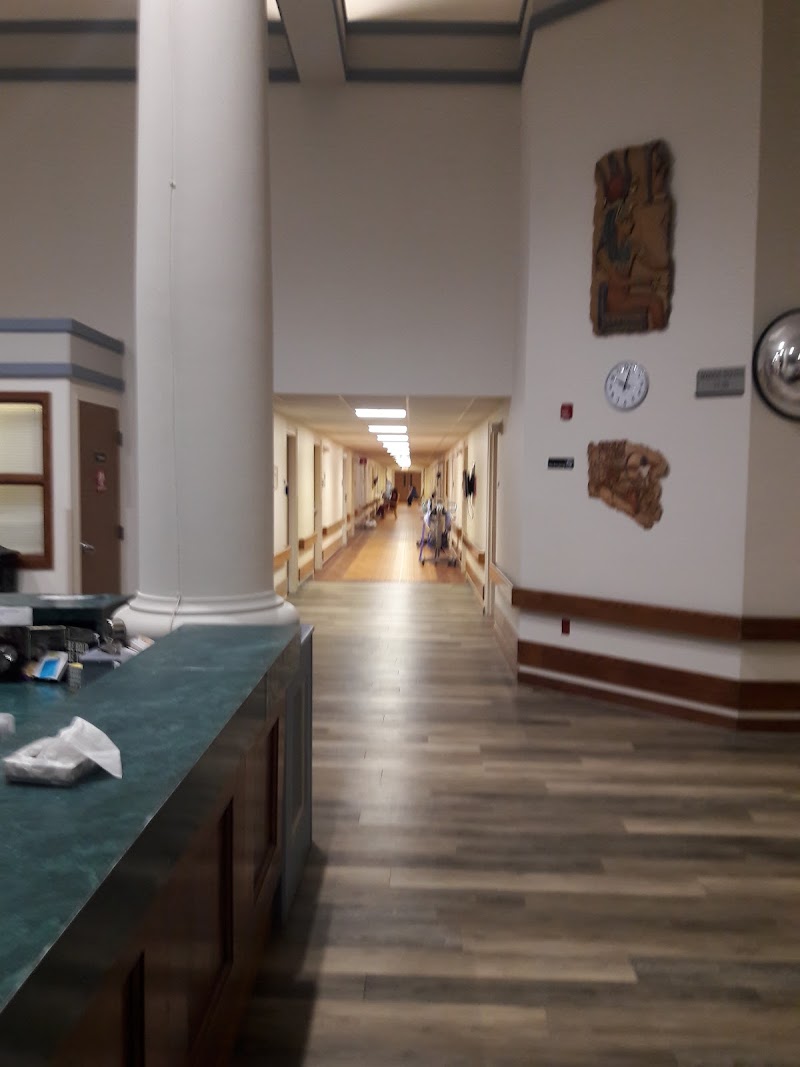
Who Owns and Operates Carriage House Nursing And Rehabilitation?

Carriage House Nursing and Rehabilitation is owned by a for-profit company. For-profit facilities operate as businesses with obligations to shareholders or private owners. The facility is operated by PREFERRED CARE, a chain that manages multiple nursing homes. With 120 certified beds and approximately 107 residents (about 89% occupancy), it is a mid-sized facility located in Bay City, Michigan.

How Does Carriage House Nursing And Rehabilitation Compare to Other Michigan Nursing Homes?

Compared to the 100 nursing homes in Michigan, Carriage House Nursing and Rehabilitation's overall rating (3 stars) is below the state average of 3.1, staff turnover (48%) is near the state average of 46%, and health inspection rating (3 stars) is at the national benchmark.

What Should Families Ask When Visiting Carriage House Nursing And Rehabilitation?

Based on this facility's data, families visiting should ask: "Can I visit during a mealtime to observe dining assistance and food quality?" "How do you handle medical emergencies, and what is your hospital transfer rate?" "Can I speak with family members of current residents about their experience?"

Is Carriage House Nursing And Rehabilitation Safe?

Based on CMS inspection data, Carriage House Nursing and Rehabilitation has a clean safety record: no substantiated abuse findings (meaning no confirmed cases of resident harm), no Immediate Jeopardy citations (the most serious violation level indicating risk of serious injury or death), and is not on the Special Focus Facility watch list (a federal program monitoring the lowest-performing 1% of nursing homes). The facility has a 3-star overall rating and ranks #100 of 100 nursing homes in Michigan. While no facility is perfect, families should still ask about staff-to-resident ratios and recent inspection results during their visit.

Do Nurses at Carriage House Nursing And Rehabilitation Stick Around?

Carriage House Nursing and Rehabilitation has a staff turnover rate of 48%, which is about average for Michigan nursing homes (state average: 46%). Moderate turnover is common in nursing homes, but families should still ask about staff tenure and how the facility maintains care continuity when employees leave.

Was Carriage House Nursing And Rehabilitation Ever Fined?

Carriage House Nursing and Rehabilitation has no federal fines on record. CMS issues fines when nursing homes fail to meet care standards or don't correct problems found during inspections. The absence of fines suggests the facility has either maintained compliance or corrected any issues before penalties were assessed. This is a positive indicator, though families should still review recent inspection reports for the full picture.

Is Carriage House Nursing And Rehabilitation on Any Federal Watch List?

Carriage House Nursing and Rehabilitation is not on any federal watch list. The most significant is the Special Focus Facility (SFF) program, which identifies the bottom 1% of nursing homes nationally based on persistent, serious quality problems. Not being on this list means the facility has avoided the pattern of deficiencies that triggers enhanced federal oversight. This is a positive indicator, though families should still review the facility's inspection history directly.