Paul Oliver Memorial Hospital LTCU
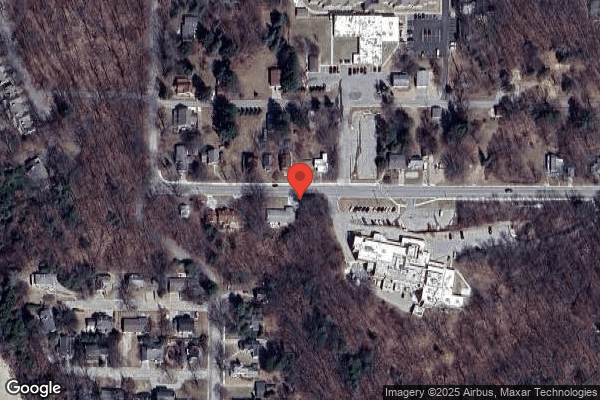
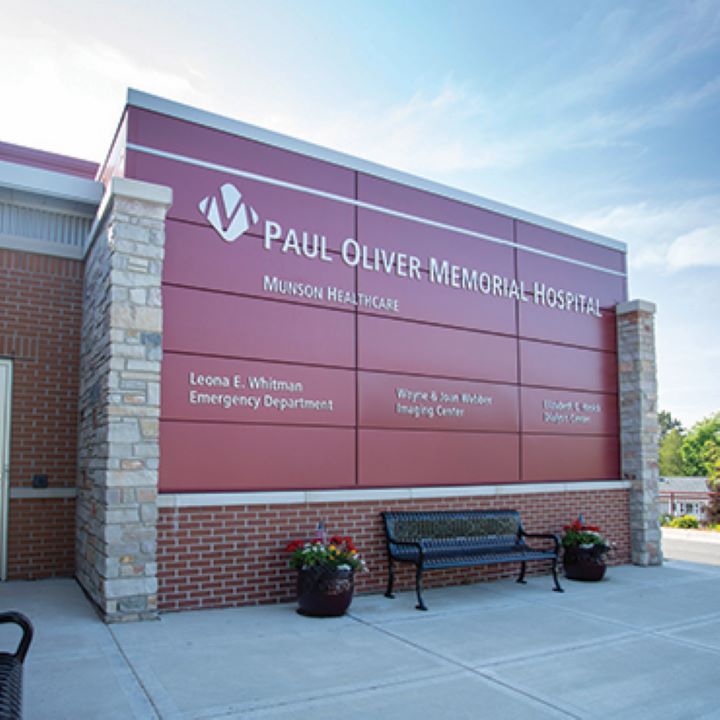
224 Park Avenue, Frankfort, MI 49635 (231) 352-2200
For profit - Corporation 35 Beds Independent Data: November 2025
Trust Grade
75/100
#73 of 422 in MI
Last Inspection: March 2025

Within standard 12-15 month inspection cycle. Federal law requires annual inspections.

Overview

Paul Oliver Memorial Hospital LTCU has a Trust Grade of B, indicating it is a good choice for families looking for care, ranking #73 out of 422 nursing homes in Michigan, which places it in the top half of facilities statewide. In Benzie County, it ranks #1 out of 2, meaning it is the best option in the area. The facility is improving, with reported issues decreasing from 11 in 2024 to just 1 in 2025. Staffing is a strong point, as it has a 5-star rating and a turnover of only 34%, which is better than the state average, ensuring continuity of care. There are no fines reported, and the facility benefits from more RN coverage than 97% of Michigan nursing homes, which helps to catch issues early. However, there are some concerning incidents. A serious finding involved a resident being sexually abused by a staff member, which understandably raises alarm about safety. Additionally, there were multiple concerns related to food safety, including improperly stored food that could lead to foodborne illnesses. While the overall quality and staffing are strong, families should weigh these serious incidents when considering this facility for their loved ones.

Trust Score
B
75/100
In Michigan
#73/422
Top 17%
Safety Record
Moderate
Needs review
Inspections
Getting Better
11 → 1 violations
Staff Stability
○ Average
34% turnover. Near Michigan's 48% average. Typical for the industry.
Penalties
✓ Good
No fines on record. Clean compliance history, better than most Michigan facilities.
Skilled Nurses
✓ Good
Each resident gets 123 minutes of Registered Nurse (RN) attention daily — more than 97% of Michigan nursing homes. RNs are the most trained staff who catch health problems before they become serious.
Violations
⚠ Watch
21 deficiencies on record. Higher than average. Multiple issues found across inspections.
★★★★★
5.0
Overall Rating
★★★★★
5.0
Staff Levels
★★★☆☆
3.0
Care Quality
★★★★☆
4.0
Inspection Score
Stable
2024: 11 issues
2025: 1 issues

The Good

  • 5-Star Staffing Rating · Excellent nurse staffing levels
  • Full Sprinkler Coverage · Fire safety systems throughout facility
  • No fines on record
  • Staff turnover below average (34%)

    14 points below Michigan average of 48%

Facility shows strength in staffing levels, fire safety.

The Bad

Staff Turnover: 34%

12pts below Michigan avg (46%)

Typical for the industry

The Ugly 21 deficiencies on record

1 actual harm
Mar 2025 1 deficiency
CONCERN (F)

Potential for Harm - no one hurt, but risky conditions existed

Food Safety (Tag F0812)

Could have caused harm · This affected most or all residents

. Based on observation, interview, and record review, the facility failed to store food in accordance with professional standards for food service safety as evidenced by failing to ensure that potenti...

Read full inspector narrative →
. Based on observation, interview, and record review, the facility failed to store food in accordance with professional standards for food service safety as evidenced by failing to ensure that potentially hazardous foods were dated and disposed of when expired and failed to maintain equipment and serving utensils in a sanitary manner. This deficient practice had the potential to result in food borne illness among any of the 29 residents in the facility. Findings include: On 3/19/25 at 2:14 PM, a tour of the dietary department was made with Certified Dietary Manager (CDM) A resulting in the following observations: - The reach in freezer in storeroom/manager office area revealed frozen yogurt marked with a use by date of 2/8/25. - The hood area in the kitchen contained two large rolling bins stored under cooking units. Both bins had a yellowing film with brown bits of crumbs stuck to the top of each cover. The first bin contained a 20-pound bag of flour which was approximately 1/2 full and dated with a manufacturer's stamp of 6/9/24. CDM A examined the bag and could not verify when the product had been opened or a date indicating when the flour should be used by. The bin had other bags of product and was noted to have debris in the bottom including a piece of a metal clip. The other large rolling bin contained oats in two containers and had dry debris in the bottom. CDM A acknowledged the containers should be free of debris. - The Vulcan oven/range was observed to have drip pans containing a buildup of overflow juices which were black and had burned on to the pan including black noodle remains. The grease trap was removed by CDM A who stated it needed to be cleaned. - Four small steam-table metal pans were being used to house various serving utensils and equipment parts. Each of these containers located throughout the food preparation area were observed with drips and crumb debris both on the utensils and loose in the bottom of the pans. CDM A delivered these containers to the dish room for cleaning. On 3/20/25 at 11:23 AM, Registered Dietitian (RD) B presented cleaning schedules which indicated the areas noted above should be regularly cleaned. The cleaning schedules included: Equipment: Hood Area Clean grease traps, Clean Stove and clean inside cabinet and drawers. The FDA Food Code States: 3-302.12 Food Storage Containers, Identified with Common Name of Food. 3-307.11 Miscellaneous Sources of Contamination. FOOD shall be protected from contamination that may result from a factor or source not specified under Subparts 3-301 3-501.18 Ready-to-Eat, Time/Temperature Control for Safety Food, Disposition. (A) A FOOD specified in 3-501.17(A) or (B) shall be discarded if it: . (2) Is in a container or PACKAGE that does not bear a date or day; 4-601.11 Equipment, Food-Contact Surfaces, Nonfood-Contact Surfaces, and Utensils. (A) EQUIPMENT FOOD-CONTACT SURFACES and UTENSILS shall be clean to sight and touch. Pf (B) The FOOD-CONTACT SURFACES of cooking EQUIPMENT and pans shall be kept free of encrusted grease deposits and other soil accumulations. (C) NonFOOD-CONTACT SURFACES of EQUIPMENT shall be kept free of an accumulation of dust, dirt, FOOD residue, and other debris.
Jun 2024 1 deficiency 1 Harm
SERIOUS (G) 📢 Someone Reported This

A family member, employee, or ombudsman was alarmed enough to file a formal complaint

Actual Harm - a resident was hurt due to facility failures

Free from Abuse/Neglect (Tag F0600)

A resident was harmed · This affected 1 resident

Based on interview and record review, the facility failed to protect one Resident (Resident #1) from sexual abuse by a facility employee of 3 residents reviewed for abuse and neglect. This deficient p...

Read full inspector narrative →
Based on interview and record review, the facility failed to protect one Resident (Resident #1) from sexual abuse by a facility employee of 3 residents reviewed for abuse and neglect. This deficient practice resulted in Resident #1 experiencing feelings of embarrassment, anxiety, and fear. Findings include: Resident #1 (R1): Review of R1's electronic medical record (EMR) revealed admission to the facility on 5/9/24 with diagnoses that included a displaced fracture of the right lower leg. Review of R1's Minimum Data Set (MDS) assessment completed upon admission revealed a Brief Interview for Mental Status (BIMS) score of 15, indicative of intact cognition. On 6/27/24 at 9:31 AM, an interview was conducted with R1 who reported she had been sexually assaulted on 6/4/24 by a certified nursing assistant (CNA) employed at the facility, Perpetrator D. R1 reported at some point before the lunch meal on 6/4/24, Perpetrator D assisted R1 to the bathroom with a total lift. R1 stated, during a transfer, Perpetrator D twisted his back and stated he needed to be more careful in case he found a girlfriend and subsequently made a sexual gesture with his hips. R1 stated after Perpetrator D transferred her back to the wheelchair, he stationed himself behind R1 to reposition her safely in the wheelchair. R1 stated Perpetrator D proceeded to grab both breasts and stated, You have nice firm chi-chi's [slang term for breasts]. R1 stated she told Perpetrator D his behavior was inappropriate, and he responded, Don't tell anybody or I'll get fired. R1 stated she did not report the event until the following day, 6/5/24. On 6/27/24 at 1:02 PM, a telephone interview was conducted with Licensed Practical Nurse (LPN) C who verified during her shift on 6/5/24, R1 reported an incident of sexual abuse by an employee that occurred on 6/4/24. LPN C stated R1 reported Perpetrator D had made a thrusting motion with his hips that was sexual in nature and subsequently grabbed her breasts and made a sexual comment. On 6/27/24 at 11:30 AM, an interview was conducted with the Assistant Director of Nursing (ADON) who verified LPN C reported the sexual abuse allegation via telephone on 6/5/24. The ADON stated she immediately interviewed R1 via telephone and confirmed the allegation details were consistent with the statement given to LPN C. The ADON stated R1 reported Perpetrator D made hip thrusting gestures and reached out and grabbed her breasts when providing cares on 6/4/24. On 6/27/24 at 2:13 PM, an interview was conducted with the Director of Nursing (DON) who reported he interviewed R1 on the morning of 6/6/24. The DON confirmed R1's allegations remained consistent and expressed she would like to file a police report. Review of the Case Report filed by local law enforcement on 6/27/24 read, in part: INVESTIGATION: I spoke with [R1] who stated her CNA two days prior, [Perpetrator D] was trying to help her out of the bed and into a wheelchair so she could use the bathroom. While assisting her, she [R1] told him [Perpetrator D] she is required to have to [sic] people assist to prevent injury and he replied back with, 'You are right, I don't want to get hurt so I can still uh-uh,' and made a thrusting motion with his hips, which [R1] demonstrated .Once in the wheelchair, [Perpetrator D] was adjusting her [R1] in the seat from behind by lifting her by both breasts and squeezing and stating, 'Those are some nice, firm chi-chis' .Further stated by [R1] was that she wanted to press charges because she just didn't want this to happen to any other residents at [the facility] that may not be able to speak up against it or were not physically capable of stopping an assault . REQUESTED CHARGES: CSC 2nd [second degree criminal sexual conduct]. On 6/27/24 a follow-up interview was conducted with R1 who stated she cried after the incident with Perpetrator D due to embarrassment. R1 stated she waited until the following day to report the incident due to these feelings of embarrassment. R1 stated, I was anxious after that [incident with Perpetrator D] occurred . It made me feel like if he's going to do it to me, he's going to do it to others in the facility. I wanted to make it straight with the facility. R1 stated she only accepts help from female caregivers following the incident with Perpetrator D. Review of facility policy titled, Abuse Prevention Program, revised 9/21/23 read, in part: .It is the policy of this facility to provide protections for the health, welfare and rights of each resident by developing and implementing written policies and procedures that prohibit and prevent abuse, neglect, exploitation and misappropriation of resident property . Review of the facility's Dignity Guidelines, undated, read, in part: .It is the practice of this unit to treat each resident with respect and dignity, and care for each resident in a manner and in an environment that maintains or enhances his or her quality of life . Review of facility policy titled, Resident Rights, undated, in part: .Right to a Dignified Existence: freedom from abuse, neglect, exploitation and misappropriation of property .
Feb 2024 10 deficiencies
CONCERN (D)

Potential for Harm - no one hurt, but risky conditions existed

Deficiency F0625 (Tag F0625)

Could have caused harm · This affected 1 resident

Based on interview and record review, the facility failed to ensure written information was provided to two Resident/Representatives (#8 and #16) of two residents reviewed for written notice of bed ho...

Read full inspector narrative →
Based on interview and record review, the facility failed to ensure written information was provided to two Resident/Representatives (#8 and #16) of two residents reviewed for written notice of bed hold. This deficient practice resulted in the potential for residents/representatives being unaware of incurring expenses related to reserve payment. Findings include: Resident #8 (R8) A review of the Clinical Notes in the Electronic Medical Record (EMR) for R8 revealed the following: 1/12/2024 14:33 (2:33PM) - [Director of Social Work K] forwarded resident's lab results to [facility physician] for review. [Facility physician] contacted urologist and then called this nurse at 1405 (2:05PM) with new order to send [R8] to ED (emergency department) for evaluation and treatment r/t (related to) cystitis. 1/20/24 21:12 (9:12PM) - .Res (resident) laying in bed with eyes closed. When attempting to assess Res, there was very little response . [Facility Nurse Practitioner] consulted and agreed with this nurse that Res should be evaluated in the ER (emergency room) r/t decrease responsiveness. Res to the ER at 2002 (8:02PM). A review of the EMR revealed no evidence of a written bed hold notice provided to R8 or a Resident Representative on either 1/12/24 or 1/20/24. Resident #16 (R16) A review of the Clinical Notes in the Electronic Medical Record (EMR) for R16 revealed the following: 11/04/2023 21:26 (9:26PM) .I was alerted [R16] had a temp (temperature) of 101.9, HR (heart rate) 117, 149/93 [blood pressure], pulse ox (oxygen) 95% .he had much difficulty standing and following directions .Called [facility physician] with this info (information) and received order to send to ER . A review of the EMR revealed no evidence of a written bed hold notice provided to R16 or a Resident Representative. On 2/28/24 at 8:54AM, an interview was conducted with Director of Social Work K. Director of Social Work K verified that there was no written bed hold notice provided to R8, R16, or their respective Resident Representative. Director of Social Work K stated, We've always let people come back. Review of facility policy titled, Bed Hold Notice Upon Transfer revised 2/13/24 read, in part: .Before a resident is transferred to the hospital or goes on a therapeutic leave, the facility will provide to the resident and or (sic) the resident representative reference written information that specifies: 1. The duration of the state bed-hold policy if any during which the resident is permitted to return and resume residency in the nursing home. 2. The reserve bed payment policy and the state plan policy, if any. 3. The facility policies regarding bed-hold periods to include allowing a resident to return to the next available bed. 4. Conditions upon which the resident would return to the facility: a. The resident requires the services which the facility provides. b. The resident is eligible for Medicaid skilled nursing facility services or Medicaid nursing facilities services . .The facility will keep a signed and dated copy of the bed hold information given to a resident or residence (sic) representative in the resident's file .
CONCERN (D)

Potential for Harm - no one hurt, but risky conditions existed

Pressure Ulcer Prevention (Tag F0686)

Could have caused harm · This affected 1 resident

**NOTE- TERMS IN BRACKETS HAVE BEEN EDITED TO PROTECT CONFIDENTIALITY** Based on observation, interview, and record review, the facility failed to ensure interventions for turning/repositioning were i...

Read full inspector narrative →
**NOTE- TERMS IN BRACKETS HAVE BEEN EDITED TO PROTECT CONFIDENTIALITY** Based on observation, interview, and record review, the facility failed to ensure interventions for turning/repositioning were implemented and accurately documented for one Resident (#8) of three residents reviewed for pressure ulcers. This deficient practice resulted in the potential for worsening of an existing pressure ulcer for a high-risk resident [Resident #8]. Findings include: Resident # 8 (R8) Review of R8's electronic medical record (EMR) revealed the most recent admission to the facility was on 3/15/23 with diagnoses including a stage two pressure ulcer of the sacral region (the bone at the base of the spine), cerebral infarction (stroke), and hemiplegia (paralysis) of the left side. Review of R8's most recent Minimum Data Set (MDS) assessment dated [DATE] revealed a Brief Interview for Mental Status (BIMS) score of 1, indicative of severe cognitive impairment. An observation made during the initial tour of the facility on 2/26/24 at 10:42 AM found R8 positioned on her back with the head of bed elevated approximately 30 degrees. An additional observation made on 2/26/24 at 1:35 PM found R8 laying in the same position. On 2/27/24, R8 was observed lying on her back with the head of bed elevated approximately 30 degrees at the following times: 7:58 AM, 9:03 AM, 11:32 AM, and 4:02 PM. Review of R8's EMR care plans revealed the following problem: [R8] is at risk for skin breakdown related to impaired gas exchange, obesity, impaired mobility, currently loss of skin integrity with the following listed interventions: .Reposition resident every 2 hours . .if resident is refusing care designed in the care plan, document resident refusal and why, if reason given, and report to the Charge Nurse of WCC (wound care certified) nurse . On 2/27/24 at approximately 11:51 AM, an interview was conducted with Certified Nursing Assistant (CNA) O who verified R8 was care planned to be repositioned every 2 hours. CNA O stated repositioning changes were expected to be documented on the hard chart at the nurse's station. On 2/27/24 at 11:55 AM, a document located at the nurse's station titled pressure relief positioing (sic) log for the week of 2/26/24 to 3/2/24 was reviewed for R8. The following key was listed to be recorded in two-hour time frames: 1 = sitting in recliner 2 = sitting in wheel chair (sic) 3 = right side bed [lying on right side in bed] 4 = left side bed [lying on left side in bed] 5 = on back in bed 6 = bed on alternate [alternating air pressure mattress]. No repositioning documentation was recorded for the entire date of 2/26/24. On 2/27/24 at 11:55 AM, 6 [alternative air pressure mattress] was observed recorded for 6:00 PM-2:00 AM in advance of the specified time fame. On 2/28/24 at approximately 11:02 AM, at interview was conducted with CNA M who confirmed R8 was care planned to be repositioned every 2 hours. CNA M indicated R8 rarely refused to be repositioned, and if R8 did refuse, it would be expected to be charted on the repositioning log. On 2/28/24 at 11:08 AM, the pressure relief positioing (sic) log was reviewed at the nurse's station. It was noted that 6 [alternating air pressure mattress] was then documented between the hours of 6:00 PM to 2:00 AM on 2/26/24 which was previously blank when reviewed on 2/27/24. On 2/28/24 at 11:20 AM, an interview was conducted with the Director of Nursing (DON), who stated the expectation for repositioning and documentation was the CNA staff were to perform the task and document it in the hard chart at the nurse's station in real time. When presented with the pressure relief logs, the DON stated he was unable to provide a reason for time gaps in the positioning log but acknowledged the importance of repositioning given the pressure injury to R8's sacrum. The DON confirmed the meaning of the pressure relief key [1-6] and stated he was unsure why values aside from 6 were not listed on the log. When asked why repositioning values were documented on the hard chart two days after the alleged date of occurrence the DON stated, I don't know, that's interesting. That shouldn't be happening.
CONCERN (D)

Potential for Harm - no one hurt, but risky conditions existed

Incontinence Care (Tag F0690)

Could have caused harm · This affected 1 resident

Based on observation, interview, and record review the facility failed to provide timely urinary catheter (tube designed to drain bladder) care for one Resident (#11) of one resident reviewed for urin...

Read full inspector narrative →
Based on observation, interview, and record review the facility failed to provide timely urinary catheter (tube designed to drain bladder) care for one Resident (#11) of one resident reviewed for urinary catheter care. This deficient practice resulted in the potential for complications related to urinary tract infection. Findings include: Resident #11 (R11) R11's electronic medical record (EMR) revealed an admission date of 1/27/22. R11's minimum data set (MDS) indicated a brief interview for mental status (BIMS) score of 99/15, which indicated that R11 was not cognitively intact. R11 had medical diagnoses including dementia, obstructive and reflux uropathy (a disorder of the urinary tract that occurs during obstruction of urinary flow or return of urine flow to the kidney). Review of the active orders for R11 revealed an order for Keflex 500mg (milligram) tab, 1 tab monthly prior to catheter change. On 2/26/24 at 10:40 AM, R11 was observed in the day room napping and reclined back in a chair. The bottom of the leg bag was visible at the pant cuff and bulging with urine. Staff were observed in the area and failed to identify the concern. On 2/26/24 at 11:30 AM during a follow-up observation, the leg bag of R11 was again observed to be bulging at the cuff of pants. Staff were observed in the area and failed to identify the concern. Review of nursing notes from after lunch on 2/26/24 read in part leg bag was drained of 475ml (milliliters) of clear yellow urine during the catheter change. On 2/26/24 at 5:56 PM, during a phone interview, the resident representative for R11 stated he gets bladder spasms quite often. The resident representative stated this was why he wore a leg bag and it had lessened his spasms. On 2/28/24 at 10:30 AM, observed CNA H empty leg bag of approximately 275ml of amber colored clear urine. During leg bag draining, CNA H noticed that leg straps were not placed appropriately to allow for unrestricted urine flow. The strap placed pressure on the drainage tube. CNA H had to correct the problem to restore proper drainage. On 2/28/24 at 10:38 AM, ADON (Assistant Director of Nursing) G provided an example of the catheter ordered for R11, the leg bag had a capacity of 500ml. The amount of urine left in the leg bag during these times, posed a risk for reflux into the line of non-sterile urine to be returned to the bladder increasing the risk for urinary tract related infections.
CONCERN (D)

Potential for Harm - no one hurt, but risky conditions existed

Deficiency F0740 (Tag F0740)

Could have caused harm · This affected 1 resident

**NOTE- TERMS IN BRACKETS HAVE BEEN EDITED TO PROTECT CONFIDENTIALITY** Based on interview and record review the facility failed to coordinate behavioral health services for one Resident (#19) of two ...

Read full inspector narrative →
**NOTE- TERMS IN BRACKETS HAVE BEEN EDITED TO PROTECT CONFIDENTIALITY** Based on interview and record review the facility failed to coordinate behavioral health services for one Resident (#19) of two residents reviewed for mood and behavior. This deficient practice resulted in the potential for continued unstable mood/behaviors and impaired psychosocial well-being. Findings include: Resident #19 (R19) Review of R19's electronic medical record (EMR) revealed a most recent admission to the facility on [DATE] with diagnoses including major depressive disorder, moderate intellectual disabilities, and cognitive impairment. On 2/28/24 at approximately 10:15AM, an interview was conducted with R19 who indicated he had feelings of sadness and hopelessness which had been going on for, practically my whole life. A review of R19's record revealed the following progress notes: 2/16/2024 11:41[AM] - Resident has been having increased difficulty swallowing medications . Resident stated, 'I would rather commit suicide than take pills.' 2/23/2024 2:28 [PM] - Res (Resident) attempted to kick CNA (certified nursing assistant) in the head during cares this evening . 2/23/2024 18:20 (6:20PM) - Resident hitting staff with closed fist during cares. Both staff members on left side and resident rolled onto right side. Resident putting fist behind himself and striking staff. 2/24/2024 18:28 (6:28PM) - [R19] refused his HS (bedtime) medication and hit the medication cup out of the RN's (registered nurse's) hand to the floor, said, 'I'm sick of this [expletive], I wish I was dead,' he denied any plan to harm himself. A review of a clinical progress note written by Licensed Practical Nurse (LPN) L on 2/16/24 at 12:03 [PM] read, Discussed resident statements/behaviors with [Director of Social Work K] who states that [Community Mental Health Provider] has been notified of resident behaviors/statements and they will be doing a visit sometime today [2/16/24]. A review of the EMR revealed no evidence of communication or consultation with [Community Mental Health Provider]. On 2/28/24 at 9:08AM an interview was conducted with the Director of Social Work K. When asked for documentation to show behavioral care needs were being addressed for R19, Director of Social Work K could not provide evidence of communication between the facility and [Community Mental Health Provider]. When Director of Social Work K was asked if she could provide any clinical notes from [Community Mental Health Provider] she stated, They have their own system to document on. On 2/28/24 at 10:29AM, an interview was conducted with LPN L and CNA M. LPN L stated R19 requires two CNAs for all cares for increased safety due to physical behaviors toward caregivers. CNA M stated R19, has seemed really sad lately. CNA M speculated R19 has become increasingly embarrassed by requiring assistance from caregivers to perform activities of daily living which was causing him to lash out and make suicidal statements. On 2/28/24 at 10:20AM, a follow-up interview was conducted with Director of Social Work K who acknowledged the lack of communication between the facility and [Community Mental Health Provider] was problematic, especially given R19's verbal expression of suicidal ideations.
CONCERN (D)

Potential for Harm - no one hurt, but risky conditions existed

Deficiency F0742 (Tag F0742)

Could have caused harm · This affected 1 resident

Based on observation, interview and record review, the facility failed to ensure follow-up for the highest practicable mental and psychosocial well-being for one Resident (R276) of one resident review...

Read full inspector narrative →
Based on observation, interview and record review, the facility failed to ensure follow-up for the highest practicable mental and psychosocial well-being for one Resident (R276) of one resident reviewed for mental health services. This deficient practice resulted in adjustment difficulty and a lack of participation in both therapy and dialysis services. Findings include: Review of the Electronic Medical Record (EMR) for R276 revealed admission to the facility on 2/14/24 with diagnoses of acute kidney failure and muscle weakness. R276 was responsible for his own medical and financial decisions. An observation and interview of R276 was conducted on 2/26/24 a 12:50 p.m. R276 had returned from dialysis and was observed lying in his bed. R276 stated, The schedule (of therapy) needs to change. It isn't cool. I'm so drained from dialysis and therapy will be coming in at 2:00 (p.m.) to work with me. I'm tired. R276 was noted to look pale with his right-hand shaking. R276 stated he felt anxious and confirmed he was not taking any medication for anxiety. R276 stated he was told he needed to wait until Thursday (2/29/24) to be seen by the physician. On 2/27/24 at 1:15 p.m. R276 was observed sitting in his recliner chair. R276 was noted to be with Physical Therapist (PT) Q who just completed a transfer via Hoyer lift from bed to chair. R276 was noted to be visibly shaken, pale in color, heavily breathing and asking for medication to relieve his pain. An interview was conducted with PT Q on 2/27/24 at 2:30 p.m. PT Q was asked when R276 began to show signs of anxiety and resistance in participating with therapy. PT Q stated R276 was anxious to participate and would often refuse or ask for therapy sessions to come back later from day one. PT Q stated today (2/27/24) was the first time R276 had gotten out of his bed. PT Q stated R276 was close to being discharged from therapy services due to a lack of progress and participation. Review of R276's Physical Therapy Treatment Encounter Notes read the following: 2/16/24 .Complexities .Exhibits heightened anxiety w/ (with) activity 2/19/24 .Complexities .Exhibits heightened anxiety w/ activity 2/20/24 Complexities .Decreased motivation to participate with PT 2/21/24 .Complexities .Exhibits heightened anxiety w/ activity 2/22/24 .Complexities .Exhibits heightened anxiety w/ activity 2/23/24 .Complexities .Exhibits heightened anxiety w/ activity An interview was conducted with Family Member (FM) P of R276 on 2/27/24 at 2:45 p.m. FM P stated R276's anxiety level started to become worse in the summer of 2023 and noted that he has stated he does not want to participate in any sort of activity including therapy and dialysis. He (R276) does not want to get up because it makes him so nervous. I would love if a medication was added to help his anxiety. He (R276) needs to complete his therapy; he needs to complete his dialysis. During the interview with FM P on 2/27/24 at 2:45 p.m., R276 spoke up and stated that he was feeling frustrated and felt that the facility was not listening to him. Review of R276's Progress Notes revealed the following: 2/24/24 .Continues to refuse to get up and sit in chair .becomes anxious with any repositioning and did state at one point that he felt anxious. Feels like he can't breathe when being repositioned . 2/26/24 .Up a lot of the night, obsessing about dialysis in the morning . 2/27/24 .Res (Resident) said he feels very anxious during therapy and feels he is 'going to have a heart attack', He would like to discuss anxiety meds with the doctor .will continue to monitor. 2/28/24 .Res resting in bed, pleasant and cooperative but very anxious .Res has anxiety over going to dialysis as well and does not want to go down in the chair, wants to stay in bed .will continue to monitor. An interview was conducted with the Director of Nursing (DON) on 2/27/24 at 2:50 p.m. The DON stated the first time he heard R276 was having an increase in anxiety was today during his care conference. The DON confirmed R276 has needed more encouragement to participate in therapy sessions and to go to dialysis. The DON stated that the physician would be called and acknowledged waiting until 2/29/24 was not appropriate.
CONCERN (D)

Potential for Harm - no one hurt, but risky conditions existed

Drug Regimen Review (Tag F0756)

Could have caused harm · This affected 1 resident

**NOTE- TERMS IN BRACKETS HAVE BEEN EDITED TO PROTECT CONFIDENTIALITY** Based on interview, and record review the facility failed to provide evidence of documented monthly pharmacy medication regimen ...

Read full inspector narrative →
**NOTE- TERMS IN BRACKETS HAVE BEEN EDITED TO PROTECT CONFIDENTIALITY** Based on interview, and record review the facility failed to provide evidence of documented monthly pharmacy medication regimen reviews (MRRs) for two residents (R6 and R22) out of five residents reviewed for unnecessary medications. This deficient practice resulted in the potential for unnecessary medications and/or adverse medication side effects. Findings include: R6 A review of the electronic medical record (EMR) revealed Resident #51's admission to the facility on 1/1/22 with diagnoses including: chronic respiratory failure, seizures, congestive heart failure, major depression disorder, type 2 diabetes, bipolar disorder, hypertension, and chronic pain. A review of R6's Electronic Medical Record (EMR) revealed admission to the facility on 8/22/23 with diagnosis including stage 3 chronic kidney disease, type 2 diabetes, seizures, muscle weakness, and intellectual disabilities. Review of R6's MRR's with the Assistant Director of Nursing (ADON) revealed missing pharmacy reviews since November 2023. R22 A review of the EMR revealed Resident #57's admission to the facility on 2/1/22 with diagnoses including: infection of surgical site, major depression, anxiety disorder, and muscle weakness. A review of R22's EMR revealed admission to the facility on [DATE] with diagnoses including Alzheimer's disease with behaviors, atrial fibrillation, dementia with behaviors, and hyperkalemia (high potassium in the blood). An interview was conducted with the Director of Nursing (DON) on 2/28/24 at 11:15 a.m. The DON stated that it was expected a pharmacist reviews any resident's medications monthly and documents accurately. Review of the facility's Medication Regimen Review policy, undated, stated the following: The consultant pharmacist will review the drug regimen of all the residents at least monthly .and report any observed irregularities in drug use and other drug therapy recommendation to the director of nursing and attending physician, and if requested to the administrator and medical director .
CONCERN (D)

Potential for Harm - no one hurt, but risky conditions existed

Unnecessary Medications (Tag F0759)

Could have caused harm · This affected 1 resident

Based on observation, interview, and record review, the facility failed to maintain administration error rate less than 5% for 2 of 30 medication administrations. This deficient practice resulted in a...

Read full inspector narrative →
Based on observation, interview, and record review, the facility failed to maintain administration error rate less than 5% for 2 of 30 medication administrations. This deficient practice resulted in a medication error rate of 6.67% with the potential for medication complications related to resident medication treatments for various conditions. Findings include: On 02/27/24 at 7:45 AM, a medication administration was observed with LPN (licensed practical nurse) I who was observed preparing morning medication pass that included ordered miralax 17 gm (grams) daily for resident #22. Nurse I was observed removing the cap and pouring the miralax into the cap without coming even to the white portion of the cap that measures the appropriate amount of 17 gm. LPN I proceeded to mix with water and administer medication. Interviewed RN I about where the line is for measuring the miralax appropriately, she stated she looks for the G inside the cup to determine the appropriate amount. Per administration instructions provided by miralax.com: The bottle top is a measuring cap marked to contain 17 grams of powder when filled to the indicated line (white section in cap). https://www.miralax.com/products/miralax On 2/27/24 12:00 PM, a medication administration was observed with RN (registered nurse) J who was observed preparing a dose of ordered diclofenac 1% topical gel 2 gm QID (four times a day) for resident #9. RN J squeezed the diclofenac gel into medicine cup without using measuring card provided to measure the appropriate amount of 2 gm. She proceeded to administer gel to resident's right shoulder. Interviewed RN J about how diclofenac should be measured prior to administration, she stated with the measuring card. She stated she realized after she squeezed it in the medicine cup, her error, but did not feel comfortable with being observed to dispose of medication, and start again. Per administration instructions provided by Mayo Clinic, for voltaren® (trade name for diclofenac) 1% topical gel: Use the enclosed dosing card to measure the correct dose. The gel should be applied within the oblong area of the dosing card up to the 2 or 4 gram line (2 grams for each elbow, wrist, or hand, and 4 grams for each knee, ankle, or foot). https://www.mayoclinic.org/drugs-supplements/diclofenac-topical-application-route/proper-use/drg-20063434?p=1 On 02/28/24 08:42 AM, requested medication administration policy from DON, and asked him what his expectations were for administering diclofenac to residents; should nurses be utilizing the measuring stick provided? He responded with a yes. When asked about the miralax, he stated that he expected them to follow manufacturers directions provided on the bottle, per the residents orders. A review of facility's administering medications policy read in part, medications are administered in accordance with written orders of the attending physician.
CONCERN (F)

Potential for Harm - no one hurt, but risky conditions existed

Food Safety (Tag F0812)

Could have caused harm · This affected most or all residents

**NOTE- TERMS IN BRACKETS HAVE BEEN EDITED TO PROTECT CONFIDENTIALITY** Based on observation, interview and record review, the facility failed to store, prepare, distribute, and serve food in accordan...

Read full inspector narrative →
**NOTE- TERMS IN BRACKETS HAVE BEEN EDITED TO PROTECT CONFIDENTIALITY** Based on observation, interview and record review, the facility failed to store, prepare, distribute, and serve food in accordance with professional standards for food service safety potentially resulting in a food borne illness among any or all 24 residents. Findings include: On 2/26/24 between 10:15 AM and 12:15 PM, observations were made of the kitchen, located in the basement and the serving area located on the second floor resident area. The following was observed: * A plastic container labeled sloppy joe was in the walk in cooler with an expiration date of 2/22. * A plastic container with what appeared to be [NAME] slaw, was not labeled with its contents or any dating in the walk in cooler. * A package of sliced sandwich turkey was opened without any label indicating the date opened or expiration date. The package was open to the air and not sealed in the refrigerator drawer of the kitchenette serving area. *A plate of sandwiches in the kitchenette refrigerator had a use by date of 2/25. *An open package of sliced cheese with no date label was in the kitchenette refrigerator. *A squirt bottle of French dressing was in the kitchenette refrigerator and labeled with a prepared date of 1-27 and Use by date of 2-2. *A bottle of Classic Caesar dressing was in the kitchenette refrigerator with an open date of 11/24 and use by date of 12/24. *A personal water bottle was observed on the food display cart in the kitchenette, surrounded by food. On 2/26/24 at approximately 12:30 PM, an interview was conducted with kitchen manager (KM) A who was informed of the expired food in the walk in cooler and kitchenette refrigerator. Observations made between 3:45 PM and 4:00 PM revealed the expired sloppy joe and salad dressings were still present, and all the other expired expired foods had been discarded. On 02/27/24 at approximately 07:28 AM the sloppy joe mixture was observed to be absent from the walk in cooler. An interview with [NAME] C was conducted at this time and asked about the container of sloppy joe mixture. [NAME] C stated he had discarded it because it didn't look very good. On 02/27/24 between 08:00 AM and 8:30 AM breakfast service was observed in the kitchenette. Pureed french toast identified by Food Server (FS) B was being held on steam table in plastic covered containers. Additionally, cooked egg whites (omelette) and link sausage were also being held on the steam table in plastic containers. Temperatures were measured using a metal stem probe thermometer and was found that the pureed french toast was 117°F, egg whites 116°F and sausage at 123°F. FS B was notified of the temperature measurements, and then proceeded to serve the pureed french toast without reheating. At approximately 8:51 AM, an interview was conducted with KM A about the food stored on the steam table in the plastic containers. KM A stated that the containers were used to keep the food products separate. When told about the observed holding temperatures, KM A stated We can always heat them up. When told that it had not been heated before serving, KM A did not reply. The FDA Food Code 2017 states: 3-501.17 Ready-to-Eat, Time/Temperature Control for Safety Food, Date Marking. (A) Except when PACKAGING FOOD using a REDUCED OXYGEN PACKAGING method as specified under § 3-502.12, and except as specified in (E) and (F) of this section, refrigerated, READY-TOEAT, TIME/TEMPERATURE CONTROL FOR SAFETY FOOD prepared and held in a FOOD ESTABLISHMENT for more than 24 hours shall be clearly marked to indicate the date or day by which the FOOD shall be consumed on the PREMISES, sold, or discarded when held at a temperature of 5ºC (41ºF) or less for a maximum of 7 days. The day of preparation shall be counted as Day 1. 3-501.16 Time/Temperature Control for Safety Food, Hot and Cold Holding. (A) Except during preparation, cooking, or cooling, or when time is used as the public health control as specified under §3-501.19, and except as specified under (B) and in (C ) of this section, TIME/TEMPERATURE CONTROL FOR SAFETY FOOD shall be maintained: (1) At 57°C (135°F) or above, except that roasts cooked to a temperature and for a time specified in 3-401.11(B) or reheated as specified in 3-403.11(E) may be held at a temperature of 54°C (130°F) or above; 2-401.11 Eating, Drinking, or Using Tobacco. (A) Except as specified in ¶ (B) of this section, an EMPLOYEE shall eat, drink, or use any form of obacco only in designated areas where the contamination of exposed FOOD; clean EQUIPMENT, UTENSILS, and LINENS; unwrapped SINGLE-SERVICE and SINGLE-USE ARTICLES; or other items needing protection can not result. (B) A FOOD EMPLOYEE may drink from a closed BEVERAGE container if the container is handled to prevent contamination of: (1) The EMPLOYEE'S hands; (2) The container; and (3) Exposed FOOD; clean EQUIPMENT, UTENSILS, and LINENS; and unwrapped SINGLE-SERVICE and SINGLE-USE ARTICLES.
CONCERN (F)

Potential for Harm - no one hurt, but risky conditions existed

Safe Environment (Tag F0921)

Could have caused harm · This affected most or all residents

Based on observation and interview, the facility failed to provide a safe, functional and sanitary environment for residents, staff and the public potentially affecting all 24 residents. Findings incl...

Read full inspector narrative →
Based on observation and interview, the facility failed to provide a safe, functional and sanitary environment for residents, staff and the public potentially affecting all 24 residents. Findings include: On 02/26/24 between 0:2:20 PM and 02:35 PM resident rooms were observed to have non-functioning night lights and included rooms and bathrooms: 204, 208, 209, 210, and 239. At approximately 2:50 PM an interview was conducted with Maintenance Director (MD) D concerning the non functional resident room night lights. MD D stated he was not aware of the lights not working and stated he did not do regular checks to see if they were working, rather, relied on staff to report them as non working to which the maintenance department would then respond and replace. MD D stated the lights would be replaced as soon as possible. On 02/26/24 at approximately 10:30 AM observations were made in the kitchen. Two potable water lines were observed exiting through the ceiling tiles and terminating at threaded hose connections near the three compartment sink,. Each water line was equipped with a shut off valve and a hose bib back flow preventer. The water line on the left side had a hose with a sprayer connected to the end. On 2/27/24 at approximately 9:30 AM an interview was conducted with Kitchen Manager (KM) Awho stated the hose was used daily for filling their mop bucket and spraying the floor down around the dish machine. At approximately 11:00 AM an interview was conducted with MD D who confirmed the water lines did not have any additional higher level protection rated back flow prevention device installed.
MINOR (C)

Minor Issue - procedural, no safety impact

Infection Control (Tag F0880)

Minor procedural issue · This affected most or all residents

Based on observation, interview, and record review the facility failed to perform appropriate infection control practices for 3 residents (Resident #22, Resident #11, Resident #276) of 24 residents re...

Read full inspector narrative →
Based on observation, interview, and record review the facility failed to perform appropriate infection control practices for 3 residents (Resident #22, Resident #11, Resident #276) of 24 residents reviewed for infection control as evidenced by failure to: 1. Failure to date distilled water for use in C-pap. 2. Set up and administer medications to prevent cross contamination. 3. Failure to store medications in cart to prevent cross contamination. This deficient practice resulted in the potential of transmission of infectious organisms and disease within the facility. Findings include: Resident #11 (R11) On 2/26/24 at 2:51 PM, during an observation of R11's room, a bottle of distilled water was sitting on a bedside table next to R11's C-pap machine. On 2/26/24 2:54 PM, during an interview with RN (registered nurse) J, when asked if the distilled water went by the date on the container or should be labeled with an open date, she stated it should be labeled with an open date. Resident #22 (R22) On 2/27/24 at approximately 8:30 AM, LPN I was observed taking a medicine cup with medication in it and a flonase nasal spray device into the dining room and placed it on the cart with coffee decanters without placing a barrier down. LPN I proceeded to get an ice-cream cup out and placed this on the cart to mix with medications in medicine cup to administer to R22. LPN I set the flonase nasal spray device down on the dining room table without a barrier and with other residents present at the table. LPN I administered the medications with ice-cream to R22 and then picked up the flonase nasal spray device and administered it to R22 in both nostrils. LPN I then proceeded to take flonase bottle and place it back into the medication cart without cleansing the nasal applicator tip. DPS B Based on interview and record review the facility failed to have an infection control program that provided analysis, interpretation and sharing of data of health-related issues based off the ongoing systemic collection of infection control surveillance. This deficient practice had the potential for unidentified trends in resident illnesses and the potential for undetected outbreaks/trends. Findings include: Review of infection prevention (IP) records indicated no summary analysis of data collected by the infection surveillance activities of the facility for the prior six months. There was no way to determine if there were any trends/causes in the collected data. On 2/27/24 at 3:34 PM, an interview of the assistant director of nursing (ADON) Infection Preventionist (IP) and the Chief Nursing Officer IP, they stated they did not have any summary of identified illnesses and trends. The ADON acknowledged the gap in their current process and could leave them vulnerable to potential outbreaks with the lack of analysis.
Mar 2023 9 deficiencies
CONCERN (D)

Potential for Harm - no one hurt, but risky conditions existed

Resident Rights (Tag F0550)

Could have caused harm · This affected 1 resident

**NOTE- TERMS IN BRACKETS HAVE BEEN EDITED TO PROTECT CONFIDENTIALITY** Based on observation, interview, and record review, the facility failed to maintain dignity relating to provision of care for tw...

Read full inspector narrative →
**NOTE- TERMS IN BRACKETS HAVE BEEN EDITED TO PROTECT CONFIDENTIALITY** Based on observation, interview, and record review, the facility failed to maintain dignity relating to provision of care for two (Resident #9 and Resident #10) of 21 residents reviewed for dignity. This deficient practice resulted in the potential for embarrassment, impaired self-esteem, and confidence. Findings include: Resident #9 Resident #9's Electronic Medical Record (EMR) indicated Resident #9 was admitted to the facility on [DATE] and had medical diagnoses which included dementia, depression, and anxiety. The Minimum Data Set (MDS) assessment dated [DATE] indicated a staff assessment had been performed in which Resident #9 was found to be severely cognitively impaired. Resident #9's care plan dated 9/20/20 included the following information, in part, Urinary Continence: [Resident #9] is always incontinent . I will be clean and comfortable . Check for incontinence; change if wet/soiled . On 03/07/23 at 1:55 p.m., after Resident #9 reported she needed to have her incontinence brief changed, Certified Nurse Aide (CNA) I entered Resident #9's room and loudly stated, Do you want me to change her again even though she was just changed? I literally changed her 10 minutes ago. She is a very confused elderly lady. When CNA A checked Resident #9, a moderate amount of stool was present. On 03/09/23 at 9:55 a.m., concerns were shared with the Director of Nursing (DON) regarding CNA I's behavior toward Resident #9. The DON shook his head and said that CNA I had demonstrated a bad attitude. The DON said this type of attitude toward residents could have a negative impact on Resident #9's dignity. The DON said that type of behavior was unacceptable and would follow up on the concern. Resident #10 Resident #10's face sheet revealed an admission date of 1/27/22 and medical diagnoses which included dementia and urinary retention. On 03/07/23 at 1:43 p.m., Resident #10 was observed sleeping in his bed, a urinary catheter collection bag was clipped to the bed. The collection bag was not inside a dignity bag and a moderate amount of urine was present in the bag, and visible from the doorway of Resident #10's room. Two additional observations were made on 3/7/23 at 2:30 p.m. and 3:48 p.m. of Resident #10's urinary collection bag. The collection bag which had a moderate amount of urine present was visible from the doorway and a dignity bag was not observed. 03/09/23 09:55 a.m., the DON said urinary catheter collection bags should be placed inside a dignity bag because dignity could be compromised if others could visualize Resident #10's urine. A copy of the Rights of Residents in Nursing Facilities Respect and Dignity information dated 11/28/16 contained the following information, in part, c. the right to reside and receive services in the facility with reasonable accommodation of your needs and preferences .you have the right to be free from abuse and neglect .You have the right to receive adequate care . A copy of the Know your Rights, Your Medicaid Coverage in a Nursing Facility undated booklet, included the following information in part Quality of Your Medical Care .You have the right to receive necessary nursing, medical and social services to reach and maintain the highest practicable physical, mental and social well-being, as determined by the comprehensive assessment and care plan. These services must be given in a confidential and dignified manner that meets your treatment and personal needs .The following must be provided by the nursing home. Medicaid pays the home for these services and supplies Nursing Care - routine .Personal Hygiene Items .
CONCERN (D)

Potential for Harm - no one hurt, but risky conditions existed

Deficiency F0657 (Tag F0657)

Could have caused harm · This affected 1 resident

**NOTE- TERMS IN BRACKETS HAVE BEEN EDITED TO PROTECT CONFIDENTIALITY** Resident #5 Resident #5's Electronic Medical Record (EMR) indicated an admission date of 11/16/21 and medical diagnoses included...

Read full inspector narrative →
**NOTE- TERMS IN BRACKETS HAVE BEEN EDITED TO PROTECT CONFIDENTIALITY** Resident #5 Resident #5's Electronic Medical Record (EMR) indicated an admission date of 11/16/21 and medical diagnoses included Parkinson's disease, dementia with behavioral disturbances, and repeated falls. On 03/08/23 at approximately 1:30 p.m., Resident #5's wife reported Resident #5 had several falls prior to being admitted to the facility. Resident #5's wife said he continued to have falls after entering the facility. Resident #5 was observed in a wheelchair and was unable to recall if he had fallen. On 03/09/23 at 9:44 a.m. the Director of Nursing (DON) said there were room care plans as well as comprehensive care plans. RN H explained the room care plans were updated as needed with falls but was unsure if the comprehensive care plans were updated as well. Resident #5's falls which occurred on 2/5/23, 2/13/23, and 2/24/23 were reviewed with the DON and RN H. RN H stated awareness that in room care plans were supposed to be reviewed and/or updated after each fall but was unable to clarify if comprehensive care plans were being reviewed and updated as well. RN H said anti roll backs were added to the in room care plan on 2/14/23. The comprehensive care plan included the following information pertaining to fall interventions, [Name of facility] staff assist and monitoring, please see my up to date care plans for up to date interventions . A review of the in-room care plans dated 2/3/22 and 2/22/23 did not indicate the care plans had ben reviewed and/or updated after Resident #5's falls on 2/3/23 and 2/13/23. There was not an in-room care plan provided to support review or update after Resident #5 had fallen on 2/24/23. The facility's Falls-[Name of Facility] policy with the last revision date of 8/31/21 included the following information in part, Identification of Hazards and Risks A. The process through which the facility becomes aware of potential hazards in the resident environment and the risk of a resident having an avoidable accident. 4. This information is to be documented and communicated across all disciplines .Implementation of Interventions A. Using specific interventions to try to reduce a resident's risks from hazards in the environment. The process includes: 1. Communicating the interventions to all relevant staff. 2. Assigning responsibility. 5. Ensuring that the interventions are put into action. When changes are made to the care plan, the CENA needs to know. Care plan changes are added to the white board. All CENA's will be required to check the white board for any changes before starting on the floor. Every staff member will be required to follow any care plan changes .9. Resident-directed approaches may include: a. Implementing specific interventions as part of the plan of care b. Supervising staff and residents, etc. c. Facility records document the implementation of these interventions .monitoring and modification, A Monitoring is the process of evaluating the effectiveness of interventions. Modification is the process of adjusting interventions as needed to make them more effective in addressing hazards and risks. Monitoring and modification processes include: . Ensuring that interventions are implemented correctly and consistently . Based on observation, interview, and record review, the facility failed to ensure that care plans were revised and implemented for two Residents (#5 and #17) out of 11 reviewed for care plans. This deficient practice resulted in inaccurate care plans and the potential for unmet care. Findings include: Resident #17 (R17) A review of R17's medical record revealed a Physical Therapy (PT) treatment assessment note dated 2/21/23 which revealed, Clinical Impressions: Current value changed from 'Pt has stage 3 pressure injury to R lateral ankle .' to 'Pt has unstageable pressure injury to R lateral ankle . On 3/9/23 at 1:50 p.m., R17 was observed lying in bed, and Registered Nurse (RN) H asked him if it was alright if his wound was observed. R17 agreed to the observation. RN H removed the dressing on R17's right lateral malleolus (outer ankle) and the pressure injury was observed. RN H was asked to measure or approximate the size of R17's pressure injury, but she did not respond. The pressure injury appeared to be approximately 0.7 centimeters (cm) x 0.7 cm in size for the round yellow wound bed, with a red ring around the wound extending approximately 0.5 inches away from the wound. R17 was yelling out in pain when the dressing was being pulled back and reapplied. A review of R17's medical record revealed he admitted to the facility on [DATE] with diagnoses including psychological development disorder, major depression, and hemiplegia of the left side. A review of his 2/3/23 Minimum Data Set (MDS) assessment revealed he scored 7/15 on the Brief Interview for Mental Status (BIMS) assessment, indicating moderately impaired cognition and had one unstageable pressure injury that was not present on admission (was facility acquired). A review of R17's progress note dated 3/7/23 revealed, . dried necrotic tissue . measurement: 0.6 cm x 0.6 cm x 0.1 cm with 80% yellow necrotic tissue at base . attempted sharps debridement with forceps to remove necrotic tissue which pt (patient) started kicking at this therapist and yelling . A review of R17's care plan for skin with no date of initiated revealed, (Name of R17) is at risk for skin breakdown related to impaired functional mobility, cognitive function, incontinence, nutritional status, pressure injury present on admission . This care plan did not indicate that the resident had an unstageable facility acquired pressure ulcer. A review of the in-room care guide dated 3/8/23 revealed, . prevent all pressure to right ankle-leg crossing/resting on surface . but did not note the facility acquired pressure wound. A review of the facility policy titled, Comprehensive Care Plans, reviewed on 6/8/22 revealed in part, Plans of Care are developed by the interdisciplinary team (IDT) to coordinated and communicate care approaches and goals for the resident related to clinical diagnosis or identified concerns . 3. The Plan of Care will be reviewed and revised quarterly, annually, with significant change of status, and as needed to enhance the resident's ability to meet his/her objectives .
CONCERN (D)

Potential for Harm - no one hurt, but risky conditions existed

Quality of Care (Tag F0684)

Could have caused harm · This affected 1 resident

**NOTE- TERMS IN BRACKETS HAVE BEEN EDITED TO PROTECT CONFIDENTIALITY** Based on interview and record review, the facility failed to ensure that a resident with risk for constipation was monitored and...

Read full inspector narrative →
**NOTE- TERMS IN BRACKETS HAVE BEEN EDITED TO PROTECT CONFIDENTIALITY** Based on interview and record review, the facility failed to ensure that a resident with risk for constipation was monitored and provided the bowel regiment timely for one Resident (#21) out of one reviewed for bowel and bladder. This deficient practice resulted in constipation and transfer to the emergency room with the potential for impaction. Findings include: Resident #21 (R21) On 3/8/23 at 8:55 a.m., R21 was observed in her room. When asked how she was doing, R21 reported she was doing better and wasn't feeling as sick anymore. A review of a hospital emergency room (ER) note dated 2/24/23 revealed, . She is still having bowel movements though they are small and somewhat hard . she was given dilaudid for pain and Zofran for nausea . concerned about the patient's lack of bowel movement. She does not appear to have a large stool load on CT scanning. This was discussed with the patient who ultimately consented to an enema. She is given milk of molasses enema with only partial results . Assessment/Plan: 3. Constipation . A review of R21's medical record revealed she admitted to the facility on [DATE] with diagnoses including endometrial cancer, kidney failure, edema, and postprocedural pain. A review of her 2/16/23 Minimum Data Set (MDS) assessment revealed she scored 15/15 on the Brief Interview for Mental Status (BIMS) assessment, indicating intact cognition. Under Section I: Active Diagnoses, R21 was noted to have a diagnosis of constipation. A review of R21's room care guide revealed she was on a sodium restricted diet with a two liter fluid restriction per day. As fluids are important for preventing constipation, this could have been another risk factor for R21 to experience constipation. A review of R21's bowel log revealed she had a small bowel movement on the evening of 2/18/23, but then did not have another bowel movement until 2/22/23 in the late evening which was medium. R21 then only had one more medium bowel movement before she was sent to the hospital on 2/24/23. A review of the undated Standing Orders for (name of Facility) Residents revealed, .Constipation: . MOM (milk of Magnesium) PRN (as needed) to be given if no BM (bowel movement) in two (2) days. Dulcolax suppository if no BM in three (3) days. Fleet enema if no BM in four (4) results and contact physician and IDT (interdisciplinary team) . This revealed that the standing orders for constipation were not followed for R21. A review of R21's Medication Administration Record (MAR) for February 2023 revealed she received the narcotic pain medication Norco 5-325 mg 32 times between 2/9/23 and 2/21/23. During this time R21 had no medication orders for any bowel medications despite the mediation Norco having a major side effect of constipation. Senna (a medication to treat constipation) was not ordered for daily administration until 2/22/23, and Miralax (bowel medication) was not added for daily administration until 2/23/23. A review of R21's comprehensive care plan initiated on 2/9/23 revealed no care plan related to her diagnosis and high risk for continued constipation, nor any interventions to address it. On 3/9/23 at approximately 11:00 a.m., the Regional Quality Registered Nurse (RN) G reported the facility did not have a policy on constipation.
CONCERN (D)

Potential for Harm - no one hurt, but risky conditions existed

Accident Prevention (Tag F0689)

Could have caused harm · This affected 1 resident

Based on interview and record review, the facility failed to evaluate and monitor a high risk resident with a history of falls for one (Resident #5) of one resident reviewed for falls. This deficient ...

Read full inspector narrative →
Based on interview and record review, the facility failed to evaluate and monitor a high risk resident with a history of falls for one (Resident #5) of one resident reviewed for falls. This deficient practice resulted in injury related to avoidable falls. Findings include: Resident #5's Electronic Medical Record (EMR) indicated an admission date of 11/16/21 and medical diagnoses which included Parkinson's disease, dementia with behavioral disturbances, and repeated falls. On 03/08/23 at approximately 1:30 p.m., Resident #5's wife reported Resident #5 had several falls prior to be admitted to the facility. Resident #5's wife said he continued to have falls after entering the facility. Resident #5 was observed in a wheelchair and was unable to recall if he had fallen. Record review indicated Resident 35 had an unwitnessed fall on 2/5/23, but his medical record did not include documentation to indicate a post fall assessment was performed. The Follow up report dated 2/15/23 contained the following information, in part, Care plan updated to include Q [every] two hour toileting schedule . A review of Resident #5's comprehensive care plan with the most recent change date of 9/9/22 did not include information pertaining to toileting Resident #5 every two hours. Resident #5 had a fall on 2/13/23. Documentation did not indicate a post fall assessment was performed. The accident and injury form indicated the following information, in part, staff continue to keep a closer eye on this resident . The comprehensive care plan did not include specific interventions regarding close monitoring of the resident. The In-Room care plan did not indicate there had been a review and/or updates made to the document for this fall. A post fall assessment had not been performed after Resident #5 had fallen. On 2/24/23 resident had a witnessed fall. The post fall assessment indicated the resident's fall prior to this had taken place on 2/13/23. The instructions on the post fall assessment indicated the following, in part, Assessment to be completed on admission, when MDS updated, after a fall . On 03/09/23 at 9:44 a.m., during an interview with the Director of Nursing (DON) and Resident Coordinator/Registered Nurse (RN) H the DON said the comprehensive care plan and post fall assessment, should be reviewed, performed and/or updated as needed after each resident fall. The DON was unable to clarify if post fall assessments were taking place after resident falls. RN H said she was not aware of Resident #5's fall on 2/24/23 and it potentially could have prevented further falls because staff would have the added intervention of being more diligent of watching Resident #5 in the bathroom. The facility's Falls-[Name of Facility] policy with the last revision date of 8/31/21 included the following information in part, Identification of Hazards and Risks A. The process through which the facility becomes aware of potential hazards in the resident environment and the risk of a resident having an avoidable accident. 1. All staff (e.g. professional, activity, maintenance, etc.) are to be involved in observing and identifying potential hazards in the environment while taking into consideration the unique characteristics and abilities of each resident. 2. Reasonable effort to identify the hazards and risk factors for each resident is identified on admission and as needed. 3. Sources that may provide information include, but are not limited to: a. Fall assessment .f. Individual observation .4. This information is to be documented and communicated across all disciplines .Implementation of Interventions A. Using specific interventions to try to reduce a resident's risks from hazards in the environment. The process includes: 1. Communicating the interventions to all relevant staff. 2. Assigning responsibility. 3. Providing training as needed. 4. Documenting interventions (e.g. plans of action developed by of Life Committee, IDT Team, or care plans for the individual resident). 5. Ensuring that the interventions are put into action. When changes are made to the care plan, the CENA needs to know. Care plan changes are added to the white board. All CENAs will be required to check the white board for any changes before starting on the floor. Every staff member will be required to follow any care plan changes .9. Resident-directed approaches may include: a. Implementing specific interventions as part of the plan of care b. Supervising staff and residents, etc. c. Facility records document the implementation of these interventions .monitoring and modification, A Monitoring is the process of evaluating the effectiveness of interventions. Modification is the process of adjusting interventions as needed to make them more effective in addressing hazards and risks. Monitoring and modification processes include: . Ensuring that interventions are implemented correctly and consistently .
CONCERN (D)

Potential for Harm - no one hurt, but risky conditions existed

Deficiency F0883 (Tag F0883)

Could have caused harm · This affected 1 resident

**NOTE- TERMS IN BRACKETS HAVE BEEN EDITED TO PROTECT CONFIDENTIALITY** Based on interview and record review, the facility failed to ensure a system was in place to educate and document consent or ref...

Read full inspector narrative →
**NOTE- TERMS IN BRACKETS HAVE BEEN EDITED TO PROTECT CONFIDENTIALITY** Based on interview and record review, the facility failed to ensure a system was in place to educate and document consent or refusal for influenza and pneumonia vaccines for three Residents (#6, #11, and #17) out of five residents reviewed. This deficient practice resulted in the potential for residents not being vaccinated per their desires or lack of education decisions. Findings include: A review of five sampled residents for immunizations revealed the following: A review of Resident #6 (R6's) vaccination record revealed he had not received any immunizations for pneumonia. There were no declinations for pneumonia immunization in his record. A review of Resident #11 (R11's) vaccination record revealed had received the Prevnar 13 vaccination on 9/24/2019 at [AGE] years of age. R11 would be then eligible to receive the pneumovax a minimum of one year later. There was no documentation, consent/declination form, or education to show that R11 was offered the next dose to prevent pneumonia. A review of Resident #17's records revealed no documentation of R17 receiving the influenza or pneumonia vaccines. Documentation provided revealed a Risk versus Benefit for psychotropic medications dated 2/3/23 which revealed, . (Name of R17) continues to refuse vaccinations . There was no vaccination log in R17's record. There were no signed declinations for the pneumonia or influenza vaccines or documentation that education was provided or given to R17. On 3/9/23 at approximately 4:30 p.m., the vaccination program was discussed with Chief Operating Officer (COO) R, the System Infection Preventionist P, and The Quality Assurance Nurse (Registered Nurse) RN Q, and RN H. When asked about the facility process for documenting the education for vaccinations and obtaining documentation to show that residents were declining or consenting to the vaccinations, RN H reported that the facility was asking residents but were not documenting education being provided or having them sign consent or declination forms. A review of the facility policy titled, Resident Immunizations reviewed 12/8/21 revealed, . Upon admission, each patient will have an immunization record placed in their chart . Pneumonia vaccine will be offered upon admission to LTC (long term care) following the recommended guidelines of infection control . This policy did not address the process for ensuring follow-up or booster doses were being offered, how consent/declination occurred, or the means for resident education.
CONCERN (E)

Potential for Harm - no one hurt, but risky conditions existed

Deficiency F0730 (Tag F0730)

Could have caused harm · This affected multiple residents

Based on interview and record review, the facility failed to ensure that Certified Nurse Aides (CNA's) were reviewed annually for competency for five of five CNA's reviewed. This deficient practice re...

Read full inspector narrative →
Based on interview and record review, the facility failed to ensure that Certified Nurse Aides (CNA's) were reviewed annually for competency for five of five CNA's reviewed. This deficient practice resulted in the potential for CNA skill incompetency and resident outcomes. Findings include: On 2/8/23 at approximately 10:00 a.m., Human Resources S brought down the requested employee records and confirmed that the CNA's were being reviewed annually by date or hire for competency. A review of the competencies provided revealed the following: A review CNA Ls 2021-2022 CNA competency revealed sign off dates ranging from 2021 through 2022 with some skill areas not checked off as complete. Six of the skills were marked under the date of assessment as 2022. It was also not signed or dated by the employee or staff who reviewed her competencies. A review of CNA Is 2021-2022 competency revealed sign off dates ranging from 2021 through 2022 with seven skill areas not checked off as complete. 29 of the skills were marked under the date of assessment as just 2022. Fifteen of the skills were marked with an initial instead of a date. At the end of the competency there was only one staff signature with no date, and no signature from the employee showing it was completed. A review of CNA Ms 2021-2022 competency showed that nine of the skills areas were documented as being assessed by independent study or lecture, showing that the skills were not observed or demonstrated to be competent. The only signature and date at the end of the competency was from CNA M herself. No other staff had reviewed or determined CNA M to be competent with her CNA skills. A review of CNA Ns provided documentation only revealed an in progress competency dated for 2022-2023. No completed 2021-2022 competency was provided. A review of CNA Os provided documentation only revealed an in-progress competency dated for 2022-2023. No completed annual 2021-2022 competency was provided. On 3/10/23 at 11:00 a.m., the Chief Operating Officer (COO) R was asked to provide a policy on the CNA competency process. COO R reported that the facility had a general staff competency policy, but did not have a policy specifically for CNA competency.
CONCERN (F)

Potential for Harm - no one hurt, but risky conditions existed

Food Safety (Tag F0812)

Could have caused harm · This affected most or all residents

Based on observation, interview and record review, the facility failed to store, prepare, distribute, and serve food in accordance with professional standards for food service safety as evidenced by: ...

Read full inspector narrative →
Based on observation, interview and record review, the facility failed to store, prepare, distribute, and serve food in accordance with professional standards for food service safety as evidenced by: 1. Failing to provide an operational handwashing sink in the food service area used to deliver food to all residents. 2. Failing to ensure staff washed their hands after becoming contaminated following dropping towels on the floor, then returning to actively preparing food for delivery to residents. 3. Failing to properly label and date a container of food in the refrigerator 4. Failing to replace deteriorating cabinets and counter tops used for food preparation and service. 5. Failing to develop a comprehensive contingency plan for the use of off site food preparation kitchen during the full renovation and absence of any food preparation, cooking or cleaning facilities within the nursing home. These deficient practices have the potential to result in food borne illness among any and all 21 residents of the facility. Findings include: 1. On 3/08/23 at approximately 7:45 AM, the area used to serve residents was observed at the west end of the dining room. The area was defined by a counter containing a steam table for hot food holding, then an area approximately 18' x 8' where there was a refrigerator, counter/cabinets and a two compartment sink designated for hand washing. A plastic cutting board with a hand written note, on 8½ x 11 sheet of paper read: Do not put water in this sink. At 7:45 AM an interview was conducted with [NAME] K who was preparing the area for the breakfast meal. When asked about the condition of the hand washing sink, [NAME] K stated she had been off the previous 3 days and came back to the sign on the sink instructing staff not to use the sink. [NAME] K stated the sink had been a problem with respect to draining and at times would leak into the emergency department of the hospital space on the floor below. No instructions had been given to cook K for alternate hand washing, rather, a pump bottle of alcohol based hand sanitizer had been placed near the sink for staff to use instead of hand washing. On 3/08/23 at 8:05 AM an interview was conducted with certified dietary manager CDM A and maintenance supervisor (MS) E related to the inoperable sink in the food service area. Both CDM A and MS E acknowledged the sink had a long history of not draining properly. CDM A acknowledged that alternative hand washing options had not been provided to the food servers, other than an unapproved dispenser of alcohol based hand sanitizer. At approximately 11:25 AM, an interview was conducted with the Regional Director of Operations (RDO) G. RDO G stated she was not aware of the non-functional hand sink in the food service area and acknowledged it was unacceptable to have a food service area without a means of hand washing. RDO G stated it would be addressed immediately. At 12:15 PM during observations of the noon meal, it was observed the facility had placed a plastic dish pan in the sink and instructed staff to wash their hands into the dish pan, then dump the water from the dish pan into the floor drain adjacent to the sink. The FDA Food Code 2017 states: 5-203.11 Handwashing Sinks. (A) Except as specified in ¶¶ (B) and (C) of this section, at least 1 HANDWASHING SINK, a number of HANDWASHING SINKS necessary for their convenient use by EMPLOYEES in areas specified under § 5-204.11, and not fewer than the number of HANDWASHING SINKS required by LAW shall be provided. Pf (B) If APPROVED and capable of removing the types of soils encountered in the FOOD operations involved, automatic handwashing facilities may be substituted for HANDWASHING SINKS in a FOOD ESTABLISHMENT that has at least 1 HANDWASHING SINK. 2-301.15 Where to Wash. FOOD EMPLOYEES shall clean their hands in a HANDWASHING SINK or APPROVED automatic handwashing facility and may not clean their hands in a sink used for FOOD preparation or WAREWASHING, or in a service sink or a curbed cleaning facility used for the disposal of mop water and similar liquid waste. 2. On 3/8/23 at approximately 10:10 AM, observations were made in the off site temporary kitchen located in a local church. Initial observations revealed that the kitchen lacked basic commercial kitchen equipment, including a three compartment sink, appropriate food preparation surfaces, ventilation and dish washing area. The food preparation area consisted of an island area with a plastic laminate top with scratches and breaks rendering it uncleanable. Food contact surfaces, including pans, serving dishes and utensils, were relegated to plastic bins, being transported to and from the facility serving area. [NAME] C and [NAME] D were observed in the kitchen performing food preparation and cooking duties. [NAME] C dropped a towel onto the floor, picked it up and returned to food preparation duties without washing her hands. [NAME] D, while cutting tomatoes and wearing gloves, touched his clothes, a rag and other potentially contaminated surfaces, and returned to handling food without washing his hands and placing on clean gloves. The FDA Food Code 2017 states: The FDA Food Code 2017 States: 2-301.14 When to Wash. FOOD EMPLOYEES shall clean their hands and exposed portions of their arms as specified under § 2-301.12 immediately before engaging in FOOD preparation including working with exposed FOOD, clean EQUIPMENT and UTENSILS, and unwrapped SINGLE-SERVICE and SINGLE-USE ARTICLES and: (A) After touching bare human body parts other than clean hands and clean, exposed portions of arms; (E) After handling soiled EQUIPMENT or UTENSILS; (F) During FOOD preparation, as often as necessary to remove soil and contamination and to prevent cross contamination when changing tasks; (G) When switching between working with raw FOOD and working with READY-TO-EAT FOOD; (H) Before donning gloves to initiate a task that involves working with FOOD; and (I) After engaging in other activities that contaminate the hands. 4-101.11 Characteristics. Materials that are used in the construction of UTENSILS and FOODCONTACT SURFACES of EQUIPMENT may not allow the migration of deleterious substances or impart colors, odors, or tastes to FOOD and under normal use conditions shall be: (A) Safe; (B) Durable, CORROSION-RESISTANT, and nonabsorbent; (C) Sufficient in weight and thickness to withstand repeated WAREWASHING; (D) Finished to have a SMOOTH, EASILY CLEANABLE surface; and (E) Resistant to pitting, chipping, crazing, scratching, scoring, distortion, and decomposition. 3. On 3/8/23 at approximately 2:30 PM, the two door refrigerator in the food service area of the dining room was observed to have a container of vendor prepared Steakhouse Redskin potato salad. On the top of the container was written in black ink: opened 3/7/23 to 3/12/23. The vendor's stamped expiration date was 3/8/23. The FDA Food Code 2017 states: 3-501.17 Ready-to-Eat, Time/Temperature Control for Safety Food, Date Marking. (B) Except as specified in (E) -(G) of this section, refrigerated, READY-TO-EAT TIME/TEMPERATURE CONTROL FOR SAFETY FOOD prepared and PACKAGED by a FOOD PROCESSING PLANT shall be clearly marked, at the time the original container is opened in a FOOD ESTABLISHMENT and if the FOOD is held for more than 24 hours, to indicate the date or day by which the FOOD shall be consumed on the PREMISES, sold, or discarded, based on the temperature and time combinations specified in (A) of this section and: Pf (1) The day the original container is opened in the FOOD ESTABLISHMENT shall be counted as Day 1; Pf and (2) The day or date marked by the FOOD ESTABLISHMENT may not exceed a manufacturer's use-by date if the manufacturer determined the use-by date based on FOOD safety. 4. On all days of the survey, (March 08-09, 2023) while making observations of the food service area of the dining room, the cabinets and counter top were observed to be deteriorated and rotting from water and abuse. One side of the cabinet housing the sink was completely rotted at the bottom, the bottom shelf caved in and water damage throughout the cabinet. Other cabinets, including the wall mounted above the counter, were observed to have the shelves deteriorated and uncleanable. The plastic laminate counter surface was marred and deemed uncleanable. The walls behind the sink and counter tops, under the wall cabinets, were painted gypsum board, damaged and marred and uncleanable. Cooking activities were being conducted on a portable induction cook surface, on the plastic laminate counter and under the wood composite constructed cabinets. The FDA Food Code 2017 states: 4-202.16 Nonfood-Contact Surfaces. NonFOOD-CONTACT SURFACES shall be free of unnecessary ledges, projections, and crevices, and designed and constructed to allow easy cleaning and to facilitate maintenance. 4-501.11 Good Repair and Proper Adjustment. (A) EQUIPMENT shall be maintained in a state of repair and condition that meets the requirements specified under Parts 4-1 and 4-2. (B) EQUIPMENT components such as doors, seals, hinges, fasteners, and kick plates shall be kept intact, tight, and adjusted in accordance with manufacturer's specifications. 4-602.13 Nonfood-Contact Surfaces. NonFOOD-CONTACT SURFACES of EQUIPMENT shall be cleaned at a frequency necessary to preclude accumulation of soil residues. As noted earlier, the kitchen used for cooking, storage, and preparation had been demolished to the walls and unusable. The preparation and cooking were being conducted in an off site local church kitchen without proper equipment. The facility failed to develop and submit a plan detailing the logistics of food preparation, cooking, transportation of food to the facility from the off-site location, as well as dish washing and food storage. The details of plan submission and approval had been communicated to the facility and staff prior to the commencement of demolition and re-construction on January 22, 2023 via email. 8-201.11 When Plans Are Required. A PERMIT applicant or PERMIT HOLDER shall submit to the REGULATORY AUTHORITY properly prepared plans and specifications for review and approval before: (A) The construction of a FOOD ESTABLISHMENT; (B) The conversion of an existing structure for use as a FOOD ESTABLISHMENT; or (C) The remodeling of a FOOD ESTABLISHMENT or a change of type of FOOD ESTABLISHMENT or FOOD operation as specified under ¶ 8-302.14(C) if the REGULATORY AUTHORITY determines that plans and specifications are necessary to ensure compliance with this Code. 8-201.12 Contents of the Plans and Specifications. The plans and specifications for a FOOD ESTABLISHMENT, including a FOOD ESTABLISHMENT specified under § 8-201.13, shall include, as required by the REGULATORY AUTHORITY based on the type of operation, type of FOOD preparation, and FOODS prepared, the following information to demonstrate conformance with Code provisions: (A) Intended menu; (B) Anticipated volume of FOOD to be stored, prepared, and sold or served; (C) Proposed layout, mechanical schematics, construction (D) Proposed EQUIPMENT types, manufacturers, model numbers, locations, dimensions, performance capacities, and installation specifications; (E) Evidence that standard procedures that ensure compliance with the requirements of this Code are developed or are being developed; and (F) Other information that may be required by the REGULATORY AUTHORITY for the proper review of the proposed construction, conversion or modification, and procedures for operating a FOOD ESTABLISHMENT
CONCERN (F)

Potential for Harm - no one hurt, but risky conditions existed

Deficiency F0836 (Tag F0836)

Could have caused harm · This affected most or all residents

Based on observation, interview and record review the facility failed to operate and provide services in compliance with State regulations as evidenced by commencing demolition and construction of exi...

Read full inspector narrative →
Based on observation, interview and record review the facility failed to operate and provide services in compliance with State regulations as evidenced by commencing demolition and construction of existing kitchen facilities without prior review and approval from the State Agency (SA). This failure resulted in the facility being left without an acceptable food storage, preparation and service area, moving to a local church to use a kitchen which did not meet the minimum standards for proper food preparation, cooking, storage and dish cleaning. Additionally, a plan, outlining the entire temporary food processes was not submitted to the SA for review and approval prior to moving into and using the off site kitchen facility. This deficient practice has the potential to result in inadequate meal service, sanitation and meal quality to all 21 residents. Findings include: On 3/08/23 at approximately 8:15 AM, the area previously used as the kitchen for the facility was observed to be under demolition and reconstruction. All equipment, including cooking, preparation, refrigerators, freezers, dish machines and sinks were absent. The area was observed to have been gutted to the walls. On 3/08/23 at approximately 10:30 AM an interview was conducted with the Certified Dietary Manager (CDM) A and the Hospital's Healthcare South Region Facilities Director,(HFD) B. HFD B acknowledged the commencement and continuation of the kitchen renovation under construction and a tour of the renovation was conducted. CDM A and HFD B confirmed the project had begun on February 1, 2023 with the demolition of the existing kitchen, and the relocation of the cooking facilities to a temporary location at a local church. HFD B was questioned about the submission and approval of plans prior to the commencement of construction, HFD B stated the plans had been submitted and approved. HFD B stated the documents would be sent to the survey team for review. On 3/8/23 at approximately 11:15 AM documents were received via e-mail from HFD B. Included in the document set was one titled: Food Service Renovation Operational Narrative February 2023. Paragraph 1. subparagraph J stated: J. The project has not been assigned an HFES (Health Facilities Engineering Section) Project Number. A HFES number, once assigned, is evidence the project had been properly submitted, reviewed and approved by the SA. The absence of said project number demonstrates the failure of plan review approval prior to demolition and construction. A review of HFES records further demonstrates the absence of an application for plan review or other submission of plans for the project. On 3/8/23 at approximately 9:45 AM, observations of the off site temporary kitchen, located in a local community church were made along with CDM A. CDM A explained a number of temporary kitchens had been evaluated and considered but had had no choice but to utilize this particular kitchen. The kitchen observed lacked basic equipment needed for an approved food service operations. The kitchen lacked a three compartment sink, exhaust ventilation for the cooking equipment, had unapproved surfaces for food preparation (plastic laminate), lacked appropriate storage and holding areas. CDM A acknowledged the facility had failed to develop and submit a plan to the SA prior to moving operations to the temporary location. A review of email correspondence from January 21, 2023, noted the architect hired by the facility would submit plans to HFES and BFS (Bureau of Fire Safety). The lack of plan application, submission and approval were documented to CDM A, HFD B and Design Professional of Record F in an email dated 1/24/23. The facility commenced the project without prior approval. The FDA Food Code 2017 states: 8-201.11 When Plans Are Required. A PERMIT applicant or PERMIT HOLDER shall submit to the REGULATORY AUTHORITY properly prepared plans and specifications for review and approval before: (A) The construction of a FOOD ESTABLISHMENT; (B) The conversion of an existing structure for use as a FOOD ESTABLISHMENT; or (C) The remodeling of a FOOD ESTABLISHMENT or a change of type of FOOD ESTABLISHMENT or FOOD operation as specified under ¶ 8-302.14(C) if the REGULATORY AUTHORITY determines that plans and specifications are necessary to ensure compliance with this Code. 8-201.12 Contents of the Plans and Specifications. The plans and specifications for a FOOD ESTABLISHMENT, including a FOOD ESTABLISHMENT specified under § 8-201.13, shall include, as required by the REGULATORY AUTHORITY based on the type of operation, type of FOOD preparation, and FOODS prepared, the following information to demonstrate conformance with Code provisions: (A) Intended menu; (B) Anticipated volume of FOOD to be stored, prepared, and sold or served; (C) Proposed layout, mechanical schematics, construction (D) Proposed EQUIPMENT types, manufacturers, model numbers, locations, dimensions, performance capacities, and installation specifications; (E) Evidence that standard procedures that ensure compliance with the requirements of this Code are developed or are being developed; and (F) Other information that may be required by the REGULATORY AUTHORITY for the proper review of the proposed construction, conversion or modification, and procedures for operating a FOOD ESTABLISHMENT The State of Michigan Public Health Code states:Act 368 of 1978 333.20145 Construction permit; certificate of need as condition of issuance; rules; information required for project not requiring certificate of need; public information; review and approval of architectural plans and narrative; rules; waiver; fee; capital expenditure defined. Sec. 20145. (1) Before contracting for and initiating a construction project involving new construction, additions, modernizations, or conversions of a health facility or agency with a capital expenditure of $1,000,000.00 or more, a person shall obtain a construction permit from the department. The department shall not issue the permit under this subsection unless the applicant holds a valid certificate of need if a certificate of need is required for the project under part 222. (2) To protect the public health, safety, and welfare, the department may promulgate rules to require construction permits for projects other than those described in subsection (1) and the submission of plans for other construction projects to expand or change service areas and services provided R 325.45265 Submission of plans and specifications for a construction permit. Rule 265. (1) To assure compliance with the code and these rules, a health facility shall submit to the department for review and approval or disapproval complete plans and specifications for all the following projects: (a) New buildings. (b) Additions. (c) Building change. (d) Conversion of existing structures for use as a health facility. (2) A health facility shall not begin construction or renovation until the plans and specifications have been approved by the department and a permit for construction has been issued. (3) Architectural and engineering plans and specifications that are submitted to the department must be prepared and sealed by architects and professional engineers licensed to practice in Michigan.
CONCERN (F)

Potential for Harm - no one hurt, but risky conditions existed

Deficiency F0868 (Tag F0868)

Could have caused harm · This affected most or all residents

Based on interview and record review, the facility failed to ensure the Medical Director attended the scheduled Quality Assurance and Process Improvement (QAPI) Committee for two of three meetings. Th...

Read full inspector narrative →
Based on interview and record review, the facility failed to ensure the Medical Director attended the scheduled Quality Assurance and Process Improvement (QAPI) Committee for two of three meetings. This deficient practice resulted in the potential for ineffective interdisciplinary coordination of identified concerns and/or decreased quality care for 21 residents residing at the facility. Findings include: During a meeting with the Nursing Home Administrator (NHA) and Director of Nursing (DON) on 03/09/23 at 03:26 p.m., the attendance logs were reviewed for the QAPI meetings which were held on 7/19/23, 10/31/22, and 1/31/23. The NHA verified Physician J had only attended one of the last three QAPI meetings. The NHA said it was important for key members to attend the QAPI meetings, especially the physicians because he was the one steering the committee. The facility's LTC Quality Assessment and Assurance Committee policy, revised 7/12/23, did not contain information pertaining to attendance of QAPI meetings.
Understanding Severity Codes (click to expand)
Life-Threatening (Immediate Jeopardy)
J - Isolated K - Pattern L - Widespread
Actual Harm
G - Isolated H - Pattern I - Widespread
Potential for Harm
D - Isolated E - Pattern F - Widespread
No Harm (Minor)
A - Isolated B - Pattern C - Widespread

Questions to Ask on Your Visit

  • "Can I speak with families of current residents?"
  • "What's your RN coverage like on weekends and overnight?"

Our Honest Assessment

Strengths
  • • No fines on record. Clean compliance history, better than most Michigan facilities.
  • • 34% turnover. Below Michigan's 48% average. Good staff retention means consistent care.
Concerns
  • • 21 deficiencies on record, including 1 serious (caused harm) violation. Ask about corrective actions taken.
Bottom line: Generally positive indicators. Standard due diligence and a personal visit recommended.

About This Facility

What is Paul Oliver Memorial Hospital Ltcu's CMS Rating?

CMS assigns Paul Oliver Memorial Hospital LTCU an overall rating of 5 out of 5 stars, which is considered much above average nationally. Within Michigan, this rating places the facility higher than 99% of the state's 100 nursing homes. This rating reflects solid performance across the metrics CMS uses to evaluate nursing home quality.

How is Paul Oliver Memorial Hospital Ltcu Staffed?

CMS rates Paul Oliver Memorial Hospital LTCU's staffing level at 5 out of 5 stars, which is much above average compared to other nursing homes. Staff turnover is 34%, compared to the Michigan average of 46%. This relatively stable workforce can support continuity of care.

What Have Inspectors Found at Paul Oliver Memorial Hospital Ltcu?

State health inspectors documented 21 deficiencies at Paul Oliver Memorial Hospital LTCU during 2023 to 2025. These included: 1 that caused actual resident harm, 19 with potential for harm, and 1 minor or isolated issues. Deficiencies causing actual harm indicate documented cases where residents experienced negative health consequences.

Who Owns and Operates Paul Oliver Memorial Hospital Ltcu?

Paul Oliver Memorial Hospital LTCU is owned by a for-profit company. For-profit facilities operate as businesses with obligations to shareholders or private owners. The facility operates independently rather than as part of a larger chain. With 35 certified beds and approximately 27 residents (about 77% occupancy), it is a smaller facility located in Frankfort, Michigan.

How Does Paul Oliver Memorial Hospital Ltcu Compare to Other Michigan Nursing Homes?

Compared to the 100 nursing homes in Michigan, Paul Oliver Memorial Hospital LTCU's overall rating (5 stars) is above the state average of 3.2, staff turnover (34%) is significantly lower than the state average of 46%, and health inspection rating (4 stars) is above the national benchmark.

What Should Families Ask When Visiting Paul Oliver Memorial Hospital Ltcu?

Based on this facility's data, families visiting should ask: "Can I visit during a mealtime to observe dining assistance and food quality?" "How do you handle medical emergencies, and what is your hospital transfer rate?" "Can I speak with family members of current residents about their experience?"

Is Paul Oliver Memorial Hospital Ltcu Safe?

Based on CMS inspection data, Paul Oliver Memorial Hospital LTCU has a clean safety record: no substantiated abuse findings (meaning no confirmed cases of resident harm), no Immediate Jeopardy citations (the most serious violation level indicating risk of serious injury or death), and is not on the Special Focus Facility watch list (a federal program monitoring the lowest-performing 1% of nursing homes). The facility has a 5-star overall rating and ranks #1 of 100 nursing homes in Michigan. While no facility is perfect, families should still ask about staff-to-resident ratios and recent inspection results during their visit.

Do Nurses at Paul Oliver Memorial Hospital Ltcu Stick Around?

Paul Oliver Memorial Hospital LTCU has a staff turnover rate of 34%, which is about average for Michigan nursing homes (state average: 46%). Moderate turnover is common in nursing homes, but families should still ask about staff tenure and how the facility maintains care continuity when employees leave.

Was Paul Oliver Memorial Hospital Ltcu Ever Fined?

Paul Oliver Memorial Hospital LTCU has no federal fines on record. CMS issues fines when nursing homes fail to meet care standards or don't correct problems found during inspections. The absence of fines suggests the facility has either maintained compliance or corrected any issues before penalties were assessed. This is a positive indicator, though families should still review recent inspection reports for the full picture.

Is Paul Oliver Memorial Hospital Ltcu on Any Federal Watch List?

Paul Oliver Memorial Hospital LTCU is not on any federal watch list. The most significant is the Special Focus Facility (SFF) program, which identifies the bottom 1% of nursing homes nationally based on persistent, serious quality problems. Not being on this list means the facility has avoided the pattern of deficiencies that triggers enhanced federal oversight. This is a positive indicator, though families should still review the facility's inspection history directly.