Corewell Health Rehabilitation & Nursing Center -
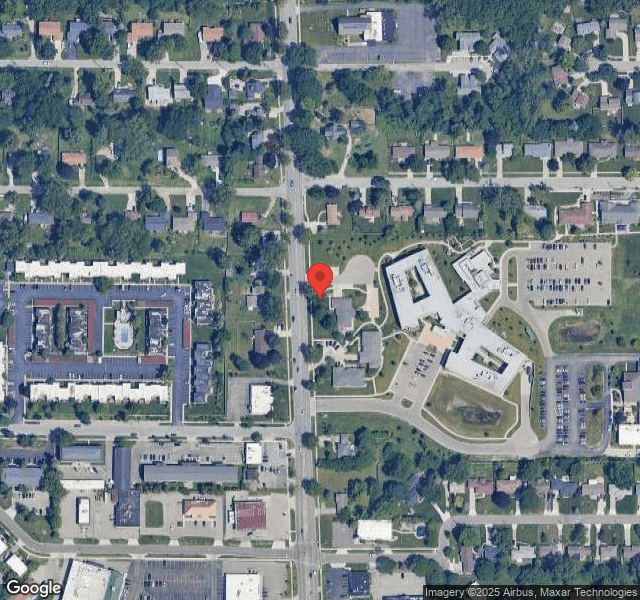
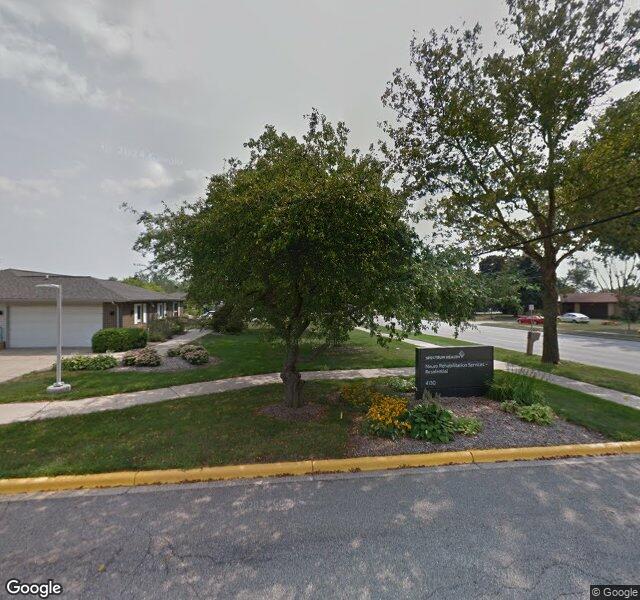
4118 Kalamazoo Ave SE, Grand Rapids, MI 49508 (616) 486-7002
Non profit - Corporation 165 Beds COREWELL HEALTH Data: November 2025
Trust Grade
80/100
#16 of 422 in MI
Last Inspection: August 2024

Within standard 12-15 month inspection cycle. Federal law requires annual inspections.

Overview

Corewell Health Rehabilitation & Nursing Center has a Trust Grade of B+, which means it is above average and recommended for families considering care options. It ranks #16 out of 422 facilities in Michigan, placing it in the top half, and #3 out of 28 in Kent County, indicating that there are only two better local options. The facility is improving, having reduced the number of issues from 7 in 2024 to 4 in 2025. Staffing is a strong point with a 5/5 rating, though the turnover rate is 51%, which is average compared to the state. Notably, there have been no fines, and it has higher RN coverage than 85% of Michigan facilities, ensuring better oversight of resident care. However, there are some concerns as well. Recent inspections revealed issues such as improper food storage, which raises the risk of foodborne illnesses, and complaints about staff interactions with residents that suggest a lack of respect and sensitivity. Additionally, there were documentation problems related to medication administration, indicating potential risks for errors. Overall, while the facility demonstrates strengths in RN coverage and general care quality, families should be aware of these issues as they evaluate their options.

Trust Score
B+
80/100
In Michigan
#16/422
Top 3%
Safety Record
Low Risk
No red flags
Inspections
Getting Better
7 → 4 violations
Staff Stability
⚠ Watch
51% turnover. Above average. Higher turnover means staff may not know residents' routines.
Penalties
✓ Good
No fines on record. Clean compliance history, better than most Michigan facilities.
Skilled Nurses
✓ Good
Each resident gets 78 minutes of Registered Nurse (RN) attention daily — more than 97% of Michigan nursing homes. RNs are the most trained staff who catch health problems before they become serious.
Violations
⚠ Watch
24 deficiencies on record. Higher than average. Multiple issues found across inspections.
★★★★★
5.0
Overall Rating
★★★★★
5.0
Staff Levels
★★★★☆
4.0
Care Quality
★★★★☆
4.0
Inspection Score
Stable
2024: 7 issues
2025: 4 issues

The Good

  • 5-Star Staffing Rating · Excellent nurse staffing levels
  • 4-Star Quality Measures · Strong clinical quality outcomes
  • Full Sprinkler Coverage · Fire safety systems throughout facility
  • No fines on record

Facility shows strength in staffing levels, quality measures, fire safety.

The Bad

Staff Turnover: 51%

Near Michigan avg (46%)

Higher turnover may affect care consistency

Chain: COREWELL HEALTH

Part of a multi-facility chain

Ask about local staffing decisions and management

The Ugly 24 deficiencies on record

Sept 2025 1 deficiency
CONCERN (D) 📢 Someone Reported This

A family member, employee, or ombudsman was alarmed enough to file a formal complaint

Potential for Harm - no one hurt, but risky conditions existed

Deficiency F0561 (Tag F0561)

Could have caused harm · This affected 1 resident

**NOTE- TERMS IN BRACKETS HAVE BEEN EDITED TO PROTECT CONFIDENTIALITY** This citation pertains to intake # 2603853Based on observation, interview and record review, the facility failed to ensure all r...

Read full inspector narrative →
**NOTE- TERMS IN BRACKETS HAVE BEEN EDITED TO PROTECT CONFIDENTIALITY** This citation pertains to intake # 2603853Based on observation, interview and record review, the facility failed to ensure all residents maintained their right to self-determination for 1 (Resident #74) of 1 resident reviewed for choices, resulting in Resident #74 not receiving feeding assistance while others ate around him, missed opportunities to experience joy while eating, and a loss of autonomy.Findings include:Review of Alternative Nutrition and Hydration in Dysphagia Care, American Speech-Language-Hearing Association, https://www.[NAME].org/practice-portal/clinical-topics/adult-dysphagia/alternative-nutrition-and-hydration-in-dysphagia-care/, revealed .Recommendations for supplemental feeding may include pleasure feeding. This option is often limited to the patient consuming tastes or small amounts of food types while following clear precautions; pleasure feeding is administered (or taken) to improve quality of life.Patient autonomy, or the right to self-determination, is a key factor in health care decision making.Resident #74Review of an admission Record revealed Resident #74 was originally admitted to the facility on [DATE] with pertinent diagnoses which included: traumatic brain injury (TBI), oropharyngeal dysphagia (a disorder or impairment in initiating a swallow) and functional quadriplegia (complete inability to move due to severe disability).Review of a Minimum Data Set (MDS) assessment for Resident #74 with a reference date of 8/18/25, revealed a Brief Interview for Mental Status (BIMS) score of 00/15 which indicated Resident #74 could not complete the evaluation. Further review of the MDS revealed Resident #74 had short- and long-term memory deficits and never/rarely made decisions for himself. Section GG of the MDS revealed Resident #74 was dependent (helper provides more than 50% of the effort) for eating.Review of a Care Plan for Resident # 74 with a reference date of 8/7/25, revealed a problem/goal/interventions of: Problem: (Resident #74) is at risk for Altered Nutrition and Hydration.Goal: (Resident #74) desires no significant changes in weight, will consume po(oral) diet for pleasure. Interventions.requires enteral feeding.diet as ordered, honor food preferences, meal location-see Resident Care Summary, assist with meals as needed/Provide assistance per Resident Care Summary, provide additional calories.chocolate pudding, Greek yogurt.Review of a Resident Care Summary for Resident #74 with a reference date of 8/13/25 revealed Eating Safety: 1:1 (one patient per one staff member); Swallow strategy- 1 Bite, 1 Swallow; Up in Chair for Meals.Review of Physician Orders for Resident #74 with a reference date of 2/18/25 revealed Adult Diet Type.pureed.no liquids.In an interview on 9/9/25 at 9:06am, Durable Power of Attorney (DPOA)/Family Member (FM) EEE reported Resident #74 was dependent on staff for eating and was supposed to be helped with a pleasure feeding at every meal. DPOA/FM EEE reported she arrived on 8/24/25 at approximately 10am and assisted Resident #74 with eating a snack. DPOA/FM EEE reported Resident #74 ate the entire snack and appeared hungry. DPOA/FM EEE reported when she told Certified Nursing Assistant (CNA) C that Resident #74 ate an entire snack, CNA C admitted Resident #74 had not been assisted with eating his pleasure feeding at breakfast.In an interview on 9/9/25 at 2:31pm, CNA C reported she cared for Resident #74 on 8/24/25 and realized sometime mid-morning that Resident #74 had not been assisted with breakfast. CNA C reported she was busy assisting other residents with their breakfast, assumed another CNA would assist Resident #74, and did not feel comfortable assisting Resident #74 due to his swallowing issues. CNA C reported she had witnessed other staff skipping assisting Resident #74 with eating before, because it was just a pleasure feeding. CNA C confirmed she was aware Resident #74 should be assisted with eating at each meal.In an interview on 9/10/25 at 10:41am, Licensed Practical Nurse (LPN) MM confirmed Resident #74 was not assisted with eating his pleasure feeding at breakfast on 8/24/25. When further queried, LPN MM reported the resident was supposed to receive pleasure feedings at every meal but the CNA caring from Resident #74 did not ensure the resident was assisted. LPN MM reported at breakfast time that day, Resident #74 was seated near the dining room, where the resident likely heard the sounds of mealtime and smelled the food. LPN MM reported he felt Resident #74 enjoyed being offered food and had seen the resident nod his head and point when he liked the taste of something that was being offered. LPN MM stated even if most of the food falls out of his mouth, he enjoys tasting it.In an interview on 9/10/25 at 10:59am, CNA DD reported she had assisted Resident #74 with eating his pleasure feeding meals many times in the past. CNA DD reported it was obvious the resident enjoyed eating because he would smile when he ate certain foods and would consistently communicate his food preferences by making small movements either with his finger or by lifting his right leg. CNA DD reported when Resident #74 was very excited about a food he was tasting, he would lift his right leg up and down repeatedly. When further queried, CNA DD reported she had witnessed other staff members not assisting Resident #74 with eating when they were assigned to be his care partner. CNA DD reported when that happened, Resident #74 would be left in the dining area while others ate. CNA DD reported it was the expectation that Resident #74 be assisted with eating at every meal, even though his primary source of nutrition was an enteral feeding.During an observation on 9/10/25 at 12:05pm, Resident #74 sat in the dining room and was assisted by an unknown CNA who placed small amounts of pureed food in his mouth via spoon. Resident #74 lifted his right leg in response when the CNA inquired if the resident liked the food. The CNA asked Resident #74 if he wanted more of the food and the resident again raised his right leg. The CNA placed another small amount of food in Resident #74's mouth and the resident responded with a slight chewing motion.In an interview on 9/10/25 at 9:04am, DPOA/FM EEE reported the facility had agreed to assist Resident #74 with pleasure feedings three times per day. DPOA/FM EEE having normal mealtime experiences was important to Resident #74 because he had always enjoyed eating, had a big appetite, and mealtime was an enjoyable part of his daily life prior to his injury.Review of an Oral Intake Flowsheet for Resident #74 with a reference date range of 8/11/25-9/9/25 revealed 11 of 90 meal opportunities in which there was no record of a pleasure feeding being offered.In an interview on 9/10/25 at 2:12pm, Director of Nursing (DON) B indicated she was not aware Resident #74 was supposed to be assisted with pleasure feedings at every meal, or that it was not always being offered.Using the reasonable person concept, though Resident #74 could not verbalize his desire to eat, the resident clearly displayed a feeling of joy when he was assisted with pleasure meals and his DPOA, who was appointed to make decisions on his behalf, had expressed the desire for the resident to have support with oral intake at each mealtime.
Apr 2025 2 deficiencies
CONCERN (D) 📢 Someone Reported This

A family member, employee, or ombudsman was alarmed enough to file a formal complaint

Potential for Harm - no one hurt, but risky conditions existed

Resident Rights (Tag F0550)

Could have caused harm · This affected 1 resident

This citation pertains to Intake MI00152599. Based on interview and record review, the facility failed to ensure residents were treated with dignity and respect in 2 (Resident #100, Resident #101) of ...

Read full inspector narrative →
This citation pertains to Intake MI00152599. Based on interview and record review, the facility failed to ensure residents were treated with dignity and respect in 2 (Resident #100, Resident #101) of 4 residents reviewed for abuse, resulting in feelings of diminished self-worth and frustration. Findings include: Resident #100 Review of an admission Record revealed Resident #100 was a male, with pertinent diagnoses which included: diarrhea, anxiety, and cerebral palsy (a disorder that affects movement, muscle tone, or posture). Review of a Minimum Data Set (MDS) assessment for Resident #100, with a reference date of 3/5/25 revealed a Brief Interview for Mental Status (BIMS) score of 15 out of 15, which indicated Resident #100 was cognitively intact. In an interview on 4/28/25 at 10:05 AM, Resident #100 reported Certified Nurse Aide (CNA) P had yelled at him because he had an accident. Resident #100 reported he had had a bowel movement accident and CNA P came in his room and started yelling because he had had the accident. Resident #100 reported Licensed Practical Nurse (LPN) Q witnessed the interaction. In an interview on 4/29/25 at 9:04 AM, LPN Q reported he had been in the hall when CNA P had been in Resident #100's room. LPN Q reported hearing escalating tension in the voices of both Resident #100 and CNA P and had gone into the room to deescalate the situation. LPN Q reported CNA P had a condescending tone in the way she was approaching the situation with Resident #100. LPN Q reported CNA P was projecting the frustration that she felt due to having to clean up Resident #100. LPN Q reported it wasn't the words CNA P used; it was the tone. LPN Q reported CNA P would consistently cut Resident #100 off when he was trying to express himself and how he felt. LPN Q reported CNA P had not been treating Resident #100 with dignity and respect during the interaction. In an interview on 4/28/25 at 11:04 AM, Social Worker (SW) E reported Resident #100 had complained that CNA P had yelled and had a harsh tone with him when she went into his room to change him. In an interview on 4/28/25 at 1:34 PM, SW D reported Resident #100 had come to her and said that CNA P had raised her voice with him and was yelling at him. SW D reported Resident #100 presented as quite upset at how CNA P had talked to him and had said he could almost cry. SW D reported she reported the incident to Nursing Home Administrator (NHA) A immediately. In an interview on 4/28/25 at 2:34 PM, NHA A reported that she, along with SW E and Nursing Supervisor (NS) I had talked to Resident #100 following the interaction between himself and CNA P and Resident #100 had basically said that he didn't like how loud CNA P talked and that he didn't like her tone but that his needs had been met. In an interview on 4/28/25 at 1:11 PM, CNA P reported management had spoken to her because a resident had said they did not like the tone of her voice. CNA P reported when she went into Resident #100's room, he was in his wheelchair in the bathroom, and he was upset because he couldn't wait to get on the toilet and had messed himself. CNA P reported she kept telling Resident #100 in a regular tone that it was okay and that we were going to get him cleaned up. CNA P reported later in the day a manager had told her that Resident #100 had not liked her tone. In a follow-up interview on 4/29/25 at 12:30 PM, Resident #100 reported he felt CNA P had not treated him with respect and that he had already been humiliated that he had had an accident in his wheelchair and when CNA P started yelling at him, it made him feel even worse. Resident #101 Review of an admission Record revealed Resident #101 was a male, with pertinent diagnoses which included: current mild episode of major depressive disorder and hemiplegia (weakness or paralysis on one side) of left nondominant side as late effect of nontraumatic intraparenchymal hemorrhage (a type of stroke) of brain. Review of a Minimum Data Set (MDS) assessment for Resident #101, with a reference date of 3/7/25 revealed a Brief Interview for Mental Status (BIMS) score of 15 out of 15, which indicated Resident #101 was cognitively intact. In an interview on 4/28/25 at 10:27 AM, Resident #101 reported CNA P did not treat him with dignity and respect at times. Resident #101 reported CNA P had been rude and made him feel little and insignificant 3 or 4 weeks ago when he placed his call light on, and she had come in the room and made him feel like he was a bother to her. Resident #101 reported he had told CNA P that he needed to use the restroom, and she had told him he didn't need to go because he had just gone. Resident #101 reported he has had accidents waiting to be toileted.
CONCERN (D) 📢 Someone Reported This

A family member, employee, or ombudsman was alarmed enough to file a formal complaint

Potential for Harm - no one hurt, but risky conditions existed

Report Alleged Abuse (Tag F0609)

Could have caused harm · This affected 1 resident

Based on interview and record review, the facility failed to implement policies and procedures for immediate reporting to the State Agency for 1 (Residents #100) of 4 residents reviewed for abuse repo...

Read full inspector narrative →
Based on interview and record review, the facility failed to implement policies and procedures for immediate reporting to the State Agency for 1 (Residents #100) of 4 residents reviewed for abuse reporting, resulting in the potential for further instances of abuse going undetected, unreported, or without thorough investigation. Findings include: Review of a Minimum Data Set (MDS) assessment for Resident #100, with a reference date of 3/5/25 revealed a Brief Interview for Mental Status (BIMS) score of 15 out of 15, which indicated Resident #100 was cognitively intact. In an interview on 4/28/25 at 10:05 AM, Resident #100 stated, I had one of the aides that verbally abused me. Resident #100 reported he had had a bowel movement accident. Resident #100 reported the aide (CNA Certified Nurse Aide P) had come in his room and started yelling at him because he had had an accident. Resident #100 reported that he had complained to the facility. Resident #100 reported that a nurse (Licensed Practical Nurse, LPN Q) had witnessed the incident and encouraged him to report it. Resident #100 reported he had told Social Worker (SW) D. Resident #100 reported he had a meeting with Nursing Home Administrator NHA A, SW E, and Nursing Supervisor (NS) I shortly after reporting the incident and told them that CNA P had yelled at him to which they said they would speak to the CNA. Resident #100 reported he had also reported CNA P approximately 3 months earlier for how she had spoken to him. Resident #100 reported at that time, management had also said they would talk to her. In an interview on 4/28/25 at 11:04 AM, SW E reported Resident #100 had complained that CNA P had gone into his room and had been yelling at him with a harsh tone when he had needed to be changed. SW E reported there have been other residents who have complained about CNA P in the past. In an interview on 4/28/25 at 11:17 AM, NS I reported Resident #100 had concerns with the way CNA P had spoken to him. NS I reported they had investigated Resident #100's concern and followed up with CNA P. NS I reported he, along with NHA A, and SW E had a conversation with Resident #100 who had reported he didn't feel safe with CNA P providing cares to him, so they developed a plan to make Resident #100 feel safe. In an interview on 4/28/25 at 1:34 PM, SW D reported Resident #100 had reported to her that CNA P had raised her voice with him and was yelling at him. SW D reported Resident #100 had soiled himself with bowel movement and was quite upset with how CNA P had talked to him. SW D reported Resident #100 had said that a nurse had heard CNA P's tone of voice and come into the room. SW D reported Resident #100 had said he felt like the incident was abusive and that he felt he could almost cry. SW E reported when she heard the word abuse, she reported the incident to NHA A immediately. In an interview on 4/28/25 at 2:34 PM, NHA A reported after the incident between Resident #100 and CNA P had been reported to her, staff, including herself, had spoken to the resident for over an hour. NHA A reported Resident #100 had basically said he didn't like how loud CNA P talked and that he didn't like her tone. NHA A reported Resident #100 had said he had gotten the cares he needed from CNA P. NHA A reported Resident #100 did not use the word abuse when speaking with her. NHA A reported normally an incident of this nature would have been put on a grievance form but since it was handled right at the time, a clinical note was entered in the resident's medical record instead. In an interview on 4/29/25 at 9:04 AM, Licensed Practical Nurse (LPN) Q reported he had witnessed the incident between Resident #100 and CNA P. LPN Q reported he had heard the situation escalating and tension in the voice of Resident #100 and CNA P, so he went into the room to deescalate the situation. LPN Q reported CNA P's tone was condescending. In a follow-up interview on 4/29/25 at 11:24 AM, NHA A reported when they had met with Resident #100, he talked about his concerns, but his concern was just how he didn't like how CNA P spoke with him and that all his needs were met. NHA A reported when they were discussing the incident with Resident #100, she (NHA A) was under the impression that CNA P always talked loudly, and Resident #100 didn't like her tone. NHA A reported she felt like meeting with Resident #100 and talking about it with him that he was okay with it. NHA A reported immediately after Resident #100 had reported he did not like how CNA P talked to him; Resident #100 was taken off CNA P's assignment. In a follow-up interview on 4/29/25 at 1:12 PM, NS I reported he had talked to LPN Q following the reported incident between Resident #100 and CNA P but did not document the conversation. Review of a Nursing Note dated 4/8/25 at 4:00 PM revealed, Spoke with (Resident #100) regarding his raising concerns about a specific staff member. Building administrator and social worker were present for this conversation. He stated that he had needed to use the restroom and staff had not made it into his room in time to assist him and he had an accident. (Resident #100) expressed frustration with the communication between him and this staff member. (Resident #100) also verbalized that there were no concerns with the cares provided by the staff member during this interaction. Leadership validated (Resident #100)'s feeling and discussed multiple solutions to help prevent this from happening in the future. The first solution included taking (Resident #100) off the float run and assigning him to one of the aides that stays on the unit so that he can receive more timely care. The second was to have two staff members provide cares to (Resident #100) to ensure that communication is always done in a manner that is acceptable to him. (Resident #100) was assured that follow up would be occurring with the specific staff member regarding the situation. (Resident #100) verbalized satisfaction with and appreciation for the follow up occurring. (Resident #100) was encouraged to continue to bring any concerns he has to building leadership to be addressed. There was no evidence of interviews with other residents or other staff conducted to immediately verify that abuse did not occur. Review of the policy Resident Abuse Program Procedure effective date 10/30/23 revealed, .11. Reporting/response 11.3.1. (State Survey Agency name omitted) reporting: In compliance with Federal law, an immediate report is provided to the Administrator/designee and the State Survey Agency (name omitted) of alleged violations involving physical, mental, involuntary seclusion and sexual abuse, as well as neglect, mistreatment, misappropriation, and injuries of unknown origin. The Administrator/designee must report to (State Survey Agency name omitted) within two hours. The initial report must provide sufficient information to describe the alleged violation and indicate how the residents are being protected .
Mar 2025 1 deficiency
CONCERN (D) 📢 Someone Reported This

A family member, employee, or ombudsman was alarmed enough to file a formal complaint

Potential for Harm - no one hurt, but risky conditions existed

Infection Control (Tag F0880)

Could have caused harm · This affected 1 resident

**NOTE- TERMS IN BRACKETS HAVE BEEN EDITED TO PROTECT CONFIDENTIALITY** Based on observation, interview, and record review the facility failed to maintain proper infection control practices as evidenc...

Read full inspector narrative →
**NOTE- TERMS IN BRACKETS HAVE BEEN EDITED TO PROTECT CONFIDENTIALITY** Based on observation, interview, and record review the facility failed to maintain proper infection control practices as evidenced by failure to 1. Ensure proper hand hygiene was completed during incontinence care for 1 (Resident #14); and 2. Ensure proper PPE (personal protective equipment) for enhanced barrier precautions was used during personal cares for 1 (Resident #14) of 15 total sampled residents reviewed for infection control practices resulting in the potential for the introduction of infection, cross-contamination, and/or disease transmission. Findings include: Resident #14 Review of a Face sheet revealed Resident #14 was male and was originally admitted to the facility on [DATE] and had pertinent diagnoses which included: Traumatic brain injury (TBI; a brain injury that occurs when a sudden external physical assault happens to the brain), dysphagia (difficulty or the inability to swallow), and neurogenic bladder (a lack of coordination between the brain and the bladder resulting in the inability to feel the bladder is full, urine leakage, and urinary incontinence.) On 3/10/25 at 11:45 a.m. a sign was observed posted on the wall outside of Resident #14's room indicated that Resident #14 was in enhanced barrier precautions (EBP). On 3/10/25 at 11:50 a.m. this surveyor entered Resident #14's room and observed Rehab Tech/Certified Nurse Assistant (RT/CNA) O kneeling beside Resident #14's bed emptying Resident #14's urinary catheter bag (a closed drainage bag that collects urine from a catheter inserted into the bladder) of urine. RT/CNA O was wearing gloves but was not wearing a gown. RT/CNA O reported she was assisting Resident #14 with a bed bath and to get dressed for the day. RT/CNA O was then observed opening cupboards and drawers around the room locating supplies, wetting down washcloths in the sink in the bathroom, and washing Resident #14's face and hands. RT/CNA O wore the same pair of gloves she was wearing when she emptied the catheter bag. At 12:02 RT/CNA applied clean gloves and continued to provide bathing assistance to Resident #14. RT/CNA O was then observed retrieving the dirty linen cart from the bathroom and placing it closer to the bedside while wearing the same pair of gloves. RT/CNA O then retrieved a washcloth from the bed, wet it down in the wash basin at the bed side and continued Resident #14's bed bath. RT/CNA O then retrieved more washcloths from the cupboard with gloved hands and returned to the bedside and continued Resident #14's bed bath. RT/CNA reported Resident #14 had a daily schedule for being out of bed and resting, and RT/CNA walked to the cupboard in Resident #14's room, opened it to reveal Resident #14's schedule on the inside of the door. RT/CNA O then returned to the bedside and removed Resident #14's gown and continued his bed bath. RT/CNA O was still wearing the same gloves. RT/CNA O completed Resident #14's bed bath, assisted Resident #14 to be dressed, and placed a sling under Resident #14 for transfer; RT/CNA O then removed her gloves, sanitized her hands and exited the room. At 12:09 p.m. RT/CNA O re-entered Resident #14's room, cleaned up the dirty linen, wash basin and bed bath supplies and completed a mechanical lift transfer of Resident #14 from his bed to his wheelchair, adjusted Resident #14's clothing and body position for comfort in his wheelchair. At no time after re-entering the room did RT/CNA O sanitize her hands or wear any kind of PPE (gown or gloves). At 12:13 p.m. RT/CNA O donned (put on) a pair of gloves and applied Resident #14's hand splints to both hands, made Resident #14's bed, opened the window cover, straightened up the room, and applied lip balm to Resident #14's lips. RT/CNA O did not change gloves or perform hand hygiene between these observed tasks. Review of Enhanced Barrier Precautions signage posted outside of Resident #14's room revealed wear gown and gloves for all high-contact resident care activities: dressing, bathing/showering, transferring, changing linens, providing hygiene, changing briefs/assisting with toileting, device care or use: central line, urinary catheter, feeding tube, tracheostomy/ventilator, wound care: any skin opening requiring a dressing. In an interview on 3/10/25 at 12:20 p.m. RT/CNA O reported that the signage outside of Resident #14's room indicated he was in enhanced barrier precautions and that she should have worn gloves and a gown during the cares she performed. Review of Other Order for Resident #14 initiated on 4/3/2024 revealed initiate enhanced barrier precautions continuous. On 3/10/25 at 2:38 p.m. RT/CNA N was observed wearing gloves as she applied Resident #14's splint to his bilateral arms. RT/CNA was noted to be leaning over the bed and within close proximity to resident during the application of hand splints. RT/CNA N was observed positioning Resident #14 in bed, with his splints in place and pillows for comfort. RT/CNA N did not wear a gown during cares. RT/CNA N reported that enhanced barrier precautions meant that staff needed to wear a gown and gloves when providing care. In an interview on 3/10/25 at 2:53 p.m. CNA R reported that enhanced barrier precautions were put into place for residents who had tubes, lines, or drains such as G-tube. (a tube placed directly into the stomach and used for nutrition, hydration, and medication administration) and a foley catheter. CNA R reported the staff needed to wear a gown and gloves when providing high contact care, such as a bed bath or incontinence care. In an interview on 3/10/25 at 2:56 p.m. CNA DD reported that enhanced barrier precautions were put in place for residents with tube feedings. (G-tubes) and staff needed to wear a gown and gloves when in the room. On 3/11/25 at 2:54 p.m. this surveyor entered Resident #14's room and observed CNA FF and CNA DD preparing to transfer Resident #14 via a mechanical lift (the sling under Resident #14 was already connected to the lift) from his wheelchair into his bed. Neither CNA FF nor CNA DD were wearing a gown. CNA FF transferred Resident #14 to bed, removed the sling from under him, and removed his pants. CNA FF then removed Resident #14's brief and found it to be soiled with bowel movement (BM). CNA FF took washcloths to the bathroom sink to wet them down and performed peri-care for Resident #14. During peri-care, CNA FF asked CNA DD to retrieve a towel from the cupboard, which she did with gloved hands. CNA FF then wet down the corner of the towel in the sink and finished cleaning Resident #14's buttock of BM. CNA FF then used the other end (the dry part) of the towel to dry Resident #14's buttock. CNA DD wore the same pair of gloves through the observation. In an interview on 3/11/25 at 3:06 p.m. CNA FF reported every person on the unit was on enhanced barrier precautions for their G-tubes. CNA FF reported that enhanced barrier precautions were only for the nurses when they were working with the G-tubes, it did not apply to the CNAs. When queried CNA FF stated No, I don't wear a gown for residents in EBP when I provide care. In an interview on 3/12/25 at 10:14 a.m. LTC Nurse Supervisor (LTC/NS) F reported enhanced barrier precautions were used for open wounds, foley catheters, and G-tubes, to prevent the spread of bacteria. LTC/NS F reported that a gown and gloves needed to be worn when the staff was in the room to care for the wound, catheter, or the G-tube and the staff should wear it during a transfer. In an interview on 3/12/25 at 10:20 a.m. Infection Preventionist (IP) E reported staff was to wear a gown and gloves when performing high contact care activities with residents who were in enhanced barrier precautions. IP E reported CNAs should wear a gown when performing peri-care, transfers, and emptying foley catheters and nurses should wear a gown and gloves when working with a G-tube. In an interview on 3/12/25 at 10:30 a.m. Director of Nursing (DON) B reported her expectations were that the staff followed the signage posted outside of the resident's room prior to entering and providing care. Review of facility policy Isolation Precautions for Continuing Care- Rehab and Nursing Centers with a last revision date of 7/10/2024 revealed .Enhanced Barrier Precautions require gown and glove use for certain residents during specific high-contact resident care activities that have been found to increase MDRO (multi-drug resistant organism) transmission such as .dressing, bathing/showering, transferring, providing hygiene, changing briefs .device care or use: . feeding tube .enhanced barrier precautions will also be implemented when Resident has wounds and/or indwelling medical devices (e.g. central line, urinary catheter, feeding tube .) regardless of MDRO colonization status.
Dec 2024 2 deficiencies
CONCERN (D) 📢 Someone Reported This

A family member, employee, or ombudsman was alarmed enough to file a formal complaint

Potential for Harm - no one hurt, but risky conditions existed

Deficiency F0558 (Tag F0558)

Could have caused harm · This affected 1 resident

**NOTE- TERMS IN BRACKETS HAVE BEEN EDITED TO PROTECT CONFIDENTIALITY** This citation pertains to Intake # MI00146599 & MI00146889. Based on observation, interview, and record review, the facility fai...

Read full inspector narrative →
**NOTE- TERMS IN BRACKETS HAVE BEEN EDITED TO PROTECT CONFIDENTIALITY** This citation pertains to Intake # MI00146599 & MI00146889. Based on observation, interview, and record review, the facility failed to ensure call lights were in reach for 2 (Resident #101 and #102) of 3 residents reviewed for accommodation of needs, resulting in the inability to call for staff assistance and the potential for unmet care needs. Findings include: Resident #101 Review of an admission Record revealed Resident #101 was a female, originally admitted to the facility on [DATE] with pertinent diagnoses which included age related physical debility. Review of a Minimum Data Set (MDS) assessment for Resident #101, with a reference date of 10/23/24, revealed a Brief Interview for Mental Status (BIMS) score of 12/15, which indicated Resident #101 had moderate cognitive impairment. Review of Resident #101's current Care Plan revealed, .(Resident #101) does not want to experience a fall with major injury .Interventions .Call light within reach .Start date: 1/21/23 . Review of Resident #101's Nursing Note dated 11/1/24 and documented by Nursing Supervisor (NS) R revealed, Had a conversation with (Resident #101) regarding concerns about her call light not being left with her on Saturday 10/26. After speaking with (Resident #101), it was determined that she had her call light clipped to her shirt and called out appropriately for cares to provide to her. She stated that she felt safe and I reminded that we are here is she has any further concerns. Review of Resident #101's Care Conference Note dated 11/5/24 revealed, IDT (Interdisciplinary team) met for scheduled care conferences .(Resident #101) expressed concerns related to her call light and nursing response times. Questions/concerns addressed in the moment. (Resident #101) expressed satisfaction with response/follow up. Will continue to remain available for additional support as needed throughout her stay . During an observation and interview on 12/4/24 at 12:47 PM, Resident #101 was sitting in her in wheelchair watching television. Resident #101 reported that she had concerns that the facility staff did not ensure that her call light was within reach so that she could call for assistance. Resident #101 reported that she could not get to her call light if staff did not clip it to her shirt when she was in her wheelchair. Resident #101 reported that she had voiced her concerns about call lights to several staff members at the facility, but she was still experiencing issues with having access to her call light and she did not feel that the facility had resolved her concerns. During an observation and interview on 12/5/24 at 8:36 AM, Resident #101 was sitting in her room in her wheelchair. Resident #101 reported staff had just brought her back to her room from the dining area. Resident #101 reported that she needed assistance from staff, but they had not left her call light within reach. It was noted that Resident #101's call light was hanging on the wall behind her, and out of reach. During an observation and interview on 12/5/24 at 8:42 AM, Registered Nurse (RN) L entered Resident #101's room with this writer and confirmed that Resident #101's call light was out of her reach. During an interview on 12/5/24 at 11:15 AM, Certified Nursing Assistant (CNA) W reported that she was the staff member that had assisted Resident #101 back to her room earlier in the morning. CNA W reported that she had forgotten to place Resident #101's call light within her reach. CNA W confirmed that she was aware that Resident #101 required a call light to be attached to her shirt so that she could use it to call for staff assistance. During an interview on 12/5/24 at 9:51 AM, NS R reported that she was aware that Resident #101 had ongoing concerns related to her call light. NS R reported that she had been made aware on 11/1/24 that Resident #101 had reported her call light being left out of her reach on 10/26/24. NS R confirmed that she was not able to verify that Resident #101 had her call light in reach on 10/26/24 because she did not make any observations, but that when she met with Resident #101 on 11/1/24 that Resident #101's call light was in reach that day. NS R reported that she had not completed any audits after she spoke with Resident #101 on 10/26/24 to confirm that staff were continuing to place Resident #101's call light within in her reach. NS R confirmed that facility staff were expected to ensure residents had call lights placed within reach. Review of the facility's Call light Accessibility, Use, and Response policy dated 9/23/22 revealed, Purpose: The purpose of this policy is to ensure each resident call light is accessible, functional for use and responded to appropriately .Policy .With each interaction in the resident's room, bathroom, or bathing facility team members will ensure the call light is within reach of resident and secured as needed . Resident #102 Review of a Face Sheet revealed Resident #102 was a male, with pertinent diagnoses which included PTSD (Post-Traumatic Stress Disorder), TBI (Traumatic Brain Injury), anxiety, chronic pain, depression, and seizures. Review of a current Care Plan for Resident #102 revealed the problem .at risk for communication deficits related to cognitive communication deficits . with a start date of 8/4/22, and interventions which included .Specialized call light . Review of a current Care Plan for Resident #102 revealed the problem .at risk for falls or injury . with a start date of 8/4/22, and interventions which included .Call light within reach . Review of a Resident Care Summary (RCS) for Resident #102 revealed .Encourage Patient to use pillows for positioning and to have call light placed on left side near hip . dated 10/28/24. In an observation on 12/5/24 at 9:03 AM, Resident #102 was noted in a specialty reclining wheelchair in his room. Observed Resident #102's specialized call light was out of reach, clipped to the cord on the wall several feet behind his wheelchair. In an observation on 12/5/24 at 9:13 AM, Resident #102 was noted in a specialty reclining wheelchair in his room. Observed Resident #102's specialized call light was out of reach, clipped to the cord on the wall several feet behind his wheelchair. In an observation on 12/5/24 at 9:33 AM, Certified Nursing Assistant (CNA) U assisted Resident #102 with a transfer from his specialty wheelchair to his bed. Once Resident #102 was in bed, observed CNA U place his specialized call light on the blanket, near Resident #102's right shoulder. In an interview on 12/5/24 at 9:42 AM, CNA U reported nursing staff reference the Resident Care Summary (RCS) to determine how to care for a resident and specific/individualized care needs. In an observation and interview on 12/5/24 at 11:46 AM, Resident #102 was noted in a specialty reclining wheelchair in his room. Observed Resident #102's specialized call light was out of reach, clipped to the cord on the wall several feet behind his wheelchair. Family Member N present at this time, and reported a concern that the nursing staff do not always check the computer (RCS) prior to caring for Resident #102. In an observation on 12/5/24 at 1:49 PM, Resident #102 was noted in a specialty reclining wheelchair in his room. Observed Resident #102's specialized call light was out of reach, clipped to the cord on the wall several feet behind his wheelchair. In an observation on 12/5/24 at 2:08 PM, Resident #102 was noted in bed in his room. Observed Resident #102's specialized call light was clipped to the blanket near his right shoulder. In an interview on 12/5/24 at 2:12 PM, CNA U reported no specific placement was required for Resident #102's specialized call light. CNA U stated .I just try and clip it somewhere close to him .
CONCERN (D) 📢 Someone Reported This

A family member, employee, or ombudsman was alarmed enough to file a formal complaint

Potential for Harm - no one hurt, but risky conditions existed

ADL Care (Tag F0677)

Could have caused harm · This affected 1 resident

**NOTE- TERMS IN BRACKETS HAVE BEEN EDITED TO PROTECT CONFIDENTIALITY** This citation pertains to Intake # MI00146599. Based on observation, interview, and record review, the facility failed to ensure...

Read full inspector narrative →
**NOTE- TERMS IN BRACKETS HAVE BEEN EDITED TO PROTECT CONFIDENTIALITY** This citation pertains to Intake # MI00146599. Based on observation, interview, and record review, the facility failed to ensure showers were provided per resident preference and plan of care for 1 (Resident #101) of 3 resident reviewed for Activities of Daily Living (ADL) care, resulting in inadequate personal hygiene, missed showers, and dissatisfaction with care and hygiene concerns. Findings include: Resident #101 Review of an admission Record revealed Resident #101 was a female, originally admitted to the facility on [DATE], with pertinent diagnoses which included age related physical debility. Review of a Minimum Data Set (MDS) assessment for Resident #101, with a reference date of 10/23/24 revealed a Brief Interview for Mental Status (BIMS) score of 12/15, which indicated Resident #101 had moderate cognitive impairment. Review of Resident #101's current Care Plan revealed, (Resident #101) requires assistance with ADL's .Interventions .Showers as scheduled .Start date: 2/7/24 . Review of Resident #101's Daily Cares revealed that Resident #101 did not have documentation of any showers or baths provided on the following scheduled shower dates: 10/19/24, 10/26/24, 11/13/24, 11/16/24, and 11/20/24. During an observation and interview on 12/4/24 at 12:47 PM, Resident #101 was sitting in her wheelchair in her room. Resident #101 reported that she had concerns with the facility staff not assisting her with showers on her scheduled shower days. Resident #101 reported that she was scheduled to have showers on Wednesdays and Saturdays, but she was not consistently getting two showers a week. During an interview on 12/5/24 at 9:51 AM, Nursing Supervisor (NS) R reviewed Resident #101's Electronic Health Record (EHR) with this writer and confirmed that Resident #101 did have any documentation to verify that Resident #101 had received or refused showers or a bath on 10/19/24, 10/26/24, 11/13/24, 11/16/24, and 11/20/24. NS R reported that she was not aware that Resident #101 had missed multiple showers. NS R confirmed that Certified Nursing Assistants (CNA's) were responsible for documenting that they had provided showers for residents. NS R reported that nurses were responsible for completing skin assessments on resident's shower days, but that documentation of nursing skin assessments did not indicate that a shower had been completed. On 12/5/24 at 2:02 PM, Director of Nursing (DON) B provided additional CNA documentation for Resident #101's showers. It was noted that the CNA documentation did not include documentation for showers or refusals for Resident #101 on 10/19/24, 10/26/24, 11/13/24, 11/16/24, and 11/20/24. On 12/5/24 at 3:57 PM, DON B provided Nursing Skin Assessments for Resident #101 for the following dates: 10/19/24, 10/26/24, 11/17/24, & 11/20/24. It was noted that each nursing skin assessment did not note that a shower was provided for Resident #101. During an interview on 12/5/24 at 4:03 PM, Registered Nurse (RN) L reported that nurses were responsible for completing skin assessments for residents on their scheduled shower days. RN L reported that nurses would typically complete the skin assessment right before of after the resident's shower, but that they were required to complete the assessment even if the resident missed the shower. RN L confirmed that documentation of a nursing skin assessment would not indicate that a resident had received a shower unless it was noted that the resident had received a shower. During an interview on 12/5/24 at 4:12 PM, RN GG reported that nurses were responsible for completing skin assessments on resident's scheduled shower days. RN GG reported that if the nurse had completed the skin assessment during the resident's shower, that they would document that the shower was completed in their skin assessment note. RN GG reviewed the skin assessment notes for Resident #101 on 10/19/24, 10/26/24, 11/17/24, & 11/20/24 with this writer and reported that the notes did not indicate that a shower had been completed.
Aug 2024 4 deficiencies
CONCERN (D)

Potential for Harm - no one hurt, but risky conditions existed

Deficiency F0554 (Tag F0554)

Could have caused harm · This affected 1 resident

**NOTE- TERMS IN BRACKETS HAVE BEEN EDITED TO PROTECT CONFIDENTIALITY** Based on observation, interview, and record review, the facility failed to ensure residents were assessed for self-administratio...

Read full inspector narrative →
**NOTE- TERMS IN BRACKETS HAVE BEEN EDITED TO PROTECT CONFIDENTIALITY** Based on observation, interview, and record review, the facility failed to ensure residents were assessed for self-administration of medications for 3 (Resident #84, 44 and 74) of 5 residents reviewed for self administration of medication, resulting in unsupervised administration of medications and the potential for mismanagement of medication and potential for adverse side effects. Findings include: Resident #84 Review of an admission Record revealed Resident #84 was originally admitted to the facility on [DATE] with pertinent diagnoses which included vascular dementia without behavioral disturbance. Review of Resident #84's Orders revealed Hydrocodone-acetaminophen (norco) (opioid pain medication) 5-325 mg per tablet. Dose: 1 tablet. Freq (frequency): 3 times daily. Route PO (by mouth) . During an observation and interview on 8/13/24 at 12:40 PM, Resident #84 approached Licensed Practical Nurse (LPN) H and requested her pain medication. LPN H took Resident #84's medication from the medication cart and placed one pill in a medication cup and then handed the cup to Resident #84. Resident #84 placed the medication cup on her walker and began walking towards her room. LPN H reported that she did not need to observe Resident #84 take her medication and that she always stopped for her pain pill on her way to her room after lunch. LPN H did not know if Resident #84 had been assessed to safely self administer medications without supervision. LPN H reported that the pill she had given Resident #84 was norco. At 8/13/24 at 12:41 PM, LPN H walked down to Resident #84's room door and asked her from the doorway if she had taken her pain pill. LPN H did not enter Resident #84's room. During an interview on 8/14/24 at 9:50 AM, Registered Nurse (RN) U reported that Resident #84 was not able to take medication without supervision. RN U reported that Resident #84's medications were supposed to be crushed and administered in applesauce. RN U reported that Resident #84 could be forgetful and therefore it would not be safe for Resident #84 to self administer her medications without supervision. During an interview on 8/15/24 at 10:38 AM, Nurse Supervisor (NS) C reported that it was her expectation that nurses observe residents when administering medications, especially narcotic medication. NS C reviewed Resident #84's electronic health record (EHR) and confirmed that Resident #84 had not been assessed for self administration of medications and she did not have an order to self administer medications without supervision. NS C reported that Resident #84 was not be eligible to self administer medications as she was at high risk for aspiration. Review of the facility's Medication Management Policy, dated 4/21/2023, revealed, .Resident Self-Administered Medications (SAM). 4.10.1. Evaluate resident ' s cognition, vision, and fine motor abilities.4.10.2. Prescriber order is required for a resident or designee (e.g., parent) to self-administer medications. 4.10.3. Prior to initiating the licensed personnel must teach resident/ designee how to self administer and resident/ designee must demonstrate competency. 4.10.4. All medications must be stored in designated medications storage areas. 4.10.5. Medications must be in locked storage when kept in the room. 4.10.6. Medications used for self-administration shall be medications that are used to manage conditions of which the resident/ designee understands the medication, dose, frequency, associated adverse drug reactions. 4.10.7. Nurse must monitor and validate SAM administration and document as required in eMAR . Resident #44 Review of an admission Record revealed Resident #44, was originally admitted to the facility on [DATE] with pertinent diagnoses which included: chronic back pain, functional tremor, chronic heart failure (condition causing poor blood circulation), type 2 diabetes mellitus (condition causing elevated blood sugars), dysphagia (difficulty swallowing), and choking. Review of a Minimum Data Set (MDS) assessment for Resident #44, with a reference date of 6/19/24 revealed a Brief Interview for Mental Status (BIMS) score of 15/15 which indicated Resident #44 was cognitively intact. Section E of the MDS revealed Resident #44 did not experience hallucinations or delusions (false beliefs about reality) and did not reject care. Review of physician's orders for Resident #44 revealed she was prescribed more than 30 medications including an anticoagulant (blood thinner), a narcotic (prescription strength pain medication), an anti-spasmatic (muscle relaxer), and a diuretic (drug that causes the body to remove extra fluid). During an observation on 8/13/24 at 10:04, Resident #44 sat at the edge of her bed, leaned forward and picked medications up off the floor. The resident then placed the medications in her mouth. No staff were present in the room. In an interview on 8/13/24, at 10:06am, Resident #44 reported the nurse left her medications on the table in a small clear cup and Resident #44 spilled the medications on the floor when she tried to take them. Resident #44 stated I think I got most of the medications, referring to her attempt at self-administering her medications. Resident #44 reported she had a difficult time seeing the medications and was not sure what she took. Resident #74 Review of an admission Record revealed Resident #74, was originally admitted to the facility on [DATE] with pertinent diagnoses which included: hypertension (high blood pressure), type 2 diabetes mellitus (condition resulting in elevated blood sugar levels), intracranial hemorrhage (rupture of arteries or blood vessels in the brain), and end stage renal disease. Review of a Minimum Data Set (MDS) assessment for Resident #74, with a reference date of 5/29/24 revealed a Brief Interview for Mental Status (BIMS) score of 15/15 which indicated Resident #74 was cognitively intact. During an observation on 8/13/24 at 2:47pm, 2 clear medication cups, 1 with approximately 5 white pills, 1 with 2 white, large disk-shaped medications, sat on Resident #74's bedside table. No staff were present in the room. The door to the room was open.
CONCERN (D)

Potential for Harm - no one hurt, but risky conditions existed

Pressure Ulcer Prevention (Tag F0686)

Could have caused harm · This affected 1 resident

**NOTE- TERMS IN BRACKETS HAVE BEEN EDITED TO PROTECT CONFIDENTIALITY** Based on interview and record review, the facility failed to accurately assess, monitor, treat, and implement interventions for ...

Read full inspector narrative →
**NOTE- TERMS IN BRACKETS HAVE BEEN EDITED TO PROTECT CONFIDENTIALITY** Based on interview and record review, the facility failed to accurately assess, monitor, treat, and implement interventions for a residents with pressure ulcers for 1 (Resident #27) of 3 residents reviewed for pressure ulcers resulting in the worsening condition of a pressure ulcer. Findings include: Resident #27 Review of an admission Record revealed Resident #27 was originally admitted to the facility on [DATE] with pertinent diagnoses which included pressure injury of left buttock, stage 3. Review of a Minimum Data Set (MDS) assessment for Resident #27, with a reference date of 6/4/24 revealed a Brief Interview for Mental Status (BIMS) score of 15/15 which indicated Resident #27 was cognitively intact. Review of Resident #27's Care Plan revealed, (Resident #27) has a stage 3 pressure injury . Goal: (Resident #27) will demonstrate improvement in skin integrity AEB (as exhibited by) no signs and symptoms of infection. Interventions: . monitor for s/sx (signs and symptoms) of infection: warmth, redness, tenderness, swelling, decline in healing, fever, increased drainage treatments- see orders and/or work lists tasks . start date: 11/21/22 Review of Resident #27's Orders on 8/15/24 revealed, .Wound Care: Wound Dressing- daily.Comments: Perianal wound: Irrigate wound with NS (normal saline), cut 1/8 inch wide, 1/2 inch long plain packing strip. Line the packing strip with Woun' Dres gel. Fill wound with packing strip. Cover with foam dressing Review of Resident #27's Wound care treatment orders for July 2024 revealed a treatment was not documented as completed on 7/4/24. Review of Resident #27's Wound care treatment orders for August 2024 revealed a treatment was not documented as completed on 8/8/24. Review of Resident #27's Wound Assessment dated 7/26/24 revealed, wound length: 0.3 cm, wound width 0.2 cm, wound depth 0.2 cm . Review of Resident #27's Wound Assessment dated 8/14/24 revealed, wound length: 1 cm, wound width 0.3 cm, wound depth 0.8 cm During an interview on 8/14/24 at 12:31 PM, Resident #27 reported that staff were frequently skipping his daily wound care treatment for his stage 3 pressure wound. Resident #27 reported that the facility had recently missed completing the wound care treatment for 4 days in a row. Resident #27 reported that he had voiced his concerns about treatments being skipped to Wound Care Nurse PP. During an interview on 8/15/24 at 9:22 AM,Wound Care Nurse, PP reported that Resident #27's wound dressing was ordered to be changed daily. Wound Care Nurse PP reported that Resident #27 had informed him that facility staff were missing his wound care treatments and had recently missed treatments for four days in a row. Wound Care Nurse PP reported that Resident #27's pressure ulcer was noted to have increased in size at the last assessment. Wound Care Nurse PP reported that he had recently changed Resident #27's wound treatment to be completed during the day shift because the night shift staff were inconsistent with completing treatments. Wound Care Nurse PP reported that nurses were suppose to document the wound care treatment as completed under the work list section of the electronic health record (EHR) and they were also suppose to document an assessment under the flowsheet section of the EHR. Wound Care Nurse PP reviewed Resident #27's EHR with this surveyor and reported that nurses had been signing off the wound care treatment as completed, but there was not documentation of a wound assessment from 7/26/24 to 8/8/24. Wound Care Nurse PP reported that he had reported that staff were missing wound care treatments for Resident #27 to Nurse Supervisor (NS) C. During an interview on 8/15/24 at 10:16 AM, Registered Nurse AA reported that she had recently missed completing the wound care treatment for Resident #27. RN AA reported that it was easy to miss treatments in the evening if the unit was busy. RN AA reported that she did not know how to document the wound care treatment as missed in the work list, so she had to sign off on it as completed. RN AA reported that she had asked management how to correctly document a missed treatment, but she had never gotten an answer on what to do, so she continued to document the treatment as completed even when it was missed. During an interview on 8/15/24 at 12:51 PM, Licensed Practical Nurse (LPN) P reported that she had missed Resident #27's wound care treatments. LPN P reported that when she missed the treatments it was because she did not have time to complete the treatment. During an interview on 8/15/24 at 10:38 AM, Nurse Supervisor (NS) C reported that nurses were supposed to document Resident #27's wound treatment as completed under the work list task and then document a wound assessment under the flowsheet task in the EHR every day. NS C reviewed Resident #27's EHR with surveyor and confirmed that Resident #27 was missing wound care assessments on 7/26/24 through 8/8/24, 7/18/24 through 7/26/24 and 6/29/24 through 7/11/24. NS C reported that the facility had started completing wound treatment audits in June, but that Resident #27's missed wound treatments had not been found in the facility audits. NS C reported that she had recently been made aware by Wound Care Nurse PP that staff were not completing Resident #27's wound care treatments. NS C reported that she was unable to report why the facility staff had missed multiple wound care treatments for Resident #27.
CONCERN (D)

Potential for Harm - no one hurt, but risky conditions existed

Deficiency F0699 (Tag F0699)

Could have caused harm · This affected 1 resident

**NOTE- TERMS IN BRACKETS HAVE BEEN EDITED TO PROTECT CONFIDENTIALITY** Based on interview and record review, the facility failed to ensure that residents with a history of trauma received trauma info...

Read full inspector narrative →
**NOTE- TERMS IN BRACKETS HAVE BEEN EDITED TO PROTECT CONFIDENTIALITY** Based on interview and record review, the facility failed to ensure that residents with a history of trauma received trauma informed care for 1 (Resident #99) from a total sample of 28 residents, resulting in the potential for exposure to trauma triggers and re-traumatization. Findings include: .According to the National Institute on Mental Health, 2019, PTSD (Post Traumatic Stress Disorder) is a disorder that some people develop after experiencing a shocking, scary, or dangerous event. It is natural to feel afraid during and after a traumatic situation. This fear triggers many split-second changes in the body to respond to danger and help a person avoid danger in the future. The fight or flight response is typical reaction meant to protect a person from harm. Nearly everyone will experience a range of reactions after trauma, yet most people will recover from those symptoms naturally. Those who continue to experience problems may be diagnosed with PTSD. People who have PTSD may feel stressed or frightened even when they are no longer in danger . https://www.nimh.nih.gov/health/publications/post -traumatic-stress-disorder-ptsd/ptsd-508-0517201. Resident #99 Review of an admission Record revealed Resident #99 was originally admitted to the facility on [DATE], with pertinent diagnoses which included: PTSD. Review of Resident #99's Trauma Assessment dated 5/11/23 revealed, Trauma Screening: Have you had any life experience that has interfered with your day-to-day functioning, has caused you distress, and/or has affected you negatively? Yes, Are there situations, events or other things that may trigger these feelings for you? Yes .Trauma Assessment: difficult or stressful event identification: .transportation accident: Happened to me .physical assault: Happened to me .Life threatening illness or injury: Happened to me .Worst event details: .(Resident #99 was in a car accident while leaving a bowling alley. She was in a field off the expressway and took an hour for rescue crews to get her out .(Resident #99's) father was also physically abusive . The document did not indicate what Resident #99's triggers were to these events. Review of Resident #99's Care Plan revealed, Problem: .actual or potential for mood/behavior impairment related to PTSD: Start: 11/11/21 .Interventions: Assess family knowledge of (Resident #99's) mood/behaviors. Assist to identify possible contributing factors. Give (Resident #99) time to express concerns, feelings, fears. Medication: See MAR (medication administration record). Monitor for side effects of psychotropic medications. Mental health services as appropriate. Monitor effectiveness of interventions. Monitor mood/behavior. Document abnormalities. Offer cues, reminders, and clear expectations as needed. Provide education to (Resident #99)/responsible party of potential risks of noncompliant behavior. Provide supportive visits. Prefers to take medication via PEG (feeding tube) hx (history) of catastrophic reactions when offered to take po (by mouth). If (Resident #99) is resistant and aggressive, staff may terminate their task and re-attempt later. Care plan updated so she wakes and gets ready for the day when she wants, has her brief changed as she allows. This was 1 of 2 similar care plan problems. See below. Review of Resident #99's Care Plan revealed, Problem: .actual or potential mood/behavior impairment related to: History of trauma. Start: 5/10/23 .Interventions: Assess family knowledge of (Resident #99's) mood/behaviors. Assist to identify possible support systems, strategies to overcome obstacles. Evaluate behavior for potential contributing factors. Give resident time to express concerns, feelings, fears. Psychotropic Medication: See MAR. Monitor for side effects of psychotropic medications. Mental health services as appropriate. Monitor effectiveness of interventions. Monitor mood/behavior. Document abnormalities. Offer cues, reminders, and clear expectations as needed. Provide education to resident/responsible party of potential risks of noncompliant behavior. Provide supportive visits. See Trauma assessment flow sheet. Guardian endorsed resident having history of past trauma and is triggered by it. There were no triggers indicated. Review of Resident #99's RCS (Resident Care Summary: care guide) revealed, no information related to PTSD and/or past trauma. In an interview on 08/15/24 at 08:33 AM, Nurse Manager (NM) JJ reported that Resident #99 had a diagnosis of PTSD, but did not know what the resident's triggers were, based on the information in the care plan and/or the RCS. NM JJ reported that the Certified Nursing Assistants (CNA) use the RCS to know how to provide care, including knowing if the resident has past trauma. NM JJ reported that Resident #99's RCS did not include history of trauma and/or triggers to past trauma, and the resident's trauma triggers were not listed in the care plan interventions. In an interview on 08/15/24 at 09:23 AM, Social Worker (SW) L reported that Resident #99 should have a care plan specifically related to her individual trauma and a list of identified triggers. SW L reported that Resident #99's care plan did not list her personal traumatic events, but it indicated to refer to the trauma assessment. In an interview on 08/15/24 at 09:23 AM, SW D reported that Resident #99's trauma history was not listed on her RCS, because of general privacy rights, and was not necessary for the CNA to provide care. SW D reported that she did not know if the CNA's were familiar with the resident's trauma history, but that they could review her trauma assessment if they wanted to see that information. In an interview on 08/15/24 at 09:46 AM, Certified Nursing Assistant (CNA) BB reported that when she is not familiar with a resident, she refers to the RCS for care needs. CNA BB reported that she was not aware of Resident #99 having any history of trauma. CNA BB referred to the electronic health record and reviewed the RCS with this surveyor, and confirmed there was no information related to trauma. CNA BB reported that she did not know how to access the resident's list of diagnoses, care plan, and did not know where trauma assessments would be located in the record.
CONCERN (D)

Potential for Harm - no one hurt, but risky conditions existed

Infection Control (Tag F0880)

Could have caused harm · This affected 1 resident

**NOTE- TERMS IN BRACKETS HAVE BEEN EDITED TO PROTECT CONFIDENTIALITY** Based on observation, interview, and record review the facility failed to properly implement enhanced barrier precautions for 2 ...

Read full inspector narrative →
**NOTE- TERMS IN BRACKETS HAVE BEEN EDITED TO PROTECT CONFIDENTIALITY** Based on observation, interview, and record review the facility failed to properly implement enhanced barrier precautions for 2 (Resident #35 and Resident #72) of 2 residents sampled for infection control, resulting in the potential for cross contamination and spread of infection. Findings include: Review of Consideration for the Use of Enhanced Barrier Precautions in Skilled Nursing Facilities, published June 2021, by the Centers for Disease Control and Prevention, revealed: Residents in skilled nursing facilities are disproportionately affected by multidrug-resistant organism (MDRO) infections . Resident-to-resident pathogen transmission in skilled nursing facilities occurs, in part, via healthcare personnel, who may transiently carry and spread MDROs on their hands or clothing during resident care activities . Residents who have complex medical needs involving wounds and indwelling medical devices are at higher risk of both acquisition and colonization by MDROs. Resident #35 Review of an admission Record revealed Resident #35, was originally admitted to the facility on [DATE] with pertinent diagnoses which included: chronic diastolic heart failure (condition causing decreased blood flow), cellulitis (infection of the skin) of the right lower extremity, peripheral vascular disease (circulatory condition causing narrowing of blood vessels), venous stasis dermatitis (skin inflammation of the lower leg potentially resulting in wounds), blister left leg. Review of a Minimum Data Set (MDS) assessment for Resident #35, with a reference date of 5/23/24 revealed a Brief Interview for Mental Status (BIMS) score of 15/15 which indicated Resident #35 was cognitively intact. Section GG of the MDS revealed Resident #35 required dependent assistance (helper does all the effort) for toileting hygiene, and maximal assistance (helper does more than half the effort) for dressing and transferring out of bed. Review of a facility policy titled Isolation Precautions for Continuing Care for all RNC's (corporate name omitted, all skilled nursing facilities) section 4.7 revealed: Enhanced Barrier Precautions require gown and glove use for certain residents during specific high-contact resident care activities: dressing .transferring, providing hygiene .changing briefs . Section 4.8 revealed Enhanced Barrier Precautions will also be implemented when: Resident has wounds . Review of a Resident Care Summary for revealed Resident #35 occupied bed 2 of her room. A section labeled Precautions revealed 7/2/24 at 9:03am, Initiate Enhanced Barrier Precautions (RNC use Only) continuous, Comments: Venous Ulcer. Review of a physician's order dated 7/1/24 at 9:03am, revealed Initiate enhanced barrier precautions, continuous. Comments: venous ulcer. During an observation on 8/15/24 at 8:47am, signage that read Enhanced Barrier Precautions hung outside the door to Resident #35's room, in a holder labeled Bed 2. During an observation on 8/15/24 at 8:48am, Certified Nursing Assistant (CNA) R assisted Resident #35 with grooming while wearing only gloves. In an interview on 8/15/24 at 8:51am, CNA R reported she assisted Resident #35 with a brief change, dressing, transfer and grooming and wore gloves while providing the cares but did not wear a gown. When further queried, CNA R reported she did not know Resident #35 was in enhanced barrier precautions. In an interview on 8/15/24, at 9:22am, Resident #35 confirmed CNA R assisted her with personal hygiene, a brief change, dressing, and donning compression hose on her lower extremities. Resident #35 reported CNA R wore gloves but no gown while assisting her. Resident #35 also confirmed she had a wound on her left lower extremity. Resident #72 Review of an admission Record revealed Resident #72 was originally admitted to the facility on [DATE], with pertinent diagnoses which included: bladder obstruction, and multiple skin wounds. Review of Resident #72's Physician Orders revealed, Initiate Enhanced Barrier Precautions .Start 4/3/24 During an observation and interview on 08/13/24 09:50 AM outside of Resident #72's room there was signage indicating Enhanced Barrier Precautions. Resident #72 was in his room, sitting in his wheelchair, and there was a catheter bag with urine in it hanging by his side. Resident #72 reported having wounds on his bottom and his legs, and having had a urinary catheter for a long time. Resident #72 reported that he will occasionally get UTI's (urinary tract infections) and wound infections. During an interview on 08/14/24 at 11:40 AM, CNA (Certified Nursing Assistant) S reported that Resident #72 had a foley (urinary tract) catheter that the CNA's clean around during incontinence care and also empty the urine from the bag every shift. CNA S reported that Resident #72 also had his legs and feet wrapped due to open areas, and a bandage in place on his buttocks. During an observation on 08/14/24 at 01:13 PM, CNA S and CNA HH were preparing to transfer Resident #72 from his wheelchair to bed, using a mechanical hoyer lift. CNA S donned gloves and emptied Resident #72's catheter bag, and discarded the urine in the toilet. CNA S did not wear a gown or goggles. CNA HH and CNA S both donned gloves and proceeded to transfer Resident #72 from his wheelchair and into his bed, requiring extensive physical manipulation of the resident's upper and lower body to get him centered on the bed as requested. The CNA's were not wearing gowns. In an interview on 08/14/24 at 01:43 PM, CNA S reported that she was not aware that Resident #72 had orders for EBP, that he did have a urinary catheter, and that she was thinking that only people that had infections required EBP. CNA S reported that she saw the sign, but was confused because the bin of PPE (personal protective equipment) was located on the other side of the hallway. In an interview on 08/14/24 at 01:40 PM, Nurse Supervisor (NS) C reported that Resident #72 had multiple wounds that were currently being followed by Wound Nurse (WN) PP. In an interview via email on 08/14/24 at 1:21 PM, Director of Nursing (DON) B reported that Resident #72 had EBP ordered due to having a catheter and wounds.
Mar 2024 1 deficiency
CONCERN (D) 📢 Someone Reported This

A family member, employee, or ombudsman was alarmed enough to file a formal complaint

Potential for Harm - no one hurt, but risky conditions existed

Accident Prevention (Tag F0689)

Could have caused harm · This affected 1 resident

**NOTE- TERMS IN BRACKETS HAVE BEEN EDITED TO PROTECT CONFIDENTIALITY** Based on interview and record review, the facility failed to provide adequate assistance based on therapy recommendations to pre...

Read full inspector narrative →
**NOTE- TERMS IN BRACKETS HAVE BEEN EDITED TO PROTECT CONFIDENTIALITY** Based on interview and record review, the facility failed to provide adequate assistance based on therapy recommendations to prevent an accident for 1 of 4 residents (Resident #106) reviewed at risk for falls, resulting in a fall with fracture of left olecranon (elbow) and the potential for a decline in overall health and wellness. Findings include: Review of an admission Record revealed Resident #106 was originally admitted to the facility on [DATE], with pertinent diagnoses which included: falls and hip fracture. Review of Resident #106's Fall Risk Assessment dated 8/25/23 indicated 14, at moderate risk for fall. Review of Resident #106's Fall Report from 11/2/23 at 3:50 PM revealed, .Resident was walking with 4WW (4 wheeled-walker) assisted by CNA (certified nursing assistant) from bathroom to the bed. While aide was moving the bedside table and resident was standing at her 4WW, resident stepped her left foot back and lost balance and fell. Resident sustained a full thickness skin tear to left elbow measuring 6 cm x 3.5 cm with moderate blood loss and resident c/o (complained of) pain with treatment of wound. Resident also had localized swelling to back rt (right) of head and expressed pain with palpation of area .c/o pain to bilateral hips, left arm and right knee .transport resident to hospital .Patient's attempted action prior to fall: Ambulation. At time of fall, person was observed but unassisted. Patient's level of mobility prior to fall: ambulation with supervision .Prior to fall, was patient cooperative with fall risk interventions? Yes .Environmental risk factors contributed to fall? None .In the ED (emergency department) .Xray of left elbow .fracture involving the olecranon process . In an interview on 3/8/24 at 1:08 PM, Therapy Supervisor (TS) I reported that Resident #106 was seen for therapy services in September 2023, and at the time of discharge (9/16/23) required minimal assistance of 1 person and a walker for transferring. TS I reported that minimal assistance meant that a gait belt should be used and held on to the entire time, and the staff member would perform up to 25% of the activity. TS I reported that Resident #106 required constant steadying, and walked only with therapy or restorative services. TS I reported that the therapy department enters the resident's level of assistance in the RCS (resident care summary), and at times the IDT (interdisciplinary team) may make adjustments as recommended by the therapy department. TS I reported that Resident #106's status was entered in her RCS as minimal assist of 1 person for transfers, when the resident discharged from therapy services in September 2023, but that a nurse had changed it to SBA (stand by assist) on 10/3/23. TS I reported that SBA or supervision during transfers and/or walking would not have been safe; Resident #106 required constant physical assistance to keep her balance. Review of Resident #106's Physical Therapy Discharge Note dated 9/18/23 revealed, .now able to perform bed mobility, transfers and short distance ambulation with steadying assist to min A x1 (minimal physical assistance of 1 person) with support of 4 wheeled walker .Functional amb (ambulation) in room [ROOM NUMBER] ft (feet) with 4WW, steadying assist; patient had 1 instance of small knee buckle on left side requiring min-mod A x1 (minimal to moderate physical assistance from 1 person) to prevent fall .Patient denied symptoms of room spinning this date but did report this can occur occasionally . The report indicated that Resident #106's ambulation (walking) status at discharge was up to 15-20 feet with 4 WW, requiring steadying and up to a 25 % physical assistance of 1 person, and Resident #106's transfer status was SBA to minimal physical assistance of 1 person. Review of Resident #106's RCS dated 9/16/23 updated by physical therapy department revealed, .Ambulation/Mobility: Ambulate with therapist only; wheelchair assist off unit; wheelchair assist on unit .Transfer: Assist x 1; walker-front wheeled; pivot; limited; family may transfer . Review of Resident #106's RCS dated 10/3/23 updated by nursing department revealed, .Ambulation/Mobility: Other (see comment) .Transfer: Walker-front wheeled; pivot; family may transfer; Supervision .Comments: Encourage and assist patient with sunscreen . There was no information related to the resident's status for ambulation. In an interview on 3/12/24 at 8:57 AM, Nurse Manager (NM) A reported that Resident #106's transfer status change on 10/3/23 from 1 person assist to supervision, should have been based on a therapy recommendation, but the record indicated Registered Nurse (RN) L made the changes. NM A reported would have to check why the changes were made. NM A reported that CNA O witnessed Resident #106's fall on 11/2/23, and that the report did not specify if a gait belt was being utilized and/or if CNA O was physically touching the resident at the time of the fall. NM A reported that with a status of supervision, a gait belt would still need to be used, but CNA O would not have to be touching the resident during transfer or ambulation, and a status of 1 assist would require that CNA O have hands on the resident. In a subsequent interview on 3/12/24 at 11:30 AM, NM A reported that RN L made that change to Resident #106's RCS based on the facility's reference for functional status; limited assist x1 was equivalent to supervision, because supervision included intermittent touching or cues. This surveyor attempted to interview RN L and CNA O via phone on 3/12/23, but was not able to reach the staff members. NHA attempted to contact CNA O on 3/12/24, but was not able to reach the staff member. In an interview on 3/12/24 at 10:00 AM, CNA K reported that if a resident had a status of supervision, that the CNA would not physically assist or touch the resident during transfers and ambulation. CNA K reported that a status of assist x1 would require a gait belt to be used, and the CNA to physically assist the resident during transfers and ambulation. In an interview on 3/12/24 at 1:43 PM, Occupational Therapist (OT) R reported that a transfer or ambulation functional status of supervision, would not require any physical touching by staff, and assist x1 would require physical touching for the entire activity. Review of Resident #106's Restorative Therapy Note dated 10/31/23 revealed, .Ambulation, 44 ft, hallway, 4WW, What level of assist did you provide? Touching assist, contact guard, steadying . Noted that this was 2 days prior to the resident's fall.
Nov 2023 1 deficiency
CONCERN (D) 📢 Someone Reported This

A family member, employee, or ombudsman was alarmed enough to file a formal complaint

Potential for Harm - no one hurt, but risky conditions existed

Resident Rights (Tag F0550)

Could have caused harm · This affected 1 resident

**NOTE- TERMS IN BRACKETS HAVE BEEN EDITED TO PROTECT CONFIDENTIALITY** This citation pertains to intake MI00138935. Based on interview and record review, the facility failed to promote resident digni...

Read full inspector narrative →
**NOTE- TERMS IN BRACKETS HAVE BEEN EDITED TO PROTECT CONFIDENTIALITY** This citation pertains to intake MI00138935. Based on interview and record review, the facility failed to promote resident dignity in 1 (Resident #101) of 3 residents reviewed for dignity, resulting in feelings of diminished self worth and the potential for residents to not meet their highest practicable physical, mental, and psychosocial well being. Findings include: Review of an admission Record revealed Resident #101 admitted to the facility on [DATE] with pertinent diagnoses which included depression and heart disease. Review of a Minimum Data Set (MDS) assessment for Resident #101, with a reference date of 7/28/2023 revealed a Brief Interview for Mental Status (BIMS) which indicated Resident #101 was cognitively intact. Further review of same MDS assessment revealed Resident #101 required assistance with toileting. In an interview on 11/6/2023 at 1:00 PM, Resident #101 described a verbal altercation that took place between herself and Certified Nursing Assistant (CNA) N on 8/4/2023 at approximately 9:20 PM. Resident #101 reported while CNA N was assisting her to the bathroom commode with the sit to stand lift, CNA N pulled her pants and brief down but did not remove her soiled brief. Resident #101 reported CNA N then dropped a disposable wipe on the floor and picked it up. Resident #101 reported she told CNA N not to use the wipe on her as CNA N acted as if she were still planning to use the wipe to clean her. Resident #101 reported CNA N stated, you don't pay my salary. Resident #101 reported CNA N tried to pull up the dirty brief without wiping her, and Resident #101 held on to her pants with one while CNA N attempted to pull them up. Resident #101 reported she asked CNA N to get the nurse multiple times before CNA N complied with her request. Resident #101 stated this event made her feel like I was less than a person, told me that I had no rights. In an interview on 11/7/2023 at 8:10 PM, CNA Team Lead C reported she was team lead the evening of 8/4/2023 when the event took place between Resident #101 and CNA N. CNA Team Lead C reported the nurse caring for Resident #101 contacted her to inform her that Resident #101 was upset about an interaction with CNA N. CNA Team Lead C reported Resident #101 was upset that her old brief was left on by CNA N while she was on the commode when she wanted it to be removed. CNA Team Lead C reported CNA N dropped some disposable wipes on the floor and Resident #101 did not want them to be used on her. CNA Team Lead C reported there was a discussion between Resident #101 and CNA N regarding who paid CNA N. CNA Team Lead C reported CNA N told Resident #101 that the facility paid her, and Resident #101 told CNA N that she paid CNA N. CNA Team Lead C reported she notified Nursing Home Administrator A of the situation. On 11/7/2023 at 10:35 AM, CNA N was unable to be reached for an interview. Review of the facility Event Summary and Investigation Worksheet regarding incident dated 8/4/2023 at 9:20 PM, revealed . (Resident #101) and (CNA N) became involved in a verbal disagreement regarding how the cares were being provided and who pays the aide's salary resulting in the resident feeling disrespected in the moment . As a result of this incident, the CNA did receive performance coaching from her upline which included review of: provision of bathroom cares, residents' rights (including to direct their own individual care), and recommendation to always bring in additional staff support when conversations/situations with residents become challenging . The investigation did not show all staff had received any education on resident rights and professional conduct after the indicent with Resident #101 occurred. On 11/7/23 at 12:13 PM, this was confirmed by NHA A. Review of CNA N's Performance Correction Documented Coaching regarding the verbal altercation between Resident #101 and CNA N, dated 8/7/2023, revealed .Team member caring for resident during toileting. Resident directing care, team member did not honor residents request while providing care. Including timing of soiled brief removal and seeking alternative care provider . Team member engaged in unprofessional conversation, related to salary . Policy and/or Procedure Violated . Professional Expectations . Resident Rights . Expectations for Improvement . Team member will allow resident to direct care, seek alternative care provider as resident requests . Team member to adhere to Professional expectation policy when communicating with team members, residents and patients as a representative of (facility) . Review of facility policy/procedure Resident Rights, effective 10/30/2023, revealed .Every resident shall be entitled to humane care and treatment provided with dignity and respect . Resident self-determination through support of resident choice should be promoted by the facility .
Jul 2023 8 deficiencies
CONCERN (D)

Potential for Harm - no one hurt, but risky conditions existed

Deficiency F0561 (Tag F0561)

Could have caused harm · This affected 1 resident

**NOTE- TERMS IN BRACKETS HAVE BEEN EDITED TO PROTECT CONFIDENTIALITY** Based on observation, interview, and record review, the facility failed to honor resident choice for dining location for 1 resid...

Read full inspector narrative →
**NOTE- TERMS IN BRACKETS HAVE BEEN EDITED TO PROTECT CONFIDENTIALITY** Based on observation, interview, and record review, the facility failed to honor resident choice for dining location for 1 resident (Resident #16), of 1 resident reviewed for choices, resulting in the potential for this resident to not meet her highest practicable physical, mental, and psychosocial well-being. Findings include: Resident #16 Review of a Face Sheet revealed Resident #16 admitted to the facility on [DATE] with pertinent diagnoses which included multiple sclerosis, depression, and physical deconditioning. Review of a Minimum Data Set (MDS) assessment for Resident #16, with a reference date of 4/28/2023 revealed a Brief Interview for Mental Status (BIMS) score of 11, out of a total possible score of 15, which indicated Resident #16 was moderately cognitively impaired. Further review of the same MDS assessment revealed Resident #16 required assistance with eating. Review of a Resident Care Summary for Resident #16, dated 7/12/2023, revealed . (Resident #16) prefers to eat breakfast in bed and get out of bed after breakfast . In an observation on 7/11/2023 at 8:21 AM in the dining hall, resident was up in her wheelchair eating breakfast with staff assistance. In an interview on 7/11/2023 at 3:13 PM, Resident #16 reported that she prefers to stay in bed for breakfast, but the Certified Nursing Assistants (CNAs) had been telling her that she had to get up to the dining hall for breakfast. Resident #16 reported the CNAs have been forcing her to get up for breakfast for about a week. Resident #16 reported CNA RR recently stated, I am not going to argue with you, you are going to get up for breakfast, this is the way we are going to do it. Resident #16 reported CNA RR told her she is a feed and must get up to the dining hall for meals. Resident #16 stated, she talks to me in that way and I cry. Resident #16 reported the previous day CNA RR moved her to another table while eating because the state was here and stated, you have to sit over here. In in interview on 7/12/2023 at 8:06 AM, Resident #16 reported she discussed her desire to eat breakfast in bed with Nurse Manager U the previous night. Resident #16 reported Nurse Manager U told her she needed to be up in the dining room for all three meals and would be updating her care plan to reflect this. Resident #16 reported Nurse Manager U stated, I am in charge of this hallway. In an interview on 7/12/2023 at 10:59 AM, Nurse Manager U reported she spoke to Resident #16's Durable Power of Attorney that morning, who confirmed that Resident #16 preferred to stay in bed for breakfast. In an interview on 7/12/2023 at 11:31 AM, Nursing Home Administrator (NHA) A reported the facility will honor Resident #16's choice to remain in bed for breakfast. Review of facility policy/procedure Resident Rights - Continuing Care, effective 10/17/2022, revealed .Every resident shall be entitled to humane care and treatment provided with dignity and respect. Residents are entitled to all the freedom and privileges of any other citizen . Participation in planning care, medical treatment, and determining appropriate changes is encouraged .
CONCERN (D)

Potential for Harm - no one hurt, but risky conditions existed

Comprehensive Care Plan (Tag F0656)

Could have caused harm · This affected 1 resident

**NOTE- TERMS IN BRACKETS HAVE BEEN EDITED TO PROTECT CONFIDENTIALITY** Based on observation, interview, and record review, the facility failed to implement care planned interventions for 1 (Resident ...

Read full inspector narrative →
**NOTE- TERMS IN BRACKETS HAVE BEEN EDITED TO PROTECT CONFIDENTIALITY** Based on observation, interview, and record review, the facility failed to implement care planned interventions for 1 (Resident #105) of 25 sampled residents resulting in the potential for increased pain, swelling, and contractures (A condition of shortening and hardening of muscles, tendons, or other tissues that often leads to deformity of joints). Findings include: Review of an admission Record revealed Resident #105, was originally admitted to the facility on [DATE] with pertinent diagnoses which included cognitive impairment secondary to a TBI (traumatic brain injury), quadriplegia (paralysis of all four limbs) and osteoporosis (condition which bones become brittle and fragile). Review of a Minimum Data Set (MDS) assessment for Resident #105, with a reference date of 3/31/23 revealed the Staff Assessment for Mental Status indicated Resident #105's cognitive skills for daily decision making was severely impaired. Review of Resident #105's Care Assessment Summary indicated, Nursing Activities and Treatment: Brace Splint- Continuous. Comments: Apply per therapy schedule/recommendation. Duration: until specified. Extremity: Right and left arm. Upper extremity brace: Wrist/hand palm protector. Start date 1/26/22 . Review of Resident #105's Care Assessment Summary indicated, Nursing Activities and Treatment: Brace Splint- Continuous. Comments: Apply WHO (Wrist-hand orthosis) to R UE (right upper extremity) per schedule. Duration: until specified. Extremity: Right arm. Upper extremity brace: Wrist/hand finger splint. Start date: 1/4/22 . In an observation on 7/10/23 at 10:47 AM, Resident #105 was sitting in his wheelchair watching television. It was noted that both of Resident #105's hands were contracted. The fingers on Resident #105's right hand were bent towards the right palm and did not move. Resident #105 was not wearing any splints/braces or palm protectors on either of his hands or arms. In an observation on 7/10/23 at 2:20 PM, Resident #105 was sitting in his wheelchair watching television. It was noted that Resident #105 was not wearing any splints/braces or palm protectors on either of his hands or arms. In an observation on 7/11/23 at 8:32 AM, Resident #105 was sitting in his wheelchair watching television. It was noted that Resident #105 was not wearing any splints/braces or palm protectors on either of his hands or arms. During an interview on 7/11/23 at 12:40 PM, Licensed Practical Nurse (LPN) DD reported that they (LPN DD) were unsure if Resident #105 had any devices used for his hands or arms. During an interview on 7/11/23 at 02:21 PM, Certified Nursing Assistant (CNA) KK reported that they thought Resident #105 used to wear a splint but had not seen the splint or palm protectors for awhile, so assumed that the order was discontinued. During an interview on 7/12/23 10:17 AM, Therapy Director UU reported that Resident #105 had active orders which were placed by therapy in 01/2022 to wear a brace on his right arm daily and bilateral (right and left) palm protectors daily. During an observation on 7/12/23 at 11:04 AM, Resident #105 was sitting in the main dining area of unit without any splints/braces or palm protectors on either of his hands or arms. During an observation and interview on 7/12/23 at 11:18 AM, LPN BB reported not being sure if Resident #105 had orders for and braces/splints, but could find out by looking at the Resident #105's up down schedule which was posted in Resident #105's closet. LPN BB entered Resident #105's room with surveyor and reviewed Resident #105's up down schedule and determined that Resident #105 did have orders in place to wear a splint on his right arm and bilateral palm protectors when he was not wearing the splint on his right arm. LPN BB searched Resident #105's room and found a splint in his closet and palm protectors in a drawer in his night stand. LPN BB reported that the CNA is responsible for ensuring the devices are placed on residents when they get residents up for the day and following the up down schedule. LPN BB reported that the nurse is responsible for ensuring the CNA's are completing their tasks and that it was missed that day. Review of Resident #105's Up Down Schedule revealed, Right WHO (Wrist-Hand Orthosis) 2 clicks. Put on at 10:00 am. Take off at 12:00 pm. Put on at 6:30 PM. Take off at 9:00 PM. Bilateral palm protectors. Take off at 10:00 am. Put on at 12:00 PM. Take off at 6:30 PM. Put on at 9:00 PM. During an interview on 7/12/23 at 12:53 PM, CNA KK reported that they were responsible for ensuring that Resident #105's splint/brace and palm protectors were on and off per schedule. CNA KK reported that it was missed the past two days because the therapy aides would sometimes complete this task for CNA's and they (CNA KK) forgot to ensure it was completed. CNA KK reported that this task was not something that had to be checked off in the daily charting so it was easy to forget. During an interview on 7/12/23 at 1:00 PM, Nursing Supervisor (NS) P reported that there was not anywhere in the EHR (electronic health record) that CNA's or Nurses were charting when they would place and remove splints/braces. NS P reported that CNA's were to follow the Up Down Schedule for each resident that is posted in the resident's closet, and that the nurse is responsible for ensuring that the tasks are completed. A request for additional documentation related to therapy recommendations and orders for nursing staff regarding the splint/palm protectors, and 6/9/23 care conference note was sent to the Administrator and Director of Nursing via email on 7/12/23 at 1:25 PM. No additional records were received.
CONCERN (D)

Potential for Harm - no one hurt, but risky conditions existed

ADL Care (Tag F0677)

Could have caused harm · This affected 1 resident

**NOTE- TERMS IN BRACKETS HAVE BEEN EDITED TO PROTECT CONFIDENTIALITY** Based on observation, interview, and record review, the facility failed to provide appropriate Activities of Daily Living (ADL) ...

Read full inspector narrative →
**NOTE- TERMS IN BRACKETS HAVE BEEN EDITED TO PROTECT CONFIDENTIALITY** Based on observation, interview, and record review, the facility failed to provide appropriate Activities of Daily Living (ADL) care, specifically assistance with getting out of bed and incontinence care for 1 resident (Resident #94) of 5 residents reviewed for ADL care, resulting in the potential for avoidable negative physical and psychosocial outcomes for residents who are dependent on staff for assistance. Findings include: Resident #94 Review of an admission Record revealed Resident #94 was originally admitted to the facility on [DATE], with pertinent diagnoses which included: Cerebral Vascular Accident (stroke) and Hemiplegia and hemiparesis (paralysis) following cerebral infarction affecting left non-dominant side. Review of a Minimum Data Set (MDS) assessment for Resident #94, with a reference date of 6/16/23 revealed a Brief Interview for Mental Status (BIMS) score of 13, out of a total possible score of 15, which indicated Resident #94 was cognitively intact. Review of the Functional Status revealed that Resident # 94 was completely dependent on 1 person for transfers, and required supervision for eating. Review of Resident #94's Resident Care Summary (guide for direct care) revealed, .Eating Safety: Supervision/Aspiration Risk; Up in Chair for Meals; Upright After Meals - 30 minutes .Bed Mobility: Dependent; Assist x 2 .Transfer: Dependent; Lift - Mechanical; Sling - X-Large; Assist x 1 .Toileting: Bladder Incontinent; Bowel Incontinent; Brief .Assist x 1 .Comments: Prefers to lay down after meals, please offer following meals . In an interview on 07/10/23 at 09:23 AM, Resident #94 reported that he was frustrated with staff not maintaining his up-down schedule and stated, .likes to get up for breakfast, lay down around 10:00 AM and then back up for lunch . Resident #94 reported that staff get him up into his chair around 6:00 AM and sometimes don't lay him down until after 12:00 PM. During an observation and interview on 07/11/23 at 12:49 PM Resident #94 was sitting in his chair and reported that he had been in his chair since 6:00 AM (7 hours), was wet, tired and needed to lay down. Certified Nursing Assistant (CNA) W transferred Resident #94 into bed using the Maxi Move hoyer (mechanical) lift. CNA W reported that third shift staff had gotten Resident #94 dressed and into his chair to help out first shift. CNA W performed incontinence care for Resident #94; Resident #94's incontinence brief was observed heavily saturated with urine, and noted to be lined with 2 additional incontinence pads that were also saturated. The saturated brief and incontinence pads were replaced with new dry ones. CNA W reported that it would make sense for Resident #94 to be on an up-down schedule, but that there was no information in the residents record to indicate that and stated, .it just says up with meals and offer to lay down . During an observation and interview on 07/12/23 at 08:51 AM Resident #94 was lying in his bed, with the head of bed (HOB) at approximately 20 degrees (not sitting up). Resident #94 was eating from his breakfast tray in front of him. Resident #94 reported that he had asked staff to lay him down after breakfast yesterday, but they did not, therefore he wasn't getting up until after lunch this time. During an observation on 07/12/23 at 10:36 AM Resident #94 was lying in bed with his clothing protector from breakfast still in place. During an observation and interview on 07/12/23 at 11:53 AM Resident #94 was lying in bed with his clothing protector from breakfast pushed to the side of his head, and holding his call light in his hand. Resident #94 reported that he had pressed his call light earlier that morning to get a brief change and up for lunch, and had spoken to staff and they told him that they would be back later. Resident #94 reported that the last time he had a brief change was on third shift. In an interview on 07/12/23 at 12:25 PM, Nurse Supervisor (NS) HH reported that Resident #94 does have an up-down schedule and stated, .up for all meals and laid down after meals .and in the dining room for meals because of the risk for aspiration . NS HH reported that the facility does not use additional incontinence pads in the incontinence briefs due to increased risk of skin breakdown and infections, and that Resident #94 should not have multiple incontinence products used at the same time. During an observation and interview on 07/12/23 at 12:29 PM in Resident #94's room, CNA GG was preparing to get Resident #94 up into his chair. Resident #94's incontinence brief was observed heavily saturated with urine and noted to have 2 additional incontinence pads inside that were also saturated. CNA GG reported that Resident #94 gets double briefs just in case he urinates a lot and that she does it because that's the way it's always done.
CONCERN (D)

Potential for Harm - no one hurt, but risky conditions existed

Accident Prevention (Tag F0689)

Could have caused harm · This affected 1 resident

**NOTE- TERMS IN BRACKETS HAVE BEEN EDITED TO PROTECT CONFIDENTIALITY** Based on observation, interview, and record review, the facility failed to ensure resident safety with bed mobilty, mechanical-l...

Read full inspector narrative →
**NOTE- TERMS IN BRACKETS HAVE BEEN EDITED TO PROTECT CONFIDENTIALITY** Based on observation, interview, and record review, the facility failed to ensure resident safety with bed mobilty, mechanical-lift transfers and eating for 1 resident (Resident #94) of 2 residents reviewed for accident hazards, resulting in the potential for accidents and serious injury. Findings include: Resident #94 Review of an admission Record revealed Resident #94 was originally admitted to the facility on [DATE], with pertinent diagnoses which included: Cerebral Vascular Accident (stroke) and Hemiplegia and hemiparesis (paralysis) following cerebral infarction affecting left non-dominant side. Review of a Minimum Data Set (MDS) assessment for Resident #94, with a reference date of 6/16/23 revealed a Brief Interview for Mental Status (BIMS) score of 13, out of a total possible score of 15, which indicated Resident #94 was cognitively intact. Review of the Functional Status revealed that Resident # 94 required extensive assistance of 1 person for bed mobility (moves side to side, to and from lying position), total dependence of 1 person for transfers, and supervision for eating. The information related to bed mobility differs from the care summary. Review of Resident #94's Resident Care Summary (guide for direct care) revealed, .Eating Safety: Supervision/Aspiration Risk; Up in Chair for Meals; Upright After Meals - 30 minutes .Bed Mobility: Dependent; Assist x 2 .Transfer: Dependent; Lift - Mechanical; Sling - X-Large; Assist x 1 . The care needs for bed mobility defer from the MDS assessment record. In an interview on 07/10/23 at 09:23 AM, Resident #94 reported that he preferred to get out of bed for meals. Resident #94 reported that he had wounds on his feet from the hoyer (mechanical) lift and stated, .they (staff) bang my feet every day . During an observation and interview on 07/11/23 at 12:49 PM Resident #94 was sitting in his chair, Certified Nursing Assistant (CNA) W transferred Resident #94 to bed using the Maxi Move hoyer lift; Resident #94 was raised into the air from his chair and CNA W maneuvered the hoyer lift over to the bed, then came around the side and positioned Resident #94 over the bed and used the remote to lower the resident into bed. CNA W reported that it was difficult to maneuver the lift with one person, and that most people asked for a second person because of the residents size, but that the facility did not require 2 people for this particular lift. CNA W performed incontinence care for Resident #94, repositioning the resident onto his side and then back multiple times. CNA W did not have a second staff member to assist with bed mobility, the bed was in high position, and Resident #94 was not able to hold onto the hand rail when turned to his right side due to his left arm paralysis. During an observation and interview on 07/12/23 at 08:51 AM Resident #94 was lying in his bed, with the head of bed (HOB) at approximately 20 degrees (not sitting up). Resident #94 was eating from his breakfast tray in front of him. Resident #94 reported that he had asked staff to lay him down after breakfast yesterday, but they did not, therefore he wasn't getting up until after lunch this time. In an interview on 07/12/23 at 12:25 PM, Nurse Supervisor (NS) HH reported that Resident #94 does have an up-down schedule and stated, .up for all meals and laid down after meals .and in the dining room for meals because of the risk for aspiration . During an observation on 07/12/23 at 12:29 PM in Resident #94's room, CNA GG was preparing to get Resident #94 up into his chair. Resident #94's feet were observed with gauze bandages on right big toe, right pinky toe, and left big toe. With the bed in high position, CNA GG rolled Resident #94 onto his right side, the resident was on the very edge of the bed, with his chest up against the hand rail. Resident #94 was not able to hold the hand rail due to his left arm paralysis. CNA GG reported that Resident #94 gets double briefs just in case he urinates a lot. CNA GG rolled Resident #94 back and forth in bed several times during incontinence care, getting dressed and to place the hoyer sling underneath him; there was not a second staff member to assist with bed mobility. Using the hoyer lift, CNA GG maneuvered Resident #94 approximately 10 feet in distance across the room (high in the air) and into his chair. During the transfer, Resident #94's feet banged up against the wall, and then Resident #94's legs began to spasm (shake). CNA GG did not acknowledge that Resident #94's feet had hit the wall. In a subsequent interview on 07/12/23 at 12:48 PM, CNA GG reported that it was not easy to roll Resident #94 in bed and transfer into his chair and stated, .he should be a 2 person for safety, but with that new lift we can do it with 1 person .
CONCERN (D)

Potential for Harm - no one hurt, but risky conditions existed

Deficiency F0698 (Tag F0698)

Could have caused harm · This affected 1 resident

**NOTE- TERMS IN BRACKETS HAVE BEEN EDITED TO PROTECT CONFIDENTIALITY** Based on observation, interview, and record review the facility failed ensure post dialysis assessment and monitoring for 1 resi...

Read full inspector narrative →
**NOTE- TERMS IN BRACKETS HAVE BEEN EDITED TO PROTECT CONFIDENTIALITY** Based on observation, interview, and record review the facility failed ensure post dialysis assessment and monitoring for 1 resident (Resident #75) of 1 resident reviewed for dialysis care, resulting in the potential for the resident to not meet her highest practicable physical, mental, and psychosocial well-being. Findings include: Resident #75 Review of a Face Sheet revealed Resident #75 admitted to the facility on [DATE] with pertinent diagnoses which included end stage kidney disease and dialysis. Review of a Minimum Data Set (MDS) assessment for Resident #75, with a reference date of 6/2/2023 revealed a Brief Interview for Mental Status (BIMS) score of 15, out of a total possible score of 15, which indicated Resident #75 was cognitively intact. Review of current dialysis Care Plan interventions for Resident #75, initiated 9/30/2021, directed nursing staff to obtain vitals and weight upon return from dialysis, observe for and document signs and symptoms of infection to area around access site, observe site for bleeding, and assess site for thrills and bruits. In an observation on 7/11/2023 at 12:40 PM in Resident #75's room, Resident #75 was sitting in her wheelchair waiting for her lunch. Resident #75 reported staff had not evaluated her since she returned to the facility after having offsite dialysis treatment that morning. In an interview on 7/11/2023 at 12:46 PM, Licensed Practical Nurse (LPN) SS reported Resident #75 returned from dialysis at 11:00 AM. LPN SS reported he had not yet evaluated Resident #75 since she returned from dialysis. In an interview on 7/11/2023 at 4:25 PM, LPN SS reported that he had not yet evaluated Resident #75 since she returned from dialysis that morning. LPN SS reported he normally gets a set of vitals, listens for a thrill, checks the site, and reviews the hemodialysis communication sheet when residents return from hemodialysis. In an interview on 7/12/2023 at 8:23 AM, Resident #75 reported staff never check her vitals when she returns from dialysis, and they never look at her access site. Resident #75 reported there are times when dialysis staff do not place the bandage on her arm tight enough after dialysis and she bleeds through to her clothing and her clothing needs to be changed. In an interview on 7/12/2023 at 10:45 AM, Nurse Manager U reported staff should assess residents upon return from dialysis, including the access site for bleeding. In an interview on 7/12/2023 at 11:31 AM, Director of Nursing (DON) B reported nursing staff are expected to get vital signs and perform an assessment upon return from dialysis including assessing the access site. In an email correspondence dated 7/12/2023 at 3:41 PM, DON B reported nursing practice post dialysis treatment is to .Enter nurses note indicating (resident) has returned and an assessment was completed- including cognition, (hemodialysis) site, comfort level, (vitals), and that completed paperwork was received . Review of facility policy/procedure Care for Hemodialysis Patients and Residents, effective 2/3/2021, revealed .(hemodialysis) interventions may be found throughout the person-centered care plan including the physician orders and will include . Monitoring of vitals and weights as ordered . Monitoring of access site and any associated care . Post-(hemodialysis) monitoring as ordered .
CONCERN (E) 📢 Someone Reported This

A family member, employee, or ombudsman was alarmed enough to file a formal complaint

Potential for Harm - no one hurt, but risky conditions existed

Resident Rights (Tag F0550)

Could have caused harm · This affected multiple residents

**NOTE- TERMS IN BRACKETS HAVE BEEN EDITED TO PROTECT CONFIDENTIALITY** Resident #16 Review of a Face Sheet revealed Resident #16 admitted to the facility on [DATE] with pertinent diagnoses which incl...

Read full inspector narrative →
**NOTE- TERMS IN BRACKETS HAVE BEEN EDITED TO PROTECT CONFIDENTIALITY** Resident #16 Review of a Face Sheet revealed Resident #16 admitted to the facility on [DATE] with pertinent diagnoses which included multiple sclerosis, depression, and physical deconditioning. Review of a Minimum Data Set (MDS) assessment for Resident #16, with a reference date of 4/28/2023 revealed a Brief Interview for Mental Status (BIMS) score of 11, out of a total possible score of 15, which indicated Resident #16 was moderately cognitively impaired. Further review of the same MDS assessment revealed Resident #16 required assistance with eating. In an interview on 7/11/2023 at 3:13 PM, Resident #16 reported CNA RR told her she was mean to her and told her she was a feed. Resident #16 stated, she talks to me in that way and I cry. In an interview on 7/11/2023 at 3:35 PM, CNA RR stated, (Resident #16) is a feed, so she has to be in the dining room, all supervision and all feeds need to be in the dining room. In an interview on 7/12/2023 at 8:06 AM, Resident #16 reported she told Nurse Manager U the previous evening that CNA RR had been mean to her and Nurse Manager U was planning to talk to CNA RR. In an interview on 7/12/2023 at 10:59 AM, Nurse Manager U reported Resident #16 told her CNA U forced her to get out of bed for breakfast and was mean to her. Nurse Manager U reported she instructed CNA U that using the term feed describing a resident is not appropriate and that this should be described as needing assistance with meals. Resident #281 Review of a Face Sheet revealed Resident #281 admitted to the facility on [DATE] with pertinent diagnoses which included atrial fibrillation, obesity, and urinary incontinence. Review of a Minimum Data Set (MDS) assessment for Resident #281, with a reference date of 5/23/2023 revealed a Brief Interview for Mental Status (BIMS) score of 14, out of a total possible score of 15, which indicated Resident #281 was cognitively intact. Further review of same MDS assessment revealed Resident #281 required assistance with toileting. In a telephone interview on 7/10/2023 at 4:35 PM, Resident #281 reported she was given a bell to ring in place of her call light while on suicide precautions, but staff was unable to hear the bell. Resident #281 reported she wet herself in bed once because she was unable to hold her urine until staff came to assist her. Resident #281 reported this made her feel very isolated. Review of facility policy/procedure Resident Rights - Continuing Care, effective 10/17/2022, revealed .Every resident shall be entitled to humane care and treatment provided with dignity and respect . This citation pertains to intake: MI00130314, MI00137046 Based on observation, interview, and record review, the facility failed to promote dignity in 4 (Resident #117, Resident #74, Resident #281, Resident #16) of 25 sampled residents, and 12 of 13 residents who attended a confidential resident meeting), resulting in: 1.) requests for assistance (call lights) not responded to within a timeframe to meet residents' individualized preferences and needs (Resident #117, Resident #74, Resident #281, and 12 of 13 residents who attended a confidential resident meeting), 2.) Resident #16 referred to by staff in an undignified and disrespectful manner, and 3.) feelings of diminished self-worth and frustration by all residents involved. Findings include: Resident #117 Review of a Face Sheet revealed Resident #117 was a female, with pertinent diagnoses which included: spasticity (stiff or rigid muscles) as late effect of cerebrovascular accident (stroke), and dysuria (painful or difficult urination). Review of a Minimum Data Set (MDS) assessment for Resident #117, with a reference date of 4/21/23 revealed the Staff Assessment for Mental Status indicated Resident #117's Short-term Memory was OK and Resident #117's Long-term Memory was OK. Further review of said MDS revealed Resident #117 required extensive, one-person physical assist for Transfer (how resident moves between surfaces including to or from bed, chair, wheelchair .) and Toilet use (how resident uses the toilet room, commode, bedpan, or urinal, transfer on/off toilet, cleanses self after elimination) and that Resident #117 was Frequently incontinent of urine. Review of a current Care Plan for Resident #117 revealed, (Resident #117) has a communication concern related to global aphasia (inability to understand or express speech resulting from brain damage, stroke). In an observation/interview on 7/10/23 at 11:40 AM, Resident #117 was seated in her wheelchair in her room visiting with Family Member (FM) YY. Resident #117 was non-verbal during the interview but did respond by nodding head for yes/no questions. FM YY reported call light wait time had been so long that they (FM YY) have had to go and look for somebody to assist Resident #117 but was unable to provide specific date(s) that this had occurred. Resident #117 nodded head backwards and forwards in agreement. FM YY reported Resident #117 needed a hoyer lift (a machine used to transfer a person between surfaces) for transfers and has had to wait too long to go to the bathroom or get cleaned up after being incontinent.Resident #74 Review of a Minimum Data Set (MDS) assessment for Resident #74, with a reference date of 5/12/23 revealed a Brief Interview for Mental Status (BIMS) score of 15, out of a total possible score of 15, which indicated Resident #74 was cognitively intact. In an interview on 07/10/23 at 03:23 PM, Resident #74 reported waiting 1-2 hours at times for cares to be provided, after turning on the call light and stated, .I had to pee myself .good thing they give us briefs . Resident #74 reported that at times the nursing staff refuse to assist the aides to answer call lights. In a confidential resident group meeting on 7/11/23 at 3:00 PM, 12 of 13 residents reported that they wait an extended period of time for care needs to be met when turning on their call light. The residents reported that staff turn the call lights off, say they are busy and promise to come back, but they do not. The residents reported that licensed nursing staff often times will not answer call lights when the aides are busy.
CONCERN (F)

Potential for Harm - no one hurt, but risky conditions existed

Food Safety (Tag F0812)

Could have caused harm · This affected most or all residents

Based on observation, interview, and record review, the facility failed to: 1. Ensure frozen food items were stored under sanitary conditions, and 3. Discard out-of-date and expired resident food item...

Read full inspector narrative →
Based on observation, interview, and record review, the facility failed to: 1. Ensure frozen food items were stored under sanitary conditions, and 3. Discard out-of-date and expired resident food items. These conditions resulted in an increased risk of contaminated foods and an increased risk of food borne illness that affected all residents who consume food from the kitchen/pantries. Findings include: During an observation/interview with Nutrition Services Manager (NSM) TT during the initial kitchen tour on 7/10/23 at 10:05 in the Main Kitchen Freezer, noted a moderate amount of ice build-up on the pipes next to the blower fan located above opened, and loosely sealed frozen food product. It was noted that pieces of ice from the ice build-up on the pipes had fallen into the opened boxes of frozen garlic toast, biscuits, and yeast roll dough that were located below the pipes. NSM TT acknowledged visualization of the same, reported product would need to be discarded, and a work order would be created to get the issue fixed. During an observation/interview with NSM TT during the initial kitchen tour on 7/10/23 at 10:40 AM in the Woods and Gardens resident refrigerator/freezer, noted an opened bottle of cranberry juice in the refrigerator that was 75% empty and was not labeled with an opened or discard date, and a box of frozen waffles in the freezer with a best by date of 6/8/23. NSM TT reported the juice should have been labeled with an opened date and discard date and since it had not been, it should be discarded. NSM TT reported that the waffles should have already been discarded. During an observation/interview with NSM TT during the initial kitchen tour on 7/10/23 at 10:50 AM in the Dunes resident refrigerator/freezer, noted 2 boxes of French toast sticks in the freezer with a use by date of 5/18/23. NSM TT reported the French toast sticks should have already been discarded. During an observation/interview with NSM TT during the initial kitchen tour on 7/10/23 at 11:00 AM in the Lakeshore resident refrigerator/freezer, noted a chicken vegetable stir fry packaged frozen meal with a best by date of 6/23/23, 2 boxes of prepared packaged creamed chipped beef with a best by date of March, 2023 and a container of prepared packaged broccoli cheddar soup with a use by date of 2/16/23. NSM TT reported all products should have already been discarded.
MINOR (C)

Minor Issue - procedural, no safety impact

Grievances (Tag F0585)

Minor procedural issue · This affected most or all residents

Based on observation, interview, and record review, the facility failed to 1). clearly identify grievance procedures with the use of signage for residents throughout the facility, 2). inform 13 of 13 ...

Read full inspector narrative →
Based on observation, interview, and record review, the facility failed to 1). clearly identify grievance procedures with the use of signage for residents throughout the facility, 2). inform 13 of 13 residents, who participated in a confidential group meeting, of how to file a written grievance form or that filing a grievance was an option, and 3). implement the facility policy/procedure for grievances, resulting in the potential for care concerns to go unreported and not investigated. Findings include: Review of the facility policy Patient Complaint and Grievance Policy dated 2/7/23 revealed, .1). Patients/Resident representatives/Families are informed how to file a complaint/grievance (including in writing, verbally and anonymously) at the time of admissions and via posting throughout the facility .6). The patient relations or grievance official designee will offer written decision on the grievance to the patient/resident or their representative . In a confidential resident group meeting on 7/11/23 at 3:00 PM, 13 of 13 residents reported that they did not know who to report concerns/grievances to, they did not know how to file a written concern/grievance, were not offered a way to submit concerns on their own, and did not receive documentation of concern resolutions. The residents did not know who or what an Ombudsman was, and were not aware that they could discuss care concerns with an ombudsman. All 13 residents verbalized dissatisfaction with resolution of concerns that were verbalized to staff and/or during monthly resident council meetings. On 07/11/23 at 04:27 PM an observation of an 8 inch x 11 inch posting that included 5 small pictures of, the Director of Nursing (DON), Nursing Home Administrator (NHA), Nurse Manager (NM) U, Nurse Supervisor (NS) HH, and NS ZZ, was hanging on a wall at the unit secretaries desk. The paper also included the writing, Please contact (NS ZZ) or (NS HH) for concerns or general information regarding the unit. This statement was typed in approximately 12 font, and below each picture were contact names, numbers and emails, all typed in smaller font. There were no postings that indicated a designated grievance official, or how to submit a written concern/grievance to the facility. There were no paper concern/grievance forms present in the facility. In an interview on 07/11/23 at 04:28 PM, Certified Nursing Assistant (CNA) W reported that if a resident expressed a concern, she would enter it into the computer for management to review, but was not sure where the documentation goes from there. CNA W reported that residents can submit a written concern if they are not comfortable talking to staff, and those forms were kept at the nurses station. CNA W was not able to locate the forms, but stated would find out. In an interview on 07/11/23 at 04:34 PM, Unit Secretary (US) G reported that resident concerns/grievances must be verbalized to nursing staff, and if they are not able to resolve the issue, then it is entered into a computer system by the nursing staff. US G reported that the facility does not have a process for residents to submit concerns anonymously or in writing. In an interview on 07/11/23 at 04:45 PM, Social Worker (SW) M reported that she was not sure of the process for residents to submit concerns and/or grievances, but that she could find out. In an interview on 07/11/23 at 04:46 PM, Quality of Life Supervisor (QOLS) C reported that she usually lead resident council and if residents had concerns, she would not complete a concern/grievance form, but the concerns would be emailed to the appropriate teams and leaders to resolve. QOLS C reported that the facility had formal complaint forms at the nurse's station for residents to complete, and stated that it was a green form. QOLS C was not able to locate the forms, and reported that she was not sure how residents and/or families would file a concern/grievance with the facility. In an interview on 07/12/23 at 09:12 AM, Licensed Practical Nurse (LPN) L reported that if a resident had a concern, she would notify NS HH to follow up with the resident. In an interview on 07/12/23 at 12:11 PM, Nurse Supervisor (NS) HH reported that if a resident had a concern that was not able to be fixed in the moment, staff should notify a supervisor or unit manager to follow up with the resident, and if still not able to resolve, then the concern would be entered into the Event Report System (ERS). NS HH reported that a resident would have to ask a staff member to report a concern for them, there is no way for them to submit a concern to the facility on their own. In an interview on 07/12/23 at 01:15 PM, Nurse Manager (NM) U reported that if a resident has a complaint, we try to solve it, and if we cannot resolve the concerns we enter the concern into the ERS. NM U reported that the ERS is not linked with the residents health record, and the facility does not have a process in place for residents to submit concerns on their own. In an interview on 07/12/23 at 01:45 PM, NHA reported that if a resident verbalized a concern, staff would enter the concern into the ERS for actions and resolutions. NHA reported that the facility does not offer written concern forms for residents to complete, and does not offer a copy of the resolution of concerns/grievances to residents.
Mar 2022 4 deficiencies
CONCERN (D)

Potential for Harm - no one hurt, but risky conditions existed

Quality of Care (Tag F0684)

Could have caused harm · This affected 1 resident

**NOTE- TERMS IN BRACKETS HAVE BEEN EDITED TO PROTECT CONFIDENTIALITY** Based on interview and record review the facility failed to properly assess a resident for airway obstruction following respirat...

Read full inspector narrative →
**NOTE- TERMS IN BRACKETS HAVE BEEN EDITED TO PROTECT CONFIDENTIALITY** Based on interview and record review the facility failed to properly assess a resident for airway obstruction following respiratory distress for 1 (Resident #122) of 25 residents reviewed for quality of care, resulting in an incomplete respiratory assessment and the potential for a negative outcome resulting from an obstructed airway being unidentified in a timely manner. Findings include: Review of a Face Sheet revealed Resident #122 was originally admitted to the facility on [DATE], with pertinent diagnoses which included: weakness. Review of a Minimum Data Set (MDS) assessment for Resident #122, with a reference date of 2/4/22 revealed a Brief Interview for Mental Status (BIMS) score of 9, out of a total possible score of 15, which indicated Resident #122 had moderate cognitive impairment. During an interview on 03/17/22 at 10:16 A.M., Registered Nurse (RN) AA reported Resident #122 was alert and oriented, and without distress during evening medication pass on 2/25/22 and stated, .I gave (Resident #122) pills in applesauce . RN AA reported that during midnight rounds one of the CNA's (Certified Nursing Assistant) reported to her that Resident #122 was having trouble breathing and stated, .I went in there .he opened his eyes when I said his name .I asked if he was o.k. and he didn't respond . RN AA reported that Resident #122's face was red, breathing was fast and shallow and he was using accessory muscles (abdominal) to breathe. RN AA stated, .I did a full set of vitals .his oxygen level was low .his pulse was very high .he was struggling to breathe .he had crackles in both lungs .I gave him oxygen using the nasal cannula .it wasn't working .he was only breathing through his mouth .I did not call a code .I used my phone to call one of my colleagues that was on the other hall .to grab an oxygen mask .I put the oxygen mask on (Resident #122) .his oxygen level went up, then back down again .I called the doctor .we sent him to the hospital . RN AA reported that Resident #122's airway was not assessed and stated, .I did not open his mouth .I am not sure if there was anything in there . During an interview on 03/16/22 at 1:18 P.M. Nurse Supervisor (NS) Y reported that the nurses first response for a resident observed with a red face and gasping for air would be, .first push the alert button in room for staff assist .check airway to make sure its safe first .look in the mouth for signs of blockage before administering oxygen . NS Y reported that nurses follow the ABC protocol. During an interview on 03/17/22 at 12:10 P.M., Director of Nursing (DON) B reported that the initial nursing response to a resident in respiratory distress would be to do an assessment and stated, .vital signs .check the airway .check the mouth .call a code blue . Review of Resident #122's Nursing Note dated 2/26/22 at 12:46 A.M. revealed, .At the start of the shift, resident was seen sleeping quietly in bed in high fowler's position and not in any distress. At approximately 1943 (7:43 P.M.) he received medication orally. Resident able to take his medication crushed in apple sauce without any difficulty with sips of water. No coughing noted .At 12 am, during nursing rounds. Resident noted to be in respiratory distress. Resident's face was bright red, skin warm to touch, lethargic, used his accessory muscle when Breathing, and mouth breathing. Placed resident on a high fowler's position (sitting up in bed). Resident response when his name is being called by open his eyes, but goes back to sleep. VSS (vital signs) as follows: Temperature: 97.7 Pulse: 105 Blood Pressure: 95/56 O2 sat (oxygen level in blood): 83% RA (on room air) but increased to 91 % on 3L(liters)/min via re breather mask .Crackles heard to bilateral lungs. Applied non-re breather mask, and place on 3L/min. On-call MD (medical doctor) made aware at 12:19am, and [NAME] to send resident to ER (emergency room) for evaluation and treat. Ambulance called at 12:22am .Resident left the facility via stretcher at 12:46am . Review of Resident #122's ED (emergency department) Note dated 2/26/22 revealed .RESPIRATORY DISTRESS .staff found him unresponsive, gasping and gurgling for breath . pt (patient) was suctioned out and found to have copious amounts of white creamy fluid, looks like he aspirated on a pureed dinner. Pt has a hst (history) of TBI (traumatic brain injury), previous trach (tracheotomy: a surgical opening in the neck to provide an artificial airway), DNR (do not resuscitate) .On re-evaluation patient's saturations (oxygen level) are into the low 60s. Despite being on 15 L (oxygen) .Chest x-ray remarkable for aspiration pneumonia. Patient's oxygen saturations continued to decrease and he became unresponsive .Time of death 3:21 A.M . On 3/17/22 at 12:07 P.M. this surveyor requested the facility policy for nursing assessments and professional standards of care. The policies were not received prior to exit. On 3/17/22 at 10:00 A.M. this surveyor requested Resident #122's records from the emergency medical services that transported to the emergency department. The records were not received prior to exit. According to the Fundamentals of Nursing, .When you begin assessment, think critically about what to assess for that specific patient in that specific situation .nurse uses the ABC (airway-breathing-circulation) approach when a patient develops respiratory distress [NAME], [NAME] A.; [NAME], [NAME] Griffin; Stockert, [NAME] A.; Hall, [NAME]. Fundamentals of Nursing - E-Book (Kindle Location 14653). Elsevier Health Sciences. Kindle Edition. According to the Fundamentals of Nursing, .Patients with sudden changes in their vital signs, LOC (level of concsiousness), or behavior may be experiencing profound hypoxia. Patients who demonstrate subtle changes over time may have worsening of a chronic or existing condition or a new medical condition ([NAME] et al., 2017). 6. Assess airway patency and remove airway secretions by having patient cough and expectorate mucus or by suctioning .Excessive amounts of secretions, signs of respiratory distress (increased work of breathing, increased respiratory rate), presence of rhonchi on auscultation, excessive coughing, or decrease in patient pulse oximeter indicate need for suctioning. [NAME], [NAME] A.; [NAME], [NAME] Griffin; Stockert, [NAME] A.; Hall, [NAME]. Fundamentals of Nursing - E-Book (p. 940). Elsevier Health Sciences. Kindle Edition.
CONCERN (D)

Potential for Harm - no one hurt, but risky conditions existed

Medical Records (Tag F0842)

Could have caused harm · This affected 1 resident

**NOTE- TERMS IN BRACKETS HAVE BEEN EDITED TO PROTECT CONFIDENTIALITY** Based on interview and record review the facility failed to maintain accurate and complete medical records for 1 of 25 residents...

Read full inspector narrative →
**NOTE- TERMS IN BRACKETS HAVE BEEN EDITED TO PROTECT CONFIDENTIALITY** Based on interview and record review the facility failed to maintain accurate and complete medical records for 1 of 25 residents (Resident #63) reviewed for accurate medical records resulting in the potential for medical inaccuracies. Findings include: Review of the NCBI (National Center for Biological Information) website dated 6/14/21 revealed, Informed Consent is the process in which a health care provider educates a patient about the risks, benefits, and alternatives of a given procedure or intervention. The patient must be competent to make a voluntary decision about whether to undergo the procedure or intervention. Informed consent is both an ethical and legal obligation of medical practitioners in the US and originates from the patient's right to direct what happens to their body. Implicit in providing informed consent is an assessment of the patient's understanding, rendering an actual recommendation, and documentation of the process. (taken from https://www.ncbi.nlm.nih.gov/books/NBK430827/ by Parth Shah; [NAME] Thornton; [NAME] Turrin; [NAME] E. [NAME]) Review of Fundamentals of Nursing revealed, .High-quality documentation is necessary to enhance efficient, individualized patient care. Quality documentation has five important characteristics: it is factual, accurate, complete, current, and organized . Accessed from: Kindle Locations 24106-24108). Elsevier Health Sciences. Kindle Edition. Review of the Face Sheet revealed Resident #63 was a female admitted to the facility in 2020 and diagnosed with psychotic disorder. Review of the MDS dated [DATE] revealed Resident #63 had taken an antipsychotic medication for 7 out of 7 days during the look back period. Review of the Physician's Order dated 5/6/21 revealed Resident #63 was ordered to be given Zyprexa (antipsychotic medication). Review of the Psychotropic Medication Form revealed Resident #63 had been informed of .Antipsychotic Medication and was signed by the guardian/decision maker on 3/16/22 (documented of consent 13 months after medication start). During an interview on 03/17/22 at 10:07 AM, Nursing Supervisor Support (NSS) BBB stated Resident #63 .is on Zyprexa which was started on 5/6/21. NSS BBB stated Resident #63's consent was signed on 7/24/21 but was unable to find the documentation of consent. During an interview on 03/17/22 at 12:06 PM, Nursing Supervisor Support (NSS) BBB reviewed Resident #63's medical record and stated, I could not find another consent for the Zyprexa for Resident #63.
CONCERN (E)

Potential for Harm - no one hurt, but risky conditions existed

Deficiency F0658 (Tag F0658)

Could have caused harm · This affected multiple residents

**NOTE- TERMS IN BRACKETS HAVE BEEN EDITED TO PROTECT CONFIDENTIALITY** Based on observation, interview, and record review, the facility failed to follow professional standards of practice for documen...

Read full inspector narrative →
**NOTE- TERMS IN BRACKETS HAVE BEEN EDITED TO PROTECT CONFIDENTIALITY** Based on observation, interview, and record review, the facility failed to follow professional standards of practice for documentation of medication administration in 4 of 9 residents (Resident #93, #428, #70, & #95) reviewed for medication administration, resulting in the potential for medication errors. Findings include: According to [NAME], [NAME] A.; [NAME], [NAME] Griffin; Stockert, [NAME]; Hall, [NAME]. Fundamentals of Nursing.High-quality documentation is necessary to enhance efficient, individualized patient care. Quality documentation has five important characteristics: it is factual, accurate, complete, current, and organized . Accessed from: Kindle Locations 24106-24108. Elsevier Health Sciences. Kindle Edition. According to [NAME], [NAME] A.; [NAME], [NAME] Griffin; Stockert, [NAME]; Hall, [NAME]. Fundamentals of Nursing.To prevent medication errors, follow the six rights of medication administration consistently every time you administer medications. Many medication errors can be linked in some way to an inconsistency in adhering to these six rights: 1. The right medication 2. The right dose 3. The right patient 4. The right route 5. The right time 6. The right documentation . Accessed from: Kindle Locations 39307-39313. Elsevier Health Sciences. Kindle Edition. Review of the policy/procedure Medication Management, dated 1/8/21, revealed .The purpose of this policy is to determine methods to ensure the highest level of physical, mental and psychosocial safety and well-being among patients and residents through prevention and mitigation of adverse consequences related to medication therapy .All medication administered will be documented in the electronic medication administration record . Resident #93 Review of a Face Sheet revealed Resident #93 was a male, with pertinent diagnoses which included a seizure disorder, cognitive impairment, low back pain, and muscle spasms. Review of the active Physician Orders for Resident #93 revealed an order for .baclofen (LIORESAL) tablet 20 mg .Oral .4 times daily . with a start date of 1/31/22. In an observation on 3/16/22 at 10:23 a.m., Registered Nurse (RN) W prepared .baclofen tab 20 mg . for Resident #93 at the medication cart. Observed RN W document the medication as Given as it was prepared, prior to administration. RN W then went to Resident #93's room to administer the medication, however Resident #93 was not present. Observed RN W walk down to the activity room and exercise room to look for Resident #93. RN W located Resident #93 in the exercise room and administered the .baclofen tab 20 mg . In an interview on 3/16/22 at 10:30 a.m., RN W reported medications are .not usually . documented prior to administration. RN W reported the expectation would be to document immediately after administration of a medication. In an interview on 3/16/22 at 2:06 p.m., RN OO reported medications should always be documented after administration. RN OO stated in regard to documentation of medications prior to administration .that only gets you into trouble .you never know if they (the resident) are going to refuse or if they are going to be sick . Resident #428 Review of a Face Sheet revealed Resident #428 was a male, with pertinent diagnoses which included degenerative joint disease of knee, ankle, and foot, and arthritis. Review of the active Physician Orders for Resident #428 revealed an order for .acetaminophen (TYLENOL) capsule 500 mg .Oral .3 times daily . with a start date of 3/15/22. In an observation on 3/16/22 at 2:43 p.m., Registered Nurse (RN) GG prepared .acetaminophen 500 mg . for Resident #428 at the medication cart. Observed RN GG document the medication as Given as it was prepared, prior to administration. In an interview on 3/16/22 at 2:45 p.m., RN GG reported medications should be documented after administration. RN GG stated .(I) clicked through the screens too quickly . Resident #70 Review of a Face Sheet revealed Resident #70 was a female, with pertinent diagnoses which included rheumatoid arthritis (chronic inflammatory disorder of the joints), depression, dementia, and heart failure. Review of the active Physician Orders for Resident #70 revealed an order for .dexamethasone (DECADRON) tablet 6 mg .Oral . with a start date of 12/18/21, .FLUoxetine (PROzac) capsule 20 mg .Oral . with a start date of 9/28/21, .furosemide (LASIX) tablet 20 mg .Oral . with a start date of 2/12/22, .omeprazole (PRILOSEC) DR capsule 20 mg . with a start date of 9/28/21, .senna-docusate (PERICOLACE) 8.6-50 MG per tablet 2 tablet .Oral . with a start date of 10/20/21, and .methadone (DOLOPHINE) 10 MG/ML concentrated solution 13 mg .Oral . with a start date of 3/17/22. In an observation on 3/17/22 at 8:20 a.m., Registered Nurse (RN) EE prepared .dexamethasone 6 mg ., .fluoxetine 20 mg ., .furosemide 20 mg ., .omeprazole 20 mg ., .Senna-Plus 2 tablets ., and .methadone concentrate 10 mg/mL 13 mg . for Resident #70 at the medication cart. Observed RN EE document the medications as Given as they were prepared, prior to administration. Resident #95 Review of a Face Sheet revealed Resident #95 was a female, with pertinent diagnoses which included rheumatoid arthritis (chronic inflammatory disorder of the joints), high blood pressure, hypothyroidism, low magnesium, and constipation. Review of the active Physician Orders for Resident #95 revealed an order for .acetaminophen (TYLENOL) extended release tablet 650 mg .Oral . with a start date of 12/13/21, .aspirin chewable tablet 81 mg .Oral . with a start date of 12/9/21, .Camphor-Menthol-Methyl [NAME] 3.1-6-10 % PTCH 2 patch . with a start date of 12/22/21, .hydroxychloroquine (PLAQUENIL) tablet 200 mg .Oral . with a start date of 12/9/21, .levothyroxine (SYNTHROID) tablet 50 mcg .Oral . with a start date of 12/9/21, .magnesium oxide (MAG-OX) 400 MG tablet .Oral . with a start date of 12/9/21, .metoprolol tartrate (LOPRESSOR) tablet 25 mg .Oral . with a start date of 1/11/22, .ondansetron (ZOFRAN) tablet 4 mg .Oral . with a start date of 12/9/21, .pantoprazole (PROTONIX) EC tablet 40 mg .Oral . with a start date of 2/22/22, .predniSONE (DELTASONE) tablet 5 mg .Oral . with a start date of 12/9/21, .psyllium (METAMUCIL SMOOTH TEXTURE) 28 % packet 1 packet .Oral . with a start date of 12/10/21, .senna-docusate (PERICOLACE) 8.6-50 MG per tablet 1 tablet .Oral .PRN (as needed) . with a start date of 12/9/21. In an observation on 3/17/22 at 8:33 a.m., Registered Nurse (RN) EE prepared .acetaminophen 325 mg 2 tablets ., .chewable aspirin 81 mg ., .Salonpas Large Patch 2 patches ., .hydroxychloroquine 200 mg ., .levothyroxine 50 mcg ., .magnesium oxide 400 mg ., .metoprolol tartrate 25 mg ., .ondansetron 4 mg ., .pantoprazole 40 mg ., .prednisone 5 mg ., .MetaMucil Package ., and .Senna-Plus 1 tablet . for Resident #95 at the medication cart. Observed RN EE document the medications as Given as they were prepared, prior to administration. In an interview on 3/17/22 at 2:13 p.m., Nurse Educator AAA stated medication administration should be documented .in the moment .as soon as the patient has taken the medication . Nurse Educator AAA reported medications should not be documented prior to administration and stated .What if the patient refused it?
CONCERN (E)

Potential for Harm - no one hurt, but risky conditions existed

Tube Feeding (Tag F0693)

Could have caused harm · This affected multiple residents

Based on observation, interview, and record review the facility failed provide adequate care for resident with tube feeding in 6 of 8 residents (Resident #13, #86, #59, #84, #322, and #79), resulting ...

Read full inspector narrative →
Based on observation, interview, and record review the facility failed provide adequate care for resident with tube feeding in 6 of 8 residents (Resident #13, #86, #59, #84, #322, and #79), resulting in the potential for aspiration, infections, and/or foodborne illness. Findings include: Resident #13 During an observation on 03/15/22 at 11:05 AM, Resident #13's tube feeding and free water flushes were not running and hanging from the tube feeding pole with no protection/cap on the end that connects to the resident. The free water bag hanging from the tube feeding pole was not dated or labeled. During an observation on 03/17/22 at 08:19 AM, Resident #13 was asleep in bed. The resident's tube feeding pump was on and running/providing nutrition. Both the free water bag and the tube feeding formula ready to hang container had no label or dates filled out. Approximately 700 milliliters of formula remained in the ready to hang container. The manufacturer's label on the ready to hang formula had a spot for patient (resident) name, room, date, start time, and rate and all areas were blank. The free water bag manufacturer's label had date and time sections and all of them were blank. Review of Resident #13's nutrition care plan, dated 12/23/21, stated, PEG (stomach tube) dependent on feeding tube .dependent on enteral support .Provide tube feeding as ordered. Review of Resident #13's diagnoses, dated 3/1/22, included intracranial injury, quadriplegia, and dysphagia (difficulty swallowing). Review of Resident #13's medications, dated 3/17/22, stated, (Tube feeding brand name) 1.0 liquid .Freq: (Frequency) Daily Route: PEG (stomach tube) TUBE. Review of Resident #13's physician orders, dated 3/8/22, indicated 150 milliliters were to be given every four hours. Review of Resident #13's nutrition care plan, dated 12/23/21, stated, Provide flushes as ordered .feeding tube care per standing order. Resident #86 During an observation on 03/16/22 at 08:22 AM, Resident #86 was lying in bed with the tube feeding running at 80 milliliters per hour. The head of the bed visually appeared less than 30 degrees. The surveyor measured the head of the bed angle and it was 21 degrees. The bed position remote was not within reach of the resident. Resident #86 couldn't answer the question of if she was able to change the bed position herself. Resident #86 appeared confused. During observation and interview on 03/16/22 at 08:27 AM, Registered Nurse (RN) CCC was asked to measure the head of the bed angle. On 03/16/22 at 08:38 AM, RN CCC returned with a measuring device and measured Resident #86's head of the bed angle, while tube feeding was still running, and it indicated 21 degrees. RN CCC stated the head of the bed during tube feeding should be At least 30 degrees. During an observation on 03/17/22 at 08:08 AM, Resident #86 was lying in bed receiving tube feeding at 80 milliliters per hour and the head of the bed didn't appear to be at 30 degrees or more. Resident #86 couldn't answer the question if she could change the angle of her head of bed and exhibited the inability to reach for the bed position remote and operate it when asked. Resident #86 appeared confused. The surveyor used the facility's therapy department's goniometer (an instrument that measures an angle) and measured Resident #86's head of the bed angle. The goniometer measurement was 24 degrees. During an interview on 03/16/2022 at 1:27 PM, the Director of Nursing confirmed the head of the bed should be at a minimum of 30 degrees while receiving tube feeding. Review of Resident #86's brief interview for mental status score, dated 2/15/2022, was 99 which reflected the resident was unable to complete the interview. Review of Resident #86's nutrition care plan, dated 2/2/22, stated, dependent on TF (tube feeding) .(Resident #86) desires to tolerate tube feeding without nausea, vomiting .or s/sx (sign/symptom) of aspiration .*HOB (head of bed) elevated >= (greater than or equal to) degrees* .Feeding tube care per standing order . Review of Resident #86's diagnoses, dated 3/10/2022-3/31/2022, stated, intracranial injury ., need for assistance with personal care, dysphagia (difficulty swallowing), and gastrostomy (opening into the stomach). Review of Resident #86's physician orders, dated 3/16/22, stated, (Brand name of tube feeding formula) 1.0 (1 calorie per millileter) with Fiber liquid .Freq: (frequency) Daily Route: PEG (Percutaneous endoscopic gastrostomy; stomach) TUBE. Review of Resident #86's Medical Nutrition Therapy note, dated 2/9/22, stated, Feeding Tube: PEG (Percutaneous endoscopic gastrostomy; stomach) .PEG placed 1/7 and Morning of 2/4 she was sent to (Hospital) due to increasing hypoxia (low oxygen). CT (computerized tomography; imaging) chest at that time showed a left lower lobe infiltrate suspicious for aspiration (breathing in a foreign object) and was treated with (brand name of antibiotic). Review of the facility's Enteral Tube Policy policy, dated 9/7/2021, stated, The following actions will be taken by licensed nurses regarding administration of tube feeding .Elevate the head of the bed at least 30 (degrees) during feeding and for one hour after the feeding. Resident #59 During an observation on 03/15/22 at 09:38 AM, Resident #59's tube feeding pump was not running at this time. The end of the tube feeding tubing was hanging from the pole with no cap/cover. Review of Resident #59's nutrition care plan, dated 11/3/21, stated, .dependent on enteral support for all hydration and nutrition needs .Feeding tube care per standing order . Review of Resident #59's diagnoses, dated 2/1/22-2/28/22, included intracranial injury, dysphagia (difficulty swallowing), and gastrostomy (opening into the stomach). Resident #84 During an observation on 03/15/22 at 11:01 AM, Resident #84 was sitting upright in his wheelchair not connected to his tube feeding pump. Across the room the tube feeding tubing was hanging from the pole with no protection/cap on the end. During an interview on 03/16/22 at 10:57 AM, Registered Nurse X reported she saw tube feeding tubing sometimes being capped/covered and sometimes not being capped/covered between feedings. Review of Resident #84's nutrition care plan, dated 11/5/21, stated, NPO (nothing by mouth) and dependent on enteral support (tube feeding) for all hydration and nutrition needs .Feeding tube care per standing order . Review of Resident #84's diagnoses, dated 2/1/22-2/28/22, included intracranial injury, quadriplegia, dysphagia (difficulty swallowing), and need for assistance with personal care. Resident #322: During an observation on 03/16/22 at 11:07 AM, Resident #322 was asleep in bed with his tube feeding turned off. The tube feeding tube was hanging from the pole with no cap/cover on it. During an interview on 03/16/22 at 11:07 AM, Licensed Practical Nurse (LPN) ZZ reported she saw tube feeding tubing both being capped and not being capped between feedings for residents. On 03/16/22 at 11:17 AM, LPN ZZ confirmed Resident #322's tube feeding tube didn't have a cap on it and that all tube feeding tubes should be capped. During an interview on 03/16/2022 at 1:27 PM, the Director of Nursing confirmed tube feeding tubes should be capped between feedings. Review of Resident #322's medication list, dated 3/17/22, stated, (Brand name of formula)1.8 Cal (calorie) liquid .Freq: Daily Route: PER J (jejunostomy (jejunum is part of the small intestine); intestinal tube) TUBE. Review of Resident #322's nutrition care plan, dated 3/3/22, stated, (Resident #322) desires to tolerate tube feeding .and Feeding tube care per standing order. Review of Resident #322's diagnoses, dated 3/1/22, included dysphagia (difficulty swallowing) and gastrostomy (stomach tube). Review of the tube feeding formulas' manufacturer's website (the brand the facility used) stated, All medical foods, regardless of type of administration system, require careful handling because they can support microbial growth . DO NOT touch any part of the container or feeding set (the tube feeding tubing) that comes into contact with the formula. The end of the feeding set (tubing) was exposed and open to contamination between feedings for Residents #13, 59, 84, and 322 per direct observation. R79 According to the Minimum Data Set (MDS), R79 was unable to complete his BIMS (Brief Interview Mental Status), was unable to communicate his needs to others, was totally dependent on others for all ADLs (activities-of-daily-living), had a feeding tube to receive more than 51% of total calories through tube feeding, with diagnoses that included debilitating cardiorespiratory conditions. Review of R79's Orders dated 03/02/22 at 1200 (12:00 PM) water for enteral tube flush at 165 mL every 4 hours and on 03/08/22 at 1600 (4:00 PM) the resident was to receive Jevity 1.2 cal (calorie) liquid (via) feeding tube, at 91 mL/hr, (milliliter per hour) daily. During an observation on 3/15/2022 at 9:37 AM R79 was supine in bed, hanging at bedside on IV pole was tube feeding supplement and water flush bag. Neither the tube feeding, or the flush bag were dated or timed to indicate when they were opened for resident's use.
Understanding Severity Codes (click to expand)
Life-Threatening (Immediate Jeopardy)
J - Isolated K - Pattern L - Widespread
Actual Harm
G - Isolated H - Pattern I - Widespread
Potential for Harm
D - Isolated E - Pattern F - Widespread
No Harm (Minor)
A - Isolated B - Pattern C - Widespread

Questions to Ask on Your Visit

  • "Can I speak with families of current residents?"
  • "What's your RN coverage like on weekends and overnight?"

Our Honest Assessment

Strengths
  • • Grade B+ (80/100). Above average facility, better than most options in Michigan.
  • • No major safety red flags. No abuse findings, life-threatening violations, or SFF status.
  • • No fines on record. Clean compliance history, better than most Michigan facilities.
Concerns
  • • 24 deficiencies on record. Higher than average. Multiple issues found across inspections.
Bottom line: Generally positive indicators. Standard due diligence and a personal visit recommended.

About This Facility

What is Corewell Health Rehabilitation & Nursing Center -'s CMS Rating?

CMS assigns Corewell Health Rehabilitation & Nursing Center - an overall rating of 5 out of 5 stars, which is considered much above average nationally. Within Michigan, this rating places the facility higher than 99% of the state's 100 nursing homes. This rating reflects solid performance across the metrics CMS uses to evaluate nursing home quality.

How is Corewell Health Rehabilitation & Nursing Center - Staffed?

CMS rates Corewell Health Rehabilitation & Nursing Center -'s staffing level at 5 out of 5 stars, which is much above average compared to other nursing homes. Staff turnover is 51%, compared to the Michigan average of 46%.

What Have Inspectors Found at Corewell Health Rehabilitation & Nursing Center -?

State health inspectors documented 24 deficiencies at Corewell Health Rehabilitation & Nursing Center - during 2022 to 2025. These included: 23 with potential for harm and 1 minor or isolated issues.

Who Owns and Operates Corewell Health Rehabilitation & Nursing Center -?

Corewell Health Rehabilitation & Nursing Center - is owned by a non-profit organization. Non-profit facilities reinvest revenue into operations rather than distributing to shareholders. The facility is operated by COREWELL HEALTH, a chain that manages multiple nursing homes. With 165 certified beds and approximately 142 residents (about 86% occupancy), it is a mid-sized facility located in Grand Rapids, Michigan.

How Does Corewell Health Rehabilitation & Nursing Center - Compare to Other Michigan Nursing Homes?

Compared to the 100 nursing homes in Michigan, Corewell Health Rehabilitation & Nursing Center -'s overall rating (5 stars) is above the state average of 3.2, staff turnover (51%) is near the state average of 46%, and health inspection rating (4 stars) is above the national benchmark.

What Should Families Ask When Visiting Corewell Health Rehabilitation & Nursing Center -?

Based on this facility's data, families visiting should ask: "Can I visit during a mealtime to observe dining assistance and food quality?" "How do you handle medical emergencies, and what is your hospital transfer rate?" "Can I speak with family members of current residents about their experience?"

Is Corewell Health Rehabilitation & Nursing Center - Safe?

Based on CMS inspection data, Corewell Health Rehabilitation & Nursing Center - has a clean safety record: no substantiated abuse findings (meaning no confirmed cases of resident harm), no Immediate Jeopardy citations (the most serious violation level indicating risk of serious injury or death), and is not on the Special Focus Facility watch list (a federal program monitoring the lowest-performing 1% of nursing homes). The facility has a 5-star overall rating and ranks #1 of 100 nursing homes in Michigan. While no facility is perfect, families should still ask about staff-to-resident ratios and recent inspection results during their visit.

Do Nurses at Corewell Health Rehabilitation & Nursing Center - Stick Around?

Corewell Health Rehabilitation & Nursing Center - has a staff turnover rate of 51%, which is about average for Michigan nursing homes (state average: 46%). Moderate turnover is common in nursing homes, but families should still ask about staff tenure and how the facility maintains care continuity when employees leave.

Was Corewell Health Rehabilitation & Nursing Center - Ever Fined?

Corewell Health Rehabilitation & Nursing Center - has no federal fines on record. CMS issues fines when nursing homes fail to meet care standards or don't correct problems found during inspections. The absence of fines suggests the facility has either maintained compliance or corrected any issues before penalties were assessed. This is a positive indicator, though families should still review recent inspection reports for the full picture.

Is Corewell Health Rehabilitation & Nursing Center - on Any Federal Watch List?

Corewell Health Rehabilitation & Nursing Center - is not on any federal watch list. The most significant is the Special Focus Facility (SFF) program, which identifies the bottom 1% of nursing homes nationally based on persistent, serious quality problems. Not being on this list means the facility has avoided the pattern of deficiencies that triggers enhanced federal oversight. This is a positive indicator, though families should still review the facility's inspection history directly.