Mission Point Nursing & Physical Rehabilitation Ce
828 East Washington Street, Greenville, MI 48838 (616) 754-7186
For profit - Limited Liability company 100 Beds MISSION POINT HEALTHCARE SERVICES Data: November 2025 1 Immediate Jeopardy citation
Trust Grade
21/100
#310 of 422 in MI
Last Inspection: May 2025

Inspected within the last 6 months. Data reflects current conditions.

Overview

Mission Point Nursing & Physical Rehabilitation Center in Greenville, Michigan has received a Trust Grade of F, indicating poor performance with significant concerns. Ranking #311 out of 422 facilities in Michigan places them in the bottom half, while being #2 of 3 in Montcalm County means there is only one other local option that performs better. The facility is improving from 17 issues in 2024 to 11 in 2025, suggesting some progress, although it still faces serious challenges. Staffing is average with a turnover rate of 40%, which is better than the state average, but the RN coverage remains average. However, there are concerning incidents, such as a resident eloping from the facility, putting their safety at risk, and another resident falling out of bed due to inadequate care, resulting in fractures. Additionally, residents have expressed dissatisfaction with the activities program, leading to feelings of frustration and boredom. While there are some strengths, such as lower turnover, the facility has significant weaknesses that families should carefully consider.

Trust Score
F
21/100
In Michigan
#310/422
Bottom 27%
Safety Record
High Risk
Review needed
Inspections
Getting Better
17 → 11 violations
Staff Stability
○ Average
40% turnover. Near Michigan's 48% average. Typical for the industry.
Penalties
✓ Good
$12,337 in fines. Lower than most Michigan facilities. Relatively clean record.
Skilled Nurses
✓ Good
Each resident gets 44 minutes of Registered Nurse (RN) attention daily — more than average for Michigan. RNs are trained to catch health problems early.
Violations
⚠ Watch
37 deficiencies on record. Higher than average. Multiple issues found across inspections.
★★☆☆☆
2.0
Overall Rating
★★★☆☆
3.0
Staff Levels
★★★☆☆
3.0
Care Quality
★★☆☆☆
2.0
Inspection Score
Stable
2024: 17 issues
2025: 11 issues

The Good

  • Full Sprinkler Coverage · Fire safety systems throughout facility
  • No fines on record
  • Staff turnover below average (40%)

    8 points below Michigan average of 48%

Facility shows strength in fire safety.

The Bad

2-Star Overall Rating

Below Michigan average (3.1)

Below average - review inspection findings carefully

Staff Turnover: 40%

Near Michigan avg (46%)

Typical for the industry

Federal Fines: $12,337

Below median ($33,413)

Minor penalties assessed

Chain: MISSION POINT HEALTHCARE SERVICES

Part of a multi-facility chain

Ask about local staffing decisions and management

The Ugly 37 deficiencies on record

1 life-threatening 3 actual harm
Aug 2025 1 deficiency
CONCERN (D) 📢 Someone Reported This

A family member, employee, or ombudsman was alarmed enough to file a formal complaint

Potential for Harm - no one hurt, but risky conditions existed

Accident Prevention (Tag F0689)

Could have caused harm · This affected 1 resident

**NOTE- TERMS IN BRACKETS HAVE BEEN EDITED TO PROTECT CONFIDENTIALITY** This citation pertains to intake 2576436Based on interview and record review, the facility failed to ensure the safety and well-...

Read full inspector narrative →
**NOTE- TERMS IN BRACKETS HAVE BEEN EDITED TO PROTECT CONFIDENTIALITY** This citation pertains to intake 2576436Based on interview and record review, the facility failed to ensure the safety and well-being of one Resident (R101) of three residents reviewed for supervision.Findings include: Review of the admission Record reflected R101 originally admitted to the facility 8/5/2019. The Electronic Medical Record (EMR) reflected pertinent diagnoses that included severe morbid obesity, dependance on wheelchair, heart failure, cardiomyopathy, and diabetes mellitus. The medical record reflected the Resident was his own responsible party.On 8/21/2025 at 10:01 AM an interview was conducted with R101 in his room. R101 reported that on the night of 7/28/2025 at about 11:00 PM Licensed Practical Nurse (LPN) H let him outside to the facility interior courtyard in his power wheelchair so he could water his tomatoes. R101 reported LPN H was to come out shortly to help him but never came outside. R101 reported he attempted to turn off the water and return to the building, but his power wheelchair got stuck in mud. R101 reported he cannot walk so he called out repeatedly and attempted to gain attention by spraying water at resident room windows. R101 reported about five hours later, around 4:00 AM he was found by Certified Nurse Aide (CNA) D. R101 reported that a walker was brought out to him so he could stand and support himself while two CNA's freed his powerchair from the mud. On 8/22/2025 at 12:36 PM a telephone interview was conducted with LPN H. LPN H reported on the night of 7/28/2025 R101 let himself out to the facility interior courtyard about 11:45 PM. LPN H reported R101 wanted her to come out, but she had told him she was really busy and may not be out. LPN H reported she had seen the Resident outside alone in the courtyard on previous occasions and that, while residents were not supposed to know the door key code, R101 must have known the code. LPN H reported she was not concerned as it was an interior courtyard. LPN H reported she had checked R101's room several times during the night but that it was not unusual to not see him in his room or during the night. LPN H reported R101 was part of a small group of residents up during the night that would sign out to go smoke or watch television in a common area. LPN 'H' reported about 4:00 AM she still had not seen the Resident and asked staff to look for him. LPN H reported the Resident was found by CNA D in the facility courtyard in his power wheelchair which was mired in the mud. LPN H reported a walker was taken out to the Resident and staff stood with him while the power wheelchair was pushed out of the mud.On 8/22/2025 at 12:16 PM a telephone interview was conducted with CNA D. CNA D reported on the morning of 8/28/2025 she had not seen R101 for a long time which was not unusual for the Resident. CNA D reported R101 didn't usually stay in the facility during the night and would sign himself out to smoke with a couple of other residents. CNA D reported she started looking for R101 sometime after 3:30 AM. CNA D reported the staff near the facility exit reported that R101 had not gone outside and that was when she checked the interior courtyard. CNA D reported she found R101 in his power wheelchair stuck in the mud in the courtyard. CNA ‘D reported that R101 was upset and had complained that he had been in the courtyard for for hours despite yelling out. CNA D reported R101 had a phone with him but that the phone was not functioning. CNA D reported the Resident's walker was retrieved and he stood by while staff pushed his power wheelchair out of the mud. Review of the EMR Progress Notes for R101 reflected an entry dated 7/29/2025 at 4:15 AM by LPN H. The entry reflected, resident (R101) was found in the courtyard stuck in his electric wheelchair in the mud, he had been out watering the garden and tried to shut off the water when he got stuck, no injuries.During an interview conducted 8/22/2025 at 7:30 AM, Unit Manager (UM) J reported if a resident leaves the building, they or their guardian are required to sign out in the books that are on the unit or at the front door. UM J reported staff do hourly rounds on residents and can check the books to see if a resident had left the facility.During an interview conducted 8/22/2025 at 7:21 AM Registered Nurse (RN) B reported that residents are coded out of the building by staff. RN B reported that if a resident cannot be accounted for the Elopement protocol is initiated and a head count is conducted. RN B once all residents are accounted for an all clear is announced overhead.Review of Fundamentals of Nursing ([NAME] and [NAME]) 11th edition revealed, Health care agencies have instituted purposeful hourly rounds to improve nurse responsiveness and patient satisfaction. Purposeful rounds include the 4 Ps (i.e., pain, potty, positioning, and periphery). Nursing staff usually conduct hourly rounds and ask patients about their pain and whether they need to toilet; then the patients are positioned for comfort, and an environmental check is done. The implementation of purposeful rounding improves patient safety by decreasing the occurrence of patient preventable events and proactively addresses problems before they occur (Zadvinskis et al., 2019). [NAME], [NAME] A.; [NAME], [NAME] G.; Stockert, [NAME] A.; Hall, [NAME]. Fundamentals of Nursing - E-Book (p. 1448). Elsevier Health Sciences. Kindle Edition.
May 2025 9 deficiencies
CONCERN (D)

Potential for Harm - no one hurt, but risky conditions existed

Resident Rights (Tag F0550)

Could have caused harm · This affected 1 resident

**NOTE- TERMS IN BRACKETS HAVE BEEN EDITED TO PROTECT CONFIDENTIALITY** Based on interview and record review, the facility failed to provide care in a dignified manner for 2 residents (R16 and R82) of...

Read full inspector narrative →
**NOTE- TERMS IN BRACKETS HAVE BEEN EDITED TO PROTECT CONFIDENTIALITY** Based on interview and record review, the facility failed to provide care in a dignified manner for 2 residents (R16 and R82) of 3 residents reviewed for dignity. Findings include: Resident #16 (R16) Review of an admission Record revealed R16 admitted to the facility on [DATE] with pertinent diagnoses which included epilepsy and a history of falling. Review of a Minimum Data Set (MDS) (a tool used for assessing a resident's care needs) assessment for R16, with a reference date of 2/24/2025 revealed a Brief Interview for Mental Status (BIMS) (a scale used to determine a resident's cognitive status) score of 15, out of a total possible score of 15, which indicated R16 was cognitively intact. Further review of the same MDS assessment revealed R16 required assistance with toileting. Review of the current activities of daily living Care Plan for R16, initiated 3/3/2023, revealed R16 required extensive staff assisting for toileting every two hours. In an interview on 5/21/2025 at 8:00 AM, R16 reported call lights took about 30 minutes to be answered on night shift a couple times a week. R16 reported a week ago he waited 30 minutes for his call light to be answered and was unable to hold his urine and urinated in his brief. R16 reported staff usually assist him with a urinal at night. R16 stated urinating in his brief didn't feel good and motioned that it made him feel small by pinching two fingers closely together. Resident # 82 (R82) Review of an admission Record revealed R82 admitted to the facility on [DATE] with pertinent diagnoses which included cirrhosis of the liver and pancreatitis. Review of a Minimum Data Set (MDS) (a tool used for assessing a resident's care needs) assessment for R82, with a reference date of 4/8/2025 revealed a Brief Interview for Mental Status (BIMS) (a scale used to determine a resident's cognitive status) score of 15, out of a total possible score of 15, which indicated R82 was cognitively intact. Review of a current activities of daily living Care Plan intervention for R82, with a revision date of 1/3/2025, revealed R82 required the assistance of 1 staff with toileting. In an interview on 5/20/2025 at 9:48 AM, R82 reported he waited over 30 minutes for call lights to be answered a few times a week. R82 reported 3 weeks ago on Sunday he waited for his call light to be answered from 0900 to 1100 while on the bedpan. R82 reported in January he pressed his call light and waited an extended period for staff to arrive. His urinal was full, and he was unable to hold his urine and urinated in his brief, which was embarrassing. In an interview on 5/22/2025 at 3:17 PM, the Director of Nursing (DON) reported call lights should be answered as soon as possible. Review of facility policy/procedure Resident Rights, revised 2/2024, revealed .The resident has the right to a dignified existence .
CONCERN (D)

Potential for Harm - no one hurt, but risky conditions existed

Deficiency F0554 (Tag F0554)

Could have caused harm · This affected 1 resident

**NOTE- TERMS IN BRACKETS HAVE BEEN EDITED TO PROTECT CONFIDENTIALITY** Based on observation, interview, and record review, the facility failed to ensure one Resident (R81) was safe to self-administer...

Read full inspector narrative →
**NOTE- TERMS IN BRACKETS HAVE BEEN EDITED TO PROTECT CONFIDENTIALITY** Based on observation, interview, and record review, the facility failed to ensure one Resident (R81) was safe to self-administer his medications of twenty sampled residents. Findings included: Review of the facility, Resident Self-Administration of Medication policy dated 06/23 revealed, 1. Each resident who self-administers medication will have and assessment completed. Review of R81's Administration Record revealed he was admitted to the facility on [DATE] and had diagnoses that included: vascular dementia, dysphagia (swallowing difficulty), repeated falls, and cognitive communication deficit. R81 was not his own responsible party. During an observation on 5/20/25 at 1:11 PM, R81 was observed to be eating lunch with no staff in the room and had a cup with several medications in it on his bedside table. The cup had his name on it. R81 said they were his vitamins. During and interview with Registered Nurse (RN) I on 5/20/25 at 1:15 PM, RN I confirmed she left R81's medication in a cup on his bedside table. RN I said he had refused to take his vitamins at breakfast, so she saved them. RN I said R81 was his own person, he is independent and prefers to take his vitamins with his lunch. During an interview with the Director of Nursing on 5/20/25 at 1:55 PM the DON provided R81's self-administration evaluation for taking medications. The DON said R81 failed the assessment due to cognitive issues.
CONCERN (D)

Potential for Harm - no one hurt, but risky conditions existed

Deficiency F0627 (Tag F0627)

Could have caused harm · This affected 1 resident

**NOTE- TERMS IN BRACKETS HAVE BEEN EDITED TO PROTECT CONFIDENTIALITY** Based on interview and record review, the facility failed to ensure a safe discharge for one Resident (R70) of three closed reco...

Read full inspector narrative →
**NOTE- TERMS IN BRACKETS HAVE BEEN EDITED TO PROTECT CONFIDENTIALITY** Based on interview and record review, the facility failed to ensure a safe discharge for one Resident (R70) of three closed records reviewed. Finding included: Review of R70's admission record revealed she was [AGE] years old and was admitted to the facility on [DATE] and had diagnoses that included: epilepsy, fall, end stage renal disease, morbid (severe obesity due to excess calories), pain in left hip, diabetes mellitus 2, unsteady on feet, lack of coordination, occlusion and stenosis of bilateral carotid arteries, muscle weakness and acquired absence of kidney. She was her own responsible party. Review of R70's progress note dated 5/15/25 at 10:29 AM revealed, APS (adult protective services) called facility and stated they received a phone call from resident stating that she is not safe to go home. No further documentation of investigation into this allegation was recorded. Review of R70's Social Services progress note dated 5/16/25 at 1:59 PM revealed, Patient was notified that her request for a third extension of her skilled days was denied. discharge date remains tomorrow, 5/16/25. Patient expressed understanding and did not voice any concerns at this time, however, given patient's desire to not return home, she is at risk of displaying risky behaviors and poor decision making between now and her discharge tomorrow. No previous notes or explanations of resident's desire to not return home or the reason for not wanting to return home were available. Review of R70's progress noted dated 5/16/25 at 7:37 AM revealed, Resident noted on floor in front of wheelchair stated did not lock wheels on wheelchair before sitting down and slid to floor on buttock. Complaining of pain right index finger. Will re check right index finger when she returns from Dialysis. Review of R70's progress note dated 5/16/25 at 10:31 AM revealed, Resident discharged home in private vehicle with family today. All personal belongings and medications sent with resident. Discharge instructions reviewed with resident with verbal understanding. Encouraged to call facility with questions. Review of R70's, Discharge Instructions and Recap of Stay dated effective 5/7/2025 at 4:10 PM revealed, R70 was to discharge home with her spouse on 5/14/25. Under barriers -emotional, cognitive, financial, literacy concerns, transportation-appointments/items for daily living, safety, psychological) to discharge and steps taken for discharge documented, R70 has expressed that she would like to live in an assisted living facility but cannot afford to at this time. During an interview with the Director of Nursing (DON) on 5/21/25 at 3:09 PM , R70's progress notes were reviewed which documented R70 had called APS stating she was not safe to go home on 5/15/25. The DON said the Social Worker that did the discharge planning no longer worked for the facility. The DON said she was aware that R70 did not want to go home with her husband. The DON did not know which family members provided the transportation the day of discharge and did not know any details of R70's not feeling safe to discharge home with husband. During a telephone interview on 5/21/25 at 3:30 PM, the former facility Social Worker (SW) U said she did discuss applying for Medicaid but R70 did not want to apply. When asked if she spoke to R70 about calling APS and not feeling safe going home, SW U denied having a conversation or looking at any other options for discharge at that time. SW said R70 did leave the facility with her husband on the day of discharge.
CONCERN (D)

Potential for Harm - no one hurt, but risky conditions existed

Quality of Care (Tag F0684)

Could have caused harm · This affected 1 resident

**NOTE- TERMS IN BRACKETS HAVE BEEN EDITED TO PROTECT CONFIDENTIALITY** Based on observation, interview and record review, the facility failed to provide skin care as ordered and do ongoing assessment...

Read full inspector narrative →
**NOTE- TERMS IN BRACKETS HAVE BEEN EDITED TO PROTECT CONFIDENTIALITY** Based on observation, interview and record review, the facility failed to provide skin care as ordered and do ongoing assessments of skin condition for one Resident (R63) of 20 sampled residents. Findings included: Review of R63's admission record dated May 22, 2025 revealed that he was [AGE] years old and had diagnoses that included: paraplegia (spinal cord injury causing lower extremities to nerve damage with loss of movement and sensation), morbid obesity, and lumbar spina bifida with hydrocephalus (birth defect where the spine doesn't close properly in the lower back area and buildup of fluid in the brain occurs). R63 was observed in bed on 5/20/25 at 11:16 AM. R63's legs were fully covered by compression sleeves that were connected to a lymphedema pump (device used to push fluid out of the legs). R63 was very concerned about the condition of the skin on his legs. He said nursing had not been applying his medicated cream to his legs consistently for two months and he was worried that the skin would break down again. During an interview conducted on 5/21/25 at 12:25 PM, Unit Manager (UM) W confirmed that R63 had a Doctor's Order for Ammonium Lactate 12% cream to bed applied to his legs every night. The boxes on the Treatment Administration Record (TAR) for May 2025 had all been checked, indicating that R63 had been provided the treatment. UM W said a few months ago they were having difficulty obtaining the cream, but it is now a stock item. UM W verified the Ammonium Lactate 12% cream was in the treatment cart and the bottle appeared to be full. During an observation on 5/21/25 at 12:30 PM, R63 was in his room in his power wheelchair. UM W asked R63 about the skin treatment for his legs and he reported he had not received the Ammonium Lactate 12% cream in months. R63 had a tub of personal products on a table in his room and explained he was able to get some staff to occasionally put lotion from his personal supplies on his legs. UM W assessed R63's legs and both legs were covered with thick dead scaly skin. UM W said R63's legs were in very poor condition prior to the use of the Ammonium Lactate but when used consistently the legs do not have the dead scaly skin. Review of R63's physician orders dated 2/6/25 revealed, Ammonium Lactate Solution, apply to BLE (both lower extremities) topically (skin) every night shift. Review of R63's current care plan revealed, I am at risk for impaired skin integrity r/t (related to) morbid obesity, lymphadenopathy . I have been educated on the importance of elevating my feet and legs and continue to decline. Interventions included, assist me to moisturize my skin as needed. Review of R63's skin sweeps dated 5/10/25, 5/13/25 and 5/16/25 revealed no skin concerns.
CONCERN (D)

Potential for Harm - no one hurt, but risky conditions existed

Respiratory Care (Tag F0695)

Could have caused harm · This affected 1 resident

**NOTE- TERMS IN BRACKETS HAVE BEEN EDITED TO PROTECT CONFIDENTIALITY** Based on observations, interview, and record review, the facility failed to do respiratory monitoring and maintain respiratory e...

Read full inspector narrative →
**NOTE- TERMS IN BRACKETS HAVE BEEN EDITED TO PROTECT CONFIDENTIALITY** Based on observations, interview, and record review, the facility failed to do respiratory monitoring and maintain respiratory equipment in a clean sanitary condition for 1 Resident (R8) reviewed for CPAP Continuous Positive Airway Pressure (CPAP) Findings include: Continuous Positive Airway Pressure (CPAP). CPAP is a machine that is used to keep air pressure in the airway open when sleeping generally use to prevent sleep apnea (stopping breathing while sleeping). Resident #8 (R8) Review of R8's admission Review revealed she was [AGE] years old and was admitted on [DATE] and had diagnoses that included: dementia, bipolar disorder, anxiety, chest pain, insomnia, traumatic brain injury, epilepsy, obstructive sleep apnea, chronic obstructive pulmonary disease (COPD), and asthma. She was not her own responsible party. R8 was observed in her room sitting on her bed on 5/21/25 at 1040 AM. She had a CPAP machine on her nightstand next to her bed. Her mask was connected to the tubing. The mask was in bag that was placed on the floor next to the head of her bed. She had a gallon bottle of water sitting on the floor next to the mask. There were no cleaning supplies in her room. R8 said no one cleans the machine. She stated she is the one that fills the machine with water every night. R8 was concerned because it has been years since she had a sleep study, and she feels like she is suffocating at night when she sleeps. Review of R8's May 2025 Treatment Administration Record (TAR) revealed, CPAP/BiPAP Mask: Wash with mild soap and warm water. Rinse thoroughly and let air dry. May use CPAP/BiPAP cleaning wipes. Add distilled water as necessary. Every day shift. Do not use any products containing bleach or alcohol. Started date 3/28/25 The boxes were all marked as completed from 5/1/25 to 5/21/25. During an interview conducted 5/21/25 at 10:45 AM Licensed Practical Nurse (LPN) T reported she documented the cleaning of R8's CPAP mask on the TAR today. The box contained her initials. The Surveyor asked if she cleaned R8's CPAP mask today and she said she did not clean it. When asked why she marked it as complete LPN T said she was in training and was told that the Certified Nurse Aides (CNA's) do the cleaning. Registered Nurse (RN) R was standing by and confirmed that they just mark the box and the CNA's do the cleaning. When asked if they are to verify that the CNA's do the cleaning LPN T and RN R said they do not verify that the CNA's do the cleaning. During an interview with the Director of Nursing (DON) on 5/21/25 at 10:50 AM the Surveyor explained that staff were signing the CPAP cleaning task on the Treatment Administration Record (TAR) without cleaning the machine and let the DON know R8 feels like she is suffocating at night when using her CPAP. The Surveyor requested orders and physician notes related to R8's CPAP, any monitoring and documentation related to R8's CPAP use. During an interview with the DON on 5/22/25 at 11:18 AM the DON said the physician orders for R8's CPAP were written on 11/11/24). The DON did not locate any physician notes, assessments, or monitoring of R8's respiratory status related to her CPAP use. The DON said the last time R8 had a sleep study completed was in 2019. During an interview with Respiratory Therapist (RT) P on 5/22/25 at 11:18 AM, RT Psaid she wrote the CPAP order of R8 on 11/11/24. RT P did not have any records of assessing or monitoring R8's respiratory status or CPAP machine. RT P said she orders replacement parts for all residents using CPAP machines in the facility based on their insurance coverage. RT P said she goes by a list she keeps in her office. The Surveyor discussed the lack of CPAP machine cleaning and poor infection control practice (water and bag with mask being placed on the floor) with RT P and she confirmed that was not a safe practice. On 5/22/25 at 1:39 PM RT P provided a list of 11 current facility residents on CPAP and BiPAP (Bilevel Positive Airway Pressure- this machine is like CPAP but provides a different level of air pressure when sleeping). RT P stated she only orders supplies. She also denied doing any assessing or monitoring of their respiratory status.
CONCERN (D)

Potential for Harm - no one hurt, but risky conditions existed

Drug Regimen Review (Tag F0756)

Could have caused harm · This affected 1 resident

**NOTE- TERMS IN BRACKETS HAVE BEEN EDITED TO PROTECT CONFIDENTIALITY** Resident #53 (R53) During an interview with the Director of Nursing (DON) on 5/22/25 at 1:20 PM R53's Pharmacy Recommendation fo...

Read full inspector narrative →
**NOTE- TERMS IN BRACKETS HAVE BEEN EDITED TO PROTECT CONFIDENTIALITY** Resident #53 (R53) During an interview with the Director of Nursing (DON) on 5/22/25 at 1:20 PM R53's Pharmacy Recommendation for the irregularity note date 5/6/25 was not in the electronic medical record. On 5/22/25 at 2:25 PM the DON provided R53's, Summary of Medication Regimen Review for Medical Director dated 5/6/25. This summary recommended, Melatonin 10 mg daily at bedtime for insomnia (order date 1/7/25). To help identify the lowest effective dose, please consider a dose reduction of the Melatonin order. The DON had her initials in the box, Note written to physician. The DON did not have any validation that the physician reviewed this recommendation and R53's physician orders had not been changed. Based on interview and record review, the facility failed to ensure that monthly pharmacy review irregularities and pharmacist recommendations were received and addressed by the physician for 2 of 5 residents (R3 and R53) reviewed for monthly pharmacy medication regimen reviews. Findings include: A review of the facility's Medication Regiment Review policy, last revised 1/24, revealed the Medication Regimen Review (MRR) is a thorough evaluation of the medication regiment of a resident, with the goal of promoting positive outcomes and minimizing adverse consequences (unwanted, uncomfortable, or dangerous effects that a medication may have) and potential risks associated with medication. The policy further revealed the pharmacist shall communicate any recommendations and identified irregularities via written communication within 10 working days of the review . Facility staff shall act upon all recommendations according to procedures for addressing medication regimen review irregularities. Resident #3 (R3) A review of R3's admission Record, dated 5/22/25, revealed R3 was a [AGE] year-old resident admitted to the facility on [DATE]. In addition, R3's admission Record revealed multiple diagnoses that included bipolar disorder, anxiety, and depression. A review of R3's Pharmacy Progress Note, dated 4/3/25, revealed, Monthly medication regimen review performed. Potential irregularity identified. See report for Olanzapine (a medication used to treat bipolar disorder) recommendation to nursing. A review of R3's electronic medical record, dated 4/3/25 to 5/22/25, failed to reveal a pharmacy report or any other documentation (e.g., a physician's progress note, a nursing progress note) that indicated what the irregularity was, what the pharmacist's recommendation for the irregularity was, and/or that the physician was aware of the irregularity the pharmacist had identified on 4/3/25. During an interview on 05/22/25 at 02:28 PM, Unit Manager (UM) A verified that she saw the pharmacist had entered a progress note in R3's electronic medical record for a potential irregularity and pharmacy recommendation on 4/3/25. However, UM A stated she did not see the pharmacy recommendation form under the Documents tab in R3's electronic medical record. She stated when the pharmacist sends a written report to the facility, it is put in the resident's electronic medical record under the Documents tab. UM A stated she would try to locate the report with the pharmacist's recommendation and would provide a copy to the surveyor if she could locate it. During a second interview on 05/22/25 at 03:25 PM, UM A stated she still could not locate R3's pharmacy report with the recommendation for 4/3/25. She stated Corporate Health Information Manager ([NAME]) S was trying to locate the missing 4/3/25 pharmacy report for R3. UM A stated [NAME] S was supposed to e-mail the Director of Nursing (DON) the pharmacy report, if she located it. During an interview on 05/22/25 at 4:00 PM, the DON stated the facility could not locate R3's pharmacy report with the recommendation mentioned in the Pharmacy Progress Note, dated 4/3/25.
CONCERN (E)

Potential for Harm - no one hurt, but risky conditions existed

Grievances (Tag F0585)

Could have caused harm · This affected multiple residents

**NOTE- TERMS IN BRACKETS HAVE BEEN EDITED TO PROTECT CONFIDENTIALITY** Based on interview and record review, the facility failed to keep 1 resident (R36) apprised of progress toward grievance resolut...

Read full inspector narrative →
**NOTE- TERMS IN BRACKETS HAVE BEEN EDITED TO PROTECT CONFIDENTIALITY** Based on interview and record review, the facility failed to keep 1 resident (R36) apprised of progress toward grievance resolution, of 1 resident reviewed for grievances. Findings include: Review of an admission Record revealed R36 admitted to the facility on [DATE] with pertinent diagnoses which included congestive heart failure and chronic obstructive pulmonary disorder. Review of a Minimum Data Set (MDS) (a tool used for assessing a resident's care needs) assessment for R36, with a reference date of 3/31/2025 revealed a Brief Interview for Mental Status (BIMS) (a scale used to determine a resident's cognitive status) score of 15, out of a total possible score of 15, which indicated R36 was cognitively intact. In an interview on 5/20/2025 at 10:56 AM, R36 reported she had filled out grievances regarding various complaints and missing items and was still waiting for responses from the facility regarding the status of her grievances. Review of R36's recent grievances revealed- Grievance filed by R36 on 5/23/2024 was signed by the Nursing Home Administrator (NHA) 7/18/2024 but the bottom of the form was not signed by R36 as having been given a copy of the decision of the grievance resolution. Grievance filed by R36 on 12/12/2024 was signed by the NHA 12/12/2024 but the bottom of the form was not signed by R36 as having been given a copy of the decision of the grievance resolution. Grievance filed by R36 on 12/27/2024 was signed by the NHA (signature not dated) but the bottom of the form was not signed by R36 as having been given a copy of the decision of the grievance resolution. Grievance filed by R36 on 5/1/2025 was signed by the NHA 5/5/2025 but the bottom of the form was not signed by R36 as having been given a copy of the decision of the grievance resolution. In an interview on 5/22/2025 at 8:00 AM, R36 reported she was still waiting for the facility to discuss the status of her grievances. R36 reported that the facility rarely reviewed grievance resolution status with her or gave her copies of the grievance decision. R36 reported she desired copies of the grievance findings and it was frustrating to her that she rarely heard back from the facility after she filed grievances. In an interview on 5/21/2025 at 3:41 PM, the NHA reported she could not verify that she reviewed the above grievance findings with R36. Review of facility policy/procedure Resident and Family Grievances, last reviewed 6/2024, revealed .Information on how to file a grievance or complaint will be available to the resident. Information may include, but is not limited to . The time frame that a resident may reasonably expect completion of the review of the grievance and a written decision regarding his or her grievance .
CONCERN (F)

Potential for Harm - no one hurt, but risky conditions existed

Infection Control (Tag F0880)

Could have caused harm · This affected most or all residents

**NOTE- TERMS IN BRACKETS HAVE BEEN EDITED TO PROTECT CONFIDENTIALITY** Based on observation, interview, and record review the facility failed to 1) effectively administer their water management progr...

Read full inspector narrative →
**NOTE- TERMS IN BRACKETS HAVE BEEN EDITED TO PROTECT CONFIDENTIALITY** Based on observation, interview, and record review the facility failed to 1) effectively administer their water management program, 2) ensure appropriate hand hygiene during wound care for 1 resident (R6) of 2 residents reviewed for pressure ulcers, and 3) ensure adequate cleaning of a Continuous Positive Airway Pressure (CPAP) device (a common treatment for obstructive sleep apnea that involves wearing a mask while sleeping that delivers steady air pressure to keep the upper airway open and prevent breathing from stopping and starting) for 1 resident (R8) of 2 residents reviewed for respiratory concerns. Findings include: Water Management Program In an interview on 5/21/2025 at 11:16 AM, Environmental Services Director (ESD) B reported he had been working at the facility since February of 2025 and had not been educated regarding the administration of the water management program at the facility. ESD B reported that he and Regional Maintenance Director (RMD) C were the only staff currently reviewing water management at the facility and the facility had not had any meetings to discuss water management since he had been hired in February. ESD B reported he could not find any documentation regarding control measures the previous ESD had been doing prior to his arrival. The water management binder had a handwritten water flow diagram, but no facility specific water management program describing the flow of water through the facility and the control measures in place. ESD B produced documentation that he had been flushing dead end water lines and plumbing in empty rooms monthly. RMD C reported the water management team included the Nursing Home Administrator (NHA), the Director of Nursing (DON), and ESD B and the team had not been meeting to discuss water management at the facility. RMD C reported the facility did not have a water management plan that had been written yet and this should be done. In an interview on 5/21/2025 at 12:01 PM, the NHA reported the water management team included herself, the DON, and ESD B. The NHA reported the team had not been meeting to discuss water management at the facility. The NHA reported she thought the previous ESD had finished writing a water management plan and she would attempt to locate this. In an interview on 5/21/2025 at 12:59 PM, RMD C reported they had found the facility water management plan. Review of the facility water management plan, which was not dated, revealed control measures that included .quarterly legionella test . flush low-flow pipe runs, dead legs and infrequently used fixtures weekly . However, ESD B had only produced documentation that he had been flushing dead ends and empty rooms monthly. In an interview on 5/21/2025 at 1:06 PM, RMD C reported the facility had been documenting monthly flushing and had not completed legionella testing in 2025. RMD C reported the facility water management team needed to begin meeting and review the water management plan to ensure the water management plan was being followed. Resident #6 (R6) Review of the medical record reflected R6 originally admitted to the facility 11/23/2011 and had diagnoses that included ventilator dependence. The Minimum Data Set (MDS) dated [DATE] reflected R6 had one unhealed Stage 3 pressure sore. On 5/21/2025 at 12:26 PM Registered Nurse (RN) E reported that the pressure sore on the buttocks of R6 had been present for years. RN E reported the wound had opened and healed repeatedly over time. RN E reported despite current preventative measures R6 was under current treatment for an open wound. Review of the Doctor's Order for the treatment of the open wound on the right buttock of R6 reflected 1. Cleanse with normal saline or wound cleanser. 2. Apply Cerave healing ointment to peri wound skin (around the wound). Apply a thick layer of Cerave healing ointment directly on xeroform (a medicated non-adherent gauze dressing) and then apply Cerave side of dressing to wound bed. 3, Secure with cover with non-adherent superabsorbent dressing. 4. Change daily . On 5/22/2025 at 7:14 AM an observation and interview were conducted with RN H during a wound dressing change for R6. RN H was observed to be appropriately gowned and gloved during the procedure. RN H was observed cleansing the wound on the right buttock using wound cleanser and wiping the wound and wound area with 4-inch square gauze. RN H was observed discarding the soiled gauze after cleansing. RN H was not observed discarding the soiled gloves worn during the cleansing process and performing hand hygiene before resuming the dressing change. While still wearing the soiled gloves worn during the wound cleansing RN H was then observed cutting to the size of the wound bed the xeroform gauze dressing. From a medication cup RN H scooped Cerave ointment with the finger of the soiled glove and directly applied the ointment to the cut xeroform gauze dressing. RN H was then observed placing the xeroform gauze, Cerave ointment side first, directly to the wound bed. RN H then applied the cover dressing over the wound. Following the procedure RN H acknowledged she should have degloved, performed hand hygiene and donned clean gloves before continuing with the application of the ointment to the xeroform dressing and placing it into the wound bed. The policy provided by the facility titled Wound Treatment and Documentation, last revised 2/24, was reviewed. The policy reflected wound treatments would be completed in accordance with current standards of practice and physician orders. The policy provided included a Validation Checklist, Wound Care. The document reflected the Purpose of the checklist was to Determine if the individual performing wound care is doing so in accordance with the facility's practice Guideline. Under the heading of Procedure Observed were numbered task/steps to be checked off during the procedure. The document reflected task/step 11. Cleansed wound thoroughly with prescribed cleansing agent or normal saline. And 12. Removed gloves and performed hand hygiene Resident #8 (R8) Continuous Positive Airway Pressure (CPAP) and BiPAP (Bilevel Positive Airway Pressure) are machines that are used to keep pressure in the airway to keep the airway open when sleeping generally use(d) to prevent sleep apnea (stopping breathing while sleeping). Review of R8's admission Review Record revealed she was [AGE] years old and was admitted on [DATE] and had diagnoses that included: dementia, bipolar disorder, anxiety, chest pain, insomnia, traumatic brain injury, epilepsy, obstructive sleep apnea, chronic obstructive pulmonary disease (COPD), and asthma. She was not her own responsible party. R8 was observed in her room sitting on her bed on 5/21/25 at 10:40 AM. She had a CPAP machine on her nightstand next to her bed. Her mask was connected to the tubing. The mask was in bag that was placed on the floor next to the head of her bed. She had a gallon bottle of water sitting on the floor next to the mask. There were no cleaning supplies in her room. R8 said no one cleans the machine. R8 reported she is the one that fills the machine with water every night. Review of R8's May 2025 Treatment Administration Record (TAR) revealed, CPAP/BiPAP Mask: Wash with mild soap and warm water. Rinse thoroughly and let air dry. May use CPAP/BiPAP cleaning wipes. Add distilled water as necessary. Every day shift. Do not use any products containing bleach or alcohol. Start date 3/28/25 The boxes were all marked as completed from May 1, 2025, to 5/21/25. During an interview conducted 5/21/25 at 10:45 AM Licensed Practical Nurse (LPN) T reported she documented the cleaning of R8's CPAP mask on the TAR today. The box contained her initials. The Surveyor asked if she cleaned R8's CPAP mask today and she said she did not clean it. When asked why she marked it as complete she said she was in training and was told that the Certified Nurse Aides (CNA's) do the cleaning. Registered Nurse (RN) R was standing by and confirmed that they just mark the box and the CNA's do the cleaning. When asked if they are to verify that the CNA's do the cleaning LPN T and RN R said they do not verify that the CNA's do the cleaning. During an interview with the Director of Nursing (DON) on 5/21/25 at 10:50 AM the Surveyor explained that staff were signing the CPAP cleaning task on the TAR) without cleaning the machine. During an interview with Respiratory Therapist (RT) P on 5/22/25 at 11:18 AM, RT P the Surveyor discussed the lack of CPAP machine cleaning and lack of infection control practice (water and bag with mask being placed on the floor), with RT P. RT P and she confirmed that was not a safe practice. On 5/22/25 at 1:39 PM RT P provided a list of 11 facility residents with CPAP and BiPAP machines. RT P reported she only orders supplies for these machines and denied she assesses or monitors the resident's respiratory status. RT P also denied providing any oversight to ensure safe and proper storage of these devices or their supplies.
MINOR (C)

Minor Issue - procedural, no safety impact

Staffing Information (Tag F0732)

Minor procedural issue · This affected most or all residents

Based on observation, interview, and record review, the facility failed to post the actual hours worked for licensed and unlicensed nursing staff (i.e., Registered Nurse, Licensed Practical Nurse, Nur...

Read full inspector narrative →
Based on observation, interview, and record review, the facility failed to post the actual hours worked for licensed and unlicensed nursing staff (i.e., Registered Nurse, Licensed Practical Nurse, Nursing Assistant) directly responsible for resident care on the daily nurse staffing data sheets. Findings include: During an observation on 05/20/25 at 4:00 PM, the [Name of Facility] Nursing Department Daily Staffing sheet, dated 5/20/25, was observed posted on the wall outside of the Scheduling Office. However, the Daily Staffing sheet did not have the actual hours worked for licensed and unlicensed nursing staff listed even though there was an area for actual working hours to be entered by shift on the sheet. A review of the [Name of Facility] Nursing Department Daily Staffing sheets, dated 5/1/25 to 5/21/25, revealed none of the sheets had the actual hours worked for licensed and unlicensed nursing staff listed. During a second observation on 05/22/25 at 9:00 AM, the [Name of Facility] Nursing Department Daily Staffing sheet, dated 5/22/25, was observed posted on the wall outside of the Scheduling Office. However, the Daily Staffing sheet did not have the actual hours worked for licensed and unlicensed nursing staff listed. During an interview on 05/22/25 at 09:30 AM, Scheduler D stated she fills out the [Name of Facility] Nursing Department Daily Staffing sheets. She stated she did not realize that she needed to list the actual hours worked on the Daily Staffing sheets. Scheduler D also stated the Daily Staffing sheets should reflect any staffing changes (e.g., call-in's) that occur during the shift, but she has not been adjusting the Daily Staffing sheets after she completes them for the day to reflect any changes in staffing (i.e., staffing numbers, total number of hours worked).
May 2025 1 deficiency
CONCERN (D) 📢 Someone Reported This

A family member, employee, or ombudsman was alarmed enough to file a formal complaint

Potential for Harm - no one hurt, but risky conditions existed

Deficiency F0627 (Tag F0627)

Could have caused harm · This affected 1 resident

**NOTE- TERMS IN BRACKETS HAVE BEEN EDITED TO PROTECT CONFIDENTIALITY** Based on interview and record review, the facility failed to permit 1 resident (R102) of 3 residents reviewed to return to the f...

Read full inspector narrative →
**NOTE- TERMS IN BRACKETS HAVE BEEN EDITED TO PROTECT CONFIDENTIALITY** Based on interview and record review, the facility failed to permit 1 resident (R102) of 3 residents reviewed to return to the facility following hospitalization. Findings include: Review of an admission Record revealed R102 admitted to the facility on [DATE] with pertinent diagnoses which included pneumothorax (a condition when air enters the chest and the lung collapses) and mild intellectual disabilities. Review of R102's Nursing Progress Note dated 3/28/2025 at 4:48 AM revealed R102 was sent to a local hospital complaining of difficulty breathing and was intentionally hitting himself. Review of R102's Transfer Notice dated 3/28/2025 revealed R102's reason for transfer was pneumothorax. Review of R102's Nursing Progress Note dated 3/28/2025 at 12:52 PM revealed R102 was admitted to the local hospital for spontaneous pneumothorax. Review of R102's Social Service Progress Note dated 3/28/2025 at 10:18 AM revealed Social Services Manager (SSM) G suspected undiagnosed mental health issues and requested the local hospital psychiatric department to evaluate R102 before his return to the facility. Review of the Electronic Medical Record (EMR) revealed R102 did not return to the facility and no further documentation was found to explain why he did not return after his hospitalization. In an interview on 5/6/2025 at 9:45 AM, SSM G reported she reached out to the company's admissions staff and requested R102 have a mental health workup while he was at the local hospital prior to his return. SSM G reported she did not know why R102 did not return to the facility following his hospitalization. In a telephone interview on 5/6/2025 at 10:58 AM, local hospital social worker A reported R102 was ready to discharge back to the facility after his 3/28/2025 hospitalization and the hospital therapy department was still recommending sub acute rehab. Local hospital social worker A reported the facility declined to permit R102 to return because of inappropriate behaviors. In a telephone interview on 5/6/2025 at 1:50 PM, facility admission Director B reported the executive team decided not to permit R102 to return to the facility after his 3/28/2025 local hospital admission because of his behaviors. admission Director B reported communication between the facility's admissions staff and the hospital was documented in CarePort, a message center used for facility admissions staff to communicate with local hospitals. Review of R102's CarePort documentation revealed the following: 3/31/2025, 11:37 AM, local hospital staff: He is medically ready for discharge and would like to come back to your facility. Can you please take him back for a short stay? His chest tube is removed. 3/31/2025, 11:42 AM, facility Business Development Manager E: I am sorry but he is on our do not admit list. 3/31/2025, 11:42 AM, facility admission Director D: We no longer have a bed available. Does he have family that can go to the facility to gather his belongings? 3/31/2025, 11:44 AM, local hospital staff: May I ask why for his do not admit list? No, he doesn't have any family that can go to the facility to gather his belongings. 3/31/2025, 12:03 PM, facility admission Director D: He was having behaviors. We also do not have a bed available. In an interview on 5/6/2025 at 3:00 PM, the Nursing Home Administrator (NHA) reported R102 signed a bed hold refusal but there was no documentation in the medical record to explain why he was not permitted to return to a different bed. The NHA reported R102 had made inappropriate comments while at the facility but had not assaulted staff or residents. In a telephone interview on 5/6/2025 at 4:16 PM, R102 reported he desired to return to the facility and did not understand the bed hold refusal that he signed when he discharged . R102 stated, I did not know. Review of R102's Notice of Bed Hold Policy dated 3/28/2025 revealed R102's name and the date was not noted at the top of the form, the staff signature at the bottom was not legible, and the staff signature was not dated. In an interview on 5/7/2025 at 8:30 AM Registered Nurse (RN) Unit Manager F reported she signed the bottom of R102's Notice of Bed Hold Policy dated 3/28/2025 even though she did not witness R102 sign the form. RN Unit Manager F reported she noticed the form was missing information including the x marking the resident designation to not hold the bed and the staff signature. RN Unit Manager F reported she spoke to the night shift nurse to confirm R102 did not wish to hold the bed and then marked the x for the bed hold refusal and signed the form. RN Unit Manager F reported the space for the resident's name and date at the top should have also been filled out. In an interview on 5/7/2025 at 8:07 AM, the NHA reported the decision not to allow R102 to return to the facility after his hospitalization was made without her knowledge. The NHA reported R102 should have been permitted to return to the next available bed. The NHA stated there was no reason the facility could not meet the needs of this resident as many residents in the facility have inappropriate behaviors. In a telephone interview on 5/7/2025 at 9:08 AM, facility Business Development Manager E reported R102 did not return to the next available bed because he was on the do not admit list because of behaviors exhibited while at the facility such as yelling and hitting himself. Business Development Manager E reported she was not sure who made the decision to place R102 on the do not admit list and believed it was a miscommunication. In a telephone interview on 5/7/2025 at 9:50 AM, facility admission Director B reported R102 was mistakenly added to the do not admit list without the approval of the executive team. admission Director B reported if R102 had been deemed safe to return by the local hospital he could have returned to the next available bed, but he did not go through the onboarding process because he was on the do not admit list. Review of facility policy/procedure Transfer and Discharge, revised 3/2025, revealed .In situations where the facility determines a resident's clinical or behavioral status endangers the safety or health of individuals in the facility, documentation regarding the reason for the transfer or discharge will be provided by a provider . Emergency transfers to acute care . The resident will be permitted to return to the facility upon discharge from the acute care setting . Not permitting a resident to return following hospitalization constitutes a discharge. In situations where the facility has decided to discharge the resident while the resident is still hospitalized , the facility will send a notice of discharge to the resident and resident representative before the discharge, and must also send a copy of the discharge notice to a representative of the Office of the State Long-Term Care Ombudsman .
Dec 2024 2 deficiencies
CONCERN (E) 📢 Someone Reported This

A family member, employee, or ombudsman was alarmed enough to file a formal complaint

Potential for Harm - no one hurt, but risky conditions existed

Deficiency F0558 (Tag F0558)

Could have caused harm · This affected multiple residents

**NOTE- TERMS IN BRACKETS HAVE BEEN EDITED TO PROTECT CONFIDENTIALITY** This citation is related to intake # MI00146816 Based on observation, interview, and record review, the facility failed to meet ...

Read full inspector narrative →
**NOTE- TERMS IN BRACKETS HAVE BEEN EDITED TO PROTECT CONFIDENTIALITY** This citation is related to intake # MI00146816 Based on observation, interview, and record review, the facility failed to meet the needs of two residents (Resident #114 and Resident # 112) out of 5 residents reviewed. Findings: Resident #114 (R114) Review of an admission Record revealed R114 was an [AGE] year old female, admitted to the facility on [DATE], with pertinent diagnoses of muscle weakness, orthostatic hypotension (drop in blood pressure with position changes), chronic pain, and glaucoma. During an observation on 12/23/24 at 1:04 PM, R114's call light was on. R114 sat in a wheelchair next to the bed. During an observation on 12/23/24 at 1:22 PM, R114's call light remained on. R114 stated I want to lay down. During an observation on 12/23/24 at 1:56 PM, R114's call light remained on and R114 stated yes she was still waiting for help to get into bed. During an observation on 12/23/24 at 2:30 PM, R114's call light had been turned off and R114 remained sitting in the wheelchair next to the bed. R114 stated I have been waiting and waiting and waiting, I wish someone would come in and put me into bed. R114 reactivated the call light. During an observation on 12/23/24 at 2:40 PM, staff assisted R114 to bed and provided incontinence care. Resident #112 (R112) Review of an admission Record revealed R112 was a [AGE] year old female, originally admitted to the facility on [DATE], with pertinent diagnoses of diabetes mellitus and paraplegia. Review of a Minimum Data Set (MDS) assessment for R112, with a reference date of 12/13/24 revealed a Brief Interview for Mental Status (BIMS) score of 15, out of a total possible score of 15, which indicated R112 was cognitively intact. During an observation on 12/23/24 at 1:04 PM, R112's call light was on. During an observation on 12/23/24 at 1:20 PM, R112's call light had been turned off. R112 stated that she did not get a lunch tray today and she did not get lunch yesterday either. I've been here too long for them to forget about me. During an observation on 12/23/24 at 1:26 PM, staff brought R112 a lunch tray. During an interview on 12/23/2024 at 1:41 PM, Dietary Aide (DA) A reported that R112 did not have her lunch tray delivered the past 2 days because her meal ticket wasn't printing off. DA A reported there was a computer issue.
CONCERN (E) 📢 Someone Reported This

A family member, employee, or ombudsman was alarmed enough to file a formal complaint

Potential for Harm - no one hurt, but risky conditions existed

Infection Control (Tag F0880)

Could have caused harm · This affected multiple residents

**NOTE- TERMS IN BRACKETS HAVE BEEN EDITED TO PROTECT CONFIDENTIALITY** This citation is related to intake #146816 Based on observation, interview, and record review, the facility failed to implement ...

Read full inspector narrative →
**NOTE- TERMS IN BRACKETS HAVE BEEN EDITED TO PROTECT CONFIDENTIALITY** This citation is related to intake #146816 Based on observation, interview, and record review, the facility failed to implement infection control practices for one resident (R102) who showed signs and symptoms of an infection. Findings: Resident #102 (R102) Review of an admission Record revealed R102 was a [AGE] year old male, last admitted to the facility on [DATE], with pertinent diagnoses of dementia, lack of coordination, weakness, and repeated falls. Review of a nursing Progress Note dated 12/21/24 at 9:33 AM indicated .(R102) did state he was having loose stools yesterday .will continue to monitor. Review of a nursing Progress Note dated 12/22/24 at 10:24 AM indicated .(R102) reporting diarrhea .will continue to monitor. During an observation on 12/23/24 at 9:00 AM, R102 was in using the bathroom. During an observation on 12/23/24 at 9:11 AM, R102 exited the bathroom, ambulated back to his bed, and turned around and went back into the bathroom. During an interview on 12/23/24 at 9:25 AM, R102 stated that he has had loose stools for several days, has had 3 episodes of loose stools just this morning, that he has told staff about the loose stools, and my stomach hurts so bad, they don't give a damn about me, I just want someone to help me. During an interview on 12/23/24 at 10:30 AM, Nurse Practitioner (NP) H reported getting updates and resident information via stand-up meetings daily, by going to each nurses station and checking with the nurses if there are new concerns, and by receiving secure messages or telephone calls. NP H indicated that she had not been made aware that R102 had been experiencing loose stools since 12/20/24 and would expect to be notified of such information. NP H also stated that given R102 was taking an antibiotic for an oral abscess, R102 should be checked for c-diff ( a bacteria that can cause antibiotic associated diarrhea and is easily spread from person to person via health care workers). During an observation on 12/23/24 at 10:35 AM, NP H met with Unit Manger (UM) N and gave a verbal order that R102 be checked for c-diff (Clostridia difficile). During an observation on 12/23/24 at 12:02 PM, R102's door did not have any signage alerting staff to use contact precautions when entering the room. During an interview on 12/23/24 at 12:06 PM, the Director of Nursing stated that if staff believe there may be a case of c-diff, they would test for it and place the resident in isolation on contact precautions until they received the test results. During an observation on 12/23/24 at 12:21 PM, R102's door did not have any signage alerting staff to use contact precautions when entering the room. During an interview on 12/23/24 at 1:25 PM, UM N indicated that she had placed the order in the computer for R102 to be tested for c-diff but had not yet notified the Infection Control Nurse, had not notified the staff nurse to collect the stool sample, and had not yet placed R102 in contact precautions. UM N stated that she just told the DON. During an observation on 12/23/24 at 1:48 PM, a sign hung on R102's door that indicated R102 was in contact precautions. However, the signage used showed hand hygiene being done with an alcohol based bottle, not handwashing with soap and water. During an interview on 12/23/24 at 1:52 PM, Certified Nurse Aides (CNA) L and P indicated that they had not been notified that R102 was now in contact precautions and was being tested for c-diff. Why are the just testing him now? (R102) has had diarrhea for a few days. Review of the facility policy Management of C. Difficile Infection revealed the following: Risk factors include: antibiotic exposure .Potential complications and risks associated with C.difficile include hospitalization .sepsis, and death .Direct staff shall be alert to signs of C. difficile infection and notify the provider if evident: watery diarrhea, or unexplained diarrhea of new onset with three or more unformed stools in 24 hours .Licensed nurses may implement preemptive contact precautions when C. difficile infection is suspected, pending results of testing .General principles related to contact precautions for c. difficile: all staff are to wear gloves and a gown while providing care for the resident or having direct contact with items in their environment, hand hygiene shall be performed by handwashing with soap and water .encourage/assist residents to wash hands frequently.
Aug 2024 1 deficiency 1 IJ
CRITICAL (J) 📢 Someone Reported This

A family member, employee, or ombudsman was alarmed enough to file a formal complaint

Immediate Jeopardy (IJ) - the most serious Medicare violation

Accident Prevention (Tag F0689)

Someone could have died · This affected 1 resident

**NOTE- TERMS IN BRACKETS HAVE BEEN EDITED TO PROTECT CONFIDENTIALITY** This citation pertains to intake #MI00145456. Based on observation, interview, and record review, the facility failed to prevent...

Read full inspector narrative →
**NOTE- TERMS IN BRACKETS HAVE BEEN EDITED TO PROTECT CONFIDENTIALITY** This citation pertains to intake #MI00145456. Based on observation, interview, and record review, the facility failed to prevent an elopement resulting in an immediate jeopardy when 1 resident (Resident #106) of 5 residents reviewed for elopement risk, exited the facility unbeknownst to staff. This deficient practice resulted in the elopement and risk for serious harm, injury, impairment, and/or death of Resident #106 and all other residents assessed as an elopement risk. Findings include: The Immediate Jeopardy (a situation in which entity noncompliance has placed the health and safety of residents in its care at risk for serious injury, serious harm, serious impairment or death) began on 6/21/2024 at approximately 5:15 AM when Resident #106 (R106) eloped from the facility. The Nursing Home Administrator was notified of the Immediate Jeopardy on 8/20/2024 at 12:37 PM. The surveyor confirmed by observation, interview, and record review that the Immediate Jeopardy was removed on 6/21/2024 and the deficient practice corrected on 6/28/2024, prior to the start of the survey and was therefore past noncompliance. Review of an admission Record revealed R106 admitted to the facility on [DATE] with pertinent diagnoses which included dementia, bipolar disorder, and suicidal ideations. Further review revealed R106 had an activated Durable Power of Attorney. Review of a Minimum Data Set (MDS) assessment for R106, with a reference date of 7/17/2024 revealed a Staff Assessment for Mental Status score of 2, which indicated R106 was moderately cognitively impaired. Further review of same MDS assessment revealed R106 received antipsychotic, antianxiety, and antidepressant medications. Review of R106's Social Service Progress Note, dated 6/20/2024 at 10:00 AM, revealed resident returned from a short stay at a community psychiatric hospital after being treated for suicidal ideation. Review of R106's Behavior Notes documented by Licensed Practical Nurse (LPN) K, dated 6/21/2024 at 2:31 AM, revealed .Resident exit seeking states want to go home explained that she has lived here and she has a bed here now. Resident is agitated and wants to go home . Tried to explain that she could not go tonight . She would wait until later in morning and discuss with her doctor and her responsible party . Review of R106's Incident Note, dated 6/21/2024 at 6:24 AM, revealed .Resident was reported to be outside of facility. Walking down 57 (a state highway) when arriving staff noted her outside of the facility . Resident stated was trying to go home . In an observation and interview on 8/19/2024 at 2:01 PM, Certified Nursing Assistant (CNA) O reported she saw an elderly woman with white hair and a walker walking on the road near the facility next to the mailbox of the adjacent property at approximately 5:30 AM on 6/21/2024. CNA O reported she did not recognize this person to be a resident and so she did not stop at the time CNA O reported the front door was alarming when she entered the building, but no staff were addressing the door alarm. CNA O reported she found LPN K near the nursing station and asked if there was a missing resident. After describing the woman she saw in the road, LPN K reported that must be R106. CNA O reported she told LPN K to call a code search (internal alert code) and returned to apprehend the resident. CNA O reported R106 had walked further away from the facility and was standing in the state highway when she caught up to her. CNA O reported she was able to turn R106 back toward the facility and additional staff arrived to assist. CNA O showed me exactly where she found R106 both when driving to the facility and when she returned to her. In a telephone interview on 8/21/2024 at 7:26 AM, LPN K reported at approximately 1:30 AM on 6/21/2024 R106 began talking about wanting to go home. LPN K reported R106 had never made a statement like this in the past, was not considered at risk for elopement prior to this incident and did not wear a wanderguard (resident alarm device) at the time. LPN K reported R106 continued talking about wanting to go home the entire night. LPN K reported staff kept an eye on R106 as much as possible and kept her near the nursing station. LPN K reported she came out of a resident room at approximately 5:30 AM, the front door was alarming, and CNA O met her at the nursing station and described a lady that fit the description of R106 that was out in the road. LPN K reported she did not call a code search. LPN K stated, Why should I involve the whole facility when I know who left? LPN K reported CNA O went out the front door on foot to apprehend R106 and she got her car keys. LPN K reported CNA O was walking R106 back toward the facility when she caught up to them a couple minutes later. LPN K was not sure how long the door was alarming and stated, It could not have been more than 5 minutes. LPN K reported she should have put a wanderguard on R106 as soon as she made comments about wanting to leave the facility. LPN K reported the wanderguard alarm is much louder than the door alarm and she would have been able to hear the alarm from the resident's room. In an interview on 8/19/2024 at 2:20 PM, Interim NHA A reported staff were all busy providing cares when R106 exited the building and the front door alarm went off. Interim NHA A reported the facility treated this like an Immediate Jeopardy by educating staff, conducting elopement drills, performing audits, and had been auditing and performing drills since the event. In an observation on 8/19/2024 at 3:35 PM, the distance from the front door to the mailbox where CNA O first observed R106 was approximately 120 yards. The distance from the front door to the state highway where R106 was apprehended by R106 was approximately 230 yards. The speed limit on the state highway where R106 was apprehended was 40 mph, and 55 mph just before the intersection she was found standing in. Review of facility policy/procedure Elopements and Wandering Residents, revised in May of 2024, revealed .This facility ensures that residents who exhibit wandering behavior and/or are at risk for elopement receive adequate supervision to prevent accidents and receive care in accordance with their person-centered plan of care addressing the unique factors contributing to wandering or elopement risk . The facility may be equipped with door locks and/or alarms to help avoid elopements . Alarms are not a replacement for necessary supervision . Staff are to be vigilant in responding to alarms in a timely manner . The facility shall establish and utilize a systematic approach to monitoring and managing residents at risk for elopement or unsafe wandering, including identification and assessment of risk, evaluation and analysis of hazards and risks, implementing interventions to reduce hazards and risks, and monitoring for effectiveness and modifying interventions when necessary . Procedure for locating missing resident . Any staff member becoming aware of a missing resident will alert personnel using facility approved protocol (e.g. internal alert code) . The Immediate Jeopardy that began on 6/21/2024 was removed on 6/21/2024 when the facility began education that included the facility's elopement policy, tips to prevent elopement, what to do when a resident who should not be outside is found outside independently, what to do when a door is alarming, when and how to perform a code search, and use of elopement books. Checks of external doors were completed, the Elopement and Wandering Policy was reviewed and deemed appropriate, an elopement drill was conducted, and all residents were re-assessed for elopement risk. The deficient practice was corrected on 6/28/2024 after the facility showed sustained compliance by conducting continued elopement code search drills involving all shifts, weekly audits, and continued education of all staff prior to working the next scheduled shift.
Jun 2024 6 deficiencies
CONCERN (D) 📢 Someone Reported This

A family member, employee, or ombudsman was alarmed enough to file a formal complaint

Potential for Harm - no one hurt, but risky conditions existed

Deficiency F0558 (Tag F0558)

Could have caused harm · This affected 1 resident

**NOTE- TERMS IN BRACKETS HAVE BEEN EDITED TO PROTECT CONFIDENTIALITY** Resident #37 Review of an admission Record revealed Resident #37 admitted to the facility on [DATE] with pertinent diagnoses whi...

Read full inspector narrative →
**NOTE- TERMS IN BRACKETS HAVE BEEN EDITED TO PROTECT CONFIDENTIALITY** Resident #37 Review of an admission Record revealed Resident #37 admitted to the facility on [DATE] with pertinent diagnoses which included morbid obesity and dependence on a wheelchair. Review of a Minimum Data Set (MDS) assessment for Resident #37, with a reference date of 3/4/2024 revealed a Brief Interview for Mental Status (BIMS) score of 14, out of a total possible score of 15, which indicated Resident #37 was cognitively intact. In an observation and interview on 6/3/2024 at 11:10 AM in Resident #37's room, Resident #37 was in bed and reported frustration that she cannot get out of bed when she requests. Resident #37 reported she is routinely told by staff that she could not get out of bed because there were not enough staff to assist her. Resident #37 reported she only got out of bed for showers and appointments. In an interview on 6/4/2024 at 3:41 PM, Resident #37 reported certain nursing assistants tell her that they cannot get her up because of staffing levels. Resident #37 reported Corporate Consultant (CC) A discussed this with her and told her that there are enough staff to get her up when she requests. In an interview on 6/4/2024 at 3:50 PM, Certified Nursing Assistant (CNA) L reported there are now only 3 CNA's working on the east and west halls and they do not always have time to get Resident #37 out of bed. CNA L reported that it depends on what is going on and how busy everyone is. In an interview on 6/4/2024 at 4:00 PM, Registered Nurse (RN) G reported sometimes aides take a break an hour into their shift, which can affect the ability to get things done the rest of their shift. RN G stated, they should not be thinking about a break until at least 8:30. In an interview on 6/4/2024 at 4:05 PM, Corporate Consultant (CC) A reported the team had a discussion with Resident #37 regarding her complaint about not being able to get up when she requests. CC A reported there should always be enough staff to get Resident #37 out of bed, especially on weekdays with unit managers and other staff around. Resident #50 Review of an admission Record revealed Resident #50 admitted to the facility on [DATE] with pertinent diagnoses which included multiple sclerosis, obesity, and muscle weakness. Review of a Minimum Data Set (MDS) assessment for Resident #50, with a reference date of 3/26/2024 revealed a Brief Interview for Mental Status (BIMS) score of 13, out of a total possible score of 15, which indicated Resident #50 was cognitively intact. Further review of same MDS assessment revealed Resident #50 required substantial assistance with toileting and transfers. Review of a current activities of daily living Care Plan intervention for Resident #50, initiated 3/29/2024, directed staff that Resident #50 required the assistance of 2 persons with toileting. In an interview on 6/3/2024 at 11:33 AM, Resident #50 reported about twice a week he waited 30 minutes for toileting assistance after pressing his call light. Resident #50 reported two days prior he had a bowel movement in his wheelchair, went to his room and pressed his call light, and it took 30 minutes for someone to come for assistance. In an interiew on 6/5/2024 at 8:09 AM, Resident #50 reported he pressed the call light between 9 and 11 PM the previous evening and it took 30 to 40 minutes for staff to come assist him getting off the bedpan. Resident #50 stated, it hurts when you sit there that long, they say you should only be on it for 15 minutes. This citation pertains to intake #: MI00144334 Based on observation, interview, and record review, the facility to failed to ensure that 1.) call lights were within reach and answered promptly and 2.) ensure resident needs were met in a timely manner for 3 residents (Residents #18, #37, and #50) of 20 residents reviewed for accommodation of needs, resulting in pain/discomfort and the inability to call staff for assistance. Findings: Resident #18 (R18) Review of an admission Record revealed R18 was a [AGE] year-old male, admitted to the facility on [DATE], with pertinent diagnoses which included: quadriplegia. Review of R18's Care Plan revealed, I have an ADL (Activities of Daily Living) Self Care Performance Deficit r/t (related to) quadriplegia, ventilator dependence, chronic respiratory failure, BEHCET'S DISEASE (blood vessel inflammation throughout the body), contracture to bilateral hips and knees (present on admission), pain . * Bed Mobility- I need 2 person assist. Date Initiated: 12/22/2022 . * TRANSFER: I require total assistance with transfers. Date Initiated: 12/22/2022 * MOBILITY: I use a wheelchair for locomotion . Date Initiated: 12/16/2022 . *TRANSFERRING- hoyer Date Initiated: 05/11/2024 . I am Ventilator dependent r/t chronic respiratory failure .Keep call bell within reach. Date Initiated: 03/10/2023 . I am at risk for psychosocial well-being problems r/t Illness/Disease Process (CHRONIC RESPIRATORY FAILURE WITH HYPOXIA, vent dependent), Inability to meet role expectations, Social isolation, Limited communication abilities and full dependence on others for all daily care/ADLs Increase communication about care and living environment. ASK ME HOW I FEEL ABOUT THEM Date Initiated: 06/13/2023. During an observation and interview on 06/04/24 at 09:21 AM, R18 was in the 2nd bed in the double room which was located near the window and away from the door. R18 appeared anxious and frustrated. He was alert and oriented and able to communicate his concerns by mouthing words (due to the use of the ventilator, there was no speaking valve in place on his tracheostomy for him to produce sound through his vocal cords). R18 was asked if he required assistance, and he nodded his head yes. When asked if he had his call light, he nodded his head no. When asked if he knew where his call light was, he nodded his head no. R18's call light was not visible and was entirely obscured by the privacy curtain (clipped to the center of the privacy curtain which was then pushed against the wall). R18 reported (by mouthing words) that without the availability of his call light and his inability to call for help, he had feelings of helplessness and fear because he would not be able to request assistance in the event of an emergency. R18 reported that this was not the first time his call light was out of reach and stated he was left to the mercy of the staff and would have to wait until they rounded (approximately every 2 hours) if he required assistance. R18 reported that he was experiencing pain in his buttocks from being in the same position for an extended period of time and needed assistance with repositioning to alleviate his pain, but he had not been able to find his call light. R18 reported staff had not been getting him up to his wheelchair when he requested and stated he was sick of being in bed. During an interview on 06/04/24 at 09:21 AM, Unit Manager (UM) F reported that R18's call light should be in reach at all times, and she would ensure staff were reeducated. During an observation and interview on 06/04/24 at 09:46 AM, Contracted Wound Physician Assistant (CWPA) N reported that R18 had a full thickness friction skin injury on his bilateral buttocks that was still present but was improving. CWPA N reported that she had not made recommendations to limit R18's time up in his broda chair to prevent the worsening of his skin injury. During an interview on 06/05/24 at 10:06 AM, Registered Respiratory Therapist (RRT) M reported R18 was medically stable and able to safely transfer to his broda chair as he requested. RRT M did not report any medical rationale for R18 to remain in bed or to limit R18's time in the broda chair. Review of R18's Practitioner Progress Note dated 5/31/24 revealed, .He is alert oriented and able to answer questions very well. We talked about diaphragmatic fatigue and will need to watch for this closely. He knows when he feels tired and goes back on the vent . Confirming the need for the call light to be within reach in the event of a respiratory emergency. On 6/5/24 at 10:32 AM, 6/5/24 at 11:52 AM, and 6/5/24 at 12:56 PM documentation regarding the use of R18's broda chair was requested. Specifically, documentation of when R18 was up in the chair, how long he was up, and how it was tolerated to ensure R18's requests to be up in his broda chair were honored. No documentation was received prior to survey exit.
CONCERN (D)

Potential for Harm - no one hurt, but risky conditions existed

Quality of Care (Tag F0684)

Could have caused harm · This affected 1 resident

**NOTE- TERMS IN BRACKETS HAVE BEEN EDITED TO PROTECT CONFIDENTIALITY** Based on observation, interview, and record review, the facility failed to adequately monitor a resident after a fall with head ...

Read full inspector narrative →
**NOTE- TERMS IN BRACKETS HAVE BEEN EDITED TO PROTECT CONFIDENTIALITY** Based on observation, interview, and record review, the facility failed to adequately monitor a resident after a fall with head injury for 1 resident (Resident #27) of 1 resident reviewed for falls, resulting in inadequate monitoring and the potential for unnoticed and untreated physical injury, and the potential for residents to not meet their highest practicable physical, mental, and psychosocial well-being. Findings include: Review of an admission Record revealed Resident #27 admitted to the facility on [DATE] with pertinent diagnoses which included dementia, cerebral infarction (stroke), and hemiplegia (one sided paralysis) affecting the left side. Review of a Minimum Data Set (MDS) assessment for Resident #27, with a reference date of 3/11/2024 revealed a Brief Interview for Mental Status (BIMS) score of 13, out of a total possible score of 15, which indicated Resident #27 was cognitively intact. Review of a current fall Care Plan focus for Resident #27, initiated 12/7/2023, revealed Resident #27 was at an increased risk for falls related to generalized weakness, impaired cognition, and use of psychotropic and anticoagulant medication. In an observation and interview on 6/3/2024 in Resident #27's room, Resident #27 had a large hematoma and sutures on her left forehead, her left eye was reddened from bruising, and her left knee was swollen. Resident #27 reported she fell the previous night and was sent to the hospital for treatment. Resident #27 was not sure how often staff were checking on her since she returned from the hospital. Review of Resident #27's Post Fall Assessment, dated 6/3/2024 at 4:21 AM, revealed Resident #27 had an unwitnessed fall at 3:40 AM and sustained injuries including a laceration to her forehead, left eye bruising, a left shoulder skin tear, and a bruise to her left knee. Further review revealed the Post Fall Assessment form instructed staff to initiate neuro checks after if unwitnessed fall or head injury. Further review indicated Resident #27 was on anticoagulant therapy. Review of Resident #27's Neurological Assessment Flowsheet, dated 6/3/2024, revealed neurological checks were initiated but discontinued because resident returned from the hospital with negative CT's (testing showing the resident did not have evidence of an intracranial bleed at that time). In a telephone interview on 6/4/2024 at 1:25 PM, Licensed Practical Nurse (LPN) J reported she was working the morning Resident #27 returned from the hospital. LPN J reported CT's and x-rays were normal and a reputable nurse, she forgot whom, told her that residents do not require neurological checks after a head injury if their CT was normal. LPN J reported she notified Physician's Assistant (PA) C of Resident 27's status and return from the hospital and PA C was planning to evaluate Resident #27 that shift. LPN J reported she did not discuss neurological checks with PA C and she did not receive an order to stop neurological checks for Resident #27. In a telephone interview on 6/4/2024 at 1:50 PM, Registered Nurse (RN) D reported she was not taking care of Resident #27 when she returned from the hospital after her fall and was not a part of any discussions regarding Resident #27's treatment plan. RN D stated, I would normally do neuro checks after a head injury even if they come back from the hospital because not everything shows up right away. RN D reported she was not sure if there was a facility policy or procedure that covered neurological checks. In a telephone interview on 6/4/2024 at 1:59 PM, PA C reported she was busy the morning Resident #27 returned from the hospital after her fall and did not have time to evaluate her. In an interview on 6/4/2024 at 2:15 PM, the Director of Nursing (DON) reported neurological checks were not completed for Resident #27 after she returned from the hospital and there was no facility policy or procedure directing staff when to complete neurological checks. The DON reported she was not aware of any recent direction to staff regarding neurological checks or when to complete or discontinue neurological checks. In a telephone interview on 6/4/2024 at 2:33 PM, PA C stated, I am new to this role, staff should follow policy. PA C reported she received report from the nurse upon Resident #27's return from the hospital, but they did not discuss stopping neurological checks. PA C reported the conservative approach would have been to continue neurological checks as intracranial bleeds can happen slowly after the initial injury. In an interview on 6/4/2024 at 4:34 PM, Corporate Consultant (CC) A reviewed the Post Fall Assessment form which stated if unwitnessed fall or head injury, initiate neuro checks. CC A reported she was beginning education with staff regarding when to complete neurological checks and will clarify policy with her team as there was no policy or procedure and this needed to be addressed. Review of Fundamentals of Nursing ([NAME] and [NAME]) 10th edition revealed, You perform a reassessment when a patient's condition changes, as it improves or worsens .A disorganized approach could cause errors and incomplete findings. [NAME], [NAME] A.; [NAME], [NAME] Griffin; Stockert, [NAME] A.; Hall, [NAME]. Fundamentals of Nursing - E-Book (p. 517). Elsevier Health Sciences. Kindle Edition. Review of Fundamentals of Nursing ([NAME] and [NAME]) 10th edition revealed, Completing a health assessment and physical examination is an important step toward providing safe and competent nursing care. The nurse is in a unique position to determine each patient's current health status, distinguish variations from the norm, and recognize improvements or deterioration in the patient's condition. Nurses must be able to recognize and interpret each patient's behavioral and physical presentation. You perform health assessments and physical examinations to identify health patterns and evaluate each patient's response to treatments and therapies. You gather assessment data about patients' past and current health conditions in a variety of ways, using a comprehensive or focused approach, depending on the patient situation .Depending on the outcome of an assessment, a nurse considers evidence-based recommendations for care based on a patient's values, the health provider's clinical expertise, or personal experience. [NAME], [NAME] A.; [NAME], [NAME] Griffin; Stockert, [NAME] A.; Hall, [NAME]. Fundamentals of Nursing - E-Book (pp. 516-517). Elsevier Health Sciences. Kindle Edition. Review of facility policy/procedure Fall Reduction Policy, reviewed April of 2023, revealed .When any resident experiences a fall, the facility will . Assess the resident . Complete a Post-Fall Assessment .
CONCERN (D)

Potential for Harm - no one hurt, but risky conditions existed

Deficiency F0761 (Tag F0761)

Could have caused harm · This affected 1 resident

**NOTE- TERMS IN BRACKETS HAVE BEEN EDITED TO PROTECT CONFIDENTIALITY** Based on observation, interview, and record review, the facility failed to properly secure resident medications for 1 resident (...

Read full inspector narrative →
**NOTE- TERMS IN BRACKETS HAVE BEEN EDITED TO PROTECT CONFIDENTIALITY** Based on observation, interview, and record review, the facility failed to properly secure resident medications for 1 resident (Resident #435) of 5 residents whose medications were reviewed, resulting in unsecured medication the potential for cross contamination, and the potential for residents to not meet their highest practicable physical, mental, and psychosocial well-being. Findings include: Review of an admission Record revealed Resident #435 admitted to the facility on [DATE] with pertinent diagnoses which included Parkinson's Disease and dementia. Review of a Minimum Data Set (MDS) assessment for Resident #435, with a reference date of 6/3/2024 revealed a Brief Interview for Mental Status (BIMS) score of 9, out of a total possible score of 15, which indicated Resident #435 was moderately cognitively impaired. Review of a current Care Plan focus for Resident #435, initiated 5/29/2024, notified staff that Resident #435 was moderately cognitively impaired, had poor short-term memory, and was only partially oriented to time and place. In an observation on 6/3/2024 at 10:15 AM in Resident #435's room, prescription Triad cream (a wound creme with zinc oxide) was within reach of Resident #435 on the bedside table at the foot of his bed. In an observation on 6/4/2024 at 7:29 AM in Resident #435's room, Triad cream remained within reach of Resident #435 on the bedside table at the foot of his bed. In an observation on 6/5/2024 at 7:46 AM in Resident #435's room, Triad cream remained within reach of Resident #435 on the bedside table at the foot of his bed. In an observation and interview on 6/5/2024 at 7:51 AM in Resident #435's room, Triad cream was sitting on Resident #435's bedside table and another tube of Triad creme was found in his bedside drawer. Registered Nurse (RN) K reported Triad creme is required to be stored in the treatment cart and Resident #435 had not been evaluated for self administration of medication. In an interview on 6/5/2024 at 9:28 AM, RN Unit Manager Q reported treatment creams should not be stored in resident rooms unless there was a resident assessment on file that deemed him safe to self administer the cream. In at interview on 6/5/2024 at 9:52 AM, Corporate Consultant (CC) A reported the Triad cream in Resident #435's room came from the hospital and should not have been in his room. CC A reported she would be educating staff regarding proper storage of treatment creams.
CONCERN (D)

Potential for Harm - no one hurt, but risky conditions existed

Antibiotic Stewardship (Tag F0881)

Could have caused harm · This affected 1 resident

**NOTE- TERMS IN BRACKETS HAVE BEEN EDITED TO PROTECT CONFIDENTIALITY** Based on interview and record review, the facility failed to assess and monitor an infection for 1 of 2 residents (Resident #25)...

Read full inspector narrative →
**NOTE- TERMS IN BRACKETS HAVE BEEN EDITED TO PROTECT CONFIDENTIALITY** Based on interview and record review, the facility failed to assess and monitor an infection for 1 of 2 residents (Resident #25) reviewed for antibiotic use. This deficient practice resulted in Resident #25 going unassessed and monitored with the potential for further decline and complications from an infection. Findings include: The facility provided a copy of the Antibiotic Stewardship Program dated 4/2017 and last revised on 1/2024 for review. The policy reflected, The program includes antibiotic use protocols and system to monitor antibiotic use. Antibiotic use protocols: i. Nursing staff shall assess residents who are suspected to have an infection and notify the physician as applicable. ii. Laboratory testing shall be in accordance with current standards of practice. iii. The facility uses the McGeer's Criteria to define infections . Resident #25 (R25) Review of the Face Sheet and Minimum Data Set (MDS) dated [DATE] revealed R25 admitted to the facility on [DATE] with diagnosis of (but not limited to) Chronic Obstructive Pulmonary disease, high blood pressure, and a history of urinary tract infections. Brief Interview for Mental Status (BIMS) reflected a score of 15 out of 15 which represented R25 was cognitively intact. According to the care plan for history of recurrent urinary tract infections r/t (related to incontinence dated 10/11/23 reflected the following intervention of, Report signs of infection such as fever, chills, flank, pubic pain, change in urine character, urgency, frequency, decreased voiding, increased confusion to the nurse/MD (medical doctor) dated 10/11/23. The care plan reflected R25 required staff assistance with all activities of daily living. According to a laboratory report dated 5/3/24 at 1:13 PM a urine sample was collected, and initial report reflected a positive urinary tract infection (UTI). It was subsequently sent for culture and sensitivity. The final report was resulted on 5/6/24 at 9:19 AM. There were greater than 100,000 CFU/ml Klebsiella pneumonia and Escherichia coli. The organisms were susceptible to Ciprofloxacin. According to the Medication Administration Record (MAR) for May 2024 reflected that R25 received Ciprofloxacin 500 mg twice daily from 5/7/24 PM until the AM of 5/14/24. Review of the temperature log from 4/30/24 - 5/8/24 reflected the following temperatures logged: 4/30/24 97.8 5/4/24 97.2 5/8/24 97.8 Review of the progress notes from 5/3/24 until 5/7/24 did not contain twice daily monitoring of symptoms and vital signs of the UTI. During an interview and record review on 6/5/24 at 11:04 AM, the Infection Control Preventionist (ICP) F stated if the staff suspect an infection, they should follow the policy to obtain an order for a urinalysis with culture and sensitivity if indicated. When asked if the doctors order could be located in the electronic medical record (HER), ICP F stated she was not able to locate it. When asked how staff should monitor residents who they suspect has an infection, ICP F stated she expected staff to monitor all potential infections by obtaining a set of vital signs, checking for signs and symptoms twice daily and documenting it in the progress notes. ICP F reviewed the vital signs, temperature log and progress notes from 5/3/24 - 5/7/24 and was unable to locate the documented assessments. ICP F stated she would double check the record for the information. No further documents were provided for review prior to the exit of this survey.
CONCERN (E) 📢 Someone Reported This

A family member, employee, or ombudsman was alarmed enough to file a formal complaint

Potential for Harm - no one hurt, but risky conditions existed

Deficiency F0658 (Tag F0658)

Could have caused harm · This affected multiple residents

**NOTE- TERMS IN BRACKETS HAVE BEEN EDITED TO PROTECT CONFIDENTIALITY** This citation pertains to intake #: MI00144334 Based on interview and record review, the facility failed to follow professional ...

Read full inspector narrative →
**NOTE- TERMS IN BRACKETS HAVE BEEN EDITED TO PROTECT CONFIDENTIALITY** This citation pertains to intake #: MI00144334 Based on interview and record review, the facility failed to follow professional standards of nursing practice for medication administration for 4 of 13 residents (Resident #38, #68, #1, and #23), reviewed for the provision of nursing services, resulting in medication errors and medications being administered outside of the physician ordered parameters. Findings: Resident #38 (R38) Review of an admission Record revealed R38 was a [AGE] year-old female, admitted to the facility on [DATE], with pertinent diagnoses which included: hypertension (high blood pressure). Review of R38's Order Summary dated 5/9/23 revealed, Sildenafil Citrate Oral Tablet 20 MG (Sildenafil Citrate (Pulmonary Hypertension)) Give 20 mg by mouth three times a day for HTN (hypertension) hold if SBP <100 (systolic blood pressure/top number is less than 100). Indicating a blood pressure assessment would be completed prior to each administration of the sildenafil (3 blood pressure assessments each day). This medication was to be administered in the morning, at noon, and in the evening. Review of R38's April Medication Administration Record (MAR) revealed: *On 4/4/24 R38's blood pressure was assessed only 1 time at 7:07 AM with the same blood pressure result documented for all 3 administrations indicating 2 falsified/inaccurate blood pressure results were documented in the MAR to show the blood pressure had been assessed prior to the noon and evening administration of the sildenafil. *On 4/7/24 at 7:26 AM R38's blood pressure was 96/62 and the morning dose of sildenafil was administered. *On 4/9/24 R38's blood pressure was assessed only 2 times at 6:37 AM and 5:59 PM. The blood pressure result obtained for the morning dose was also documented for the noon dose indicating a falsified/inaccurate blood pressure result was documented in the MAR prior to the administration of the sildenafil. *On 4/16/24 R38's blood pressure was assessed only 2 times at 6:36 AM and 7:11 PM. *On 4/17/24 R38's blood pressure was assessed only 2 times at 6:54 AM and 7:09 PM. At 6:54 AM R38's blood pressure was 94/58 and the morning dose of sildenafil was administered. R38's blood pressure was not reassessed for the noon dose and the sildenafil was again administered (with a blood pressure that was outside of parameters). *On 4/18/24 R38's blood pressure was assessed only 2 times at 7:18 Am and 8:54 PM. The blood pressure result obtained for the morning dose was documented for the noon dose. Indicating a falsified/inaccurate blood pressure result was documented in the MAR prior to the administration of the sildenafil. *On 4/27/24 R38's blood pressure was assessed only 1 time at 6:50 AM. The blood pressure result obtained for the morning dose was documented for the noon dose. Indicating a falsified/inaccurate blood pressure result was documented in the MAR prior to the administration of the sildenafil. *On 4/28/24 R38's blood pressure was assessed only 2 times at 6:57 AM and 7:43 PM. The blood pressure result obtained for the morning dose was documented for the noon dose. Indicating a falsified/inaccurate blood pressure result was documented in the MAR prior to the administration of the sildenafil. Review of R38's May Medication Administration Record revealed: *On 5/3/24 R38's blood pressure was 98/63 at 7:12 AM. The morning dose of sildenafil was held. The blood pressure result obtained for the morning dose was documented for the noon and evening dose. Indicating falsified/inaccurate blood pressure results were documented in the MAR which resulted in the withholding of the sildenafil. *On 5/11/24 R38's blood pressure was 93/65 at 6:51 AM. The morning dose of sildenafil was not administered. The blood pressure result obtained for the morning dose was documented for the noon and evening dose. Indicating falsified/inaccurate blood pressure results were documented in the MAR. However, the noon and evening dose was administered. Review of the Blood Pressure Summary confirmed only 1 blood pressure assessment was completed on 4/4/24, 4/27/24, 5/3/24, and 5/11/24 and only 2 blood pressure assessments were completed on 4/9/24, 4/17/24, 4/18/24, and 4/28/24. During an interview on 06/05/24 at 01:18 PM, Director of Nursing (DON) confirmed the medication was administered outside of the ordered parameters and reported R38's blood pressure should have been assessed prior to each administration of sildenafil. Resident #68 (R68) Review of an admission Record revealed R68 was a [AGE] year-old female, admitted to the facility on [DATE], with pertinent diagnoses which included: hypertension. Review of R68's Order Summary dated 3/5/24 revealed, Amiodarone HCl Tablet 200 MG Give 1 tablet via GTube one time a day for HTN hold if SBP less then 90 or HR (heart rate) less then 60. Review of R68's April Medication Administration Record revealed: *On 4/16/24 R68's heart rate was 54 and the amiodarone was administered *On 4/17/24 R68's heart rate was 58 and the amiodarone was administered *On 4/23/24 R68's blood pressure was 82/40 and the amiodarone was administered *On 4/28/24 R68's blood pressure was 83/52 and the amiodarone was administered Review of R68's May Medication Administration Record revealed: *On 5/7/24 R68's blood pressure was 63/40 and the amiodarone was administered *On 5/21/24 R68's blood pressure was 83/41 and the amiodarone was administered Resident #1 (R1) Review of an admission Record revealed R1 was a [AGE] year-old female, admitted to the facility on [DATE], with pertinent diagnoses which included: hypertension and seizures. Review of R1's Order Summary dated 3/25/24 revealed, Lacosamide Oral Tablet 150 MG (Lacosamide) Give 150 mg via G-Tube two times a day for seizures. To be administered at 5:00 AM and 5:00 PM. Review of R1's Controlled Substance Proof of Use Record revealed that on 5/10/24 R1 received only 1 dose of lacosamide at 5:28 PM. Review of R1's May Medication Administration Record revealed that on 5/10/24 both the 5:00 AM and 5:00 PM doses of lacosamide were documented as administered. During an interview on 06/05/24 at 01:18 PM, DON confirmed the medication error for R1 and reported a medication error incident reports and 1 on 1 education to the nurse was completed. Resident #23 (R23) Review of an admission Record revealed R23 was a [AGE] year-old female, admitted to the facility on [DATE], with pertinent diagnoses which included: seizures. Review of R23's Order Summary dated 3/25/24 revealed, Brivaracetam Oral Solution 10 MG/ML (Brivaracetam) Give 10 ml via G-Tube two times a day for seizures. To be administered at 8:00 AM and 8:00 PM. Review of R23's Controlled Substance Proof of Use Record revealed that on 5/25/24 R23 received only 1 dose of brivaracetam at 9:56 AM. On 5/27/24, between the 8:00 AM dose and 8:00 PM of brivaracetam, an entry dated 5/25/24 and time 7:54 PM documenting the brivaracetam was administered. Note the narcotic count/count remaining from 5/25/24 did not reveal a discrepancy. Indicating the medication was not administered on 5/25/24. Review of R23's May Medication Administration Record revealed that on 5/25/24 both the 8:00 AM and 8:00 PM doses of brivaracetam were documented as administered. During an interview on 06/05/24 at 01:18 PM, DON confirmed the medication error for R23 and reported a medication error incident report and 1 on 1 education to the nurse was completed. DON reported that the nurse responsible for the medication error reported that she administered the medication but forgot to sign it out and documented that she administered it during her next shift. DON confirmed that the count/amount remaining would have been inaccurate had the nurse administered the medication and would have been identified during shift change narcotic count. During an interview on 06/05/24 at 10:32 AM, Licensed Practical Nurse (LPN) O reported that the nurse administering medications was responsible for obtaining vital signs prior to the administration of medications that had ordered parameters. LPN O reported that if a medication with blood pressure parameters was ordered to be administered 3 times a day a blood pressure would be obtained prior to each administration. LPN O reported that the Electronic Health Record would prompt nurses to obtain the vital signs. During an interview on 06/05/24 at 01:18 PM, DON reported she was not aware that nurses were administering medications outside of the ordered parameters and reported the expectation of the licensed nurses was to hold/administer medications following the physician orders. Review of the facility policy Medication Administration-General Guidelines dated June 2019 revealed, .B. Administration .2) Medications are administered in accordance with written orders of the prescriber . Review of the facility policy Controlled Substances dated June 2019 revealed, .D. Accurate accountability of the inventory of all controlled substances in maintained at all times. When a controlled substance is administered, the nurse administering the medication immediately enters the following information on the controlled substance count sheet and on the Medication Administration Record (MAR): 1. Date and time of administration .2. Amount administered .3)Remaining quantity . Review of Fundamentals of Nursing ([NAME] and [NAME]) 10th edition revealed, (Nurses) are responsible for documenting any preassessment data required of certain medications such as a blood pressure measurement for antihypertensive medications or laboratory values, as in the case of warfarin, before giving the medication. [NAME], [NAME] A.; [NAME], [NAME] Griffin; Stockert, [NAME] A.; Hall, [NAME]. Fundamentals of Nursing - E-Book (p. 609). Elsevier Health Sciences. Kindle Edition. Review of Fundamentals of Nursing ([NAME] and [NAME]) 10th edition revealed, Legal Guidelines for Documentation . Errors in recording can lead to errors in treatment or may imply an attempt to mislead or hide evidence . Record must be accurate, factual, and objective. Be certain that each entry is thorough. A person reading your documentation needs to be able to determine that a patient received adequate care. [NAME], [NAME] A.; [NAME], [NAME] Griffin; Stockert, [NAME] A.; Hall, [NAME]. Fundamentals of Nursing - E-Book (p. 366). Elsevier Health Sciences. Kindle Edition.
CONCERN (F)

Potential for Harm - no one hurt, but risky conditions existed

Food Safety (Tag F0812)

Could have caused harm · This affected most or all residents

Based on observation, interview, and record review, the facility failed to maintain dish machine sanitization and maintain clean food contact surfaces, resulting in the increased risk of food borne il...

Read full inspector narrative →
Based on observation, interview, and record review, the facility failed to maintain dish machine sanitization and maintain clean food contact surfaces, resulting in the increased risk of food borne illness, affecting all residents that consume food from the kitchen. Findings include: On 6/3/24 at 1:58 PM, during an inspection of the kitchen, assisted by Dietary Manager T, dietary staff were observed to be washing dishes in the dish machine. The dish machine chlorine sanitizer concentration was tested using color indicating test strips and no sanitizer was detected. At this time, Dietary Manager T stated that the dish machine used to use hot water as a sanitizing method but the water temperature was too inconsistent. The hot water rinse of the dish machine was tested using a plate simulating thermometer and was found to be 143 degrees. Dietary Manager T stated they will use the three-compartment sink to wash dishes until the dish machine can be serviced. During an interview on 6/4/24 at 1:18 PM, Dietary Manager T stated that a technician serviced the dish machine but the sanitizer is still inconsistent. Dietary Manager T continued to say that they are testing the sanitizer concentration frequently to ensure proper sanitization until the technician can come back out. According to the 2017 FDA Food Code Section 4-501.114 Manual and Mechanical Warewashing Equipment, Chemical Sanitization - Temperature, pH, Concentration, and Hardness. A chemical SANITIZER used in a SANITIZING solution for a manual or mechanical operation at contact times specified under 4-703.11(C) shall meet the criteria specified under §7-204.11 Sanitizers, Criteria, shall be used in accordance with the EPA-registered label use instructions, P and shall be used as follows: (A) A chlorine solution shall have a minimum temperature based on the concentration and PH of the solution as listed in the following chart; P Concentration Range (mg/L) 25-49, 50-99, 100 Minimum Temperature pH 10 or less [Celsius] ([Fahrenheit]) 49 (120), 38 (100), 13 (55) Minimum Temperature pH 8 or less [Celsius] ([Fahrenheit]) 49 (120), 24 (75), 13 (55) On 6/3/24 at 2:10 PM, four chaffing pans, located on the wire rack next to the three-compartment sink, were observed to be stored wet, in a position that doesn't allow for proper air drying. At this time, Dietary Manager T confirmed the finding and removed the wet chaffing pans. According to the 2017 FDA Food Code Section 4-903.11 Equipment, Utensils, Linens, and Single-Service and Single-Use Articles. (A) Except as specified in (D) of this section, cleaned EQUIPMENT and UTENSILS, laundered LINENS, and SINGLE-SERVICE and SINGLE USE ARTICLES shall be stored: (1) In a clean, dry location; (2) Where they are not exposed to splash, dust, or other contamination; and (3) At least 15 cm (6 inches) above the floor. (B) Clean EQUIPMENT and UTENSILS shall be stored as specified under (A) of this section and shall be stored: (1) In a self-draining position that allows air drying; and (2) Covered or inverted. (C) SINGLE-SERVICE and SINGLE-USE ARTICLES shall be stored as specified under (A) of this section and shall be kept in the original protective PACKAGE or stored by using other means that afford protection from contamination until used. (D) Items that are kept in closed PACKAGES may be stored less than 15 cm (6 inches) above the floor on dollies, pallets, racks, and skids that are designed as specified under § 4-204.122. On 6/3/24 at 2:15 PM, three mechanical scoops, stored in the prep table drawer, were observed to be wet and soiled with food debris. At this time, Dietary Manager T confirmed the finding and removed the scoops to be re-washed. According to the 2017 FDA Food Code Section 4-601.11 Equipment, Food-Contact Surfaces, Nonfood-Contact Surfaces, and Utensils. (A) EQUIPMENT FOOD-CONTACT SURFACES and UTENSILS shall be clean to sight and touch. Pf (B) The FOOD-CONTACT SURFACES of cooking EQUIPMENT and pans shall be kept free of encrusted grease deposits and other soil accumulations. (C) NonFOOD-CONTACT SURFACES of EQUIPMENT shall be kept free of an accumulation of dust, dirt, FOOD residue, and other debris.
Feb 2024 8 deficiencies 1 Harm
SERIOUS (H) 📢 Someone Reported This

A family member, employee, or ombudsman was alarmed enough to file a formal complaint

Actual Harm - a resident was hurt due to facility failures

Deficiency F0679 (Tag F0679)

A resident was harmed · This affected multiple residents

**NOTE- TERMS IN BRACKETS HAVE BEEN EDITED TO PROTECT CONFIDENTIALITY** This Citation refers to Intake Numbers MI00141976, MI00142052, MI00142152, and MI00142213. Based on observations, interviews, an...

Read full inspector narrative →
**NOTE- TERMS IN BRACKETS HAVE BEEN EDITED TO PROTECT CONFIDENTIALITY** This Citation refers to Intake Numbers MI00141976, MI00142052, MI00142152, and MI00142213. Based on observations, interviews, and record review, the facility failed to provide an adequate Activities Program for seven residents (R7, R9, R10, R11, R15, R16, R17), resulting in boredom and feelings of anger, frustration, and depression. Findings include: Review of a facility policy Activities last reviewed [DATE] reflected It is the policy of this facility to provide an ongoing program to support residents in their choice of activities based on their comprehensive assessment, care plan, and preferences. Facility-sponsored group and individual, and independent activities will be designed to meet the interests of each resident, as well as support their physical, mental, and psychosocial well-being. Activities will encourage both independence and interaction within the community. R10: During an interview on [DATE] at 11:11 AM, R10 stated the following, I'm upset about activities. We used to have activities from the time we got up until the time we went to bed. It kept me busy. We used to sit up front by the nurses' desk but now that is not allowed. So now we have NO social outlet. We like to sit, gather, and socialize and people watch and now we can't do that. (As resident is talking, she is becoming more agitated, her face is becoming more flushed, cheeks are redder, shoulders are straighter, residents' hands are opening and closing, until she grabs a tissue, eyes continued to glass over as she talks.) The people that were hanging out talking, we would have been in activities, but now we really have nothing. I feel they are taking the companies financial mistakes out on me/us residents. I am still paying the same amount every month and I am getting less. R10 further stated, I feel bored, depressed, angry and it's not fair! I'm missing my family (Family refers to the activities staff and the residents that attend daily) my connection with everyone. Resident is observed sniffing and her tears are becoming more prominent. R10 further stated, we now have nothing to do on the weekends. We always had less on the weekends, but now we have nothing. Nothing is boring, time just drags so slow all we have to look forward to is Monday! During the interview on [DATE] at 11:11 AM, R10 revealed she had serious concerns about her roommate's well-being. Upon seeing her roommate's bed empty and boxes on top of it R10 revealed that her roommate Resident#11 (R11) has been gone for a while. R10 stated the (Name of R11) was a social butterfly. She went to every activity. After the activities stopped (being all day and went down to 2 a day) she got very depressed, she wouldn't get out of bed, at times she would not eat, get dressed or take a shower. She told me a couple of days before that Sunday I am just going to lay here and die.' (R10 states R11 said this to her before She became very distraught on a Sunday, we had that big storm she couldn't go to church, and she could not get the service to watch on her phone. She got so upset she took a pen to her wrists. They sent her out to the hospital that day and she hasn't been back. R10 reflected R11 was a social butterfly, she went to all the activities. She lost all hope and was depressed. She said she had no reason. She went around activities to be around people. R11: During an interview on [DATE] at 12:11 PM, R11 was asked if she would like to talk about how she was doing. R11 revealed the following, I felt down, all alone, like I had no friends, no religion. I did try to hurt myself a few weeks ago. First my family died, then I got Covid and was stuck in my room, and then right after that all my activity's family were all let go. Resident revealed she came here because her doctor felt she needed to come to a nursing home where she would have other people around her. I went to all the activities, I loved the people, how they talked to us. It was a reason we stayed positive. Activities kept me active; it was enjoyable. We lost everything because of budget cuts. R11 stated, I used to go to activities, have a meal, rest for bit, and go again (to activities). When everything changed it felt like it was overbearing. I felt helpless because we had no change in sight. I was just so alone; the changes were overwhelming and not for the better. (R11 was observed crying during this interview and refused to end the interview multiple times, stating she needed to be heard.) R11 further stated, I want, I need more visits and things to fill my time up. I lost my appetite, but I am trying to get better. I am not trying to end my life; I know I have a reason to live for, but at the time I wanted to. During an interview on [DATE] at 12:15 PM, Activities Director (AD) I revealed that activities use to run from approximately 7:30 AM to 8 PM during the week (averaging 9 a day), with a couple of activities on the weekends. AD I revealed her department had recently lost 5 employees due to staffing cuts and she was now the only member left from her team/department. AD I confirmed activities were now down to two a day during the week, with no activities being schedule on the weekend. AD I then clarified that community volunteers were still providing a church service on every other Sunday. AD I further reflected, 1 on 1 activities have ceased for residents confined to their beds because she didn't have the time or staffing to do everything. During the interview AD I was asked about (Name of R11) and her participation. AD I revealed that (Name of R11) was usually one of the first residents down every morning and usually one of the last to leave. She came to practically every activity. Review of the January Activities Calendar prior to cuts reflected a busy calendar with approximately 9 options for residents to attend during the week. Two of the resident's favorite activities Coffee & News and Bingo were occurring 5 days a week. The after-staffing cuts January Calendar reflected 2 activities during the weekday and no weekend activities. Further review of downgraded calendar reflected coffee being listed as a lone activity and bingo being offered now once a week. R7: During an interview on [DATE] at 1:50 PM, R7 stated he has a problem with activities now being held only 2 times a day. Resident revealed he is upset and feels depressed because activities went from being all day to twice a day, and I now have very little to do. It's not fair, they are not treating us like they should. It's like they are taking away our rights to do activities. We used to have bingo everyday but Tuesday and Sunday, I looked forward to it, I miss it. Now we only play bingo on Mondays we went from 20 days a month to 4 days. Resident asked how this was right? I'm depressed and this does not help. They are doing away with things that relate to our well-being. All these changes are about greed the owner is pocketing money and we are left with nothing. R15: During an interview on [DATE] at 2:20 PM, R15 revealed that she was upset with all the changes going on, it makes me feel like I don't matter and that I'm not important. We did bingo 5 days a week now its 4 x a month. It got me out of my room, I went to a lot of activities it was something I looked forward to. It was every day, all day during the week and a few on the weekends. The (activities) staff were really good about encouraging us to get out of our rooms. The activities staff cared about us. They were like our family. They cared and they talked to us like we mattered. We had people that would play games and do things with us at night, now nothing. We have 2 activities a day now and the last one is at 2 or 3 PM. Sometimes we had choices because some activities would be going at the same time. Now we have hardly anything. I love our aides and nurses, but they are busy. You don't understand what you have until its gone. What they did (all the cuts) it feels like we do not matter. We sit, time just drags now. I don't have things to look forward to. R15 further revealed that she feels like our motivation is gone. I feel disgusted, with the lack of staff and the weekends just drag because of nothing to do. I feel like my life is empty now and I'm sad. I just don't feel important, they took away our choices. We didn't do this; they did this to us. Now I sit on my butt so much I'm worried about getting sores. I have never sat this much. During this interview the resident became very teary and went through several tissues. During an interview on [DATE] at 3:04 PM, Registered Nurse (RN) T was asked if he had noticed any changes in the residents. RN T stated since the cuts we have seen an increase in resident behaviors. Residents are upset, devastated, angry and pissed-off. Our residents use to be busy; we would have to hunt for them. They were happier. R9: On [DATE] at 3:19 PM, R9 was observed sitting on her bed the fitted sheet has slid down the mattress and is bunched up behind her. The resident's hair is unbrushed, her clothing is wrinkled. As the resident is talking, she is sighing and frowning. Her hands are mindlessly clenching and unclenching her fists during the entire interview. R9 states she has several concerns including the Internet being down since last week. R9 revealed she is frustrated with the lack of activities. They had bingo this morning and popcorn was the afternoon activity. Handing out popcorn is not an activity! Now we have nothing. I was used to a full schedule and now we don't. I feel depressed, not much to do makes the days very long. Nothing is going on the weekends; they are so boring and long. We no longer get mail on Saturdays because that was done by the activities staff, and they let them all go. I'm in my room today cause I'm in a bad mood. I want to be busy again. I hate being in my room with nothing to do. I miss the activities people. They always said hello and would check on our moods and would push/encourage us to get up and do things. I'm sad. R17: During an interview on [DATE] at 3:38 PM, R17 stated, I feel like they have taken a lot from us. We no longer get mail on Saturdays since the cuts (staffing) have been made. I pay for the paper 6 days a week. Reading my paper is one of my activities I used to do on the weekends. I am angry because I no longer get my paper on the weekend, and I am forced to wait until Monday for staff to deliver my Saturday and Monday paper. I do not want to read my Saturday paper on Monday. R17 further revealed she was unable to do anything on her tablet (Internet out) which has caused her to be bored since last week. During an interview on [DATE] at 10:45 AM, Certified Nurses Aide (CNA) J was asked if she had noticed any resident changes since staffing cuts occurred, she revealed she had heard a concerning conversation taking place between (Name of R11) and someone on her phone. CNA J stated she heard (Name of R11) yelling and arguing about not going to meeting and not being able to get it on zoom. I reported to the nurse that day that she was not acting her norm. (Name of R11) never got on her zoom meeting, she stated it did not matter, an that nothing mattered. The resident was sent out later that day for trying to self-harm. CNA J revealed (Name of R9) does not want to come out of her room now and she is no longer making her bed. She would always make her bed up in the morning, now she doesn't want to do anything. (Name of R15) now just goes to lunch and that's it. She will not come out of her room. She used to spend maybe a half hour of the morning in her room, now she is in there most of the time. CNA J states (Name of R15) denied herself popcorn yesterday, she had no interest and said Nah when it was offered. She loves popcorn. (Name of R10) is snapping at other residents, she is yelling, her behaviors are definitely increasing. She is telling us of her displeasure. CNA J revealed, the residents on the North and South Hall use to live for activities. During a follow-up interview on [DATE] at 2:30 PM, AD I was asked to provide a list of residents in the building that had received 1 on 1 activities from [DATE] to [DATE] and then from [DATE] -[DATE]. After providing both reports to this surveyor the first set activities note revealed the facility had approximately 16 residents were receiving 1:1 activities. The second report AD I provided from 1/14-2/6 revealed there were no 1 on 1 activities during this time-period. When asked what happened, AD I stated, I'm just one person, I can't get it all done. I update resident care plans, attend their care conferences, make calendars, put in management notes, and do two activities a day. I just do not have enough time. R16: Review of R16's care plan reflected the following, I am here for long term, and I am dependent on for all my care needs. I would like to be read books that my wife has brought in for me. I will listen to staff reading to me during 1:1 visits 2 x per week. Date initiated: [DATE]. R16's interventions included, For 1:1 visits, I would enjoy: [NAME] books, Jesus calling and the Bible read to me. These are books my wife brought in for me. Date initiated [DATE]. I am of Baptist religious affiliation and want to participate with religious activities at the facility. Date Initiated [DATE]. Review of R16's activities from [DATE] - [DATE] reflected he received 6 1:1 activities from 12/15 to 1/3. Further review of R16's record reflected all activities ceased for him after [DATE]. During an interview on [DATE] at 2:50 PM, Physical Therapist (PT) S revealed the residents seem to be having a hard time since the cuts have been made in the building. (Name of R7) told me he has no reason to leave his room now. There is no laughter in the hallways. PT S stated, I miss hearing the residents coming down early to the activities room to drink coffee and chat. These guys (residents) are no longer going around joking, they are just sad. During an interview on [DATE] at approximately 3:00 PM, Anonymous Employee (AE) U revealed she has seen an increase in anxiety and sadness among the residents since the activities program has been cut. They are worried about what's going on, what's going to be taken away from them next. We are no longer doing 1 on 1 activities so the residents that are bed bound are just not getting any extra care or attention. They used to be talked to, read to, some would get their nails painted, and they would listen to music together. Now, those residents have nothing. Our residents use to have fun, they had a routine and schedule they liked, they had fun parties. States she is seeing more residents just depressed.
CONCERN (D) 📢 Someone Reported This

A family member, employee, or ombudsman was alarmed enough to file a formal complaint

Potential for Harm - no one hurt, but risky conditions existed

Deficiency F0576 (Tag F0576)

Could have caused harm · This affected 1 resident

This Citation refers to Intake Number MI00142152. Based on interview and record review, the facility failed to ensure that 3 residents (R7, R9, R17) out of 6 residents, with the potential to affect 83...

Read full inspector narrative →
This Citation refers to Intake Number MI00142152. Based on interview and record review, the facility failed to ensure that 3 residents (R7, R9, R17) out of 6 residents, with the potential to affect 83 residents, received their mail on Saturdays, resulting in residents not being able to exercise their right to receive mail and access communication. Findings include: On 2/5/24 at 1:50 PM, during an interview with R7, he reflected that he was the resident council president, and that protecting his and the other resident's rights was very important to him. R7 further revealed, he usually helps to deliver the mail to his fellow residents when it comes in, however, lately they have had a problem with not getting mail on the weekends do to staffing cuts. Resident feels, we should not lose our right to weekend mail because the facility has cut staff that use to help me get it and deliver it. On 2/5/24 at 3:19 PM, during an interview R9 stated, We no longer get mail on Saturdays now because no one is here. It used to be an activities job, but they have been let go. On 2/5/24 at 3:38 PM, during the interview R17 stated, we do not get our mail on Saturdays since cuts (staffing) have been made. I pay for the paper 6 days a week. It makes me angry to wait until Monday to get my (Saturday) paper and then I get two. Reading my paper gives me something to do. On 2/6/24 at 2:22 PM, during an interview about mail delivery with Business Manager (BM) P, revealed, We have only been having problems the last month with mail, before that the activities staff would do it on the weekends. BM P stated, Weekdays, I get the mail and (Name of R7) one of our residents will usually help. Otherwise myself, or (Name of Activities Director) would, the activity aides use to do it. We need to get something more concrete than we have in right now. We do not have a set plan in place (for weekend mail delivery.) During an interview with Activities Director (AD) I 2/1/24 at 12:15 PM, she was asked if the resident's received mail on the weekend. AD I stated (Name of R7) the Resident Council President helps with mail; however, her staff use to ensure that the mail was delivered on the weekends prior to them being cut. AD I was not aware of who was responsible to distribute the weekend mail and that she is only one person, and she could not work weekends. A review of the facility policy titled, Resident- Rights- Polic .pdf no date or page information provided, revealed, i. The resident has the right to send and receive mail, and to receive letters, packages and other materials delivered to the facility for the resident through a means other than a postal service including the right to: . The policy did not mention the residents were to receive mail on Saturday. A review of KNOW YOUR RIGHTS-Your Medicaid Care And Coverage In a Nursing Facility, . You have the right to exercise all of your civil and constitutional rights. As a resident of the nursing home, you have a right to send and receive mail the day the nursing home receives it. Nursing home staff must not open your mail without your permission. The home must provide you access to stationery, pencils or pens and postage. You may be charged for these items.
CONCERN (D) 📢 Someone Reported This

A family member, employee, or ombudsman was alarmed enough to file a formal complaint

Potential for Harm - no one hurt, but risky conditions existed

Deficiency F0692 (Tag F0692)

Could have caused harm · This affected 1 resident

**NOTE- TERMS IN BRACKETS HAVE BEEN EDITED TO PROTECT CONFIDENTIALITY** This Citation pertains to Intake Number MI00141234. Based on observations, interviews, and record review, the facility failed to...

Read full inspector narrative →
**NOTE- TERMS IN BRACKETS HAVE BEEN EDITED TO PROTECT CONFIDENTIALITY** This Citation pertains to Intake Number MI00141234. Based on observations, interviews, and record review, the facility failed to accurately weigh one resident (R13) of 3 residents reviewed for nutrition. This deficient practice resulted in confusion of R13's true weight and medical needs. Findings include: Resident #13 (R13): Review of R13's face sheet dated 2/6/24 revealed she was a [AGE] year-old female, admitted to the facility on [DATE] and had diagnoses that included: traumatic brain injury, abscess of mediastinum (infection in the body between the lungs), pseudocyst of pancreas (collections of leaked pancreatic fluids), acute pancreatitis with uninfected necrosis (inflammation of the pancreas with dead tissue around it), adult failure to thrive, alcohol abuse in remission, anxiety disorder, anemia (lack of healthy red blood cells), severe protein-calorie malnutrition, major depressive disorder, attention-deficit hyperactivity disorder, insomnia, chronic pain, generalized weakness and dysphagia (difficulty swallowing). R13 was her own responsible party. Review of R13's weights revealed that all her weights were taken on a standing scale. R13's weights were listed as: 1/27/24 - 92.8 pounds, 1/28/24 - 90.6 pounds, 2/1/24 - 90.2 pounds, 2/2/24 - 89.8 pounds, 2/5/24 - 80.8 pounds, and 2/6/24 - 82.8 pounds. During and interview with R13 and R13's family advocate on 2/5/24 at 12:33 PM, R13 said she was concerned about her weight. She said she weighted 92 pounds on admission, and no one had weighed her since admission. R13 shared her weight concern with Clinical Care Coordinator (CCC) D and CCC D asked Certified Nurse Aide (CNA) L to get R13's weight. CNA D came to R13's room with a home style scale. CNA D said he had never taken R13's weight before and R13 denied ever seeing a scale like the one CNA D brought into the room. CNA L said the only other scale she could use was in a shower room. R13 was agreeable to go to the shower room for her weight. The scale in the shower room was a large hospital style scale with a base large enough to hold a wheelchair. R13 denied ever being weighed on the shower room scale. R13 stood independently on this scale. R13's weight on the shower room scale was 80.8 pounds. R13 and her family advocate were very disappointed with the weight loss and requested to speak with the physician related to this significant weight loss of 12 lbs. in 9 days. During an interview with Regional Registered Nurse (RRN) M on 2/5/24 at 2:59 PM, RRN M said she reviewed R13's Medical Record and determined CNA N had obtained all for R13's weights after her day of admission to 2/5/24. RRN M called CNA N for a joint interview with the Surveyor and RRN M CNA N confirmed she had taken R13's weight on a few occasions on second shift using the home style scale. CNA N said R13 is generally confused, she often needs reminders as to where she is, and she usually has to direct her to do things she has done in the past. CNA N said R13's baseline has been confused since admission. CNA N told RRN M they started using the home style scale after the nursing home scale on that unit stopped working. CNA N could not recall the time frame of when the scale broke. RRN M told CNA N to stop using the home style scale and to only use the facility scale. RRN M said she would begin education and get new weights on all affected residents. During an interview with Registered Dietitian (RD) A on 2/6/24, RD A confirmed that the facility informed her yesterday that they had been using a home style scale for some resident's weights for an unknown period. RD A said she would be assisting the facility to get new weights on all residents affected by this practice. RD A stated that the home style scales cannot be calibrated for accuracy and the facility needs to identify which scale residents are being weighed on for accuracy. RD A said she would be contacting R13's Physician Assistant (PA) once she has completed an assessment for R13. Review of R13's Interdisciplinary Team note dated 2/6/24 at 9:44 AM electronically signed by RD A revealed RD A and R13's PA met with her and reviewed her medical and nutritional concerns. R13 verbalized she understood the information they provided and was agreeable to following the nutritional/medical plan they presented.
CONCERN (D) 📢 Someone Reported This

A family member, employee, or ombudsman was alarmed enough to file a formal complaint

Potential for Harm - no one hurt, but risky conditions existed

Tube Feeding (Tag F0693)

Could have caused harm · This affected 1 resident

**NOTE- TERMS IN BRACKETS HAVE BEEN EDITED TO PROTECT CONFIDENTIALITY** This Citation pertains to Intake Number MI00141234. Based on observations, interviews and record review the facility failed to a...

Read full inspector narrative →
**NOTE- TERMS IN BRACKETS HAVE BEEN EDITED TO PROTECT CONFIDENTIALITY** This Citation pertains to Intake Number MI00141234. Based on observations, interviews and record review the facility failed to adequately assess and monitor the tube feeding placement and intake for one resident (R13) resulting in confusion of the amount of tube feeding received and the need for further intervention. Findings include: Resident #13 (R13): Review of R13's face sheet dated 2/6/24 revealed she was a [AGE] year-old female, admitted to the facility on [DATE] and had diagnoses that included: traumatic brain injury, abscess of mediastinum (infection in the body between the lungs), pseudocyst of pancreas (collections of leaked pancreatic fluids), acute pancreatitis with uninfected necrosis (inflammation of the pancreas with dead tissue around it), adult failure to thrive, alcohol abuse in remission, anxiety disorder, anemia (lack of healthy red blood cells), severe protein-calorie malnutrition, major depressive disorder, attention-deficit hyperactivity disorder, insomnia, chronic pain, generalized weakness and dysphagia (difficulty swallowing). R13 was her own responsible party. During an observation and interview with R13 on 2/5/24 at 9:00 AM, R13's feeding tube was disconnected. R13 said she had been requesting and new tube feeding ([NAME]) and device that holds the tube in place that reduces the risk of tube pullouts. The [NAME] secures the placement of the feeding to ensure proper placement. R13 said she went to the emergency room last week because the feeding tube was not in place and the emergency room was not able to replace the [NAME]. During an interview with Clinical Care Coordinator (CCC) D on 2/5/24, CCC D confirmed that R13 had requested a new feed tube [NAME] and R13 was sent to the emergency room last week with a concern about the tube feeding placement. Once the feeding tube placement was confirmed R13 returned to the facility. CCC D explained that the service providing R13 tube feeding care was not local and a tube feeding [NAME] need to be placed by a physician. CCC D said she would confirm appoints but believed R13 was schedule to receive follow up care with the tube feeding provider in the next few weeks. All documents related to R13's tube feeding [NAME], tube feeding placement, care, intake, tube feeding orders and policy was requested. During an observation with R13 on 2/5/24 at 12:33 PM, R13 had her feed tube disconnected. During an interview and observation on 2/5/24 at 12:55 PM CNA L took R13 to the facility shower room to get her weight on a facility scale. R13 weighted 80.8 pounds. R13 was surprised at the amount of weight she lost since admission, reporting she weighted 92 pounds when she entered the facility. Review of R13's weights revealed that all her weights were taken on a standing scale. R13's weights were listed as: 1/27/24 - 92.8 pounds, 1/28/24 - 90.6 pounds, 2/1/24 - 90.2 pounds, 2/2/24 - 89.8 pounds, 2/5/24 - 80.8 pounds, and 2/6/24 - 82.8 pounds. Review of R13's electronic medical record revealed R13's tube feeding intake was not being monitored. Review of R13's electronic medical record revealed no documentation of a measurement or way to assess tube feeding placements. All tube feeding documentation was requested on 2/5/24 and no documentation of tube feeding placement/assessment were located. No tube feeding intake documentation was located. During an interview with RD A on 2/6/24 at 1:55 PM, RD A confirmed that the facility had not been documenting R13's tube feeding intake and did not measure the tube feeding for placement. RD A reported R13's physician just ordered an x-ray to ensure proper placement and they will measure the feed once they confirmed placement. RD A confirmed they educated R13 today to keep the tube feeding running and they implemented documentation of tube feeding intake every shift. Review of R13's progress note dated 2/6/24 at 2:23 PM revealed R13's Physician assistant measured feeding tube, ordered a [NAME] and planned to place the [NAME] when it arrives.
CONCERN (D) 📢 Someone Reported This

A family member, employee, or ombudsman was alarmed enough to file a formal complaint

Potential for Harm - no one hurt, but risky conditions existed

Medication Errors (Tag F0758)

Could have caused harm · This affected 1 resident

Based on observation, interview, and record review, the facility failed to implement behavioral interventions before the initiation and administration of psychotropic drugs and ensure PRN (as needed) ...

Read full inspector narrative →
Based on observation, interview, and record review, the facility failed to implement behavioral interventions before the initiation and administration of psychotropic drugs and ensure PRN (as needed) psychotropic drugs are limited to 14 days for 1 resident (Resident #103) out of 9 residents reviewed, resulting in ongoing expressions and/or indication of distress and unnecessary medications. Findings: Resident #103 (R103) Review of an admission Record reflected R103 admitted to the facility with diagnoses that included major depressive disorder, recurrent, severe with psychotic symptoms, unspecified intellectual disabilities, dysthymic disorder (a mild but long-lasting form of depression), generalized anxiety disorder, chronic pain, weakness, high blood pressure, and congestive heart failure (CHF). R103 had a guardian in place to assist with financial and medical decisions. Review of the Comprehensive Care Plan reflected R103 has impaired cognitive function or impaired thought processes related to developmental disability and impaired intellectual functioning and had a guardian in place. An intervention to address the cognitive and intellectual functioning was to Keep my routine consistent and try to provide consistent care givers as much as possible in order to decrease confusion in my day-to-day living (initiated 5/10/2023). R103 was also care planned to address concerning behavioral symptoms that appear sexual in nature. An intervention to address this concern included Redirect (R103) with Activity (initiated on 5/15/2023). The care plan indicated R103 will be invited to participate in the activity program with the goal of participating in independent leisure activities, special events, karaoke, music and fun, and religious groups as well as group activities of interest 2-4 times a week (initiated on 5/1/2023, revised on 7/26/2023). Further review of the Comprehensive Care Plan reflected new Focus areas were added and indicated R103 sexually harassed and developed an obsession with a female staff member who can no longer work in the area R103 lives (initiated 3/20/2024). On 4/2/2024 R103 was identified as being At risk for elopement related to change in condition, independent with mobility and exit seeking. A wander guard (a sensor that activates an alarm in proximity to an exit) was placed on their left ankle. R103 demonstrated behavioral symptoms that included intruding into other rooms, delusions, expressions of confusion, fear, wanders, short attention span, excessive motor activity . (R103) makes statements regarding wish to leave, go home, or actions such as packing their belongings. The interventions put in place to mitigate the risk for elopement included completing a risk assessment and putting information into the elopement book. The interventions did not include diversions or activities to redirect R103's attention. Review of a behavioral consultation note dated 3/15/2024 reflected R103 had episodes of verbal behaviors such as fixating on a female staff member, berating her verbally, loudly cursing and swearing, fixated on needing dentures, swearing at staff, yelling at staff and storming away after returning from a leave of absence (LOA). Social service reports the resident having emotional disturbances and fixating on getting dentures. Social service reports PRN (as needed) Ativan (antianxiety medication) was started yesterday by PCP (Primary Care Physician). Review of a Risk vs Benefit/GDR (Gradual Dose Reduction) Form dated 3/15/24 reflected R103 had been started on Lorazepam (anti-anxiety) medication. Non-pharmacological interventions attempted prior to initiation: quiet atmosphere. The form indicated staff were to document non-pharmacological interventions attempted prior to the administration of the medication. Review of the March and April 2024 MAR reflected an order for Lorazepam Tablet 0.5 MG Give 1 tablet by mouth every 12 hours as needed for GAD (generalized anxiety disorder)/agitation -Start Date- 3/14/2024 at 11:12 a.m. No end date was noted. R103 was given the medication on 3/20/2024 at 11:46 a.m., 4/2/2024 at 5:20 a.m., and 4/2/2024 at 12:18 p.m. Review of Behavior Notes dated 3/19/2024 at 9:37 p.m. indicated the Director of Nursing (DON) was contacted by a Certified Nurse Aide (CNA) who was crying as she reported R103 was following her and making statements about a ring and marriage which made her very uncomfortable and unable to work on the unit due to inappropriate statements and continued sexual advancements. Non-pharmacological interventions attempted to address R103's behavior was to inform him the CNA will no longer work on that unit and the resident should not be seeking CNA out. If he is observed to be doing so, these behaviors will be addressed. The note did not indicate how the behaviors would be addressed. Review of a Case management note dated 3/20/2024 at 11:37 a.m. indicated that Registered Nurse (RN) D spoke to R103 about the behaviors toward staff. RN D documented R103 was remorseful he made the CNA cry but was angry he couldn't get married. Res (R103) at this time of this note is receiving his Ativan (Brand name of Lorazepam, anti-anxiety drug) from the nurse under encouragement to reduce his anger. He is agreeable to not call his family until he calms down as to not upset them. The note does not indicate any non-pharmacological interventions were attempted. Review of a Social Service Progress Note dated 4/2/2024 at 3:24 a.m. reflected R103 was talking to staff about plans to marry an unknown friend's daughter. When staff attempted to redirect the conversation R103 became agitated. Staff then exited the area to de-escalate the situation, 5 minutes later R103 was resting in bed. Review of an Alert Note dated 4/2/2024 at 5:37 a.m. revealed Resident restless/anxiety noted resident pacing around facility. Talking non-stop about getting married today. Resident stopped at each exit looking out for someone. Resident needs wander guard for safety, unable to locate strap will pass on to day shift. The progress note did not indicate an attempt was made to engage R103 in diversional activities to address R103's distress. A Social Service Progress Note dated 4/2/2024 at 9:54 a.m. reflected (R103) was demonstrating an increase in behavioral issues including anxiety, pacing, restlessness, agitation and obsessive thoughts about getting married. SW (Social Worker) reached out to (mental health consultant) and provided updated (sic) on patient's behaviors. (Name of mental health consultant) agreeable to starting patient on Depakote (an anti-seizure medication that is also used as a mood stabilizer for the treatment of an acute manic episode or mixed episodes associated with bipolar disorder, with or without psychotic features), 125 mg by mouth two times a day. The progress note did not document any non-pharmacological interventions that had been attempted prior to the initiation of the psychotropic medication. Review of the April 2024 Medication Administration Record (MAR) reflected R103 was prescribed Depakote Oral Tablet Delayed Release 125 MG (Divalproex Sodium) give 125 mg by mouth two times a day for depression -Start Date- 4/2/2024. Documentation on the MAR showed R103 received the first dose of the medication on the evening of 4/2/2024. Review of a Psychoactive Medication Progress Note dated 4/3/2024 at 10:06 a.m. reflected R103 was started on Depakote 125 mg BID (two times a day) and that Legal Guardian (LG) P was notified and informed of the risks vs. benefits. During an observation and interview on 4/4/2024 at 10:48 a.m., R103 was dressed and sitting on the edge of his bed, certificates of baptism hung on the wall next to his bed. When asked about activities at the facility R103 stated I'm bored, they used to have more to do. I'm lonesome, I don't like the food, it's the same thing day in and day out. I used to enjoy myself. It's just dull here. I would like a girlfriend and to get married, someone I can talk to. I don't want to live here; I want to get out of here. R103 said he loved to sing and go to church and enjoyed going on outings with his brother on Tuesdays. On 4/4/2024 at 11:32 a.m., R103 was discovered in a Resident Lounge, seated at a table. No staff or other residents were in the room. R103 was listening to Elvis Presley music on a tablet. R103 said he wasn't going to eat lunch in the dining room and exclaimed See, I told you I don't have any friends! I don't like it here, I just want to leave, I don't have no fun here, I like to sing, I like to go to church. During an interview on 4/4/2024 at 3:15 p.m. Registered Nurse (RN) D reviewed the March and April 2024 MAR and noted the order for Lorazapam did not specify an end date. Further review of the clinical record did not reveal the prescribing provider documented a rational for extending the PRN order beyond 14 days. RN D said it is the policy of the facility to obtain informed consent prior to starting a new medication or making changes to the treatment plan. RN D reviewed the electronic medical record and confirmed R103 was given a dose of Depakote in the evening on 4/2/2024, prior to obtaining informed consent for LG P. Review of a policy Behavior Management Program last reviewed 12/2020 reflected, PRN orders for psychotropic medications are limited to 14 days. If the prescribing practitioner believes it is appropriate for the order to be extended beyond 14 days, then he/she should document their rational in the medical record and indicate the duration for the order. Further review of the Behavior Management Program revealed Additional Behavioral Intervention Tips and listed symptoms: Wandering, Yelling, Verbal or Physical Threats, Incontinence, Stealing, Disrobing and Repetitive Questions. Possible causes associated with the behavioral symptoms were listed for each. Anxiety/Boredom were identified as causative triggers for wandering, yelling and repetitive questions. Possible Interventions to relieve the behavioral symptoms included Recreational Activities. During an interview on 4/4/2024 at 2:14 p.m., the Nursing Home Administrator (NHA) reported that at the beginning of January, 2024 the budget for the Recreational Activity Department had been eliminated. The NHA said residents and families or resident representatives were not notified of the elimination of the Activity Budget, Activity Assistants and subsequent loss of a substantial number of meaningful activities within the home prior to the significant change in services.
CONCERN (E) 📢 Someone Reported This

A family member, employee, or ombudsman was alarmed enough to file a formal complaint

Potential for Harm - no one hurt, but risky conditions existed

ADL Care (Tag F0677)

Could have caused harm · This affected multiple residents

**NOTE- TERMS IN BRACKETS HAVE BEEN EDITED TO PROTECT CONFIDENTIALITY** This Citation pertains to Intake Numbers MI00140761, MI00141234, and MI00142113. Based on observations, interviews and record r...

Read full inspector narrative →
**NOTE- TERMS IN BRACKETS HAVE BEEN EDITED TO PROTECT CONFIDENTIALITY** This Citation pertains to Intake Numbers MI00140761, MI00141234, and MI00142113. Based on observations, interviews and record review the facility failed to meet the shower and hygiene needs for 4 residents (R6, R8, R11 and R12) resulting in frustration and an unkept appearance. R6: Review of R6's face sheet revealed he was an [AGE] year-old male admitted to the facility on [DATE] and had diagnoses that included: fractured left femur, diabetes mellitus II, Rheumatoid arthritis, muscle weakness, difficulty walking. During an interview with the Director of Nursing (DON) on 2/5/24 at 3:10 PM the DON said she reviewed R6's medical record and could not find any documentation that he received a shower during his stay. The DON said R6's shower day was the day of his admission and he had not been there a week. The DON said residents are scheduled to have one shower a week unless they request additional showers. The DON was asked if residents are asked about shower preferences on admission. The DON was not sure if they asked about preferences. Review of R6's shower task documentation dated 11/17/23 at 12:52 PM revealed R6 was to have a shower every Wednesday evening using a standard shower chair. 11/17/23, the day of his admission, was a Friday and R6 discharged from the facility on 11/22/23 without have a shower during his stay. R8: Review of R8's Resident Dashboard dated 11/27/23 revealed he was admitted to the facility on [DATE] and had diagnoses that included: encounter for surgical after care following surgery on the nervous system, spinal stenosis, convulsions, neuromuscular dysfunction of bladder, muscle weakness and lack of coordination. Review of R8's care plan for Activities of Daily Living (ADL) dated initiated 11/24/23 and canceled 12/18/23 revealed he required the assistance of one staff person for bathing. Review of a concern form for R8 dated 12/6/23 and signed by R8's family member revealed the following concerns, 1) admitted [DATE] and had a shower Saturday 11/25/23. Asked on Wednesday 12/6/23 why he hadn't had another shower, so they took to shower right then. 2) I helped him dress in T-shirt & shorts (over diaper) either Wed (Wednesday) or Thursday, 11/29 or 11/30. I did get his T-shirt off 3 days later, but his diaper was never changed until Monday December 6, and had dried feces in it. During an interview with Registered Nurse (RN) K on 2/6/24 at 8:35 AM, RN K did recall providing R8's family member with a concern form that he turned into management. He recalled the family member was upset and wanted R8 to have a shower. RN K said R8 had moved to his unit from another unit and had missed his shower day. RN K said he made sure R8 got his shower that day. Review of R8's shower documentation revealed R8 had a shower on 11/25/23 at 20:04 (9:04 PM). The document revealed he was to receive a shower every Friday evening (11/25/23 was a Saturday). Review of R8's shower documentation for 12/6/23 at 10:42 AM revealed that R8 had a shower with assistance from 2 people. During an interview with the Director of Nursing (DON) on 2/6/24 at 9:23 AM, she reviewed R8's concern form dated 2/6/24. The DON said she did not follow up on the concern form the Nursing Home Administrator did the follow up on that concern. The DON provided the documentation showing R8 received 2 showers during his 3 weeks stay and confirmed that he should have had a weekly shower. The DON could not recall any details about the missing shower. R11: Review of R11's face sheet dated 2/6/24 revealed she was a [AGE] year-old female admitted to the facility on [DATE] and had diagnoses that included: acute pancreatitis, adult failure to thrive, anxiety disorder, severe protein-calorie malnutrition, muscle weakness, upper abdominal pain, dysphagia (difficulty swallowing) and brain injury. R11 was her own responsible party. During an observation and interview with R11 on 2/5/24 at 9:00 AM, R11 was sitting on the edge of her bed in her room. Her hair was greasy and not combed. R11 did not know when she was scheduled for a shower and denied staff had assisted her with a shower since admission. Review of R11's ADL care plan dated 1/28/24 revealed that she was scheduled to have a shower every Friday evening and that was initiated on 1/27/24. Interventions included 1 assist with bathing started on 2/5/24, and Supervision with bathing started on 1/29/24. Review of R11's electronic medical record revealed no documentation of a shower being provided since admission on [DATE] to 2/6/24. R12: Review of R12's care plan for ADL date initiated on 1/18/24 revealed she was admitted on [DATE] and required one person assistance with showers. During an observation and interview with R12 on 2/5/24 at 9:05 AM, R12 was very upset with her care, her hair was greasy and not combed. She was too emotional to provide details of her care concerns. The DON and Social Worker were informed of R12 distress after this interview to follow up with all concerns. During an interview with the DON on 2/6/24 at 2:30 PM, the DON provided R12's shower documentation and reviewed R12's shower task. Documentation revealed R12 received a shower on 1/18/24 at 13:34 (1:34 PM) and 2/1/24 at 11:04 AM. R12 received a bed bath on 1/25/24 and no reason was provided for why a shower was not provided. The DON confirmed that R12 should have had shower on 1/25/24.
CONCERN (F) 📢 Someone Reported This

A family member, employee, or ombudsman was alarmed enough to file a formal complaint

Potential for Harm - no one hurt, but risky conditions existed

Notification of Changes (Tag F0580)

Could have caused harm · This affected most or all residents

**NOTE- TERMS IN BRACKETS HAVE BEEN EDITED TO PROTECT CONFIDENTIALITY** Based on interview and record review, the facility failed to 1) Notify residents, family and residents representatives in advanc...

Read full inspector narrative →
**NOTE- TERMS IN BRACKETS HAVE BEEN EDITED TO PROTECT CONFIDENTIALITY** Based on interview and record review, the facility failed to 1) Notify residents, family and residents representatives in advance of the elimination of the majority of scheduled program of activities; 2) Provide notification and obtain informed consent from the legal guardian of 1 resident (Resident #103) prior to starting a new psychotropic medication (Depakote), out of 9 residents reviewed, resulting in a significant alteration in the plan of care and treatment for all residents living at the facility. Findings: Resident #103 (R103) Review of an admission Record reflected R103 admitted to the facility with diagnoses that included major depressive disorder, recurrent, severe with psychotic symptoms, unspecified intellectual disabilities, dysthymic disorder (a mild but long-lasting form of depression), generalized anxiety disorder, chronic pain, weakness, high blood pressure, and congestive heart failure (CHF). R103 had a guardian in place to assist with financial and medical decisions. Review of an admission Minimum Data Set (MDS) assessment dated [DATE] reflected R103 was cognitively intact as evidenced by a Brief Interview for Mental Status score of 15/15. Section E - Behavior indicated R103 did not have psychosis, would have Verbal behavioral symptoms directed toward others (e.g., threatening others, screaming or cursing at others) 1-3 days during the look back period that did not have an impact on their care or the care of others. R103 did not reject care and did not have wandering behaviors. Section F - Preferences for Customary Routine and Activities reflected R103 reported having family or a close friend involved in discussions about their care, doing things with groups of people, doing favorite activities, getting outside to get fresh air when the weather is good and participating in religious services or practices were all Very important. Review of a quarterly MDS assessment dated [DATE] indicated R103 was cognitively intact as evidenced by a Brief Interview for Mental Status (BIMS) score of 15/15. Section D - Mood indicated R103 did not have symptoms of depression and would sometimes experience social isolation. Section E - Behavior indicated R103 did not have psychosis, would have Verbal behavioral symptoms directed toward others (e.g., threatening others, screaming or cursing at others) 1-3 days during the look back period. R103 did not reject care and did not have wandering behaviors. Preferences or Customary Routine and Activities was not assessed during this review. Review of the Comprehensive Care Plan reflected R103 has impaired cognitive function or impaired thought processes related to developmental disability and impaired intellectual functioning and had a guardian in place. An intervention to address the cognitive and intellectual functioning was to Keep my routine consistent and try to provide consistent care givers as much as possible in order to decrease confusion in my day-to-day living (initiated 5/10/2023). R103 was also care planned to address concerning behavioral symptoms that appear sexual in nature. An intervention to address this concern included Redirect (R103) with Activity (initiated on 5/15/2023). The care plan indicated R103 will be invited to participate in the activity program with the goal of participating in independent leisure activities, special events, karaoke, music and fun, and religious groups as well as group activities of interest 2-4 times a week (initiated on 5/1/2023, revised on 7/26/2023). A Social Service Progress Note dated 4/2/2024 at 9:54 a.m. reflected (R103) was demonstrating an increase in behavioral issues including anxiety, pacing, restlessness, agitation and obsessive thoughts about getting married. SW (Social Worker) reached out to (mental health consultant) and provided updated (sic) on patient's behaviors. (Name of mental health consultant) agreeable to starting patient on Depakote (an anti-seizure medication that is also used as a mood stabilizer for the treatment of an acute manic episode or mixed episodes associated with bipolar disorder, with or without psychotic features), 125 mg by mouth two times a day. Review of the April 2024 Medication Administration Record (MAR) reflected R103 was prescribed Depakote Oral Tablet Delayed Release 125 MG (Divalproex Sodium) give 125 mg by mouth two times a day for depression -Start Date- 4/2/2024. Documentation on the MAR showed R103 received the first dose of the medication on the evening of 4/2/2024. Review of a Psychoactive Medication Progress Note dated 4/3/2024 at 10:06 a.m. reflected R103 was started on Depakote 125 mg BID (two times a day) and that Legal Guardian (LG) P was notified and informed of the risks vs. benefits. During a telephone interview on 4/4/2024 at 1:13 p.m., LG P reported that she had been responsible for R103 since before he admitted to the facility and was very familiar with him. LG P said R103's fixation on having a wife and children is not new and inappropriate behaviors were redirectable. LG P said she chose the home for R103 because it is located close to family who visit and knew the activity programming and community atmosphere would benefit R103. LG P was not notified of the significant change in activity programming until after the fact and noticed a serious negative change in R103's mood since then. LG P said she was informed on 4/3/2024 (the day after the intervention and medication had been started) that R103 was exit seeking, now had a wander guard in place and had started on a new medication (Depakote). According to LG P, R103 had been very engaged with the activities at the facility and since the activity staff were let go, R103 was having a much more difficult time. LG P said she was so concerned about R103's mental health that she considered moving the resident to a home that would better suit his need for community and recreation. During an interview on 2/4/2024 at 2:14 p.m., the Nursing Home Administrator (NHA) reported that residents and families or resident representatives were not notified of the elimination of the Activity Budget, Activity Assistants and subsequent loss of a substantial number of meaningful activities within the home. During an interview on 2/4/2024 at 3:15 p.m. Registered Nurse (RN) D said that it is the policy of the facility to obtained informed consent prior to starting a new medication or making a change in the treatment plan. RN D reviewed the electronic health record and confirmed R103 was given a dose of the Depakote in the evening on 4/2/2024, prior to obtaining informed consent from LG P. Review of a policy Behavior Management Program last reviewed 12/2020 reflected The risk/benefit (including black box warnings, appropriate dosing, medication category's drug interactions, medication safety information) assessment will be completed for all psychoactive medications when ordered, when duplicate medications in the same class are prescribed, and when doses are ordered over the recommended limit for the resident's age.
CONCERN (F) 📢 Someone Reported This

A family member, employee, or ombudsman was alarmed enough to file a formal complaint

Potential for Harm - no one hurt, but risky conditions existed

Deficiency F0838 (Tag F0838)

Could have caused harm · This affected most or all residents

Based on interview and record review, the facility failed to follow its Facility Assessment and review and revise the facility assessment with input from relevant department heads and resident groups ...

Read full inspector narrative →
Based on interview and record review, the facility failed to follow its Facility Assessment and review and revise the facility assessment with input from relevant department heads and resident groups before substantial modifications to the community were planned and implemented, resulting in diminished quality of life for all residents who lived at the facility. Findings: Review of a facility policy Facility Assessment last reviewed 12/2020 reflected The facility will conduct and document a facility-wide assessment to determine what resources are necessary to care for its resident competently during both day-to-day operation and emergencies. The policy indicated that The facility assessment will include but not limited to the following: . ii. The care required by the resident population considering the types of diseases, condition, physical and cognitive disabilities, overall acuity and other pertinent facts that are present within that population; iii. Staff competencies that are necessary to provide the level and types of care needed for the resident population; . v. Any ethic, cultural, or religious factors that may potentially affect the care provided by the facility, including, but not limited to activities and food and nutrition services. The facility assessment is to reflect the resources including iv. All personnel, including manager, staff (both employees and those who provide services under contract) and volunteers, as well as their education and/or training and any competencies related to resident care. 4. The facility assessment will be reviewed and updated whenever there is, or the facility plans for, any change that would require a substantial modification to any part of the assessment or at a minimum annually. Review of the Facility Assessment reflected that the QAA (Quality Assessment and Assurance) Committee on 2/21/23 and approved by the Nursing Home Administrator (NHA) and the Regional Director of Operations (RDO) on 3/3/2023. The Revision History Page reflected the assessment had been updated on 3/3/2023 to reflect the new NHA. Responsibility to Complete Assessment indicated the assessment was completed at the facility level to serve as a record for staff and management to understand the reasoning for decision made regarding staffing and other resources and included the involvement of Department heads (as needed) . Activity Director . Resident/family councils, residents, resident representatives or families (not required but encouraged). The Administrator was designated as the leader for the facility assessment process. The Administrator is responsible for ensuring the completion of the facility assessment and maintaining all documents that pertain to the assessment. Further review of the facility assessment reflected Information About our Staff and showed the Activities Department included the Activity Director (Recreation Director) (RD) H with 1-2 Activities Staff per day and Volunteers who report to the Activity Department. The assessment indicated We offer 1:1 and group activities that are catered toward the resident population and needs. They are reviewed by our resident council and in QAPI on a monthly and as needed basis to determine the appropriateness for the population, and adjustments are made as needed. Further review of the assessment reflected Residents have access to religious services based upon their preferences and request. We currently offer rosary weekly, a nondenominational church service every Sunday, a full Catholic mass offered every other week, and streaming religious services upon demand. This meets the current resident population needs and preferences. However, other services and faiths are able to be accommodated upon request. Preferences are reviewed upon admission, quarterly, and as needed. During an interview on 2/4/2024 at 2:14 p.m., the Nursing Home Administrator (NHA) reported that residents and families or resident representatives were not notified in advance of the elimination of the Activity Budget, Activity Assistants and subsequent loss of a substantial number of meaningful activities within the home. The NHA also reported the Facility Assessment had not been reviewed and updated to reflect the significant changes that had been implemented since January 2024. Review of a document Resident Council Emergency Meeting dated 1/4/2024 reflected Residents are very concerned that all the activity staff were let go as of today. (NHA) explained that it was not his decision and that he fought to keep the staff. He tried his best but cannot change it. He will answer questions. (NHA) explained that the maintenance position, the social work advocate's position, and the infection control position were also eliminated. Review of an Employee Roster provided to the surveyor on 4/3/24, that included contact information and credentials/position and department reflected only one employee working in the Recreation Department, Recreation Director (RD) H.
Aug 2023 3 deficiencies 1 Harm
SERIOUS (G) 📢 Someone Reported This

A family member, employee, or ombudsman was alarmed enough to file a formal complaint

Actual Harm - a resident was hurt due to facility failures

Free from Abuse/Neglect (Tag F0600)

A resident was harmed · This affected 1 resident

**NOTE- TERMS IN BRACKETS HAVE BEEN EDITED TO PROTECT CONFIDENTIALITY** This citation pertains to intake M100138599. Based on interviews and record review, the facility failed to protect the resident...

Read full inspector narrative →
**NOTE- TERMS IN BRACKETS HAVE BEEN EDITED TO PROTECT CONFIDENTIALITY** This citation pertains to intake M100138599. Based on interviews and record review, the facility failed to protect the resident's right to be free from neglect by not following the care plan when providing care for 1 (Resident #8), resulting in the resident falling out of bed and obtaining fractures. Findings include: Resident #8 (R8) Review of a Face Sheet revealed R8 admitted to the facility on [DATE] with pertinent diagnoses of hemiplegia and hemiparesis (one sided weakness) affecting the left non dominant side, symptoms involving cognitive function and awareness, and anxiety disorders. Review of the Minimum Data Set (MDS) dated [DATE] revealed R8 is cognitively intact and requires extensive assistance of 2 staff for bed mobility, transfers, and toileting. She has limited range of motion (ROM) on one side involving her upper and lower extremities. Review of an Incident Report dated 7/24/23 at 7:20 PM revealed R8 fell out of bed and observed sitting on the floor on her knees holding on to the enabler bars. She had reddened areas on her right and left knee, her pain was a 10/10, and no injuries observed post incident. Xray completed and resulted on 7/25 (at 10:05 PM). There is a nondisplaced fracture of the proximal tibial metaphysis. Other Info: I am care planned for 2 assists with bed mobility. I am at risk for falls r/t weakness, impaired mobility (need for assistive devices), Hemiplegia and hemiparesis following cerebral infarction affecting my left side . Witnesses: (Certified Nursing Assistant (CNA) A) stated I was giving bed bath and resident rolled out of bed. Review of a Corrective Action Form for CNA A dated 7/24/34 revealed she was educated to follow the [NAME] when a resident requires 2 people for cares. Review of a Suspension letter dated 7/25/23 revealed CNA A was suspended pending an investigation regarding the failure to follow a direct care plan on 7/24/23. Review of a Radiology Report dated 7/25/23 at 10:02 AM for R8 revealed a nondisplaced fracture of the proximal tibial metaphysis. Cannot exclude extension into the knee joint. In an interview on 8/4/23 at 2:00 PM, R8 was in bed with a leg brace on her left leg and complained of pain with movement of her left leg. R8 reported about a week ago she was getting a bed bath by one staff member who was assisting her when she was leaning on her right side and fell out of the bed onto the floor. She was embarrassed because she was in her birthday suit when she fell on her knees. She did not get an x-ray until the next day when it showed she had a cracked bone. In an interview on 8/11/23 at 11:52 AM, CNA A reported she was giving R8 a bed bath alone when R8 slipped out of the bed. CNA A reported R8 had a soiled brief and needed her bed bath but could not find any staff who would help her. She acknowledged R8 was a 2 person assist with cares. CNA A reported that there is either not enough staff or there is staff who don't like working with each other in their assigned sections and will not help. CNA A reported she and other staff have provided cares for R8 alone in the past and the resident was just fine. There are other residents who require 2 staff for cares and only have one staff assist them. Review of the Activities of Daily Living (ADL) Care Plan for R8 revealed 2 staff members must be present for all bathing, has paralysis on the left side, 2 staff are to assist with turning and repositioning while in bed, initiated 7/16/2018. During the onsite survey, past noncompliance (PNC) was cited after the facility implemented actions to correct the noncompliance which included: Element #1: The facility identified one CNA provided care for a resident who required 2 staff for assistance as documented in the care plan. Element #2: All residents residing in the facility who are a 2-person care are identified as having the potential to be affected. Residents residing in the facility will be ensured their care plans are being followed. Element #3: Nurses and CNAs were re-educated on the importance of reading and following the care plans, the staff who were not educated, will receive the education prior to the start of their next shift. Element #4: Audits were developed for retraining on 2-person care and following the care plan. Element #5: Compliance date is 7/25/23. The facility was able to demonstrate monitoring of the corrective action and maintained compliance.
CONCERN (D) 📢 Someone Reported This

A family member, employee, or ombudsman was alarmed enough to file a formal complaint

Potential for Harm - no one hurt, but risky conditions existed

Accident Prevention (Tag F0689)

Could have caused harm · This affected 1 resident

**NOTE- TERMS IN BRACKETS HAVE BEEN EDITED TO PROTECT CONFIDENTIALITY** This citation is based on intake M100138692. Based on observation, interview and record review, the facility failed to prevent a...

Read full inspector narrative →
**NOTE- TERMS IN BRACKETS HAVE BEEN EDITED TO PROTECT CONFIDENTIALITY** This citation is based on intake M100138692. Based on observation, interview and record review, the facility failed to prevent an elopement for 1 (Resident #10) who independently wanders in the facility, resulting in the potential for serious harm, injury, or death. Findings include: Resident #10 (R10) Review of a Face Sheet revealed R10 admitted to the facility on [DATE] with pertinent diagnoses of neurocognitive disorder with Lewy bodies (a type of dementia that affects thinking, memory, and movement), dementia, and delusional disorders. Review of the Minimum Data Set (MDS) dated [DATE] revealed R10 was severely cognitively impaired and required supervision with oversight when off the unit. Review of the MDS dated [DATE] revealed R10 was moderately cognitively impaired and requires supervision with oversight when off the unit. Review of a Facility Reported Incident (FRI) reported on Sunday, 7/2/23 at 12:40 PM revealed R10 followed another resident outside to the smoking area. The resident who smokes noticed R10 followed him and told her to go back inside the building when she passed the entrance. A Certified Nursing Assistant noticed R10 was outside and brought her back into the building. A wander guard was then placed on the resident. Review of a Nursing Progress note dated 7/2/23 at 3:14 PM for R10 revealed: cna from parc brought resident to west hall stating they saw her in the parking lot. brought resident inside without difficulty. assessed for injury, none noted. vs obtained-wnl. wandergaurd placed and ensured it is working. (sic) During an observation of the Facility, the building is on a high trafficked road with vehicles driving at fast speeds. Review of preadmission hospital records dated 3/23/23 for R10 revealed they ruled out an infection for the potential cause of altered mental status and was more consistent with escalating symptoms of dementia. Final Diagnosis was Neurocognitive disorder with Lewy bodies. Review of an admission assessment dated [DATE] for R10 revealed that she had a score of 2 and documented as At Risk for Elopement. Question 1b. History of wandering at previous residence? Yes. Review of an Elopement Risk assessment dated [DATE] for R10 revealed she had a score of 2 and documented as not at risk for an elopement. Question 1b. Resident has a history of wandering while residing at previous residence? No. Question 1c. Resident has a history of working outdoors or spending time in an outdoor setting? No. Question 6a. Resident enters other resident rooms, experiences delusion; exhibits confusion, fear, and/or disorientation; has a short attention span; shows excessive motor activity; and/or wanders? No. (assessment is conflicting with medical record history.) Review of a Nursing assessment dated [DATE] for R10 revealed she is alert to person only and has short term memory impairment, impaired decision making, and delusions. Review of Physician Orders for R10 revealed an order for a wander guard to the right ankle dated 4/7/23 and discontinued on 5/22/23. Review of an Elopement Risk assessment dated [DATE] for R10 revealed she had a score of 1 and is documented as being at risk for elopement. During an interview on 8/9/23 at 3:05 PM, R10 was in her room sitting in her wheelchair visiting with her family member. R10 self-propels in her wheelchair and was observed during this survey self-propelling throughout the facility at a steady pace. R10 reported she loves the outdoors and used to always be outside and used to be a nurse. R10 said she remembered going outside with another resident then elaborated on her story about going out on a dinner date and had the best tiramisu dessert. The residents Family Member reported R10 had a wander guard on in the past before she eloped, but it was removed because she had cellulitis, her leg swelled, and the wander guard became tight. In an interview on 8/10/23 at 4:00 PM, Licensed Practical Nurse (LPN) P reported R10 likes to follow other residents around the facility and really likes the resident who went outside to smoke. The day she got out of the building (7/2/23), she followed that resident all the way to the smoking [NAME] located across the parking lot. That resident told R10 she should go back inside, so she turned around in her wheelchair and self-propelled past the front entrance towards the tree near the vent (Park) unit entrance near the end of the building. The CNA who is on leave at this time is the one who saw the resident when she went to grab food from the delivery person at the door. R10 did not have a wander guard on at the time because it was discontinued. Review of the Care Plan for R10 initiated: 04/06/2023 revealed: I am at risk for elopement (related to) Lewy Body Dementia, (history) of attempting to elope from past residence. I have expressed being angry about being placed here. Intervention: Wander guard placed to right ankle. Review of the Care Plan for R10 last revised 7/7/23 revealed: I am at risk for elopement (related to) Lewy Body Dementia, delusional disorder, eloped 7/2/23. My cognition is severely impaired at baseline and my safety awareness and judgement are poor. Date Initiated: 04/06/2023. Intervention: Wander guard placed to left ankle (7/2/23). Review of a policy titled Elopements and Wandering Residents last revised 4/23 revealed: This facility ensures that residents who exhibit wandering behavior and/or are at risk for elopement receive adequate supervision to prevent accidents and receive care in accordance with their person-centered plan of care addressing the unique factors contributing wandering or elopement risk.
CONCERN (D) 📢 Someone Reported This

A family member, employee, or ombudsman was alarmed enough to file a formal complaint

Potential for Harm - no one hurt, but risky conditions existed

Pharmacy Services (Tag F0755)

Could have caused harm · This affected 1 resident

**NOTE- TERMS IN BRACKETS HAVE BEEN EDITED TO PROTECT CONFIDENTIALITY** This citation pertains to intake M100136722. Based on interview and record review, the facility failed to follow policies and pr...

Read full inspector narrative →
**NOTE- TERMS IN BRACKETS HAVE BEEN EDITED TO PROTECT CONFIDENTIALITY** This citation pertains to intake M100136722. Based on interview and record review, the facility failed to follow policies and procedures to reconcile, account, and investigate a documented missing amount of Schedule IV controlled medication for 1 (Resident #6), resulting in a reconciliation discrepancy and the potential for diversion and misappropriation of a controlled substance. Findings include: In an interview on 8/8/23 at 3:02 PM, the Complainant (C1) reported she used to work at the facility and is aware that R6 had an order for Ativan (Controlled IV medication) on an as needed basis that was missing for a few days, but since the State Agency was already in the building, the Director of Nursing (who is not at the facility during this survey) was not notified until they left. The Unit Manager (who is no longer at the facility) was notified. Resident #6 (R6) Review of a Face Sheet revealed R6 originally admitted to the facility on [DATE] with pertinent diagnoses of chronic respiratory failure with hypoxia, traumatic brain injury, anxiety, and persistent vegetative state. Review of an Order Summary for R6 dated from March 2023 to June 2023 revealed he had orders for Lorazepam (Ativan) 2mg/ml (milligrams/milliliter) bottle and ordered 0.5 ml via G-Tube every 4 hours as needed for anxiety for 14 days and was renewed approximately every 14 days. Review of a Controlled Substance Proof of Use Record for R6 labeled #2 Fridge- Lorazepam 2 MG/ML every 4 hours as needed for 14 days, dispense quantity 30 revealed on 6/16/23 at (4:25 PM) there was 20.5 ml documented in the bottle. On 6/16/23 at (no time documented), an actual count documented showed there was 16 ml left in the bottle, indicating a 4.5 ml difference. In an interview on 8/9/23 at 10:53 AM, Registered Nurse (RN) B remembered R6s Ativan came up missing and remembered the Proof of Use Sheet was available, but there was no Ativan. The Ativan is to be refrigerated but once it is opened, they can keep it in their carts. RN B reported it was missing for a few shifts and management was aware. She could not remember the name of the nurse who reported off to her when the Ativan came up missing and was not questioned about it from management. In an interview on 8/9/23 at 4:14 PM, RN G (previous Unit Manager) reported she no longer works at the facility and vaguely remembers the incident regarding R6s Ativan. RN G could not recall what nurse told her about the Ativan missing or when it was. As she reviewed her text messages, she said on 3/11/23 the resident was missing his Ativan and the Director of Nursing (DON) was notified as well as the Nursing Home Administrator (NHA). RN G remembered the Ativan was in the refrigerator not labeled correctly with his name and thinks the nurses knew it was his but did not follow the protocol and count the medication appropriately. RN G felt the medication was not truly missing, just labeled incorrectly. In an interview on 8/10/23 at 11:16 AM, the Interim DON was made aware of R6s Ativan missing the day before and acknowledged the 4.5 mls was missing on 6/16/23 and reported it to the State Agency. The current Interim DON expects staff to report any controlled substance discrepancies to the DON. There are no incident reports or documentation from January 2023 to this day indicating there were any discrepancies in R6s Ativan. In an interview on 8/10/23 at 11:32 AM, RN H reported R6 may have had 2 bottles of Ativan, one in the cart and one in the fridge. Each bottle had their own Proof of Use Sheet. RN H thought there was a 4.5 ml discrepancy on of the sheets but not sure if an actual count was done. RN H said it was not uncommon to pull out bottles from the fridge and they would spill. If the bottle looks like it is 1 ml off, she will do an actual count with another nurse. Review of a Policy titled Loss and/or Diversion of Medications dated June 2019 revealed: All loss and/or suspected diversion of medications are immediately investigated regardless of medication type or class. Review of a Policy titled Controlled Substances dated June 2019 revealed: In accordance with federal and state laws and regulations, mediation which are classified as controlled substances by the Drug Enforcement Administration (DEA) are subject to special handling, storage, disposal, and record keeping in the facility.
Apr 2023 3 deficiencies
CONCERN (D) 📢 Someone Reported This

A family member, employee, or ombudsman was alarmed enough to file a formal complaint

Potential for Harm - no one hurt, but risky conditions existed

ADL Care (Tag F0677)

Could have caused harm · This affected 1 resident

**NOTE- TERMS IN BRACKETS HAVE BEEN EDITED TO PROTECT CONFIDENTIALITY** This citation pertains to intake number MI00135331. Based on observations, interview, and record review, the facility failed to ...

Read full inspector narrative →
**NOTE- TERMS IN BRACKETS HAVE BEEN EDITED TO PROTECT CONFIDENTIALITY** This citation pertains to intake number MI00135331. Based on observations, interview, and record review, the facility failed to ensure the appropriate size showering equipment to safely shower one resident, Resident #3 (R3), reviewed for showering. This deficient practice resulted in the staff not following the plan of care to assist R3 with showering at least once weekly and not meeting personal hygiene goals. Findings include: R3 Review of the Face Sheet and Minimum Data Set (MDS) dated [DATE] revealed R3 admitted to the facility on [DATE] and readmitted on [DATE] with diagnosis of (but not limited to) ventilator dependent with tracheostomy, morbid obesity, chronic kidney failure, diabetes, sick sinus syndrome (the heart is unable to generate a normal heartbeat), and stroke. Brief Interview for Mental Status (BIMS) reflected a score of 0 out of 15 which represented R3 had severe cognitive impairment. R3 required extensive staff assistance of 1-2 with all activities of daily living. During an observation on 4/20/23 at approximately 9:45 AM, R3 was observed resting in her bed with the ventilator connected via the tracheostomy. R3's body habitus (body build) was noted as ample through the thoracic and abdominal areas with smaller extremities. According to the Activities of Daily Living Care Plan dated 2/14/23 reflected, Shower Scheduled Tuesday Evenings. The facility provided the following shower records from 12/22/22 -4/21/23 for review. According to the census report R3 was readmitted from the hospital on 3/23/23. According to the shower record from 3/23/23 - 4/21/23, R3 received only bed baths on 4/4/23, 4/11/23 and 4/18/23. There were no showers provided as care planned. During an interview on 4/20/23 at approximately 4:10 PM, when asked why R3 was receiving bed baths and not showers, the Unit Manager O stated that R3 is under the weight restriction for the shower bed but it does not support her habitus safely. UM O stated R3 has a larger mid-section and has a no trunk control. UM O stated that R3 requires a larger shower bed with rails. When asked if the facility had a larger shower bed to provide R3 the showers that she needs, UM O stated, I was told they ordered a new one. The Nursing Home Administrator (NHA) provided a copy of the purchase order dated 4/21/23 at 12:13 PM, that was submitted for a bariatric shower bed that reflected, Pending Approval (Name of Corporate Staff Member). There was no evidence that the bariatric shower bed was ordered before the surveyor inquired.
CONCERN (D) 📢 Someone Reported This

A family member, employee, or ombudsman was alarmed enough to file a formal complaint

Potential for Harm - no one hurt, but risky conditions existed

Quality of Care (Tag F0684)

Could have caused harm · This affected 1 resident

**NOTE- TERMS IN BRACKETS HAVE BEEN EDITED TO PROTECT CONFIDENTIALITY** This citation pertains to intake number MI00135331. Based on interview, and record review the facility failed to obtain necessar...

Read full inspector narrative →
**NOTE- TERMS IN BRACKETS HAVE BEEN EDITED TO PROTECT CONFIDENTIALITY** This citation pertains to intake number MI00135331. Based on interview, and record review the facility failed to obtain necessary equipment to follow physician orders for 2 residents, Resident #3 (R3) and Resident #4 (R4). This deficient practice resulted in an incomplete admission assessment and follow-up assessments for both R3 and R4 who are dependent on mechanical ventilation for breathing. Findings include: Review of Fundamentals of Nursing ([NAME] and [NAME]) 10th edition revealed, The goal of ventilation is to produce a normal arterial carbon dioxide tension (PaCO2) between 35 and 45 mm Hg and a normal arterial oxygen tension (PaO2) between 80 and 100 mm Hg. Hypoventilation and hyperventilation are often determined by arterial blood gas (ABG) analysis ([NAME] and [NAME], 2019). Hypoxemia refers to a decrease in the amount of arterial oxygen. Nurses monitor arterial oxygen saturation (SpO2) using a pulse oximeter, a noninvasive oxygen saturation monitor. Normally SpO2 is greater than or equal to 95%. [NAME], [NAME] A.; [NAME], [NAME] Griffin; Stockert, [NAME] A.; Hall, [NAME]. Fundamentals of Nursing - E-Book (p. 916) . When needed, monitor arterial blood gas levels, pulmonary function tests, chest x-ray films, ECG tracings, and physical assessment data to provide objective measurement of the success of therapies and treatments. (p. 946) .The degree of acidity in blood and other body fluids is reported from the clinical laboratory as pH. The pH scale goes from 1.0 (very acid) to 14.0 (very alkaline; basic). A pH of 7.0 is considered neutral. The normal pH range of adult arterial blood is 7.35 to 7.45. Maintaining pH within this normal range is very important for optimal cell function. If the pH goes outside the normal range, enzymes within cells do not function properly, hemoglobin does not manage oxygen properly, and serious physiological problems occur, including death. Laboratory tests of a sample of arterial blood called arterial blood gases (ABGs) are used to monitor a patient's acid-base balance ([NAME], 2019a) (Table 42.6). [NAME], [NAME] A.; [NAME], [NAME] Griffin; Stockert, [NAME] A.; Hall, [NAME]. Fundamentals of Nursing - E-Book (pp. 987-988). Elsevier Health Sciences. Kindle Edition. R3 Review of the Face Sheet and Minimum Data Set (MDS) dated [DATE] revealed R3 admitted to the facility on [DATE] and readmitted on [DATE] with diagnosis of (but not limited to) ventilator dependent with tracheostomy, morbid obesity, chronic kidney failure, diabetes, sick sinus syndrome (the heart is unable to generate a normal heartbeat), and stroke. Brief Interview for Mental Status (BIMS) reflected a score of 0 out of 15 which represented R3 had severe cognitive impairment. R3 required extensive staff assistance of 2 with all activities of daily living. According to the Order Summary Report dated 4/21/23 reflected an admission order on 3/23/23 for ABG within 24 hours of admission and as needed. Review of the electronic health record lab results did not reflect a report for the ABG's. During an interview on 4/20/23 at approximately 4:30 PM, Director of Respiratory Therapy DRT D stated the order for ABG's was not completed because there were no ABG kits available. DRT D stated the most recent ABG results were done at the hospital on 2/4/23 according to the hospital records. R4 Review of the Face Sheet and Minimum Data Set (MDS) dated [DATE] revealed R4 admitted to the facility on [DATE] and readmitted on [DATE] with diagnosis of (but not limited to) ventilator dependent with tracheostomy, congestive heart failure, morbid obesity, and high blood pressure. Brief Interview for Mental Status (BIMS) reflected a score of 14 out of 15 which represented R4 was cognitively intact. R4 required extensive staff assistance of 1-2 with all activities of daily living. According to the Order Summary Report dated 4/21/23 reflected an admission order on 2/25/23 for ABG within 24 hours of admission and as needed. Review of the electronic health record lab results did not reflect a report for the ABG's. During an interview on 4/20/23 at approximately 4:30 PM, DRT D stated the order for ABG's was not completed because there were no ABG kits available. DRT D stated the most recent ABG results were done at the hospital on [DATE] according to the hospital records. During an interview and record review on 4/20/23 at approximately 1:30 PM, the Director of Respiratory Therapy DRT D stated that she has been the director of the ventilation unit for approximately 1 year. When asked if the facility had all supplies it needed to complete physician orders, the DRT D stated the facility had run out of the ABG kits several months ago and staff were not able to draw them on admission and as needed for the residents who resided on the Ventilation Unit. DRT D stated she has attempted to order them through the staff member who orders medical supplies for the facility and has been unsuccessful. When asked if the facility made other arrangements to draw the ABG's, the DRT D stated, No. When asked if the physician was made aware that the admission orders were not completed by obtaining a baseline ABG, the DRT D stated, Yes. During an interview on 4/20/23 at 4:04 PM, Staff Member N stated she did the medical supply orders for the facility and was unaware of any attempt to obtain ABG kits. Staff Member N could not provide a purchase order or request for ABG kits. During an interview on 4/20/23 at 4:10 PM, Unit Manager O stated that she assists with ordering medical supplies for the ventilation unit and DRT D is responsible to order all respiratory supplies such as ABG kits. The UM O stated that she was just informed by the Director of Nursing (DON) that the ABG kits can be obtained from the pharmacy. During an interview and record review on 4/21/23 at approximately 9:00 AM, Physician L stated he was the Respiratory Director for the ventilation unit at the facility. Physician L stated that ABG's are ordered on admission to get a baseline, at times of ventilator management and times of crisis. Physician L stated he was aware the facility was having a difficult time ordering the kits during the pandemic. Physician L stated that the ABG's will always be an essential tool for safe ventilator management and would not consider removing them from the admission orders. The facility did not provide any additional information before the exit of this survey.
CONCERN (D) 📢 Someone Reported This

A family member, employee, or ombudsman was alarmed enough to file a formal complaint

Potential for Harm - no one hurt, but risky conditions existed

Deficiency F0730 (Tag F0730)

Could have caused harm · This affected 1 resident

This citation pertains to intake number MI00135331. Based on interview and record review, the facility failed to respond and monitor employee performance after identifying substandard quality of care ...

Read full inspector narrative →
This citation pertains to intake number MI00135331. Based on interview and record review, the facility failed to respond and monitor employee performance after identifying substandard quality of care concerns for two staff members, Respiratory Therapist (RT) A and Certified Nursing Assistant (CNA) B, reviewed for performance evaluations. This deficient practice placed all residents at the facility at risk for substandard quality of care and mistreatment. Findings include: The following documents were provided from RT A's employee file for review: -3/9/22 Written Record of Verbal Warning, Concerns of bulling coworkers & not being a team player. Always on her phone & not responding to bells (alarms on ventilators). 9/27/22 Record of Verbal Counseling Session, Not completing assigned tasks; change nasal cannulas as noted, trach (tracheostomy) tie change after shower on 9/20 - found on 9/26 (no injury noted). Previous HME's (heat and moisture exchangers) not being changed for 1-2 days. -10/11/22 Employee Counseling Notice for work quality and standards of conduct, Counseling Notice Step, Verbal. Concerns listed reflected, Trach ties missed being changed on unit after shower (discovered a week later). Doing non-work activities over getting work done. HME's not changed in the AM or done late in day, including trach care. Treatments not given or given inappropriately - charted as given on MAR (medication administration record). Sleeping on the clock is not professional. Facility supplies are not to be used on friends/family. Charting to be done on day of service .Follow Up Date: Let's talk progress 11/11/22. There was no follow up attached to this discipline to review. -10/16/22 Employee Counseling Notice for safety and standards of conduct, Counseling Notice Step, Written. Concerns listed reflected, On 10/16/22 resident had a plugging issue (a blockage in the tracheostomy tube). Suction was hard to pass & inner cannula was plugged. POC (point of care) was charted it was done by 2 pm (1350) but plugged by 4:30 pm (1630). Resident stated she napped & woke up about 4-4:30 with shortness of breath despite being on the vent (after discovered as a plug). Resident stated she did not get trach care all day until the plug. She did not discuss further. Asking RT (respiratory therapist) who was assigned not doing care puts residents at risk, potentially harmful. -11/29/22 Record of Verbal Counseling Session with concerns of Trach ties not changed till hours later leading to breakdown (of surrounding skin), blood and raw spots. (First name of resident) O2 (oxygen) found off. -3/7/23 Performance Review Form, the form reflected Valuing Relationships .Needs Improvement/Unacceptable, Generally, lacks willingness to work harmoniously with others. Does not listen to others or share ideas and detracts from a consistent productive group environment .Quality of Care .Needs Improvement/Unacceptable, Generally, shirks responsibility or is not accountable for actions. Does not always meet deadlines. Frequently makes excuses or does not accept responsibility for one's actions. -3/11/23 Status Change Form reflected Changing status: Old Status Lead RT, New Status RT staff. This change reflected a reduction in pay per hour. During an interview and record review on 4/20/23 at approximately 1:30 PM, the Director of Respiratory Therapy DRT D stated that she was not satisfied with RT A's overall performance and removed her Lead RT status. DRT D stated that she turned in all counseling and the performance reviews to the previous Human Resources (HR) M and was not instructed to perform follow-up evaluations. DRT D stated that RT A was removed from the schedule for a few days in mid-April to get her licensed renewed because she had let it lapse. During an interview and record review on 4/21/23 at approximately 11:00 AM, the Regional Director of Human Resources (RHR) E provided copies of RT A's Respiratory Therapist Licensed issued by the State of Michigan that reflected an expiration date of 12/31/22. The profession license had a status of lapsed from 1/1/23 -4/16/23 until it was renewed on 4/17/23. RHR E stated the lapsed license was not caught until mid-April and subsequently placed RT A off from work until it was renewed. RHR E confirmed that RT A worked full time at the facility in the capacity of a Respiratory Therapist for 3 ½ months before it was renewed. When asked if there were any follow-up evaluations done for RT A's poor performance, RHR E stated she was unable to locate any. The following documents were provided for review from CNA B's employee file: -9/10/22 Corrective Action Form with concern of Not following the chain of command following charge nurses' direction. Both CNAs assigned to unit were observed out the front of the facility taking a break, leaving no CNA's on floor. -1/2/23 Performance Review Form, the form reflected Valuing Relationships .Needs Improvement/Unacceptable, Generally, lacks willingness to work harmoniously with others. Does not listen to others or share ideas and detracts from a consistent productive group environment .Accountability .Needs Improvement/Unacceptable, Generally, shirks responsibility or is not accountable for actions. Does not always need deadlines. Frequently makes excuses or does not accept responsibility for one's actions. During an interview and record review on 4/21/23 at approximately 11:00 AM, the Regional Director of Human Resources (RHR) E was asked if there were any follow-up evaluations done for CNA B's poor performance, RHR E stated she was unable to locate any.
Mar 2023 3 deficiencies 1 Harm
SERIOUS (G) 📢 Someone Reported This

A family member, employee, or ombudsman was alarmed enough to file a formal complaint

Actual Harm - a resident was hurt due to facility failures

Pressure Ulcer Prevention (Tag F0686)

A resident was harmed · This affected 1 resident

**NOTE- TERMS IN BRACKETS HAVE BEEN EDITED TO PROTECT CONFIDENTIALITY** This citation pertains to intake MI00133904, MI000129511 Based on observations, interview, and record review, the facility faile...

Read full inspector narrative →
**NOTE- TERMS IN BRACKETS HAVE BEEN EDITED TO PROTECT CONFIDENTIALITY** This citation pertains to intake MI00133904, MI000129511 Based on observations, interview, and record review, the facility failed to prevent and heal one pressure ulcer for 1 Resident (R26) of 3 Residents reviewed for pressure ulcers ), resulting in R26 developing a stage 4 pressure ulcer. Findings include: Review of R26's face sheet revealed she was a [AGE] year-old female admitted to the facility on [DATE] and had diagnoses that included: multiple sclerosis, acute osteomyelitis (onset 2/9/23), pressure ulcer of right buttock, stage 4, dependence on wheelchair, and chronic pain. R26 was not her own responsible party. Review of R26's Weekly Skin Sweep dated 3/6/22 at 9:46 AM revealed R26 had no skin concerns. Review of R26's Physician Assessment, dated 3/10/22 at 12:07 PM revealed R26's appetite was good, and her weight was stable. No pressure ulcer or skin concerns were noted. Review of R26's wound care note dated 3/22/22, no time, revealed R26 had a wound evaluation completed. R26 had 2 wounds on her buttock. Wound #1 was on the right buttock and it was an unstageable pressure injury that measured 2.5 cm x 2.5 cm x 0.2. Wound #2 was on the left buttock. This wound was partial thickness shear and measured 2.1 cm x 1 cm. Goals for both wounds listed healing. In addition to wound treatment orders the following additional orders were listed. Facility Pressure Ulcer Prevention Protocol, Pressure Redistribution Mattress per Facility Protocol - APM (alternating pressure mattress) and Turn in bed at least once every 2 hours if able. Review of R26's Practitioner Short Progress note dated 3/21/22 at 2:35 PM revealed R26's wounds on her buttock were getting worse and she was being referred to the wound specialist. Review of a Focused Review: New or Worsened Pressure Ulcer/Injury for R26 date completed and signed 2/20/23. Stage 4 pressure ulcer on the right buttock date of occurrence was 3/10/22. Weight stable since pressure ulcer development. No weight loss has occurred. Gradual weight loss a year prior to wound. Albumin 3.45, total protein 6.8, hemoglobin 13.8. The conclusion noted, Final stage of MS (multiple sclerosis, behaviors and nutritional risk. The box for unavoidable was marked. Review of R26's [NAME], (nurse aide care guide) dated 3/10/23 revealed R26 transferred with a mechanical lift and assist of 2 people. When R26's is in bed she chooses to lay flat because she has a fear of falling. For eating she requires assistance. She is incontinent of bowel and bladder and requires check and change routinely. She required 2 person assists with bed mobility. On 3/8/23 at 8:00 AM, R26 was observed sitting in a geriatric wheelchair (resident is not able to move independently) in the main dining room. On 3/9/23 at 8:00 AM R26 was observed sitting in a geriatric wheelchair (resident is not able to move independently) in the main dining room. On 3/9/23 at 10:58 AM R26 was observed to be cooperative with wound care. Registered Nurse (RN) Q and Certified Nurse Aide (CNA) R assisted R26 roll and stay in position for dressing changes to her buttock. R26 had two new small open areas on her right knee and one small open area on her left knee. The open area was starting to scab and were smaller than a dime. RN Q and CNA R said R26 was not able to move her legs and had no idea how or when R26 injured her knees. CNA R said R26 is a 3rd shift get up and she did not get any report at shift change of any injury. R26 was placed in bed after breakfast and CNA R said she did not see the injury at that time. During a telephone interview with CNA S on 3/9/23 at 4:38 PM, CNA S confirmed that R26 was transferred out of bed at 5:40 AM that day. CNA S said R26 is a two-person mechanical lift to her chair. CNA S said CNA T assisted with the transfer. CNA S said R26 was cooperative. There was no way she bumped anything during the transfer and CNA S did not see any wounds on R26's knees when she got her dressed that morning. CNA S said R26 is generally cooperative and is not able to move around on her own. On 3/10/23 at 7:22 AM, R26 was observed up in her chair. CNA U said 3rd shift got R26 out of bed. CNA U was asked how long R26 can be up in her wheelchair, and she said 2 hours because of the wound on her buttock. CNA U said she did not know what time 3rd shift got R26 out of bed (3rd shift ends at 6:00 AM) but believed she was one of the last people that 3rd shift got out of bed. CNA U said they usually put R26 back to bed after breakfast around 9:00 AM because she eats better when she is up in her chair. On 3/10/23 at 7:43 AM, CNA U said the nurse instructed her to put R26 back in bed because she can not be up more than 2 hours. CNA U said R26 has been a 3rd shift get up (list made by management) for more than 2 months. They normally put her to bed between 9:00 AM and 10:00 AM and get her back up for lunch because she eats better sitting up in her chair. On 3/10/23 at 8:49 AM, R26 was observed getting her breakfast tray in bed. On 3/8/23 at 2:10 PM the Surveyor asked the Director of Nursing for R26 wound orders, information on if the wounds were facility acquired, all wound measurements/assessments, treatment sheets and a timeline showing when all care was provided. On 3/9/23 at 2:50 PM, RN V provided several pages of information on R26's pressure ulcers. The report did not indicate when the facility first became aware of the skin breakdown. There was no indication the wounds were facility acquired and there were no measurements. The DON was informed the information provided did not give a good history on R26's wounds and it did not provide any information that showed the facility was following standards of practice to heal R26's wounds. The DON was notified that the documents requested were still needed and if the facility wanted to provide information that they had followed the standards of care for R26's wounds they had until exit to provide that information. During a meeting with the DON and RN V on 3/10/23 at 10:31 AM the new timeline provided for R26's pressure ulcer was reviewed. The timeline identified the wound on R26's right buttock was facility acquired and first discovered was 3/10/22. There was no measurement or staging identified. Supporting documents for the timeline were not available. The DON confirmed the facility did not have good assessments or documentation of wounds in March 2022. During the interview on 3/10/23 at 10:31, the DON was asked how they can verify R26 is not sitting up more than 2 hours and is getting, checked, changed and turned every 2 hours. The DON said they do random audits. The DON was not able to provide any random audits for R26. The DON was informed that observations and interviews this week did not support that the facility was doing check, change, repositioning, and limiting time up in the chair to 2 hours for R26. R26 is a 3rd shift get up and staff normally keep R26 up for breakfast as they report she eats better siting up. The DON was not able to provide any information that showed the facility was compliant with check, change, repositioning every 2 hours and limiting R26's up time. The facility provided their final documentation on R26's pressure ulcers on 3/10/23 at 12:04 PM. The document noted R26 had a facility acquired stage 4 pressure that developed on 3/10/22 no measurements. The first wound assessment was done on 3/22/2022 and the wound measured 2.5 x 2.5. x 0.1. Diagnosis r/t (related to) wound development. Multiple sclerosis, hx (history) of covid, wheelchair dependence, incontinent of bowel and bladder, unspecified lack of coordination, need for assistance with ADL's, vitamin d deficiency, impaired mobility, HTN hx (history) of right buttock stage 3 pressure injury. The facility timeline showed R26's wound deteriorated on the following dates: 12/13/22, 12/27/22, 1/31/23, and 2/2/23. The timeline showed R26's wound became infected on 2/6/23 and she required a PICC line placement for Intravenous (IV) antibiotic treatment on 2/9/23. The last measurement of R26's wound was completed on 3/7/23 and it was stage 4, 0.6 x 0.2 x 1.9. As of 3/10/23, R26 remains on IV antibiotics for her infected wound. The timeline and medical record review did not indicate the facility evaluated R26' pressure relief program or increased her pressure relief when they were aware on multiple occasions that R26's wound on her buttock was deteriorating. No clinical evidence was provided as to how the facility determined R26's wound was unavoidable. R26's weight remains stable, and her appetite remains good. R26 was dependent on staff for incontinence care and mobility when these wounds were discovered, and she remains dependent on staff for this care. Observations and interviews showed the facility has been non-compliant with check, change, repositioning, and up times or greater than 2 hours. The facility does not consistently accommodate R26's needs to be up in her chair for best meal intake and back in bed after mealtimes.
CONCERN (D) 📢 Someone Reported This

A family member, employee, or ombudsman was alarmed enough to file a formal complaint

Potential for Harm - no one hurt, but risky conditions existed

Deficiency F0557 (Tag F0557)

Could have caused harm · This affected 1 resident

**NOTE- TERMS IN BRACKETS HAVE BEEN EDITED TO PROTECT CONFIDENTIALITY** Based on interview and record review, the facility failed to treat one Resident with dignity and respect (R42) resulting in dela...

Read full inspector narrative →
**NOTE- TERMS IN BRACKETS HAVE BEEN EDITED TO PROTECT CONFIDENTIALITY** Based on interview and record review, the facility failed to treat one Resident with dignity and respect (R42) resulting in delayed care, protracted discomfort and feelings of worthlessness, and the potential for all facility residents to experience withholding of needed care and services and loss of self-worth. Findings: Review of the Electronic Medical Record (EMR) revealed R42 was admitted to the facility 2/17/23 with pertinent diagnosis that included: Non-Traumatic Spinal Cord Dysfunction and Muscle Weakness. Review of the Minimum Data Set (MDS) dated [DATE] reflected R42 was mildly cognitively impaired and required the assistance of two staff for transfers and toileting. On 3/7/23 at 4:32 PM an interview was conducted with R42 in her room. R42 reported that on Sunday 3/5/23 about 4:00 AM Certified Nurse Aide (CNA) G changed her because she was wet from urine. R42 reported that about 5:30 AM she had abdominal cramping wanted to use the bathroom to have a bowel movement. R42 reported that CNA G responded to her call light but told her that she had more important people to take care and that she would have to wait for the day shift. R42 reported that CNA G turned off the call light and left the room. R42 reported that the abdominal cramping continued until the day shift arrived about an hour later and took her to the bathroom. R42 reported that Unit Manager Registered Nurse (UMRN) B had learned of the incident and took a statement from both her and her roommate (R61) and that the Nursing Home Administrator (NHA) came to talk to her on 3/8/23. R61 Review of the EMR reflected R61 was admitted to the facility 2/7/23. The MDS dated [DATE] reflected a Brief Interview for Mental Status (BIMS) score of 15 out of 15 which indicated R61 was cognitively intact. R61 is the roommate of R42. On 3/7/23 during the interview conducted with R42 at 4:32 PM, R61, who was in the next bed, interjected that she was awake on the morning of 3/5/23. R61 reported that she overheard what CNA G said and that the description of the incident by R42 was accurate. On 3/8/23 at 3:06 PM an interview was conducted with UMRN B in her office. UMRN B reported that she became aware of the incident on Monday 3/6/23. UMRN B reported that she spoke to both R42 and R61 regarding the incident and wrote a summary statement. UMRN B reported she wanted to make sure we were not refusing someone care. UMRN B was asked if the statements from R42 and R61 were an allegation of Neglect. UMRN B reported that is why she took the information to the NHA stating he is the Abuse Coordinator. UMRN B reported that she typed the statement and verbally informed the NHA and the Director of Nursing (DON) at the same time. UMRN B reported that she handed it off and offered help with any further needs. UMRN B reported that she did not contact CNA G or the day shift CNAs about the incident. On 3/8/23 at 3:55 PM an interview was conducted with the NHA and the DON in the office of the NHA. The NHA revealed that both he and the DON were aware of the incident and a file had been generated. The NHA acknowledged that he spoke with R42 about the incident. The NHA reported that he spoke with a regional superior regarding the incident and that the incident had not been reported to the state agency. Neither the NHA or the DON knew if CNA G had been suspended or had worked since the facility learned of the incident. The NHA reported that he believed UNRN B was going to contact CNA G regarding the allegation. A form titled (facility) Resident Assistance Form with an attached statement, written by UMRN B, was in the file provided by the NHA. No further investigative documents or findings were noted. The form referred to the attached statement and was incomplete and absent of any investigative findings, conclusions, or corrective actions. The undated attached statement signed by UMRN B reflected Saturday 3-4-23, (CNA G) 6p - 10a, (R61) statement speaking for (R42) who agreed with her statements with additional information . (R42) placed her call light on and needed incontinence change of urine around 4am. At 5:30 am res (resident) called again to get up and use the toilet for BM (bowel movement). She (R42) was having abdominal cramping and needed to BM. She needed a (mechanical lift) transfer. (CNA G) stated I don't have time to deal with you, I have already changed you. She added I have other people to do, and you will have to wait for morning staff . (R61) was upset with this as she was awake and was a witness to the conversation. On 3/8/23 at 4:26 PM, Regional RN reported that the statement written by UNRN B was clearly an allegation of abuse and indicated the incident was now being reported to the state agency. The policy provided by the facility titled Abuse, Neglect and Exploitation last reviewed and revised 6/22 was reviewed. The facility policy reflected that Abuse means the willful infliction of injury . and Abuse also includes the deprivation by an individual including a caretaker, of goods or services that are necessary to attain or maintain physical, mental, and psychosocial wellbeing. The facility policy reflects that Neglect means failure of the facility, its employees or service providers to provide goods and services to a resident that are necessary to avoid physical harm, pain, mental anguish, or emotional distress. Section IV of the facility policy reflects The facility will assist staff in identifying the different types of abuse and include the deprivation by an individual of goods and services. The facility policy reflects Possible indicators of abuse include, 1. Resident, staff or family report of abuse and .8. Failure to provide care needs. Section V revealed that, An immediate investigation is warranted when suspicion of abuse, neglect or exploitation, or reports of abuse, neglect or exploitation occur. And that, 1. Identifying staff responsible for the investigation; and . 4. Identifying and interviewing all involved persons, including the alleged victim, alleged perpetrator, witnesses, and others who might have knowledge of the allegations;. Section VII of the facility policy reviews the requirements for reporting and revealed The facility will implement the following: 1. Reporting of all alleged violations to the Administrator, state agency . within specified timeframes: a. Immediately, but not later than 2 hours after the allegation is made, if the events that cause the allegation involve abuse (i.e., neglect) . On 3/9/23 a telephone interview was conducted with CNA G. CNA G reported she did provide care to R42 the night of 3/4/23 into the morning of 3/5/23. CNA G reported that about 5:25 AM on 3/5/23 R42 wanted to go to the bathroom and had stated to her, you're going to have to get me up. CNA G reported that she told R42 There are people I haven't touched yet . you're going to have to wait . and I have people I have to get up for day shift. CNA G then gave an account of the residents she assisted with dressing and getting out of bed. CNA G reported that she was the only CNA on that hall while another hall had three CNAs. CNA G did not indicate if she had attempted to obtain assistance from other staff in the building. CNA G reported that there was one nurse for the East and [NAME] halls and the nurses don't help. CNA G reported that she was not sure if she had Abuse Training from the facility. CNA G did not indicate she had been interviewed by the facility regarding the incident. Review of the employee file for CNA G did reveal Abuse training had been completed. However, the interview of CNA G did not reflect a working knowledge of the facility Abuse policy. Further review of the employee file did not reveal that skill competencies had been evaluated or that professional references had been reviewed prior to employment. Review of the facility job description for the title of Certified Nurse Aide revised 4/27/20 reflected an expectation that the CNA Attends to the individual needs of residents, which may include .toileting, Maintains .dignity, Fully understands all aspects of resident's rights including the right to be free . of abuse. Answers call light courteously, and that CNA's assists .with tasks to support department operations. Review of the facility job descriptions both the RN Charge Nurse and Licensed Practical Nurse (LPN) Charge Nurse revised 4/27/20 reflect these staff will, Monitor and assist CNAs with personal resident care duties . Review of the facility job description for the DON revised 4/27/20 revealed duties to include, Oversees nursing schedules to assure they meet resident needs and regulatory .standards., Oversees and supervises development and delivery of in-service education to equip nursing staff with sufficient knowledge and skills to provide compassionate, quality care and respect for resident rights., . develops positive employee .teamwork, . and effective communication., And Ensures delivery of compassionate quality care and nursing supervision as evidenced by adequate services and staff coverage on unit,.
CONCERN (D) 📢 Someone Reported This

A family member, employee, or ombudsman was alarmed enough to file a formal complaint

Potential for Harm - no one hurt, but risky conditions existed

Investigate Abuse (Tag F0610)

Could have caused harm · This affected 1 resident

**NOTE- TERMS IN BRACKETS HAVE BEEN EDITED TO PROTECT CONFIDENTIALITY** This Citation Pertains to MI00132830, MI000129511 This Citation has 2 Deficient Practice Statements (DPS) DPS #1 Based on interv...

Read full inspector narrative →
**NOTE- TERMS IN BRACKETS HAVE BEEN EDITED TO PROTECT CONFIDENTIALITY** This Citation Pertains to MI00132830, MI000129511 This Citation has 2 Deficient Practice Statements (DPS) DPS #1 Based on interview and record review, the facility failed to investigate a known allegation of neglect of one Resident (Resident #42) that necessary services were not provided resulting in not identifying and correcting the root cause of the allegation and the continued potential for neglect for this Resident and all facility residents dependent on the facility for care and services. Findings: Review of the Electronic Medical Record (EMR) revealed R42 was admitted to the facility 2/17/23 with pertinent diagnosis that included: Non-Traumatic Spinal Cord Dysfunction and Muscle Weakness. Review of the Minimum Data Set (MDS) dated [DATE] reflected R42 was mildly cognitively impaired and required the assistance of two staff for transfers and toileting. On 3/7/23 at 4:32 PM an interview was conducted with R42 in her room. R42 reported that on Sunday 3/5/23 about 4:00 AM Certified Nurse Aide (CNA) G changed her because she was wet from urine. R42 reported that about 5:30 AM she had abdominal cramping, and wanted to go to the bathroom to have a bowel movement. R42 reported that CNA G responded to her call light but told her that she had more important people to take care and that she would have to wait for the day shift. R42 reported that CNA G turned off the call light and left the room. R42 reported that the abdominal cramping continued until the day shift arrived about an hour later when she was taken to the bathroom. R42 reported that Unit Manager Registered Nurse (UMRN) B had learned of the incident and took a statement from both her and her roommate (R61) and that the Nursing Home Administrator (NHA) came to talk to her on 3/8/23. R61 Review of the EMR reflected R61 was admitted to the faculty 2/7/23. The MDS dated [DATE] reflected a Brief Interview for Mental Status (BIMS) score of 15 out of 15 which indicated R15 was cognitively intact. R61 is the roommate of R42. On 3/7/23 during the interview conducted with R42 at 4:32 PM, R61, who was in the next bed, interjected that she was awake on the morning of 3/5/23. R61 reported that she overheard what CNA G said and that the description of the incident by R42 was accurate. The policy provided by the facility title Abuse, Neglect and Exploitation last reviewed and revised 6/22 was reviewed. The facility policy reflected that Abuse means the willful infliction of injury . and Abuse also includes the deprivation by an individual including a caretaker, of goods or services that are necessary to attain or maintain physical, mental, and psychosocial wellbeing. The facility policy reflects that Neglect is a form of Abuse. Section V of the facility policy revealed that, An immediate investigation is warranted when suspicion of abuse, neglect or exploitation, or reports of abuse, neglect or exploitation occur. And that, 1. Identifying staff responsible for the investigation; and . 4. Identifying and interviewing all involved persons, including the alleged victim, alleged perpetrator, witnesses, and others who might have knowledge of the allegations;. On 3/8/23 at 3:06 PM an interview was conducted with UMRN B in her office. UMRN B reported that she became aware of the incident on Monday 3/6/23. UMRN B reported that she spoke to both R42 and R61 regarding the incident and wrote a summary statement. UMRN B reported she wanted to make sure we were not refusing someone care. UMRN B was asked if the statements from R42 and R61 were an allegation of Neglect. UMRN B reported that is why she took the information to the NHA stating he is the Abuse Coordinator. UMRN B reported that she typed it up and verbally informed the NHA and the Director of Nursing (DON) at the same time. UMRN B reported that she handed it off and offered help with any further needs. UMRN B reported that she did not contact CNA G or the day shift CNAs about the incident as indicated in Section V of the facility Abuse policy. On 3/8/23 at 3:55 PM an interview was conducted with the NHA and the DON in the office of the NHA. The NHA revealed that both he and the DON were aware of the incident and a file had been generated. The NHA acknowledged that he spoke with R42 about the incident. The NHA reported that he spoke with a regional superior regarding the incident and that the incident had not been reported to the state agency. Neither the NHA or the DON knew if CNA G had been suspended or had worked since the facility learned of the incident. The NHA reported that he believed UNRN B was going to contact CNA G regarding the allegation. A form titled (facility) Resident Assistance Form with an attached statement, written by UMRN B, was in the file provided by the NHA. No further investigative documents or findings were noted. The form referred to the attached statement and was incomplete and absent of any investigative findings, conclusions, or corrective actions. The undated attached statement signed by UMRN B reflected Saturday 3-4-23, (CNA G) 6p - 10a, (R61) statement speaking for (R42) who agreed with her statements with additional information . (R42) placed her call light on and needed incontinence change of urine around 4am. At 5:30 am res (resident) called again to get up and use the toilet for BM (bowel movement). She (R42) was having abdominal cramping and needed to BM. She needed a (mechanical lift) transfer. (CNA G) stated I don't have time to deal with you, I have already changed you. She added I have other people to do, and you will have to wait for morning staff . (R61) was upset with this as she was awake and was a witness to the conversation. On 3/8/23 at 4:26 PM, Regional RN reported that the statement written by UNRN B was clearly an allegation of abuse and indicated the incident was being reported to the state agency. No further documentation was provided that an investigation had been in progress. DPS #2 Based on interview and record review, the facility failed to thoroughly investigate an allegation of misappropriation of funds for one Resident (R25) resulting in an incomplete investigation and the potential for future concerns to not be thoroughly investigated. Findings: On 11/1/22 the facility submitted a Facility Reported Incident (FRI) that R25 reported money was missing from his room. The facility reported that an investigation was in progress and that law enforcement had been notified. On 3/7/23 an onsite investigation into the reported incident was initiated in conjunction with an unannounced Annual Recertification Survey. Review of the medical record reflected R25 was originally admitted to the facility 7/19/22 with a pertinent diagnoses that included Incomplete Quadriplegia. Review of the Minimum Data Set (MDS) dated [DATE] reflected a Brief Interview for Mental Status (BIMS) score of 15 out of 15 which indicated R25 was cognitively intact. On 3/9/23 at 10:07 AM an interview was conducted with R25 in his room. R25 reported that last Fall a friend had repaid a cash loan. R25 reported that he had the cash in his wallet which he kept in the top drawer of the dresser next to his bed. R25 reported that several Certified Nurse Aides (CNAs) knew he had the money. R25 reported that he suspected a couple of CNAs of taking the money but that he couldn't prove anything. An initial review of the facility investigation file conducted 3/9/23 at 5:33 PM identified a time frame that the alleged incident may have occurred. However, the investigation file did not contain the facility investigation, police report, or staff interviews. Regional Registered Nurse (RRN) A was informed that the FRI investigation file lacked pertinent information. RRN A reported that the Former Nursing Home Administrator (FNHA) P, who had conducted the investigation, would be onsite 3/10/23. On 3/10/23 at 2:04 PM the updated FRI investigation file was returned and reviewed. The updated file revealed the Police Report of the alleged incident and a document titled Investigation Summary Report Checklist. Review of the section of the checklist titled Interview/Identify Potential Witnesses reflected a checked box for the line that read What employees or potential witnesses need to be interviewed. However, the file did not reveal any staff interviews had been completed, that the staff schedule had been reviewed, or that staff members had been identified as possible witnesses. On 3/10/23 at 2:13 PM an interview was conducted with FNHA P. FNHA P reported that he had talked with the Business Office Manager and a few nurses but nothing was documented. FNHA P was asked if he had talked to any of the CNAs who had been working at the time of the reported incident? FNHA P stated No.
Understanding Severity Codes (click to expand)
Life-Threatening (Immediate Jeopardy)
J - Isolated K - Pattern L - Widespread
Actual Harm
G - Isolated H - Pattern I - Widespread
Potential for Harm
D - Isolated E - Pattern F - Widespread
No Harm (Minor)
A - Isolated B - Pattern C - Widespread

Questions to Ask on Your Visit

  • "What changes have you made since the serious inspection findings?"
  • "Can I speak with families of current residents?"
  • "What's your RN coverage like on weekends and overnight?"

Our Honest Assessment

Strengths
  • • 40% turnover. Below Michigan's 48% average. Good staff retention means consistent care.
Concerns
  • • Multiple safety concerns identified: 1 life-threatening violation(s), 3 harm violation(s). Review inspection reports carefully.
  • • 37 deficiencies on record, including 1 critical (life-threatening) violation. These warrant careful review before choosing this facility.
  • • $12,337 in fines. Above average for Michigan. Some compliance problems on record.
  • • Grade F (21/100). Below average facility with significant concerns.
Bottom line: Trust Score of 21/100 indicates significant concerns. Thoroughly evaluate alternatives.

About This Facility

What is Mission Point Nursing & Physical Rehabilitation Ce's CMS Rating?

CMS assigns Mission Point Nursing & Physical Rehabilitation Ce an overall rating of 2 out of 5 stars, which is considered below average nationally. Within Michigan, this rating places the facility higher than 0% of the state's 100 nursing homes. A rating at this level reflects concerns identified through health inspections, staffing assessments, or quality measures that families should carefully consider.
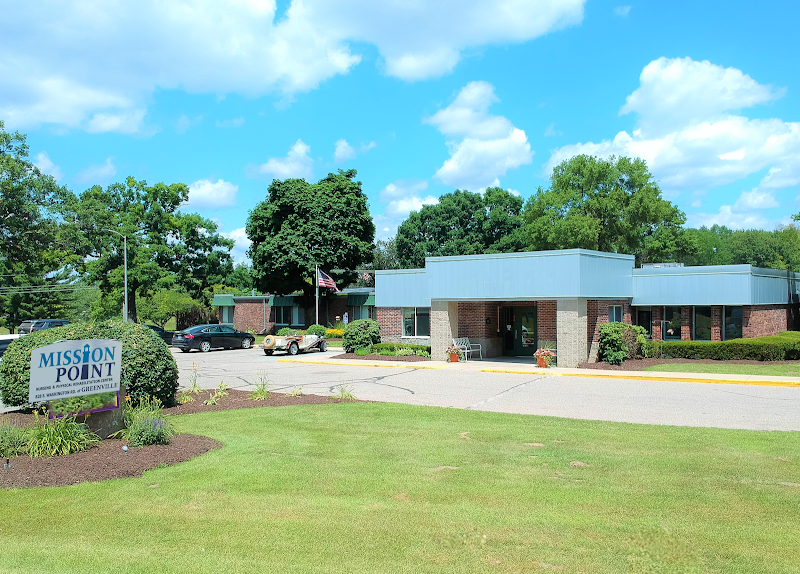
How is Mission Point Nursing & Physical Rehabilitation Ce Staffed?
CMS rates Mission Point Nursing & Physical Rehabilitation Ce's staffing level at 3 out of 5 stars, which is average compared to other nursing homes. Staff turnover is 40%, compared to the Michigan average of 46%. This relatively stable workforce can support continuity of care.

What Have Inspectors Found at Mission Point Nursing & Physical Rehabilitation Ce?

State health inspectors documented 37 deficiencies at Mission Point Nursing & Physical Rehabilitation Ce during 2023 to 2025. These included: 1 Immediate Jeopardy (the most serious level, indicating potential for serious harm or death), 3 that caused actual resident harm, 32 with potential for harm, and 1 minor or isolated issues. Immediate Jeopardy findings are rare and represent the most serious regulatory concerns. They require immediate corrective action.

Who Owns and Operates Mission Point Nursing & Physical Rehabilitation Ce?

Mission Point Nursing & Physical Rehabilitation Ce is owned by a for-profit company. For-profit facilities operate as businesses with obligations to shareholders or private owners. The facility is operated by MISSION POINT HEALTHCARE SERVICES, a chain that manages multiple nursing homes. With 100 certified beds and approximately 89 residents (about 89% occupancy), it is a mid-sized facility located in Greenville, Michigan.

How Does Mission Point Nursing & Physical Rehabilitation Ce Compare to Other Michigan Nursing Homes?

Compared to the 100 nursing homes in Michigan, Mission Point Nursing & Physical Rehabilitation Ce's overall rating (2 stars) is below the state average of 3.1, staff turnover (40%) is near the state average of 46%, and health inspection rating (2 stars) is below the national benchmark.

What Should Families Ask When Visiting Mission Point Nursing & Physical Rehabilitation Ce?

Based on this facility's data, families visiting should ask: "What changes have been made since the serious inspection findings, and how are you preventing similar issues?" "Can I visit during a mealtime to observe dining assistance and food quality?" "How do you handle medical emergencies, and what is your hospital transfer rate?" "Can I speak with family members of current residents about their experience?" These questions are particularly relevant given the facility's Immediate Jeopardy citations.

Is Mission Point Nursing & Physical Rehabilitation Ce Safe?

Based on CMS inspection data, Mission Point Nursing & Physical Rehabilitation Ce has documented safety concerns. Inspectors have issued 1 Immediate Jeopardy citation (the most serious violation level indicating risk of serious injury or death). The facility has a 2-star overall rating and ranks #100 of 100 nursing homes in Michigan. Families considering this facility should ask detailed questions about what corrective actions have been taken since these incidents.

Do Nurses at Mission Point Nursing & Physical Rehabilitation Ce Stick Around?

Mission Point Nursing & Physical Rehabilitation Ce has a staff turnover rate of 40%, which is about average for Michigan nursing homes (state average: 46%). Moderate turnover is common in nursing homes, but families should still ask about staff tenure and how the facility maintains care continuity when employees leave.

Was Mission Point Nursing & Physical Rehabilitation Ce Ever Fined?

Mission Point Nursing & Physical Rehabilitation Ce has been fined $12,337 across 2 penalty actions. This is below the Michigan average of $33,202. While any fine indicates a compliance issue, fines under $50,000 are relatively common and typically reflect isolated problems that were subsequently corrected. Families should ask what specific issues led to these fines and confirm they've been resolved.

Is Mission Point Nursing & Physical Rehabilitation Ce on Any Federal Watch List?

Mission Point Nursing & Physical Rehabilitation Ce is not on any federal watch list. The most significant is the Special Focus Facility (SFF) program, which identifies the bottom 1% of nursing homes nationally based on persistent, serious quality problems. Not being on this list means the facility has avoided the pattern of deficiencies that triggers enhanced federal oversight. This is a positive indicator, though families should still review the facility's inspection history directly.