Oceana County Medical Care Facility
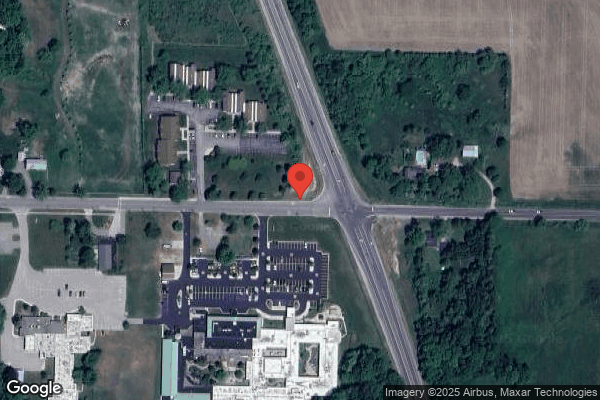
701 East Main Street, Hart, MI 49420 (231) 873-6601
Government - County 115 Beds Independent Data: November 2025
Trust Grade
95/100
#69 of 422 in MI
Last Inspection: July 2025

Inspected within the last 6 months. Data reflects current conditions.

Overview

Oceana County Medical Care Facility in Hart, Michigan, has an impressive Trust Grade of A+, indicating it is an elite facility with top-tier care. Ranked #69 out of 422 facilities in Michigan, it is in the top half, and it is the only nursing home in Oceana County, making it the best local option available. While the facility is improving, having reduced issues from 2 in 2024 to 1 in 2025, there are still areas of concern, such as the failure to maintain proper ventilation, leading to uncomfortable conditions for residents. Staffing is a strength here, with a low turnover rate of 22%, much better than the state average, and no fines reported, which is reassuring. However, specific incidents include a resident not having their call light within reach, which could pose safety risks, and the failure to consistently administer a prescribed medication, indicating some lapses in care. Overall, while there are notable strengths in staffing and safety record, families should be aware of the specific care issues that need addressing.
Trust Score
A+
95/100
In Michigan
#69/422
Top 16%
Safety Record
Low Risk
No red flags
Inspections
Getting Better
2 → 1 violations
Staff Stability
✓ Good
22% annual turnover. Excellent stability, 26 points below Michigan's 48% average. Staff who stay learn residents' needs.
Penalties
✓ Good
No fines on record. Clean compliance history, better than most Michigan facilities.
Skilled Nurses
✓ Good
Each resident gets 81 minutes of Registered Nurse (RN) attention daily — more than 97% of Michigan nursing homes. RNs are the most trained staff who catch health problems before they become serious.
Violations
✓ Good
Only 5 deficiencies on record. Cleaner than most facilities. Minor issues only.
★★★★★
5.0
Overall Rating
★★★★★
5.0
Staff Levels
★★☆☆☆
2.0
Care Quality
★★★★★
5.0
Inspection Score
Stable
2024: 2 issues
2025: 1 issues

The Good

  • 5-Star Staffing Rating · Excellent nurse staffing levels
  • Low Staff Turnover (22%) · Staff stability means consistent care
  • Full Sprinkler Coverage · Fire safety systems throughout facility
  • No fines on record
  • Staff turnover is low (22%)

    26 points below Michigan average of 48%

Facility shows strength in staffing levels, staff retention, fire safety.

The Bad

No Significant Concerns Identified

This facility shows no red flags. Among Michigan's 100 nursing homes, only 1% achieve this.

The Ugly 5 deficiencies on record

Jul 2025 1 deficiency
CONCERN (D)

Potential for Harm - no one hurt, but risky conditions existed

Deficiency F0558 (Tag F0558)

Could have caused harm · This affected 1 resident

**NOTE- TERMS IN BRACKETS HAVE BEEN EDITED TO PROTECT CONFIDENTIALITY** Based on observation, interview, and record review the facility failed to ensure call lights were in reach of dependent resident...

Read full inspector narrative →
**NOTE- TERMS IN BRACKETS HAVE BEEN EDITED TO PROTECT CONFIDENTIALITY** Based on observation, interview, and record review the facility failed to ensure call lights were in reach of dependent residents for 1 resident (R85) of 1 resident reviewed for availability of call lights. Findings include: Review of an admission Record revealed R85 admitted to the facility on [DATE] with pertinent diagnoses which included diabetes, heart failure, and weakness.Review of a current ADL (activities of daily living) Care Plan intervention for R85, initiated 12/3/2024, revealed resident was dependent on staff assistance for transfers. Review of a current risk for falls Care Plan intervention, initiated 11/29/2024, directed staff to leave R85's call light in reach when he was in the room without staff.In an observation and interview on 7/15/2025 at 11:36 AM in R85's room, R85 was sitting in his bedside recliner with a blanket over his lap and his call light was sitting on his lower legs and out of his reach. R85 reported he did not know where is call light was located. R85 reported he was able to use his call light to request staff assistance but could not locate the call light as he was unable to see it.In an observation and interview on 7/16/2025 at 1:29 PM in R85's room, R85 was sitting in his bedside recliner and reported he did not know where his call light was. Both call lights were wrapped around the frame of his bed and out of his reach. R85 reported he was supposed to let staff assist him when he needed to get up but could not call for help without his call light. In an interview and observation on 7/16/2025 at 1:34 PM in R85's room, Certified Nursing Assistant (CNA) C reviewed R85's care plan and confirmed he required staff assistance to get out of his chair. CNA C reported R85's call light should have been left within reach when staff escorted him back to his room from the dining hall. In an interview on 7/16/2025 at 1:36 PM, CNA F reported she assisted R85 back to his recliner in his room after lunch and forgot to place his call light within reach when she left the room. CNA F reported R85's call light should be left within reach as he was able to use his call light and required assistance to get out of his recliner.
Aug 2024 2 deficiencies
CONCERN (D)

Potential for Harm - no one hurt, but risky conditions existed

Deficiency F0578 (Tag F0578)

Could have caused harm · This affected 1 resident

**NOTE- TERMS IN BRACKETS HAVE BEEN EDITED TO PROTECT CONFIDENTIALITY** Based on interview and record review, the facility failed to: 1) provide documentation that they communicated a resident's wishe...

Read full inspector narrative →
**NOTE- TERMS IN BRACKETS HAVE BEEN EDITED TO PROTECT CONFIDENTIALITY** Based on interview and record review, the facility failed to: 1) provide documentation that they communicated a resident's wishes for code status to their guardian/ responsible party/Durable Power of Attorney for Medical Care in a timely manner for 3 of 4 residents (R32, R64, and R76) and 2) maintain a copy of a resident's advanced directives in the resident's medical record for 2 of 4 residents (R32 and R64) reviewed for advanced directives, resulting in the potential for a resident's wishes not being honored. Findings include: Resident #32 (R32) A review of R32's admission Record, dated 8/7/24, revealed R32 was an [AGE] year-old resident admitted to the facility on [DATE] and re-admitted on [DATE]. In addition, R32's admission Record revealed multiple diagnoses that included late onset Alzheimer's Disease, dementia, and bipolar disorder. R32's admission Record also revealed that Responsible Party (RP) J was R32's Power of Attorney (POA) for medical care and finances. A review of R32's Minimum Data Set (MDS) (a tool used for assessing a resident's care needs), dated 5/21/24, revealed R32 had a Brief Interview for Mental Status (BIMS) (a scale used to determine a resident's cognitive status) score of 10 which revealed R32 was moderately cognitively intact. A review of R32's Medical and Financial Determination form, dated 8/11/23, revealed R32's physician and a licensed psychologist determined R32 was no longer capable of participating in medical treatment decisions affecting their own health or financial decisions. Therefore, R32's advanced directive for medical and financial decisions was activated and R32's power of attorney (POA) to make medical and financial decisions was to take effect on this date. A review of R32's medical record, dated 8/11/23 to 8/6/24, failed to reveal an advanced directive for medical decisions that would officially designate someone as R32's POA. A second review of R32's medical record, dated 8/11/23 to 8/6/24, revealed that RP J (the individual listed as R32's POA for health care on R32's admission Record) was first made aware of R32's code status (what to do in the event R64's heart and/or breathing stopped- Full Code) in a Social Service Note on 9/26/24 (1.5 months after R32 was determined to be unable to make medical decisions). During an interview on 08/06/24 at 10:55 AM, the Director of Nursing (DON) was informed that the surveyor could not locate R32's advanced directives for medical decisions paperwork in R32's medical record. A copy of R32's advanced directives for medical decisions paperwork was requested from the DON, if they could locate it. During a second interview on 08/06/24 at 11:30 AM, the DON stated R32 was deemed incompetent (unable to make medical decisions). She stated the facility does not have any advanced directive for medical decisions paperwork in R32's medical record because RP J repeatedly refused to provide it to the facility. The DON suggested that the surveyor speak with Social Worker (SW) A for more information on the situation with RP J and his refusal to provide the facility with a copy of R32's advanced directives for medical decisions. During an interview on 08/07/24 at 09:02 AM, SW A stated she had tried to get the R32's advanced directives for medical decisions paperwork from RP J several times. SW A stated unfortunately I have not documented that in his medical record. SW A stated RP J has had some issues accepting that R32 had been determined to be unable to make medical decisions and this may be a reason why RP J has not provided the facility with a copy of R32's advanced directives for medical decisions paperwork, even though RP J had provided the facility with a copy of R32's advanced directives for financial decisions paperwork. She stated RP J had provided them R32's financial decisions advanced directives because there had possibly been some financial issues that needed to be addressed. SW A stated she understands that the facility needs R32's advanced directives for medical decisions paperwork to prove who his medical decision maker was because some residents have different people who make medical decisions and financial decisions. She stated she will try and contact RP J again today and see if he will send R32's medical decisions advanced directive paperwork. During an interview on 08/07/24 at 11:45 AM, SW A stated she spoke with RP J and he had still refused to send a copy of R32's advanced directives for medical decisions paperwork to the facility. She stated RP J had said he was aware the facility needed the paperwork, but he was not going to provide it to them. During a third interview on 08/07/24 at 12:27 PM, the DON stated she, the Nursing Home Administrator, and the Assistant Director of Nursing had a conference call with RP J. The DON stated RP J had said he was not aware that the advanced directives paperwork that he had previously submitted to the facility did not address medical decisions. RP J had stated he thought medical and financial decisions were both on the advanced directives paperwork that he had already provided to the facility. RP J had told the DON that he would contact his attorney for a copy of the documentation and have it sent to SW A. A copy of R32's advanced directives for medical decisions was requested from the DON when the facility receives it. As of the time of the completion of the survey and exit from the facility, the facility failed to provide a copy of R32's advanced directives for medical decisions to the surveyors. Resident #64 (R64) A review of R64's admission Record, dated 8/7/24, revealed R64 was a [AGE] year-old resident admitted to the facility on [DATE] and re-admitted on [DATE]. In addition, R64's admission Record revealed multiple diagnoses that included late onset Alzheimer's Disease, dementia with agitation, dementia with behaviors, psychotic disorder, and hallucinations. R64's admission Record also revealed that Responsible Party (RP) I was R64's Power of Attorney (POA) for medical care and finances. A review of R64's MDS, dated [DATE], revealed R64 had a BIMS score of 8 which revealed R64 was moderately cognitively intact. A review of R64's Medical and Financial Determination form, dated 3/11/24, revealed R64's physician and a licensed psychologist determined R64 was no longer capable of participating in medical treatment decisions affecting their own health or financial decisions. Therefore, R64's advanced directive for medical and financial decisions was activated and R64's power of attorney (POA) to make medical and financial decisions was to take effect on this date. A review of R64's medical record, dated 3/11/24 to 8/7/24, failed to reveal an advanced directive for medical decisions that would officially designate someone as R64's POA. A second review of R64's medical record, dated 3/11/24 to 8/7/24, failed to reveal that R64's wishes for code status were discussed with RP I (the individual listed as R64's POA for health care on R64's admission Record). During an interview on 08/07/24 at 11:45 AM, SW A stated she was sure R64's POA (RP I) had signed a code status form. She stated she was also sure that R64 had advanced directive documentation in his medical record. SW A stated she would look for both of these items and send a copy to the surveyor. SW A stated if she could not locate R64's advanced directive documentation, then she would contact R64's lawyer's office for a copy of it. A review of R64's Designation of Patient Advocate document, dated 7/9/19, was received on 8/7/24 at 12:43 PM. R64's Designation of Patient Advocate document revealed that RP I would be the Patient Advocate (POA) in the event that R64 was determined to be unable to make medical decisions. A third review of R64's medical record, dated 3/11/24 to 8/7/24, revealed that RP I was made aware of R64's code status (DNR- Do Not Resuscitate) in a Social Service Note on 8/7/24 at 12:13 PM (approximately 5 months after R64 was determined to be unable to make medical decisions). In addition, R64's Designation of Patient Advocate document was noted to have been added to R64's medical record on 8/7/24. Resident #76 (R76) A review of R76's admission Record, dated 8/7/24, revealed R76 was a [AGE] year-old resident admitted to the facility on [DATE] and re-admitted on [DATE]. In addition, R76's admission Record revealed multiple diagnoses that included dementia. A review of R76's MDS, dated [DATE], revealed a BIMS score of 12 which indicated R76 was moderately cognitively intact. A review of R76's Order Regarding Appointment of Guardian of Incapacitated Individual, dated 7/11/24, revealed Guardian (GRD) K was appointed as R76's guardian. A review of R76's Do Not Resuscitate Order, dated 4/3/24 and signed by R76, revealed she wanted to be a DNR in the event that her heart and breathing stopped. A review of R76's medical record, dated 7/11/24 to 8/6/24, failed to reveal that R76's wishes for code status were discussed with GRD K. During an interview on 8/6/24 at 10:54 AM, a copy of any documentation that R76's guardian (GRD K) was aware of R76's DNR wishes (e.g., progress note, care conference note, DNR order signed by GRD K, etc.) was requested from the DON. A review of R76's Communication- with Family/NOK (next of kin)/POA note, dated 8/6/24 at 4:27 PM, revealed GRD K was made aware of R76's wish to be a DNR (27 days after GRD K was appointed as R76's guardian). A review of the facility's Advanced Directives policy and procedure, dated 12/2016, revealed, It is the Policy of [Name of facility] to ask resident and/or resident representative at time of admission to facility if they have Advance Directives (medical Durable Power of Attorney, Five Wishes) or Guardianship . If resident has Advance Directive resident and/or resident representative will be asked to bring in form so that copy of Advance Directive can be scanned into [name of facility's electronic medical records program] . A review of the facility's Designation of Resident's Ability to Make Medical Decisions policy and procedure, dated 2/16/22, revealed, 4) If both physicians sign the Medical Determination form social worker will notify the person who has been designated as medical decision maker in the Durable Power of Attorney Form for Health Care or 5 Wishes form. 5) Medical Determination form will be scanned into [name of facility's electronic medical records program] under Medical Determination .
CONCERN (F)

Potential for Harm - no one hurt, but risky conditions existed

Deficiency F0923 (Tag F0923)

Could have caused harm · This affected most or all residents

**NOTE- TERMS IN BRACKETS HAVE BEEN EDITED TO PROTECT CONFIDENTIALITY** Based on observation and interview, the facility failed to maintain ventilation, resulting in odors and uncirculated air, affect...

Read full inspector narrative →
**NOTE- TERMS IN BRACKETS HAVE BEEN EDITED TO PROTECT CONFIDENTIALITY** Based on observation and interview, the facility failed to maintain ventilation, resulting in odors and uncirculated air, affecting all residents in the AU Unit and residents living in the 200 Hallways. Findings include: During an observation of the AU Unit on 8/5/24 at approximately 11:00 AM, the air on the halls and in the resident rooms felt muggy, humid and stagnant. During the observation, some of the resident rooms were noted to have lingering bathroom odors. During a family interview on 8/5/24 at 11:11 AM, resident's room was noted to be stagnant and hot. R50's daughter revealed, this room is always this way, we dress for it. On 8/7/24 between 10:58 AM to approximately 11:25 AM, the following AU resident restrooms (103, 109, 117, 127, 131 and 135) were tested using a tissue. The restroom vents were not producing any suction. On 8/7/24 at approximately 11:27 AM, the Unisex Restroom (located closest to room [ROOM NUMBER]) was also checked using a tissue and no suction was observed from the vent. During the 8/7/24 tour of the AU Unit with Maintenance Personnel (MP) L the unit was observed to be stuffy, and stagnant. The resident rooms/restrooms were noted to be hot, stagnant and some had lingering odors. During an interview on 8/7/24 at 11:51 AM, Maintenance Director (MD) C was queried on the maintenance of the AU's ventilation system and stated we had a blower motor issue on that unit. We may be having an issue down there again. We will get someone to check on it. During an observation and an interview on 8/7/24 at 10:19 AM, Maintenance Director (MD) C and this surveyor walked to room [ROOM NUMBER], 207, 209, 215, 217, 235, 237 and verified the air return ducts in the rooms had little to no air pressure pulling out the shared bathrooms and above the sinks. Some bathrooms had a lingering bathroom smell. The large activity room on the corner of Elm did not have a good air return ventilation either. MD C reported he did not see any problems on the roof with the functioning of the ventilation. He did not have a preventative maintenance checklist.
Jun 2023 1 deficiency
CONCERN (E)

Potential for Harm - no one hurt, but risky conditions existed

Medication Errors (Tag F0758)

Could have caused harm · This affected multiple residents

**NOTE- TERMS IN BRACKETS HAVE BEEN EDITED TO PROTECT CONFIDENTIALITY** Based on interview and record review, the facility failed to address a psychotropic medication that was ordered on an as needed ...

Read full inspector narrative →
**NOTE- TERMS IN BRACKETS HAVE BEEN EDITED TO PROTECT CONFIDENTIALITY** Based on interview and record review, the facility failed to address a psychotropic medication that was ordered on an as needed (PRN) basis for 1 (Resident #33), resulting in the potential for unnecessary medication. Findings include: Resident #33 (R33) Review of a Face sheet revealed R33 admitted to the facility on [DATE] with pertinent diagnoses of anxiety, congestive heart failure, and non-pressure chronic ulcers in bilateral lower limbs. Review of the Medication Administration/Physician orders for R33 revealed on 4/20/23 an order for Ativan (Lorazepam) 0.5 mg (milligrams) to be given every 8 hours as needed for anxiety and discontinued on 6/26/23. The Ativan was not given every day. Review of the Medication Administration/Physician orders for R33 revealed a new order on 6/26/23 for Ativan 0.5 mg every 8 hours as needed for anxiety for 14 days in addition to an order for Ativan 0.5 mg at bedtime for anxiety. Review of a Pharmacist's Note To Attending Physician/Prescriber dated 5/18/23 for R33 revealed PRN 14-day rule psychotropics: .(R33) has a PRN order for Ativan (Lorazepam 0.5 mg every 8 hours as needed since her readmission on [DATE]. This medication has been used 30 x since her readmission. According to guidelines, if this PRN order is to extend beyond 14 days, the rationale must be documented in the resident's medical record and must also indicate the duration for the PRN order. If you feel no change is warranted, please indicate at the bottom of this form, or in your next progress note, to be compliant with current regulations. The physician documented at the bottom of the form: Agree. I extended X 14 days on (electronic medical record.) Review of the Quality Care/Care Conference Progress note for R33 dated 6/2/23 revealed Started on Ativan 0.5 mg (by mouth every) 8 hours PRN on 4/20/2023 - risk- possible S/E sedation, benefit - quality of life anxiety treatment. Review of a Care Plan for R33 revealed a focus for Anxiety initiated on 4/12/23 revealed the intervention to administer anti-anxiety medications as ordered by the physician. No person centered or meaningful alternative intervention documented. In an interview and record review on 6/29/23 at 12:13 PM, the Director of Nursing (DON) reported that the physician did agree to extending the PRN Ativan for 14 days in June on the pharmacy review documentation for R33. When referring to the regulation's requirements for PRN psychotropic medications, the DON reported the physician may have put information into the progress notes. Review of the progress notes and physician documentation revealed no more required documentation for Ativan for R33.
Nov 2022 1 deficiency
CONCERN (D) 📢 Someone Reported This

A family member, employee, or ombudsman was alarmed enough to file a formal complaint

Potential for Harm - no one hurt, but risky conditions existed

Free from Abuse/Neglect (Tag F0600)

Could have caused harm · This affected 1 resident

**NOTE- TERMS IN BRACKETS HAVE BEEN EDITED TO PROTECT CONFIDENTIALITY** This citation pertains to intakes MI00132628 and MI00132504 Past non-compliance was accepted for this citation. Corrective actio...

Read full inspector narrative →
**NOTE- TERMS IN BRACKETS HAVE BEEN EDITED TO PROTECT CONFIDENTIALITY** This citation pertains to intakes MI00132628 and MI00132504 Past non-compliance was accepted for this citation. Corrective actions identified below. Based on interview and record review, the facility failed to prevent abuse towards 2 residents (R1 and R2) reviewed for abuse, resulting in the residents being abused by a staff member. Findings include: Review of facility policy Abuse, Neglect and Exploitation with a last revised date of 8/31/2022 revealed: It is the policy of this facility to provide protections for the health, welfare and rights of each resident by developing and implementing written policies and procedures that prohibit and prevent abuse, neglect, exploitation and misappropriation of resident property. Verbal abuse is defined as: the use of oral, written or gestured communication or sounds that willfully includes disparaging and derogatory terms to residents or their families, or within their hearing distance regardless of their age, ability to comprehend, or disability. Physical abuse is defined as: includ[ing], but is not limited to hitting, slapping, punching, biting, and kicking. It also includes controlling behavior through corporal punishment. R2 Review of face sheet and electronic medical record revealed R2 admitted to the facility on [DATE] with diagnosis that included: hemiplegia and hemiparesis following cerebral infarction, vascular dementia, psychotic disorder with delusions, chronic pain and chronic kidney disease. R2 is not their own responsible party. Review of facility reported incident revealed on 10/2/22 at 11:05 AM, it was reported CNA (Certified Nursing Assistant) A was overheard swearing at R2. The facility investigation revealed CNA A admitted to yelling at R2 don't you ever f---ing punch me like that after he punched her in the ear during cares. R2 did not recall the incident. Review of personnel file for CNA A revealed she was hired approximately December of 2007 and did not appear to have a prior history of any abusive behavior. She was issued a Final Written Warning: Unprofessional Conduct i.e. using obscene or improper language or gestures, immoral conduct or indecency related to the incident with R2 on 10/2/22. Per review of the facility provided incident file, following the incident on 10/2/22 CNA A completed multiple reeducation course regarding topics such as abuse and neglect, dementia care, management of challenging resident behaviors, etc. Other facility staff who worked on the dementia unit were also provided with a memo to review regarding tips for providing care for R2 to diminish chance of violent physical outbursts. R1 Review of face sheet and electronic medical record revealed R1 admitted to the facility on [DATE] with diagnosis that included: Alzheimer's disease, vascular dementia, pain and other specified disorders of adult personality and behavior. R1 is not their own responsible party. Review of facility reported incident revealed on 11/3/22 at 8:37 AM CNA A was witnessed slapping R1 on the shoulder after he poked her in the chest area. R1 did not recall the incident and was not injured. CNA A did not deny that she slapped R1. CNA A's employment was immediately terminated and local police were called and completed an investigation. A review of video footage of the incident was completed on 11/21/22 at approximately 10:30 AM with the Director of Nursing (DON). CNA A was seen to be standing in the hallway with R1, they were speaking to each other when R1 reached out to touch her in the chest area. CNA A paused for a moment then drew her hand back and slapped R1 in the shoulder area. CNA A immediately hugged and appeared apologetic towards the resident and quickly stepped away. Review of the facility investigation during an abbreviated survey on 11/21/2021 reflected the facility implemented the following interventions that identified the non-compliance: Description of deficient practice: [CNA A] slapped [R1] on the right shoulder in response to [R1] poking [CNA A] on her breast. 1. Immediate action(s) taken for the resident(s) found to have been affected include: With respect to allegation of physical abuse towards [R1], the facility was compliant with its Abuse Prohibition policy and procedure with respect to reporting and investigation. The facility was also compliant with its policies and procedures for protecting residents as well as disciplinary action resulting in termination on 11/3/22 for [CNA A's] noncompliance. [R1] was assessed for mood / behavior changes with no psychosocial concerns post incident. A skin assessment was completed with no skin alterations noted. Resident denied pain or discomfort as a result of being slapped. [R1] was placed on continued monitoring for mood / behavior changes. No psychosocial concerns have been noted and resident has continued about his normal routines. 2. Identification of other residents having the potential to be affected was accomplished by: The facility has determined that all residents have the potential to be affected. 3. Actions taken/systems put into place to reduce the risk of future occurrence include: The facility's abuse and neglect policy and procedure will be reviewed and revised, if appropriate, to ensure compliance with current regulations. On 11/3/22 The Alzheimer's Foundation was contacted for support in education opportunities in relation to Alzheimer's Disease and abuse prevention and an in-service education program was immediately initiated with the staff working on the Alzheimer's Unit by the Social Worker This education focused on scenario's for abuse and responses/reactions, 7 strategies to prevent burnout, and Alzheimer's and Dementia behaviors resources. All staff in-servicing on Abuse Prevention. Staff will not work after 11/16/22 until they have received the outlined education. 4. How the corrective action(s) will be monitored to ensure the practice will not recur: The Director of Nursing Services, or designee, will conduct ten (10) random staff interviews regarding facility abuse/neglect policy weekly for four (4) weeks, then (10) random staff interview monthly for at least two additional months. Any concerns will be immediately addressed via individual employee education. A compilation of findings will be presented to the QAA Committee each month in consideration of the plan effectiveness. QAA Committee will determine the date to safely discontinue the interview program. The Director of Nursing will be responsible for compliance. Corrective action completion date: 11/16/22.
Understanding Severity Codes (click to expand)
Life-Threatening (Immediate Jeopardy)
J - Isolated K - Pattern L - Widespread
Actual Harm
G - Isolated H - Pattern I - Widespread
Potential for Harm
D - Isolated E - Pattern F - Widespread
No Harm (Minor)
A - Isolated B - Pattern C - Widespread

Questions to Ask on Your Visit

  • "Can I speak with families of current residents?"
  • "What's your RN coverage like on weekends and overnight?"

Our Honest Assessment

Strengths
  • • Grade A+ (95/100). Above average facility, better than most options in Michigan.
  • • No major safety red flags. No abuse findings, life-threatening violations, or SFF status.
  • • No fines on record. Clean compliance history, better than most Michigan facilities.
  • • Only 5 deficiencies on record. Cleaner than most facilities. Minor issues only.
Concerns
  • • No significant concerns identified. This facility shows no red flags across CMS ratings, staff turnover, or federal penalties.
Bottom line: Generally positive indicators. Standard due diligence and a personal visit recommended.

About This Facility

What is Oceana County Medical Care Facility's CMS Rating?

CMS assigns Oceana County Medical Care Facility an overall rating of 5 out of 5 stars, which is considered much above average nationally. Within Michigan, this rating places the facility higher than 99% of the state's 100 nursing homes. This rating reflects solid performance across the metrics CMS uses to evaluate nursing home quality.
How is Oceana County Medical Care Facility Staffed?
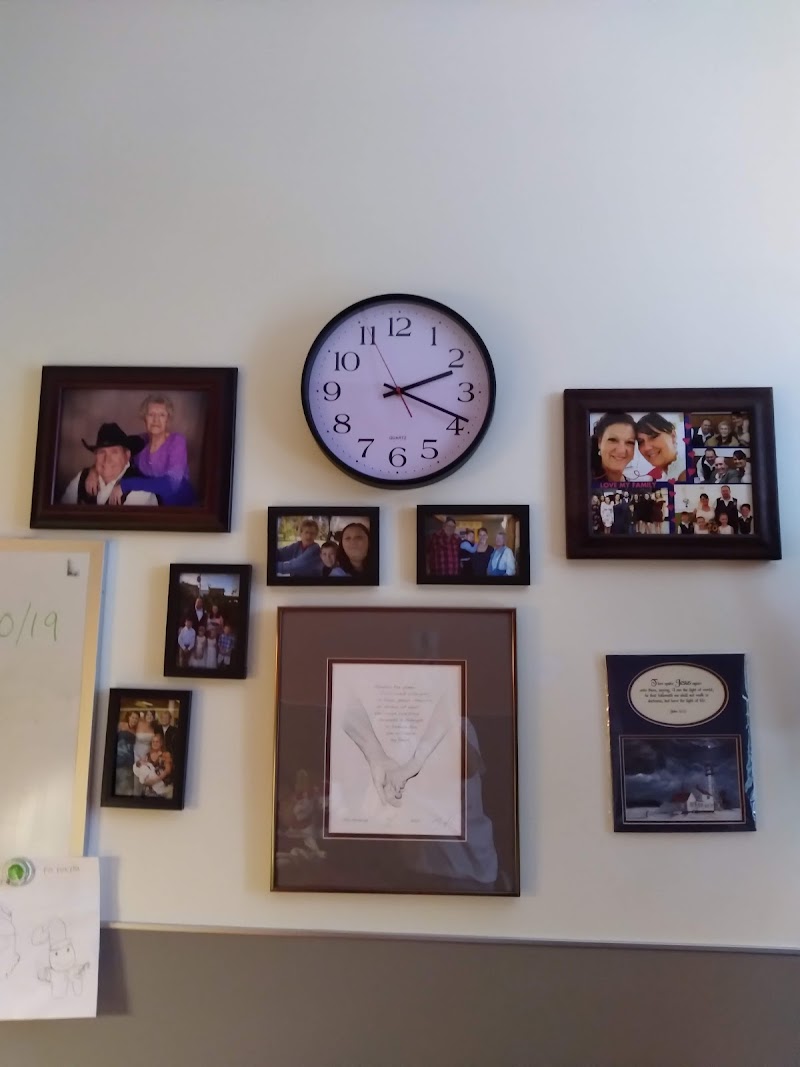
CMS rates Oceana County Medical Care Facility's staffing level at 5 out of 5 stars, which is much above average compared to other nursing homes. Staff turnover is 22%, compared to the Michigan average of 46%. This relatively stable workforce can support continuity of care.

What Have Inspectors Found at Oceana County Medical Care Facility?

State health inspectors documented 5 deficiencies at Oceana County Medical Care Facility during 2022 to 2025. These included: 5 with potential for harm.

Who Owns and Operates Oceana County Medical Care Facility?

Oceana County Medical Care Facility is owned by a government entity. Government-operated facilities are typically run by state, county, or municipal agencies. The facility operates independently rather than as part of a larger chain. With 115 certified beds and approximately 86 residents (about 75% occupancy), it is a mid-sized facility located in Hart, Michigan.

How Does Oceana County Medical Care Facility Compare to Other Michigan Nursing Homes?

Compared to the 100 nursing homes in Michigan, Oceana County Medical Care Facility's overall rating (5 stars) is above the state average of 3.2, staff turnover (22%) is significantly lower than the state average of 46%, and health inspection rating (5 stars) is much above the national benchmark.

What Should Families Ask When Visiting Oceana County Medical Care Facility?

Based on this facility's data, families visiting should ask: "Can I visit during a mealtime to observe dining assistance and food quality?" "How do you handle medical emergencies, and what is your hospital transfer rate?" "Can I speak with family members of current residents about their experience?"

Is Oceana County Medical Care Facility Safe?

Based on CMS inspection data, Oceana County Medical Care Facility has a clean safety record: no substantiated abuse findings (meaning no confirmed cases of resident harm), no Immediate Jeopardy citations (the most serious violation level indicating risk of serious injury or death), and is not on the Special Focus Facility watch list (a federal program monitoring the lowest-performing 1% of nursing homes). The facility has a 5-star overall rating and ranks #1 of 100 nursing homes in Michigan. While no facility is perfect, families should still ask about staff-to-resident ratios and recent inspection results during their visit.

Do Nurses at Oceana County Medical Care Facility Stick Around?

Staff at Oceana County Medical Care Facility tend to stick around. With a turnover rate of 22%, the facility is 24 percentage points below the Michigan average of 46%. Low turnover is a positive sign. It means caregivers have time to learn each resident's needs, medications, and personal preferences. Consistent staff also notice subtle changes in a resident's condition more quickly. Registered Nurse turnover is also low at 27%, meaning experienced RNs are available to handle complex medical needs.

Was Oceana County Medical Care Facility Ever Fined?

Oceana County Medical Care Facility has no federal fines on record. CMS issues fines when nursing homes fail to meet care standards or don't correct problems found during inspections. The absence of fines suggests the facility has either maintained compliance or corrected any issues before penalties were assessed. This is a positive indicator, though families should still review recent inspection reports for the full picture.

Is Oceana County Medical Care Facility on Any Federal Watch List?

Oceana County Medical Care Facility is not on any federal watch list. The most significant is the Special Focus Facility (SFF) program, which identifies the bottom 1% of nursing homes nationally based on persistent, serious quality problems. Not being on this list means the facility has avoided the pattern of deficiencies that triggers enhanced federal oversight. This is a positive indicator, though families should still review the facility's inspection history directly.