CONCERN
(D)
Potential for Harm - no one hurt, but risky conditions existed
Deficiency F0582
(Tag F0582)
Could have caused harm · This affected 1 resident
Based on interview and record review, the facility failed to provide a notice of Medicare non-coverage within the appropriate timeframe, in 1 of 3 residents reviewed for notice of Medicare non-coverag...
Read full inspector narrative →
Based on interview and record review, the facility failed to provide a notice of Medicare non-coverage within the appropriate timeframe, in 1 of 3 residents reviewed for notice of Medicare non-coverage (Resident #471), resulting in the ability to dispute the termination decision. Findings include:
Resident #471 (R471)
R471's Notice of Medicare non-coverage (NOMNC), revealed her Medicare coverage would end on 8/01/22, the form was signed as received on 8/02/22, the same day as her discharge from the facility.
Progress notes dated 7/06/22 at 10:20 AM revealed R471's spouse met with billing staff and the nurse and was updated on R471's projected discharge date of 8/25/22.
On 8/30/22 at 10:43 AM Business Office Manager (BOM) AA was interviewed and stated the facility had a weekly medicare meeting to discuss when therapy services were projected to end. BOM AA' stated as soon as the Medicare end date was confirmed, she called the family and to ask if they would be in to sign the NOMNC form or if they would like it to be mailed. BOM AA stated she documented the phone call if they were not going to be in to sign in person; and documented right on the NOMNC form. There was no documentation of a phone call on R471's NOMNC form.
Centers for Medicare and Medcaid Services (CMS) website at https://www.cms.gov/Medicare/Medicare-General-Information/BNI/Downloads/Instructions-for-Notice-of-Medicare-Non-Coverage-NOMNC.pdf, indicated the NOMNC must be delivered at least two calendar days before Medicare covered services end or the second to last day of service if care was not being provided daily. The provider must ensure that the beneficiary or representative signed and dated the NOMNC to demonstrate that the beneficiary or representative received the notice and understood that the termination decision could be disputed.
CONCERN
(D)
Potential for Harm - no one hurt, but risky conditions existed
Transfer Notice
(Tag F0623)
Could have caused harm · This affected 1 resident
**NOTE- TERMS IN BRACKETS HAVE BEEN EDITED TO PROTECT CONFIDENTIALITY** Based on interview and record review, the facility failed to notify the Long-Term Care Ombudsman of transfer to the hospital for...
Read full inspector narrative →
**NOTE- TERMS IN BRACKETS HAVE BEEN EDITED TO PROTECT CONFIDENTIALITY** Based on interview and record review, the facility failed to notify the Long-Term Care Ombudsman of transfer to the hospital for one (Resident #8) of four reviewed for hospitalization, resulting in the potential for the Ombudsman not being aware of facility transfers/discharges.
Findings include:
Review of the medical record reflected Resident #8 (R8) was admitted to the facility on [DATE] and readmitted [DATE], with diagnoses that included atrial fibrillation, chronic obstructive pulmonary disease, heart failure and dementia. The quarterly Minimum Data Set (MDS), with an Assessment Reference Date (ARD) of 5/29/22, reflected R8 scored zero out of 15 (severe cognitive impairment) on the Brief Interview for Mental Status (BIMS-a cognitive screening tool). The same MDS reflected R8 required limited to extensive assistance of one to two or more people for activities of daily living.
R8's MDS history reflected a Discharge Return Anticipated MDS with an ARD of 7/2/22. An Entry Record MDS reflected R8 returned to the facility on 7/22/22.
A Progress Note for 7/20/22 reflected R8 had new onset of left sided weakness. R8's speech was slightly slurred, and she was sent to the emergency room for evaluation and treatment.
On 08/30/22 at 2:08 PM, an email was sent to Nursing Home Administrator (NHA) A to request a list of Ombudsman notifications for transfers/discharges for July 2022.
On 08/30/22 at 2:50 PM, an email was received from NHA A with a list of discharges sent to the Ombudsman for 7/2022. R8 was not on that list.
During an interview on 08/30/22 at 4:09 PM, NHA A reported he had been making the Ombudsman notification list, and he was sending the list of discharges monthly. NHA A reported if a resident was sent to the hospital and was gone for a couple days, that was normally sent to the Ombudsman. Regarding R8 not being included on the July 2022 list of discharges sent to the Ombudsman, NHA A stated the Ombudsman was not notified (of R8 being sent to the hospital) because he would have been the one to make the notification.
CONCERN
(D)
Potential for Harm - no one hurt, but risky conditions existed
ADL Care
(Tag F0677)
Could have caused harm · This affected 1 resident
**NOTE- TERMS IN BRACKETS HAVE BEEN EDITED TO PROTECT CONFIDENTIALITY** Based on observation, interview, and record review the facility failed to ensure one out of three residents (Resident #100) rece...
Read full inspector narrative →
**NOTE- TERMS IN BRACKETS HAVE BEEN EDITED TO PROTECT CONFIDENTIALITY** Based on observation, interview, and record review the facility failed to ensure one out of three residents (Resident #100) received showers per the preferred amount of times per week, resulting the potential for unmet grooming and/or personal hygiene needs.
Findings Included:
Review of a Minimum Data Set (MDS) dated [DATE], revealed R100 had a Brief Interview for Mental Status (BIMS) score of 15 out of 15 which indicated R100 was cognitively intact. The MDS also revealed, under section G-bathing, R100 required staff to provide physical assistance for bathing.
In an interview on 8/24/2022 at 2:53 PM, R100 stated that he wanted to have two showers a week, but only received one per week. R100 said he wanted to have two showers per week because his hair would get greasy with only one per week.
During the interview with R100 it was observed that his hair was greasy in appearance. R100 stated that his hair was not to greasy yet, but was getting there. R100 then stated that his next scheduled shower date was not until Tuesday, 8/30/22, six days away.
Record review of R100's care plans revealed a care plan titled, REQUIRES OCCASIONAL STAFF ASSIST WITH BATHING, DRESSING & GROOMING D/T (due to) WEAKNESS OR WHEN HE IS NOT FEELING WELL., dated 1/21/2022 and revised on 5/18/2022, revealed no intervention that identified R100's shower days, nor preference of two showers per week.
In an interview on 8/30/2022, at 1:03 PM, R100 stated that he was supposed to have had a shower that morning, however had not received a shower as of the time of the interview. R100 stated it was his shower day, and said he always got his showers in the morning. R100 stated he had not receive a shower, because the shower team was not working today. R100 also stated that he had not even been offered a shower, and it had been a week since his last shower.
In an interview on 8/30/2022, at 1:09 PM, Certified Nurse Aid (CNA) Y there was a shower team that consisted of two shower aids, however stated that there was no shower team working today, because the shower aids were not doing showers, but rather caring for residents. CNA Y also stated that if a resident did not get their shower they would get one the next day.
In an interview on 8/30/2022, at 1:16 PM, Director of Nursing (DON) B said showers were done weekly by the shower team, and that only one shower per week was guaranteed for the residents.
CONCERN
(D)
Potential for Harm - no one hurt, but risky conditions existed
Accident Prevention
(Tag F0689)
Could have caused harm · This affected 1 resident
**NOTE- TERMS IN BRACKETS HAVE BEEN EDITED TO PROTECT CONFIDENTIALITY** Based on observation, interview and record review the facility failed to: 1.) ensure the safety, 2.) implement care-planned and ...
Read full inspector narrative →
**NOTE- TERMS IN BRACKETS HAVE BEEN EDITED TO PROTECT CONFIDENTIALITY** Based on observation, interview and record review the facility failed to: 1.) ensure the safety, 2.) implement care-planned and non-care-planned interventions, and 3.) ensure that those interventions were functional and in place in 1 of 6 sampled residents (R11) reviewed for falls, resulting in R11 unwitnessed fall in the bathroom, where R11 was found unresponsive with signs of hypoxemia, requiring cardiopulmonary resuscitation and later died. This deficient practice placed 122 residents at risk for increased likelihood for continued falls, serious injury and/or death.
Findings include:
Review of the facility Fall Policy, dated [DATE], reflected, FALLS PROCEDURE PURPOSE: To prevent and monitor falls and those Residents at risk for falls occurring within the [named facility] .3. The Risk Management Technician or designee will assess the resident using the Morse Falls Scale within 24 hours of admission, and with follow up MDS's 30, 60, & 90 day, quarterly, annually and with any significant change. Assessments to be done in collaboration with the Therapies working with the resident and the Falls Committee, as deemed appropriate .8.
The Licensed Nurse will complete the Incident Report after each fall and place the resident on Alert Charting. After completion nurse is to Notify both the family and the Physician of the incident. Immediate corrective action must be documented on the Incident Report and changes made on the resident's Care Guide and Care Plan, if warranted. All Incident Reports must be completed before the end of the shift that is occurred on. Assessment with documentation regarding any falls should be made EVERY 8 HOURS in the Nurse's Notes for 48 hours to include but not exclusive of: immediate preventative/protective measures, any injury, vital signs, neurological checks, bruising, lacerations, the resident's ability to continue functioning in their normal ADL's, any change in mentation, pain and/or any change in this person related to the fall. The D.O.N. and Administrator and/or designee reviews and signs all incident reports .
Resident #11(R11)
Review of the Face Sheet and Minimum Data Set (MDS) change of condition, dated [DATE], reflected R11 was a [AGE] year old male admitted to the facility on [DATE], with diagnoses that included coronary artery disease, atrial fibrillation, hypertension (high blood pressure), and cerebral vascular accident. The MDS reflected R11 had a BIM (assessment tool) score of 13 which indicated his ability to make daily decisions was intact, and he required one person physical assist with eating, hygiene, bathing and dressing. The MDS reflected R11 taking anitcoagulants(blood thinners).
During an observation and interview on [DATE] at 2:44 p.m., R11 was sitting in chair in room and appeared calm and pleasant and appeared to have difficulty with verbal communication. R11 had brace on right lower leg, peg-tube in place and positive facial droop.
During an interview on [DATE] at 9:37 a.m., R11 door was closed and staff reported R11 had passed early that morning.
Review of R11 admission History and Physical, reflected, This 81 yo WM admits to [named facility] on [DATE] from [named] Hospital after 2 recent hospital stays. In March he suffered a fall, became SOB and required intubation. After extubating he began aspirating, so a PEG tube was placed and he discharged to Rehab. Early May he suffered a stroke and was admitted for difficulty breathing and intubated again .Presently he is relaxed and feeling well. He is HOH and forgetful, but appears to comprehend well. His niece is present with him and helps fill in details as he is often not understandable with his speech disability. Per niece he has had difficulty speaking since his first stroke 8 years ago, but was understandable. Three years ago he suffered another stroke requiring him to wear a right shoe brace with any ambulation. This recent stroke has affected his speech even more where he is often not understandable and worsened his ability to swallow .He continues to be NPO .Full code .
Review of R11 Fall Care Plan, dated [DATE], reflected, Resident is High risk for falls r/t abnormalities of gait and mobility, difficulty in walking, has fallen before .Resident will be free from injury from falls .Assist x1 for transfers and ambulation Date Initiated: [DATE] .Bed to remain at knee level at all times. Call light within reach. Hourly checks x7 days. Keep pathway from bed to bathroom clear of obstacles or obstruction. Not to be left unattended in bathroom. Date Initiated: [DATE] .Resident is independent for ambulation using FWW in residents room only, pt is assist of 1 using FWW when ambulating in hallways on and off the unit, pt agrees to use call light when help is needed. Date Initiated: [DATE](date of unwitness fall in room after independently ambulating in hall) .Transfer independent with FWW Date Initiated: [DATE] . No evidence of Care Plan revisions after Change of Condition MDS between [DATE] and [DATE](date of fall).
During an interview on [DATE] at 12:59 p.m., Licensed Practical Nurse (LPN) OO reported worked [DATE](prior day) from 6am to 10pm with R11. LPN OO reported R11 fell while she was at lunch after R11 had moved wet floor sign in bedroom doorway and entered room and fell. LPN OO reported he was alert and oriented and able to say what happened and reported he was embarrassed. LPN OO reported the fall was not witnessed and R11 did not have any noted injuries and denied complaints. LPN OO reported R11 fall occurred about 11:05 a.m. and had been independent up in room. LPN OO reported R11 had been up independently in room for at least one month. LPN OO reported had started neurological assessments, called physician and Director of Nursing was present after code 99 was called and was aware of fall. LPN OO reported assignment changed to another hall after 2:00 p.m. on [DATE] and had heard today([DATE]) R11 had fallen again and passed away that morning. LPN OO reported immediate intervention was R11 was re-educated to not enter room if floors were wet.
During a telephone interview on [DATE] at 1:46 p.m. Licensed Practical Nurse (LPN) PP reported was R11's nurse on [DATE] from the 10pm to 6am shift. LPN PP reported received in report that R11 had a fall on the day shift and next neurological assessment was due at midnight. LPN PP reported after start of shift at 10:00 p.m. did not observe R11 until midnight for neurological assessment. LPN PP reported Certified Nurse Aids(CNA) had observed R11 between 10pm and 12am. LPN PP reported R11 was laying in bed at midnight. LPN PP reported entered R11 room just prior to 1:00a.m. for Bolus tube feeding and changed tube and arm dressing and was laying in bed and had dosed off to sleep during Bolus. LPN PP reported entered R11 room just before 5:00 a.m. to perform R11 neurological assessment and administer bolus feeding. LPN PP reported observed R11 walker in the bathroom tipped over and R11 sitting on his bottom facing away from the toilet, chest on knees and head leaning against the wall. LPN PP reported turned call light on, left resident room, ran to Nurse Station and paged code 99 overhead and returned to R11 room. LPN PP reported Registered Nurse Supervisor QQ arrived to R11 room just after LPN PP returned and began to assess R11 while LPN PP verified R11 code status but was unsure of times. LPN PP reported LPN RR arrived with crash cart and AED was attached that indicated no shock. LPN PP reported RN QQ started CPR and reported was unsure of time because hectic and no one was recording during the code and reported she should have recorded events of code. LPN PP reported when RN QQ started CPR she called 911 and RN QQ continued CPR until EMS arrived. LPN PP reported EMS called time of death at 5:42 a.m. after 30 minutes of CPR. LPN PP reported would guess EMS arrived about 5:15 a.m. LPN PP reported was unsure of any new interventions in place after [DATE] fall.
During a telephone interview on [DATE] at 2:34 p.m., CNA SS reported had assisted with R11 on [DATE] on third shift between 10pm and 6am. CNA SS reported was responsible for vitals and linens at start of shift and obtained R11 vital signs at about 11:20 p.m. CNA SS reported R11 was sleeping in bed, and awoke for short conversation and had not observed R11 prior to 11:20 p.m. CNA SS reported at 4:00 a.m. started am care for her halls(2400 and 2500). CNA SS reported LPN PP requested assist with another resident on hall between 4:30 and 5:00 a.m. and R11 CNA assisted. CNA SS reported was with another resident room when cna entered room and reported code had been called. CNA SS reported did not hear Code 99 overhead. CNA SS reported she reported to R11 room and RN QQ and LPN RR were performing CPR. CNA SS reported R11 required limited assist with getting dressing for bed and was independent in room with no recent changes including no new interventions. CNA SS reported usually received verbal report from 2nd shift and 3rd shift nurse usually does huddle with CNA staff, however, reported no huddle at shift change that day and 2nd shift reported no changes for R11. CNA SS reported was not aware R11 had fallen on [DATE].
Review of three Incident/Accident report on [DATE] at 3:33 p.m., for R11, provided by Director of Nursing (DON) B, dated [DATE] at 11:05am, [DATE] at 4:55am, and [DATE]at 6:47am. The reports reflected R11 had an unwitnessed fall on [DATE] at 11:05 a.m. related to wet floor in room after mopping with immediate intervention that included R11 educated on the importance of wet floor signs. The report reflected R11 had gait imbalance. The reports reflected R11 had another unwitnessed fall on [DATE] at 4:55am and was found unresponsive on the bathroom floor with breathing noted and head blue in color. The report reflected CPR was started. The Report, dated [DATE] at 6:47a.m. reflected R11 was found sitting on bathroom floor with chest on legs unresponsive, blue in face with light pulse and two observed breaths. The report reflected R11 was positioned for CPR after no pulse or breaths noted and CPR started after AED indicated no shock until EMS arrived.
Review of the facility Fall Risk Assessment, dated [DATE], reflected R11 was at High Risk for falls. No evidence of Fall Risk Assessment completed after change in condition MDS dated [DATE].
Review of the active Physician Orders, dated [DATE] through current, reflected R11 was taking Apixaban Tablet 2.5MG(anticoagulant blood thinner) and Aspirin 81mg (blood thinner).
Review of the Neurological assessments dated [DATE] reflected no documented assessment between [DATE] at 12:00 a.m. and time of unwitnessed fall on [DATE] at 4:55 a.m.
During a telephone interview on [DATE] at 10:09 a.m. RN QQ reported responded to code 99 overhead on [DATE] for R11 around 5:00 a.m. because he was working as supervisor at the time. RN QQ reported arrived at R11 room and R11 in sitting position on bathroom leaned over forward with LPN PP and RR present. RN QQ reported R11 unresponsive with light pulse with two observed breaths. RN QQ reported R11 repositioned, started CPR, AED indicated no shock, continued CPR until EMS arrived at 5:12 a.m. RN QQ reported received report from 2nd shift supervisor on previous shift at 10:00 p.m. and was not told R11 had fall during the day on [DATE].
During an interview on [DATE] at 11:40 a.m., DON B reported responded to R11 code 99 fall on [DATE] at 11:05 a.m. DON B reported no injuries were noted and stated prior to lunch housekeeping staff had reported to DON B she had told R11 that floor was wet in room and R11 should wait prior to entering. DON B reported R11 reported he moved the sign and entered the room and fell. DON B reported the fall was not witnessed. DON B reported the immediate intervention was R11 was educated not to enter room with wet floor. This surveyor squired DON B if that intervention was effective if housekeeping staff had already told R11 not to enter room. DON B was unable to answer. DON B reported reported would expect staff to monitor and assess residents post fall and document.
CONCERN
(D)
Potential for Harm - no one hurt, but risky conditions existed
Deficiency F0697
(Tag F0697)
Could have caused harm · This affected 1 resident
**NOTE- TERMS IN BRACKETS HAVE BEEN EDITED TO PROTECT CONFIDENTIALITY** Based on observation, interview, and record review, the facility failed to provide individualized pain management care and servi...
Read full inspector narrative →
**NOTE- TERMS IN BRACKETS HAVE BEEN EDITED TO PROTECT CONFIDENTIALITY** Based on observation, interview, and record review, the facility failed to provide individualized pain management care and services in 1 of 3 residents reviewed for pain (Resident #87), resulting in the potential for unrelieved pain and decreased quality of life. Findings include:
Resident #87 (R87)
R87 was observed on 8/25/22 at 9:03 AM, she approached the medication nurse outside of the dining room area and complained of pain in her right leg that she rated as a 10 out of 10 (with 0 being no pain, and 10 the worst pain they could imagine).
On 8/25/22 at 9:41 AM 87 stated pain medication was not effective, it was arthritis, there was nothing that could be done about it.
R87's Minimum Data Set (MDS) assessment dated [DATE] revealed she admitted to the facility on [DATE], had a Brief Interview for Mental Status (BIMS, a short performance-based cognitive screener) score of 12 (07-12 Moderate impairment). The same MDS assessment indicated R87 reported occasional mild pain.
R87's at risk for alteration in comfort due to decreased mobility, weakness, joint pain due to arthritis, disc degeneration care plan dated 7/06/21, revealed a goal that pain would be adequately relieved. R87's care plan indicated to monitor and document any complaints of pain and to document interventions used and effectiveness.
In review of R87's August 2022 Medication Administration Record (MAR), Norco (Opioid) was scheduled to be administered twice a day for pain and was administered from 8/01/22 through 8/26/22. Pain was documented on the August 2022 [DATE] times in the morning, ranging from 7 to 10; pain was documented in the afternoon, ranging from 5 to 10 in intensity.
R87's August 2022 MAR revealed on 8/27/22, Norco was increased to three times a day; 10 doses were administered between 8/27/22 and 8/30/22. There was no comprehensive pain assessment completed following the increase, there was no documented monitoring of pain medication effectiveness from 8/27/22 in R87's progress notes or MAR, there were no changes to R87's care plan.
Director of Nursing (DON) B was interviewed on 8/30/22 at 12:35 PM and stated the MDS nurse completed pain assessments on either a quarterly or monthly basis.
CONCERN
(D)
Potential for Harm - no one hurt, but risky conditions existed
Medication Errors
(Tag F0758)
Could have caused harm · This affected 1 resident
**NOTE- TERMS IN BRACKETS HAVE BEEN EDITED TO PROTECT CONFIDENTIALITY** Based on observation, interview, and record review, the facility failed to implement individualized non-pharmacological approach...
Read full inspector narrative →
**NOTE- TERMS IN BRACKETS HAVE BEEN EDITED TO PROTECT CONFIDENTIALITY** Based on observation, interview, and record review, the facility failed to implement individualized non-pharmacological approaches to manage behaviors, in 1 of 1 resident reviewed for behaviors (Resident #68), resulting in continued behaviors and increased risk of side effects. Findings include:
Resident #68 (R68)
On 8/25/22 at 12:55 PM R68 was observed sitting in his wheelchair at the nurses' station, yelling out occasionally. Staff responded to R68's yelling and with explaining he would be changed and laid down soon. R68 continued to yell out minutes later, staff asked R68 to sing a song, and R68 began singing quietly until staff took him into his room.
R68's Minimum Data Set (MDS) dated [DATE] introduced the Brief interview for Mental Status (BIMS, a short performance-based cognitive screener for nursing home residents) score of 04 (00-07 Severe Cognitive impairment), a diagnosis of dementia and was admitted to the facility on [DATE]. R68's same MDS assessment indicated he had physical behavioral symptoms directed toward others (e.g., hitting, kicking, pushing, scratching, grabbing, abusing others sexually) occurred 1 to 3 days during the 7-day look-back period; verbal behavioral symptoms directed toward others (threatening others, screaming at others, curing at others) occurred 4 to 6 days during the 7-day look-back period; and other behavioral symptoms not directed toward others (physical symptoms such as hitting or scratching self, pacing, rummaging, public sexual acts, disrobing in public, throwing or smearing food or bodily wastes, or verbal/vocal symptoms like screaming, disruptive sounds) occurred 1 to 3 days during the 7-day look-back period. R68 had a Patient Health Questionnaire (PHQ-9) score of 01, indicating minimal depression; during the 14-day look-back period R68 had felt tired or had little energy for 2 to 6 days.
R68's medical record indicated his PHQ-9 score varied from 0 to 2 since 1/28/20.
Pharmacy recommendation note dated 1/14/22 indicated R68 was due for a gradual dose reduction (GDR) evaluation of Lexapro (antidepressant, selective serotonin reuptake inhibitor- SSRI) 10 milligrams (mg) was ordered for depression) 10 milligrams (mg) daily. Social services (SS) noted indicated R68 continued to have some anxiety. At time would yell out for help or become visibly anxious/impatient and did not recommend GDR at this time. Physician response on same form indicated agreement with social services, no GDR's or changes. Drugs.com indicated side effects of Lexapro included trouble sleeping, tiredness, drowsiness, dizziness, increased sweating, nausea, and dry mouth.
Pharmacy recommendation note dated 5/13/22 indicated R68 was due for a GDR evaluation of Buspar (anxiolytic) 5 mg, 2 tablets, twice daily. SS note indicated R68 continued to be anxious when waiting for staff to assist or when in his room alone, yells out frequently, and would not recommend changes.
Psychiatric follow-up evaluation dated 5/27/22 indicated R68 had diagnoses of vascular dementia without behavioral disturbance, depression and anxiety. The same note indicated staff reported R68 continues to call out for staff frequently and was sleeping through the night.
In review of R68's July 2022 Medication Administration Record (MAR), Lexapro ordered on 3/20/21; Trazodone (antidepressant, serotonin receptor antagonists and reuptake inhibitor-[NAME]) 50 mg for insomnia since 2/15/22.
R68's progress note dated 7/13/22 indicated he had a temperature of 99.6 degrees, had a positive rapid covid test, stated he was didn't feel good and was transferred to the covid unit.
R68's July 2022 MAR indicated Paxlovid therapy pack was ordered from 7/13/22 through 7/18/22.
Progress note dated 7/16/22 at 2:22 PM indicated R68 slept all morning and after lunch yelling out, asking if anybody was out there almost continually unless staff was in room with resident and talking to him. Music, television, and coloring helped for 5 to 10 minutes.
Progress Note dated 7/16/22 at 9:45 PM indicated R68 was yelling constantly and seemed anxious and agitated, he was uncomfortable and given pain medication, he was disturbing other residents and was only quiet when staff stayed in the room with him.
R68's July 2022 MAR indicated Ativan (benzodiazepine) 0.5 mg, was ordered as needed for one dose for anxiety/agitation and was administered on 7/16/22 at 9:40 PM.
7/17/22 at 9:58 AM, communication with Physician note indicated R68 was yelling out every 5 minutes needing multiple things (head of bed up then down), other residents in covid unit were getting very angry and threatening to punch him. Ativan 0.5 mg twice daily, as needed (PRN). Yes please, was the Physician's response, three times a day if needed.
R68's July 2022 MAR indicated an order dated 7/17/22 for Ativan 0.5 mg was obtained to be administered every 8 hours for anxiety/agitation for 14 days. 12 doses of Ativan was administered in July.
In review of R68's August 2022 MAR, Ativan 0.5 mg was ordered on 8/04/22 every 4 hours as needed for 14 days. R68 received 10 doses of Ativan during that time period, 4 doses were documented as ineffective (8/06/22 at 7:22 AM, 8/08/22 at 7:19 AM, 8/10/22 at 3:15 PM, and 8/13/22 at 3:37 PM). The same MAR indicated Ativan 0.5 mg was ordered for R#68, as needed every 12 hours for anxiety starting on 8/24/22.
R68's August 2022 MAR indicated Buspar 10 mg was increased on 8/04/22 from twice a day to three times a day.
On 8/09/22, R68's August MAR revealed Risperdal (anti-psychotic) was ordered 0.25 mg for one dose, then 0.5 mg at night for anxiety.
Behavioral Health Progress Note dated 8/12/22 indicated R68 was not sleeping through the night, and the Trazodone medication was changed from 11:00 PM to 9:00 PM because he was sleeping at 11:00 PM. R68 had recently returned to his room from the COVID unit (7/18/22). The same note indicated staff reported R68 was not sleeping through the night and was eating not more than 50 percent of meals. Nursing staff reported R68's mood had been pleasant but became increasingly agitated. Staff reported R68's behaviors were redirectable occasionally more often he continued to yell out. The same note indicated R68 complained of right knee pain during the visit. R68's August 2022 MAR indicated R68 had not received Tylenol 650 mg as needed for discomfort on 8/12/22, or on anytime between 8/01/22 and 8/29/22.
In review of R68's psychotropic medication care plan dated 3/21/21 and revised 8/09/22, indicated prescribed medications included Buspar and Ativan for anxiety, Lexapro for depression, Trazodone for insomnia, and Risperdal for behaviors. R68 did not have a specific goal for behavior management with individualized non-pharmacological interventions to manage specific behaviors, or in combination with medications to manage behavior. R68 care plans did not include sleep hygiene approaches to improve sleep patterns.
Psychopharmacological/Behavioral management Form dated 8/15/22 and signed on 8/22/22 indicated R68 was recently started on Risperdal because he was calling out constantly; sometimes will ask for help with small things and other times he will not need anything. The same note indicated redirection, reassurance, TV, music, and other entertainment had been attempted but were unsuccessful.
8/24/22 at 1:54 PM Social Worker Z was interviewed and stated non-pharmacological interventions for R68 included: redirection, sitting with him, weighted blanket. SW Z stated R68 had not had a sleep/wake assessment. SW Z stated R68's behaviors include yelling for the most part and was more frequent on second shift.
On 8/26/22 at 10:06 AM CNA D was interviewed and stated most of R68's behaviors were yelling, for example, asking for help, when was lunch; interventions for yelling behavior included talking to him and telling him jokes.
On 8/30/22 at 9:56 AM LPN BB stated R68 mostly yelled for help and had short term memory issues. LPN BB stated some other residents had become irritated with his yelling and had heard other residents tell R68 to be quiet. LPN BB stated Ativan was not always effective, hit or miss. LPN BB stated it helped to bring R68 out to the nurses' station, so he had someone to talk to. Talking to staff at the nurses' station was not on R68's care plan.
R68 was observed on 8/30/22 at 10:02 AM sitting in his wheelchair, on screened porch area with blanket up over his head (not covering face) with his eyes closed sleeping.
On 8/30/22 at 10:24 AM CNA CC stated R68 yelled out, even right after attending to him. CNA CC stated she had heard other residents tell R68 to be quiet.
CONCERN
(E)
Potential for Harm - no one hurt, but risky conditions existed
Resident Rights
(Tag F0550)
Could have caused harm · This affected multiple residents
**NOTE- TERMS IN BRACKETS HAVE BEEN EDITED TO PROTECT CONFIDENTIALITY** Based on observation, interview and record review, the facility failed to maintain the dignity of members from Resident Council ...
Read full inspector narrative →
**NOTE- TERMS IN BRACKETS HAVE BEEN EDITED TO PROTECT CONFIDENTIALITY** Based on observation, interview and record review, the facility failed to maintain the dignity of members from Resident Council and 2 of 2 residents (R62 and R112) reviewed for dignity, resulting in anger, frustration and embarrassment.
Findings include:
Resident #62(R62)
Review of the Face Sheet and Minimum Data Set (MDS) dated [DATE], reflected R62 was a [AGE] year old female admitted to the facility on [DATE], with diagnoses that included hypertension (high blood pressure), congestive heart disease, pulmonary fibrosis, transient ischemic attack, left foot drop, anxiety and depression. The MDS reflected R62 required two person physical assist with bed mobility, transfers, toileting, dressing, hygiene, bathing and one person physical assist with locomotion on unit and eating.
Review of Social Work Progress Notes, dated 8/16/22, reflected R62 had a BIM (assessment tool) score of 14 out of 15 which indicated R62's ability to make daily decisions was cognitively intact.
During an observation and interview on 8/24/22 at 2:15 p.m. R62 was laying in bed appeared calm, pleasant, well groomed and able to answer questions appropriately. R62 reported complaints that Certified Nurse Assistant (CNA) MM answered R62 call light after lunch that day to use the bathroom after recent urinary catheter removal and CNA MM told R62 she had to wait to use bathroom until staff cleaned up dining room. R62 reported had incontinent accident before CNA MM returned and reported was very embarrassed because she wet through clothes and is usually continent. R62 reported was upset because CNA MM should have assisted her to the bathroom before cleaning up the dining room.
During an interview on 8/25/22 at 3:30 p.m., R62 was in room with family present. R62 and family again reported concerns with how CNA MM treats her rude first thing in the morning and feels like it ruins her day.
During an interview and observation on 8/26/22 at 1:36 p.m. to 2:05 p.m., R62 was observed in room, sitting in wheelchair. R62 reported CNA MM was not personable and continued to be overall rude. R62 reported example of when pastor was recently visiting R62 in her room, CNA MM stepped up to the door, without knocking, interrupted, and stated, you have to go down to lunch. R62 reported that day CNA MM entered R62 room to take to the Dining Room and R62 informed CNA MM need use bathroom first and CNA MM informed R62 she did not have much time, that gave R62 the impression she had to hurry. R62 reported after CNA MM got R62 to the hall CNA MM told R62 she could wheel herself to dining room. R62 reported CNA MM gives the impression there is no time to assist her.
During an interview on 8/31/22 at 9:13 a.m., Nurse X reported had cared for R62 on 8/24/22 and R62 did not report any concerns with CNA MM. Nurse X reported would expect CNA staff to assist residents with needs prior to cleaning up dining room.
During an interview on 8/31/22 at 9:20 a.m., R62 and family member reported had spoke with manager and Director of Nursing B prior week about concerns with CNA MM and plan was made that CNA MM would no longer provided R62 care independently. R62 reported she agreed to solution and if 2 staff needed it would be ok if CNA MM was present to assist.
Review of the Nursing Progress Notes, dated 8/18/2022 at 9:21 a.m.,
for R62, reflected, Husband notified and explained procedure for the bladder retraining and removal of catheter. He request that staff continue to take resident to bathroom after the catheter comes out to try and keep her as continent as possible. She is a Sara lift and can be transferred easily to the bathroom.
During an interview on 8/31/22 at 11:24 a.m., Director of Nursing (DON) B reported R62 husband R62 reported concerns on 8/26/22 that CNA MM was rude with examples that included, CNA MM did not answer if asked question and talked from outside the door. DON B stated, basically her personality clashed with [named CNA MM]. DON B reported R62's concern was reported to DON B by Unit Manager R. DON B reported informed Unit Manager R that CNA MM was not allowed to provided R62 care independently unless second person needed. DON B reported if resident or families report concerns the facility process was to investigate. When DON B was asked if a grievance form had been completed, DON B responded, I doubt it. DON B reported would expect grievance form to be completed and was unable to why one had not been completed. DON B was quarried if any residents, family or staff had reported concerns in the past three months? DON B responded yes, several that included staff not changing resident shirt, call lights not answered, call lights turned off and staff say they will return and needs not met that DON B reported she had addressed. DON B reported had not been completing grievance process and verified concerns had not been added to grievance log and was unable to answer how facility was tracking concerns.
During a confidential Resident Council Meeting, on 8/25/22 at 11:00 a.m., two of six confidential participants reported male nurse and cna staff woke multiple residents up between 3am and 5am to shave and brush teeth. Confidential Resident Participants reported when residents complained about being woke up male nurse stated, it is a 24 hour facility and they have to get used to it. Confidential Group reported a resident that was confused was heard yelling after staff attempting to provided morning care at 4:00 a.m., get away, leave me alone, fly away. Group reported we all know resident was unhappy when those words were used. One resident in Confidential Group reported staff made them get up at 4:30 a.m. that day to shave. When quarried if that was their preference, resident stated, hell no.
During a telephone interview on 8/31/22 at 10:26 a.m., CNA TT reported usually worked 10a-6a. shift and was told in facility training to start resident AM care around 4:00 a.m. with goal to complete by 5:00 a.m. that included bathing, dressing, and up in chair if requested, shaving and oral care. CNA TT would not be her choice to be gotten up that early for oral care or am care.
Resident #112
A review of the plan of care reflected that R112 were admitted on [DATE] with diagnoses that included cognitive communication deficiency, syncope and collapse, mild cognitive impairment, pulmonary embolism, depression, anxiety, diabetes, emphysema, congestive heart failure and weakness.
On 8/25/22 during the afternoon, R112 was interviewed in his room. R112 was unshaven, dressed neatly and wearing shoes. When asked, at first R112 didn't remember being awakened in the middle of the night to wash his face. After a few minutes he did recall and said that made him really mad. Why would I want to get up in the middle of the night to brush my teeth, R112 said.
According to a progress note in R112's electronic medical record, dated 8/25/2022 at 2:27 am, R112 refused mouth care and shaving.
On 8/30/22 at 3:10 pm, Nurse Supervisor II was interviewed. When asked about waking residents up for ADLs during the night, they said only if the resident is always awake. Residents in Snap Dragon Valley unit are often awake during the night and the staff there entertains them and may do ADLs if resident was willing.
On 8/30/22 at 4:10 pm, Certified Nurse Assistant (CNA) GG was interviewed. When asked, CNA GG said they wouldn't wake residents on the night shift to do activities of daily living (ADLs - bathing, shaving, dental hygiene.) on the night shift. They might offer to help a resident to do these things if they were already awake and not very busy.
On 8/31/22 in the early afternoon, Director of Nurses (DON) B was asked about waking residents up to offer ADLs. DON B said this was done on night shift when we have extra nursing staff, but they're not supposed to wake anybody up.
CONCERN
(E)
Potential for Harm - no one hurt, but risky conditions existed
Deficiency F0565
(Tag F0565)
Could have caused harm · This affected multiple residents
Based on interview and record review, the facility failed to adequately document and address concerns and grievances brought forth by the facility Resident Council, resulting in concerns going un-addr...
Read full inspector narrative →
Based on interview and record review, the facility failed to adequately document and address concerns and grievances brought forth by the facility Resident Council, resulting in concerns going un-addressed and or unresolved pertaining to call light response time, care, rude staff, resident anger and frustration in a current facility census of 122 residents.
Findings include:
During an interview on 8/24/22 at 10:20 a.m., Activity Director (AD) NN reported had worked at the facility for 35 years and was responsible for conducting monthly Resident Council Meetings. AD NN reported facility did not have Resident Council President and request was made to review six months of Resident Council Minutes along with any follow up documents.
Review of monthly resident council meeting minutes dated 2/2022 through 7/2022 reflected recurrent concerns with staff assistance or availability including call light response times and care concerns with no evidence of follow up as resolved or details that led to concerns or incomplete nursing concern forms from resident council with no evidence mentioned on resident council minutes.
During a Confidential Resident Council Group on 8/25/22 at 10:30 a.m., five of six participants reported concerns had been brought to facility attention that included call light response times including turning call lights off and staff reports would return to meet resident needs, call light out of reach, resident complaint of staff, picking on them. with no follow up. Two of six participants reported Administrator A talks with residents with complaints and puts it back on them with no follow up and no changes. Confidential Group reported call light had been left out of reach two times in past seven days.
Review of the facility Resident Concern Log, dated 12/11/20 through 4/18/22, reflected multiple missing items concerns with last concern that was not missing items, dated 4/26/21 related to floor resurfacing (No documented resident care concerns between 12/11/21 and current).
During an interview on 8/25/22 at 1:40 p.m., Administrator (ADM) A reported was facility grievance officer and was responsible for maintaining the grievance log. ADM A reported resident council concerns were not part of Resident Concern Log and verified no reported concerns since 4/18/22. ADM A verified provided Resident Concern Log included all reported resident concerns.
During an interview on 8/26/22 at 3:16 p.m. ADM A reported resident concerns completed on 3/10/22 appeared to have no follow up and reported was completed at following resident council meeting. ADM A verified no evidence of reported concern with call light left out of reach.
During an interview on 8/26/22 at 3:37 p.m., ADM A reported would expect grievance forms to have evidence of follow up within 30 days but call light situation should be addressed sooner. ADM A reported residence encouraged to reported if they have ongoing issues at next month meeting.
08/31/22 11:50 AM DON reported family have reported concerns and she just addresses concerns and does not complete grievance. This including family reporting rude staff.
During an interview on 8/31/22 at 11:24 a.m., Director of Nursing (DON) B was quarried if any residents, family or staff had reported concerns in the past three months? DON B responded yes, several that included staff not changing resident shirt, call lights not answered, call lights turned off and staff say they will return and needs not met and DON B reported she had addressed. DON B reported had not been completing grievance process and verified concerns had not been added to grievance log and was unable to answer how facility was tracking concerns.
CONCERN
(E)
Potential for Harm - no one hurt, but risky conditions existed
Free from Abuse/Neglect
(Tag F0600)
Could have caused harm · This affected multiple residents
**NOTE- TERMS IN BRACKETS HAVE BEEN EDITED TO PROTECT CONFIDENTIALITY** Based on observation, interview and record review the facility failed to protect four ( R24, R34, R68 and R112) out of seven ass...
Read full inspector narrative →
**NOTE- TERMS IN BRACKETS HAVE BEEN EDITED TO PROTECT CONFIDENTIALITY** Based on observation, interview and record review the facility failed to protect four ( R24, R34, R68 and R112) out of seven assessed for allegations of abuse from staff or other residents resulting in failure to prevent abuse and protect residents.
Findings include:
Resident #34 and #112
A review of the plan of care for R112 reflected that they were admitted to the facility on [DATE] with diagnoses that included cognitive communication deficiency, syncope and collapse, mild cognitive impairment, pulmonary embolism, depression, anxiety, diabetes, emphysema, congestive heart failure and weakness.
A review of the plan of care for R34 reflected that they were admitted to the facility on [DATE] with diagnoses that included emphysema, hypertension, acute stress reaction, trigeminal neuralgia, mood disorder, depression, anxiety, substance dependence, osteoarthritis, subarachnoid hemorrhage and stroke, neuritis, low back pain and muscle weakness. One problem area was The resident uses psychotropic medications and mood stabilizing medications r/t [related to] insomnia, psychomotor agitation/anxiety and depression. The actions were, Administer PSYCHROTROPIC medications and Melatonin as ordered by physician and Monitor for side effects and effectiveness Q-SHIFT. Monitor/record occurrence of for [sic] target behavior symptoms such as increased agitation, anxiety, explosive anger, verbal combativeness, etc. and document per facility protocol. All were dated 2/7/21.
A review of the plan of care for R112 reflected no interventions for behaviors or residents that they don't get along with.
A review of a progress note written by Restorative CNA O, dated 8/29/22 at 9:50 am, reflected the following: [R112] was yelling out in the dining room at another elder [R34] telling [R43] to shut up and calling [R34] various names, then was getting antsy and was needing to go to the restroom. Writer then put a gait belt on him and ambulated him to the restroom, while in there elder [R112] was very adamant about wanting to punch the elder[R34] in the face to shut [them] up, redirecting adamantly worked after several minutes of speaking with [R112] about violence not being the answer. [R112] then was ambulated back to the dining room to finish his oatmeal.
Nothing was documented about the incident in R34's electronic medical record.
On 8/24/22 at 3:15 pm, R112 was interviewed in his room. He was neatly dressed, unshaven, wearing shoes and was in his recliner. During the interview R112 brought up another resident that yells at everyone in the dining room. [Resident name] is in everybody's business and never stops talking, but I don't know who she is. I imagine the staff know her.
On 8/30/22 at 4:25 pm, Nurse HH was interviewed via phone as follows: Nurse HH was in the dining room most of the time during breakfast, and also CNA O there, too. Nurse HH knew, immediately, who was the resident was, and said they had not witnessed any interaction between R112 and R34 on Monday breakfast in the dining room. Nurse HH did know that R112 wanted a wheel chair to return to his room. He wanted a w/c to return to his room, but changed and ate some more of his breakfast. R34 sits at a table next to R112, but close. Nurse HH denied being notified of the incident between R34 and R112.
On 8/31/22 9:26 AM CNA O was interviewed via phone. R112 was already agitated when he entered the dining room, but was unsure why. CNA O mentioned that R112 was easily aggravated. R112 wanted a wheel chair to go to the bathroom, but their's was in their room. Many other residents had wheel chairs. R34 yelled at R112, saying they and the table mate didn't have wheel chairs so,
Suck if up. R112 yelled back at R34, but CNAO couldn't recall what R112 said. Then, he wanted a wheel chair to return to his room, but changed his mind a ate a some more oatmeal. CNA O convinced R112 to walk to the bathroom. While in the bathroom, R112 threatened to hit R34, punch her in the face and demanded R34 be moved to another dining room. R112 returned to his table and ate a little more, and CNA O stayed with R112 to prevent any more yelling between the two. R112 returned to his room and sat in his recliner. CNA O did report the incident to Nurse HH and told her that I would chart what happened in a progress note since Restorative aides can write progress notes. CNA O was able to name several types of abuse and to report allegations to the charge nurse of the DON. At the time, CNA O said they were thinking about protecting residents and did not see the incident as potential verbal abuse. CNA O mentioned some of R112's behaviors:
undressing himself and demanding clean clothes, demanding whatever he wanted right away, yelling out instead of using the call light, then hitting the call light as the staff person enters his room. Frequently argues with R34 in dining room. Demands sugar because he's frightened his blood sugar was too low and the nurses are evil. Other progress notes contained mention of incidents as follows: wants to use his wheel chair instead of walking because other men have them. Undressed three times in his room despite starting the day with clean clothes.
A review of R34's progress notes reflected the following behaviors and incidents: Activities documented that R34 does ok after an outburst if given time to cool off. In the dining room, R34 was short tempered with peers in dining room and started to yell at peer. When redirected resident replied No! Why should I be nice, no one says anything when people are mean to me. Why should I be nice to anyone else. No one cares about me when people are mean to me, no one says anything to help me and I know people hear when it happens.
Again, in the dining room, R34 yelled I'll take HOT black coffee and I mean it better be hot. Staff in formed her that she would get coffee and they ad to started to pass drinks yet. R34 replied There are two of you passing drinks. one of you should start at one end and one at the other. I deserve to have hot coffee. I don't deserve to be last every day. I demand respect. When her coffee was delivered, R34 was asked to check it to see if the temperature was OK. R34 refused and said it was cold, and she's tired of being treated like a prisoner.
On 8/30/22 at 3:10 pm, Nurse Supervisor II was interviewed. When asked, Nurse II had not heard about the dining room incident with R34 and R112 on Monday, 8/29/22, and believes they should have heard something in morning report or the 24-hour report.
On 8/31/22 in the early afternoon, Director of Nurses (DON) B was interviewed.\ and denied any knowledge of the same incident.
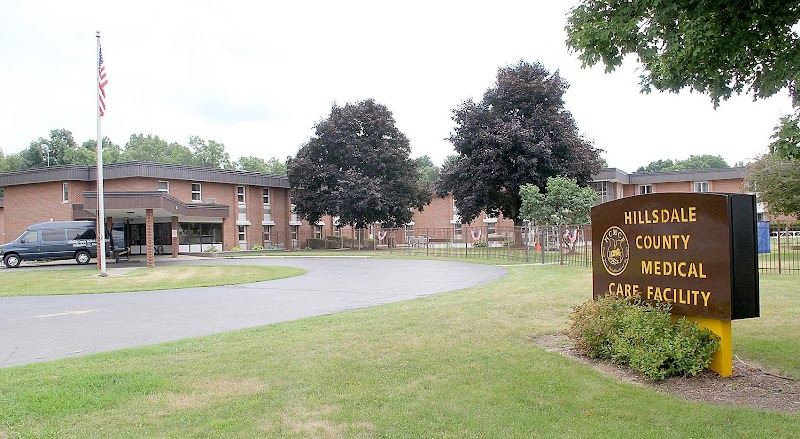
According to the facility's Abuse Program Policy and Procedure, dated 7/13/22, Policy Statement - It is the policy of Hillsdale County Medical Care Facility to maintain an environment free of abuse and neglect. The resident has the right to be free from verbal, sexual, physical and mental abuse, corporal punishment, and involuntary seclusion. Residents will not be subjected to abuse by anyone including, but not limited to, facility staff, other residents, consultants or volunteers, staff or other agencies serving the resident, family members or legal guardians, friends or other individuals . Verbal Abuse: Defined as the use of oral, written, or gestured language that willfully includes disparaging and derogatory terms to residents or their families, or within their hearing distance, regardless of their age, ability to comprehend, or disability . Definition of Willful: The individual must have acted deliberately, not that the individual must have to inflict injury or intended harm.
Resident #68
On 8/25/22 at 12:55 PM R68 was observed sitting in his wheelchair at the nurses' station, yelling out occasionally. Staff responded to R68's yelling with explaining he would be changed and laid down soon. R68 continued to yell out minutes later, staff asked R68 to sing a song, and R68 began singing quietly until staff took him into his room.
R68's Minimum Data Set (MDS) dated [DATE] introduced the Brief interview for Mental Status (BIMS, a short performance-based cognitive screener for nursing home residents) score of 04 (00-07 Severe Cognitive impairment), a diagnosis of dementia and was admitted to the facility on [DATE]. R68's same MDS assessment indicated he had physical behavioral symptoms directed toward others (e.g., hitting, kicking, pushing, scratching, grabbing, abusing others sexually) occurred 1 to 3 days during the 7-day look-back period; verbal behavioral symptoms directed toward others (threatening others, screaming at others, curing at others) occurred 4 to 6 days during the 7-day look-back period; and other behavioral symptoms not directed toward others (physical symptoms such as hitting or scratching self, pacing, rummaging, public sexual acts, disrobing in public, throwing or smearing food or bodily wastes, or verbal/vocal symptoms like screaming, disruptive sounds) occurred 1 to 3 days during the 7-day look-back period. R68 had a Patient Health Questionnaire (PHQ-9) score of 01, indicating minimal depression; during the 14-day look-back period R68 had felt tired or had little energy for 2 to 6 days.
Psychiatric follow-up evaluation dated 5/27/22 indicated R68 had diagnoses of vascular dementia without behavioral disturbance, depression and anxiety. The same note indicated staff reported R68 continued to call out for staff frequently and was sleeping through the night.
R68's progress note dated 7/13/22 indicated he had a temperature of 99.6 degrees, had a positive rapid covid test, stated he did not feel good and was transferred to the covid unit.
Progress note dated 7/16/22 at 2:22 PM indicated R68 slept all morning and after lunch yelling out, asking if anybody was out there almost continually unless staff was in room with resident and talking to him. Music, television, and coloring helped for 5 to 10 minutes.
Progress Note dated 7/16/22 at 9:45 PM indicated R68 was yelling constantly and seemed anxious and agitated, he was uncomfortable and given pain medication, he was disturbing other residents and was only quiet when staff stayed in the room with him.
7/17/22 at 9:58 AM, communication with Physician note indicated R68 was yelling out every 5 minutes needing multiple things (head of bed up, then down), other residents in covid unit were getting very angry and threatening to punch him.
Certified Nurse Assistant (CNA)/Licensed Practical Nurse alert note dated 8/17/22 at 1:15 PM indicated R68 was yelling into the hallway, not hitting his call light, and CNA reminded R68 to use his call light many times; at 1:16 PM R68 was yelling in the dining room stating he could not breath, CNA's told him he needed to stop yelling many times.
Progress Note dated 8/17/22 at 5:48 PM indicated R68 received Ativan for anxiety.
On 8/30/22 at 9:56 AM LPN BB stated R68 mostly yelled for help and had short term memory issues. LPN BB stated some other residents had become irritated with his yelling and had heard other residents tell R68 to be quiet. LPN BB stated Ativan was not always effective, hit or miss. LPN BB stated it helped to bring R68 out to the nurses station so he had someone to talk to. Talking to staff at the nurses station was not on R68's care plan.
On 8/30/22 at 10:24 AM CNA CC stated R68 yelled out, even right after attending to him. CNA CC stated she had heard other residents tell R68 to be quiet.
Resident #24
According to the clinical record including the Minimum Data Set (MDS) dated [DATE], R24 was a [AGE] year old female admitted to the facility with diagnosis that included MULTIPLE SCLEROSIS, bi-polar disorder and anxiety. R24 scored a 13 out of 15 (cognitively intact) on the Brief Interview for Mental Status (BIMS). During an interview with R24 on 08/24/22 at 04:42 PM she complained R68 was loud and screamed too much, and kept her awake most nights.
Review of R24's progress note dated 8/17/2022, reflected R24 entered R68's room and called him an a** hole because he was yelling out. Of note, R24 and R68 rooms are next to each other.
On 08/30/22 at 10:33 AM, during a telephone interview with Licensed Practical Nurse (LPN) S she stated R68 yells out all time, and R24 will yell at him from her bed, calling R68 by name yelling Shut Up. LPN S reported this was a common occurrence. I worked last Friday it happened then, it happens all the time LPN S elaborated she did not view the name calling or R24 entering R68's room yelling shut up as abuse. Its not like she threatened him and he doesn't understand anything anyway. LPN S reported R24 was just frustrated as R68 was annoying.
According to the facility policy titled Abuse Program Policy and Procedure updated 7-13-2022,
Verbal Abuse: Defined as the use of oral, written, or gestured language that willfully includes disparaging and derogatory terms to residents or their families, or within their hearing distance, regardless of their age, ability to comprehend, or disability.
CONCERN
(E)
Potential for Harm - no one hurt, but risky conditions existed
Report Alleged Abuse
(Tag F0609)
Could have caused harm · This affected multiple residents
**NOTE- TERMS IN BRACKETS HAVE BEEN EDITED TO PROTECT CONFIDENTIALITY** Resident # 34 and #112
A review of the plan of care for R112 reflected that they were admitted to the facility on [DATE] with di...
Read full inspector narrative →
**NOTE- TERMS IN BRACKETS HAVE BEEN EDITED TO PROTECT CONFIDENTIALITY** Resident # 34 and #112
A review of the plan of care for R112 reflected that they were admitted to the facility on [DATE] with diagnoses that included cognitive communication deficiency, syncope and collapse, mild cognitive impairment, pulmonary embolism, depression, anxiety, diabetes, emphysema, congestive heart failure and weakness.
A review of the plan of care for R34 reflected that they were admitted to the facility on [DATE] with diagnoses that included emphysema, hypertension, acute stress reaction, trigeminal neuralgia, mood disorder, depression, anxiety, substance dependence, osteoarthritis, subarachnoid hemorrhage and stroke, neuritis, low back pain and muscle weakness. One problem area was The resident uses psychotropic medications and mood stabilizing medications r/t [related to] insomnia, psychomotor agitation/anxiety and depression. The actions were, Administer PSYCHROTROPIC medications and Melatonin as ordered by physician and Monitor for side effects and effectiveness Q-SHIFT. Monitor/record occurrence of for [sic] target behavior symptoms such as increased agitation, anxiety, explosive anger, verbal combativeness, etc. and document per facility protocol. All were dated 2/7/21.
A review of the plan of care for R112 reflected no interventions for behaviors or residents that they don't get along with.
A review of a progress note written by Restorative CNA O, dated 8/29/22 at 9:50 am, reflected the following: [R112] was yelling out in the dining room at another elder [R34] telling [R43] to shut up and calling [R34] various names, then was getting antsy and was needing to go to the restroom. Writer then put a gait belt on him and ambulated him to the restroom, while in there elder [R112] was very adamant about wanting to punch the elder[R34] in the face to shut [them] up, redirecting adamantly worked after several minutes of speaking with [R112] about violence not being the answer. [R112] then was ambulated back to the dining room to finish his oatmeal.
Nothing was documented about the incident in R34's electronic medical record.
On 8/24/22 at 3:15 pm, R112 was interviewed in his room. He was neatly dressed, unshaven, wearing shoes and was in his recliner. During the interview R112 brought up another resident that yells at everyone in the dining room. [Resident name] is in everybody's business and never stops talking, but I don't know who she is. I imagine the staff know her.
On 8/30/22 at 4:25 pm, Nurse HH was interviewed via phone as follows: Nurse HH was in the dining room most of the time during breakfast, and also CNA O there, too. Nurse HH knew, immediately, who was the resident was, and said they had not witnessed any interaction between R112 and R34 on Monday breakfast in the dining room. Nurse HH did know that R112 wanted a wheel chair to return to his room. He wanted a w/c to return to his room, but changed and ate some more of his breakfast. R34 sits at a table next to R112, but close. Nurse HH denied being notified of the incident between R34 and R112.
On 8/31/22 9:26 AM CNA O was interviewed via phone. R112 was already agitated when he entered the dining room, but was unsure why. CNA O mentioned that R112 was easily aggravated. R112 wanted a wheel chair to go to the bathroom, but their's was in their room. Many other residents had wheel chairs. R34 yelled at R112, saying they and the table mate didn't have wheel chairs so,
Suck if up. R112 yelled back at R34, but CNAO couldn't recall what R112 said. Then, he wanted a wheel chair to return to his room, but changed his mind a ate a some more oatmeal. CNA O convinced R112 to walk to the bathroom. While in the bathroom, R112 threatened to hit R34, punch her in the face and demanded R34 be moved to another dining room. R112 returned to his table and ate a little more, and CNA O stayed with R112 to prevent any more yelling between the two. R112 returned to his room and sat in his recliner. CNA O did report the incident to Nurse HH and told her that I would chart what happened in a progress note since Restorative aides can write progress notes. CNA O was able to name several types of abuse and to report allegations to the charge nurse of the DON. At the time, CNA O said they were thinking about protecting residents and did not see the incident as potential verbal abuse. CNA O mentioned some of R112's behaviors: undressing himself and demanding clean clothes, demanding whatever he wanted right away, yelling out instead of using the call light, then hitting the call light as the staff person enters his room. Frequently argues with R34 in dining room. Demands sugar because he's frightened his blood sugar was too low and the nurses are evil. Other progress notes contained mention of incidents as follows: wants to use his wheel chair instead of walking because other men have them. Undressed three times in his room despite starting the day with clean clothes.
A review of R34's progress notes reflected the following behaviors and incidents: Activities documented that R34 does ok after an outburst if given time to cool off. In the dining room, R34 was short tempered with peers in dining room and started to yell at peer. When redirected resident replied No! Why should I be nice, no one says anything when people are mean to me. Why should I be nice to anyone else. No one cares about me when people are mean to me, no one says anything to help me and I know people hear when it happens.
Again, in the dining room, R34 yelled I'll take HOT black coffee and I mean it better be hot. Staff in formed her that she would get coffee and they ad to started to pass drinks yet. R34 replied There are two of you passing drinks. one of you should start at one end and one at the other. I deserve to have hot coffee. I don't deserve to be last every day. I demand respect. When her coffee was delivered, R34 was asked to check it to see if the temperature was OK. R34 refused and said it was cold, and she's tired of being treated like a prisoner.
On 8/30/22 at 3:10 pm, Nurse Supervisor II was interviewed. When asked, Nurse II had not heard about the dining room incident with R34 and R112 on Monday, 8/29/22, and believes they should have heard something in morning report or the 24-hour report.
On 8/31/22 in the early afternoon, Director of Nurses (DON) B was interviewed.\ and denied any knowledge of the same incident.
Regulatory Guidance from the State Operations [NAME] at §483.12(c)(1) Ensure that all alleged violations involving abuse, neglect, exploitation or mistreatment, including injuries of unknown source and misappropriation of resident property, are reported immediately, but not later than 2 hours after the allegation is made, if the events that cause the allegation involve abuse or result in serious bodily injury
According to the facility's Abuse Program Policy and Procedure, dated 7/13/22, Policy Statement - It is the policy of Hillsdale County Medical Care Facility to maintain an environment free of abuse and neglect. The resident has the right to be free from verbal, sexual, physical and mental abuse, corporal punishment, and involuntary seclusion. Residents will not be subjected to abuse by anyone including, but not limited to, facility staff, other residents, consultants or volunteers, staff or other agencies serving the resident, family members or legal guardians, friends or other individuals .Procedure: 1) Any person(s) witnessing or having knowledge of potential or actual abuse must report the incident to the Administrator (Abuse Coordinator) and/or designee immediately. In the case of a resident or family member, such report can be made to the charge nurse who is responsible to follow through with reporting procedures. 2) The person reporting the abuse must complete a report, which includes: Name of person making the report. Date and time of the incident. Who was involved in the incident, alleged victim and alleged perpetrator. A description of the incident (specifically describing words and actions). Any other person(s) present (witnesses.) To whom the incident was reported.
Time of report. Any other pertinent information. 3) report is to be given to the Administrator or designee for further investigation. The policy does not quite reflect regulatory language.
Resident #68
On 8/25/22 at 12:55 PM R68 was observed sitting in his wheelchair at the nurses' station, yelling out occasionally. Staff responded to R68's yelling with explaining he would be changed and laid down soon. R68 continued to yell out minutes later, staff asked R68 to sing a song, and R68 began singing quietly until staff took him into his room.
R68's Minimum Data Set (MDS) dated [DATE] introduced the Brief interview for Mental Status (BIMS, a short performance-based cognitive screener for nursing home residents) score of 04 (00-07 Severe Cognitive impairment), a diagnosis of dementia and was admitted to the facility on [DATE]. R68's same MDS assessment indicated he had physical behavioral symptoms directed toward others (e.g., hitting, kicking, pushing, scratching, grabbing, abusing others sexually) occurred 1 to 3 days during the 7-day look-back period; verbal behavioral symptoms directed toward others (threatening others, screaming at others, curing at others) occurred 4 to 6 days during the 7-day look-back period; and other behavioral symptoms not directed toward others (physical symptoms such as hitting or scratching self, pacing, rummaging, public sexual acts, disrobing in public, throwing or smearing food or bodily wastes, or verbal/vocal symptoms like screaming, disruptive sounds) occurred 1 to 3 days during the 7-day look-back period. R68 had a Patient Health Questionnaire (PHQ-9) score of 01, indicating minimal depression; during the 14-day look-back period R68 had felt tired or had little energy for 2 to 6 days.
Psychiatric follow-up evaluation dated 5/27/22 indicated R68 had diagnoses of vascular dementia without behavioral disturbance, depression and anxiety. The same note indicated staff reported R68 continued to call out for staff frequently and was sleeping through the night.
R68's progress note dated 7/13/22 indicated he had a temperature of 99.6 degrees, had a positive rapid covid test, stated he did not feel good and was transferred to the covid unit.
Progress note dated 7/16/22 at 2:22 PM indicated R68 slept all morning and after lunch yelling out, asking if anybody was out there almost continually unless staff was in room with resident and talking to him. Music, television, and coloring helped for 5 to 10 minutes.
Progress Note dated 7/16/22 at 9:45 PM indicated R68 was yelling constantly and seemed anxious and agitated, he was uncomfortable and given pain medication, he was disturbing other residents and was only quiet when staff stayed in the room with him.
7/17/22 at 9:58 AM, communication with Physician note indicated R68 was yelling out every 5 minutes needing multiple things (head of bed up, then down), other residents in covid unit were getting very angry and threatening to punch him. There was no evidence in R68's record that this was reported.
Certified Nurse Assistant (CNA)/Licensed Practical Nurse alert note dated 8/17/22 at 1:15 PM indicated R68 was yelling into the hallway, not hitting his call light, and CNA reminded R68 to use his call light many times; at 1:16 PM R68 was yelling in the dining room stating he could not breath, CNA's told him he needed to stop yelling many times.
Progress Note dated 8/17/22 at 5:48 PM indicated R68 received Ativan for anxiety.
Based on observation, interview and record review the facility failed to report allegations of abuse pertaining to 4 residents (#'s 24, 34, 68 and 112) of 6 residents reviewed for abuse, resulting in abuse allegations to go uninvestigated and potential abuse to go unreported to the Nursing Home Administrator and the State Agency. Findings include:
Resident #24
According to the clinical record including the Minimum Data Set (MDS) dated [DATE], R24 was a [AGE] year old female admitted to the facility with diagnosis that included MULTIPLE SCLEROSIS, bi-polar disorder and anxiety. R24 scored a 13 out of 15 (cognitively intact) on the Brief Interview for Mental Status (BIMS). During an interview with R24 on 08/24/22 at 04:42 PM she complained R68 was loud and screamed too much, and kept her awake most nights.
Review of R24's nursing progress note dated 8/17/2022, reflected R24 entered R68's room and called him an a** hole because he was yelling out. Of note, R24 and R68 rooms are next to each other.
On 08/30/22 at 10:33 AM, during a telephone interview with Licensed Practical Nurse (LPN) S author of the nursing progress note dated 8/17/22, she stated R68 yells out all time, and R24 will yell at him from her bed, calling R68 by name yelling Shut Up. LPN S reported this was a common occurrence. I worked last Friday it happened then, it happens all the time LPN S elaborated she did not view the name calling or R24 entering R68's room yelling shut up as abuse. Its not like she threatened him and he doesn't understand anything anyway. LPN S reported R24 was just frustrated as R68 was annoying. LPN S was asked if she had reported the allegation to Nursing Home Administrator (NHA) A, LPN S stated everyone knows about this, the DON [Director of Nursing] was very aware.
On 08/30/22 at 09:51 AM, during an interview with Social Worker Z she reported she read the 8/17/22 progress note authored by LPN S a few weeks ago. When queried if she reported the incident to NHA A or Director of Nursing (DON) B, Social worker Z stated she became aware of the 8/17/22 nursing progress note from DON B. So, No. SW Z stated if the allegation was reported to her by DON B, it was beyond reasonable that DON B would have also reported the allegation to NHA A.
08/30/22 09:59 AM during an Interview with DON B she did not recall does not recall any conversation with LPN S or SW Z or any other staff members reporting an allegation of abuse pertaining to R24 and or R68, but acknowledged she was aware R68's constant screaming and that R24 was irritated by the screaming. When queried how she knew or became aware R24 was irritated and was asked to further elaborate , DON B offered no additional information.
08/30/22 09:32 AM Interview with NHA A stated he does the facility reporting to the State Agency of allegations of abuse , but did not report or investigate any abuse allegations for R24 and R68 as he had not been made aware. When queried about the Nursing progress note dated 8/17/22, NHA A stated he was not aware of the incident.
According to the facility policy titled Abuse Program Policy and Procedure updated 7-13-2022,
Verbal Abuse: Defined as the use of oral, written, or gestured language that willfully includes disparaging and derogatory terms to residents or their families, or within their hearing distance, regardless of their age, ability to comprehend, or disability.
According to the facility policy titled Resident/Staff/Family Abuse Reporting Policy and Procedure, also updated 7-13-2022 reflected
Procedure:
1)
Any person(s) witnessing or having knowledge of potential or actual abuse must report the incident to the Administrator (Abuse Coordinator) and/or designee immediately. In the case of a resident or family member, such report can be made to the charge nurse who is responsible to follow through with reporting procedures.
2)
The person reporting the abuse must complete a report, which includes:
Name of person making the report
Date of the report
Date and time of the incident
Who was involved in the incident, alleged victim and alleged perpetrator
A description of the incident (specifically describing words and actions)
Any other person(s) present (witnesses)
To whom the incident was reported
Time of report
Any other pertinent information
3)
The report is to be given to the Administrator or designee for further investigation.
4)
The person making the report is assured confidentiality as much as possible, realizing that through the investigation and possible persecution, further information and/or testimony will be needed.
5)
To ensure that all alleged violations involving abuse, neglect, exploitation or mistreatment, including injuries of unknown source and misappropriation of resident property, are reported immediately to State Survey Agency (SSA) in accordance with State law, but not later than 2 hours after the allegation is made, if events that cause the allegation involve abuse or result in serious bodily injury, or not later than 24 hours if the events that cause the allegation do not involve abuse and do not result in a serious bodily injury, to the Administrator (Abuse Coordinator), or designee.
6)
Report results of all investigations to the administrator or designee and to other officials in accordance with State law, including State Survey Agency (SSA), within 5 working days of the incident, and if the alleged violation is verified appropriate corrective action must be taken.
CONCERN
(E)
Potential for Harm - no one hurt, but risky conditions existed
Comprehensive Care Plan
(Tag F0656)
Could have caused harm · This affected multiple residents
**NOTE- TERMS IN BRACKETS HAVE BEEN EDITED TO PROTECT CONFIDENTIALITY** Resident #90 (R90):
Review of the medical record reflected R90 was admitted to the facility on [DATE], with diagnoses that inclu...
Read full inspector narrative →
**NOTE- TERMS IN BRACKETS HAVE BEEN EDITED TO PROTECT CONFIDENTIALITY** Resident #90 (R90):
Review of the medical record reflected R90 was admitted to the facility on [DATE], with diagnoses that included atherosclerotic heart disease, heart failure, hypertension, diabetes, major depressive disorder and anxiety. The admission Minimum Data Set (MDS), with an Assessment Reference Date (ARD) of 6/28/22, reflected R90 scored 14 out of 15 (cognitively intact) on the Brief Interview for Mental Status (BIMS-a cognitive screening tool). The same MDS reflected R90 did not walk and required extensive to total assistance of one to two or more people for many activities of daily living.
On 8/24/22 at 10:10 AM, R90 was observed seated in a wheelchair, in her room, stating she was tangled. Upon observation, the call light was under the frame of her wheelchair and clipped to her leg. R90 unclipped the call light and tossed it on the floor. A safety alarm was attached to the back of R90's wheelchair and was attached to the right sleeve of her t-shirt. A floor mat was against the wall, near the foot of her bed. At 10:22 AM, R90 was observed to self-propel out of her room and down the hallway.
During an interview on 08/30/22 at 10:59 AM, Certified Nurse Aide (CNA) T reported R90 talked about her past a lot, told some sad, vivid stories and cried a lot. R90 hollered out a lot when care was being performed on her, mostly in bed, according to CNA T. She reported that particular day was an off day for R90, and she was tearful. When R90 was like that, she talked about things in the past. When R90 was crying and/or hollering, talking to her and giving her hugs were helpful.
During an interview on 08/30/22 at 11:08 AM, CNA U stated R90 swears there were little boys and kids under her bed and cats in her room. Interventions included reassurance, but there was no plan (Care Plan) for that, according to CNA U.
R90's Care Plan reflected that she used Cymbalta for depression, Ativan for anxiety and had a diagnosis of insomnia. Interventions included no male aides, to administer antidepressant and antianxiety medications, monitor/document side effects and effectiveness each shift and to monitor, document and report, as needed, adverse reactions to antidepressant and anxiety therapy. A list of things to report was included. There were no non-pharmacological interventions for R90's depression or anxiety. There was no notation of hollering out with care or episodes of crying on R90's Care Plan.
During an interview on 08/30/22 at 3:31 PM, Social Worker (SW) V reported R90 had not had any behaviors after the first week or so of being at the facility. She began having hallucinations after being placed on a sleeping medication in her prior facility, according to SW V. She denied knowledge of R90 being tearful. When discussing psychosocial Care Plan updates, SW V stated they went through them quarterly, individually and with MDS. Regarding no non-pharmacological interventions on R90's Care Plan, SW V stated she was not aware R90 needed any. Once her medications got straightened out, she had not exhibited the tearfulness and anxiety she exhibited at first.
Resident #50 (R50)
R50's Minimum Data Set (MDS) dated [DATE] indicated she was admitted to the facility on [DATE], had a Brief Interview for Mental Status (BIMS), a brief performance-based cognitive screener for nursing home residents, score of 14 (13-15 cognitively intact). R50 had the diagnoses of hypertension, anemia, Dementia, seizure disorder, anxiety, and depression.
R50's culture collected on 6/07/22 at 7:48 PM revealed mixed flora, Klebsiella Aerogenes and Enterococcus Faecalis. In review of R50's progress notes, a course of Levaquin (antibiotic) was ordered on 6/11/22.
On 8/30/22 at 4:29 PM Director of Nursing (DON) B was interviewed and stated she was not concerned R50's urine culture came back with mixed flora and multiple organisms.
The Centers for Medicare and Medicaid Services website at https://www.cdc.gov/nhsn/faqs/faq-uti.html#q3, indicated mixed flora* implied that at least 2 organisms were present in addition to the identified organism, the urine culture does not meet the criteria for a positive urine culture with 2 organisms or less.
In review of R50's care plans, there were no care plan's related to any signs and symptoms of infection.
Based on observation, interview, and record review the facility failed to develop and implement a comprehensive person-centered care plan for four out of 24 residents (Residents #3, 50, 90, and 100), resulting in the potential for unmet care needs.
Findings Included:
Resident #3 (R3):
Per the facility's face sheet R3 had resided at the facility since 3/31/2017, and had a NEED FOR ASSISTANCE WITH PERSONAL CARE listed as a diagnosis.
Record review of a Minimum Data Set (MDS) assessment dated [DATE], revealed R3 had no full or partial dentures, and required extensive assistance from staff to brush her teeth.
Record review of a Report of Consultation, dated 6/22/2021, revealed R3 had been seen by the Dentist. The consultation note revealed R3 had, Heavy plague and lots of decay. The note revealed under Recommendations-(R3) needs a caretaker to thoroughly brush her teeth once each shift. (3x/day [three times per day]) (R3) should brush her teeth 1st (first) and then the caretaker should brush right after very thoroughly.
Review of a care plan titled, The resident (R3) has an ADL (activities of daily living) self-care performance deficit r/t (related to) weakness, right femur fracture., dated 3/31/2022, and revised on 5/31/2022.
Further review of R3's care plan revealed the interventions in place were, Assist x 2 (two staff members) persons at all times for cares in bed .,Bed bath only at this time .,BED MOBILITY: The resident (R3) is totally dependent on 2 staff for repositioning and turning in bed Q2H (every two hours) and as necessary . The interventions were all dated 3/31/2022 with no revision dates or new interventions added. There was no intervention in place for staff (who were R3's caretakers) to thoroughly brush R3's teeth one time every shift; three times per day, nor to allow R3 to perform brushing her teeth first with staff then right after brushing R3's teeth thoroughly.
Review of another care plan in place revealed R3, Requires staff extensive to dependent assist with personal care D/T (due to) lacks motivation, Dementia, Poly Neuropathy (disease that damages nerves usually in the hands and feet), Osteoarthritis, Immobility & Generalized muscle weakness., dated 3/31/2022. The care plan had an intervention in place to, Encourage to brush her (R3) teeth, staff to do if she does not., dated 9/22/2019, and last revised on 9/24/2019. The intervention was not revised to reflect R3's care need to thoroughly brush R3's teeth one time every shift; three times per day, nor to allow R3 to perform brushing her teeth first with staff then right after brushing R3's teeth thoroughly, that was recommenced by R3's dentist on 6/22/2022.
Upon review of R3's 14 active care plans that were in place, there was no care plan that specifically addressed R3's care need for dental care.
Record review of the Certified Nurse Aid (CNA) [NAME] (document used by CNAs that list all the tasks and care needs for a resident that a CNA would provide) revealed the task to, Encourage to brush her teeth, staff to do if she does not. The [NAME] did included the task to thoroughly brush R3's teeth one time every shift; three times per day, nor to allow R3 to perform brushing her teeth first with staff then right after brushing R3's teeth thoroughly, that was recommenced by R3's dentist on 6/22/2022.
Resident #100 (R100):
Review of a Minimum Data Set (MDS) dated [DATE], revealed R100 had a Brief Interview for Mental Status (BIMS) score of 15 out of 15 which indicated R100 was cognitively intact. The MDS also revealed, under section G-bathing, R100 required staff to provide physical assistance for bathing.
In an interview on 8/24/2022 at 2:53 PM, R100 stated that he wanted to have two showers a week, but only received one per week. R100 said he wanted to have two showers per week because his hair would get greasy with only one per week.
During the interview with R100 it was observed that his hair was greasy in appearance. R100 stated that his hair was not to greasy yet, but was getting there. R100 then stated that his next scheduled shower date was not until Tuesday, 8/30/22, six days away.
Record review of R100's care plans revealed a care plan titled, REQUIRES OCCASIONAL STAFF ASSIST WITH BATHING, DRESSING & GROOMING D/T (due to) WEAKNESS OR WHEN HE IS NOT FEELING WELL., dated 1/21/2022 and revised on 5/18/2022, revealed no intervention that identified R100's shower days, nor preference of two showers per week.
In an interview on 8/30/2022, at 1:16 PM, Director of Nursing (DON) B said showers were done weekly by the shower team, and that only one shower per week was guaranteed for the residents.
In an interview on 8/24/2022, at 2:56 PM, R100 stated that he goes to see his Dentist outside of the facility.
Review of R100's Dentist notes, dated 6/22/2022, revealed under, Action Required by Nursing Home Staff, Monitor patient (R100) is brushing twice per day.
Review of a care plan titled, REQUIRES OCCASIONAL STAFF ASSIST WITH BATHING, DRESSING &
GROOMING D/T WEAKNESS OR WHEN HE (R100) IS NOT FEELING WELL., dated 1/21/2022, and last revised on 5/18/2022. The care plan revealed an intervention in place for, STAFF ASSIST WITH PERSONAL CARE AS NEEDED/REQUESTED., dated 6/29/2021, however did not have an intervention that addressed R100's care need to, Monitor patient (R100) is brushing twice per day., that was dated 6/22/2022.
Upon review of all 15 active care plans that were in place for R100 revealed there was no care plan in place that addressed R100's oral/teeth care needs, and no intervention was in place that R100 was to be monitored for brushing his teeth twice per day.
Review of R100's CNA [NAME] revealed under Daily Routine, Oral Care: STAFF ASSIST WITH PERSONAL CARE AS NEEDED/REQUESTED., however did not reveal R100's oral care need to monitor that he was brushing his teeth twice per day.
CONCERN
(E)
Potential for Harm - no one hurt, but risky conditions existed
Deficiency F0657
(Tag F0657)
Could have caused harm · This affected multiple residents
**NOTE- TERMS IN BRACKETS HAVE BEEN EDITED TO PROTECT CONFIDENTIALITY** Resident #8 (R8):
Review of the medical record reflected R8 was admitted to the facility on [DATE] and readmitted [DATE], with d...
Read full inspector narrative →
**NOTE- TERMS IN BRACKETS HAVE BEEN EDITED TO PROTECT CONFIDENTIALITY** Resident #8 (R8):
Review of the medical record reflected R8 was admitted to the facility on [DATE] and readmitted [DATE], with diagnoses that included atrial fibrillation, chronic obstructive pulmonary disease, heart failure and dementia. The quarterly Minimum Data Set (MDS), with an Assessment Reference Date (ARD) of 5/29/22, reflected R8 scored zero out of 15 (severe cognitive impairment) on the Brief Interview for Mental Status (BIMS-a cognitive screening tool). The same MDS reflected R8 required limited to extensive assistance of one to two or more people for activities of daily living.
On 08/30/22 at 4:17 PM, R8 was observed in the dining room, seated in her wheelchair, with her eyes closed. A maxi-lift (mechanical lift) sling was beneath her, and a blanket was over her.
A Physician's Order, dated 7/20/22, reflected, Maxi-lift for all transfers with use of full sling. May leave sling under patient while up in chair.
R8's Care Plan interventions included but were not limited to the following:
-Toileted BY ONE STAFF WITH USING 4WW [four-wheeled walker] . The intervention was initiated 4/18/21 and was revised on 4/23/21.
-Maxi-lift for all transfers with use of full sling. May leave sling under patient while up in chair. The intervention was initiated 7/20/22.
-Ambulation [walking]: Assist x 1 person using 2WW [two-wheeled walker] with Wheelchair follow in all areas. The intervention was initiated 4/15/22.
-Transfers: Assist x 1 using 2WW. The intervention was initiated 4/15/22.
A Progress Note for 8/19/22 at 6:21 PM reflected R8 did not walk, transferred with assistance of two people using a maxi-lift and required assistance of one person for dressing, bed mobility, wheelchair mobility, hygiene and meal set up.
During an interview on 08/30/22 at 11:08 AM, Certified Nurse Aide (CNA) U stated R8 used a maxi-lift for transfers.
During an interview on 08/30/22 at 4:00 PM, Director of Nursing (DON) B reported those that revised Care Plans included MDS, Infection Control, Risk Management and Supervisors. She acknowledged that Nurse Supervisors were responsible for updating Care Plans based on new orders.
Resident #90 (R90):
Review of the medical record reflected R90 was admitted to the facility on [DATE], with diagnoses that included atherosclerotic heart disease, heart failure, hypertension, diabetes, major depressive disorder and anxiety. The admission Minimum Data Set (MDS), with an Assessment Reference Date (ARD) of 6/28/22, reflected R90 scored 14 out of 15 (cognitively intact) on the Brief Interview for Mental Status (BIMS-a cognitive screening tool). The same MDS reflected R90 did not walk and required extensive to total assistance of one to two or more people for many activities of daily living.
On 8/24/22 at 10:10 AM, R90 was observed seated in a wheelchair, in her room, stating she was tangled. Upon observation, the call light was under the frame of her wheelchair and clipped to her leg. R90 unclipped the call light and tossed it on the floor. A safety alarm was attached to the back of R90's wheelchair and was attached to the right sleeve of her t-shirt. A floor mat was against the wall, near the foot of her bed. At 10:22 AM, R90 was observed to self-propel out of her room and down the hallway.
During an interview on 08/30/22 at 10:59 AM, CNA T reported R90's interventions for fall prevention included a low bed with a floor mat.
During an interview on 08/30/22 at 11:08 AM, CNA U reported R90 had a snap alarm and low bed with a floor mat. According to CNA U, Care Plans were hanging in resident rooms, and they knew care needs by reviewing the Care Plan. R90's Care Plan was reflective of a low bed with a floor mat and a snap alarm, according to CNA U.
An Incident Report for an unwitnessed fall on 7/13/22 at 1:30 AM reflected an intervention for a clip alarm, with notation of waiting on Risk Management approval. The intervention was not noted on the Care Plan or [NAME] (CNA Care Guide).
An Incident Report for an unwitnessed fall on 7/20/22 at 1:25 AM reflected interventions for a super snap clip on and a low bed with a floor mat at the bedside.
R90's Care Plan was reflective of being at high risk for falls. Interventions included but were not limited to:
-Bed to remain at knee level at all times. Call light within reach. Hourly checks x7 days. Keep pathway from bed to bathroom clear of obstacles or obstruction. Not to be left unattended in bathroom. The intervention was initiated on 6/23/22.
-Bed to remain at knee level at all times. Call light within reach. Hourly checks. Keep pathway from bed to bathroom clear of obstacles or obstruction. Not to be left unattended in bathroom. The intervention was initiated on 7/8/22.
The Care Plan did not include interventions for a safety/fall alarm, low bed or floor mat.
R90's [NAME] was reflective of a low bed with a mat but did not include an intervention for a safety alarm.
During an interview on 08/30/22 at 12:56 PM, DON B reviewed R90's Care Plan and stated the last thing she saw was the interventions pertaining to the bed remaining at knee level at all times.
Review of the facility Fall Policy, dated 1/3/22, reflected, FALLS PROCEDURE PURPOSE: To prevent and monitor falls and those Residents at risk for falls occurring within the [named facility] .3. The Risk Management Technician or designee will assess the resident using the Morse Falls Scale within 24 hours of admission, and with follow up MDS's 30, 60, & 90 day, quarterly, annually and with any significant change. Assessments to be done in collaboration with the Therapies working with the resident and the Falls Committee, as deemed appropriate .8.
The Licensed Nurse will complete the Incident Report after each fall and place the resident on Alert Charting. After completion nurse is to Notify both the family and the Physician of the incident. Immediate corrective action must be documented on the Incident Report and changes made on the resident's Care Guide and Care Plan, if warranted. All Incident Reports must be completed before the end of the shift that is occurred on. Assessment with documentation regarding any falls should be made EVERY 8 HOURS in the Nurse's Notes for 48 hours to include but not exclusive of: immediate preventative/protective measures, any injury, vital signs, neurological checks, bruising, lacerations, the resident's ability to continue functioning in their normal ADL's, any change in mentation, pain and/or any change in this person related to the fall. The D.O.N. and Administrator and/or designee reviews and signs all incident reports .
Resident #11(R11)
Review of the Face Sheet and Minimum Data Set (MDS) change of condition, dated 8/14/22, reflected R11 was a [AGE] year old male admitted to the facility on [DATE], with diagnoses that included coronary artery disease, atrial fibrillation, hypertension (high blood pressure), and cerebral vascular accident. The MDS reflected R11 had a BIM (assessment tool) score of 13 which indicated his ability to make daily decisions was intact, and he required one person physical assist with eating, hygiene, bathing and dressing. The MDS reflected R11 taking anitcoagulants(blood thinners) and was a full code.
During an observation and interview on 8/24/22 at 2:44 p.m., R11 was sitting in chair in room and appeared calm and pleasant and appeared to have difficulty with verbal communication. R11 had brace on right lower leg, peg-tube in place and positive facial droop.
During an interview and observation on 8/30/22 at 9:37 a.m., R11 door was closed and staff reported R11 had passed away early that morning.
Review of R11 admission History and Physical, reflected, This 81 yo WM admits to [named facility] on 5/21/22 from [named] Hospital after 2 recent hospital stays. In March he suffered a fall, became SOB and required intubation. After extubating he began aspirating, so a PEG tube was placed and he discharged to Rehab. Early May he suffered a stroke and was admitted for difficulty breathing and intubated again .Presently he is relaxed and feeling well. He is HOH and forgetful, but appears to comprehend well. His niece is present with him and helps fill in details as he is often not understandable with his speech disability. Per niece he has had difficulty speaking since his first stroke 8 years ago, but was understandable. Three years ago he suffered another stroke requiring him to wear a right shoe brace with any ambulation. This recent stroke has affected his speech even more where he is often not understandable and worsened his ability to swallow .He continues to be NPO .Full code .
Review of R11 Fall Care Plan, dated 5/24/22, reflected, Resident is High risk for falls r/t abnormalities of gait and mobility, difficulty in walking, has fallen before .Resident will be free from injury from falls .Assist x1 for transfers and ambulation Date Initiated: 06/10/2022 .Bed to remain at knee level at all times. Call light within reach. Hourly checks x7 days. Keep pathway from bed to bathroom clear of obstacles or obstruction. Not to be left unattended in bathroom. Date Initiated: 05/24/2022 .Resident is independent for ambulation using FWW in residents room only, pt is assist of 1 using FWW when ambulating in hallways on and off the unit, pt agrees to use call light when help is needed. Date Initiated: 08/29/2022(date of unwitness fall in room after independently ambulating in hall) .Transfer independent with FWW Date Initiated: 06/18/2022 . No evidence of Care Plan revisions after Change of Condition MDS between 8/14/22 and 8/29/22(date of fall).
During an interview on 8/30/22 at 12:59 p.m., Licensed Practical Nurse (LPN) OO reported worked 8/29/22(prior day) from 6am to 10pm with R11. LPN OO reported R11 fell while she was at lunch after R11 had moved wet floor sign in bedroom doorway and entered room and fell. LPN OO reported he was alert and oriented and able to say what happened and reported he was embarrassed. LPN OO reported the fall was not witnessed and R11 did not have any noted injuries and denied complaints. LPN OO reported R11 fall occurred about 11:05 a.m. and had been independent up in room. LPN OO reported R11 had been up independently in room for at least one month. LPN OO reported had started neurological assessments, called physician and Director of Nursing was present after code 99 was called and was aware of fall. LPN OO reported her assignment changed to another hall after 2:00 p.m. on 8/29/22 and had heard today(8/30/22) R11 had fallen again and passed away that morning. LPN OO reported immediate intervention was R11 was re-educated to not enter room if floors were wet.
During a telephone interview on 8/30/22 at 1:46 p.m. Licensed Practical Nurse (LPN) PP reported was R11's nurse on 8/29/22 from the 10pm to 6am shift. LPN PP reported received in report that R11 had a fall on the day shift and next neurological assessment was due at midnight. LPN PP reported after start of shift at 10:00 p.m. did not observe R11 until midnight for neurological assessment. LPN PP reported Certified Nurse Aids(CNA) had observed R11 between 10pm and 12am. LPN PP reported R11 was laying in bed at midnight. LPN PP reported entered R11 room just prior to 1:00a.m. for Bolus tube feeding and changed tube and arm dressing and was laying in bed and had dosed off to sleep during Bolus. LPN PP reported entered R11 room just before 5:00 a.m. to perform R11 neurological assessment that was due at 4:00 a.m. and administer bolus feeding. LPN PP reported observed R11 walker in the bathroom tipped over and R11 sitting on his bottom facing away from the toilet, chest on knees and head, that was blue in color, leaning against the wall. LPN PP reported turned call light on, left resident room, ran to Nurse Station and paged code 99 overhead and returned to R11 room. LPN PP reported Registered Nurse Supervisor QQ arrived to R11 room just after LPN PP returned and began to assess R11 while LPN PP verified R11 code status but was unsure of times. LPN PP reported LPN RR arrived with crash cart and AED was attached that indicated no shock. LPN PP reported RN QQ started CPR and reported was unsure of time because hectic and no one was recording during the code and reported she should have recorded events of code. LPN PP reported when RN QQ started CPR she called 911 and RN QQ continued CPR until EMS arrived. LPN PP reported EMS called time of death at 5:42 a.m. after 30 minutes of CPR. LPN PP reported would guess EMS arrived about 5:15 a.m. LPN PP reported was unsure of any new interventions in place after 8/29/22 fall.
During a telephone interview on 8/30/22 at 2:34 p.m., CNA SS reported had assisted with R11 on 8/29/22 on third shift between 10pm and 6am. CNA SS reported was responsible for vitals and linens at start of shift and obtained R11 vital signs at about 11:20 p.m. CNA SS reported R11 was sleeping in bed, and awoke for short conversation and had not observed R11 prior to 11:20 p.m. CNA SS reported at 4:00 a.m. started am care for her halls(2400 and 2500). CNA SS reported LPN PP requested assist with another resident on hall between 4:30 and 5:00 a.m. and R11 CNA assisted. CNA SS reported was with another resident room when cna entered room and reported code had been called. CNA SS reported did not hear Code 99 overhead. CNA SS reported she reported to R11 room and RN QQ and LPN RR were performing CPR. CNA SS reported R11 required limited assist with getting dressing for bed and was independent in room with no recent changes including no new interventions. CNA SS reported usually received verbal report from 2nd shift and 3rd shift nurse usually does huddle with CNA staff, however, reported no huddle at shift change that day and 2nd shift reported no changes for R11. CNA SS reported was not aware R11 had fallen on 8/29/22.
Review of three Incident/Accident report on 8/30/22 at 3:33 p.m., for R11, provided by Director of Nursing (DON) B, dated 8/29/22 at 11:05am, 8/30/22 at 4:55am, and 8/30/22at 6:47am. The reports reflected R11 had an unwitnessed fall on 8/29/22 at 11:05 a.m. related to wet floor in room after mopping with immediate intervention that included R11 educated on the importance of wet floor signs. The report reflected R11 had gait imbalance. The reports reflected R11 had another unwitnessed fall on 8/30/22 at 4:55am and was found unresponsive on the bathroom floor with breathing noted and head blue in color. The report reflected CPR was started. The Report, dated 8/30/22 at 6:47a.m. reflected R11 was found sitting on bathroom floor with chest on legs unresponsive, blue in face with light pulse and two observed breaths. The report reflected R11 was positioned for CPR after no pulse or breaths noted and CPR started after AED indicated no shock until EMS arrived.
Review of the facility Fall Risk Assessment, dated 7/21/22, reflected R11 was at High Risk for falls. No evidence of Fall Risk Assessment completed after change in condition MDS dated [DATE].
Review of the active Physician Orders, dated 5/22/22 through current, reflected R11 was taking Apixaban Tablet 2.5MG(anticoagulant blood thinner) and Aspirin 81mg (blood thinner).
Review of the Neurological assessments dated 8/29/22 reflected no documented assessment between 8/30/22 at 12:00 a.m. and time of unwitnessed fall on 8/30/22 at 4:55 a.m.
During a telephone interview on 8/31/22 at 10:09 a.m. RN QQ reported responded to code 99 overhead on 8/30/22 for R11 around 5:00 a.m. because he was working as supervisor at the time. RN QQ reported arrived at R11 room and R11 was in sitting position on bathroom floor leaned over forward with blue face and LPN PP and RR present. RN QQ reported R11 was unresponsive with light pulse with two observed breaths. RN QQ reported R11 was repositioned, started CPR, AED indicated no shock, continued CPR until EMS arrived at 5:12 a.m. RN QQ reported received report from 2nd shift supervisor on previous shift at 10:00 p.m. and was not told R11 had fall during the day on 8/29/22.
During an interview on 8/31/22 at 11:40 a.m., DON B reported responded to R11 code 99 fall on 8/29/22 at 11:05 a.m. DON B reported no injuries were noted and stated prior to lunch housekeeping staff had reported to DON B she had told R11 that floor was wet in room and R11 should wait prior to entering. DON B reported R11 reported he moved the sign and entered the room and fell. DON B reported the fall was not witnessed. DON B reported the immediate intervention was R11 was educated not to enter room with wet floor. This surveyor squired DON B if that intervention was effective if housekeeping staff had already told R11 not to enter room. DON B was unable to answer. DON B reported would expect staff to monitor and assess residents post fall especially if on blood thinners and document. DON B reported would expect staff to update careplans with change in condition.
Based on observation, interview, and record review, the facility failed to revise care plan in 5 of 24 residents reviewed for care plan revision (Resident #8, #11, #68, #87, #90), resulting in unmet needs. Findings include:
Resident #68 (R68)
On 8/25/22 at 12:55 PM R68 was observed sitting in his wheelchair at the nurses' station, yelling out occasionally. Staff responded to R68's yelling and with explaining he would be changed and laid down soon. R68 continued to yell out minutes later, staff asked R68 to sing a song, and R68 began singing quietly until staff took him into his room.
R68's Minimum Data Set (MDS) dated [DATE] introduced the Brief interview for Mental Status (BIMS, a short performance-based cognitive screener for nursing home residents) score of 04 (00-07 Severe Cognitive impairment), a diagnosis of dementia and was admitted to the facility on [DATE]. R68's same MDS assessment indicated he had physical behavioral symptoms directed toward others (e.g., hitting, kicking, pushing, scratching, grabbing, abusing others sexually) occurred 1 to 3 days during the 7-day look-back period; verbal behavioral symptoms directed toward others (threatening others, screaming at others, curing at others) occurred 4 to 6 days during the 7-day look-back period; and other behavioral symptoms not directed toward others (physical symptoms such as hitting or scratching self, pacing, rummaging, public sexual acts, disrobing in public, throwing or smearing food or bodily wastes, or verbal/vocal symptoms like screaming, disruptive sounds) occurred 1 to 3 days during the 7-day look-back period. R68 had a Patient Health Questionnaire (PHQ-9) score of 01, indicating minimal depression; during the 14-day look-back period R68 had felt tired or had little energy for 2 to 6 days.
Pharmacy recommendation note dated 5/13/22 indicated R68 was due for a GDR evaluation of Buspar (anxiolytic) 5 mg, 2 tablets, twice daily. SS note indicated R68 continued to be anxious when waiting for staff to assist or when in his room alone, yells out frequently, and would not recommend changes.
Psychiatric follow-up evaluation dated 5/27/22 indicated R68 had diagnoses of vascular dementia without behavioral disturbance, depression and anxiety. The same note indicated staff reported R68 continues to call out for staff frequently and was sleeping through the night.
In review of R68's July 2022 Medication Administration Record (MAR), Lexapro ordered on 3/20/21; Trazodone (antidepressant, serotonin receptor antagonists and reuptake inhibitor-[NAME]) 50 mg for insomnia since 2/15/22.
Progress note dated 7/16/22 at 2:22 PM indicated R68 slept all morning and after lunch yelling out, asking if anybody was out there almost continually unless staff was in room with resident and talking to him. Music, television, and coloring helped for 5 to 10 minutes.
Progress Note dated 7/16/22 at 9:45 PM indicated R68 was yelling constantly and seemed anxious and agitated, he was uncomfortable and given pain medication, he was disturbing other residents and was only quiet when staff stayed in the room with him.
Behavioral Health Progress Note dated 8/12/22 indicated R68 was not sleeping through the night, and the Trazodone medication was changed from 11:00 PM to 9:00 PM because he was sleeping at 11:00 PM. R68 had recently returned to his room from the COVID unit (7/18/22). The same note indicated staff reported R68 was not sleeping through the night and was not eating more than 50 percent of meals. Nursing staff reported R68's mood had been pleasant but became increasingly agitated. Staff reported R68's behaviors were redirectable occasionally more often he continued to yell out. The same note indicated R68 complained of right knee pain during the visit.
In review of R68's psychotropic medication care plan dated 3/21/21 and revised 8/09/22, indicated prescribed medications included Buspar and Ativan for anxiety, Lexapro for depression, Trazodone for insomnia, and Risperdal for behaviors. R68 did not have a specific goal for behavior management with individualized non-pharmacological interventions to manage specific behaviors, or in combination with medications to manage behavior. R68 care plans did not include sleep hygiene approaches to improve sleep patterns.
Psychopharmacological/Behavioral management Form dated 8/15/22 and signed on 8/22/22 indicated R68 was recently started on Risperdal because he was calling out constantly; sometimes will ask for help with small things and other times he will not need anything. The same note indicated redirection, reassurance, TV, music, and other entertainment had been attempted but were unsuccessful.
8/24/22 at 1:54 PM Social Worker Z was interviewed and stated non-pharmacological interventions for R68 included: redirection, sitting with him, weighted blanket. SW Z stated R68 had not had a sleep/wake assessment. SW Z stated R68's behaviors include yelling for the most part and was more frequent on second shift.
On 8/26/22 at 10:06 AM CNA D was interviewed and stated most of R68's behaviors were yelling, for example, asking for help, when was lunch; interventions for yelling behavior included talking to him and telling him jokes.
On 8/30/22 at 9:56 AM LPN BB stated R68 mostly yelled for help and had short term memory issues. LPN BB stated some other residents had become irritated with his yelling and had heard other residents tell R68 to be quiet. LPN BB stated Ativan was not always effective, hit or miss. LPN BB stated it helped to bring R68 out to the nurses' station, so he had someone to talk to. Talking to staff at the nurses' station was not on R68's care plan.
R68 was observed on 8/30/22 at 10:02 AM sitting in his wheelchair, on screened porch area with blanket up over his head (not covering face) with his eyes closed sleeping.
On 8/30/22 at 10:24 AM CNA CC stated R68 yelled out, even right after attending to him. CNA CC stated she had heard other residents tell R68 to be quiet.
Resident #87 (R87)
R87 was observed on 8/25/22 at 9:03 AM, she approached the medication nurse outside of the dining room area and complained of pain in her right leg that she rated as a 10 out of 10 (with 0 being no pain, and 10 the worst pain they could imagine).
On 8/25/22 at 9:41 AM 87 stated pain medication was not effective, it was arthritis, there was nothing that could be done about it.
R87's Minimum Data Set (MDS) assessment dated [DATE] revealed she admitted to the facility on [DATE], had a Brief Interview for Mental Status (BIMS, a short performance-based cognitive screener) score of 12 (07-12 Moderate impairment). The same MDS assessment indicated R87 reported occasional mild pain.
R87's at risk for alteration in comfort due to decreased mobility, weakness, joint pain due to arthritis, disc degeneration care plan dated 7/06/21, revealed a goal that pain would be adequately relieved. R87's care plan indicated to monitor and document any complaints of pain and to document interventions used and effectiveness.
In review of R87's August 2022 Medication Administration Record (MAR), Norco (Opioid) was scheduled to be administered twice a day for pain and was administered from 8/01/22 through 8/26/22. Pain was documented on the August 2022 [DATE] times in the morning, ranging from 7 to 10; pain was documented in the afternoon, ranging from 5 to 10 in intensity.
R87's August 2022 MAR revealed on 8/27/22, Norco was increased to three times a day; 10 doses were administered between 8/27/22 and 8/30/22. There was no comprehensive pain assessment completed following the increase, there was no documented monitoring of pain medication effectiveness from 8/27/22 in R87's progress notes or MAR, there were no changes to R87's care plan.
Director of Nursing (DON) B was interviewed on 8/30/22 at 12:35 PM and stated the MDS nurse completed pain assessments on either a quarterly or monthly basis.
CONCERN
(E)
Potential for Harm - no one hurt, but risky conditions existed
Pharmacy Services
(Tag F0755)
Could have caused harm · This affected multiple residents
The following deficiency has two deficient practices: A and B
Deficient Practice A:
Based on observation, interview and record review the facility failed to implement its policy and procedures to assu...
Read full inspector narrative →
The following deficiency has two deficient practices: A and B
Deficient Practice A:
Based on observation, interview and record review the facility failed to implement its policy and procedures to assure the accurate dispensing, administering, and documentation of controlled substances for four out of six medication carts, resulting in the potential for controlled drug diversion.
Findings Included:
During observation on 8/25/2022 at 07:29 a.m. Lilac Terrace's controlled medication sheet titled Shift Change Narcotic Sheet was not signed my two staff for the day shift. A signature was present for off-going nurse, but the on-coming nurse signature was blank.
In an interview on 8/25/2022 at 07:29 a.m. Registered Nurse (RN) DD explained that she must have forgotten to sign the Shift Change Narcotic Sheet for Lilac Terrace because she was the nurse that was on-coming at the change of shift. RN DD explained that she had counted the controlled medication with the previous shift; however did not sign the Shift Change Narcotic Sheet at that time. RN DD was observed signing the Shift Change Narcotic Sheet at the time of this interview.
During observation on 8/25/2022 at 07:35 a.m. Tiger Lily controlled medication sheet titled Shift Change Narcotic Sheet was not signed by two staff for the day shift. A signature was present for off-going nurse, but the on-coming nurse signature was blank.
In an Interview on 8/25/2022 at 07:29 a.m. Licensed Practical Nurse (LPN) EE explained that she had forgotten to sign the Shift Change Narcotic Sheet for the Tiger Lily Hall. LPN EE explained that it was not her practice to sign the sheet directly after counting with the previous shift but had completed the controlled count with the other nurse. LPN EE was observed signing the Shift Change Narcotic Sheet at the time of this interview.
During observation on 8/25/2022 at 07:45 a.m. Snap Dragon Valley Hall controlled medication sheet titled Shift Change Narcotic Sheet was not signed by two staff for the day shift. A signature was present for off-going nurse, but the on-coming nurse signature was blank.
In an interview on 08/25/2022 at 07:45 a.m. Licensed Practical Nurse (LPN) FF explained that she had completed the controlled count at the beginning of her shift but that she had forgotten to sign the Shift Change Narcotic Sheet at that time. LPN FF was observed signing the Shift Change Narcotic Sheet at the time of this interview.
During observation on 08/30/2022 at 12:53 P.M. Snap Dragon Valley Hall controlled medication sheet titled Shift Change Narcotic Sheet was not signed by two staff for the day shift. The off-going signature line was blank, but a signature was present for the one coming shift.
In an interview on 08/30/2022 at 12:53 Registered Nurse (RN) J explained that she had signed the Shift Change Narcotic Sheet for Snap Dragon Valley Hall when she had completed the controlled count at the start of her shift. RN J could not explain why the off-going nurse had not signed the Shift Change Narcotic Sheet when count was completed.
During review of the facility policy Medications, controlled, and Security (no implementation date present) revealed the statement in the procedures, number 1, One Licensed Nurse going off duty and one Licensed Nursing coming on duty must count and justify the schedule 2 medications for each individual resident at the change of each shift. Number 2 (of the same policy and section) states, After the supply is counted and justified, each nurse must record the date and his/her signature verifying that the count is correct.
Deficient Practice B:
Based on interview and record review the facility failed to monitor Medication Refrigerator temperatures daily for three out of five medication refrigerators reviewed resulting in the potential for medication to lose its efficiency in treating resident's medical condition.
Findings Included:
During record review of the facility Medication Refrigerator Temp Log for the month of August 2022 it was revealed that temperatures were not recorded for the Tiger Lily Pointe on 08/01/2022, 08/06/2022, 08/12/2022, 08/13/2022, and 08/14/2022. Medication Refrigerator Temp Logs revealed that temperatures were not recorded for the Snap Dragon medication refrigerator on 08/11/2022 and 08/14/2022. Medication Refrigerator Temp Logs revealed that a temperature was not recorded for the Cottage medication refrigerator on 08/26/2022.
In an interview on 08/30/2022 at 02:08 p.m. with the Director of Nursing (DON) B explained that it was the facility expectation that Medication Refrigerator Temperatures be conducted daily by the midnight staff.
CONCERN
(F)
Potential for Harm - no one hurt, but risky conditions existed
Deficiency F0761
(Tag F0761)
Could have caused harm · This affected most or all residents
**NOTE- TERMS IN BRACKETS HAVE BEEN EDITED TO PROTECT CONFIDENTIALITY** This citation pertains to intake: MI00129299
Based on observation, interview, and record review the facility failed to ensure th...
Read full inspector narrative →
**NOTE- TERMS IN BRACKETS HAVE BEEN EDITED TO PROTECT CONFIDENTIALITY** This citation pertains to intake: MI00129299
Based on observation, interview, and record review the facility failed to ensure that all controlled medication used in the facility are secured in accordance with professional standards in one of ten medication rooms and controlled medication are destroyed in accordance with professional standards resulting in the potential for controlled drug diversion.
Findings Included:
In an interview on 08/25/2022 at 07:14 a.m. Licensed Practical Nurse (LPN) JJ was asked how control medication was destroyed at the facility. LPN J explained that medication is placed in the sharps containers which are located on the side of the medication cart. She further explained that the destruction was done in the presence of two licensed staff and they both sign that the medication was destroyed. It was observed at that time, that the Morning [NAME] medication cart had a sharps container on the side and was locked with a single lock.
In an interview on 08/25/2022 at 07:19 a.m. Licensed Practical Nurse (LPN) KK was asked how control medication was destroyed at the facility. LPN KK explained that medication was placed in the sharps containers which are located on the side of the medication cart. She further explained that the destruction was done in the presence of two licensed staff and they both sign that the medication was destroyed. It was observed at that time, that the [NAME] Lane medication cart had a sharps container on the side and was locked with a single lock.
In an interview on 08/25/2022 at 07:29 a.m. Registered Nurse (RN) DD was asked how control medication was destroyed at the facility. RN DD explained that medication was placed in the sharps containers which are located on the side of the medication cart. She further explained that the destruction was done in the presence of two licensed staff and they both sign that the medication was destroyed. It was observed at that time, that the Lilac Terrace medication cart had a sharps container on the side and was locked with a single lock.
In an interview on 08/25/2022 at 07:35 a.m. Licensed Practical Nurse (LPN) EE was asked how control medication was destroyed at the facility. LPN EE explained that medication was placed in the sharps containers which are located on the side of the medication cart. She further explained that the destruction was done in the presence of two licensed staff and they both sign that the medication was destroyed. It was observed at that time, that the Tiger Lily medication cart had a sharps container on the side and was locked with a single lock.
In an interview on 08/25/2022 at 07:45 a.m. Licensed Practical Nurse (LPN) FF was asked how control medication was destroyed at the facility. LPN FF explained that medication was placed in the sharps containers which are located on the side of the medication cart. She further explained that the destruction was done in the presence of two licensed staff and they both sign that the medication was destroyed. It was observed at that time, that the Snap Dragon Valley medication cart had a sharps container on the side and was locked with a single lock.
In an interview on 08/25/2022 at 09:16 a.m. Registered Nurse (RN) R was asked how control medication was destroyed at the facility. RN R explained that if it was an individual pill that a resident had refused or had been dropped on the floor it was discarded in the medication carts sharps container. RN R explained that if it was a larger volume of medication that was to be destroyed, the floor nurse would call the nursing supervisor. The nursing supervisor would obtain the medication and take it to the nursing supervisors office on the second floor and lock it in a medication cabinet. RN R' explained that she worked as a nursing shift supervisor. RN R explained that once the next shift supervisor would arrive, they would remove the controlled medication from the cabinet in the supervisor's office and place it in the Drug Buster, (a product that chemically makes the medication inactive).
During observation on 08/25/2022 at 09:30 a.m. Registered Nurse (RN) R opened the locked nursing supervisor office. This surveyor did not observe a door closure on the door. She proceeded to obtain the medication cabinet key which was hanging outside of a lock box and proceed to open the medication cabinet. It was observed that the medication cabinet contained 18 cards of controlled medication for residents located on the Morning [NAME] Garden Hall. 25 cards of controlled medication and one patch for residents located on the [NAME] Lane Hall, 19 cards of controlled medication and Ativan gel 60ml and five fentanyl patches for residents located on the Tiger Lilly Hall, 22 cards of controlled medication for residents located on the Lilac Terrace Hall, and 20 cards of controlled medication for residents located on the Snap Valley [NAME] Hall. RN R explained that this medication cabinet also was were overflow controlled medication was kept that could not fit into the hall's medication carts. RN R explained that each nursing supervisor had key to the supervisor's office and that the cabinet key was always kept on the outside of the log box. RN R' could not provide information on who else would have a key to the supervisor's office.
In an interview on 08/25/2022 at 01:19 p.m. the Director of Nursing (DON) B explained that she did not think that the key to the controlled medication cabinet in the supervisor's office needed to be secured in a locked box. DON B explained that the key was behind a locked door. DON B explained she had a key to the office and each shift supervisor had a key to the office. She also explained that the maintenance department probably had a key to the nursing supervisor's office, but she did not know that for sure. When asked how controlled medication was destroyed, DON B explained that if it was single dose it could be placed in the medication sharps containers and if it was not a single dose it would be placed in the Drug Buster( (a product that chemically makes the medication inactive).
During observation and interview on 08/25/2022 at 01:54 the Director of Maintenance (DOM) P attempted to open the nursing supervisor's office with a facility office key. The key was unable to open the door. DOM P explained that he did have a key to the office that was kept in a safe located in the maintenance department. He explained that each person that work in the maintenance department had the combination to that safe and thereby would have access to the key. DOM P was asked if there was log on who had keys to the nursing supervisor's office? DOM P explained that he did not.
In a telephone interview on 08/25/2022 at 03:30 p.m. Pharmacy Nursing Consultant LL explained that she was aware of the controlled medication cabinet that was in the nursing supervisor's office. Pharmacy Nursing Consultant LL explained that she was not aware that the facility maintenance department had access to the key to the nursing supervisor office. She explained that the facility was following professional standards if the maintenance department staff could access the key to the controlled medication cabinet.
CONCERN
(F)
Potential for Harm - no one hurt, but risky conditions existed
Food Safety
(Tag F0812)
Could have caused harm · This affected most or all residents
Based on observation, interview, and record review the facility failed to ensure food temperature checks were performed prior to serving meals, and ensure the cleanliness of kitchen items, resulting i...
Read full inspector narrative →
Based on observation, interview, and record review the facility failed to ensure food temperature checks were performed prior to serving meals, and ensure the cleanliness of kitchen items, resulting in unsanitary kitchen conditions, and the potential for foodborne illness' for all 122 residents who resided at the facility.
Findings Included:
In an observation on 8/24/2022 at 12:15 PM, Chef W was observed cleaning up the kitchen area after the lunch meal had been served to 10 residents who, however Chef W did not perform food temperature checks prior to serving the lunch meals to residents. Chef W was asked to provide the food temperature logs for 8/24/2022 for the breakfast and lunch meal.
Upon review of the food temperature log provided by Chef W revealed that on 8/24/2022, for both the breakfast and lunch meals, no food temperatures were documented. Chef W stated that she was busy and forgot to document the food temperatures for the breakfast and lunch meals.
In a continued interview Chef W stated she did not document food temperatures for the breakfast and lunch meals served on 8/24/2022. Chef W further stated that when she would take the food off the cooking platform, and out of cold storage she would perform the food temperature checks immediately.
Review of the facility policy and procedure titled, Policy: Food Holding & Serving Temperature dated 10/13/2016, revealed on page two under, Purpose: Food temperatures will be obtained and recorded prior to meal service. Any inappropriate temperatures will be corrected to ensure proper serving temperatures.
MINOR
(B)
Minor Issue - procedural, no safety impact
Assessment Accuracy
(Tag F0641)
Minor procedural issue · This affected multiple residents
**NOTE- TERMS IN BRACKETS HAVE BEEN EDITED TO PROTECT CONFIDENTIALITY** Based on observation, interview, and record review, the facility failed to accurately complete a Minimum Data Set (MDS) assessme...
Read full inspector narrative →
**NOTE- TERMS IN BRACKETS HAVE BEEN EDITED TO PROTECT CONFIDENTIALITY** Based on observation, interview, and record review, the facility failed to accurately complete a Minimum Data Set (MDS) assessment for 1 (Resident #59) of 24 reviewed for MDS assessments, resulting in the potential for inaccurate care plans and unmet care needs. Findings include:
According to the clinical record, R59 was a [AGE] year old with diagnoses that included chronic kidney disease and diabetes. Review of the clinical record reflected R59 was signed onto hospice care on 10/28/2021, the significant change MDS dated [DATE] reflected R 59 was under hospice care. Review of August 2022 Physician orders reflected hospice care was discontinued on 8/24/2022.
Review of quarterly MDS's dated 2/04/22, 4/29/22 and 7/15/22 did not reflected R59 as being a recipient of hospice services. On 08/30/2022 at 1:05pm, during an interview with MDS Nurse X the clinical was reviewed alongside MDS Nurse X acknowledged the MDS's dated 2/04/22, 4/29/22 and 7/15/22 were in accurate, as hospice care was in place during the assessment reference date periods.