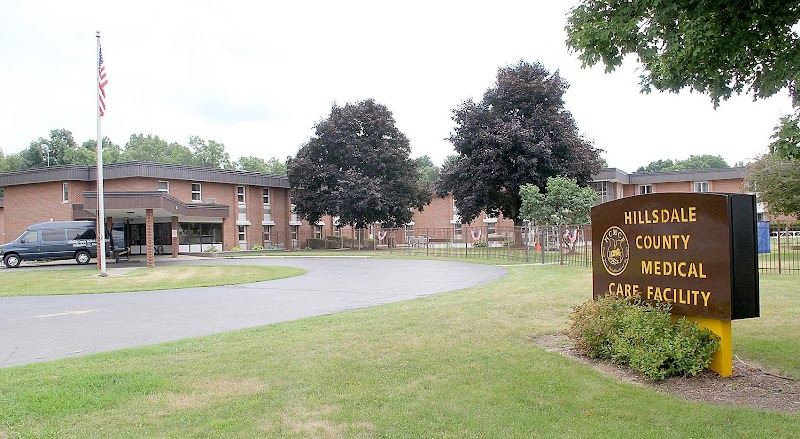
Hillsdale County Medical Care Facility

140 W Mechanic Street, Hillsdale, MI 49242 (517) 439-9341
Government - County 170 Beds Independent Data: November 2025
Trust Grade
5/100
#203 of 422 in MI
Last Inspection: December 2024

Within standard 12-15 month inspection cycle. Federal law requires annual inspections.

Overview

Hillsdale County Medical Care Facility has received a Trust Grade of F, indicating significant concerns and a poor reputation among nursing homes. Although it ranks #203 out of 422 facilities in Michigan, placing it in the top half, it is only #2 out of 2 in Hillsdale County, meaning there is only one other local option available. The facility's trend is stable, with seven issues reported consistently over the last two years. Staffing is a strong point, rated 5 out of 5 stars with a turnover rate of 34%, which is lower than the state average, suggesting a stable staff that knows the residents well. However, the facility has faced concerning fines totaling $145,217, higher than 83% of Michigan facilities, and serious incidents were noted, including failure to protect residents from potential abuse and inadequate wound care that led to serious health complications for residents.

Trust Score
F
5/100
In Michigan
#203/422
Top 48%
Safety Record
High Risk
Review needed
Inspections
Holding Steady
7 → 7 violations
Staff Stability
○ Average
34% turnover. Near Michigan's 48% average. Typical for the industry.
Penalties
✓ Good
$145,217 in fines. Lower than most Michigan facilities. Relatively clean record.
Skilled Nurses
✓ Good
Each resident gets 48 minutes of Registered Nurse (RN) attention daily — more than average for Michigan. RNs are trained to catch health problems early.
Violations
⚠ Watch
36 deficiencies on record. Higher than average. Multiple issues found across inspections.
★★★☆☆
3.0
Overall Rating
★★★★★
5.0
Staff Levels
★★★☆☆
3.0
Care Quality
★★☆☆☆
2.0
Inspection Score
Stable
2024: 7 issues
2025: 7 issues

The Good

  • 5-Star Staffing Rating · Excellent nurse staffing levels
  • Full Sprinkler Coverage · Fire safety systems throughout facility
  • No fines on record
  • Staff turnover below average (34%)

    14 points below Michigan average of 48%

Facility shows strength in staffing levels, fire safety.

The Bad

3-Star Overall Rating

Near Michigan average (3.1)

Meets federal standards, typical of most facilities

Staff Turnover: 34%

12pts below Michigan avg (46%)

Typical for the industry

Federal Fines: $145,217

Well above median ($33,413)

Significant penalties indicating serious issues

The Ugly 36 deficiencies on record

5 actual harm
Oct 2025 5 deficiencies 2 Harm
SERIOUS (G) 📢 Someone Reported This

A family member, employee, or ombudsman was alarmed enough to file a formal complaint

Actual Harm - a resident was hurt due to facility failures

Free from Abuse/Neglect (Tag F0600)

A resident was harmed · This affected 1 resident

**NOTE- TERMS IN BRACKETS HAVE BEEN EDITED TO PROTECT CONFIDENTIALITY** Based on observations, interviews and record review, the facility failed to protect the residents' right to be free from sexual ...

Read full inspector narrative →
**NOTE- TERMS IN BRACKETS HAVE BEEN EDITED TO PROTECT CONFIDENTIALITY** Based on observations, interviews and record review, the facility failed to protect the residents' right to be free from sexual and physical abuse by other resident's. Findings include: Review of the Face Sheet and Minimum Data Set (MDS) dated [DATE], reflected R101 was an [AGE] year-old male admitted to the facility on [DATE], with diagnoses that included dementia, anxiety and depression. The MDS reflected that R101s had a BIM (assessment tool) score which indicated his ability to make daily decisions was severely impaired. Review of the Face Sheet and Minimum Data Set (MDS) dated [DATE], reflected R102 was an [AGE] year-old female admitted to the facility on [DATE], with diagnoses that included dementia, anxiety, falls, unsteady on feet, and depression. The MDS reflected that R102s had a BIM (assessment tool) score which indicated her ability to make daily decisions was severely impaired. Review of the complaint received by the State Agency on 9/24/25 alleged the facility failed to prevent and report abuse allegations to the State Agency. During a telephone interview on 9/25/25 at 11:59 a.m., Complainant “Y” verified complaint and reported often worked in basement of facility on dementia unit. Complainant “Y” reported on 8/23/25 R101 walked up to R102 and started shoving R102 and hitting R102 on the shoulder and staff separated residents and incident was reported to supervisor who was told incident needed to be reported to Director of Nursing (DON) “B” and Nursing Home Administrator (NHA) A” because abuse allegation. Complainant “Y” believes Nurse Supervisor notified DON “B” and was told did not need to be reported because both residents had dementia and NHA “A” followed up and told Complainant Y the same. Complainant “Y” reported on 9/6/25 R101 was ramming wheelchair into R102 while she was eating and staff separated residents, assessments were completed. Complainant “Y” reported R101 behaviors increased and at one-point R101 placed hands on R102 shoulders and started shaking R102 violently making R102s entire body move. Residents were again separated and assessments completed, and same nurse supervisor was notified along with physician who ordered intramuscular Ativan. Complainant “Y” reported R101 was a strong male and R102 was frail [AGE] year-old women. Complainant “Y” reported Certified Nurse Assistant (CNA) “R” got to R102 first and separated residents and R102 was taken to her private room and event was also reported to DON “B” and NHA “A” and physician via secure conversation/text. Complainant “Y” reported was questioned after event by NHA “A” who reported not to use word, “violent” in documentation and Complainant “Y” reported there was no other word to describe the event. Complainant “Y” reported NHA “A” reported intervention would be to remove wheelchair but Complainant Y reported was unsure how that would even help because R101 was not in wheelchair when he approached R102 and started shaking her. Complainant “Y” reported was told neither resident to resident incident was reported to the State of Michigan because both residents had dementia. During an observation on 9/29/25 at 9:55 a.m., R101 and R102 was observed in dementia unit, located in the facility basement. R101 and R102 were in the common area sitting in recliners that were lined up around the television four chairs apart from each other. R101 had a brace on right knee and observed staff assisted R101 to the bathroom via a wheelchair. The unit had two certified nurse aids and one nurse and about 10 residents present. During an interview on 9/29/25 at 1:00 p.m., Nursing Home Administrator (NHA) “A” reported was the facility Abuse Coordinator. NHA “A” reported had two reported allegations of abuse in past 10 months. The two abuse allegations did not include R101 or R102. Requested all Incident/Accident reports with complete investigations for R101 and R102 on 9/29/25 at 2:37 p.m. Received all R101 and R102 Incident/Accident reports for last six months with no resident-to-resident incidents on 9/29/25 at 3:23 p.m. Review of R101 Nurse Progress Note, dated 6/20/25 at 9:35 p.m., reflected, “CNA [certified nurse aid] came up to writer and reports that she has seen resident put his finger in another patients face [R102] and shouldn't sit next to her because he tried to control her and calls her his wife. States she doesn't think they should sit together anymore.” Review of R101 Nurse Progress Note, dated 8/23/25 at 8:31 p.m., reflected, “Reported to supervisor at 2024[8:24 p.m.] that this resident was seen by CENA [Competency Evaluated Nursing Assistant] striking a female resident multiple times on shoulder and chest earlier this shift. Writer was not made aware of this until approximately 2000.” Review of R101 Nurse Progress Note, dated 8/23/25 at 9:50 p.m., reflected, “DON notified of CN [charge nurse] report of incident.” Review of R101 Behavior Progress Note, dated 9/6/25 at 3:00 p.m., reflected, “Resident being very aggressive to staff. Trying to run into CNAs with WC [wheelchair]. Trying to approach a female resident thinking she is his wife. Tried to go into female resident room. Phone call placed to [named Medical Director “X”] and one time order given for 1mg Ativan IM. POA [power of attorney] aware.” Review of R101 Nursing Progress Note, dated 9/6/25 at 3:04 p.m., reflected, “At approximately 1420 [2:20 p.m.], resident ambulated to female pt. [patient] who was sitting in recliner chair in great room and placed his hands on her shoulders and began violently shaking her. Staff intervened and ended this behavior and female pt. was taken to her room to eliminate stimulus. This resident continued to try to locate female pt. whom he thought was his wife and ran his w/c into all staff members intentionally on multiple occasions. Was yelling throughout demanding to know where his wife was. Attempted to provide food, fluids and offered a walk outside all new order for Ativan 1mg IM obtained and given at approximately 1435 [2:35 p.m.].” Review of R101 Nurse Progress Note, dated 9/6/25 at 8:58 p.m., reflected, “At approx 1810 [6:10 p.m.], as most residents had eaten supper, this resident began ramming his w/c into a female resident's w/c. This resident believes this female is his wife and unable to convince him otherwise or distract him. Female resident was still eating when this occurred and residents were separated at this time. This resident went back two additional times and rammed his w/c into hers. Resident was asked why he was doing this and he stated, how else am I supposed to get her attention? Review of R101 Nurse Progress Note, dated 9/7/25 at 3:43 p.m., reflected, “Per report, pt. was fine all first shift. As soon as second shift began, pt. started to ramp up again. Has been yelling about wanting to see his wife, referring to specific female pt. Female was removed from great room prior so that pt would not become fixated on her again. So far this shift he has rammed his w/c into staff X1 [times one] and tried to ram into a visitor that staff was speaking with but staff intervened. Has been yelling quite a bit this shift about specific female pt. and that staff is liars…Since all this tends to happen on second shift, question if this is a circadian cycle for this pt. and if he needs a routine medication to control it. Currently gets Buspar 5mg tid[three times daily] but it is not helping. The 1mg Ativan yesterday did seem to help. Not asking for anything right now but will text you if situation worsens.” Review of R101 Behavior Progress Note, dated 9/12/25, reflected, “At 10:05 am, [named R101] was sitting in a PC[personal chair] chair up at the TV area and began to express, Where is [named wife], I want to see my wife, [named wife]! Staff sat with him explaining that his wife lived at another facility. [named R101] expressed, No she's not, where is she, I just seen her. During an interview on 9/29/25 at 3:46 p.m., Licensed Practical Nurse Risk Manager (RM) “N” reported had been in that role about five months and had worked at the facility for 12 years. RM “N” reported R101 was non-complaint who had no safety awareness with diagnosis of dementia who lives in dementia unit in the basement of the facility. RM “N” reported R101 thinks R102 was his wife and often require one on one care because he becomes fixated on R102. RM “N” reported worked on R101s unit 9/25/25 second shift and reported was not aware prior to that day R101 was fixated on R102 and reported R101 had increased behaviors and had to call DON “B” for additional assistance even with one-on-one care for R101. RM “N” verified she documented the following Nurse Progress Note, dated 9/25/25 at 4:02 p.m., “Elder was sitting in personal chair in dayroom upon my arrival to the unit at 1400[2:00 p.m.]. Noticed he was picking at his arm protectors and wanted to walk. He [R101] stood up without assistance X2[times two]. First time CNA [certified nurse aid] took him to the bathroom with AX2[assist time two], gait belt and w/c[wheelchair]. 2nd time they went for a stroll in his w/c outside for a bit. He was then placed back in his personal chair with CNA sitting beside him. Writer asked CNA what usually helps him stay distracted, and she replied someone sitting with him at all times giving him attention. CNA left the unit to go to lunch. Writer sat beside Elder and conversated with him. He kept directing the topic back to who he thinks is his wife which is truly just another Resident who was sitting within his sight. The other assigned CNA was doing bed checks and toileting Elders. Family members to another Elder came in to visit which intensified his[R101] behaviors. He was so worried who was talking to his wife, I don't know those people, I need to make sure my wife is okay. AX2 [assist time two] with gait belt stood him up to reposition him to his w/c to diffuse the situation by bringing him outside. DON was paged to the unit and Social Work accompanied her. They talked with Elder and wheeled him around the facility prior to bringing him back and doing puzzles together. All was well upon my departure at 4pm.” RM “N” reported reviews and completes resident fall investigations and reported R101 has had several recent falls with recent fracture because of poor safety awareness and again reported had no prior knowledge of R101 behaviors towards R102. (Evidence that thorough investigation had not been completed for frequent falls and resident to resident events to determine root cause related to ongoing behaviors.) During an interview and record review on 10/1/25 at 1:34 p.m., NHA “A” reported facility had additional information that had not yet been provided related to R101 and R102 that facility felt was an issue with staff performance of Registered Nurse (RN) “P”. NHA “A” provided file for R101 and R102 resident to resident events on 8/23/25 and 9/6/25 on facility letterhead of typed events. NHA “A” reported RN “P” no longer worked at facility. Review of the file reflected handwritten statement from CNA “R”, dated 8/23/25, that reflected, “On 8/23 [named R101] became agitated at [named R102] and open hand smacked her on her shoulder/chest area. This happened approximately around 3:30 p.m.” The statement was signed by CNA “R”. Continued review of the file reflected a second timeline of events on facility letter head for R101 and R102, dated 9/6/25, reflected two, “Hey Social Work” documents, dated 9/6/25. Review of R101's first, Hey Social Work documents reflected, “Resident is being aggressive with other residents, shaking them, in their face, yelling at them accusing them.” The form included R101 had the following behavior: yelling, abusive language, grabbing, accusing, pushing, and expressing anger and unable to redirect. The document was signed by CNA “R”. Review of the second Hey Social Work document, dated 9/6/25, reflected, “resident is being aggressive towards other residents especially [named R102] he thinks she is his wife. He is running into nurse and aides with wc[wheelchair].” The form included R101 had the same marked behaviors as the first document. During a telephone interview on 10/1/25 at 3:11 p.m., CNA “R” reported usually worked on the dementia unit in the basement on second shift with both R101 and R102. CNA “R” reported R101 frequently gets very fixated on R102 and yells at her, grabs her and has shaken R102 in the past. CNA “R” reported staff attempt to keep R101 and R102 separated, and staff try to intervene to reduce risk of altercation. CNA “R” reported R102 was[AGE] years old with dementia and is unsure if she knows what is happening and R101 is convinced R102 is his wife. CNA “R” reported recalled incident in August 2025 when R101 was patting R102 and shoulder and shouting hay, hay. CNA “R” reported on 9/6/25 R101 approached R102 and grabbed R102 shoulders and started shaking R102 back and forth and both CNA staff separated residents. CNA “R” reported told R101 he was not allowed to put his hands on other residents, and he became upset and incident was reported to RN “P” and completed, “Hey Social Worker” document. CNA “R” reported incident was reported to nurse because potential allegation of abuse that was required to be reported immediately. CNA “R” reported after 9/6/25 incident there were no changes in interventions but to continue to attempt to keep R101 and R102 separate. CNA “R” reported R101 does get mad and R102 and had called her an old hag and reported residents do not deserve to be treated that way or called names and should be reported. During a telephone interview on 10/2/25 at 10:26 a.m., CNA “V” reported often worked second shift with both R101 and R102. CNA “V” reported R101 was obsessed with R102 and staff constantly have to separate them and R101starts to escalate behavior to be right next to her with attempt to even try to push her wheelchair. CNA “V” reported R101 aggressive behaviors toward R102 have increase over past four to six weeks and staff have expressed concerns to several management staff including DON “B”. CNA “V” reported R101 has also had several falls because he is so determined to get to R102 including recent fall with fracture. CNA “V” reported staff attempt to redirect but often not effective and R101 requires one on one supervision that is not always possible to properly care for other residents. CNA “V” stated R101 is often, “Locked on that thought and nothing else matters to him.” CNA “V” reported R101 has called R102 a bitch and other residents as well. CNA “V” reported R101 resident to resident altercations to second shift supervisor “AA”. CNA “V” reported R101 behaviors have been progressively getting worse and occur at least 3 times per week minimum and are reported to charge nurse because potential allegations of abuse. CNA “V” reported last week DON “B” had to take R101 off the unit because R102 had family that was visiting and R101 was agitated that he did not know who they were and did not want them with R102 and reported R102 appeared frustrated with situation. During an interview on 10/2/25 at 10:48 p.m., Social Worker (SW) “K” reported R101 had behaviors that included he had history of being combative with staff and thinks a female resident is his wife and gets focused and agitation often increases in afternoon. SW “K” reported the, “Hey Social Worker” was a tool that staff use to communicate behaviors residents might be having with Social Worker and reported had not received any for R101. SW “K” reported was not aware of any resident-to-resident altercations with R101 and R102 other than when R101 taps R102 on shoulder to get her attention. SW “K” reviewed, “Hey Social Worker” forms provided by NHA “A”, dated 9/6/25, and verified had never seen either one. SW “K” reported if she had received the documents would have reported to NHA “A” immediately because allegations of physical abuse that needed to be reported and investigated and need to follow up with all parties involved because facility SW. During an interview on 10/2/25 at 11:26 a.m., NHA “A” reported had been in position for five years and was also the abuse coordinator. NHA “A” reported staff are expected to report all allegations of abuse to nurse supervisor, DON “B”, or NHA “A” immediately. NHA “A” reported did not reported R101 and R102 allegations of abuse to the State of Michigan (SOM) because they delt with it as personal issue not allegation of abuse and stated, “in hindsight that was incorrect.” NHA “A” reported should have reported R101 and R102 incidents on 8/23/25 and 9/6/25 to the SOM as allegations of abuse and verified that was wrong. During an interview on 10/2/25 at 11:56 a.m., DON “B” reported received a call from supervisor that RN “P” had reported an incident that occurred at the beginning of the shift that CNA staff reported R101 was going after R102 related to both incidents on 8/23/25 and 9/6/25. DON “B” reported did not believe RN “P” but should have believed CNA staff that included written witness statements, should have reported to the NHA “A”, State of Michigan, and completed thorough investigation. Review of the medical record reflected R104 was admitted to the facility on [DATE], with diagnoses that included dementia. The Minimum Data Set (MDS), with an Assessment Reference Date (ARD) of 8/2/25, reflected R104 scored 7 out of 15 (severe impairment) on the Brief Interview for Mental Status (BIMS-a cognitive screening tool). Review of the medical record reflected R105 was admitted to the facility on [DATE], with diagnoses that included dementia, need for assistance for personal care, mild cognitive impairment, and Alzheimer's disease. The Minimum Data Set (MDS), with an Assessment Reference Date (ARD) of 7/6/25, reflected R105 was unable to have a Brief Interview for Mental Status (BIMS-a cognitive screening tool) conducted due to severe cognitive impairment. On 9/25/25 at 2:57 PM, R104 was observed in his room seated in his wheelchair. R104 was talking out loud said “ehhhh” and “ohhh.” After entry into his room, R104 was welcoming to conversation and stated that he had a bird that he loves to talk with. On 9/25/25 at 3:12 PM, R105 was observed in bed resting. Review of R104's Care plan reflected an added intervention on 3/27/23 and revised on 3/21/25 which stated “…He is also inappropriate at times. If [R104] is participating in a group setting such as eating in the dining room or an activity, wait to bring the resident down until at least one staff member is present to monitor. [R104] also sits by male residents during activities and in the dining room…”. Review of R105's Electronic Medical Record reflected that R105 was nonverbal and used nonverbal cues and sounds/cries in an attempt to make needs known. Review of a Behavior Note on 2/21/25 revealed R104 had to be corrected many times during the 6-2 shift about being inappropriate with other residents and with the CNA's. He tried to grab a CNA's bottom while they were walking by. He kept whistling at another resident until it made her upset and she had to propel away. He heckled the CNA'S whenever he was in the halls and not in bed. Review of a Behavior Note dated 3/7/25 revealed R104 stated to a female resident while in dining room, Hey baby, let me feel your tits. Writer did not know about this until several hours post incident but did speak to resident about it and told him how inappropriate it was. In an interview on 9/25/25 at 12:53 pm, Registered Nurse (RN) P stated that she received information during shift report during a shift in late March 2025 that R104 was observed groping R104's breasts in the activity room. LPN P was advised to ensure that R104 and R105 were not seated near each other to maintain R105's safety. In an interview on 9/29/25 at 9:59 am, Certified Nursing Assistant (CNA) J reported that she was working the day, back in March 2025, that R104 was observed fondling R105's breasts. CNA J stated that both residents were in the activity room and CNA J overheard a commotion. When CNA J responded, R104 was observed handling R105's breasts. Moving forward, staff was instructed to ensure that R104 and R105 were not placed near each other. CNA J reported this to the nurse. In an interview on 9/29/25 at 4:04 pm, CNA L stated that he overheard R105 yelling and immediately identified that R105 was upset about something. CNA L entered the activity room to observe R104 grabbing R105's breasts. R105 was visibly disturbed about the actions of R104. CNA L stated he separated the residents immediately and was asked to fill out an incident report. On 10/2/25 at 11:26 AM, Nursing Home Administrator (NHA) A verified that he was the abuse coordinator and explained the process of reporting abuse allegations. When asked if he had any awareness of this incident, NHA A denied knowing about R104 incident with R105, however, did state that the incident should have been reported to him and that he would have reported it to the State of Michigan and completed an investigation. NHA A and Director of Nursing B both reported that there were no incident reports or investigations for this incident. Review of the Abuse, Neglect and Exploitation Policy implemented 9/2021 and reviewed 9/2024 defined sexual abuse as non-consensual sexual contact of any type. The same policy stated, an immediate investigation is warranted when suspicion of abuse, neglect, or exploitation, or reports of abuse, neglect or exploitation occur . reporting of all alleged violations to the Administrator, state agency .immediately, but no later than 2 hours after the allegation is made . Applying the reasonable person standard, it can be expected that R105 would have experienced emotional distress as a result of the abuse, as such a reaction aligns with how an average person would respond under similar circumstances.
SERIOUS (G) 📢 Someone Reported This

A family member, employee, or ombudsman was alarmed enough to file a formal complaint

Actual Harm - a resident was hurt due to facility failures

Quality of Care (Tag F0684)

A resident was harmed · This affected 1 resident

**NOTE- TERMS IN BRACKETS HAVE BEEN EDITED TO PROTECT CONFIDENTIALITY** Based on interview and record review, the facility failed to provide the necessary standards of care and services for wound and ...

Read full inspector narrative →
**NOTE- TERMS IN BRACKETS HAVE BEEN EDITED TO PROTECT CONFIDENTIALITY** Based on interview and record review, the facility failed to provide the necessary standards of care and services for wound and skin care management in one (Resident #106) of three reviewed for quality of care. This deficient practice resulted in R106's hospitalization for septic shock, cellulitis, increased pain, and the need for intravenous antibiotic therapy, and implementation of hospice(end of life services) and death. This citation pertains to intake 2626820 Review of the Face Sheet and Minimum Data Set (MDS) dated [DATE], reflected R106 was an [AGE] year-old female admitted to the facility on [DATE], with diagnoses that included congestive heart failure (CHF), diabetes mellitus, hypertension (high blood pressure), legally blind, cellulitis, and lymphedema. The MDS reflected that R106s had a BIM (assessment tool) score of 14 which indicated her ability to make daily decisions was cognitively intact, and she required staff supervision with locomotion on unit, dressing, hygiene, bathing, and transfers. Continued review of the MDS reflected no history of refusal of care. Review of the complaint received by the State Agency alleged the facility failed to provide wound treatments as ordered resulting in sepsis and death. During a telephone interview on 9/25/25 at 11:59 a.m., Complainant Y verified complaint and reported R106 passed away after returning from hospital on hospice services. Complainant Y reported R106 was treated in the hospital for septic shock and cellulitis after a Licensed Practical Nurse (LPN) F did not follow physician orders and placed black plastic trash bags over R106's lower legs for over two days that caused infection. Complainant Y reported R106 required frequent as need dressing changes related to increase bilateral lower leg swelling and weeping around 6/20/25 and was told nurse placed trash bags on 6/21/25 and remained in place until 6/23/25 when found by the facility wound nurse who informed the Director of Nursing (DON) B. Complainant Y reported when the bags were removed from R106s legs on 6/23/25 the skin just slid off R106 legs and the wounds were significantly worse than prior week. Complainant Y reported was told R106 wanted to go to activity on 6/21/25 but legs were weeping so much the plastic bags were placed and the next shift was not informed and remained in place until found on 6/23/25 (two days later). Complainant Y reported R106 reported increased pain and was treated in the facility for cellulitis initially then transferred to the hospital after being found unresponsive on 7/10/25. Complainant Y reported had spoke with Medical Director X after R106 hospital admission and discussed black trash bags used as treatment and reported Medical Director X was shocked and unaware of situation. Complainant Y' reported facility risk manager was one of R106's nurses that weekend and stated, Common sense tells you it will cause a problem. What the h*ll were they thinking? Complainant Y reported R106 was alert and oriented who often went out with friends and had good quality of life prior to worsening of bilateral lower leg wound cellulitis on 6/23/25. Review of the Wound Evaluations, dated 6/20/25, reflected R106 had three new in-house acquired venous wounds (ruptured blisters) to bilateral lower legs with 0/10 on pain scale that included:-#4 venous, Left Medial Malleolus - Middle-- measurement 3.3x3x0.1, cluster of 2, moderate serious drainage with no signs of infection.-#5 venous, Right Medial Calf - Middle-- measurement: 4x2x0.1, moderate serious drainage with no signs of infection.-#6 venous, Front Right Lateral Lower Leg-- measurement: 11x14x0.1, cluster of 11, moderate serious drainage with no signs of infection. Review of R106 Nurse Progress Note, dated 6/21/25 at 7:57 p.m., reflected, Wound Treatment Charting - The patient has had to have her bilateral leg dressings completed 4 times today 6 am - 8 pm. When the patient stands up the urine just runs all over her legs and the dressings are saturated with urine. The patient receives 2 Bumex 1 mg every am. The bilateral legs were washed with warm soap and water each time and new dressings applied. Supervisor notified. Review of R106's Treatment Administration Record (TAR), dated 6/21/25 through 6/23/25, reflected R106 had physician ordered treatments that included the following: Left distal medial low leg: Cleanse with normal saline, apply skin prep to periwound, cover wound with calcium alginate (2x2), cover with 4x4 bordered dressing every day shift.Left distal pretib: Cleanse with normal saline, apply skin prep to periwound, cover wound with calcium alginate (2x2), cover with 4x4 bordered dressing every day shift.Left Superior Pretib: Cleanse with normal saline, apply skin prep to periwound, cover wound with calcium alginate (2x2), cover with 4x4 bordered Dressing every day shift.Right Medial calf: Cleanse with normal saline, apply skin prep to periwound, cover wound with calcium alginate (2x2), cover with 4x4 bordered dressing every day shift.Right Pretib: Cleanse with normal saline, apply skin prep to area. Cover with ABD pads x 2, secure with kerlex and secure with tape every day shift.Continued Review of R106 TAR, dated 6/17/25, reflected whole (no documentation) for, Bilateral lower legs: 2 layer compression every day shift every Tue. Continued Review of R106 TAR revealed one documented treatment completed on 6/21/25 for each of the listed areas and documentation that R106 refused all the above listed treatment on 6/22/25. Review of R106 Secure Conversations Progress Note, sent by facility Wound Nurse M, dated 6/23/25 at 11:03 a.m., reflected, Resident's legs have detoriated since friday and is now open on both shins circumferential. Will have [named facility wound provider U] see on Wednesday. In the meantime her legs are seeping copious amounts of fluid. Okay to change treatments to opilocks and kerlex changed q [every] shift? Continued review of Progress Note revealed Medical Director X responded, Yes, thanks. at 11:16 a.m. (According to Nurse Progress Note dated 6/21/25 at 7:57 p.m. R106 had a change in condition with increased bilateral lower extremity drainage that required dressing changes four times instead of one time daily as ordered with no evidence that Physician had been notified prior to 6/23/25.) Review of R106 Psychosocial Progress Note, dated 6/24/25 at 2:41 p.m., reflected, SW [Social Work] met with [named R106] today. She did not have any concerns at this time. She is a little annoyed/frustrated about her current health condition. SW provided support, encouragement and validation of her feelings. Review of R106 Nurse Progress Note, dated 6/25/25 at 6:44 p.m., reflected, Resident will begin Doxycycline for bilat.[bilateral] lower leg cellulitis tomorrow morning. Review of the Wound Evaluations, dated 6/25/25, reflected R106 had deteriorating bilateral lower leg wounds with increased pain 7/10 on pain scale that included the following:-#4 transitioned to #7 venous, front Left Lateral Lower Leg-measurements 10.5x17.5x0.1, heavy serious drainage, angry red color with signs of infection.-#5 transitioned to #6 venous, front Right Lateral Lower Leg-measurements 13.5x25x0.1, heavy serious drainage, redness, inflammation, signs of infection and documented cellulitis. Review of R106 Nurse Progress Note, dated 6/27/25 at 8:34 p.m., reflected, Treatment to right lower leg redone d/t dressing extremely wet. Pt. was painful throughout this drsg. [dressing] change. Review of R106 Nurse Progress Note, dated 6/28/25 at 9:56 p.m., reflected, Treatments to bilateral lower legs redone. Right was saturated with drng [drainage], left was around ankle. Areas remain red with several open areas. Right leg is painful. Continues to take Doxycycline for cellulitis BLE [bilateral lower extremities]. Review of R106 Nurse Progress Note, dated 6/30/25, reflected, Late entry for 6/29/25 day shift Infection note: [named R106] is on an oral antibiotic for tx [treatment] of cellulitis of her lower extremities. [named R106] has open wounds on bilateral lower extremities that are weeping fluids. [Named R106] expressed pain in her right lower extremity is more prevalent than the minimal pain felt in her left lower extremity. [Named R106] rates her right lower extremity pain to be varied between minimal and 7/10 depending on the position and if treatments are being completed. [Named R106] was sleepy the first part of the morning stating she did not sleep well r/t discomfort of her lower extremities.Review of R106 Nurse Progress Note, dated 7/3/25 at 12:12 p.m., reflected, Elder stayed in her room all shift thus far. Ate both meals in her room. Uses her call light appropriately for assistance and to voice needs. Complained of headache and requested PRN Tylenol. Review of R106 Nurse Progress Note, dated 7/5/25, reflected, The patient is on Doxycycline Hyclate oral tab 100 mg by mouth am and bedtime for BLE Cellulitis. x 10 days. The patient has one more dose this evening and she will complete her ABT[antibiotic] regime.The patient's treatment was completed at 9 am and again at 2 pm for urine saturated dressings. Review of R106 Nurse Progress Note, dated 7/10/25 at 6:45 a.m., reflected, Took resident's blood pressure via wrist cuff measures 63/30 with a heart rate of 100. Resident in and out of consciousness. 22g IV [intravenous line] started x1 attempt in right hand. IV fluids started. Resident came up to 120/60. Fluids turned down to 75 cc/hr as resident has dx [diagnosis] of CHF. Resident more alert after blood pressure came up and started she feels dizzy and she is having chest pain. Continued review of Progress Notes revealed no notes between 7/5/25 and 7/10/25 at 6:45 a.m. when R106 found unresponsive. Review of R106 Nurse Progress Note, dated 7/10/25 at 6:46 a.m, reflected, Sending elder to [named local emergency room] for evaluation She is a full code and BP[blood pressure] dropped from 99/65 to 69/30. Elder very pale with an irregular heart rate usually alert but slow to respond at this time. Review of R106 Secure Conversations Progress Note (sent to Medical Director X), dated 7/15/25 at 1:13 p.m., reflected, [Named R106] arrived to the unit at 1245. Son at side. Option for End of life Comfort care per [named facility] policy was chose, as well as DNR[do no resuscitate]. Review of R106 Nurse Progress Note, dated 7/15/25 at 1:35 p.m., reflected, [named R106] arrived on the Unit for readmission at 1245 via stretcher with [named] transport service. [Named R106] is on oxygen at 4-5 L via nasal cannula upon arrival. A 4 person slide transfer to her bed completed. Audible negative vocalization heard. EMS [emergency medical service] staff reported [named R106] last pain medication was at 1055 when she left the Hospital. [named R106] expressed verbally Just give me a Shot. Pain medication discharge orders reviewed with [named physician] with orders for Morphine sulfate concentrate 20mg/ml, give 0.25 ml every 4 hours scheduled and 0.25 ml every 2 hours as needed for pain and dyspnea. Review of the Hospital records, dated 7/10/25, reflected R106 was treated at local hospital for cellulitis, septic shock and non STEMI (non ST elevation myocardial infarction) and was transferred to a level 2 trauma center. Continued review of R106 hospital records revealed elevated while blood count (WBC) and no evidence of urinary tract infection. Continued review of R106 History and Physical, dated 7/10/25, reflected, Usually is alert and orientedx3.Found decreased level of responsiveness today and hypotension. Started an IV and IV fluids. When EMS arrived she was still hypotensive and was still decreased level of responsiveness. When became more aroused and awake she started complaining of chest pain. Upon arrival to the ER [emergency room] she is more alert she states she has a little bit of chest pain but mostly pain in her knees which she always has. Additionally she states she has edema and weeping from both legs. They are both wrapped and she has noticed some increased redness to the left leg recently. Review of R106 Hospital Cardiology Consult, dated 7/11/25, reflected, [AGE] year-old female history of HFpEF [diastolic heart failure], lymphedema, CKD [chronic kidney disease] who presents from nursing home with altered mental status, lower extremity swelling/redness, hypotension, concern for infection. Upon arrival, she was given IV antibiotics, BP [blood pressure] stabilized. She is now more awake and alert. She does state intermittent chest discomfort though she states it is more so constant pain in the middle of her back which somewhat radiates to the center of her chest. States she is acutely short of breath, feels like she is wheezing and it is difficult to take a deep breath. She has not had significant palpations-dizziness. She is aware that her LE edema is chronic but states it has much worsened lately as well as redness, tenderness and some drainage.WBC H 28.5 [white blood cell count indicator of infection with normal range less than 11].Diagnosis NSTEMI-troponin down trending.Acute HFpEF.Sepsis-likely secondary to cellulitis. Review of R106 Hospital Wound Ostomy Continence Note, dated 7/11/25, reflected, Bilateal [bilateral] lower leg cellulitis, legs are bright red, swollen, tender, moist satellite wound beds. Venelex ordered to be applied when it comes from pharmacy. Review of R106 Hospital Care Management Team Note, dated 7/15/25, reflected, IP [in patient] day 5, admitted with Nstemi and septic shock Palliative consult, and was decided that patient will return to [named facility] with hospice services.Clinical Formulation.admitted with Nstemi and septic shock likely caused from cellulitis of leg wounds. Review of R106 Hospital Discharge summary, dated [DATE], reflected, Discharge diagnosis Septic shock, Cellulitis. Review of the Death Certificate, dated 7/18/25, reflected R106's cause of death included NSTEMI with contributing causes that included kidney disease, diabetes, hypertension and CHF. Review of the facility staffing schedules, dated 6/20/25 through 6/23/25, reflected Licensed Practical Nurse (LPN) F was R106's nurse on 6/21/25 and 6/22/25 day shift and LPN D was R106 nurse on 6/23/25 (when complainant alleged black plastic bags were found on R106's bilateral lower legs). During an interview on 9/29/25 at 1:47 p.m. Licensed Practical Nurse (LPN) D reported R106 was alert and oriented, legally blind and had wounds on lower legs and slept in recliner with legs elevated. LPN D reported was R106's nurse on 6/23/25 day shift when she found R106 with black trash bags over bilateral lower legs at start of shift and notified the facility wound nurse M immediately. LPN D reported the wound nurse removed the dressings and contacted the Director of Nursing DON B. LPN D reported was also working when R106 was transferred to the hospital on 7/10/25 when staff reported to her that R106 was confused, had low blood pressure and R106 reported she felt like she was going to faint around 6:15 a.m. LPN D reported 911 was called and R106 was transferred to local hospital. During a telephone interview on 9/29/25 at 2:14 p.m., Wound Nurse (WN) M reported R106 had bilateral venous ulcers that were healing well in early June. WN M reported R106 refused to take physician ordered diuretic few days prior to 6/20/25, when she had seen R106 for wound assessments, related to increased drainage after restarting diuretics. WN M reported were unable to order needed compression supplies mid-June and had to make adjustments in treatments but orders to change bilateral lower leg dressings daily. WN M reported assessed wound weekly and documented in Electronic Medical Record and reported was unsure why R106 did not have wound assessments for 7/8/25 (two days prior to being admitted to the hospital for sepsis and cellulitis). WN M reported was alerted by LPN D on 6/23/25 that R106 had black plastic trash bags on bilateral lower legs and black trash bags were removed and R106's old dressings under bags were heavily saturated with wound drainage and complained of increased leg pain. WN M reported was unsure how to describe R106 leg wound but reported they had significantly worsened since 6/20/25 and stated, legs were weeping so bed they did not know what to do. WN M reported that is when she contacted the facility Wound Nurse Practitioner U and DON B who completed an investigation and staff teaching. WN M reported was unsure why R106 had black plastic trash bags on legs or how long they had been in place and verified was not physician ordered. During an interview on 10/2/25 at 8:55 a.m., WN M reported had been the facility wound nurse for over one year. WN M reported saw R106 on 6/20/25 for wound assessment and thought had changed order to three times daily, however, after reviewing Physician Orders and Treatment Administration Record reported R106 wound treatments were daily but thinks she left extra supplies in zip lock bags for weekend. WN M reported supervisor always has keys that can access her office where supplies are stored. WN M reported R106 had increased drainage over the weekend, and nurse placed black trash bags over R106 legs and verified were removed on 6/23/25 after breakfast. WN M again reported when R106 old dressing were removed on 6/23/25 they were heavily saturated, and wounds were significantly worse from 6/20/25 with right leg worse than left and reported R106 wounds went from small blister area to full leg wounds with R106 complaints of 7 out of 10 pain on scale. WN M stated she was, shocked. WN M reported placing black plastic trash bags over R106 legs was not acceptable nurse practice. WN M reported was informed by the DON B that two nurses received education after the event. WN M stated, reported to DON B because [named R106] wounds were significantly worse and placing black plastic trash bags over dressings was not an acceptable practice and that is not what I want in my building. WN M reported R106 did not have history of refusing treatment and if resident refused treatment would expect to see Nurse Progress Note and verified was unable to locate for 6/22/25. WN M verified R106 supplies were not available on 6/17/25 and waited until 6/20/25 to notify physician because supplies were expected to arrive. WN M reported R106 was started on antibiotics for cellulitis on 6/26/25 after being assessed by facility Wound Nurse Practitioner on 6/25/25. WN M reported was present when R106 was sent to the hospital on 7/10/25 after being alerted R106 was not acting right assessed R106. WN M reported knew R106 was a full code and was non-responsive at time and obtained crash cart and wrist cuff. WN M reported R106 blood pressure was 63 over something and was showing signs of, tanking. WN M reported started IV fluids and after about 100 cc R106 reported chest pain. WN M reported fluids were slowed related to history of CHF and 911 was called and R106 was transferred to local hospital. During a telephone interview on 10/2/25 at 9:42 a.m., LPN F reported was R106 nurse on 6/21/25 and 6/22/25 and reported R106 had copious amounts of drainage from bilateral legs that required several dressing changes on 6/21/25 related to saturated dressings. LPN F reported R106 had compression dressings that were not available. LPN F reported R106 never refused treatments and stated, in fact, [named R106] wanted to heal wounds. LPN F reported was unsure why she would have documented R106 refused treatment on 6/22/25 unless she documented on wrong resident and verified R106 definitely did not refuse treatment. LPN F reported placed black plastic bags on R106 bilateral legs around 1:15 p.m. and reported was unsure what day, because of copious amount of drainage and did not remove prior to end of shift. LPN M reported informed next shift nurse but could not recall name. LPN F reported plastic bags were not ordered by physician and was unsure if R106 change of condition on 6/21/25 had been reported to the physician, but if so, documented would be in Progress Notes. (Verified no mention of physician notification of change). LPN F reported received verbal education from DON B because physician orders were no followed. During a telephone interview on 10/2/25 at 10:09 a.m., the facility Wound Nurse Practitioner U reported LPN D and WN M asked her to see R106 related to wounds that went from cluster wounds to entire lower legs. Practitioner U reported R106 first observed on 6/25/25 and determined to have cellulitis and antibiotics were ordered. Practitioner U reported was informed by WN M that R106 was found to have plastic bags over dressings prior to consult. Practitioner stated, not appropriate treatment, definitely not. During an interview on 10/2/25 at 11:56 a.m., DON B reported was informed that R106 was found to have black plastic bags over dressings on bilateral lower legs on 6/23/25. DON B' reported that was not appropriate and/or physician ordered treatment because keeps heat in. DON B reported R106 legs were twice as bad after removing bags and saturated dressing on 6/23/25 when observed with WN M with copious amounts of drainage. DON B reported R106 was alert and oriented times three and her own responsible party. DON B reported she questioned LPN F about placing plastic bags on R106 legs and LPN F reported, yes, she had done that. DON B reported was unsure when the bags were placed on R106 legs. DON B reported placing plastic bags over dressings was not an acceptable practice and would expect the nurse to follow physician orders and contact physician with change of condition. DON B verified LPN M did not follow the physician orders or contact physician with change of condition on 6/21/25 and was given education after the incident. DON B reported R106 was started on antibiotic treatment for cellulitis on 6/26/25 and investigation was completed, however, did not complete Incident/Accident report related to event. DON B verified R106 was admitted to the hospital for NSTEMI, sepsis and cellulitis and returned to facility on hospice services and passed 7/18/25. During an interview on 10/2/25 at 1:10 p.m., DON B provided file for R106 skin investigation with no evidence of Incident/Accident report and revealed DON B had also provided education to another staff member nurse supervisor Z. DON B verified nurse supervisor Z responded to written education and was not present at time of event and DON B verified after review of nurse schedules. (Evidence that investigation was not through or complete). Review of the provided file for R106 included written statement by DON B, dated 6/23/25. The statement included, [named LPN D] mentioned that [named LPN F] had applied a plastic bag because it was seeping continuously. The file included, Counseling Notification, oral warning, dated 6/23/25, that reflected, Subject: Improper Treatment in Place.Education Provided: Follow treatment exactly as ordered. Notify Doctor with change of Condition.
CONCERN (D) 📢 Someone Reported This

A family member, employee, or ombudsman was alarmed enough to file a formal complaint

Potential for Harm - no one hurt, but risky conditions existed

Abuse Prevention Policies (Tag F0607)

Could have caused harm · This affected 1 resident

**NOTE- TERMS IN BRACKETS HAVE BEEN EDITED TO PROTECT CONFIDENTIALITY** Based on observation, interview and record review, the facility failed to implement facility policy and procedure for reporting ...

Read full inspector narrative →
**NOTE- TERMS IN BRACKETS HAVE BEEN EDITED TO PROTECT CONFIDENTIALITY** Based on observation, interview and record review, the facility failed to implement facility policy and procedure for reporting allegations of abuse for 4 of 7 sampled residents (R101, R102, R104 and R105) reviewed for abuse, resulting in potential allegations of abuse not being reported, thoroughly investigated in a timely manner and continued resident abuse.Review of the Face Sheet and Minimum Data Set (MDS) dated [DATE], reflected R101 was an [AGE] year-old male admitted to the facility on [DATE], with diagnoses that included dementia, anxiety and depression. The MDS reflected that R101s had a BIM (assessment tool) score which indicated his ability to make daily decisions was severely impaired. Review of the Face Sheet and Minimum Data Set (MDS) dated [DATE], reflected R102 was an [AGE] year-old female admitted to the facility on [DATE], with diagnoses that included dementia, anxiety, falls, unsteady on feet, and depression. The MDS reflected that R102s had a BIM (assessment tool) score which indicated her ability to make daily decisions was severely impaired. Review of the complaint received by the State Agency on 9/24/25 alleged the facility failed to prevent and report abuse allegations to the State Agency. During a telephone interview on 9/25/25 at 11:59 a.m., Complainant “Y” verified complaint and reported often worked in basement of facility on dementia unit. Complainant “Y” reported on 8/23/25 R101 walked up to R102 and started shoving R102 and hitting R102 on the shoulder and staff separated residents and incident was reported to supervisor who was told incident needed to be reported to Director of Nursing (DON) “B” and Nursing Home Administrator (NHA) A” because abuse allegation. Complainant “Y” believes Nurse Supervisor notified DON “B” and was told did not need to be reported because both residents had dementia and NHA “A” followed up and told Complainant Y the same. Complainant “Y” reported on 9/6/25 R101 was ramming wheelchair into R102 while she was eating and staff separated residents, assessments were completed. Complainant “Y” reported R101 behaviors increased and at one-point R101 placed hands on R102 shoulders and started shaking R102 violently making R102s entire body move. Residents were again separated and assessments completed, and same nurse supervisor was notified along with physician who ordered intramuscular Ativan. Complainant “Y” reported R101 was a strong male and R102 was frail [AGE] year-old women. Complainant “Y” reported Certified Nurse Assistant (CNA) “R” got to R102 first and separated residents and R102 was taken to her private room and event was also reported to DON “B” and NHA “A” and physician via secure conversation/text. Complainant “Y” reported was questioned after event by NHA “A” who reported not to use word, “violent” in documentation and Complainant “Y” reported there was no other word to describe the event. Complainant “Y” reported NHA “A” reported intervention would be to remove wheelchair but Complainant Y reported was unsure how that would even help because R101 was not in wheelchair when he approached R102 and started shaking her. Complainant “Y” reported was told neither resident to resident incident was reported to the State of Michigan because both residents had dementia. During an observation on 9/29/25 at 9:55 a.m., R101 and R102 was observed in dementia unit, located in the facility basement. R101 and R102 were in the common area sitting in recliners that were lined up around the television four chairs apart from each other. R101 had a brace on right knee and observed staff assisted R101 to the bathroom via a wheelchair. The unit had two certified nurse aids and one nurse and about 10 residents present. During an interview on 9/29/25 at 1:00 p.m., Nursing Home Administrator (NHA) “A” reported was the facility Abuse Coordinator. NHA “A” reported had two reported allegations of abuse in past 10 months. The two abuse allegations did not include R101 or R102. Requested all Incident/Accident reports with complete investigations for R101 and R102 on 9/29/25 at 2:37 p.m. Received all R101 and R102 Incident/Accident reports for last six months with no resident-to-resident incidents on 9/29/25 at 3:23 p.m. Review of R101 Nurse Progress Note, dated 6/20/25 at 9:35 p.m., reflected, “CNA [certified nurse aid] came up to writer and reports that she has seen resident put his finger in another patients face [R102] and shouldn't sit next to her because he tried to control her and calls her his wife. States she doesn't think they should sit together anymore.” Review of R101 Nurse Progress Note, dated 8/23/25 at 8:31 p.m., reflected, “Reported to supervisor at 2024[8:24 p.m.] that this resident was seen by CENA [Competency Evaluated Nursing Assistant] striking a female resident multiple times on shoulder and chest earlier this shift. Writer was not made aware of this until approximately 2000.” Review of R101 Nurse Progress Note, dated 8/23/25 at 9:50 p.m., reflected, “DON notified of CN [charge nurse] report of incident.” Review of R101 Behavior Progress Note, dated 9/6/25 at 3:00 p.m., reflected, “Resident being very aggressive to staff. Trying to run into CNAs with WC [wheelchair]. Trying to approach a female resident thinking she is his wife. Tried to go into female resident room. Phone call placed to [named Medical Director “X”] and one time order given for 1mg Ativan IM. POA [power of attorney] aware.” Review of R101 Nursing Progress Note, dated 9/6/25 at 3:04 p.m., reflected, “At approximately 1420 [2:20 p.m.], resident ambulated to female pt. [patient] who was sitting in recliner chair in great room and placed his hands on her shoulders and began violently shaking her. Staff intervened and ended this behavior and female pt. was taken to her room to eliminate stimulus. This resident continued to try to locate female pt. whom he thought was his wife and ran his w/c into all staff members intentionally on multiple occasions. Was yelling throughout demanding to know where his wife was. Attempted to provide food, fluids and offered a walk outside all new order for Ativan 1mg IM obtained and given at approximately 1435 [2:35 p.m.].” Review of R101 Nurse Progress Note, dated 9/6/25 at 8:58 p.m., reflected, “At approx 1810 [6:10 p.m.], as most residents had eaten supper, this resident began ramming his w/c into a female resident's w/c. This resident believes this female is his wife and unable to convince him otherwise or distract him. Female resident was still eating when this occurred and residents were separated at this time. This resident went back two additional times and rammed his w/c into hers. Resident was asked why he was doing this and he stated, how else am I supposed to get her attention? Review of R101 Nurse Progress Note, dated 9/7/25 at 3:43 p.m., reflected, “Per report, pt. was fine all first shift. As soon as second shift began, pt. started to ramp up again. Has been yelling about wanting to see his wife, referring to specific female pt. Female was removed from great room prior so that pt would not become fixated on her again. So far this shift he has rammed his w/c into staff X1 [times one] and tried to ram into a visitor that staff was speaking with but staff intervened. Has been yelling quite a bit this shift about specific female pt. and that staff is liars…Since all this tends to happen on second shift, question if this is a circadian cycle for this pt. and if he needs a routine medication to control it. Currently gets Buspar 5mg tid[three times daily] but it is not helping. The 1mg Ativan yesterday did seem to help. Not asking for anything right now but will text you if situation worsens.” Review of R101 Behavior Progress Note, dated 9/12/25, reflected, “At 10:05 am, [named R101] was sitting in a PC[personal chair] chair up at the TV area and began to express, Where is [named wife], I want to see my wife, [named wife]! Staff sat with him explaining that his wife lived at another facility. [named R101] expressed, No she's not, where is she, I just seen her. During an interview on 9/29/25 at 3:46 p.m., Licensed Practical Nurse Risk Manager (RM) “N” reported had been in that role about five months and had worked at the facility for 12 years. RM “N” reported R101 was non-complaint who had no safety awareness with diagnosis of dementia who lives in dementia unit in the basement of the facility. RM “N” reported R101 thinks R102 was his wife and often require one on one care because he becomes fixated on R102. RM “N” reported worked on R101s unit 9/25/25 second shift and reported was not aware prior to that day R101 was fixated on R102 and reported R101 had increased behaviors and had to call DON “B” for additional assistance even with one-on-one care for R101. RM “N” verified she documented the following Nurse Progress Note, dated 9/25/25 at 4:02 p.m., “Elder was sitting in personal chair in dayroom upon my arrival to the unit at 1400[2:00 p.m.]. Noticed he was picking at his arm protectors and wanted to walk. He [R101] stood up without assistance X2[times two]. First time CNA [certified nurse aid] took him to the bathroom with AX2[assist time two], gait belt and w/c[wheelchair]. 2nd time they went for a stroll in his w/c outside for a bit. He was then placed back in his personal chair with CNA sitting beside him. Writer asked CNA what usually helps him stay distracted, and she replied someone sitting with him at all times giving him attention. CNA left the unit to go to lunch. Writer sat beside Elder and conversated with him. He kept directing the topic back to who he thinks is his wife which is truly just another Resident who was sitting within his sight. The other assigned CNA was doing bed checks and toileting Elders. Family members to another Elder came in to visit which intensified his[R101] behaviors. He was so worried who was talking to his wife, I don't know those people, I need to make sure my wife is okay. AX2 [assist time two] with gait belt stood him up to reposition him to his w/c to diffuse the situation by bringing him outside. DON was paged to the unit and Social Work accompanied her. They talked with Elder and wheeled him around the facility prior to bringing him back and doing puzzles together. All was well upon my departure at 4pm.” RM “N” reported reviews and completes resident fall investigations and reported R101 has had several recent falls with recent fracture because of poor safety awareness and again reported had no prior knowledge of R101 behaviors towards R102. (Evidence that thorough investigation had not been completed for frequent falls and resident to resident events to determine root cause related to ongoing behaviors.) During an interview and record review on 10/1/25 at 1:34 p.m., NHA “A” reported facility had additional information that had not yet been provided related to R101 and R102 that facility felt was an issue with staff performance of Registered Nurse (RN) “P”. NHA “A” provided file for R101 and R102 resident to resident events on 8/23/25 and 9/6/25 on facility letterhead of typed events. NHA “A” reported RN “P” no longer worked at facility. Review of the file reflected handwritten statement from CNA “R”, dated 8/23/25, that reflected, “On 8/23 [named R101] became agitated at [named R102] and open hand smacked her on her shoulder/chest area. This happened approximately around 3:30 p.m.” The statement was signed by CNA “R”. Continued review of the file reflected a second timeline of events on facility letter head for R101 and R102, dated 9/6/25, reflected two, “Hey Social Work” documents, dated 9/6/25. Review of R101's first, Hey Social Work documents reflected, “Resident is being aggressive with other residents, shaking them, in their face, yelling at them accusing them.” The form included R101 had the following behavior: yelling, abusive language, grabbing, accusing, pushing, and expressing anger and unable to redirect. The document was signed by CNA “R”. Review of the second Hey Social Work document, dated 9/6/25, reflected, “resident is being aggressive towards other residents especially [named R102] he thinks she is his wife. He is running into nurse and aides with wc[wheelchair].” The form included R101 had the same marked behaviors as the first document. During a telephone interview on 10/1/25 at 3:11 p.m., CNA “R” reported usually worked on the dementia unit in the basement on second shift with both R101 and R102. CNA “R” reported R101 frequently gets very fixated on R102 and yells at her, grabs her and has shaken R102 in the past. CNA “R” reported staff attempt to keep R101 and R102 separated, and staff try to intervene to reduce risk of altercation. CNA “R” reported R102 was[AGE] years old with dementia and is unsure if she knows what is happening and R101 is convinced R102 is his wife. CNA “R” reported recalled incident in August 2025 when R101 was patting R102 and the shoulder and shouting, hey, hey in R102 face. CNA “R” reported on 9/6/25 R101 approached R102 and grabbed R102 shoulders and started shaking R102 back and forth and both CNA staff separated residents. CNA “R” reported told R101 he was not allowed to put his hands on other residents, and R101 became upset and incident was reported to RN “P” and also completed, “Hey Social Worker” document. CNA “R” reported incident was reported to nurse because potential allegation of abuse that was required to be reported immediately. CNA “R” reported after 9/6/25 incident there were no changes in interventions but to continue to attempt to keep R101 and R102 separated. CNA “R” reported R101 does get mad at R102 and had called her an old hag and stated residents do not deserve to be treated that way or called names and should be reported. During a telephone interview on 10/2/25 at 10:26 a.m., CNA “V” reported often worked second shift with both R101 and R102. CNA “V” reported R101 was obsessed with R102 and staff constantly have to separate them. CNA V reported R101 behaviors escalate when not allowed to be right next to R102 with attempt to even try to push her wheelchair. CNA “V” reported R101 aggressive behaviors toward R102 have increase over past four to six weeks and staff have expressed concerns to several management staff including DON “B”. CNA “V” reported R101 has also had several falls because he is so determined to get to R102 including recent fall with fracture. CNA “V” reported staff attempt to redirect but often not effective and R101 requires one on one supervision that is not always possible to properly care for other residents. CNA “V” stated R101 is often, “Locked on that thought and nothing else matters to him.” CNA “V” reported R101 has called R102 a bitch as well as other residents. CNA “V” reported R101 resident to resident altercations to the second shift supervisor “AA”. CNA “V” reported R101 behaviors have been progressively getting worse and occur at least three times per week at a minimum and are reported to charge nurse because they are potential allegations of abuse. CNA “V” reported last week DON “B” had to take R101 off the unit because R102 had family that was visiting and R101 was agitated that he did not know who they were and did not want them with R102 and reported R102s family appeared frustrated with situation. During an interview on 10/2/25 at 10:48 p.m., Social Worker (SW) “K” reported R101 had behaviors that included history of being combative with staff and thinks a female resident is his wife and gets focused and agitation often increases in the afternoons. SW “K” reported the, “Hey Social Worker” was a tool that staff use to communicate behaviors residents might be having with Social Worker and reported had not received any for R101. SW “K” reported was not aware of any resident-to-resident altercations with R101 and R102 other than when R101 taps R102 on shoulder to get her attention. SW “K” reviewed, “Hey Social Worker” forms provided by NHA “A”, dated 9/6/25, and verified had never seen either one. SW “K” reported if she had received the documents would have reported to NHA “A” immediately because allegations of physical abuse that needed to be reported and investigated and need to follow up with all parties involved because she was the facility SW. During an interview on 10/2/25 at 11:26 a.m., NHA “A” reported had been in position for five years and was also the abuse coordinator. NHA “A” reported staff are expected to report all allegations of abuse to nurse supervisor, DON “B”, or NHA “A” immediately. NHA “A” reported did not reported R101 and R102 resident to resident allegations of abuse to the State of Michigan (SOM) because they delt with it as personal issue not allegation of abuse and stated, “in hindsight that was incorrect.” NHA “A” reported should have reported R101 and R102 incidents on 8/23/25 and 9/6/25 to the SOM as allegations of abuse and verified that was wrong. During an interview on 10/2/25 at 11:56 a.m., DON “B” reported received a call from supervisor that RN “P” had reported an incident that occurred at the beginning of the shift that CNA staff reported R101 was going after R102 related to both incidents on 8/23/25 and 9/6/25. DON “B” reported did not believe RN “P” but should have believed CNA staff that included written witness statements, should have reported to the NHA “A”, State of Michigan, and completed thorough investigation. Review of the medical record reflected R104 was admitted to the facility on [DATE], with diagnoses that included dementia. The Minimum Data Set (MDS), with an Assessment Reference Date (ARD) of 8/2/25, reflected R104 scored 7 out of 15 (severe impairment) on the Brief Interview for Mental Status (BIMS-a cognitive screening tool). Review of the medical record reflected R105 was admitted to the facility on [DATE], with diagnoses that included dementia, need for assistance for personal care, mild cognitive impairment, and Alzheimer's disease. The Minimum Data Set (MDS), with an Assessment Reference Date (ARD) of 7/6/25, reflected R105 was unable to have a Brief Interview for Mental Status (BIMS-a cognitive screening tool) conducted due to severe cognitive impairment. On 9/25/25 at 2:57 PM, R104 was observed in his room seated in his wheelchair. R104 was talking out loud said “ehhhh” and “ohhh.” After entry into his room, R104 was welcoming to conversation and stated that he had a bird that he loves to talk with. On 9/25/25 at 3:12 PM, R105 was observed in bed resting. Review of R104's Care plan reflected an added intervention on 3/27/23 and revised on 3/21/25 which stated “…He is also inappropriate at times. If [R104] is participating in a group setting such as eating in the dining room or an activity, wait to bring the resident down until at least one staff member is present to monitor. [R104] also sits by male residents during activities and in the dining room…”. Review of R105's Electronic Medical Record reflected that R105 was nonverbal and used nonverbal cues and sounds/cries in an attempt to make needs known. Review of a Behavior Note on 2/21/25 revealed R104 had to be corrected many times during the 6-2 shift about being inappropriate with other residents and with the CNA's. He tried to grab a CNA's bottom while they were walking by. He kept whistling at another resident until it made her upset and she had to propel away. He heckled the CNA'S whenever he was in the halls and not in bed. Review of a Behavior Note dated 3/7/25 revealed R104 stated to a female resident while in dining room, Hey baby, let me feel your tits. Writer did not know about this until several hours post incident but did speak to resident about it and told him how inappropriate it was. In an interview on 9/25/25 at 12:53 pm, Registered Nurse (RN) P stated that she received information during shift report during a shift in late March 2025 that R104 was observed groping R104's breasts in the activity room. LPN P was advised to ensure that R104 and R105 were not seated near each other to maintain R105's safety. In an interview on 9/29/25 at 9:59 am, Certified Nursing Assistant (CNA) J reported that she was working the day, back in March 2025, that R104 was observed fondling R105's breasts. CNA J stated that both residents were in the activity room and CNA J overheard a commotion. When CNA J responded, R104 was observed handling R105's breasts. Moving forward, staff was instructed to ensure that R104 and R105 were not placed near each other. CNA J reported this to the nurse. In an interview on 9/29/25 at 4:04 pm, CNA L stated that he overheard R105 yelling and immediately identified that R105 was upset about something. CNA L entered the activity room to observe R104 grabbing R105's breasts. R105 was visibly disturbed about the actions of R104. CNA L stated he separated the residents immediately and was asked to fill out an incident report. On 10/2/25 at 11:26 AM, Nursing Home Administrator (NHA) A verified that he was the abuse coordinator and explained the process of reporting abuse allegations. When asked if he had any awareness of this incident, NHA A denied knowing about R104 incident with R105, however, did stated that the incident should have been reported to him and that he would have reported it to the State of Michigan and completed an investigation. NHA A and Director of Nursing B both reported that there were no incident reports or investigations for this incident. Review of the Abuse, Neglect and Exploitation Policy implemented 9/2021 and reviewed 9/2024 defined sexual abuse as non-consensual sexual contact of any type. The same policy stated, an immediate investigation is warranted when suspicion of abuse, neglect, or exploitation, or reports of abuse, neglect or exploitation occur . reporting of all alleged violations to the Administrator, state agency .immediately, but no later than 2 hours after the allegation is made . Applying the reasonable person standard, it can be expected that R105 would have experienced emotional distress as a result of the abuse, as such a reaction aligns with how an average person would respond under similar circumstances.
CONCERN (D) 📢 Someone Reported This

A family member, employee, or ombudsman was alarmed enough to file a formal complaint

Potential for Harm - no one hurt, but risky conditions existed

Report Alleged Abuse (Tag F0609)

Could have caused harm · This affected 1 resident

**NOTE- TERMS IN BRACKETS HAVE BEEN EDITED TO PROTECT CONFIDENTIALITY** Based on observations, interviews, and record review, the facility failed to develop and/or implement policies and procedures fo...

Read full inspector narrative →
**NOTE- TERMS IN BRACKETS HAVE BEEN EDITED TO PROTECT CONFIDENTIALITY** Based on observations, interviews, and record review, the facility failed to develop and/or implement policies and procedures for ensuring the reporting of a reasonable suspicion of a crime in accordance with section 1150B of the Act. Findings include:Review of the medical record reflected R104 was admitted to the facility on [DATE], with diagnoses that included dementia. The Minimum Data Set (MDS), with an Assessment Reference Date (ARD) of 8/2/25, reflected R104 scored 7 out of 15 (severe impairment) on the Brief Interview for Mental Status (BIMS-a cognitive screening tool). Review of the medical record reflected R105 was admitted to the facility on [DATE], with diagnoses that included dementia, need for assistance for personal care, mild cognitive impairment, and Alzheimer's disease. The Minimum Data Set (MDS), with an Assessment Reference Date (ARD) of 7/6/25, reflected R105 was unable to have a Brief Interview for Mental Status (BIMS-a cognitive screening tool) conducted due to severe cognitive impairment. On 9/25/25 at 2:57 PM, R104 was observed in his room seated in his wheelchair. R104 was talking out loud said “ehhhh” and “ohhh.” After entry into his room, R104 was welcoming to conversation and stated that he had a bird that he loves to talk with. On 9/25/25 at 3:12 PM, R105 was observed in bed resting. Review of R104's Care plan reflected an added intervention on 3/27/23 and revised on 3/21/25 which stated “…He is also inappropriate at times. If [R104] is participating in a group setting such as eating in the dining room or an activity, wait to bring the resident down until at least one staff member is present to monitor. [R104] also sits by male residents during activities and in the dining room…”. Review of R105's Electronic Medical Record reflected that R105 was nonverbal and used nonverbal cues and sounds/cries in an attempt to make needs known. Review of a Behavior Note on 2/21/25 revealed R104 had to be corrected many times during the 6-2 shift about being inappropriate with other residents and with the CNA's. He tried to grab a CNA's bottom while they were walking by. He kept whistling at another resident until it made her upset and she had to propel away. He heckled the CNA'S whenever he was in the halls and not in bed. Review of a Behavior Note dated 3/7/25 revealed R104 stated to a female resident while in dining room, Hey baby, let me feel your tits. Writer did not know about this until several hours post incident but did speak to resident about it and told him how inappropriate it was. In an interview on 9/25/25 at 12:53 pm, Registered Nurse (RN) P stated that she received information during shift report during a shift in late March 2025 that R104 was observed groping R104's breasts in the activity room. LPN P was advised to ensure that R104 and R105 were not seated near each other to maintain R105's safety. In an interview on 9/29/25 at 9:59 am, Certified Nursing Assistant (CNA) J reported that she was working the day, back in March 2025, that R104 was observed fondling R105's breasts. CNA J stated that both residents were in the activity room and CNA J overheard a commotion. When CNA J responded, R104 was observed handling R105's breasts. Moving forward, staff was instructed to ensure that R104 and R105 were not placed near each other. CNA J reported this to the nurse. In an interview on 9/29/25 at 4:04 pm, CNA L stated that he overheard R105 yelling and immediately identified that R105 was upset about something. CNA L entered the activity room to observe R104 grabbing R105's breasts. R105 was visibly disturbed about the actions of R104. CNA L stated he separated the residents immediately and was asked to fill out an incident report. On 10/2/25 at 11:26 AM, Nursing Home Administrator (NHA) A verified that he was the abuse coordinator and explained the process of reporting abuse allegations. When asked if he had any awareness of this incident, NHA A denied knowing about R104 incident with R105, however, did stated that the incident should have been reported to him and that he would have reported it to the State of Michigan and completed an investigation. NHA A and Director of Nursing B both reported that there were no incident reports or investigations for this incident. Review of the Abuse, Neglect and Exploitation Policy implemented 9/2021 and reviewed 9/2024 defined sexual abuse as non-consensual sexual contact of any type. The same policy stated, an immediate investigation is warranted when suspicion of abuse, neglect, or exploitation, or reports of abuse, neglect or exploitation occur . reporting of all alleged violations to the Administrator, state agency .immediately, but no later than 2 hours after the allegation is made . Applying the reasonable person standard, it can be expected that R105 would have experienced emotional distress as a result of the abuse, as such a reaction aligns with how an average person would respond under similar circumstances. A review of the State Operations Manual (SOM), revised 4/25/25, revealed, The facility must take the following actions in response to an alleged violation of abuse, neglect, exploitation or mistreatment: Thoroughly investigate the alleged violation . For all alleged violations of abuse, neglect, exploitation, misappropriation of resident property, exploitation, and mistreatment, including injuries of unknown source . the facility must thoroughly collect evidence to allow the Administrator to determine what actions are necessary (if any) for the protection of residents. Depending upon the type of allegation received, it is expected that the investigation would include, but is not limited to . Conducting interviews with, as appropriate, the alleged victim and representative, alleged perpetrator, witnesses . Review of the Face Sheet and Minimum Data Set (MDS) dated [DATE], reflected R101 was an [AGE] year-old male admitted to the facility on [DATE], with diagnoses that included dementia, anxiety and depression. The MDS reflected that R101s had a BIM (assessment tool) score which indicated his ability to make daily decisions was severely impaired. Review of the Face Sheet and Minimum Data Set (MDS) dated [DATE], reflected R102 was an [AGE] year-old female admitted to the facility on [DATE], with diagnoses that included dementia, anxiety, falls, unsteady on feet, and depression. The MDS reflected that R102s had a BIM (assessment tool) score which indicated her ability to make daily decisions was severely impaired. Review of the complaint received by the State Agency on 9/24/25 alleged the facility failed to prevent and report abuse allegations to the State Agency. During a telephone interview on 9/25/25 at 11:59 a.m., Complainant “Y” verified complaint and reported often worked in basement of facility on dementia unit. Complainant “Y” reported on 8/23/25 R101 walked up to R102 and started shoving R102 and hitting R102 on the shoulder and staff separated residents and incident was reported to supervisor who was told incident needed to be reported to Director of Nursing (DON) “B” and Nursing Home Administrator (NHA) A” because abuse allegation. Complainant “Y” believes Nurse Supervisor notified DON “B” and was told did not need to be reported because both residents had dementia and NHA “A” followed up and told Complainant Y the same. Complainant “Y” reported on 9/6/25 R101 was ramming wheelchair into R102 while she was eating and staff separated residents, assessments were completed. Complainant “Y” reported R101 behaviors increased and at one-point R101 placed hands on R102 shoulders and started shaking R102 violently making R102s entire body move. Residents were again separated and assessments completed, and same nurse supervisor was notified along with physician who ordered intramuscular Ativan. Complainant “Y” reported R101 was a strong male and R102 was frail [AGE] year-old women. Complainant “Y” reported Certified Nurse Assistant (CNA) “R” got to R102 first and separated residents and R102 was taken to her private room and event was also reported to DON “B” and NHA “A” and physician via secure conversation/text. Complainant “Y” reported was questioned after event by NHA “A” who reported not to use word, “violent” in documentation and Complainant “Y” reported there was no other word to describe the event. Complainant “Y” reported NHA “A” reported intervention would be to remove wheelchair but Complainant Y reported was unsure how that would even help because R101 was not in wheelchair when he approached R102 and started shaking her. Complainant “Y” reported was told neither resident to resident incident was reported to the State of Michigan because both residents had dementia. During an observation on 9/29/25 at 9:55 a.m., R101 and R102 was observed in dementia unit, located in the facility basement. R101 and R102 were in the common area sitting in recliners that were lined up around the television four chairs apart from each other. R101 had a brace on right knee and observed staff assisted R101 to the bathroom via a wheelchair. The unit had two certified nurse aids and one nurse and about 10 residents present. During an interview on 9/29/25 at 1:00 p.m., Nursing Home Administrator (NHA) “A” reported was the facility Abuse Coordinator. NHA “A” reported had two reported allegations of abuse in past 10 months. The two abuse allegations did not include R101 or R102. Requested all Incident/Accident reports with complete investigations for R101 and R102 on 9/29/25 at 2:37 p.m. Received all R101 and R102 Incident/Accident reports for last six months with no resident-to-resident incidents on 9/29/25 at 3:23 p.m. Review of R101 Nurse Progress Note, dated 6/20/25 at 9:35 p.m., reflected, “CNA [certified nurse aid] came up to writer and reports that she has seen resident put his finger in another patients face [R102] and shouldn't sit next to her because he tried to control her and calls her his wife. States she doesn't think they should sit together anymore.” Review of R101 Nurse Progress Note, dated 8/23/25 at 8:31 p.m., reflected, “Reported to supervisor at 2024[8:24 p.m.] that this resident was seen by CENA [Competency Evaluated Nursing Assistant] striking a female resident multiple times on shoulder and chest earlier this shift. Writer was not made aware of this until approximately 2000.” Review of R101 Nurse Progress Note, dated 8/23/25 at 9:50 p.m., reflected, “DON notified of CN [charge nurse] report of incident.” Review of R101 Behavior Progress Note, dated 9/6/25 at 3:00 p.m., reflected, “Resident being very aggressive to staff. Trying to run into CNAs with WC [wheelchair]. Trying to approach a female resident thinking she is his wife. Tried to go into female resident room. Phone call placed to [named Medical Director “X”] and one time order given for 1mg Ativan IM. POA [power of attorney] aware.” Review of R101 Nursing Progress Note, dated 9/6/25 at 3:04 p.m., reflected, “At approximately 1420 [2:20 p.m.], resident ambulated to female pt. [patient] who was sitting in recliner chair in great room and placed his hands on her shoulders and began violently shaking her. Staff intervened and ended this behavior and female pt. was taken to her room to eliminate stimulus. This resident continued to try to locate female pt. whom he thought was his wife and ran his w/c into all staff members intentionally on multiple occasions. Was yelling throughout demanding to know where his wife was. Attempted to provide food, fluids and offered a walk outside all new order for Ativan 1mg IM obtained and given at approximately 1435 [2:35 p.m.].” Review of R101 Nurse Progress Note, dated 9/6/25 at 8:58 p.m., reflected, “At approx 1810 [6:10 p.m.], as most residents had eaten supper, this resident began ramming his w/c into a female resident's w/c. This resident believes this female is his wife and unable to convince him otherwise or distract him. Female resident was still eating when this occurred and residents were separated at this time. This resident went back two additional times and rammed his w/c into hers. Resident was asked why he was doing this and he stated, how else am I supposed to get her attention? Review of R101 Nurse Progress Note, dated 9/7/25 at 3:43 p.m., reflected, “Per report, pt. was fine all first shift. As soon as second shift began, pt. started to ramp up again. Has been yelling about wanting to see his wife, referring to specific female pt. Female was removed from great room prior so that pt would not become fixated on her again. So far this shift he has rammed his w/c into staff X1 [times one] and tried to ram into a visitor that staff was speaking with but staff intervened. Has been yelling quite a bit this shift about specific female pt. and that staff is liars…Since all this tends to happen on second shift, question if this is a circadian cycle for this pt. and if he needs a routine medication to control it. Currently gets Buspar 5mg tid[three times daily] but it is not helping. The 1mg Ativan yesterday did seem to help. Not asking for anything right now but will text you if situation worsens.” Review of R101 Behavior Progress Note, dated 9/12/25, reflected, “At 10:05 am, [named R101] was sitting in a PC[personal chair] chair up at the TV area and began to express, Where is [named wife], I want to see my wife, [named wife]! Staff sat with him explaining that his wife lived at another facility. [named R101] expressed, No she's not, where is she, I just seen her. During an interview on 9/29/25 at 3:46 p.m., Licensed Practical Nurse Risk Manager (RM) “N” reported had been in that role about five months and had worked at the facility for 12 years. RM “N” reported R101 was non-complaint who had no safety awareness with diagnosis of dementia who lives in dementia unit in the basement of the facility. RM “N” reported R101 thinks R102 was his wife and often require one on one care because he becomes fixated on R102. RM “N” reported worked on R101s unit 9/25/25 second shift and reported was not aware prior to that day R101 was fixated on R102 and reported R101 had increased behaviors and had to call DON “B” for additional assistance even with one-on-one care for R101. RM “N” verified she documented the following Nurse Progress Note, dated 9/25/25 at 4:02 p.m., “Elder was sitting in personal chair in dayroom upon my arrival to the unit at 1400[2:00 p.m.]. Noticed he was picking at his arm protectors and wanted to walk. He [R101] stood up without assistance X2[times two]. First time CNA [certified nurse aid] took him to the bathroom with AX2[assist time two], gait belt and w/c[wheelchair]. 2nd time they went for a stroll in his w/c outside for a bit. He was then placed back in his personal chair with CNA sitting beside him. Writer asked CNA what usually helps him stay distracted, and she replied someone sitting with him at all times giving him attention. CNA left the unit to go to lunch. Writer sat beside Elder and conversated with him. He kept directing the topic back to who he thinks is his wife which is truly just another Resident who was sitting within his sight. The other assigned CNA was doing bed checks and toileting Elders. Family members to another Elder came in to visit which intensified his[R101] behaviors. He was so worried who was talking to his wife, I don't know those people, I need to make sure my wife is okay. AX2 [assist time two] with gait belt stood him up to reposition him to his w/c to diffuse the situation by bringing him outside. DON was paged to the unit and Social Work accompanied her. They talked with Elder and wheeled him around the facility prior to bringing him back and doing puzzles together. All was well upon my departure at 4pm.” RM “N” reported reviews and completes resident fall investigations and reported R101 has had several recent falls with recent fracture because of poor safety awareness and again reported had no prior knowledge of R101 behaviors towards R102. (Evidence that thorough investigation had not been completed for frequent falls and resident to resident events to determine root cause related to ongoing behaviors.) During an interview and record review on 10/1/25 at 1:34 p.m., NHA “A” reported facility had additional information that had not yet been provided related to R101 and R102 that facility felt was an issue with staff performance of Registered Nurse (RN) “P”. NHA “A” provided file for R101 and R102 resident to resident events on 8/23/25 and 9/6/25 on facility letterhead of typed events. NHA “A” reported RN “P” no longer worked at facility. Review of the file reflected handwritten statement from CNA “R”, dated 8/23/25, that reflected, “On 8/23 [named R101] became agitated at [named R102] and open hand smacked her on her shoulder/chest area. This happened approximately around 3:30 p.m.” The statement was signed by CNA “R”. Continued review of the file reflected a second timeline of events on facility letter head for R101 and R102, dated 9/6/25, reflected two, “Hey Social Work” documents, dated 9/6/25. Review of R101's first, Hey Social Work documents reflected, “Resident is being aggressive with other residents, shaking them, in their face, yelling at them accusing them.” The form included R101 had the following behavior: yelling, abusive language, grabbing, accusing, pushing, and expressing anger and unable to redirect. The document was signed by CNA “R”. Review of the second Hey Social Work document, dated 9/6/25, reflected, “resident is being aggressive towards other residents especially [named R102] he thinks she is his wife. He is running into nurse and aides with wc[wheelchair].” The form included R101 had the same marked behaviors as the first document. During a telephone interview on 10/1/25 at 3:11 p.m., CNA “R” reported usually worked on the dementia unit in the basement on second shift with both R101 and R102. CNA “R” reported R101 frequently gets very fixated on R102 and yells at her, grabs her and has shaken R102 in the past. CNA “R” reported staff attempt to keep R101 and R102 separated, and staff try to intervene to reduce risk of altercation. CNA “R” reported R102 was[AGE] years old with dementia and is unsure if she knows what is happening and R101 is convinced R102 is his wife. CNA “R” reported recalled incident in August 2025 when R101 was patting R102 and the shoulder and shouting, hey, hey in R102 face. CNA “R” reported on 9/6/25 R101 approached R102 and grabbed R102 shoulders and started shaking R102 back and forth and both CNA staff separated residents. CNA “R” reported told R101 he was not allowed to put his hands on other residents, and R101 became upset and incident was reported to RN “P” and also completed, “Hey Social Worker” document. CNA “R” reported incident was reported to nurse because potential allegation of abuse that was required to be reported immediately. CNA “R” reported after 9/6/25 incident there were no changes in interventions but to continue to attempt to keep R101 and R102 separated. CNA “R” reported R101 does get mad at R102 and had called her an old hag and stated residents do not deserve to be treated that way or called names and should be reported. During a telephone interview on 10/2/25 at 10:26 a.m., CNA “V” reported often worked second shift with both R101 and R102. CNA “V” reported R101 was obsessed with R102 and staff constantly have to separate them. CNA V reported R101 behaviors escalate when not allowed to be right next to R102 with attempt to even try to push her wheelchair. CNA “V” reported R101 aggressive behaviors toward R102 have increase over past four to six weeks and staff have expressed concerns to several management staff including DON “B”. CNA “V” reported R101 has also had several falls because he is so determined to get to R102 including recent fall with fracture. CNA “V” reported staff attempt to redirect but often not effective and R101 requires one on one supervision that is not always possible to properly care for other residents. CNA “V” stated R101 is often, “Locked on that thought and nothing else matters to him.” CNA “V” reported R101 has called R102 a bitch as well as other residents. CNA “V” reported R101 resident to resident altercations to the second shift supervisor “AA”. CNA “V” reported R101 behaviors have been progressively getting worse and occur at least three times per week at a minimum and are reported to charge nurse because they are potential allegations of abuse. CNA “V” reported last week DON “B” had to take R101 off the unit because R102 had family that was visiting and R101 was agitated that he did not know who they were and did not want them with R102 and reported R102s family appeared frustrated with situation. During an interview on 10/2/25 at 10:48 p.m., Social Worker (SW) “K” reported R101 had behaviors that included history of being combative with staff and thinks a female resident is his wife and gets focused and agitation often increases in the afternoons. SW “K” reported the, “Hey Social Worker” was a tool that staff use to communicate behaviors residents might be having with Social Worker and reported had not received any for R101. SW “K” reported was not aware of any resident-to-resident altercations with R101 and R102 other than when R101 taps R102 on shoulder to get her attention. SW “K” reviewed, “Hey Social Worker” forms provided by NHA “A”, dated 9/6/25, and verified had never seen either one. SW “K” reported if she had received the documents would have reported to NHA “A” immediately because allegations of physical abuse that needed to be reported and investigated and need to follow up with all parties involved because she was the facility SW. During an interview on 10/2/25 at 11:26 a.m., NHA “A” reported had been in position for five years and was also the abuse coordinator. NHA “A” reported staff are expected to report all allegations of abuse to nurse supervisor, DON “B”, or NHA “A” immediately. NHA “A” reported did not reported R101 and R102 resident to resident allegations of abuse to the State of Michigan (SOM) because they delt with it as personal issue not allegation of abuse and stated, “in hindsight that was incorrect.” NHA “A” reported should have reported R101 and R102 incidents on 8/23/25 and 9/6/25 to the SOM as allegations of abuse and verified that was wrong. During an interview on 10/2/25 at 11:56 a.m., DON “B” reported received a call from supervisor that RN “P” had reported an incident that occurred at the beginning of the shift that CNA staff reported R101 was going after R102 related to both incidents on 8/23/25 and 9/6/25. DON “B” reported did not believe RN “P” but should have believed CNA staff that included written witness statements, should have reported to the NHA “A”, State of Michigan, and completed thorough investigation.
CONCERN (D) 📢 Someone Reported This

A family member, employee, or ombudsman was alarmed enough to file a formal complaint

Potential for Harm - no one hurt, but risky conditions existed

Investigate Abuse (Tag F0610)

Could have caused harm · This affected 1 resident

**NOTE- TERMS IN BRACKETS HAVE BEEN EDITED TO PROTECT CONFIDENTIALITY** Based on observation, interview, and record review the facility failed to investigate an allegation of abuse in one (Resident #1...

Read full inspector narrative →
**NOTE- TERMS IN BRACKETS HAVE BEEN EDITED TO PROTECT CONFIDENTIALITY** Based on observation, interview, and record review the facility failed to investigate an allegation of abuse in one (Resident #105) out of 7 reviewed for abuse. Findings include:Review of the medical record reflected R104 was admitted to the facility on [DATE], with diagnoses that included dementia. The Minimum Data Set (MDS), with an Assessment Reference Date (ARD) of 8/2/25, reflected R104 scored 7 out of 15 (severe impairment) on the Brief Interview for Mental Status (BIMS-a cognitive screening tool). Review of the medical record reflected R105 was admitted to the facility on [DATE], with diagnoses that included dementia, need for assistance for personal care, mild cognitive impairment, and Alzheimer's disease. The Minimum Data Set (MDS), with an Assessment Reference Date (ARD) of 7/6/25, reflected R105 was unable to have a Brief Interview for Mental Status (BIMS-a cognitive screening tool) conducted due to severe cognitive impairment. On 9/25/25 at 2:57 PM, R104 was observed in his room seated in his wheelchair. R104 was talking out loud said ehhhh and ohhh. After entry into his room, R104 was welcoming to conversation and stated that he had a bird that he loves to talk with. On 9/25/25 at 3:12 PM, R105 was observed in bed resting. Review of R104's Care plan reflected an added intervention on 3/27/23 and revised on 3/21/25 which stated .He is also inappropriate at times. If [R104] is participating in a group setting such as eating in the dining room or an activity, wait to bring the resident down until at least one staff member is present to monitor. [R104] also sits by male residents during activities and in the dining room.Review of R105's Electronic Medical Record reflected that R105 was nonverbal and used nonverbal cues and sounds/cries in an attempt to make needs known. Review of a Behavior Note on 2/21/25 revealed R104 had to be corrected many times during the 6-2 shift about being inappropriate with other residents and with the CNA's. He tried to grab a CNA's bottom while they were walking by. He kept whistling at another resident until it made her upset and she had to propel away. He heckled the CNA'S whenever he was in the halls and not in bed.Review of a Behavior Note dated 3/7/25 revealed R104 stated to a female resident while in dining room, Hey baby, let me feel your tits. Writer did not know about this until several hours post incident but did speak to resident about it and told him how inappropriate it was.In an interview on 9/25/25 at 12:53 pm, Registered Nurse (RN) P stated that she received information during shift report during a shift in late March 2025 that R104 was observed groping R104's breasts in the activity room. LPN P was advised to ensure that R104 and R105 were not seated near each other to maintain R105's safety. In an interview on 9/29/25 at 9:59 am, Certified Nursing Assistant (CNA) J reported that she was working the day, back in March 2025, that R104 was observed fondling R105's breasts. CNA J stated that both residents were in the activity room and CNA J overheard a commotion. When CNA J responded, R104 was observed handling R105's breasts. Moving forward, staff was instructed to ensure that R104 and R105 were not placed near each other. CNA J reported this to the nurse.In an interview on 9/29/25 at 4:04 pm, CNA L stated that he overheard R105 yelling and immediately identified that R105 was upset about something. CNA L entered the activity room to observe R104 grabbing R105's breasts. R105 was visibly disturbed about the actions of R104. CNA L stated he separated the residents immediately and was asked to fill out an incident report. On 10/2/25 at 11:26 AM, Nursing Home Administrator (NHA) A verified that he was the abuse coordinator and explained the process of reporting abuse allegations. When asked if he had any awareness of this incident, NHA A denied knowing about R104 incident with R105, however, did stated that the incident should have been reported to him and that he would have reported it to the State of Michigan and completed an investigation. NHA A and Director of Nursing B both reported that there were no incident reports or investigations for this incident. Review of the Abuse, Neglect and Exploitation Policy implemented 9/2021 and reviewed 9/2024 defined sexual abuse as non-consensual sexual contact of any type. The same policy stated, an immediate investigation is warranted when suspicion of abuse, neglect, or exploitation, or reports of abuse, neglect or exploitation occur . reporting of all alleged violations to the Administrator, state agency .immediately, but no later than 2 hours after the allegation is made .Applying the reasonable person standard, it can be expected that R105 would have experienced emotional distress as a result of the abuse, as such a reaction aligns with how an average person would respond under similar circumstances.
Sept 2025 2 deficiencies
CONCERN (D) 📢 Someone Reported This

A family member, employee, or ombudsman was alarmed enough to file a formal complaint

Potential for Harm - no one hurt, but risky conditions existed

Deficiency F0604 (Tag F0604)

Could have caused harm · This affected 1 resident

**NOTE- TERMS IN BRACKETS HAVE BEEN EDITED TO PROTECT CONFIDENTIALITY** Based on observation, interview, and record review the facility failed to assess for the potential of a restraint in one (Reside...

Read full inspector narrative →
**NOTE- TERMS IN BRACKETS HAVE BEEN EDITED TO PROTECT CONFIDENTIALITY** Based on observation, interview, and record review the facility failed to assess for the potential of a restraint in one (Resident #3) out of three reviewed. Findings include:Review of the medical record reflected R3 was admitted to the facility on [DATE], with diagnoses that included dementia and anxiety. The Minimum Data Set (MDS), with an Assessment Reference Date (ARD) of 7/13/25, reflected R3 scored 4 out of 15 (severe impairment) on the Brief Interview for Mental Status (BIMS-a cognitive screening tool). On 9/15/25 at 12:50 pm, R3 was observed consuming lunch on the patio area. Review of a Progress Note dated 6/16/2025 at 1:12 pm reflected Resident (R3) tipped footrest on personal chair tipped out onto the floor hematoma to right forehead .Review of a General Nursing Note dated 6/16/2025 at 12:48 PM stated Post fall and after investigation Elder was sitting in her personal chair with her feet up, sensor pad in place and sounding. Elder is unaware of her limitations and thought she was able to ambulate independently. New orders to not be left unattended in her personal chair with her feet up .In an interview on 9/15/25 at 12:54 PM. Licensed Practical Nurse (LPN) E stated that at the time of the fall, R3 was attempting to get out of her recliner chair and fell out of the front of it. LPN E confirmed that the footrest of the recliner was up, the remote to control the footrest was out of reach, however, LPN E stated that R3 does not have the cognitive ability to effectively operate the remote to the recliner. In an interview on 9/15/25 at 2:00 PM Director of Nursing (DON) B stated that at the time of the fall R3 was in her personal recliner chair with the feet elevated. R3 attempted to climb out of her personal chair and fell forward out of the chair. DON B reported that every resident requires a safety audit of their personal chairs however, R3 had not had a safety audit or a physician restraint audit of her personal chair. As a result of this fall an intervention was added to R3's care plan reminding staff not to leave R3 unattended in her personal chair. Per the State Operations Manual, physical restraint is any manual method, physical or mechanical device/equipment or material that limits a resident's freedom of movement and cannot be removed by the resident such as placing a resident in a chair, such as a beanbag or recliner, that prevents a resident from rising independently.
CONCERN (D) 📢 Someone Reported This

A family member, employee, or ombudsman was alarmed enough to file a formal complaint

Potential for Harm - no one hurt, but risky conditions existed

Accident Prevention (Tag F0689)

Could have caused harm · This affected 1 resident

**NOTE- TERMS IN BRACKETS HAVE BEEN EDITED TO PROTECT CONFIDENTIALITY** Based on observation, interview and record review the facility failed to prevent a fall during ambulation in one (resident #2) o...

Read full inspector narrative →
**NOTE- TERMS IN BRACKETS HAVE BEEN EDITED TO PROTECT CONFIDENTIALITY** Based on observation, interview and record review the facility failed to prevent a fall during ambulation in one (resident #2) out of three reviewed for falls resulting in a fall during ambulation that caused a clavicle fracture. Findings include: Review of the medical record reflected Resident #2 (R2) was admitted to the facility on [DATE], with diagnoses that included weakness and dementia. The Minimum Data Set (MDS), with an Assessment Reference Date (ARD) of 8/3/25, reflected R2 scored 11 out of 15 (moderately impaired) on the Brief Interview for Mental Status (BIMS-a cognitive screening tool). On 9/15/25 at 10:56 am R2 was dressed and seated in her wheelchair. R2 explained that she was wishing she could go home however, had experienced a fall at the facility that resulted in some setbacks. R2 explained that while walking back to her recliner with the assistance of a staff member, she had lost her balance and sustained a fall that resulted in a right clavicle fracture.Review of R2's Care plan revealed that on 6/2/25, R2 required Assist of 1 person for all transfers with use of gait belt and 2WW (two wheeled walker).Review of a General Progress Note dated 6/22/25 at 2:01 PM reflected Res (Resident #2) was with CNA (Certified Nursing Assistant) walking back from the bathroom, states she let go of the gait belt to pull the pc (personal chair) closer. Res (Resident #2) lost her balance fell in the bathroom doorway landing on her right side and hitting her head on the bathroom door R2 was transferred to the local Emergency Department.Review of R2's Hospital Discharge paperwork revealed R2 was diagnosed with a closed nondisplaced right distal clavicle fracture. In an interview on 9/15/25 11:51 AM, CNA D reported that she was transferring R2 from her bathroom to her personal recliner when the fall occurred. CNA D stated that she was using the gait belt and R2 had her walker and CNA D had a lapse in judgement and took her hand off R2's gait belt. R2 fell sideways, landing on her right shoulder which resulted in a fracture. CNA D stated that she received education from the nurse and stated she should never let go of a gait belt while transferring a resident.In an interview on 9/15/25 at1:43 PM, Director of Nursing B stated that the expectation would be to not remove your hand from the gait belt while transferring a resident.
Dec 2024 6 deficiencies 1 Harm
SERIOUS (G)

Actual Harm - a resident was hurt due to facility failures

Accident Prevention (Tag F0689)

A resident was harmed · This affected 1 resident

**NOTE- TERMS IN BRACKETS HAVE BEEN EDITED TO PROTECT CONFIDENTIALITY** Based on observation, interview and record review the facility failed to: 1.) ensure the safety of resident during staff assiste...

Read full inspector narrative →
**NOTE- TERMS IN BRACKETS HAVE BEEN EDITED TO PROTECT CONFIDENTIALITY** Based on observation, interview and record review the facility failed to: 1.) ensure the safety of resident during staff assisted transfer, and 2.) implement care-planned interventions for 1 of 4 sampled residents (R6) reviewed for accidents, resulting in actual harm for R6's fall during staff assisted transfer with bilateral pelvic fractures, a fractured left elbow, and a non displaced fracture near her left total hip site on 3/10/24 and 10/21/24 that required transfer to the hospital. Findings include: Review of the Face Sheet and Minimum Data Set (MDS) dated [DATE], reflected R6 was a [AGE] year old female admitted to the facility on [DATE], with re-admission post hospital admission 3/12/24 following left pelvic fractures, a fractured left elbow, and a non displaced fracture near her left total hip site, and 10/23/24 post fall with a left lesser trochanter fracture which is non-operable with other diagnoses that included history left hip replacement, heart failure, hypertension(high blood pressure), diabetic, Osteoarthritis, heart disease, chronic lung disease, anxiety and depression. The MDS reflected R6 had a BIM (assessment tool) score of 13 which indicated her ability to make daily decisions was cognitively intact with no behaviors including rejection of care. Continued review of the significant change MDS, dated [DATE], reflected R6 was now bed bound and was dependant on staff for all activities of daily living. During an observation and interview on 12/03/24 at 9:14 AM, R6 door was closed. R6 was laying in bed wearing a hospital gown, call light out of reach resting on oxygen concentrator about three feet from bed. R6's fitted sheet was under R6 but not over edges of air mattress with odor of BM(bowel movement) in room. R6 appeared able to answer questions without difficulty and reported would use call light to get staff assistance if needed. During an observation on 12/03/24 at 10:20 AM, R6 door closed and call light continued to be out of reach, now on the floor under resident bed. R6 eyes closed laying in bed. During an observation and interview on 12/03/24 at 12:15 PM, R6 door was open and family was R6's daughter DD was present with call light on and within reach. R6 daughter DD reported call light was on because R6 needed assistance with bowel incontinence care. R6 daughter DD reported R6 had foley catheter in place related to since most recent fall with left hip fracture related to Orthopedic order for bed rest and stage 3 pressure wound to sacral area. R6 reported had fall about 6 months ago with several fractures during a staff assisted transfer then an additional fall about two months ago during staff assisted transfer with fracture of left hip. R6 reported pressure wound started at the facility. During an observation on 12/04/24 at 8:45 AM, R6 door was open, resident was sitting upright in bed eating independently dressed in hospital gown with call light out of each under the bed. Review of the Nursing Progress note, dated 3/10/2024 at 8:00p.m., reflected, Secure Conversations Messages: Subject: FALL[2024-03-10 19:37:24 EDT] .Resident fell outside bathroom door, witnessed as CNA[Certified Nursing Assistance] was assisting resident. Complains of left hip pain including with ROM[range of motion]. Dr phoned and order to send out to ER for further eval and tx[treatment]. Small hematoma to left side of forehead and bruise to left top of hand . Review of the Nursing Progress note, dated 3/11/2024 at 4:54a.m., reflected, Telephoned [named] Hospital ER[Emergency Room] and was notified that resident was admitted with hip fracture . Review of the Nursing Progress note, dated 6/22/202 at 2:27 p.m., reflected, Resident observed sitting on the floor in front of her dresser beside her PC[personal chair] leaning back on the dresser, Code 99 called. Assessed resident, no injuries noted. Resident did state,My butt hurts from sitting on the floor. Resident's oxygen was off spo2[oxygen saturation] was 83% on RA[room air], re-applied oxygen immediately before assessing her and spo2 increased to 91% on 2.5 LPM[liters per minute] o2via NC[nasal canula]. Resident assisted in PC via maxi-lift. CNA stated, I was walking resident back from the bathroom and she was off balance so I lowered her to the floor. Resident did not hit her head. CNA did not have F/U[follow up] w/c[wheelchair]behind resident as ordered when ambulating. CNA was given a written verbal warning for resident not having o2[oxygen] on and for not using F/U w/c while ambulating as ordered . Review of the Nursing Progress note, dated 10/21/2024 at 6:39 p.m., reflected, At 1450p[2:50 p.m.] Resident was being transferred from her motor-chair to her personal chair with gait belt on and 2ww[two wheel walker], by this writer, resident lost her balance, and resident fell backwards to the floor. Code 99 called. Upon assessment resident complained of left hip pain, resident not moved and 911 called, resident left by ambulance at 1515pm[3:15 p.m.]. Review of the Nursing Progress note, dated 10/23/2024 at 2:51 p.m., reflected, admission Summary Note Text: Resident arrived back at facility at 1323[1:23 p.m.] via stretcher accompanied by 2 EMTs[emergency medical technicians] after a fall. Resident has a Left lessor trochanter FX[fracture]. Resident is non-wt bearing, has a 16 Fr Foley catheter. Resident's pain level now is a #7 of 10, Percocet 7.5/325mg tab given at 1357[1:57 p.m.]. Resident has a stage 3 pressure wound to coccyx that is covered by border foam . Review of the Incident/Accident(I/A) reports provided 12/04/24 at 1:10 PM, revealed R6 had fall with several fractures on 3/10/24 during staff assisted transfer without following interventions including the use of a gait belt. Fall on 6/22/24 during staff assisted transfer without following ordered interventions. Fall on 10/21/24 during staff assisted transfer with left lessor trochanter fracture. Continued review of the I/A reports reflected no witness statements. Director of Nursing (DON) B reported would provided complete investigations. Review of the Fall Assessment, dated 1/21/24, reflected R6 was at high risk for falls with score of 55. Continued review of the Fall Assessment, dated 9/12/24, reflected R6 was at high risk for falls with score of 70. Review of R6 Care Plan, dated 10/8/2019 to current 12/10/24, reflected, The resident is high risk for falls r/t cardiac issues/anxiety/COPD/muscle weakness/prior history of falls, Macular Degeneration. The Care Plan had interventions that included, Be sure The resident's call light is within reach and encourage the resident to use it for assistance as needed. The resident needs prompt response to all requests for assistance. Date Initiated: 12/08/2019 . During a telephone interview on 12/05/24 at 10:37 AM, Certified Nurse Aid (CNA) EE reported was transferring R6 on 3/10/24 when she fell in bathroom. CNA EE reported R6 used walker with one person assist for transfers with gait belt. CNA EE reported R6 did not have gait belt on at the time of the fall because R6 did not like it. CNA EE reported R6 fell hard on left hip and left elbow the hit left side of face on floor just inside bathroom door when R6 insisted CNA EE pick up personal item from the floor. CNA EE reported R6 was in visual pain as evidenced by wincing and guarding and reported pain in left hip and told EMS left elbow. CNA EE reported called for nurse who was just outside R6 door and reported remained with R6 on the floor until EMS arrived 30 minutes to one hour later. CNA EE reported received education after fall to always use gait belt during transfers and if residents refuse to notify nurse prior to transfer. CNA EE reported after 3/10/24 fall R6 transfer status was maxi lift(hoyer) with 2 assist, then to 1 assist with 4ww and gait belt. CNA EE reported R6 was making good recovery after fall and had additional fall with nurse assist about 2 months ago. During a telephone interview on 12/05/24 at 2:39 PM, Licensed Practical Nurse (LPN) FF reported was transferring R6 on 10/21/24 from motorchair to personal chair in room when R6 lost balance and fell backwards on floor. LPN FF reported she was standing beside R6 with gait belt in place and walker in front of R6 when R6 lost balance fell on back on floor. LPN FF reported was unsure if she was holding R6 gait belt by side of the back. LPN FF reported R6 reported severe pain to left leg and could not even stand for left leg to be touched. During a telephone interview on 12/06/24 at 5:06 PM, CNA GG reported was working 3/10/24 when R6 fell. CNA GG reported was the first extra staff to respond to the code 99(fall code). CNA GG reported R6 was laying in doorway of bathroom in room and did not have a gait belt on. CNA GG reported gait belt should always be used during staff assisted transfer and reported had informed nurse manager was not in place. CNA GG reported CNA EE received education after R6 fall related to use of gait belt at all times. During an interview on 12/06/24 at 9:25 AM, Therapy staff HH verified R6 transfer status was one assist with use of walker and gait belt at the time of the 3/10/24 and 10/21/24 fall. During an interview on 12/06/24 at 11:39 AM, LPN II reported was R6 nurse on 3/10/24 and reported had medication cart just outside R6 when she heard crash in R6's room and heard CNA FF say R6 was on the floor. LPN II reported R6 was on the floor, in the bathroom doorway, laying on her back and called code 99. LPN II reported R6 complained on 10/10 pain left hip with externally rotated ankle. LPN II reported CNA EE remained with R6 on floor until EMR arrived after about 20 minutes. LPN II reported R6 transfer status prior to fall was staff assist of 1 with use of gait belt and walker and verified gait belt was no in place. During an interview on 12/10/24 at 12:30 PM, DON B reported would expect staff to use gait belt with all resident transfers and follow care plans. DON B reported R6 had history of refusing gait belt. DON B reported staff was re-educated on use of gait belt with resident transfers. Review of the provided education reflected staff sign in with no topic of education or date. Review of the facility, Transfer with a Gait Belt policy, undated, reflected, The resident will be assessed by professional therapies for the safest transfer option to provide the resident and staff with the utmost safety .Put on the resident's stockings/socks, shoes and gait belt .Face the resident .Grasp the gait belt on each side of the waist-with your fingers inserted up through eh bottom of the belt. Flex your knees and hips deeply, supporting the resident's knees with yours. Straighten your knees and hips, lifting the resident to a standing position at the same time. Pivot the resident so that the back of their legs are close to the chair, your hands still in position in the gait belt. Tell the resident that the chair is behind them and that you are going to lower them into the chair seat .
CONCERN (D)

Potential for Harm - no one hurt, but risky conditions existed

Deficiency F0604 (Tag F0604)

Could have caused harm · This affected 1 resident

**NOTE- TERMS IN BRACKETS HAVE BEEN EDITED TO PROTECT CONFIDENTIALITY** Resident #118 Review of the medical record revealed R118 admitted to the facility on [DATE] with diagnoses that included history...

Read full inspector narrative →
**NOTE- TERMS IN BRACKETS HAVE BEEN EDITED TO PROTECT CONFIDENTIALITY** Resident #118 Review of the medical record revealed R118 admitted to the facility on [DATE] with diagnoses that included history of falling and dementia. Review of the Minimum Data Set (MDS) with an Assessment Reference Date (ARD) of 10/13/24 revealed R118 scored 3 out of 15 (cognitively impaired) on the Brief Interview for Mental Status (BIMS-a cognitive screening tool). On 12/05/24 09:54 AM R118 was observed sleeping in recliner. R118 was dressed and nicely groomed. Review of a General Nursing Note dated 4/26/2024 at 7:50 PM revealed .was speaking with nurse in hallway, heard a loud thumping noise, entered room to see resident (R118) sitting on floor attempting to return PC (personal chair) to upright position by pushing the foot section closed. Asked resident what happened and she laughed stating I couldn't put this down so I climbed out so I could push it . Manual PC removed. electric lift chair placed in room with controls out of reach. Review of a Secure Conversation dated 4/26/2024 at 8:06 PM revealed Resident (R118) fell at 1945 (7:45 PM), unwitnessed resident states she did not fall she climbed out of PC (personal chair) and was trying to shut the footstool . PC to be removed and replaced with electric PC . The author of the note was identified as Licensed Practical Nurse (LPN) AA. In an interview on 12/5/24 at 4:27 PM, LPN AA stated that she remembered R118 and that R118 fell a lot. Regarding the fall out of the recliner chair, LPN AA stated that R118 climbed out of the recliner chair because she could not get out due to the footrest being elevated. LPN AA confirmed that the chair was a personal reclining chair with a manual handle to raise and lower the footrest portion of the recliner chair. LPN AA stated that the intervention for that fall was to replace her manual recliner chair with an electric reclining chair and hid the remote (remote to control the footrest portion of the chair) to keep her in the chair and maintain her safety. LPN AA stated that it was common practice to hide the chair controls behind the chair. Review of a Physician Order revealed an active order which stated PC (personal recliner chair) controls out of reach re: safety. The order was initiated on 5/2/24. In an interview on 12/05/24 at 1:47 PM Licensed Practical Nurse (LPN) BB stated that she was familiar with R118. LPN AA recalled when R118 had a fall out of her personal recliner chair back in August 2024 after R118 stood from her personal reclining chair. R118 will attempt to stand and walk however, does not realize that she cannot ambulate independently anymore. LPN BB reported that the footrest of the recliner chair was down at the time. LPN AA stated that she does not like the footrest of the chairs being up because it creates extra hazards if the residents try to climb out of their personal chair. In an interview on 12/05/24 at 4:20 PM, Licensed Practical Nurse (LPN) CC stated that he was familiar with R118. At the time of her original fall, LPN CC verified that R118 made several attempts to independently ambulate and would often self transfer or attempt to ambulate without staff assistance or assistive devices. In an interview on 12/06/24 at 11:23 AM Licensed Practical Nurse (LPN) U stated that she was familiar with R118's fall out of the recliner and verified R118 crawled out of the recliner. LPN U was unsure if the footrest was up, but she stated she would assume so. LPN U stated that the manual recliner chair was replaced with an electric recliner chair with a remote to control the footrest portion, and a therapy evaluation was requested to determine if R118 was able to safely control the recliner chair footrest. If the resident cannot safely control the chair, an order is placed to keep the chair controls out of reach. LPN U stated that if any resident is not able to control the footrest of the recliner chair, the footrest of the recliner chair should not be up because it can create a safety risk. During an interview on 12/06/24 at 11:06 AM, Director of Nursing (DON) B reported keeping the controls out of reach was for fall prevention. DON B reported they did not want the recliner chair raised to a lifting position and potentially having the resident fall forward and hit their head. When asked if there was an assessment to determine if keeping the controls out of reach could be considered a restraint, DON B reported therapy did an assessment. A verbal request for the assessment was made by the State Agency. On 12/10/24 at 11:01 AM, and email request was sent to Nursing Home Administrator (NHA) A for any restraint assessments and therapy notes/assessments pertaining to restraints or the use of a recliner for R118 in the past 12 months. The documentation provided did not reflect that R118 had been assessed for safe use of the recliner remote control or to determine whether keeping the recliner remote control out of reach was a possible restraint. Based on observation, interview and record review, the facility failed to assess for the use of a possible physical restraint for two (Resident #96 and #118) of two reviewed. Findings include: Resident #96 (R96): Review of the medical record reflected R96 admitted to the facility on [DATE], with diagnoses that included Parkinson's disease, neurocognitive disorder with Lewy Bodies and diabetes. The Quarterly Minimum Data Set (MDS), with an Assessment Reference Date (ARD) of 9/15/24, reflected R96 scored 10 out of 15 (moderate cognitive impairment) on the Brief Interview for Mental Status (BIMS-a cognitive screening tool). On 12/03/24 at 10:08 AM, R96 was observed seated in a recliner, in their room. Both of R96's legs were elevated on the recliner leg rest. R96 reported they were unable to control the leg rest of the recliner chair due to the remote control being located behind the back of the chair. R96 reported they were placed in the recliner after breakfast that morning, between 8:00 AM to 8:30 AM. On 12/05/24 at 10:36 AM, R96 was observed seated in a recliner, in their room. Both of R96's legs were elevated on the recliner leg rest. The recliner remote control was hanging behind the back of the chair. On 12/06/24 at 9:46 AM, R96 was observed seated in their recliner, with the leg rest elevated. The remote control for the recliner was hanging behind the back of the recliner. During an interview on 12/06/24 at 9:26 AM, Certified Nurse Aide (CNA) Q reported R96 transferred with the assistance of two people and used a mechanical lift as needed. CNA Q reported R96 was unable to control the leg rest of their recliner, as the remote control was kept behind the chair. CNA Q reported R96 could operate the recliner chair, but staff did not give R96 the remote control because they did not want R96 to stand and fall. During an interview on 12/06/24 at 9:48 AM, Registered Nurse (RN) R reported R96 could probably control the leg rest of their recliner, if they wanted to. RN R believed the remote control for R96's recliner was kept on the back of the recliner. RN R reported if R96 had the remote control for their recliner, they may get up and self-transfer. A Physician's Order, with a revision date of 10/24/24, reflected R96's bed and recliner controls were to be kept out of reach for safety. During an interview on 12/06/24 at 11:06 AM, Director of Nursing (DON) B reported keeping the controls out of reach was for fall prevention. DON B reported they did not want the recliner chair raised to a lifting position and potentially having the resident fall forward and hit their head. When asked if there was an assessment to determine if keeping the controls out of reach could be considered a restraint, DON B reported therapy did an assessment. A verbal request for the assessment was made by the State Agency. During an interview on 12/06/24 at approximately 11:20 AM, Risk Manager (RM) U reported they had therapy evaluate to determine if the resident could use the controls safely. If they could not, an order was written to keep the controls out of reach. If a resident could reach around and get in the side pocket of their chair, the remote control was placed behind the chair. RM U reported the rationale for keeping R96's recliner remote behind the chair was because R96 had raised the chair and slid out of it. On 12/10/24 at 11:01 AM, and email request was sent to Nursing Home Administrator (NHA) A for any restraint assessments and therapy notes/assessments pertaining to restraints or the use of a recliner for R96 in the past 12 months. The documentation provided did not reflect that R96 had been assessed for safe use of the recliner remote control or to determine whether keeping the recliner remote control out of reach was a possible restraint.
CONCERN (D)

Potential for Harm - no one hurt, but risky conditions existed

Comprehensive Care Plan (Tag F0656)

Could have caused harm · This affected 1 resident

**NOTE- TERMS IN BRACKETS HAVE BEEN EDITED TO PROTECT CONFIDENTIALITY** Resident 478 (R478) Review of the medical record revealed R478 admitted to the facility on [DATE] with diagnoses that included d...

Read full inspector narrative →
**NOTE- TERMS IN BRACKETS HAVE BEEN EDITED TO PROTECT CONFIDENTIALITY** Resident 478 (R478) Review of the medical record revealed R478 admitted to the facility on [DATE] with diagnoses that included dementia and Alzheimer's disease. Review of the Minimum Data Set (MDS) with an Assessment Reference Date (ARD) of 11/17/24 revealed R478 scored 7 out of 15 (cognitively impaired) on the Brief Interview for Mental Status (BIMS-a cognitive screening tool). On 12/03/24 at 11:38 AM, R478 was observed at the dining room table. R478 did not respond to an interview attempt. Review of a Secure message dated 8/9/2024 reflected R478 was experiencing paranoia and was attempting to exit the facility. Review of a Behavior Note dated 9/21/at 7:56 PM revealed R478 was actively exit seeking to patio door trying to get out of the building did propel self up to the front of the building wanting to go home refused to lay down states she is worried something happened to her husband attempted to redirect several times. Review of a Behavior Note dated 9/25/2024 at 8:22 PM revealed R478 was exit seeking this shift . Review of a Secure Conversation dated 9/28/2024 at 8:20 PM revealed R478 was once again, exit seeking. Review of a Behavior Note dated 11/24/2024 at 1:39 PM revealed R478 propelled self from the dining room table calling out help for staff sitting in front of egress door to the porch trying to open the door and asking for staff to push her outside her son is out there in his car unable to redirect left alone able to redirect laid down for a rest period on 2-10 pm shift exit seeking lasted 40 minutes. In an interview on 12/05/24 at 3:15 PM, RN L reported that it was a common occurrence that R478 displayed feelings of paranoia and would exit seek. RN L stated that the facility was not outfitted with a wanderguard alarm system so the staff would try and catch the behavior so that they could lock the front door of the facility to prevent R478 from exiting. In an interview on 12/05/24 at 2:47 PM, Licensed Practical Nurse (LPN) F reported that R478 occasionally exit seeks however, the exit seeking had increased in the past few months. LPN F confirmed that there was no wanderguard system in the facility where R478 resided, so staff did their best to maintain R478's safety by locking the front doors to the facility. In an interview on 12/06/24 at 9:49 AM, Registered Nurse (RN) R stated that she has observed R478 exit seeking on several occasions. In an interview on 12/06/24 at 10:15 AM, Social Work (SW) Z stated that she had just recently learned that R478 had been exit seeking so she added it to the care plan yesterday. Review of R478's care plan revealed that an exit seeking care plan was developed on 12/2/24, despite displaying exit seeking behavior for months prior. In an interview on 12/10/24 at 12:13 PM , Director of Nursing (DON) B stated that if a resident was displaying exit seeking behavior, she would expect to see that care planned. Based on observation, interview and record review, the facility failed to implement care planned interventions for one (Resident #13) and develop a comprehensive care plan for one (Resident #478) of two reviewed. Findings include: Resident #13 (R13): Review of the medical record reflected R13 admitted to the facility on [DATE] and readmitted [DATE], with diagnoses that included stage two pressure ulcer (partial-thickness loss of skin with exposed dermis, presenting as a shallow open ulcer) of the sacral region (7/5/24) and Alzheimer's. The Quarterly Minimum Data Set (MDS), with an Assessment Reference Date (ARD) of 10/6/24, reflected R13 scored eight out of 15 (moderate cognitive impairment) on the Brief Interview for Mental Status (BIMS-a cognitive screening tool) and had a facility-acquired stage two pressure ulcer. R13's Care Plan reflected they had an air mattress to assist with pressure reduction. On 12/03/24 at 10:55 AM, R13 was observed lying in bed, on their back. An air mattress pump was observed hanging on the foot board of the bed. The power switch was in the on position, however, the lights on the pump were not illuminated, indicating the air mattress pump was not on and/or functioning. R13 reported they had a wound on their buttocks that was being treated. On 12/06/24 at 10:13 AM, R13 was observed lying in bed. The air mattress pump, hanging on the foot of the bed, was observed with the power switch in the on position. There were no lights illuminated on the pump, indicating the air mattress was not on and/or functioning. The power cord from the mattress pump was observed partially unplugged from the wall outlet. During an interview on 12/05/24 at 10:43 AM, Licensed Practical Nurse (LPN) M reported R13's interventions to facilitate wound healing included an air mattress. Regarding how they would determine if the air mattress was on and functioning, LPN M reported they looked at the mattress when they went into the room and could tell if it was on. LPN M reported they also listened for alarms, stating the mattress would alarm if there was low pressure or if it was not plugged in. During an interview on 12/06/24 at 10:15 AM, when asked how staff knew if an air mattress was functioning, Certified Nurse Aide (CNA) S stated that was a good question. CNA S reported CNAs did not do anything with air mattresses, but sometimes, they could hear the mattresses functioning. During an interview and observation that began on 12/06/24 at 10:39 AM, Wound Care Nurse Practitioner (NP) T and Wound Care Registered Nurse (RN) O reported R13 had an air mattress. Upon inspection of R13's air mattress and pump, RN O stated someone had turned the air mattress off. They then noted the air mattress pump was partially unplugged from the wall. RN O felt R13's air mattress and reported it had lost some air since they had been in R13's room around 5:00 AM that morning. NP T and RN O were uncertain who was responsible for ensuring the air mattress was on/functioning.
CONCERN (D)

Potential for Harm - no one hurt, but risky conditions existed

Incontinence Care (Tag F0690)

Could have caused harm · This affected 1 resident

**NOTE- TERMS IN BRACKETS HAVE BEEN EDITED TO PROTECT CONFIDENTIALITY** Based on interview and record review the facility failed to ensure catheter care/perineal care was provided for one (#124) of th...

Read full inspector narrative →
**NOTE- TERMS IN BRACKETS HAVE BEEN EDITED TO PROTECT CONFIDENTIALITY** Based on interview and record review the facility failed to ensure catheter care/perineal care was provided for one (#124) of three reviewed for urinary catheters. Findings include: Review of the medical record revealed R124 admitted to the facility on [DATE] with diagnoses that included benign prostatic hyperplasia. Review of the Minimum Data Set (MDS) with an Assessment Reference Date (ARD) of 9/1/24 revealed R124 scored 3 out of 15 (cognitively impaired) on the Brief Interview for Mental Status (BIMS-a cognitive screening tool). Additionally, R124's MDS indicated that he had a urinary catheter. R124 no longer resided in the facility. Review of a General Nursing Note dated 6/13/2024 7:09 PM revealed CNA [certified nursing assistant] states resident is c/o [complaining of] of burning to peri [perineal] area and penis at this time. Resident has indwelling catheter. Straw yellow urine draining from tubing and into bag with small amount of sediment. insertion site inspected and noted to have large amount of purulent drainage. Penis also reddened and slightly swollen. Review of a General Nursing Note dated 6/21/2024 4:47 PM revealed [resident family member] requests resident be sent to [local emergency department] for eval [evaluation] and tx [treatment] of uncontrolled pain from foley catheter, difficulty swallowing and penile discharge. Review of the Hospital Paperwork dated 6/21/24 revealed R124 the nurses at the hospital pulled back the foreskin and observed yeast and redness on R124's penis. R124 was discharged back from the hospital with an antifungal cream. Review of a secure conversation dated 6/22/24 revealed a request for the Physician to assess R124's foreskin. Additionally, the message stated Staff reminded of importance of pulling foreskin back when doing care and applying ointment. Review of a Urology consultation dated 7/5/24 revealed instructions to provide BID twice a day cleaning to penis. Review of the Care Plan revealed no instructions for ensuring catheter care was completed. Review of the Physician Orders revealed no instructions for ensuring catheter care was completed. Reveal of the [NAME] revealed no instruction for ensuring catheter care was completed. Review of the Task section on the electronic medical record revealed no instructions for ensuring catheter care was completed. Review of the Medical Record revealed no documentation that catheter care was consistently being completed on R124. On 12/10/24 at 3:10 PM, Registered Nurse V confirmed the absence of catheter care orders and the absence of any catheter care being performed on R124.
CONCERN (E)

Potential for Harm - no one hurt, but risky conditions existed

Report Alleged Abuse (Tag F0609)

Could have caused harm · This affected multiple residents

**NOTE- TERMS IN BRACKETS HAVE BEEN EDITED TO PROTECT CONFIDENTIALITY** Resident 478 (R478) Review of the medical record revealed R478 admitted to the facility on [DATE] with diagnoses that included d...

Read full inspector narrative →
**NOTE- TERMS IN BRACKETS HAVE BEEN EDITED TO PROTECT CONFIDENTIALITY** Resident 478 (R478) Review of the medical record revealed R478 admitted to the facility on [DATE] with diagnoses that included dementia and Alzheimer's disease. Review of the Minimum Data Set (MDS) with an Assessment Reference Date (ARD) of 11/17/24 revealed R478 scored 7 out of 15 (cognitively impaired) on the Brief Interview for Mental Status (BIMS-a cognitive screening tool). On 12/03/24 at 11:38 AM, R478 was observed at the dining room table. R478 did not respond to an interview attempt. Review of a Behavior Note dated 5/31/2024 reflected R478 refused weekly shower; bed bath given by male cena [certified nursing assistant] much to res's [residents] dismay. Res [resident] hollering during care, this writer went in to assist cena [certified nursing assistant] in finishing the bed bath, res [resident] threatening to slap cena [certified nursing assistant] in the face for molesting her. Res [resident] kept protesting and calling for nurse despite this writer standing at the side of the bed helping. After cena [certified nursing assistant] and this writer left res's [residents'] room she continued to holler out for a few minutes . The author of the note was identified as Registered Nurse (RN) K. In an interview on 12/05/24 at 3:53 PM, Registered Nurse (RN) K was very defensive and uncooperative with questioning regarding the documented allegation. RN K stated that if that allegation was something that she would have had reported to her, she would have notified the abuse coordinator as soon as possible. Review of a Behavior note dated 9/7/2024 revealed Resident (R478) was delusional and paranoid this shift. Wanted staff with her at all times because she was frightened. When asked what she was frightened of pt. (R478) responded that first shift staff was mean to her .Begged this nurse to stay with her because she needed protection. Then begged male CENA [certified nursing assistant] to stay with her. Each time that staff left her side, she then stated that each person was mean to her, that this nurse called her names, that male CENA [certified nursing assistant] and his gangsters (referring to staff) were going to hurt her and that she was going to beat him with her beating stick. Repeated several times that staff was going to try to kill her and every resident here .When put to bed, resident was a bit calmer but still paranoid. The author of this note was identified as Registered Nurse (RN) L. In an interview on 12/05/24 at 3:15 PM, RN L reported that it was a common occurrence that R478 displayed feelings of paranoia and made accusations that staff were mean to her or performed care in a matter that was sexual. In an interview on 12/05/24 at 2:47 PM, Licensed Practical Nurse (LPN) F reported that R478 occasionally makes comments about staff being mean to her or hurting her while providing care, which LPN K passes along to management for follow up. No Facility Reported Incidents related to R478 were located in the reporting system. A request for Incident reports revealed no incidents related to the abuse allegations. In an interview on 12/10/24 at 11:21 AM, Nursing Home Administrator (NHA) A stated that the expectation for allegations of any kind of abuse would be reported immediately to him so that he could conduct an investigation. NHA A denied any knowledge of R478's allegations and stated that the allegations would have required to be reported to the State Agency and perform an investigation. Resident #55(R55) Review of the Face Sheet and Minimum Data Set (MDS) dated [DATE], reflected R55 was a [AGE] year old female admitted to the facility on [DATE], with diagnoses that included right below the knee amputation, difficulty walking, anxiety disorder, diabetic and legally blind. The MDS reflected R55 had a BIM (assessment tool) score of 15 which indicated her ability to make daily decisions was cognitively intact. The MDS reflected R55 had no behaviors. During an asseveration and interview on 12/04/24 at 9:45 AM, R55 was laying in bed and appeared able to answer questions without difficulty. R55 reported concern that male resident(named R326) entered her room uninvited several months ago who lived in room [ROOM NUMBER]. R55 reported she was legally blind but could see shadows and hear well. R55 reported after R326 entered her room he went in bathroom then exited bathroom and closed R55 door to hall and approached her and kept getting closer and she started screaming for help and R326 responded, shhhh. R55 reported R326 left room and she informed Licensed Practical Nurse (LPN) JJ of what happened. R55 reported LPN JJ informed her R326 would not hurt her. R55 reported she was scared of R326 and when he entered her room she felt intimidated and uncomfortable by R326. R55 reported Nursing Home Administrator (NHA) A apologized to R55 about incident and reported should have read R326 history prior to admission. R55 reported R326 was discharged 2 days later. Resident #326(R326) Review of the Face Sheet and Minimum Data Set (MDS) dated [DATE], reflected R326 was a [AGE] year old male admitted to the facility on [DATE] through 2/7/24 with diagnoses that included Alzheimer with behavior disturbances, bladder cancer, urinary incontinence, dysphasia, weakness and depression. The MDS reflected R326 had a BIM (assessment tool) score of 00 which indicated his ability to make daily decisions was severely impaired. Review of R326 Psychosocial Notes, dated 1/29/2024 at 12:55 p.m., reflected, SW[social work] Met [named R326] and his guardian [named guardian] in his room in Morning [NAME]. [named R326] was per [named guardian] living on the streets 5 years ago in [NAME] and went to the Martha's house and the last 6 months was at [named guardian] adult foster care home. [Named R326] had a large construction company and a nursery, little else is known at this time. He likes TV, westerns and baseball. He does not follow a routine. He needs assistance showering, wears briefs, does not sleep well at night, loves cupcakes and candy bars. He has not wandered per [named guardian]. SW completed a BIMS, PHQ2-9, Wandering Risk and Trauma assessments. [named R326] was unable to answer most questions and information was given by [NAME] when applicable. [named R326] has a diagnosis of Dementia in other disease classified elsewhere, unspecified severity, with other behavioral disturbance, Alzheimer's disease, unspecified and Insomnia. He is prescribed Remeron, Cymbalta and Melatonin. He is a full code and has no plans to discharge. Review of R326's Psychosocial Note, dated 1/29/2024 at 4:51 p.m., reflected, Call with [named guardian], guardian regarding medication consent and also behaviors. SW informed that he seemed agitated when she went in to do a BIMS. [named guardian] informed that R326 had no behaviors. If agitated he would go to his room and watch TV. She noted that little kids like him. She informed that she thinks he may be a bit stir crazy as she likes to go out and about with two others that lived in the home on the golf cart. She approved for [NAME] to see psychiatric services. Review of R326 Psychosocial Note, dated 1/30/2024 at 8:05 a.m., reflected, Stopped to check on [named R326] at breakfast. He was getting cup of coffee and food was being served. Staff informed he likes to walk around and they are 1:1 today to ensure he does not wander or go in other's rooms . Review of R326 Alert Note, dated 1/30/2024 at 1:46 p.m., reflected, Resident pulled gait belt off in the bathroom and was making marks to the cna about peeing on her while grabbing the cna. Nurse aware. Review of R326 Nursing Progress Note, dated 2/3/2024 06:08 a.m., reflected, CENA[nurse aid] reported to this writer at approx 0440 this A.M., resident was observed leaving another resident's room. CENA noted that this resident had urinated on the foot pedals of that resident's WC while in her room. Just prior to this happening this resident's was relaxed, lying in his bed with his eyes closed. Resident was toileted throughout the night. Review of R326 Nursing Progress Notes, dated 2/4/2024 at 2:08 a.m., reflected, Shortly after shift change resident was observed coming out of another residents room from across the hall unassisted. Resident was redirected back to his room, toileted et placed in his P.C. A little while later as CNA was attempting to get his duties started, again observed resident in another residents room standing at residents bedside leaning over her. As resident was redirected back to his room he hit CNA in the arm, not hurting CNA but did state, He had quite a hit. Resident again was toileted and resident agreed to lay down. (0000). Call light was given et explained to resident. Resident across the hall was startled by his presence but stated, I'm okay. Supervisor is aware of residents behavior. Review of R326 Nursing Progress Note, dated 2/4/2024 at 1:49 p.m., reflected, Resident has been great on 1st shift cooperative, but resident had a 1:1 which could follow him around and keep him out of other resident's rooms. Great appetite and drinks very well. Review of R326 Nursing Progress Note, dated 2/6/2024 at 5:29 a.m., reflected, Resident is resting in bed quietly. Resident ate a snack prior to going to bed at beginning of shift. Resident was cooperative and pleasant with staff at that time. A couple of hours later resident was observed in resident's room across the hall. Resident redirected and assisted to his personal bathroom, and then back to bed. Resident has been incontinent of bladder since previous void. Resident will not allow staff to wash him, and change pull up at this time. Resident shaking his head no, and lifting legs back onto bed with each attempt. Review of R326 Nursing Progress Note, dated 2/6/2024 at 6:04 a.m., reflected, At approx 0550 this writer observed resident walk quickly across hall to room [ROOM NUMBER] and close the door behind him. This writer immediately went to room [ROOM NUMBER] to redirect this resident out of the other resident's room. Resident was attempting to pull his pants down to urinate on the floor. Resident stated I'm not going anywhere. Resident eventually allowed staff to assist him back to his room. Resident then urinated on his bathroom floor. Review of R326 Psychosocial Note, dated 2/7/2024 at 11:50 a.m., reflected, Call with [named case worker], (name of county) APS[adult protective services] to gain background information. She informed that neighboring county and current county Lifeways served [named R326] in the past along with information about his previous residence. She informed he was a chain smoker as well. Review of R326 Psychosocial Note, dated, 2/7/2024 at 1:04 p.m., reflected, Notified that [named R326] was quite agitated; CNA[certified nurse aid] with him and needed assistance. [named R326] was making remarks he was getting out of here, others are trying to kill him, he won't let that happen along with him continually blowing air out of his mouth, with a very agitated look on his face. Was not able to redirect his agitation but walked with him as he quickly wheeled himself all over first floor a few times. He attempted to go toward front door with 2 SW[social worker] and Administrator redirecting him back toward his neighborhood. SW and CNA took to room, offered lunch and eventually [named R326] came to nurses station and CNA brought another lunch and he ate having eventually calming down. Therapy took to bathroom and then to walk. Review of R326 Nursing Progress Note, dated, 2/7/2024 at 1:32 p.m., reflected, This am supervisor was walking by resident's room and he was standing at the end of his bed urinating on the floor. Resident redirected and reminded we use the restroom (Showed him the bathroom sign and the bathroom) we do not pee on the floor. After breakfast CNA tried to toilet resident but he did not go, he then set in his PC[personal chair] watching television as the daughter of the neighbor across the hall came out in the hall and said this gentleman had his penis out. Nurse went in to check on resident and he was master baiting with the door open. Nurse made sure he was safe and shut his door for privacy, CNA went in to check on him and clean him up. Resident was in his w/c just before lunch propelling himself around with staff walking with him keeping him out of others rooms, when trying to redirect resident out of rooms he started to swing his fist at staff. Supervisor, Social Worker notified and helped with resident. Review of R326 Nursing Progress Note, dated 2/7/2024 at 5:20 p.m., reflected, Guardian [named] here for transfer of care. Med list gone over, discharge paperwork signed. Wander guard removed from right ankle. Staff assisted to car. During a telephone interview on 12/05/24 at 2:50 PM, Licensed Practical Nurse(LPN) FF reported if resident exposed self to others would notify nurse manager and/or Social Worker because could be behavior. LPN FF reported could be allegation of abuse and would report to nurse manager and Nursing Home Administrator(NHA) immediately. During an interview on 12/10/24 at 8:55 AM, LPN JJ reported had worked at the facility for several years. LPN JJ reported R55 did report male resident in her room and verified R326 used to wander and urinate in other resident rooms. LPN JJ reported R55 appeared upset after male resident entered her room uninvited by the way R55 was acting. LPN JJ reported contacted the supervisor, director of nursing(DON), and NHA. LPN JJ reported R326 was not resident for long and staff had to keep close eye on R326 related to frequent wandering in other resident rooms. LPN JJ reported R326 had prior history of being demented. LPN JJ reported if resident exposed self to others could be allegation of sexual abuse, after first stating, if not touched, no. LPN JJ was then asked, do they need to be touched to be allegation of sexual abuse, no. LPN JJ reported if unwanted exposure would be allegation of sexual abuse and would contact supervisor, DON and NHA immediately who determine if investigation was needed. During an interview on 12/10/24 at 10:14 AM, Social Worker KK reported had worked at facility over a year. SW KK reported was responsible for residents on [NAME] Lane and Morning [NAME] units including R55. SW KK reported would follow up with residents after allegation of abuse to assess psychosocial well being and verify residents feel safe. SW KK reported described R326 as gentle giant with possible history of traumatic brain injury. SW KK reported R326 behaviors(wander in other resident rooms, and urinating in public exposing self) caused several female residents anxiety and felt intimidated by R326 size. SW KK stated, [named R326] being at facility was traumatic for several women, he had the look like he was looking through you. SW KK reported R326 was not a good fit for the facility. SW KK reported R326 was discussed in morning meeting on 2/5/24 through 2/7/24 and verified was on vacation 2/1/24 through 2/4/24. SW KK verified was unable to locate follow up documentation in R55 chart post incident, when R326 entered resident room uninvited, but recalls speaking with resident and reported should have documented. No Facility Reported Incidents related to R326 were located in the reporting system. A request for Incident reports revealed no incidents related to the abuse allegations. During an interview on 12/10/24 at 11:20 AM, Nursing Home Administrator(NHA) A reported had worked at the facility for 23 years and had been the abuse coordinator for the past five years. NHA A reported staff expected to report allegations of abuse immediately to direct supervisor or NHA. NHA A reported facility policy to report allegations of abuse within 2 hours if physical injury and 24 hours if no injury and SW staff involved investigations. NHA A reported R326 did not have any reported allegations of abuse. NHA A was queried if he had any knowledge of residents who felt intimidated or uncomfortable with R326 or and incidents of R326 exposing private areas to other residents. NHA A reported did not think R326 was willful with his actions. NHA A reported would expect staff to report if resident felt threatened or fearful of another resident including when R326 entered R55 room uninvited. NHA A reported incident was not reported to the state of Michigan and was unable to day why. During an interview on 10/10/24 at 1:40 p.m., NHA A reported after review of R326 medical record verified R326 entered R55 several times uninvited and verified should have been reported and SW should have followed up with both residents involved. Based on observations/interviews/record review, the facility failed to implement policies and procedures for ensuring the reporting of a reasonable suspicion of a crime in accordance with section 1150B of the Act for four out of four residents (Residents #31, 55, 326, & 478). Findings Included: Resident #31 (R31): Record review of R31's Minimum Data Set (MDS) dated [DATE], revealed R31 had a Brief Assessment for Mental Status (BIMS) score of 12 out of 15 which revealed moderate cognitive impairment. Review of R31's care plans revealed R31 had the potential to be verbally, sexually inappropriate during care. The care plan was initiated on 3/2/2021, and revised on 11/18/2024. The interventions listed on the care plan included, When doing personal cares, redirect when resident makes comments that are sexual in nature and document., dated 10/9/2024. Another intervention in place was to redirect R31 when inappropriate comments were made by R31 that were sexual in nature. The intervention was dated 11/18/2024. Review of R31's electronic medical record (EMR) dated 11/19/2024, revealed, .when in her room checking her catheter and drain bag resident was on the phone telling the other person (male voice) I am on Levaquin (antibiotic) because they were molesting me, they do other stuff to me also but because they are molesting me now I have a UTI (urinary tract infection). social work and supervisor notified. Further review of R31's EMR progress notes dated 11/19/2024 at 12:38 PM, revealed R31's son was notified of R31's statement. It was documented that R31's son stated She's (R31) on and off her rocker. It was documented in the progress note, Administrator was immediately notified of resident statement . Administrator A was requested to provide all incident reports for R31 for the last year. One incident report was received which was not related to R31's statement of being molested. In an interview on 12/10/2024 at 11:52 AM, Administrator A stated yes he recalled the allegation of R31 stating she was molested. Administrator A stated he was made aware of R31's statement that she had been molested at 12:28 PM on 11/19/2024. Administrator A stated that he did not report R31's allegation, because R31's son was on the phone with R31 when R31 made the statement. Administrator A stated R31's son was able to witness/collaborate that none of what R31 stated had occurred. Administrator A was asked how he knew the date and time the allegation occurred, Administrator S stated it would be documented in the progress notes. However, upon review of R31's progress notes, during Administrator A's interview, the notes revealed R31 did not state a date and time she allegedly was molested. Administrator A stated he did not report the allegation because he felt the son collaborated the allegation did not occur.
CONCERN (E)

Potential for Harm - no one hurt, but risky conditions existed

Investigate Abuse (Tag F0610)

Could have caused harm · This affected multiple residents

**NOTE- TERMS IN BRACKETS HAVE BEEN EDITED TO PROTECT CONFIDENTIALITY** Resident 478 (R478) Review of the medical record revealed R478 admitted to the facility on [DATE] with diagnoses that included d...

Read full inspector narrative →
**NOTE- TERMS IN BRACKETS HAVE BEEN EDITED TO PROTECT CONFIDENTIALITY** Resident 478 (R478) Review of the medical record revealed R478 admitted to the facility on [DATE] with diagnoses that included dementia and Alzheimer's disease. Review of the Minimum Data Set (MDS) with an Assessment Reference Date (ARD) of 11/17/24 revealed R478 scored 7 out of 15 (cognitively impaired) on the Brief Interview for Mental Status (BIMS-a cognitive screening tool). On 12/03/24 at 11:38 AM, R478 was observed at the dining room table. R478 did not respond to an interview attempt. Review of a Behavior Note dated 5/31/2024 reflected R478 refused weekly shower; bed bath given by male cena [certified nursing assistant] much to res's [residents] dismay. Res [resident] hollering during care, this writer went in to assist cena [certified nursing assistant] in finishing the bed bath, res [resident] threatening to slap cena [certified nursing assistant] in the face for molesting her. Res [resident] kept protesting and calling for nurse despite this writer standing at the side of the bed helping. After cena [certified nursing assistant] and this writer left res's [residents'] room she continued to holler out for a few minutes . The author of the note was identified as Registered Nurse (RN) K. In an interview on 12/05/24 at 3:53 PM, Registered Nurse (RN) K was very defensive and uncooperative with questioning regarding the documented allegation. RN K stated that if that allegation was something that she would have had reported to her, she would have notified the abuse coordinator as soon as possible. Review of a Behavior note dated 9/7/2024 revealed Resident (R478) was delusional and paranoid this shift. Wanted staff with her at all times because she was frightened. When asked what she was frightened of pt. (R478) responded that first shift staff was mean to her .Begged this nurse to stay with her because she needed protection. Then begged male CENA [certified nursing assistant] to stay with her. Each time that staff left her side, she then stated that each person was mean to her, that this nurse called her names, that male CENA [certified nursing assistant] and his gangsters (referring to staff) were going to hurt her and that she was going to beat him with her beating stick. Repeated several times that staff was going to try to kill her and every resident here .When put to bed, resident was a bit calmer but still paranoid. The author of this note was identified as Registered Nurse (RN) L. In an interview on 12/05/24 at 3:15 PM, RN L reported that it was a common occurrence that R478 displayed feelings of paranoia and made accusations that staff were mean to her or performed care in a matter that was sexual. In an interview on 12/05/24 at 2:47 PM, Licensed Practical Nurse (LPN) F reported that R478 occasionally makes comments about staff being mean to her or hurting her while providing care, which LPN K passes along to management for follow up. No Facility Reported Incidents related to R478 were located in the reporting system. A request for Incident reports revealed no incidents related to the abuse allegations. In an interview on 12/10/24 at 11:21 AM, Nursing Home Administrator (NHA) A stated that the expectation for allegations of any kind of abuse would be reported immediately to him so that he could conduct an investigation. NHA A denied any knowledge of R478's allegations and stated that the allegations would have required to be reported to the State Agency and perform an investigation. Resident #55(R55) Review of the Face Sheet and Minimum Data Set (MDS) dated [DATE], reflected R55 was a [AGE] year old female admitted to the facility on [DATE], with diagnoses that included right below the knee amputation, difficulty walking, anxiety disorder, diabetic and legally blind. The MDS reflected R55 had a BIM (assessment tool) score of 15 which indicated her ability to make daily decisions was cognitively intact. The MDS reflected R55 had no behaviors. During an asseveration and interview on 12/04/24 at 9:45 AM, R55 was laying in bed and appeared able to answer questions without difficulty. R55 reported concern that male resident(named R326) entered her room uninvited several months ago who lived in room [ROOM NUMBER]. R55 reported she was legally blind but could see shadows and hear well. R55 reported after R326 entered her room he went in bathroom then exited bathroom and closed R55 door to hall and approached her and kept getting closer and she started screaming for help and R326 responded, shhhh. R55 reported R326 left room and she informed Licensed Practical Nurse (LPN) JJ of what happened. R55 reported LPN JJ informed her R326 would not hurt her. R55 reported she was scared of R326 and when he entered her room she felt intimidated and uncomfortable by R326. R55 reported Nursing Home Administrator (NHA) A apologized to R55 about incident and reported should have read R326 history prior to admission. R55 reported R326 was discharged 2 days later. Resident #326(R326) Review of the Face Sheet and Minimum Data Set (MDS) dated [DATE], reflected R326 was a [AGE] year old male admitted to the facility on [DATE] through 2/7/24 with diagnoses that included Alzheimer with behavior disturbances, bladder cancer, urinary incontinence, dysphasia, weakness and depression. The MDS reflected R326 had a BIM (assessment tool) score of 00 which indicated his ability to make daily decisions was severely impaired. Review of R326 Psychosocial Notes, dated 1/29/2024 at 12:55 p.m., reflected, SW[social work] Met [named R326] and his guardian [named guardian] in his room in Morning [NAME]. [named R326] was per [named guardian] living on the streets 5 years ago in [NAME] and went to the Martha's house and the last 6 months was at [named guardian] adult foster care home. [Named R326] had a large construction company and a nursery, little else is known at this time. He likes TV, westerns and baseball. He does not follow a routine. He needs assistance showering, wears briefs, does not sleep well at night, loves cupcakes and candy bars. He has not wandered per [named guardian]. SW completed a BIMS, PHQ2-9, Wandering Risk and Trauma assessments. [named R326] was unable to answer most questions and information was given by [NAME] when applicable. [named R326] has a diagnosis of Dementia in other disease classified elsewhere, unspecified severity, with other behavioral disturbance, Alzheimer's disease, unspecified and Insomnia. He is prescribed Remeron, Cymbalta and Melatonin. He is a full code and has no plans to discharge. Review of R326 Psychosocial Note, dated 1/29/2024 at 4:51 p.m., reflected, Call with [named guardian], guardian regarding medication consent and also behaviors. SW informed that he seemed agitated when she went in to do a BIMS. [named guardian] informed that R326 had no behaviors. If agitated he would go to his room and watch TV. She noted that little kids like him. She informed that she thinks he may be a bit stir crazy as she likes to go out and about with two others that lived in the home on the golf cart. She approved for [NAME] to see psychiatric services. Review of R326 Psychosocial Note, dated 1/30/2024 at 8:05 a.m., reflected, Stopped to check on [named R326] at breakfast. He was getting cup of coffee and food was being served. Staff informed he likes to walk around and they are 1:1 today to ensure he does not wander or go in other's rooms . Review of R326 Alert Note, dated 1/30/2024 at 1:46 p.m., reflected, Resident pulled gait belt off in the bathroom and was making marks to the cna about peeing on her while grabbing the cna. Nurse aware. Review of R326 Nursing Progress Note, dated 2/3/2024 06:08 a.m., reflected, CENA[nurse aid] reported to this writer at approx 0440 this A.M., resident was observed leaving another resident's room. CENA noted that this resident had urinated on the foot pedals of that resident's WC while in her room. Just prior to this happening this resident's was relaxed, lying in his bed with his eyes closed. Resident was toileted throughout the night. Review of R326 Nursing Progress Notes, dated 2/4/2024 at 2:08 a.m., reflected, Shortly after shift change resident was observed coming out of another residents room from across the hall unassisted. Resident was redirected back to his room, toileted et placed in his P.C. A little while later as CNA was attempting to get his duties started, again observed resident in another residents room standing at residents bedside leaning over her. As resident was redirected back to his room he hit CNA in the arm, not hurting CNA but did state, He had quite a hit. Resident again was toileted and resident agreed to lay down. (0000). Call light was given et explained to resident. Resident across the hall was startled by his presence but stated, I'm okay. Supervisor is aware of residents behavior. Review of R326 Nursing Progress Note, dated 2/4/2024 at 1:49 p.m., reflected, Resident has been great on 1st shift cooperative, but resident had a 1:1 which could follow him around and keep him out of other resident's rooms. Great appetite and drinks very well. Review of R326 Nursing Progress Note, dated 2/6/2024 at 5:29 a.m., reflected, Resident is resting in bed quietly. Resident ate a snack prior to going to bed at beginning of shift. Resident was cooperative and pleasant with staff at that time. A couple of hours later resident was observed in resident's room across the hall. Resident redirected and assisted to his personal bathroom, and then back to bed. Resident has been incontinent of bladder since previous void. Resident will not allow staff to wash him, and change pull up at this time. Resident shaking his head no, and lifting legs back onto bed with each attempt. Review of R326 Nursing Progress Note, dated 2/6/2024 at 6:04 a.m., reflected, At approx 0550 this writer observed resident walk quickly across hall to room [ROOM NUMBER] and close the door behind him. This writer immediately went to room [ROOM NUMBER] to redirect this resident out of the other resident's room. Resident was attempting to pull his pants down to urinate on the floor. Resident stated I'm not going anywhere. Resident eventually allowed staff to assist him back to his room. Resident then urinated on his bathroom floor. Review of R326 Psychosocial Note, dated 2/7/2024 at 11:50 a.m., reflected, Call with [named case worker], (current county) APS[adult protective services] to gain background information. She informed that neighboring county and current county Lifeways served [named R326] in the past along with information about his previous residence. She informed he was a chain smoker as well. Review of R326 Psychosocial Note, dated, 2/7/2024 at 1:04 p.m., reflected, Notified that [named R326] was quite agitated; CNA[certified nurse aid] with him and needed assistance. [named R326] was making remarks he was getting out of here, others are trying to kill him, he won't let that happen along with him continually blowing air out of his mouth, with a very agitated look on his face. Was not able to redirect his agitation but walked with him as he quickly wheeled himself all over first floor a few times. He attempted to go toward front door with 2 SW[social worker] and Administrator redirecting him back toward his neighborhood. SW and CNA took to room, offered lunch and eventually [named R326] came to nurses station and CNA brought another lunch and he ate having eventually calming down. Therapy took to bathroom and then to walk. Review of R326 Nursing Progress Note, dated, 2/7/2024 at 1:32 p.m., reflected, This am supervisor was walking by resident's room and he was standing at the end of his bed urinating on the floor. Resident redirected and reminded we use the restroom (Showed him the bathroom sign and the bathroom) we do not pee on the floor. After breakfast CNA tried to toilet resident but he did not go, he then set in his PC[personal chair] watching television as the daughter of the neighbor across the hall came out in the hall and said this gentleman had his penis out. Nurse went in to check on resident and he was master baiting with the door open. Nurse made sure he was safe and shut his door for privacy, CNA went in to check on him and clean him up. Resident was in his w/c just before lunch propelling himself around with staff walking with him keeping him out of others rooms, when trying to redirect resident out of rooms he started to swing his fist at staff. Supervisor, Social Worker notified and helped with resident. Review of R326 Nursing Progress Note, dated 2/7/2024 at 5:20 p.m., reflected, Guardian [named] here for transfer of care. Med list gone over, discharge paperwork signed. Wander guard removed from right ankle. Staff assisted to car. During a telephone interview on 12/05/24 at 2:50 PM, Licensed Practical Nurse(LPN) FF reported if resident exposed self to others would notify nurse manager and/or Social Worker because could be behavior. LPN FF reported could be allegation of abuse and would report to nurse manager and Nursing Home Administrator(NHA) immediately. During an interview on 12/10/24 at 8:55 AM, LPN JJ reported had worked at the facility for several years. LPN JJ reported R55 did report male resident in her room and verified R326 used to wander and urinate in other resident rooms. LPN JJ reported R55 appeared upset after male resident entered her room uninvited by the way R55 was acting. LPN JJ reported contacted the supervisor, director of nursing(DON), and NHA. LPN JJ reported R326 was not resident for long and staff had to keep close eye on R326 related to frequent wandering in other resident rooms. LPN JJ reported R326 had prior history of being demented. LPN JJ reported if resident exposed self to others could be allegation of sexual abuse, after first stating, if not touched, no. LPN JJ was then asked, do they need to be touched to be allegation of sexual abuse, no. LPN JJ reported if unwanted exposure would be allegation of sexual abuse and would contact supervisor, DON and NHA immediately who determine if investigation was needed. During an interview on 12/10/24 at 10:14 AM, Social Worker KK reported had worked at facility over a year. SW KK reported was responsible for residents on [NAME] Lane and Morning [NAME] units including R55. SW KK reported would follow up with residents after allegation of abuse to assess psychosocial well being and verify residents feel safe. SW KK reported described R326 as gentle giant with possible history of traumatic brain injury. SW KK reported R326 behaviors(wander in other resident rooms, and urinating in public exposing self) caused several female residents anxiety and felt intimidated by R326 size. SW KK stated, [named R326] being at facility was traumatic for several women, he had the look like he was looking through you. SW KK reported R326 was not a good fit for the facility. SW KK reported R326 was discussed in morning meeting on 2/5/24 through 2/7/24 and verified was on vacation 2/1/24 through 2/4/24. SW KK verified was unable to locate follow up documentation in R55 chart post incident, when R326 entered resident room uninvited, but recalls speaking with resident and reported should have documented. No Facility Reported Incidents related to R326 were located in the reporting system. A request for Incident reports revealed no incidents related to the abuse allegations. During an interview on 12/10/24 at 11:20 AM, Nursing Home Administrator(NHA) A reported had worked at the facility for 23 years and had been the abuse coordinator for the past five years. NHA A reported staff expected to report allegations of abuse immediately to direct supervisor or NHA. NHA A reported facility policy to report allegations of abuse within 2 hours if physical injury and 24 hours if no injury and SW staff involved investigations. NHA A reported R326 did not have any reported allegations of abuse. NHA A was queried if he had any knowledge of residents who felt intimidated or uncomfortable with R326 or and incidents of R326 exposing private areas to other residents. NHA A reported did not think R326 was willful with his actions. NHA A reported would expect staff to report if resident felt threatened or fearful of another resident including when R326 entered R55 room uninvited. NHA A reported incident was not reported to the state of Michigan and was unable to day why. During an interview on 10/10/24 at 1:40 p.m., NHA A reported after review of R326 medical record verified R326 entered R55 private room several times uninvited and verified should have been reported and investigated and SW should have followed up with both residents involved. Based on interview and record review the facility failed to, investigate allegations of abuse for four out of four residents (Residents #31, 55, 326, & 478). Findings Included: Resident #31 (R31): Record review of R31's Minimum Data Set (MDS) dated [DATE], revealed R31 had a Brief Assessment for Mental Status (BIMS) score of 12 out of 15 which revealed moderate cognitive impairment. Review of R31's care plans revealed R31 had the potential to be verbally, sexually inappropriate during care. The care plan was initiated on 3/2/2021, and revised on 11/18/2024. The interventions listed on the care plan included, When doing personal cares, redirect when resident makes comments that are sexual in nature and document., dated 10/9/2024. Another intervention in place was to redirect R31 when inappropriate comments were made by R31 that were sexual in nature. The intervention was dated 11/18/2024. Review of R31's electronic medical record (EMR) dated 11/19/2024, revealed, .when in her room checking her catheter and drain bag resident was on the phone telling the other person (male voice) I am on Levaquin (antibiotic) because they were molesting me, they do other stuff to me also but because they are molesting me now I have a UTI (urinary tract infection). social work and supervisor notified. Further review of R31's EMR progress notes dated 11/19/2024 at 12:38 PM, revealed R31's son was notified of R31's statement. It was documented that R31's son stated She's (R31) on and off her rocker. It was documented in the progress note, Administrator was immediately notified of resident statement . Administrator A was requested to provide all incident reports for R31 for the last year. One incident report was received which was not related to R31's statement of being molested. In an interview on 12/10/2024 at 11:52 AM, Administrator A stated yes he recalled the allegation of R31 stating she was molested. Administrator A stated he was made aware of R31's statement that she had been molested at 12:28 PM on 11/19/2024. Administrator A stated that he did not investigate R31's allegation, because R31's son was on the phone with R31 when R31 made the statement. Administrator A stated R31's son was able to witness/collaborate that none of what R31 stated had occurred. Administrator A was asked how he knew the date and time the allegation occurred, Administrator S stated it would be documented in the progress notes. However, upon review of R31's progress notes, during Administrator A's interview, the notes revealed R31 did not state a date and time she allegedly was molested. Administrator A stated he did not investigate the allegation because he felt the son collaborated the allegation did not occur.
Apr 2024 1 deficiency 1 Harm
SERIOUS (H) 📢 Someone Reported This

A family member, employee, or ombudsman was alarmed enough to file a formal complaint

Actual Harm - a resident was hurt due to facility failures

Pressure Ulcer Prevention (Tag F0686)

A resident was harmed · This affected multiple residents

**NOTE- TERMS IN BRACKETS HAVE BEEN EDITED TO PROTECT CONFIDENTIALITY** Resident #3 (R3) Review of the medical record revealed Resident #3 (R3) was initially admitted to the facility on [DATE] with di...

Read full inspector narrative →
**NOTE- TERMS IN BRACKETS HAVE BEEN EDITED TO PROTECT CONFIDENTIALITY** Resident #3 (R3) Review of the medical record revealed Resident #3 (R3) was initially admitted to the facility on [DATE] with diagnoses that included encounter for orthopedic aftercare following surgical amputation, peripheral vascular disease, atherosclerosis of native arteries of extremities, with rest pain, right leg, chronic obstructive pulmonary disease, and diabetes 2. According to Resident #3 (R3)'s Minimum Data Set (MDS) dated [DATE], revealed R3 scored 14 out of 15 (cognitively intact) on the Brief Interview for Mental Status (BIMS- a cognitive screening tool) and had no behaviors. R#3's Braden scale results were a score of 13, showing R3 was at moderate risk for skin breakdown. Record review revealed the admission assessment of the wounds on R3. Coccyx pressure ulcer 0.5cm x0.3cm x0.1cm, Stage 2. Right heel pressure ulcer 5.0cm x5.0cmx0.0cm suspected deep tissue injury (Record review revealed the admission assessment of the wounds on R3. Coccyx pressure ulcer 0.5cm x0.3cm x0.1cm, Stage 2. Right heel pressure ulcer 5.0cm x5.0cmx0.0cm suspected deep tissue injury (Intact or non-intact skin with localized area of persistent non-blanchable deep red, maroon, purple discoloration, or epidermal separation revealing a dark wound bed or blood-filled blister. The area may be preceded by tissue that is painful, firm, mushy, boggy, warmer, or cooler as compared to adjacent tissue). A second skin assessment dated [DATE] describes the heel pressure ulcer with no measurements and wound bed is filled with 100% eschar. Right toe pressure ulcer 0.5cm x0.5cm x0.0cm suspected deep tissue injury. Right dorsum foot pressure ulcer stage 1, no measurements. Left elbow other type of wound 1.0cm x1.0cm x0.0cm. Left knee, surgical incision, 19cm. Minimum Data Set (MDS) for admission assessment documented R3 had 1 stage 1 pressure ulcer, 1 stage 2 pressure ulcer, and 2 unstageable pressure ulcers under section MO300 current number unhealed pressure ulcers/injuries at each stage. Record review of 11/01/23 revealed a skin/wound assessment. Left lower leg amputation surgical site with 21 staples, was stable with a small amount of blood on the dressing covering it. Coccyx pressure ulcer 0.5x0.3x0.1. Right heel pressure ulcer 5.0x5.0x0.0 suspected deep tissue injury. Right toe pressure ulcer is unstageable due to eschar. Marked as deteriorating. Right dorsum foot pressure ulcer stage 1, no measurements. Left elbow other type of wound 1.0cm x1.0cm x0.0cm. Left knee, surgical incision, 19cm. No documentation to support a provider oversight of the wound/pressure ulcer program. Record review revealed no weekly skin/wound assessment on 11/08/23 was completed on the right heel, right dorsal foot, right anterior foot, coccyx, left elbow or surgical site for the left lower leg amputation site. Record review revealed on 11/10/23 in the nursing progress notes that the nurse called the vascular surgeons office with concerning areas on the right foot. New order received to not wrap the right foot. Record review revealed on 11/13/23 in the nursing progress notes that the nurse identified the right heel with a dark unstageable area on the heel, removed protective dressing and heel is soft and looks like it a blood blister about the size of a half a dollar, left message for wound care to assess. Record review revealed on 11/14/23 at 10:41 in the nursing progress notes documented the wound care nurse assessed areas. Right heel with dark area and dark unstageable area also on middle toe have become soft and developed what looks like a blister. Record review of 11/14/23 revealed a skin/wound assessment. Left lower amputation surgical site with 21 staples, was stable with a dressing covering it. Coccyx pressure ulcer, no assessment completed. Right heel pressure ulcer 5.0cm x5.0cm x0.0cm suspected deep tissue injury, no assessment completed. Right toe pressure ulcer is unstageable due to eschar. Measurements of 0.5 cm2x1.0x0.7cm, then marked dark purple. Right dorsum foot pressure ulcer stage 1, no measurements. Left elbow other type of wound 1.0x1.0x0.0. No documentation to support a provider oversight of the wound/pressure ulcer program. Record review of 11/21/23 revealed a skin/wound assessment. Left lower amputation surgical site with 21 staples, was stable with a dressing covering it. Coccyx pressure ulcer. No assessment completed. Right heel pressure ulcer suspected deep tissue injury. Assessment stated R3 had a fever, no measurements taken, called it a hematoma. The rest of the assessment was blank, marked stable. No documentation that the physician was notified of the fever. Right toe pressure ulcer is unstageable due to eschar. No assessment completed. Right dorsum foot pressure ulcer stage 1. No assessment completed. Left elbow other type of wound 1.0cm x1.0cm x0.0cm. No assessment completed. Right Lateral Foot stage 1 pressure ulcer, in house acquired, marked new, no measurements. No documentation to support a provider oversight of the wound/pressure ulcer program. Record review of 11/28/23 revealed a skin/wound assessment. left lower leg amputation site with 21 staples were stable and covered with a dressing. No assessment was completed on the right heel, right dorsal foot, right anterior foot, right foot second toe, coccyx, or left elbow. No documentation to support a provider oversight of the wound/pressure ulcer program. Record review of 12/05/23 revealed a skin/wound assessment. Coccyx pressure ulcer. No assessment completed. Right heel pressure ulcer suspected deep tissue injury. Assessment started but not completed. Right toe pressure ulcer is unstageable due to eschar. Assessment started but not completed. Right dorsum foot pressure ulcer stage 1. Assessment started but not completed. Left elbow other type of wound 1.0cm x1.0cm x0.0cm. No assessment completed. Right Lateral Foot stage 1 pressure ulcer, in house acquired, marked new, no measurements. No documentation to support a provider oversight of the wound/pressure ulcer program. Record review revealed that R3 did not have a skin/wound assessment the week of 12/11/23. No assessment was completed on the right heel, right dorsal foot, right anterior foot, right foot second toe, coccyx or left elbow. Record review of 12/14/23 revealed R3 went to the wound clinic. Severe PAD, right lower extremity arterial ulcers x 3. 2nd opinion with vascular specialist. Follow up in 1 week. No new orders. Record review of 12/18/23 revealed R3 went to the wound clinic. Right heel ulcer with toe ulceration. Very complex disease in right lower extremity with multiple areas of ulceration. Diagnosis with gangrene with .occlusion. Record review revealed that R3 did not have a skin/wound assessment the week of 12/18/23. No assessment was completed on the right heel, right dorsal foot, right anterior foot, right foot second toe, coccyx or left elbow. Record review revealed that R3 did not have a skin/wound assessment the week of 12/25/23. No assessment was completed on the right heel, right dorsal foot, right anterior foot, right foot second toe, coccyx or left elbow. Record review of 12/29/23 revealed R3 went to the wound clinic. No new orders. Record review of 01/02/24 revealed a skin/wound assessment. Right heel pressure ulcer still marked suspected deep tissue injury. Assessment started but not completed, stated wound bed was full of eschar and the peri wound now has rolled edge. Pressure ulcer was marked stable even though it was gangrene. Right Lateral Foot stage 1 pressure ulcer, assessment started not completed. Left elbow other type of wound 1.0cm x1.0cm x0.0cm. No assessment completed. Right toe pressure ulcer is unstageable due to eschar. Assessment started but not completed. No documentation to support a provider oversight of the wound/pressure ulcer program. Record review revealed that R3 did not have a skin/wound assessment the week of 01/08/23. No assessment was completed on the right heel, right dorsal foot, right anterior foot, right foot second toe, coccyx or left elbow. Record review revealed in the nursing progress notes dated 01/10/24 at 11:38, RN peeled skin off of toes to reveal no open areas. One small dark red area on lateral side of 2nd toe remains. Resident denies pain in foot, but states he has pain in leg. Record review revealed that R3 did not have a skin/wound assessment the week of 01/15/24. No assessment was completed on the right heel, right dorsal foot, right anterior foot, right foot second toe, coccyx or left elbow. Record review revealed that R3 did not have a skin/wound assessment the week of 01/22/24. No assessment was completed on the right heel, right dorsal foot, right anterior foot, right foot second toe, coccyx or left elbow. Record review revealed that R3 went to the wound clinic on 01/25/24. New orders given. Record review of 01/30/24 revealed a skin/wound assessment. Right heel pressure ulcer now marked arterial wound. Measurements include 4.6cm x3.4cm, depth NA. Wound bed 100% eschar. Under other marked as a deep tissue injury. Surrounding tissue dry and flaky. Right Lateral Foot stage 1 pressure ulcer, no assessment completed. Left elbow other type of wound 1.0cm x1.0cm x0.0cm. No assessment completed. Right toe pressure ulcer is unstageable due to eschar. Now marked arterial. Assessment started but not completed. Coccyx pressure ulcer. Assessment started on 01/31/24 but not completed. Left lower leg amputation site with 21 staples were stable and covered with a dressing. No documentation to support a provider oversight of the wound/pressure ulcer program. Record review of 02/08/24 revealed a skin/wound assessment. Right heel pressure ulcer now marked arterial wound. Measurements include 4.6cm x3.4cm, depth NA. Wound bed 100% eschar. Under other still marked as a deep tissue injury. Surrounding tissue dry, flaky and calloused. Right Lateral Foot stage 1 pressure ulcer, no assessment completed. Left elbow other type of wound 1.0cm x1.0cm x0.0cm. No assessment completed. Right toe pressure ulcer is unstageable due to eschar. Now marked arterial. Measurements of 0.7cm x1.1cm. Depth is marked NA. Assessment started but not completed. Coccyx pressure ulcer. No assessment completed. Left lower leg amputation site with 21 staples were stable and covered with a dressing. New skin opening of groin and chest incision not addressed for 02/05/24. No documentation to support a provider oversight of the wound/pressure ulcer program. Record review of 02/08/24 revealed R3 went to the wound clinic. Record review of 02/12/24 revealed a skin/wound assessment. Right heel pressure ulcer/arterial wound. Assessment started, not completed. Right Lateral Foot stage 1 pressure ulcer, no assessment completed. Left elbow other type of wound, no assessment completed. Right toe pressure ulcer/arterial ulcer is unstageable due to eschar. Assessment started but not completed. Coccyx pressure ulcer, no assessment completed. Left lower leg amputation site with 21 staples were stable and covered with a dressing. No documentation to support a provider oversight of the wound/pressure ulcer program. Record review revealed R3 went to the wound clinic on 02/15/24. Right heel 4.7cm x4cmx0.1cm. Right shin 2.7cm x1.5cm x0.3cm. Right dorsal foot 2cm x1.9cm x0.3cm. Record review of 02/20/24 revealed a skin/wound assessment. Right toe pressure ulcer/arterial ulcer is unstageable due to eschar. Assessment started but not completed. Measurements of 2.3cm x1.0cm. Depth marked NA. Right heel pressure ulcer/arterial wound. Assessment started, not completed. Measurements of 4.1cm x3.2cm. Depth marked NA. No documentation to support a provider oversight of the wound/pressure ulcer program. Record review revealed R3 went to the wound clinic on 02/21/24. Record review revealed that R3 did not have a skin/wound assessment the week of 02/26/24. No assessment was completed on the right heel, right dorsal foot, right anterior foot, right foot second toe, coccyx or left elbow. Record review of 02/28/24 revealed R3 went to the wound clinic. Right foot and ankle ulcers x3 with increased edema and erythema (swelling and redness). Superficial debridement (removing dead tissue or infected tissue) done. Culture and sensitivity done to distal ankle wound. Follow up in 1 week. Record review revealed that R3 did not have a skin/wound assessment the week of 03/04/24. No assessment was completed on the right heel, right dorsal foot, right anterior foot, right foot second toe, coccyx or left elbow. Record review of 03/06/24 revealed R3 went to the wound clinic. Reported right anterior foot/ankle debridement done with subcutaneous tissue removed. Right heel also debrided with subcutaneous tissue removed as well. Patient still on antibiotics as prescribed. Awaiting procedure for vascular intervention. Record review revealed R3 received wound care to R foot, tan colored drainage (sign of infection) slightly larger than wounds on dressing, slight odor (sign of infection), pedal and front of ankle slightly red, continues ABX for wound infection. No documentation found to support the physician was notified of the wound changes. Levaquin oral tab 500mg, give 1 tab by mouth at bedtime for wound infection for 10 days. Ordered 03/03/24 completed 03/13/24 for culture results of Isolate 1 Morganella morganii Moderate (bacteria in the environment). Isolate 2 Staphylococcus aureus Rare (MRSA), susceptible to oxacillin. Bactrim DS oral tab 800-160mg. Give 1 tab by mouth 2 times a day for wound infection for 10 days. Ordered 03/13/24 completed on 03/13/24 24 for culture results of Isolate 1 Morganella morganii Moderate. Isolate 2 Staphylococcus aureus Rare, susceptible to oxacillin. Record review of 03/14/24 revealed a skin/wound assessment. Right heel pressure ulcer. Assessment started, not completed. Reported that wound bed was 100% slough, not 100% eschar. Measurements of 1.7cm x1.2cm. Depth NA. Right Lateral Foot stage 1 pressure ulcer, no assessment completed. Right toe pressure ulcer/arterial ulcer is unstageable due to eschar. No assessment completed. No documentation to support a provider oversight of the wound/pressure ulcer program. Record review of 03/20/24 revealed R3 went to the wound clinic. Superficial debriding done. Right lower extremities, ankle x 2 wounds and right heel. Follow up in 2 weeks. No new orders. Record review of 03/25/24 revealed a skin/wound assessment. Right heel pressure ulcer. Assessment started, not completed. Reported that wound bed was 100% slough, not 100% eschar. No measurements. No assessment was completed on right dorsal foot, right anterior foot, right foot second toe, coccyx or left elbow. No documentation to support a provider oversight of the wound/pressure ulcer program. Record review of 04/02/24 revealed a skin/wound assessment. Right heel pressure ulcer. Assessment started, not completed. Measurements of 3.1cm x4.4cm. Depth NA. No assessment was completed on the right dorsal foot, right anterior foot, right foot second toe, coccyx or left elbow. No documentation to support a provider oversight of the wound/pressure ulcer program. Record review of 04/03/24 revealed R3 went to the wound clinic. Right foot and ankle wounds x 3. Debridement done. Had re-vascular done last week. Wound vac (vacuum placed on wound that drains fluids and promotes blood flow to the wound) to heel wound. Record review revealed R3 went to the wound clinic on 04/10/24. Right heel 4.2cm x3.9cm x1.1cm. Right anterior ankle 3.9cm x1.6cm x0.5cm. Right dorsal foot 2.1cm x1.9cm x0.8cm. Record review revealed that R3 had his dressing changed at 13:29 on 04/10/24 to the right dorsal foot and heel with moderate amount of drainage and a slight odor (sign of infection). No documentation to support the physician was notified. Record review of 04/11/24 revealed a skin/wound assessment: Right heel pressure ulcer. Assessment started, not completed. Measurements of 3.6cm x2.9cm. Depth marked NA. No assessment was completed on the right dorsal foot, right anterior foot, right foot second toe, coccyx or left elbow. No documentation to support a provider oversight of the wound/pressure ulcer program. Record review revealed that R3 went to the wound clinic on of 04/17/24. Right heel: 4cm x3cm x0.9cm. Right anterior ankle: 4cm x1.5cm x0.8cm. Right dorsal foot: 2cm x1.6cm x2.2cm. Cultures (test for infection) taken of right ankle and dorsal foot. X-rays (detect bone infection, osteomyelitis) ordered needs completed on Right foot and ankle. During an interview and observation on 04/16/24 at 1:50 PM with R3 and his wife. R3 stated he had 2 sores on his right foot, and one on his heel. R3 stated that the dressing was changed this morning by the floor nurse. Observation with today's date and time written on the outside of the dressing. Wife stated the facility doctor has never seen the wounds. Wife also stated that the doctor has come in the room to talk to R3, but not look at the wounds. Wife stated R3 had a pressure ulcer on his coccyx but that was healing. Wife added R3 got the pressure ulcer from sitting in wet briefs. Writer asked how often the staff come in to check and change him. Wife stated she is there with the resident every day. Added the day shift is better at it than the other shifts. R3 stated they had to use a mechanical lift to get him transferred from the bed to his wheelchair and back to bed. R3 stated the staff leave the mechanical lift sling under him to make it easier for them, but he sits on it all day while up in his wheelchair. Writer educated R3 on the increased risk of breakdown by having that under him. The mechanical lift sling added extra pressure on his coccyx and left leg stump. R3 also stated he goes to the wound clinic, and they wanted to put on a wound vac and the nurses here told him he wasn't a candidate for a wound vac. R3's wife stated R3 brings back the documentation from the wound clinic and the nurse will read the documentation, then calls the wound clinic and tell them that not what the facility wants to do. R3's wife also stated there was another resident in the facility that had a wound vac, why can't he? During an interview on 04/17/24 at 09:00 AM, RN C and RN D stated the wound care nurse is off work due to medical reason. RN C also stated that those two nurses were asked to come back to help with wounds while the wound nurse was off. RN C stated R3's wounds are chronic, wound clinic does the measuring of the wounds and the facility scans them into his chart. RN C added that the facility does not measure the wounds. Writer asked RN C what they do with the new orders from the wound clinic for R3. RN C stated they are read by the house supervisor or unit manager, notify the covering physician, and it he agrees with the orders, they are put in the electronic medical record. If not, then he will write his own orders. Writer asked who does the weekly skin/wound assessments. RN C stated she and the other nurse have started doing that. Writer asked [NAME] often does the provider round with them when they are providing care and assessing. RN C stated he had not made any rounds with them during the last two weeks that they had taken over the wound program. During this same interview with RN C and RN D she stated R3 goes to the wound clinic for the heel wound. Also stated that R3 was admitted with the pressure ulcer on his right heel. Writer asked about the order from the wound clinic for the wound vac ordered for R3's heel on 04/03/24 and why it had not been followed. RN D stated the wound care nurse addressed the order. RN D added there was a concern about the wound clinic not debriding the heel enough to use a wound vac. Writer asked if R3 had the wound vac on yet. RN C stated no. During an interview and observation of RN C and RN D performing wound care on R3. R3 stated that the wound clinic scrapped all 3 of his wounds. Observation of the heel revealed beefy red tissue with slough. R3 stated they cultured his wounds but wasn't sure why. RN C stated his wounds look better today than they did last week. No provider present at this dressing change for oversight as required. During an interview on 04/18/24 at 11:14 AM RN C and RN D stated that the wound care nurse needed to collaborate with the physician to get a history, diagnosis of the correct wounds. Wound care and dressings are used for different wounds as well as the amount of drainage. RN C stated the facility has standard wound care orders, but if the nurse wants to use something else, they need to call the physician first. RN D stated they use the weekly skin/wound assessments and pictures to show changes week to week. So, if the wound is getting worse, you need to call the physician. RN C stated the physician comes into the facility weekly but does not know if he looks at the wounds. Adding at this time, there is no oversight be the physician or facility nurse practitioner. RN C stated they used to have an NP that made rounds with the wound care nurse about a year ago. RN C stated the expectation would be for the nurses to notify the physician on any wound changes. During an interview on 04/18/24 at 11:53 AM, RN C and RN D stated they had been working with the wounds in the facility and voiced they had discovered some areas of concern. RN C stated she had concerns about the wounds that became infected, lack of skin/wound assessments being completed. Also stated they noticed wounds that had not been resolved or remain open. RN D stated they had decided to do a sweep of every resident with and without wounds and re-assess the residents with pressure ulcers. RN C stated they had found the same concerns that the writer did. RN C stated they talked to the Director of Nursing (DON) B the end of last week once they could share their findings with her. RN C stated they didn't just discuss the stage 4 pressure ulcers but the lack of documentation and weekly assessments being done. RN D stated the wounds are scattered throughout the facility, not on one single unit. During an interview on 04/18/24 at 2:00 PM, RN F stated she did have concerns with the infected wounds. RN F also stated she tracks all symptoms, use of antibiotics, current infections and resolved infections. Added she used the McGeers criteria with the antibiotics. RN F stated she follows all wounds regardless of type. RN F stated the facility will refer residents to the wound clinic for their professional opinion when they cannot get a wound to heal or worsens. The wound clinic will send back their recommendations, the supervisors/unit managers review them, discuss with the DON, orders are then put into the electronic medical record. RN F stated she had put Enhanced Based Precautions (EBP) over a year ago, audits staff using personal protective equipment (PPE) at hiring of staff, monthly meetings, in-services as well as other ongoing education. RN F stated she presents this information monthly at the QAPI meetings. RN F also stated this process has been in place well over a year, so the DON and physician have been aware of this concern. RN F also stated she tracks and trends the peaks and valleys with the wounds/infections concerns. RN F stated that this information had been presented for some time now, so it should not come as a surprise to anyone. During an interview on 04/18/24 at 2:20 PM, LPN G stated she does the weekly skin assessments. LPN G stated she tries to follow the residents in the shower on the shower days because it is easy to do a head-to-toe assessment. LPN G also stated if she can not make it in the shower to do it, then she does in sometime during the day. During an interview on 04/19/24 at 09:27 AM, RN E stated she was hired as a wound care nurse about 1.5 years ago. RN E stated she did not have any formal training; the former supervisor taught her how to take pictures of the wounds but no other training. RN E stated she had home care experience and took care of wounds. RN E also stated she knew how to measure wounds from previous experience. RN E stated however, she had not been taught to measure tunneling and undermining. RN E stated that when she started here as a wound care nurse, there was an NP that made rounds with her for a couple of months. But nobody had made rounds with her after that. RN E stated it would have been nice to have someone make rounds with her to consult with, review orders and dressings appropriate for the wounds. RN E also stated that if a wound got worse, she would send them to the wound clinic after monitoring them for days or weeks. RN E stated she did all the daily dressings herself. RN E added that if the stage 2 or stage 3 pressure ulcers/wounds looked infected or had an odor or drainage, she would discuss the wounds with the unit manager or physician. RN E stated that she would wait a couple of days, scrub it really good to see if that helped. RN E stated she is much more effective cleaning these wounds than other nurses. RN E also stated the floor nurses watch her do the dressing changes and then they are competent from watching her process. RN E stated again, she is confident in her care. During this same interview with RN E, writer asked RN E about R3's wounds. RN E stated there was some confusion if the wounds were pressure or vascular. RN E stated she wasn't sure of that outcome since R3 saw both the vascular surgeon and the wound clinic. RN E stated that the wound clinic would give their orders/recommendations, she would talk to the physician who did not always agree with their recommendations. If the wound clinic NP did not agree with what the physician's order, she would call the facility with her rational. RN E stated she questioned the rational of using products together and questioned the wound clinic NP's education and background. RN E her treatments were not always appropriate. RN E also stated that sometimes she did not follow the clinic NP's orders, she would change them. Writer asked RN E how she knew what dressing/treatment she should be using. RN E stated she used an outside vendor to gain information and education on wounds, staging and use their products. RN E also stated she could have gone to DON B as needed but added the DON B didn't have any wound care background knowledge either. RN E stated that she did not have any support internally until the outside vendor was brought onboard. Writer asked RN E if she knew anything about pressure ulcer regulations, and RN E stated no. RN E stated she had no idea what the regulations were for pressure ulcers. RN E also added that she currently doesn't have any up-to-date manuals to use so she calls an NP for advice. During this same interview with RN E, writer asked RN E why R3 did not get the wound vac applied to his right heel as ordered from the wound clinic. RN E stated well if the wound was appropriate, then it should have been put on, but if the wound is infected, then she was not sure it should be used. RN E also stated she would have called her NP friend and asked her. During an interview on 04/18/24 at 11:00 AM, RN E stated she did not have wound vac competencies upon hire. RN E stated again that she would review orders with physician through a bubble/text feature in the nursing progress notes or text messaging from her personal phone. Physician would agree or disagree to the order, and she would put it in the electronic medial records. When asked by writer what was her process if she did not like the recommendations from the wound clinic. RN E stated she notify the physician, describe the wound to him and let him make recommendations. When asked what the time frame was for getting these new orders into the electronic medical record, RN E stated she was not aware of any timeframe. When asked by writer if the physician ever made rounds with her while doing weekly skin/wound assessments, measurements, or pictures. RN E stated no. RN E stated that the physician liked her to give him her recommendations, stating she did not have resources to use, she would go off her experience. During this same interview writer asked RN E if she worked with the infection Preventionist RN with the wounds. RN E stated she talks to her, monitors the wounds, had audits that showed that staff were not washing their hands enough between care. RN E also stated she had to show the certified nursing assistants (CNA) how to wash with soap and water. RN E stated again that she applied santyl (used to remove damaged tissue) to a moist gauze then placed it in the wound bed, instead of applying it to the wound bed as ordered and recommendation by the manufacturer. RN E also stated that these wounds needed debriding before they could be cultured, or you are just culturing dead tissue. Writer asked RN E again about including the DON in the lack of proving wound care to these residents. RN E stated she did not feel the DON B knew much about wounds so she did not go to her, she would call her NP friend. Writer asked RN E if anyone like the NP or physician had ever watched her do a skin/wound assessment, measurements or pictures and RN E stated no. Writer asked RN E if she realized that by not doing the weekly skin/wound assessments, these wounds had deteriorated to the point of causing harm. RN E stated she did the best she could do. During an interview on 04/19/24 at 12:30 PM, DON B stated she did not have a background in wound care nor was wound care certified. Writer asked if RN E was wound care certified, DON B stated no. DON B also stated that RN E was signed up for the class but did not finish it. Writer asked DON B if RN E dropped out or failed the class, DON B stated she did not know but she did not complete it. Writer asked DON B if RN E would be finishing it and DON B stated probably not. DON B was asked when she became aware of a concern with the wound care program. DON B stated she became aware in January 2024. Asked how she became aware. DON B stated the documentation was not being completed. Writer asked DON B what she did about the concern. DON B stated she formed a group including infection control, wound care nurses filling in, and a seasoned licensed practical nurse (LPN). DON B also stated she gave them task to check all the wound care orders and make sure they in the electronic medical record. DON B stated they did find orders that were overlapping, some orders were not discontinued, and wound clinic orders were never put in the electronic medical record. During this same interview DON B was asked what her expectations were for the wound care program. DON B stated she expected the weekly skin/wound assessments to be completed with measurements, descriptions, and pictures. Expected the wounds to be properly identified and staged. DON B added that any changes in the wounds/pressure ulcers should have been reported to the physician immediately. DON B stated she was [NAME][TRUNCATED]
Oct 2023 6 deficiencies 1 Harm
SERIOUS (G)

Actual Harm - a resident was hurt due to facility failures

Accident Prevention (Tag F0689)

A resident was harmed · This affected 1 resident

**NOTE- TERMS IN BRACKETS HAVE BEEN EDITED TO PROTECT CONFIDENTIALITY** Based on observation, interview and record review, the facility failed to provide adequate supervision to prevent falls in one o...

Read full inspector narrative →
**NOTE- TERMS IN BRACKETS HAVE BEEN EDITED TO PROTECT CONFIDENTIALITY** Based on observation, interview and record review, the facility failed to provide adequate supervision to prevent falls in one of three residents reviewed for falls (Resident #4), resulting in a fracture. Findings Include: Resident #4 (R4) On 10/02/23 at 1:16 PM R4 was observed sitting in her wheelchair with an alarm on the back of her chair. R4's Minimum Data Set (MDS) dated [DATE] revealed she was admitted to the facility on [DATE], had a Brief Interview for Mental Status (BIMS) score of 03 (00-07 Severely Impaired); her transfer status at that time was extensive assist and used a wheelchair and walker for mobility. R4 had the diagnoses of Alzheimer's, Multiple Sclerosis, and Chronic Obstructive Pulmonary Disease (COPD, lung disease). Incident Report dated 3/17/23 at 11:20 AM revealed the nurse was in the hallway and hear a thud like sound, R4 was observed on her right knee and lowered herself to her left side. The same report indicated the alarm was not sounding and R4 reported she was trying to pick up her pen that she had dropped on the floor. R4 was transferred to the hospital. Operative Report dated 3/20/23 revealed R4 had a fractured right femur (thigh bone of leg articulating at the hip and knee) and underwent surgery. The same report indicated R4 would be non-weight bearing for six weeks. Nurses note dated 3/22/23 at 6:29 AM revealed the post fall investigation was completed and R4 had orders to not be left unattended in her wheelchair in her room, foot pedal be on her wheelchair, and therapy evaluation. The same note indicated questioning if R4's alarm was on at the time of the incident, when checked after the incident it was functioning appropriately. R4's electronic medical record revealed she returned to the facility on 3/22/23 at 8:30 PM. R4's Significant Change MDS assessment dated [DATE] revealed she was totally dependent on staff for transfers and used a wheelchair only for mobility. Fall risk assessment dated [DATE] at 12:54 PM revealed R4 was at high risk of falling, had previous falls, and overestimated or forgets limits. Risk Manager/Licensed Practical Nurse (LPN) H was interviewed on 10/04/23 at 11:39 AM and stated she investigated R4's fall on 3/17/23 and was not able to confirm the alarm had been turned on prior to R4's fall. LPN H stated she did not know what time R4's alarm was last checked for proper functioning, or how long R4 had been sitting in her wheelchair prior to the fall. LPN H stated staff should have checked the functioning of R4's alarm every two hours. LPN H stated she had only had a couple days of training in the risk management role. LPN H stated following R4's fall she educated all staff on making sure alarms were turned on and functioning correctly. Registered Nurse (RN) I was interviewed on 10/04/23 at 12:36 PM and stated she was near R4's room in the hallway and was passing medications when she heard a boom noise. RN I stated R4's alarm did not sound. RN I stated a nurse had sat on the alarm pad, stood up and it functioned correctly in alarming. RN I stated she did not recall how long she had been sitting in her wheelchair prior to her fall. Certified Nurse Assistant (CNA) J was interviewed on 10/04/23 at 1:45 PM and stated she was assigned to R4 on 3/17/23 and did not recall what time she got up and into her wheelchair. CNA J stated she had not had a chance to check on her prior to the incident, that she had just started working that day. CNA J stated R4 had tried to pick up a pen on the floor prior to her fall and had reached for things on the floor prior to the incident on 3/17/23. CNA J stated she was not sure if R4 had a reacher/grabber pick up tool to assist her in picking up items. R4's Fall Risk care plan dated 11/03/19 indicated she was at high risk of falls due to altered gait, balance, safety judgement, muscle weakness and history of falls. R4's goal was to be free of injury of falls. The same care plan indicated she had a pressure sensor alarm in her bed and wheelchair, initiated on 11/03/19. There was no intervention for a reacher/grabber pick up tool on R4's fall risk care plan. DON B was interviewed on 10/04/23 at 1:56 AM and stated a reacher/grabber pick up tool would be a good intervention for R4, since she was reaching for something when she fell.
CONCERN (D)

Potential for Harm - no one hurt, but risky conditions existed

Deficiency F0657 (Tag F0657)

Could have caused harm · This affected 1 resident

**NOTE- TERMS IN BRACKETS HAVE BEEN EDITED TO PROTECT CONFIDENTIALITY** Based on observation, interview, and record review, the facility failed to revise care plans in 2 of 26 residents reviewed for c...

Read full inspector narrative →
**NOTE- TERMS IN BRACKETS HAVE BEEN EDITED TO PROTECT CONFIDENTIALITY** Based on observation, interview, and record review, the facility failed to revise care plans in 2 of 26 residents reviewed for care plans (Resident #44 and #47), resulting in unmet needs. Findings include: Resident #44 (R44) On 10/03/23 at 1:48 PM, R44 was observed lying in bed watching television. R44's Minimum Data Set (MDS) dated [DATE] revealed she was admitted to the facility on [DATE] and had a Brief Interview for Mental Status (BIMS, a short performanced-based cognitive screener for nursing home residents) score of 07 (00-07 Severe Impairment). The same MDS indicated she had no physical, verbal or other behaviors during the 7-day look-back period. R44 did not reject care during the look-back period. R44 required extensive assistance for locomotion in her wheelchair. R44 had the diagnoses of stroke with weakness on one side, seizure disorder, and diabetes mellitus. The same MDS indicated R44 was frequently incontinent of bowel (2 or more episodes of bowel incontinence but at least one continence during the 7-day look-back period) and always incontinent of urine. R44's comprehensive MDS dated [DATE] revealed under Urinary Incontinence Care, staff transfer and assist her to the toilet routinely and per her request. Behavior notes dated 7/28/23 at 10:28 AM revealed R44 was refusing to use a bed pan and was requesting staff to put her on the toilet; and was counseled that she could only use the bed pan due to safety issues. In review of R44's [NAME] (care plan) dated as of 10/04/23, she required a total lift with 2 staff to assist in transfers. The same [NAME] indicated R44 used a wheelchair for locomotion. R44's [NAME] did not include bowel and bladder instructions for toileting. Licensed Practical Nurse (LPN) K was interviewed on 10/03/23 at 3:15 PM and stated R44 could only use a bed pan for toileting because therapy had determined she was unsafe to transfer to the toilet. Rehabilitation Manager O was interviewed on 10/04/23 at 11:26 AM and stated R44 could be transferred to the toilet with the total lift and 2 staff and she could use the toilet, but it was not simple. Certified Nurse Assistant (CNA) P was interviewed on 10/04/23 at 9:00 AM and stated R44 was assisted to her bed and used a bed pan for toileting and could not use a toileting sling due to her arms. 10/04/23 at 12:03 PM DON B stated R44 was very manipulative and if having behaviors staff would use a bedpan, and that would not necessarily be included on her care plan. Resident #47 (R47) On 10/04/23 at 8:55 AM, R47 was observed propelling himself in his wheelchair down the hallway. R47's MDS assessment dated [DATE] revealed he admitted to the facility on [DATE] and had a Brief Interview for Mental Status (BIMS) score of 06 (00-07 Severe Cognitive Impairment). The same MDS indicated R47 required limited assistance for locomotion in his wheelchair and had physical behaviors during the 7-day look-back period. Nurse note dated 8/21/23 at 12:34 PM revealed R47 was verbally inappropriate to any woman he saw. Nurses note dated 9/12/23 at 11:16 AM indicated R47 was watching another female resident propel past him in the hallway and stated he wanted to squeeze their breasts. In review of nurse's notes, dated 9/19/23 at 5:40 AM, R47 continued with inappropriate comments toward staff and residents and was mocking other residents yelling. Psychiatric Evaluation dated 9/15/23 revealed R47 had the diagnoses of moderate Alzheimer's Dementia with Anxiety; R47 was sexually inappropriate and had been talking inappropriately to other residents more often. The same evaluation indicated R47 was not seated next to female residents in the dining room or in activities. In review of R47's [NAME] and care plans dated as of 10/03/23, there were no instructions indicating R47 was not to sit next to female residents.
CONCERN (D)

Potential for Harm - no one hurt, but risky conditions existed

Deficiency F0685 (Tag F0685)

Could have caused harm · This affected 1 resident

**NOTE- TERMS IN BRACKETS HAVE BEEN EDITED TO PROTECT CONFIDENTIALITY** Based on observation, interview and record review the facility failed to provide assistance to ensure ancillary services were ar...

Read full inspector narrative →
**NOTE- TERMS IN BRACKETS HAVE BEEN EDITED TO PROTECT CONFIDENTIALITY** Based on observation, interview and record review the facility failed to provide assistance to ensure ancillary services were arranged for 1 of 1 residents (R88) reviewed for optical care, resulting in delayed care and treatment and frustration. Findings include: Review of the Face Sheet and Minimum Data Set (MDS) dated [DATE], reflected R88 was a [AGE] year old male admitted to the facility on [DATE], with diagnoses that included hypertension (high blood pressure), kidney disease, diabetes, arthritis, anxiety and depression. The MDS reflected R88 had a BIM (assessment tool) score of 12 which indicated his ability to make daily decisions was moderately impaired, and he required one person physical assist with bed mobility, dressing, toileting, hygiene, bathing and two person physical assist with transfers. During an observation and interview on 10/2/23 at 2:55 PM, R88 was sitting in motor chair in room and appeared calm, well groomed and answered questions without difficulty. R88 was wearing glasses and reported developed cloudy vision in left eye about six months prior. R88 reported had not been seen by an eye doctor since and reported had informed Physician about change in vision. R88 reported difficult to read unless he covers left eye and reads with right eye only. Review of R88 most recent Eye Consult note, dated 1/1/22, reflected R88 was scheduled to be treated but was not treated with reason as Hospice. Review of R88 Physician orders, dated 3/8/23, reflected order Ophthalmology appointment 3/8/23. During an interview on 10/04/23 at 12:10 PM, Unit Clerk L reported was responsible for scheduling outside facility appointments for residents after physician order obtained and reported Medical Record staff M was responsible for scheduling in facility ancillary appointments. During an interview on 10/04/23 at 12:29 PM, Medical Record staff M reported R88 often refused appointments and verified had signed consent to receive ancillary vision services. Medical Record staff M verified most recent vision consult note was dated 1/11/22 that indicated was not related to hospice. Medical Record staff M indicated that was not why R88 was not seen and reported R88 was on the schedule for October 2023 to be seen and reported was unsure why R88 had not been seen prior to present date. Medical Records staff M reported would follow up after review and reported R88 should have been for vision consult at least annually. Medical Records staff M verified was unable to locate Physician ordered Ophthalmology Consult for 3/8/23 in the EMR. During an interview on 10/4/23 at 12:40 p.m., Unit Clerk L verified R88 had a Physician order for Ophthalmology appointment dated 3/8/23. Unit Clerk L reported did not appear R88 was seen for physician orders consult on 3/8/23 and reported would schedule R88 for appointment immediately(7 months after ordered by physician). Unit Clerk L reported must have missed the original order and reported R88 should have been seen for consult in March of 2023.
CONCERN (D)

Potential for Harm - no one hurt, but risky conditions existed

Deficiency F0761 (Tag F0761)

Could have caused harm · This affected 1 resident

**NOTE- TERMS IN BRACKETS HAVE BEEN EDITED TO PROTECT CONFIDENTIALITY** Based on observation, interview, and record review, the facility failed to 1. Dispose of expired over the counter medication aft...

Read full inspector narrative →
**NOTE- TERMS IN BRACKETS HAVE BEEN EDITED TO PROTECT CONFIDENTIALITY** Based on observation, interview, and record review, the facility failed to 1. Dispose of expired over the counter medication after manufacture expiration dates; 2. ensure medications/treatment carts remained secured in 3 of 10 medication/treatment carts reviewed, resulting in the potential for medications given to residents to have decreased potency, reduced strength, effect, and medication errors. Findings include: During an observation on 10/03/23 at 3:28 PM, Licensed Practical Nurse (LPN) N unlocked the Snapdragon unit medication cart. All of the 14 single use packages of Lubricating Jelly were noted with manufacture expiration dates of 11/6/22 and 9/8/23. All of the seven single use packages of Petroleum Jelly were noted with manufacture expiration dates of 7/2023. LPN N reported an example for use would be to use with catheter insertions. During an observation on 10/04/23 at 11:40 AM, LPN H unlocked Briar [NAME] Court Medication cart. LPN H verified there was an open bottle of Lycopene 10 mg capsules with a manufacture expiration date of 1/2023 and open date of 9/27/23 and had been given to prescribed resident daily. LPN H reported the medication was brought in by a family member and the nurse staff should have checked the manufacture expiration date prior to opening medication. During an observation on 10/04/23 at 12:08 PM, Morning [NAME] Gardens treatment cart was observed unlocked as evidenced by drawers with treatment medication easily opened when pulled on drawer and lock was observed out in unlocked position with no staff observed in area. Resident were observed self propelling in hall. During an interview on 10/04/23 at 12:30 PM, Director of Nursing (DON) B reported would expect staff to maintain medication carts including disposal of manufacture expired medications and treatments supplies. DON B reported staff expected to check manufacture expirations dates prior to opening or dispensing medications or treatments.
CONCERN (D)

Potential for Harm - no one hurt, but risky conditions existed

Deficiency F0919 (Tag F0919)

Could have caused harm · This affected 1 resident

**NOTE- TERMS IN BRACKETS HAVE BEEN EDITED TO PROTECT CONFIDENTIALITY** Based on observation, interview, and record review, the facility failed to make sure the call light for one resident (Resident #...

Read full inspector narrative →
**NOTE- TERMS IN BRACKETS HAVE BEEN EDITED TO PROTECT CONFIDENTIALITY** Based on observation, interview, and record review, the facility failed to make sure the call light for one resident (Resident #24) of one resident reviewed had an operable call light, which could potentially result in delayed emergency response and negative resident outcomes. Findings include: Resident #24 (R24) Review of the Face Sheet and Minimum Data Set (MDS) dated [DATE] revealed R24 initially admitted to the facility on [DATE] and had diagnoses of dementia, kidney stones, depression, and anxiety. Brief Interview for Mental Status (BIMS) reflected a score of 12 (score of 08-12 indicates moderate cognitive impairment). During an interview on 10/02/23 at 11:13 AM, R24 was sitting in her wheelchair in her room and was well groomed and pleasant. R24 stated that her call light wasn't working. Call light was pressed, and it was observed that the light didn't turn on indicating it wasn't functioning. On 10/02/23 at 11:20 AM, charge nurse G was told that R24's call light wasn't working, and she said she would look at it. On 10/02/23 at 11:21 AM, it was observed that a maintenance staff was in R24's room looking at the call light. On 10/02/23 at 11:54 AM, a maintenance staff was still working on R24's call light and she was given a call bell. During an interview on 10/03/23 at 07:48 AM, Maintenance Staff (Staff) E stated that the call light was fixed yesterday. Staff E said as soon as they found out about it, they were working on fixing it. On 10/03/23 at 01:20 PM observed R24's call light was working, and the call bell was no longer there. During an interview on 10/04/23 at 08:03 AM, Director of Maintenance (DM) F stated that 10/02/2023 was the first time he heard about R24's call light not working. He said, the call light is battery operated so when they are notified that the battery isn't working it is replaced. DM F reported that room checks are done monthly, and they check call lights functionality at that time.
MINOR (B)

Minor Issue - procedural, no safety impact

Assessment Accuracy (Tag F0641)

Minor procedural issue · This affected multiple residents

**NOTE- TERMS IN BRACKETS HAVE BEEN EDITED TO PROTECT CONFIDENTIALITY** Based on interview and record review, the facility failed to accurately code the Minimum Data Set (MDS) for one resident out of ...

Read full inspector narrative →
**NOTE- TERMS IN BRACKETS HAVE BEEN EDITED TO PROTECT CONFIDENTIALITY** Based on interview and record review, the facility failed to accurately code the Minimum Data Set (MDS) for one resident out of 26 residents (Resident #57) reviewed for MDS accuracy, resulting in inaccurate MDS assessments and potential unmet care needs. Finding include: Resident #57 (R57) Review of the Face Sheet and Minimum Data Set (MDS) dated [DATE] revealed R57 admitted to the facility on [DATE] and had diagnoses of Alzheimer's Disease with late onset, dementia, and acute osteomyelitis. Brief Interview for Mental Status (BIMS) reflected a score of 11 (score of 08-12 indicates moderate cognitive impairment). During an interview on 10/03/23 at 01:18 PM, Wound Care Registered Nurse (RN) C stated that the MDS dated [DATE], Section M was not coded correctly since it had two Stage II pressure ulcers documented. During an interview on 10/04/23 at 07:45 AM, MDS Coordinator D reported that she doesn't enter MDS Section M, and that RN C completed that section M. MDS D stated that they will go back and fix the MDS and code it correctly. During another interview on 10/04/23 at 09:23 AM, RN C said that she was the one responsible for coding MDS Section M and she made a mistake, and they will correct it.
Aug 2022 16 deficiencies
CONCERN (D)

Potential for Harm - no one hurt, but risky conditions existed

Deficiency F0582 (Tag F0582)

Could have caused harm · This affected 1 resident

Based on interview and record review, the facility failed to provide a notice of Medicare non-coverage within the appropriate timeframe, in 1 of 3 residents reviewed for notice of Medicare non-coverag...

Read full inspector narrative →
Based on interview and record review, the facility failed to provide a notice of Medicare non-coverage within the appropriate timeframe, in 1 of 3 residents reviewed for notice of Medicare non-coverage (Resident #471), resulting in the ability to dispute the termination decision. Findings include: Resident #471 (R471) R471's Notice of Medicare non-coverage (NOMNC), revealed her Medicare coverage would end on 8/01/22, the form was signed as received on 8/02/22, the same day as her discharge from the facility. Progress notes dated 7/06/22 at 10:20 AM revealed R471's spouse met with billing staff and the nurse and was updated on R471's projected discharge date of 8/25/22. On 8/30/22 at 10:43 AM Business Office Manager (BOM) AA was interviewed and stated the facility had a weekly medicare meeting to discuss when therapy services were projected to end. BOM AA' stated as soon as the Medicare end date was confirmed, she called the family and to ask if they would be in to sign the NOMNC form or if they would like it to be mailed. BOM AA stated she documented the phone call if they were not going to be in to sign in person; and documented right on the NOMNC form. There was no documentation of a phone call on R471's NOMNC form. Centers for Medicare and Medcaid Services (CMS) website at https://www.cms.gov/Medicare/Medicare-General-Information/BNI/Downloads/Instructions-for-Notice-of-Medicare-Non-Coverage-NOMNC.pdf, indicated the NOMNC must be delivered at least two calendar days before Medicare covered services end or the second to last day of service if care was not being provided daily. The provider must ensure that the beneficiary or representative signed and dated the NOMNC to demonstrate that the beneficiary or representative received the notice and understood that the termination decision could be disputed.
CONCERN (D)

Potential for Harm - no one hurt, but risky conditions existed

Transfer Notice (Tag F0623)

Could have caused harm · This affected 1 resident

**NOTE- TERMS IN BRACKETS HAVE BEEN EDITED TO PROTECT CONFIDENTIALITY** Based on interview and record review, the facility failed to notify the Long-Term Care Ombudsman of transfer to the hospital for...

Read full inspector narrative →
**NOTE- TERMS IN BRACKETS HAVE BEEN EDITED TO PROTECT CONFIDENTIALITY** Based on interview and record review, the facility failed to notify the Long-Term Care Ombudsman of transfer to the hospital for one (Resident #8) of four reviewed for hospitalization, resulting in the potential for the Ombudsman not being aware of facility transfers/discharges. Findings include: Review of the medical record reflected Resident #8 (R8) was admitted to the facility on [DATE] and readmitted [DATE], with diagnoses that included atrial fibrillation, chronic obstructive pulmonary disease, heart failure and dementia. The quarterly Minimum Data Set (MDS), with an Assessment Reference Date (ARD) of 5/29/22, reflected R8 scored zero out of 15 (severe cognitive impairment) on the Brief Interview for Mental Status (BIMS-a cognitive screening tool). The same MDS reflected R8 required limited to extensive assistance of one to two or more people for activities of daily living. R8's MDS history reflected a Discharge Return Anticipated MDS with an ARD of 7/2/22. An Entry Record MDS reflected R8 returned to the facility on 7/22/22. A Progress Note for 7/20/22 reflected R8 had new onset of left sided weakness. R8's speech was slightly slurred, and she was sent to the emergency room for evaluation and treatment. On 08/30/22 at 2:08 PM, an email was sent to Nursing Home Administrator (NHA) A to request a list of Ombudsman notifications for transfers/discharges for July 2022. On 08/30/22 at 2:50 PM, an email was received from NHA A with a list of discharges sent to the Ombudsman for 7/2022. R8 was not on that list. During an interview on 08/30/22 at 4:09 PM, NHA A reported he had been making the Ombudsman notification list, and he was sending the list of discharges monthly. NHA A reported if a resident was sent to the hospital and was gone for a couple days, that was normally sent to the Ombudsman. Regarding R8 not being included on the July 2022 list of discharges sent to the Ombudsman, NHA A stated the Ombudsman was not notified (of R8 being sent to the hospital) because he would have been the one to make the notification.
CONCERN (D)

Potential for Harm - no one hurt, but risky conditions existed

ADL Care (Tag F0677)

Could have caused harm · This affected 1 resident

**NOTE- TERMS IN BRACKETS HAVE BEEN EDITED TO PROTECT CONFIDENTIALITY** Based on observation, interview, and record review the facility failed to ensure one out of three residents (Resident #100) rece...

Read full inspector narrative →
**NOTE- TERMS IN BRACKETS HAVE BEEN EDITED TO PROTECT CONFIDENTIALITY** Based on observation, interview, and record review the facility failed to ensure one out of three residents (Resident #100) received showers per the preferred amount of times per week, resulting the potential for unmet grooming and/or personal hygiene needs. Findings Included: Review of a Minimum Data Set (MDS) dated [DATE], revealed R100 had a Brief Interview for Mental Status (BIMS) score of 15 out of 15 which indicated R100 was cognitively intact. The MDS also revealed, under section G-bathing, R100 required staff to provide physical assistance for bathing. In an interview on 8/24/2022 at 2:53 PM, R100 stated that he wanted to have two showers a week, but only received one per week. R100 said he wanted to have two showers per week because his hair would get greasy with only one per week. During the interview with R100 it was observed that his hair was greasy in appearance. R100 stated that his hair was not to greasy yet, but was getting there. R100 then stated that his next scheduled shower date was not until Tuesday, 8/30/22, six days away. Record review of R100's care plans revealed a care plan titled, REQUIRES OCCASIONAL STAFF ASSIST WITH BATHING, DRESSING & GROOMING D/T (due to) WEAKNESS OR WHEN HE IS NOT FEELING WELL., dated 1/21/2022 and revised on 5/18/2022, revealed no intervention that identified R100's shower days, nor preference of two showers per week. In an interview on 8/30/2022, at 1:03 PM, R100 stated that he was supposed to have had a shower that morning, however had not received a shower as of the time of the interview. R100 stated it was his shower day, and said he always got his showers in the morning. R100 stated he had not receive a shower, because the shower team was not working today. R100 also stated that he had not even been offered a shower, and it had been a week since his last shower. In an interview on 8/30/2022, at 1:09 PM, Certified Nurse Aid (CNA) Y there was a shower team that consisted of two shower aids, however stated that there was no shower team working today, because the shower aids were not doing showers, but rather caring for residents. CNA Y also stated that if a resident did not get their shower they would get one the next day. In an interview on 8/30/2022, at 1:16 PM, Director of Nursing (DON) B said showers were done weekly by the shower team, and that only one shower per week was guaranteed for the residents.
CONCERN (D)

Potential for Harm - no one hurt, but risky conditions existed

Accident Prevention (Tag F0689)

Could have caused harm · This affected 1 resident

**NOTE- TERMS IN BRACKETS HAVE BEEN EDITED TO PROTECT CONFIDENTIALITY** Based on observation, interview and record review the facility failed to: 1.) ensure the safety, 2.) implement care-planned and ...

Read full inspector narrative →
**NOTE- TERMS IN BRACKETS HAVE BEEN EDITED TO PROTECT CONFIDENTIALITY** Based on observation, interview and record review the facility failed to: 1.) ensure the safety, 2.) implement care-planned and non-care-planned interventions, and 3.) ensure that those interventions were functional and in place in 1 of 6 sampled residents (R11) reviewed for falls, resulting in R11 unwitnessed fall in the bathroom, where R11 was found unresponsive with signs of hypoxemia, requiring cardiopulmonary resuscitation and later died. This deficient practice placed 122 residents at risk for increased likelihood for continued falls, serious injury and/or death. Findings include: Review of the facility Fall Policy, dated [DATE], reflected, FALLS PROCEDURE PURPOSE: To prevent and monitor falls and those Residents at risk for falls occurring within the [named facility] .3. The Risk Management Technician or designee will assess the resident using the Morse Falls Scale within 24 hours of admission, and with follow up MDS's 30, 60, & 90 day, quarterly, annually and with any significant change. Assessments to be done in collaboration with the Therapies working with the resident and the Falls Committee, as deemed appropriate .8. The Licensed Nurse will complete the Incident Report after each fall and place the resident on Alert Charting. After completion nurse is to Notify both the family and the Physician of the incident. Immediate corrective action must be documented on the Incident Report and changes made on the resident's Care Guide and Care Plan, if warranted. All Incident Reports must be completed before the end of the shift that is occurred on. Assessment with documentation regarding any falls should be made EVERY 8 HOURS in the Nurse's Notes for 48 hours to include but not exclusive of: immediate preventative/protective measures, any injury, vital signs, neurological checks, bruising, lacerations, the resident's ability to continue functioning in their normal ADL's, any change in mentation, pain and/or any change in this person related to the fall. The D.O.N. and Administrator and/or designee reviews and signs all incident reports . Resident #11(R11) Review of the Face Sheet and Minimum Data Set (MDS) change of condition, dated [DATE], reflected R11 was a [AGE] year old male admitted to the facility on [DATE], with diagnoses that included coronary artery disease, atrial fibrillation, hypertension (high blood pressure), and cerebral vascular accident. The MDS reflected R11 had a BIM (assessment tool) score of 13 which indicated his ability to make daily decisions was intact, and he required one person physical assist with eating, hygiene, bathing and dressing. The MDS reflected R11 taking anitcoagulants(blood thinners). During an observation and interview on [DATE] at 2:44 p.m., R11 was sitting in chair in room and appeared calm and pleasant and appeared to have difficulty with verbal communication. R11 had brace on right lower leg, peg-tube in place and positive facial droop. During an interview on [DATE] at 9:37 a.m., R11 door was closed and staff reported R11 had passed early that morning. Review of R11 admission History and Physical, reflected, This 81 yo WM admits to [named facility] on [DATE] from [named] Hospital after 2 recent hospital stays. In March he suffered a fall, became SOB and required intubation. After extubating he began aspirating, so a PEG tube was placed and he discharged to Rehab. Early May he suffered a stroke and was admitted for difficulty breathing and intubated again .Presently he is relaxed and feeling well. He is HOH and forgetful, but appears to comprehend well. His niece is present with him and helps fill in details as he is often not understandable with his speech disability. Per niece he has had difficulty speaking since his first stroke 8 years ago, but was understandable. Three years ago he suffered another stroke requiring him to wear a right shoe brace with any ambulation. This recent stroke has affected his speech even more where he is often not understandable and worsened his ability to swallow .He continues to be NPO .Full code . Review of R11 Fall Care Plan, dated [DATE], reflected, Resident is High risk for falls r/t abnormalities of gait and mobility, difficulty in walking, has fallen before .Resident will be free from injury from falls .Assist x1 for transfers and ambulation Date Initiated: [DATE] .Bed to remain at knee level at all times. Call light within reach. Hourly checks x7 days. Keep pathway from bed to bathroom clear of obstacles or obstruction. Not to be left unattended in bathroom. Date Initiated: [DATE] .Resident is independent for ambulation using FWW in residents room only, pt is assist of 1 using FWW when ambulating in hallways on and off the unit, pt agrees to use call light when help is needed. Date Initiated: [DATE](date of unwitness fall in room after independently ambulating in hall) .Transfer independent with FWW Date Initiated: [DATE] . No evidence of Care Plan revisions after Change of Condition MDS between [DATE] and [DATE](date of fall). During an interview on [DATE] at 12:59 p.m., Licensed Practical Nurse (LPN) OO reported worked [DATE](prior day) from 6am to 10pm with R11. LPN OO reported R11 fell while she was at lunch after R11 had moved wet floor sign in bedroom doorway and entered room and fell. LPN OO reported he was alert and oriented and able to say what happened and reported he was embarrassed. LPN OO reported the fall was not witnessed and R11 did not have any noted injuries and denied complaints. LPN OO reported R11 fall occurred about 11:05 a.m. and had been independent up in room. LPN OO reported R11 had been up independently in room for at least one month. LPN OO reported had started neurological assessments, called physician and Director of Nursing was present after code 99 was called and was aware of fall. LPN OO reported assignment changed to another hall after 2:00 p.m. on [DATE] and had heard today([DATE]) R11 had fallen again and passed away that morning. LPN OO reported immediate intervention was R11 was re-educated to not enter room if floors were wet. During a telephone interview on [DATE] at 1:46 p.m. Licensed Practical Nurse (LPN) PP reported was R11's nurse on [DATE] from the 10pm to 6am shift. LPN PP reported received in report that R11 had a fall on the day shift and next neurological assessment was due at midnight. LPN PP reported after start of shift at 10:00 p.m. did not observe R11 until midnight for neurological assessment. LPN PP reported Certified Nurse Aids(CNA) had observed R11 between 10pm and 12am. LPN PP reported R11 was laying in bed at midnight. LPN PP reported entered R11 room just prior to 1:00a.m. for Bolus tube feeding and changed tube and arm dressing and was laying in bed and had dosed off to sleep during Bolus. LPN PP reported entered R11 room just before 5:00 a.m. to perform R11 neurological assessment and administer bolus feeding. LPN PP reported observed R11 walker in the bathroom tipped over and R11 sitting on his bottom facing away from the toilet, chest on knees and head leaning against the wall. LPN PP reported turned call light on, left resident room, ran to Nurse Station and paged code 99 overhead and returned to R11 room. LPN PP reported Registered Nurse Supervisor QQ arrived to R11 room just after LPN PP returned and began to assess R11 while LPN PP verified R11 code status but was unsure of times. LPN PP reported LPN RR arrived with crash cart and AED was attached that indicated no shock. LPN PP reported RN QQ started CPR and reported was unsure of time because hectic and no one was recording during the code and reported she should have recorded events of code. LPN PP reported when RN QQ started CPR she called 911 and RN QQ continued CPR until EMS arrived. LPN PP reported EMS called time of death at 5:42 a.m. after 30 minutes of CPR. LPN PP reported would guess EMS arrived about 5:15 a.m. LPN PP reported was unsure of any new interventions in place after [DATE] fall. During a telephone interview on [DATE] at 2:34 p.m., CNA SS reported had assisted with R11 on [DATE] on third shift between 10pm and 6am. CNA SS reported was responsible for vitals and linens at start of shift and obtained R11 vital signs at about 11:20 p.m. CNA SS reported R11 was sleeping in bed, and awoke for short conversation and had not observed R11 prior to 11:20 p.m. CNA SS reported at 4:00 a.m. started am care for her halls(2400 and 2500). CNA SS reported LPN PP requested assist with another resident on hall between 4:30 and 5:00 a.m. and R11 CNA assisted. CNA SS reported was with another resident room when cna entered room and reported code had been called. CNA SS reported did not hear Code 99 overhead. CNA SS reported she reported to R11 room and RN QQ and LPN RR were performing CPR. CNA SS reported R11 required limited assist with getting dressing for bed and was independent in room with no recent changes including no new interventions. CNA SS reported usually received verbal report from 2nd shift and 3rd shift nurse usually does huddle with CNA staff, however, reported no huddle at shift change that day and 2nd shift reported no changes for R11. CNA SS reported was not aware R11 had fallen on [DATE]. Review of three Incident/Accident report on [DATE] at 3:33 p.m., for R11, provided by Director of Nursing (DON) B, dated [DATE] at 11:05am, [DATE] at 4:55am, and [DATE]at 6:47am. The reports reflected R11 had an unwitnessed fall on [DATE] at 11:05 a.m. related to wet floor in room after mopping with immediate intervention that included R11 educated on the importance of wet floor signs. The report reflected R11 had gait imbalance. The reports reflected R11 had another unwitnessed fall on [DATE] at 4:55am and was found unresponsive on the bathroom floor with breathing noted and head blue in color. The report reflected CPR was started. The Report, dated [DATE] at 6:47a.m. reflected R11 was found sitting on bathroom floor with chest on legs unresponsive, blue in face with light pulse and two observed breaths. The report reflected R11 was positioned for CPR after no pulse or breaths noted and CPR started after AED indicated no shock until EMS arrived. Review of the facility Fall Risk Assessment, dated [DATE], reflected R11 was at High Risk for falls. No evidence of Fall Risk Assessment completed after change in condition MDS dated [DATE]. Review of the active Physician Orders, dated [DATE] through current, reflected R11 was taking Apixaban Tablet 2.5MG(anticoagulant blood thinner) and Aspirin 81mg (blood thinner). Review of the Neurological assessments dated [DATE] reflected no documented assessment between [DATE] at 12:00 a.m. and time of unwitnessed fall on [DATE] at 4:55 a.m. During a telephone interview on [DATE] at 10:09 a.m. RN QQ reported responded to code 99 overhead on [DATE] for R11 around 5:00 a.m. because he was working as supervisor at the time. RN QQ reported arrived at R11 room and R11 in sitting position on bathroom leaned over forward with LPN PP and RR present. RN QQ reported R11 unresponsive with light pulse with two observed breaths. RN QQ reported R11 repositioned, started CPR, AED indicated no shock, continued CPR until EMS arrived at 5:12 a.m. RN QQ reported received report from 2nd shift supervisor on previous shift at 10:00 p.m. and was not told R11 had fall during the day on [DATE]. During an interview on [DATE] at 11:40 a.m., DON B reported responded to R11 code 99 fall on [DATE] at 11:05 a.m. DON B reported no injuries were noted and stated prior to lunch housekeeping staff had reported to DON B she had told R11 that floor was wet in room and R11 should wait prior to entering. DON B reported R11 reported he moved the sign and entered the room and fell. DON B reported the fall was not witnessed. DON B reported the immediate intervention was R11 was educated not to enter room with wet floor. This surveyor squired DON B if that intervention was effective if housekeeping staff had already told R11 not to enter room. DON B was unable to answer. DON B reported reported would expect staff to monitor and assess residents post fall and document.
CONCERN (D)

Potential for Harm - no one hurt, but risky conditions existed

Deficiency F0697 (Tag F0697)

Could have caused harm · This affected 1 resident

**NOTE- TERMS IN BRACKETS HAVE BEEN EDITED TO PROTECT CONFIDENTIALITY** Based on observation, interview, and record review, the facility failed to provide individualized pain management care and servi...

Read full inspector narrative →
**NOTE- TERMS IN BRACKETS HAVE BEEN EDITED TO PROTECT CONFIDENTIALITY** Based on observation, interview, and record review, the facility failed to provide individualized pain management care and services in 1 of 3 residents reviewed for pain (Resident #87), resulting in the potential for unrelieved pain and decreased quality of life. Findings include: Resident #87 (R87) R87 was observed on 8/25/22 at 9:03 AM, she approached the medication nurse outside of the dining room area and complained of pain in her right leg that she rated as a 10 out of 10 (with 0 being no pain, and 10 the worst pain they could imagine). On 8/25/22 at 9:41 AM 87 stated pain medication was not effective, it was arthritis, there was nothing that could be done about it. R87's Minimum Data Set (MDS) assessment dated [DATE] revealed she admitted to the facility on [DATE], had a Brief Interview for Mental Status (BIMS, a short performance-based cognitive screener) score of 12 (07-12 Moderate impairment). The same MDS assessment indicated R87 reported occasional mild pain. R87's at risk for alteration in comfort due to decreased mobility, weakness, joint pain due to arthritis, disc degeneration care plan dated 7/06/21, revealed a goal that pain would be adequately relieved. R87's care plan indicated to monitor and document any complaints of pain and to document interventions used and effectiveness. In review of R87's August 2022 Medication Administration Record (MAR), Norco (Opioid) was scheduled to be administered twice a day for pain and was administered from 8/01/22 through 8/26/22. Pain was documented on the August 2022 [DATE] times in the morning, ranging from 7 to 10; pain was documented in the afternoon, ranging from 5 to 10 in intensity. R87's August 2022 MAR revealed on 8/27/22, Norco was increased to three times a day; 10 doses were administered between 8/27/22 and 8/30/22. There was no comprehensive pain assessment completed following the increase, there was no documented monitoring of pain medication effectiveness from 8/27/22 in R87's progress notes or MAR, there were no changes to R87's care plan. Director of Nursing (DON) B was interviewed on 8/30/22 at 12:35 PM and stated the MDS nurse completed pain assessments on either a quarterly or monthly basis.
CONCERN (D)

Potential for Harm - no one hurt, but risky conditions existed

Medication Errors (Tag F0758)

Could have caused harm · This affected 1 resident

**NOTE- TERMS IN BRACKETS HAVE BEEN EDITED TO PROTECT CONFIDENTIALITY** Based on observation, interview, and record review, the facility failed to implement individualized non-pharmacological approach...

Read full inspector narrative →
**NOTE- TERMS IN BRACKETS HAVE BEEN EDITED TO PROTECT CONFIDENTIALITY** Based on observation, interview, and record review, the facility failed to implement individualized non-pharmacological approaches to manage behaviors, in 1 of 1 resident reviewed for behaviors (Resident #68), resulting in continued behaviors and increased risk of side effects. Findings include: Resident #68 (R68) On 8/25/22 at 12:55 PM R68 was observed sitting in his wheelchair at the nurses' station, yelling out occasionally. Staff responded to R68's yelling and with explaining he would be changed and laid down soon. R68 continued to yell out minutes later, staff asked R68 to sing a song, and R68 began singing quietly until staff took him into his room. R68's Minimum Data Set (MDS) dated [DATE] introduced the Brief interview for Mental Status (BIMS, a short performance-based cognitive screener for nursing home residents) score of 04 (00-07 Severe Cognitive impairment), a diagnosis of dementia and was admitted to the facility on [DATE]. R68's same MDS assessment indicated he had physical behavioral symptoms directed toward others (e.g., hitting, kicking, pushing, scratching, grabbing, abusing others sexually) occurred 1 to 3 days during the 7-day look-back period; verbal behavioral symptoms directed toward others (threatening others, screaming at others, curing at others) occurred 4 to 6 days during the 7-day look-back period; and other behavioral symptoms not directed toward others (physical symptoms such as hitting or scratching self, pacing, rummaging, public sexual acts, disrobing in public, throwing or smearing food or bodily wastes, or verbal/vocal symptoms like screaming, disruptive sounds) occurred 1 to 3 days during the 7-day look-back period. R68 had a Patient Health Questionnaire (PHQ-9) score of 01, indicating minimal depression; during the 14-day look-back period R68 had felt tired or had little energy for 2 to 6 days. R68's medical record indicated his PHQ-9 score varied from 0 to 2 since 1/28/20. Pharmacy recommendation note dated 1/14/22 indicated R68 was due for a gradual dose reduction (GDR) evaluation of Lexapro (antidepressant, selective serotonin reuptake inhibitor- SSRI) 10 milligrams (mg) was ordered for depression) 10 milligrams (mg) daily. Social services (SS) noted indicated R68 continued to have some anxiety. At time would yell out for help or become visibly anxious/impatient and did not recommend GDR at this time. Physician response on same form indicated agreement with social services, no GDR's or changes. Drugs.com indicated side effects of Lexapro included trouble sleeping, tiredness, drowsiness, dizziness, increased sweating, nausea, and dry mouth. Pharmacy recommendation note dated 5/13/22 indicated R68 was due for a GDR evaluation of Buspar (anxiolytic) 5 mg, 2 tablets, twice daily. SS note indicated R68 continued to be anxious when waiting for staff to assist or when in his room alone, yells out frequently, and would not recommend changes. Psychiatric follow-up evaluation dated 5/27/22 indicated R68 had diagnoses of vascular dementia without behavioral disturbance, depression and anxiety. The same note indicated staff reported R68 continues to call out for staff frequently and was sleeping through the night. In review of R68's July 2022 Medication Administration Record (MAR), Lexapro ordered on 3/20/21; Trazodone (antidepressant, serotonin receptor antagonists and reuptake inhibitor-[NAME]) 50 mg for insomnia since 2/15/22. R68's progress note dated 7/13/22 indicated he had a temperature of 99.6 degrees, had a positive rapid covid test, stated he was didn't feel good and was transferred to the covid unit. R68's July 2022 MAR indicated Paxlovid therapy pack was ordered from 7/13/22 through 7/18/22. Progress note dated 7/16/22 at 2:22 PM indicated R68 slept all morning and after lunch yelling out, asking if anybody was out there almost continually unless staff was in room with resident and talking to him. Music, television, and coloring helped for 5 to 10 minutes. Progress Note dated 7/16/22 at 9:45 PM indicated R68 was yelling constantly and seemed anxious and agitated, he was uncomfortable and given pain medication, he was disturbing other residents and was only quiet when staff stayed in the room with him. R68's July 2022 MAR indicated Ativan (benzodiazepine) 0.5 mg, was ordered as needed for one dose for anxiety/agitation and was administered on 7/16/22 at 9:40 PM. 7/17/22 at 9:58 AM, communication with Physician note indicated R68 was yelling out every 5 minutes needing multiple things (head of bed up then down), other residents in covid unit were getting very angry and threatening to punch him. Ativan 0.5 mg twice daily, as needed (PRN). Yes please, was the Physician's response, three times a day if needed. R68's July 2022 MAR indicated an order dated 7/17/22 for Ativan 0.5 mg was obtained to be administered every 8 hours for anxiety/agitation for 14 days. 12 doses of Ativan was administered in July. In review of R68's August 2022 MAR, Ativan 0.5 mg was ordered on 8/04/22 every 4 hours as needed for 14 days. R68 received 10 doses of Ativan during that time period, 4 doses were documented as ineffective (8/06/22 at 7:22 AM, 8/08/22 at 7:19 AM, 8/10/22 at 3:15 PM, and 8/13/22 at 3:37 PM). The same MAR indicated Ativan 0.5 mg was ordered for R#68, as needed every 12 hours for anxiety starting on 8/24/22. R68's August 2022 MAR indicated Buspar 10 mg was increased on 8/04/22 from twice a day to three times a day. On 8/09/22, R68's August MAR revealed Risperdal (anti-psychotic) was ordered 0.25 mg for one dose, then 0.5 mg at night for anxiety. Behavioral Health Progress Note dated 8/12/22 indicated R68 was not sleeping through the night, and the Trazodone medication was changed from 11:00 PM to 9:00 PM because he was sleeping at 11:00 PM. R68 had recently returned to his room from the COVID unit (7/18/22). The same note indicated staff reported R68 was not sleeping through the night and was eating not more than 50 percent of meals. Nursing staff reported R68's mood had been pleasant but became increasingly agitated. Staff reported R68's behaviors were redirectable occasionally more often he continued to yell out. The same note indicated R68 complained of right knee pain during the visit. R68's August 2022 MAR indicated R68 had not received Tylenol 650 mg as needed for discomfort on 8/12/22, or on anytime between 8/01/22 and 8/29/22. In review of R68's psychotropic medication care plan dated 3/21/21 and revised 8/09/22, indicated prescribed medications included Buspar and Ativan for anxiety, Lexapro for depression, Trazodone for insomnia, and Risperdal for behaviors. R68 did not have a specific goal for behavior management with individualized non-pharmacological interventions to manage specific behaviors, or in combination with medications to manage behavior. R68 care plans did not include sleep hygiene approaches to improve sleep patterns. Psychopharmacological/Behavioral management Form dated 8/15/22 and signed on 8/22/22 indicated R68 was recently started on Risperdal because he was calling out constantly; sometimes will ask for help with small things and other times he will not need anything. The same note indicated redirection, reassurance, TV, music, and other entertainment had been attempted but were unsuccessful. 8/24/22 at 1:54 PM Social Worker Z was interviewed and stated non-pharmacological interventions for R68 included: redirection, sitting with him, weighted blanket. SW Z stated R68 had not had a sleep/wake assessment. SW Z stated R68's behaviors include yelling for the most part and was more frequent on second shift. On 8/26/22 at 10:06 AM CNA D was interviewed and stated most of R68's behaviors were yelling, for example, asking for help, when was lunch; interventions for yelling behavior included talking to him and telling him jokes. On 8/30/22 at 9:56 AM LPN BB stated R68 mostly yelled for help and had short term memory issues. LPN BB stated some other residents had become irritated with his yelling and had heard other residents tell R68 to be quiet. LPN BB stated Ativan was not always effective, hit or miss. LPN BB stated it helped to bring R68 out to the nurses' station, so he had someone to talk to. Talking to staff at the nurses' station was not on R68's care plan. R68 was observed on 8/30/22 at 10:02 AM sitting in his wheelchair, on screened porch area with blanket up over his head (not covering face) with his eyes closed sleeping. On 8/30/22 at 10:24 AM CNA CC stated R68 yelled out, even right after attending to him. CNA CC stated she had heard other residents tell R68 to be quiet.
CONCERN (E)

Potential for Harm - no one hurt, but risky conditions existed

Resident Rights (Tag F0550)

Could have caused harm · This affected multiple residents

**NOTE- TERMS IN BRACKETS HAVE BEEN EDITED TO PROTECT CONFIDENTIALITY** Based on observation, interview and record review, the facility failed to maintain the dignity of members from Resident Council ...

Read full inspector narrative →
**NOTE- TERMS IN BRACKETS HAVE BEEN EDITED TO PROTECT CONFIDENTIALITY** Based on observation, interview and record review, the facility failed to maintain the dignity of members from Resident Council and 2 of 2 residents (R62 and R112) reviewed for dignity, resulting in anger, frustration and embarrassment. Findings include: Resident #62(R62) Review of the Face Sheet and Minimum Data Set (MDS) dated [DATE], reflected R62 was a [AGE] year old female admitted to the facility on [DATE], with diagnoses that included hypertension (high blood pressure), congestive heart disease, pulmonary fibrosis, transient ischemic attack, left foot drop, anxiety and depression. The MDS reflected R62 required two person physical assist with bed mobility, transfers, toileting, dressing, hygiene, bathing and one person physical assist with locomotion on unit and eating. Review of Social Work Progress Notes, dated 8/16/22, reflected R62 had a BIM (assessment tool) score of 14 out of 15 which indicated R62's ability to make daily decisions was cognitively intact. During an observation and interview on 8/24/22 at 2:15 p.m. R62 was laying in bed appeared calm, pleasant, well groomed and able to answer questions appropriately. R62 reported complaints that Certified Nurse Assistant (CNA) MM answered R62 call light after lunch that day to use the bathroom after recent urinary catheter removal and CNA MM told R62 she had to wait to use bathroom until staff cleaned up dining room. R62 reported had incontinent accident before CNA MM returned and reported was very embarrassed because she wet through clothes and is usually continent. R62 reported was upset because CNA MM should have assisted her to the bathroom before cleaning up the dining room. During an interview on 8/25/22 at 3:30 p.m., R62 was in room with family present. R62 and family again reported concerns with how CNA MM treats her rude first thing in the morning and feels like it ruins her day. During an interview and observation on 8/26/22 at 1:36 p.m. to 2:05 p.m., R62 was observed in room, sitting in wheelchair. R62 reported CNA MM was not personable and continued to be overall rude. R62 reported example of when pastor was recently visiting R62 in her room, CNA MM stepped up to the door, without knocking, interrupted, and stated, you have to go down to lunch. R62 reported that day CNA MM entered R62 room to take to the Dining Room and R62 informed CNA MM need use bathroom first and CNA MM informed R62 she did not have much time, that gave R62 the impression she had to hurry. R62 reported after CNA MM got R62 to the hall CNA MM told R62 she could wheel herself to dining room. R62 reported CNA MM gives the impression there is no time to assist her. During an interview on 8/31/22 at 9:13 a.m., Nurse X reported had cared for R62 on 8/24/22 and R62 did not report any concerns with CNA MM. Nurse X reported would expect CNA staff to assist residents with needs prior to cleaning up dining room. During an interview on 8/31/22 at 9:20 a.m., R62 and family member reported had spoke with manager and Director of Nursing B prior week about concerns with CNA MM and plan was made that CNA MM would no longer provided R62 care independently. R62 reported she agreed to solution and if 2 staff needed it would be ok if CNA MM was present to assist. Review of the Nursing Progress Notes, dated 8/18/2022 at 9:21 a.m., for R62, reflected, Husband notified and explained procedure for the bladder retraining and removal of catheter. He request that staff continue to take resident to bathroom after the catheter comes out to try and keep her as continent as possible. She is a Sara lift and can be transferred easily to the bathroom. During an interview on 8/31/22 at 11:24 a.m., Director of Nursing (DON) B reported R62 husband R62 reported concerns on 8/26/22 that CNA MM was rude with examples that included, CNA MM did not answer if asked question and talked from outside the door. DON B stated, basically her personality clashed with [named CNA MM]. DON B reported R62's concern was reported to DON B by Unit Manager R. DON B reported informed Unit Manager R that CNA MM was not allowed to provided R62 care independently unless second person needed. DON B reported if resident or families report concerns the facility process was to investigate. When DON B was asked if a grievance form had been completed, DON B responded, I doubt it. DON B reported would expect grievance form to be completed and was unable to why one had not been completed. DON B was quarried if any residents, family or staff had reported concerns in the past three months? DON B responded yes, several that included staff not changing resident shirt, call lights not answered, call lights turned off and staff say they will return and needs not met that DON B reported she had addressed. DON B reported had not been completing grievance process and verified concerns had not been added to grievance log and was unable to answer how facility was tracking concerns. During a confidential Resident Council Meeting, on 8/25/22 at 11:00 a.m., two of six confidential participants reported male nurse and cna staff woke multiple residents up between 3am and 5am to shave and brush teeth. Confidential Resident Participants reported when residents complained about being woke up male nurse stated, it is a 24 hour facility and they have to get used to it. Confidential Group reported a resident that was confused was heard yelling after staff attempting to provided morning care at 4:00 a.m., get away, leave me alone, fly away. Group reported we all know resident was unhappy when those words were used. One resident in Confidential Group reported staff made them get up at 4:30 a.m. that day to shave. When quarried if that was their preference, resident stated, hell no. During a telephone interview on 8/31/22 at 10:26 a.m., CNA TT reported usually worked 10a-6a. shift and was told in facility training to start resident AM care around 4:00 a.m. with goal to complete by 5:00 a.m. that included bathing, dressing, and up in chair if requested, shaving and oral care. CNA TT would not be her choice to be gotten up that early for oral care or am care. Resident #112 A review of the plan of care reflected that R112 were admitted on [DATE] with diagnoses that included cognitive communication deficiency, syncope and collapse, mild cognitive impairment, pulmonary embolism, depression, anxiety, diabetes, emphysema, congestive heart failure and weakness. On 8/25/22 during the afternoon, R112 was interviewed in his room. R112 was unshaven, dressed neatly and wearing shoes. When asked, at first R112 didn't remember being awakened in the middle of the night to wash his face. After a few minutes he did recall and said that made him really mad. Why would I want to get up in the middle of the night to brush my teeth, R112 said. According to a progress note in R112's electronic medical record, dated 8/25/2022 at 2:27 am, R112 refused mouth care and shaving. On 8/30/22 at 3:10 pm, Nurse Supervisor II was interviewed. When asked about waking residents up for ADLs during the night, they said only if the resident is always awake. Residents in Snap Dragon Valley unit are often awake during the night and the staff there entertains them and may do ADLs if resident was willing. On 8/30/22 at 4:10 pm, Certified Nurse Assistant (CNA) GG was interviewed. When asked, CNA GG said they wouldn't wake residents on the night shift to do activities of daily living (ADLs - bathing, shaving, dental hygiene.) on the night shift. They might offer to help a resident to do these things if they were already awake and not very busy. On 8/31/22 in the early afternoon, Director of Nurses (DON) B was asked about waking residents up to offer ADLs. DON B said this was done on night shift when we have extra nursing staff, but they're not supposed to wake anybody up.
CONCERN (E)

Potential for Harm - no one hurt, but risky conditions existed

Deficiency F0565 (Tag F0565)

Could have caused harm · This affected multiple residents

Based on interview and record review, the facility failed to adequately document and address concerns and grievances brought forth by the facility Resident Council, resulting in concerns going un-addr...

Read full inspector narrative →
Based on interview and record review, the facility failed to adequately document and address concerns and grievances brought forth by the facility Resident Council, resulting in concerns going un-addressed and or unresolved pertaining to call light response time, care, rude staff, resident anger and frustration in a current facility census of 122 residents. Findings include: During an interview on 8/24/22 at 10:20 a.m., Activity Director (AD) NN reported had worked at the facility for 35 years and was responsible for conducting monthly Resident Council Meetings. AD NN reported facility did not have Resident Council President and request was made to review six months of Resident Council Minutes along with any follow up documents. Review of monthly resident council meeting minutes dated 2/2022 through 7/2022 reflected recurrent concerns with staff assistance or availability including call light response times and care concerns with no evidence of follow up as resolved or details that led to concerns or incomplete nursing concern forms from resident council with no evidence mentioned on resident council minutes. During a Confidential Resident Council Group on 8/25/22 at 10:30 a.m., five of six participants reported concerns had been brought to facility attention that included call light response times including turning call lights off and staff reports would return to meet resident needs, call light out of reach, resident complaint of staff, picking on them. with no follow up. Two of six participants reported Administrator A talks with residents with complaints and puts it back on them with no follow up and no changes. Confidential Group reported call light had been left out of reach two times in past seven days. Review of the facility Resident Concern Log, dated 12/11/20 through 4/18/22, reflected multiple missing items concerns with last concern that was not missing items, dated 4/26/21 related to floor resurfacing (No documented resident care concerns between 12/11/21 and current). During an interview on 8/25/22 at 1:40 p.m., Administrator (ADM) A reported was facility grievance officer and was responsible for maintaining the grievance log. ADM A reported resident council concerns were not part of Resident Concern Log and verified no reported concerns since 4/18/22. ADM A verified provided Resident Concern Log included all reported resident concerns. During an interview on 8/26/22 at 3:16 p.m. ADM A reported resident concerns completed on 3/10/22 appeared to have no follow up and reported was completed at following resident council meeting. ADM A verified no evidence of reported concern with call light left out of reach. During an interview on 8/26/22 at 3:37 p.m., ADM A reported would expect grievance forms to have evidence of follow up within 30 days but call light situation should be addressed sooner. ADM A reported residence encouraged to reported if they have ongoing issues at next month meeting. 08/31/22 11:50 AM DON reported family have reported concerns and she just addresses concerns and does not complete grievance. This including family reporting rude staff. During an interview on 8/31/22 at 11:24 a.m., Director of Nursing (DON) B was quarried if any residents, family or staff had reported concerns in the past three months? DON B responded yes, several that included staff not changing resident shirt, call lights not answered, call lights turned off and staff say they will return and needs not met and DON B reported she had addressed. DON B reported had not been completing grievance process and verified concerns had not been added to grievance log and was unable to answer how facility was tracking concerns.
CONCERN (E)

Potential for Harm - no one hurt, but risky conditions existed

Free from Abuse/Neglect (Tag F0600)

Could have caused harm · This affected multiple residents

**NOTE- TERMS IN BRACKETS HAVE BEEN EDITED TO PROTECT CONFIDENTIALITY** Based on observation, interview and record review the facility failed to protect four ( R24, R34, R68 and R112) out of seven ass...

Read full inspector narrative →
**NOTE- TERMS IN BRACKETS HAVE BEEN EDITED TO PROTECT CONFIDENTIALITY** Based on observation, interview and record review the facility failed to protect four ( R24, R34, R68 and R112) out of seven assessed for allegations of abuse from staff or other residents resulting in failure to prevent abuse and protect residents. Findings include: Resident #34 and #112 A review of the plan of care for R112 reflected that they were admitted to the facility on [DATE] with diagnoses that included cognitive communication deficiency, syncope and collapse, mild cognitive impairment, pulmonary embolism, depression, anxiety, diabetes, emphysema, congestive heart failure and weakness. A review of the plan of care for R34 reflected that they were admitted to the facility on [DATE] with diagnoses that included emphysema, hypertension, acute stress reaction, trigeminal neuralgia, mood disorder, depression, anxiety, substance dependence, osteoarthritis, subarachnoid hemorrhage and stroke, neuritis, low back pain and muscle weakness. One problem area was The resident uses psychotropic medications and mood stabilizing medications r/t [related to] insomnia, psychomotor agitation/anxiety and depression. The actions were, Administer PSYCHROTROPIC medications and Melatonin as ordered by physician and Monitor for side effects and effectiveness Q-SHIFT. Monitor/record occurrence of for [sic] target behavior symptoms such as increased agitation, anxiety, explosive anger, verbal combativeness, etc. and document per facility protocol. All were dated 2/7/21. A review of the plan of care for R112 reflected no interventions for behaviors or residents that they don't get along with. A review of a progress note written by Restorative CNA O, dated 8/29/22 at 9:50 am, reflected the following: [R112] was yelling out in the dining room at another elder [R34] telling [R43] to shut up and calling [R34] various names, then was getting antsy and was needing to go to the restroom. Writer then put a gait belt on him and ambulated him to the restroom, while in there elder [R112] was very adamant about wanting to punch the elder[R34] in the face to shut [them] up, redirecting adamantly worked after several minutes of speaking with [R112] about violence not being the answer. [R112] then was ambulated back to the dining room to finish his oatmeal. Nothing was documented about the incident in R34's electronic medical record. On 8/24/22 at 3:15 pm, R112 was interviewed in his room. He was neatly dressed, unshaven, wearing shoes and was in his recliner. During the interview R112 brought up another resident that yells at everyone in the dining room. [Resident name] is in everybody's business and never stops talking, but I don't know who she is. I imagine the staff know her. On 8/30/22 at 4:25 pm, Nurse HH was interviewed via phone as follows: Nurse HH was in the dining room most of the time during breakfast, and also CNA O there, too. Nurse HH knew, immediately, who was the resident was, and said they had not witnessed any interaction between R112 and R34 on Monday breakfast in the dining room. Nurse HH did know that R112 wanted a wheel chair to return to his room. He wanted a w/c to return to his room, but changed and ate some more of his breakfast. R34 sits at a table next to R112, but close. Nurse HH denied being notified of the incident between R34 and R112. On 8/31/22 9:26 AM CNA O was interviewed via phone. R112 was already agitated when he entered the dining room, but was unsure why. CNA O mentioned that R112 was easily aggravated. R112 wanted a wheel chair to go to the bathroom, but their's was in their room. Many other residents had wheel chairs. R34 yelled at R112, saying they and the table mate didn't have wheel chairs so, Suck if up. R112 yelled back at R34, but CNAO couldn't recall what R112 said. Then, he wanted a wheel chair to return to his room, but changed his mind a ate a some more oatmeal. CNA O convinced R112 to walk to the bathroom. While in the bathroom, R112 threatened to hit R34, punch her in the face and demanded R34 be moved to another dining room. R112 returned to his table and ate a little more, and CNA O stayed with R112 to prevent any more yelling between the two. R112 returned to his room and sat in his recliner. CNA O did report the incident to Nurse HH and told her that I would chart what happened in a progress note since Restorative aides can write progress notes. CNA O was able to name several types of abuse and to report allegations to the charge nurse of the DON. At the time, CNA O said they were thinking about protecting residents and did not see the incident as potential verbal abuse. CNA O mentioned some of R112's behaviors: undressing himself and demanding clean clothes, demanding whatever he wanted right away, yelling out instead of using the call light, then hitting the call light as the staff person enters his room. Frequently argues with R34 in dining room. Demands sugar because he's frightened his blood sugar was too low and the nurses are evil. Other progress notes contained mention of incidents as follows: wants to use his wheel chair instead of walking because other men have them. Undressed three times in his room despite starting the day with clean clothes. A review of R34's progress notes reflected the following behaviors and incidents: Activities documented that R34 does ok after an outburst if given time to cool off. In the dining room, R34 was short tempered with peers in dining room and started to yell at peer. When redirected resident replied No! Why should I be nice, no one says anything when people are mean to me. Why should I be nice to anyone else. No one cares about me when people are mean to me, no one says anything to help me and I know people hear when it happens. Again, in the dining room, R34 yelled I'll take HOT black coffee and I mean it better be hot. Staff in formed her that she would get coffee and they ad to started to pass drinks yet. R34 replied There are two of you passing drinks. one of you should start at one end and one at the other. I deserve to have hot coffee. I don't deserve to be last every day. I demand respect. When her coffee was delivered, R34 was asked to check it to see if the temperature was OK. R34 refused and said it was cold, and she's tired of being treated like a prisoner. On 8/30/22 at 3:10 pm, Nurse Supervisor II was interviewed. When asked, Nurse II had not heard about the dining room incident with R34 and R112 on Monday, 8/29/22, and believes they should have heard something in morning report or the 24-hour report. On 8/31/22 in the early afternoon, Director of Nurses (DON) B was interviewed.\ and denied any knowledge of the same incident. According to the facility's Abuse Program Policy and Procedure, dated 7/13/22, Policy Statement - It is the policy of Hillsdale County Medical Care Facility to maintain an environment free of abuse and neglect. The resident has the right to be free from verbal, sexual, physical and mental abuse, corporal punishment, and involuntary seclusion. Residents will not be subjected to abuse by anyone including, but not limited to, facility staff, other residents, consultants or volunteers, staff or other agencies serving the resident, family members or legal guardians, friends or other individuals . Verbal Abuse: Defined as the use of oral, written, or gestured language that willfully includes disparaging and derogatory terms to residents or their families, or within their hearing distance, regardless of their age, ability to comprehend, or disability . Definition of Willful: The individual must have acted deliberately, not that the individual must have to inflict injury or intended harm. Resident #68 On 8/25/22 at 12:55 PM R68 was observed sitting in his wheelchair at the nurses' station, yelling out occasionally. Staff responded to R68's yelling with explaining he would be changed and laid down soon. R68 continued to yell out minutes later, staff asked R68 to sing a song, and R68 began singing quietly until staff took him into his room. R68's Minimum Data Set (MDS) dated [DATE] introduced the Brief interview for Mental Status (BIMS, a short performance-based cognitive screener for nursing home residents) score of 04 (00-07 Severe Cognitive impairment), a diagnosis of dementia and was admitted to the facility on [DATE]. R68's same MDS assessment indicated he had physical behavioral symptoms directed toward others (e.g., hitting, kicking, pushing, scratching, grabbing, abusing others sexually) occurred 1 to 3 days during the 7-day look-back period; verbal behavioral symptoms directed toward others (threatening others, screaming at others, curing at others) occurred 4 to 6 days during the 7-day look-back period; and other behavioral symptoms not directed toward others (physical symptoms such as hitting or scratching self, pacing, rummaging, public sexual acts, disrobing in public, throwing or smearing food or bodily wastes, or verbal/vocal symptoms like screaming, disruptive sounds) occurred 1 to 3 days during the 7-day look-back period. R68 had a Patient Health Questionnaire (PHQ-9) score of 01, indicating minimal depression; during the 14-day look-back period R68 had felt tired or had little energy for 2 to 6 days. Psychiatric follow-up evaluation dated 5/27/22 indicated R68 had diagnoses of vascular dementia without behavioral disturbance, depression and anxiety. The same note indicated staff reported R68 continued to call out for staff frequently and was sleeping through the night. R68's progress note dated 7/13/22 indicated he had a temperature of 99.6 degrees, had a positive rapid covid test, stated he did not feel good and was transferred to the covid unit. Progress note dated 7/16/22 at 2:22 PM indicated R68 slept all morning and after lunch yelling out, asking if anybody was out there almost continually unless staff was in room with resident and talking to him. Music, television, and coloring helped for 5 to 10 minutes. Progress Note dated 7/16/22 at 9:45 PM indicated R68 was yelling constantly and seemed anxious and agitated, he was uncomfortable and given pain medication, he was disturbing other residents and was only quiet when staff stayed in the room with him. 7/17/22 at 9:58 AM, communication with Physician note indicated R68 was yelling out every 5 minutes needing multiple things (head of bed up, then down), other residents in covid unit were getting very angry and threatening to punch him. Certified Nurse Assistant (CNA)/Licensed Practical Nurse alert note dated 8/17/22 at 1:15 PM indicated R68 was yelling into the hallway, not hitting his call light, and CNA reminded R68 to use his call light many times; at 1:16 PM R68 was yelling in the dining room stating he could not breath, CNA's told him he needed to stop yelling many times. Progress Note dated 8/17/22 at 5:48 PM indicated R68 received Ativan for anxiety. On 8/30/22 at 9:56 AM LPN BB stated R68 mostly yelled for help and had short term memory issues. LPN BB stated some other residents had become irritated with his yelling and had heard other residents tell R68 to be quiet. LPN BB stated Ativan was not always effective, hit or miss. LPN BB stated it helped to bring R68 out to the nurses station so he had someone to talk to. Talking to staff at the nurses station was not on R68's care plan. On 8/30/22 at 10:24 AM CNA CC stated R68 yelled out, even right after attending to him. CNA CC stated she had heard other residents tell R68 to be quiet. Resident #24 According to the clinical record including the Minimum Data Set (MDS) dated [DATE], R24 was a [AGE] year old female admitted to the facility with diagnosis that included MULTIPLE SCLEROSIS, bi-polar disorder and anxiety. R24 scored a 13 out of 15 (cognitively intact) on the Brief Interview for Mental Status (BIMS). During an interview with R24 on 08/24/22 at 04:42 PM she complained R68 was loud and screamed too much, and kept her awake most nights. Review of R24's progress note dated 8/17/2022, reflected R24 entered R68's room and called him an a** hole because he was yelling out. Of note, R24 and R68 rooms are next to each other. On 08/30/22 at 10:33 AM, during a telephone interview with Licensed Practical Nurse (LPN) S she stated R68 yells out all time, and R24 will yell at him from her bed, calling R68 by name yelling Shut Up. LPN S reported this was a common occurrence. I worked last Friday it happened then, it happens all the time LPN S elaborated she did not view the name calling or R24 entering R68's room yelling shut up as abuse. Its not like she threatened him and he doesn't understand anything anyway. LPN S reported R24 was just frustrated as R68 was annoying. According to the facility policy titled Abuse Program Policy and Procedure updated 7-13-2022, Verbal Abuse: Defined as the use of oral, written, or gestured language that willfully includes disparaging and derogatory terms to residents or their families, or within their hearing distance, regardless of their age, ability to comprehend, or disability.
CONCERN (E)

Potential for Harm - no one hurt, but risky conditions existed

Report Alleged Abuse (Tag F0609)

Could have caused harm · This affected multiple residents

**NOTE- TERMS IN BRACKETS HAVE BEEN EDITED TO PROTECT CONFIDENTIALITY** Resident # 34 and #112 A review of the plan of care for R112 reflected that they were admitted to the facility on [DATE] with di...

Read full inspector narrative →
**NOTE- TERMS IN BRACKETS HAVE BEEN EDITED TO PROTECT CONFIDENTIALITY** Resident # 34 and #112 A review of the plan of care for R112 reflected that they were admitted to the facility on [DATE] with diagnoses that included cognitive communication deficiency, syncope and collapse, mild cognitive impairment, pulmonary embolism, depression, anxiety, diabetes, emphysema, congestive heart failure and weakness. A review of the plan of care for R34 reflected that they were admitted to the facility on [DATE] with diagnoses that included emphysema, hypertension, acute stress reaction, trigeminal neuralgia, mood disorder, depression, anxiety, substance dependence, osteoarthritis, subarachnoid hemorrhage and stroke, neuritis, low back pain and muscle weakness. One problem area was The resident uses psychotropic medications and mood stabilizing medications r/t [related to] insomnia, psychomotor agitation/anxiety and depression. The actions were, Administer PSYCHROTROPIC medications and Melatonin as ordered by physician and Monitor for side effects and effectiveness Q-SHIFT. Monitor/record occurrence of for [sic] target behavior symptoms such as increased agitation, anxiety, explosive anger, verbal combativeness, etc. and document per facility protocol. All were dated 2/7/21. A review of the plan of care for R112 reflected no interventions for behaviors or residents that they don't get along with. A review of a progress note written by Restorative CNA O, dated 8/29/22 at 9:50 am, reflected the following: [R112] was yelling out in the dining room at another elder [R34] telling [R43] to shut up and calling [R34] various names, then was getting antsy and was needing to go to the restroom. Writer then put a gait belt on him and ambulated him to the restroom, while in there elder [R112] was very adamant about wanting to punch the elder[R34] in the face to shut [them] up, redirecting adamantly worked after several minutes of speaking with [R112] about violence not being the answer. [R112] then was ambulated back to the dining room to finish his oatmeal. Nothing was documented about the incident in R34's electronic medical record. On 8/24/22 at 3:15 pm, R112 was interviewed in his room. He was neatly dressed, unshaven, wearing shoes and was in his recliner. During the interview R112 brought up another resident that yells at everyone in the dining room. [Resident name] is in everybody's business and never stops talking, but I don't know who she is. I imagine the staff know her. On 8/30/22 at 4:25 pm, Nurse HH was interviewed via phone as follows: Nurse HH was in the dining room most of the time during breakfast, and also CNA O there, too. Nurse HH knew, immediately, who was the resident was, and said they had not witnessed any interaction between R112 and R34 on Monday breakfast in the dining room. Nurse HH did know that R112 wanted a wheel chair to return to his room. He wanted a w/c to return to his room, but changed and ate some more of his breakfast. R34 sits at a table next to R112, but close. Nurse HH denied being notified of the incident between R34 and R112. On 8/31/22 9:26 AM CNA O was interviewed via phone. R112 was already agitated when he entered the dining room, but was unsure why. CNA O mentioned that R112 was easily aggravated. R112 wanted a wheel chair to go to the bathroom, but their's was in their room. Many other residents had wheel chairs. R34 yelled at R112, saying they and the table mate didn't have wheel chairs so, Suck if up. R112 yelled back at R34, but CNAO couldn't recall what R112 said. Then, he wanted a wheel chair to return to his room, but changed his mind a ate a some more oatmeal. CNA O convinced R112 to walk to the bathroom. While in the bathroom, R112 threatened to hit R34, punch her in the face and demanded R34 be moved to another dining room. R112 returned to his table and ate a little more, and CNA O stayed with R112 to prevent any more yelling between the two. R112 returned to his room and sat in his recliner. CNA O did report the incident to Nurse HH and told her that I would chart what happened in a progress note since Restorative aides can write progress notes. CNA O was able to name several types of abuse and to report allegations to the charge nurse of the DON. At the time, CNA O said they were thinking about protecting residents and did not see the incident as potential verbal abuse. CNA O mentioned some of R112's behaviors: undressing himself and demanding clean clothes, demanding whatever he wanted right away, yelling out instead of using the call light, then hitting the call light as the staff person enters his room. Frequently argues with R34 in dining room. Demands sugar because he's frightened his blood sugar was too low and the nurses are evil. Other progress notes contained mention of incidents as follows: wants to use his wheel chair instead of walking because other men have them. Undressed three times in his room despite starting the day with clean clothes. A review of R34's progress notes reflected the following behaviors and incidents: Activities documented that R34 does ok after an outburst if given time to cool off. In the dining room, R34 was short tempered with peers in dining room and started to yell at peer. When redirected resident replied No! Why should I be nice, no one says anything when people are mean to me. Why should I be nice to anyone else. No one cares about me when people are mean to me, no one says anything to help me and I know people hear when it happens. Again, in the dining room, R34 yelled I'll take HOT black coffee and I mean it better be hot. Staff in formed her that she would get coffee and they ad to started to pass drinks yet. R34 replied There are two of you passing drinks. one of you should start at one end and one at the other. I deserve to have hot coffee. I don't deserve to be last every day. I demand respect. When her coffee was delivered, R34 was asked to check it to see if the temperature was OK. R34 refused and said it was cold, and she's tired of being treated like a prisoner. On 8/30/22 at 3:10 pm, Nurse Supervisor II was interviewed. When asked, Nurse II had not heard about the dining room incident with R34 and R112 on Monday, 8/29/22, and believes they should have heard something in morning report or the 24-hour report. On 8/31/22 in the early afternoon, Director of Nurses (DON) B was interviewed.\ and denied any knowledge of the same incident. Regulatory Guidance from the State Operations [NAME] at §483.12(c)(1) Ensure that all alleged violations involving abuse, neglect, exploitation or mistreatment, including injuries of unknown source and misappropriation of resident property, are reported immediately, but not later than 2 hours after the allegation is made, if the events that cause the allegation involve abuse or result in serious bodily injury According to the facility's Abuse Program Policy and Procedure, dated 7/13/22, Policy Statement - It is the policy of Hillsdale County Medical Care Facility to maintain an environment free of abuse and neglect. The resident has the right to be free from verbal, sexual, physical and mental abuse, corporal punishment, and involuntary seclusion. Residents will not be subjected to abuse by anyone including, but not limited to, facility staff, other residents, consultants or volunteers, staff or other agencies serving the resident, family members or legal guardians, friends or other individuals .Procedure: 1) Any person(s) witnessing or having knowledge of potential or actual abuse must report the incident to the Administrator (Abuse Coordinator) and/or designee immediately. In the case of a resident or family member, such report can be made to the charge nurse who is responsible to follow through with reporting procedures. 2) The person reporting the abuse must complete a report, which includes: Name of person making the report. Date and time of the incident. Who was involved in the incident, alleged victim and alleged perpetrator. A description of the incident (specifically describing words and actions). Any other person(s) present (witnesses.) To whom the incident was reported. Time of report. Any other pertinent information. 3) report is to be given to the Administrator or designee for further investigation. The policy does not quite reflect regulatory language. Resident #68 On 8/25/22 at 12:55 PM R68 was observed sitting in his wheelchair at the nurses' station, yelling out occasionally. Staff responded to R68's yelling with explaining he would be changed and laid down soon. R68 continued to yell out minutes later, staff asked R68 to sing a song, and R68 began singing quietly until staff took him into his room. R68's Minimum Data Set (MDS) dated [DATE] introduced the Brief interview for Mental Status (BIMS, a short performance-based cognitive screener for nursing home residents) score of 04 (00-07 Severe Cognitive impairment), a diagnosis of dementia and was admitted to the facility on [DATE]. R68's same MDS assessment indicated he had physical behavioral symptoms directed toward others (e.g., hitting, kicking, pushing, scratching, grabbing, abusing others sexually) occurred 1 to 3 days during the 7-day look-back period; verbal behavioral symptoms directed toward others (threatening others, screaming at others, curing at others) occurred 4 to 6 days during the 7-day look-back period; and other behavioral symptoms not directed toward others (physical symptoms such as hitting or scratching self, pacing, rummaging, public sexual acts, disrobing in public, throwing or smearing food or bodily wastes, or verbal/vocal symptoms like screaming, disruptive sounds) occurred 1 to 3 days during the 7-day look-back period. R68 had a Patient Health Questionnaire (PHQ-9) score of 01, indicating minimal depression; during the 14-day look-back period R68 had felt tired or had little energy for 2 to 6 days. Psychiatric follow-up evaluation dated 5/27/22 indicated R68 had diagnoses of vascular dementia without behavioral disturbance, depression and anxiety. The same note indicated staff reported R68 continued to call out for staff frequently and was sleeping through the night. R68's progress note dated 7/13/22 indicated he had a temperature of 99.6 degrees, had a positive rapid covid test, stated he did not feel good and was transferred to the covid unit. Progress note dated 7/16/22 at 2:22 PM indicated R68 slept all morning and after lunch yelling out, asking if anybody was out there almost continually unless staff was in room with resident and talking to him. Music, television, and coloring helped for 5 to 10 minutes. Progress Note dated 7/16/22 at 9:45 PM indicated R68 was yelling constantly and seemed anxious and agitated, he was uncomfortable and given pain medication, he was disturbing other residents and was only quiet when staff stayed in the room with him. 7/17/22 at 9:58 AM, communication with Physician note indicated R68 was yelling out every 5 minutes needing multiple things (head of bed up, then down), other residents in covid unit were getting very angry and threatening to punch him. There was no evidence in R68's record that this was reported. Certified Nurse Assistant (CNA)/Licensed Practical Nurse alert note dated 8/17/22 at 1:15 PM indicated R68 was yelling into the hallway, not hitting his call light, and CNA reminded R68 to use his call light many times; at 1:16 PM R68 was yelling in the dining room stating he could not breath, CNA's told him he needed to stop yelling many times. Progress Note dated 8/17/22 at 5:48 PM indicated R68 received Ativan for anxiety. Based on observation, interview and record review the facility failed to report allegations of abuse pertaining to 4 residents (#'s 24, 34, 68 and 112) of 6 residents reviewed for abuse, resulting in abuse allegations to go uninvestigated and potential abuse to go unreported to the Nursing Home Administrator and the State Agency. Findings include: Resident #24 According to the clinical record including the Minimum Data Set (MDS) dated [DATE], R24 was a [AGE] year old female admitted to the facility with diagnosis that included MULTIPLE SCLEROSIS, bi-polar disorder and anxiety. R24 scored a 13 out of 15 (cognitively intact) on the Brief Interview for Mental Status (BIMS). During an interview with R24 on 08/24/22 at 04:42 PM she complained R68 was loud and screamed too much, and kept her awake most nights. Review of R24's nursing progress note dated 8/17/2022, reflected R24 entered R68's room and called him an a** hole because he was yelling out. Of note, R24 and R68 rooms are next to each other. On 08/30/22 at 10:33 AM, during a telephone interview with Licensed Practical Nurse (LPN) S author of the nursing progress note dated 8/17/22, she stated R68 yells out all time, and R24 will yell at him from her bed, calling R68 by name yelling Shut Up. LPN S reported this was a common occurrence. I worked last Friday it happened then, it happens all the time LPN S elaborated she did not view the name calling or R24 entering R68's room yelling shut up as abuse. Its not like she threatened him and he doesn't understand anything anyway. LPN S reported R24 was just frustrated as R68 was annoying. LPN S was asked if she had reported the allegation to Nursing Home Administrator (NHA) A, LPN S stated everyone knows about this, the DON [Director of Nursing] was very aware. On 08/30/22 at 09:51 AM, during an interview with Social Worker Z she reported she read the 8/17/22 progress note authored by LPN S a few weeks ago. When queried if she reported the incident to NHA A or Director of Nursing (DON) B, Social worker Z stated she became aware of the 8/17/22 nursing progress note from DON B. So, No. SW Z stated if the allegation was reported to her by DON B, it was beyond reasonable that DON B would have also reported the allegation to NHA A. 08/30/22 09:59 AM during an Interview with DON B she did not recall does not recall any conversation with LPN S or SW Z or any other staff members reporting an allegation of abuse pertaining to R24 and or R68, but acknowledged she was aware R68's constant screaming and that R24 was irritated by the screaming. When queried how she knew or became aware R24 was irritated and was asked to further elaborate , DON B offered no additional information. 08/30/22 09:32 AM Interview with NHA A stated he does the facility reporting to the State Agency of allegations of abuse , but did not report or investigate any abuse allegations for R24 and R68 as he had not been made aware. When queried about the Nursing progress note dated 8/17/22, NHA A stated he was not aware of the incident. According to the facility policy titled Abuse Program Policy and Procedure updated 7-13-2022, Verbal Abuse: Defined as the use of oral, written, or gestured language that willfully includes disparaging and derogatory terms to residents or their families, or within their hearing distance, regardless of their age, ability to comprehend, or disability. According to the facility policy titled Resident/Staff/Family Abuse Reporting Policy and Procedure, also updated 7-13-2022 reflected Procedure: 1) Any person(s) witnessing or having knowledge of potential or actual abuse must report the incident to the Administrator (Abuse Coordinator) and/or designee immediately. In the case of a resident or family member, such report can be made to the charge nurse who is responsible to follow through with reporting procedures. 2) The person reporting the abuse must complete a report, which includes: Name of person making the report Date of the report Date and time of the incident Who was involved in the incident, alleged victim and alleged perpetrator A description of the incident (specifically describing words and actions) Any other person(s) present (witnesses) To whom the incident was reported Time of report Any other pertinent information 3) The report is to be given to the Administrator or designee for further investigation. 4) The person making the report is assured confidentiality as much as possible, realizing that through the investigation and possible persecution, further information and/or testimony will be needed. 5) To ensure that all alleged violations involving abuse, neglect, exploitation or mistreatment, including injuries of unknown source and misappropriation of resident property, are reported immediately to State Survey Agency (SSA) in accordance with State law, but not later than 2 hours after the allegation is made, if events that cause the allegation involve abuse or result in serious bodily injury, or not later than 24 hours if the events that cause the allegation do not involve abuse and do not result in a serious bodily injury, to the Administrator (Abuse Coordinator), or designee. 6) Report results of all investigations to the administrator or designee and to other officials in accordance with State law, including State Survey Agency (SSA), within 5 working days of the incident, and if the alleged violation is verified appropriate corrective action must be taken.
CONCERN (E)

Potential for Harm - no one hurt, but risky conditions existed

Comprehensive Care Plan (Tag F0656)

Could have caused harm · This affected multiple residents

**NOTE- TERMS IN BRACKETS HAVE BEEN EDITED TO PROTECT CONFIDENTIALITY** Resident #90 (R90): Review of the medical record reflected R90 was admitted to the facility on [DATE], with diagnoses that inclu...

Read full inspector narrative →
**NOTE- TERMS IN BRACKETS HAVE BEEN EDITED TO PROTECT CONFIDENTIALITY** Resident #90 (R90): Review of the medical record reflected R90 was admitted to the facility on [DATE], with diagnoses that included atherosclerotic heart disease, heart failure, hypertension, diabetes, major depressive disorder and anxiety. The admission Minimum Data Set (MDS), with an Assessment Reference Date (ARD) of 6/28/22, reflected R90 scored 14 out of 15 (cognitively intact) on the Brief Interview for Mental Status (BIMS-a cognitive screening tool). The same MDS reflected R90 did not walk and required extensive to total assistance of one to two or more people for many activities of daily living. On 8/24/22 at 10:10 AM, R90 was observed seated in a wheelchair, in her room, stating she was tangled. Upon observation, the call light was under the frame of her wheelchair and clipped to her leg. R90 unclipped the call light and tossed it on the floor. A safety alarm was attached to the back of R90's wheelchair and was attached to the right sleeve of her t-shirt. A floor mat was against the wall, near the foot of her bed. At 10:22 AM, R90 was observed to self-propel out of her room and down the hallway. During an interview on 08/30/22 at 10:59 AM, Certified Nurse Aide (CNA) T reported R90 talked about her past a lot, told some sad, vivid stories and cried a lot. R90 hollered out a lot when care was being performed on her, mostly in bed, according to CNA T. She reported that particular day was an off day for R90, and she was tearful. When R90 was like that, she talked about things in the past. When R90 was crying and/or hollering, talking to her and giving her hugs were helpful. During an interview on 08/30/22 at 11:08 AM, CNA U stated R90 swears there were little boys and kids under her bed and cats in her room. Interventions included reassurance, but there was no plan (Care Plan) for that, according to CNA U. R90's Care Plan reflected that she used Cymbalta for depression, Ativan for anxiety and had a diagnosis of insomnia. Interventions included no male aides, to administer antidepressant and antianxiety medications, monitor/document side effects and effectiveness each shift and to monitor, document and report, as needed, adverse reactions to antidepressant and anxiety therapy. A list of things to report was included. There were no non-pharmacological interventions for R90's depression or anxiety. There was no notation of hollering out with care or episodes of crying on R90's Care Plan. During an interview on 08/30/22 at 3:31 PM, Social Worker (SW) V reported R90 had not had any behaviors after the first week or so of being at the facility. She began having hallucinations after being placed on a sleeping medication in her prior facility, according to SW V. She denied knowledge of R90 being tearful. When discussing psychosocial Care Plan updates, SW V stated they went through them quarterly, individually and with MDS. Regarding no non-pharmacological interventions on R90's Care Plan, SW V stated she was not aware R90 needed any. Once her medications got straightened out, she had not exhibited the tearfulness and anxiety she exhibited at first. Resident #50 (R50) R50's Minimum Data Set (MDS) dated [DATE] indicated she was admitted to the facility on [DATE], had a Brief Interview for Mental Status (BIMS), a brief performance-based cognitive screener for nursing home residents, score of 14 (13-15 cognitively intact). R50 had the diagnoses of hypertension, anemia, Dementia, seizure disorder, anxiety, and depression. R50's culture collected on 6/07/22 at 7:48 PM revealed mixed flora, Klebsiella Aerogenes and Enterococcus Faecalis. In review of R50's progress notes, a course of Levaquin (antibiotic) was ordered on 6/11/22. On 8/30/22 at 4:29 PM Director of Nursing (DON) B was interviewed and stated she was not concerned R50's urine culture came back with mixed flora and multiple organisms. The Centers for Medicare and Medicaid Services website at https://www.cdc.gov/nhsn/faqs/faq-uti.html#q3, indicated mixed flora* implied that at least 2 organisms were present in addition to the identified organism, the urine culture does not meet the criteria for a positive urine culture with 2 organisms or less. In review of R50's care plans, there were no care plan's related to any signs and symptoms of infection. Based on observation, interview, and record review the facility failed to develop and implement a comprehensive person-centered care plan for four out of 24 residents (Residents #3, 50, 90, and 100), resulting in the potential for unmet care needs. Findings Included: Resident #3 (R3): Per the facility's face sheet R3 had resided at the facility since 3/31/2017, and had a NEED FOR ASSISTANCE WITH PERSONAL CARE listed as a diagnosis. Record review of a Minimum Data Set (MDS) assessment dated [DATE], revealed R3 had no full or partial dentures, and required extensive assistance from staff to brush her teeth. Record review of a Report of Consultation, dated 6/22/2021, revealed R3 had been seen by the Dentist. The consultation note revealed R3 had, Heavy plague and lots of decay. The note revealed under Recommendations-(R3) needs a caretaker to thoroughly brush her teeth once each shift. (3x/day [three times per day]) (R3) should brush her teeth 1st (first) and then the caretaker should brush right after very thoroughly. Review of a care plan titled, The resident (R3) has an ADL (activities of daily living) self-care performance deficit r/t (related to) weakness, right femur fracture., dated 3/31/2022, and revised on 5/31/2022. Further review of R3's care plan revealed the interventions in place were, Assist x 2 (two staff members) persons at all times for cares in bed .,Bed bath only at this time .,BED MOBILITY: The resident (R3) is totally dependent on 2 staff for repositioning and turning in bed Q2H (every two hours) and as necessary . The interventions were all dated 3/31/2022 with no revision dates or new interventions added. There was no intervention in place for staff (who were R3's caretakers) to thoroughly brush R3's teeth one time every shift; three times per day, nor to allow R3 to perform brushing her teeth first with staff then right after brushing R3's teeth thoroughly. Review of another care plan in place revealed R3, Requires staff extensive to dependent assist with personal care D/T (due to) lacks motivation, Dementia, Poly Neuropathy (disease that damages nerves usually in the hands and feet), Osteoarthritis, Immobility & Generalized muscle weakness., dated 3/31/2022. The care plan had an intervention in place to, Encourage to brush her (R3) teeth, staff to do if she does not., dated 9/22/2019, and last revised on 9/24/2019. The intervention was not revised to reflect R3's care need to thoroughly brush R3's teeth one time every shift; three times per day, nor to allow R3 to perform brushing her teeth first with staff then right after brushing R3's teeth thoroughly, that was recommenced by R3's dentist on 6/22/2022. Upon review of R3's 14 active care plans that were in place, there was no care plan that specifically addressed R3's care need for dental care. Record review of the Certified Nurse Aid (CNA) [NAME] (document used by CNAs that list all the tasks and care needs for a resident that a CNA would provide) revealed the task to, Encourage to brush her teeth, staff to do if she does not. The [NAME] did included the task to thoroughly brush R3's teeth one time every shift; three times per day, nor to allow R3 to perform brushing her teeth first with staff then right after brushing R3's teeth thoroughly, that was recommenced by R3's dentist on 6/22/2022. Resident #100 (R100): Review of a Minimum Data Set (MDS) dated [DATE], revealed R100 had a Brief Interview for Mental Status (BIMS) score of 15 out of 15 which indicated R100 was cognitively intact. The MDS also revealed, under section G-bathing, R100 required staff to provide physical assistance for bathing. In an interview on 8/24/2022 at 2:53 PM, R100 stated that he wanted to have two showers a week, but only received one per week. R100 said he wanted to have two showers per week because his hair would get greasy with only one per week. During the interview with R100 it was observed that his hair was greasy in appearance. R100 stated that his hair was not to greasy yet, but was getting there. R100 then stated that his next scheduled shower date was not until Tuesday, 8/30/22, six days away. Record review of R100's care plans revealed a care plan titled, REQUIRES OCCASIONAL STAFF ASSIST WITH BATHING, DRESSING & GROOMING D/T (due to) WEAKNESS OR WHEN HE IS NOT FEELING WELL., dated 1/21/2022 and revised on 5/18/2022, revealed no intervention that identified R100's shower days, nor preference of two showers per week. In an interview on 8/30/2022, at 1:16 PM, Director of Nursing (DON) B said showers were done weekly by the shower team, and that only one shower per week was guaranteed for the residents. In an interview on 8/24/2022, at 2:56 PM, R100 stated that he goes to see his Dentist outside of the facility. Review of R100's Dentist notes, dated 6/22/2022, revealed under, Action Required by Nursing Home Staff, Monitor patient (R100) is brushing twice per day. Review of a care plan titled, REQUIRES OCCASIONAL STAFF ASSIST WITH BATHING, DRESSING & GROOMING D/T WEAKNESS OR WHEN HE (R100) IS NOT FEELING WELL., dated 1/21/2022, and last revised on 5/18/2022. The care plan revealed an intervention in place for, STAFF ASSIST WITH PERSONAL CARE AS NEEDED/REQUESTED., dated 6/29/2021, however did not have an intervention that addressed R100's care need to, Monitor patient (R100) is brushing twice per day., that was dated 6/22/2022. Upon review of all 15 active care plans that were in place for R100 revealed there was no care plan in place that addressed R100's oral/teeth care needs, and no intervention was in place that R100 was to be monitored for brushing his teeth twice per day. Review of R100's CNA [NAME] revealed under Daily Routine, Oral Care: STAFF ASSIST WITH PERSONAL CARE AS NEEDED/REQUESTED., however did not reveal R100's oral care need to monitor that he was brushing his teeth twice per day.
CONCERN (E)

Potential for Harm - no one hurt, but risky conditions existed

Deficiency F0657 (Tag F0657)

Could have caused harm · This affected multiple residents

**NOTE- TERMS IN BRACKETS HAVE BEEN EDITED TO PROTECT CONFIDENTIALITY** Resident #8 (R8): Review of the medical record reflected R8 was admitted to the facility on [DATE] and readmitted [DATE], with d...

Read full inspector narrative →
**NOTE- TERMS IN BRACKETS HAVE BEEN EDITED TO PROTECT CONFIDENTIALITY** Resident #8 (R8): Review of the medical record reflected R8 was admitted to the facility on [DATE] and readmitted [DATE], with diagnoses that included atrial fibrillation, chronic obstructive pulmonary disease, heart failure and dementia. The quarterly Minimum Data Set (MDS), with an Assessment Reference Date (ARD) of 5/29/22, reflected R8 scored zero out of 15 (severe cognitive impairment) on the Brief Interview for Mental Status (BIMS-a cognitive screening tool). The same MDS reflected R8 required limited to extensive assistance of one to two or more people for activities of daily living. On 08/30/22 at 4:17 PM, R8 was observed in the dining room, seated in her wheelchair, with her eyes closed. A maxi-lift (mechanical lift) sling was beneath her, and a blanket was over her. A Physician's Order, dated 7/20/22, reflected, Maxi-lift for all transfers with use of full sling. May leave sling under patient while up in chair. R8's Care Plan interventions included but were not limited to the following: -Toileted BY ONE STAFF WITH USING 4WW [four-wheeled walker] . The intervention was initiated 4/18/21 and was revised on 4/23/21. -Maxi-lift for all transfers with use of full sling. May leave sling under patient while up in chair. The intervention was initiated 7/20/22. -Ambulation [walking]: Assist x 1 person using 2WW [two-wheeled walker] with Wheelchair follow in all areas. The intervention was initiated 4/15/22. -Transfers: Assist x 1 using 2WW. The intervention was initiated 4/15/22. A Progress Note for 8/19/22 at 6:21 PM reflected R8 did not walk, transferred with assistance of two people using a maxi-lift and required assistance of one person for dressing, bed mobility, wheelchair mobility, hygiene and meal set up. During an interview on 08/30/22 at 11:08 AM, Certified Nurse Aide (CNA) U stated R8 used a maxi-lift for transfers. During an interview on 08/30/22 at 4:00 PM, Director of Nursing (DON) B reported those that revised Care Plans included MDS, Infection Control, Risk Management and Supervisors. She acknowledged that Nurse Supervisors were responsible for updating Care Plans based on new orders. Resident #90 (R90): Review of the medical record reflected R90 was admitted to the facility on [DATE], with diagnoses that included atherosclerotic heart disease, heart failure, hypertension, diabetes, major depressive disorder and anxiety. The admission Minimum Data Set (MDS), with an Assessment Reference Date (ARD) of 6/28/22, reflected R90 scored 14 out of 15 (cognitively intact) on the Brief Interview for Mental Status (BIMS-a cognitive screening tool). The same MDS reflected R90 did not walk and required extensive to total assistance of one to two or more people for many activities of daily living. On 8/24/22 at 10:10 AM, R90 was observed seated in a wheelchair, in her room, stating she was tangled. Upon observation, the call light was under the frame of her wheelchair and clipped to her leg. R90 unclipped the call light and tossed it on the floor. A safety alarm was attached to the back of R90's wheelchair and was attached to the right sleeve of her t-shirt. A floor mat was against the wall, near the foot of her bed. At 10:22 AM, R90 was observed to self-propel out of her room and down the hallway. During an interview on 08/30/22 at 10:59 AM, CNA T reported R90's interventions for fall prevention included a low bed with a floor mat. During an interview on 08/30/22 at 11:08 AM, CNA U reported R90 had a snap alarm and low bed with a floor mat. According to CNA U, Care Plans were hanging in resident rooms, and they knew care needs by reviewing the Care Plan. R90's Care Plan was reflective of a low bed with a floor mat and a snap alarm, according to CNA U. An Incident Report for an unwitnessed fall on 7/13/22 at 1:30 AM reflected an intervention for a clip alarm, with notation of waiting on Risk Management approval. The intervention was not noted on the Care Plan or [NAME] (CNA Care Guide). An Incident Report for an unwitnessed fall on 7/20/22 at 1:25 AM reflected interventions for a super snap clip on and a low bed with a floor mat at the bedside. R90's Care Plan was reflective of being at high risk for falls. Interventions included but were not limited to: -Bed to remain at knee level at all times. Call light within reach. Hourly checks x7 days. Keep pathway from bed to bathroom clear of obstacles or obstruction. Not to be left unattended in bathroom. The intervention was initiated on 6/23/22. -Bed to remain at knee level at all times. Call light within reach. Hourly checks. Keep pathway from bed to bathroom clear of obstacles or obstruction. Not to be left unattended in bathroom. The intervention was initiated on 7/8/22. The Care Plan did not include interventions for a safety/fall alarm, low bed or floor mat. R90's [NAME] was reflective of a low bed with a mat but did not include an intervention for a safety alarm. During an interview on 08/30/22 at 12:56 PM, DON B reviewed R90's Care Plan and stated the last thing she saw was the interventions pertaining to the bed remaining at knee level at all times. Review of the facility Fall Policy, dated 1/3/22, reflected, FALLS PROCEDURE PURPOSE: To prevent and monitor falls and those Residents at risk for falls occurring within the [named facility] .3. The Risk Management Technician or designee will assess the resident using the Morse Falls Scale within 24 hours of admission, and with follow up MDS's 30, 60, & 90 day, quarterly, annually and with any significant change. Assessments to be done in collaboration with the Therapies working with the resident and the Falls Committee, as deemed appropriate .8. The Licensed Nurse will complete the Incident Report after each fall and place the resident on Alert Charting. After completion nurse is to Notify both the family and the Physician of the incident. Immediate corrective action must be documented on the Incident Report and changes made on the resident's Care Guide and Care Plan, if warranted. All Incident Reports must be completed before the end of the shift that is occurred on. Assessment with documentation regarding any falls should be made EVERY 8 HOURS in the Nurse's Notes for 48 hours to include but not exclusive of: immediate preventative/protective measures, any injury, vital signs, neurological checks, bruising, lacerations, the resident's ability to continue functioning in their normal ADL's, any change in mentation, pain and/or any change in this person related to the fall. The D.O.N. and Administrator and/or designee reviews and signs all incident reports . Resident #11(R11) Review of the Face Sheet and Minimum Data Set (MDS) change of condition, dated 8/14/22, reflected R11 was a [AGE] year old male admitted to the facility on [DATE], with diagnoses that included coronary artery disease, atrial fibrillation, hypertension (high blood pressure), and cerebral vascular accident. The MDS reflected R11 had a BIM (assessment tool) score of 13 which indicated his ability to make daily decisions was intact, and he required one person physical assist with eating, hygiene, bathing and dressing. The MDS reflected R11 taking anitcoagulants(blood thinners) and was a full code. During an observation and interview on 8/24/22 at 2:44 p.m., R11 was sitting in chair in room and appeared calm and pleasant and appeared to have difficulty with verbal communication. R11 had brace on right lower leg, peg-tube in place and positive facial droop. During an interview and observation on 8/30/22 at 9:37 a.m., R11 door was closed and staff reported R11 had passed away early that morning. Review of R11 admission History and Physical, reflected, This 81 yo WM admits to [named facility] on 5/21/22 from [named] Hospital after 2 recent hospital stays. In March he suffered a fall, became SOB and required intubation. After extubating he began aspirating, so a PEG tube was placed and he discharged to Rehab. Early May he suffered a stroke and was admitted for difficulty breathing and intubated again .Presently he is relaxed and feeling well. He is HOH and forgetful, but appears to comprehend well. His niece is present with him and helps fill in details as he is often not understandable with his speech disability. Per niece he has had difficulty speaking since his first stroke 8 years ago, but was understandable. Three years ago he suffered another stroke requiring him to wear a right shoe brace with any ambulation. This recent stroke has affected his speech even more where he is often not understandable and worsened his ability to swallow .He continues to be NPO .Full code . Review of R11 Fall Care Plan, dated 5/24/22, reflected, Resident is High risk for falls r/t abnormalities of gait and mobility, difficulty in walking, has fallen before .Resident will be free from injury from falls .Assist x1 for transfers and ambulation Date Initiated: 06/10/2022 .Bed to remain at knee level at all times. Call light within reach. Hourly checks x7 days. Keep pathway from bed to bathroom clear of obstacles or obstruction. Not to be left unattended in bathroom. Date Initiated: 05/24/2022 .Resident is independent for ambulation using FWW in residents room only, pt is assist of 1 using FWW when ambulating in hallways on and off the unit, pt agrees to use call light when help is needed. Date Initiated: 08/29/2022(date of unwitness fall in room after independently ambulating in hall) .Transfer independent with FWW Date Initiated: 06/18/2022 . No evidence of Care Plan revisions after Change of Condition MDS between 8/14/22 and 8/29/22(date of fall). During an interview on 8/30/22 at 12:59 p.m., Licensed Practical Nurse (LPN) OO reported worked 8/29/22(prior day) from 6am to 10pm with R11. LPN OO reported R11 fell while she was at lunch after R11 had moved wet floor sign in bedroom doorway and entered room and fell. LPN OO reported he was alert and oriented and able to say what happened and reported he was embarrassed. LPN OO reported the fall was not witnessed and R11 did not have any noted injuries and denied complaints. LPN OO reported R11 fall occurred about 11:05 a.m. and had been independent up in room. LPN OO reported R11 had been up independently in room for at least one month. LPN OO reported had started neurological assessments, called physician and Director of Nursing was present after code 99 was called and was aware of fall. LPN OO reported her assignment changed to another hall after 2:00 p.m. on 8/29/22 and had heard today(8/30/22) R11 had fallen again and passed away that morning. LPN OO reported immediate intervention was R11 was re-educated to not enter room if floors were wet. During a telephone interview on 8/30/22 at 1:46 p.m. Licensed Practical Nurse (LPN) PP reported was R11's nurse on 8/29/22 from the 10pm to 6am shift. LPN PP reported received in report that R11 had a fall on the day shift and next neurological assessment was due at midnight. LPN PP reported after start of shift at 10:00 p.m. did not observe R11 until midnight for neurological assessment. LPN PP reported Certified Nurse Aids(CNA) had observed R11 between 10pm and 12am. LPN PP reported R11 was laying in bed at midnight. LPN PP reported entered R11 room just prior to 1:00a.m. for Bolus tube feeding and changed tube and arm dressing and was laying in bed and had dosed off to sleep during Bolus. LPN PP reported entered R11 room just before 5:00 a.m. to perform R11 neurological assessment that was due at 4:00 a.m. and administer bolus feeding. LPN PP reported observed R11 walker in the bathroom tipped over and R11 sitting on his bottom facing away from the toilet, chest on knees and head, that was blue in color, leaning against the wall. LPN PP reported turned call light on, left resident room, ran to Nurse Station and paged code 99 overhead and returned to R11 room. LPN PP reported Registered Nurse Supervisor QQ arrived to R11 room just after LPN PP returned and began to assess R11 while LPN PP verified R11 code status but was unsure of times. LPN PP reported LPN RR arrived with crash cart and AED was attached that indicated no shock. LPN PP reported RN QQ started CPR and reported was unsure of time because hectic and no one was recording during the code and reported she should have recorded events of code. LPN PP reported when RN QQ started CPR she called 911 and RN QQ continued CPR until EMS arrived. LPN PP reported EMS called time of death at 5:42 a.m. after 30 minutes of CPR. LPN PP reported would guess EMS arrived about 5:15 a.m. LPN PP reported was unsure of any new interventions in place after 8/29/22 fall. During a telephone interview on 8/30/22 at 2:34 p.m., CNA SS reported had assisted with R11 on 8/29/22 on third shift between 10pm and 6am. CNA SS reported was responsible for vitals and linens at start of shift and obtained R11 vital signs at about 11:20 p.m. CNA SS reported R11 was sleeping in bed, and awoke for short conversation and had not observed R11 prior to 11:20 p.m. CNA SS reported at 4:00 a.m. started am care for her halls(2400 and 2500). CNA SS reported LPN PP requested assist with another resident on hall between 4:30 and 5:00 a.m. and R11 CNA assisted. CNA SS reported was with another resident room when cna entered room and reported code had been called. CNA SS reported did not hear Code 99 overhead. CNA SS reported she reported to R11 room and RN QQ and LPN RR were performing CPR. CNA SS reported R11 required limited assist with getting dressing for bed and was independent in room with no recent changes including no new interventions. CNA SS reported usually received verbal report from 2nd shift and 3rd shift nurse usually does huddle with CNA staff, however, reported no huddle at shift change that day and 2nd shift reported no changes for R11. CNA SS reported was not aware R11 had fallen on 8/29/22. Review of three Incident/Accident report on 8/30/22 at 3:33 p.m., for R11, provided by Director of Nursing (DON) B, dated 8/29/22 at 11:05am, 8/30/22 at 4:55am, and 8/30/22at 6:47am. The reports reflected R11 had an unwitnessed fall on 8/29/22 at 11:05 a.m. related to wet floor in room after mopping with immediate intervention that included R11 educated on the importance of wet floor signs. The report reflected R11 had gait imbalance. The reports reflected R11 had another unwitnessed fall on 8/30/22 at 4:55am and was found unresponsive on the bathroom floor with breathing noted and head blue in color. The report reflected CPR was started. The Report, dated 8/30/22 at 6:47a.m. reflected R11 was found sitting on bathroom floor with chest on legs unresponsive, blue in face with light pulse and two observed breaths. The report reflected R11 was positioned for CPR after no pulse or breaths noted and CPR started after AED indicated no shock until EMS arrived. Review of the facility Fall Risk Assessment, dated 7/21/22, reflected R11 was at High Risk for falls. No evidence of Fall Risk Assessment completed after change in condition MDS dated [DATE]. Review of the active Physician Orders, dated 5/22/22 through current, reflected R11 was taking Apixaban Tablet 2.5MG(anticoagulant blood thinner) and Aspirin 81mg (blood thinner). Review of the Neurological assessments dated 8/29/22 reflected no documented assessment between 8/30/22 at 12:00 a.m. and time of unwitnessed fall on 8/30/22 at 4:55 a.m. During a telephone interview on 8/31/22 at 10:09 a.m. RN QQ reported responded to code 99 overhead on 8/30/22 for R11 around 5:00 a.m. because he was working as supervisor at the time. RN QQ reported arrived at R11 room and R11 was in sitting position on bathroom floor leaned over forward with blue face and LPN PP and RR present. RN QQ reported R11 was unresponsive with light pulse with two observed breaths. RN QQ reported R11 was repositioned, started CPR, AED indicated no shock, continued CPR until EMS arrived at 5:12 a.m. RN QQ reported received report from 2nd shift supervisor on previous shift at 10:00 p.m. and was not told R11 had fall during the day on 8/29/22. During an interview on 8/31/22 at 11:40 a.m., DON B reported responded to R11 code 99 fall on 8/29/22 at 11:05 a.m. DON B reported no injuries were noted and stated prior to lunch housekeeping staff had reported to DON B she had told R11 that floor was wet in room and R11 should wait prior to entering. DON B reported R11 reported he moved the sign and entered the room and fell. DON B reported the fall was not witnessed. DON B reported the immediate intervention was R11 was educated not to enter room with wet floor. This surveyor squired DON B if that intervention was effective if housekeeping staff had already told R11 not to enter room. DON B was unable to answer. DON B reported would expect staff to monitor and assess residents post fall especially if on blood thinners and document. DON B reported would expect staff to update careplans with change in condition. Based on observation, interview, and record review, the facility failed to revise care plan in 5 of 24 residents reviewed for care plan revision (Resident #8, #11, #68, #87, #90), resulting in unmet needs. Findings include: Resident #68 (R68) On 8/25/22 at 12:55 PM R68 was observed sitting in his wheelchair at the nurses' station, yelling out occasionally. Staff responded to R68's yelling and with explaining he would be changed and laid down soon. R68 continued to yell out minutes later, staff asked R68 to sing a song, and R68 began singing quietly until staff took him into his room. R68's Minimum Data Set (MDS) dated [DATE] introduced the Brief interview for Mental Status (BIMS, a short performance-based cognitive screener for nursing home residents) score of 04 (00-07 Severe Cognitive impairment), a diagnosis of dementia and was admitted to the facility on [DATE]. R68's same MDS assessment indicated he had physical behavioral symptoms directed toward others (e.g., hitting, kicking, pushing, scratching, grabbing, abusing others sexually) occurred 1 to 3 days during the 7-day look-back period; verbal behavioral symptoms directed toward others (threatening others, screaming at others, curing at others) occurred 4 to 6 days during the 7-day look-back period; and other behavioral symptoms not directed toward others (physical symptoms such as hitting or scratching self, pacing, rummaging, public sexual acts, disrobing in public, throwing or smearing food or bodily wastes, or verbal/vocal symptoms like screaming, disruptive sounds) occurred 1 to 3 days during the 7-day look-back period. R68 had a Patient Health Questionnaire (PHQ-9) score of 01, indicating minimal depression; during the 14-day look-back period R68 had felt tired or had little energy for 2 to 6 days. Pharmacy recommendation note dated 5/13/22 indicated R68 was due for a GDR evaluation of Buspar (anxiolytic) 5 mg, 2 tablets, twice daily. SS note indicated R68 continued to be anxious when waiting for staff to assist or when in his room alone, yells out frequently, and would not recommend changes. Psychiatric follow-up evaluation dated 5/27/22 indicated R68 had diagnoses of vascular dementia without behavioral disturbance, depression and anxiety. The same note indicated staff reported R68 continues to call out for staff frequently and was sleeping through the night. In review of R68's July 2022 Medication Administration Record (MAR), Lexapro ordered on 3/20/21; Trazodone (antidepressant, serotonin receptor antagonists and reuptake inhibitor-[NAME]) 50 mg for insomnia since 2/15/22. Progress note dated 7/16/22 at 2:22 PM indicated R68 slept all morning and after lunch yelling out, asking if anybody was out there almost continually unless staff was in room with resident and talking to him. Music, television, and coloring helped for 5 to 10 minutes. Progress Note dated 7/16/22 at 9:45 PM indicated R68 was yelling constantly and seemed anxious and agitated, he was uncomfortable and given pain medication, he was disturbing other residents and was only quiet when staff stayed in the room with him. Behavioral Health Progress Note dated 8/12/22 indicated R68 was not sleeping through the night, and the Trazodone medication was changed from 11:00 PM to 9:00 PM because he was sleeping at 11:00 PM. R68 had recently returned to his room from the COVID unit (7/18/22). The same note indicated staff reported R68 was not sleeping through the night and was not eating more than 50 percent of meals. Nursing staff reported R68's mood had been pleasant but became increasingly agitated. Staff reported R68's behaviors were redirectable occasionally more often he continued to yell out. The same note indicated R68 complained of right knee pain during the visit. In review of R68's psychotropic medication care plan dated 3/21/21 and revised 8/09/22, indicated prescribed medications included Buspar and Ativan for anxiety, Lexapro for depression, Trazodone for insomnia, and Risperdal for behaviors. R68 did not have a specific goal for behavior management with individualized non-pharmacological interventions to manage specific behaviors, or in combination with medications to manage behavior. R68 care plans did not include sleep hygiene approaches to improve sleep patterns. Psychopharmacological/Behavioral management Form dated 8/15/22 and signed on 8/22/22 indicated R68 was recently started on Risperdal because he was calling out constantly; sometimes will ask for help with small things and other times he will not need anything. The same note indicated redirection, reassurance, TV, music, and other entertainment had been attempted but were unsuccessful. 8/24/22 at 1:54 PM Social Worker Z was interviewed and stated non-pharmacological interventions for R68 included: redirection, sitting with him, weighted blanket. SW Z stated R68 had not had a sleep/wake assessment. SW Z stated R68's behaviors include yelling for the most part and was more frequent on second shift. On 8/26/22 at 10:06 AM CNA D was interviewed and stated most of R68's behaviors were yelling, for example, asking for help, when was lunch; interventions for yelling behavior included talking to him and telling him jokes. On 8/30/22 at 9:56 AM LPN BB stated R68 mostly yelled for help and had short term memory issues. LPN BB stated some other residents had become irritated with his yelling and had heard other residents tell R68 to be quiet. LPN BB stated Ativan was not always effective, hit or miss. LPN BB stated it helped to bring R68 out to the nurses' station, so he had someone to talk to. Talking to staff at the nurses' station was not on R68's care plan. R68 was observed on 8/30/22 at 10:02 AM sitting in his wheelchair, on screened porch area with blanket up over his head (not covering face) with his eyes closed sleeping. On 8/30/22 at 10:24 AM CNA CC stated R68 yelled out, even right after attending to him. CNA CC stated she had heard other residents tell R68 to be quiet. Resident #87 (R87) R87 was observed on 8/25/22 at 9:03 AM, she approached the medication nurse outside of the dining room area and complained of pain in her right leg that she rated as a 10 out of 10 (with 0 being no pain, and 10 the worst pain they could imagine). On 8/25/22 at 9:41 AM 87 stated pain medication was not effective, it was arthritis, there was nothing that could be done about it. R87's Minimum Data Set (MDS) assessment dated [DATE] revealed she admitted to the facility on [DATE], had a Brief Interview for Mental Status (BIMS, a short performance-based cognitive screener) score of 12 (07-12 Moderate impairment). The same MDS assessment indicated R87 reported occasional mild pain. R87's at risk for alteration in comfort due to decreased mobility, weakness, joint pain due to arthritis, disc degeneration care plan dated 7/06/21, revealed a goal that pain would be adequately relieved. R87's care plan indicated to monitor and document any complaints of pain and to document interventions used and effectiveness. In review of R87's August 2022 Medication Administration Record (MAR), Norco (Opioid) was scheduled to be administered twice a day for pain and was administered from 8/01/22 through 8/26/22. Pain was documented on the August 2022 [DATE] times in the morning, ranging from 7 to 10; pain was documented in the afternoon, ranging from 5 to 10 in intensity. R87's August 2022 MAR revealed on 8/27/22, Norco was increased to three times a day; 10 doses were administered between 8/27/22 and 8/30/22. There was no comprehensive pain assessment completed following the increase, there was no documented monitoring of pain medication effectiveness from 8/27/22 in R87's progress notes or MAR, there were no changes to R87's care plan. Director of Nursing (DON) B was interviewed on 8/30/22 at 12:35 PM and stated the MDS nurse completed pain assessments on either a quarterly or monthly basis.
CONCERN (E)

Potential for Harm - no one hurt, but risky conditions existed

Pharmacy Services (Tag F0755)

Could have caused harm · This affected multiple residents

The following deficiency has two deficient practices: A and B Deficient Practice A: Based on observation, interview and record review the facility failed to implement its policy and procedures to assu...

Read full inspector narrative →
The following deficiency has two deficient practices: A and B Deficient Practice A: Based on observation, interview and record review the facility failed to implement its policy and procedures to assure the accurate dispensing, administering, and documentation of controlled substances for four out of six medication carts, resulting in the potential for controlled drug diversion. Findings Included: During observation on 8/25/2022 at 07:29 a.m. Lilac Terrace's controlled medication sheet titled Shift Change Narcotic Sheet was not signed my two staff for the day shift. A signature was present for off-going nurse, but the on-coming nurse signature was blank. In an interview on 8/25/2022 at 07:29 a.m. Registered Nurse (RN) DD explained that she must have forgotten to sign the Shift Change Narcotic Sheet for Lilac Terrace because she was the nurse that was on-coming at the change of shift. RN DD explained that she had counted the controlled medication with the previous shift; however did not sign the Shift Change Narcotic Sheet at that time. RN DD was observed signing the Shift Change Narcotic Sheet at the time of this interview. During observation on 8/25/2022 at 07:35 a.m. Tiger Lily controlled medication sheet titled Shift Change Narcotic Sheet was not signed by two staff for the day shift. A signature was present for off-going nurse, but the on-coming nurse signature was blank. In an Interview on 8/25/2022 at 07:29 a.m. Licensed Practical Nurse (LPN) EE explained that she had forgotten to sign the Shift Change Narcotic Sheet for the Tiger Lily Hall. LPN EE explained that it was not her practice to sign the sheet directly after counting with the previous shift but had completed the controlled count with the other nurse. LPN EE was observed signing the Shift Change Narcotic Sheet at the time of this interview. During observation on 8/25/2022 at 07:45 a.m. Snap Dragon Valley Hall controlled medication sheet titled Shift Change Narcotic Sheet was not signed by two staff for the day shift. A signature was present for off-going nurse, but the on-coming nurse signature was blank. In an interview on 08/25/2022 at 07:45 a.m. Licensed Practical Nurse (LPN) FF explained that she had completed the controlled count at the beginning of her shift but that she had forgotten to sign the Shift Change Narcotic Sheet at that time. LPN FF was observed signing the Shift Change Narcotic Sheet at the time of this interview. During observation on 08/30/2022 at 12:53 P.M. Snap Dragon Valley Hall controlled medication sheet titled Shift Change Narcotic Sheet was not signed by two staff for the day shift. The off-going signature line was blank, but a signature was present for the one coming shift. In an interview on 08/30/2022 at 12:53 Registered Nurse (RN) J explained that she had signed the Shift Change Narcotic Sheet for Snap Dragon Valley Hall when she had completed the controlled count at the start of her shift. RN J could not explain why the off-going nurse had not signed the Shift Change Narcotic Sheet when count was completed. During review of the facility policy Medications, controlled, and Security (no implementation date present) revealed the statement in the procedures, number 1, One Licensed Nurse going off duty and one Licensed Nursing coming on duty must count and justify the schedule 2 medications for each individual resident at the change of each shift. Number 2 (of the same policy and section) states, After the supply is counted and justified, each nurse must record the date and his/her signature verifying that the count is correct. Deficient Practice B: Based on interview and record review the facility failed to monitor Medication Refrigerator temperatures daily for three out of five medication refrigerators reviewed resulting in the potential for medication to lose its efficiency in treating resident's medical condition. Findings Included: During record review of the facility Medication Refrigerator Temp Log for the month of August 2022 it was revealed that temperatures were not recorded for the Tiger Lily Pointe on 08/01/2022, 08/06/2022, 08/12/2022, 08/13/2022, and 08/14/2022. Medication Refrigerator Temp Logs revealed that temperatures were not recorded for the Snap Dragon medication refrigerator on 08/11/2022 and 08/14/2022. Medication Refrigerator Temp Logs revealed that a temperature was not recorded for the Cottage medication refrigerator on 08/26/2022. In an interview on 08/30/2022 at 02:08 p.m. with the Director of Nursing (DON) B explained that it was the facility expectation that Medication Refrigerator Temperatures be conducted daily by the midnight staff.
CONCERN (F)

Potential for Harm - no one hurt, but risky conditions existed

Deficiency F0761 (Tag F0761)

Could have caused harm · This affected most or all residents

**NOTE- TERMS IN BRACKETS HAVE BEEN EDITED TO PROTECT CONFIDENTIALITY** This citation pertains to intake: MI00129299 Based on observation, interview, and record review the facility failed to ensure th...

Read full inspector narrative →
**NOTE- TERMS IN BRACKETS HAVE BEEN EDITED TO PROTECT CONFIDENTIALITY** This citation pertains to intake: MI00129299 Based on observation, interview, and record review the facility failed to ensure that all controlled medication used in the facility are secured in accordance with professional standards in one of ten medication rooms and controlled medication are destroyed in accordance with professional standards resulting in the potential for controlled drug diversion. Findings Included: In an interview on 08/25/2022 at 07:14 a.m. Licensed Practical Nurse (LPN) JJ was asked how control medication was destroyed at the facility. LPN J explained that medication is placed in the sharps containers which are located on the side of the medication cart. She further explained that the destruction was done in the presence of two licensed staff and they both sign that the medication was destroyed. It was observed at that time, that the Morning [NAME] medication cart had a sharps container on the side and was locked with a single lock. In an interview on 08/25/2022 at 07:19 a.m. Licensed Practical Nurse (LPN) KK was asked how control medication was destroyed at the facility. LPN KK explained that medication was placed in the sharps containers which are located on the side of the medication cart. She further explained that the destruction was done in the presence of two licensed staff and they both sign that the medication was destroyed. It was observed at that time, that the [NAME] Lane medication cart had a sharps container on the side and was locked with a single lock. In an interview on 08/25/2022 at 07:29 a.m. Registered Nurse (RN) DD was asked how control medication was destroyed at the facility. RN DD explained that medication was placed in the sharps containers which are located on the side of the medication cart. She further explained that the destruction was done in the presence of two licensed staff and they both sign that the medication was destroyed. It was observed at that time, that the Lilac Terrace medication cart had a sharps container on the side and was locked with a single lock. In an interview on 08/25/2022 at 07:35 a.m. Licensed Practical Nurse (LPN) EE was asked how control medication was destroyed at the facility. LPN EE explained that medication was placed in the sharps containers which are located on the side of the medication cart. She further explained that the destruction was done in the presence of two licensed staff and they both sign that the medication was destroyed. It was observed at that time, that the Tiger Lily medication cart had a sharps container on the side and was locked with a single lock. In an interview on 08/25/2022 at 07:45 a.m. Licensed Practical Nurse (LPN) FF was asked how control medication was destroyed at the facility. LPN FF explained that medication was placed in the sharps containers which are located on the side of the medication cart. She further explained that the destruction was done in the presence of two licensed staff and they both sign that the medication was destroyed. It was observed at that time, that the Snap Dragon Valley medication cart had a sharps container on the side and was locked with a single lock. In an interview on 08/25/2022 at 09:16 a.m. Registered Nurse (RN) R was asked how control medication was destroyed at the facility. RN R explained that if it was an individual pill that a resident had refused or had been dropped on the floor it was discarded in the medication carts sharps container. RN R explained that if it was a larger volume of medication that was to be destroyed, the floor nurse would call the nursing supervisor. The nursing supervisor would obtain the medication and take it to the nursing supervisors office on the second floor and lock it in a medication cabinet. RN R' explained that she worked as a nursing shift supervisor. RN R explained that once the next shift supervisor would arrive, they would remove the controlled medication from the cabinet in the supervisor's office and place it in the Drug Buster, (a product that chemically makes the medication inactive). During observation on 08/25/2022 at 09:30 a.m. Registered Nurse (RN) R opened the locked nursing supervisor office. This surveyor did not observe a door closure on the door. She proceeded to obtain the medication cabinet key which was hanging outside of a lock box and proceed to open the medication cabinet. It was observed that the medication cabinet contained 18 cards of controlled medication for residents located on the Morning [NAME] Garden Hall. 25 cards of controlled medication and one patch for residents located on the [NAME] Lane Hall, 19 cards of controlled medication and Ativan gel 60ml and five fentanyl patches for residents located on the Tiger Lilly Hall, 22 cards of controlled medication for residents located on the Lilac Terrace Hall, and 20 cards of controlled medication for residents located on the Snap Valley [NAME] Hall. RN R explained that this medication cabinet also was were overflow controlled medication was kept that could not fit into the hall's medication carts. RN R explained that each nursing supervisor had key to the supervisor's office and that the cabinet key was always kept on the outside of the log box. RN R' could not provide information on who else would have a key to the supervisor's office. In an interview on 08/25/2022 at 01:19 p.m. the Director of Nursing (DON) B explained that she did not think that the key to the controlled medication cabinet in the supervisor's office needed to be secured in a locked box. DON B explained that the key was behind a locked door. DON B explained she had a key to the office and each shift supervisor had a key to the office. She also explained that the maintenance department probably had a key to the nursing supervisor's office, but she did not know that for sure. When asked how controlled medication was destroyed, DON B explained that if it was single dose it could be placed in the medication sharps containers and if it was not a single dose it would be placed in the Drug Buster( (a product that chemically makes the medication inactive). During observation and interview on 08/25/2022 at 01:54 the Director of Maintenance (DOM) P attempted to open the nursing supervisor's office with a facility office key. The key was unable to open the door. DOM P explained that he did have a key to the office that was kept in a safe located in the maintenance department. He explained that each person that work in the maintenance department had the combination to that safe and thereby would have access to the key. DOM P was asked if there was log on who had keys to the nursing supervisor's office? DOM P explained that he did not. In a telephone interview on 08/25/2022 at 03:30 p.m. Pharmacy Nursing Consultant LL explained that she was aware of the controlled medication cabinet that was in the nursing supervisor's office. Pharmacy Nursing Consultant LL explained that she was not aware that the facility maintenance department had access to the key to the nursing supervisor office. She explained that the facility was following professional standards if the maintenance department staff could access the key to the controlled medication cabinet.
CONCERN (F)

Potential for Harm - no one hurt, but risky conditions existed

Food Safety (Tag F0812)

Could have caused harm · This affected most or all residents

Based on observation, interview, and record review the facility failed to ensure food temperature checks were performed prior to serving meals, and ensure the cleanliness of kitchen items, resulting i...

Read full inspector narrative →
Based on observation, interview, and record review the facility failed to ensure food temperature checks were performed prior to serving meals, and ensure the cleanliness of kitchen items, resulting in unsanitary kitchen conditions, and the potential for foodborne illness' for all 122 residents who resided at the facility. Findings Included: In an observation on 8/24/2022 at 12:15 PM, Chef W was observed cleaning up the kitchen area after the lunch meal had been served to 10 residents who, however Chef W did not perform food temperature checks prior to serving the lunch meals to residents. Chef W was asked to provide the food temperature logs for 8/24/2022 for the breakfast and lunch meal. Upon review of the food temperature log provided by Chef W revealed that on 8/24/2022, for both the breakfast and lunch meals, no food temperatures were documented. Chef W stated that she was busy and forgot to document the food temperatures for the breakfast and lunch meals. In a continued interview Chef W stated she did not document food temperatures for the breakfast and lunch meals served on 8/24/2022. Chef W further stated that when she would take the food off the cooking platform, and out of cold storage she would perform the food temperature checks immediately. Review of the facility policy and procedure titled, Policy: Food Holding & Serving Temperature dated 10/13/2016, revealed on page two under, Purpose: Food temperatures will be obtained and recorded prior to meal service. Any inappropriate temperatures will be corrected to ensure proper serving temperatures.
MINOR (B)

Minor Issue - procedural, no safety impact

Assessment Accuracy (Tag F0641)

Minor procedural issue · This affected multiple residents

**NOTE- TERMS IN BRACKETS HAVE BEEN EDITED TO PROTECT CONFIDENTIALITY** Based on observation, interview, and record review, the facility failed to accurately complete a Minimum Data Set (MDS) assessme...

Read full inspector narrative →
**NOTE- TERMS IN BRACKETS HAVE BEEN EDITED TO PROTECT CONFIDENTIALITY** Based on observation, interview, and record review, the facility failed to accurately complete a Minimum Data Set (MDS) assessment for 1 (Resident #59) of 24 reviewed for MDS assessments, resulting in the potential for inaccurate care plans and unmet care needs. Findings include: According to the clinical record, R59 was a [AGE] year old with diagnoses that included chronic kidney disease and diabetes. Review of the clinical record reflected R59 was signed onto hospice care on 10/28/2021, the significant change MDS dated [DATE] reflected R 59 was under hospice care. Review of August 2022 Physician orders reflected hospice care was discontinued on 8/24/2022. Review of quarterly MDS's dated 2/04/22, 4/29/22 and 7/15/22 did not reflected R59 as being a recipient of hospice services. On 08/30/2022 at 1:05pm, during an interview with MDS Nurse X the clinical was reviewed alongside MDS Nurse X acknowledged the MDS's dated 2/04/22, 4/29/22 and 7/15/22 were in accurate, as hospice care was in place during the assessment reference date periods.
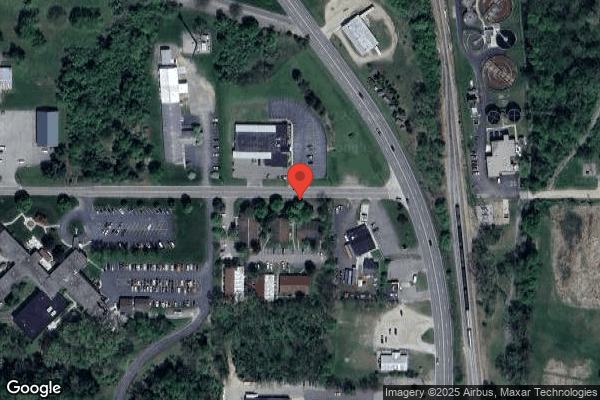
Understanding Severity Codes (click to expand)
Life-Threatening (Immediate Jeopardy)
J - Isolated K - Pattern L - Widespread
Actual Harm
G - Isolated H - Pattern I - Widespread
Potential for Harm
D - Isolated E - Pattern F - Widespread
No Harm (Minor)
A - Isolated B - Pattern C - Widespread

Questions to Ask on Your Visit

  • "What safeguards are in place to prevent abuse and neglect?"
  • "Can I speak with families of current residents?"
  • "What's your RN coverage like on weekends and overnight?"

Our Honest Assessment

Strengths
  • • 34% turnover. Below Michigan's 48% average. Good staff retention means consistent care.
Concerns
  • • Multiple safety concerns identified: Federal abuse finding, 5 harm violation(s), $145,217 in fines, Payment denial on record. Review inspection reports carefully.
  • • 36 deficiencies on record, including 5 serious (caused harm) violations. Ask about corrective actions taken.
  • • $145,217 in fines. Extremely high, among the most fined facilities in Michigan. Major compliance failures.
  • • Grade F (5/100). Below average facility with significant concerns.
Bottom line: This facility has a substantiated abuse finding. Extreme caution advised. Explore alternatives.

About This Facility

What is Hillsdale County Medical Care Facility's CMS Rating?

CMS assigns Hillsdale County Medical Care Facility an overall rating of 3 out of 5 stars, which is considered average nationally. Within Michigan, this rating places the facility higher than 0% of the state's 100 nursing homes. This mid-range rating indicates the facility meets federal standards but may have areas for improvement.

How is Hillsdale County Medical Care Facility Staffed?

CMS rates Hillsdale County Medical Care Facility's staffing level at 5 out of 5 stars, which is much above average compared to other nursing homes. Staff turnover is 34%, compared to the Michigan average of 46%. This relatively stable workforce can support continuity of care.

What Have Inspectors Found at Hillsdale County Medical Care Facility?

State health inspectors documented 36 deficiencies at Hillsdale County Medical Care Facility during 2022 to 2025. These included: 5 that caused actual resident harm, 29 with potential for harm, and 2 minor or isolated issues. Deficiencies causing actual harm indicate documented cases where residents experienced negative health consequences.

Who Owns and Operates Hillsdale County Medical Care Facility?

Hillsdale County Medical Care Facility is owned by a government entity. Government-operated facilities are typically run by state, county, or municipal agencies. The facility operates independently rather than as part of a larger chain. With 170 certified beds and approximately 129 residents (about 76% occupancy), it is a mid-sized facility located in Hillsdale, Michigan.

How Does Hillsdale County Medical Care Facility Compare to Other Michigan Nursing Homes?

Compared to the 100 nursing homes in Michigan, Hillsdale County Medical Care Facility's overall rating (3 stars) is below the state average of 3.1, staff turnover (34%) is significantly lower than the state average of 46%, and health inspection rating (2 stars) is below the national benchmark.

What Should Families Ask When Visiting Hillsdale County Medical Care Facility?

Based on this facility's data, families visiting should ask: "What safeguards and monitoring systems are in place to protect residents from abuse or neglect?" "Can I visit during a mealtime to observe dining assistance and food quality?" "How do you handle medical emergencies, and what is your hospital transfer rate?" "Can I speak with family members of current residents about their experience?" These questions are particularly relevant given the substantiated abuse finding on record.

Is Hillsdale County Medical Care Facility Safe?

Based on CMS inspection data, Hillsdale County Medical Care Facility has documented safety concerns. The facility has 1 substantiated abuse finding (meaning confirmed case of resident harm by staff or other residents). The facility has a 3-star overall rating and ranks #100 of 100 nursing homes in Michigan. Families considering this facility should ask detailed questions about what corrective actions have been taken since these incidents.

Do Nurses at Hillsdale County Medical Care Facility Stick Around?

Hillsdale County Medical Care Facility has a staff turnover rate of 34%, which is about average for Michigan nursing homes (state average: 46%). Moderate turnover is common in nursing homes, but families should still ask about staff tenure and how the facility maintains care continuity when employees leave.

Was Hillsdale County Medical Care Facility Ever Fined?

Hillsdale County Medical Care Facility has been fined $145,217 across 2 penalty actions. This is 4.2x the Michigan average of $34,531. Fines at this level are uncommon and typically indicate a pattern of serious deficiencies, repeated violations, or failure to correct problems promptly. CMS reserves penalties of this magnitude for facilities that pose significant, documented risk to resident health or safety. Families should request specific documentation of what issues led to these fines and what systemic changes have been implemented.

Is Hillsdale County Medical Care Facility on Any Federal Watch List?

Hillsdale County Medical Care Facility is not on any federal watch list. The most significant is the Special Focus Facility (SFF) program, which identifies the bottom 1% of nursing homes nationally based on persistent, serious quality problems. Not being on this list means the facility has avoided the pattern of deficiencies that triggers enhanced federal oversight. This is a positive indicator, though families should still review the facility's inspection history directly.